Questions as text
Q1 · The mass of some of the contents of three foods in a 100 gram sample of each food 0653/31 May/June 2017
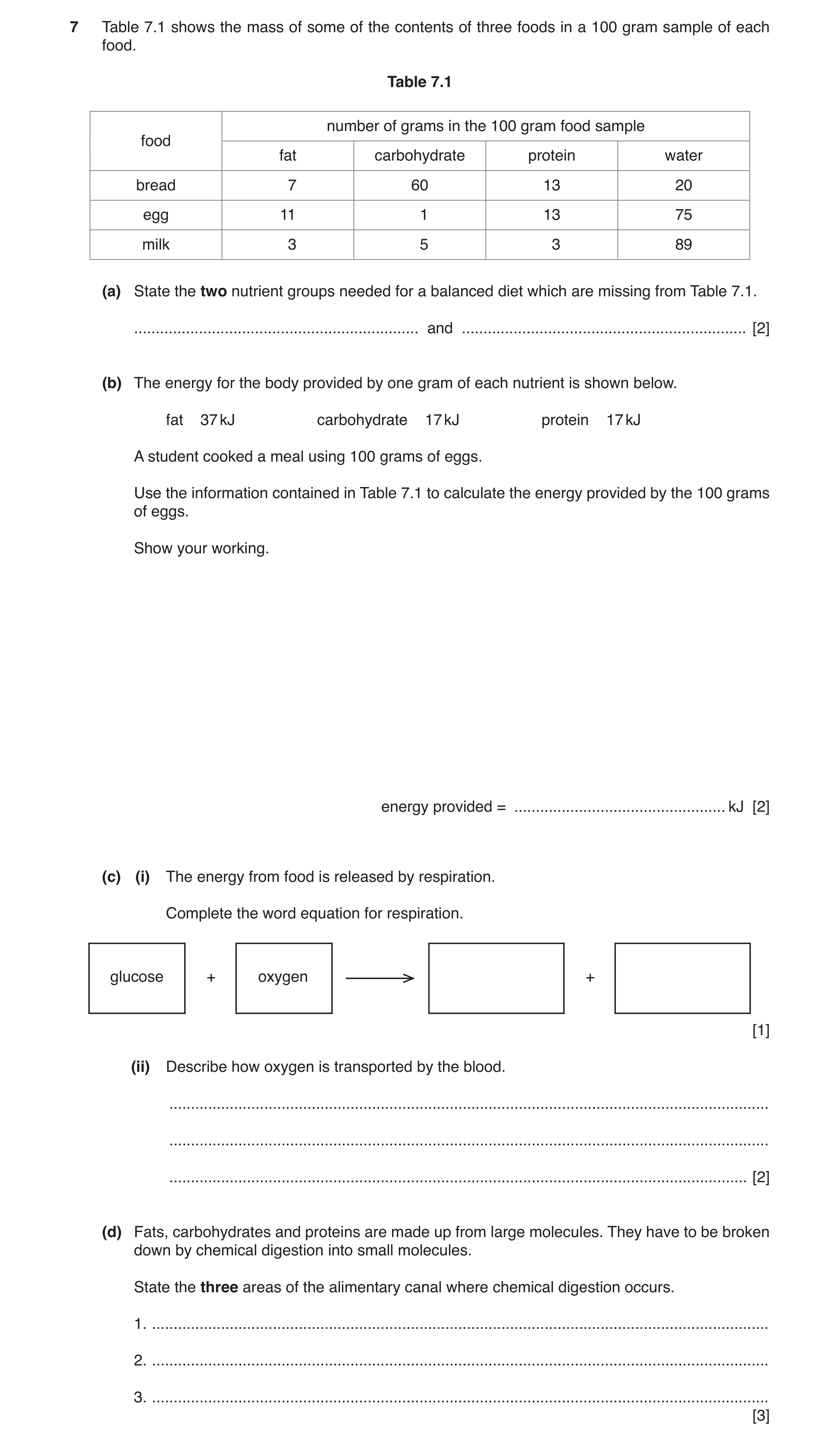
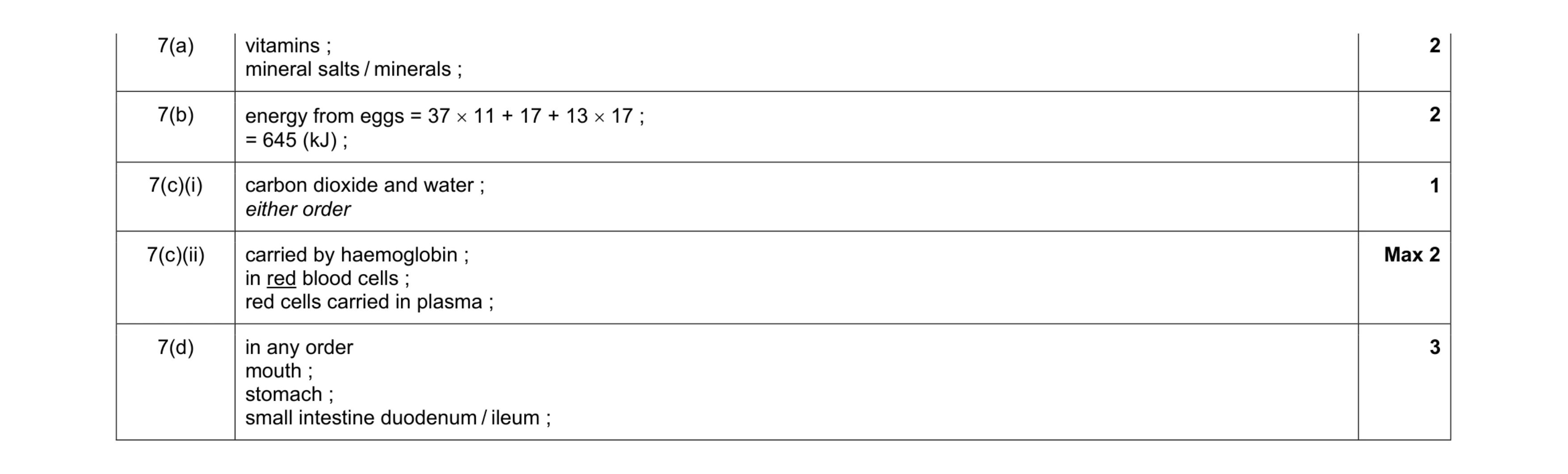
7 Table 7.1 shows the mass of some of the contents of three foods in a 100 gram sample of each food. Table 7.1 number of grams in the 100 gram food sample food fat carbohydrate protein water bread 7 60 13 20 egg 11 1 13 75 milk 3 5 3 89 (a) State the two nutrient groups needed for a balanced diet which are missing from Table 7.1. … and … [2] (b) The energy for the body provided by one gram of each nutrient is shown below. fat 37 kJ carbohydrate 17 kJ protein 17 kJ A student cooked a meal using 100 grams of eggs. Use the information contained in Table 7.1 to calculate the energy provided by the 100 grams of eggs. Show your working. energy provided = … kJ [2] (c) (i) The energy from food is released by respiration. Complete the word equation for respiration. glucose + oxygen + [1] (ii) Describe how oxygen is transported by the blood. … … … [2] (d) Fats, carbohydrates and proteins are made up from large molecules. They have to be broken down by chemical digestion into small molecules. State the three areas of the alimentary canal where chemical digestion occurs. 1. … 2. … 3. … [3]
10 marks
Mark scheme: 7(a) vitamins ; mineral salts / minerals ; 2 7(b) energy from eggs = 37 × 11 + 17 + 13 × 17 ; = 645 (kJ) ; 2 7(c)(i) carbon dioxide and water ; either order 1 7(c)(ii) carried by haemoglobin ; in red blood cells ; red cells carried in plasma ; Max 2 7(d) in any order mouth ; stomach ; small intestine duodenum / ileum ; 3
This question in 0653/31 May/June 2017
Q2 · A giant panda which lives in bamboo forests in China 0653/32 Feb/March 2018
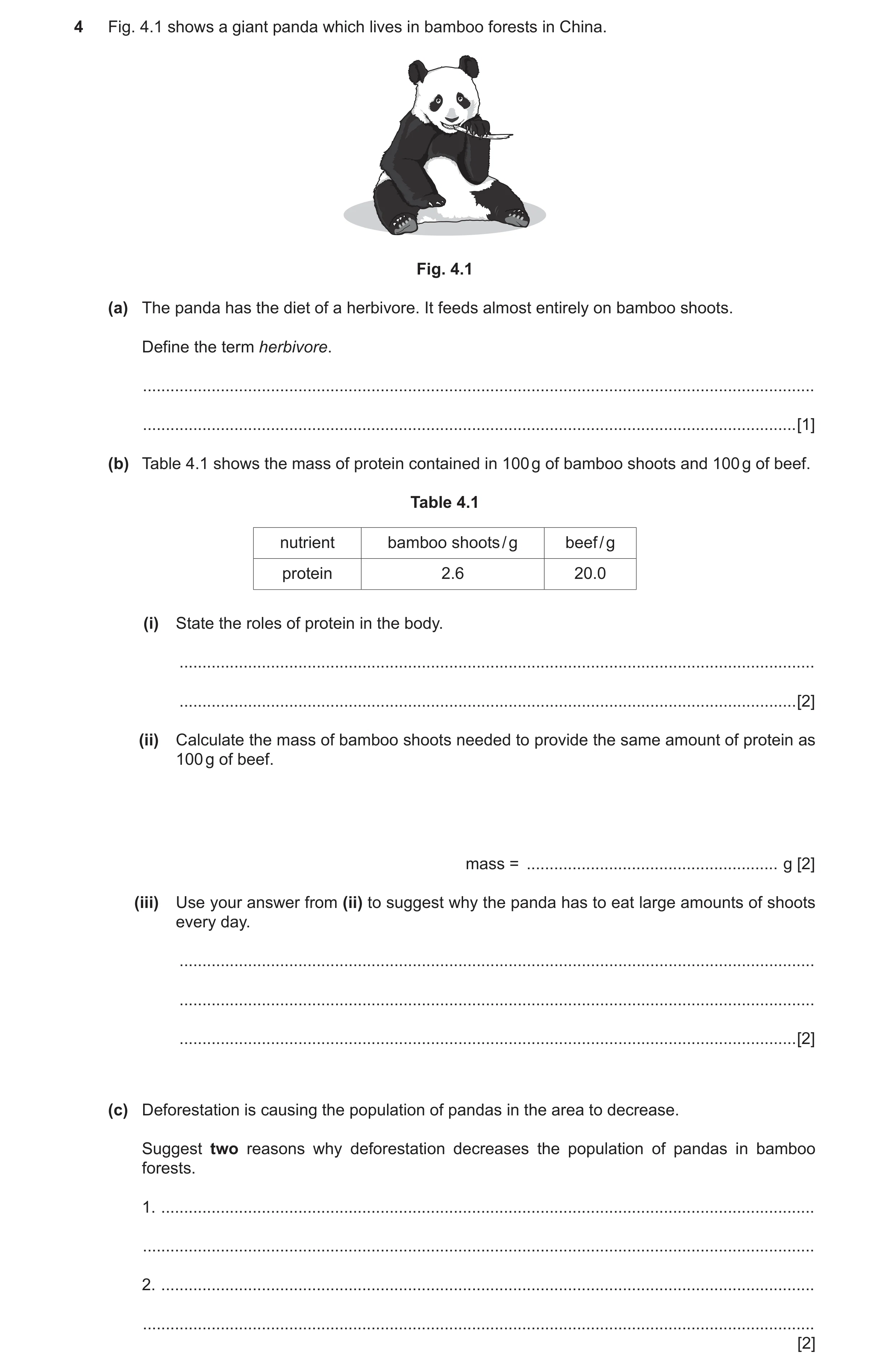
4 Fig. 4.1 shows a giant panda which lives in bamboo forests in China. Fig. 4.1 (a) The panda has the diet of a herbivore. It feeds almost entirely on bamboo shoots. Define the term herbivore. … … [1] (b) Table 4.1 shows the mass of protein contained in 100 g of bamboo shoots and 100 g of beef. Table 4.1 nutrient bamboo shoots / g beef / g protein 2.6 20.0 (i) State the roles of protein in the body. … … [2] (ii) Calculate the mass of bamboo shoots needed to provide the same amount of protein as 100 g of beef. mass = … g [2] (iii) Use your answer from (ii) to suggest why the panda has to eat large amounts of shoots every day. … … … [2] (c) Deforestation is causing the population of pandas in the area to decrease. Suggest two reasons why deforestation decreases the population of pandas in bamboo forests. 1. … … 2. … … [2]
9 marks
Mark scheme: 4(a) an animal that gets its energy / feeds only on plants ; 1 4(b)(i) growth (of tissues) ; repair (of tissues) ; 2 4(b)(ii) 20.0 / 2.6 ; ×100 = 770 ; 2 4(b)(iii) the bamboo does not contain much protein / nutrition ; a lot needed to satisfy need / panda needs a lot because it is big ; 2 4(c) only food supply disappearing ; danger of loss of habitat ; more difficult to find a mate ; max 2
This question in 0653/32 Feb/March 2018
Q3 · Some features of arteries, veins and capillaries 0653/31 Oct/Nov 2018
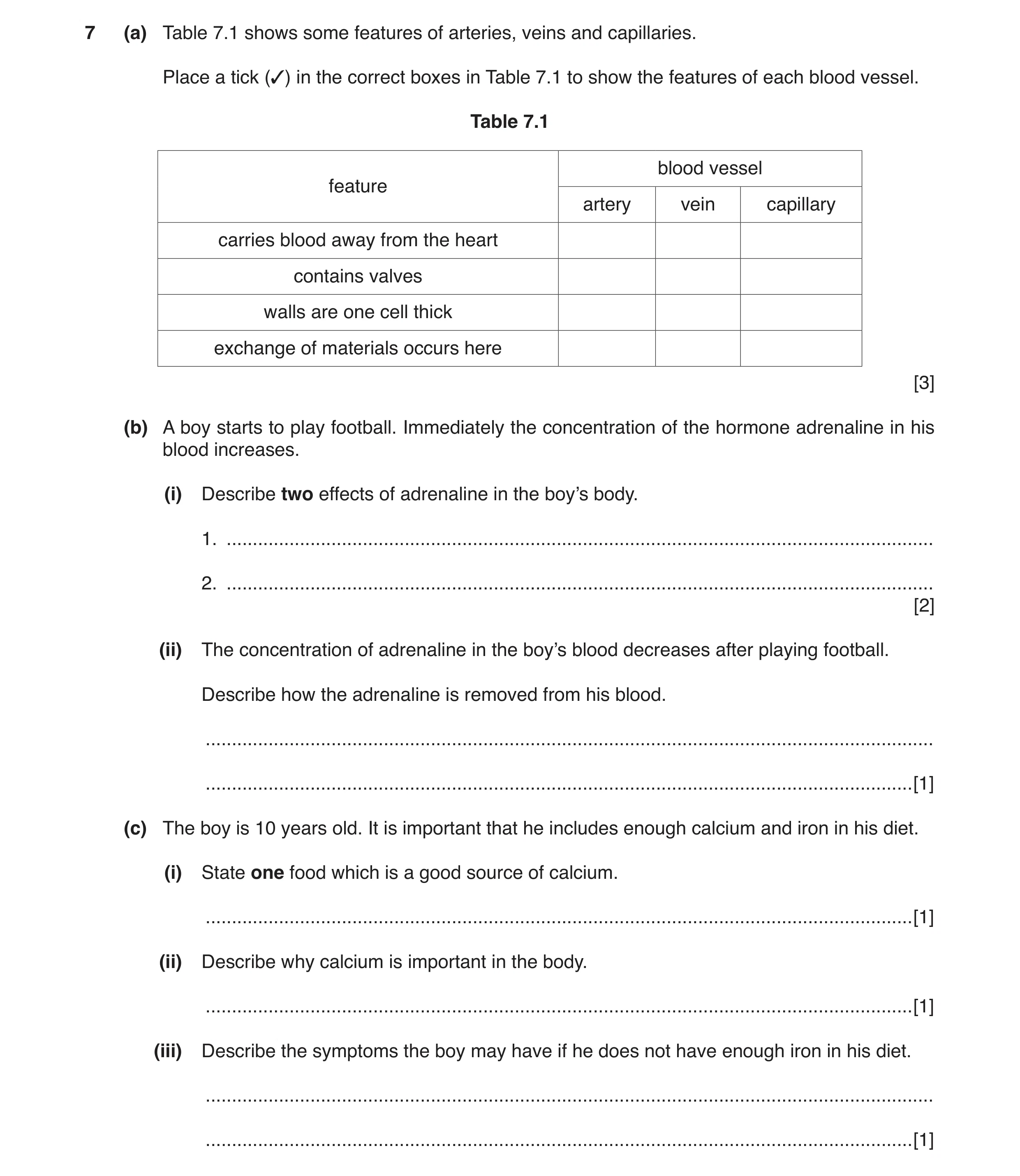
7 (a) Table 7.1 shows some features of arteries, veins and capillaries. Place a tick (3) in the correct boxes in Table 7.1 to show the features of each blood vessel. Table 7.1 blood vessel feature artery vein capillary carries blood away from the heart contains valves walls are one cell thick exchange of materials occurs here [3] (b) A boy starts to play football. Immediately the concentration of the hormone adrenaline in his blood increases. (i) Describe two effects of adrenaline in the boy’s body. 1. … 2. … [2] (ii) The concentration of adrenaline in the boy’s blood decreases after playing football. Describe how the adrenaline is removed from his blood. … … [1] (c) The boy is 10 years old. It is important that he includes enough calcium and iron in his diet. (i) State one food which is a good source of calcium. … [1] (ii) Describe why calcium is important in the body. … [1] (iii) Describe the symptoms the boy may have if he does not have enough iron in his diet. … … [1]
9 marks
Mark scheme: 7(a) characteristic blood vessel artery vein capillary carries blood away from the heart 3 contains valves 3 walls are one cell thick 3 exchange of materials occurs here 3 ;;; 3 7(b)(i) any two from increases (blood) glucose concentration ; increases heart rate / pulse ; increases rate of respiration ; Max 2 2 7(b)(ii) destroyed by the liver ; 1 7(c)(i) milk / yoghurt / fish / green vegetables ; 1 7(c)(ii) strengthens bones / teeth ; 1 7(c)(iii) tiredness / pale skin / shortness of breath / dizziness ; 1
This question in 0653/31 Oct/Nov 2018
Q4 · A person’s balanced diet must contain all nutrients in the correct amounts according to… 0653/32 May/June 2019
7 (a) A person’s balanced diet must contain all nutrients in the correct amounts according to the person’s needs. The person eats the meal shown in Fig. 7.1. The food items and the main nutrients they contain are labelled. potato chips (carbohydrate, fat and fibre) bread (carbohydrate, protein and fibre) meat (fat and protein) water cheese (fat and protein) Fig. 7.1 (i) State two reasons why the meal shown in Fig. 7.1 is unbalanced. 1. … 2. … [2] (ii) Suggest one food the person can add to the meal to make it balanced. Explain your answer. food … explanation … … [2] (b) Some carbohydrates have small molecules, others have very large molecules called polymers which are made when many glucose molecules join together. Fig. 7.2 shows a molecule of glucose, and a part of a polymer of glucose. glucose molecule small part of a polymer of glucose Fig. 7.2 (i) Underline the names of two polymers of glucose in the list. amino acid fat enzyme glycogen hormone oil protein starch sugar [2] (ii) Explain why chemical digestion of large molecules is needed in the alimentary canal. … … … [2] (iii) State two areas in the alimentary canal where chemical digestion takes place. 1. … 2. … [2] [Total: 10]
10 marks
Mark scheme: 7(a)(i) any two of high in / a lot of fat ; high in / a lot of carbohydrate ; not enough vitamins / named vitamin / not enough mineral salts / named mineral salt ; max 2 7(a)(ii) add fruit / vegetable / named fruit or vegetable ; adds vitamins / minerals ; 2 7(b)(i) glycogen ; starch ; 2 7(b)(ii) makes small / soluble molecules ; that can be absorbed / pass through walls (of alimentary canal) / pass into the blood ; 2 7(b)(iii) any two of mouth (cavity) ; stomach ; small intestine ; max 2
This question in 0653/32 May/June 2019
Q5 · A simplified diagram which shows the human alimentary canal 0653/33 May/June 2019
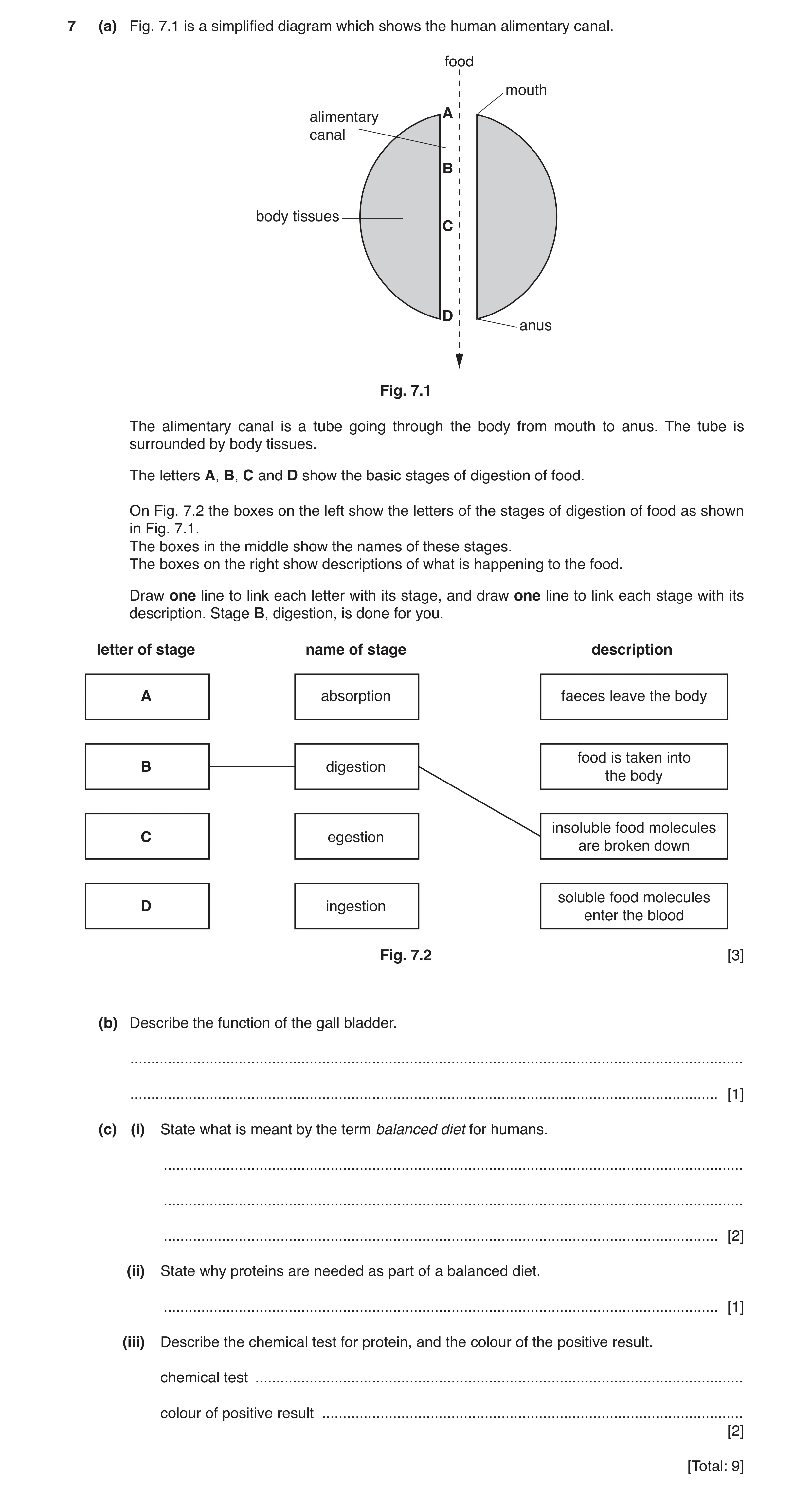
7 (a) Fig. 7.1 is a simplified diagram which shows the human alimentary canal. food mouth alimentary A canal B body tissues C D anus Fig. 7.1 The alimentary canal is a tube going through the body from mouth to anus. The tube is surrounded by body tissues. The letters A, B, C and D show the basic stages of digestion of food. On Fig. 7.2 the boxes on the left show the letters of the stages of digestion of food as shown in Fig. 7.1. The boxes in the middle show the names of these stages. The boxes on the right show descriptions of what is happening to the food. Draw one line to link each letter with its stage, and draw one line to link each stage with its description. Stage B, digestion, is done for you. letter of stage name of stage description A absorption faeces leave the body food is taken into B digestion the body insoluble food molecules C egestion are broken down soluble food molecules D ingestion enter the blood Fig. 7.2 [3] (b) Describe the function of the gall bladder. … … [1] (c) (i) State what is meant by the term balanced diet for humans. … … … [2] (ii) State why proteins are needed as part of a balanced diet. … [1] (iii) Describe the chemical test for protein, and the colour of the positive result. chemical test … colour of positive result … [2] [Total: 9]
9 marks
Mark scheme: 7(a) A absorption faeces leave the body B digestion food is taken into the body C egestion insoluble food molecules are broken down D ingestion soluble food molecules enter the blood ; ; ; 3 7(b) stores bile ; 1 7(c)(i) contains all the nutrients ; in the (correct / appropriate) proportions / amounts / quantities / to meet a person’s needs / for health ; 2 7(c)(ii) growth / repair of tissues ; 1 7(c)(iii) biuret solution ; (biuret solution) goes purple ; 2
This question in 0653/33 May/June 2019
Q6 · A graph showing the vitamin C content in 100 g of different foods 0653/31 May/June 2020
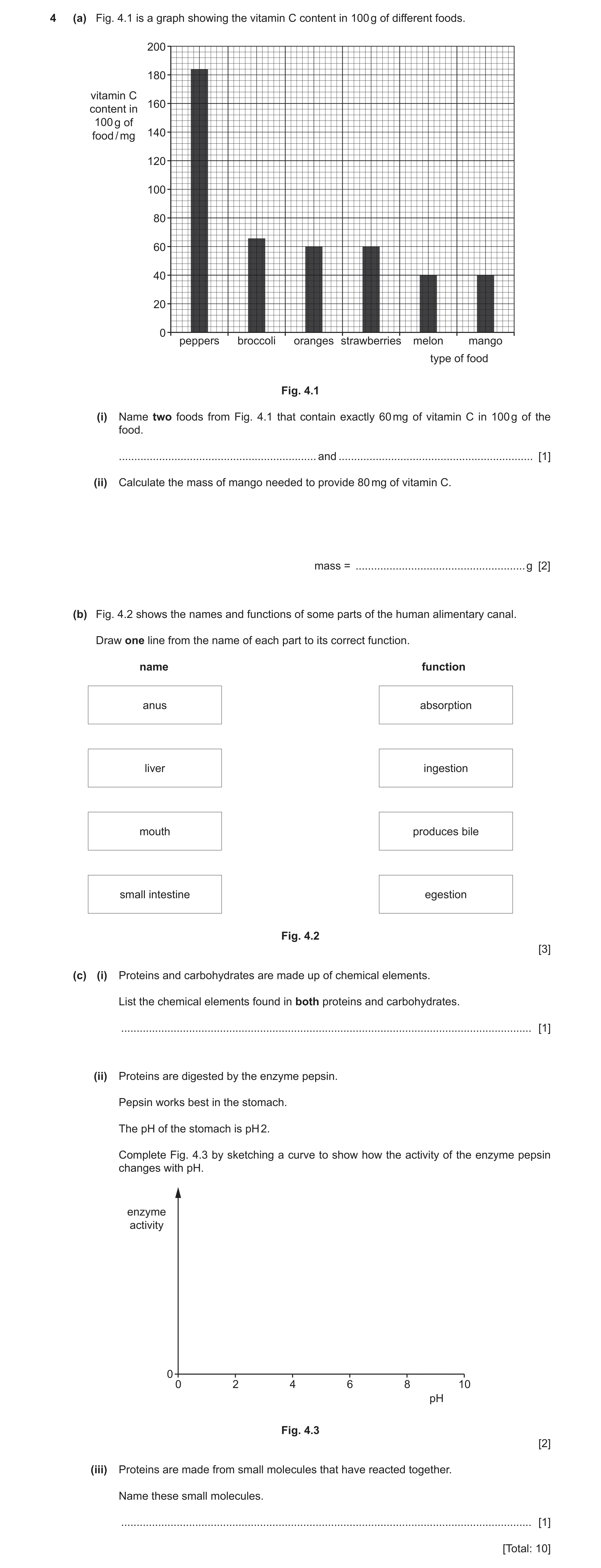
4 (a) Fig. 4.1 is a graph showing the vitamin C content in 100 g of different foods. 200 180 vitamin C 160 content in 100 g of food / mg 140 120 100 80 60 40 20 0 peppers broccoli oranges strawberries melon mango type of food Fig. 4.1 (i) Name two foods from Fig. 4.1 that contain exactly 60 mg of vitamin C in 100 g of the food. … and … [1] (ii) Calculate the mass of mango needed to provide 80 mg of vitamin C. mass = … g [2] (b) Fig. 4.2 shows the names and functions of some parts of the human alimentary canal. Draw one line from the name of each part to its correct function. name function anus absorption liver ingestion mouth produces bile small intestine egestion Fig. 4.2 [3] (c) (i) Proteins and carbohydrates are made up of chemical elements. List the chemical elements found in both proteins and carbohydrates. … [1] (ii) Proteins are digested by the enzyme pepsin. Pepsin works best in the stomach. The pH of the stomach is pH 2. Complete Fig. 4.3 by sketching a curve to show how the activity of the enzyme pepsin changes with pH. enzyme activity 0 0 2 4 6 8 10 pH Fig. 4.3 [2] (iii) Proteins are made from small molecules that have reacted together. Name these small molecules. … [1] [Total: 10]
10 marks
Mark scheme: 4(a)(i) oranges AND strawberries ; 1 4(a)(ii) (mass =) 200 (g) ;; (if answer is incorrect then 100 80 40 × for one mark) 2 Question Answer Marks 4(b) anus absorption liver ingestion mouth produces bile small intestine egestion ;;; all 4 correct = 3 marks 2–3 correct = 2 marks 1 correct = 1 mark 3 4(c)(i) carbon AND oxygen AND hydrogen ; 1 4(c)(ii) line going up and coming back down ; peak / optimum, at pH 2; 2 4(c)(iii) amino acids ; 1
This question in 0653/31 May/June 2020
Q7 · A diagram of the alimentary canal and associated organs 0653/31 May/June 2021
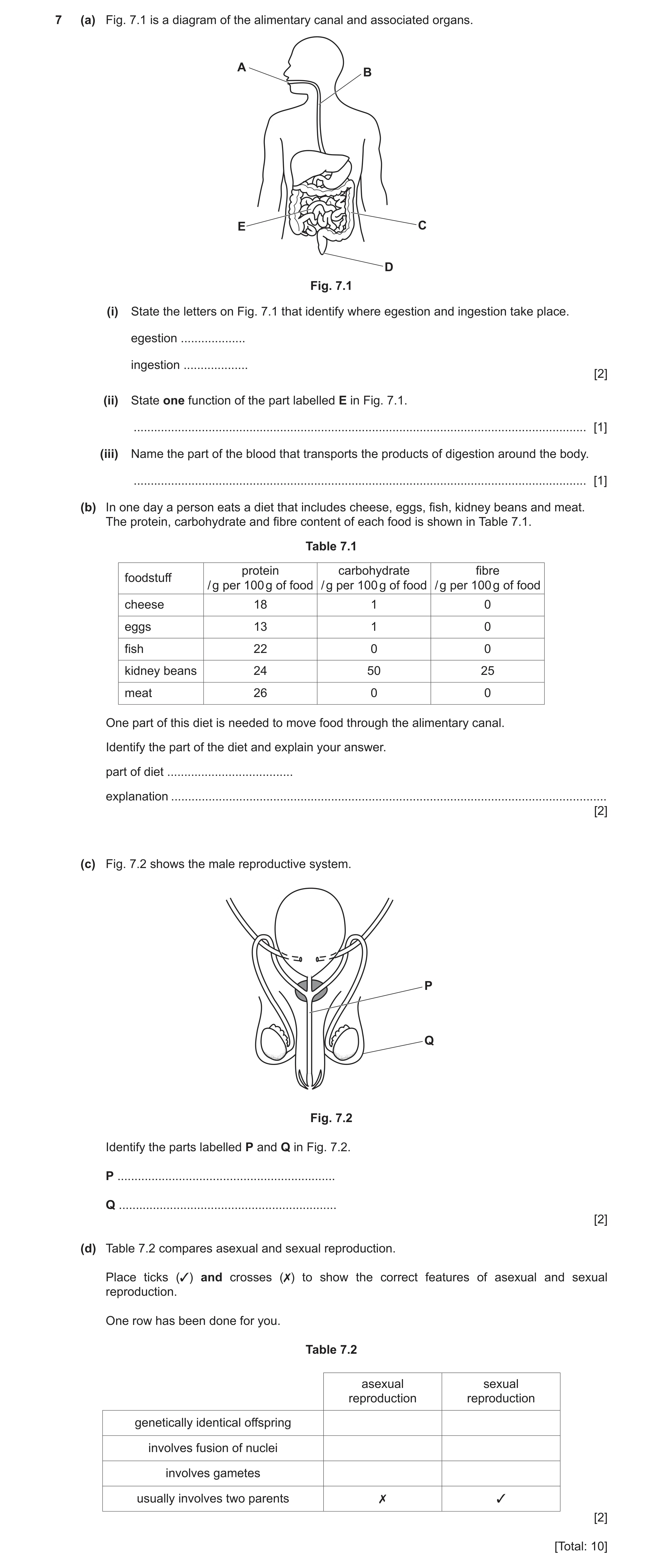
7 (a) Fig. 7.1 is a diagram of the alimentary canal and associated organs. A B E C D Fig. 7.1 (i) State the letters on Fig. 7.1 that identify where egestion and ingestion take place. egestion … ingestion … [2] (ii) State one function of the part labelled E in Fig. 7.1. … [1] (iii) Name the part of the blood that transports the products of digestion around the body. … [1] (b) In one day a person eats a diet that includes cheese, eggs, fish, kidney beans and meat. The protein, carbohydrate and fibre content of each food is shown in Table 7.1. Table 7.1 protein carbohydrate fibre foodstuff / g per 100 g of food / g per 100 g of food / g per 100 g of food cheese 18 1 0 eggs 13 1 0 fish 22 0 0 kidney beans 24 50 25 meat 26 0 0 One part of this diet is needed to move food through the alimentary canal. Identify the part of the diet and explain your answer. part of diet … explanation … [2] (c) Fig. 7.2 shows the male reproductive system. P Q Fig. 7.2 Identify the parts labelled P and Q in Fig. 7.2. P … Q … [2] (d) Table 7.2 compares asexual and sexual reproduction. Place ticks (✓) and crosses (✗) to show the correct features of asexual and sexual reproduction. One row has been done for you. Table 7.2 asexual sexual reproduction reproduction genetically identical offspring involves fusion of nuclei involves gametes usually involves two parents ✗ ✓ [2] [Total: 10]
10 marks
Mark scheme: 7(a)(i) egestion: D ; ingestion: A ; 2 7(a)(ii) digestion / absorption ; 1 7(a)(iii) plasma ; 1 7(b) part of diet: kidney beans ; explanation: contain fibre ; 2 7(c) P urethra ; Q scrotum ; 2 7(d) asexual reproduction sexual reproduction genetically identical offspring x involves fusion of nuclei x involves gametes x usually involves two parents (x) () ;; 2 marks for all 6 correct 1 mark for 4 correct 2
This question in 0653/31 May/June 2021
Q8 · Nutrition is one of the characteristics of living organisms 0653/33 May/June 2021
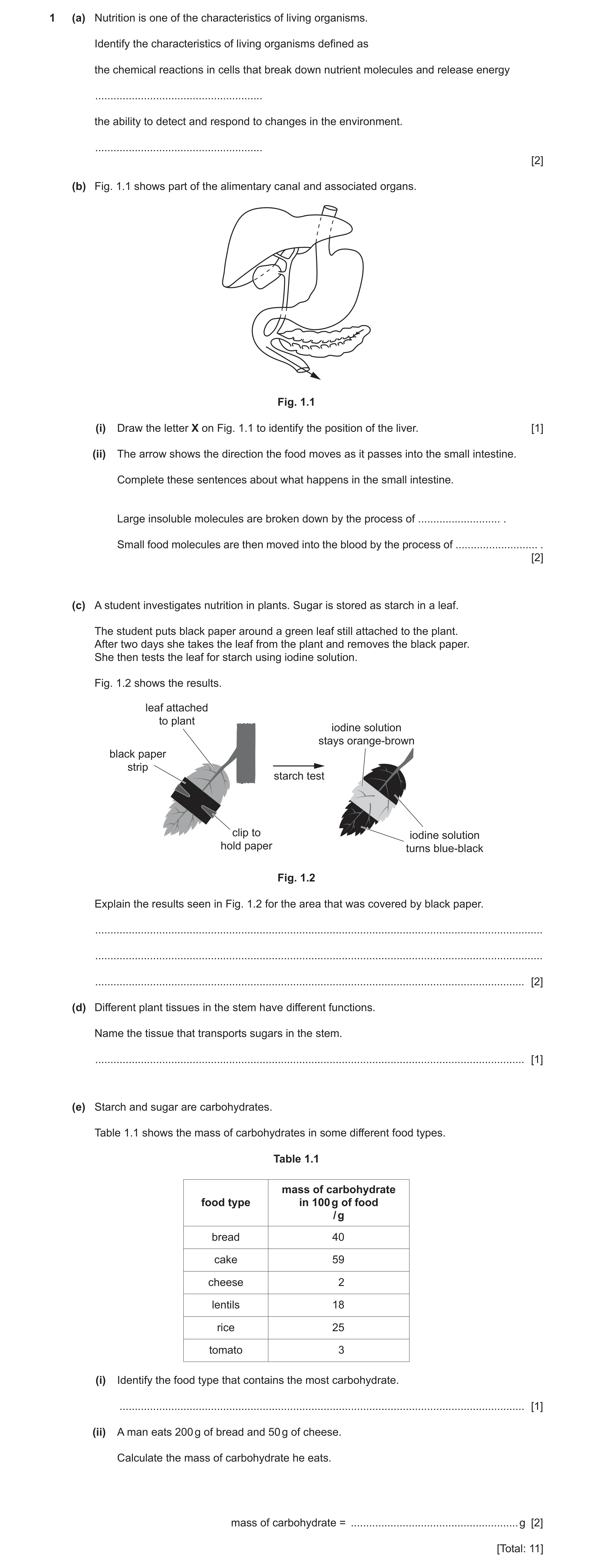
1 (a) Nutrition is one of the characteristics of living organisms. Identify the characteristics of living organisms defined as the chemical reactions in cells that break down nutrient molecules and release energy … the ability to detect and respond to changes in the environment. … [2] (b) Fig. 1.1 shows part of the alimentary canal and associated organs. Fig. 1.1 (i) Draw the letter X on Fig. 1.1 to identify the position of the liver. [1] (ii) The arrow shows the direction the food moves as it passes into the small intestine. Complete these sentences about what happens in the small intestine. Large insoluble molecules are broken down by the process of … . Small food molecules are then moved into the blood by the process of … . [2] (c) A student investigates nutrition in plants. Sugar is stored as starch in a leaf. The student puts black paper around a green leaf still attached to the plant. After two days she takes the leaf from the plant and removes the black paper. She then tests the leaf for starch using iodine solution. Fig. 1.2 shows the results. leaf attached to plant iodine solution stays orange-brown black paper strip starch test clip to iodine solution hold paper turns blue-black Fig. 1.2 Explain the results seen in Fig. 1.2 for the area that was covered by black paper. … … … [2] (d) Different plant tissues in the stem have different functions. Name the tissue that transports sugars in the stem. … [1] (e) Starch and sugar are carbohydrates. Table 1.1 shows the mass of carbohydrates in some different food types. Table 1.1 mass of carbohydrate food type in 100 g of food / g bread 40 cake 59 cheese 2 lentils 18 rice 25 tomato 3 (i) Identify the food type that contains the most carbohydrate. … [1] (ii) A man eats 200 g of bread and 50 g of cheese. Calculate the mass of carbohydrate he eats. mass of carbohydrate = … g [2] [Total: 11]
11 marks
Mark scheme: 1(a) respiration ; sensitivity ; 2 1(b)(i) centre of X must be on liver ; 1 1(b)(ii) digestion ; absorption ; 2 1(c) no starch is made ; as light is needed for photosynthesis ; 2 1(d) phloem ; 1 1(e)(i) cake ; 1 1(e)(ii) (40 x 2) + (2 x 0.5) ; 81 (g) ; 2
This question in 0653/33 May/June 2021
Q9 · The names and functions of some organs associated with the alimentary canal 0653/31 Oct/Nov 2021
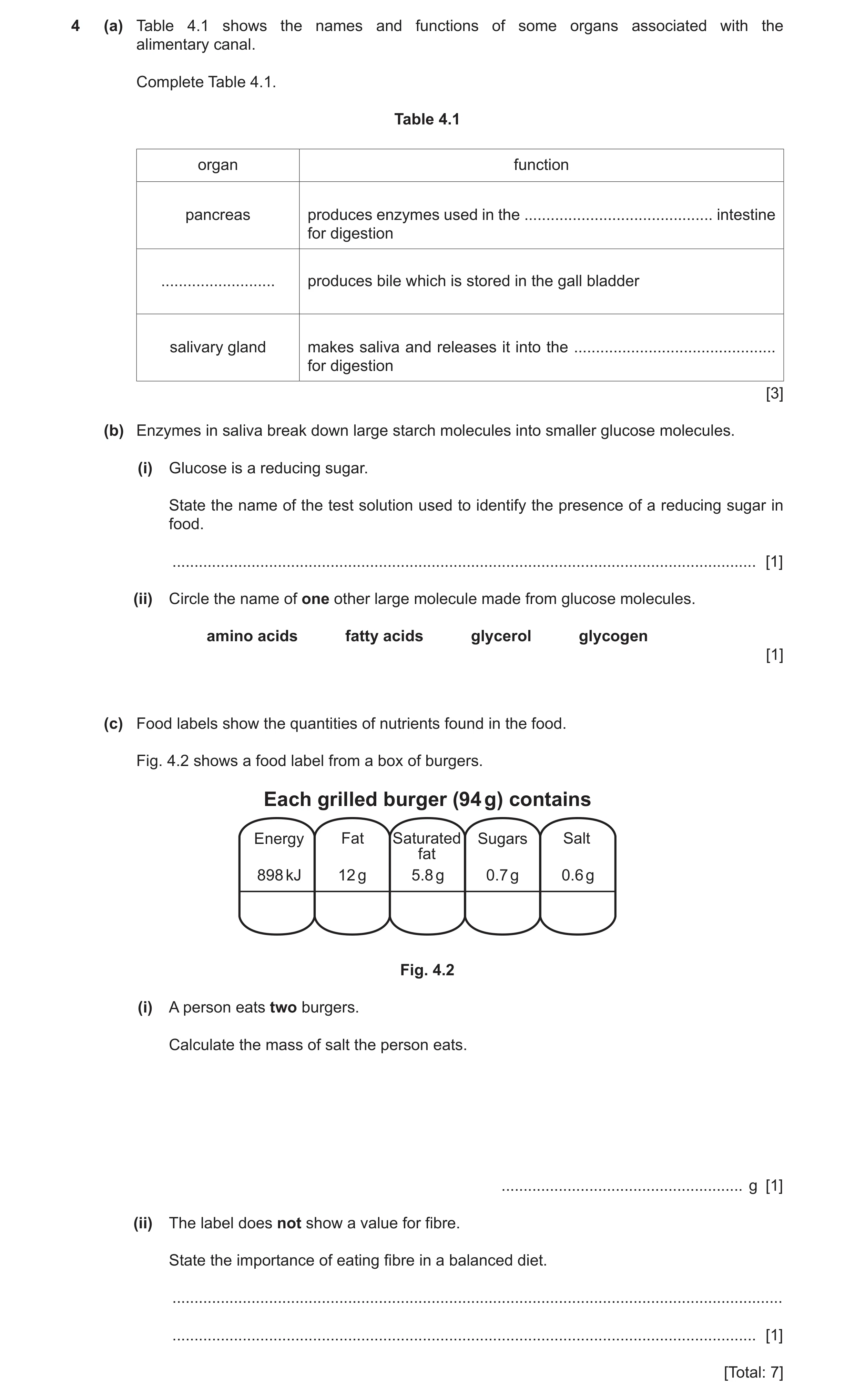
4 (a) Table 4.1 shows the names and functions of some organs associated with the alimentary canal. Complete Table 4.1. Table 4.1 organ function pancreas produces enzymes used in the … intestine for digestion … produces bile which is stored in the gall bladder salivary gland makes saliva and releases it into the … for digestion [3] (b) Enzymes in saliva break down large starch molecules into smaller glucose molecules. (i) Glucose is a reducing sugar. State the name of the test solution used to identify the presence of a reducing sugar in food. … [1] (ii) Circle the name of one other large molecule made from glucose molecules. amino acids fatty acids glycerol glycogen [1] (c) Food labels show the quantities of nutrients found in the food. Fig. 4.2 shows a food label from a box of burgers. Each grilled burger (94 g) contains Energy Fat Saturated Sugars Salt fat 898 kJ 12 g 5.8 g 0.7 g 0.6 g Fig. 4.2 (i) A person eats two burgers. Calculate the mass of salt the person eats. … g [1] (ii) The label does not show a value for fibre. State the importance of eating fibre in a balanced diet. … … [1] [Total: 7]
7 marks
Mark scheme: 4(a) small ; liver ; mouth ; 3 4(b)(i) Benedict's (solution) ; 1 4(b)(ii) glycogen ; 1 4(c)(i) 1.2 (g) ; 1 4(c)(ii) idea of keeping food moving (through alimentary canal) ; 1
This question in 0653/31 Oct/Nov 2021
Q10 · A diagram of the male reproductive system in humans 0653/32 May/June 2022
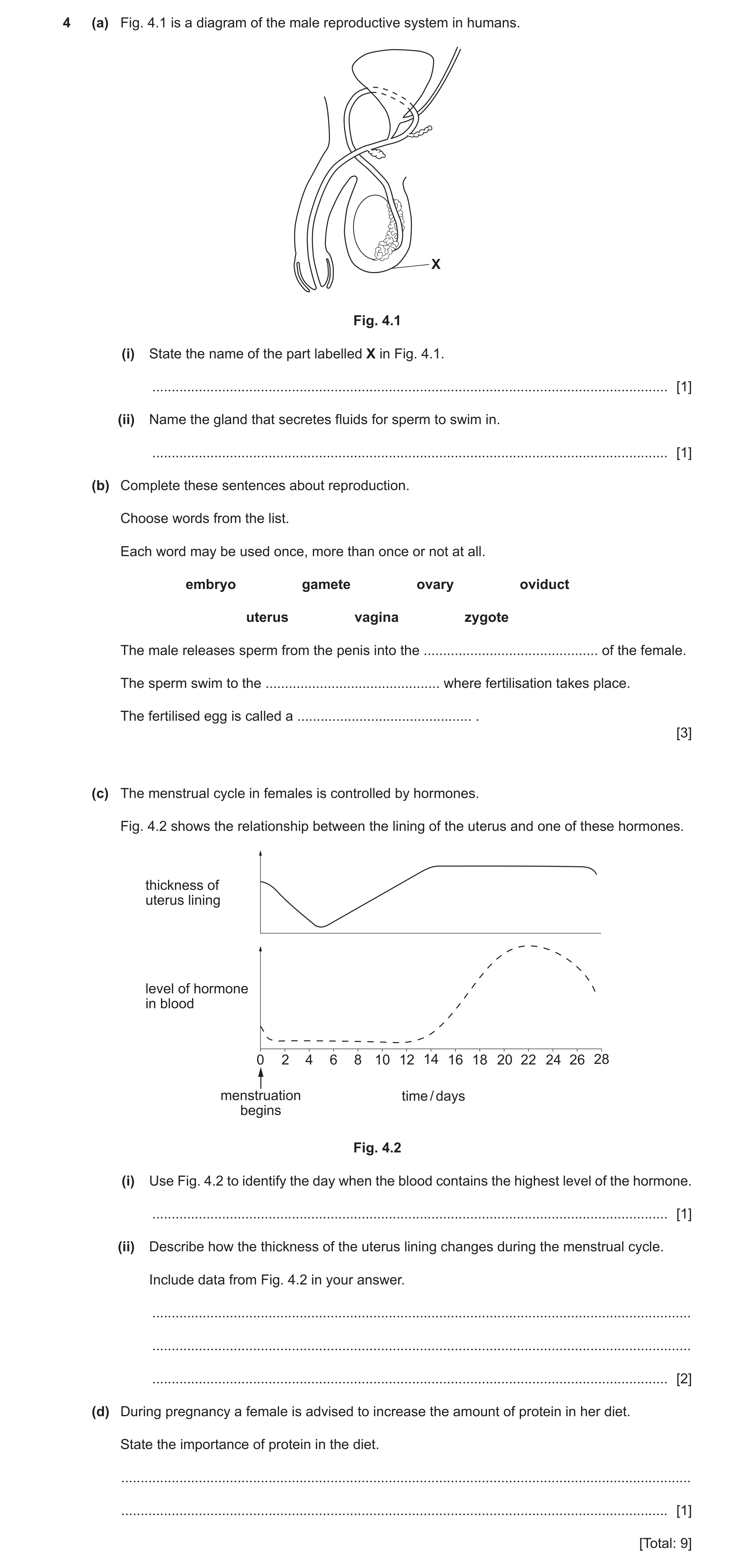
4 (a) Fig. 4.1 is a diagram of the male reproductive system in humans. X Fig. 4.1 (i) State the name of the part labelled X in Fig. 4.1. … [1] (ii) Name the gland that secretes fluids for sperm to swim in. … [1] (b) Complete these sentences about reproduction. Choose words from the list. Each word may be used once, more than once or not at all. embryo gamete ovary oviduct uterus vagina zygote The male releases sperm from the penis into the … of the female. The sperm swim to the … where fertilisation takes place. The fertilised egg is called a … . [3] (c) The menstrual cycle in females is controlled by hormones. Fig. 4.2 shows the relationship between the lining of the uterus and one of these hormones. thickness of uterus lining level of hormone in blood 0 2 4 6 8 10 12 14 16 18 20 22 24 26 28 menstruation time / days begins Fig. 4.2 (i) Use Fig. 4.2 to identify the day when the blood contains the highest level of the hormone. … [1] (ii) Describe how the thickness of the uterus lining changes during the menstrual cycle. Include data from Fig. 4.2 in your answer. … … … [2] (d) During pregnancy a female is advised to increase the amount of protein in her diet. State the importance of protein in the diet. … … [1] [Total: 9]
9 marks
Mark scheme: 4(a)(i) scrotum ; 1 4(a)(ii) prostate (gland) ; 1 4(b) vagina ; oviduct ; zygote ; 3 4(c)(i) (day) 22 ; 1 Question Answer Marks 4(c)(ii) thickness decreases, increases, then levels off ; correct data ; 2 4(d) needed for, growth / repair / build tissue / build cells ; 1
This question in 0653/32 May/June 2022
Q11 · Part of the alimentary canal and associated organs 0653/31 Oct/Nov 2022
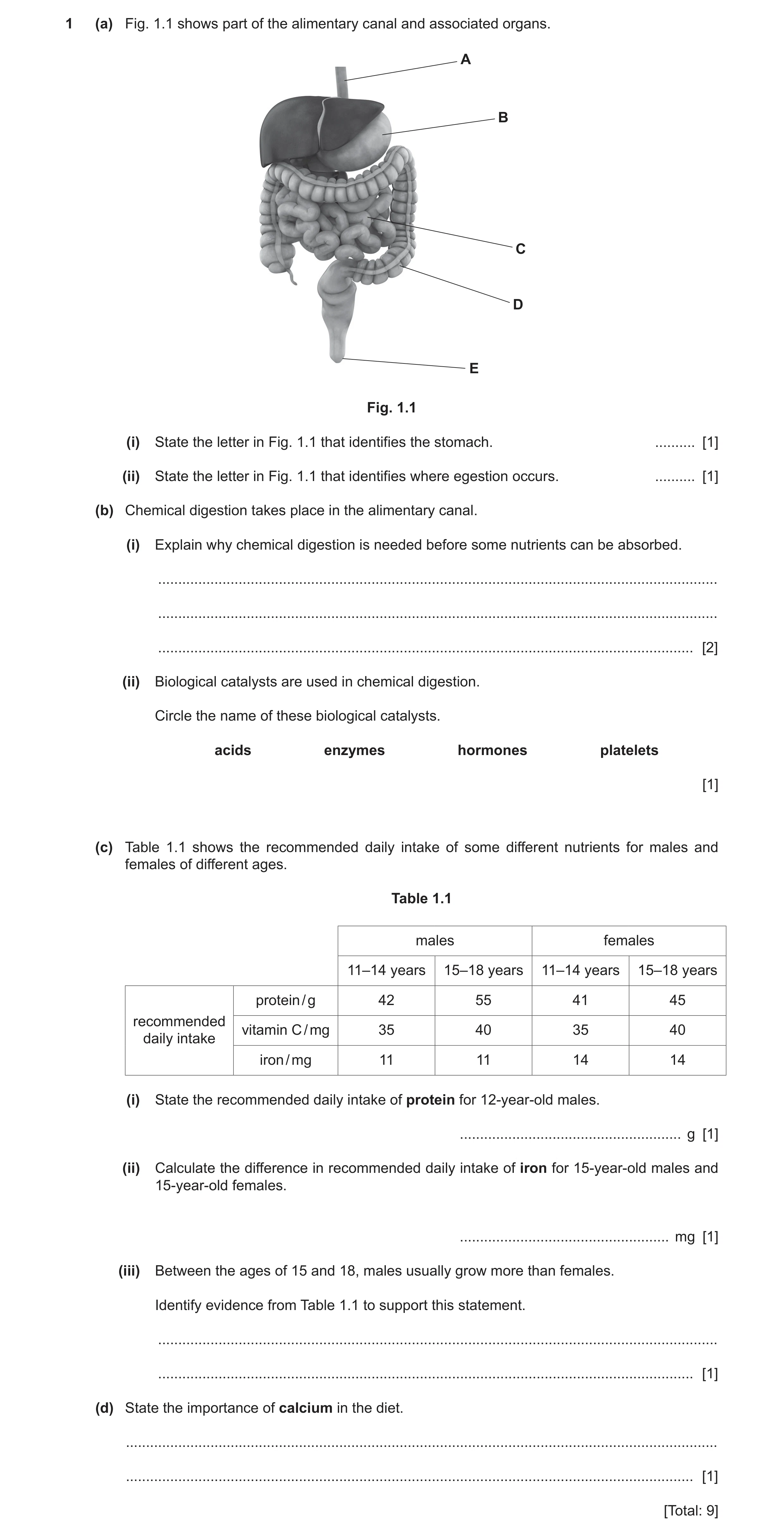
1 (a) Fig. 1.1 shows part of the alimentary canal and associated organs. A B C D E Fig. 1.1 (i) State the letter in Fig. 1.1 that identifies the stomach. … [1] (ii) State the letter in Fig. 1.1 that identifies where egestion occurs. … [1] (b) Chemical digestion takes place in the alimentary canal. (i) Explain why chemical digestion is needed before some nutrients can be absorbed. … … … [2] (ii) Biological catalysts are used in chemical digestion. Circle the name of these biological catalysts. acids enzymes hormones platelets [1] (c) Table 1.1 shows the recommended daily intake of some different nutrients for males and females of different ages. Table 1.1 males females 11–14 years 15–18 years 11–14 years 15–18 years protein / g 42 55 41 45 recommended vitamin C / mg 35 40 35 40 daily intake iron / mg 11 11 14 14 (i) State the recommended daily intake of protein for 12-year-old males. … g [1] (ii) Calculate the difference in recommended daily intake of iron for 15-year-old males and 15-year-old females. … mg [1] (iii) Between the ages of 15 and 18, males usually grow more than females. Identify evidence from Table 1.1 to support this statement. … … [1] (d) State the importance of calcium in the diet. … … [1] [Total: 9]
9 marks
Mark scheme: Question Answer Marks 1(a)(i) B ; 1 1(a)(ii) E ; 1 1(b)(i) breaks down, large / insoluble, molecules into small molecules ; 2 (small / new, molecules are) soluble ; 1(b)(ii) enzymes ; 1 1(c)(i) 42 (g) ; 1 1(c)(ii) 3 (mg) ; 1 1(c)(iii) the recommended daily allowance for protein for (15–18-year-old males) is higher than for females / AW ; 1 1(d) needed for, bones / teeth ; 1
This question in 0653/31 Oct/Nov 2022
Q12 · An incomplete food web 0653/32 May/June 2023
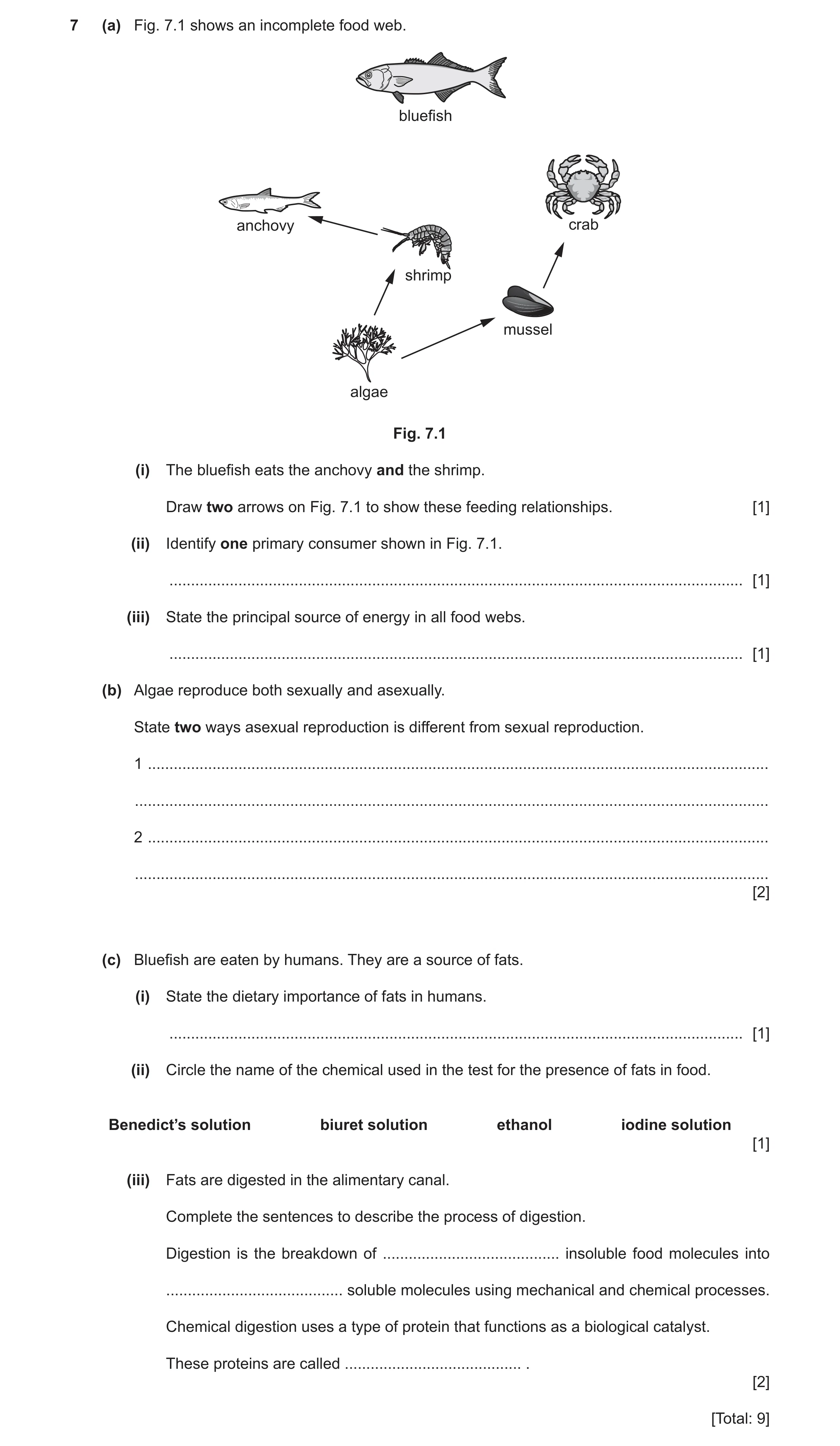
7 (a) Fig. 7.1 shows an incomplete food web. bluefish anchovy crab shrimp mussel algae Fig. 7.1 (i) The bluefish eats the anchovy and the shrimp. Draw two arrows on Fig. 7.1 to show these feeding relationships. [1] (ii) Identify one primary consumer shown in Fig. 7.1. … [1] (iii) State the principal source of energy in all food webs. … [1] (b) Algae reproduce both sexually and asexually. State two ways asexual reproduction is different from sexual reproduction. 1 … … 2 … … [2] (c) Bluefish are eaten by humans. They are a source of fats. (i) State the dietary importance of fats in humans. … [1] (ii) Circle the name of the chemical used in the test for the presence of fats in food. Benedict’s solution biuret solution ethanol iodine solution [1] (iii) Fats are digested in the alimentary canal. Complete the sentences to describe the process of digestion. Digestion is the breakdown of … insoluble food molecules into … soluble molecules using mechanical and chemical processes. Chemical digestion uses a type of protein that functions as a biological catalyst. These proteins are called … . [2] [Total: 9]
9 marks
Mark scheme: 7(a)(i) arrow from anchovy to bluefish AND from shrimp to bluefish ; 1 7(a)(ii) shrimp / mussel ; 1 Question Answer Marks 7(a)(iii) the Sun ; 1 7(b) any two from: genetically identical offspring ; one parent / does not need two parents / does not need male and female parents ; no fertilisation / no fusion of nuclei / no fusion of gametes / no gametes involved ; 2 7(c)(i) for insulation / energy store / energy source ; 1 7(c)(ii) ethanol ; 1 7(c)(iii) (gap one) large AND (gap two) small ; enzymes ; 2
This question in 0653/32 May/June 2023
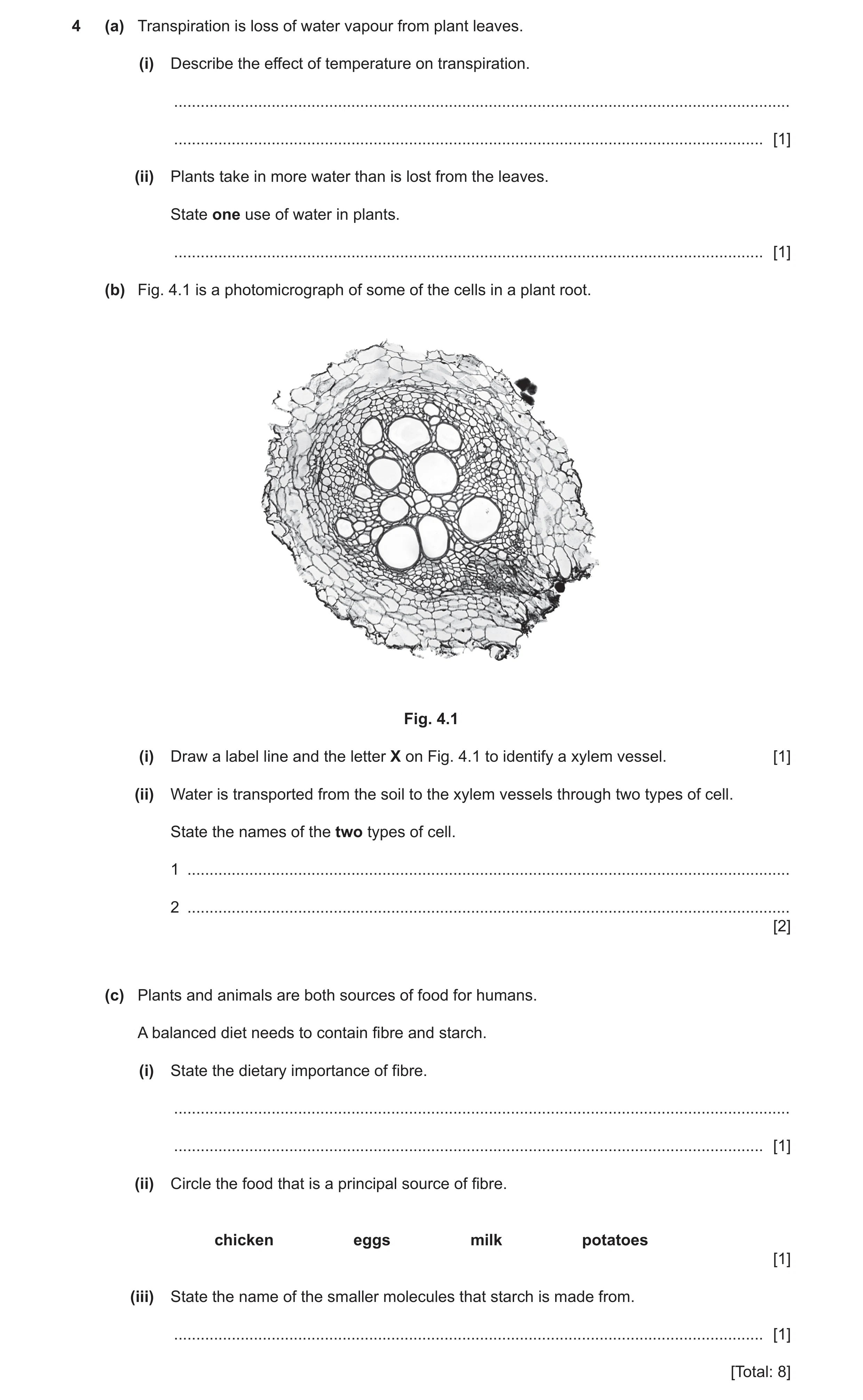
Q13 · Transpiration is loss of water vapour from plant leaves 0653/31 Oct/Nov 2023
4 (a) Transpiration is loss of water vapour from plant leaves. (i) Describe the effect of temperature on transpiration. … … [1] (ii) Plants take in more water than is lost from the leaves. State one use of water in plants. … [1] (b) Fig. 4.1 is a photomicrograph of some of the cells in a plant root. Fig. 4.1 (i) Draw a label line and the letter X on Fig. 4.1 to identify a xylem vessel. [1] (ii) Water is transported from the soil to the xylem vessels through two types of cell. State the names of the two types of cell. 1 … 2 … [2] (c) Plants and animals are both sources of food for humans. A balanced diet needs to contain fibre and starch. (i) State the dietary importance of fibre. … … [1] (ii) Circle the food that is a principal source of fibre. chicken eggs milk potatoes [1] (iii) State the name of the smaller molecules that starch is made from. … [1] [Total: 8]
8 marks
Mark scheme: 4(a)(i) as temperature increases, transpiration increases / ORA ; 1 4(a)(ii) photosynthesis / AVP ; 1 4(b)(i) any large vessel in centre labelled ; 1 4(b)(ii) root hair (cells) ; 2 cortex (cells) ; 4(c)(i) helps to move food through the alimentary canal ; 1 4(c)(ii) potatoes ; 1 4(c)(iii) glucose ; 1
This question in 0653/31 Oct/Nov 2023
Q14 · Carbohydrates are part of a balanced diet for humans 0653/32 Oct/Nov 2023
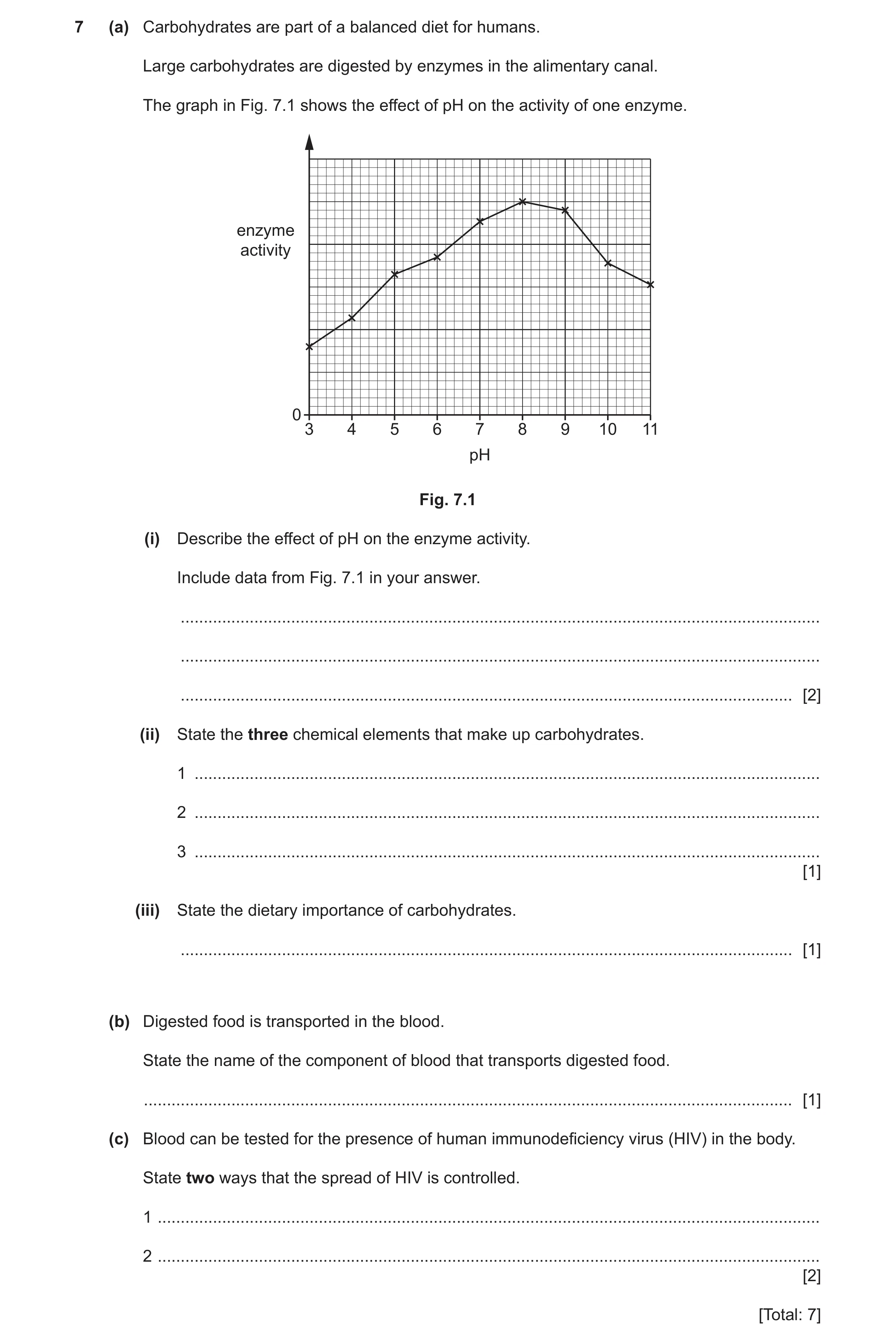
7 (a) Carbohydrates are part of a balanced diet for humans. Large carbohydrates are digested by enzymes in the alimentary canal. The graph in Fig. 7.1 shows the effect of pH on the activity of one enzyme. enzyme activity 0 3 4 5 6 7 8 9 10 11 pH Fig. 7.1 (i) Describe the effect of pH on the enzyme activity. Include data from Fig. 7.1 in your answer. … … … [2] (ii) State the three chemical elements that make up carbohydrates. 1 … 2 … 3 … [1] (iii) State the dietary importance of carbohydrates. … [1] (b) Digested food is transported in the blood. State the name of the component of blood that transports digested food. … [1] (c) Blood can be tested for the presence of human immunodeficiency virus (HIV) in the body. State two ways that the spread of HIV is controlled. 1 … 2 … [2] [Total: 7]
7 marks
Mark scheme: 7(a)(i) as pH increases, the enzyme activity first increases and then decreases ; 2 maximum at pH 8 ; 7(a)(ii) carbon AND hydrogen AND oxygen ; 1 7(a)(iii) provide energy ; 1 7(b) plasma ; 1 7(c) any two from: 2 using condoms / protected sexual intercourse ; idea of (sexual) abstinence ; not sharing needles ; using sterile surgical instruments ;
This question in 0653/32 Oct/Nov 2023
Q15 · Carbohydrates are part of a balanced diet for humans 0653/33 Oct/Nov 2023
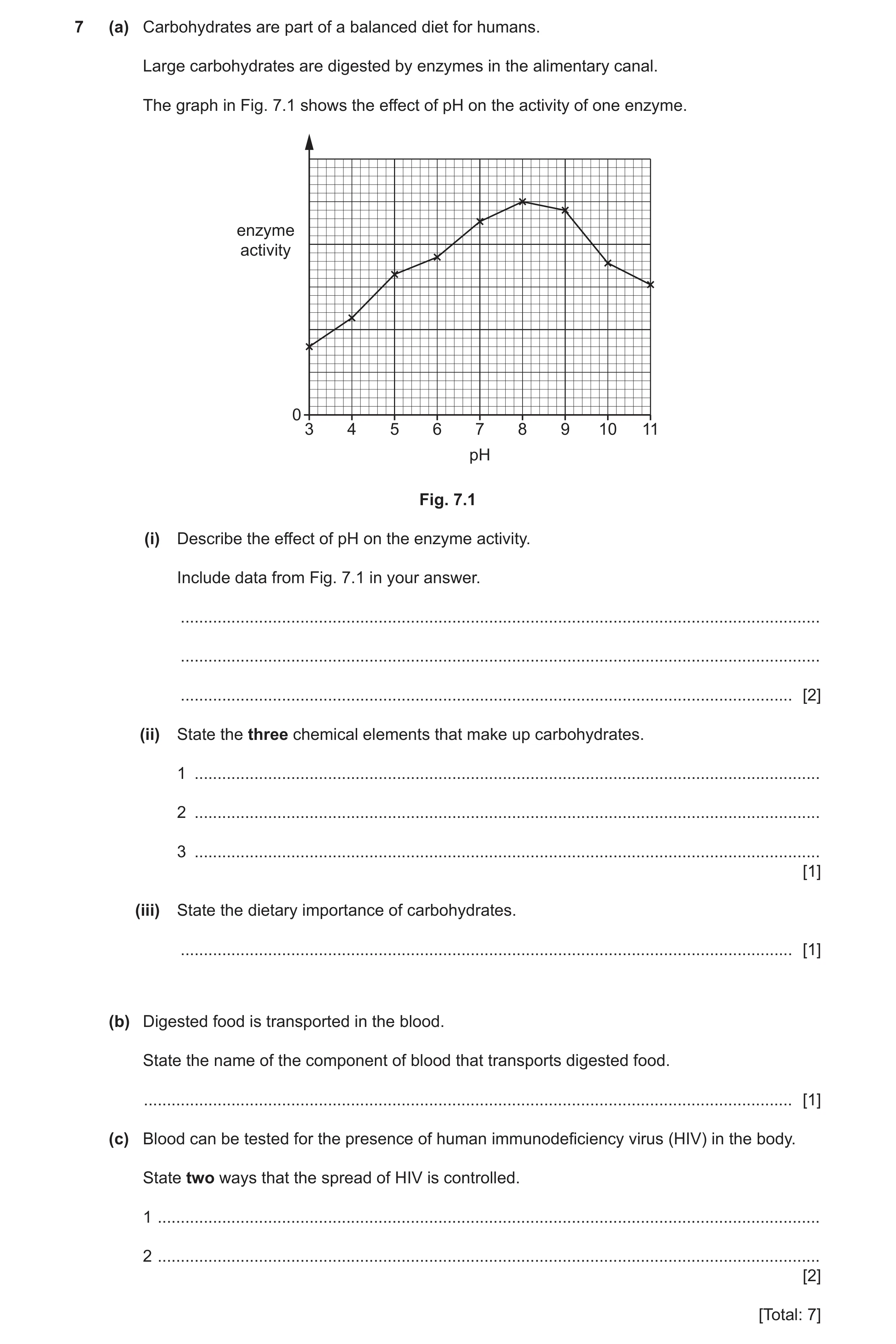
7 (a) Carbohydrates are part of a balanced diet for humans. Large carbohydrates are digested by enzymes in the alimentary canal. The graph in Fig. 7.1 shows the effect of pH on the activity of one enzyme. enzyme activity 0 3 4 5 6 7 8 9 10 11 pH Fig. 7.1 (i) Describe the effect of pH on the enzyme activity. Include data from Fig. 7.1 in your answer. … … … [2] (ii) State the three chemical elements that make up carbohydrates. 1 … 2 … 3 … [1] (iii) State the dietary importance of carbohydrates. … [1] (b) Digested food is transported in the blood. State the name of the component of blood that transports digested food. … [1] (c) Blood can be tested for the presence of human immunodeficiency virus (HIV) in the body. State two ways that the spread of HIV is controlled. 1 … 2 … [2] [Total: 7]
7 marks
Mark scheme: 7(a)(i) as pH increases, the enzyme activity first increases and then decreases ; 2 maximum at pH 8 ; 7(a)(ii) carbon AND hydrogen AND oxygen ; 1 7(a)(iii) provide energy ; 1 7(b) plasma ; 1 7(c) any two from: 2 using condoms / protected sexual intercourse ; idea of (sexual) abstinence ; not sharing needles ; using sterile surgical instruments ;
This question in 0653/33 Oct/Nov 2023
Q16 · Information about some fruits 0653/33 May/June 2024
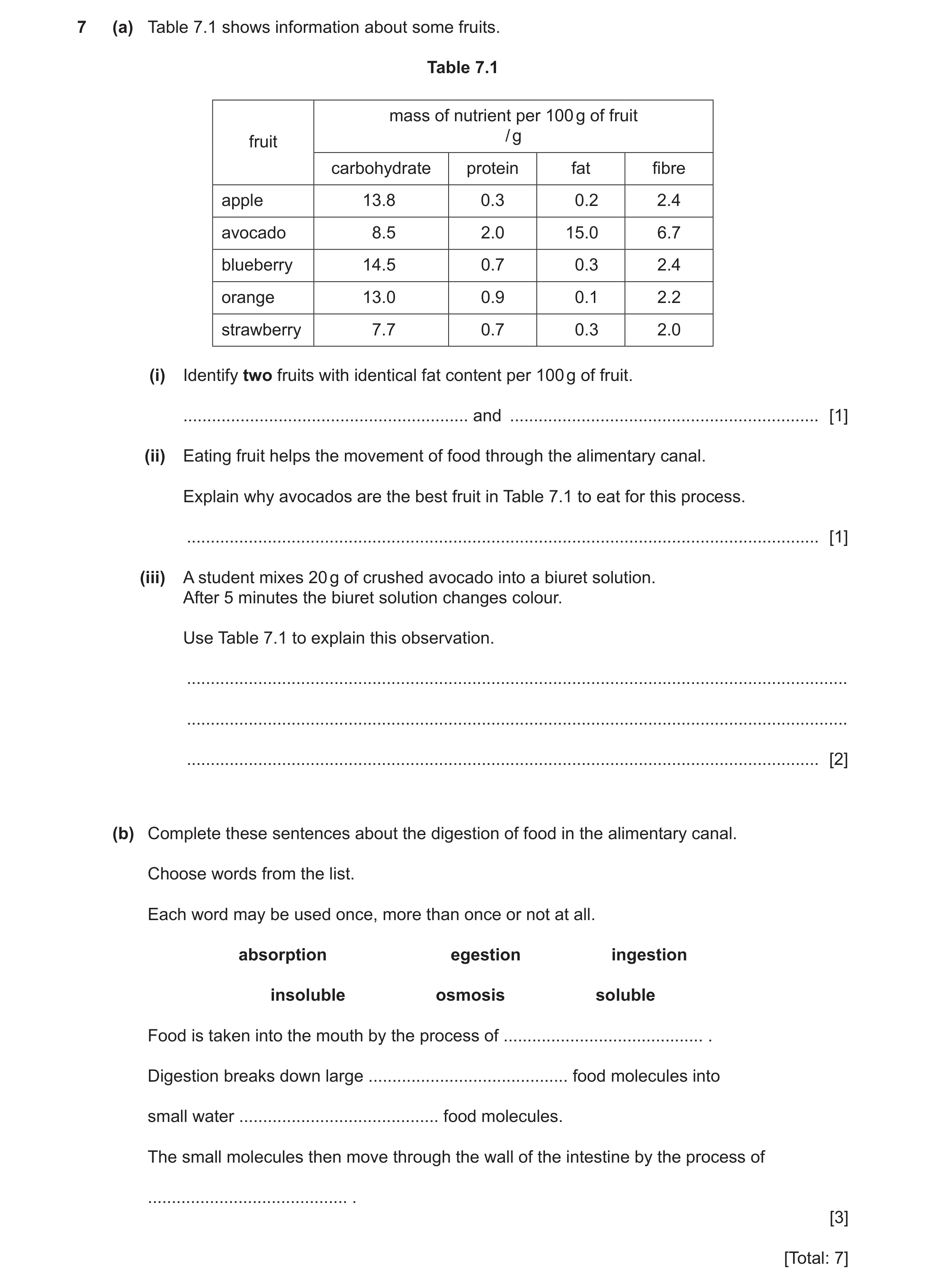
7 (a) Table 7.1 shows information about some fruits. Table 7.1 mass of nutrient per 100 g of fruit / g fruit carbohydrate protein fat fibre apple 13.8 0.3 0.2 2.4 avocado 8.5 2.0 15.0 6.7 blueberry 14.5 0.7 0.3 2.4 orange 13.0 0.9 0.1 2.2 strawberry 7.7 0.7 0.3 2.0 (i) Identify two fruits with identical fat content per 100 g of fruit. … and … [1] (ii) Eating fruit helps the movement of food through the alimentary canal. Explain why avocados are the best fruit in Table 7.1 to eat for this process. … [1] (iii) A student mixes 20 g of crushed avocado into a biuret solution. After 5 minutes the biuret solution changes colour. Use Table 7.1 to explain this observation. … … … [2] (b) Complete these sentences about the digestion of food in the alimentary canal. Choose words from the list. Each word may be used once, more than once or not at all. absorption egestion ingestion insoluble osmosis soluble Food is taken into the mouth by the process of … . Digestion breaks down large … food molecules into small water … food molecules. The small molecules then move through the wall of the intestine by the process of … . [3] [Total: 7]
7 marks
Mark scheme: 7(a)(i) blueberry and strawberry ; 1 7(a)(ii) (avocados have) highest fibre content ; 1 7(a)(iii) biuret tests for protein / protein causes biuret to change colour (to purple) ; (Table 7.1 shows that) avocado contains protein ; 2 7(b) ingestion ; insoluble and soluble (in correct order) ; absorption ; 3
This question in 0653/33 May/June 2024
Q17 · Anaemia is caused by a deficiency of iron in the diet 0653/31 Oct/Nov 2024
4 Anaemia is caused by a deficiency of iron in the diet. (a) Fig. 4.1 shows diagrams of the blood of a person without anaemia and the blood of a person with anaemia. white blood cells platelets red blood cells blood of person blood of person without anaemia with anaemia Fig. 4.1 (i) Describe one visible difference between the two types of blood shown in Fig. 4.1. … … [1] (ii) The boxes on the left show the components of blood labelled in Fig. 4.1. The boxes on the right show the functions of the components. Draw one straight line from each component to its function. component function platelets transportation of oxygen red blood cells phagocytosis white blood cells blood clotting [2] (b) Foods containing iron are needed as part of a balanced diet. (i) Circle one food that is a principal source of iron. apples bread meat rice [1] (ii) State what is meant by the term balanced diet. … … [1] (iii) Protein is part of a balanced diet. All proteins contain the elements carbon, hydrogen and oxygen. State one other element contained in all proteins. … [1] (c) Fig. 4.2 shows the pulse rate of a person before, during and after physical activity. 160 end of physical activity 140 120 100 pulse rate 80 / beats per minute 60 40 start of physical activity 20 0 0 10 20 30 40 50 time / minutes Fig. 4.2 (i) Calculate the percentage increase in pulse rate of the person between the start and end of physical activity. pulse rate at start of physical activity = … beats per minute pulse rate at end of physical activity = … beats per minute change in pulse rate = … beats per minute percentage increase in pulse rate = … % [3] (ii) During exercise, muscles need more oxygen for respiration. Define the term respiration. … … … [2] [Total: 11]
11 marks
Mark scheme: 4(a)(i) blood from person without anaemia has more red blood cells ORA ; 1 4(a)(ii) 2 platelets transportation of oxygen red blood cells phagocytosis white blood cells blood clotting one correct ; all correct ; 4(b)(i) meat ; 1 4(b)(ii) idea of diet that contains suitable amounts of each type of nutrient ; 1 4(b)(iii) nitrogen ; 1 4(c)(i) 60 AND 140 ; 3 80 ; 133.3(%) ; 4(c)(ii) chemical reaction (in cells) that breaks down nutrient molecules ; 2 to release energy ;
This question in 0653/31 Oct/Nov 2024
Q18 · The alimentary canal and associated organs of a human 0653/32 Oct/Nov 2024
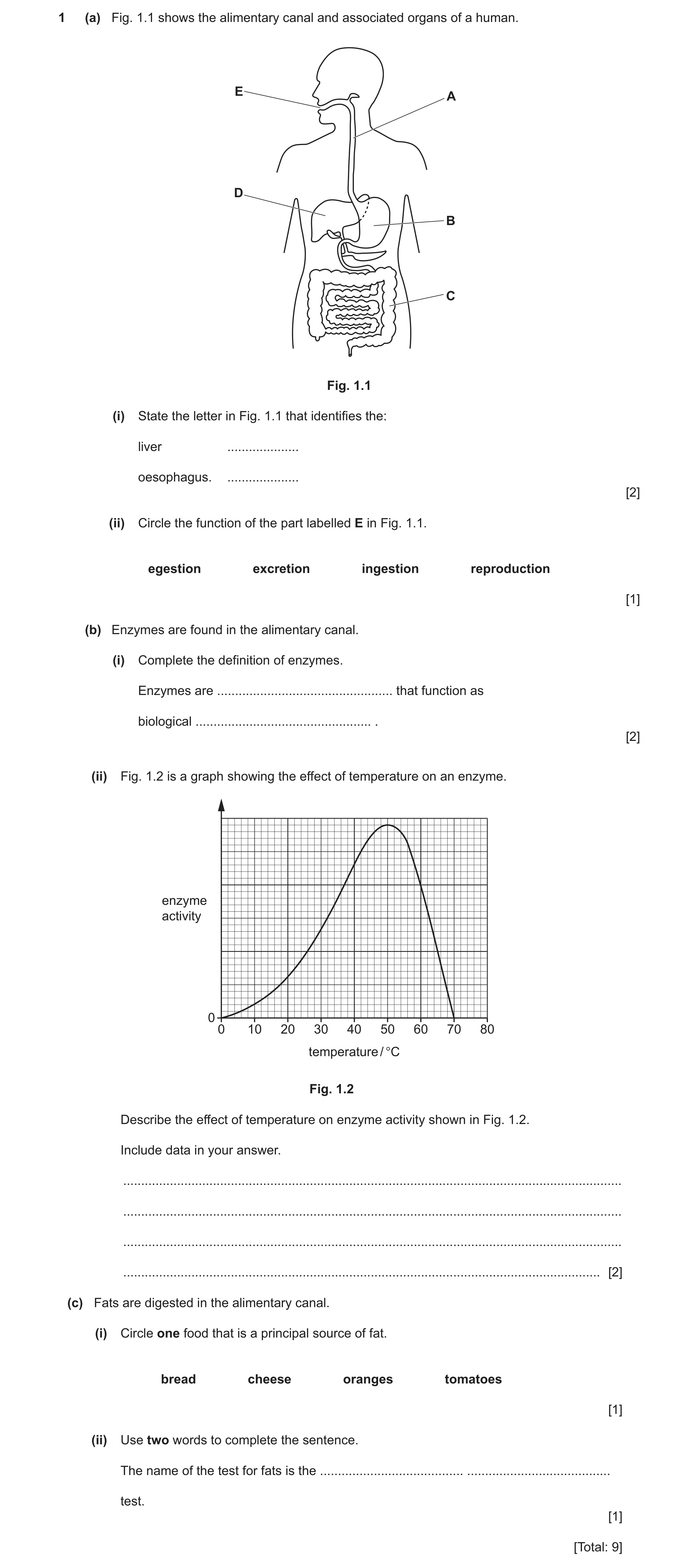
1 (a) Fig. 1.1 shows the alimentary canal and associated organs of a human. E A D B C Fig. 1.1 (i) State the letter in Fig. 1.1 that identifies the: liver … oesophagus. … [2] (ii) Circle the function of the part labelled E in Fig. 1.1. egestion excretion ingestion reproduction [1] (b) Enzymes are found in the alimentary canal. (i) Complete the definition of enzymes. Enzymes are … that function as biological … . [2] (ii) Fig. 1.2 is a graph showing the effect of temperature on an enzyme. enzyme activity 0 0 10 20 30 40 50 60 70 80 temperature / °C Fig. 1.2 Describe the effect of temperature on enzyme activity shown in Fig. 1.2. Include data in your answer. … … … … [2] (c) Fats are digested in the alimentary canal. (i) Circle one food that is a principal source of fat. bread cheese oranges tomatoes [1] (ii) Use two words to complete the sentence. The name of the test for fats is the … … test. [1] [Total: 9]
9 marks
Mark scheme: Question Answer Marks 1(a)(i) D ; 2 A ; 1(a)(ii) ingestion ; 1 1(b)(i) proteins ; 2 catalysts ; 1(b)(ii) idea that as temperature increases, enzyme activity increases then decreases ; 2 peaks at 50(C) / AW ; 1(c)(i) cheese ; 1 1(c)(ii) ethanol emulsion ; 1
This question in 0653/32 Oct/Nov 2024
Q19 · The alimentary canal and associated organs of a human 0653/33 Oct/Nov 2024
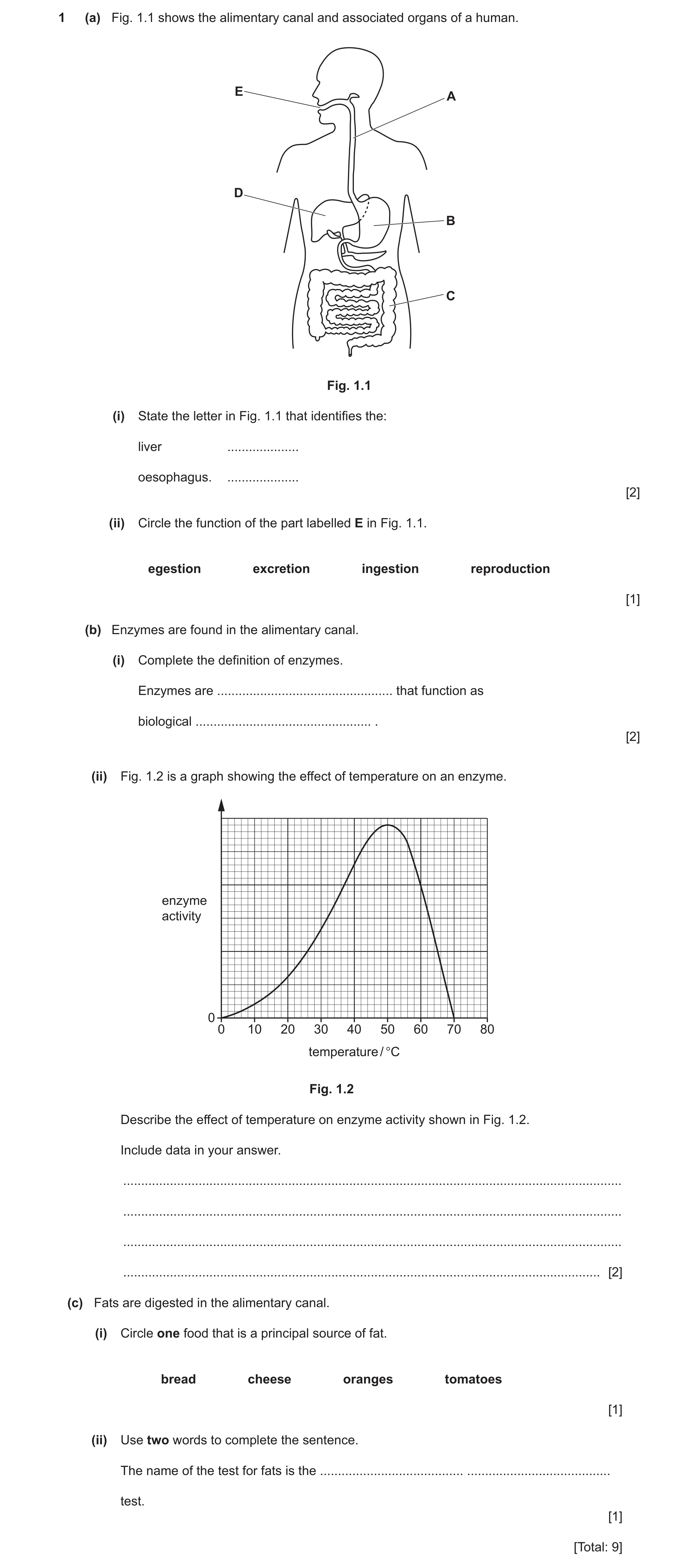
1 (a) Fig. 1.1 shows the alimentary canal and associated organs of a human. E A D B C Fig. 1.1 (i) State the letter in Fig. 1.1 that identifies the: liver … oesophagus. … [2] (ii) Circle the function of the part labelled E in Fig. 1.1. egestion excretion ingestion reproduction [1] (b) Enzymes are found in the alimentary canal. (i) Complete the definition of enzymes. Enzymes are … that function as biological … . [2] (ii) Fig. 1.2 is a graph showing the effect of temperature on an enzyme. enzyme activity 0 0 10 20 30 40 50 60 70 80 temperature / °C Fig. 1.2 Describe the effect of temperature on enzyme activity shown in Fig. 1.2. Include data in your answer. … … … … [2] (c) Fats are digested in the alimentary canal. (i) Circle one food that is a principal source of fat. bread cheese oranges tomatoes [1] (ii) Use two words to complete the sentence. The name of the test for fats is the … … test. [1] [Total: 9]
9 marks
Mark scheme: Question Answer Marks 1(a)(i) D ; 2 A ; 1(a)(ii) ingestion ; 1 1(b)(i) proteins ; 2 catalysts ; 1(b)(ii) idea that as temperature increases, enzyme activity increases then decreases ; 2 peaks at 50(C) / AW ; 1(c)(i) cheese ; 1 1(c)(ii) ethanol emulsion ; 1
This question in 0653/33 Oct/Nov 2024
Q20 · The main organs of the digestive system 0653/32 Feb/March 2025
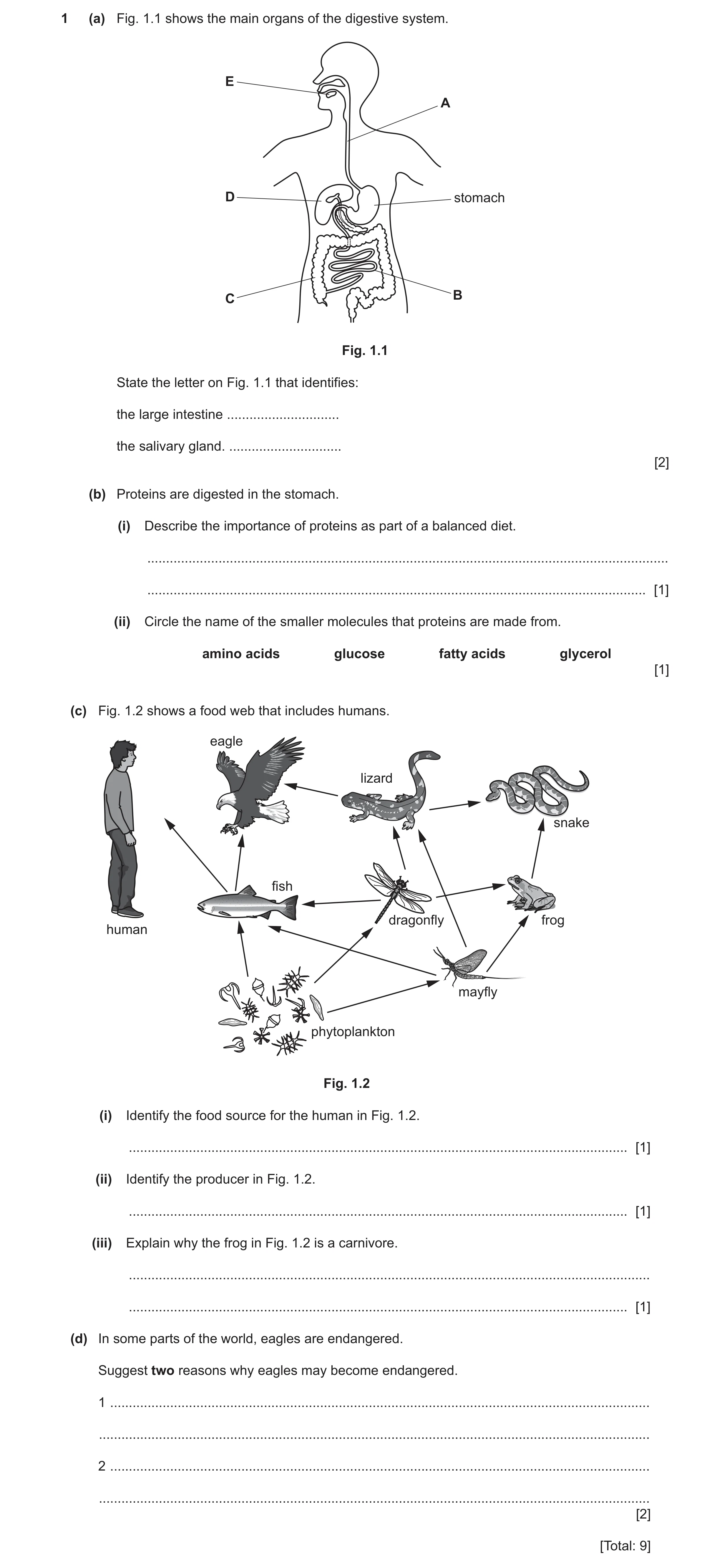
1 (a) Fig. 1.1 shows the main organs of the digestive system. E A D stomach C B Fig. 1.1 State the letter on Fig. 1.1 that identifies: the large intestine … the salivary gland. … [2] (b) Proteins are digested in the stomach. (i) Describe the importance of proteins as part of a balanced diet. … … [1] (ii) Circle the name of the smaller molecules that proteins are made from. amino acids glucose fatty acids glycerol [1] (c) Fig. 1.2 shows a food web that includes humans. eagle lizard snake fish dragonfly frog human mayfly phytoplankton Fig. 1.2 (i) Identify the food source for the human in Fig. 1.2. … [1] (ii) Identify the producer in Fig. 1.2. … [1] (iii) Explain why the frog in Fig. 1.2 is a carnivore. … … [1] (d) In some parts of the world, eagles are endangered. Suggest two reasons why eagles may become endangered. 1 … … 2 … … [2] [Total: 9]
9 marks
Mark scheme: Question Answer Marks 1(a) C ; 2 E ; 1(b)(i) needed for, growth / repair ; 1 1(b)(ii) amino acids ; 1 more than one answer circled = 0 marks 1(c)(i) fish ; 1 1(c)(ii) phytoplankton ; 1 1(c)(iii) (only) gains energy from animals ; 1 1(d) any two from: 2 climate change ; habitat destruction ; hunting ; introduced species ; overharvesting ; pollution (in environment) ; AVP, e.g. new disease ;
This question in 0653/32 Feb/March 2025
Q21 · Nutrition is one of the characteristics of living organisms 0653/31 May/June 2025
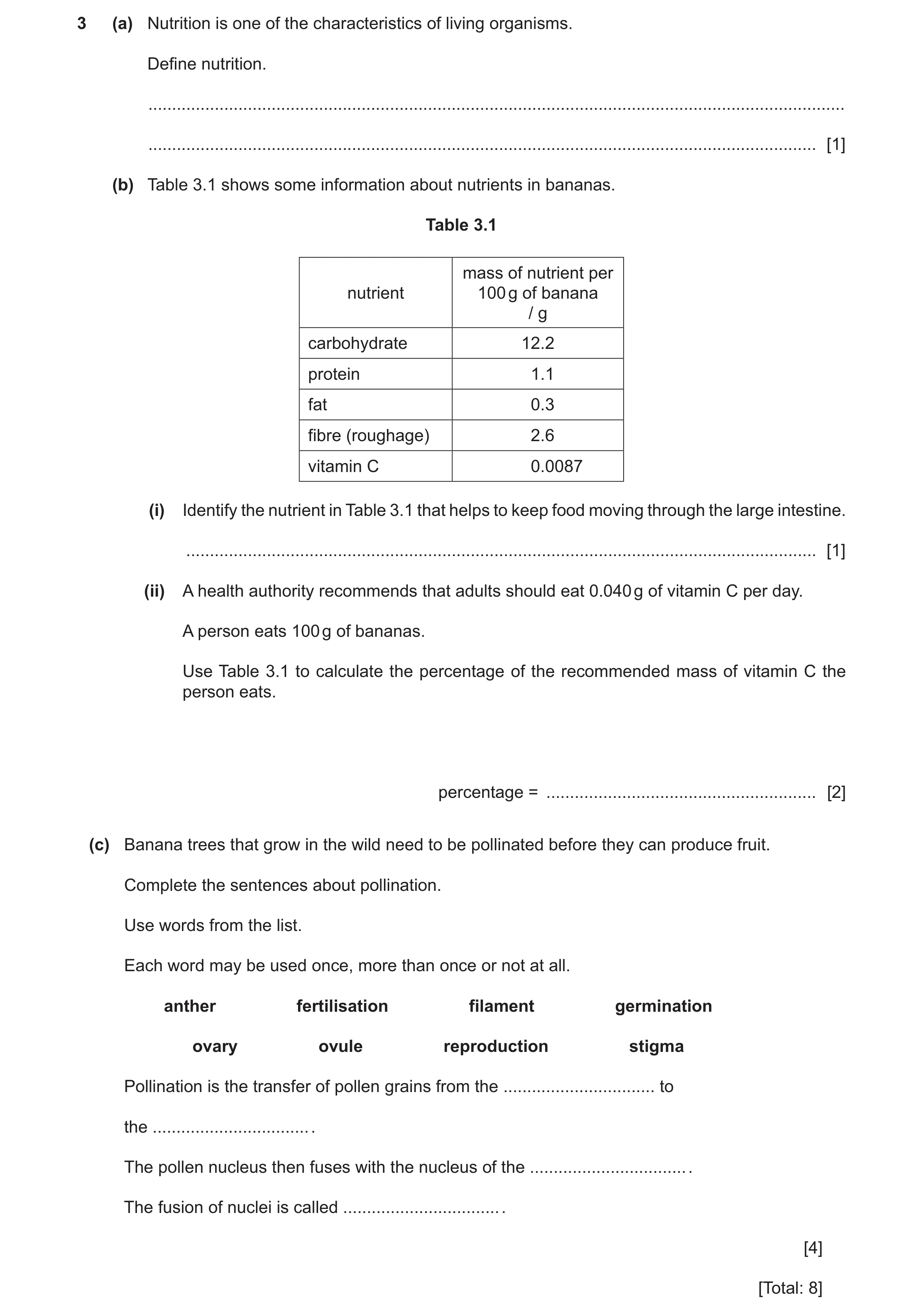
3 (a) Nutrition is one of the characteristics of living organisms. Define nutrition. … … [1] (b) Table 3.1 shows some information about nutrients in bananas. Table 3.1 mass of nutrient per nutrient 100 g of banana / g carbohydrate 12.2 protein 1.1 fat 0.3 fibre (roughage) 2.6 vitamin C 0.0087 (i) Identify the nutrient in Table 3.1 that helps to keep food moving through the large intestine. … [1] (ii) A health authority recommends that adults should eat 0.040 g of vitamin C per day. A person eats 100 g of bananas. Use Table 3.1 to calculate the percentage of the recommended mass of vitamin C the person eats. percentage = … [2] (c) Banana trees that grow in the wild need to be pollinated before they can produce fruit. Complete the sentences about pollination. Use words from the list. Each word may be used once, more than once or not at all. anther fertilisation filament germination ovary ovule reproduction stigma Pollination is the transfer of pollen grains from the … to the … . The pollen nucleus then fuses with the nucleus of the … . The fusion of nuclei is called … . [4] [Total: 8]
8 marks
Mark scheme: 3(a) the taking in of materials for, energy / growth / development ; 1 3(b)(i) fibre / roughage ; 1 3(b)(ii) 0.0087 100 ÷ 0.040 ; 2 22 (%) ; 3(c) anther ; 4 stigma ; ovule ; fertilisation ;
This question in 0653/31 May/June 2025
Q22 · A diagram of the female reproductive system in humans 0653/32 Oct/Nov 2025
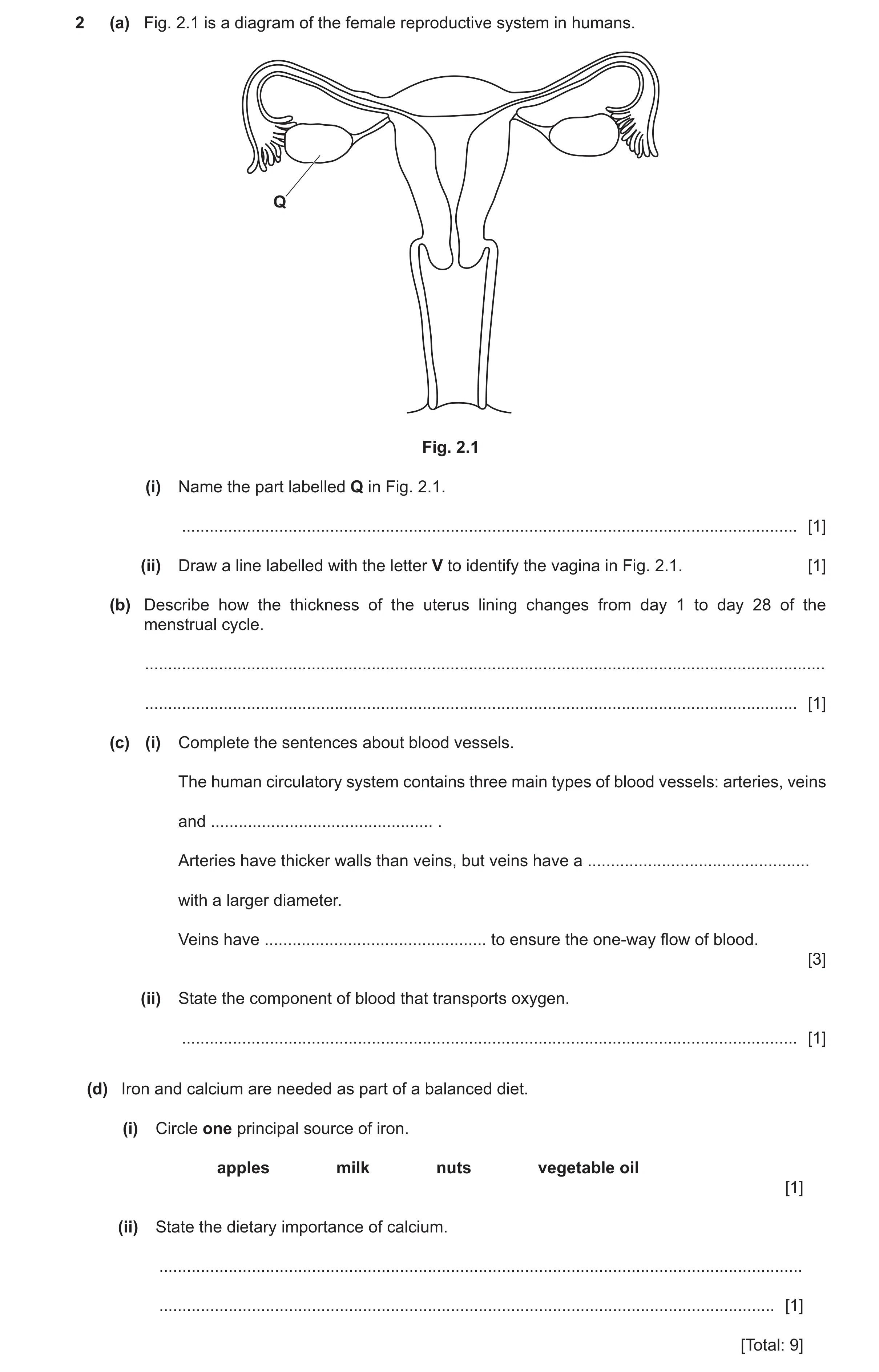
2 (a) Fig. 2.1 is a diagram of the female reproductive system in humans. Q Fig. 2.1 (i) Name the part labelled Q in Fig. 2.1. … [1] (ii) Draw a line labelled with the letter V to identify the vagina in Fig. 2.1. [1] (b) Describe how the thickness of the uterus lining changes from day 1 to day 28 of the menstrual cycle. … … [1] (c) (i) Complete the sentences about blood vessels. The human circulatory system contains three main types of blood vessels: arteries, veins and … . Arteries have thicker walls than veins, but veins have a … with a larger diameter. Veins have … to ensure the one-way flow of blood. [3] (ii) State the component of blood that transports oxygen. … [1] (d) Iron and calcium are needed as part of a balanced diet. (i) Circle one principal source of iron. apples milk nuts vegetable oil [1] (ii) State the dietary importance of calcium. … … [1] [Total: 9]
9 marks
Mark scheme: 2(a)(i) ovary ; 1 2(a)(ii) vagina labelled ; 1 2(b) decreases AND then increases ; 1 2(c)(i) capillaries ; 3 lumen ; valves ; 2(c)(ii) red blood cell ; 1 2(d)(i) nuts ; 1 2(d)(ii) healthy bones / teeth ; 1
This question in 0653/32 Oct/Nov 2025
Q23 · A diagram of the female reproductive system in humans 0653/33 Oct/Nov 2025
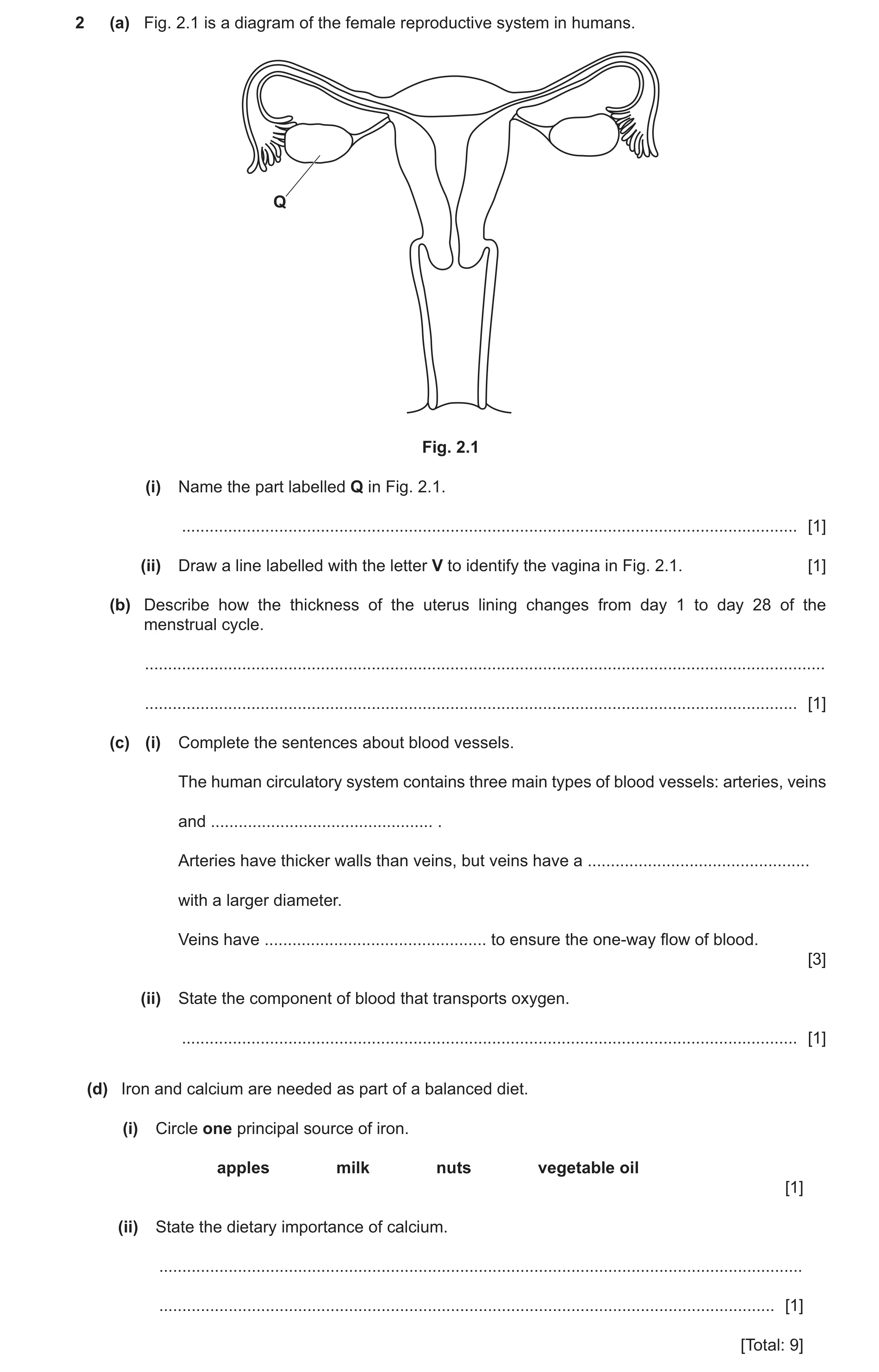
2 (a) Fig. 2.1 is a diagram of the female reproductive system in humans. Q Fig. 2.1 (i) Name the part labelled Q in Fig. 2.1. … [1] (ii) Draw a line labelled with the letter V to identify the vagina in Fig. 2.1. [1] (b) Describe how the thickness of the uterus lining changes from day 1 to day 28 of the menstrual cycle. … … [1] (c) (i) Complete the sentences about blood vessels. The human circulatory system contains three main types of blood vessels: arteries, veins and … . Arteries have thicker walls than veins, but veins have a … with a larger diameter. Veins have … to ensure the one-way flow of blood. [3] (ii) State the component of blood that transports oxygen. … [1] (d) Iron and calcium are needed as part of a balanced diet. (i) Circle one principal source of iron. apples milk nuts vegetable oil [1] (ii) State the dietary importance of calcium. … … [1] [Total: 9]
9 marks
Mark scheme: 2(a)(i) ovary ; 1 2(a)(ii) vagina labelled ; 1 2(b) decreases AND then increases ; 1 2(c)(i) capillaries ; 3 lumen ; valves ; 2(c)(ii) red blood cell ; 1 2(d)(i) nuts ; 1 2(d)(ii) healthy bones / teeth ; 1
This question in 0653/33 Oct/Nov 2025
 4 / 36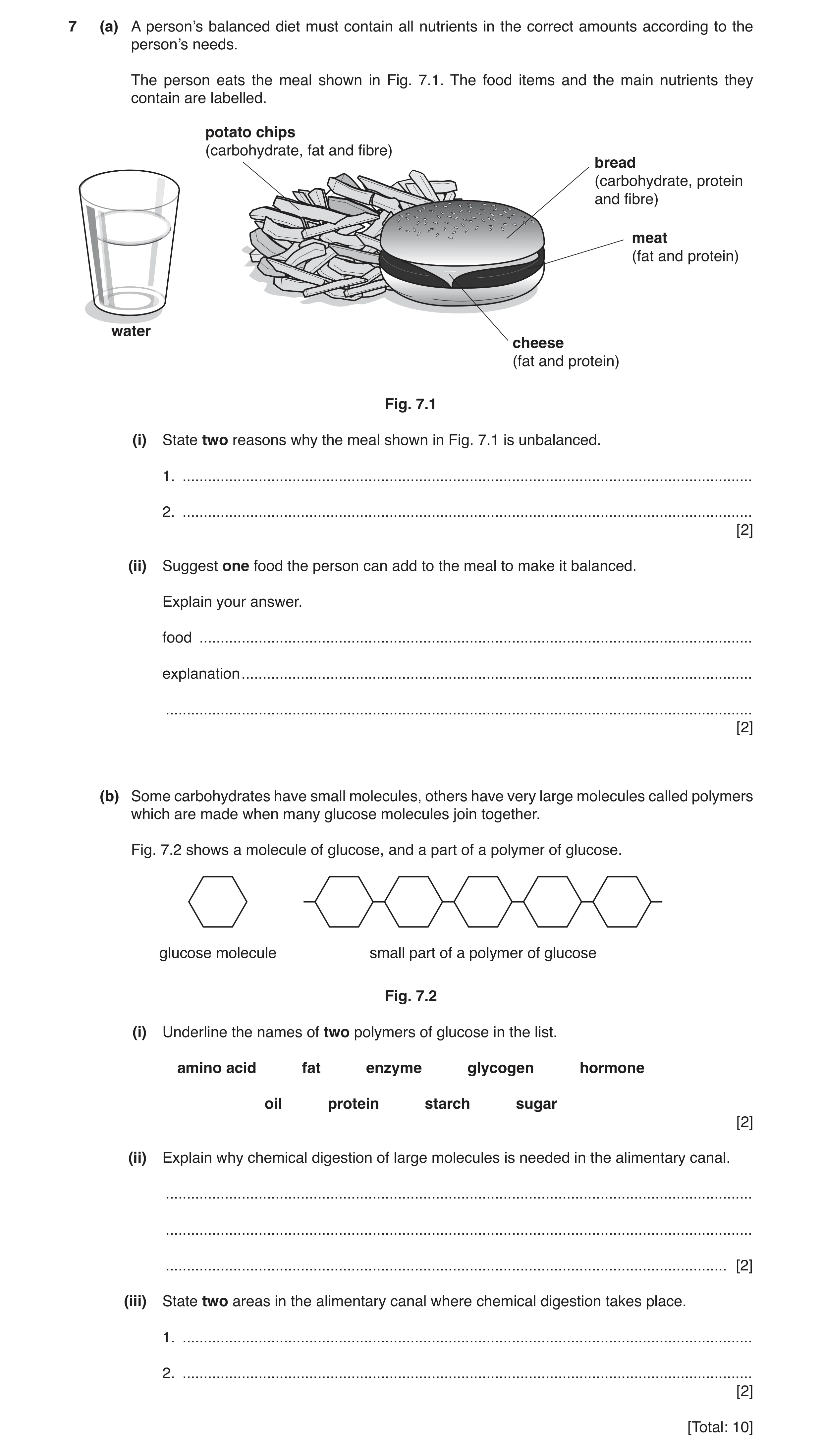
 24 / 36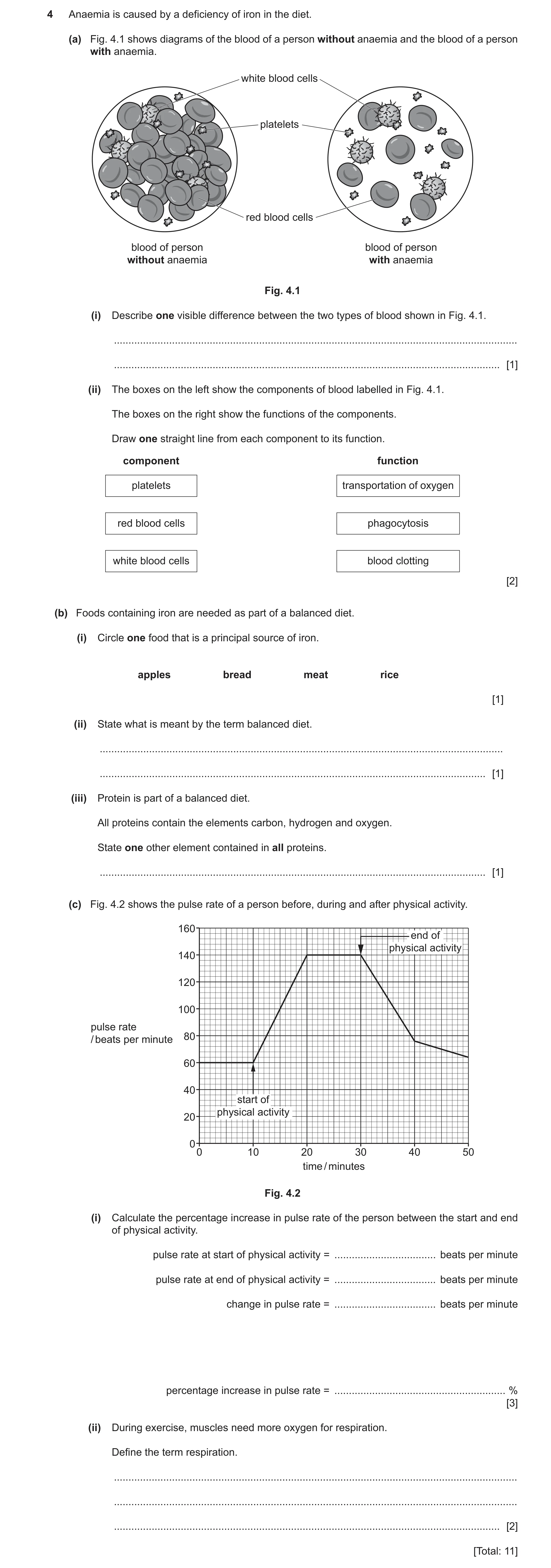
 10
10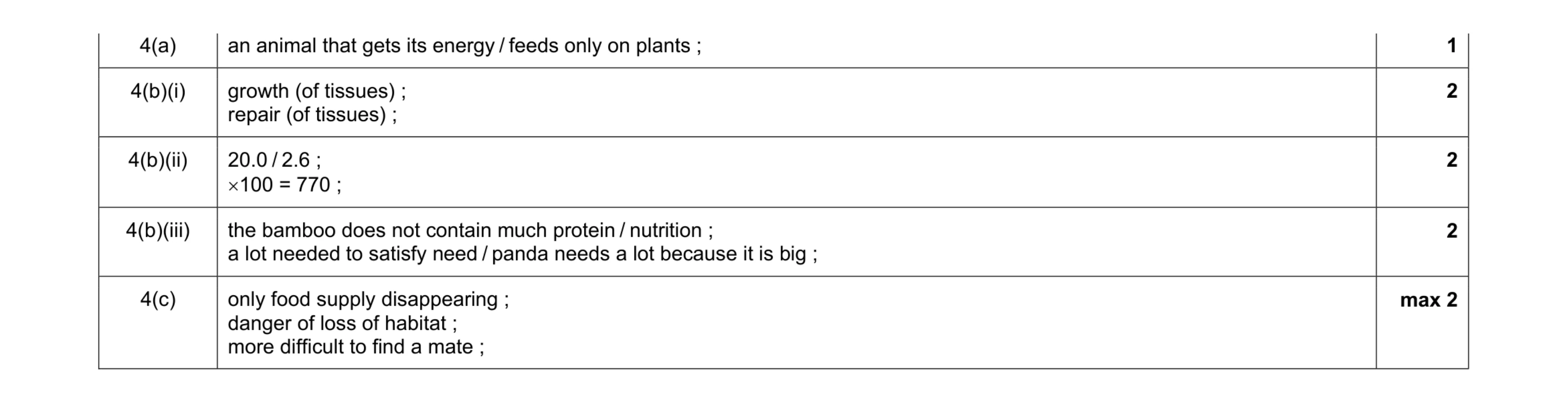 9
9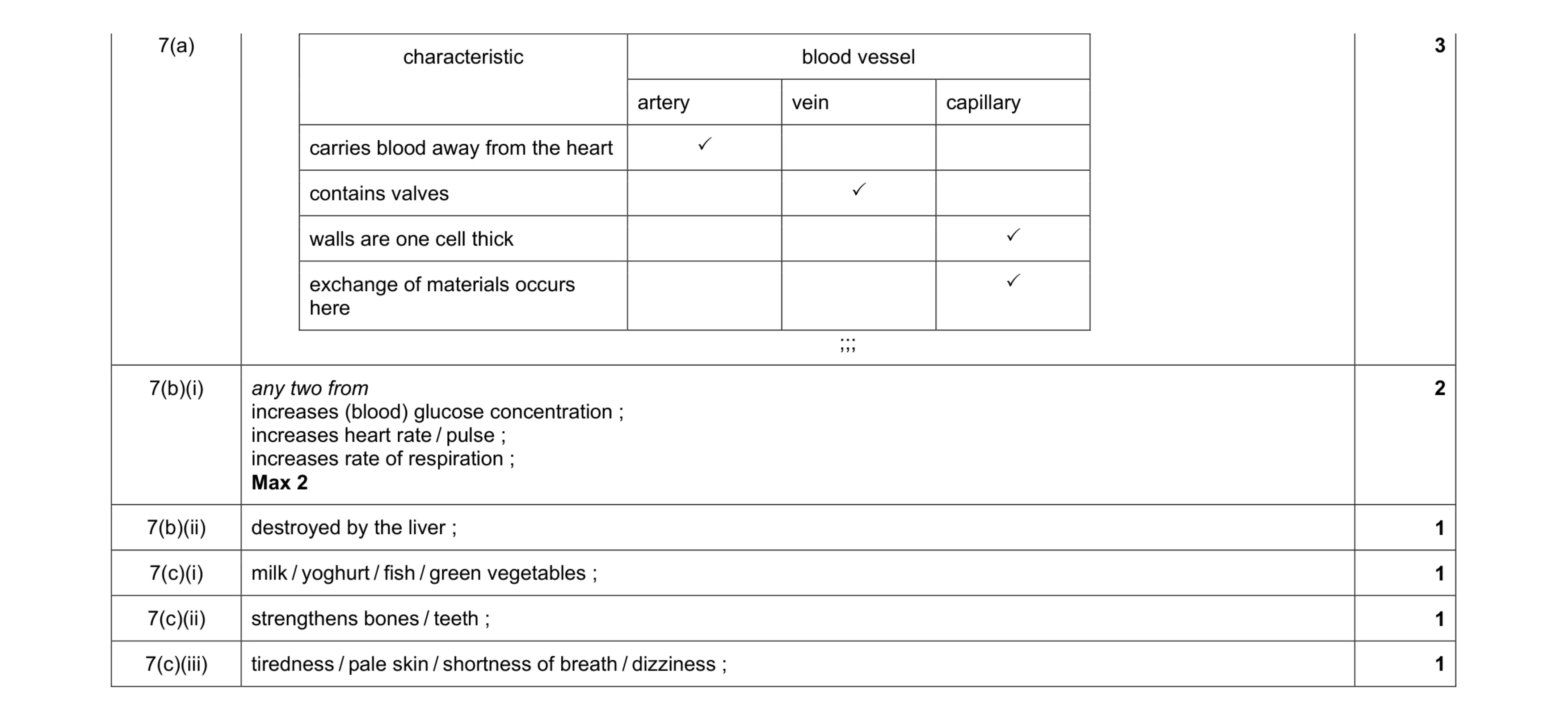 9
9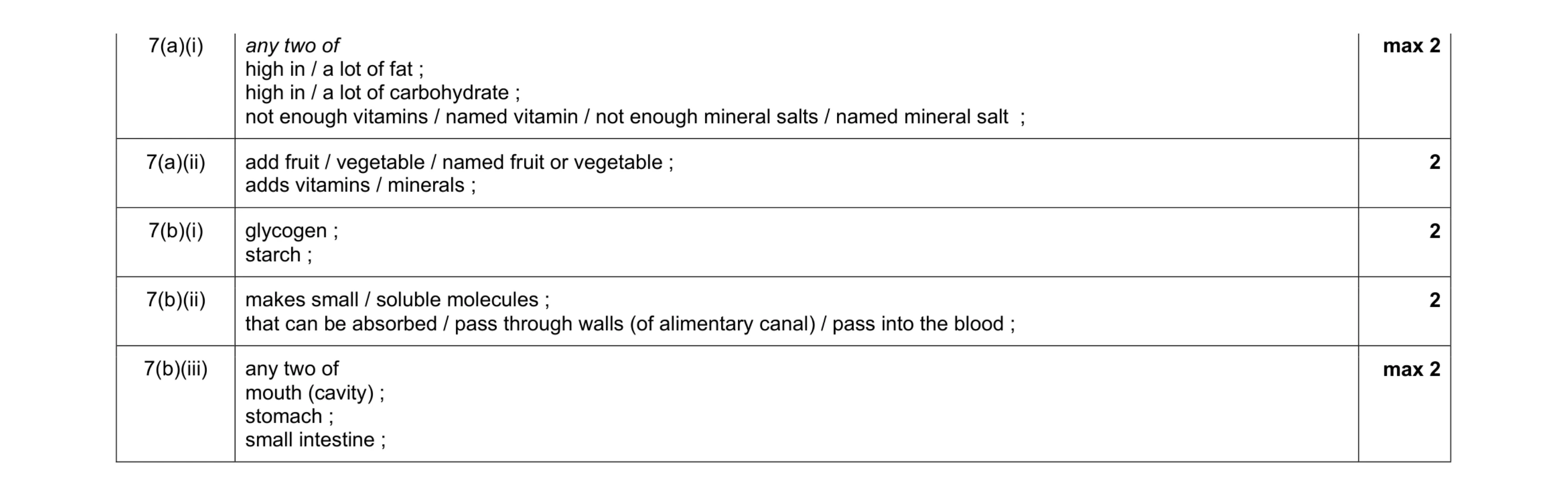 10
10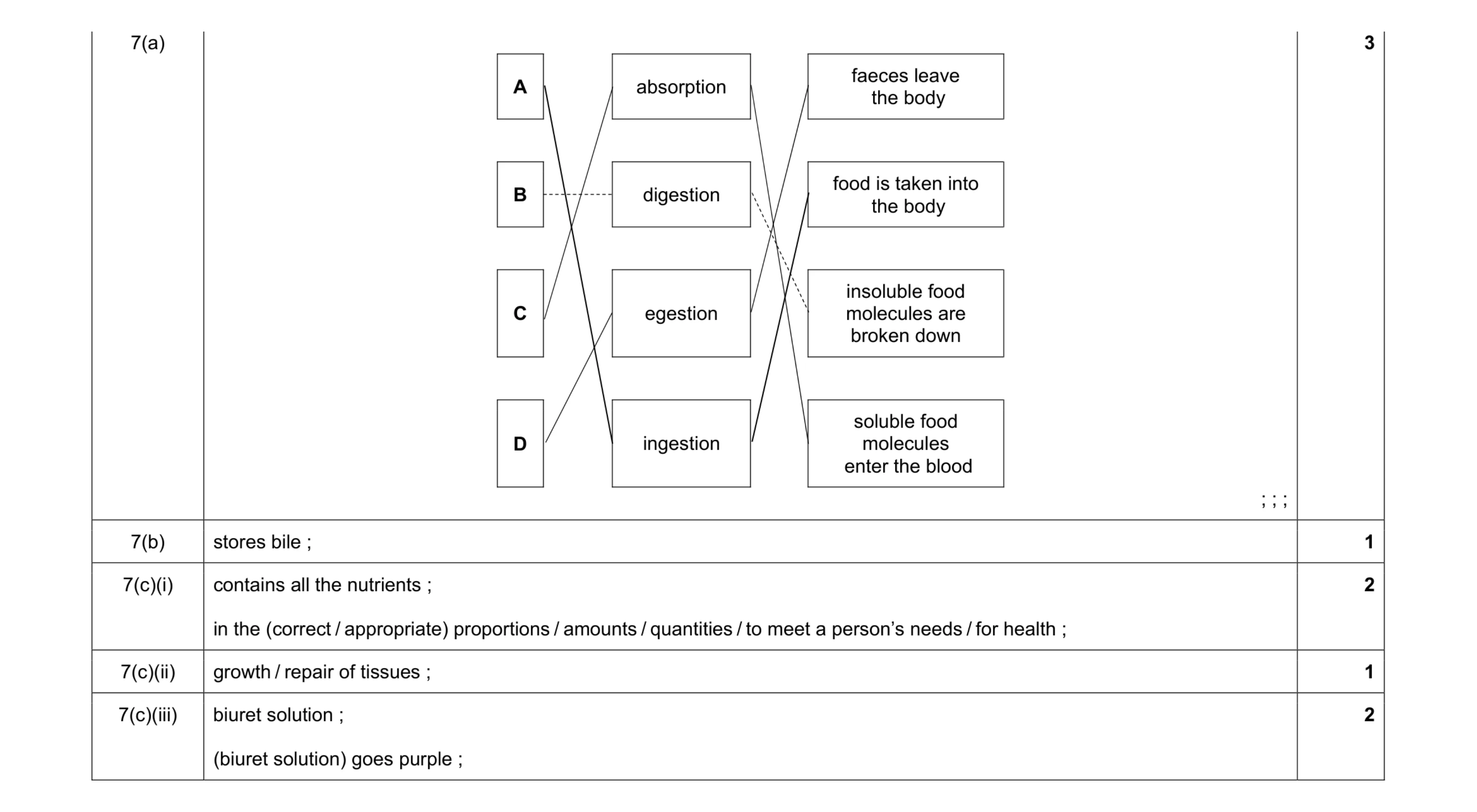 9
9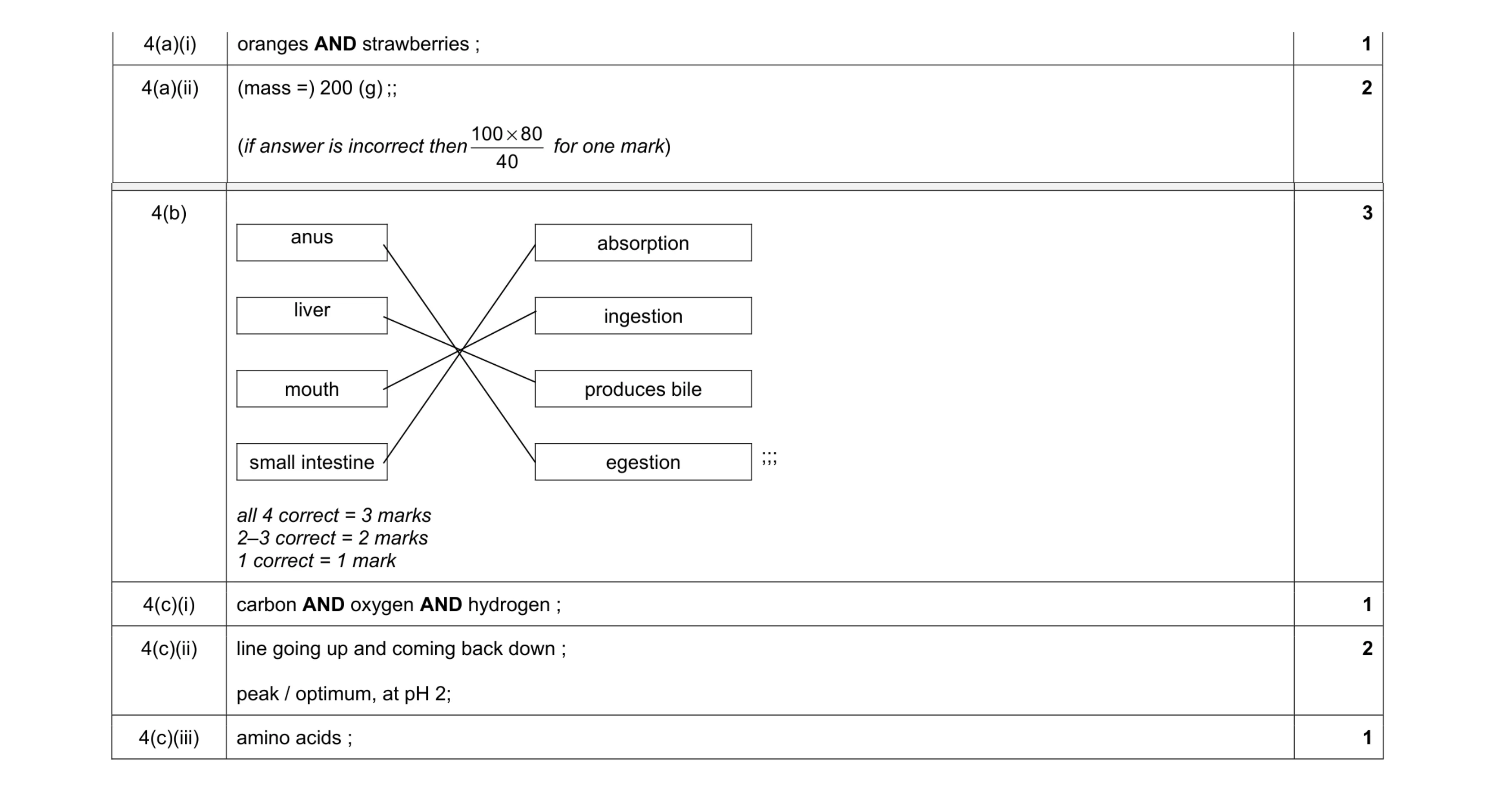 10
10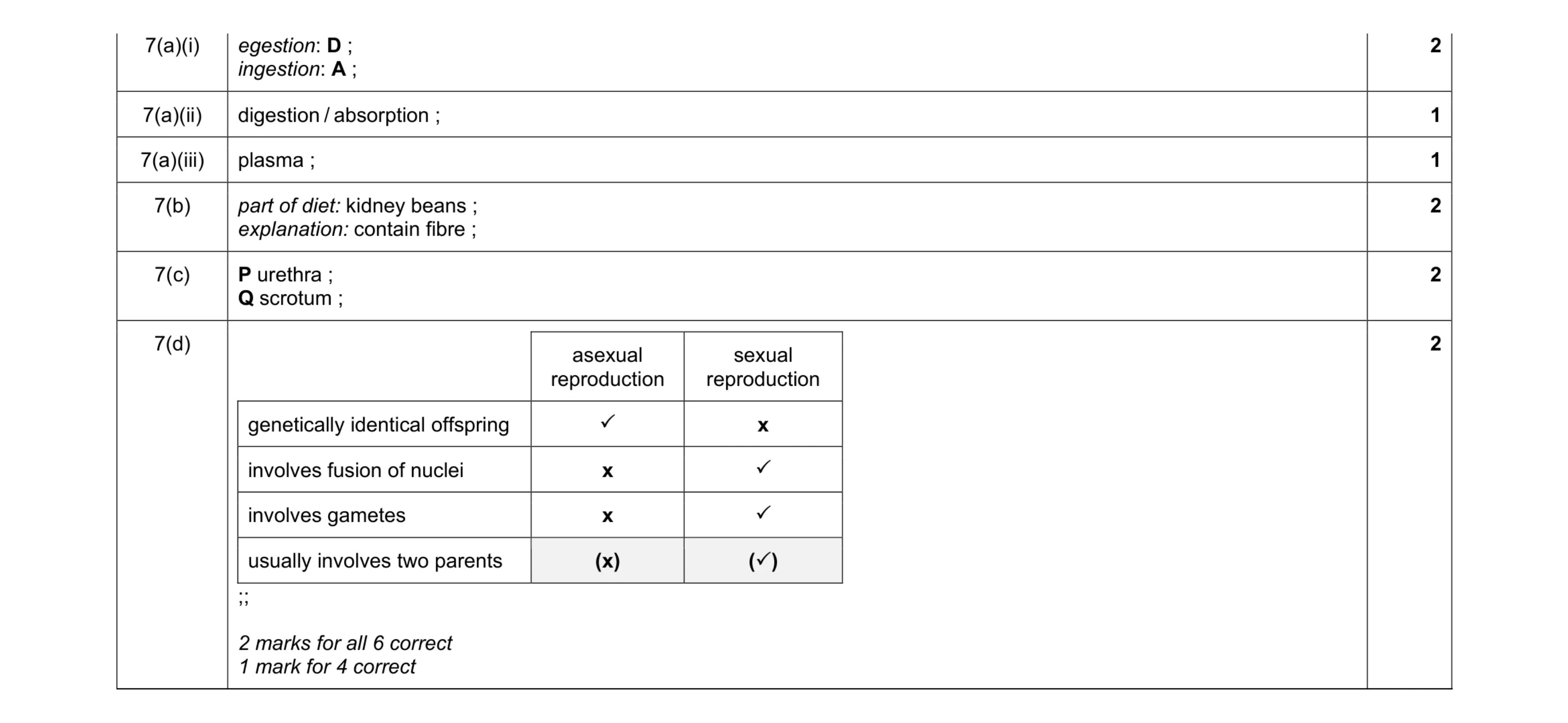 10
10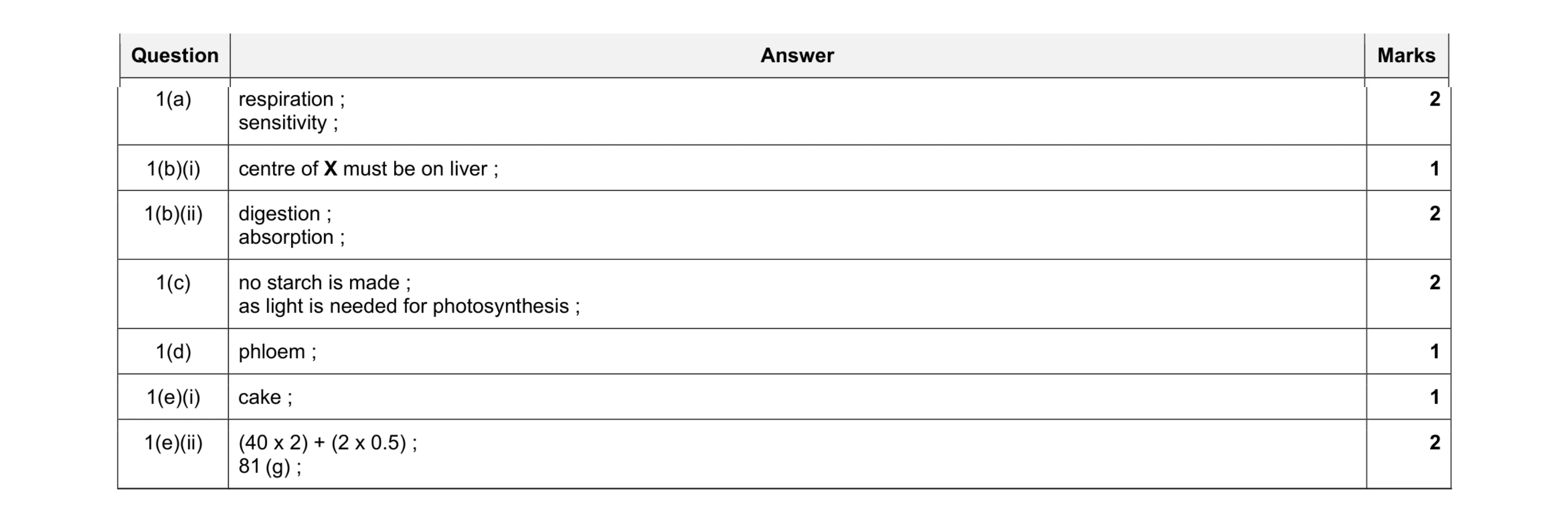 11
11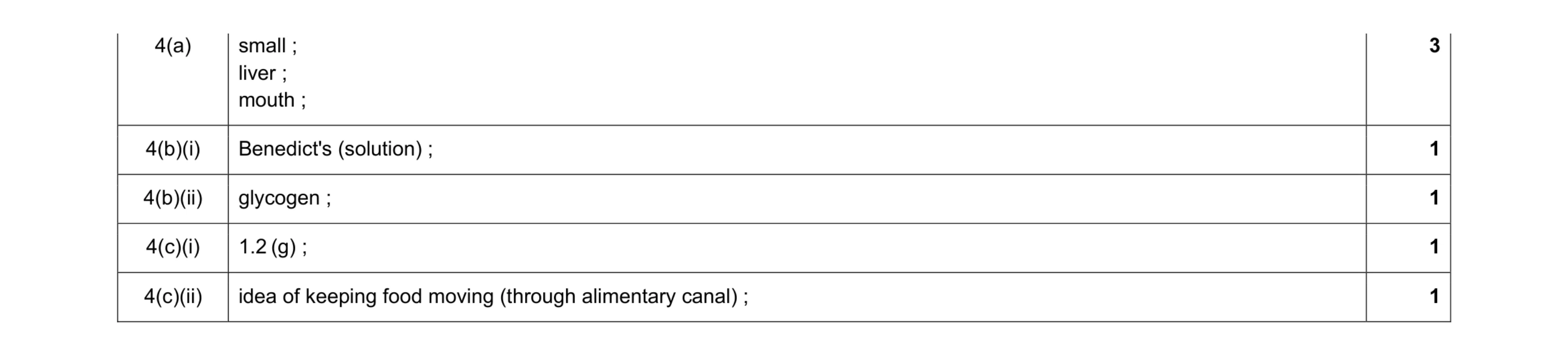 7
7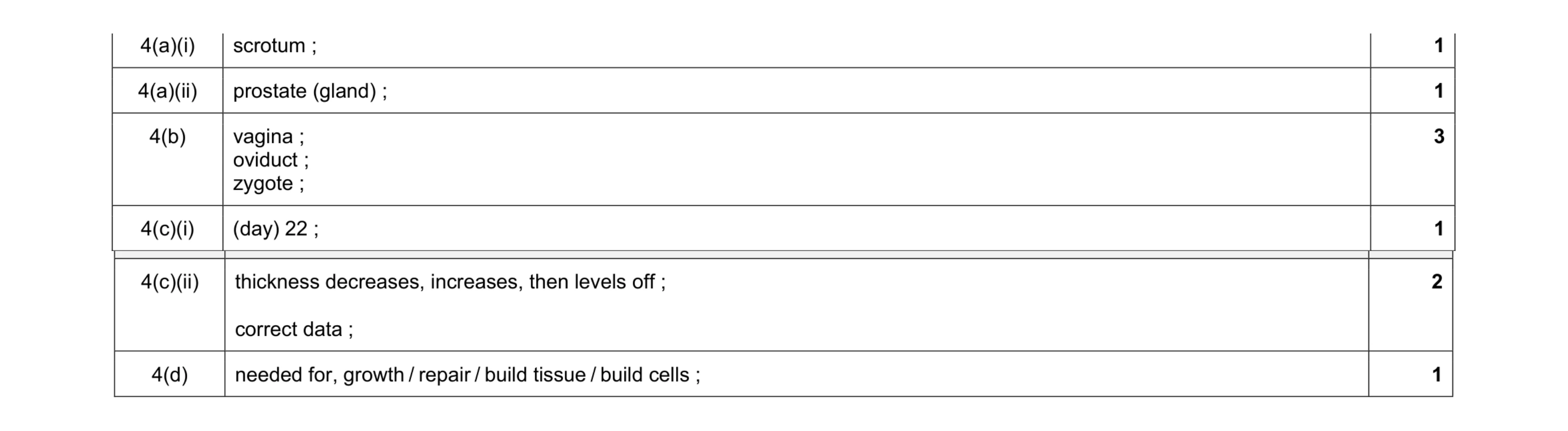 9
9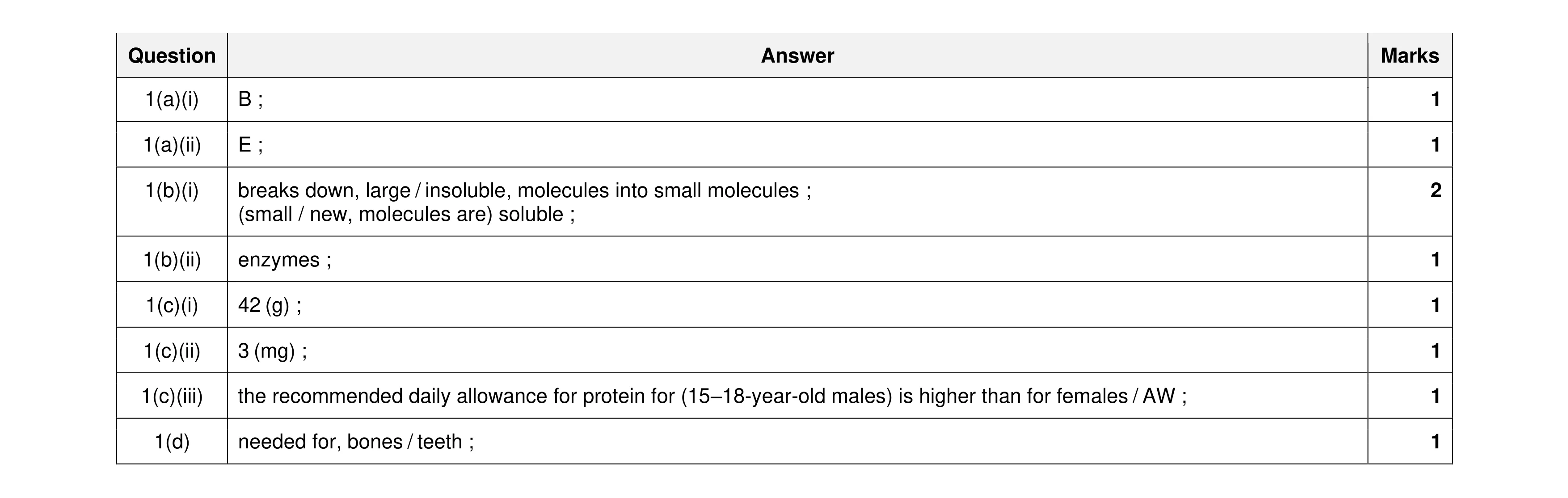 9
9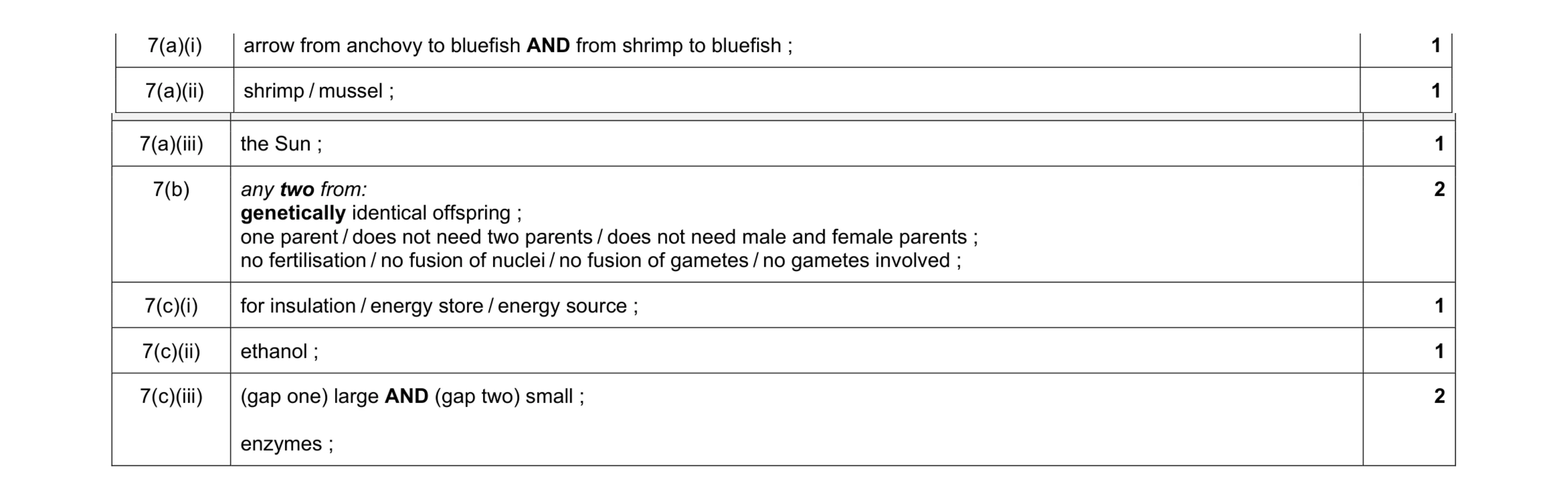 9
9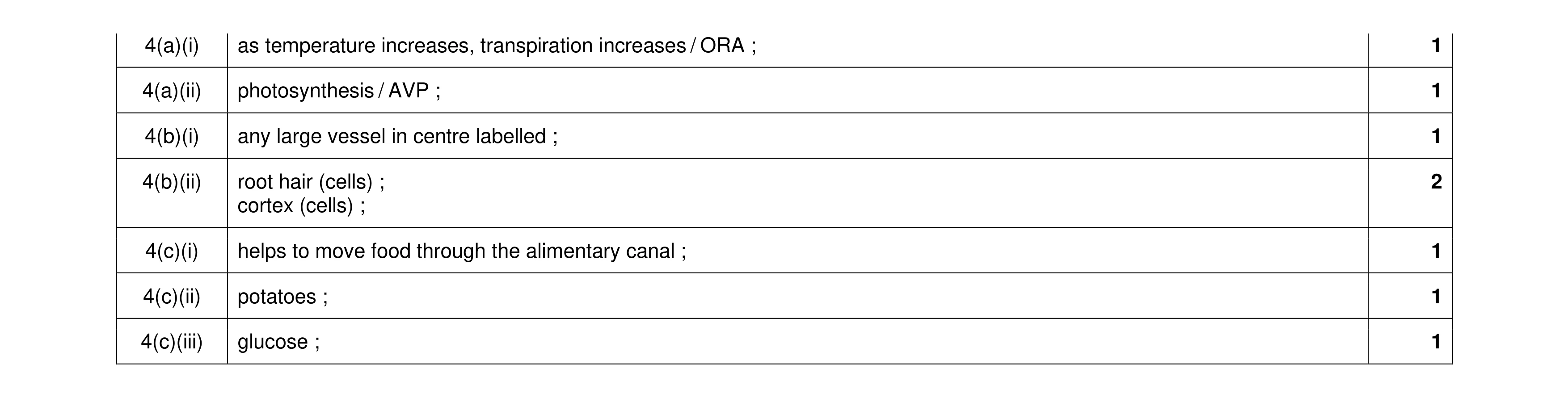 8
8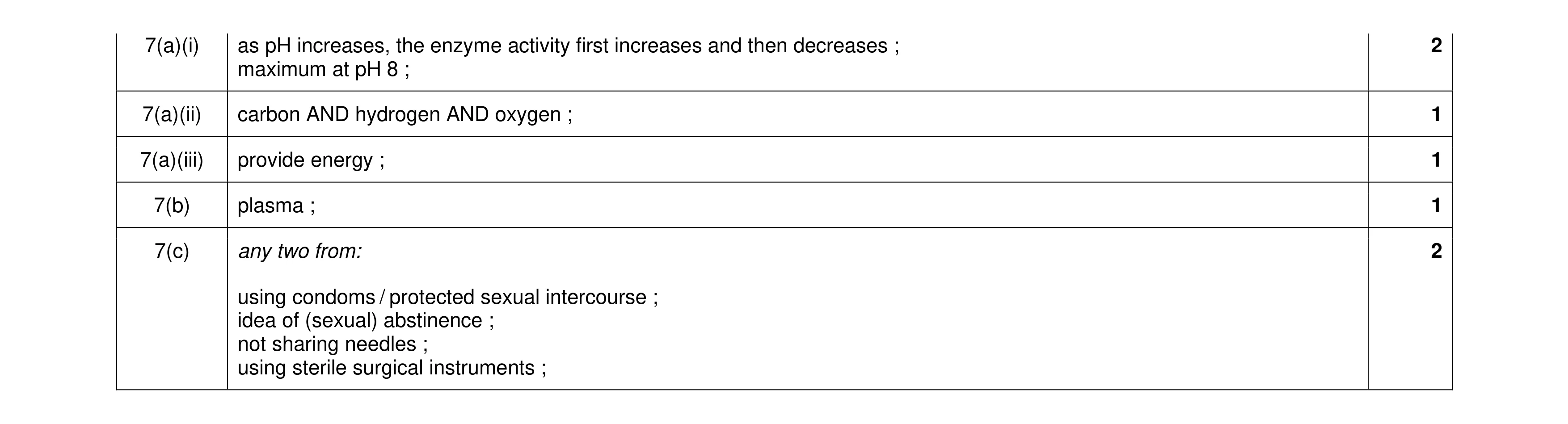 7
7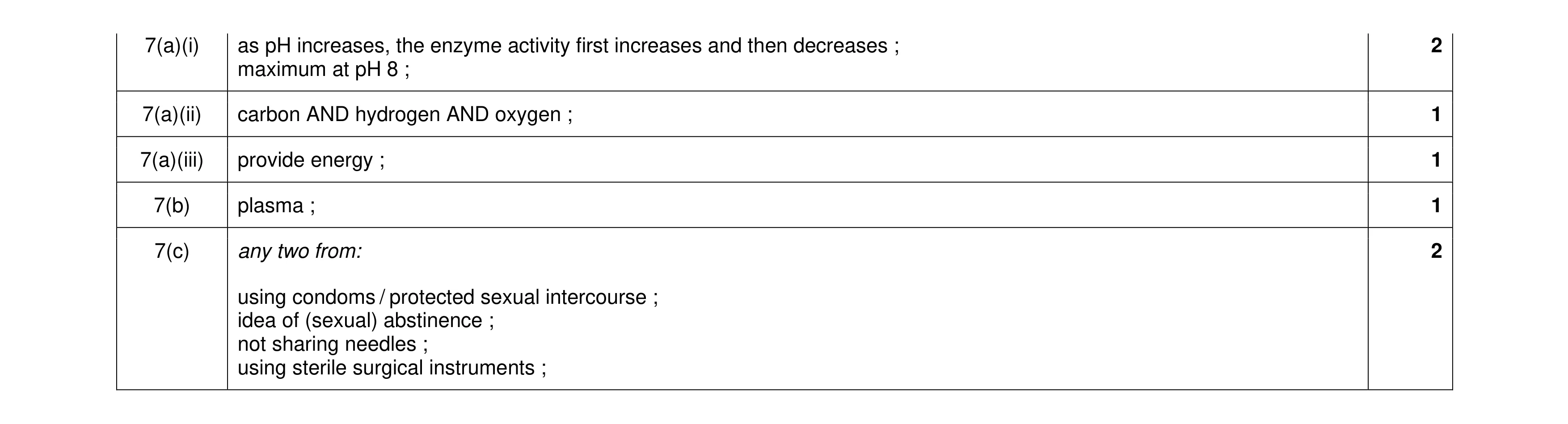 7
7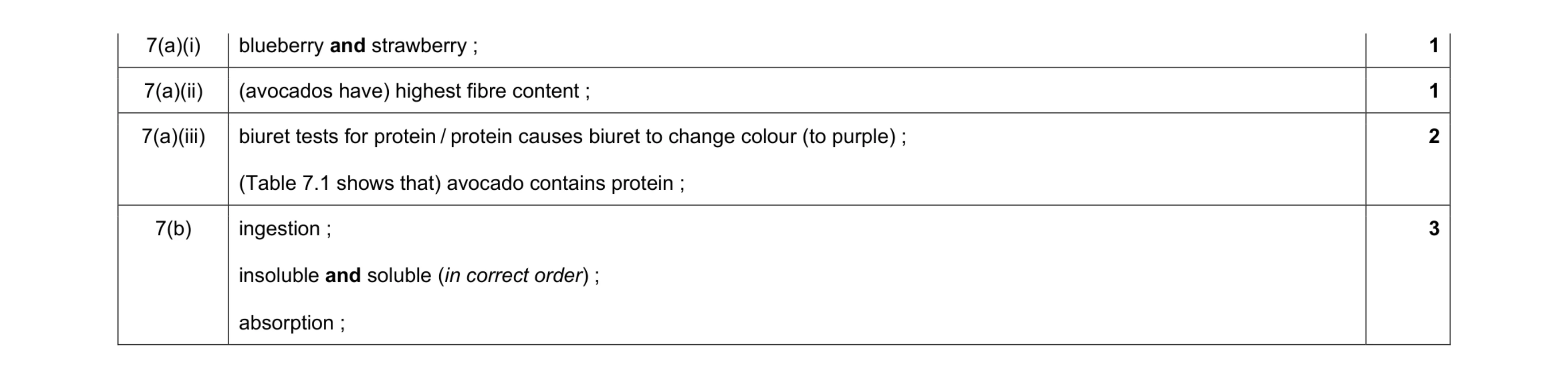 7
7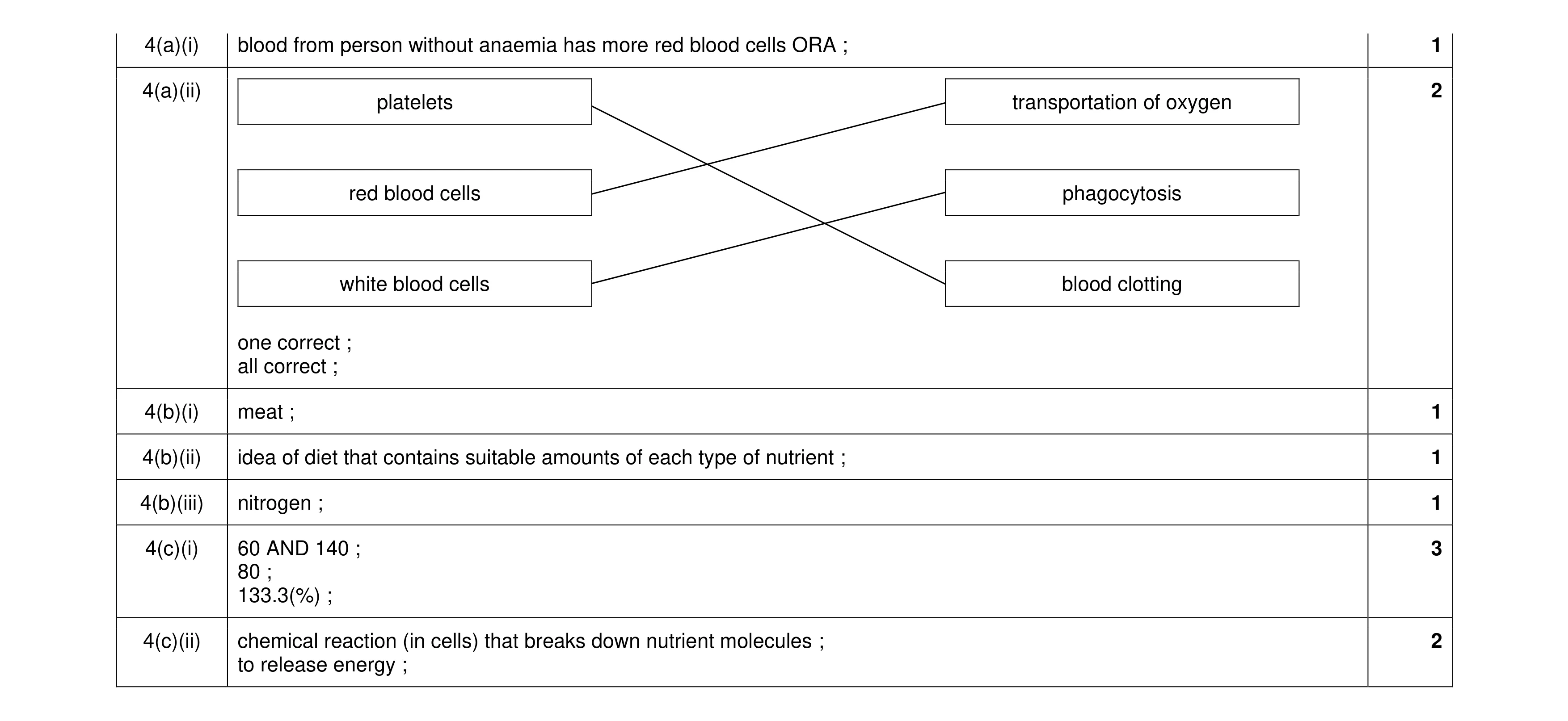 11
11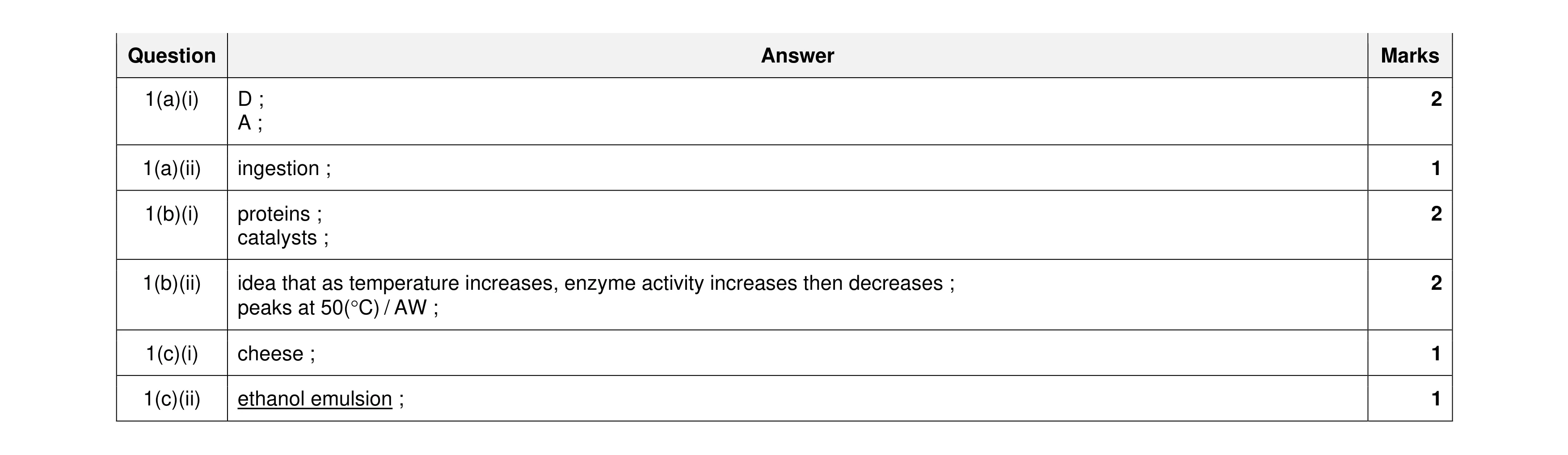 9
9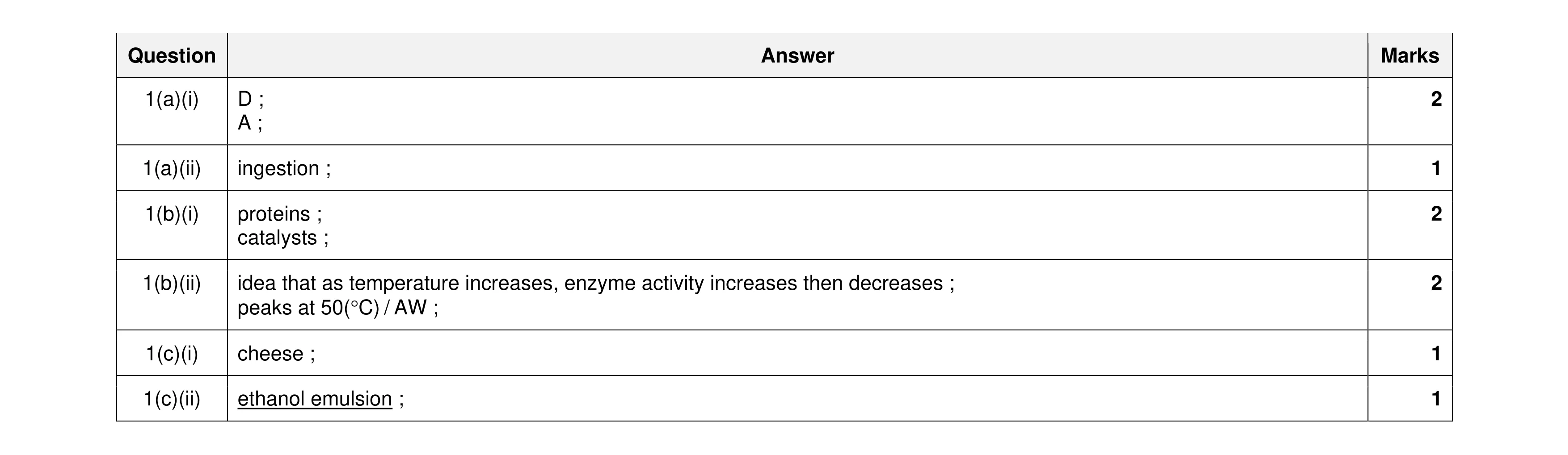 9
9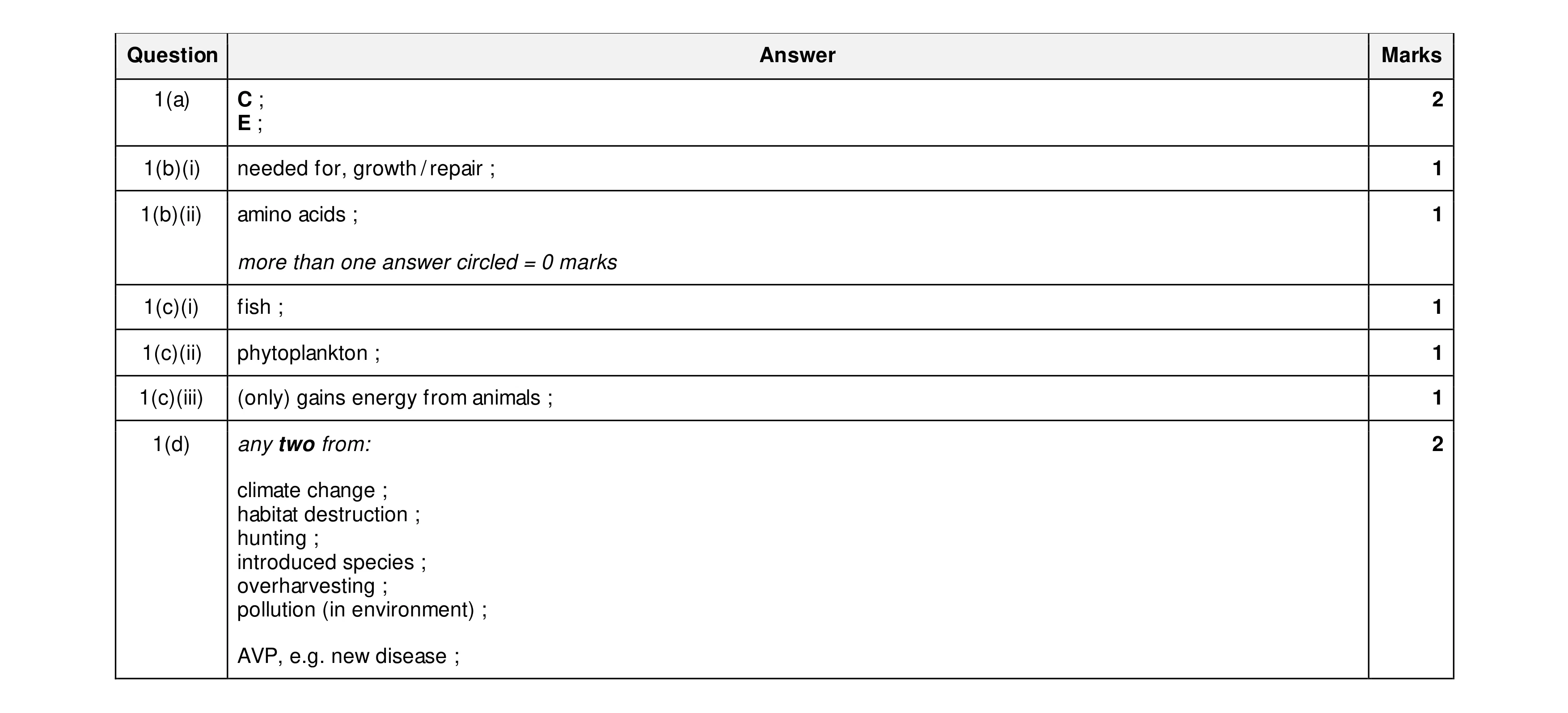 9
9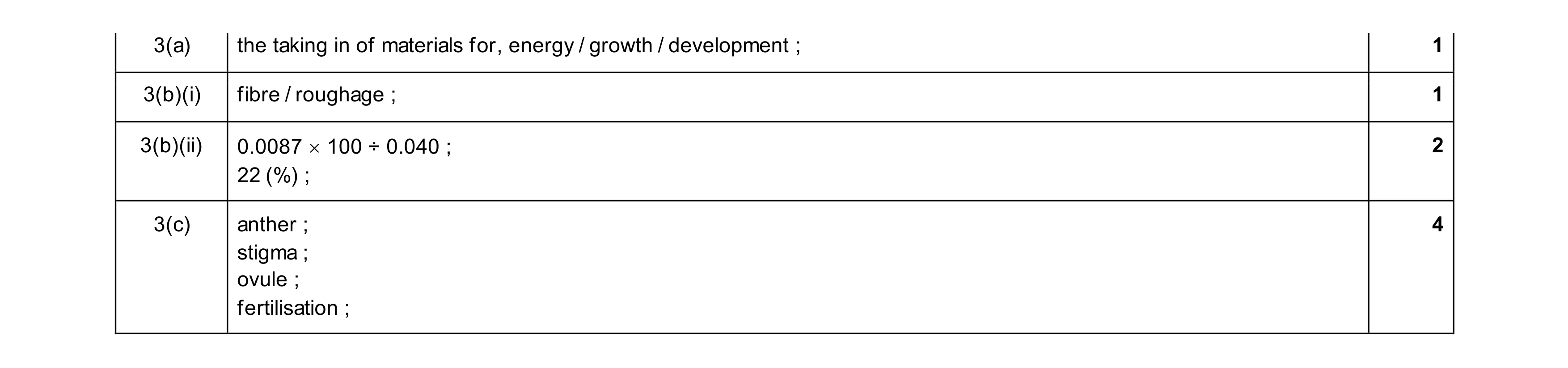 8
8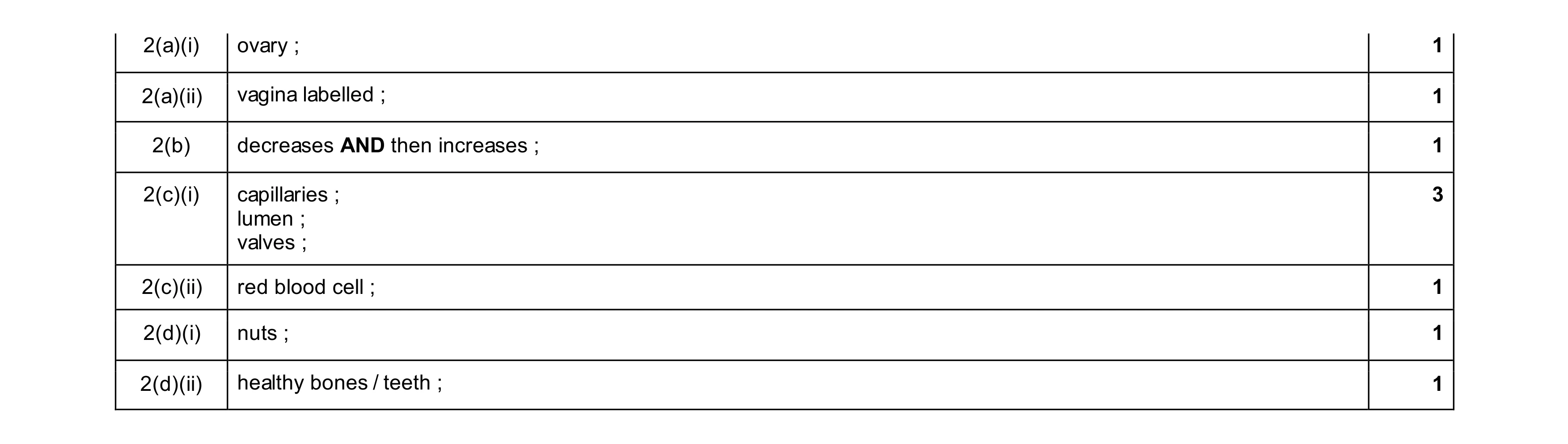 9
9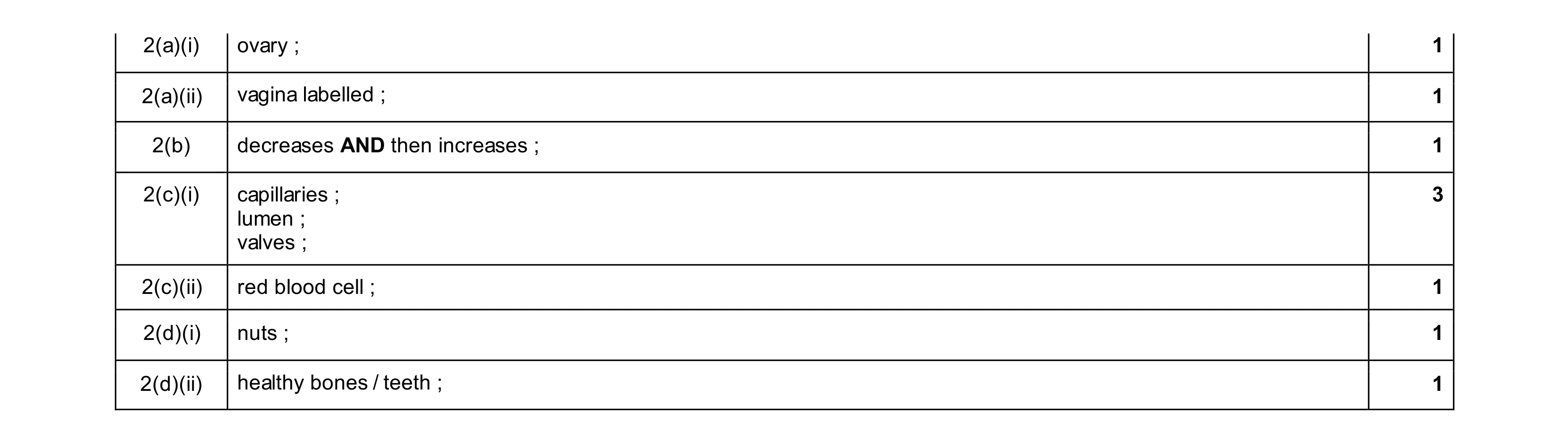 9
9