Cambridge IGCSE Science - Combined 0653 — 2018 Feb/March Paper 3 · Variant 2
0653/32/F/M/18 · 9 questions · 80 marks · ≈90 min
The question paper and its mark scheme, free to read here and free to download. This is Cambridge’s own paper, exactly as it was sat.
Question paper20 pages


Mark scheme9 pages
Answers below. Sit the paper first if you are practising.
Questions as text
Q1 · A diagram of the female reproductive system and some of the events that take place before…
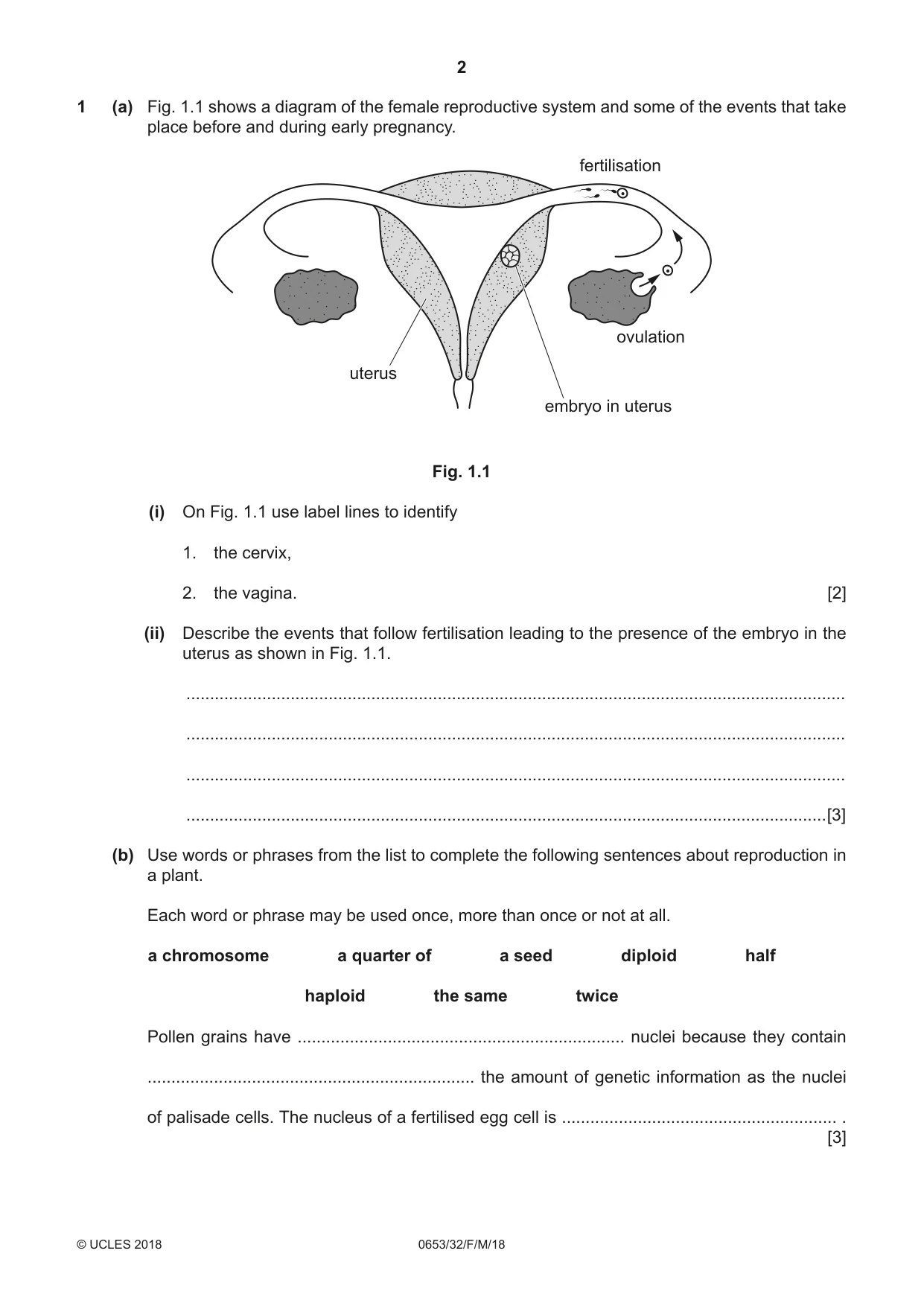
1 (a) Fig. 1.1 shows a diagram of the female reproductive system and some of the events that take place before and during early pregnancy. fertilisation ovulation uterus embryo in uterus Fig. 1.1 (i) On Fig. 1.1 use label lines to identify 1. the cervix, 2. the vagina. [2] (ii) Describe the events that follow fertilisation leading to the presence of the embryo in the uterus as shown in Fig. 1.1. ........................................................................................................................................... ........................................................................................................................................... ........................................................................................................................................... .......................................................................................................................................[3] (b) Use words or phrases from the list to complete the following sentences about reproduction in a plant. Each word or phrase may be used once, more than once or not at all. a chromosome a quarter of a seed diploid half haploid the same twice Pollen grains have ..................................................................... nuclei because they contain ..................................................................... the amount of genetic information as the nuclei of palisade cells. The nucleus of a fertilised egg cell is .......................................................... . [3]
Mark scheme: 1(a)(i) cervix correctly labelled ; vagina correctly labelled ; 2 1(a)(ii) zygote results from fertilisation ; cells divide / ball of cells forms ; (ball of cells / embryo) becomes implanted ; in wall of uterus / uterus lining ; max 3 1(b) haploid ; half ; diploid ; 3
Q2 · Copper is extracted from a substance using the apparatus shown in Fig
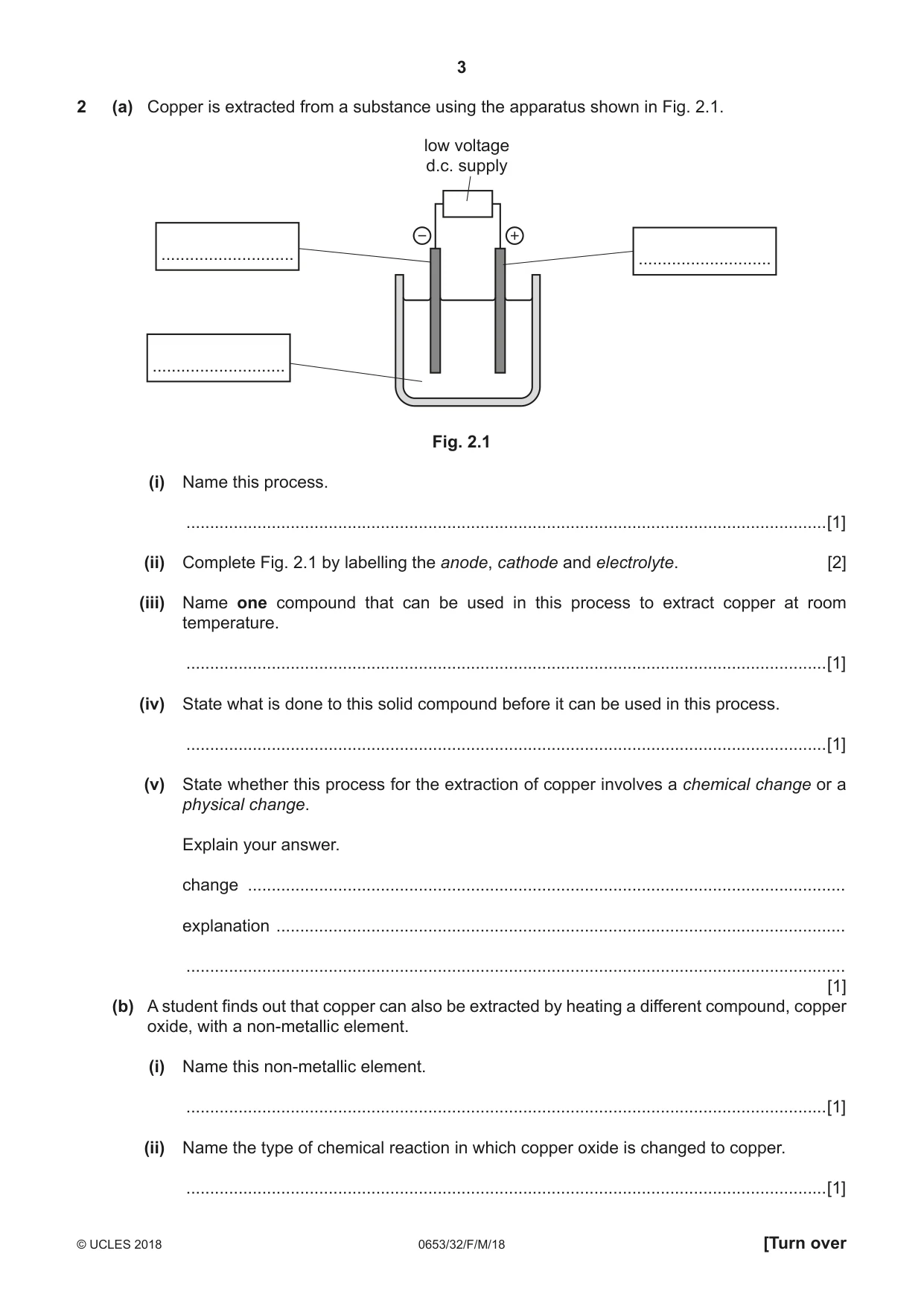
2 (a) Copper is extracted from a substance using the apparatus shown in Fig. 2.1. low voltage d.c. supply − + ............................ ............................ ............................ Fig. 2.1 (i) Name this process. .......................................................................................................................................[1] (ii) Complete Fig. 2.1 by labelling the anode, cathode and electrolyte. [2] (iii) Name one compound that can be used in this process to extract copper at room temperature. .......................................................................................................................................[1] (iv) State what is done to this solid compound before it can be used in this process. .......................................................................................................................................[1] (v) State whether this process for the extraction of copper involves a chemical change or a physical change. Explain your answer. change .............................................................................................................................. explanation ........................................................................................................................ ........................................................................................................................................... [1] (b) A student finds out that copper can also be extracted by heating a different compound, copper oxide, with a non-metallic element. (i) Name this non-metallic element. .......................................................................................................................................[1] (ii) Name the type of chemical reaction in which copper oxide is changed to copper. .......................................................................................................................................[1] (c) Copper is one element in a collection of metals which have high melting points, high densities and often act as catalysts. (i) Suggest one other property that is shown by these metals that is not shown by other metals. .......................................................................................................................................[1] (ii) State the effect of a catalyst on a chemical reaction. .......................................................................................................................................[1]
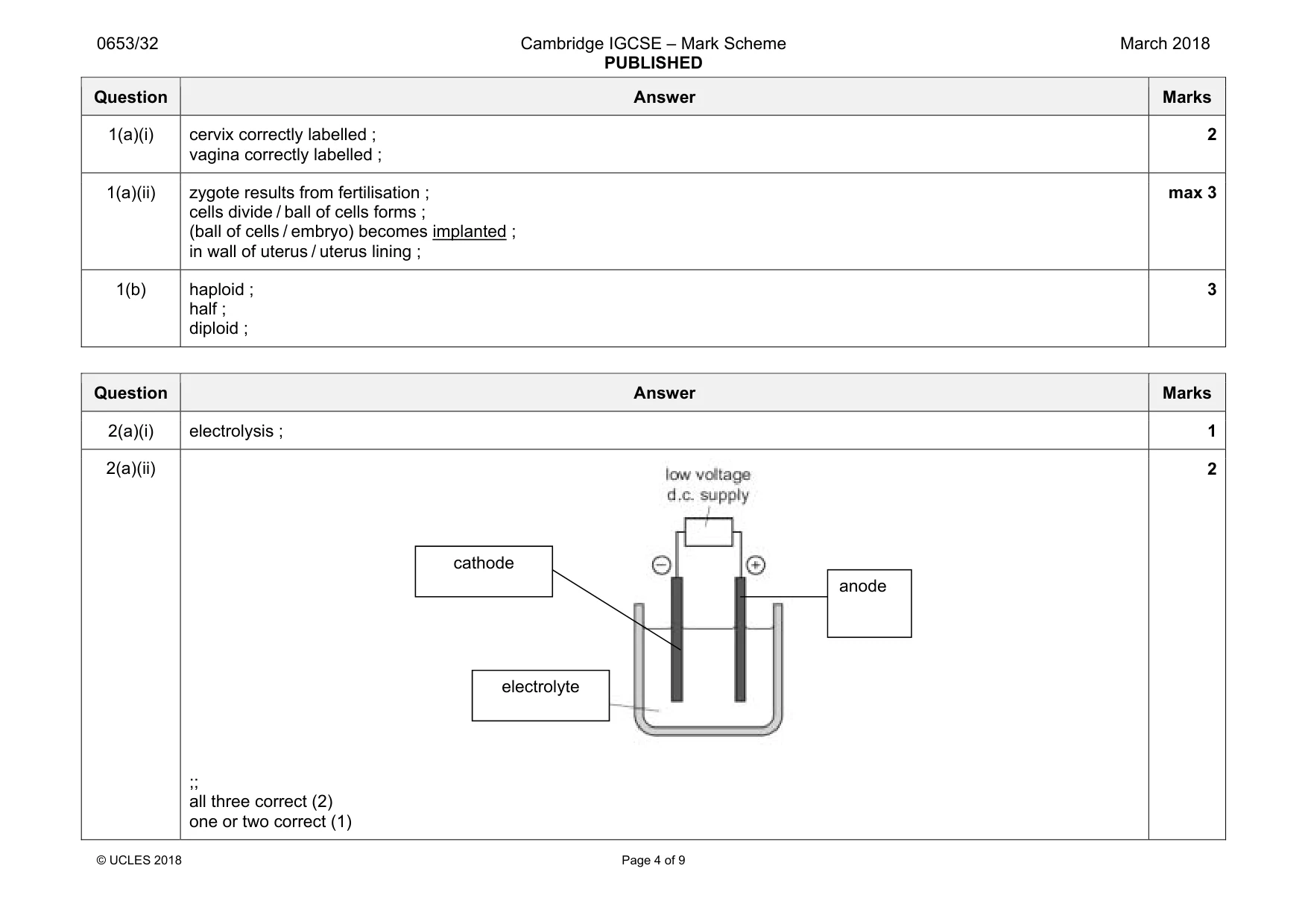
Mark scheme: 2(a)(i) electrolysis ; 1 2(a)(ii) ;; all three correct (2) one or two correct (1) 2 cathode anode electrolyte Question Answer Marks 2(a)(iii) copper chloride / other soluble copper compound ; 1 2(a)(iv) dissolve in water ; 1 2(a)(v) chemical and new substance(s) made ; 1 2(b)(i) carbon / hydrogen ; 1 2(b)(ii) reduction ; 1 2(c)(i) form coloured compounds ; 1 2(c)(ii) increases reaction rate ; 1
Q3 · A diagram which shows the International Space Station which is kept in orbit around the…
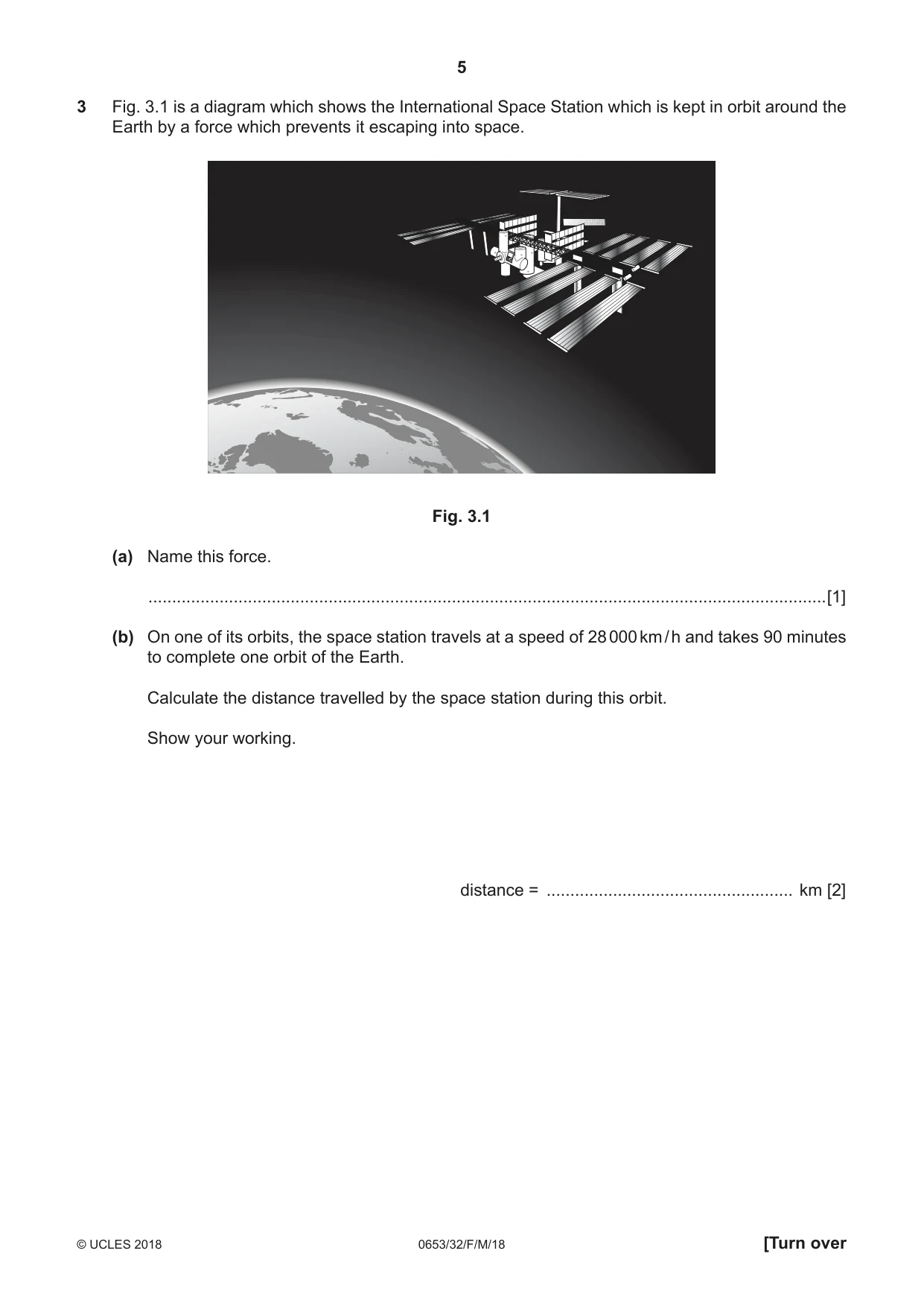
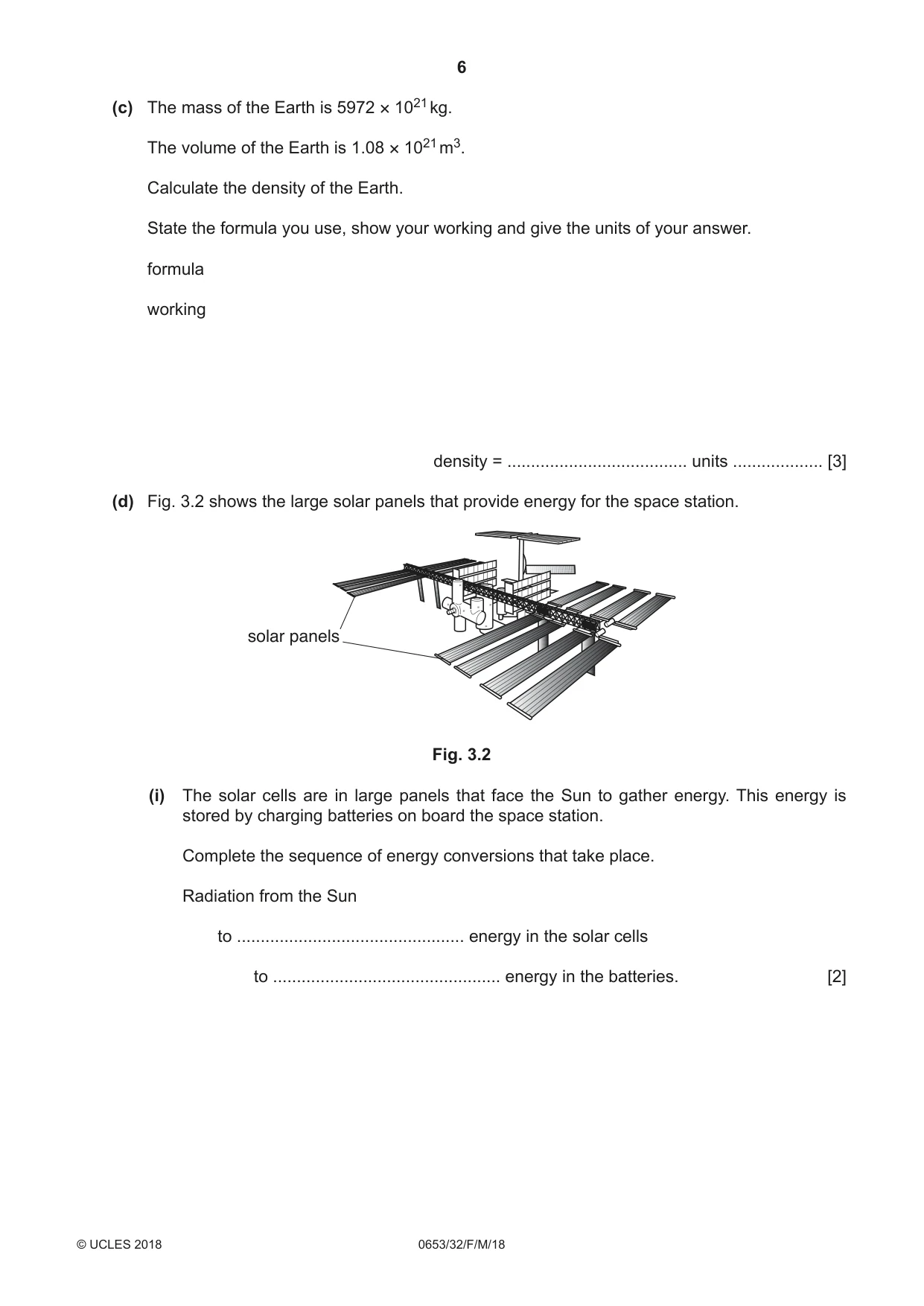
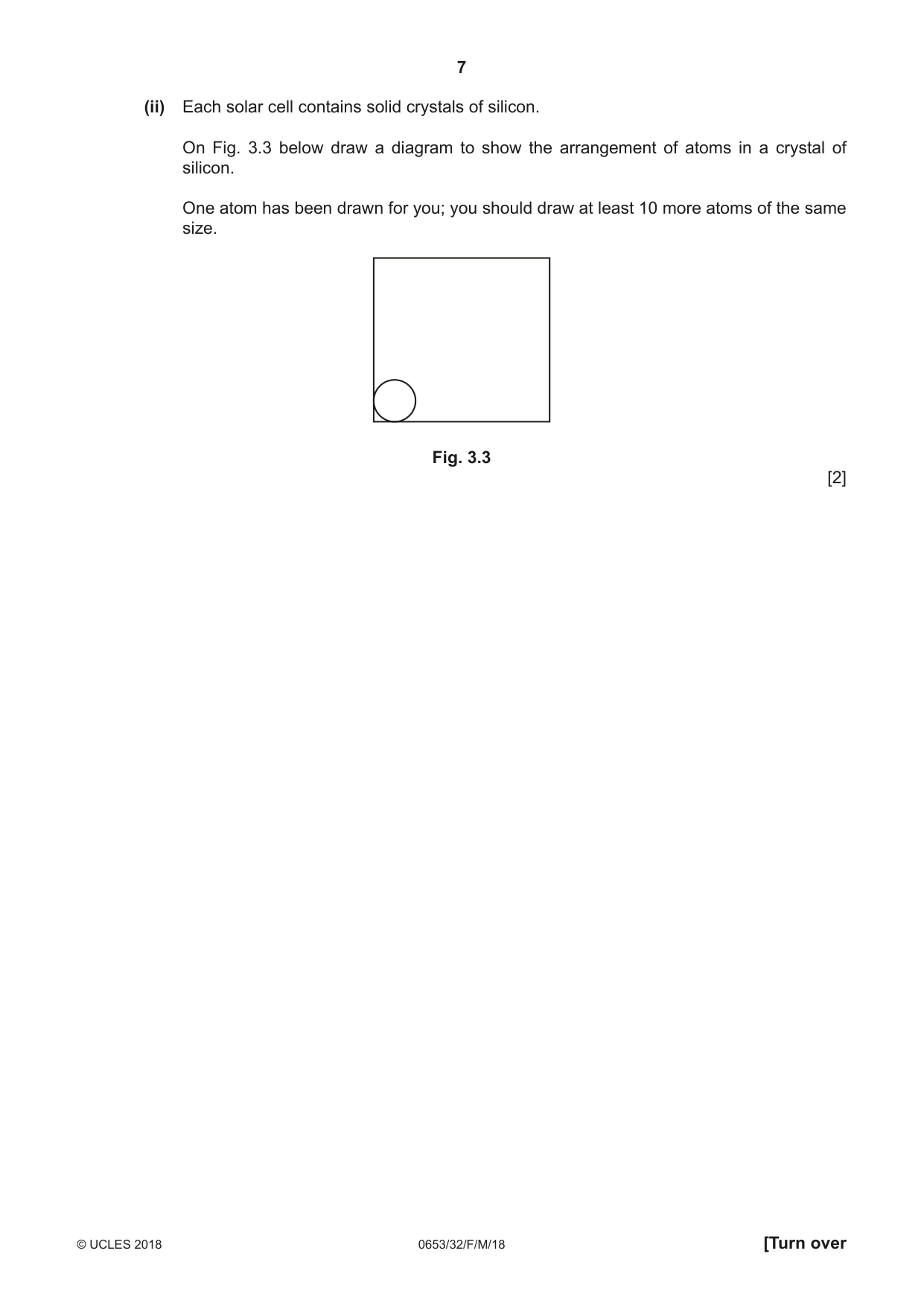
3 Fig. 3.1 is a diagram which shows the International Space Station which is kept in orbit around the Earth by a force which prevents it escaping into space. Fig. 3.1 (a) Name this force. ...............................................................................................................................................[1] (b) On one of its orbits, the space station travels at a speed of 28 000 km / h and takes 90 minutes to complete one orbit of the Earth. Calculate the distance travelled by the space station during this orbit. Show your working. distance = .................................................... km [2] (c) The mass of the Earth is 5972 × 1021 kg. The volume of the Earth is 1.08 × 10²¹ m3. Calculate the density of the Earth. State the formula you use, show your working and give the units of your answer. formula working density = ...................................... units ................... [3] (d) Fig. 3.2 shows the large solar panels that provide energy for the space station. solar panels Fig. 3.2 (i) The solar cells are in large panels that face the Sun to gather energy. This energy is stored by charging batteries on board the space station. Complete the sequence of energy conversions that take place. Radiation from the Sun to ................................................ energy in the solar cells to ................................................ energy in the batteries. [2] (ii) Each solar cell contains solid crystals of silicon. On Fig. 3.3 below draw a diagram to show the arrangement of atoms in a crystal of silicon. One atom has been drawn for you; you should draw at least 10 more atoms of the same size. Fig. 3.3 [2]
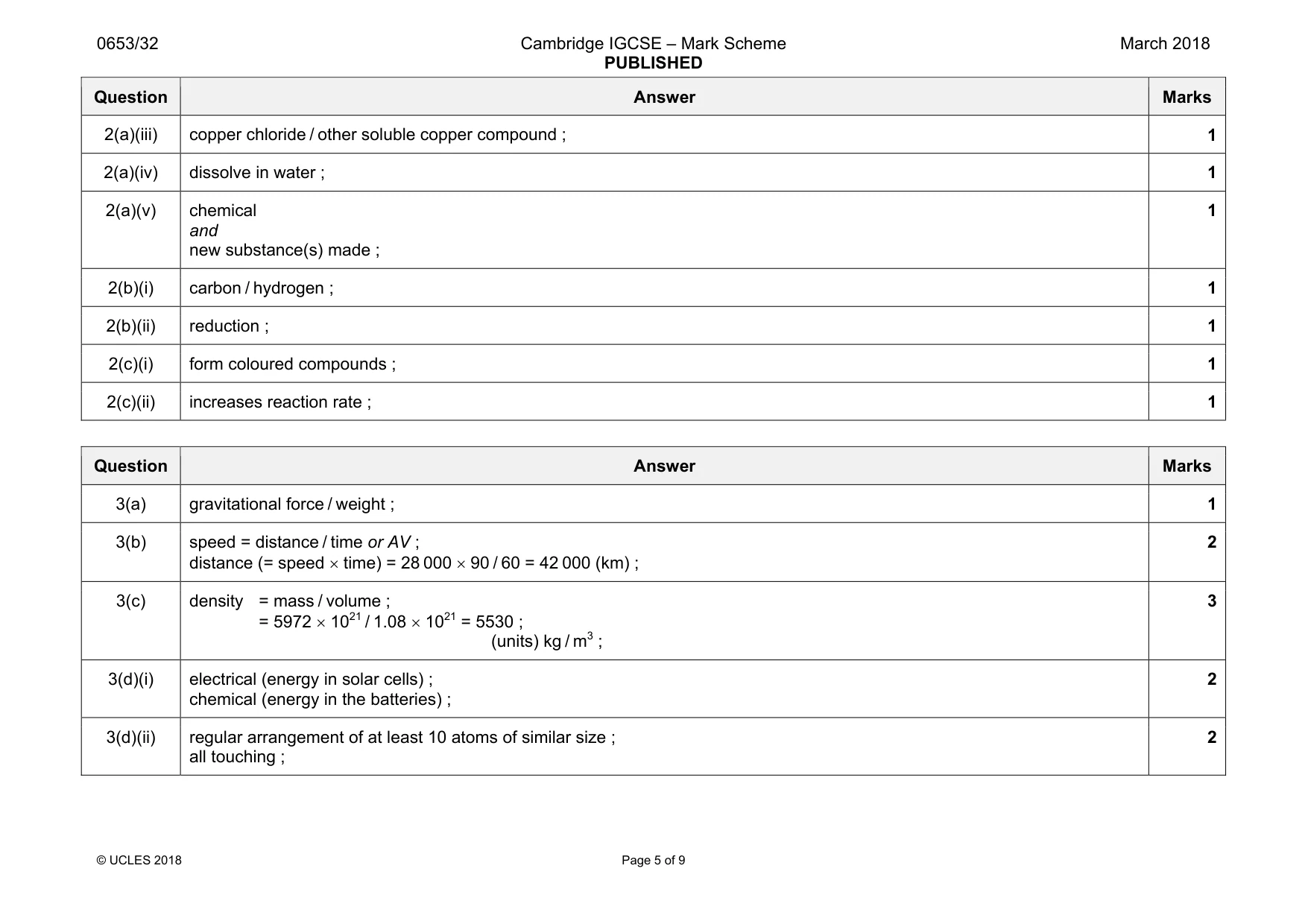
Mark scheme: 3(a) gravitational force / weight ; 1 3(b) speed = distance / time or AV ; distance (= speed × time) = 28 000 × 90 / 60 = 42 000 (km) ; 2 3(c) density = mass / volume ; = 5972 × 1021 / 1.08 × 1021 = 5530 ; (units) kg / m3 ; 3 3(d)(i) electrical (energy in solar cells) ; chemical (energy in the batteries) ; 2 3(d)(ii) regular arrangement of at least 10 atoms of similar size ; all touching ; 2
Q4 · A giant panda which lives in bamboo forests in China
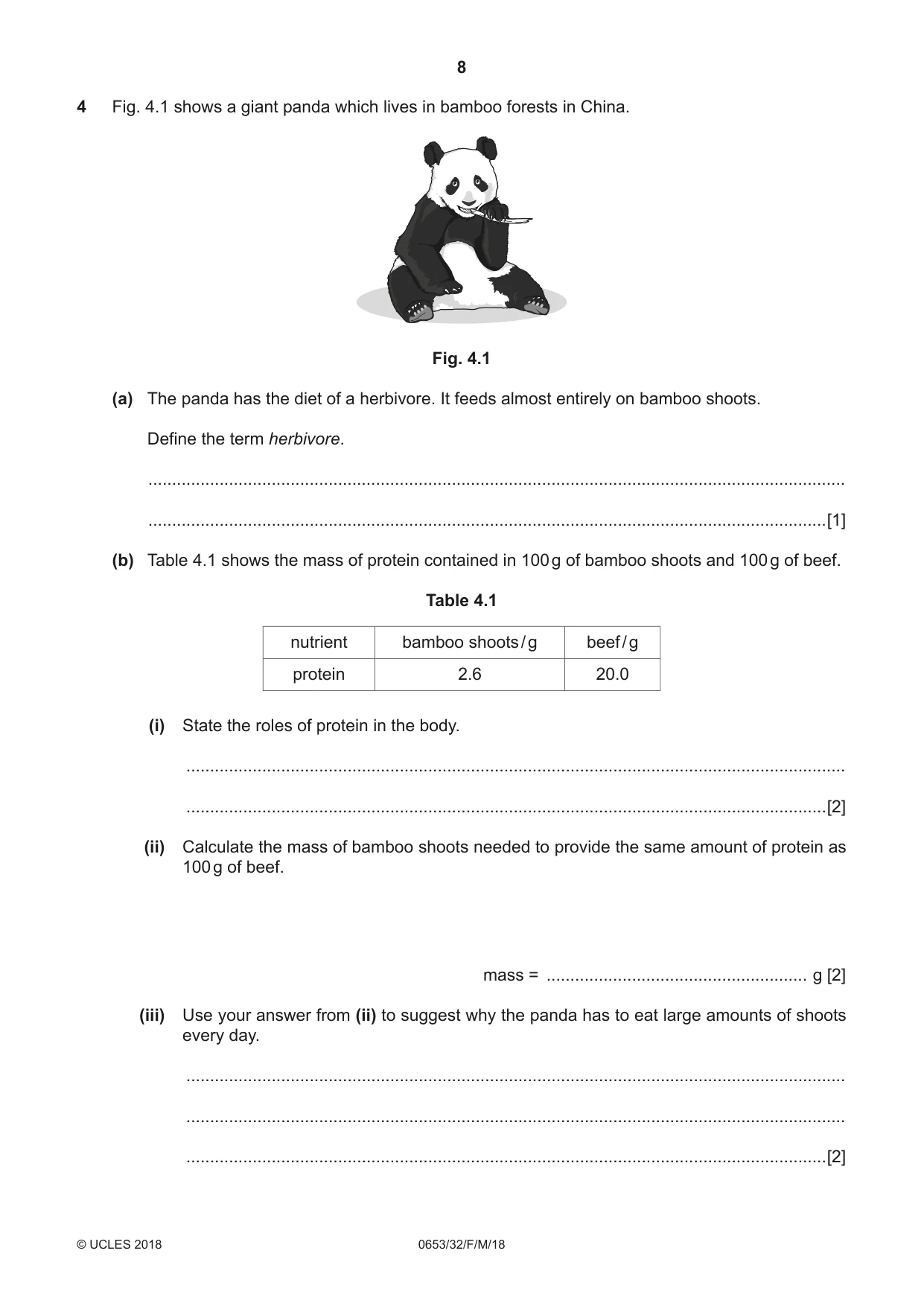
4 Fig. 4.1 shows a giant panda which lives in bamboo forests in China. Fig. 4.1 (a) The panda has the diet of a herbivore. It feeds almost entirely on bamboo shoots. Define the term herbivore. ................................................................................................................................................... ...............................................................................................................................................[1] (b) Table 4.1 shows the mass of protein contained in 100 g of bamboo shoots and 100 g of beef. Table 4.1 nutrient bamboo shoots / g beef / g protein 2.6 20.0 (i) State the roles of protein in the body. ........................................................................................................................................... .......................................................................................................................................[2] (ii) Calculate the mass of bamboo shoots needed to provide the same amount of protein as 100 g of beef. mass = ....................................................... g [2] (iii) Use your answer from (ii) to suggest why the panda has to eat large amounts of shoots every day. ........................................................................................................................................... ........................................................................................................................................... .......................................................................................................................................[2] (c) Deforestation is causing the population of pandas in the area to decrease. Suggest two reasons why deforestation decreases the population of pandas in bamboo forests. 1. ............................................................................................................................................... ................................................................................................................................................... 2. ............................................................................................................................................... ................................................................................................................................................... [2]
Mark scheme: 4(a) an animal that gets its energy / feeds only on plants ; 1 4(b)(i) growth (of tissues) ; repair (of tissues) ; 2 4(b)(ii) 20.0 / 2.6 ; ×100 = 770 ; 2 4(b)(iii) the bamboo does not contain much protein / nutrition ; a lot needed to satisfy need / panda needs a lot because it is big ; 2 4(c) only food supply disappearing ; danger of loss of habitat ; more difficult to find a mate ; max 2
Q5 · Petroleum is a mixture of hydrocarbons
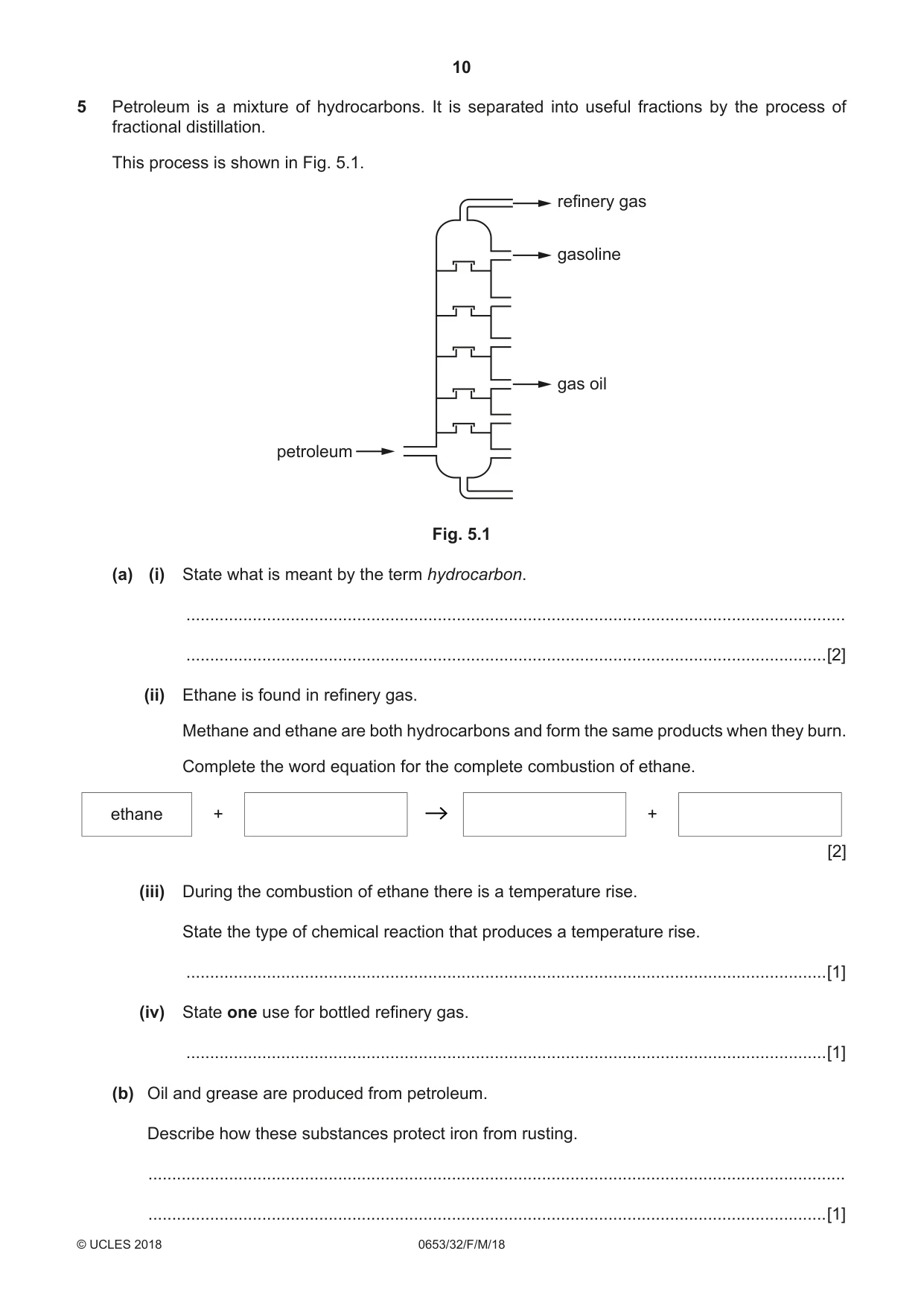
5 Petroleum is a mixture of hydrocarbons. It is separated into useful fractions by the process of fractional distillation. This process is shown in Fig. 5.1. refinery gas gasoline gas oil petroleum Fig. 5.1 (a) (i) State what is meant by the term hydrocarbon. ........................................................................................................................................... .......................................................................................................................................[2] (ii) Ethane is found in refinery gas. Methane and ethane are both hydrocarbons and form the same products when they burn. Complete the word equation for the complete combustion of ethane. ethane + + [2] (iii) During the combustion of ethane there is a temperature rise. State the type of chemical reaction that produces a temperature rise. .......................................................................................................................................[1] (iv) State one use for bottled refinery gas. .......................................................................................................................................[1] (b) Oil and grease are produced from petroleum. Describe how these substances protect iron from rusting. ................................................................................................................................................... ...............................................................................................................................................[1]
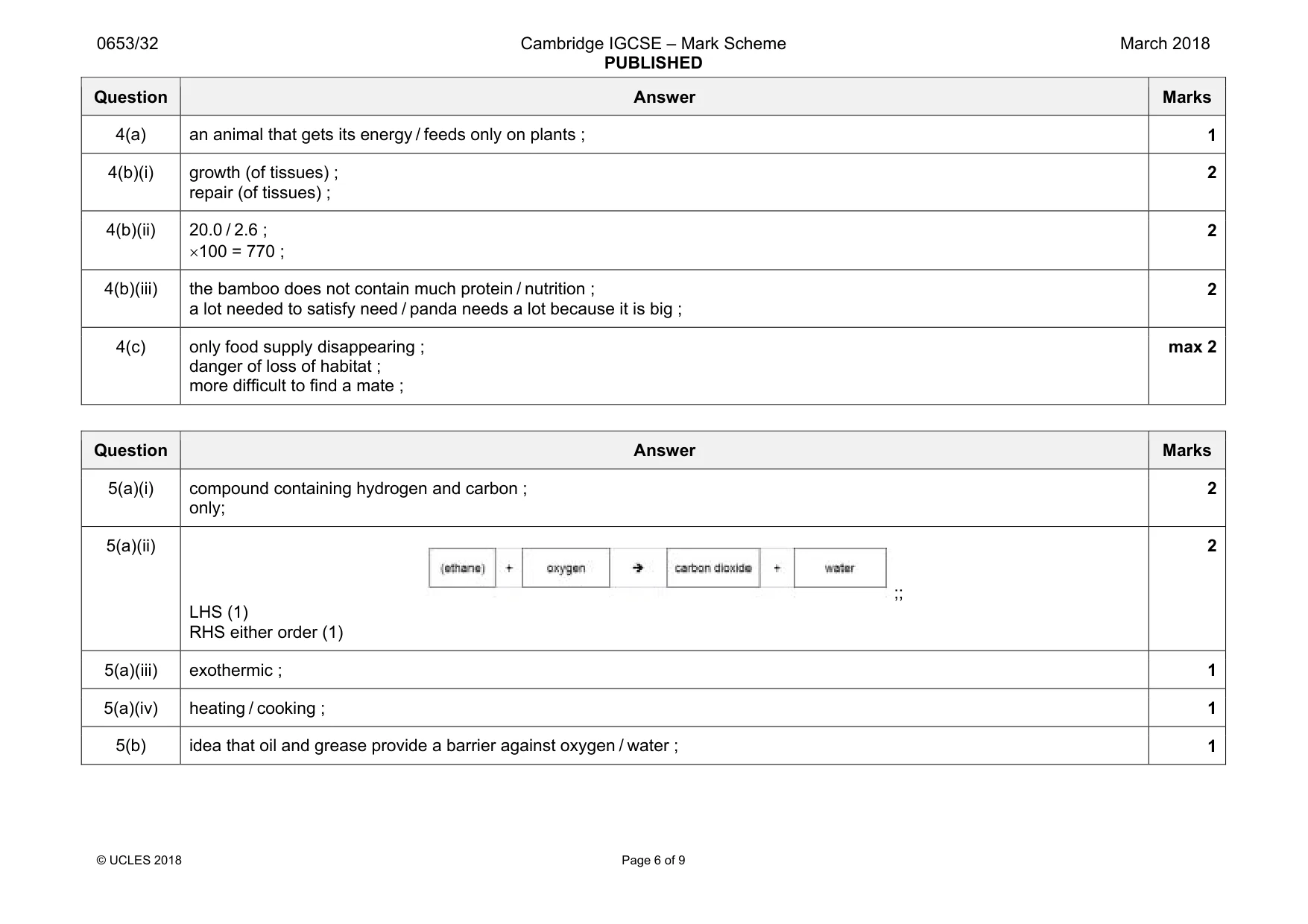
Mark scheme: 5(a)(i) compound containing hydrogen and carbon ; only; 2 5(a)(ii) ;; LHS (1) RHS either order (1) 2 5(a)(iii) exothermic ; 1 5(a)(iv) heating / cooking ; 1 5(b) idea that oil and grease provide a barrier against oxygen / water ; 1
Q6 · Two people talking to each other using cordless telephones over a link to a…
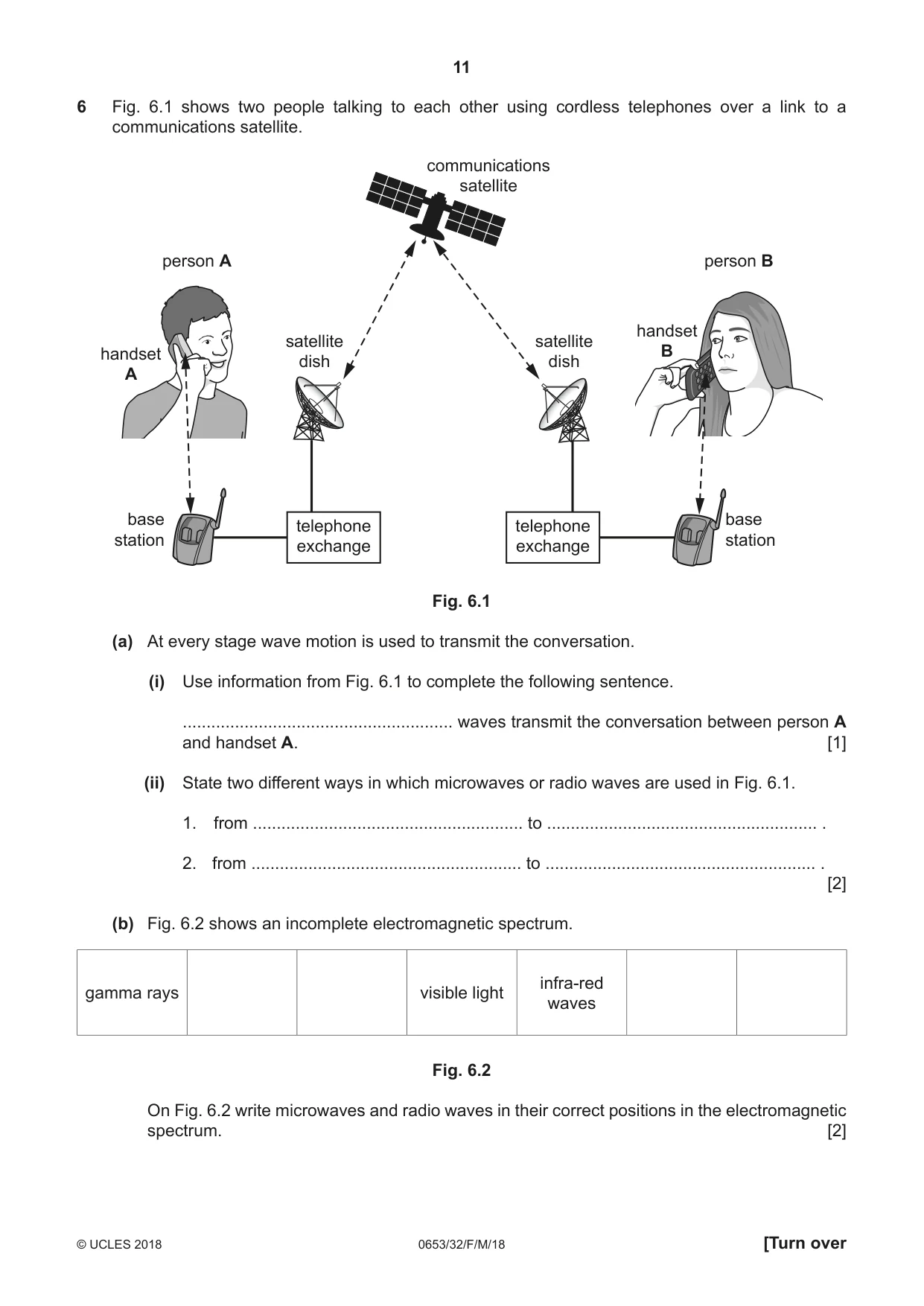
6 Fig. 6.1 shows two people talking to each other using cordless telephones over a link to a communications satellite. communications satellite person A person B handset satellite satellite handset B dish dish A base base telephone telephone station station exchange exchange Fig. 6.1 (a) At every stage wave motion is used to transmit the conversation. (i) Use information from Fig. 6.1 to complete the following sentence. ......................................................... waves transmit the conversation between person A and handset A. [1] (ii) State two different ways in which microwaves or radio waves are used in Fig. 6.1. 1. from ......................................................... to ......................................................... . 2. from ......................................................... to ......................................................... . [2] (b) Fig. 6.2 shows an incomplete electromagnetic spectrum. infra-red gamma rays visible light waves Fig. 6.2 On Fig. 6.2 write microwaves and radio waves in their correct positions in the electromagnetic spectrum. [2] (c) The communications satellite can become very warm in the day, but become very cold at night. Explain why these temperature changes happen. ................................................................................................................................................... ................................................................................................................................................... ................................................................................................................................................... ...............................................................................................................................................[2] (d) Explain why the communications satellite cannot use sound waves to communicate with the Earth. ................................................................................................................................................... ................................................................................................................................................... ...............................................................................................................................................[1]
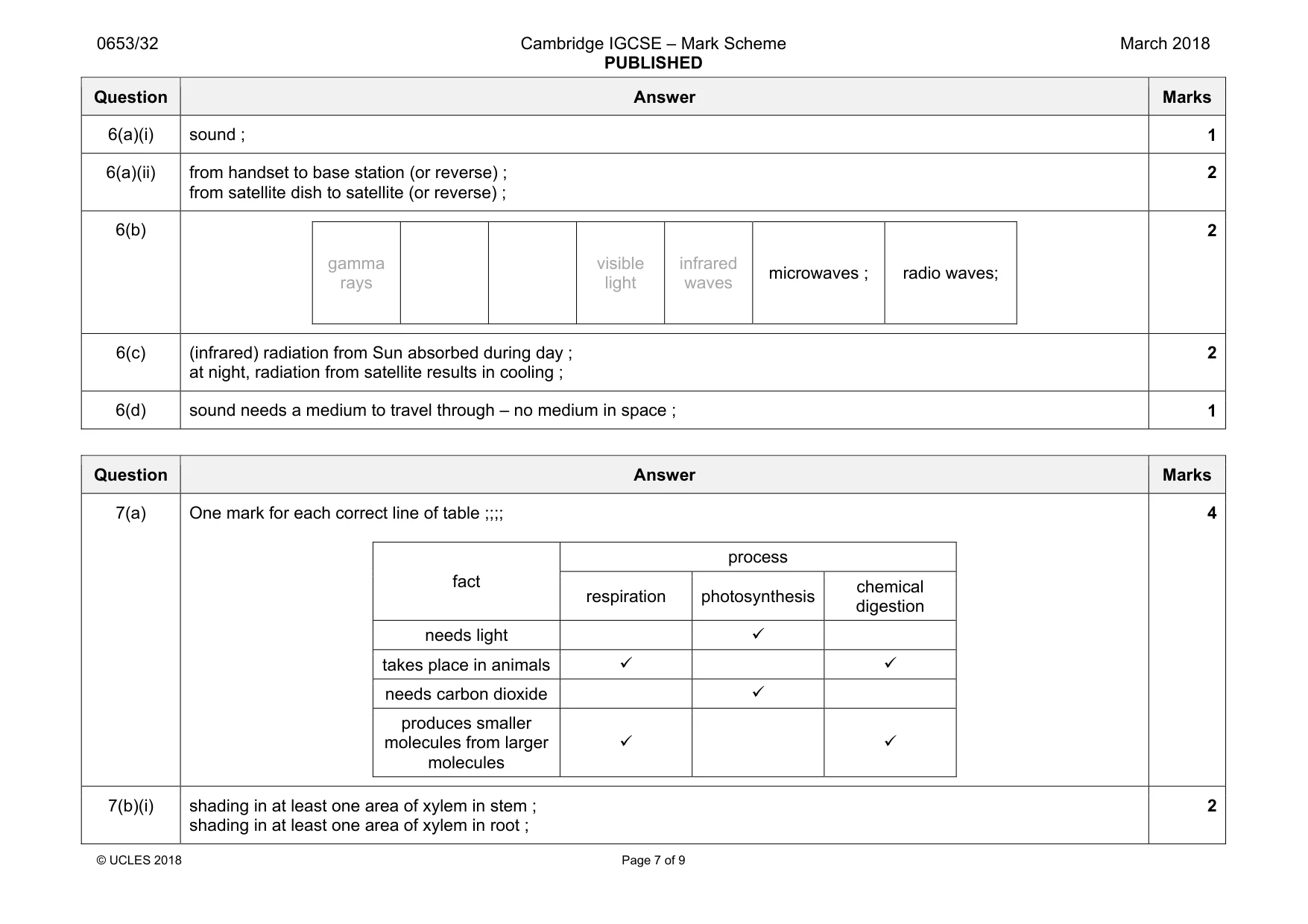
Mark scheme: 6(a)(i) sound ; 1 6(a)(ii) from handset to base station (or reverse) ; from satellite dish to satellite (or reverse) ; 2 6(b) gamma rays visible light infrared waves microwaves ; radio waves; 2 6(c) (infrared) radiation from Sun absorbed during day ; at night, radiation from satellite results in cooling ; 2 6(d) sound needs a medium to travel through – no medium in space ; 1
Q7 · Some facts about processes in living organisms
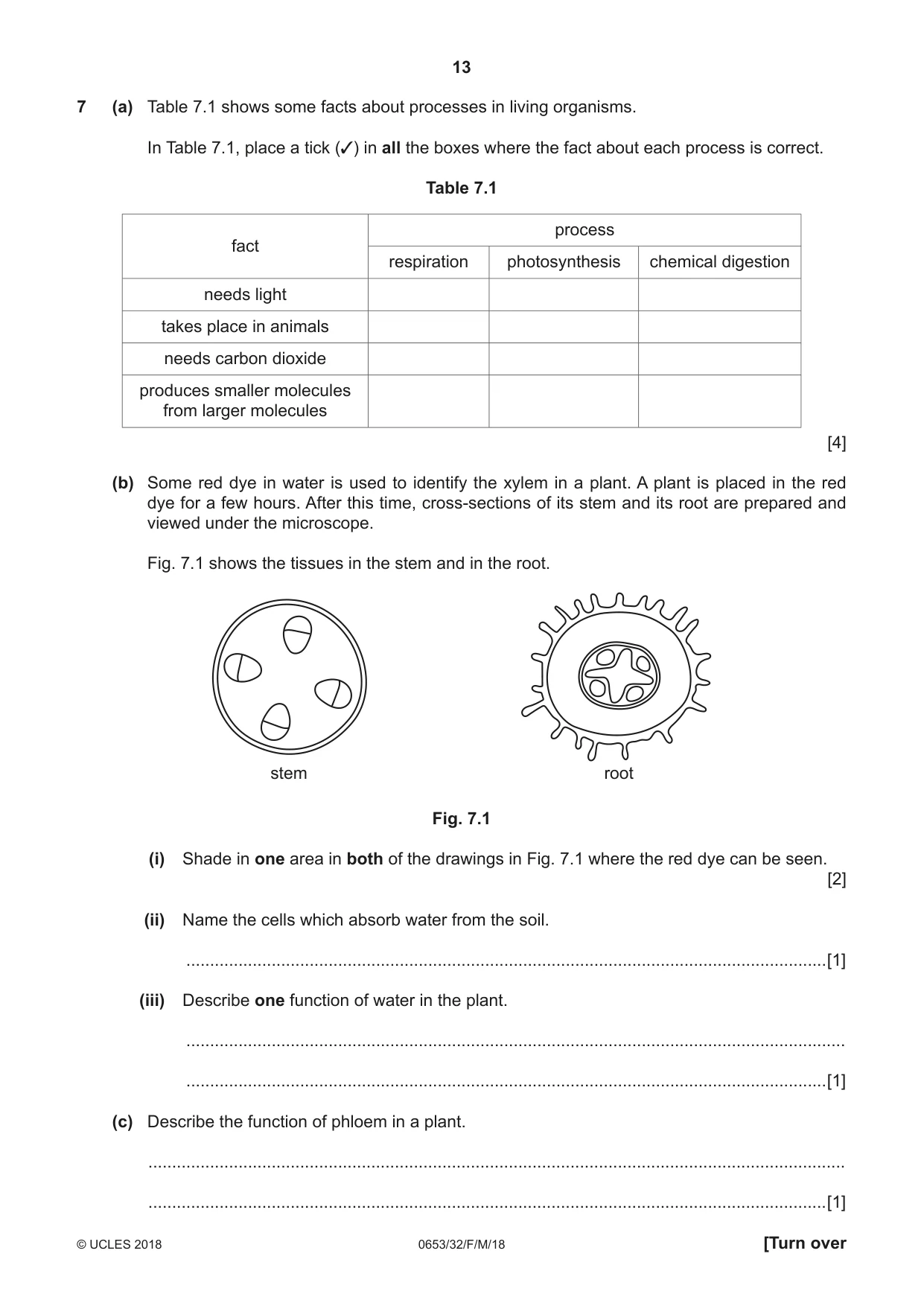
7 (a) Table 7.1 shows some facts about processes in living organisms. In Table 7.1, place a tick (3) in all the boxes where the fact about each process is correct. Table 7.1 process fact respiration photosynthesis chemical digestion needs light takes place in animals needs carbon dioxide produces smaller molecules from larger molecules [4] (b) Some red dye in water is used to identify the xylem in a plant. A plant is placed in the red dye for a few hours. After this time, cross-sections of its stem and its root are prepared and viewed under the microscope. Fig. 7.1 shows the tissues in the stem and in the root. stem root Fig. 7.1 (i) Shade in one area in both of the drawings in Fig. 7.1 where the red dye can be seen. [2] (ii) Name the cells which absorb water from the soil. .......................................................................................................................................[1] (iii) Describe one function of water in the plant. ........................................................................................................................................... .......................................................................................................................................[1] (c) Describe the function of phloem in a plant. ................................................................................................................................................... ...............................................................................................................................................[1]
Mark scheme: 7(a) One mark for each correct line of table ;;;; fact process respiration photosynthesis chemical digestion needs light 9 takes place in animals 9 9 needs carbon dioxide 9 produces smaller molecules from larger molecules 9 9 4 7(b)(i) shading in at least one area of xylem in stem ; shading in at least one area of xylem in root ; 2 Question Answer Marks 7(b)(ii) root hair cells ; 1 7(b)(iii) replace water lost in transpiration / prevent wilting ; to carry minerals to all parts of the plant ; raw material in photosynthesis ; max 1 7(c) transports food / sugars / amino acids ; 1
Q8 · An atom of chlorine is represented by the symbol: 1735Cl (i) State the number of…
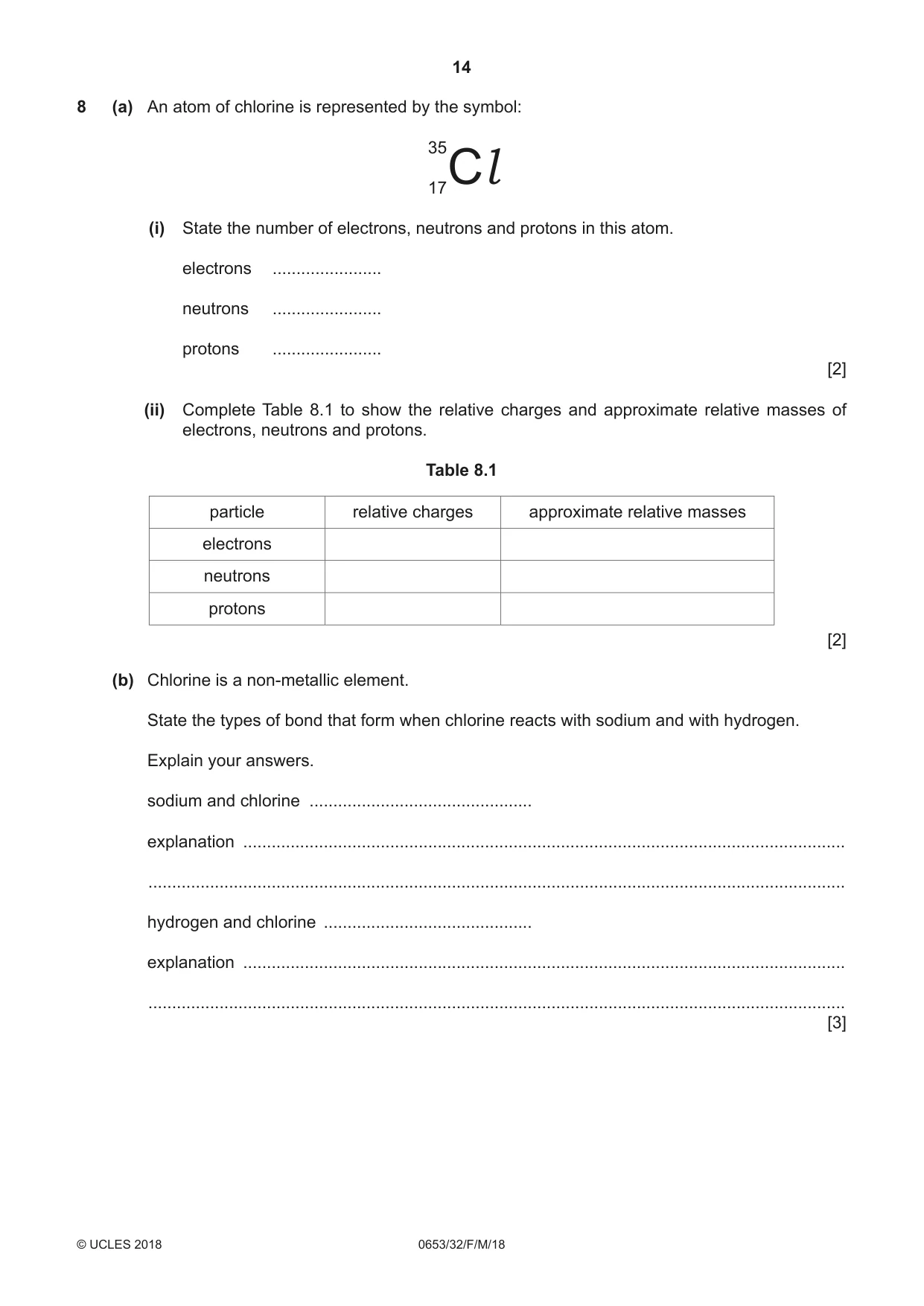
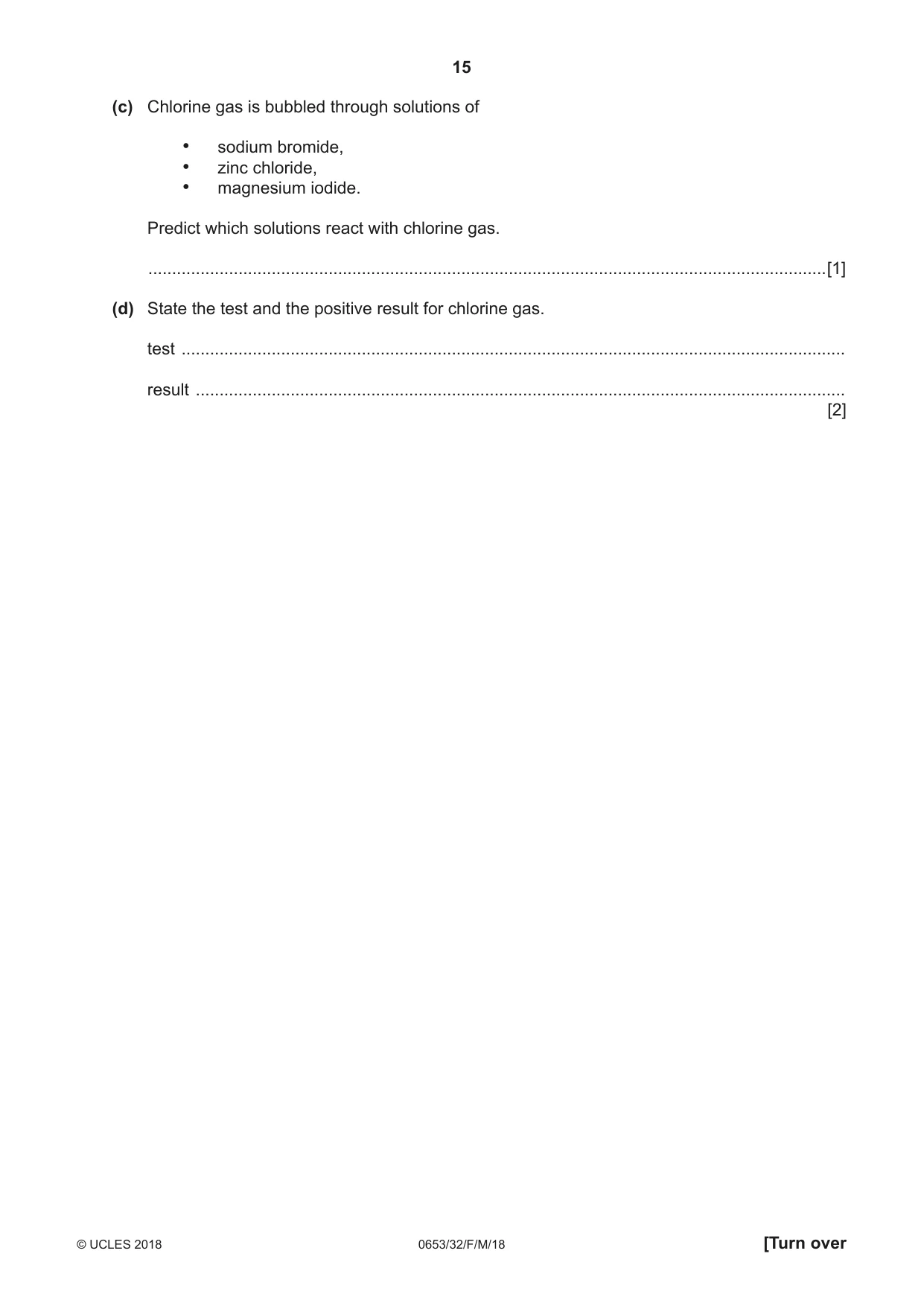
8 (a) An atom of chlorine is represented by the symbol: 1735Cl (i) State the number of electrons, neutrons and protons in this atom. electrons ....................... neutrons ....................... protons ....................... [2] (ii) Complete Table 8.1 to show the relative charges and approximate relative masses of electrons, neutrons and protons. Table 8.1 particle relative charges approximate relative masses electrons neutrons protons [2] (b) Chlorine is a non-metallic element. State the types of bond that form when chlorine reacts with sodium and with hydrogen. Explain your answers. sodium and chlorine ............................................... explanation ............................................................................................................................... ................................................................................................................................................... hydrogen and chlorine ............................................ explanation ............................................................................................................................... ................................................................................................................................................... [3] (c) Chlorine gas is bubbled through solutions of • sodium bromide, • zinc chloride, • magnesium iodide. Predict which solutions react with chlorine gas. ...............................................................................................................................................[1] (d) State the test and the positive result for chlorine gas. test ............................................................................................................................................ result ......................................................................................................................................... [2]
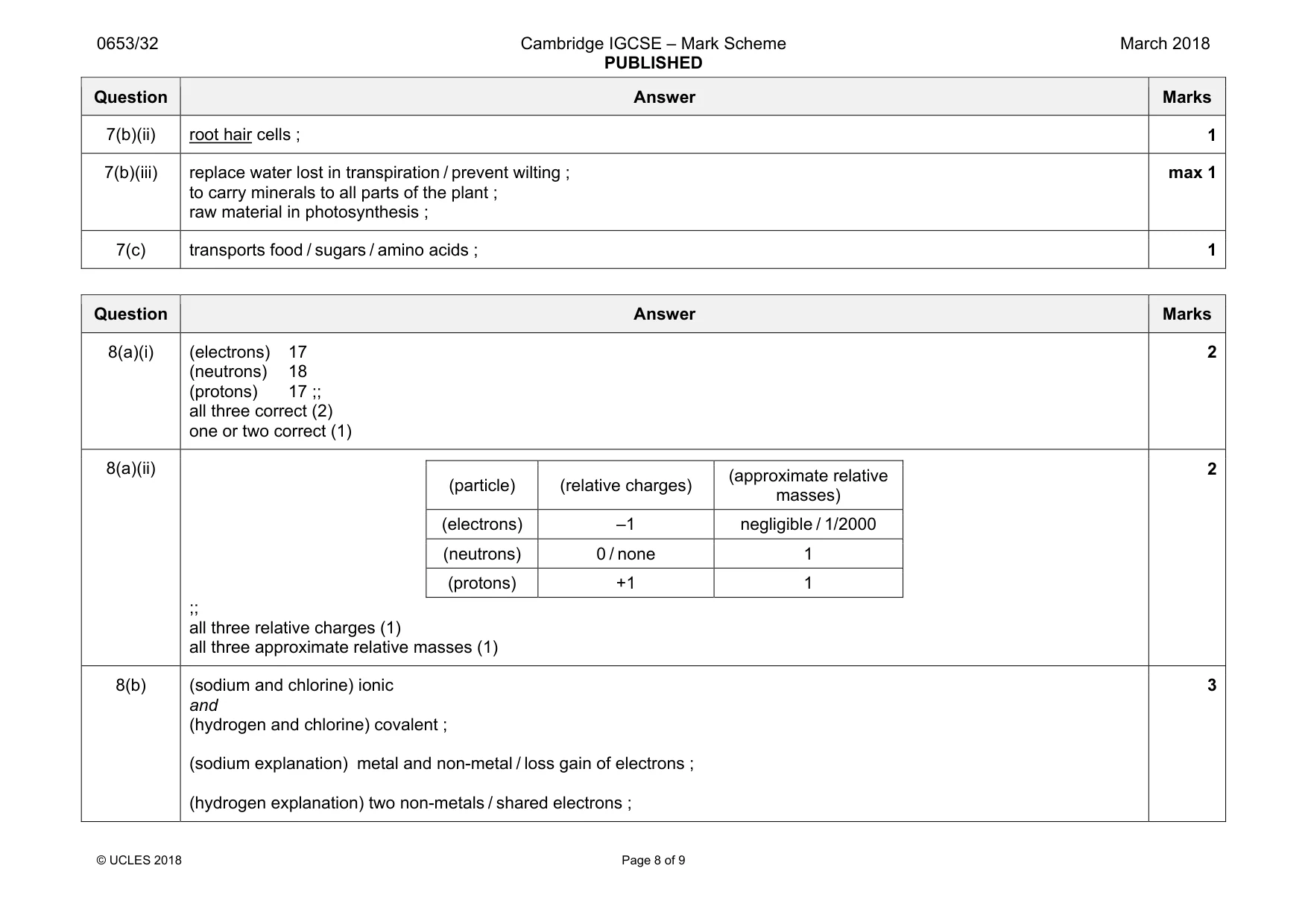
Mark scheme: 8(a)(i) (electrons) 17 (neutrons) 18 (protons) 17 ;; all three correct (2) one or two correct (1) 2 8(a)(ii) (particle) (relative charges) (approximate relative masses) (electrons) –1 negligible / 1/2000 (neutrons) 0 / none 1 (protons) +1 1 ;; all three relative charges (1) all three approximate relative masses (1) 2 8(b) (sodium and chlorine) ionic and (hydrogen and chlorine) covalent ; (sodium explanation) metal and non-metal / loss gain of electrons ; (hydrogen explanation) two non-metals / shared electrons ; 3 Question Answer Marks 8(c) (sodium) bromide AND (magnesium) iodide ; 1 8(d) (test) (damp) litmus paper ; (result) bleaches / turns white ; 2
Q9 · A simple circuit set up to investigate the electrical properties of a lamp
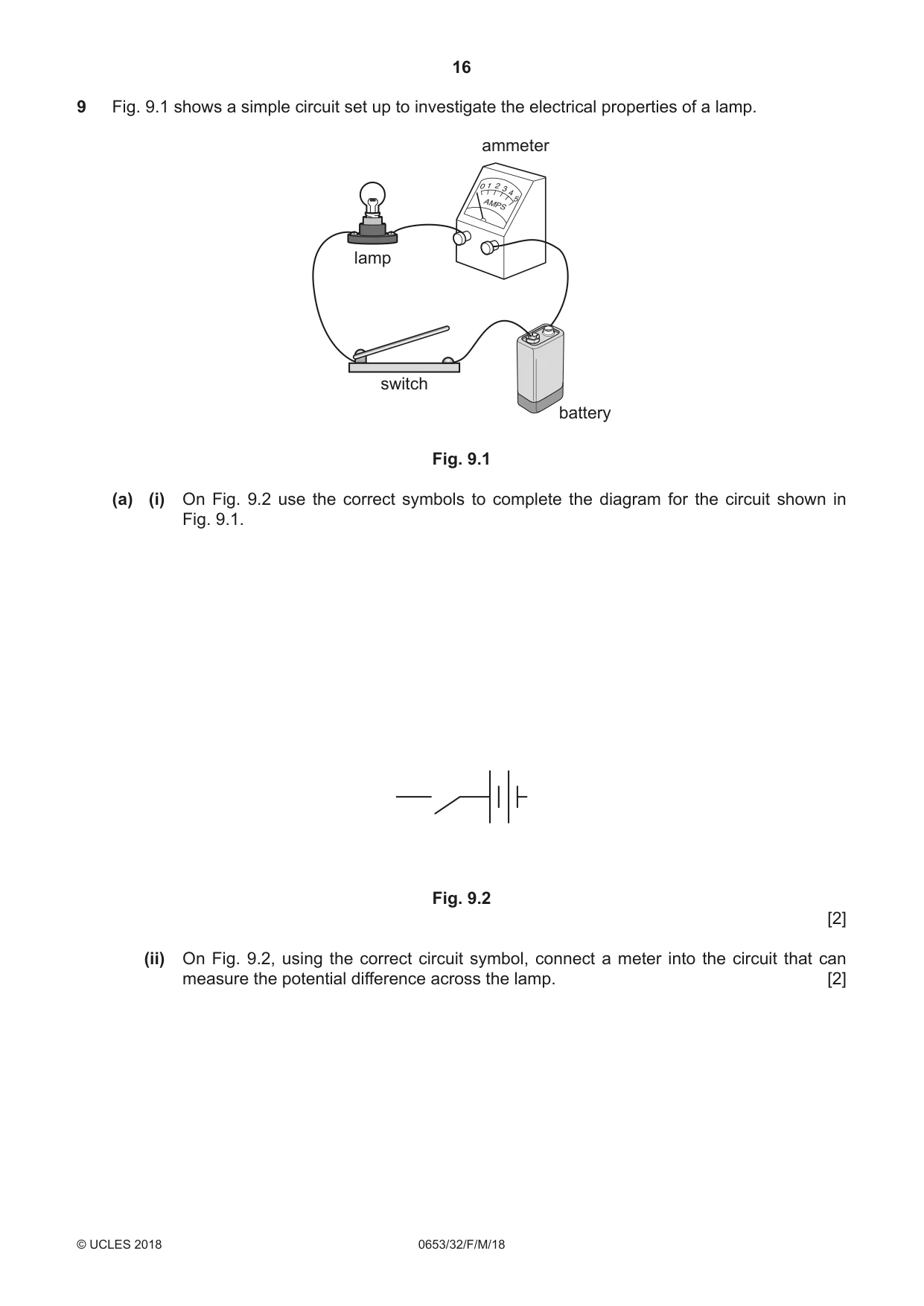
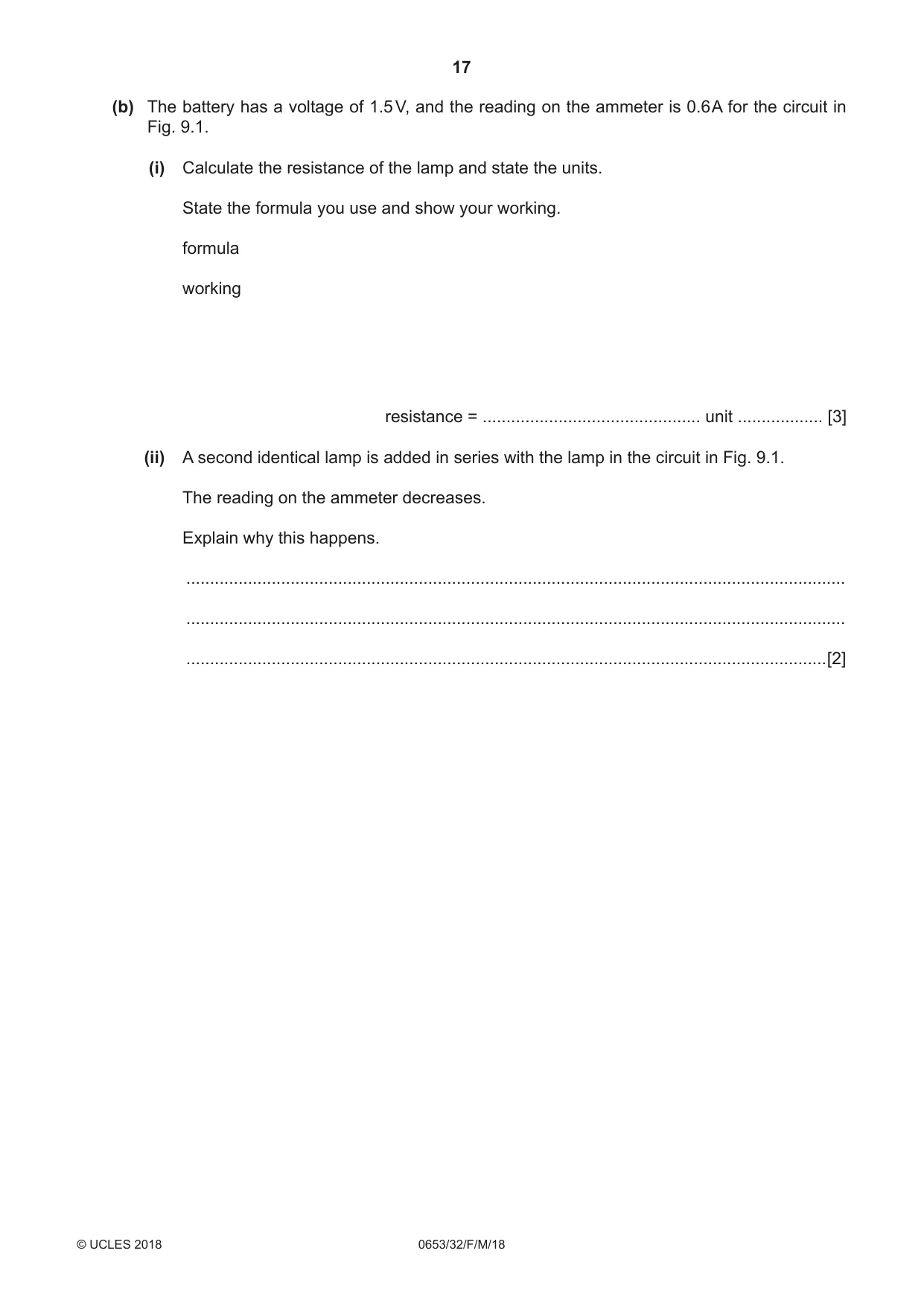
9 Fig. 9.1 shows a simple circuit set up to investigate the electrical properties of a lamp. ammeter 01234 AMPS 5 lamp switch battery Fig. 9.1 (a) (i) On Fig. 9.2 use the correct symbols to complete the diagram for the circuit shown in Fig. 9.1. Fig. 9.2 [2] (ii) On Fig. 9.2, using the correct circuit symbol, connect a meter into the circuit that can measure the potential difference across the lamp. [2] (b) The battery has a voltage of 1.5 V, and the reading on the ammeter is 0.6 A for the circuit in Fig. 9.1. (i) Calculate the resistance of the lamp and state the units. State the formula you use and show your working. formula working resistance = .............................................. unit .................. [3] (ii) A second identical lamp is added in series with the lamp in the circuit in Fig. 9.1. The reading on the ammeter decreases. Explain why this happens. ........................................................................................................................................... ........................................................................................................................................... .......................................................................................................................................[2]
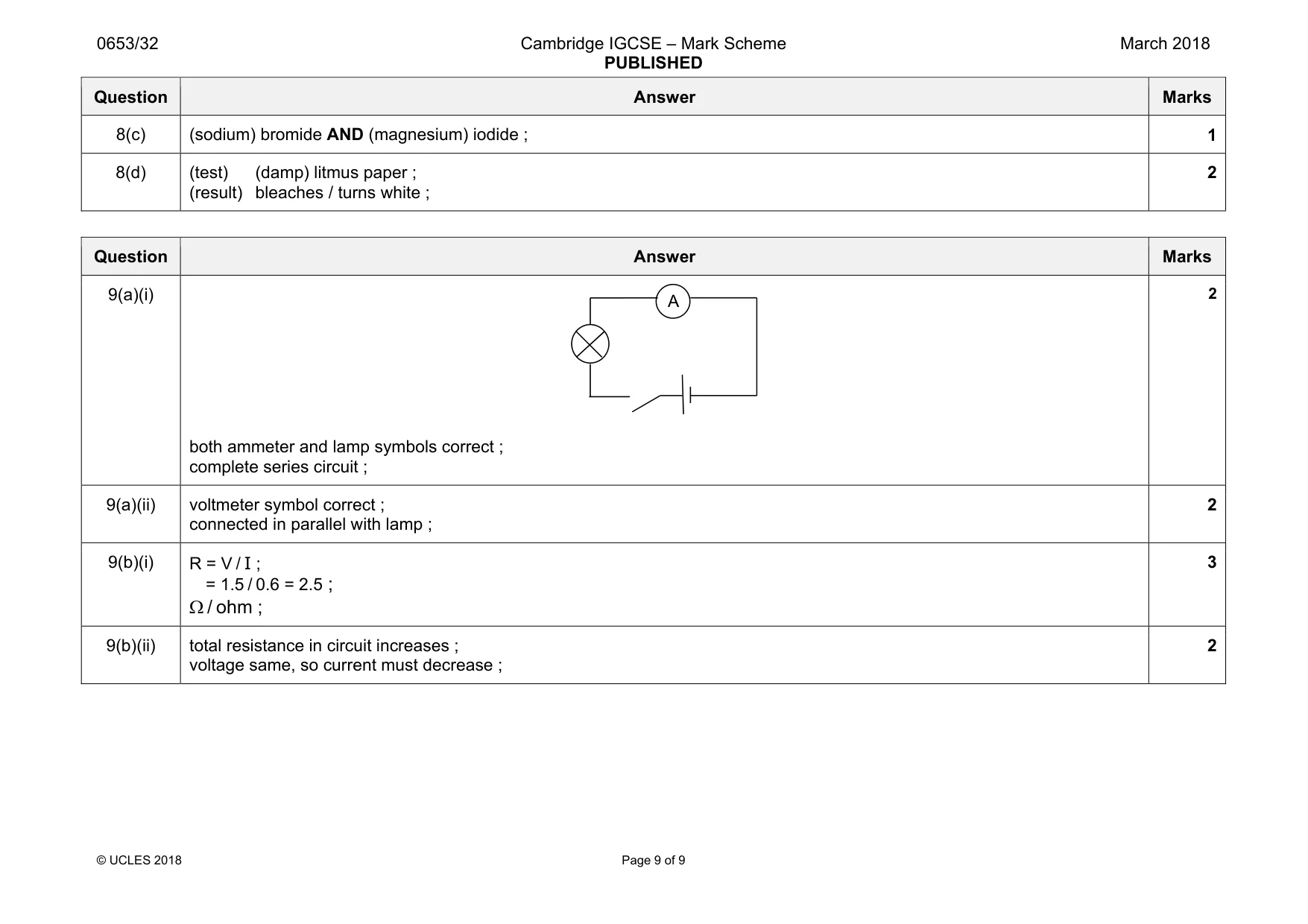
Mark scheme: 9(a)(i) both ammeter and lamp symbols correct ; complete series circuit ; 9(a)(ii) voltmeter symbol correct ; connected in parallel with lamp ; 2 9(b)(i) R = V / I ; = 1.5 / 0.6 = 2.5 ; Ω / ohm ; 3 9(b)(ii) total resistance in circuit increases ; voltage same, so current must decrease ; 2 A
What was in this paper
The subtopics covered by these 9 questions, and how many questions each got. Open one in a new tab to see every Cambridge question on it.
What you needed in this session
Cambridge’s own grade thresholds for 2018 Feb/March, Paper 3 · Variant 2. A higher threshold means an easier paper — the bar moves with how the cohort did.