Questions as text
Q1 · The complex numbers 1 + 3i and 4 + 2i are denoted by u and v respectively 9709/31 Oct/Nov 2004
6 The complex numbers 1 + 3i and 4 + 2i are denoted by u and v respectively. u (i) Find, in the form x + iy, where x and y are real, the complex numbers u −v and v. [3] u (ii) State the argument of v. [1] In an Argand diagram, with origin O, the points A, B and C represent the numbers u, v and u −v respectively. (iii) State fully the geometrical relationship between OC and BA. [2] (iv) Prove that angle AOB = 14π radians. [2]
8 marks
Mark scheme: 6 (i) State u − v is −3 + i B1 EITHER: Carry out multiplication of numerator and denominator of u/v by 4 − 2i, or equivalent M1 1 1 Obtain answer + i, or any equivalent A1 2 2 OR: Obtain two equations in x and y, and solve for x or for y M1 1 1 Obtain answer + i, or any equivalent A1 3 2 2 1 (ii) State argument is π (or 0.785 radians or 45°) A1√ 1 4 (iii) State that OC and BA are equal (in length) B1 State that OC and BA are parallel or have the same direction B1 2 A AND AS LEVEL – NOVEMBER 2004 9709 3 (iv) EITHER: Use fact that angle AOB = arg u − arg v = arg(u/v) M1 Obtain given answer (or 45°) A1 OR: Obtain tan AOB from gradients of OA and OB and the tan(A ± B) formula M1 Obtain given answer (or 45°) A1 OR: Obtain cos AOB by using the cosine rule or a scalar product M1 Obtain given answer (or 45°) A1 OR: Prove angle OAB = 90° and OA = AB M1 Derive the given answer (or 45°) A1 2 [SR: Obtaining a value for angle AOB by calculating 1 arctan (3 ) − arctan earns a maximum of B1.] 2
This question in 9709/31 Oct/Nov 2004
Q2 · Solve the equation 2 −2i −5 = 0, giving your answers in the form x + iy where x and y are… 9709/31 May/June 2005
3 (i) Solve the equation 2 −2i −5 = 0, giving your answers in the form x + iy where x and y are real. [3] (ii) Find the modulus and argument of each root. [3] (iii) Sketch an Argand diagram showing the points representing the roots. [1]
7 marks
Mark scheme: 3 (i) Use quadratic formula, or the method of completing the square, or the substitution z = x + iy to find a root, using i2 = -1 M1 Obtain a root, e.g. 2 + i A1 Obtain the other root –2 + i A1 3 [Roots given as ± 2 + i earn A1 + A1.] (ii) Obtain modulus 5 (or 2.24) of both roots B1√ Obtain argument of 2 + i as 26.6° or 0.464 radians (allow ±1 in final figure) B1√ Obtain argument of –2 + i as 153.4° or 2.68 radians (allow ±1 in final figure) B1√ 3 [SR: in applying the follow through to the roots obtained in (i), if both roots are real or pure imaginary, the mark for the moduli is not available and only B1√ is given if both arguments are correct; also if one of the two roots is real or pure imaginary and the other is neither then B1√ is given if both moduli are correct and B1√ if both arguments are correct.] (iii) Show both roots on an Argand diagram in relatively correct positions B1√ 1 [This follow through is only available if at least one of the two roots is of the form x + iy where xy ≠ 0.] A AND AS LEVEL – JUNE 2005 9709/8719 3 dx
This question in 9709/31 May/June 2005
Q3 · The equation 2x3 + x2 + 25 = 0 has one real root and two complex roots 9709/31 Oct/Nov 2005
7 The equation 2x3 + x2 + 25 = 0 has one real root and two complex roots. (i) Verify that 1 + 2i is one of the complex roots. [3] (ii) Write down the other complex root of the equation. [1] (iii) Sketch an Argand diagram showing the point representing the complex number 1 + 2i. Show on the same diagram the set of points representing the complex numbers which satisfy | | = | −1 −2i| . [4]
8 marks
Mark scheme: 7 (i) Substitute x = 1 + 2i and attempt expansions M1 Use i2 = − 1 correctly at least once M1 Complete the verification correctly A1 [3] (ii) State that the other complex root is 1 –2i B1 [1] (iii) Show 1 + 2i in relatively correct position B1 Sketch a locus which (a) is a straight line B1 (b) relative to the point representing 1 + 2i (call it A), passes through the mid-point of OA B1 (c) intersects OA at right angles B1 [4]
This question in 9709/31 Oct/Nov 2005
Q4 · −3i 8 (a) The complex number is given by = 1 −2i 9709/31 Oct/Nov 2007
4 −3i 8 (a) The complex number is given by = 1 −2i. (i) Express in the form x + iy, where x and y are real. [2] (ii) Find the modulus and argument of . [2] (b) Find the two square roots of the complex number 5 −12i, giving your answers in the form x + iy, where x and y are real. [6]
10 marks
Mark scheme: 8 (a) (i) EITHER: Carry out multiplication of numerator and denominator by 1 + 2i, or equivalent M1 Obtain answer 2 + i, or any equivalent of the form (a + ib)/c A1 OR1: Obtain two equations in x and y, and solve for x or for y M1 Obtain answer 2 + i, or equivalent A1 OR2: Using the correct processes express z in polar form M1 Obtain answer 2 + i, or equivalent A1 [2] (ii) State that the modulus of z is 5 or 2.24 B1 State that the argument of z is 0.464 or 26.6° B1 [2] (b) EITHER: Square x + iy and equate real and imaginary parts to 5 and −12 respectively M1 Obtain x 2 −y 2 = 5 and 2xy = −12 A1 Eliminate one variable and obtain an equation in the other M1 Obtain x 4 −x5 2 − 36 = 0 or y 4 + 5 y 2 − 36 = 0 , or 3-term equivalent A1 Obtain answer 3 –2i A1 Obtain second answer –3 + 2i and no others A1 [SR: Allow a solution with 2xy = 12 to earn the second A1 and thus a maximum of 3/6.] OR: Convert 5 –12i to polar form (R, θ) M1 Use the fact that a square root has the polar form ( R , 1 θ ) M1 2 Obtain one root in polar form, e.g. ( 13 , − .0588) or ( 13 , −337.°) A1 + A1 Obtain answer 3 –2i A1 Obtain answer –3 + 2i and no others A1 [6] GCE A/AS LEVEL – October/November 2007 9709 03 A B C
This question in 9709/31 Oct/Nov 2007
Q5 · The variable complex number is given by = 2 cos θ + i(1 −2 sin θ), where θ takes all… 9709/31 May/June 2008
5 The variable complex number is given by = 2 cos θ + i(1 −2 sin θ), where θ takes all values in the interval −π < θ ≤π. (i) Show that | −i| = 2, for all values of θ. Hence sketch, in an Argand diagram, the locus of the point representing . [3] 1 (ii) Prove that the real part of is constant for −π < θ < π. [4] + 2 −i
7 marks
Mark scheme: 5 (i) Find modulus of 2cosθ − 2isinθ and show it is equal to 2 B1 Show a circle with centre at the point representing i B1 Show a circle with radius 2 B1 [3] (ii) Substitute for z and multiply numerator and denominator by the conjugate of z + 2 – i, or equivalent M1 Obtain correct real denominator in any form A1 Identify and obtain correct unsimplified real part in terms of cosθ, e.g. (2cosθ + 2)/(8cosθ + 8) A1 1 State that real part equals A1 [4] 4 dy 2 2
This question in 9709/31 May/June 2008
Q6 · √310 The complex number w is given by w = −1 + i 9709/31 Oct/Nov 2008
√310 The complex number w is given by w = −1 + i . 2 2 (i) Find the modulus and argument of w. [2] (ii) The complex number has modulus R and argument θ, where −13π < θ < 13π. State the modulus and argument of w and the modulus and argument of w. [4] (iii) Hence explain why, in an Argand diagram, the points representing , w and are the vertices w of an equilateral triangle. [2] (iv) In an Argand diagram, the vertices of an equilateral triangle lie on a circle with centre at the origin. One of the vertices represents the complex number 4 + 2i. Find the complex numbers represented by the other two vertices. Give your answers in the form x + iy, where x and y are real and exact. [4]
12 marks
Mark scheme: 10 (i) State that the modulus of w is 1 B1 State that the argument of w is 2 π or 120° (accept 2.09, or 2.1) B1 [2] 3 (ii) State that the modulus of wz is R B1√ State that the argument of wz is θ + 2 π B1√ 3 State that the modulus of z/w is R B1√ State that the argument of z/w is θ − 2 π B1√ [4] 3 (iii) State or imply the points are equidistant from the origin B1 State or imply that two pairs of points subtend 2 π at the origin, or that all three pairs subtend 3 equal angles at the origin B1 [2] GCE A/AS LEVEL – October/November 2008 9709 03 (iv) Multiply 4 + 2i by w and use i 2 = −1 M1 Obtain − ( 2 + 3 ) + ( 2 3 − 1) i , or exact equivalent A1 Divide 4 + 2i by w, multiplying numerator and denominator by the conjugate of w, or equivalent M1 Obtain − ( 2 − 3 ) − ( 2 3 + i)1 , or exact equivalent A1 [4] [Use of polar form of 4 + 2i can earn M marks and then A marks for obtaining exact x + iy answers.] [SR: If answers only seen in polar form, allow B1+B1 in (i), B1√ + B1√ in (ii), but A0 + A0 in (iv).]
This question in 9709/31 Oct/Nov 2008
Q7 · Solve the equation 0, giving your answers in the form x iy, where x and y ß2 + (2 √3)iß… 9709/31 May/June 2009
7 (i) Solve the equation 0, giving your answers in the form x iy, where x and y ß2 + (2 √3)iß −4 = + are real. [3] (ii) Sketch an Argand diagram showing the points representing the roots. [1] (iii) Find the modulus and argument of each root. [3] (iv) Show that the origin and the points representing the roots are the vertices of an equilateral triangle. [1]
8 marks
Mark scheme: 7 (i) Use quadratic formula, or completing the square, or the substitution z = x + iy to find a root, using i2 = –1 M1 Obtain a root, e.g. 1 – i3 A1 Obtain the other root, e.g. –1 – i3 A1 3 (ii) Represent both roots on an Argand diagram in relatively correct positions B1 √ 1 (iii) State modulus of both roots is 2 B1 √ State argument of 1 – i3 is –60° (or 300°, − 13 π , − 53 π ) B1 √ State argument of –1 – i3 is –120° (or 240°, − 23 π , − 43 π ) B1 √ 3 (iv) Give a complete justification of the statement B1 1 [The A marks in (i) are for the final versions of the roots. Allow (±2 – 2 i3 )/2 as final answer. The remaining marks are only available for roots such that xy ≠ 0.] [Treat answers to (iii) in polar form as a misread] A B C
This question in 9709/31 May/June 2009
Q8 · The complex number i is denoted by u 9709/31 Oct/Nov 2009
7 The complex number i is denoted by u. −2 + (i) Given that u is a root of the equation x3 0, where k is real, find the value of k. [3] −11x −k = (ii) Write down the other complex root of this equation. [1] (iii) Find the modulus and argument of u. [2] (iv) Sketch an Argand diagram showing the point representing u. Shade the region whose points represent the complex numbers satisfying both the inequalities ß and 0 |ß| < |ß −2| < arg(ß −u) < 14π. [4]
10 marks
Mark scheme: 7 (i) Substitute x = –2 + i in the equation and attempt expansion of (–2 + i)3 M1 Use i2 = –1 correctly at least once and solve for k M1 Obtain k = 20 A1 [3] (ii) State that the other complex root is –2 – i B1 [1] GCE A/AS LEVEL – October/November 2009 9709 31 (iii) Obtain modulus 5 B1 Obtain argument 153.4° or 2.68 radians B1 [2] (iv) Show point representing u in relatively correct position in an Argand diagram B1 Show vertical line through z = 1 B1 Show the correct half-lines from u of gradient zero and 1 B1 Shade the relevant region B1 [4] [SR: For parts (i) and (ii) allow the following alternative method: State that the other complex root is –2 – i B1 State quadratic factor x2 + 4x + 5 B1 Divide cubic by 3-term quadratic, equate remainder to zero and solve for k, or, using 3-term quadratic, factorise cubic and obtain k M1 Obtain k = 20 A1] A B C
This question in 9709/31 Oct/Nov 2009
Q9 · The complex numbers i and 3 i are denoted by u and v respectively 9709/32 Oct/Nov 2009
7 The complex numbers i and 3 i are denoted by u and v respectively. −2 + + (i) Find, in the form x iy, the complex numbers + (a) u v, [1] + u (b) v, showing all your working. [3] u (ii) State the argument of v. [1] In an Argand diagram with origin O, the points A, B and C represent the complex numbers u, v and u v respectively. + (iii) Prove that angle AOB 34π. [2] = (iv) State fully the geometrical relationship between the line segments OA and BC. [2]
9 marks
Mark scheme: 7 (i) (a) State that u + v is equal to 1 + 2i B1 [1] (b) EITHER: Multiply numerator and denominator of u/v by 3 – i, or equivalent M1 Simplify numerator to –5 + 5i, or denominator to 10 A1 Obtain answer – 1 + 1 i, or equivalent A1 2 2 OR1: Obtain two equations in x and y and solve for x or for y M1 Obtain x = – 1 or y = 1 A1 2 2 Obtain answer – 1 + 1 i, or equivalent A1 2 2 OR2: Using the correct processes express u/v in polar form M1 Obtain x = – 1 or y = 1 correctly A1 2 2 Obtain answer – 1 + 1 i, or equivalent A1 [3] 2 2 (ii) State that the argument of u/v is 3 π (2.36 radians or 135°) B1√ [1] 4 (iii) EITHER: Use facts that angle AOB = arg u – arg v and arg u – arg v = arg(u/v) M1 Obtain given answer A1 OR1: Obtain tan AOˆ B from gradients of OA and OB and the tan (A ± B) formula M1 Obtain given answer A1 OR2: Obtain cos AOˆ B by using the cosine formula or scalar product M1 Obtain given answer A1 [2] (iv) State OA = BC B1 State OA is parallel to BC B1 [2] A Bx + C
This question in 9709/32 Oct/Nov 2009
Q10 · The complex number 2 2i is denoted by u 9709/31 May/June 2010
7 The complex number 2 2i is denoted by u. + (i) Find the modulus and argument of u. [2] (ii) Sketch an Argand diagram showing the points representing the complex numbers 1, i and u. Shade the region whose points represent the complex numbers which satisfy both the inequalities and ß [4] |ß −1| ≤|ß −i| |ß −u| ≤1. (iii) Using your diagram, calculate the value of for the point in this region for which arg is least. |ß| ß [3]
9 marks
Mark scheme: 7 (i) Obtain modulus 8 B1 Obtain argument 14 π or 45° B1 [2] (ii) Show 1, i and u in relatively correct positions on an Argand diagram B1 Show the perpendicular bisector of the line joining 1 and i B1 Show a circle with centre u and radius 1 B1 Shade the correct region B1 [4] (iii) State or imply relevance of the appropriate tangent from O to the circle B1 √ Carry out complete strategy for finding z for the critical point M1 Obtain answer 7 A1 [3] A B
This question in 9709/31 May/June 2010
Q11 · The variable complex number is given by ß 1 cos 2θ i sin 2θ, ß = + + where θ takes all… 9709/32 May/June 2010
8 The variable complex number is given by ß 1 cos 2θ i sin 2θ, ß = + + where θ takes all values in the interval 2π θ 12π. −1 < < (i) Show that the modulus of is 2 cos θ and the argument of is θ. [6] ß ß 1 (ii) Prove that the real part of ß is constant. [3]
9 marks
Mark scheme: 2 2 2 8 (i) EITHER: State a correct expression for zor z , e.g. 1( + cos 2θ ) + (sin 2θ ) B1 Use double angle formulae throughout or Pythagoras M1 Obtain given answer 2cos θ correctly A1 State a correct expression for tangent of argument, e.g. (sin 2θ /(1 + cos 2θ ) B1 Use double angle formulae to express it in terms of cos θ and sin θ M1 Obtain tan θ and state that the argument is θ A1 OR: Use double angle formulae to express z in terms of cos θ and sin θ M1 Obtain a correct expression, e.g. 1 + cos 2 θ − sin 2 θ + 2i sin θ cos θ A1 Convert the expression to polar form M1 Obtain 2 cos θ (cos θ + i sin θ ) A1 State that the modulus is 2 cosθ A1 State that the argument is θ A1 [6] (ii) Substitute for z and multiply numerator and denominator by the conjugate of z, or equivalent M1 Obtain correct real denominator in any form A1 Identify and obtain real part equal to 12 A1 [3]
This question in 9709/32 May/June 2010
Q12 · The equation 2x3 2x 12 0 has one real root and two complex roots 9709/33 May/June 2010
8 (a) The equation 2x3 2x 12 0 has one real root and two complex roots. Showing your −x2 + + = working, verify that 1 i √3 is one of the complex roots. State the other complex root. [4] + (b) On a sketch of an Argand diagram, show the point representing the complex number 1 i √3. + On the same diagram, shade the region whose points represent the complex numbers which ß satisfy both the inequalities and arg 3π. [5] |ß −1 −i √3| ≤1 ß ≤1
9 marks
Mark scheme: 8 (a) EITHER: Substitute 1+ i 3 , attempt complete expansions of the x3 and x2 terms M1 Use i2 = –1 correctly at least once B1 Complete the verification correctly A1 State that the other root is 1− i 3 B1 OR1: State that the other root is 1− i 3 B1 State quadratic factor x 2 −x2 + 4 B1 Divide cubic by 3-term quadratic reaching partial quotient 2x + k M1 Complete the division obtaining zero remainder A1 OR2: State factorisation ( 2 x + 3)( x 2 − 2 x + 4) , or equivalent B1 Make reasonable solution attempt at a 3-term quadratic and use i2 = –1 M1 Obtain the root 1+ i 3 A1 State that the other root is 1− i 3 B1 [4] (b) Show point representing 1+ i 3 in relatively correct position on an Argand diagram B1 Show circle with centre at 1+ i 3 and radius 1 B1√ Show line for arg z = 13 π making 13 π with the real axis B1 Show line from origin passing through centre of circle, or the diameter which would contain the origin if produced B1 Shade the relevant region B1√ [5] GCE AS/A LEVEL – May/June 2010 9709 33 A B C
This question in 9709/33 May/June 2010
Q13 · The complex number is given by ß i 9709/31 Oct/Nov 2010
6 The complex number is given by ß i. ß = (√3) + (i) Find the modulus and argument of [2] ß. (ii) The complex conjugate of is denoted by Showing your working, express in the form x iy, where x and y are real, ß ß*. + (a) 2ß + ß*, (b) . iß* [4] ß (iii) On a sketch of an Argand diagram with origin O, show the points A and B representing the complex numbers and respectively. Prove that angle AOB 16π. [3] ß iß* =
9 marks
Mark scheme: 6 (i) State modulus is 2 B1 State argument is 16 π , or 30°, or 0.524 radians B1 [2] (ii) (a) State answer 3 3 + i B1 (b) EITHER: Multiply numerator and denominator by 3 −,i or equivalent M1 Simplify denominator to 4 or numerator to 2 3 + i2 A1 Obtain final answer 12 3 + 12 i , or equivalent A1 OR 1: Obtain two equations in x and y and solve for x or for y M1 Obtain x = 12 3 or y = 12 A1 Obtain final answer 12 3 + 12 i , or equivalent A1 OR 2: Using the correct processes express iz*/z in polar form M1 Obtain x = 12 3 or y = 12 A1 Obtain final answer 12 3 + 12 i , or equivalent A1 [4] (iii) Plot A and B in relatively correct positions B1 EITHER: Use fact that angle AOB = arg(iz*) – arg z M1 Obtain the given answer A1 OR 1: Obtain tan AOˆ B from gradients of OA and OB and the correct tan(A – B) formula M1 Obtain the given answer A1 OR 2: Obtain cos AOˆ B by using correct cosine formula or scalar product M1 Obtain the given answer A1 [3] GCE A/AS LEVEL – October/November 2010 9709 31
This question in 9709/31 Oct/Nov 2010
Q14 · The complex number is given by ß i 9709/32 Oct/Nov 2010
6 The complex number is given by ß i. ß = (√3) + (i) Find the modulus and argument of [2] ß. (ii) The complex conjugate of is denoted by Showing your working, express in the form x iy, where x and y are real, ß ß*. + (a) 2ß + ß*, (b) . iß* [4] ß (iii) On a sketch of an Argand diagram with origin O, show the points A and B representing the complex numbers and respectively. Prove that angle AOB 16π. [3] ß iß* =
9 marks
Mark scheme: 6 (i) State modulus is 2 B1 State argument is 16 π , or 30°, or 0.524 radians B1 [2] (ii) (a) State answer 3 3 + i B1 (b) EITHER: Multiply numerator and denominator by 3 −,i or equivalent M1 Simplify denominator to 4 or numerator to 2 3 + i2 A1 Obtain final answer 12 3 + 12 i , or equivalent A1 OR 1: Obtain two equations in x and y and solve for x or for y M1 Obtain x = 12 3 or y = 12 A1 Obtain final answer 12 3 + 12 i , or equivalent A1 OR 2: Using the correct processes express iz*/z in polar form M1 Obtain x = 12 3 or y = 12 A1 Obtain final answer 12 3 + 12 i , or equivalent A1 [4] (iii) Plot A and B in relatively correct positions B1 EITHER: Use fact that angle AOB = arg(iz*) – arg z M1 Obtain the given answer A1 OR 1: Obtain tan AOˆ B from gradients of OA and OB and the correct tan(A – B) formula M1 Obtain the given answer A1 OR 2: Obtain cos AOˆ B by using correct cosine formula or scalar product M1 Obtain the given answer A1 [3] GCE A/AS LEVEL – October/November 2010 9709 32
This question in 9709/32 Oct/Nov 2010
Q15 · The complex number w is defined by w 2 i 9709/33 Oct/Nov 2010
3 The complex number w is defined by w 2 i. = + (i) Showing your working, express w2 in the form x iy, where x and y are real. Find the modulus of w2. + [3] (ii) Shade on an Argand diagram the region whose points represent the complex numbers which satisfy ß |ß −w2| ≤|w2|. [3]
6 marks
Mark scheme: 3 (i) Attempt multiplication and use i2 = –1 M1 Obtain 3 + 4i A1 Obtain 5 for modulus B1 [3] (ii) Draw complete circle with centre corresponding to their w2 … B1√ … and radius corresponding to their |w2| B1√ Shade the correct region cwo B1 [3]
This question in 9709/33 Oct/Nov 2010
Q16 · The polynomial is defined by p(ß) 32, p(ß) = ß3 + mß2 + 24ß + where m is a constant 9709/33 Oct/Nov 2010
10 The polynomial is defined by p(ß) 32, p(ß) = ß3 + mß2 + 24ß + where m is a constant. It is given that is a factor of (ß + 2) p(ß). (i) Find the value of m. [2] (ii) Hence, showing all your working, find (a) the three roots of the equation 0, [5] p(ß) = (b) the six roots of the equation 0. [6] p(ß2) =
13 marks
Mark scheme: 10 (i) Attempt to solve for m the equation p(–2) = 0 or equivalent M1 Obtain m = 6 A1 [2] Alternative: Attempt p(z) ÷ (z + 2), equate a constant remainder to zero and solve for m. M1 Obtain m = 6 A1 (ii) (a) State z = –2 B1 Attempt to find quadratic factor by inspection, division, identity, … M1 Obtain z2 + 4z + 16 A1 Use correct method to solve a 3-term quadratic equation M1 Obtain − 2 ± 2 i3 or equivalent A1 [5] (b) State or imply that square roots of answers from part (ii)(a) needed M1 Obtain ± i 2 A1 Attempt to find square root of a further root in the form x + iy or in polar form M1 Obtain a2 – b2 = –2 and ab = (± ) 3 following their answer to part (ii)(a) A1√ Solve for a and b M1 Obtain ± (1+ i 3 ) and ± (1− i 3 ) A1 [6]
This question in 9709/33 Oct/Nov 2010
Q17 · The complex number u is defined by u −3i = 1 2i 9709/31 May/June 2011
68 The complex number u is defined by u −3i = 1 2i. + (i) Showing all your working, find the modulus of u and show that the argument of u is 2π. [4] −1 (ii) For complex numbers satisfying 14π, find the least possible value of [3] ß arg(ß −u) = |ß|. (iii) For complex numbers satisfying 1, find the greatest possible value of [3] ß |ß −(1 + i)u| = |ß|.
10 marks
Mark scheme: 8 (i) Either: Multiply numerator and denominator by (1 − 2i), or equivalent M1 Obtain –3i A1 State modulus is 3 A1 Refer to u being on negative imaginary axis or equivalent and confirm argument as − 12 π A1 Or: Using correct processes, divide moduli of numerator and denominator M1 Obtain 3 A1 Subtract argument of denominator from argument of numerator M1 Obtain –tan–1 12 – tan–12 or –0.464 – 1.107 and hence − 12 π or –1.57 A1 [4] (ii) Show correct half-line from u at angle 14 π to real direction B1 Use correct trigonometry to find required value M1 Obtain 32 2 or equivalent A1 [3] (iii) Show, or imply, locus is a circle with centre (1 + i)u and radius 1 M1 Use correct method to find distance from origin to furthest point of circle M1 Obtain 3 2 + 1 or equivalent A1 [3] GCE AS/A LEVEL – May/June 2011 9709 31 2 2 2 2
This question in 9709/31 May/June 2011
Q18 · 7 (a) The complex number u is defined by u = where the constant a is real 9709/32 May/June 2011
5 7 (a) The complex number u is defined by u = where the constant a is real. a + 2i, (i) Express u in the form x + iy, where x and y are real. [2] (ii) Find the value of a for which arg(u*) = 34π, where u* denotes the complex conjugate of u. [3] (b) On a sketch of an Argand diagram, shade the region whose points represent complex numbers ß which satisfy both the inequalities |ß| < 2 and |ß| < |ß −2 −2i|. [4]
9 marks
Mark scheme: 7 (a) (i) EITHER: Multiply numerator and denominator by a – 2i, or equivalent M1 5 a 10i Obtain final answer − , or equivalent A1 a 2 + 4 a 2 + 4 OR: Obtain two equations in x and y, solve for x or for y M1 5 a 10 Obtain final answer x = and y = , or equivalent A1 [2] a 2 + 4 a 2 + 4 3 (ii) Either state arg(u) = − π , or express u* in terms of a (f.t. on u) B1√ 4 Use correct method to form an equation in a, e.g. 5a = –10 M1 Obtain a = –2 correctly A1 [3] (b) Show a point representing 2 + 2i in relatively correct position in an Argand diagram B1 Show the circle with centre at the origin and radius 2 B1 Show the perpendicular bisector of the line segment from the origin to the point representing 2 + 2i B1√ Shade the correct region B1 [4] [SR: Give the first B1 and the B1√ for obtaining y = 2 – x, or equivalent, and sketching the attempt.] A Bx + C
This question in 9709/32 May/June 2011
Q19 · Find the roots of the equation 4 0, ß2 + (2p3)ß + = giving your answers in the form x iy… 9709/33 May/June 2011
7 (i) Find the roots of the equation 4 0, ß2 + (2p3)ß + = giving your answers in the form x iy, where x and y are real. [2] + (ii) State the modulus and argument of each root. [3] (iii) Showing all your working, verify that each root also satisfies the equation ß6 = −64. [3]
8 marks
Mark scheme: 7 (i) Use the quadratic formula, completing the square, or the substitution z = x + iy to find a root and use i2 = –1 M1 Obtain final answers − 3 ± i , or equivalent A1 [2] (ii) State that the modulus of both roots is 2 B1√ 5 State that the argument of − 3 + i is 150° or π (2.62) radians B1√ 6 5 State that the argument of − 3 − i is –150° (or 210°) or – π (–2.62) radians or 6 7 π (3.67) radians B1√ [3] 6 (iii) Carry out an attempt to find the sixth power of a root M1 Verify that one of the roots satisfies z6 = –64 A1 Verify that the other root satisfies the equation A1 [3] GCE AS/A LEVEL – May/June 2011 9709 33
This question in 9709/33 May/June 2011
Q20 · Showing your working, find the two square roots of the complex number 1 Give your −(2√6)i 9709/31 Oct/Nov 2011
10 (a) Showing your working, find the two square roots of the complex number 1 Give your −(2√6)i. answers in the form x iy, where x and y are exact. [5] + (b) On a sketch of an Argand diagram, shade the region whose points represent the complex numbers which satisfy the inequality Find the greatest value of arg for points in this region. ß |ß −3i| ≤2. ß [5]
10 marks
Mark scheme: 10 (a) EITHER: Square x + iy and equate real and imaginary parts to 1 and − 2 6 respectively M1* Obtain x2 – y2 = 1 and 2xy = − 2 6 A1 Eliminate one variable and find an equation in the other M1(dep*) Obtain x4 – x2 – 6 = 0 or y4 + y2 – 6 = 0, or 3-term equivalent A1 Obtain answers ± ( 3 − i 2 ) A1 [5] OR: Denoting 1− 2 i6 by Rcisθ, state, or imply, square roots are ± R cis ( 1 θ ) 2 and find values of R and either cos θ or sin θ or tan θ M1* Obtain ± 5 (cos 1 θ + i sin 1 θ ) , and cos θ = 1 or sin θ = − 2 6 or 2 2 5 5 tan θ = −2 6 A1 Use correct method to find an exact value of cos 1 θ or sin 1 θ M1(dep*) 2 2 Obtain cos 1 θ = ± 3 and sin 1 θ = ± 2 , or equivalent A1 2 5 2 5 Obtain answers ± ( 3 − i 2 ) , or equivalent A1 [Condone omission of ± except in the final answers.] (b) Show point representing 3i on a sketch of an Argand diagram B1 Show a circle with centre at the point representing 3i and radius 2 B1√ Shade the interior of the circle B1√ Carry out a complete method for finding the greatest value of arg z M1 Obtain answer 131.8° or 2.30 (or 2.3) radians A1 [5] [The f.t. is on solutions where the centre is at the point representing –3i.]
This question in 9709/31 Oct/Nov 2011
Q21 · Showing your working, find the two square roots of the complex number 1 Give your −(2√6)i 9709/32 Oct/Nov 2011
10 (a) Showing your working, find the two square roots of the complex number 1 Give your −(2√6)i. answers in the form x iy, where x and y are exact. [5] + (b) On a sketch of an Argand diagram, shade the region whose points represent the complex numbers which satisfy the inequality Find the greatest value of arg for points in this region. ß |ß −3i| ≤2. ß [5]
10 marks
Mark scheme: 10 (a) EITHER: Square x + iy and equate real and imaginary parts to 1 and − 2 6 respectively M1* Obtain x2 – y2 = 1 and 2xy = − 2 6 A1 Eliminate one variable and find an equation in the other M1(dep*) Obtain x4 – x2 – 6 = 0 or y4 + y2 – 6 = 0, or 3-term equivalent A1 Obtain answers ± ( 3 − i 2 ) A1 [5] OR: Denoting 1− 2 i6 by Rcisθ, state, or imply, square roots are ± R cis ( 1 θ ) 2 and find values of R and either cos θ or sin θ or tan θ M1* Obtain ± 5 (cos 1 θ + i sin 1 θ ) , and cos θ = 1 or sin θ = − 2 6 or 2 2 5 5 tan θ = −2 6 A1 Use correct method to find an exact value of cos 1 θ or sin 1 θ M1(dep*) 2 2 Obtain cos 1 θ = ± 3 and sin 1 θ = ± 2 , or equivalent A1 2 5 2 5 Obtain answers ± ( 3 − i 2 ) , or equivalent A1 [Condone omission of ± except in the final answers.] (b) Show point representing 3i on a sketch of an Argand diagram B1 Show a circle with centre at the point representing 3i and radius 2 B1√ Shade the interior of the circle B1√ Carry out a complete method for finding the greatest value of arg z M1 Obtain answer 131.8° or 2.30 (or 2.3) radians A1 [5] [The f.t. is on solutions where the centre is at the point representing –3i.]
This question in 9709/32 Oct/Nov 2011
Q22 · The complex number w is defined by w i 9709/33 Oct/Nov 2011
6 The complex number w is defined by w i. = −1 + (i) Find the modulus and argument of w2 and w3, showing your working. [4] (ii) The points in an Argand diagram representing w and w2 are the ends of a diameter of a circle. Find the equation of the circle, giving your answer in the form k. [4] |ß −(a + bi)| =
8 marks
Mark scheme: 6 (i) Use correct method for finding modulus of their w2 or w3 or both M1 Obtain │w2│ = 2 and │w3│= 2 2 or equivalent A1 Use correct method for finding argument of their w2 or w3 or both M1 Obtain arg(w2) = – 12 π or 32 π and arg(w3) = 14 π A1ft [4] (ii) Obtain centre – 12 – 12 i (their w2) B1ft Calculate the diameter or radius using │w–w2│ w21 or right-angled triangle M1 or cosine rule or equivalent Obtain radius 12 10 or equivalent A1 Obtain │z + 12 + 12 i│ = 12 10 or equivalent A1ft [4] (i) S b i 1 d
This question in 9709/33 Oct/Nov 2011
Q23 · The complex number u is defined by u 9709/31 May/June 2012
4 The complex number u is defined by u . (1 + 2i)2 2 i = + (i) Without using a calculator and showing your working, express u in the form x iy, where x and y are real. + [4] (ii) Sketch an Argand diagram showing the locus of the complex number such that ß |ß −u| = |u|.[3]
7 marks
Mark scheme: 4 (i) Either Expand (1 + 2i)2 to obtain –3 + 4i or unsimplified equivalent B1 Multiply numerator and denominator by 2 – i M1 Obtain correct numerator –2 + 11i or correct denominator 5 A1 2 11 Obtain − + i or equivalent A1 5 5 Or Expand (1 + 2i)2 to obtain –3 + 4i or unsimplified equivalent B1 Obtain two equations in x and y and solve for x or y M1 2 Obtain final answer x = − A1 5 11 Obtain final answer y = A1 [4] 5 (ii) Draw a circle M1 Show centre at relatively correct position, following their u A1 Draw circle passing through the origin A1 [3] GCE AS/A LEVEL – May/June 2012 9709 31 1 1 2 1
This question in 9709/31 May/June 2012
Q24 · Throughout this question the use of a calculator is not permitted 9709/32 May/June 2012
7 Throughout this question the use of a calculator is not permitted. The complex number u is defined by 1 2i u + 1 = −3i. (i) Express u in the form x iy, where x and y are real. [3] + (ii) Show on a sketch of an Argand diagram the points A, B and C representing the complex numbers u, 1 2i and 1 respectively. [2] + −3i (iii) By considering the arguments of 1 2i and 1 show that + −3i, 3 4π. tan−12 + tan−13 = [3]
8 marks
Mark scheme: 7 (i) EITHER: Multiply numerator and denominator by 1 + 3i, or equivalent M1 Simplify numerator to –5 + 5i, or denominator to 10, or equivalent A1 1 1 Obtain final answer − + i , or equivalent A1 2 2 OR: Obtain two equations in x and y, and solve for x or for y M1 1 1 Obtain x = − or y = , or equivalent A1 2 2 1 1 Obtain final answer − + i , or equivalent A1 [3] 2 2 (ii) Show B and C in relatively correct positions in an Argand diagram B1 Show u in a relatively correct position B1 [2] (iii) Substitute exact arguments in the LHS arg(1 + 2i) − arg(1 − 3i) = arg u, or equivalent M1 3 Obtain and use arg u = π A1 4 Obtain the given result correctly A1 [3] GCE AS/A LEVEL – May/June 2012 9709 32
This question in 9709/32 May/June 2012
Q25 · The complex numbers u and w satisfy the equations u 4i and uw 5 9709/33 May/June 2012
10 (a) The complex numbers u and w satisfy the equations u 4i and uw 5. −w = = Solve the equations for u and w, giving all answers in the form x iy, where x and y are real. + [5] (b) (i) On a sketch of an Argand diagram, shade the region whose points represent complex numbers satisfying the inequalities arg 4π and Re where Re |ß −2 + 2i| ≤2, ß ≤−1 ß ≥1, ß denotes the real part of [5] ß. (ii) Calculate the greatest possible value of Re for points lying in the shaded region. [1] ß
11 marks
Mark scheme: 10 (a) EITHER: Eliminate u or w and obtain an equation in w or in u M1 Obtain a quadratic in u or w, e.g. u 2 − i4 u − 5 = 0 or w 2 + i4 w − 5 = 0 A1 Solve a 3-term quadratic for u or for w M1 OR1: Having squared the first equation, eliminate u or w and obtain an equation in w or u M1 Obtain a 2-term quadratic in u or w, e.g. u2 = –3 + 4i A1 Solve a 2-term quadratic for u or for w M1 OR2: Using u = a + ib, w = c + id, equate real and imaginary parts and obtain 4 equations in a, b, c and d M1 Obtain 4 correct equations A1 Solve for a and b, or for c and d M1 Obtain answer u = 1 + 2i, w = 1 – 2i A1 Obtain answer u = −1 + 2i, w = −1 − 2i and no other A1 [5] (b) (i) Show point representing 2 − 2i in relatively correct position B1 Show a circle with centre 2 – 2i and radius 2 B1 1 Show line for arg z = − π B1 4 Show line for Re z = 1 B1 Shade the relevant region B1 [5] (ii) State answer 2 + 2 , or equivalent (accept 3.41) B1 [1]
This question in 9709/33 May/June 2012
Q26 · The complex number 1 is denoted by u 9709/31 Oct/Nov 2012
9 The complex number 1 is denoted by u. The polynomial x4 x2 2x 6 is denoted by + (√2)i + + + p(x). (i) Showing your working, verify that u is a root of the equation 0, and write down a second complex root of the equation. p(x) = [4] (ii) Find the other two roots of the equation 0. [6] p(x) =
10 marks
Mark scheme: 9 (i) EITHER Substitute x = 1 + √2 i and attempt the expansions of the x2 and x4 terms M1 Use i2 = –1 correctly at least once B1 Complete the verification A1 State second root 1 – √2 i B1 OR 1 State second root 1 – √2 i B1 Carry out a complete method for finding a quadratic factor with zeros 1 ± √2 i M1 Obtain x2 – 2x + 3, or equivalent A1 Show that the division of p(x) by x2 – 2x + 3 gives zero remainder and complete the verification A1 OR 2 Substitute x = 1 + √2 i and use correct method to express x2 and x4 in polar form M1 Obtain x2 and x4 in any correct polar form (allow decimals here) B1 Complete an exact verification A1 State second root 1 – √2 i, or its polar equivalent (allow decimals here) B1 [4] (ii) Carry out a complete method for finding a quadratic factor with zeros 1 ± √2 i M1* Obtain x2 – 2x + 3, or equivalent A1 Attempt division of p(x) by x2 – 2x + 3 reaching a partial quotient x2 + kx, or equivalent M1 (dep*) Obtain quadratic factor x2 – 2x + 2 A1 Find the zeros of the second quadratic factor, using i2 = –1 M1 (dep*) Obtain roots –1 + i and –1 –i A1 [6] [The second M1 is earned if inspection reaches an unknown factor x2 + Bx + C and an equation in B and/or C, or an unknown factor Ax2 + Bx + (6/3) and an equation in A and/or B] [If part (i) is attempted by the OR 1 method, then an attempt at part (ii) which uses or quotes relevant working or results obtained in part (i) should be marked using the scheme for part (ii)] GCE AS/A LEVEL – October/November 2012 9709 31
This question in 9709/31 Oct/Nov 2012
Q27 · The complex number 1 is denoted by u 9709/32 Oct/Nov 2012
9 The complex number 1 is denoted by u. The polynomial x4 x2 2x 6 is denoted by + (√2)i + + + p(x). (i) Showing your working, verify that u is a root of the equation 0, and write down a second complex root of the equation. p(x) = [4] (ii) Find the other two roots of the equation 0. [6] p(x) =
10 marks
Mark scheme: 9 (i) EITHER Substitute x = 1 + √2 i and attempt the expansions of the x2 and x4 terms M1 Use i2 = –1 correctly at least once B1 Complete the verification A1 State second root 1 – √2 i B1 OR 1 State second root 1 – √2 i B1 Carry out a complete method for finding a quadratic factor with zeros 1 ± √2 i M1 Obtain x2 – 2x + 3, or equivalent A1 Show that the division of p(x) by x2 – 2x + 3 gives zero remainder and complete the verification A1 OR 2 Substitute x = 1 + √2 i and use correct method to express x2 and x4 in polar form M1 Obtain x2 and x4 in any correct polar form (allow decimals here) B1 Complete an exact verification A1 State second root 1 – √2 i, or its polar equivalent (allow decimals here) B1 [4] (ii) Carry out a complete method for finding a quadratic factor with zeros 1 ± √2 i M1* Obtain x2 – 2x + 3, or equivalent A1 Attempt division of p(x) by x2 – 2x + 3 reaching a partial quotient x2 + kx, or equivalent M1 (dep*) Obtain quadratic factor x2 – 2x + 2 A1 Find the zeros of the second quadratic factor, using i2 = –1 M1 (dep*) Obtain roots –1 + i and –1 –i A1 [6] [The second M1 is earned if inspection reaches an unknown factor x2 + Bx + C and an equation in B and/or C, or an unknown factor Ax2 + Bx + (6/3) and an equation in A and/or B] [If part (i) is attempted by the OR 1 method, then an attempt at part (ii) which uses or quotes relevant working or results obtained in part (i) should be marked using the scheme for part (ii)] GCE AS/A LEVEL – October/November 2012 9709 32
This question in 9709/32 Oct/Nov 2012
Q28 · Without using a calculator, solve the equation iw2 [3] = (2 −2i)2 9709/33 Oct/Nov 2012
10 (a) Without using a calculator, solve the equation iw2 [3] = (2 −2i)2. (b) (i) Sketch an Argand diagram showing the region R consisting of points representing the complex numbers where ß |ß −4 −4i| ≤2. [2] (ii) For the complex numbers represented by points in the region R, it is given that p and α ≤|ß| ≤q ≤arg ß ≤β. Find the values of p, q, α and β, giving your answers correct to 3 significant figures. [6]
11 marks
Mark scheme: 10 (a) Expand and simplify as far as i w 2 = − i8 or equivalent B1 Obtain first answer i 8 , or equivalent B1 Obtain second answer − i 8 , or equivalent and no others B1 [3] (b) (i) Draw circle with centre in first quadrant M1 Draw correct circle with interior shaded or indicated A1 [2] (ii) Identify ends of diameter corresponding to line through origin and centre M1 Obtain p = 3.66 and q = 7.66 A1 Show tangents from origin to circle M1 −1 1 Evaluate sin 2 M1 4 1 −1 1 Obtain α = π − sin 2 or equivalent and hence 0.424 A1 4 4 1 −1 1 Obtain β = π + sin 2 or equivalent and hence 1.15 A1 [6] 4 4
This question in 9709/33 Oct/Nov 2012
Q29 · Throughout this question the use of a calculator is not permitted 9709/32 Oct/Nov 2013
8 Throughout this question the use of a calculator is not permitted. (a) The complex numbers u and v satisfy the equations u + 2v = 2i and iu + v = 3. Solve the equations for u and v, giving both answers in the form x + iy, where x and y are real. [5] (b) On an Argand diagram, sketch the locus representing complex numbers satisfying + i = 1 and the locus representing complex numbers w satisfying arg w −2 = 3 . Find the least value 4 of −w for points on these loci. [5]
10 marks
Mark scheme: 8 (a) EITHER: Solve for u or for v M1 i2 − 6 5 Obtain u = or v = , or equivalent A1 l − i2 l − i2 Either: Multiply a numerator and denominator by conjugate of denominator, or equivalent Or: Set u or v equal to x + iy, obtain two equations by equating real and imaginary parts and solve for x or for y M1 OR: Using a + ib and c +id for u and v, equate real and imaginary parts and obtain four equations in a, b, c and d M1 Obtain b + 2d = 2, a + 2c = 0, a + d = 0 and –b + c = 3, or equivalent A1 Solve for one unknown M1 Obtain final answer u = –2 –2i, or equivalent A1 Obtain final answer v = l + 2i, or equivalent A1 [5] (b) Show a circle with centre –i B1 Show a circle with radius l B1 3 Show correct half line from 2 at an angle of π to the real axis B1 4 Use a correct method for finding the least value of the modulus M1 3 Obtain final answer −,1 or equivalent, e.g. 1.12 (allow 1.1) A1 [5] 2 GCE A LEVEL – October/November 2013 9709 32
This question in 9709/32 Oct/Nov 2013
Q30 · I 5 The complex number is defined by 9709/31 May/June 2014
9i 5 The complex number is defined by . Find, showing all your working, 9ï3 + Ï Ï = ï3 −i (i) an expression for 0 and [5] Ï in the form rei1, where r > −0 < 1 ≤0, (ii) the two square roots of 0 and [3] Ï, giving your answers in the form rei1, where r > −0 < 1 ≤0.
8 marks
Mark scheme: 5 (i) Either Multiply numerator and denominator by 3 + i and use i2 = –1 M1 Obtain correct numerator 18 + 18 i3 or correct denominator 4 B1 9 9 Obtain + i3 or 18 + 18 i3 / 4 A1 2 2 Obtain modulus or argument M1 1 π i Obtain 9e 3 A1 [5] OR Obtain modulus and argument of numerator or denominator, or both moduli or both arguments M1 1 1 Obtain moduli and argument 18 and π or 2 and − π 6 6 1 1 or moduli 18 and 2 or arguments π and − π (allow degrees) B1 6 6 1 1 π i − π i Obtain 18e 6 ÷ 2e 6 or equivalent A1 Divide moduli and subtract arguments M1 1 π i Obtain 9e 3 A1 [5] 1 π i (ii) State 3e 6 , following through their answer to part (i) B1 1 1 π i ± π i State 3e 6 2 , following through their answer to part (i) B1 5 − π i Obtain 3e 6 B1 [3]
This question in 9709/31 May/June 2014
Q31 · It is given that −1 + ï5 i is a root of the equation Ï3 + 2Ï + a = 0, where a is real 9709/32 May/June 2014
7 (a) It is given that −1 + ï5 i is a root of the equation Ï3 + 2Ï + a = 0, where a is real. Showing your working, find the value of a, and write down the other complex root of this equation. [4] w −1 (b) The complex number w has modulus 1 and argument 21 radians. Show that = i tan 1. [4] w + 1
8 marks
Mark scheme: 7 (a) EITHER: Substitute and expand ( − 1 + 5 3)i completely M1 Use i 2 = −1 correctly at least once M1 Obtain a = −12 A1 State that the other complex root is − 1− 5 i B1 OR1: State that the other complex root is − 1− 5 i B1 State the quadratic factor z 2 + 2 z + 6 B1 Divide the cubic by a 3-term quadratic, equate remainder to zero and solve for a or, using a 3-term quadratic, factorise the cubic and determine a M1 Obtain a = −12 A1 OR2: State that the other complex root is − 1− i5 B1 State or show the third root is 2 B1 Use a valid method to determine a M1 Obtain a = –12 A1 o OR3: Substitute and use De Moivre to cube 6 cis (114.1 ) , or equivalent M1 Find the real and imaginary parts of the expression M1 Obtain a = –12 A1 State that the other complex root is − 1− i5 B1 4 GCE A LEVEL – May/June 2014 9709 32 (b) EITHER: Substitute w = cos 2θ + i sin 2θ in the given expression B1 Use double angle formulae throughout M1 Express numerator and denominator in terms of cosθ and sinθ only A1 Obtain given answer correctly A1 OR: Substitute w = e 2 θi in the given expression B1 Divide numerator and denominator by ie θ , or equivalent M1 Express numerator and denominator in terms of cosθ and sinθ only A1 Obtain the given answer correctly A1 4
This question in 9709/32 May/June 2014
Q32 · The complex number −5i is denoted by u 9709/33 May/June 2014
37 (a) The complex number −5i is denoted by u. Showing your working, express u in the form 1 4i + x iy, where x and y are real. [3] + (b) (i) On a sketch of an Argand diagram, shade the region whose points represent complex numbers satisfying the inequalities and . [4] Ï −2 −i ≤1 Ï −i ≤ Ï −2 (ii) Calculate the maximum value of arg for points lying in the shaded region. [2] Ï
9 marks
Mark scheme: 7 (a) EITHER: Multiply numerator and denominator by 1 − 4i, or equivalent, and use i2 = −1 M1 Simplify numerator to −17 −17i , or denominator to 17 A1 Obtain final answer −1 −i A1 OR: Using i2 = −1 , obtain two equations in x and y, and solve for x or for y M1 Obtain x = −1 or y = −1, or equivalent A1 Obtain final answer −1 − i A1 3 (b) (i) Show a point representing 2 + i in relatively correct position B1 Show a circle with centre 2 + i and radius 1 B1 Show the perpendicular bisector of the line segment joining i and 2 B1 Shade the correct region B1 4 (ii) State or imply that the angle between the tangents from the origin to the circle is required M1 Obtain answer 0.927 radians (or 53.1°) A1 2
This question in 9709/33 May/June 2014
Q33 · Throughout this question the use of a calculator is not permitted 9709/31 Oct/Nov 2014
5 Throughout this question the use of a calculator is not permitted. The complex numbers w and satisfy the relation Ï i w Ï + = 2. iÏ + (i) Given that 1 i, find w, giving your answer in the form x iy, where x and y are real. [4] Ï = + + (ii) Given instead that w and the real part of is negative, find giving your answer in the form = Ï Ï Ï, x iy, where x and y are real. [4] +
8 marks
Mark scheme: 1 + 2i 5 (i) Substitute z = 1 + i and obtain w = B1 1 + i EITHER: Multiply numerator and denominator by the conjugate of the denominator, or equivalent M1 Simplify numerator to 3 + i or denominator to 2 A1 3 1 Obtain final answer + i , or equivalent A1 2 2 OR: Obtain two equations in x and y, and solve for x or for y M1 3 1 Obtain x = or y = , or equivalent A1 2 2 3 1 Obtain final answer + i , or equivalent A1 [4] 2 2 (ii) EITHER: Substitute w = z and obtain a 3-term quadratic equation in z, e.g. iz 2 + z − i = 0 B1 Solve a 3-term quadratic for z or substitute z = x + iy and use a correct method to solve for x and y M1 OR: Substitute w = x + iy and obtain two correct equations in x and y by equating real and imaginary parts B1 Solve for x and y M1 −±1 3 i Obtain a correct solution in any form, e.g. z = A1 2i 3 1 Obtain final answer − + i A1 [4] 2 2 1 ∫
This question in 9709/31 Oct/Nov 2014
Q34 · Throughout this question the use of a calculator is not permitted 9709/32 Oct/Nov 2014
5 Throughout this question the use of a calculator is not permitted. The complex numbers w and satisfy the relation Ï i w Ï + = 2. iÏ + (i) Given that 1 i, find w, giving your answer in the form x iy, where x and y are real. [4] Ï = + + (ii) Given instead that w and the real part of is negative, find giving your answer in the form = Ï Ï Ï, x iy, where x and y are real. [4] +
8 marks
Mark scheme: 1 + 2i 5 (i) Substitute z = 1 + i and obtain w = B1 1 + i EITHER: Multiply numerator and denominator by the conjugate of the denominator, or equivalent M1 Simplify numerator to 3 + i or denominator to 2 A1 3 1 Obtain final answer + i , or equivalent A1 2 2 OR: Obtain two equations in x and y, and solve for x or for y M1 3 1 Obtain x = or y = , or equivalent A1 2 2 3 1 Obtain final answer + i , or equivalent A1 [4] 2 2 (ii) EITHER: Substitute w = z and obtain a 3-term quadratic equation in z, e.g. iz 2 + z − i = 0 B1 Solve a 3-term quadratic for z or substitute z = x + iy and use a correct method to solve for x and y M1 OR: Substitute w = x + iy and obtain two correct equations in x and y by equating real and imaginary parts B1 Solve for x and y M1 −±1 3 i Obtain a correct solution in any form, e.g. z = A1 2i 3 1 Obtain final answer − + i A1 [4] 2 2 1 ∫
This question in 9709/32 Oct/Nov 2014
Q35 · The complex number u is given by u i 9709/32 May/June 2015
7 The complex number u is given by u i. = −1 + 4ï3 (i) Without using a calculator and showing all your working, find the two square roots of u. Give your answers in the form a ib, where the real numbers a and b are exact. [5] + (ii) On an Argand diagram, sketch the locus of points representing complex numbers satisfying the relation 1. Determine the greatest value of arg for points on this locus.Ï [4] Ï −u = Ï
9 marks
Mark scheme: 7 (i) Square x + iy and equate real and imaginary parts to −1 and 4 3 M1 Obtain x 2 −y 2 = −1 and 2 xy = 4 3 A1 Eliminate one unknown and find an equation in the other M1 Obtain x 4 + x 2 − 12 = 0 or y 4 −y 2 − 12 = 0 , or three term equivalent A1 Obtain answers ± ( 3 + )i2 A1 [5] [If the equations are solved by inspection, give B2 for the answers and B1 for justifying them] (ii) Show a circle with centre − 1+ 4 3 in a relatively correct position B1 Show a circle with radius 1 and centre not at the origin B1 Carry out a complete method for calculating the greatest value of arg z M1 Obtain answer 1.86 or 106.4° A1 [4] A Bx + C
This question in 9709/32 May/June 2015
Q36 · The complex number 1 is denoted by u 9709/33 May/June 2015
8 The complex number 1 is denoted by u. −i (i) Showing your working and without using a calculator, express i u in the form x iy, where x and y are real. [2] + (ii) On an Argand diagram, sketch the loci representing complex numbers satisfying the equations Ï and 2. [4] Ï −u = Ï Ï −i = (iii) Find the argument of each of the complex numbers represented by the points of intersection of the two loci in part (ii). [3]
9 marks
Mark scheme: i 8 (i) EITHER: Substitute for u in and multiply numerator and denominator by 1 + i M1 u 1 1 Obtain final answer − + i , or equivalent A1 2 2 OR: Substitute for u, obtain two equations in x and y and solve for x or for y M1 1 1 Obtain final answer − + i , or equivalent A1 2 2 2 (ii) Show a point representing u in a relatively correct position B1 Show the bisector of the line segment joining u to the origin B1 Show a circle with centre at the point representing i B1 Show a circle with radius 2 B1 4 1 (iii) State argument − π , or equivalent, e.g. 270° B1 2 State or imply the intersection in the first quadrant represents 2 + i B1 State argument 0.464, (0.4636)or equivalent, e.g. 26.6° (26.5625) B1 3
This question in 9709/33 May/June 2015
Q37 · The complex number 3 −i is denoted by u 9709/31 Oct/Nov 2015
9 The complex number 3 −i is denoted by u. Its complex conjugate is denoted by u*. (i) On an Argand diagram with origin O, show the points A, B and C representing the complex numbers u, u* and u* −u respectively. What type of quadrilateral is OABC? [4] u* (ii) Showing your working and without using a calculator, express in the form x + iy, where x u and y are real. [3] u* (iii) By considering the argument of , prove that u tan−1 3 = 2 tan−1 1 . 4 3
7 marks
Mark scheme: 9 (i) Show u in a relatively correct position B1 Show u* in a relatively correct position B1 Show u* − u in a relatively correct position B1 State or imply that OABC is a parallelogram B1 [4] (ii) EITHER: Substitute for u and multiply numerator and denominator by 3 + i, or equivalent M1 Simplify the numerator to 8 + 6i or the denominator to 10 A1 3 4 + i , or equivalent A1 Obtain final answer 5 5 OR: Substitute for u, obtain two equations in x and y and solve for x or for y M1 3 4 or y = , or equivalent A1 Obtain x = 5 5 3 4 + i , or equivalent A1 [3] Obtain final answer 5 5 (iii) State or imply arg(u*/ u) = tan −1 ( 3 ) B1 4 ∗ ∗ / u ) = arg u − arg u M1 Substitute exact arguments in arg(u Fully justify the given statement using exact values A1 [3]
This question in 9709/31 Oct/Nov 2015
Q38 · The complex number 3 −i is denoted by u 9709/32 Oct/Nov 2015
9 The complex number 3 −i is denoted by u. Its complex conjugate is denoted by u*. (i) On an Argand diagram with origin O, show the points A, B and C representing the complex numbers u, u* and u* −u respectively. What type of quadrilateral is OABC? [4] u* (ii) Showing your working and without using a calculator, express in the form x + iy, where x u and y are real. [3] u* (iii) By considering the argument of , prove that u tan−1 3 = 2 tan−1 1 . 4 3
7 marks
Mark scheme: 9 (i) Show u in a relatively correct position B1 Show u* in a relatively correct position B1 Show u* − u in a relatively correct position B1 State or imply that OABC is a parallelogram B1 [4] (ii) EITHER: Substitute for u and multiply numerator and denominator by 3 + i, or equivalent M1 Simplify the numerator to 8 + 6i or the denominator to 10 A1 3 4 + i , or equivalent A1 Obtain final answer 5 5 OR: Substitute for u, obtain two equations in x and y and solve for x or for y M1 3 4 or y = , or equivalent A1 Obtain x = 5 5 3 4 + i , or equivalent A1 [3] Obtain final answer 5 5 (iii) State or imply arg(u*/ u) = tan −1 ( 3 ) B1 4 ∗ ∗ / u ) = arg u − arg u M1 Substitute exact arguments in arg(u Fully justify the given statement using exact values A1 [3]
This question in 9709/32 Oct/Nov 2015
Q39 · Find the complex number z satisfying the equation z* 1 2iz, where z* denotes the complex… 9709/32 Feb/March 2016
10 (a) Find the complex number z satisfying the equation z* 1 2iz, where z* denotes the complex conjugate of z. Give your answer in the form x iy, where+ =x and y are real. [5] + (b) (i) On a sketch of an Argand diagram, shade the region whose points represent complex numbers satisfying the inequalities z 1 and Im z where Im z denotes the imaginary part of z. + −3i ≤1 ≥3, [4] (ii) Determine the difference between the greatest and least values of arg z for points lying in this region. [2]
11 marks
Mark scheme: 10 (a) Substitute and obtain a correct equation in x and y B1 Use 2i = −1 and equate real and imaginary parts M1 Obtain two correct equations, e.g. x + 2y +1 = 0 and y + 2x = 0 A1 Solve for x or for y M1 Obtain answer z = 13 − 23 i A1 [5] (b) (i) Show a circle with centre −+1 3 i B1 Show a circle with radius 1 B1 Show the line Im z = 3 B1 Shade the correct region B1 [4] (ii) Carry out a complete method to calculate the relevant angle M1 Obtain answer 0.588 radians (accept 33.7°) A1 [2]
This question in 9709/32 Feb/March 2016
Q40 · Showing all necessary working, solve the equation iz2 2z 0, giving your answers in the +… 9709/32 May/June 2016
10 (a) Showing all necessary working, solve the equation iz2 2z 0, giving your answers in the + −3i = form x iy, where x and y are real and exact. [5] + (b) (i) On a sketch of an Argand diagram, show the locus representing complex numbers satisfying the equation z z . [2] = −4 −3i (ii) Find the complex number represented by the point on the locus where z is least. Find the modulus and argument of this complex number, giving the argument correct to 2 decimal places. [3]
10 marks
Mark scheme: 10 (a) EITHER: Use quadratic formula to solve for z M1 Use 2i = −1 M1 Obtain a correct answer in any form, simplified as far as ( −±2 i 8) / 2i A1 Multiply numerator and denominator by i, or equivalent M1 Obtain final answers 2 + i and − 2 + i A1 OR: Substitute x + iy and equate real and imaginary parts to zero M1 Use 2i = −1 M1 Obtain −2 xy + 2 x = 0 and x 2 − y 2 + 2 y − 3 = 0 , or equivalent A1 Solve for x and y M1 Obtain final answers 2 + i and − 2 + i A1 [5] (b) (i) EITHER: Show the point representing 4 + 3i in relatively correct position B1 Show the perpendicular bisector of the line segment joining this point to the origin B1 [2] OR: Obtain correct Cartesian equation of the locus in any form, e.g. 8 x + 6 y = 25 B1 Show this line B1 [This f.t. is dependent on using a correct method to determine the equation.] (ii) State or imply the relevant point is represented by 2 + 1.5i or is at (2, 1.5) B1 Obtain modulus 2.5 B1 Obtain argument 0.64 (or 36.9°) (allow decimals in [0.64, 0.65] or [36.8, 36.9]) B1 [3]
This question in 9709/32 May/June 2016
Q41 · Throughout this question the use of a calculator is not permitted 9709/33 May/June 2016
9 Throughout this question the use of a calculator is not permitted. The complex numbers 3i and 2 are denoted by u and v respectively. In an Argand diagram with origin O, the points−1A,+ B and C represent−i the numbers u, v and u v respectively. + (i) Sketch this diagram and state fully the geometrical relationship between OB and AC. [4] u (ii) Find, in the form x iy, where x and y are real, the complex number . [3] v + (iii) Prove that angle AOB 3 [2] = 40.
9 marks
Mark scheme: u 9 (i) EITHER: Multiply numerator and denominator of by 2 + i, or equivalent M1 v Simplify the numerator to −5 +5i or denominator to 5 A1 Obtain final answer −1 + I A1 OR: Obtain two equations in x and y and solve for x or for y (M1 Obtain x = −1 or y = 1 A1 Obtain final answer −1 + I A1) [3] (ii) Obtain u + v = 1 + 2i B1 In an Argand diagram show points A, B, C representing u, v and u + v respectively B1 State that OB and AC are parallel B1 State that OB = AC B1 [4] (iii) Carry out an appropriate method for finding angle AOB, e.g. find arg(u / v ) M1 Show sufficient working to justify the given answer 34π A1 [2] A B C
This question in 9709/33 May/June 2016
Q42 · Throughout this question the use of a calculator is not permitted 9709/31 Oct/Nov 2016
9 Throughout this question the use of a calculator is not permitted. (a) Solve the equation 1 2i w2 4w 1 0, giving your answers in the form x iy, where + + − −2i = + x and y are real. [5] (b) On a sketch of an Argand diagram, shade the region whose points represent complex numbers satisfying the inequalities z and [5] −1 −i ≤2 −140 ≤argz ≤140.
10 marks
Mark scheme: 9 (a) EITHER: Use quadratic formula to solve for w M1 Use 2i = −1 M1 1 5 Obtain one of the answers w = and w = − A1 2i + 1 2i + 1 Multiply numerator and denominator of an answer by –2i + 1, or equivalent M1 Obtain final answers 15 − 52 i and –1 + 2i A1 OR1: Multiply the equation by 1 – 2i M1 Use 2i = −1 M1 Obtain 5 w 2 + 4 w (1 − 2 i ) − (1 − 2 i ) 2 = 0 , or equivalent A1 Use quadratic formula or factorise to solve for w M1 Obtain final answers 15 − 52 i and –1 + 2i A1 OR2: Substitute w = x + iy and form equations for real and imaginary parts M1 Use 2i = −1 M1 Obtain ( x 2 − y 2 ) − 4 xy + 4 x − 1 = 0 and 2 ( x 2 − y 2 ) + 2 xy + 4 y + 2 = 0 o.e. A1 Form equation in x only or y only and solve M1 Obtain final answers 15 − 52 i and –1 + 2i A1 [5] (b) Show a circle with centre 1 + i B1 Show a circle with radius 2 B1 Show half-line arg z = 14π B1 Show half-line arg z = − 14π B1 Shade the correct region B1 [5]
This question in 9709/31 Oct/Nov 2016
Q43 · Throughout this question the use of a calculator is not permitted 9709/32 Oct/Nov 2016
9 Throughout this question the use of a calculator is not permitted. (a) Solve the equation 1 2i w2 4w 1 0, giving your answers in the form x iy, where + + − −2i = + x and y are real. [5] (b) On a sketch of an Argand diagram, shade the region whose points represent complex numbers satisfying the inequalities z and [5] −1 −i ≤2 −140 ≤argz ≤140.
10 marks
Mark scheme: 9 (a) EITHER: Use quadratic formula to solve for w M1 Use 2i = −1 M1 1 5 Obtain one of the answers w = and w = − A1 2i + 1 2i + 1 Multiply numerator and denominator of an answer by –2i + 1, or equivalent M1 Obtain final answers 15 − 52 i and –1 + 2i A1 OR1: Multiply the equation by 1 – 2i M1 Use 2i = −1 M1 Obtain 5 w 2 + 4 w (1 − 2 i ) − (1 − 2 i ) 2 = 0 , or equivalent A1 Use quadratic formula or factorise to solve for w M1 Obtain final answers 15 − 52 i and –1 + 2i A1 OR2: Substitute w = x + iy and form equations for real and imaginary parts M1 Use 2i = −1 M1 Obtain ( x 2 − y 2 ) − 4 xy + 4 x − 1 = 0 and 2 ( x 2 − y 2 ) + 2 xy + 4 y + 2 = 0 o.e. A1 Form equation in x only or y only and solve M1 Obtain final answers 15 − 52 i and –1 + 2i A1 [5] (b) Show a circle with centre 1 + i B1 Show a circle with radius 2 B1 Show half-line arg z = 14π B1 Show half-line arg z = − 14π B1 Shade the correct region B1 [5]
This question in 9709/32 Oct/Nov 2016
Q44 · Throughout this question the use of a calculator is not permitted 9709/33 Oct/Nov 2016
7 Throughout this question the use of a calculator is not permitted. The complex number z is defined by z i. The complex conjugate of z is denoted by z*. = ï2 − ï6 (i) Find the modulus and argument of z. [2] (ii) Express each of the following in the form x iy, where x and y are real and exact: + (a) z 2z*; + z* (b) . iz [4] (iii) On a sketch of an Argand diagram with origin O, show the points A and B representing the complex numbers z* and iz respectively. Prove that angle AOB is equal to 1 [3] 60.
9 marks
Mark scheme: 7 (i) State modulus 2 2 , or equivalent B1 State argument − 13π (or −60°) B1 [2] (ii) (a) State answer 3 2 + 6 i B1 (b) EITHER: Substitute for z and multiply numerator and denominator by conjugate of iz M1 Simplify the numerator to 4 3 + 4 i or the denominator to 8 A1 Obtain final answer 12 3 + 12 i A1 OR: Substitute for z, obtain two equations in x and y and solve for x or for y M1 Obtain x = 12 3 or y = 12 A1 Obtain final answer 12 3 + 12 i A1 [4] (iii) Show points A and B in relatively correct positions B1 Carry out a complete method for finding angle AOB, e.g. calculate the z ∗ argument of M1 i z Obtain the given answer A1 [3] A Bx + C
This question in 9709/33 Oct/Nov 2016
Q45 · Throughout this question the use of a calculator is not permitted 9709/31 May/June 2017
7 Throughout this question the use of a calculator is not permitted. The complex numbers u and w are defined by u 7i and w 3 4i. = −1 + = + (i) Showing all your working, find in the form x iy, where x and y are real, the complex numbers + u u and [4] −2w w. … … … … … … … … … … … … In an Argand diagram with origin O, the points A, B and C represent the complex numbers u, w and u respectively. −2w (ii) Prove that angle AOB 1 [2] = 40. … … … … … … … … … … … … … … … … … … … … … … (iii) State fully the geometrical relation between the line segments OB and CA. [2] … … … … … … … … …
8 marks
Mark scheme: 7(i) State that u – 2w = – 7 – i B1 EITHER: u (M1 Multiply numerator and denominator of by 3 – 4i, or equivalent w Simplify the numerator to 25 + 25i or denominator to 25 A1 Obtain final answer 1 + i A1) OR: Obtain two equations in x and y and solve for x or for y (M1 Obtain x = 1 or y = 1 A1 Obtain final answer 1 + i A1) Total: 4 7(ii) u M1 Find the argument of w Obtain the given answer A1 Total: 2 7(iii) State that OB and CA are parallel B1 State that CA = 2OB, or equivalent B1 Total: 2
This question in 9709/31 May/June 2017
Q46 · Throughout this question the use of a calculator is not permitted 9709/32 May/June 2017
6 Throughout this question the use of a calculator is not permitted. The complex number 2 is denoted by u. −i (i) It is given that u is a root of the equation x3 ax2 b 0, where the constants a and b are real. Find the values of a and b. + −3x + = [4] … … … … … … … … … … … … … … … … … … … … … … … (ii) On a sketch of an Argand diagram, shade the region whose points represent complex numbers z satisfying both the inequalities z 1 and z z i . [4] −u < < +
8 marks
Mark scheme: 6(i) EITHER: (M1 2x 3x Substitute x = 2 – i (or x = 2 + i ) in the equation and attempt expansions of and Equate real and/or imaginary parts to zero M1 Obtain a = – 2 A1 Obtain b = 10 A1) OR1: (M1 2x 3x Substitute x = 2 – i in the equation and attempt expansions of and Substitute x = 2 + i in the equation and add/subtract the two equations M1 Obtain a = – 2 A1 Obtain b = 10 A1) OR2: (M1 2 Factorise to obtain ( x − 2 + i )( x −−2 i )( x − p ) = x − 4 x + 5 x − p ) ( )( Compare coefficients M1 Obtain a = – 2 A1 Obtain b = 10 A1) OR3: (M1 2 Obtain the quadratic factor ( x − 4 x + 5 ) Use algebraic division to obtain a real linear factor of the form x − p and set the remainder M1 equal to zero Obtain a = – 2 A1 Obtain b = 10 A1) OR4: (M1 Use αβ = 5 and α+ β = 4 in αβ+ βγ + γα= − 3 Solve for γ and use in αβγ = −b and/or α+ β+ γ = −a M1 Obtain a = – 2 A1 Obtain b = 10 A1) OR5: (M1 Factorise as (x–- (2-i))(x2 + ex + g) and compare coefficients to form an equation in a and b Equate real and/or imaginary parts to zero M1 Obtain a = – 2 A1 Obtain b = 10 A1) Total: 4 6(ii) Show a circle with centre 2 − i in a relatively correct position B1 Show a circle with radius 1 and centre not at the origin B1 Show the perpendicular bisector of the line segment joining 0 to – i B1 Shade the correct region B1 Total: 4
This question in 9709/32 May/June 2017
Q47 · Throughout this question the use of a calculator is not permitted 9709/32 Oct/Nov 2017
7 Throughout this question the use of a calculator is not permitted. The complex number 1 i is denoted by u. − ï3 (i) Find the modulus and argument of u. [2] … … … … … … … … … … (ii) Show that u3 8 0. [2] + = … … … … … … … … … … … … (iii) On a sketch of an Argand diagram, shade the region whose points represent complex numbers z satisfying both the inequalities z and Re z where Re z denotes the real part of z. −u ≤2 ≥2, [4]
8 marks
Mark scheme: 7(i) State modulus 2 B1 State argument − 13π or −60° ( 53π or 300°) B1 2 7(ii) EITHER: Expand (1 − ( 3)i) 3 completely and process i2 and i3 (M1 Verify that the given relation is satisfied A1) OR: u 3 = 23 ( cos ( −π) + i sin ( −π) ) or equivalent: follow their answers to (i) (M1 Verify that the given relation is satisfied A1) 2 7(iii) Show a circle with centre 1 − ( 3)i in a relatively correct position B1 Show a circle with radius 2 passing through the origin B1 Show the line Re z = 2 B1 Shade the correct region B1 4
This question in 9709/32 Oct/Nov 2017
Q48 · The complex number 1 2i is denoted by u 9709/32 Feb/March 2018
9 The complex number 1 2i is denoted by u. + (i) It is given that u is a root of the equation 2x3 4x k 0, where k is a constant. −x2 + + = (a) Showing all working and without using a calculator, find the value of k. [3] … … … … … … … … … … … … … (b) Showing all working and without using a calculator, find the other two roots of this equation. [4] … … … … … … … … … … … … … … … … (ii) On an Argand diagram sketch the locus of points representing complex numbers z satisfying the equation z 1. Determine the least value of arg z for points on this locus. Give your answer −u = in radians correct to 2 decimal places. [4] … … … … … … … … … …
11 marks
Mark scheme: 9(i)(a) Substitute x = 1 + 2i in the equation and attempt expansions of x 2 and 3x M1 Use i 2 =−1 correctly at least once and solve for k M1 Obtain answer k = 15 A1 3 9(i)(b) State answer 1 – 2i B1 Carry out a complete method for finding a quadratic factor with zeros 1 + 2i and M1 1 – 2i Obtain x 2 − 2 x + 5 A1 3 A1 Obtain root − , or equivalent, via division or inspection 2 4 9(ii) Show a circle with centre 1 + 2i B1 Show a circle with radius 1 B1 Carry out a complete method for calculating the least value of arg z M1 Obtain answer 0.64 A1 4
This question in 9709/32 Feb/March 2018
Q49 · Throughout this question the use of a calculator is not permitted 9709/32 May/June 2018
7 Throughout this question the use of a calculator is not permitted. The complex numbers i and 2i are denoted by u and v respectively. −3ï3 + ï3 + u (i) Find, in the form x iy, where x and y are real and exact, the complex numbers uv and . [5] v + … … … … … … … … … … … … … … … … … … … … … … … (ii) On a sketch of an Argand diagram with origin O, show the points A and B representing the complex numbers u and v respectively. Prove that angle AOB 2 [3] = 30. … … … … … … … … … … … … … … …
8 marks
Mark scheme: 7(i) Substitute in uv, expand the product and use 2i 1 =− M1 Obtain answer uv = 11 5 3i − − A1 EITHER: Substitute in u/v and multiply numerator and denominator by the conjugate of v, or equivalent M1 Obtain numerator 7 7 3i −+ or denominator 7 A1 Obtain final answer 1 3i −+ A1 OR: Substitute in u/v , equate to x + iy and solve for x or for y M1 3 3 3 2 1 2 3 − = − = + x y x y Obtain x = – 1 or y = 3 A1 Obtain final answer 1 3 −+ i A1 5 Question Answer Marks Guidance 7(ii) Show the points A and B representing u and v in relatively correct positions B1 Carry out a complete method for finding angle AOB, e.g. calculate arg(u/v) If using ( ) 1 tan 3 θ − = − must refer to ( ) arg u v M1 OR: ( ) 1 2 3 3 3 1 2 tan , tan tan 2 3 3 3 1 9 3 − − − = = ⇒ − = − = − a b a b 2 3 π θ ⇒ = OR: 3 3 3 1 2 9 2 1 cos 14 2 7 28 θ − −+ − = = = 2 3 π θ ⇒ = OR: 28 7 49 1 2 cos 3 2 2 28 7 π θ θ + − = = − ⇒ = Prove the given statement A1 Given answer so check working carefully 3
This question in 9709/32 May/June 2018
Q50 · Find the complex number z satisfying the equation 3z 1 5i, −iz* = + where z* denotes the… 9709/33 May/June 2018
9 (a) Find the complex number z satisfying the equation 3z 1 5i, −iz* = + where z* denotes the complex conjugate of z. [4] … … … … … … … … … … … … … … … … … … … … … … … (b) On a sketch of an Argand diagram, shade the region whose points represent complex numbers z which satisfy both the inequalities z and Im z where Im z denotes the imaginary part of z. Calculate the greatest value of arg≤3z for points ≥2,in this region. Give your answer in radians correct to 2 decimal places. [5] … … … … … … … … … … … … … … …
9 marks
Mark scheme: 9(a) Substitute and obtain a correct equation in x and y B1 Use 2i =−1 and equate real and imaginary parts M1 Obtain two correct equations in x and y, e.g. A1 3x – y = 1 and 3y – x = 5 Solve and obtain answer z = 1 + 2(i) A1 Total: 4 9(b) Show a circle with radius 3 B1 Show the line y = 2 extending in both quadrants B1 Shade the correct region B1 Carry out a complete method for finding the greatest value of arg z M1 Obtain answer 2.41 A1 Total: 5
This question in 9709/33 May/June 2018
Q51 · 3i8 (a) Showing all necessary working, express the complex number + in the form rei1… 9709/31 Oct/Nov 2018
2 3i8 (a) Showing all necessary working, express the complex number + in the form rei1, where r 0 1 > −2i and Give the values of r and correct to 3 significant figures. [5] −0 < 1 ≤0. 1 … … … … … … … … … … … … … … … … … … … … … … … … (b) On an Argand diagram sketch the locus of points representing complex numbers z satisfying the equation z 2i 1. Find the least value of z for points on this locus, giving your answer −3 + = in an exact form. [4] … … … … … … … … … … … … … … …
9 marks
Mark scheme: 8(i) EITHER: Multiply numerator and denominator by 1 + 2i, or equivalent, or equate to x + iy, obtain two equations in x and y and solve for x or for y M1 Obtain quotient 4 7 5 5 − + i, or equivalent A1 Use correct method to find either r or θ M1 Obtain r = 1.61 A1 Obtain θ = 2.09 A1 OR: Find modulus or argument of 2 + 3i or of 1 – 2i B1 Use correct method to find r M1 Obtain r = 1.61 A1 Use correct method to find θ M1 Obtain θ = 2.09 A1 5 8(ii) Show a circle with centre 3 – 2i B1 Show a circle with radius 1 B1ft Centre not at the origin Carry out a correct method for finding the least value of z M1 Obtain answer 13 – 1 A1 4
This question in 9709/31 Oct/Nov 2018
Q52 · 3i8 (a) Showing all necessary working, express the complex number + in the form rei1… 9709/33 Oct/Nov 2018
2 3i8 (a) Showing all necessary working, express the complex number + in the form rei1, where r 0 1 > −2i and Give the values of r and correct to 3 significant figures. [5] −0 < 1 ≤0. 1 … … … … … … … … … … … … … … … … … … … … … … … … (b) On an Argand diagram sketch the locus of points representing complex numbers z satisfying the equation z 2i 1. Find the least value of z for points on this locus, giving your answer −3 + = in an exact form. [4] … … … … … … … … … … … … … … …
9 marks
Mark scheme: 8(i) EITHER: Multiply numerator and denominator by 1 + 2i, or equivalent, or equate to x + iy, obtain two equations in x and y and solve for x or for y M1 Obtain quotient 4 7 5 5 − + i, or equivalent A1 Use correct method to find either r or θ M1 Obtain r = 1.61 A1 Obtain θ = 2.09 A1 OR: Find modulus or argument of 2 + 3i or of 1 – 2i B1 Use correct method to find r M1 Obtain r = 1.61 A1 Use correct method to find θ M1 Obtain θ = 2.09 A1 5 8(ii) Show a circle with centre 3 – 2i B1 Show a circle with radius 1 B1ft Centre not at the origin Carry out a correct method for finding the least value of z M1 Obtain answer 13 – 1 A1 4
This question in 9709/33 Oct/Nov 2018
Q53 · Throughout this question the use of a calculator is not permitted 9709/31 May/June 2019
10 Throughout this question the use of a calculator is not permitted. The complex number i is denoted by u. ï3 + 0 and Hence giving the exact values of r and (i) Express u in the form rei1, where r > −0 < 1 ≤0, 1. or otherwise state the exact values of the modulus and argument of u4. [5] … … … … … … … … … … … … … … … … … … … … … … … (ii) Verify that u is a root of the equation z3 0 and state the other complex root of this −8z + 8ï3 = equation. [3] … … … … … … … … … … (iii) On a sketch of an Argand diagram, shade the region whose points represent complex numbers z satisfying the inequalities z and Imz where Im z denotes the imaginary part of z. −u ≤2 ≥2, [5]
13 marks
Mark scheme: 10(i) State or imply r = 2 B1 Accept 4 State or imply θ = 1 6π B1 Use a correct method for finding the modulus or the argument of 4 u M1 Allow correct answers from correct u with minimal working shown Obtain modulus 16 A1 Obtain argument 2 3π A1 Accept 2 3 16e π i 5 10(ii) Substitute u and carry out a correct method for finding 3 u M1 ( ) 3 8 = u i Follow their 3 u if found in part (i) Verify u is a root of the given equation A1 State that the other root is 3 i − B1 Alternative method State that the other root is 3 i − B1 Form quadratic factor and divide cubic by quadratic M1 ( )( )( ) 2 3 3 2 3 4 − − − + = − + z i z i z z Verify that remainder is zero and hence that u is a root of the given equation A1 3 Question Answer Marks Guidance 10(iii) Show the point representing u in a relatively correct position B1 Show a circle with centre u and radius 2 B1 FT on the point representing u. Condone near miss of origin Show the line y = 2 B1 Shade the correct region B1 Show that the line and circle intersect on x = 0 B1 Condone near miss 5 Im y = 2 Re shaded u
This question in 9709/31 May/June 2019
Q54 · Throughout this question the use of a calculator is not permitted 9709/32 May/June 2019
5 Throughout this question the use of a calculator is not permitted. It is given that the complex number i is a root of the equation −1 + ï3 kx3 5x2 10x 4 0, + + + = where k is a real constant. (i) Write down another root of the equation. [1] … … … … … (ii) Find the value of k and the third root of the equation. [6] … … … … … … … … … … … … … … … … … … … … … … … … … … … … … … … … … … … … … … … …
7 marks
Mark scheme: 5(i) State answer 1 3i −− B1 If 1 2 − given as well at this point, still just B1 1 Question Answer Marks Guidance 5(ii) Substitute x = 1 3i −+ in the equation and attempt expansions of 2x and 3x M1 Need to see sufficient working to be convinced that a calculator has not been used. Use 2i 1 = − correctly at least once M1 Allow for relevant use at any point in the solution Obtain k = 2 A1 Carry out a complete method for finding a quadratic factor with zeros 1 3i −+ and 1 3i −− M1 Could use factor theorem from this point. Need to see working. M1 for correct testing of correct root or allow M1 for three unsuccessful valid attempts. Obtain 2 2 4 + + x x A1 Using factor theorem, obtain 1 f 0 2 − = Obtain root x = 1 2 − , or equivalent, via division or inspection A1 Final answer Question Answer Marks Guidance 5(ii) Alternative method 1 Carry out a complete method for finding a quadratic factor with zeros 1 3i −+ and 1 3i −− (multiplying two linear factors or using sum and product of roots) M1 Need to see sufficient working to be convinced that a calculator has not been used. Use 2i 1 = − correctly at least once M1 Allow for relevant use at any point in the solution Obtain 2 2 4 + + x x A1 Allow M1A0 for 2 2 3 + + x x Obtain linear factor 1 kx + and compare coefficients of x or x2 and solve for k M1 Can find the factor by inspection or by long division Must get to zero remainder Obtain k = 2 A1 Obtain root x = 1 2 − A1 Final answer Note: Verification that x = 1 2 − is a root is worth no marks without a clear demonstration of how the root was obtained
This question in 9709/32 May/June 2019
Q55 · Throughout this question the use of a calculator is not permitted 9709/33 May/June 2019
8 Throughout this question the use of a calculator is not permitted. The complex number u is defined by 4i u = 1 i. − ï3 (i) Express u in the form x iy, where x and y are real and exact. [3] + … … … … … … … … … … … … … … … … … … … … … … (ii) Find the exact modulus and argument of u. [2] … … … … … … … … … (iii) On a sketch of an Argand diagram, shade the region whose points represent complex numbers z satisfying the inequalities z 2 and z z . [4] < −u <
9 marks
Mark scheme: 8(i) Multiply numerator and denominator by 1 3i + , or equivalent M1 4i − 4 3 and 3 + 1 A1 Obtain final answer 3 i − + A1 3 Question Answer Marks Guidance 8(ii) State that the modulus of u is 2 B1 State that the argument of u is 5 6 π (or 150°) B1 2 8(iii) Show a circle with centre the origin and radius 2 B1 Show u in a relatively correct position B1 FT Show the perpendicular bisector of the line joining u and the origin B1 FT Shade the correct region B1 4
This question in 9709/33 May/June 2019
Q56 · The complex number u is given by u i 9709/31 Oct/Nov 2019
10 (a) The complex number u is given by u i. Showing all necessary working and without = −3 − 2ï10 using a calculator, find the square roots of u. Give your answers in the form a ib, where the + numbers a and b are real and exact. [5] … … … … … … … … … … … … … … … … … … … … … … … … (b) On a sketch of an Argand diagram shade the region whose points represent complex numbers z satisfying the inequalities z arg z and Im z where Im z denotes the −3 −i ≤3, ≥140 ≥2, imaginary part of the complex number z. [5]
10 marks
Mark scheme: 10(a) Square a + ib and equate real and imaginary parts to – 3 and 2 10 − respectively *M1 Obtain 2 2 3 a b − = − and 2 2 10 ab = − A1 Eliminate one unknown and find an equation in the other DM1 Obtain 4 2 3 10 0 a a + − = , or 4 2 3 10 0 b b − − = , or horizontal 3-term equivalent A1 Obtain answers ( ) 2 5i ± − , or exact equivalent A1 5 10(b) Show point representing 3 + i in relatively correct position B1 Show a circle with radius 3 and centre not at the origin B1 Show correct half line from the origin at 1 4π to the real axis B1 Show horizontal line y = 2 B1 Shade the correct region B1 5 i 3 Re(z) Im(z) shaded π 4 Im(z) = 2
This question in 9709/31 Oct/Nov 2019
Q57 · Find the complex number z satisfying the equation iz z 0, + z* −2 = where z* denotes the… 9709/32 Oct/Nov 2019
7 (a) Find the complex number z satisfying the equation iz z 0, + z* −2 = where z* denotes the complex conjugate of z. Give your answer in the form x iy, where x and + y are real. [5] … … … … … … … … … … … … … … … … … … … … … … … (b) (i) On a single Argand diagram sketch the loci given by the equations z 2 and Im z 3, −2i = = where Imz denotes the imaginary part of z. [2] (ii) In the first quadrant the two loci intersect at the point P. Find the exact argument of the complex number represented by P. [2] … … … … … … … … … … … …
9 marks
Mark scheme: 7(a) Substitute and obtain a correct horizontal equation in x and y in any form B1 2 2 i 2 2i 0 x y x y x y + + − − + = Allow if still includes brackets and/or 2i Use 2i 1 =− and equate real and imaginary parts to zero OE *M1 For their horizontal equation Obtain two correct equations e.g. 2 2 2 0 x y y x + − − = and x + 2y = 0 A1 Allow i 2i 0 x y + = Solve for x or for y DM1 Obtain answer 6 3i 5 5 − and no other A1 OE, condone ( ) 1 6 3i 5 − 5 Question Answer Marks Guidance 7(b)(i) Show a circle with centre 2i and radius 2 B1 Show horizontal line y = 3 – in first and second quadrant B1 SC: For clearly labelled axes not in the conventional directions, allow B1 for a fully ‘correct’ diagram. 2 7(b)(ii) Carry out a complete method for finding the argument. (Not by measuring the sketch) M1 ( ) 3 3i z = + Must show working if using 1.7 in place of 3 . Obtain answer 1 π 3 (or 60 )° A1 SC: Allow B2 for 60° with no working 2 Im(z) Re(z) P 3i 2i
This question in 9709/32 Oct/Nov 2019
Q58 · Throughout this question the use of a calculator is not permitted 9709/33 Oct/Nov 2019
6 Throughout this question the use of a calculator is not permitted. The complex number with modulus 1 and argument 1 is denoted by w. 30 (i) Express w in the form x iy, where x and y are real and exact. [1] + … … … … … … … … … The complex number 1 2i is denoted by u. The complex number v is such that v 2 u and 1 + = arg v arg u = + 30. (ii) Sketch an Argand diagram showing the points representing u and v. [2] (iii) Explain why v can be expressed as 2uw. Hence find v, giving your answer in the form a ib, + where a and b are real and exact. [4] … … … … … … … … … … … … … … … … … … … … … … … … …
7 marks
Mark scheme: 6(i) Obtain answer 1 3 i 2 2 = + w B1 1 6(ii) Show point representing u B1 Show point representing v in relatively correct position B1 2 6(iii) Explain why the moduli are equal B1 Explain why the arguments are equal B1 Use 2i 1 =− and obtain 2uw in the given form M1 Obtain answer ( ) 1 2 3 2 3 i − + + A1 4
This question in 9709/33 Oct/Nov 2019
Q59 · I 10 (a) The complex number u is defined by u a 2i, where a is real 9709/31 May/June 2020
3i 10 (a) The complex number u is defined by u a 2i, where a is real. = + (i) Express u in the Cartesian form x iy, where x and y are in terms of a. [3] + … … … … … … … … … … … (ii) Find the exact value of a for which arg u* 1 [3] = 3π. … … … … … … … … … … … … (b) (i) On a sketch of an Argand diagram, shade the region whose points represent complex numbers z satisfying the inequalities z z and z [4] −2i ≤ −1 −i −2 −i ≤2. (ii) Calculate the least value of arg z for points in this region. [2] … … … … … … … … … … … … …
12 marks
Mark scheme: 10(a)(i) M1 Use i2 = –1 at least once A1 Obtain answer 2 2 6 3 4 4 + + + ai a a A1 3 10(a)(ii) Either state that arg u = 1 3π − or express u* in terms of a (FT on u) B1 Use correct method to form an equation in a M1 Obtain answer a = 2 3 − A1 3 Question Answer Marks 10(b)(i) Show the perpendicular bisector of points representing 2i and 1 + i B1 Show the point representing 2 + i B1 Show a circle with radius 2 and centre 2 + i (FT on the position of the point for 2 + i) B1FT Shade the correct region B1 4 10(b)(ii) State or imply the critical point 2 + 3i B1 Obtain answer 56.3° or 0.983 radians B1 2
This question in 9709/31 May/June 2020
Q60 · The complex numbers u and w are such that u 2i and uw 6 9709/33 May/June 2020
9 (a) The complex numbers u and w are such that u 2i and uw 6. −w = = Find u and w, giving your answers in the form x iy, where x and y are real and exact. [5] + … … … … … … … … … … … … … … … … … … … … … … … (b) On a sketch of an Argand diagram, shade the region whose points represent complex numbers z satisfying the inequalities z 0 z and Re z [5] −2 −2i ≤2, ≤arg ≤14π ≤3.
10 marks
Mark scheme: 9(a) Eliminate u or w and obtain an equation w or u M1 Obtain a quadratic in u or w, e.g. u2 – 2iu – 6 = 0 or w2 + 2iw – 6 = 0 A1 Solve a 3-term quadratic for u or for w M1 Obtain answer 5 i u = + , 5 i w = − A1 Obtain answer 5 i u = − + , 5 i w = − − A1 5 9(b) Show the point representing 2 + 2i B1 Show a circle with centre 2 + 2i and radius 2 (FT is on the position of 2 + 2i) B1 FT Show half-line from origin at 45° to the positive x-axis B1 Show line for Re z = 3 B1 Shade the correct region B1 5
This question in 9709/33 May/June 2020
Q61 · On a sketch of an Argand diagram, shade the region whose points represent complex numbers… 9709/31 Oct/Nov 2020
2 On a sketch of an Argand diagram, shade the region whose points represent complex numbers z satisfying the inequalities z ≥2 and z −1 + i ≤1. [4]
4 marks
Mark scheme: 2 Show a circle with centre the origin and radius 2 B1 Show the point representing 1 – i B1 Show a circle with centre 1 – i and radius 1 B1 FT The FT is on the position of 1 – i. Shade the appropriate region B1 FT The FT is on the position of 1 – i. Shaded region outside circle with centre the origin and radius 2 and inside circle with centre ±1 ± i and radius 1 4
This question in 9709/31 Oct/Nov 2020
Q62 · Verify that −1 + 5i is a root of the equation 2x3 + x2 + 6x −18 = 0 9709/31 Oct/Nov 2020
7 (a) Verify that −1 + 5i is a root of the equation 2x3 + x2 + 6x −18 = 0. [3] … … … … … … … … … … … … … … … … … … … … … … … … … (b) Find the other roots of this equation. [4] … … … … … … … … … … … … … … … … … … … … … … … … …
7 marks
Mark scheme: 7(a) Substitute 1 5 −+ i in the equation and attempt expansions of 2x and x3 M1 All working must be seen. Allow M1 if small errors in 1 2 5i 5 − − or 1 5i 5i 5 − − − and 4 2 5i 10 − + or 4 4 5i 2 5i 10 − + + Use i2 = –1 correctly at least once M1 1 – 5 or 4 + 10 seen Complete the verification correctly A1 ( ) ( ) ( ) 2 14 2 5i 4 2 5i 6 1 5i 18 0 − + −− + −+ − = 3 7(b) State second root 1 5i −− B1 Carry out a complete method for finding a quadratic factor with zeros 1 5i −+ and 1 5i −− M1 Obtain x2 + 2x + 6 A1 Obtain root 3 2 = x A1 OE Alternative method for question 7(b) State second root 1 5i −− B1 (x + 1 – 5i ) (x + 1 + 5i ) (2x + a) = 2x3 + x2 + 6x – 18 M1 (1 – 5 i) (1 + 5 i) a = –18 A1 6a = –18 a = –3 leading to 3 2 = x A1 OE Question Answer Marks Guidance 7(b) Alternative method for question 7(b) State second root 1 5i −− B1 POR = 6 SOR = – 2 M1 Obtain x2 + 2x + 6 A1 Obtain root 3 2 = x A1 OE Alternative method for question 7(b) State second root 1 5i −− B1 POR ( )( ) 1 5i 1 5i 9 −− −+ = a M1 A1 Obtain root 3 2 = x A1 OE Alternative method for question 7(b) State second root 1 5i −− B1 SOR ( ) ( ) 1 1 5i 1 5i 2 −− + −+ + = − a M1 A1 Obtain root 3 2 = x A1 OE 4
This question in 9709/31 Oct/Nov 2020
Q63 · The complex number u is defined by 7 i u + = 1 −i 9709/32 Oct/Nov 2020
6 The complex number u is defined by 7 i u + = 1 −i. (a) Express u in the form x iy, where x and y are real. [3] + … … … … … … … … … … (b) Show on a sketch of an Argand diagram the points A, B and C representing u, 7 i and 1 + −i respectively. [2] (c) By considering the arguments of 7 i and 1 show that + −i, 4 1 1 tan−1 tan−1 [3] 3 = 7 + 4π. … … … … … … … … … … … … … … … … … … … … … … … …
8 marks
Mark scheme: 6(a) Multiply numerator and denominator by 1 + i, or equivalent M1 Must multiply out Obtain numerator 6 + 8i or denominator 2 A1 Obtain final answer u = 3 + 4i A1 Alternative method for question 6(a) Multiply out ( )( ) 1 7 i x iy i − + = + and compare real and imaginary parts M1 Obtain 7 or 1 x y y x + = − = A1 Obtain final answer u = 3 + 4i A1 3 6(b) Show the point A representing u in a relatively correct position B1 FT The FT is on xy ≠ 0. Show the other two points B and C in relatively correct positions: approximately equal distance above / below real axis B1 Take the position of A as a guide to ‘scale’ if axes not marked 2 4 2 2 5 C B A Question Answer Marks Guidance 6(c) State or imply arg(1 – i) = 1 4π − B1 ArgC Substitute exact arguments in arg(7 + i) – arg(1 – i) = arg u M1 Must see a statement about the relationship between the Args e.g. Arg Arg Arg A B C = − or equivalent exact method Obtain 1 1 4 1 1 tan tan π 3 7 4 − − = + correctly A1 Obtain given answer correctly from their ( ) 3 4 u k i = + 3
This question in 9709/32 Oct/Nov 2020
Q64 · On a sketch of an Argand diagram, shade the region whose points represent complex numbers… 9709/33 Oct/Nov 2020
2 On a sketch of an Argand diagram, shade the region whose points represent complex numbers z satisfying the inequalities z ≥2 and z −1 + i ≤1. [4]
4 marks
Mark scheme: 2 Show a circle with centre the origin and radius 2 B1 Show the point representing 1 – i B1 Show a circle with centre 1 – i and radius 1 B1 FT The FT is on the position of 1 – i. Shade the appropriate region B1 FT The FT is on the position of 1 – i. Shaded region outside circle with centre the origin and radius 2 and inside circle with centre ±1 ± i and radius 1 4
This question in 9709/33 Oct/Nov 2020
Q65 · Verify that −1 + 5i is a root of the equation 2x3 + x2 + 6x −18 = 0 9709/33 Oct/Nov 2020
7 (a) Verify that −1 + 5i is a root of the equation 2x3 + x2 + 6x −18 = 0. [3] … … … … … … … … … … … … … … … … … … … … … … … … … (b) Find the other roots of this equation. [4] … … … … … … … … … … … … … … … … … … … … … … … … …
7 marks
Mark scheme: 7(a) Substitute 1 5 −+ i in the equation and attempt expansions of 2x and x3 M1 All working must be seen. Allow M1 if small errors in 1 2 5i 5 − − or 1 5i 5i 5 − − − and 4 2 5i 10 − + or 4 4 5i 2 5i 10 − + + Use i2 = –1 correctly at least once M1 1 – 5 or 4 + 10 seen Complete the verification correctly A1 ( ) ( ) ( ) 2 14 2 5i 4 2 5i 6 1 5i 18 0 − + −− + −+ − = 3 7(b) State second root 1 5i −− B1 Carry out a complete method for finding a quadratic factor with zeros 1 5i −+ and 1 5i −− M1 Obtain x2 + 2x + 6 A1 Obtain root 3 2 = x A1 OE Alternative method for question 7(b) State second root 1 5i −− B1 (x + 1 – 5i ) (x + 1 + 5i ) (2x + a) = 2x3 + x2 + 6x – 18 M1 (1 – 5 i) (1 + 5 i) a = –18 A1 6a = –18 a = –3 leading to 3 2 = x A1 OE Question Answer Marks Guidance 7(b) Alternative method for question 7(b) State second root 1 5i −− B1 POR = 6 SOR = – 2 M1 Obtain x2 + 2x + 6 A1 Obtain root 3 2 = x A1 OE Alternative method for question 7(b) State second root 1 5i −− B1 POR ( )( ) 1 5i 1 5i 9 −− −+ = a M1 A1 Obtain root 3 2 = x A1 OE Alternative method for question 7(b) State second root 1 5i −− B1 SOR ( ) ( ) 1 1 5i 1 5i 2 −− + −+ + = − a M1 A1 Obtain root 3 2 = x A1 OE 4
This question in 9709/33 Oct/Nov 2020
Q66 · The complex numbers u and v are defined by u 2i and v 3 i 9709/32 Feb/March 2021
8 The complex numbers u and v are defined by u 2i and v 3 i. = −4 + = + u (a) Find in the form x iy, where x and y are real. [3] v + … … … … … … … … … … … u (b) Hence express are exact. [2] in the form rei1, where r and 1 v … … … … … … … … … … … In an Argand diagram, with origin O, the points A, B and C represent the complex numbers u, v and 2u v respectively. + (c) State fully the geometrical relationship between OA and BC. [2] … … … … … … … … (d) Prove that angle AOB 3 [2] = 4π. … … … … … … … … … … … … … …
9 marks
Mark scheme: 8(a) Multiply numerator and denominator by 3 – i M1 OE Obtain numerator – 10 + 10i or denominator 10 A1 Obtain final answer – 1 + i A1 3 8(b) State or imply r = 2 B1 FT State or imply that 3 π 4 θ = B1 FT 2 8(c) State that OA and BC are parallel B1 State that BC = 2OA B1 2 Question Answer Marks Guidance 8(d) Use angle AOB = arg arg arg u u v v − = M1 Obtain the given answer A1 Alternative method for question 8(d) Obtain tan AOB from gradients of OA and OB and the tan( ) ± A B formula M1 Obtain the given answer A1 Alternative method for question 8(d) Obtain cos AOB by using the cosine rule or a scalar product M1 Obtain the given answer A1 2
This question in 9709/32 Feb/March 2021
Q67 · Solve the equation z2 0, where p and q are real constants 9709/31 May/June 2021
5 (a) Solve the equation z2 0, where p and q are real constants. [2] −2piz −q = … … … … … … … … … … … … In an Argand diagram with origin O, the roots of this equation are represented by the distinct points A and B. (b) Given that A and B lie on the imaginary axis, find a relation between p and q. [2] … … … … … … … … … … (c) Given instead that triangle OAB is equilateral, express q in terms of p. [3] … … … … … … … … … … … … … … … … … … … … … … … … …
7 marks
Mark scheme: 5(a) Use quadratic formula and 2i 1 =− M1 Obtain answers 2 i + − p q p and 2 i − − p q p A1 Accept 2 2 i 4 4 2 p p q ± − + and ISW 2 5(b) State or imply that the discriminant must be negative M1 State condition 2 < q p A1 2 Question Answer Marks Guidance 5(c) Carry out a correct method for finding a relation, e.g. use the fact that the argument of one of the roots is ( )60 ± ° M1 State a correct relation in any form, e.g. 2 − p q p ( ) 3 = ± A1 Simplify to 2 4 3 = q p A1 Alternative method for Question 5(c) Carry out a correct method for finding a relation, e.g. use the fact that the sides have equal length M1 State a correct relation in any form, e.g. ( ) 2 2 2 4 − = + − q p p q p A1 Simplify to 2 4 3 = q p A1 3
This question in 9709/31 May/June 2021
Q68 · The complex number u is given by u 10 6i 9709/32 May/June 2021
5 The complex number u is given by u 10 6i. = −4 Find the two square roots of u, giving your answers in the form a ib, where a and b are real and + exact. [5] … … … … … … … … … … … … … … … … … … … … … … … …
5 marks
Mark scheme: 5 Square a + ib , use 2i 1 = − and equate real and imaginary parts to 10 and 4 6 − respectively M1 Obtain 2 2 10 − = a b and 2 4 6 = − ab A1 Allow 2 i 4 6i = − ab Eliminate one unknown and find an equation in the other M1 Must be sensible algebra e.g. use of 2 2 − = − a b a b socres M0 Obtain [ ] 4 2 10 24 0 − − = a a , or [ ] 4 2 10 24 0 + − = b b , or 3-term equivalent A1 Or equivalent horizontal equation from correct work Obtain final answers ( ) 2 3 2i ± − , or exact equivalents A1 e.g. ( ) 12 2i ± − from correct work Alternative method for Question 5 Use the correct method to find the modulus and argument of u M1 Obtain modulus 14 A1 Obtain argument 1 1 tan 6 −− using an exact method A1 e.g. by using half angle formula which gives 2 2 6 10 2 6 0 − − = t t Convert to the required form M1 6 1 14 i 7 7 ± − This mark is available if working in decimals Obtain answers ( ) 2 3 2i ± − , or exact equivalents A1 e.g. ( ) 12 2i ± − 5
This question in 9709/32 May/June 2021
Q69 · Verify that 2i is a root of the equation z4 3z2 2z 12 0 9709/33 May/June 2021
10 (a) Verify that 2i is a root of the equation z4 3z2 2z 12 0. [3] −1 + + + + = … … … … … … … … … … … … … … … … (b) Find the other roots of this equation. [7] … … … … … … … … … … … … … … … … … … … … … … … … … … … … … … … … …
10 marks
Mark scheme: 10(a) Substitute 1 2i −+ and attempt expansions of the 2z and 4z terms M1 Use 2i 1 =− at least once M1 Complete the verification correctly A1 3 10(b) State second root 1 2i −− A1 Carry out a method to find a quadratic factor with zeros 1 2i −± M1 Obtain 2 2 3 + + z z A1 Commence division and reach partial quotient 2 + z kz M1 Obtain second quadratic factor 2 2 4 − + z z A1 Solve a 3-term quadratic and use 2i 1 = − M1 Obtain roots 1 3i + and 1 3i − A1 7
This question in 9709/33 May/June 2021
Q70 · On a sketch of an Argand diagram, shade the region whose points represent complex numbers… 9709/32 Oct/Nov 2021
5 (a) On a sketch of an Argand diagram, shade the region whose points represent complex numbers z satisfying the inequalities z and Imz [4] −3 −2i ≤1 ≥2. (b) Find the greatest value of arg z for points in the shaded region, giving your answer in degrees. [3] … … … … … … … … … … …
7 marks
Mark scheme: 5(a) Show circle with centre 3 + 2i B1 Show circle with radius 1. Must match their scales: if scales not identical should have an ellipse. B1 Show line y = 2 in at least the diameter of a circle in the first quadrant B1 Shade the correct region in a correct diagram B1 4 5(b) Identify the correct point B1 Carry out a correct method for finding the argument M1 e.g. 1 1 2 1 arg tan sin 3 13 x − − = + Exact working required. Obtain answer 49.8° A1 Or better. 0.869 radians scores B1M1A0. 3 Special Case 1: B1M0 for 45° if they have shaded the wrong half of the circle. Special Case 2: 3 out of 3 available if they identify the correct point on the correct circle and it is consistent with their shading. O 2i 3
This question in 9709/32 Oct/Nov 2021
Q71 · On a sketch of an Argand diagram, shade the region whose points represent complex numbers… 9709/32 Feb/March 2022
2 On a sketch of an Argand diagram, shade the region whose points represent complex numbers z satisfying the inequalities z 2 and arg z [4] + −3i ≤2 ≤34π.
4 marks
Mark scheme: 2 Show a circle with centre – 2 + 3i B1 Must see (− 2, 3) or appropriate marks on axes Show a circle of radius 2 and centre not at the origin. B1 Show correct half line from the origin B1 3π 4 or π 4 seen, or half line that approximately bisects angle π 2 . Shade the correct region. B1 4 N.B. Maximum 3 out of 4 if any errors seen.
This question in 9709/32 Feb/March 2022
Q72 · Find the complex numbers w which satisfy the equation w2 2iw* 1 and are such that Re w… 9709/32 Feb/March 2022
6 Find the complex numbers w which satisfy the equation w2 2iw* 1 and are such that Re w Give your answers in the form x iy, where x and y are real. + = ≤0.[6] + … … … … … … … … … … … … … … … … … … … … … … … … …
6 marks
Mark scheme: 6 Substitute and obtain a correct equation in x and y Use 2i 1 = − at least once and equate real and imaginary parts M1 Obtain two correct equations, e.g. 2 2 2 1 − + = x y y and 2 2 0 + = xy x A1 Solve for x or for y M1 Using y = – 1, obtain answer w = – 2 – i only A1 A0 if w = 2 – i as well Using x = 0, obtain answer w = i A1 6
This question in 9709/32 Feb/March 2022
Q73 · 2i 7 The complex number u is defined by u , where a is a positive integer 9709/31 May/June 2022
2 2i 7 The complex number u is defined by u , where a is a positive integer. −a 1 2i = + (a) Express u in terms of a, in the form x iy, where x and y are real and exact. [3] + … … … … … … … … … … … … … … … … … … … … … … … … It is now given that a 3. = (b) Express u in the form where r 0 and giving the exact values of r and [2] rei1, > −π < 1 ≤π, 1. … … … … … … … … … … … (c) Using your answer to part (b), find the two square roots of u. Give your answers in the form rei1, where r 0 and giving the exact values of r and [3] > −π < 1 ≤π, 1. … … … … … … … … … … …
8 marks
Mark scheme: 7(a) Multiply numerator and denominator by 1 – 2i, or equivalent M1 At least one multiplication completed. Obtain correct numerator 1 2 2 2 2i a a A1 OE Obtain final answer 1 2 2 2 2i 5 5 a a A1 OE Alternative method for question 7(a) Multiply i x y by 1 2i and compare real and imaginary parts M1 Obtain 2 2 x y and 2 2 x y a A1 Obtain final answer 1 2 2 2 2i 5 5 a a A1 OE 3 7(b) Obtain r = 2 B1 FT Obtain 3 π 4 B1 2 7(c) Use correct method to find r or M1 State answer 3 πi 8 2e A1 FT State answer 5πi 8 2e A1 FT 3
This question in 9709/31 May/June 2022
Q74 · The complex number 7i is denoted by u 9709/32 May/June 2022
10 The complex number 7i is denoted by u. It is given that u is a root of the equation −1 + 2x3 3x2 14x k 0, + + + = where k is a real constant. (a) Find the value of k. [3] … … … … … … … … … … (b) Find the other two roots of the equation. [4] … … … … … … … … … … … (c) On an Argand diagram, sketch the locus of points representing complex numbers z satisfying the equation z 2. [2] −u = (d) Determine the greatest value of arg z for points on this locus, giving your answer in radians. [2] … … … … … … … … … … …
11 marks
Mark scheme: 10(a) Substitute x = 1 7i in the equation and attempt expansions of 2 x and 3x *M1 Use 2i 1 correctly at least once and solve for k DM1 2 20 4 7i 3 6 2 7i 14 1 7i 0 k Obtain answer k = – 8 A1 SC B1 only for those who show no working for the cube and square and obtain answer k = – 8. Alternative method for question 10(a) Attempt division by 1 7i x as far as 2 1 2 ... x z x *M1 See division on next page. Use 2i 1 correctly at least once and obtain 2 1 2 2x z x z + remainder DM1 Obtain answer k = – 8 A1 3 Question Answer Marks Guidance 10(b) State answer 1 7i B1 Can be seen simply stated on its own, or in a list of roots. Allow if stated clearly in part 10(a). Carry out a method for finding a quadratic factor with zeros 1 7i and 1 7i M1 Or state 1 7i 1 7i 2 x x x p Obtain 2 2 8 x x A1 Or obtain 1 7i 1 7i 8 p Or obtain 3 2 2 1 7i 1 7i p Obtain root x = 1 2 , or equivalent, via division or inspection A1 Needs to follow from the working. 4 Question Answer Marks Guidance 10(c) Show a circle with centre 1 7i B1 If the scales are very different from each other then B1 for centre in the correct position and B1 for an ellipse. If there is more than one circle the max score is B1. Show circle with radius 2 and centre not at the origin There needs to be some evidence of scale e.g. radius marked or a scale on the axes B1 2 10(d) Carry out a complete method for calculating the maximum value of arg z for correct circle M1 e.g. 1 π π 1 2 4 7 tan Can be implied by 155.7. Obtain answer 2.72 radians A1 CAO. The question requires radians. 2 Im Re 7 -1
This question in 9709/32 May/June 2022
Q75 · The complex number 3 is denoted by u 9709/33 May/June 2022
5 The complex number 3 is denoted by u. −i (a) Show, on an Argand diagram with origin O, the points A, B and C representing the complex numbers u, u* and u* respectively. −u State the type of quadrilateral formed by the points O, A, B and C. [3] … … … u* (b) Express in the form x iy, where x and y are real. [3] u + … … … … … … … … … … u* 3 1(c) By considering the argument of , or otherwise, prove that tan−1 2 tan−1 . [2] 3 u 4 = … … … … … … … … … … … … … … … … … … … … … … … … …
8 marks
Mark scheme: 5(a) axes Show u* – u in a relatively correct position. Must have sense of scale on axes B1 2i. Scale only on Imaginary axis is sufficient for this mark. State that OABC is a parallelogram [independent of previous marks] B1 Ignore ‘quadrilateral’. Allow ‘trapezium’ from correct work. 3 Question Answer Marks Guidance 5(b) Multiply their numerator and the given denominator by 3 + i and attempt to evaluate either M1 Can have missing term and arithmetic errors but need i2 = 1 once, seen or implied. Obtain numerator 8 + 6i or denominator 10 A1 State final answer 4 3i 5 5 or 8 6 i 10 10 or 0.8 + 0.6i A1 Correct answer with no working scores 0/3. Alternative method for question 5(b) Obtain two equations in x and y, and attempt to solve for x or for y M1 3 = 3x + y and 1 = x + 3y Obtain x = 4 5 or 8 10 or 0.8 y = 3 5 or 6 10 or 0.6 A1 State final answer 4 3i 5 5 or 8 6 i 10 10 or 0.8 + 0.6i A1 Correct answer with no working scores 0/3. 3 Question Answer Marks Guidance 5(c) State or imply arg * u u = arg u* arg u or 2arg u* M1 Justify the given statement correctly A1 AG arg * u u = tan–1 3 4 , arg u* = tan1 1 3 and arg u = tan–1 1 3 (or arg u = tan–1 1 3), needed if use first expression in M1; or arg * u u = tan–1 3 4 and arg u* = tan1 1 3 , needed if use second expression in M1. Alternative method for question 5(c) Use tan 2A formula with tan A = 1 3 M1 2 2tan tan 2 1 tan A A A , tan A = 1 3, hence tan 2A = 3 4 . Justify the given statement correctly A1 AG So 2A = tan1 3 4 = arg * u u and A = tan1 1 3 = arg u* hence arg * u u = 2 arg u*. 2
This question in 9709/33 May/June 2022
Q76 · On a sketch of an Argand diagram shade the region whose points represent complex numbers… 9709/31 Oct/Nov 2022
2 On a sketch of an Argand diagram shade the region whose points represent complex numbers z satisfying the inequalities z ≤3, Rez ≥−2 and 14π ≤arg z ≤π. [4]
4 marks
Mark scheme: 2 Show a circle with radius 3 and centre the origin B1 Im(z) Show the line x = – 2 B1 π B1 Show the correct half line for 4 Shade the correct region B1 -3 -2 0 Re(z) For the vertical line and the circle, allow the B1 marks if all you see is the relevant part. 4
This question in 9709/31 Oct/Nov 2022
Q77 · Πi 13πi.5 The complex numbers u and w are defined by u = 2e and w = 3e u2 (a) Find… 9709/31 Oct/Nov 2022
14πi 13πi.5 The complex numbers u and w are defined by u = 2e and w = 3e u2 (a) Find , giving your answer in the form rei1, where r > 0 and −π < 1 ≤π. Give the exact values w of r and 1. [3] … … … … … … … … … … … … … … … (b) State the least positive integer n such that both Imwn = 0 and Re wn > 0. [1] … … … … … … …
4 marks
Mark scheme: 5(a) 1πi B1 State or imply u 2 = 4e 2 πi B1 + B1 For the modulus and the argument. 4 16 Obtain answer v = e 3 3 5(b) State n = 6 B1 1
This question in 9709/31 Oct/Nov 2022
Q78 · Solve the equation z2 0, giving the answers in the form x iy, where x and y are real −6iz… 9709/32 Oct/Nov 2022
5 (a) Solve the equation z2 0, giving the answers in the form x iy, where x and y are real −6iz −12 = + and exact. [3] … … … … … … … … … … … … … … (b) On a sketch of an Argand diagram with origin O, show points A and B representing the roots of the equation in part (a). [1] (c) Find the exact modulus and argument of each root. [3] … … … … … … … … … … … … … (d) Hence show that the triangle OAB is equilateral. [1] … … … … … … … … … … …
8 marks
Mark scheme: 5(a) 2 M1 Use quadratic formula, or completing the square ( z − 3i ) − 3 = 0 ( ) and use 2i =−1 to find a root Obtain a root, e.g. 3 + 3i A1 Or exact 2 term equivalent e.g. 6i + 12 ISW. 2 2 Obtain the other root, e.g. − 3 + 3i A1 Or exact 2 term equivalent ISW. 3 5(b) Show points representing the roots correctly B1 FT 2 roots consistent with their (a) and with no errors seen on the diagram. B0 if they only have one root or more than 2 roots Must match their scale and 1 3 2 Linear scales seen or implied. Need some indication of scale (numbers or dashes). Scales along an axis must be approximately consistent but scales may be different on the 2 axes. 1 5(c) State modulus of either root is 2 3 , or simplified exact equivalent B1 FT ISW if converted to decimal . Ignore modulus of second root if seen. Follow their root(s) not on either axis (from (a) or (b)). Find the argument of one of their roots – get as far as tan −1 ( ...) M1 SOI but must be correct for their root. 1 2 A1 Must obtain values. Allow degrees. Obtain correct arguments π and π , or simplified exact equivalents 3 3 3 5(d) Give a complete justification that the correct triangle is equilateral B1 Check their diagram in (b). Possible justifications: 3 equal sides, or all angles equal to 3 , or isosceles and an angle of .3 1 6(a) State or imply AB or AC correctly in component form B1 AB = 2i − 2 j + k , AC = 4i − 3k . ( ) Using the correct process with relevant vectors to evaluate the scalar product M1 or BACA. ( 8 − 3 = 5 ) . AB. AC , M0 for AB.CA . Using the correct process for the moduli, divide their scalar product by the M1 5 product of their moduli to obtain cos or 9 25 Independent of the first M1. 1 A1 ISW. Need to see a value for cos. Obtain answer 5 1 1 3 Accept 15 or 0.333 ( cos− 3 alone is not sufficient) 4 6(b) Use correct method to find an exact value for the sine of angle BAC from their M1 1 ( 1− 9 ) (a) 2 A1 Obtain answer 2 , or equivalent 3 Use correct area formula to find the area of triangle ABC with their versions of M1 1 1 1 1 9 25 their sin or 2 9 25 sin ( cos− 3 ) ( 2 ) relevant vectors Obtain answer 5 2 or 50 A1 Only ISW Alternative method 1 for question 6(b) Use correct method to find the perpendicular distance from A to BC (or B to AC M1 2 + 2 2 or C to AB) 1 −+2 2 . 2 = 0 = 6 1 − 4 −4 7 Obtain 1 i − 5 j + 1 3 75 A1 ( k ) 3 3 3 Use correct area formula to find the area of triangle ABC M1 1 1 ( 2 their 24 their 3 75 ) The length they use for their base must be found correctly. Obtain answer 5 2 or 50 A1
This question in 9709/32 Oct/Nov 2022
Q79 · On a sketch of an Argand diagram, shade the region whose points represent complex numbers… 9709/33 Oct/Nov 2022
5 (a) On a sketch of an Argand diagram, shade the region whose points represent complex numbers z satisfying the inequalities z 2 and Im z [4] + ≤2 ≥1. (b) Find the greatest value of arg z for points in the shaded region. [2] … … … … … … … … … … …
6 marks
Mark scheme: 5(a) Show a circle with centre – 2 B1 Show a circle with radius 2 and centre not the origin B1 Show the line y = 1 B1 Shade the correct region B1 4 5(b) Identify the correct point and carry out a correct method to find the argument M1 11 A1 2.88 radians or 165°. Obtain answer π 12 2
This question in 9709/33 Oct/Nov 2022
Q80 · Solve the equation 5z 30 10i 0, 1 2i −zz* + + = + giving your answers in the form x iy… 9709/32 Feb/March 2023
4 Solve the equation 5z 30 10i 0, 1 2i −zz* + + = + giving your answers in the form x iy, where x and y are real. [5] + … … … … … … … … … … … … … … … … … … … … … … …
5 marks
Mark scheme: 4 Substitute z = x + iy and z* = x − iy to obtain a correct equation, horizontal B1 5(x + iy) – (x + iy)( x – iy )(1 + 2i) + (30 +10i)(1 + 2i) = 0 or with (1– 2i)/( 1 – 2i) seen, in x and y 5(x + iy)(1 – 2i)/[(1 + 2i)(1 – 2i)]– (x + iy)( x – iy )+ (30 +10i) = 0 x − 2i x + i y + 2 y − x 2 − y 2 + 30 + 10i = 0 . Use i2 = –1 at least once and equate real and imaginary parts to zero *M1 OE For their horizontal equation. Obtain two correct equations A1 5x – (x2 + y2) + 10 = 0 e.g. x + 2y – x2 – y2 + 30 = 0 and –2x + y + 10 = 0 5y – 2(x2 + y2) +70 = 0 5y – 10x + 50 = 0 x + 2y – (x2 + y2) + 30 = 0 Allow –2ix + iy + 10i = 0. Solve quadratic equation for x or for y DM1 x2 – 9x + 18 = (x – 3)(x – 6) = 0 y2 + 2y – 8 = (y + 4)(y – 2) = 0 DM0 If x or y imaginary. Obtain answers 3 – 4i and 6 + 2i A1 5
This question in 9709/32 Feb/March 2023
Q81 · On an Argand diagram, sketch the locus of points representing complex numbers z… 9709/32 May/June 2023
3 (a) On an Argand diagram, sketch the locus of points representing complex numbers z satisfying z 3 2. [2] + −2i = (b) Find the least value of z for points on this locus, giving your answer in an exact form. [2] … … … … … … … … … … … …
4 marks
Mark scheme: 3(a) B1 Show a circle with centre –3 + 2i. Allow for a curved figure with ‘centre’ in roughly the correct position. Accept marks or numbers on axes, coordinates of centre shown. B0B1 available for axes the wrong way round (and M1 A1 in part (b)). Show a circle with radius 2 B1 FT FT centre not at the origin. Allow ‘near miss’ on x axis. Different scales on axes require an ellipse for B1 B1. Scales on the axes and any label of the radius must be consistent for B1 B1. Correct circle shaded scores B1 B0. 2 Re(z) bold distance is the length required for part (b) 2i -3 Question Answer Marks Guidance 3(b) Carry out a correct method for finding the least value of |z| M1 e.g. distance of centre from origin – radius or find point of intersection of circle and 3y = -2x and use Pythagoras. If they subtract the wrong way round M0. If their diagram is a reflection or a rotation of the correct diagram, M1 A1 is available (requires equivalent work). Any other circle M0. Obtain answer 13 2 or 17 4 13 A1 Or exact equivalent e.g. 26 36 17 3 13 . Correct solution only. Allow A1 if exact answer seen and then decimal given. 2
This question in 9709/32 May/June 2023
Q82 · On a sketch of an Argand diagram, shade the region whose points represent complex numbers… 9709/33 May/June 2023
3 On a sketch of an Argand diagram, shade the region whose points represent complex numbers z satisfying the inequalities z and z z . [4] −3 −i ≤3 ≥ −4i
4 marks
Mark scheme: 3 Show a circle with centre 3 i stated as 3 + i or (3, 1). Show a circle with radius 3 and centre not at the origin B1 Must be some evidence that radius = 3 or stated r = 3 Show the line 2 y B1 Line y = 2 can be represented by 2 or correct dashes. Shade the correct region B1 Line and circle must be correct. 4 Scales may be replaced by dashes on axes for all marks. Correct figure, with no scale on either axis then allow 1/3 and the B1 for correct shaded region Max 2/4. If B0 above for line but relatively correct position then B1 for correct shaded region Max 3/4. Re and Im axes interchanged but clearly labelled, allow SCB1 for centre and radius of circle correct and SCB1 for line and shading correct Max 2/4. 2 Im Re 1 3
This question in 9709/33 May/June 2023
Q83 · A11 The complex number z is defined by z −2i , where a is an integer 9709/33 May/June 2023
5a11 The complex number z is defined by z −2i , where a is an integer. It is given that arg z = 3 ai = −14π. + (a) Find the value of a and hence express z in the form x iy, where x and y are real. [6] + … … … … … … … … … … … … … … … … … … … … … … … … … … … … … … … … … … … … 0 and Give the simplified exact values of(b) Express z3 in the form rei1, where r > −π < 1 ≤π. r and [3] 1. … … … … … … … … … … …
9 marks
Mark scheme: 11(a) 3 i a M1 Must perform complete multiplications but need not simplify i2. Can have errors but no term duplicated or missing. 2 5 – 2i 3 – i 9 a a a 2 2 13 5 6 9 a i a a M0 M1 A0 No working so unsure if denominator multiplied by 3 – ai M1 M1 A0 Use 2i 1 at least once and separate real and imaginary parts M1 Obtain 2 2 13 i 5 6 9 a a a or 2 2 13 5 i 6i 9 a a a A1 OE If 15a – 2a = 13a seen later award this A1. Use arg z to form equation in a 2 2 5 6 π 13 π tan or tan 13 4 4 5 6 a a a a or 2 1 1 2 5 6 π 13 π tan or tan 13 4 4 5 6 a a a a M1 Allow expression given in answer column or 2 5 6 13 a a or use − (x ± xi) = (13a – i(5a2 + 6))/(9 + a2) and eliminate x so 5a2 + 6 = ± 13a M1. Obtain 2 a A1 Need to reject a = 3 5 or ignore it in future work. May not see second root, but if present, must be 3 5 . Obtain 2 2i z only A1 Allow z = − 2i + 2. Question Answer Marks Guidance 11(a) Alternative Method 1 for the first four marks arg z = arg (5a – 2i) – arg (3 + ai) M1 = 1 1 2 tan tan 5 3 a a 1 tan 2 2 / 1 5 3 5 3 a a a a M1 Allow one sign error in second M1. 2 1 1 2 5 6 13 tan or tan 13 5 6 a a a a A1 π 4 = 2 1 5 6 tan 13 a a 1 2 13 or tan 5 6 a a M1 Equate their 2 1 5 6 tan 13 a a to π 4 . Then as original scheme for final 2 marks. Alternative Method 2 for the first four marks (x + iy)(3+ ai) = 5a – 2i 3x – ay = 5a and ax + 3y = − 2 M1 A1 x = ± y Find x or y in terms of a, e.g. 2 3 x a or 5 3 a x a M1 Substitute in other equation, for example 2 2 3 5 3 3 a a a a M1 Then as original scheme for final 2 marks. 6 Question Answer Marks Guidance 11(b) State 3 3 4 arg z or evaluate from z = b – bi or from – 2b3(1 + i) B1 If 2 different values given award B0. Do not ISW. Complete method to obtain r from their z M1 3 3 2 2 z x y . If z correct, may see 3 2 3 2 2 2 z or 3z = 2 2 16 16 . 16 2 r A1 CAO A1 if z = 2 – 2i obtained correctly. or z = used with a = 2 found correctly, otherwise A0XP. May see arg and r given in a final answer i.e. 3 i 4 16 2e . Allow this form for arg and r to collect full marks, even if i missing. Ignore answers outside the given interval. If 2 different values given award A0. 3
This question in 9709/33 May/June 2023
Q84 · + 2i 4 The complex number u is defined by u = a −5i, where a is real 9709/31 Oct/Nov 2023
3 + 2i 4 The complex number u is defined by u = a −5i, where a is real. (a) Express u in the Cartesian form x + iy, where x and y are in terms of a. [3] … … … … … … … … … … … (b) Given that arg u = 14π, find the value of a. [2] … … … … … … … … … … …
5 marks
Mark scheme: 4(a) Multiply numerator and denominator by a + 5i M1 OE Use i2 = –1 M1 At least once. 3a − 10 2 a + 15 A1 Obtain answer + i a 2 + 25 a 2 + 25 Alternative Method for Question 4(a) Multiply x + iy by a – 5i and use i2 = –1 M1 Compare real and imaginary parts M1 3 = ax + 5y, 2 = ay – 5x. 3a − 10 2 a + 15 A1 Obtain answer + i a 2 + 25 a 2 + 25 3 4(b) State or imply Im(a) ÷ Re(a) = 1 M1 Or Im(a) = Re(a) or equivalent for their u. Obtain answer a = 25 A1 2
This question in 9709/31 Oct/Nov 2023
Q85 · On a sketch of an Argand diagram, shade the region whose points represent complex numbers… 9709/32 Oct/Nov 2023
4 (a) On a sketch of an Argand diagram, shade the region whose points represent complex numbers z satisfying the inequalities z and Re z [4] −4 −3i ≤2 ≤3. (b) Find the greatest value of arg z for points in this region. [2] … … … … … … … … … … …
6 marks
Mark scheme: 4(a) Show a circle with centre 4 + 3i . Accept a curved shape with correct point B1 Im roughly in the middle. 5i Show a circle with radius 2 and centre not at the origin. B1 The shape should be consistent with their scales 3i Show correct vertical line. Enough to meet correct circle twice or complete B1 line for any other circle. Shade the correct region on a correct diagram B1 i Any other shading must be accompanied by words to explain which region is required 3 4 Re Need some indication of scale e.g. label the centre, mark key points on the axes or dashes on the axes. Condone dotted lines in place of solid lines Condone correct shaded shape but not an entire circle 4 4(b) Carry out a complete method for finding the greatest value of arg( )z M1 Im 0.6435 + 0.4115 ) e.g tan −1 34 + sin −1 52 ( 5i Obtain answer 1.06 (accept 1.055 or 1.056) radians A1 2 or 60.45 (accept 60.4or 60.5) 3i 21 5 i 3 4 Re Alternative method for question 4(b) Tangent to circle passing through origin has equation y = mx . M1 Complete method for finding the greatest value of arg(z). 2 2 The equation ( x − 4 ) + ( y − 3) = 4 will have one root. Hence 1 + m 2 x 2 − ( 8 + 6 m ) x + 21 = 0 , discriminant = 0 = 48m 2 − 96 m + 20 ( ) 6 21 and m = with the larger value needed to give greatest arg(z). 6 Required angle is tan −1 m . Obtain answer 1.06 radians or 60.45 A1 Accept 1.055 or 1.056 radians. Accept 60.4or 60.5. 2
This question in 9709/32 Oct/Nov 2023
Q86 · 3ai 8 It is given that 2 , where a and are real constants 9709/32 Oct/Nov 2023
2 3ai 8 It is given that 2 , where a and are real constants. + a 2i = , −i , + (a) Show that 3a2 4a 0. [4] + −4 = … … … … … … … … … … … … … … … … … … … … … … … … (b) Hence find the possible values of a and the corresponding values of [3] ,. … … … … … … … … … … … … … … … … … … … … … … … … …
7 marks
Mark scheme: 8(a) Multiply both sides by a + 2i and attempt expansion of right-hand side *M1 Use of 2i = −1 seen at least once (or implied) DM1 e.g. 2 + 3ai = ( 2 a + 2 ) + i ( −+a 4 ) Compare real and imaginary parts to obtain an equation in a only M1 3a −+a 4 e.g. = . Any equivalent form. = 2 2 a + 2 2 (2a + 2), 3a = ( −+ a 4 ) Obtain 3a 2 + 4 a − 4 = 0 from correct working A1 AG Alternative method for question 8(a) Multiply top and bottom of the left-hand side by a − 2i and attempt both *M1 Do not need the right-hand side at this stage. expansions Use of 2i = −1 seen at least once or implied DM1 8a + i 3a 2 − 4 ( ) . e.g. ( 2 − i ) = 2 a + 4 Compare real and imaginary parts to obtain an equation in a only M1 2 e.g. 8a = −2 3a − 4 . Any equivalent form. ( ) Obtain 3a 2 + 4 a − 4 = 0 from correct working A1 AG 4 8(b) Solve given quadratic to obtain a value of a and use this to form an equation M1 Can be implied by relevant working seen or a correct in only (based on an equation seen in their working in (a) or (b)) value for seen. Obtain a = −2, = −1 or a = 23 , = 53 A1 Allow 106 and 0.6. Obtain second correct pair of values A1 3
This question in 9709/32 Oct/Nov 2023
Q87 · On an Argand diagram, shade the region whose points represent complex numbers z… 9709/33 Oct/Nov 2023
2 On an Argand diagram, shade the region whose points represent complex numbers z satisfying the inequalities z −1 + 2i ≤ z and z −2 ≤1. [5]
5 marks
Mark scheme: 2 Show a circle centre (2, 0) B1 Show the relevant part of a circle with radius 1 B1 FT FT centre not at the origin even if centre at 1 – 2i. Must clearly go through (1, 0) or (3, 0) (oe for FT mark). Show the point representing 1 – 2i B1 Can be implied by correct perpendicular bisector Show the perpendicular bisector of the line joining 1 – 2i and the origin. B1 FT FT on the position of 1 – 2i. Perpendicular to OP by eye and at midpoint of OP by eye sufficient. Must reach midpoint of OP and if extended will cut BE. 2 Shade the correct region. Dependent on all previous marks, except in case B1 3 below, and the perpendicular must cut axes between CF and BE, but not actually through C or F and not through B or E Scale can be implied by dashes 1 Scale only on y-axis and 2OA = OC B1, B1FT, B1, B1FT, B1 2 Scale only on x-axis and 2OB = OE B1, B1FT, B1, B1FT, B1 3 No scale on either axis, but 2OA = OC B0, B1FT, B0, B1FT, B1 then 2OB = OE 5
This question in 9709/33 Oct/Nov 2023
Q88 · It is given that z =- 3 + i 9709/32 Feb/March 2024
3 It is given that z =- 3 + i . (a) Express z2 in the form r e ii, where r 2 0 and - r 1 i G r . [3] … … … … … … … … … … … … z 2 (b) The complex number ~ is such that z2~ is real and = 12 . ~ Find the two possible values of ~, giving your answers in the form Re ia, where R 2 0 and - r 1 a G r . [3] … … … … … … … … … … … …
6 marks
Mark scheme: 3(a) Obtain r = 4 B1 2 2 2 2 2 z = − 3 + 1 so r = z = − 3 + 1 . ( ) ( ) ( ) Correct method for the argument M1 −1 − 3 5π θ = 2tan or 2 × . 1 6 π A1 Arg with no working B1 instead of M1 A1. Obtain θ = − A0 if decimals. 3 Allow separate mod and arg to gain full marks Alternative solution for Question 3(a) 2 B1 2 = 4 z2 = 2 – 2 3 i so r = 2 + ( – 2 3 ) Correct method for the argument M1 −1 – 2 3 arg z2 = tan 2 π A1 Arg with no working B1 instead of M1 A1. Obtain θ = − A0 if decimals. 3 Allow separate mod and arg to gain full marks 3 3(b) Use of α+ their θ = 0 or α+ their θ = − π or α+ their θ = π M1 Seen or implied. Using their θor new value calculated in (b). their r M1 Seen or implied. Use of R = 12 1 − i 2π3 1 3iπ A1 Obtain 3 e and 3 e 3
This question in 9709/32 Feb/March 2024
Q89 · On a sketch of an Argand diagram, shade the region whose points represent complex numbers… 9709/32 Feb/March 2024
5 (a) On a sketch of an Argand diagram, shade the region whose points represent complex numbers z satisfying the inequalities z - 4 - 2 i G 3 and z H 10 - z . [4] (b) Find the greatest value of argz for points in this region. [2] … … … … … … … … … … … … …
6 marks
Mark scheme: 5(a) Show a circle with centre 4 + 2i B1 Im(z) Show a circle with radius 3 and centre not at the origin B1 Show the straight line Re ( z ) = 5 B1 2i Shade the correct region B1 O 4 5 Allow even if radius 3 mark not gained or shown incorrectly Re(z) 4 If 4 and 6 seen on diagram and line is at mid point, but 5 not marked, allow final two B1 marks. 5(b) Carry out a complete method for finding the greatest value of arg z M1 −1 2 + 2 2 e.g. tan . 5 Allow 2√2 as √(32 − 12). Obtain answer 0.768 radians or 44.0° A1 2 SC B1 tan−1(2/4) + sin−1(3/√(42 + 22)) = 26.565° + 42.130° = 68.695° 68.7° or [1.19896] 1.20 radians.
This question in 9709/32 Feb/March 2024
Q90 · The complex number u is given by u = - 1 - i 3 9709/31 May/June 2024
4 The complex number u is given by u = - 1 - i 3 . (a) Express u in the form r (cos i+ i sini) , where r 2 0 and - r 1 i G r . Give the exact values of r and i. [2] … … … … … … … … … … … … The complex number v is given by v = 5 cos 16 1 r + i sin 6 r b l. v (b) Express the complex number in the form reii where r 2 0 and - r 1 i G r . [2] u … … … … … … … … … … … …
4 marks
Mark scheme: 4(a) State or imply r = 2 B1 State or imply θ = – 2 3 π B1 2 4(b) State or imply r = 5 2 B1FT FT 5 . 2 their State or imply θ = 5 6 π B1FT FT 1 π 6 – their – 2 π. 3 2
This question in 9709/31 May/June 2024
Q91 · On a single Argand diagram sketch the loci given by the equations z - 3 + 2i = 2 and w… 9709/31 May/June 2024
7 (a) On a single Argand diagram sketch the loci given by the equations z - 3 + 2i = 2 and w - 3 + 2 i = w + 3 - 4i where z and w are complex numbers. [4] (b) Hence find the least value of z - w for points on these loci. Give your answer in an exact form. [2] … … … … … … … … … … … … …
6 marks
Mark scheme: 7(a) Show a circle centre (3, –2) B1 Show a circle with radius 2 FT centre not at the origin B1FT Show the point representing (–3, 4) or the midpoint (0, 1) B1 Show the perpendicular bisector of the line joining (–3, 4) and centre of the circle FT is on the position of (–3, 4) and centre of the circle B1FT 4 7(b) Carry out a correct method for finding the least value of |z – w| M1 (Distance (3, –2) to (0, 1)) – 2. Obtain answer 18 2 or 3 2 2 A1 2 Im Re -2 4 -3 3
This question in 9709/31 May/June 2024
Q92 · The complex numbers z and ~ are defined by z = 1 - i and ~ =- 3 + 3 3i 9709/32 May/June 2024
9 The complex numbers z and ~ are defined by z = 1 - i and ~ =- 3 + 3 3i . (a) Express z~ in the form a + bi , where a and b are real and in exact surd form. [1] … … … … … (b) Express z and ~ in the form r e ii, where r 2 0 and - r 1 i G r . Give the exact values of r and i in each case. [4] … … … … … … … … … (c) On an Argand diagram, the points representing ~ and z~ are A and B respectively. Prove that OAB is an isosceles right-angled triangle, where O is the origin. [2] … … … … … … … … … … 5 3 + 1 r = . [3](d) Using your answers to part (b), prove that tan 12 3 - 1 … … … … … … … … … … … … … … … … …
10 marks
Mark scheme: 9(a) State 3 3 3 3 3 3 i z B1 Or exact equivalent with real and imaginary parts collected. Need brackets around the coefficient of i. Allow for a =, b = stated correctly. 1 Question Answer Marks Guidance 9(b) Obtain 2 z B1 Obtain π 4 arg z final answer B1 Obtain 6 B1 Obtain 2π 3 arg final answer B1 4 9(c) Note: The question does not require the diagram. If they use 5π 12 they need to demonstrate where it comes from. Complex number equivalent to AB is 3 3 3i. Show 6, OA AB hence isosceles B1 One mark for ‘isosceles’ and one mark for ‘right angle’. There will be alternatives e.g. use of Pythagoras (ratio of lengths is 1:1: 2 ), expressing each number in “vector” form and using scalar product or explaining the effect of multiplying by 1 – i. π 4 arg arg arg AOB z z hence third angle is a right angle B1 2 B A O Im Re (-3+3 3)+(3+3 3)i -3+3 3i Question Answer Marks Guidance 9(d) 2 5 3 4 12 arg arg arg z z M1 For showing correct use of their angles from part (b). Must demonstrate where 5π 12 comes from. 1 3 3 3 arg tan 3 3 3 z M1 Correct method for their z from part (a). Must link to point B on diagram or to arg . z Need to see 1 3 3 3 tan 3 3 3 or 3 3 3 tan 3 3 3 and not just 1 1 3 tan . 1 3 5 12 3 1 tan 3 1 A1 Obtain given answer from full and correct working. 3
This question in 9709/32 May/June 2024
Q93 · The square roots of 24 - 7i can be expressed in the Cartesian form x + yi , where x and y… 9709/33 May/June 2024
3 The square roots of 24 - 7i can be expressed in the Cartesian form x + yi , where x and y are real and exact. By first forming a quartic equation in x or y, find the square roots of 24 - 7i in exact Cartesian form. [5] … … … … … … … … … … … … … … … … … … … … … … … … …
5 marks
Mark scheme: 3 Square x + iy obtaining three terms when simplified and equate real and imaginary parts to 24 and −7 respectively Obtain equations x2 – y2 = 24 and 2xy = –7 A1 Allow 2xyi = –7i. Eliminate one variable by correct method and find a horizontal equation in the other M1 All powers of x or y are positive and are in the numerator. Obtain 4x4 – 96x2 – 49 = 0 or 4y4 + 96y2 – 49 = 0 or 3-term equivalents A1 Obtain answers 7 2 2 i 2 2 and 7 2 2 i 2 2 or exact equivalents and no others A1 E.g. 7 2 2 i , 2 2 but not 7 2 2 i 2 2 or 7 2 2 i . 2 2 Allow coordinates or x =…, y =… paired correctly. ISW converting to different form. Must simplify 49. 5
This question in 9709/33 May/June 2024
Q94 · On an Argand diagram shade the region whose points represent complex numbers z which… 9709/33 May/June 2024
6 (a) On an Argand diagram shade the region whose points represent complex numbers z which satisfy both the inequalities z - 4 - 3i G 2 and arg ( z - 2 - i) H 1 r . [5] 3 (b) Calculate the greatest value of argz for points in this region. [2] … … … … … … … … … … … … …
7 marks
Mark scheme: 6(a) Show a circle centre (4, 3) Allow dashes for coordinates on axes B1 Note full circle is not required but must show centre and include relevant arc. Show a circle with radius 2. Can be implied by at least two of the points (2, 3), (6, 3), (4, 1) and (4, 5) being correct B1FT FT centre not at the origin. Point representing (2, 1) B1 Half-line or ‘correct’ full line extending into the third quadrant implies point (2, 1). Show a half-line at their (2, 1) at an angle of 1 3 , cutting top of circle between x = 3 and x = 5 B1FT FT the point (±2, ±1) or (±1, ±2). Shade the correct region Needs correct half-line or “correct” full line extending into the third quadrant AND correct circle B1 5 6(b) Carry out a correct method for finding the greatest value of arg z in the correct region in (a) M1 E.g. sin−1(2/√(25)) + tan−1(3/4) or sin−1(2/√(25)) + sin−1(3/5). Or, e.g., substitute y = kx in circle equation, solve when discriminant = 0, to get tan−1 6 21 6 . Obtain answer 1.06, or 1.05 or 1.055 or 1.056 or 60.4° or 60.5° A1 The marks in (b) are available even if errors in (a). No working seen scores 0/2 marks. 2
This question in 9709/33 May/June 2024
Q95 · 8 (a) Given that z = 1 + y i and that y is a real number, express in the form a + bi… 9709/31 Oct/Nov 2024
1 8 (a) Given that z = 1 + y i and that y is a real number, express in the form a + bi , where a and b are z functions of y. [2] … … … … … … … … … … … … 1 2 2 1 (b) Show that ba - l + b = , where a and b are the functions of y found in part (a). [3] 2 4 … … … … … … … … … … … … … … … … … … 1 1 (c) On a single Argand diagram, sketch the loci given by the equations Re ( z) = 1 and z - = , 2 2 where z is a complex number. [3] (d) The complex number z is such that Re ( z ) = 1. Use your answer to part (b) to give a geometrical description of the locus of 1. [1] z … … … … … … …
9 marks
Mark scheme: 8(a) Multiply numerator and denominator by 1 − iy M1 OE 1 − y A1 OE Obtain + i 1 + y 2 1 + y 2 2 8(b) 2 M1 2 2 1 2 1 1 −( ) y Express a − + b in terms of y and expand the bracket 2 − + 2 2 1 + y 2 1 + y 2 A1FT Follow their answer from (a) provided it gives an 1 2 1 y expression in y. Obtain − + + 2 1 + y 2 4 1 + y 2 1 + y 2 ( ) ) 2 ) 2 ( ( Obtain 1 from full and correct working A1 AG 4 3 8(c) Show a vertical straight line through 1 + 0i B1 Im(z) 1 2i Show a circle centre 12 + 0i B1 1 1 Show a circle with radius 12 and centre not at the origin B1 2 Re(z) 1 - 2i 3 8(d) circle centre 12 + 0i with radius 12 B1 OE Condone inclusion of the origin. 1
This question in 9709/31 Oct/Nov 2024
Q96 · The square roots of 6 - 8i can be expressed in the Cartesian form x + yi , where x and y… 9709/32 Oct/Nov 2024
3 The square roots of 6 - 8i can be expressed in the Cartesian form x + yi , where x and y are real and exact. By first forming a quartic equation in x or y, find the square roots of 6 - 8i in exact Cartesian form. [5] … … … … … … … … … … … … … … … … … … … … … … … … …
5 marks
Mark scheme: 3 Square x + iy and equate real and imaginary parts to 6 and −8 respectively *M1 Condone +8 in place of -8 and/or 2i = 1. Obtain equations x2 – y2 = 6 and 2xy = –8 A1 OE Eliminate one variable and find an equation in the other (from 2 equations each in 2 DM1 Condone a slip but not seriously incorrect unknowns) algebra, e.g. use of x = −4 y is M0. Obtain x4 – 6x2 – 16 = 0 or y4 + 6y2 – 16 = 0 A1 Accept 3-term equivalents e.g. x 4 = 6 x 2 + 16. Condone missing ‘= 0’ if implied by subsequent work. Obtain answers 2 2 − 2i or exact equivalents A1 Allow if values of x and y stated separately but ( ) the pairing is clear. Ignore additional correct solutions for x and y not real, but A0 if any additional incorrect answers. 5
This question in 9709/32 Oct/Nov 2024
Q97 · The complex number u is given by ( cos 1 r + isin 1 r) 4 u = 7 7 9709/32 Oct/Nov 2024
5 (a) The complex number u is given by ( cos 1 r + isin 1 r) 4 u = 7 7 . cos 1 r - isin 1 r 7 7 Find the exact value of arg u. [2] … … … … … … … … … … … (b) The complex numbers u and u* are plotted on an Argand diagram. Describe the single geometrical transformation that maps u onto u* and state the exact value of arg u*. [2] … … … … … … … … … … … … …
4 marks
Mark scheme: 5(a) 4 M1 SOI and/or − 4 1 4 1 7 7 Allow −− π or − π 7 7 7 7 Note: Many multiply top and bottom by the conjugate, which is fine, but to score the M1 they need to state or imply the argument of a complex number. 5 A1 Do not accept degrees. Obtain arg u = π 7 2 5(b) Reflection (in the) real axis B1 Correct non-contradictory statement. Condone x–axis or horizontal axis. Need ‘reflection’. Not ‘mirror’, ‘flip’. 5 B1FT FT their exact (a). Accept 2π− their exact (a). arg u* = − π 7 Accept an ‘exact’ expression in place of an exact value. Need to see a value or an expression. Do not accept arg u* = − arg u without a value seen. 2
This question in 9709/32 Oct/Nov 2024
Q98 · The complex number z satisfies z = 2 and 0 G argz G 1 r 9709/33 Oct/Nov 2024
1 The complex number z satisfies z = 2 and 0 G argz G 1 r . 4 (a) On the Argand diagram below, sketch the locus of the points representing z. [2] (b) On the same diagram, sketch the locus of the points representing z2. [2] lm(z) O Re(z)
4 marks
Mark scheme: Question Answer Marks Guidance 1(a) For all 4 marks, scales must be approximately equal, dashes can replace numbers. Im(z) Arcs don’t have to be perfectly circular, mark intention. 4i Show an arc of a circle, centre the origin and radius 2. B1 Only need 2 on Re(z) or 2i on Im(z) or r = 2 to show correct radius Show an arc centre the origin for 0 arg z 14 π with any radius B1 Max B1 if sector shaded 1 π 4 Re(z) 2 O 2 4 1(b) Show an arc of a circle, centre the origin and radius 4. B1 Only need 4 on Re(z) or 4i on Im(z) or r = 4 to show correct radius Show an arc centre the origin for 0 arg z 12 π with any radius B1 Max B1 if sector shaded 2
This question in 9709/33 Oct/Nov 2024
Q99 · Find the complex number z satisfying the equation z - 3i 2 - 9i = 9709/33 Oct/Nov 2024
4 Find the complex number z satisfying the equation z - 3i 2 - 9i = . z + 3i 5 Give your answer in the form x + yi , where x and y are real. [5] … … … … … … … … … … … … … … … … … … … … … … … … …
5 marks
Mark scheme: 4 Substitute z = x + iy and obtain a horizontal equation *M1 E.g. 5 ( x + ( y − 3) i ) = ( 2 − 9i ) ( x + ( y + 3) i ) Do not allow if this would lead to an equation containing xy terms which do not cancel Use 2i = −1 anywhere M1 Obtain e.g. 5 x + 5 ( y − 3 ) i = ( 2 x + 9 y + 27 ) + i ( 2 y + 6 − 9 x ) A1 Or equivalent expression free of products of complex numbers. or e.g. 3x2 + 3y2 – 12y – 63 + (9x2 + 9y2 – 30x + 54y + 81)i = 0 Terms can be in any order. Obtain simultaneous equations by equating real and imaginary parts DM1 E.g. 3 x − 9 y = 27 and 3 y + 9 x = 21 3x2 + 3y2 – 12y – 63 = 0 and 9x2 + 9y2 – 30x + 54y + 81 = 0 Obtain z = 3 − 2i only A1 4 Alternative Method for Question 4: Obtain a horizontal equation in z *M1 E.g. 5z – 15i = 2z + 6i − 27i2 – 9iz. Do not allow if it would lead to an equation containing z2 where the xy terms do not Allow errors, but no brackets. cancel Use 2i = −1 anywhere M1 9 + 7i A1 OE Obtain z = (might have an uncancelled factor of 3) 1 + 3i Multiply top and bottom by 1 − 3i or equivalent for their z DM1 Must see working for numerator or denominator, e.g. 9 − 27i + 21 + 7i or 1 + 9 or 10. 9 + 7i If = 3 − 2i M0A0. 1 + 3i 9 + 7i 1 − 3i If = 3 − 2i M0A0 SC B1. 1 + 3i 1 − 3i 9 + 7i 1 − 3i If and working in numerator or 1 + 3i 1 − 3i denominator and 3 − 2i M1A1. Obtain z = 3 − 2i only A1 5
This question in 9709/33 Oct/Nov 2024
Q100 · Im 4i 3i 2i i – 6 – 5 – 4 – 3 – 2 – 1 0 1 2 Re – i – 2i – 3i The shaded region on the… 9709/32 Feb/March 2025
3 Im 4i 3i 2i i – 6 – 5 – 4 – 3 – 2 – 1 0 1 2 Re – i – 2i – 3i The shaded region on the Argand diagram shows points representing complex numbers z defined by two inequalities. The shaded region is bounded by a circle and a line parallel to the real axis. The boundaries of the region are included in the shaded region. (a) Find two inequalities in terms of z that define the shaded region. [3] … … … … … (b) Find the greatest value of z for points in this region. [3] … … … … … … … … …
6 marks
Mark scheme: 3(a) Obtain Im (z) ⩽ –1 B1 Condone strict inequalities throughout (a). Obtain answer of the form z − a b M1 Accept equation or any inequality sign. a = ± 2 ± i and b = 3, e.g. z + 2 − i = 3 or z + 2 − i 3. Obtain answer z + 2 − i 3 A1 Accept z −−+( 2 i ) 3 as final answer. Do not ISW. 3 3(b) Identify the coordinates of correct point M1* −−2 5, −1 , if correct. ( ) From solving (x ± 2)² + (y ± 1)² = 3² (or = 3) with y = –1, or attempt to get 2 + 5 using a right- angled triangle. Carry out a correct method for finding the greatest value of | z | DM1 A1 AWRT 4.35, e.g. 4.3525… Obtain answer 4.35 or 10 + 4 5 3
This question in 9709/32 Feb/March 2025
Q101 · The square roots of - 4 + 6 5i can be expressed in the Cartesian form x + yi , where x… 9709/32 Feb/March 2025
5 The square roots of - 4 + 6 5i can be expressed in the Cartesian form x + yi , where x and y are real and exact. By first forming a quartic equation in x or y, find the square roots of - 4 + 6 5i in exact Cartesian form. [5] … … … … … … … … … … … … … … … … … … … … … … … … …
5 marks
Mark scheme: 5 M1 Square x + iy and equate real and imaginary parts to – 4 and 6 5 respectively A1 Or x2 + y2 = 14. Obtain equations x2 – y2 = – 4 and 2xy = 6 5 2 2 2 2 6 5 or x + y = ( −4 ) + ( ) Eliminate one variable and find a horizontal equation in the other M1 Allow slips in e.g. signs, powers etc. Obtain x4 + 4x2 – 45 = 0 or y4 – 4y2 – 45 = 0 or three-term equivalents, A1 May be implied by further work. or 2x2 = 10 or 2y2 = 18 Obtain answers 5 + 3i A1 Accept e.g. x = 5, y = 3 and x = − 5 , y = –3 ( ) or 5,3 , but must be clearly paired. Can be ( ) implied by (e.g.) column working. 5
This question in 9709/32 Feb/March 2025
Q102 · Z + 5i 3 Find the complex numbers z for which is real and z = 17 9709/31 May/June 2025
z + 5i 3 Find the complex numbers z for which is real and z = 17 . Give your answers in the form z - 5 z = x + yi , where x and y are real. [6] … … … … … … … … … … … … … … … … … … … … … … … … … … … … … … … … … … … … … … … … … … … … … … … … … … … … … … … …
6 marks
Mark scheme: 3 x + i ( y + 5 ) ( x − 5 ) − iy *M1 Multiply numerator (and denominator) by the conjugate of the denominator. ( x − 5 ) + iy ( x − 5 ) − iy Equate imaginary part of numerator to zero DM1 Numerator = x ( x − 5 ) + y ( y + 5 ) + i ( ( y + 5 )( x − 5 ) − xy ) . Obtain x − y = 5 A1 OE Correct use of modulus and solve for x and y M1 2 2 2 x + ( x − 5 ) = 17 x − 5 x + 4 = 0 Or x − y = 5 and xy = −4. z = 4 − i A1 z = 1 − 4i A1 Alternative Method for the first two marks of Question 3 x y + 5 M1 Quotient real = x + 5 y Rearrange to linear form and simplify M1 6
This question in 9709/31 May/June 2025
Q103 · 1 ri 3 61 ri 21 ri6 It is given that z = 3e , z = e and ~ = 2e 9709/31 May/June 2025
4 1 ri 3 61 ri 21 ri6 It is given that z = 3e , z = e and ~ = 2e . 1 2 2 (a) State the values of ~z1 and ~z2 . Give your answers in the form reii, where r 2 0 and - r 1 i G r . [2] … … … … … (b) On a sketch of an Argand diagram with origin O, show the points A, B, C and D representing the complex numbers z1, z2, ~z1 and ~z2 respectively. [2] (c) State the geometric effects of multiplying z1 and z2 by ~. [2] … … … … … … …
6 marks
Mark scheme: 6(a) Obtain z1 = 6e 4i3 π B1 Obtain z 2 = 3e 3i2 π B1 SC B1 for both moduli correct or both arguments correct. 2 6(b) A and B plotted correctly B1 Im(z) C D 6 3 A 3 B 1.5 O Re(z) Follow their answers to part (a) C and D plotted with angles relatively correct and the same stretch implied. B1FT C and D correct, or FT their A and B. 2 6(c) Rotation π2 radians (anticlockwise), B1 Accept 90. 3π Not required to state the centre of the rotation, but or rotation 2 radians clockwise B0 if an incorrect statement seen. Enlargement (scale) factor 2 B1 Not required to state the centre of the enlargement, but B0 if an incorrect statement seen. Allow ‘expansion’ or ‘stretch’. 2
This question in 9709/31 May/June 2025
Q104 · The square roots of -1 - 4 5i can be expressed in the Cartesian form x + yi , where x and… 9709/32 May/June 2025
5 The square roots of -1 - 4 5i can be expressed in the Cartesian form x + yi , where x and y are real and exact. By first forming a quartic equation in x or y, find the square roots of -1 - 4 5i in exact Cartesian form. [5] … … … … … … … … … … … … … … … … … … … … … … … … …
5 marks
Mark scheme: 5 Square x + iy and equate real and imaginary parts to –1 and −4 5 respectively *M1 Obtain equations x2 – y2 = –1 and 2xy = −4 5 from their expansion A1 Working from two equations in two unknowns, eliminate one variable and find DM1 Do not condone incorrect algebra, e.g. x = −2 5 y. an equation in the other Obtain x4 + x2 – 20 = 0 or y4 – y2 – 20 = 0 A1 Accept 3-term equivalents. Condone missing “= 0” if implied by subsequent working. A1 Must state the square roots, not x and y separately, Obtain answers 2 − 5i and no others ( ) and not coordinates. Do not allow 4 in place of 2. A0 if there are additional incorrect solutions. No working seen scores 0/5. 5
This question in 9709/32 May/June 2025
Q105 · It is given that z = r e i i 1 and z = r e i i 2 9709/33 May/June 2025
4 (a) It is given that z = r e i i 1 and z = r e i i 2 . 1 1 2 2 Show that ( z z )* = z * z * . [3] 1 2 1 2 … … … … … … … … … … … … 1 ri 2 4 (b) z = 3e is a root of the equation z + bz + c = 0 , where b and c are real. State the other root and hence find the values of b and c. [3] … … … … … … … … … … … …
6 marks
Mark scheme: 4(a) i (1 +2 ) B1 Allow equivalent forms. State z1 z 2 = r1 r2e State correct conjugate of z1 z2 , z1 or z2 B1 Allow equivalent forms. Obtain given result from correct working B1 Clear demonstration that the product of the conjugates is identical to the conjugate of the product. Need to see a conclusion. 3 4(b) * - 14 πi B1 Allow equivalent forms. State z = 3e ( ) 7 Allow 3e 4πi . Complete method to find both b and c M1 E.g. find the product and sum of the roots, or 4 πi z − 3e 1 4 πi . expand z − 3e - 1 ( )( ) Obtain b = −3 2, c = 9 A1 OE Allow z 2 − 3 2 z + 9 = 0. 3
This question in 9709/33 May/June 2025
Q106 · Z + 4 6 Find the complex numbers z for which is real and z = 10 9709/33 May/June 2025
z + 4 6 Find the complex numbers z for which is real and z = 10 . Give your answers in the form z + 4i z = x + yi , where x and y are real. [6] … … … … … … … … … … … … … … … … … … … … … … … … … … … …
6 marks
Mark scheme: 6 ( x + 4 ) + iy x − i ( y + 4 ) *M1 Multiply numerator (and denominator) by the conjugate of the denominator. x + i ( y + 4 ) x − i ( y + 4 ) Equate imaginary part of numerator to zero DM1 Numerator = x ( x + 4 ) + y ( y + 4 ) + i xy − ( y + 4 )( x + 4 ) Obtain x + y = − 4 A1 OE Correct use of modulus and solve for x or y DM1 2 2 2 x + ( −−x 4 ) = 10 x + 4 x + 3 = 0 or ( −−y 4 ) 2 + y 2 = 10 y 2 + 4 y + 3 = 0 =z −−3 i A1 One correct solution A1. SC A1 A0 for both pairs of x and y correct but not in given form. or z = −−1 3i A1 Two solutions only. 6 Alternative Method for Question 6 z + 4 = c ( z + 4i ) , c or x + iy + 4 = c ( x + iy + 4i ) *M1 Equate to a real constant x + 4 = cx and y = cy + 4c DM1 Equate real and imaginary parts 4 4 c y y + 4 A1 x = , y = or = c − 1 1 − c x + 4 x Correct use of modulus and solve for a value of c, or x or y DM1 6c 2 + 20c + 6 = 0 OE x 2 + ( −−x 4 ) 2 = 10 x 2 + 4 x + 3 = 0 or ( −−y 4 ) 2 + y 2 = 10 y 2 + 4 y + 3 = 0. c = − 13 leading to z = −−3 i A1 One correct solution A1. SC A1 A0 for both pairs of x and y correct but not in given form. c = −3 leading to z = −−1 3i A1 Two solutions only. 6 Alternative Method 2 for Question 6 arg ( z + 4 ) = arg ( z + 4i ) *M1 z + 4 Use of arg = 0. z + 4i y y + 4 DM1 = x + 4 x Obtain x + y = − 4 A1 Correct use of modulus and solve for x or y DM1 2 2 2 x + ( −−x 4 ) = 10 x + 4 x + 3 = 0 or ( −−y 4 ) 2 + y 2 = 10 y 2 + 4 y + 3 = 0. =z −−3 i A1 One correct solution A1. SC A1 A0 for both pairs of x and y correct but not in given form. or z = −−1 3i A1 Two solutions only. 6
This question in 9709/33 May/June 2025
Q107 · Im 0 −1 1 2 3 Re − i − 2i − 3i − 4i The shaded region on the Argand diagram shows points… 9709/31 Oct/Nov 2025
5 Im 0 −1 1 2 3 Re − i − 2i − 3i − 4i The shaded region on the Argand diagram shows points representing complex numbers z defined by two inequalities. The shaded region is bounded by a circle and a line parallel to the imaginary axis. The boundaries of the region are included in the shaded region. (a) Find two inequalities in terms of z that define the shaded region. [3] … … … … … (b) Calculate the least value of arg z for points in this region. [3] … … … … … … … …
6 marks
Mark scheme: 5(a) Obtain Re z 2 B1 Allow 2 Re( z ) 3 Condone strict inequalities throughout (a). The shading is to the RHS of the diagram. Obtain answer of the form z − a b M1 Accept equation or any inequality sign. Must have a complex and b real. Condone brackets in place of modulus for this mark. Obtain answer z −+1 2i 2 A1 OE z − (1 − 2i ) 2 3 5(b) Identify the correct point B1 May be clearly indicated as a point on the diagram. May be 2, − 3 − 2 . ( ) May be by attempt to solve (x – 1)² + (y + 2)² = 2² with x = 2. Carry out a correct method for finding the least value of arg z M1 Obtain answer –61.8° or 298.2° or –1.08c or 5.2(0)c A1 3
This question in 9709/31 Oct/Nov 2025
Q108 · Solve the quadratic equation ( 2 + )i w 2 + 4 w + 2 - i = 0 9709/31 Oct/Nov 2025
6 Solve the quadratic equation ( 2 + )i w 2 + 4 w + 2 - i = 0 . Give your answers in the form x + yi , where x and y are real. [5] … … … … … … … … … … … … … … … … … … … … … … … … … … …
5 marks
Mark scheme: 6 Use quadratic formula to solve for w M1 −4 16 − 4 ( 2 − i )( 2 + i ) w = 4 + 2i Use i2 = –1 M1 −−4 2i −+4 2i A1 OE Obtain one of the answers w = or w = 4 + 2i 4 + 2i Multiply numerator and denominator by conjugate of their denominator M1 Need some evidence of multiplying. 3 A1 Obtain final answers − + 4i and –1 [+ 0i] 5 5 Alternative Method for Question 6 Multiply the equation by 2 – i M1 Use i2 = –1 M1 Obtain 5w2 + 4(2 – i)w + (2 – i)2 A1 OE Use quadratic formula or factorise to solve for w M1 3 A1 Obtain final answers − + 4i and –1 [+ 0i] 5 5 Alternative Method 2 for Question 6 Substitute w = x + iy and form equations for real and imaginary parts M1 Two separate equations. Use i2 = –1 M1 Obtain 2(x2 – y2) – 2xy + 4x + 2 = 0 and x2 – y2 + 4xy + 4y – 1 = 0 A1 OE Form equation in x only or y only and solve M1 3 A1 Obtain final answers − + 4i and –1 [+ 0i] 5 5 5
This question in 9709/31 Oct/Nov 2025
Q109 · Im i O 2 3 Re P The shaded region in the Argand diagram, bounded by a line and a circle… 9709/32 Oct/Nov 2025
3 Im i O 2 3 Re P The shaded region in the Argand diagram, bounded by a line and a circle, represents the complex numbers z satisfying Rez G 2 and z - ( 3 + )i G 2 . The point P shown on the diagram is one of the points of intersection of the line and the circle. (a) Find the complex number represented by the point P. Give your answer in the form x + iy , where x and y are real and exact. [2] … … … … … … … … … (b) Find the greatest value of argz for points in the shaded region. [3] … … … … … … …
5 marks
Mark scheme: 3(a) Complete method to obtain equation in y only M1 E.g.( 2 − 3) 2 + ( y − 1) 2 = 4 or Obtain the y coordinate of P Or consider triangle and state 3 − 1 . ( ) 1 3 2 A1 Or exact equivalent in the form x + iy. Obtain 2 + i 1 − 3 ( ) Allow 2 − i 3 − 1 . ( ) Must not be coordinates, and not x, y stated separately. 2 3(b) −1 1 −1 2 B1 Im(z) State one relevant angle, e.g. tan or sin 3 10 2 i 10 1 O 3 Re(z) −1 1 −1 1 Note: tan = sin 3 10 Complete method to obtain the required angle M1 −1 1 −1 2 tan + sin 3 10 Obtain 1.01 radians or 57.7 A1 Accept AWRT Alternative Method for Question 3(b) 2 2 B1 Must be choosing the positive root. If y = mxis a tangent to the circle ( x − 3) + ( mx − 1) = 4 1 + m 2 , ) ( ( x 2 + ( −−6 2 m ) x + 6 = 0 ) 2 2 3 + 2 6 1 + m = 0 and m = then ( −−6 2 m ) − 24 ( ) 5 Substitute into the quadratic and solve for x, or use gradient to obtain tangent M1 9 − 6 Note x = 9 − 6 5 π −1 5 Required angle is − sin OE 2 6 Obtain 1.01 radians or 57.7 A1 Accept AWRT 3
This question in 9709/32 Oct/Nov 2025
Q110 · On an Argand diagram shade the region whose points represent complex numbers z which… 9709/33 Oct/Nov 2025
4 On an Argand diagram shade the region whose points represent complex numbers z which satisfy both the inequalities z + 2i G 3 and z + 2i G z - 2 + 4i . [5]
5 marks
Mark scheme: 4 Show a circle centre (0, –2) B1 For all marks: Accept a scale or dashes representing a scale or points labelled. If scale only on one axis, allow this to imply the same scale on the other axis. Condone dashed circle and dashed perpendicular bisector for all marks Show a circle with radius 3 B1FT FT centre not at the origin. Allow circle with 3 radii correct out of 4 ‘compass directions’. If no indication of scale, allow SC B1FT only for circle. Show the point representing (2, – 4) or the midpoint (1, –3) B1 May be implied by a correct perpendicular bisector. Condone if (2, –4) on the circle. Show the perpendicular bisector of the line joining (2, – 4) and (0, –2) B1FT FT is on the positions of (2, – 4) and (0, –2) or on the or the perpendicular bisector of the line joining (2, – 4) and centre of their circle position of (2, – 4) and centre of their circle or on the or the perpendicular bisector going through (1, –3) position of (1, –3). Cuts (or would cut) x-axis between 3 and 5 and y-axis between –5 and –3 if everything else correct. If no indication of scale, allow SC B1FT only for perpendicular bisector. Shade the correct region B1 Dependent on all previous marks. Allow SC B1 for correct shading if the perpendicular bisector looks correct and the only error is that it is slightly out when crossing the axes. If no indication of scale, allow SC B1 for shading if everything is relatively correct. 5
This question in 9709/33 Oct/Nov 2025
Q111 · Z * 7 Solve the equation - zz + 20 + 8i = 0 9709/33 Oct/Nov 2025
5z * 7 Solve the equation - zz + 20 + 8i = 0 . Give your answers in the form x + yi , where x and y are 2 - i real. [6] … … … … … … … … … … … … … … … … … … … … … … … … … … … … … … … … … … … … … … … … … … … … … … … … … … … … … …
6 marks
Mark scheme: 7 Attempt to remove fraction by multiplying throughout by 2 – i *M1 Allow if still includes brackets and/or i2. 2 + i E.g. 5z – zz* (2 – i) + (20 + 8i)(2 – i) = 0 or better. or multiply fraction by 2 + i 5 z × 2 + i E.g. – zz* + 20 + 8i = 0 or better. 2 − i 2 + i Substitute z = x + iy and z* = x – iy throughout the equation B1 May see 5 x + 5i y − 2( x 2 + y2) + i(x2 + y2) + 48 – 4i = 0, or 2 x + i x + 2i y − y − x 2 − y 2 + 20 + 8i = 0. Use i2 = –1 correctly at least once and equate real and imaginary parts to zero *DM1 OE, e.g. 5 x − 2 x 2 – 2y2 + 48 = 0 and 5 y + x2 + y2 – 4 = 0, or 2 x − y − x 2 − y 2 + 20 = 0 and x + 2 y + 8 = 0. For their horizontal equation. Obtain two correct equations e.g. 5x – 2(x2 + y2) + 48 = 0 A1 E.g. 2x – y – x2 – y2 + 20 = 0 and x + 2y + 8 = 0. and 5y + (x2 + y2) – 4 = 0 Allow 5iy + i(x2 + y2) − 4i = 0 or ix + 2iy + 8i = 0. Solve a quadratic and a linear equation for x or for y DM1 16 12 A1 16 12 Obtain answers 2 – 5i and − − i only Accept x = 2 y = –5 and x = − y = − only 5 5 5 5 16 12 OE, or (2, –5) and − , − only OE. 5 5 Allow decimals. Do not ISW. 6
This question in 9709/33 Oct/Nov 2025
Q112 · On a sketch of an Argand diagram, shade the region which represents complex numbers z… 9709/35 Oct/Nov 2025
2 On a sketch of an Argand diagram, shade the region which represents complex numbers z satisfying both the inequalities z - 1 - 3 i G 2 and z H 4. [4]
4 marks
Mark scheme: Im(z) If shaded region2 Show a circle with centre 1 + 3i B1 Some indication of scale seen or implied on both axes 3i shown with no circles drawn, full Show a circle with correct radius 2, and centre not at the origin, soi. B1 marks available if -4 1 4 Re(z) correct with correct Show a circle or semi-circle in the first 2 quadrants, with radius 4 and centre at the B1 descriptions of the origin circles which -4i formed it. Shade the correct region on a correct diagram B1 4
This question in 9709/35 Oct/Nov 2025
Q113 · Find the complex numbers, z, which satisfy the equation zz * + 5 iz + 2 - 10 i = 0 9709/35 Oct/Nov 2025
5 Find the complex numbers, z, which satisfy the equation zz * + 5 iz + 2 - 10 i = 0. Give your answers in the form x + yi , where x and y are real. [5] … … … … … … … … … … … … … … … … … … … … … … … … …
5 marks
Mark scheme: 5 Substitute z = x + iy and z* and expand M1* use 2i = −twice1 DM1 x 2 + y 2 + 5ix − 5 y + 2 − 10i = 0 Compare real and imaginary parts and equate to zero M1 Must obtain at least one equation. Obtain x 2 + y 2 − 5 y + 2 = 0 and 5(i) x − 10(i) = 0 A1 OE Obtain z = 2 + 3i and z = 2 + 2i A1 5
This question in 9709/35 Oct/Nov 2025
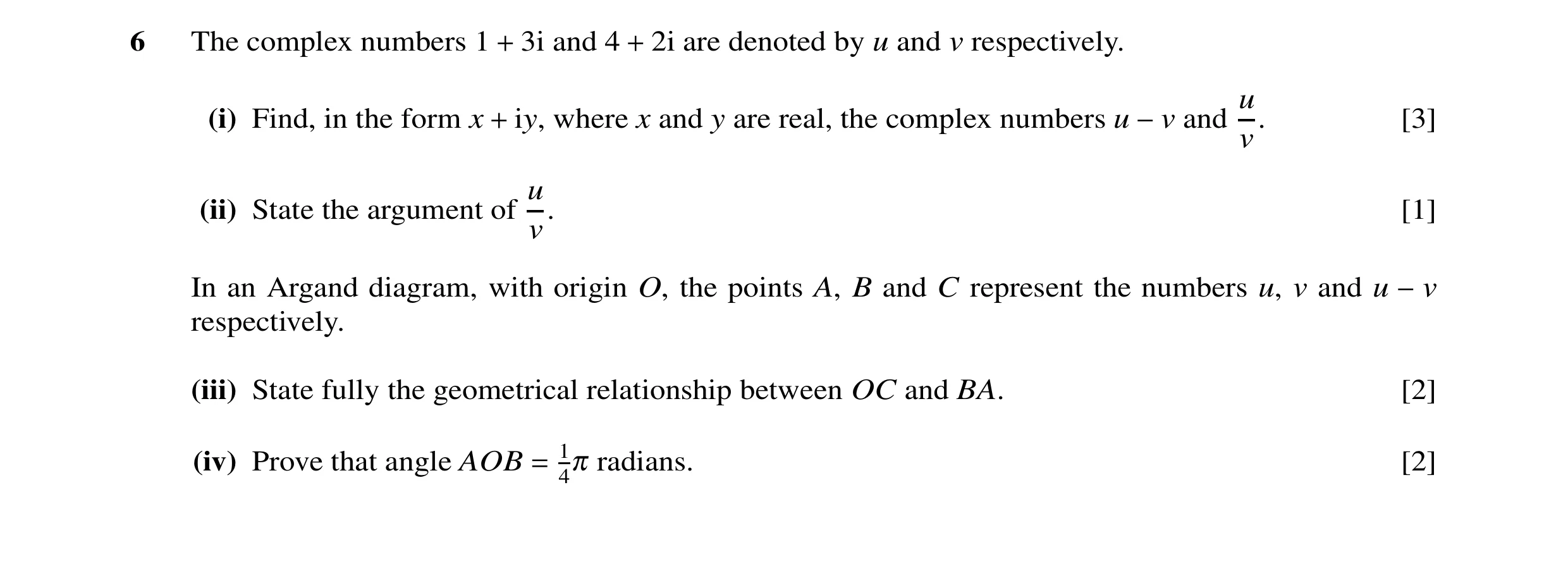
![Question 2: (i) Solve the equation 2 −2i −5 = 0, giving your answers in the form x + iy where x and y are real. [3] (ii) Find the modulus and argument …](https://img.pastlit.com/crops/1dbfac46-832e-4e42-9cf5-84a8cda34c60/q3.webp)
![Question 3: The equation 2x3 + x2 + 25 = 0 has one real root and two complex roots. (i) Verify that 1 + 2i is one of the complex roots. [3] (ii) Write …](https://img.pastlit.com/crops/30dc943a-8456-4af1-900c-c784344d9b37/q7.webp)
![Question 4: −3i 8 (a) The complex number is given by = 1 −2i. (i) Express in the form x + iy, where x and y are real. [2] (ii) Find the modulus and arg…](https://img.pastlit.com/crops/026c7af4-2219-47a8-a5e1-0b697ca91831/q8.webp) 1 / 97
1 / 97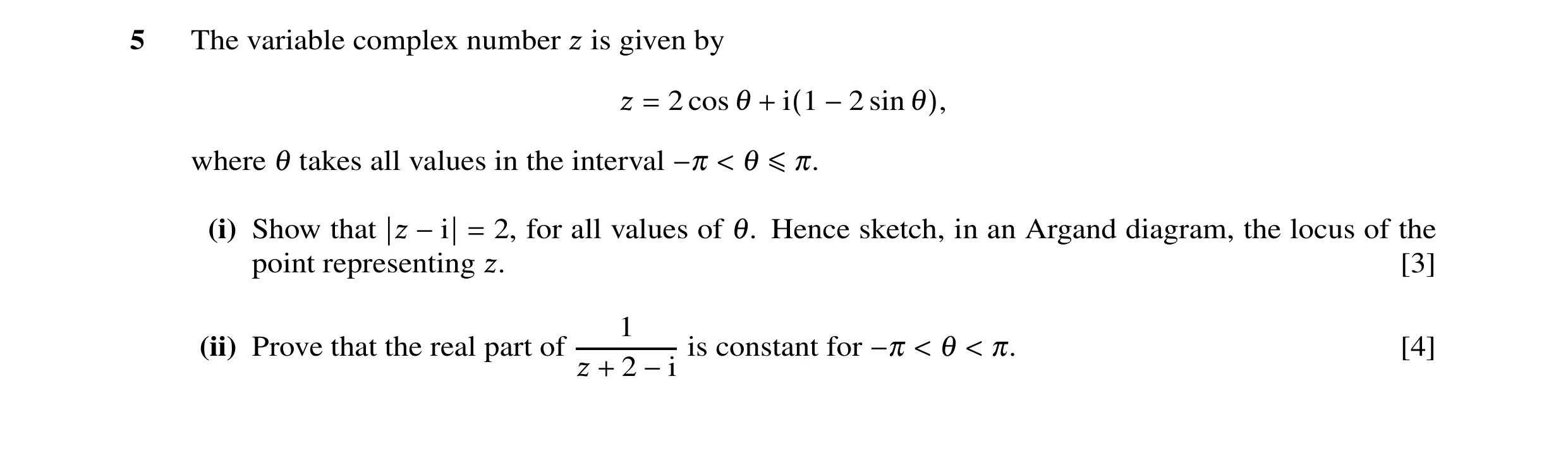
![Question 6: √310 The complex number w is given by w = −1 + i . 2 2 (i) Find the modulus and argument of w. [2] (ii) The complex number has modulus R an…](https://img.pastlit.com/crops/50741b57-4b57-4e85-9f09-4497a8622d84/q10.webp)
![Question 7: (i) Solve the equation 0, giving your answers in the form x iy, where x and y ß2 + (2 √3)iß −4 = + are real. [3] (ii) Sketch an Argand diag…](https://img.pastlit.com/crops/263107bd-183f-434a-983a-7974f9768e0e/q7.webp)
![Question 8: The complex number i is denoted by u. −2 + (i) Given that u is a root of the equation x3 0, where k is real, find the value of k. [3] −11x −…](https://img.pastlit.com/crops/2a04340e-e118-4900-bca2-4404ab2fc10d/q7.webp) 2 / 97
2 / 97![Question 9: The complex numbers i and 3 i are denoted by u and v respectively. −2 + + (i) Find, in the form x iy, the complex numbers + (a) u v, [1] + …](https://img.pastlit.com/crops/35d6677e-6411-4197-a9e1-6e07a41ed3f7/q7.webp)
![Question 10: The complex number 2 2i is denoted by u. + (i) Find the modulus and argument of u. [2] (ii) Sketch an Argand diagram showing the points rep…](https://img.pastlit.com/crops/e436ecdb-8004-4507-8bb3-da1f1234f122/q7.webp)
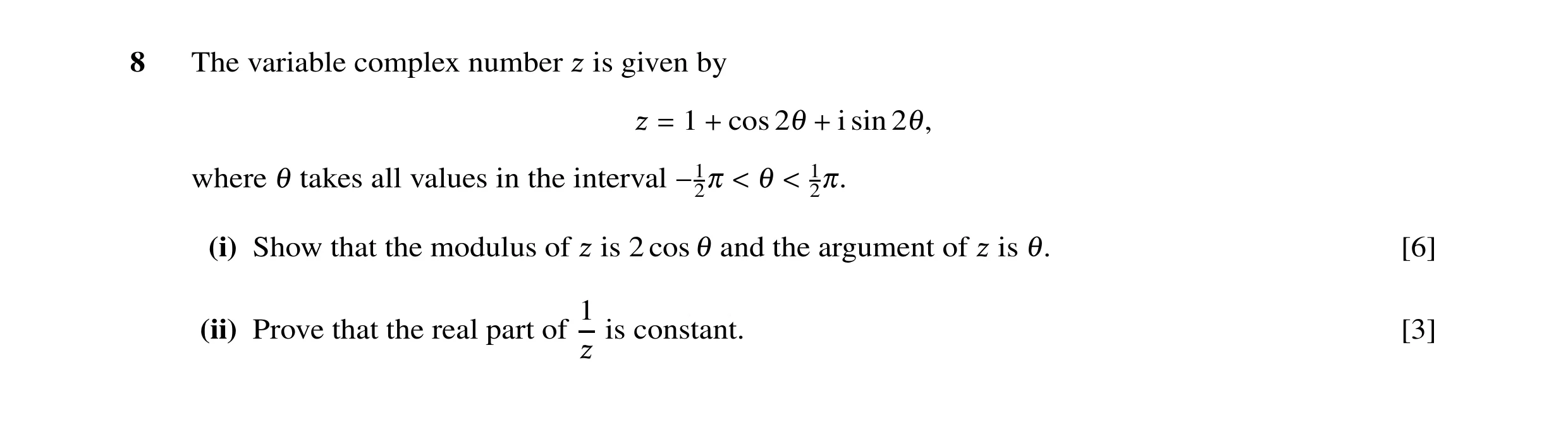
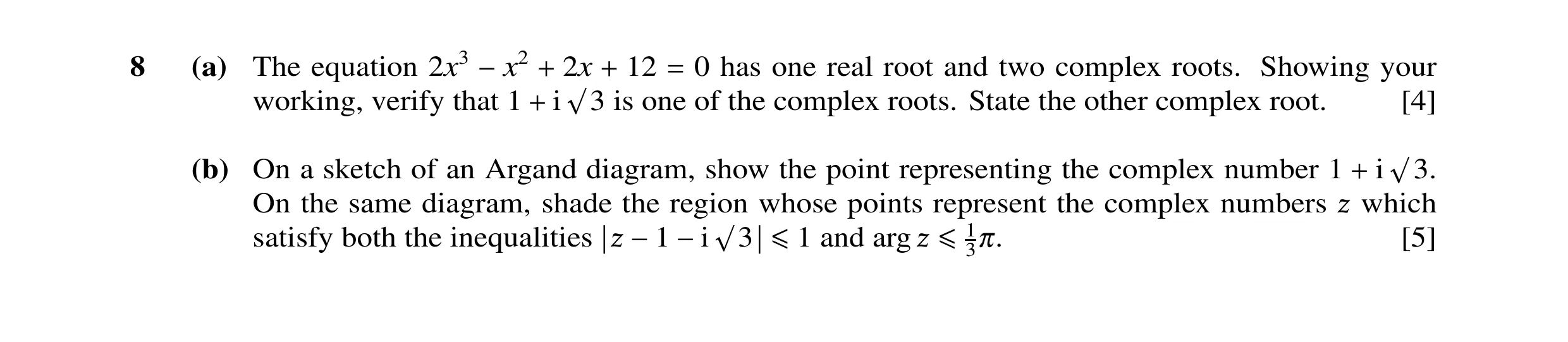 3 / 97
![Question 13: The complex number is given by ß i. ß = (√3) + (i) Find the modulus and argument of [2] ß. (ii) The complex conjugate of is denoted by Show…](https://img.pastlit.com/crops/ed54a6ac-ac76-4a16-95e7-9bc8d4a671b9/q6.webp)
![Question 14: The complex number is given by ß i. ß = (√3) + (i) Find the modulus and argument of [2] ß. (ii) The complex conjugate of is denoted by Show…](https://img.pastlit.com/crops/658e5349-2f08-4903-881d-6443720f3016/q6.webp)
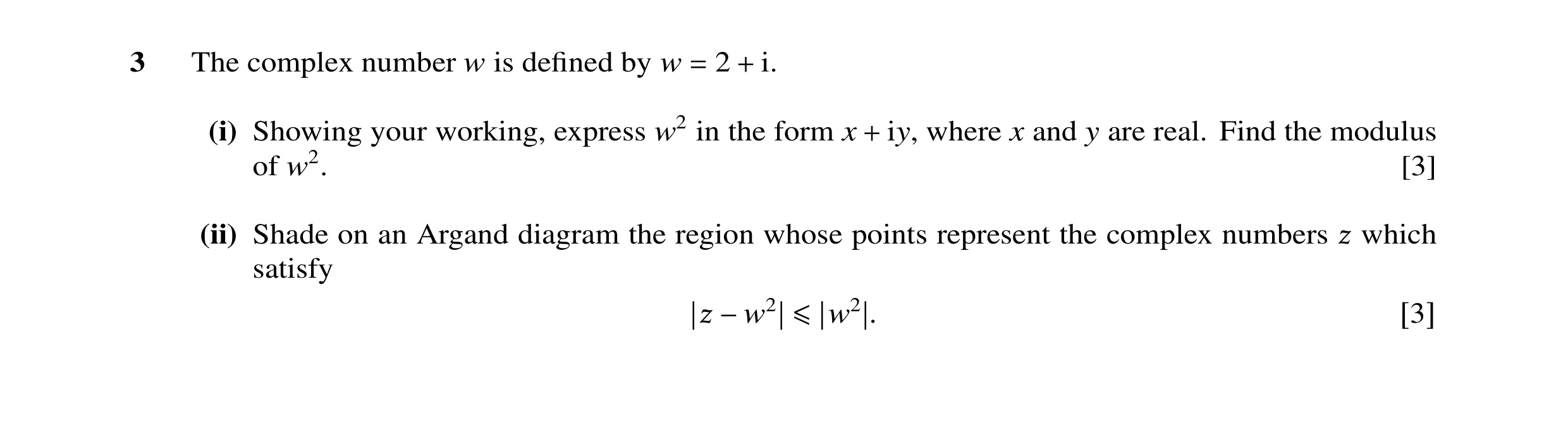 4 / 97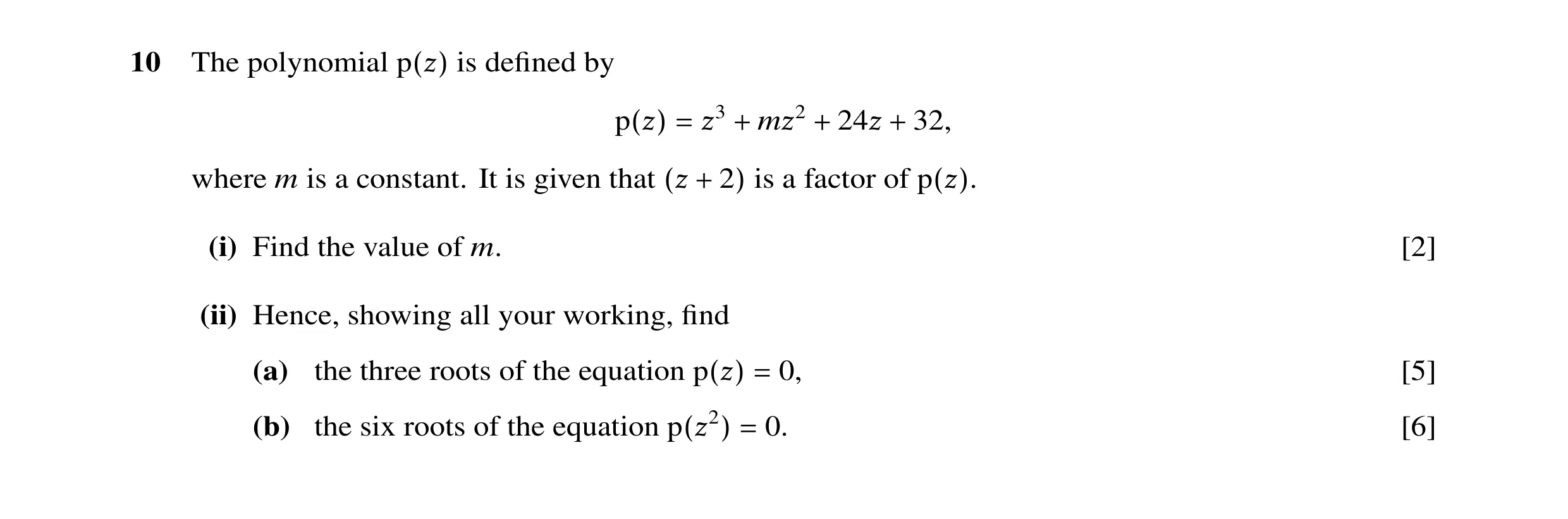
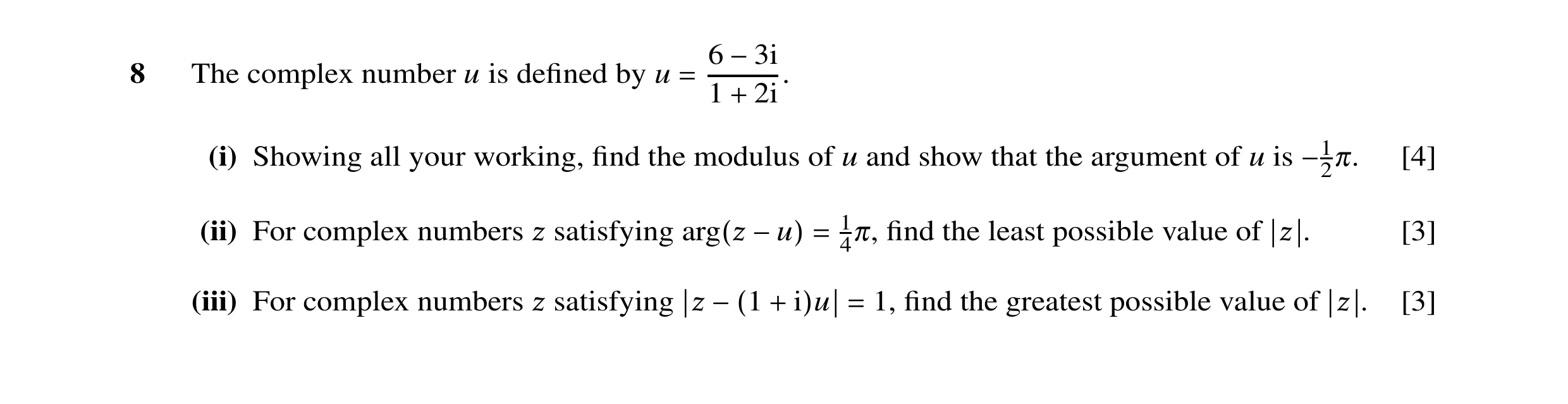
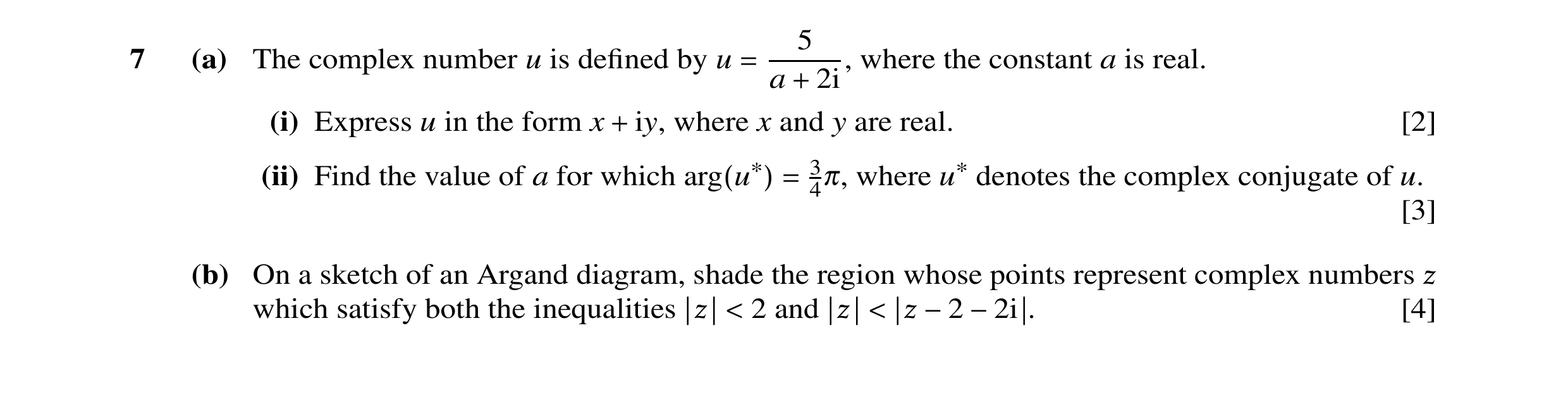
![Question 19: (i) Find the roots of the equation 4 0, ß2 + (2p3)ß + = giving your answers in the form x iy, where x and y are real. [2] + (ii) State the …](https://img.pastlit.com/crops/50a6e2eb-2210-417d-aea4-dc687ba5c505/q7.webp) 5 / 97
5 / 97

![Question 22: The complex number w is defined by w i. = −1 + (i) Find the modulus and argument of w2 and w3, showing your working. [4] (ii) The points in …](https://img.pastlit.com/crops/469cb031-d93e-4f67-9e43-0bbc0497efc3/q6.webp)
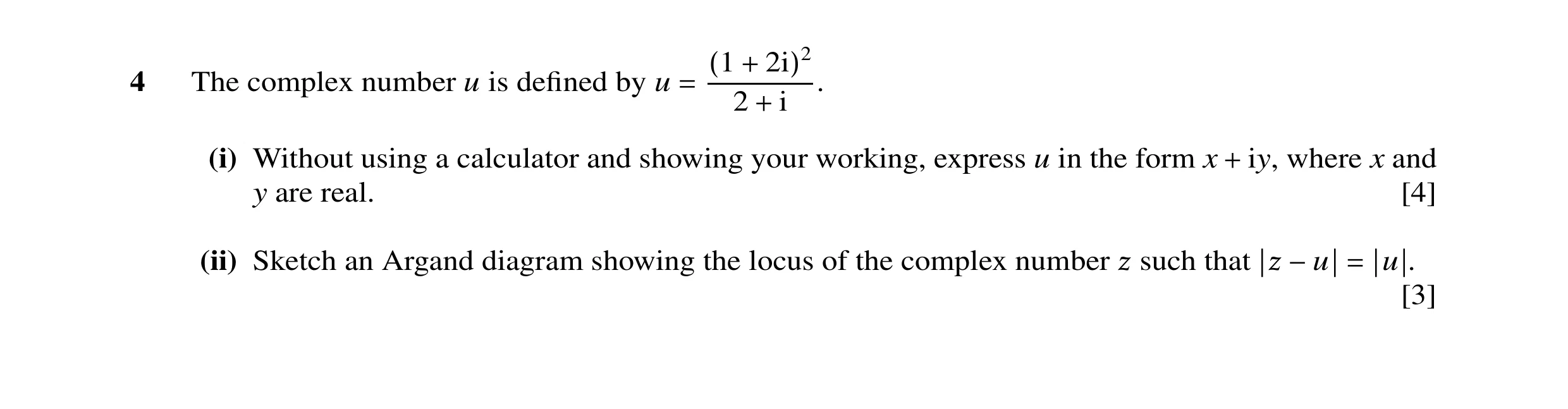
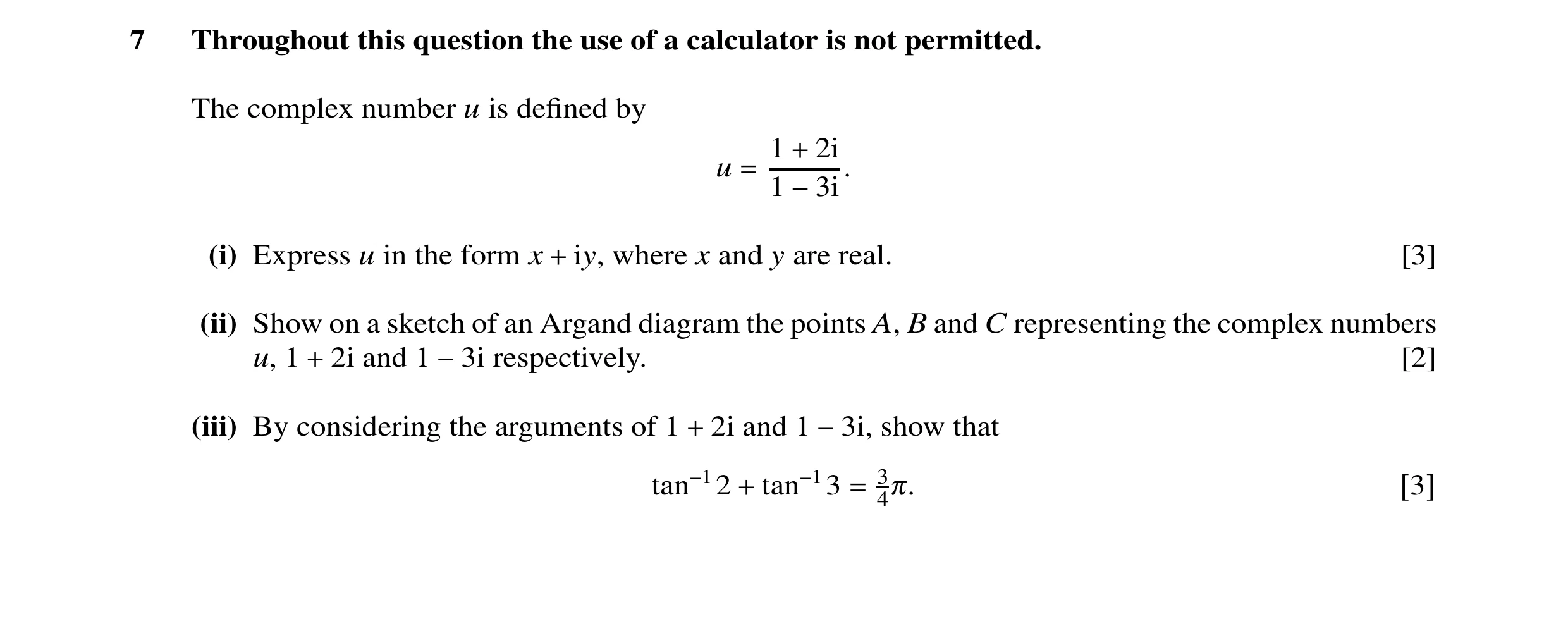 6 / 97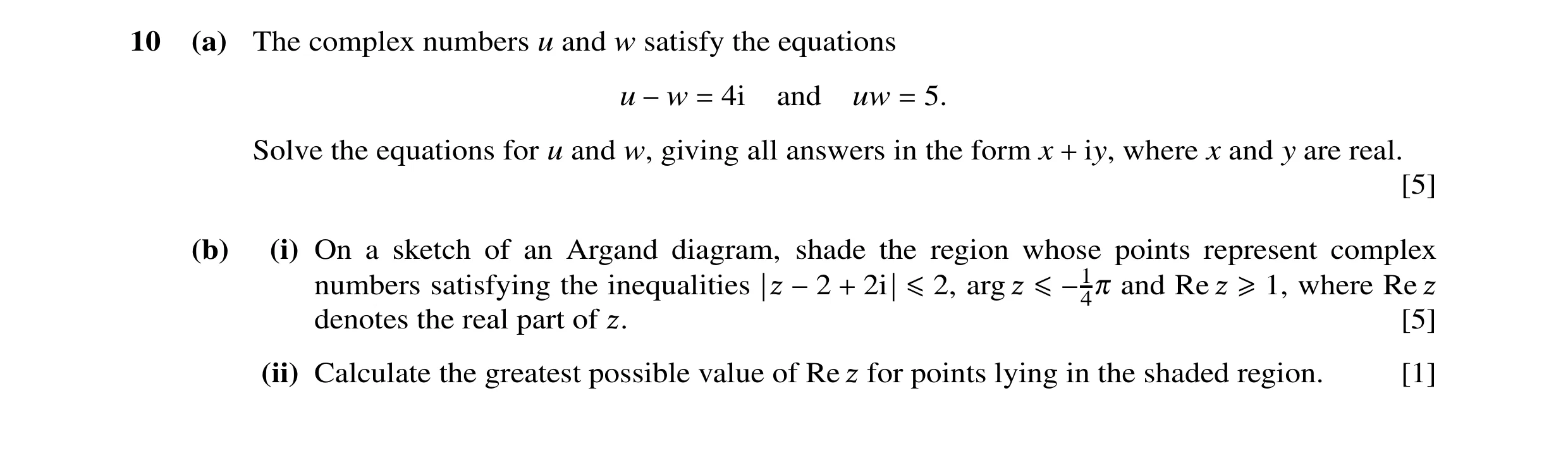
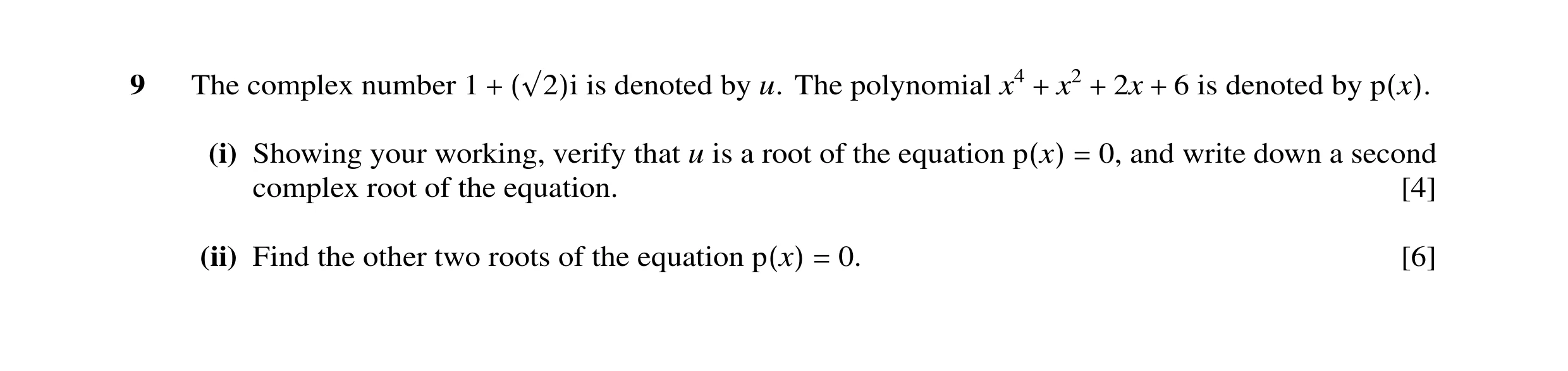
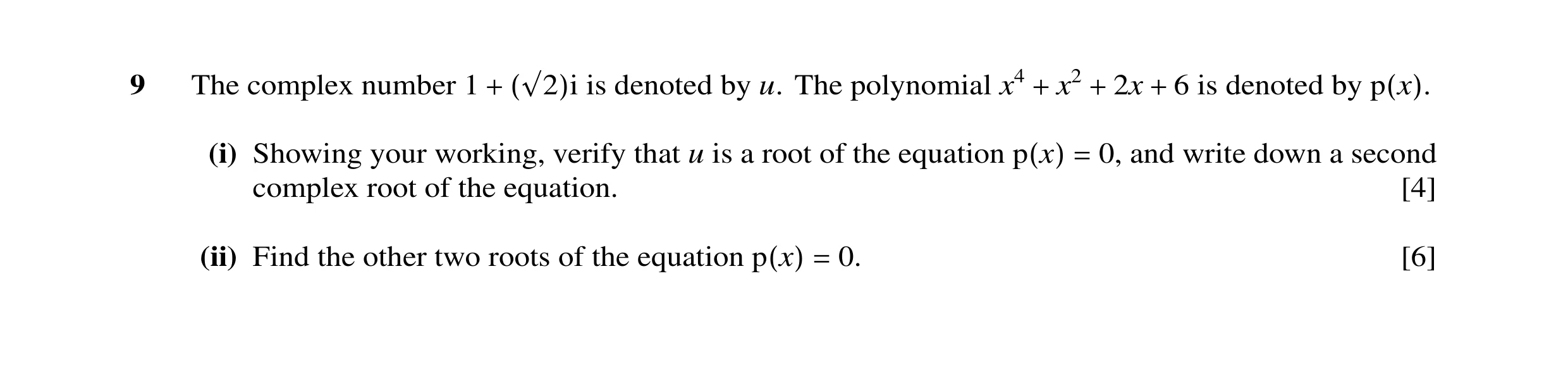
![Question 28: (a) Without using a calculator, solve the equation iw2 [3] = (2 −2i)2. (b) (i) Sketch an Argand diagram showing the region R consisting of …](https://img.pastlit.com/crops/12ace9eb-a4ff-499b-8558-db01d79e8850/q10.webp) 7 / 97
7 / 97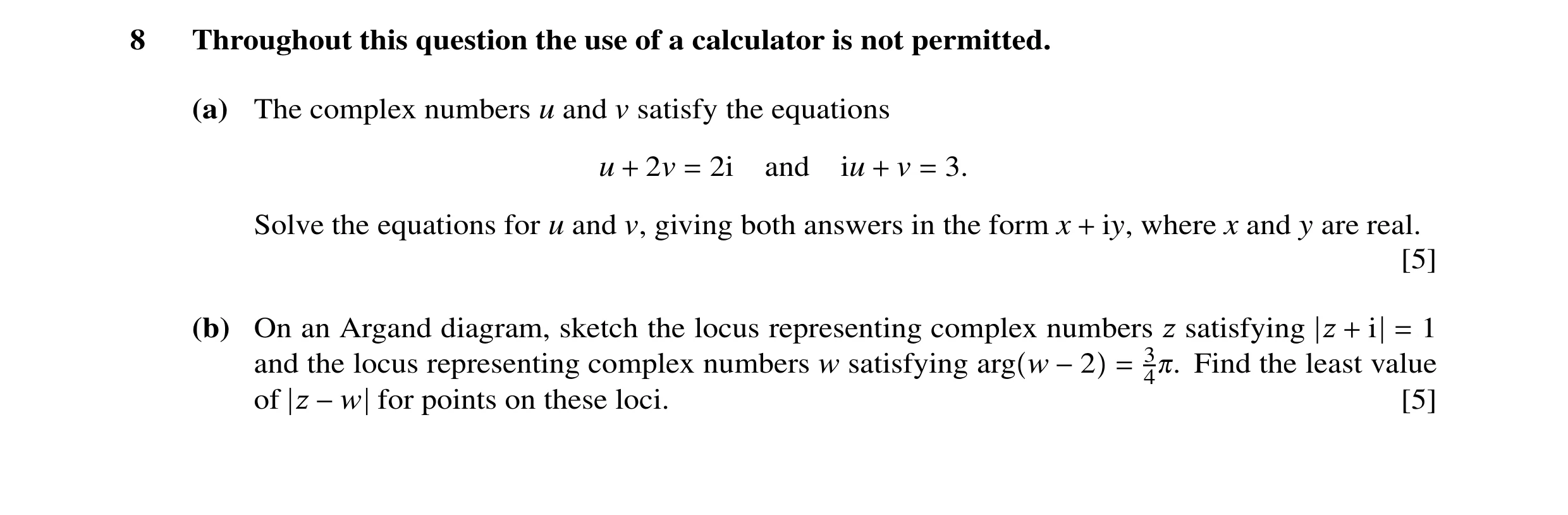
![Question 30: i 5 The complex number is defined by . Find, showing all your working, 9ï3 + Ï Ï = ï3 −i (i) an expression for 0 and [5] Ï in the form rei1,…](https://img.pastlit.com/crops/d9a053ad-812c-4d08-9ad9-ffb7dbffdf74/q5.webp)

![Question 32: (a) The complex number −5i is denoted by u. Showing your working, express u in the form 1 4i + x iy, where x and y are real. [3] + (b) (i) …](https://img.pastlit.com/crops/3a035b50-234c-4e90-b043-b03b312d58c7/q7.webp)
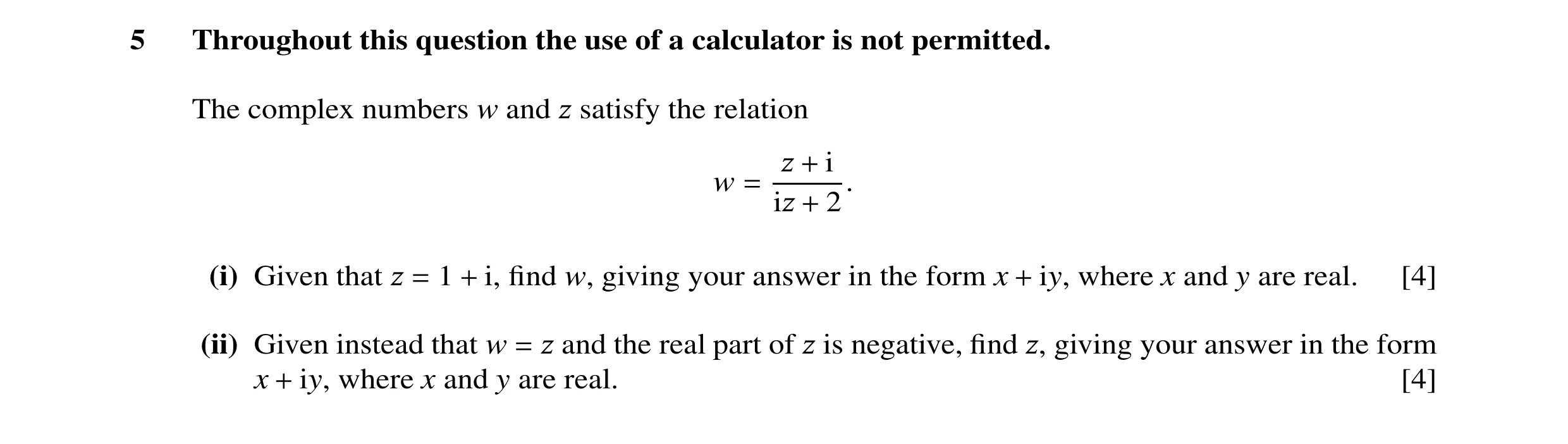 8 / 97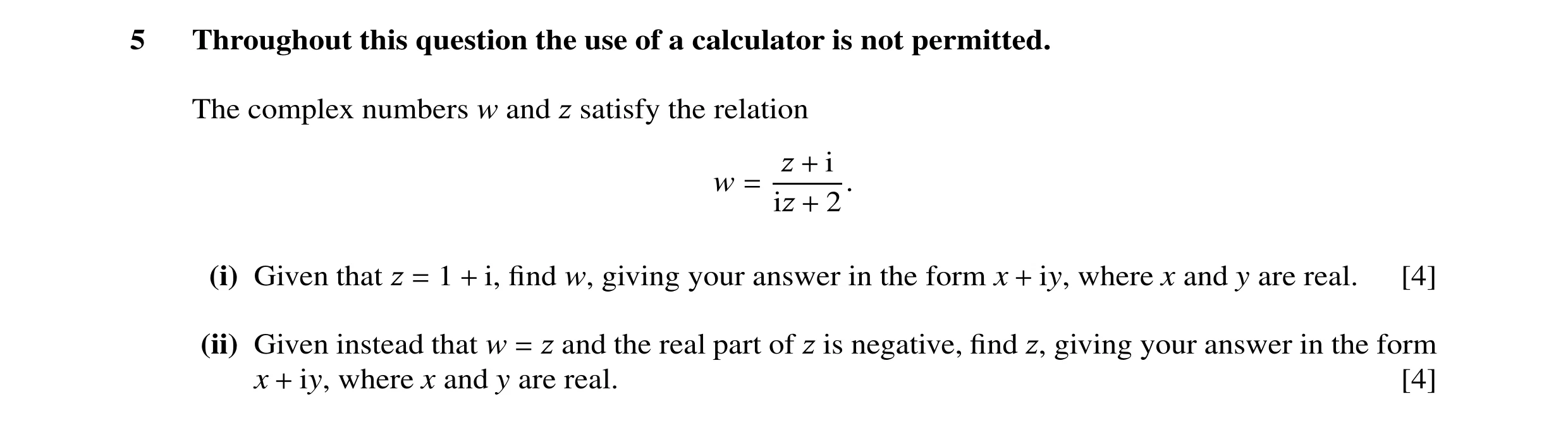
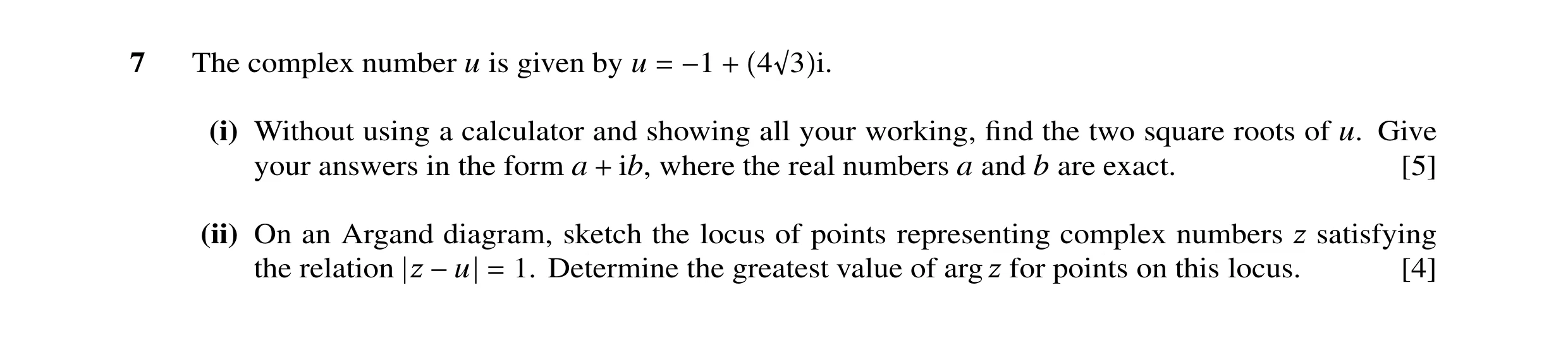
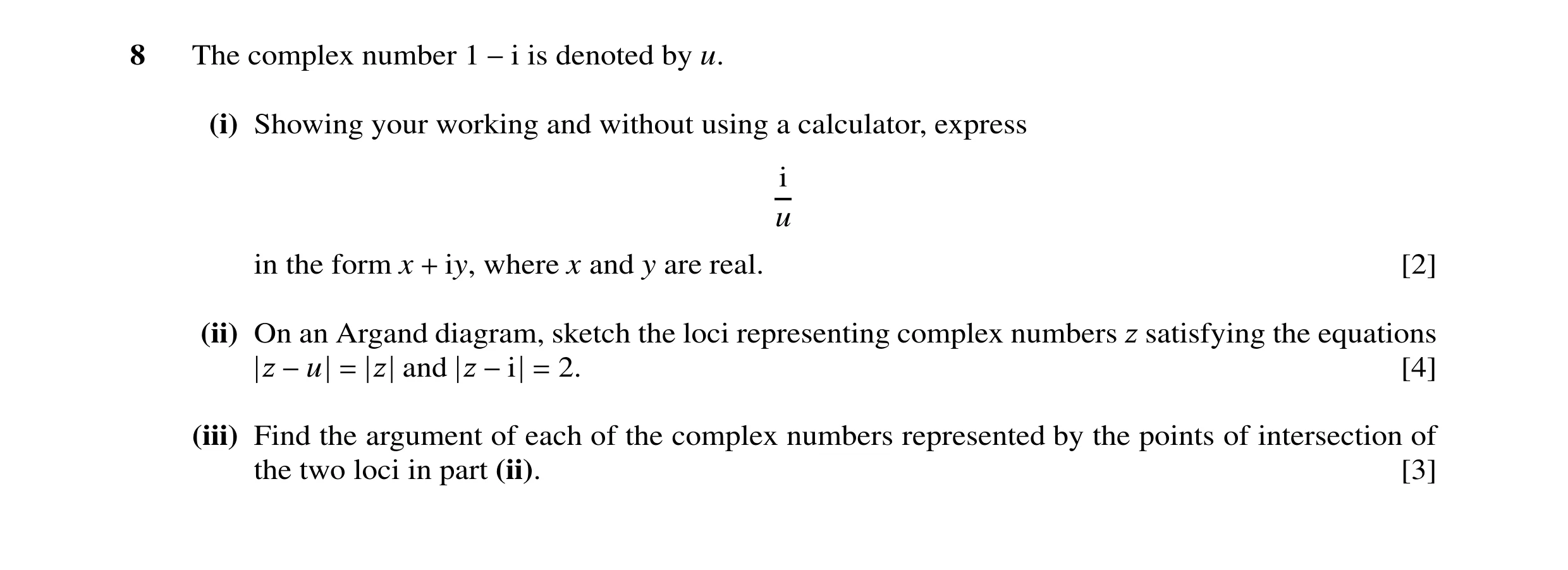
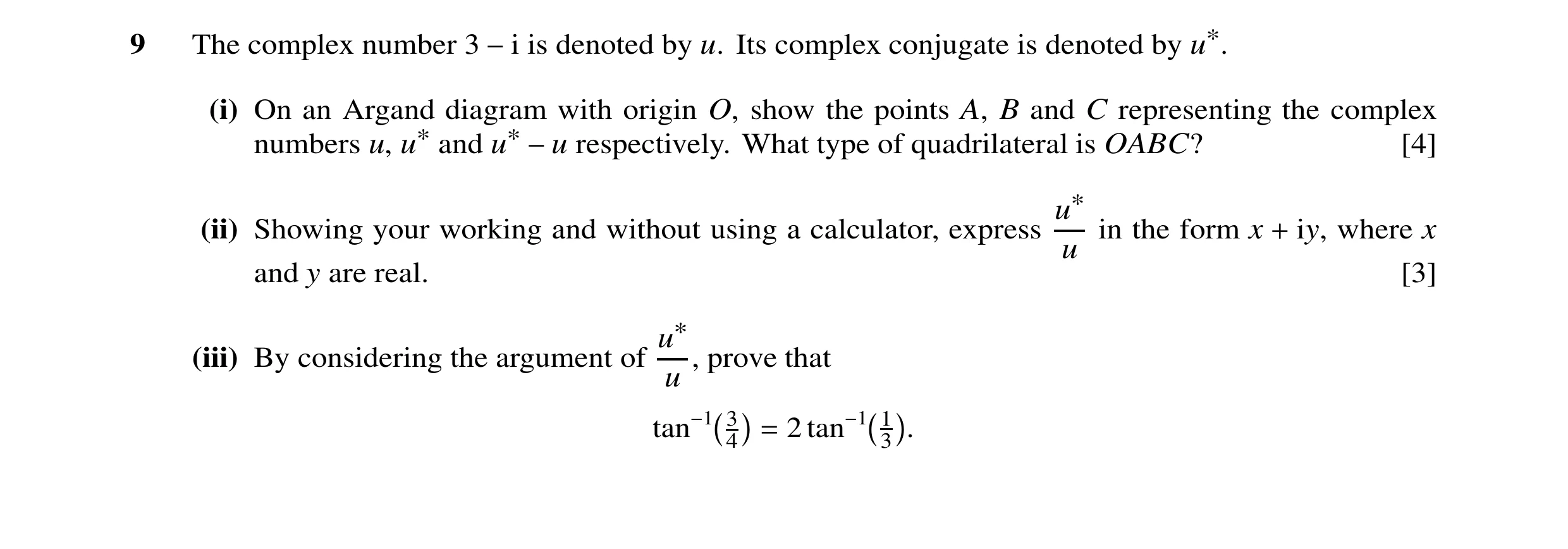 9 / 97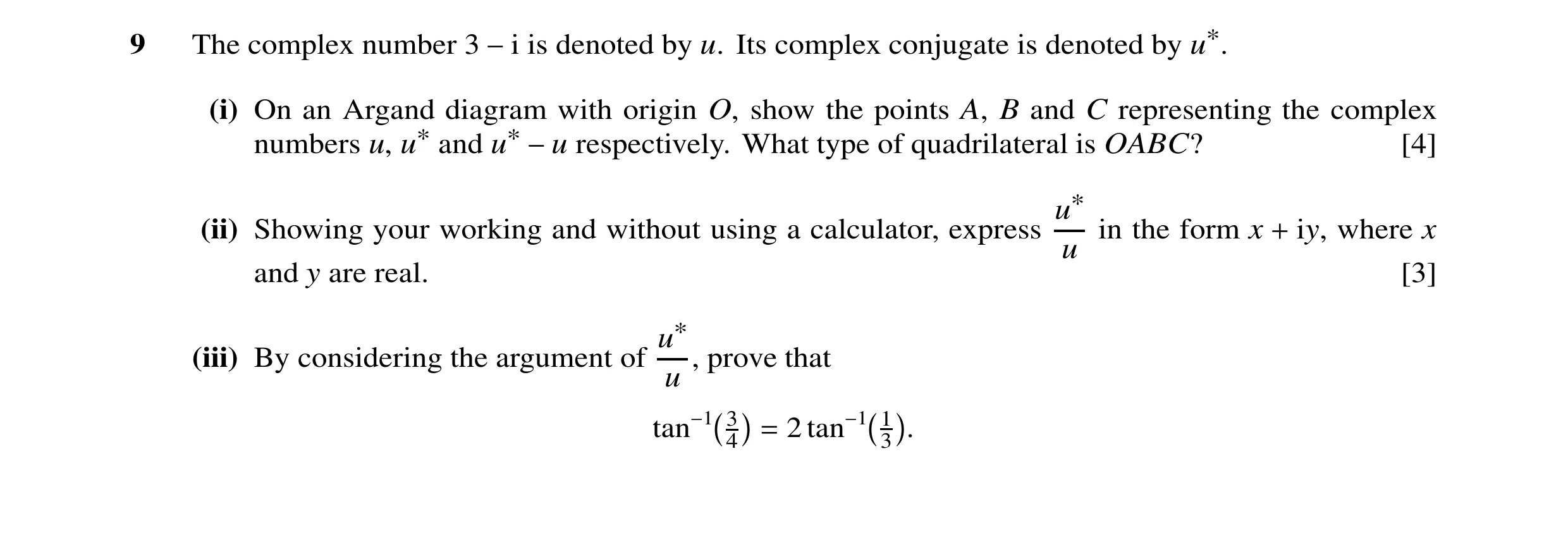
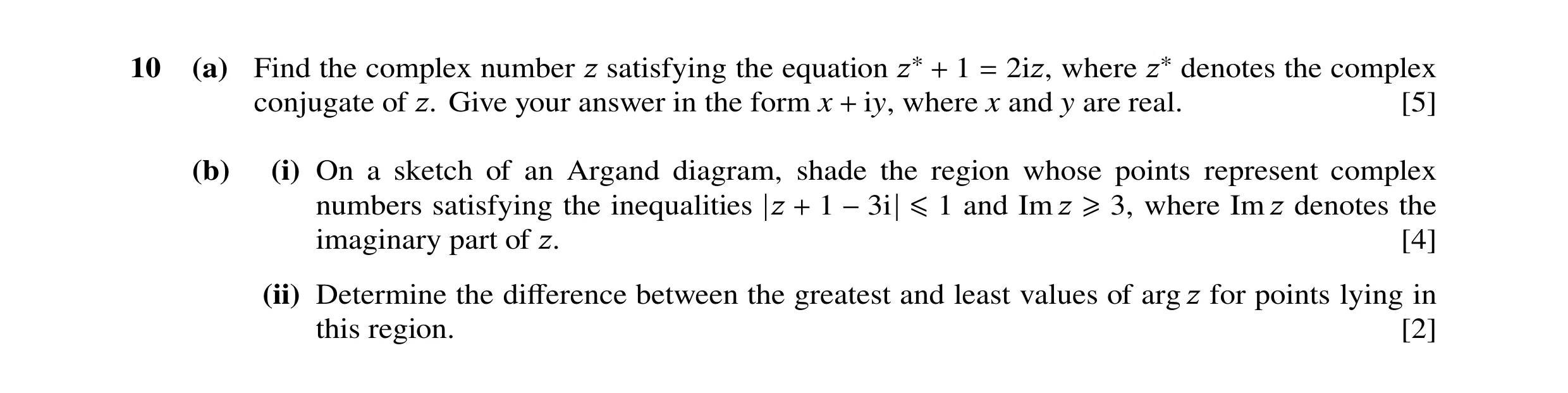
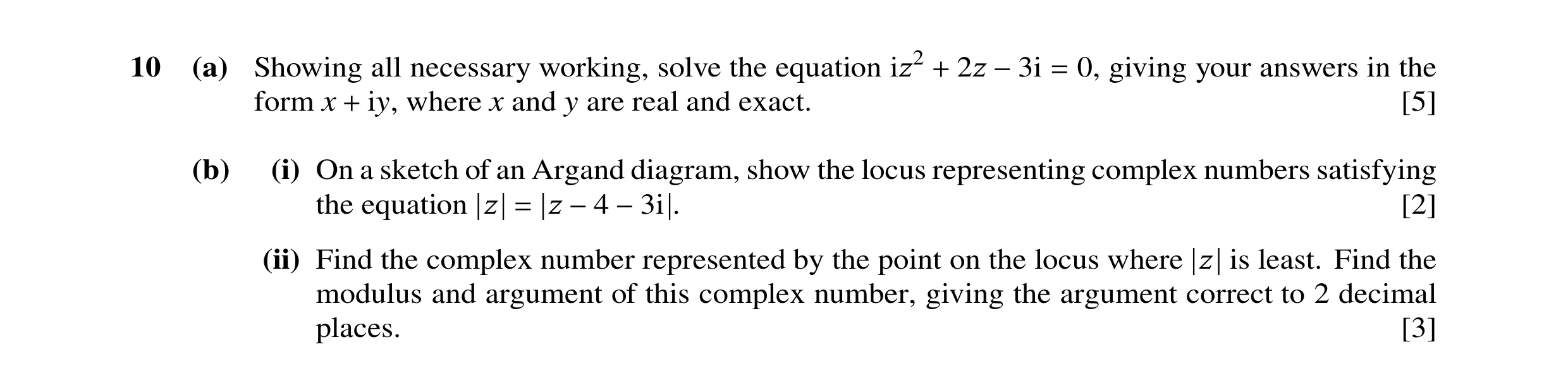
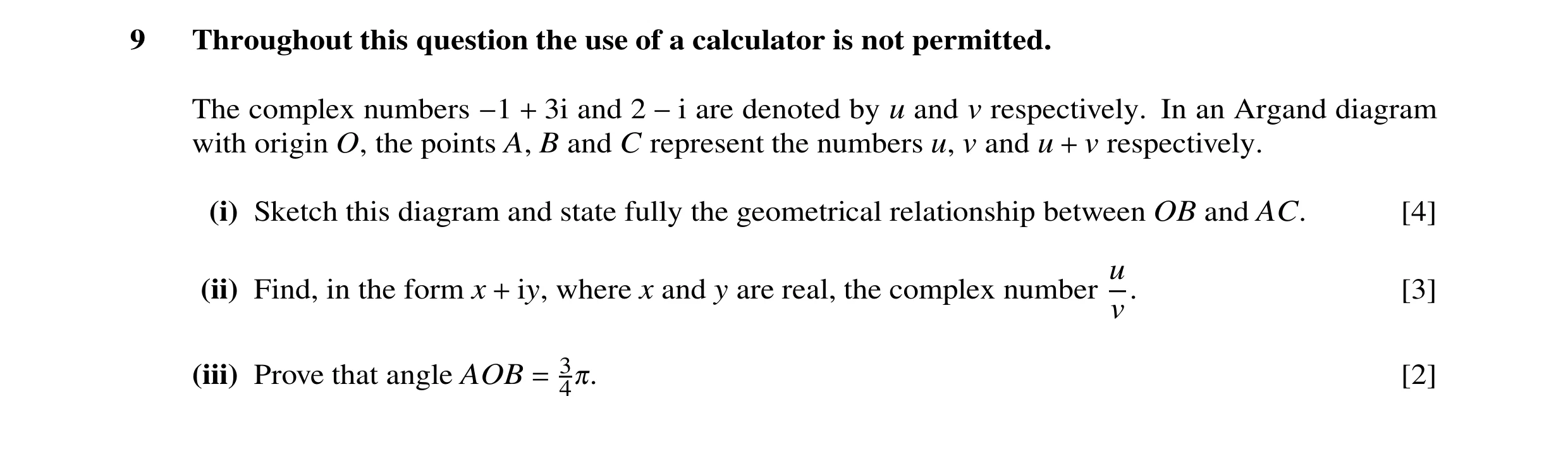 10 / 97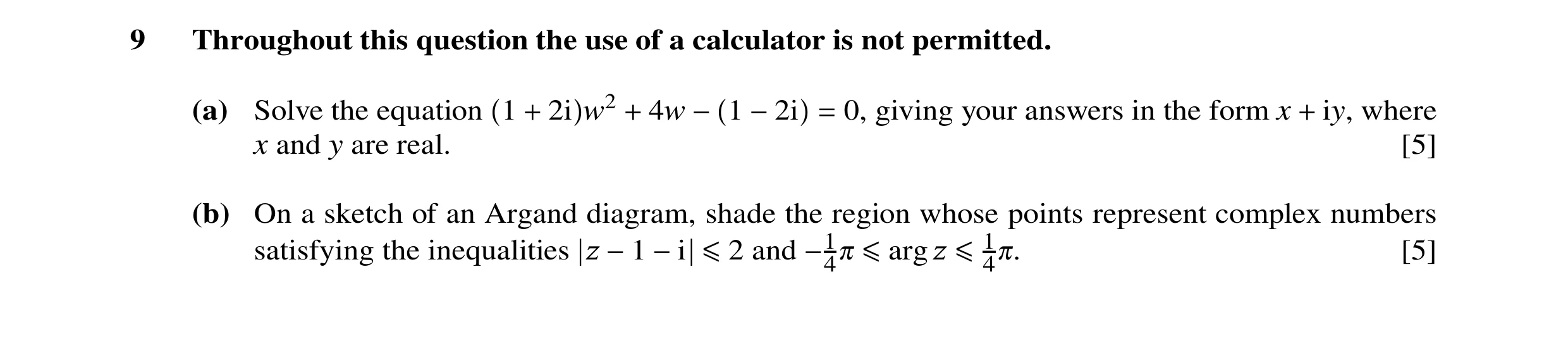
 11 / 97
 14 / 97
 15 / 97
![Question 50: (a) Find the complex number z satisfying the equation 3z 1 5i, −iz* = + where z* denotes the complex conjugate of z. [4] ..................…](https://img.pastlit.com/crops/30e4a639-f62d-48be-bef3-66259ea80d86/q9.webp)
 30 / 97
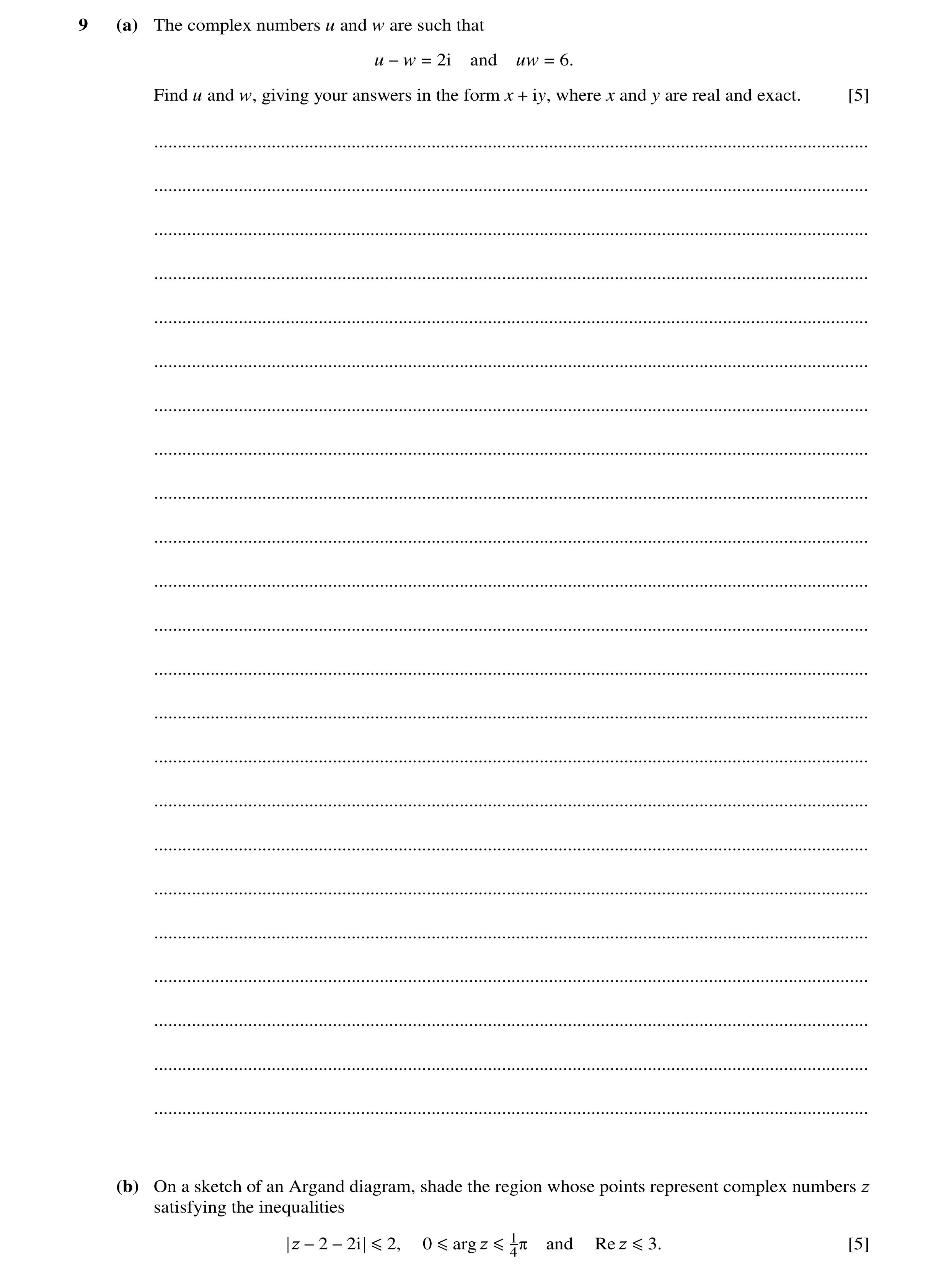 37 / 97
 38 / 97
![Question 62: (a) Verify that −1 + 5i is a root of the equation 2x3 + x2 + 6x −18 = 0. [3] ..............................................................…](https://img.pastlit.com/crops/3a02ee54-c531-4ca9-8b0d-9fddb6de09ae/q7.webp)
![Question 63: The complex number u is defined by 7 i u + = 1 −i. (a) Express u in the form x iy, where x and y are real. [3] + ...........................…](https://img.pastlit.com/crops/aeabdbf6-055e-47fb-8005-bf3dee3c6855/q6.webp)
 41 / 97
![Question 65: (a) Verify that −1 + 5i is a root of the equation 2x3 + x2 + 6x −18 = 0. [3] ..............................................................…](https://img.pastlit.com/crops/8cdb5860-55d7-42a4-a880-5c07b9f5ec08/q7.webp)
![Question 66: The complex numbers u and v are defined by u 2i and v 3 i. = −4 + = + u (a) Find in the form x iy, where x and y are real. [3] v + .........…](https://img.pastlit.com/crops/a47490d4-2781-4a7d-9cf7-9e09686e82ba/q8.webp)
![Question 67: (a) Solve the equation z2 0, where p and q are real constants. [2] −2piz −q = .............................................................…](https://img.pastlit.com/crops/bdf04a7f-20ca-4000-bf61-1940968c5b80/q5.webp)
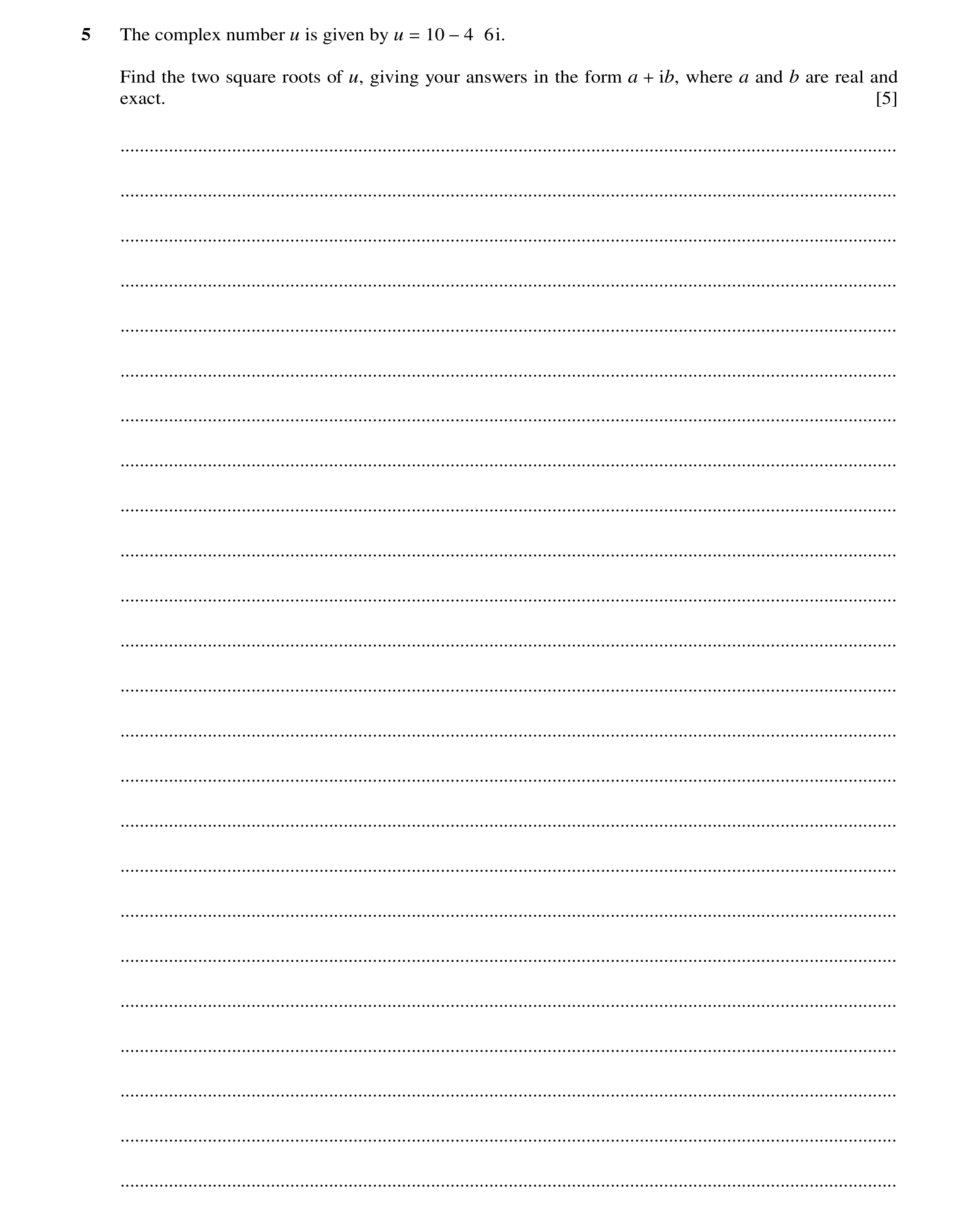 47 / 97
![Question 69: (a) Verify that 2i is a root of the equation z4 3z2 2z 12 0. [3] −1 + + + + = .............................................................…](https://img.pastlit.com/crops/cef3f7d8-37af-4008-921a-6329799f081a/q10.webp)
![Question 70: (a) On a sketch of an Argand diagram, shade the region whose points represent complex numbers z satisfying the inequalities z and Imz [4] −…](https://img.pastlit.com/crops/c694a642-2dba-4c8d-8dcc-a02633c52944/q5.webp)
![Question 71: On a sketch of an Argand diagram, shade the region whose points represent complex numbers z satisfying the inequalities z 2 and arg z [4] +…](https://img.pastlit.com/crops/ef254321-79cb-4b49-ba72-69cbbac5b209/q2.webp) 50 / 97
50 / 97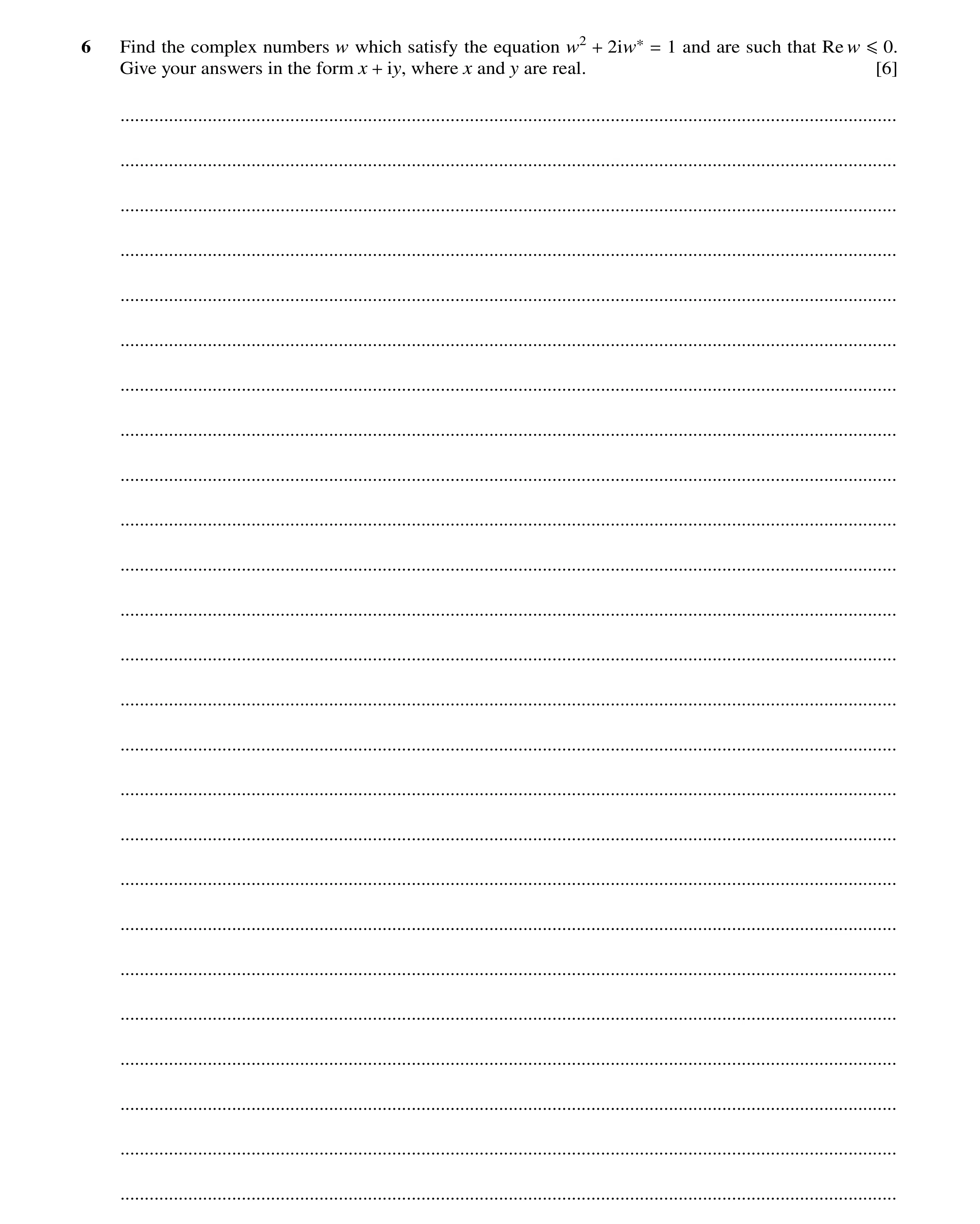 51 / 97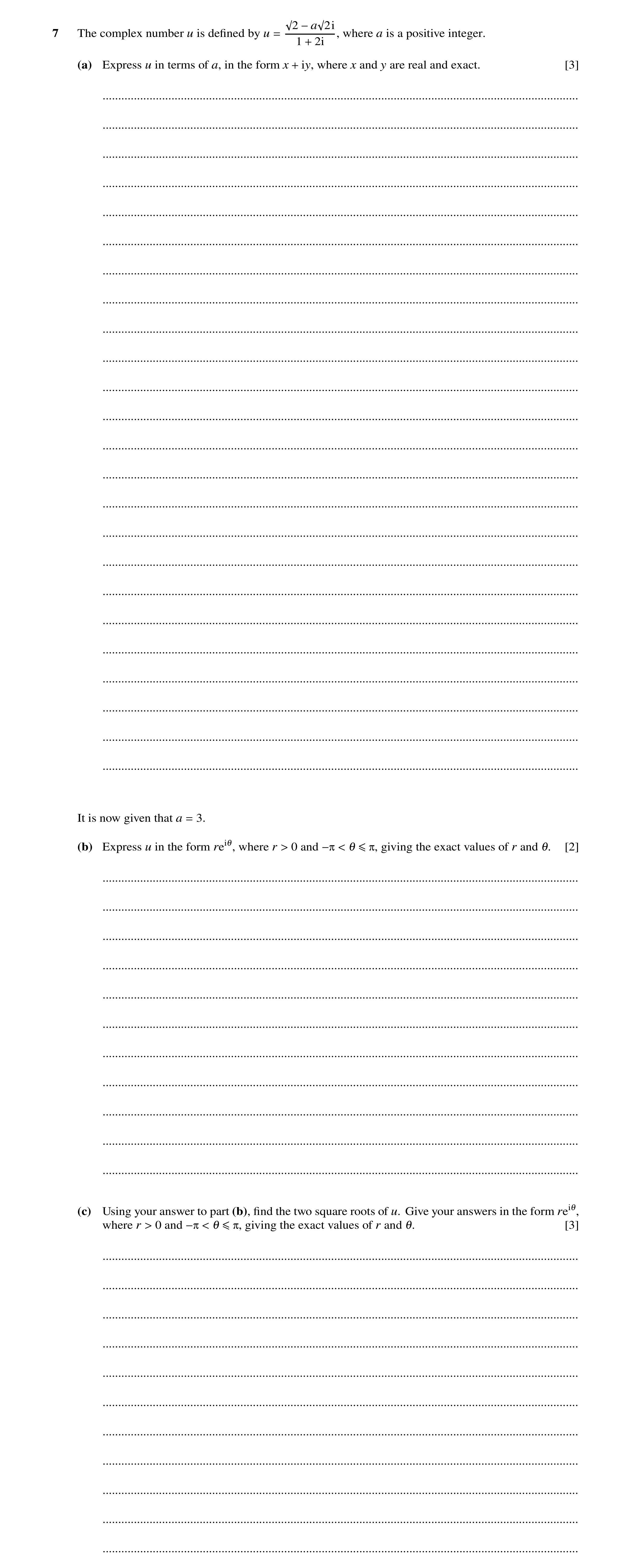
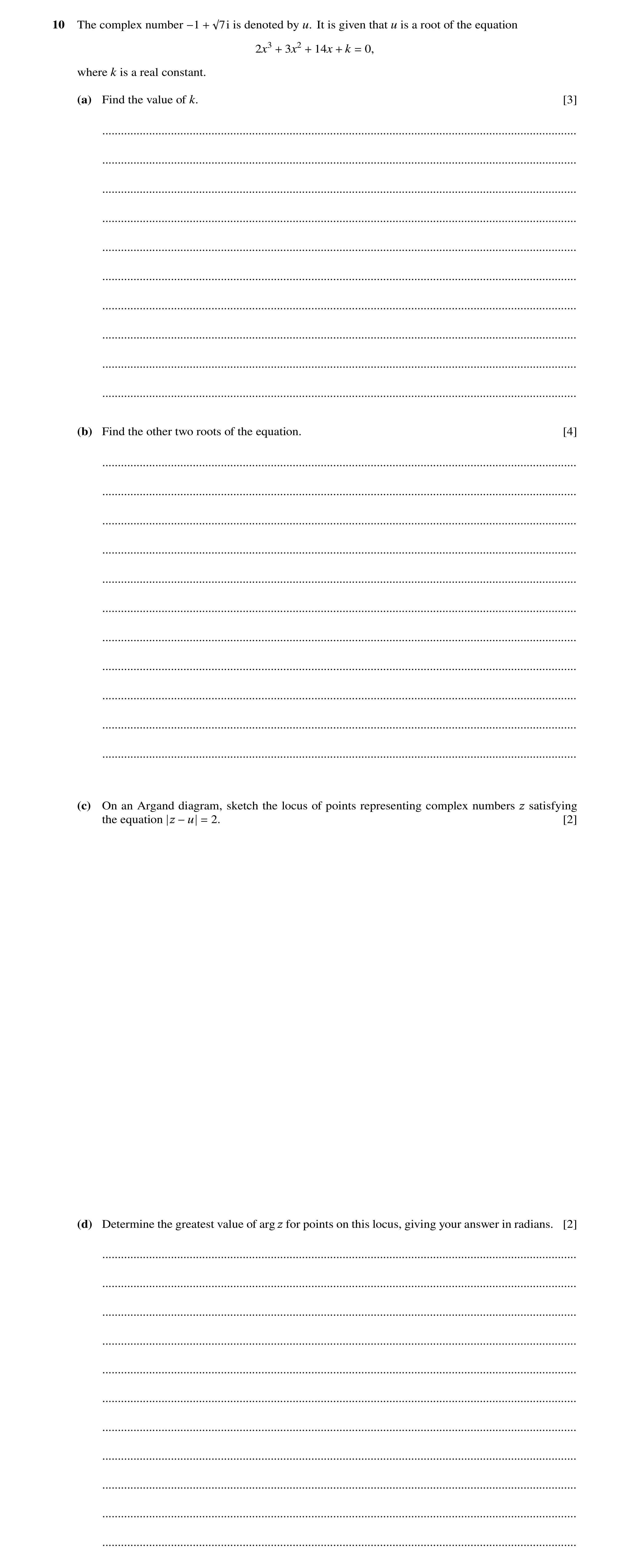
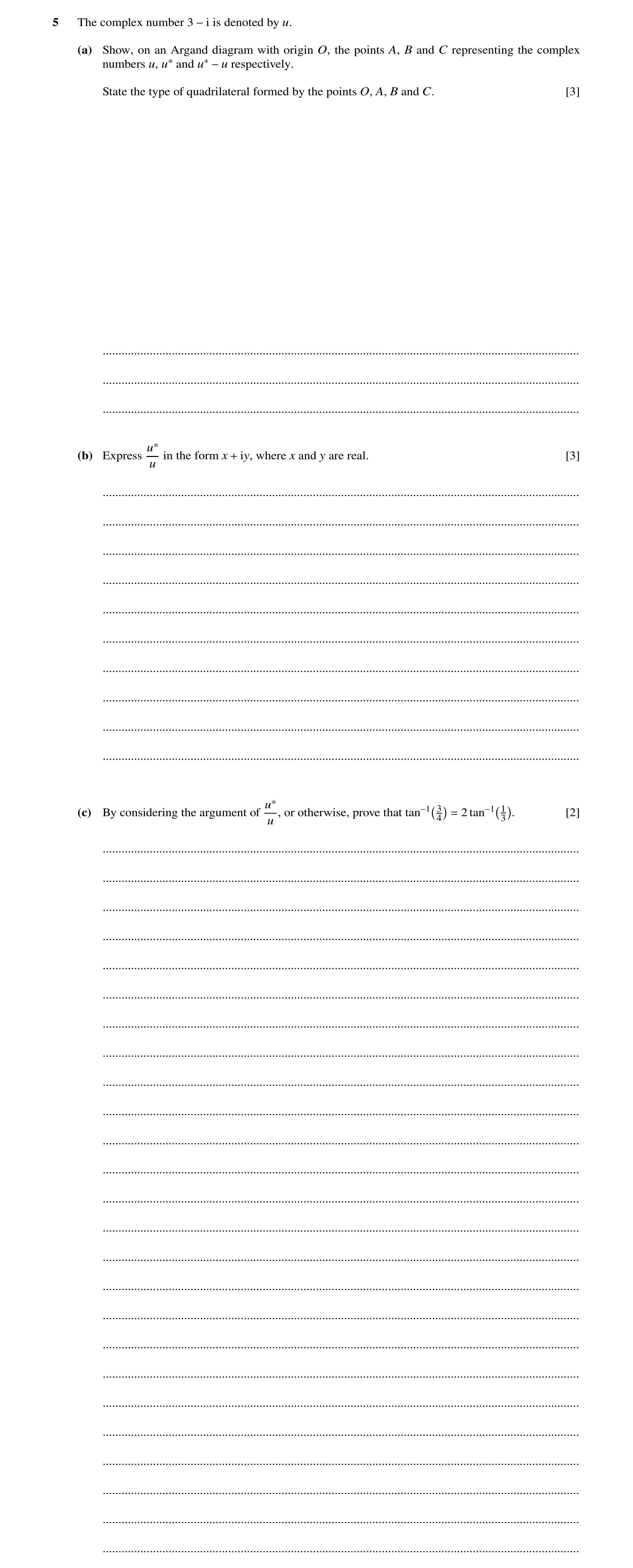
 57 / 97
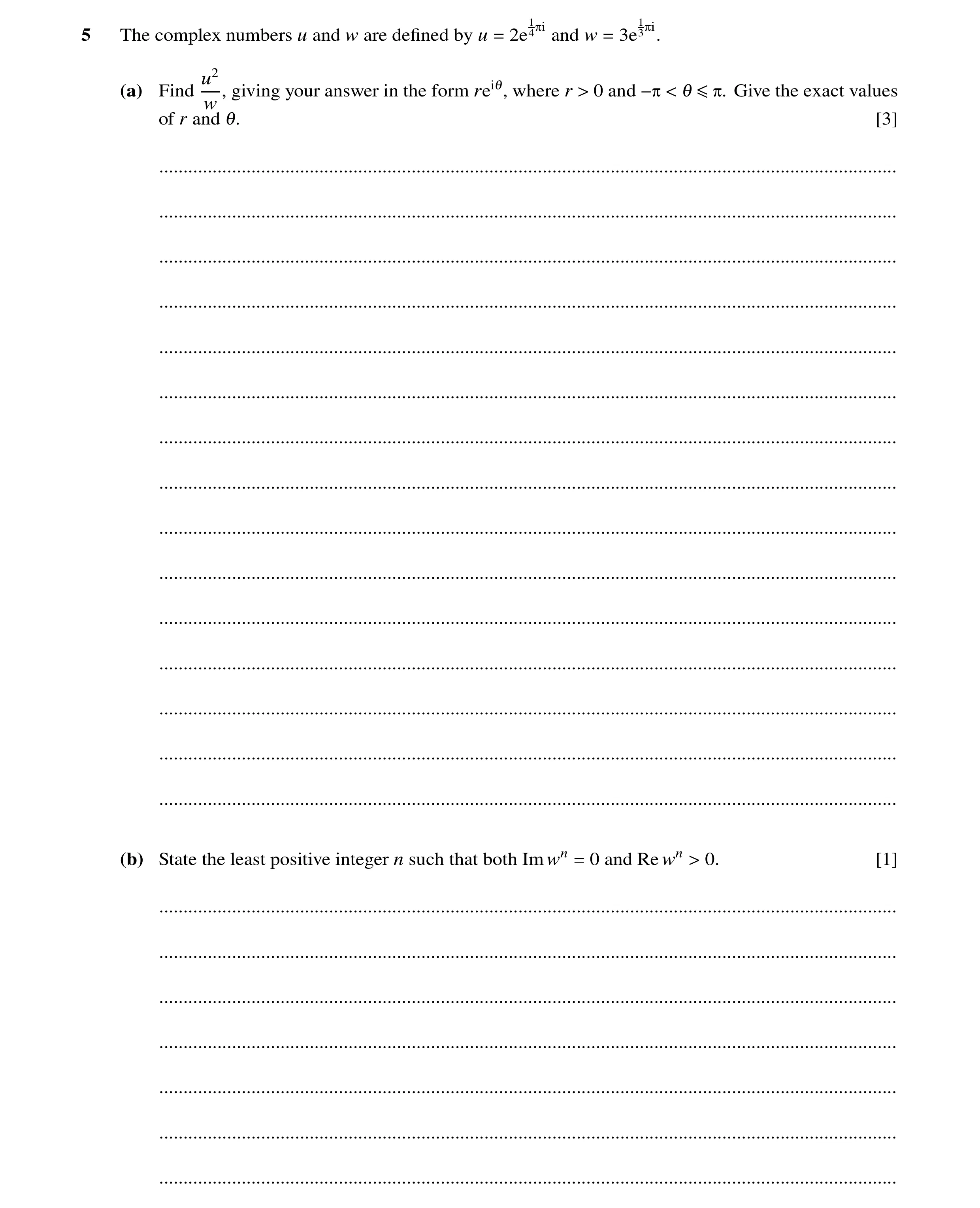 58 / 97
![Question 78: (a) Solve the equation z2 0, giving the answers in the form x iy, where x and y are real −6iz −12 = + and exact. [3] ......................…](https://img.pastlit.com/crops/cfb978e4-3108-476f-a337-9938d58f15cb/q5.webp)
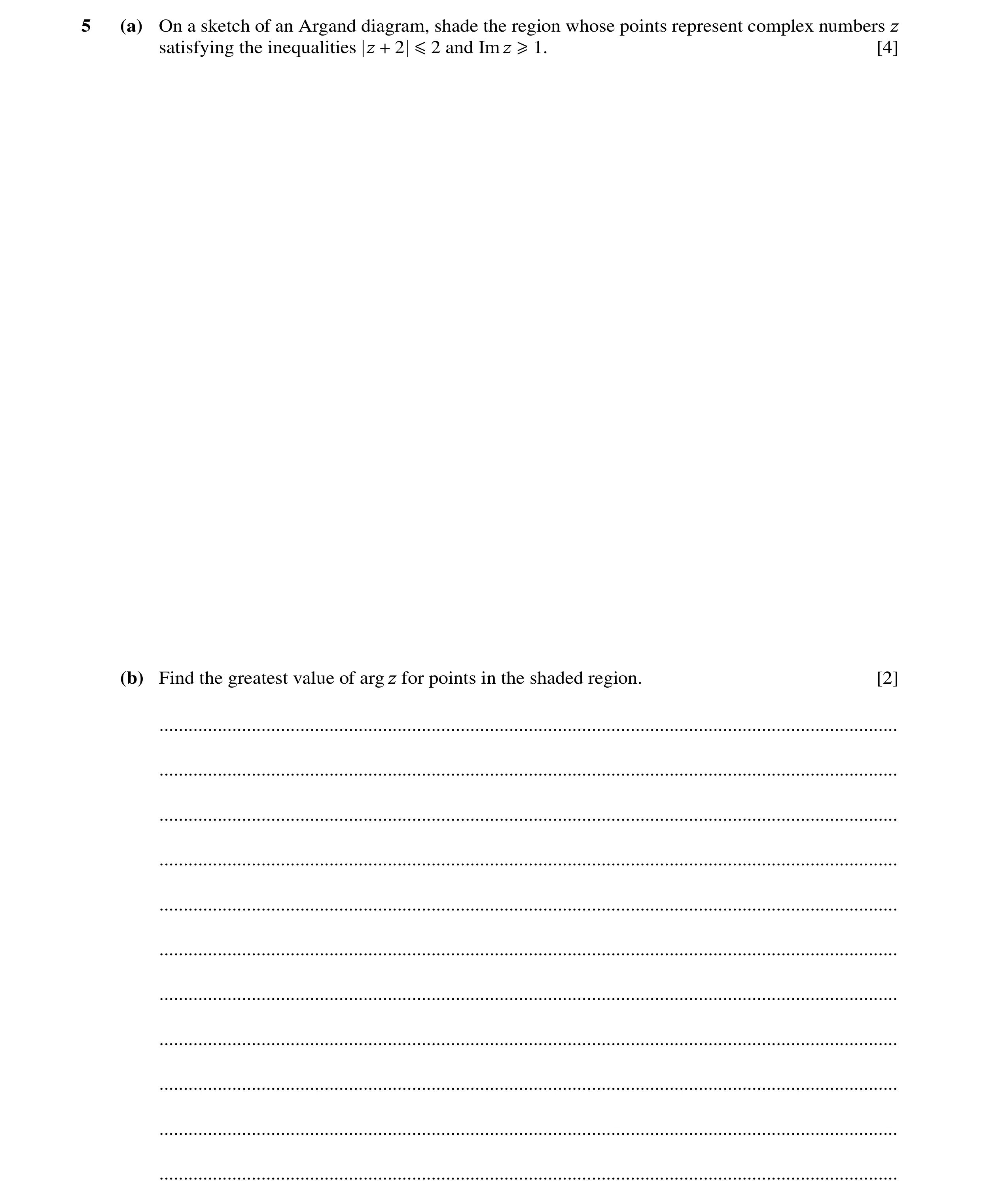 61 / 97
![Question 80: Solve the equation 5z 30 10i 0, 1 2i −zz* + + = + giving your answers in the form x iy, where x and y are real. [5] + .....................…](https://img.pastlit.com/crops/bb6485f4-1538-41d1-8528-3f3a34cb794d/q4.webp) 62 / 97
62 / 97![Question 81: (a) On an Argand diagram, sketch the locus of points representing complex numbers z satisfying z 3 2. [2] + −2i = (b) Find the least value …](https://img.pastlit.com/crops/37e733e0-89b7-496d-830e-a720f434c92d/q3.webp)
![Question 82: On a sketch of an Argand diagram, shade the region whose points represent complex numbers z satisfying the inequalities z and z z . [4] −3 …](https://img.pastlit.com/crops/5d96cc8c-39fa-45a2-9b76-113321d10ffc/q3.webp) 63 / 97
63 / 97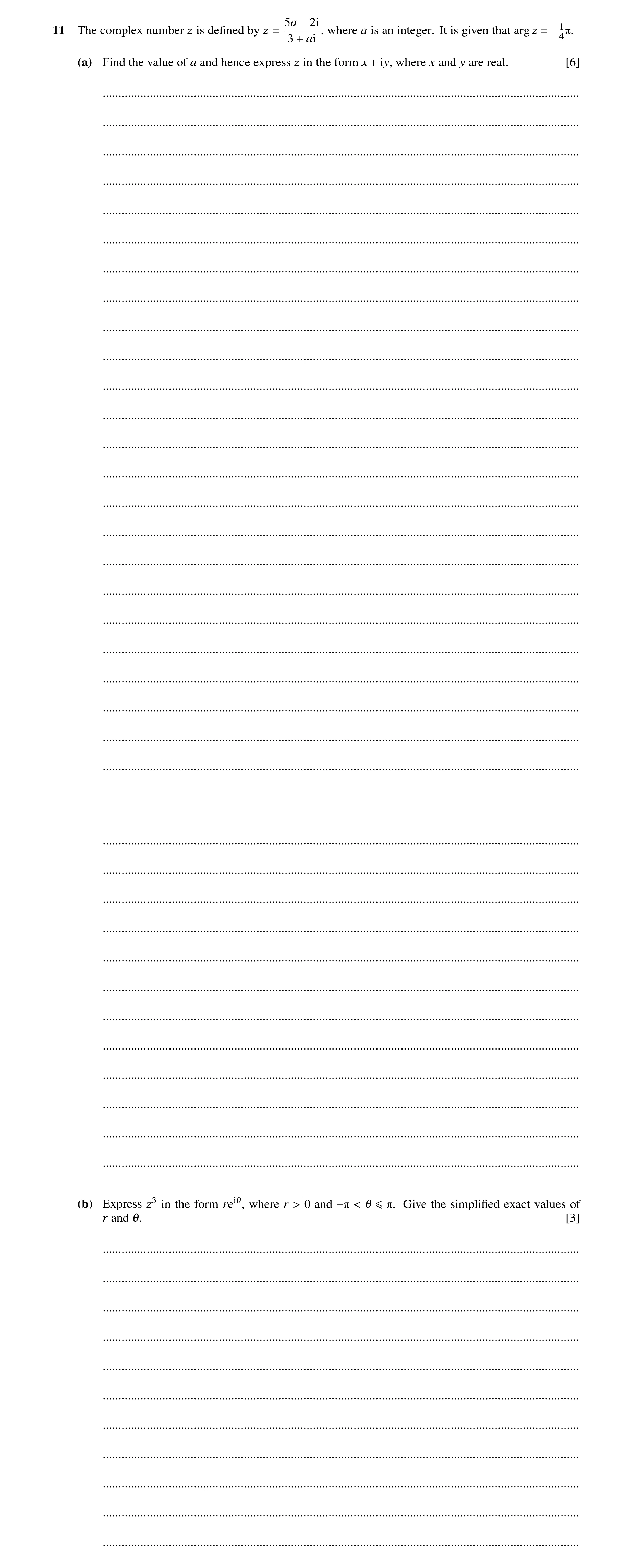
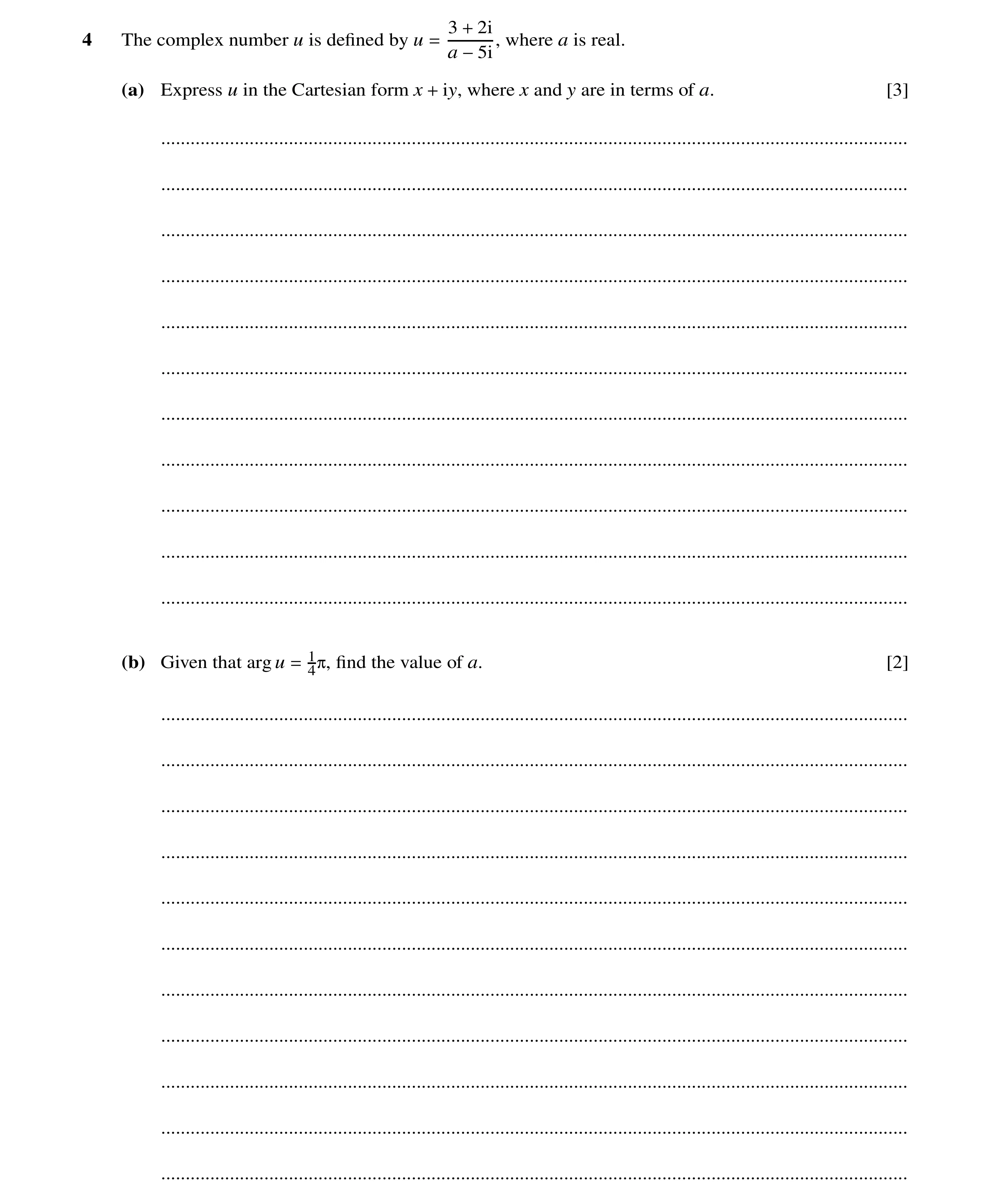 66 / 97
![Question 85: (a) On a sketch of an Argand diagram, shade the region whose points represent complex numbers z satisfying the inequalities z and Re z [4] …](https://img.pastlit.com/crops/ae258b5e-8a2e-4842-a7e8-06fd44528f8f/q4.webp) 67 / 97
67 / 97![Question 86: 3ai 8 It is given that 2 , where a and are real constants. + a 2i = , −i , + (a) Show that 3a2 4a 0. [4] + −4 = ...........................…](https://img.pastlit.com/crops/ae258b5e-8a2e-4842-a7e8-06fd44528f8f/q8.webp)
![Question 87: On an Argand diagram, shade the region whose points represent complex numbers z satisfying the inequalities z −1 + 2i ≤ z and z −2 ≤1. [5]](https://img.pastlit.com/crops/6435358b-6acf-48d2-859d-ba852067fbc4/q2.webp) 69 / 97
69 / 97![Question 88: It is given that z =- 3 + i . (a) Express z2 in the form r e ii, where r 2 0 and - r 1 i G r . [3] ........................................…](https://img.pastlit.com/crops/7e578ace-a8a9-41e0-8743-11cacfdd1971/q3.webp) 70 / 97
70 / 97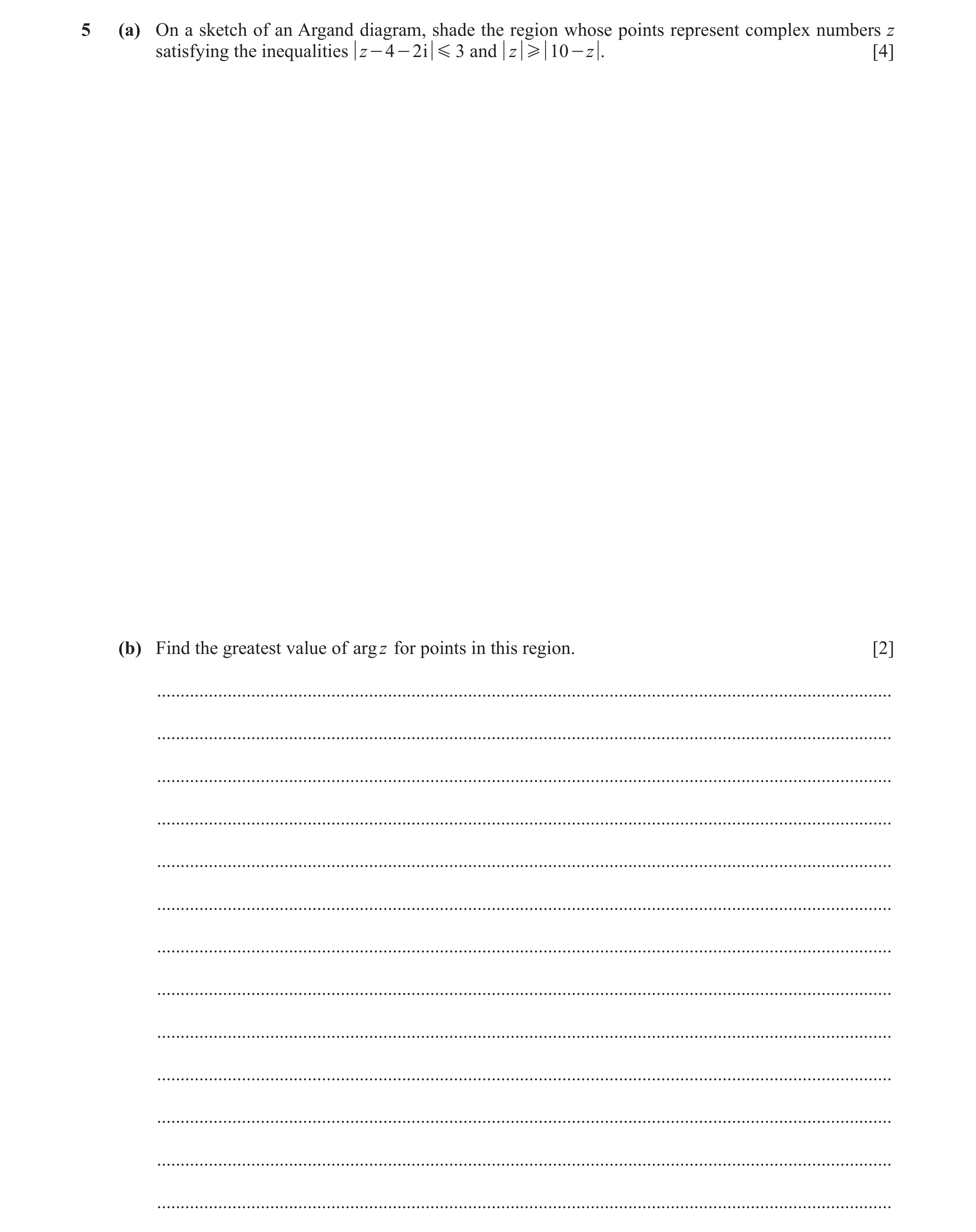 71 / 97
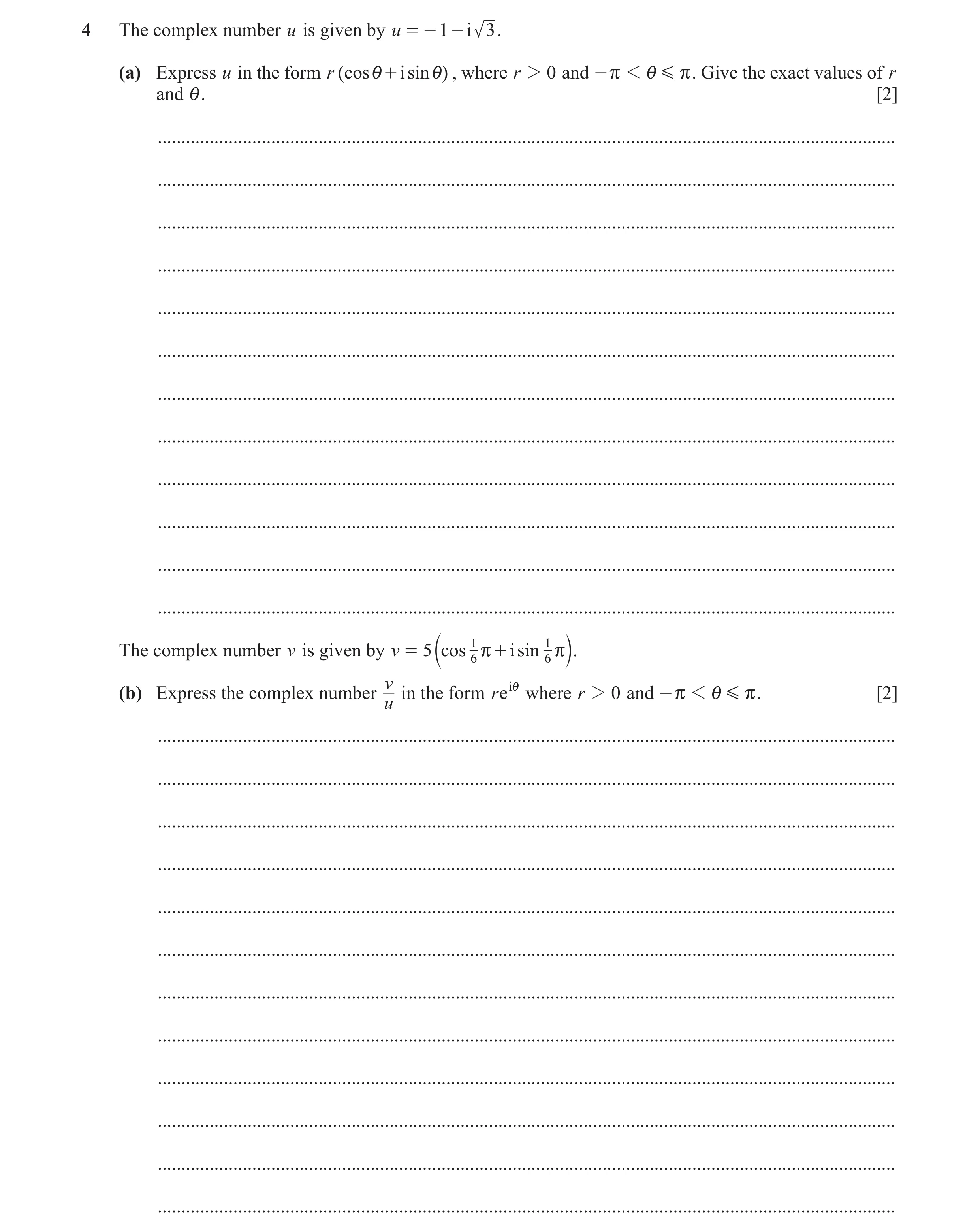 72 / 97
 73 / 97
 76 / 97
 77 / 97
![Question 95: 8 (a) Given that z = 1 + y i and that y is a real number, express in the form a + bi , where a and b are z functions of y. [2] ............…](https://img.pastlit.com/crops/c689de65-af71-4aa6-a97a-6eb08bd70841/q8.webp)
 80 / 97
![Question 97: (a) The complex number u is given by ( cos 1 r + isin 1 r) 4 u = 7 7 . cos 1 r - isin 1 r 7 7 Find the exact value of arg u. [2] ..........…](https://img.pastlit.com/crops/b67b0fc8-9555-4852-90e2-709639aecc18/q5.webp) 81 / 97
81 / 97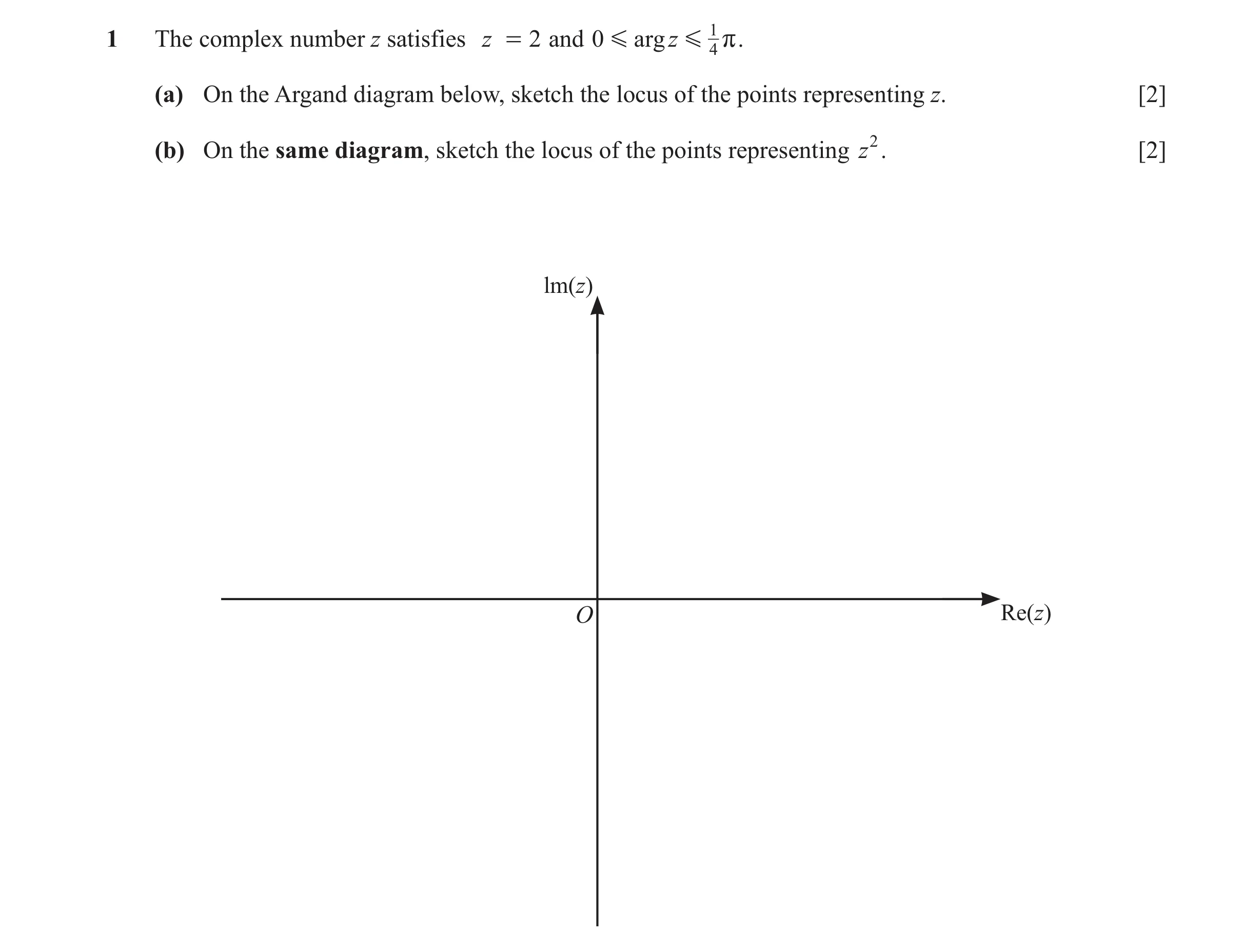 82 / 97
 83 / 97
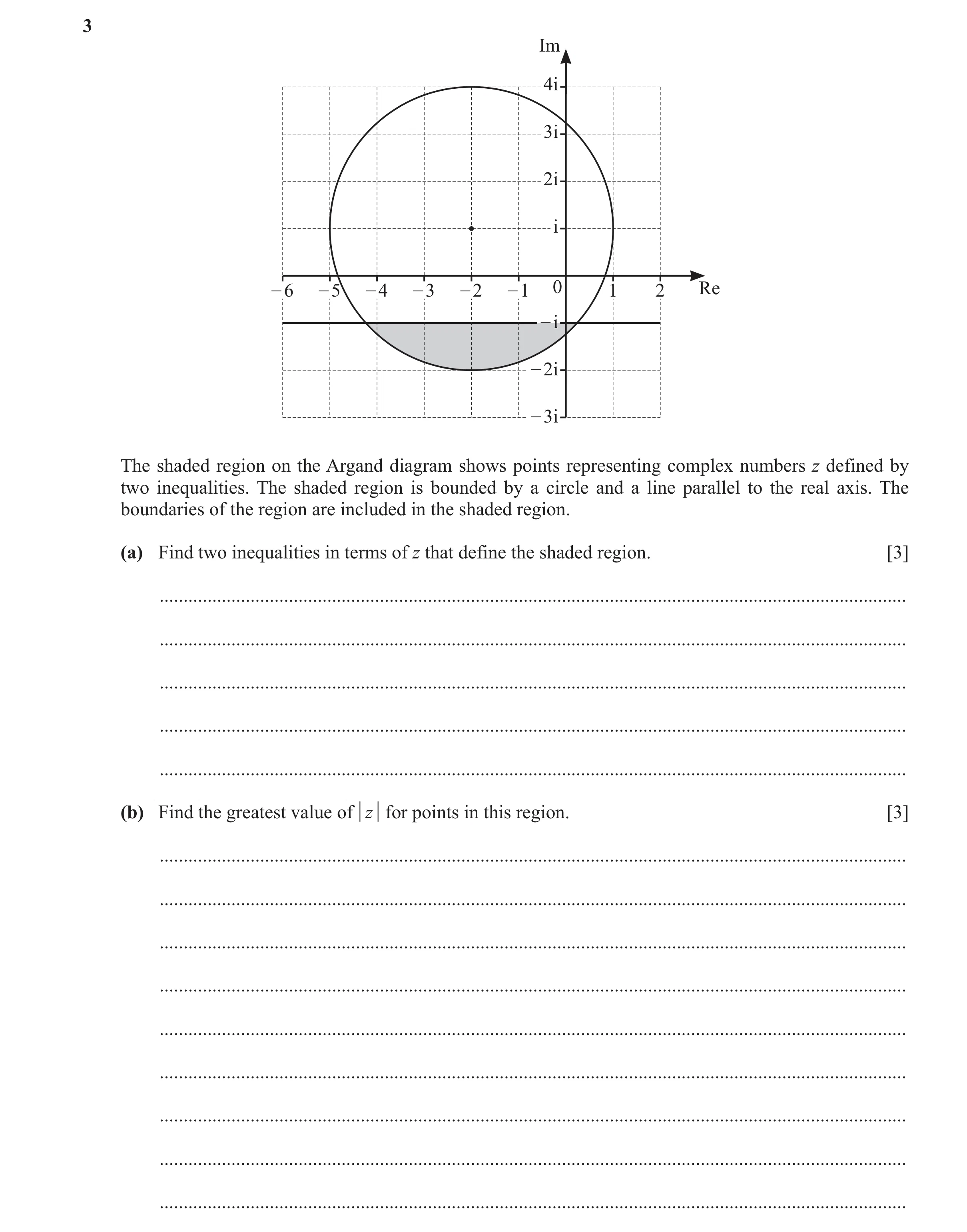 84 / 97
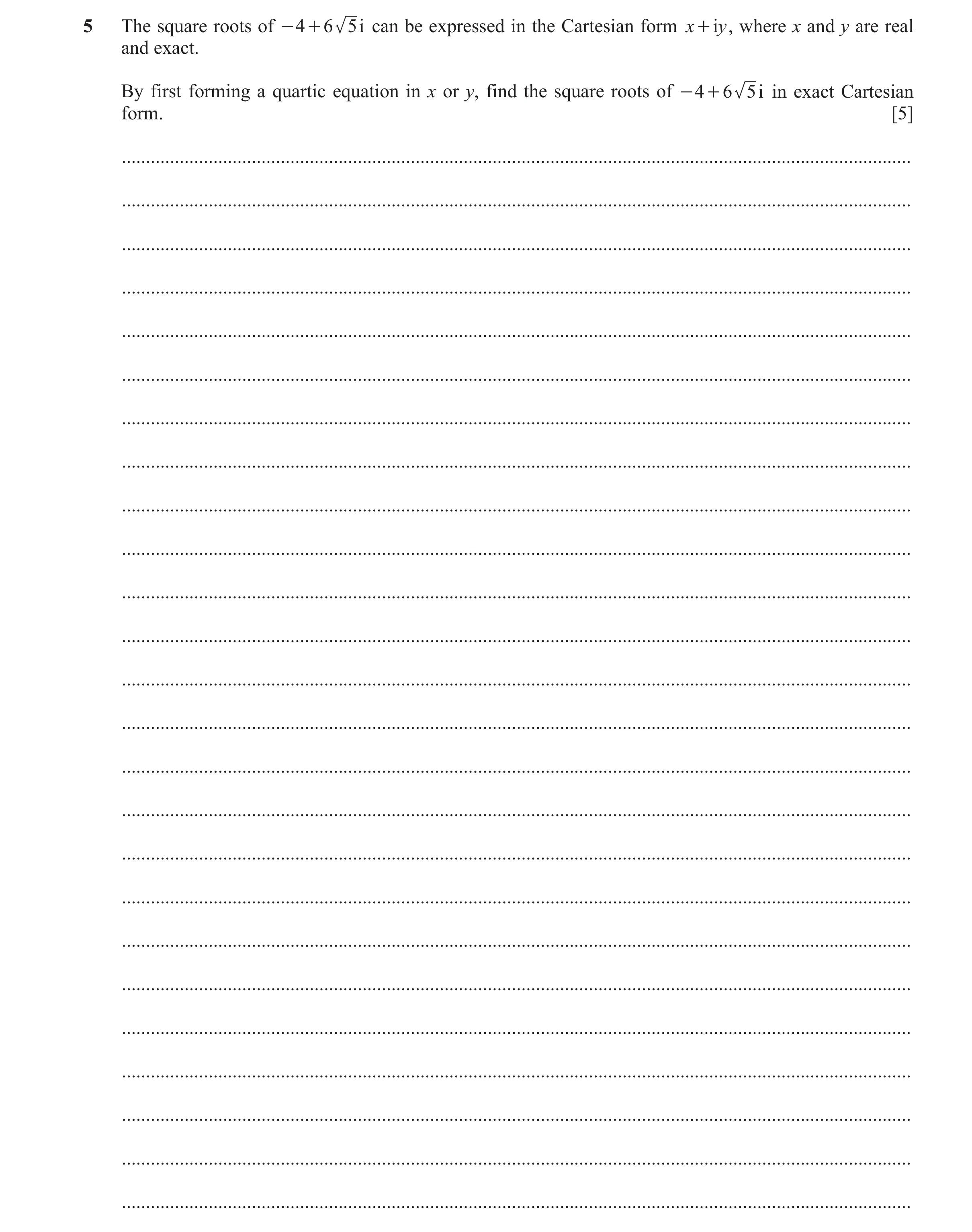 85 / 97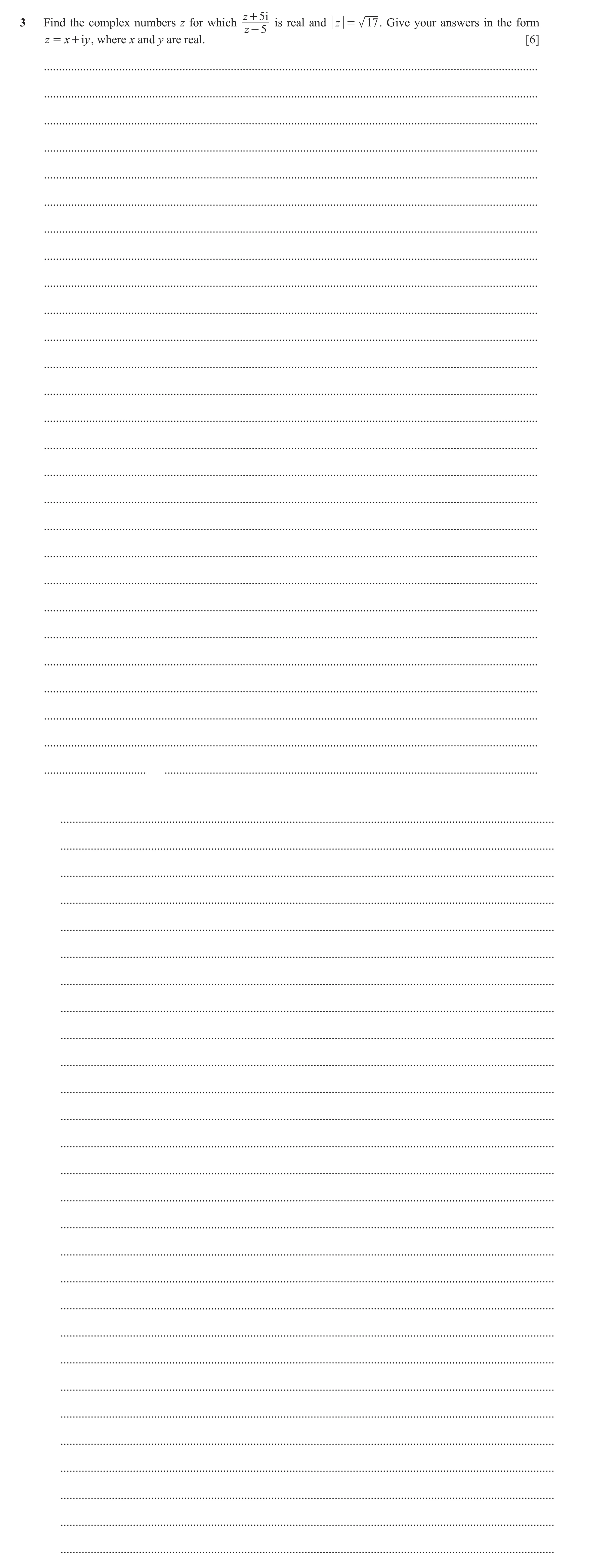
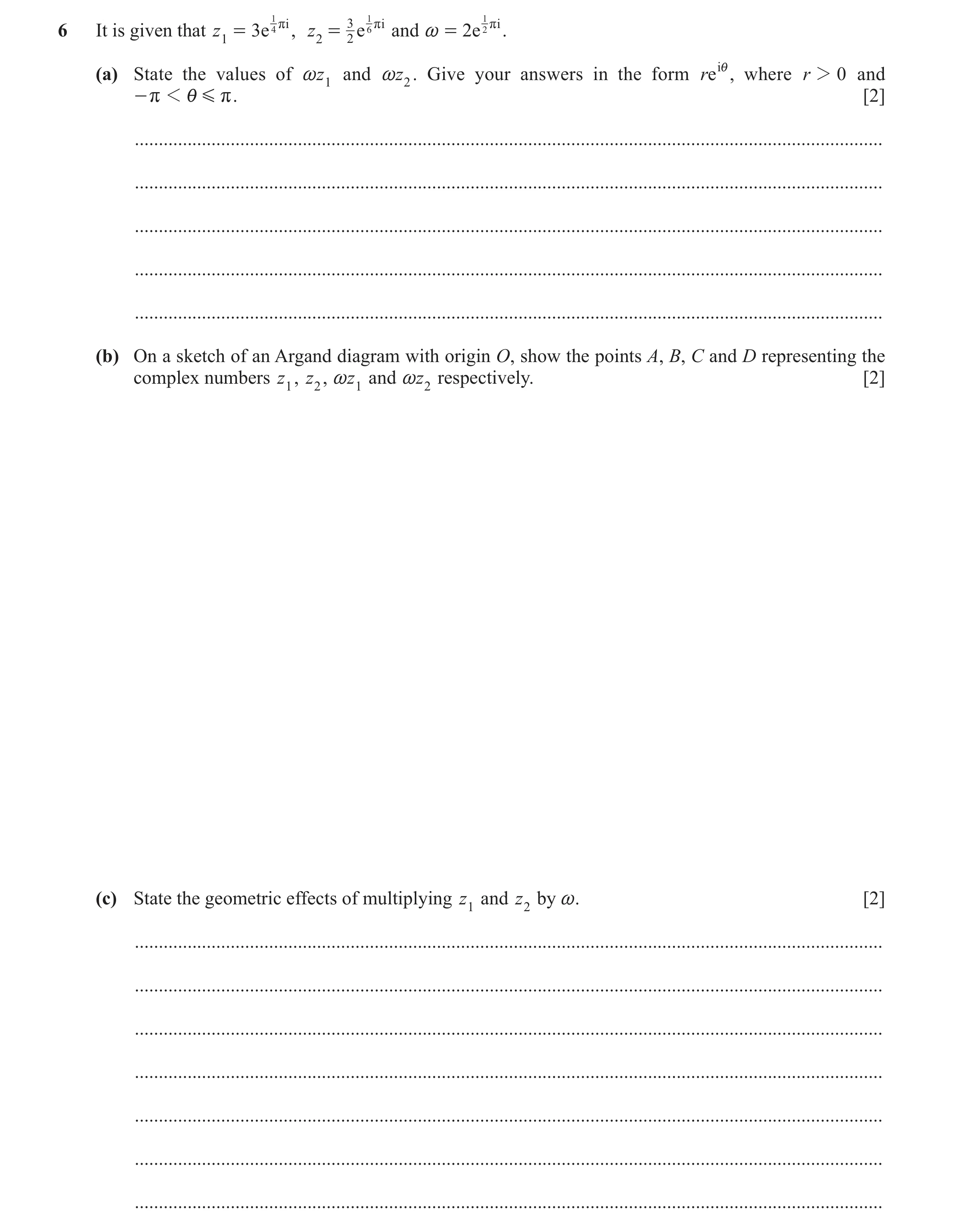 88 / 97
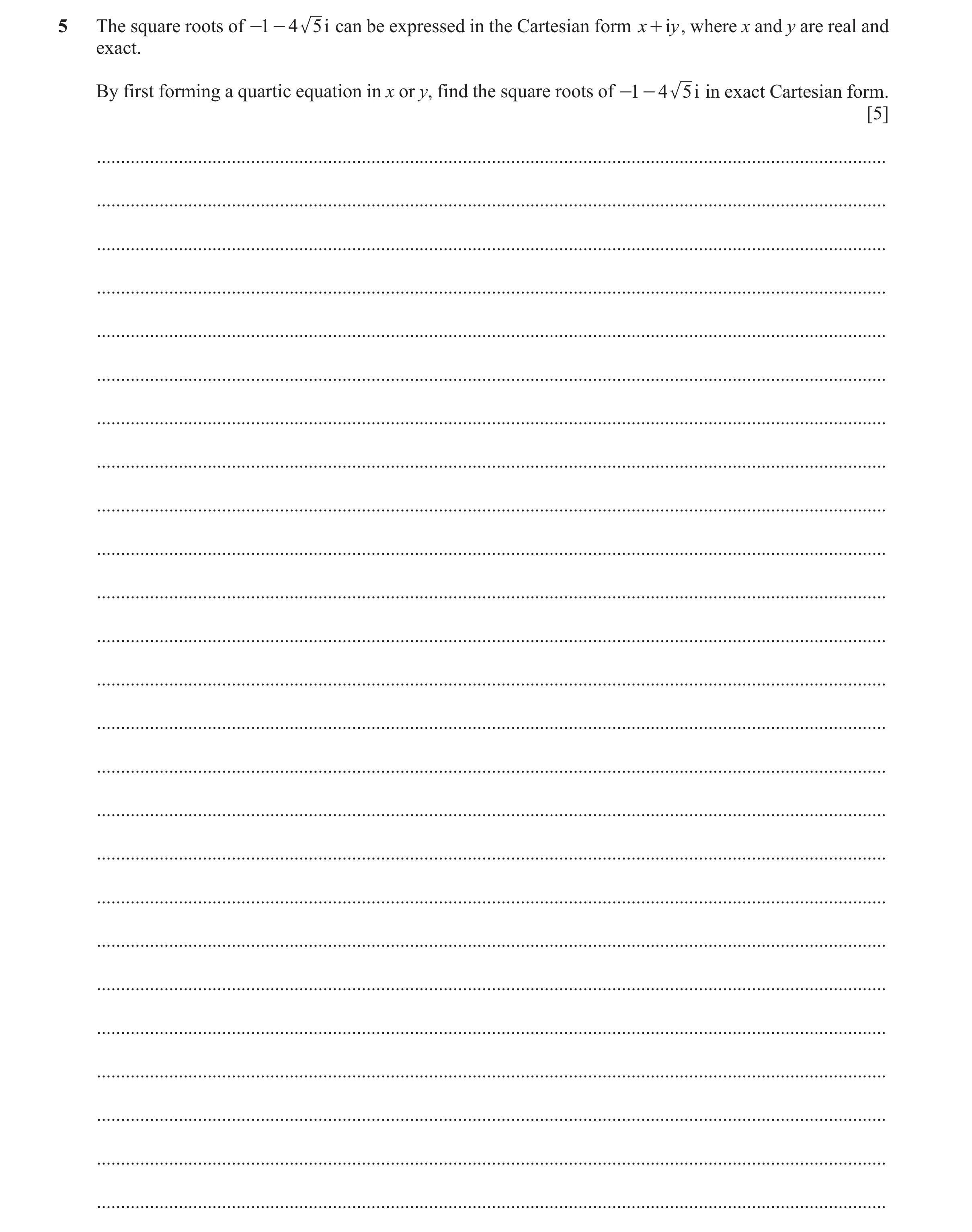 89 / 97
![Question 105: (a) It is given that z = r e i i 1 and z = r e i i 2 . 1 1 2 2 Show that ( z z )* = z * z * . [3] 1 2 1 2 .................................…](https://img.pastlit.com/crops/415ffc4f-fb97-4c15-bcf3-c75615bc7963/q4.webp) 90 / 97
90 / 97 91 / 97
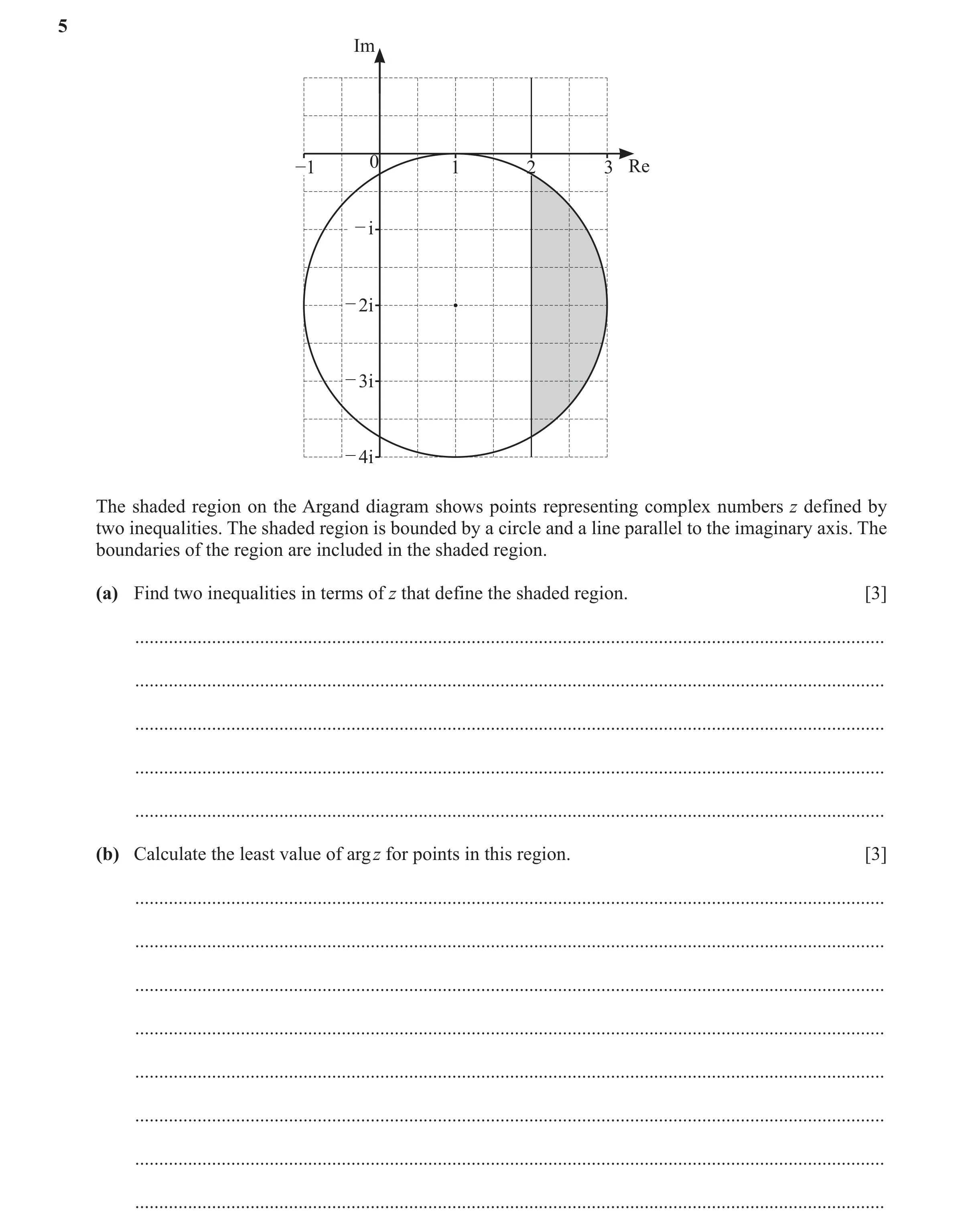 92 / 97
![Question 108: Solve the quadratic equation ( 2 + )i w 2 + 4 w + 2 - i = 0 . Give your answers in the form x + yi , where x and y are real. [5] ..........…](https://img.pastlit.com/crops/97d6c821-d580-4248-92cc-fc88ec663f2f/q6.webp) 93 / 97
93 / 97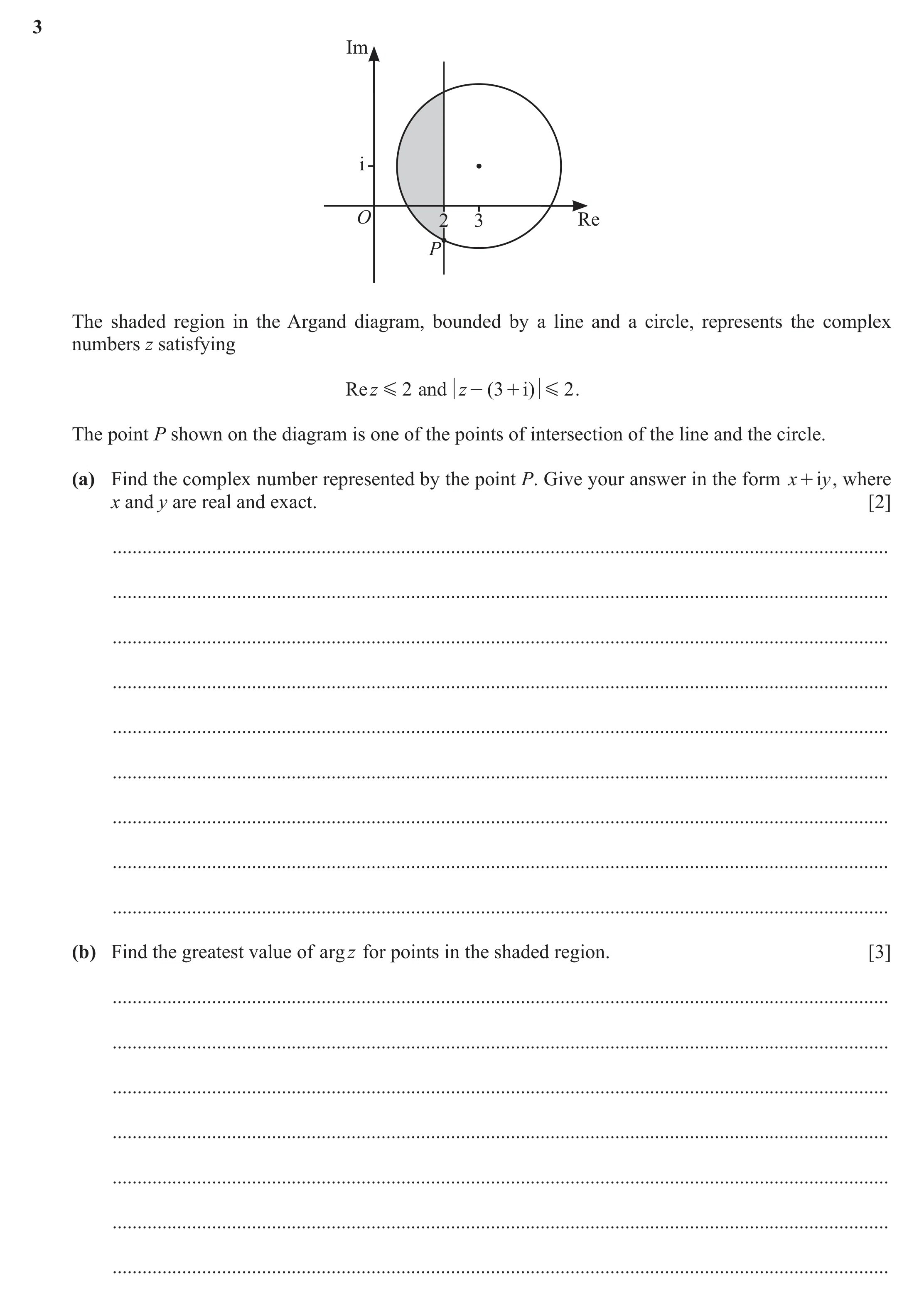 94 / 97
 95 / 97
![Question 111: z * 7 Solve the equation - zz + 20 + 8i = 0 . Give your answers in the form x + yi , where x and y are 2 - i real. [6] ....................…](https://img.pastlit.com/crops/a04cea19-353d-4ed0-876c-c4b4619e09a6/q7.webp)
 96 / 97
 97 / 97
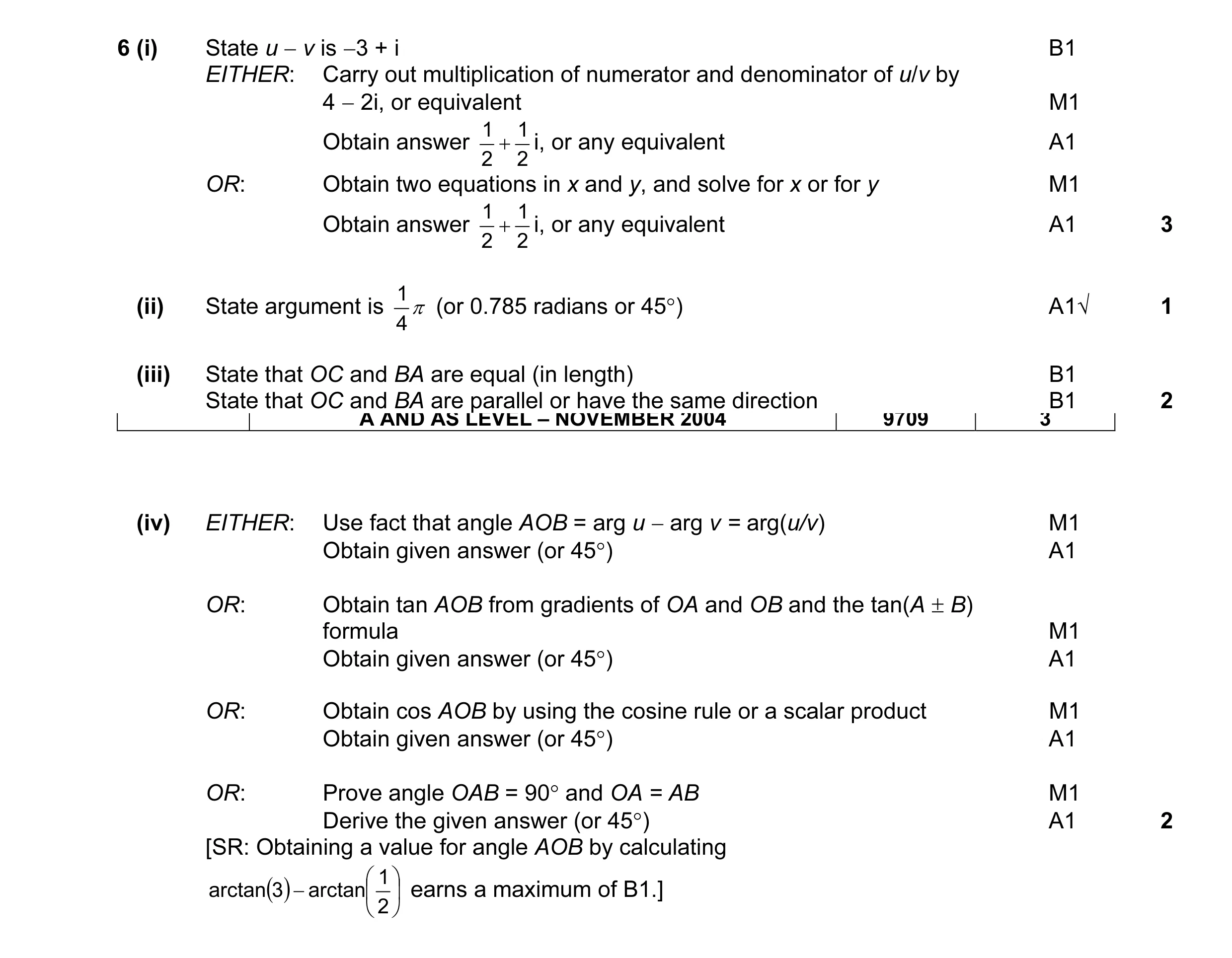 8
8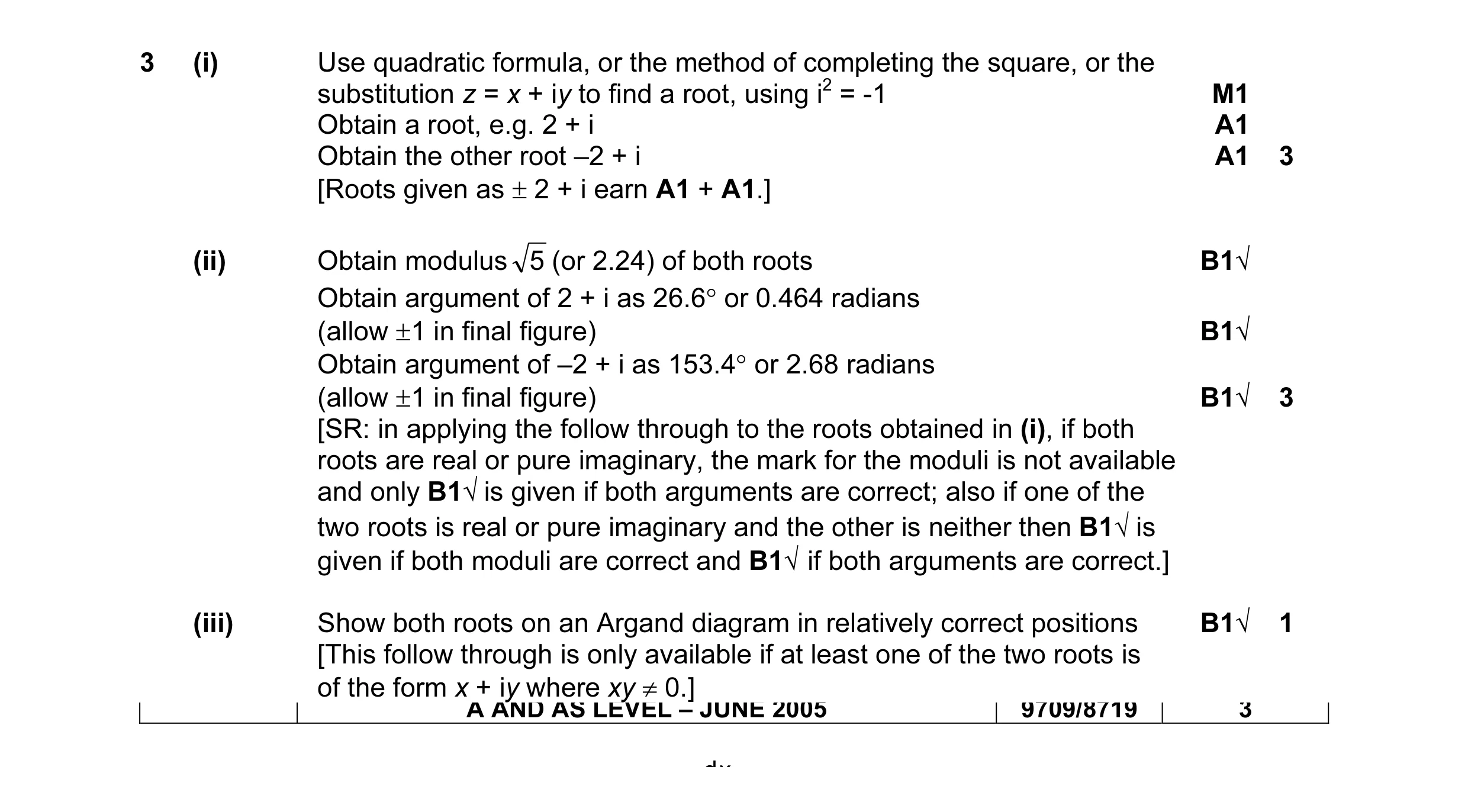 7
7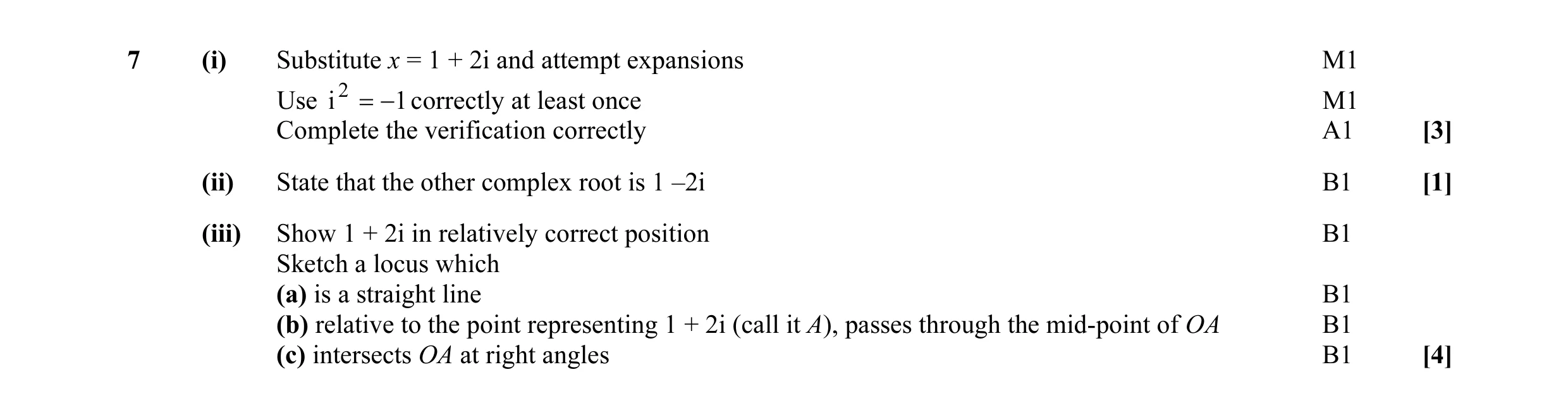 8
8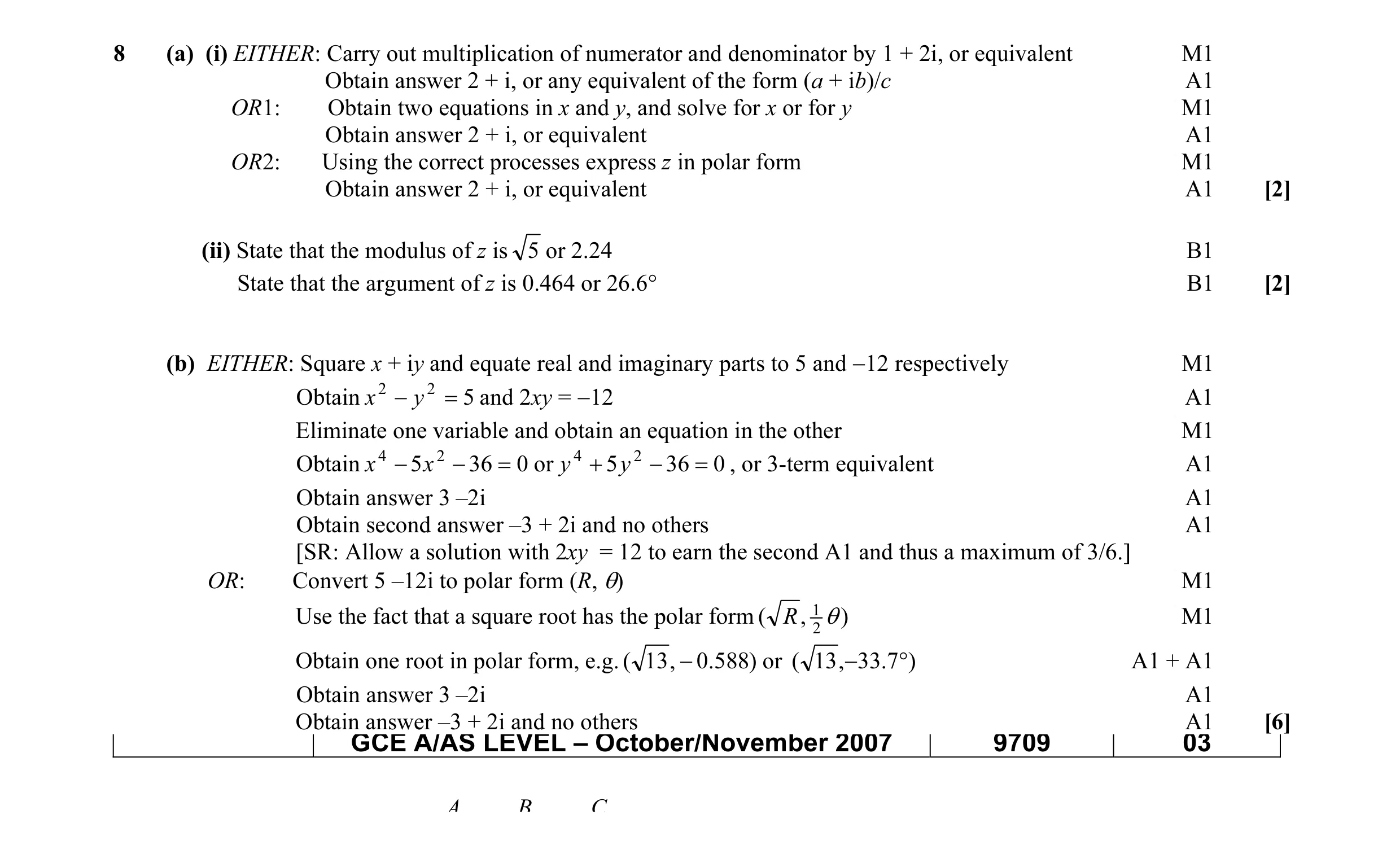 10
10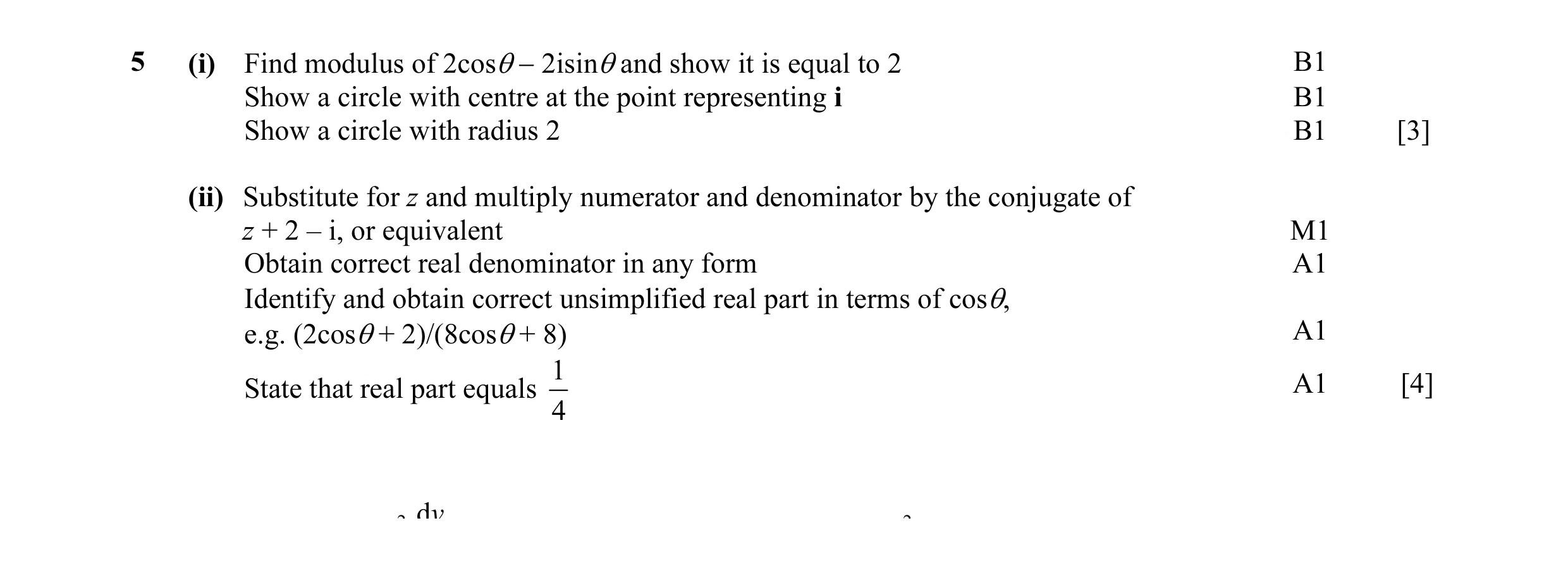 7
7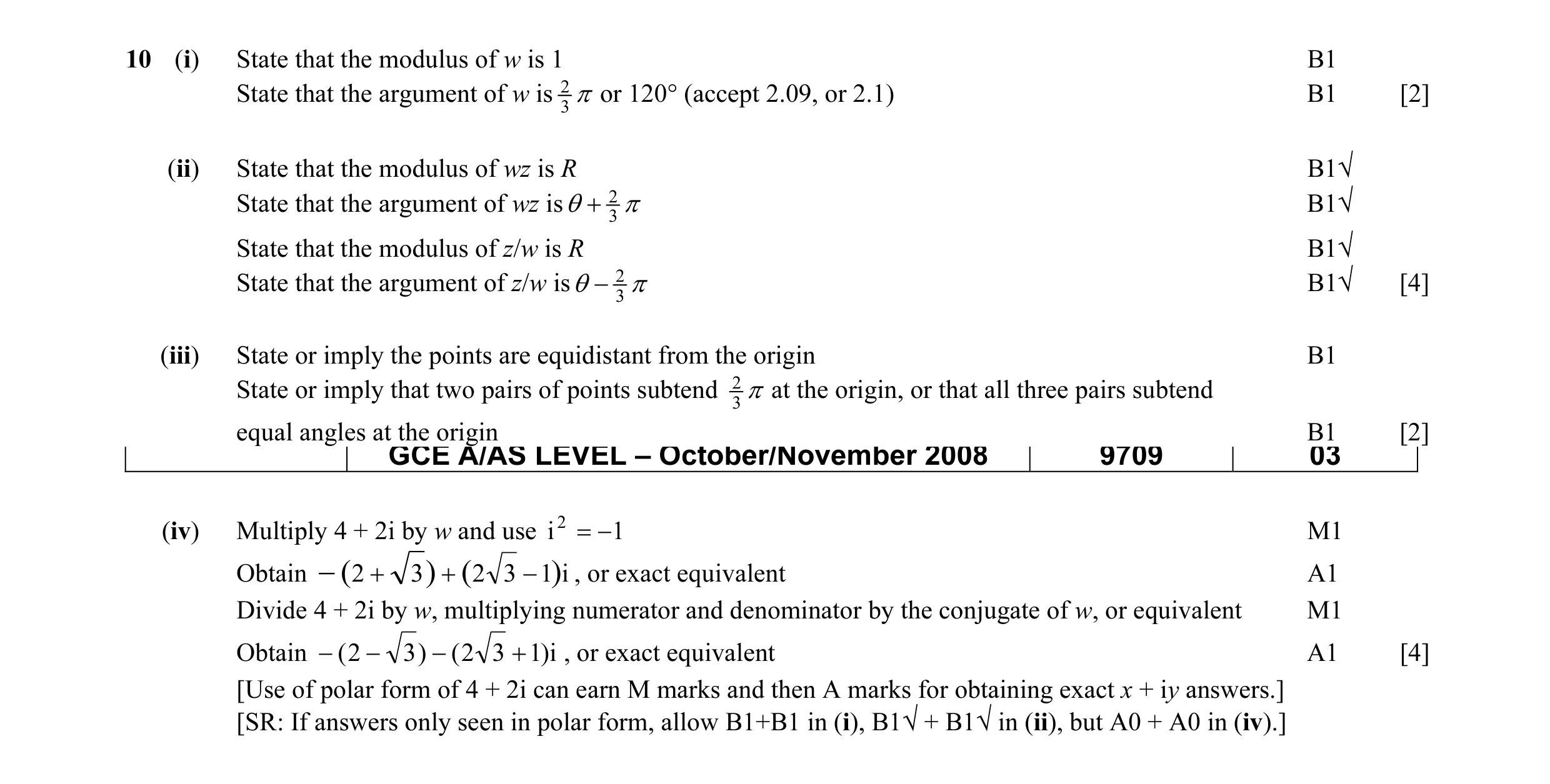 12
12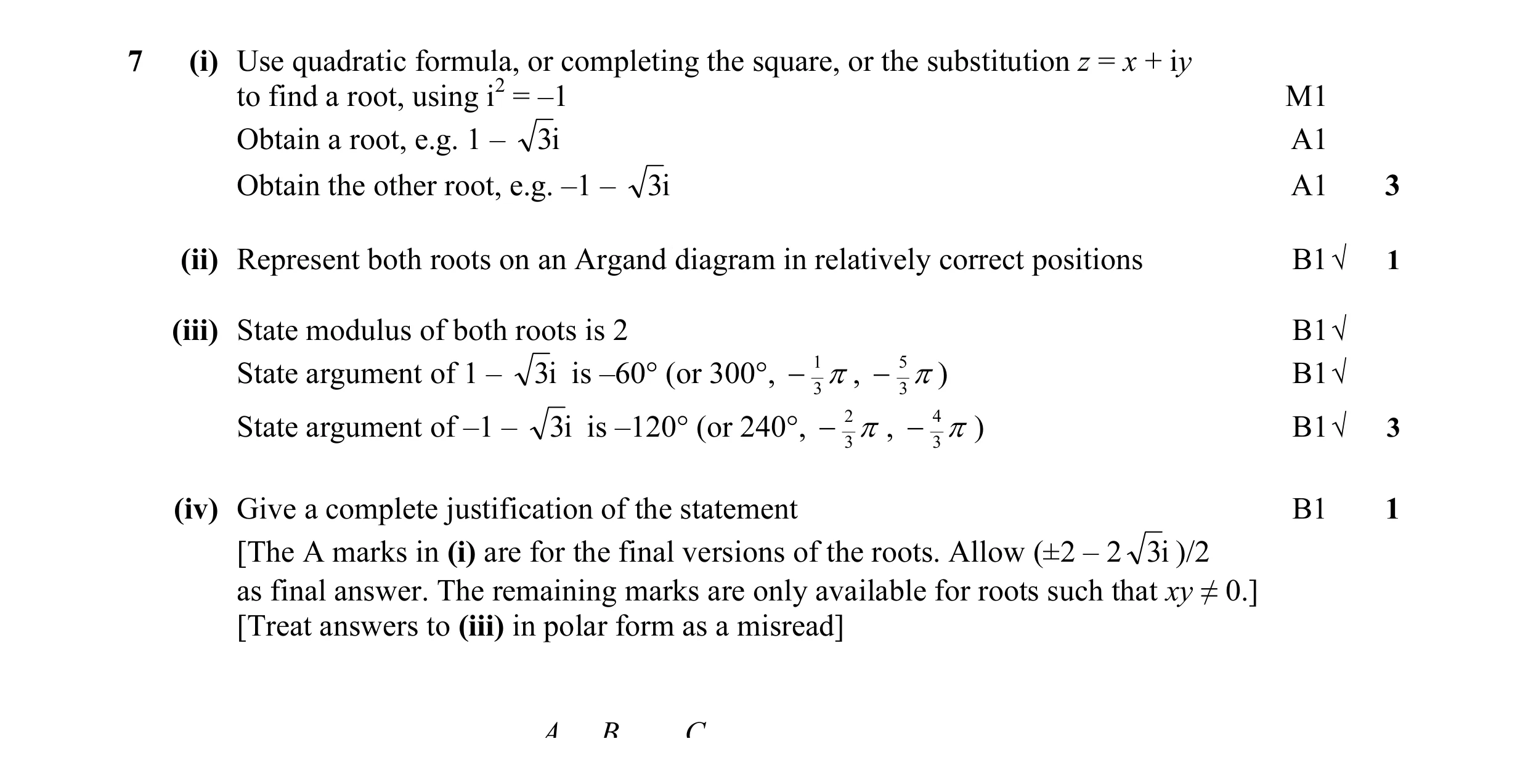 8
8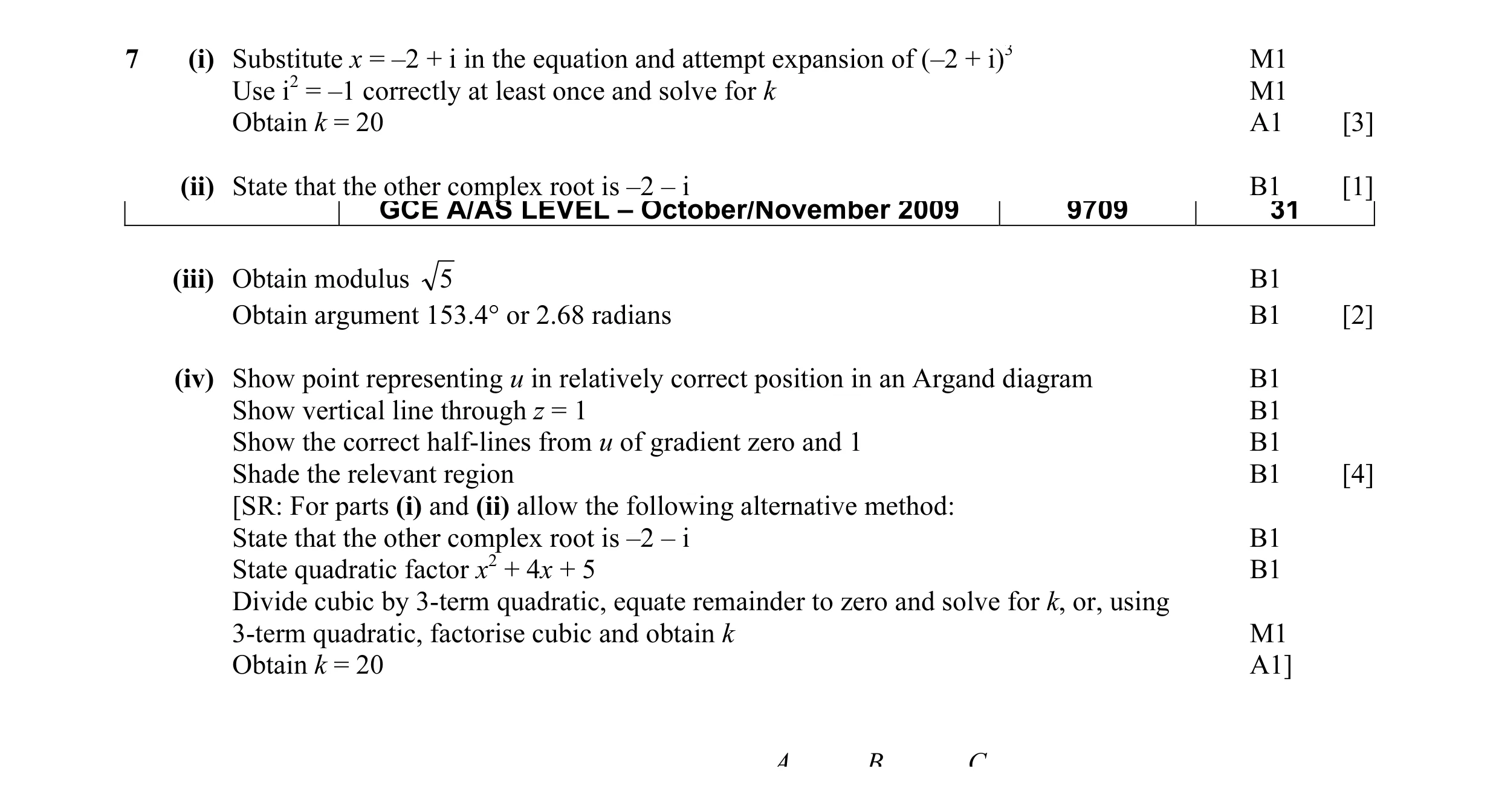 10
10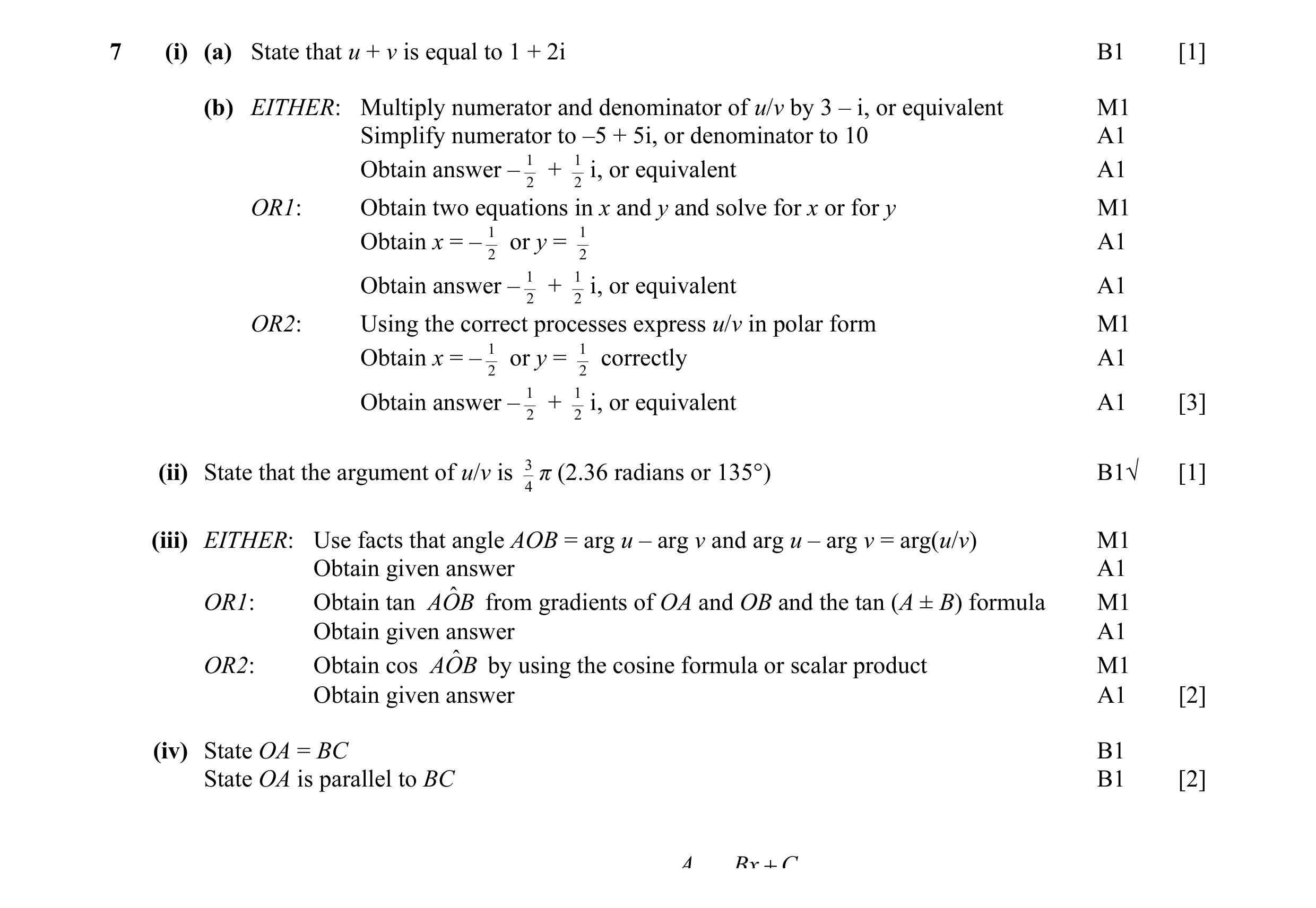 9
9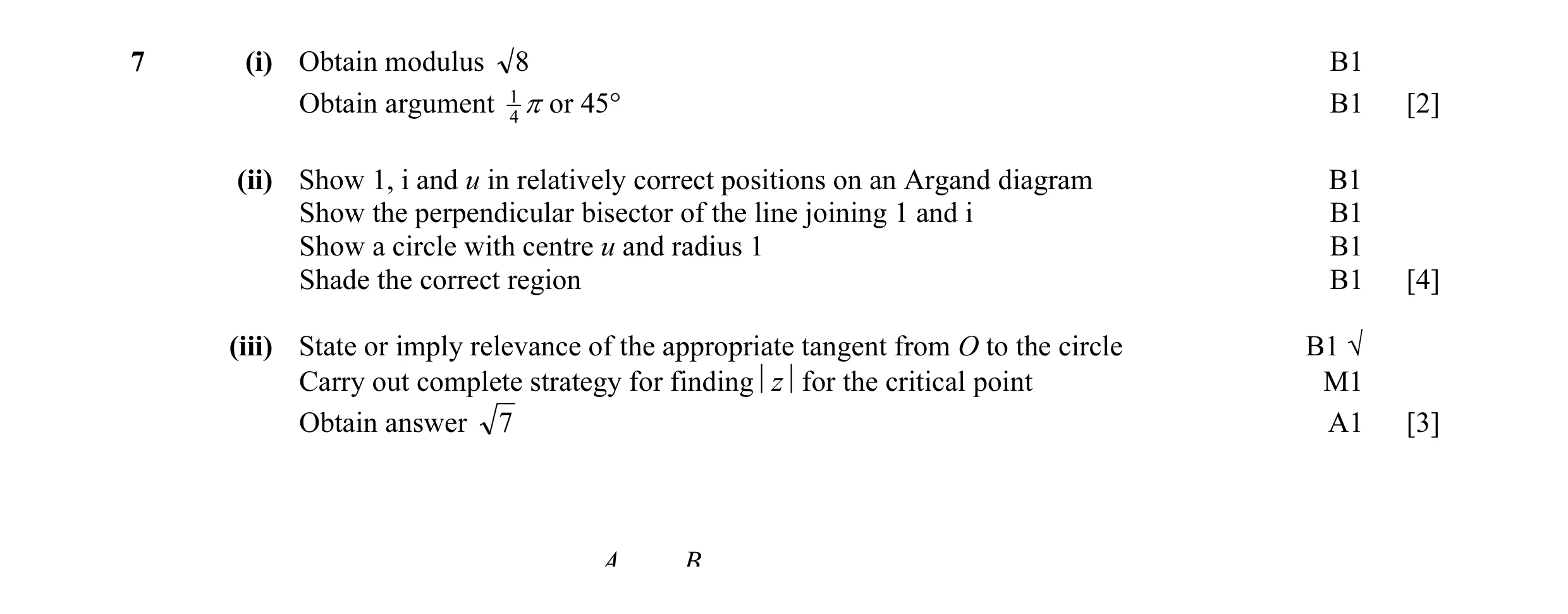 9
9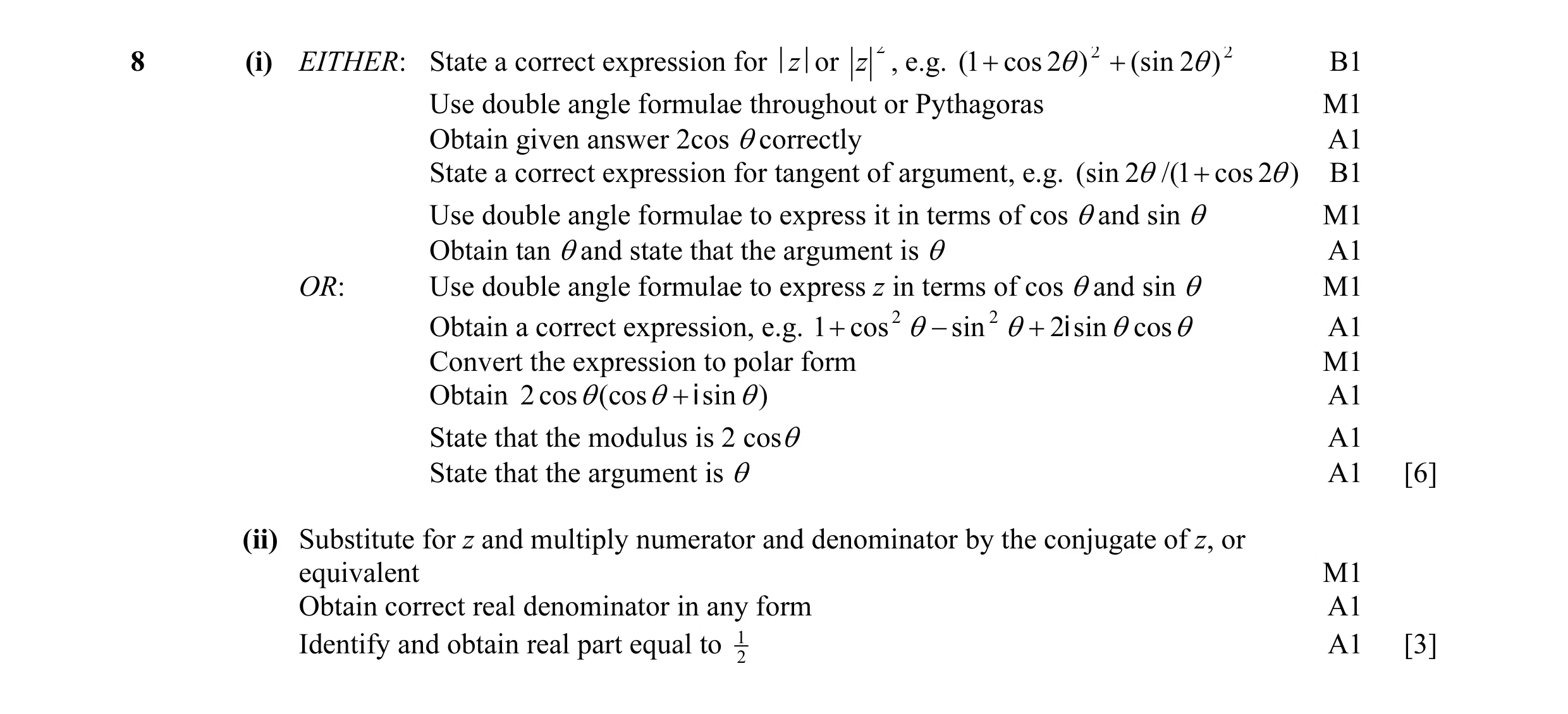 9
9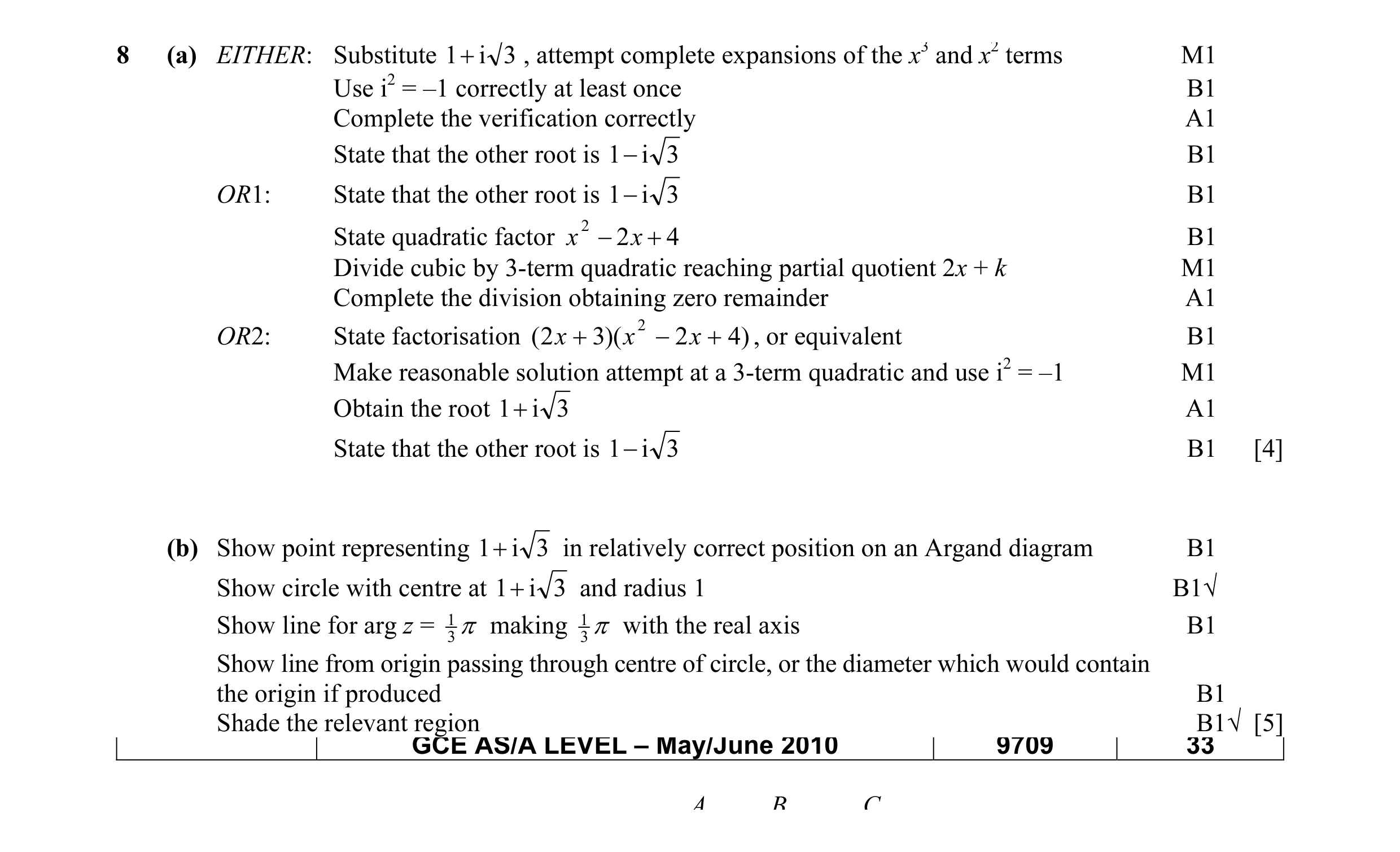 9
9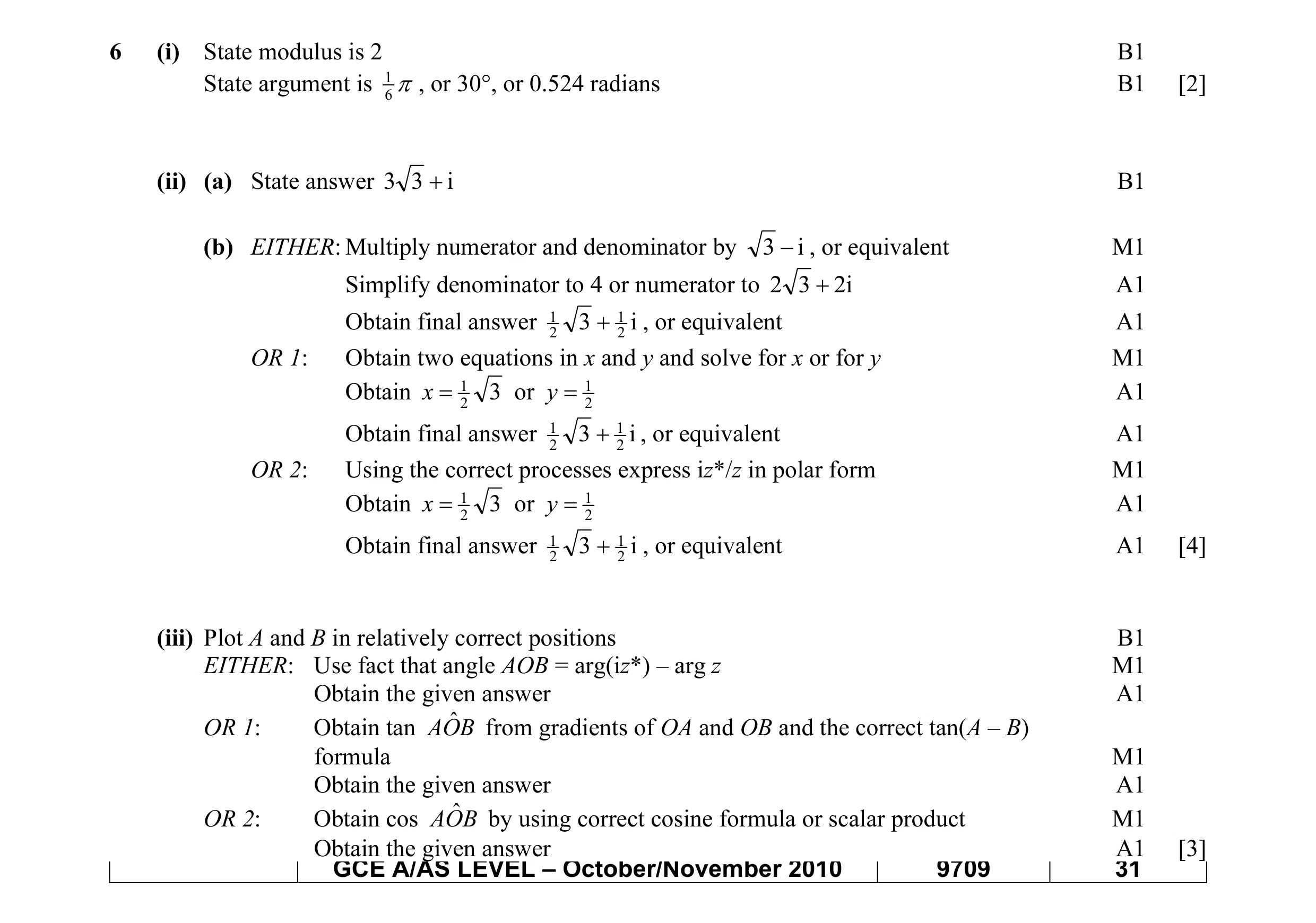 9
9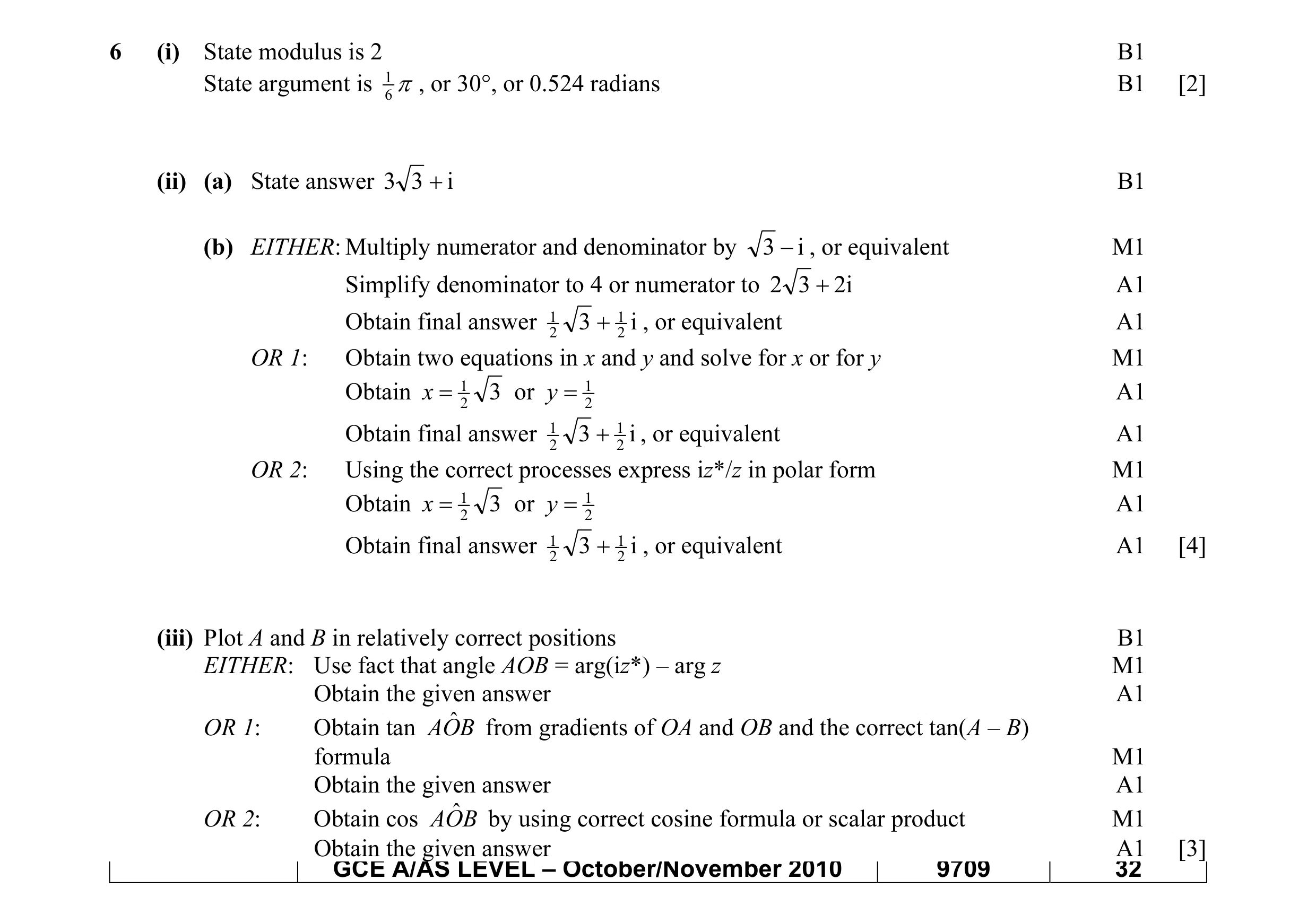 9
9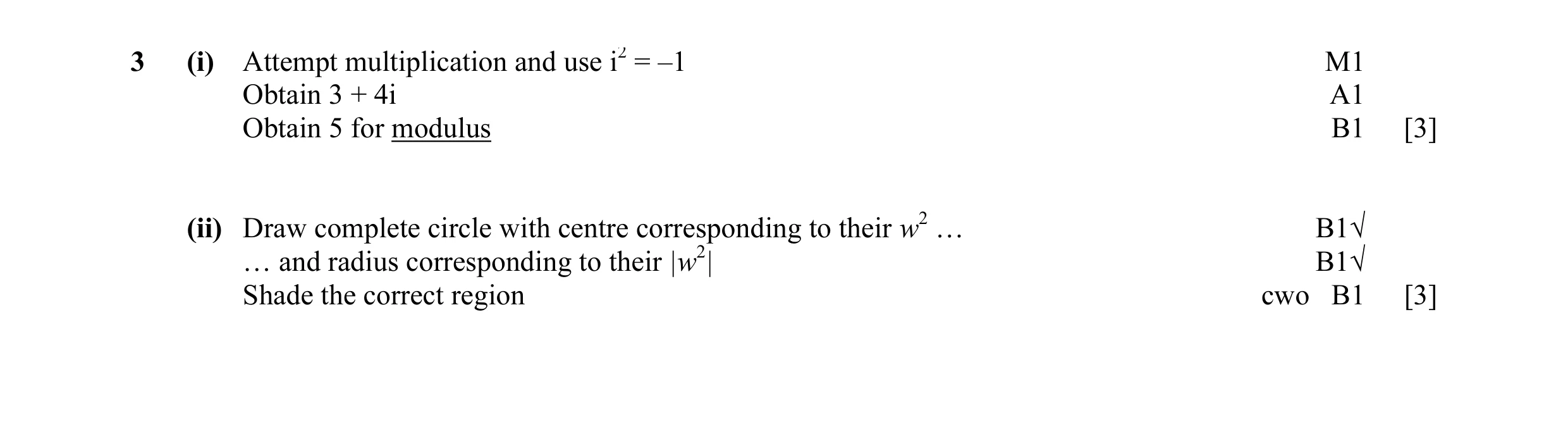 6
6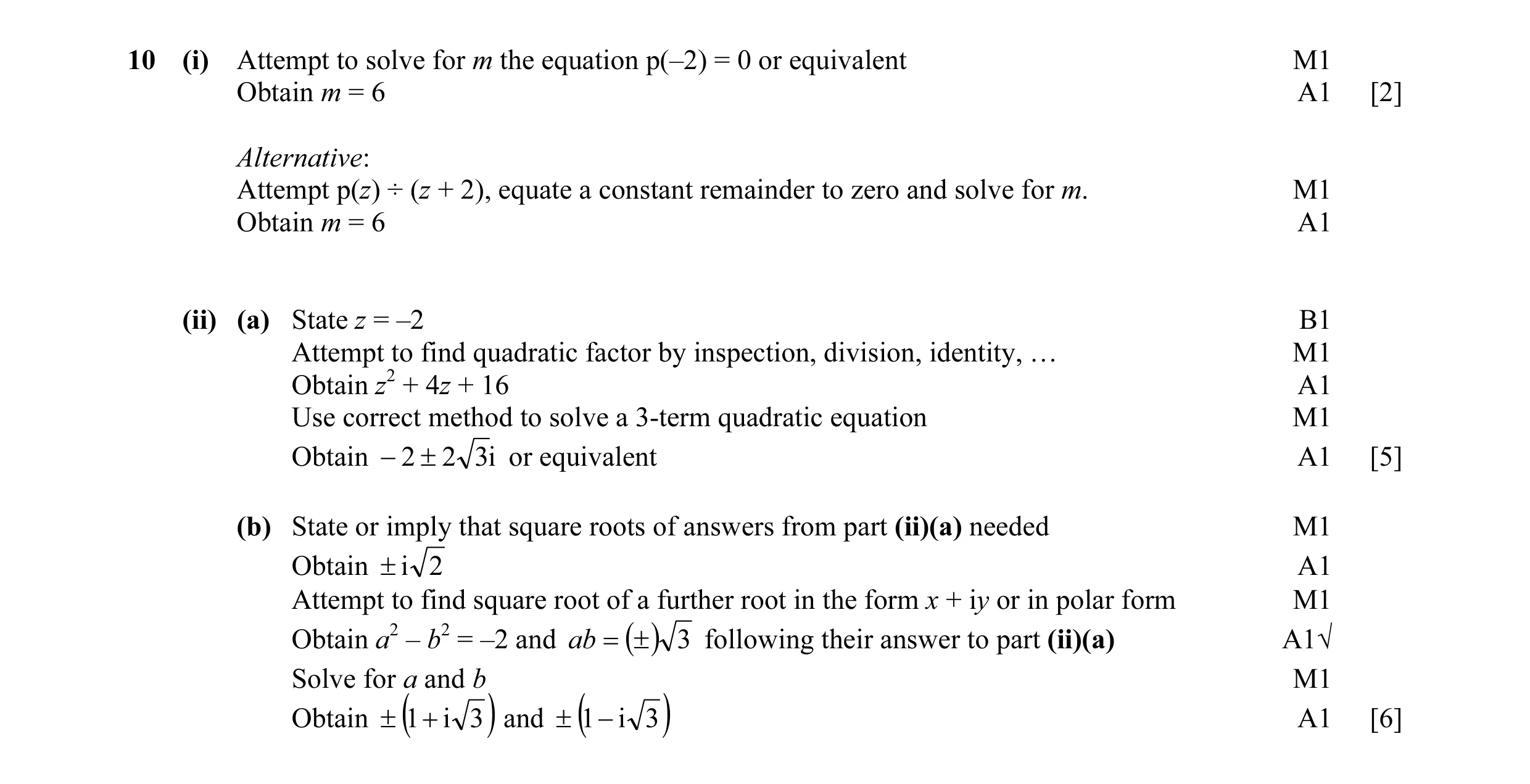 13
13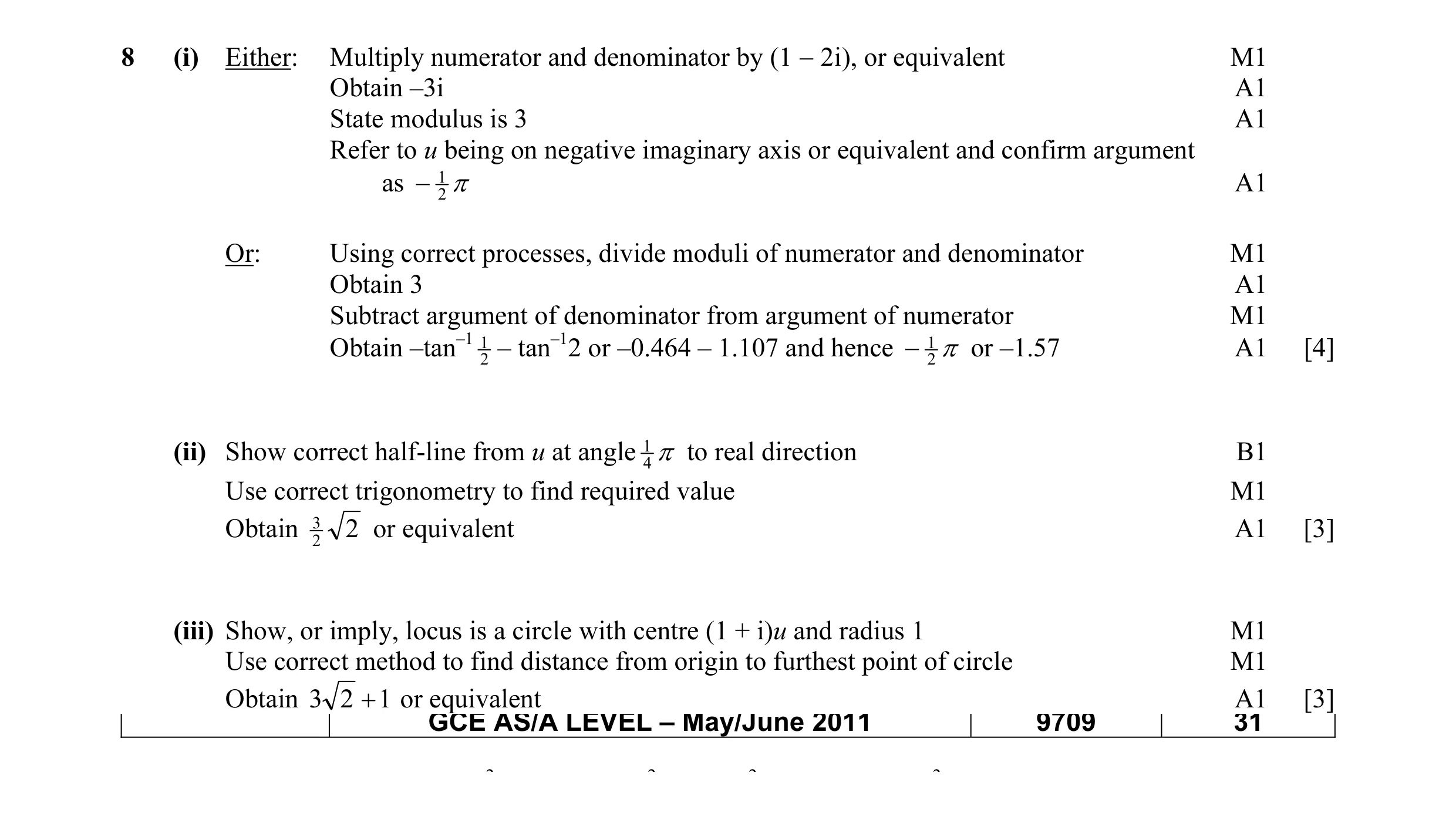 10
10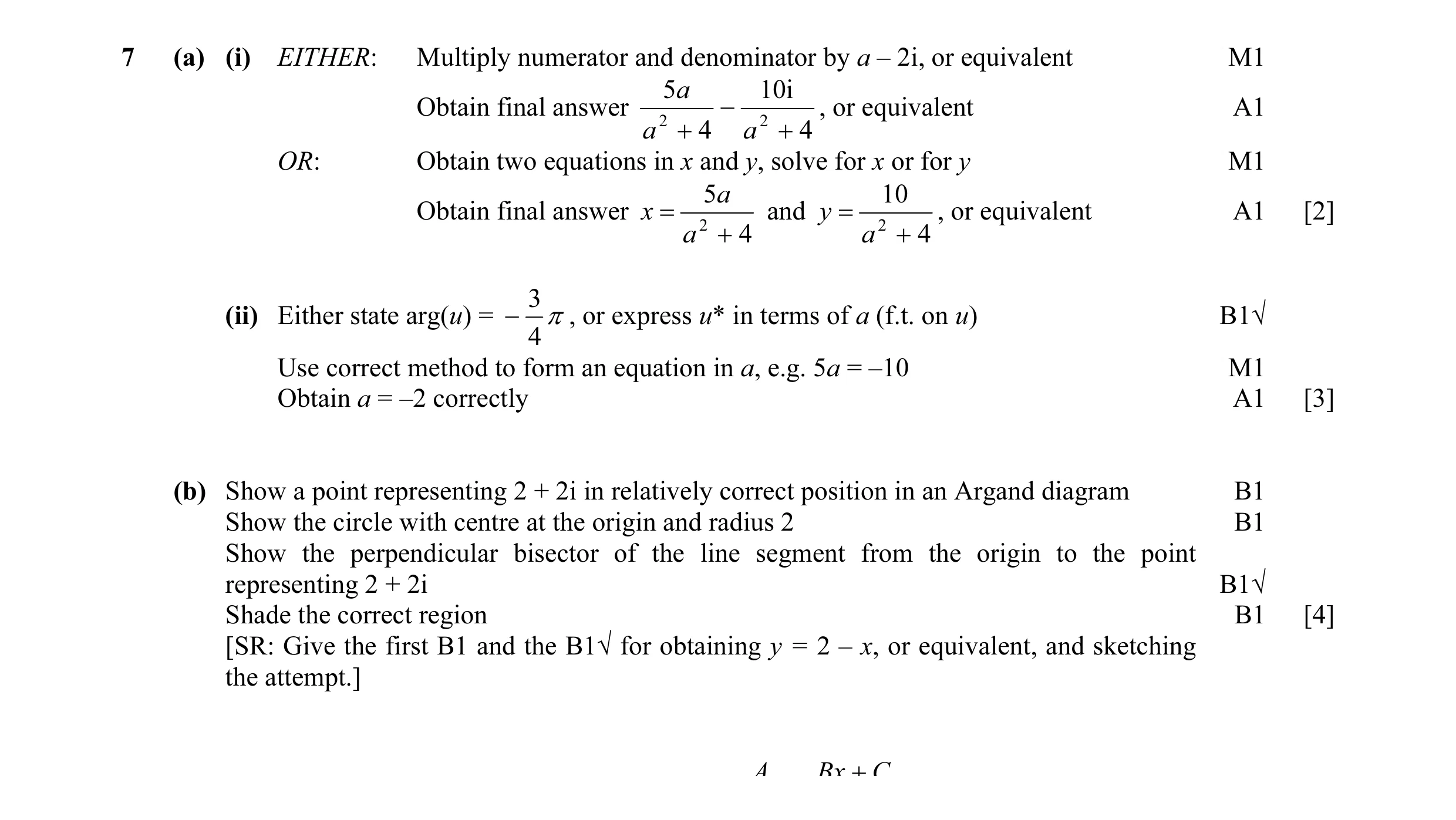 9
9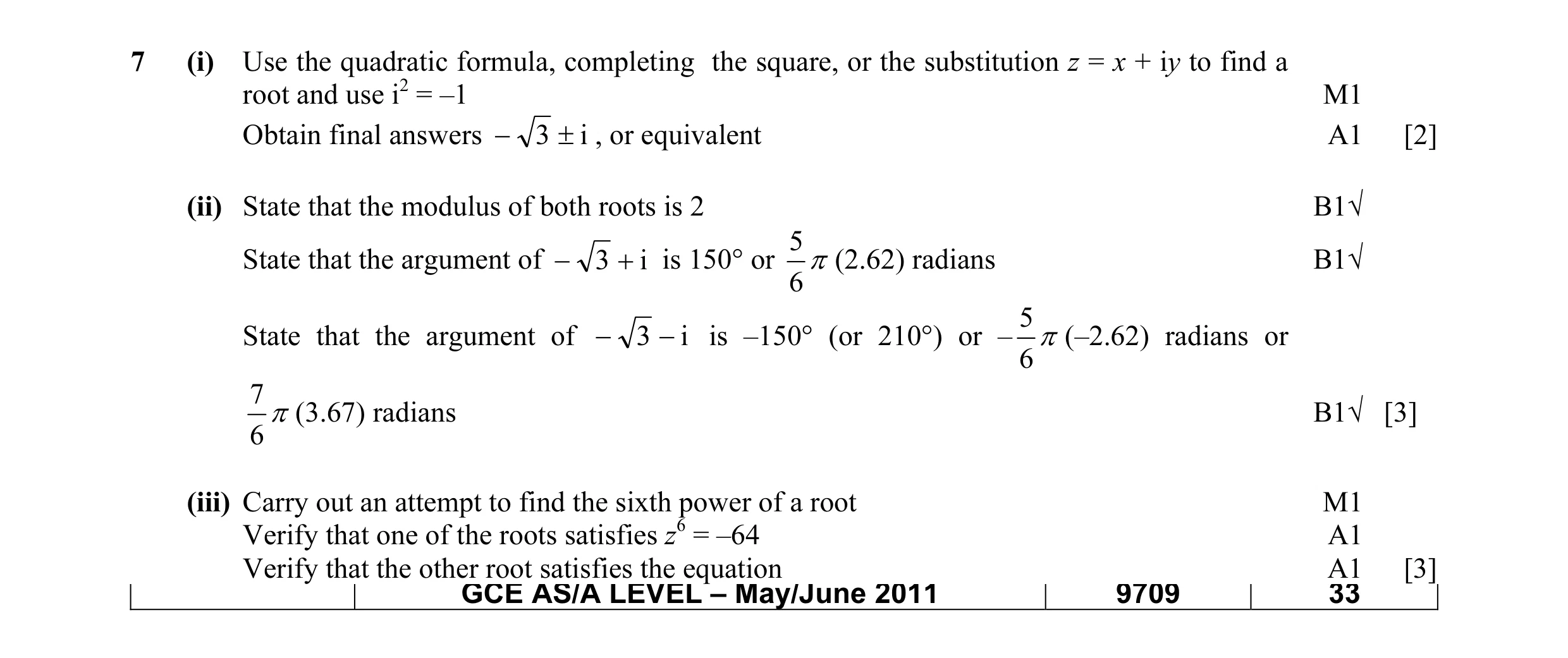 8
8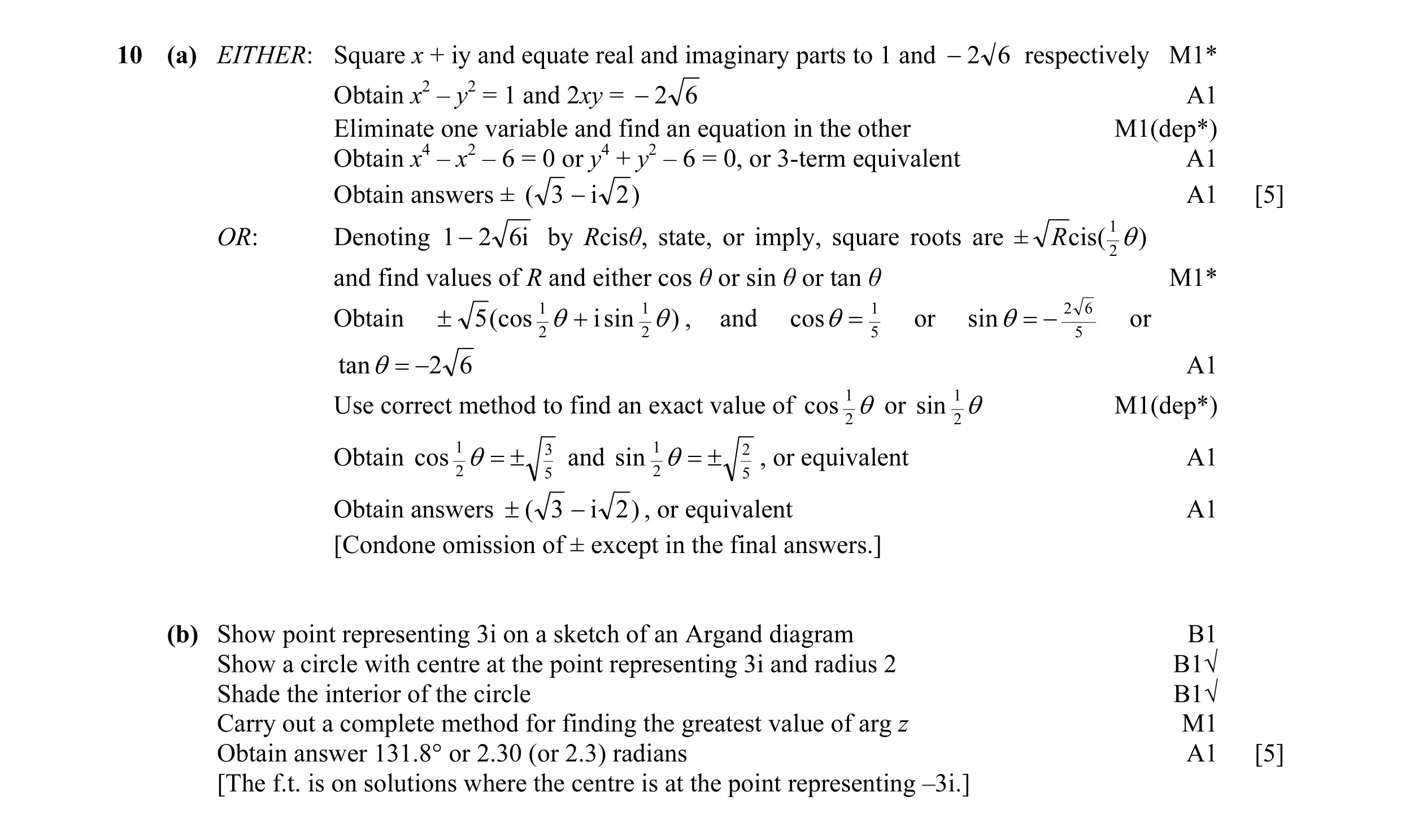 10
10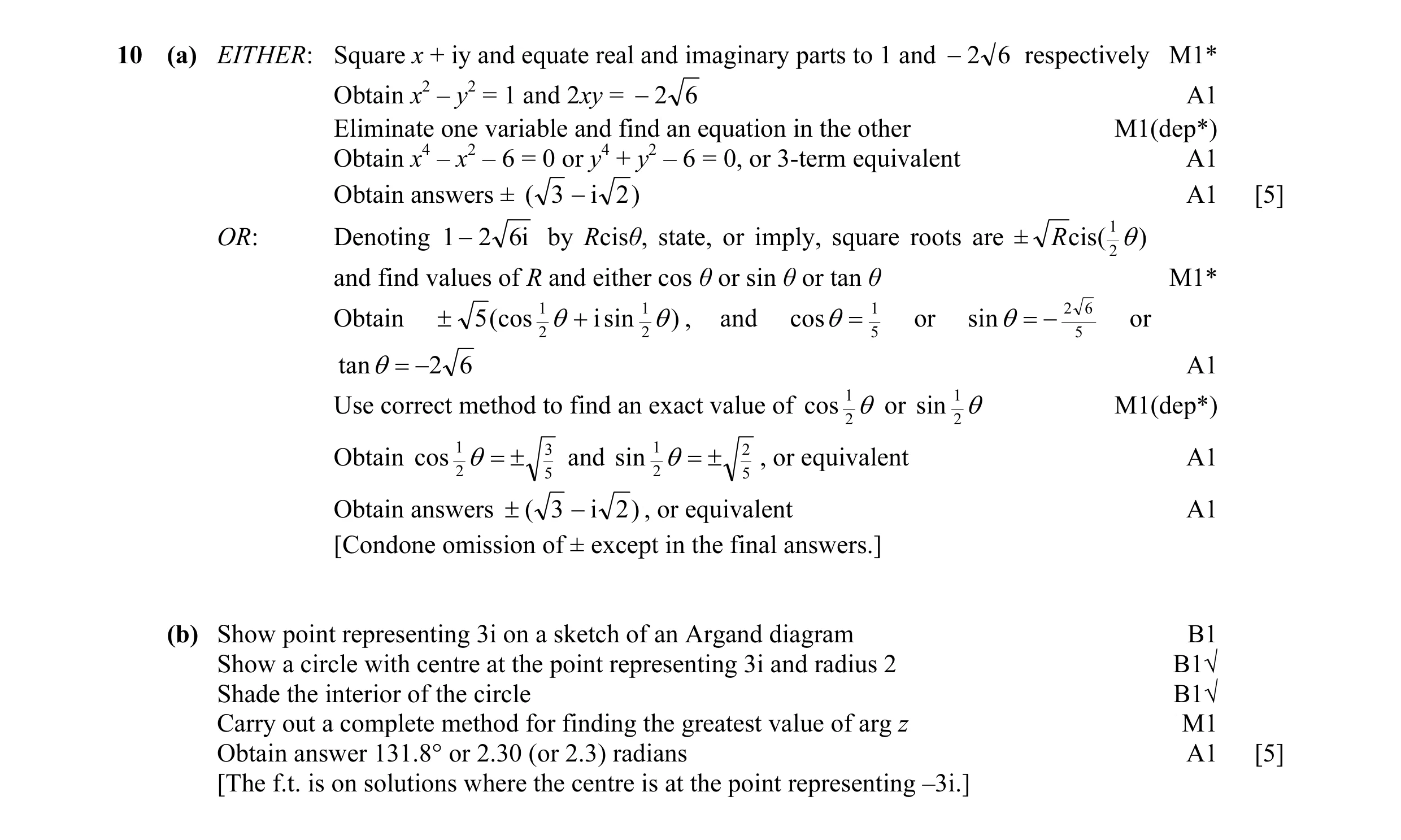 10
10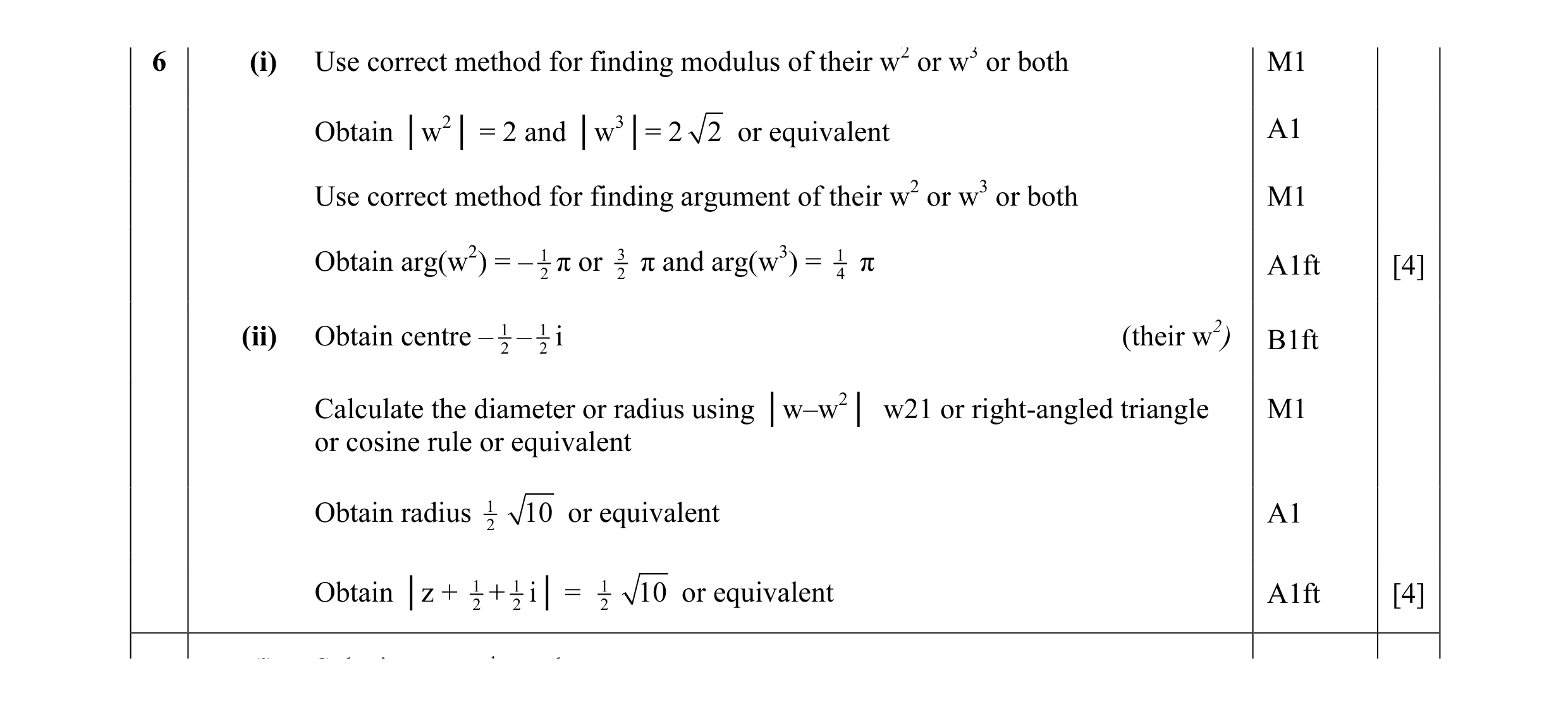 8
8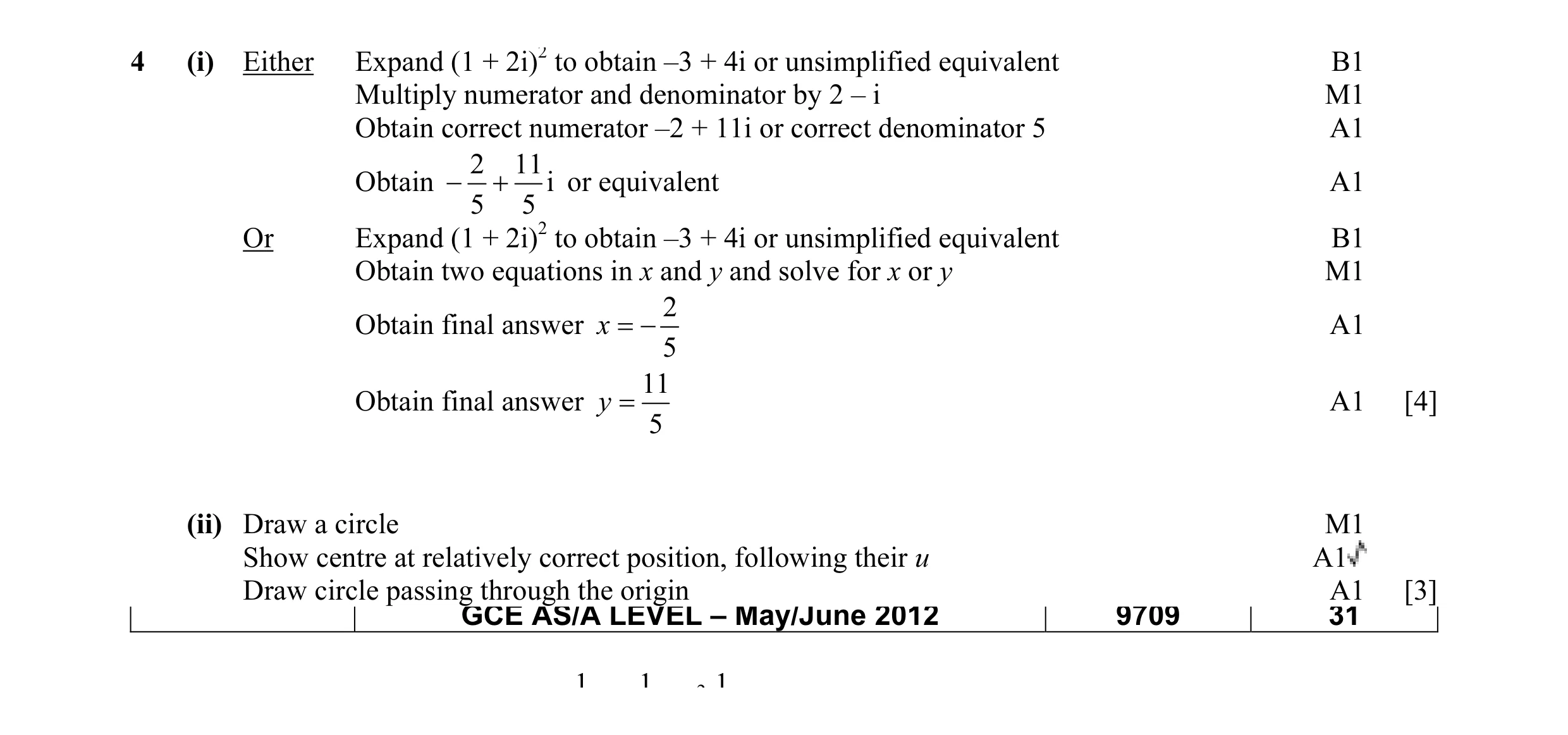 7
7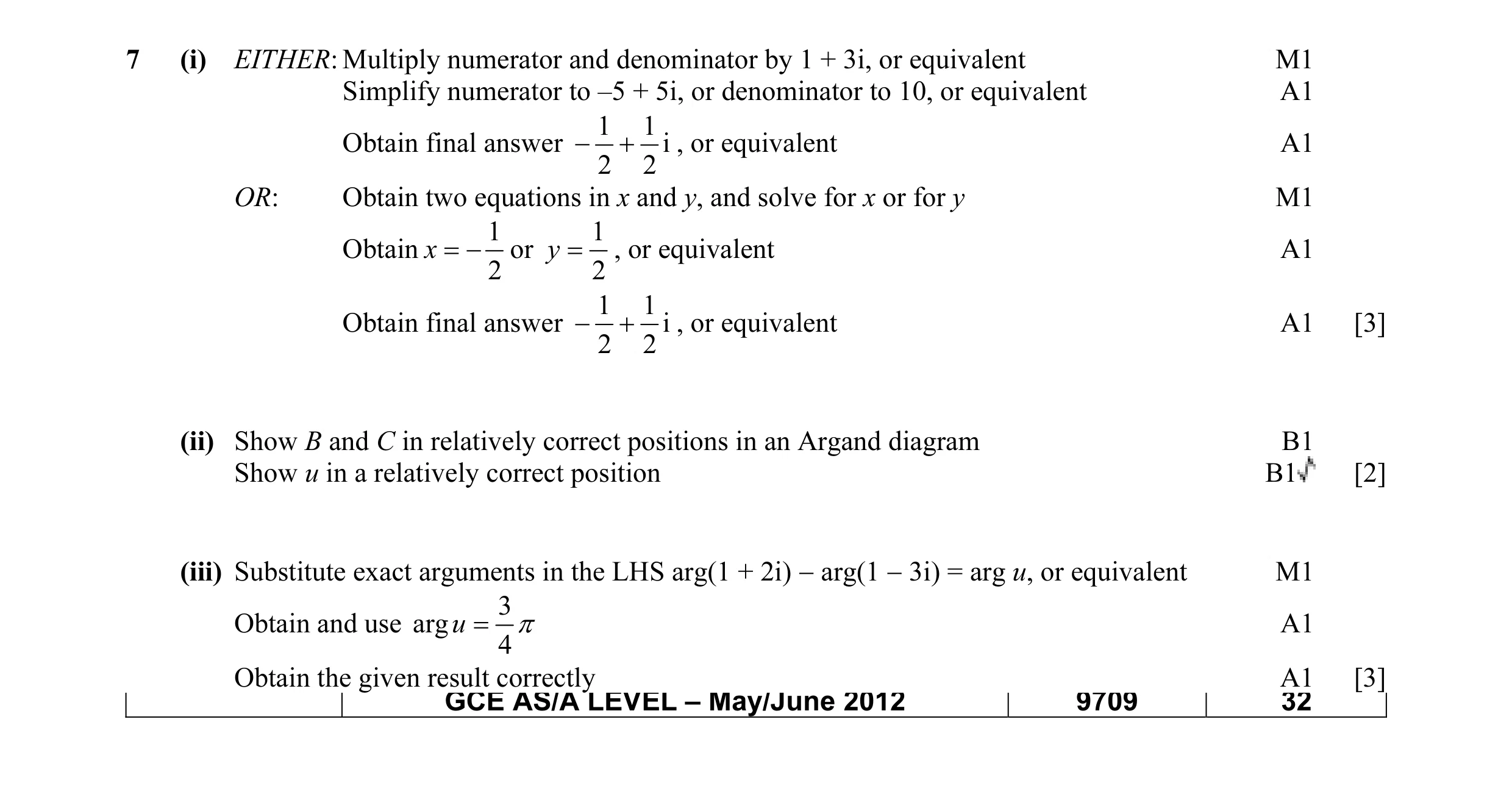 8
8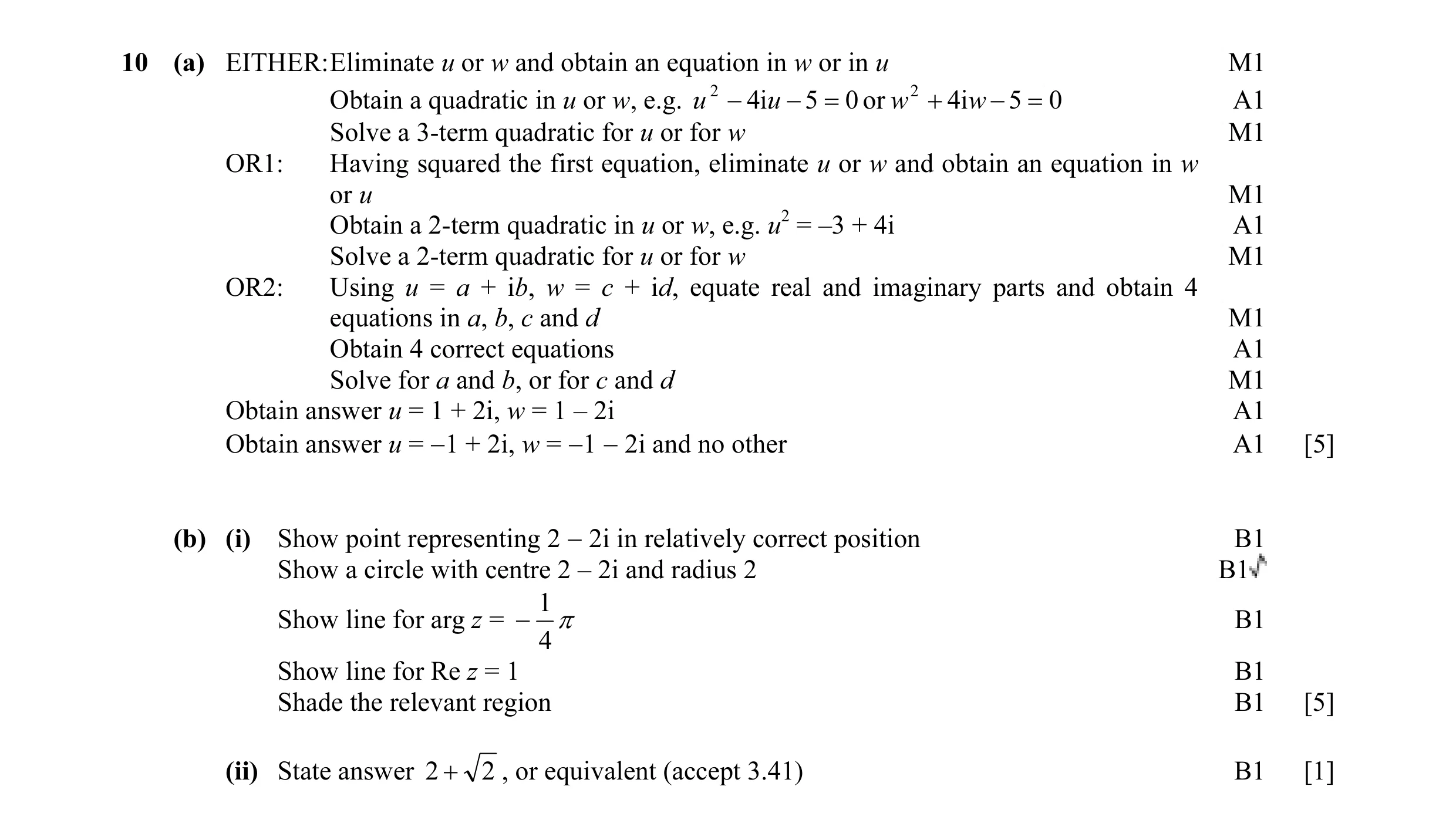 11
11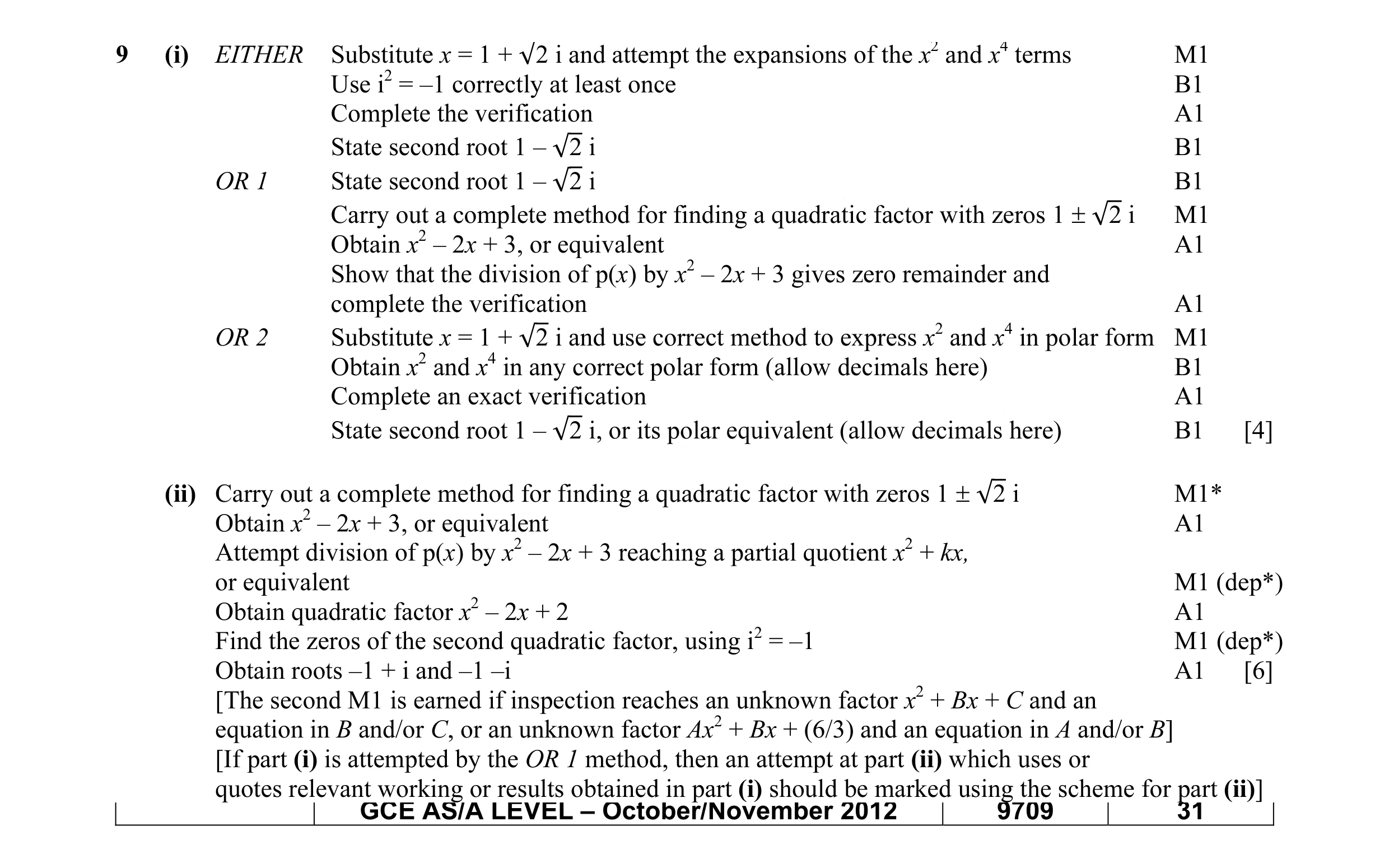 10
10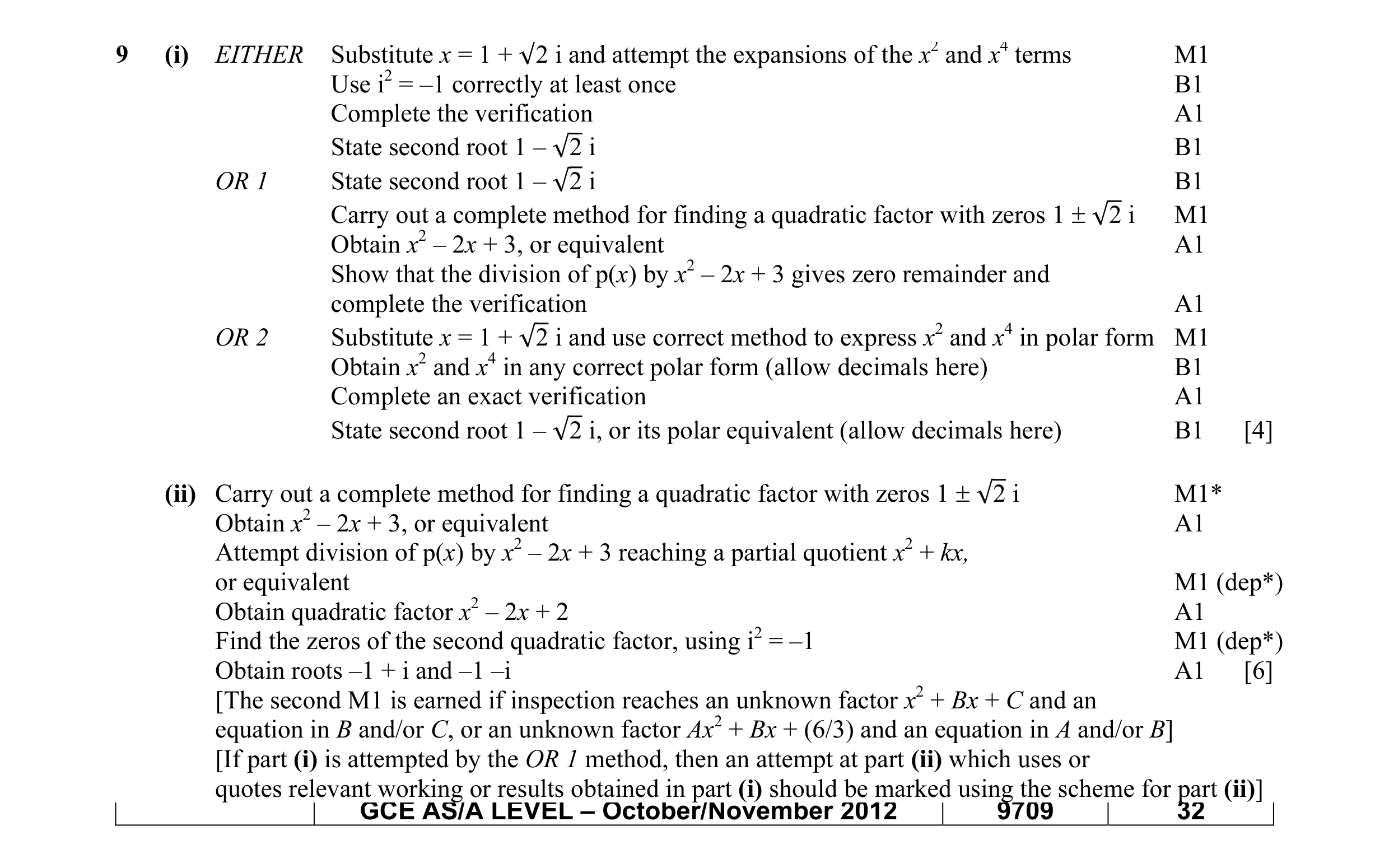 10
10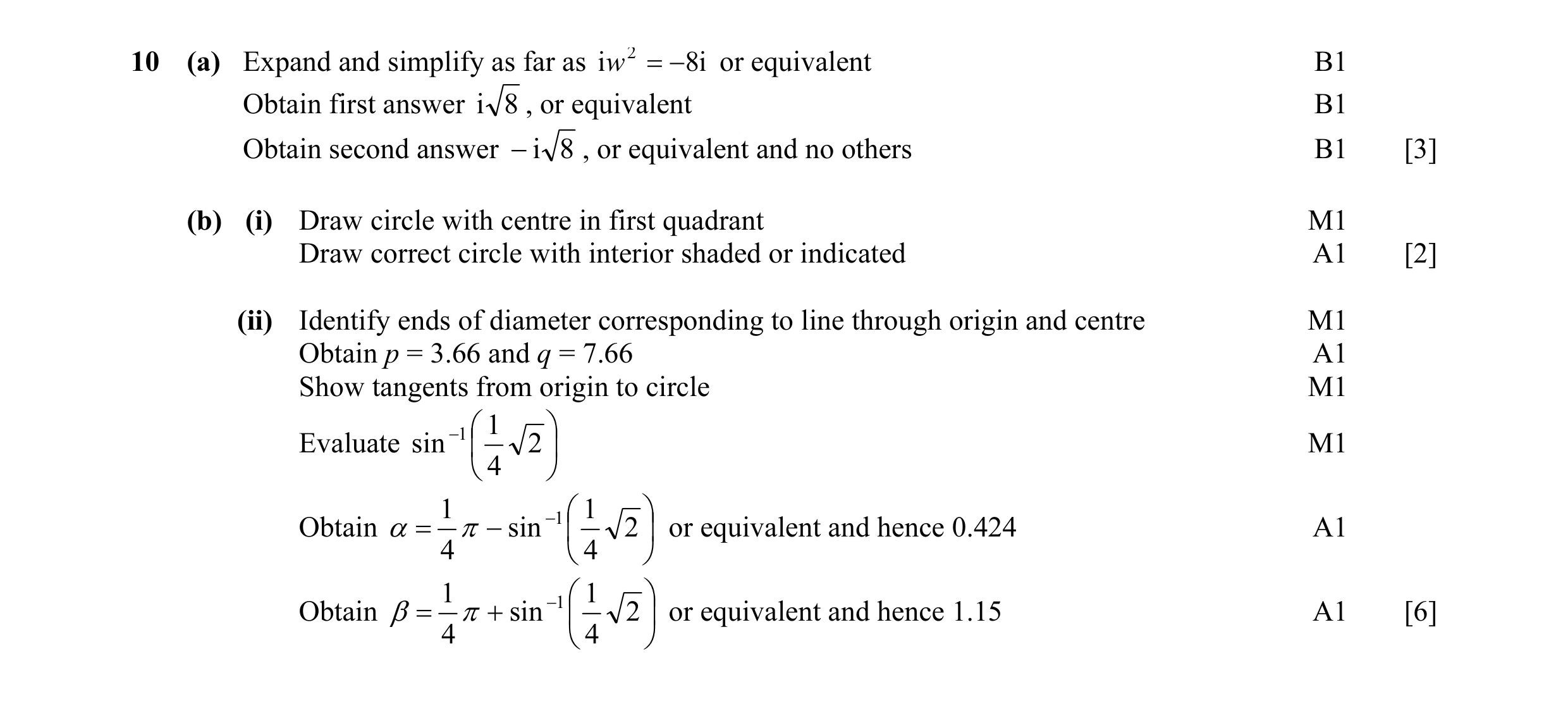 11
11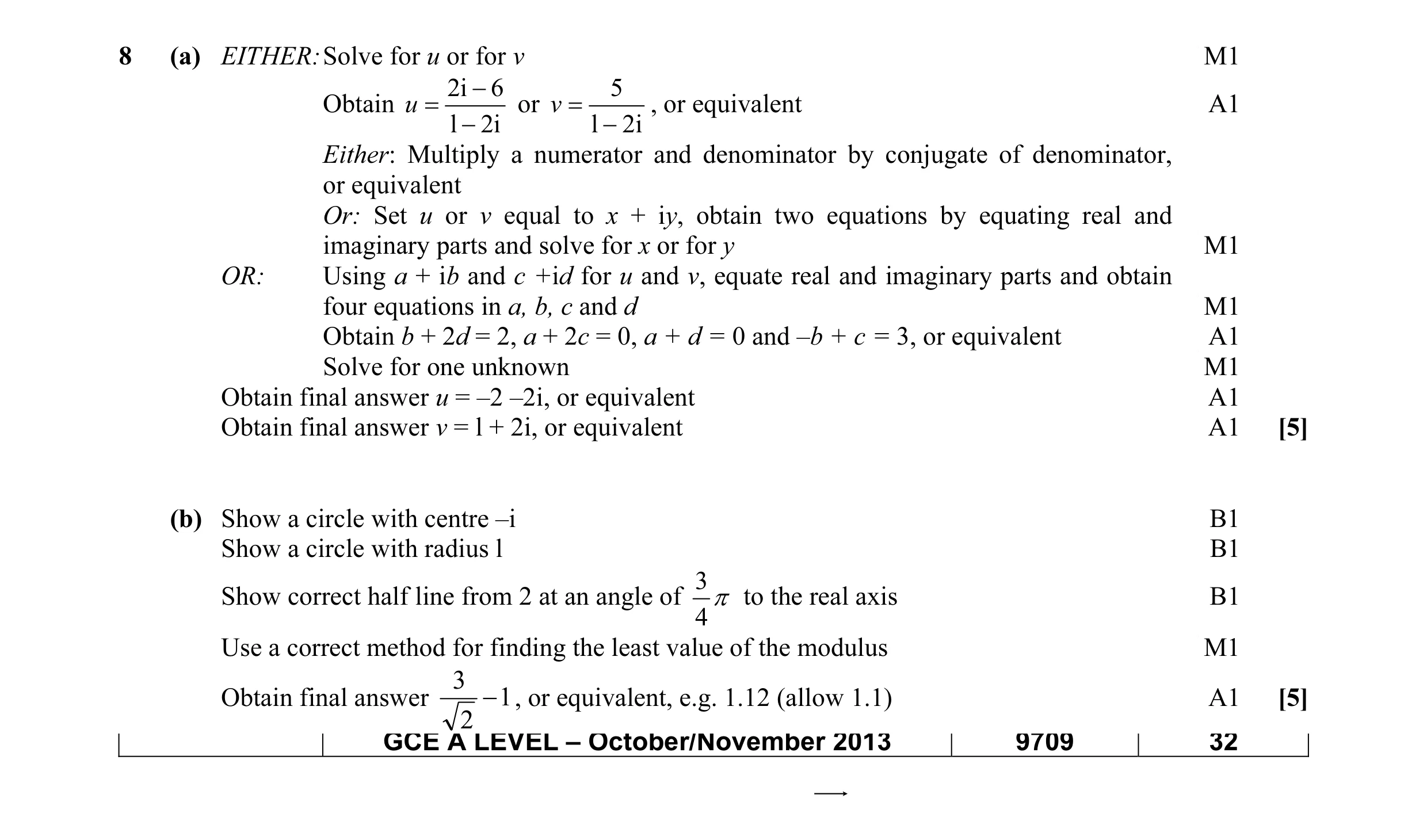 10
10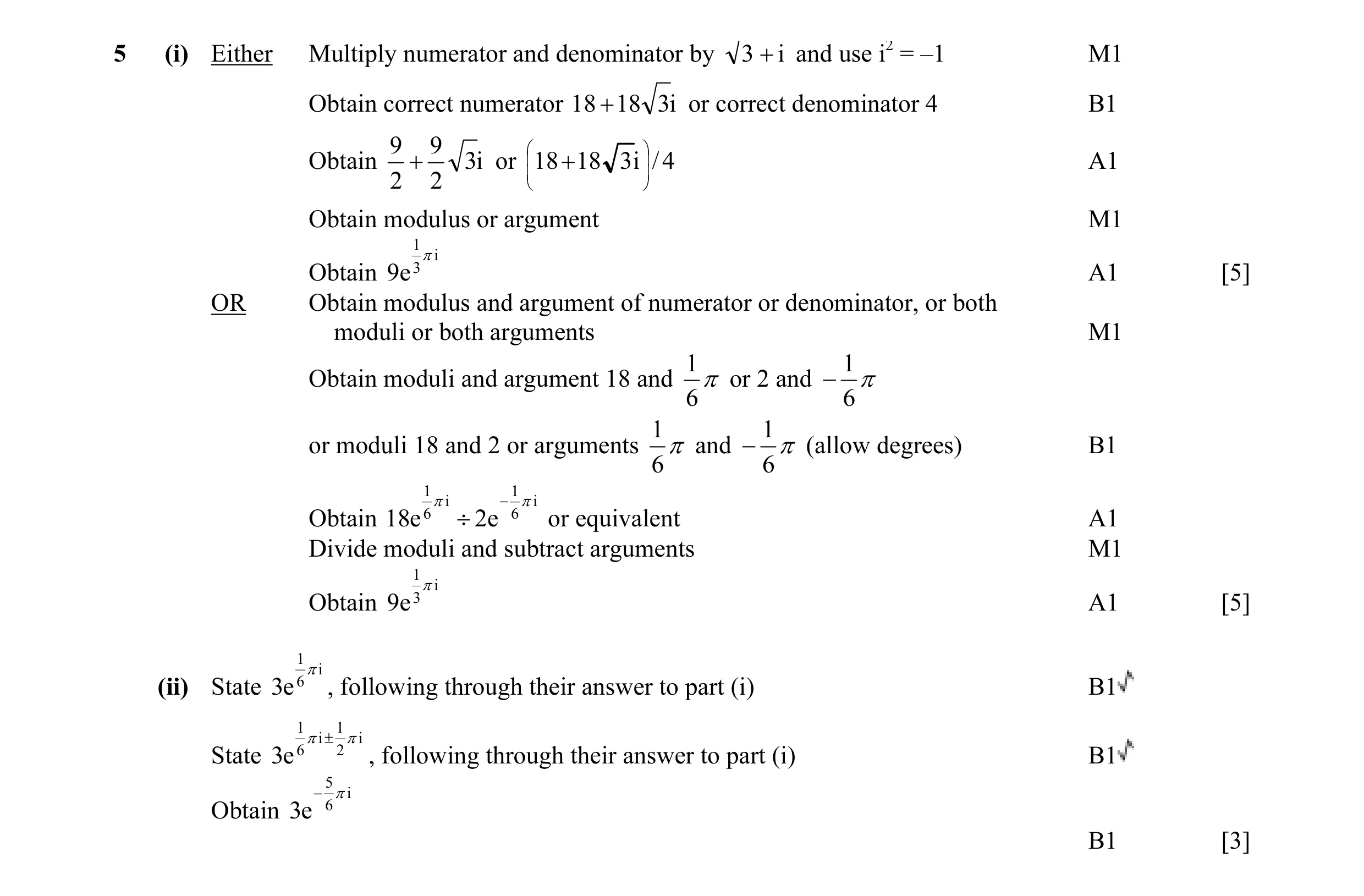 8
8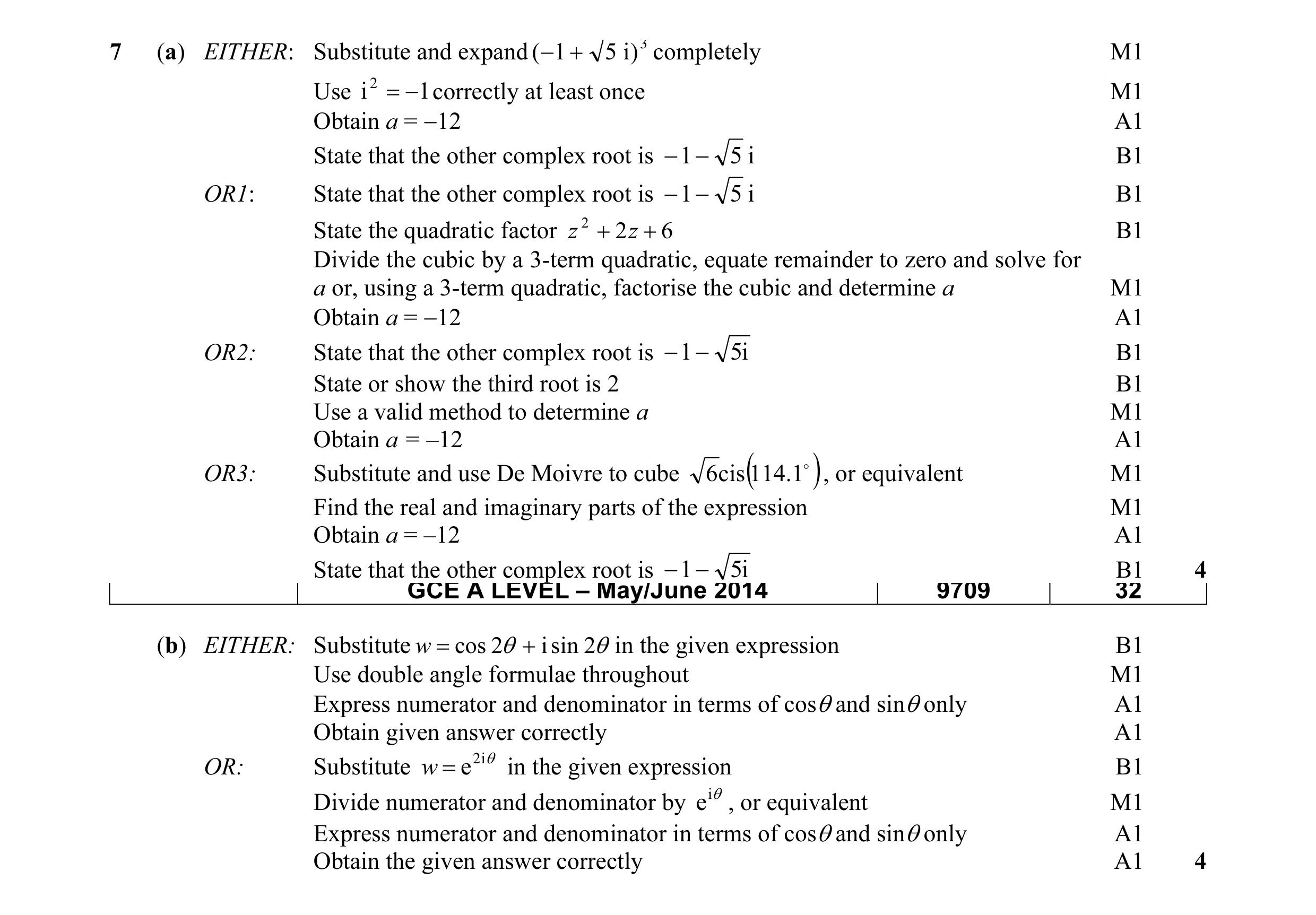 8
8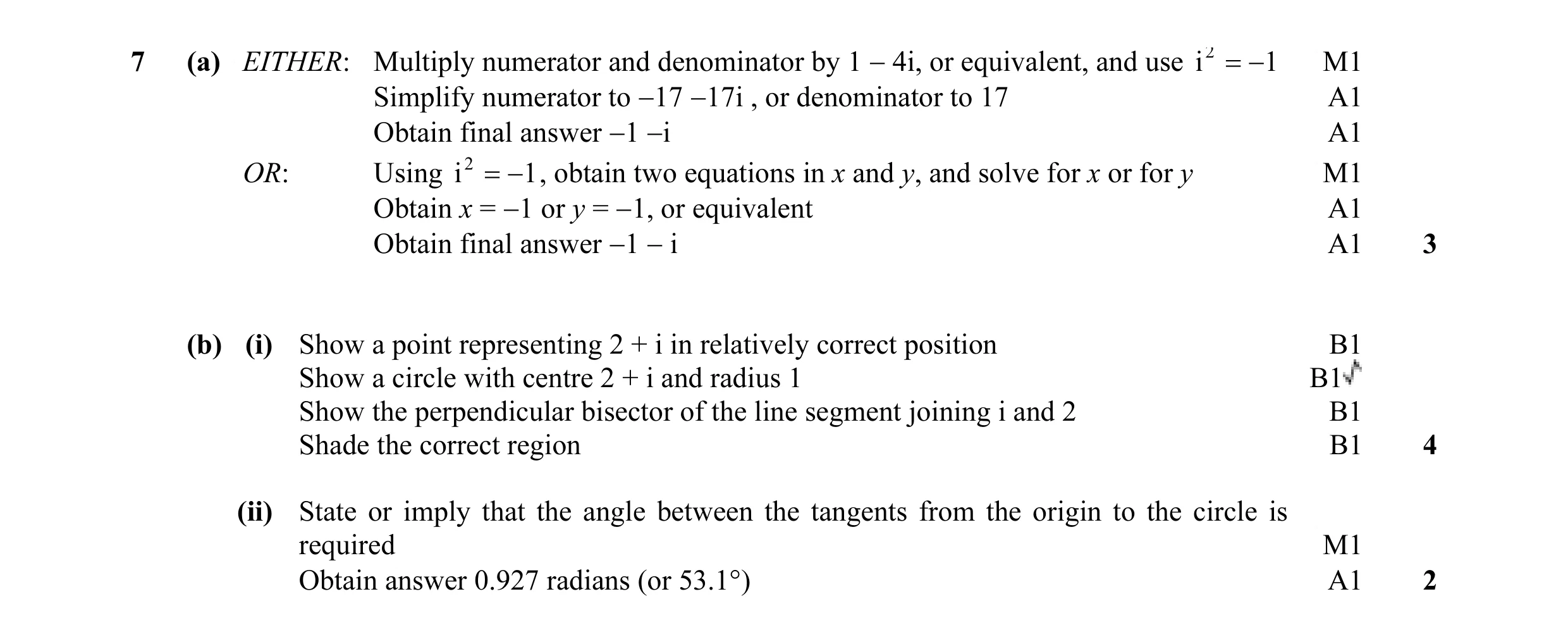 9
9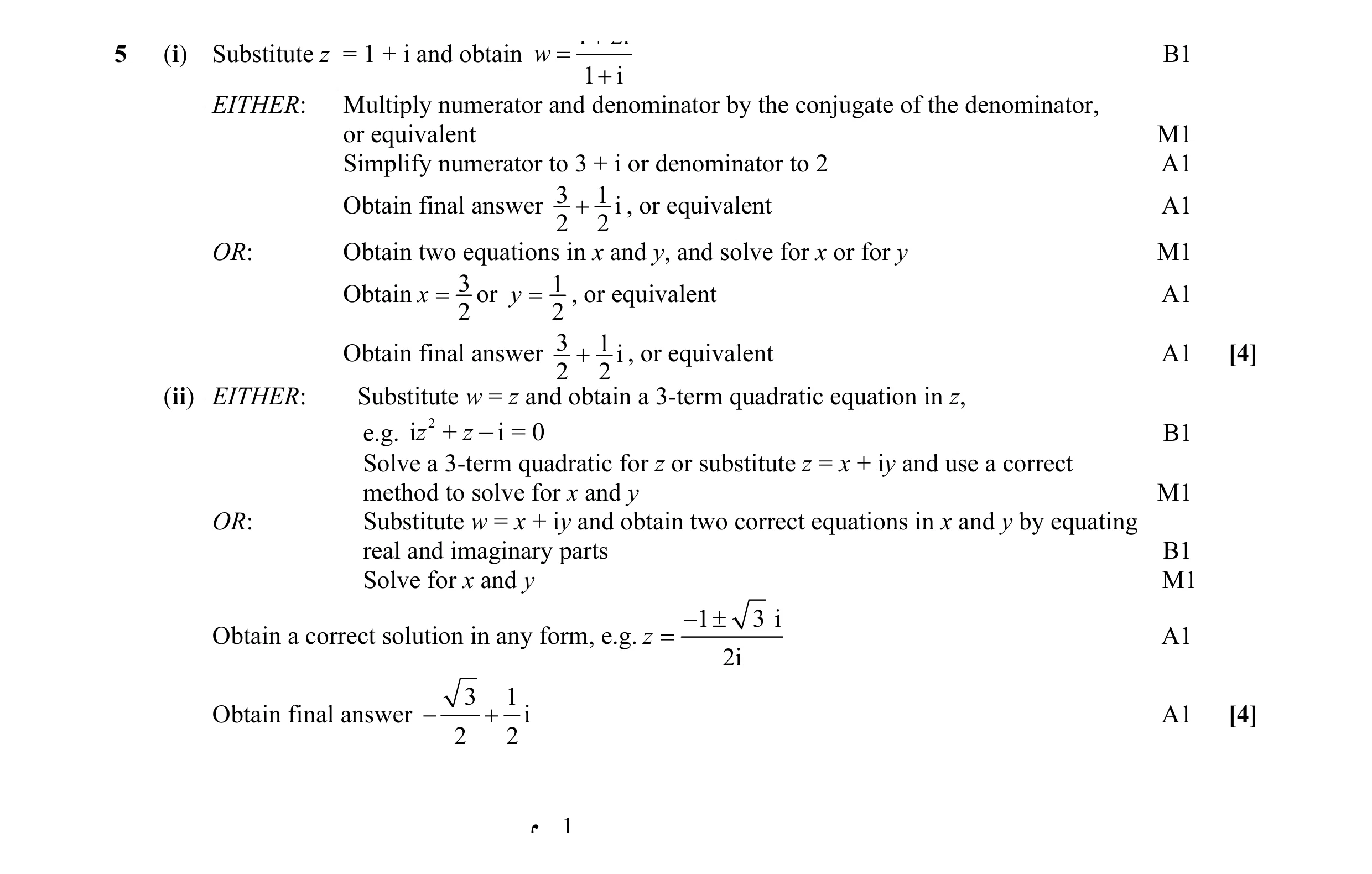 8
8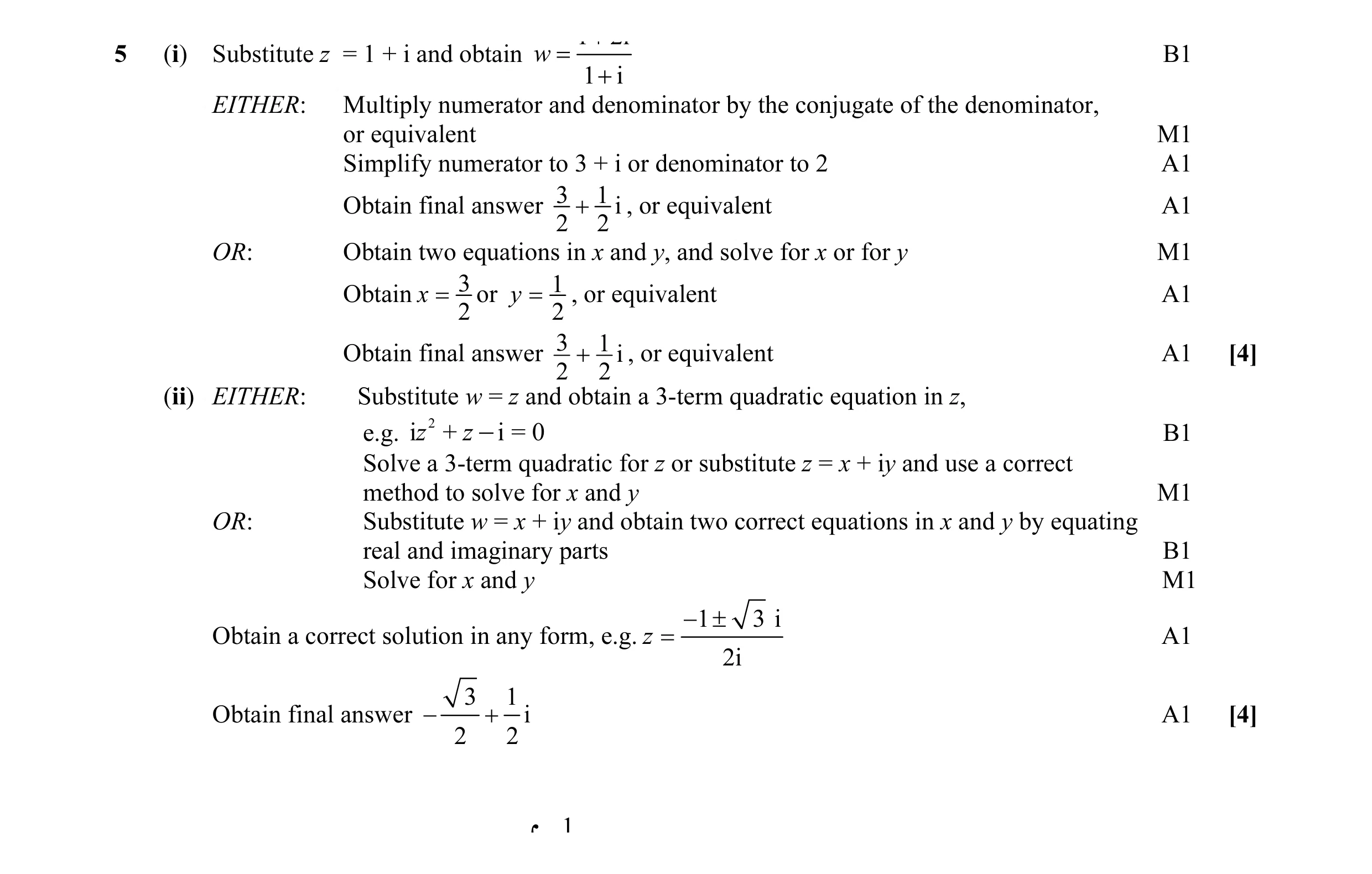 8
8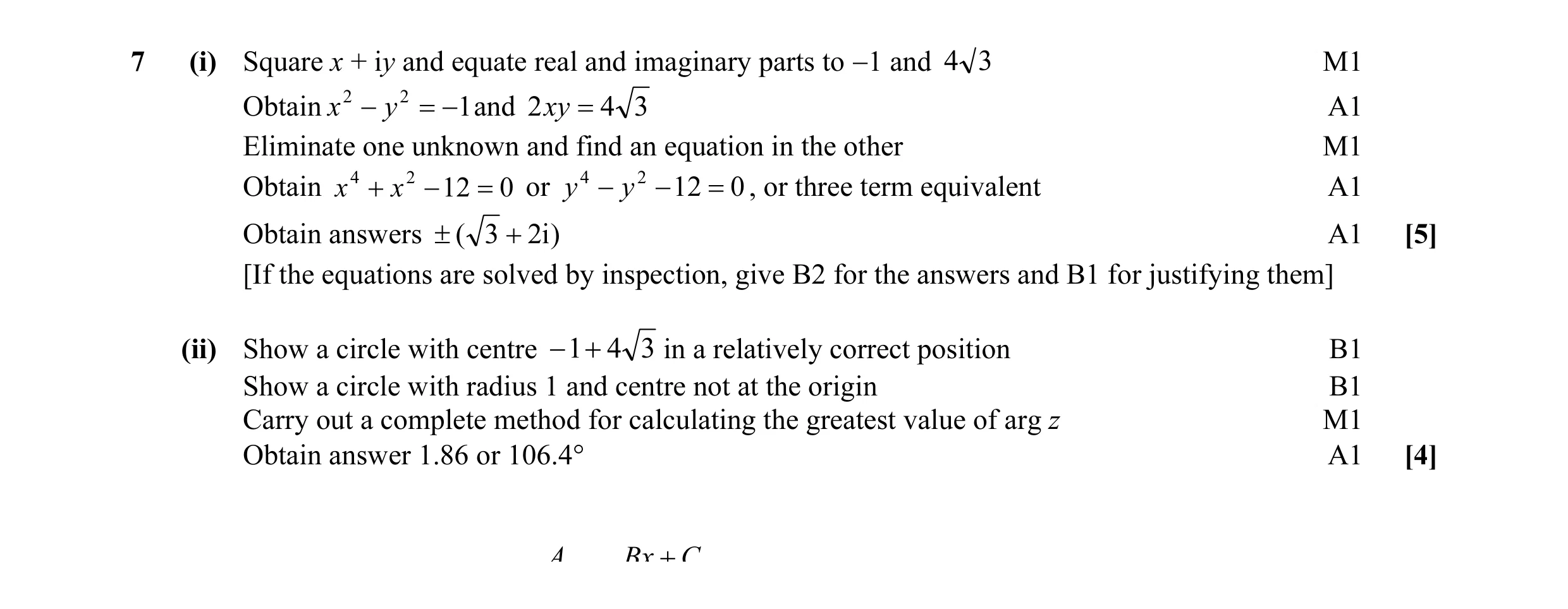 9
9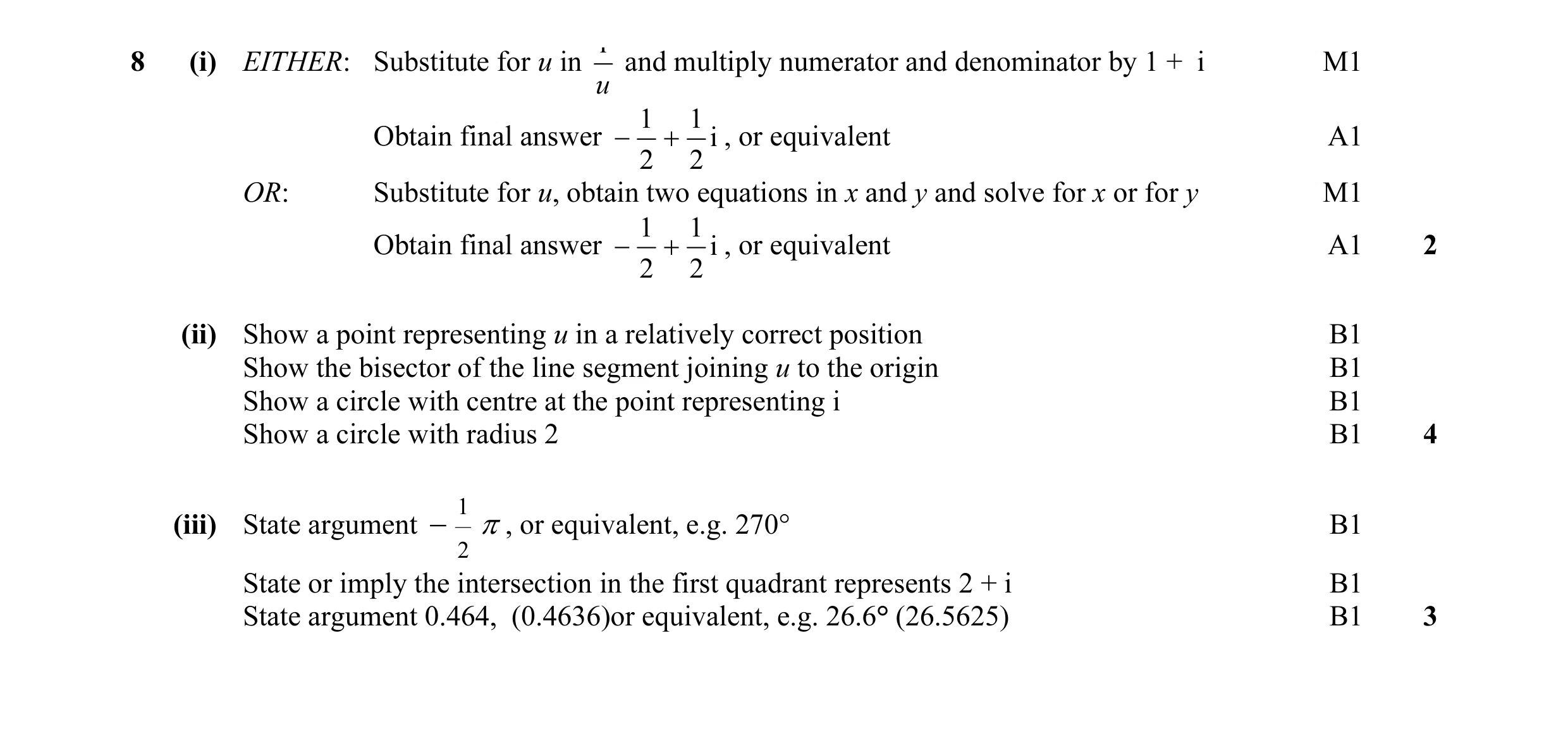 9
9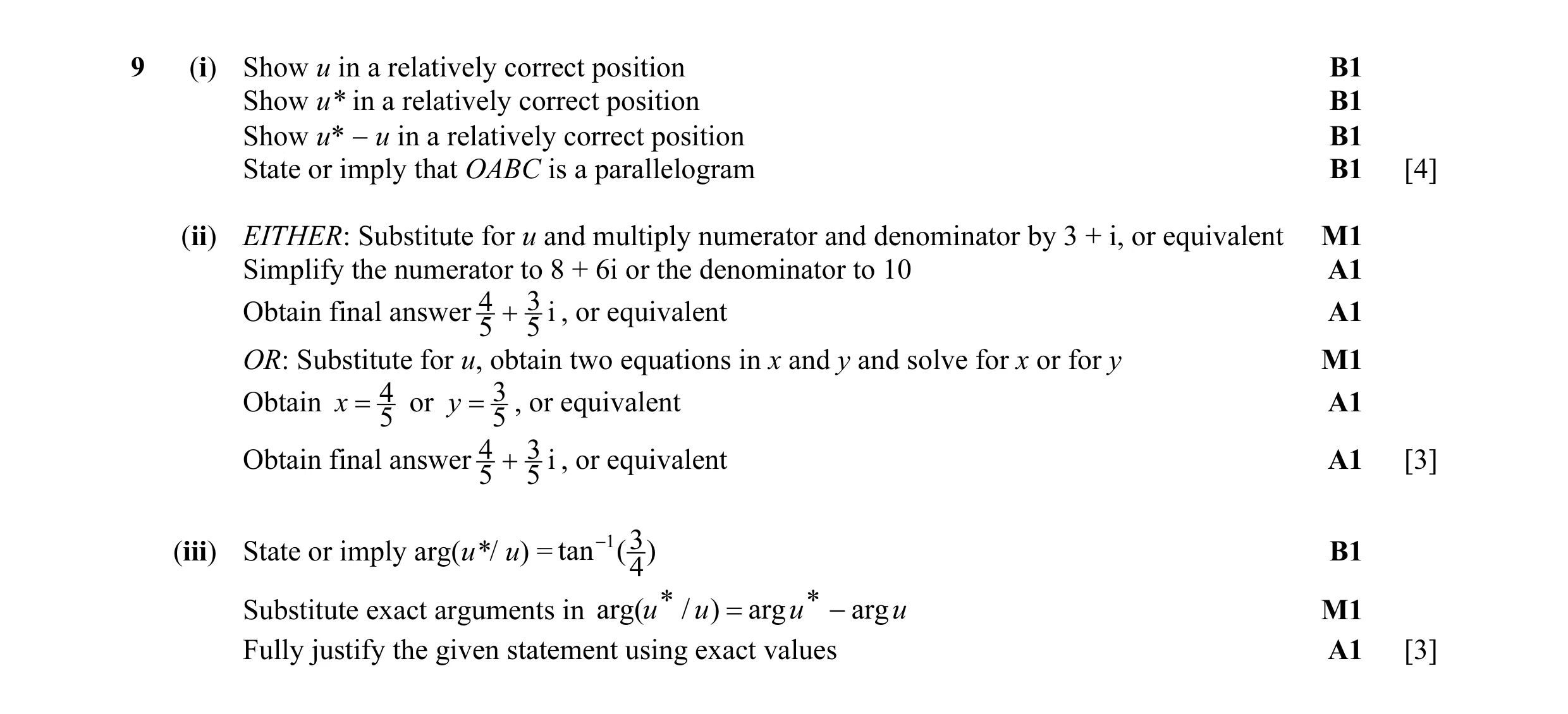 7
7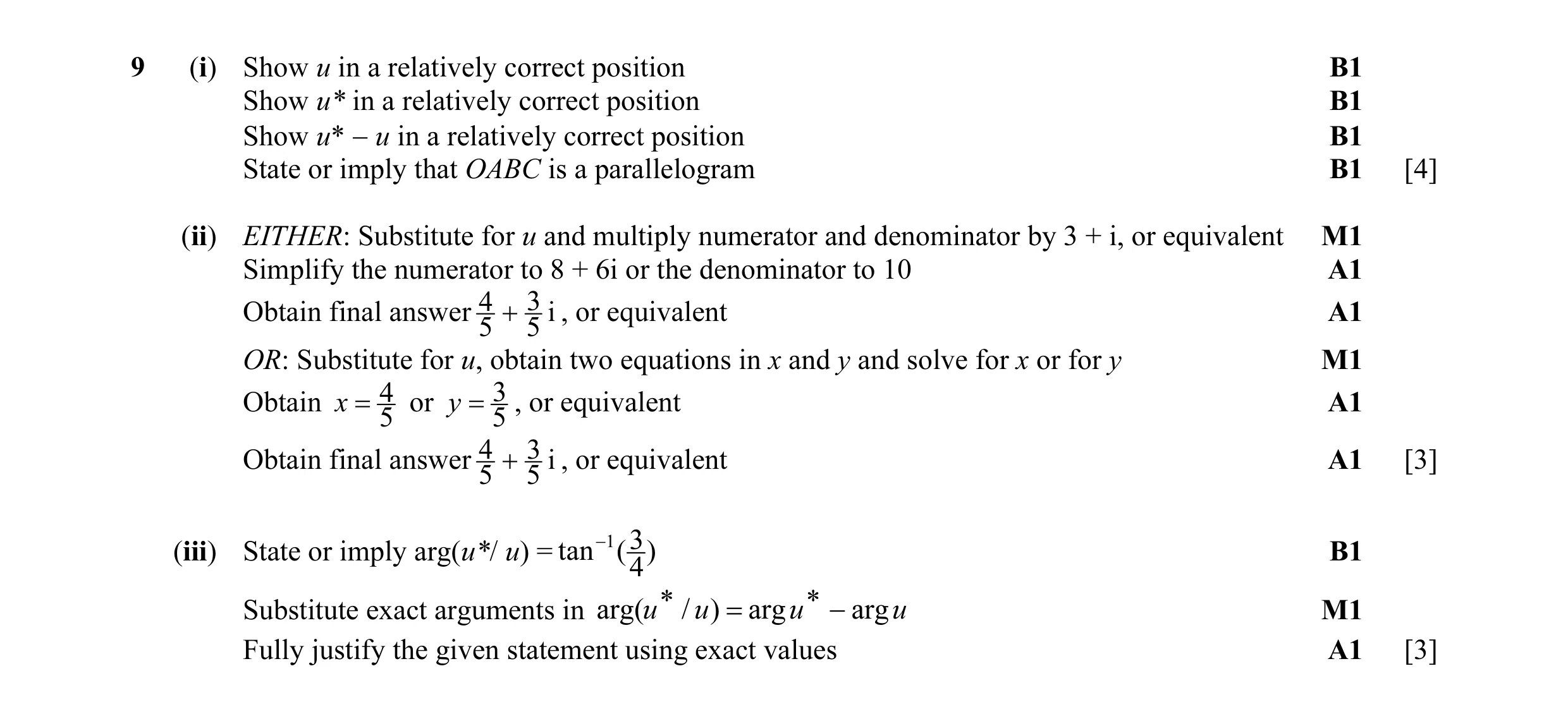 7
7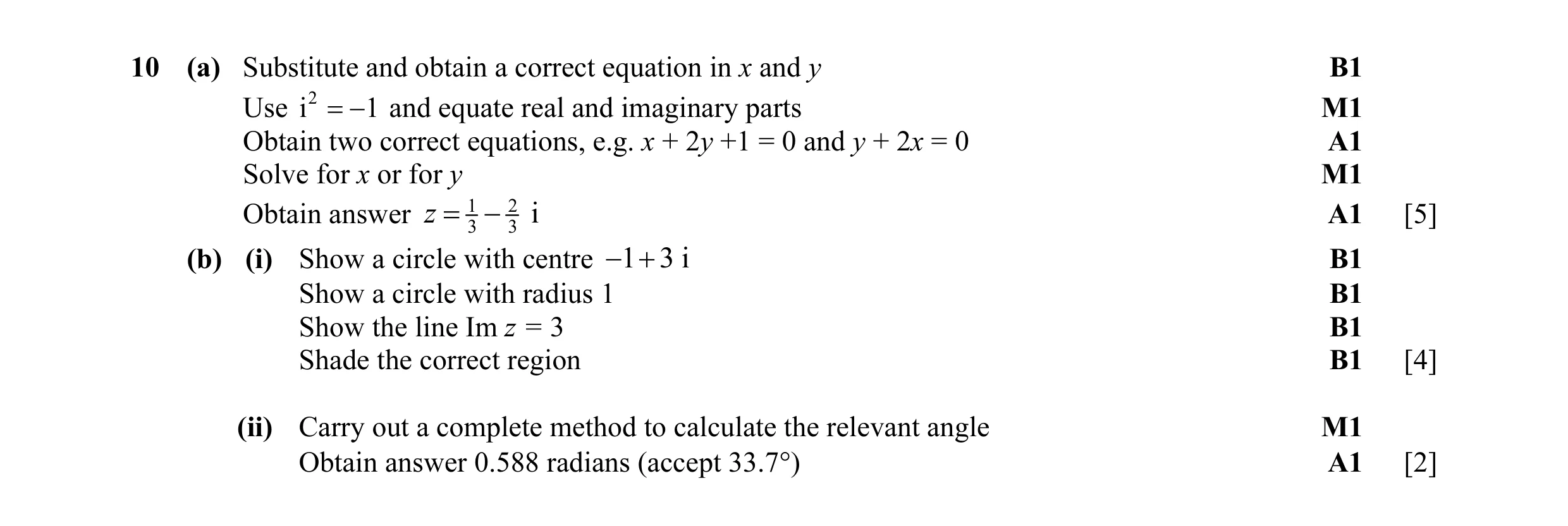 11
11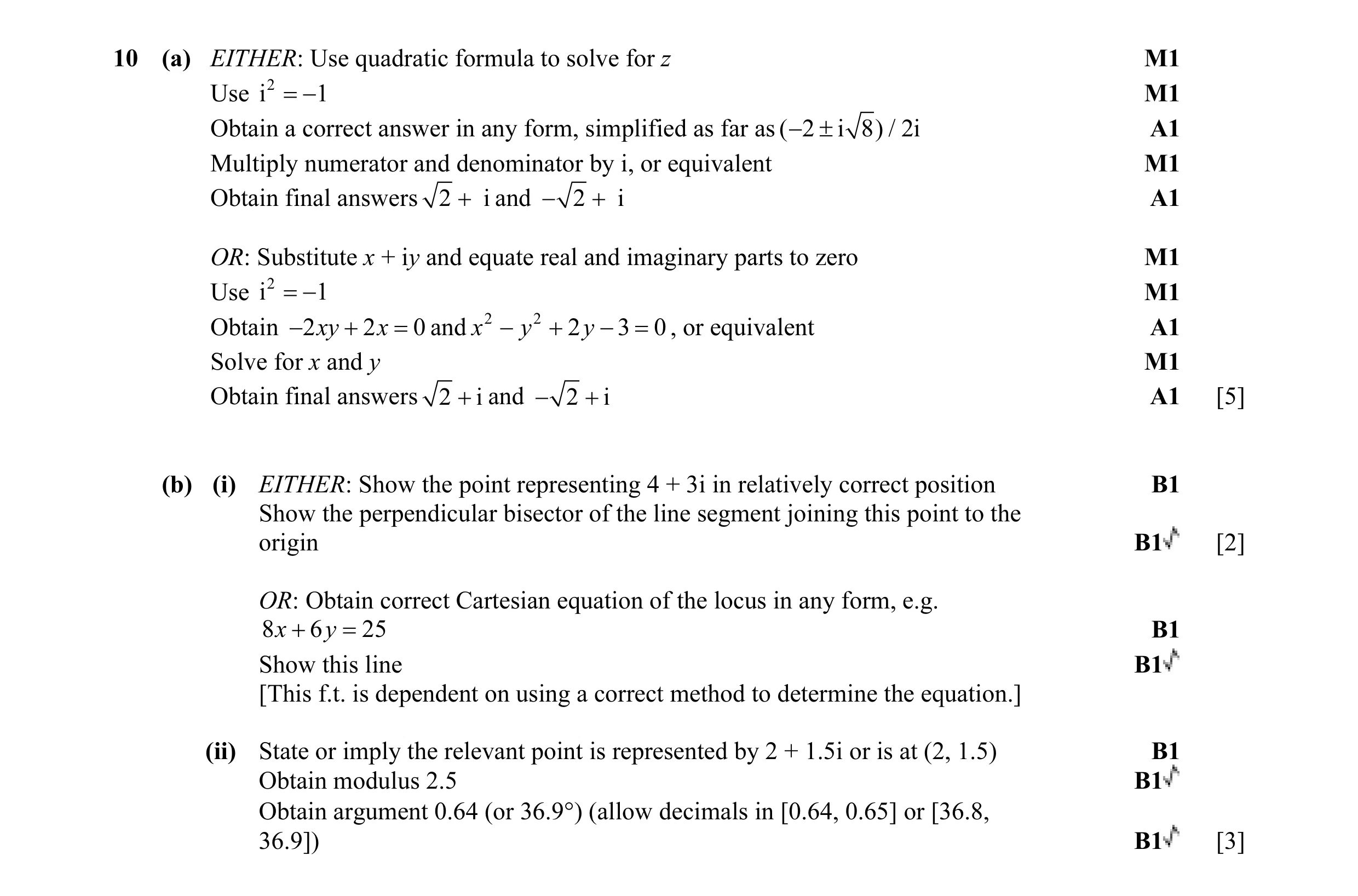 10
10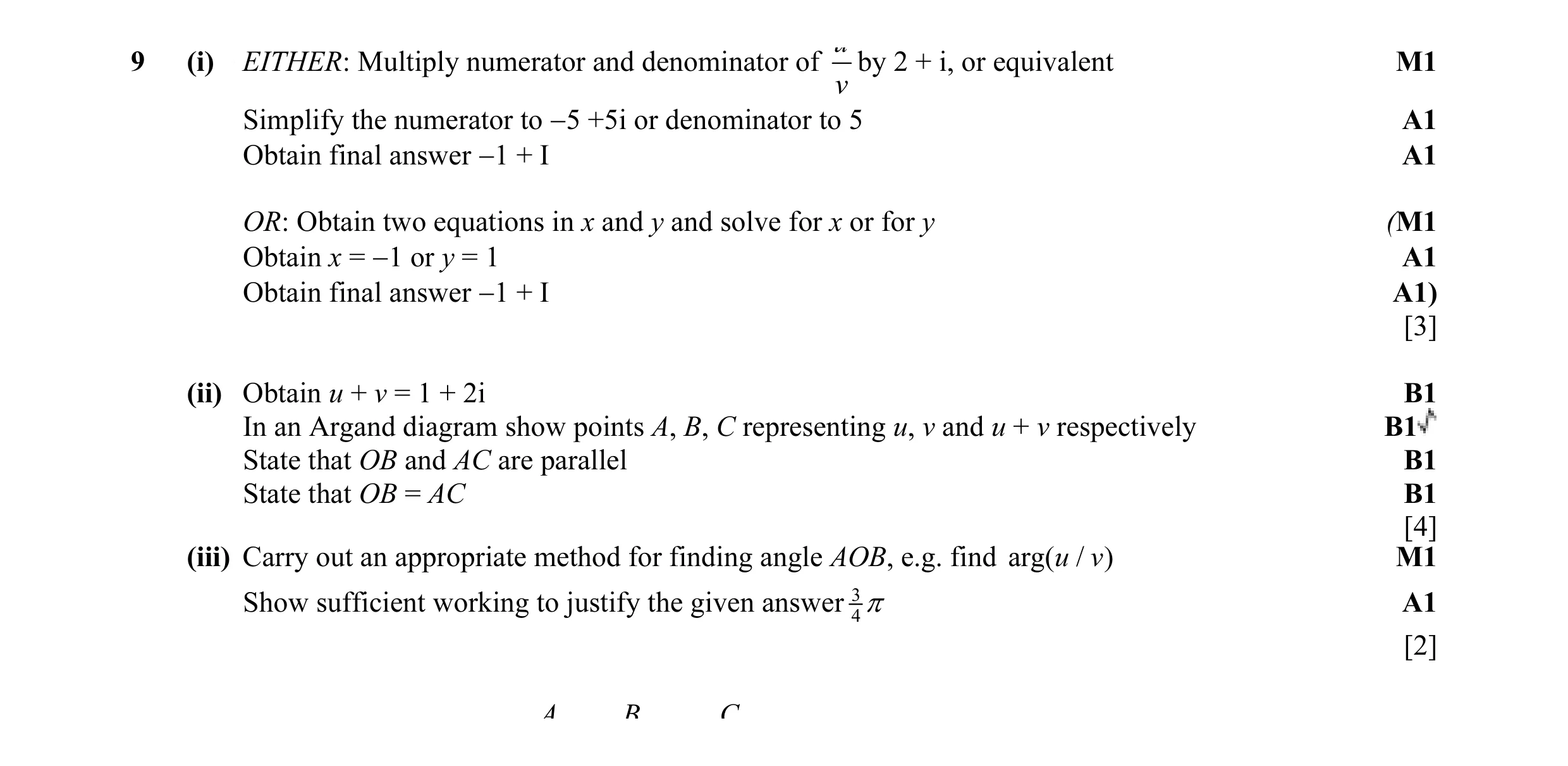 9
9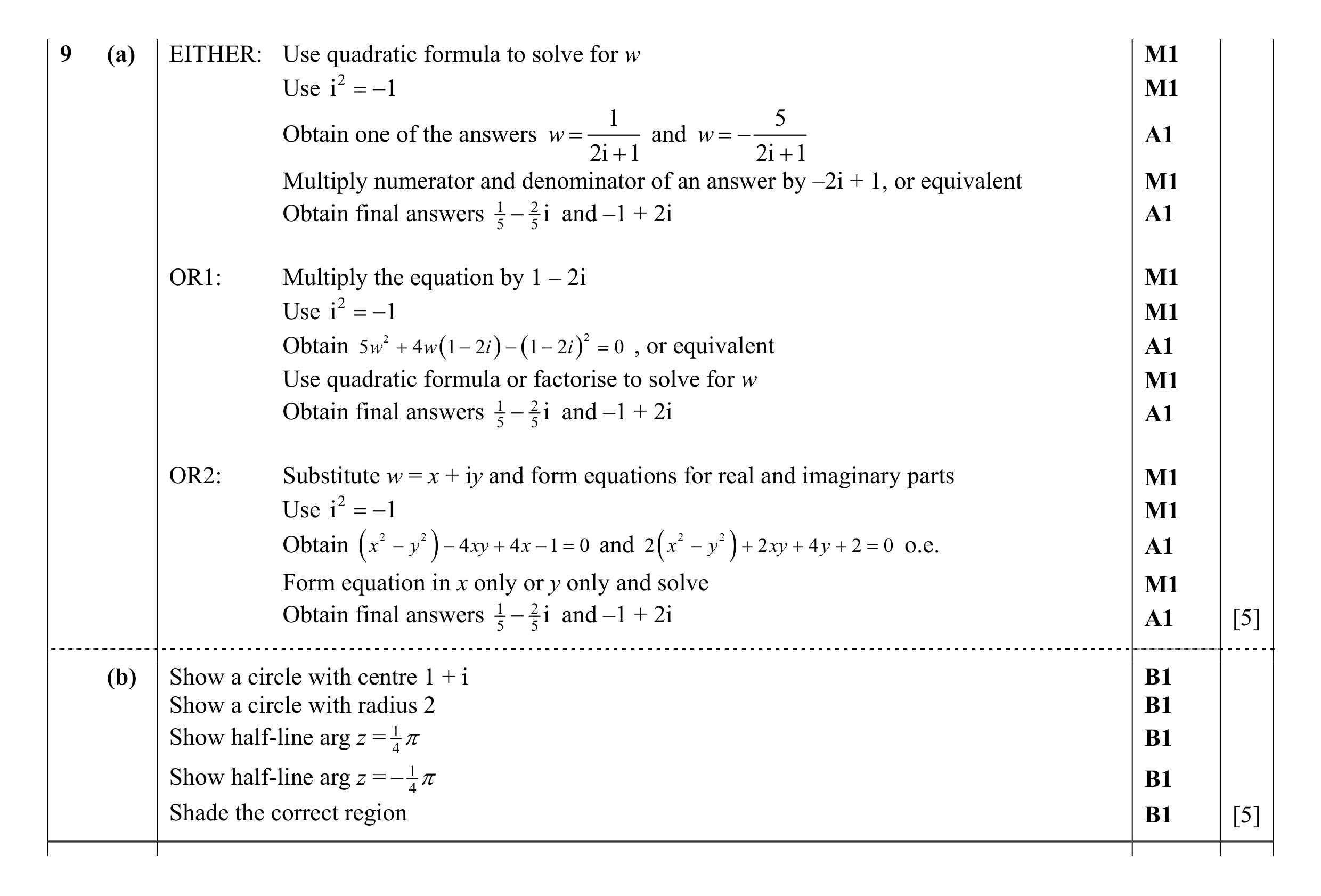 10
10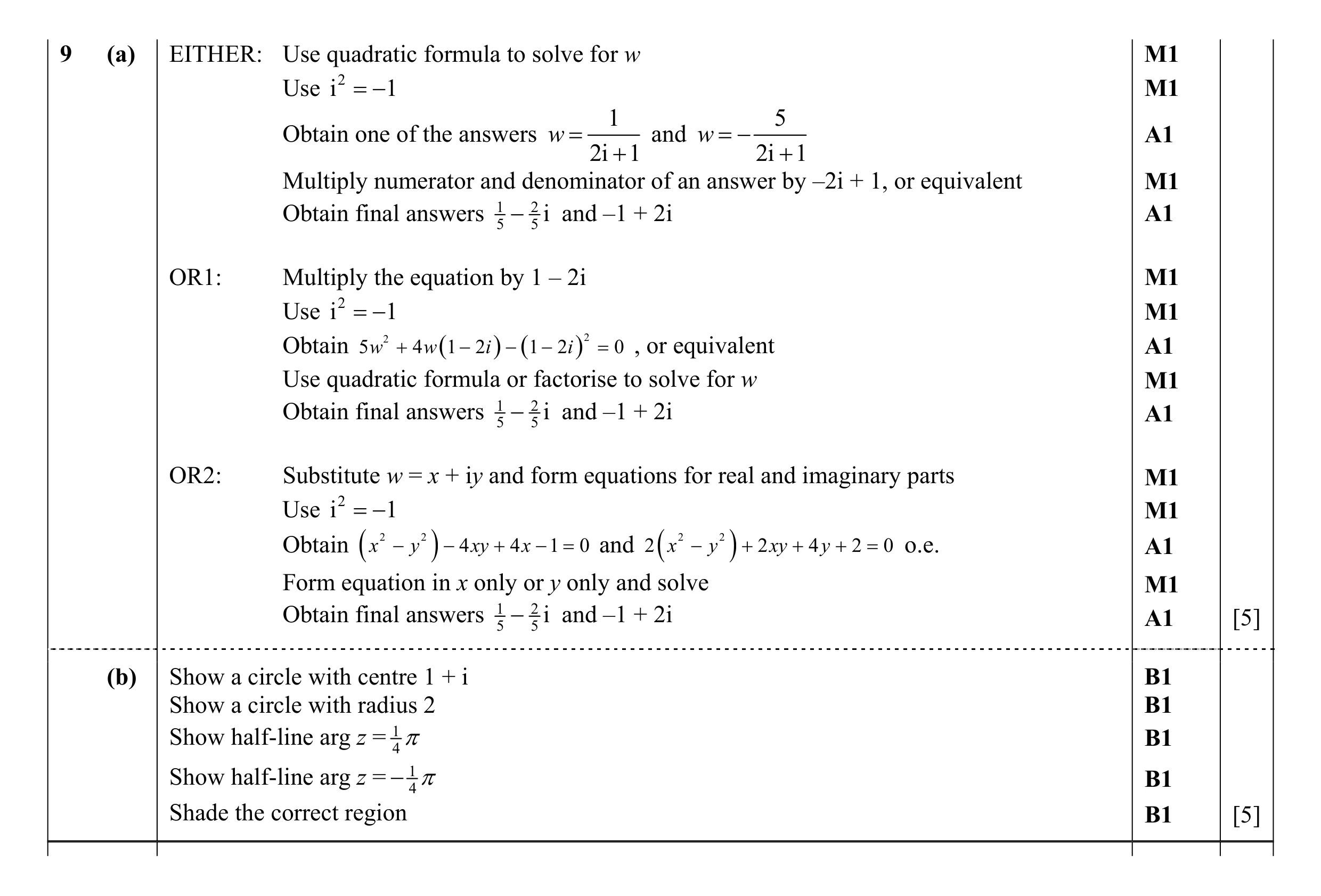 10
10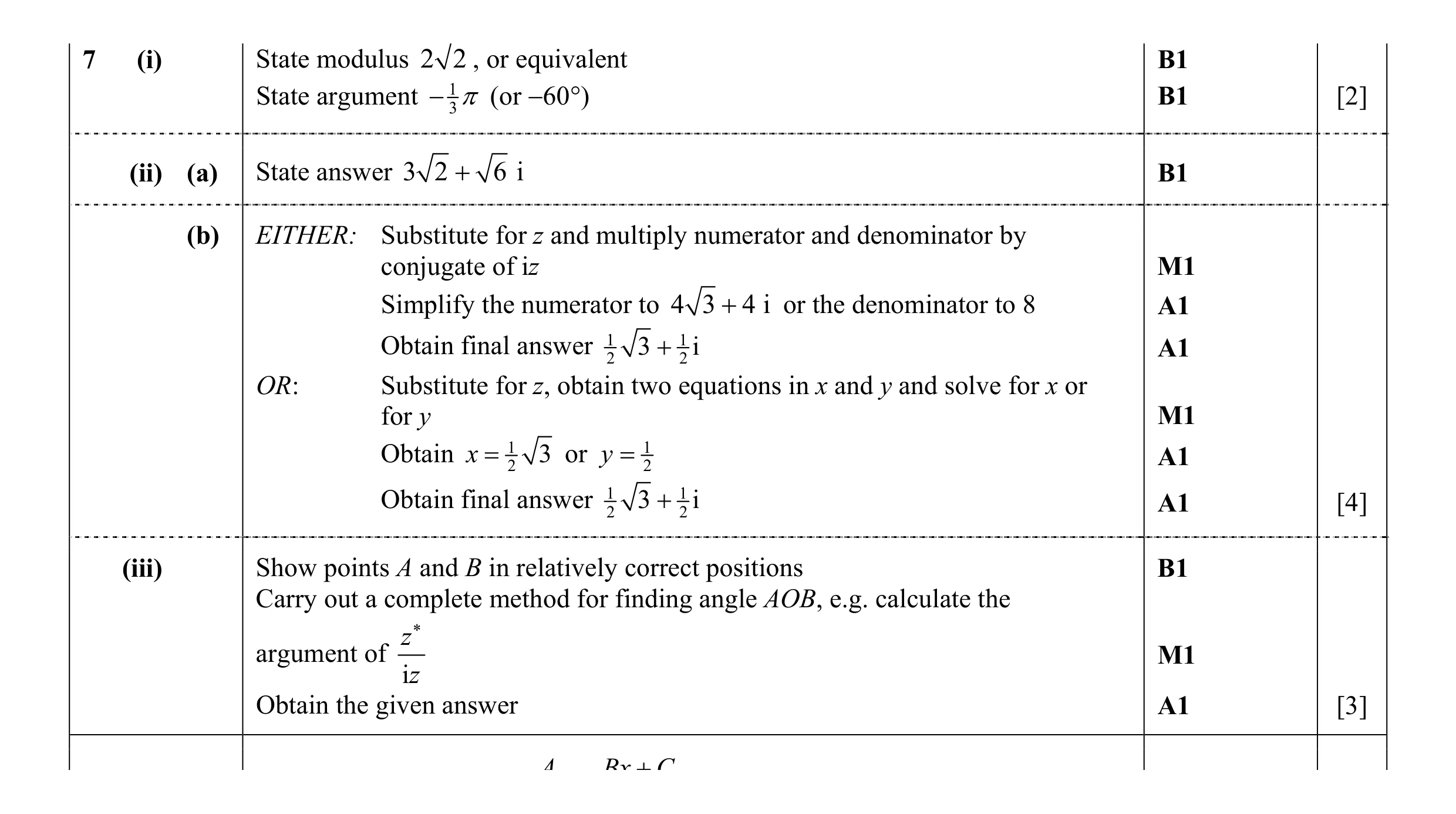 9
9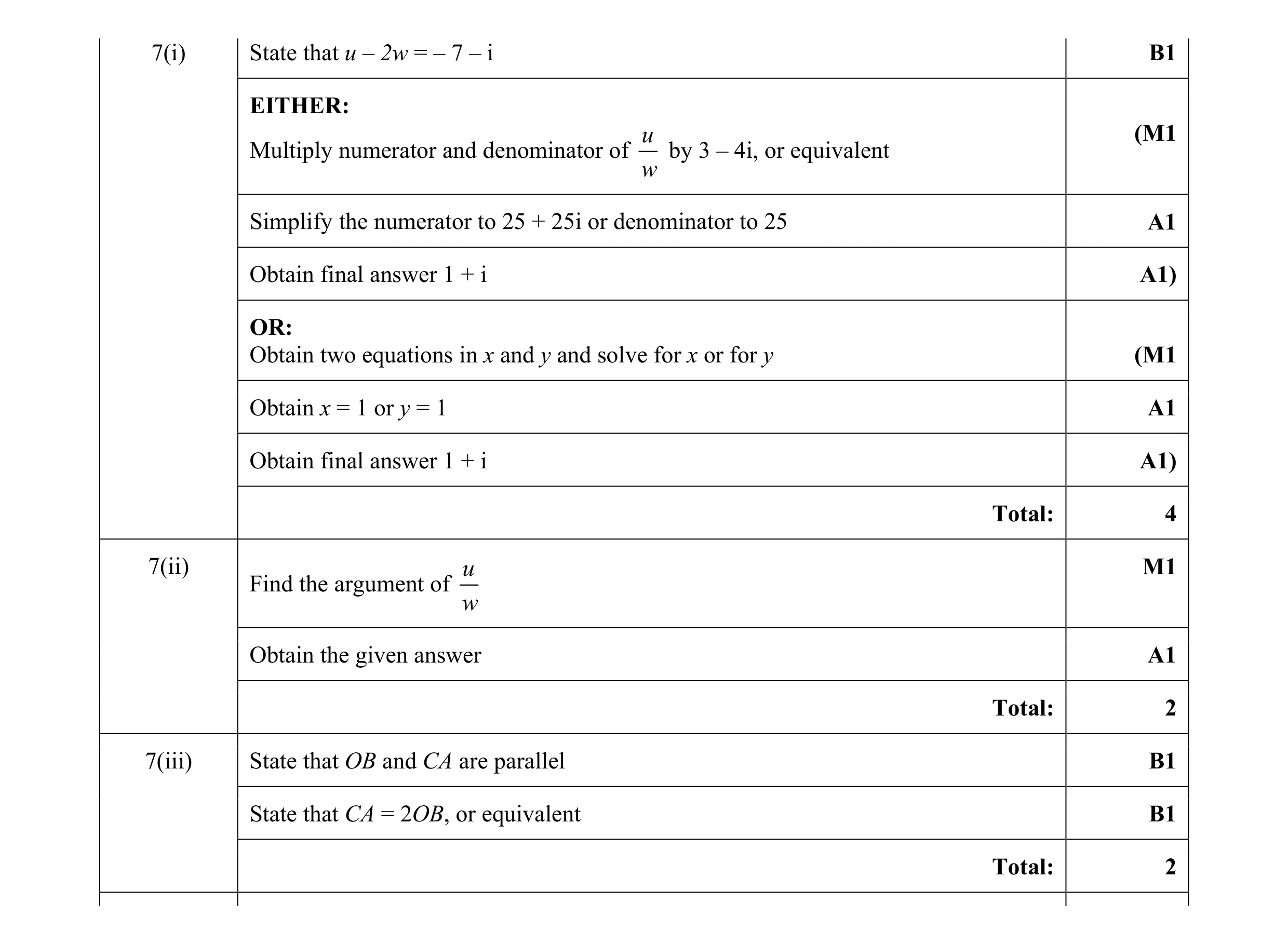 8
8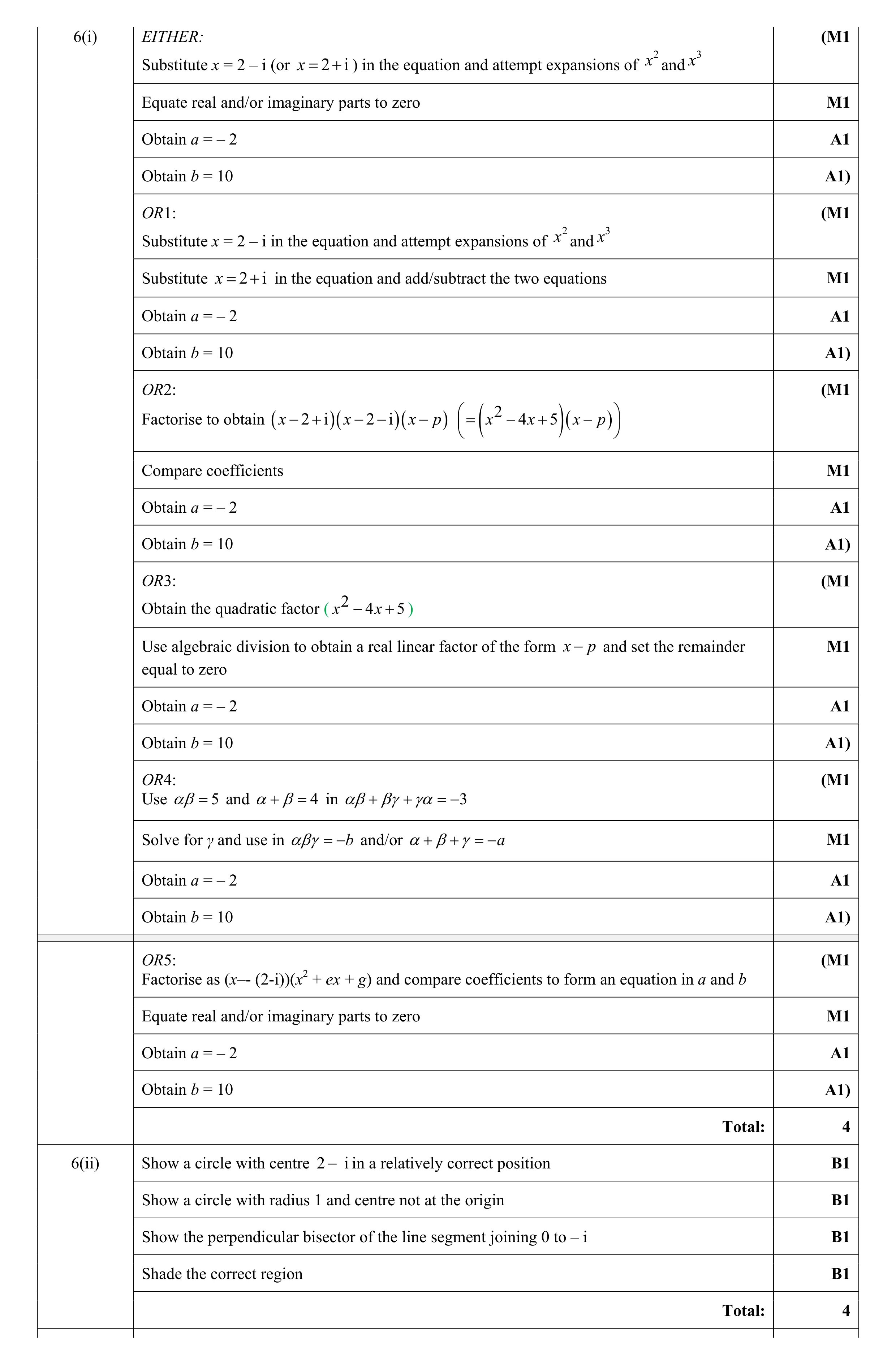 8
8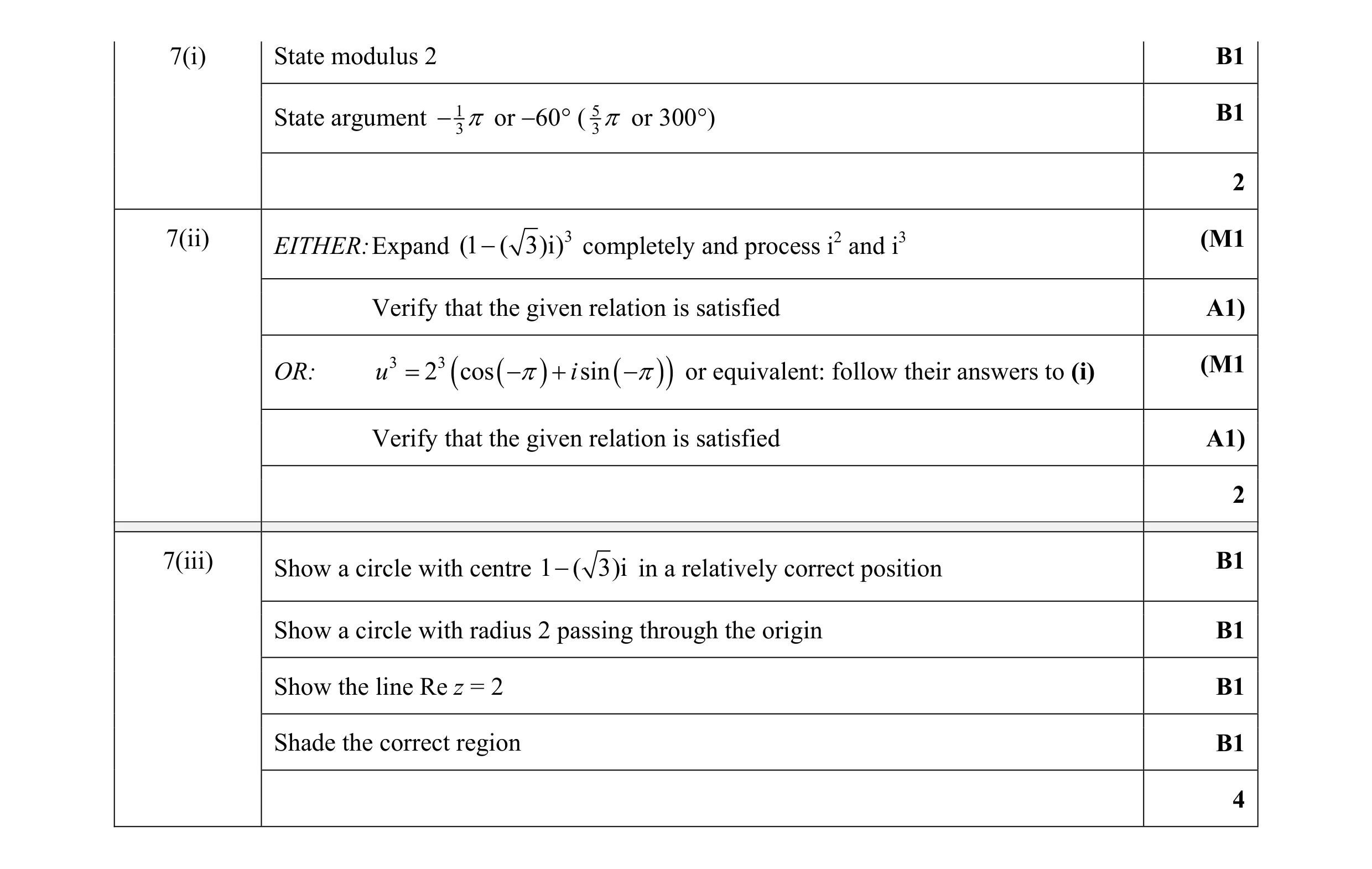 8
8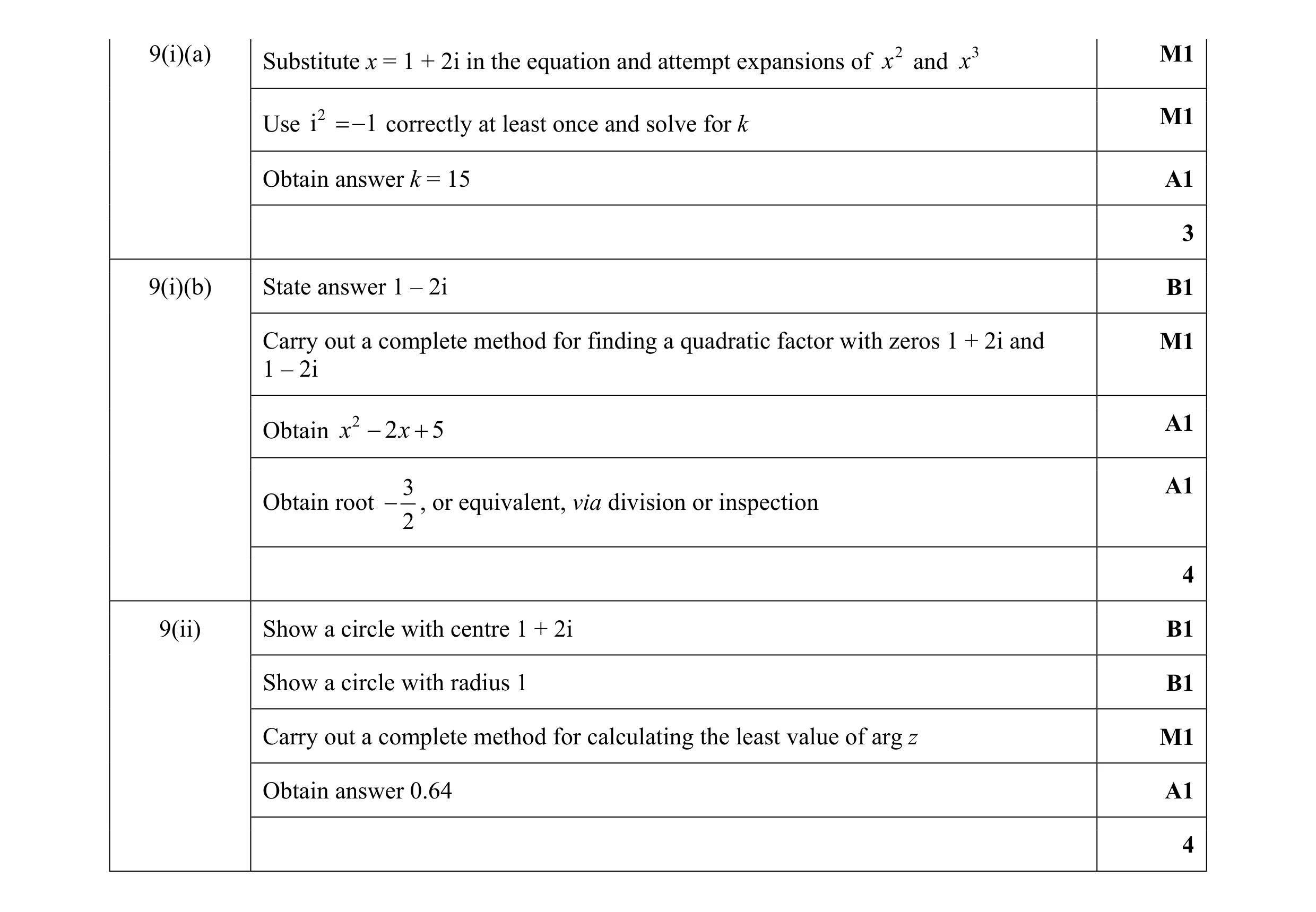 11
11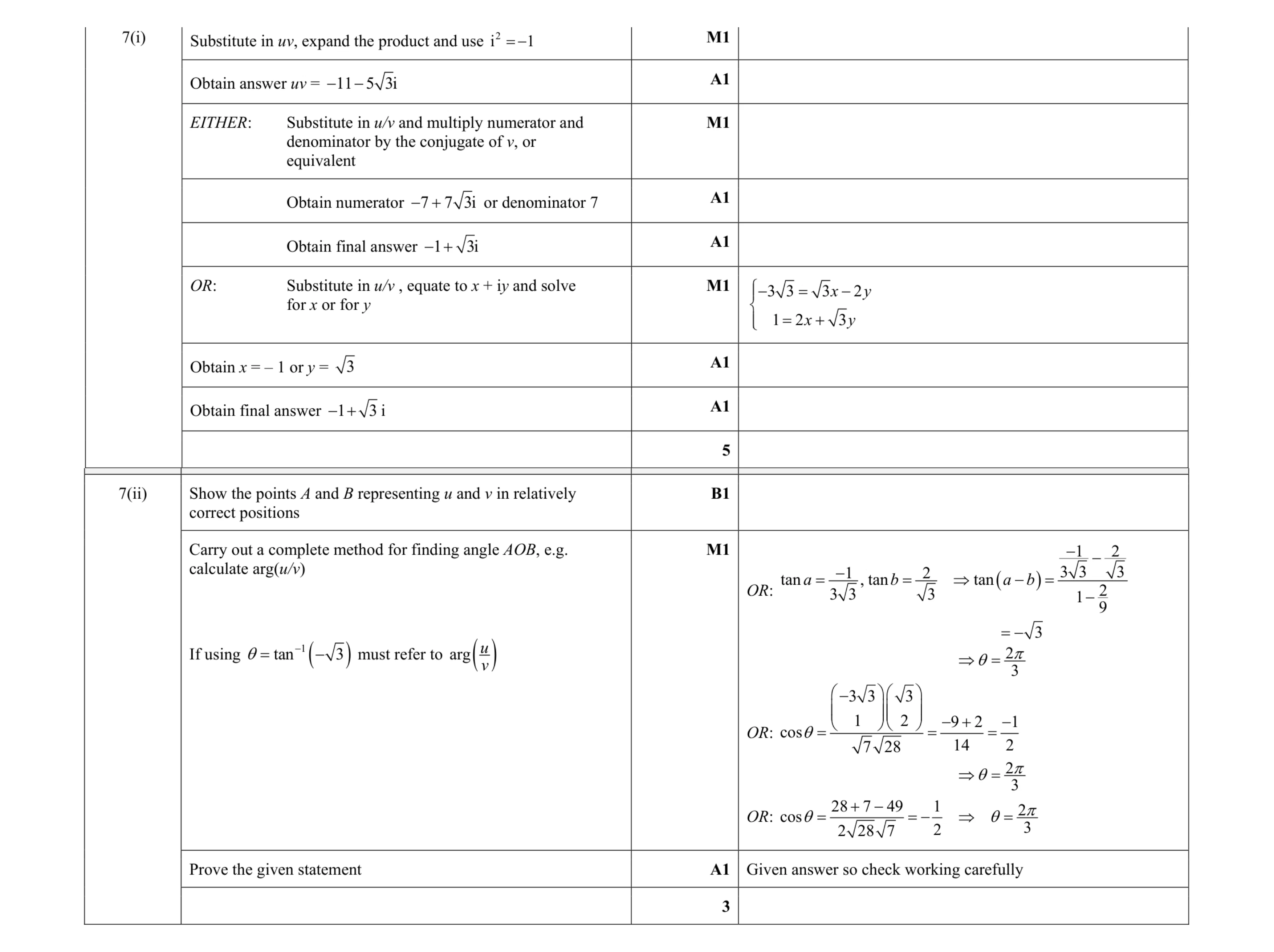 8
8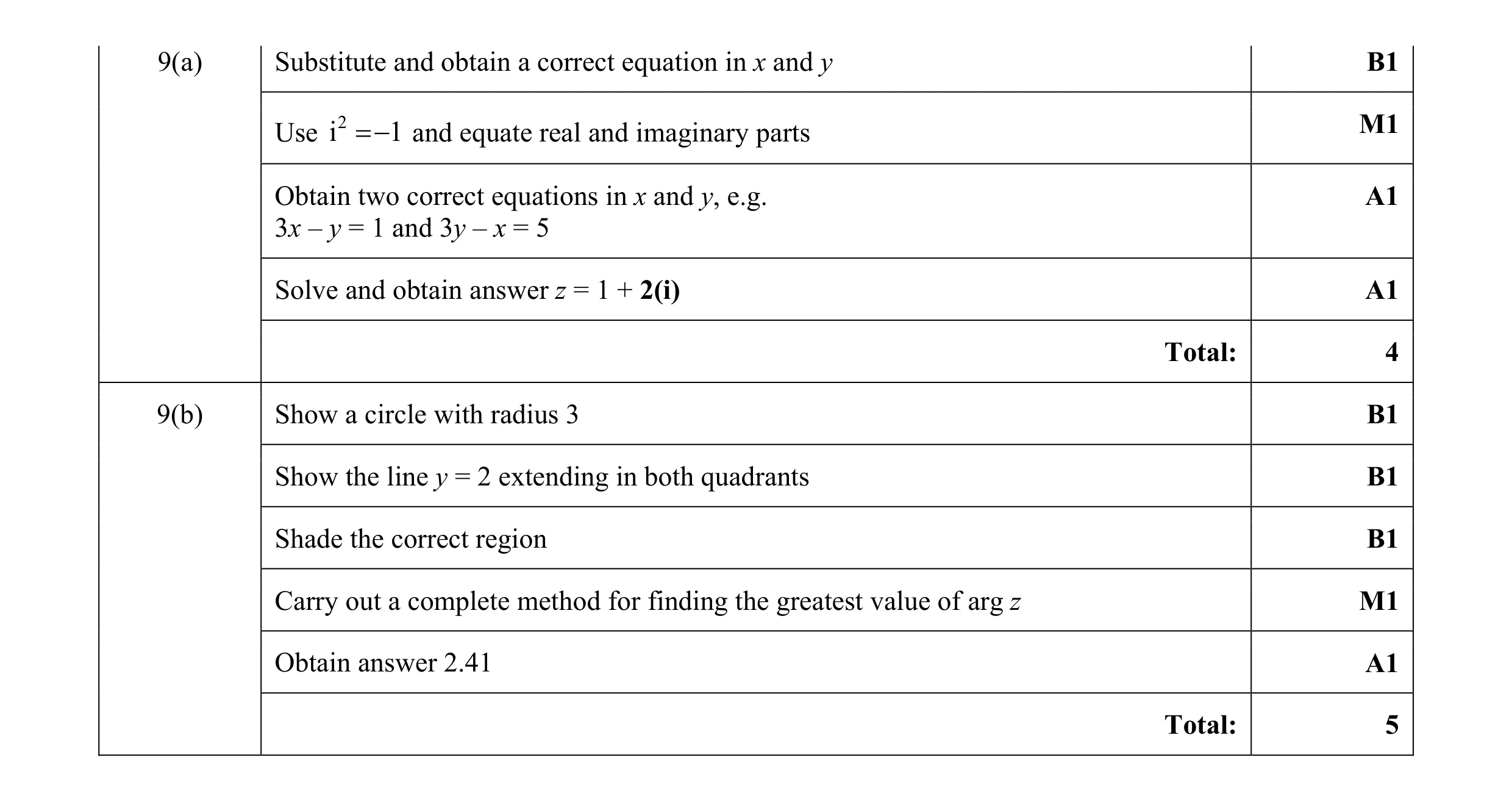 9
9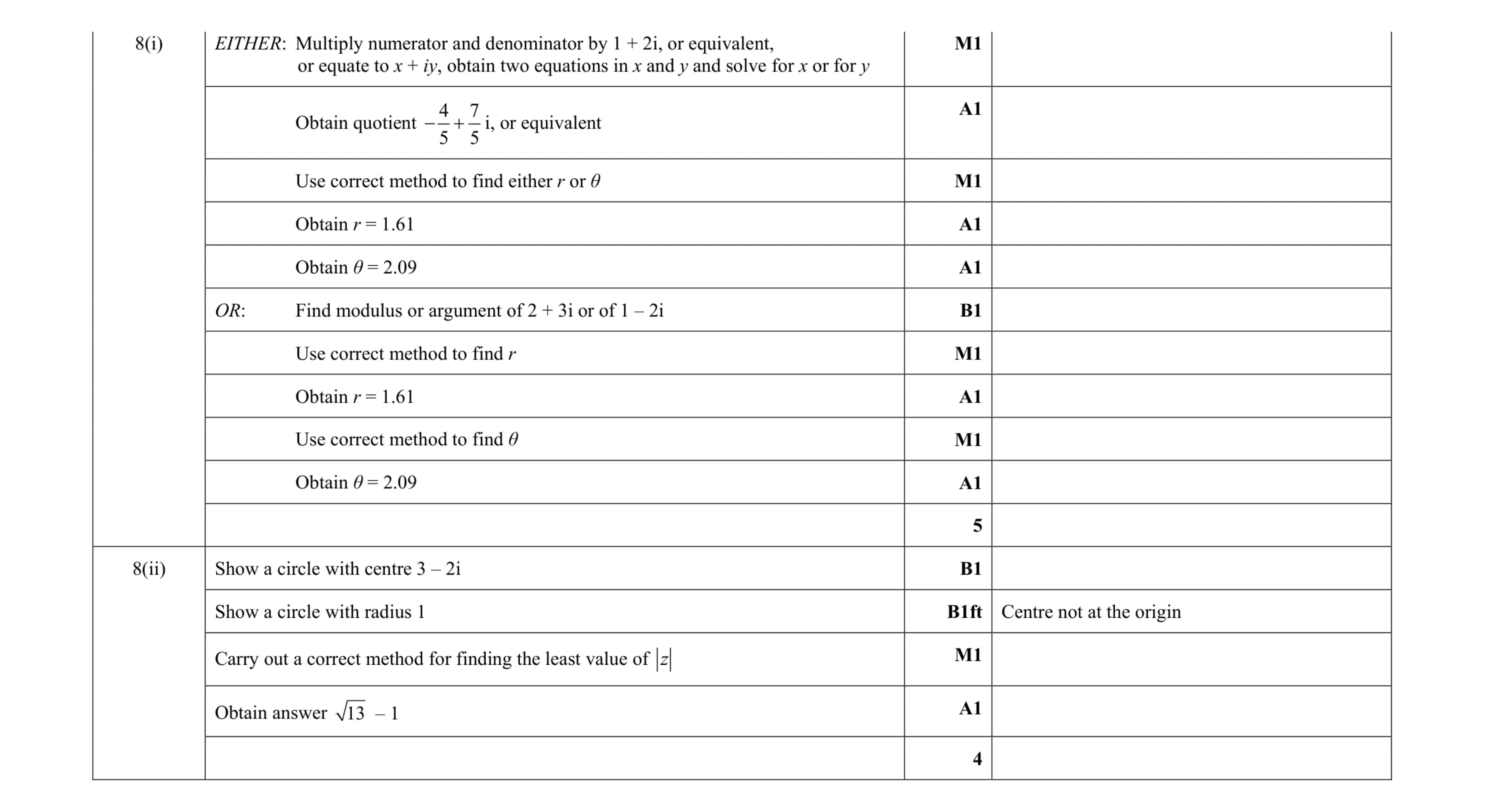 9
9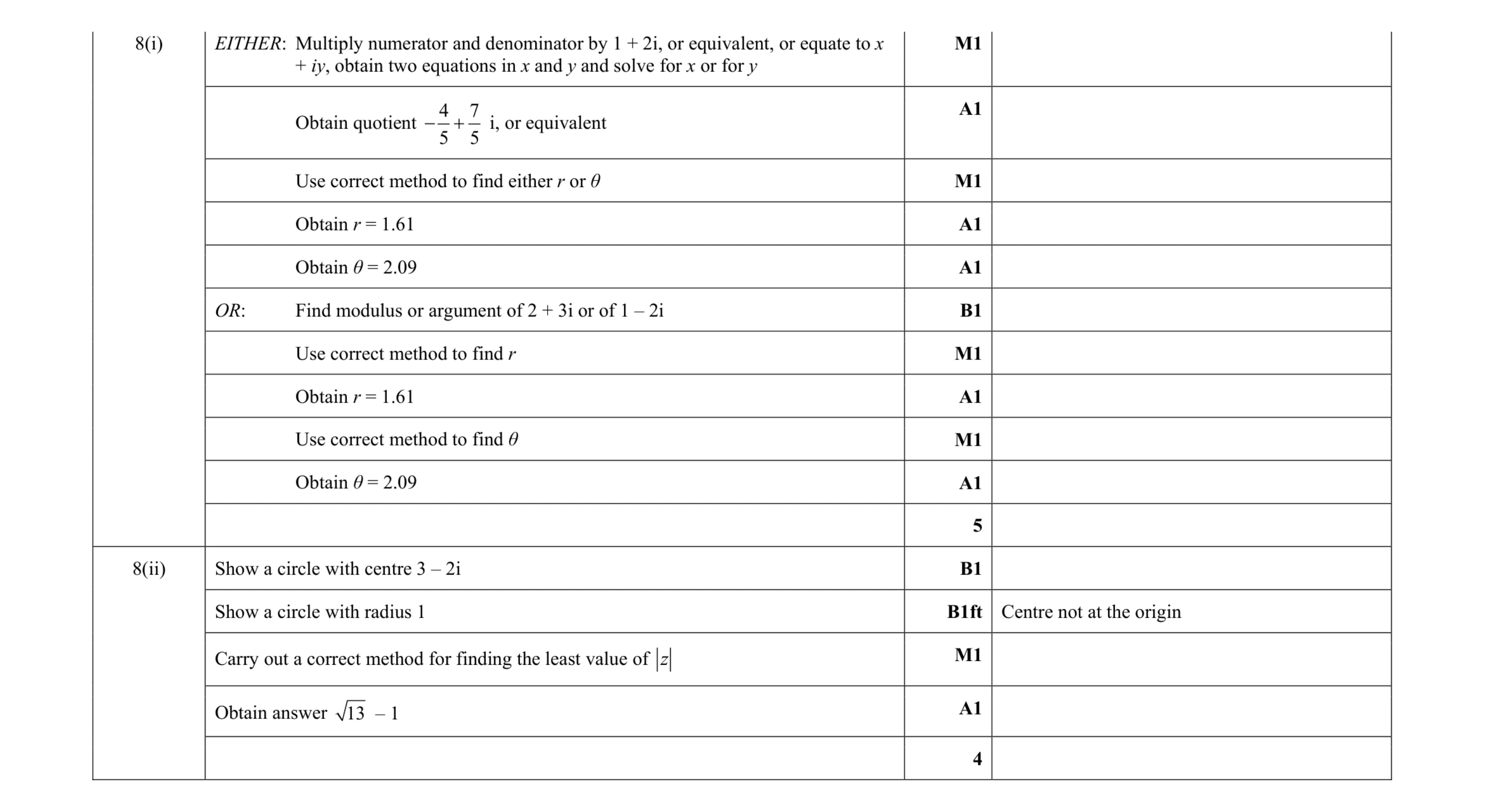 9
9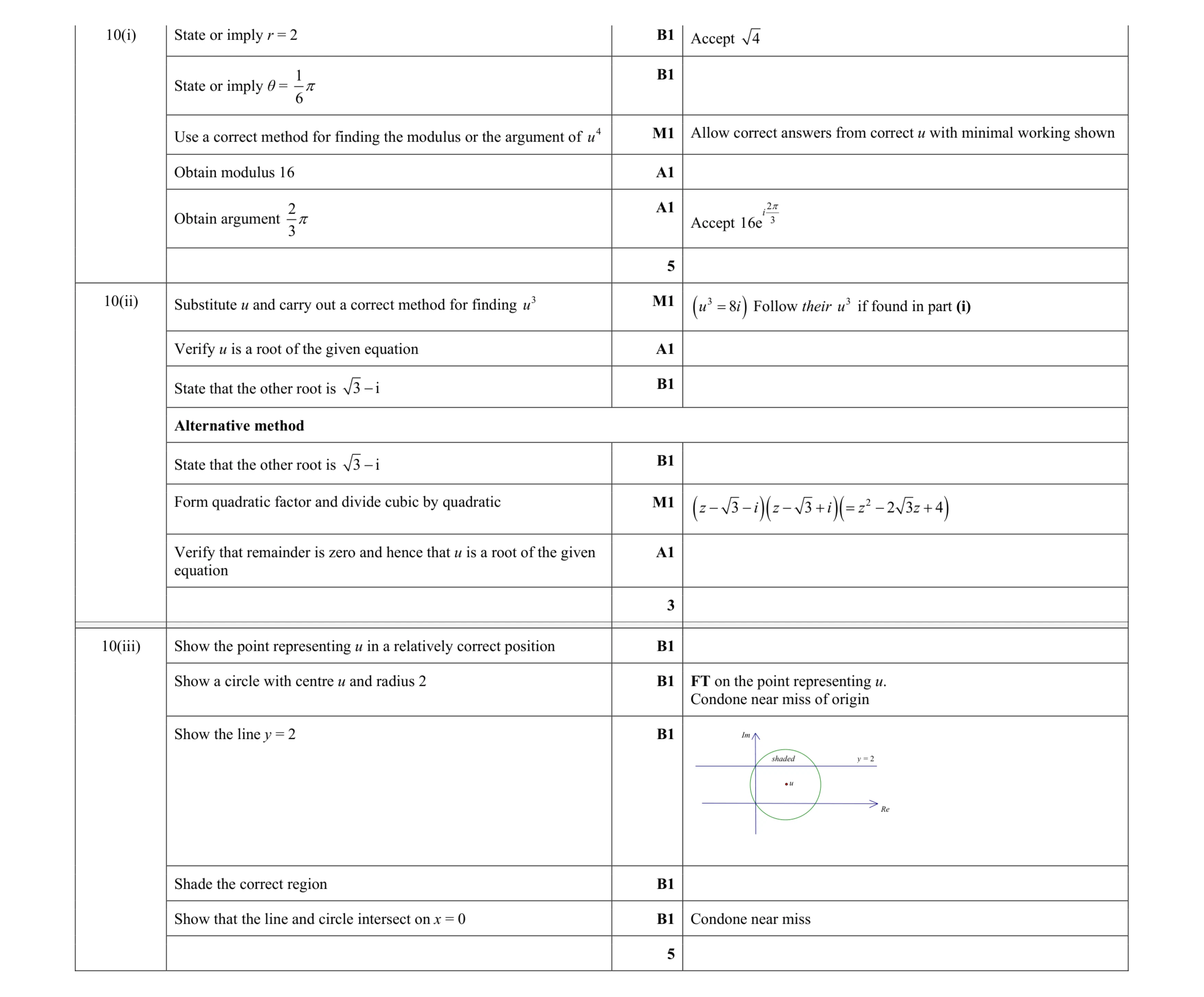 13
13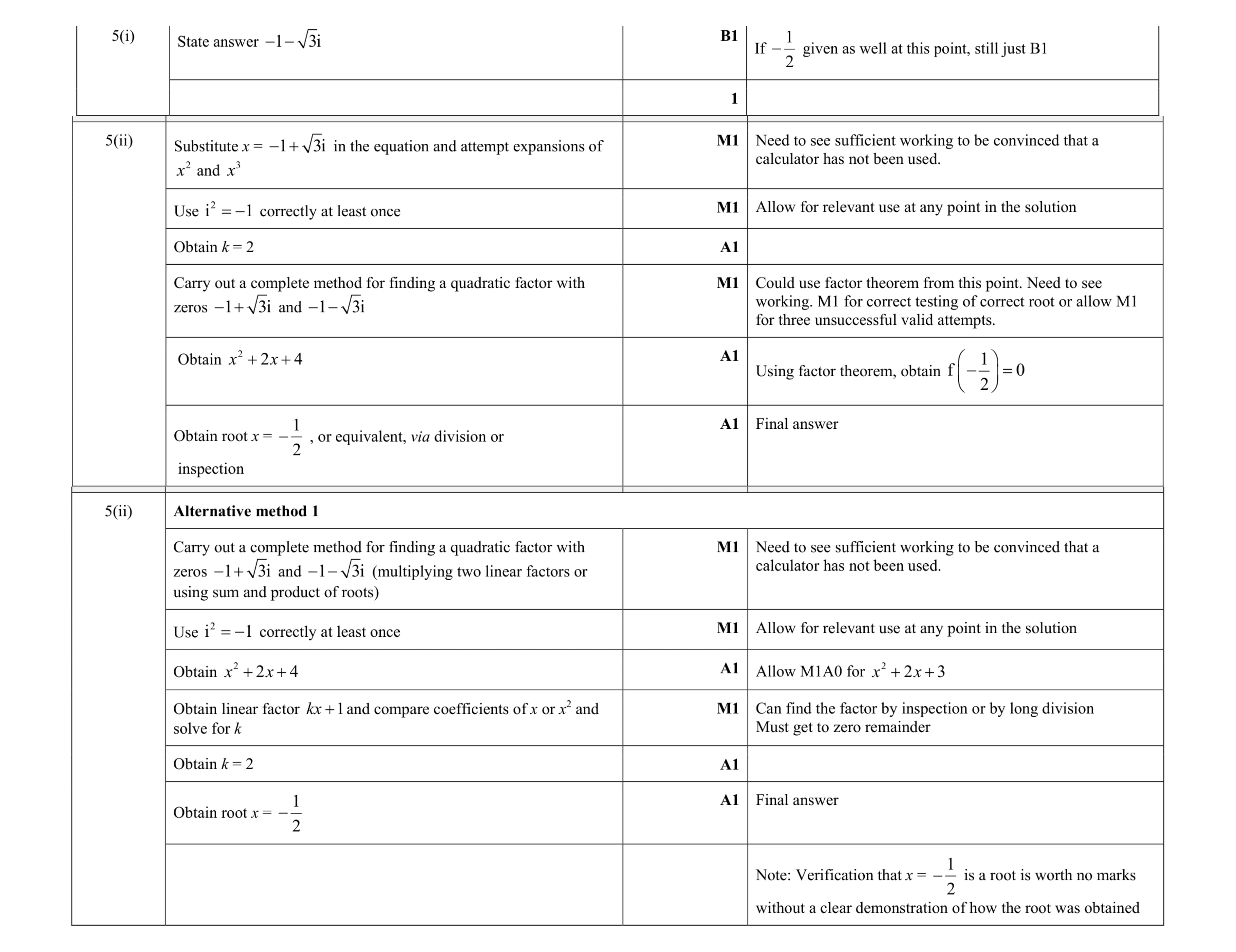 7
7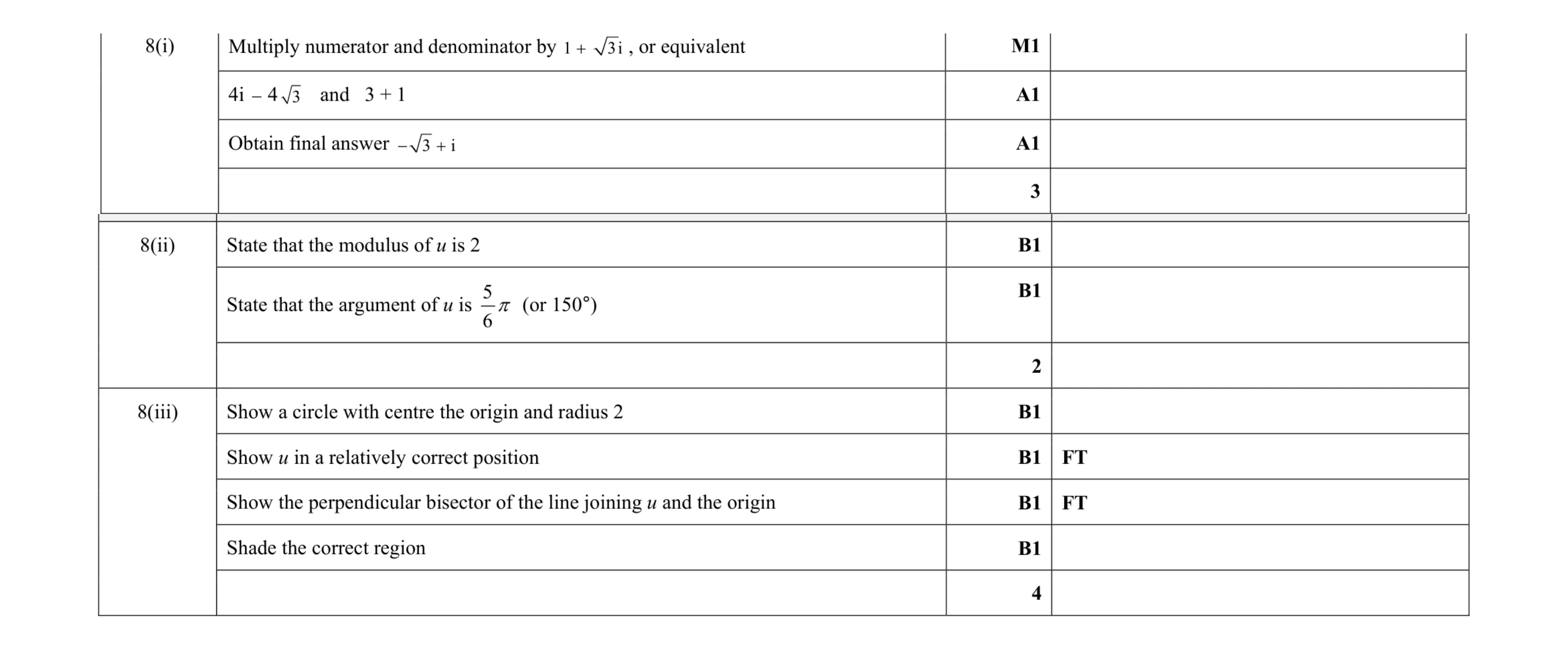 9
9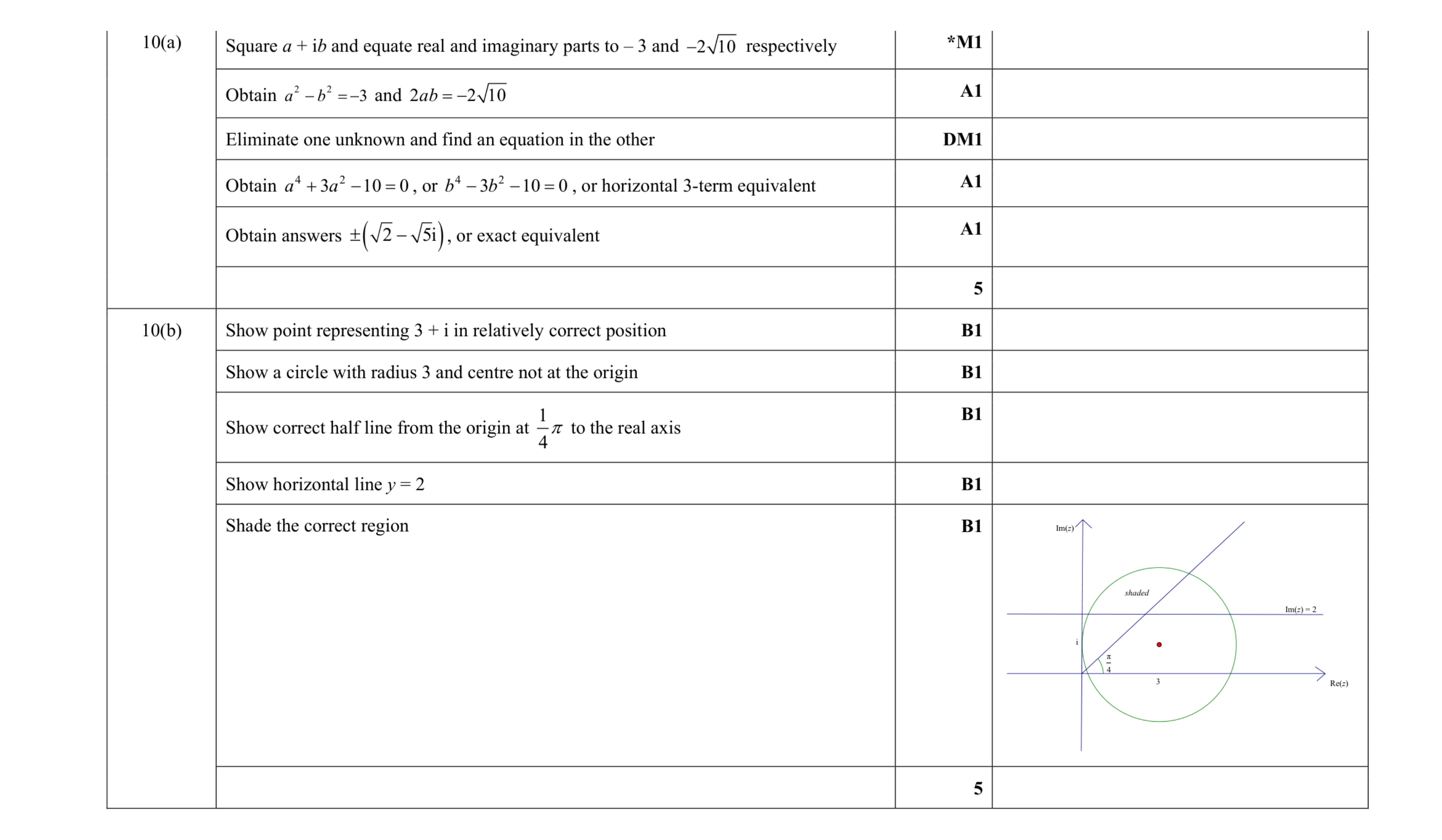 10
10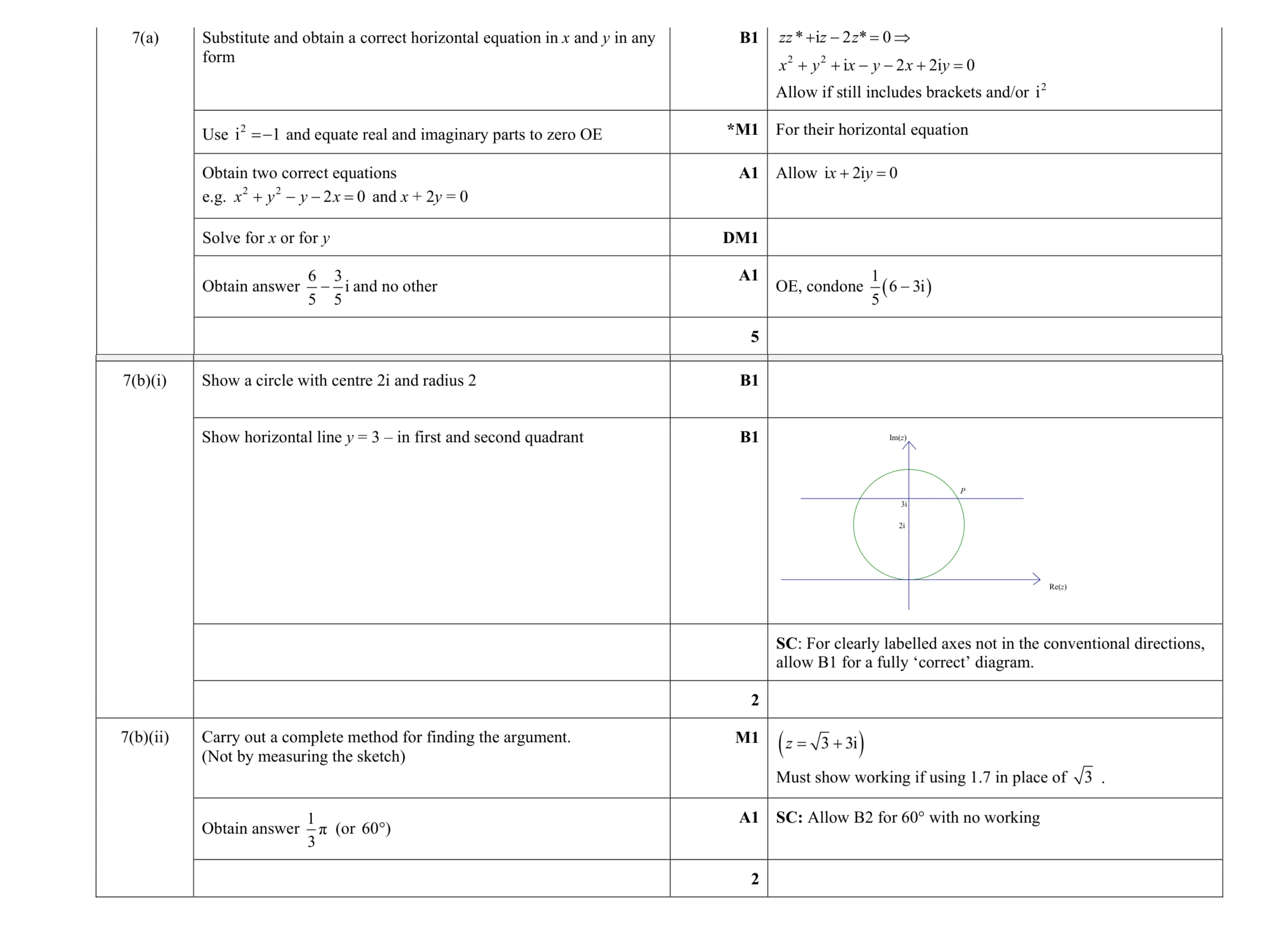 9
9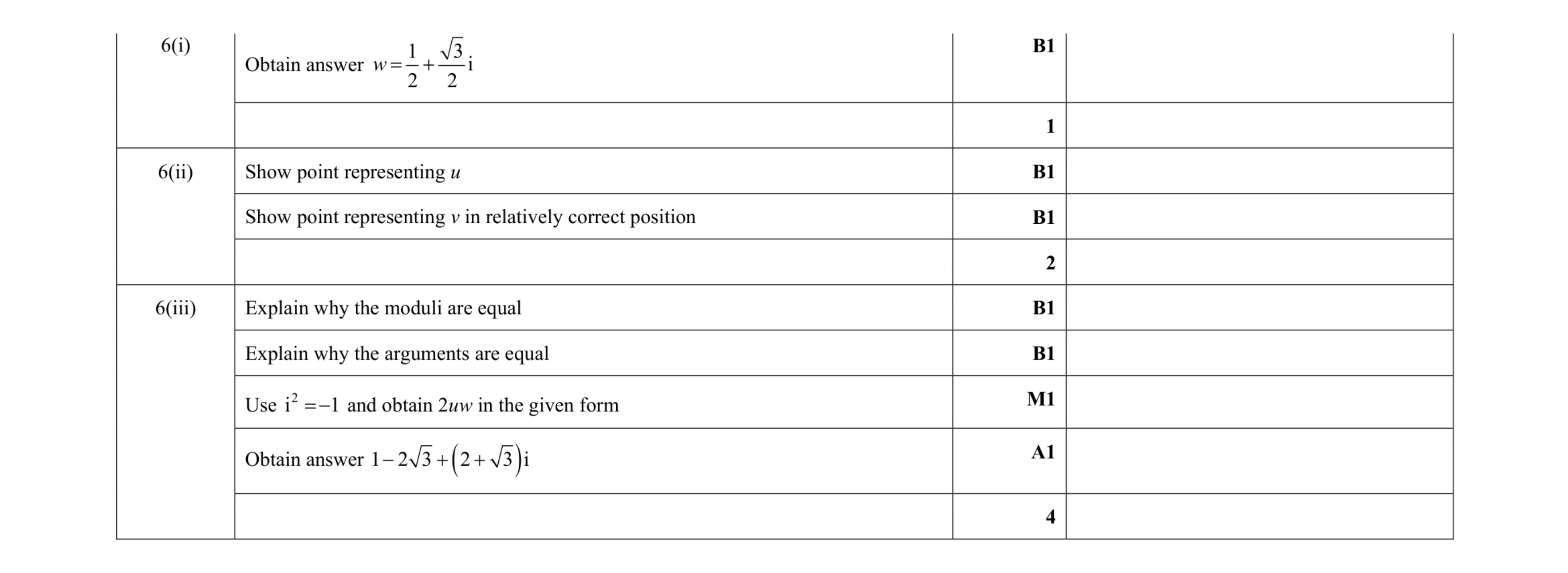 7
7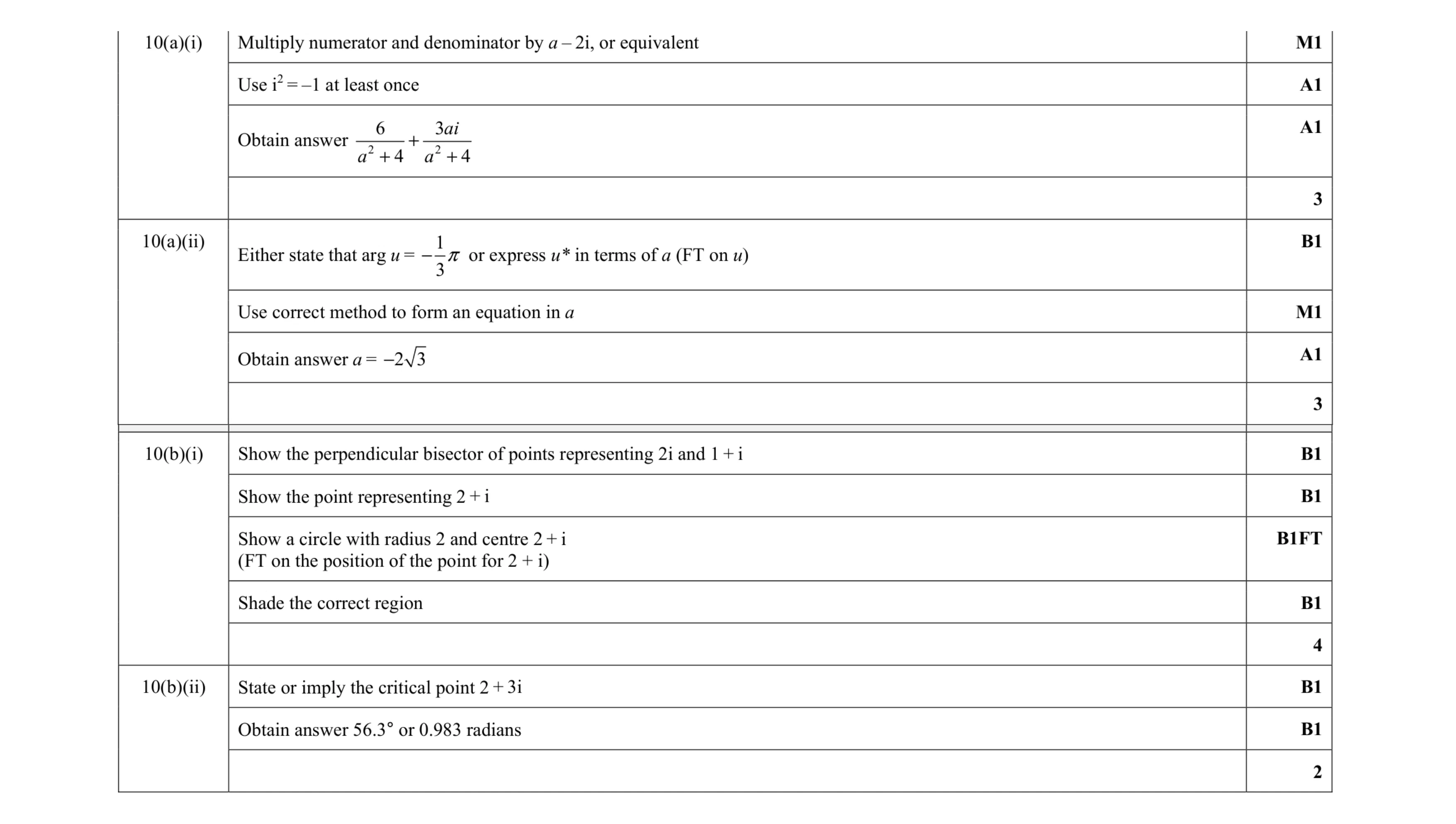 12
12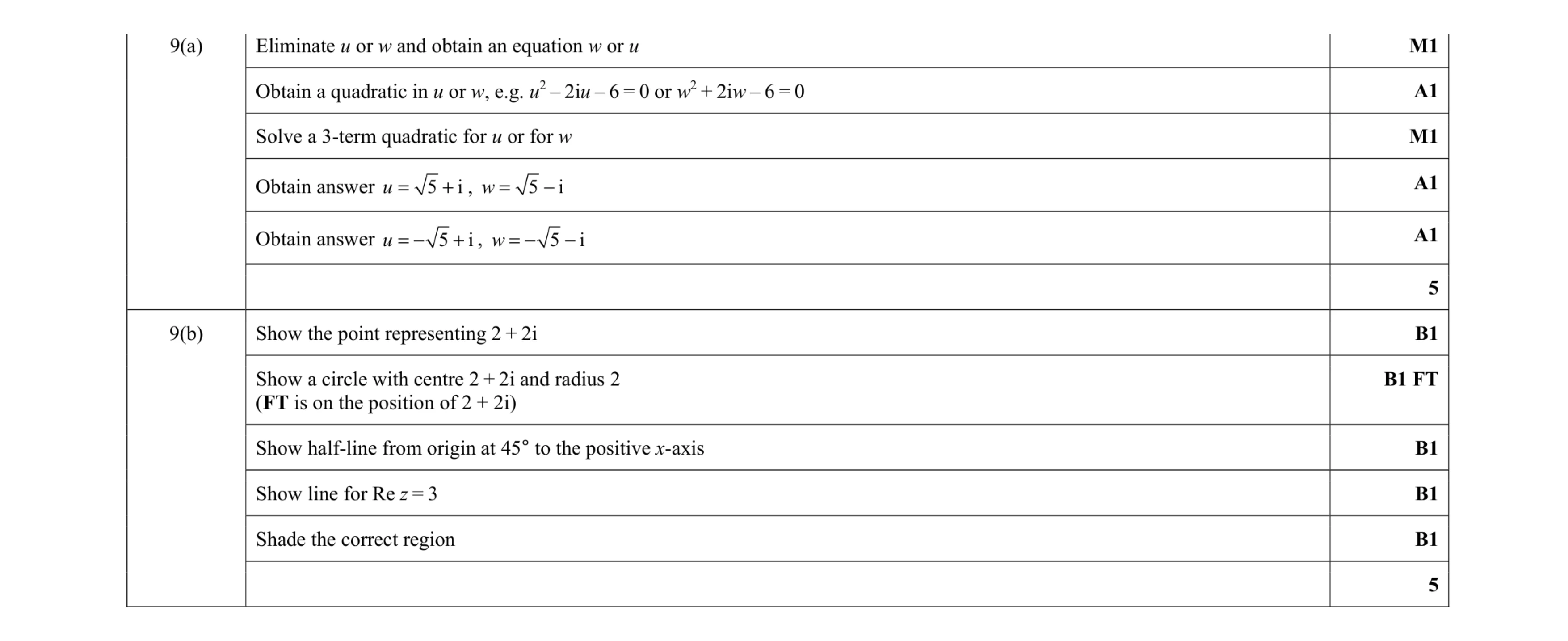 10
10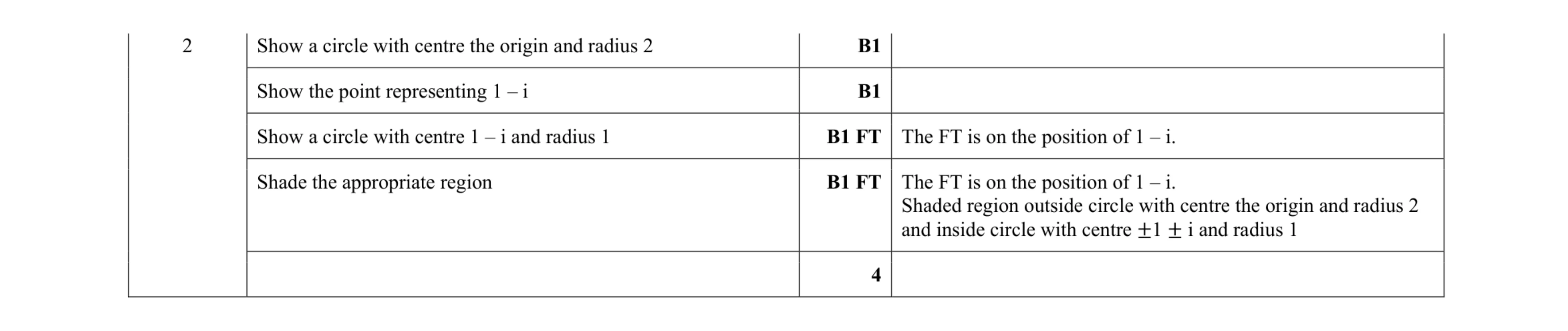 4
4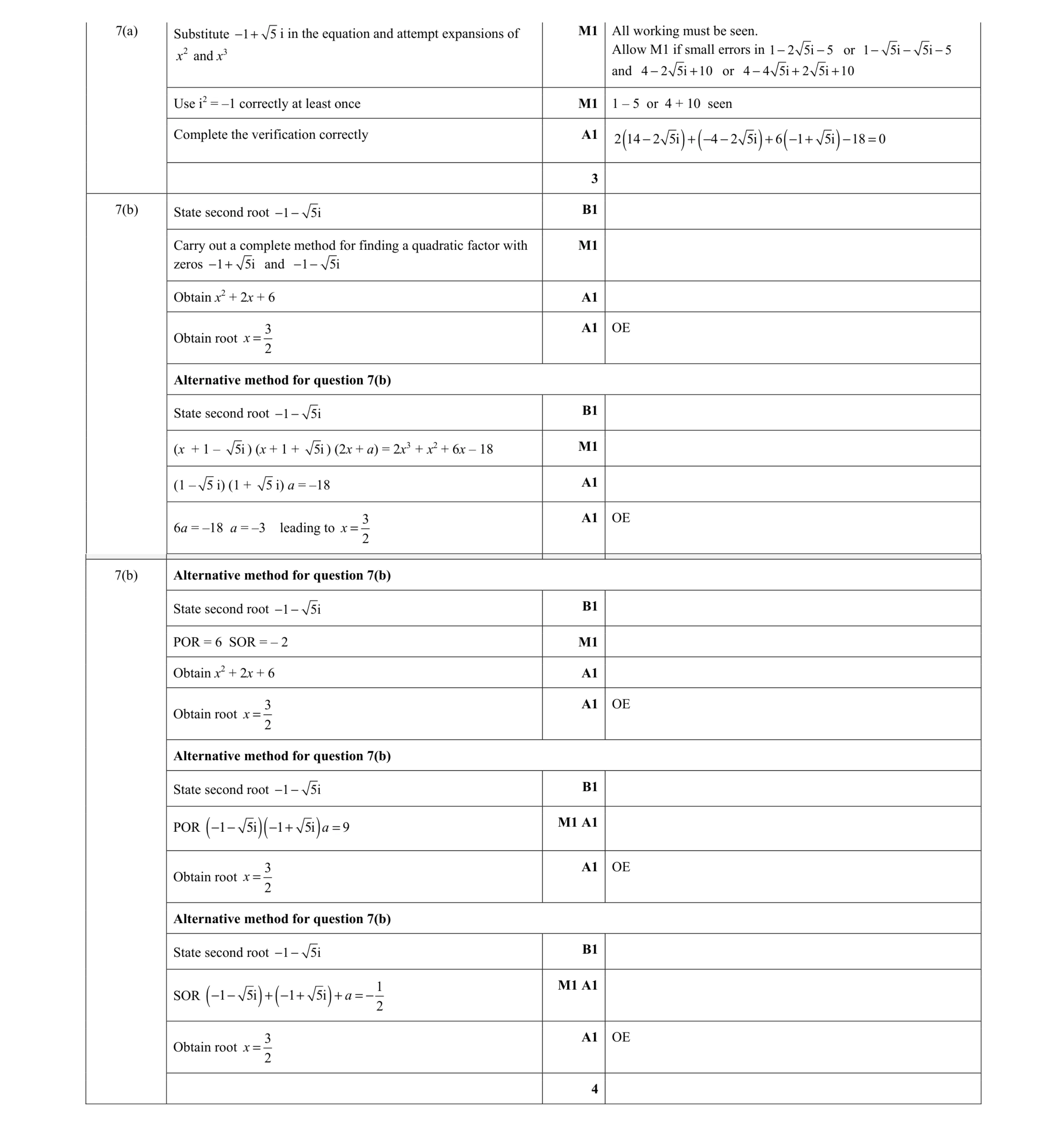 7
7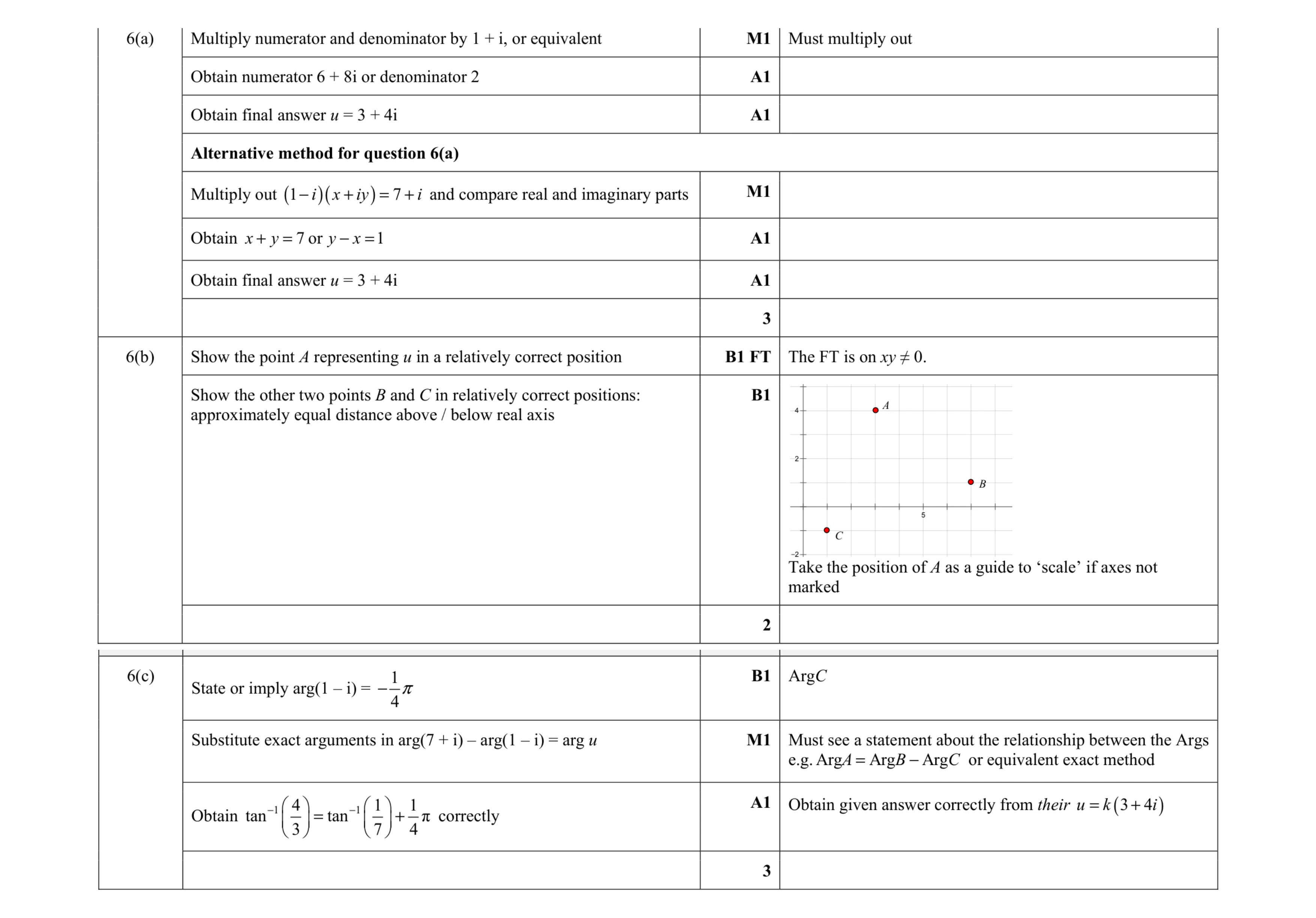 8
8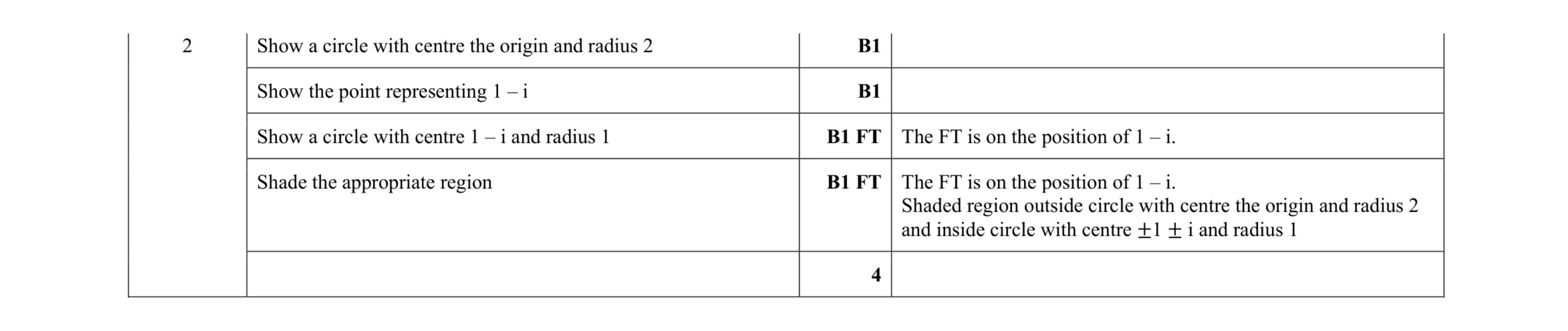 4
4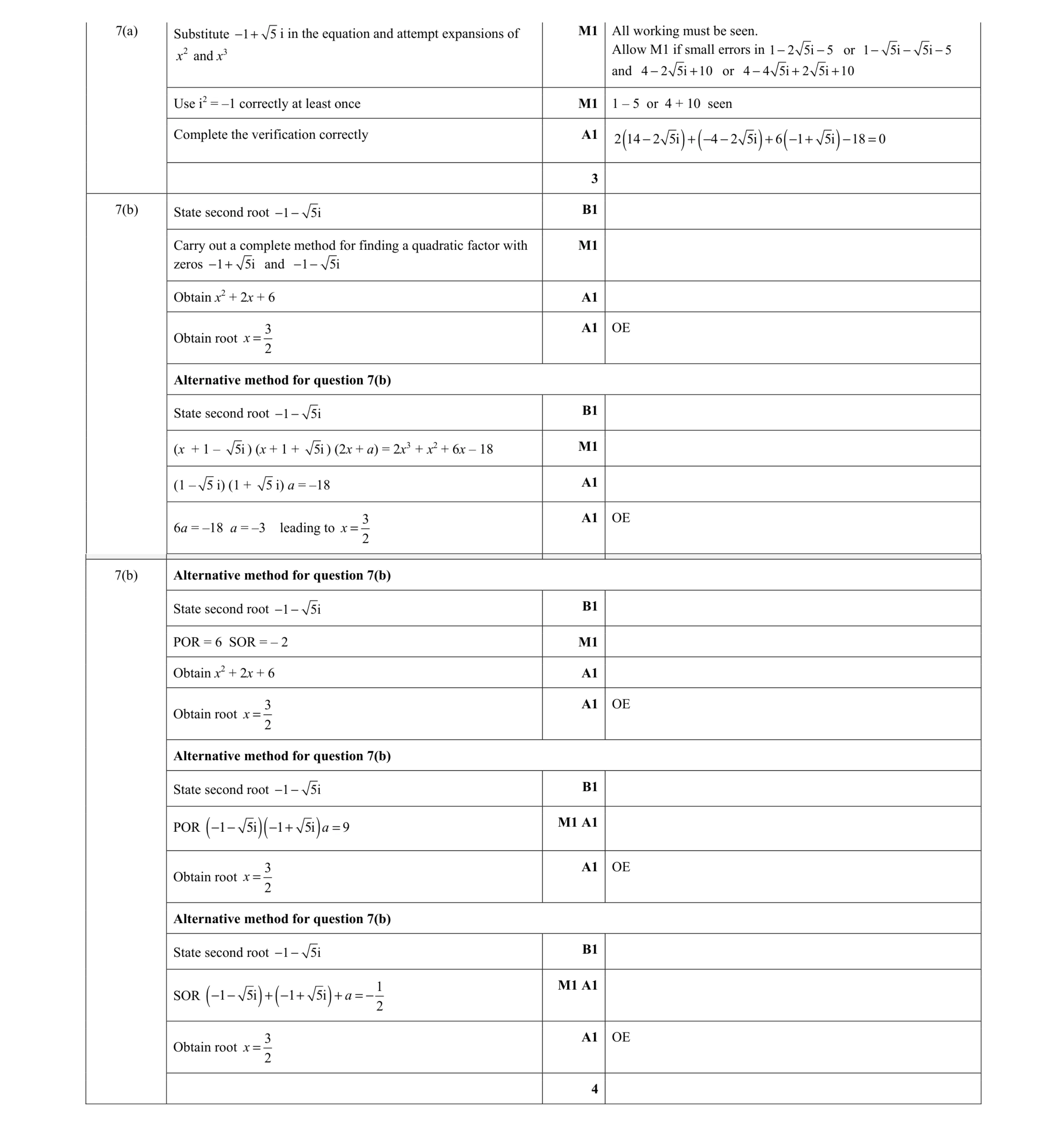 7
7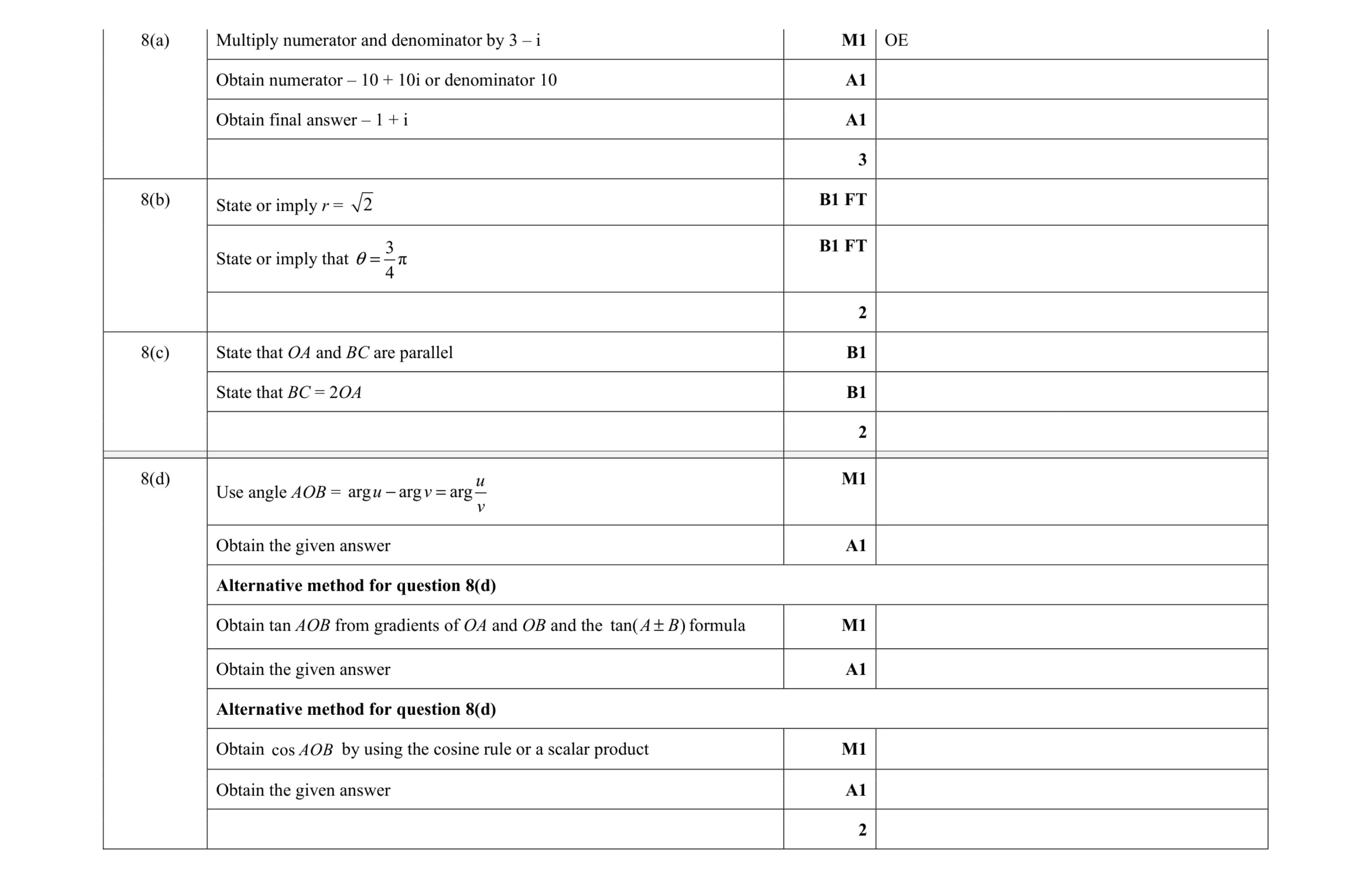 9
9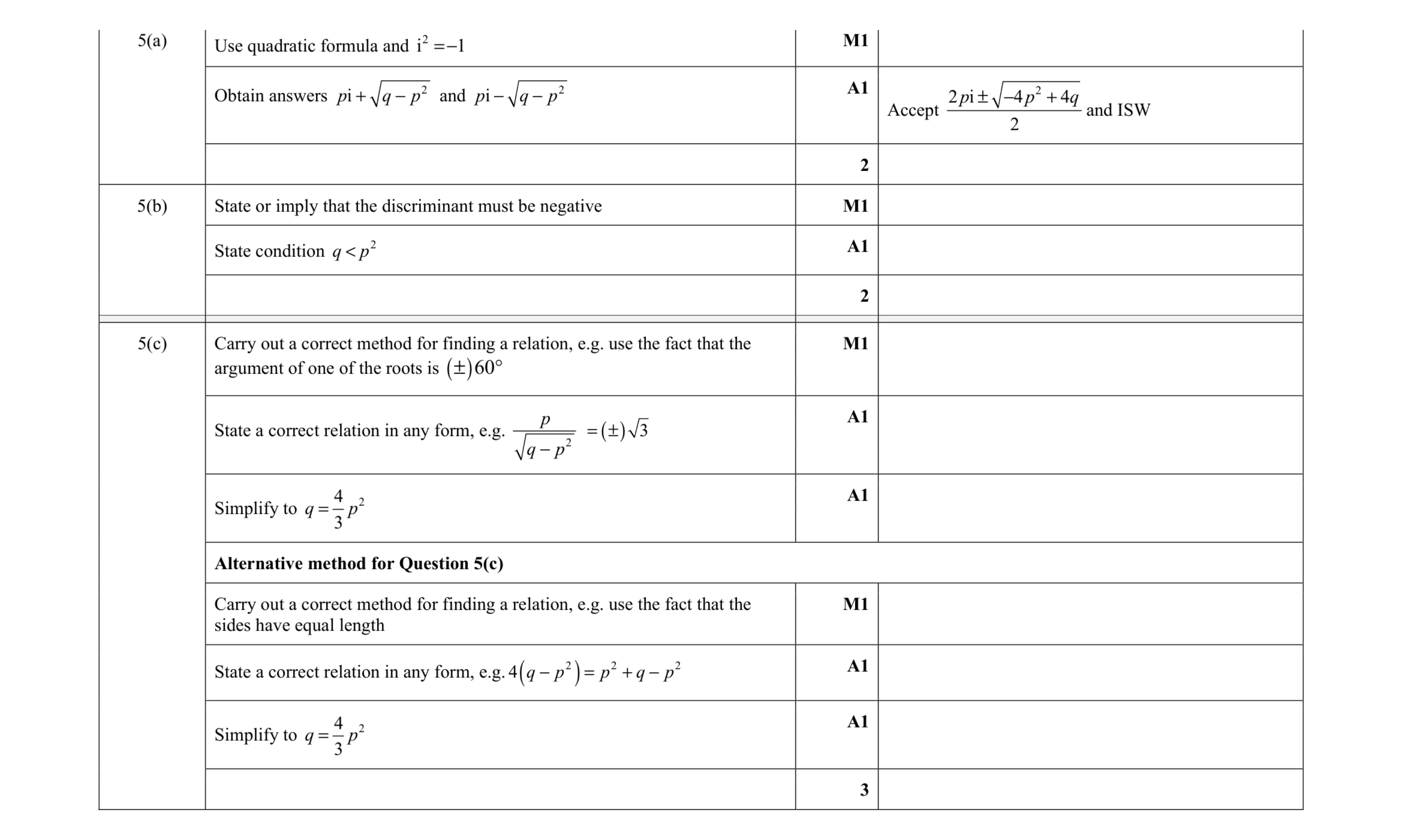 7
7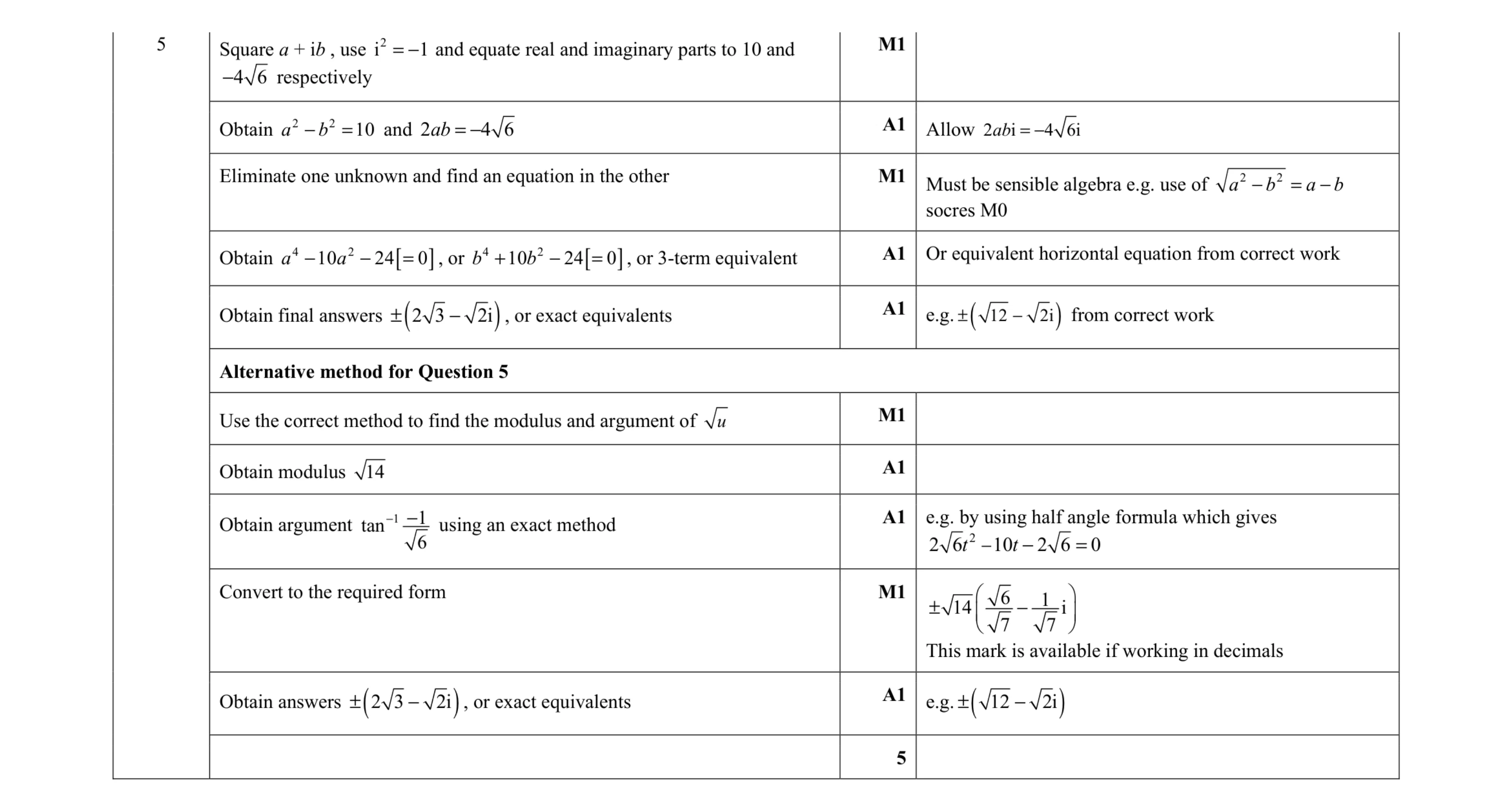 5
5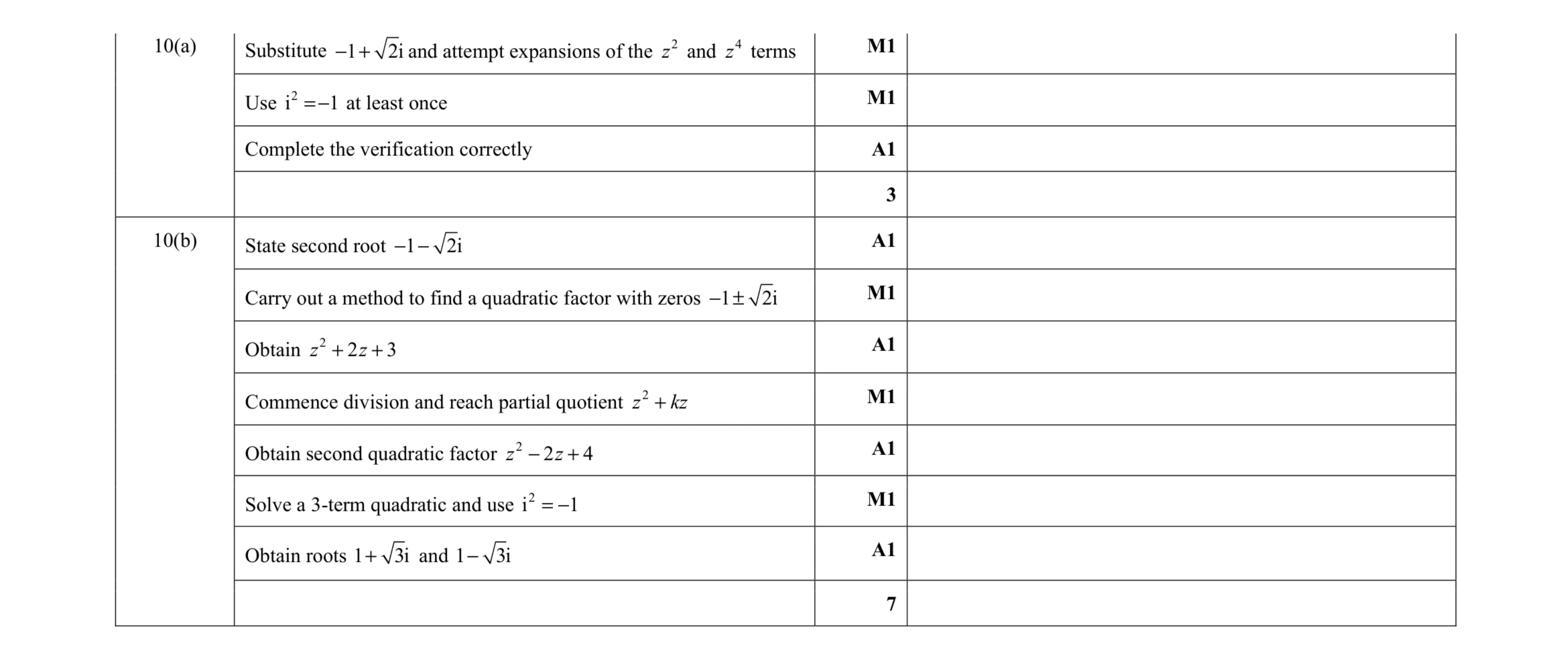 10
10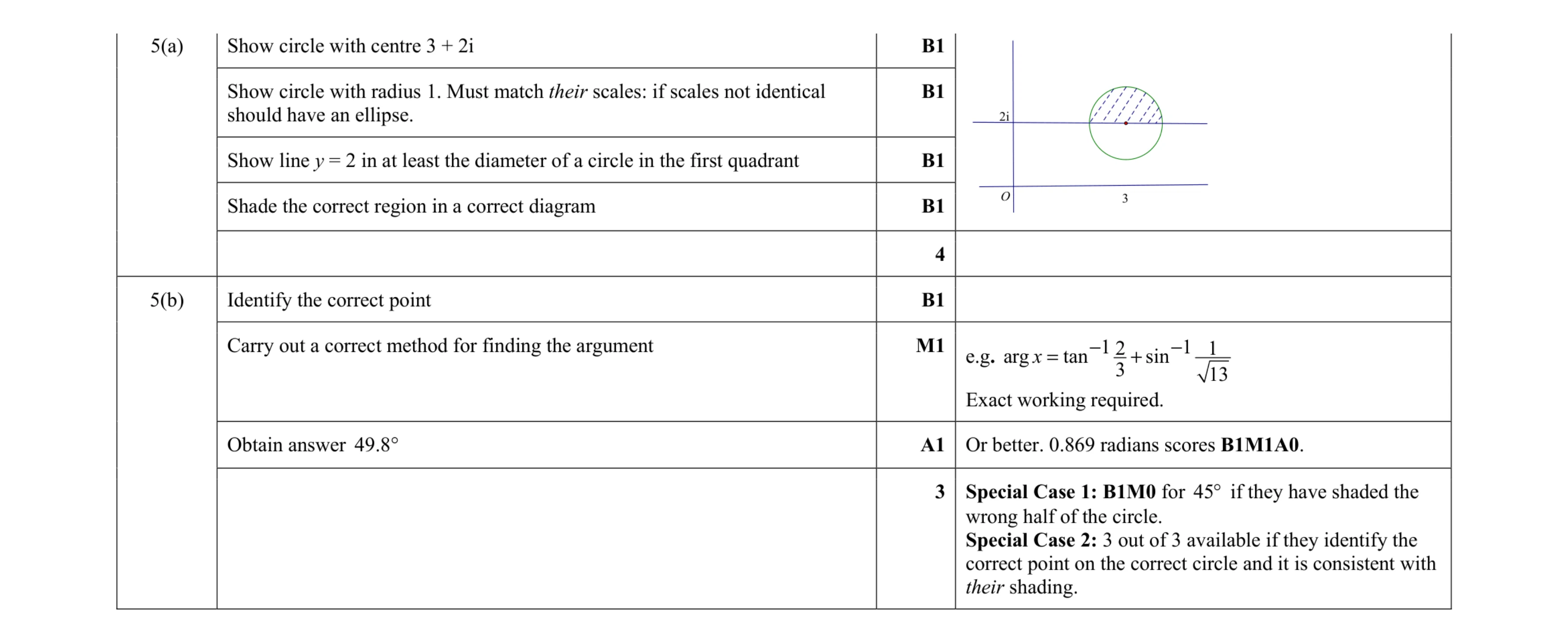 7
7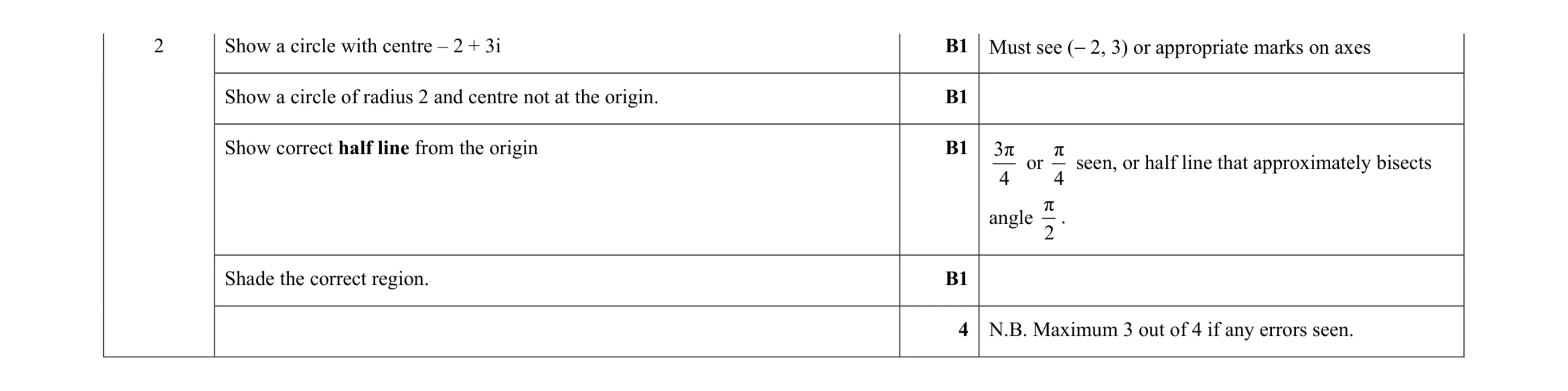 4
4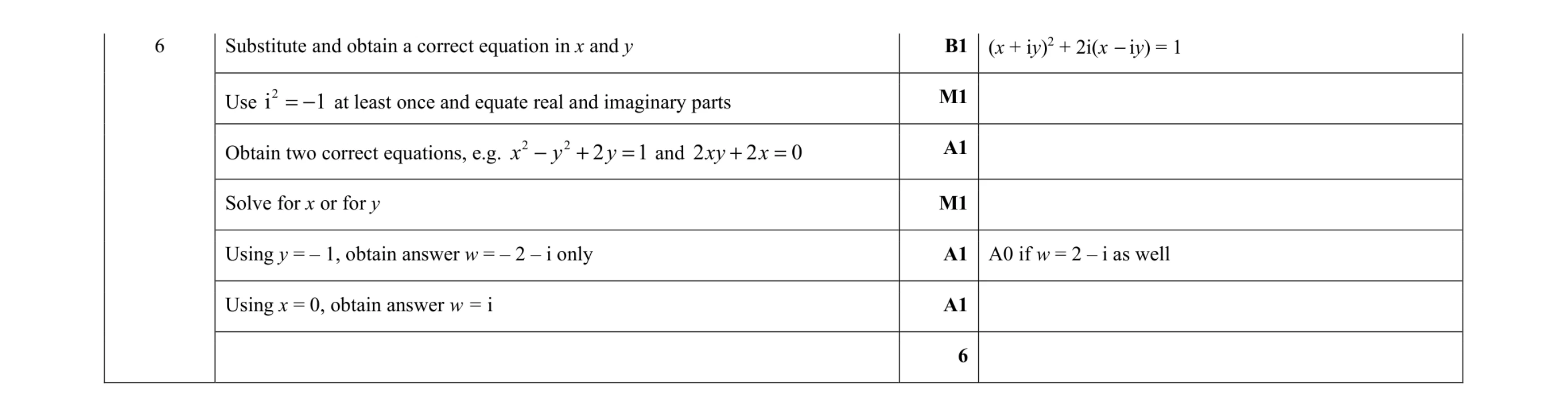 6
6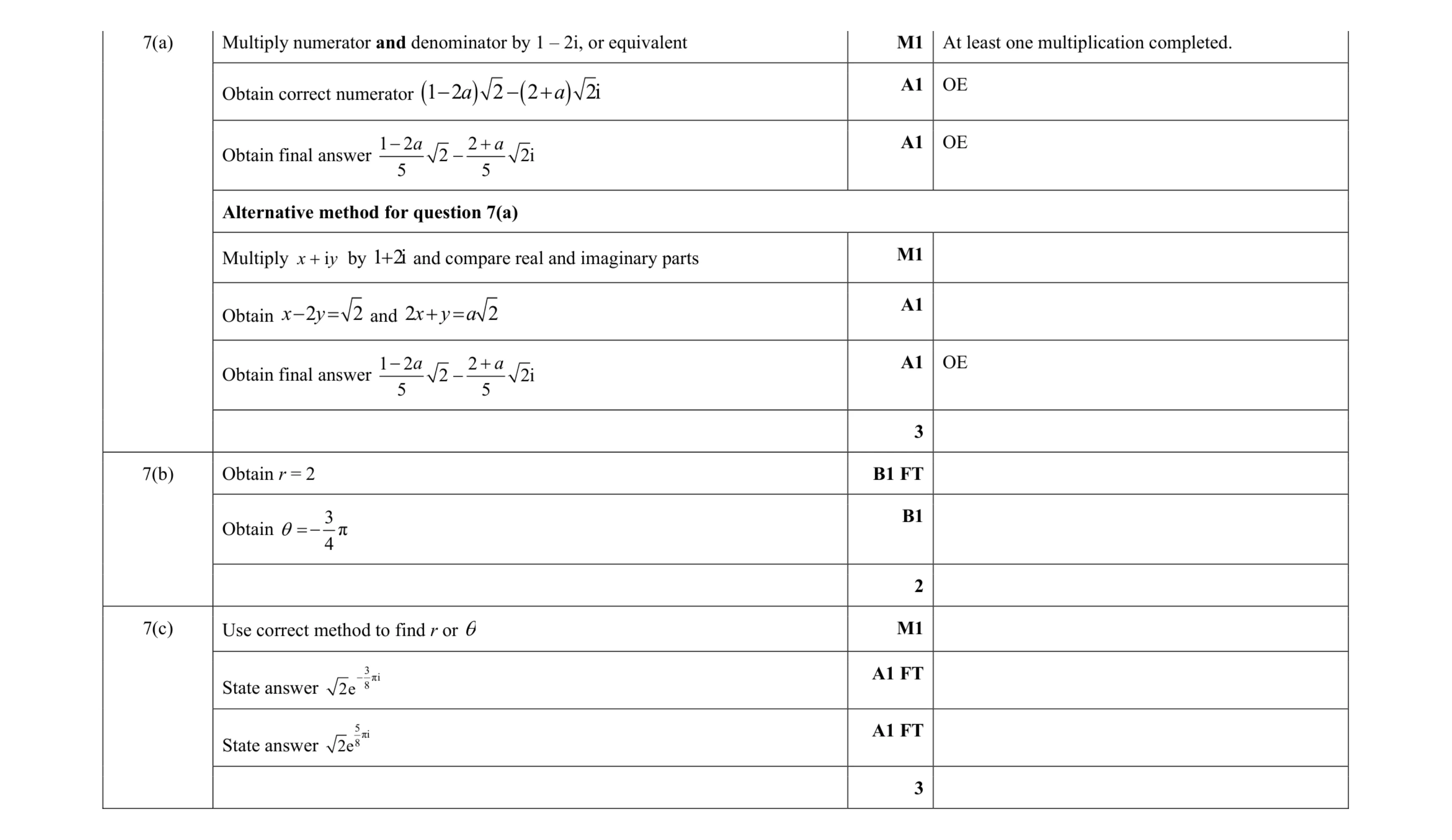 8
8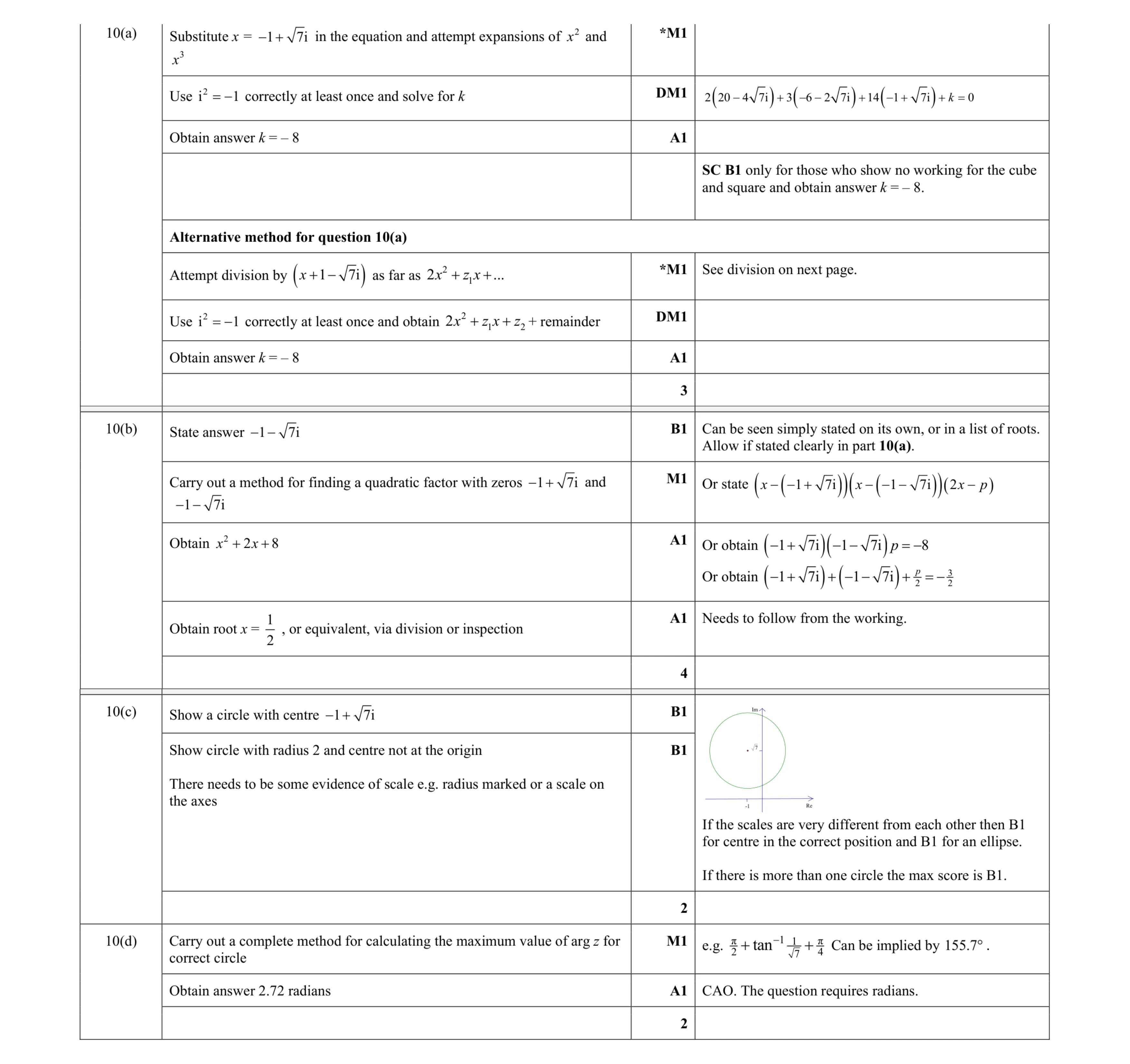 11
11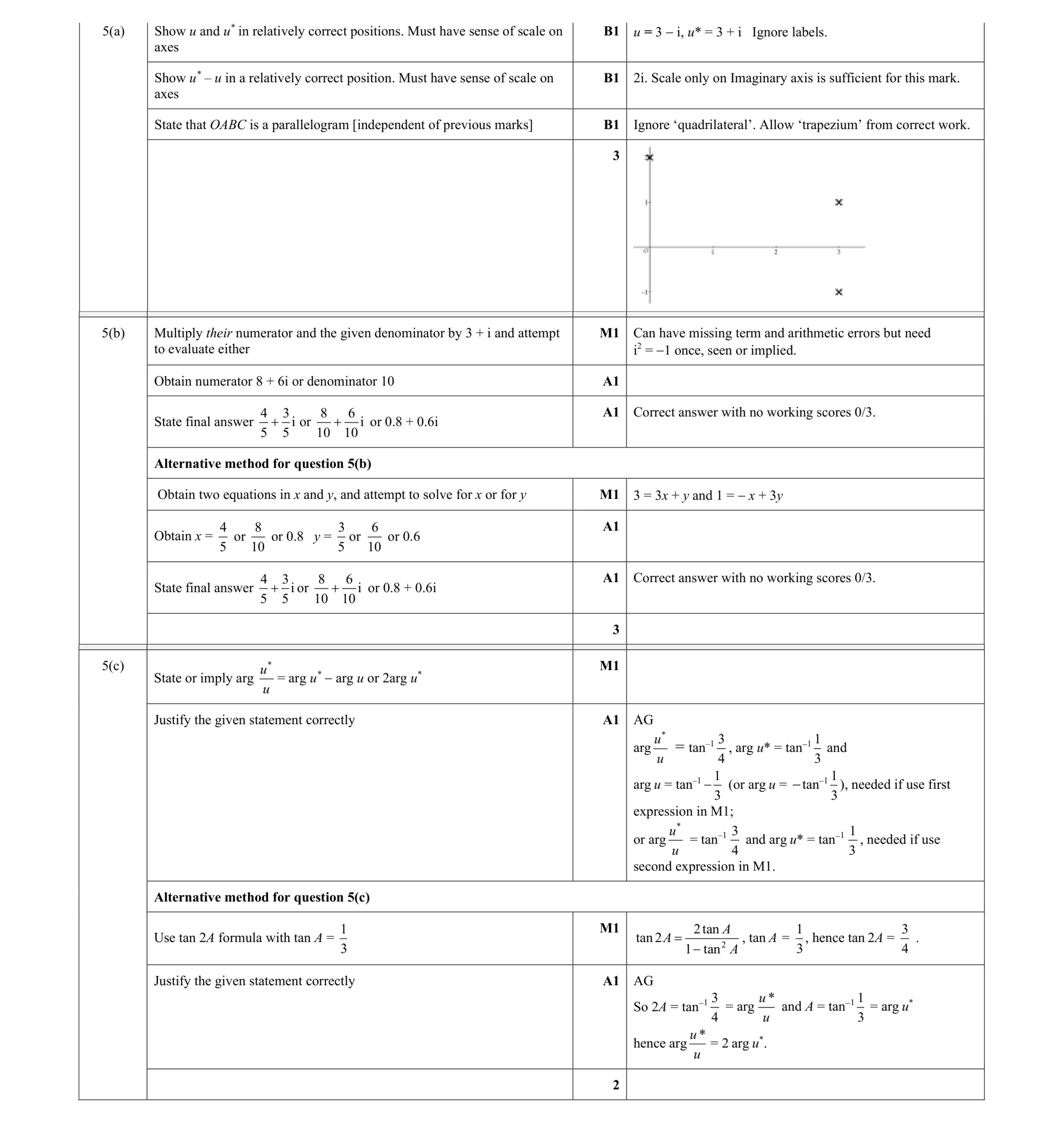 8
8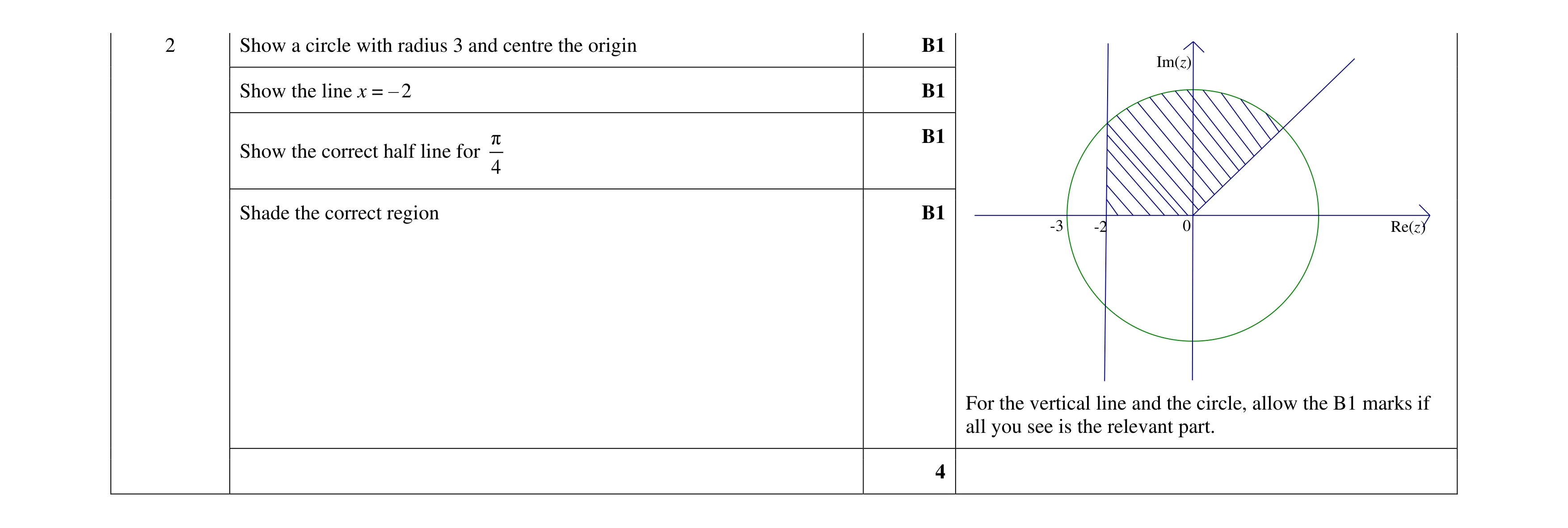 4
4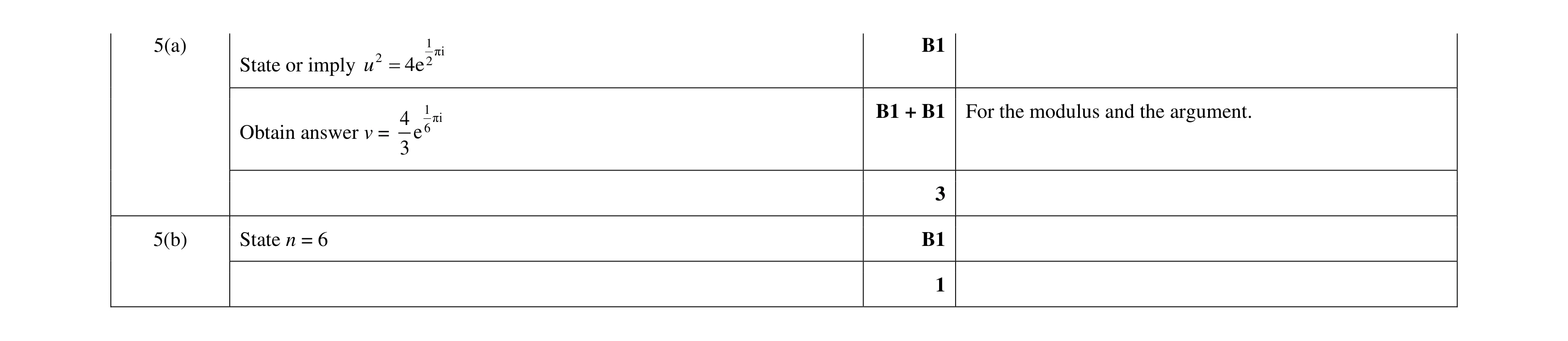 4
4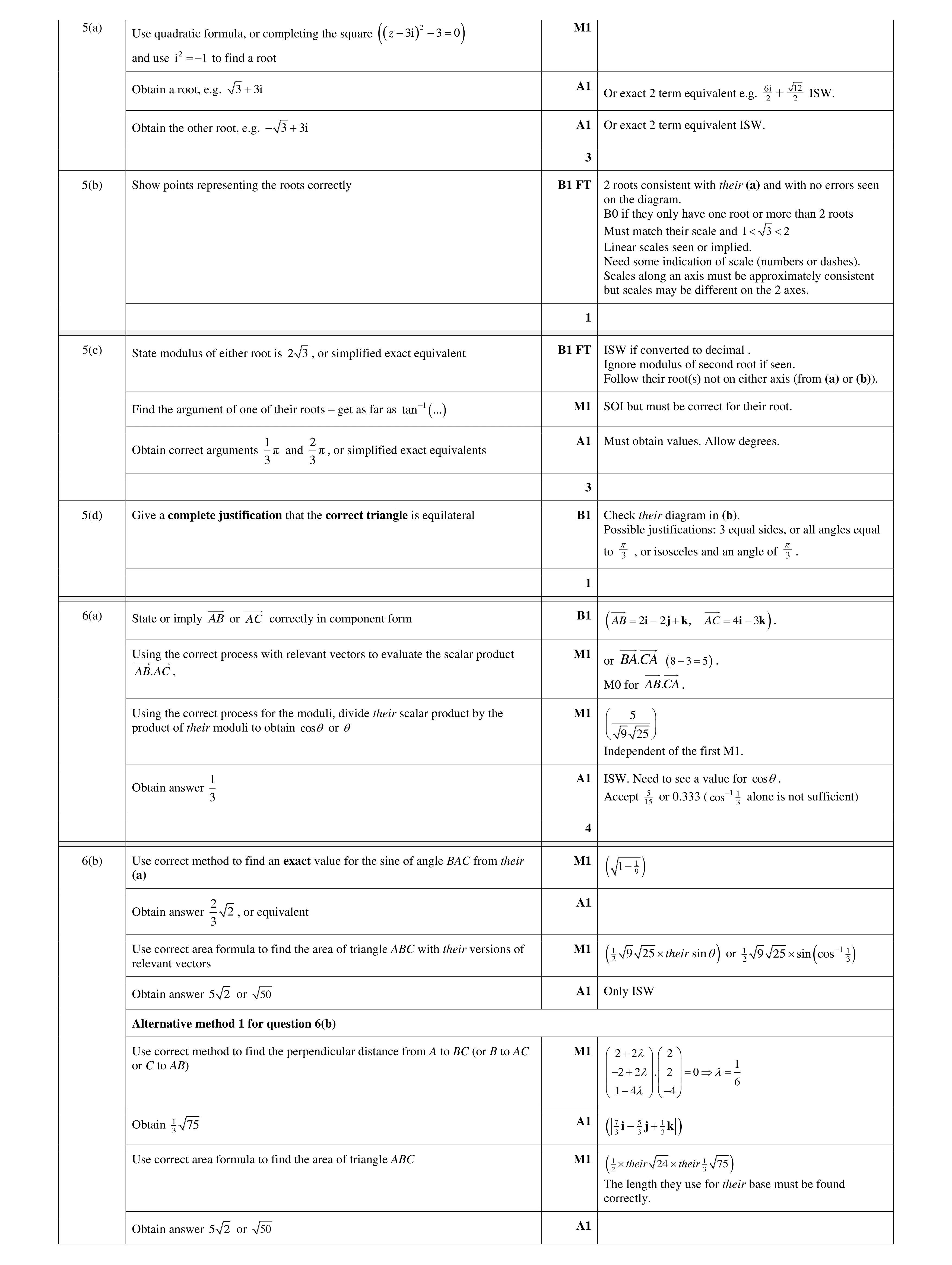 8
8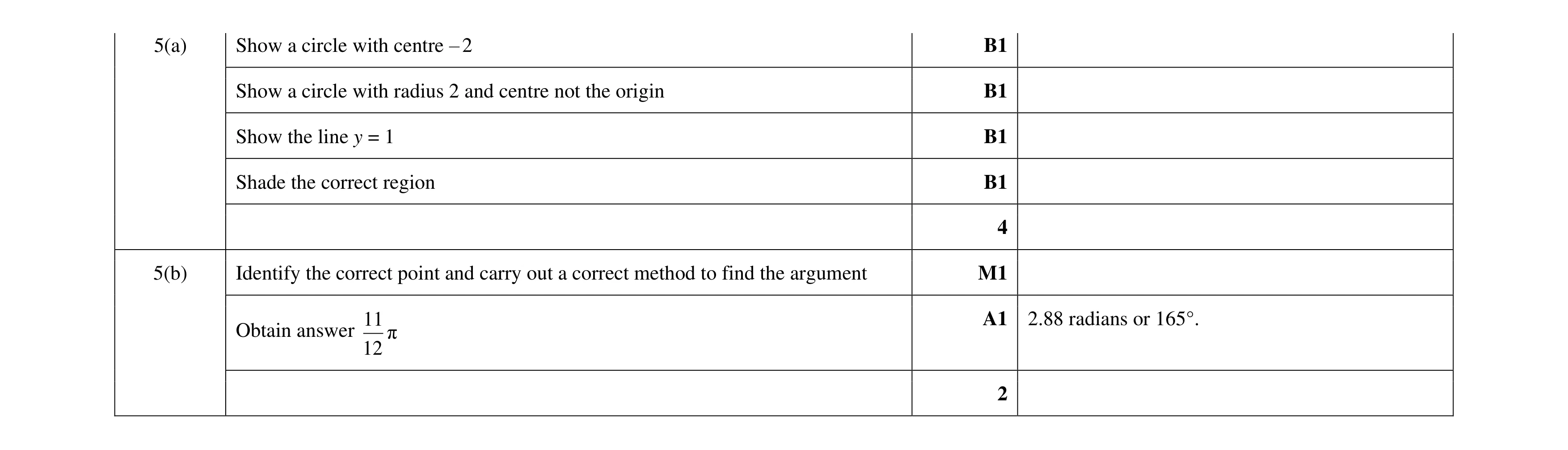 6
6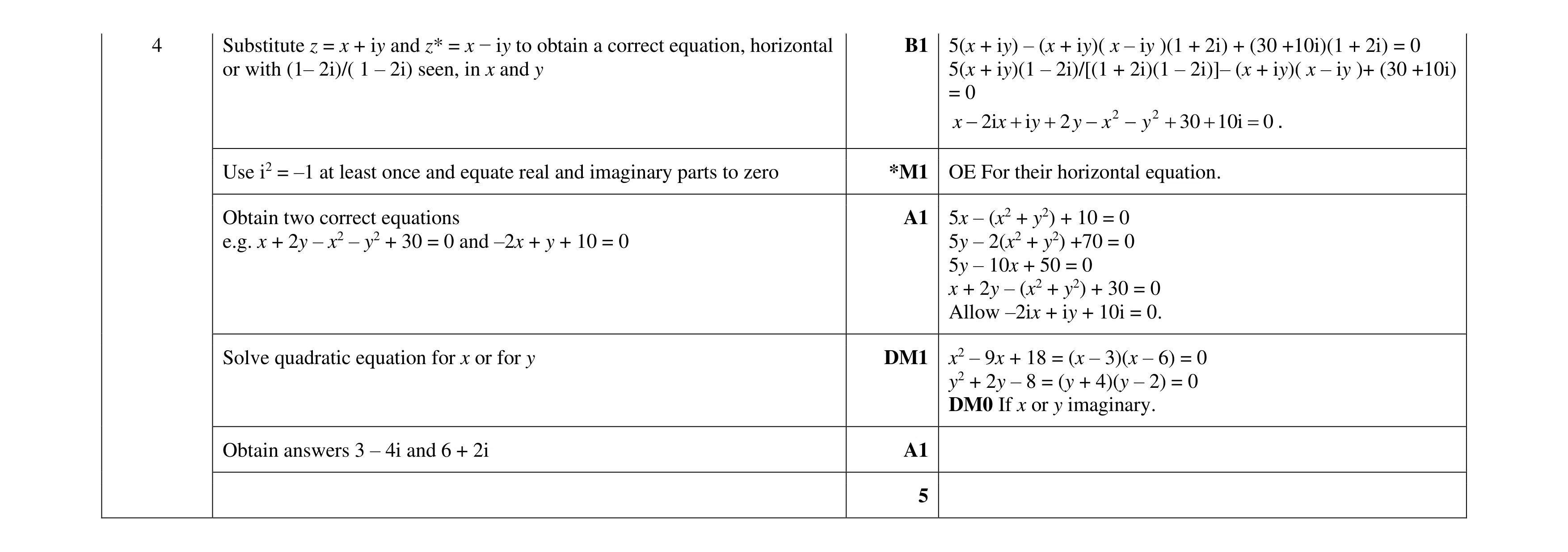 5
5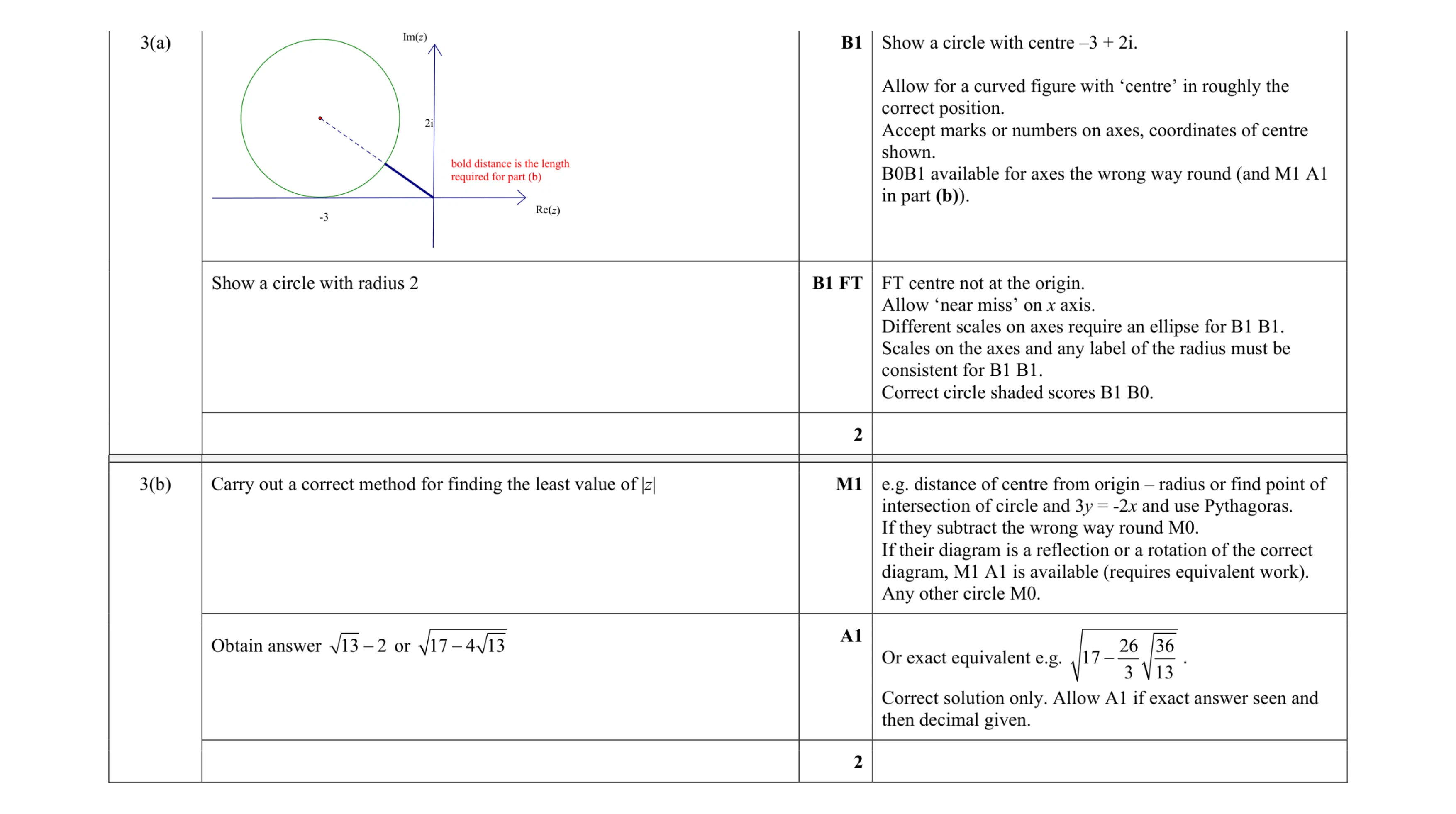 4
4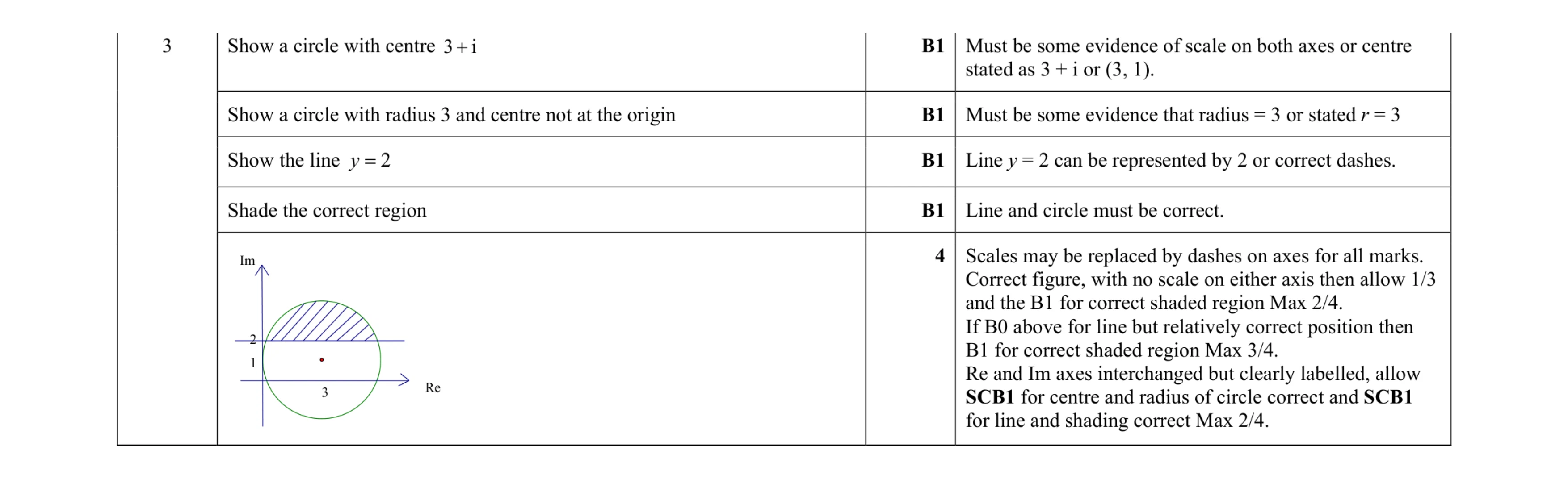 4
4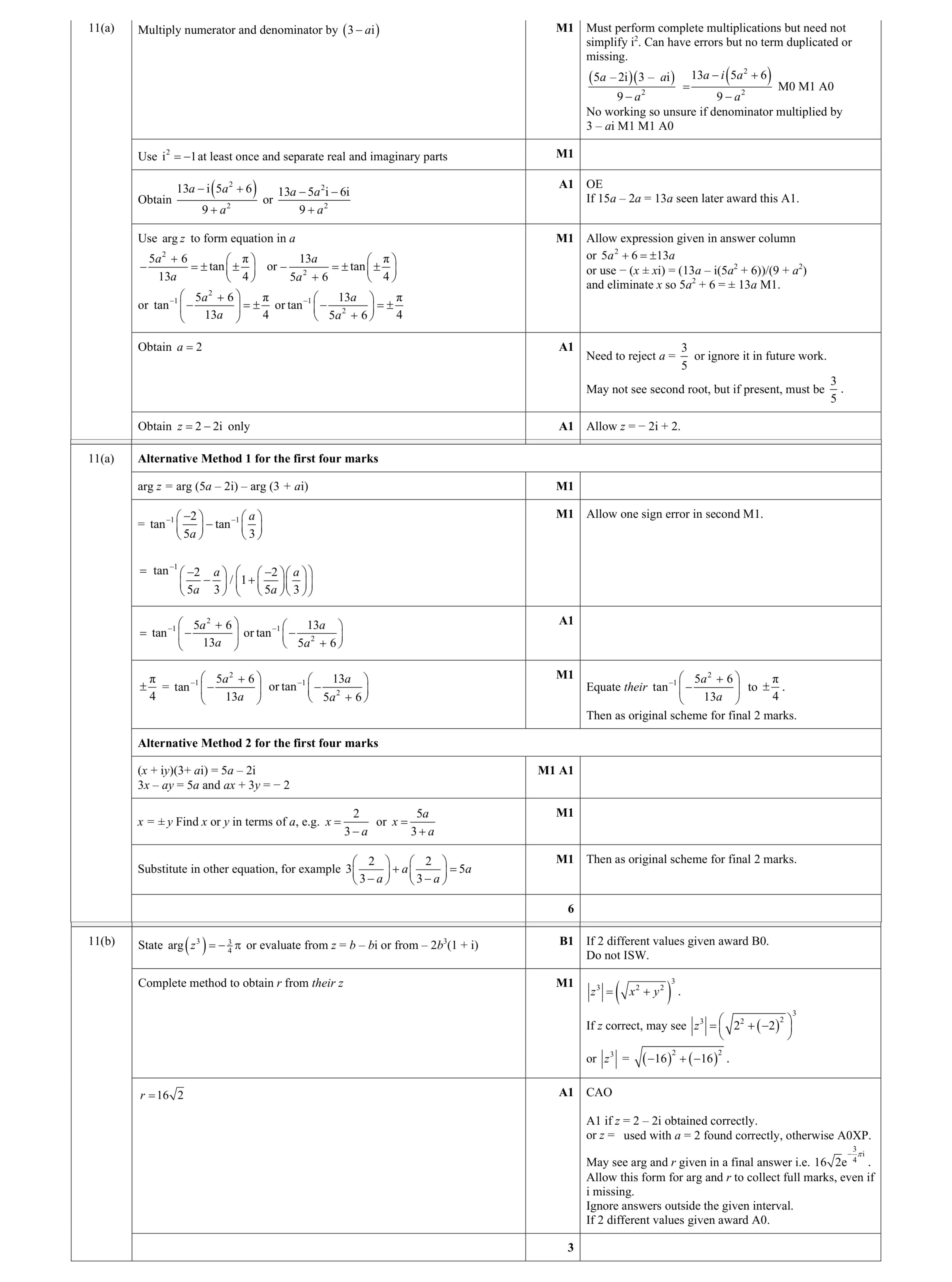 9
9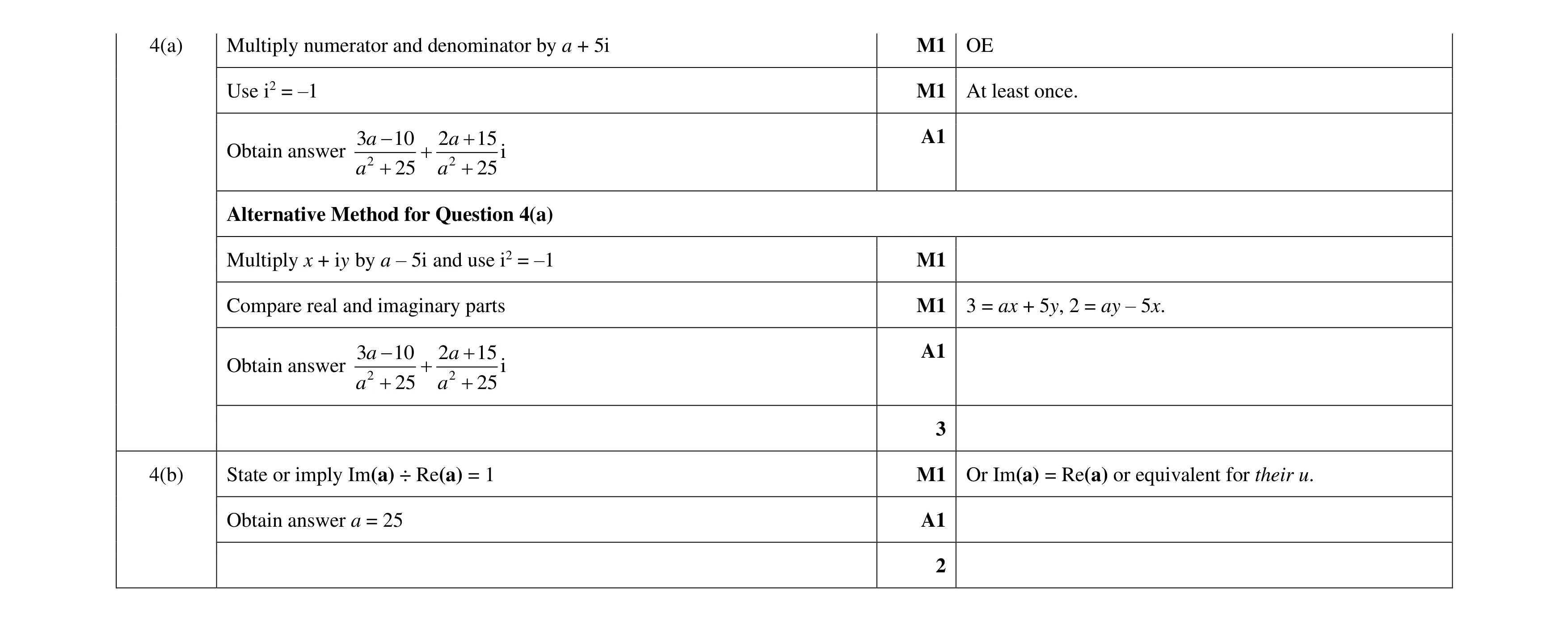 5
5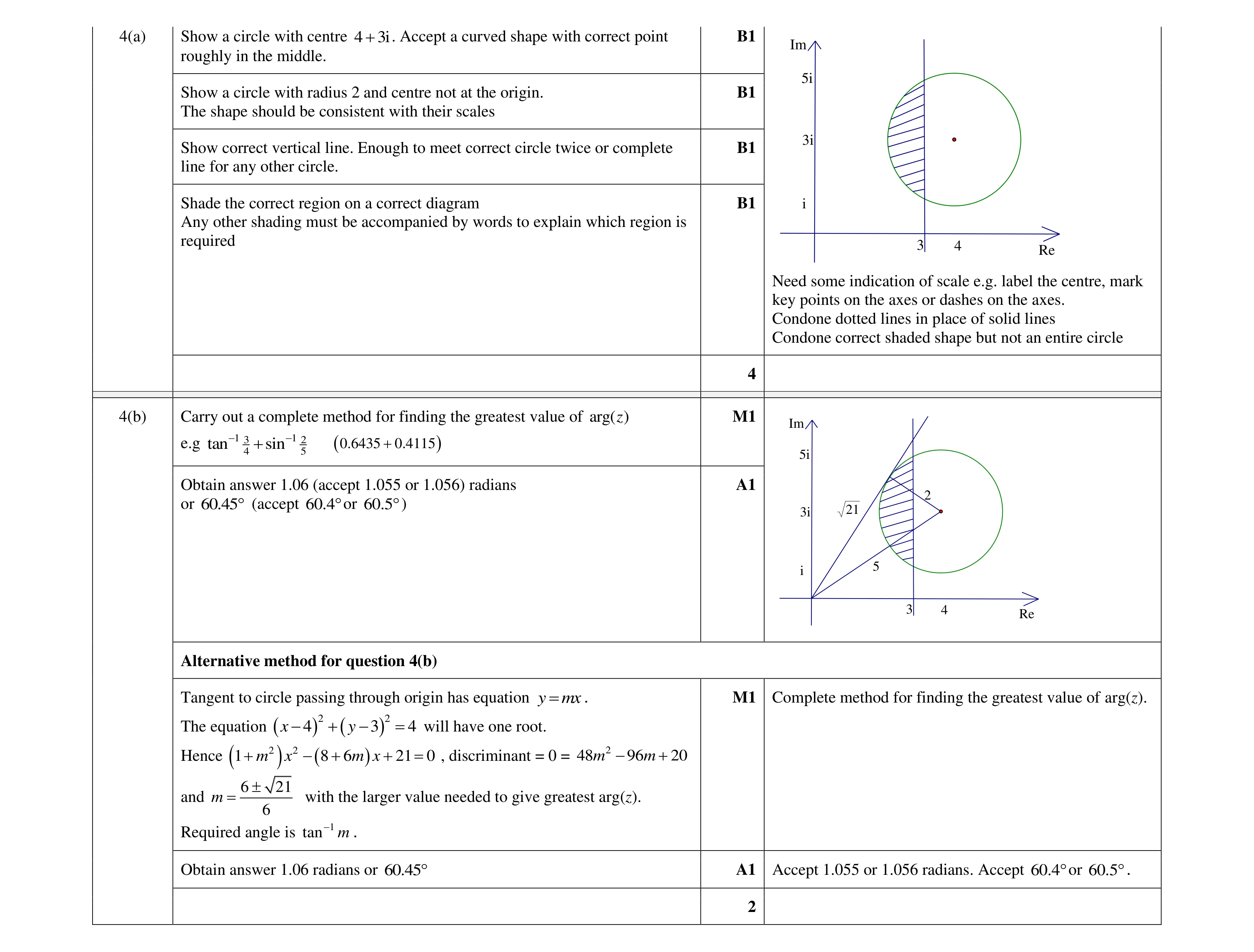 6
6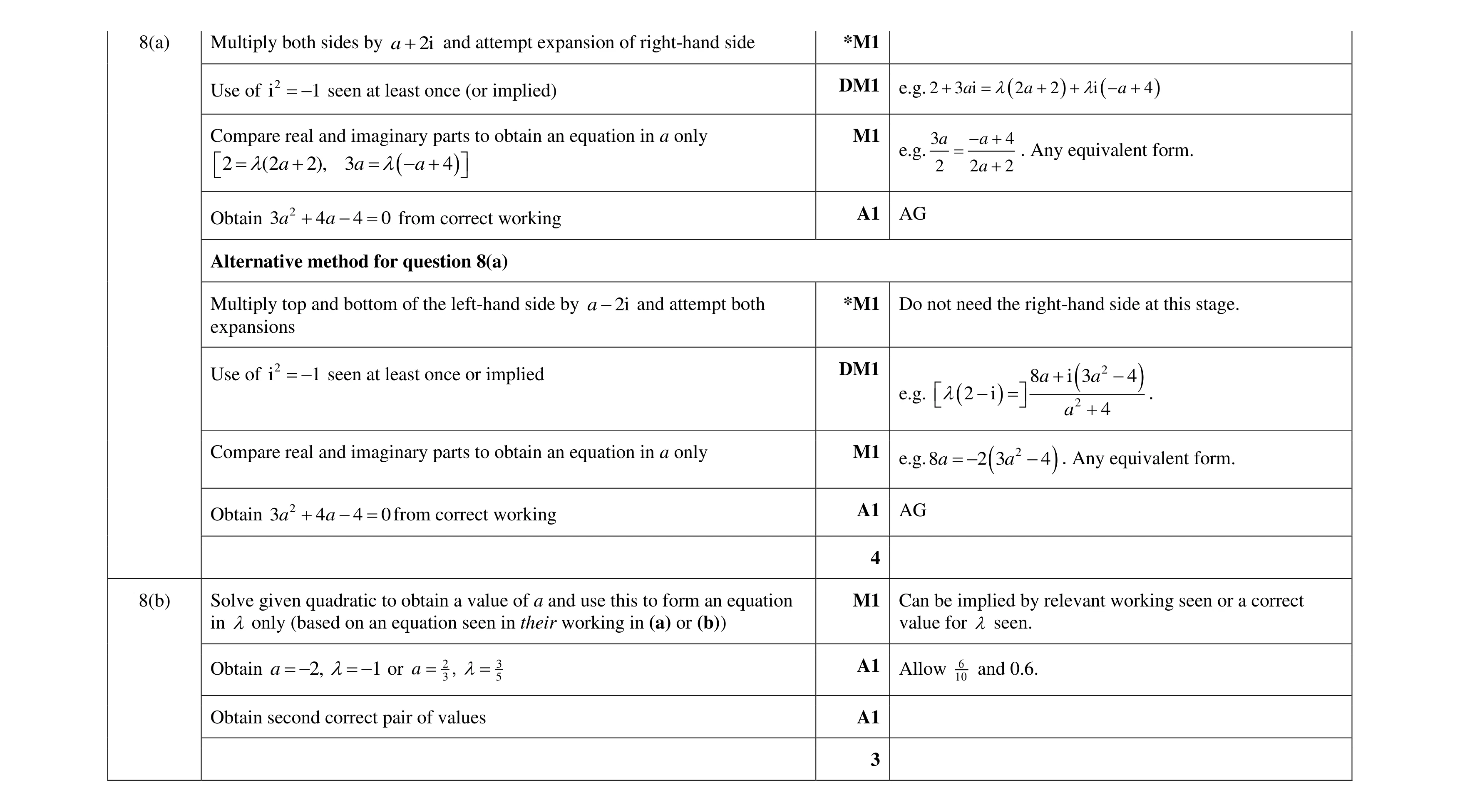 7
7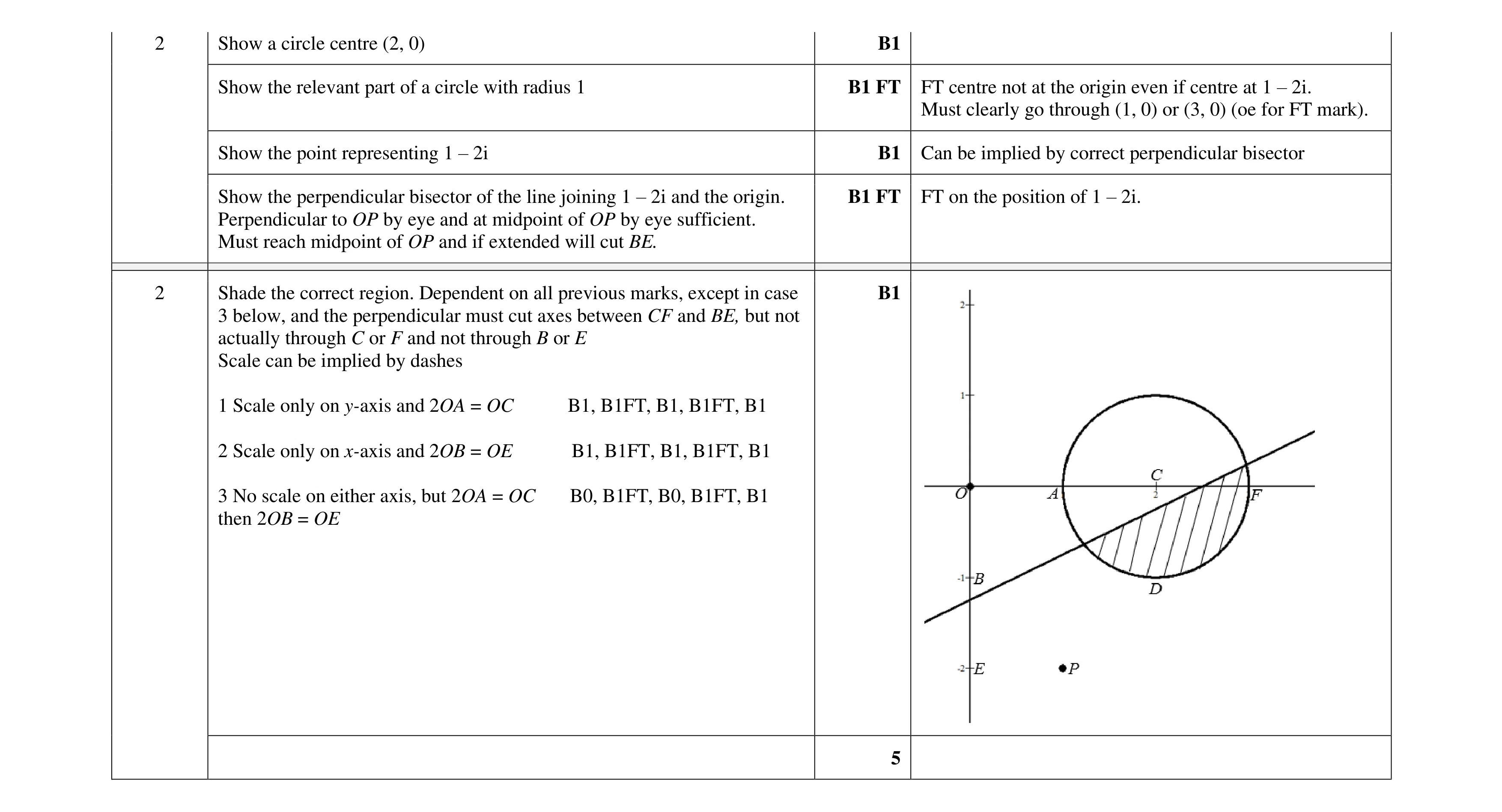 5
5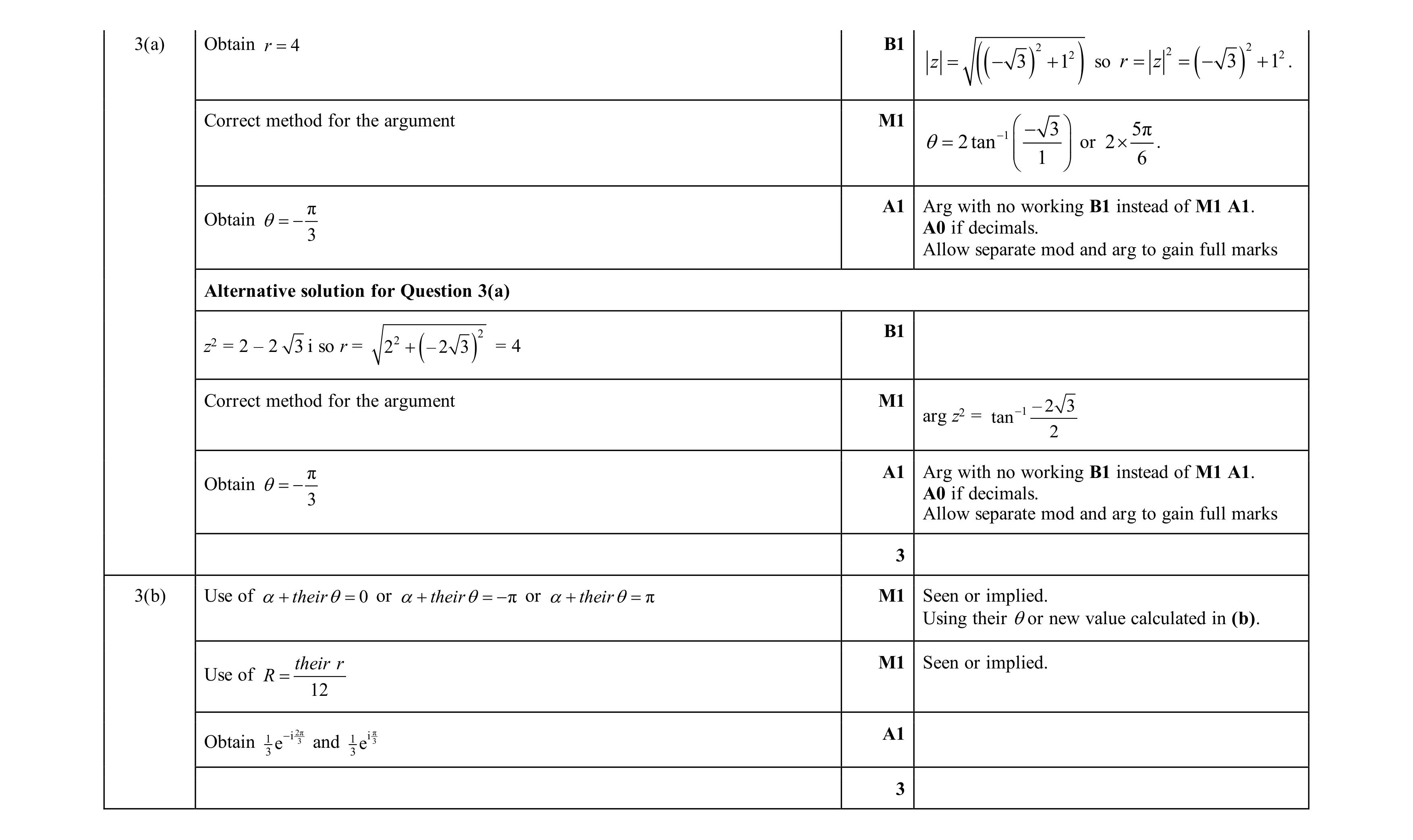 6
6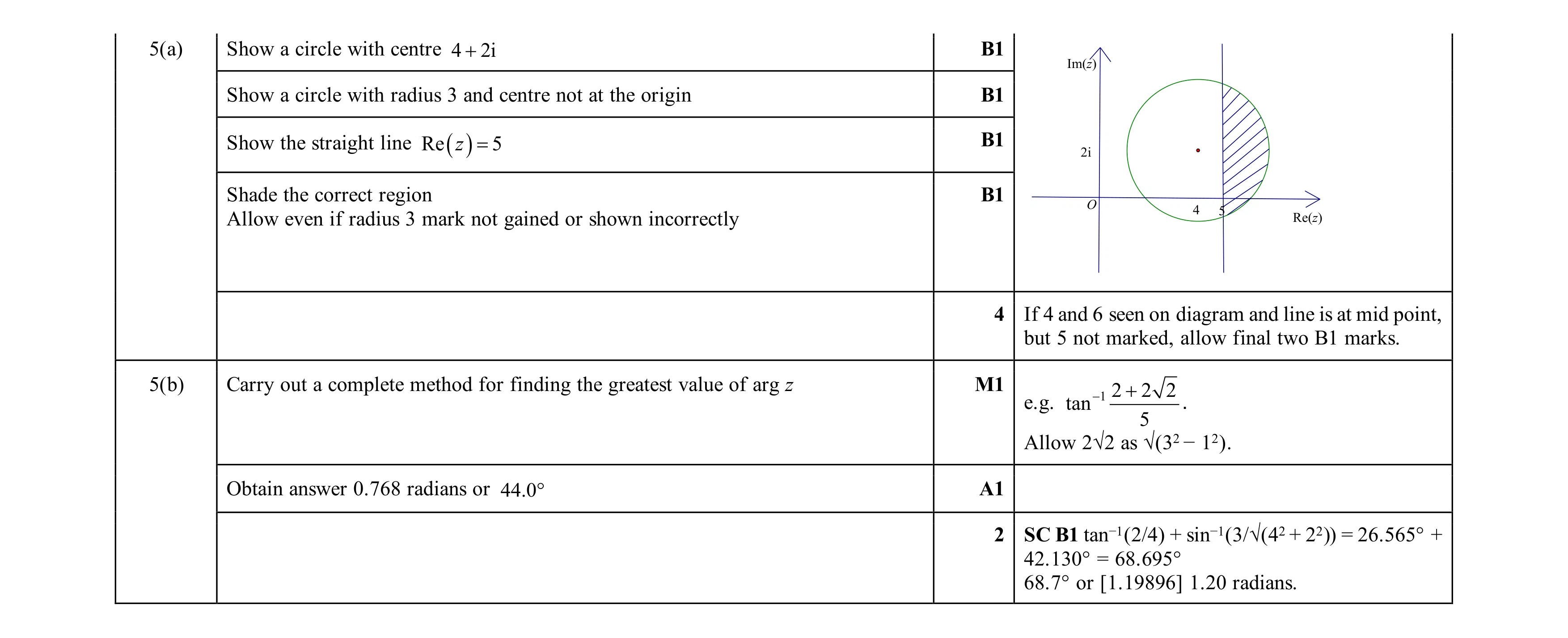 6
6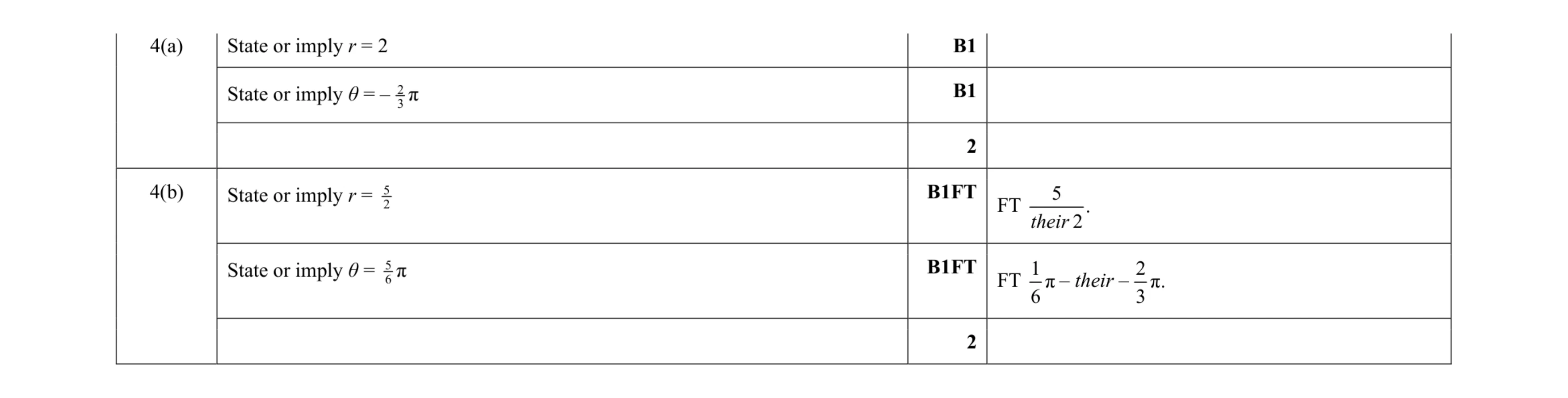 4
4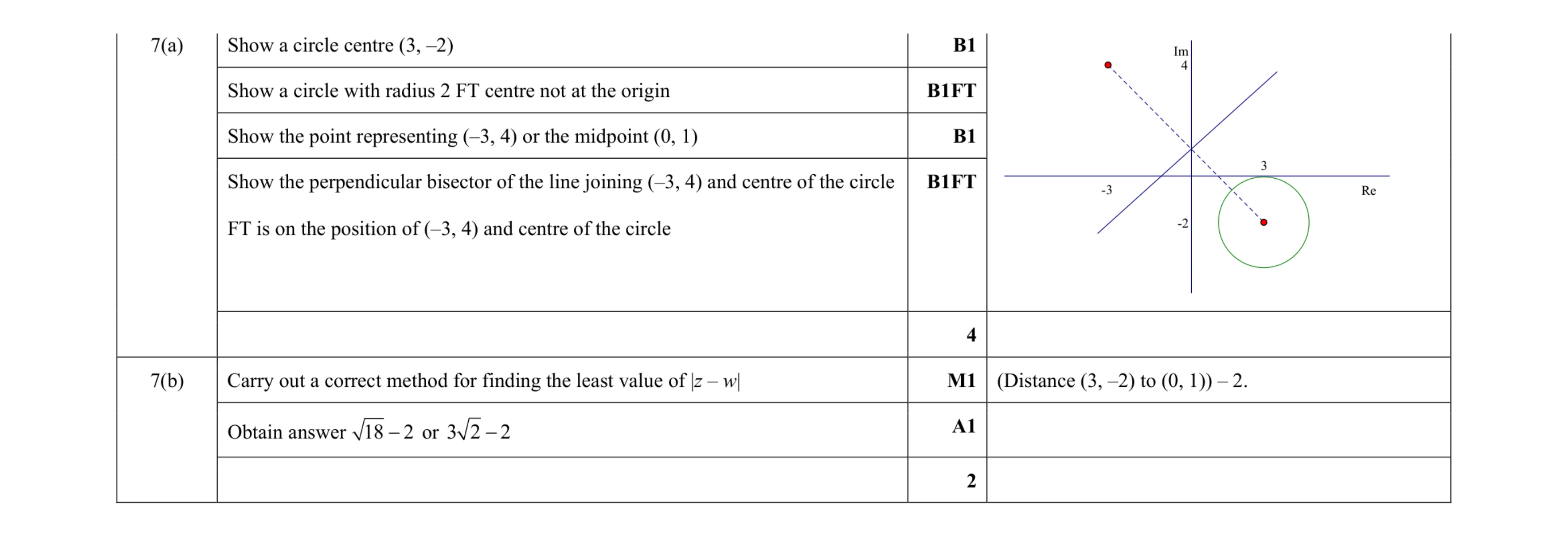 6
6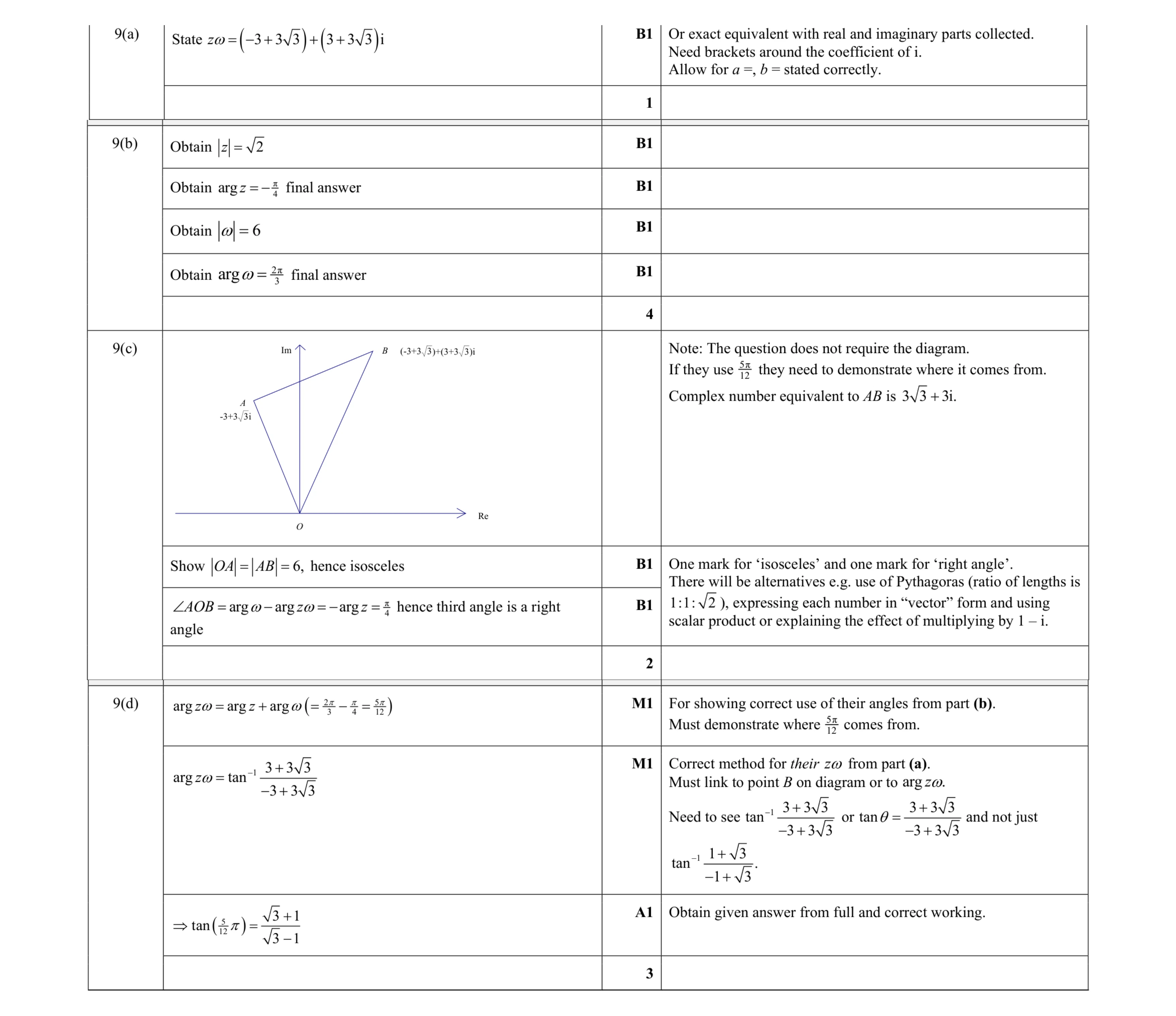 10
10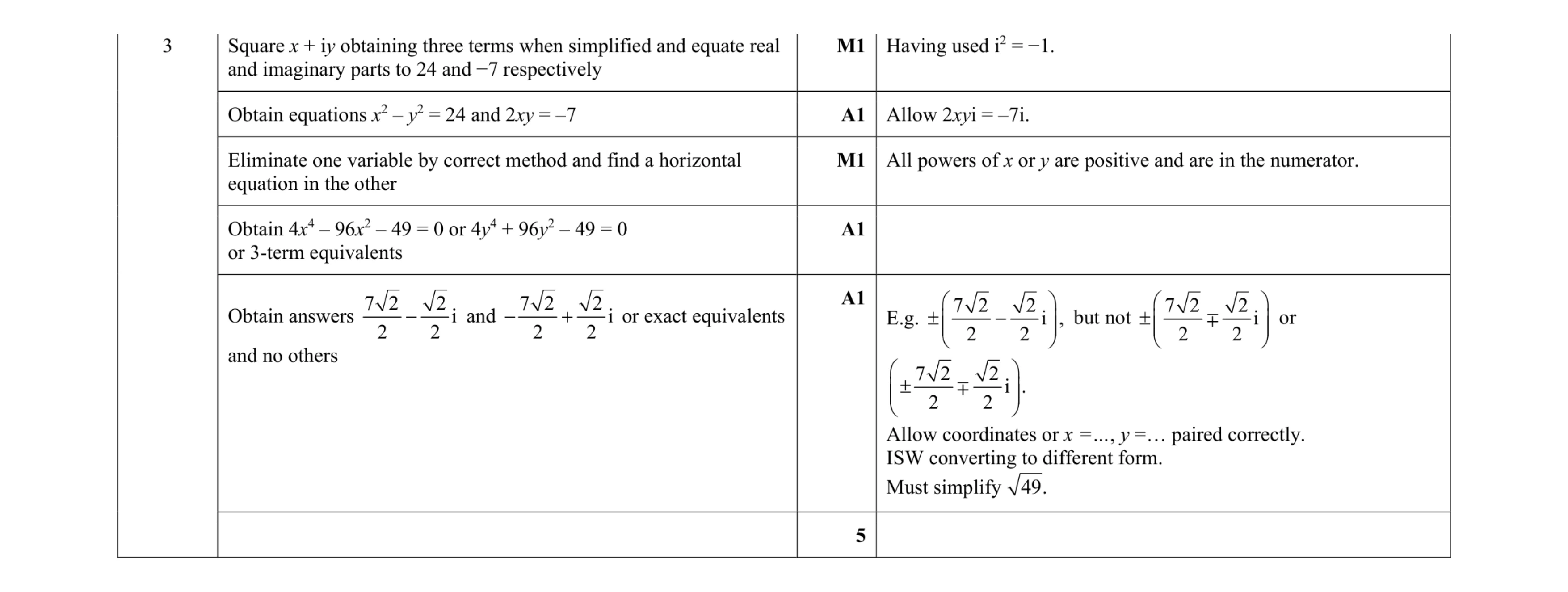 5
5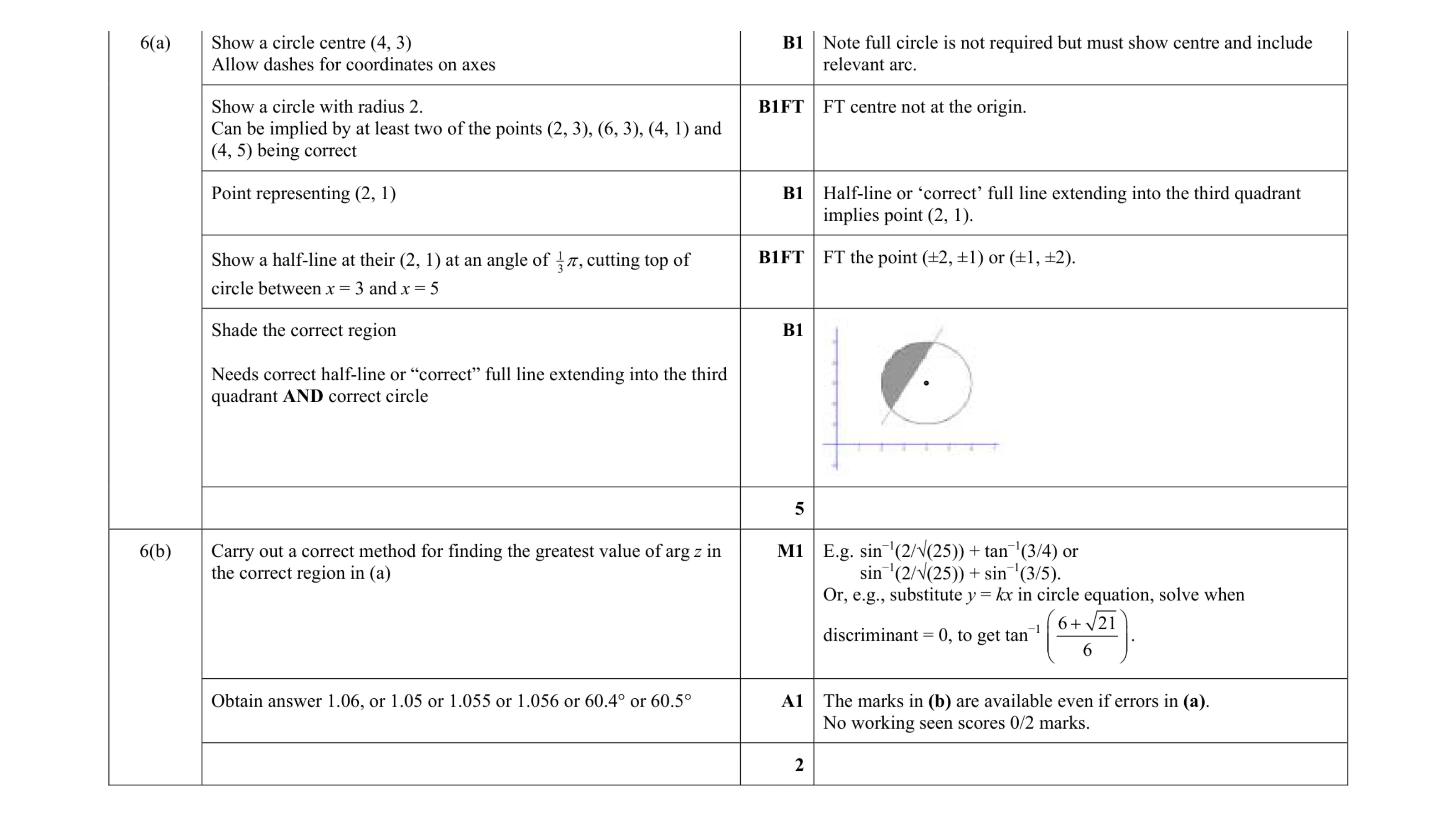 7
7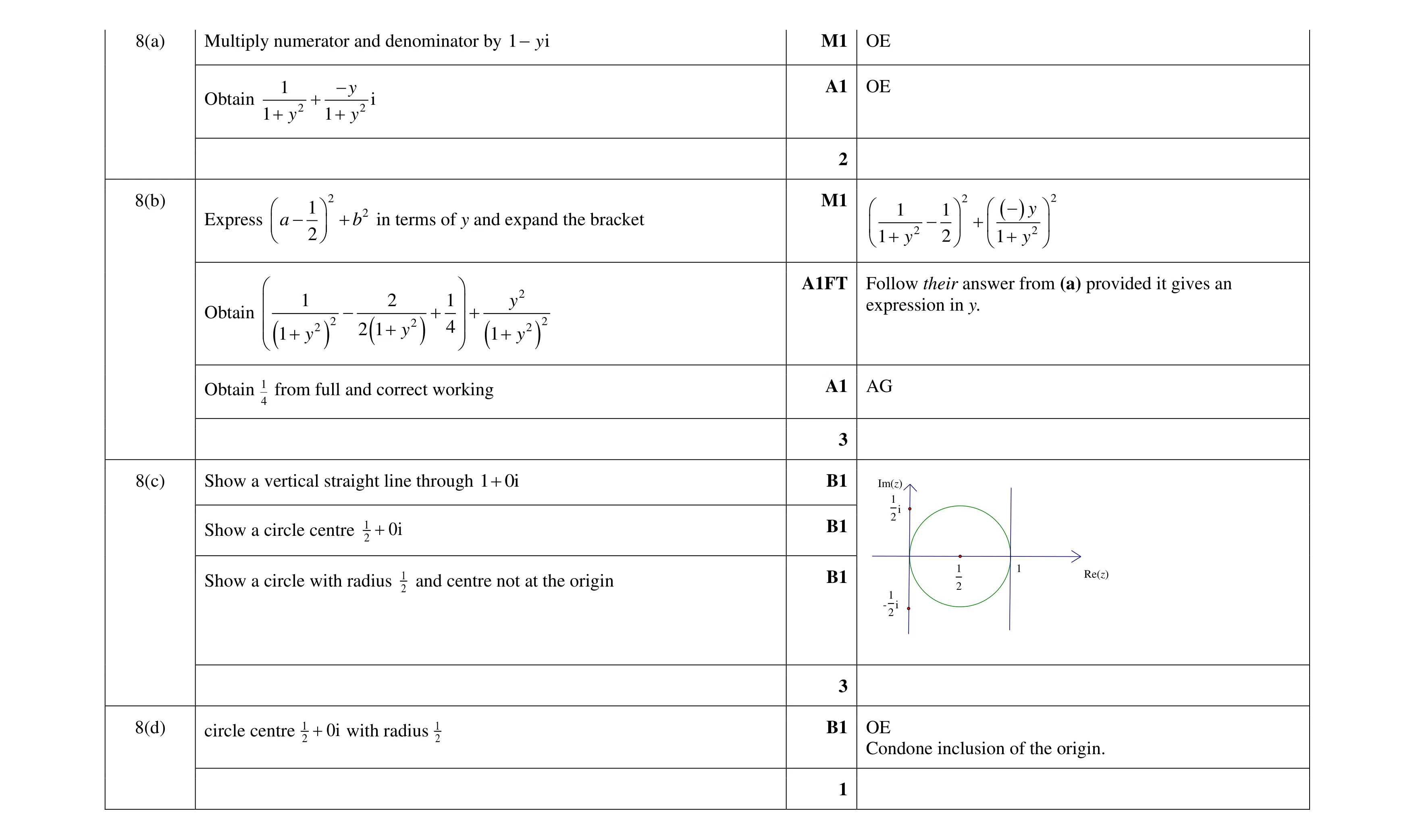 9
9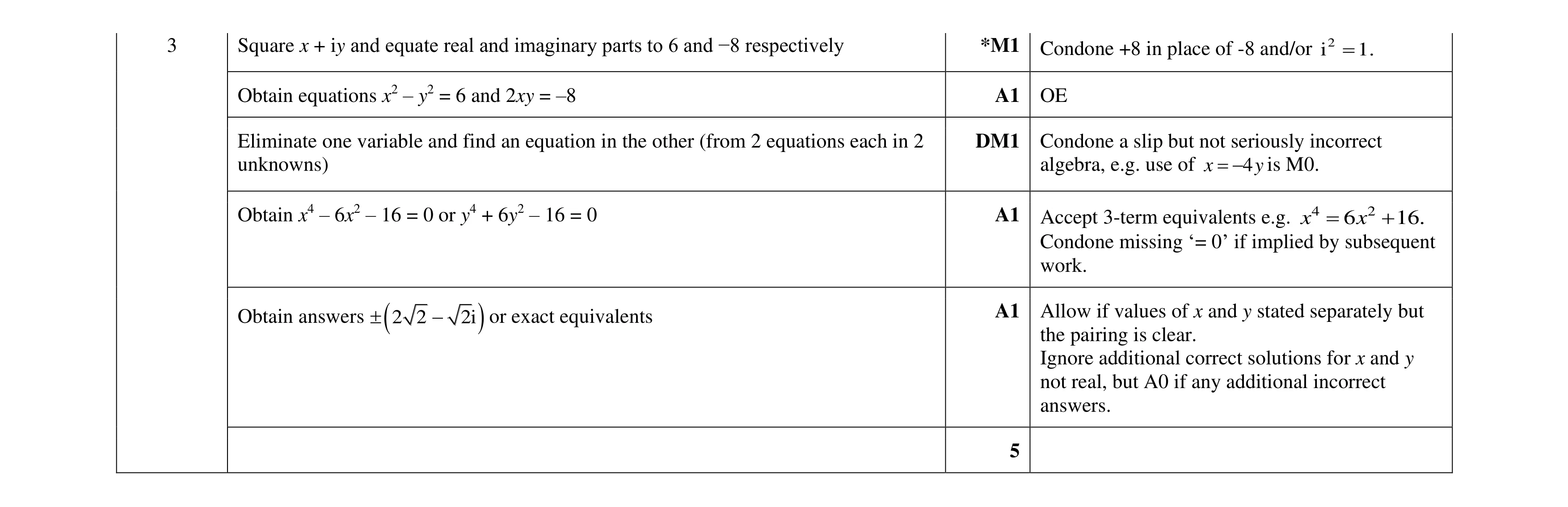 5
5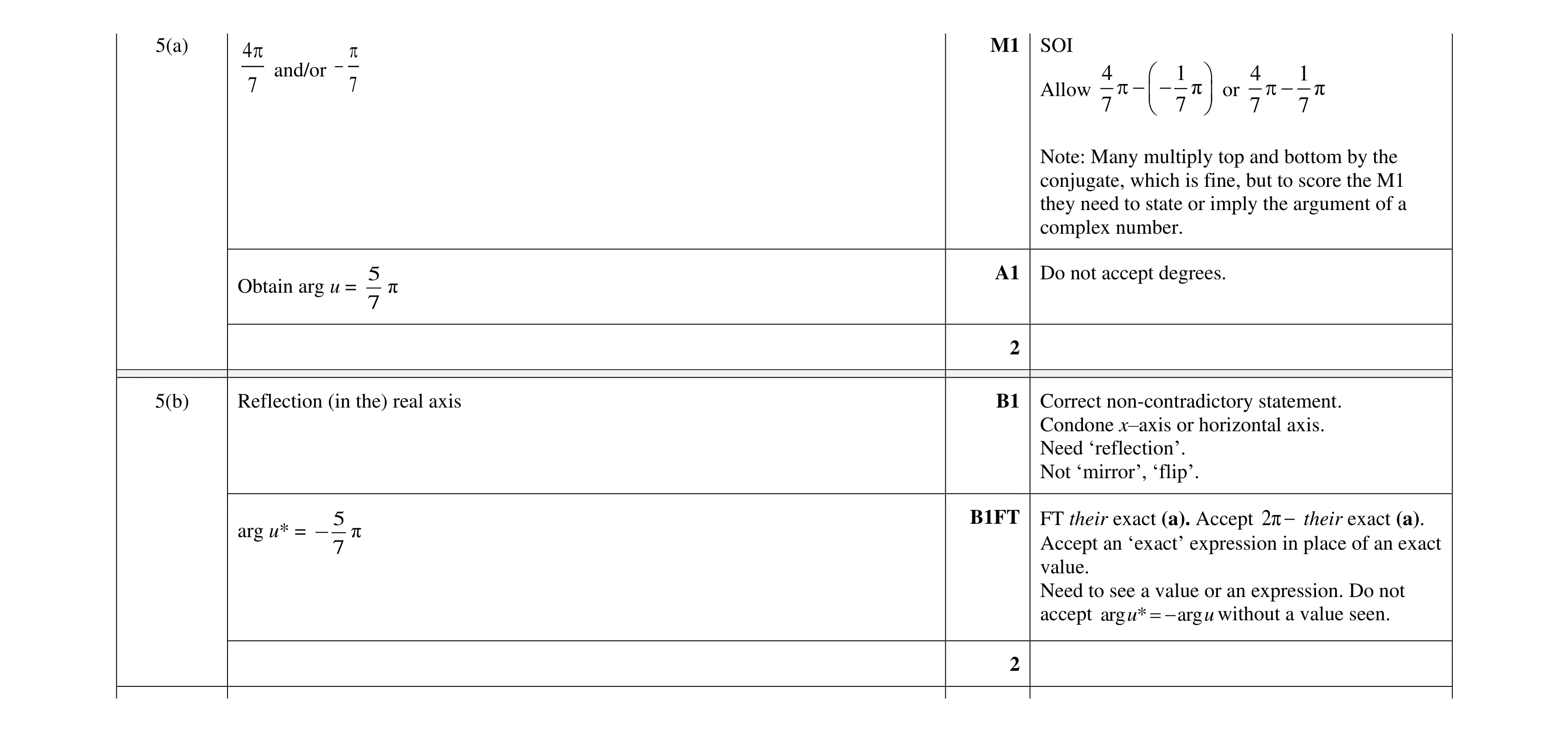 4
4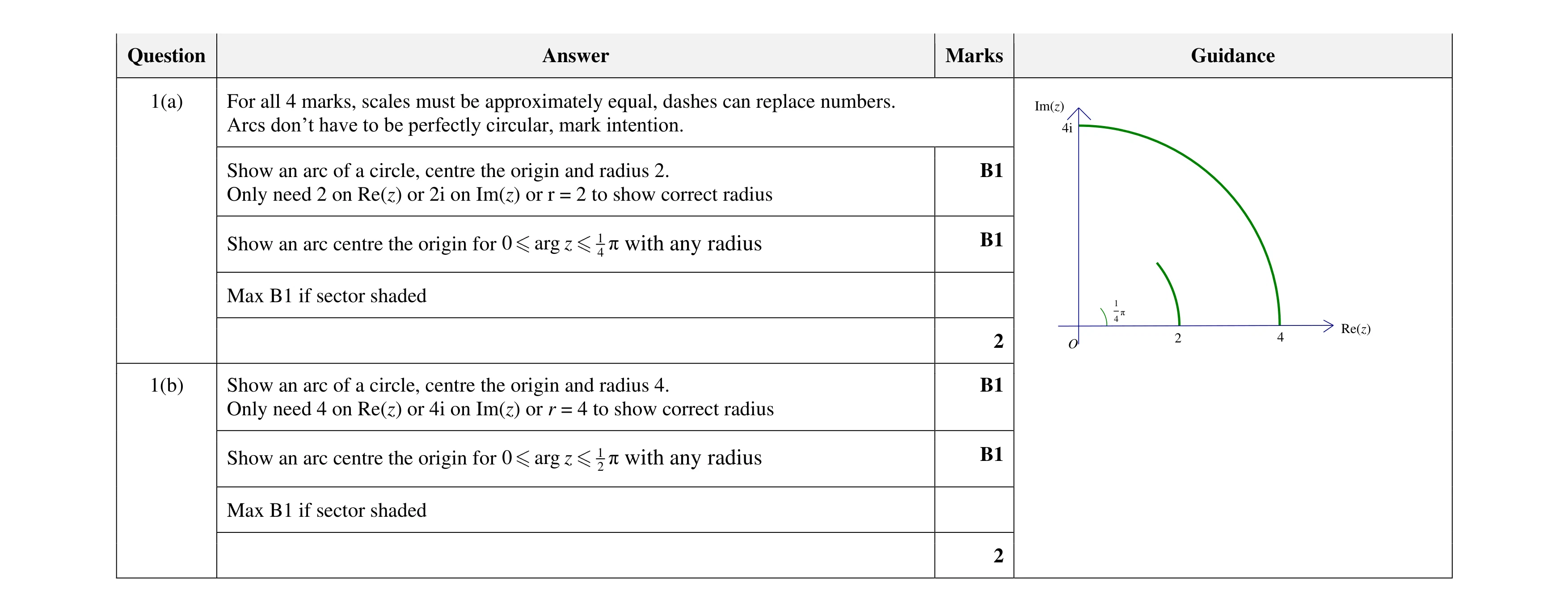 4
4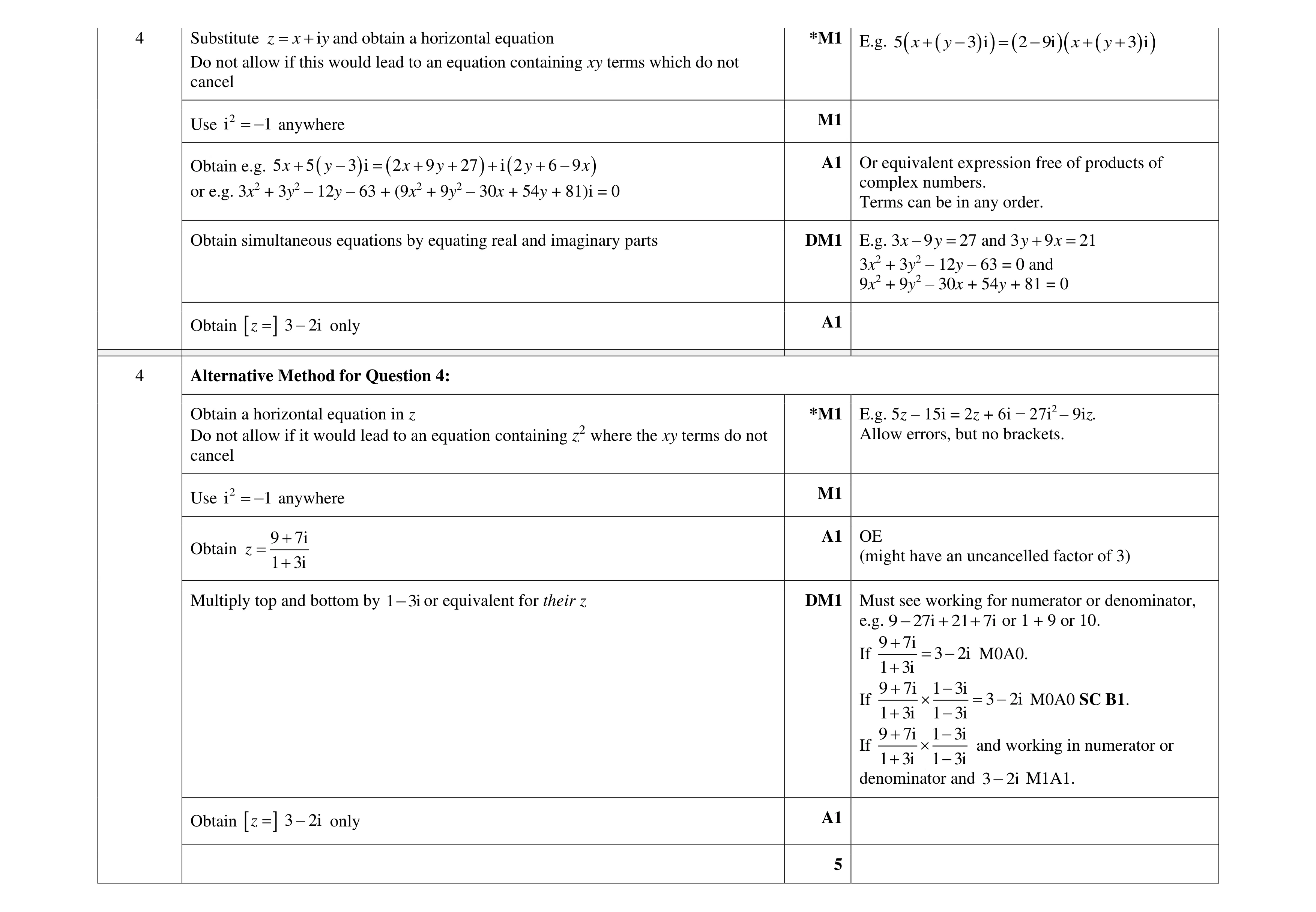 5
5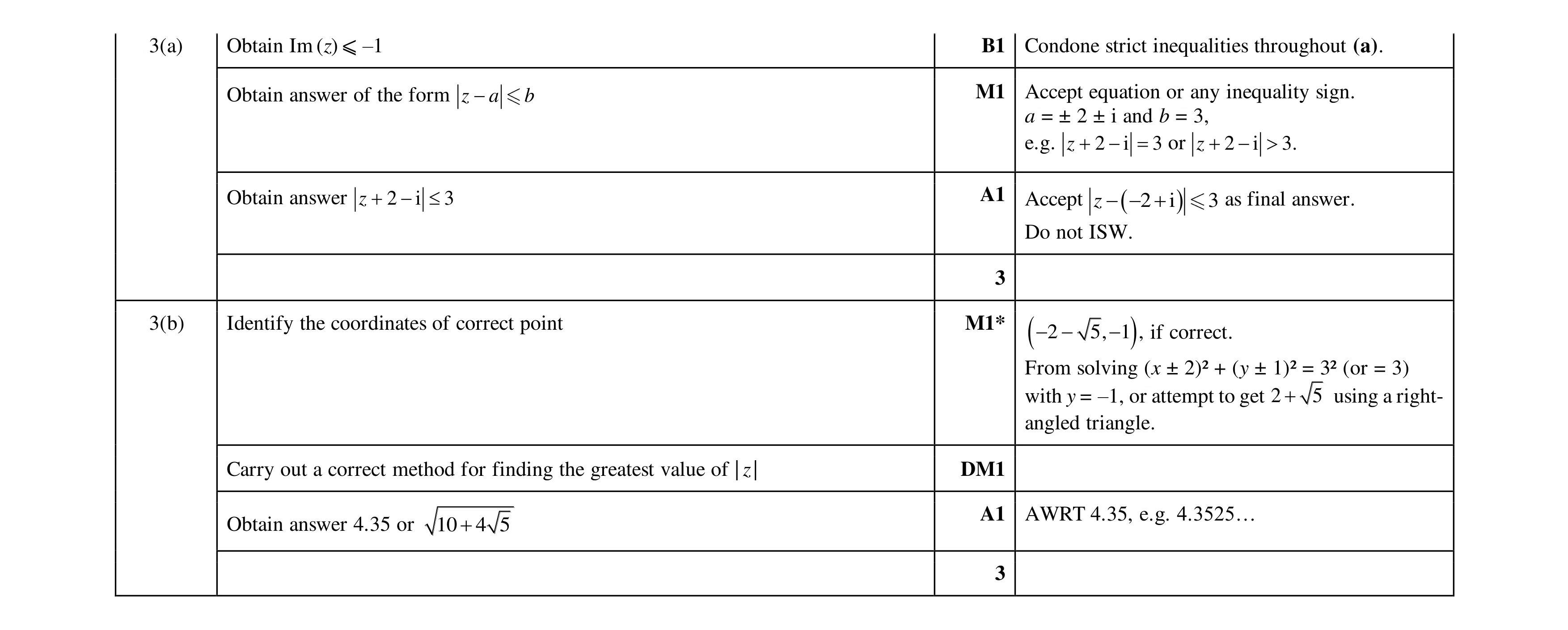 6
6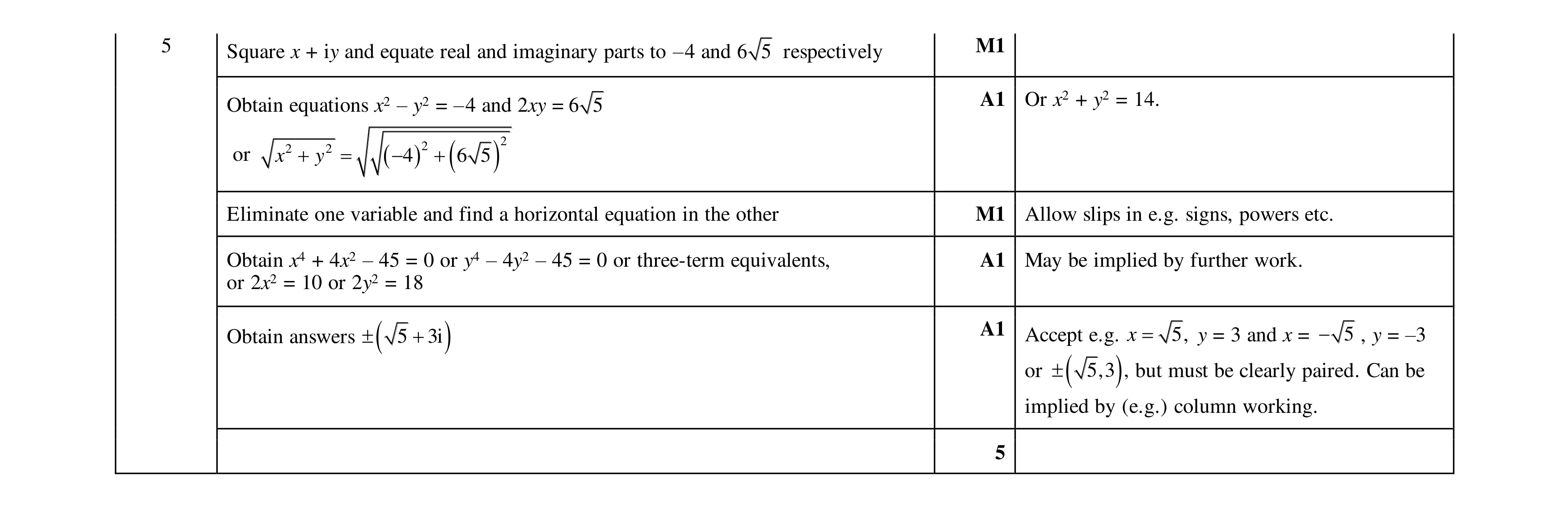 5
5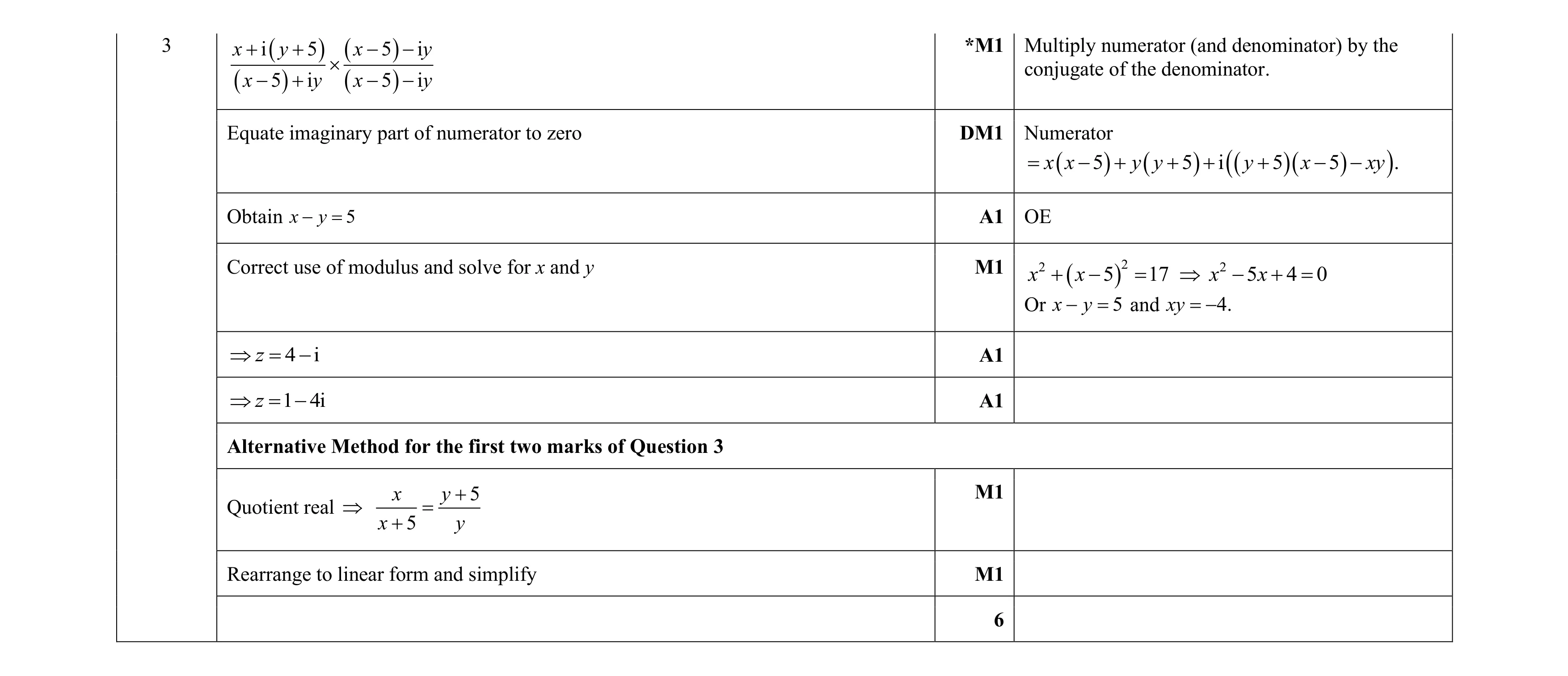 6
6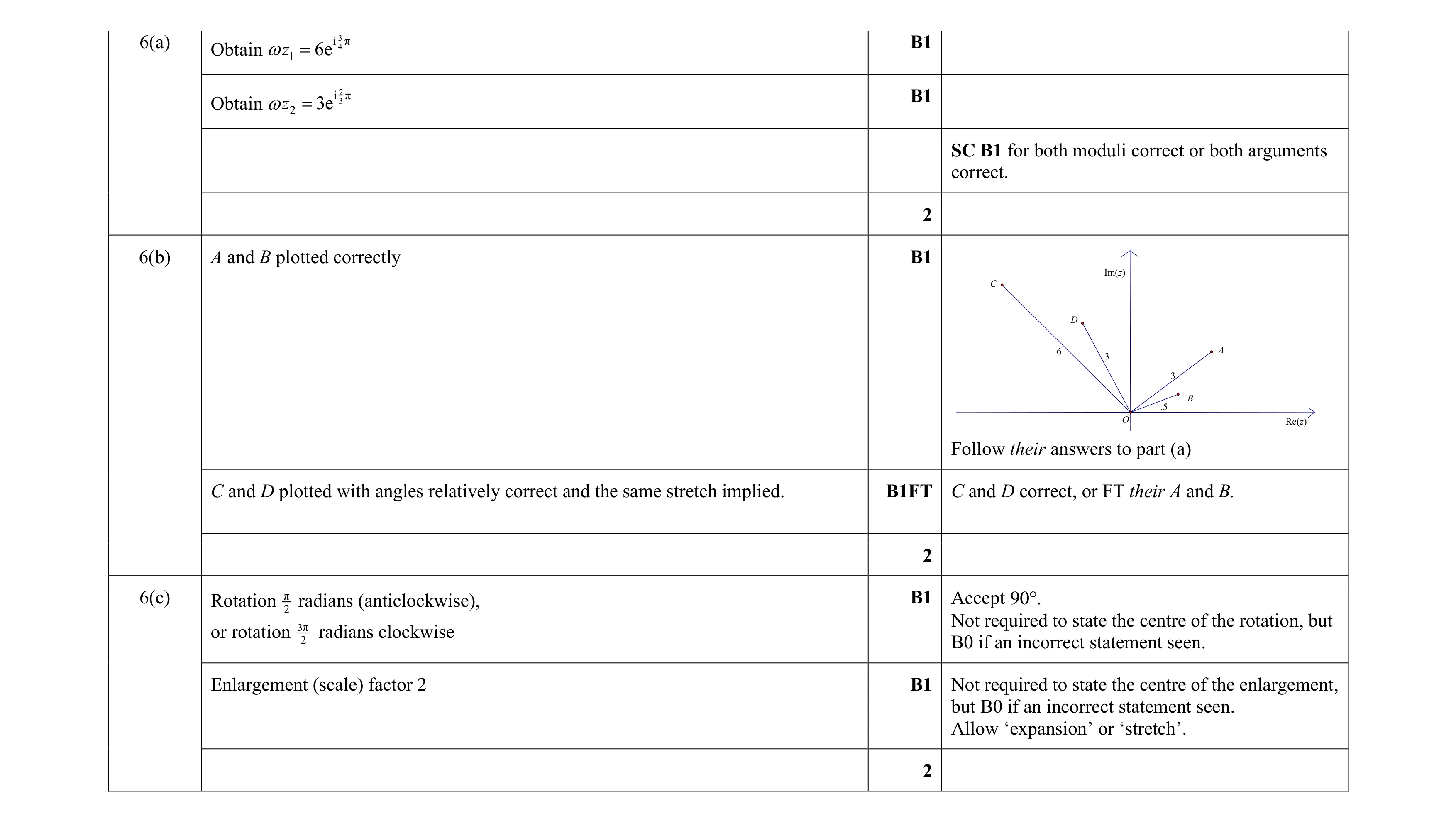 6
6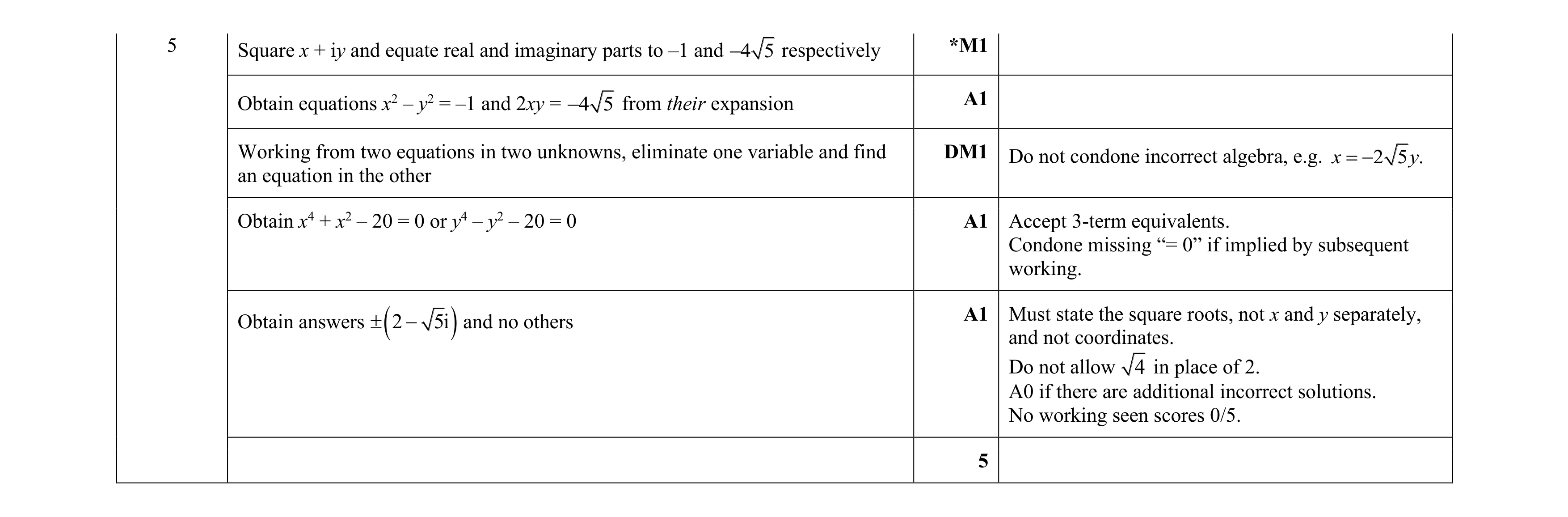 5
5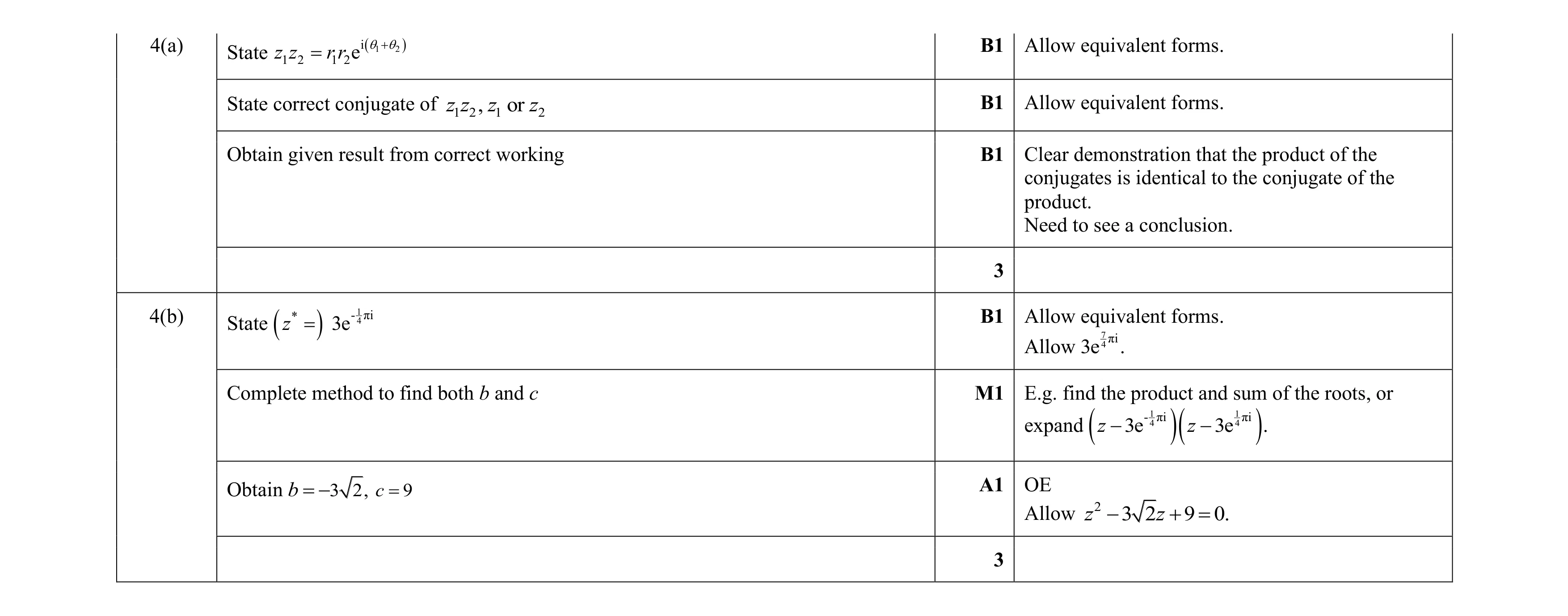 6
6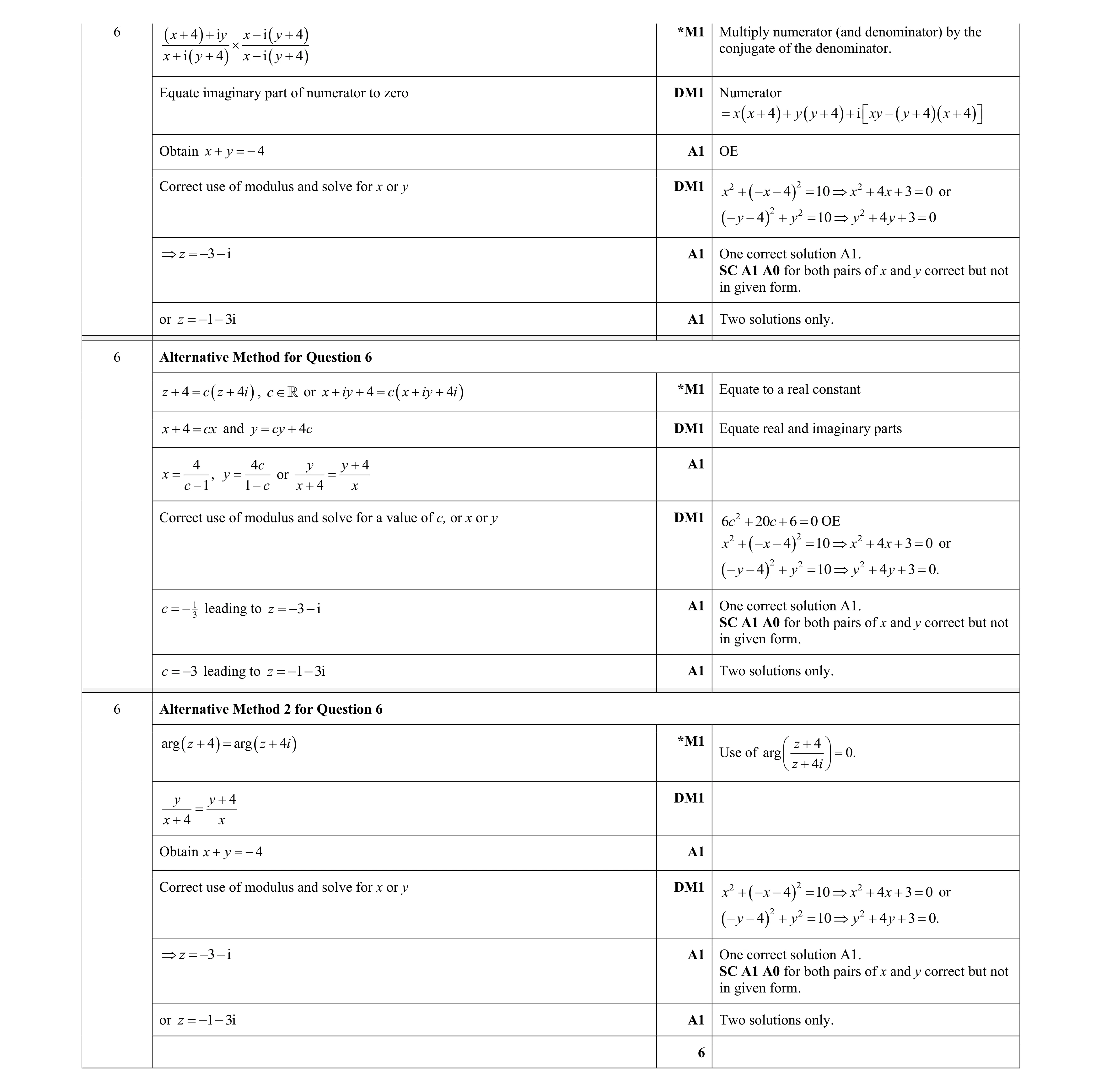 6
6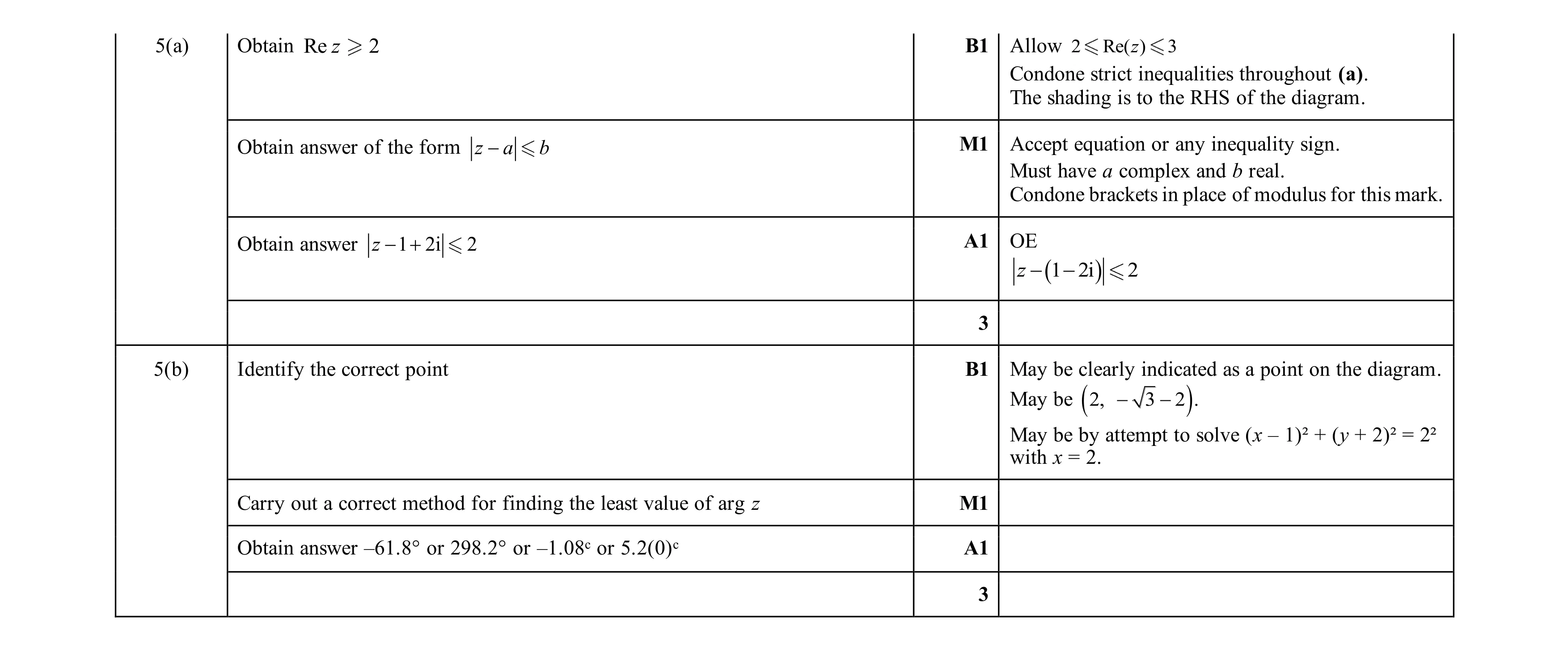 6
6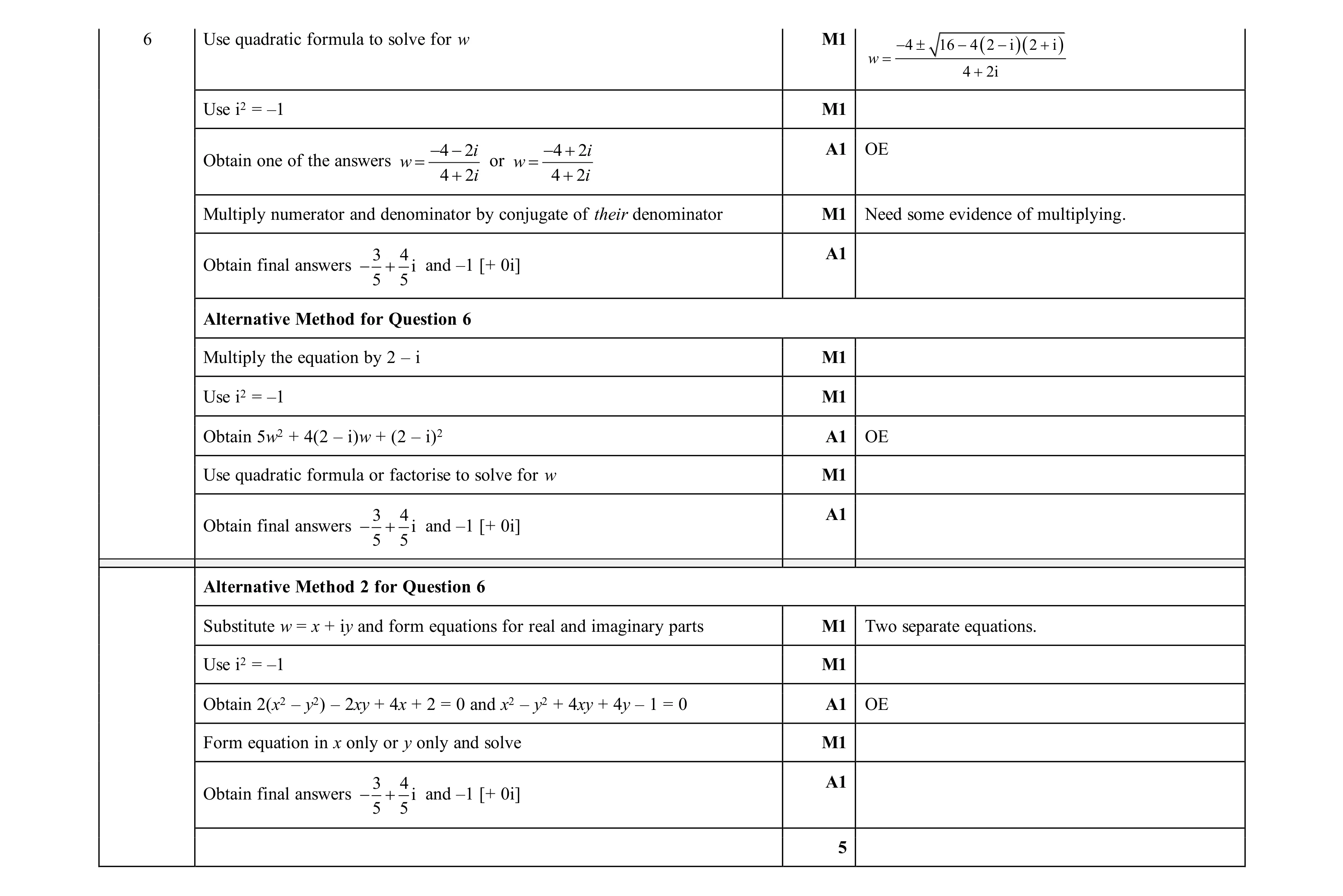 5
5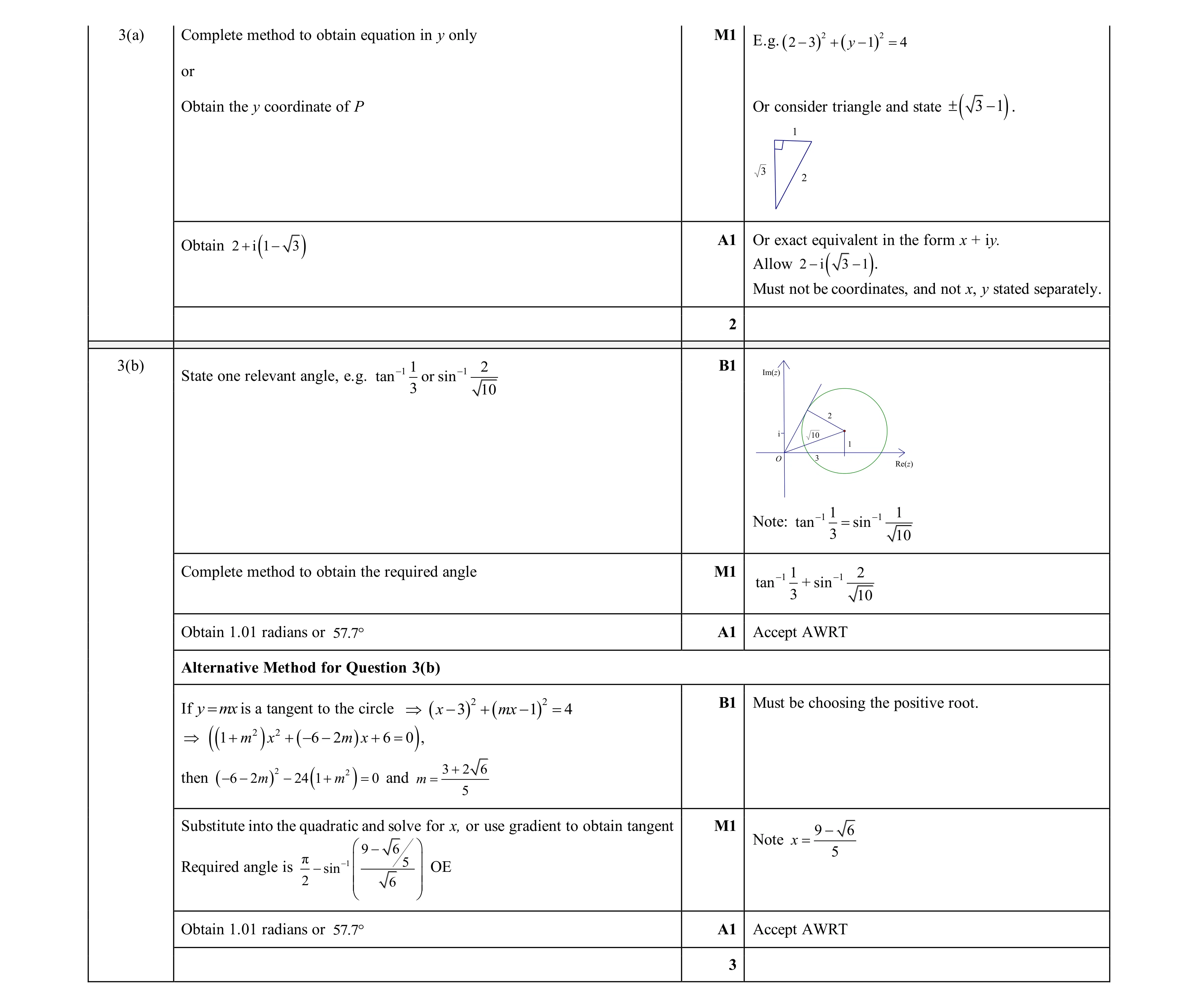 5
5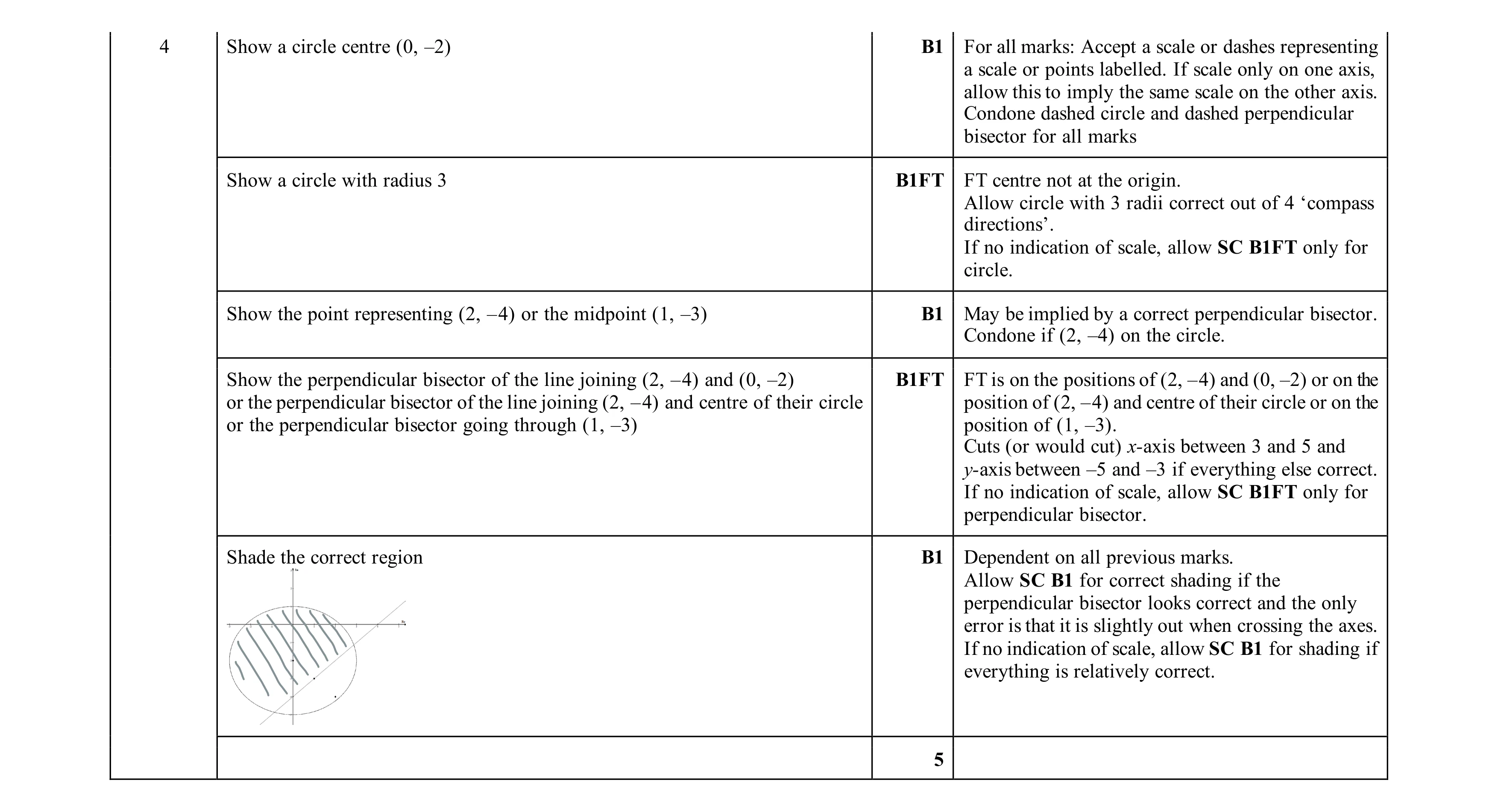 5
5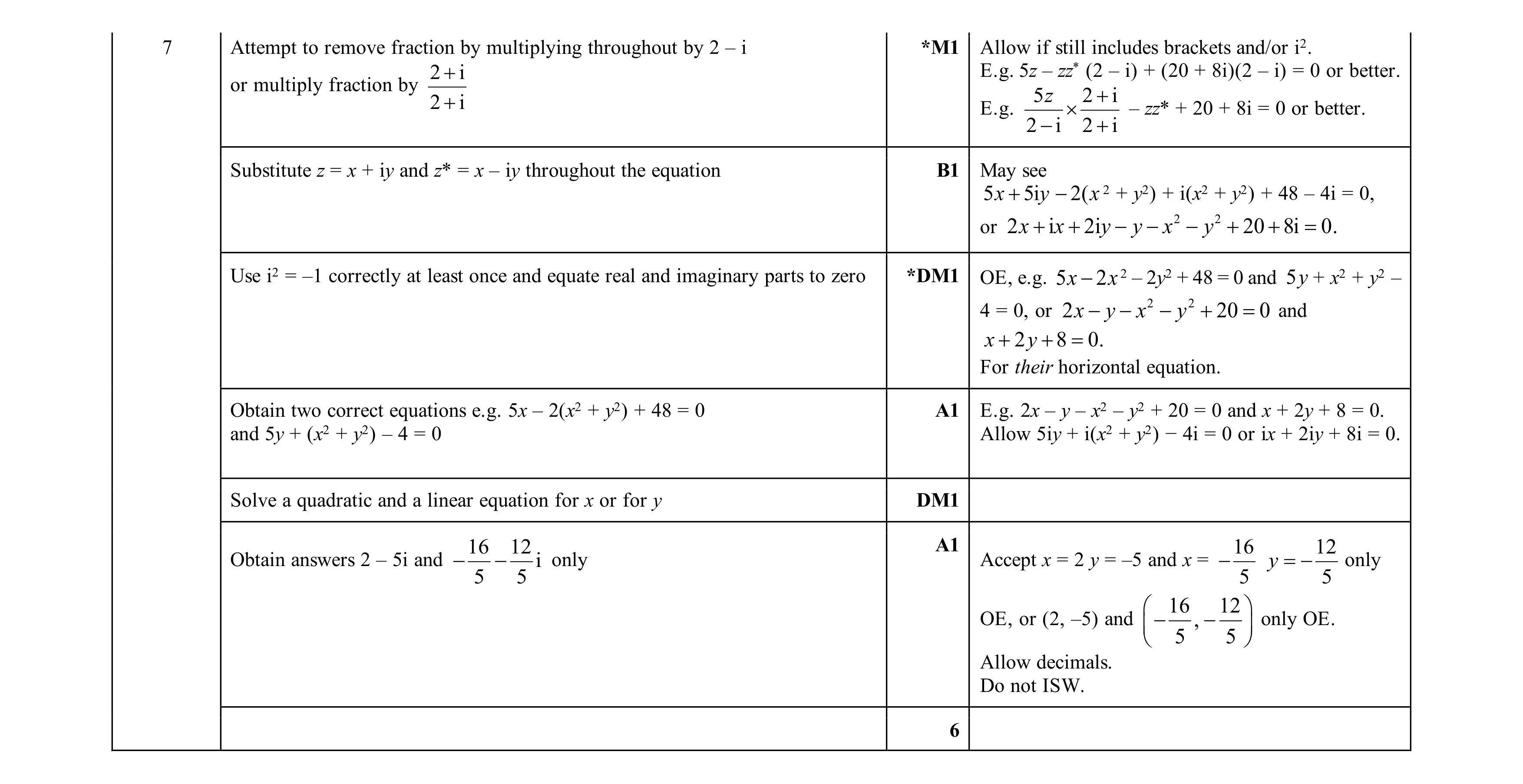 6
6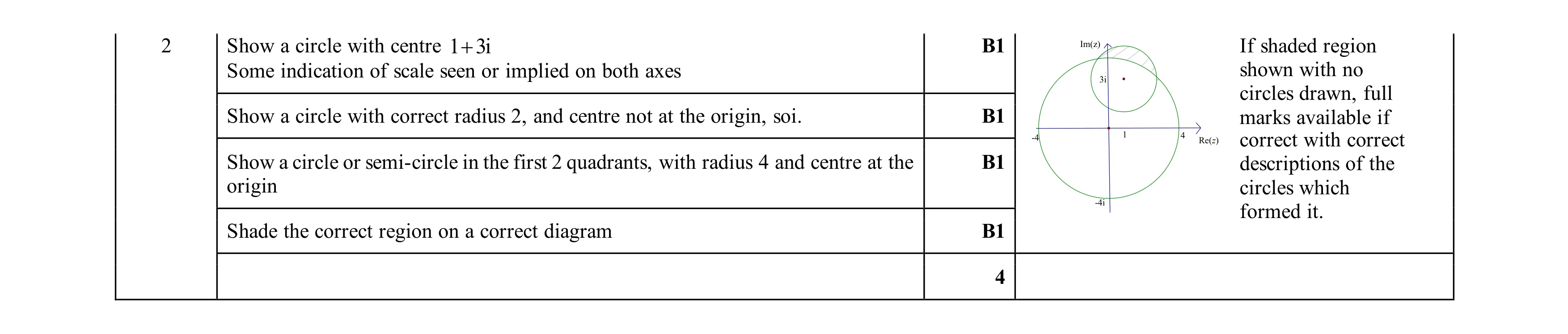 4
4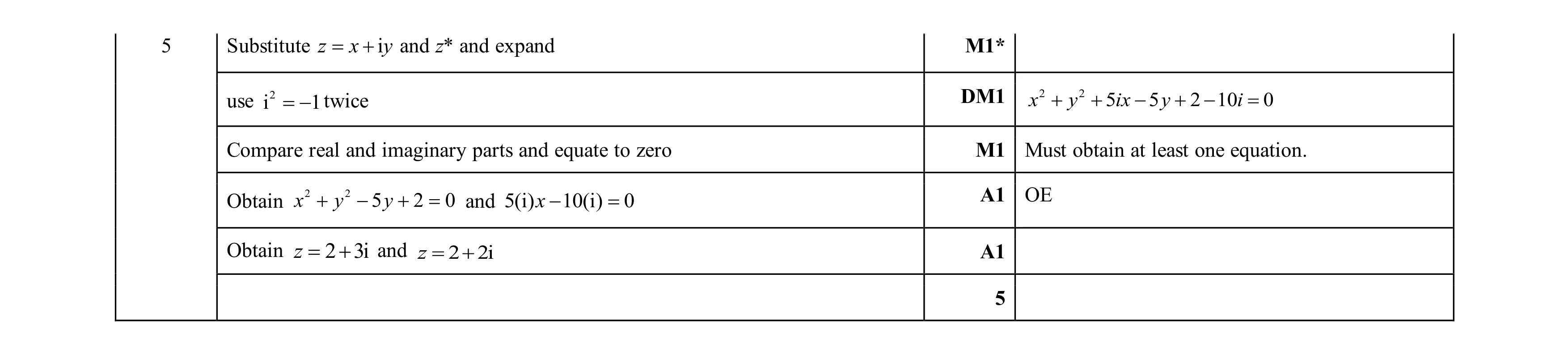 5
5