Questions as text
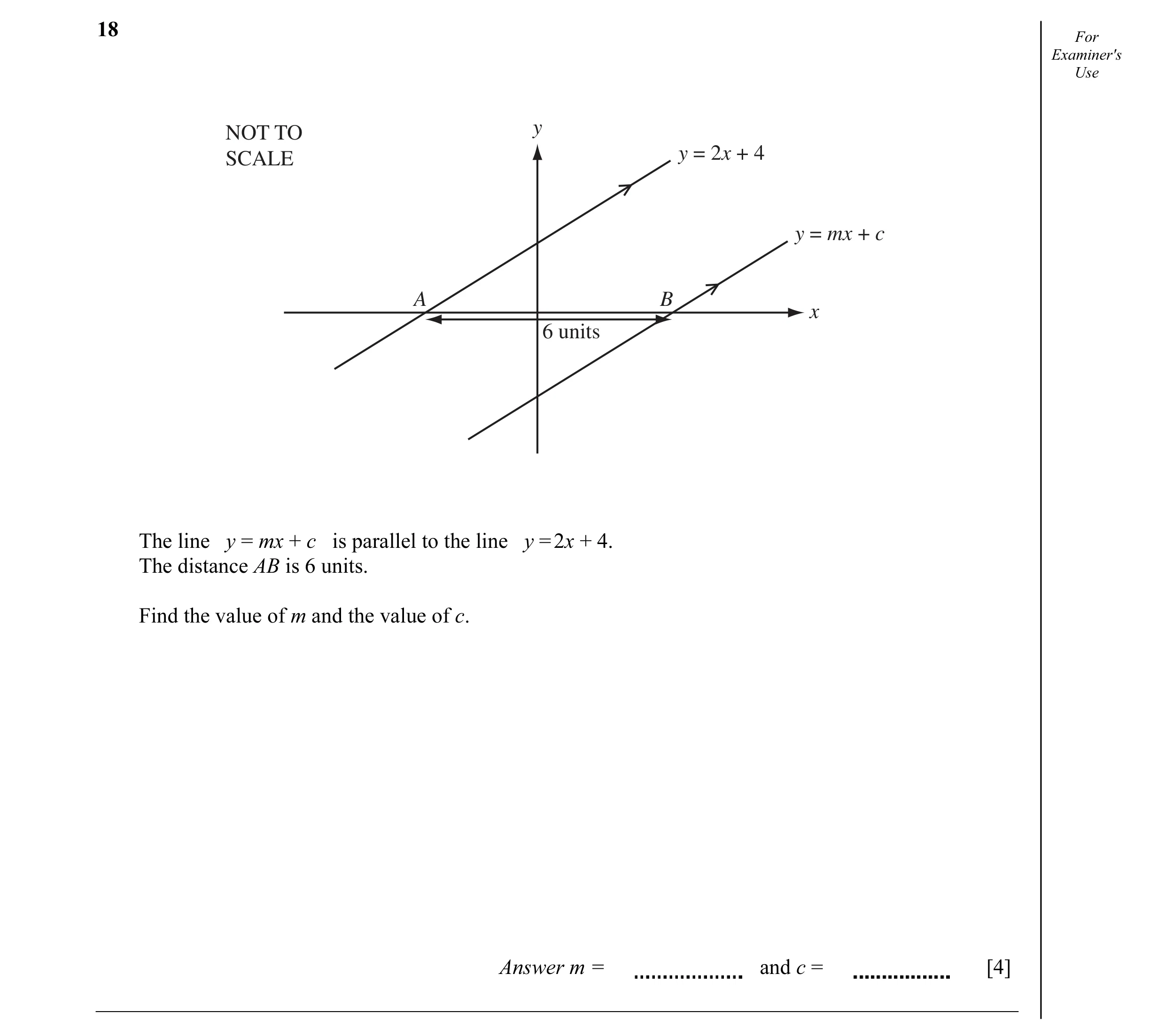
Q1 · For Examiner's Use NOT TO y SCALE y = 2x + 4 y = mx + c A B x 6 units The line y = mx + c… 0580/21 Oct/Nov 2009
18 For Examiner's Use NOT TO y SCALE y = 2x + 4 y = mx + c A B x 6 units The line y = mx + c is parallel to the line y = 2x + 4. The distance AB is 6 units. Find the value of m and the value of c. Answer m = and c = [4]
4 marks
Mark scheme: 18 m = 2 c = –8 4 B1 B(4, 0) or A(–2, 0) seen or used B1 m = 2 0 −c M1 substituting (4, 0) into y = 2x + c or = 2 4 − 0
This question in 0580/21 Oct/Nov 2009
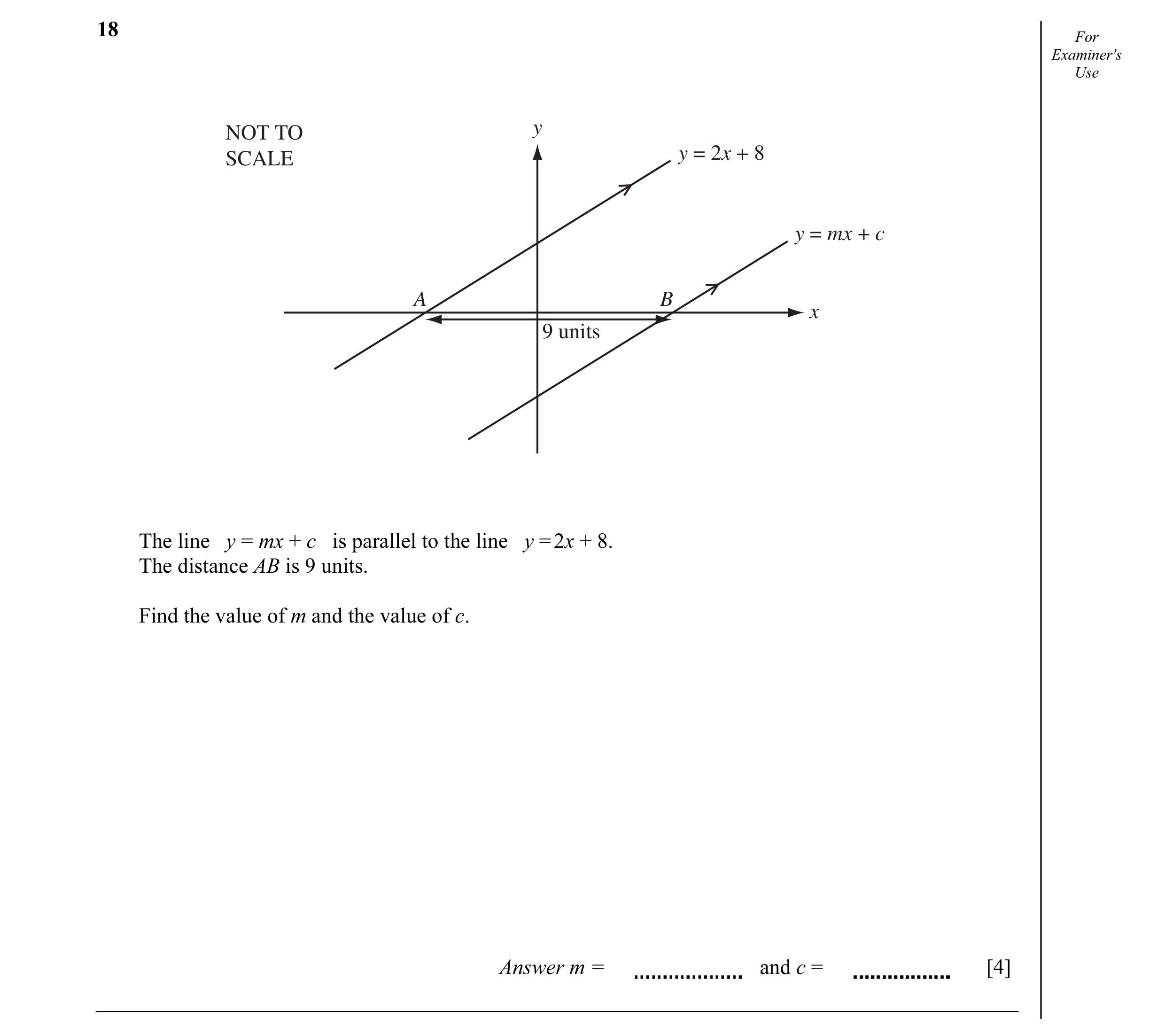
Q2 · For Examiner's Use NOT TO y SCALE y = 2x + 8 y = mx + c A B x 9 units The line y = mx + c… 0580/22 Oct/Nov 2009
18 For Examiner's Use NOT TO y SCALE y = 2x + 8 y = mx + c A B x 9 units The line y = mx + c is parallel to the line y = 2x + 8. The distance AB is 9 units. Find the value of m and the value of c. Answer m = and c = [4]
4 marks
Mark scheme: 18 m = 2 c = –10 4 B1 B(5, 0) or A(–4, 0) seen or used B1 m = 2 0 −c M1 substituting (5,0) into y = 2x + c or = 2 5 − 0
This question in 0580/22 Oct/Nov 2009
Q3 · The points (2, 5), (3, 3) and (k, 1) all lie in a straight line 0580/21 May/June 2010
15 The points (2, 5), (3, 3) and (k, 1) all lie in a straight line. (a) Find the value of k. Answer(a) k = [1] (b) Find the equation of the line. Answer(b) [3]
4 marks
Mark scheme: 15 (a) 4 1 5 − 3 (b) y = –2x + 9 oe 3 M1 oe 2 − 3 M1 substitution of a point into their equation If M1 only then A1ft for y = “m”x + “c” used correctly with their numeric values p 3
This question in 0580/21 May/June 2010
Q4 · For y Examiner's A Use 8 7 6 5 4 3 2 1 0 x 1 2 3 4 5 6 7 –1 –2 –3 –4 B (a) Using a… 0580/21 Oct/Nov 2010
21 For y Examiner's A Use 8 7 6 5 4 3 2 1 0 x 1 2 3 4 5 6 7 –1 –2 –3 –4 B (a) Using a straight edge and compasses only, construct the perpendicular bisector of AB on the diagram above. [2] (b) Write down the co-ordinates of the midpoint of the line segment joining A(1, 8) to B(7, –4). Answer(b) ( , ) [1] (c) Find the equation of the line AB. Answer(c) [3] Question 22 is printed on the next page.
6 marks
Mark scheme: 21 (a) Bisector 2 B1 accurate line B1 two sets of correct arcs (b) (4, 2) 1 (c) y = –2x + 10 oe 3 B1 correct m B1 correct c M1 correct use of y = mx + c oe on answer line
This question in 0580/21 Oct/Nov 2010
Q5 · The line y = 2x + 7 meets the y-axis at A 0580/22 Oct/Nov 2010
22 (a) The line y = 2x + 7 meets the y-axis at A. For Examiner's Write down the co-ordinates of A. Use Answer(a) A = ( , ) [1] (b) A line parallel to y = 2x + 7 passes through B(0, 3). (i) Find the equation of this line. Answer(b)(i) [2] (ii) C is the point on the line y = 2x + 1 where x = 2. Find the co-ordinates of the midpoint of BC. Answer(b)(ii) ( , ) [3]
6 marks
Mark scheme: 22 (a) (0, 7) 1 (b) (i) y = 2x + 3 2 B1 y = 2x + c, c ≠ 7 or B1 y = kx + 3, k ≠ 0 (ii) (1, 4) 3 B1 y = 5 0 + 2 3+"5" M1 , A1 (1, ft4) 2 2
This question in 0580/22 Oct/Nov 2010
Q6 · Find the equation of the straight line which passes through the points (0, 8) and (3, 2) 0580/23 Oct/Nov 2010
15 Find the equation of the straight line which passes through the points (0, 8) and (3, 2). For Examiner's Use Answer [3]
3 marks
Mark scheme: 8 2 15 y = –2x + 8 cao oe 3 M1 (m =) oe B1 c = 8 or y = mx + 8 0 − 3 or subst. correct point in y = “m” x + c 2 4h 2
This question in 0580/23 Oct/Nov 2010
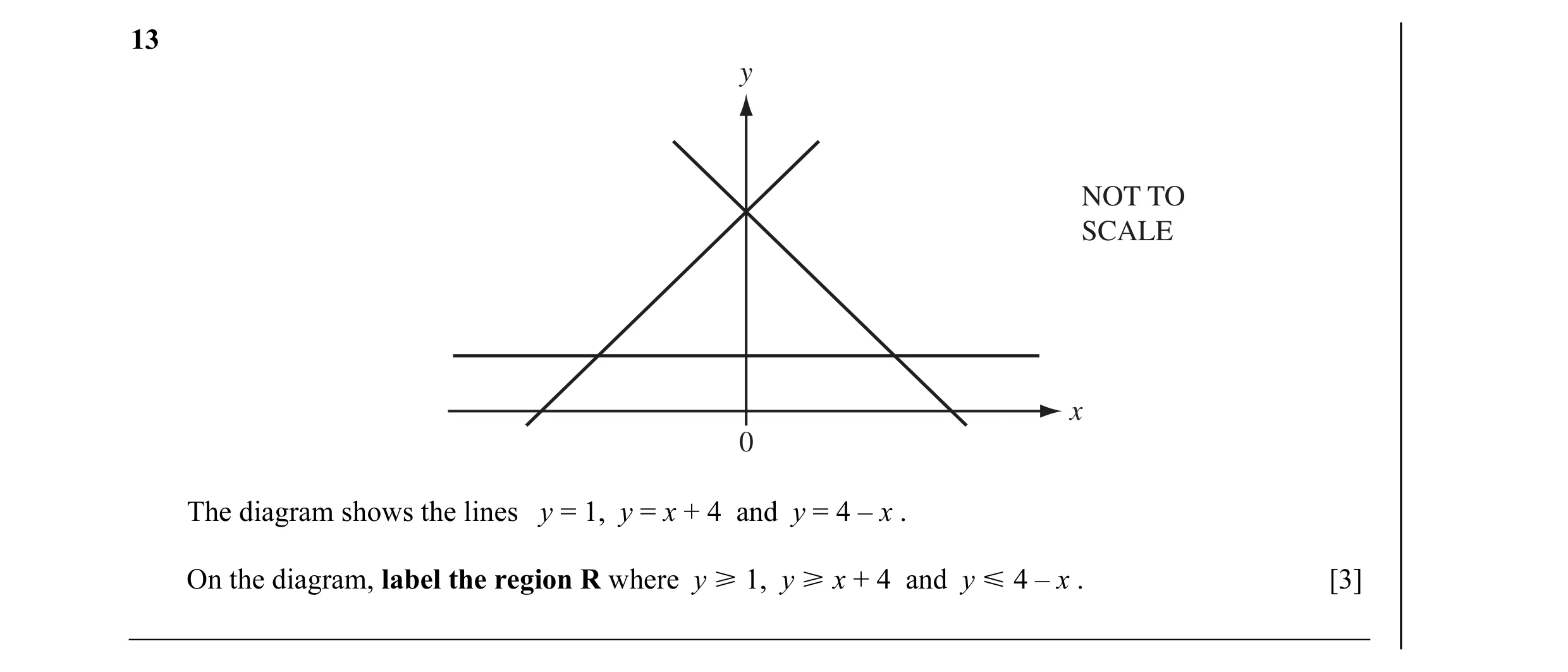
Q7 · Y NOT TO SCALE x 0 The diagram shows the lines y = 1, y = x + 4 and y = 4 – x 0580/23 May/June 2011
13 y NOT TO SCALE x 0 The diagram shows the lines y = 1, y = x + 4 and y = 4 – x . On the diagram, label the region R where y [ 1, y [ x + 4 and y Y 4 – x . [3]
3 marks
Mark scheme: 13 3 Give the mark for R shown in region below 2 R 3 1 2 2 1 0
This question in 0580/23 May/June 2011
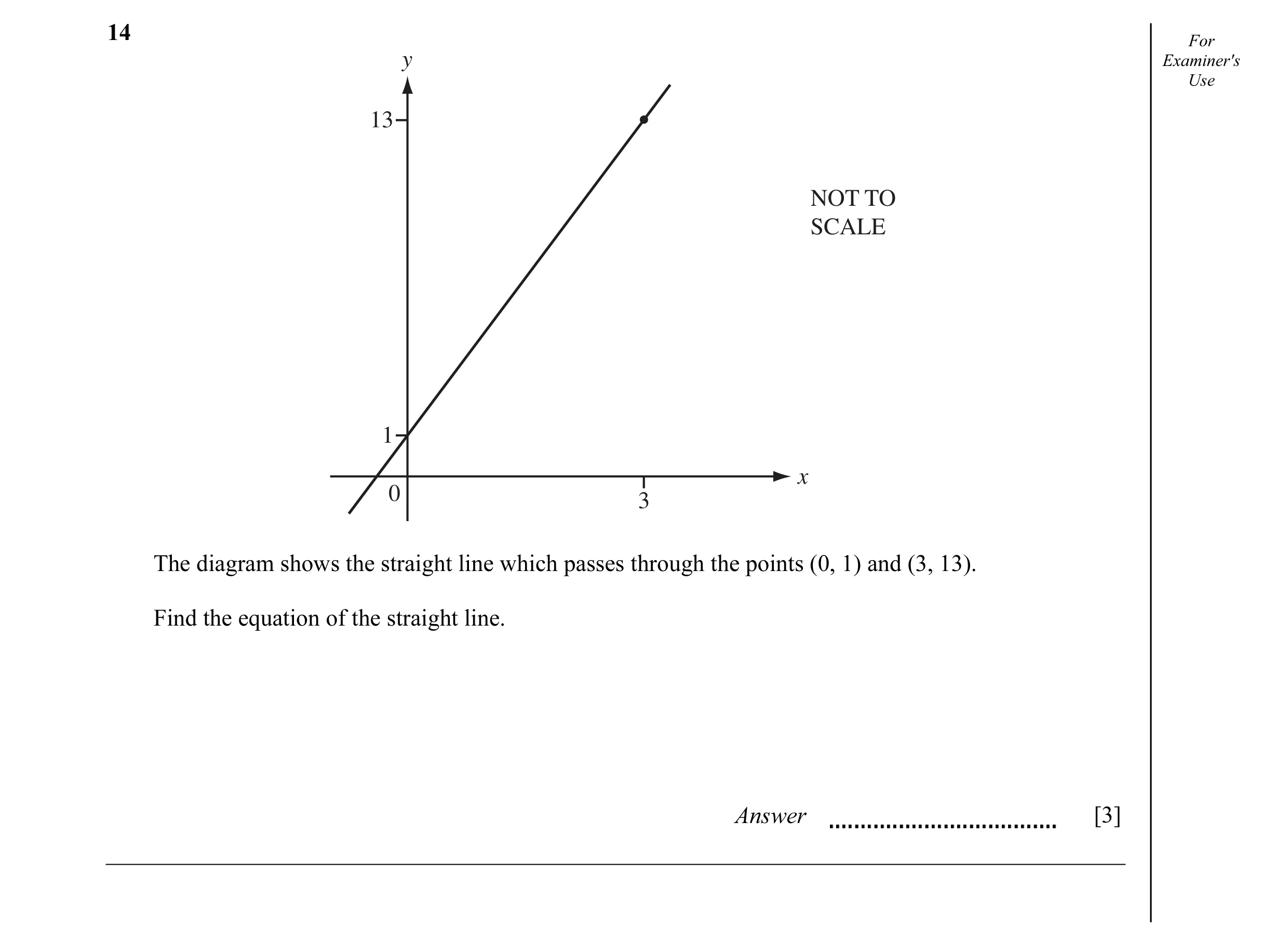
Q8 · For y Examiner's Use 13 NOT TO SCALE 1 x 0 3 The diagram shows the straight line which… 0580/23 May/June 2011
14 For y Examiner's Use 13 NOT TO SCALE 1 x 0 3 The diagram shows the straight line which passes through the points (0, 1) and (3, 13). Find the equation of the straight line. Answer [3]
3 marks
Mark scheme: 14 y = 4x + 1 3 B1 correct numerical y = mx + c B1 c = 1 B1 m = 4
This question in 0580/23 May/June 2011
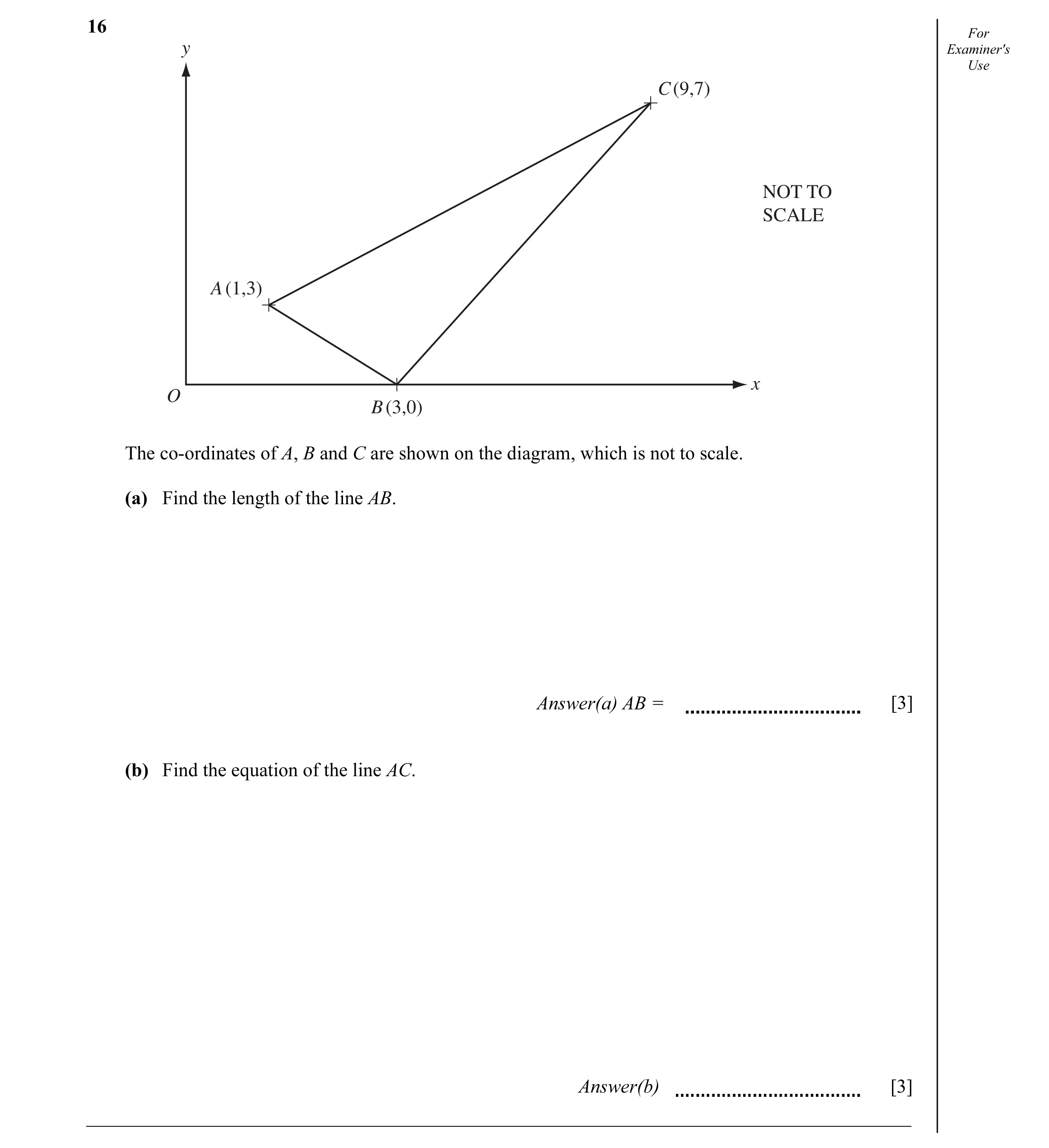
Q9 · For y Examiner's Use C (9,7) NOT TO SCALE A (1,3) x O B (3,0) The co-ordinates of A, B… 0580/21 Oct/Nov 2011
16 For y Examiner's Use C (9,7) NOT TO SCALE A (1,3) x O B (3,0) The co-ordinates of A, B and C are shown on the diagram, which is not to scale. (a) Find the length of the line AB. Answer(a) AB = [3] (b) Find the equation of the line AC. Answer(b) [3]
6 marks
Mark scheme: 16 (a) 3.61 3 M1 (3 – 1)2 + (0 – 3)2 oe M1 2 2 + 3 2 1 1 1 1 (b) y = x + 2 oe 3 B2 y = x + k or y = kx + 2 2 2 2 2 1 1 or B1 kx + 2 or x + k 2 2 1 If 0 scored B1 m = 2 1 B1 c = 2 clearly identified in working 2 IGCSE – October/November 2011 0580 21 1
This question in 0580/21 Oct/Nov 2011
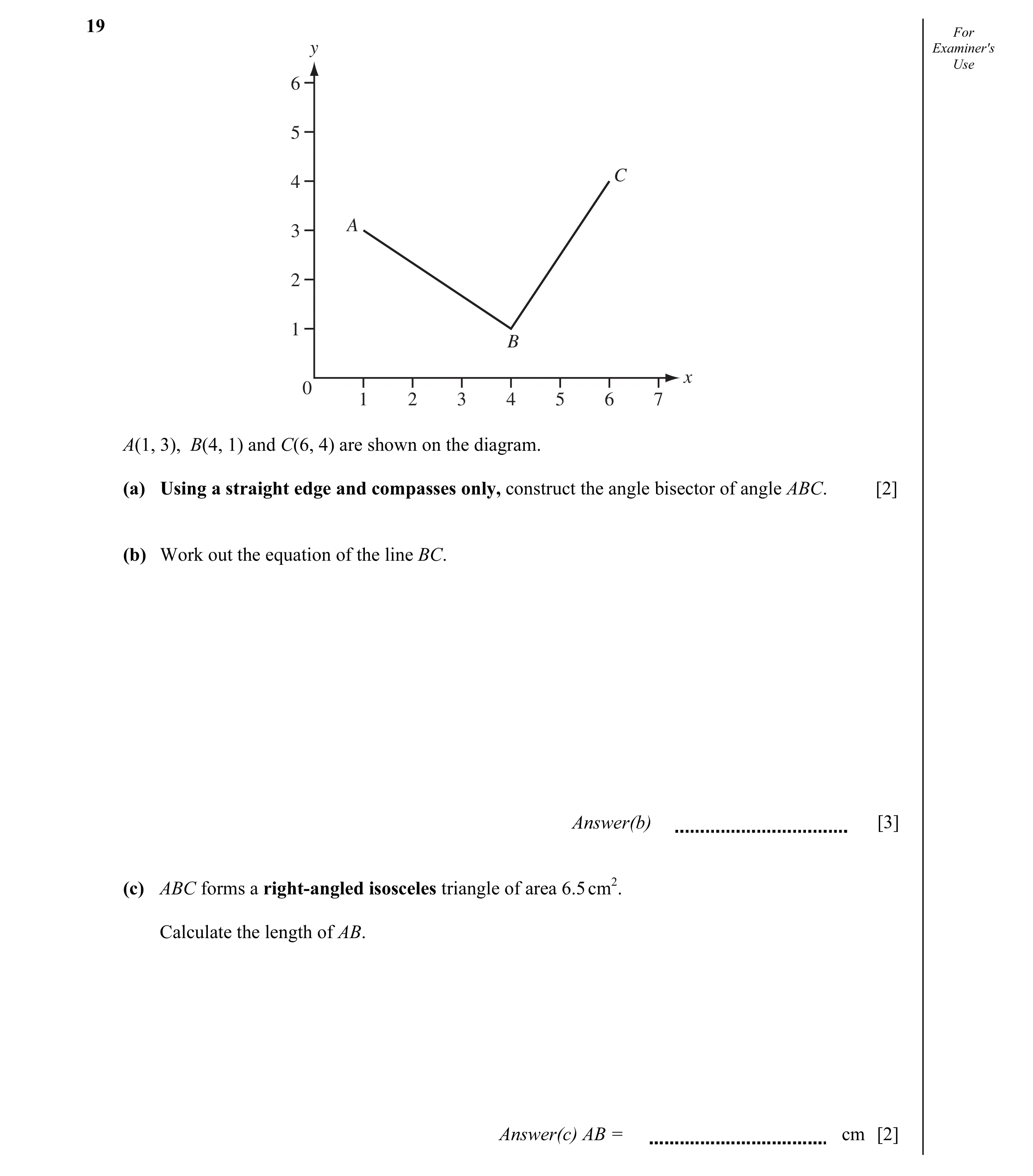
Q10 · For y Examiner's Use 6 5 C 4 A 3 2 1 B x 0 1 2 3 4 5 6 7 A(1, 3), B(4, 1) and C(6, 4) are… 0580/22 Oct/Nov 2011
19 For y Examiner's Use 6 5 C 4 A 3 2 1 B x 0 1 2 3 4 5 6 7 A(1, 3), B(4, 1) and C(6, 4) are shown on the diagram. (a) Using a straight edge and compasses only, construct the angle bisector of angle ABC. [2] (b) Work out the equation of the line BC. Answer(b) [3] (c) ABC forms a right-angled isosceles triangle of area 6.5 cm2. Calculate the length of AB. Answer(c) AB = cm [2]
7 marks
Mark scheme: 19 (a) correct bisector (through 3½, 3½) 2 B1 correct line B1 correct arcs 1 1 (b) y = 1 x – 5 oe 3 B2 y = 1 x + k or y = kx – 5 k any number 2 2 1 or B1 1 x + k or kx – 5 2 1 If O scored allow one each for m = 1 or c = –5 2 clearly identified in working 1 2 2 (c) 3.61 2 M1 × L × L = 6.5 or M1 (3 + 2 ) 2
This question in 0580/22 Oct/Nov 2011
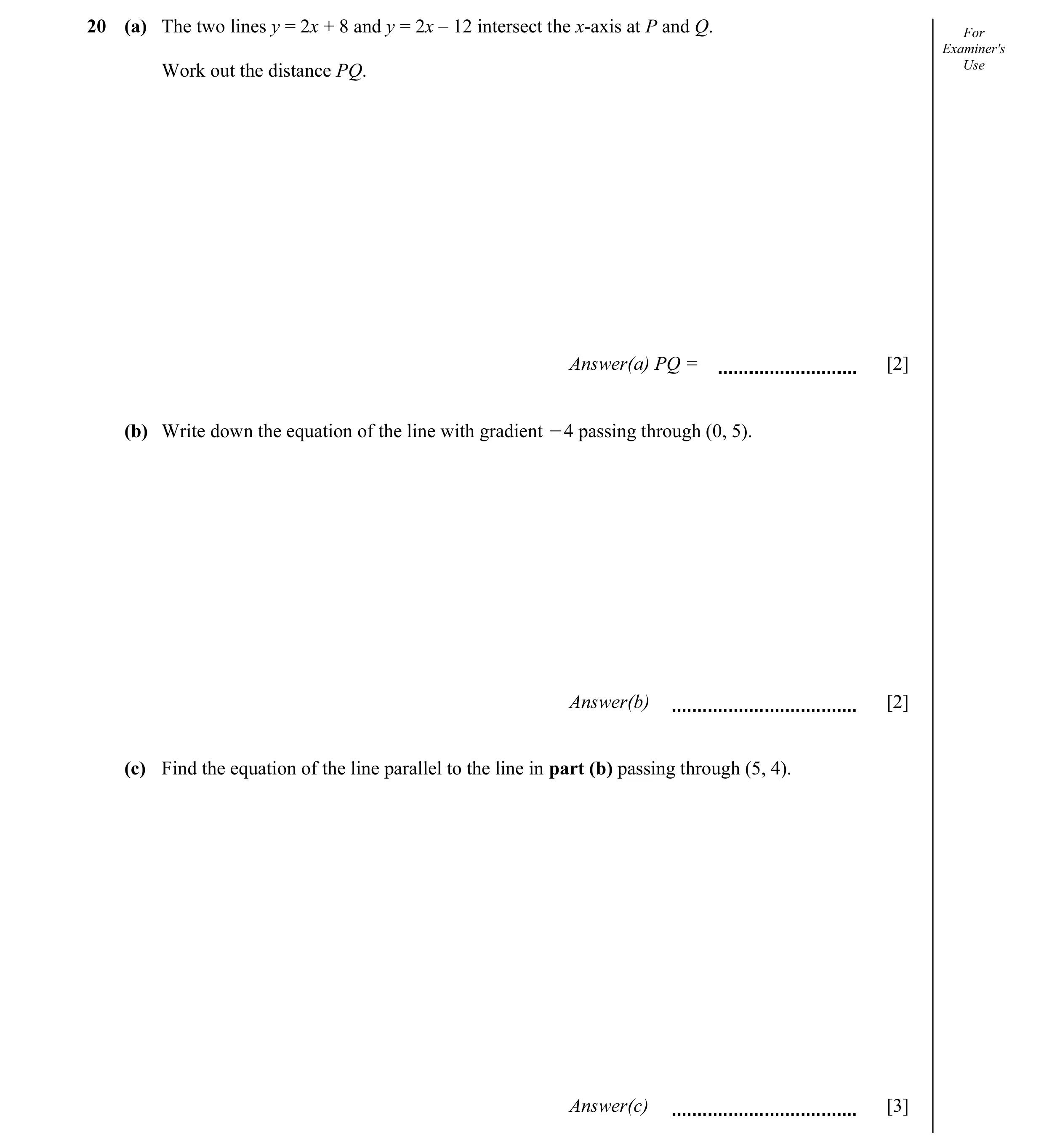
Q11 · The two lines y = 2x + 8 and y = 2x – 12 intersect the x-axis at P and Q 0580/22 Oct/Nov 2012
20 (a) The two lines y = 2x + 8 and y = 2x – 12 intersect the x-axis at P and Q. For Examiner's Use Work out the distance PQ. Answer(a) PQ = [2] (b) Write down the equation of the line with gradient O4 passing through (0, 5). Answer(b) [2] (c) Find the equation of the line parallel to the line in part (b) passing through (5, 4). Answer(c) [3]
7 marks
Mark scheme: 20 (a) 10 2 M1 x = –4 and x = 6 seen (b) y = –4x + 5 oe 2 B1 y = mx + 5 (m ≠ 0) or y = –4x + k (k ≠ 0) or y = –4x + 5 (c) y = –4x + 24 oe 3 M1 m = –4 or gradient = –4 or y = –4x + c M1 (5, 4) substituted into y = mx + c
This question in 0580/22 Oct/Nov 2012
Q12 · Find the equation of the line passing through the points (0, –1) and (3, 5) 0580/21 May/June 2013
17 Find the equation of the line passing through the points (0, –1) and (3, 5). For Examiner′s Use Answer … [3] _____________________________________________________________________________________
3 marks
Mark scheme: 17 y = 2x − 1 3 B2 for y = mx – 1 or y = 2x + c or 2x – 1 or B1 for gradient = 2, B1 for c = –1 6 5 − −1 or SC1 for or 3 [3−0]
This question in 0580/21 May/June 2013
Q13 · A (5, 23) and B (–2, 2) are two points 0580/22 Oct/Nov 2013
18 A (5, 23) and B (–2, 2) are two points. For Examiner′s Use (a) Find the co-ordinates of the midpoint of the line AB. Answer(a) ( … , … ) [2] (b) Find the equation of the line AB. Answer(b) … [3] (c) Show that the point (3, 17) lies on the line AB. Answer(c) [1] _____________________________________________________________________________________
6 marks
Mark scheme: 18 (a) (1.5, 12.5) oe 2 B1 for either coordinate (b) y = 3x + 8 oe 3 B2 for y = mx + 8 or y = 3x + c or 3x + 8 or B1 for gradient (or m) = 3 and B1 for c = 8 If 0 scored, SC1 for 23 = their m × 5 + c or for 2 = their m × –2 + c or for 12.5 = their m × 1.5 + c (c) Most common methods: 1 Correctly substituting P (3, 17) into y = 3x + 8 Showing the gradient of AP or BP = 3 Other methods possible. IGCSE – October/November 2013 0580 22
This question in 0580/22 Oct/Nov 2013
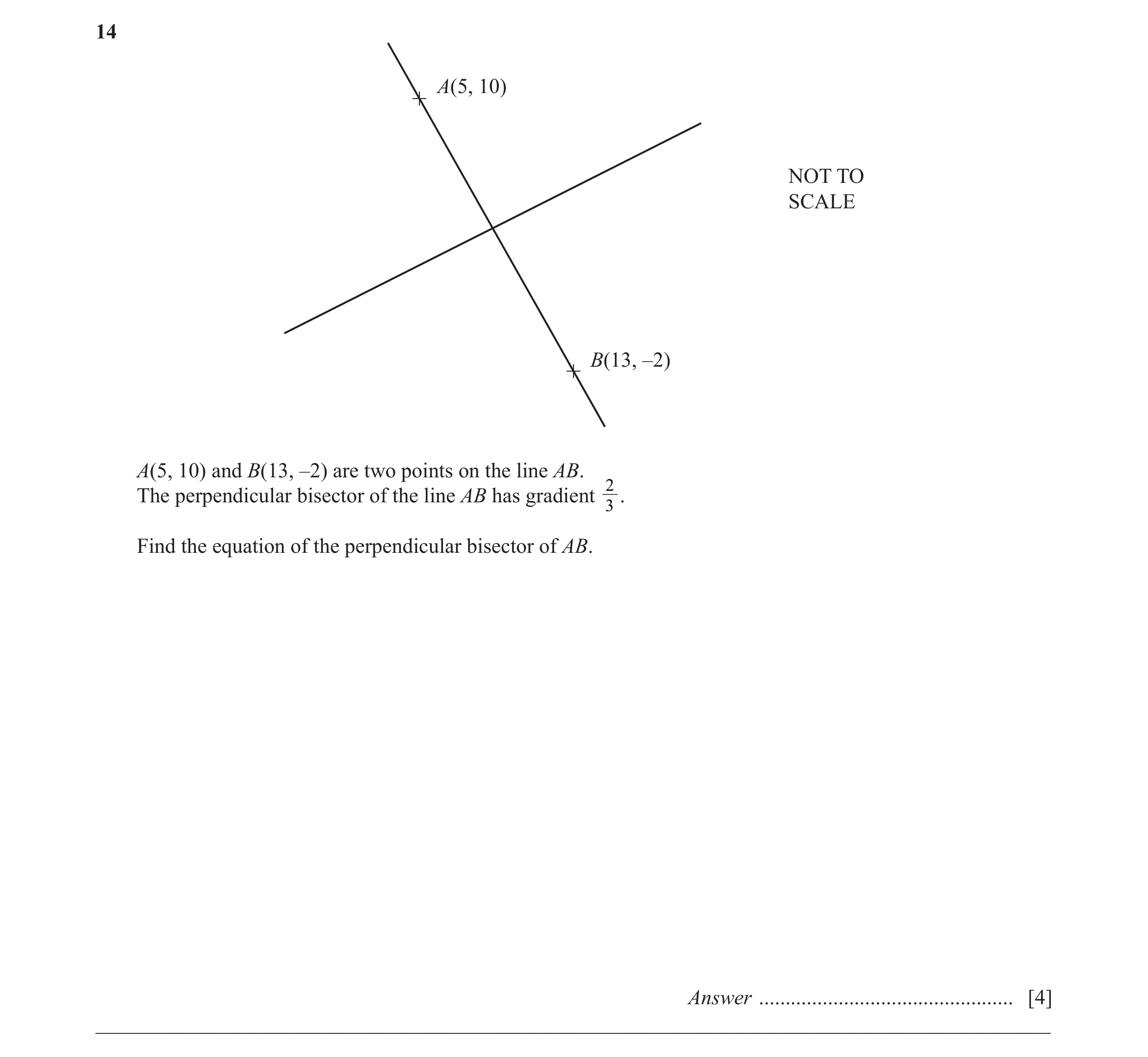
Q14 · A(5, 10) NOT TO SCALE B(13, –2) A(5, 10) and B(13, –2) are two points on the line AB 0580/21 May/June 2014
14 A(5, 10) NOT TO SCALE B(13, –2) A(5, 10) and B(13, –2) are two points on the line AB. 2 The perpendicular bisector of the line AB has gradient . 3 Find the equation of the perpendicular bisector of AB. Answer … [4] __________________________________________________________________________________________
4 marks
Mark scheme: 14 2 4 B1 for (9, 4) y = x − 2 oe and 3 2 M2 for y = kx − 2 (k ≠ 0) or y = x + k (k ≠ 0) or 3 2 x − 2 3 2 2 or M1 for y = x or x + k (k ≠ 0) 3 3
This question in 0580/21 May/June 2014
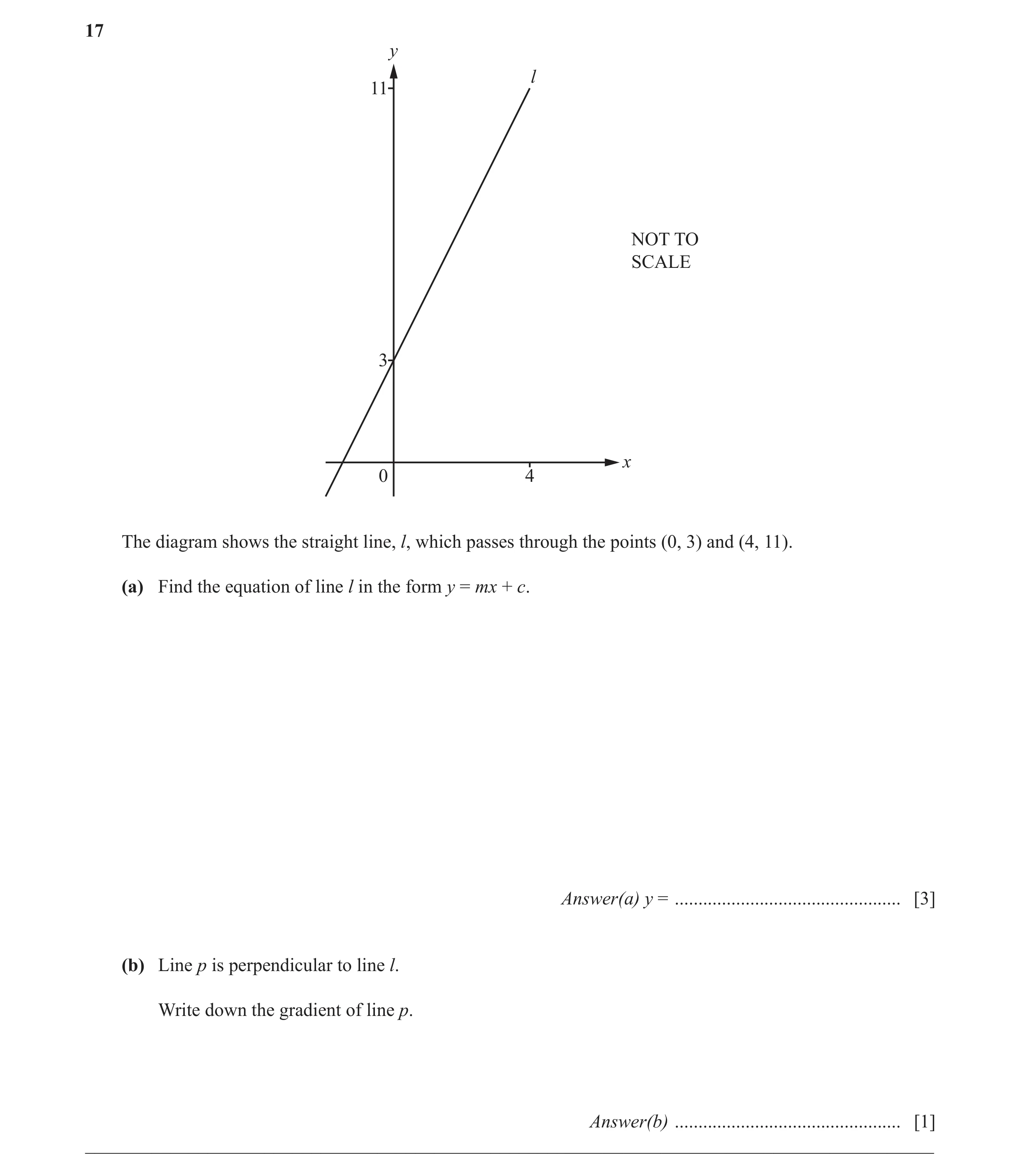
Q15 · Y l 11 NOT TO SCALE 3 x 0 4 The diagram shows the straight line, l, which passes through… 0580/22 May/June 2015
17 y l 11 NOT TO SCALE 3 x 0 4 The diagram shows the straight line, l, which passes through the points (0, 3) and (4, 11). (a) Find the equation of line l in the form y = mx + c. Answer(a) y = … [3] (b) Line p is perpendicular to line l. Write down the gradient of line p. Answer(b) … [1] __________________________________________________________________________________________
4 marks
Mark scheme: 17 (a) [y =] 2x + 3 cao 3 M2 for correct unsimplified equation or B1 for gradient = (11 – 3) ÷ (4 – 0) or better and B1 for c = 3 1 (b) − oe 1FT –1 ÷ their m 2 1
This question in 0580/22 May/June 2015
Q16 · A is the point (4, 1) and B is the point (10, 15) 0580/21 May/June 2016
25 A is the point (4, 1) and B is the point (10, 15). Find the equation of the perpendicular bisector of the line AB. … [6] Question 26 is printed on the next page.
6 marks
Mark scheme: 3 3 25 y = − x + 11 oe 6 B2 for gradient = − 7 7 15 − 1 or M1 for [gradient = ] oe 10 − 4 or for the negative reciprocal of their gradient and B2 for [midpoint of AB =] (7, 8) or B1 for (7, k) or (k, 8) and M1 for substitution of their midpoint or (4, 1) or (10, 15) into a linear equation
This question in 0580/21 May/June 2016
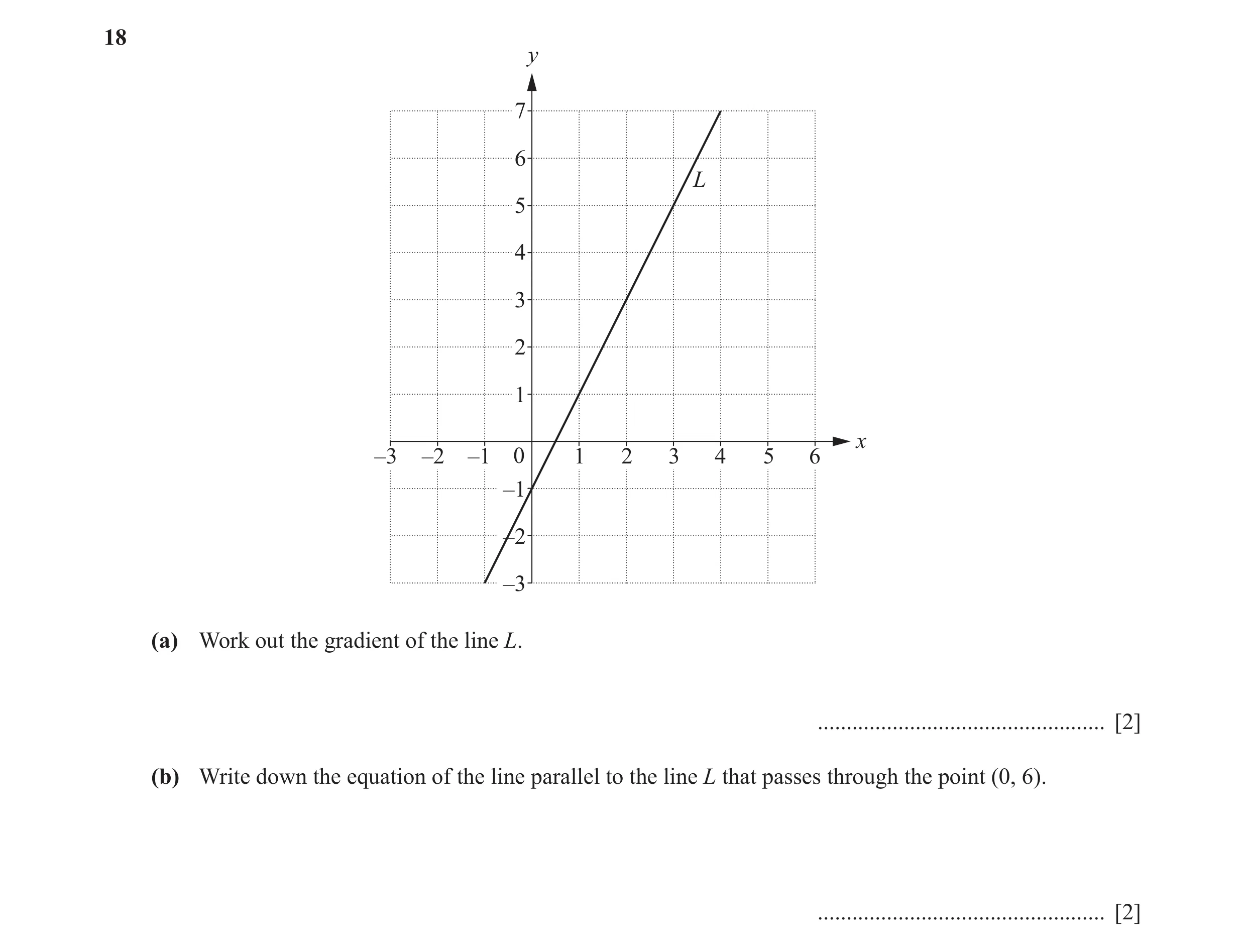
Q17 · Y 7 6 L 5 4 3 2 1 x –3 –2 –1 0 1 2 3 4 5 6 –1 –2 –3 (a) Work out the gradient of the line… 0580/23 May/June 2016
18 y 7 6 L 5 4 3 2 1 x –3 –2 –1 0 1 2 3 4 5 6 –1 –2 –3 (a) Work out the gradient of the line L. … [2] (b) Write down the equation of the line parallel to the line L that passes through the point (0, 6). … [2]
4 marks
Mark scheme: 18 (a) 2 cao 2 M1 for rise/run attempted e.g. 4/2 or other correct method for finding gradient or SC1 for y = 2x – 1 as answer (b) y = 2x + 6 oe 2FT FT for y = their(a)x + 6 B1 for y = mx + 6 (m ≠ 0 or 2) or y = 2x [+ k] or y = their(a)x [+ k] (k ≠ 6) or for answer 2x + 6 or answer their(a)x + 6 30 4
This question in 0580/23 May/June 2016
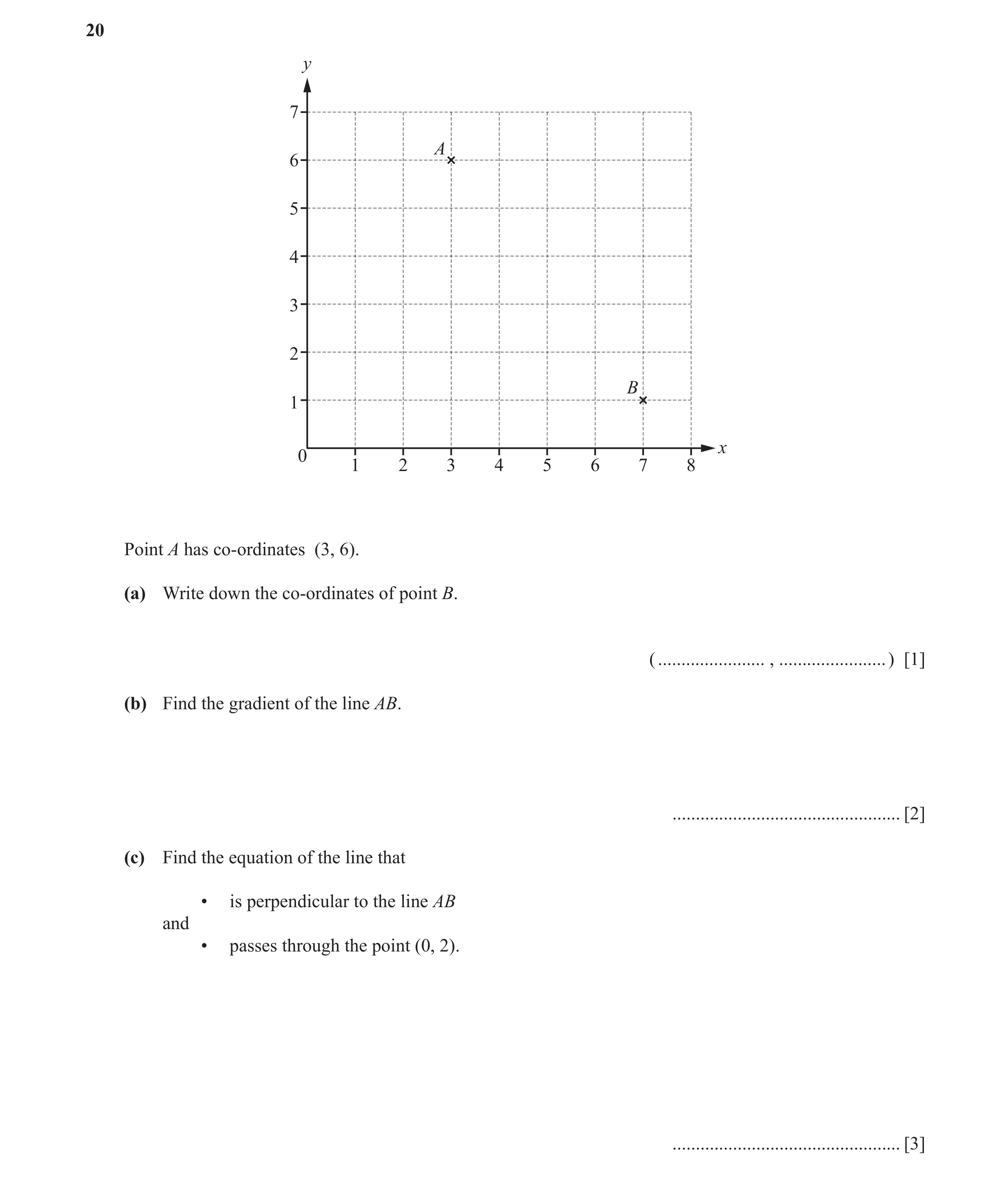
Q18 · Y 7 A 6 5 4 3 2 B 1 x 0 1 2 3 4 5 6 7 8 Point A has co-ordinates (3, 6) 0580/22 Oct/Nov 2016
20 y 7 A 6 5 4 3 2 B 1 x 0 1 2 3 4 5 6 7 8 Point A has co-ordinates (3, 6). (a) Write down the co-ordinates of point B. ( … , … ) [1] (b) Find the gradient of the line AB. … [2] (c) Find the equation of the line that • is perpendicular to the line AB and • passes through the point (0, 2). … [3]
6 marks
Mark scheme: 20 (a) ( 7 , 1 ) 1 5 1 (b) ‒1.25 or − or −14 2 M1 for rise/run 4 4 4 −1 (c) y = x + 2 oe 3 B2 for x + 2 or y = x + 2 oe 5 5 their(b) 1 or M1 for −their ( b ) oe 4 or B1 for x seen or [ y = ] mx + 2 (m ≠ 0) 5
This question in 0580/22 Oct/Nov 2016
Q19 · A is the point (8, 3) and B is the point (12, 1) 0580/23 Oct/Nov 2016
17 A is the point (8, 3) and B is the point (12, 1). Find the equation of the line, perpendicular to the line AB, which passes through the point (0, 0). … [3]
3 marks
Mark scheme: 1 − 3 17 y = 2x oe 3 M1 for oe 12 − 8 1 − 3 M1 for perpendicular gradient × their = –1 12 − 8 oe If zero scored, SC1 for answer y = kx k ≠2 or 0
This question in 0580/23 Oct/Nov 2016
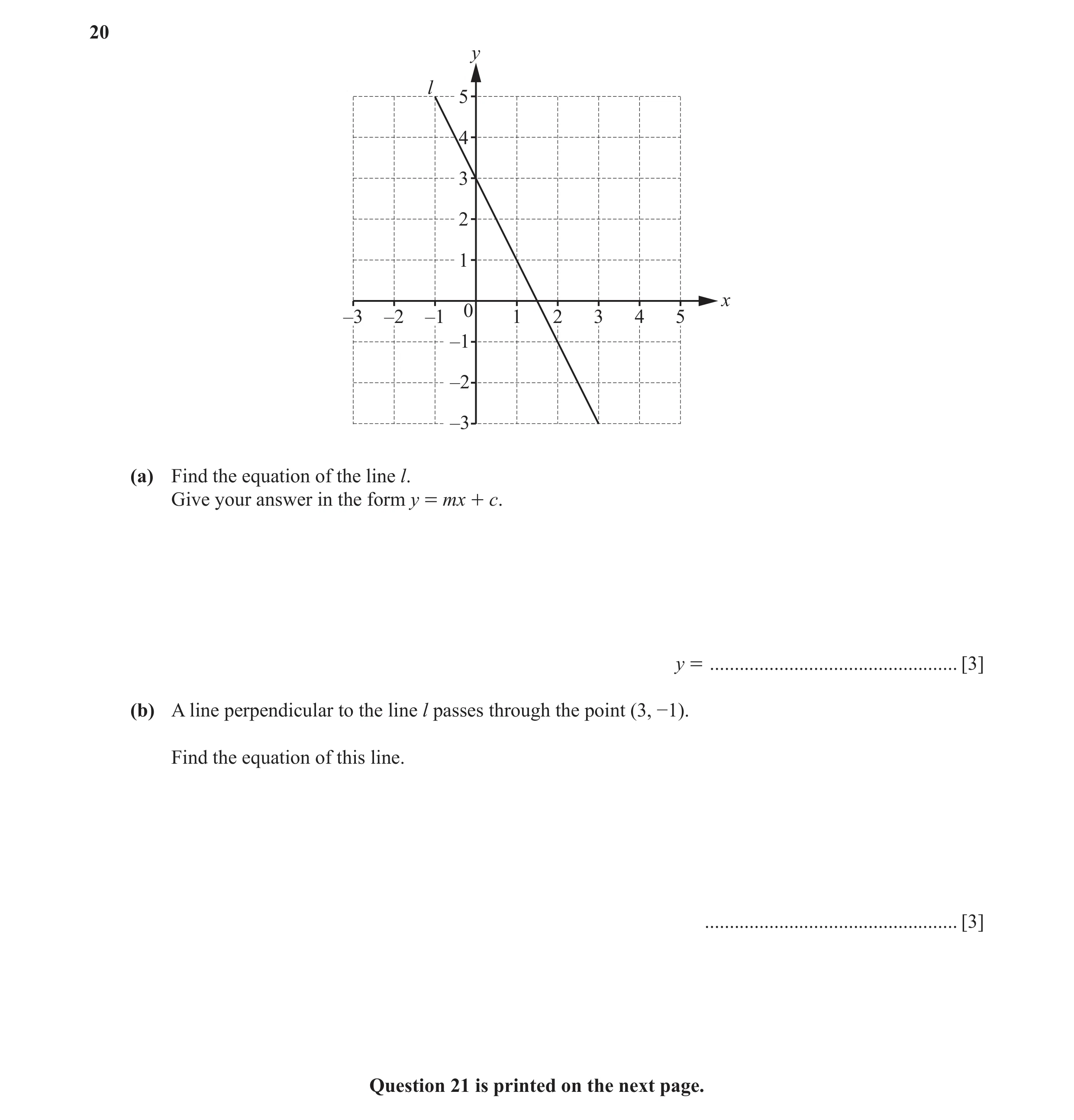
Q20 · Y l 5 4 3 2 1 x 0 –3 –2 –1 1 2 3 4 5 –1 –2 –3 (a) Find the equation of the line l 0580/22 Feb/March 2017
20 y l 5 4 3 2 1 x 0 –3 –2 –1 1 2 3 4 5 –1 –2 –3 (a) Find the equation of the line l. Give your answer in the form y = mx + c. y = … [3] (b) A line perpendicular to the line l passes through the point (3, −1). Find the equation of this line. … [3] Question 21 is printed on the next page.
6 marks
Mark scheme: 20 (a) [ y = ] − 2 x + 3 3 B2 for [ y = ] − 2 x + c or M1 for rise/run and B1 for [ y = ] kx + 3 , k ≠ 0 or c = 3 1 5 1 x − (b) y = oe final answer 3 M1 for gradient = −their gradient in (a) 2 2 or gradient = 0.5 oe M1 for substitution of (3, −1) into their y = mx + c oe x
This question in 0580/22 Feb/March 2017
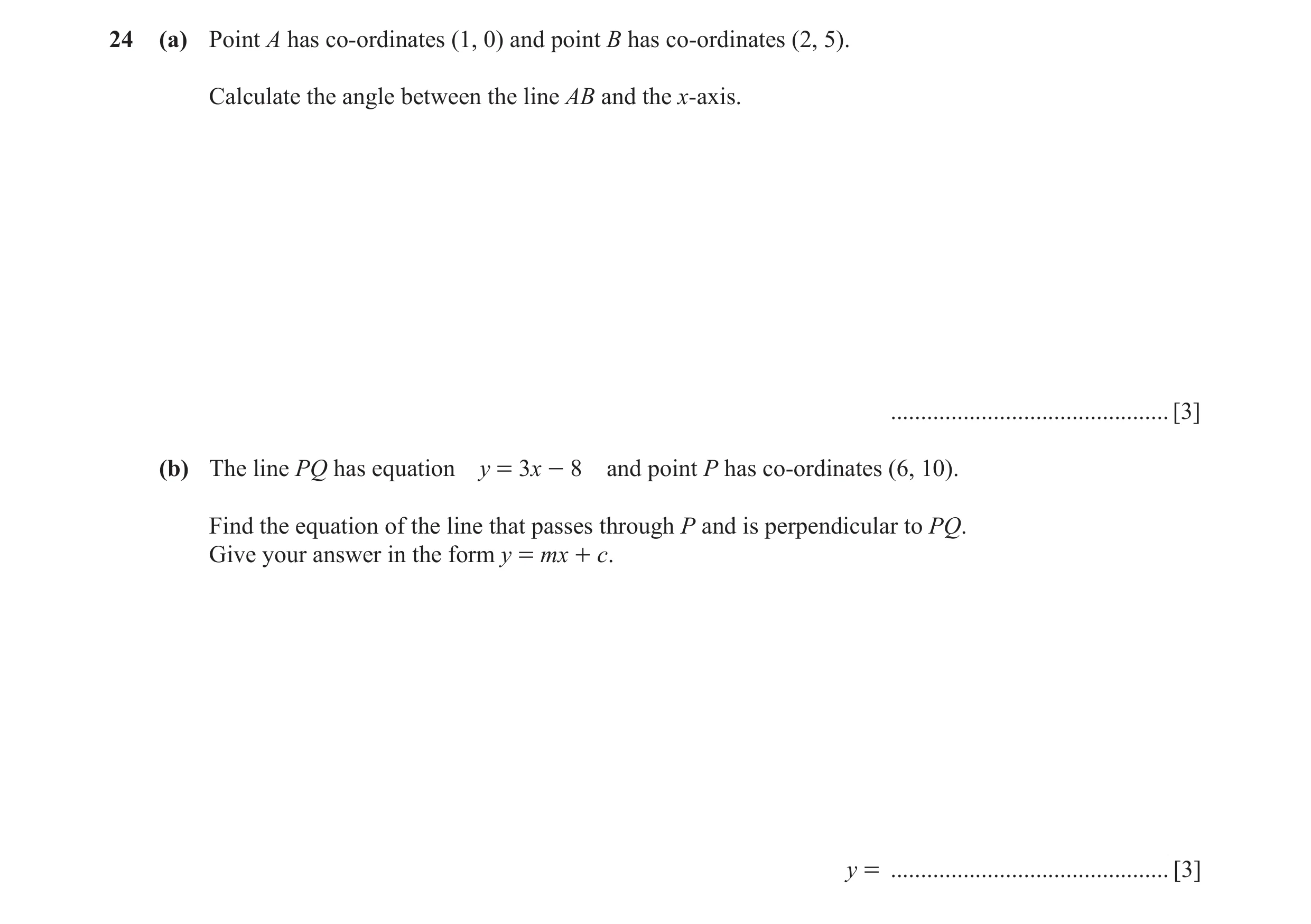
Q21 · Point A has co-ordinates (1, 0) and point B has co-ordinates (2, 5) 0580/21 May/June 2018
24 (a) Point A has co-ordinates (1, 0) and point B has co-ordinates (2, 5). Calculate the angle between the line AB and the x-axis. … [3] (b) The line PQ has equation y = 3x - 8 and point P has co-ordinates (6, 10). Find the equation of the line that passes through P and is perpendicular to PQ. Give your answer in the form y = mx + c. y = … [3]
6 marks
Mark scheme: 24(a) 78.7 or 78.69… 3 5 M2 for tan = oe 2 − 1 or M1 for use of tangent oe 24(b) 1 3 1 [ y = ] − x + 12 final answer M1 for gradient = − 3 3 M1 for substituting (6, 10) into y = their mx + c
This question in 0580/21 May/June 2018
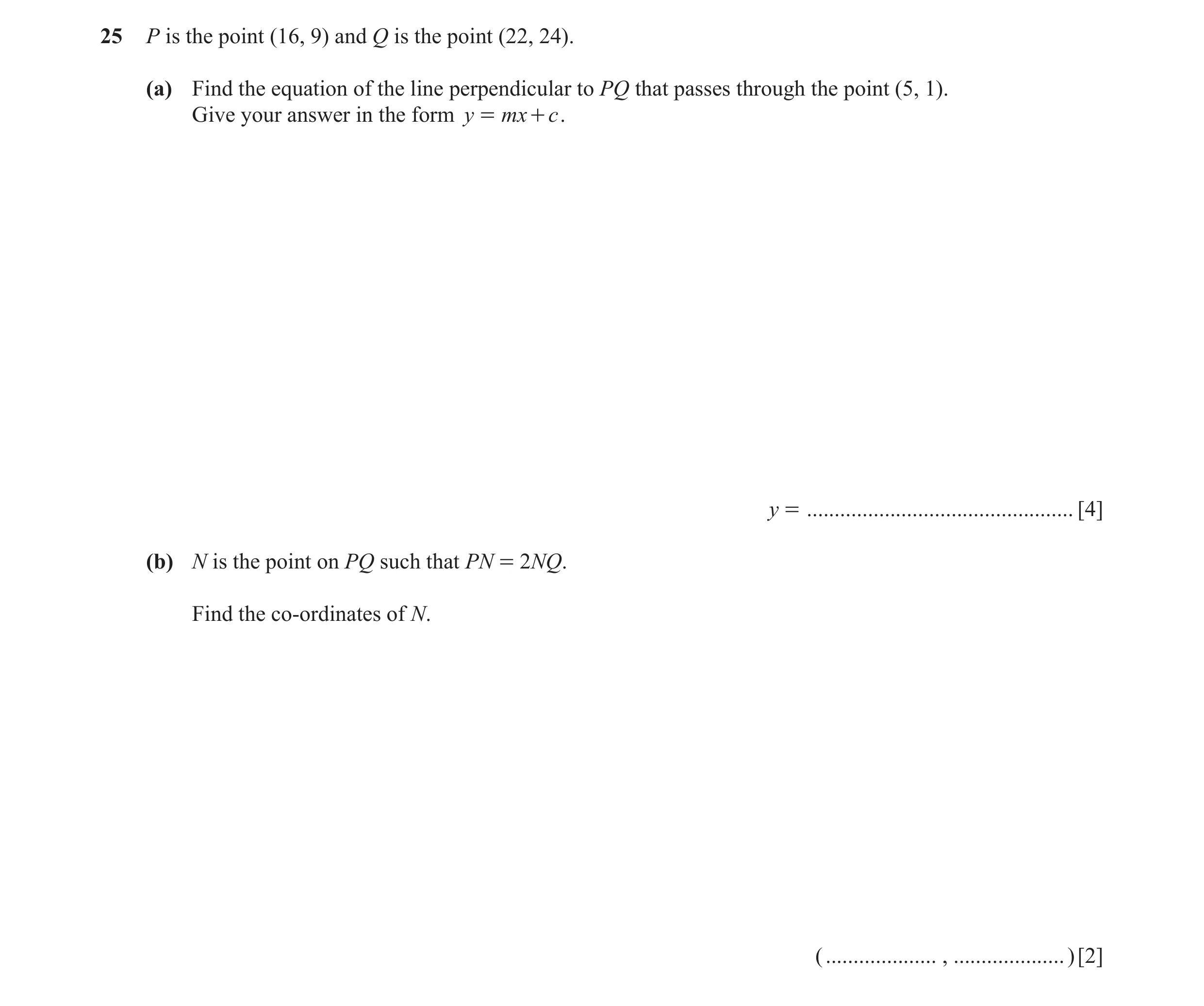
Q22 · P is the point (16, 9) and Q is the point (22, 24) 0580/22 May/June 2018
25 P is the point (16, 9) and Q is the point (22, 24). (a) Find the equation of the line perpendicular to PQ that passes through the point (5, 1). Give your answer in the form y = mx + c . y = … [4] (b) N is the point on PQ such that PN = 2NQ. Find the co-ordinates of N. ( … , … ) [2]
6 marks
Mark scheme: 25(a) 2 4 2 [y =] – x + 3 or [y =] –0.4x + 3 B2 for [gradient of perpendicular =] − oe 5 5 final answer 24 − 9 22 − 16 or M1 for [gradient = ] or − 22 − 16 24 − 9 M1 for substituting (5, 1) into y = their mx + c 25(b) (20, 19) 2 2 2 M1 for ( 22 − 16 ) + 16 or ( 24 − 9 ) + 9 oe 3 3 or SC1 for answer (18, 14)
This question in 0580/22 May/June 2018
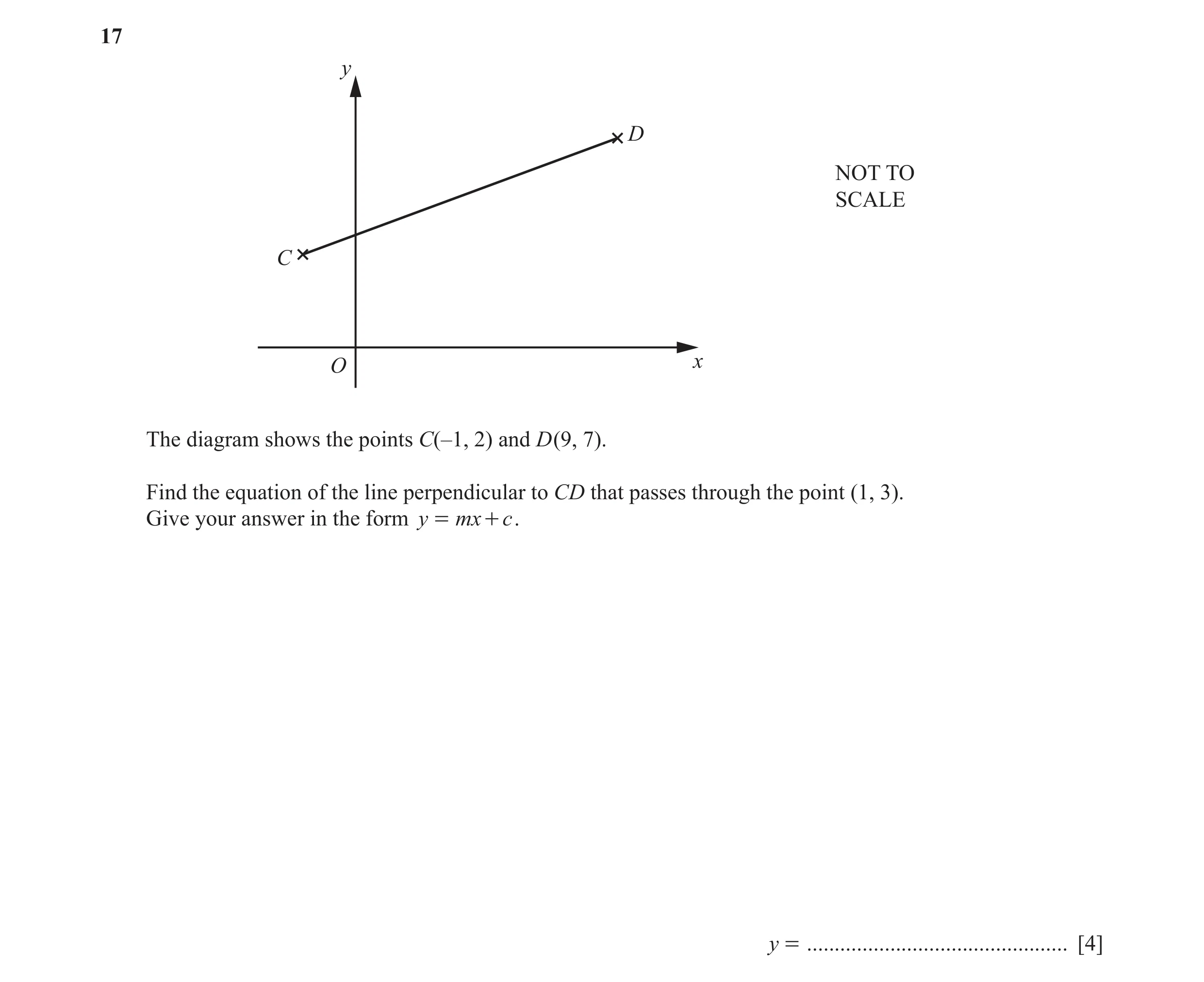
Q23 · Y D NOT TO SCALE C O x The diagram shows the points C(–1, 2) and D(9, 7) 0580/22 Oct/Nov 2018
17 y D NOT TO SCALE C O x The diagram shows the points C(–1, 2) and D(9, 7). Find the equation of the line perpendicular to CD that passes through the point (1, 3). Give your answer in the form y = mx + c . y = … [4]
4 marks
Mark scheme: 17 –2x + 5 4 7 − 2 M1M for oe 9 −−−1 −1 M1M for gradiient of perpeendicular = theirt 0.5 M1M for (1, 3)) correctly suubstituted intto their y = –2x + c
This question in 0580/22 Oct/Nov 2018
Q24 · A is the point (2, 3) and B is the point (7, -5) 0580/22 Feb/March 2019
23 A is the point (2, 3) and B is the point (7, -5). (a) Find the co-ordinates of the midpoint of AB. ( … , … ) [2] (b) Find the equation of the line through A that is perpendicular to AB. Give your answer in the form y = mx + c . y = … [4]
6 marks
Mark scheme: 23(a) (4.5, − 1) 2 B1 for each 23(b) 5 7 4 −−5 3 [ y = ]8 x + 4 M1 for 7 − 2 oe 8 M1 for –1/ their − 5 M1 for 3 = 2 × their gradient + c oe
This question in 0580/22 Feb/March 2019
Q25 · Line L passes through the points (0, -3) and (6, 9) 0580/21 May/June 2019
26 Line L passes through the points (0, -3) and (6, 9). (a) Find the equation of line L. … [3] (b) Find the equation of the line that is perpendicular to line L and passes through the point (0, 2). … [2]
5 marks
Mark scheme: 26(a) y = 2 x − 3 oe 3 B2 for 2 x − 3 or y = theirm x – 3 or y = 2x + c 9 −−( 3) or M1 for oe or 9 = 6m – 3 oe 6 − 0 or B1 for 2x seen or [y =]mx – 3 m ≠0 26(b) 1 2 1 y = − x + 2 oe FT their (a) y = – x + 2 2 their m 1 B1 for gradient – , gradient FT their (a) 2 or for y = mx + 2 m ≠0
This question in 0580/21 May/June 2019
Q26 · Find the co-ordinates of the point where the line y = 3x - 8 crosses the y-axis 0580/23 May/June 2019
5 (a) Find the co-ordinates of the point where the line y = 3x - 8 crosses the y-axis. ( … , … ) [1] (b) Write down the gradient of the line y = 3x - 8 . … [1]
2 marks
Mark scheme: 5(a) (0, –8) 1 5(b) 3 1
This question in 0580/23 May/June 2019
Q27 · Show that the line 4y = 5x - 10 is perpendicular to the line 5y + 4x = 35 0580/22 Oct/Nov 2019
14 Show that the line 4y = 5x - 10 is perpendicular to the line 5y + 4x = 35 . [3]
3 marks
Mark scheme: 14 5 M1 M marks can be in any order Gradient = oe 4 4 4 M1 y = k − x oe and gradient = − oe 5 5 Use of product of gradients is −1 oe M1
This question in 0580/22 Oct/Nov 2019
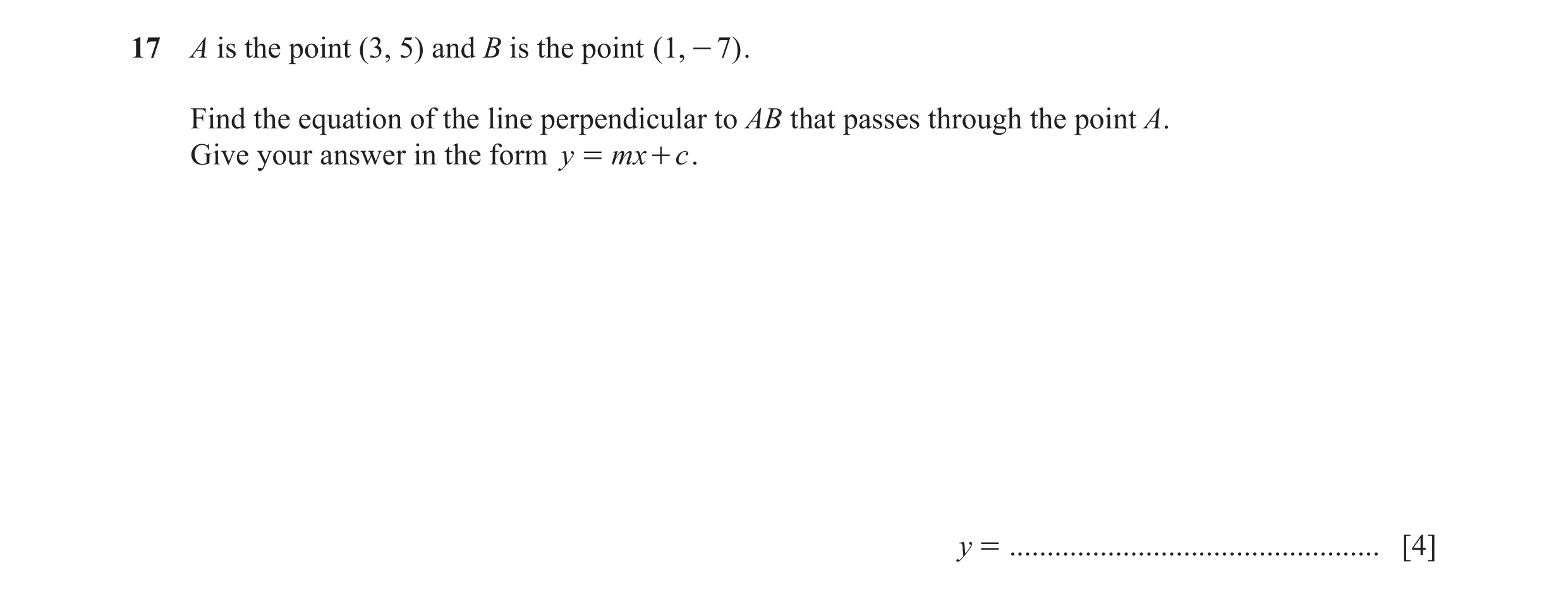
Q28 · A is the point (3, 5) and B is the point ( 1, - 7) 0580/22 Feb/March 2020
17 A is the point (3, 5) and B is the point ( 1, - 7) . Find the equation of the line perpendicular to AB that passes through the point A. Give your answer in the form y = mx + c . y = … [4]
4 marks
Mark scheme: 17 1 11 4 5 −−7 [ y = ] − x + oe M1 for [gradient of AB =] oe 6 2 3 − 1 M1 for 1 [gradient of perpendicular =] − their grad AB M1 for substituting (3, 5) in their linear equation
This question in 0580/22 Feb/March 2020
Q29 · 4 A line from the point (2, 3) is perpendicular to the line y = x + 1 0580/22 Oct/Nov 2020
124 A line from the point (2, 3) is perpendicular to the line y = x + 1. 3 The two lines meet at the point P. Find the coordinates of P. ( … , … ) [5] Questions 25 and 26 are printed on the next page.
5 marks
Mark scheme: 24 (2.4, 1.8) oe 5 1 M1 for [gradient =] –1 ÷ oe 3 M1 for substituting (2, 3) into y = (their m)x + c oe 1 M1 for x + 1 = their ( mx + c ) with 3 1 their m ≠ 3 M1 for substituting their x-coord into either equation to find y or for substituting their y-coord into either equation to find x
This question in 0580/22 Oct/Nov 2020
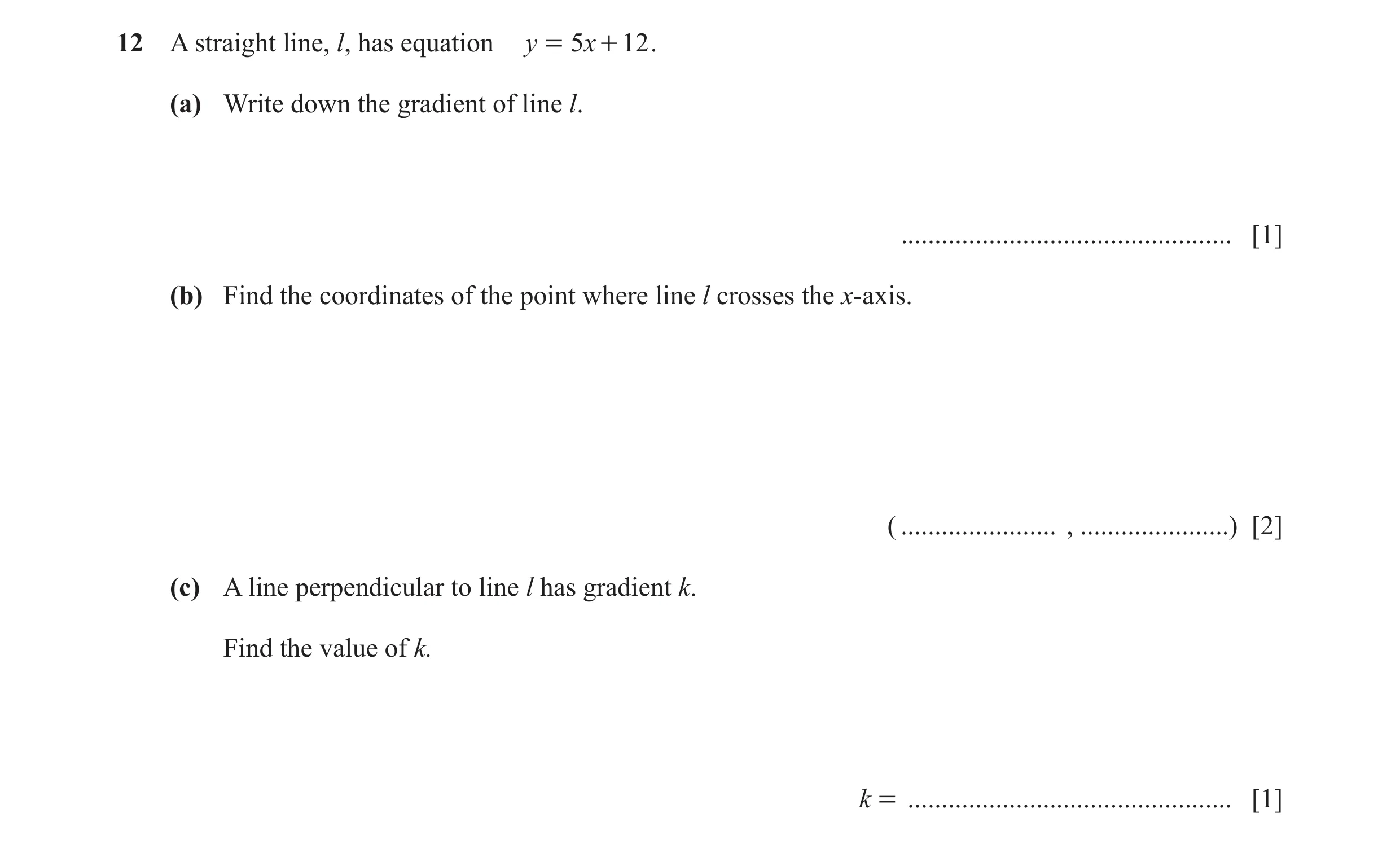
Q30 · A straight line, l, has equation y = 5 x + 12 0580/23 Oct/Nov 2020
12 A straight line, l, has equation y = 5 x + 12 . (a) Write down the gradient of line l. … [1] (b) Find the coordinates of the point where line l crosses the x-axis. ( … , … ) [2] (c) A line perpendicular to line l has gradient k. Find the value of k. k = … [1]
4 marks
Mark scheme: 12(a) 5 1 12(b) 12 2 M1 for 5x + 12 = 0 ( − oe, 0) 5 12(c) 1 1 1 − oe FT 5 −their ( a )
This question in 0580/23 Oct/Nov 2020
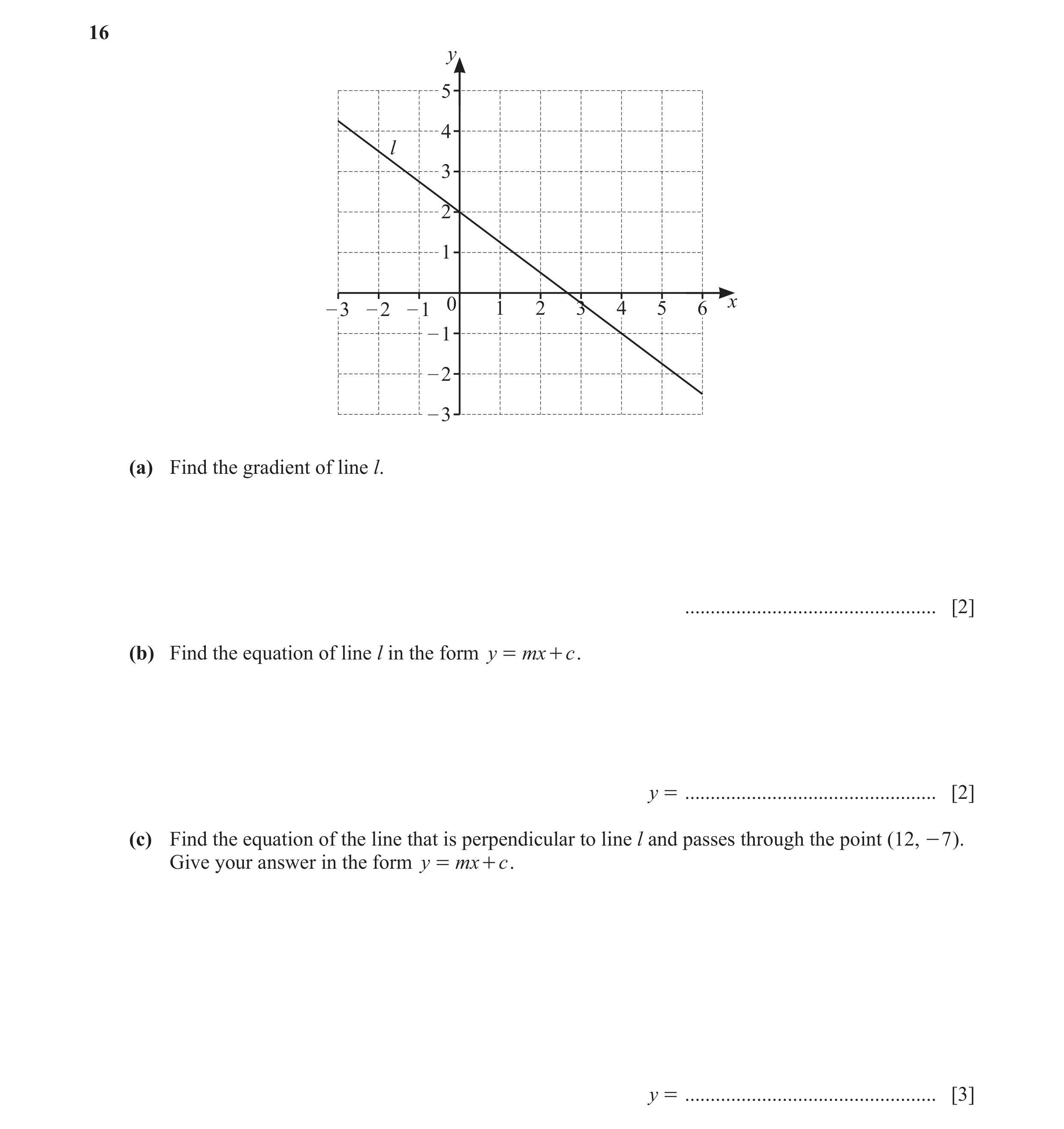
Q31 · Y 5 4 l 3 2 1 – 3 – 2 – 1 0 1 2 3 4 5 6 x – 1 – 2 – 3 (a) Find the gradient of line l 0580/21 May/June 2021
16 y 5 4 l 3 2 1 – 3 – 2 – 1 0 1 2 3 4 5 6 x – 1 – 2 – 3 (a) Find the gradient of line l. … [2] (b) Find the equation of line l in the form y = mx + c . y = … [2] (c) Find the equation of the line that is perpendicular to line l and passes through the point (12, - 7 ). Give your answer in the form y = m x + c . y = … [3]
7 marks
Mark scheme: 16(a) 3 2 M1 for correct rise over run – or − 0.75 3 4 or B1 for answer oe 4 16(b) 3 2 FT [ y = ] their (a) x + 2 oe [ y = ] − x + 2 oe 4 B1 for [ y = ] their (a) x + c or [ y = ] mx + 2 . 16(c) 4 3 −1 [ y = ] x − 23 oe M1 for gradient 3 their (a) M1 for (12, − 7) substituted into y = their mx + c
This question in 0580/21 May/June 2021
Q32 · A is the point (5, 7) and B is the point (9, - 1) 0580/22 May/June 2021
16 A is the point (5, 7) and B is the point (9, - 1). (a) Find the length AB. … [3] (b) Find the equation of the line AB. … [3]
6 marks
Mark scheme: 16(a) 8.94 or 8.944… 3 2 2 M2 for ( 9 − 5 ) + ( −−1 7 ) oe 2 2 or M1 for ( 9 − 5 ) + ( −−1 7 ) oe 16(b) y = –2x + 17 oe final answer 3 B2 for answer –2x + 17 OR −−1 7 M1 for oe 9 − 5 M1 for correct substitution of (5, 7) or (9, –1) into y = their mx + c oe
This question in 0580/22 May/June 2021
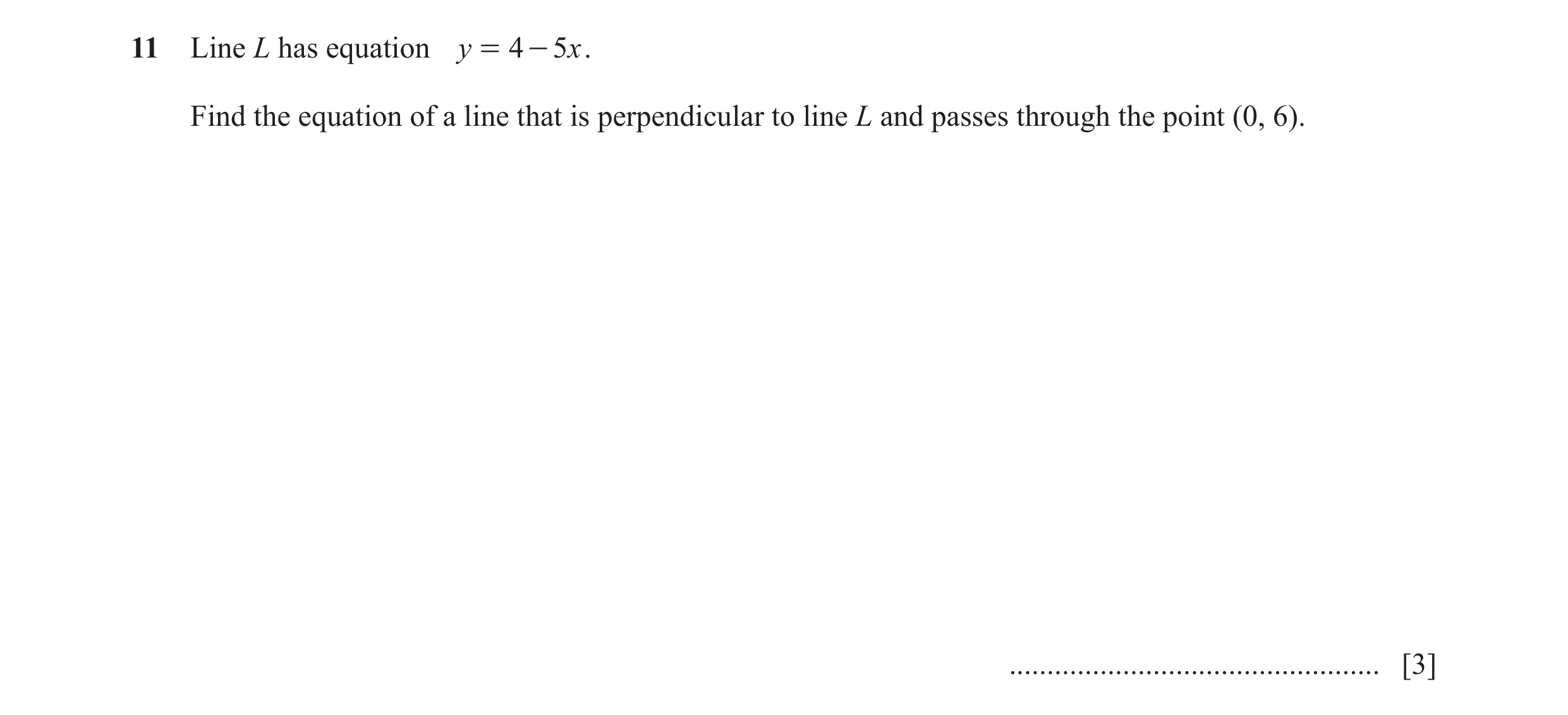
Q33 · Line L has equation y = 4 - 5x 0580/21 Oct/Nov 2021
11 Line L has equation y = 4 - 5x . Find the equation of a line that is perpendicular to line L and passes through the point (0, 6). … [3]
3 marks
Mark scheme: 11 1 3 1 1 y = x + 6 oe final answer B2 for y = x + c oe or x + 6 oe or 5 5 5 y = mx + 6 oe 1 or B1 for [gradient =] oe or mx + 6 5
This question in 0580/21 Oct/Nov 2021
Q34 · A is the point (3, 16) and B is the point (8, 31) 0580/22 Oct/Nov 2021
15 (a) A is the point (3, 16) and B is the point (8, 31). Find the equation of the line that passes through A and B. Give your answer in the form y = mx + c . y = … [3] (b) The line CD has equation y = 0.5x - 11. Find the gradient of a line that is perpendicular to the line CD. … [1]
4 marks
Mark scheme: 15(a) [y =] 3x + 7 final answer 3 31 − 16 M1 for . oe 8 − 3 M1 for correct substitution of (3, 16) or (8, 31) into y = (their m)x + c 15(b) –2 1
This question in 0580/22 Oct/Nov 2021
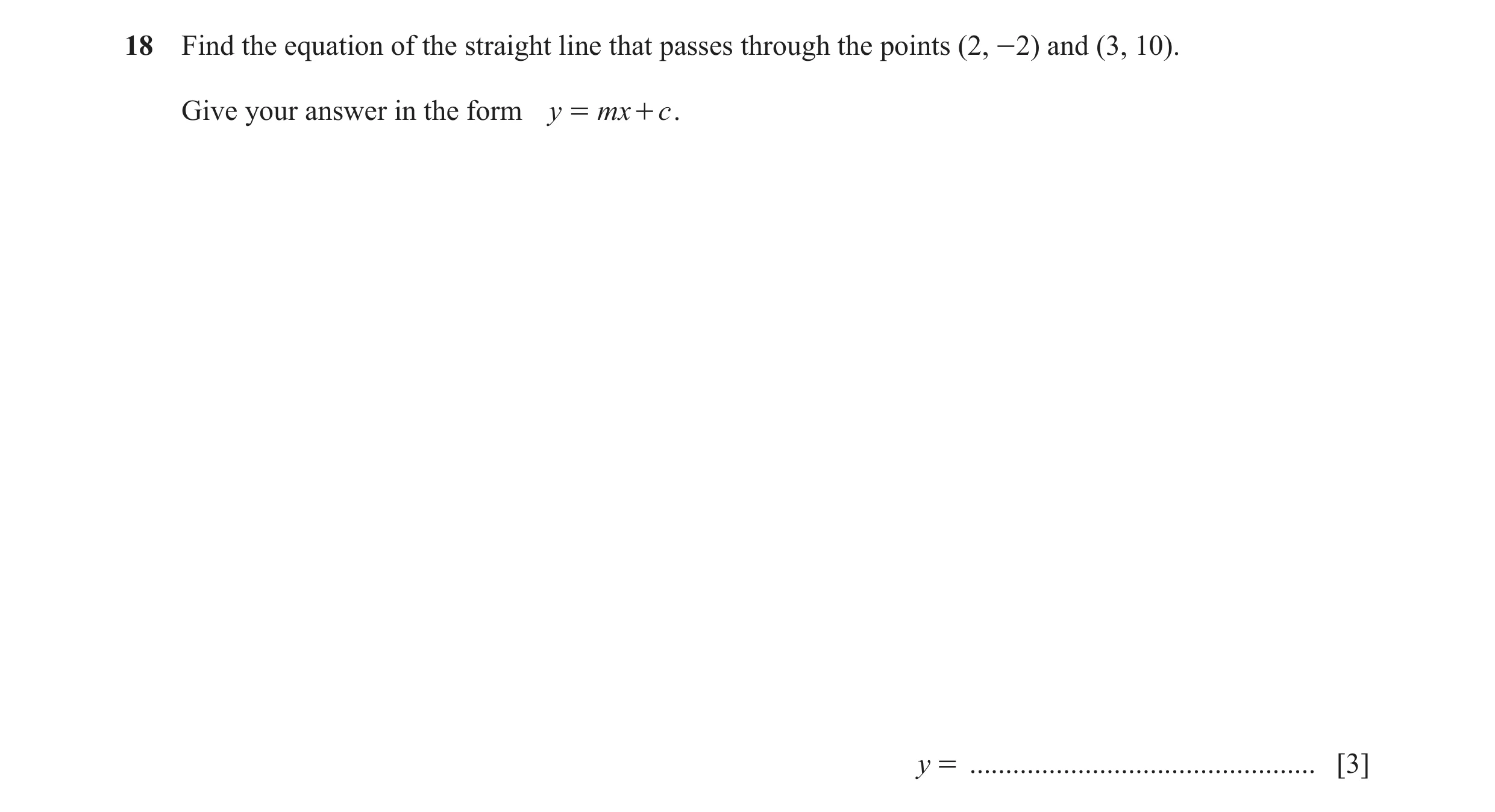
Q35 · Find the equation of the straight line that passes through the points (2, -2) and (3, 10) 0580/23 Oct/Nov 2021
18 Find the equation of the straight line that passes through the points (2, -2) and (3, 10). Give your answer in the form y = mx + c . y = … [3]
3 marks
Mark scheme: 18 [y =] 12x – 26 final answer 3 10 −−2 M1 for oe 3 − 2 M1 for correct substitution of (2, –2) or (3, 10) into y = (their m)x + c oe
This question in 0580/23 Oct/Nov 2021
Q36 · Write down the gradient of the line y = 5x + 7 0580/22 Feb/March 2022
5 (a) Write down the gradient of the line y = 5x + 7 . … [1] (b) Find the coordinates of the point where the line y = 5x + 7 crosses the y-axis. ( … , … ) [1]
2 marks
Mark scheme: 5(a) 5 1 5(b) (0, 7) 1
This question in 0580/22 Feb/March 2022
Q37 · Y 6 A 5 4 3 2 1 – 8 – 7 – 6 – 5 – 4 – 3 – 2 – 1 0 1 2 x – 1 – 2 – 3 B – 4 – 5 – 6 – 7 – 8… 0580/22 Feb/March 2022
16 y 6 A 5 4 3 2 1 – 8 – 7 – 6 – 5 – 4 – 3 – 2 – 1 0 1 2 x – 1 – 2 – 3 B – 4 – 5 – 6 – 7 – 8 A is the point (- 6, 5) and B is the point (- 2, - 3). (a) Find the equation of the straight line, l, that passes through point A and point B. Give your answer in the form y = mx + c . y = … [2] (b) Find the equation of the line that is perpendicular to l and passes through the origin. … [2]
4 marks
Mark scheme: 16(a) [ y = ] − 2 x − 7 final answer 2 B1 for − 2x + c or kx – 7, k ≠ 0 final answer 16(b) 1 2 1 y = x [ ±0 ] final answer FT −their gradientin(a) 2 B1 for y = kx [ ± 0 ] oe, k ≠ 0 1 or y = their x + c oe for any c 2 1 or their x [ ±0 ] oe 2
This question in 0580/22 Feb/March 2022
Q38 · A kite is drawn on a coordinate grid 0580/23 Oct/Nov 2022
16 A kite is drawn on a coordinate grid. The diagonals of the kite intersect at the point (-2, -5). One diagonal has equation y = 4x + 3 . Find the equation of the other diagonal of the kite. Give your answer in the form y = mx + c . y = … [3]
3 marks
Mark scheme: 16 1 11 3 1 [y =] − x − oe M1 for grad = – oe soi 4 2 4 M1 for correct substitution shown of (–2, –5) into y = (their m)x + c oe (their m ≠ 4)
This question in 0580/23 Oct/Nov 2022
Q39 · C is the point ( 5, - 1) and D is the point (13, 15) 0580/22 May/June 2023
15 C is the point ( 5, - 1) and D is the point (13, 15). (a) Find the midpoint of CD. ( … , … ) [2] (b) Find the gradient of CD. … [2] (c) Find the equation of the perpendicular bisector of CD. Give your answer in the form y = mx + c . y = … [3]
7 marks
Mark scheme: 15(a) (9, 7) 2 B1 for each 15(b) 2 2 15 – –1 M1 for oe 13 – 5 15(c) 1 23 3 [y =] – x + oe 2 2 final answer 1 M1 for gradient = their (b) oe M1 for correct substitution of their (a) into y = (their m)x + c oe
This question in 0580/22 May/June 2023
Q40 · The graph of y = 2x + 1 is drawn on the grid 0580/23 Oct/Nov 2023
13 The graph of y = 2x + 1 is drawn on the grid. y 5 4 3 2 1 -5 -4 -3 -2 -1 0 1 2 3 4 5 x -1 -2 -3 -4 By shading the unwanted regions of the grid, find and label the region R which satisfies these inequalities. y H 2x + 1 y H 1 4x + 3y 1 12 [4]
4 marks
Mark scheme: 13 Correct region indicated 4 B1 for 4x + 3y = 12 dashed line B1 for y = 1 solid line B2 for region identified satisfying all 3 inequalities 1 or B1 for region satisfying only 2 of these inequalities with 4x + 3y = 12 and y = 1 R 1 both drawn 1
This question in 0580/23 Oct/Nov 2023
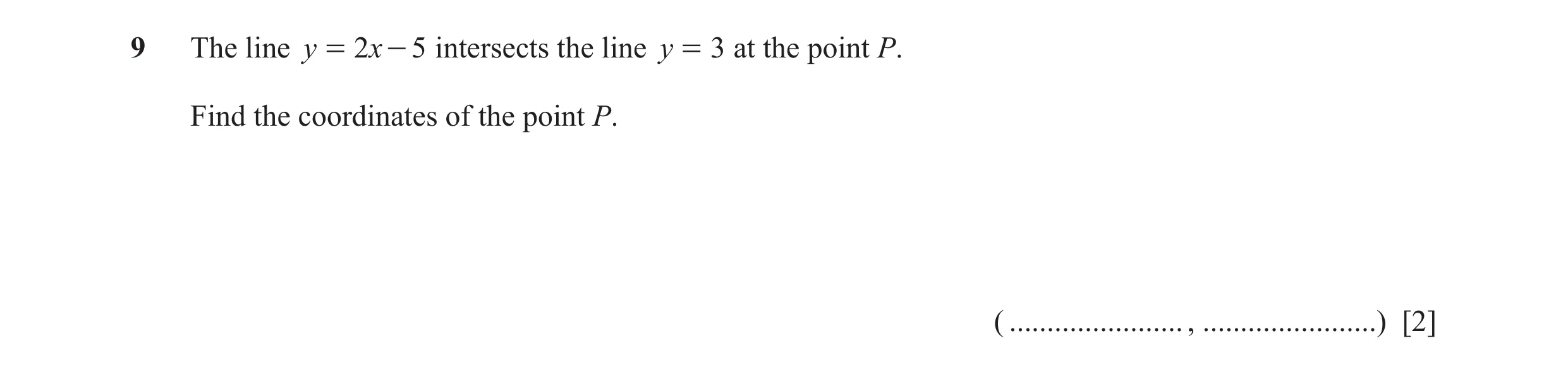
Q41 · The line y = 2x - 5 intersects the line y = 3 at the point P 0580/22 Feb/March 2024
9 The line y = 2x - 5 intersects the line y = 3 at the point P. Find the coordinates of the point P. ( … , … ) [2]
2 marks
Mark scheme: 9 ( 4, 3 ) 2 B1 for each or M1 for 3 = 2x – 5 or better
This question in 0580/22 Feb/March 2024
Q42 · A is the point (6, 1) and B is the point (2, 7) 0580/22 Feb/March 2024
26 A is the point (6, 1) and B is the point (2, 7). Find the equation of the perpendicular bisector of AB. Give your answer in the form y = mx + c . y = … [5]
5 marks
Mark scheme: 26 2 4 5 B1 for midpoint ( 4, 4 ) soi y = x + final answer 3 3 7 −1 M1 for [gradient AB =] oe 2 − 6 −1 M1 for [m =] their gradient of AB M1 for substituting their midpoint into y = ( their m ) x + c dep on at least M1 earned
This question in 0580/22 Feb/March 2024
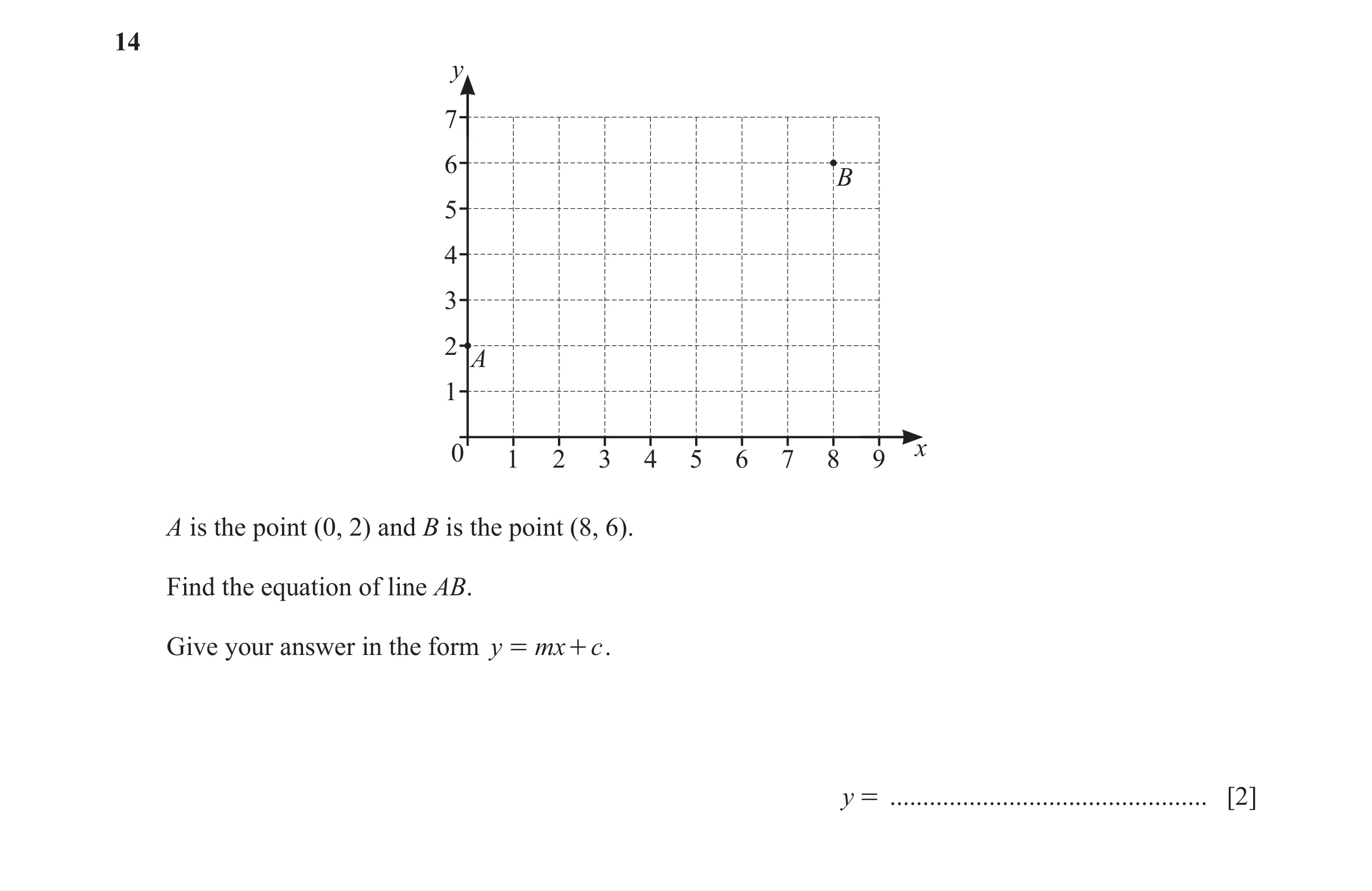
Q43 · Y 7 6 B 5 4 3 2 A 1 0 1 2 3 4 5 6 7 8 9 x A is the point (0, 2) and B is the point (8, 6) 0580/22 May/June 2024
14 y 7 6 B 5 4 3 2 A 1 0 1 2 3 4 5 6 7 8 9 x A is the point (0, 2) and B is the point (8, 6). Find the equation of line AB. Give your answer in the form y = mx + c . y = … [2]
2 marks
Mark scheme: 14 1 2 6 2 y x 2 oe M1 for oe 2 8 0 or for y = kx + 2
This question in 0580/22 May/June 2024
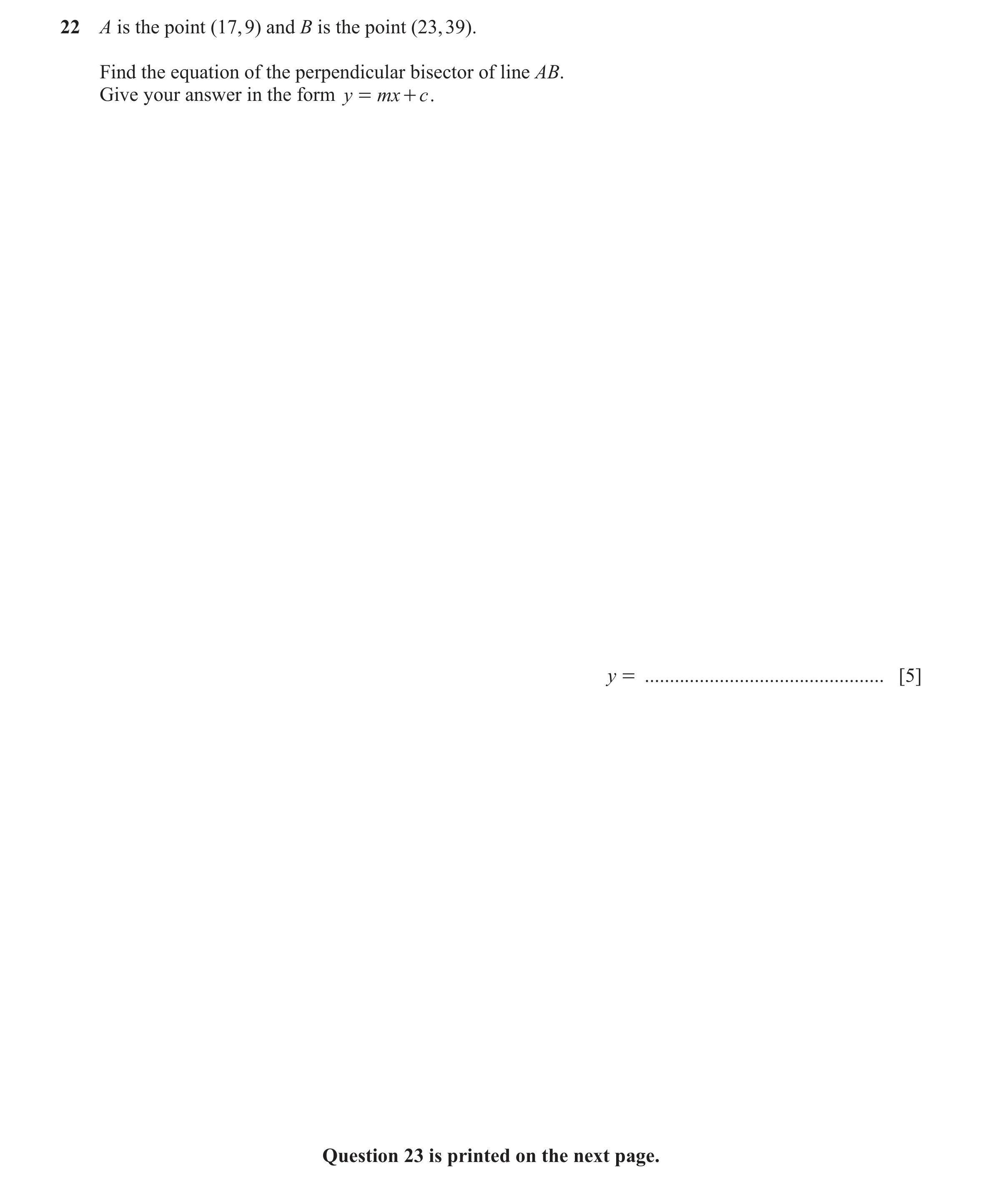
Q44 · A is the point (17, 9) and B is the point (23, 39) 0580/22 Oct/Nov 2024
22 A is the point (17, 9) and B is the point (23, 39). Find the equation of the perpendicular bisector of line AB. Give your answer in the form y = mx + c . y = … [5] Question 23 is printed on the next page.
5 marks
Mark scheme: 22 1 5 [y =] – x + 28 final answer B1 for midpoint (20, 24) soi 5 39 − 9 M1 for [gradient = ] oe 23 − 17 − 1 M1 for their gradient M1 for substitution of their midpoint into their y = mx + c oe
This question in 0580/22 Oct/Nov 2024
Q45 · Write down the coordinates of the point where the graph of y = 5x - 3 crosses the y – axis 0580/22 Feb/March 2025
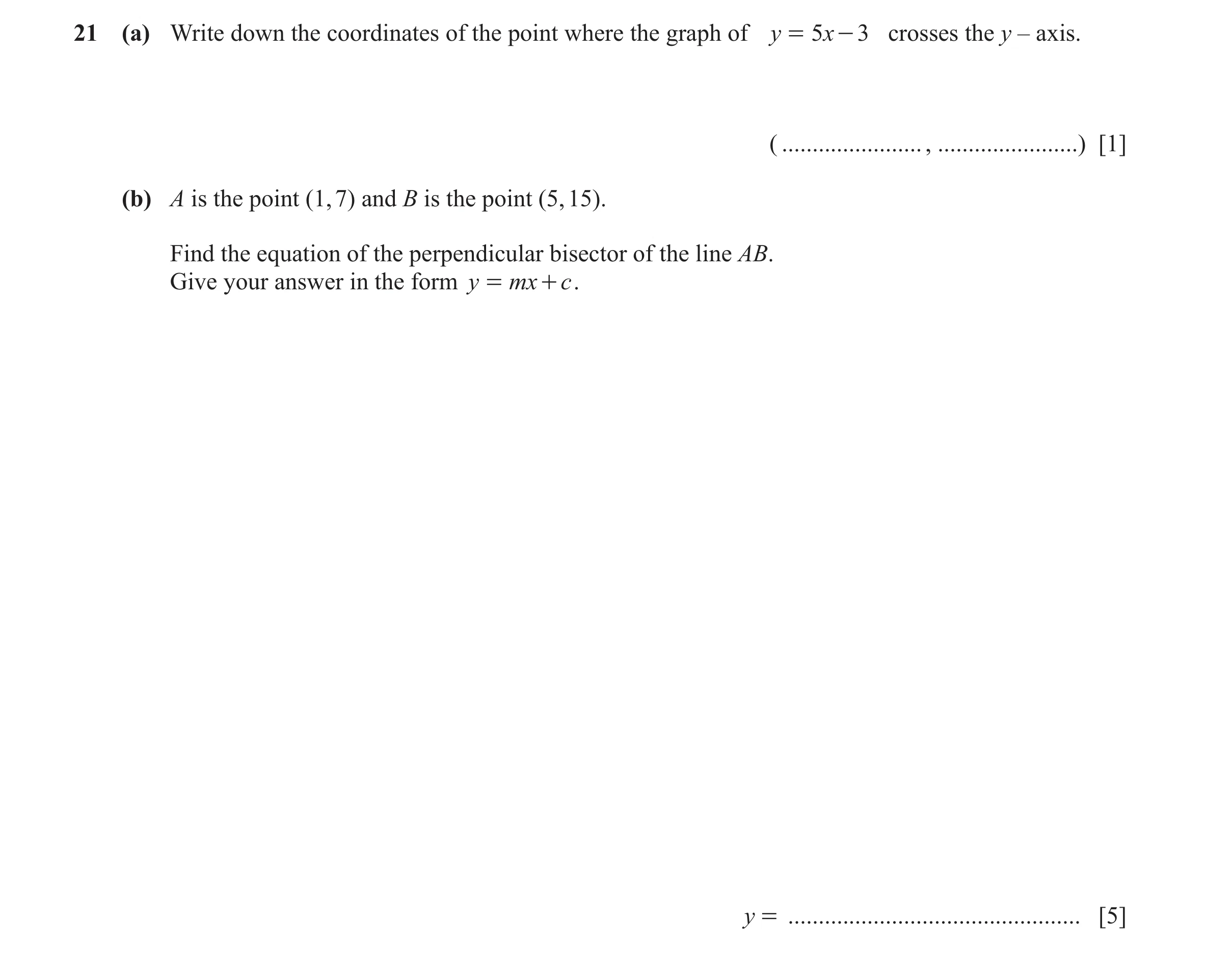
21 (a) Write down the coordinates of the point where the graph of y = 5x - 3 crosses the y – axis. ( … , … ) [1] (b) A is the point (1, 7) and B is the point (5, 15). Find the equation of the perpendicular bisector of the line AB. Give your answer in the form y = mx + c . y = … [5]
6 marks
Mark scheme: 21(a) (0, –3) 1 21(b) 1 25 5 B1 for [midpoint =] (3, 11) soi [y =] − x + final answer 2 2 15 − 7 M1 for [grad AB = ] oe 5 − 1 −1 M1 for their gradient of AB M1 for substituting their (3, 11) into y = (their m)x + c oe
This question in 0580/22 Feb/March 2025
Q46 · Y 9 8 7 6 5 4 3 2 1 0 1 2 3 4 5 6 7 8 x The line x + y = 7 is drawn on the grid 0580/21 May/June 2025
6 y 9 8 7 6 5 4 3 2 1 0 1 2 3 4 5 6 7 8 x The line x + y = 7 is drawn on the grid. (a) On the grid, draw the line y = 2x + 1. [2] (b) Use your graph to solve these simultaneous equations. x + y = 7 y = 2x + 1 x = … y = … [1]
3 marks
Mark scheme: 6(a) Correct line drawn 2 M1 for a line with gradient 2 or for a line with positive gradient and intercept at y = 1 6(b) [x =] 2, [y =] 5 1 FT intersection of their (a) with the given line
This question in 0580/21 May/June 2025
Q47 · The diagram shows the graph of y = f ( x) and the point P ( - 2 , 11) 0580/21 May/June 2025
11 The diagram shows the graph of y = f ( x) and the point P ( - 2 , 11) . y 15 P 10 5 – 2 – 1 0 1 2 3 x – 5 – 10 The tangent from P touches the graph of y = f ( x) at the point (a, b). The values of a and b are integers. (a) By drawing this tangent, find the value of a and the value of b. a = … , b = … [2] (b) Find the equation of the tangent. Give your answer in the form y = mx + c . y = … [3]
5 marks
Mark scheme: 11(a) For correct ruled tangent and 2 B1 for correct ruled tangent or both values [a =] 1, [b =] 2 correct without a correct tangent 11(b) [y =] 5 – 3x 3 3FT their (a) provided m < 0, c ≠ 0 B1 for (their –3)x + c rise or M1 for correct for their line run B1 for mx + c where c is the correct intercept for their graph, m ≠ 0
This question in 0580/21 May/June 2025
Q48 · B is the point (-3, 1) and D is the point (-5, 9) 0580/22 Oct/Nov 2025
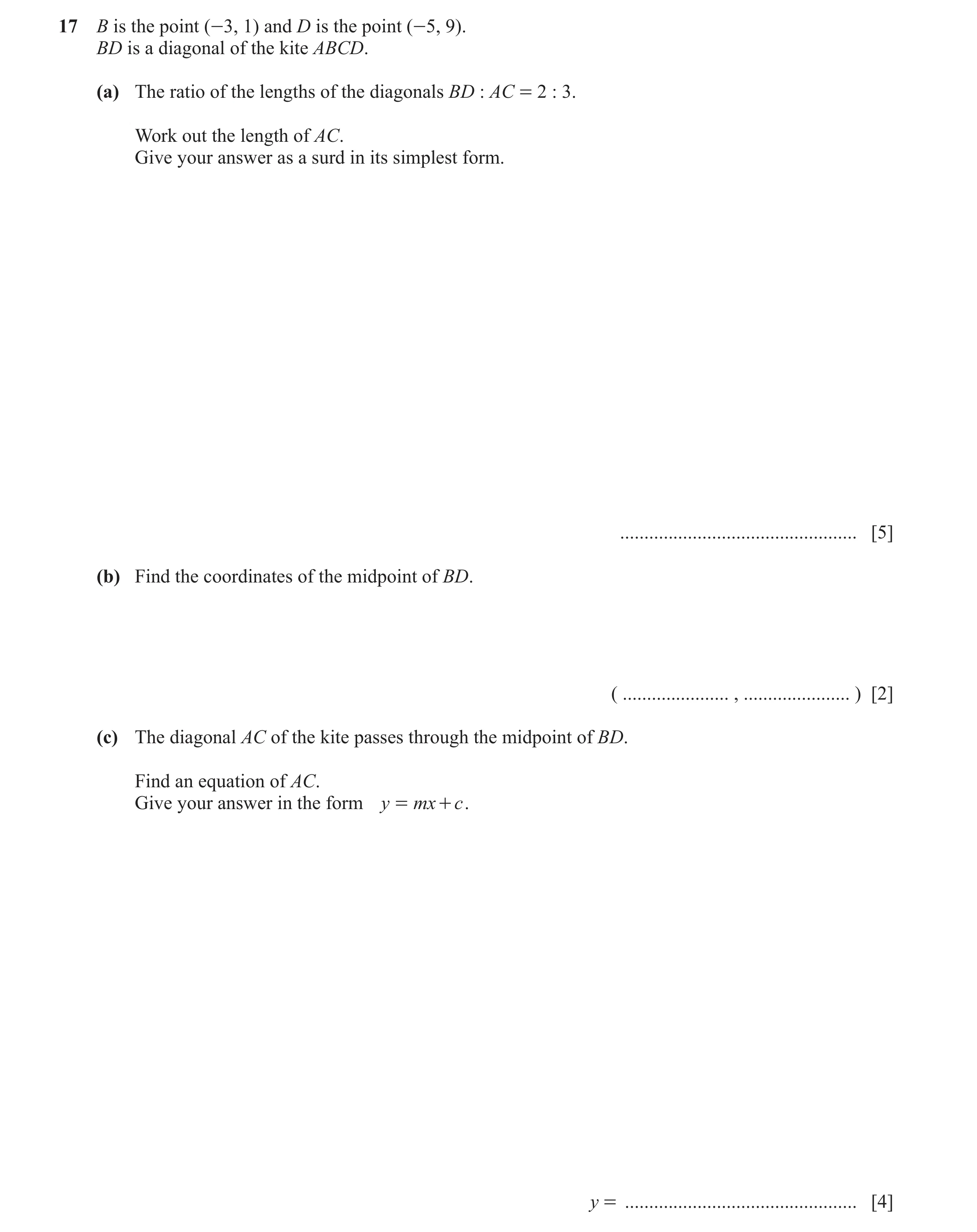
17 B is the point (-3, 1) and D is the point (-5, 9). BD is a diagonal of the kite ABCD. (a) The ratio of the lengths of the diagonals BD : AC = 2 : 3. Work out the length of AC. Give your answer as a surd in its simplest form. … [5] (b) Find the coordinates of the midpoint of BD. ( … , … ) [2] (c) The diagonal AC of the kite passes through the midpoint of BD. Find an equation of AC. Give your answer in the form y = mx + c . y = … [4]
11 marks
Mark scheme: 17(a) 3 17 cao 5 B4 for answer equivalent to 3 17 but 3 68 not in the correct form e.g. , 2 6 17 , 153 2 OR B3 for 68 or 2 17 or M2 for (9 – 1)2 + (–5 – – 3)2 oe or M1 for (9 – 1) or (–5 – – 3) oe and 3 M1 for their 68 oe 2 17(b) (– 4, 5) 2 B1 for each coordinate 17(c) 1 4 − 1 y = x + 6 final answer M1 for grad BD = 9 oe 4 −−−5 3 −1 M1 for grad AC = their grad BD M1 for their (– 4, 5) substituted into y = their mx + c oe
This question in 0580/22 Oct/Nov 2025
Q49 · 22 The equation of line L is y =- x + 7 0580/23 Oct/Nov 2025
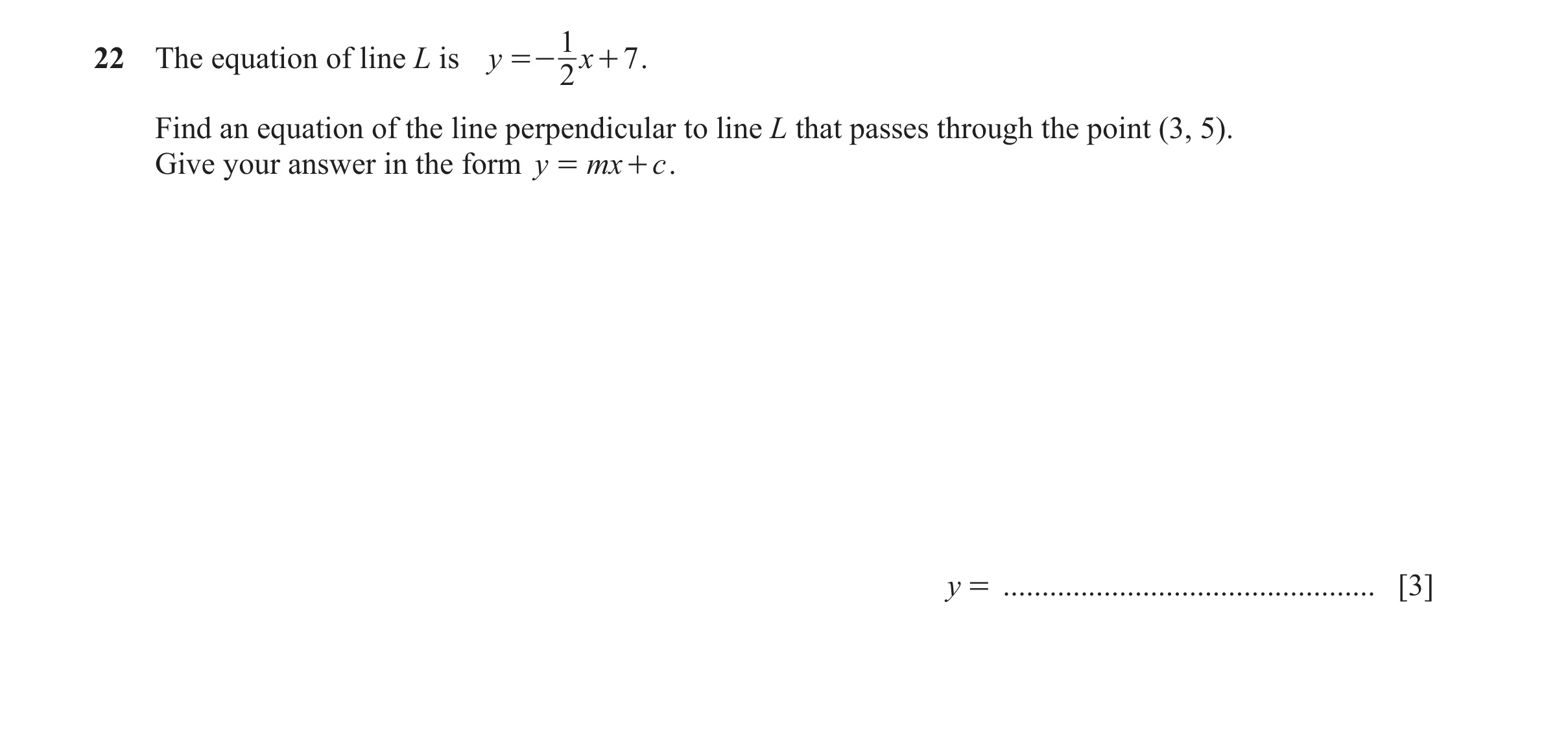
1 22 The equation of line L is y =- x + 7 . 2 Find an equation of the line perpendicular to line L that passes through the point (3, 5). Give your answer in the form y = mx + c . y = … [3]
3 marks
Mark scheme: 22 [y =] 2x – 1 3 − 1 M1 for oe − 0.5 M1 for (3, 5) correctly substituted into y = (their 2)x + c
This question in 0580/23 Oct/Nov 2025
 1 / 39
 2 / 39
![Question 3: The points (2, 5), (3, 3) and (k, 1) all lie in a straight line. (a) Find the value of k. Answer(a) k = [1] (b) Find the equation of the li…](https://img.pastlit.com/crops/6c82d7aa-8633-4680-8ed9-a47844a539dd/q15.webp) 3 / 39
3 / 39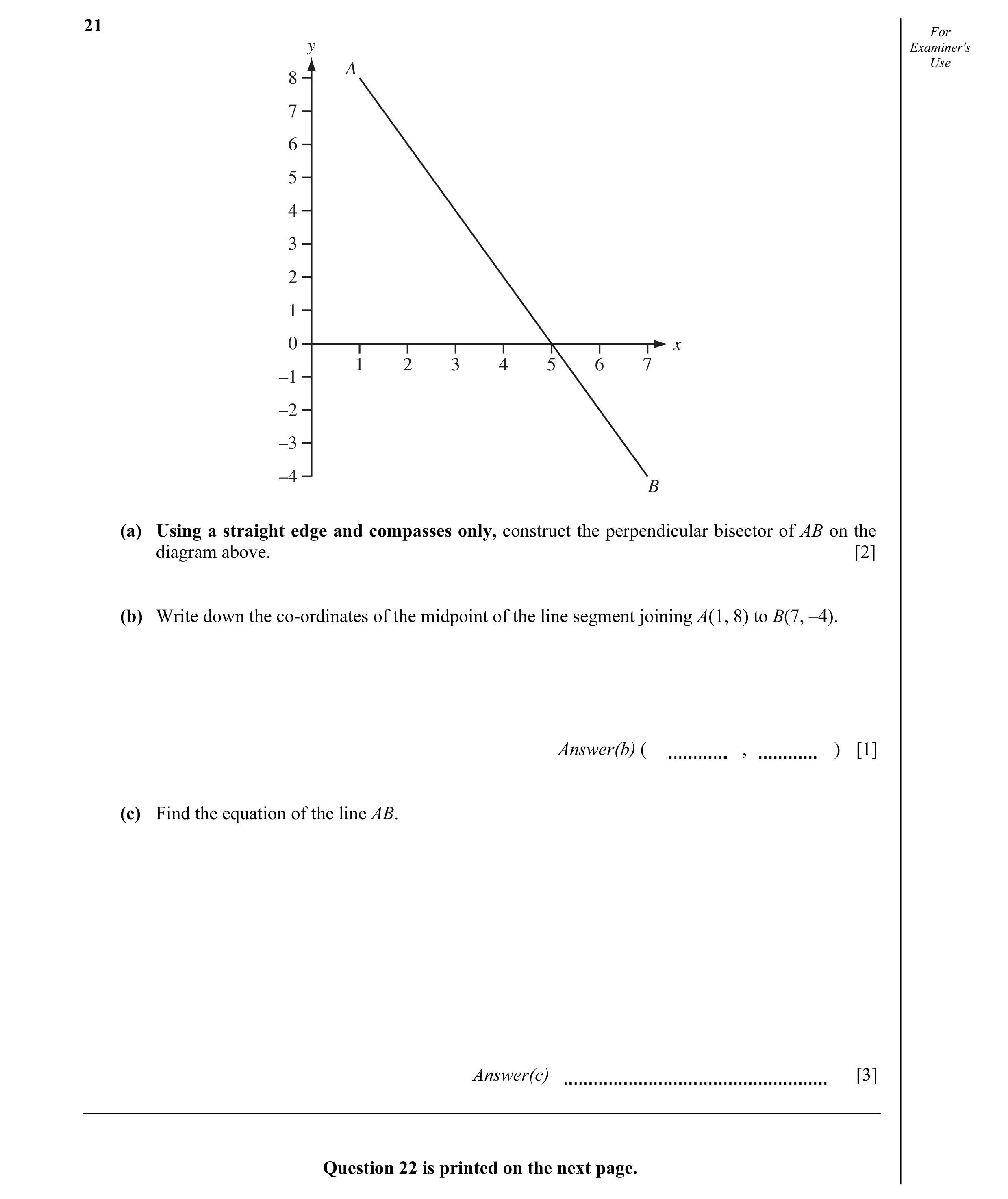 4 / 39
![Question 5: (a) The line y = 2x + 7 meets the y-axis at A. For Examiner's Write down the co-ordinates of A. Use Answer(a) A = ( , ) [1] (b) A line para…](https://img.pastlit.com/crops/1539116e-00f9-477b-9c16-9d514ffa5114/q22.webp) 5 / 39
5 / 39![Question 6: Find the equation of the straight line which passes through the points (0, 8) and (3, 2). For Examiner's Use Answer [3]](https://img.pastlit.com/crops/e2834dac-0216-4836-829f-5ce9e730fc3f/q15.webp)
 6 / 39
 7 / 39
 8 / 39
 9 / 39
 10 / 39
 11 / 39
 12 / 39
 13 / 39
 14 / 39
 15 / 39
 16 / 39
 17 / 39
 18 / 39
 19 / 39
 20 / 39
 21 / 39
 22 / 39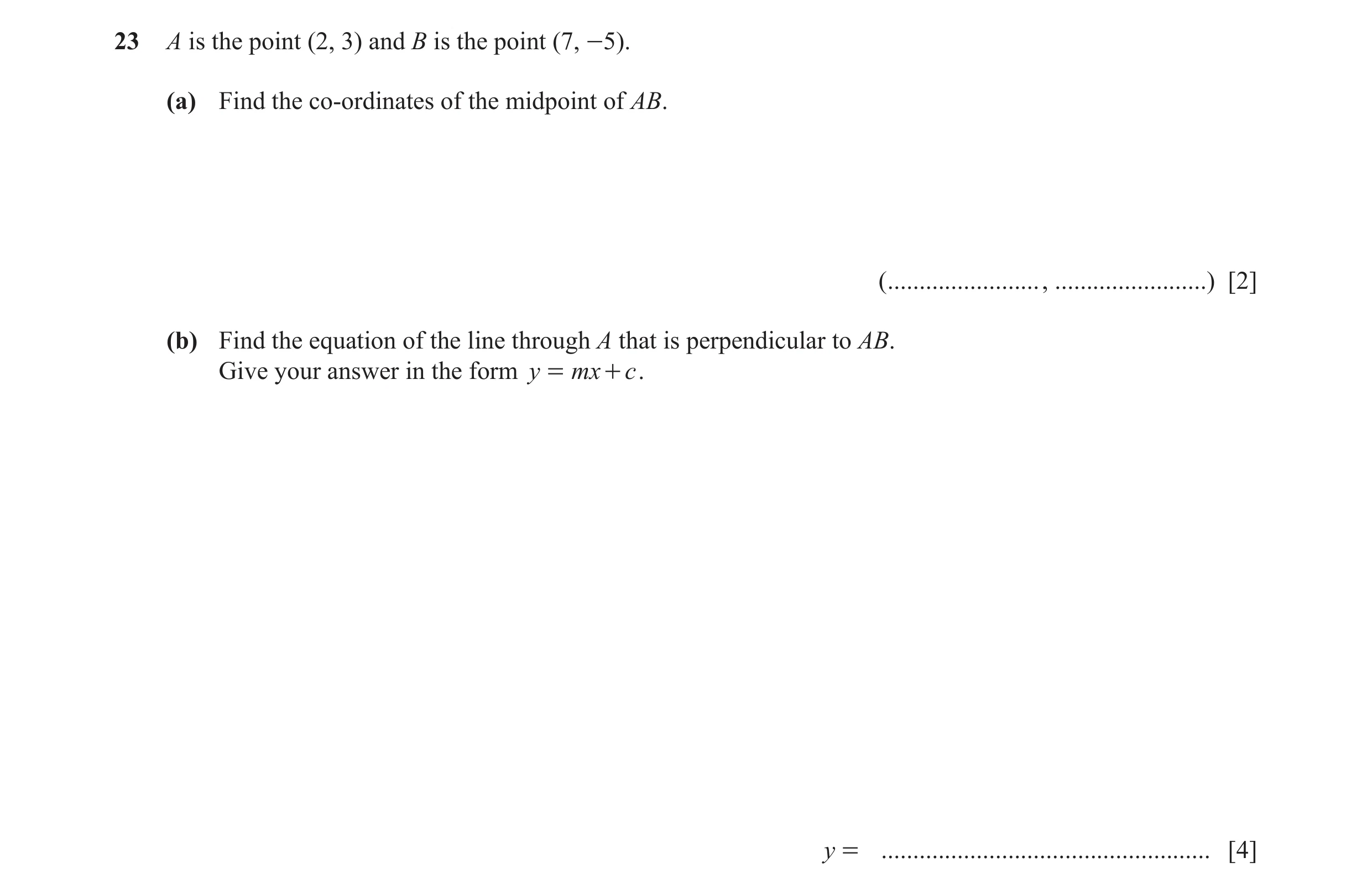
![Question 25: Line L passes through the points (0, -3) and (6, 9). (a) Find the equation of line L. ............................................ [3] (b) …](https://img.pastlit.com/crops/21bc4f5e-b7a2-4c15-a558-62dfcb74f98c/q26.webp) 23 / 39
23 / 39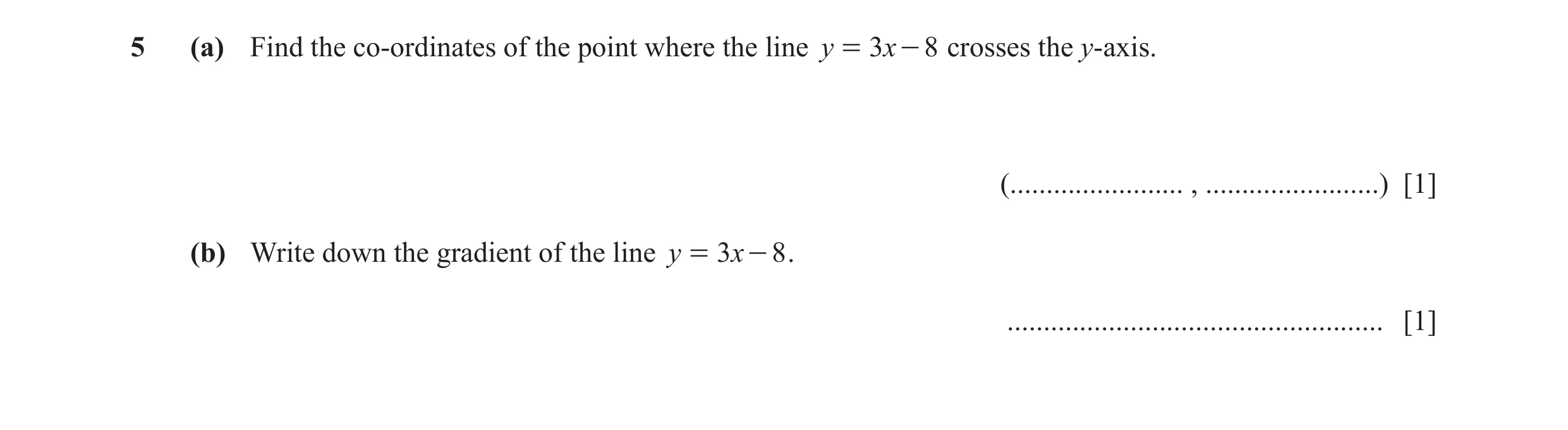
![Question 27: Show that the line 4y = 5x - 10 is perpendicular to the line 5y + 4x = 35 . [3]](https://img.pastlit.com/crops/be4e18e2-69d5-4f99-b551-bb37d341c232/q14.webp)
 24 / 39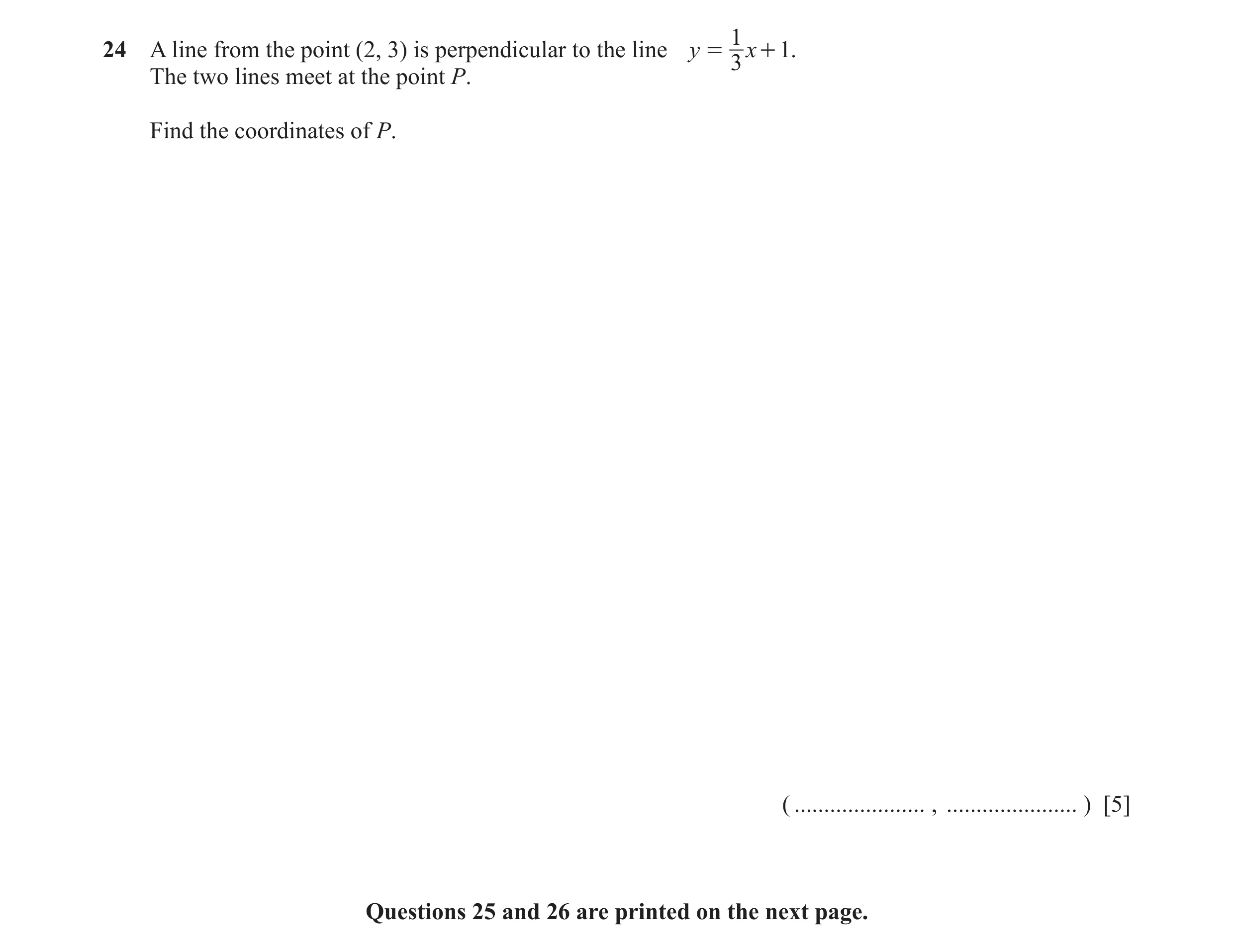
 25 / 39
 26 / 39
![Question 32: A is the point (5, 7) and B is the point (9, - 1). (a) Find the length AB. ................................................. [3] (b) Find t…](https://img.pastlit.com/crops/ca7734d9-f387-4aea-a042-8235723053d8/q16.webp)
 27 / 39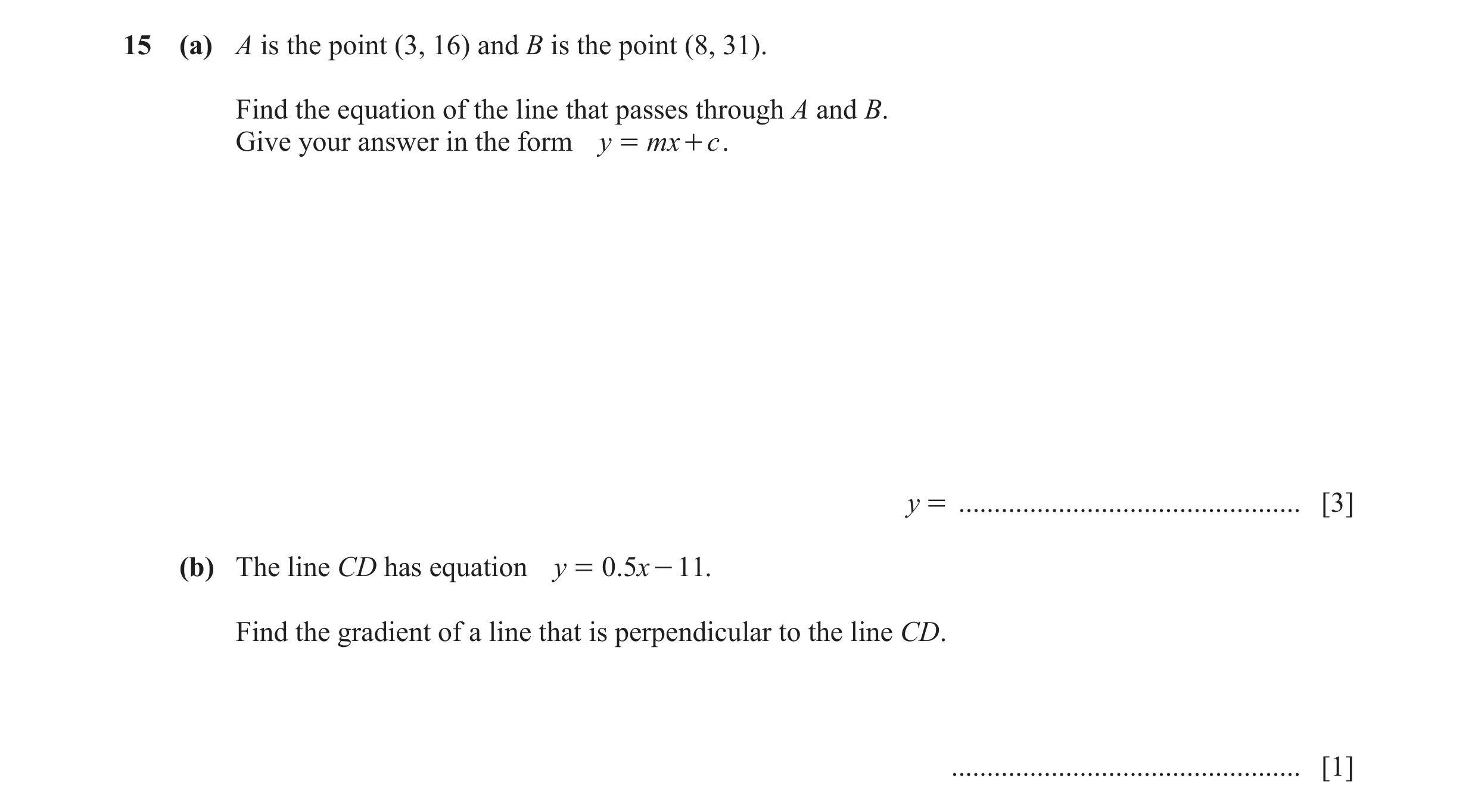
 28 / 39
![Question 36: (a) Write down the gradient of the line y = 5x + 7 . ................................................. [1] (b) Find the coordinates of the …](https://img.pastlit.com/crops/5b6344f7-8440-4f61-84d7-5041ff1ffd9c/q5.webp) 29 / 39
29 / 39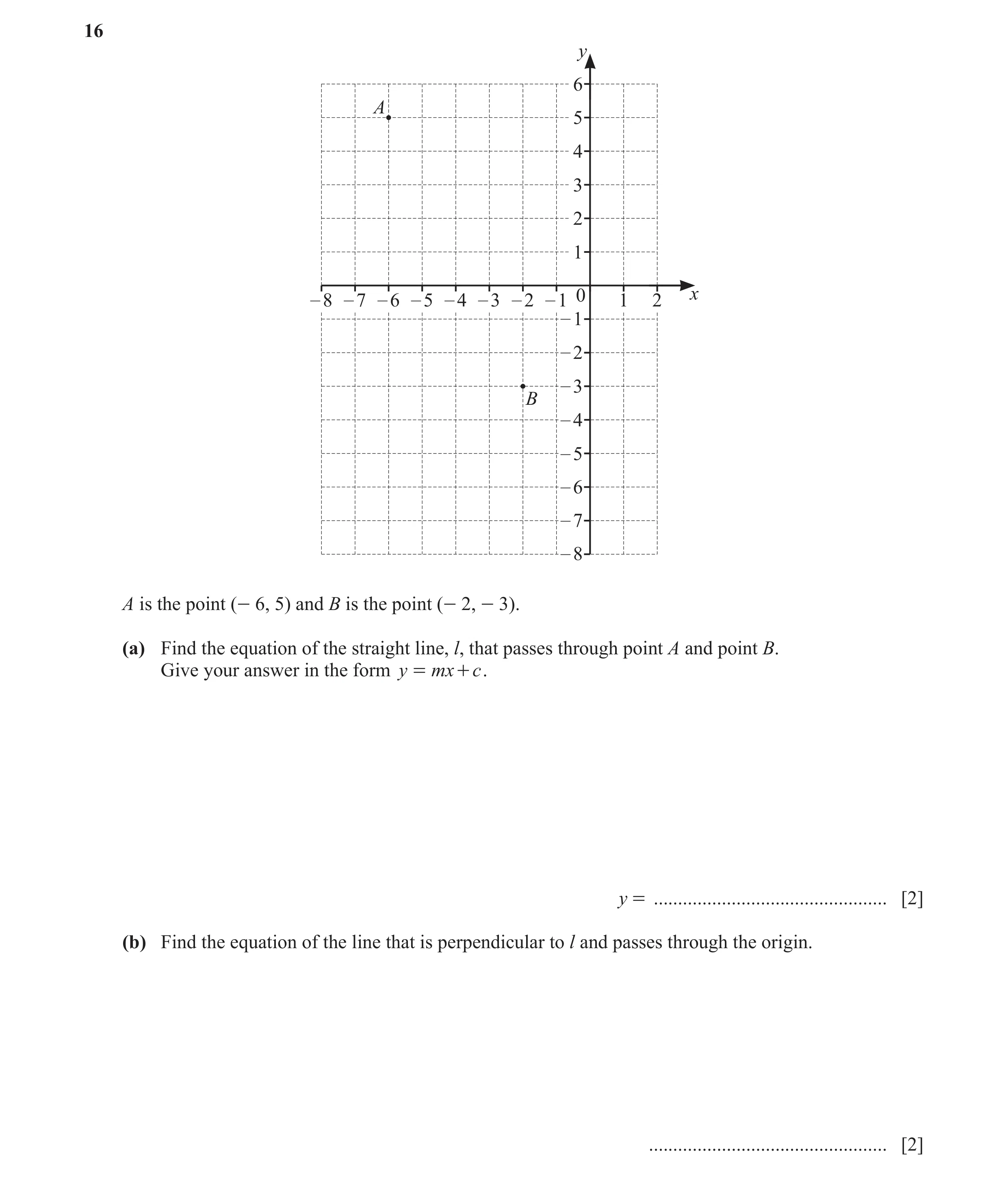 30 / 39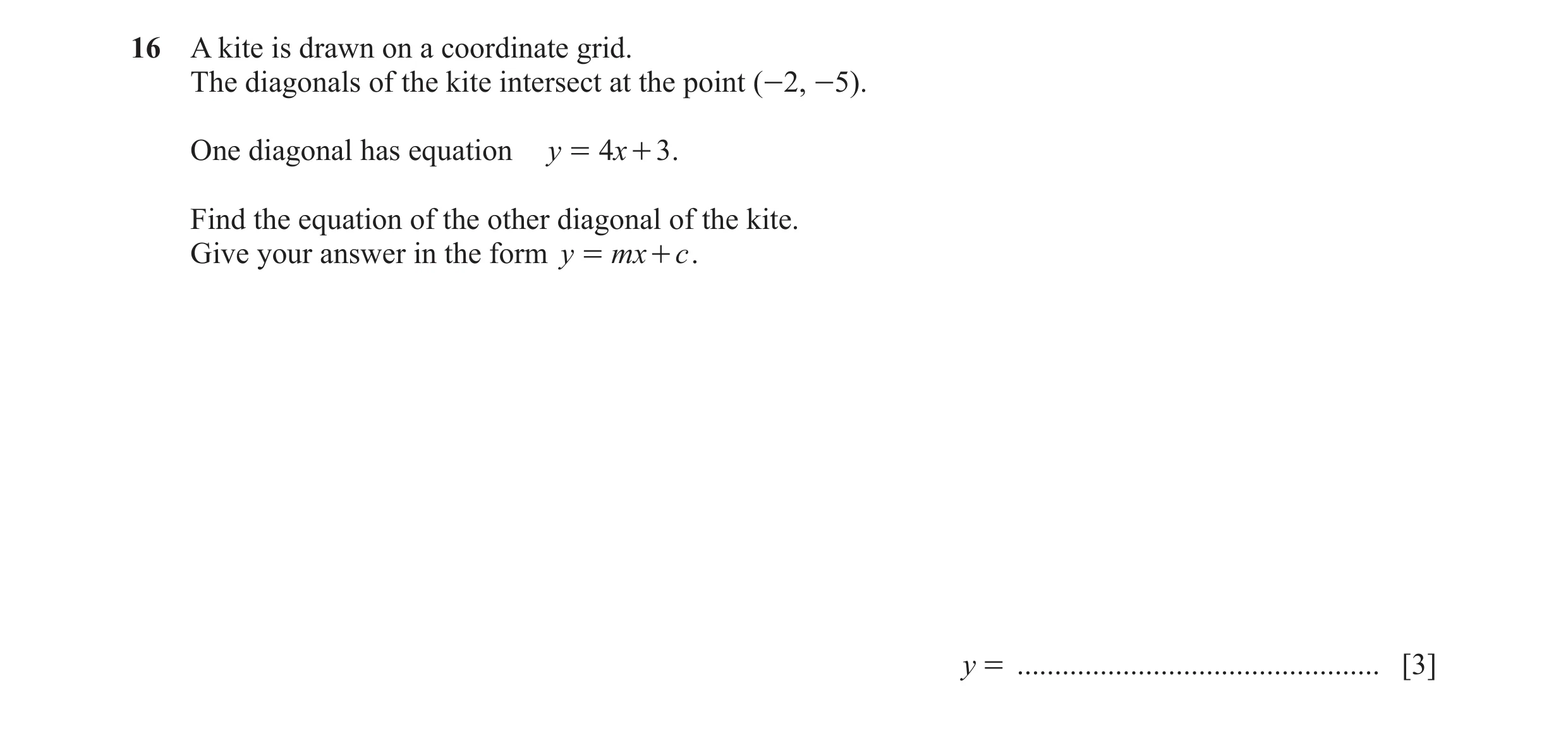
![Question 39: C is the point ( 5, - 1) and D is the point (13, 15). (a) Find the midpoint of CD. (...................... , ......................) [2] (b…](https://img.pastlit.com/crops/e5b18bd6-5bd4-4f34-81df-5233dc85aa27/q15.webp) 31 / 39
31 / 39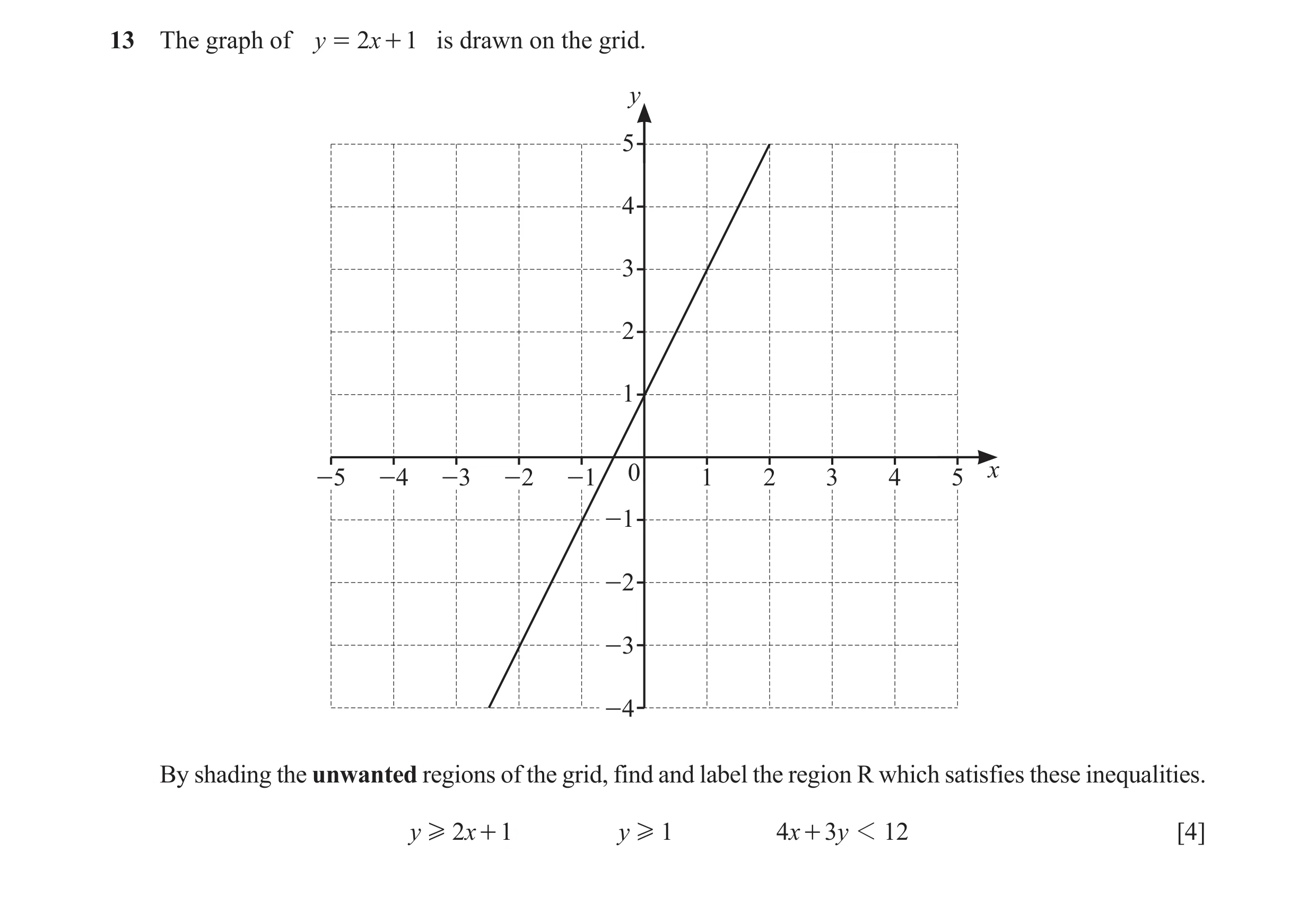
 32 / 39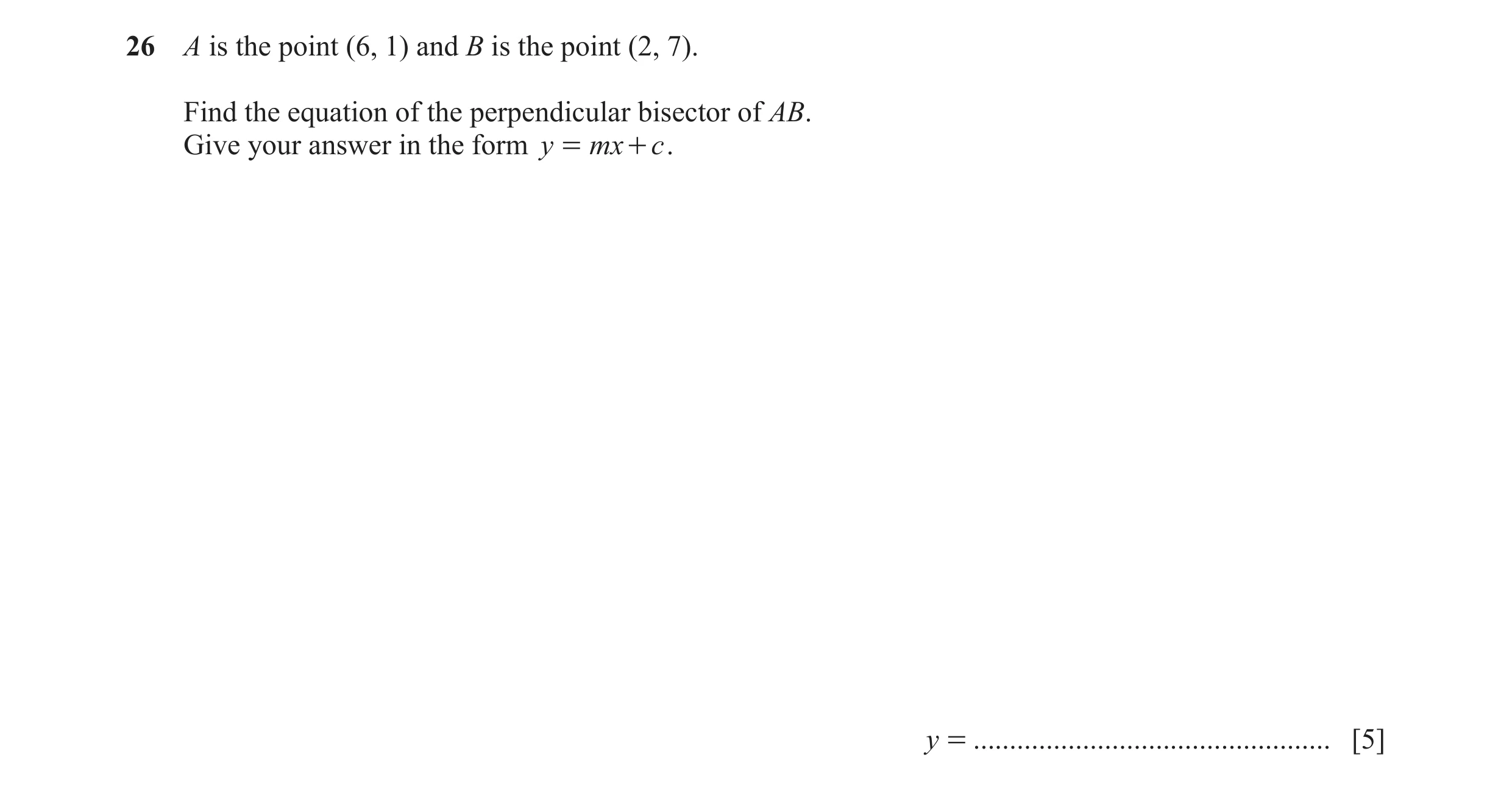
 33 / 39
 34 / 39
 35 / 39
![Question 46: y 9 8 7 6 5 4 3 2 1 0 1 2 3 4 5 6 7 8 x The line x + y = 7 is drawn on the grid. (a) On the grid, draw the line y = 2x + 1. [2] (b) Use you…](https://img.pastlit.com/crops/21f02c8a-018b-433e-a2e0-6af89b0ab12e/q6.webp) 36 / 39
36 / 39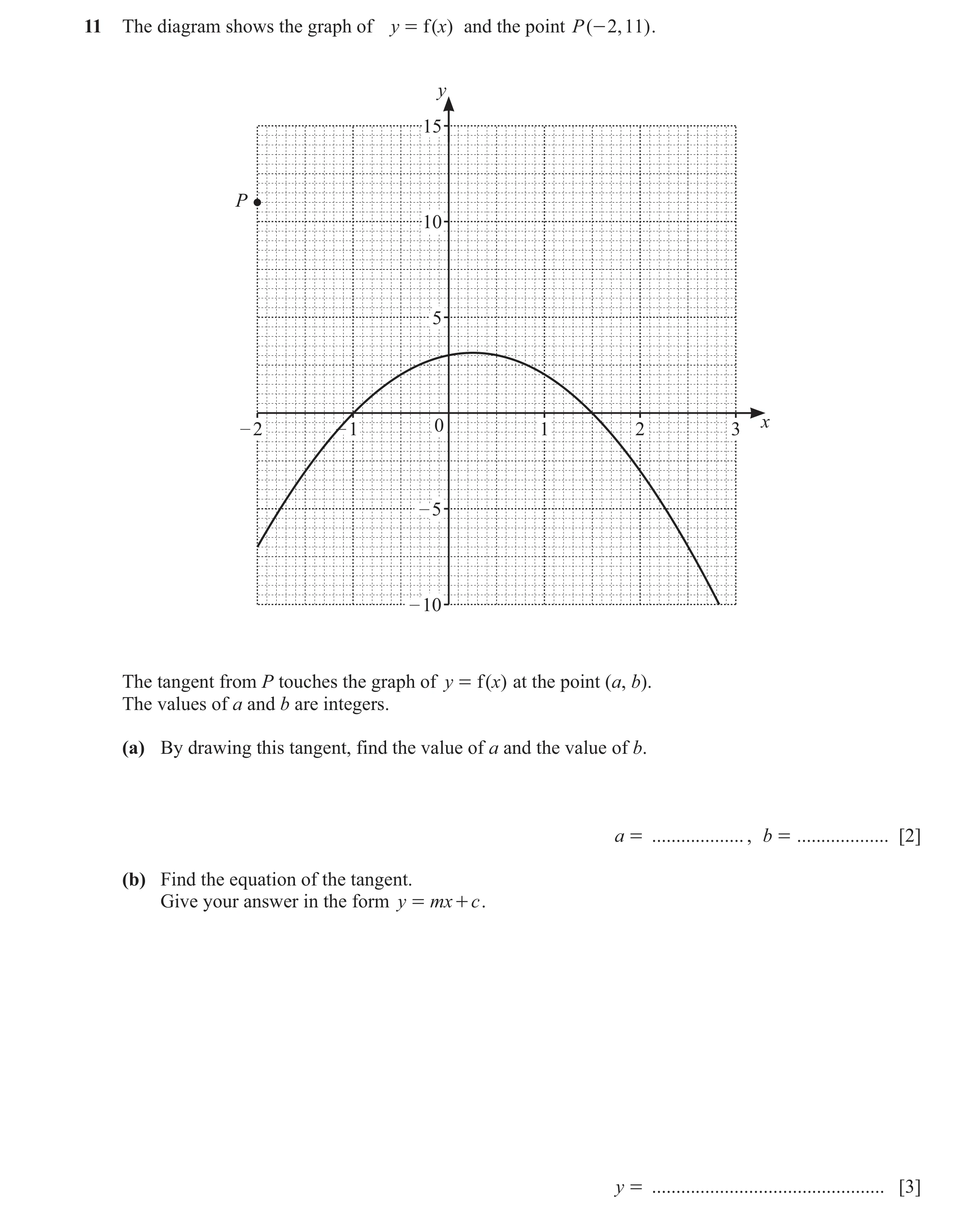 37 / 39
 38 / 39
 39 / 39
 4
4 4
4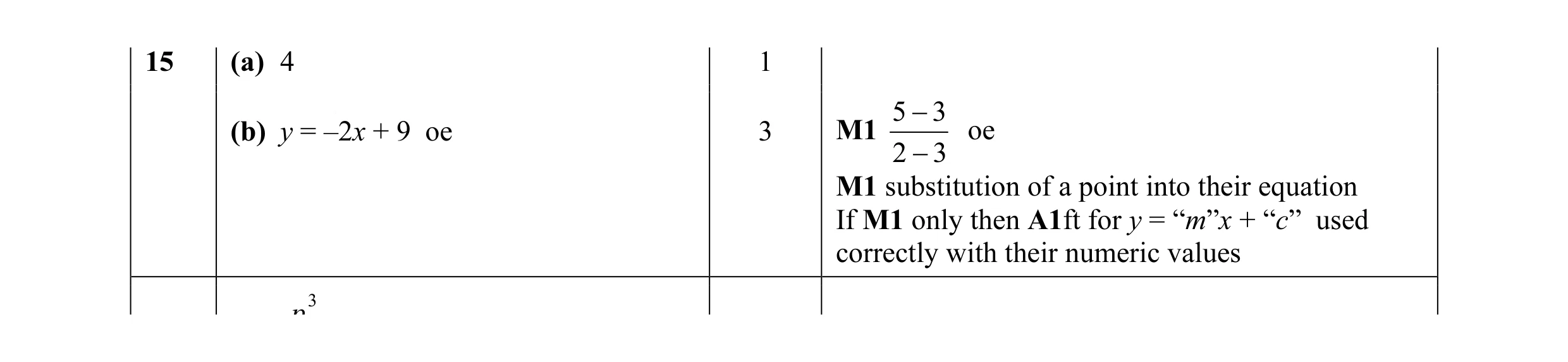 4
4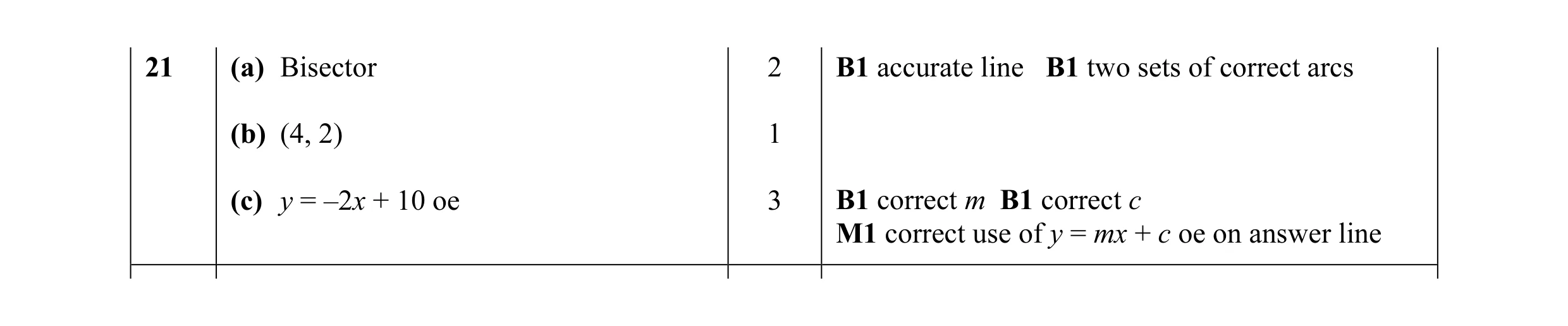 6
6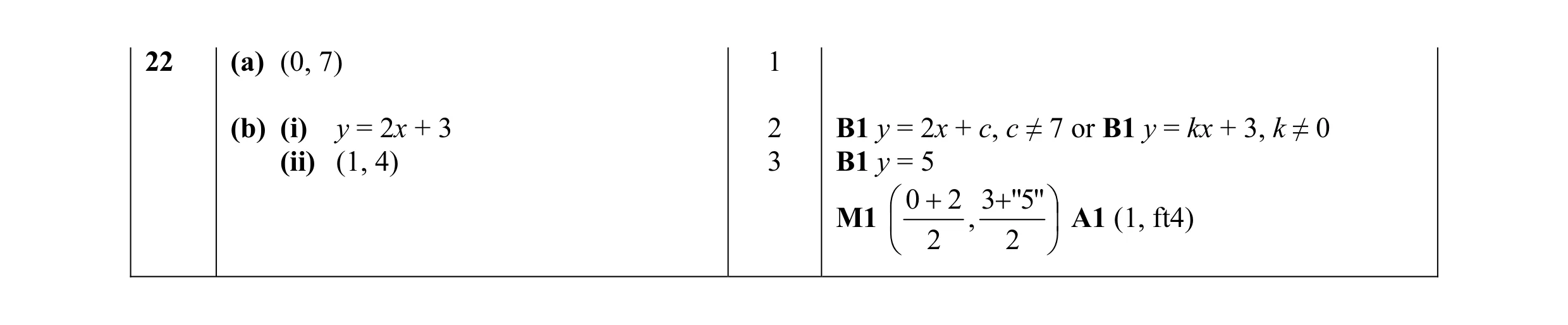 6
6 3
3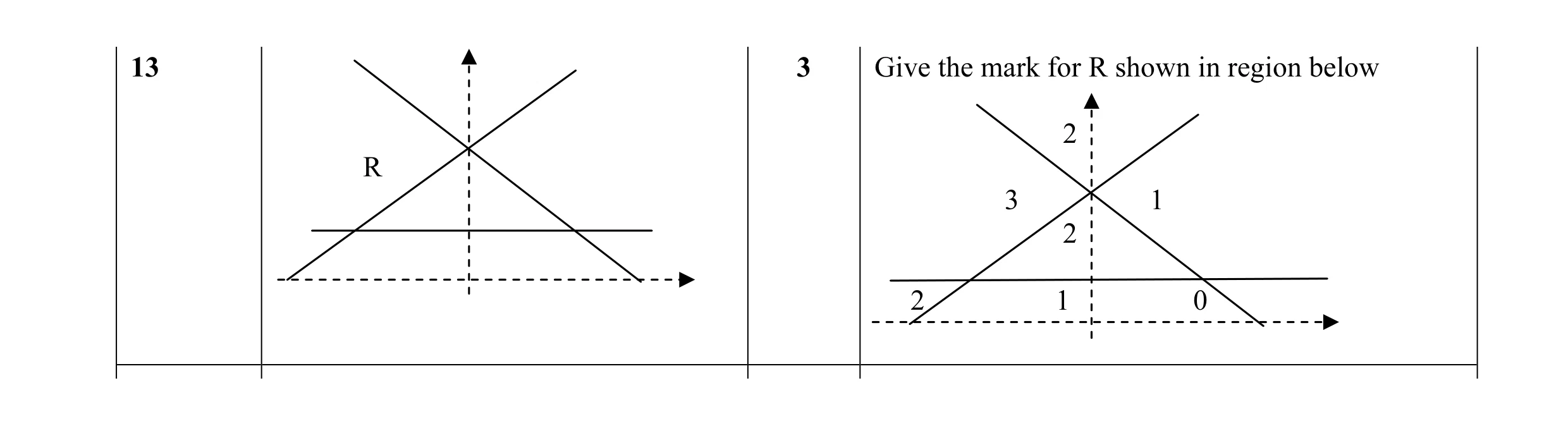 3
3 3
3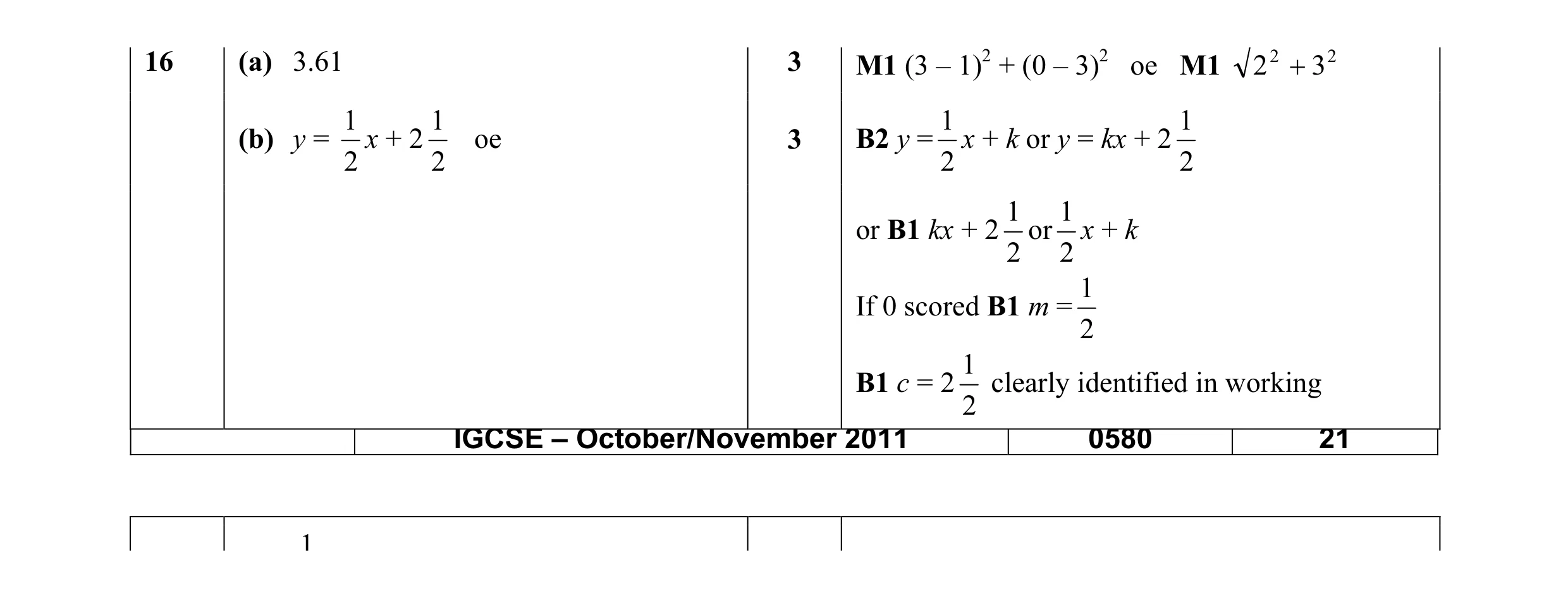 6
6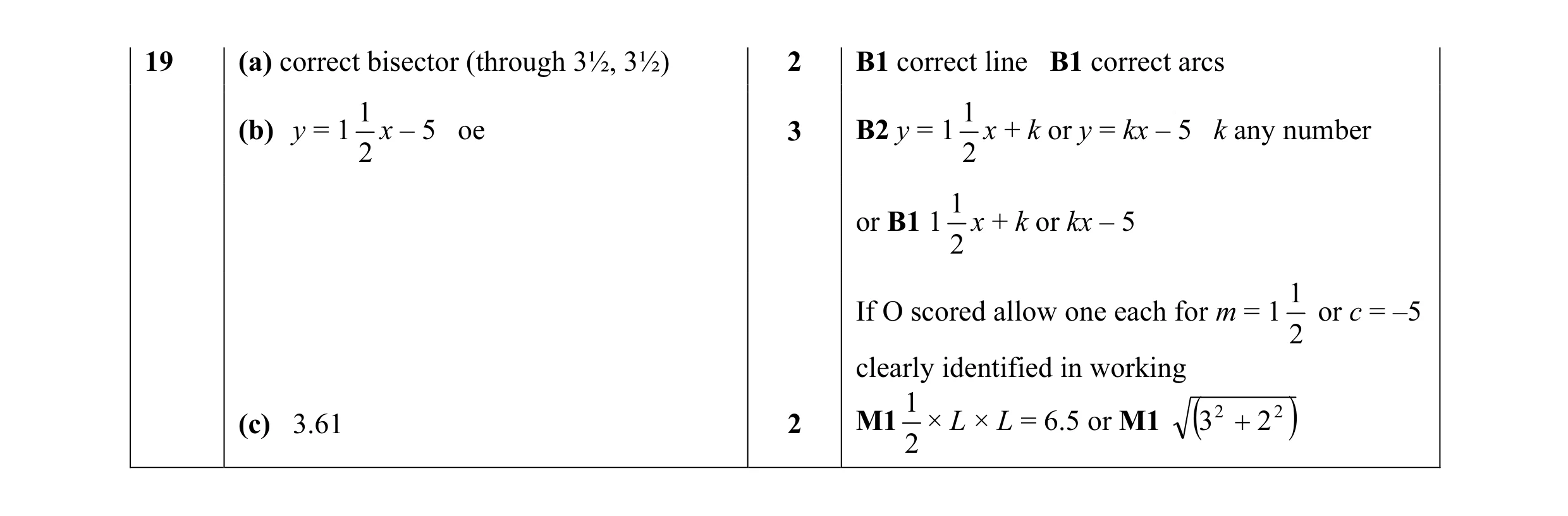 7
7 7
7 3
3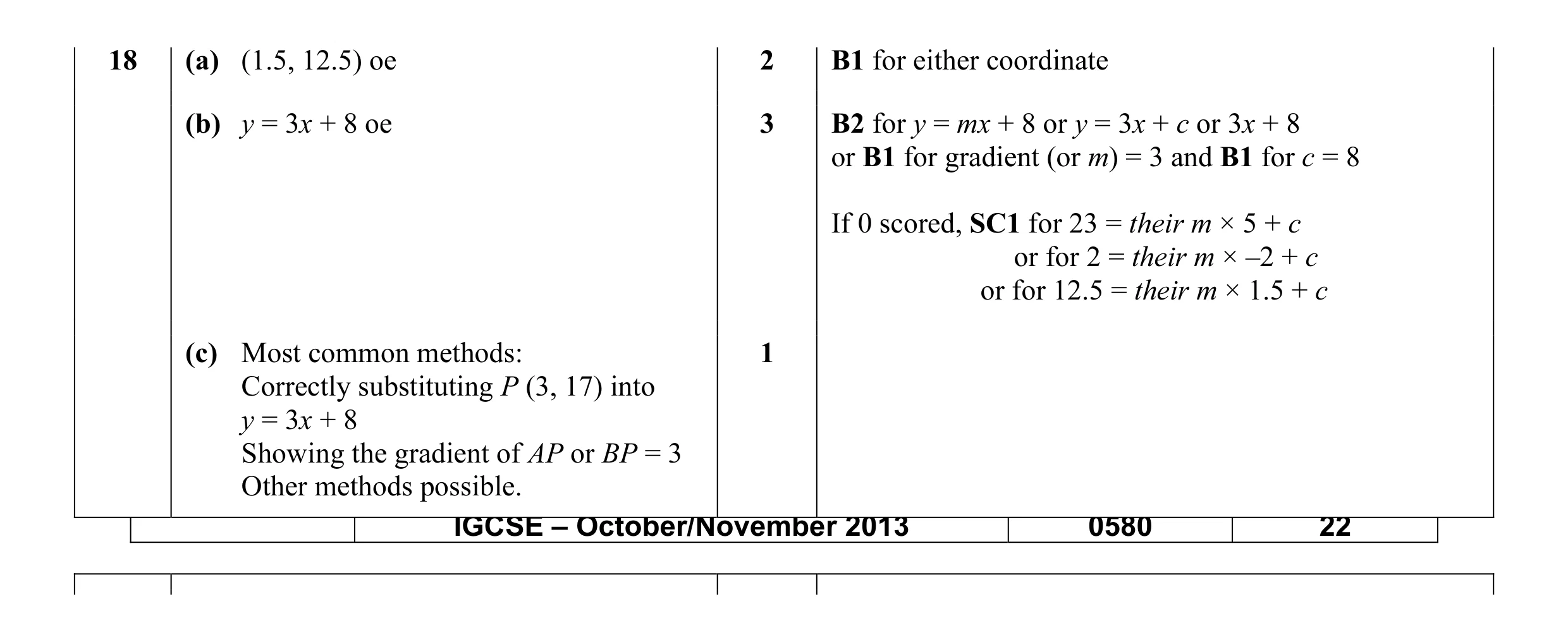 6
6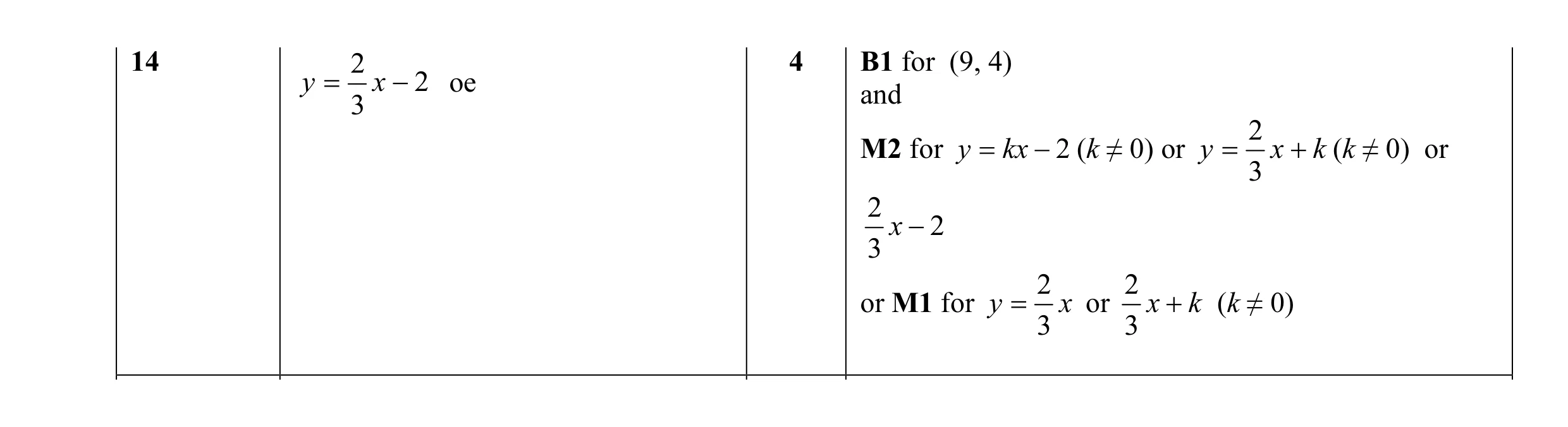 4
4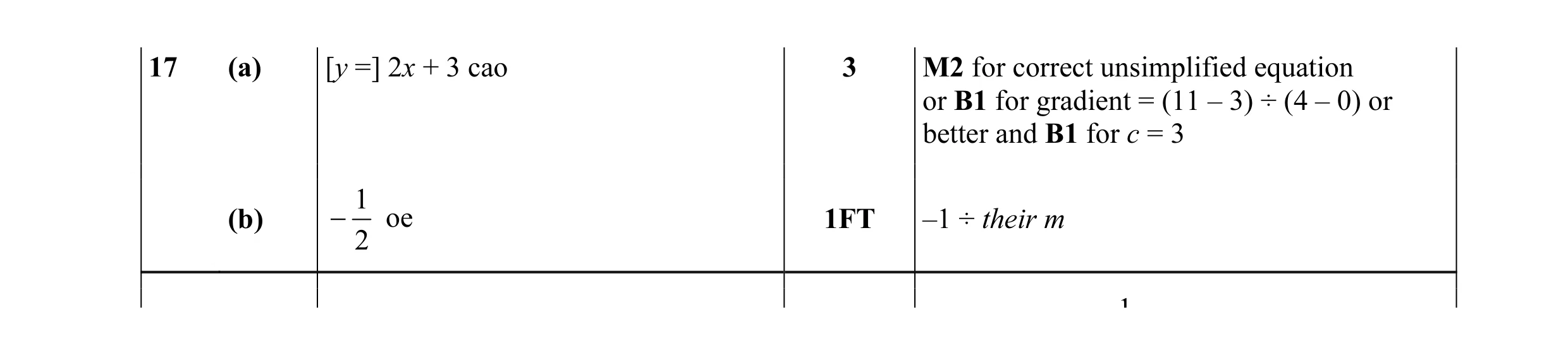 4
4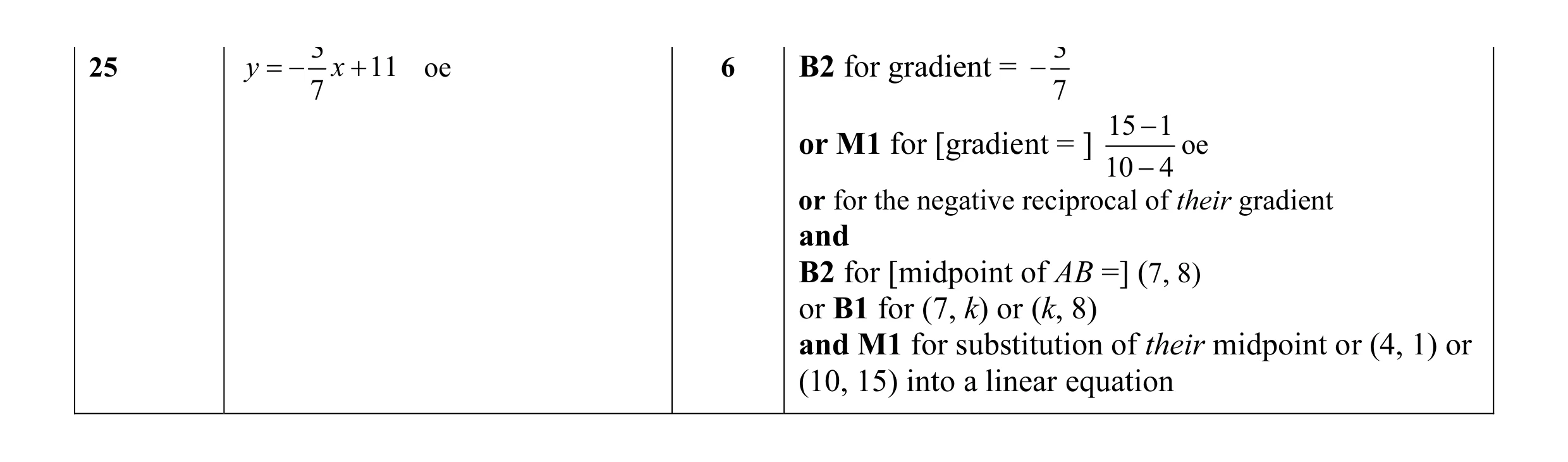 6
6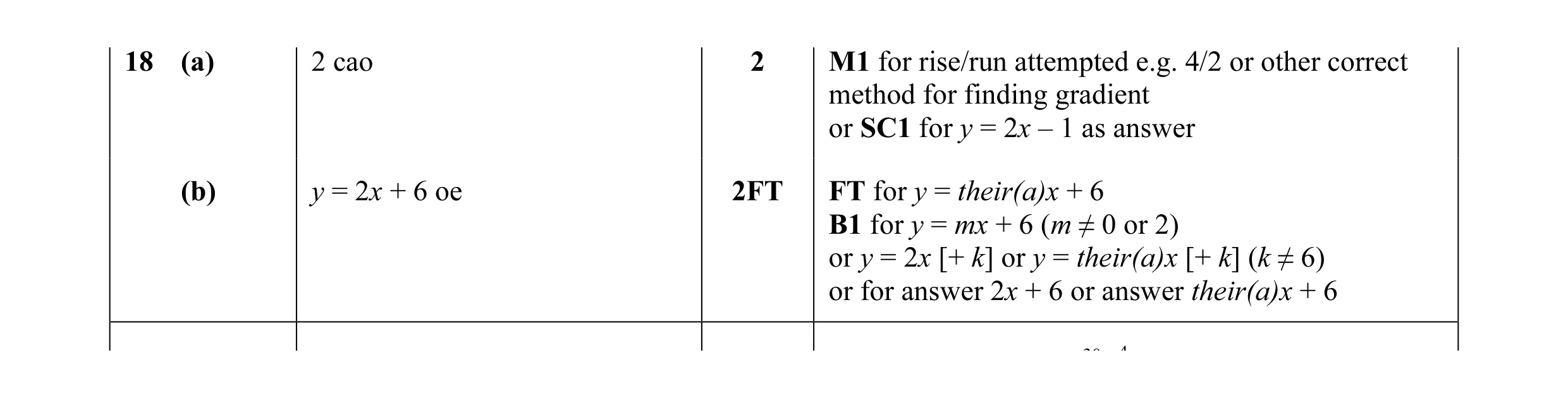 4
4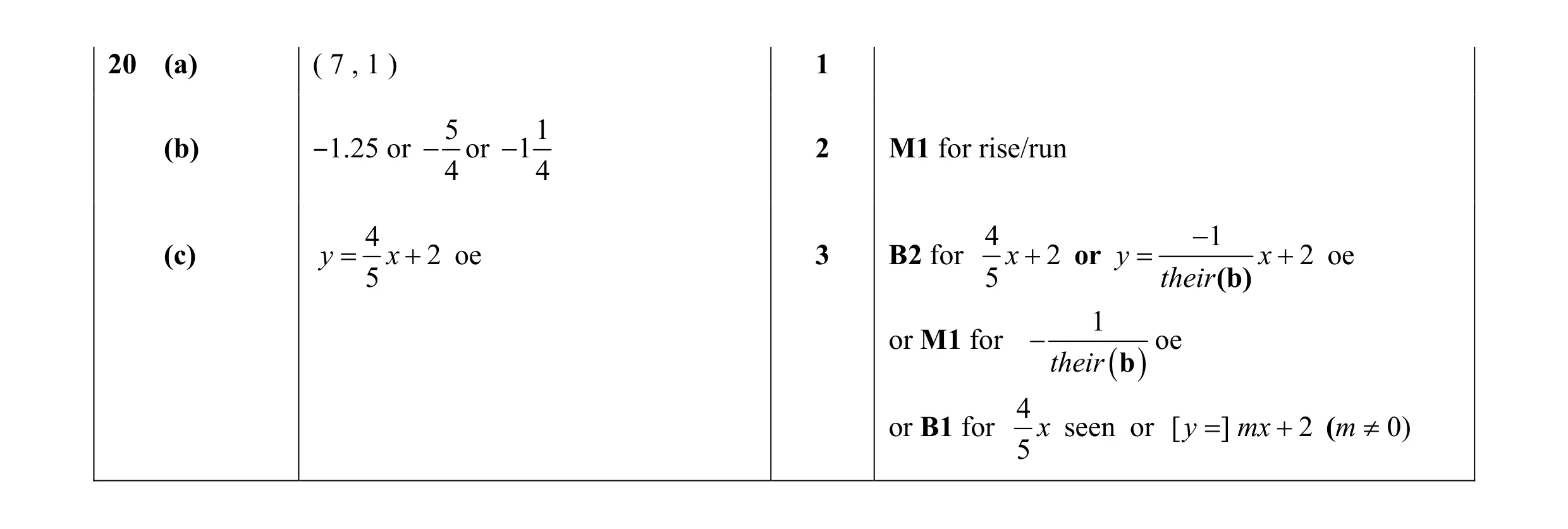 6
6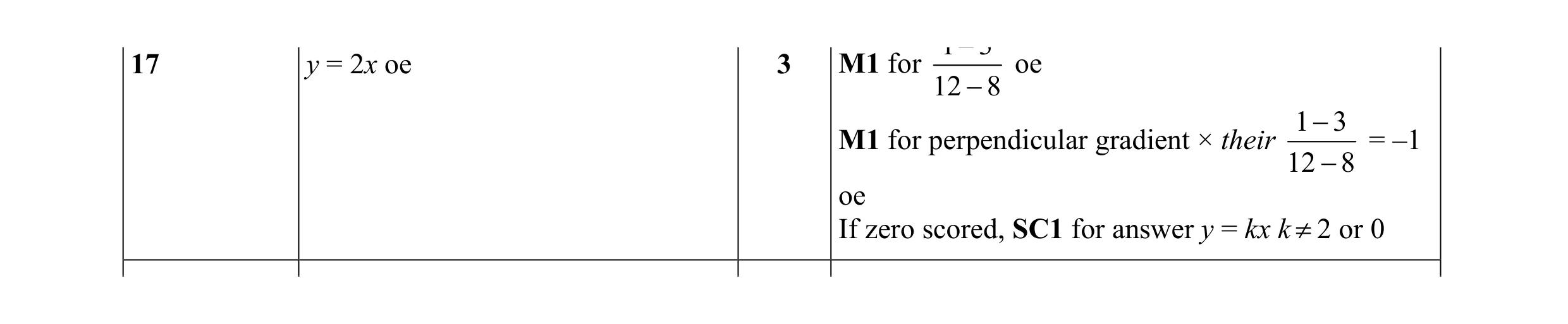 3
3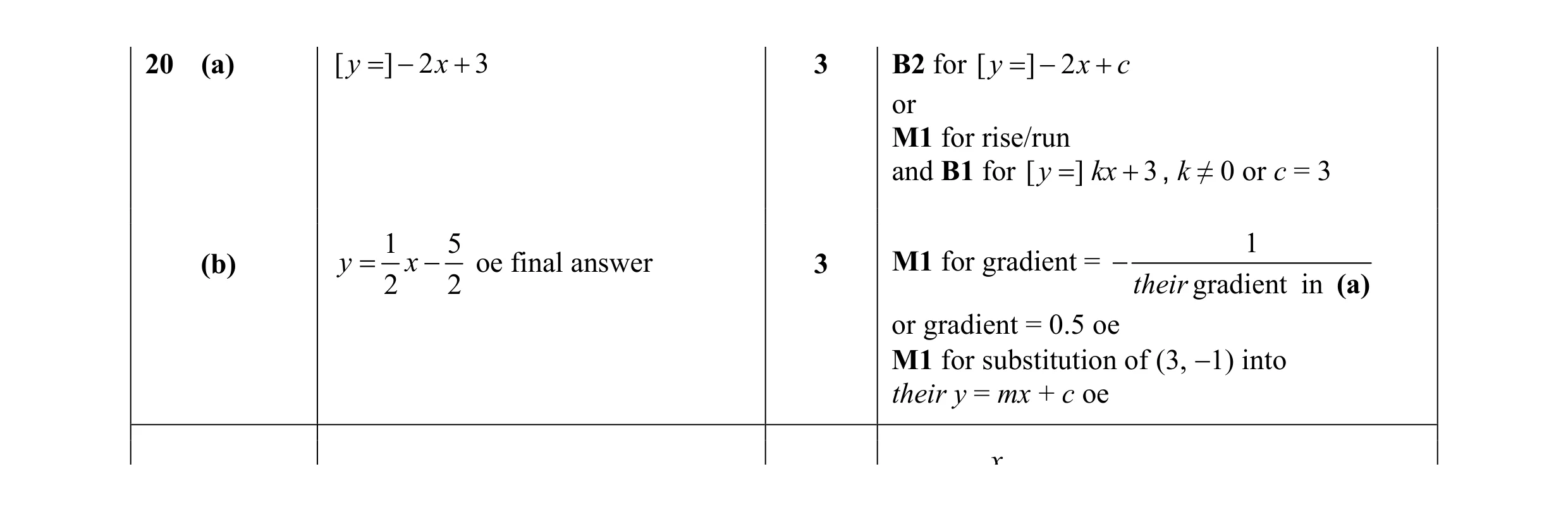 6
6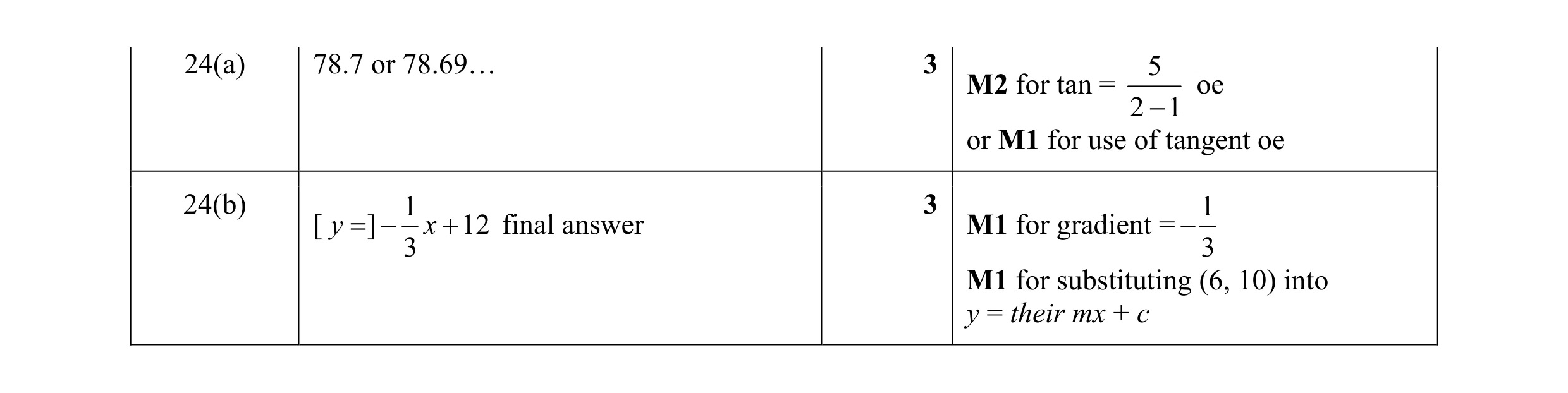 6
6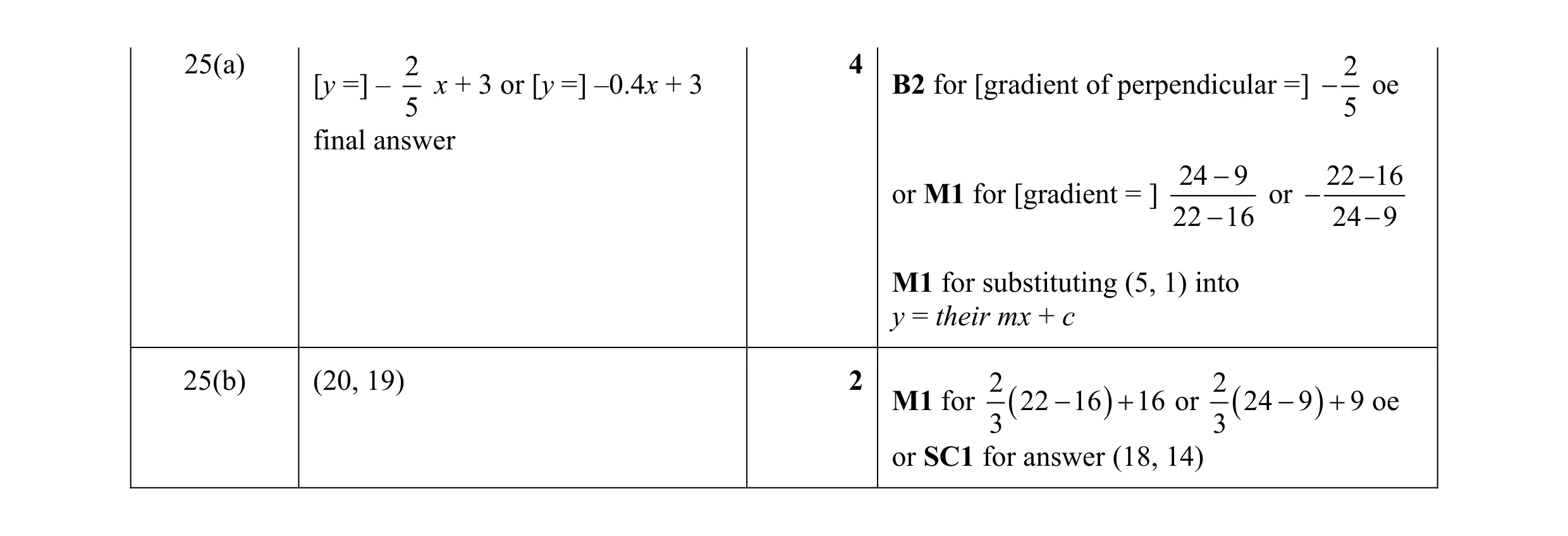 6
6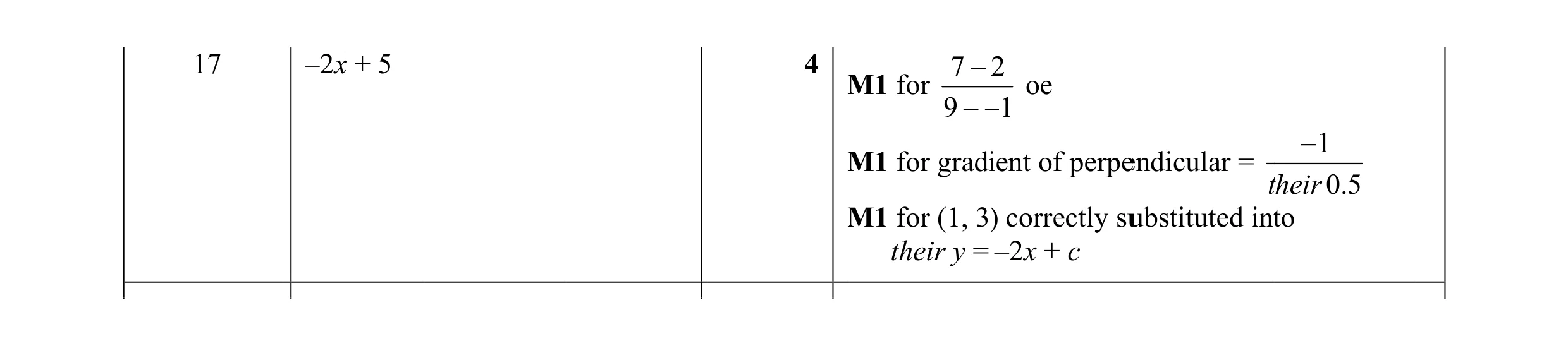 4
4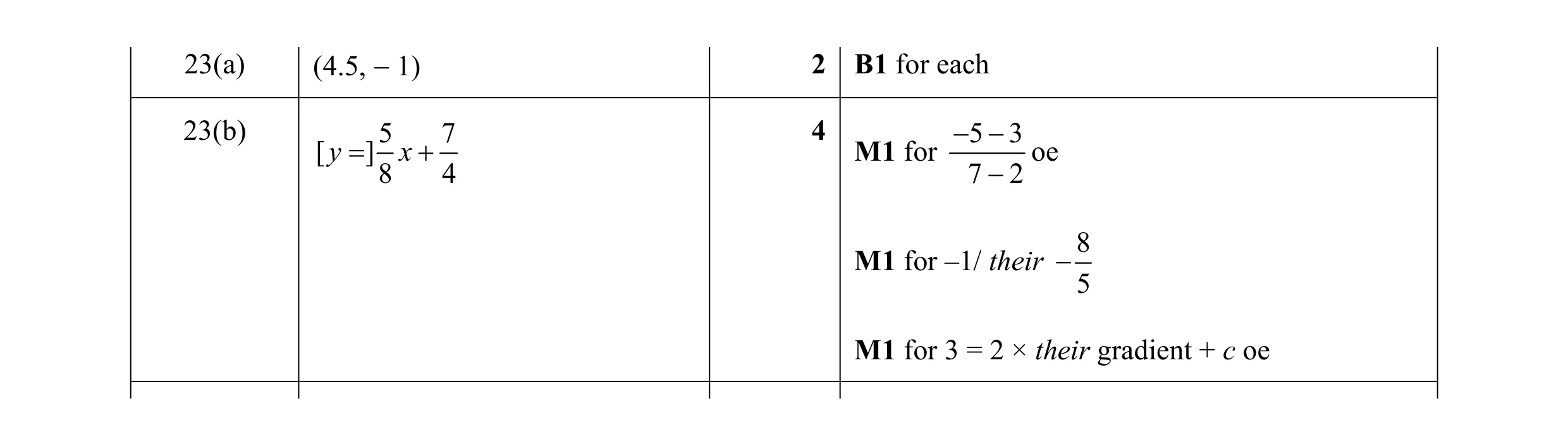 6
6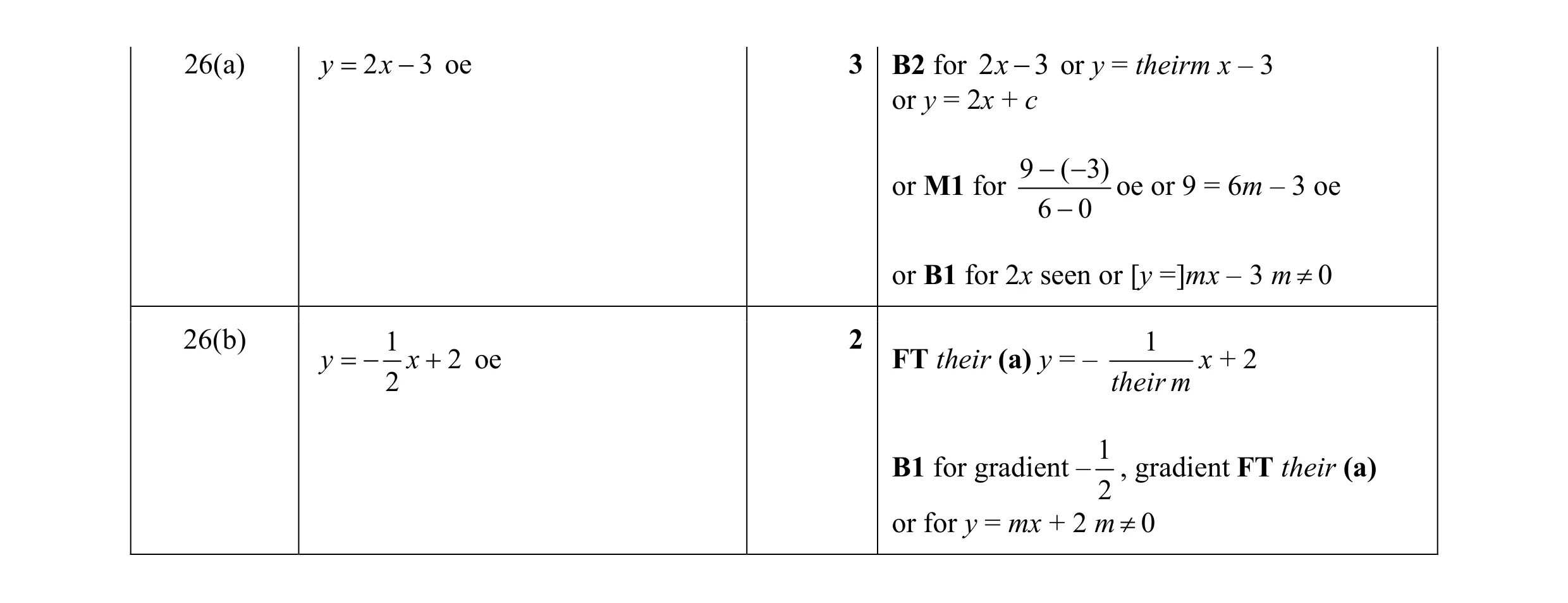 5
5 2
2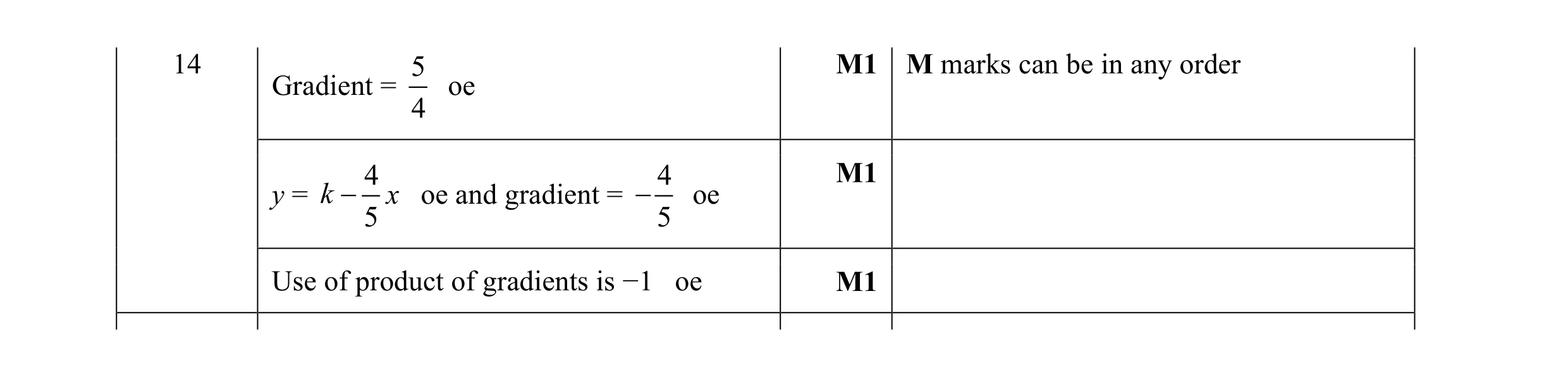 3
3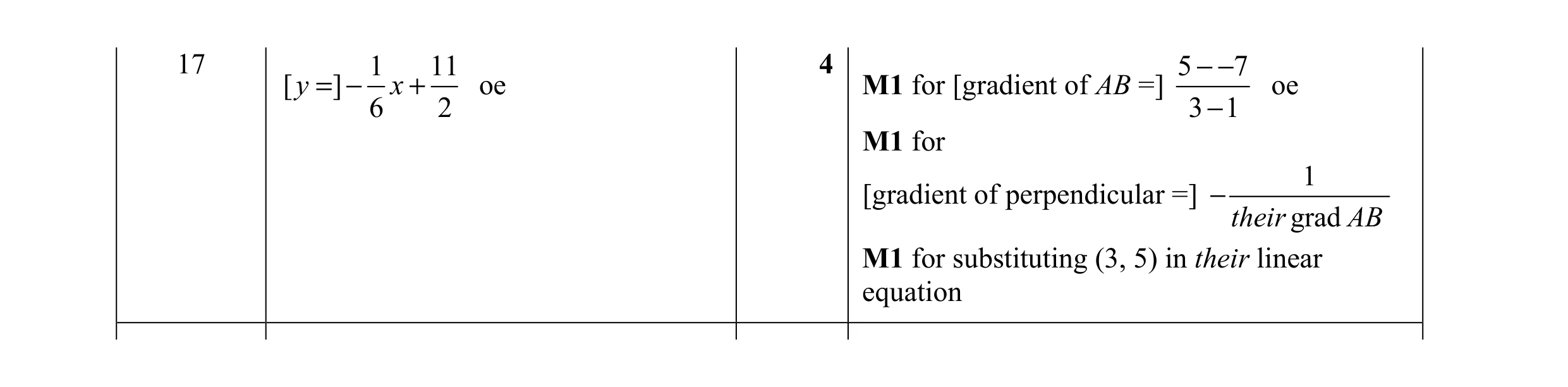 4
4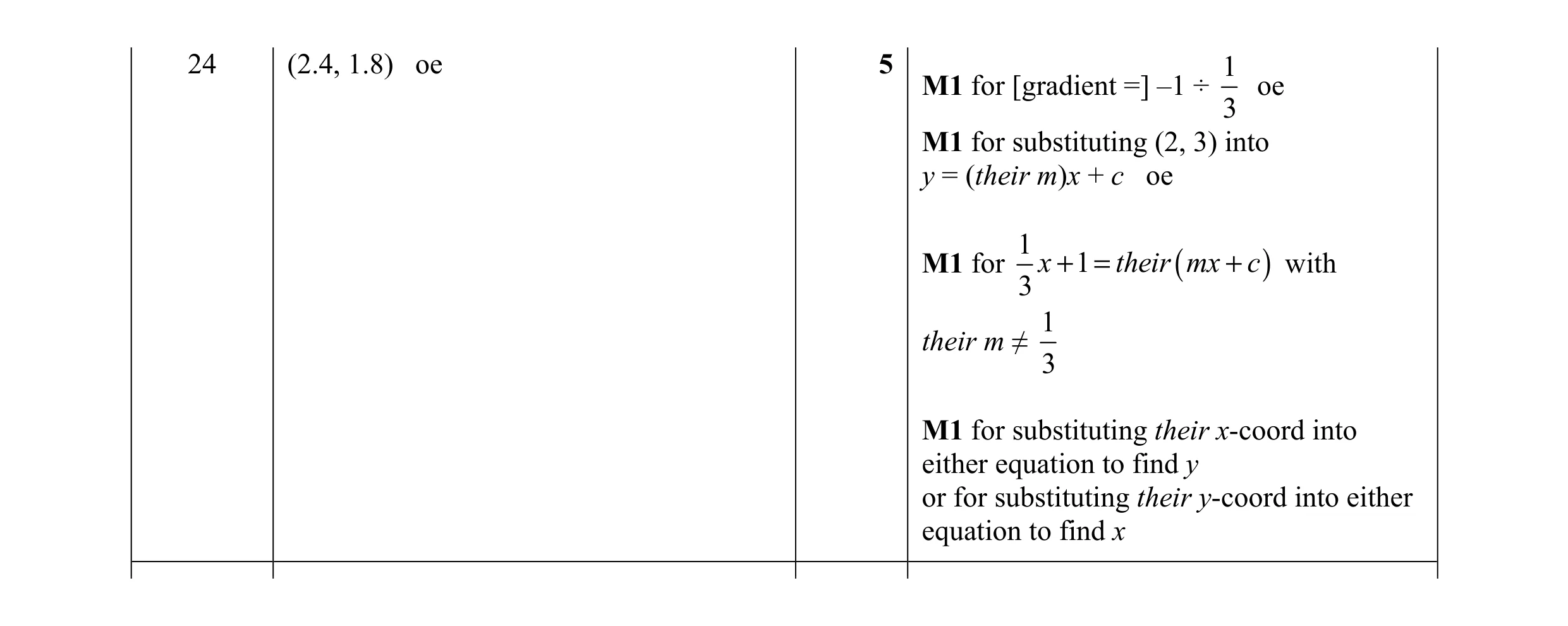 5
5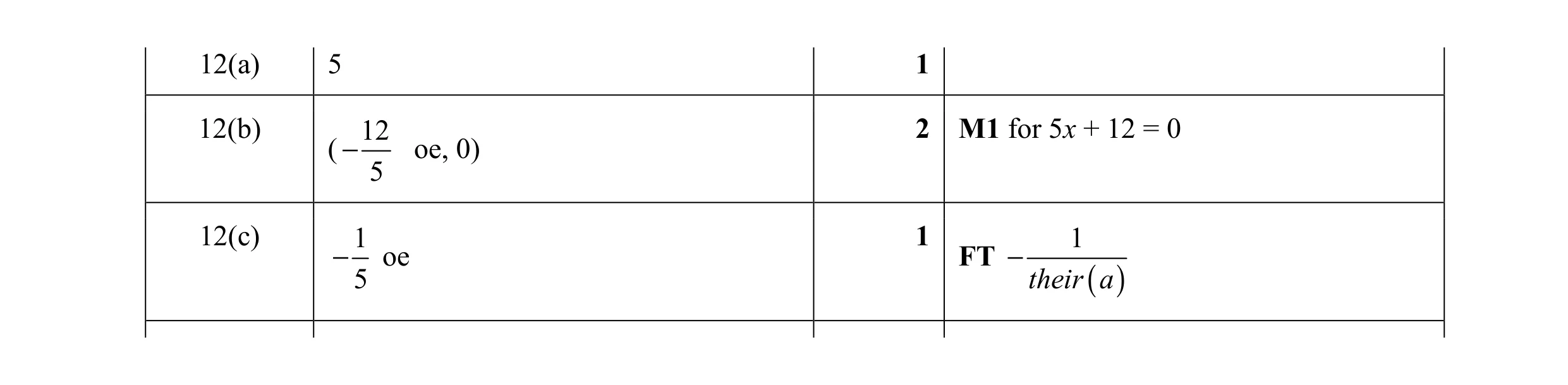 4
4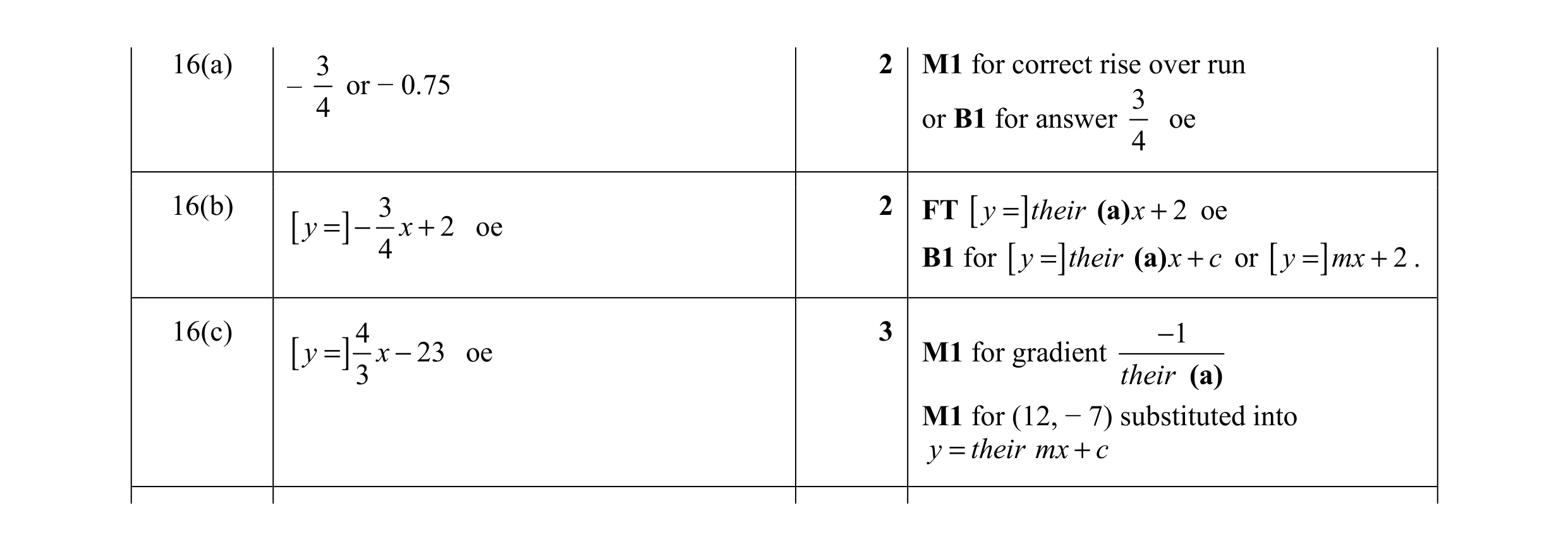 7
7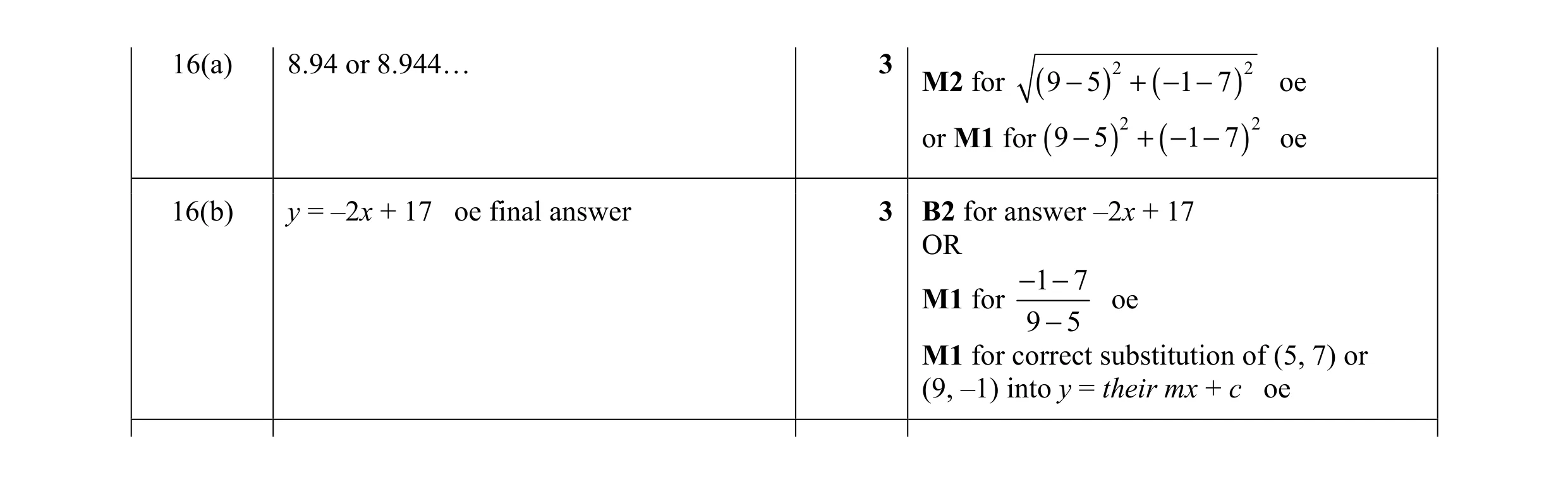 6
6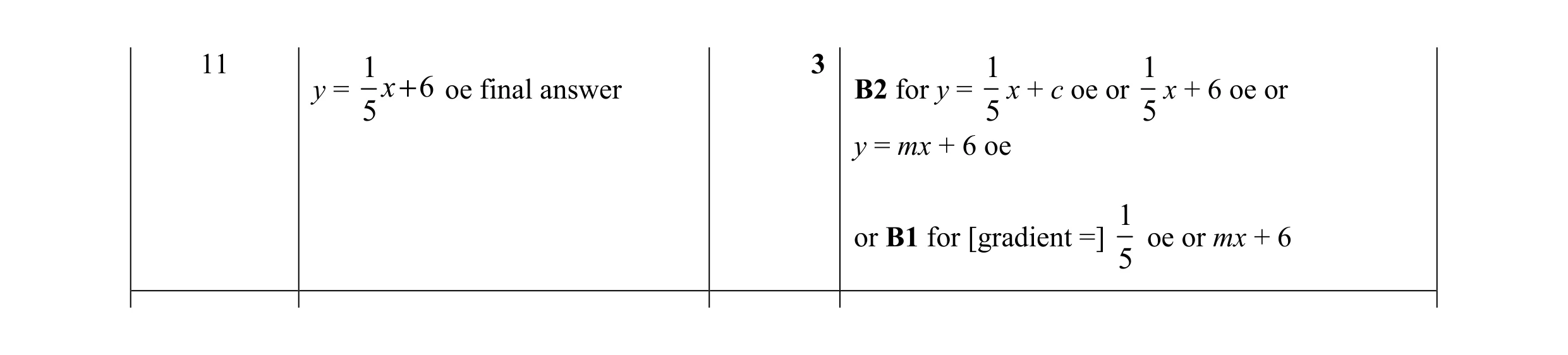 3
3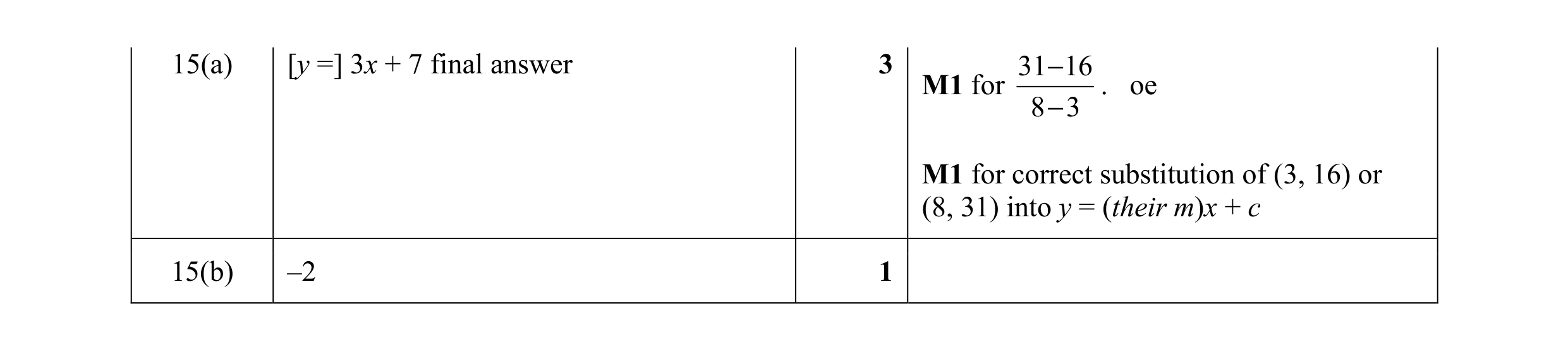 4
4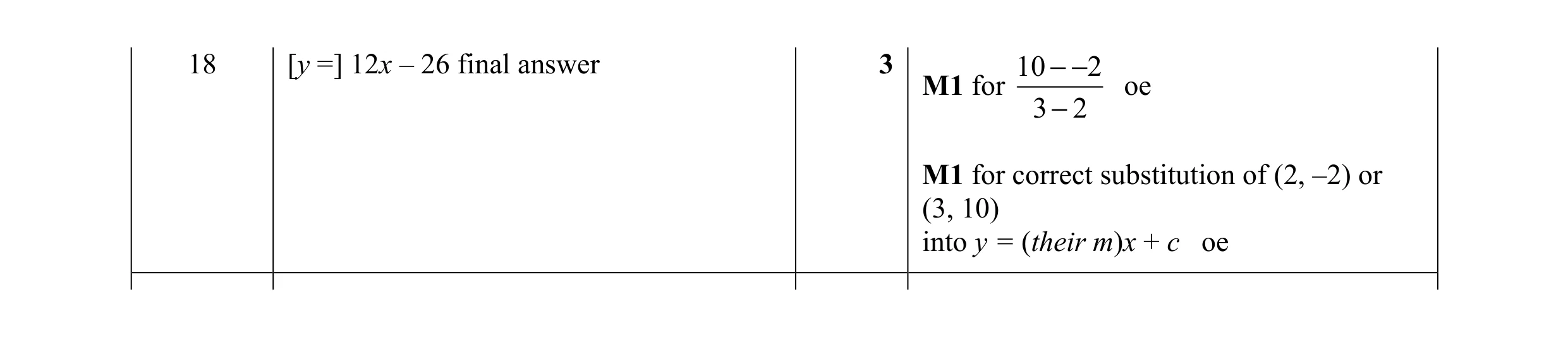 3
3 2
2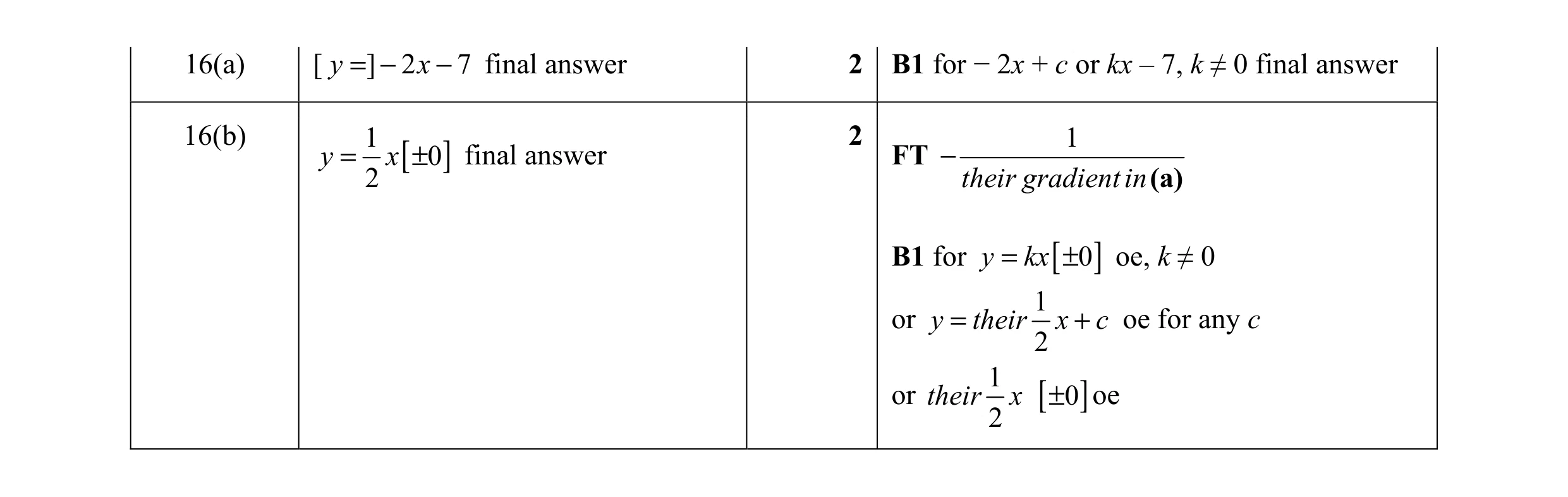 4
4 3
3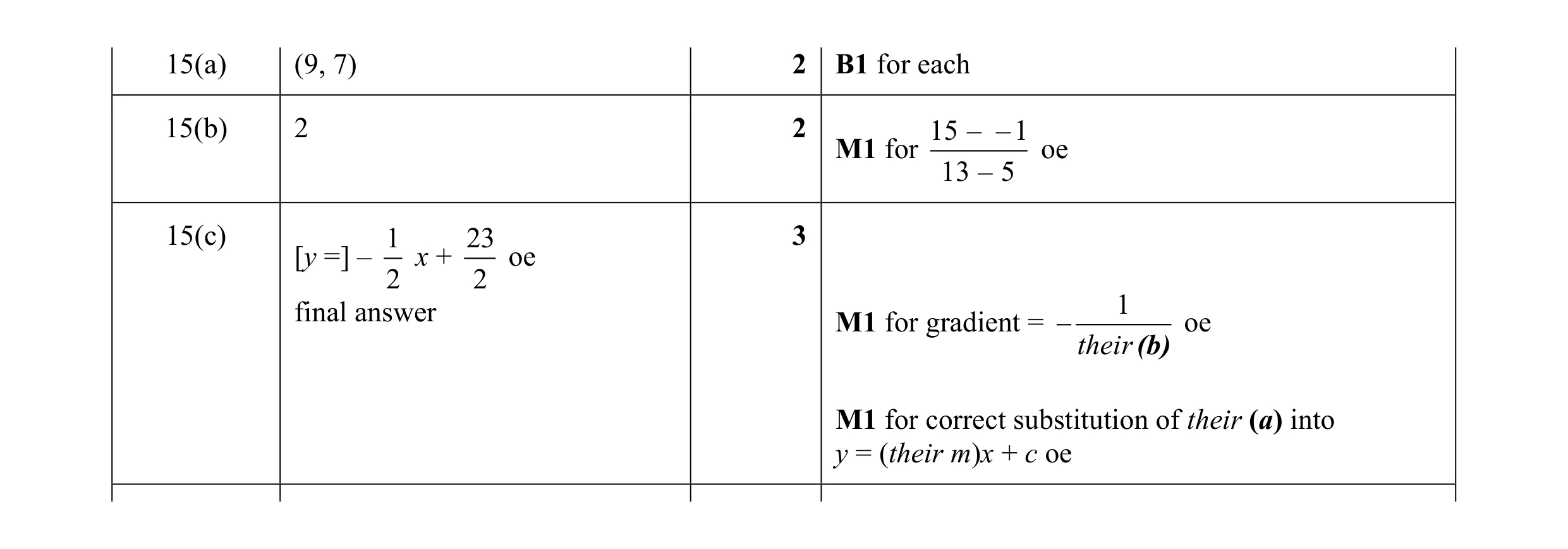 7
7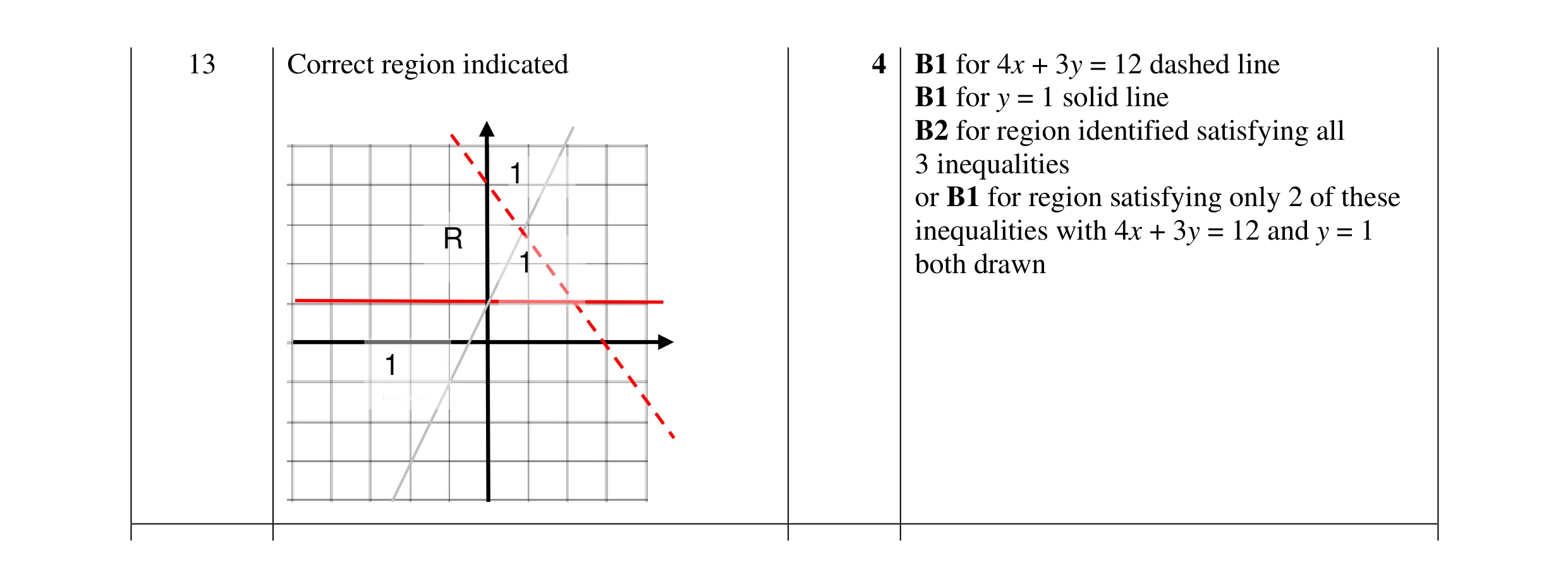 4
4 2
2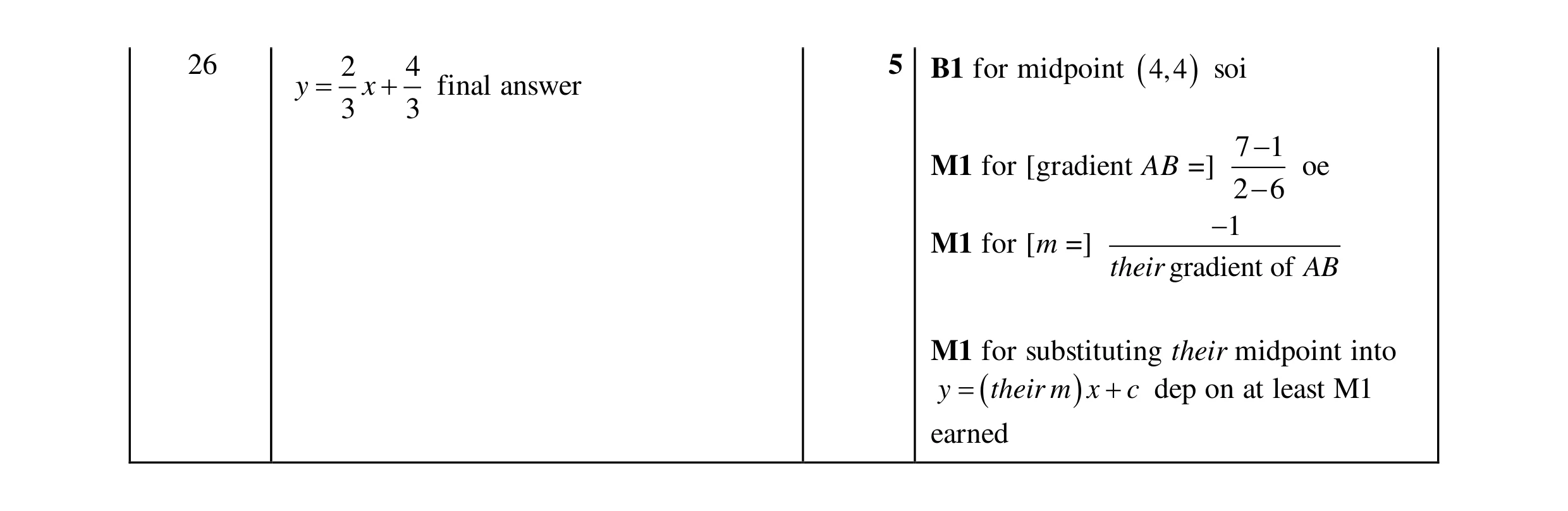 5
5 2
2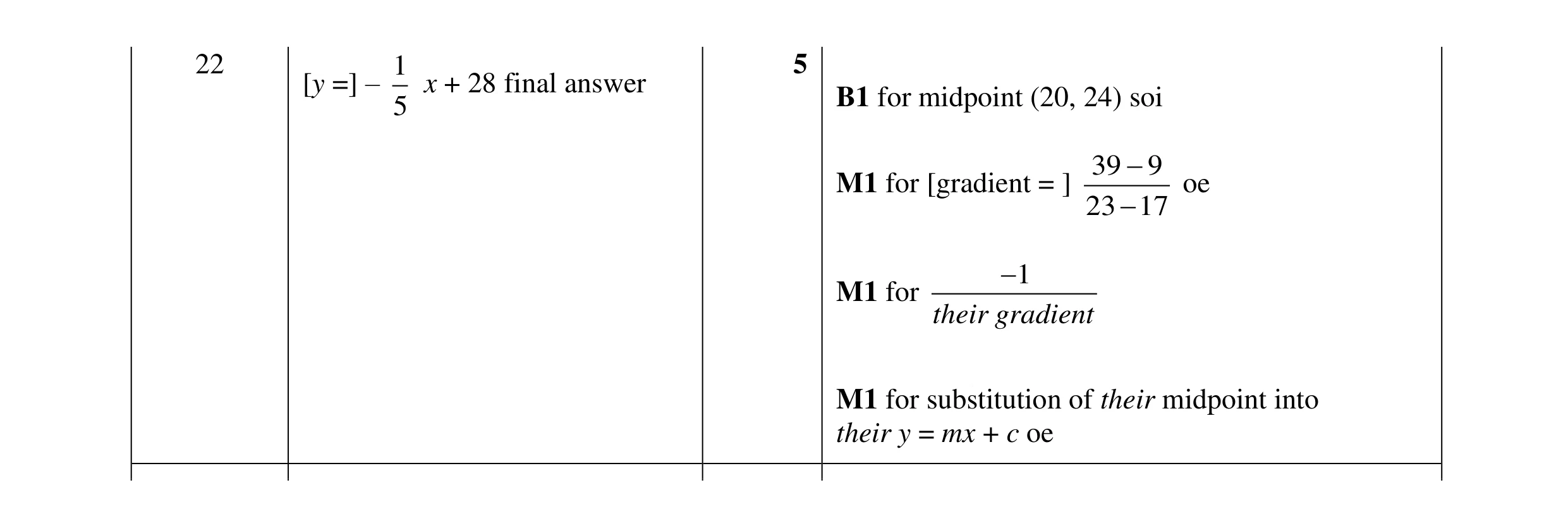 5
5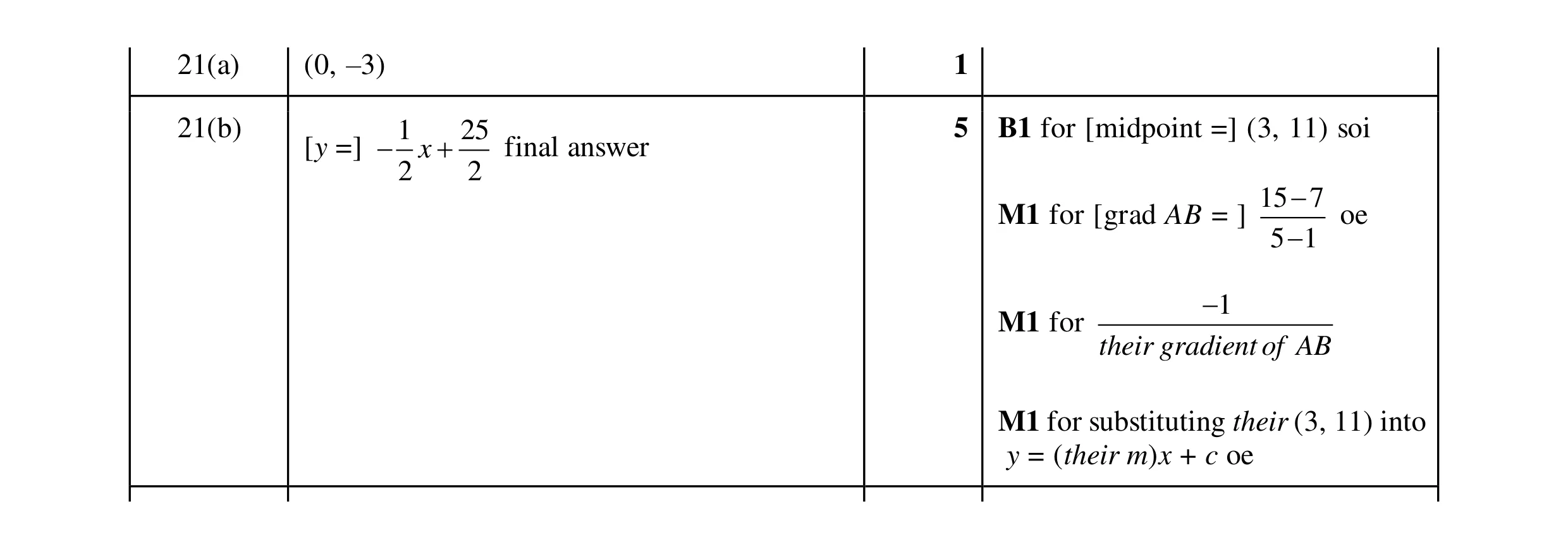 6
6 3
3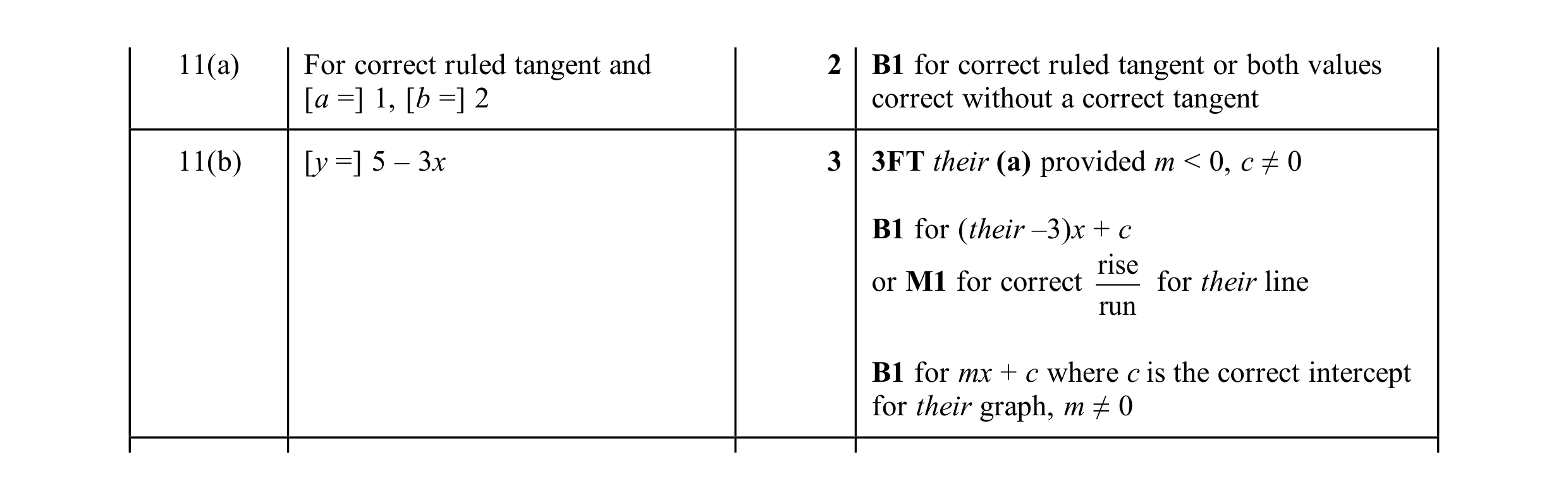 5
5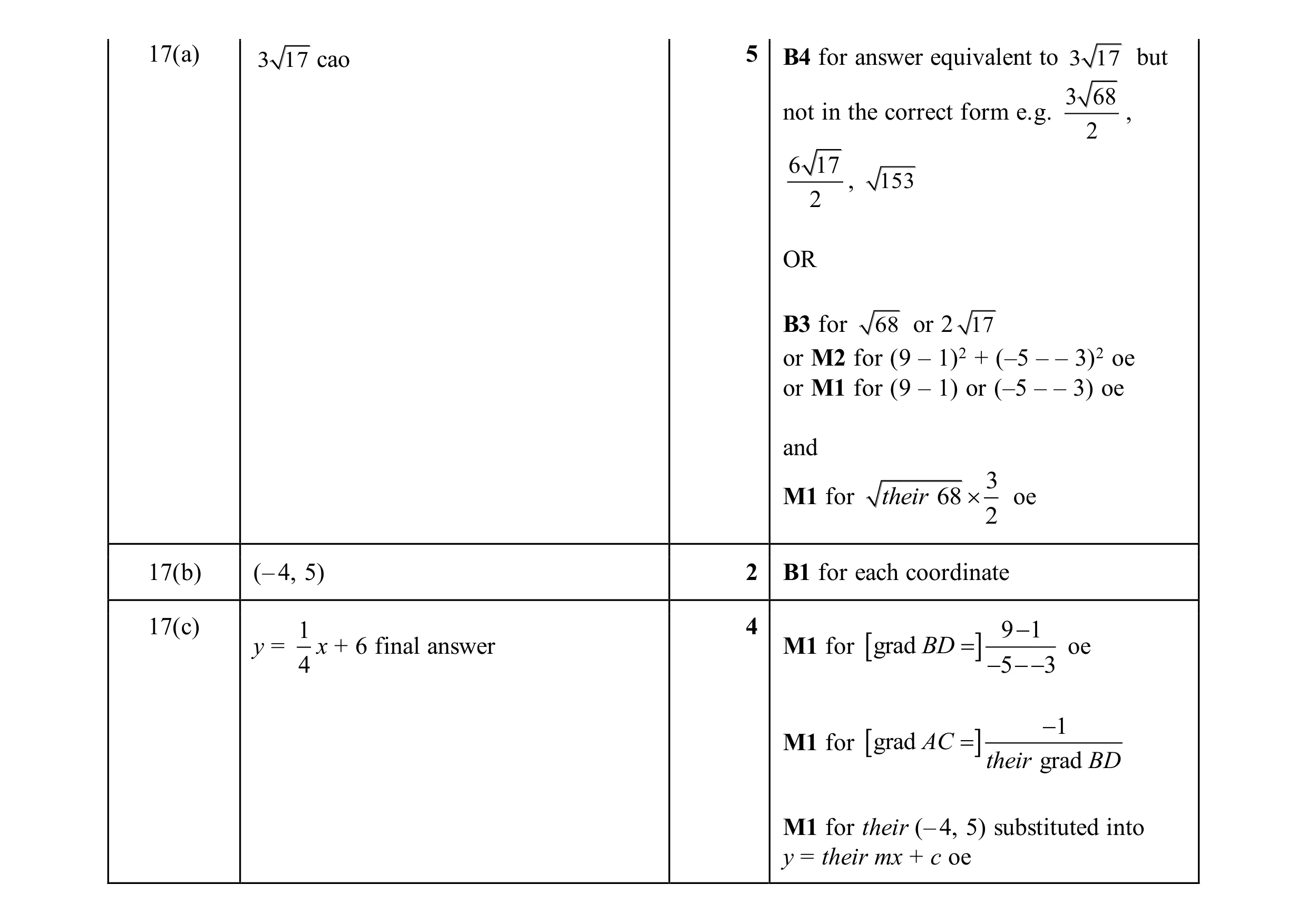 11
11 3
3