Questions as text
Q1 · Magnesium is an element in Group II of the Periodic Table 0654/31 May/June 2017
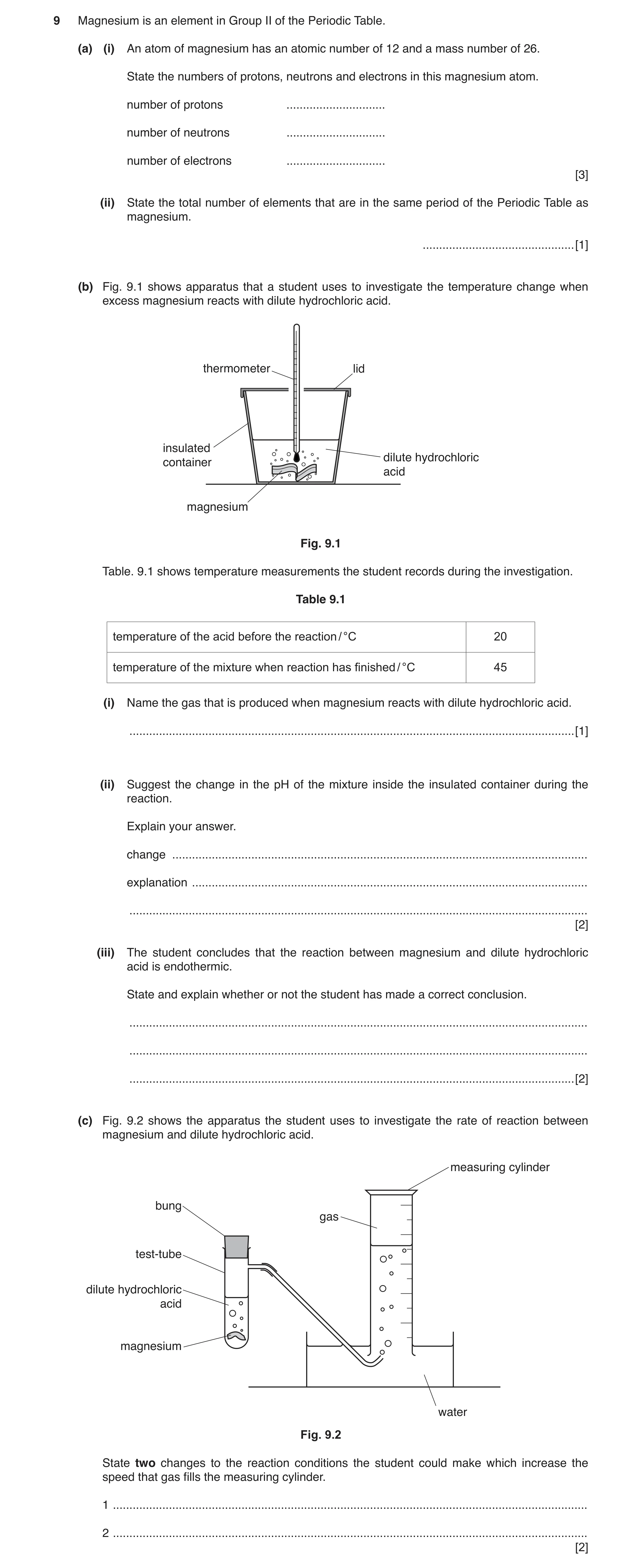
9 Magnesium is an element in Group II of the Periodic Table. (a) (i) An atom of magnesium has an atomic number of 12 and a mass number of 26. State the numbers of protons, neutrons and electrons in this magnesium atom. number of protons … number of neutrons … number of electrons … [3] (ii) State the total number of elements that are in the same period of the Periodic Table as magnesium. … [1] (b) Fig. 9.1 shows apparatus that a student uses to investigate the temperature change when excess magnesium reacts with dilute hydrochloric acid. thermometer lid insulated dilute hydrochloric container acid magnesium Fig. 9.1 Table. 9.1 shows temperature measurements the student records during the investigation. Table 9.1 temperature of the acid before the reaction / °C 20 temperature of the mixture when reaction has finished / °C 45 (i) Name the gas that is produced when magnesium reacts with dilute hydrochloric acid. … [1] (ii) Suggest the change in the pH of the mixture inside the insulated container during the reaction. Explain your answer. change … explanation … … [2] (iii) The student concludes that the reaction between magnesium and dilute hydrochloric acid is endothermic. State and explain whether or not the student has made a correct conclusion. … … … [2] (c) Fig. 9.2 shows the apparatus the student uses to investigate the rate of reaction between magnesium and dilute hydrochloric acid. measuring cylinder bung gas test-tube dilute hydrochloric acid magnesium water Fig. 9.2 State two changes to the reaction conditions the student could make which increase the speed that gas fills the measuring cylinder. 1 … 2 … [2]
11 marks
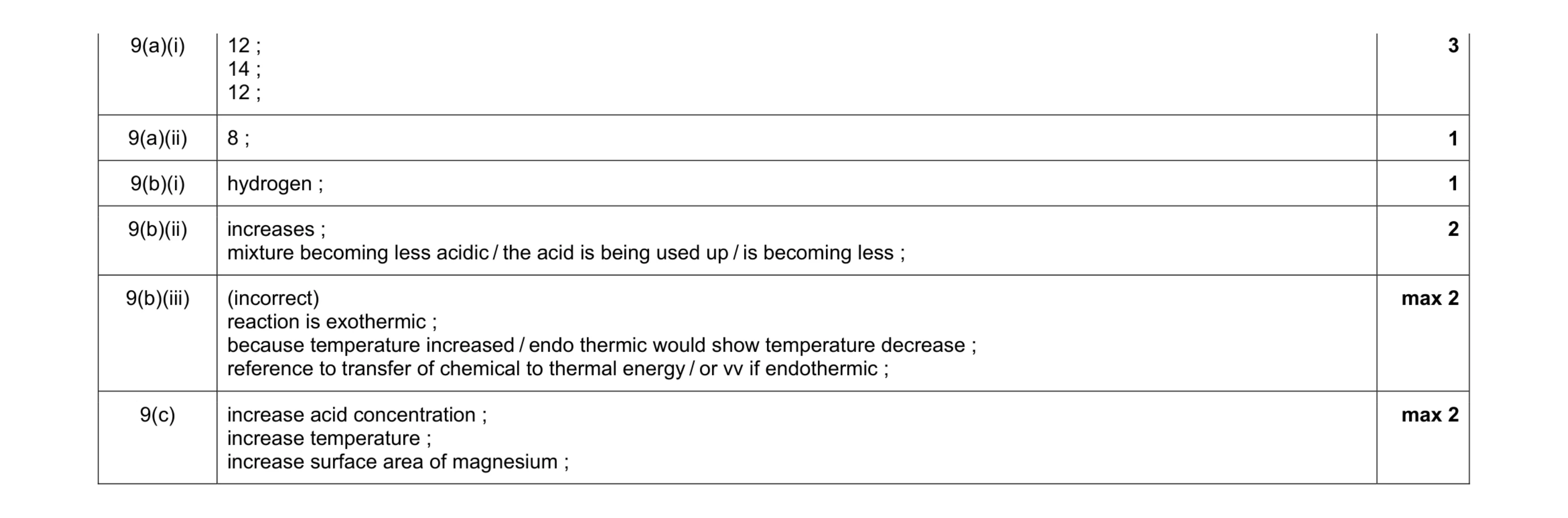
Mark scheme: 9(a)(i) 12 ; 14 ; 12 ; 3 9(a)(ii) 8 ; 1 9(b)(i) hydrogen ; 1 9(b)(ii) increases ; mixture becoming less acidic / the acid is being used up / is becoming less ; 2 9(b)(iii) (incorrect) reaction is exothermic ; because temperature increased / endo thermic would show temperature decrease ; reference to transfer of chemical to thermal energy / or vv if endothermic ; max 2 9(c) increase acid concentration ; increase temperature ; increase surface area of magnesium ; max 2
This question in 0654/31 May/June 2017
Q2 · Human activities and natural events cause air pollution 0654/33 May/June 2017
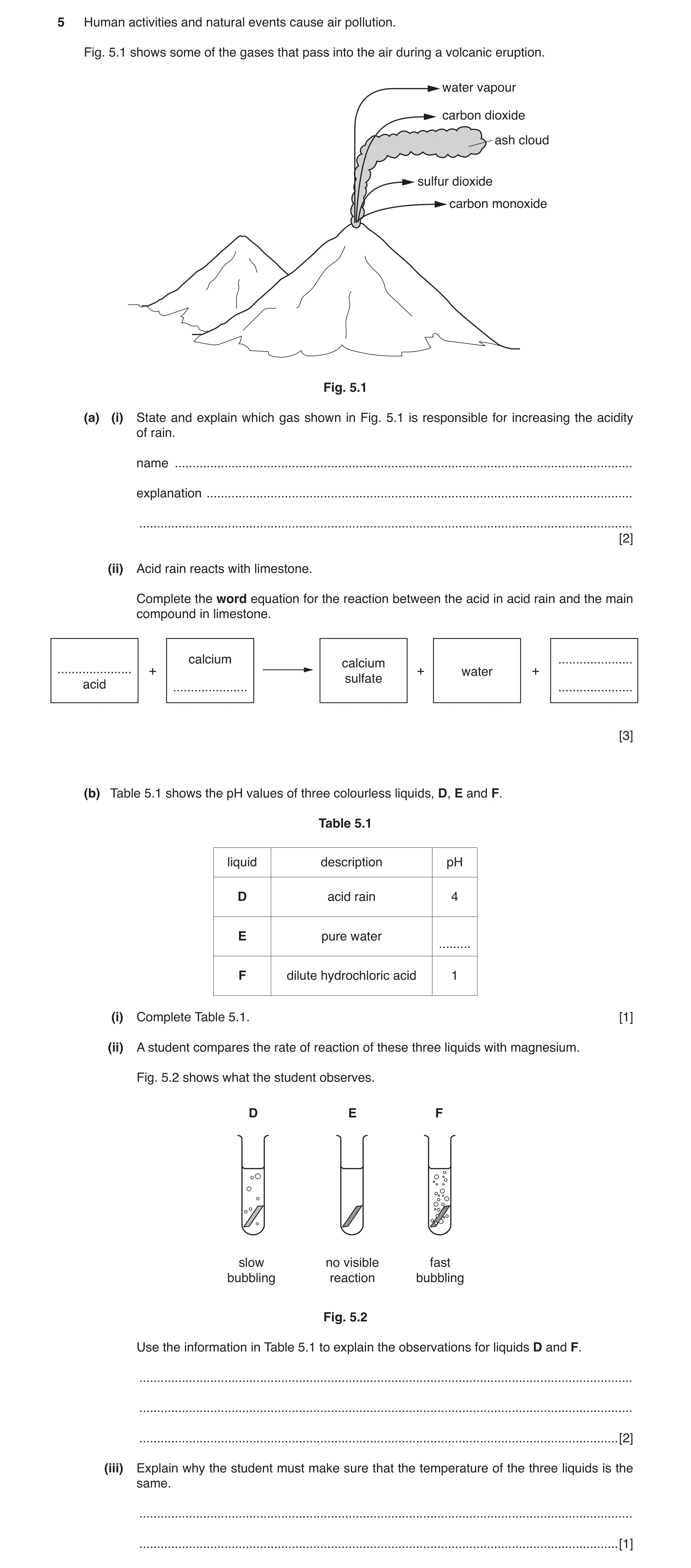
5 Human activities and natural events cause air pollution. Fig. 5.1 shows some of the gases that pass into the air during a volcanic eruption. water vapour carbon dioxide ash cloud sulfur dioxide carbon monoxide Fig. 5.1 (a) (i) State and explain which gas shown in Fig. 5.1 is responsible for increasing the acidity of rain. name … explanation … … [2] (ii) Acid rain reacts with limestone. Complete the word equation for the reaction between the acid in acid rain and the main compound in limestone. calcium … calcium … + + water + sulfate acid … … [3] (b) Table 5.1 shows the pH values of three colourless liquids, D, E and F. Table 5.1 liquid description pH D acid rain 4 E pure water … F dilute hydrochloric acid 1 (i) Complete Table 5.1. [1] (ii) A student compares the rate of reaction of these three liquids with magnesium. Fig. 5.2 shows what the student observes. D E F slow no visible fast bubbling reaction bubbling Fig. 5.2 Use the information in Table 5.1 to explain the observations for liquids D and F. … … … [2] (iii) Explain why the student must make sure that the temperature of the three liquids is the same. … … [1]
9 marks
Mark scheme: 5(a)(i) sulfur dioxide ; sulfur dioxide dissolves in / reacts with (rain) water / sulfur dioxide is a non-metal oxide ; 2 5(a)(ii) sulfuric (acid) ; (calcium) carbonate ; carbon dioxide ; 3 5(b)(i) 7 ; 1 5(b)(ii) liquid F is the most acidic ; so highest rate of reaction with magnesium / the more concentrated the acid the higher the rate that gas is produced ; 2 5(b)(iii) temperature also affects rate / reference to fair testing ; 1
This question in 0654/33 May/June 2017
Q3 · State the percentage of nitrogen in the air 0654/31 Oct/Nov 2017
5 (a) (i) State the percentage of nitrogen in the air. … % [1] (ii) Nitrogen and oxygen together make up most of the air. Name one other uncombined gaseous element in unpolluted air. … [1] (b) A student investigates the rusting of iron. Table 5.1 shows his experiments and the results. Table 5.1 test-tube experiment result air and water vapour A rust appears iron nail water dry air B no rust iron nail nitrogen gas and water vapour C no rust iron nail water (i) Explain why the iron nails in test-tube B and test-tube C do not rust. test-tube B … test-tube C … [2] (ii) Predict and explain if there is a change in the mass of test-tube A and its contents during the experiment. prediction … explanation … … [1] (c) Nitrogen is used to make ammonia, NH3. Ammonia gas dissolves in water to make an alkaline solution. (i) Describe a test to show that a solution of ammonia is alkaline. test … result … [2] (ii) Suggest the name of the acid that reacts with ammonia to form ammonium nitrate, NH4NO3. … [1] (iii) Explain why farmers add fertiliser containing ammonium nitrate to soil. … … … … [2]
10 marks
Mark scheme: 5(a)(i) 78 ; 1 5(a)(ii) argon / other noble gas ; 1 5(b)(i) B absence of water (vapour) / no water ; C absence of oxygen / no oxygen ; 2 5(b)(ii) no change in mass AND idea that nothing enters or leaves the test-tube ; 1 5(c)(i) use of named indicator e.g.(red) litmus ; correct result e.g. (litmus) turns blue ; 2 5(c)(ii) nitric acid ; 1 Question Answer Marks 5(c)(iii) idea of improving crop yield ; soil does not contain enough nutrients / nitrogen (compounds) or to replace nitrogen compounds ; reference to use of nitrogen in plants to produce amino acids / proteins / DNA ; max 2
This question in 0654/31 Oct/Nov 2017
Q4 · Water is a neutral liquid 0654/32 Oct/Nov 2017
8 Water is a neutral liquid. (a) (i) State the pH of pure water. … [1] (ii) Complete the general equation for neutralisation of an acid by an alkali. acid + alkali + [2] (iii) Explain the use of lime (calcium oxide) in the treatment of soil. … … … [2] (b) Sulfur dioxide, SO2, is a gas that is released into the air by human activity as well as natural processes. (i) Describe how sulfur dioxide is released into the air by human activity, … … a natural process. … … [2] (ii) State one way that sulfur dioxide in the atmosphere damages the environment. … … [1]
8 marks
Mark scheme: 8(a)(i) 7 ; 1 8(a)(ii) salt ; water ; 2 8(a)(iii) soil too acidic / calcium oxide is a base ; calcium oxide neutralises / reacts with the acid in the soil ; improves conditions for plant growth ; max 2 8(b)(i) burning fossil fuels (that still contain sulfur) ; reference to volcanism / hot springs ; 2 8(b)(ii) reference to the formation of acid rain / example of a consequence of acid rain ; 1
This question in 0654/32 Oct/Nov 2017
Q5 · PH meters being used to measure the pH of dilute sodium hydroxide solution and dilute… 0654/33 Oct/Nov 2017
8 (a) Fig. 8.1 shows pH meters being used to measure the pH of dilute sodium hydroxide solution and dilute sulfuric acid. pH meter screens pH pH … … dilute sodium dilute sulfuric hydroxide solution acid Fig. 8.1 (i) Write suitable values of pH on the pH meter screens in Fig. 8.1 for dilute sodium hydroxide solution and dilute sulfuric acid. [1] (ii) Complete the word equation for the reaction between dilute sodium hydroxide solution and dilute sulfuric acid. sodium sulfuric + + hydroxide acid [2] (iii) Many colourless liquids, including water, have a pH of 7. Describe a chemical test for water. test … … result … [2] (b) Lime is produced from calcium carbonate in an industrial process. (i) State the chemical name for lime. … [1] (ii) Name the other substance formed in this process. … [1] (iii) In this process, heat is used to change a substance into simpler ones. Name this type of chemical reaction. … [1] (iv) State and explain a use of lime. … … … [2]
10 marks
Mark scheme: 8(a)(i) NaOH 8 to 14 AND H2SO4 6 to 1 ; 1 8(a)(ii) sodium sulfate ; water ; 2 8(a)(iii) cobalt chloride paper ; (blue) to pink ; or anhydrous / white copper(II) sulfate ; turns blue ; 2 8(b)(i) calcium oxide ; 1 8(b)(ii) carbon dioxide ; 1 8(b)(iii) thermal decomposition ; 1 8(b)(iv) add to soil / lakes ; neutralise excess acidity ; make soil more suitable for certain types of crop ; max 2
This question in 0654/33 Oct/Nov 2017
Q6 · Calcium carbonate, CaCO3, is the main compound in limestone 0654/31 Oct/Nov 2018
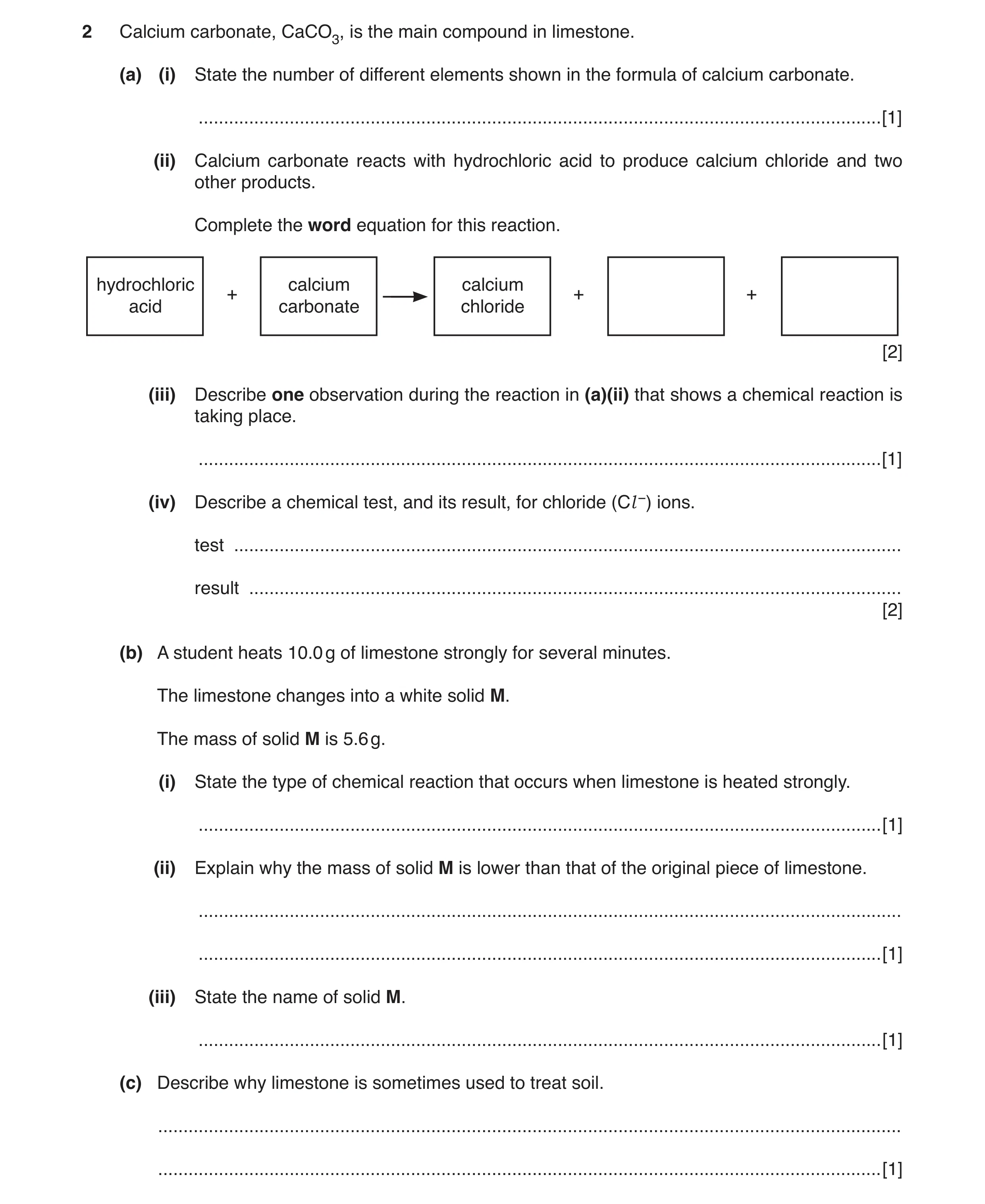
2 Calcium carbonate, CaCO3, is the main compound in limestone. (a) (i) State the number of different elements shown in the formula of calcium carbonate. … [1] (ii) Calcium carbonate reacts with hydrochloric acid to produce calcium chloride and two other products. Complete the word equation for this reaction. hydrochloric calcium calcium + + + acid carbonate chloride [2] (iii) Describe one observation during the reaction in (a)(ii) that shows a chemical reaction is taking place. … [1] (iv) Describe a chemical test, and its result, for chloride (Cl −) ions. test … result … [2] (b) A student heats 10.0 g of limestone strongly for several minutes. The limestone changes into a white solid M. The mass of solid M is 5.6 g. (i) State the type of chemical reaction that occurs when limestone is heated strongly. … [1] (ii) Explain why the mass of solid M is lower than that of the original piece of limestone. … … [1] (iii) State the name of solid M. … [1] (c) Describe why limestone is sometimes used to treat soil. … … [1]
10 marks
Mark scheme: 2(a)(i) 3 ; 1 2(a)(ii) carbon dioxide ; water ; 2 2(a)(iii) effervescence ; temperature increase ; AVP max 1 2(a)(iv) (dilute nitric acid, then) silver nitrate ; white ppt. ; 2 2(b)(i) (thermal) decomposition ; 1 2(b)(ii) gas / carbon dioxide released / given off ; 1 2(b)(iii) calcium oxide / quicklime / lime ; 1 2(c) reference to the reduction of acidity ; 1
This question in 0654/31 Oct/Nov 2018
Q7 · Limestone is a useful material obtained from the Earth’s crust 0654/32 Oct/Nov 2018
8 (a) Limestone is a useful material obtained from the Earth’s crust. The main compound in limestone is calcium carbonate, CaCO3. (i) State two uses of limestone. 1 … 2 … [2] (ii) Calcium carbonate contains positive calcium ions and not calcium atoms. Describe, in terms of the number of protons and of electrons, the difference between an atom and a positive ion. … … … [2] (b) Fig. 8.1 shows apparatus a student uses to investigate the rate of reaction between calcium carbonate and dilute hydrochloric acid. carbon dioxide measuring cylinder gas bowl dilute hydrochloric acid calcium water carbonate Fig. 8.1 The student adds a single piece of calcium carbonate to dilute hydrochloric acid. A salt solution and carbon dioxide are produced. (i) Name the salt that is produced. … [1] (ii) Some of the carbon dioxide dissolves into the water in the bowl, and the pH changes. Predict whether the pH increases or decreases. Explain your answer. pH change … explanation … … … [2] (iii) The student repeats the investigation using the same mass of calcium carbonate and the same volume of dilute hydrochloric acid. Suggest two changes to the reaction conditions that would cause the rate of this reaction to increase. 1 … 2 … [2]
9 marks
Mark scheme: 8(a)(i) making, lime / calcium oxide; neutralisation of, acidic industrial waste / acidic soil; used in blast furnace / for iron extraction; AVP; max 2 8(a)(ii) in atom number of protons = number of electrons; in calcium ion there are fewer electrons than protons; 2 8(b)(i) calcium chloride; 1 8(b)(ii) (pH decreases) the gas / CO2 reacts with the water; turning it acidic; reference to non-metal oxide; max 2 8(b)(iii) increase acid concentration; increase (acid) temperature; use powdered calcium carbonate / increase surface area of calcium carbonate max 2
This question in 0654/32 Oct/Nov 2018
Q8 · The substances calcium, calcium carbonate and calcium oxide react separately with dilute… 0654/32 May/June 2019
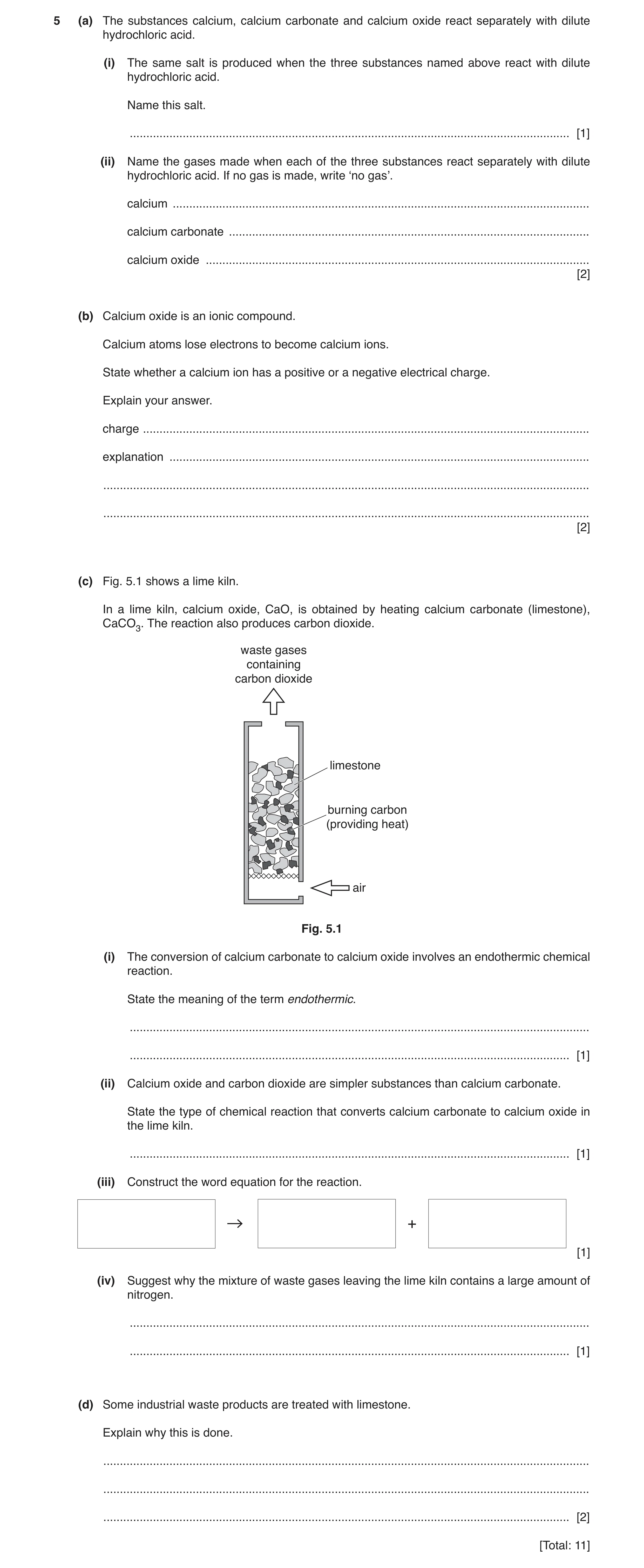
5 (a) The substances calcium, calcium carbonate and calcium oxide react separately with dilute hydrochloric acid. (i) The same salt is produced when the three substances named above react with dilute hydrochloric acid. Name this salt. … [1] (ii) Name the gases made when each of the three substances react separately with dilute hydrochloric acid. If no gas is made, write ‘no gas’. calcium … calcium carbonate … calcium oxide … [2] (b) Calcium oxide is an ionic compound. Calcium atoms lose electrons to become calcium ions. State whether a calcium ion has a positive or a negative electrical charge. Explain your answer. charge … explanation … … … [2] (c) Fig. 5.1 shows a lime kiln. In a lime kiln, calcium oxide, CaO, is obtained by heating calcium carbonate (limestone), CaCO3. The reaction also produces carbon dioxide. waste gases containing carbon dioxide limestone burning carbon (providing heat) air Fig. 5.1 (i) The conversion of calcium carbonate to calcium oxide involves an endothermic chemical reaction. State the meaning of the term endothermic. … … [1] (ii) Calcium oxide and carbon dioxide are simpler substances than calcium carbonate. State the type of chemical reaction that converts calcium carbonate to calcium oxide in the lime kiln. … [1] (iii) Construct the word equation for the reaction. + [1] (iv) Suggest why the mixture of waste gases leaving the lime kiln contains a large amount of nitrogen. … … [1] (d) Some industrial waste products are treated with limestone. Explain why this is done. … … … [2] [Total: 11]
11 marks
Mark scheme: 5(a)(i) calcium chloride ; 1 5(a)(ii) hydrogen carbon dioxide no gas 1 or 2 correct ; all 3 correct ; 2 5(b) (positive / + ) electrons are negative ; more positive charges than negative charges/fewer electrons than protons ; 2 5(c)(i) thermal / heat energy taken in by reacting substances / a reaction ; 1 5(c)(ii) thermal decomposition ; 1 5(c)(iii) calcium carbonate → calcium oxide + carbon dioxide ; 1 5(c)(iv) reference to nitrogen entering kiln in air / idea that nitrogen passes through unchanged ; 1 5(d) waste is acidic ; waste is neutralised ; 2
This question in 0654/32 May/June 2019
Q9 · The substances calcium, calcium carbonate and calcium oxide react separately with dilute… 0654/33 May/June 2019
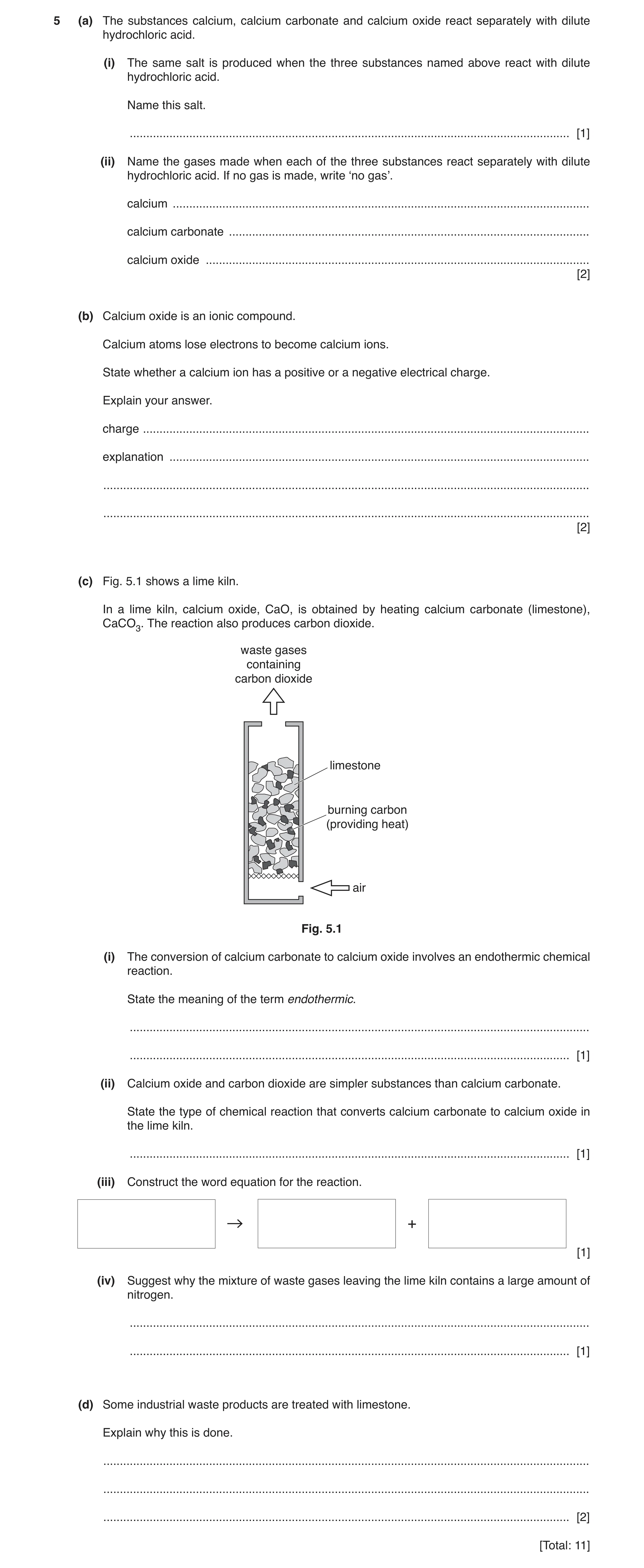
5 (a) The substances calcium, calcium carbonate and calcium oxide react separately with dilute hydrochloric acid. (i) The same salt is produced when the three substances named above react with dilute hydrochloric acid. Name this salt. … [1] (ii) Name the gases made when each of the three substances react separately with dilute hydrochloric acid. If no gas is made, write ‘no gas’. calcium … calcium carbonate … calcium oxide … [2] (b) Calcium oxide is an ionic compound. Calcium atoms lose electrons to become calcium ions. State whether a calcium ion has a positive or a negative electrical charge. Explain your answer. charge … explanation … … … [2] (c) Fig. 5.1 shows a lime kiln. In a lime kiln, calcium oxide, CaO, is obtained by heating calcium carbonate (limestone), CaCO3. The reaction also produces carbon dioxide. waste gases containing carbon dioxide limestone burning carbon (providing heat) air Fig. 5.1 (i) The conversion of calcium carbonate to calcium oxide involves an endothermic chemical reaction. State the meaning of the term endothermic. … … [1] (ii) Calcium oxide and carbon dioxide are simpler substances than calcium carbonate. State the type of chemical reaction that converts calcium carbonate to calcium oxide in the lime kiln. … [1] (iii) Construct the word equation for the reaction. + [1] (iv) Suggest why the mixture of waste gases leaving the lime kiln contains a large amount of nitrogen. … … [1] (d) Some industrial waste products are treated with limestone. Explain why this is done. … … … [2] [Total: 11]
11 marks
Mark scheme: 5(a)(i) calcium chloride ; 1 5(a)(ii) hydrogen carbon dioxide no gas 1 or 2 correct ; all 3 correct ; 2 5(b) (positive / + ) electrons are negative ; more positive charges than negative charges/fewer electrons than protons ; 2 5(c)(i) thermal / heat energy taken in by reacting substances / a reaction ; 1 5(c)(ii) thermal decomposition ; 1 5(c)(iii) calcium carbonate → calcium oxide + carbon dioxide ; 1 5(c)(iv) reference to nitrogen entering kiln in air / idea that nitrogen passes through unchanged ; 1 5(d) waste is acidic ; waste is neutralised ; 2
This question in 0654/33 May/June 2019
Q10 · A student adds dilute sulfuric acid to four different solids in test-tubes H, I, J and K… 0654/31 Oct/Nov 2019
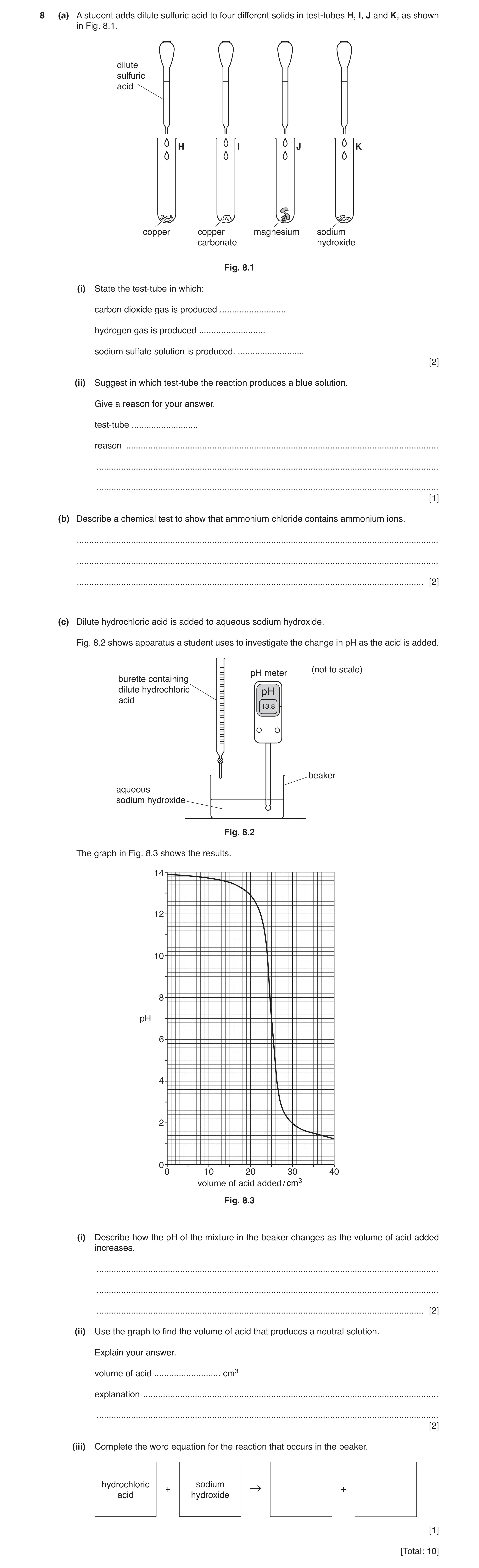
8 (a) A student adds dilute sulfuric acid to four different solids in test-tubes H, I, J and K, as shown in Fig. 8.1. dilute sulfuric acid H I J K copper copper magnesium sodium carbonate hydroxide Fig. 8.1 (i) State the test-tube in which: carbon dioxide gas is produced … hydrogen gas is produced … sodium sulfate solution is produced. … [2] (ii) Suggest in which test-tube the reaction produces a blue solution. Give a reason for your answer. test-tube … reason … … … [1] (b) Describe a chemical test to show that ammonium chloride contains ammonium ions. … … … [2] (c) Dilute hydrochloric acid is added to aqueous sodium hydroxide. Fig. 8.2 shows apparatus a student uses to investigate the change in pH as the acid is added. (not to scale) pH meter burette containing dilute hydrochloric pH acid 13.8 beaker aqueous sodium hydroxide Fig. 8.2 The graph in Fig. 8.3 shows the results. 14 12 10 8 pH 6 4 2 00 10 20 30 40 volume of acid added / cm3 Fig. 8.3 (i) Describe how the pH of the mixture in the beaker changes as the volume of acid added increases. … … … [2] (ii) Use the graph to find the volume of acid that produces a neutral solution. Explain your answer. volume of acid … cm3 explanation … … [2] (iii) Complete the word equation for the reaction that occurs in the beaker. hydrochloric sodium + + acid hydroxide [1] [Total: 10]
10 marks
Mark scheme: 8(a)(i) I J K ;; 2 8(a)(ii) (I) copper sulfate produced which is blue / a compound of a transition metal is produced which is coloured ; 1 8(b) add sodium hydroxide solution and warm ; ammonia released / gas turning (damp) red litmus to blue released ; 2 8(c)(i) pH decreases ; description of shape / use of data; 2 8(c)(ii) 25 (cm3) ; this volume produces mixture with pH 7 / working shown on graph ; 2 8(c)(iii) sodium chloride and water ; 1
This question in 0654/31 Oct/Nov 2019
Q11 · Sodium is a very reactive metallic element 0654/32 Oct/Nov 2019
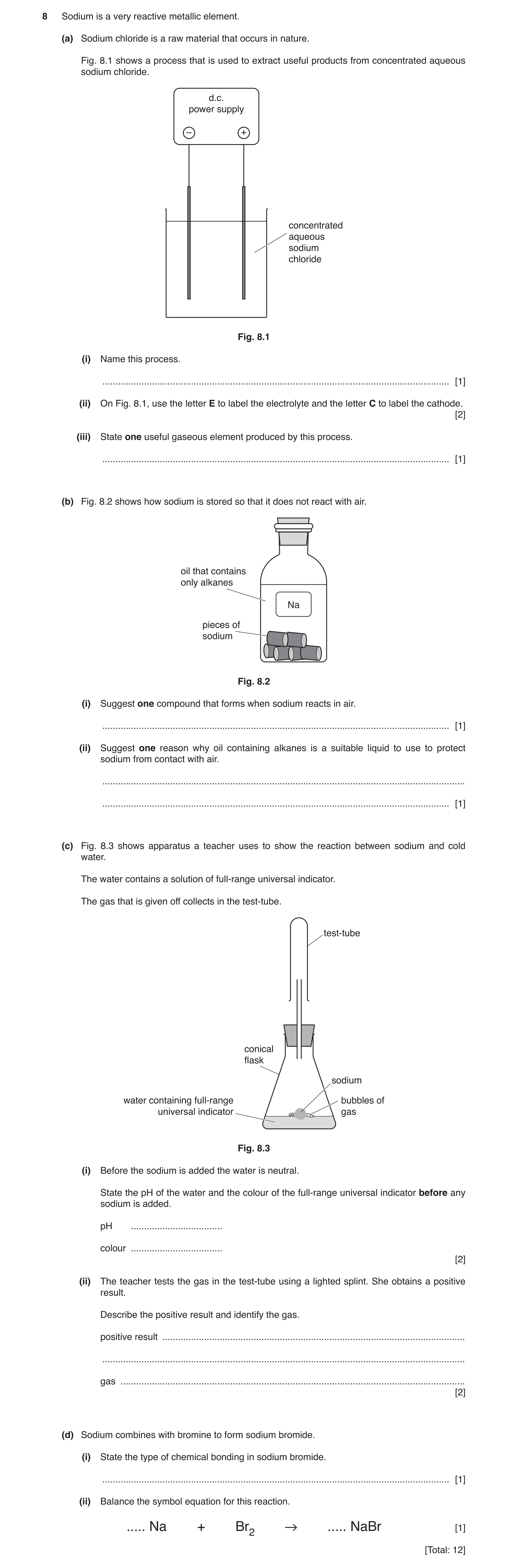
8 Sodium is a very reactive metallic element. (a) Sodium chloride is a raw material that occurs in nature. Fig. 8.1 shows a process that is used to extract useful products from concentrated aqueous sodium chloride. d.c. power supply – + concentrated aqueous sodium chloride Fig. 8.1 (i) Name this process. … [1] (ii) On Fig. 8.1, use the letter E to label the electrolyte and the letter C to label the cathode. [2] (iii) State one useful gaseous element produced by this process. … [1] (b) Fig. 8.2 shows how sodium is stored so that it does not react with air. oil that contains only alkanes Na pieces of sodium Fig. 8.2 (i) Suggest one compound that forms when sodium reacts in air. … [1] (ii) Suggest one reason why oil containing alkanes is a suitable liquid to use to protect sodium from contact with air. … … [1] (c) Fig. 8.3 shows apparatus a teacher uses to show the reaction between sodium and cold water. The water contains a solution of full-range universal indicator. The gas that is given off collects in the test-tube. test-tube conical flask sodium water containing full-range bubbles of universal indicator gas Fig. 8.3 (i) Before the sodium is added the water is neutral. State the pH of the water and the colour of the full-range universal indicator before any sodium is added. pH … colour … [2] (ii) The teacher tests the gas in the test-tube using a lighted splint. She obtains a positive result. Describe the positive result and identify the gas. positive result … … gas … [2] (d) Sodium combines with bromine to form sodium bromide. (i) State the type of chemical bonding in sodium bromide. … [1] (ii) Balance the symbol equation for this reaction. [1] … Na + Br2 … NaBr [Total: 12]
12 marks
Mark scheme: 8(a)(i) electrolysis ; 1 8(a)(ii) electrolyte labelled anywhere ; negative electrode labelled ; 2 8(a)(iii) chlorine / hydrogen ; 1 8(b)(i) sodium oxide / hydroxide / carbonate ; 1 8(b)(ii) alkanes (relatively) unreactive / alkanes do not react with sodium ; 1 8(c)(i) pH 7 ; green ; 2 8(c)(ii) squeaky pop ; hydrogen ; 2 8(d)(i) ionic / electrovalent ; 1 8(d)(ii) 2 Na + Br2 → 2 NaBr ; 1
This question in 0654/32 Oct/Nov 2019
Q12 · Calcium is in Group II of the Periodic Table 0654/32 May/June 2020
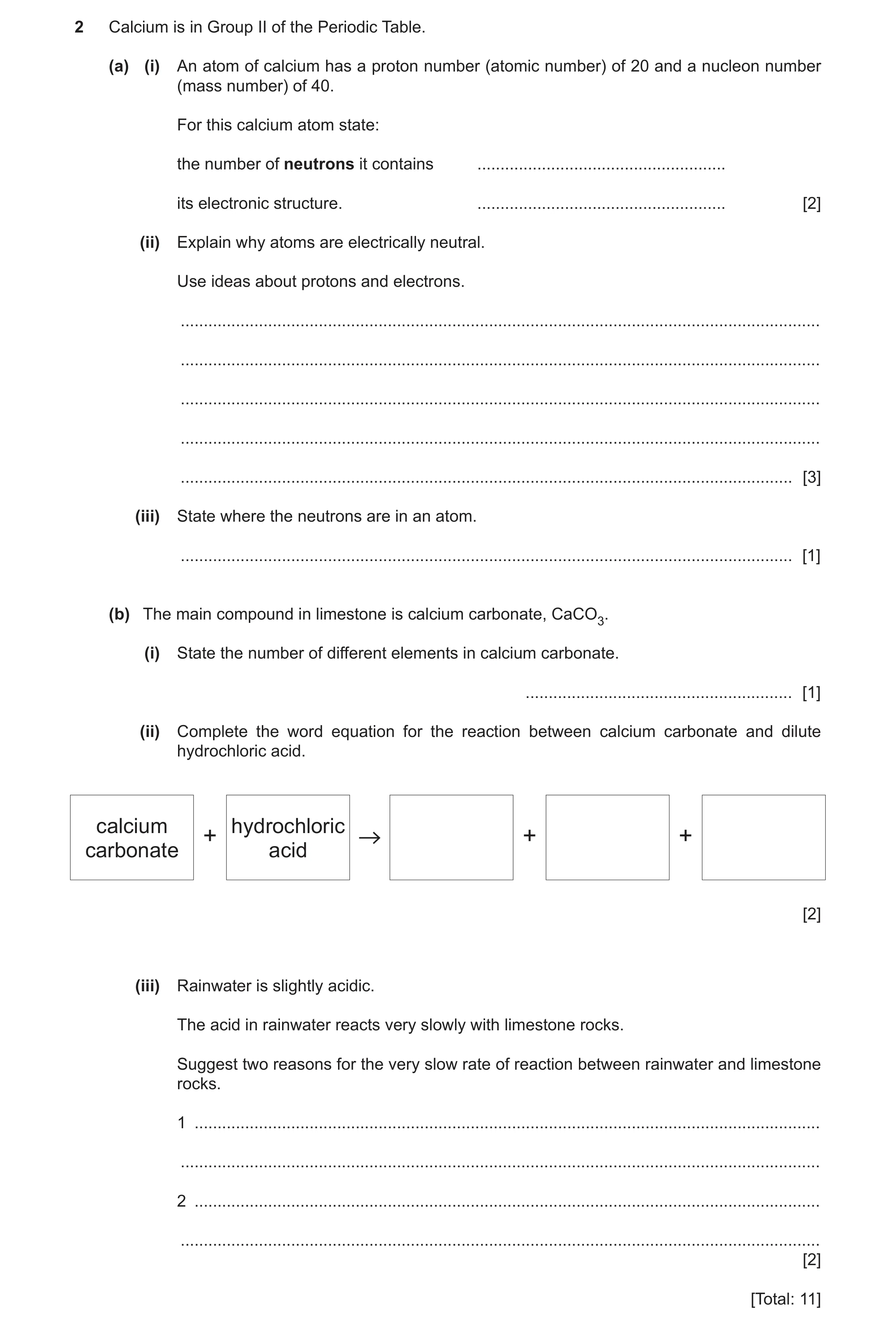
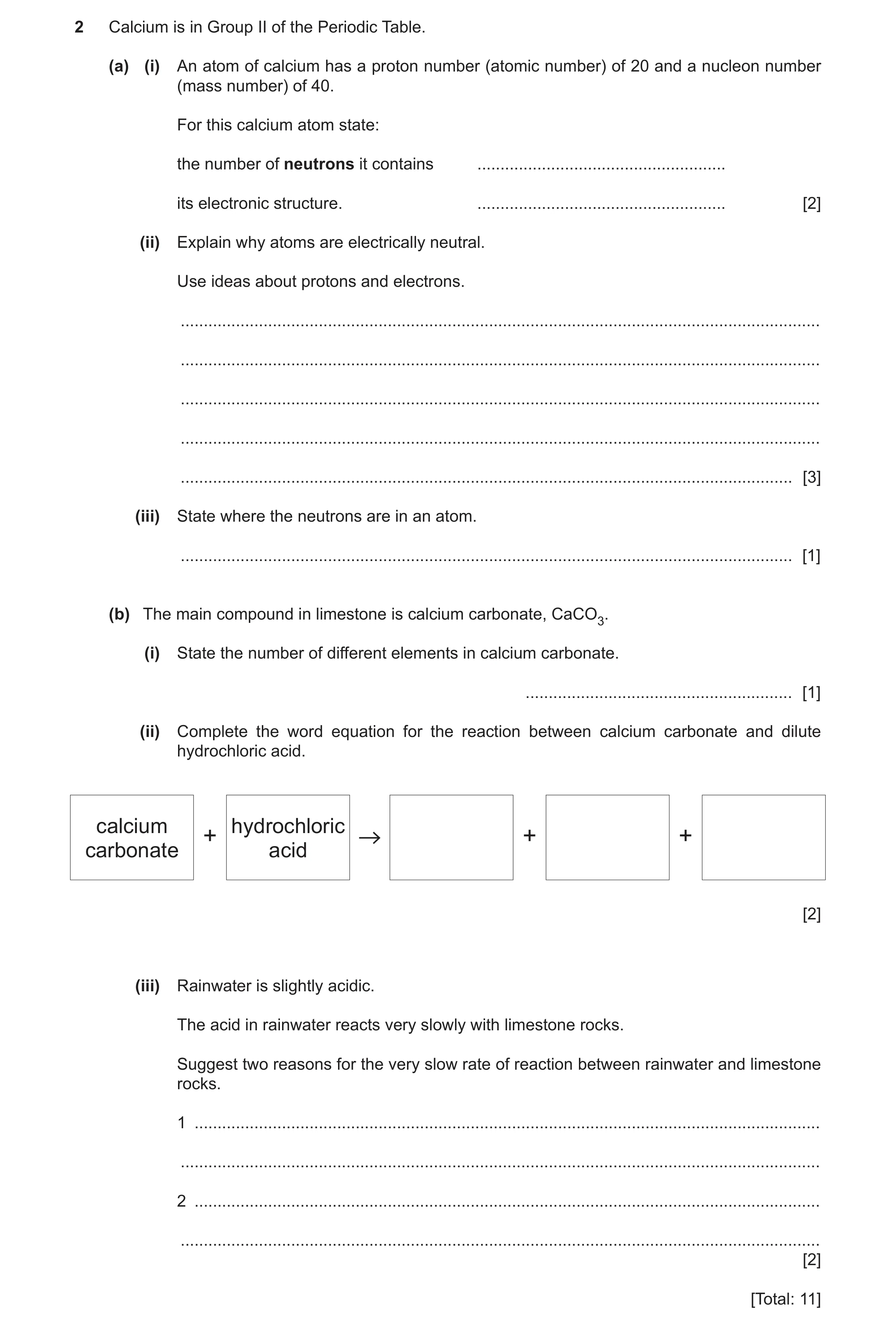
2 Calcium is in Group II of the Periodic Table. (a) (i) An atom of calcium has a proton number (atomic number) of 20 and a nucleon number (mass number) of 40. For this calcium atom state: the number of neutrons it contains … its electronic structure. … [2] (ii) Explain why atoms are electrically neutral. Use ideas about protons and electrons. … … … … … [3] (iii) State where the neutrons are in an atom. … [1] (b) The main compound in limestone is calcium carbonate, CaCO3. (i) State the number of different elements in calcium carbonate. … [1] (ii) Complete the word equation for the reaction between calcium carbonate and dilute hydrochloric acid. calcium hydrochloric + + + carbonate acid [2] (iii) Rainwater is slightly acidic. The acid in rainwater reacts very slowly with limestone rocks. Suggest two reasons for the very slow rate of reaction between rainwater and limestone rocks. 1 … … 2 … … [2] [Total: 11]
11 marks
Mark scheme: 2(a)(i) 20 ; 2,8,8,2 ; 2 2(a)(ii) the idea that numbers of protons and electrons are equal ; protons are positive electrons are negative ; total positive charge balances total negative charge ; 3 2(a)(iii) nucleus ; 1 2(b)(i) 3 ; 1 2(b)(ii) calcium chloride ; carbon dioxide + water ; 2 Question Answer Marks 2(b)(iii) temperature is (on average) low ; concentration of acid in rain water is low ; 2
This question in 0654/32 May/June 2020
Q13 · Water is a compound of the elements hydrogen and oxygen 0654/32 May/June 2020
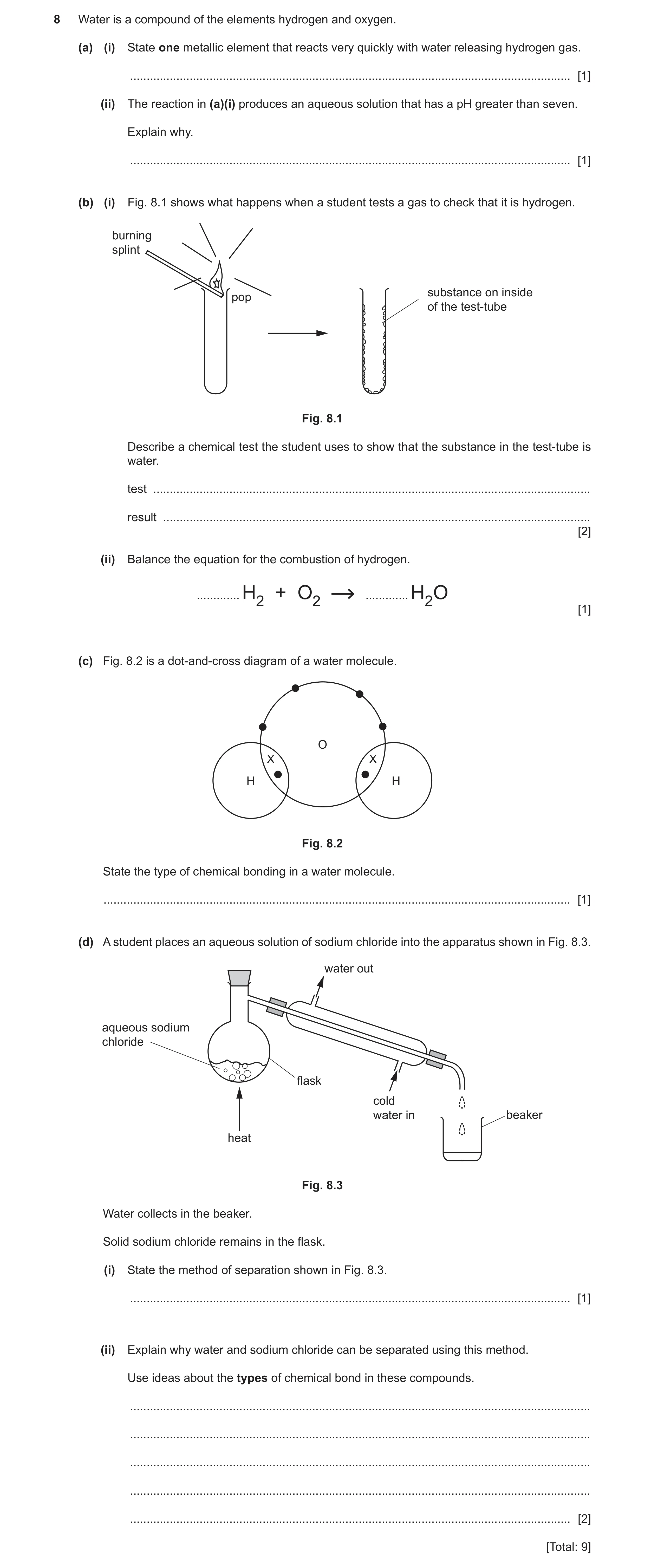
8 Water is a compound of the elements hydrogen and oxygen. (a) (i) State one metallic element that reacts very quickly with water releasing hydrogen gas. … [1] (ii) The reaction in (a)(i) produces an aqueous solution that has a pH greater than seven. Explain why. … [1] (b) (i) Fig. 8.1 shows what happens when a student tests a gas to check that it is hydrogen. burning splint substance on inside pop of the test-tube Fig. 8.1 Describe a chemical test the student uses to show that the substance in the test-tube is water. test … result … [2] (ii) Balance the equation for the combustion of hydrogen. … … H2 + O2 H2O [1] (c) Fig. 8.2 is a dot-and-cross diagram of a water molecule. O X X H H Fig. 8.2 State the type of chemical bonding in a water molecule. … [1] (d) A student places an aqueous solution of sodium chloride into the apparatus shown in Fig. 8.3. water out aqueous sodium chloride flask cold water in beaker heat Fig. 8.3 Water collects in the beaker. Solid sodium chloride remains in the flask. (i) State the method of separation shown in Fig. 8.3. … [1] (ii) Explain why water and sodium chloride can be separated using this method. Use ideas about the types of chemical bond in these compounds. … … … … … [2] [Total: 9]
9 marks
Mark scheme: 8(a)(i) any Group 1 element / other correct (e.g. calcium); 1 8(a)(ii) solution is alkaline / reaction produces (soluble) base / hydroxide of element in (i) ; 1 8(b)(i) cobalt chloride ; blue to pink ; OR anhydrous copper(II) sulfate ; white to blue ; 2 8(b)(ii) 2H2 + O2 → 2 H2O ; 1 8(c) covalent ; 1 8(d)(i) (simple) distillation ; 1 8(d)(ii) the idea that water boils and sodium chloride does not / water is more volatile than sodium chloride ; because covalent compounds tend to have low bpts / ionic compounds high bpts; 2
This question in 0654/32 May/June 2020
Q14 · Calcium is in Group II of the Periodic Table 0654/33 May/June 2020
2 Calcium is in Group II of the Periodic Table. (a) (i) An atom of calcium has a proton number (atomic number) of 20 and a nucleon number (mass number) of 40. For this calcium atom state: the number of neutrons it contains … its electronic structure. … [2] (ii) Explain why atoms are electrically neutral. Use ideas about protons and electrons. … … … … … [3] (iii) State where the neutrons are in an atom. … [1] (b) The main compound in limestone is calcium carbonate, CaCO3. (i) State the number of different elements in calcium carbonate. … [1] (ii) Complete the word equation for the reaction between calcium carbonate and dilute hydrochloric acid. calcium hydrochloric + + + carbonate acid [2] (iii) Rainwater is slightly acidic. The acid in rainwater reacts very slowly with limestone rocks. Suggest two reasons for the very slow rate of reaction between rainwater and limestone rocks. 1 … … 2 … … [2] [Total: 11]
11 marks
Mark scheme: 2(a)(i) 20 ; 2,8,8,2 ; 2 2(a)(ii) the idea that numbers of protons and electrons are equal ; protons are positive electrons are negative ; total positive charge balances total negative charge ; 3 2(a)(iii) nucleus ; 1 2(b)(i) 3 ; 1 2(b)(ii) calcium chloride ; carbon dioxide + water ; 2 Question Answer Marks 2(b)(iii) temperature is (on average) low ; concentration of acid in rain water is low ; 2
This question in 0654/33 May/June 2020
Q15 · Metal oxides are formed when metals and oxygen react 0654/31 Oct/Nov 2020
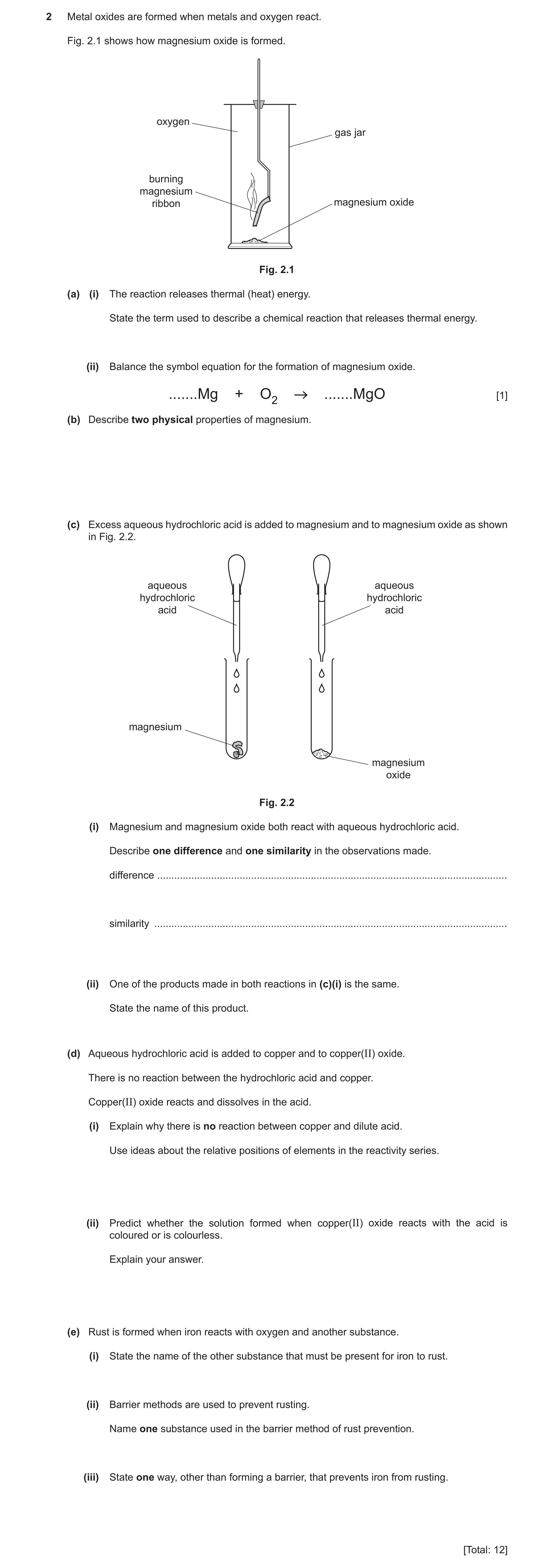
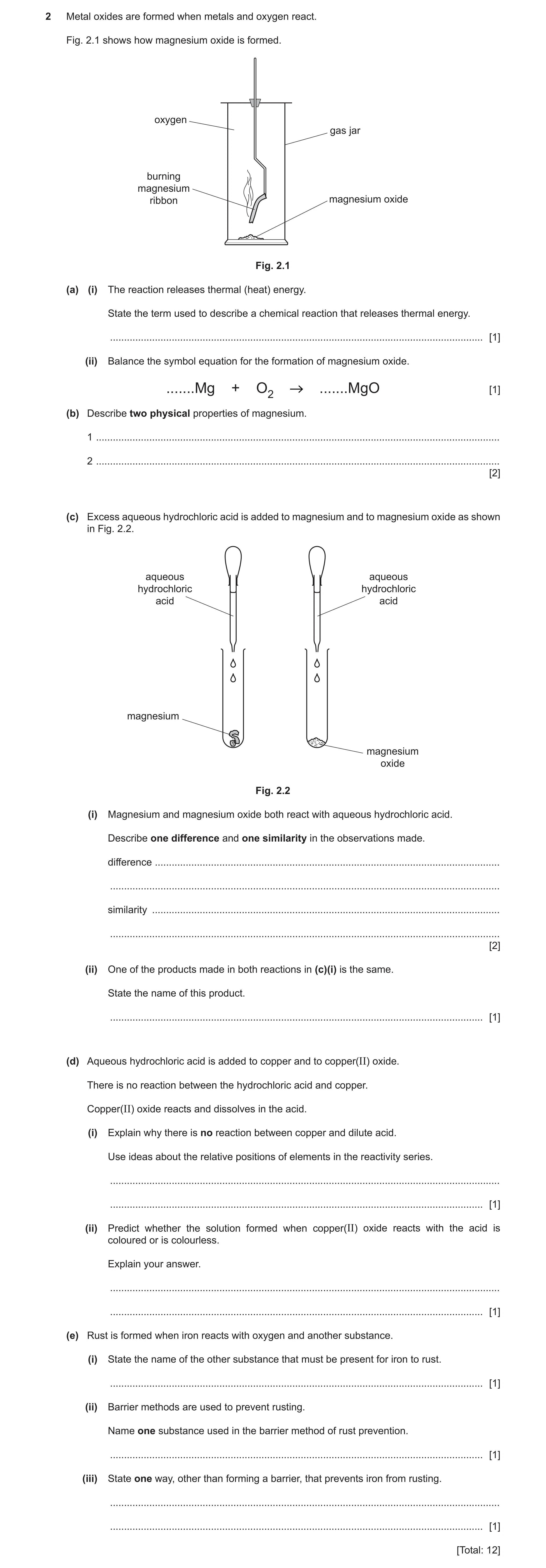
2 Metal oxides are formed when metals and oxygen react. Fig. 2.1 shows how magnesium oxide is formed. oxygen gas jar burning magnesium ribbon magnesium oxide Fig. 2.1 (a) (i) The reaction releases thermal (heat) energy. State the term used to describe a chemical reaction that releases thermal energy. (ii) Balance the symbol equation for the formation of magnesium oxide. [1] … Mg + O2 … MgO (b) Describe two physical properties of magnesium. (c) Excess aqueous hydrochloric acid is added to magnesium and to magnesium oxide as shown in Fig. 2.2. aqueous aqueous hydrochloric hydrochloric acid acid magnesium magnesium oxide Fig. 2.2 (i) Magnesium and magnesium oxide both react with aqueous hydrochloric acid. Describe one difference and one similarity in the observations made. difference �������������������������������������������������������������������������������������������������������������������������� similarity ���������������������������������������������������������������������������������������������������������������������������� (ii) One of the products made in both reactions in (c)(i) is the same. State the name of this product. (d) Aqueous hydrochloric acid is added to copper and to copper(II) oxide. There is no reaction between the hydrochloric acid and copper. Copper(II) oxide reacts and dissolves in the acid. (i) Explain why there is no reaction between copper and dilute acid. Use ideas about the relative positions of elements in the reactivity series. (ii) Predict whether the solution formed when copper(II) oxide reacts with the acid is coloured or is colourless. Explain your answer. (e) Rust is formed when iron reacts with oxygen and another substance. (i) State the name of the other substance that must be present for iron to rust. (ii) Barrier methods are used to prevent rusting. Name one substance used in the barrier method of rust prevention. (iii) State one way, other than forming a barrier, that prevents iron from rusting. [Total: 12]
12 marks
Mark scheme: 2(a)(i) exothermic ; 1 2(a)(ii) 2Mg + O2 → 2MgO ; 1 2(b) (magnesium is) malleable ; ductile ; good (electrical / thermal) conductor ; 2 2(c)(i) difference – gas released with magnesium (and not with the oxide) ; similarity – the solid reacts to form a soluble product / solid dissolves ; 2 2(c)(ii) magnesium chloride / MgCl2 ; 1 Question Answer Marks 2(d)(i) copper is low in the reactivity series ; copper is less reactive than hydrogen ; 1 2(d)(ii) (coloured) copper is a transition metal / transition metal compounds are (usually) coloured / copper compounds are coloured ; 1 2(e)(i) water / water vapour ; 1 2(e)(ii) paint / oil / plastic / (named) unreactive metal ; 1 2(e)(iii) (add other metals to) make it into an alloy / stainless steel ; 1
This question in 0654/31 Oct/Nov 2020
Q16 · Thermal decomposition happens when compounds are heated and break down into simpler… 0654/31 Oct/Nov 2020
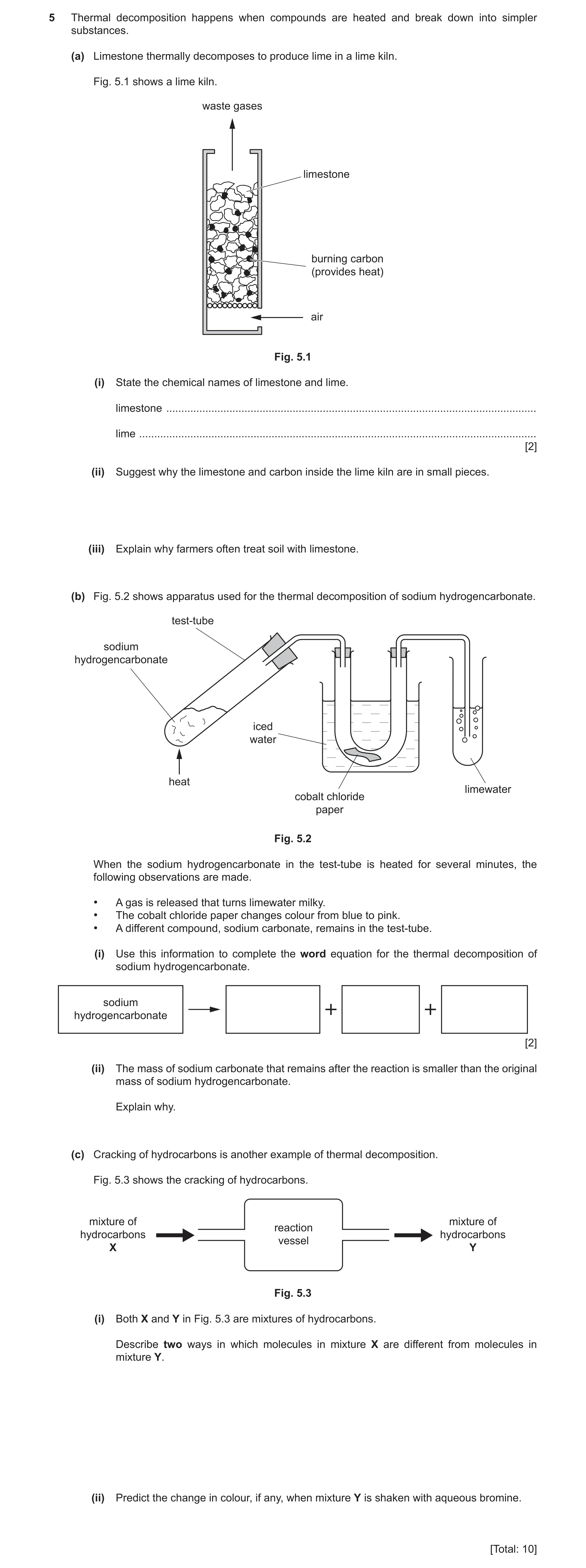
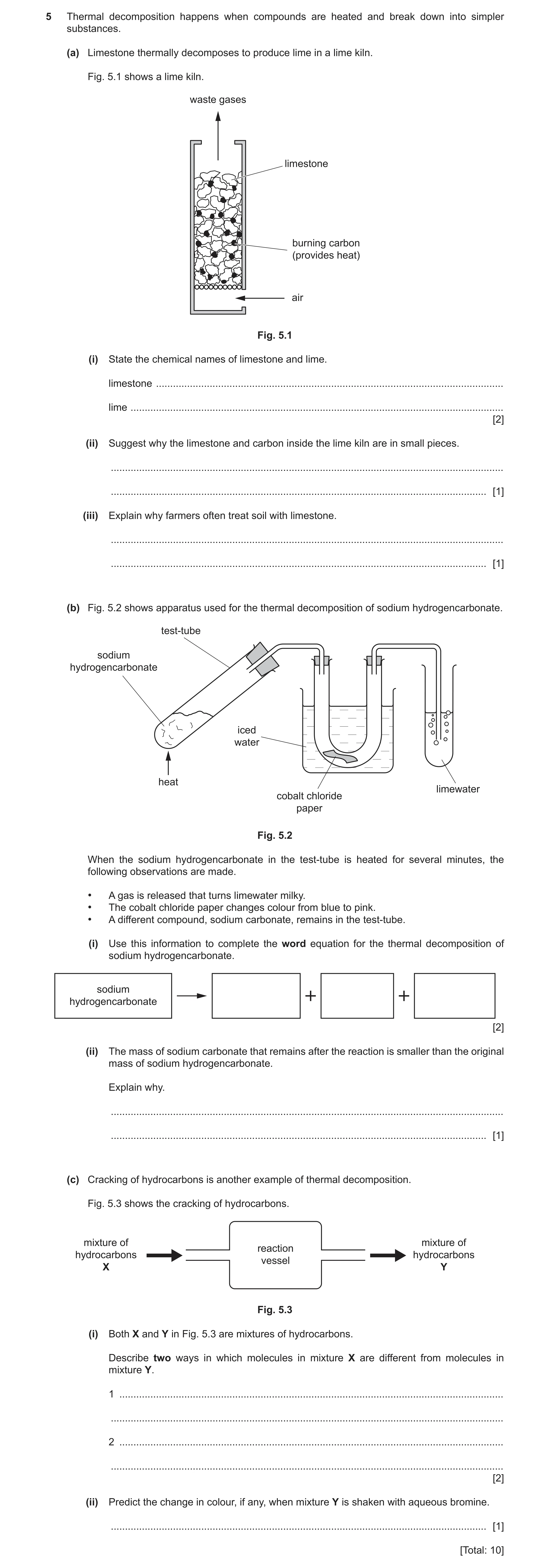
5 Thermal decomposition happens when compounds are heated and break down into simpler substances. (a) Limestone thermally decomposes to produce lime in a lime kiln. Fig. 5.1 shows a lime kiln. waste gases limestone burning carbon (provides heat) air Fig. 5.1 (i) State the chemical names of limestone and lime. limestone ��������������������������������������������������������������������������������������������������������������������������� lime ������������������������������������������������������������������������������������������������������������������������������������ [2] (ii) Suggest why the limestone and carbon inside the lime kiln are in small pieces. (iii) Explain why farmers often treat soil with limestone. (b) Fig. 5.2 shows apparatus used for the thermal decomposition of sodium hydrogencarbonate. test-tube sodium hydrogencarbonate iced water heat limewater cobalt chloride paper Fig. 5.2 When the sodium hydrogencarbonate in the test‑tube is heated for several minutes, the following observations are made. • A gas is released that turns limewater milky. • The cobalt chloride paper changes colour from blue to pink. • A different compound, sodium carbonate, remains in the test‑tube. (i) Use this information to complete the word equation for the thermal decomposition of sodium hydrogencarbonate. sodium hydrogencarbonate [2] (ii) The mass of sodium carbonate that remains after the reaction is smaller than the original mass of sodium hydrogencarbonate. Explain why. (c) Cracking of hydrocarbons is another example of thermal decomposition. Fig. 5.3 shows the cracking of hydrocarbons. mixture of mixture of reaction hydrocarbons hydrocarbons vessel X Y Fig. 5.3 (i) Both X and Y in Fig. 5.3 are mixtures of hydrocarbons. Describe two ways in which molecules in mixture X are different from molecules in mixture Y. (ii) Predict the change in colour, if any, when mixture Y is shaken with aqueous bromine. [Total: 10]
10 marks
Mark scheme: 5(a)(i) calcium carbonate ; calcium oxide ; 2 5(a)(ii) speeds up reaction rate (of both reactions) 1 5(a)(iii) treat acidic soil ; 1 5(b)(i) (sodium hydrogencarbonate →) sodium carbonate + carbon dioxide + water ;; 2 5(b)(ii) gaseous products removed from sodium hydrogencarbonate ; 1 5(c)(i) mixture Y contains unsaturated hydrocarbons (and X does not) ; molecules (on average) are smaller in Y ; 2 5(c)(ii) orange to colourless ; 1
This question in 0654/31 Oct/Nov 2020
Q17 · Metal oxides are formed when metals and oxygen react 0654/33 Oct/Nov 2020
2 Metal oxides are formed when metals and oxygen react. Fig. 2.1 shows how magnesium oxide is formed. oxygen gas jar burning magnesium ribbon magnesium oxide Fig. 2.1 (a) (i) The reaction releases thermal (heat) energy. State the term used to describe a chemical reaction that releases thermal energy. … [1] (ii) Balance the symbol equation for the formation of magnesium oxide. [1] … Mg + O2 … MgO (b) Describe two physical properties of magnesium. 1 … 2 … [2] (c) Excess aqueous hydrochloric acid is added to magnesium and to magnesium oxide as shown in Fig. 2.2. aqueous aqueous hydrochloric hydrochloric acid acid magnesium magnesium oxide Fig. 2.2 (i) Magnesium and magnesium oxide both react with aqueous hydrochloric acid. Describe one difference and one similarity in the observations made. difference … … similarity … … [2] (ii) One of the products made in both reactions in (c)(i) is the same. State the name of this product. … [1] (d) Aqueous hydrochloric acid is added to copper and to copper(II) oxide. There is no reaction between the hydrochloric acid and copper. Copper(II) oxide reacts and dissolves in the acid. (i) Explain why there is no reaction between copper and dilute acid. Use ideas about the relative positions of elements in the reactivity series. … … [1] (ii) Predict whether the solution formed when copper(II) oxide reacts with the acid is coloured or is colourless. Explain your answer. … … [1] (e) Rust is formed when iron reacts with oxygen and another substance. (i) State the name of the other substance that must be present for iron to rust. … [1] (ii) Barrier methods are used to prevent rusting. Name one substance used in the barrier method of rust prevention. … [1] (iii) State one way, other than forming a barrier, that prevents iron from rusting. … … [1] [Total: 12]
12 marks
Mark scheme: 2(a)(i) exothermic ; 1 2(a)(ii) 2Mg + O2 → 2MgO ; 1 2(b) (magnesium is) malleable ; ductile ; good (electrical / thermal) conductor ; 2 2(c)(i) difference – gas released with magnesium (and not with the oxide) ; similarity – the solid reacts to form a soluble product / solid dissolves ; 2 2(c)(ii) magnesium chloride / MgCl2 ; 1 Question Answer Marks 2(d)(i) copper is low in the reactivity series ; copper is less reactive than hydrogen ; 1 2(d)(ii) (coloured) copper is a transition metal / transition metal compounds are (usually) coloured / copper compounds are coloured ; 1 2(e)(i) water / water vapour ; 1 2(e)(ii) paint / oil / plastic / (named) unreactive metal ; 1 2(e)(iii) (add other metals to) make it into an alloy / stainless steel ; 1
This question in 0654/33 Oct/Nov 2020
Q18 · Thermal decomposition happens when compounds are heated and break down into simpler… 0654/33 Oct/Nov 2020
5 Thermal decomposition happens when compounds are heated and break down into simpler substances. (a) Limestone thermally decomposes to produce lime in a lime kiln. Fig. 5.1 shows a lime kiln. waste gases limestone burning carbon (provides heat) air Fig. 5.1 (i) State the chemical names of limestone and lime. limestone … lime … [2] (ii) Suggest why the limestone and carbon inside the lime kiln are in small pieces. … … [1] (iii) Explain why farmers often treat soil with limestone. … … [1] (b) Fig. 5.2 shows apparatus used for the thermal decomposition of sodium hydrogencarbonate. test-tube sodium hydrogencarbonate iced water heat limewater cobalt chloride paper Fig. 5.2 When the sodium hydrogencarbonate in the test‑tube is heated for several minutes, the following observations are made. • A gas is released that turns limewater milky. • The cobalt chloride paper changes colour from blue to pink. • A different compound, sodium carbonate, remains in the test‑tube. (i) Use this information to complete the word equation for the thermal decomposition of sodium hydrogencarbonate. sodium hydrogencarbonate [2] (ii) The mass of sodium carbonate that remains after the reaction is smaller than the original mass of sodium hydrogencarbonate. Explain why. … … [1] (c) Cracking of hydrocarbons is another example of thermal decomposition. Fig. 5.3 shows the cracking of hydrocarbons. mixture of mixture of reaction hydrocarbons hydrocarbons vessel X Y Fig. 5.3 (i) Both X and Y in Fig. 5.3 are mixtures of hydrocarbons. Describe two ways in which molecules in mixture X are different from molecules in mixture Y. 1 … … 2 … … [2] (ii) Predict the change in colour, if any, when mixture Y is shaken with aqueous bromine. … [1] [Total: 10]
10 marks
Mark scheme: 5(a)(i) calcium carbonate ; calcium oxide ; 2 5(a)(ii) speeds up reaction rate (of both reactions) 1 5(a)(iii) treat acidic soil ; 1 5(b)(i) (sodium hydrogencarbonate →) sodium carbonate + carbon dioxide + water ;; 2 5(b)(ii) gaseous products removed from sodium hydrogencarbonate ; 1 5(c)(i) mixture Y contains unsaturated hydrocarbons (and X does not) ; molecules (on average) are smaller in Y ; 2 5(c)(ii) orange to colourless ; 1
This question in 0654/33 Oct/Nov 2020
Q19 · Information about three colourless liquids J, K and L 0654/32 Feb/March 2021
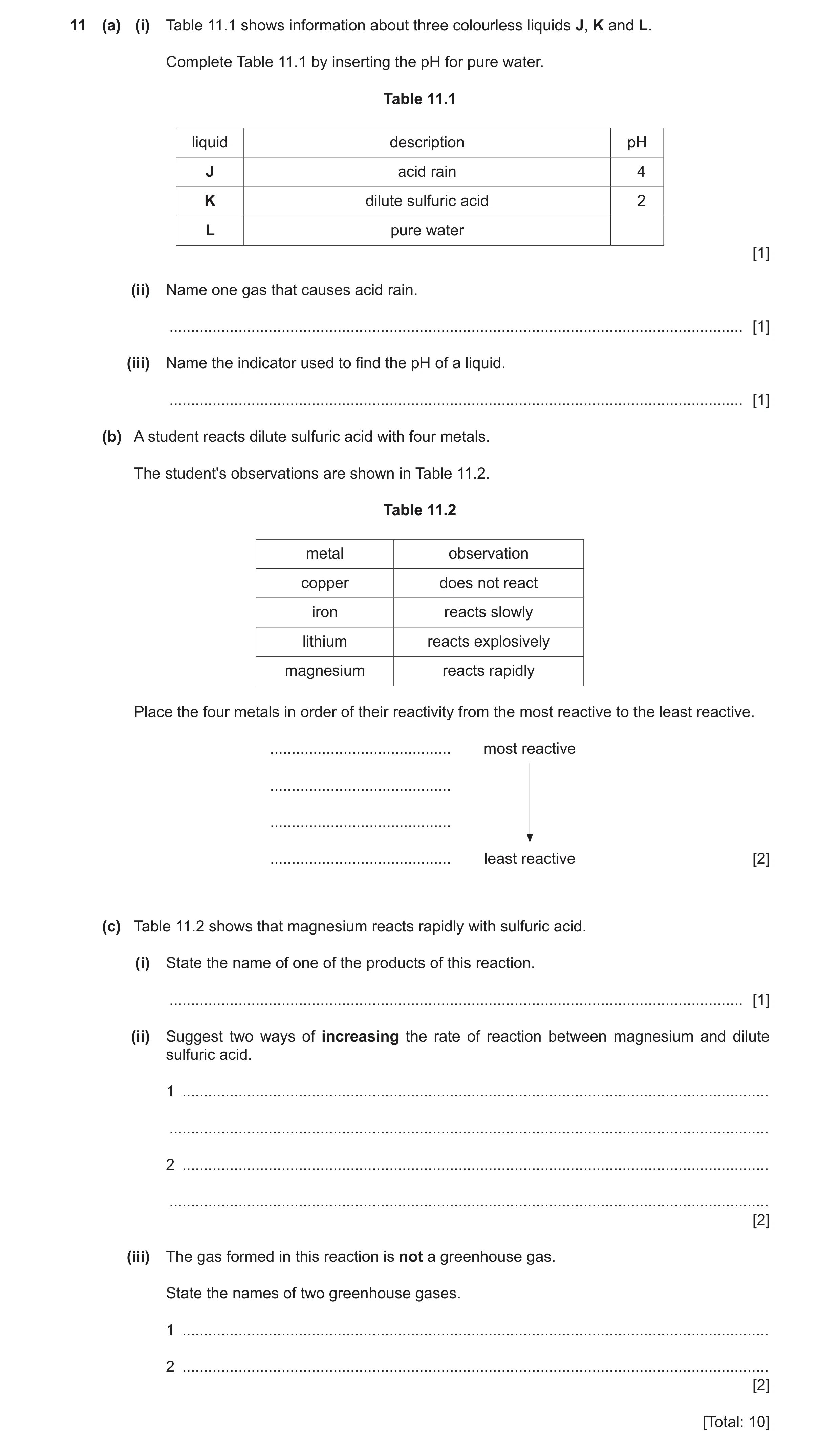
11 (a) (i) Table 11.1 shows information about three colourless liquids J, K and L. Complete Table 11.1 by inserting the pH for pure water. Table 11.1 liquid description pH J acid rain 4 K dilute sulfuric acid 2 L pure water [1] (ii) Name one gas that causes acid rain. … [1] (iii) Name the indicator used to find the pH of a liquid. … [1] (b) A student reacts dilute sulfuric acid with four metals. The student's observations are shown in Table 11.2. Table 11.2 metal observation copper does not react iron reacts slowly lithium reacts explosively magnesium reacts rapidly Place the four metals in order of their reactivity from the most reactive to the least reactive. … most reactive … … … least reactive [2] (c) Table 11.2 shows that magnesium reacts rapidly with sulfuric acid. (i) State the name of one of the products of this reaction. … [1] (ii) Suggest two ways of increasing the rate of reaction between magnesium and dilute sulfuric acid. 1 … … 2 … … [2] (iii) The gas formed in this reaction is not a greenhouse gas. State the names of two greenhouse gases. 1 … 2 … [2] [Total: 10]
10 marks
Mark scheme: 11(a)(i) 7; 1 11(a)(ii) sulfur dioxide / nitrogen dioxide; 1 11(a)(iii) universal ; 1 11(b) lithium magnesium iron copper ;; 2 11(c)(i) hydrogen / magnesium sulfate; 1 11(c)(ii) increase temperature; increase surface area of magnesium; increase concentration of acid; max 2 2 Question Answer Marks 11(c)(iii) carbon dioxide; methane; 2
This question in 0654/32 Feb/March 2021
Q20 · The list below shows some chemical processes 0654/31 Oct/Nov 2022
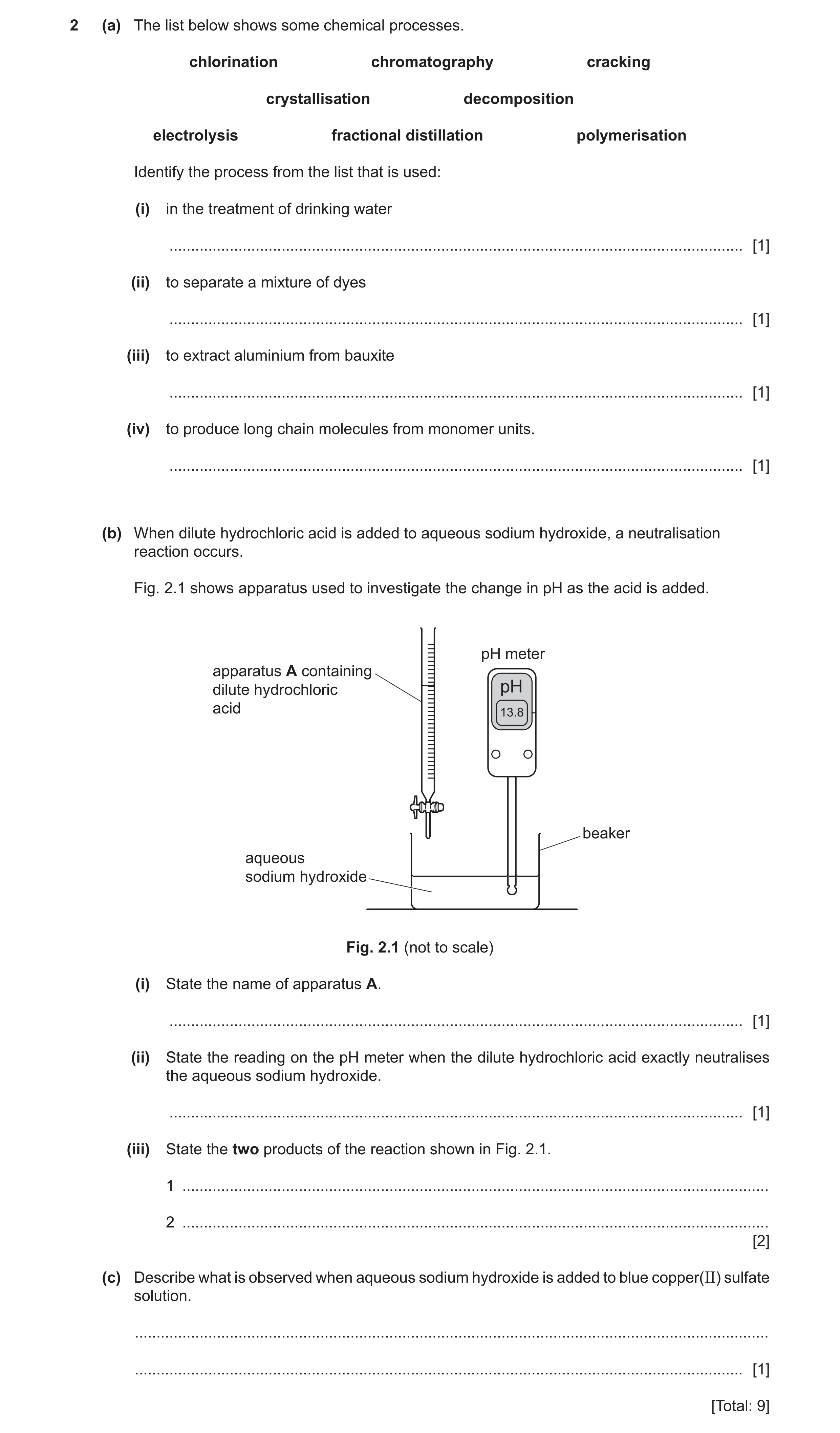
2 (a) The list below shows some chemical processes. chlorination chromatography cracking crystallisation decomposition electrolysis fractional distillation polymerisation Identify the process from the list that is used: (i) in the treatment of drinking water … [1] (ii) to separate a mixture of dyes … [1] (iii) to extract aluminium from bauxite … [1] (iv) to produce long chain molecules from monomer units. … [1] (b) When dilute hydrochloric acid is added to aqueous sodium hydroxide, a neutralisation reaction occurs. Fig. 2.1 shows apparatus used to investigate the change in pH as the acid is added. pH meter apparatus A containing dilute hydrochloric pH acid 13.8 beaker aqueous sodium hydroxide Fig. 2.1 (not to scale) (i) State the name of apparatus A. … [1] (ii) State the reading on the pH meter when the dilute hydrochloric acid exactly neutralises the aqueous sodium hydroxide. … [1] (iii) State the two products of the reaction shown in Fig. 2.1. 1 … 2 … [2] (c) Describe what is observed when aqueous sodium hydroxide is added to blue copper(II) sulfate solution. … … [1] [Total: 9]
9 marks
Mark scheme: 2(a)(i) chlorination ; 1 2(a)(ii) chromatography ; 1 2(a)(iii) electrolysis ; 1 2(a)(iv) polymerisation ; 1 2(b)(i) burette ; 1 2(b)(ii) 7 ; 1 2(b)(iii) sodium chloride ; 2 water ; 2(c) pale blue precipitate ; 1
This question in 0654/31 Oct/Nov 2022
Q21 · The list below shows the formulae of six molecules 0654/33 Oct/Nov 2022
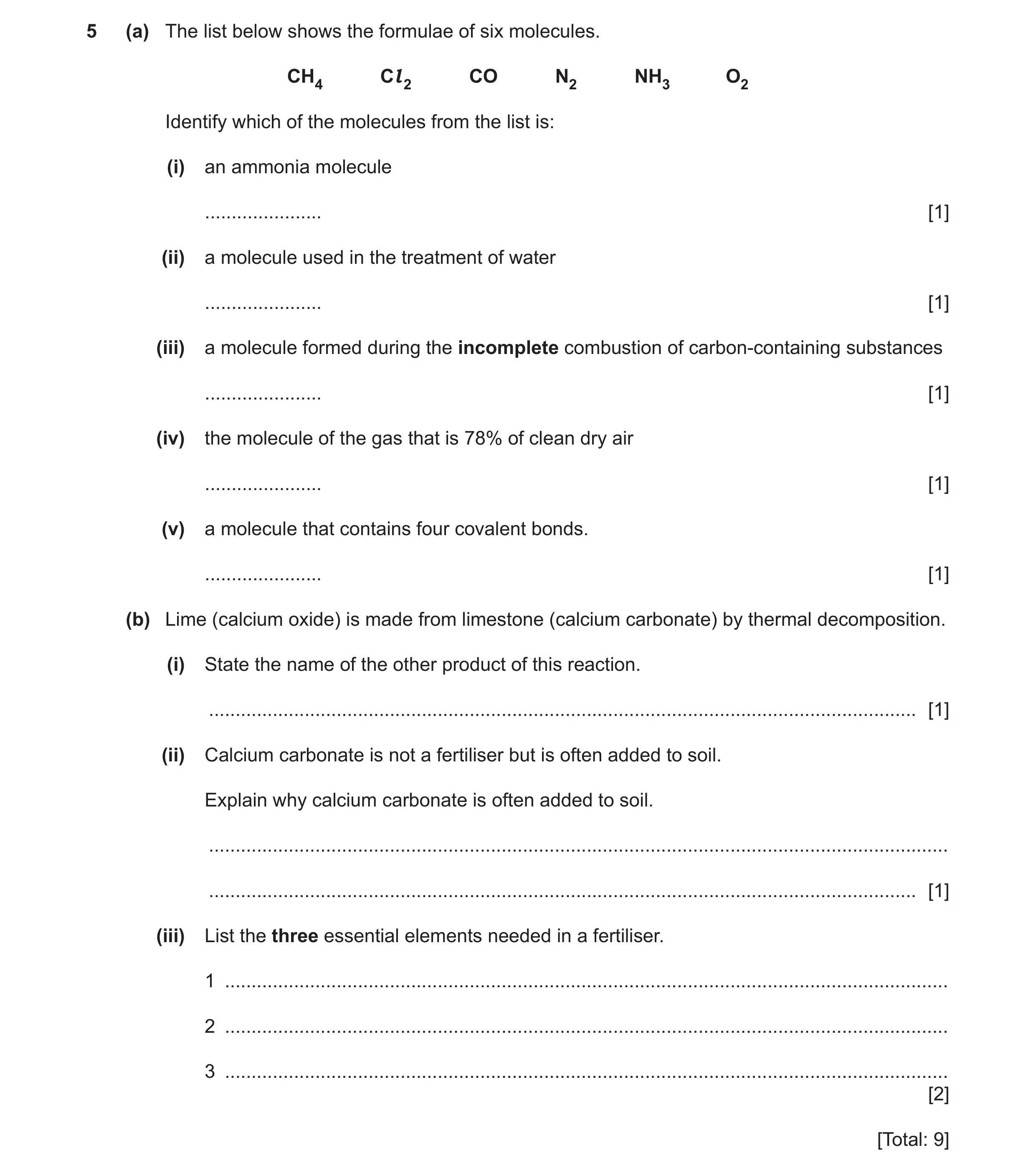
5 (a) The list below shows the formulae of six molecules. CH4 Cl 2 CO N2 NH3 O2 Identify which of the molecules from the list is: (i) an ammonia molecule … [1] (ii) a molecule used in the treatment of water … [1] (iii) a molecule formed during the incomplete combustion of carbon-containing substances … [1] (iv) the molecule of the gas that is 78% of clean dry air … [1] (v) a molecule that contains four covalent bonds. … [1] (b) Lime (calcium oxide) is made from limestone (calcium carbonate) by thermal decomposition. (i) State the name of the other product of this reaction. … [1] (ii) Calcium carbonate is not a fertiliser but is often added to soil. Explain why calcium carbonate is often added to soil. … … [1] (iii) List the three essential elements needed in a fertiliser. 1 … 2 … 3 … [2] [Total: 9]
9 marks
Mark scheme: 5(a)(i) NH3 ; 1 5(a)(ii) Cl2 ; 1 5(a)(iii) CO ; 1 5(a)(iv) N2 ; 1 5(a)(v) CH4 ; 1 5(b)(i) carbon dioxide ; 1 5(b)(ii) neutralise (acidic) soil ; 1 5(b)(iii) nitrogen ; 2 phosphorus ; potassium ;; 1 correct 1 mark 3 correct 2 marks
This question in 0654/33 Oct/Nov 2022
Q22 · The list gives the names of seven elements 0654/32 Feb/March 2023
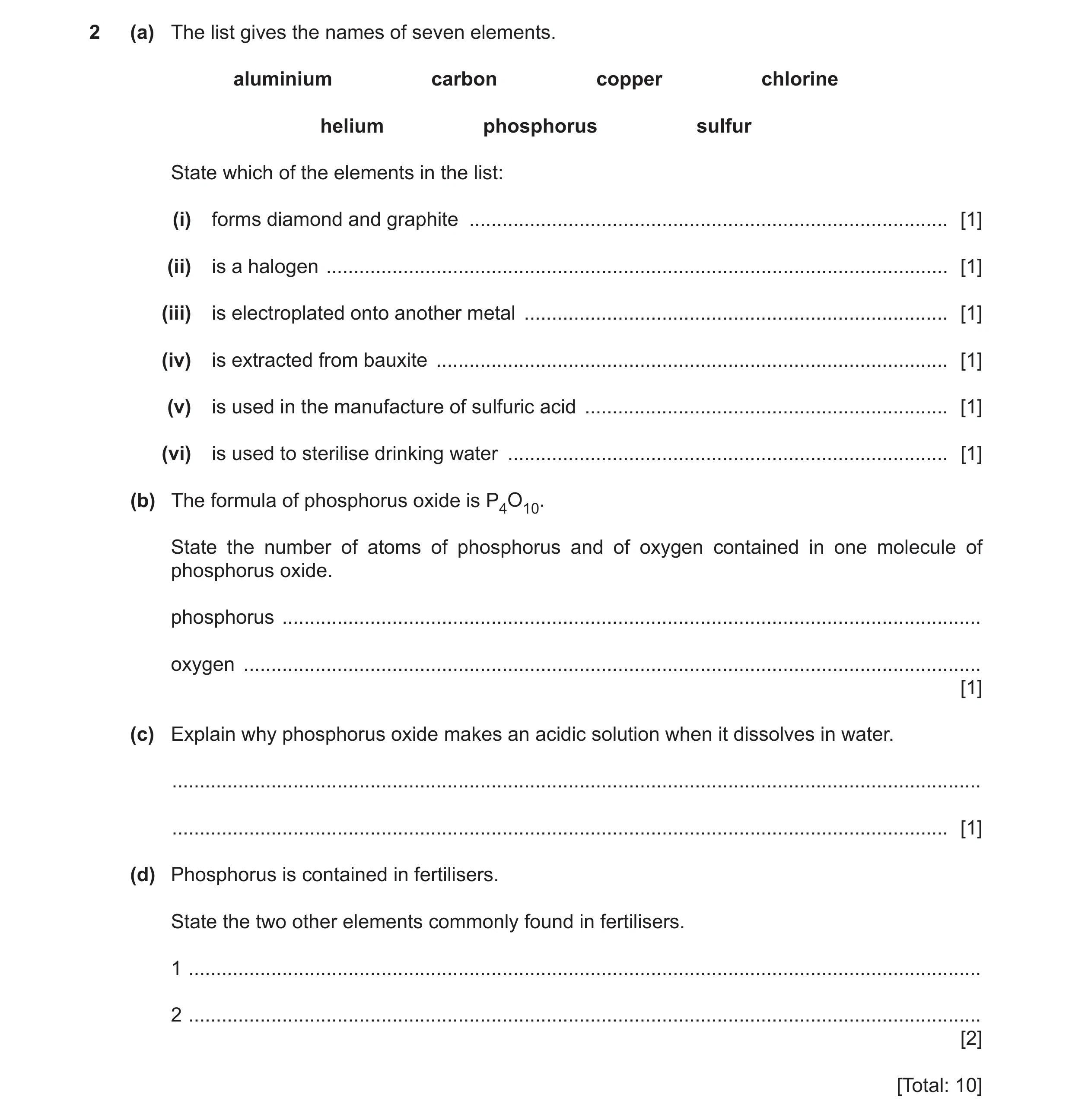
2 (a) The list gives the names of seven elements. aluminium carbon copper chlorine helium phosphorus sulfur State which of the elements in the list: (i) forms diamond and graphite … [1] (ii) is a halogen … [1] (iii) is electroplated onto another metal … [1] (iv) is extracted from bauxite … [1] (v) is used in the manufacture of sulfuric acid … [1] (vi) is used to sterilise drinking water … [1] (b) The formula of phosphorus oxide is P4O10. State the number of atoms of phosphorus and of oxygen contained in one molecule of phosphorus oxide. phosphorus … oxygen … [1] (c) Explain why phosphorus oxide makes an acidic solution when it dissolves in water. … … [1] (d) Phosphorus is contained in fertilisers. State the two other elements commonly found in fertilisers. 1 … 2 … [2] [Total: 10]
10 marks
Mark scheme: 2(a)(i) carbon ; 1 2(a)(ii) chlorine ; 1 2(a)(iii) copper ; 1 2(a)(iv) aluminium ; 1 2(a)(v) sulfur ; 1 2(a)(vi) chlorine ; 1 2(b) phosphorus 4 1 oxygen 10 ; 2(c) non-metal oxides are acidic or non-metal oxides form acidic solutions ; 1 2(d) nitrogen ; 2 potassium ;
This question in 0654/32 Feb/March 2023
Q23 · A student investigates the reaction between magnesium and dilute sulfuric acid 0654/31 Oct/Nov 2023
11 (a) A student investigates the reaction between magnesium and dilute sulfuric acid. During the reaction, hydrogen gas and a salt are made. (i) Complete the word equation for this reaction. sulfuric + … … + … acid [2] (ii) The reaction is exothermic. Describe two observations which show that a chemical reaction occurs between magnesium and dilute sulfuric acid. … … [2] (iii) The hydrogen made in the reaction exists as molecules of hydrogen, H2. Draw a dot-and-cross diagram to show the bonding in a molecule of hydrogen, H2. [2] (b) The formula of sulfuric acid is H2SO4. (i) State the number of different elements shown in this formula. … [1] (ii) State the total number of atoms shown in this formula. … [1] (c) Magnesium is a metal. (i) Describe two physical properties of metals. 1 … 2 … [2] (ii) Table 11.1 shows the percentage composition of a magnesium alloy. Table 11.1 percentage by mass element in the alloy / % aluminium 3.0 magnesium zinc 1.0 Calculate the mass of magnesium contained in 50 kg of the alloy. Show your working. mass of magnesium = … kg [2] [Total: 12]
12 marks
Mark scheme: 11(a)(i) (sulfuric acid) + magnesium → hydrogen + magnesium sulfate 2 magnesium and hydrogen ; magnesium sulfate ; 11(a)(ii) gets hot / temperature increases ; 2 fizzing / bubbles / effervescence ; 11(a)(iii) 2 2 hydrogen atoms ; 1 shared pair of electrons only ; 11(b)(i) 3 ; 1 11(b)(ii) 7 ; 1 11(c)(i) any two from: 2 good conductor of electricity ; good conductor of heat ; high melting / boiling point ; malleable ; 11(c)(ii) • 96 (%) seen ; 2 • 48 (kg) ;
This question in 0654/31 Oct/Nov 2023
Q24 · A student investigates the rate of reaction between calcium carbonate and hydrochloric… 0654/32 Oct/Nov 2023
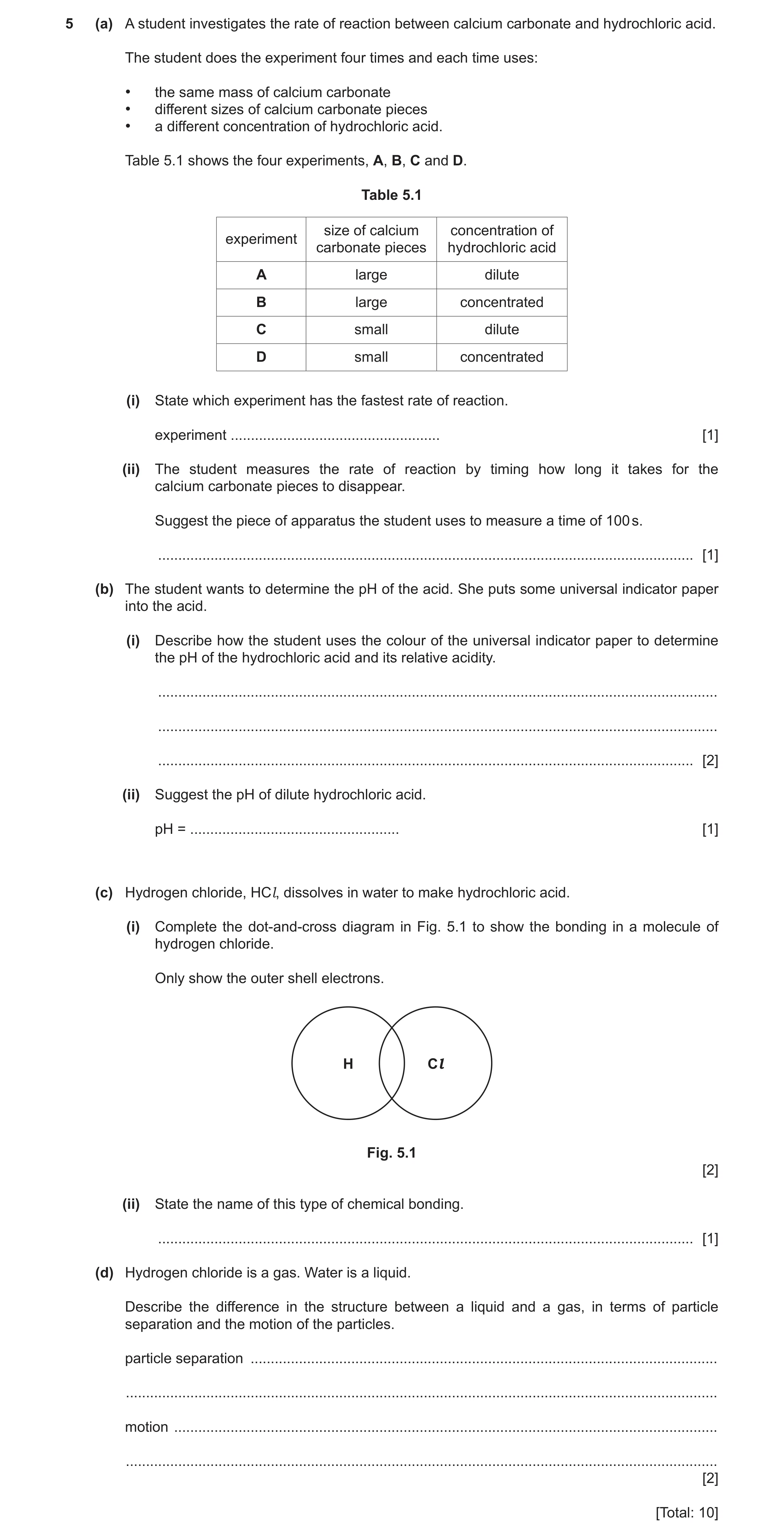
5 (a) A student investigates the rate of reaction between calcium carbonate and hydrochloric acid. The student does the experiment four times and each time uses: • the same mass of calcium carbonate • different sizes of calcium carbonate pieces • a different concentration of hydrochloric acid. Table 5.1 shows the four experiments, A, B, C and D. Table 5.1 size of calcium concentration of experiment carbonate pieces hydrochloric acid A large dilute B large concentrated C small dilute D small concentrated (i) State which experiment has the fastest rate of reaction. experiment … [1] (ii) The student measures the rate of reaction by timing how long it takes for the calcium carbonate pieces to disappear. Suggest the piece of apparatus the student uses to measure a time of 100 s. … [1] (b) The student wants to determine the pH of the acid. She puts some universal indicator paper into the acid. (i) Describe how the student uses the colour of the universal indicator paper to determine the pH of the hydrochloric acid and its relative acidity. … … … [2] (ii) Suggest the pH of dilute hydrochloric acid. pH = … [1] (c) Hydrogen chloride, HCl, dissolves in water to make hydrochloric acid. (i) Complete the dot-and-cross diagram in Fig. 5.1 to show the bonding in a molecule of hydrogen chloride. Only show the outer shell electrons. H Cl Fig. 5.1 [2] (ii) State the name of this type of chemical bonding. … [1] (d) Hydrogen chloride is a gas. Water is a liquid. Describe the difference in the structure between a liquid and a gas, in terms of particle separation and the motion of the particles. particle separation … … motion … … [2] [Total: 10]
10 marks
Mark scheme: 5(a)(i) experiment D ; 1 5(a)(ii) stopwatch ; 1 5(b)(i) check colour against pH chart ; 2 red pH 1–3 very acidic and orange/yellow pH 4–6 weakly acidic ; 5(b)(ii) pH = any value between 1 and 6 ; 1 5(c)(i) 2 1 shared pair only ; all else correct ; 5(c)(ii) covalent (bonding) ; 1 5(d) (liquid) closer together / (gas) further apart) ; 2 (liquid) slide past each other / slower / (gas) free to move / faster ;
This question in 0654/32 Oct/Nov 2023
Q25 · Three metals are placed in three different test-tubes of dilute sulfuric acid as shown in… 0654/32 Feb/March 2024
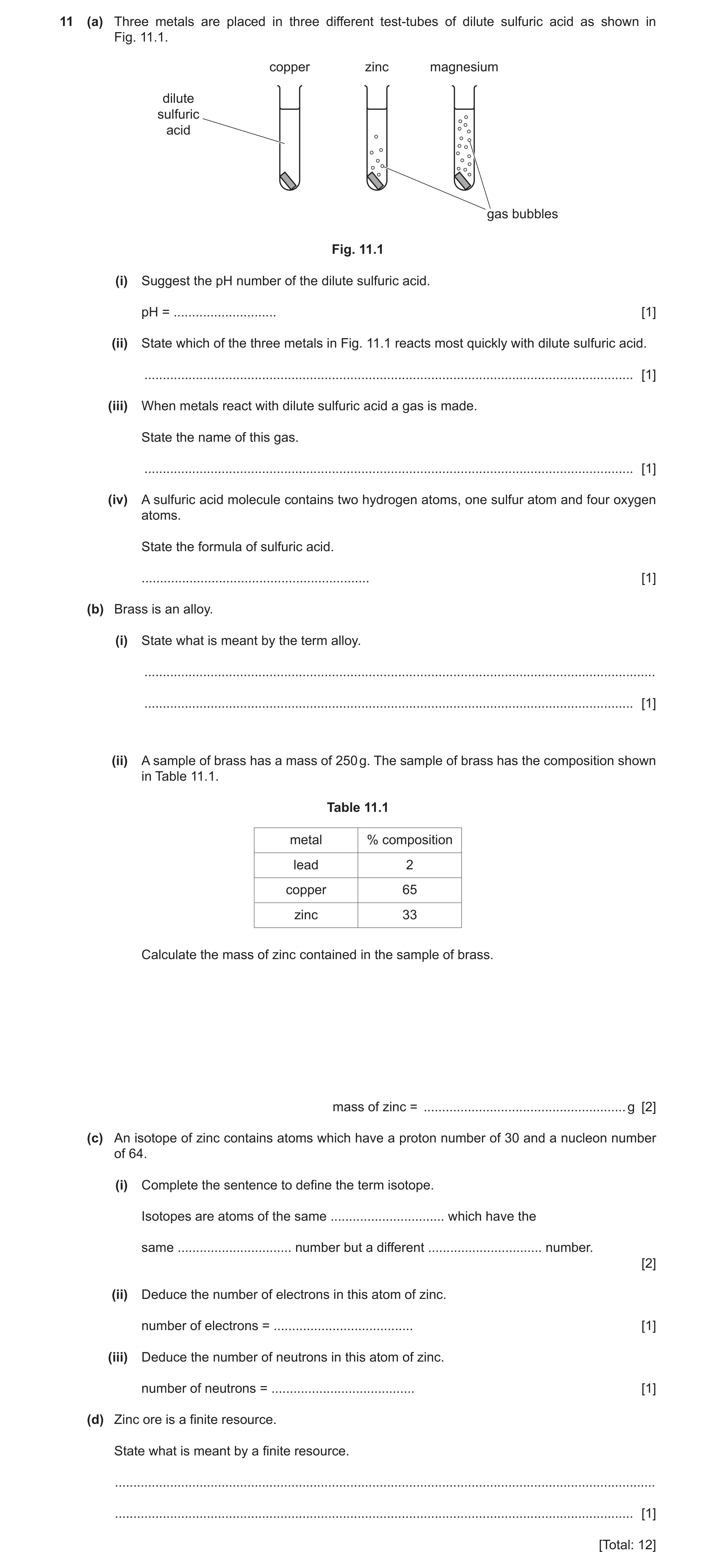
11 (a) Three metals are placed in three different test-tubes of dilute sulfuric acid as shown in Fig. 11.1. copper zinc magnesium dilute sulfuric acid gas bubbles Fig. 11.1 (i) Suggest the pH number of the dilute sulfuric acid. pH = … [1] (ii) State which of the three metals in Fig. 11.1 reacts most quickly with dilute sulfuric acid. … [1] (iii) When metals react with dilute sulfuric acid a gas is made. State the name of this gas. … [1] (iv) A sulfuric acid molecule contains two hydrogen atoms, one sulfur atom and four oxygen atoms. State the formula of sulfuric acid. … [1] (b) Brass is an alloy. (i) State what is meant by the term alloy. … … [1] (ii) A sample of brass has a mass of 250 g. The sample of brass has the composition shown in Table 11.1. Table 11.1 metal % composition lead 2 copper 65 zinc 33 Calculate the mass of zinc contained in the sample of brass. mass of zinc = … g [2] (c) An isotope of zinc contains atoms which have a proton number of 30 and a nucleon number of 64. (i) Complete the sentence to define the term isotope. Isotopes are atoms of the same … which have the same … number but a different … number. [2] (ii) Deduce the number of electrons in this atom of zinc. number of electrons = … [1] (iii) Deduce the number of neutrons in this atom of zinc. number of neutrons = … [1] (d) Zinc ore is a finite resource. State what is meant by a finite resource. … … [1] [Total: 12]
12 marks
Mark scheme: 11(a)(i) in the range from 1 to 6 ; 1 11(a)(ii) magnesium ; 1 11(a)(iii) hydrogen ; 1 11(a)(iv) H2SO4 ; 1 11(b)(i) a mixture of a metals and other elements; 1 11(b)(ii) 33 250 / 100 ; 2 83 ; 11(c)(i) element; 2 proton and nucleon; 11(c)(ii) 30 ; 1 11(c)(iii) 34 ; 1 11(d) (A finite resource is something useful that is) non-renewable / will eventually run out ; 1
This question in 0654/32 Feb/March 2024
Q26 · Ice is a solid 0654/31 May/June 2024
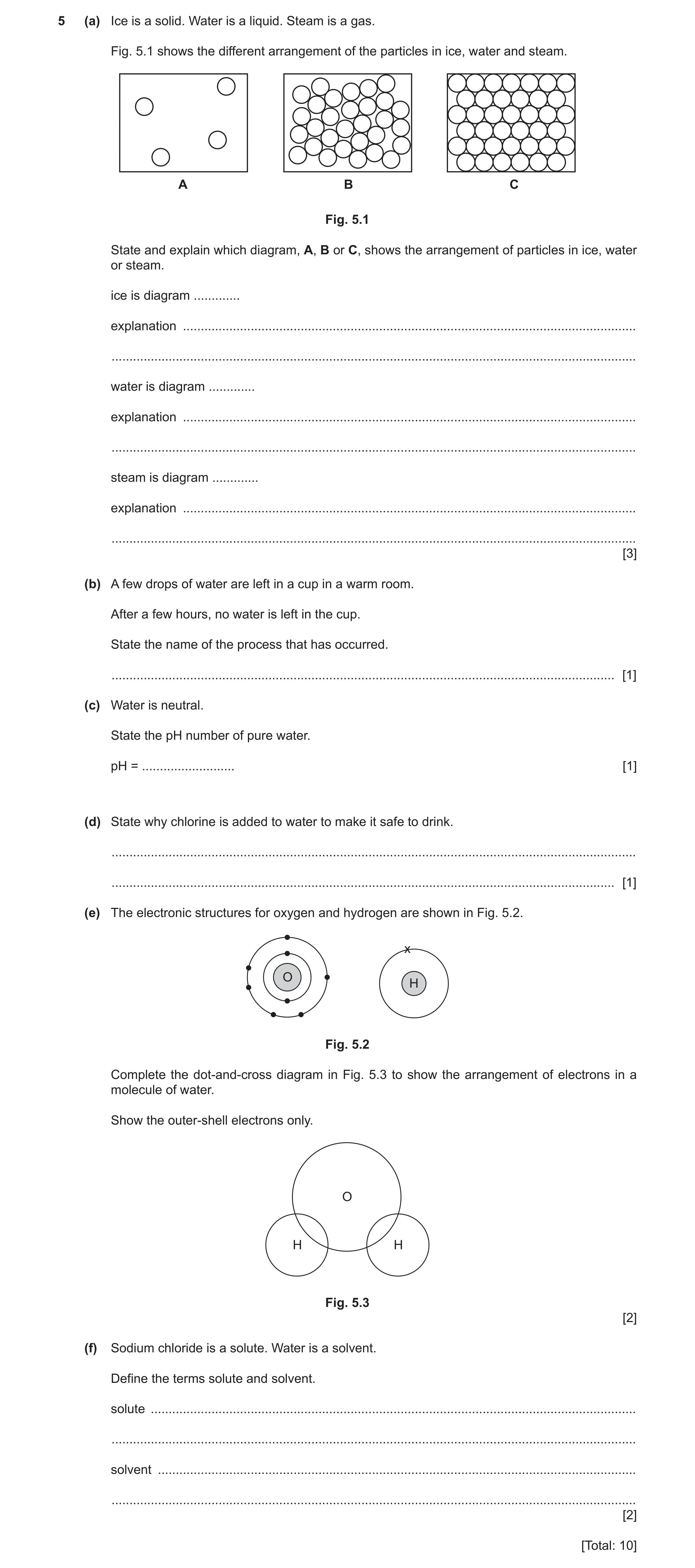
5 (a) Ice is a solid. Water is a liquid. Steam is a gas. Fig. 5.1 shows the different arrangement of the particles in ice, water and steam. A B C Fig. 5.1 State and explain which diagram, A, B or C, shows the arrangement of particles in ice, water or steam. ice is diagram … explanation … … water is diagram … explanation … … steam is diagram … explanation … … [3] (b) A few drops of water are left in a cup in a warm room. After a few hours, no water is left in the cup. State the name of the process that has occurred. … [1] (c) Water is neutral. State the pH number of pure water. pH = … [1] (d) State why chlorine is added to water to make it safe to drink. … … [1] (e) The electronic structures for oxygen and hydrogen are shown in Fig. 5.2. x O H Fig. 5.2 Complete the dot‑and‑cross diagram in Fig. 5.3 to show the arrangement of electrons in a molecule of water. Show the outer‑shell electrons only. O H H Fig. 5.3 [2] (f) Sodium chloride is a solute. Water is a solvent. Define the terms solute and solvent. solute … … solvent … … [2] [Total: 10]
10 marks
Mark scheme: 5(a) ice is C – particles are in regular arrangement water is B – particles are (mostly) touching and irregular arrangement steam is A – particles are widely spaced C B A ; one correct explanation ; three correct explanations ; 3 5(b) evaporation ; 1 5(c) 7 ; 1 5(d) kills bacteria ; 1 Question Answer Marks 5(e) 1 pair of bonding electrons ; all else correct ; 2 5(f) a solute – a substance that is dissolved in a solvent ; a solvent – a substance / liquid that dissolves a solute ; 2
This question in 0654/31 May/June 2024
Q27 · A calcium atom has a proton number of 20 and a nucleon number of 40 0654/31 May/June 2024
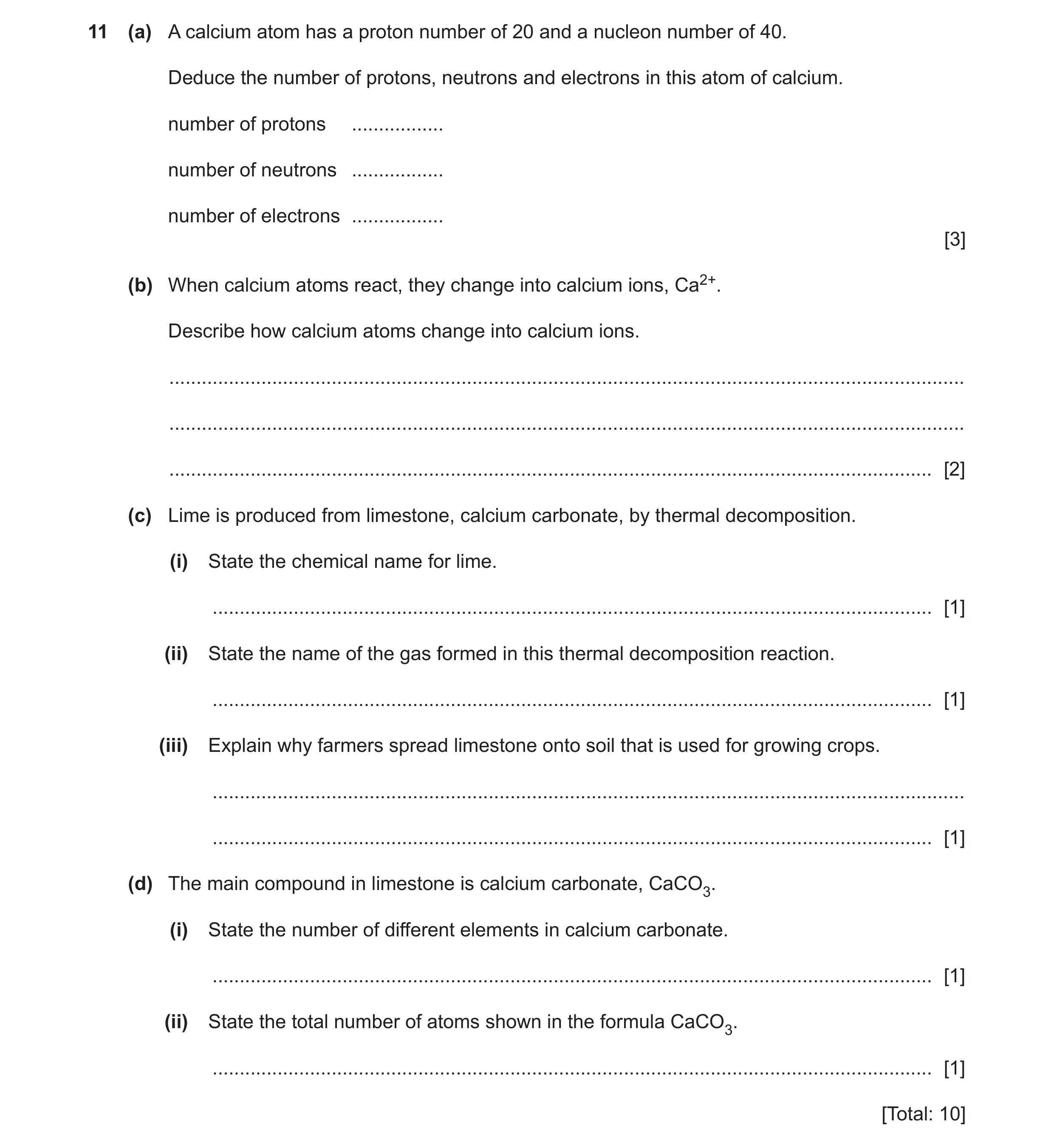
11 (a) A calcium atom has a proton number of 20 and a nucleon number of 40. Deduce the number of protons, neutrons and electrons in this atom of calcium. number of protons … number of neutrons … number of electrons … [3] (b) When calcium atoms react, they change into calcium ions, Ca2+. Describe how calcium atoms change into calcium ions. … … … [2] (c) Lime is produced from limestone, calcium carbonate, by thermal decomposition. (i) State the chemical name for lime. … [1] (ii) State the name of the gas formed in this thermal decomposition reaction. … [1] (iii) Explain why farmers spread limestone onto soil that is used for growing crops. … … [1] (d) The main compound in limestone is calcium carbonate, CaCO3. (i) State the number of different elements in calcium carbonate. … [1] (ii) State the total number of atoms shown in the formula CaCO3. … [1] [Total: 10]
10 marks
Mark scheme: 11(a) protons = 20 ; neutrons = 20 ; electrons = 20 ; 3 11(b) loses electrons ; 2 electrons ; 2 11(c)(i) calcium oxide ; 1 11(c)(ii) carbon dioxide ; 1 11(c)(iii) neutralise acidic soil ; 1 11(d)(i) 3 ; 1 11(d)(ii) 5 ; 1
This question in 0654/31 May/June 2024
Q28 · A teacher reacts sodium with water 0654/32 May/June 2024
8 A teacher reacts sodium with water. Hydrogen and aqueous sodium hydroxide are the products of the reaction. (a) Balance the symbol equation for this reaction. 2Na + … H2O … NaOH + H2 [2] (b) Before sodium is added to water, the water is neutral. Aqueous sodium hydroxide is an alkali. (i) State the pH number of pure water. pH = … [1] (ii) Suggest the pH number of the aqueous sodium hydroxide. pH = … [1] (c) The reaction between sodium and water is described as violent. Describe the reaction between potassium and water. Explain your answer. reaction … … explanation … … … [2] (d) Sodium reacts with chlorine to make sodium chloride. In this reaction, sodium atoms form sodium ions and chlorine atoms form chloride ions. • the electronic structure of a sodium atom is 2.8.1 • the electronic structure of a chlorine atom is 2.8.7 (i) Deduce the electronic structure for a sodium ion. … [1] (ii) Deduce the electronic structure for a chloride ion. … [1] (e) When concentrated aqueous sodium chloride is electrolysed, gases are released at each inert electrode. State the names of the gases released at each electrode. gas at cathode … gas at anode … [2] [Total: 10]
10 marks
Mark scheme: 8(a) 2Na + 2 H2O 2 NaOH + H2 ;; 2 8(b)(i) 7 ; 1 8(b)(ii) 8–14 ; 1 8(c) even more violent / explosive ; reactivity increases down the group / potassium is more reactive than sodium ; 2 8(d)(i) 2.8 ; 1 8(d)(ii) 2.8.8 ; 1 8(e) cathode–hydrogen ; anode–chlorine ; 2
This question in 0654/32 May/June 2024
Q29 · A teacher reacts sodium with water 0654/33 May/June 2024
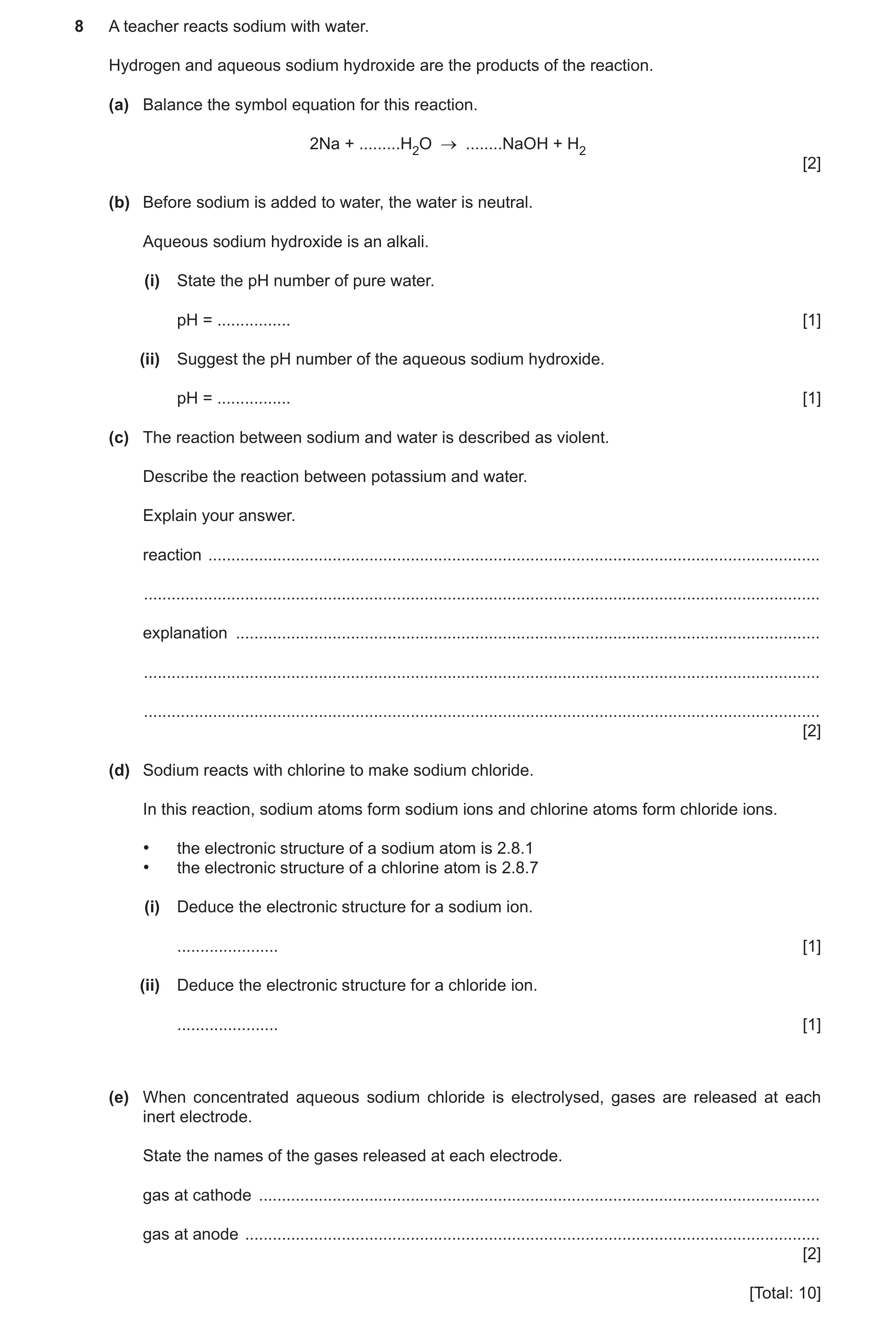
8 A teacher reacts sodium with water. Hydrogen and aqueous sodium hydroxide are the products of the reaction. (a) Balance the symbol equation for this reaction. 2Na + … H2O … NaOH + H2 [2] (b) Before sodium is added to water, the water is neutral. Aqueous sodium hydroxide is an alkali. (i) State the pH number of pure water. pH = … [1] (ii) Suggest the pH number of the aqueous sodium hydroxide. pH = … [1] (c) The reaction between sodium and water is described as violent. Describe the reaction between potassium and water. Explain your answer. reaction … … explanation … … … [2] (d) Sodium reacts with chlorine to make sodium chloride. In this reaction, sodium atoms form sodium ions and chlorine atoms form chloride ions. • the electronic structure of a sodium atom is 2.8.1 • the electronic structure of a chlorine atom is 2.8.7 (i) Deduce the electronic structure for a sodium ion. … [1] (ii) Deduce the electronic structure for a chloride ion. … [1] (e) When concentrated aqueous sodium chloride is electrolysed, gases are released at each inert electrode. State the names of the gases released at each electrode. gas at cathode … gas at anode … [2] [Total: 10]
10 marks
Mark scheme: 8(a) 2Na + 2 H2O 2 NaOH + H2 ;; 2 8(b)(i) 7 ; 1 8(b)(ii) 8–14 ; 1 8(c) even more violent / explosive ; reactivity increases down the group / potassium is more reactive than sodium ; 2 8(d)(i) 2.8 ; 1 8(d)(ii) 2.8.8 ; 1 8(e) cathode–hydrogen ; anode–chlorine ; 2
This question in 0654/33 May/June 2024
Q30 · Sulfuric acid has the formula H2SO4 0654/31 May/June 2025
6 (a) Sulfuric acid has the formula H2SO4. Determine the relative molecular mass, Mr , of sulfuric acid. [Ar : H, 1; O, 16; S, 32] relative molecular mass = … [1] (b) Fig. 6.1 shows the apparatus used for the electrolysis of dilute sulfuric acid. + – Fig. 6.1 (i) On Fig. 6.1, draw a label line and the letter A to indicate the anode and a label line and the letter C to indicate the cathode. [1] (ii) On Fig. 6.1, draw a label line and the letter E to indicate the electrolyte. [1] (iii) Name the gas formed at the anode and the gas formed at the cathode in Fig. 6.1. anode … cathode … [2] (iv) Graphite is often used as inert electrodes. Graphite is a giant covalent structure formed of carbon atoms. Name one other giant covalent structure formed of carbon atoms. … [1] (c) (i) Describe the effect of dilute sulfuric acid on: blue litmus indicator … methyl orange indicator. … [2] (ii) Suggest the pH of dilute sulfuric acid. pH = … [1] (iii) State the two products of the neutralisation reaction between an acid and an alkali. 1 … 2 … [1] [Total: 10]
10 marks
Mark scheme: 6(a) 98 ; 1 6(b)(i) anode and cathode correctly indicated ; 1 A C 6(b)(ii) electrolyte correctly indicated ; 1 E 6(b)(iii) anode – oxygen ; 2 cathode – hydrogen ; 6(b)(iv) diamond ; 1 6(c)(i) goes red ; 2 goes red ; 6(c)(ii) 1– 6 ; 1 6(c)(iii) salt and water ; 1
This question in 0654/31 May/June 2025
Q31 · The element calcium is represented on the Periodic Table as shown 0654/31 Oct/Nov 2025
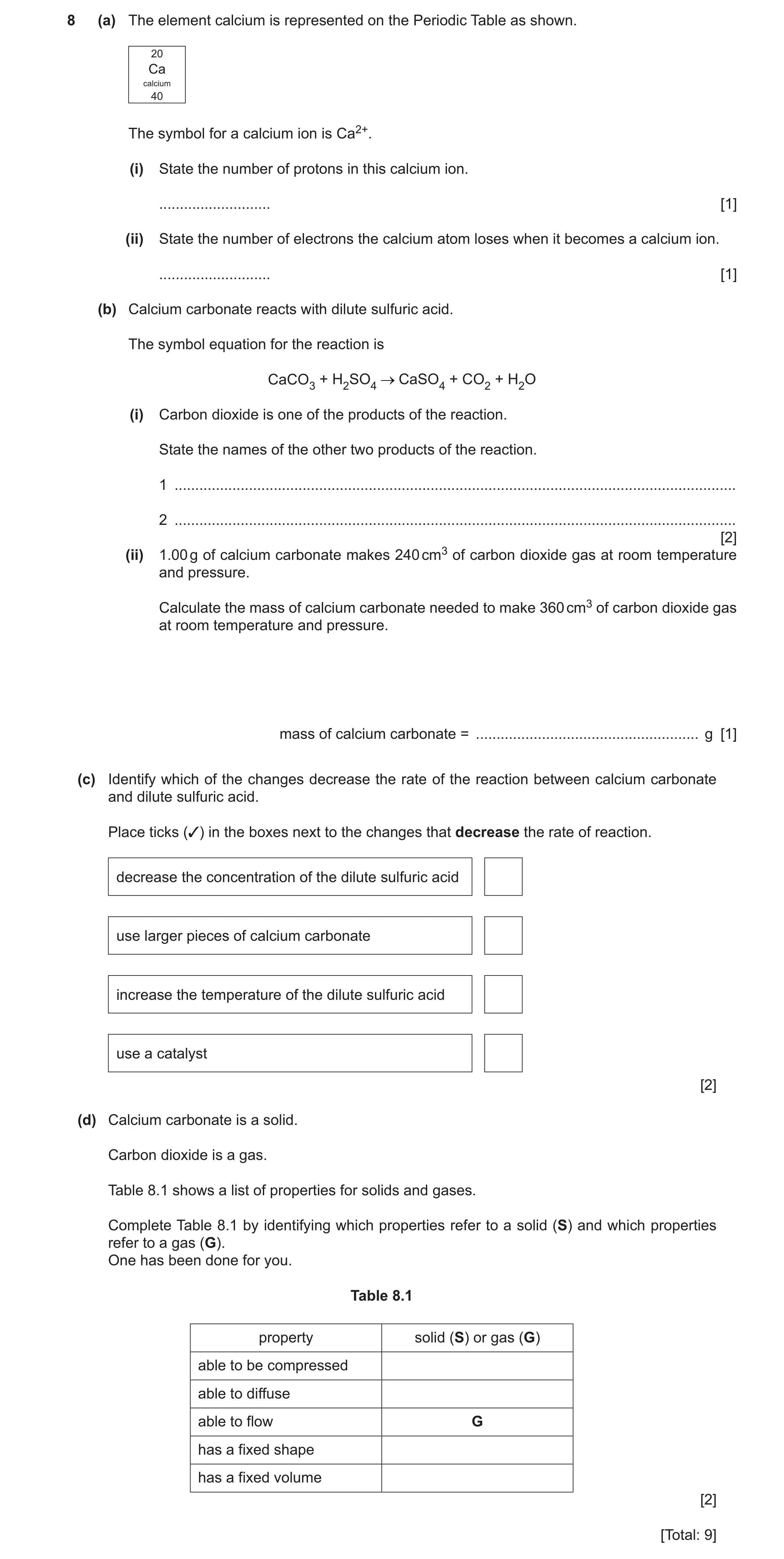
8 (a) The element calcium is represented on the Periodic Table as shown. 20 Ca calcium 40 The symbol for a calcium ion is Ca2+. (i) State the number of protons in this calcium ion. … [1] (ii) State the number of electrons the calcium atom loses when it becomes a calcium ion. … [1] (b) Calcium carbonate reacts with dilute sulfuric acid. The symbol equation for the reaction is CaCO3 + H2SO4 CaSO4 + CO2 + H2O (i) Carbon dioxide is one of the products of the reaction. State the names of the other two products of the reaction. 1 … 2 … [2] (ii) 1.00 g of calcium carbonate makes 240 cm3 of carbon dioxide gas at room temperature and pressure. Calculate the mass of calcium carbonate needed to make 360 cm3 of carbon dioxide gas at room temperature and pressure. mass of calcium carbonate = … g [1] (c) Identify which of the changes decrease the rate of the reaction between calcium carbonate and dilute sulfuric acid. Place ticks (3) in the boxes next to the changes that decrease the rate of reaction. decrease the concentration of the dilute sulfuric acid use larger pieces of calcium carbonate increase the temperature of the dilute sulfuric acid use a catalyst [2] (d) Calcium carbonate is a solid. Carbon dioxide is a gas. Table 8.1 shows a list of properties for solids and gases. Complete Table 8.1 by identifying which properties refer to a solid (S) and which properties refer to a gas (G). One has been done for you. Table 8.1 property solid (S) or gas (G) able to be compressed able to diffuse able to flow G has a fixed shape has a fixed volume [2] [Total: 9]
9 marks
Mark scheme: 8(a)(i) 20 ; 1 8(a)(ii) 2 ; 1 8(b)(i) calcium sulfate ; 2 water ; 8(b)(ii) 1.5(0) (g) 1 2 decrease the concentration of the dilute sulfuric acid ✓ 8(c) use larger pieces of calcium carbonate ✓ increase the temperature of the dilute sulfuric acid use a catalyst 1 mark for each correct answer 3 boxes ticked – 1 incorrect – 1 mark 3 boxes ticked – 2 incorrect – 0 marks 4 boxes ticked – 0 marks 8(d) column completed top to bottom 2 G, G, (G), S, S 2 or 3 correct – 1 mark all correct – 2 marks
This question in 0654/31 Oct/Nov 2025
Q32 · The formulae of six gases found in the air are shown 0654/32 Oct/Nov 2025
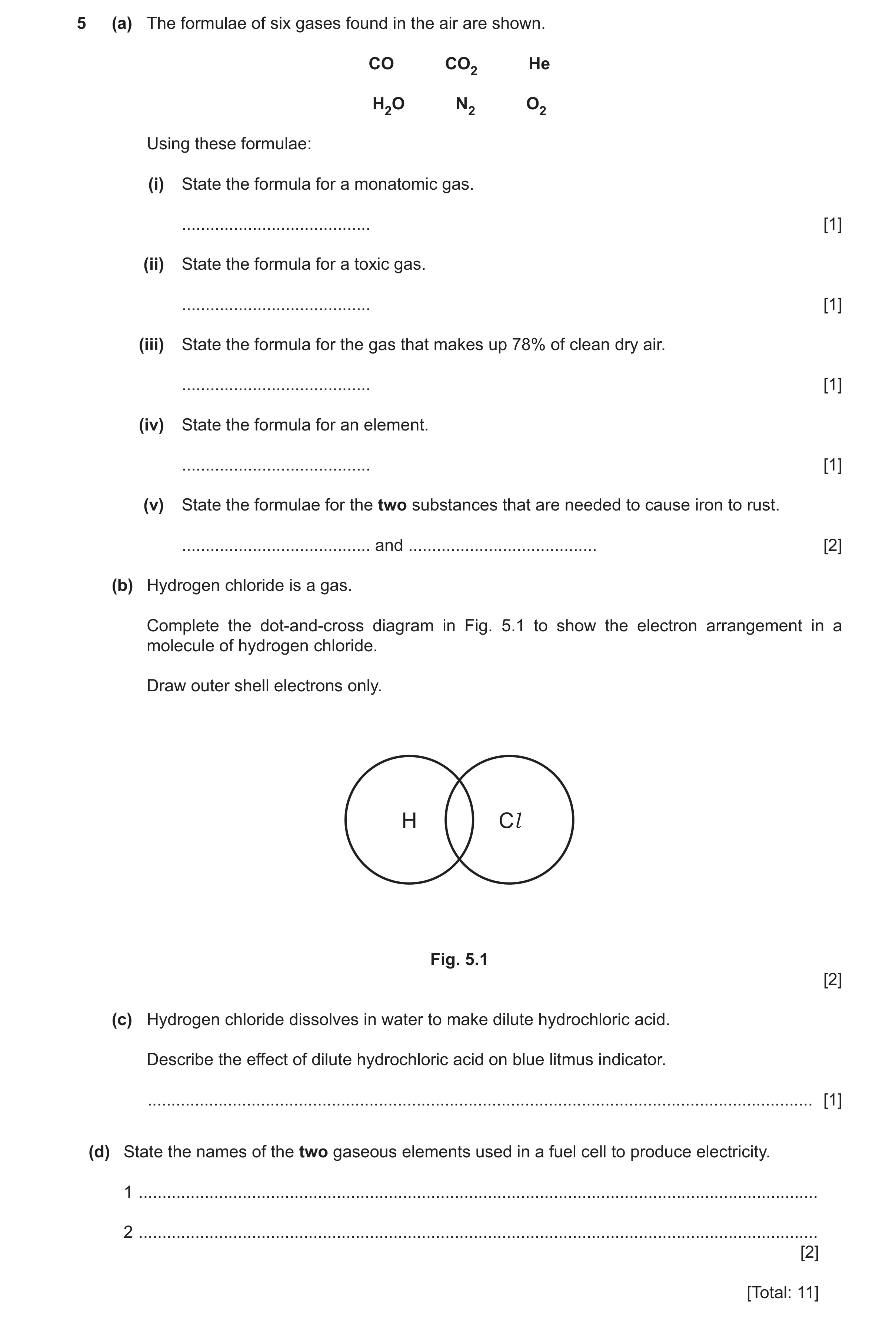
5 (a) The formulae of six gases found in the air are shown. CO CO2 He H2O N2 O2 Using these formulae: (i) State the formula for a monatomic gas. … [1] (ii) State the formula for a toxic gas. … [1] (iii) State the formula for the gas that makes up 78% of clean dry air. … [1] (iv) State the formula for an element. … [1] (v) State the formulae for the two substances that are needed to cause iron to rust. … and … [2] (b) Hydrogen chloride is a gas. Complete the dot‑and‑cross diagram in Fig. 5.1 to show the electron arrangement in a molecule of hydrogen chloride. Draw outer shell electrons only. H Cl Fig. 5.1 [2] (c) Hydrogen chloride dissolves in water to make dilute hydrochloric acid. Describe the effect of dilute hydrochloric acid on blue litmus indicator. … [1] (d) State the names of the two gaseous elements used in a fuel cell to produce electricity. 1 … 2 … [2] [Total: 11]
11 marks
Mark scheme: 5(a)(i) He ; 1 5(a)(ii) CO ; 1 5(a)(iii) N2 ; 1 5(a)(iv) He or N2 or O2 ; 1 5(a)(v) O2 ; 2 H2O ; 5(b) 2 shared pair correct ; all else correct ; 5(c) turns red ; 1 5(d) hydrogen ; 2 oxygen ;
This question in 0654/32 Oct/Nov 2025
Q33 · Sodium reacts with chlorine to make sodium chloride 0654/32 Oct/Nov 2025
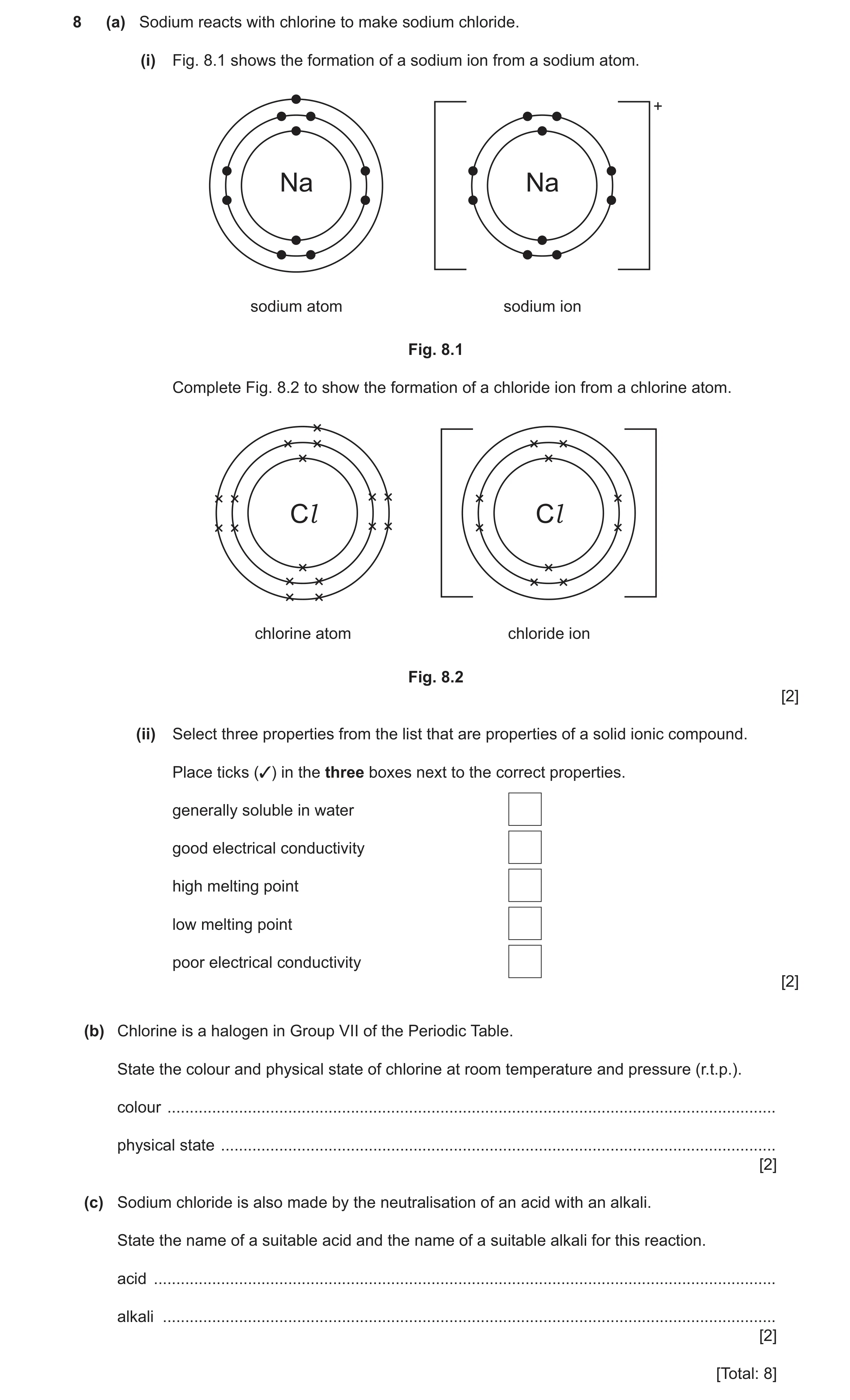
8 (a) Sodium reacts with chlorine to make sodium chloride. (i) Fig. 8.1 shows the formation of a sodium ion from a sodium atom. + Na Na sodium atom sodium ion Fig. 8.1 Complete Fig. 8.2 to show the formation of a chloride ion from a chlorine atom. Cl Cl chlorine atom chloride ion Fig. 8.2 [2] (ii) Select three properties from the list that are properties of a solid ionic compound. Place ticks (3) in the three boxes next to the correct properties. generally soluble in water good electrical conductivity high melting point low melting point poor electrical conductivity [2] (b) Chlorine is a halogen in Group VII of the Periodic Table. State the colour and physical state of chlorine at room temperature and pressure (r.t.p.). colour … physical state … [2] (c) Sodium chloride is also made by the neutralisation of an acid with an alkali. State the name of a suitable acid and the name of a suitable alkali for this reaction. acid … alkali … [2] [Total: 8]
8 marks
Mark scheme: 8(a)(i) eight electrons added to outer shell ; 2 – sign shown ; 8(a)(ii) 2 2 correct – 1 mark all 3 correct – 2 marks 8(b) (pale) yellow-green ; 2 gas ; 8(c) hydrochloric acid ; 2 sodium hydroxide ;
This question in 0654/32 Oct/Nov 2025
![Question 3: (a) (i) State the percentage of nitrogen in the air. ............................% [1] (ii) Nitrogen and oxygen together make up most of th…](https://img.pastlit.com/crops/7136a29b-98d2-4252-ad65-fef6c6b982c3/q5.webp)
![Question 4: Water is a neutral liquid. (a) (i) State the pH of pure water. ............................................................[1] (ii) Complet…](https://img.pastlit.com/crops/66fbdfcc-e60e-4ddd-8ff7-43887a81233a/q8.webp) 7 / 53
7 / 53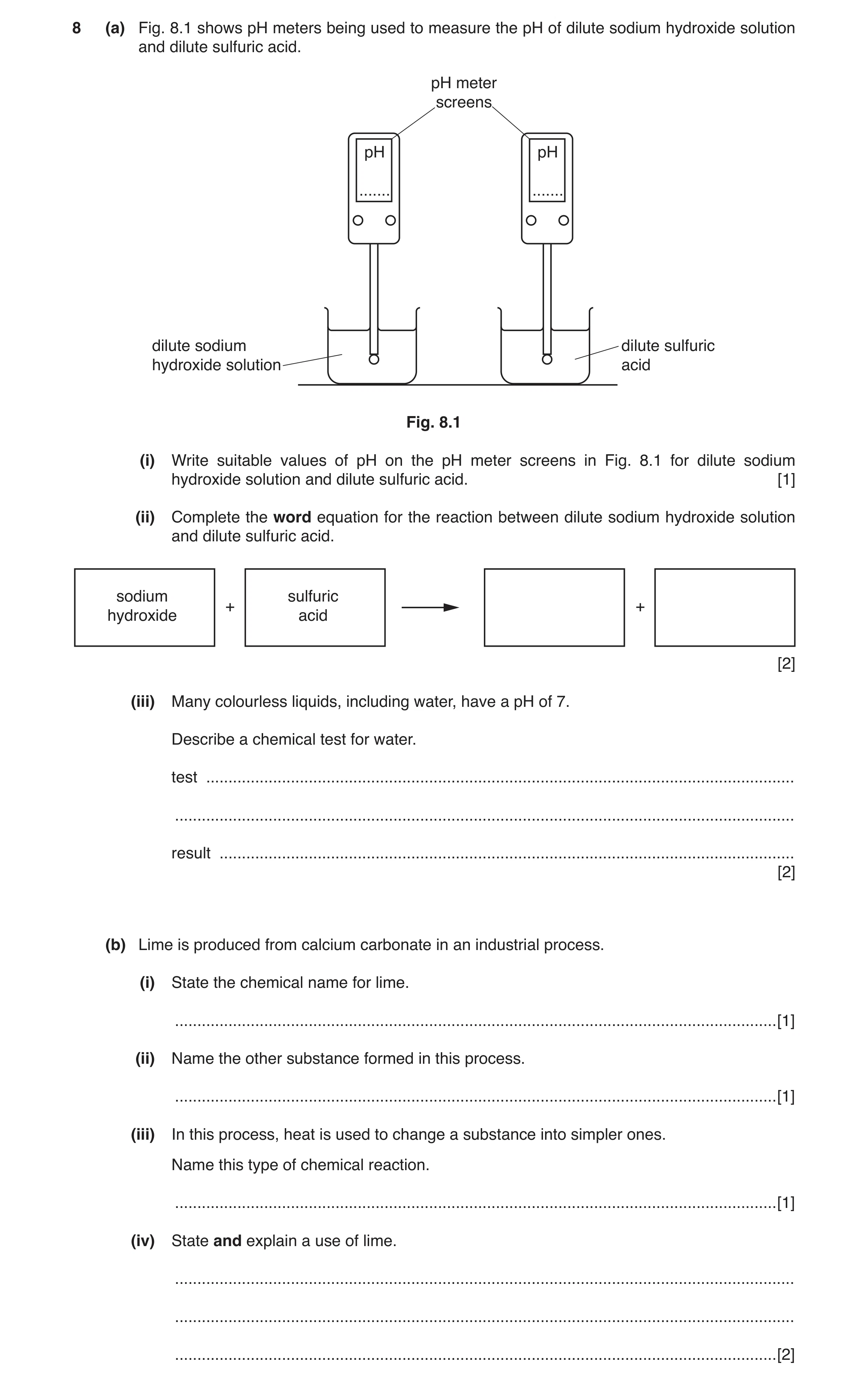
 10 / 53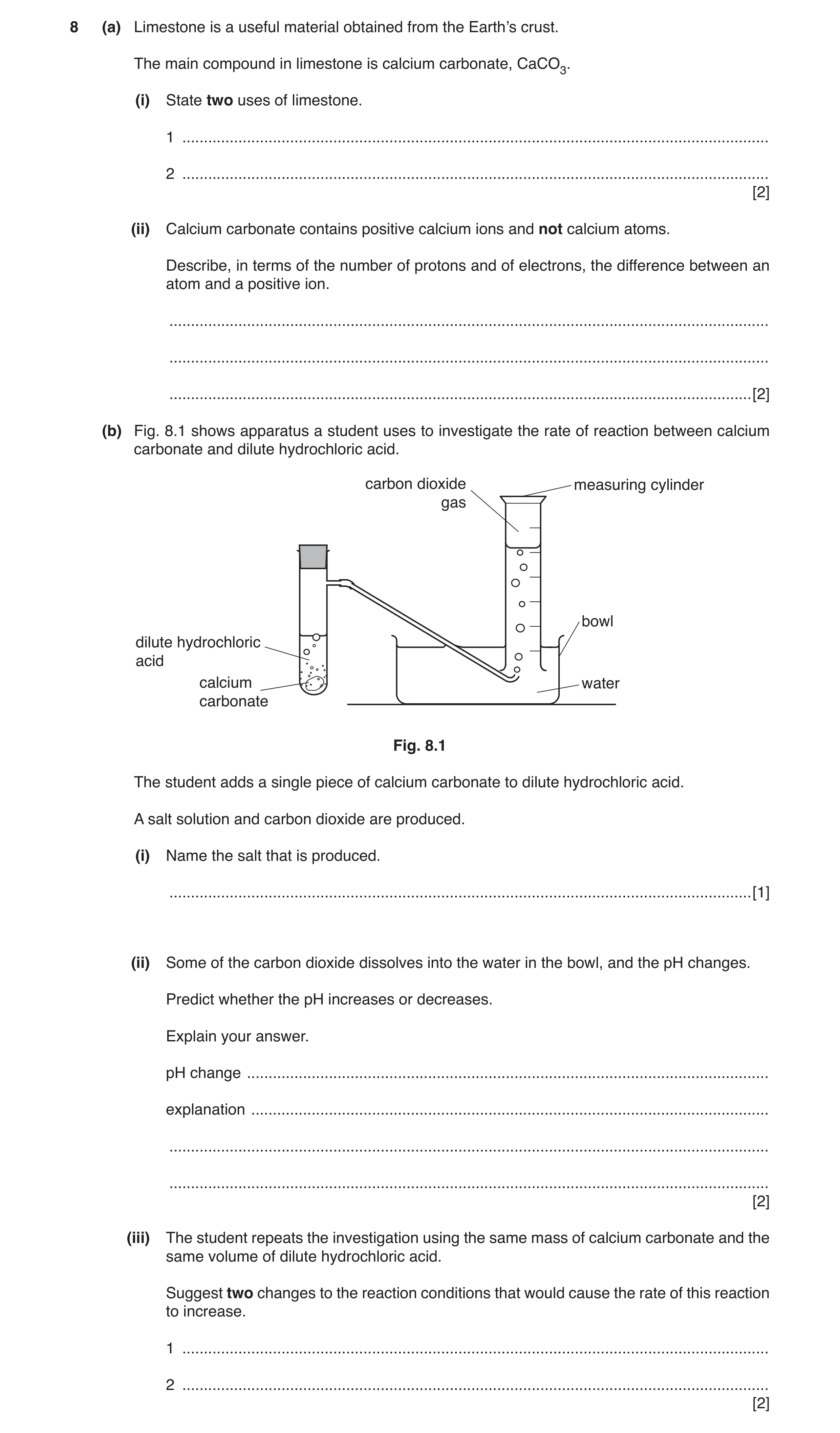
 37 / 53
 38 / 53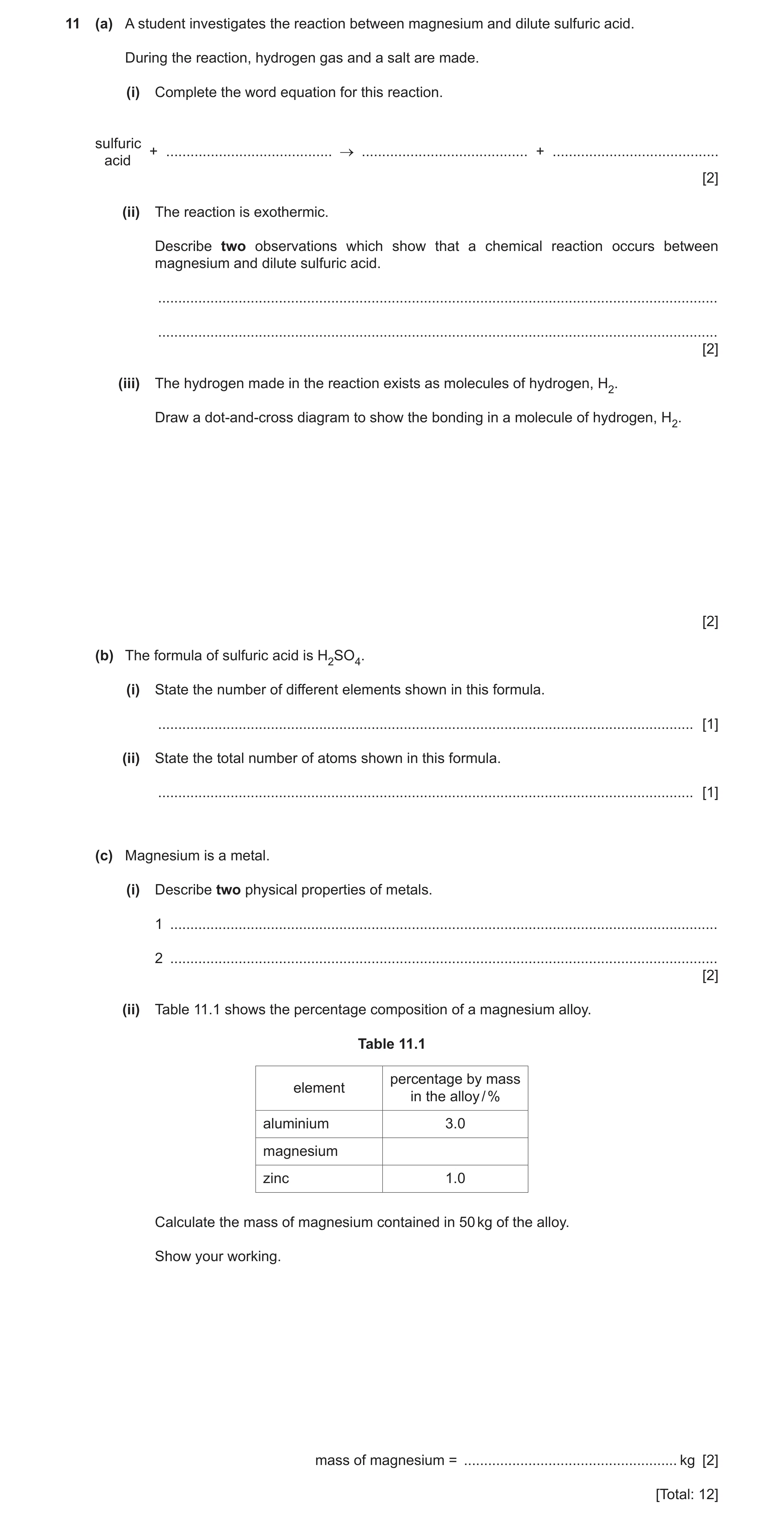
 45 / 53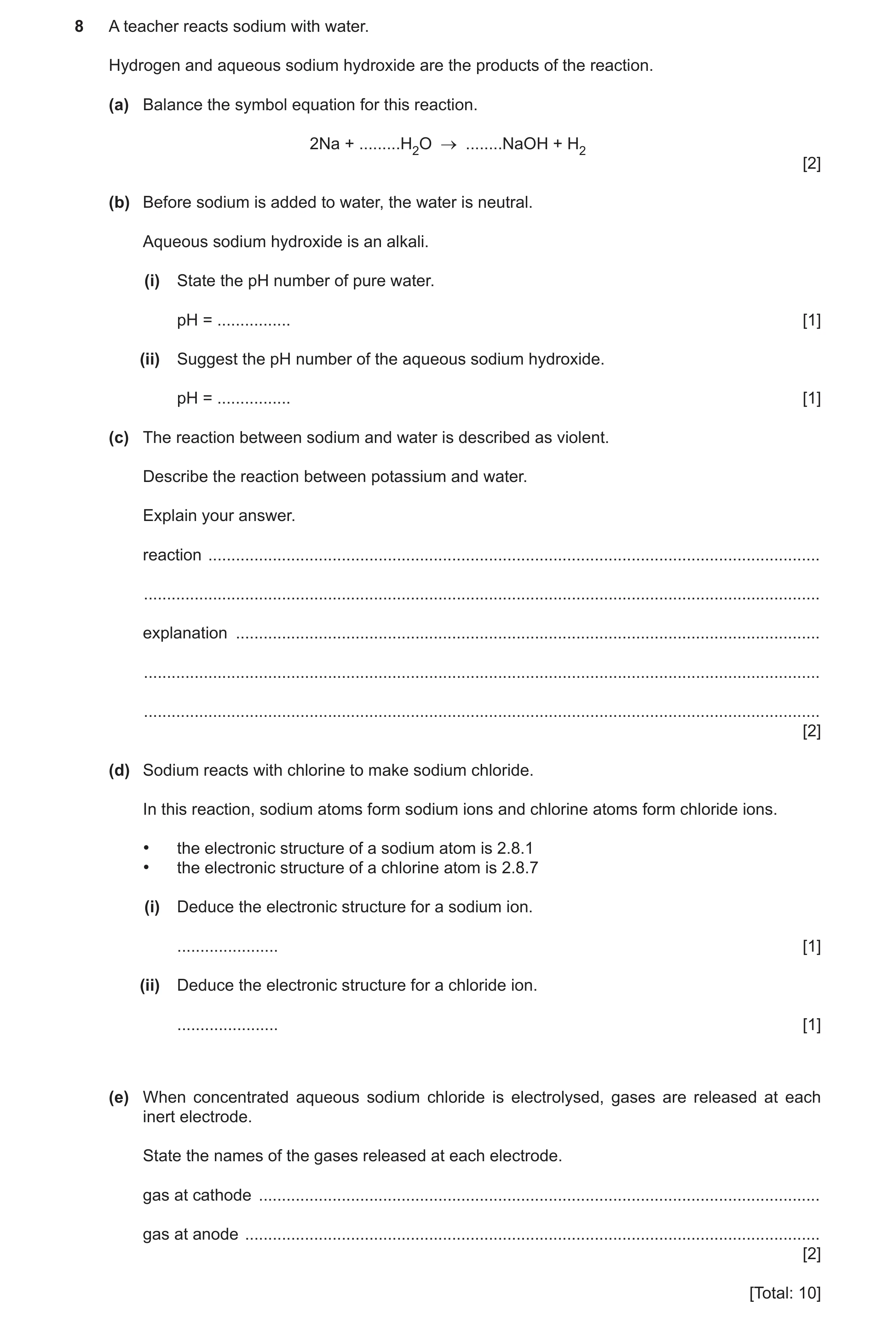
![Question 30: (a) Sulfuric acid has the formula H2SO4. Determine the relative molecular mass, Mr , of sulfuric acid. [Ar : H, 1; O, 16; S, 32] relative m…](https://img.pastlit.com/crops/9c236bbd-0fcd-4db6-93fa-2963f2bf9776/q6.webp)
 11
11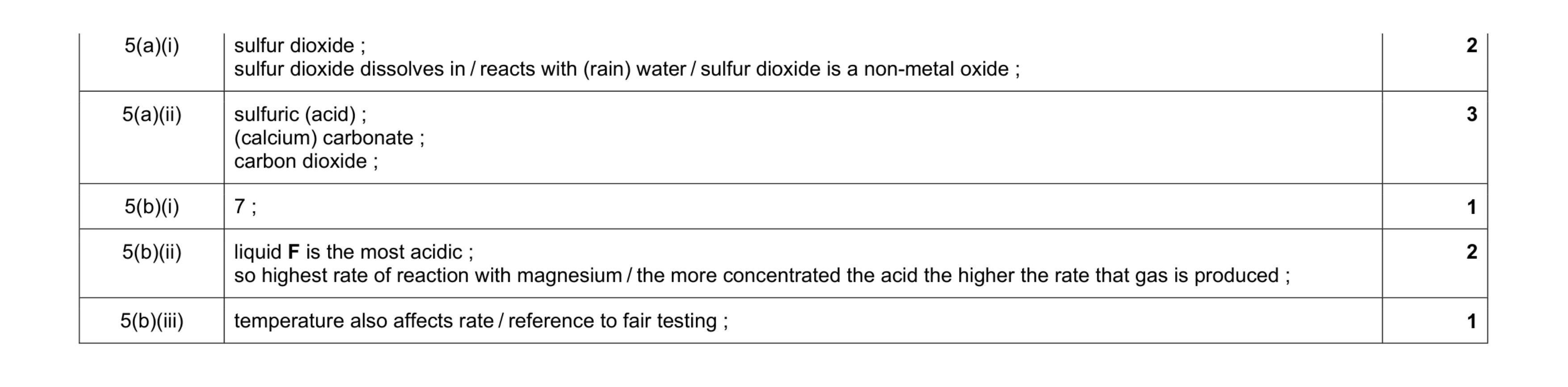 9
9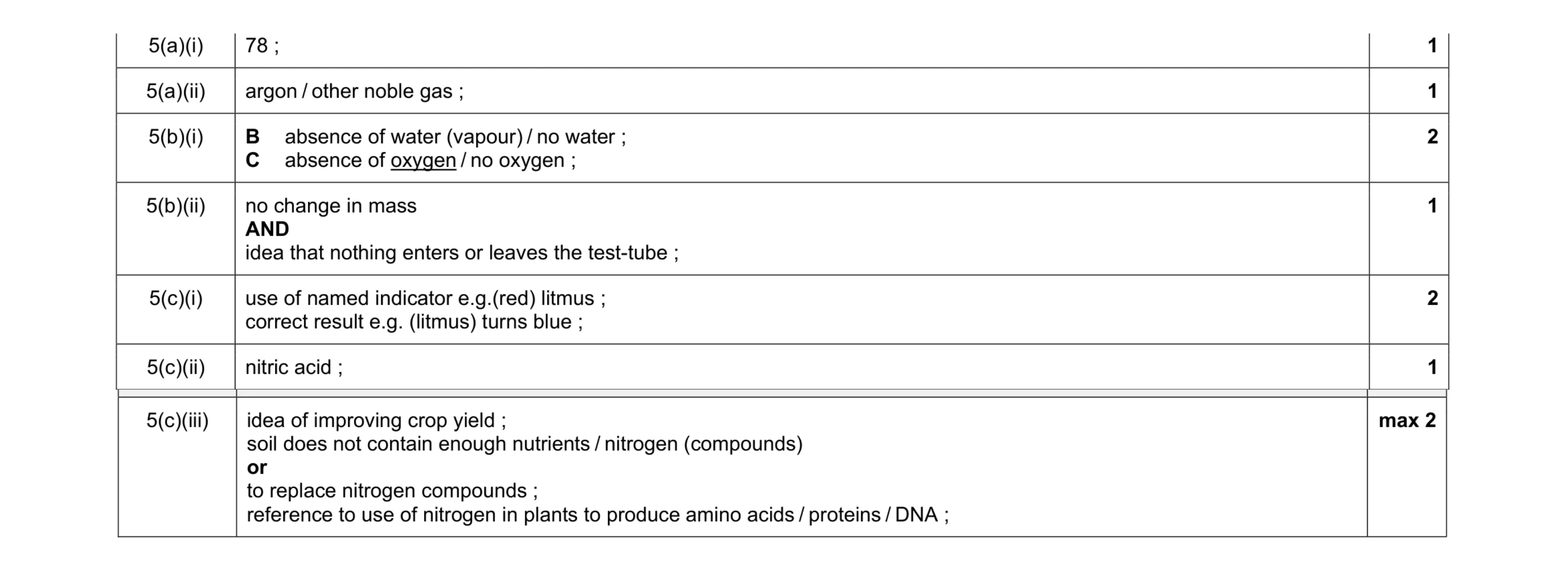 10
10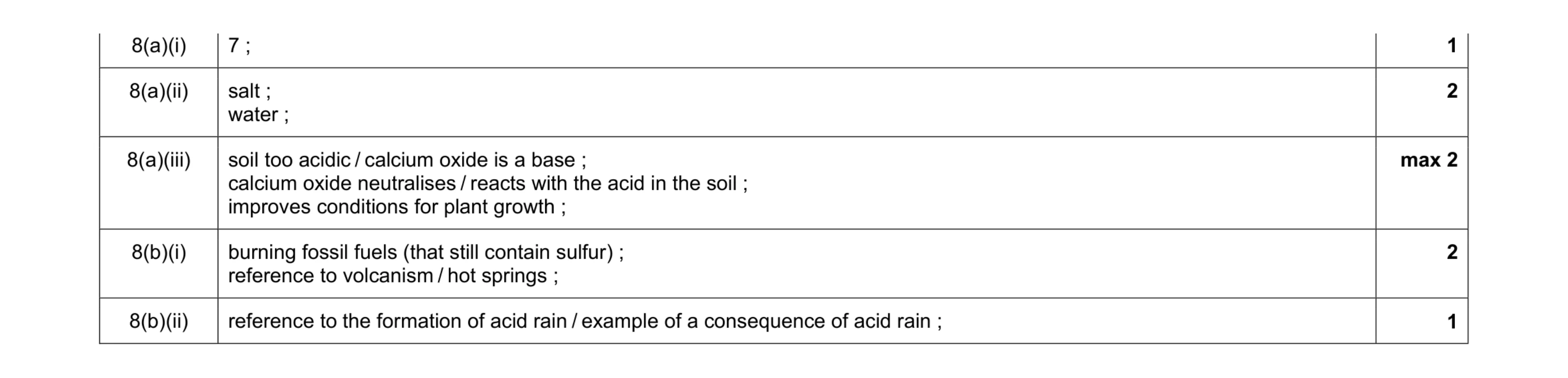 8
8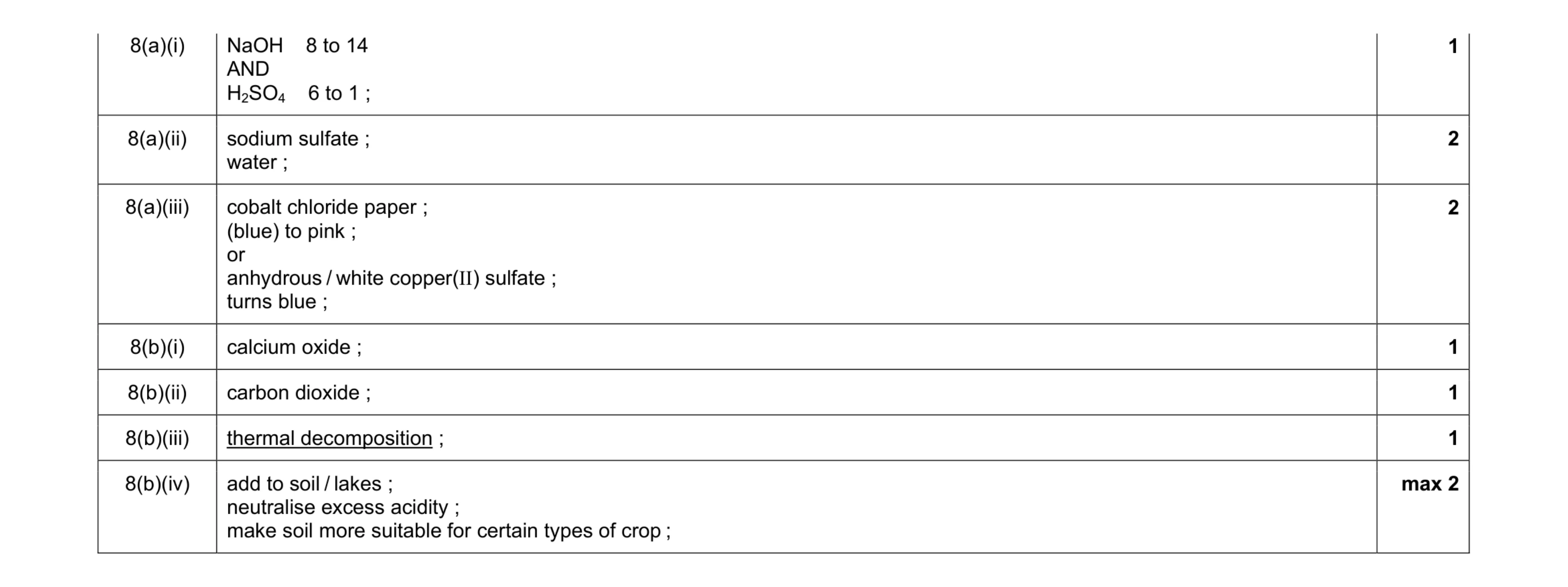 10
10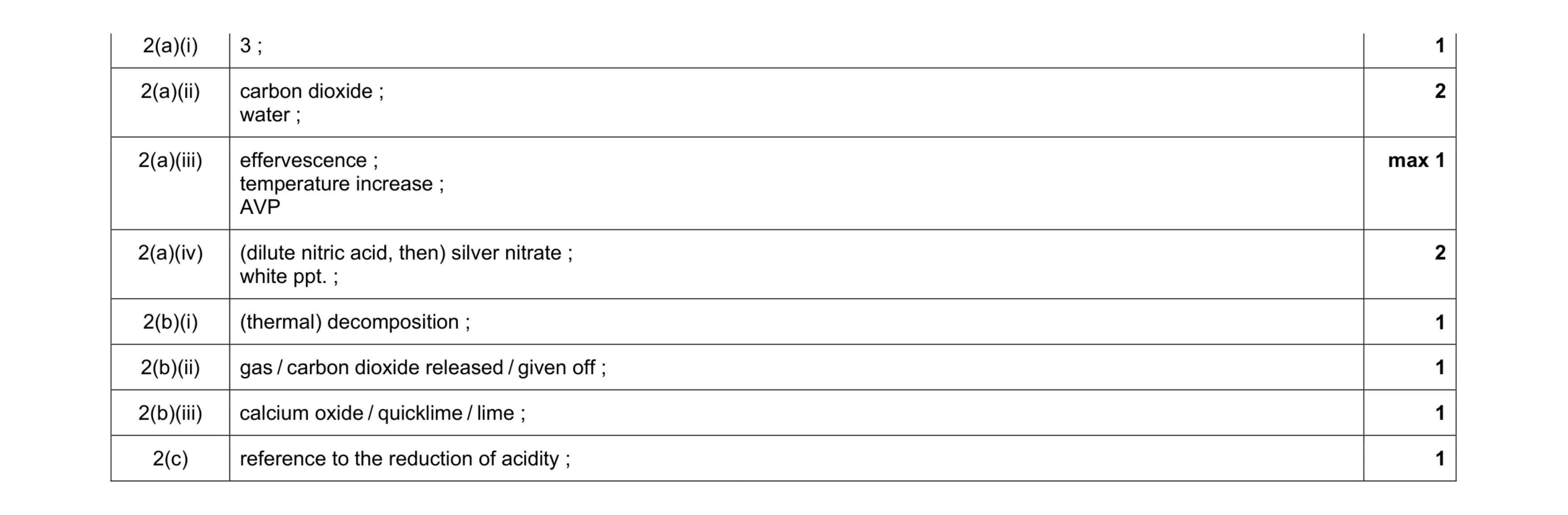 10
10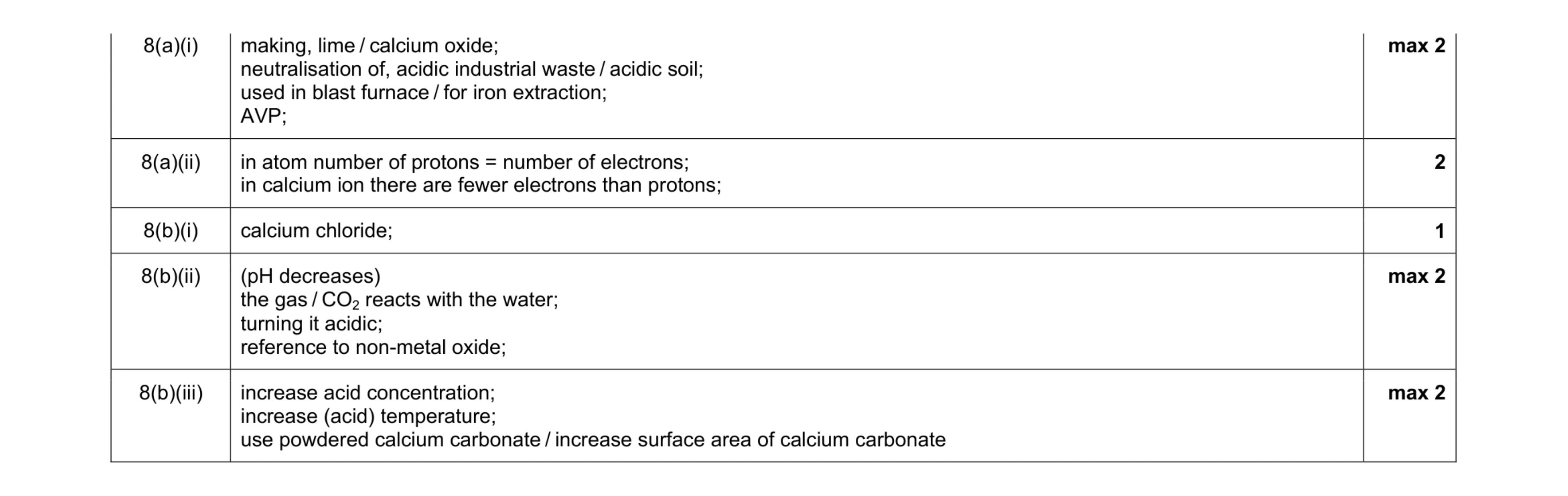 9
9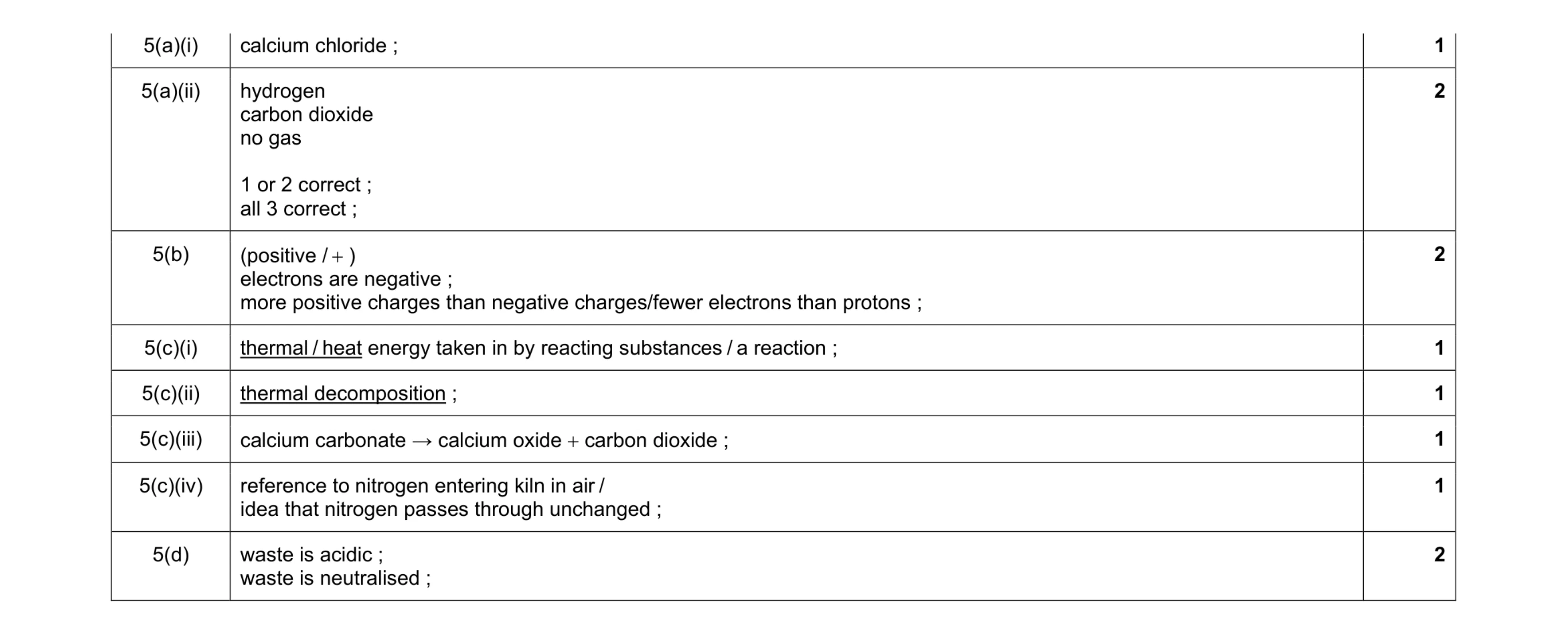 11
11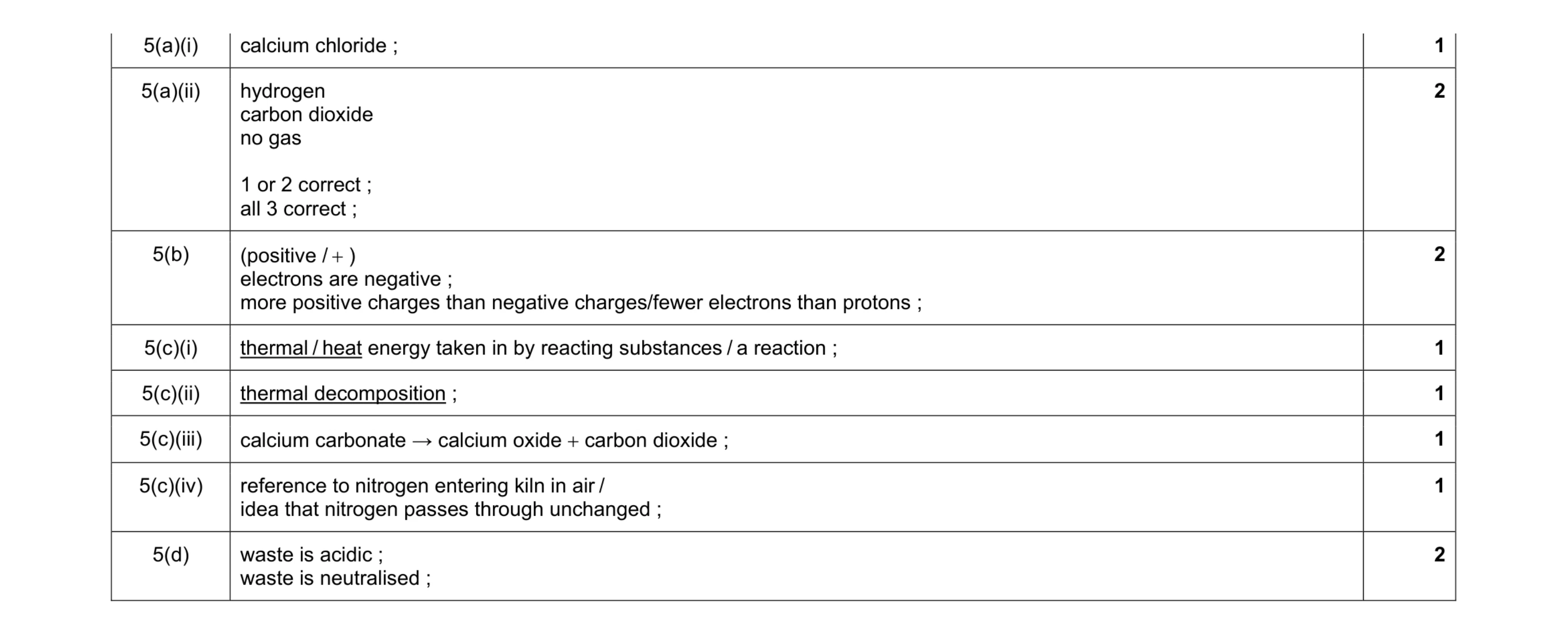 11
11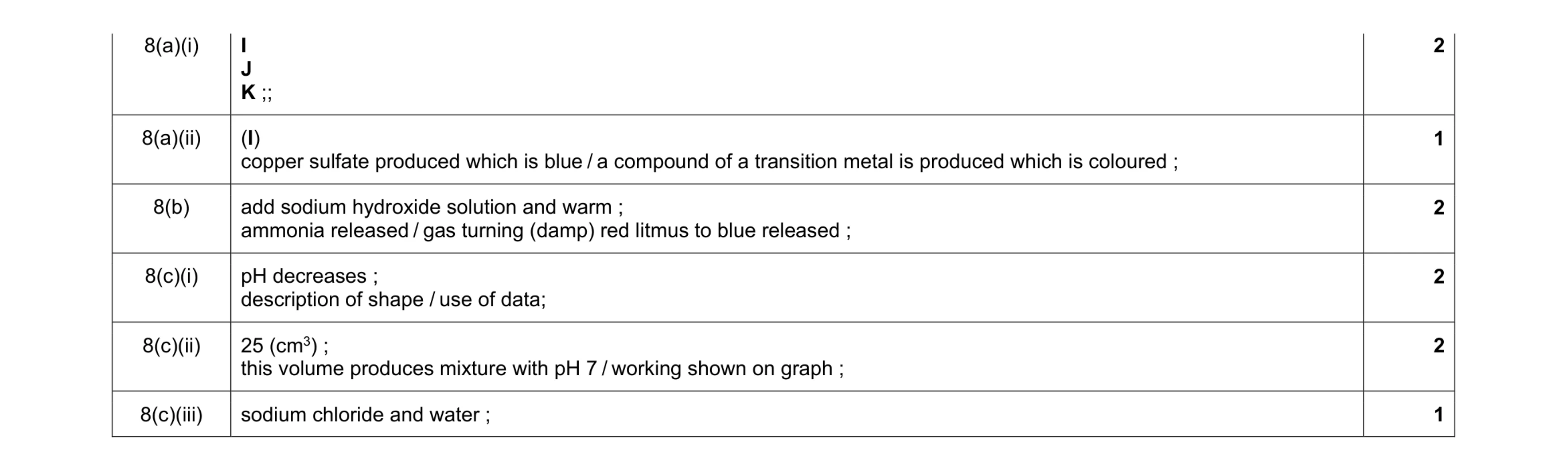 10
10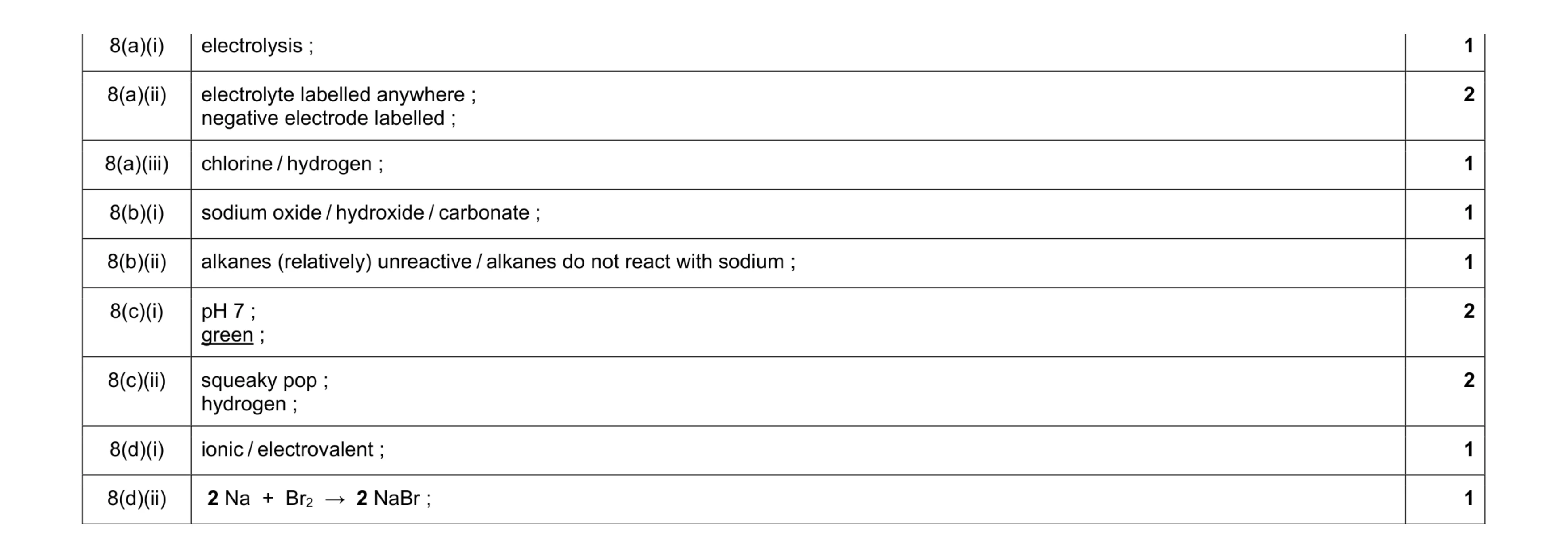 12
12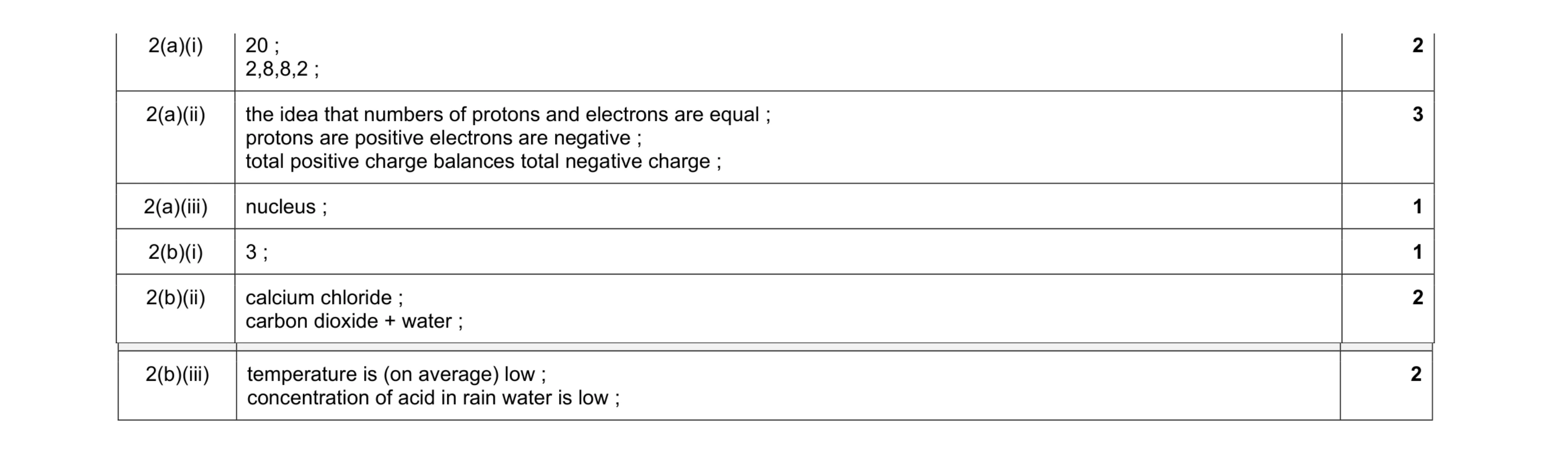 11
11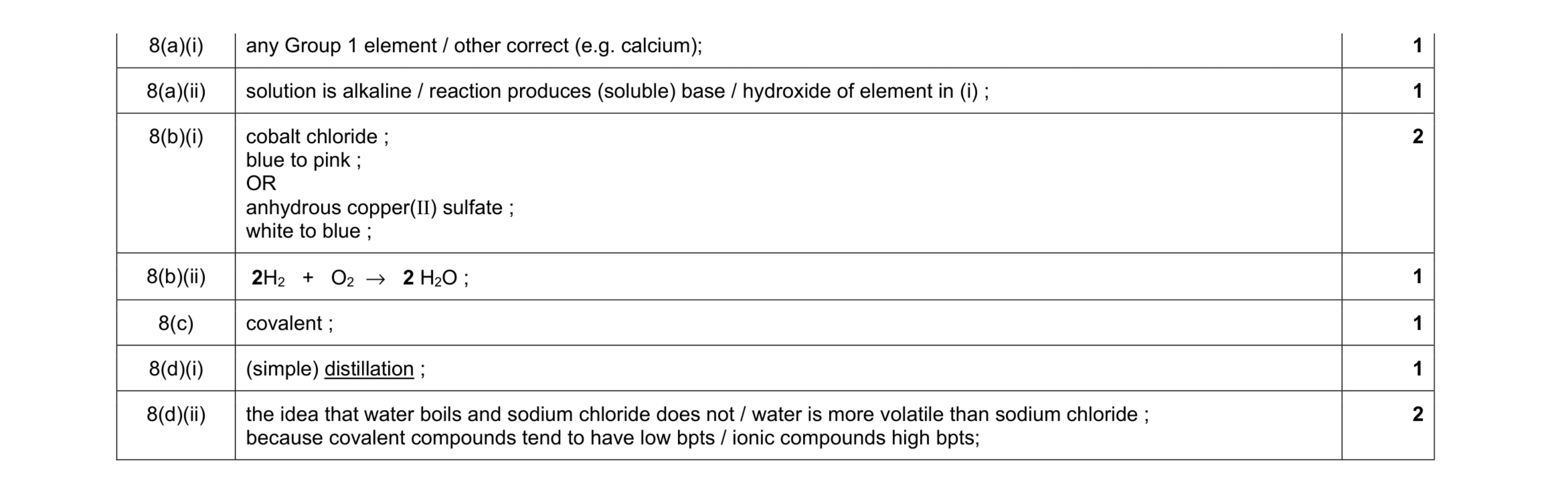 9
9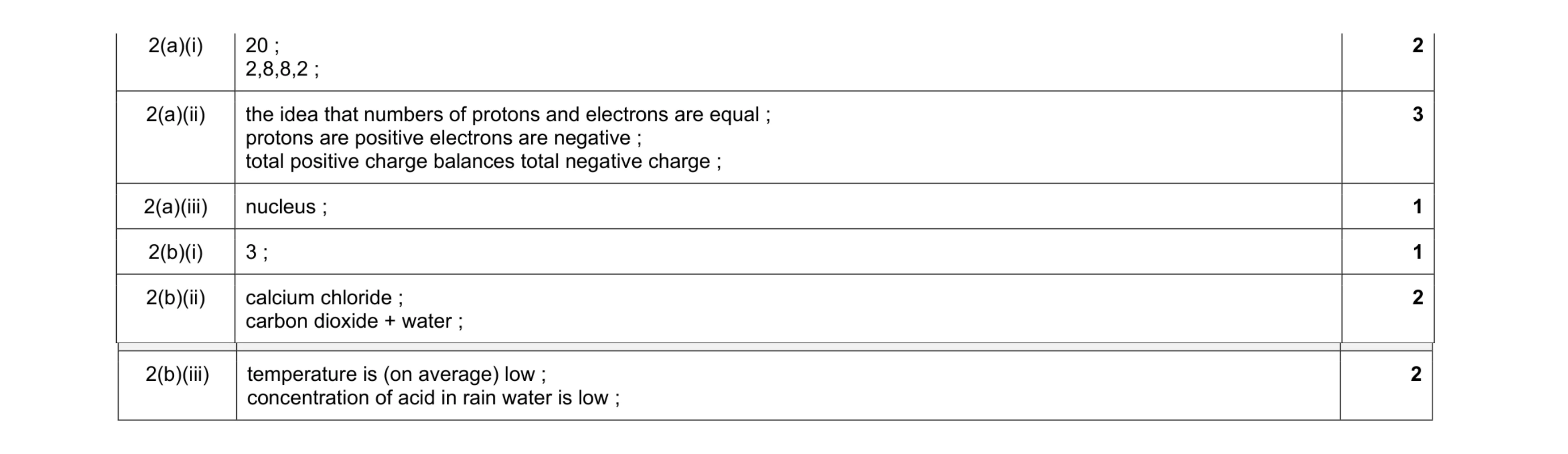 11
11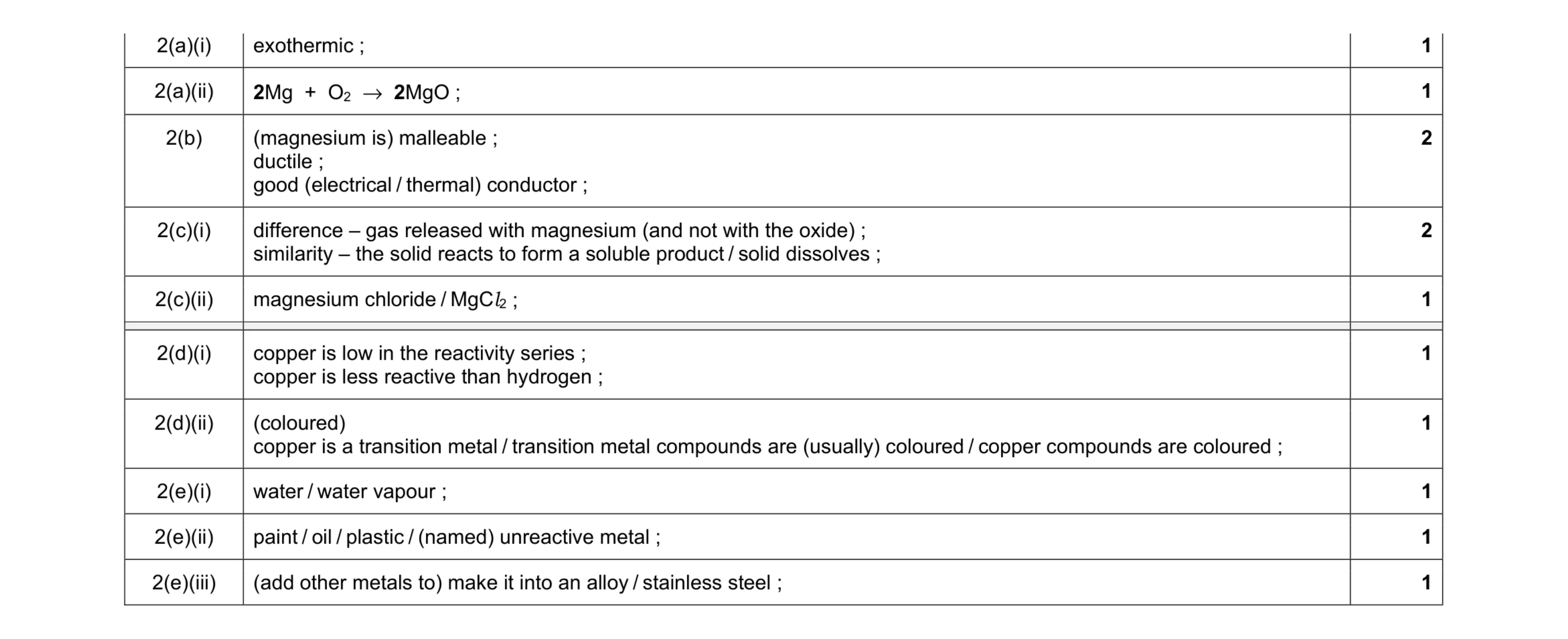 12
12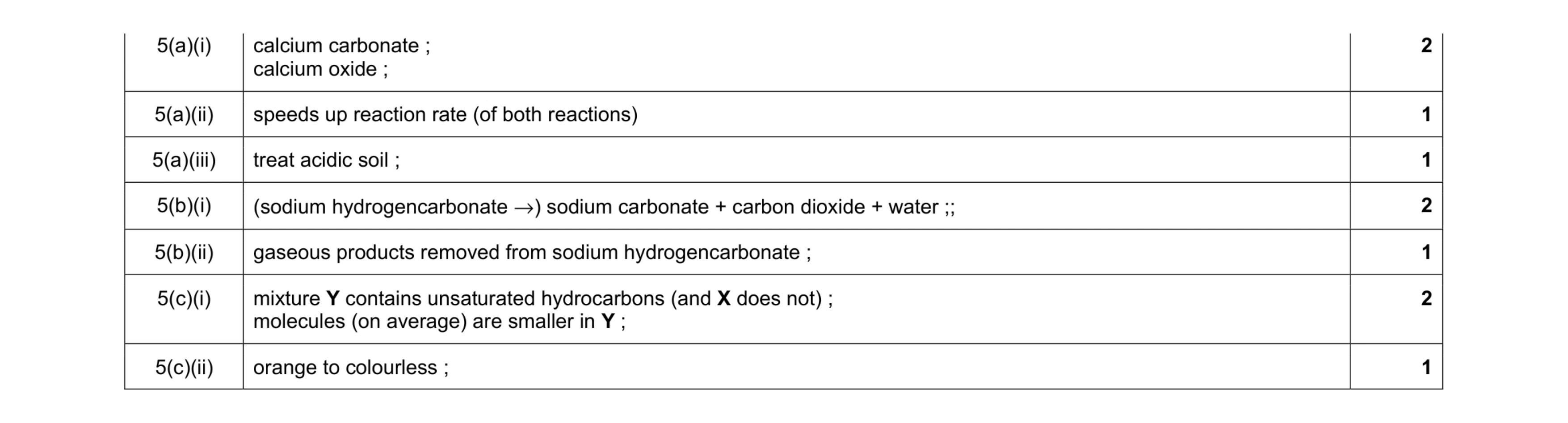 10
10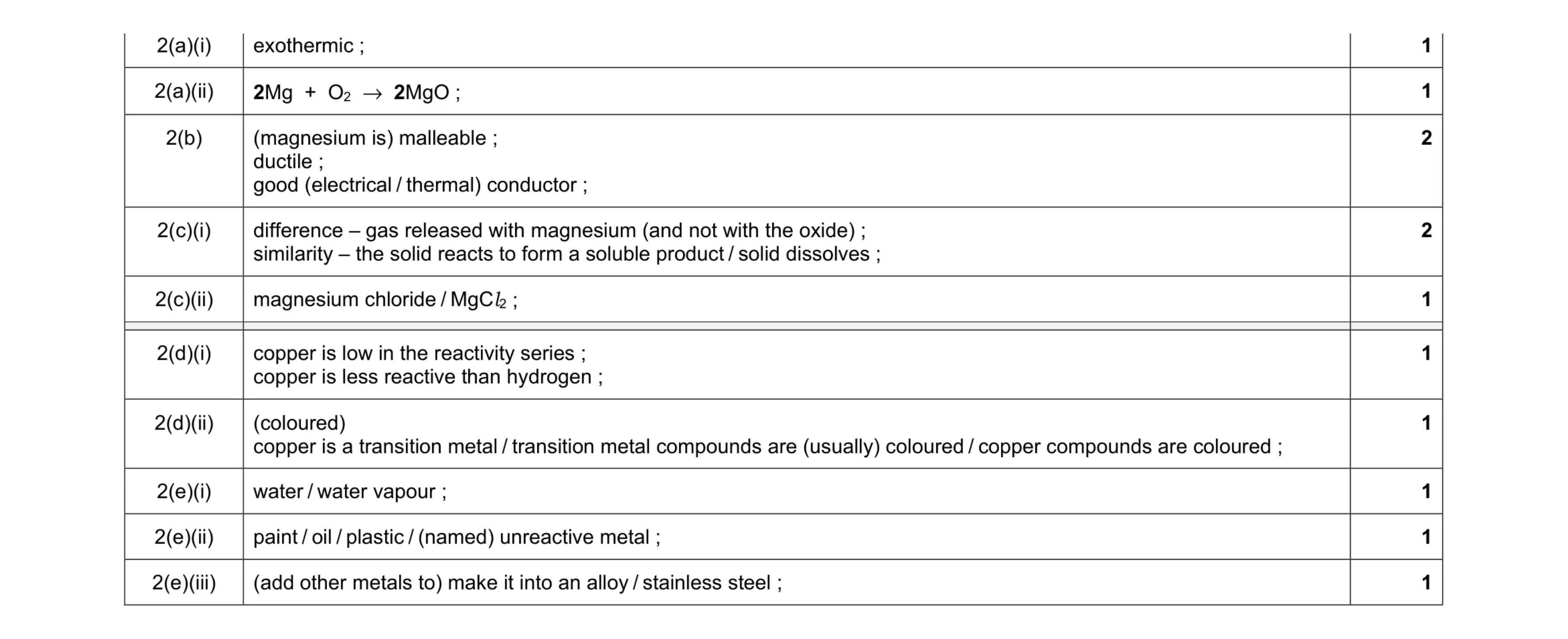 12
12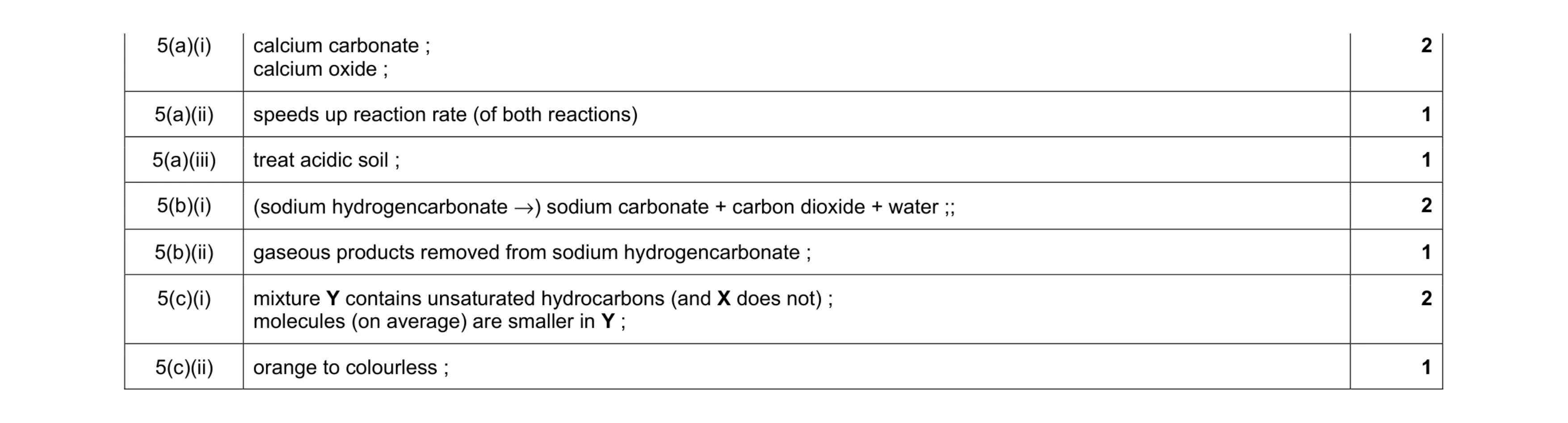 10
10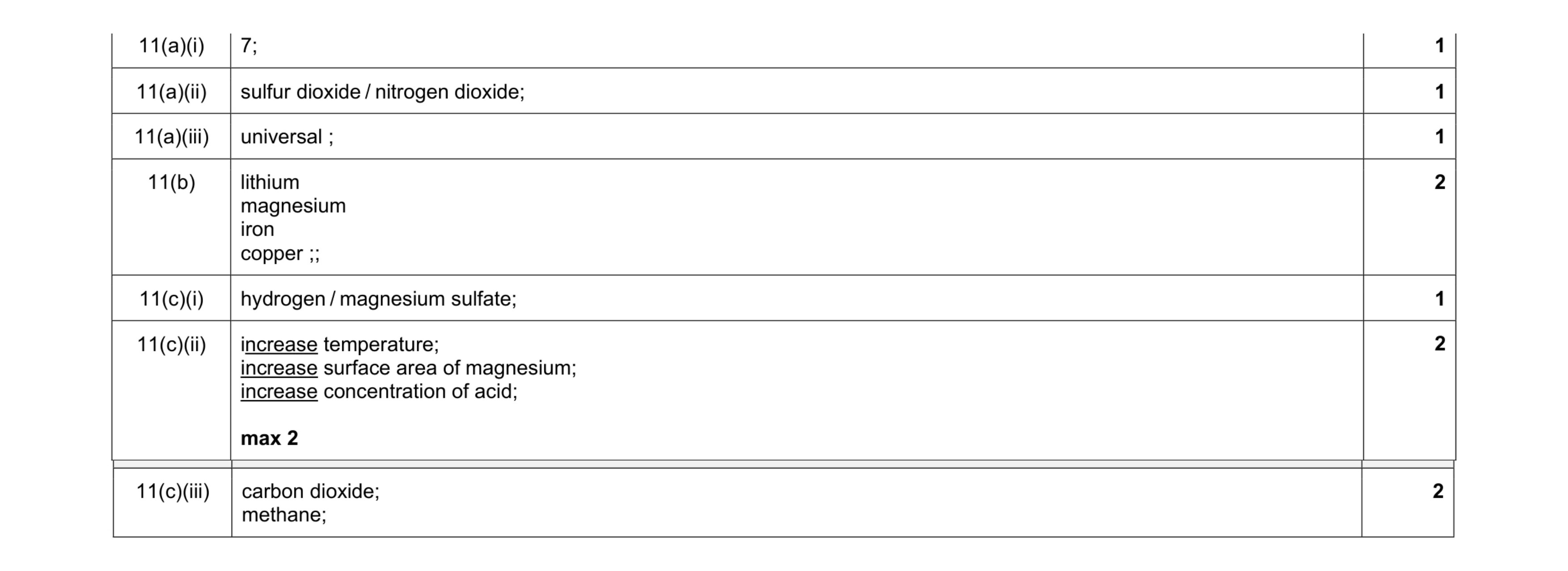 10
10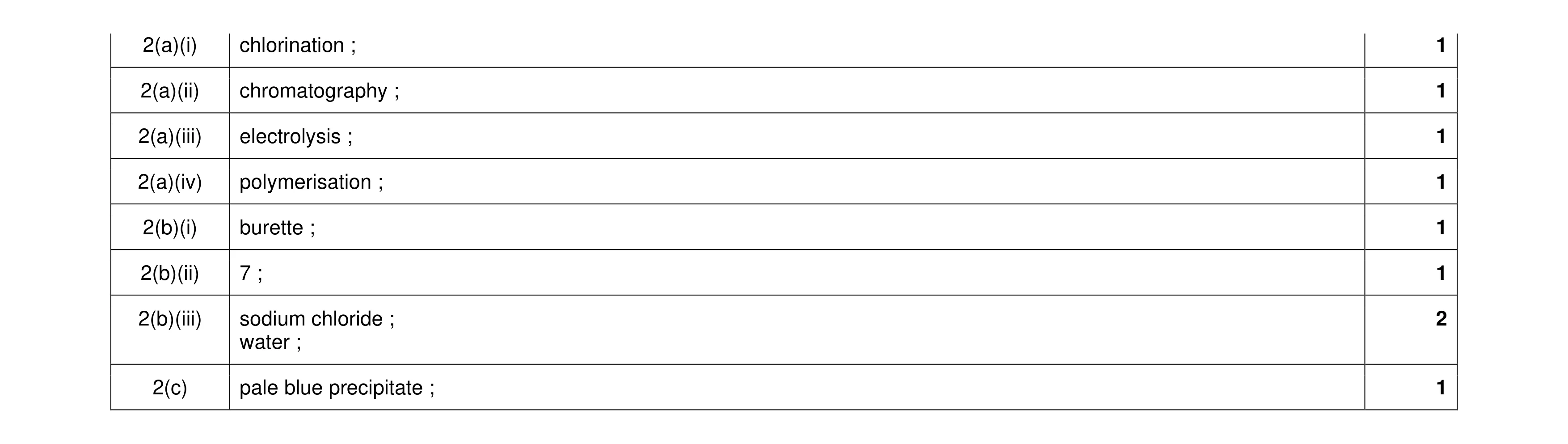 9
9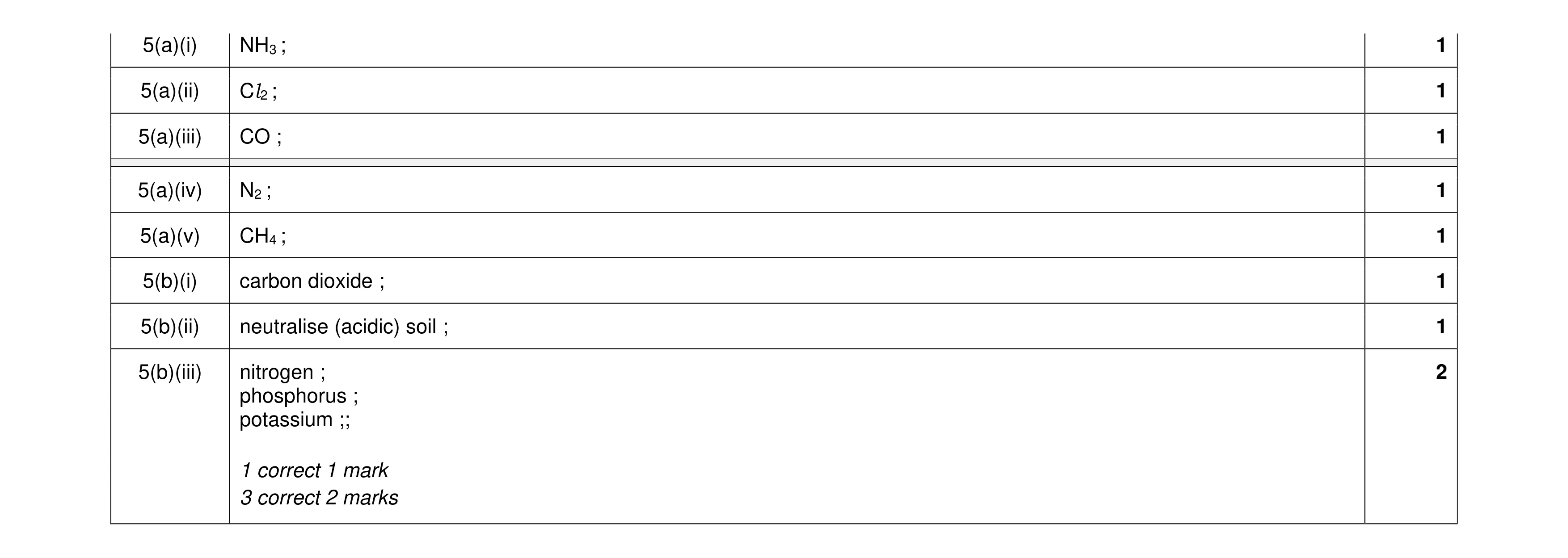 9
9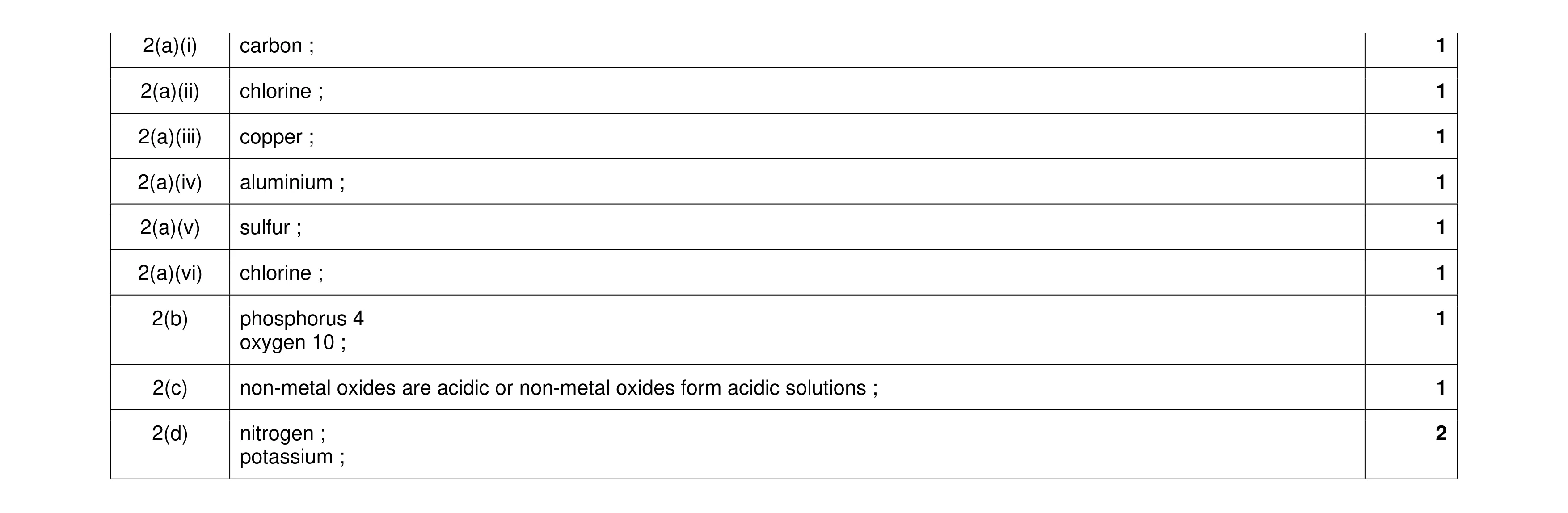 10
10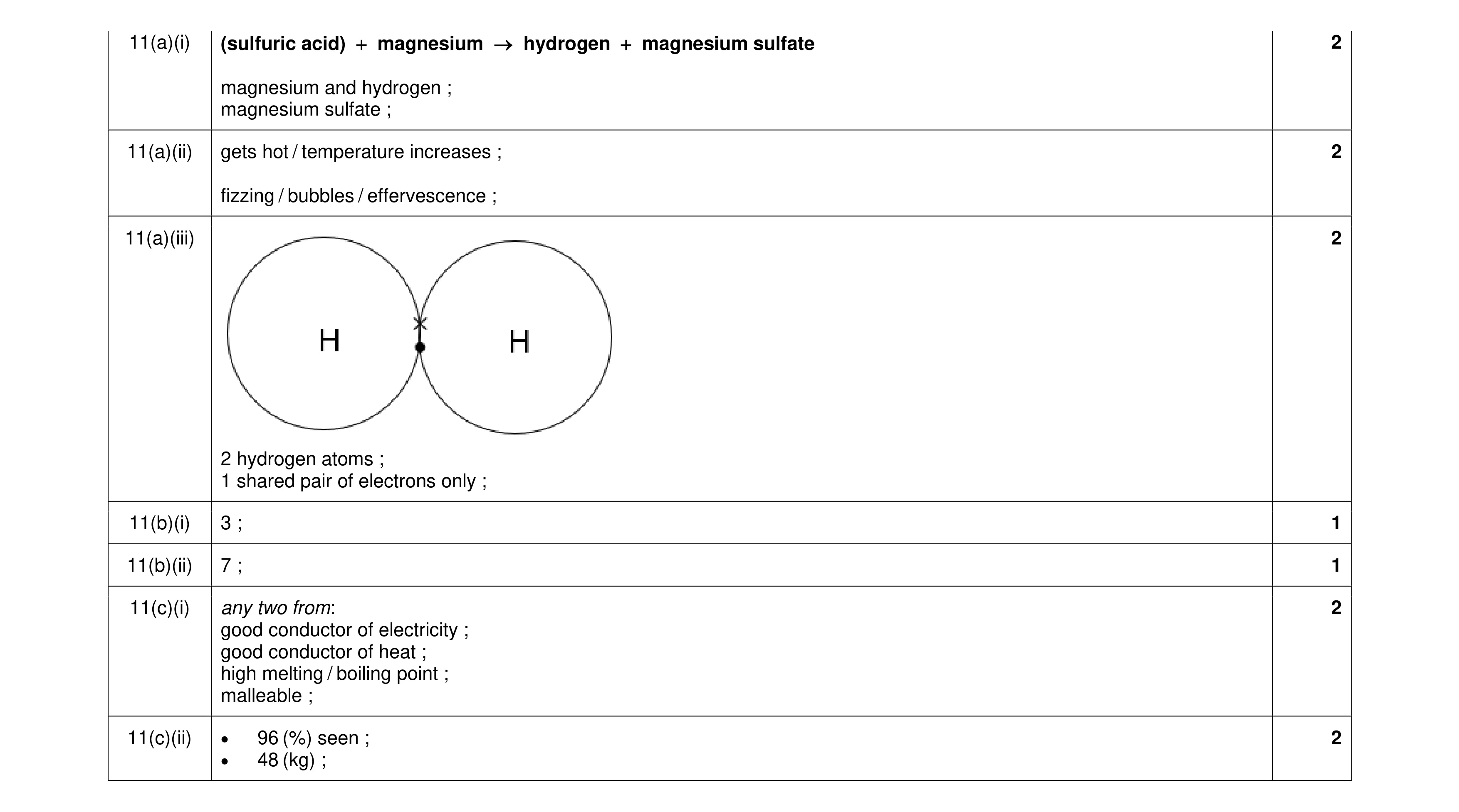 12
12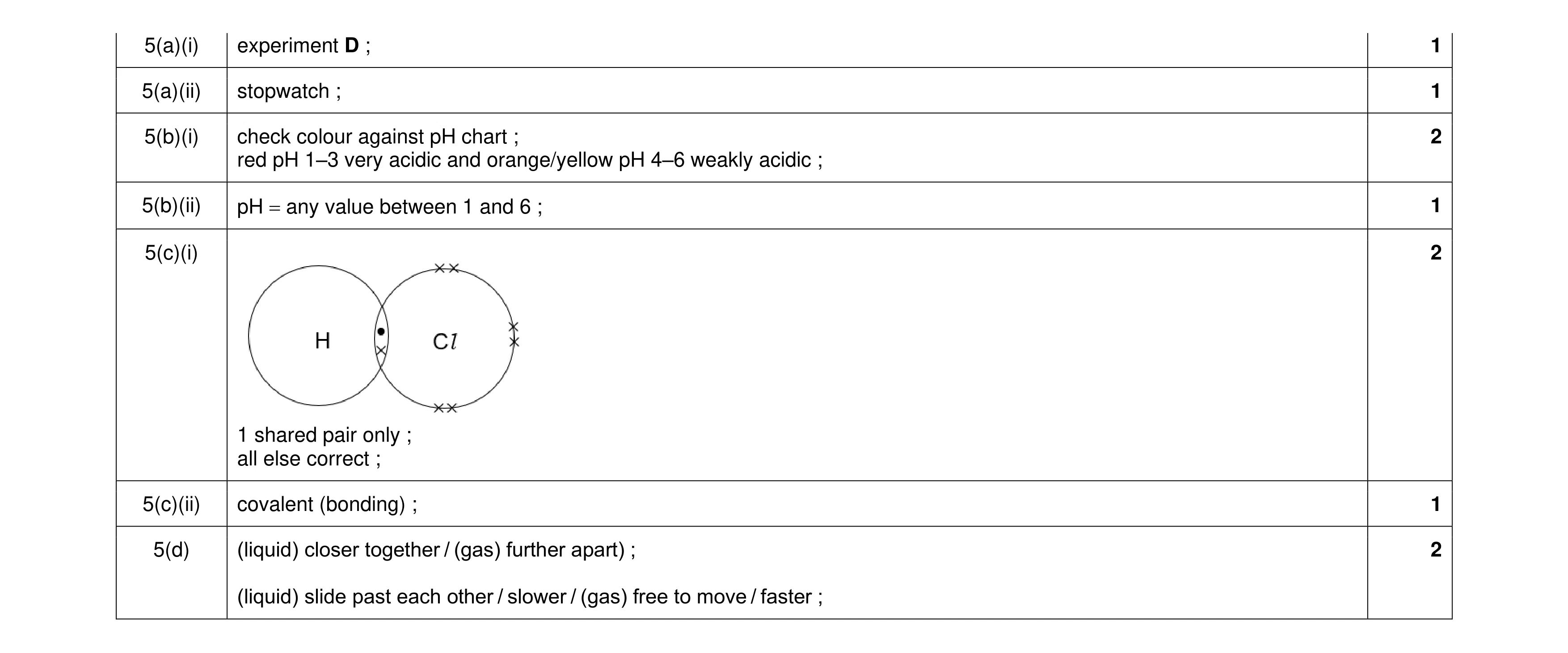 10
10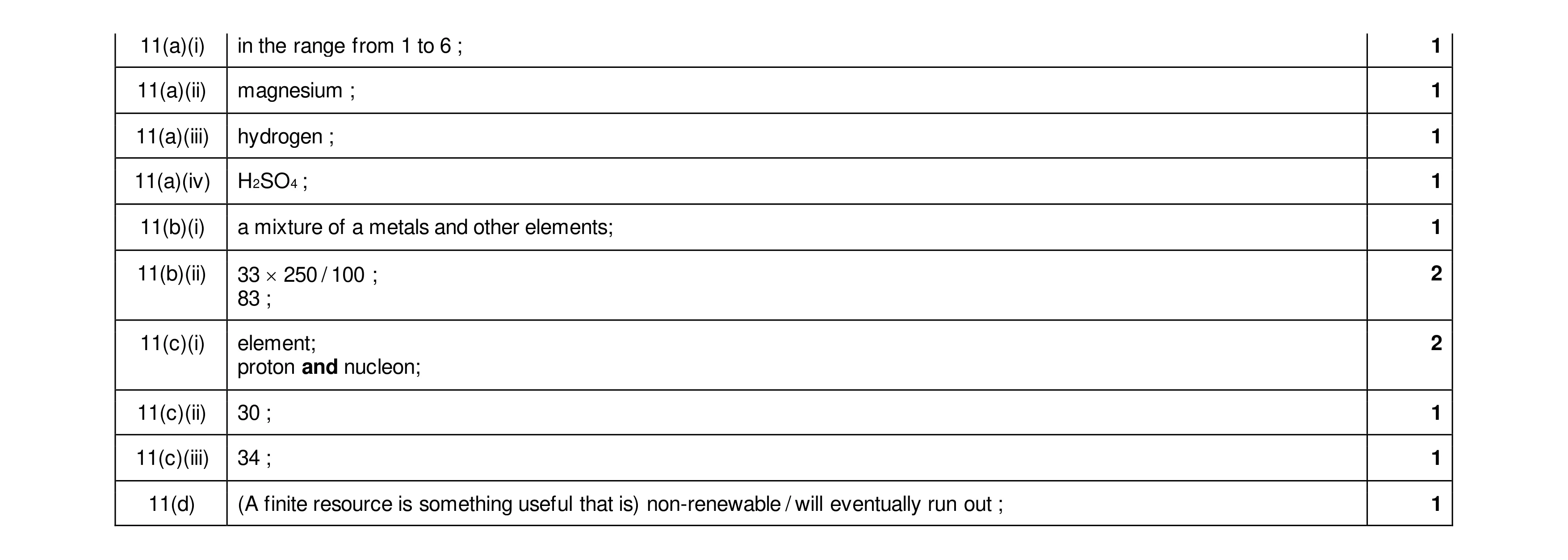 12
12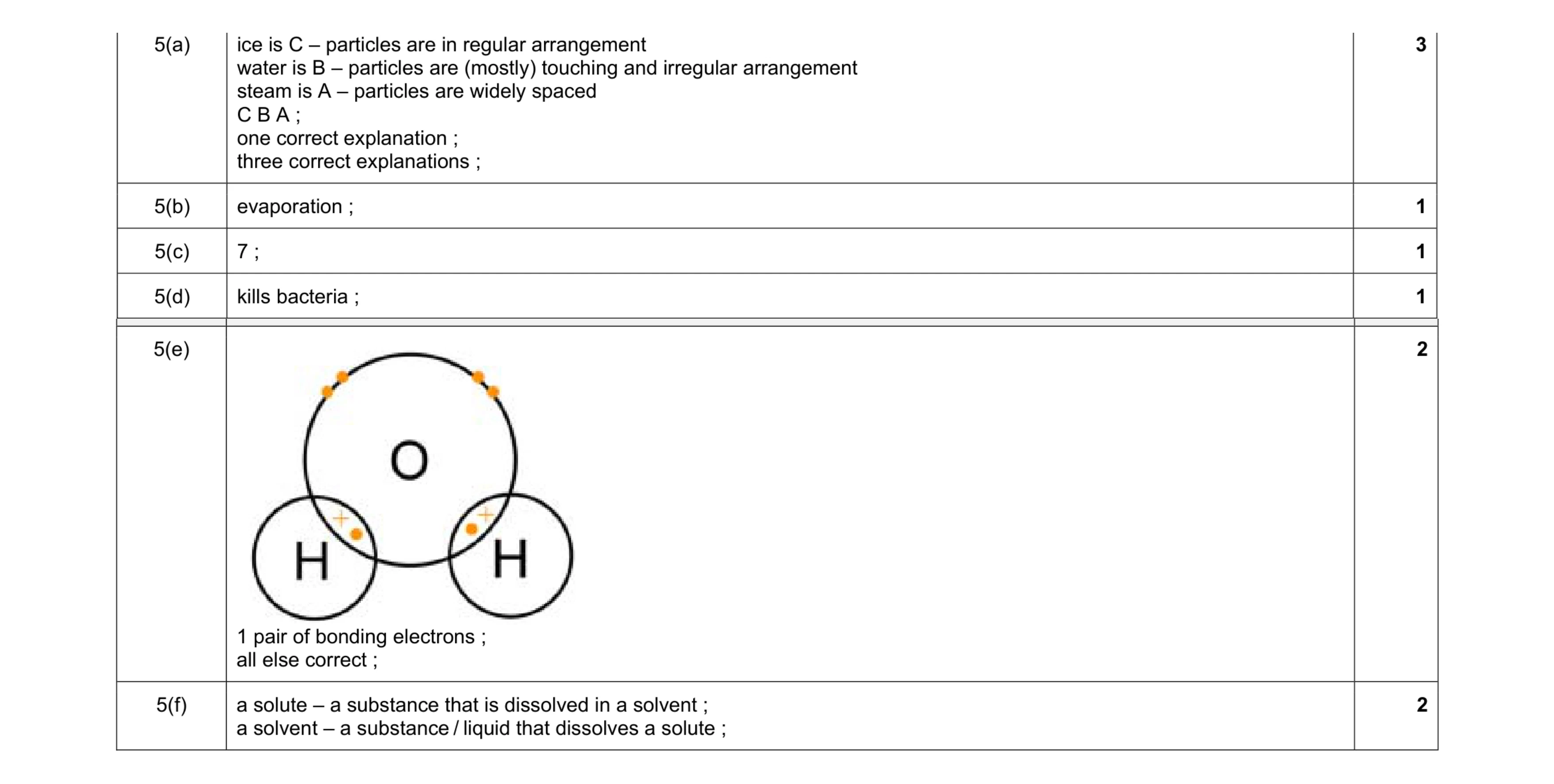 10
10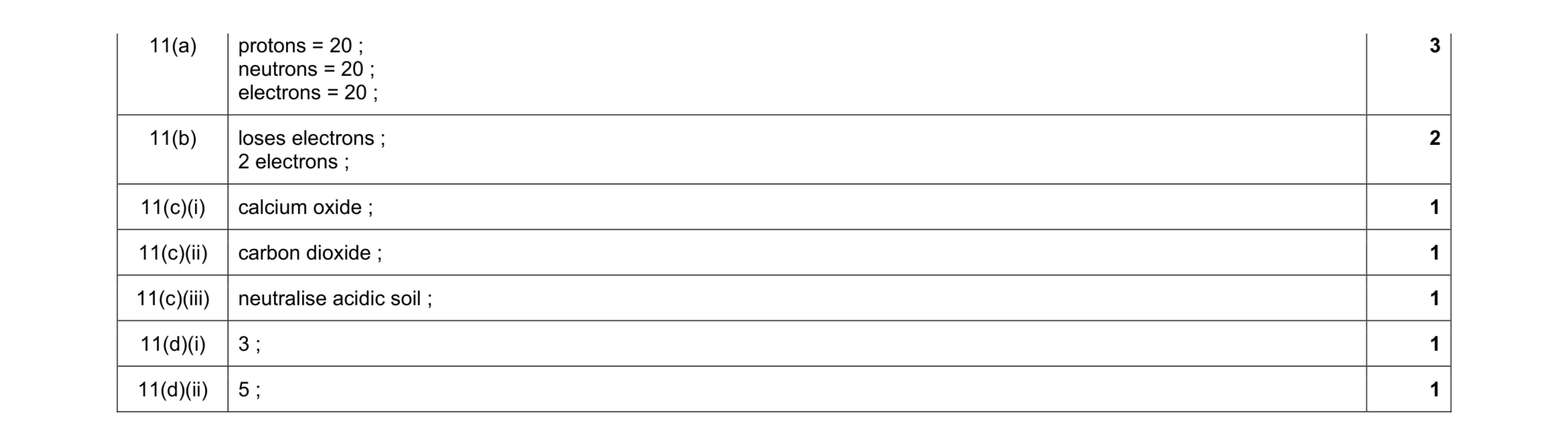 10
10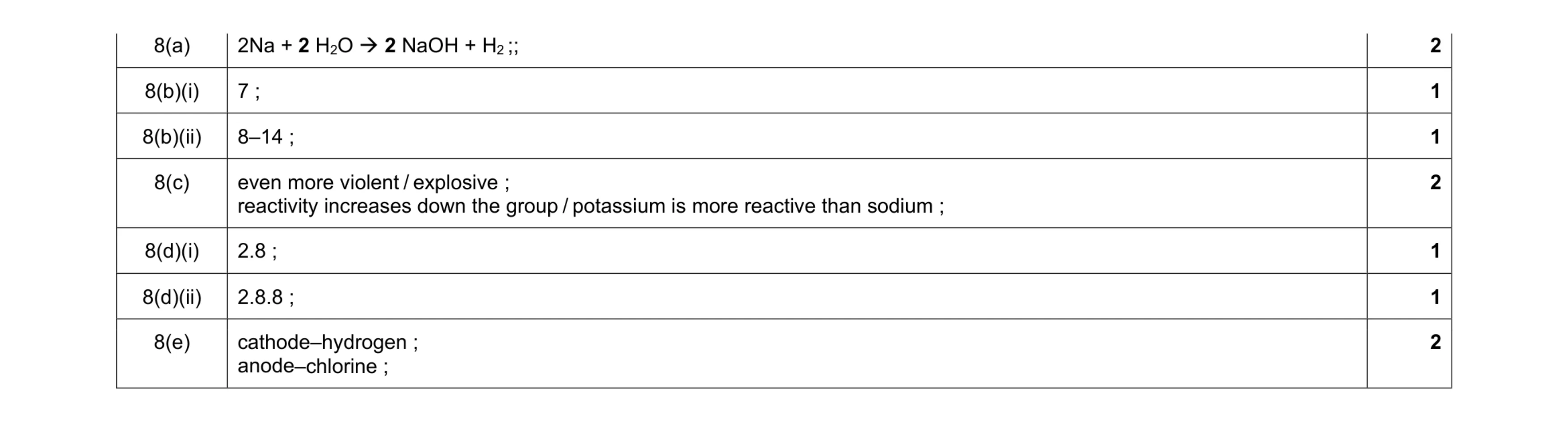 10
10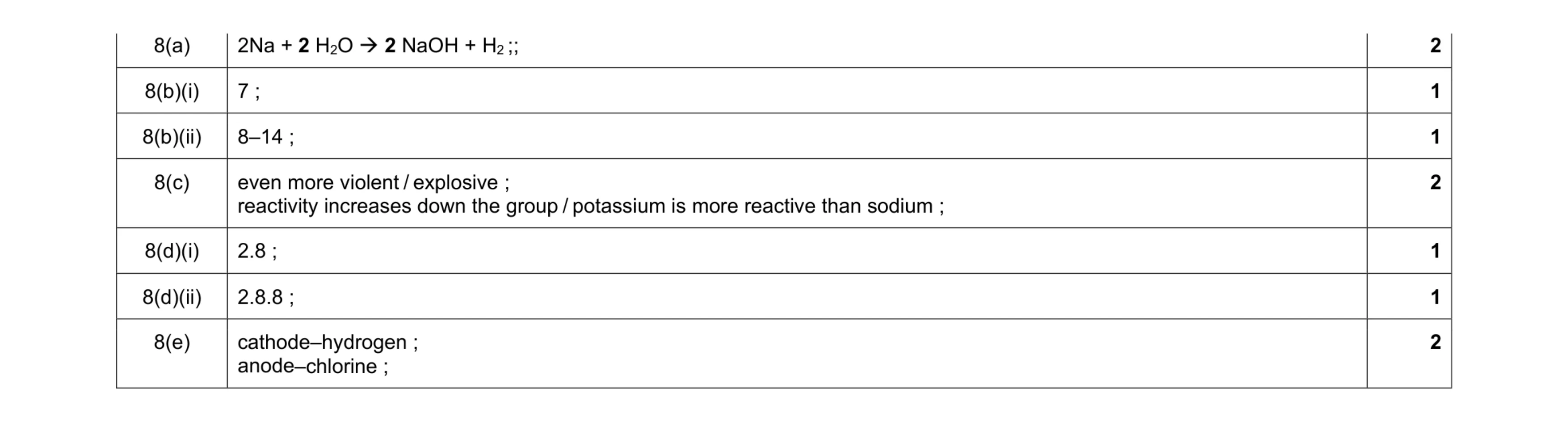 10
10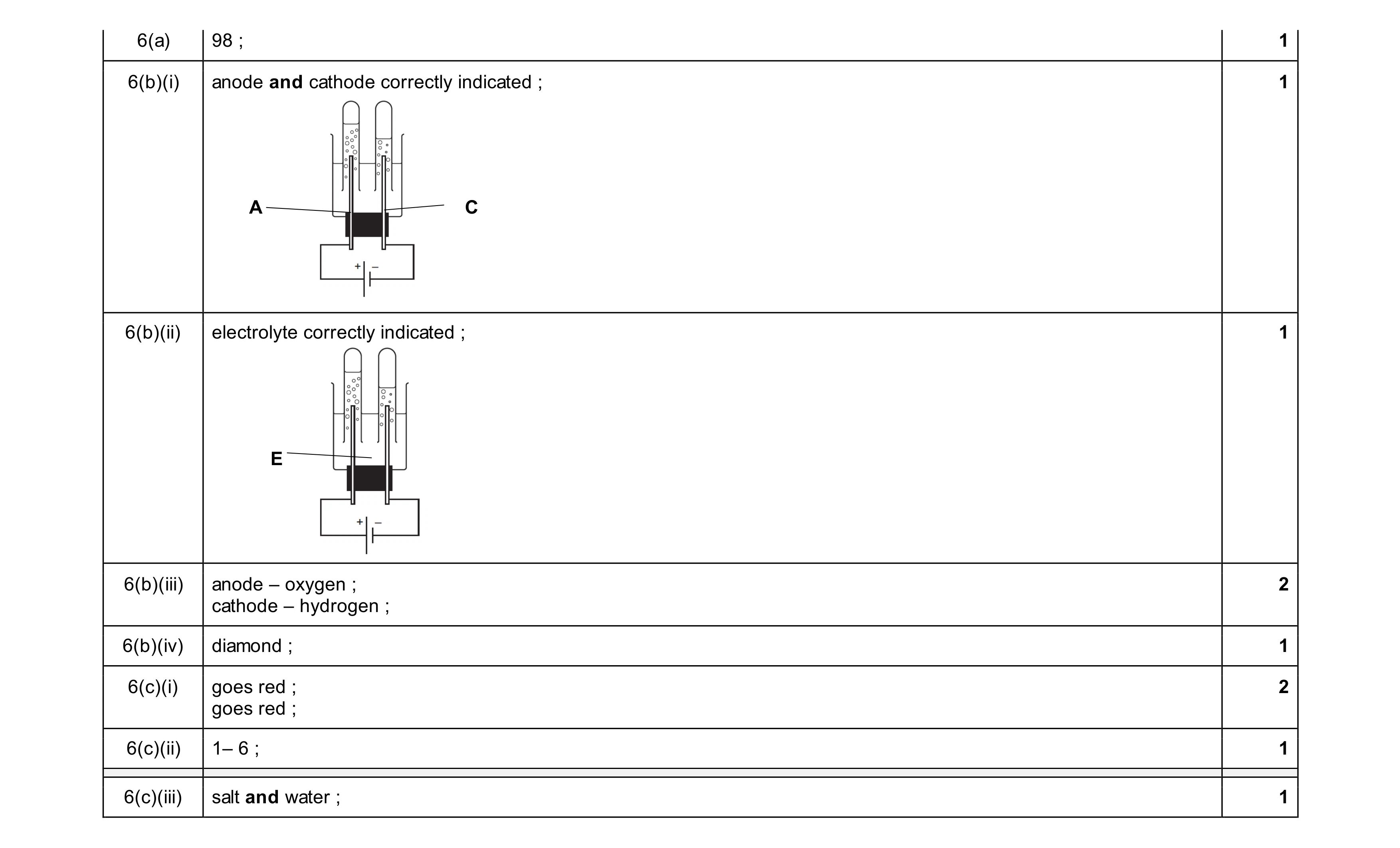 10
10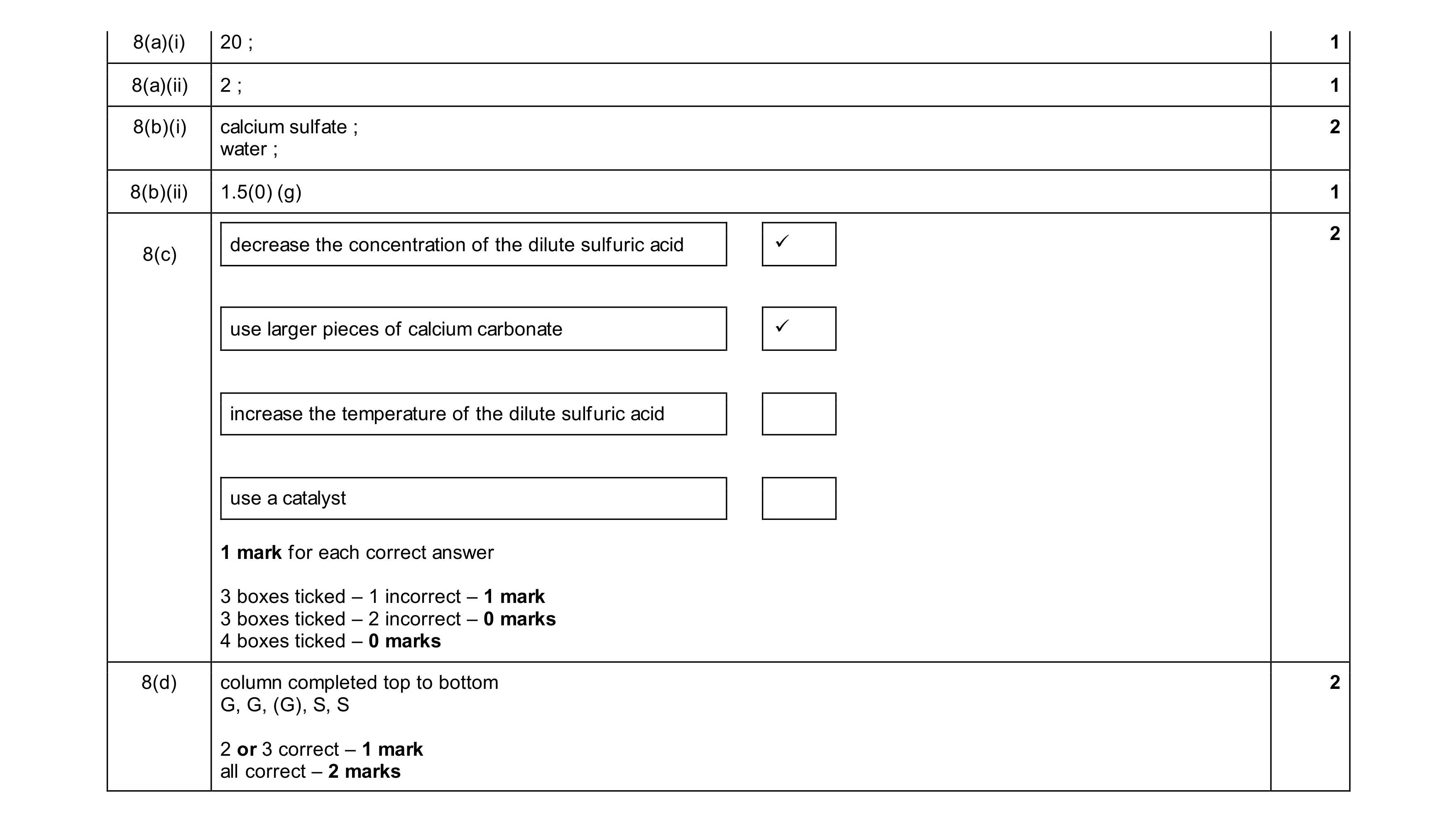 9
9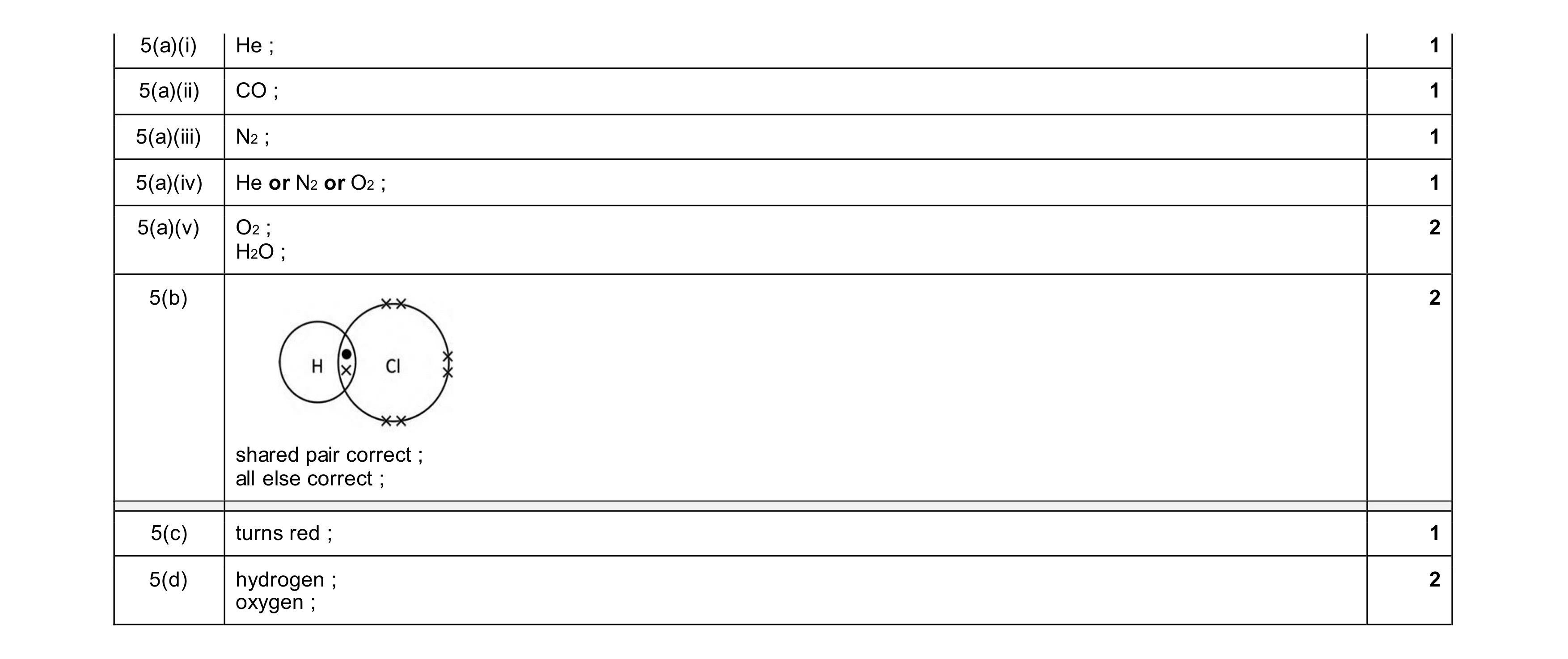 11
11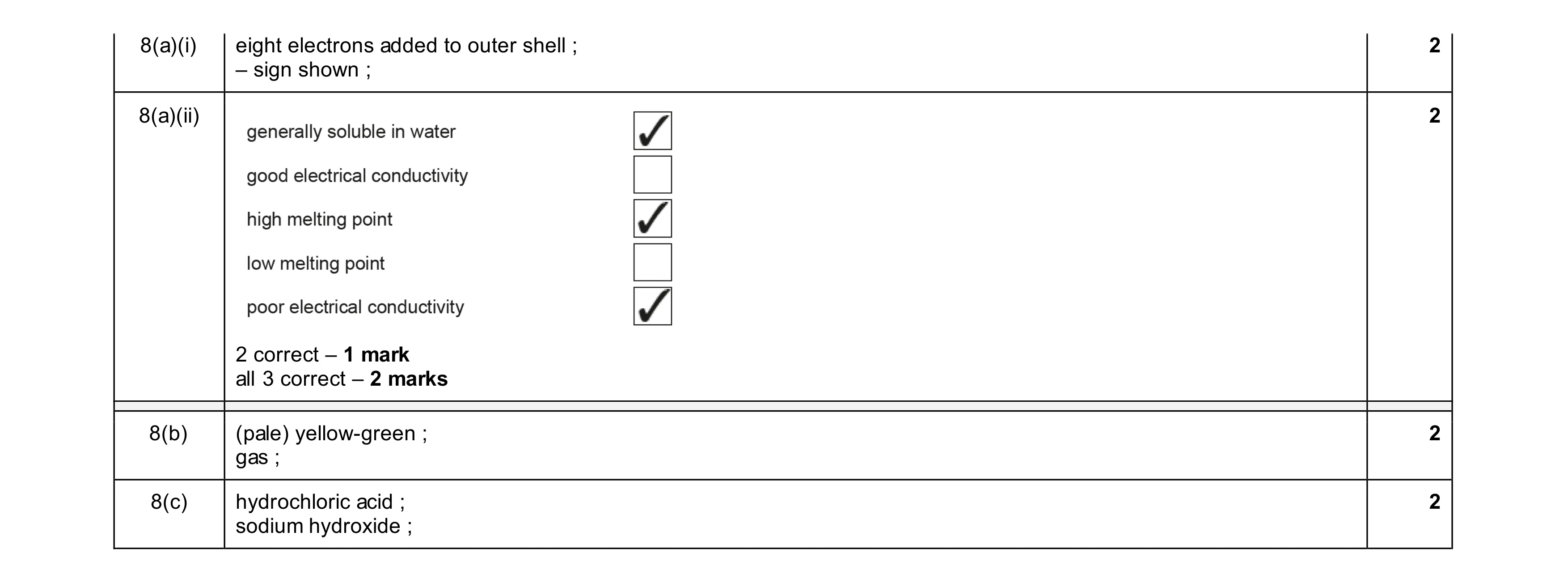 8
8