Cambridge IGCSE Sciences - Co-ordinated (Double) 0654 — 2018 Oct/Nov Paper 3 · Variant 2
0654/32/O/N/18 · 13 questions · 120 marks · ≈135 min
The question paper and its mark scheme, free to read here and free to download. This is Cambridge’s own paper, exactly as it was sat.
Question paper28 pages


Mark scheme16 pages
Answers below. Sit the paper first if you are practising.
Questions as text
Q1 · A diagram of a palisade cell
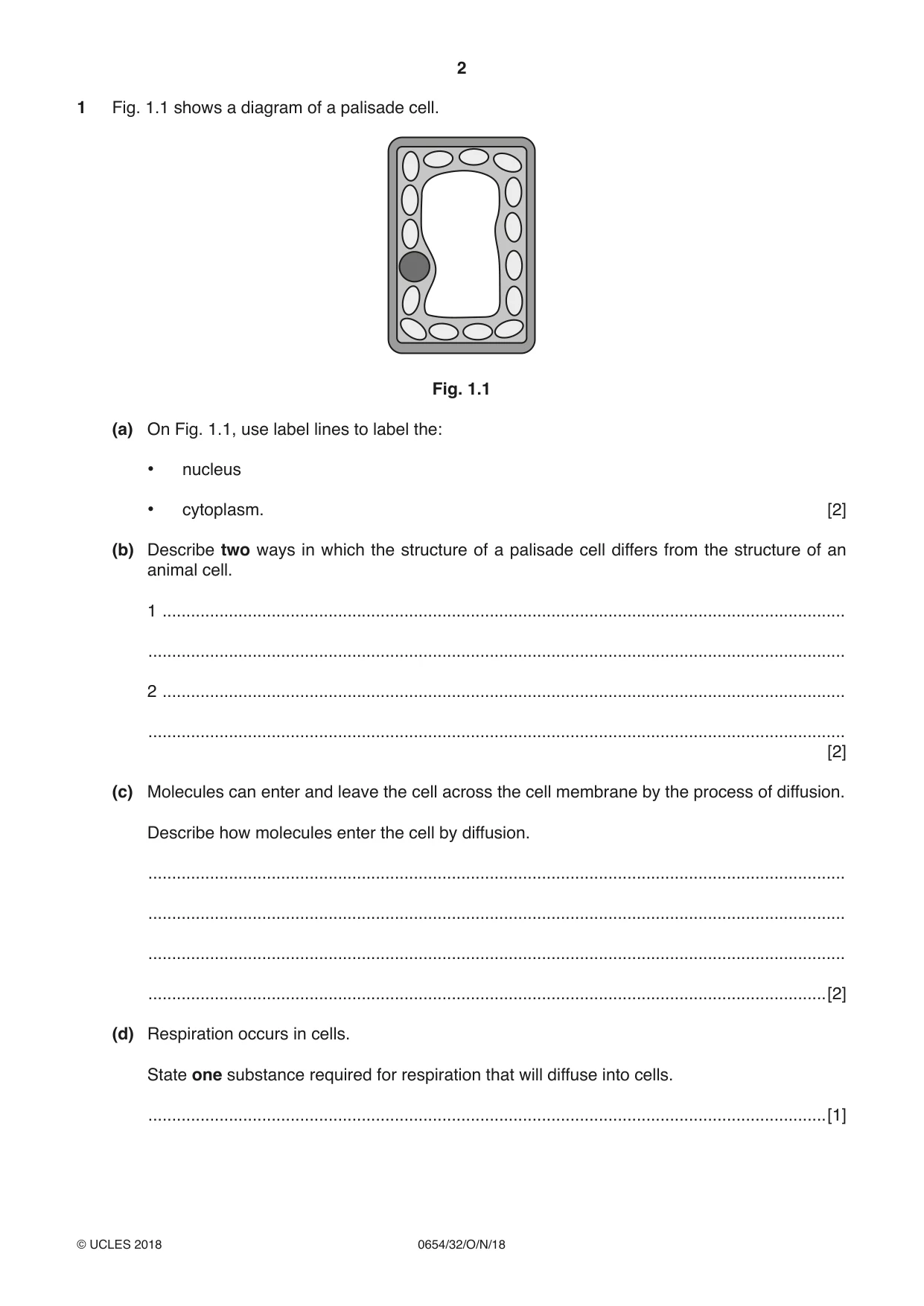
1 Fig. 1.1 shows a diagram of a palisade cell. Fig. 1.1 (a) On Fig. 1.1, use label lines to label the: • nucleus • cytoplasm. [2] (b) Describe two ways in which the structure of a palisade cell differs from the structure of an animal cell. 1 ................................................................................................................................................ ................................................................................................................................................... 2 ................................................................................................................................................ ................................................................................................................................................... [2] (c) Molecules can enter and leave the cell across the cell membrane by the process of diffusion. Describe how molecules enter the cell by diffusion. ................................................................................................................................................... ................................................................................................................................................... ................................................................................................................................................... ...............................................................................................................................................[2] (d) Respiration occurs in cells. State one substance required for respiration that will diffuse into cells. ...............................................................................................................................................[1]
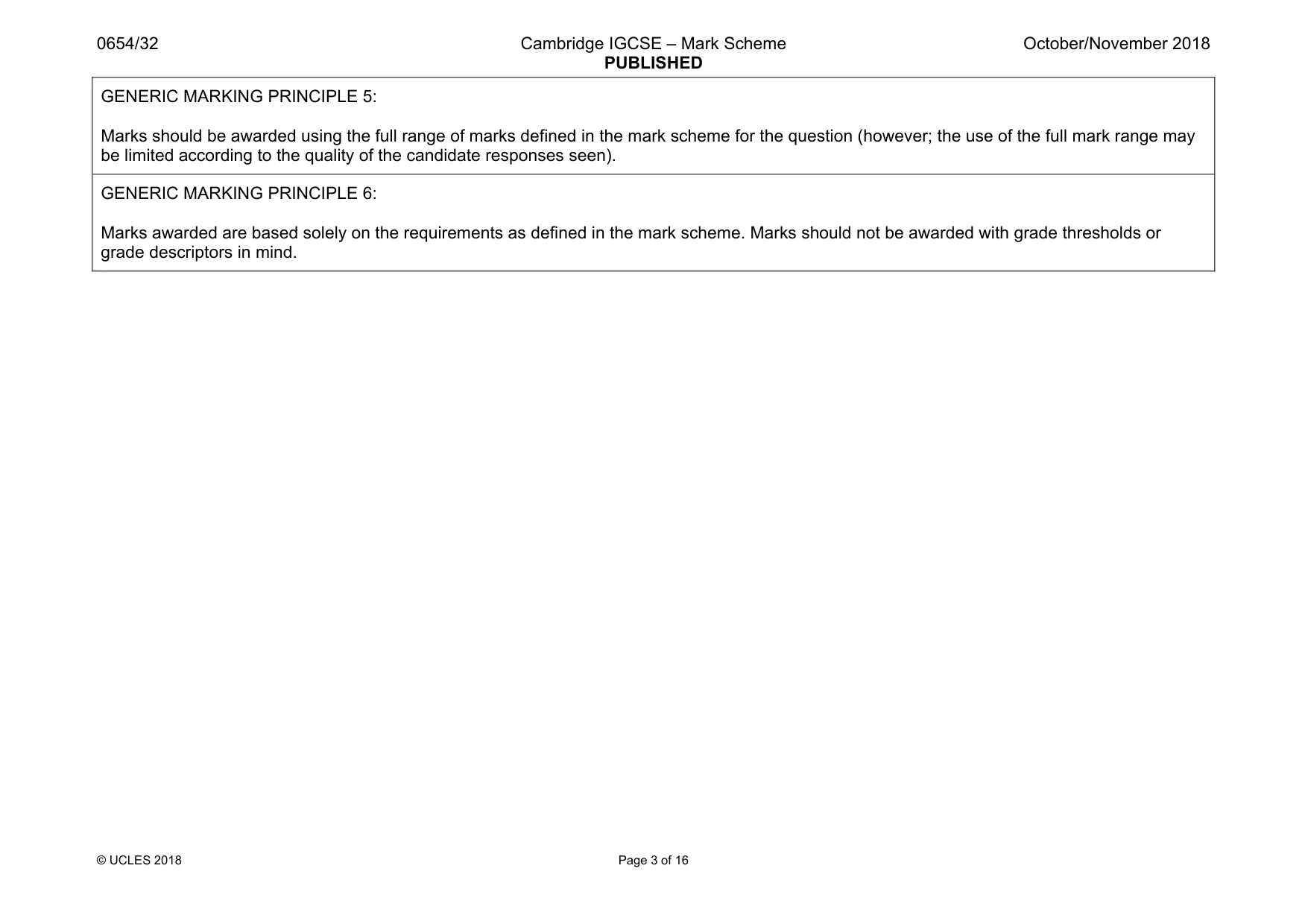
Mark scheme: 1(a) nucleus labelled; cytoplasm labelled; 2 1(b) presence of cell wall; presence of chloroplasts; presence of (permanent) vacuole; max 2 1(c) from higher concentration (outside the cell) to lower concentration (inside the cell); by (molecules) random movement; 2 1(d) glucose / oxygen; 1
Q2 · Air is a mixture of gases
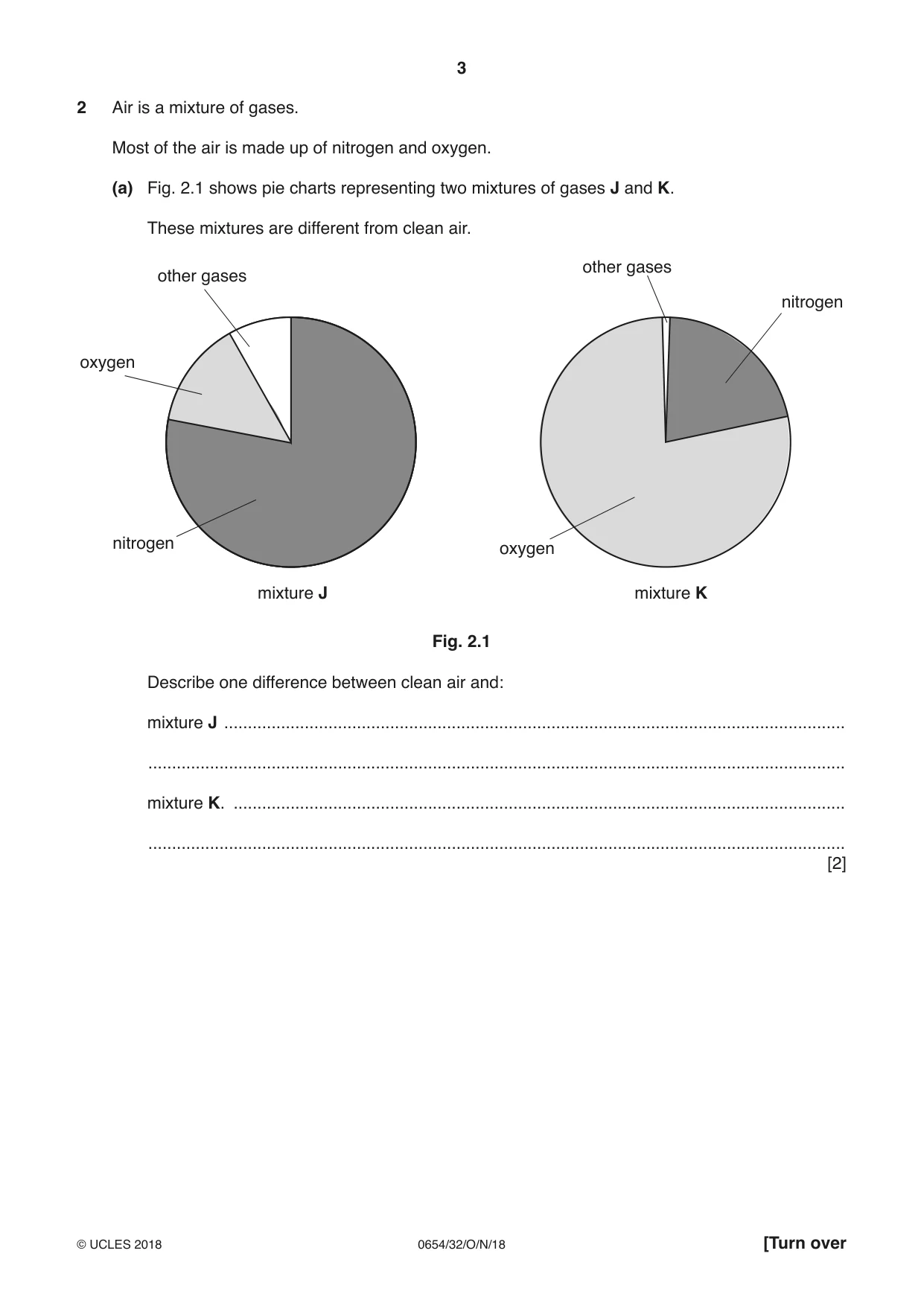
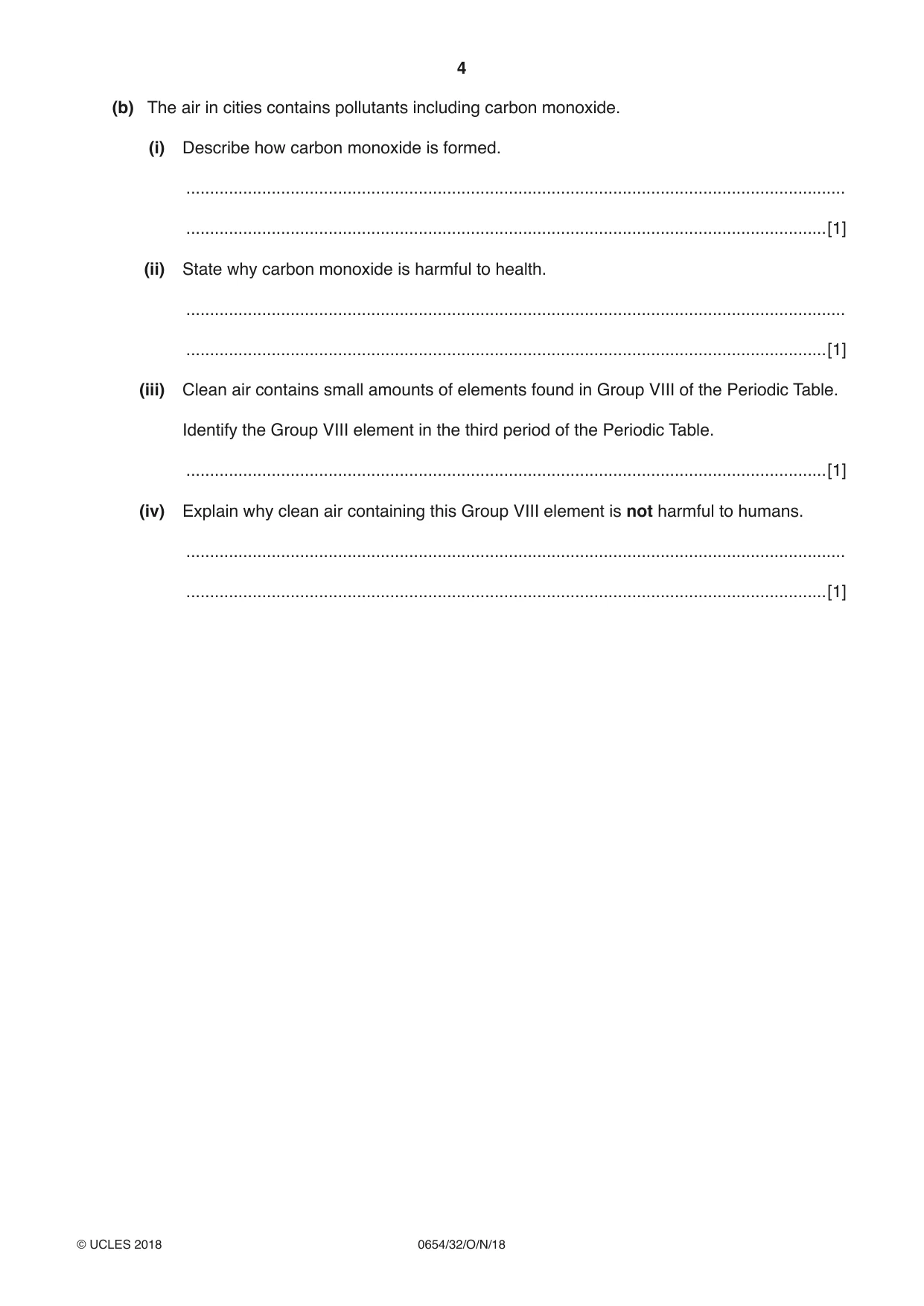
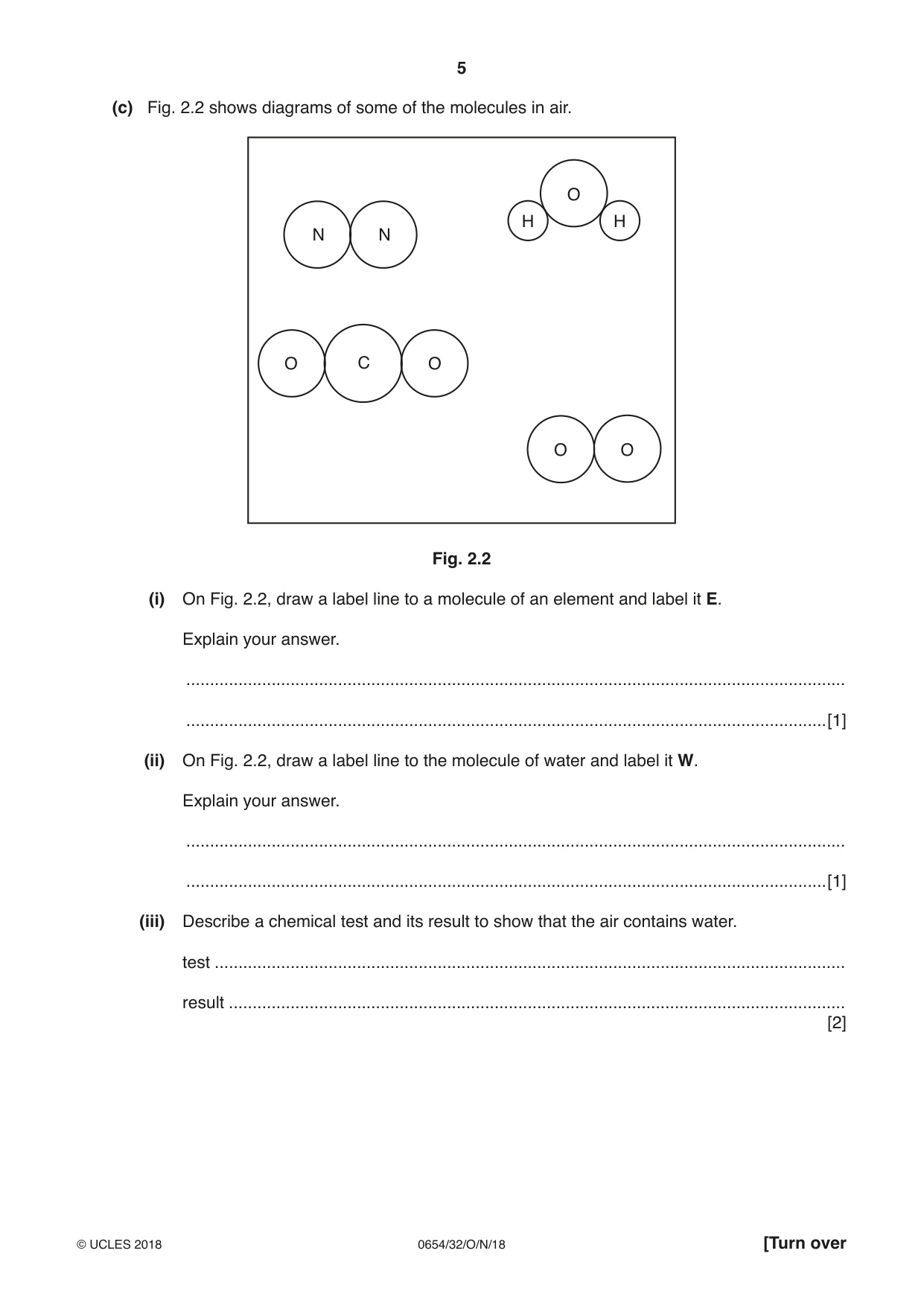
2 Air is a mixture of gases. Most of the air is made up of nitrogen and oxygen. (a) Fig. 2.1 shows pie charts representing two mixtures of gases J and K. These mixtures are different from clean air. other gases other gases nitrogen oxygen nitrogen oxygen mixture J mixture K Fig. 2.1 Describe one difference between clean air and: mixture J ................................................................................................................................... ................................................................................................................................................... mixture K. ................................................................................................................................. ................................................................................................................................................... [2] (b) The air in cities contains pollutants including carbon monoxide. (i) Describe how carbon monoxide is formed. ........................................................................................................................................... .......................................................................................................................................[1] (ii) State why carbon monoxide is harmful to health. ........................................................................................................................................... .......................................................................................................................................[1] (iii) Clean air contains small amounts of elements found in Group VIII of the Periodic Table. Identify the Group VIII element in the third period of the Periodic Table. .......................................................................................................................................[1] (iv) Explain why clean air containing this Group VIII element is not harmful to humans. ........................................................................................................................................... .......................................................................................................................................[1] (c) Fig. 2.2 shows diagrams of some of the molecules in air. O H H N N O C O O O Fig. 2.2 (i) On Fig. 2.2, draw a label line to a molecule of an element and label it E. Explain your answer. ........................................................................................................................................... .......................................................................................................................................[1] (ii) On Fig. 2.2, draw a label line to the molecule of water and label it W. Explain your answer. ........................................................................................................................................... .......................................................................................................................................[1] (iii) Describe a chemical test and its result to show that the air contains water. test ..................................................................................................................................... result .................................................................................................................................. [2]
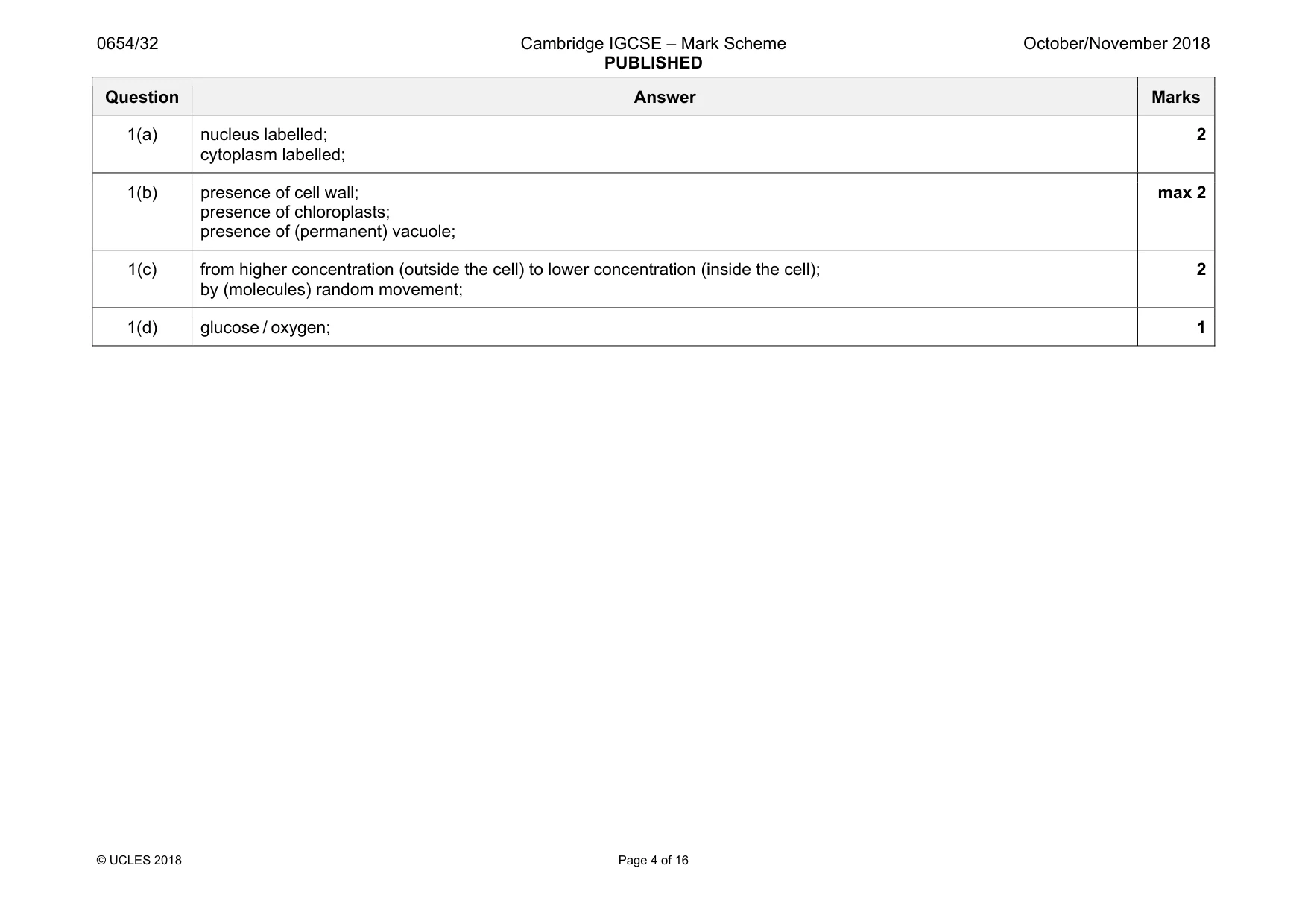
Mark scheme: 2(a) J too great a proportion of other gases / too little oxygen; K nitrogen and oxygen the wrong way round; 2 2(b)(i) incomplete combustion of hydrocarbons / fuel; 1 2(b)(ii) toxic; 1 2(b)(iii) argon / Ar; 1 2(b)(iv) it is inert / does not react in the body; 1 2(c)(i) (label to either N2 or O2) only one type of atom; 1 2(c)(ii) (label to H2O) water molecules contain two hydrogen atoms and one oxygen atom; 1 2(c)(ii) cobalt chloride (paper); turns from blue to pink; 2
Q3 · Doctors use X‑rays, γ‑rays and ultrasound waves in a hospital
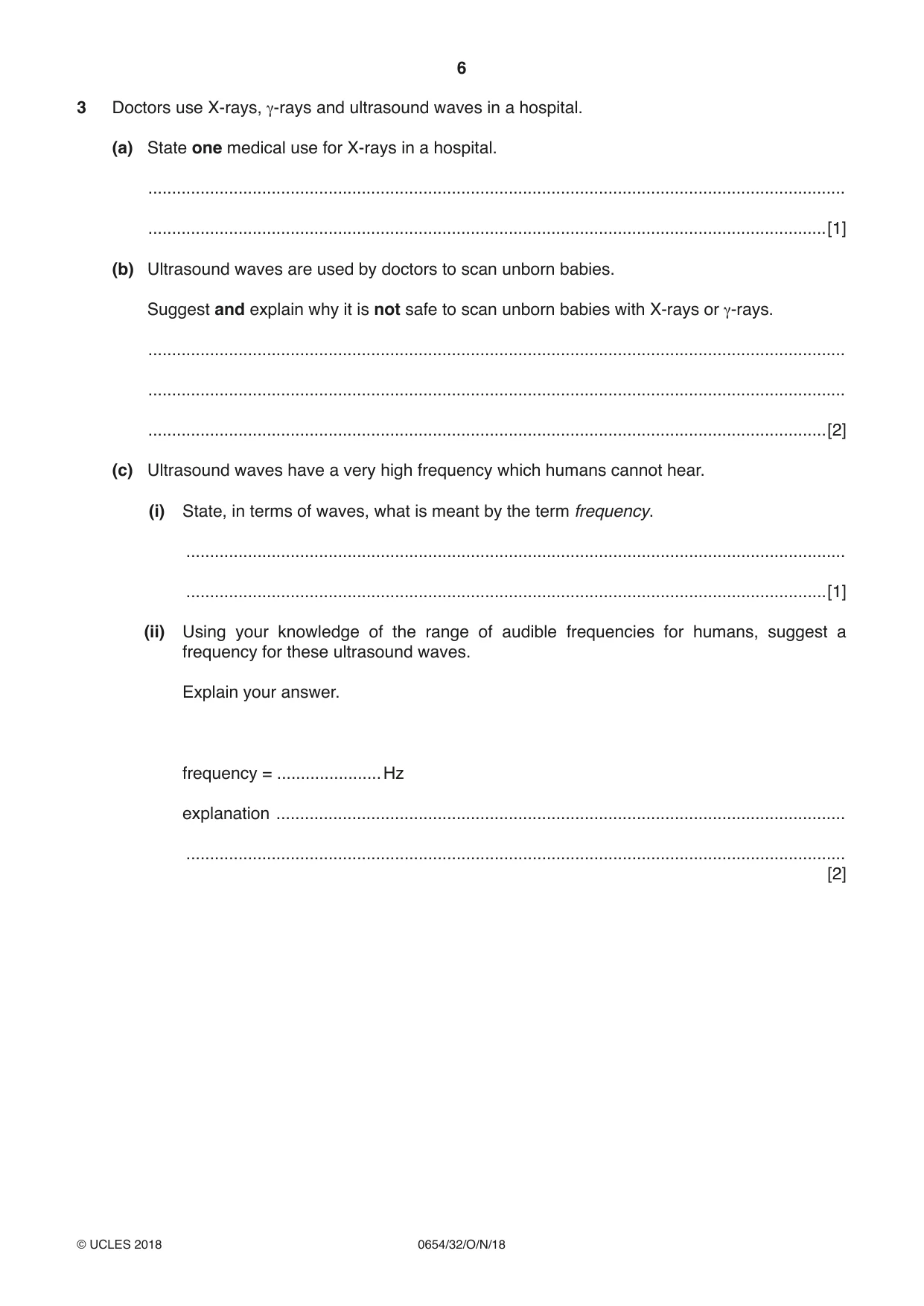
3 Doctors use X‑rays, γ‑rays and ultrasound waves in a hospital. (a) State one medical use for X‑rays in a hospital. ................................................................................................................................................... ...............................................................................................................................................[1] (b) Ultrasound waves are used by doctors to scan unborn babies. Suggest and explain why it is not safe to scan unborn babies with X‑rays or γ‑rays. ................................................................................................................................................... ................................................................................................................................................... ...............................................................................................................................................[2] (c) Ultrasound waves have a very high frequency which humans cannot hear. (i) State, in terms of waves, what is meant by the term frequency. ........................................................................................................................................... .......................................................................................................................................[1] (ii) Using your knowledge of the range of audible frequencies for humans, suggest a frequency for these ultrasound waves. Explain your answer. frequency = ...................... Hz explanation ........................................................................................................................ ........................................................................................................................................... [2]
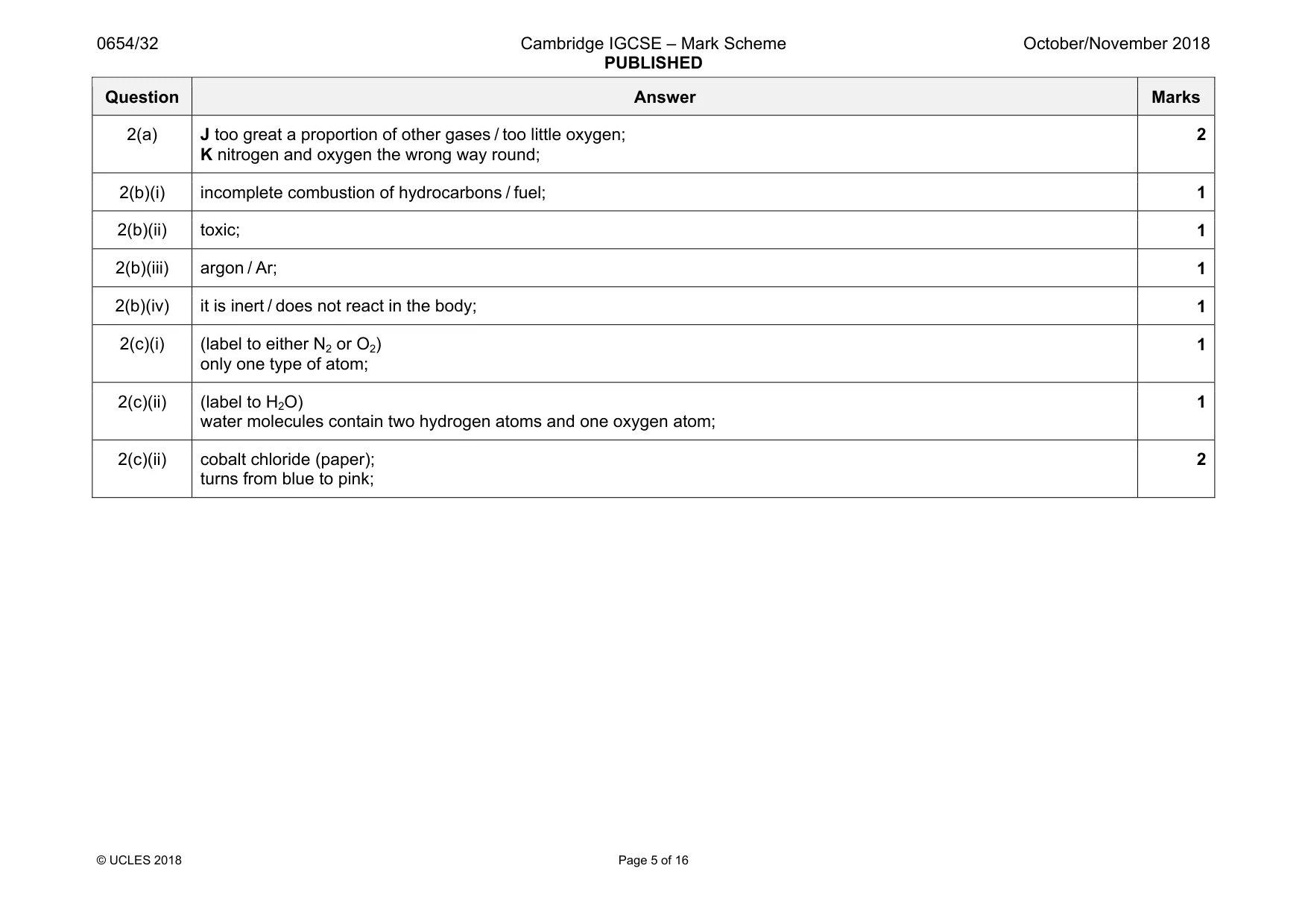
Mark scheme: 3(a) X-rays – viewing bones / images of internal structures; 1 3(b) (more likely to be affected by) ionising radiation; named effect of ionising radiation on body cells; 2 3(c)(i) number of oscillations / vibration per second / per unit time; 1 3(c)(ii) any value above 20 000 Hz; maximum value for human hearing is 20 000 Hz; 2
Q4 · An athlete runs in a race
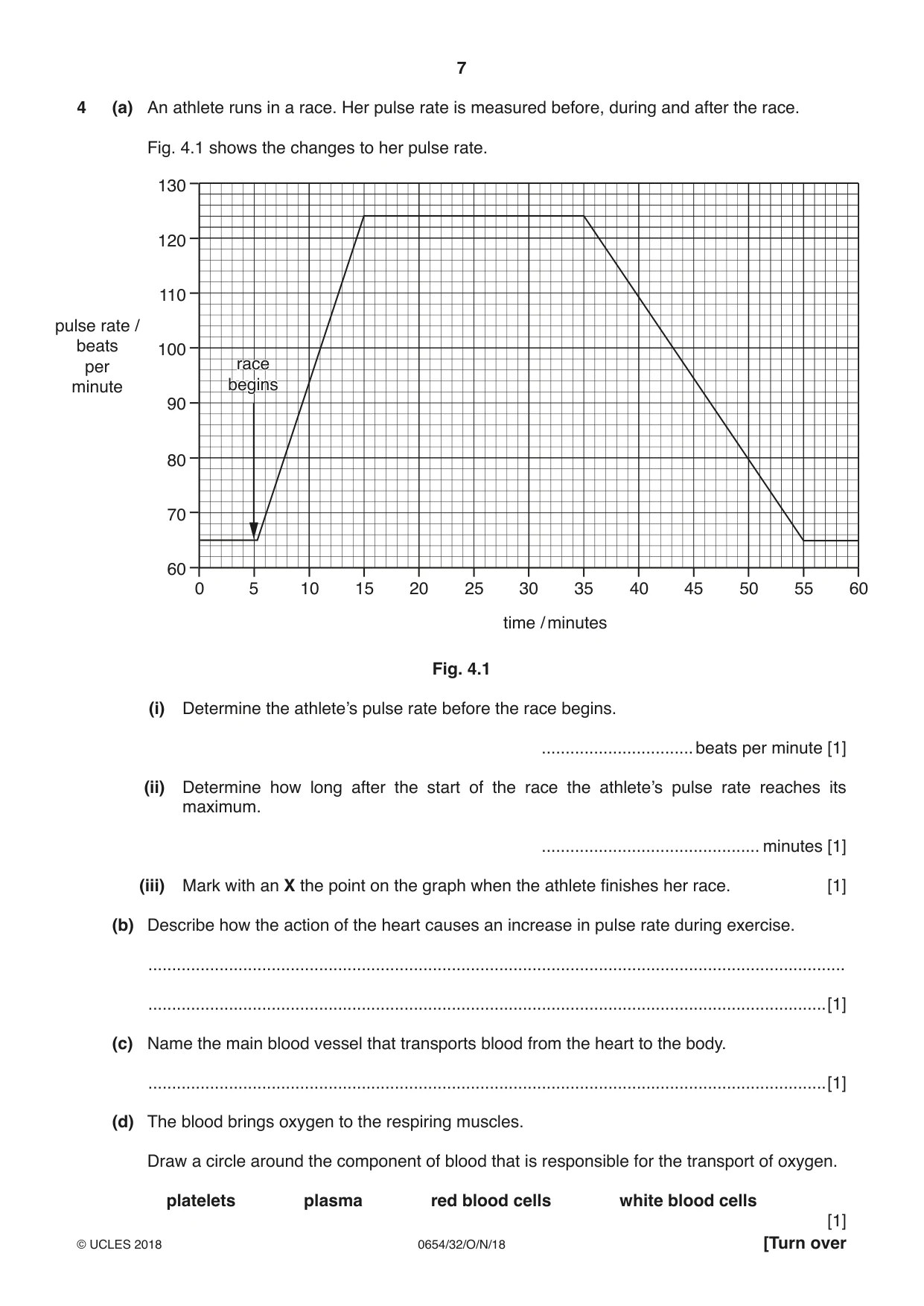
4 (a) An athlete runs in a race. Her pulse rate is measured before, during and after the race. Fig. 4.1 shows the changes to her pulse rate. 130 120 110 pulse rate / beats 100 per racerace minute beginsbegins 90 80 70 60 0 5 10 15 20 25 30 35 40 45 50 55 60 time / minutes Fig. 4.1 (i) Determine the athlete’s pulse rate before the race begins. ................................beats per minute [1] (ii) Determine how long after the start of the race the athlete’s pulse rate reaches its maximum. .............................................. minutes [1] (iii) Mark with an X the point on the graph when the athlete finishes her race. [1] (b) Describe how the action of the heart causes an increase in pulse rate during exercise. ................................................................................................................................................... ...............................................................................................................................................[1] (c) Name the main blood vessel that transports blood from the heart to the body. ...............................................................................................................................................[1] (d) The blood brings oxygen to the respiring muscles. Draw a circle around the component of blood that is responsible for the transport of oxygen. platelets plasma red blood cells white blood cells
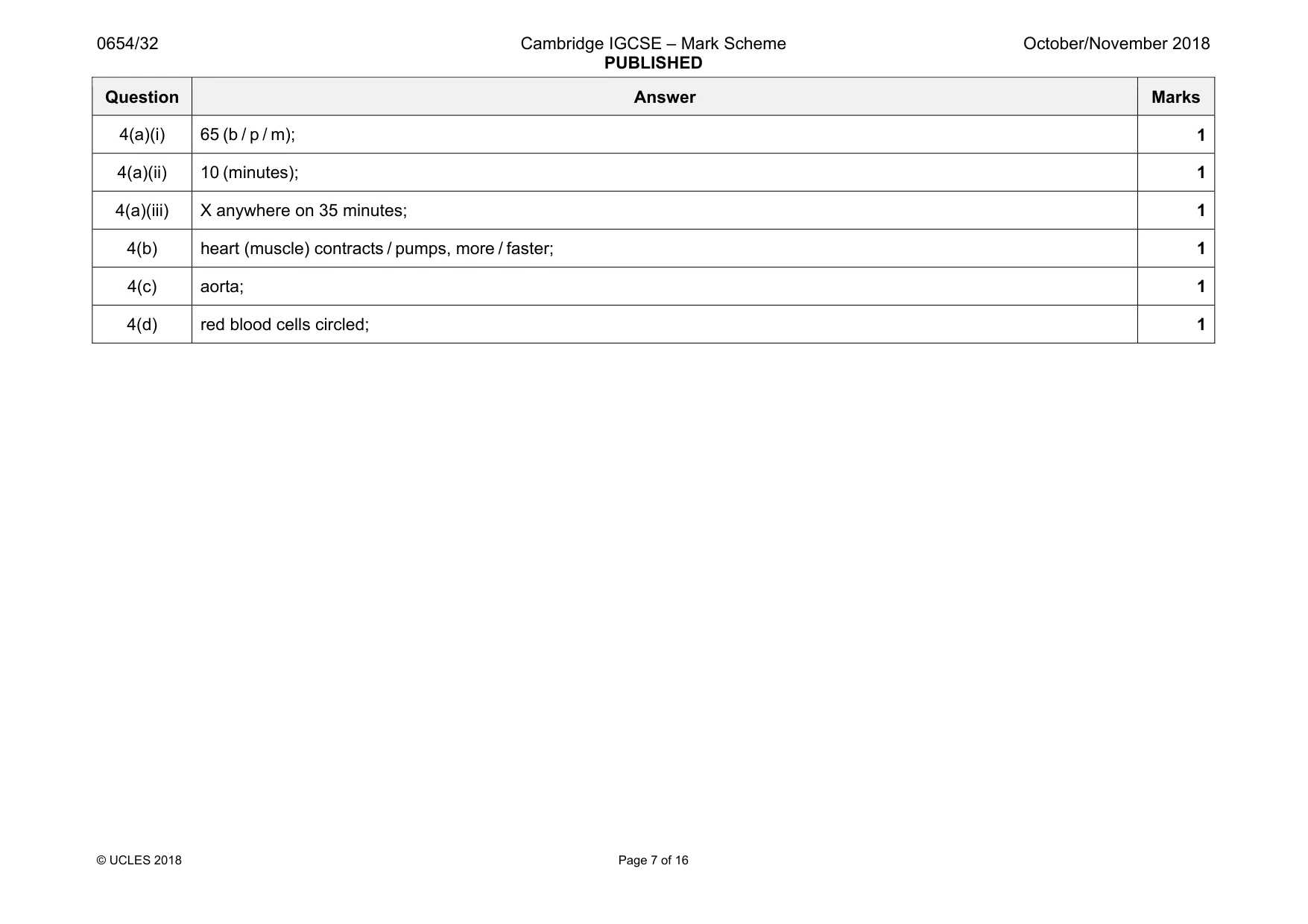
Mark scheme: 4(a)(i) 65 (b / p / m); 1 4(a)(ii) 10 (minutes); 1 4(a)(iii) X anywhere on 35 minutes; 1 4(b) heart (muscle) contracts / pumps, more / faster; 1 4(c) aorta; 1 4(d) red blood cells circled; 1
Q5 · Copper and potassium are metallic elements in the fourth period of the Periodic Table
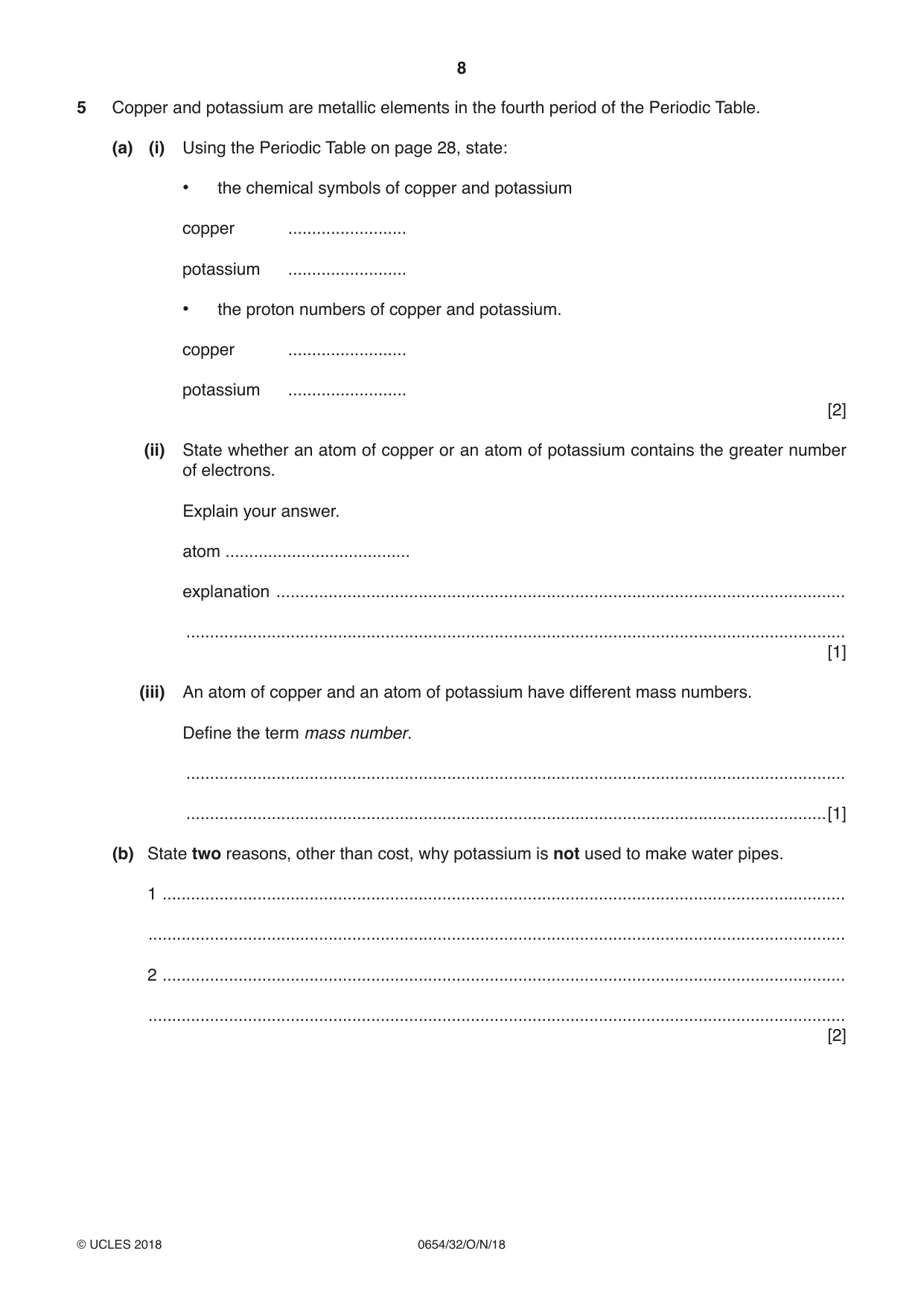
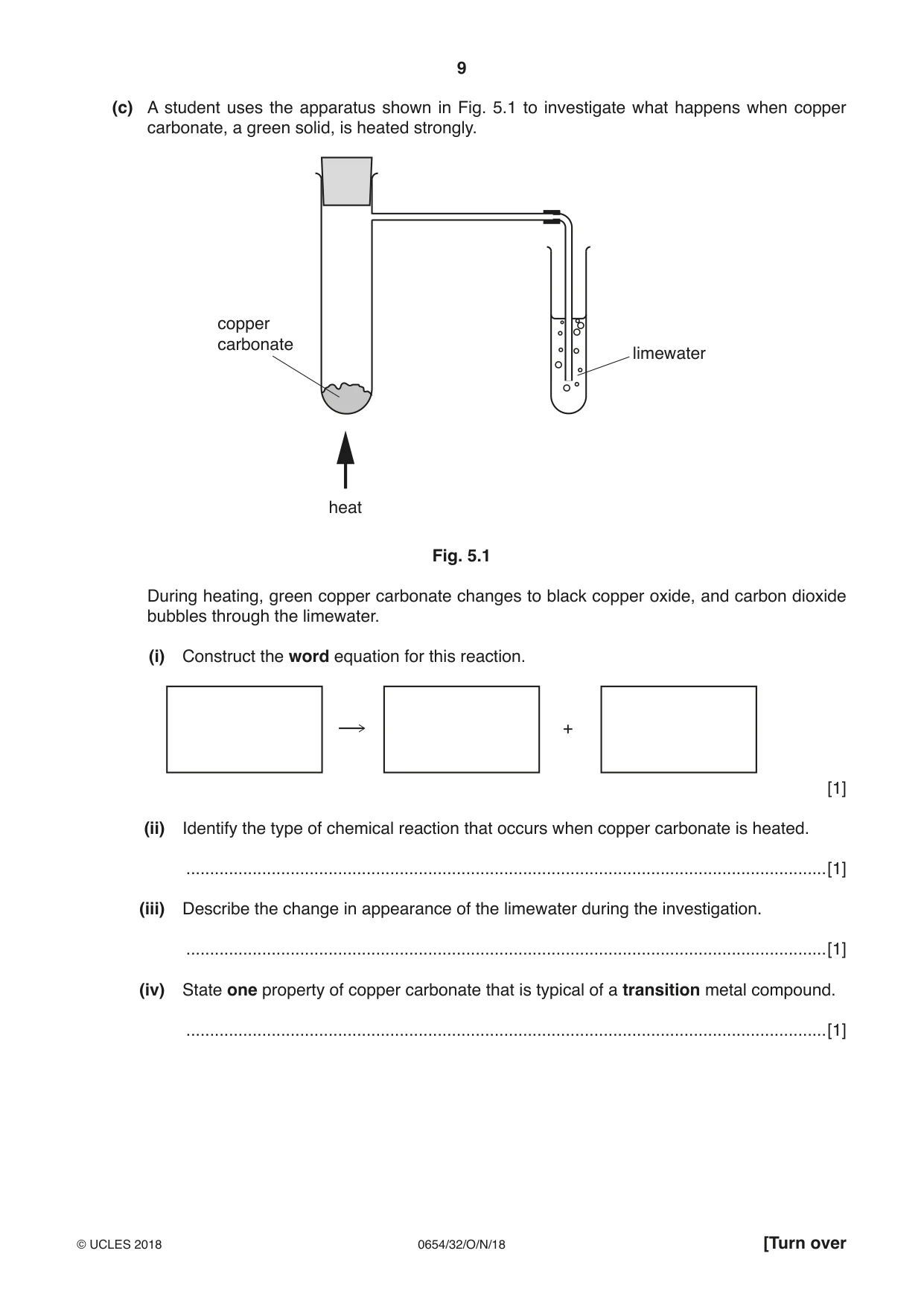
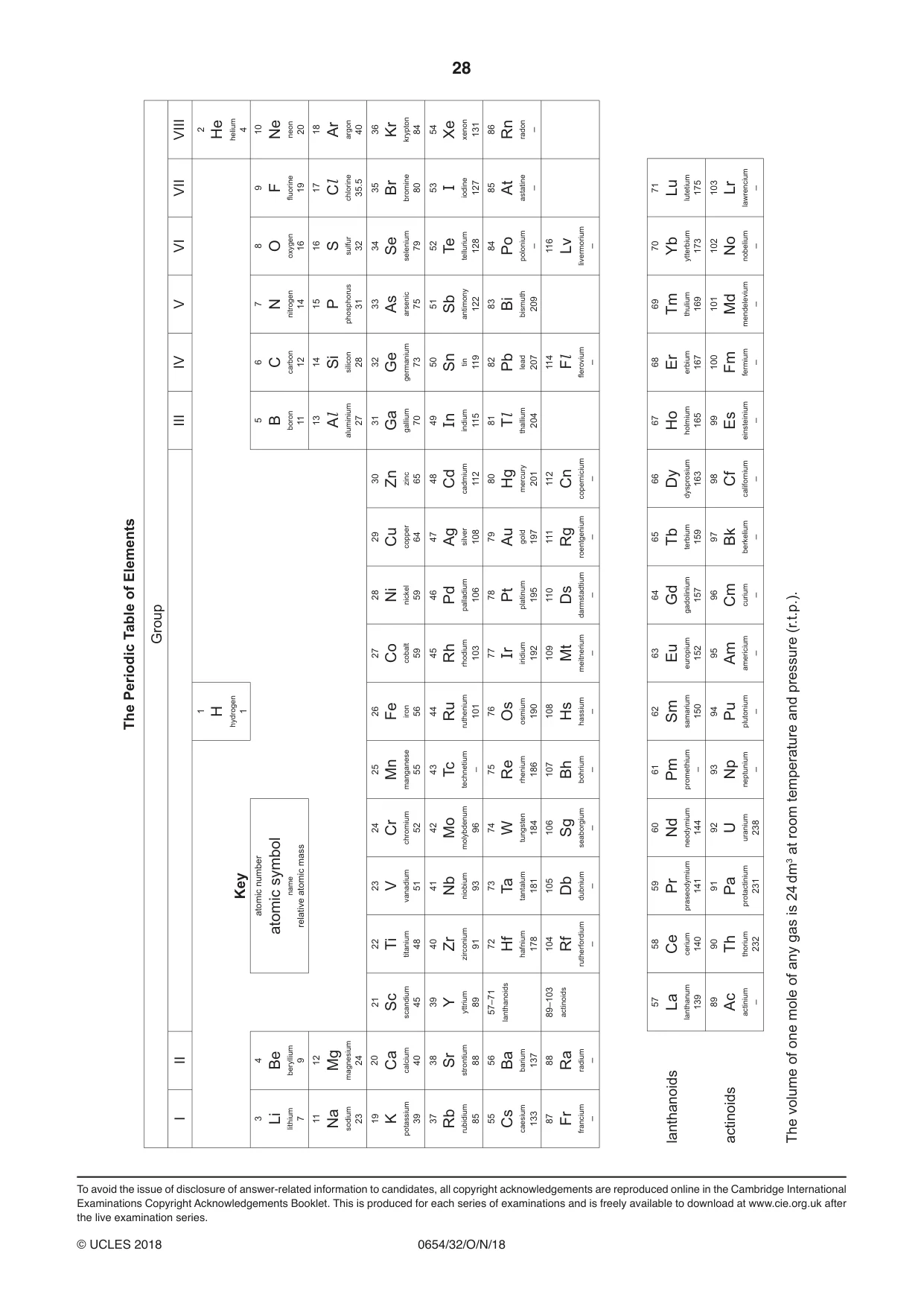
5 Copper and potassium are metallic elements in the fourth period of the Periodic Table. (a) (i) Using the Periodic Table on page 28, state: • the chemical symbols of copper and potassium copper ......................... potassium ......................... • the proton numbers of copper and potassium. copper ......................... potassium ......................... [2] (ii) State whether an atom of copper or an atom of potassium contains the greater number of electrons. Explain your answer. atom ....................................... explanation ........................................................................................................................ ........................................................................................................................................... [1] (iii) An atom of copper and an atom of potassium have different mass numbers. Define the term mass number. ........................................................................................................................................... .......................................................................................................................................[1] (b) State two reasons, other than cost, why potassium is not used to make water pipes. 1 ................................................................................................................................................ ................................................................................................................................................... 2 ................................................................................................................................................ ................................................................................................................................................... [2] (c) A student uses the apparatus shown in Fig. 5.1 to investigate what happens when copper carbonate, a green solid, is heated strongly. copper carbonate limewater heat Fig. 5.1 During heating, green copper carbonate changes to black copper oxide, and carbon dioxide bubbles through the limewater. (i) Construct the word equation for this reaction. + [1] (ii) Identify the type of chemical reaction that occurs when copper carbonate is heated. .......................................................................................................................................[1] (iii) Describe the change in appearance of the limewater during the investigation. .......................................................................................................................................[1] (iv) State one property of copper carbonate that is typical of a transition metal compound. .......................................................................................................................................[1]
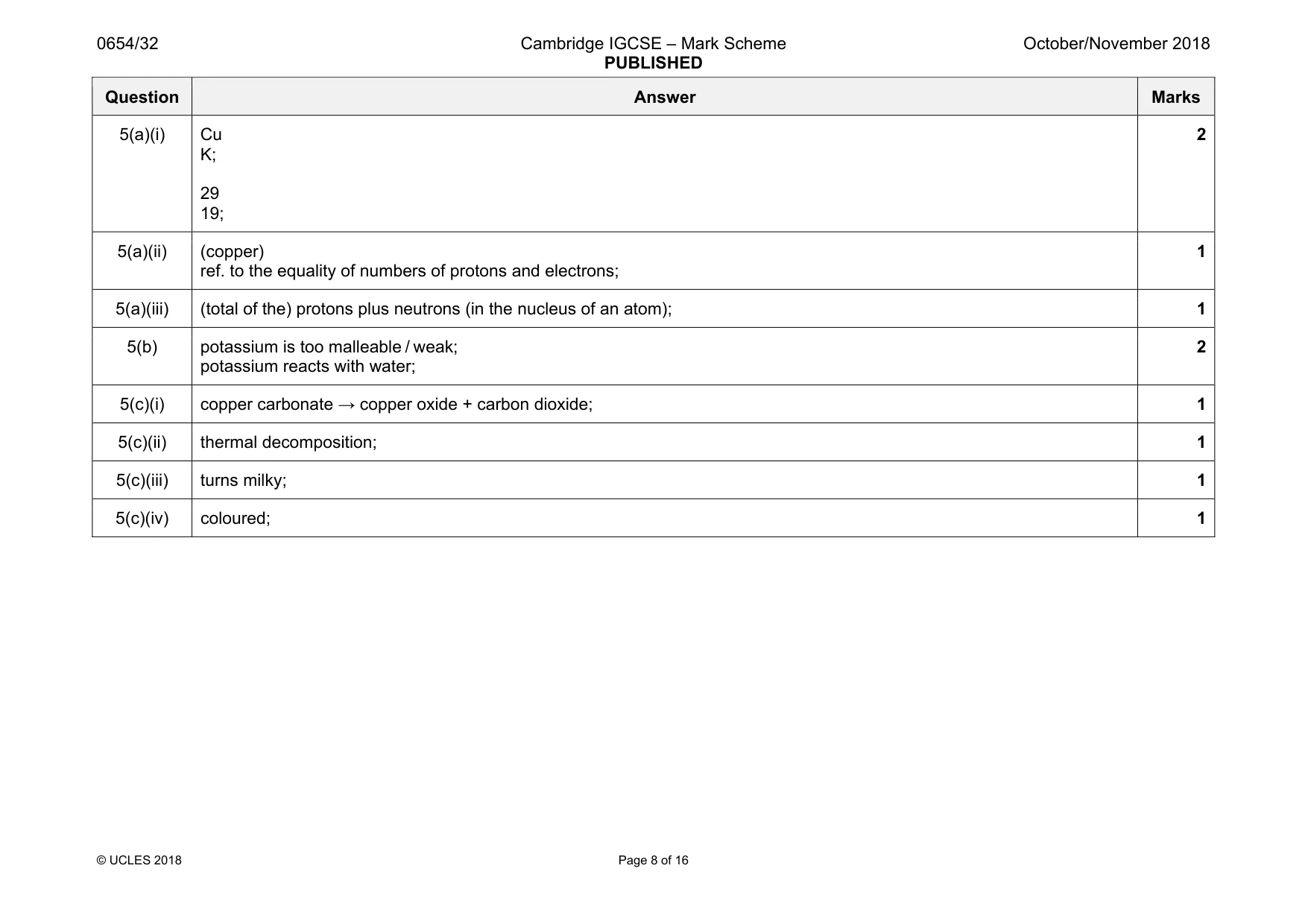
Mark scheme: 5(a)(i) Cu K; 29 19; 2 5(a)(ii) (copper) ref. to the equality of numbers of protons and electrons; 1 5(a)(iii) (total of the) protons plus neutrons (in the nucleus of an atom); 1 5(b) potassium is too malleable / weak; potassium reacts with water; 2 5(c)(i) copper carbonate → copper oxide + carbon dioxide; 1 5(c)(ii) thermal decomposition; 1 5(c)(iii) turns milky; 1 5(c)(iv) coloured; 1
Q6 · Two headlamps on a truck are connected in parallel with a battery
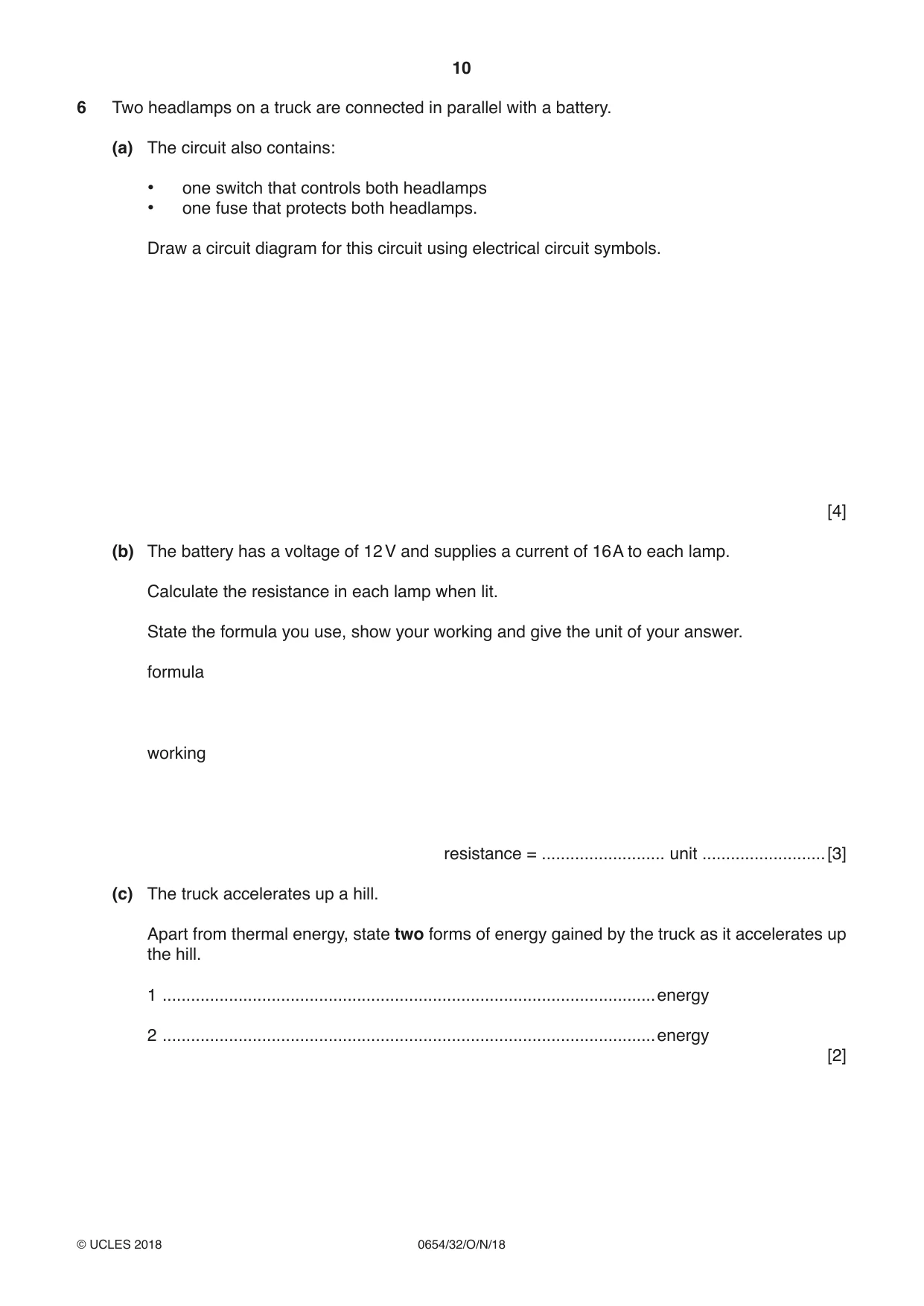
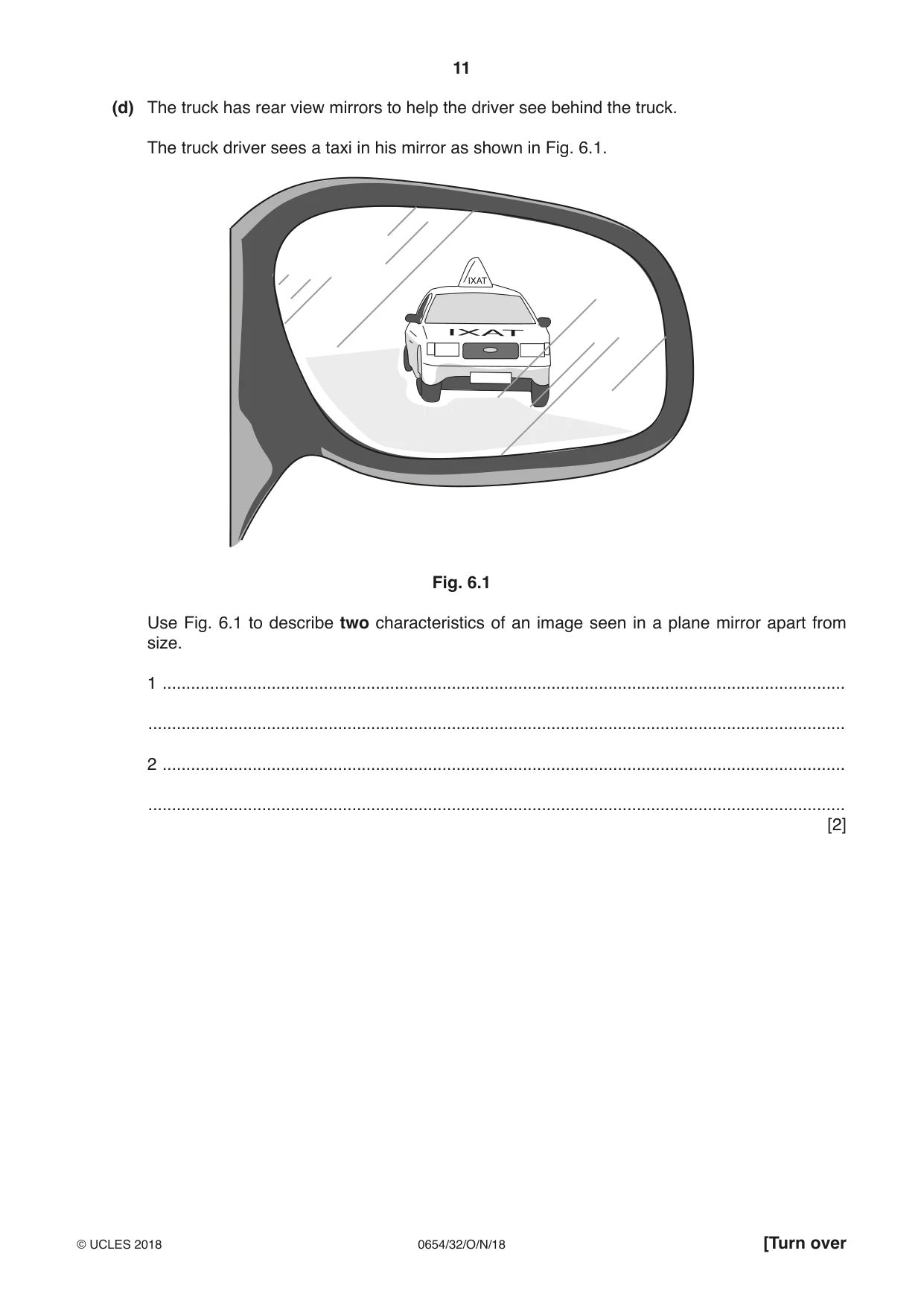
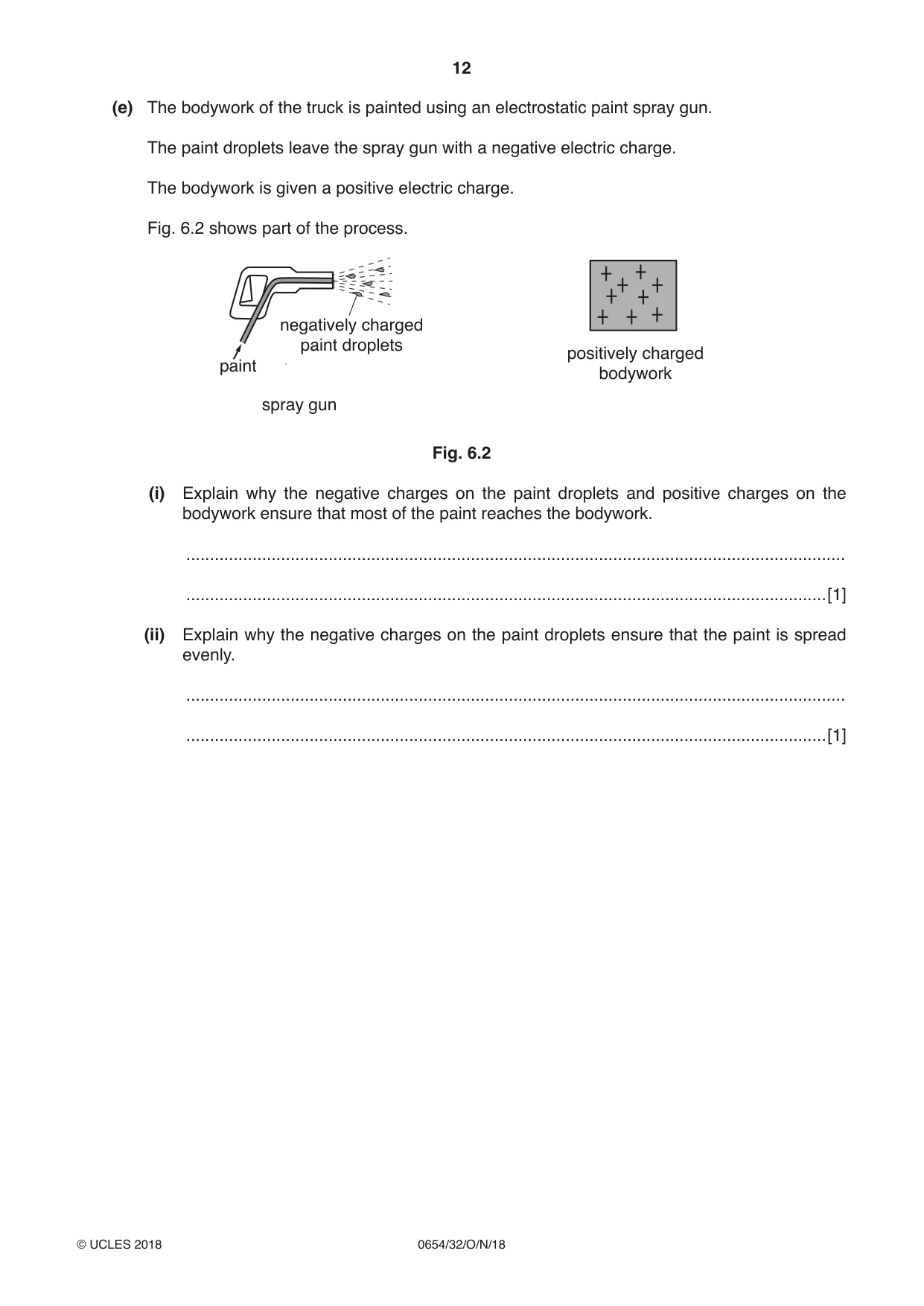
6 Two headlamps on a truck are connected in parallel with a battery. (a) The circuit also contains: • one switch that controls both headlamps • one fuse that protects both headlamps. Draw a circuit diagram for this circuit using electrical circuit symbols. [4] (b) The battery has a voltage of 12 V and supplies a current of 16 A to each lamp. Calculate the resistance in each lamp when lit. State the formula you use, show your working and give the unit of your answer. formula working resistance = .......................... unit .......................... [3] (c) The truck accelerates up a hill. Apart from thermal energy, state two forms of energy gained by the truck as it accelerates up the hill. 1 ........................................................................................................energy 2 ........................................................................................................energy [2] (d) The truck has rear view mirrors to help the driver see behind the truck. The truck driver sees a taxi in his mirror as shown in Fig. 6.1. TAXI TAXI Fig. 6.1 Use Fig. 6.1 to describe two characteristics of an image seen in a plane mirror apart from size. 1 ................................................................................................................................................ ................................................................................................................................................... 2 ................................................................................................................................................ ................................................................................................................................................... [2] (e) The bodywork of the truck is painted using an electrostatic paint spray gun. The paint droplets leave the spray gun with a negative electric charge. The bodywork is given a positive electric charge. Fig. 6.2 shows part of the process. negatively charged paint droplets positively charged paint bodywork spray gun Fig. 6.2 (i) Explain why the negative charges on the paint droplets and positive charges on the bodywork ensure that most of the paint reaches the bodywork. ........................................................................................................................................... .......................................................................................................................................[1] (ii) Explain why the negative charges on the paint droplets ensure that the paint is spread evenly. ........................................................................................................................................... .......................................................................................................................................[1]
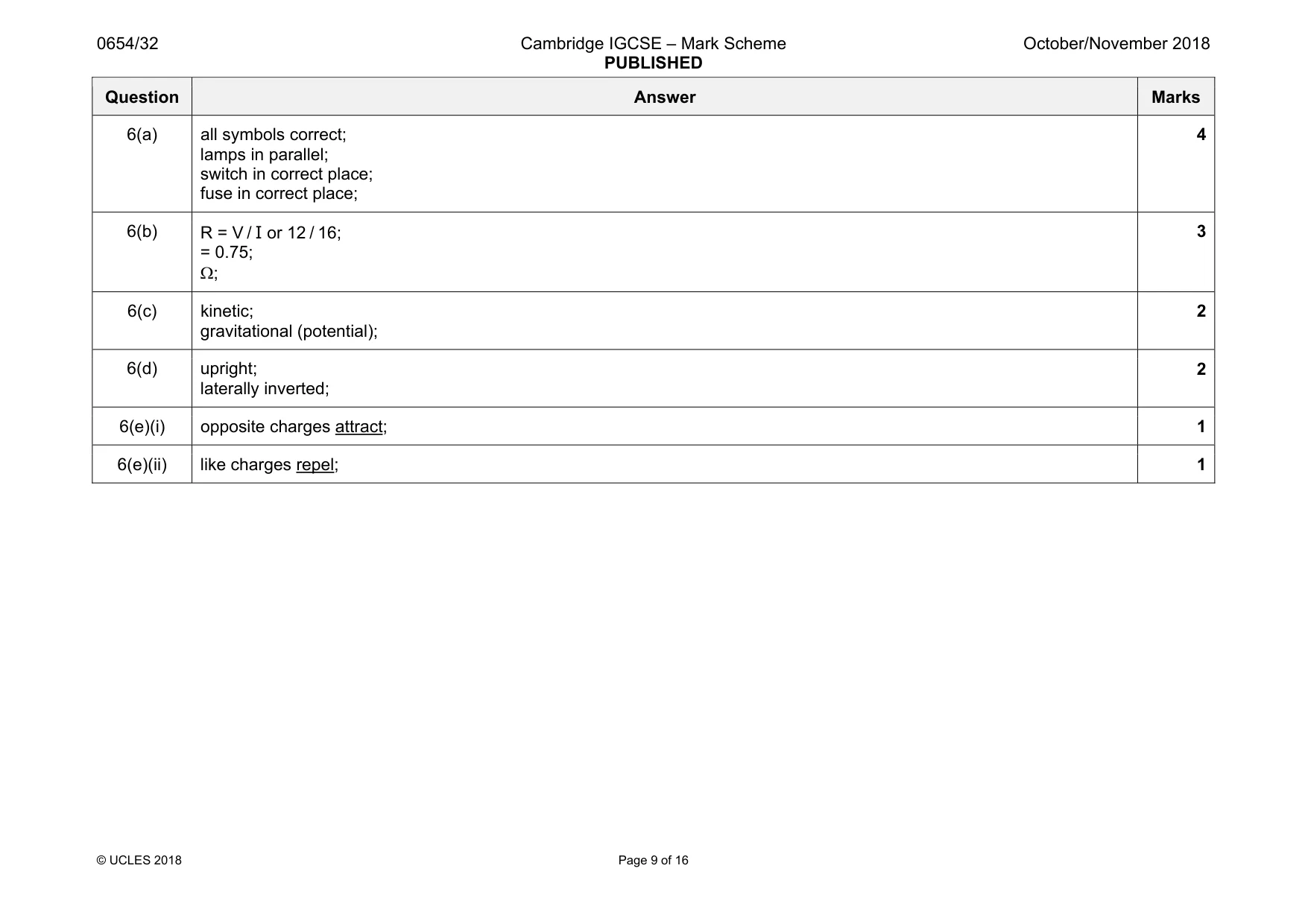
Mark scheme: 6(a) all symbols correct; lamps in parallel; switch in correct place; fuse in correct place; 4 6(b) R = V / I or 12 / 16; = 0.75; Ω; 3 6(c) kinetic; gravitational (potential); 2 6(d) upright; laterally inverted; 2 6(e)(i) opposite charges attract; 1 6(e)(ii) like charges repel; 1
Q7 · Polydactyly is an inherited condition which results in the growth of extra fingers or toes
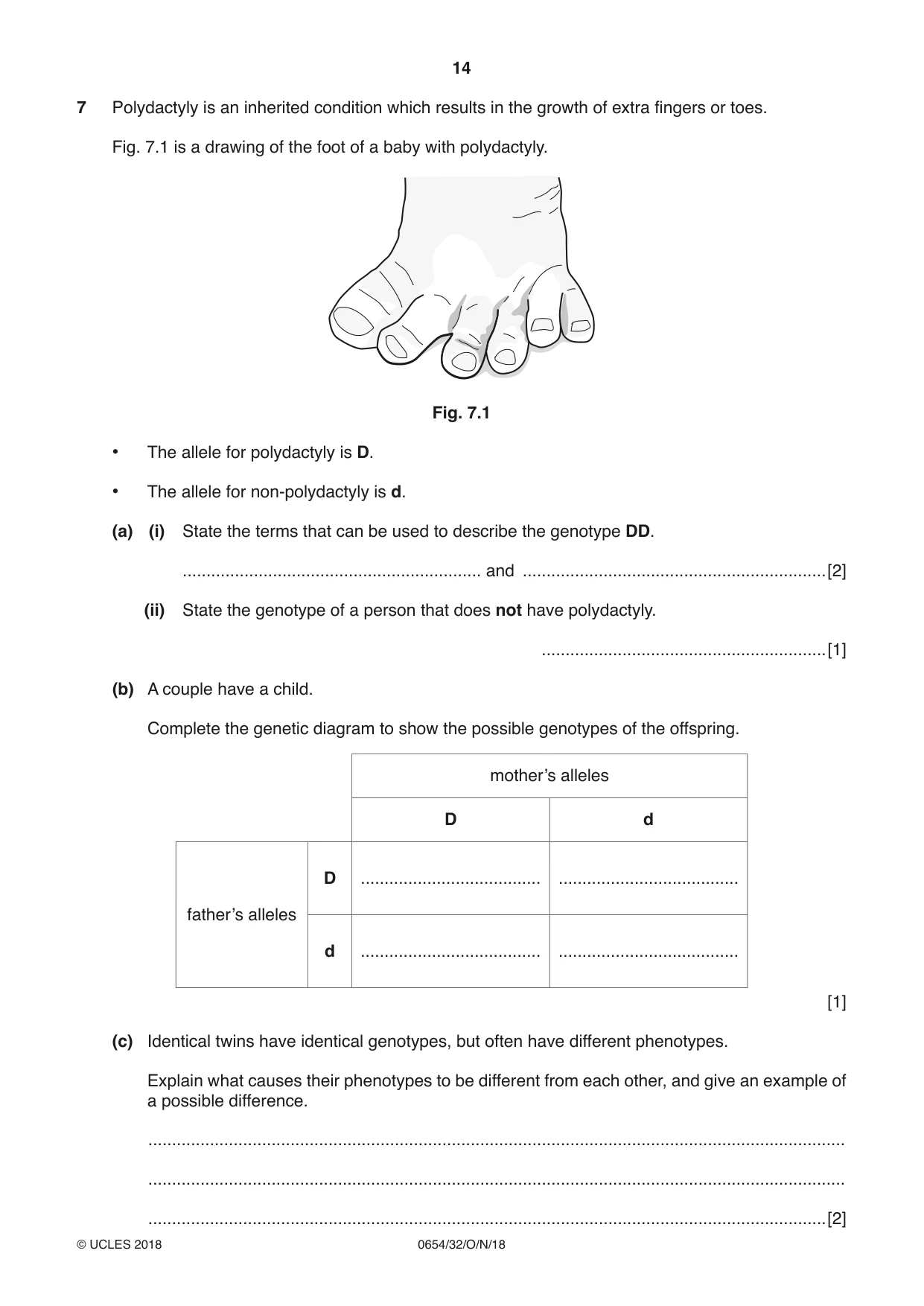
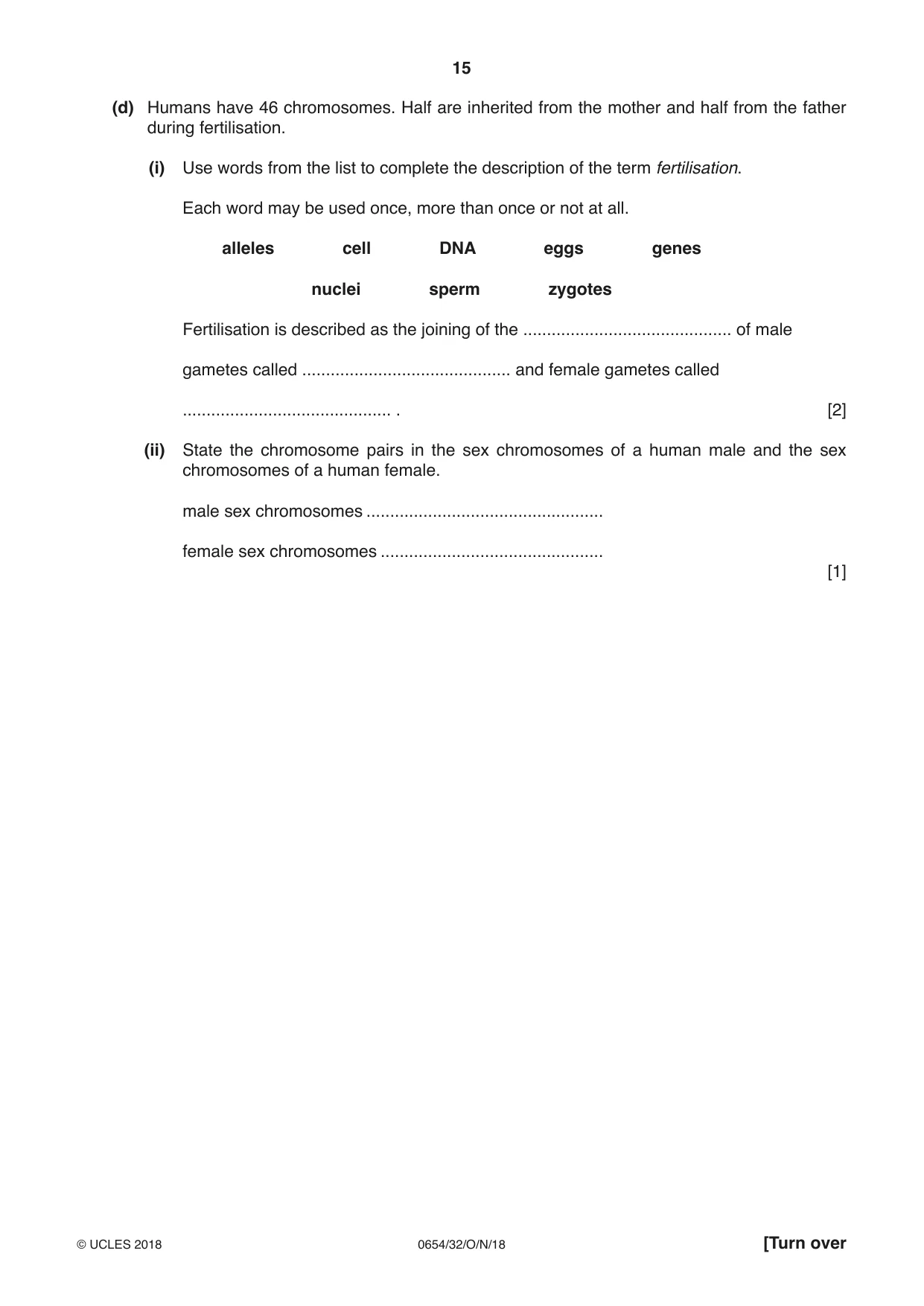
7 Polydactyly is an inherited condition which results in the growth of extra fingers or toes. Fig. 7.1 is a drawing of the foot of a baby with polydactyly. Fig. 7.1 • The allele for polydactyly is D. • The allele for non‑polydactyly is d. (a) (i) State the terms that can be used to describe the genotype DD. ............................................................... and ................................................................[2] (ii) State the genotype of a person that does not have polydactyly. ............................................................[1] (b) A couple have a child. Complete the genetic diagram to show the possible genotypes of the offspring. mother’s alleles D d D ...................................... ...................................... father’s alleles d ...................................... ...................................... [1] (c) Identical twins have identical genotypes, but often have different phenotypes. Explain what causes their phenotypes to be different from each other, and give an example of a possible difference. ................................................................................................................................................... ................................................................................................................................................... ...............................................................................................................................................[2] (d) Humans have 46 chromosomes. Half are inherited from the mother and half from the father during fertilisation. (i) Use words from the list to complete the description of the term fertilisation. Each word may be used once, more than once or not at all. alleles cell DNA eggs genes nuclei sperm zygotes Fertilisation is described as the joining of the ............................................ of male gametes called ............................................ and female gametes called ............................................ . [2] (ii) State the chromosome pairs in the sex chromosomes of a human male and the sex chromosomes of a human female. male sex chromosomes .................................................. female sex chromosomes ............................................... [1]
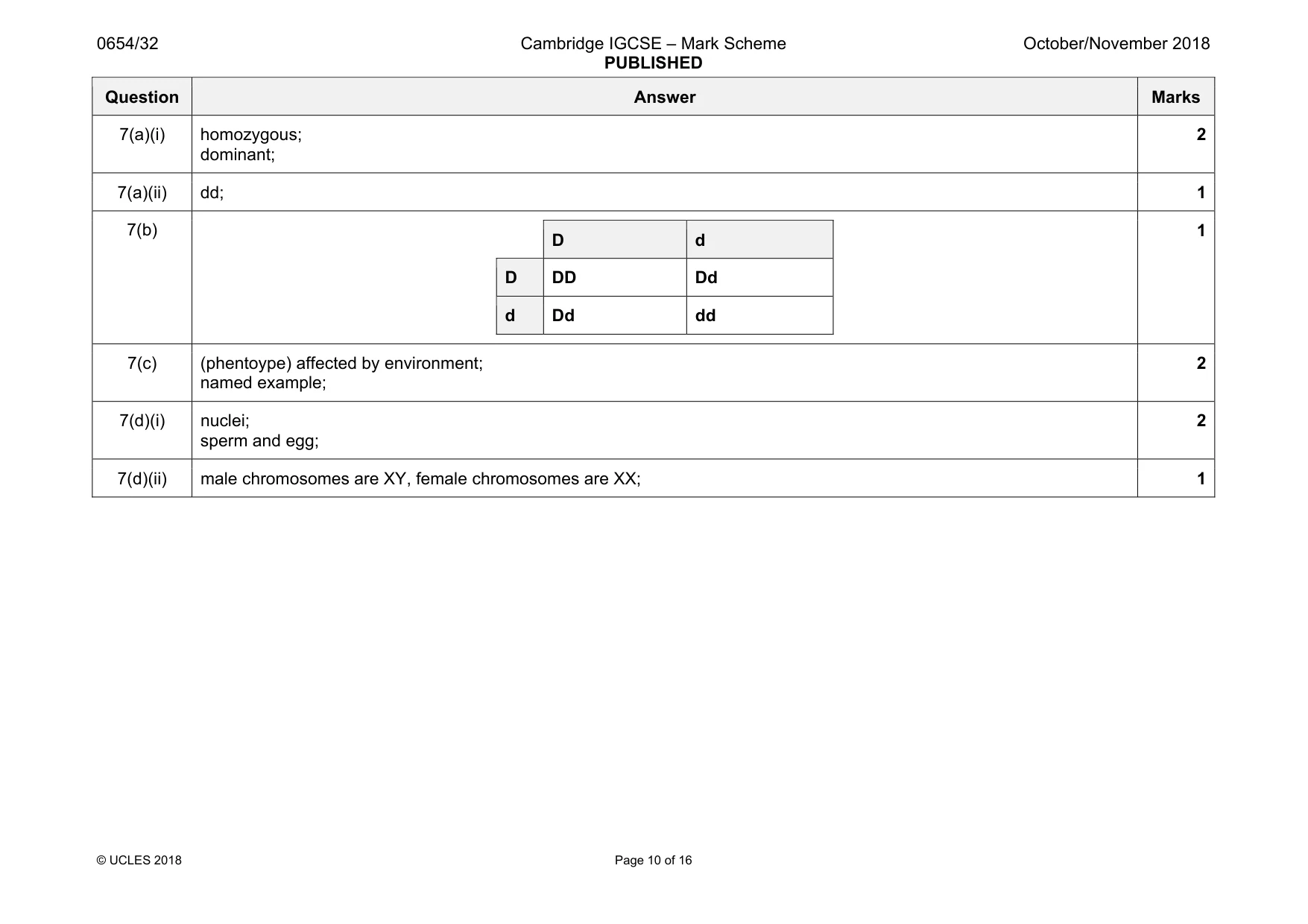
Mark scheme: 7(a)(i) homozygous; dominant; 2 7(a)(ii) dd; 1 7(b) D d D DD Dd d Dd dd 1 7(c) (phentoype) affected by environment; named example; 2 7(d)(i) nuclei; sperm and egg; 2 7(d)(ii) male chromosomes are XY, female chromosomes are XX; 1
Q8 · Limestone is a useful material obtained from the Earth’s crust
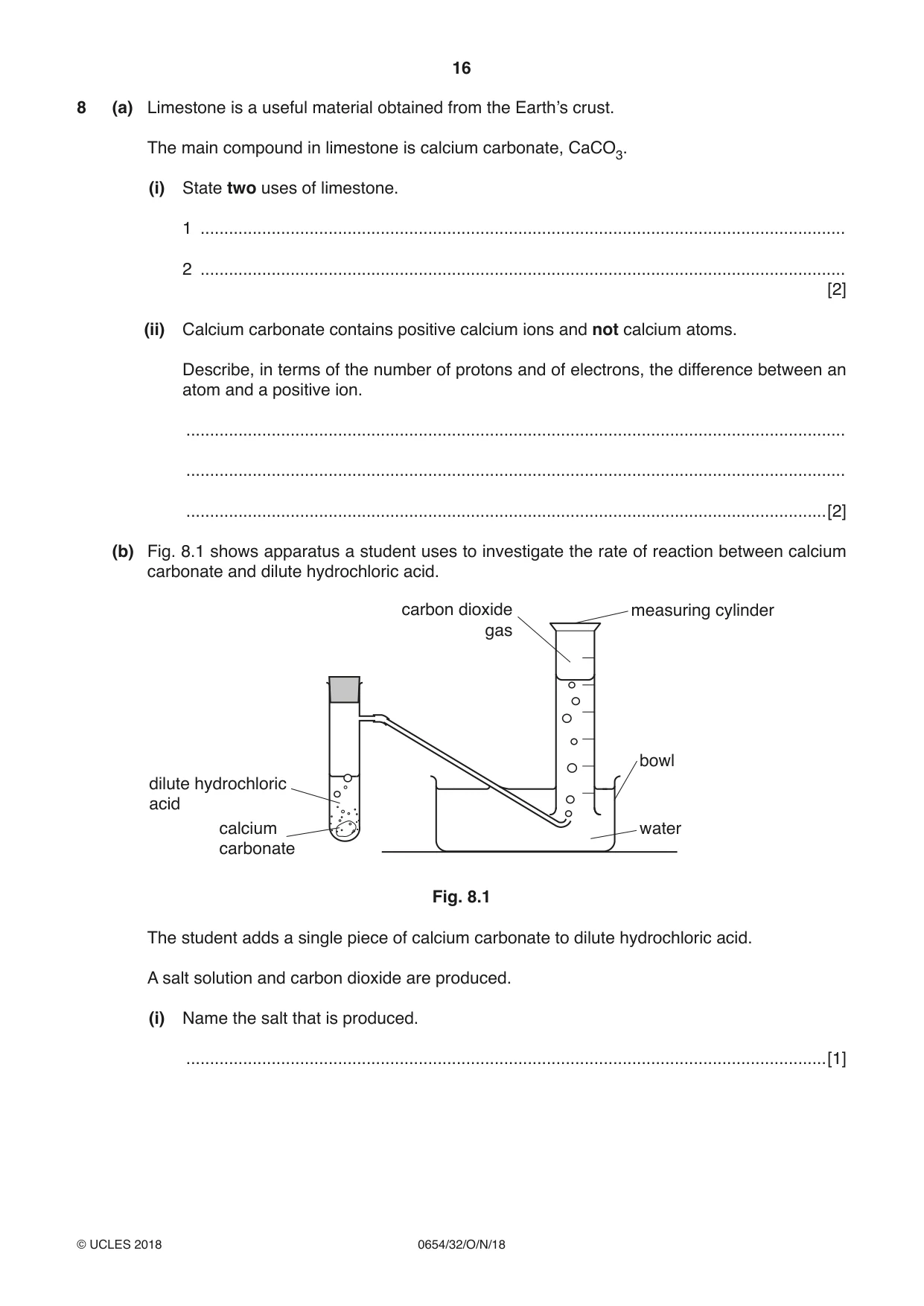
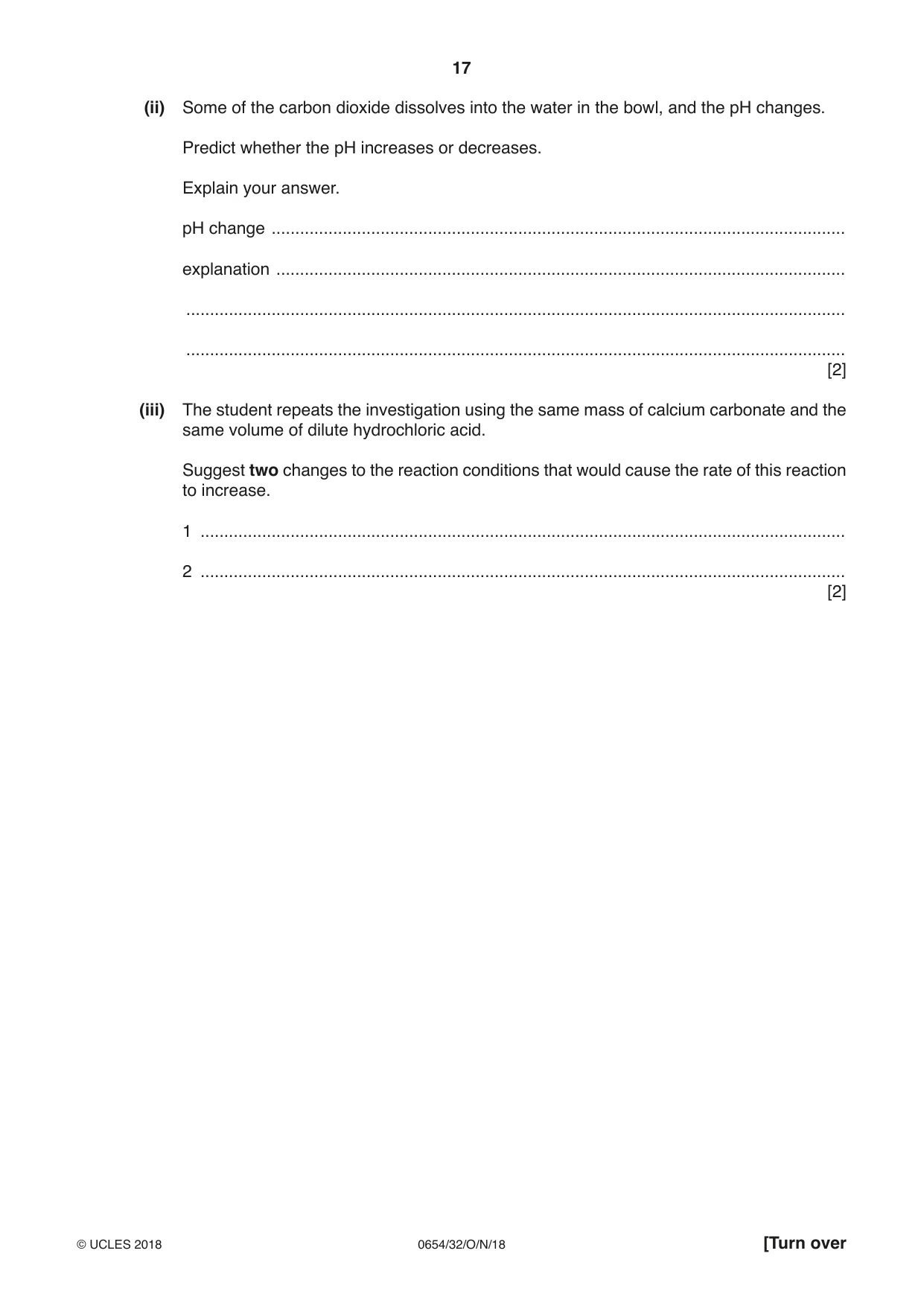
8 (a) Limestone is a useful material obtained from the Earth’s crust. The main compound in limestone is calcium carbonate, CaCO3. (i) State two uses of limestone. 1 ........................................................................................................................................ 2 ........................................................................................................................................ [2] (ii) Calcium carbonate contains positive calcium ions and not calcium atoms. Describe, in terms of the number of protons and of electrons, the difference between an atom and a positive ion. ........................................................................................................................................... ........................................................................................................................................... .......................................................................................................................................[2] (b) Fig. 8.1 shows apparatus a student uses to investigate the rate of reaction between calcium carbonate and dilute hydrochloric acid. carbon dioxide measuring cylinder gas bowl dilute hydrochloric acid calcium water carbonate Fig. 8.1 The student adds a single piece of calcium carbonate to dilute hydrochloric acid. A salt solution and carbon dioxide are produced. (i) Name the salt that is produced. .......................................................................................................................................[1] (ii) Some of the carbon dioxide dissolves into the water in the bowl, and the pH changes. Predict whether the pH increases or decreases. Explain your answer. pH change ......................................................................................................................... explanation ........................................................................................................................ ........................................................................................................................................... ........................................................................................................................................... [2] (iii) The student repeats the investigation using the same mass of calcium carbonate and the same volume of dilute hydrochloric acid. Suggest two changes to the reaction conditions that would cause the rate of this reaction to increase. 1 ........................................................................................................................................ 2 ........................................................................................................................................ [2]
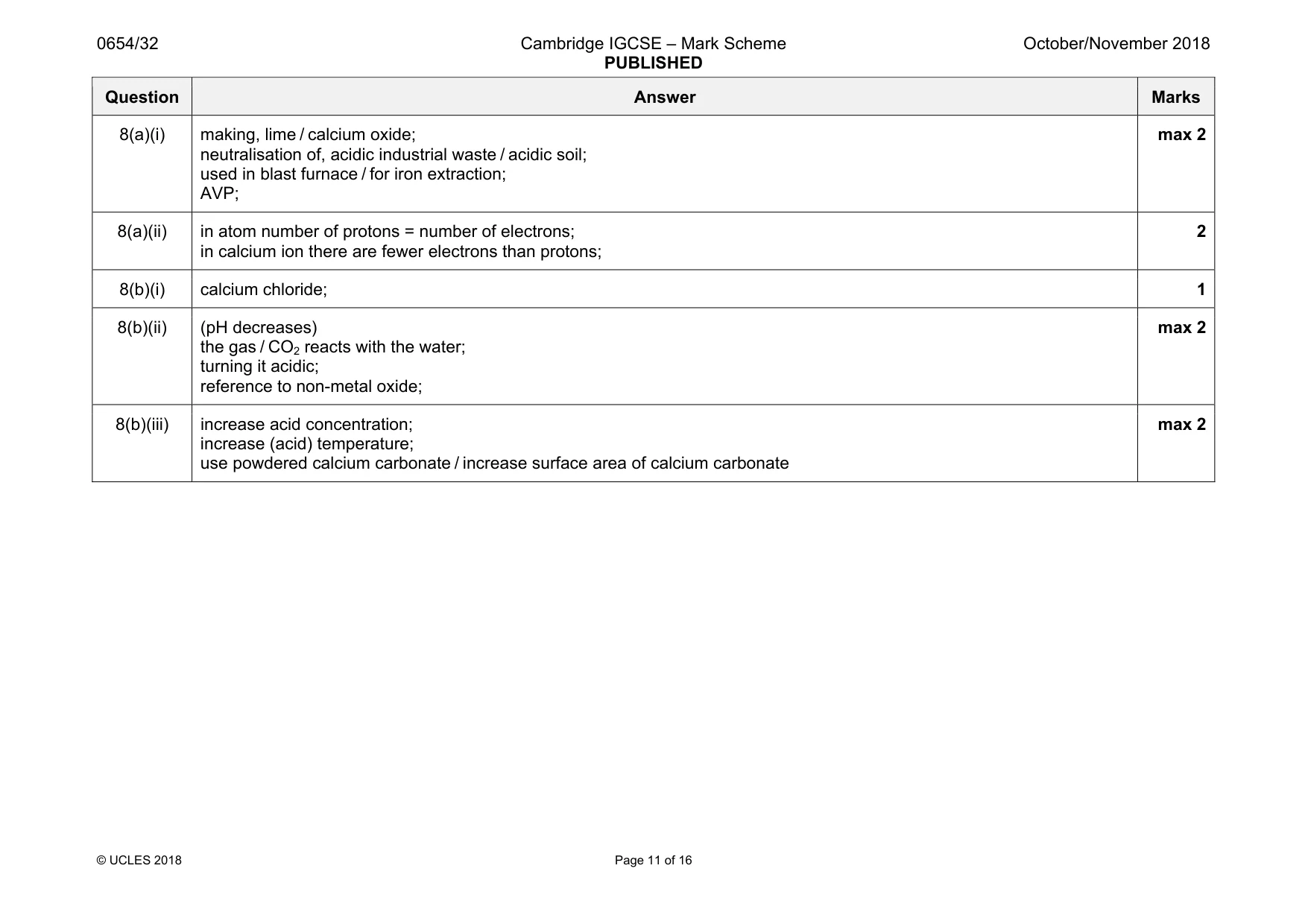
Mark scheme: 8(a)(i) making, lime / calcium oxide; neutralisation of, acidic industrial waste / acidic soil; used in blast furnace / for iron extraction; AVP; max 2 8(a)(ii) in atom number of protons = number of electrons; in calcium ion there are fewer electrons than protons; 2 8(b)(i) calcium chloride; 1 8(b)(ii) (pH decreases) the gas / CO2 reacts with the water; turning it acidic; reference to non-metal oxide; max 2 8(b)(iii) increase acid concentration; increase (acid) temperature; use powdered calcium carbonate / increase surface area of calcium carbonate max 2
Q9 · The speed‑time graph for a journey made by a train
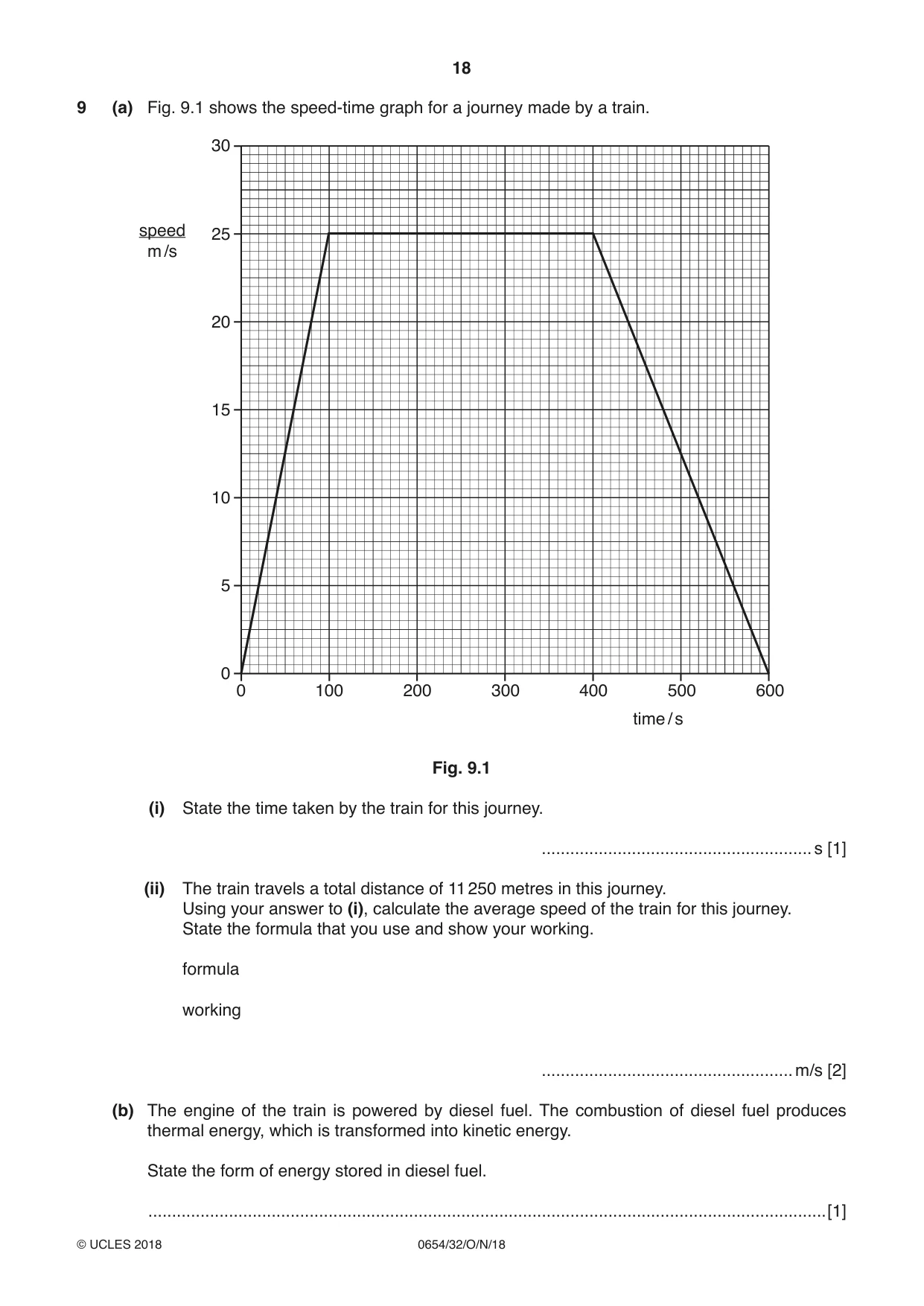
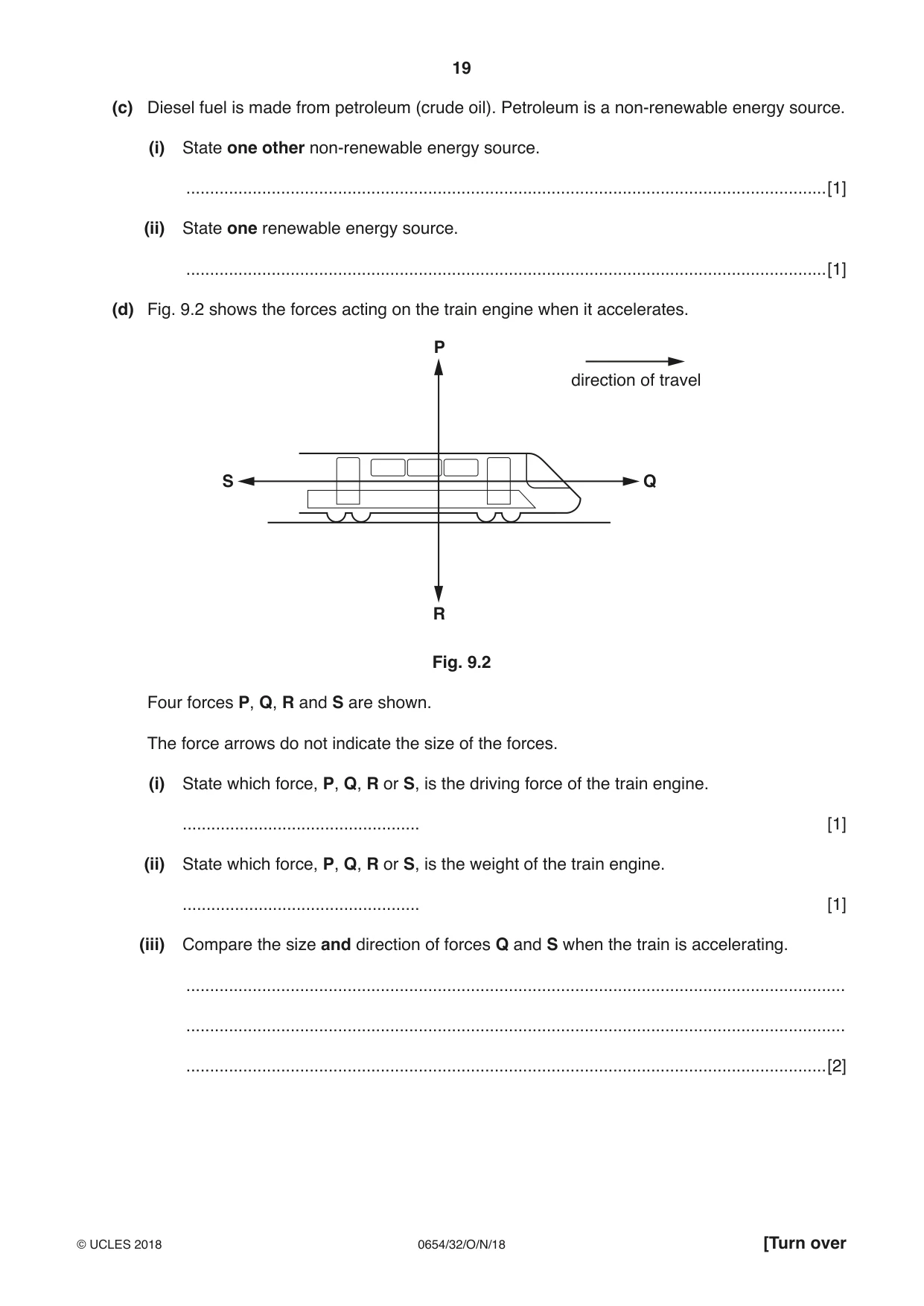
9 (a) Fig. 9.1 shows the speed‑time graph for a journey made by a train. 30 speed 25 m /s 20 15 10 5 0 0 100 200 300 400 500 600 time / s Fig. 9.1 (i) State the time taken by the train for this journey. .........................................................s [1] (ii) The train travels a total distance of 11 250 metres in this journey. Using your answer to (i), calculate the average speed of the train for this journey. State the formula that you use and show your working. formula working .....................................................m/s [2] (b) The engine of the train is powered by diesel fuel. The combustion of diesel fuel produces thermal energy, which is transformed into kinetic energy. State the form of energy stored in diesel fuel. ...............................................................................................................................................[1] (c) Diesel fuel is made from petroleum (crude oil). Petroleum is a non‑renewable energy source. (i) State one other non‑renewable energy source. .......................................................................................................................................[1] (ii) State one renewable energy source. .......................................................................................................................................[1] (d) Fig. 9.2 shows the forces acting on the train engine when it accelerates. P direction of travel S Q R Fig. 9.2 Four forces P, Q, R and S are shown. The force arrows do not indicate the size of the forces. (i) State which force, P, Q, R or S, is the driving force of the train engine. .................................................. [1] (ii) State which force, P, Q, R or S, is the weight of the train engine. .................................................. [1] (iii) Compare the size and direction of forces Q and S when the train is accelerating. ........................................................................................................................................... ........................................................................................................................................... .......................................................................................................................................[2]
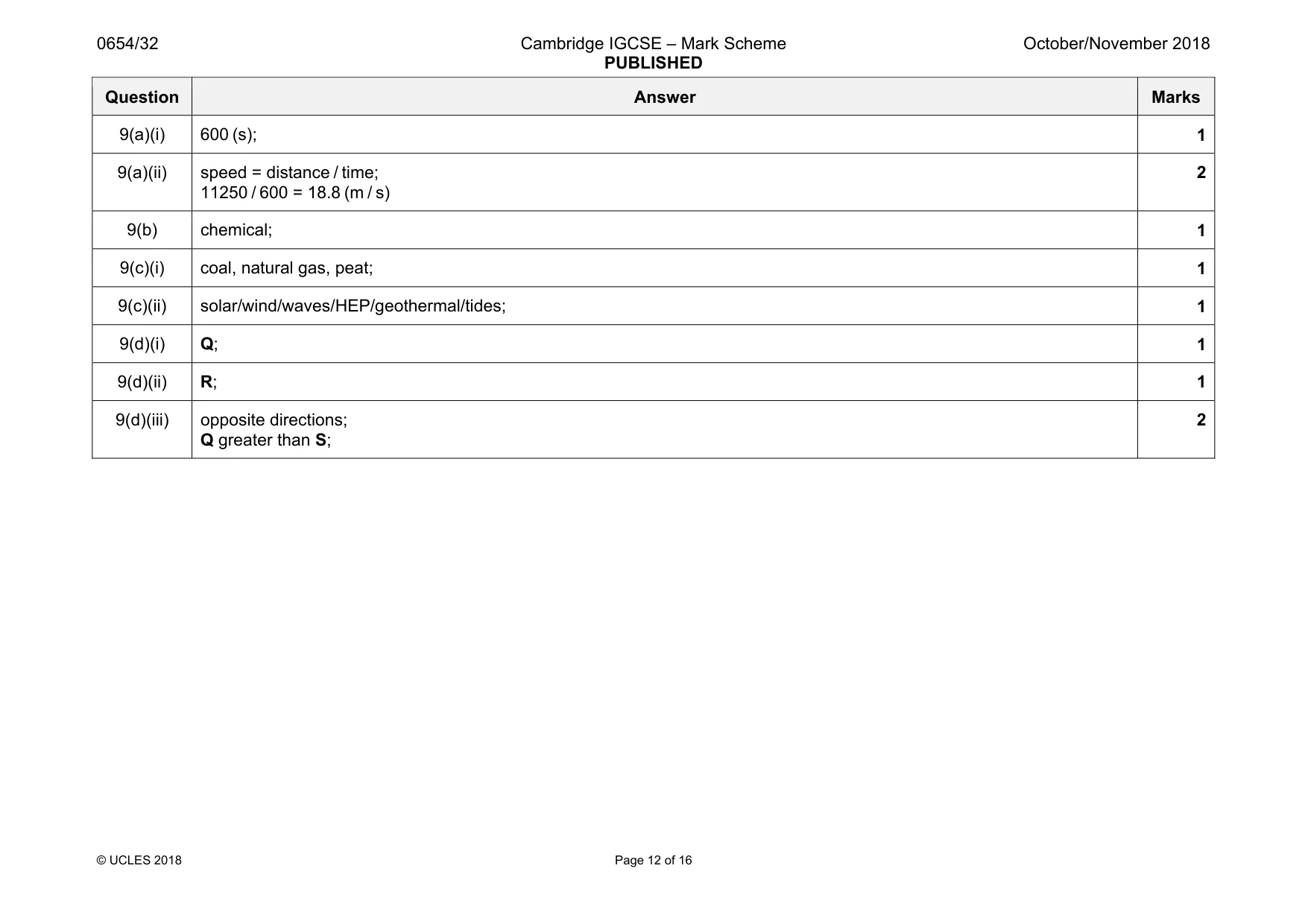
Mark scheme: 9(a)(i) 600 (s); 1 9(a)(ii) speed = distance / time; 11250 / 600 = 18.8 (m / s) 2 9(b) chemical; 1 9(c)(i) coal, natural gas, peat; 1 9(c)(ii) solar/wind/waves/HEP/geothermal/tides; 1 9(d)(i) Q; 1 9(d)(ii) R; 1 9(d)(iii) opposite directions; Q greater than S; 2
Q10 · A diagram of a cross‑section of the skin
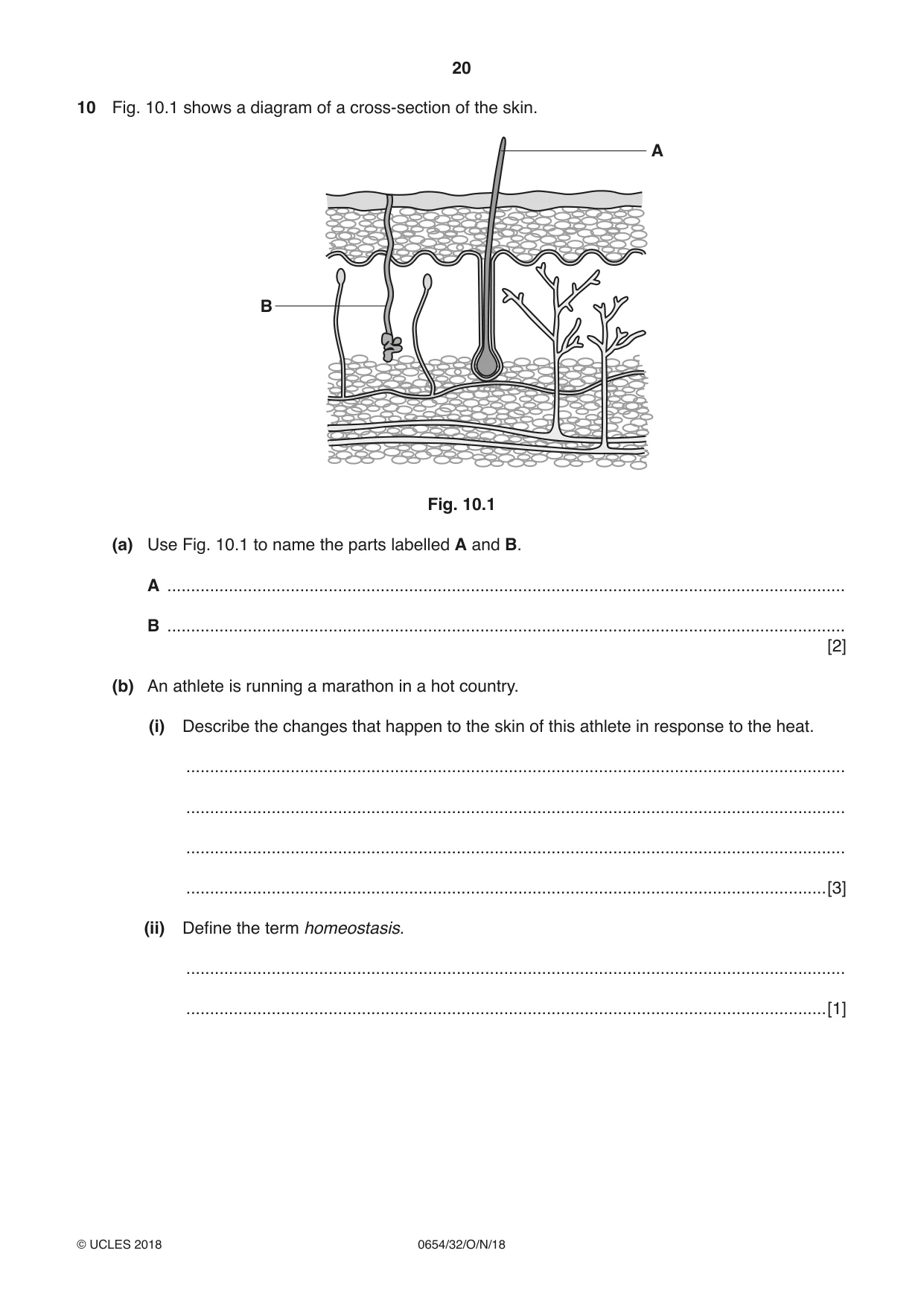
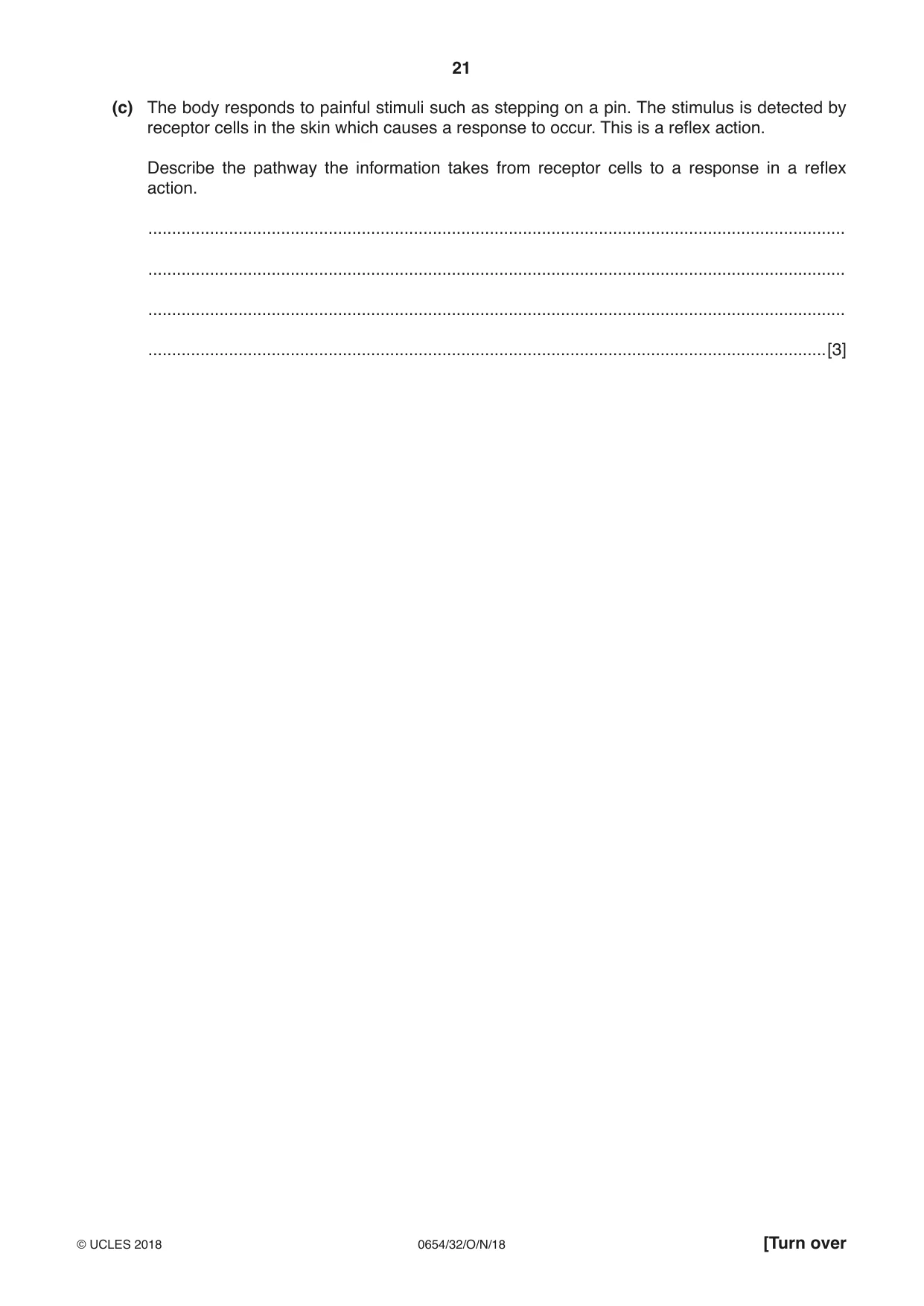
10 Fig. 10.1 shows a diagram of a cross‑section of the skin. A B Fig. 10.1 (a) Use Fig. 10.1 to name the parts labelled A and B. A ............................................................................................................................................... B ............................................................................................................................................... [2] (b) An athlete is running a marathon in a hot country. (i) Describe the changes that happen to the skin of this athlete in response to the heat. ........................................................................................................................................... ........................................................................................................................................... ........................................................................................................................................... .......................................................................................................................................[3] (ii) Define the term homeostasis. ........................................................................................................................................... .......................................................................................................................................[1] (c) The body responds to painful stimuli such as stepping on a pin. The stimulus is detected by receptor cells in the skin which causes a response to occur. This is a reflex action. Describe the pathway the information takes from receptor cells to a response in a reflex action. ................................................................................................................................................... ................................................................................................................................................... ................................................................................................................................................... ...............................................................................................................................................[3]
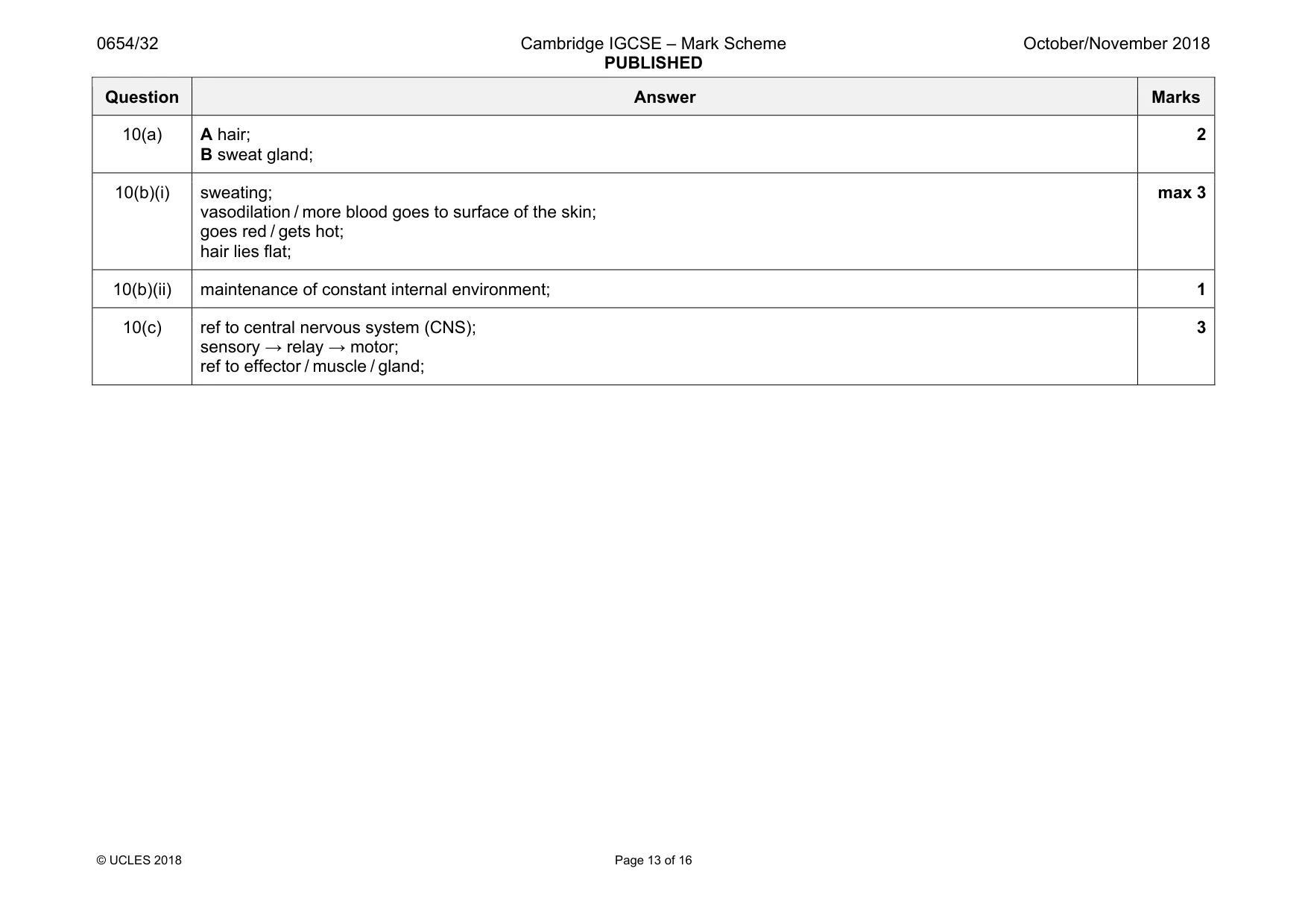
Mark scheme: 10(a) A hair; B sweat gland; 2 10(b)(i) sweating; vasodilation / more blood goes to surface of the skin; goes red / gets hot; hair lies flat; max 3 10(b)(ii) maintenance of constant internal environment; 1 10(c) ref to central nervous system (CNS); sensory → relay → motor; ref to effector / muscle / gland; 3
Q11 · Natural gas is used as a fuel
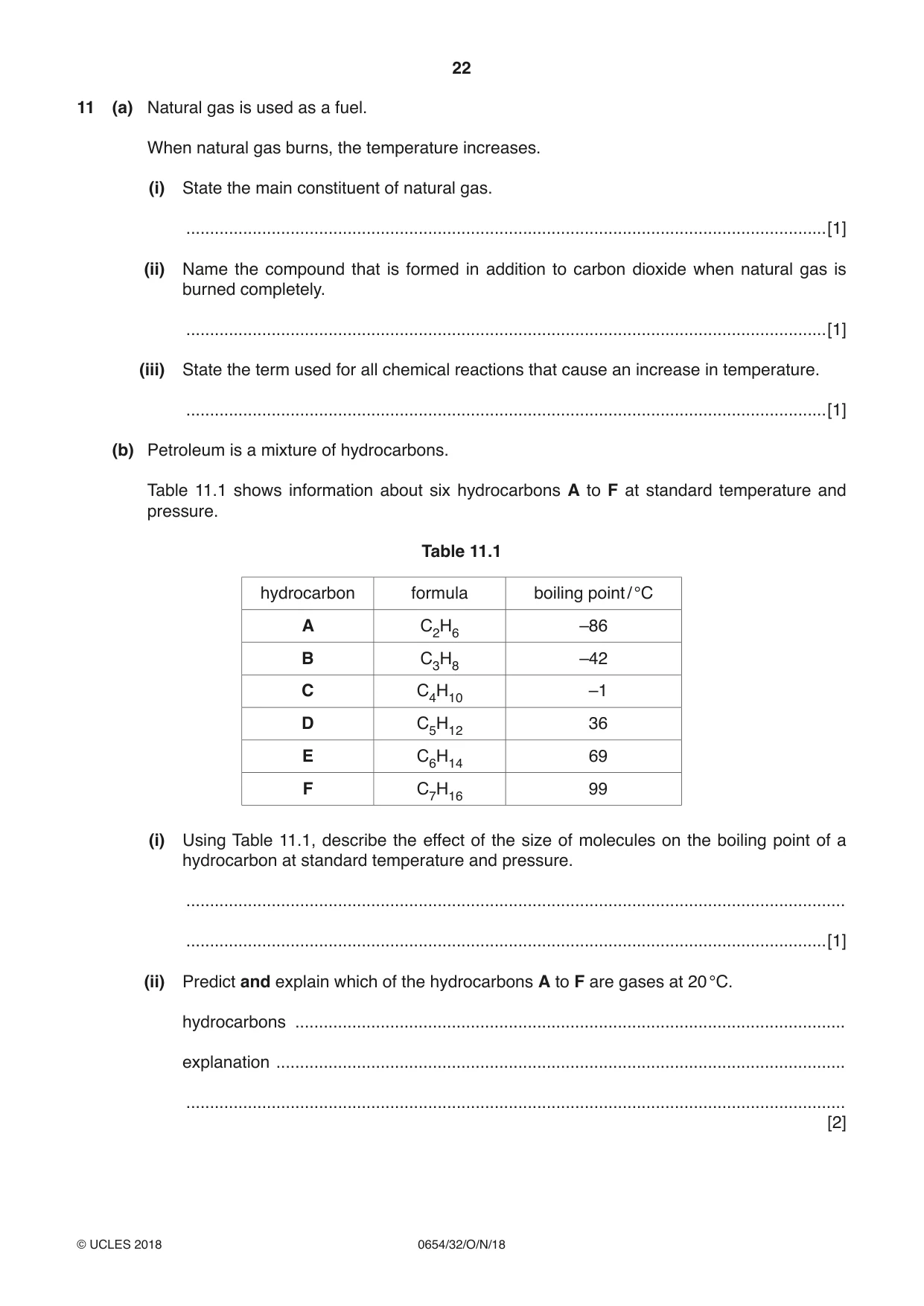
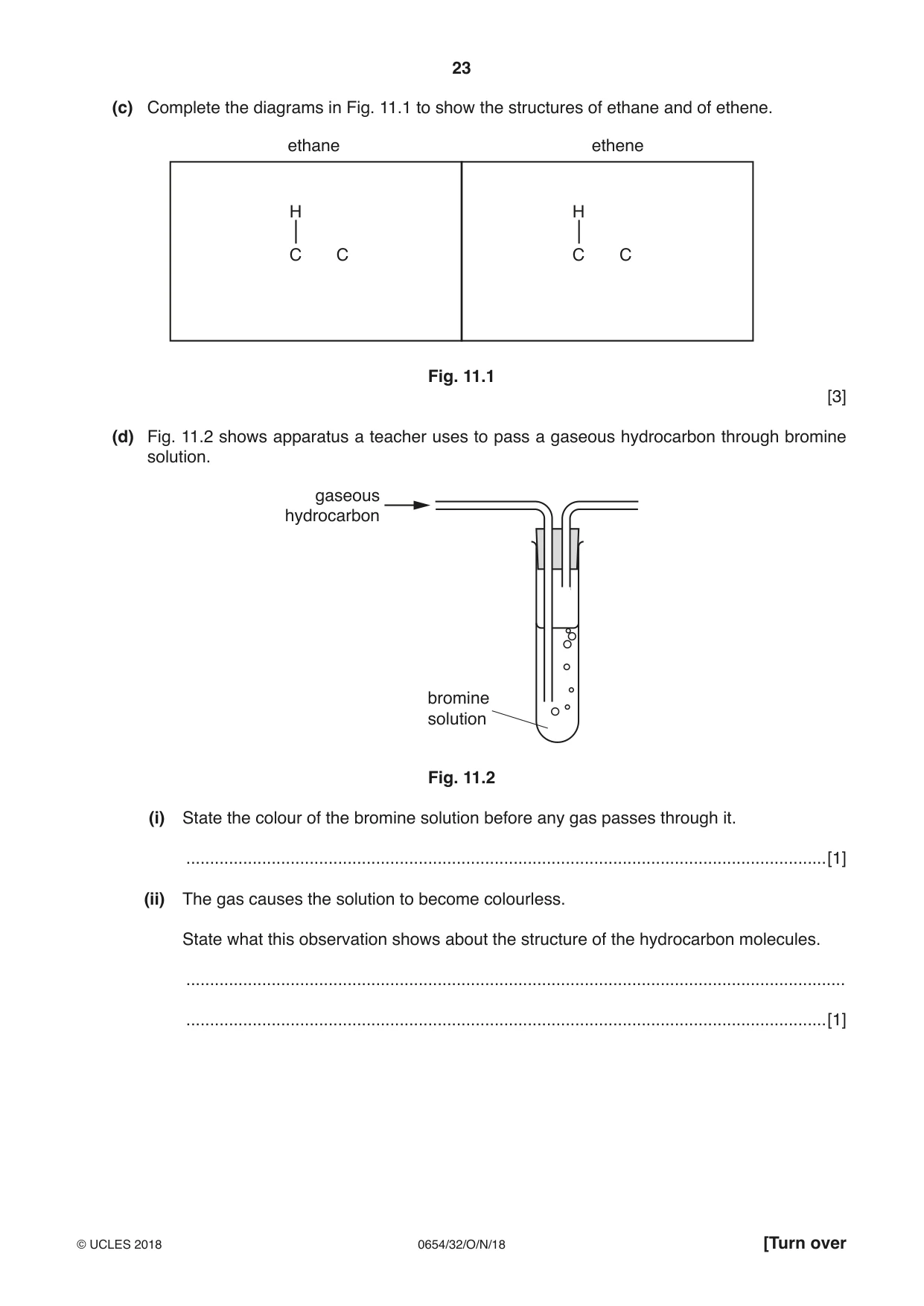
11 (a) Natural gas is used as a fuel. When natural gas burns, the temperature increases. (i) State the main constituent of natural gas. .......................................................................................................................................[1] (ii) Name the compound that is formed in addition to carbon dioxide when natural gas is burned completely. .......................................................................................................................................[1] (iii) State the term used for all chemical reactions that cause an increase in temperature. .......................................................................................................................................[1] (b) Petroleum is a mixture of hydrocarbons. Table 11.1 shows information about six hydrocarbons A to F at standard temperature and pressure. Table 11.1 hydrocarbon formula boiling point / °C A C2H6 –86 B C3H8 –42 C C4H10 –1 D C5H12 36 E C6H14 69 F C7H16 99 (i) Using Table 11.1, describe the effect of the size of molecules on the boiling point of a hydrocarbon at standard temperature and pressure. ........................................................................................................................................... .......................................................................................................................................[1] (ii) Predict and explain which of the hydrocarbons A to F are gases at 20 °C. hydrocarbons .................................................................................................................... explanation ........................................................................................................................ ........................................................................................................................................... [2] (c) Complete the diagrams in Fig. 11.1 to show the structures of ethane and of ethene. ethane ethene H H C C C C Fig. 11.1 [3] (d) Fig. 11.2 shows apparatus a teacher uses to pass a gaseous hydrocarbon through bromine solution. gaseous hydrocarbon bromine solution Fig. 11.2 (i) State the colour of the bromine solution before any gas passes through it. .......................................................................................................................................[1] (ii) The gas causes the solution to become colourless. State what this observation shows about the structure of the hydrocarbon molecules. ........................................................................................................................................... .......................................................................................................................................[1]
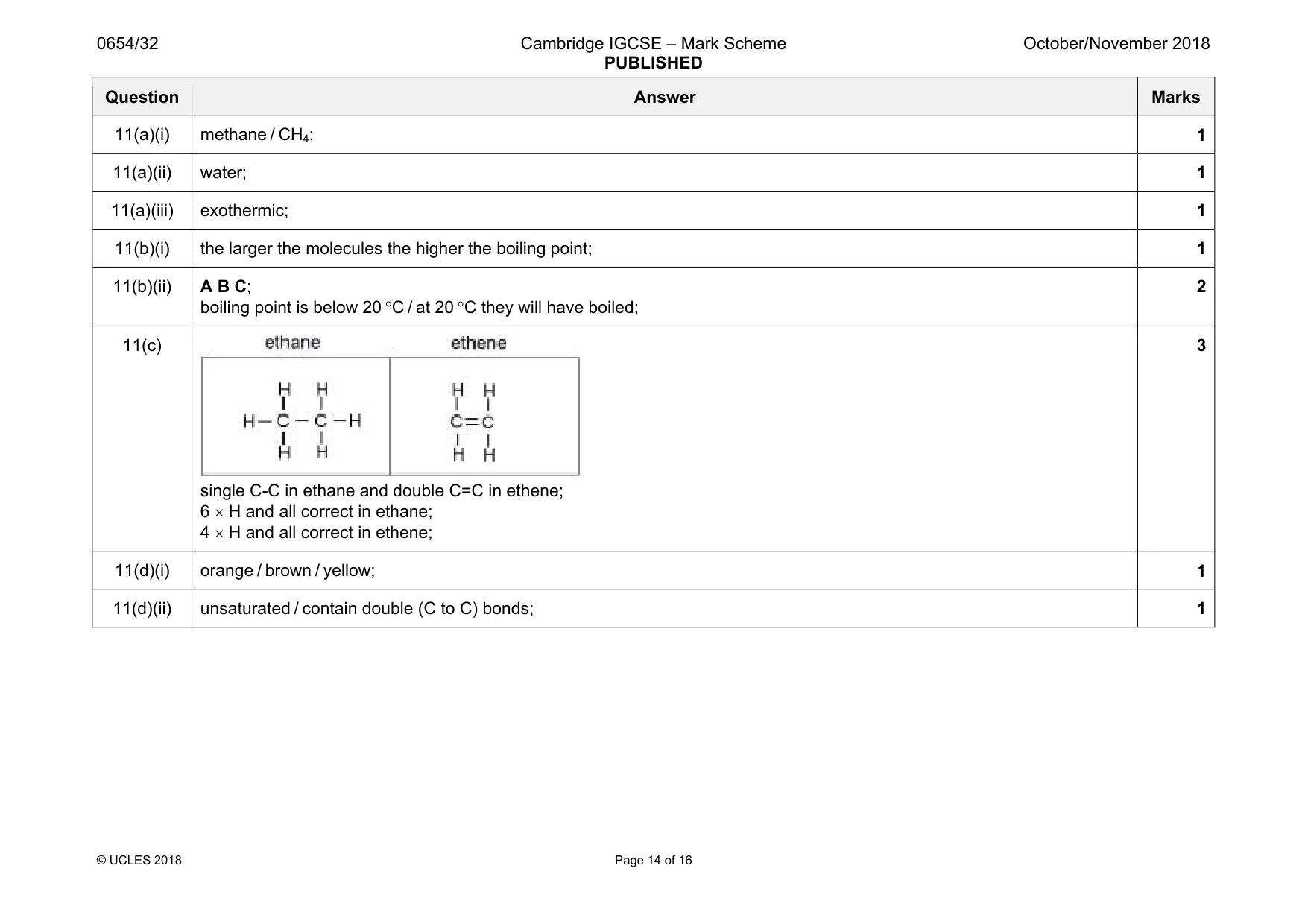
Mark scheme: 11(a)(i) methane / CH4; 1 11(a)(ii) water; 1 11(a)(iii) exothermic; 1 11(b)(i) the larger the molecules the higher the boiling point; 1 11(b)(ii) A B C; boiling point is below 20 °C / at 20 °C they will have boiled; 2 11(c) single C-C in ethane and double C=C in ethene; 6 × H and all correct in ethane; 4 × H and all correct in ethene; 3 11(d)(i) orange / brown / yellow; 1 11(d)(ii) unsaturated / contain double (C to C) bonds; 1
Q12 · A metal saucepan containing water is placed onto the hot‑plate of an electric cooker
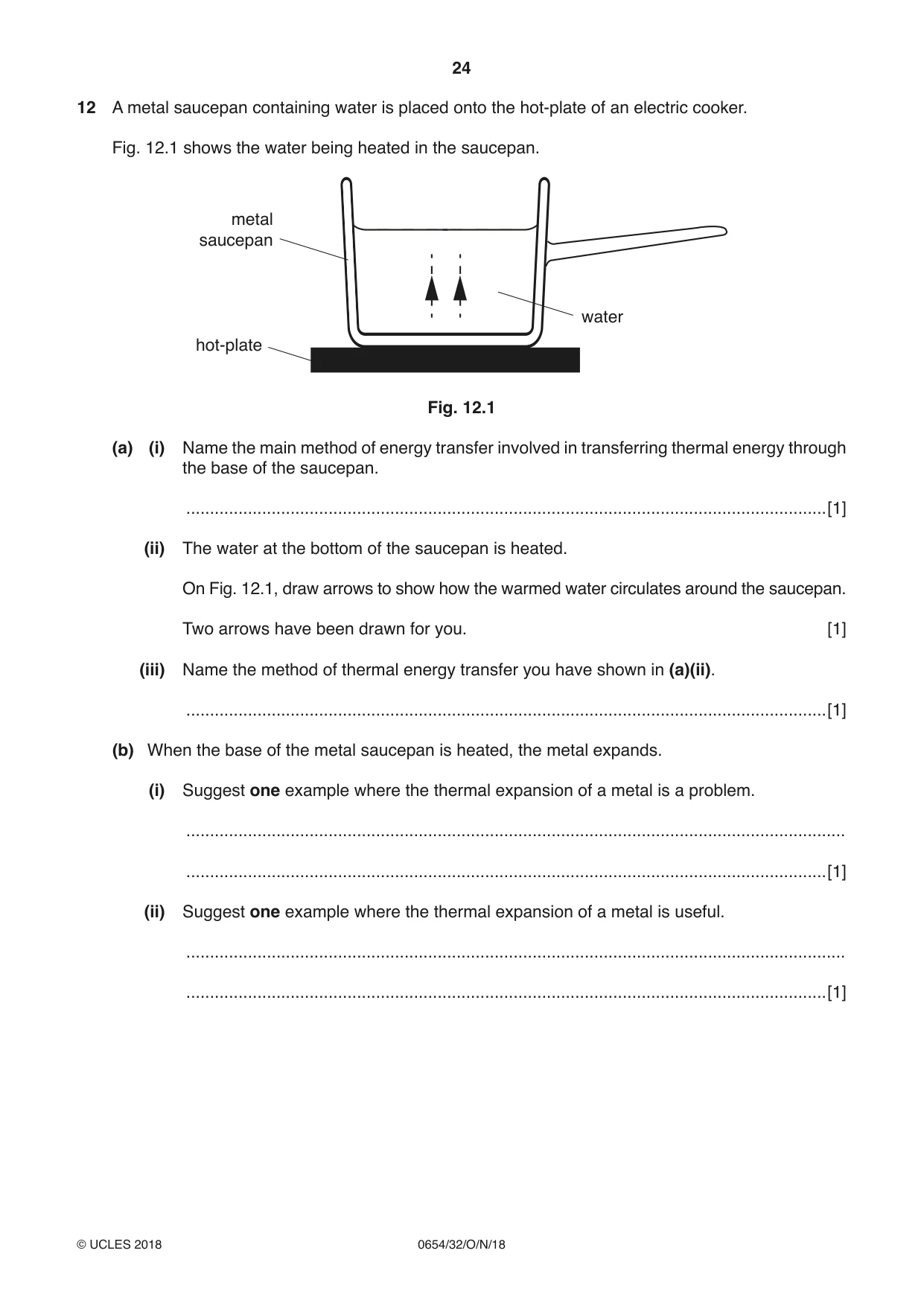
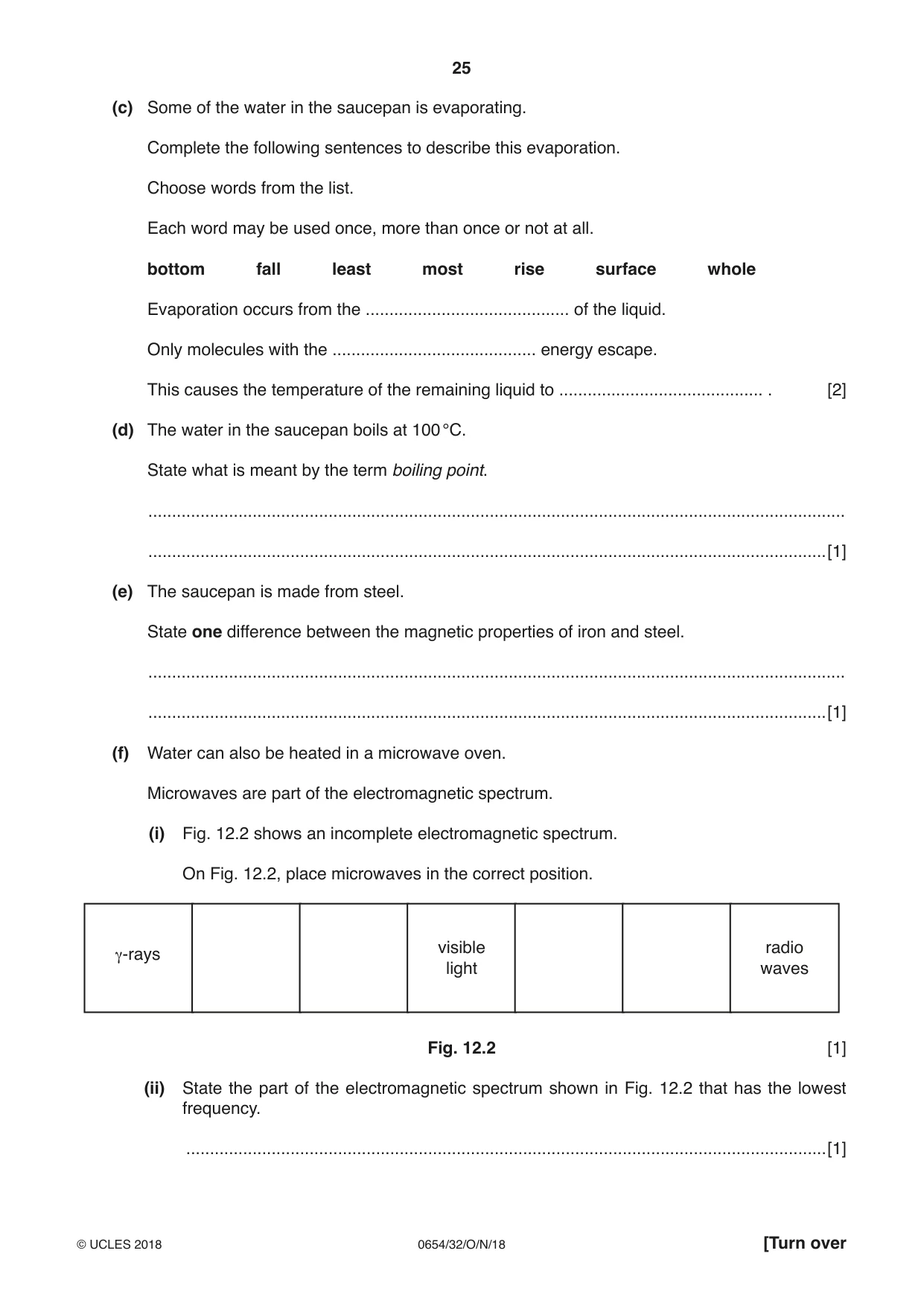
12 A metal saucepan containing water is placed onto the hot‑plate of an electric cooker. Fig. 12.1 shows the water being heated in the saucepan. metal saucepan water hot-plate Fig. 12.1 (a) (i) Name the main method of energy transfer involved in transferring thermal energy through the base of the saucepan. .......................................................................................................................................[1] (ii) The water at the bottom of the saucepan is heated. On Fig. 12.1, draw arrows to show how the warmed water circulates around the saucepan. Two arrows have been drawn for you. [1] (iii) Name the method of thermal energy transfer you have shown in (a)(ii). .......................................................................................................................................[1] (b) When the base of the metal saucepan is heated, the metal expands. (i) Suggest one example where the thermal expansion of a metal is a problem. ........................................................................................................................................... .......................................................................................................................................[1] (ii) Suggest one example where the thermal expansion of a metal is useful. ........................................................................................................................................... .......................................................................................................................................[1] (c) Some of the water in the saucepan is evaporating. Complete the following sentences to describe this evaporation. Choose words from the list. Each word may be used once, more than once or not at all. bottom fall least most rise surface whole Evaporation occurs from the ........................................... of the liquid. Only molecules with the ........................................... energy escape. This causes the temperature of the remaining liquid to ........................................... . [2] (d) The water in the saucepan boils at 100 °C. State what is meant by the term boiling point. ................................................................................................................................................... ...............................................................................................................................................[1] (e) The saucepan is made from steel. State one difference between the magnetic properties of iron and steel. ................................................................................................................................................... ...............................................................................................................................................[1] (f) Water can also be heated in a microwave oven. Microwaves are part of the electromagnetic spectrum. (i) Fig. 12.2 shows an incomplete electromagnetic spectrum. On Fig. 12.2, place microwaves in the correct position. visible radioγ-rays light waves Fig. 12.2 [1] (ii) State the part of the electromagnetic spectrum shown in Fig. 12.2 that has the lowest frequency. .......................................................................................................................................[1]
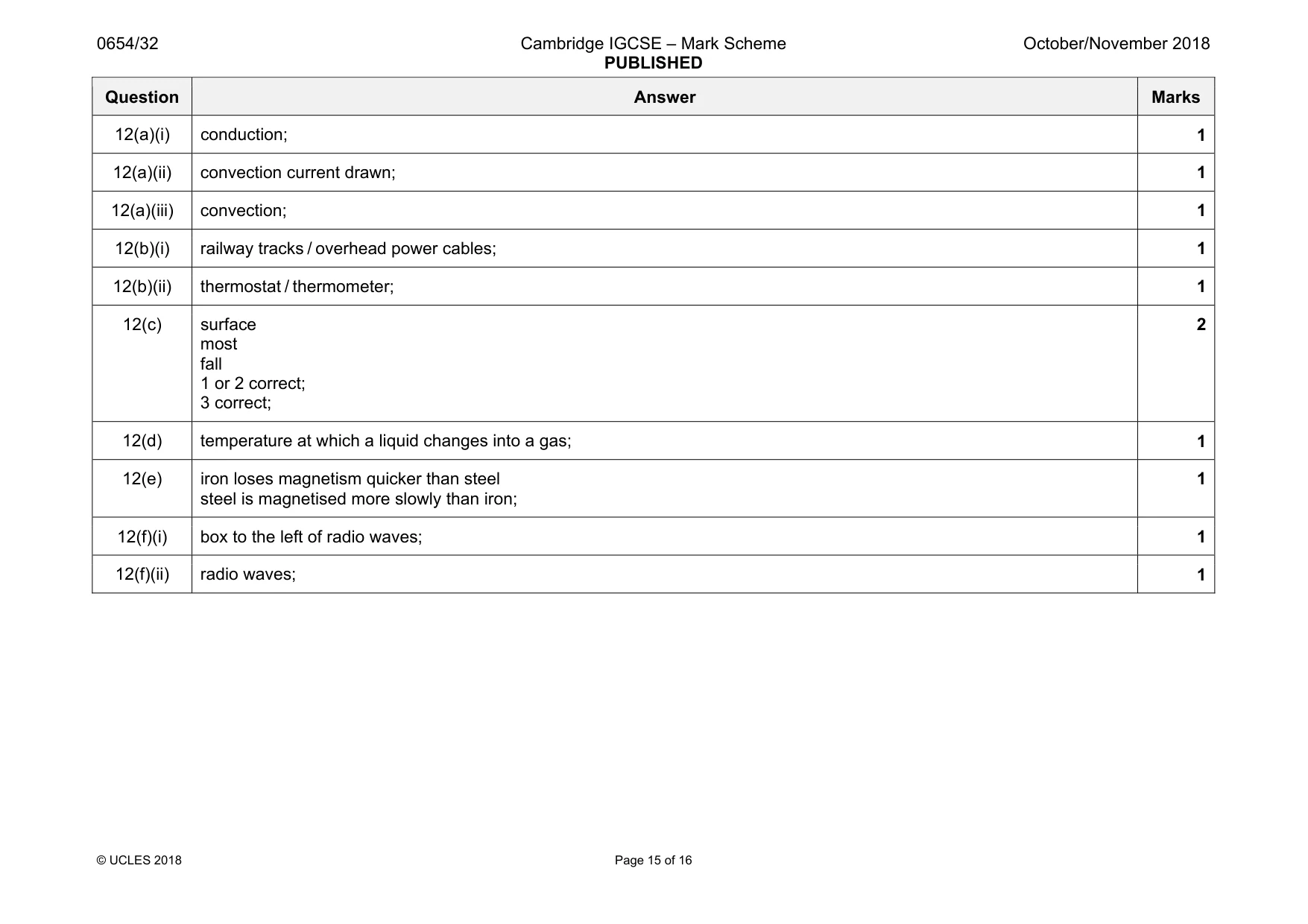
Mark scheme: 12(a)(i) conduction; 1 12(a)(ii) convection current drawn; 1 12(a)(iii) convection; 1 12(b)(i) railway tracks / overhead power cables; 1 12(b)(ii) thermostat / thermometer; 1 12(c) surface most fall 1 or 2 correct; 3 correct; 2 12(d) temperature at which a liquid changes into a gas; 1 12(e) iron loses magnetism quicker than steel steel is magnetised more slowly than iron; 1 12(f)(i) box to the left of radio waves; 1 12(f)(ii) radio waves; 1
Q13 · In the human body digestion is required to break down large, insoluble food molecules…
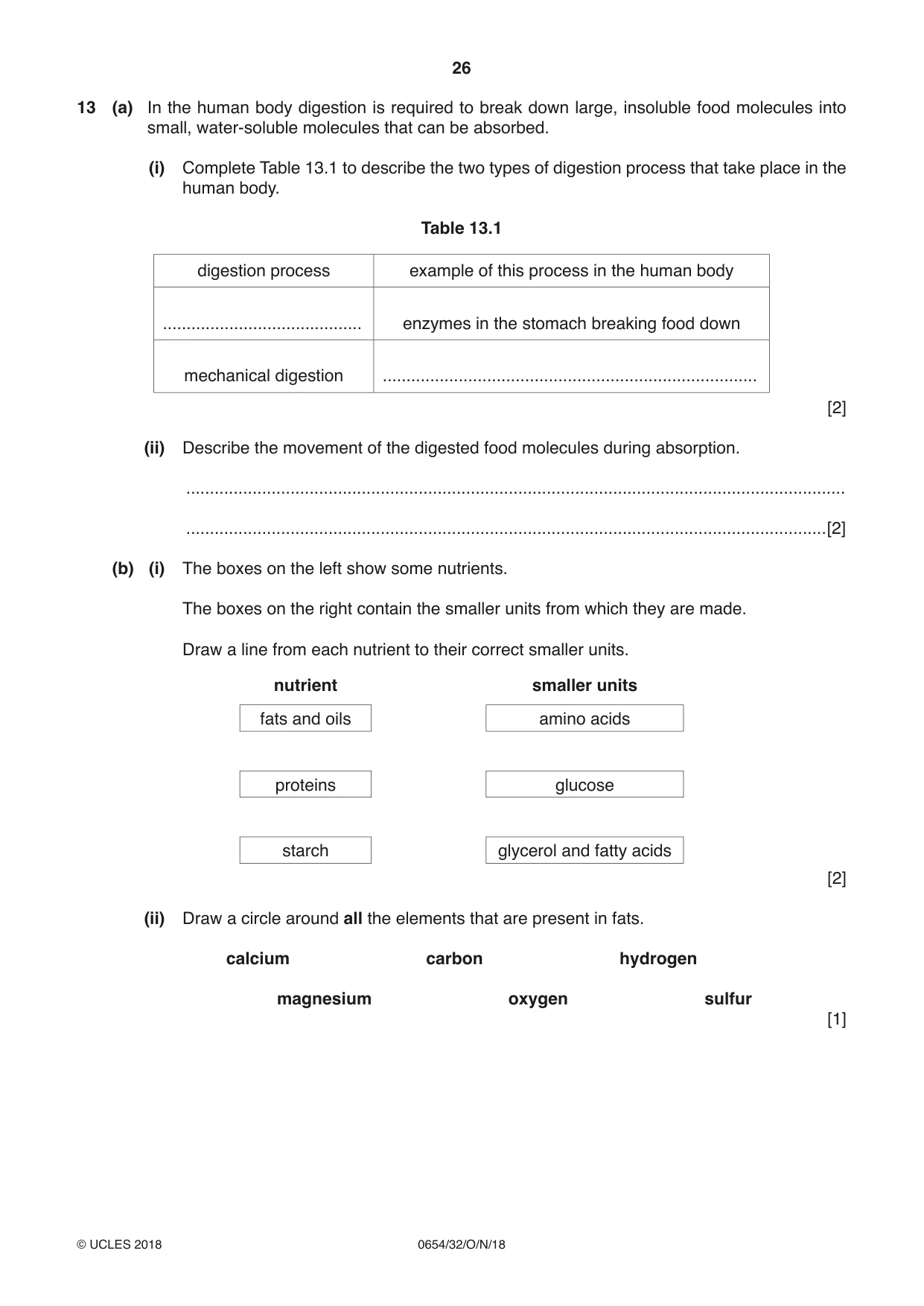
13 (a) In the human body digestion is required to break down large, insoluble food molecules into small, water‑soluble molecules that can be absorbed. (i) Complete Table 13.1 to describe the two types of digestion process that take place in the human body. Table 13.1 digestion process example of this process in the human body .......................................... enzymes in the stomach breaking food down mechanical digestion ............................................................................... [2] (ii) Describe the movement of the digested food molecules during absorption. ........................................................................................................................................... .......................................................................................................................................[2] (b) (i) The boxes on the left show some nutrients. The boxes on the right contain the smaller units from which they are made. Draw a line from each nutrient to their correct smaller units. nutrient smaller units fats and oils amino acids proteins glucose starch glycerol and fatty acids [2] (ii) Draw a circle around all the elements that are present in fats. calcium carbon hydrogen magnesium oxygen sulfur [1] (c) Define the term balanced diet. ................................................................................................................................................... ................................................................................................................................................... ................................................................................................................................................... ...............................................................................................................................................[2]
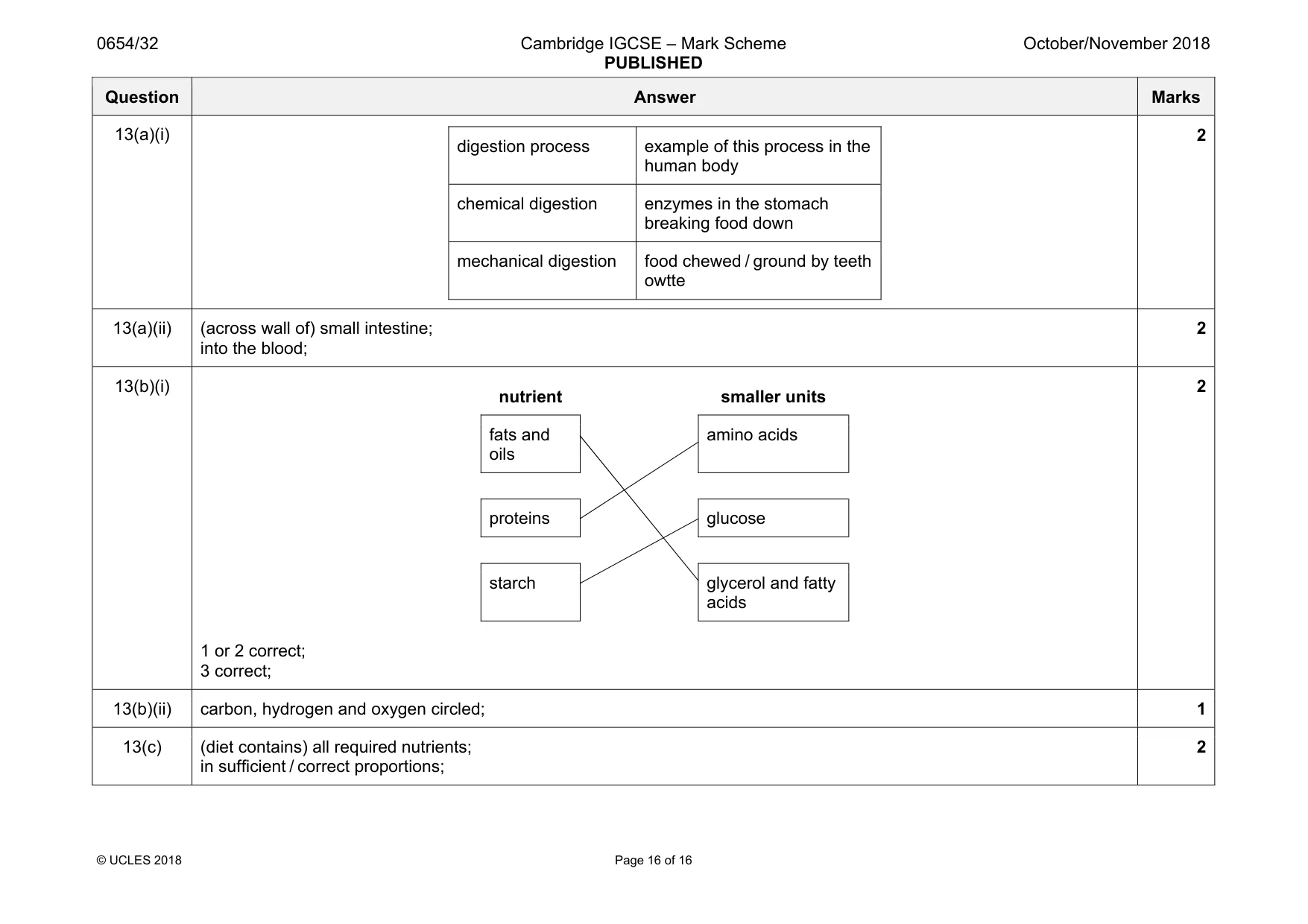
Mark scheme: 13(a)(i) digestion process example of this process in the human body chemical digestion enzymes in the stomach breaking food down mechanical digestion food chewed / ground by teeth owtte 2 13(a)(ii) (across wall of) small intestine; into the blood; 2 13(b)(i) nutrient smaller units fats and oils amino acids proteins glucose starch glycerol and fatty acids 1 or 2 correct; 3 correct; 2 13(b)(ii) carbon, hydrogen and oxygen circled; 1 13(c) (diet contains) all required nutrients; in sufficient / correct proportions; 2
What was in this paper
The subtopics covered by these 13 questions, and how many questions each got. Open one in a new tab to see every Cambridge question on it.
What you needed in this session
Cambridge’s own grade thresholds for 2018 Oct/Nov, Paper 3 · Variant 2. A higher threshold means an easier paper — the bar moves with how the cohort did.