Questions as text
Q1 · Low-cost airlines For several decades, low-cost airlines have been competing on… 0455/22 Feb/March 2017
1 Low-cost airlines For several decades, low-cost airlines have been competing on short-distance flights not just with established airlines, but also with train travel and car travel. Now they are starting to compete with established airlines on long-distance flights. In response to this increased competition there have been some horizontal mergers occurring between the established airlines. It is predicted that by 2030 China will become the world’s largest domestic air travel market, with 20% of all global air travel. The USA is currently the dominant market and it is predicted that between 2015 and 2030 the country will order 6160 of the 28 000 passenger aircraft that will be produced. India, which has both state-owned and private-sector airlines, is experiencing a great increase in both internal flights and flights to other countries. More airports are being built in India, with more facilities being provided inside and around the airports. For example, more taxi firms are being set up to take passengers to and from the airports. The rapid expansion of air travel in India and other countries is having an impact on the market for pilots, as shown in Fig. 1. S price of pilots P2 P1 D2 D1 O Q1 Q2 quantity / number of pilots Fig. 1 The market for pilots How rapidly the Indian air travel market will grow will be influenced by a number of factors. These include the extent to which business travel will grow and how rapidly demand for foreign holidays will increase. Demand for these forms of air travel is, in turn, influenced by changes in price. The price elasticity of demand for air travel has been estimated at −1.2. One factor that influences prices, and so the inflation rate, is changes in taxation. (a) Identify, using information from the extract: (i) a substitute for air travel [1] (ii) a complement to air travel. [1] (b) Explain two advantages that firms may gain from a horizontal merger. [4] (c) Calculate, using information from the extract: (i) the percentage of the new passenger aircraft that the USA is predicted to purchase between 2015 and 2030 [2] (ii) the percentage change in demand for air travel if the price of air travel falls by 15%. [2] (d) Analyse why demand for a luxury holiday may be price elastic. [5] (e) Discuss whether airlines should be state-owned or operated by the private sector. [5] (f) Explain, using information from the extract and Fig. 1, what happened to the market for pilots in India in 2015. [4] (g) Discuss whether a cut in taxation will reduce inflation. [6]
30 marks
Mark scheme: 1(a) Using information from the extract, identify (i) a substitute and (ii) a complement to air travel. substitute: train travel/car travel (1) complement: taxi travel/foreign holidays (1). 2 1(b) Explain two advantages that firms may gain from a horizontal merger. 1 mark each for each of two advantages identified: • able to take advantage of economies of scale • increased market share/market power • rationalisation • exchange ideas/technology 1 mark each for each of two explanations: • larger firms may be able to reduce average costs/become more efficient/increase productivity • a direct competitor is eliminated • savings may be made by e.g. operating only one warehouse • increase innovation/better quality • higher profit 4 Not sufficient just to have higher demand on its own. 1(c)(i) Calculate the percentage of the new passenger aircraft that the USA are predicted to purchase between 2015 and 2030. 22% (2) Correct working i.e. 6160/28 000 × 100 (1). 2 1 mark if the final answer is different but 22% is given part way through the answer. 1(c)(ii) Calculate the percentage change in demand for air travel if the price of air travel falls by 15%. 18%/18 (2) Correct working i.e. – 1.2 × 15% or 0.18 (%). Or 1.8 (%) (1). 2 Question Answer Marks Guidance 1(d) Analyse why demand for a luxury holiday may be price-elastic. Price-elastic means a percentage change in price creates a greater percentage change in demand (1). A luxury holiday may have a substitute (1) in the form of another holiday (1) a rise in price will make substitutes relatively cheaper (1) demand will be more elastic the closer the substitute (1). Taking a luxury holiday can be postponed/does not have to be purchased (1) it is not a necessity (1). The purchase of a luxury holiday takes up a large proportion of people’s income (1) this would make the change in price more noticeable/more significant (1) a fall in price may make it affordable to many more people (1). 5 1(e) Discuss whether airlines should be state-owned or operated by the private sector. Up to 3 marks for why they should be state-owned: The government will base decisions on social costs and benefits (1) may try to cut down on pollution (1) may be less chance of market failure occurring (1) may carry out a CBA (1). The government may act in the public interest/aim may be to promote welfare (1) may be safer (1). The government may keep prices low (1) to ensure access to flights (1). The government may have more funds available (1) may be able to operate them on a large scale (1) enjoy economies of scale (1). The government may employ more workers (1) to keep unemployment low (1). If profitable can provide funds for the government (1) increase ability of government to spend on e.g. education (1). Up to 3 marks for why they should be operated by the private sector: Profit motive (1) may make the firm/s more responsive to consumer demand (1) may provide better quality (1). Will not require tax revenue/allow government to concentrate on other areas (1) tax revenue can be used for other purposes/example of what revenue could be spent on (1). State-owned may be a monopoly/may be more competition in the private sector (1) competition may drive down price (1) may provide more choice (1). 5 Question Answer Marks Guidance 1(f) Using information from the extract including Fig. 1, explain what happened to the market for pilots in India in 2015. The diagram shows demand increasing (1) inelastic demand (1) wages / prices rising (1) supply extending / more pilots (1) inelastic supply (1) due to countries wanting to recruit more pilots/increased demand for flights (1). 4 1(g) Discuss whether a cut in taxation will reduce inflation. Up to 4 marks for why it might: A cut in indirect taxes/corporation tax (1) will reduce firms’ costs of production (1) reduce cost-push inflation (1). A cut in tariffs (1) will lower cost of imports (1) reduce price of products consumers buy (1). Lower taxes may increase incentives (1) increase supply (1) reduce costs (1) lower cost-push inflation (1). Up to 4 marks for why it might not: A cut in income tax (1) will increase disposable income/increase purchasing power (1) increase demand (1) firms raise prices to increase profits (1) increase demand-pull inflation (1). Lower indirect taxes (1) may not be passed on to consumers in lower prices (1). 6 Note: maximum of 2 if no link to inflation,
This question in 0455/22 Feb/March 2017
Q2 · Coal mining Coal is used directly to heat homes throughout the world and produces more… 0455/23 May/June 2017
1 Coal mining Coal is used directly to heat homes throughout the world and produces more than 40% of the world’s electricity. There are, however, a number of challenges facing the coal industry. These include increasing concerns about the environmental effects of using coal and the increased competition from other fuels. Mining and using coal to produce electricity causes air pollution. Coal-fired power stations emit carbon dioxide, which has a harmful effect on people’s health. Wildlife habitats are damaged when new mines are opened and when coal waste is dumped on landfill sites. However, demand for coal has declined recently. This resulted in the price of a tonne of coal falling from US$300 in 2010 to US$150 in 2015. Even China, the world’s largest consumer of coal, purchased less in 2015. Some high-cost deep mines were closed in the USA. In the same year, Europe’s largest producer, Poland, sold coal at a loss of US$37 a tonne. The fall in demand for coal arises partly from competition from renewable energy. For instance, advances in technology are reducing the costs of producing energy from wind power. Fig. 1 shows how the market for wind power changed in 2015. S1 S2 price of wind power P1 P2 D1 O Q1 Q2 quantity of wind power Fig. 1 The market for wind power in 2015 Some countries protect their energy industries from foreign competition, in some cases to reduce a current account deficit. The governments of a number of coal-producing countries also regulate their coal industries. The extent of government intervention is influenced by the type of economic system operated. (a) Identify, using information from the extract, two external costs that arise from using coal to produce electricity. [2] (b) Explain two reasons why a firm may continue to produce a good despite making a loss. [4] (c) Calculate, using information from the extract: (i) the percentage fall in the price of coal between 2010 and 2015 [2] (ii) the cost (in US$) of producing a tonne of coal in Poland in 2015. [2] (d) Analyse how resources are allocated in a mixed economy. [5] (e) Discuss whether governments should regulate the coal industries of their countries. [5] (f) Explain, using information from the extract and Fig. 1, what happened to the market for wind power in 2015. [4] (g) Discuss whether a government should use trade protection to reduce a current account deficit. [6]
30 marks
Mark scheme: 1(a) Identify, using information from the extract, two external costs that arise from using coal to produce electricity. Air pollution/carbon dioxide emissions (1) damage to wildlife habitats (1) ill health (1). 2 1(b) Explain two reasons why a firm may continue to produce a good despite making a loss. 1 mark each for each of two reasons identified: • expectation revenue/profits may increase (1) expectation costs may fall (1) • government subsidy (1) to preserve jobs (1) sales maximisation as a goal (1) • aim is social welfare (1) it is a strategic industry (1) the firm has seasonal demand (1) • the firm cannot produce any other product (1) the firm may be state owned (1) • the firm does not make an overall loss (1) but covers losses from other products (1) 1 mark each for each of two explanations: • expectation revenue will rise if anticipate demand will be higher in the future (1) • expectation costs will fall e.g. as the firm expands or new resources are discovered (1) • a government subsidy may cover a loss (1) • jobs preserved in the short term in anticipation of an upturn in future (1) • sales maximisation in the short-term for greater future profits e.g. monopoly (1) • non-profit making organisations cover losses by e.g. donations, government support (1) • firm will make losses in winter but anticipate profits in summer (1) • the firm will keep producing its only product until bankrupt (1) • nationalised industries e.g. railways, providing a public service (1) 4 1(c)(i) Calculate, using information from the extract, the percentage fall in the price of coal between 2010 and 2015. Correct answer: 50% (2) Correct working: e.g. 150 ÷ 300 × 100 (1) 2 Question Answer Marks Guidance 1(c)(ii) Calculate, using information from the extract, the cost in (US$) of producing a tonne of coal in Poland in 2015. Correct answer: $187 (2) Correct working: e.g. $150 + $37 (1) 2 $ sign required for 2 marks 1(d) Analyse how resources are allocated in a mixed economy. A mixed economy consists of resource allocation by both public and private sectors (1) Up to 3 marks for analysis of the role of the public sector: • Government production of goods which private sector is unable/unwilling to do (1) government sets prices (1) • Government influencing prices through taxes and subsidies (1) • Government laws and regulations to protect public (1) • Government redistributing incomes (1) Up to 3 marks for analysis of the role of the private sector: • Role of price mechanism (1) responding to changes in demand and supply (1) signalled by price changes (1) • resources moving to making products in increasing demand (1) away from products falling in demand (1) profit incentive (1) creating an efficient use of resources (1) • Those earning the highest income (1) have the greatest purchasing power (1) differences in income provide incentives (1) 5 Question Answer Marks Guidance 1(e) Discuss whether governments should regulate the coal industries of their countries. Up to 3 marks for why they should: • Control of negative externalities (1) harmful effects on third parties (1) e.g. regulations on air pollution or noise pollution (1) • To ensure regular fuel supplies (1) by having output targets (1) • Consumer protection (1) price controls (1) through maximum and/or minimum prices (1) • Worker protection (1) regulation of working conditions/safety in coal industry (1) • Control of any monopoly power (1) preventing price being driven up (1). Up to 3 marks for why they should not: • Regulation may be difficult to enforce (1) expensive to enforce/uses up resources (1) difficult to determine who has caused the pollution (1) coal industry not the only pollution source (1) • May reduce coal industry output (1) reducing GDP economic growth (1) creating unemployment (1) reducing coal exports (1) may reduce government tax revenue (1) • May add to firms’ costs (1) increasing coal prices (1) causing cost-push inflation (1) • May discourage investment in the coal industry (1) raising production costs (1) increasing prices (1) 5 Pollution on its own is insufficient, it needs to be a specific example. 1(f) Explain, using the information from the extract and Figure 1, what happened to the market for wind power in 2015. The diagram shows: • supply increasing/more wind power produced (1) • price falling (1) • demand extending (1) • more wind power traded (1) • costs of production fell (1) due to advances in technology (1) • inelastic demand (1) inelastic supply (1) 4 Question Answer Marks Guidance 1(g) Discuss whether a government should use trade protection to reduce a current account deficit. Up to 4 marks for why it should: • Trade protection/tariffs may increase import prices (1) import volumes will fall (1). • Trade protection/quotas will reduce the quantity of imports (1) • Trade protection/embargoes will stop imports of certain products (1) may cause lower import expenditure (1) reducing a current account deficit (1) • Trade protection may prevent other countries from dumping their output (1) • A reduction in a current account can increase output (1) raise incomes (1) reduce unemployment (1) Up to 4 marks for why it should not: • Trade protection may provoke retaliation (1) if other countries impose trade restrictions (1) the current account may not improve (1) GDP may fall (1) unemployment may rise (1). • Trade protection may discourage firms from becoming efficient (1) this will mean the deficit will continue (1). • Other policies may be more effective (1) e.g. increase in income tax (1). • Trade protection can disadvantage domestic consumers/producers (1) raise price (1) reduce imports of e.g. raw materials (1) reduce quality (1). • Some products cannot be produced domestically (1). 6
This question in 0455/23 May/June 2017
Q3 · More governments are imposing taxes on unhealthy food and drinks 0455/21 May/June 2018
7 More governments are imposing taxes on unhealthy food and drinks. Such taxes are usually regressive. Some of these governments are also increasing their spending on healthcare. In other countries healthcare is provided by the private sector. The number of state-owned enterprises is declining in a number of countries due to privatisation. (a) Define regressive tax. [2] (b) Explain why the social benefit of healthcare is greater than the private benefit. [4] (c) Analyse why a government imposes taxes. [6] (d) Discuss whether or not consumers are likely to benefit from state-owned enterprises becoming private sector firms. [8]
20 marks
Mark scheme: 7(a) Define regressive tax. A tax that takes a lower percentage of the income of the rich/higher percentage of the income of the poor (2). A tax that falls more heavily on the poor (1). Disadvantages the poor/higher burden on the poor/higher rate for the poor (1). 2 7(b) Explain why the social benefit of healthcare is greater than the private benefit. Social benefit includes both private and external benefits (1). Healthcare also provides external benefits(1). Example of private benefits identified as a private benefit e.g. profits of provider, wages of doctors, higher life expectancy of consumer (max 2). Examples of external benefits identified as external benefits/recognised as 3rd party impacts e.g. higher labour productivity, higher output, reduction in spread of diseases (max 2). 4 7(c) Analyse why a government imposes taxes. To raise revenue (1) to finance government spending/example of spending (1). To discourage the consumption of certain products (1) example/external costs (1). To discourage the production of certain products (1) example/external costs (1). To discourage the consumption of imports (1) improve the current account position on the balance of payments (1). To redistribute income (1) taxing the rich more (1). To influence economic activity (1) raising taxes to reduce total (aggregate) demand (1) to control (demand-pull) inflation (1). 6 Accept but do not expect reference to public and merit goods. Question Answer Marks Guidance 7(d) Discuss whether or not consumers are likely to benefit from state-owned enterprises becoming private sector firms. Up to 5 marks for why they might: There may be more competition in the markets (1) this may force down prices (1) increase quality (1). Firms will be influenced by the profit motive (1) this may make them more responsive to changes in consumer demand (1). State-owned enterprises may be slow in making decisions (1) due to bureaucratic control (1) may not respond quickly enough to consumer demands (1). Up to 5 marks for why they might not: State-owned enterprises might have taken into account social costs and social benefits (1) rather than just private costs and private benefits (1) main goal may be economic welfare (1). Private sector firms may merge (1) form monopolies (1) (use market power to) push up price (1) they may become complacent (1) lower quality (1). Private sector may not have sufficient finance for large-scale projects (1) consumers would lose out on the benefits (1). 8 Accept quality and prices on either side, but only one mark if given on both sides. More marks can only be awarded if a reason for change in quality/prices are given.
This question in 0455/21 May/June 2018
Q4 · In the 1990s Cambodia became a mixed economy 0455/23 May/June 2018
3 In the 1990s Cambodia became a mixed economy. One of the results of this was specialisation in the clothing industry. In 2005, import quotas for clothing in the key markets of the USA and the EU were removed. Clothing now accounts for 80% of Cambodia’s exports. The increased role of the private sector has resulted in a rise in malnutrition in Cambodia. (a) Define import quota. [2] (b) Explain two advantages to a country of specialisation. [4] (c) Analyse the impact on an economy of the removal of import quotas imposed by other countries. [6] (d) Discuss whether or not an increase in the role of the private sector will benefit an economy. [8]
20 marks
Mark scheme: 3(a) Define import quota. Limit (1) on quantity of good or service allowed in to a country / bought from abroad / imported (1). 2 3(b) Explain two advantages to a country of specialisation. Generates economies of scale (1) enabling a country to be more internationally price competitive (1) Improves productivity / efficiency (1) by producing what the country is best at (1) Increases GDP (1) by making better use of scarce resources (1) allowing country to export more (1) Increases purchasing power of consumers (1) who through trade can purchase goods and services from the most efficient producers (1) 4 3(c) Analyse the impact on an economy of the removal of import quotas imposed by other countries. Likely to increase exports (1) improving the current account of the balance of payments (1). Extra revenue earned could be spent on imports (1) increasing variety / choice (1). Allows country to specialise more (1) making better use of resources (1). Rising total (aggregate) demand (1) could increase the demand for labour (1) reducing unemployment (1) and causing economic growth (1). Higher demand could cause inflation (1) demand-pull (1) reducing purchasing power (1). 6 Question Answer Mark Guidance 3(d) Discuss whether or not an increase in the role of the private sector will benefit an economy. Up to 5 marks for the benefits: The profit incentive (1) will result in countries taking advantage of specialisation (1), making better use of scarce resources (1) and in doing so increasing total output (1). May be an increase in competition (1) lowering price (1) raising quality (1). More efficient allocation of resources (1) lower production costs (1) the price mechanism means there are no shortages or surpluses (1) with high consumer sovereignty (1). Up to 5 marks for the drawbacks: Poverty could increase (1) as a result of rising inequality (1) and some individuals being unable to access the gains of the market economic system because they are out of work / on low incomes (1) Higher prices (1) private companies could exploit market power e.g. monopoly (1) Goods with external benefits (merit goods) e.g. healthcare may be under-provided (1) goods with external costs (demerit goods) may be over-provided e.g. tobacco. Market failure occurs (1) as externalities are not considered by the market mechanism (1) example (1) 8 Accept, but do not expect, reference to public goods
This question in 0455/23 May/June 2018
Q5 · The Malaysian government implemented the Vision 2020 policy which aims to make Malaysia a… 0455/21 Oct/Nov 2018
4 The Malaysian government implemented the Vision 2020 policy which aims to make Malaysia a developed country by the year 2020. Along with this vision, the National Privatisation Policy was also implemented whereby various firms, such as those involved in telecommunications, were privatised. Poverty has significantly reduced since the implementation of these policy measures. (a) Identify the difference between absolute poverty and relative poverty. [2] (b) Explain two characteristics of a developed country. [4] (c) Analyse two policy measures to alleviate poverty. [6] (d) Discuss whether or not moving firms from the public sector to the private sector will benefit an economy. [8]
20 marks
Mark scheme: 4(a) Identify the difference between absolute and relative poverty. Relative poverty is where people have fewer goods and services / income than others in an economy / lower income than the average in the country (1). Absolute poverty is where people are unable to meet basic needs e.g. food and shelter / living on e.g. less than US $1.25 a day / a given % of a country’s average income (1). 2 4(b) Explain two characteristics of a developed country. High incomes / high GDP per capita / high standard of living / high HDI (1) due to high production of goods and services (1). High life expectancy / low death rate / low infant mortality (1) due to e.g. good healthcare, better nutrition, low crime rates (1). High school enrolment / standard of education (1) due to high spending on education (1). Low level of absolute poverty / malnutrition / starvation (1) due to high incomes / fairer distribution of income (1). Low rate of population growth (1) due to e.g. availability of contraception, social attitudes, women working for longer, less need for children to work (1). Low primary / large secondary / tertiary sectors (1) value of output is greater in the secondary/tertiary sector (1). 4 Question Answer Marks Guidance 4(c) Analyse two policy measures to alleviate poverty. Increasing benefits (1) increasing the incomes of the poor (1) e.g. housing benefits, disability benefits, unemployment benefits (1). Increased provision of merit goods such as healthcare (1) and education / improved literacy (1) improving the ability to earn an income through employment (1). Government employment creation schemes (1) creating new jobs and employing more people in the government (1) government providing help to search for employment (1) Encouraging economic growth (1) through fiscal or monetary policies (1) decreasing interest rates (1) increasing government spending (1). Provision of subsidies (1) example (1) keeping down the cost of living (1) leaving more for other essential items (1). Progressive taxation (1) to redistribute income towards the poor (1). The introduction of minimum wage legislation (1) so that everyone can at least afford basic necessities such as food and shelter (1). 6 Max 4 marks for analysis of only one policy measure. Question Answer Marks Guidance 4(d) Discuss whether or not moving firms from the public sector to the private sector will benefit an economy. Up to 5 marks for positive effects: Private sector firms have the profit motive (1) and so the efficiency (1) and quality of their output may be good (1) and so may enable them to pay higher wages (1). The threat of closing down (1) will force firms to provide a good service to stay in business (1). Competition between private firms (1) leads to better response to consumer demand (1) keeping costs (1) and prices low (1). Private firms are accountable to shareholders (1) who want high dividends (1) therefore firms need to be efficient/profitable (1). Investment in the private sector will not be disrupted by fluctuations in government tax revenue (1). May attract financial investment from abroad (1). Up to 5 marks for negative effects: Investment funds may be more available to the public sector than the private sector (1) to provide a quality service (1). A public sector firm can be prevented from going of business (1) guaranteeing the provision of certain products e.g. water (1) maintaining employment (1) Public sector firms are not always motivated by profit (1) the government is more likely to base its decisions on social/external costs and benefits (1) e.g. the environment (1) rather than just private costs and benefits (1). Public sector firms may provide essential services (1) which the private sector is not willing to provide (1) will be more inclined to keep prices low (1) the poor will be able to afford essential products (1). 8 Each point may be credited only once, on either side of an argument, but separate development as to how/why the outcome may differ is to be rewarded. Accept responses from the opposite perspective i.e. positive effects of the public sector and negative effects of the private sector.
This question in 0455/21 Oct/Nov 2018
Q6 · Productivity has fallen recently in Finland particularly in the public sector 0455/22 Oct/Nov 2018
5 Productivity has fallen recently in Finland particularly in the public sector. The country has a relatively high number of small firms. In recent years the price elasticity of demand and the price elasticity of supply of the products made by Finnish firms have changed. (a) What is the difference between the private sector and the public sector? [2] (b) Explain two reasons why productivity may fall. [4] (c) Analyse how an increase in the price elasticity of demand (PED) and the price elasticity of supply (PES) of its products could benefit a firm. [6] (d) Discuss whether or not small firms are likely to survive in the long run. [8]
20 marks
Mark scheme: 5(a) What is the difference between the private sector and the public sector? The private sector is the part of the economy where market forces / price mechanism / producers and consumers’ decisions allocate resources (1) firms are owned by private individuals (1). The public sector is the part of the economy where the government makes the decisions / government controlled / government-owned firms (1). 2 5(b) Explain two reasons why productivity may fall. Productivity may fall as the result of a decline in the quantity or quality of education/training (1) workers will be less skilled (1). A decline in investment (1) workers will work with less equipment (1). A decline in wage rates (1) will reduce workers’ motivation (1). Worse working conditions (1) reduce job satisfaction (1). A rise in working hours (1) making workers more tired (1). Work may become more repetitive / less interesting (1) which may result in workers becoming bored (1). Change in average age of workers (1) e.g. older workers may be less up to date with new technology / younger workers may have received less training / be less experienced (1). Higher tax rates in a country (1) may reduce workers’ motivation (1). Poorer healthcare in a country (1) reducing workers’ physical strength / mental alertness (1). 4 5(c) Analyse how an increase in the price elasticity of demand and the price elasticity of supply of its products could benefit a firm. A more elastic demand would mean that the firm could reduce price (1) to raise revenue (1) as demand would rise by more than the fall in price (1) if revenue rises by more than costs, profit will increase (1). A more elastic supply will mean that the firm can adjust more quickly the amount it sells when price changes (1) the firm will be able to take greater advantage of an increase in demand / rise in price (1) the firm will be able to take more of its products off the market should price fall (1). 6 Question Answer Marks Guidance 5(d) Discuss whether or not small firms are likely to survive in the long run. Up to 5 marks for why they might: Small firms may provide a personal service (1) may have greater contact with their customers (1) more responsive to changes in consumer demand (1). May be more flexible (1) fewer people to consult (1). May be producing products in low demand (1) not facing competition from large firms (1). May be a local monopoly / in a good location (1) may not face competition in the area (1). May cooperate with other small firms (1) enable advantage to be taken of e.g. buying in bulk (1). May supply specialised products / in a niche market (1) including to large firms (1). May receive government subsidies (1) lowering their costs of production (1). Up to 5 marks for why they might not: May be driven out of business (1) by larger firms with lower costs of production (1) better known (1) larger firms can take advantage of economies of scale (1).examples of economies of scale (Up to 2). Large firms may take over / merge with smaller firms (1) to gain market power (1) take advantage of economies of scale (1). Government subsidies may only be short term (1). Some small firms may cease to exist when their owners retire/die (1) e.g. sole traders (1). Less capital available / difficulties in raising capital (1) make it difficult to purchase new / high quality equipment (1) make it difficult to invest in R&D (1). 8 Each point may be credited only once, on either side of an argument, but separate development as to how/why the outcome may differ is expected.
This question in 0455/22 Oct/Nov 2018
Q7 · The Saudi Arabian government is encouraging the growth of the private sector 0455/21 May/June 2019
2 The Saudi Arabian government is encouraging the growth of the private sector. It is a low-cost oil producer, but its exports to South Africa have fallen recently. South Africa has a floating foreign exchange rate, but its central bank has recently tried to prevent a large fall in its foreign exchange rate. (a) Define a floating foreign exchange rate. [2] (b) Explain two benefits a government may gain from the growth of the private sector. [4] (c) Analyse why a country with low costs of production may experience a decrease in its exports. [6] (d) Discuss whether or not a government should prevent a fall in its country’s foreign exchange rate. [8]
20 marks
Mark scheme: 2(a) Define a floating foreign exchange rate. The price of a currency (1) determined by market forces (1). 2 2(b) Explain two benefits a government may gain from the growth of the private sector. Higher tax revenue (1) private sector may be more efficient / private sector may earn higher profits / higher tax revenue may be spent on e.g. education (1). Lower government spending on supporting state-owned enterprises (1) spending could rise on other areas e.g. healthcare (1). Increases employment / reduces unemployment (1) which is a government objective / reduces government payments on unemployment benefits (1). 4 2(c) Analyse why a country with low costs of production may experience a decrease in its exports. The foreign exchange rate may increase (1) leading to higher export prices (1). The quality of the products produced may fall (1) reducing demand (1). Incomes abroad may have fallen (1) reducing foreigners’ ability to buy exports (1). There may be a rise in competition (1) with foreign firms having even lower costs (1). Producers may charge higher prices (1) leading to a fall in demand (1). Foreign countries may implement protection measures (1) e.g. tariffs (1). 6 The analysis must be dynamic / about change. Question Answer Marks Guidance 2(d) Discuss whether or not a government should prevent a fall in its country’s foreign exchange rate. Up to 5 marks for why it should: A fall in the exchange rate would increase the price of imports (1) this will increase the price of imported raw materials (1) this will increase costs of production (1) inflation may occur (1). A rise in the price of finished products (1) will reduce the goods and services people can buy (1) reduce living standards (1). A fall in the exchange rate may reduce confidence in the country (1) this may reduce investment (1). A lower exchange rate may increase debt repayments (1) making it more difficult for firms and the government to pay back loans (1). Higher government spending on e.g. state benefits (1) will increase disposable income (1) some of this might be spent on imports (1). Up to 5 marks for why it should not: A lower exchange rate will reduce the price of exports (1) more exports may be sold (1) this combined with lower imports may improve the current account balance (1). Demand for domestic products may rise (1) this may increase output (1) so cause economic growth (1) reduce unemployment (1). 8
This question in 0455/21 May/June 2019
Q8 · In a mixed economic system, such as Portugal’s, the government intervenes in the economy 0455/22 May/June 2019
6 In a mixed economic system, such as Portugal’s, the government intervenes in the economy. Reasons for government intervention include to correct market failure and to achieve its aims for the economy, such as control of inflation. In 2017, one-fifth of Portugal’s population was living in poverty and the government increased its spending. (a) Identify two reasons why market failure may occur. [2] (b) Explain how resources are allocated in a mixed economic system. [4] (c) Analyse how a high rate of inflation may harm the poor. [6] (d) Discuss whether or not increasing government spending will enable a government to achieve its aims for the economy. [8]
20 marks
Mark scheme: 6(a) Identify two reasons why market failure may occur. The existence of external costs (1) and external benefits (1). Abuse of monopoly power (1) advertising distorting choice (1). Inefficient allocation of resources / not producing the right quantity / not producing at the lowest possible cost (1). 2 goods, public goods and information failure. 6(b) Explain how resources are allocated in a mixed economic system. Resources in the public sector (1) are allocated by government decisions/directives (1) products are produced by state-owned enterprises resources are allocated to overcome market failure (1). Resources in the private sector (1) are allocated by the price mechanism / market forces / demand and supply / firms / consumer sovereignty (1) profit provides an incentive for firms to produce what consumers demand (1). 4 Maximum of 3 marks for explaining how only one sector allocated resources. 6(c) Analyse how a high rate of inflation may harm the poor. Inflation may raise the price of basic necessities (1) reducing purchasing power of the poor (1) increasing absolute poverty (1). Inflation may reduce the value of any savings the poor have (1) reducing their ability to access e.g. healthcare, education and housing (1) reducing job opportunities (1). Inflation may reduce the country’s international competitiveness (1) lower output (1) increase unemployment (1) making it more difficult for the poor to gain jobs (1). Inflation may reduce the purchasing power of state benefits (1) e.g. pensions or unemployment (1). The poor may be less likely to belong to trade unions (1) less ability to raise wages (1). 6 Question Answer Marks Guidance 6(d) Discuss whether or not increasing government spending will enable a government to achieve its aims for the economy. Up to 5 marks for why it might: Government spending will increase total (aggregate) demand (1) this may encourage firms to produce more (1) economic growth may increase (1) deflation may be avoided (1) and unemployment may fall (1) the poor may gain jobs (1) making income more evenly distributed (1). Government spending on healthcare (1) may raise living standards / life expectancy (1). Government spending on education (1) may improve environmental standards (1). Government subsidies (1) may increase labour productivity (1) costs of production may fall (1) lowering cost-push inflation (1) increasing international competitiveness (1) improving the current account position (1). Government spending on state benefits (1) may reduce income inequality (1) may raise living standards (1). Up to 5 marks for why it might not: Higher government spending may cause inflation (1) if total supply does not rise in line with total demand (1). Some of the higher income created may be spent on imports (1) this may increase a current account deficit (1). An increase in government spending on unemployment benefits (1) may increase voluntary unemployment (1). 8
This question in 0455/22 May/June 2019
Q9 · Calculate India’s economic growth rate in 2017 0455/22 Feb/March 2020
1 (a) Calculate India’s economic growth rate in 2017. [1] (b) Identify two methods of protection. [2] (c) State why India is a mixed economy. [2] (d) Explain why external costs cause market failure. [4] (e) Draw a demand and supply diagram to show the effects of a decrease in the costs of production on the market for cars. [4] (f) Analyse the relationship between the size of countries’ primary sector output and GDP per head. [5] (g) Discuss whether or not increasing subsidies given to bus travel would reduce pollution in India. [6] (h) Discuss whether or not India is likely to experience a deficit on the current account of its balance of payments in the future. [6]
30 marks
Mark scheme: 1(a) Calculate India’s economic growth rate in 2017. 7% (1). 1 1(b) Identify two methods of protection. One mark each for any two from: • tariff • quota 2 1(c) State why India is a mixed economy. It has a private sector / private sector firms (1) and a public sector / public sector firms /government intervention (1). 2 1(d) Explain why external costs cause market failure. Logical explanation which might include: External costs are not considered (1) base decisions just on private costs and benefits (1). They cause harmful effects to third parties / negative side effects (1) they result in overconsumption (1) and overproduction (1). Their existence may mean that social costs exceed social benefits (1). Examples of causes or costs: e.g. driving, pollution / environmental damage, burning fields and mining (up to 2). They result in a misallocation of resources / inefficient use of resources (1). 4 Question Answer Marks Guidance 1(e) Draw a demand and supply diagram to show the effects of a decrease in the costs of production on the market for cars. Axes correctly labelled – price and quantity or P and Q (1). Demand and supply curves correctly labelled (1). Supply curve shifted to the right (1). Equilibriums – shown by lines P1, P2 / Q1, Q2: or marking the equilibrium points E1 and E2 (1). 4 Question Answer Marks Guidance 1(f) Analyse the relationship between the size of countries’ primary sector output and GDP per head. Coherent analysis which might include: Generally, the countries with the relatively smallest primary sectors have the highest GDP per head / inverse relationship (1). Evidence e.g. US has only 1% of output accounted for by the primary sector and the highest GDP per head (1) another piece of supporting evidence e.g. the two countries with the largest primary sectors have the lowest GDP per head (1). Exception is India/Philippines (1) India has a smaller relative sized primary sector but a lower GDP per head (1). This is the expected relationship as primary sector tends to decline as an economy develops / often larger in developing economies / resources move into secondary and then tertiary sectors (1) tertiary sector tends to generate higher incomes / primary sector tends to generate lower incomes (1). 5 Question Answer Marks Guidance 1(g) Discuss whether or not increasing subsidies given to bus travel would reduce pollution in India. Award up to 4 marks for logical reasons why it might, which may include: • subsidies reduce costs (1) increase supply (1) lower prices (1) raise quality of bus travel (1) and cause demand to extend / higher demand (1) • people using buses will reduce the volume of traffic/reduce congestion (1) • buses use cleaner fuel (1). Award up to 4 marks for logical reasons why it might not, which may include: • people may not switch from car to bus travel (1) price of cars may fall (1) cost of producing cars is declining (1) other reason why e.g. more comfortable / door to door (1). • providers of bus transport may not pass on much of the subsidies in the form of lower prices (1) • opportunity cost of using subsidies (1) could spend money on other ways to reduce pollution e.g. education (1) • economy is growing so incomes rising (1) both bus and car travel may increase (1). 6 Apply this example to all questions with the command word DISCUSS (1g, 1h, 2d, 3d, 4d and 5d) Each point may be credited only once, on either side of an argument, but separate development as to how/why the outcome may differ is rewarded. Generic example mark Tax revenue may decrease… 1 ...because of reason e.g. incomes may be lower. 1 Tax revenue may increase because incomes may be higher i.e. reverse of a previous argument. 0 Tax revenue may increase because of a different reason i.e. not the reverse of previous argument e.g. government spending on subsidies may stimulate the economy more than spending on education. 1 Reward application of subsidies to producers and/or consumers. Increase in supply, lower prices, extension in demand may be shown on a demand and supply diagram. Question Answer Marks Guidance 1(h) Discuss whether or not India is likely to experience a deficit on the current account of its balance of payments in the future. Award up to 4 marks for logical reasons why it might, which may include: • there was a deficit in 2016 and 2017 (1) and it was on an upward trend (1) • incomes are rising / economic growth is occurring (1) and so more imports may be purchased both by consumers and by firms (1) • it is expected that the exchange rate will rise (1) this may increase the price of exports (1) and demand for exports may fall (1) price of imports may fall (1) so demand for imports may rise (1) • Indian trade restrictions may be reduced / Indian government promoting free trade (1) which may increase imports (1). • tax rates may be cut (1) with more disposable income (1) people may buy more imports (1). Award up to 4 marks for logical reasons why it might not, which may include: • there may be more foreign tourists (1) if pollution declines (1) • lower tariff on imported raw materials / imported capital goods (1) may reduce costs of production (1). • other countries may remove their trade restrictions (1) allowing India’s exports to rise (1) • if the government does spend more on education (1) productivity may rise (1) and India’s products may become more price and quality competitive (1). • MNCs may be attracted for a number of the reasons given (1) MNCs may produce exports / import substitutes (1). • Higher investment (1) may raise quality of exports / domestic products (1) lower price of exports (1). • Car production is rising (1) more cars may be exported / fewer cars may be imported (1). 6
This question in 0455/22 Feb/March 2020
Q10 · The Indian government has declared that the country, now a major car producer, will sell… 0455/22 May/June 2020
2 The Indian government has declared that the country, now a major car producer, will sell only electric cars by 2030. The government wants to reduce external costs, some of which are caused by petrol and diesel cars. Demand for electric cars is currently relatively low and price-elastic. The government, however, thinks that it will not need to subsidise the production of electric cars to achieve its target. (a) Define external costs. [2] (b) Explain two influences on whether demand for a product is price-elastic or price-inelastic. [4] (c) Analyse, using a demand and supply diagram, how a subsidy given to producers could affect the market for electric cars. [6] (d) Discuss whether cars should be produced by the private sector or the public sector. [8]
20 marks
Mark scheme: 2(a) Define external costs. 2 Harmful effects (1) on third parties (1). Social costs – private costs (1). 2(b) Explain two influences on whether demand for a product is price- 4 elastic or price-inelastic. Logical explanation which might include: Availability of substitutes (1) close substitutes will be likely to result in demand being price-elastic (1). Whether the product is a luxury or necessity (1) luxuries tend to have elastic demand/necessities tend to have inelastic demand (1). Proportion of income spent on the production (1) demand tends to be inelastic if a small proportion is spent on it/ elastic if a high proportion is spent on it (1) Whether the purchase can be postponed (1) if so, demand is likely to be elastic, if not inelastic. Addictiveness of the product (1) addictive products are likely to have inelastic demand (1). Time period (1) demand tends to become elastic over time (1). 2(c) Analyse, using a demand and supply diagram, how a subsidy given to 6 producers could affect the market for electric cars. price of S1 electric S2 cars P1 P2 D1 O Q1 Q2 quantity of electric cars Up to 4 marks for the diagram: Axes correctly labelled – price and quantity or p and q (1). Demand and supply curves correctly labelled (1). Supply curve shifted to the right (1). Equilibriums – shown by lines P1 and P2 / Q1 and Q2 or equilibrium points E1 and E2 (1). Up to 2 marks for coherent analysis which might include: A subsidy encourages firms to produce more/equivalent to a reduction in costs (1). Price will fall/quantity traded will rise (1). 2(d) Discuss whether cars should be produced by the private sector or the 8 public sector. In assessing each answer, use the table below. Level Description Marks 3 A reasoned discussion which accurately examines both 6–8 sides of the economic argument, making use of economic information and clear and logical analysis to evaluate economic issues and situations. One side of the argument may have more depth than the other but, overall, both sides of the argument are considered and developed. There is thoughtful evaluation of economic concepts, terminology, information and/or data appropriate to the question. The discussion may also point out the possible uncertainties of alternative decisions and outcomes. 2 A reasoned discussion which makes use of economic 3–5 information and clear analysis to evaluate economic issues and situations. The answer may lack some depth and development may be one-sided. There is relevant use of economic concepts, terminology, information and data appropriate to the question. 1 There is a simple attempt at using economic definitions 1–2 and terminology. Some reference may be made to economic theory, with occasional understanding. 0 A mark of zero should be awarded for no creditable 0 content. Why cars should be produced by the private sector: • may be a more competitive market and so prices may be lower • profit incentive may raise efficiency and encourage firms to produce what consumers want and keep costs low • may be higher investment which could improve quality and lower costs • may be easier to raise finance as can sell shares • may be forced to be efficient as may not be supported by the government Why cars should be produced by the public sector: • a private sector monopoly may abuse market power and may restrict supply and raise price • public sector firm to charge low prices/prices below cost for cheap cars to help the poor • public sector firms may take into account external costs and benefits/welfare • the state may have more financial resources and be able to invest on a larger scale.
This question in 0455/22 May/June 2020
Q11 · Russia’s birth rate fell by 11% in 2017 to its lowest level for a decade 0455/23 Oct/Nov 2020
3 Russia’s birth rate fell by 11% in 2017 to its lowest level for a decade. Over the next 30 years, Russia’s population is forecast to fall from 144 million to 107 million. The government announced measures to reverse this decline in population. In 2017, it also announced privatisation plans and measures to reverse a decrease in investment which could lead to a fall in the quantity of capital goods. Privatisation can reduce monopoly power in a market. (a) Define privatisation. [2] (b) Explain two causes of a fall in the birth rate. [4] (c) Analyse, using a production possibility curve (PPC) diagram, the effects of a decrease in the quantity of capital goods in an economy. [6] (d) Discuss whether or not a government should allow monopolies. [8]
20 marks
Mark scheme: 3(a) Define privatisation. The sale of state-owned assets / state-owned enterprises / nationalised industries (1) to the private sector / individuals (1). 2 Allow denationalisation (2) only private firms (1). 3(b) Explain two causes of a fall in the birth rate. Logical explanation which might include: Rise in the cost of having children (1) e.g. children staying in education for longer (1). Rise in the education of women (1) may be more likely to enter employment/delay having children (1). Rise in government provision of state pensions (1) less need for couples to have children to support them in old age (1). Rise in access to contraceptives (1) making family planning more effective (1). Improvement in healthcare (1) reducing infant mortality (1). Increase in state provision of welfare payments (1) reducing the need to have children support parents in old age (1). Reduction in infant mortality (1) people having fewer children in the expectation more will survive (1). Ageing population (1) fewer people of child-bearing age (1). Education (1) e.g. higher cost of having children (1) women may get married later (1). More women working (1) may delay childbirth (1). Government policy (1) e.g. placing a limit on number of children (1). 4 One mark for each of two causes identified and one mark for each of two explanations. No mark for simply linking fall in birth rate with low income. Question Answer Marks Guidance 3(c) Analyse, using a production possibility curve (PPC) diagram, the effects of a decrease in the quantity of capital goods in an economy. Up to 4 marks for the diagram: Axes correctly labelled (1). Initial curve drawn as a curve or downward sloping line to the axes (1). New curve drawn as a curve or downward sloping line to the axes (1). Shift to the left / pivot indicated by arrow or lettering (1). Up to 2 marks for coherent analysis which might include: Capital goods are a resource / investment used to produce other goods (1). Fewer capital goods / factors of production reduce potential output / productive capacity (1). 6 Accept a PPC diagram that shows fewer capital goods and the same quantity of consumer goods. Accept Good A / Good B labelling on axis. Note: movement along the existing PPC is incorrect. So potentially only 2 marks for correctly labelled axes and correct curve. A B capital goods O B A consumer goods Question Answer Marks Guidance 3(d) Discuss whether or not a government should allow monopolies. In assessing each answer, use the table opposite. Why it should: • monopolies may be able to take advantage of economies of scale • may be able to experience lower average costs and charge lower prices • may earn high profits and so be able to spend on investment and research and development • may be able to produce high quality products • may be internationally competitive • maybe nationalised monopolies with welfare objectives Why it should not: • maybe market failure/abuse market power • may charge high prices • may restrict output • may become complacent • may not improve quality Example of Level 3 answer: Yes, the government should allow monopolies. It will prevent duplication of goods due to unique products with no close substitutes produced. This can reduce the wastage of resources. Monopolies can also benefit from economies of scale as they produce in large quantities so they can benefit from cost saving by negotiating favourable prices as a result of bulk buying. This can translate into lower prices for consumers, increasing their ability to consume more goods and services, boosting economic growth and their standard of living. 8 Level Descriptors Mark 3 A reasoned discussion which accurately examines both sides of the economic argument, making use of economic information and clear and logical analysis to evaluate economic issues and situations. One side of the argument may have more depth than the other, but overall, both sides of the argument are considered and developed. There is thoughtful evaluation of economic concepts, terminology, information and/or data appropriate to the question. The discussion may also point out the possible uncertainties of alternative decisions and outcomes. 6–8 2 A reasoned discussion which makes use of economic information and clear analysis to evaluate economic issues and situations. The answer may lack some depth and development or may be one-sided. There is relevant use of economic concepts, terminology, information, and data appropriate to the question. 3–5 1 There is a simple attempt at using economic definitions and terminology. Some reference may be made to economic theory, with occasional understanding. 1–2 0 A mark of zero should be awarded for no creditable content. 0 Question Answer Marks Guidance 3(d) Since it is possible for monopolies to earn supernormal profits, they are more able to spend more on research and development of their products, improving quality for consumers. No, they should not allow monopolies. Due to them being a single seller, this allows them to exploit consumers by charging higher prices as there is imperfect information and they are the only firm in the market, consumers have no choice but to buy the unreasonably priced products which means consumers spend too much in the long run and may even cause inflation to rise too. Monopolies may also increase income inequality as the producer gains at the expense of their consumers, especially those on lower incomes, causing poverty for those on low incomes especially if these products are essential goods and services such as food and utilities. Principal Examiner comment: This is a well thought out response with strong arguments on both sides and several aspects analysed.
This question in 0455/23 Oct/Nov 2020
Q12 · Sweden has a mixed economic system 0455/22 Feb/March 2021
5 Sweden has a mixed economic system. In 2018, it was operating at a point inside its production possibility curve (PPC). In 2018, the country’s schools employed nearly 2500 extra teachers. A few of these had previously been actors. A higher number had previously been government officials involved with regulation of Swedish monopolies. (a) Define a mixed economic system. [2] (b) Explain the difference between a point inside a PPC and a point outside a PPC. [4] (c) Analyse why an actor may decide to become a teacher. [6] (d) Discuss whether all monopolies have low costs of production. [8]
20 marks
Mark scheme: 5(a) Define a mixed economic system. One with a public / government sector (1) and a private sector / use of market forces (1) One which makes use of the price mechanism (1) and government directives (1). 2 5(b) Explain the difference between a point inside a PPC and a point outside a PPC Logical explanation which might include: A point inside indicates unemployed resources (1) inefficient use of resources / wasted resources (1) output is below potential output (1) an attainable point (1). A point outside is unattainable (1) not enough resources / beyond productive potential / only achievable with more resources / only achievable with better quality resources / not achievable with current resources / will be possible with future economic growth (1). 4 Maximum of 2 marks for point inside and a maximum of 2 marks for point outside. Question Answer Marks Guidance 5(c) Analyse why an actor may decide to become a teacher. Coherent analysis which might include: Wage rate may be higher (1) enable more goods and services to be purchased (1) higher living standards (1) demand for teachers may increase (1). Greater job security (1) actors often experience frictional/casual unemployment (1). More sociable/convenient working hours (1) may fit in more with having children (1) teachers may also enjoy longer holidays (1). Working conditions may be better (1) may be a safer environment (1) may have better pensions (1). May find they are better qualified / suited to be a teacher (1) more likely to be successful in the career (1). May gain more job satisfaction (1) enjoy helping children learn (1). 6 Maximum of 3 marks for a list-like approach. Question Answer Marks Guidance 5(d) Discuss whether all monopolies have low costs of production. In assessing each answer, use the table opposite. Why some have: • may earn high profits and so may have incentive to reinvest • may be small e.g. a local monopoly / low total costs • may be large and so may experience economies of scale • state-owned monopolies may be subsidised Why some do not: • lack of competition may reduce pressure to keep costs low • may be small so do not benefit from economies of scale • may be large so experience diseconomies of scale / high average costs • may be producing in a country with a high inflation rate Example of an L3 answer Monopolies are firms that dominate the market for a particular product. They supply 100% of the market and usually there are no substitutes to the product it supplies. There is no competition for a monopoly. A monopoly may not have a low cost of production as it may allocate resources inefficiently. Monopolies do have any competition as they may simply produce low quality products and earn large profits without working hard to lower costs of production. 8 Level Description Marks 3 A reasoned discussion which accurately examines both sides of the economic argument, making use of economic information and clear and logical analysis to evaluate economic issues and situations. One side of the argument may have more depth than the other, but overall both sides of the argument are considered and developed. There is thoughtful evaluation of economic concepts, terminology, information and/or data appropriate to the question. The discussion may also point out the possible uncertainties of alternative decisions and outcomes. 6–8 2 A reasoned discussion which makes use of economic information and clear analysis to evaluate economic issues and situations. The answer may lack some depth and development may be one-sided. There is relevant use of economic concepts, terminology, information and data appropriate to the question. 3–5 Question Answer Marks Guidance 5(d) A monopoly will usually require a large scale of production to operate and may soon grow too large and face diseconomies of scale. It may have supply constraints pushing up the cost of production. It may be subject to labour diseconomies as the workers feel alienated in such a large enterprise leading to extra cost of labour disputes. All this could promote increased costs of production. Furthermore, governments may implement regulations that the monopoly must rigidly follow increasing the cost of production at each step. However, monopolies may be able to maintain a low cost of production as it grows. It can benefit from economies of scale. The advertising cost will be spread over a large base, lowering costs. Banks will provide loans easily due to available collateral and suppliers will also reduce costs as they can deliver bulk orders lowering their transport costs. These internal economies of scale help monopolies keep low costs of production. Monopolies may invent new production methods, technologies and invest in R & D to keep their costs low to compete with international firms. They may also try to be efficient if there are high fines or high taxes in the economy. Example of L2 answer Monopolies might have low cost of production since the benefit from greater economies of scale such as purchasing economies which means buying in bulk and receiving discounts from the supplier. Another economies of scale could be technical economies which is investing with more capital goods, increasing the productive capacity and reducing average cost. Level Description Marks 1 There is a simple attempt at using economic definitions and terminology. Some reference may be made to economic theory, with occasional understanding. 1–2 0 A mark of zero should be awarded for no creditable content. 0 Question Answer Marks Guidance 5(d) Although having higher economies of scale, there may be diseconomies of scale like managerial diseconomies, which means firms having problems in management of the company, which means firms having problems in management of the company, this will reduce productivity and hence increasing cost of production. Another diseconomy could be communication problems which might occur between the entrepreneur, the workers and the managers. Example of an L1 answer Monopolies are single firms where they don’t have any other competitors. They might lose money often because it is very tough job to run a monopoly company. They could have low cost of production because if they produce more the price might be the same but if the consumers doesn’t want the products would go to waste.
This question in 0455/22 Feb/March 2021
Q13 · Global spending on the health sector, by both the private and public sectors, is the… 0455/23 May/June 2021
4 Global spending on the health sector, by both the private and public sectors, is the highest compared with all other sectors including education and defence. Investment in education and the health sector has resulted in new life-saving technology being introduced. However, demand for certain vaccinations has decreased over the years, shifting the demand curve of vaccinations to the left. (a) Define investment. [2] (b) Explain two causes of a shift of a product’s demand curve to the left. [4] (c) Analyse, using a production possibility curve diagram (PPC), the effect of increased investment in both education and the health sector. [6] (d) Discuss whether consumers would benefit more from healthcare being provided by the private sector or the public sector. [8]
20 marks
Mark scheme: 4(a) Define investment. Investment is spending (1) on capital goods (1) to increase output (1). 2 4(b) Explain two causes of a shift of a product’s demand curve to the left. Logical explanation which might include: Decrease in price / rise in quality of substitutes (1) increased demand for substitutes (1). Increase in price of complements (1) decrease demand for complements (1). Decrease in income (1) decrease in purchasing power (1). Changing trends / tastes (1) decrease popularity (1). Changing seasons (1) changing demand (1). Decrease in population size (1) fewer people to buy the product (1). Rise in the rate of interest (1) less able to borrow to buy the product (1). 4 One mark for each cause identified and one mark for each explanation. No mark for stating demand falls because of a rise in price. No diagram is required. No marks for a diagram. Question Answer Mark Guidance 4(c) Analyse, using a production possibility curve diagram (PPC), the effect of increased investment in both education and the health sector. Up to 4 marks for the diagram: Axes correctly labelled with different goods or services (1). Initial curve drawn as a curve / line sloping downward to the axes (1). New curve drawn to the right as a curve / line sloping downward to the axes (1). Shift indicated by arrow or letters (1). Up to 2 marks for written comments: Increased investments in education and healthcare leads to better health/qualification / higher quality resources (1) better technology (1) increased productivity (1) better quality workforce/skills/qualification (1) may be more resources (1) increase productive capacity / the maximum quantity of products that can be produced within a certain time period / create economic growth (1). 6 Accept education on one axis and health on the other. Accept any other two relevant categories e.g. manufactured and agricultural goods. Accept a pivot out if education and health is on one axis and other goods on the other. Question Answer Mark Guidance 4(d) Discuss whether consumers would benefit more from healthcare being provided by the private sector or the public sector. In assessing each answer, use the table opposite. Why private sector is better: • profit maximising objective will lead to higher efficiency. • lower costs. • more choice • private firms will try to compete • could lead to higher quality • private sector more likely to be able to raise funds • private sector investment will lead to less opportunity cost for public sector – leading to more spending on other industries e.g. education / government do not have to raise taxes to fund healthcare services Why public sector is better: • private sector investment leads to market failure such as merit goods • public sector cares more about the wellbeing of the people • could lead to higher quality provisions • public sector may produce on a larger scale and take advantage of economies of scale • public sector may not charge for services whereas private sector will or public sector may charge a lower price. 8 Level Description Marks 3 A reasoned discussion which accurately examines both sides of the economic argument, making use of economic information and clear and logical analysis to evaluate economic issues and situations. One side of the argument may have more depth than the other, but overall both sides of the argument are considered and developed. There is thoughtful evaluation of economic concepts, terminology, information and/or data appropriate to the question. The discussion may also point out the possible uncertainties of alternative decisions and outcomes. 6–8 2 A reasoned discussion which makes use of economic information and clear analysis to evaluate economic issues and situations. The answer may lack some depth and development may be one- sided. There is relevant use of economic concepts, terminology, information and data appropriate to the question. 3–5 Question Answer Mark Guidance 4(d) Level Description Marks 1 There is a simple attempt at using economic definitions and terminology. Some reference may be made to economic theory, with occasional understanding. 1–2 0 A mark of zero should be awarded for no creditable content. 0
This question in 0455/23 May/June 2021
Q14 · Uganda specialises in agricultural products and has a relatively small secondary sector 0455/21 May/June 2022
4 Uganda specialises in agricultural products and has a relatively small secondary sector. In the 1990s, the Ugandan government privatised most of its firms, including banks and railways. Some economists thought this privatisation was unsuccessful because poverty increased and unemployment remained high. In recent years, the Ugandan government has used supply-side policy measures to reduce unemployment. (a) Define privatisation. [2] (b) Explain the difference between absolute poverty and relative poverty. [4] (c) Analyse how specialisation can benefit firms. [6] (d) Discuss whether or not the use of supply-side policy measures will reduce unemployment. [8]
20 marks
Mark scheme: 4(d) Explain the difference between absolute and relative poverty. Logical explanation which might include: Absolute poverty is a lack of basic necessities (1) e.g., food, clothing or housing / e.g. $1.90 a day (1). Relative poverty is being poor in comparison to other people (in their country) (1) example of a measure such as less than 60 of average income / not able to participate fully in normal activities in their country (1). their basic needs but not their wants. 4(d) Analyse how specialisation can benefit firms. Coherent analysis which might include: Understanding of specialisation of a firm / workers become skilled at producing a particular product (1) lower cost of production (1) gain a good reputation / high quality of good or service (1) increase demand (1) increase output (1) raise revenue (1) increase profit (1). May enable firms to gain advantage of economies of scale (1) example (1) become (internationally) competitive (1). Easier to mechanise / improve technology (1) speeds up / faster production / become more efficient (1). 6 Maximum of one mark for any number of examples of economies of scale. Note that some students only write about division of labour which is not the question but some of the features also apply to specialisation of firms.
This question in 0455/21 May/June 2022
Q15 · Calculate Europe’s percentage contribution to the global total eSports revenue in 2019 0455/23 May/June 2022
1 (a) Calculate Europe’s percentage contribution to the global total eSports revenue in 2019. [1] (b) Identify two conditions of demand for eSports. [2] (c) Explain how a change in social attitudes would lead to greater participation by women in the labour force. [2] (d) Explain two differences between private sector investment and public sector investment. [4] (e) Analyse how the development of eSports in Malta can help the government achieve its macroeconomic aims. [4] (f) Analyse the relationship between GDP per head and the proportion of females in the labour force. [5] (g) Discuss whether or not specialisation at a national level is harmful to an economy. [6] (h) Discuss whether or not government investment in education and training will help the Maltese economy. [6]
30 marks
Mark scheme: 1(a) Calculate Europe’s percentage contribution to the global total eSports revenue in 2019. 30% 1(b) Identify two conditions of demand for eSports. Increasing incomes Decrease in the price of technology needed to participate in this sport 2 1(c) Explain how a change in social attitudes would lead to greater participation by women in the labour force. Logical explanation which might include: Acceptance that women are equal to men / that it is acceptable for women to work (1) and that their role is not only as a home maker (1) childcare is not just female role (1). It is more acceptable for women to be educated / there is more encouragement for women to study (1) which increases their job opportunities (1). Women feel more comfortable / accepted at work (1) more jobs will be open to women (1.) Wages paid to women may rise (1) eSports are no longer seen as a male-only sport (1). 2 Question Answer Marks Guidance 1(d) Explain two differences between private sector investment and public sector investment. Private sector investments are investments made by firms (1) while the public sector investments are investments made by the government (1). Private sector investments are made to maximise profits (1) while public sector investments are made to maximise welfare of society (e.g. provide employment) (1). Private sector investments made based on private costs and benefits (1) while public sector investments are made based on social costs and benefits (1). Profits from private sector investment go to shareholders (1) profits from public sector investment go to public spending e.g. health care (1) The aim of private sector investment is to be more competitive / gain market share (1) the aim of public sector investment is to improve macroeconomic performance (1). Private sector investment may be financed by retained profits/entrepreneurs (1) public sector investment may be financed by tax revenue (1). 4 For the 2nd mark for public sector investment, accept any of the macroeconomic objectives as the reason why public sector investment is made. Question Answer Marks Guidance 1(e) Analyse how the development of eSports in Malta can help the government achieve its macroeconomic aims. Coherent analysis which might include: Economic growth is indicated (1) as eSports is part of the service sector that contributes 90% of Malta's GDP (1) development of eSports in Malta can increase Malta’s GDP (1) Unemployment may be reduced / employment increased (1) because it will be able to attract investments (1) creating more jobs (1) from building infrastructure (1) and more professional e-sports players (1) Current account may also be improved by more inflow of money (1) from increased expenditure on exports (1) of services / tourism (1). Tax revenues may increase (1) enabling the government to increase spending on e.g. education (1). 4 Question Answer Marks Guidance 1(f) Analyse the relationship between GDP per head and the proportion of females in the labour force. Coherent analysis which might include: Overview: Generally, GDP per head is higher when the proportion of females in the labour force is higher / positive relationship between GDP per head and proportion of females in the labour force (1). Supporting Evidence: (up to 2 marks) Yemen has the lowest female labour force participation rate and also the lowest GDP per head (1) Luxembourg has the highest female labour force participation rate and the highest GDP per head (1) Yemen, Saudi Arabia, and Bangladesh have the 3 lowest figures for both female participation rate and GDP per head (1) Luxembourg, France and Malta have the 3 highest figures for both female participation rate and GDP per head (1) Exception: However, exception is Saudi Arabia / Bangladesh (1) Saudi Arabia has a lower female labour force participation rate but higher GDP per head than Bangladesh (1). Comments: This is because higher female labour force participation rate means there are higher quantities of labour which is a factor of production / more labour is available to contribute to the growth of the economy (1) increased availability of education for women will positively affect GDP (1) 5 Give BOD if answer states GDP alone and not GDP per head. Question Answer Marks Guidance 1(g) Discuss whether or not specialisation at a national level is harmful to an economy. Award up to 4 marks for logical reasons why it might be harmful, which might include: Specialisation could lead to overdependence on a specific industry / danger of over-specialisation (1) if this industry fails (1) e.g. if there is a fall in demand / revenue from eSports, the whole Maltese economy could be adversely affected (1). Specialisation makes it difficult for the workers to retrain to other industries (1) danger of structural (1) unemployment (1). Specialisation might lead to diseconomies of scale (1) where long run average costs increase as output increases (1). Resources may become exhausted (1) making industry unsustainable (1) Award up to 4 marks for logical reasons why it might not be harmful, which might include: Specialisation leads to increase in efficiency (1) increased competitiveness (1) as the economy focuses on what they do best (1), they will be able to produce more (1) and at a better quality (1) lower cost (1). Specialisation enables workers to become highly trained / skilled (1) and increase their productivity (1) leading to higher incomes (1) and demand for their labour (1). Specialisation could help the economy achieve economies of scale (1) where long-run average cost falls as output increases (1). 6 Apply this example to all questions with the command word DISCUSS (1g, 1h, 2d, 3d, 4d and 5d) Each point may be credited only once, on either side of an argument, but separate development as to how/why the outcome may differ is rewarded. Generic example mark Tax revenue may decrease… 1 ...because of reason e.g. incomes may be lower. 1 Tax revenue may increase because incomes may be higher i.e. reverse of a previous argument. 0 Tax revenue may increase because of a different reason i.e. not the reverse of a previous argument e.g. government spending on subsidies may stimulate the economy more than spending on education. 1 Reward but do not expect reference to comparative/absolute advantage. Question Answer Marks Guidance 1(g) Specialisation enables countries to trade more with other countries (1) increased export earnings can enable countries to afford more imports as well (1) leading to increased choices (1) higher standards of living (1). As output increases and trade increases, governments receive more tax revenue (1) Question Answer Marks Guidance 1(h) Discuss whether or not government investment in education and training will help the Maltese economy. Award up to 4 marks for logical reasons why it could, which might include: Government investment in education and training will enable more students to gain access to e.g. higher education / create a more educated labour force (1) which will enable them to increase their skills (1) productivity / efficiency (1) and enable them to get jobs in the future (1) reducing unemployment (1) increase incomes (1) which would increase consumption / total demand (1) and output / GDP (1) Organising work placements for Maltese students will enable students to gain work experience (1) further increasing their skills (1) and help firms develop (1) with new ideas / extra help (1) at low cost (1) increasing output (1) and economic growth (1). Tax from incomes of those employed (1) will improve public finances (1) Bringing in professionals from other countries to train Maltese students could introduce more expertise (1) helping to transfer new skills (1). May contribute to the growth of the tertiary sector (1) increase development (1). A more educated labour force may attract MNCs (1) more efficient production (1). Award up to 4 marks for why it could not, which might include: Investment in education and training is expensive (1) using public finances (1) 6 Question Answer Marks Guidance 1(h) opportunity cost for the government (1) less spending on government projects such as Healthcare (1) could decrease overall productivity of the economy (1) less economic growth (1). Education and training might not be successful (1) work placements might not teach students the right skills needed in the future / scholarship schemes misused or not given out fairly / foreign professionals might not be able to transfer knowledge effectively (1). Education and training can take a very long before it impacts the economy (1) scholarship schemes usually at least 3 years for a degree level course (1). In the short run, it could reduce the size of the labour force (1) reduce output / lower productive potential (1). There may be emigration of skilled workers (1) other countries gaining the benefits (1).
This question in 0455/23 May/June 2022
Q16 · Saudi Arabia’s economic system may change in the future 0455/23 Oct/Nov 2023
3 Saudi Arabia’s economic system may change in the future. The country’s central bank is dealing with more private sector banks. In 2020, the population’s average age of 31.8 was just above the global average of 31.2. In that year, plans were announced to build a city where no cars would be needed or allowed. Such a development might encourage more young people to move to Saudi Arabia. (a) Identify two types of economic system. [2] (b) Explain two functions of a central bank. [4] (c) Analyse the advantages to a country of having a young population. [6] (d) Discuss whether or not a ban on cars in a city will benefit the city’s households and firms. [8]
20 marks
Mark scheme: 3(a) Identify two types of economic system. 2 Also accept but do not expect: planned / command. No marks for free market system or controlled market Market (1) mixed (1). system. 3(b) Explain two functions of a central bank. 4 One mark each for each of two functions identified and one mark each for each of two explanations. Logical explanation which might include: If more than two functions are given, consider the first three. Operates monetary policy / controls inflation (1) e.g. sets the rate of interest / manages the money supply (1). Carries out quantitative easing (1) to stimulate economic activity during a financial crisis (1). Issues notes and coins (1) often the only bank allowed to do so (1). Acts as bank to the government (1) receives payments to the government and makes payments on behalf of the government / manages the national debt (1). Acts as lender of last resort (1) lends to commercial banks in difficulties (1). Holds reserves of foreign currency (1) to influence the exchange rate (1). May regulate banking system (1) ensuring banks do not take too many risks (1). 3(c) Analyse the advantages of a young population. 6 Coherent analysis which might include: A young population may: be more up to date with modern technology (1) may have received more education / training / are more skillful (1) be more productive (1) increase output (1). add to the labour force (1) increasing productive capacity (1) greater tax revenue (1) government can spend more e.g. to improve infrastructure (1). lead to lower government expenditure on pensions (1) and health services for the elderly (1) so can spend more on factors leading to economic growth e.g. education / infrastructure (1). be more geographically mobile (1) e.g. have fewer family ties (1). be more occupationally mobile (1) less attached to particular jobs / broader range of skills (1). spend more of their income than older people (1) be more innovative (1) able to start their own businesses (1) increasing output / wealth (1). be physically fit / stronger (1) less likely to be off sick (1). be a more skilled labour force (1) will attract investment from abroad / FDI (1). 3(d) Discuss whether or not a ban on cars in a city will 8 Level Description Marks benefit the city’s households and firms. 3 A reasoned discussion which accurately 6–8 In assessing each answer, use the table opposite. examines both sides of the economic argument, making use of economic Why it might: information and clear and logical analysis • may reduce air and noise pollution to evaluate economic issues and • avoid traffic congestion situations. One side of the argument may • reduce staff absence through illness have more depth than the other, but • avoid accidents overall, both sides of the argument are • greater demand for public transport considered and developed. There is • greater employment in public transport thoughtful evaluation of economic • pedestrianised shopping centres may attract more concepts, terminology, information and/or customers data appropriate to the question. The • free up police and court time discussion may also point out the possible • raise quality of life uncertainties of alternative decisions and • frees up funds to spend on better education / health / outcomes. housing. 2 A reasoned discussion which makes use 3–5 Why it might not: of economic information and clear analysis • journey times by e.g. bikes may take longer to evaluate economic issues and situations. The answer may lack some • people can enjoy driving depth and development may be one-sided. • may reduce visitors to the area, lowering demand for There is relevant use of economic shops concepts, terminology, information and • may lower house prices data appropriate to the question. • car sales firms will move out of the area • reduces labour mobility. 1 There is a simple attempt at using 1–2 economic definitions and terminology. Note: level 1 would be knowledge and understanding of Some reference may be made to terms such as ban, city, household or firms or just economic theory, with occasional identification of points. understanding. 0 A mark of zero should be awarded for no 0 creditable content.
This question in 0455/23 Oct/Nov 2023
Q17 · Indonesia operates a mixed economic system 0455/21 May/June 2024
3 Indonesia operates a mixed economic system. Indonesia’s central bank, Bank Indonesia, aims for stable prices. The country’s price level can be influenced by changes in population size. Indonesia’s population continues to grow but at a slower rate. Many of the country’s industries are growing with particularly fast growth in Indonesian domestic and international air travel. (a) Identify who allocates resources in a mixed economic system. [2] (b) Explain two benefits a firm may gain from an increase in the size of the country’s population. [4] (c) Analyse the reasons why governments aim for stable prices. [6] (d) Discuss whether or not the global economy would benefit from an increase in air travel. [8]
20 marks
Mark scheme: 3(a) Identify who allocates resources in a mixed economic system. Firms / producers (1) the government (1) OR The private sector / private firms (1) the public sector / nationalised firms (1) 3(b) Explain two benefits a firm may gain from an increase in the size of the country’s population. Logical explanation which might include: Higher demand / more consumers / larger market (1) which may increase revenue / profits (1). May increase ability to take advantage of economies of scale (1) lower average cost of production (1). May be higher supply of labour (1) may make it easier to employ workers / reduce wages (1) can increase output / supply (1). 4 One mark each for each of two benefits identified and one mark for each of two explanations. Question Answer Mark Guidance 3(c) Analyse the reasons why governments aim for stable prices. Coherent analysis which might include: Stable prices give consumers confidence to buy (1) prices remain affordable / knowing they can afford it (1). Stable prices attract MNCs (1) leads to greater employment (1) government / firms more able to plan use of resources (1) increases investment (1) and economic growth (1). To avoid inflation (1) which can discourage investment due to less certainty (1) could lead to lower wage demands (1) can make exports more / imports less price competitive (1) which may cause a current account deficit on the balance of payments (1). Inflation can cause a random redistribution of income (1) lenders / savers may lose (1) borrowers may gain (1). Inflation can cause menu costs (1) e.g. the cost of changing prices (1) and may cause shoe leather costs (1) e.g. cost of shopping around for lowest prices (1). To avoid deflation (1) which can result in a downward spiral of demand and prices (1) consumers and firms may delay their purchases (1) this can result in a rise in unemployment (1) and a recession (1). 6 Question Answer Mark Guidance 3(d) Discuss whether or not the global economy would benefit from an increase in air travel. In assessing each answer, use the table opposite. Why it might: may increase employment in the air travel industry may increase employment and output in related industries e.g. tourism may reduce firms’ costs of production if quicker than other forms of transport may increase mobility of labour air travel is a safer form of travel than e.g. road travel encourages tourism and economic development of some countries. Why it might not: may cause noise and air pollution (carbon footprint) may contribute to climate change may need to build new airports / extend existing airports which may reduce land available for e.g. housing. may reduce demand for other forms of transport unemployment may increase in e.g. sea travel high costs prevent movement of heavy goods. 8 See Guidance table at the end of the mark scheme.
This question in 0455/21 May/June 2024
Q18 · Approximately 95% of students in Macao, a special administrative region of China, attend… 0455/21 Oct/Nov 2024
3 Approximately 95% of students in Macao, a special administrative region of China, attend a private school. Internationally, competition for students is high amongst private schools. Private schools are often technologically innovative in their methods of teaching. However, some argue that private schools make the government aim of redistribution of income more difficult to achieve. (a) Define privatisation. [2] (b) Explain how technological innovation can benefit firms. [4] (c) Analyse the effects of increased competition amongst firms. [6] (d) Discuss whether or not improving education can help a government achieve its macroeconomic aims. [8]
20 marks
Mark scheme: 3(a) Define privatisation. 2 Privatisation is the sale / transfer of assets (1) from the public sector (1) to the private sector (1). 3(b) Explain how technological innovation can benefit firms. 4 One mark for each identification and one mark for each relevant explanation. Logical explanation which might include: • technological innovation can lead to new / better technology (1) increasing efficiency / productivity (1) • higher levels of output (1) economies of scale / reducing average cost (1) leading to lower prices (1) attracting consumers (1) leading to higher profits (1) • improved / faster capital equipment / IT systems / software (1) producing better quality products (1) • more capital-intensive firms (1) reduced labour costs (1) reduced errors (1). 3(c) Analyse the effects of increased competition amongst 6 Accept lower quality (1) due to firms reducing costs (1) firms. Coherent analysis which might include: • lower price (1) as firms try to attract more consumers (1) this will benefit consumers (1) but could cause firms to close down (1) • improved quality / innovation (1) such as longer-lasting products / products that provide more satisfaction to consumers / products that consumers want to buy (1) • increased choice (1) consumers can to choose between different firms for products (1) • reduced profits for firms (1) costs may increase because of the need to improve quality (1) each firm will have fewer consumers since demand will be distributed between more firms (1). • firms may need to spend more on advertising / marketing (1) increasing costs (1) this may cause external costs e.g. pollution (1) but may provide better information to consumers (1). 3(d) Discuss whether or not improving education can help a 8 Level Description Marks government achieve its macroeconomic aims. 3 A reasoned discussion which 6–8 In assessing each answer, use the table opposite. accurately examines both sides of the economic argument, making Why it might: use of economic information and • a more skilled / productive workforce attracts more clear and logical analysis to investments leading to higher total demand and evaluate economic issues and economic growth situations. One side of the • improved education can make finding work easier and argument may have more depth may lead to full employment / lower unemployment than the other, but overall both • high productivity could lead to lower average cost of sides of the argument are production leading to more stable prices / low inflation considered and developed. There • higher level of exports leads to more balance of is thoughtful evaluation of payments stability economic concepts, terminology, • education could give everyone the chance to get a well- information and / or data paid job leading to a more equal redistribution of appropriate to the question. The income. discussion may also point out the possible uncertainties of Why it might not: alternative decisions and • improving education requires increased government outcomes. expenditure leading to higher total demand and may cause inflation • improved education in the country could lead to emigration of skilled workers, causing lower economic growth • there might not be enough jobs for those highly qualified leading to increase unemployment amongst graduates / underemployment • better education might only be accessible to those on higher incomes, therefore increasing inequality in income distribution 3(d) • a better educated workforce may demand higher wages 2 A reasoned discussion which 3–5 causing increase costs of production, decreasing price makes use of economic competitiveness, worsening the current account of the information and clear analysis to balance of payments evaluate economic issues and • the gains from improved education are long term, not situations. The answer may lack short term. some depth and development may be one-sided. There is relevant use of economic concepts, terminology, information and data appropriate to the question. 1 There is a simple attempt at using 1–2 economic definitions and terminology. Some reference may be made to economic theory, with occasional understanding. 0 A mark of zero should be awarded 0 for no creditable content.
This question in 0455/21 Oct/Nov 2024
Q19 · Calculate the average cost of producing a car in Belarus in 2021 0455/23 Oct/Nov 2024
1 (a) Calculate the average cost of producing a car in Belarus in 2021. [1] (b) Identify two reasons why Belarus is described as a mixed economy. [2] (c) Explain the type of inflation experienced by Belarus. [2] (d) Explain two reasons why the production possibility curve (PPC) of Belarus may have shifted to the left between 2011 and 2021. [4] (e) Analyse the relationship between life expectancy and HDI value. [4] (f) Analyse, using a demand and supply diagram, how subsidising the production of milk would affect the market for milk. [5] (g) Discuss whether or not the construction of electric vehicle charging stations would benefit an economy. [6] (h) Discuss whether or not people should be fined for being unemployed. [6]
30 marks
Mark scheme: Question Answer Marks Guidance 1(a) Calculate the average cost of producing a car in Belarus 1 Accept 10 650 or 0.010650million or 0.1065m. in 2021. Needs to be to at least 2 dp e.g. 0.011m $10 650 (1). 1(b) Identify two reasons why Belarus is described as a 2 mixed economy. • There is a public sector / some people work in the public sector / there are state-owned firms / there is government intervention e.g. fining the unemployed (1). • There is a private sector (1). 1(c) Explain the type of inflation experienced by Belarus. 2 Cost-push (1) due to a rise in the price of energy / increase in costs of production of firms (1). 1(d) Explain two reasons why the production possibility 4 One mark each for each of two reasons identified and one curve (PPC) of Belarus may have shifted to the left mark for each of two explanations. between 2011 and 2021. No marks for drawing a PPC diagram. Logical explanation which might include: • a decline in the size of the country’s labour force (1) reduction in the quantity of resources / fewer workers will be likely to reduce country’s ability to produce products (1) • a decrease in the number of students going to university (1) reduce quality of resources / labour skills / productivity / (1). 1(e) Analyse the relationship between life expectancy and 4 Responses do not have to be in the format suggested but HDI value. they should address the expected/normal relationship, offer supporting evidence of that, highlight any exceptions to that, Coherent analysis which might include: and analyse the overall data. Expected relationship: Note: simply repeating the data is not enough for a mark as • a high life expectancy would be expected to be it is only description whereas the skill being tested is associated with a high HDI value (1) analysis. • positive relationship / direct relationship / move in the same direction (1). Supporting evidence: • two countries with the longest life expectancy have the highest HDI value OR two countries with the lowest life expectancy also have the lowest HDI value (1) • specific reference to a country e.g. Norway had the longest life expectancy and the highest HDI value (1). Analysis of expected relationship: • life expectancy is one of the components of HDI (1) accounts for a third of its value / explanation of how better health / life expectancy raises standard of living (1). Exception: • Belarus / Thailand (1) Belarus has a shorter life expectancy but a higher HDI value (1). Analysis of exception: • there are other components of the HDI: education / GDP (GNI) per head (1). 1(f) Analyse, using a demand and supply diagram, how 5 subsidising the production of milk would affect the market for milk. Coherent analysis which might include: D&S diagram: • axes correctly labelled – price and quantity or P and Q (1) • original demand and supply curves correctly labelled (1) • new supply curve shifted to the right (1) • equilibriums – shown by lines P1 and Q1 and P2 and Q2 or equilibrium points marked as E1 and E2 (1). Written analysis: • reduction in cost of production / increase in supply / increase in quantity traded / reduction in price (1). 1(g) Discuss whether or not the construction of electric 6 Apply this example to all questions with the command vehicle charging stations would benefit an economy. word DISCUSS (1(g), 1(h), 2(d), 3(d), 4(d) and 5(d) Award up to 4 marks for logical reasons why it might benefit, which may include: Each point may be credited only once, on either side of an • likely to encourage use of electric vehicles (1) stations argument, but separate development as to how/why the and vehicles are complements (1) outcome may differ is rewarded. • improve the environment (1) reduce external costs (1) including air / noise pollution (1) reduce healthcare Generic example Mark costs / improve health of workers (1) • building the stations / building more electric cars may Tax revenue may decrease… 1 create employment (1) • government / private sector investment / purchase of ...because of reason e.g. incomes 1 electric vehicles may raise total (aggregate) demand (1) may be lower. causing higher output / economic growth (1). Tax revenue may increase 0 Award up to 4 marks for logical reasons why it might not because incomes may be higher benefit, which may include: i.e. reverse of a previous • other forms of transport may have more beneficial argument. effects on the environment (1) e.g. cycling / buses (1) • some people may be reluctant to switch (1) price of Tax revenue may increase 1 electric cars may be too high (1) resources are wasted because of a different reason i.e. (1) not the reverse of a previous • if people do switch, it may cause unemployment (1) in argument e.g. government e.g. oil firms / production of diesel and petrol cars / less spending on subsidies may public transport (1) stimulate the economy more than • Increase in electric vehicles on road (1) causes road spending on education. congestion (1) • Opportunity cost of government investment (1) monies could have been spent e.g. education /health / infrastructure (1) • If economy at full employment (1) investment may lead to demand-pull inflation (1). 1(h) Discuss whether or not people should be fined for being 6 unemployed. Award up to 4 marks for logical reasons why they should be fined, which may include: • if frictional unemployment (1) a fine would encourage workers to put more effort into finding a job (1) spend less time between jobs (1) help move economy towards full employment (1) higher output (1) and economic growth (1) • fines may increase government revenue (1) which could be spent on e.g. healthcare / support to find a job (1) • may not be seeking a job as receive benefits (1) fines may encourage them to find work and reduce government spending on unemployment benefits (1). Award up to 4 marks for logical reasons why they should not be fined, which may include: • may be a lack of suitable jobs available (1) the unemployed may have lacked the skills required (1) may not have been able to move to other areas of the country (1) may have disabilities / ill-health (1) providing support may reduce unemployment more quickly (1) • unemployment may be structural / cyclical (1) it would have been more effective to increase training (1) increase total demand (1) • unemployed may have little income to pay the fine (1) may increase their debt (1) lead to greater poverty / unable to pay for basic necessities (1) affect their mental health / wellbeing / causes depression (1) • may encourage the growth of the shadow/unofficial/informal economy (1) as not registered as unemployed (1) • may reduce wages (1) workers may be forced to accept low-paid jobs (1).
This question in 0455/23 Oct/Nov 2024
Q20 · Davos is a ski resort in Switzerland famous for hosting a world economic conference for… 0455/23 Oct/Nov 2024
4 Davos is a ski resort in Switzerland famous for hosting a world economic conference for leaders from both private and public sectors. Topics discussed usually relate to global economic development. Hospitality firms in Davos depend on seasonal migrant labour, especially when they want to increase the supply of goods and services quickly. (a) Define supply. [2] (b) Explain the difference between the private sector and the public sector. [4] (c) Analyse the causes of differences in economic development between countries. [6] (d) Discuss whether or not the employment of migrant workers can benefit an economy. [8]
20 marks
Mark scheme: 4(a) Define supply 2 Accept an incomplete answer for one mark e.g. amount of a good/service produced by a firm / available in the market (1). The willingness (1) and ability to sell/provide a good/service (1). 4(b) Explain the difference between the private sector and 4 Alternatively candidates may present as the public sector. Motive: profit v social welfare Logical explanation which might include: Ownership: individuals / firms v government • private sector is operated and owned by individuals / firms (1) and decisions are made based on self-interest / profits / own utility / efficiency (1) • public sector is operated and owned by the government (1) and decisions are made based on the overall welfare of society / people / externalities (1). 4(c) Analyse the causes of differences in economic development 6 Do not reward economic growth as being the same as between countries. economic development Coherent analysis which might include differences in: • level of income (1) affecting levels of affordability (1) and consumption of various goods and services (1) • education (1) affecting skills / productivity (1) job opportunities (1) purchasing power (1) • healthcare (1) affecting life expectancy (1) level of labour absences from work (1) output (1) • levels of population growth (1) affecting size of workforce (1) affecting dependency ratios (1) which could also affect cost of labour (1) • size of primary, secondary and tertiary sectors (1) large size primary sector usually leads to lower levels of development than the other two sectors (1) lower value added in primary / higher value added in secondary and tertiary (1) • government expenditure / overseas investment (FDI) (1) e.g. in infrastructure projects / education/healthcare (1) raising job opportunities / reducing poverty (1) • availability / development of resources / factors of production (1) e.g. beautiful landscape / labour (1) impact on economic development (1). 4(d) Discuss whether or not the employment of migrant Level Description Marks workers can benefit an economy 3 A reasoned discussion which accurately 6–8 In assessing each answer, use the table opposite. examines both sides of the economic argument, making use of economic Why it might benefit: migrant labour information and clear and logical analysis to evaluate economic issues and • increases supply of labour –reduce wage cost situations. One side of the argument may • increases the quantity of factors of production in the have more depth than the other, but economy overall both sides of the argument are • increase productive capacity of the economy and considered and developed. There is economic growth thoughtful evaluation of economic • more skilled concepts, terminology, information and/or • more productive data appropriate to the question. The • takes up jobs that locals don’t want to take up discussion may also point out the • income received may create new jobs. possible uncertainties of alternative decisions and outcomes. Why it might not benefit: migrant labour 2 A reasoned discussion which makes use 3–5 • Increases unemployment – takes jobs from local of economic information and clear workers analysis to evaluate economic issues and • usually willing to take jobs at lower pay than local labour situations. The answer may lack some lowering wage rates for all workers depth and development may be one- • means economy may not have capacity to sided. There is relevant use of economic accommodate them leading to lack of housing and other concepts, terminology, information and infrastructure. data appropriate to the question. 1 There is a simple attempt at using 1–2 economic definitions and terminology. Some reference may be made to economic theory, with occasional understanding. 0 A mark of zero should be awarded for no 0 creditable content.
This question in 0455/23 Oct/Nov 2024
Q21 · Nigeria has a mixed economic system 0455/22 Feb/March 2025
4 Nigeria has a mixed economic system. In January 2023, Nigeria had a high unemployment rate of 33% which created a number of costs. Its high inflation rate of 22% had several effects on the country’s firms. In 2022 and the start of 2023, Nigerians increased their demand for foreign currency. (a) Identify two costs of unemployment. [2] (b) Explain how the key resource allocation decisions are made in a mixed economic system. [4] (c) Analyse the causes of an increase in the demand for foreign currency. [6] (d) Discuss whether or not inflation will harm a country’s firms. [8]
20 marks
Mark scheme: 4(a) Identify two costs of unemployment. 2 If more than two costs given, consider the first three. Two from: • loss of output / low economic growth • loss of tax revenue / budget deficit • high government spending on benefits • higher government spending on measures to reduce unemployment / training the unemployed • loss of income / poverty / low living standards • loss of skills • health problems / high government spending on healthcare • more crime • movement of a production point inside the PPC / not producing at full capacity. 4(b) Explain how the key resource allocation decisions are made in a 4 Maximum of three marks if only one sector is mixed economic system. covered. Logical explanation which might include: For the last mark: accept, but do not expect reference to ‘may carry out a cost-benefit Private sector / individuals / households / firms / consumers (1) will use analysis’, price mechanism (1) demand and supply / demand / market forces (1) influenced by the profit motive (1) use most cost-effective methods of production (1). Public sector / government / state (1) will use its spending (1) taxation (1) regulation / maximum prices / minimum prices / directives (1) influenced by social costs / social benefits / economic welfare (1). 4(c) Analyse the causes of an increase in the demand for foreign 6 currency. Coherent analysis which might include: To buy more goods and services from that country / higher demand by other countries for that country’s products (1) increased foreign tourism (1) may be the result of higher inflation in the buying country (1) may be due to removal of trade restrictions (1) rise in quality of the other country’s products (1) higher incomes in the buying country (1). To speculate / increased confidence in the currency (1) that it will rise in price / value (1) make a profit (1). To invest more in that country (1) e.g. set up a branch of a MNC / FDI (1) MNC sending profit home (1). To send more money home to relatives (1) workers’ remittances (1). The government / central bank may buy it (1) to influence the exchange rate (1) add to the reserves (1). To take advantage of a rise in interest rates in that country (1) increase hot money flows (1) increase return on saving / financial investment (1). More people may migrate to that country (1) to e.g. buy a home in another country (1). 4(d) Discuss whether or not inflation will harm a country’s firms. 8 Level Description Marks In assessing each answer, use the table opposite. 3 A reasoned discussion 6–8 which accurately Why it might: examines both sides of the • may increase price of raw materials and capital goods economic argument, • increase costs of production making use of economic • increase menu and shoe leather costs information and clear and • workers may take industrial action to gain wage rises logical analysis to evaluate • increase costs and disrupt output economic issues and • cost-push inflation situations. One side of the • less internationally competitive argument may have more • profits may fall depth than the other, but • may make it difficult to plan. overall both sides of the argument are considered Why it might not: and developed. There is • demand-pull inflation can increase sales thoughtful evaluation of • revenue may rise by more than costs, increase profits economic concepts, • if lower than rival countries can make products more internationally terminology, information competitive and/or data appropriate to • if low and stable, may not be a problem the question. The • may reduce real value of debts discussion may also point out the possible • may be able to reduce real costs of wages. uncertainties of alternative decisions and outcomes. 4(d) Level Description Marks 2 A reasoned discussion 3–5 which makes use of economic information and clear analysis to evaluate economic issues and situations. The answer may lack some depth and development may be one- sided. There is relevant use of economic concepts, terminology, information and data appropriate to the question. 1 There is a simple attempt 1–2 at using economic definitions and terminology. Some reference may be made to economic theory, with occasional understanding. 0 A mark of zero should be 0 awarded for no creditable content.
This question in 0455/22 Feb/March 2025
Q22 · The shape of Colombia’s population pyramid is changing 0455/21 May/June 2025
2 The shape of Colombia’s population pyramid is changing. The income distribution of this South American country, however, is not changing significantly. The country has one of the most unequal income distributions in the world. Some Colombians work in its footwear industry which produces shoes, sandals and boots. Although footwear is produced in the private sector, Colombia has a mixed economic system. (a) Define population pyramid. [2] (b) Explain two reasons why income may become more unevenly distributed. [4] (c) Analyse the influences on whether demand for shoes is elastic or inelastic. [6] (d) Discuss whether or not a mixed economic system will benefit the people who live in that economy. [8]
20 marks
Mark scheme: 2(a) Define population pyramid. 2 If more than two factors given, consider the first three. age (1) gender (1) 2(b) Explain two reasons why income may become more 4 One mark each for each of two reasons identified and one unevenly distributed. mark each for each of two explanations. Logical explanation which might include: If more than two reasons given, consider the first three. A rise in: MAX of two marks if not identifying what changes. • Unemployment (1) those who lose their jobs are likely to experience a fall in their income (1). • Illness (1) the sick may not be able to earn an income (1). • Profits (1) benefitting entrepreneurs (1). • Interest rates (1) benefitting those with a high value of savings (1). • Wealth (1) with rich people gaining more interest/profit (1). • Regressive taxation (1) reducing the income of the poor/placing greater burden on poor (1). • Discrimination of workers (1) example e.g. reducing income of women • Education provision / attainment (1) but only for some (1). A fall in: • National minimum wage (1) the low-paid experience a fall in income (1). • Progressive taxation (1) increases the income of the rich (1). • Welfare / state benefits (1) reduce the income of the poor (1). 2(b) Growth: 4 • Economic growth (1) benefits go more to skilled than to unskilled workers (1). • Changes in growth rate of different industries (1). workers in expanding industries may earn more in wages than workers in declining industries (1). • Changes in growth rate of different regions (1) workers in high growth areas may earn higher wages than in low growth / declining regions (1). • Changes in growth rate of private and public sector (1) private sector earn higher increase in wages (1). 2(c) Analyse the influences on whether demand for shoes is 6 elastic or inelastic. Coherent analysis which might include: • Shoes have substitutes in the form of sandals and boots (1) may make demand (price) elastic (1) as a change in price will cause consumers to switch between different forms of footwear (1) especially if the types are close substitutes / close in price (1). • PED of particular brands of shoes will be more elastic than demand for shoes as a whole (1) • Proportion of income spent on the shoes (1) the lower the proportion, the more inelastic the demand (1) as a change in price will not have such a significant impact on demand (1). • Whether shoes are considered to be a necessity or a luxury (1) shoes are likely to be considered a necessity (1) and therefore inelastic (1). • It may not be possible to delay the purchase of shoes (1) making demand inelastic (1). • Durability of shoes (1) the more durable the more inelastic (1). • Demand for some shoe may be addictive (1) making demand inelastic (1). 2(d) Discuss whether or not a mixed economic system will 8 Level Description Marks benefit the people who live in that economy. 3 A reasoned discussion which 6–8 In assessing each answer, use the table opposite. accurately examines both sides of the economic argument, making use of Why it might: economic information and clear and • public goods may be provided logical analysis to evaluate economic • production of demerit goods may be discouraged issues and situations. One side of the • production of merit goods may be encouraged argument may have more depth than • state benefits may be provided the other, but overall both sides of the • income may be redistributed to help the poor argument are considered and • unemployment may be kept low by government policies developed. There is thoughtful • private sector benefits e.g. generate high incomes / evaluation of economic concepts, lower prices terminology, information and/or data appropriate to the question. The Why it might not: discussion may also point out the • may be market failure in the private sector possible uncertainties of alternative • rich may lose if there is high progressive taxation decisions and outcomes. • high taxation may discourage enterprise • state-owned enterprises may be inefficient 2 A reasoned discussion which makes 3–5 • may be less choice in the public sector. use of economic information and clear analysis to evaluate economic issues and situations. The answer may lack some depth and development may be one-sided. There is relevant use of economic concepts, terminology, information and data appropriate to the question. 2(d) 8 Level Description Marks 1 There is a simple attempt at using 1–2 economic definitions and terminology. Some reference may be made to economic theory, with occasional understanding. 0 A mark of zero should be awarded for 0 no creditable content.
This question in 0455/21 May/June 2025
Q23 · The public sector in Andorra is focusing on developing the healthcare, biotechnology and… 0455/23 May/June 2025
3 The public sector in Andorra is focusing on developing the healthcare, biotechnology and sports industries. Andorra has the natural advantage of being a mountainous country. Several winter sports firms in Andorra have recently merged. This will affect the level of competition in the winter sports market in Andorra. (a) Define public sector. [2] (b) Explain two types of merger. [4] (c) Analyse how differences in healthcare can lead to differences in economic development between countries. [6] (d) Discuss whether or not competitive markets are beneficial for consumers. [8]
20 marks
Mark scheme: 3(a) Define public sector. 2 Sector which is owned / managed / economic decisions made (1) by the government (1). 3(b) Explain two types of mergers. 4 Accept, but do not expect, explanation of lateral mergers. Logical explanation which might include: Allow vertical backwards and vertical forwards as two • Horizontal merger (1) where two or more firms in the different types of merger. same industry at the same stage of production merge / relevant example (1). • Vertical merger (1) where two or more firms in the same industry but different stage of production merge / relevant example (1). • Conglomerate (1) where two or more firms in different industries merge / relevant example (1). 3(c) Analyse how differences in healthcare can lead to 6 The question can be analysed from either poorer or better differences in economic development between healthcare provision in one country compared with another countries. but the same point should not be rewarded twice. Coherent analysis which might include: If healthcare is better in one country than another, workers will be healthier / take less time off sick (1) the productivity of labour may be higher (1) leading to higher incomes of workers (1) improved standard of living (for workers) (1) longer life expectancy / lower death rate (1) higher HDI (1). Firms may gain higher profits (1) due to lower average cost / higher revenue (1) higher quality output (1) productivity capacity of the economy will increase (1) leading to economic growth (1) exports may increase due to higher competitiveness (1) investment may increase (1) creating more jobs (1) reducing unemployment (1) increasing incomes and reducing (child) poverty (1) may increase spending on education (1). 3(d) Discuss whether or not competitive markets are 8 Level Description Marks beneficial for consumers. 3 A reasoned discussion which accurately 6–8 In assessing each answer, use the table opposite. examines both sides of the economic argument, making use of economic Why it might: information and clear and logical • more firms in the market leads to lower price analysis to evaluate economic issues • higher quality and situations. One side of the argument • more choice may have more depth than the other, but • firms may be smaller and so may not experience overall both sides of the argument are diseconomies of scale considered and developed. There is • more innovation in terms of production methods and thoughtful evaluation of economic products concepts, terminology, information and/or data appropriate to the question. Why it might not: The discussion may also point out the • lower profits for firms – less innovation and quality possible uncertainties of alternative improvement decisions and outcomes. • too many choices – takes up consumer time and effort • firms may spend on advertising, increasing their costs 2 A reasoned discussion which makes use 3–5 and prices of economic information and clear • lower quality due to race to the bottom analysis to evaluate economic issues • firms may be smaller and may not experience and situations. The answer may lack some depth and development may be economies of scale • competition may lead to resource depletion / negative one-sided. There is relevant use of economic concepts, terminology, externalities information and data appropriate to the question. 3(d) 8 Level Description Marks 1 There is a simple attempt at using 1–2 economic definitions and terminology. Some reference may be made to economic theory, with occasional understanding. 0 A mark of zero should be awarded for no 0 creditable content.
This question in 0455/23 May/June 2025
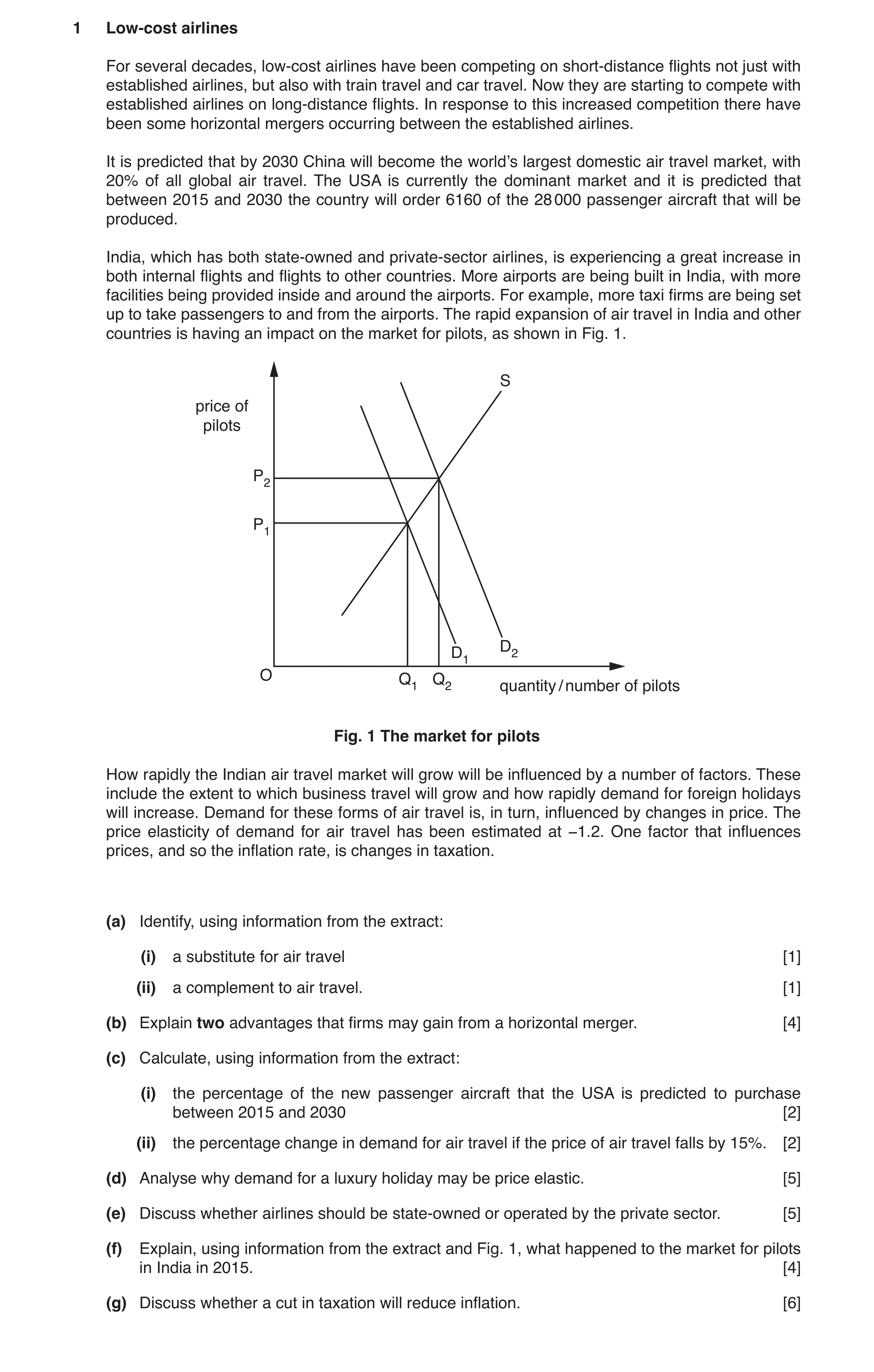
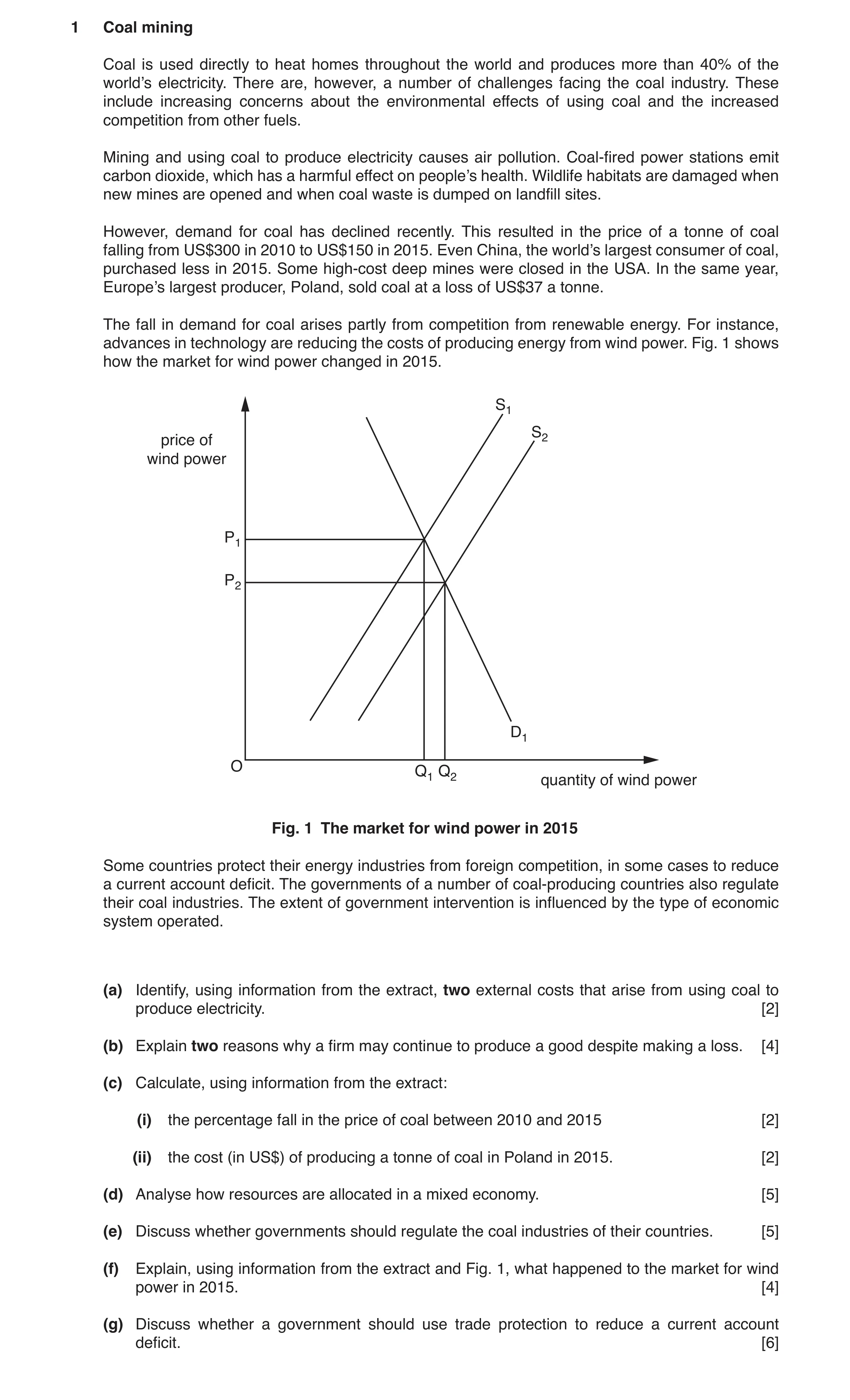
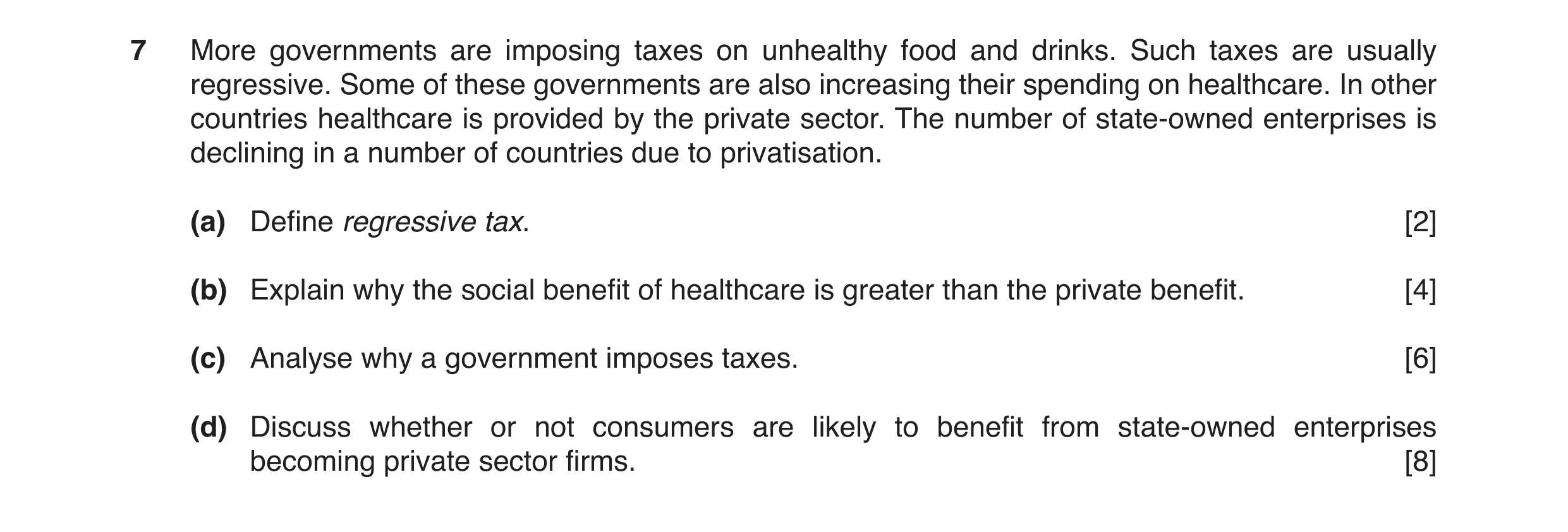
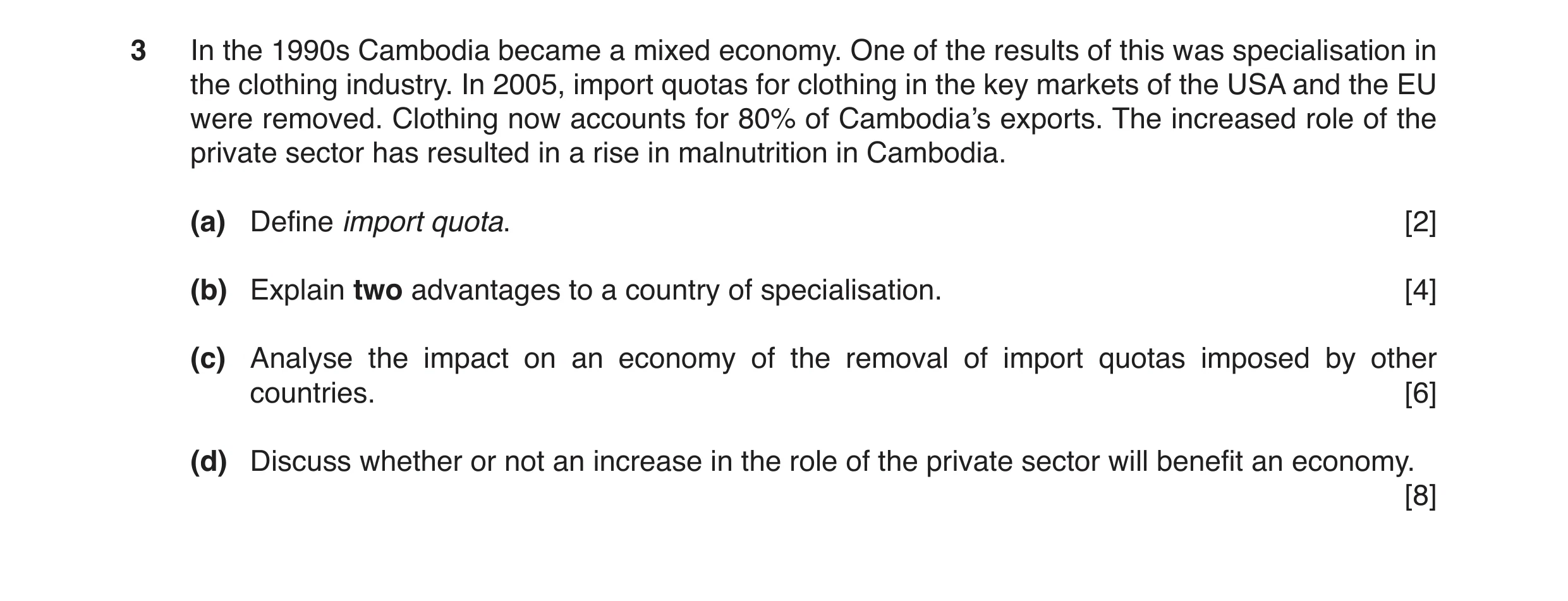 3 / 10
 4 / 10
![Question 9: (a) Calculate India’s economic growth rate in 2017. [1] (b) Identify two methods of protection. [2] (c) State why India is a mixed economy.…](https://img.pastlit.com/crops/5bf0d89b-9dfc-4330-8be1-12b6ec2785a9/q1.webp)
 5 / 10
 6 / 10
![Question 15: (a) Calculate Europe’s percentage contribution to the global total eSports revenue in 2019. [1] (b) Identify two conditions of demand for e…](https://img.pastlit.com/crops/55724c26-a8be-463d-9a87-4549a55a1e45/q1.webp)
 7 / 10
![Question 19: (a) Calculate the average cost of producing a car in Belarus in 2021. [1] (b) Identify two reasons why Belarus is described as a mixed econ…](https://img.pastlit.com/crops/694c5e96-092a-4fd5-aadb-0306b621e45b/q1.webp) 8 / 10
8 / 10
 9 / 10
 10 / 10
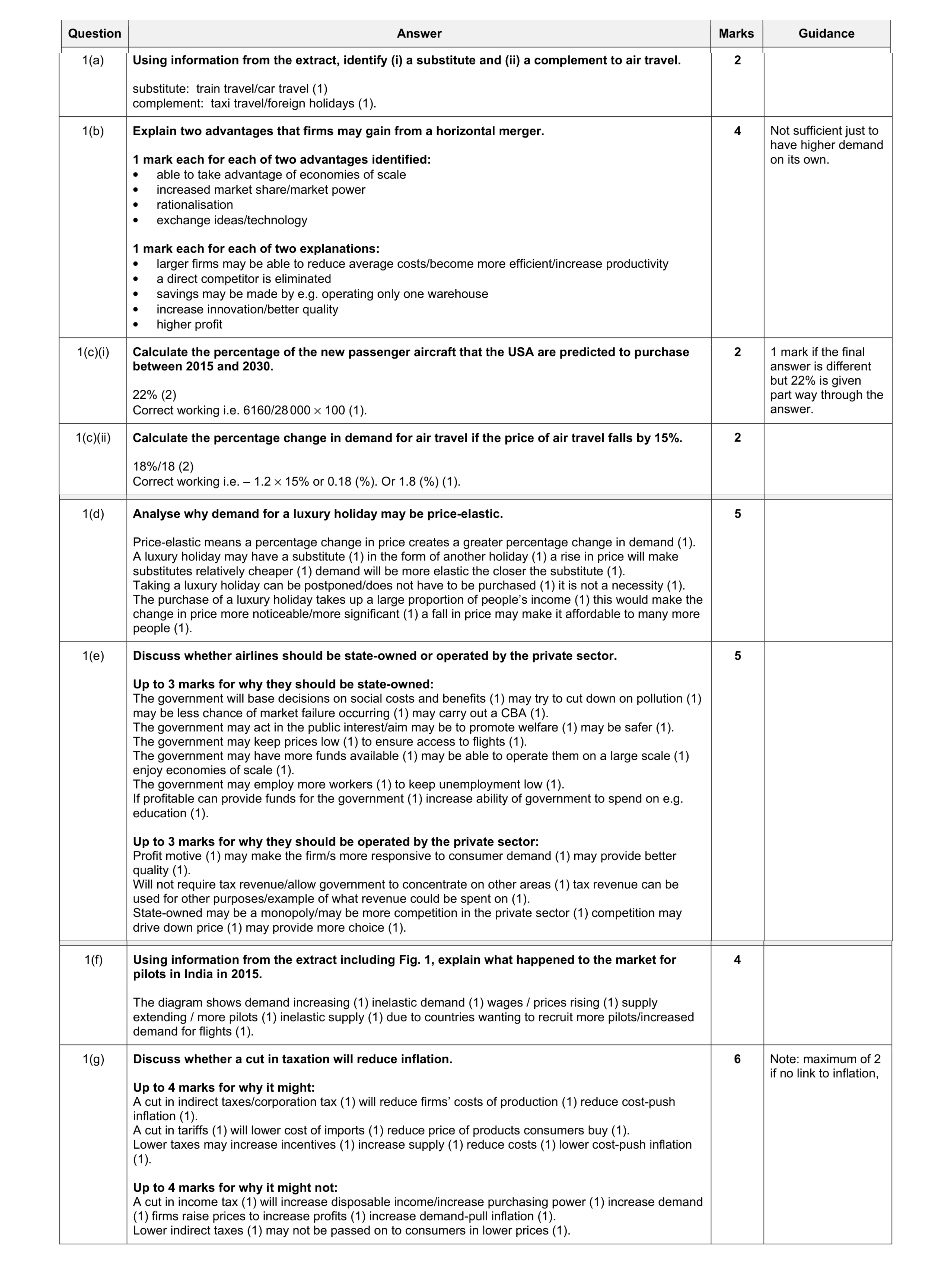 30
30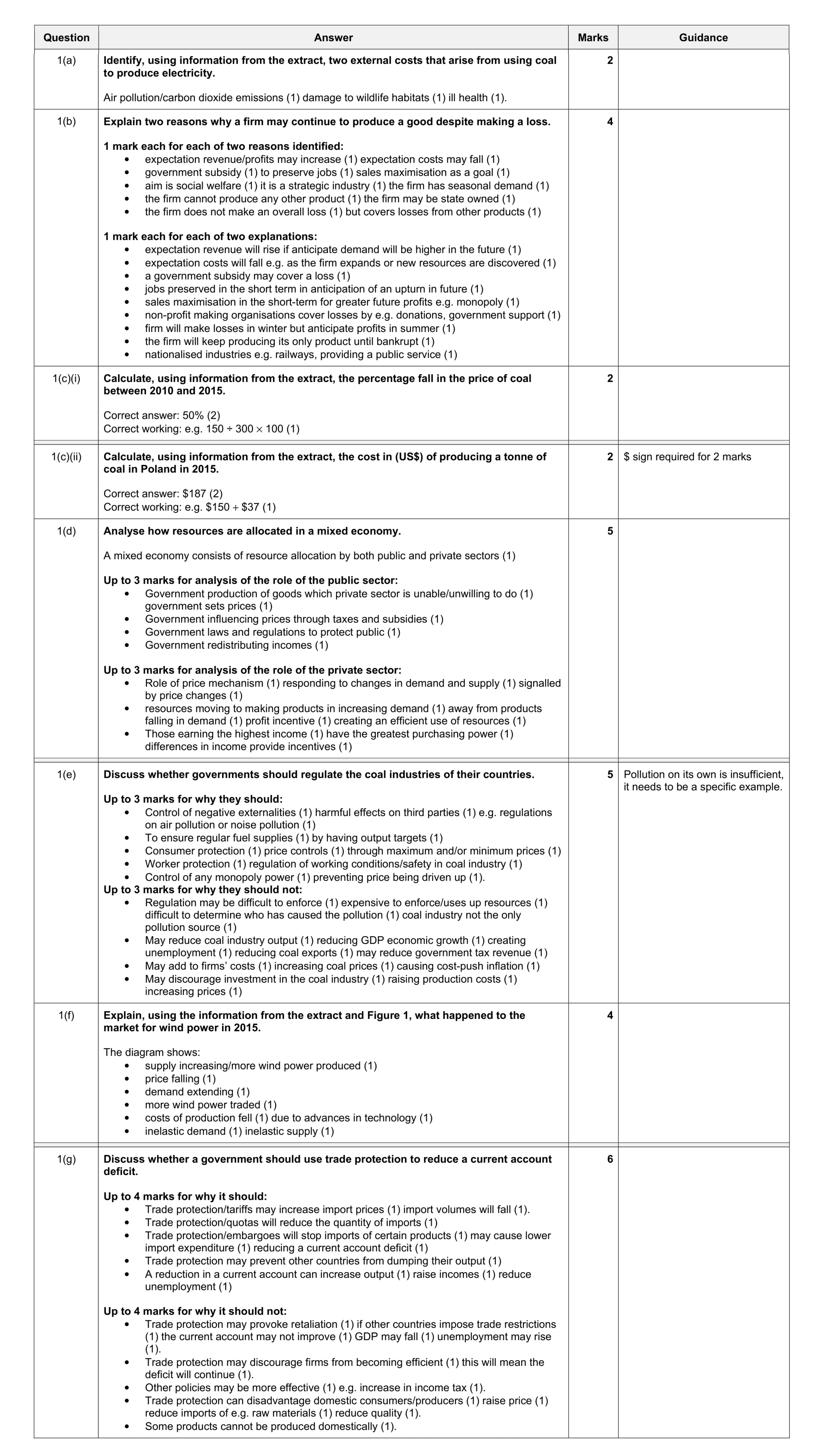 30
30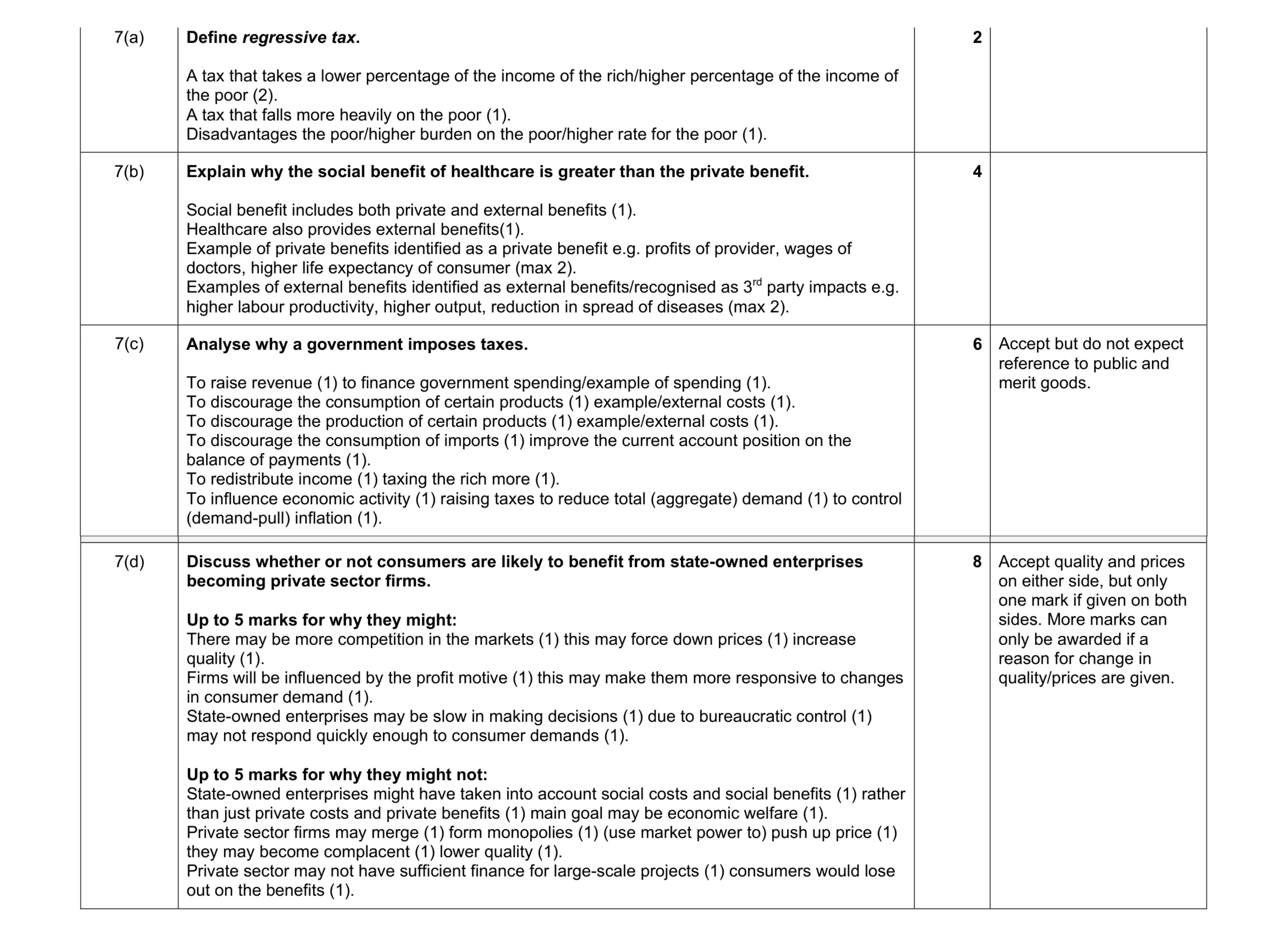 20
20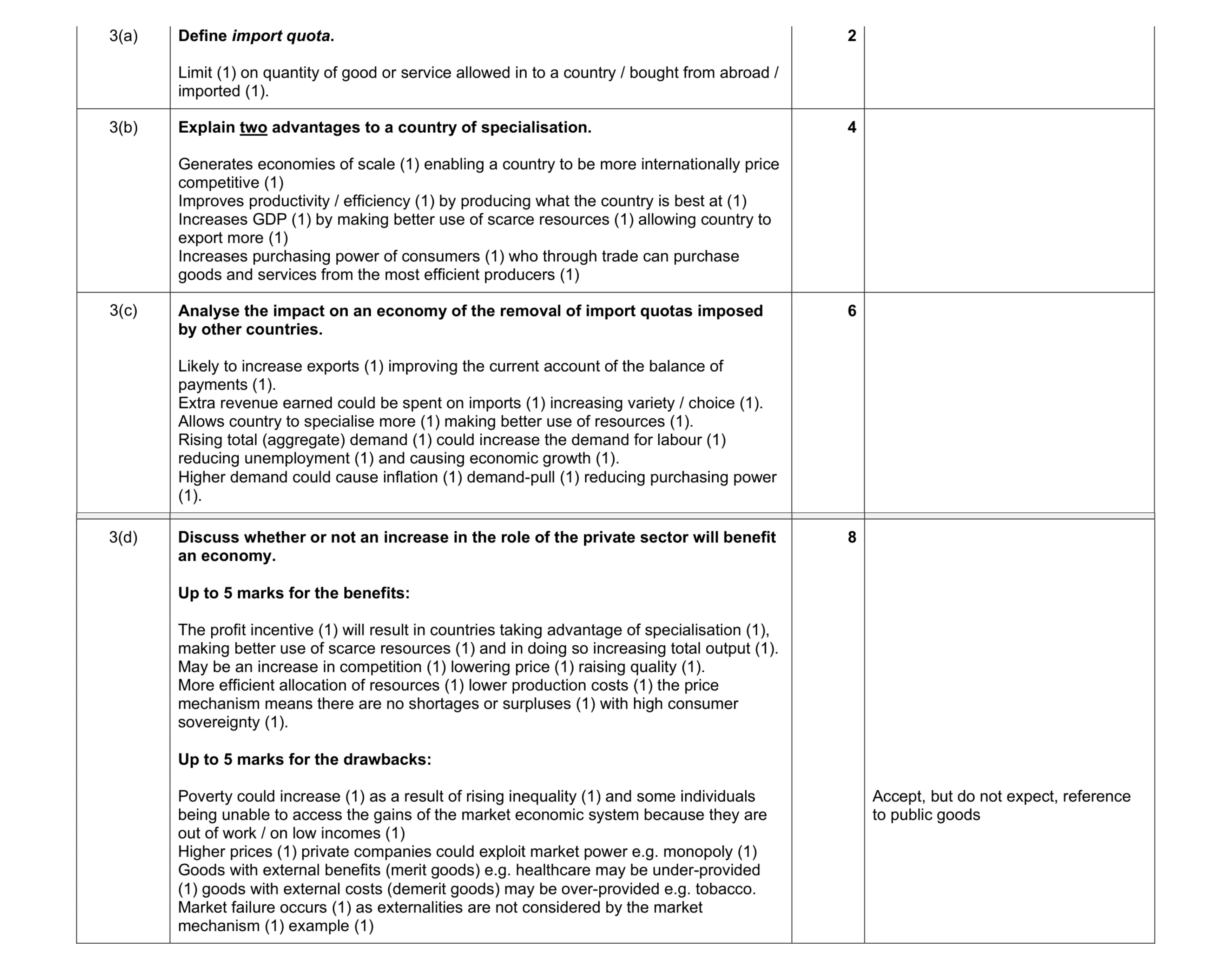 20
20 20
20 20
20 20
20 20
20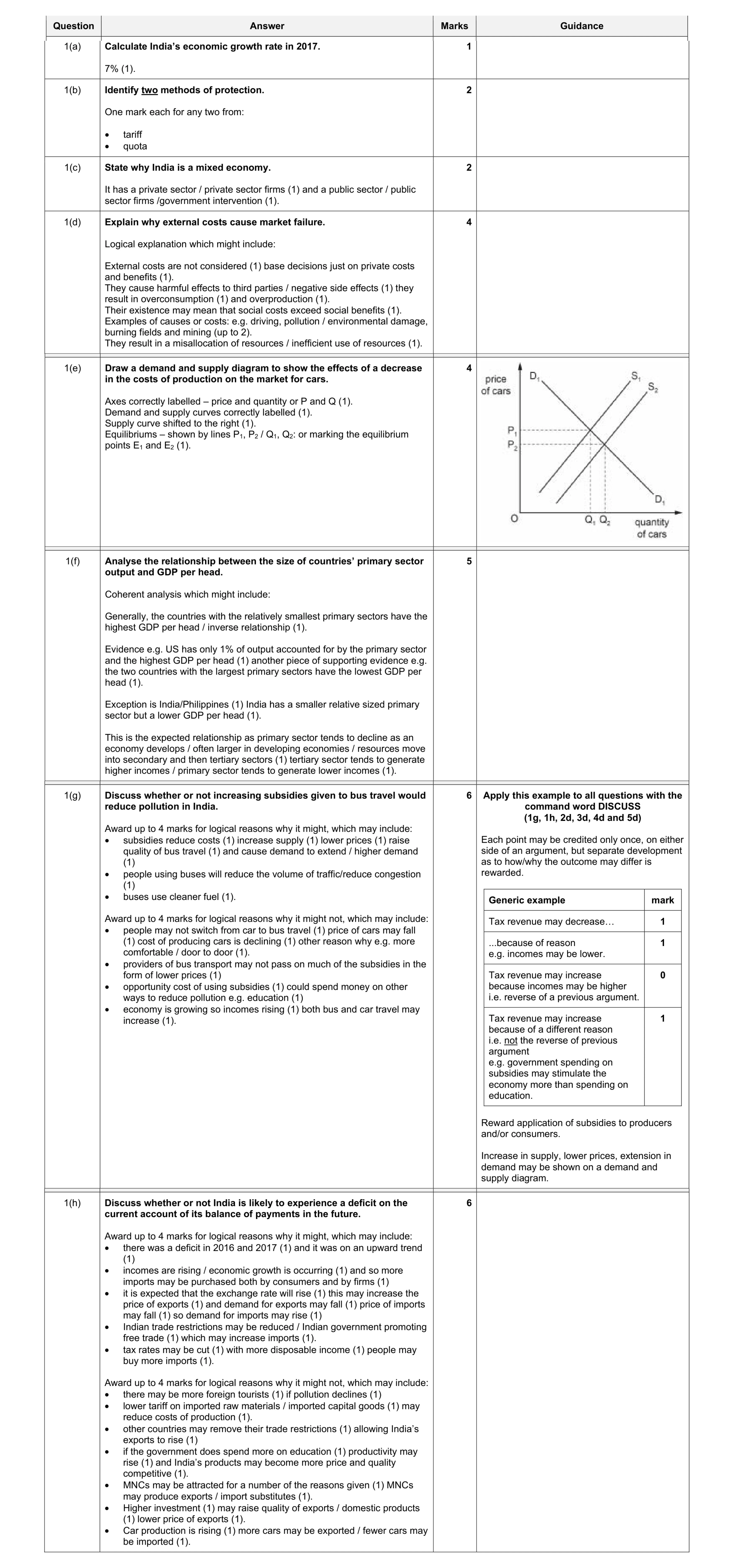 30
30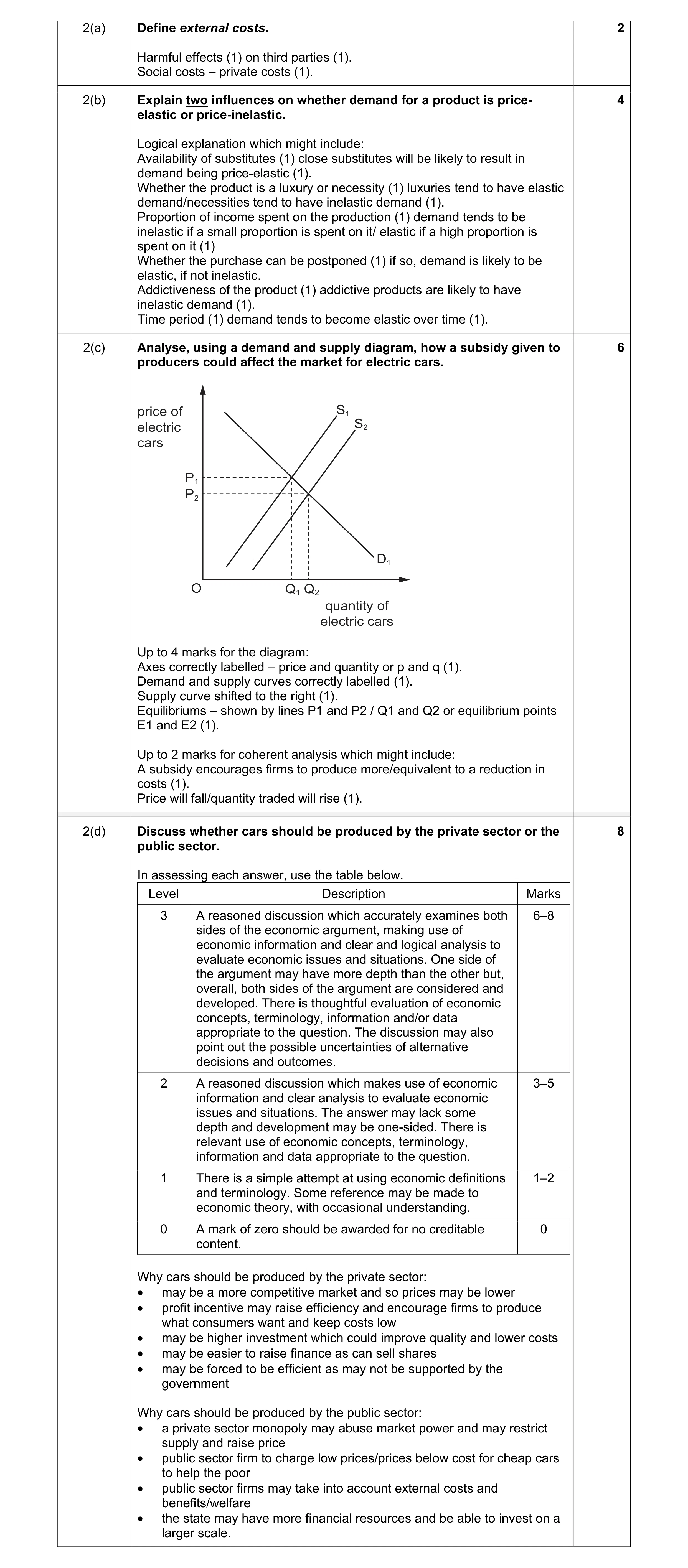 20
20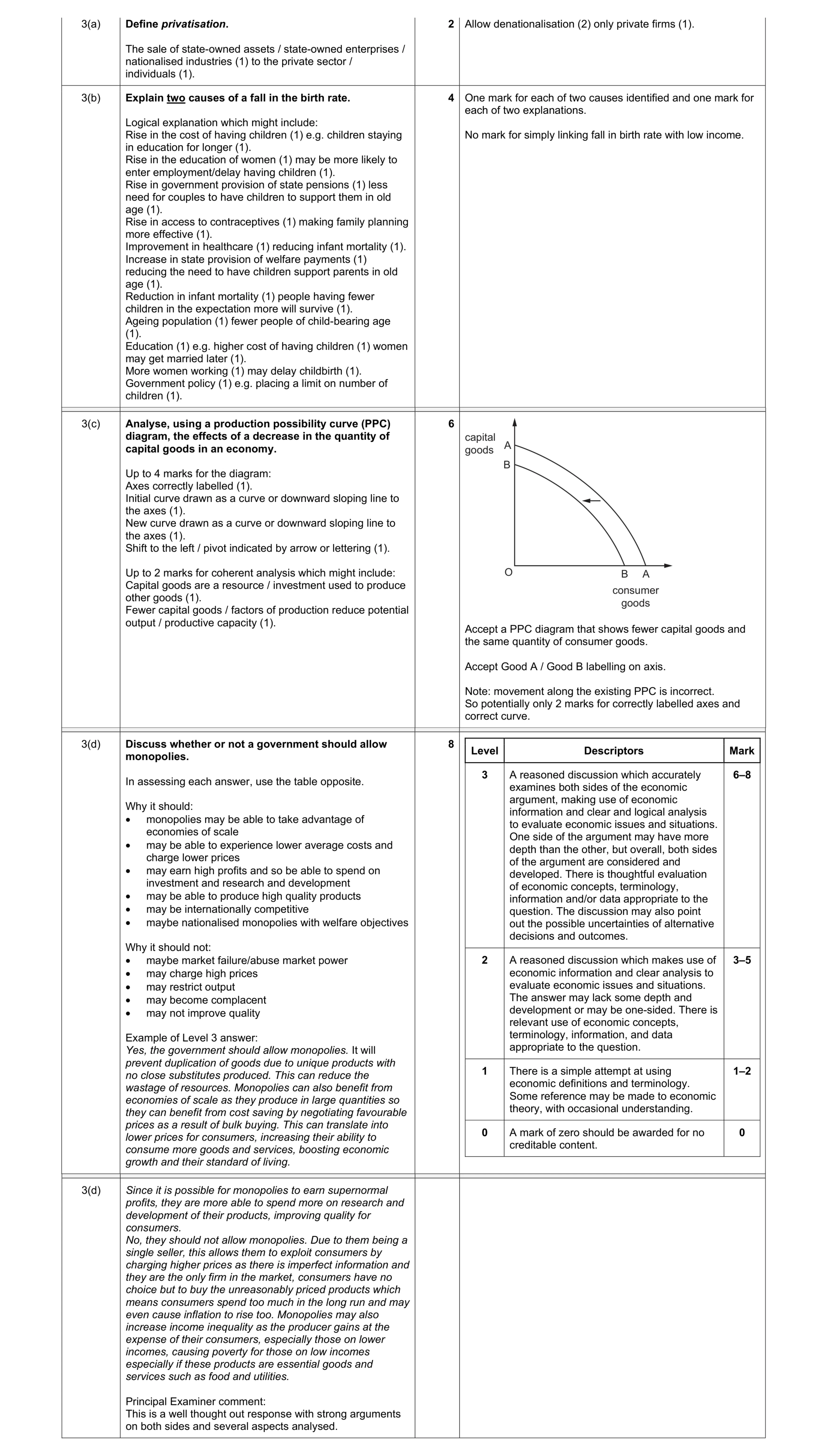 20
20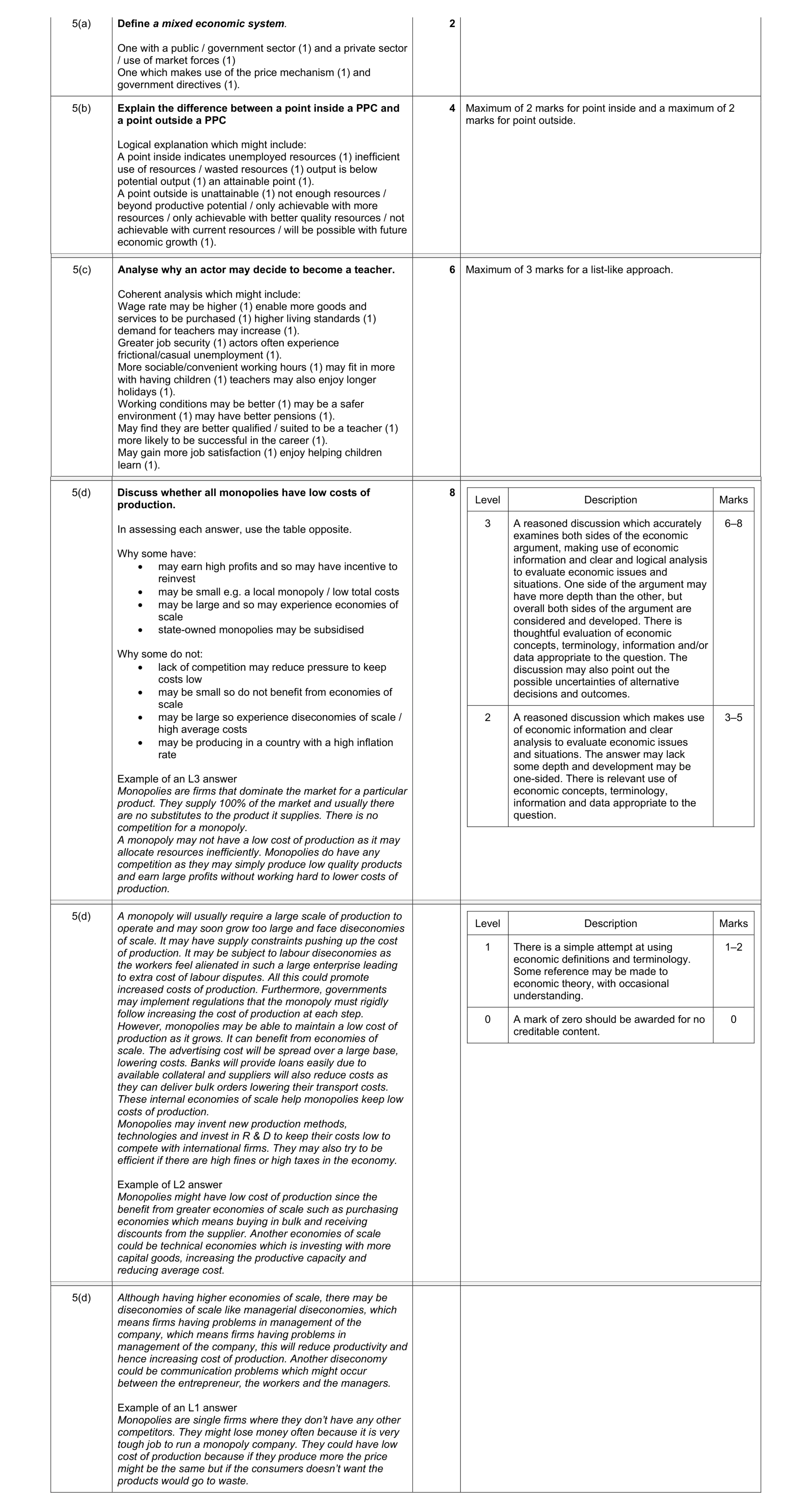 20
20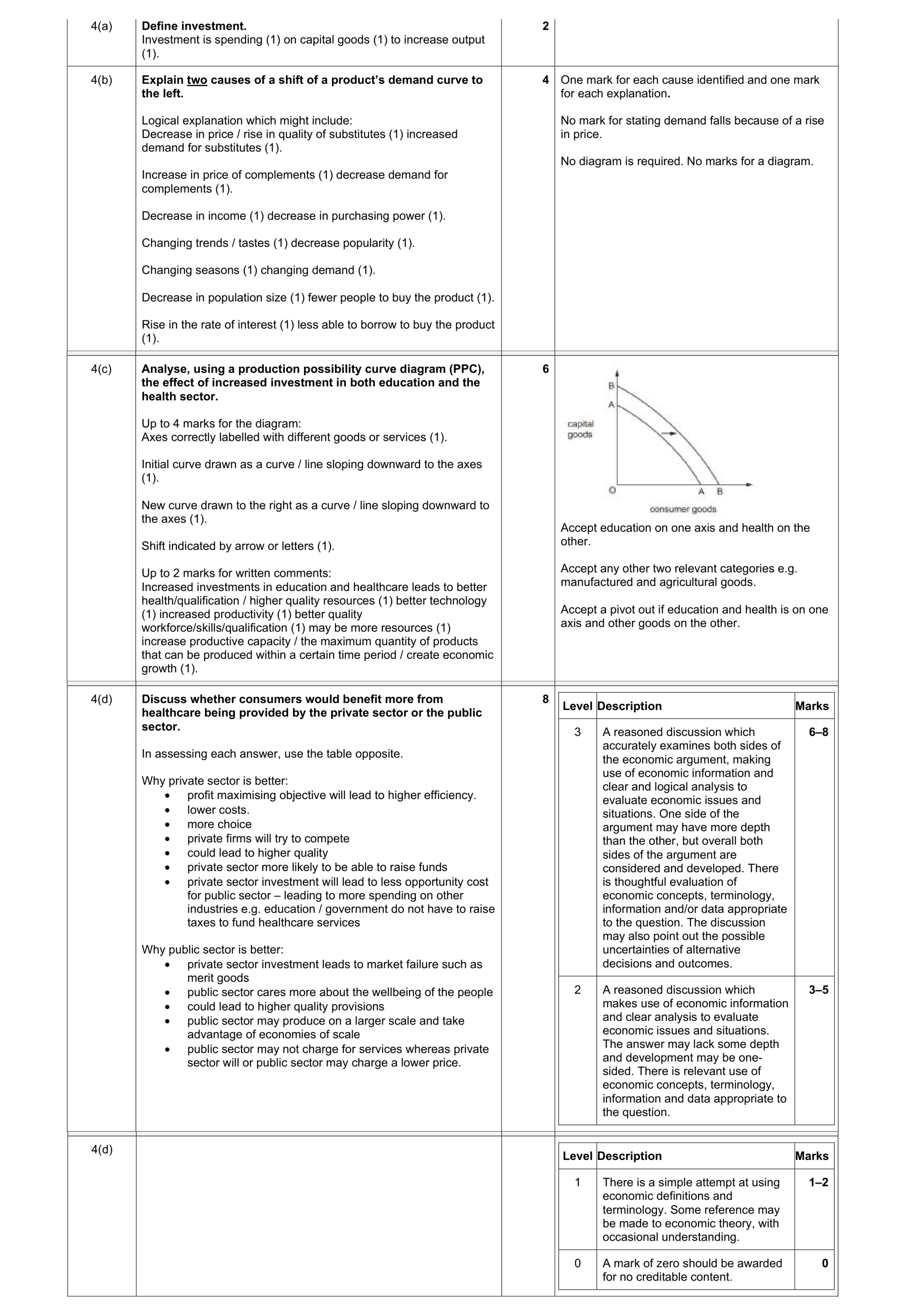 20
20 20
20 30
30 20
20 20
20 20
20 30
30 20
20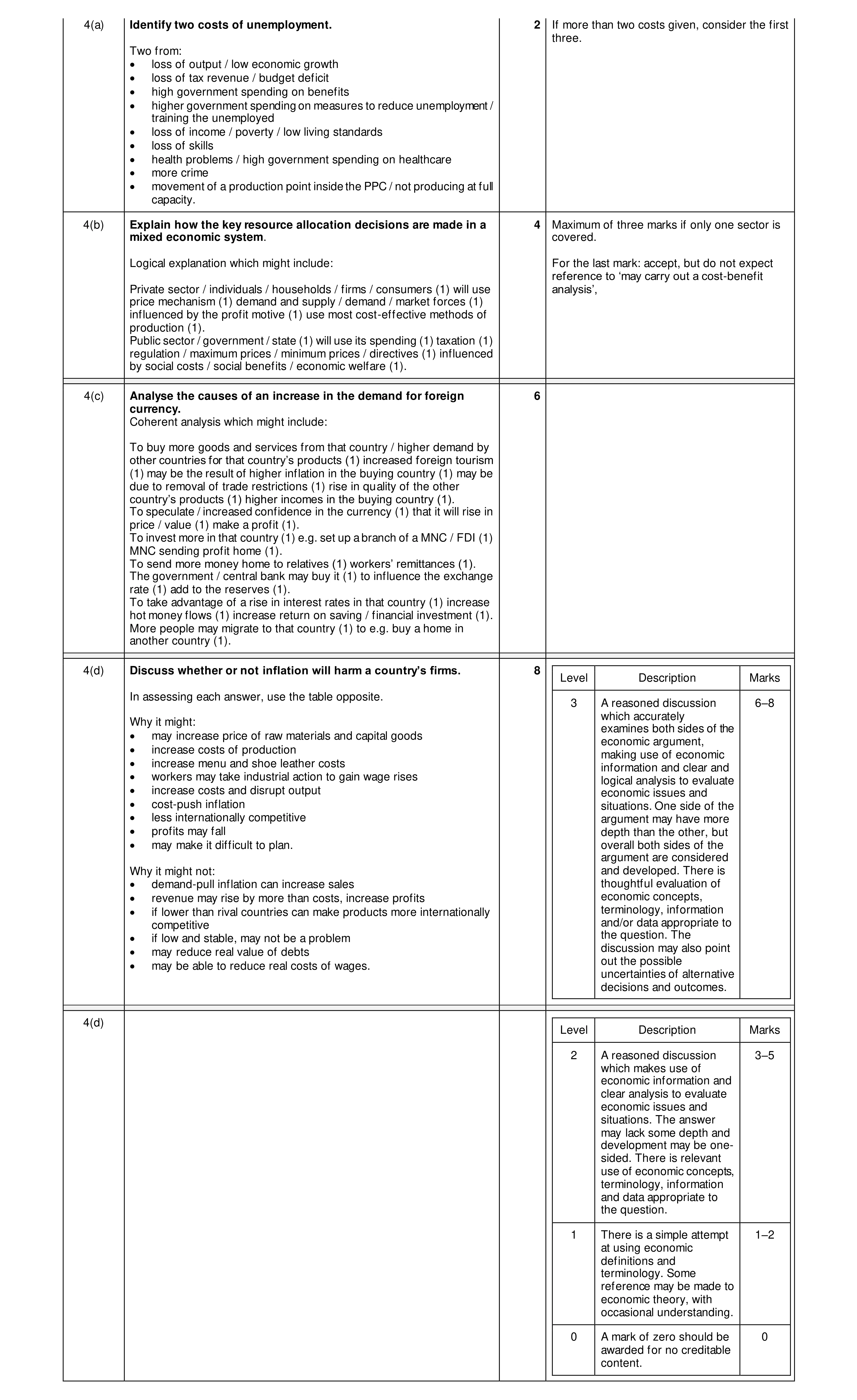 20
20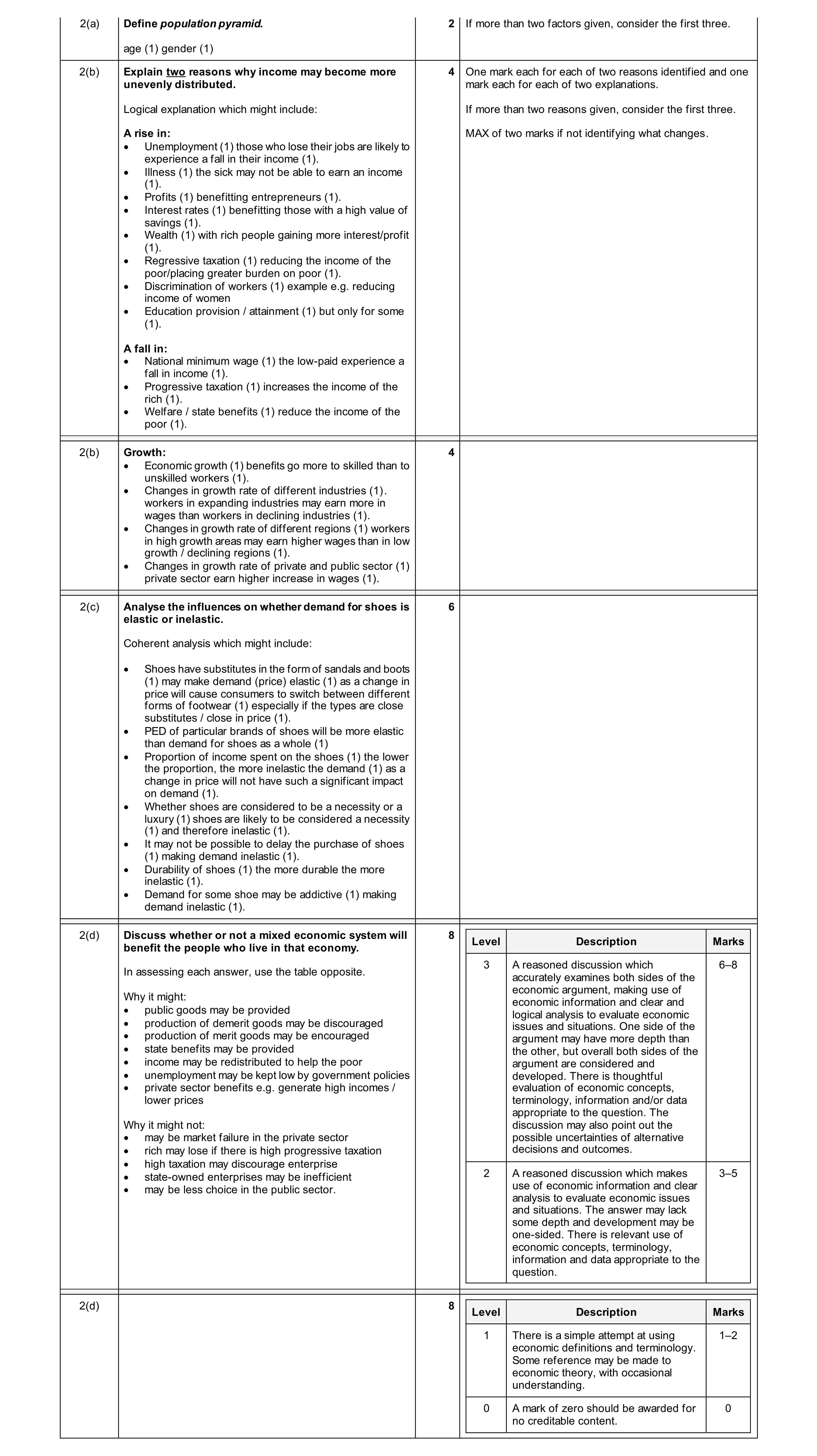 20
20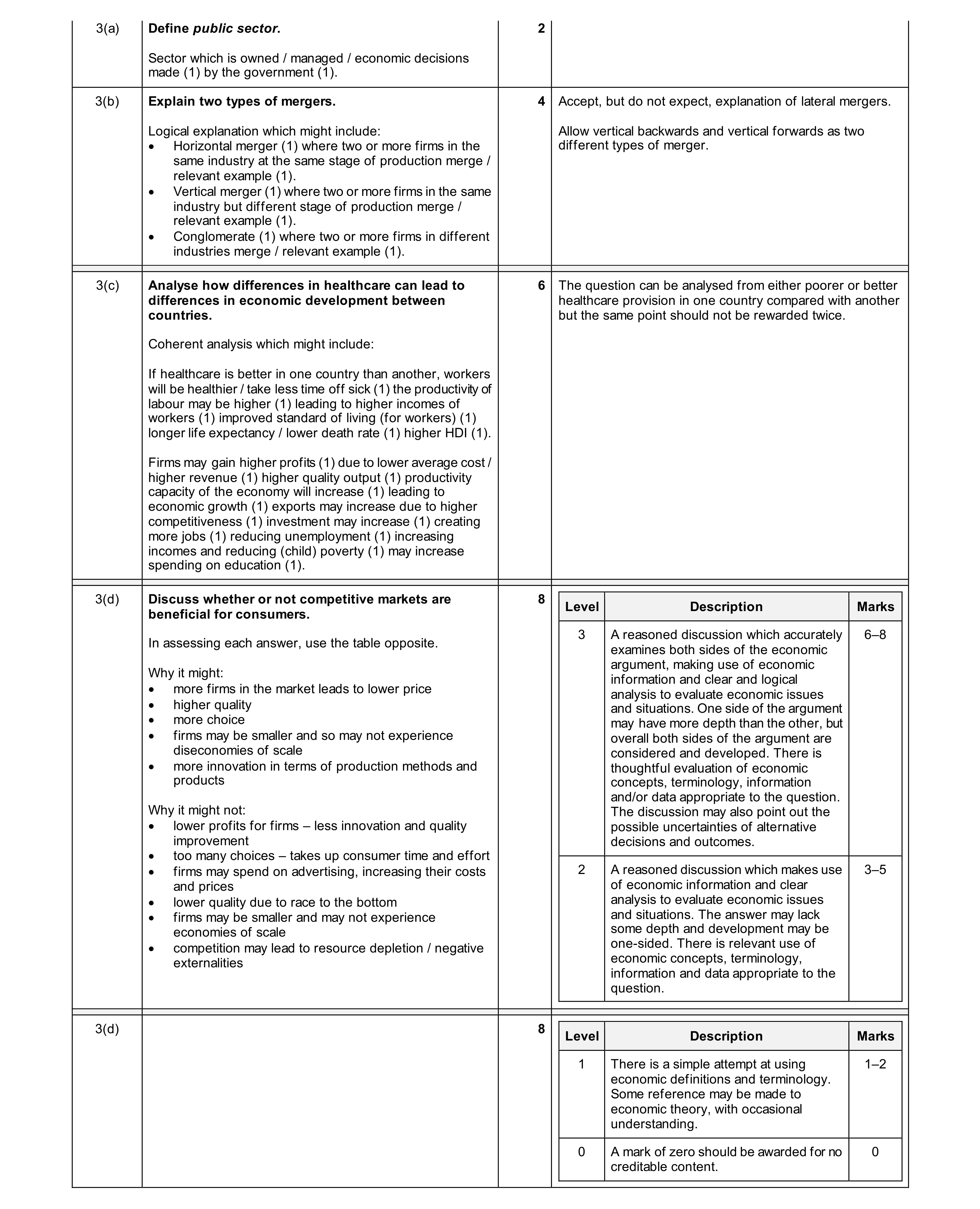 20
20