Questions as text
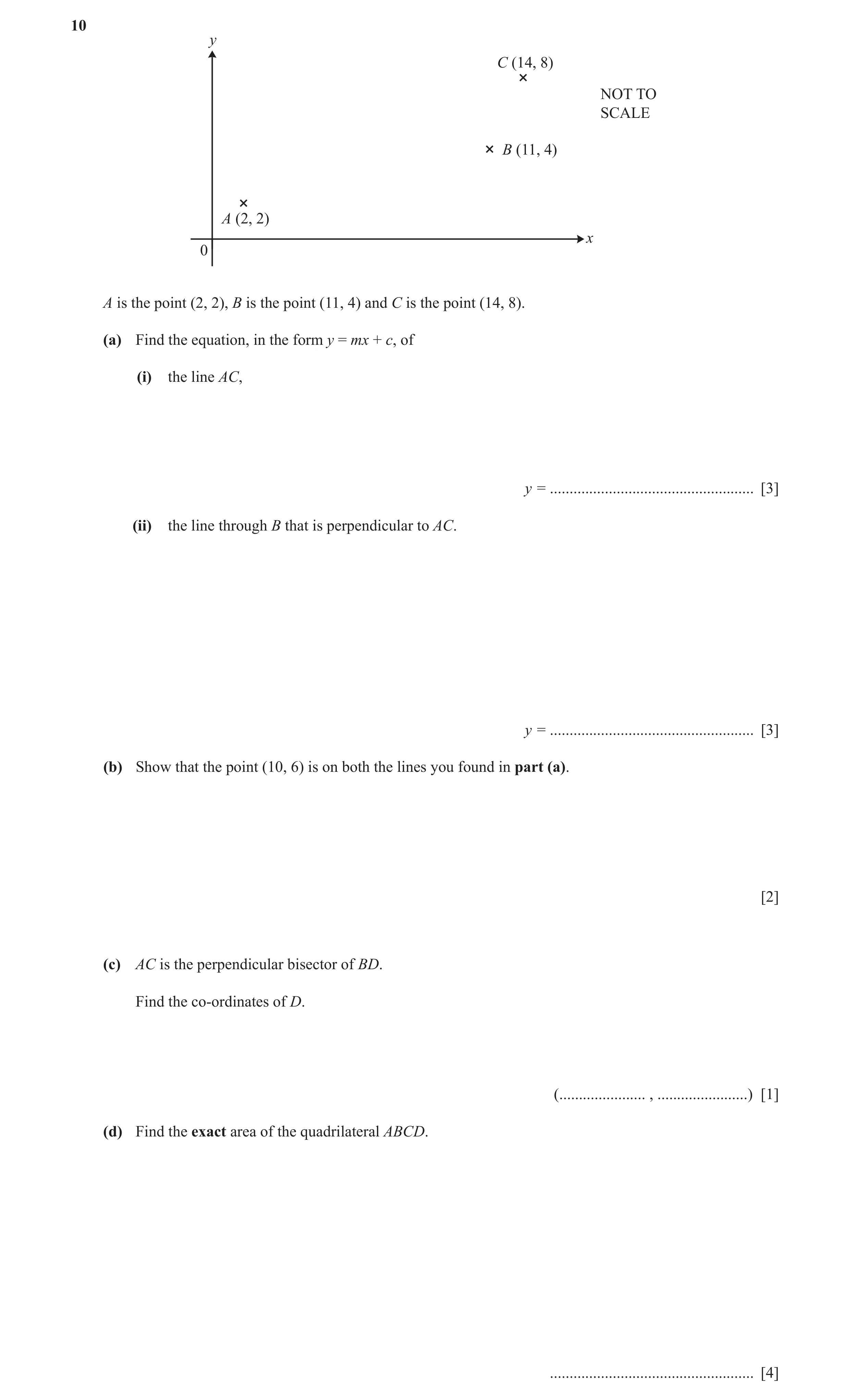
Q1 · Y C (14, 8) NOT TO SCALE B (11, 4) A (2, 2) x 0 A is the point (2, 2), B is the point… 0607/42 May/June 2017
10 y C (14, 8) NOT TO SCALE B (11, 4) A (2, 2) x 0 A is the point (2, 2), B is the point (11, 4) and C is the point (14, 8). (a) Find the equation, in the form y = mx + c, of (i) the line AC, y = … [3] (ii) the line through B that is perpendicular to AC. y = … [3] (b) Show that the point (10, 6) is on both the lines you found in part (a). [2] (c) AC is the perpendicular bisector of BD. Find the co-ordinates of D. ( … , … ) [1] (d) Find the exact area of the quadrilateral ABCD. … [4]
13 marks
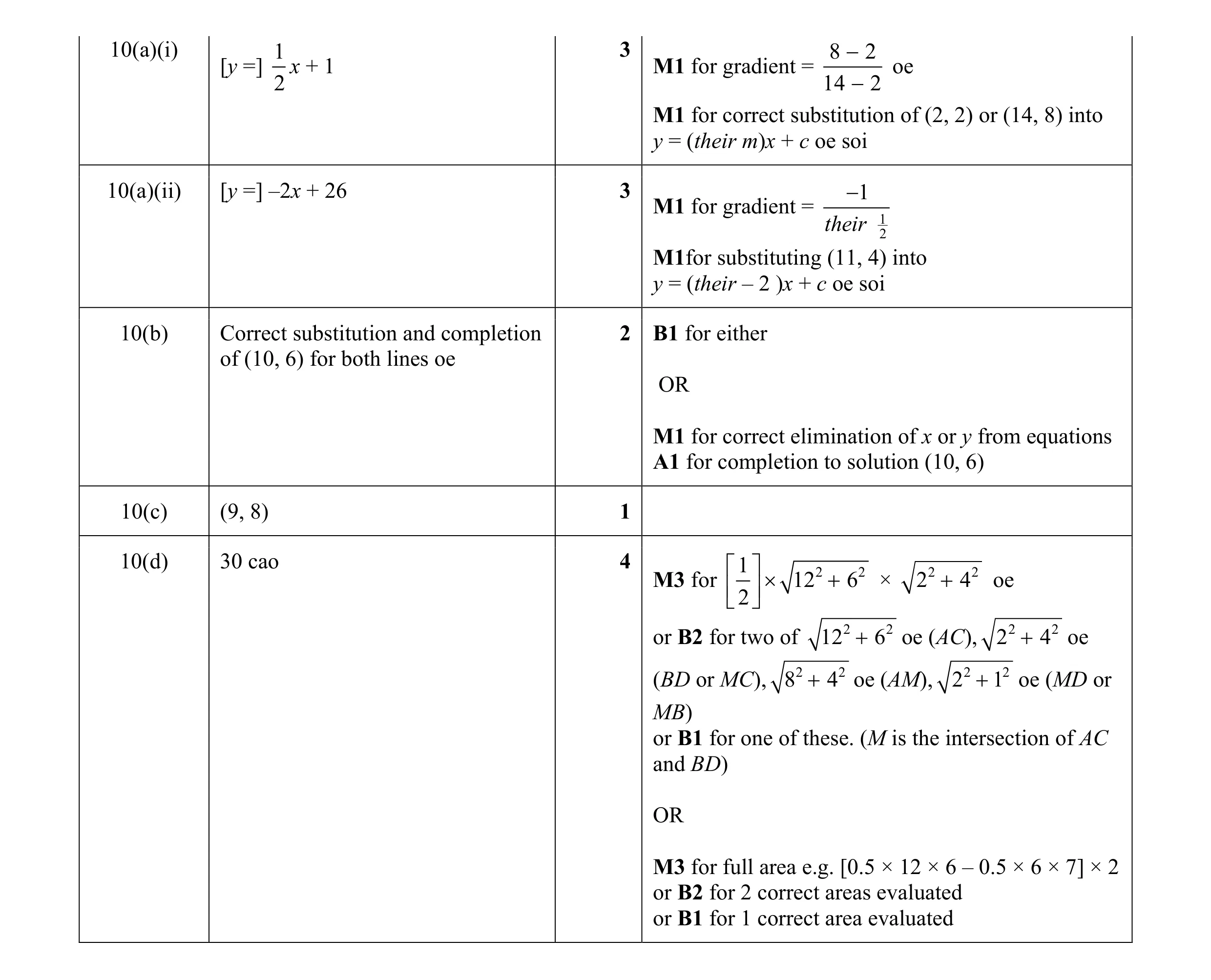
Mark scheme: 10(a)(i) 1 3 8 − 2 [y =] x + 1 M1 for gradient = oe 2 14 − 2 M1 for correct substitution of (2, 2) or (14, 8) into y = (their m)x + c oe soi 10(a)(ii) [y =] –2x + 26 3 −1 M1 for gradient = their 12 M1for substituting (11, 4) into y = (their – 2 )x + c oe soi 10(b) Correct substitution and completion 2 B1 for either of (10, 6) for both lines oe OR M1 for correct elimination of x or y from equations A1 for completion to solution (10, 6) 10(c) (9, 8) 1 10(d) 30 cao 4 1 2 2 2 2 M3 for × 12 + 6 × 2 + 4 oe 2 or B2 for two of 12 2 + 6 2 oe (AC), 2 2 + 4 2 oe (BD or MC), 8 2 + 4 2 oe (AM), 2 2 + 12 oe (MD or MB) or B1 for one of these. (M is the intersection of AC and BD) OR M3 for full area e.g. [0.5 × 12 × 6 – 0.5 × 6 × 7] × 2 or B2 for 2 correct areas evaluated or B1 for 1 correct area evaluated
This question in 0607/42 May/June 2017
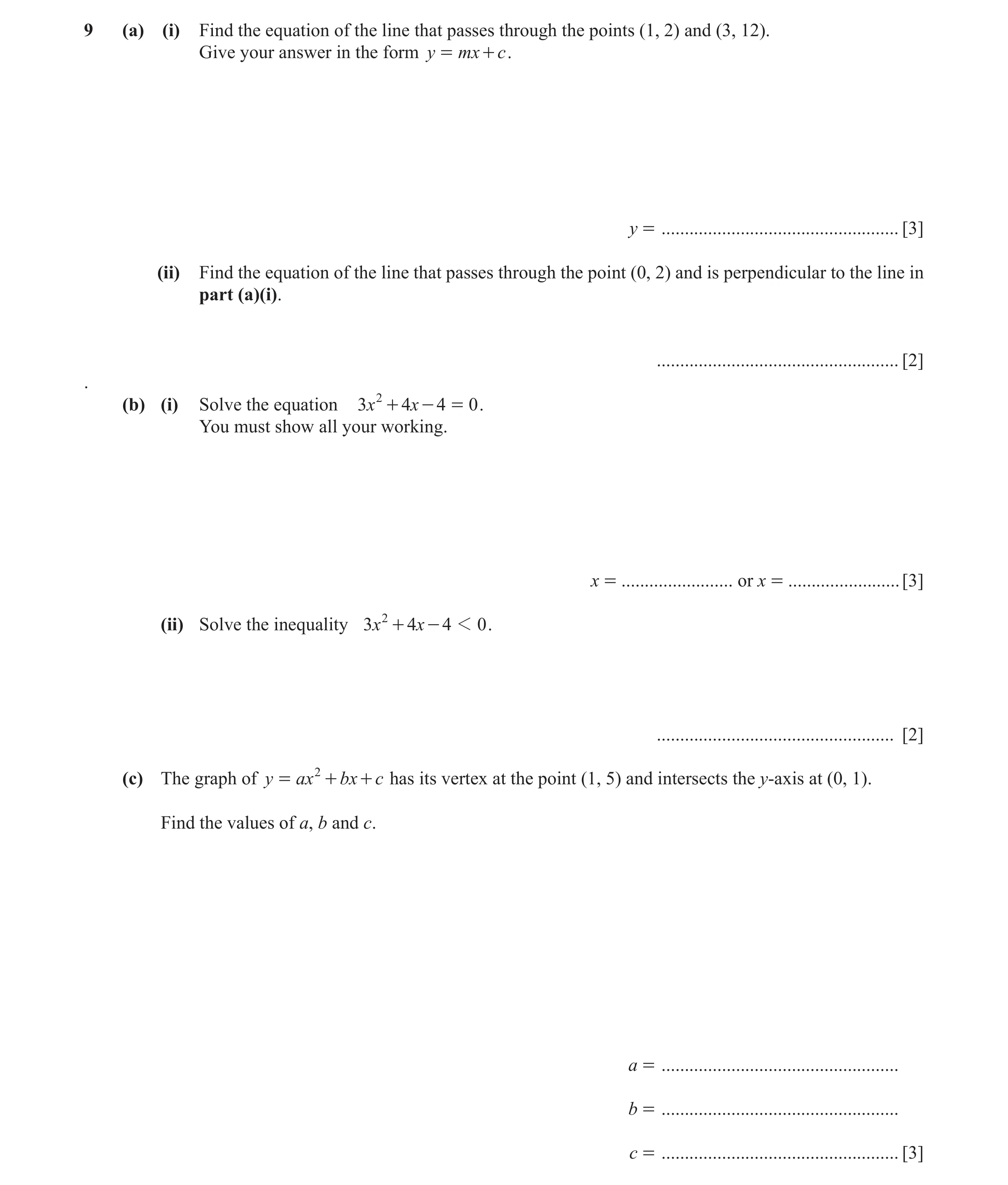
Q2 · Find the equation of the line that passes through the points (1, 2) and (3, 12) 0607/42 Oct/Nov 2017
9 (a) (i) Find the equation of the line that passes through the points (1, 2) and (3, 12). Give your answer in the form y = mx + c . y = … [3] (ii) Find the equation of the line that passes through the point (0, 2) and is perpendicular to the line in part (a)(i). … [2] . (b) (i) Solve the equation 3x 2 + 4x - 4 = 0 . You must show all your working. x = … or x = … [3] (ii) Solve the inequality 3x 2 + 4x - 4 1 0 . … [2] (c) The graph of y = ax 2 + bx + c has its vertex at the point (1, 5) and intersects the y-axis at (0, 1). Find the values of a, b and c. a = … b = … c = … [3]
13 marks
Mark scheme: 9(a)(i) [y =] 5x – 3 3 12 − 2 M1 for gradient = oe 3 − 1 M1 for substituting (1, 2) or (3, 12) into y = mx + c OR y − 2 12 − 2 M2 for = oe x − 1 3 − 1 9(a)(ii) 1 2 FT their gradient in (i) y = − x + 2 oe M1 for answer in form y = mx + 2 oe or 5 −1 for y = x + c oe their 5 9(b)(i) 2 3 B2 for sketch with one –ve and one +ve − 2, oe with correct working zero 3 or B1 for sketch of parabola vertex downwards OR B2 for (3x – 2)(x + 2) or B1 for 3 x ( x + 2) − 2( x + 2) or x (3 x − 2) + 2(3 x − 2) or for (3 x + a )( x + b ) where ab = – 4 or a + 3b = 4 OR −±4 4 2 − 4(3)( − 4) B2 for oe 2(3) 2 −±4 … or B1 for 4 − 4(3)( −4) or 2(3) 2 If 0 or B1 scored, then + B1 for − 2, 3 9(b)(ii) 2 2 FT their (b)(i) −<2 x < 3 2 B1 for −<2 x or for x < seen 3 2 If 0 scored SC1 FT for −≤2 x ≤ 3 9(c) [a =] – 4, [b =] 8, [c =] 1 3 M2 for y = a ( x − 1) 2 + 5 or M1 for use of y = a ( x − h ) 2 + k or b for c = 1 or − = 1 2 a
This question in 0607/42 Oct/Nov 2017
Q3 · Show that the point (3, -1) lies on the line y = 2x - 7 0607/41 May/June 2018
3 (a) Show that the point (3, -1) lies on the line y = 2x - 7 . [1] (b) Find the co-ordinates of the points where the line y = 8x + 4 crosses (i) the x-axis, ( … , … ) [1] (ii) the y-axis. ( … , … ) [1] (c) Find the equation of the straight line that passes through the points (1, 2) and (4, 11). Give your answer in the form y = mx + c . y = … [3]
6 marks
Mark scheme: 3(a) 2 × 3 – 7 = –1 oe 1 Correct substitution 3(b)(i) 1 1 − , 0 oe 2 3(b)(ii) (0, 4) 1 3(c) [ y =] 3x – 1 3 11 − 2 M1 for gradient = oe or better 4 − 1 M1 for substituting (1, 2) or (4, 11) into y = (their m)x + c
This question in 0607/41 May/June 2018
Q4 · Y A NOT TO SCALE D x O B C ABCD is a rectangle 0607/41 Oct/Nov 2018
4 y A NOT TO SCALE D x O B C ABCD is a rectangle. The equation of the line AB is 4x + 3y = 24 . (a) Find the co-ordinates of (i) point A, ( … , … ) [1] (ii) point B, ( … , … ) [1] (iii) the midpoint of AB. ( … , … ) [2] (b) Rearrange the equation 4x + 3y = 24 to make y the subject. y = … [2] (c) Find the equation of the line BC. Give your answer in the form y = mx + c . y = … [3] (d) Find the co-ordinates of (i) point C, ( … , … ) [1] (ii) point D. ( … , … ) [3]
13 marks
Mark scheme: 4(a)(i) (0, 8) 1 4(a)(ii) (6, 0) 1 4(a)(iii) (3, 4) 2 FT their (i) and (ii) B1FT for each co-ordinate 4(b) 4 [ y = ] − x + 8 oe 2 M1 for correct isolating y term or for 3 correct division 4(c) 3 FT their (a)(ii) y = x − 4.5 oe 3 3 4 B2 for y = x + k , k ≠ 0 4 or M1 for gradient = 0.75 oe and M1 for correct subst of their (a)(ii) into y = mx + c 4(d)(i) (0, –4.5) 1 Strict FT their (c) and only if in form y = mx + c 4(d)(ii) (–6, 3.5) 3 FT their (a), (d)(i) B2 for one correct co-ordinate − 6 6 or M1 for or soi −4.5 4.5
This question in 0607/41 Oct/Nov 2018
Q5 · Y 3 0 x 5 x + 1 (a) On the diagram, sketch the graph of y = log for 0 1 x G 5 0607/42 May/June 2019
2 y 3 0 x 5 x + 1 (a) On the diagram, sketch the graph of y = log for 0 1 x G 5 . [2] b x l x + 1 (b) Write down the equations of the asymptotes to the graph of y = log b x l. … … [2] x + 1 (c) Solve the equation log = 0. 5 . b x l x = … [1] x (d) On the same diagram, sketch the graph of y = for 0 1 x G 5 . [1] 2 x + 1 x (e) Solve the equation log = . b x l 2 x = … [1] x x + 1 (f) On your diagram, shade the region where y G 0.5 , y H and y H log [1] 2 b x l.
8 marks
Mark scheme: 2(a) Correct sketch 2 Must not cross axes 1111 0.80.80.80.8 0.60.60.60.6 0.40.40.40.4 B1 for correct shape 0.20.20.20.2 1111 0000 0000 1111 2222 3333 4444 5555 2(b) y = 0, x = 0 2 B1 for each If 0 scored, SC1 for answers x-axis and y-axis 2(c) 0.462 or 0.4624 to 0.4625 1 2(d) Correct sketch 1 3333 2.52.52.52.5 2222 1.51.51.51.5 1111 0.50.50.50.5 0000 0000 1111 2222 3333 4444 5555 2(e) 0.742 or 0.7415 to 0.7416 1 2(f) Region that is below y = 0.5 and 1 above other two graphs.
This question in 0607/42 May/June 2019
Q6 · The table shows the marks of 10 students in a physics examination and a chemistry… 0607/43 May/June 2019
2 The table shows the marks of 10 students in a physics examination and a chemistry examination. Physics mark (x) 17 29 34 46 57 66 73 84 92 96 Chemistry mark (y) 26 42 41 56 52 61 76 65 73 80 (a) Find (i) the mean physics mark, … [1] (ii) the mean chemistry mark. … [1] (b) Find the equation of the regression line for y in terms of x. y = … [2] (c) Use your regression line to estimate the chemistry mark when (i) the physics mark is 60, … [1] (ii) the physics mark is 5. … [1] (d) Which physics mark, 60 or 5, is likely to give the most reliable chemistry mark? Give a reason for your answer. … … [1]
7 marks
Mark scheme: 2(a)(i) 59.4 1 2(a)(ii) 57.2 1 2(b) [ y = ] 21.8 + 0.596 x 2 B1 for [ y = ] 21.8 + kx or [ y = ] k + 0.596 x or 22 + 0.6[0]x 2(c)(i) 58 or 57.5 to 57.8 1 FT their (b) 2(c)(ii) 25 or 24.8 or 24.75 to 24.78 1 FT their (b) 2(d) 60 1 Both needed Data within range oe
This question in 0607/43 May/June 2019
Q7 · Y C NOT TO SCALE D B A O x ABCD is a parallelogram 0607/41 May/June 2020
3 y C NOT TO SCALE D B A O x ABCD is a parallelogram. A is the point (3, 1), B is the point (10, 2) and D is the point (2, 3). (a) Find the coordinates of C. ( … , … ) [2] (b) Calculate the length of AB. Give your answer as a surd in its simplest form. AB = … [3] (c) The diagonals of the parallelogram meet at X. Find the coordinates of X. ( … , … ) [2] (d) The straight line BA is extended to meet the y-axis at P and the x-axis at Q. Find the coordinates of P and the coordinates of Q. P ( … , … ) Q ( … , … ) [5]
12 marks
This question in 0607/41 May/June 2020
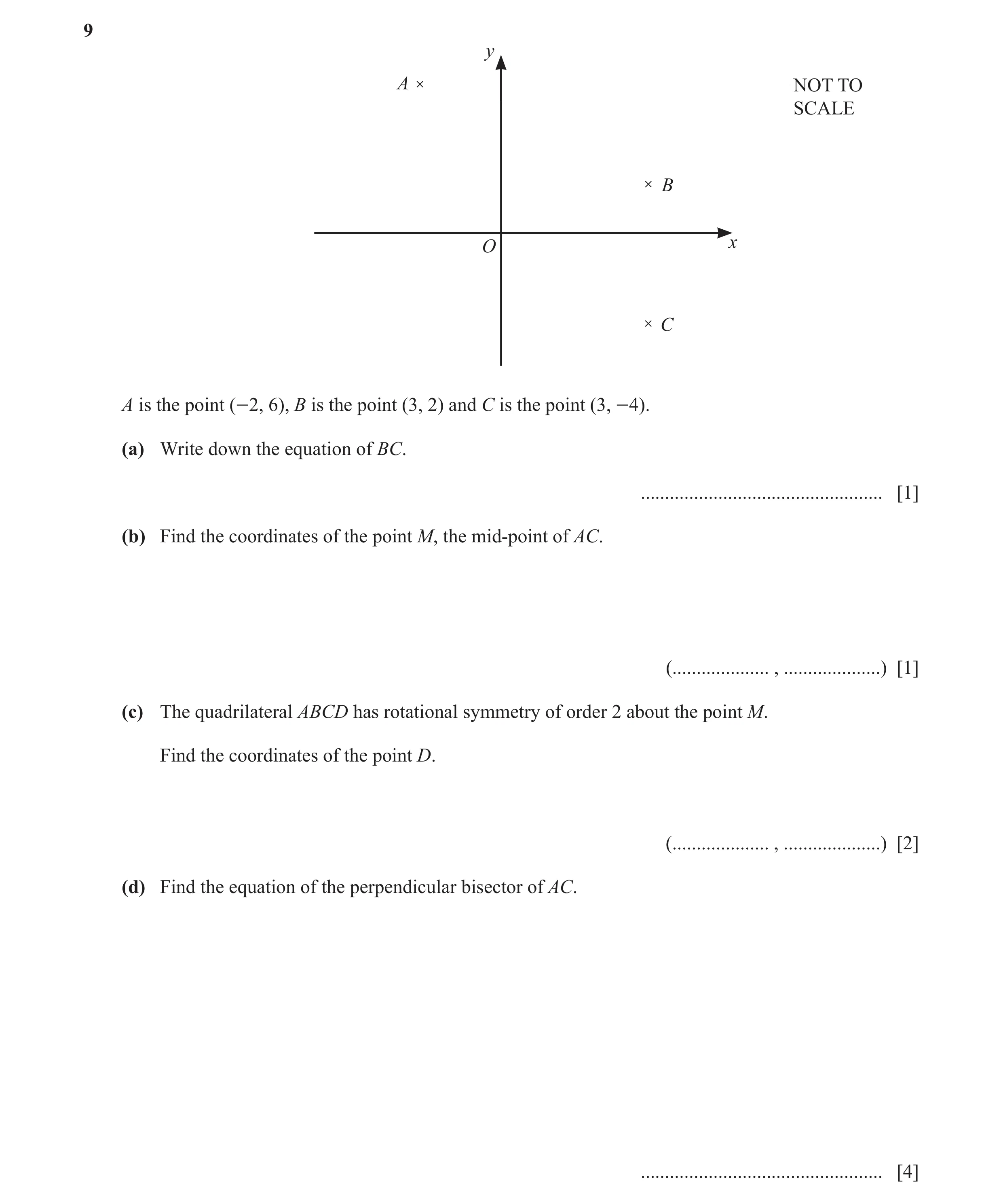
Q8 · Y A NOT TO SCALE B O x C A is the point (-2, 6), B is the point (3, 2) and C is the point… 0607/43 May/June 2020
9 y A NOT TO SCALE B O x C A is the point (-2, 6), B is the point (3, 2) and C is the point (3, -4). (a) Write down the equation of BC. … [1] (b) Find the coordinates of the point M, the mid-point of AC. ( … , … ) [1] (c) The quadrilateral ABCD has rotational symmetry of order 2 about the point M. Find the coordinates of the point D. ( … , … ) [2] (d) Find the equation of the perpendicular bisector of AC. … [4]
8 marks
Mark scheme: 9(a) x = 3 oe 1 9(b) 1 1 , 1 oe 2 9(c) (–2, 0) 2 B1 for each coordinate 9(d) 1 3 4 3 term equivalent y = x + oe −−4 6 2 4 M1 for gradient of AC = 3 −−( 2) −1 M1 for m = theirgradient M1 for substituting their (b) into their y = mx + c
This question in 0607/43 May/June 2020
Q9 · Write down the coordinates of the point where the line y =- 2x + 3 crosses the y-axis 0607/42 Feb/March 2021
3 (a) (i) Write down the coordinates of the point where the line y =- 2x + 3 crosses the y-axis. ( … , … ) [1] (ii) Write down the gradient of the line y =- 2x + 3 . … [1] (b) The line x + y = 6 crosses the line x =- 2 at point A. Find the y-coordinate of A. … [1] (c) Find the equation of the straight line that passes through the points (3, -1) and (12, 5). … [3] (d) The line L passes through the point (3, 4). Line L is perpendicular to the line 2y = 5x + 6 . Find the equation of line L. … [4] (e) y 7 6 5 4 3 2 1 – 2 – 1 0 1 2 3 4 5 6 7 x – 1 – 2 (i) On the grid, draw the lines y = 4, x + y = 3 and y = x - 1 . [3] (ii) By shading the unwanted regions, find and label the region R that satisfies these three inequalities. y G 4 x + y H 3 y H x - 1 [1]
14 marks
Mark scheme: 3(a)(i) (0, 3) 1 3(a)(ii) –2 1 3(b) 8 1 3(c) 2 3 2 y = x − 3 oe final answer B2 for answer x − 3 3 3 OR 5 −−( 1) M1 for oe 12 − 3 M1 for correct substitution of point into y = (their m)x + c or e.g. y – 5 = (their m)(x – 12) 3(d) 2 26 4 2 26 y = − x + oe final answer B3 for answer − x + oe 5 5 5 5 OR 5 M1 for gradient 2 −1 M1 for m = or better their ( 52 ) M1 for (3, 4) substituted into y = (their m)x + c or e.g. y – 4 = (their m)(x – 3) 3(e)(i) 3 correct ruled lines 3 B1 for each line correct 3(e)(ii) Clear indication of correct 1 FT if appropriate region
This question in 0607/42 Feb/March 2021
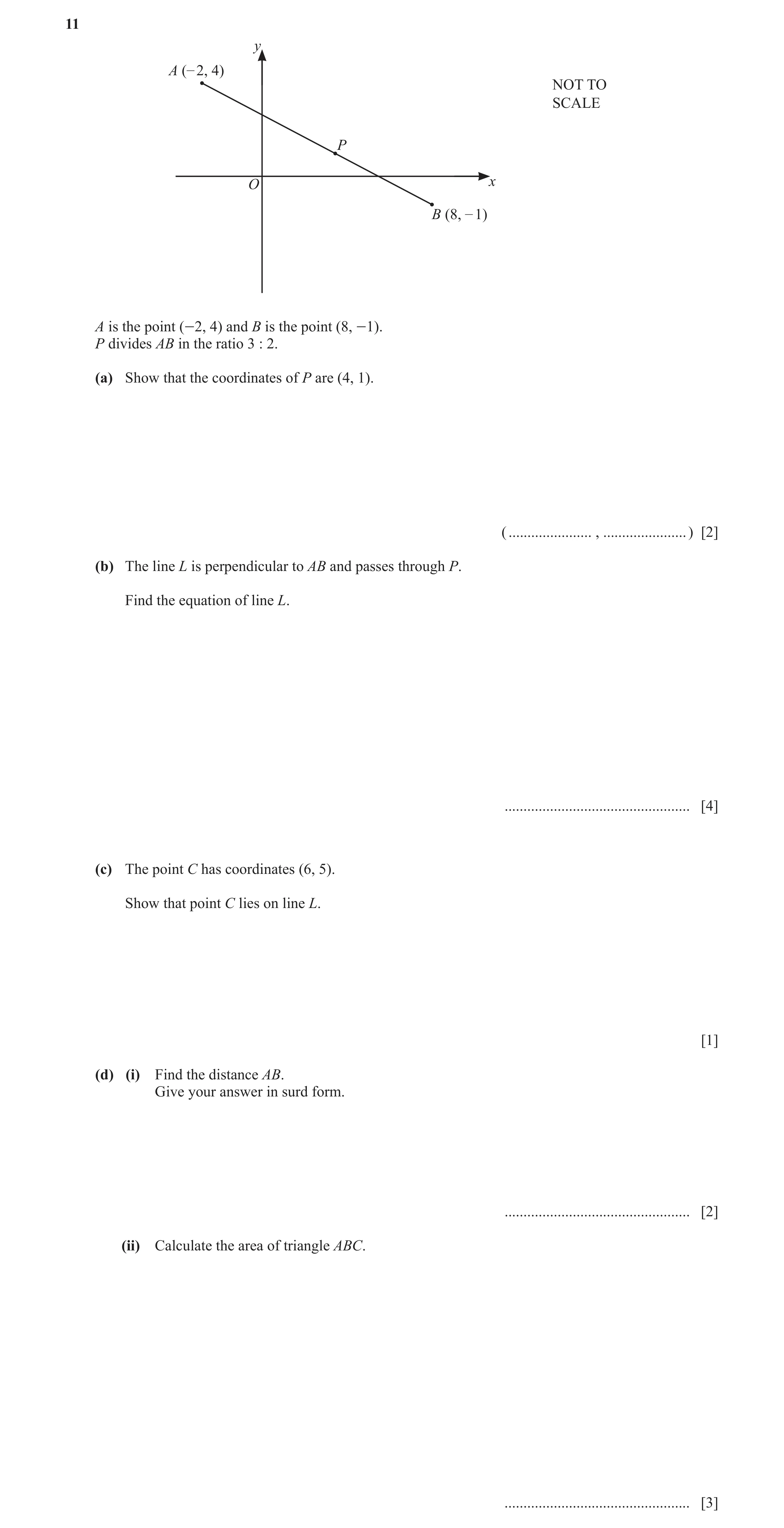
Q10 · Y A (– 2, 4) NOT TO SCALE P O x B (8, – 1) A is the point (-2, 4) and B is the point (8… 0607/42 May/June 2021
11 y A (– 2, 4) NOT TO SCALE P O x B (8, – 1) A is the point (-2, 4) and B is the point (8, -1). P divides AB in the ratio 3 : 2. (a) Show that the coordinates of P are (4, 1). ( … , … ) [2] (b) The line L is perpendicular to AB and passes through P. Find the equation of line L. … [4] (c) The point C has coordinates (6, 5). Show that point C lies on line L. [1] (d) (i) Find the distance AB. Give your answer in surd form. … [2] (ii) Calculate the area of triangle ABC. … [3]
12 marks
Mark scheme: 11(a) 8 – –2 = 10, 3 : 2 = 6 : 4, M2 M1 for each coordinate x = –2 + 6 = 4 oe 4 to –1 = 5, y = 4 – 3 = 1 oe 11(b) y = 2x – 7 oe final answer 4 B3 for 2x – 7 as final answer OR −−1 4 M1 for gradient of AB = 8 −−( 2 ) −1 M1 for m = 1 their − 2 M1 for 1 = (their2) × 4 + c or y – 1 = their2(x – 4)) 11(c) 2 × 6 – 7 = 5 oe 1 11(d)(i) 5 5 or 125 final answer 2 M1 for (8 – (–2))2 + ((–1) – 4)2 oe 11(d)(ii) 25 [.0] cao nfww 3 M1 for (6 – 4)2 + (5 – 1)2 M1 dep on first M1 for 1 × their ( d )( i ) × their 20 2
This question in 0607/42 May/June 2021
Q11 · Y C D NOT TO SCALE O B x A ABCD is a rectangle 0607/43 May/June 2021
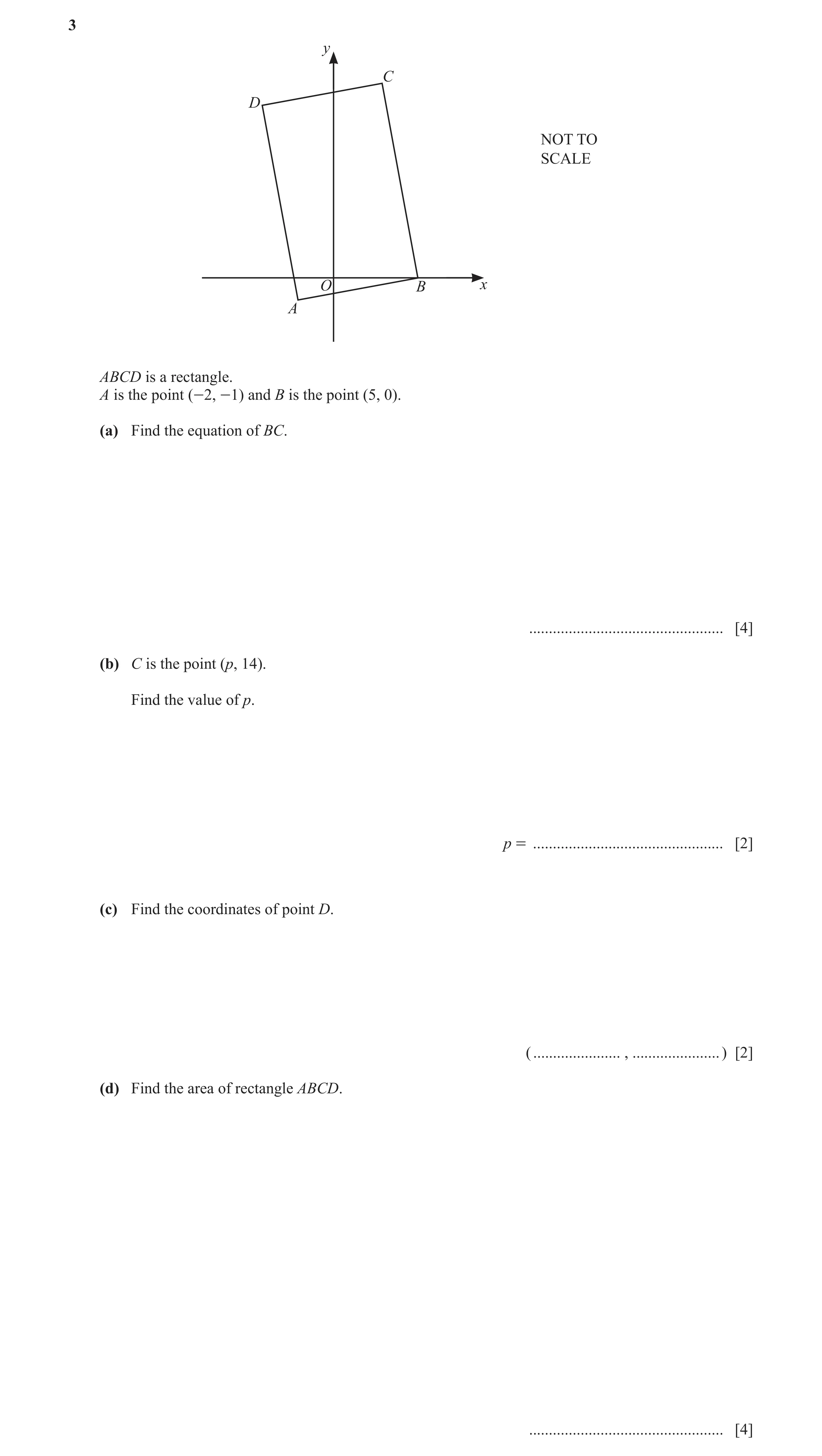
3 y C D NOT TO SCALE O B x A ABCD is a rectangle. A is the point (-2, -1) and B is the point (5, 0). (a) Find the equation of BC. … [4] (b) C is the point (p, 14). Find the value of p. p = … [2] (c) Find the coordinates of point D. ( … , … ) [2] (d) Find the area of rectangle ABCD. … [4]
12 marks
Mark scheme: 3(a) y = −7 x + 35 oe final answer 4 B3 for –7x + 35 as final answer OR 0 −−1 M1 for gradient of AB = oe 5 −−2 −1 M1 for gradient of BC = (m) their gradient of AB M1 for substitution of (5, 0) in y = (their m)x + c oe 3(b) 3 2 x 1 M1 for use of 14 = 2 × 7 oe e.g. = 2 14 −7 or 14 = their ( −7 p + 35 ) 3(c) (–4, 13) 2 FT their p – 7 for x-coordinate B1 for each. 3(d) 100 nfww 4 M3 for 200 × 50 oe or M2 for 7 2 + 12 oe or ( −2) 2 + 14 2 oe or M1 for (5 −−2) 2 + (0 −−1) 2 oe or ( −−−4 2) 2 + (14 − 0) 2 oe OR 1 1 M3 for 9 × 15 – 2 × × 2 × 14 – 2 × × 7 × 1 2 2 or M1 for 9 × 15 1 1 and M1 for × 2 × 14 or × 7 × 1 2 2
This question in 0607/43 May/June 2021
Q12 · Y NOT TO SCALE A B O x The points A (2, 5) and B (10, 1) are shown on the diagram 0607/43 Oct/Nov 2021
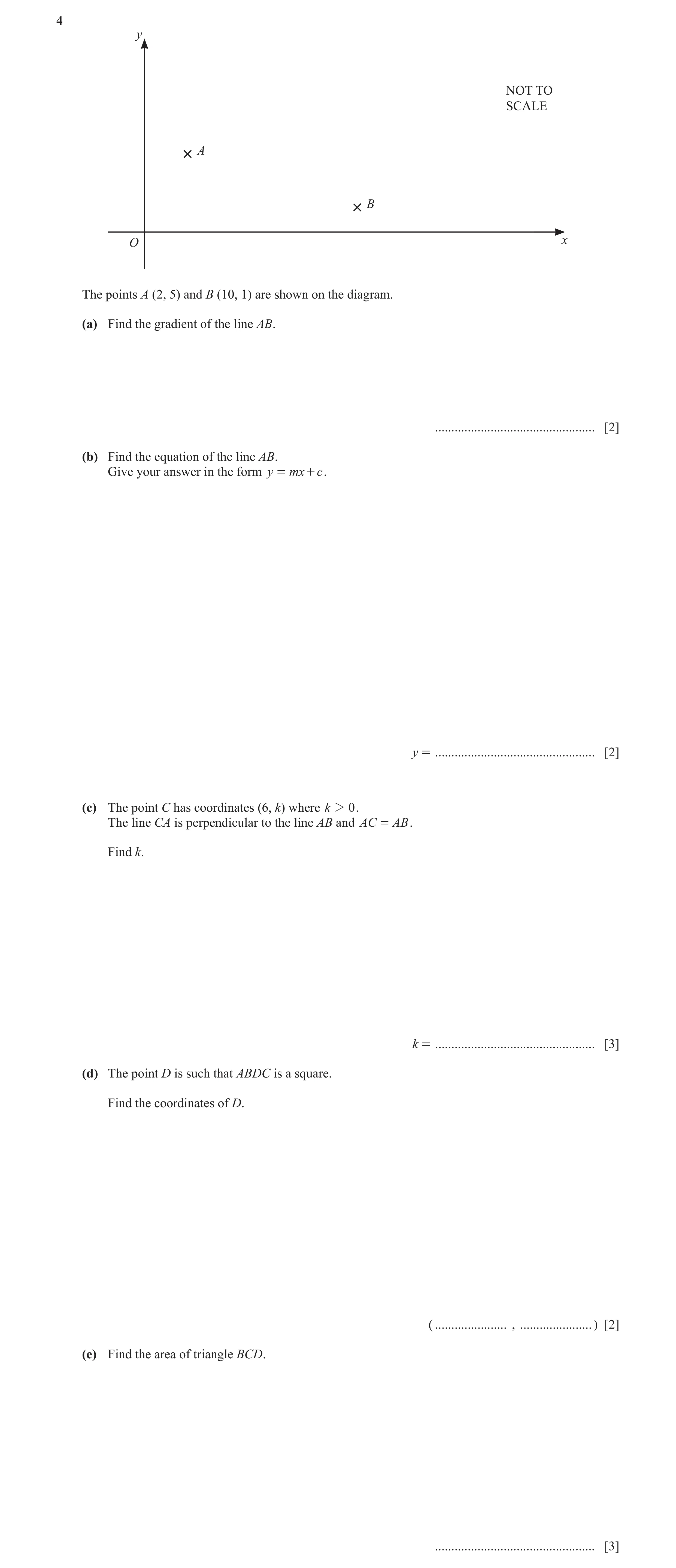
4 y NOT TO SCALE A B O x The points A (2, 5) and B (10, 1) are shown on the diagram. (a) Find the gradient of the line AB. … [2] (b) Find the equation of the line AB. Give your answer in the form y = m x + c . y = … [2] (c) The point C has coordinates (6, k) where k 2 0 . The line CA is perpendicular to the line AB and AC = AB . Find k. k = … [3] (d) The point D is such that ABDC is a square. Find the coordinates of D. ( … , … ) [2] (e) Find the area of triangle BCD. … [3]
12 marks
Mark scheme: 4(a) –0.5 oe 2 1 − 5 M1 for oe 10 − 2 4(b) [ y = ] − 0.5 x + 6 2 M1 for substituting (2, 5) or (10, 1) into y = their ( −0.5) x + c 4(c) 13 3 −1 M1 for grad perp = their ( −0.5) k − 5 M1 for = their 2 6 − 2 OR M2 for ( k − 5) 2 = 64 or M1 for (10 − 2) 2 + (1 − 5) 2 [ = (6 − 2) 2 + ( k − 5) 2 ] 4(d) (14, 9) 2 B1 for each 4(e) 40 3 M2 for 0.5 × [(10 − 2) 2 + (1 − 5) 2 ] oe or M1 for (10 − 2) 2 + (1 − 5) 2 oe
This question in 0607/43 Oct/Nov 2021
Q13 · Find the gradient and y-intercept of the line with equation 3x + 4y = 24 0607/42 Feb/March 2022
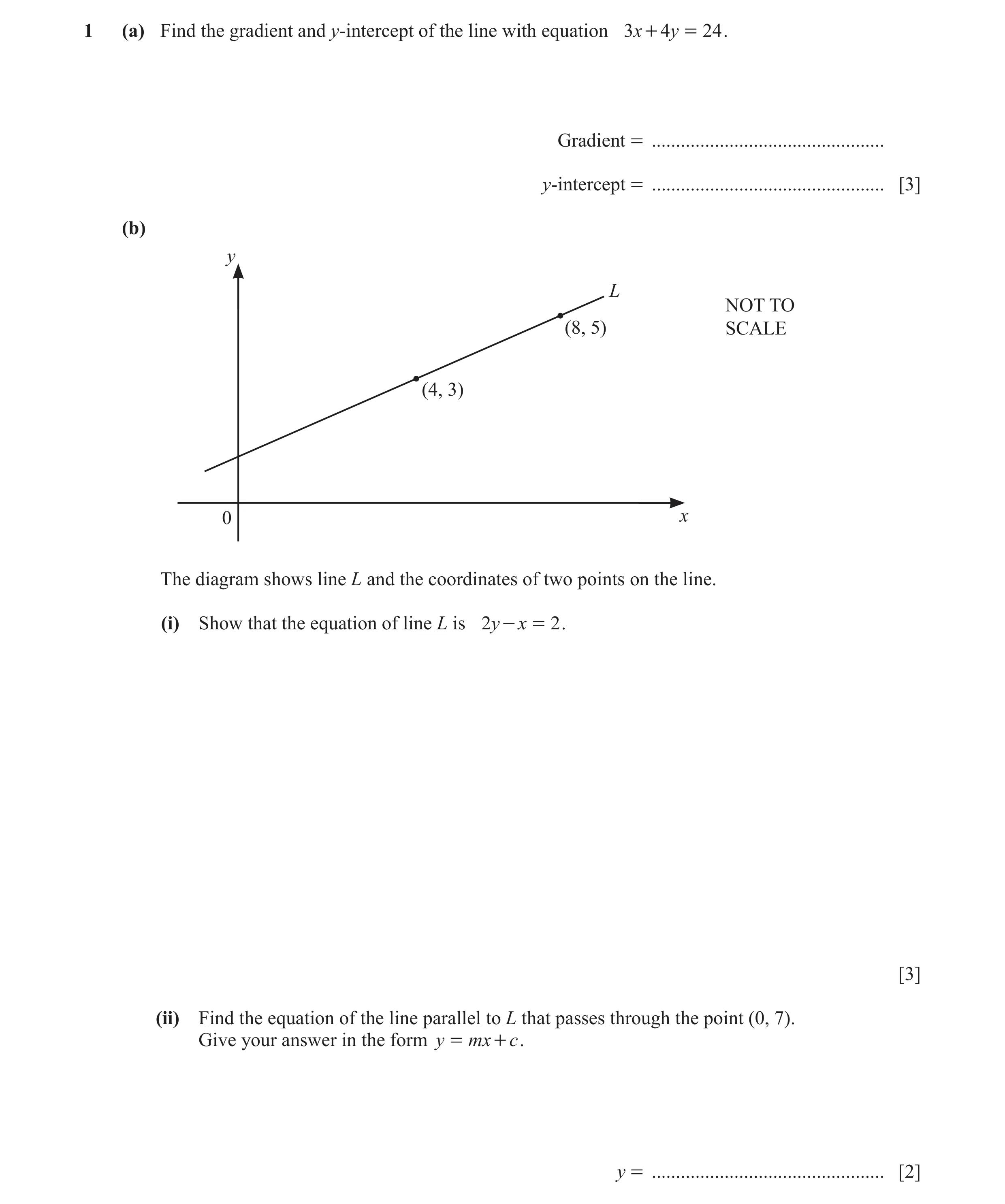
1 (a) Find the gradient and y-intercept of the line with equation 3x + 4y = 24 . Gradient = … y-intercept = … [3] (b) y L NOT TO (8, 5) SCALE (4, 3) 0 x The diagram shows line L and the coordinates of two points on the line. (i) Show that the equation of line L is 2y - x = 2 . [3] (ii) Find the equation of the line parallel to L that passes through the point (0, 7). Give your answer in the form y = mx + c . y = … [2]
8 marks
Mark scheme: Question Answer Marks Partial Marks 1(a) 3 2 M1 for isolating y oe − oe 4 6 1 1(b)(i) 5 − 3 M1 [grad = ] oe 8 − 4 Substitution of (4, 3) or (8, 5) into M1 y = (their m)x + c or y – y1 = m(x – x1) 1 A1 y = x + 1 or 2y – 6 = x – 4 or 2 2y – 10 = x – 8 leading to 2y – x = 2 without error or omission 1(b)(ii) 1 2 1 [ y = ] x + 7 B1 for [ y = ] x + k , k ≠ 1 2 2 or for [y =] jx + 7, j ≠ 0
This question in 0607/42 Feb/March 2022
Q14 · The number of hours, x, spent revising and the mark scored, y, in an examination for each… 0607/42 May/June 2022
2 The number of hours, x, spent revising and the mark scored, y, in an examination for each of 10 students are shown in the table. Time, x hours 1 3 4.5 4 6 4 5.5 6 12 8 Mark, y 15 18 28 24 28 30 38 40 43 48 (a) (i) Complete the scatter diagram. The first four points have been plotted for you. y 50 40 30 Mark 20 10 0 x 0 1 2 3 4 5 6 7 8 9 10 11 12 Time (hours) [2] (ii) Write down the type of correlation shown by the scatter diagram. … [1] (b) Find the mean mark. … [1] (c) (i) Find the equation of the regression line for y in terms of x. Give your answer in the form y = mx + c. y = … [2] (ii) The value for m represents a connection between time and mark. Write down the units of m. … [1] (d) Use your answer to part (c)(i) to estimate (i) the mark scored for a student who revised for 10 hours, … [1] (ii) the number of hours spent revising for a student to score a mark of 36. … [1]
9 marks
Mark scheme: 2(a)(i) Correct points 2 B1 for 4 or 5 points correct 2(a)(ii) Positive 1 2(b) 31.2 1 2(c)(i) y = 3.01x + 15[.0] 2 B1 for y = 3x + 15 or y = 3.01x + k or y = kx + 15[.0] 2(c)(ii) Marks per hour oe 1 2(d)(i) 45 1 FT their (c)(i) if linear and answer is positive 2(d)(ii) 7 1 FT their (c)(i) if linear and answer is positive
This question in 0607/42 May/June 2022
Q15 · Y 4 x 0 –1 5 – 4 (a) On the diagram, sketch the graph of y = f ( x) , where 1 f ( x) =… 0607/41 Oct/Nov 2022
5 y 4 x 0 –1 5 – 4 (a) On the diagram, sketch the graph of y = f ( x) , where 1 f ( x) = for values of x between - 1 and 5. [3] ( x - 1)( x - 2)( x - 3) (b) Write down the y‑coordinate of the point where the curve meets the y‑axis. y = … [1] (c) Write down the equations of all the asymptotes to the graph of y = f ( x) . … [3] (d) On the diagram, sketch the graph of y = g ( x) , where g ( x) = x - 1 , for values of x between - 1 and 5 . [1] (e) Find the x‑coordinate of each point of intersection of the two graphs. x = … or x = … [2] (f) Solve the inequality f ( x) 2 g ( x) . … [3]
13 marks
Mark scheme: 5(a) Correct sketch f(x)=1/((x-1)(x-2)(x-3)) 3 B1 for graph in 4 sections B1 for rectangular hyperbola type on outside 2 sections not crossing x-axis B1 for 2 quadratic type sections (one inverted) Max 2 marks if not fully correct 5(b) 1 1 –0.167 or –0.1667 to –0.1666 or − 6 5(c) x = 1, x = 2, x = 3, y = 0 3 B2 for 3 correct or B1 for 1 correct If 0 scored, SC1 for all four with 5(d) 1 Can be good freehand, cutting negative y-axis and positive x-axis 5(e) x = 0.487 or 0.4871… 2 B1 for each x = 3.18 or 3.178 to 3.179 5(f) [–1 < ] x < 0.487 3 B1 FT their(e) for each 1 < x < 2 3 < x < 3.18
This question in 0607/41 Oct/Nov 2022
Q16 · The equation of line L is y = 4x + 7 0607/41 May/June 2023
5 (a) The equation of line L is y = 4x + 7 . (i) Write down the gradient of line L. … [1] (ii) Write down the coordinates of the point where line L cuts the y-axis. ( … , … ) [1] (b) A is the point (3, 1) and B is the point (11, 5). (i) Calculate the length of AB. … [3] (ii) Find the equation of the perpendicular bisector of the line AB. Give your answer in the form y = mx + c . y = … [5]
10 marks
Mark scheme: 5(a)(i) 4 1 5(a)(ii) (0, 7) 1 5(b)(i) 8.94 or 8.944... 3 M2 for (5 – 1)2 (11 – 3)2 oe soi by 42 82 or M1 for (5 – 1) or (11 – 3) or (1 – 5) or (3 – 11) soi by 4 or 8 5(b)(ii) –2x 17 5 B1 for (7, 3) 5 1 M1 for gradient = oe 11 3 1 M1 for perp gradient = – m their 1 2 M1 for their 3 = their m their 7 c oe
This question in 0607/41 May/June 2023
Q17 · A is the point ( - 8 , 2) and C is the point (8, 10) 0607/42 May/June 2023
7 A is the point ( - 8 , 2) and C is the point (8, 10). y C NOT TO SCALE A x O (a) Find the equation of the line AC. … [3] (b) N is the point (4, 8). Show that N lies on AC. [1] (c) Find the equation of the line that is perpendicular to AC and passes through N. … [3] (d) A and C are two vertices of a quadrilateral ABCD. B is the point (2, 12). D is the reflection of B in the line AC. (i) Find the coordinates of D. ( … , … ) [2] (ii) Write down the name of the special quadrilateral ABCD. … [1] (iii) Find the length AC. … [2] (iv) Find the area of the quadrilateral ABCD. … [3]
15 marks
Mark scheme: 7(a) 1 3 1 y = x + 6 oe final answer B2 for x + 6 2 2 OR 10 2 M1 for oe 8 ( 8) M1 for substituting (–8, 2) or (8, 10) into y = (their m)x + c oe 7(b) 1 1 × 4 + 6 = 8 oe 2 7(c) y = –2x + 16 oe final answer 3 B2 for –2x + 16 OR 1 M1 for grad = 1 their 2 M1 for substituting (4, 8) into y = (their m)x + c 1 oe, their m ≠ their 2 7(d)(i) (6, 4) 2 B1 for each coordinate 7(d)(ii) Kite 1 7(d)(iii) 2 M1 for (8 – (–8))2 + (10 – 2)2 17.9 or 17.88 to 17.89 or 8 5 oe 7(d)(iv) 80 or 79.5 to 80.5 3 1 M2 for × their (d)(iii) × their BD 2 1 or 2 × × their (d)(iii) × their BN oe 2 i.e. a correct method for the area of ABCD. or B1for [BN =] 4.47 or 4.472... or 2 5 oe or [BD =] 8.94 or 8.944... or 4 5 oe or M1 for a correct method for the area of one of the triangles in ABCD.
This question in 0607/42 May/June 2023
Q18 · Find the coordinates of the point where the line y = 3x + 7 crosses (i) the y-axis ( …… 0607/43 Oct/Nov 2023
12 (a) Find the coordinates of the point where the line y = 3x + 7 crosses (i) the y-axis ( … , … ) [1] (ii) the line y = 2 . ( … , … ) [2] (b) A is the point (-5, 8) and B is the point (1, -2). Find the equation of the perpendicular bisector of AB. … [5]
8 marks
Mark scheme: 12(a)(i) (0, 7) 1 12(a)(i) − 5,2 2 M1 for 2 – 7 = 3x 3 or −5 B1 for 3 12(b) 3 21 5 3 21 y = x + oe B4 for x + oe 5 5 5 5 OR B1 for midpoint = (–2, 3) 8 −−( 2) M1 for m AB = oe −−5 1 −1 M1 for m = their ( m AB ) M1 for substituting their (–2, 3) into y = (their m)x + c oe
This question in 0607/43 Oct/Nov 2023
Q19 · Y A NOT TO SCALE B O x A is the point (-4, 6) and B is the point (8, 2) 0607/42 Feb/March 2024
9 y A NOT TO SCALE B O x A is the point (-4, 6) and B is the point (8, 2). (a) Find the coordinates of the mid-point of AB. ( … , … ) [2] (b) Find the equation of AB. … [3] (c) Show that the equation of the perpendicular bisector of AB is y = 3x - 2 . [3] (d) The point C has coordinates (3, 7). Show that C lies on the perpendicular bisector of AB. [1] (e) Find the area of triangle ABC. … [4]
13 marks
Mark scheme: 9(a) (2, 4) 2 B1 for each coordinate 9(b) 1 2 3 2 − 6 y = − x + 4 oe cao M1 for 3 3 8 −−( 4) final answer M1 for substituting (2, 8) or (–4, 6) into 1 y = their − x + c oe 3 9(c) 1 M1 Gradient = for –1 ÷ their − oe 3 substituting their (2, 4) into M1 y = their 3 x + c oe Completion to y = 3x – 2 with no errors A1 Dep on M1, M1 or omissions 9(d) 3 × 3 – 2 = 7 1 9(e) 20 4 2 2 M1 for [AB =] ( 8 + 4 ) + ( 2 − 6 ) M1 for [h =] ( 7 − their 4 ) 2 + ( 3 − their 2 ) 2 1 M1 for their 160 their 10 2
This question in 0607/42 Feb/March 2024
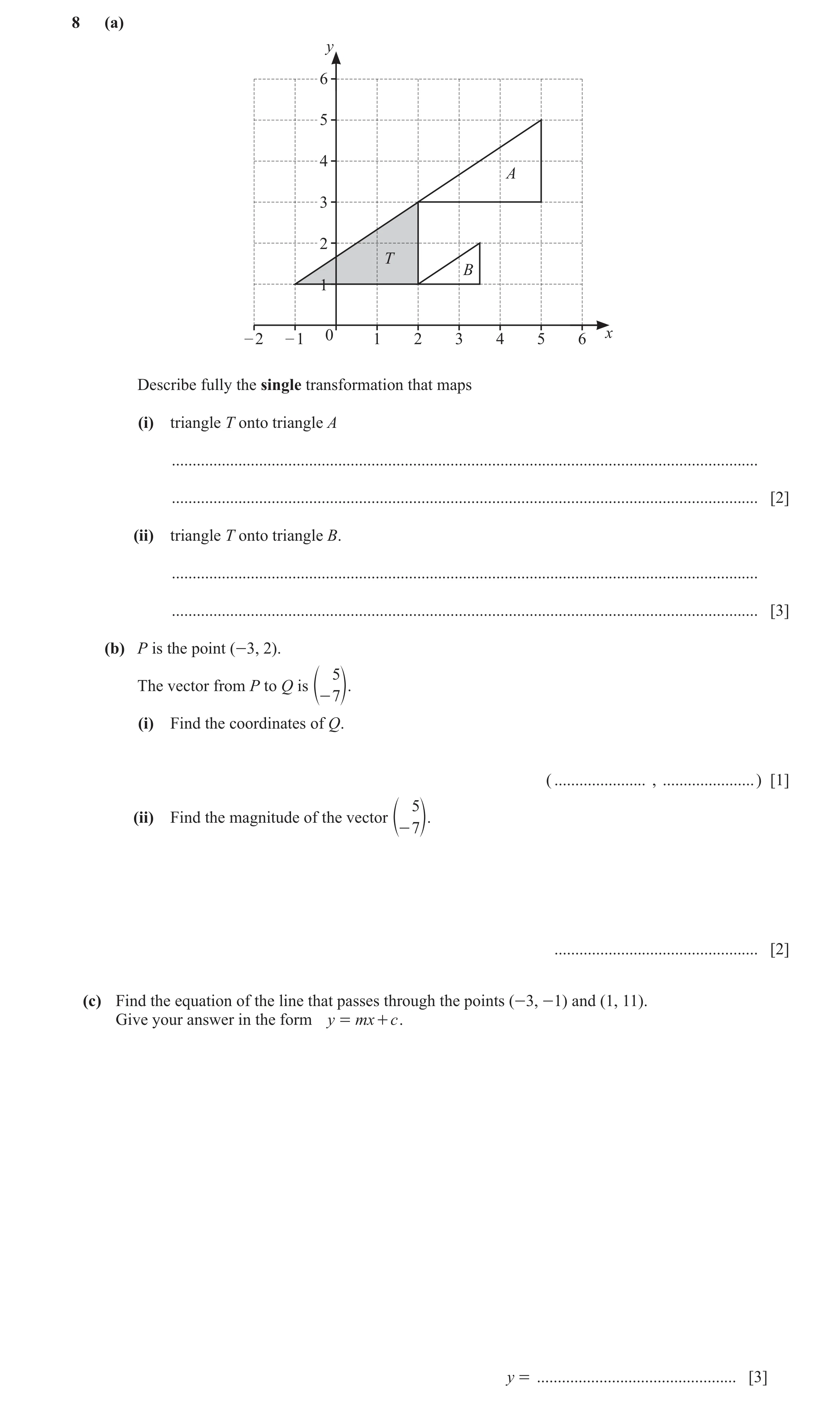
Q20 · Y 6 5 4 A 3 2 T B 1 – 2 – 1 0 1 2 3 4 5 6 x Describe fully the single transformation that… 0607/42 May/June 2024
8 (a) y 6 5 4 A 3 2 T B 1 – 2 – 1 0 1 2 3 4 5 6 x Describe fully the single transformation that maps (i) triangle T onto triangle A … … [2] (ii) triangle T onto triangle B. … … [3] (b) P is the point (-3, 2). 5 The vector from P to Q is e o. - 7 (i) Find the coordinates of Q. ( … , … ) [1] 5 (ii) Find the magnitude of the vector e o. - 7 … [2] (c) Find the equation of the line that passes through the points (-3, -1) and (1, 11). Give your answer in the form y = mx + c . y = … [3]
11 marks
Mark scheme: 8(a)(i) Translation 2 B1 for each 3 2 8(a)(ii) Enlargement (or reduction) 3 B1 for each 1 [scale factor] oe 2 [centre] (5, 1) 8(b)(i) (2, –5) 1 8(b)(ii) 8.6[0] or 8.602... 2 M1 for 5 2 ( 7) 2 or 5 2 7 2 or better 8(c) [y=] 3x + 8 3 11 1 M1 for (m) oe 1 3 M1 for substituting (–3, –1) or (1, 11) into y = (their m)x + c oe
This question in 0607/42 May/June 2024
Q21 · Line L has equation 3y + 2x = 8 0607/43 May/June 2024
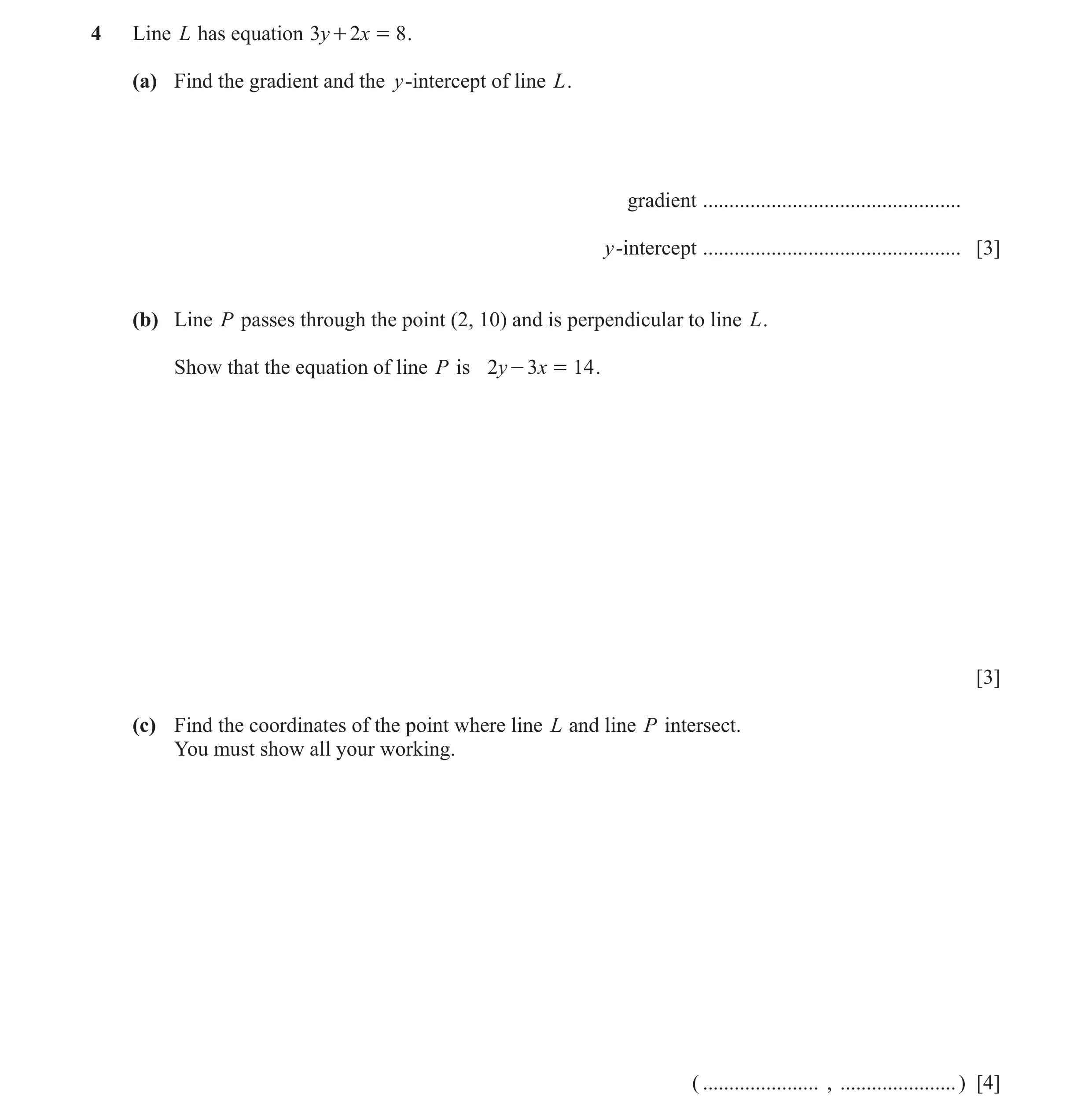
4 Line L has equation 3y + 2x = 8 . (a) Find the gradient and the y-intercept of line L. gradient … y-intercept … [3] (b) Line P passes through the point (2, 10) and is perpendicular to line L. Show that the equation of line P is 2y - 3x = 14 . [3] (c) Find the coordinates of the point where line L and line P intersect. You must show all your working. ( … , … ) [4]
10 marks
Mark scheme: 4(a) 2 3 B2 for one correct oe or M1 for correctly isolating y oe 3 8 2 or 2 oe 3 3 4(b) 3 M1 2 gradient = FT 1 ÷ their 2 3 substituting (2, 10) into M1 2 FT their m ≠ y = their m + c 3 completing to 2y – 3x = 14 with at A1 least one line of working and no errors 4(c) Correctly equating coefficients M1 or sketch of one equation with positive slope and positive y-intercept Correct method to eliminate one M1 variable or sketch of other equation with negative slope and positive y-intercept x = –2 in correct answer space A1 y = 4 in correct answer space A1 If 0 scored, SC1 for correct answer with no working
This question in 0607/43 May/June 2024
Q22 · A is the point ( - 3 , 2) and B is the point ( 7 , - 3) 0607/41 Oct/Nov 2025
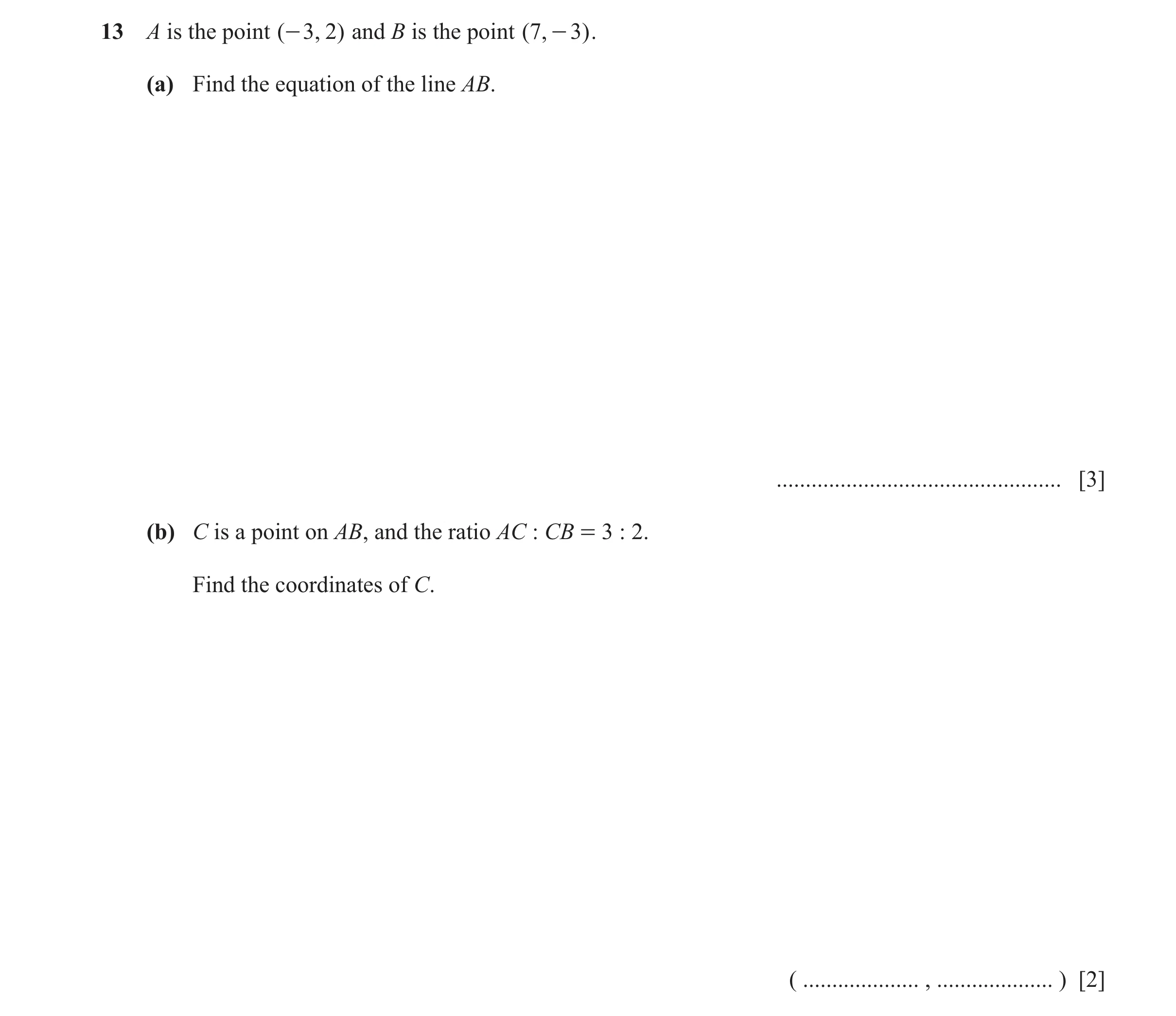
13 A is the point ( - 3 , 2) and B is the point ( 7 , - 3) . (a) Find the equation of the line AB. … [3] (b) C is a point on AB, and the ratio AC : CB = 3 : 2. Find the coordinates of C. ( … , … ) [2]
5 marks
Mark scheme: 13(a) 1 1 3 −−3 2 y = − x + oe final answer M1 for 2 2 7 −−( 3) ) M1 for substituting (–3, 2) or (7, –3) or 1 2, − into 2 y = (their m)x + c oe 13(b) (3, – 1) 2 B1 for each or M1 for attempt to divide 10 and 5 in the ratio 3 : 2
This question in 0607/41 Oct/Nov 2025
 3 / 28
![Question 3: (a) Show that the point (3, -1) lies on the line y = 2x - 7 . [1] (b) Find the co-ordinates of the points where the line y = 8x + 4 crosses…](https://img.pastlit.com/crops/ba2b0848-70f0-4e45-b902-7fb88628ae7a/q3.webp) 4 / 28
4 / 28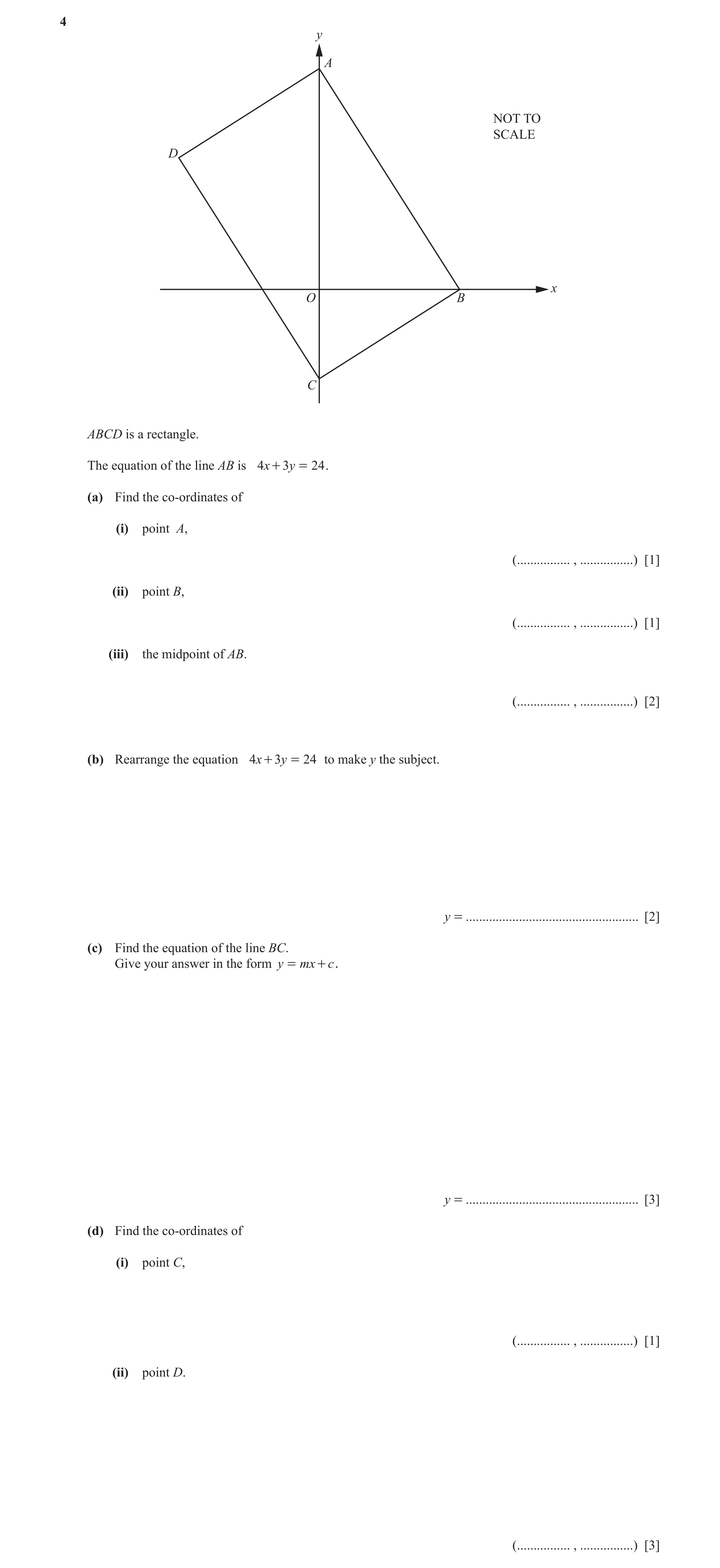
![Question 5: y 3 0 x 5 x + 1 (a) On the diagram, sketch the graph of y = log for 0 1 x G 5 . [2] b x l x + 1 (b) Write down the equations of the asympto…](https://img.pastlit.com/crops/ed013b83-cad4-487f-b363-27664282279b/q2.webp) 7 / 28
7 / 28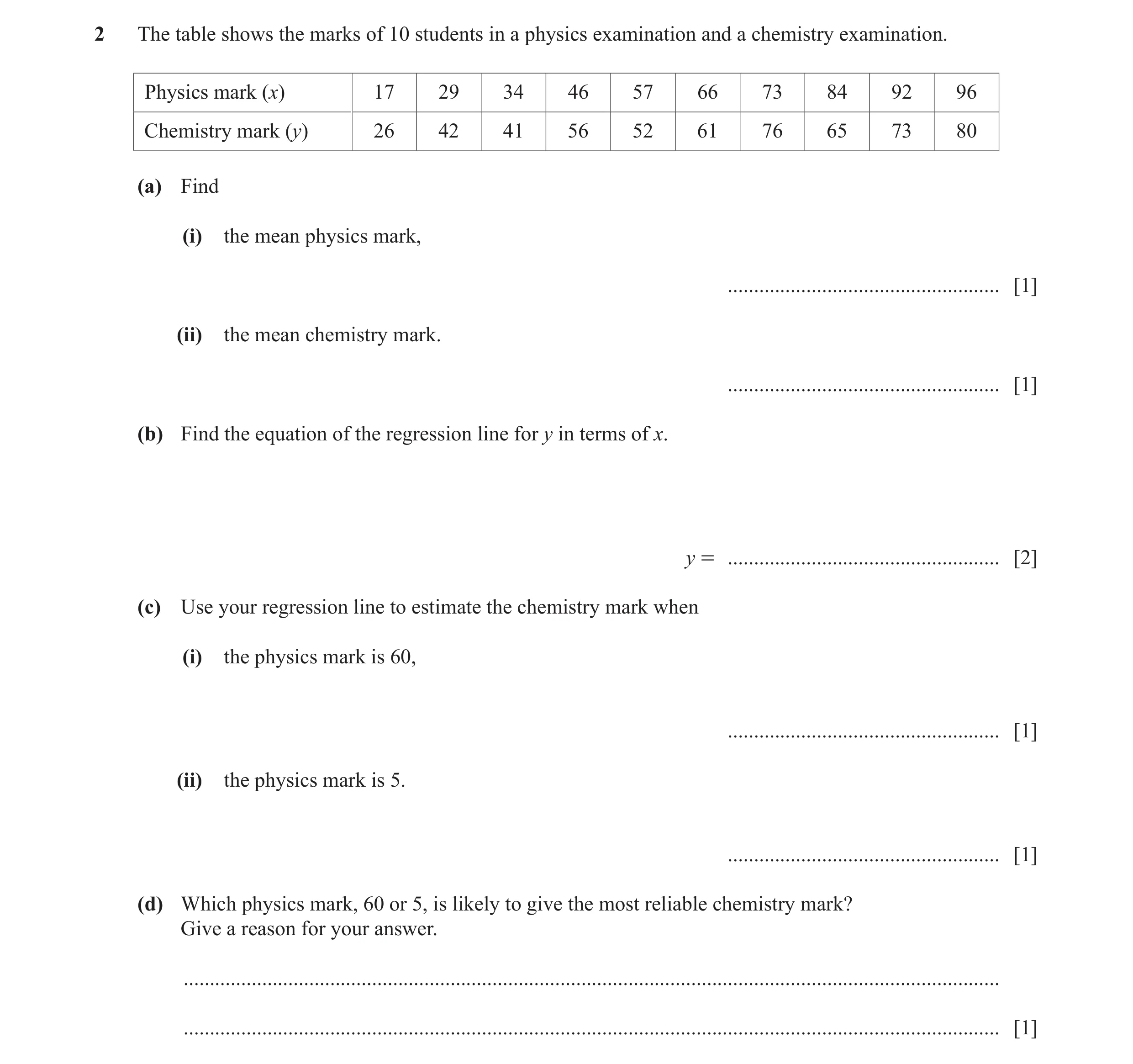 8 / 28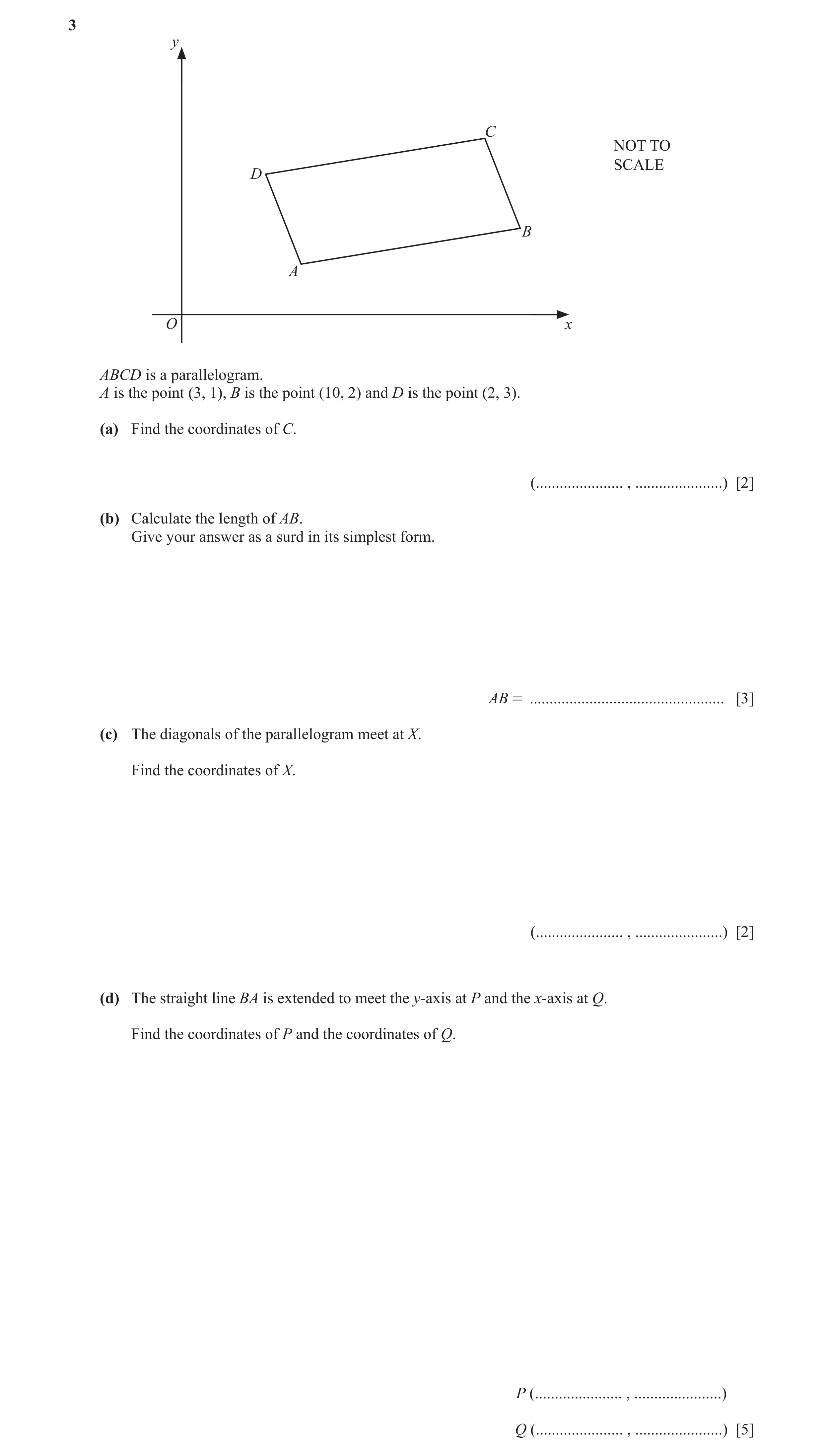
 10 / 28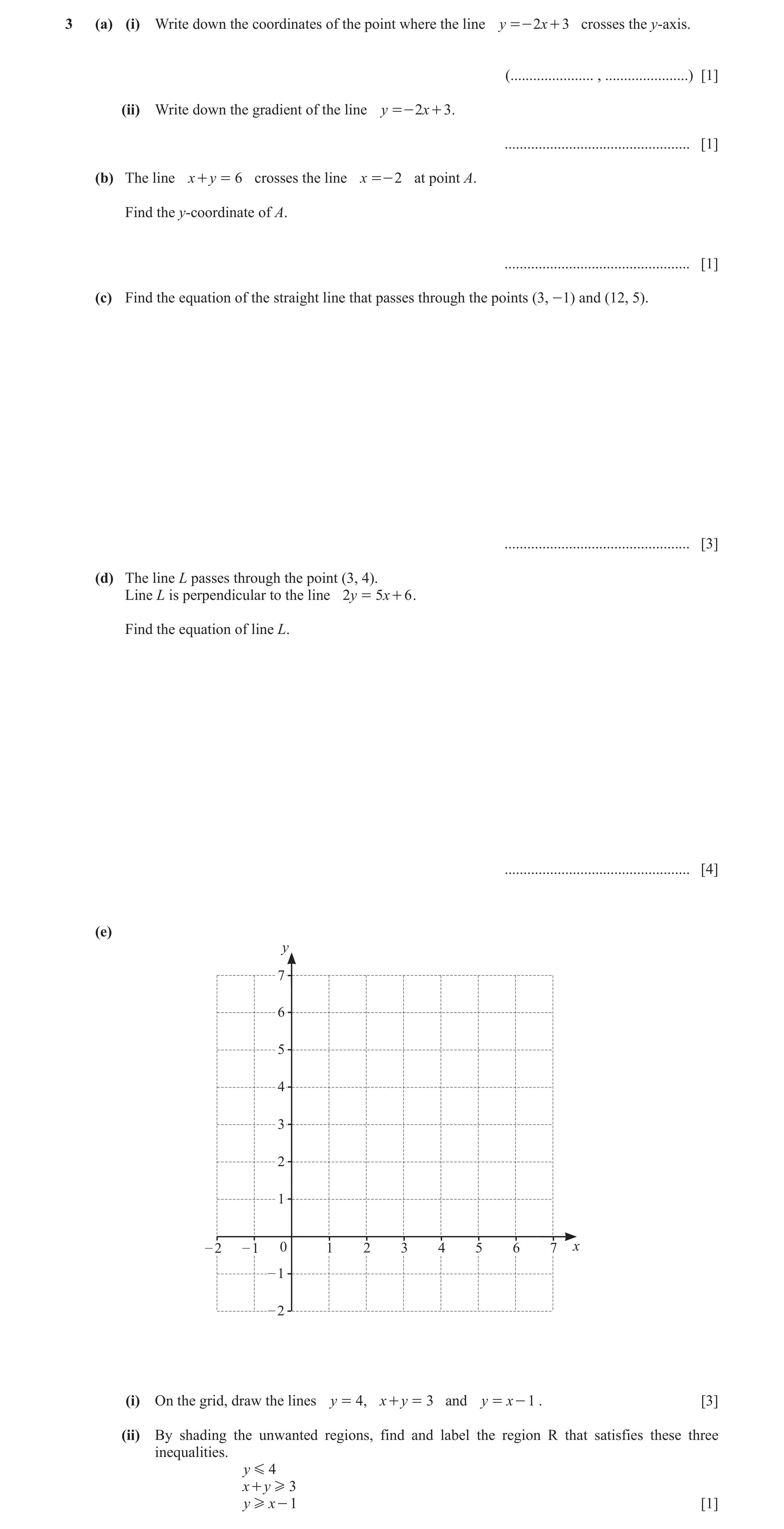
 17 / 28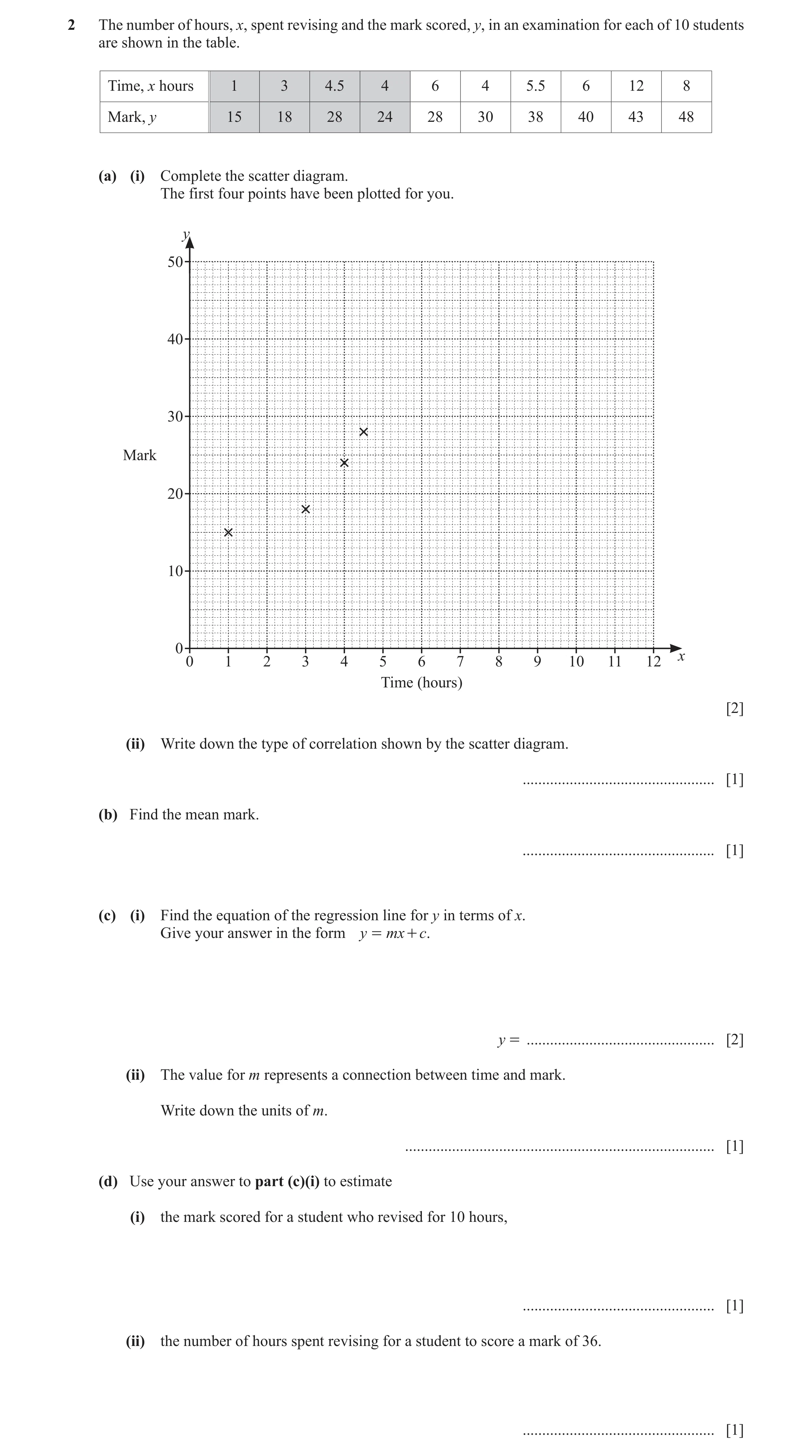
![Question 15: y 4 x 0 –1 5 – 4 (a) On the diagram, sketch the graph of y = f ( x) , where 1 f ( x) = for values of x between - 1 and 5. [3] ( x - 1)( x -…](https://img.pastlit.com/crops/ddd11990-a76b-48a6-b616-6e702751ea62/q5.webp) 20 / 28
20 / 28![Question 16: (a) The equation of line L is y = 4x + 7 . (i) Write down the gradient of line L. ................................................. [1] (ii…](https://img.pastlit.com/crops/9de25c6e-d93d-4815-8c28-1cb03f0bc1ea/q5.webp) 21 / 28
21 / 28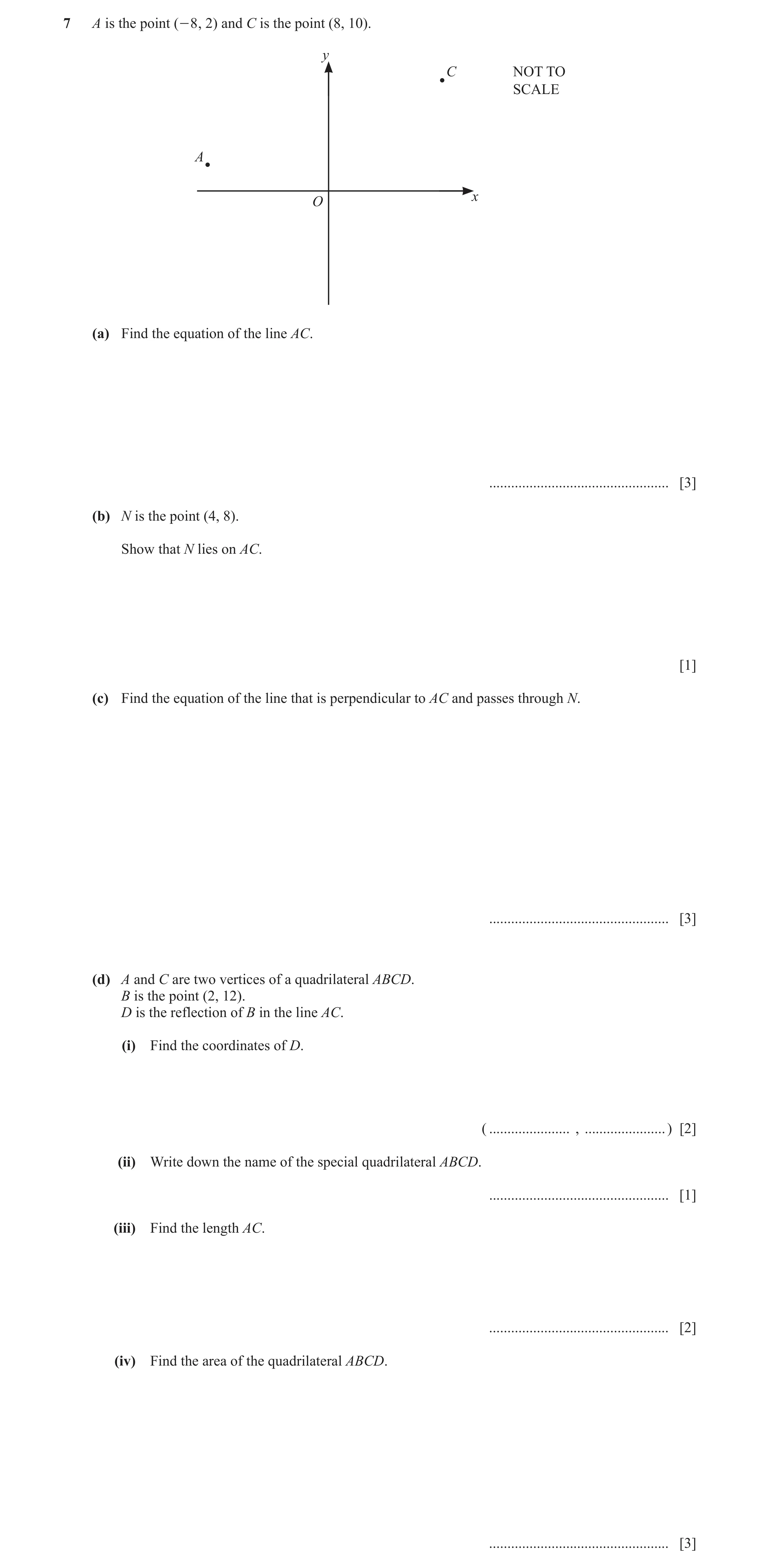
 24 / 28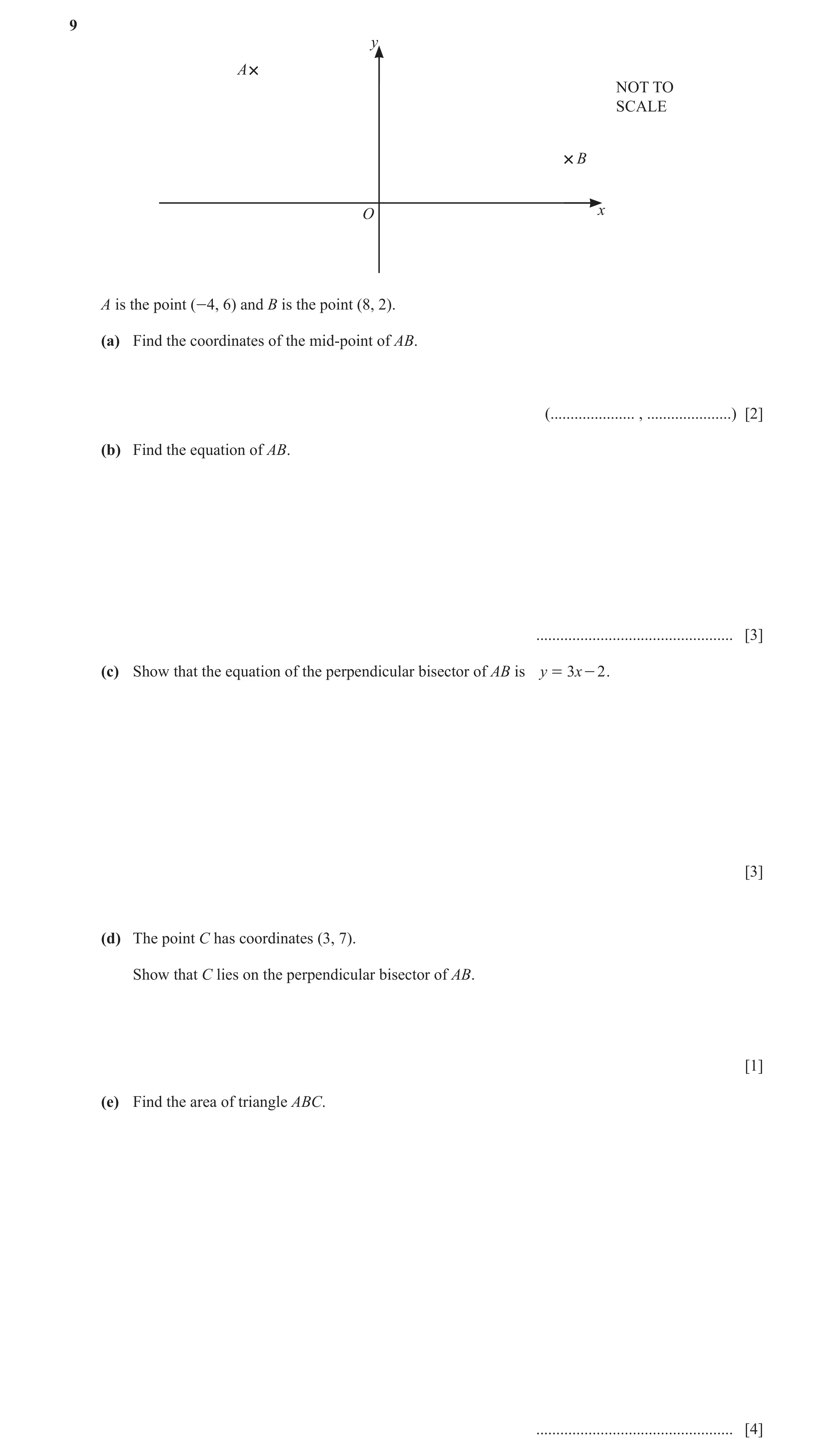
 27 / 28
 28 / 28
 13
13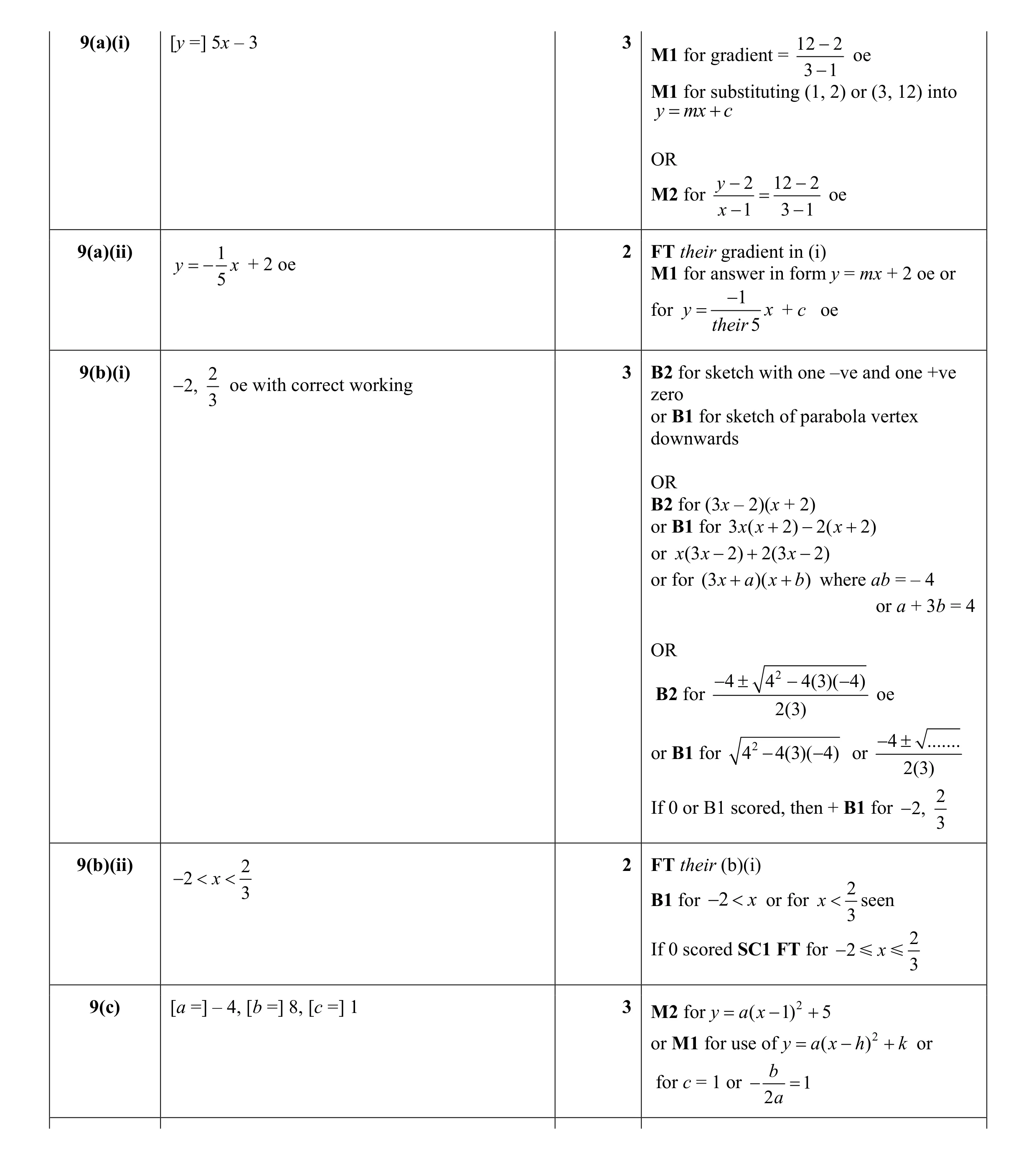 13
13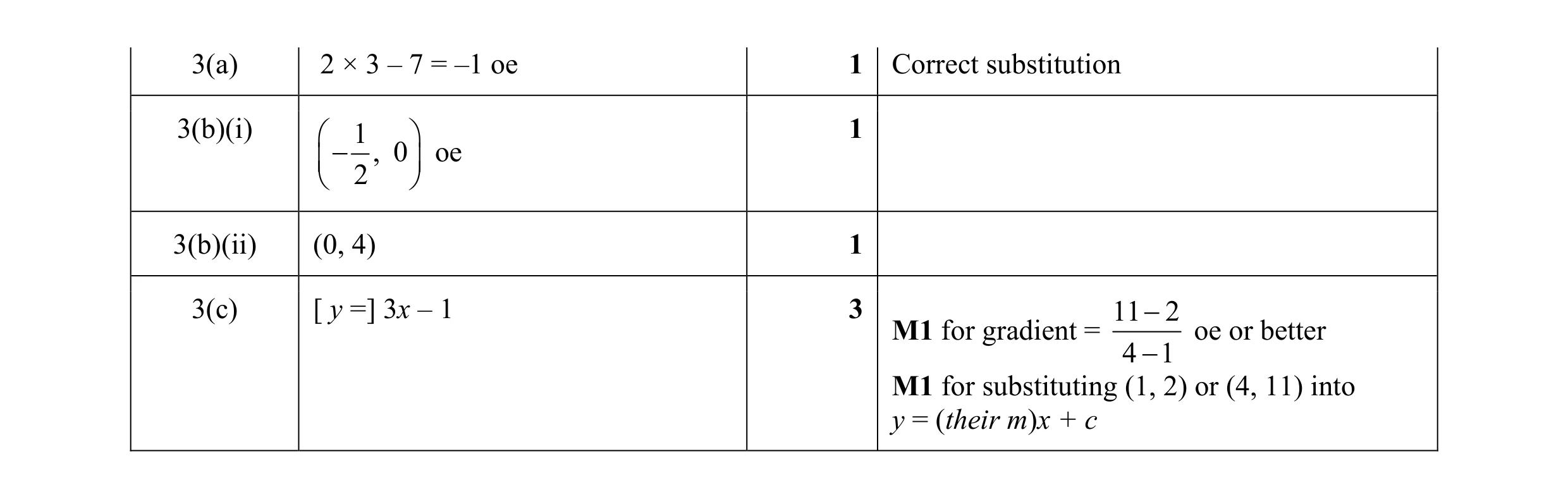 6
6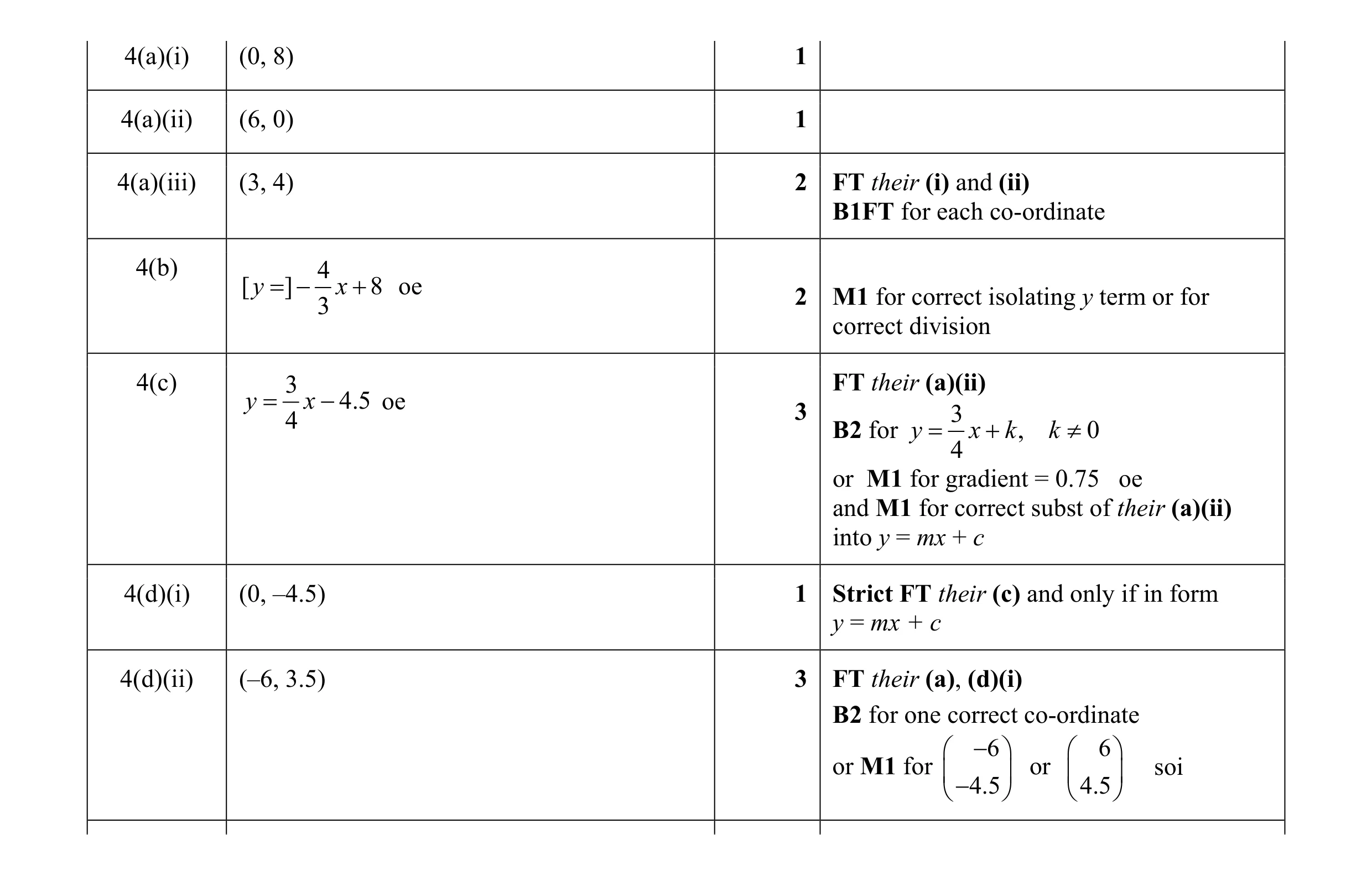 13
13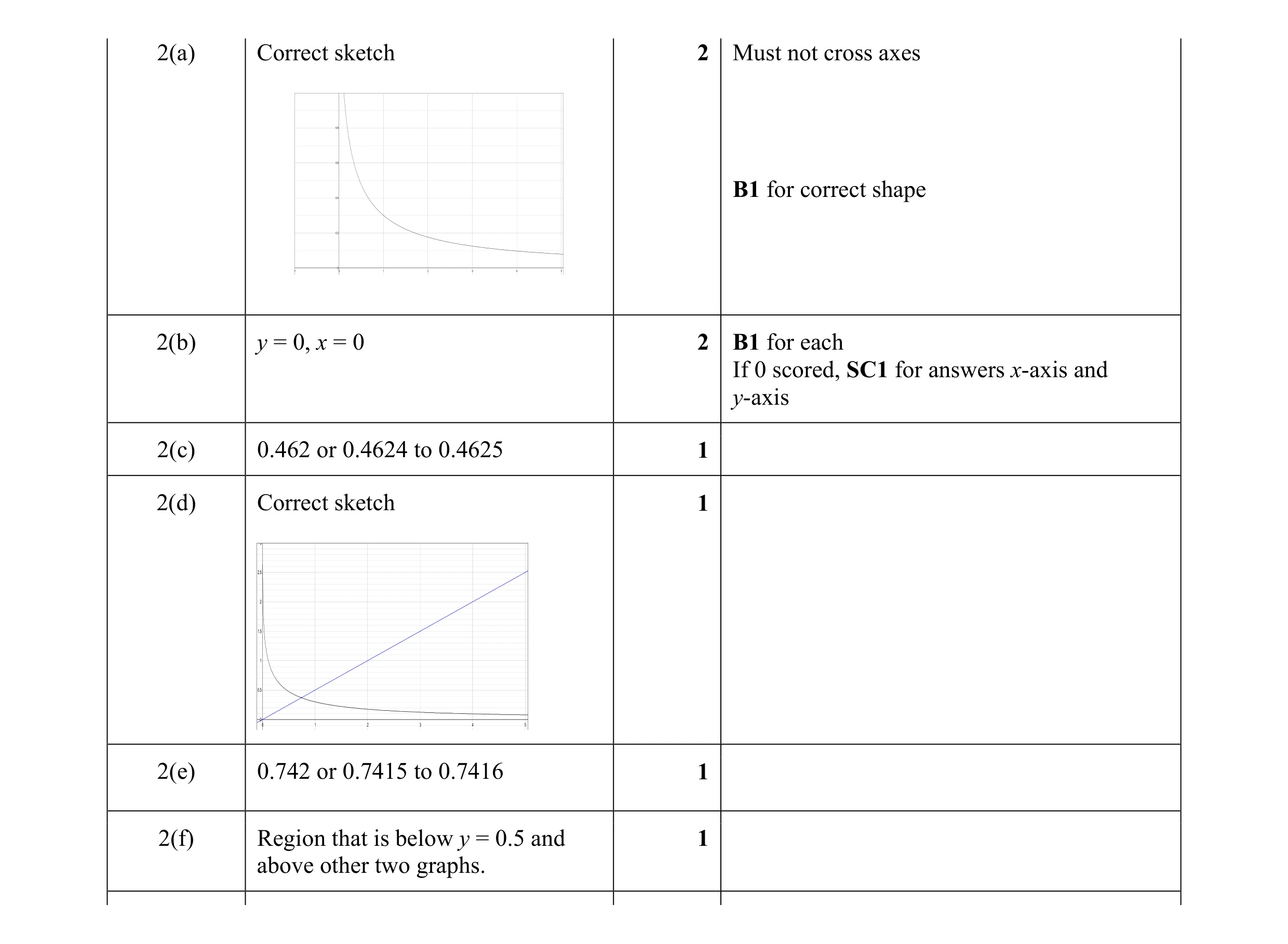 8
8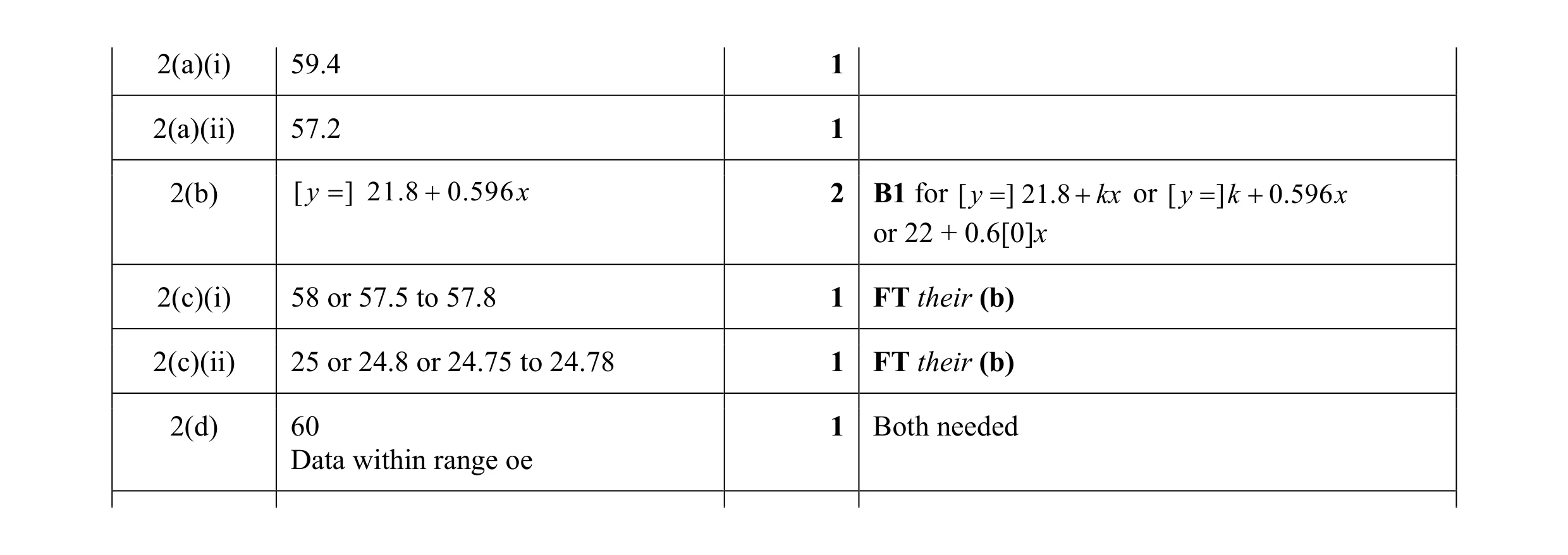 7
7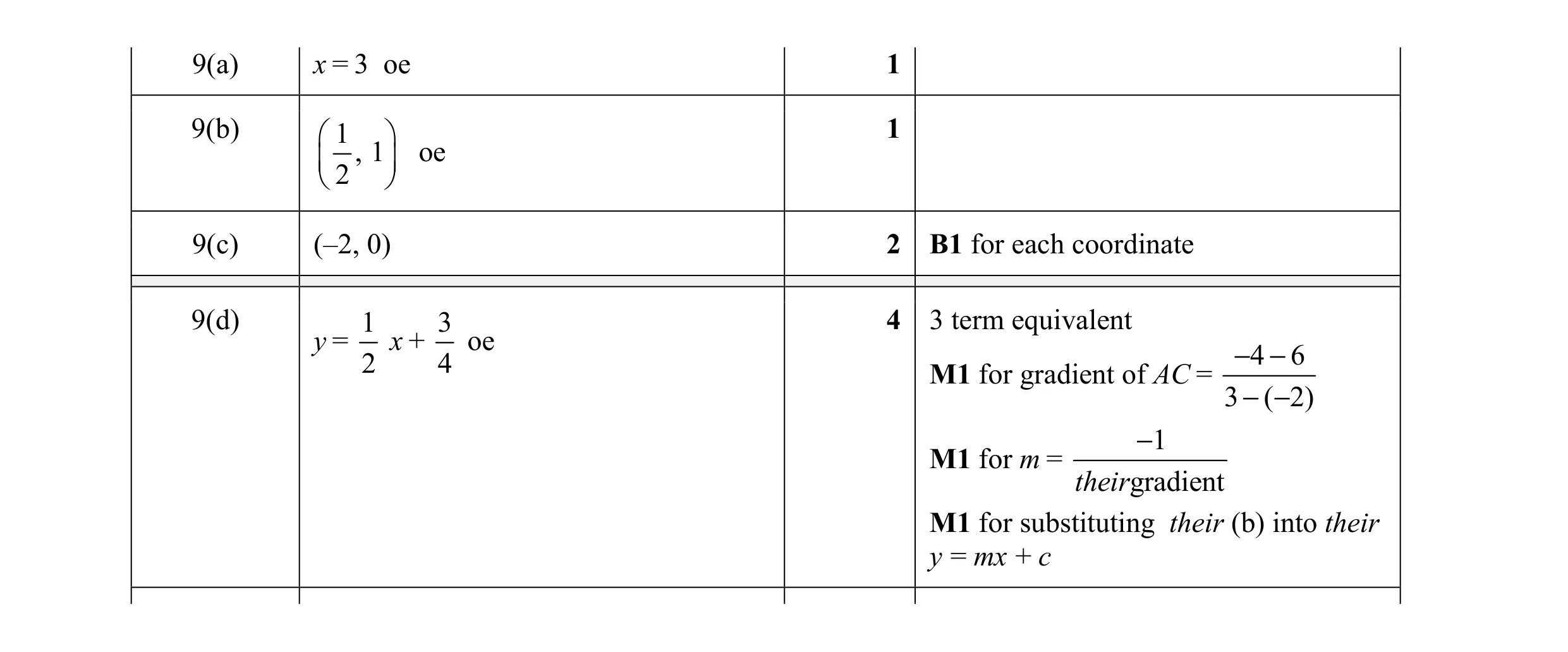 8
8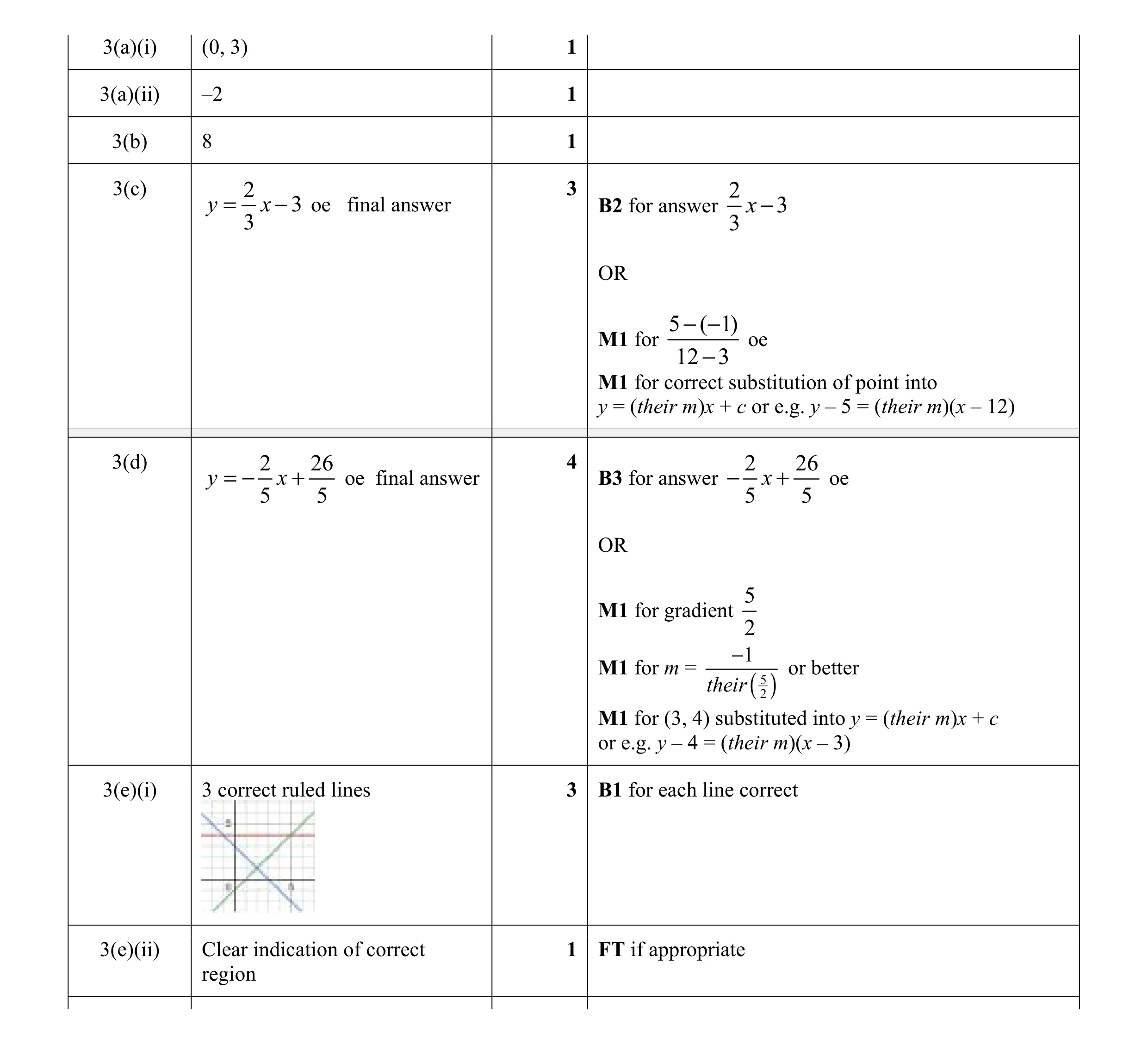 14
14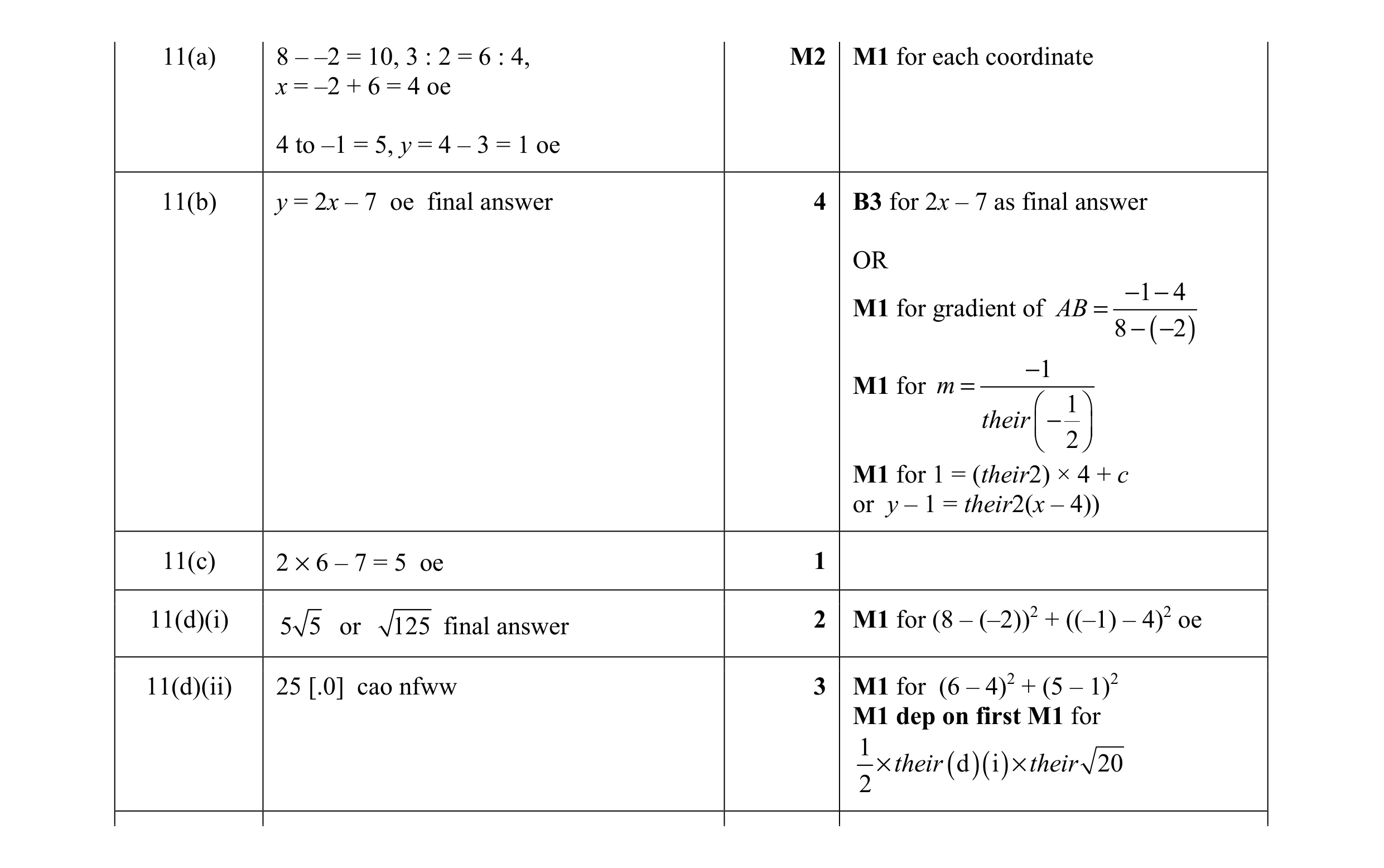 12
12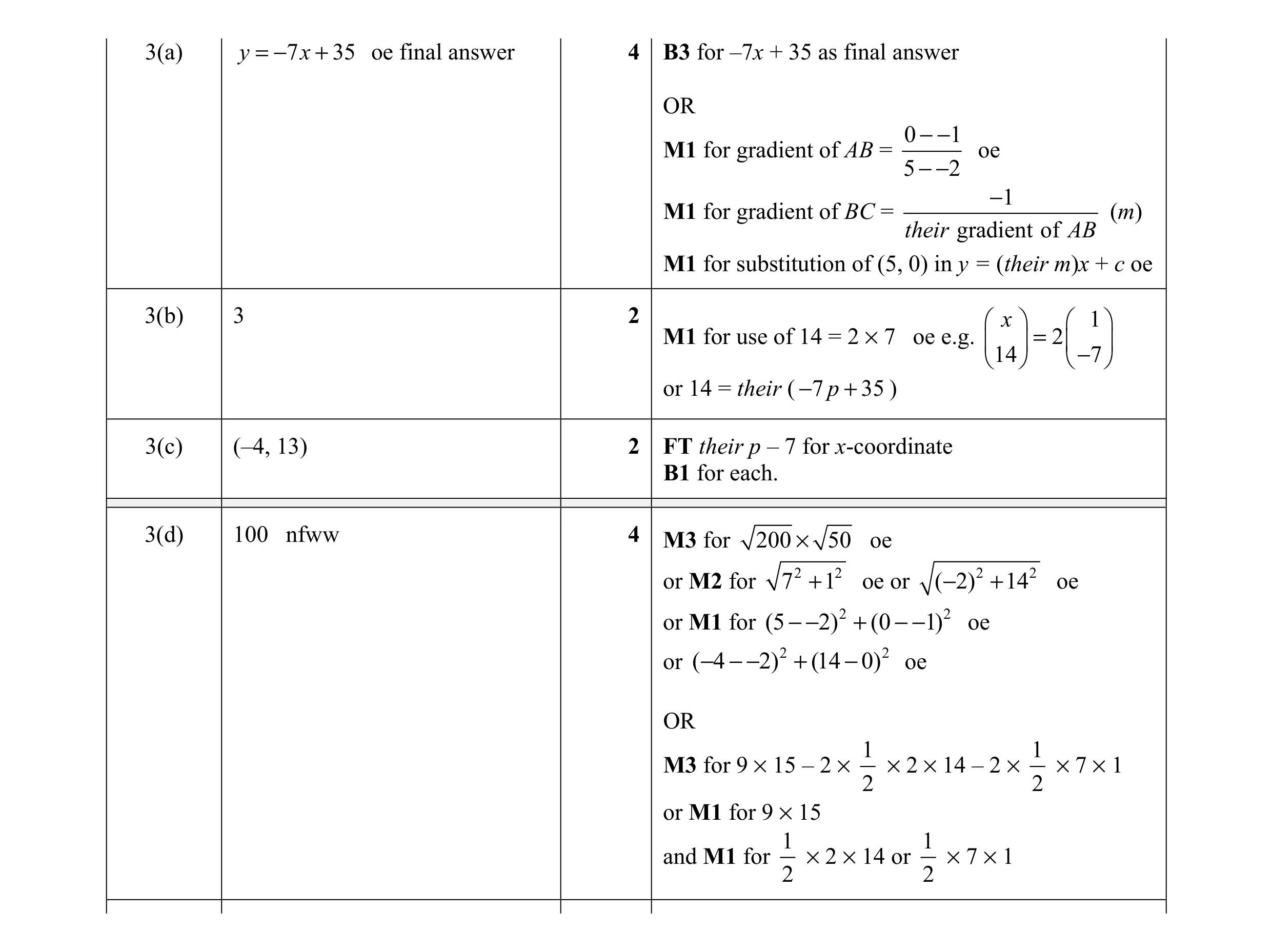 12
12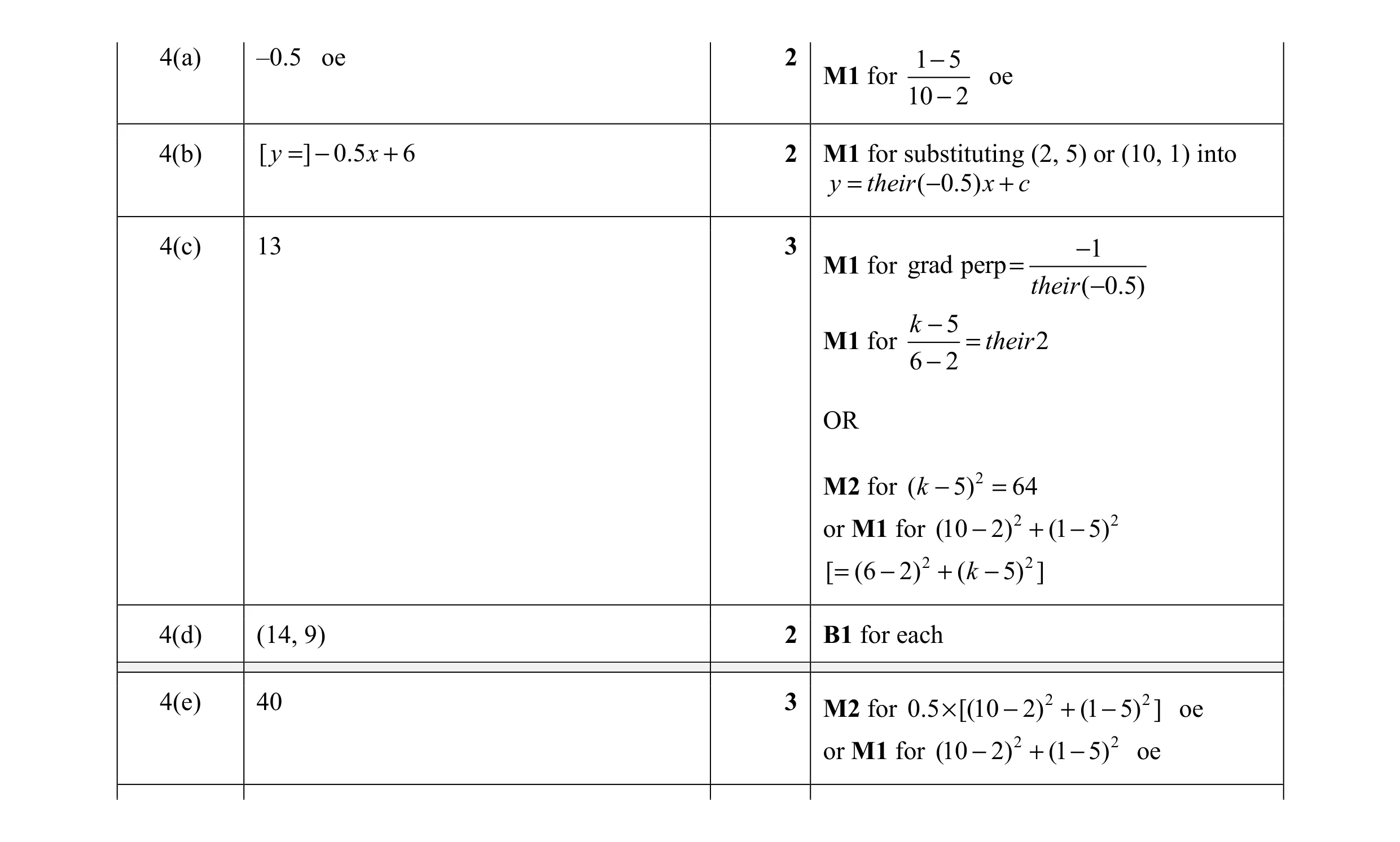 12
12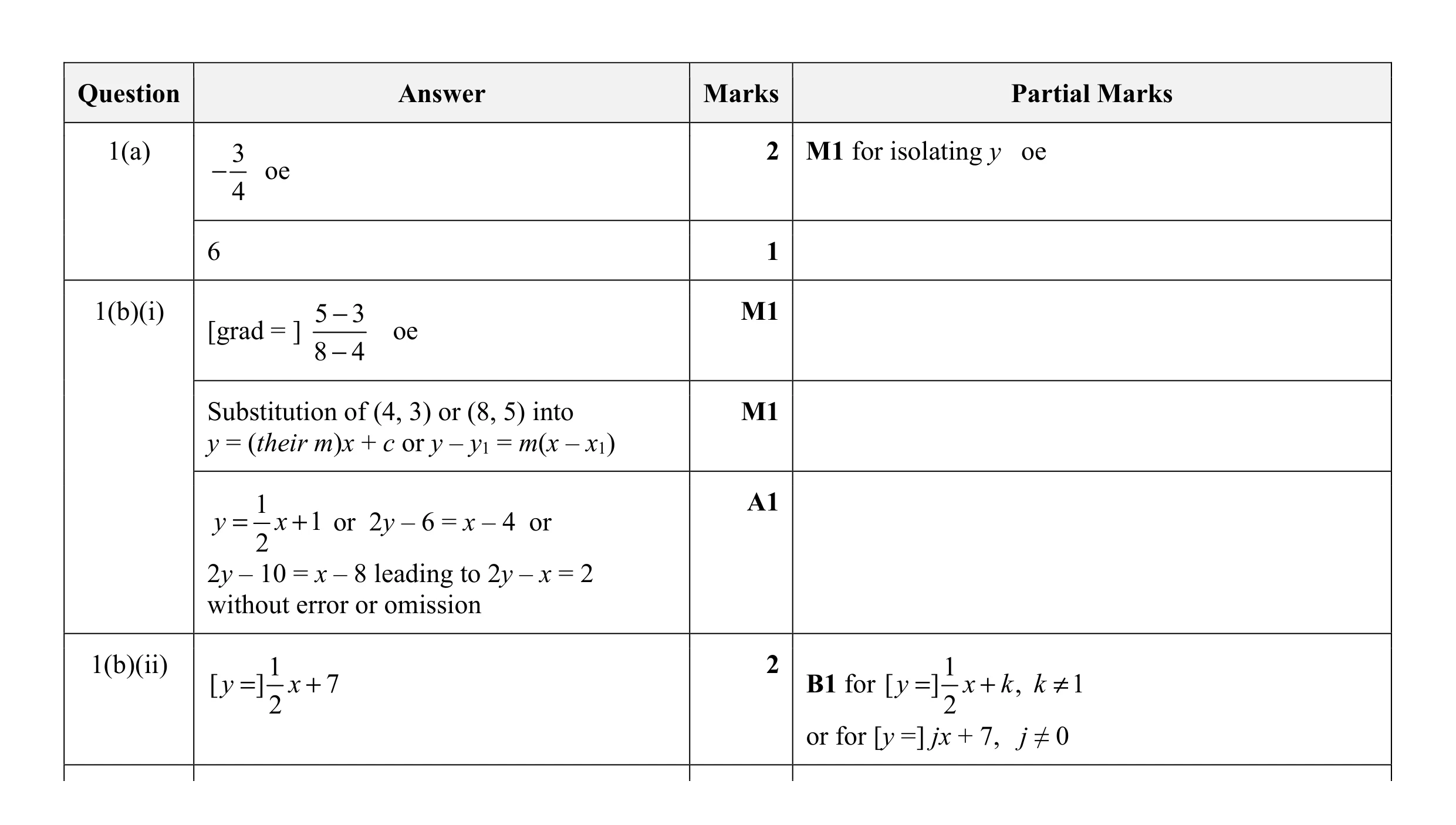 8
8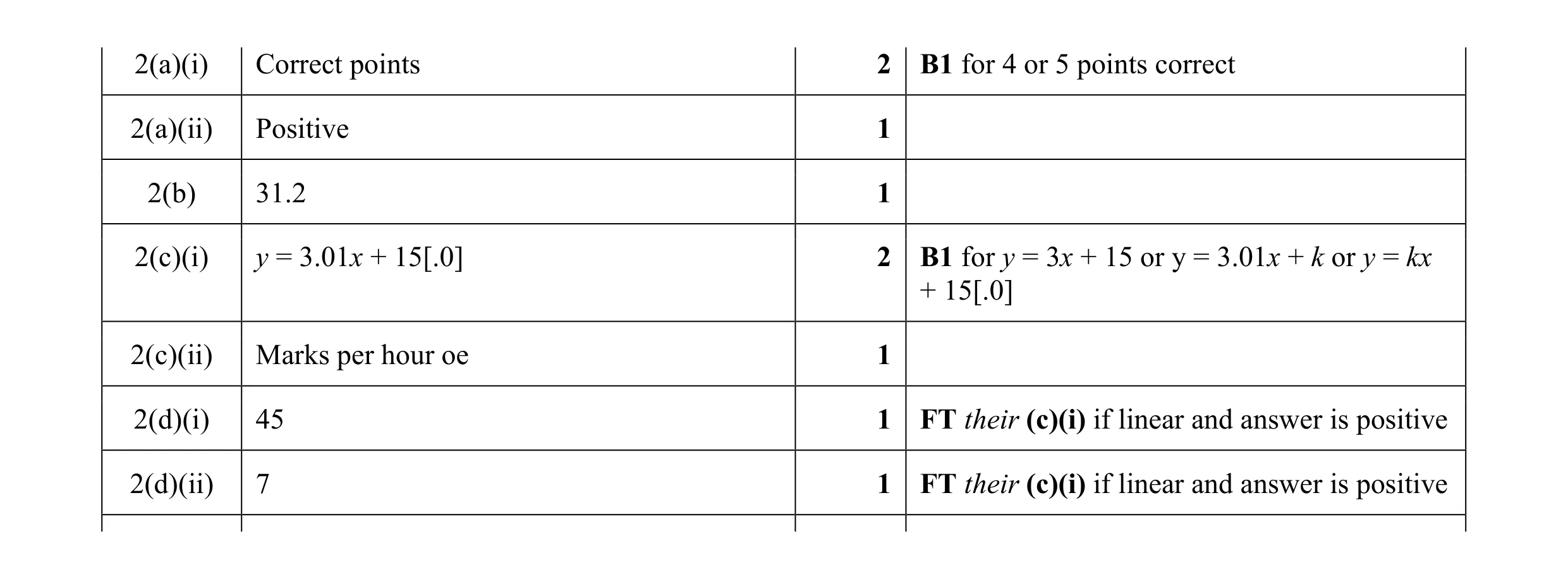 9
9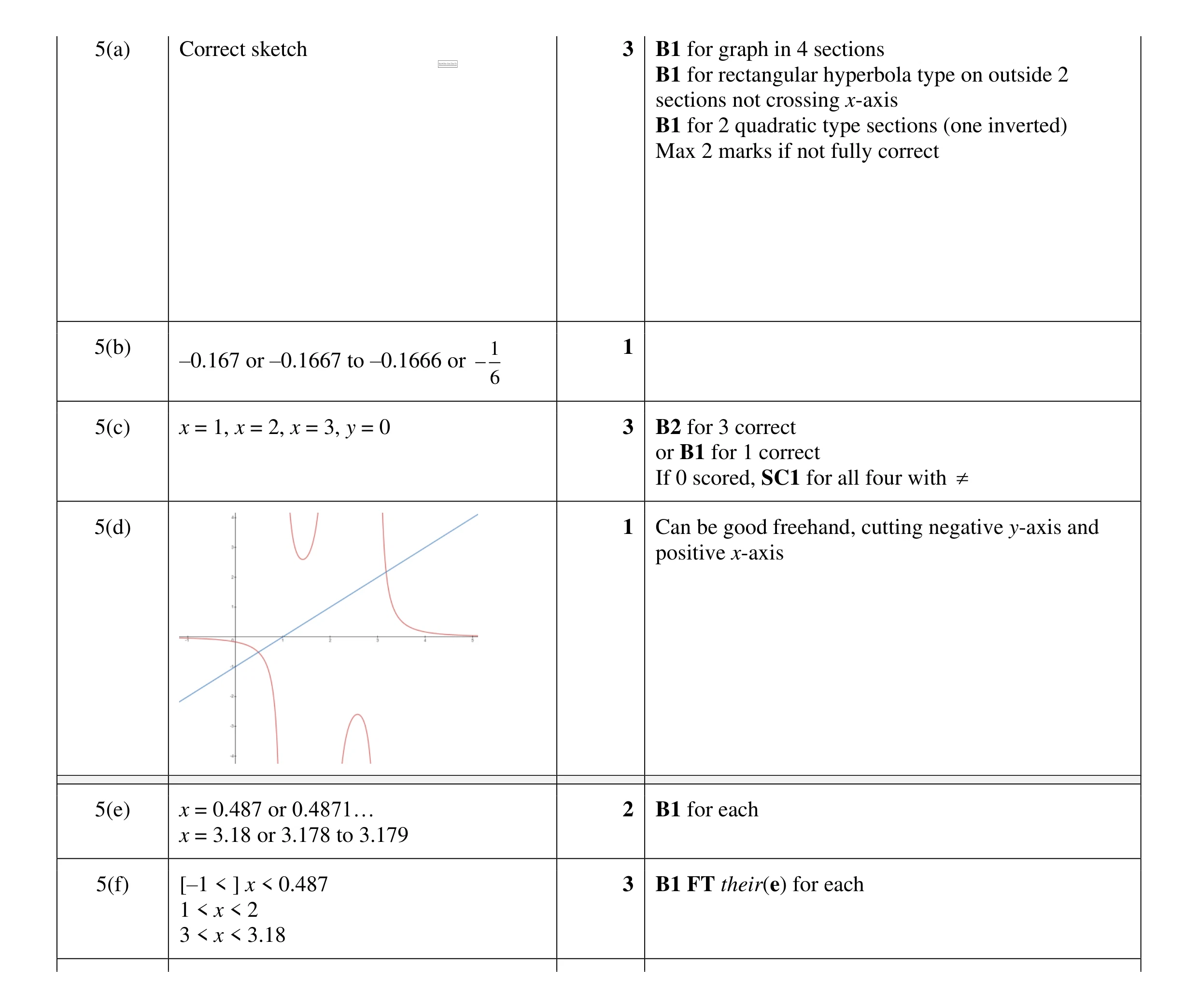 13
13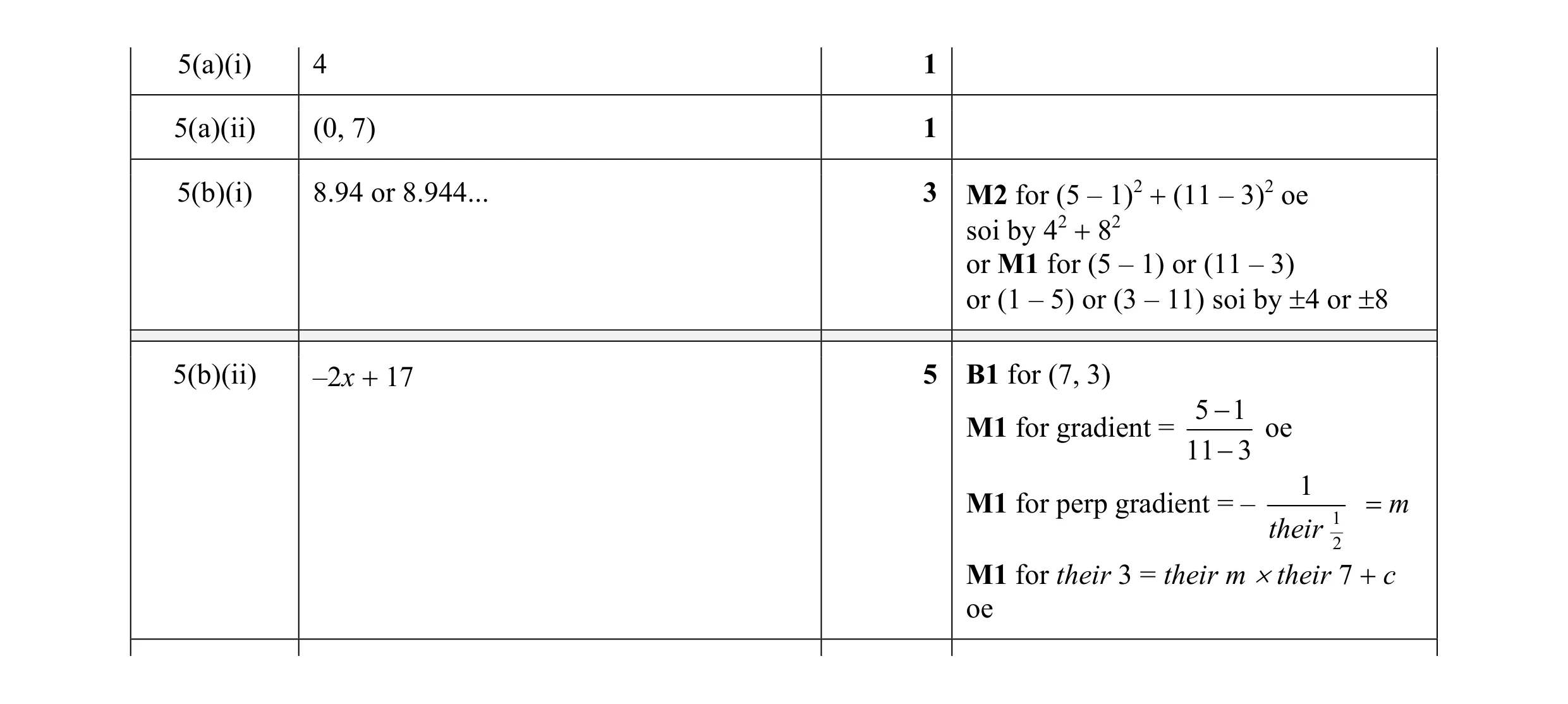 10
10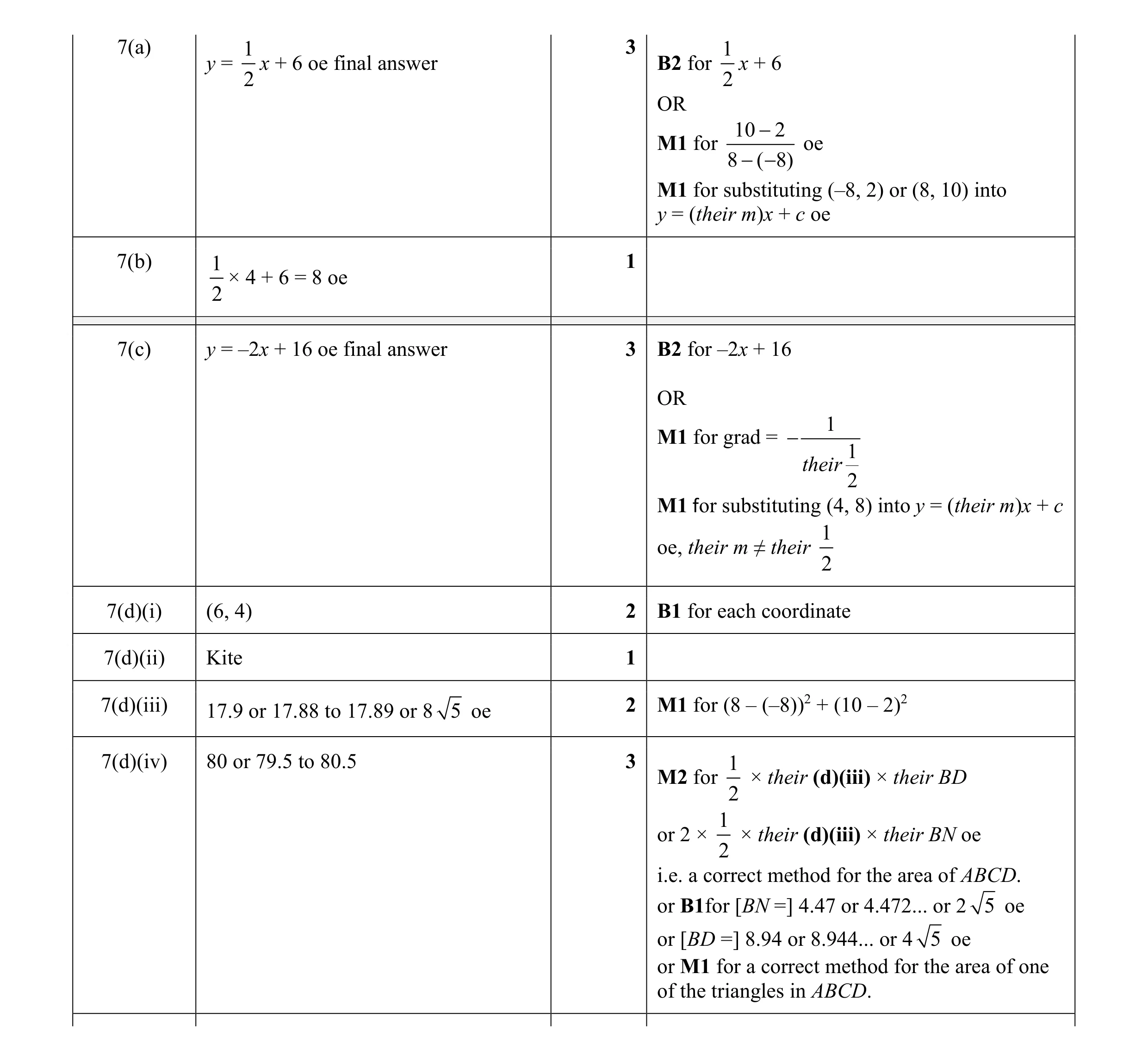 15
15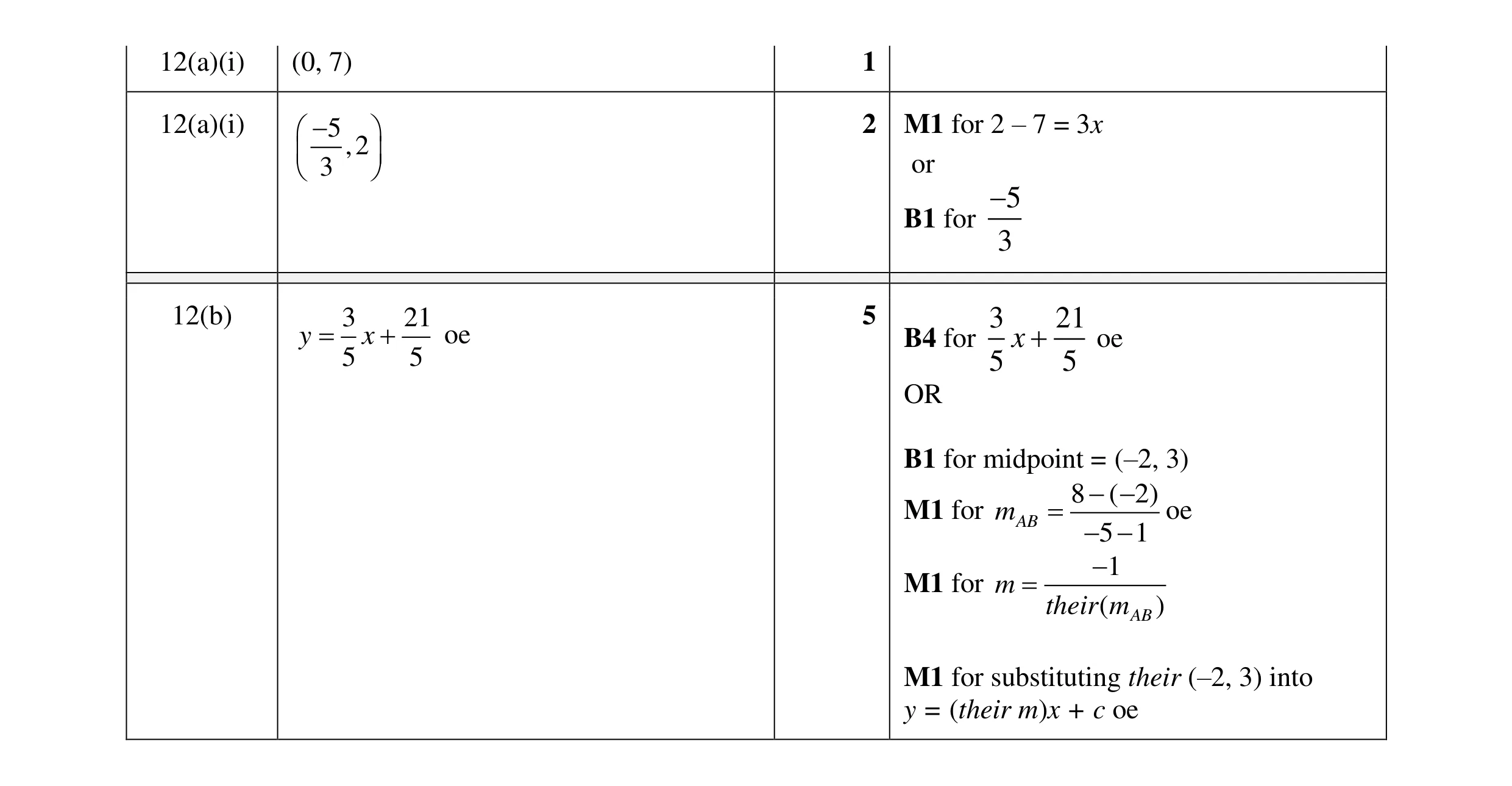 8
8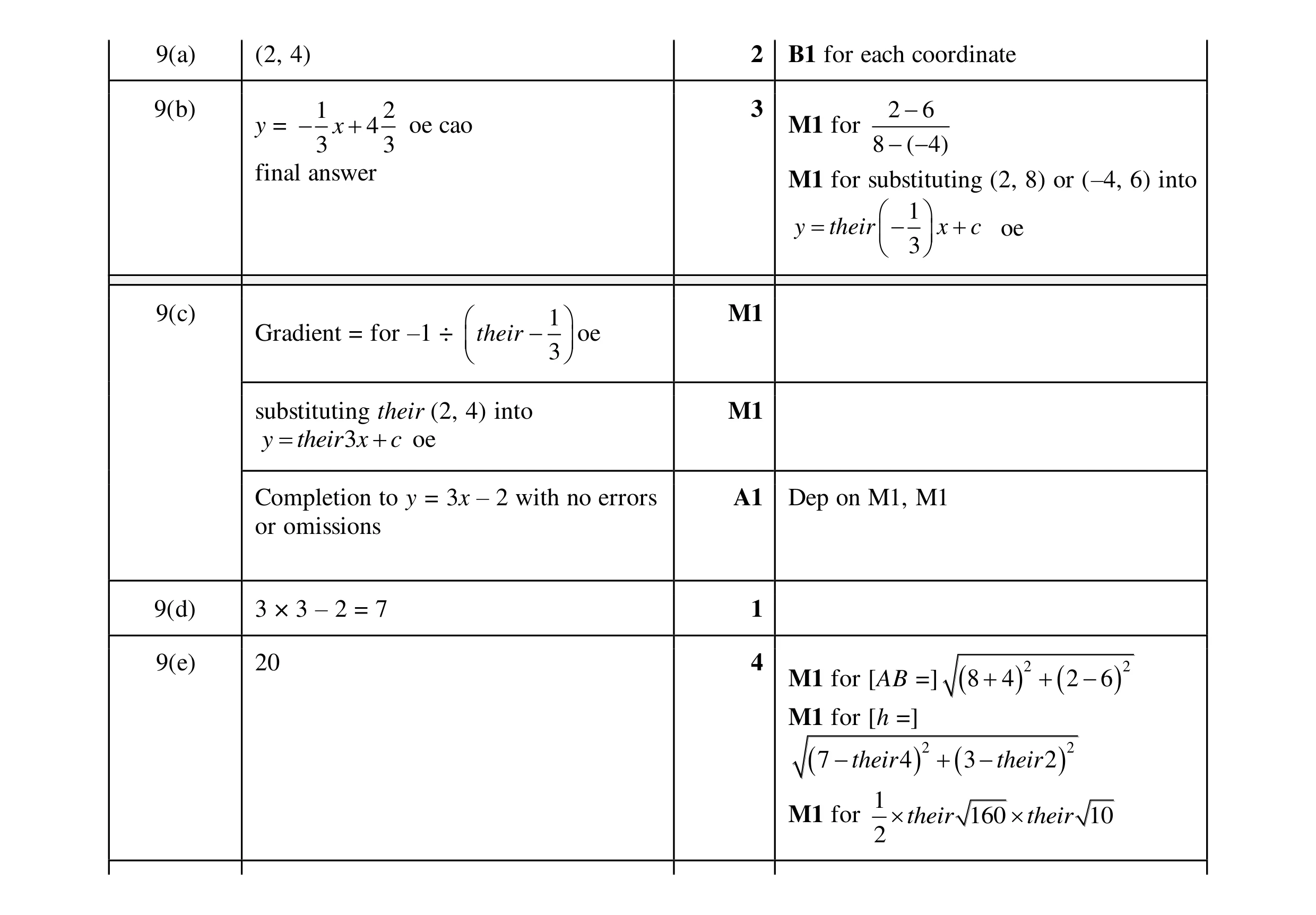 13
13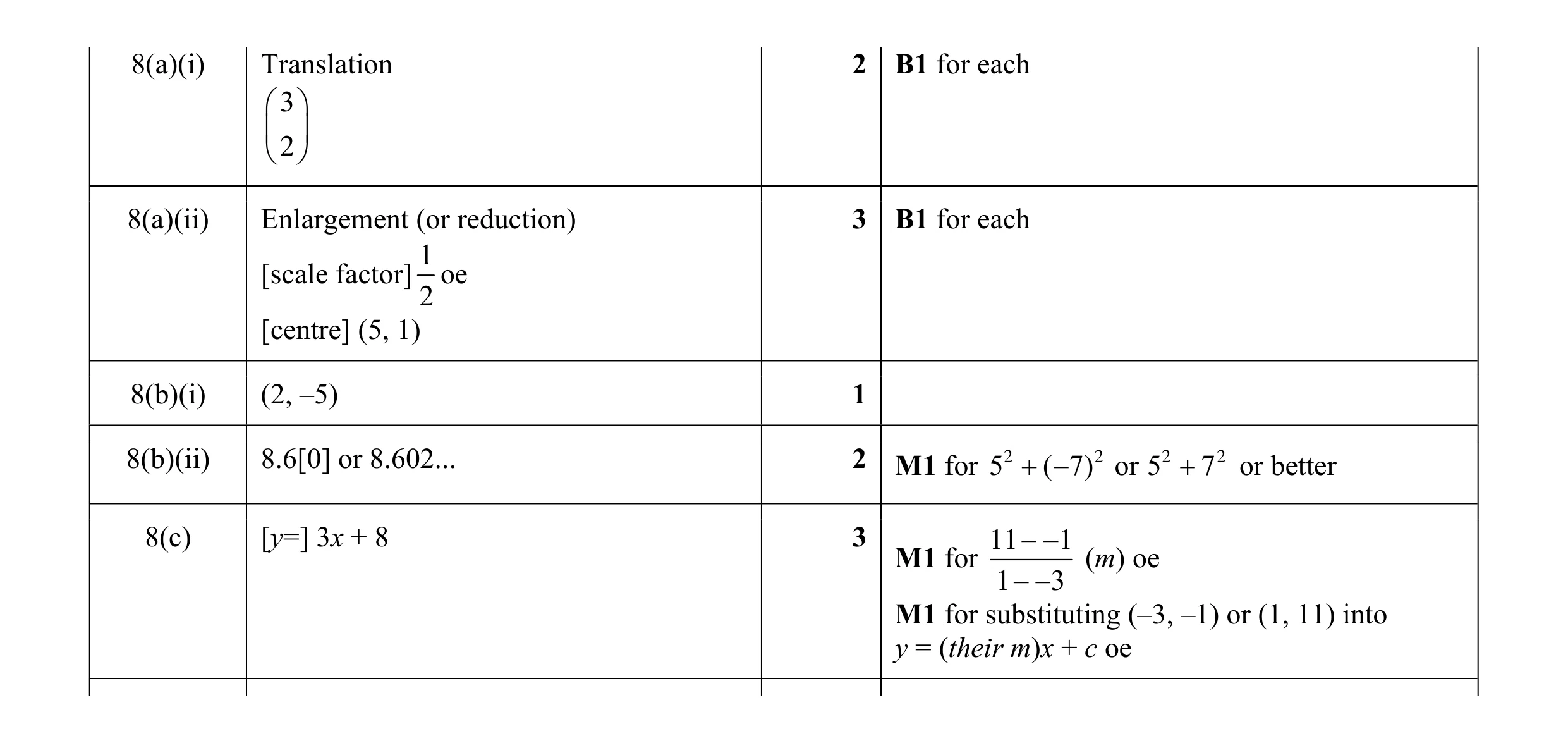 11
11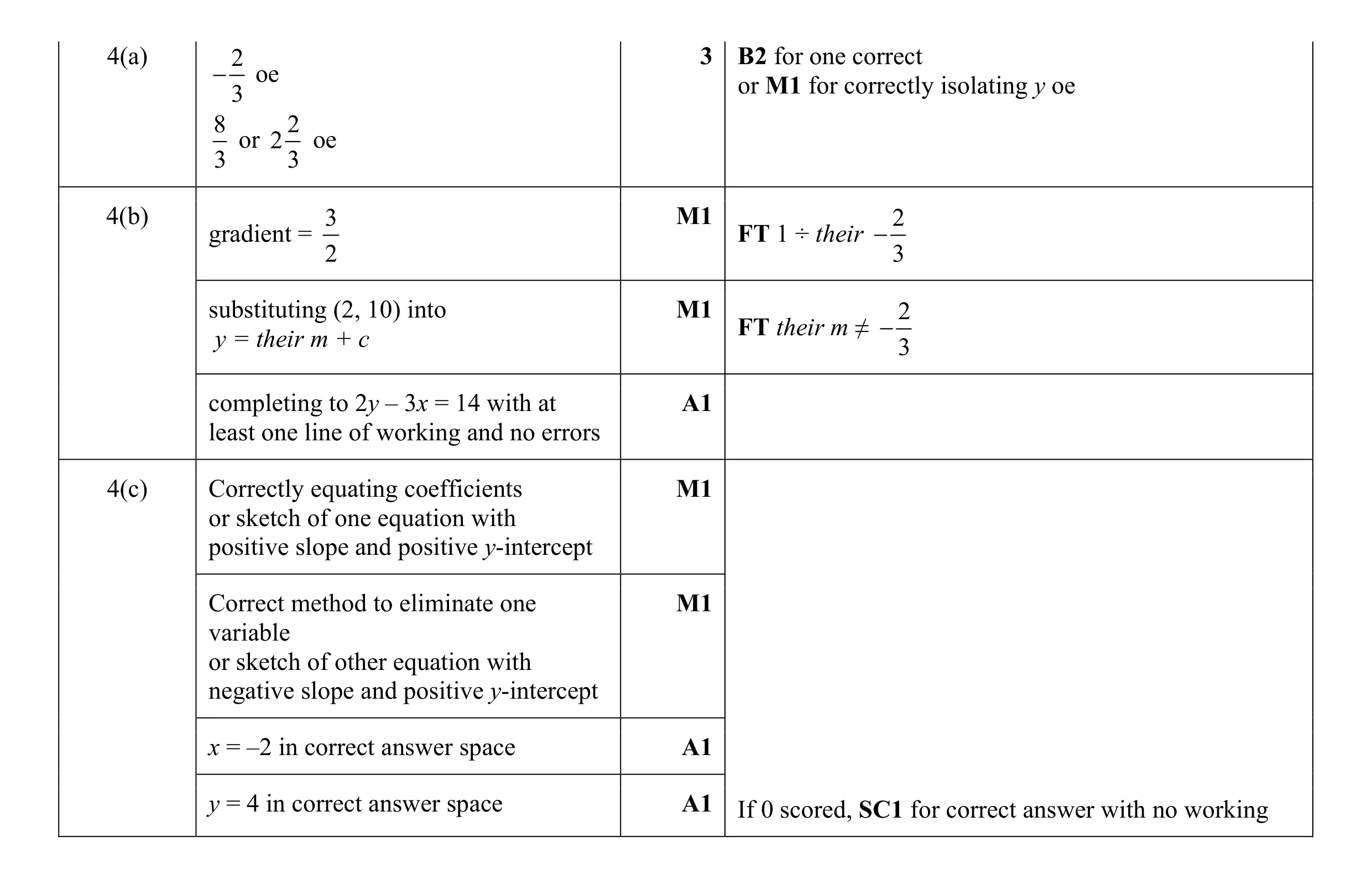 10
10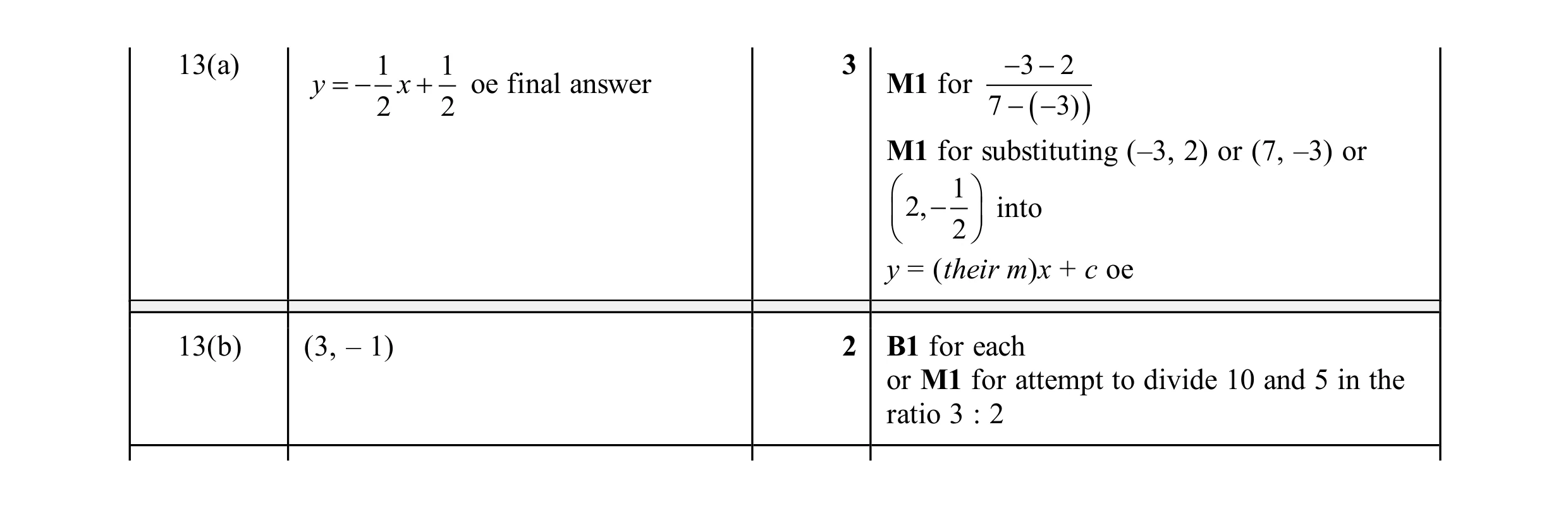 5
5