Questions as text
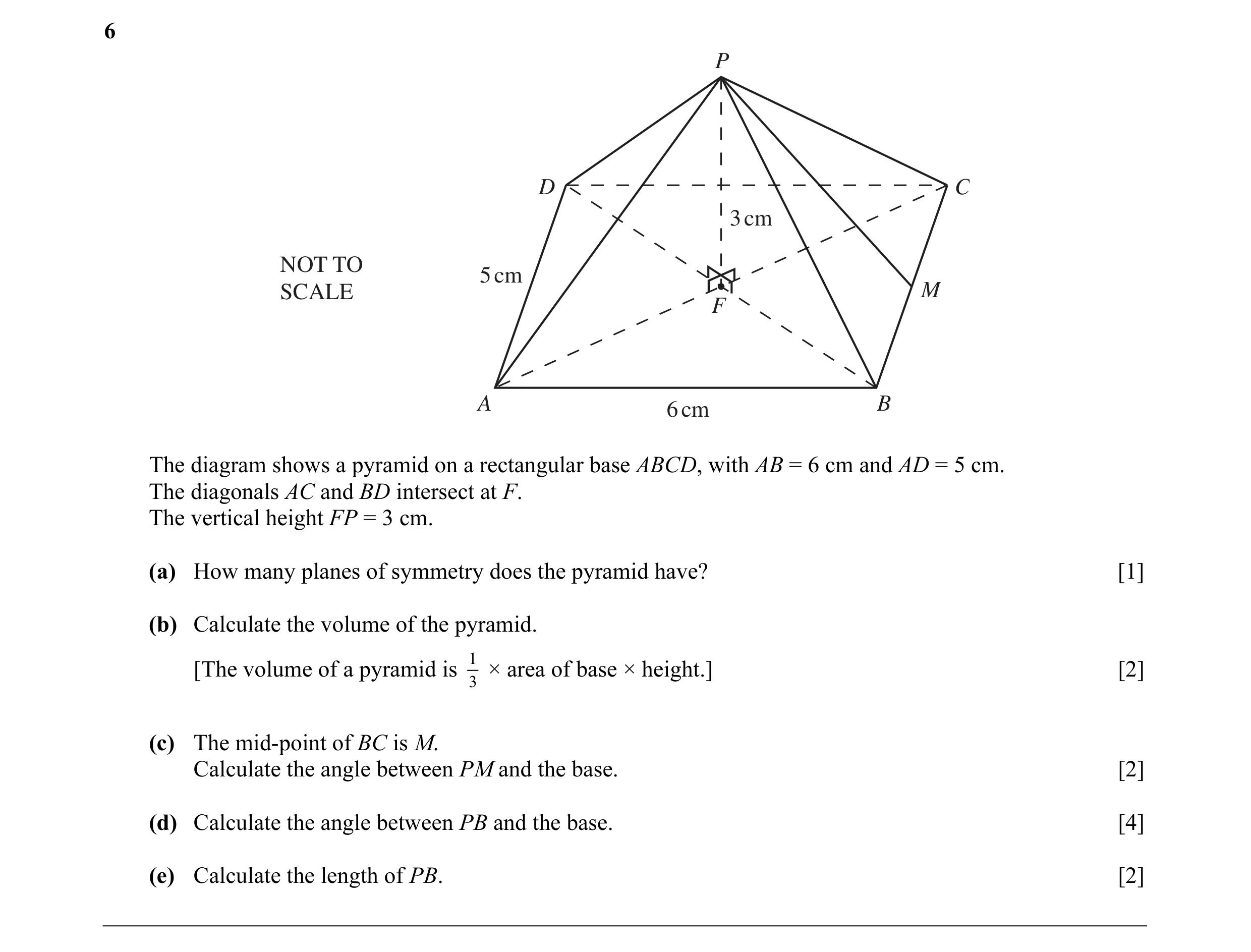
Q1 · P D C 3 cm NOT TO 5 cm SCALE M F A 6 cm B The diagram shows a pyramid on a rectangular… 0580/41 Oct/Nov 2005
6 P D C 3 cm NOT TO 5 cm SCALE M F A 6 cm B The diagram shows a pyramid on a rectangular base ABCD, with AB = 6 cm and AD = 5 cm. The diagonals AC and BD intersect at F. The vertical height FP = 3 cm. (a) How many planes of symmetry does the pyramid have? [1] (b) Calculate the volume of the pyramid. 1 [The volume of a pyramid is × area of base × height.] [2] 3 (c) The mid-point of BC is M. Calculate the angle between PM and the base. [2] (d) Calculate the angle between PB and the base. [4] (e) Calculate the length of PB. [2]
11 marks
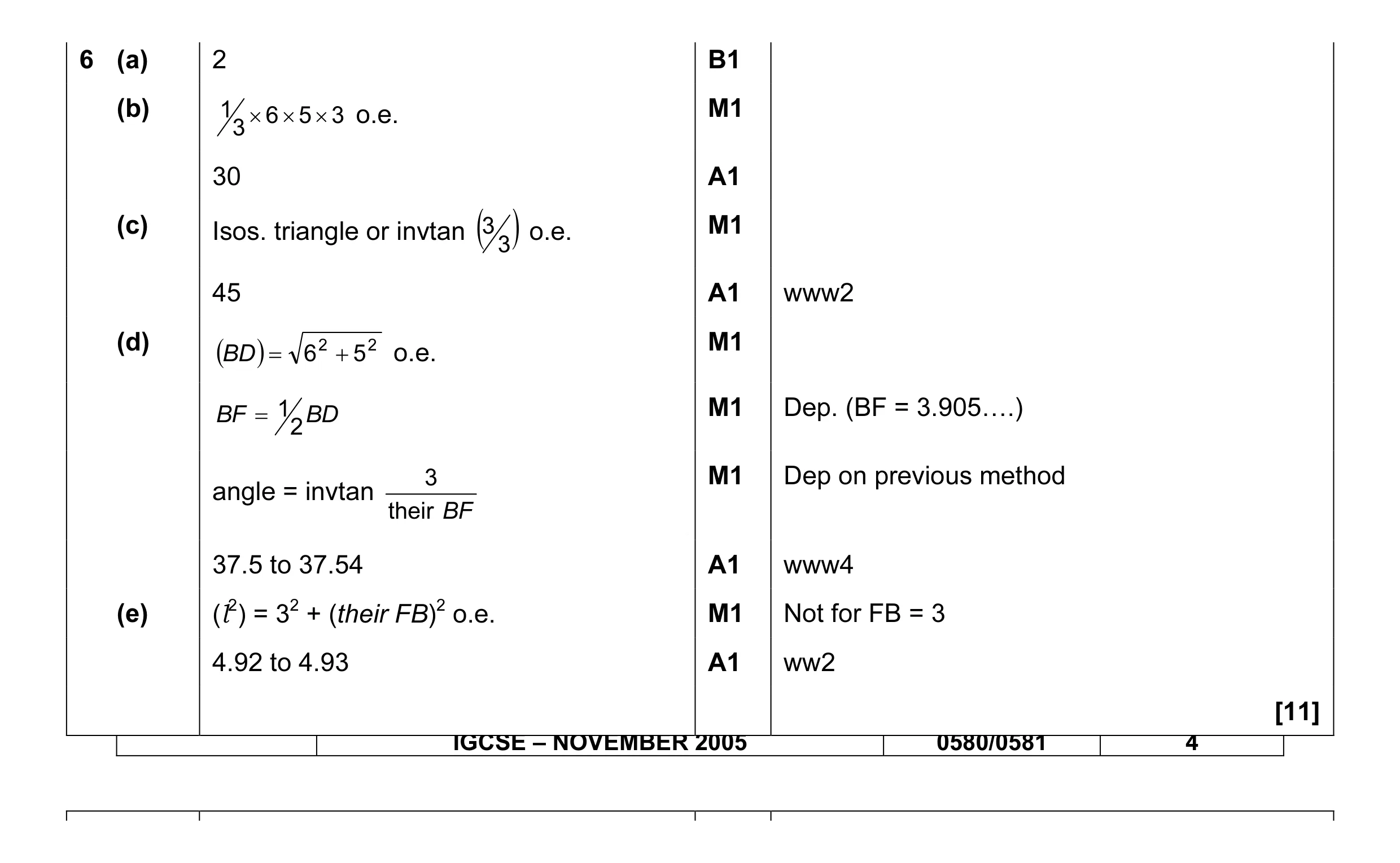
Mark scheme: 6 (a) 2 B1 (b) 1 × 6 × 5 × 3 o.e. M1 3 30 A1 (c) 3 M1 Isos. triangle or invtan ( ) o.e. 3 45 A1 www2 (d) 2 2 M1 (BD ) = 6 + 5 o.e. M1 Dep. (BF = 3.905….) BF = 1 BD 2 3 M1 Dep on previous method angle = invtan their BF 37.5 to 37.54 A1 www4 (e) (l2) = 32 + (their FB)2 o.e. M1 Not for FB = 3 4.92 to 4.93 A1 ww2 [11] IGCSE – NOVEMBER 2005 0580/0581 4
This question in 0580/41 Oct/Nov 2005
Q2 · For Examiner′s A Use NOT TO SCALE (2x + 3) cm (x + 2) cm B C In triangle ABC, AB = (x +… 0580/41 May/June 2013
7 (a) For Examiner′s A Use NOT TO SCALE (2x + 3) cm (x + 2) cm B C In triangle ABC, AB = (x + 2) cm and AC = (2x + 3) cm. 9 sin ACB = 16 Find the length of BC. Answer(a) BC = … cm [6] (b) A bag contains 7 white beads and 5 red beads. (i) The mass of a red bead is 2.5 grams more than the mass of a white bead. The total mass of all the 12 beads is 114.5 grams. Find the mass of a white bead and the mass of a red bead. Answer(b)(i) White … g Red … g [5] (ii) Two beads are taken out of the bag at random, without replacement. For Examiner′s Use Find the probability that (a) they are both white, Answer(b)(ii)(a) … [2] (b) one is white and one is red. Answer(b)(ii)(b) … [3] _____________________________________________________________________________________
16 marks
Mark scheme: x + 2 9 7 (a) 6.61 (6.614…) www 6 B1 for = oe 2 x + 3 16 M1 for 16(x + 2) = 9(2x + 3) or better A1 for [x =] 2.5 M2 for √{(2 × their x + 3)2 – (their x + 2)2} or M1 for (2 × their x + 3)2 – (their x + 2)2 or SC2 for final answer of 4√13 or 7 15 or better 2 SC1 for final answer of 5√7 or better (b) (i) White = 8.5, red = 11 5 B3 for 7w + 5(w + 2.5) = 114.5 or for 7 ( r − 5.2 ) + 5 r = 114 5. oe B1 for 8.5 or 11 or SC2 for 7w + 5 × w + 2.5 = 114.5 leading to 9.33[3…] or SC1 for 7w + 5 × w + 2.5 = 114.5 OR B1 for r = w + 2.5 oe B1 for 7w + 5r = 114.5 oe M1 for elimination of a variable A1 for 8.5 or 11 42 21 14 7 7 6 (ii) or or or 2 M1 for × 132 66 44 22 12 11 (a) (0.318 or 0.3181 to 0.3182) 70 35 7 5 5 7 (ii) or 3 M2 for × + × or 1 – 132 66 12 11 12 11 (b) 5 4 their (a) – × (0.53[0] or 0.5303…) 12 11 or 7 5 35 M1 for × or 12 11 132 or 70 SC1 for oe from replacement 144 IGCSE – May/June 2013 0580 41 Qu. Answer Mark Part marks
This question in 0580/41 May/June 2013
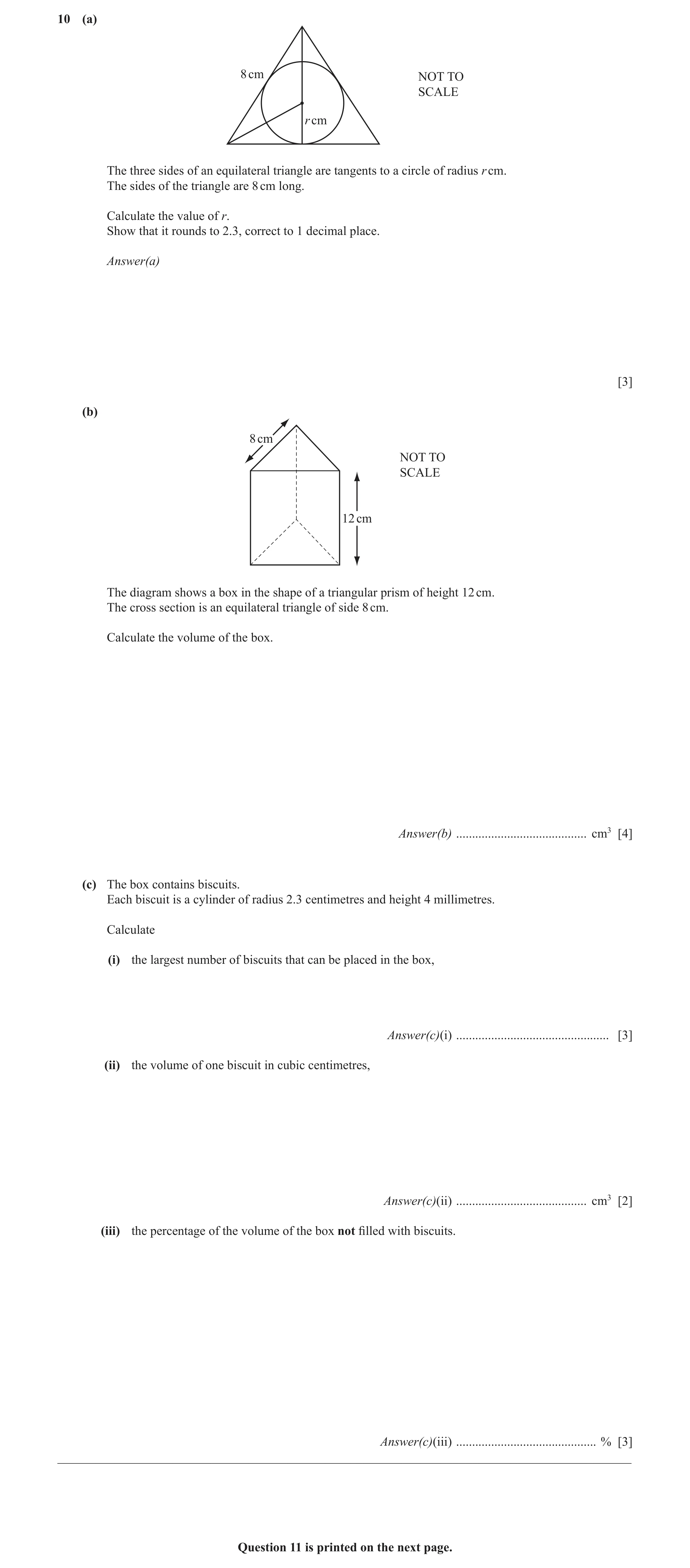
Q3 · 8 cm NOT TO SCALE r cm The three sides of an equilateral triangle are tangents to a… 0580/43 May/June 2014
10 (a) 8 cm NOT TO SCALE r cm The three sides of an equilateral triangle are tangents to a circle of radius r cm. The sides of the triangle are 8 cm long. Calculate the value of r. Show that it rounds to 2.3, correct to 1 decimal place. Answer(a) [3] (b) 8 cm NOT TO SCALE 12 cm The diagram shows a box in the shape of a triangular prism of height 12 cm. The cross section is an equilateral triangle of side 8 cm. Calculate the volume of the box. Answer(b) … cm3 [4] (c) The box contains biscuits. Each biscuit is a cylinder of radius 2.3 centimetres and height 4 millimetres. Calculate (i) the largest number of biscuits that can be placed in the box, Answer(c)(i) … [3] (ii) the volume of one biscuit in cubic centimetres, Answer(c)(ii) … cm3 [2] (iii) the percentage of the volume of the box not fi lled with biscuits. Answer(c)(iii) … % [3] __________________________________________________________________________________________ Question 11 is printed on the next page.
15 marks
Mark scheme: 10 (a) [r =] 2.30[9...] 3 B2 for [r =] 2.31 or M2 for 4 tan 30 r or M1 for = tan 30 4 (b) 333 or 332.5 to 332.6 4 M3 for 0.5 × 8 × 8 × sin 60 × 12 oe or M2 for 0.5 × 8 × 8 × sin 60 oe or M1 for their triangle area × 12 shown 1 dep on ‘ ’used within their area of triangle 2 method (c) (i) 30 3 M2 for 12 ÷ 0.4 or 120 ÷ 4 or SC1 for figs 3 (ii) 6.65 or 6.647 to 6.648[...] 2 M1 for π × 3.2 2 × 4.0 or SC1 for π × 3.2 2 × 4 soi by 66.5 or 66.47 to 66.48[…] their ( c )(i ) × their ( c )(ii ) (iii) 40[.0] or 40.1 or 40.0 to 40.2 nfww 3 M2 for 100 − × 100 their (b ) their (b ) − their ( c )(i ) × their ( c )(ii ) or × 100 their (b ) their ( c )(i ) × their ( c )(ii ) or M1 for × 100 their (b ) their ( b ) − their ( c )(i ) × their ( c )(ii ) or their ( b ) 1 1 1
This question in 0580/43 May/June 2014
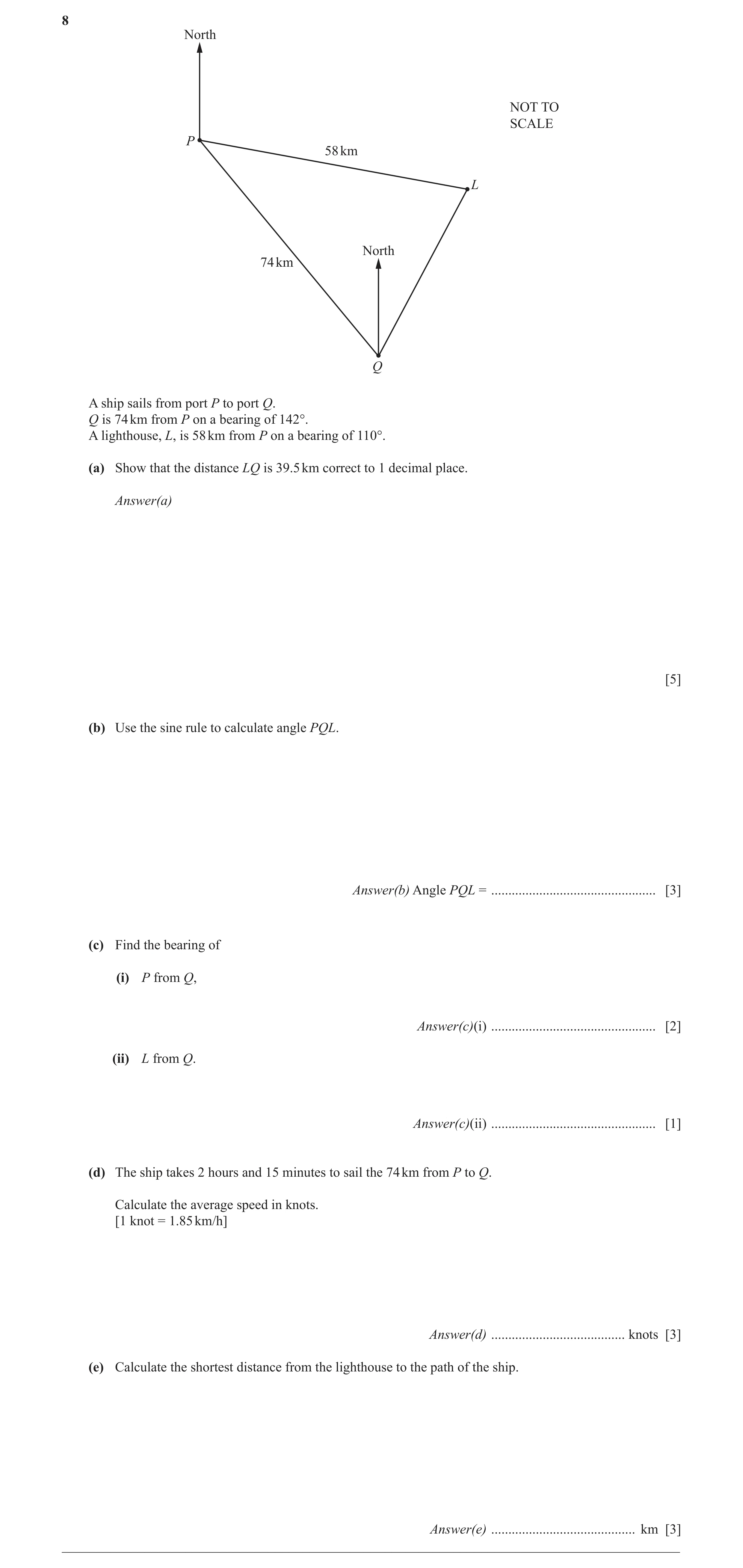
Q4 · North NOT TO SCALE P 58 km L North 74 km Q A ship sails from port P to port Q 0580/42 Oct/Nov 2014
8 North NOT TO SCALE P 58 km L North 74 km Q A ship sails from port P to port Q. Q is 74 km from P on a bearing of 142°. A lighthouse, L, is 58 km from P on a bearing of 110°. (a) Show that the distance LQ is 39.5 km correct to 1 decimal place. Answer(a) [5] (b) Use the sine rule to calculate angle PQL. Answer(b) Angle PQL = … [3] (c) Find the bearing of (i) P from Q, Answer(c)(i) … [2] (ii) L from Q. Answer(c)(ii) … [1] (d) The ship takes 2 hours and 15 minutes to sail the 74 km from P to Q. Calculate the average speed in knots. [1 knot = 1.85 km/h] Answer(d) … knots [3] (e) Calculate the shortest distance from the lighthouse to the path of the ship. Answer(e) … km [3] __________________________________________________________________________________________
17 marks
Mark scheme: 8 (a) Angle LPQ = 32 soi B1 582 + 742 – 2 × 58 × M2 M1 for correct implicit cos rule 74 cos their P A2 A1 for 1560.3 to 1560.4 or 1560 39.50[1...] 58 sin their P sin PQL sin( their P ) (b) sin PQL = oe M2 M1 for = oe 395. 58 395. 51.1 or 51.08 to 51.09 B1 (c) (i) 322 2 M1 for 180 + 142 oe (ii) [0]13[.1] or 13.08 to 13.09 1FT FT their (b) – 38 (d) 17.8 or 17.77 to 17.78 3 M1 for 74 ÷ 2.25 oe soi by 32.888… to 3 sf or better M1 for dist or speed ÷ 1.85 (e) 30.7 or 30.73 to 30.74… 3 M2 for 58 sin their P oe or 39.5 sin their (b) x or M1 for = sin their P oe 58 x or = sin their (b) 395.
This question in 0580/42 Oct/Nov 2014
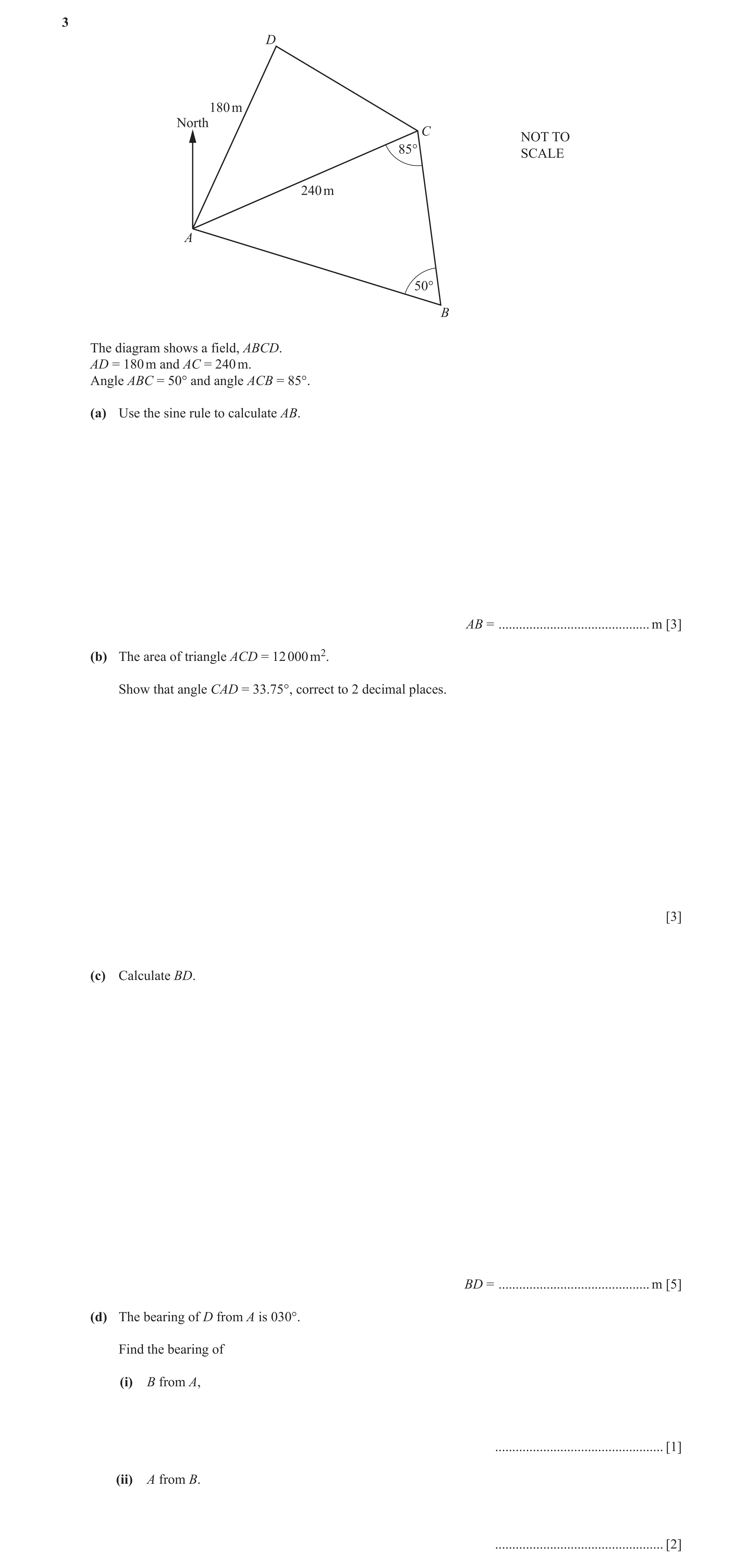
Q5 · D 180 m North C NOT TO 85° SCALE 240 m A 50° B The diagram shows a field, ABCD 0580/42 Oct/Nov 2016
3 D 180 m North C NOT TO 85° SCALE 240 m A 50° B The diagram shows a field, ABCD. AD = 180 m and AC = 240 m. Angle ABC = 50° and angle ACB = 85°. (a) Use the sine rule to calculate AB. AB = … m [3] (b) The area of triangle ACD = 12 000 m2. Show that angle CAD = 33.75°, correct to 2 decimal places. [3] (c) Calculate BD. BD = … m [5] (d) The bearing of D from A is 030°. Find the bearing of (i) B from A, … [1] (ii) A from B. … [2]
14 marks
Mark scheme: 240sin85 sin50 sin85 3 (a) M2 or M1 for = oe sin50 240 AB 312 or 312.1 …. B1 1 (b) × 180 × 240 × sin A = 12000 M1 2 24000 33.748 to 33.749 A2 A1 for sin = or better or 0.555 or 0.556 43200 or 0.5 or 0.5555 to 0.5556 (c) 328 or 328.3 to 328.5 5 B1 for [angle A =] 78.75 seen M2 for 180 2 + (their AB ) 2 −×2 180 × their AB × cos78.75 180 2 + (theirAB ) 2 − x 2 or M1 for cos78.75 = 2 × 180 × (theirAB ) A1 for 107 800 to 107 900 (d) (i) 108.75 or 108.7 or 108.8 1 (ii) 288.75 or 288.7 or 288.8 2FT FT 180 + their (d)(i) M1 for 180 + their (d)(i) or 360 – (180 – their(d)(i))
This question in 0580/42 Oct/Nov 2016
Q6 · The diagram shows a regular F E hexagon ABCDEF of side 10 cm 0580/42 Feb/March 2017
10 (a) The diagram shows a regular F E hexagon ABCDEF of side 10 cm. NOT TO SCALE A D B C (i) Show that angle BAF = 120°. [2] (ii) The vertices of a rectangle PQRS F E touch the sides FA, AB, CD and DE. P S PS is parallel to FE and AP = x cm. NOT TO SCALE A D Q R B C Use trigonometry to find the length of PQ in terms of x. PQ = … cm [3] (iii) PF = (10 – x) cm. Show that PS = (20 − x) cm. [3] (b) F E K N NOT TO SCALE A D L M B C The diagram shows the vertices of a square KLMN touching the sides of the same hexagon ABCDEF, with KN parallel to FE. Use your results from part (a)(ii) and part (a)(iii) to find the length of a side of the square. … cm [4]
12 marks
Mark scheme: 10 (a) (i) (6 − 2) × 180 or (2 × 6 – 4) × 90 M1 or (360 ÷ 6) (6 − 2) × 180 ÷ 6 or (2 × 6 – 4) × 90 ÷ 6 M1dep dep on previous M1 or 180 − (360 ÷ 6) (ii) 1.73x or x 3 oe 3 M2 for 2 x sin60 or 2 x cos30 oe or for x 2 + x 2 − 2 × x × x × cos120 or M1 for x sin60 or x cos30 oe or for x 2 + x 2 −×2 x × x × cos120
This question in 0580/42 Feb/March 2017
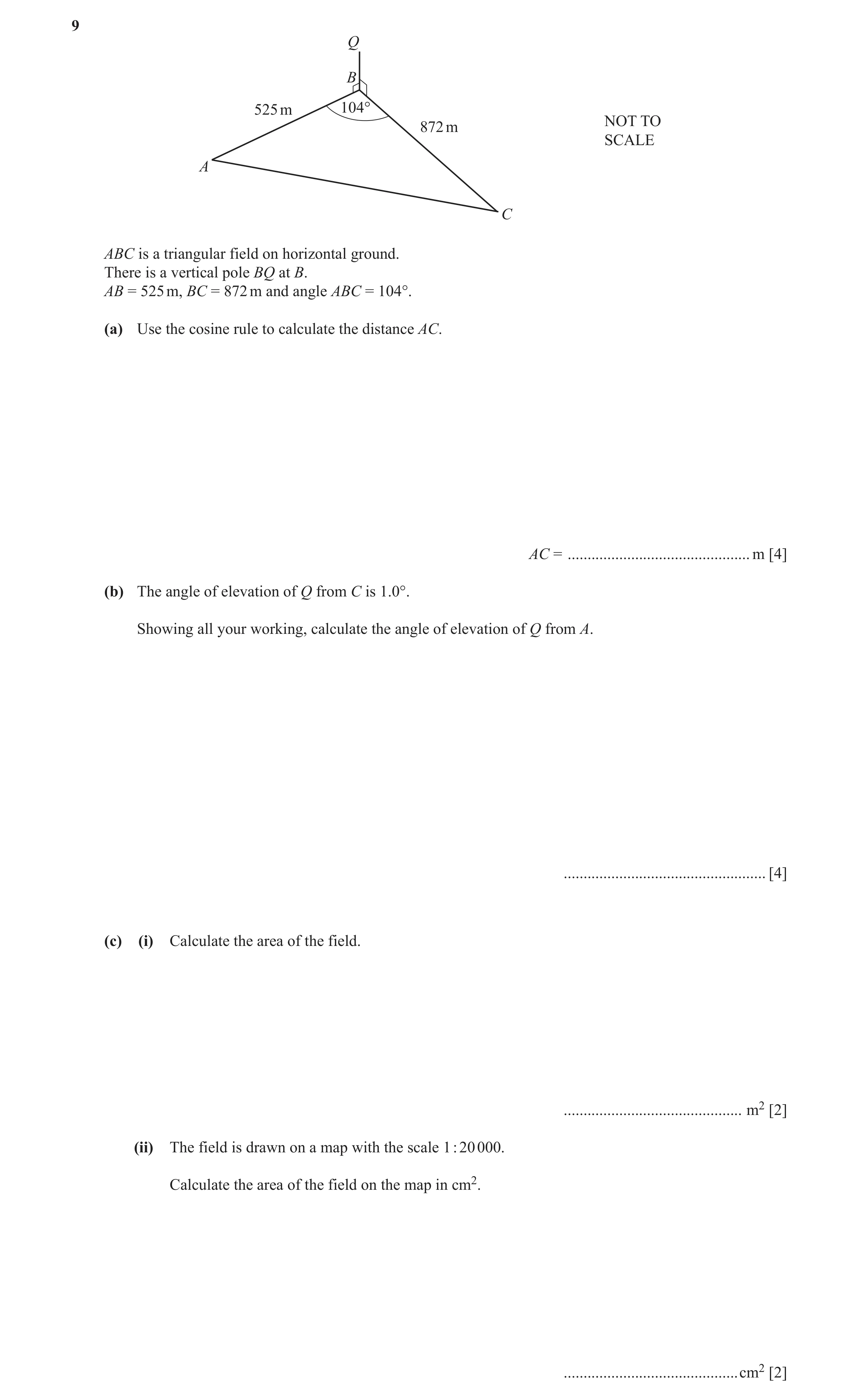
Q7 · Q B 525 m 104° NOT TO 872 m SCALE A C ABC is a triangular field on horizontal ground 0580/43 May/June 2017
9 Q B 525 m 104° NOT TO 872 m SCALE A C ABC is a triangular field on horizontal ground. There is a vertical pole BQ at B. AB = 525 m, BC = 872 m and angle ABC = 104°. (a) Use the cosine rule to calculate the distance AC. AC = … m [4] (b) The angle of elevation of Q from C is 1.0°. Showing all your working, calculate the angle of elevation of Q from A. … [4] (c) (i) Calculate the area of the field. … m2 [2] (ii) The field is drawn on a map with the scale 1 : 20 000. Calculate the area of the field on the map in cm2. … cm2 [2]
12 marks
Mark scheme: 9(a) 1120 or 1121. … 4 M2 for [ AC 2 =] 5252 + 8722 − 2×525×872×cos 104 or M1 for implicit version A1 for 1 257 000 to 1 258 000 9(b) [QB or x =] 872 × tan 1 seen M2 QB M1 for tan 1 = 872 tan = their QB ÷ 525 M1 1.7 or 1.660 to 1.661 nfww A1 dep on M3 9(c)(i) 222 000 or 222 100. … or 222 101 2 1 M1 for × 525 × 872 × sin104 2 9(c)(ii) 5.55 or 5.550 to 5.553 nfww 2FT FT their (c)(i) × 1002 ÷ 20 0002 M1 for their (c)(i) × 1002 ÷ 20 0002 or restart
This question in 0580/43 May/June 2017
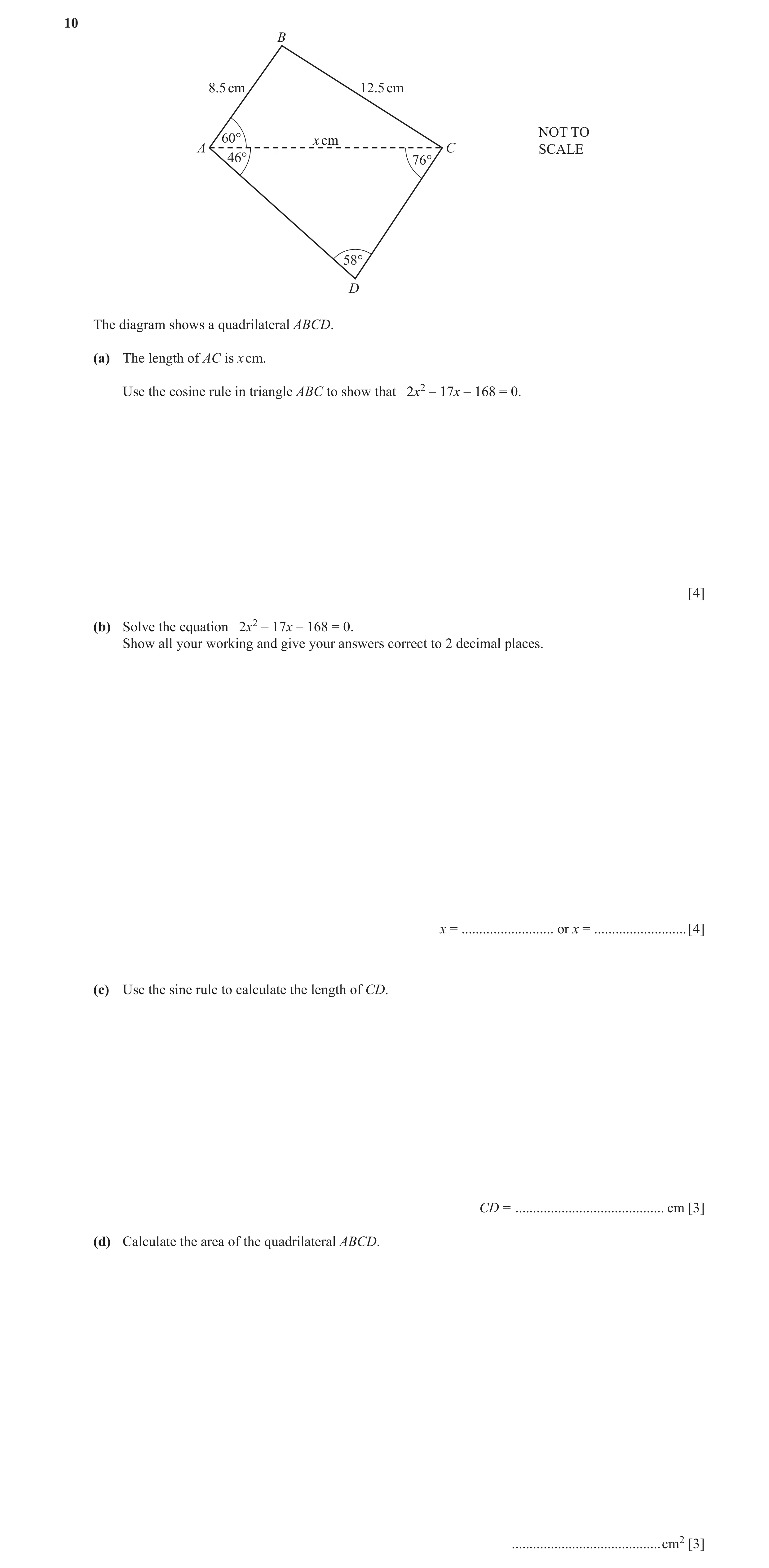
Q8 · B 8.5 cm 12.5 cm NOT TO 60° x cm A C SCALE 46° 76° 58° D The diagram shows a… 0580/41 Oct/Nov 2017
10 B 8.5 cm 12.5 cm NOT TO 60° x cm A C SCALE 46° 76° 58° D The diagram shows a quadrilateral ABCD. (a) The length of AC is x cm. Use the cosine rule in triangle ABC to show that 2x2 – 17x – 168 = 0. [4] (b) Solve the equation 2x2 – 17x – 168 = 0. Show all your working and give your answers correct to 2 decimal places. x = … or x = … [4] (c) Use the sine rule to calculate the length of CD. CD = … cm [3] (d) Calculate the area of the quadrilateral ABCD. … cm2 [3]
14 marks
Mark scheme: 10(a) M2 x 2 + 8.5 2 − 12.5 2 12.52 = x2 + 8.52 – 2 × x × 8.5cos60 oe isw M1 for cos60 = 2 × x × 8.5 156.25 = x2 + 72.25 – 8.5x A1 or better 2x2 – 17x – 168 = 0 A1 with no errors or omissions 10(b) 2 2 2 [ −− ]17 ± ([ − ]17) − 4 ( 2 )( −168 ) B1 for ([ − ]17) − 4(2)( −168) or better seen 2 × 2 p + or − q and if in form r B1 for p = [− −] 17 and r = 2 × 2 14.35, –5.85 final answers 1, 1 SC1 for 14.352 to 14.353 and –5.853 to –5.852 seen or 14.3 or 14.4 and –5.8 or –5.9 as final answers or −14.35 and 5.85 as final answers or 14.35 and –5.85 seen in working 10(c) 12.2 or 12.17… nfww 3 their 14.35 × sin46 M2 for sin58 sin 46 sin58 or M1 for = CD their14.35 10(d) 138 or 137.5 to 137.8 nfww 3 M1 for 0.5 × their 14.35 × 8.5sin60 M1 for 0.5 × their 14.35 × their12.2 × sin76
This question in 0580/41 Oct/Nov 2017
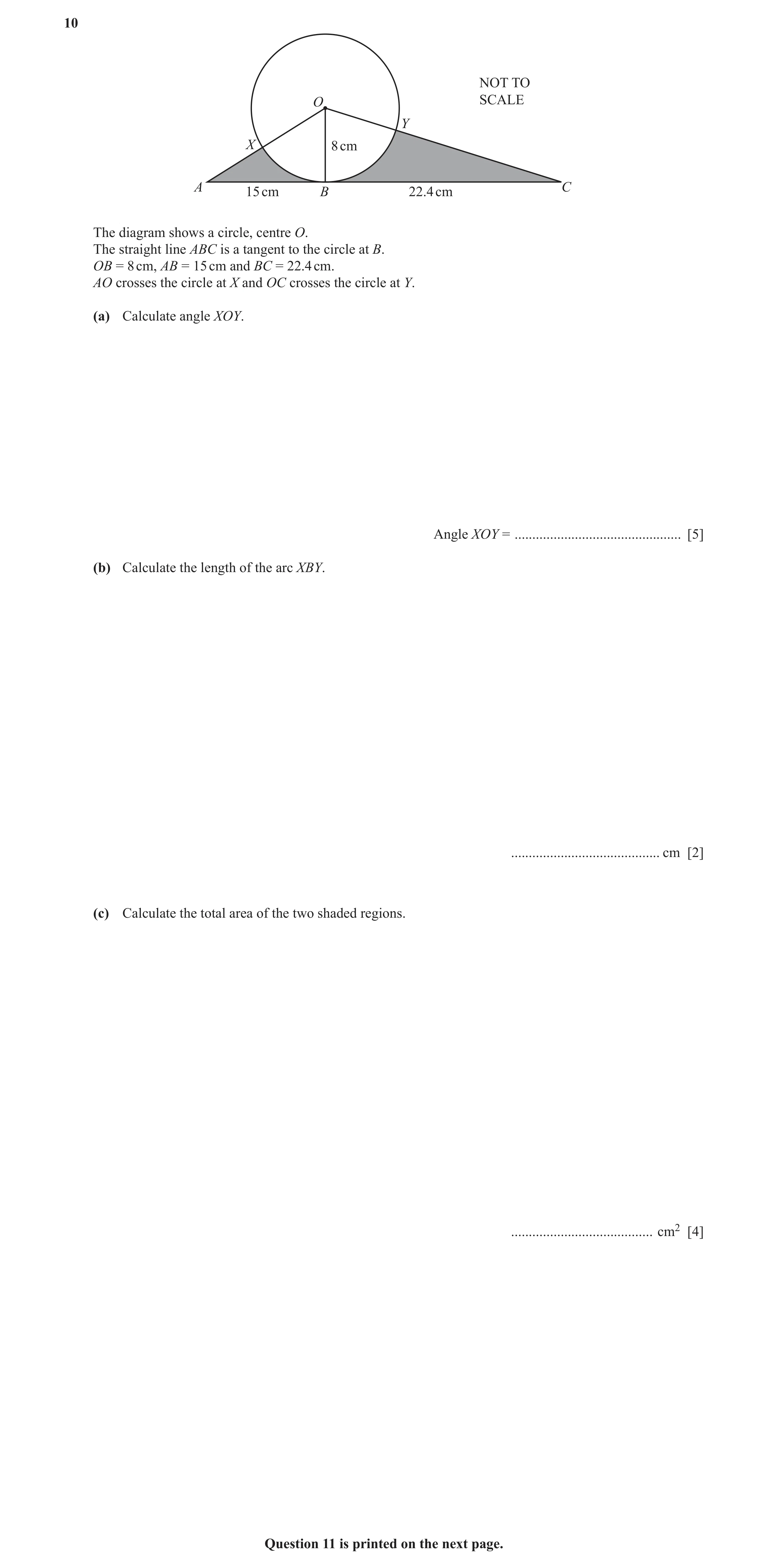
Q9 · NOT TO O SCALE Y X 8 cm A C 15 cm B 22.4 cm The diagram shows a circle, centre O 0580/41 Oct/Nov 2018
10 NOT TO O SCALE Y X 8 cm A C 15 cm B 22.4 cm The diagram shows a circle, centre O. The straight line ABC is a tangent to the circle at B. OB = 8 cm, AB = 15 cm and BC = 22.4 cm. AO crosses the circle at X and OC crosses the circle at Y. (a) Calculate angle XOY. Angle XOY = … [5] (b) Calculate the length of the arc XBY. … cm [2] (c) Calculate the total area of the two shaded regions. … cm2 [4] Question 11 is printed on the next page.
11 marks
Mark scheme: 10(a) 132.26 to 132.28 or 132.3 5 B1 for angle ABO or angle CBO = 90 soi 15 M1 for tan [XOB] = oe 8 224. M1 for tan [BOY] = oe 8 A1 for [BOY =]70.3… or [XOB =] 61.9…. 10(b) 18.4 or 18.5 or 18.43 to 18.48 2 their (a) M1 for × 2 × π × 8 oe 360 10(c) 75.7 to 75.9 4 1 M1 for (15 + 22.4 ) × 8 oe 2 their ( a ) 2 M2 for × π × 8 oe 360 or M1 for one sector either 15 inv tan 8 × π × 8 2 oe 360 22.4 inv tan 8 2 or × π × 8 oe 360 ( )( )
This question in 0580/41 Oct/Nov 2018
Q10 · The volume of each of the following solids is 1000 cm3 0580/41 May/June 2019
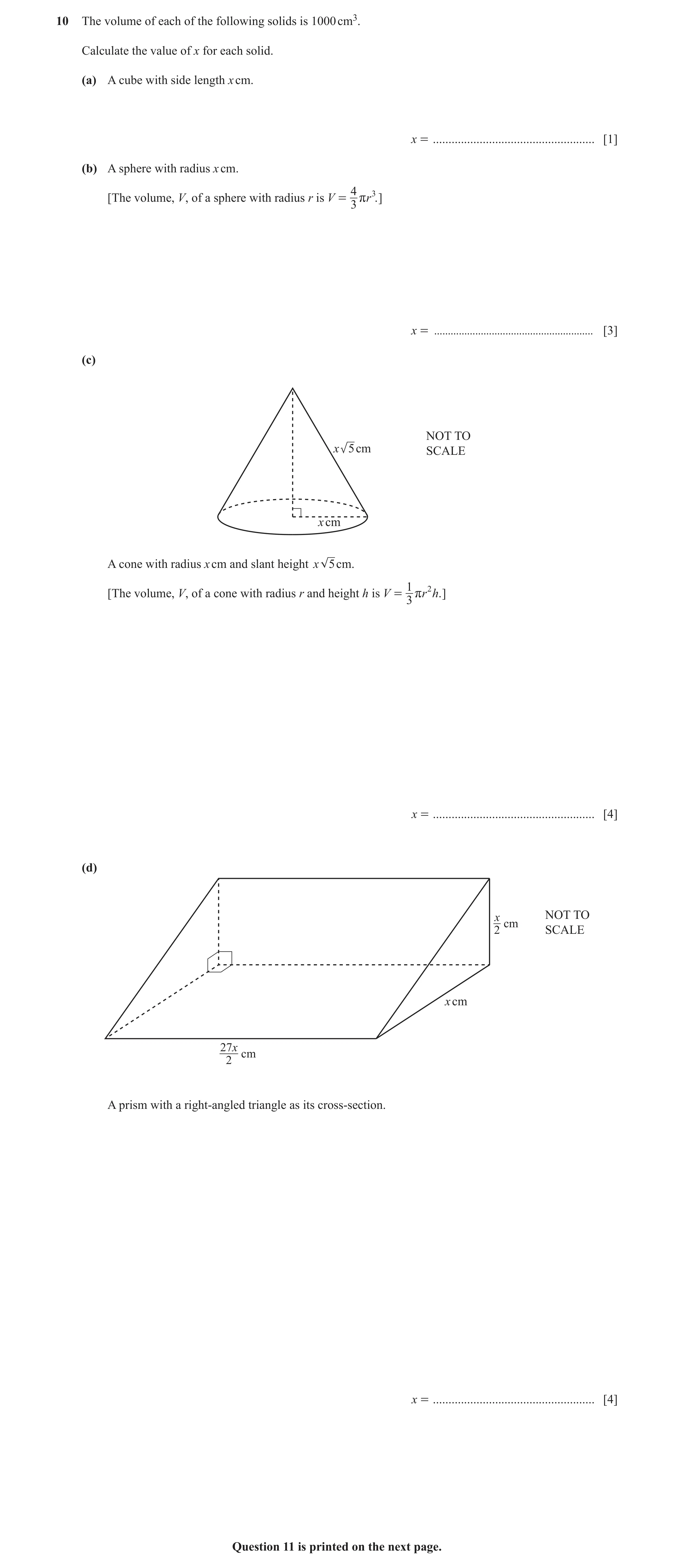
10 The volume of each of the following solids is 1000 cm3. Calculate the value of x for each solid. (a) A cube with side length x cm. x = … [1] (b) A sphere with radius x cm. 4 3 [The volume, V, of a sphere with radius r is V = r r . ] 3 x = … [3] (c) NOT TO x 5cm SCALE x cm A cone with radius x cm and slant height x 5cm. 1 2 [The volume, V, of a cone with radius r and height h is V = r r h. ] 3 x = … [4] (d) x NOT TO cm 2 SCALE x cm 27x cm 2 A prism with a right-angled triangle as its cross-section. x = … [4] Question 11 is printed on the next page.
12 marks
Mark scheme: 10(a) 10 1 10(b) 6.2[0] or 6.203 to 6.204 3 4 M2 for [x3 = ] 1000 ÷ π oe or better 3 4 3 or M1 for πx = 1000 3 10(c) 7.82 or 7.815 to 7.816 4 3 1 B3 for [ x = ]1000 ÷ π ÷ 2 oe or better 3 2 or M1 for x 5 − x 2 soi by 4x2 or 2x ( ) 1 2 M1dep for π × x × theirh[ = 1000] 3 10(d) 2 4 3 27 3 x 6 or 6.67 or 6.666 to 6.667 B3 for [ x = ]1000 ÷ oe or = 10 or 3 8 2 better 1 x 27 x or M2 for × x × × = 1000 oe 2 2 2 1 x or M1 for × x × 2 2 If 0 scored, SC2 for answer 5.29 or 5.291..
This question in 0580/41 May/June 2019
Q11 · A straight line joins the points A (-2, -3) and C (1, 9) 0580/43 May/June 2019
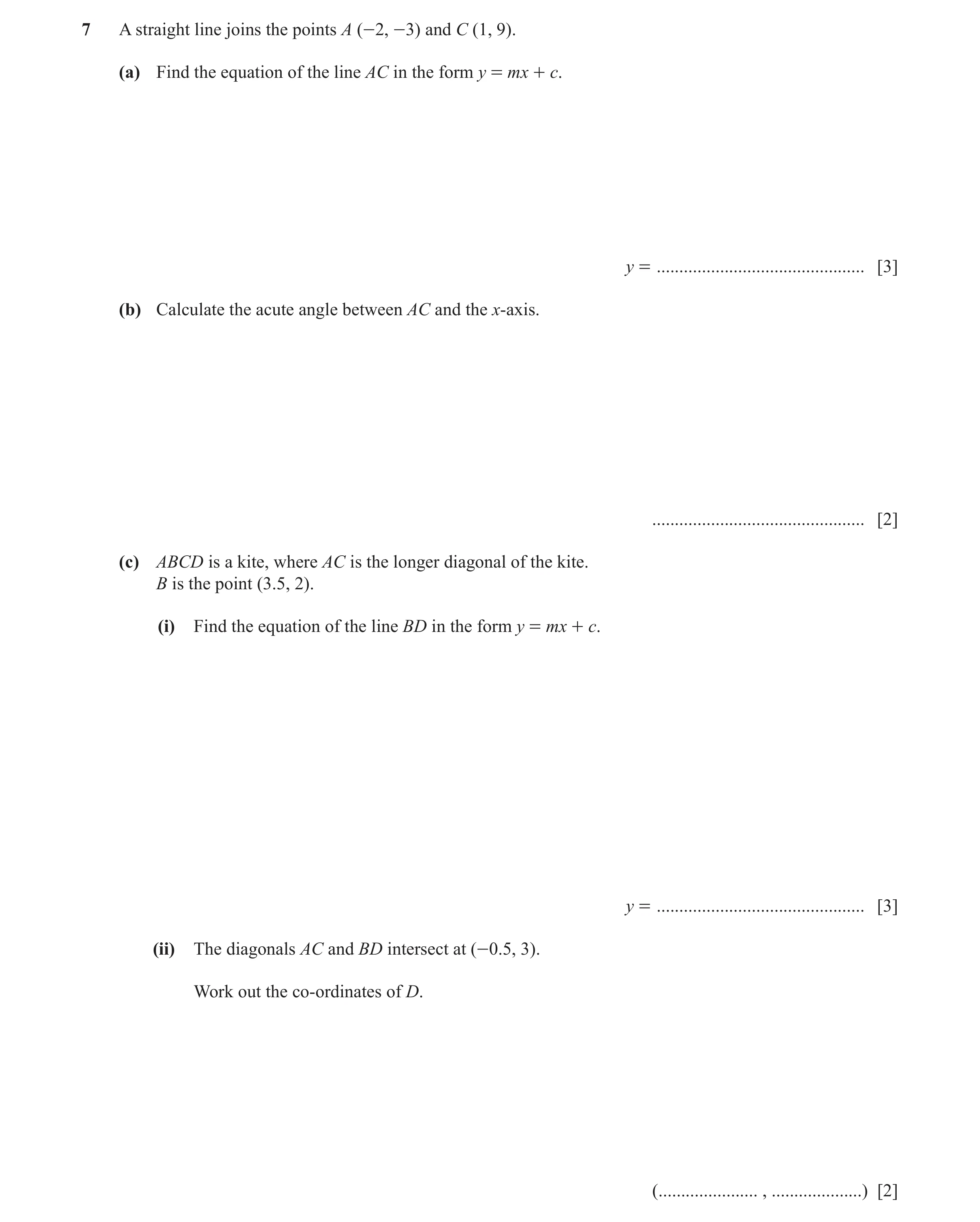
7 A straight line joins the points A (-2, -3) and C (1, 9). (a) Find the equation of the line AC in the form y = mx + c. y = … [3] (b) Calculate the acute angle between AC and the x-axis. … [2] (c) ABCD is a kite, where AC is the longer diagonal of the kite. B is the point (3.5, 2). (i) Find the equation of the line BD in the form y = mx + c. y = … [3] (ii) The diagonals AC and BD intersect at (-0.5, 3). Work out the co-ordinates of D. ( … , … ) [2]
10 marks
Mark scheme: 7(a) [y = ] 4x + 5 3 B2 for answer [y =] 4x + c oe (c can be numeric or algebraic) OR y − 9 9 −−( 3) M2 for = oe x − 1 1 −−( 2) OR 9 −−3 M1 for oe or for 1 −−2 M1 for correct substitution of (–2, –3) or (1, 9) into y = (their m)x + c oe 7(b) 76[.0] or 75.96... 2 M1 for tan[ ] = 4 oe 7(c)(i) 1 23 3 1 [y =] − x + oe B2FT for [y =] − x + c 4 8 their gradient from (a) oe (c can be numeric or algebraic) OR y − 2 1 M2 for = − oe x − 3.5 their gradient from (a) OR 1 M1 for −their gradient from (a) soi M1 for correct substitution of (3.5, 2) into y = (their m)x + c oe 7(c)(ii) (–4.5, 4) 2 − 8 B1 for each value or for seen 2
This question in 0580/43 May/June 2019
Q12 · S 25° R 72° NOT TO SCALE 6 cm 34° Q 7.4 cm P The diagram shows a quadrilateral PQRS… 0580/42 Feb/March 2020
8 (a) S 25° R 72° NOT TO SCALE 6 cm 34° Q 7.4 cm P The diagram shows a quadrilateral PQRS formed from two triangles, PQS and QRS. Calculate (i) QR, QR = … cm [3] (ii) PS, PS = … cm [3] (iii) the area of quadrilateral PQRS. … cm2 [4] (b) X H G E F NOT TO SCALE 16 cm D C 18 cm A B 20 cm The diagram shows an open box ABCDEFGH in the shape of a cuboid. AB = 20 cm, BC = 18 cm and AE = 16 cm . A thin rod AGX rests partly in the box as shown. The rod is 40 cm long. (i) Calculate GX, the length of the rod which is outside the box. GX = … cm [4] (ii) Calculate the angle the rod makes with the base of the box. … [3]
17 marks
Mark scheme: 8(a)(i) 2.67 or 2.666… 3 6 × sin 25 M2 for sin72 or M1 for implicit version 8(a)(ii) 4.14 or 4.140… 3 M1 for 6 2 + 7.4 2 − 2 × 6 × 7.4 × cos34 A1 for 17.1 to 17.2 8(a)(iii) 20.4 or 20.35 to 20.36… 4 B1 for angle SQR = 83 M1 for 1 × 6 ×their (a)(i) × sin their (180–72–25) 2 oe 1 M1 for × 6 × 7.4 × sin 34 oe 2 8(b)(i) 8.7[0] or 8.695… 4 B3 for 980 oe or 31.3 or 31.30… or M3 for 40 – 20 2 + 18 2 + 16 2 oe or M2 for 20 2 + 18 2 + 16 2 oe or M1 for any correct attempt at 2-dimensional Pythagoras’ e.g. 182 + 162 8(b)(ii) 30.7 or 30.73 to 30.74… 3 16 M2 for [sin =] oe 20 2 + 18 2 + 16 2 or B1 for identifying angle GAC
This question in 0580/42 Feb/March 2020
Q13 · North D NOT TO SCALE 140° A 450 m 400 m B 350 m C The diagram shows a field ABCD 0580/42 May/June 2020
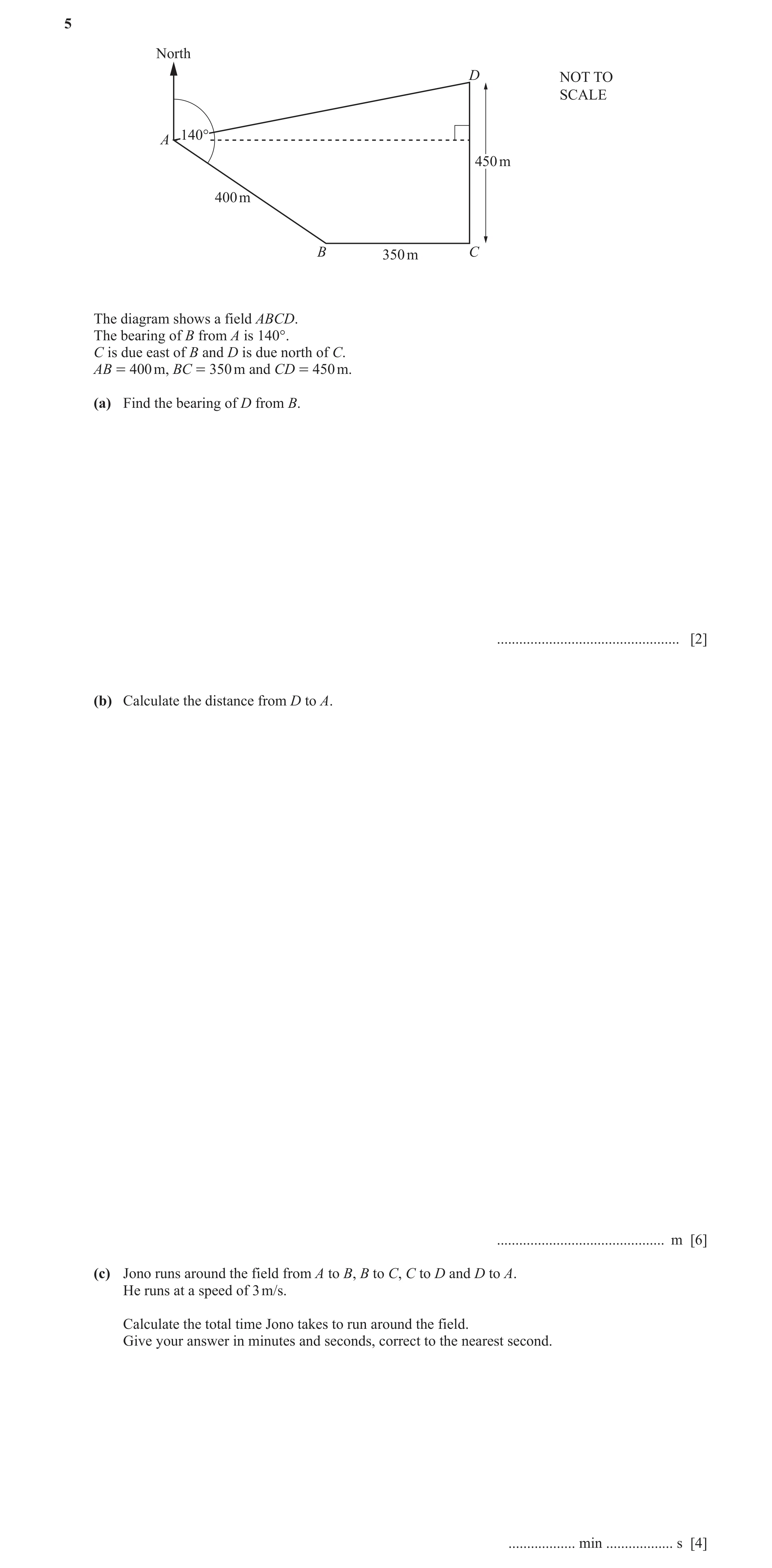
5 North D NOT TO SCALE 140° A 450 m 400 m B 350 m C The diagram shows a field ABCD. The bearing of B from A is 140°. C is due east of B and D is due north of C. AB = 400 m, BC = 350 m and CD = 450 m. (a) Find the bearing of D from B. … [2] (b) Calculate the distance from D to A. … m [6] (c) Jono runs around the field from A to B, B to C, C to D and D to A. He runs at a speed of 3 m/s. Calculate the total time Jono takes to run around the field. Give your answer in minutes and seconds, correct to the nearest second. … min … s [4]
12 marks
Mark scheme: 5(a) [0]38 or [0]37.9 or [0]37.87... 2 350 M1 for tan = oe 450 If 0 scored, SC1 for answer [0]52 or [0]52.1 or [0]52.12 to [0]52.13 5(b) 624 or 623.8 to 623.9 6 M2 for 450 – 400 sin 50 ... or M1 for sin 50 = 400 M2 for 350 + 400 cos 50 ... or M1 for cos 50 = 400 M1 for (their (450 – 400 sin 50))2 + (their (350 + 400 cos 50))2 5(c) 10 min 8 s 4 B3 for 10.1 or 10.13… or M2 for (400 + 350 + 450 + their DA) ÷ 3 [÷ 60] oe or M1 for any distance ÷ 3 M1 for rounding their minutes into minutes and seconds to nearest second if clearly seen
This question in 0580/42 May/June 2020
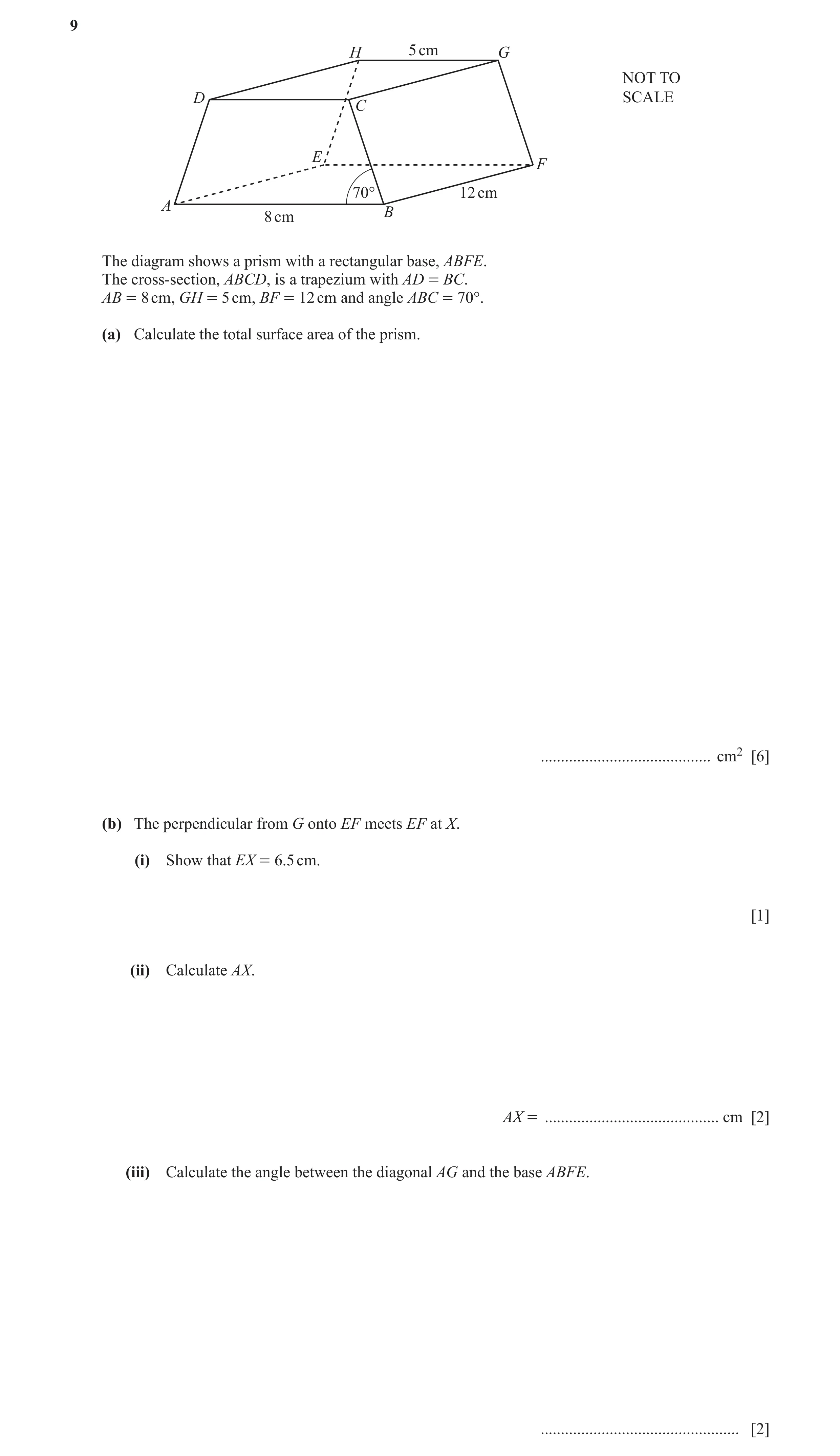
Q14 · H 5 cm G NOT TO D SCALE C E F 70° 12 cm A B 8 cm The diagram shows a prism with a… 0580/42 Oct/Nov 2020
9 H 5 cm G NOT TO D SCALE C E F 70° 12 cm A B 8 cm The diagram shows a prism with a rectangular base, ABFE. The cross-section, ABCD, is a trapezium with AD = BC. AB = 8 cm, GH = 5 cm, BF = 12 cm and angle ABC = 70°. (a) Calculate the total surface area of the prism. … cm2 [6] (b) The perpendicular from G onto EF meets EF at X. (i) Show that EX = 6.5 cm. [1] (ii) Calculate AX. AX = … cm [2] (iii) Calculate the angle between the diagonal AG and the base ABFE. … [2]
11 marks
Mark scheme: 9(a) 315 or 314.5 to 315.0 6 height M1 for tan70 = oe or better seen 1 ( 8 - 5 ) 2 1 M1dep for ( 8 + 5 ) ×their height or better 2 seen dep on trig attempt for height 1 ( 8 − 5 ) 2 M2 for 12 × oe or better seen cos70 1 ( 8 − 5 ) 2 or M1 for oe or better seen cos70 M1 for 8 × 12 oe isw and 5 × 12 oe isw 9(b)(i) 8 – ½ (8 – 5) or 5 + ½ (8 – 5) M1 9(b)(ii) 13.6 or 13.64 to 13.65 2 M1 for 122 + (6.5)2 oe 9(b)(iii) 16.8 or 16.9 or 16.79 to 16.91… 2 M1 for identifying angle GAX from a nfww diagram or from working or better
This question in 0580/42 Oct/Nov 2020
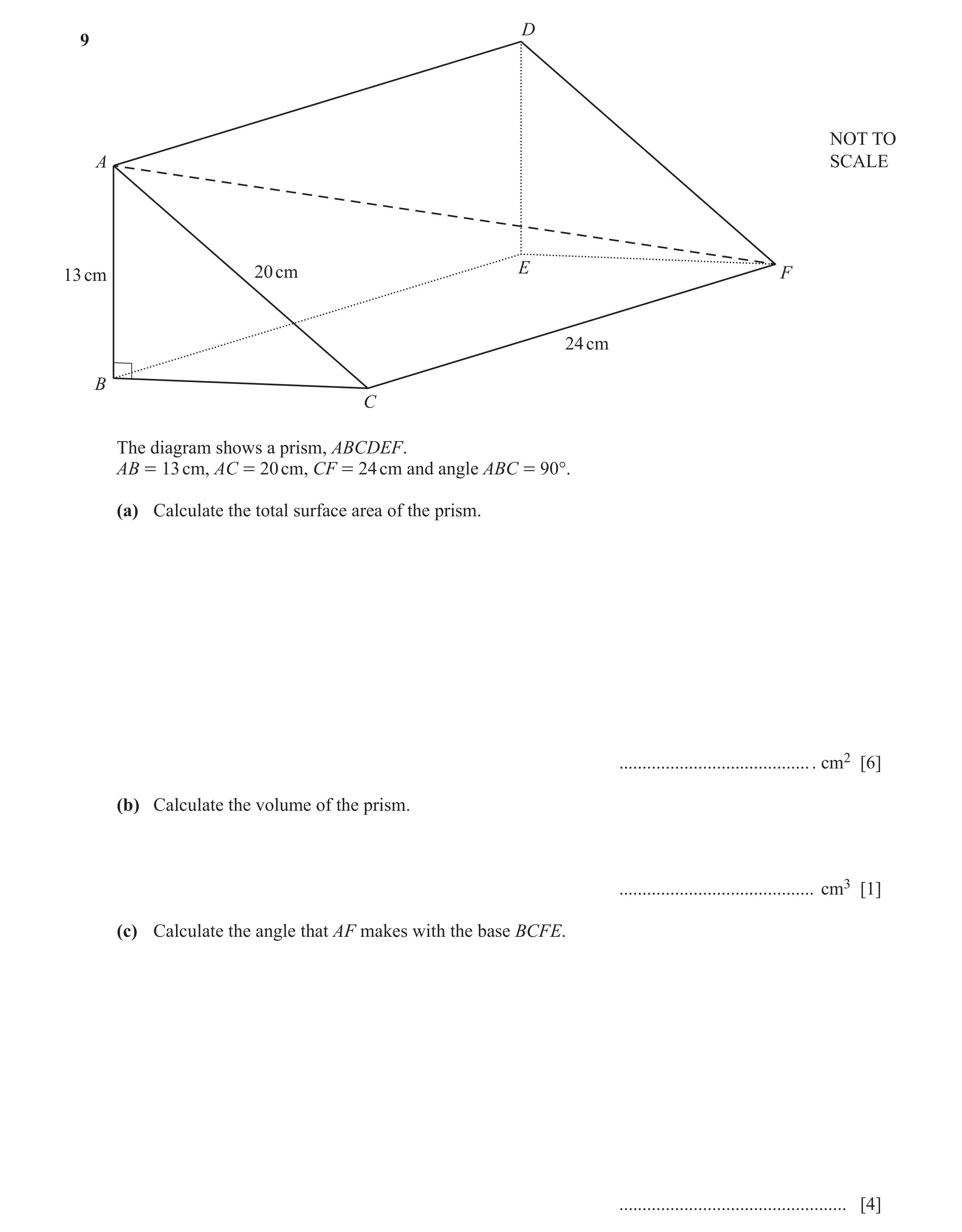
Q15 · D 9 NOT TO A SCALE 13 cm 20 cm E F 24 cm B C The diagram shows a prism, ABCDEF 0580/41 May/June 2021
D 9 NOT TO A SCALE 13 cm 20 cm E F 24 cm B C The diagram shows a prism, ABCDEF. AB = 13 cm, AC = 20 cm, CF = 24 cm and angle ABC = 90°. (a) Calculate the total surface area of the prism. … cm2 [6] (b) Calculate the volume of the prism. … cm3 [1] (c) Calculate the angle that AF makes with the base BCFE. … [4]
11 marks
Mark scheme: 9(a) 1350 or 1354…. 6 M2 for 20 2 − 132 or M1 for BC2 + 132 = 202 A1 for 231 or 15.2 or 15.19 to 15.20 M1 for 20 × 24 and 13 × 24 and their 15.2 × 24 M1 for [½ ×] their 15.2 × 13 9(b) 2370 or 2369 to 2371… cao 1 9(c) 24.6 or 24.58 to 24.59 4 13 M3 for sin [...] = oe 20 2 + 24 2 or M2 for 20 2 + 24 2 or 24 2 + 20 2 − 132 or M1 for AF2 = 202 + 242 or 242 + 202 - 132 or M1 for correct angle identified
This question in 0580/41 May/June 2021
Q16 · A cuboid has length L cm, width W cm and height H cm 0580/42 May/June 2021
8 (a) A cuboid has length L cm, width W cm and height H cm. L cm H cm NOT TO SCALE 20.1 cm W cm 37.8 cm The diagram shows the net of this cuboid. The ratio W : L = 1 : 2. Find the value of L, the value of W and the value of H. L = … W = … H = … [5] (b) E NOT TO SCALE 24 cm D C 15 cm A 18 cm B The diagram shows a solid pyramid with a rectangular base ABCD. E is vertically above D. Angle EDC = angle EDA = 90°. AB = 18 cm, BC = 15 cm and EC = 24 cm. (i) The pyramid is made of wood and has a mass of 800 g. Calculate the density of the wood. Give the units of your answer. 1 [The volume, V, of a pyramid is V = # area of base # height.] 3 [Density = mass ' volume] … … [5] (ii) Calculate the angle between BE and the base of the pyramid.
14 marks
Mark scheme: 8(a) [L =] 11.8 5 M1 for L = 2W oe soi [W =] 5.9 M1 for W + 2H = 20.1 oe [H =] 7.1 M1 for 2L + 2H = 37.8 oe B1 for at least one correct answer 8(b)(i) 0.559 to 0.56[0…] B4 1 2 2 M2 for × 18 × 15 × 24 − 18 isw 3 conversion or M1 for h2 + 182 = 242 oe or better M1 for figs 800 ÷ figs their volume isw g/cm3 or g cm–3 final answer B1 8(b)(ii) 34.1 or 34.11 to 34.12 4 2 2 24 − 18 M3 for tan [ ] = oe 18 2 + 15 2 or M2 for 18 2 + 15 2 isw or 24 2 + 15 2 isw or M1 for 182 + 152 isw or 242 + 152 isw or M1 for indicating required angle is EBD
This question in 0580/42 May/June 2021
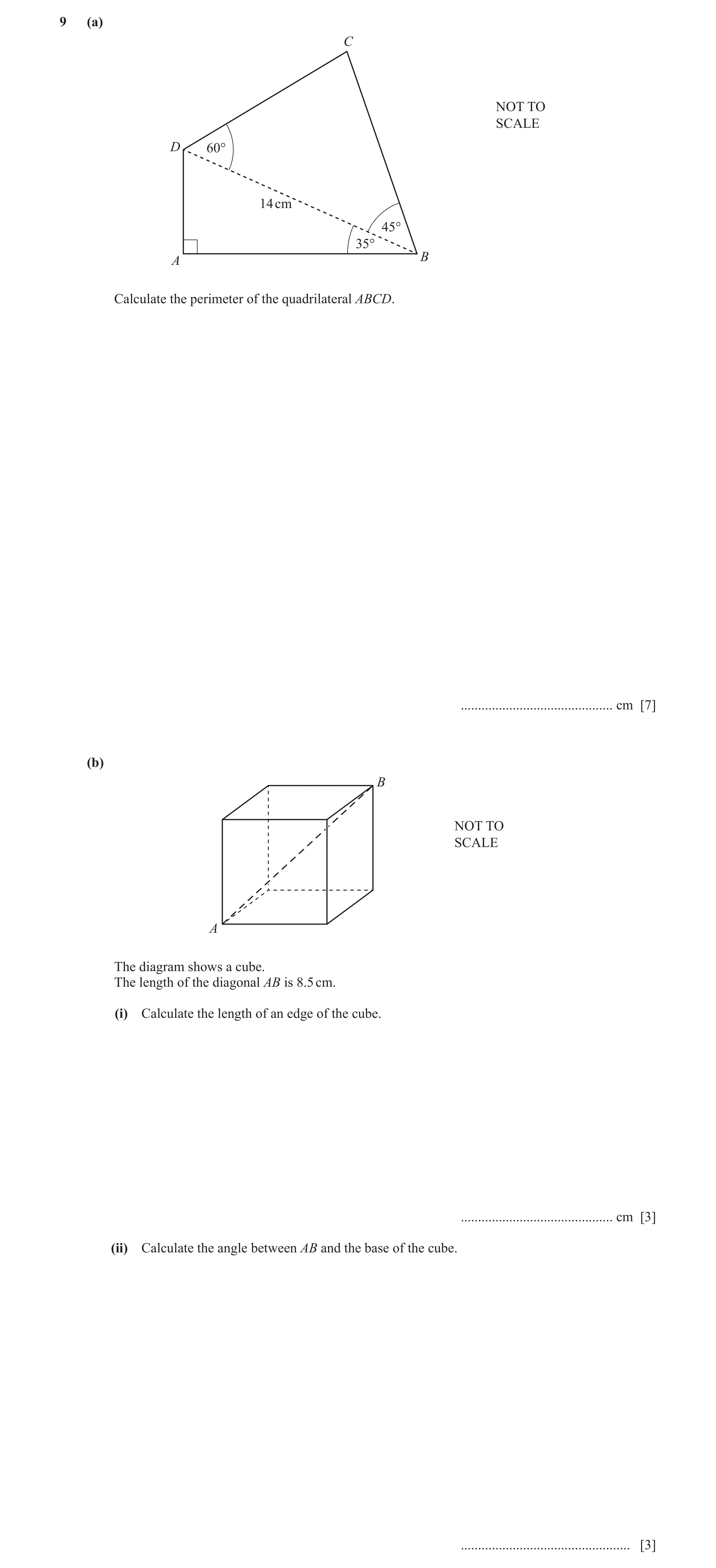
Q17 · C NOT TO SCALE D 60° 14 cm 45° 35° B A Calculate the perimeter of the quadrilateral ABCD 0580/43 May/June 2021
9 (a) C NOT TO SCALE D 60° 14 cm 45° 35° B A Calculate the perimeter of the quadrilateral ABCD. … cm [7] (b) B NOT TO SCALE A The diagram shows a cube. The length of the diagonal AB is 8.5 cm. (i) Calculate the length of an edge of the cube. … cm [3] (ii) Calculate the angle between AB and the base of the cube. … [3]
13 marks
Mark scheme: 9(a) 42.3 or 42.28 to 42.30... 7 AB M1 for = cos35 oe 14 AD M1 for = sin35 oe 14 B1 for [C =] 75 14sin60 M3 for [BC =] oe sin their 75 14sin45 and [DC] oe sin their 75 14sin60 14sin45 or M2 for or oe sin their 75 sin their 75 sin their 75 sin60 or M1 for = oe 14 BC sin their 75 sin45 or = oe 14 CD 9(b)(i) 4.91 or 4.907... 3 B2 for [l2 =] 24.1 or 24.08... 8.5 2 or M2 for √3 l = 8.5 or [l =] oe 3 or M1 for l 2 + l 2 + l 2 = 8.5 2 oe 9(b)(ii) 35.3 or 35.26 to 35.3 nfww 3 their (b)(i) M2dep for sin (angle) = oe 8.5 or M1 for clear recognition of correct angle
This question in 0580/43 May/June 2021
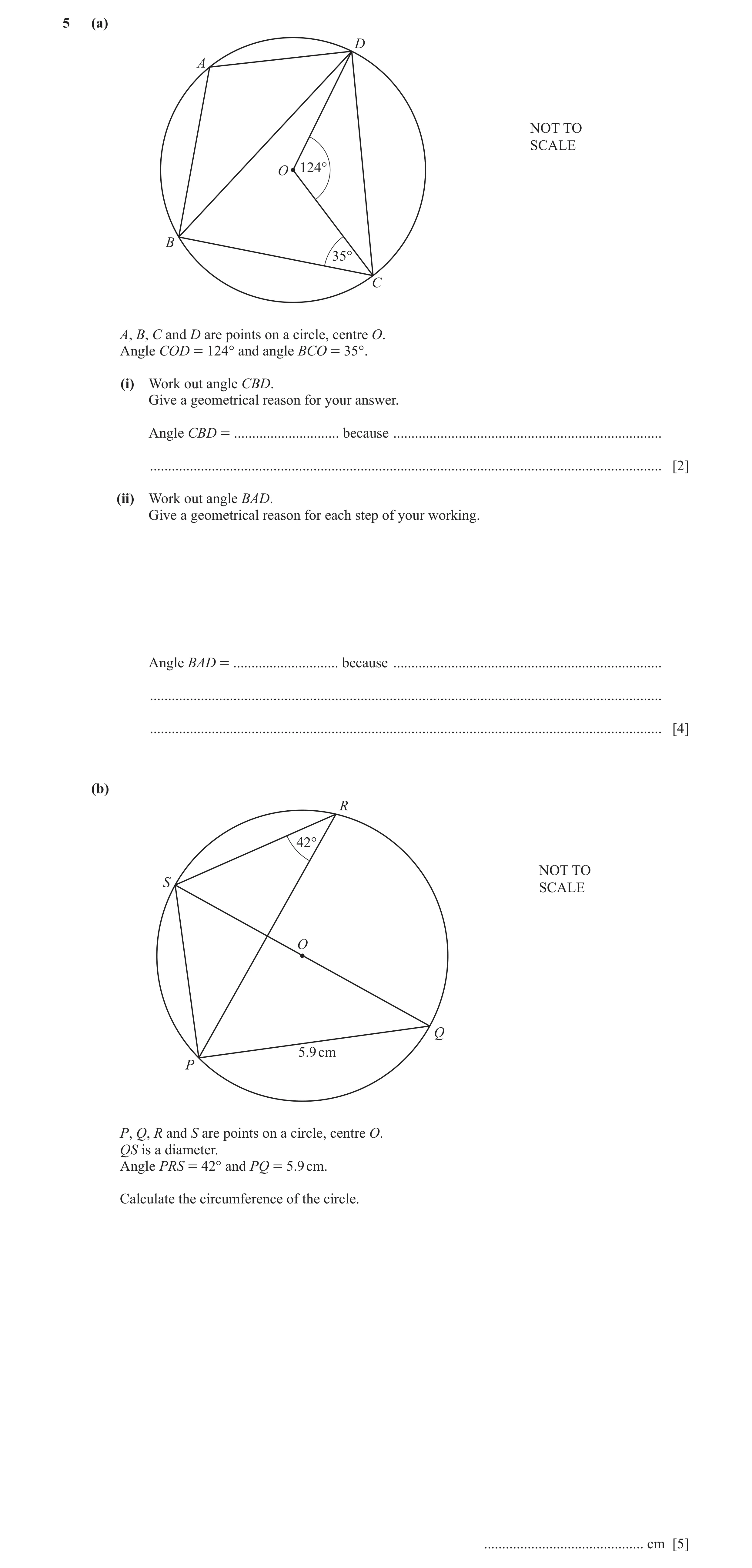
Q18 · D A NOT TO SCALE O 124° B 35° C A, B, C and D are points on a circle, centre O 0580/41 Oct/Nov 2021
5 (a) D A NOT TO SCALE O 124° B 35° C A, B, C and D are points on a circle, centre O. Angle COD = 124° and angle BCO = 35°. (i) Work out angle CBD. Give a geometrical reason for your answer. Angle CBD = … because … … [2] (ii) Work out angle BAD. Give a geometrical reason for each step of your working. Angle BAD = … because … … … [4] (b) R 42° NOT TO S SCALE O Q 5.9 cm P P, Q, R and S are points on a circle, centre O. QS is a diameter. Angle PRS = 42° and PQ = 5.9 cm. Calculate the circumference of the circle. … cm [5]
11 marks
Mark scheme: 5(a)(i) 62 2 B1 for either and Angle at centre is twice angle at circumference oe 5(a)(ii) 117 4 B2 for 117 and or B1 for [angle OCD =] 28 Isosceles [triangle] B1dep for isosceles [triangle] and and Opposite angles in a cyclic quadrilateral B1 for opposite angles in a cyclic are supplementary quadrilateral are supplementary 5(b) 24.9 or 24.94 to 24.95 5 B1 for angle PQS = 42 M2 for QS = 5.9 ÷ cos 42 oe 5.9 or M1 for cos42= oe QS M1dep for their SQ × π oe
This question in 0580/41 Oct/Nov 2021
Q19 · A regular 12-sided polygon has side length 6 cm 0580/43 May/June 2022
4 A regular 12-sided polygon has side length 6 cm. (a) Show that one interior angle of the polygon is 150°. [1] (b) The polygon is enclosed by a circle, centre O, so that each vertex touches the circumference of the circle. A B 6 cm NOT TO SCALE O (i) Show that the radius, AO, of the circle is 11.6 cm, correct to 1 decimal place. [3] (ii) Calculate (a) the circumference of the circle, … cm [2] (b) the perimeter of the shaded minor segment formed by the chord AB. … cm [2] (c) The regular 12-sided polygon is the cross-section of a prism of length 2 cm. Calculate the volume of the prism. … cm3 [3]
11 marks
Mark scheme: 4(a) (12 2) 180 1 (2 12 4) 90 [= 150] oe Accept [= 150] 12 12 360 or 180 – [= 150] 12 4(b)(i) 3 M2 3 oe M1 for cos75 oe cos75 AO or or 6sin75 r 6 sin30 sin75 sin30 11.59… A1 4(b)(ii)(a) 72.8 or 72.9 or 72.82 to 72.89… 2 M1 for 2 11.6 4(b)(ii)(b) 12.1 or 12.06 to 12.08 2 M1 for [6 +] their (b)(ii)(a) ÷ 12 oe 4(c) 806 or 807 or 805.9 to 807.4 3 B2 for 402.9… to 403.7 OR 1 M2 for 6 11.6 sin75 12 2 oe 2 1 or M1 for 6 11.6 sin75 [k ] oe 2
This question in 0580/43 May/June 2022
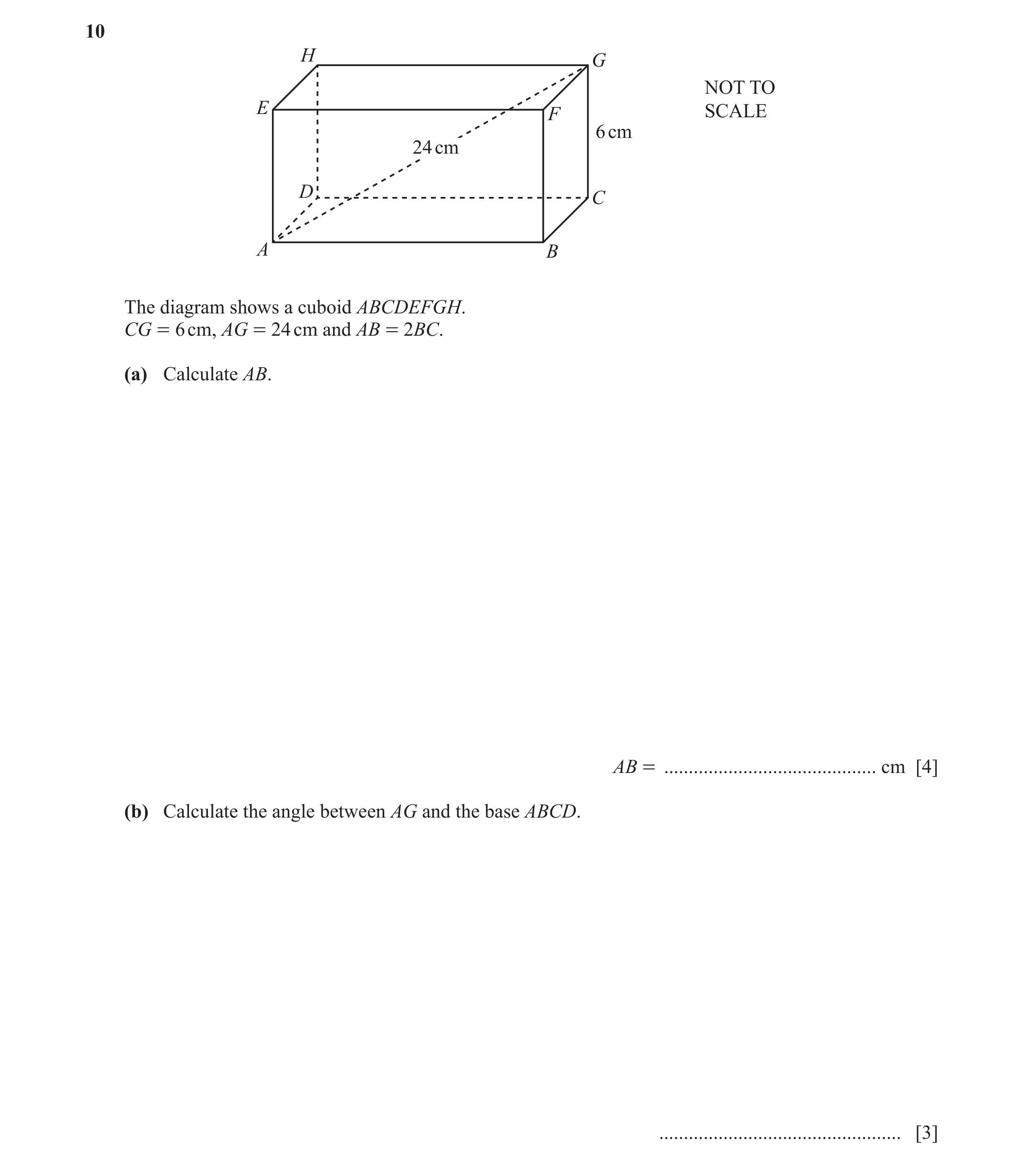
Q20 · H G NOT TO E F SCALE 6 cm 24 cm D C A B The diagram shows a cuboid ABCDEFGH 0580/43 May/June 2022
10 H G NOT TO E F SCALE 6 cm 24 cm D C A B The diagram shows a cuboid ABCDEFGH. CG = 6 cm, AG = 24 cm and AB = 2BC. (a) Calculate AB. AB = … cm [4] (b) Calculate the angle between AG and the base ABCD. … [3]
7 marks
Mark scheme: 10(a) 20.8 or 20.76 to 20.79 4 B3 for [BC =] 10.4 or 10.38 to 10.39… or 6 3 oe or M2 for (2x)2 + x2 + 62 = 242 oe or M1 for 242 – 62 oe or x2 + 62 oe or (2x)2 + 62 oe, or x2 + (2x)2 oe or SC2 for final answer of 12 5 or 26.8 or 26.83… OR x 2 M3 for x2 + + 62 = 242 oe 2 x 2 or M2 for x2 + 2 x 2 or M1 for x2 + 62 oe or + 62 oe or 2 242 – 62 oe 10(b) 14.5 or 14.47 to 14.48 3 6 M2 for sin […] = oe 24 or M1 for recognising the correct angle GAC
This question in 0580/43 May/June 2022
Q21 · Q NOT TO 4 m SCALE A 15 m C P 8 m 3 m 20 m B The diagram shows triangle ABC on horizontal… 0580/41 Oct/Nov 2022
8 Q NOT TO 4 m SCALE A 15 m C P 8 m 3 m 20 m B The diagram shows triangle ABC on horizontal ground. AC = 15 m , BC = 8 m and AB = 20 m . BP and CQ are vertical poles of different heights. BP = 3 m and CQ = 4 m . AQ and PQ are straight wires. (a) Show that angle ACB = 117.5° , correct to 1 decimal place. [4] (b) Calculate the area of triangle ABC. … m2 [2] (c) Calculate the length of AQ. … m [2] (d) Calculate the angle of elevation of Q from P. … [3] (e) Another straight wire connects A to the midpoint of PQ. Calculate the angle between this wire and the horizontal ground. … [5]
16 marks
Mark scheme: 8(a) 15 2 + 8 2 − 20 2 M2 M1 for 202 = 152 + 82 − 2.15.8cos ( ) [cos = ] 2.15.8 117.54 to 117.55 A2 37 111 A1 for − or − or –[0].4625 80 240 8(b) 53.2 or 53.19 to 53.23 2 M1 for 0.5 8 15 sin(117.5) oe 8(c) 15.5 or 15.52 to 15.53 2 M1 for 152 + 42 oe 8(d) 7.1 or 7.13 or 7.125 to 7.126 3 4 − 3 M2 for tan [P]= oe or for 7.1 or 8 7.13 or 7.125 to 7.126 seen or M1 for vertical line = 4 – 3 soi After 0 scored SC1 for correct angle identified 8(e) 11.5 nfww or 11.48 to 11.49... 5 B1 for height of 3.5 soi M2 for 15 2 + 4 2 − 2.15.4cos(117.5) 15 2 + 4 2 − (...) 2 or M1 for cos117.5 = 2.15.4 3.5 M1 for tan = oe their 17.216... After M0 scored SC1 for correct angle identified
This question in 0580/41 Oct/Nov 2022
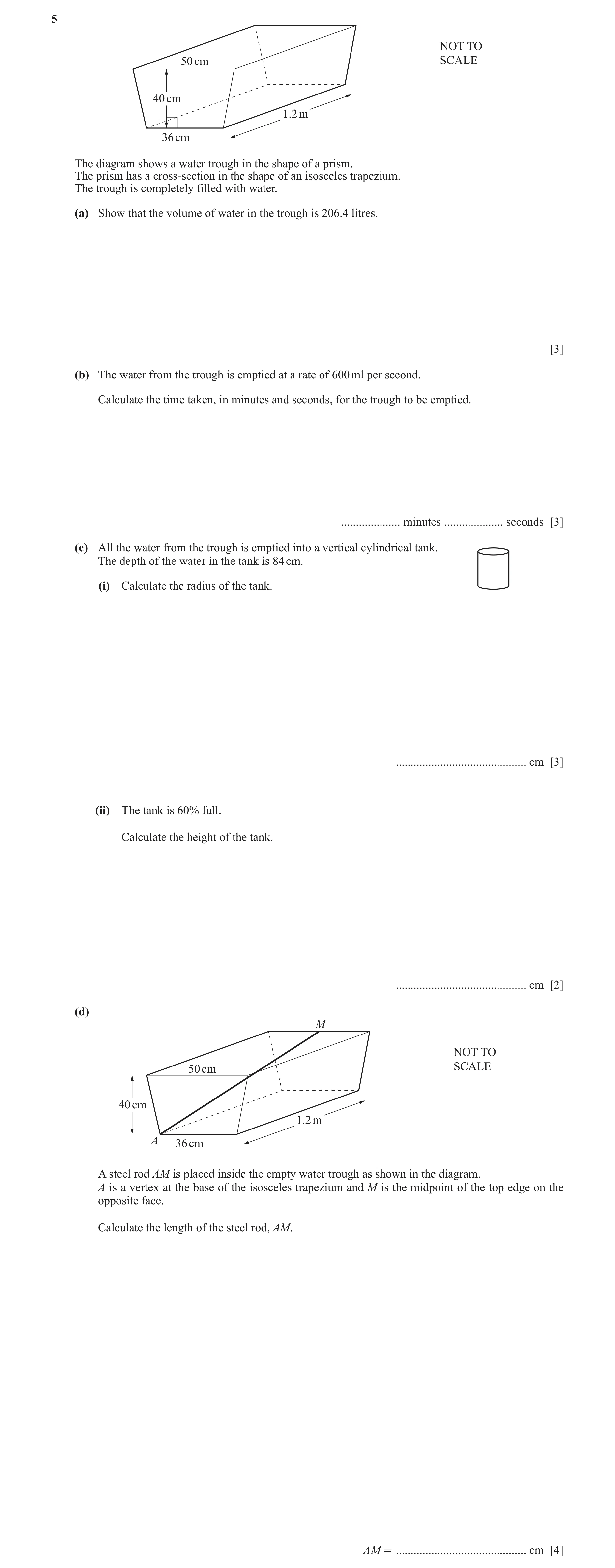
Q22 · NOT TO 50 cm SCALE 40 cm 1.2 m 36 cm The diagram shows a water trough in the shape of a… 0580/43 Oct/Nov 2022
5 NOT TO 50 cm SCALE 40 cm 1.2 m 36 cm The diagram shows a water trough in the shape of a prism. The prism has a cross-section in the shape of an isosceles trapezium. The trough is completely filled with water. (a) Show that the volume of water in the trough is 206.4 litres. [3] (b) The water from the trough is emptied at a rate of 600 ml per second. Calculate the time taken, in minutes and seconds, for the trough to be emptied. … minutes … seconds [3] (c) All the water from the trough is emptied into a vertical cylindrical tank. The depth of the water in the tank is 84 cm. (i) Calculate the radius of the tank. … cm [3] (ii) The tank is 60% full. Calculate the height of the tank. … cm [2] (d) M NOT TO 50 cm SCALE 40 cm 1.2 m A 36 cm A steel rod AM is placed inside the empty water trough as shown in the diagram. A is a vertex at the base of the isosceles trapezium and M is the midpoint of the top edge on the opposite face. Calculate the length of the steel rod, AM. AM = … cm [4]
15 marks
Mark scheme: 5(a) (36 + 50) 40 120 oe M2 2 (36 + 50) 40 (0.36 + 0.5) 0.4 or M1 for oe or oe 2 2 (0.36 + 0.5) 0.4 1.2 oe 2 206400 ÷ 1000 = 206.4 A1 Must see an explicit conversion or 0.2064 × 1000 = 206.4 nfww 5(b) 5 [minutes] 44 seconds 3 B2 for 344 [seconds] oe 5.73…[mins] or M1 for figs206.4 ÷ figs 6 oe 5(c)(i) 28[.0] or 27.96 to 27.97 3 figs 2064 M2 for [r2=] ( figs84) or M1 for r 2 figs 84 = figs 2064 5(c)(ii) 140 cao 2 M1 for 0.6h = 84 oe ALT method 2 M1 for ( their (c)(i) ) h = figs 206400 0.6 oe 5(d) 128 or 127.7 to 127.8 4 B3 for 40 2 + 120 2 + 18 2 oe OR B1 for horizontal length 18 soi M1 for any correct attempt at 2-dimensional Pythagoras’ 182 + 1202, 1202 + 402, 182 + 402
This question in 0580/43 Oct/Nov 2022
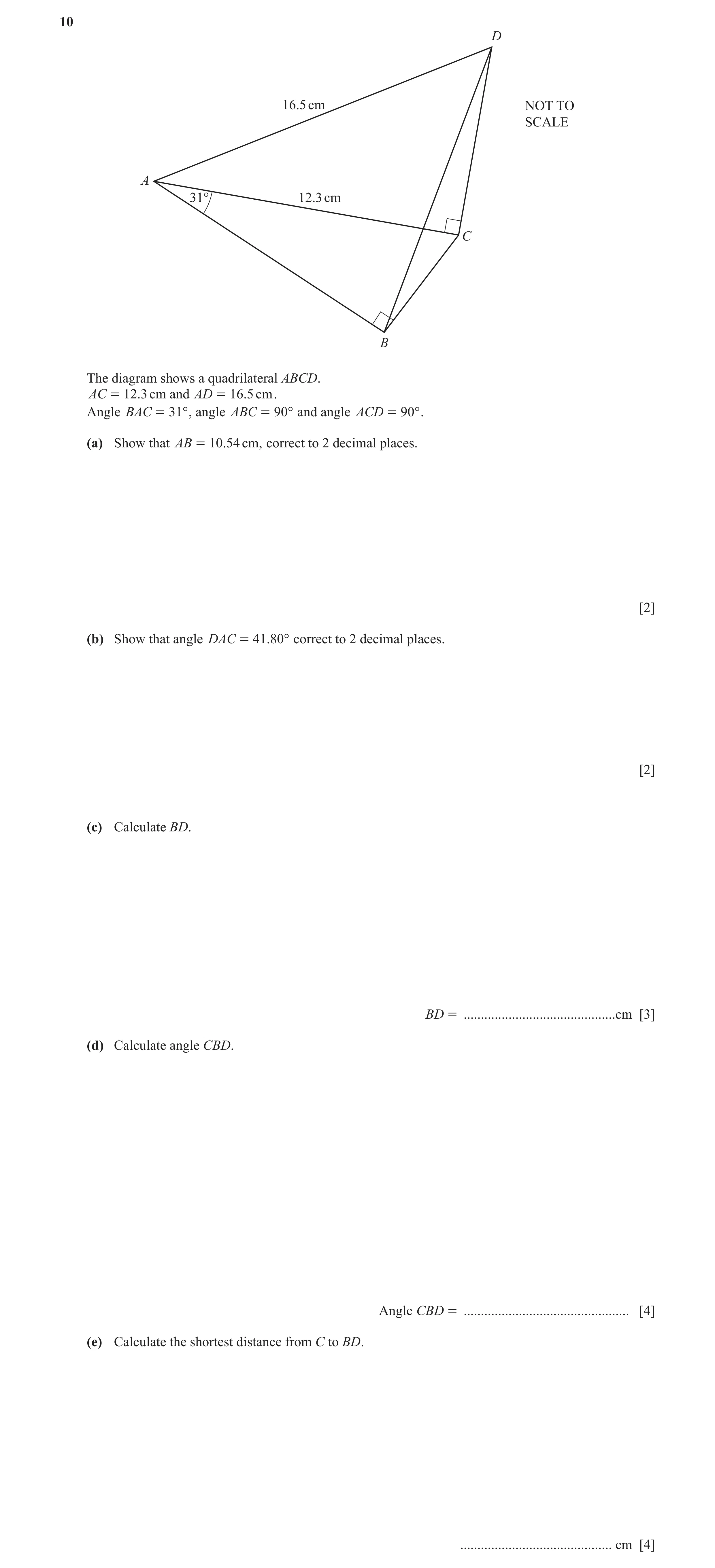
Q23 · D 16.5 cm NOT TO SCALE A 31° 12.3 cm C B The diagram shows a quadrilateral ABCD 0580/42 Feb/March 2023
10 D 16.5 cm NOT TO SCALE A 31° 12.3 cm C B The diagram shows a quadrilateral ABCD. AC = 12.3 cm and AD = 16. 5 cm . Angle BAC = 31° , angle ABC = 90° and angle ACD = 90° . (a) Show that AB = 10.54 cm, correct to 2 decimal places. [2] (b) Show that angle DAC = 41.80° correct to 2 decimal places. [2] (c) Calculate BD. BD = … cm [3] (d) Calculate angle CBD. Angle CBD = … [4] (e) Calculate the shortest distance from C to BD. … cm [4]
15 marks
Mark scheme: 10(a) AB M1 cos31 = oe 12.3 10.543... A1 10(b) 12.3 M1 cos = oe 16.5 41.801 to 41.802 A1 10(c) 16.7 or 16.8 or 16.74 to 16.75… 3 2 2 M2 for 10.54 + 16.5 −2 10.54 16.5 cos(31 + 41.8) or for 6.332 + 112 −2 6.33 11 cos(180 − 31) OR M1 for 10.54 2 + 16.5 2 −2 10.54 16.5 cos(31 + 41.8) or for 6.332 + 112 −2 6.33 11 cos(90 + 90 − 31) oe A1 for 280 or 281 or 280.4 to 280.6 10(d) 18.9 to 20.7… nfww 4 BC M1 for sin31 = oe or better and 12.3 CD sin 41.8[0] = oe 16.5 M2dep on M1 for their ( c ) 2 + 6.34 2 − 10.998 2 cos [DBC] = 2 their ( c ) 6.34 or M1dep on M1 for 10.9982 = their (c)2 +6.342 – 2 × their (c) ×6.34 × cos DBC 10(e) 2.05 to 2.24… nfww 4 BC M1 for sin31 = oe or better 12.3 CD or sin 41.8[0] = oe 16.5 dist M2dep on M1 for = sin(their angle CBD ) theirBC dist or = sin(their angle CDB ) theirCD or M1 for recognition of shortest distance
This question in 0580/42 Feb/March 2023
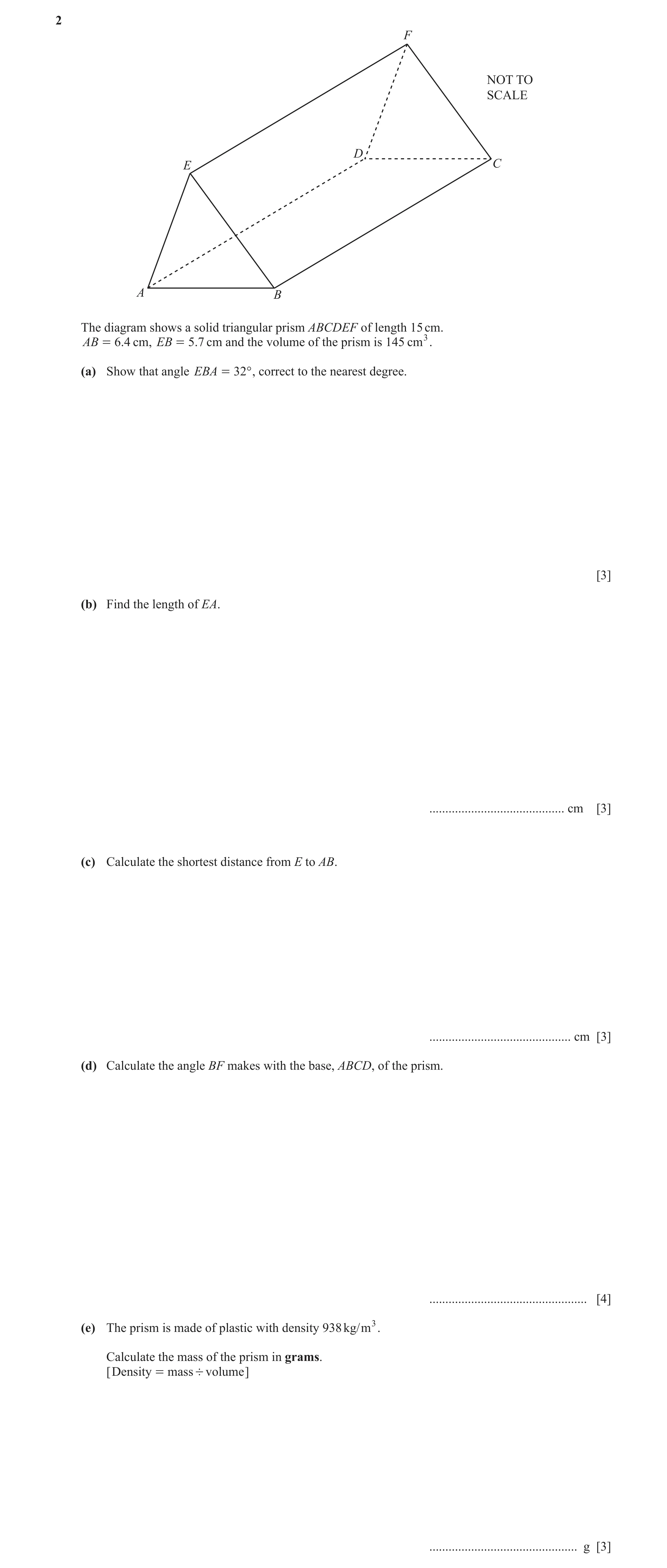
Q24 · F NOT TO SCALE D E C A B The diagram shows a solid triangular prism ABCDEF of length 15 cm 0580/41 May/June 2023
2 F NOT TO SCALE D E C A B The diagram shows a solid triangular prism ABCDEF of length 15 cm. AB = 6.4 cm, EB = 5.7 cm and the volume of the prism is 145 cm3. (a) Show that angle EBA = 32° , correct to the nearest degree. [3] (b) Find the length of EA. … cm [3] (c) Calculate the shortest distance from E to AB. … cm [3] (d) Calculate the angle BF makes with the base, ABCD, of the prism. … [4] (e) The prism is made of plastic with density 938 kg/m3. Calculate the mass of the prism in grams. [Density = mass ' volume ] … g [3]
16 marks
Mark scheme: 2(a) 145 M2 M1 for 145 = 12 6.4 5.7 sin x 15 oe [sin =] 1 2 6.4 5.7 15 1 or for 6.4 h 15 145 and sin x h 2 5.7 32.0[0] A1 If M0, SC1 for 145 = 0.5 6.4 5.7 sin32 15 oe 2(b) 3.4[0] or 3.402 to 3.403 nfww 3 2 2 M2 for 6.4 5.7 2 6.4 5.7 cos 32 OR M1 for 6.4 2 5.7 2 2 6.4 5.7 cos 32 A1 for 11.6 or 11.57 to 11.58 2(c) 3.02 or 3.020 to 3.021 3 M2 for sin 32 x 5.7 80 2 50 2 2 80 50 cos75 or M1 for recognition that the line from E is perpendicular to AB e.g. right angle seen or 1 6.4 h 2 2(d) 10.8 or 10.9 or 10.84 to 10.85... 4 their(c) M3 for [sin =] 15 2 5.7 2 their (c) or tan 5.7 cos 32) 2 15 2 2 oe or M2 for 15 2 5.7 2 or 5.7 cos32 2 15 or M1 for recognition of correct angle 2(e) 136 or 136.0... 3 1000 M2 for 938 145 oe 1000000 or M1 for figs 136 or 13601
This question in 0580/41 May/June 2023
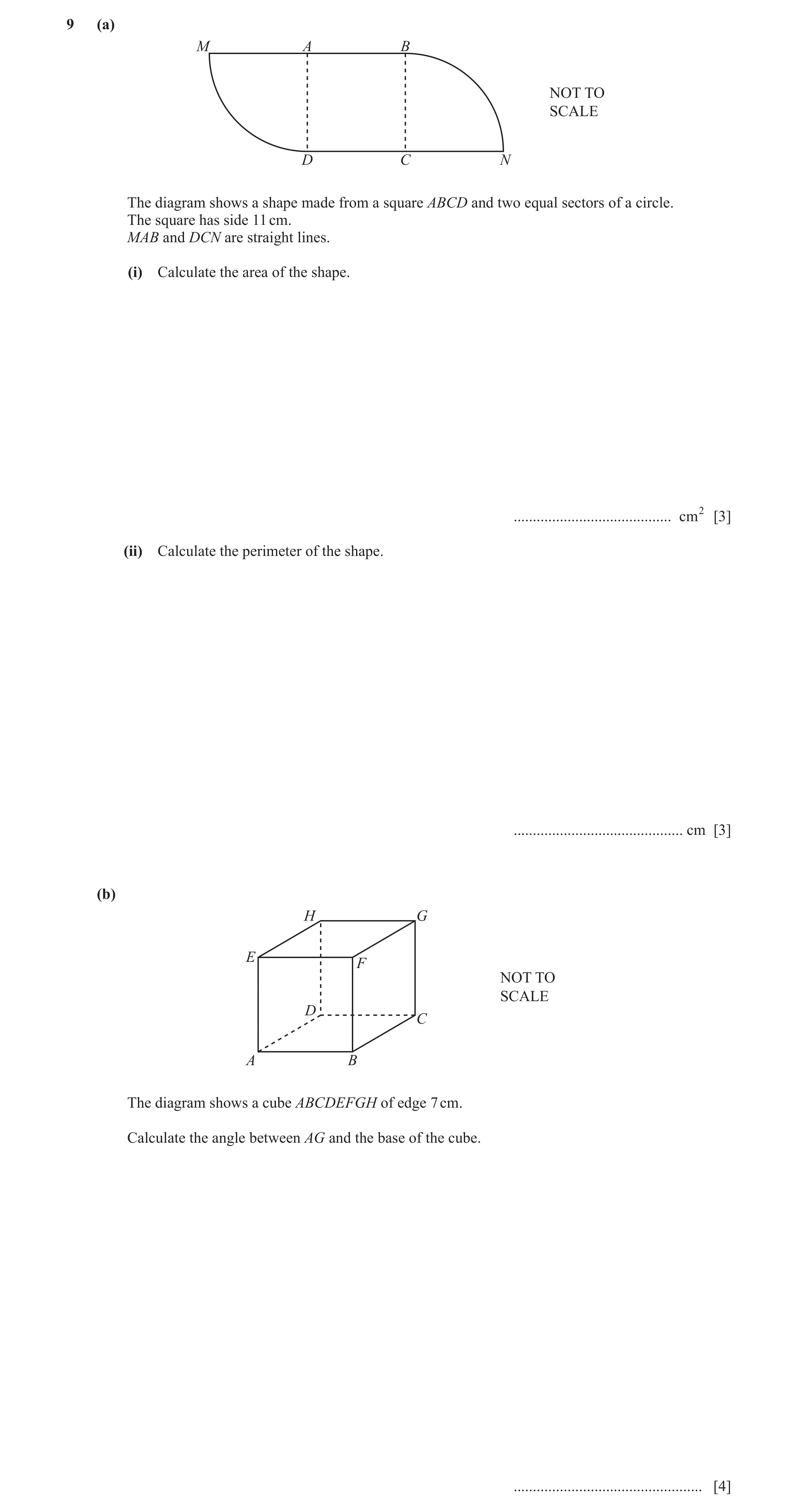
Q25 · M A B NOT TO SCALE D C N The diagram shows a shape made from a square ABCD and two equal… 0580/43 May/June 2023
9 (a) M A B NOT TO SCALE D C N The diagram shows a shape made from a square ABCD and two equal sectors of a circle. The square has side 11 cm. MAB and DCN are straight lines. (i) Calculate the area of the shape. … cm2 [3] (ii) Calculate the perimeter of the shape. … cm [3] (b) H G E F NOT TO SCALE D C A B The diagram shows a cube ABCDEFGH of edge 7 cm. Calculate the angle between AG and the base of the cube. … [4]
10 marks
Mark scheme: 9(a)(i) 311 or 311.0 to 311.1 3 1 M2 for 11 11 + 2 112 oe 4 1 or M1 for [2 ] 112 or 11 11 4 oe 9(a)(ii) 78.6 or 78.55 to 78.56... 3 1 M2 for 4 11 + 2 2 11 oe 4 1 or M1 for [2 ] 2 11 or 4 11 4 oe 9(b) 35.2 or 35.3 or 35.239… to 35.28 4 7 M3 for [tan =] 7 2 7 2 7 or [sin =] 7 2 7 2 7 2 7 2 7 2 or [cos =] 7 2 7 2 7 2 OR M2 for AG = 7 2 7 2 7 2 2 7 2 or for 7 oe sin 45 2 2 7 or for AC = 7 7 or oe sin45 OR M1 for 72 + 72 or for implicit trigonometry or identifying correct angle
This question in 0580/43 May/June 2023
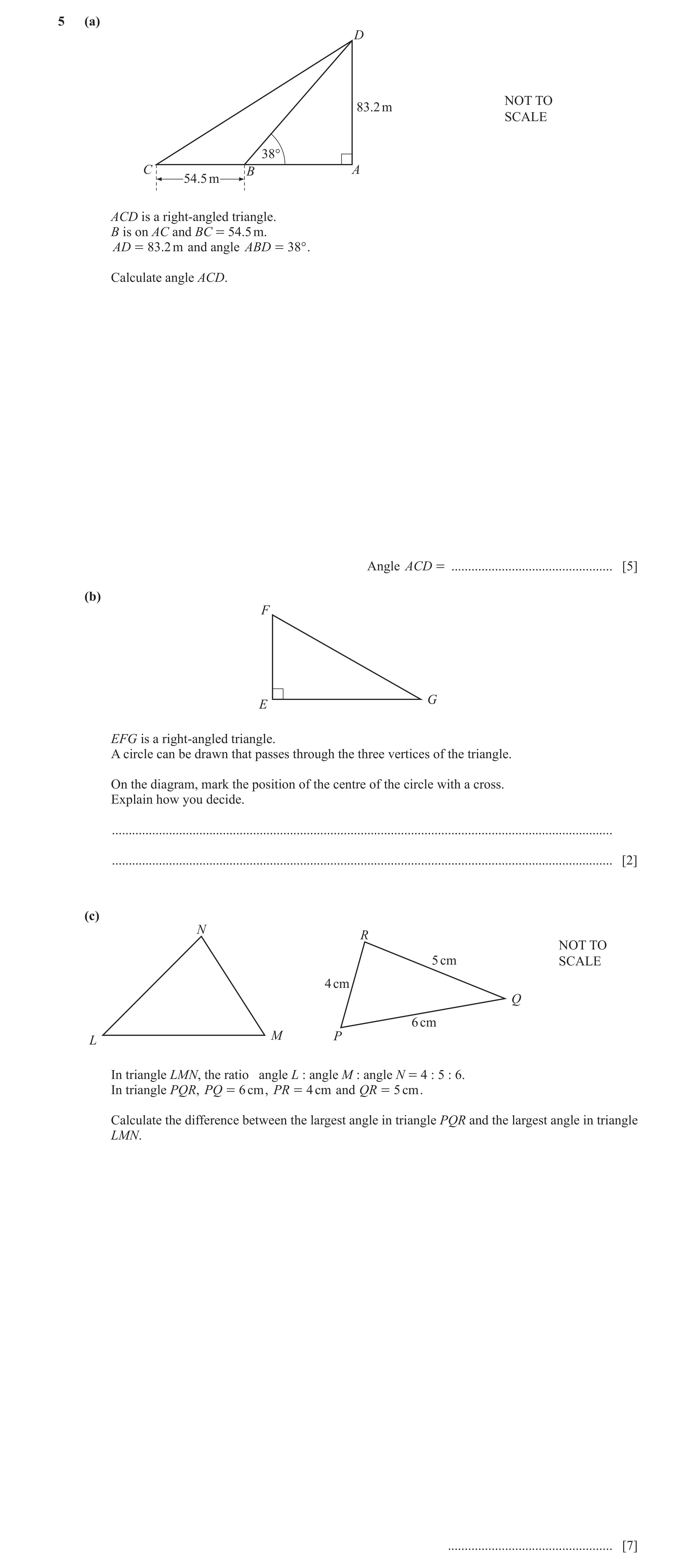
Q26 · D NOT TO 83.2 m SCALE 38° C B A 54.5 m ACD is a right-angled triangle 0580/41 Oct/Nov 2023
5 (a) D NOT TO 83.2 m SCALE 38° C B A 54.5 m ACD is a right-angled triangle. B is on AC and BC = 54.5 m. AD = 83.2 m and angle ABD = 38° . Calculate angle ACD. Angle ACD = … [5] (b) F G E EFG is a right-angled triangle. A circle can be drawn that passes through the three vertices of the triangle. On the diagram, mark the position of the centre of the circle with a cross. Explain how you decide. … … [2] (c) N R NOT TO 5 cm SCALE 4 cm Q 6 cm M P L In triangle LMN, the ratio angle L : angle M : angle N = 4 : 5 : 6. In triangle PQR, PQ = 6 cm , PR = 4 cm and QR = 5 cm . Calculate the difference between the largest angle in triangle PQR and the largest angle in triangle LMN. … [7]
14 marks
Mark scheme: 5(a) 27.3 or 27.32 to 27.33 5 83.2 M4 for tan[ACD] = oe 83.2 + 54.5 tan38 or 83.2 M3 for [AC =] +54.5 oe tan38 or for [CD =] 2 83.2 2 83.2 54.5 + − 2(54.5) cos(180 − 38) sin38 sin38 oe or 83.2 83.2 M2 for [AB =] oe or for [BD =] oe tan38 sin 38 83.2 83.2 or M1 for tan38 = oe or sin38 = oe AB BD 5(b) Centre marked at midpoint of B2 B1 for marking the centre at mid-point of FG FG. and Angle in a semi-circle is 90 5(c) 10.8 or 10.81 to 10.82 7 B2 for 72 180 or M1 for [ 6] 4 + 5 + 6 and, for triangle PQR B4 for [angle R=]82.8 or 82.81 to 82.83 5 or B3 for [cosR =] oe or better 40 4 2 + 5 2 − 6 2 or M2 for 2 4 5 or M1 for 62 = 42 + 52 – 245cosR After 0 scored for triangle PQR, SC1 for [P =] 55.8 or 55.77 to 55.78 or Q = 41.4 or 41.40 to 41.41
This question in 0580/41 Oct/Nov 2023
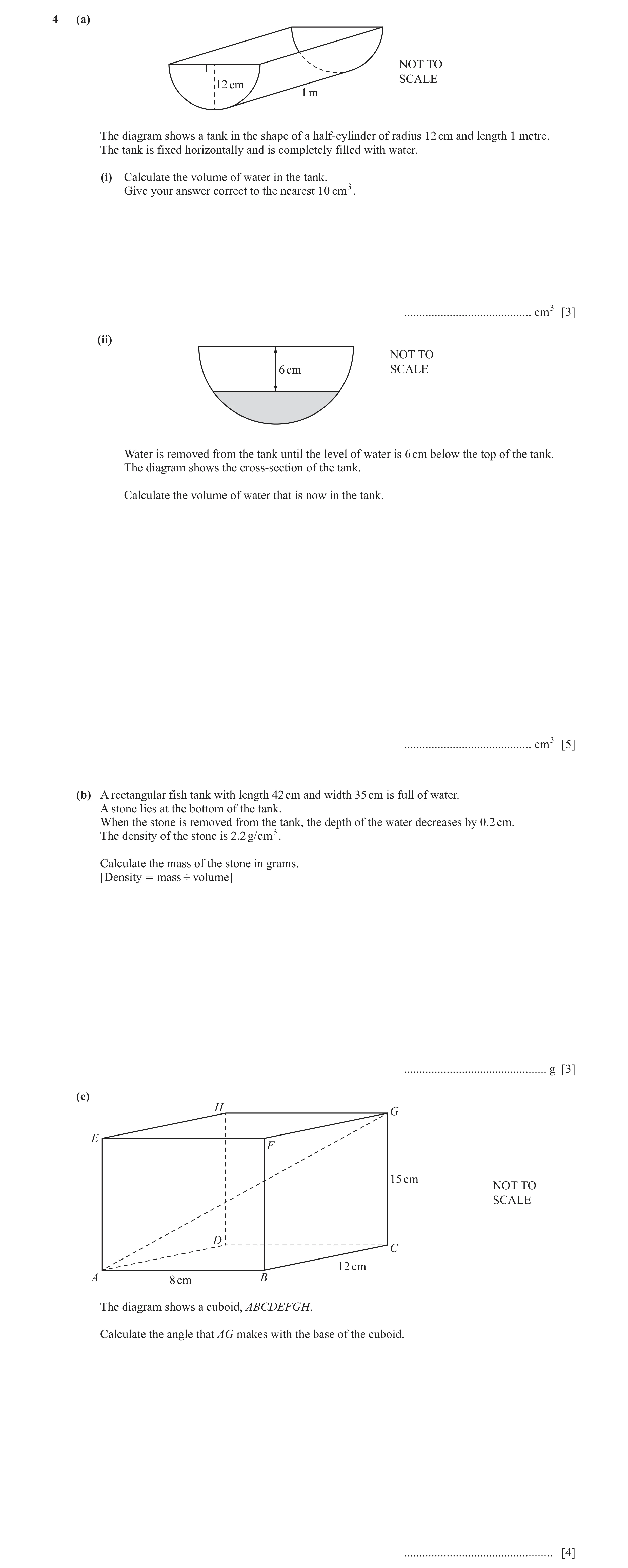
Q27 · NOT TO SCALE 12 cm 1 m The diagram shows a tank in the shape of a half-cylinder of radius… 0580/42 May/June 2024
4 (a) NOT TO SCALE 12 cm 1 m The diagram shows a tank in the shape of a half-cylinder of radius 12 cm and length 1 metre. The tank is fixed horizontally and is completely filled with water. (i) Calculate the volume of water in the tank. Give your answer correct to the nearest 10 cm3. … cm3 [3] (ii) NOT TO 6 cm SCALE Water is removed from the tank until the level of water is 6 cm below the top of the tank. The diagram shows the cross-section of the tank. Calculate the volume of water that is now in the tank. … cm3 [5] (b) A rectangular fish tank with length 42 cm and width 35 cm is full of water. A stone lies at the bottom of the tank. When the stone is removed from the tank, the depth of the water decreases by 0.2 cm. The density of the stone is 2.2 g/cm3. Calculate the mass of the stone in grams. [ Density = mass ' volume] … g [3] (c) H G E F 15 cm NOT TO SCALE D C 12 cm A 8 cm B The diagram shows a cuboid, ABCDEFGH. Calculate the angle that AG makes with the base of the cuboid. … [4]
15 marks
Mark scheme: 4(a)(i) 22 620 cao 3 B2 for 7200 or 22 608 to 22 629 1 2 or M1 for 12 [ figs 1] oe 2 4(a)(ii) 8840 or 8850 or 8836 to 8850. 5 6 M1 for cos COM = oe 12 6 or sin AOC = oe 12 theirCOD 2 M1 for 12 oe M 360 1 2 oe M1 for 12 sin theirCOD 2 M1dep for (their area of sector COD– their area of triangle COD) 100 dep on at least M1M1 oe 4(b) 647 or 646.8 3 m M2 for 2.2 oe 42 35 0.2 or M1 for [vol of stone =] 42×35×0.2 oe If 0 scored SC1 for answer figs 647 or figs 6468 4(c) 46.1 or 46.12 to 46.14 4 15 M3 for tan oe 8 2 12 2 or M2 for 82 + 122 oe or 82 + 122 + 152 oe or M1 for identifying the angle GAC
This question in 0580/42 May/June 2024
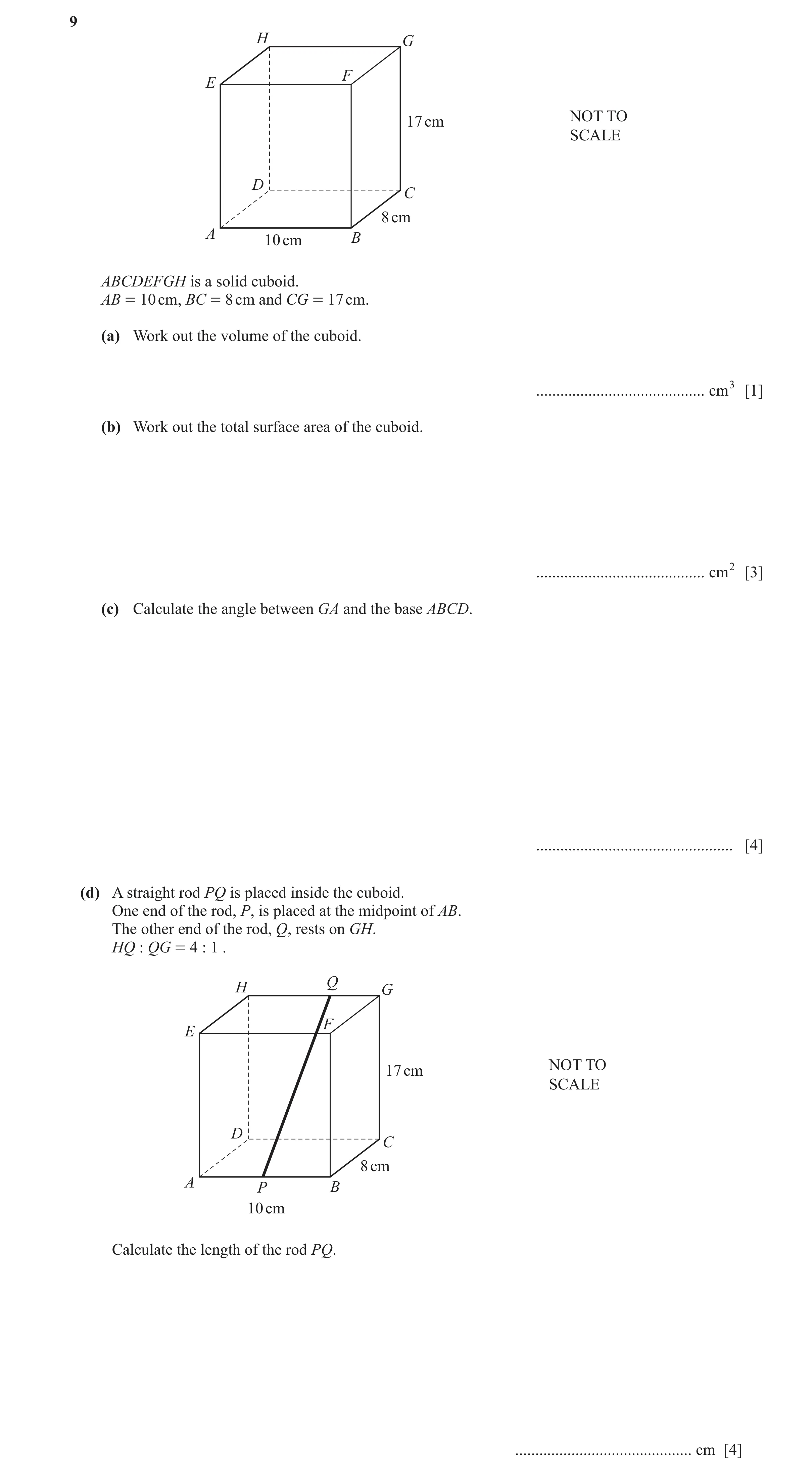
Q28 · H G F E NOT TO 17 cm SCALE D C 8 cm A 10 cm B ABCDEFGH is a solid cuboid 0580/41 Oct/Nov 2024
9 H G F E NOT TO 17 cm SCALE D C 8 cm A 10 cm B ABCDEFGH is a solid cuboid. AB = 10 cm, BC = 8 cm and CG = 17 cm. (a) Work out the volume of the cuboid. … cm3 [1] (b) Work out the total surface area of the cuboid. … cm2 [3] (c) Calculate the angle between GA and the base ABCD. … [4] (d) A straight rod PQ is placed inside the cuboid. One end of the rod, P, is placed at the midpoint of AB. The other end of the rod, Q, rests on GH. HQ : QG = 4 : 1 . Q H G F E NOT TO 17 cm SCALE D C 8 cm A P B 10 cm Calculate the length of the rod PQ. … cm [4]
12 marks
Mark scheme: 9(a) 1360 1 9(b) 772 3 M2 for [2 ×] (10 × 8 + 10 × 17 + 8 × 17) oe or M1 for 10 × 8 oe or 10 × 17 oe or 8 × 17 oe 9(c) 53 or 53.0 to 53.01 4 17 M3 for tan [GAC] = oe 10 2 + 8 2 or M2 for 102 + 82 oe or for 102 + 82 + 172 oe or M1 for recognising angle GAC is required 9(d) 19[.0] or 19.02 to 19.03 4 M3 for 32 + 82 + 172 oe OR B1 for QG = 2 soi or HQ = 8 M1 for (5 – 2) 2 + 82 or (5 – 2) 2 + 172
This question in 0580/41 Oct/Nov 2024
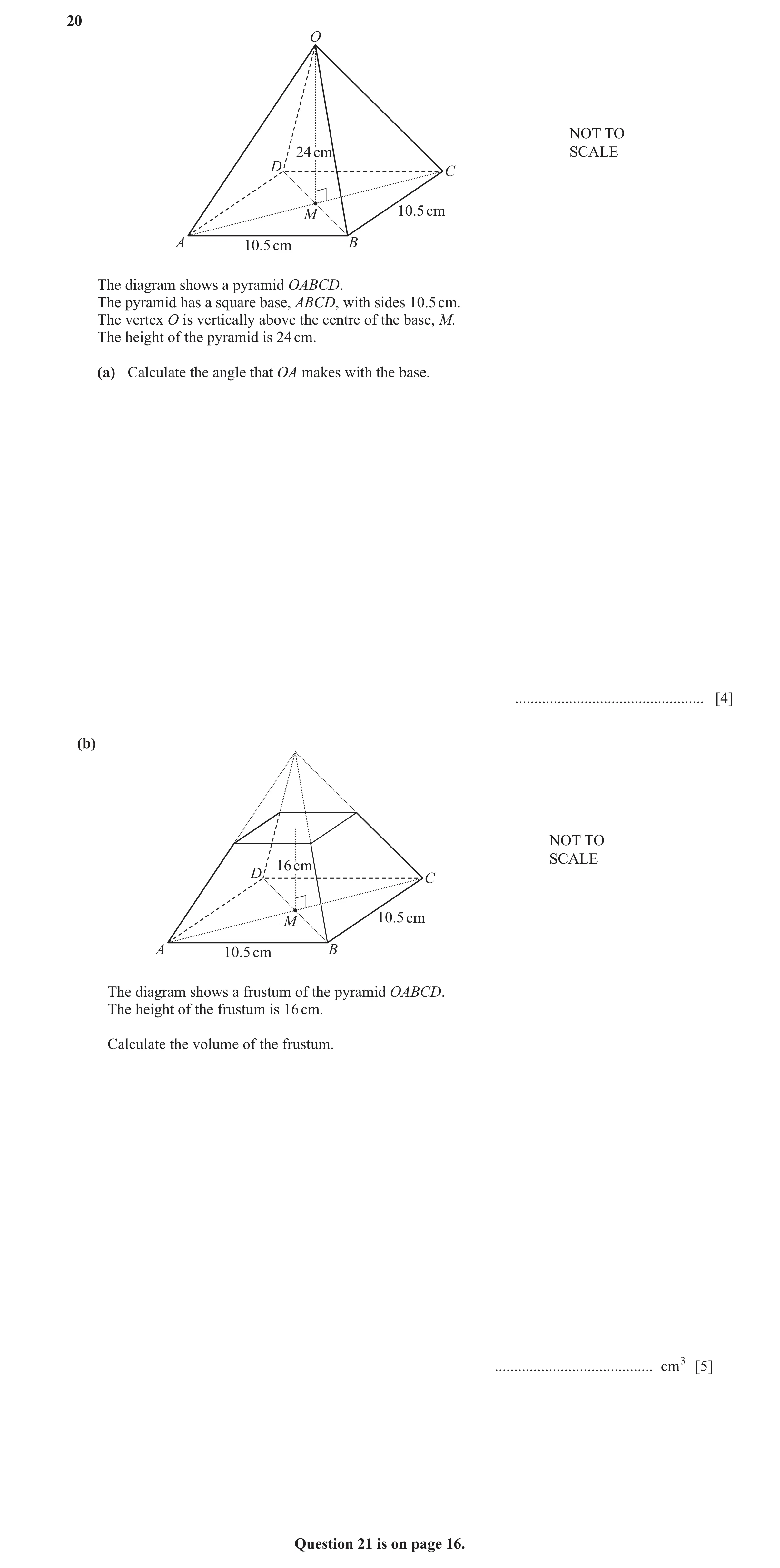
Q29 · O NOT TO 24 cm SCALE D C M 10.5 cm A 10.5 cm B The diagram shows a pyramid OABCD 0580/41 May/June 2025
20 O NOT TO 24 cm SCALE D C M 10.5 cm A 10.5 cm B The diagram shows a pyramid OABCD. The pyramid has a square base, ABCD, with sides 10.5 cm. The vertex O is vertically above the centre of the base, M. The height of the pyramid is 24 cm. (a) Calculate the angle that OA makes with the base. … [4] (b) NOT TO SCALE 16 cm D C M 10.5 cm A 10.5 cm B The diagram shows a frustum of the pyramid OABCD. The height of the frustum is 16 cm. Calculate the volume of the frustum. … cm3 [5] Question 21 is on page 16.
9 marks
Mark scheme: 20(a) 72.8 or 72.81… 4 24 M3 for oe or better 1 2 2 10.5 + 10.5 2 1 2 2 or M2 for AM = 10.5 + 10.5 oe 2 or AM = 10.5 cos45 oe or M1 for AC2 = 10.52 + 10.52 or AM 2 = 5.252 +5.252 AM or = cos45 oe 10.5 If 0 scored, SC1 for identifying OAM 20(b) 1 5 Method 1 849 or 849 or 849.3… 3 B2 for side of small square = 3.5 10.5 24 or M1 for = or better x 24 − 16 1 1 M2 for 10.52 24 – (their 3.5)2 3 3 (24 – 16) 1 or M1 for 10.52 24 3 1 or for (their 3.5)2 (24 – 16) 3 Method 2 1 26 B2 for or 27 27 24 − 16 3 or M1 for volume scale factor = 24 M2 for 1 1 2 1 − their 10.5 24 oe 27 3 1 2 or M1 for 3 10.5 24 1 1 2 or their 10.5 24 oe 27 3
This question in 0580/41 May/June 2025
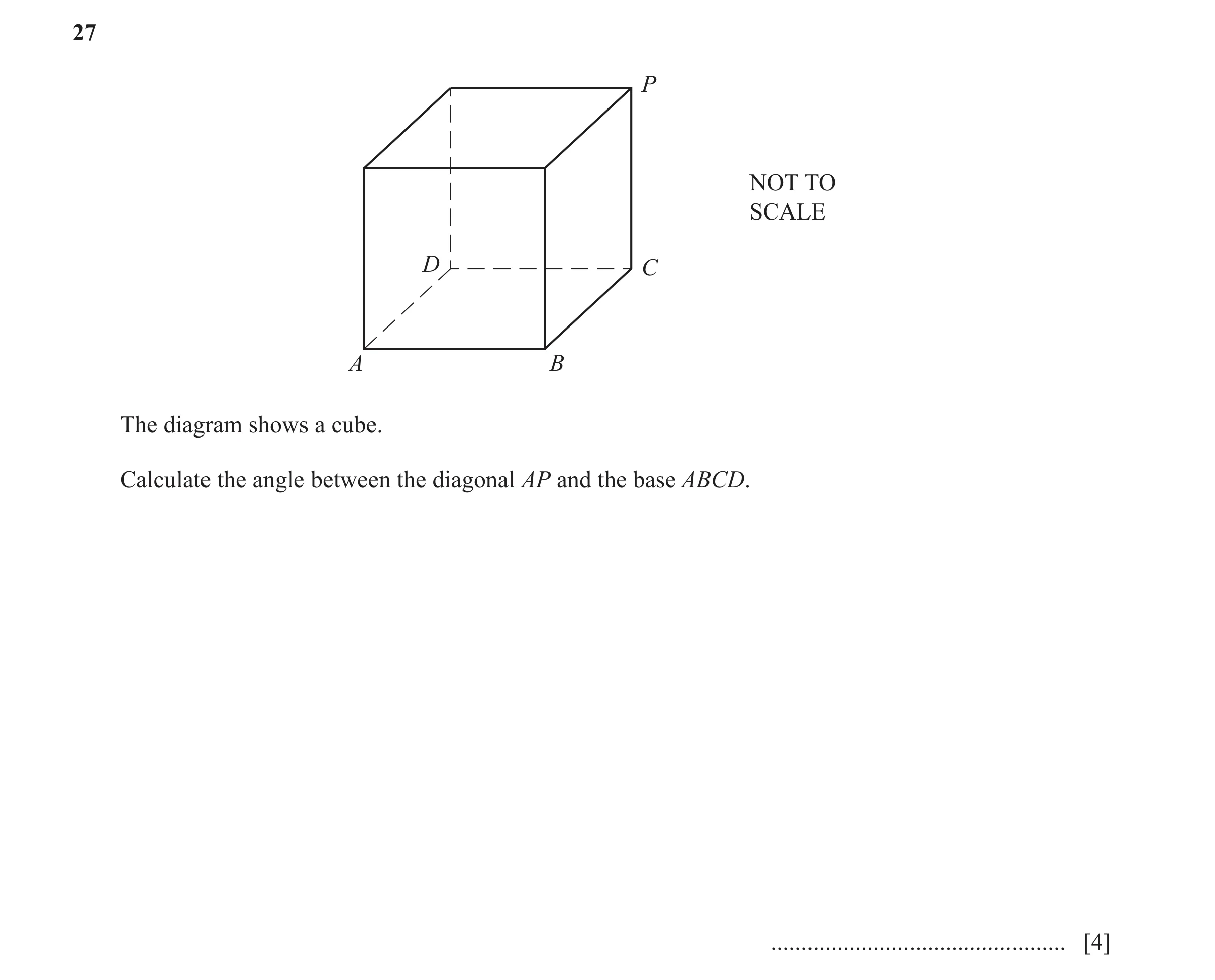
Q30 · P NOT TO SCALE D C A B The diagram shows a cube 0580/42 May/June 2025
27 P NOT TO SCALE D C A B The diagram shows a cube. Calculate the angle between the diagonal AP and the base ABCD. … [4]
4 marks
Mark scheme: 27 35.3 or 35.26… 4 M3 for correct numerical trig statement for angle PAC e.g. l 1 tan = or oe l 2 + l 2 2 l 1 or sin = or oe l 2 + l 2 + l 2 3 l 2 + l 2 2 or cos = or oe l 2 + l 2 + l 2 3 where l is a value or M2 for a correct Pythagoras statement soi or correct trig statement for diagonal of a face with angle 45 used soi e.g. For side length k, AC shown as k 2 or M1 for recognition of angle PAC
This question in 0580/42 May/June 2025
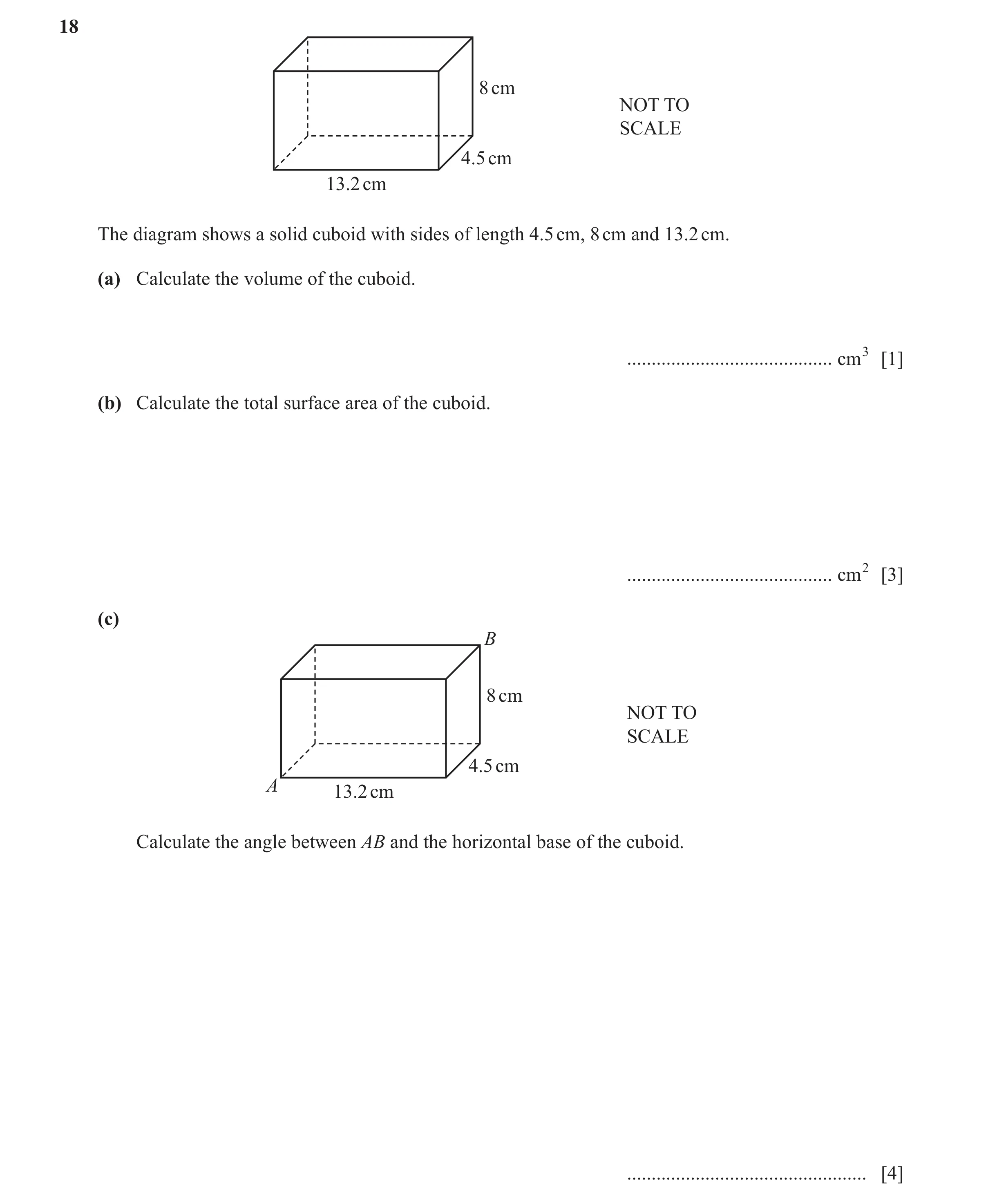
Q31 · 8 cm NOT TO SCALE 4.5 cm 13.2 cm The diagram shows a solid cuboid with sides of length… 0580/43 May/June 2025
18 8 cm NOT TO SCALE 4.5 cm 13.2 cm The diagram shows a solid cuboid with sides of length 4.5 cm, 8 cm and 13.2 cm. (a) Calculate the volume of the cuboid. … cm3 [1] (b) Calculate the total surface area of the cuboid. … cm2 [3] (c) B 8 cm NOT TO SCALE 4.5 cm A 13.2 cm Calculate the angle between AB and the horizontal base of the cuboid. … [4]
8 marks
Mark scheme: 18(a) 475.2 1 18(b) 402 3 M2 for [2 ×] (13.2 × 4.5 + 13.2 × 8 + 4.5 × 8) or M1 for [2 ×] 13.2 × 4.5 or [2 ×] 13.2 × 8 or [2 ×] 4.5 × 8 18(c) 29.8 or 29.83 to 29.84… 4 8 M3 for tan = oe 13.2 2 + 4.5 2 or M2 for 13.22 + 4.52 or for 13.22 + 4.52 + 82 or M1 for identifying correct angle
This question in 0580/43 May/June 2025
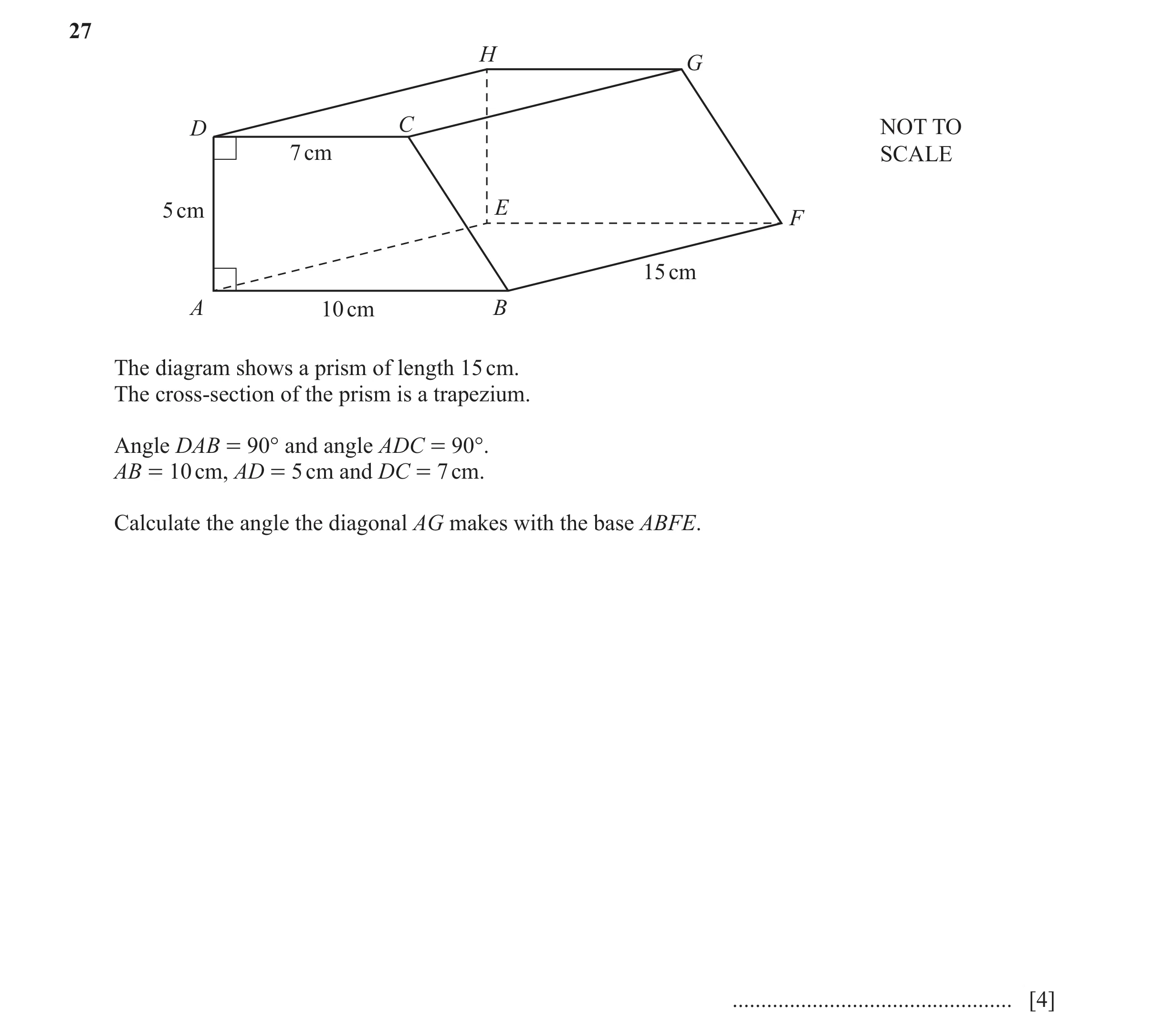
Q32 · H G D C NOT TO 7 cm SCALE 5 cm E F 15 cm A 10 cm B The diagram shows a prism of length 15… 0580/41 Oct/Nov 2025
27 H G D C NOT TO 7 cm SCALE 5 cm E F 15 cm A 10 cm B The diagram shows a prism of length 15 cm. The cross-section of the prism is a trapezium. Angle DAB = 90° and angle ADC = 90°. AB = 10 cm, AD = 5 cm and DC = 7 cm. Calculate the angle the diagonal AG makes with the base ABFE. … [4]
4 marks
Mark scheme: 27 16.8 or 16.80 to 16.81 4 5 M3 for tan = oe or 15 2 + 7 2 5 sin = oe or 152 + 7 2 + 52 152 + 7 2 cos = oe 152 + 7 2 + 52 or M2 for 15 2 + 7 2 or 15 2 + 7 2 + 5 2 or M1 for indication of correct angle
This question in 0580/41 Oct/Nov 2025
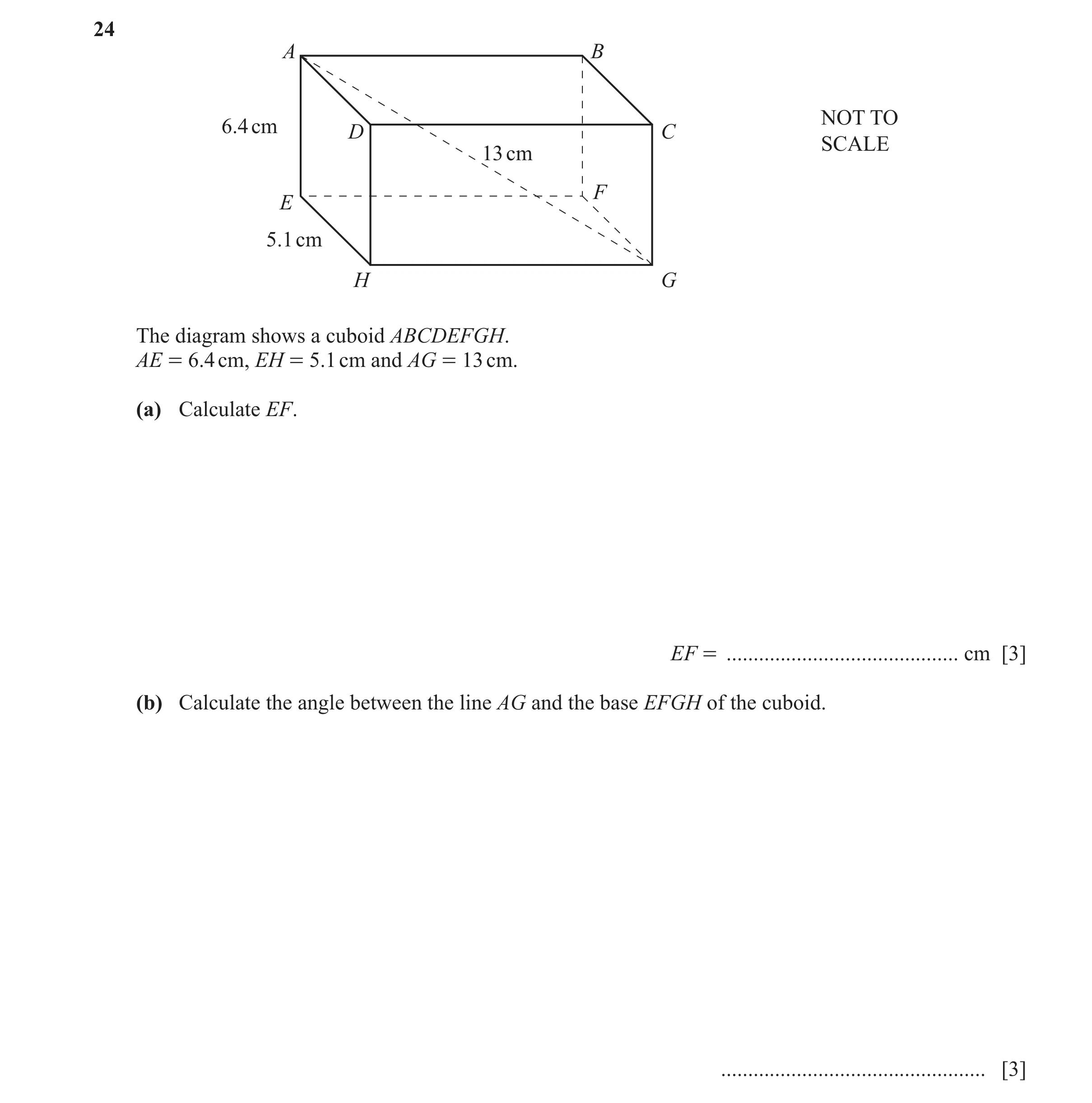
Q33 · A B NOT TO 6.4 cm D C SCALE 13 cm F E 5.1 cm H G The diagram shows a cuboid ABCDEFGH 0580/43 Oct/Nov 2025
24 A B NOT TO 6.4 cm D C SCALE 13 cm F E 5.1 cm H G The diagram shows a cuboid ABCDEFGH. AE = 6.4 cm, EH = 5.1 cm and AG = 13 cm. (a) Calculate EF. EF = … cm [3] (b) Calculate the angle between the line AG and the base EFGH of the cuboid. … [3]
6 marks
Mark scheme: 24(a) 10.1 or 10.10… 3 M2 for EF2 + 6.42 + 5.12 = 132 or better or M1 for 6.42 + 5.12 or 132 – 6.42 or 132 – 5.12 24(b) 29.5 or 29.49… to 29.54… 3 6.4 M2 for sin [… =] oe 13 or M1 for identifying angle AGE
This question in 0580/43 Oct/Nov 2025
 1 / 50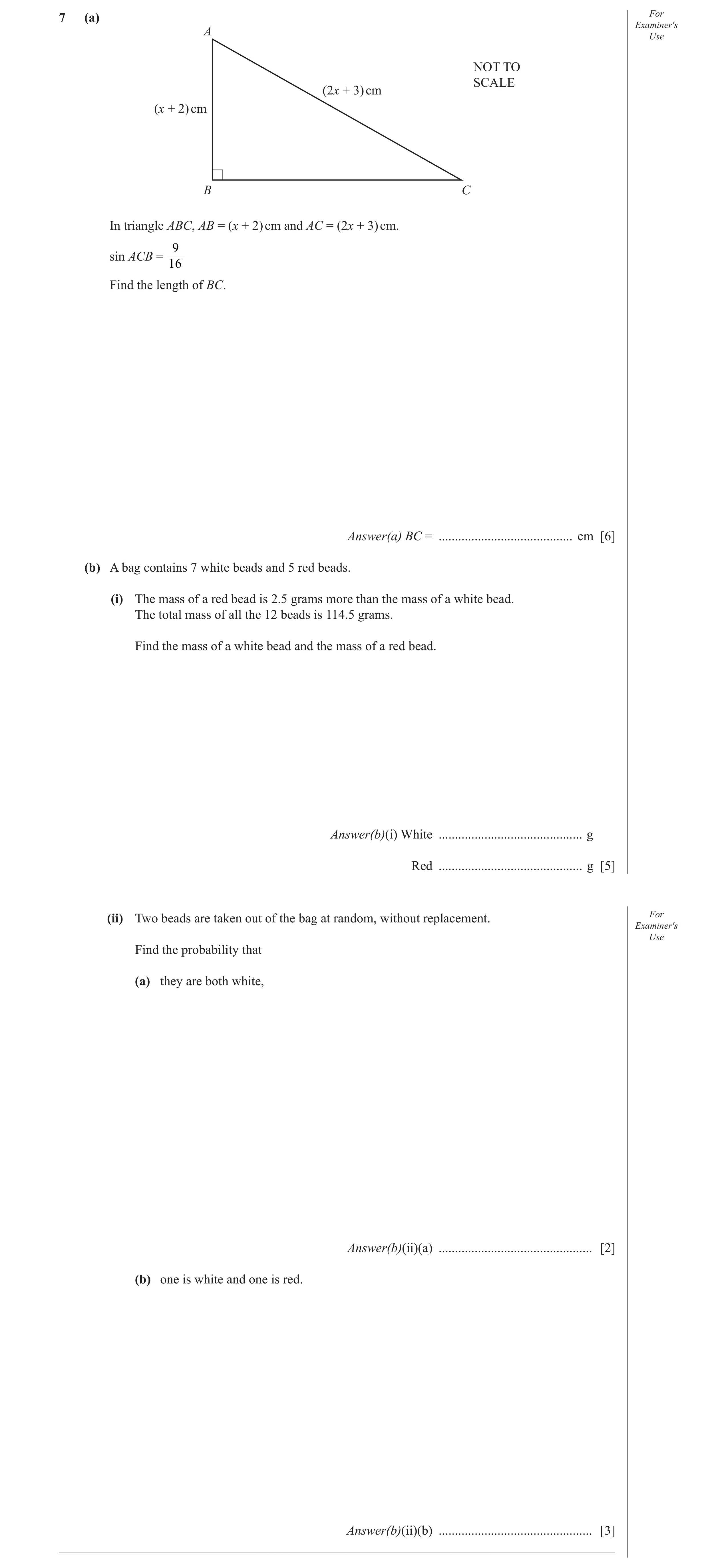
![Question 6: (a) The diagram shows a regular F E hexagon ABCDEF of side 10 cm. NOT TO SCALE A D B C (i) Show that angle BAF = 120°. [2] (ii) The vertice…](https://img.pastlit.com/crops/cf3038eb-e768-4405-8b63-a3f74936f178/q10.webp)
 17 / 50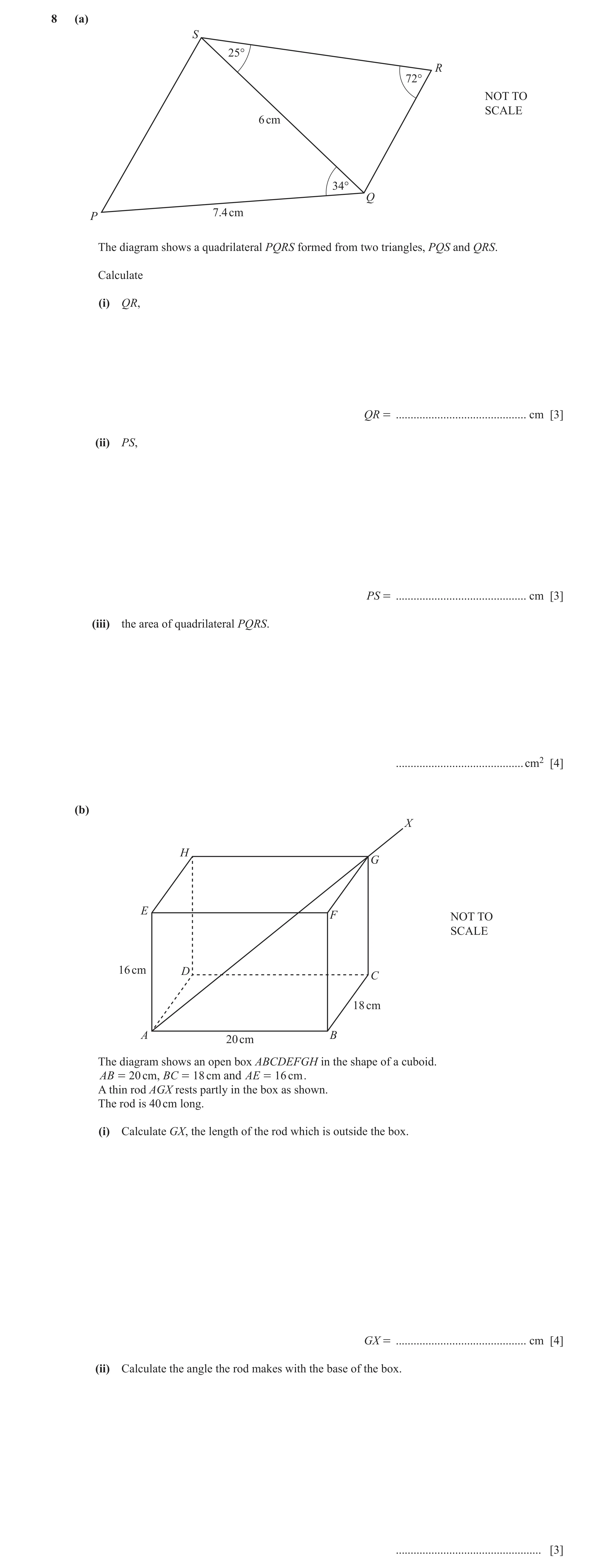
 23 / 50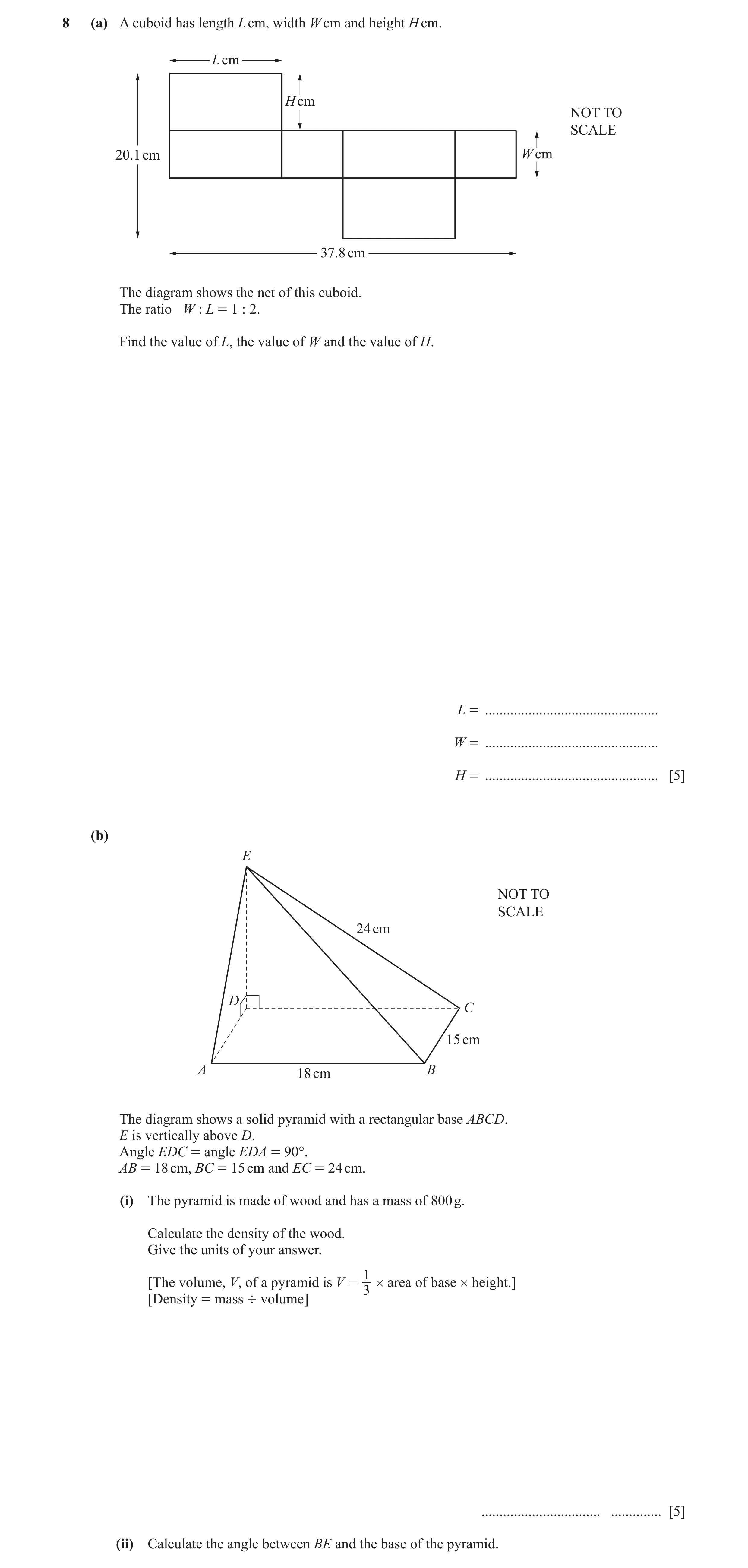
![Question 19: A regular 12-sided polygon has side length 6 cm. (a) Show that one interior angle of the polygon is 150°. [1] (b) The polygon is enclosed b…](https://img.pastlit.com/crops/51c9f36d-0ba1-44ca-b5e3-5952d1fb07d6/q4.webp)
 31 / 50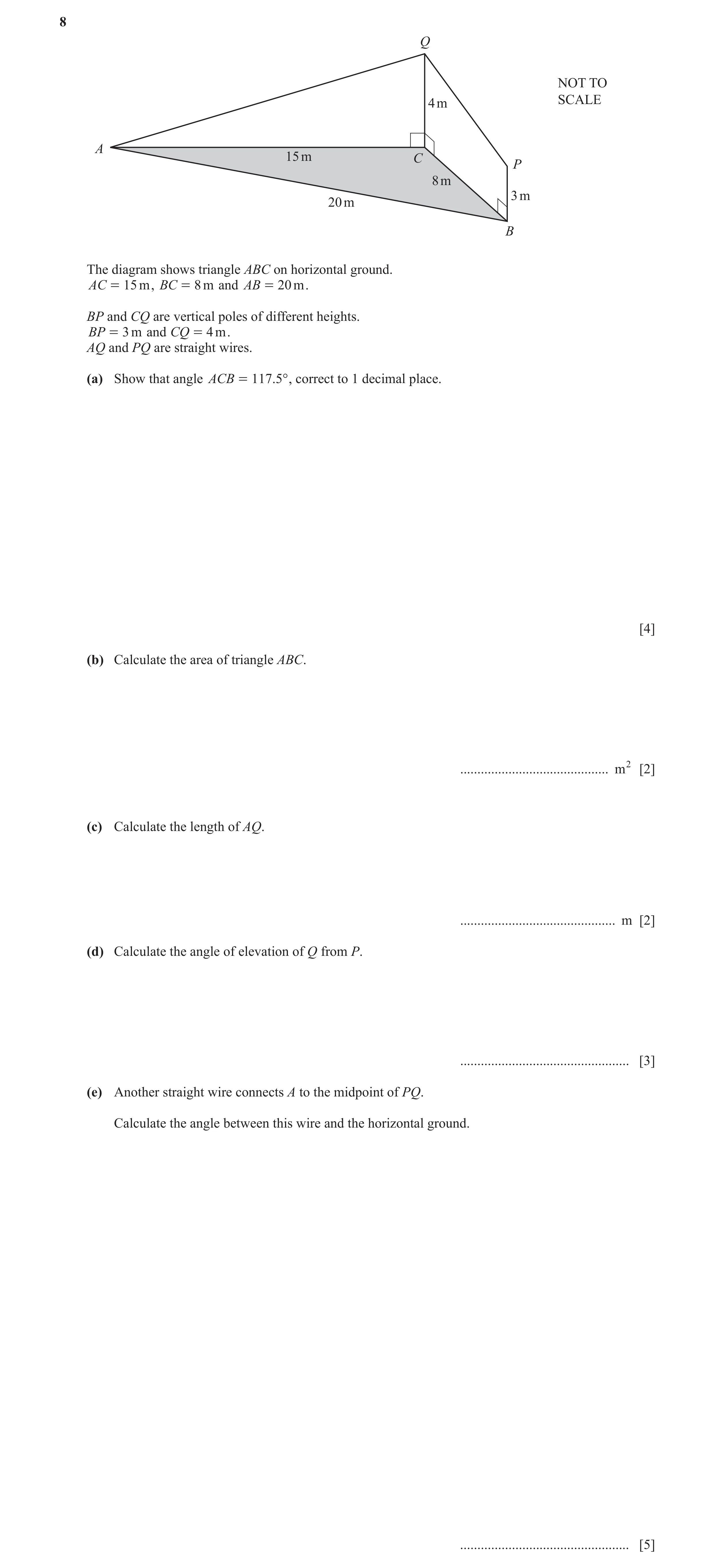
 47 / 50
 48 / 50
 49 / 50
 50 / 50
 11
11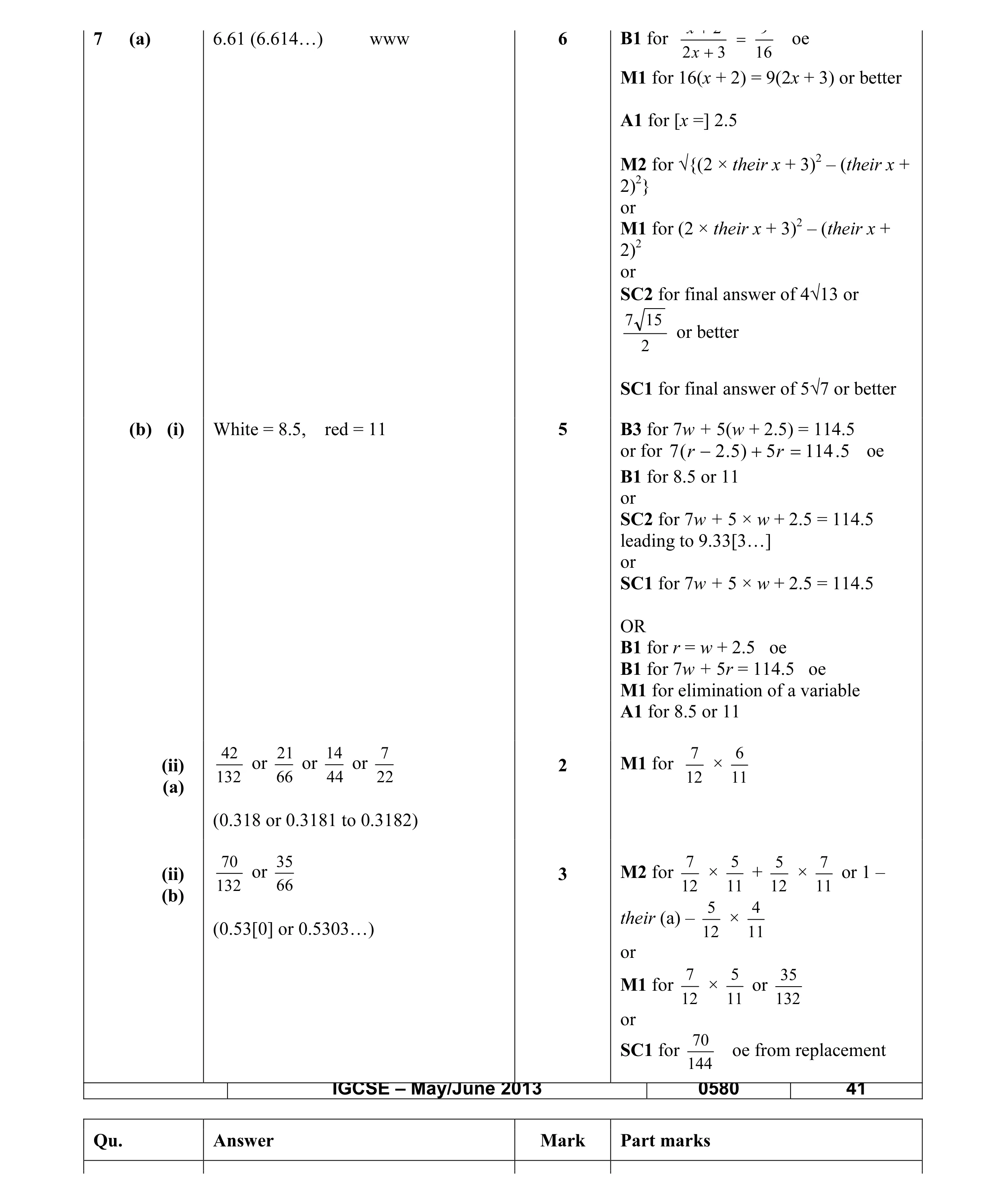 16
16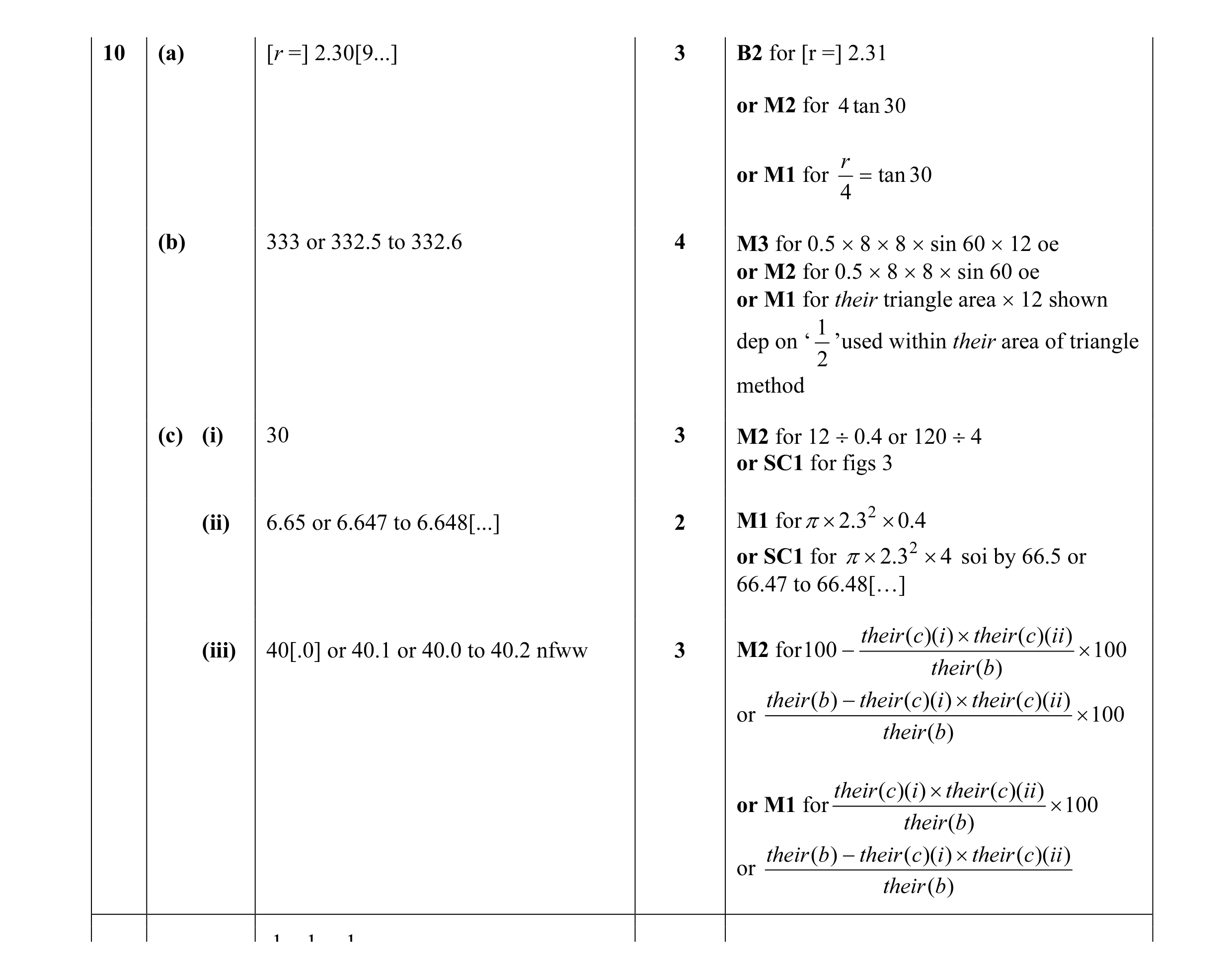 15
15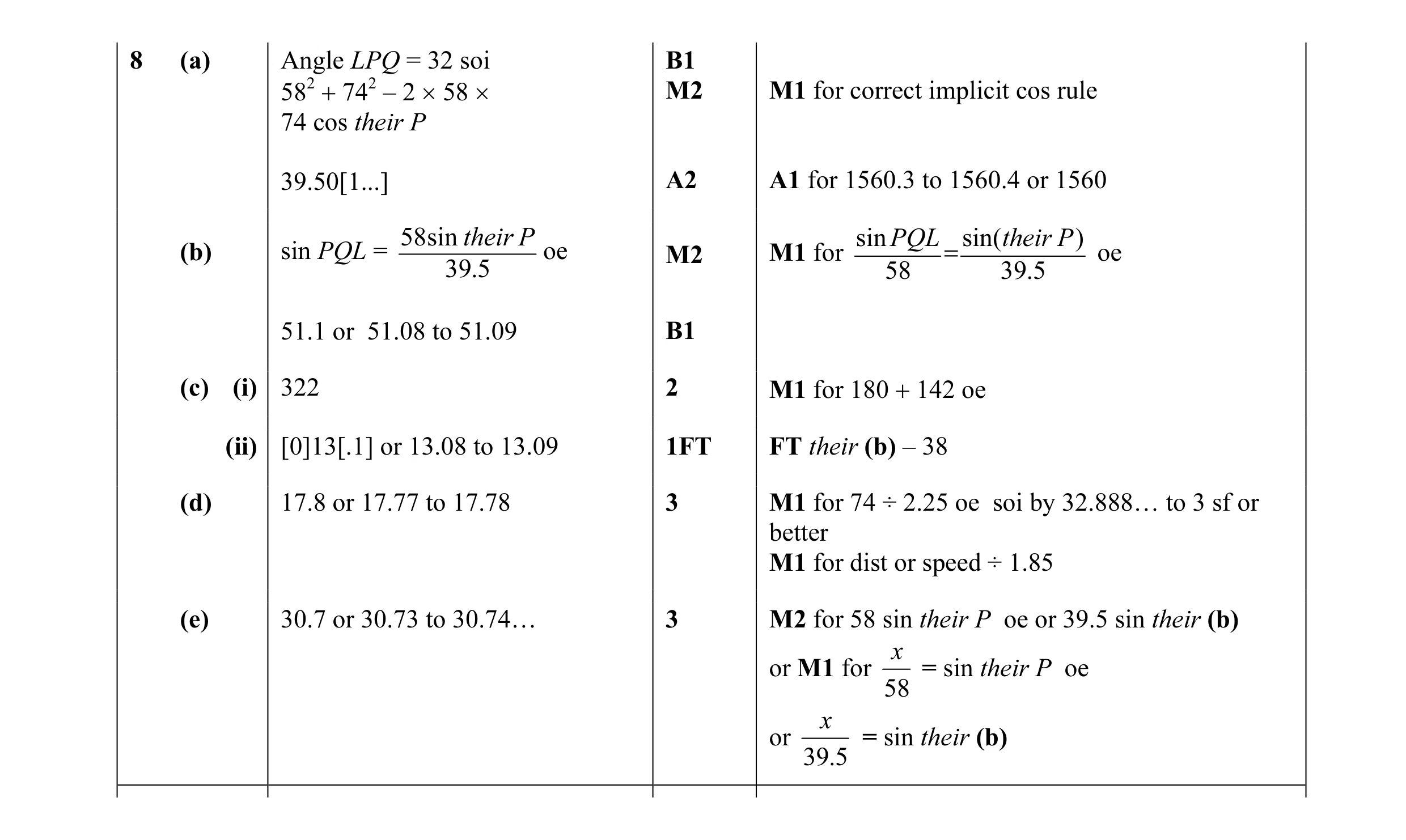 17
17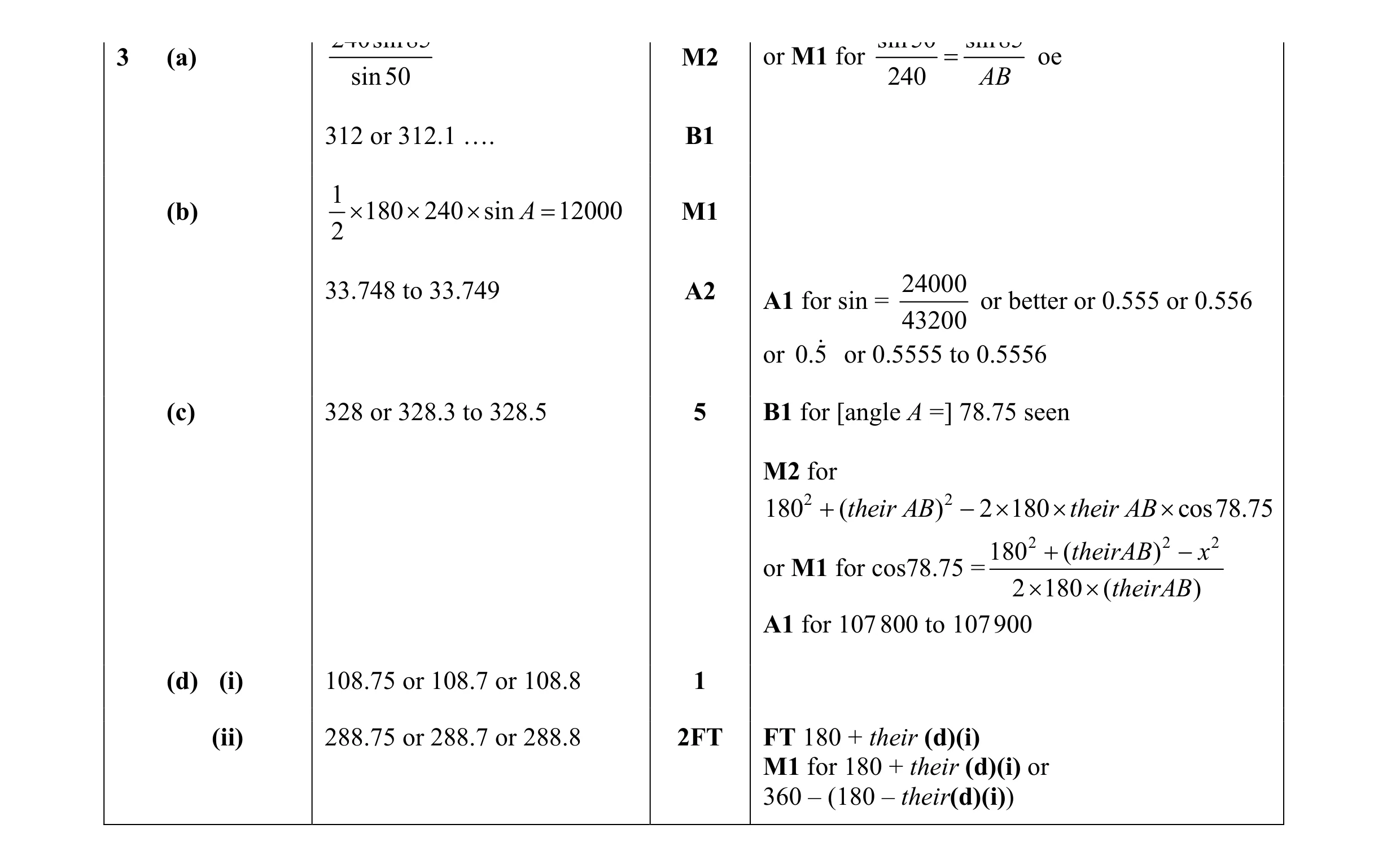 14
14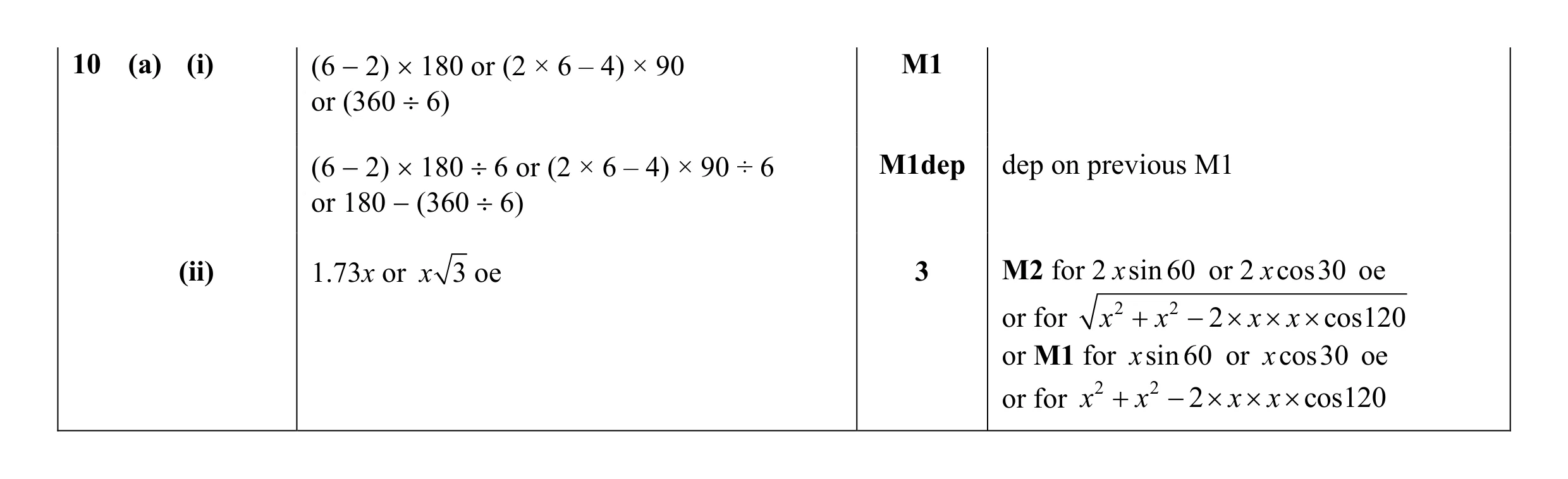 12
12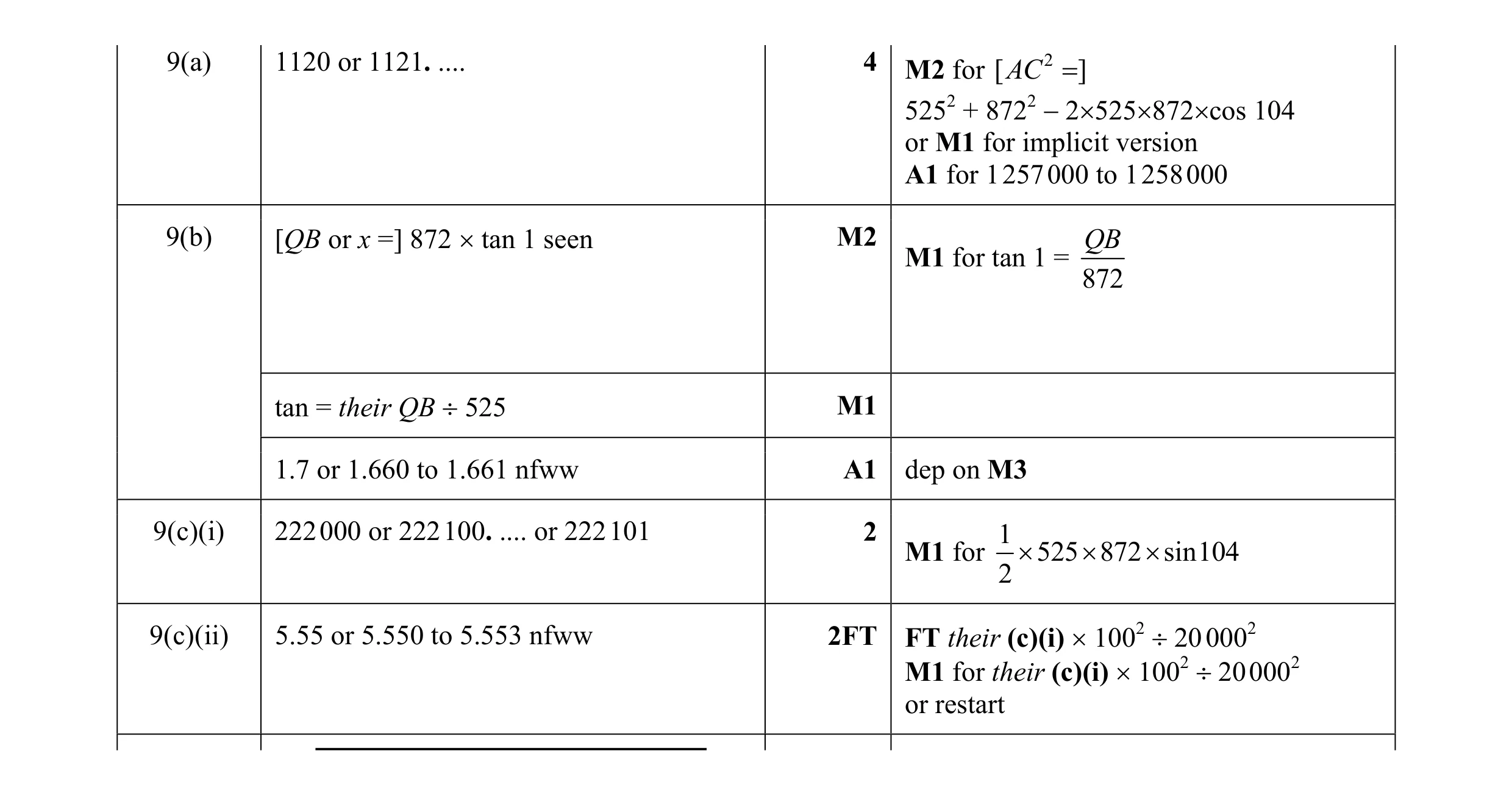 12
12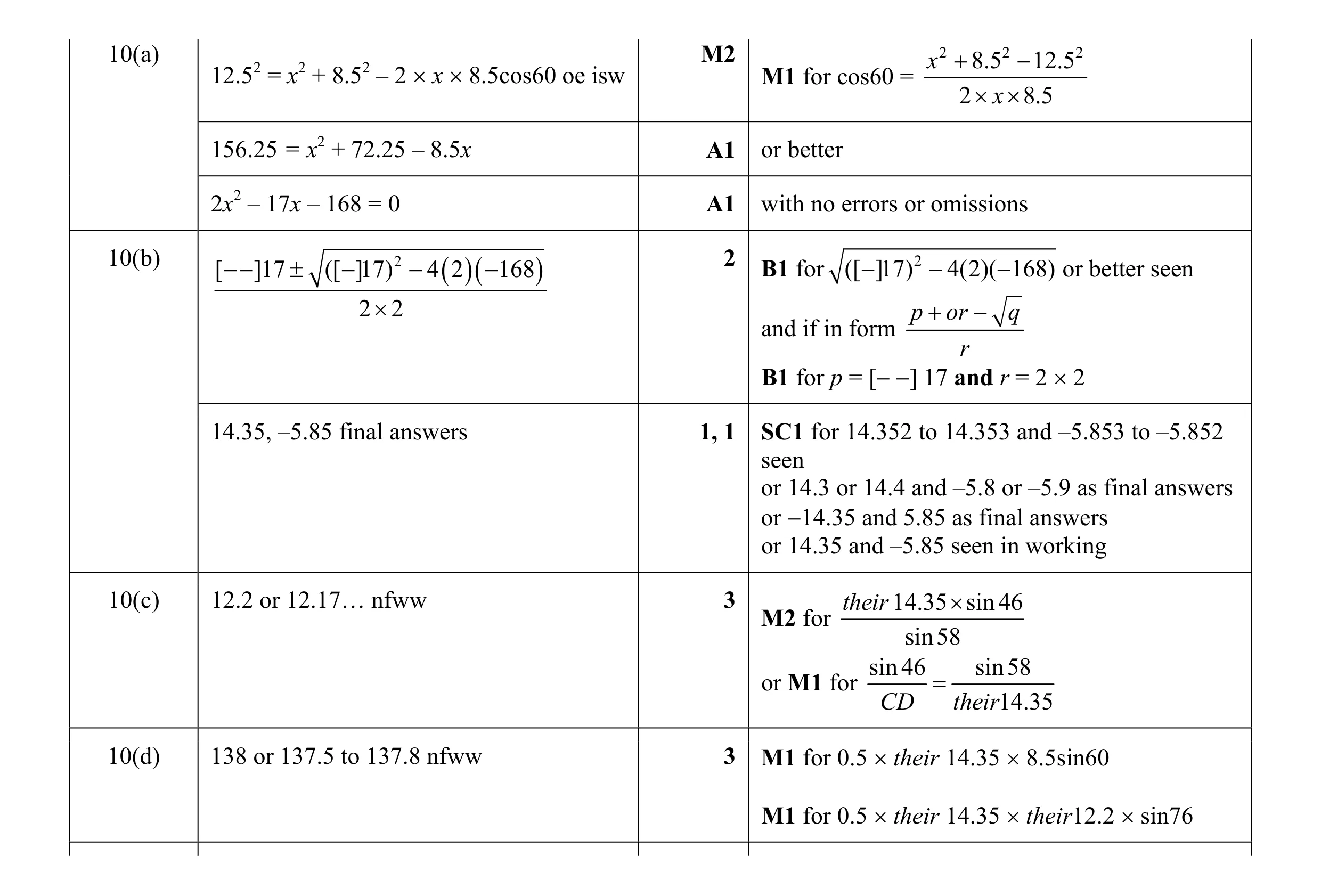 14
14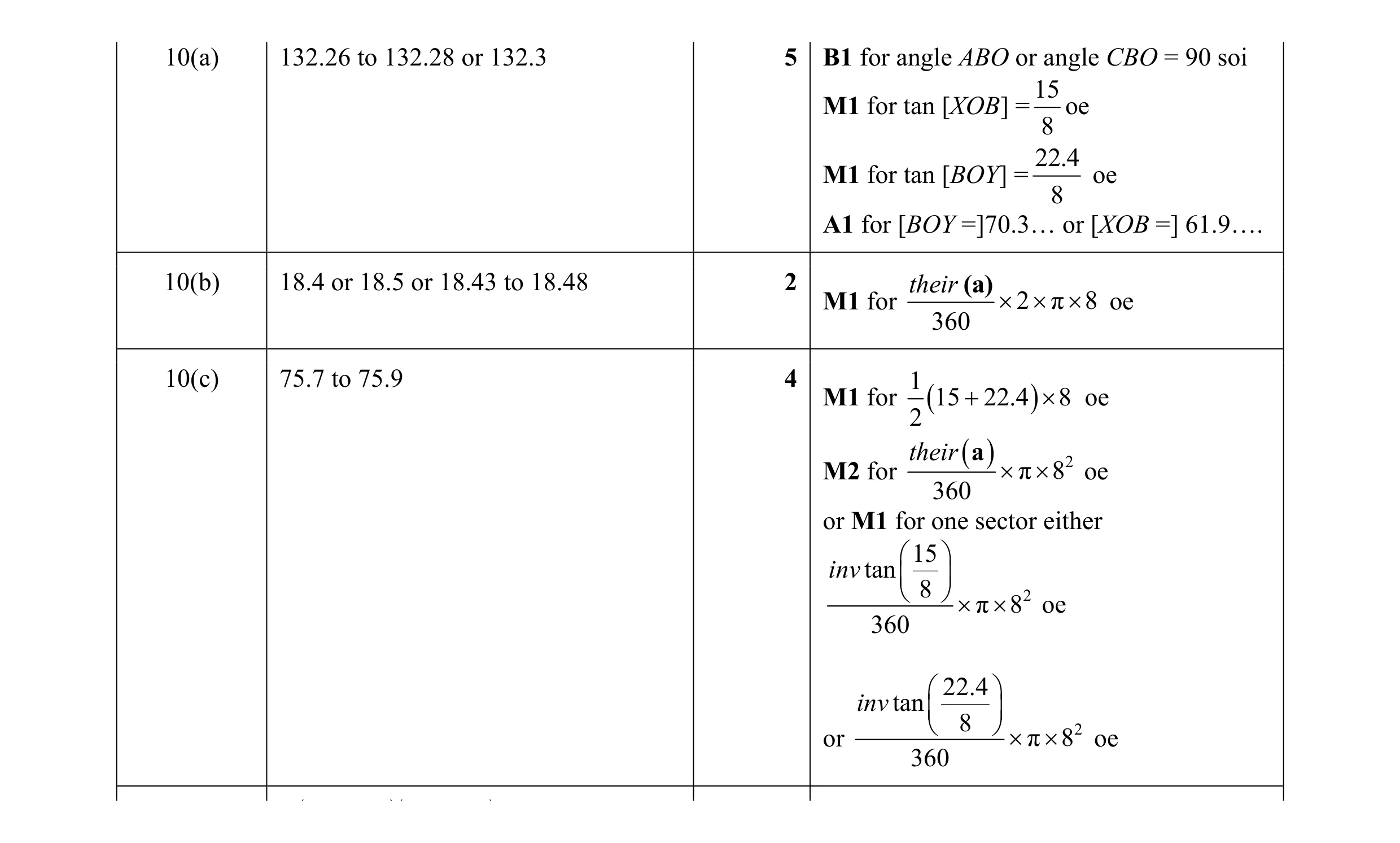 11
11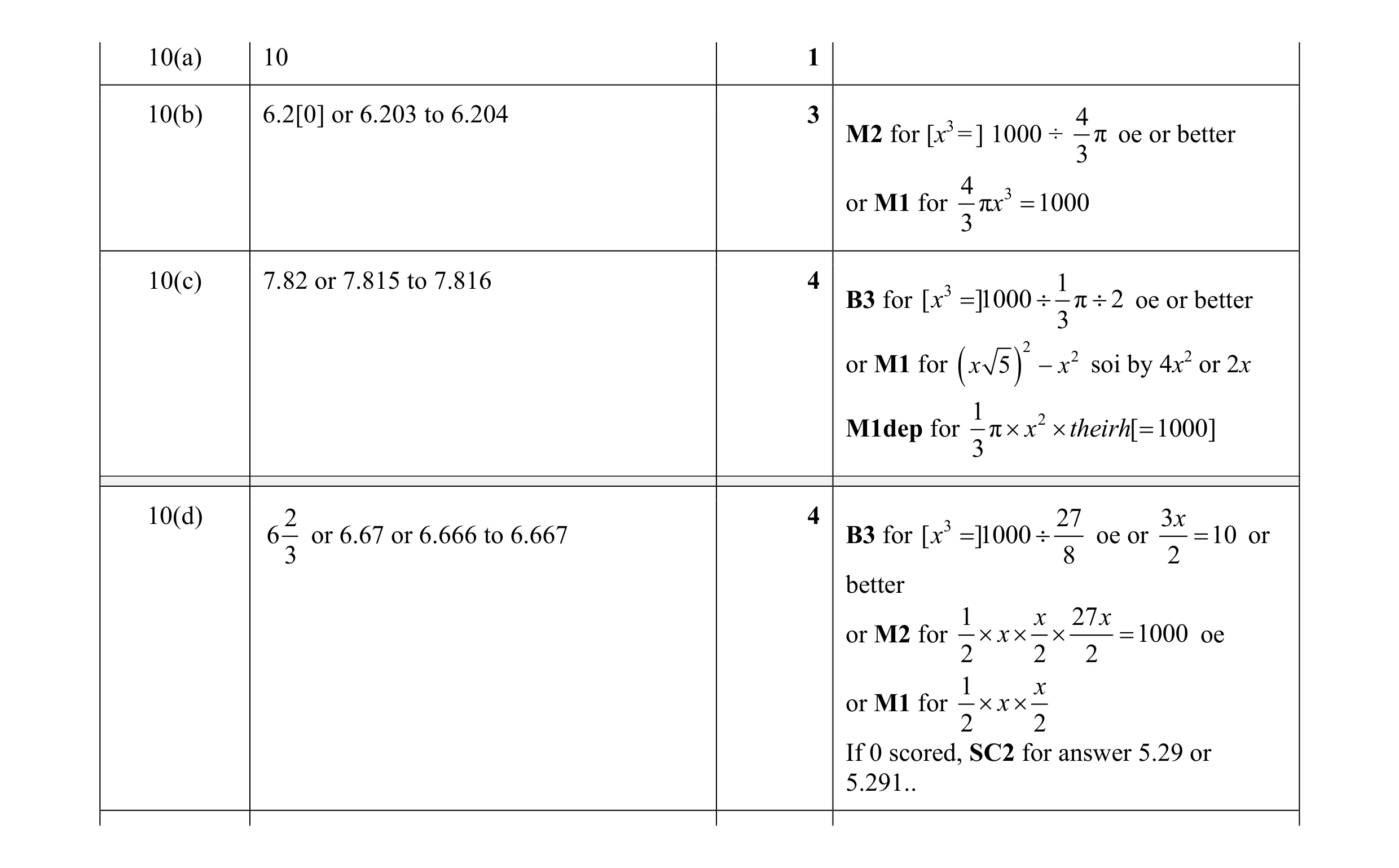 12
12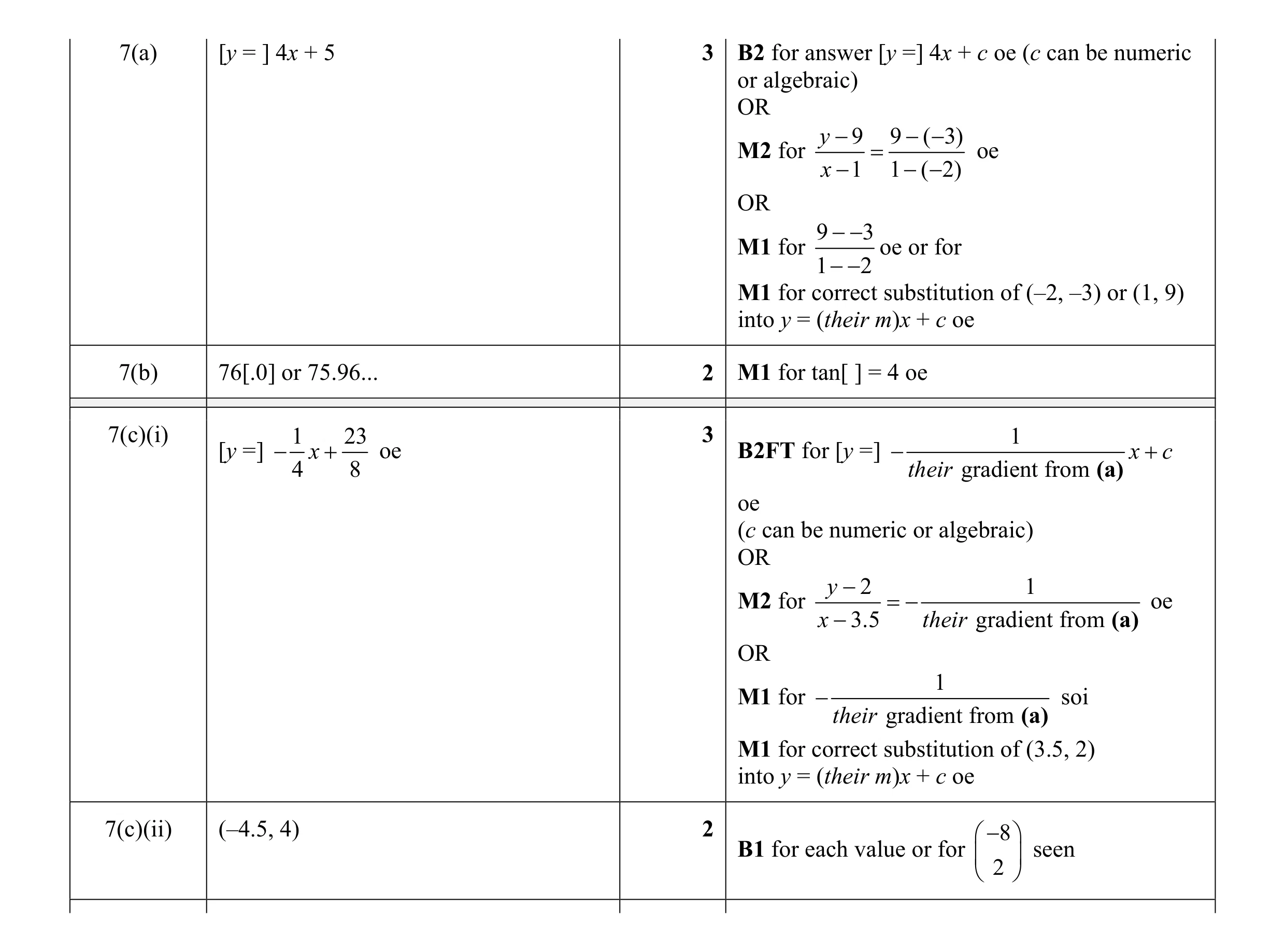 10
10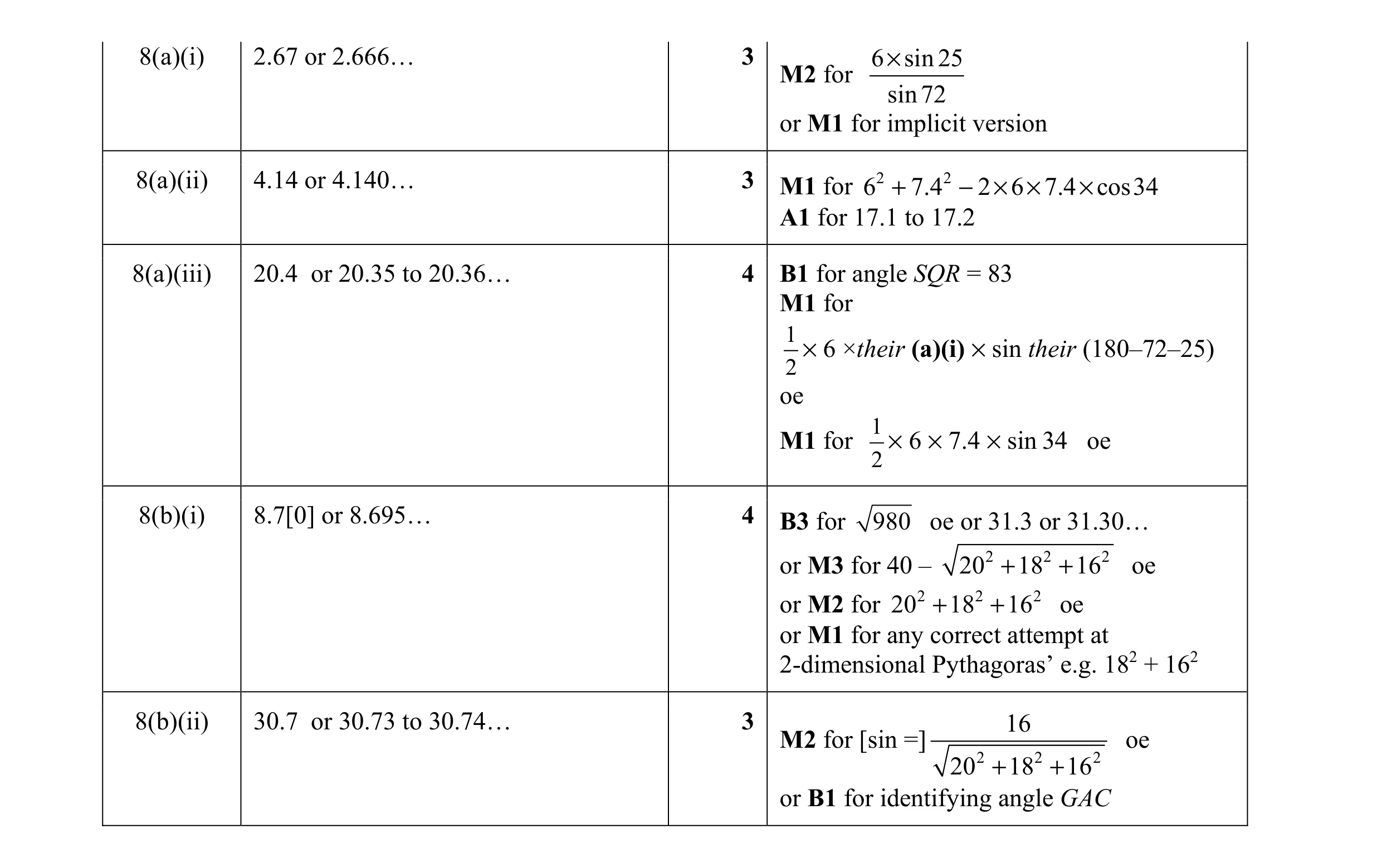 17
17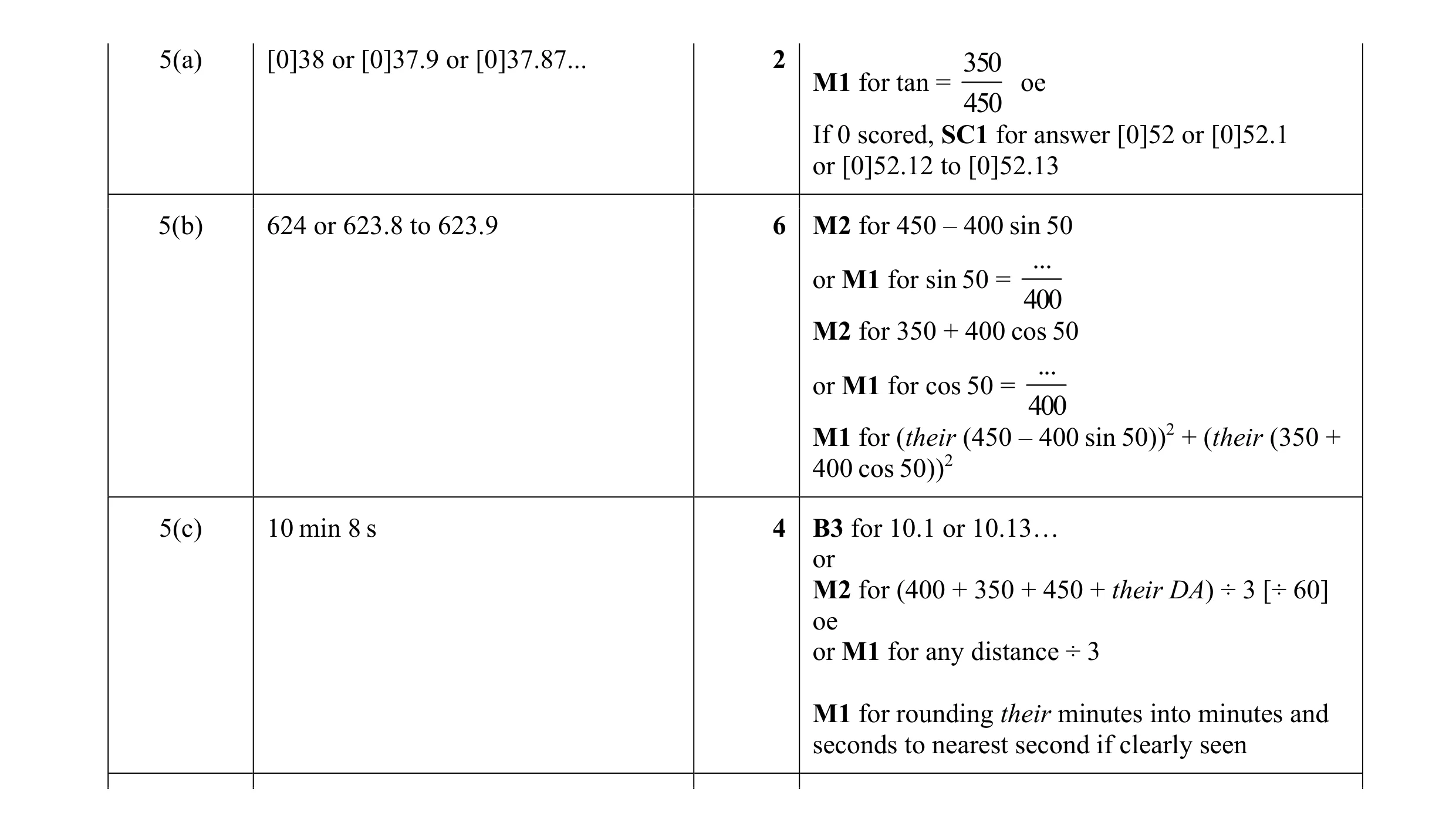 12
12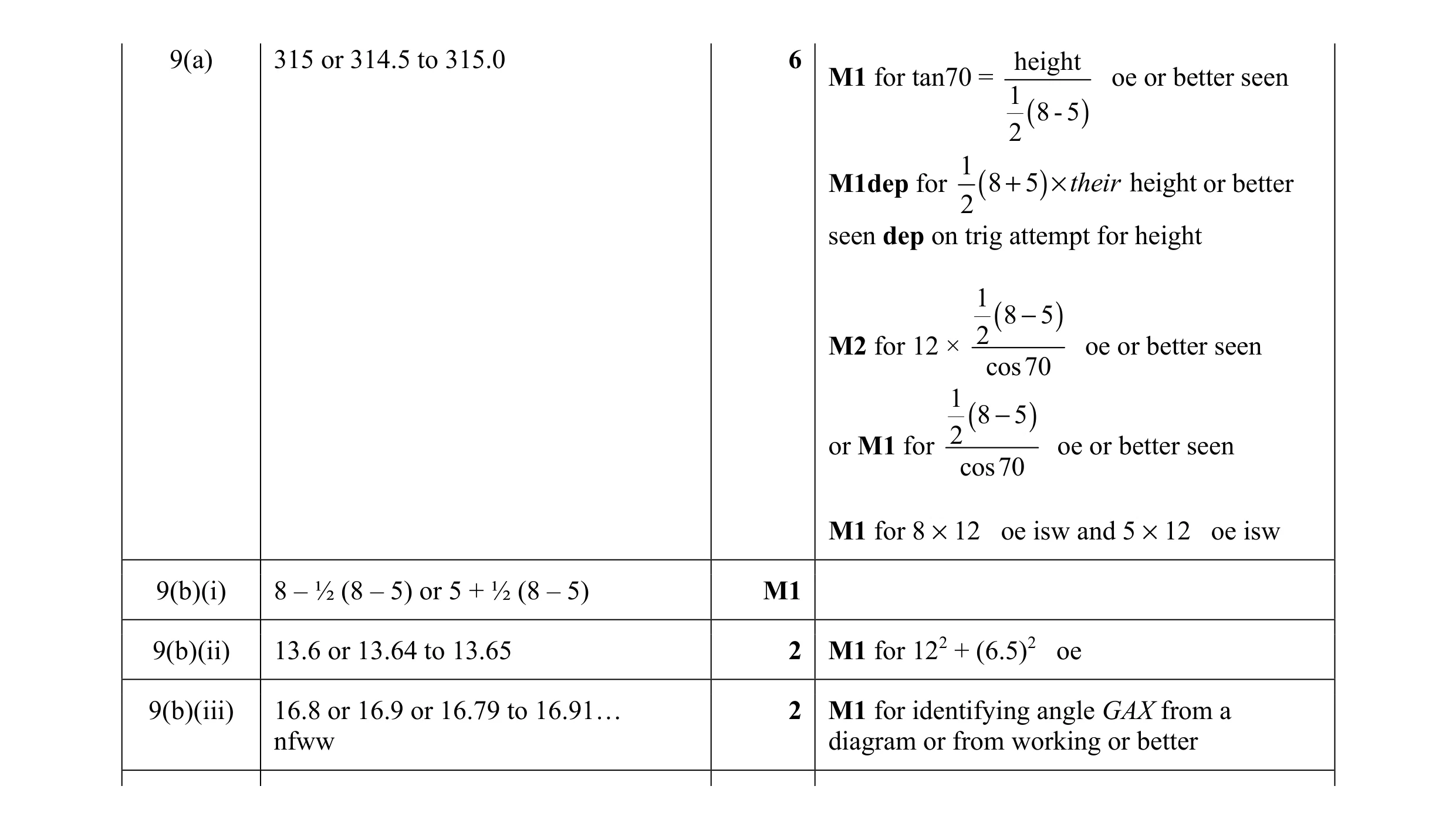 11
11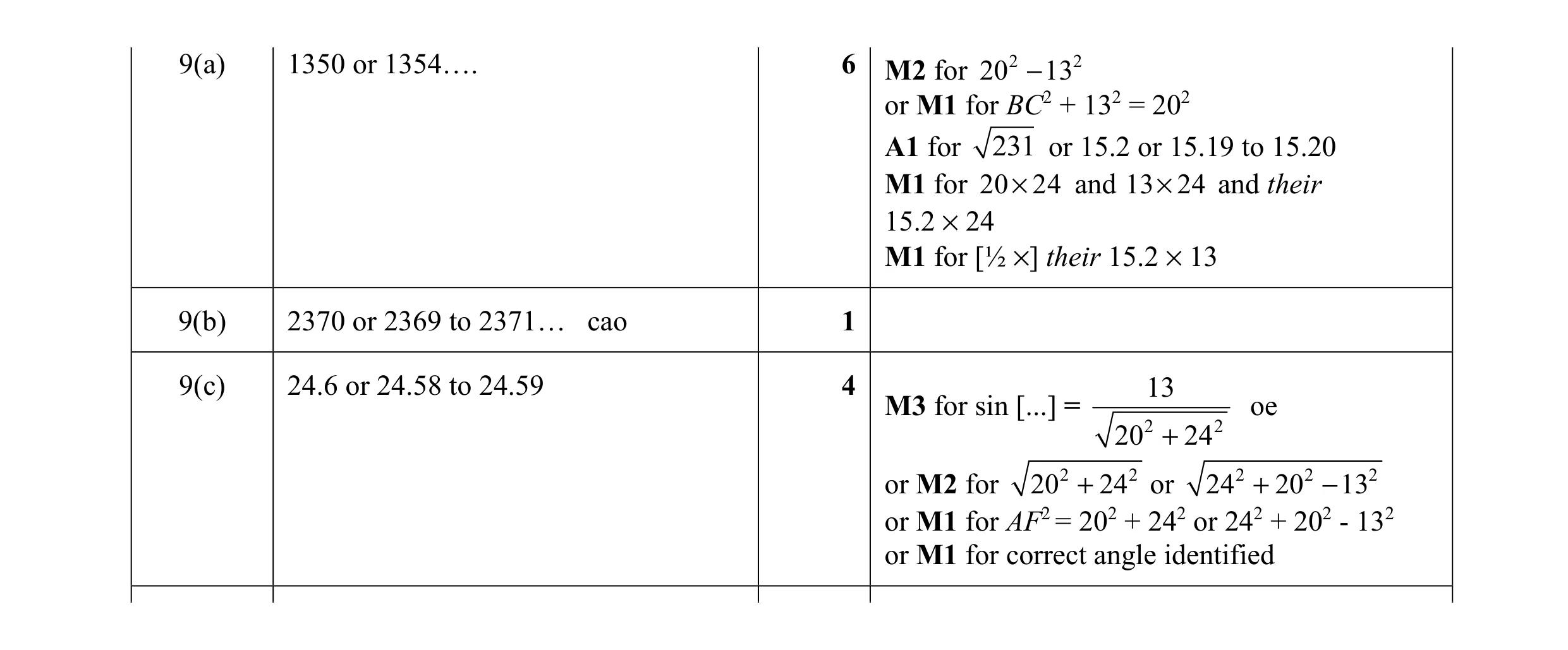 11
11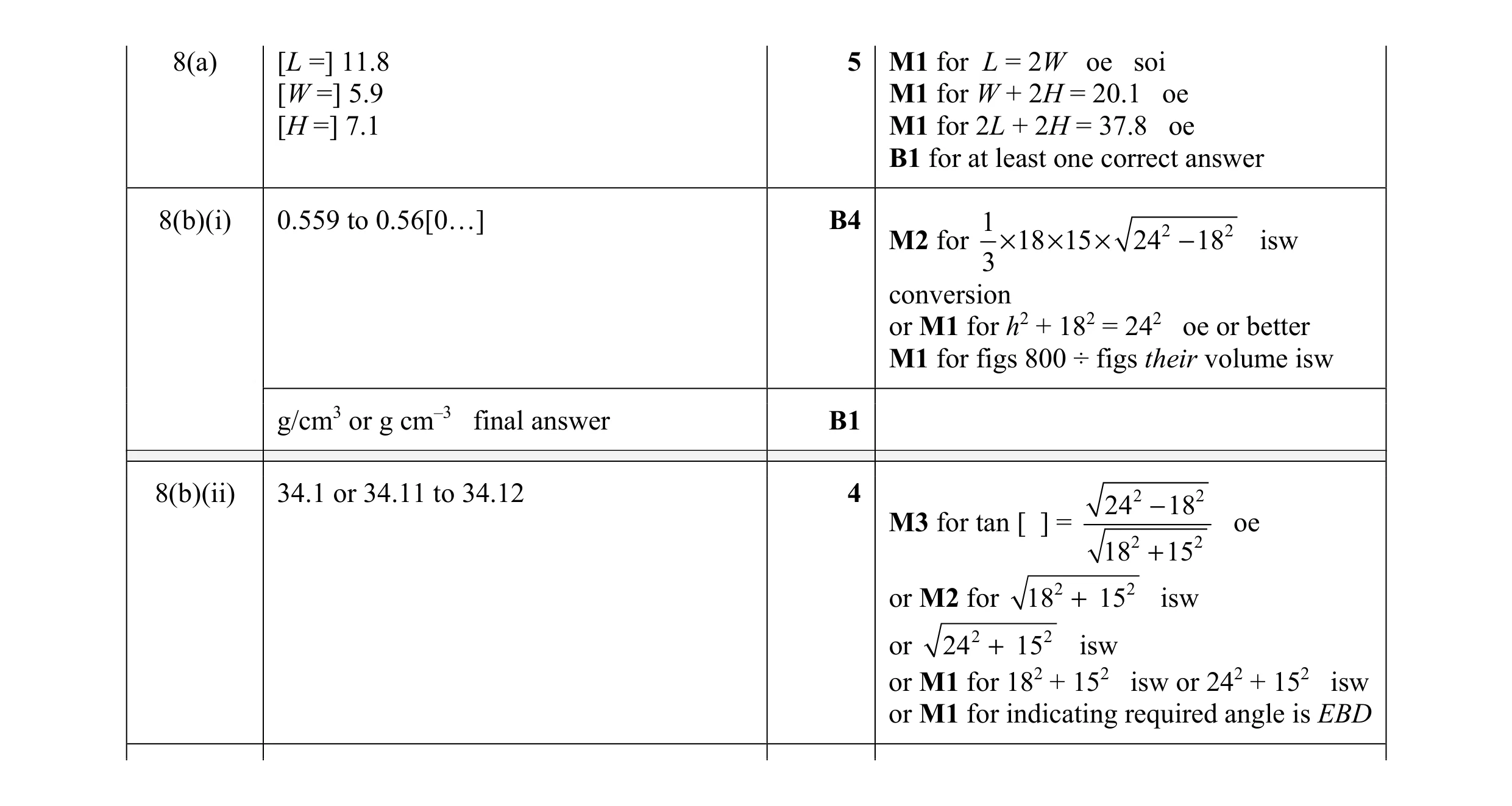 14
14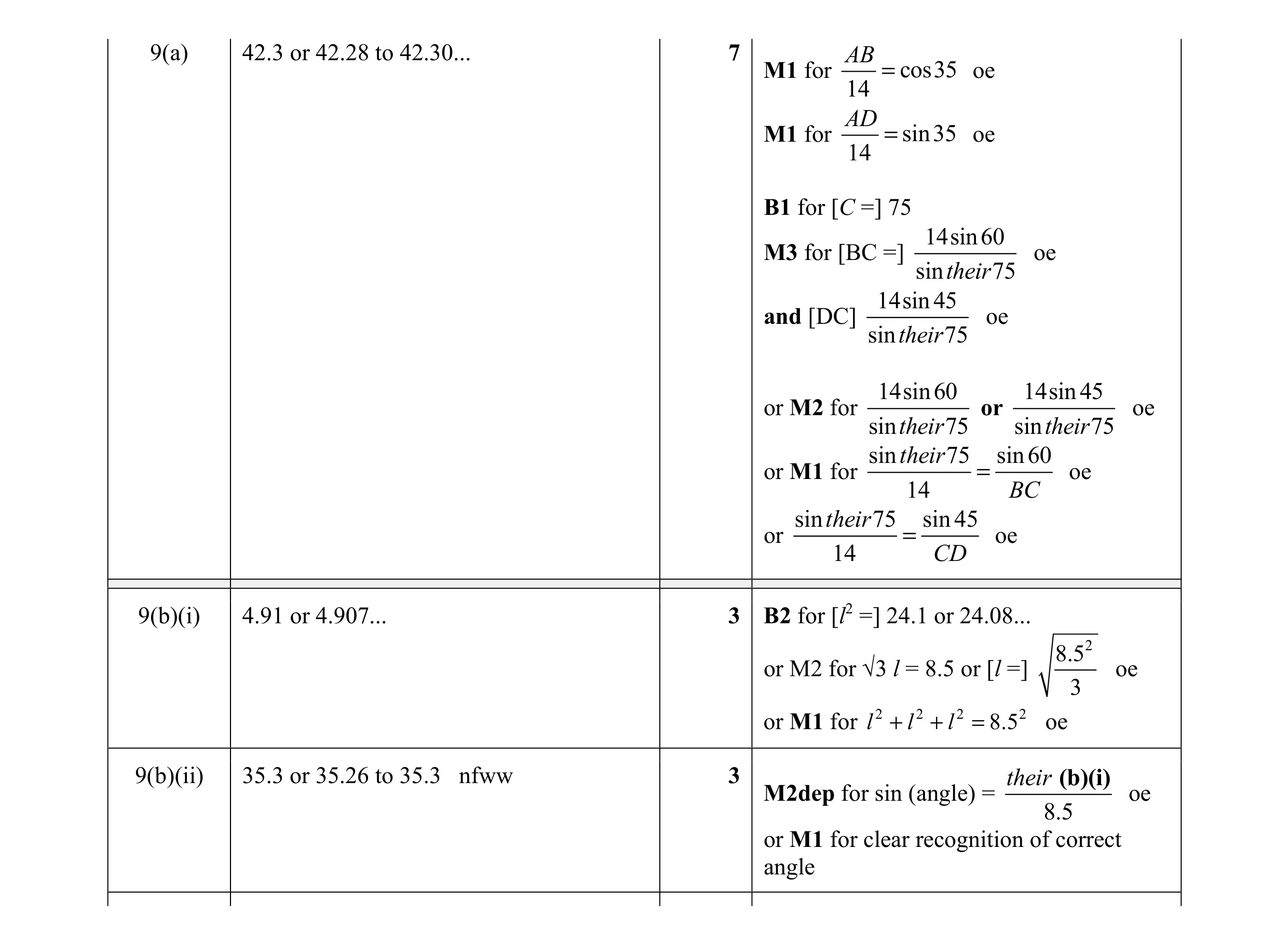 13
13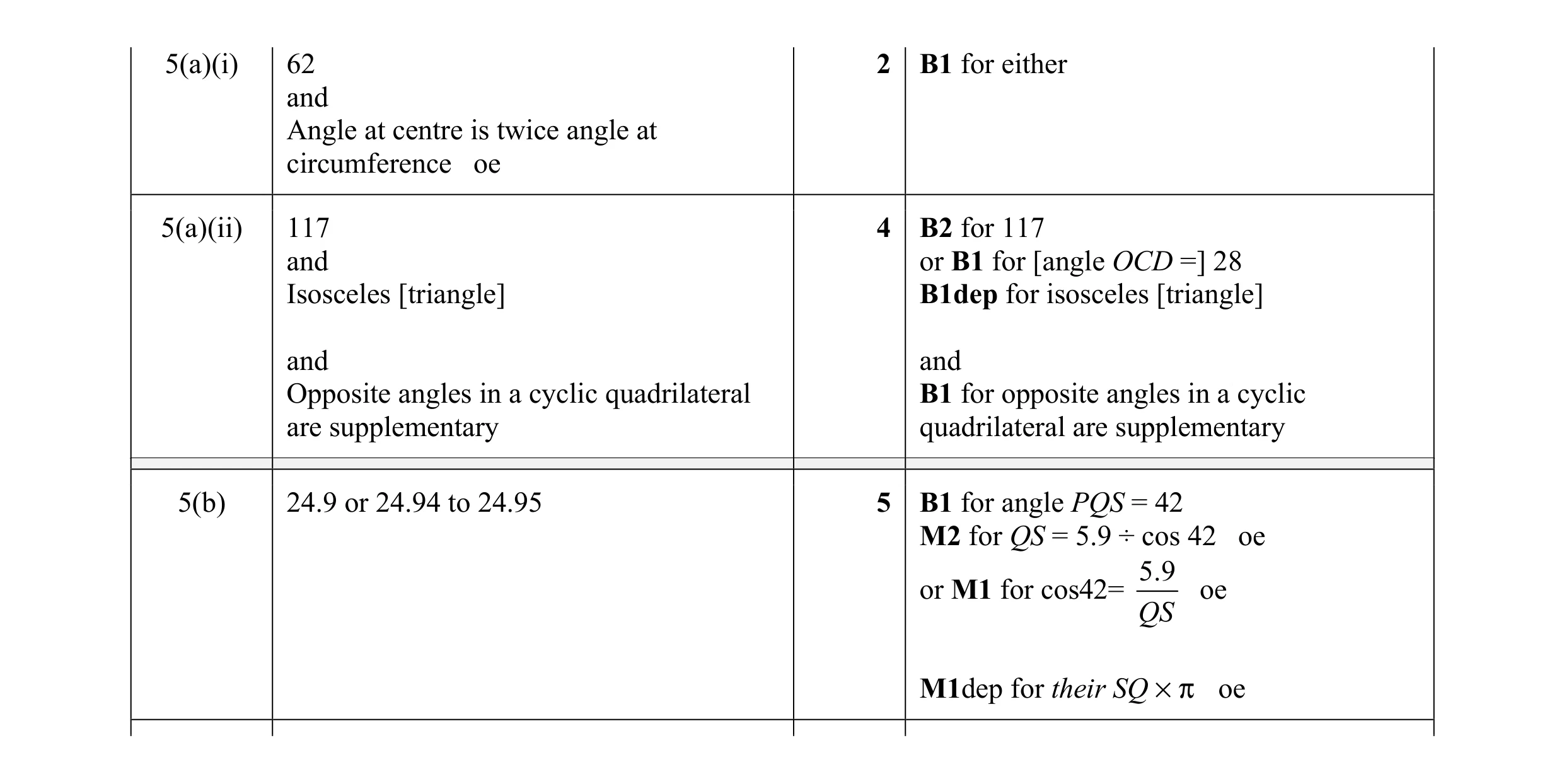 11
11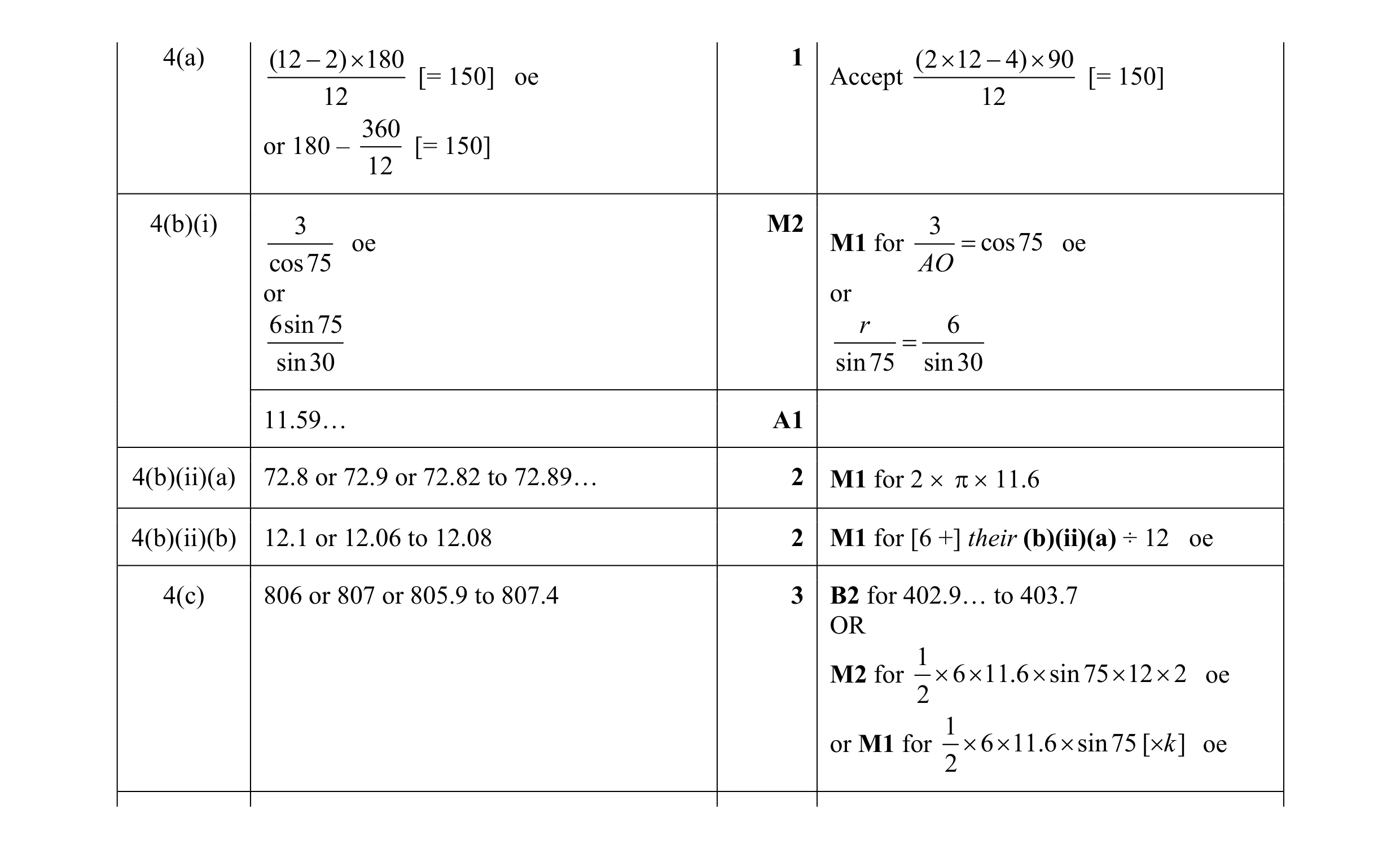 11
11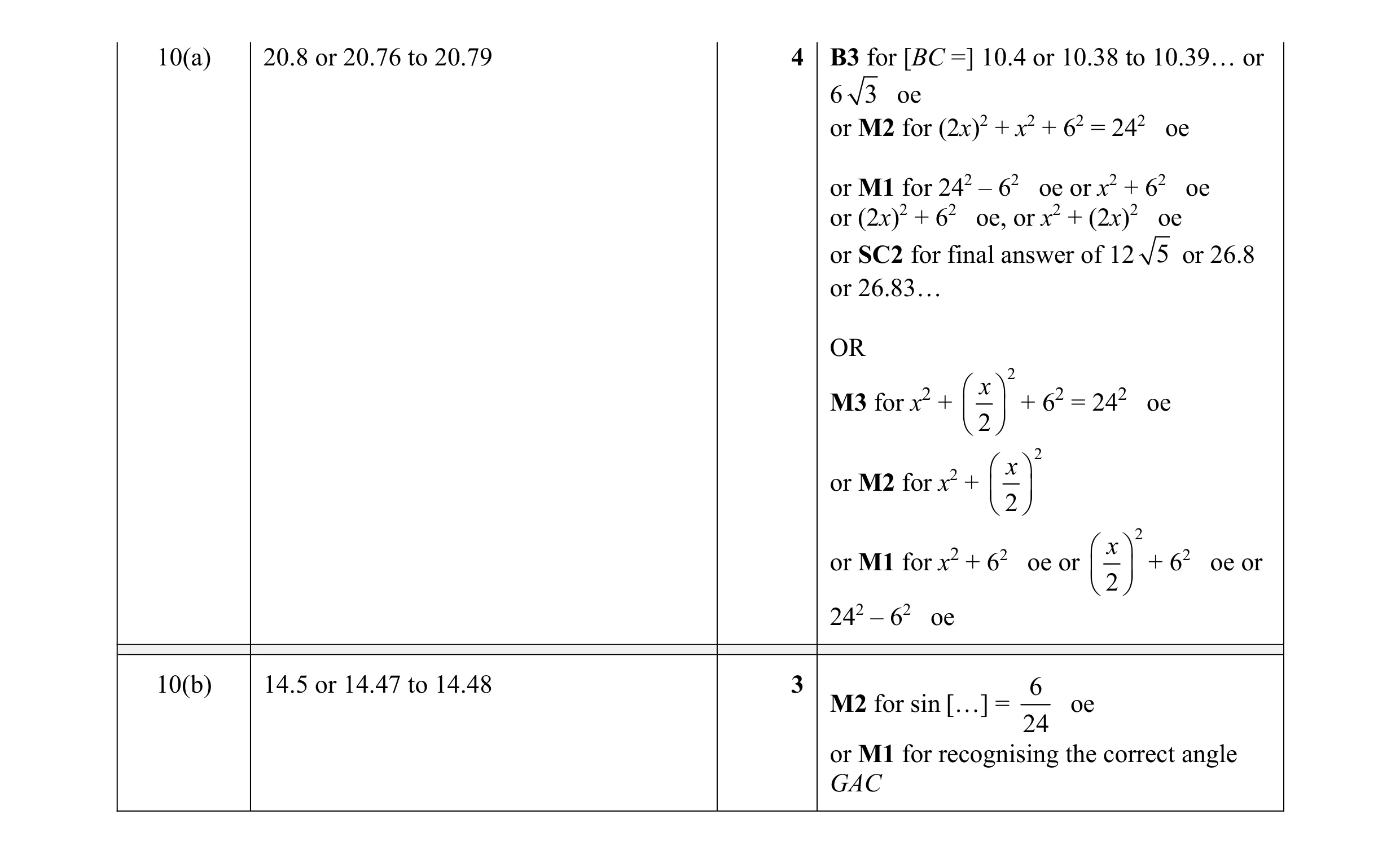 7
7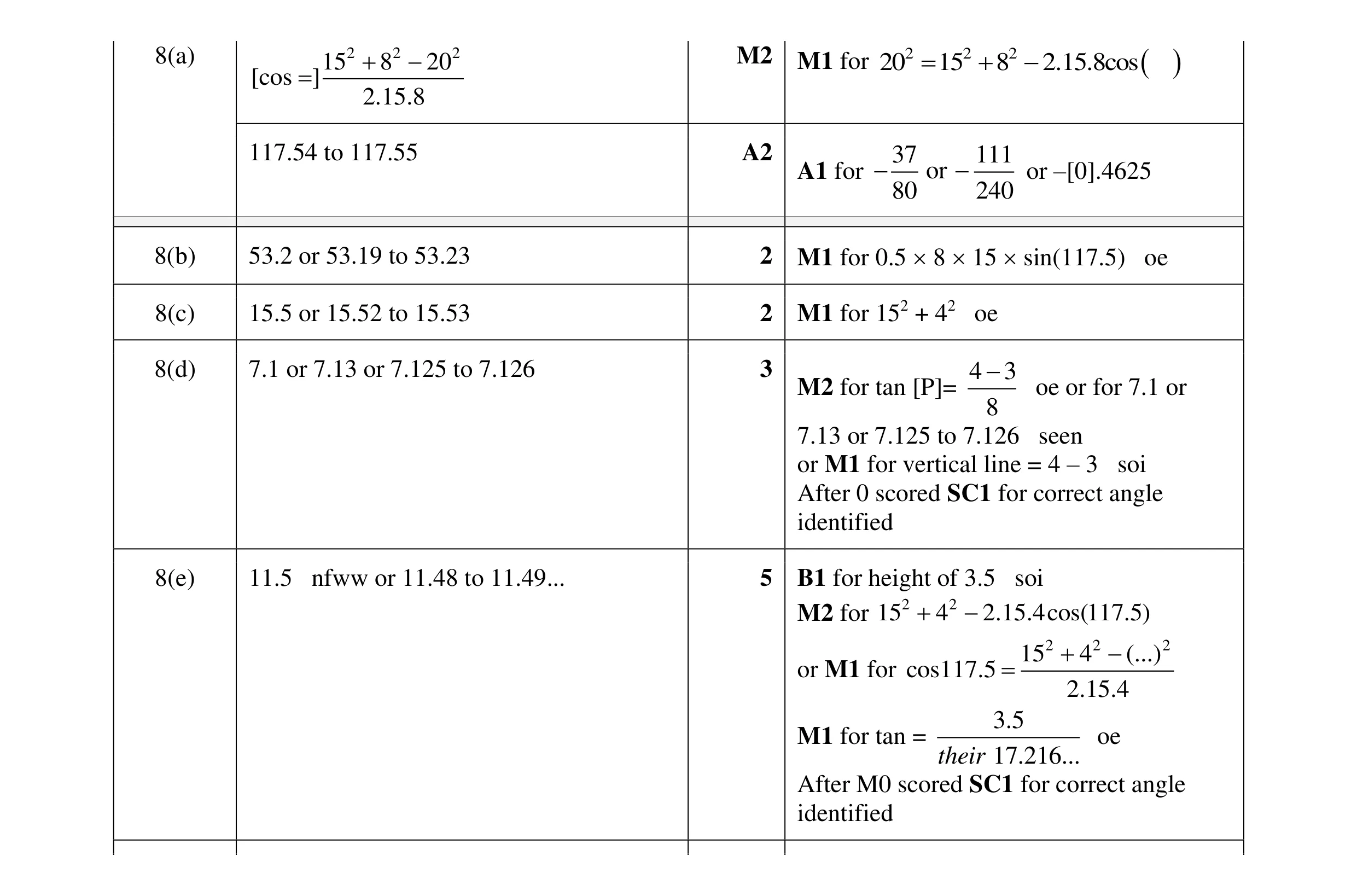 16
16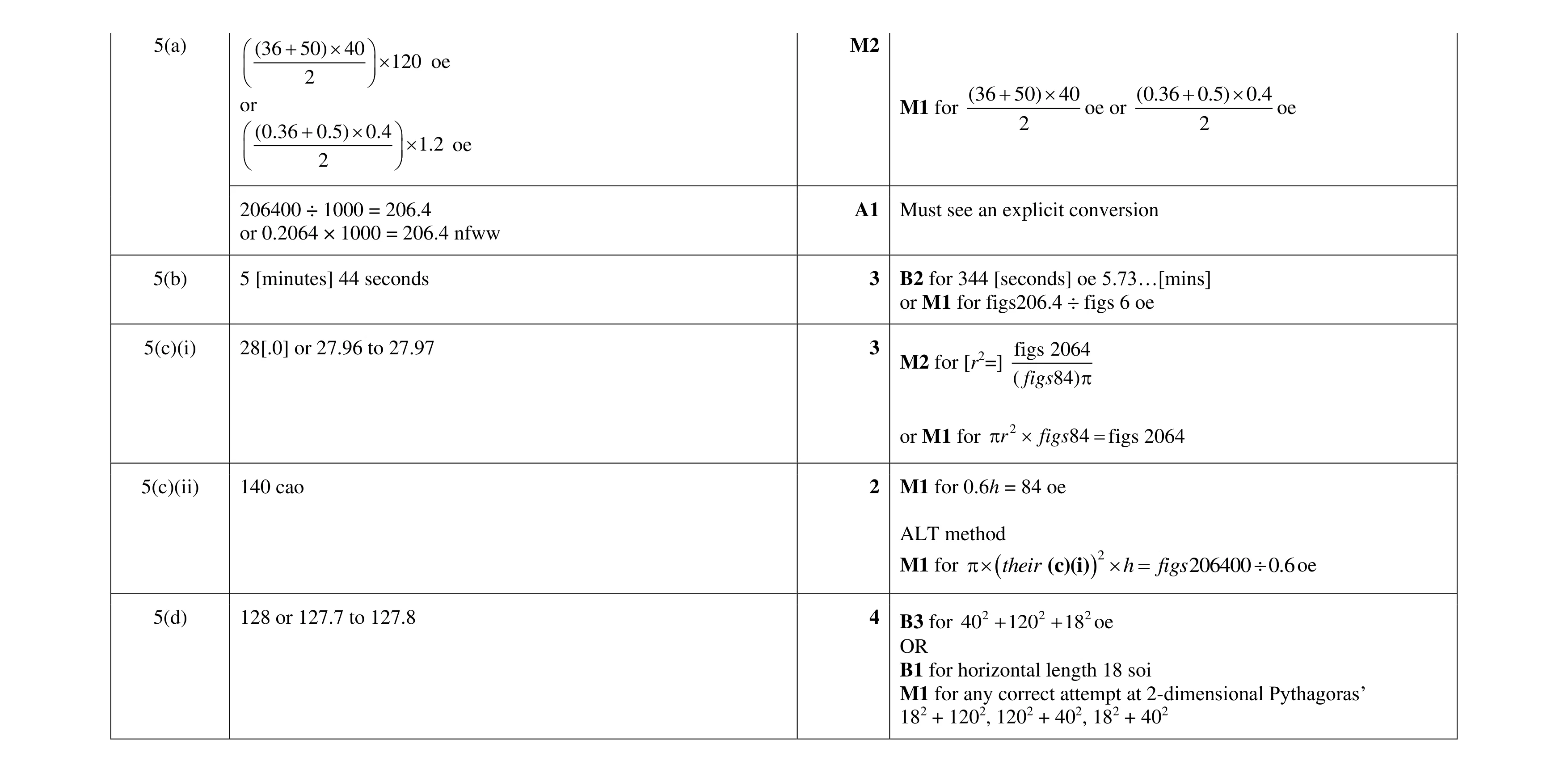 15
15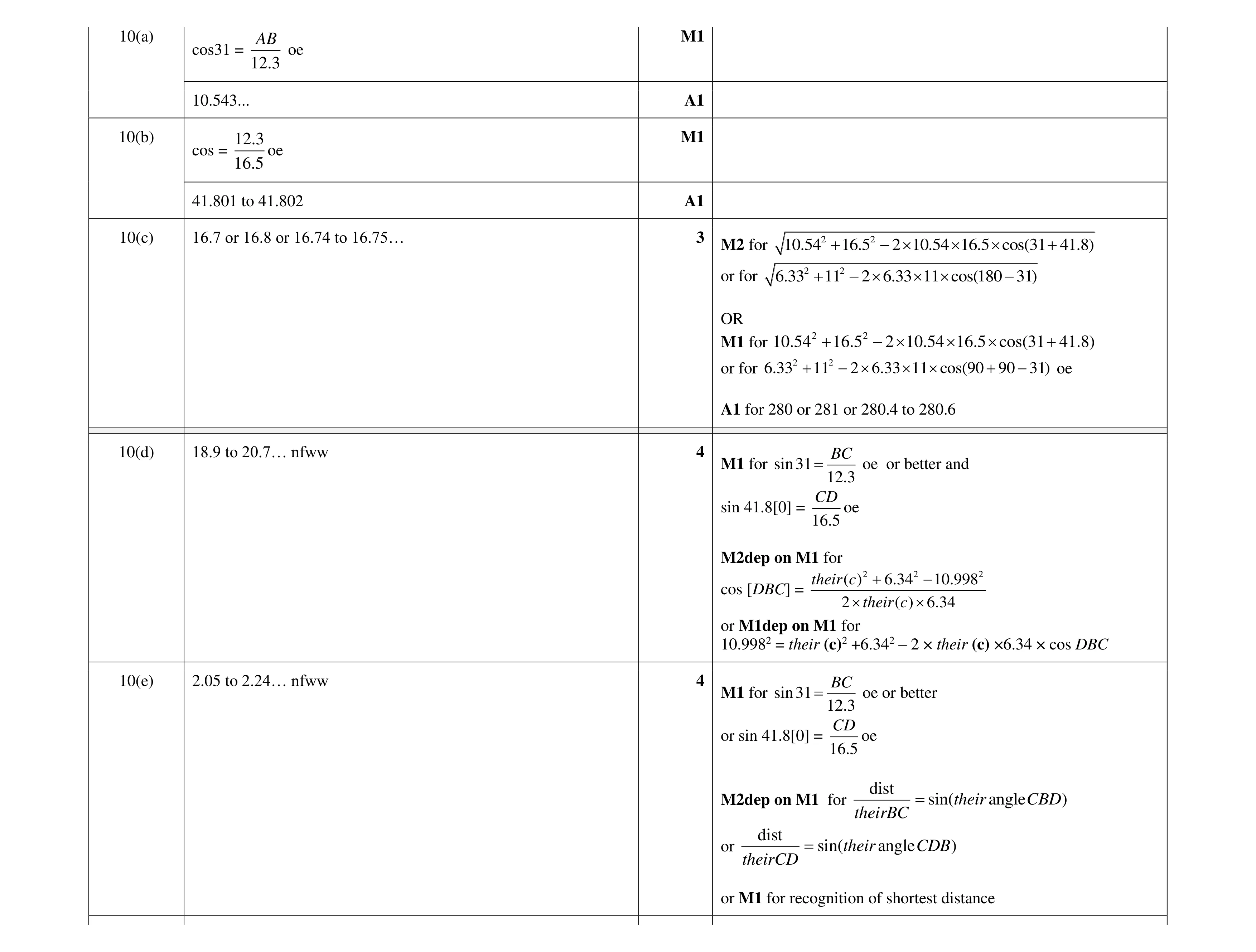 15
15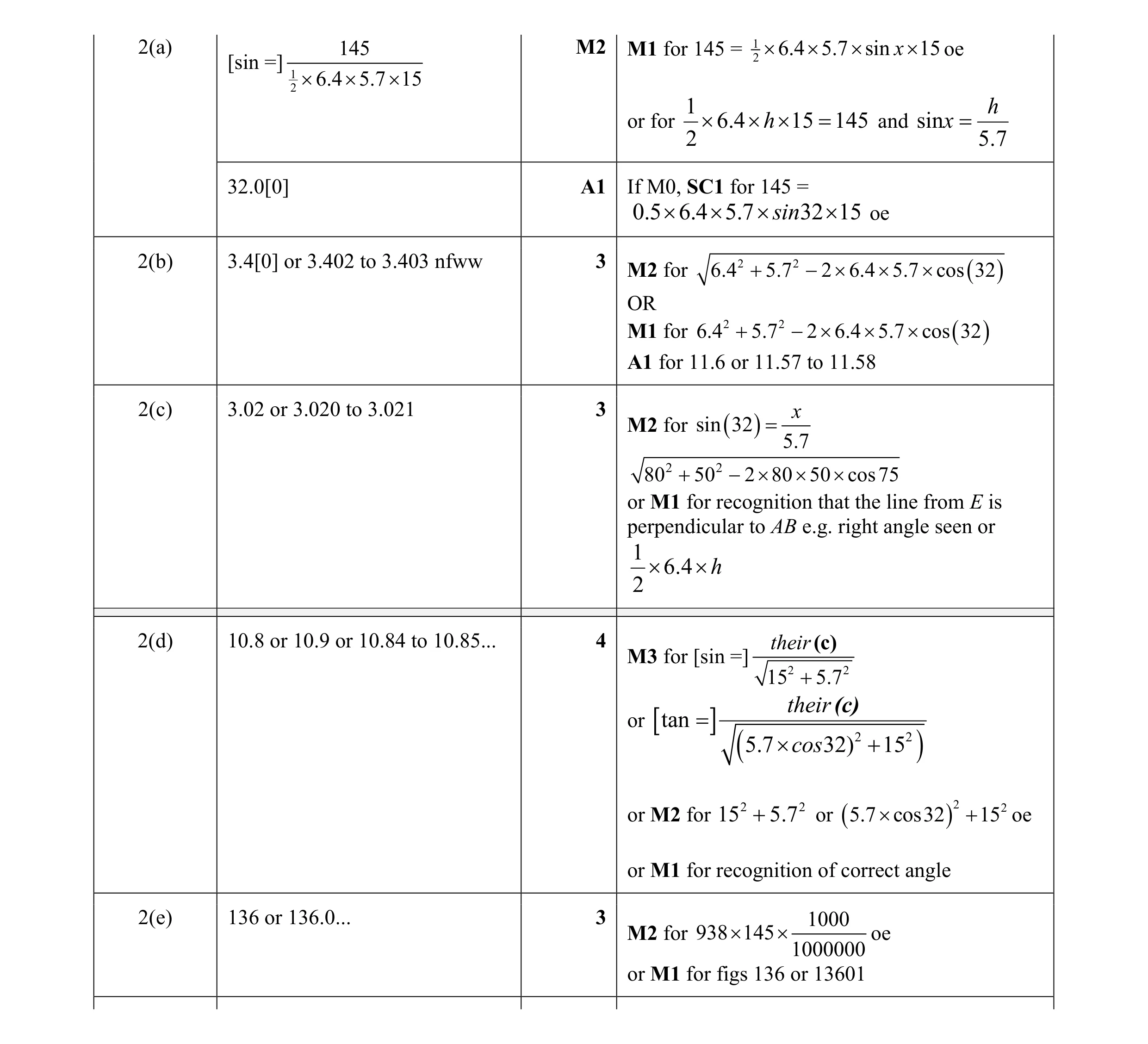 16
16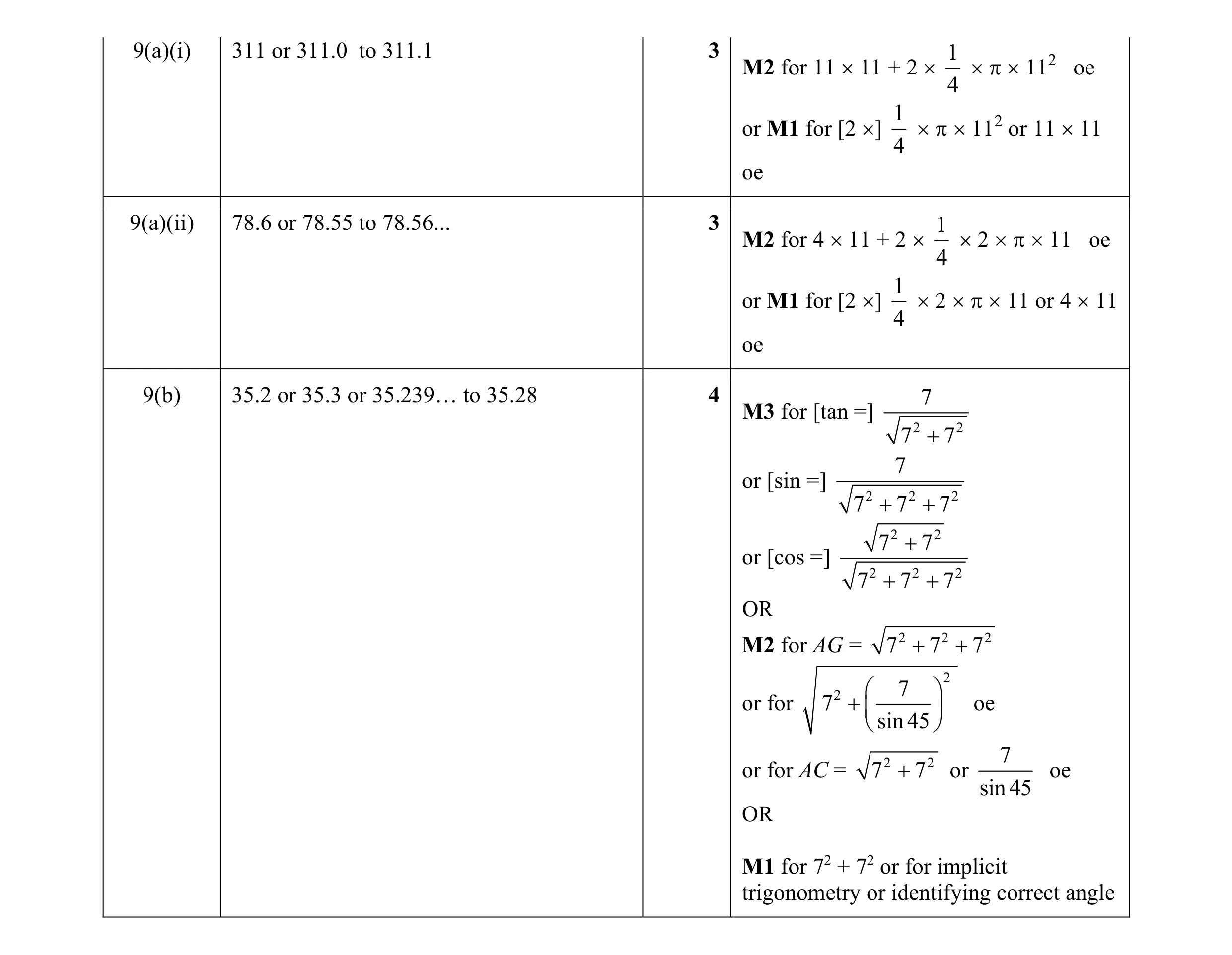 10
10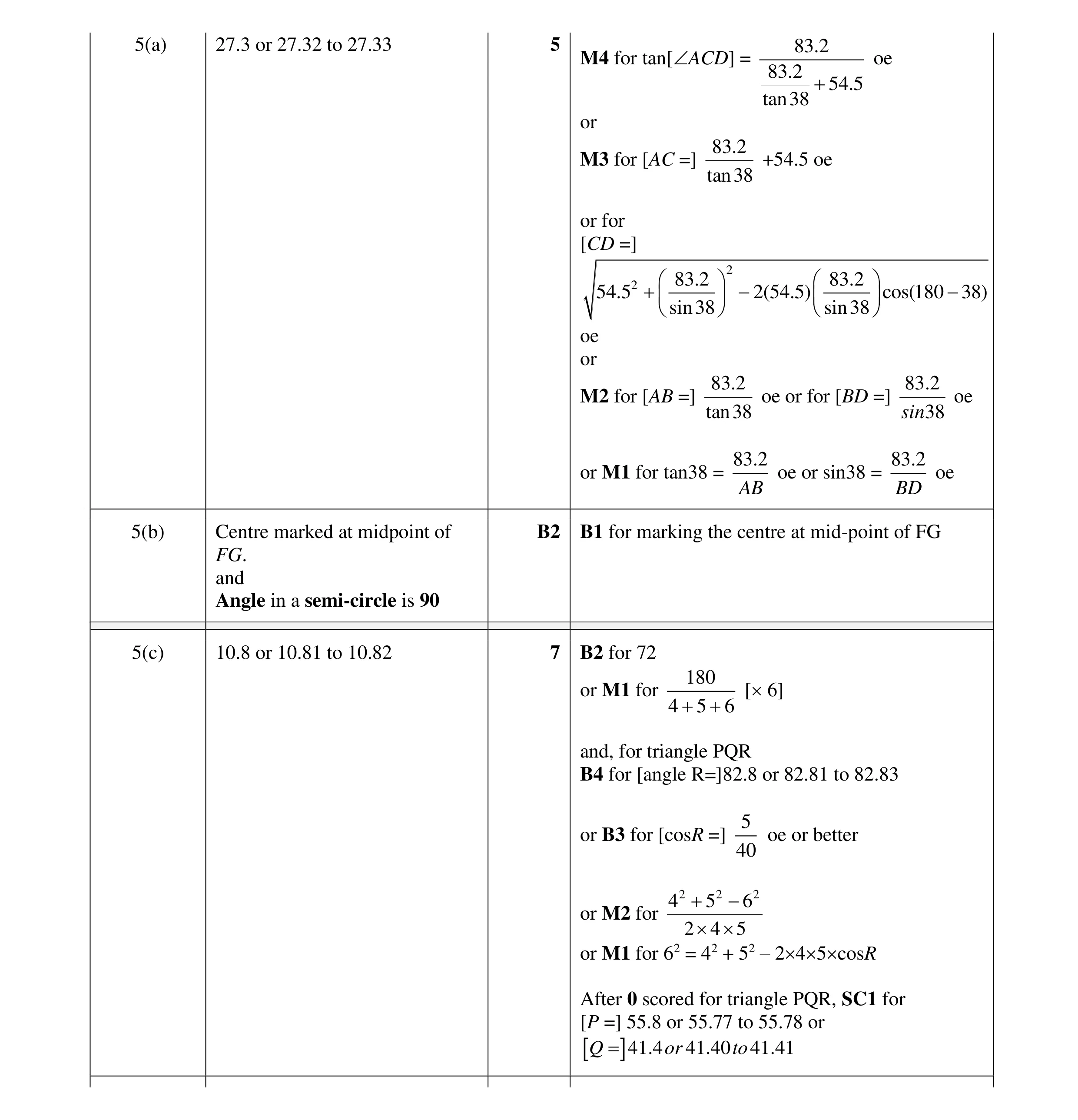 14
14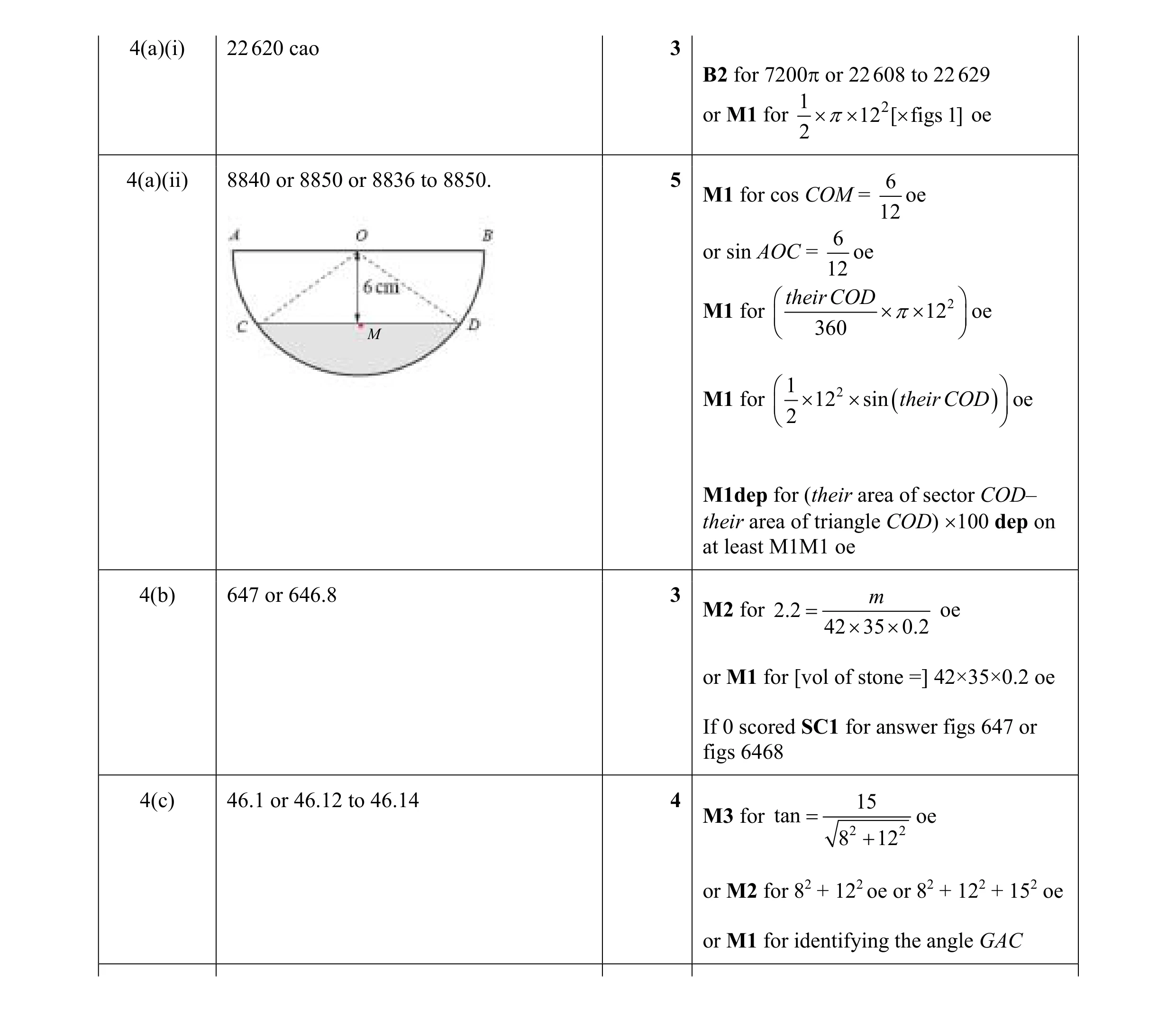 15
15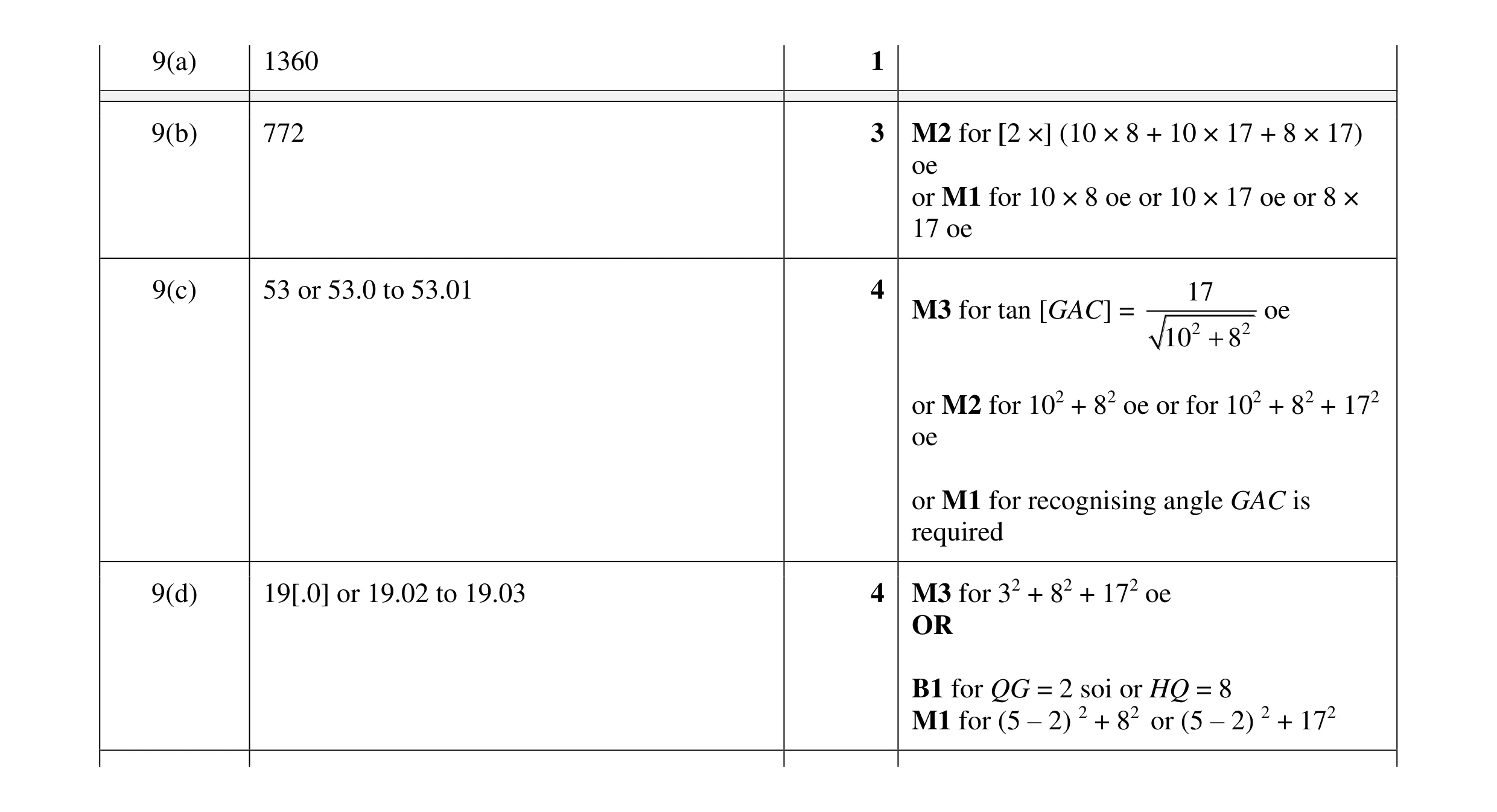 12
12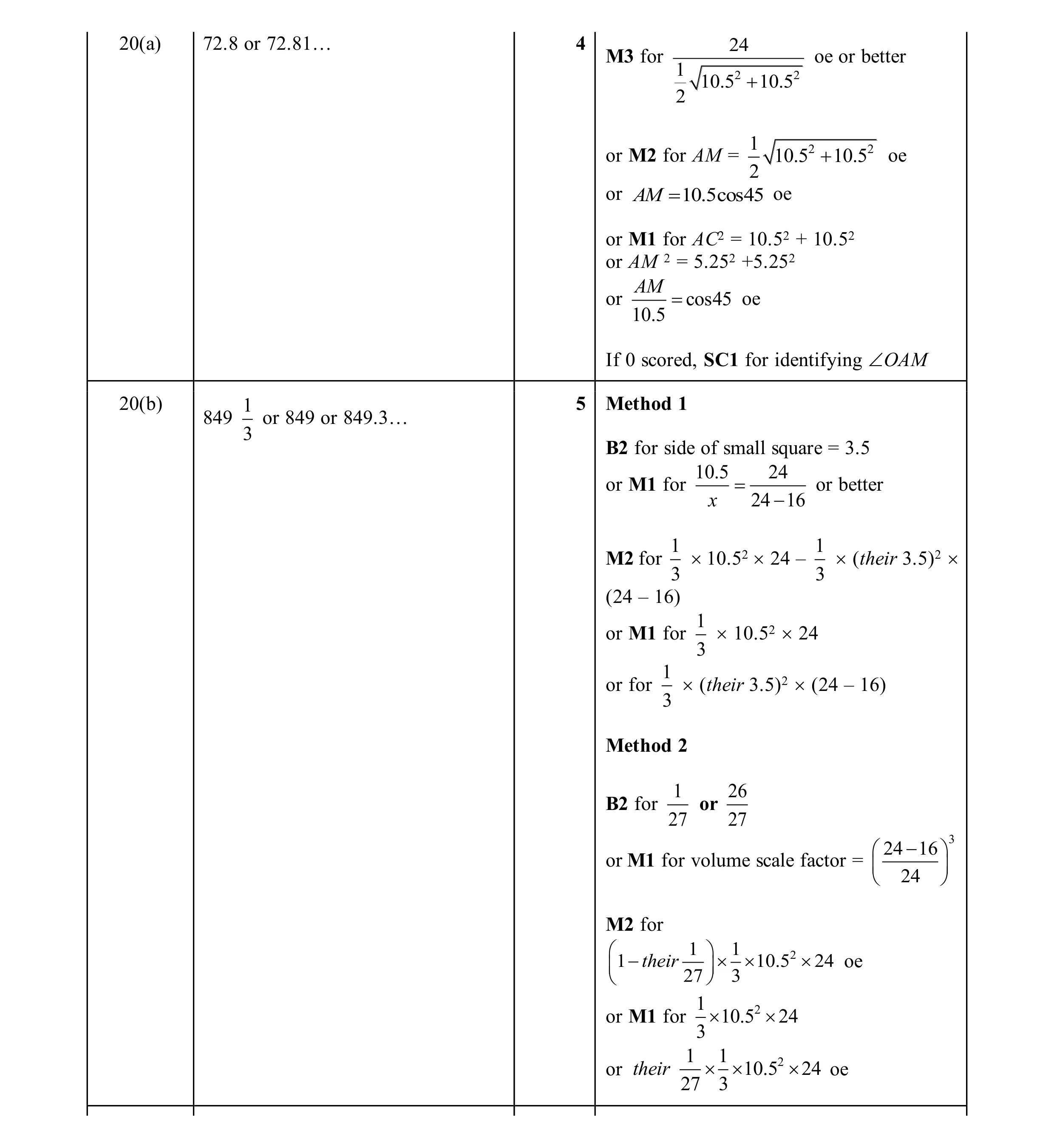 9
9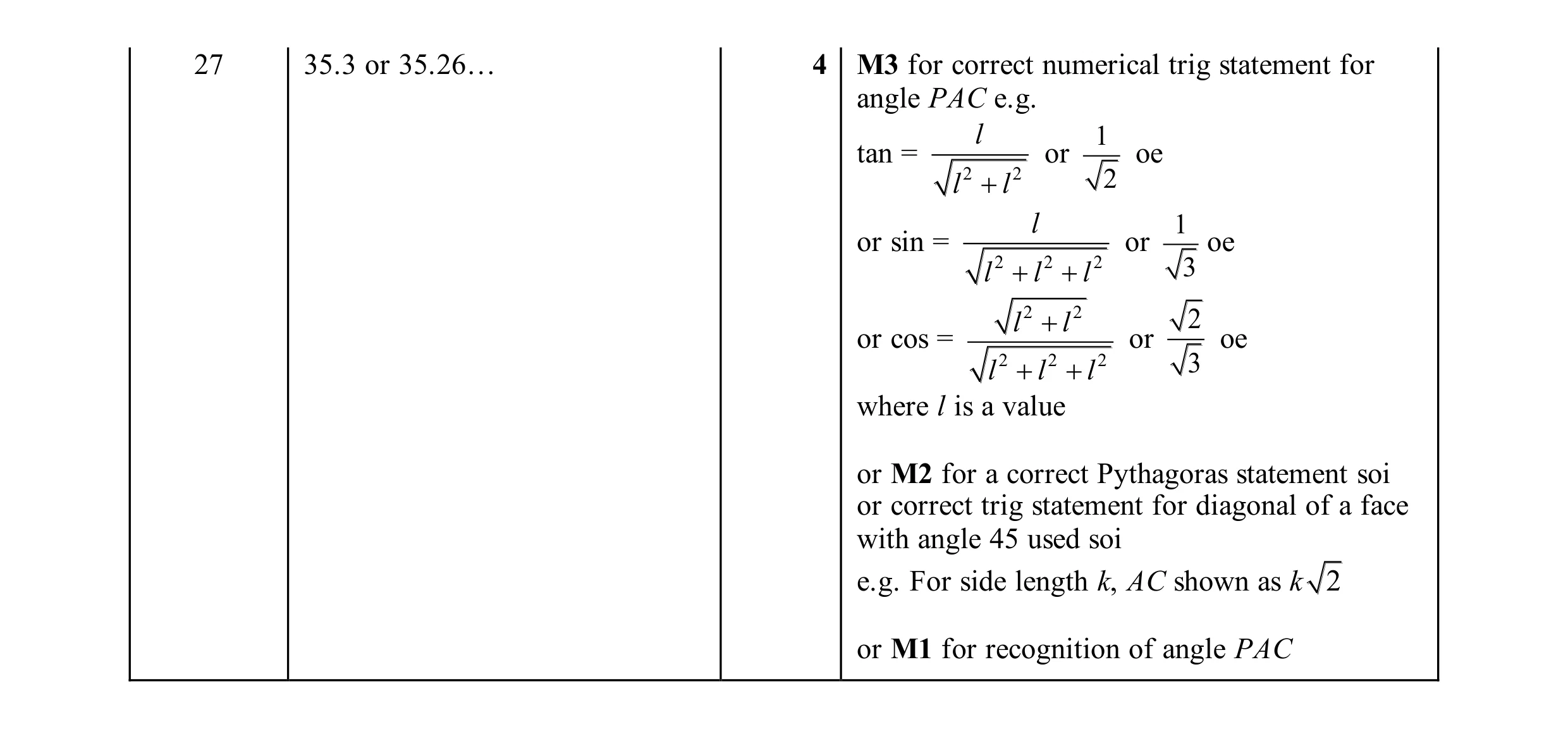 4
4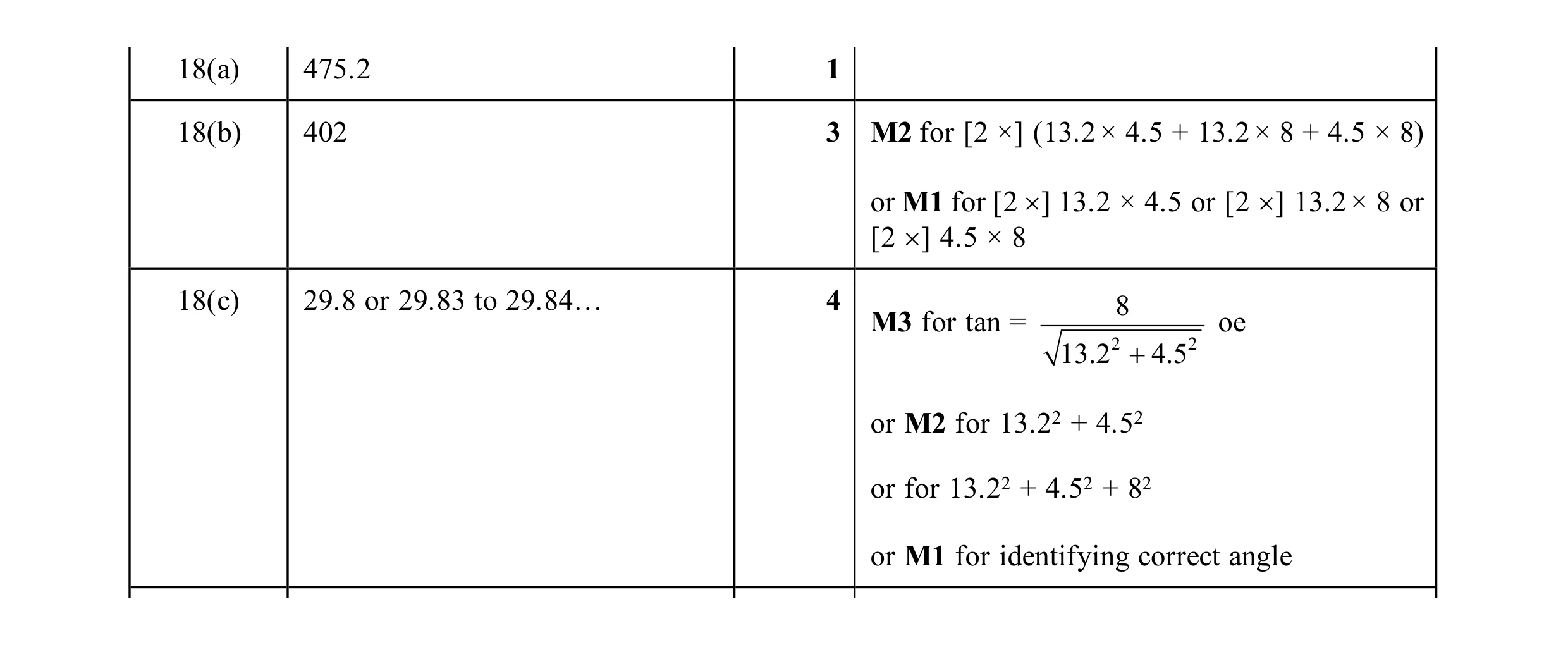 8
8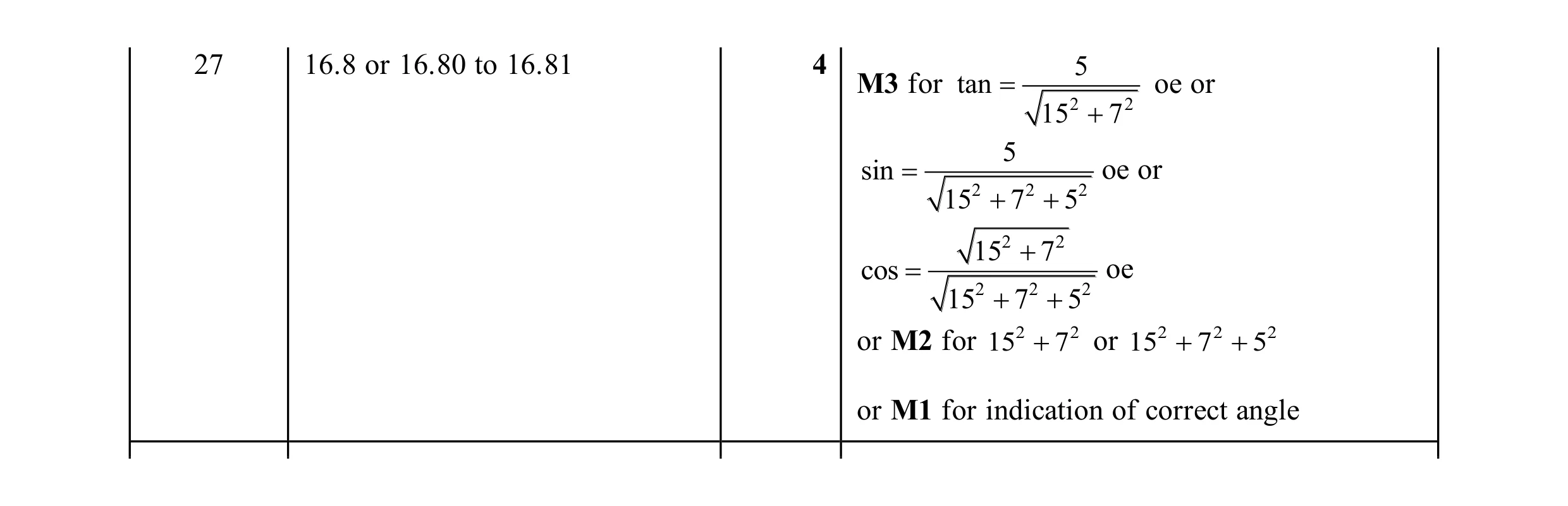 4
4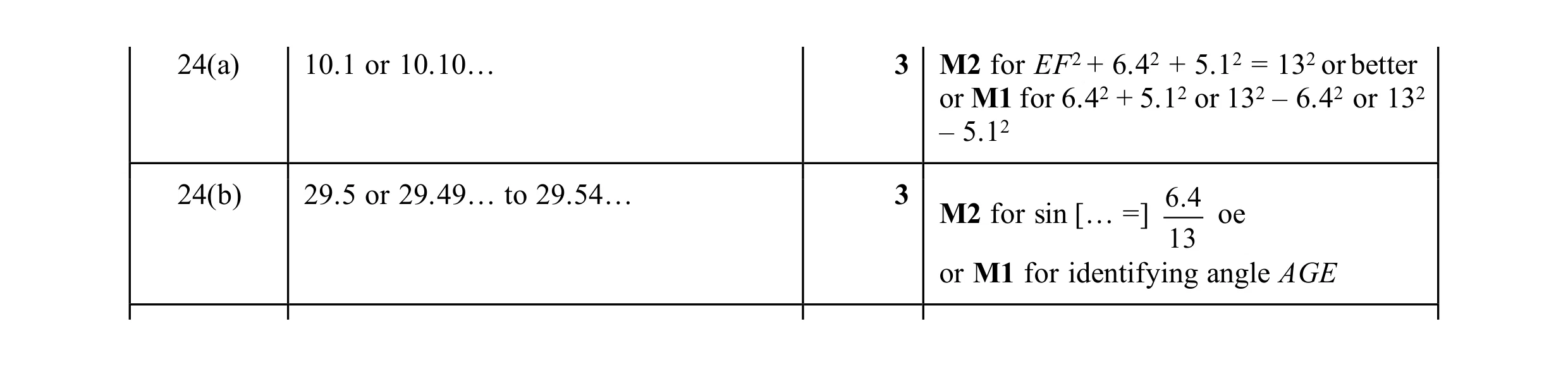 6
6