Questions as text
Q1 · Assess the impact of Mussolini’s foreign policy on Italy 9489/42 Feb/March 2021
1 Assess the impact of Mussolini’s foreign policy on Italy. [30]
30 marks
Mark scheme: Question Answer Marks 1 Assess the impact of Mussolini’s foreign policy on Italy. 30 Responses may consider the significance of events such as the Corfu Incident, the Stresa Front, attempted Anschluss by Germany in 1934, the Abyssinian Crisis, The Rome Berlin Tokyo Axis, the Munich meetings, the Pact of Steel and the Cavallero Memorandum. When looking at the foreign policy actions of Mussolini it is important to look at his aims, actions, and the outcomes of his policies. His aim to create a strong man image and the boast of recreating the Roman Empire need assessing and his increasing isolation from Britain and France and the ever- closer relationship with Germany. His aim to be a power broker and particularly his courting by Britain and France in the policy of Appeasement as for example by the reluctance to impose sanctions over Abyssinia or his help in organising the Munich Conference. Responses ought to assess what benefits and what negative consequences came about from his policies and in particular being drawn into a disastrous World War Two, which Italy was not prepared to fight and which lead to his fall from power and allied occupation of Italy.
This question in 9489/42 Feb/March 2021
Q2 · Assess the aims of Hitler’s foreign policy in the period 1933–41 9489/42 Feb/March 2021
3 Assess the aims of Hitler’s foreign policy in the period 1933–41. [30]
30 marks
Mark scheme: 3 Assess the aims of Hitler’s foreign policy in the period 1933–41. 30 Hitler had a variety of motives in the period. Revising the Treaty of Versailles, creating a Greater Germany, Lebensraum in Eastern Europe, and arguably racial imperialism. Domination of Europe, military strength, and then arguably global conquest. He also wanted to avoid a two- front war with the Soviet Union for as long as possible and until Western Europe was defeated. His foreign policy was also designed to increase his own popularity at home, at least in the early years and finally he wanted to make Germany economically self-sufficient using Autarky from 1936 to allow war to be followed as a policy. He intended to make himself the Master of Foreign Policy replacing traditional diplomats such as Von Neurath with Von Ribbentrop and military tactics, replacing Von Blomberg and Von Fritsch with Keitel. From 1933 he wanted German equality and revoked the Treaty of Versailles, left the World Disarmament Conference and then the League of Nations. 1935 saw the Saar Plebiscite and the Anglo-German Naval Treaty, 1936 the reoccupation of the Rhineland, a decisive step, which showed neither France nor Britain would stand up to him at this stage. The Spanish Civil War was simply a chance to test his air force. The Rome- Berlin-Tokyo Axis was an anti-Soviet alliance and the Hossbach Memorandum of 1937 set out his future plans. 1938 saw the Anschluss and then the Munich Agreement handing Germany the Sudetenland. Hitler in his foreign policy was playing on the Pro-Appeasement policies of Britain and France whilst regaining territory taken at the Treaty of Versailles. 1939 was a decisive year in his occupation of Rump Czechoslovakia and the Nazi- Soviet Pact of August 1939. The Pact of Steel with Italy might be mentioned here too. September 1st and the invasion brought war and then Hitler’s aims were to quickly conquer Western Europe which he did apart from Britain. In 1941 Germany launched Operation Barbarossa which has racial and economic and political motives.
This question in 9489/42 Feb/March 2021
Q3 · Assess the impact of the Prague Spring on US–Soviet relations 9489/42 Feb/March 2021
9 Assess the impact of the Prague Spring on US–Soviet relations. [30]
30 marks
Mark scheme: 9 Assess the impact of the Prague Spring on US‒Soviet relations. 30 Pursuing détente with the Soviet Union was very important to President Lyndon B Johnson; it was an opportunity to end his presidency on a positive note. However, the Soviet invasion to crack down on political reform in Czechoslovakia put the negotiations on hold and it destroyed Johnson’s last chance to leave a legacy he could be proud of. He did not want to upset the Soviets and in the process pursued a policy of no resistance and demonstrated that the United States was not prepared to defend democracy if it was not in its interests. Nevertheless, it soured the relationship between the two superpowers. Johnson was under so much pressure at home with his attempts to create the ‘great society’ and resistance to American involvement in Vietnam. The assassinations of civil rights leader, Martin Luther King, and presidential candidate, Robert Kennedy, also reduced people’s faith in the political system. Success with détente would help to raise his standing and give the Americans a chance to establish an exit strategy for Vietnam. On 20 August 1968 Johnson was making his final preparations for a nuclear arms limitation summit meeting with the Soviet leaders on the following day. The Soviet invasion coincided with the planned meeting This forced him to postpone his plans and his hopes of being recognised as a great peacemaker; it was left to Richard Nixon to receive that honour. Johnson made every effort to protect his personal and political goals by his minimal reaction to the invasion. However, the United States did protest about the invasion in the UN Security Council. It also gave a diplomatic warning to the Soviet Union that it would be more forceful if there were similar action in Romania. Romania had been pursuing a more independent foreign policy and the United States hoped that Romania might become a neutral state in the Cold War. It also resulted in fresh commitments across the NATO alliance, with the United States confirming that it would continue to station its troops in West Germany. Czechoslovakia returned to full Soviet control and the successful invasion saved the shattering of communism in Eastern Europe. Johnson’s fixation on détente enabled the Soviets to escape any direct intervention from the United States. Events clearly demonstrated that both Brezhnev and Johnson were prepared to put their own interests first. Brezhnev prioritised maintaining Soviet control of the satellites against pursuing détente. For him détente was just delayed by a few years; for Johnson it had a permanent effect on his legacy. It also led to the Brezhnev Doctrine whereby the Soviet Union maintained its right to intervene in any country where communism had been threatened. While the Prague Spring played a pivotal role in delaying détente, it also increased Soviet confidence that it could deal with its satellite unimpeded by the United States. On the other hand, it was also a wake-up call to the United States that Johnson had given the impression that in his determination to attain the co-operation of the Soviets he would allow the Warsaw Pact to do as it pleased.
This question in 9489/42 Feb/March 2021
Q4 · Evaluate the reasons why Mussolini was appointed Prime Minister in 1922 9489/41 May/June 2021
1 Evaluate the reasons why Mussolini was appointed Prime Minister in 1922. [30]
30 marks
Mark scheme: Question Answer Marks 1 Evaluate the reasons why Mussolini was appointed Prime Minister in 30 1922. There were many significant reasons as to why Mussolini was appointed in 1922. The discussion could be between the problems in Italy, the leadership qualities of Mussolini, and the relative importance of the elites. Mussolini was appointed because Italy had an indecisive King, and the Prime Minister, Facta, hesitated to act against the Fascists which led to violence, the nation’s fear of Socialists and the aftermath of World War Ⅰ. By the autumn of 1922, he was in contact with major politicians of the formation of a new government, which would include the Fascists. King Victor Emmanuel Ⅱ was a weak man and quite incapable of providing any firm leadership for the country, as he was convinced of his own powerlessness. Most of the King’s family sympathised with the Fascist movement, including his cousin, the Duke of Aosta, and his mother. However, like many of the elite, the King overestimated the strength of the Fascists. The army also gave the King contradictory reports from his generals about the army’s attitude to a Fascist march. The King, on the other hand, is primarily to blame for Mussolini’s appointment, as it was him who sent the telegram offering Mussolini the position of Prime Minister. Facta led a weak Liberal government in February–October 1922 which did very little to impede Fascism’s development. Liberal governments had failed to confront Italy’s internal problems since Unification, and not much had changed by the time Facta was Prime Minister. He was asked to stay on as Prime Minister. He urged the King to grant martial law and allow the army take steps to crush the fascist revolt, but it was too little too late, and no effective stand could be made against the Fascists. Many ex- soldiers joined Mussolini in the Fascist movement. These soldiers were angry about the ‘mutilated victory’ that Italy had suffered at the hands of a Liberal government. The violence of the Fascists was a main factor in Mussolini’s appointment as Prime Minister. Mussolini organised a private army of several hundred Blackshirts who had arms provided for them. This allowed Mussolini to take control politically over central and northern Italy. The Fascists had gained not only the support of industrialists and the elite, but also the Pope. Mussolini gained respect among Italians as he grew more power and developed a good impression. The main reason why Fascism was successful was the fear that the Socialists had created. The leadership qualities of Mussolini, he was a highly talented and recognisable leader. He was also very talented when it came to altering his policies to gain more support form new types of Italians. In 1919, the Fascists primarily appealed to workers, poorer people and socialists whilst alienating other groups of people such as industrialists and religious organisations. Mussolini was also a very gifted speaker, and this was used effectively in propaganda that allowed the movement’s profile to rise considerably. His skill as politician allowed him to exploit the squadristi and boost his respectability and negotiate better with other politicians. 1 Mussolini also recognised the fear of Socialism in Italy and acted upon it quickly. Some argue that the success of the Fascists was purely down to Mussolini as the Socialists were a greater party. It could be argued that Mussolini was appointed by entirely constitutional means by King Victor Emmanuel. A telegram was sent inviting Mussolini to be a member of a coalition government, as the King hoped it would preserve law and order. However, others must share the blame for Mussolini’s appointment, namely Prime Minister, Facta, and his Liberal government. Although it seemed that Mussolini’s appointment as Prime Minister was inevitable, if the King or politicians had acted differently in events leading up to Mussolini’s appointment, it could have been a very different story. In theory, the idea of bringing the Fascists into a coalition government seemed logical, and that it could be used to tame the movement. However, the Fascists were not tamed, and King Victor Emmanuel’s appointment was a miscalculation.
This question in 9489/41 May/June 2021
Q5 · ‘Propaganda was the main reason for the growth of support for Nazism.’ Discuss this view… 9489/41 May/June 2021
3 ‘Propaganda was the main reason for the growth of support for Nazism.’ Discuss this view in relation to the period 1929–33. [30]
30 marks
Mark scheme: 3 ‘Propaganda was the main reason for the growth of support for 30 Nazism’. Discuss this view in relation to the period 1929–33. This question requires an examination and assessment of the role of propaganda and its impact on increasing popularity in the period 1929– 1933, but also an examination of other factors. This includes the Great Depression, rising unemployment, the collapse of the Grand Coalition, the appeal of the Nazis with consideration of Hitler, the role of the Sturmabteilung (SA), fear of the rise in popularity of the communists (KPD), support of Big Business and electoral pacts (Harzburg Front), and left-wing divisions. The electoral success of the 1930 and 1932 Reichstag elections, and Hitler’s performance in the 1932 Presidential Election, demonstrated the increasing popularity. Because more normal politics were rejected, the failures of Bruning, Von Papen, and Von Schleicher increased the popularity of the Nazis. His promises to provide Arbeit und Brot (work and bread), revise the Treaty of Versailles, return Germany to being a great power, regain former German territory, rid Germany of the communist threat and his anti-Semitism appealed to many Germans. He was skilled at tailoring his message to specific audiences, attempting to appeal to both workers and bosses, men and women, old and young, as well as farmers. The Goebbels, Nuremburg rallies, the swastika image, uniforms of the SA, use of his plane to campaign all over Germany, and a simplistic and beguiling message all played important roles in propaganda. Bullock’s summary of propaganda as ‘the greatest demagogue in history’ is apt here. The Nazis benefited from the left-wing, KPD and SPD’s inability to co-operate. The essay must look at the stated factor, other factors and then make a reasoned assessment.
This question in 9489/41 May/June 2021
Q6 · ‘Mussolini’s agricultural policy was his greatest economic success.’ Discuss this view 9489/42 May/June 2021
1 ‘Mussolini’s agricultural policy was his greatest economic success.’ Discuss this view. [30]
30 marks
Mark scheme: Question Answer Marks 1 ‘Mussolini’s agricultural policy was his greatest economic success’ 30 Discuss this view. This question requires candidates to examine and assess the various economic policies and judge the success and failure of Mussolini’s agricultural policy and which policy was the most successful. Agriculture was in crisis from 1925–1935 and the fascist regime focused on it. The Battle for Grain was announced in 1925 and aimed at self-sufficiency. Wheat production increased 50% and large farms in the North did well by benefiting from mechanisation and fertilisers, but olives, fruit and vegetables were neglected, and animal farming was neglected as fodder was expensive. Meat and egg production fell, and prices increased and living standards declined. Italy was still dependent on imports. The Battle for Land aimed at land reclamation to increase agricultural land and provide jobs. New Towns were built on reclaimed land and the Pontine Marshes were drained. However, the plan failed to meet the targets, only 58% of reclamation projects were completed, few people resettled, and small farmers benefited least. The Battle for The Lira was started as the value of the lira was falling against other currencies, and in 1927, Mussolini pegged the lira at a higher level that big business wanted. Exports decreased because they became difficult, and unemployment rose. It did benefit steel, chemicals, and armaments because imports were cheaper, but overall Mussolini was a failed policy. Industry saw economic growth, for example, Alfa Romeo, the oil industry at Bari and Livorno, and the Ansaldo steelmaking and shipbuilding firm. Another economic policy was the development of transport, for example, the autostrada, which improved travel links and provided employment. Electrification of the railways with over 5000 km electrified linking Milan, Rome, Naples, Austria, and Switzerland. In the South, transport was still inadequate. Fiscally, Italy imposed tariffs to protect against foreign trade, and imposed The Decree Law of 1927 which allowed the state to deduct from workers’ pay to contribute towards social benefits. Taxes remained low, but these deductions squeezed workers’ pay and negatively affected living standards. The Corporate State as a concept and in practice could also be looked at. Having examined a variety of policies, it is important that candidates evaluate them and reach a reasoned verdict on success and failure and the stated policy of agriculture in relation to other policies.
This question in 9489/42 May/June 2021
Q7 · Assess the extent to which Hitler’s economic priority was rearmament in the period 1933–39 9489/42 May/June 2021
3 Assess the extent to which Hitler’s economic priority was rearmament in the period 1933–39. [30]
30 marks
Mark scheme: 3 Assess the extent to which Hitler’s economic priority was rearmament 30 in the period 1933–39. Hitler’s economic policies had various strands and motivations. Amongst these might be included rearmament, Autarky, solving unemployment, buttressing his popularity, building the infrastructure of Germany, and ensuring that the economy served his ends as well as providing for agriculture. Reducing unemployment was a key aim and promise. This was achieved by the Reich Labour Service, compulsory military service from 1935, removing women from the workforce and offering families loans provided the wife stayed at home. Public Work Schemes such as civic reconstruction and autobahn construction in conjunction with a massive expansion in the car industry and a shortened working week so that more people needed to work also helped. Unemployment was virtually eliminated by 1938. Schacht’s New Plan aimed at a recovery through trade and how far that was seen as an essential prerequisite for funding rearmament before the more obviously rearmament-based Four Year Plan could be discussed. Economically the Nazis tried to support the Middle Class, forbidding large department stores from opening new branches, but also government needed Big Business to support rearmament. Agriculture seen as very important and followed a ‘blood and soil’ policy. Reich Food Estate set up under Darré, production increased 25% by 1939 and Germany was 83% self-sufficient in food. The Reich Entailed Farm Law prevented smaller farms being broken up and was unpopular with farmers because it prevented the creation of more efficient larger farms. Small farmers and the Middle Class did not benefit as expected. The large department stores were never closed, and Big Business and Reich Food Estate did not reduce its influence which annoyed farmers because this limited what they could charge for their crops. Rearmament was a key policy with Mefo Bills to fund. In 1936, Goring put forward a Four-Year Plan to prepare for war and develop synthetics, and by 1938, gained Austrian industry and later Czech industry too, including conscription, building up the army, air force and navy. Rearmament was a key policy, as it underpinned Hitler’s foreign policy aims, but he also wanted to solve unemployment. He wanted both ‘guns and butter’. Answers must address the various strands of the Nazi economic policy and reach a sustained judgement on the stated factor of rearmament.
This question in 9489/42 May/June 2021
Q8 · Assess how far the nuclear arms race was responsible for the Cold War tension between the… 9489/42 May/June 2021
9 Assess how far the nuclear arms race was responsible for the Cold War tension between the Soviet Union and the United States. [30]
30 marks
Mark scheme: 9 Assess how far the nuclear arms race was responsible for the Cold 30 War tension between the Soviet Union and the US. Cold War tensions arose from the conflicting ideologies of capitalism and communism, as well as superpower ambitions to expand their sphere of influence. President Truman was determined to contain communism and maintain the US’ superiority over the Soviet Union. The nuclear arms race may have, at times, exacerbated tension between the superpowers, but much of the tension was caused by their desire to protect and expand their sphere of influence. The Cold War remained a propaganda war punctuated by proxy wars in which the US and the Soviet Union supported opposing sides, such as in the Korean and Vietnam Wars. The Middle East, like Africa and Latin America, became an area for Cold War rivalry. In Europe, the 1958 Berlin crisis resulted in the construction of the Berlin Wall in 1961. The nuclear arms race occurred because neither side wanted the other to gain the upper hand. The Soviet Union tested its first atomic weapon in 1949 which spurred Truman to authorise the development of hydrogen bombs. However, the Soviet Union had its own hydrogen bomb by 1953. Eisenhower’s ‘New Look’ foreign policy included using nuclear weapons, massive retaliation, and the use of brinkmanship. Khrushchev established the Warsaw Pact in 1955, and its members devised plans to wage nuclear war against NATO. In 1957, the Soviets launched their first intercontinental ballistic missile, which created US fears of a missile gap between the Soviet Union and the US. With the launch of Sputnik 1, the first satellite, the Soviet Union also began the space race with the US. There was a great fear in the US that the balance was in favour of the Soviet Union, even though the opposite was true. In 1958, the US launched its own satellite, Explorer 1 and developed its own ICBMs. This competition inevitably increased tension. In 1962, the Cuban Missile Crisis further fuelled the tensions between the two superpowers with fear that the world was on the brink of a nuclear war. The nuclear arms race helped to bring the two sides together. Khrushchev had spoken of peaceful co-existence, and both Eisenhower and Dulles realised that a dialogue needed to be established with the Soviet Union. In 1959, Khrushchev visited the US briefly to meet Eisenhower at Camp David. Reports praised ‘the spirit of Camp David’ showing that both superpowers were willing to talk. In 1963, the Limited Test-Ban Treaty was signed in Moscow by the US, the Soviet Union, and the UK. This Treaty banned all tests of nuclear weapons except those conducted underground. The Nuclear Non-Proliferation Treaty was signed on 1st July 1968. In 1972 and 1979, the SALT Ⅰ and SALT Ⅱ agreements were signed by the two powers which aimed to restrict the nuclear arms race. However, following the Soviet invasion of Afghanistan in 1979, President Carter withdrew the SALT Ⅱ treaty from the Senate. When President Reagan assumed office, he referred to the Soviet Union as an ‘evil empire’ and he felt that he should negotiate from a position of strength. In 1983, President Ronald Reagan announced the Strategic Defence Initiative (SDI). Gorbachev was willing to negotiate a reduction in nuclear weapons, and in December 1987, he and Reagan signed the Intermediate-Range Nuclear Forces Treaty calling for the elimination of intermediate-range missiles. In July 1991, the US and the Soviet Union signed the Strategic Arms Reduction Act by which time the Cold War was over.
This question in 9489/42 May/June 2021
Q9 · Analyse the impact of Mussolini’s policies towards the Church 9489/43 May/June 2021
1 Analyse the impact of Mussolini’s policies towards the Church. [30]
30 marks
Mark scheme: Question Answer Marks 1 Analyse the impact of Mussolini’s policies towards the Church. 30 As the Roman Catholic Church held such sway in Italy, it was vital that Mussolini foster a strong link with the institution, regardless of his beliefs or that of his dictatorship. He had to take note of the sheer amount of power the Church levied and could not afford to anger it. Mussolini opted to work with, rather than against, the Church, therefore ensuring that the Italian general public did not have to choose between his leadership and their religious beliefs. He set about encouraging the Roman Catholic Church to accept a Fascist state, while promising to fulfil the Church’s requests. He also made public swearing a crime and shut the doors of many shops selling alcohol. He made public his disapproval of contraception, something that the Roman Catholic Church felt strongly about, and pushed for the institution of divorce to be banned across Italy. However, despite all these efforts, the relationship between the Church and Mussolini was not always smooth. One of the major issues that the two disagreed strongly over was that of education. Both the Church and Mussolini wished to have the power to control education in the country and the efforts to resolve this disagreement took three years to come to fruition and serve their purpose. In 1929, agreements called the Lateran Treaties were signed, which set out who would control education in Italy, as well as a host of other agreements. While the Roman Catholic Church had lost much of its land when Italy was unified in 1870, it was compensated to the tune of £30 million in 1929 and given land in Rome in which to construct the Vatican, the new papal state. On top of this, the Pope was given a small army, rail station and police force. The Lateran Treaties also specified that the Roman Catholic faith was to be the state religion, in a section called the Concordat. This set out rules around religion in Italy in that children in both primary and secondary schools had to have religious education at school. The Church was also given control over marriage and the appointing of bishops, though the latter still had to be agreed by the Government before the appointment could be finalised. Mussolini’s efforts to retain a relationship with the Church seemed to have paid off during these years, and his popularity with members of the Italian general public – who did not have to split their loyalties between the Church and the Government – grew. The two were to still have disagreements though – one of the key ones being the Charter of Race, which was rolled out in July 1938 and removed the Italian Jews right of Italian nationality. These Jews had several restrictions placed upon them, including not being permitted to take state jobs, teach or be members of the Fascist Party. They could also not marry non-Jewish Italians. Such was the unpopularity of these rules that Mussolini received a protest from the Pope on behalf of the Italian Jews. By 1939, relations between the Catholic Church and Mussolini had deteriorated badly.
This question in 9489/43 May/June 2021
Q10 · ‘The Great Depression was the key factor in Hitler’s rise to power.’ Evaluate this view 9489/43 May/June 2021
3 ‘The Great Depression was the key factor in Hitler’s rise to power.’ Evaluate this view. [30]
30 marks
Mark scheme: 3 ‘The Great Depression was the key factor in Hitler’s rise to power.’ 30 Evaluate this view. This question requires an examination and assessment of the various causes for Hitler’s rise to power and then a reasoned judgement on the significance of the Great Depression amongst other causes. This is a broad ranging essay, but factors to be examined might include: the impact of the Great Depression; appeal of the Nazis’ policies; appeal of Hitler and his oratory; collapse of the Grand Coalition; instability in the period 1930–1933; ruling elite intrigues to look at Von Papen; Von Schleicher; Hindenburg; or fear of the communists. Hitler’s use of propaganda, Goebbels, use of posters, the Swastika, films as well as the role if the Sturmabteilung (SA) all need examining. Lessons learned from 1923 Munich Putsch, funding, appeal, trying to make the Nazis a national party and the publication of Mein Kampf. The answer might usefully look at the lack of electoral success in 1928 with only 12 Reichstag seats, yet by 1930 it was 107 Reichstag seats, and by 1932 there were 230 Reichstag seats in the first elections. The answer may instead look at Hitler’s very good showing in the 1932 Presidential election, or the formation of the Harzburg front. Clearly, the Great Depression must be analysed with the massive increase in unemployment and the loss of confidence in the Weimar Republic. It could be argued that democratic government ends in 1933, as Brüning had to resort to Article 48 regularly to govern and people were increasingly pushed to political extremes of the NSADP and KPD. The inability of the KPD and SPD to work together was crucial. The question invites a look at long term factors, such as policies of revising the Treaty of Versailles, returning Germany to being a great power and anti-communism and anti-Semitism, then a tighter focus on the period 1929–1933 and the impact of the Great Depression, gaining support of Big Business fear of communism and inability of the traditional Weimar politicians to solve the economic problems, and finally the events of 1932–1933 that lead to Hindenburg reluctantly appointing Hitler Chancellor in January 1933.
This question in 9489/43 May/June 2021
Q11 · Assess the extent to which Khrushchev was responsible for causing the Cuban Crisis 9489/43 May/June 2021
9 Assess the extent to which Khrushchev was responsible for causing the Cuban Crisis. [30]
30 marks
Mark scheme: 9 Assess the extent to which Khrushchev was responsible for causing 30 the Cuban Crisis. Khrushchev’s determination to help Castro, spread communism and appear militarily stronger than the US as well as his secrecy in deploying nuclear missiles in Cuba so close to the US created a situation that the US found impossible to ignore. However, Kennedy’s obsession with defeating Castro provided Khrushchev with the opportunity to become involved. The Cuban Revolution in 1959 brought Fidel Castro to power; he had close links with Moscow and began to establish a left-wing dictatorship. In February 1960, Cuba signed an agreement to buy oil from the Soviet Union. The US-owned refineries in Cuba refused to process the oil and Castro seized the firms. The US broke off diplomatic relations with Cuba. Castro proclaimed himself a communist, formally allied his country with the Soviet Union, and seized remaining American assets. Kennedy inherited from Eisenhower the CIA’s Bay of Pigs plan to overthrow Castro which proved to be a complete failure. Kennedy believed that the US needed to be uncompromising with dictatorships like those of Castro. He also believed that Castro would support communist revolutions throughout Latin America and that Castro’s Cuba was a dangerous extension of Russian influence so close to the US. Kennedy pledged to take strong action to overthrow Castro, if elected president, and once elected he felt compelled to support the CIA plan. Kennedy made a mistake by not listening to those who were against the plan. He believed it would work because he thought Castro would be assassinated. However, he not only tried to remove Castro through the CIA-engineered assault on the Bay of Pigs, but he also launched another top-secret CIA programme directed against Cuba, Operation Mongoose. He was obsessed with defeating Castro and removing any communist threat so close to the US. This provided the opportunity for Khrushchev to become involved to protect Cuba and try to secure a cold war victory. Khrushchev certainly misjudged the situation in 1962. He felt justified in helping to spread communism and protecting Castro. The crisis began with his decision to install intermediate and medium-range nuclear missiles in Cuba. Kennedy saw U2 pictures of the missiles on 16th October 1962 which had been secretly deployed by Khrushchev in April. The Americans had been lied to about the Soviet intentions making a US response inevitable. Such missiles could threaten most US cities. It has been argued that Khrushchev saw Kennedy as a weak president and took advantage of this to gain domestic approval. However, he could have defended Cuba and Castro with conventional weapons. It seems likely that Khrushchev wanted to appear to have greater military strength than the US, particularly when U2 spy flights had shown that there was a missile gap in the US favour. Domestically, Khrushchev was under pressure to adopt a more hard-line approach to the West and he needed to be successful to silence his critics. 9 Appearing to defend the Cuban Revolution gave Khrushchev the opportunity to try to score a nuclear success over the US. He felt justified in his actions as the US had stationed Jupiter missiles in Turkey so the US would not have strong grounds for objecting to his actions. However, he underestimated the US’ reactions to threats in their own backyard and he also underestimated Kennedy. Kennedy did not want to be accused of weakness at home nor to be seen as weak in deterring the communist threat.
This question in 9489/43 May/June 2021
Q12 · Assess the extent to which Fascist indoctrination was the main aim of Mussolini’s… 9489/42 Oct/Nov 2021
1 Assess the extent to which Fascist indoctrination was the main aim of Mussolini’s leadership. [30]
30 marks
Mark scheme: Question Answer Marks 1 Assess the extent to which Fascist indoctrination was the main aim of 30 Mussolini’s leadership. The question asks for an assessment of the main aim of Mussolini’s leadership, chiefly whether the focus was fascist indoctrination or other factors. Benito Mussolini coined the term ‘fascism’ in 1919 to describe his political movement. He established the first fascist regime and believed in Absolute Power of the State, Rule by a Dictator, Corporatism. Extreme Nationalism, Superiority of the Nation’s People, Militarism, and Imperialism. Mussolini chose Giovanni Gentile as Minister of Education. He reorganized Italy’s school system and argued that the private desires and interests of the individual came second to the ‘common will’ of the people. He explained that self-sacrifice and obedience to the state enabled the individual to achieve unity with the ‘common will.’ He argued that rights do not belong to the individual but to the people as a whole and that the ‘common will’ of the people is the law of the state. Therefore, individuals must submit to the fascist state in order to be truly free. He declared it is the natural right of the stronger to conquer and rule the weaker. War has another function in the fascist state: It unites the people and proves their superiority as a nation. Mussolini called new elections for the Italian parliament in 1924 and after the election, Mussolini closed opposition newspapers and banned public protest meetings. He declared all political parties illegal except for his own Fascist Party. He outlawed labour unions and strikes. He also established a political police force, the Organization for Vigilance and Repression of Antifascism. A Fascist Grand Council rubber-stamped Mussolini’s decrees and made parliament irrelevant. By 1925, Mussolini had adopted the title, Il Duce (the Leader). He delivered emotional public speeches, swaying back and forth, puffing his chest, and holding his hands on his hips. The crowds chanted back fascist slogans such as ‘Il Duce is always right!’ and ‘Believe, obey, fight! ‘Opponents of Mussolini coined the term ‘totalitarianism’ to describe his quest to control not only the political system but also the economy, schools, police, courts, military, and more. Ironically, Mussolini liked this term and began to use it himself to persuade Italians to come together under his leadership for a rebirth of society. Mussolini compared the ‘new man’ of Italy to the hardened soldiers of ancient Rome. As for women, Il Duce saw their role as giving birth and caring for a new generation of warriors. The Fascist Party organized youth organizations for all boys and girls aged 8–18. These groups promoted physical training, military drills (for boys), and the ideals of the fascist state. Mussolini had little use for religion. Italy, however, was a strongly Catholic country. Gentile, as minister of education, continued the teaching of Catholic doctrine in the elementary schools. But he replaced it with philosophy at the secondary level. The Catholic Church objected to this reform. Hoping to keep the church from opposing his fascist regime, Mussolini adopted pro-Catholic policies against abortion and divorce. Then in 1929, he signed a treaty with the church that made Catholicism the state religion. This agreement also restored the teaching of Catholic doctrine in secondary schools. For its part, the church accepted Mussolini’s fascist state and ended its involvement in Italy’s political affairs. 1 Mussolini wanted to create an economic system that provided a ‘third way’ and in the 1930s, he organized industry, agriculture, and economic services into state-controlled labour unions and employer associations called ‘corporations.’ Government officials appointed the heads of each union and employer corporation. They negotiated wages and working conditions with each other. This ‘third way’ corporatism attempted to unify workers and employers by requiring them to set aside their private interests in favour of the best interests of the fascist state. In practice, however, the employers usually benefited more than the workers did. Police crackdowns on dissent were mild compared to fascism in Hitler’s Germany. But a special court tried anti-fascists, those working against Mussolini’s regime. The Jewish population of Italy was small, and neither Mussolini nor most other Italians were very anti-Semitic. Jews had fought for Italy in the First World War and participated in Mussolini’s march on Rome. Even so, Il Duce came increasingly under the influence of Hitler in the late 1930s. Mussolini finally agreed to anti-Semitic decrees such as banning Jews from certain occupations. When the Germans occupied parts of Italy during the Second World War, they transported 20 percent of Italy’s Jews to Nazi concentration camps. While Italians hid many Jews, Mussolini did nothing to stop the Nazi deportations. Before the Second World War, popular support for Mussolini’s fascist state was high. His charismatic style of leadership convinced many that Italy was on a path to greatness.
This question in 9489/42 Oct/Nov 2021
Q13 · ‘Nazi youth policies were a failure.’ Discuss this view 9489/42 Oct/Nov 2021
3 ‘Nazi youth policies were a failure.’ Discuss this view. [30]
30 marks
Mark scheme: 3 ‘Nazi youth policies were a failure.’ Discuss this view. 30 This question requires and examination of the aims, successes, and failures and then a reasoned overall judgement to be made. The Nazi policies towards young people could be viewed as one of the most successful aspects of Nazi Germany. This is due to a variety of reasons. The Nazis took advantage of the need for German youth groups and used what teenagers wanted to slip in Nazi ideals, took over the education system to portray Nazi views, and used the school system to glorify war; they also often alienated children from their parents. However, it did have its flaws as there were several groups of youths who opposed Hitler such as the ‘Edelweiss Pirates’. The Hitler Youth group played a major role in Nazi control of youths especially in 1939 when it became compulsory to attend. The Nazis took what the children wanted such as group activities, hiking, camping, and singing and added in extra activities such as marching, learning about Nazi policies and practicing military exercises. Many of the members were merely drawn to the youth group due to the leisure opportunities it offered and some just did not have a choice as other organisations were shut down and made illegal. As the Nazis wanted to control each aspect of a child's life, they realised that education played a very important role. They altered textbooks to include Nazi history and Nazi views of History. Students were taught about the injustice of German government and how the Jews were slowly taking over. The Nazi’s also managed to glorify the military in each school subject. They also made sure that the students had to study race and ideology every day. As the Nazis needed to control each aspect of a child's life to have full hold on the child, they realised that it was a necessity to control a child's home or family life, in many cases this meant isolating a child from his/her family. It became increasingly common in Germany for the children of the household to be much more pro-Nazi than their parents. This is because the children grew up being controlled by Nazi forces and therefore found such things as routine household checks normal, whereas older family members found it an invasion of privacy. During the late 1930's the number of members in the Hitler Youth group drastically increased however as the war progressed the number of enrolments dropped as the group became more war centred rather than leisure activities. In fact, anti-Hitler Youth groups were set up. One of these was called the ‘swing’ movement. This was a group of teenagers who rebelled against the Nazi regime by listening to banned music from the US and England and dressing in a more western fashion. Perhaps one of the policies that infuriated the Nazis the most was the fact that the ‘swing’ movement members allowed Jews in their clubs. Another group which the Nazis greatly feared was the Edelweiss Pirates. This group of Youths carried out some very similar activities to the Hitler youth group such as singing however the Edelweiss Pirates' songs were criticising the Nazi regime and mocked their ideas of the German superpower. They also often attacked Hitler Youth group members and indulged in activities that the Nazis looked down upon such as the act of sex and making the group include both male and female members.
This question in 9489/42 Oct/Nov 2021
Q14 · Assess the extent to which Khrushchev’s policy of peaceful coexistence eased Cold War… 9489/42 Oct/Nov 2021
9 Assess the extent to which Khrushchev’s policy of peaceful coexistence eased Cold War tensions. [30]
30 marks
Mark scheme: 9 Assess the extent to which Khrushchev’s policy of peaceful 30 coexistence eased Cold War tensions. Khrushchev’s adoption of the policy of peaceful coexistence with the West, alongside his de-Stalinisation policy, signalled a thaw in the Cold War. In 1955 he agreed to negotiate an end to the post-war occupation of Austria and allow a neutral country to be created. In the same year he told Tito, the Yugoslav leader, that ‘there are different roads to communism’. He also called for a reduction in defence expenditures and reduced the size of the Soviet armed forces. On 24 February 1956, at the Communist Party’s Twentieth Congress, Khrushchev made a speech denouncing Stalin. It became known as the ‘secret speech’ as it was read in a closed discussion but the US State Department soon obtained a copy. It seemed as if there would be a relaxation of Cold War tensions. In the late 1950s, the United States and the Soviet Union initiated a cultural exchange programme and, in 1959, Nikita Khrushchev visited the United States briefly meeting Eisenhower at Camp David. Predictions of improved future relations were reported which praised ‘the spirit of Camp David’ showing both superpowers were willing to enter into dialogue. It seemed that Khrushchev never intended peaceful coexistence to end competition between the two superpowers, merely that it would be peaceful competition. Both sides remained suspicious of each other’s ideological stance. Eisenhower’s New Course’ foreign policy included the use of greater nuclear weapons, a policy of massive retaliation and brinkmanship. In 1955 Khrushchev set up the Warsaw Pact and its members had plans of how to wage nuclear war against NATO. Khrushchev also rejected Eisenhower’s ‘Open Skies’ proposal at the Geneva Summit in 1955 which proposed that United States and the Soviet Union exchange maps indicating the exact location of every military installation in their respective nations. In addition, the United States was suspicious of Khrushchev’s intentions, especially after he sent troops into Hungary in 1956 to crush the revolts there. In 1957 the Soviets launched their first intercontinental ballistic missile which created US fears of a missile gap between the Soviet Union and the United States and began the space race with the launch of Sputnik 1, the first satellite. The problem of Berlin caused tension too; in November 1958, Khrushchev announced that unless the West removed its forces from West Berlin within six months, he would allow the East Germans to control the access routes. The West stood firm and Khrushchev eventually backed down but West Berlin remained an area of tension. A summit meeting in Paris in 1960 was stopped by the shooting down of a U2 spy plane over Moscow and in 1961 Khrushchev ordered the building of the Berlin Wall after Kennedy’s ‘Ich bin ein Berliner’ speech. 9 Moscow also took every opportunity to promote its interests in Asia, Africa, and Latin America. In January 1961, Khrushchev declared at an informal summit meeting in Vienna that Moscow would provide active support to national liberation movements throughout the world. The Cuban Crisis of 1962 saw the two sides on the brink of nuclear war. The crisis ended when Khrushchev agreed to remove Russian missiles from Cuba in exchange for a promise from the United States to respect Cuba’s territorial sovereignty. It also led to a hot line being established between the Kremlin and the White House and the Limited Nuclear Test-Ban Treaty was signed in Moscow on 5 August 1963, by the United States, the Soviet Union, and the United Kingdom.
This question in 9489/42 Oct/Nov 2021
Q15 · ‘Preventing the spread of communism was the main reason for the United States’ growing… 9489/42 Oct/Nov 2021
10 ‘Preventing the spread of communism was the main reason for the United States’ growing involvement in Vietnam.’ Assess this view. [30]
30 marks
Mark scheme: 10 ‘Preventing the spread of communism was the main reason for the 30 United States’ growing involvement in Vietnam.’ Assess this view. US intervention in Vietnam was a gradual process ranging from economic aid, diplomacy and eventually the use of military force to save South Vietnam from communism. The United States believed in the containment of communism and feared the domino theory becoming a reality. However, as time went on, it was more evident that the United States was also fighting a proxy war as part of the wider Cold War. In addition, the United States became increasingly determined to maintain its own credibility. From 1947 the United States backed the return of the French in Vietnam. It considered Ho Chi Minh, leader of the Vietminh, to be a communist. By the time of the French defeat at Dien Bien Phu in 1954, Washington had spent almost $3 billion trying to save Indochina from communism. The Geneva Accords of 1954 agreed a two-year division of Vietnam until elections and reunification in 1956. However, the Americans wanted this division to be permanent. Ngo Dinh Diem was appointed Prime Minister of South Vietnam; he was provided with massive US support. He was an anti-communist catholic who was opposed by the Buddhist peasants in South Vietnam. It was his assassination in 1963 and the anarchy it created that led to rising US involvement. South Vietnam was largely a failed state incapable of defending itself and the North was aiming to achieve reunification. In the late 1950s, the Viet Cong unleashed a number of terror attacks on the South. In the 1950s and early 1960s the aim of the US was to defend South Vietnam from communism without direct military involvement. Another reason for the increasing involvement of the United States was the fact that the communists in Vietnam were supported and guided by the Soviet Union and China. Therefore, the war could not be separated from the Cold War and the struggle to contain communism around the globe. They did not see the strength of Vietnamese nationalism and believed that the aim was the spread of communism. Eisenhower’s domino theory was adhered to by his successors and hence Johnson escalated the war starting with the Gulf of Tonkin Resolution in which Congress authorised him to use military force without declaring war. The United States gave economic and military aid to South Vietnam, while the Soviet Union and China offered similar assistance to North Vietnam. Thus, the Cold War power struggle between the United States, the Soviet Union, and China was significant in shaping the Vietnam War. The presidents themselves also influenced the role played by the United States. Eisenhower doubted that the United States could fight a land war in Southeast Asia but Kennedy felt he had to prove his resolve to defeat communism. Johnson considered the war as a test of his courage; it was he who instigated the bombing of North Vietnam and sent the marines to the South in early 1965 when there was little opposition to the war effort. When a North Vietnamese torpedo boat attacked a US destroyer in the Gulf of Tonkin, Johnson persuaded congress to give him unlimited power to direct events in Vietnam. ‘Operation Rolling Thunder’ was launched against North Vietnam; factories, fuel dumps and supply routes were bombed. He sent in large-scale ground forces to fight the Vietcong. There was soon increasing opposition at home to US involvement and Johnson lost support.
This question in 9489/42 Oct/Nov 2021
Q16 · Analyse the impact that the rivalries between the Cold War superpowers had on the civil… 9489/42 Oct/Nov 2021
11 Analyse the impact that the rivalries between the Cold War superpowers had on the civil war in Angola. [30]
30 marks
Mark scheme: 11 Analyse the impact that the rivalries between the Cold War 30 superpowers had on the civil war in Angola. Rivalries between the superpowers turned the civil war in Angola into a Cold War battleground; support for opposing groups from the United States and the Soviet Union and their proxies inevitably helped to escalate and prolong the war but the military groups themselves failed to reach agreement they could not agree on power-sharing. Portugal, too chose to withdraw its troops from Angola. Three main military movements had been fighting for Angolan independence since the 1960s, the MPLA, a Marxist organisation, the FNLA based in the north of the country and UNITA led by Jonas Savimbi. The Alvor Agreement with Portugal in January 1975 provided for a three-way power sharing government. However, each group wanted to attain sole power and civil war erupted. UNITA declared war on the MPLA on 1 August 1975. When MPLA leader Neto announced 11 November 1975 as the day of Angolan independence, Lisbon decided to withdraw its troops on that day. Angola soon became a Cold War battleground with the superpowers giving military assistance to the groups they supported. Both the United States and the Soviet Union sought influence in Angola, a country with rich agricultural and mineral resources. The superpowers and their allies gave military assistance to the groups they favoured which resulted in a Cold War contest by proxy. The United States provided aid and training to both FNLA and UNITA. The CIA made its first major weapons shipment to the FNLA in July 1975. Zaire and China also helped FNLA. The Soviet Union supported MPLA with military training and equipment. The MPLA also had ties with Castro in Cuba and UNITA had asked South Africa for military help; South Africa wanted to prevent the use Angola as a base for rebels fighting for the independence of Namibia. The US Government had encouraged the South African intervention, but preferred to distance itself from the apartheid regime. Some members of the US Congress were reluctant to intervene and Ford’s request for additional funds was rejected in 1976. South Africa withdrew its forces in the spring of 1976 and the MPLA remained as the official government of Angola. However, UNITA continued the civil war; the fighting lingered on intermittently until 2002. 11 Henry Kissinger claimed that the United States was forced to intervene in Angola because the Soviet Union was already providing military aid to the MPLA by using Cuban troops. However, later evidence showed that the Kremlin was reluctant to become involved and that it was the United States who backed a two-pronged invasion by FNLA from Zaire and from South Africa in support of UNITA. At the time of the crisis the United States and Soviet Union were still pursuing a policy of détente. The Ford Administration believed that Cuba had intervened in Angola as a Soviet proxy and thus was breaking the rules of détente but this was later shown to be false. The MPLA was the most organised and best led of the three factions but the United States did not want a negotiated settlement as the Soviet Union supported the MPLA. In August 1985, the Reagan administration won a repeal of the 1976 prohibition against US military aid to rebel forces in Angola. Military assistance began to flow to UNITA in January 1987. Finally, in September 1992, elections were held, but when it became apparent that the MPLA would be the winner, Savimbi refused to accept the result and the civil war resumed. In May 1993, Washington finally recognised the Angolan government.
This question in 9489/42 Oct/Nov 2021
Q17 · ‘The fear of Communism was the main reason for the rise of Mussolini by 1922.’ Discuss… 9489/42 Feb/March 2022
1 ‘The fear of Communism was the main reason for the rise of Mussolini by 1922.’ Discuss this view. [30]
30 marks
Mark scheme: Question Answer Marks 1 ‘The fear of communism was the main reason for the rise of Mussolini 30 by 1922.’ Discuss this view. The support which Mussolini gained from key elements of the Italian elite, landowners, industrialists, elements in the state and the royal family, and also perhaps from the Church may have derived from the fear of socialism and communism. The Russian Revolution was seen as dangerous and the existing social tensions before 1914 surfaced again after the strains and disappointments of the First World War. The Left gave Mussolini and his squads an enemy and took the edge off the radical side of fascism for many of the Italian establishment and middle classes who were fearful of strikes, trade unionism, political violence and revolution. These fears could be equated with communism even if socialism was stronger. So, fear of communism was greater than the potential of actual communism. The alternative explanations for the rise of Mussolini might include the organisation of the Fascists and the personal appeal of Mussolini and an ideology which went beyond simply being opposed to communism and offered nationalism and social harmony. However, the impact of war combined with the disappointments of Versailles, produced hostility to the liberal politicians, revived pre-war national aspirations and resentments about Italia irridenta. This might be seen as a more compelling explanation. The ‘trench spirit’ and the disillusion with the liberal establishment’s failures brought Mussolini a popular support which went beyond fear of communism. This was nourished by post war economic problems and social conflicts in the countryside as well as urban centres. The actual accession of Mussolini to the premiership depended however less on mass support per se and the sort of trasformismo politics that Giolitti and others had deployed to reduce the threat from the left before 1915.The political system of Italy allied to the compliance of the King advised by the Duca d’Aosta could be seen as a long term failure of liberal Italy to achieve stability and need to be weighed against the special characteristics of fascism and its leader and the far of communism, though answers which go beyond a list of factors may see interconnection as well as arguing for the priority of one element.
This question in 9489/42 Feb/March 2022
Q18 · ‘The main reason for the growth in Nazi support between 1929 and 1932 was the growing… 9489/42 Feb/March 2022
3 ‘The main reason for the growth in Nazi support between 1929 and 1932 was the growing economic crisis in Germany.’ Assess this view. [30]
30 marks
Mark scheme: 3 ‘The main reason for the growth of Nazi support between 1929 and 1932 30 was the growing economic crisis in Germany.’ Assess this view. There is a strong case for this explanation. Even with signs of electoral gains in 1928 and a strong infrastructure, the actual electoral support for the NSDAP was not great. However, as depression hit from the Autumn of 1929, the votes for both Communists and Nazis grew in response to increased disillusion with the politicians’ response to rapidly rising unemployment, bank, and business failures. The high point of Nazi electoral success in 1932 coincided with a peak in unemployment and deflationary policies, which left millions lacking basic necessities and hope for the future. Nazi propaganda found scapegoats for the economic problems (the Treaty of Versailles, the November Criminals, the Jews, the American plutocrats) and unemployment increased. Combined with the threat of communism, which alarmed the Mittelstand and the German elites, it seems there is an unassailable connection between economic problems and the support for the Nazis both locally and nationally. The German farmers had already been facing falling prices and now saw a massively reduced market. The Mittelstand already hit by the inflation of the 1920s now saw a collapse of international and national consumption, and business failures. The industrial workers saw mass unemployment and lost the safety net of Weimar welfare as cuts were made. The counter argument is more to do with the Nazis’ ability to exploit the crisis which might be seen as more important than the crisis itself. By 1928 support was rising, especially in depressed rural areas. The party had developed an impressive organisation. It had a flexible ideology, which encompassed all sorts of grievances, and wrapped them round with some powerful themes; anti Semitism, the Hitler myth, the betrayal of the nation by the politicians, and nationalist traditions. This ideological hold all meant that all sorts of people could support Nazism even if their interests seemed incompatible. The NSBO had gained a foothold among industrial workers while monarchists were inspired by nationalist rhetoric and visions of a golden age. National revival propaganda went beyond simply job creation, and the 1920 programme held anti-Capitalist as well as anti-Communist views. Hitler’s personal appeal did not really depend on economic policy (which was vague) as much as castigation of enemies, and a powerful emotional appeal for renewal and rebirth. None of this was new, so it could be argued that it only struck a mass chord when economic crisis seemed to show that Germany had been betrayed. But it was the interplay between the rising economic crisis and the sort of appeal that had been developing since 1920. Developed analyses might see these connections, and weight the relative importance of the strictly economic factors with other explanations.
This question in 9489/42 Feb/March 2022
Q19 · Evaluate the significance of terror in the establishment of a dictatorship under Mussolini 9489/41 May/June 2022
1 Evaluate the significance of terror in the establishment of a dictatorship under Mussolini. [30]
30 marks
Mark scheme: Question Answer Marks 1 Evaluate the significance of terror in the establishment of a 30 dictatorship under Mussolini. Answers might draw a distinction between the use of violence in the rise to office of Mussolini in 1922 and the subsequent establishment of dictatorial rule which used the powers of the state against political dissent. In the rise to power fascist groups were adept in using terror against enemies and it was the willingness to use violence against the forces of the left and in peasant seizures that helped to gain Mussolini the political support of the elite that was a major factor in his accession to office. However, there were other significant factors such as the more positive propaganda, the unpopularity of many government policies, the disillusion with the peace settlement and ongoing economic problems. Terror alone could not have gained power without the willingness of political leaders to pursue traditional trasformismo tactics and invite Mussolini into office. The March on Rome was merely a dramatic gesture though terror was an important element in making Mussolini enough of a threat to make it worthwhile trying to neutralise him. Terror did play a greater role in the transition from prime minister to dictator. The single most important element could be seen as the murder of Matteotti, in the context of political violence and the refusal of Mussolini to disown violence. The deployment of the repressive apparatus of the state was a result of the willingness of the Italian political parties to accept the Acerbo law though and the failure of key elements to oppose state and party violence and the acceptance by many of a more dynamic and successful regime seemingly capable of bringing more economic stability and foreign policy successes – or perhaps an apathy among many to political authority which was seen as alien and oppressive whoever wielded it. Though the dictatorship depended to an extent on repression – the arrest and exile of opponents, enforced censorship and banning of opposition and the watch kept on opposition by the OVRA and party activists, the level of repression was not as high as in Soviet Russia or Nazi Germany. Alliance with key conservative elements such as the monarchy and church, a divided opposition, effective propaganda and a sense of innovation and renewal with prestige projects and a greater international respect for Italy have to be considered and the relative significance evaluated.
This question in 9489/41 May/June 2022
Q20 · Assess the impact of foreign policy on the economy in Nazi Germany in the period 1933–39 9489/41 May/June 2022
3 Assess the impact of foreign policy on the economy in Nazi Germany in the period 1933–39. [30]
30 marks
Mark scheme: 3 Assess the impact of foreign policy on the economy in Nazi Germany 30 in the period 1933–39. Foreign policy had a consistent and clearly expressed aim of overturning the restrictions of the Treaty of Versailles and ensuring that Germany resumed its status as a great European power. The conduct of foreign policy changed from traditional diplomacy to a more aggressive and threatening form and behind it was the geopolitical aim of achieving living space for a new racial state. All this depended on rearming and preparation for self-sufficiency. The example of the First World War had shown that dependence on resources from outside the Reich had made Germany vulnerable to blockades. Economic weaknesses had undermined the military effort and made foreign policy aims unrealisable. Thus, in Hitler’s mind, foreign policy aims and the means to achieve them were inextricably linked to economic policy. In the more orthodox phase of economic policy, foreign policy was linked to the recovery of trade – hence in the New Plan Schacht aimed to develop reciprocal trade agreements. Reassuring foreign policy moves like the Treaty with Poland in 1934 and the Anglo German naval agreement helped to develop a context in which trading links and investments could grow. As the world economy recovered and with some help from government public works the German economy recovered especially in terms of employment aided by a foreign policy that was clear in its aims but did not seem too far removed from that of the late 1920s, except for the withdrawal from the League of Nations. Hitler did not try to invade Austria in 1934 and was not supportive of Japanese expansion. However, as the regime established itself, a more aggressive foreign policy required greater moves to rearm. Schacht’s orthodoxy was replaced by the Four-Year Plan and as there seemed little chance that foreign powers would stop rearmament, German industry pushed forward and there were more restrictions on prices, wages, imports, and the allocation of raw materials. The economy was geared more towards war as foreign policy made that more likely with the Anschluss and the annexation of the Sudetenland in 1938 and the acquisition of Bohemia and Moravia in 1939 and the invasion of Poland. The economic benefits of the Nazi Soviet pact might be considered. While full autarky was not possible, there was greater self-sufficiency but also problems as there were labour shortages, some overheating and inflationary pressures. It was unlikely that economic development which was so geared to serve foreign policy ends could be sustained without gains from foreign conquests so in a sense the economy was having an impact on foreign policy as well as vice versa. Some may argue that foreign policy was not the only element to have an impact on the economy but that increases in social spending and infrastructure; the removal of women from elements of the workplace, anti-Semitic measures, the ending of the influence of trade unions and the recovery of world trade had an impact independent of foreign policy and the attendant rearmament.
This question in 9489/41 May/June 2022
Q21 · ‘Economic problems were the main reason for the rise of political extremism in Britain.’… 9489/41 May/June 2022
4 ‘Economic problems were the main reason for the rise of political extremism in Britain.’ Discuss this view. [30]
30 marks
Mark scheme: 4 ‘Economic problems were the main reason for the rise of political 30 extremism in Britain.’ Discuss this view. In terms of the British political context, extremism was mainly seen as the Communist Party and the British Union of Fascists, reflecting the rise of extremes to left and right that emerged in Europe as a result of the First World War. These models for British enthusiasts were obviously partly a result of economic issues as Russians faced severe economic problems prior to the Bolshevik take over and post war Italy suffered from both long- and short-term economic ills. The links between the rise of Hitler after 1929 and the effects of the great depression are obvious. In Britain, the post-war boom was short lived, and sectors of the economy suffered depression. Poverty and economic decline were a fuel for support both for Communism and Fascism and after 1929 the increase in unemployment and the serious decline of heavy industry could be said to have raised interest in and support for alternative political systems which offered far more radical solutions than traditional parties. However, there was not always a direct correlation between economic hardship and extremism. Fascism was strong in London rather than in the depressed areas of the North. Like Nazism it attracted many lower middle-class supporters worried about the rise of Communism and attracted by ideology. Surprising support could be found in unlikely areas like South coast resorts like Worthing. It could be argued that the impoverished middle classes aware of the seeming successes of Mussolini and attracted by love of Empire and admiration for the unity and military spirit often found in the First World War were not primarily motivated by economic concerns. The anti-Semitism in London was based on long standing tensions in some areas and admiration for a strong potential leader who had broken with a dull political establishment might be seen as another strong motive. Communism produced no Mosley figure and no Lenin equivalent. Given the widespread economic discontent it did not attract mass working-class support. It had roots in ideological enthusiasm for Marxist theory from the 1880s and attracted discontented middle and even upper-class elements as well as many politically aware and self-educated workers. The alienating effects of a Russian based creed were less apparent to them and even acted as a positive stimulus. The relatively small numbers of active supporters and the lack of mass electoral support despite economic hardship might suggest that other factors were needed to interact with economic problems to explain support for parties which fell outside customary British political life and traditions.
This question in 9489/41 May/June 2022
Q22 · Evaluate how far attempts to control nuclear weapons improved US–Soviet relations 9489/41 May/June 2022
9 Evaluate how far attempts to control nuclear weapons improved US–Soviet relations. [30]
30 marks
Mark scheme: 9 Evaluate how far attempts to control nuclear weapons improved US– 30 Soviet relations. The nuclear arms race occurred because neither side wanted the other to gain the upper hand. However, Khrushchev had spoken of peaceful co- existence and both Eisenhower and Dulles realised the need for a dialogue with the Soviet Union. In 1959, Khrushchev visited the United States and met Eisenhower at Camp David indicating both superpowers were willing to talk. However, in 1962 the Cuban Missile Crisis further fuelled the tensions between them; many believed that the world was on the brink of a nuclear war. Following the Cuban Crisis, the Limited Test Ban Treaty was signed in 1963 by the United States, Britain, and the Soviet Union. A hotline was also set up connecting the leaders of the United States and Soviet Union. In 1967, Johnson initiated the SALT talks and met Kosygin in New Jersey. Robert McNamara, Secretary of Defense, argued that limiting the development of both offensive and defensive strategic systems would make relations between the two countries more stable. The Nuclear Non- Proliferation Treaty was signed on 1 July 1968. Richard Nixon, also believed in SALT, and on November 17, 1969, the formal SALT talks began in Helsinki. Nixon and Brezhnev signed the ABM Treaty and interim SALT agreement on 26 May 1972 in Moscow. For the first time during the Cold War, the United States and Soviet Union had agreed to limit the number of nuclear missiles in their arsenals. The two superpowers had entered the era of détente. Negotiations for a second round of SALT began in late 1972. At the Vladivostok Summit in 1974, Ford and Brezhnev agreed on the basic framework of a SALT II agreement. On 17 June 1979, Carter and Brezhnev signed the SALT II Treaty in Vienna but Carter withdrew it from the Senate. Relations between the United States and the Soviet Union did not improve until Gorbachev came to power. He was willing to negotiate a reduction in nuclear weapons with Reagan and in December 1987, they signed the Intermediate-Range Nuclear Forces Treaty calling for the elimination of intermediate-range missiles. In July 1991 the Strategic Arms Reduction Act was signed by which time the Cold War was over. Both powers continued to build up arms in the 1960s. During the late 1960s the United States was concerned that the Soviet Union was aiming to achieve parity with the United States by building up ICBMs. In January 1967 President Johnson announced that the Soviet Union had begun to construct a limited ABM defence system around Moscow. Even after the Vladivostok agreements, the two nations could not resolve the two other outstanding issues from SALT I, the number of strategic bombers and the total number of warheads in each nation’s arsenal. There were also rising tensions in different areas of the world. Conflicting alliances during the 1973 Yom Kippur War drew the two powers to the brink of confrontation. Sino–US relations were improving while the Sino–Soviet split continued. Following the Soviet invasion of Afghanistan in 1979, President Carter withdrew the SALT II treaty from the Senate. 9 The United States boycotted the 1980 Olympics in Moscow and the Soviet Union retaliated by boycotting the 1984 Olympics in Los Angeles. When President Reagan assumed office, he referred to the Soviet Union as an ‘evil empire’ and he felt that he should negotiate from a position of strength. It seemed once again that US–Soviet relations had deteriorated. In 1983, President Ronald Reagan announced the Strategic Defence Initiative (SDI). The intent of this programme was to develop a sophisticated anti-ballistic missile system in order to prevent missile attacks from other countries, specifically the Soviet Union.
This question in 9489/41 May/June 2022
Q23 · ‘Mussolini’s use of propaganda was highly effective.’ Evaluate this claim 9489/42 May/June 2022
1 ‘Mussolini’s use of propaganda was highly effective.’ Evaluate this claim. [30]
30 marks
Mark scheme: Question Answer Marks 1 ‘Mussolini’s use of propaganda was highly effective.’ Evaluate this 30 claim. The argument for effective propaganda could be based on the scale and nature of appeals to the public – rallies, posters, broadcasts, newsreels the promotion of nationalism and the development of the cult of the Duce – Mussolini ha sempre ragione. The ideological content increased in the 1930s, as did the appeal to support for imperial expansion in Africa. Fascist symbols were widely used, and the regime was linked to military success, greater prestige in Europe, big public projects and opposition to Communism, as in Spain. Control of the media was maintained and groups such as young people were targeted. From the 1920s propaganda made use of film with the LUCE organisation and IRI in 1937. Propaganda was coordinated by a special Ministry of Popular Culture in 1937. Mussolini’s personal image of strength and authority was potently promoted while the ideology of the Corporate State was the subject of propaganda campaigns. Economic policy was promoted in terms of ‘battles’ with vivid images of supposed success. The issue is however not necessarily the volume or even energy of propaganda campaigns and their messages but their actual impact in sustaining support for the regime and the ideology. Counter arguments might include the ongoing influence of the Catholic Church with its different emotional appeal and organisations such as youth movements which meant hat Fascist secular propaganda did not have a monopoly. Also, creative artists, while not allowed to criticise the regime were given greater freedom than in say Soviet Russia, limiting the cultural propaganda. Though there was a Syndicate of Artists many worked independently of state propaganda. The gains of more stable government, reduction of corruption, more efficient public services, foreign policy successes, assaults on crime could be celebrated by propaganda as could Mussolini’s Vatican agreements because they were generally approved of. But propaganda could not be as effective when there was less public approval, for instance for racial policies or the closer relationship with Germany after 1944, and the decision to enter war and send forces to the USSR. Evidence of successful ideological indoctrination is patchy and the failure of Mussolini to remain in power and the ebbing of any support after the dismissal of 1943 might indicate that in contrast with Nazi Germany the propaganda efforts were only effective when policies were seen to be delivering what Italians wanted. The use of terror might be used to argue that propaganda was not totally effective as there was opposition.
This question in 9489/42 May/June 2022
Q24 · Assess the aims of Soviet foreign policy in the period 1924–41 9489/42 May/June 2022
2 Assess the aims of Soviet foreign policy in the period 1924–41. [30]
30 marks
Mark scheme: 2 Assess the aims of Soviet Foreign Policy in the period 1924–41. 30 The tension in Soviet policy was between the promotion of world revolution and the undermining of capitalism and the practical needs of the USSR for security from invasion and outside intervention while creating a socialist economy and society. Stalin’s policy of socialism in one country was based on a realistic estimate of the state of the USSR’s military resources and the failures of revolutionary movements after the First World War, together with the need to create enough industry to develop the proletariat in whose name the Bolsheviks had taken power. Thus, it was important to establish what links were possible with other European powers through arrangements like those established with Germany in the Treaty of Rapallo and with trade agreements such as made with Britain in 1924. Also, this meant establishing relations even with regimes hostile to Communism such as Nationalist China and not giving much support to destabilising revolutionary groups despite the ideological opposition. The rise of the right-wing dictators changed the situation and made isolation dangerous, but the promotion of united fronts with left wing groups in Europe promoted by Litvinov was problematic in terms of results. Intervention in Spain caused unrest and fed into the Fascist propaganda machine of a Soviet threat. In France the Popular Front did not secure a very strong alliance in 1935, but this was enough to intensify isolation and Soviet foreign policy changed course with the appointment of Molotov. The primary aim was to increase security against a rapidly rearming Germany with stated aims of colonising Russian territory. Better relations with the democracies proved impossible so a volte face in terms of the Nazi Soviet pact was made. This led to the fulfilment of an aim to overturn the isolation established by the cordon sanitaire of Versailles and to regain lost territory which would act as an effective defensive buffer in the form of Eastern Poland the Baltic States. So, a clear aim was to regain the land and power lost as a result of the Treaty of Brest Litovsk and the hostility of the victors of World War I to the new Soviet state. The aim of establishing Soviet domination of the leftist political parties through a Popular Front had not proved so successful. The aim of bringing about worldwide ideological change remained more a pious hope than a guide to actual policy, pursued by covert underground activities rather than a clear and open foreign policy and specifically rejected in 1939 when exiled German communists were handed over to Hitler and a pact linking the Communist state to its most bitter ideological foe for reasons of realpolitik was adopted. It could be argued that aims changed, or it could be argued that security against western attack after the trauma of allied intervention and the overturning of the Paris settlement remained constant.
This question in 9489/42 May/June 2022
Q25 · ‘The main reason that the Nazi regime maintained its control of Germany in the period… 9489/42 May/June 2022
3 ‘The main reason that the Nazi regime maintained its control of Germany in the period 1933–39 was its use of terror.’ Discuss this view. [30]
30 marks
Mark scheme: 3 ‘The main reason why the Nazi regime maintained its control of 30 Germany in the period 1933–39 was its use of terror.’ Discuss this view. There is a case for terror being at the heart of Nazi control: Terror eliminated all other possible power bases – the Communists and Trade Unions, the other parties even the nationalists, it ended the authority of the states and even the elements within the movement which might have been a threat as in the Night of the Long Knives. Dissenting voices faced an efficient Gestapo, the threat of the Concentration Camps, ‘protective custody’ which undermined court verdicts which went against the wishes of the regime. Violence accompanied the consolidation of power 1933–4 and repression was seen as highly effective under Himmler and Heydrich. The SS organisation which developed into a virtual state within a state was widely feared. Small expressions of dissent or even lack of commitment to the regime could result in quite savage punishment. However, the primacy of terror as a means of control has been questioned: Local studies have revealed that Gestapo numbers were not huge and there was a reliance on people informing and playing an active part in the suppression of ‘anti-social behaviour’. There was quite widespread interest in and support for the police and the SS and the repression affected ‘out groups’ like socialists and Jews much more than the bulk of the German people who refrained from political activity and offered compliance. This was obtained often by popular policies like the reduction of unemployment, welfare schemes and foreign policy successes. The Hitler myth meant that criticism and discontent was directed more at the party than at the Führer who was seen as being above injustices and cruelties. This was a powerful incentive to remain loyal which was not dependent on violence alone. Also, the considerable propaganda machine which built on the obvious progress being made in many ways accentuated the positive rather than the threats, real as these were. Terror alone could bring about cowed and sullen acquiescence but not the genuine popularity of Hitler and many aspects of the regime and indeed the numbers in concentration camps fell and visitors to the Olympics of 1936 did not see a nation ‘under the cosh’. As pressures mounted with war preparations and greater Nazification, especially in terms of racial policy and obvious threats of war, the need for repression might have increased, but dissent was limited and positive belief in the Fuhrer, even if mixed with fear of war remained high.
This question in 9489/42 May/June 2022
Q26 · Evaluate the impact of the Cuban Missile Crisis on US–Soviet relations 9489/42 May/June 2022
9 Evaluate the impact of the Cuban Missile Crisis on US–Soviet relations. [30]
30 marks
Mark scheme: 9 Evaluate the impact of the Cuban Missile Crisis on US–Soviet 30 relations. Both sides in the crisis believed that they had won a victory. Khrushchev had saved Cuba from invasion by the US and secured a secret deal for the removal of the US Jupiter missiles from Turkey. On the other hand, Kennedy had stood up to the Soviet Union and kept nuclear missiles out of Cuba. Neither side had lost face, and both kept to the agreements they had made and were keen for a dialogue between them to continue. As a result of the crisis, Kennedy became convinced of the dangers of nuclear brinksmanship. A Moscow-Washington hotline was set up giving a direct phone link between the White House and the Kremlin. The crisis also provided the impetus to renew the test ban negotiations which had first started in 1955. Kennedy, in his letter of 28 October 1962 to Khrushchev, suggested that it was necessary to put greater efforts toward limiting nuclear arms testing and the Soviet Union agreed. In 1963, the Limited Nuclear Test Ban Treaty was signed by the US, Britain, and the Soviet Union. The treaty banned nuclear weapon tests in the atmosphere, in outer space and under water. More progress was made in 1969 with the Non-Proliferation of Nuclear Weapons Treaty. Both countries promoted the idea of ‘peaceful co- existence’. The resolution of the crisis made Khrushchev unpopular with the hardliners in the Soviet Union; they were opposed to his withdrawal of weapons but unaware of his secret agreement with Kennedy. Whereas Khrushchev had made his decisions to withdraw the weapons from Cuba public, Kennedy had made a secret agreement over the Jupiter missiles which left Khrushchev facing mounting criticism leading to him being ousted from office two years later; he was accused of reckless decision-making and of lacking the ability to lead the Soviet Union with the crisis being listed among his greatest mistakes by the Central Committee of the Communist Party. His deal was seen as a retreat from the standoff, and a great victory for the US. His successor, Brezhnev sought to ease tensions with the US. The Cuban Missile crisis did pave the way for a period of détente at the beginning of the next decade and there was closer co-operation between the superpowers on human rights, nuclear disarmament, and trade. However, while both sides were keen to avoid a repetition of the crisis, this did not prevent them from continuing to build up arms. Brezhnev and Kosygin led the Soviet Union on a massive military build-up. The Soviet government increased their research and funding of ICBMs in the years that followed, leading to a stockpiling of advanced missiles capable of hitting targets in the US. Similarly, the US continued to build up its military hardware and resources in the years to come. Within a year of the crisis, Secretary of Defense McNamara announced that the US would triple its ICBM fleet to 1700 by 1966. Kennedy felt encouraged to be more assertive against the Soviet Union’s Communist allies in Vietnam and US policy makers used the crisis as justification for the nuclear arms build-up which was to become an essential part of the foreign policy towards the Soviet Union.
This question in 9489/42 May/June 2022
Q27 · Assess the extent to which ideological differences affected Sino–US relations during the… 9489/42 May/June 2022
10 Assess the extent to which ideological differences affected Sino–US relations during the Cold War. [30]
30 marks
Mark scheme: 10 Assess the extent to which ideological differences affected Sino–US 30 relations during the Cold War. The People’s Republic of China (PRC) replaced the Republic of China (ROC) after the Chinese Communists won the civil war and drove the Nationalist government to Taiwan. The PRC leaders persisted in proclaiming ‘Marxism-Leninism-Mao Zedong Thought’ as the ideological foundation of China during the Cold War. In October 1949, the PRC, comprising a quarter of the world’s population, had extended the Cold War to East Asia as the US was determined to prevent the spread of communism. China stood out as the world’s leading revolutionary state and a threat to western democracy. Mao believed that a strong coalition of Third World countries could be decisive in Cold War confrontations and supported national liberation struggles both to force out the remaining colonial regimes and to overthrow those independent Third World governments most closely allied with the West. Lack of economic assistance and military equipment meant that it wasn’t successful, but it was an example of China trying to spread revolutionary ideology, which the US vehemently opposed. This clash inevitably led to the two nations being on opposing sides in the Cold War. The US did not formally recognise the PRC until 1979. Instead, it maintained diplomatic relations with the ROC government on Taiwan, recognising it as China’s sole legitimate government. However, it was not ideological differences alone that led to tension. The entry of China in the Korean War in 1950 led to a change from minimal support of the Nationalist government in Taiwan to US protection for it. The CCP believed a Soviet alliance could offset the US threat; the Sino-Soviet Treaty was signed in 1950. Mao announced that the New China would ‘lean to one side’. The US perceived the PRC as a major threat to its key interest in Asia, and to the security of Japan. It aimed to isolate the PRC politically. Sino-US relations remained hostile until the 1970s with Mao frequently referring to the US as a dangerous imperialist power. However, it was more than a war of words between the two nations. In 1954 the PRC’s shelling of Jinmen aimed to foil the US -Taiwan security treaty as Beijing was concerned about the division between mainland China and Taiwan. Both countries felt that they needed to maintain contact and the ambassadorial talks began in August 1955 on issues such as Taiwan, US embargo of China, and cultural exchanges with little progress. They continued in the 1960s. The Sino-Soviet split pushed Mao into improving relations with the US in the early 70s. Despite its previous confrontations with the US, the Sino-American rapprochement resulted in limited détente in the 70s. In 1971, the PRC was admitted as a UN member and a permanent member of the Security Council. Kissinger made visits to Beijing in 1971 followed by Nixon in 1972. The focus was on the common concerns over the Soviet threat. Deng Xiaoping became China’s leader in the late 70s; he wished to combine successful reform and openness to capitalistic international economy with the continued one-party rule of the CCP. Deng virtually ended China’s remaining practical support for revolutionary movements abroad and reduced China’s aid to the Third World. The ideological differences could be ignored once both sides stood to benefit.
This question in 9489/42 May/June 2022
Q28 · Evaluate the success of Mussolini’s economic policies 9489/43 May/June 2022
1 Evaluate the success of Mussolini’s economic policies. [30]
30 marks
Mark scheme: Question Answer Marks 1 Evaluate the success of Mussolini’s economic policies. 30 Detailed economic policy did not play a large part in the appeal of Fascism prior to 1922 though they were critical of government failures, post war depression and unemployment. Initial policy tended towards orthodoxy. De Steffani, the finance minister reduced taxes and offered fiscal incentives for overseas investment. Despite the rise of dictatorship, economic and financial policies remained liberal and the role of the state in price controls and subsidies was reduced. The new regime benefited from an upsurge in trade and economic activity and a rise in employment. However, purely economic considerations did not guide policy and the prestige of the lira was put before the economic consequences of overvaluation. For Mussolini a strong lira was a symbol of the renewal of Italian strength and overseas power but the revaluation in 1926, after De Steffani’s dismissal in 1925 from 100 to 90 lira to the pound undermined export growth. Long term sluggishness and the fall in world agricultural prices in the 1920s left Italy vulnerable to the great depression and unemployment once again rose. Rather than deficit spending the dictatorship pursued orthodox financial policies, cutting spending and doing little directly to stop unemployment and underemployment becoming a problem. A more interventionist policy produced a drive for self-sufficiency. Reclamation schemes like the draining of the Pontine Marshes and drives to increase production such as the Battle for Grain offered effective propaganda material and the impression of action to overcome depression. However, they did little for productivity and while wheat imports were reduced, there was more limited action taken in other agricultural sectors. Real wages of agricultural workers fell by 50% by the mid-1930s. Faced with pressure from falling industrial production and the demands of industrialists for support, the regime fell back on direct control. Larger firms were encouraged to take over small firms in difficulties with the depression. In 1933 the Institute for industrial Reconstruction as established and by 1940 the Fascist state had a fifth of the capital holdings of increasing large industrial firms like Fiat. This form of state capitalism was evident in firms which were key to preparation for imperial expansion in war- aviation, shipping and fuel, As in Germany public works – Land reclamation, rail electrification, the building of autostrada was undertaken but the overall domestic demand fell and industrial growth and even survival became dependent on the state. Existing problems of poverty especially in the South were not effectively addressed by raising demand despite an increase in spending on regional development. The lira was devalued in 1936 and by 1937 the mixture of a relative shortage of goods and high sending had begun to cause inflationary pressures. However, the wars in Ethiopia and Spain and the increase in arms spending did create more growth. The disappointing results of autarky – impossible given Italy’s resources and heavy dependence on state spending with falling real wages and limited stimulus from internal demand did not produce an economy well equipped for the demands of a major world war. 1 Some answers may consider that the development of the Corporate State is an economic policy in the sense that attempts at cooperation and harmony did have some economic motivation. There were 22 Corporations set up but their overall effect was to increase the power of employers and link them more closely to the state at the expense of workers and while production was not interrupted by strikes there was limited effect on productivity as such and the depression of wages resulting from reduced workers’ rights had a negative economic effect.
This question in 9489/43 May/June 2022
Q29 · Evaluate the effectiveness of Nazi youth policy in achieving its aims 9489/43 May/June 2022
3 Evaluate the effectiveness of Nazi youth policy in achieving its aims. [30]
30 marks
Mark scheme: 3 Evaluate the effectiveness of Nazi Youth policy in achieving its aims 30 There were various aims behind youth policy: young people had to be militarised and prepared for war; linked to this was the need for them to buy into the long-term ideology and mission for a greater Germany led by an all- powerful leader and guided by racial aims. The demarcation of roles for boys and girls in this mission-led totalitarian ideal had to be clear and accepted. Boys needed to be as hard as steel and relentlessly obedient and committed to the racial and military aims. Girls needed to see their importance as wives and mothers and also to rise to any demands made by the state. Both boys and girls needed to be able to put the Volk and its needs as expressed by the racial state before private lives and considerations. So not only formal education but also party led organisations worked hard at highly ambitious goals central to the long-term vision. It is easier to outline the structures and methods the control of the curriculum, the racial segregation, the youth movements, camps, rallies, propaganda and the establishment of a cult of youth, with far more opportunities for responsibility for younger people and support by the party for those who embraced the ideals but were not strong in school subjects. Many did relish the stress on physical activities against formal learning, the comradeship of the movements, the freedom from traditional restraints of home or dull jobs. The perverted idealism found its supporters. Many girls relished the traditional values and also found in the party unexpected opportunities for responsibility. For others there was frustration and a sense of being exploited. Hitler and the leadership flattered the young and gave them a sense of importance and through to the bitter end many young people showed a loyalty to the regime. However, in practice there was much boredom and disillusion. The pushing of complex ideology was often seen as tedious, and the youth movements often lacked skilled leaders. There was a lot of bullying. The creation of elite party schools did not reach the majority of youngsters and the requirements of military and labour service were not always welcome. Much has been made of opposition groups, but these were often more the result of wartime breakdown of discipline than of principled resistance. The notorious Edelweiss Pirates were seen more as juvenile delinquents and were never a national movement. Reaction to the demands and opportunities of youth policy varied considerably and generalisation is difficult especially as the demands of war imposed their own disciplines on young people.
This question in 9489/43 May/June 2022
Q30 · Assess the impact of Mussolini’s social policies on young people 9489/41 Oct/Nov 2022
1 Assess the impact of Mussolini’s social policies on young people. [30]
30 marks
Mark scheme: Question Answer Marks 1 Assess the impact of Mussolini’s social policies on young people. 30 Indicative content Youth was an important element in the rise of Fascism with the Avanguardia movement which became part of the Fascist organisation in 1921. The anthem ‘Youth’ was the national song and ‘Believe,Obey, Fight’ was intended to inspire young people. Aims for boys and girls were different once in power with the aim of militarising males and ensuring females produced stable homes and increased the birth rate. The younger children were in the Ballila (created April 1926). Though younger children enrolled as ‘Songs of the Wolf’. Initially popular, the youth movements lost appeal. They were underfunded and lacked good leaders. Also, the advancement which parents hoped for enrolling their children often did not materialise. Training was heavily militaristic, and girls participated but could not rise through the ranks. The ideology was conservative socially and the youth movements from Figli del lupo to Ballila to Avaguardisti to Young Fascist were rigidly hierarchy and lacked much in imaginative appeal. Training guides were produced centrally by the party – there were commands to memorize and utter acceptance of authority was alienating for many. The ideal of putting state before family loyalty was not an easy one to impose in family-orientated Italy and other loyalties like religion had to be considered. Youth movements had a chaplain attached to appease the catholic church. Fascist leaders were often seen as corrupt and unpopular. By the early 1930s the party was reporting that membership of youth movements was a matter of conforming to ensure jobs and benefits rather than a matter of passion and commitment. Money was not always there for uniforms or activities. An attempt at rejuvenating the movement under Starace was made in 1938 and a new organisation ther Gioventu Italiana di Littorio was established. Youth activities discriminated against girls and many families disapproved of the participation of girls in fascist activities designed to give confidence and strength to young people. As well as specific fascist youth groups, Gentile’s education reforms took the values of the regime into schools. The government passed La riforma Gentile on March 15, 1923 and implemented it throughout the 1920s. Some of the reforms were positive. The new endorsed curriculum modernized the schools, simplified the administrative reform, and fired inefficient teachers and officials. The reform set out the duty of teachers from kindergarden to university of instilling the values of their culture and nation. Students were obligated to attend school until they were fourteen, rather than the previous age requirement of twelve. It extended elementary schools to last five years instead of the previous four, so students entered secondary schools when they were eleven years old. Students who pursued secondary school education had several choices: the gymnasium-lyceums, the Scuola Complementare e Normale, or technical schools. Gentile was abandoned in 1931 and education became more ideological, geared for war and military service and the influence of party hardliners in education increased. There were fewer opportunities for girls and in contrast with the secularism of Gentile, the role of the church increased. 1 The reforms of Bottai in 1939 produced even tighter control and race became a feature of education with anti-Semitic elements in the curriculum from 1938. The rigidity was alienating for many and the impact varied depending on the pull of other elements – family, local traditions, dislike of authoritarian methods, boredom and resentment. Limited enthusiasm for war and military service and the suddenness of the collapse of the regime in the light of events in the war in contrast to the German experience might suggest the patchy long-term impact of the social policy.
This question in 9489/41 Oct/Nov 2022
Q31 · Analyse the effectiveness of Nazi economic policy in dealing with the effects of the… 9489/41 Oct/Nov 2022
3 Analyse the effectiveness of Nazi economic policy in dealing with the effects of the Great Depression. [30]
30 marks
Mark scheme: 3 Analyse the effectiveness of Nazi economic policy in dealing with the 30 effects of the Great Depression. Indicative content The effects of the Great Depression on Germany could be seen as primarily a rise in unemployment to over 6 million at the height of the crisis. The banking system ran into a period of instability and there were business failures. The middle classes already hit by the inflation of 1923 now found the opposite problem with deflation. Government retrenchment policies meant a cut back in the widespread expenditure by local government on welfare and exacerbated the restriction of demand. Certain sectors already suffering from structural problems like elements of agriculture and smaller trades – the so-called Mittelstand – found themselves suffering as much as the industrial working classes as both internal and external demand fell. Trade and exports were hard hit as the Depression became global. There were considerable hardships both physical and psychological. The Nazis made considerable political capital out of this hardship and blamed Germany’s dependence on international trade and finance, the capitalist system and also Jewish economic domination. The socialist side of the movement attacked the role of big business but once in power, the policies tended towards economic orthodoxy rather than radical economic restructuring. Schacht’s New Plan aimed at a trade-based recovery and he was suspicious of deficit finance and public works, though these did feature in a raft of measures. The restructuring and even anti-Semitic side of the rhetoric was not translated to immediate action and measures against department stores were limited for fear of further economic disruption. Cyclical recovery was already happening by the end of 1933 though this took a while to translate to a large fall in unemployment. Immediate moves by restricting women in work and by anti-Semitic measures gave the impression of action to protect male workers. Government spending on infrastructure and the financing of rearmament played some role in recovery. There were somewhat belated measures to protect agriculture and ensure hereditary properties were not broken up by forced sales or foreclosures. The recovery of world trade helped, and the confidence created by the new government and the rhetoric of national revival together with measures to alleviate elements of unemployment like the Reich Labour Service were effective in changing the public mood and encouraging more investment and consumer demand. However, the rearmament –led policies were probably of greater significance in terms of creating jobs. Attempts to deal with the dependence on foreign imports, the dangers of which were seen in the Depression were addressed by a programme of Autarky which was less than effective. The economy was not put into state hands but became increasingly dependent on state spending and the priorities of rearmament and it could be said that the problems of the Great Depression gave way to different economic problems. Not all policies were equally effective and not all of the recovery depended on Nazi policy though the propaganda claimed credit for recovery for well- publicised public works like the autobahn programme. The bitter poverty and sense of despair and of being at the mercy of fluctuations in the capitalist system however did not reappear and to that extent Nazi policies can be seen as effective even if the price tag was huge.
This question in 9489/41 Oct/Nov 2022
Q32 · ‘US reaction to the Cuban Revolution was the main cause of the Cuban Missile Crisis.’… 9489/41 Oct/Nov 2022
9 ‘US reaction to the Cuban Revolution was the main cause of the Cuban Missile Crisis.’ Assess this view. [30]
30 marks
Mark scheme: 9 ‘US reaction to the Cuban Revolution was the main cause of the Cuban 30 Missile Crisis.’ Assess this view. Indicative content The Cuban Revolution brought Fidel Castro to power. US refusal to accept his rule and failure to overthrow him drove Castro into an alliance with the Soviets. The United States wanted to retain their influence in Cuba and during the 1950s had supported the corrupt and oppressive rule of Batista. Much of Cuba's industry was owned by US business and its main export, sugar, was controlled by the United States. Batista’s government was very unpopular, and Fidel Castro led a revolution against him in 1958. Havana fell in 1959 and Batista fled from Cuba. Castro formed a government, but he wanted to be free from US influence. He nationalised businesses and geared the economy to help the poorer Cubans. US refusal to accept Castro’s communist government drove Castro to seek Soviet support. However, the United States regarded itself as the protector of South and Central American countries from outside interference and believed that if Cuba remained communist, this would also spread to Latin America affecting US interests. The United States stopped selling arms to Cuba and considered banning the purchase of sugar and Castro asked the Soviet Union to buy it instead. Some of Batista’s supporters formed part of a US plan to invade Cuba in 1961 and overthrow Castro. The Bay of Pigs landing proved to be a humiliating failure, but Castro was certain that the United States wanted to overthrow him. Kennedy and the CIA then approved Operation Mongoose whereby Cuban exiles and the CIA attacked industry and farmland and assassinated members of Castro’s government. Kennedy was obsessed with defeating Castro and removing any communist threat so close to the United States. The US provided the opportunity for Khrushchev to protect Cuba. Khrushchev was unpopular in the Soviet Union; it was felt that he would not be able to bring about a worldwide communist revolution. By the late 1950s, he was losing support in Russia. He was disliked for his ‘Secret Speech’ in which he criticised the communist regime and many of its leaders. He also faced rebellions in Poland and Hungary in 1956 and the Berlin Wall, erected in 1961, showed that he had to imprison citizens to prevent them from escaping from East Germany. Relations had also deteriorated with China. The opportunity to assist Cuba made it look as if he was helping a communist state in danger and he might have the chance to spread communism to Latin America. He had also underestimated Kennedy and thought that he could risk putting intermediate-range ballistic missiles on Cuba in 1962. He believed that Kennedy was weak because of the Bay of Pigs invasion. Kennedy had not taken military action after the building of the Berlin Wall and Khrushchev believed he would not be able to deal with Soviet military presence in Cuba. Khrushchev certainly misjudged the situation in 1962. He felt justified in helping to spread communism and protecting Castro. The crisis began with his decision to install intermediate and medium-range nuclear missiles in Cuba. Kennedy saw U2 pictures of the missiles on 16 October 1962; they had been secretly deployed by Khrushchev in April. The Americans had been lied to about the Soviet intentions making a US response inevitable. Such missiles could threaten most US cities. 9 However, he could have defended Cuba with conventional weapons. It seems likely that Khrushchev wanted to appear to have greater military strength than the United States. Appearing to defend the Cuban Revolution gave Khrushchev the opportunity to try to score a nuclear success over the Americans.
This question in 9489/41 Oct/Nov 2022
Q33 · Assess the extent to which Cold War tensions influenced the civil war in Mozambique 9489/41 Oct/Nov 2022
11 Assess the extent to which Cold War tensions influenced the civil war in Mozambique. [30]
30 marks
Mark scheme: 11 Assess the extent to which Cold War tensions influenced the civil war 30 in Mozambique. Indicative content The civil war began in 1977, two years after Mozambique gained its independence from Portugal. Mozambican nationalism became intertwined with the politics of the region and the Cold War. External interests - American, Soviet, Cuban, South African, Rhodesian - sought to advance their own agenda and future vision of the country. The Mozambique Liberation Front (FRELIMO) led by President Machel controlled the central government and was strongest in the cities and major towns while the Mozambican National Resistance (RENAMO) operated mainly in the countryside. FRELIMO adopted a Marxist-Leninist one-party-state system which RENAMO was opposed to. Mozambique was surrounded by two white minority governments in Rhodesia and South Africa who did not want to co-exist with a country that was prepared to support independence struggles in their own countries. RENAMO was first created by Ian Smith's white minority rulers in Southern Rhodesia. Robert Mugabe and African freedom fighters used areas within Mozambique as staging grounds for attacks against Smith's white minority regime. Southern Rhodesia's army supported a civil war that would turn Africans against each other. The apartheid regime of South Africa feared a thriving African regime next door in Mozambique would undermine its argument that Africans were incapable of self-rule. It used RENAMO to deliberately discredit the regime. As the war continued both sides began using brutal tactics including land mines. RENAMO however attempted to decimate the country and its people by burning cooperative farms, destroying infrastructure, killing doctors and teachers who worked with FRELIMO, and destroying schools. Its Rhodesian and South African controllers wanted to show Mozambican peasants that FRELIMO could not protect them. Mozambique became one of Moscow's closest allies in Africa. In 1977 a 20- year Treaty of Friendship and Cooperation was signed with the Soviet Union. In return for military advisers and Soviet weapons, FRELIMO, gave the Soviet navy access to ports and supported Soviet-backed insurgents. Some Western nations, including the United States, provided funding for RENAMO, in opposition to the socialist FRELIMO, thus making it an area of Cold war tension. However, President Machel met President Reagan in the early 1980s; Reagan was impressed with him and he ordered the United States to oppose right-wing efforts within South Africa to overthrow him. Mozambique became an exception to Reagan's ‘constructive engagement’ policy that normally supported the white minority apartheid regime in South Africa and its efforts to influence politics in its surrounding area. Machel and South Africa signed the Nkomati Accord in 1984. Machel pledged to oust ANC militants from Mozambique and South Africa promised to stop arming, training, and funding RENAMO. Right-wing South African soldiers never intended to honour this agreement and the United States dropped its ban on bilateral aid to help Machel. Joachim Chissano became president in 1986 after Machel’s death. By 1990, neither side seemed to be winning the war. Developments outside Mozambique, however, would soon bring an end to the fighting. By 1990 South Africa was moving toward a black majority- controlled nation and the Soviet Union had fallen. 11 FRELIMO and RENAMO were losing their major supporters and arms suppliers. In 1990, Mozambique adopted a new constitution that included multiparty elections. In 1992, a peace accord was signed in Rome which allowed UN peacekeepers to enter the country.
This question in 9489/41 Oct/Nov 2022
Q34 · ‘Maintaining good relations with the Catholic Church was the main reason for Mussolini’s… 9489/42 Oct/Nov 2022
1 ‘Maintaining good relations with the Catholic Church was the main reason for Mussolini’s popular support.’ Assess this view. [30]
30 marks
Mark scheme: Question Answer Marks 1 ‘Maintaining good relations with the Catholic church was the main 30 reason for Mussolini’s popular support.’ Assess this view. Indicative content Answers might draw a distinction between the support Mussolini gained from conservative Catholics in his stance against the anti-clerical left and the more official agreement made in the Lateran Treaties which ended the tensions between Church and state that had divided Italy since the Risorgimento and the loss of the papal states to the new Kingdom of Italy. Recognising the special position of the church in the state meant that Catholics could serve and support the state without reservations and has been seen as a major achievement by Mussolini. There were distinct political advantages as the Pope accepted that there would be no criticism of state policies and especially foreign policy. So, while the Pope had concerns about the Ethiopian War in 1935, they were not expressed, helping Mussolini gain support. The concrete expression of the links between the independent Vatican which gained financial support and was opened to the public and the Italian state was shown in a new road between the palace and the city centre. There is no doubt that Mussolini exploited the propaganda value of this reconciliation to a great extent. However, it could be argued that changes in the late nineteenth century and the national effort of the First World War had made catholic alienation less important and that the main reasons for popular support lay elsewhere. The personal appeal of an energetic leader who raised Italian prestige aboard and ended the political conflicts that had worried so many middle-class Italians could be seen as key. There was also the use of propaganda for a resurgent Italy, well-publicised public works schemes, the impression of greater economic growth with the ‘battles’ for wheat and measures to encourage birth rate and the publicity given to social cooperation and harmony in the Corporate State. It could be argued that the vision of unity of progress was the overriding factor and the Lateran Treaties were part of a wider appeal rather than necessarily being a ‘main cause’. Alternatively, it might be seen that the acceptance of the dictatorship by the church and the links between state and traditional elements like the church and monarchy were the key elements.
This question in 9489/42 Oct/Nov 2022
Q35 · ‘Reducing unemployment was the main aim of Nazi economic policy.’ Discuss this view 9489/42 Oct/Nov 2022
3 ‘Reducing unemployment was the main aim of Nazi economic policy.’ Discuss this view. [30]
30 marks
Mark scheme: 3 ‘Reducing unemployment was the main aim of Nazi economic policy.’ 30 Discuss this view. Indicative content The rise in unemployment was a major reason for the growth in support for Nazism and could not be ignored when Hitler gained office and power. Despite the use of force, the new government had to deliver on its economic promises but full employment was part of a wider economic aim to increase production to allow for rearmament to fulfil wider foreign policy and geopolitical aims which would lead to an expansion of the Reich to ensure self-sufficiency. Full employment would be a result of this projected expansion, so it was both an aim and a means to wider economic aims – autarky and military expansion. Also, in the period before war preparation became a much more central and overt aim, economic policy was directed towards more than simply providing direct projects to reduce unemployment. Schacht was concerned less with deficit finance and public works than more orthodox plans for recovery through trade and private enterprise. The new Plan might have had unemployment reduction as an aim as part of a general economic recovery but did not target this. So measures such as the reduction of women workers and Jews in employment and policies towards department stores had ideological aims and while might have created some jobs did not play a major role in unemployment which was falling in any case as a result of as cyclical upturn. The creation of a Reich Labour Service and some public workers schemes did target disguising and reducing unemployment. Also financing schemes for rearmament like the famous Mefo Bills and then the Four-Year Plan and moving away from fiscal orthodoxy with the dismissal of Schacht might have reduced unemployment in practice – indeed there was a labour shortage from 1936 in some areas and women returned to the work place. However, it is more plausible to see these policies being driven by concern about the dependence of the Reich on foreign imports which had been seen as one of the reasons for the loss of the Great War. Also, the mobilisation of the economy for a future war was more of a priority for Hitler who was explicit in his view that the economy is there to serve the state and not the other way round. So, neither full employment in its own right or even economic stability which might have protected full employment was the aim by the late 1930s, as the economy overheated with rearmament pressuring the supply of labour and raw materials.
This question in 9489/42 Oct/Nov 2022
Q36 · Evaluate the extent to which the Berlin Crisis of 1958–61 led to increased tension… 9489/42 Oct/Nov 2022
9 Evaluate the extent to which the Berlin Crisis of 1958–61 led to increased tension between the United States and the Soviet Union. [30]
30 marks
Mark scheme: 9 Evaluate the extent to which the Berlin Crisis of 1958–61 led to 30 increased tension between the United States and Soviet Union. Indicative content It seemed that Khrushchev never intended peaceful coexistence to end competition between the two superpowers, merely that it would be peaceful competition. Suspicion existed between both sides even before the Berlin crisis. Eisenhower’s ‘New Course’ foreign policy included the use of greater nuclear weapons, a policy of massive retaliation and brinkmanship. In 1955 Khrushchev set up the Warsaw Pact with plans of how to wage nuclear war against NATO. However, the Berlin crises exacerbated the tension as both sides came close to war. Just ten years after the agreement on the ending of the Berlin Blockade, on 10 November 1958, Khrushchev announced that within six months he would declare this agreement ‘null and void’ and place all of Berlin under Soviet control. He maintained that there would be war if the West resisted. By the autumn of 1958 East Germany had lost 2 million people who were using East Berlin as an escape route and Khrushchev was determined to stop this. Hopes of an agreement between the United States and Soviet Union were soon dashed when the Soviets shot down a U-2 spy plane capturing the pilot, Gary Powers. Democrats in the United States spread reports that the Soviets were ahead of the United States in ICBMs. Eisenhower believed this to be false based on the evidence produced by U-2 spy planes but he ordered one more flight to take place in May 1960. The plane was shot down by the Soviets and Eisenhower, assuming that Powers was dead, lied and said that the plane must have veered off course but the Soviets learnt the truth from Powers. Thus, suspicion and distrust were exacerbated by Eisenhower’s actions. Khrushchev cut off talks with Eisenhower hoping that the new administration in the United States might achieve a resolution. In the summer of 1961, he met Kennedy in Vienna but no solution was found to the Berlin problem and Khrushchev again gave the United States 6 months to withdraw from Berlin. Kennedy responded by preparing for a potential conflict. Khrushchev’s own response was seen on 13 August 1961 when a barbed wire fence was erected on the order of Walter Ulbricht separating East and West Berlin making the city the heart of the Cold War. It can be argued that Khrushchev was only bluffing in 1958 and that he was in no position to alienate the United States. The fact that the two sides agreed to talks suggests they wanted to avert war. Khrushchev returned from his talks at Camp David with an agreement from Eisenhower to a summit in Paris the following year. Berlin and disarmament would be discussed. In January 1960, he gave a public speech to the Supreme Soviet, laying out a disarmament plan in which the Soviets would unilaterally withdraw 1 million troops from Eastern Europe and invite NATO to respond in kind. He would also destroy all Soviet missiles and discuss on-site inspection to verify that the United States did the same. Kennedy did not agree to a resolution as he was prepared to defend the interests of capitalism. A standoff between US and Soviet troops on either side of the diplomatic checkpoint led to one of the tensest moments of the Cold War in Europe. The United States stationed tanks on its side of the checkpoint, pointing towards the East German troops just beyond the wall. 9 Concerns that US forces would either attempt to take down the wall or force their way through the checkpoint led the Soviet Union to station its own tanks on the East German side. However, Kennedy suggested that Khrushchev remove his tanks and the US Army would reciprocate. The standoff ended peacefully but the Cuban Crisis of 1962 saw the two sides on the brink of nuclear war.
This question in 9489/42 Oct/Nov 2022
Q37 · Assess the success of Italian foreign policy in the period 1922–41 9489/43 Oct/Nov 2022
1 Assess the success of Italian foreign policy in the period 1922–41. [30]
30 marks
Mark scheme: Question Answer Marks 1 Assess the success of Italian foreign policy in the period 1922–41 30 Indicative content Given the criticisms of the liberal governments after 1918 for showing weakness in securing Italian gains in the peace settlement and in having to hand back Fiume to the new Yugoslavia after the d’Annunzio occupation, a key aim of foreign policy after 1922 was to restore prestige, extend territory and make Italy a more important player in world affairs. In the 1920s it could be argued there was a degree of success. However, when Mussolini embarked on a more ideologically driven and expansionist policy in the 1930s this was more problematic. Success criteria should be established and in the 1920s the stated aims of making Italy more respected feared and influential were achieved. Compensation was gained from Greece after the bombardment of Corfu. Fiume was gained from Yugoslavia. Italy was involved in key European discussions at Locarno and was being seen as a major European power. Right up to the Stresa Front, Mussolini was seen by Britain and France as a key stabilising influence in protecting the status quo in Austria. Italy’s influence over Austria and the Balkans had grown. Mussolini prevented the Anschluss with Germany in 1934 by a decisive action not shown by other powers. This influence continued into the late 30s when Italy played an important role in Munich and in 1940 some in the British cabinet wished to use him as a way to establish a peace. However, the invasion of Ethiopia put a rift between Italy and Britain and France and drove Mussolini into closer ties with Hitler. Greater ideologically based policies led to a costly and not very productive intervention in the Spanish Civil War with the somewhat humiliation treatment of submarine activity in the Mediterranean being curtailed by the other powers at Nyon. There was the success of colonisation in Ethiopia but to the detriment of Italy’s reputation and with somewhat doubtful gains in terms of resources. Italian forces did not distinguish themselves in war but new land was gained again in Albania and from France in 1940. The cost however was to be shackled to Germany and the bill had to be paid by entry into the war and subsequent humiliating defeat in North Africa and Greece and costly and unpopular participation in the invasion of the Soviet Union. By 1941 Italy was no longer respected or greatly feared and had become inextricably involved in a war that was to topple the regime and led to considerable death and destruction and to the loss of the lands gained since 1922.
This question in 9489/43 Oct/Nov 2022
Q38 · Evaluate the success of Nazi policies towards the Christian churches 9489/43 Oct/Nov 2022
3 Evaluate the success of Nazi policies towards the Christian churches. [30]
30 marks
Mark scheme: 3 Evaluate the success of Nazi policies towards the Christian churches. 30 Indicative content Much depends on how the aims are seen. One aim was to neutralise any opposition from the churches, particularly the Catholic church as its political Zentrum party was needed for support for the Enabling Law and then was dissolved with the other parties. The tradition of cooperation with the state by the Evangelical church made it less pressing, but a general aim was the coordination of organizations in the Reich. The Concordat was a short-term success in gaining the acceptance of the hierarchy for the dictatorship. The emphasis on ending the Communist threat was successful and the demise of the Catholic political party was accepted. The Evangelical church was divided by the attempt to form a separate church – the German Christians. Again, political opposition to the dictatorship was contained. In a wider aim of ending all alternative allegiances to the Nazi movement and eroding values in Christianity which went counter to the ideology of racial violence, expansionist war and unrestrained force to achieve ends untainted by compassion, there was more variable success. Despite campaigns against Christianity, there was continued allegiance to religion and local Nazi reports refer to clashes of loyalty. While utmost war could be waged against the Jews, more care had to be taken with Christians. The open criticism of Archbishop Galen against euthanasia had to be accepted – Goebbels hoped for a reckoning in the future, but the programme was officially ended – or disguised – marking an unusual victory for opposition, however limited. The German Christian movement was not successful in dominating protestant religion and critics emerged here, too, though often like Niemoller they were suppressed. The need for unity in the war meant that the wider aims for suppressing religion and ensuring that any spiritual life was conducted through the Nazi ideology were not implemented. Army chaplains were important and religion was needed when civilian suffering increased through allied bombing and heavy casualties in the East. The state never achieved the suppression of religious institutions and an alternative value system surfaced in many acts of dissent – most famously the White Rose – but also in individual acts of kindness towards Jews or foreign labourers. Some groups notably the Jehovah’s Witnesses would not conform and suffered persecution.
This question in 9489/43 Oct/Nov 2022
Q39 · Evaluate the view that Mussolini had failed to achieve his economic aims by 1941 9489/42 Feb/March 2023
1 Evaluate the view that Mussolini had failed to achieve his economic aims by 1941. [30]
30 marks
Mark scheme: Question Answer Marks 1 Evaluate the view that Mussolini failed to achieve his economic aims 30 by 1941. It would be helpful to set out what Mussolini’s economic aims were before judging the extent to which they were achieved. It is reasonable to say that his initial economic policies were designed to secure his political position. A more ambitious programme of economic transformation developed, including the creation of a corporate state to tackle Italy’s long standing economic weaknesses. From the mid-1930s, priorities changed towards autarky and military preparations. Under the guidance of De Stefani, early policies were traditional and designed to reassure industrialists, with limited government intervention and taxes on war profits reduced or abolished. From 1922–25, generally improving conditions across Europe led to a period of ‘boom’ in the economy. The economic battles had mixed results. The Battle for Lira aimed to increase Mussolini and Italy’s prestige by fixing the price of the Lira but harmed the economy by making exports more expensive and lowered wages. The Battle for Grain was meant to make Italy self-sufficient and reduce the balance of trade deficit. It led to a fall of wheat imports by 75% but harmed other forms of agriculture and increased bread prices in Italy. The Battle for Land provided jobs and improved public health, but there was limited land reclaimed, other than the showpiece project at the Pontine Marshes. The Corporate State was meant to revolutionise the economy, but it can be argued that it was little more than a propaganda exercise as the corporations had little real power and were unbalanced towards employers. They were also very costly, requiring a vast bureaucracy. Italy was not as badly affected by the Great Depression as some other European nations, although the Corporate State was not responsible. The creation of the IRI could be deemed successful in this regard. Autarky was largely unsuccessful, with Italy depending on imports for many basics and with domestic production in 1939 meeting only one-fifth of its raw material needs, for instance oil, coal and iron ore had to be imported in large quantities. Even if self-sufficiency in grain was achieved, it could be argued that autarky was an unattainable goal for Italy. Modern industries such as electricity, steel, engineering, chemicals were developed and there was modest growth in the economy, although no major transformation was achieved. A balanced assessment of the extent to which aims were met is expected to reach the higher levels.
This question in 9489/42 Feb/March 2023
Q40 · ‘Weimar politicians were mostly responsible for Hitler’s rise to power in January 1933.’… 9489/42 Feb/March 2023
3 ‘Weimar politicians were mostly responsible for Hitler’s rise to power in January 1933.’ Discuss this view. [30]
30 marks
Mark scheme: 3 ‘Weimar politicians were mostly responsible for Hitler’s rise to power 30 in January 1933’. Discuss this view. This question requires a balanced discussion of the factors behind Hitler’s appointment as chancellor in 1933. The misjudgements of Weimar politicians between 1929 and 1933 should be balanced against other alternative explanations. It should be possible at the higher levels to show how these factors can be interconnected. Examples which could be used in support of the statement: The failures of successive governments, led by Müller, Brüning, von Papen and von Schelicher to deal with the economic problems facing Germany as a result of the Great Depression. The nature of coalition government and divisions, for example of the rate of unemployment benefit in 1930. The increasing reliance on emergency decrees to rule. The miscalculation made by Hindenburg and Papen in appointing Hitler as chancellor in January 1933, based on the assumption that they would be able to control him. Alternatives which could be advanced to create a balanced argument include: The unpopularity of the Weimar Republic, initially relating to the armistice and Treaty of Versailles, and unfamiliarity with democratic government. Discussion of events prior to 1929 should be linked to the growth of support for Nazism in the years 1929–33. The Weimar constitution which allowed for coalition government through its use of proportional representation and for emergency decrees to be passed through Article 48. This led to increased disillusionment with democracy and allowed the Nazis to promote its destruction for the greater good of Germany. The impact of the Great Depression on Germany, leading to bankruptcies, unemployment and a banking crisis, and to a growing feeling that parliamentary democracy was unable to cope with the scale of the crisis. This could link to the arguments in favour of the statement. The growth of support for communism in Germany, which meant that many sections of society were seeking a saviour. This particularly led to support from the middle classes and from business and land owners, including powerful financial backers. The appeal of Hitler and Nazism, offering a dynamic response to the problems facing Germany. The promises of work and bread, to crush the communist threat and to restore German pride were popular with many people and were skilfully presented through effective propaganda campaigns.
This question in 9489/42 Feb/March 2023
Q41 · ‘Opposition to the Shah’s attempts to westernise Iran was the main cause of the Iranian… 9489/42 Feb/March 2023
12 ‘Opposition to the Shah’s attempts to westernise Iran was the main cause of the Iranian Revolution.’ Assess this view. [30]
30 marks
Mark scheme: 12 ‘Opposition to the Shah’s attempts to westernise Iran was the main 30 cause of the Iranian Revolution.’ Assess this view. The Iranian Revolution replaced a pro-Western semi-absolute monarchy with an anti-Western authoritarian theocracy in 1979. A number of factors demonstrated that it was a conservative backlash against the westernising and secularising efforts of the Western-backed Shah. Mohammad Reza Pahlavi became Shah in 1941. He maintained close ties with the United States and pursued a westernising, modernising economic policy as well as a pro-western foreign policy and had the guarantee of US protection. US culture was seen as influencing that of Iran. In 1951 a new prime minister was elected, Mohammad Mosaddegh. He promised to nationalise Iran’s oil industry. He also wanted to reduce the powers of the Shah. Mosaddegh was supported by Iran’s Communist Party and the CIA decided that they needed to remove him from power. A coup was orchestrated with the backing of the Shah adding to the Shah’s unpopularity. Through the 1960s, the Shah rushed through unpopular modernisation programmes in the ‘White Revolution’. The reforms led to rapid urbanisation and westernisation. They were economically successful, but changes to social norms and traditional institutions were widespread. The Shah’s reforms also chipped away at the traditional bases of clerical power with the development of secular courts and emphasis on secular education. However, it was the increasing arbitrariness of the Shah's rule that provoked both religious leaders, who feared losing their traditional authority, and intellectuals and students seeking democratic reforms. The most notable critic was Ruhollah Khomeini, exiled in 1964, whose theories of clerical governance and network of government dissidents brought about the overthrow of the Shah in 1979. Opponents criticised the Shah for violation of the constitution, which placed limits on royal power and provided for a representative government. The Shah's regime suppressed and marginalised its opponents with the help of Iran's security and intelligence organisation, the SAVAK. It became increasingly oppressive, brutal, corrupt, and extravagant. It also suffered from basic functional failures that brought economic bottlenecks, shortages, and inflation. That the revolution replaced the monarchy with Islamism and Khomeini is partly due to the spread of the Shia version of the Islamic revival and to the underestimation of Khomeini’s Islamist movement by the Shah and the secularist opponents of the government. Outlets for political participation were minimal, and opposition parties such as the National Front and the pro-Soviet Tūdeh Party were marginalised or outlawed. Social and political protest was often met with censorship, surveillance, or harassment. The secular intellectuals abandoned their aim of reducing the authority and power of the Shiʿi ulama (religious scholars) and argued that, with their help, the Shah could be overthrown. Khomeini preached that revolt and martyrdom, against injustice and tyranny was part of Shia Islam, and that Muslims should reject the influence of both liberal capitalist and communist ideas that inspired the revolutionary slogan ‘Neither East, nor West – Islamic Republic’. In October 1977 demonstrations against the Shah, begun by several million Iranians, developed into a campaign of civil resistance that included both secular and religious elements. Between August and December 1978, strikes and demonstrations paralysed the country. The Shah left Iran for exile on 16 January 1979. Ayatollah Khomeini was invited back to Iran by the government.
This question in 9489/42 Feb/March 2023
Q42 · Assess the view that Mussolini’s economic response to the Great Depression was ineffective 9489/41 May/June 2023
1 Assess the view that Mussolini’s economic response to the Great Depression was ineffective. [30]
30 marks
Mark scheme: Question Answer Marks 1 Assess the view that Mussolini’s economic response to the Great 30 Depression was ineffective. Like all Western European states, Italy was affected by the world slump from 1929. American loans were withdrawn, farmers were hit by the fall in grain prices, industry suffered from the collapse of demand and unemployment rose from under half a million in 1928 to two million by 1933. Mussolini’s response was to increase state intervention in the economy. Large-scale public works schemes, such as the building of motorways and hydroelectric power plants, land reclamation and electrification were also begun to provide work for the unemployed. Further state intervention came through the Institute for Industrial Reconstruction (IRI) which was a government agency set up in 1935 to help industry to taking over shares previously owned by banks. By 1939, 20% of industry was controlled by the IRI. In effect, many companies were state controlled to prevent their collapse, and attempted to restructure and rationalise business to make them more efficient. The IMI was set up to support banks and to avoid the banking collapses in Germany and the USA. Government welfare schemes, most notably family allowances were extended in the 1930s and shorter working hours helped to share out the work to partly alleviate unemployment. In comparison to many other countries, Italy was not as badly hit by the Great Depression, with GDP declining by 5.4% from 1927–33, compared to 7.1% on average for the rest of Western Europe. However, public debt rose from 100 billion to 150 billion lira between 1929 and 1938. The general failure of the Corporative State was also apparent during the 1930s as living standards declined, following the revaluation of the lira and imposition of wage cuts, meaning that real wages fell in the mid-1930s.
This question in 9489/41 May/June 2023
Q43 · ‘Stalin’s main aim in foreign policy was to defend the Soviet Union from attack.’ Discuss 9489/41 May/June 2023
2 ‘Stalin’s main aim in foreign policy was to defend the Soviet Union from attack.’ Discuss. [30]
30 marks
Mark scheme: 2 ‘Stalin’s main aim in foreign policy was to defend the Soviet Union 30 from attack.’ Discuss Stalin shifted foreign policy away from the promotion of world socialist revolution, which was espoused by Lenin and Trotsky, towards ‘Socialism in One Country. He argued that the Comintern would not achieve revolution elsewhere and that it was not necessary to foment world revolution for socialism to be successfully built in the Soviet Union. Stalin was, therefore, changing the focus of the Comintern to protecting the security of the Soviet state, rather than aiming to achieve world revolution. Stalin’s preferred policy was consistently that of collective security against Nazi Germany. The Soviet Union joined the League of Nations in 1934 and signed mutual assistance pacts with France and Czechoslovakia in 1935. The Comintern no longer denounced social democratic and Labour parties as ‘social fascists’ and aimed to create anti-fascist popular fronts, for example in France and Spain. It was only with the Munich Conference in 1938 that it became apparent that the Soviet Union could not expect support from Britain and France and that appeasement showed that collective security had failed. A new policy would be required, and this led to the signing of the Nazi-Soviet Pact in 1939. Good relations between Germany the Soviet Union continued until 1934. It was Hitler rather than Stalin who departed from this stance. There was continued contact between the Soviet Union and Germany and negotiations between the nations continued between 1933 and 1937. Molotov was an advocate of improved relations with Germany rather than collective security. Stalin had no clear preference, was flexible and was prepared to reach whichever agreement was most beneficial to the Soviet Union. An agreement with Germany would allow the Soviet Union to carry out an aggressive foreign policy by expanding territory and sphere of influence into Poland and the Baltic States. There was some inconsistency in Stalin’s attitude to both China and Japan. Conflict with China in 1929 over the Manchurian Chinese Eastern Railway and in 1934 with the Soviet Invasion of Xinjiang gave way to a Non-Aggression Pact in 1937 supplemented by military and financial aid for China. This was influenced by the deteriorating relationship with Japan, following the 1931 Invasion of Manchuria and, particularly, the Anti-Comintern Pact signed between Germany and Japan in 1936. This might be said to have partially influenced the signing of the Nazi- Soviet Pact in 1939.
This question in 9489/41 May/June 2023
Q44 · Analyse the reasons for limited opposition to the Nazi regime within Germany in the… 9489/41 May/June 2023
3 Analyse the reasons for limited opposition to the Nazi regime within Germany in the period 1933–41. [30]
30 marks
Mark scheme: 3 Analyse the reasons for limited opposition to the Nazi regime within 30 Germany in the period 1933–41. The proposition is that there was a lack of widespread opposition to the Nazi regime. The question does not, therefore, require an analysis of the extent of opposition. It is expected that a range of reasons will be advanced for this situation, with a judgment made on relative significance. The regime’s use of terror and oppression were successful in silencing potential opponents. Reference could be made to the use of the SA, SS, Gestapo, SD, concentration camps to explain this factor. The widespread nature of propaganda could also be explained as a factor which limited opposition and persuaded many of the success of the Nazi regime. References could be made to examples, such as the control of the media, such as newspapers or radio, rallies such as those at Nuremberg, or sporting events such as the 1936 Olympic Games. The apparent success of Nazi policies could be advanced as a relevant example. Economic developments, such as the rapid decrease in unemployment and the creation of major public works schemes, for instance the autobahns, might be put forward to support this point. Foreign policy success in rebuilding German military strength and in defying the Allies over aspects of the Treaty of Versailles might be used. The apparent legality of Hitler’s rise to power and the creation of a dictatorship might also be used as an argument and could be allied to the lack of a tradition of ‘loyal’ opposition in Germany. What opposition there was bitterly divided. The Left between the Liberals, Socialists and Communists. The biggest group was the Communists and Stalin destroyed its leadership on at least two occasions. There was also no major figure on either the Left or the Right who could command serious respect of loyalty outside a limited number of people. The Right was bitterly divided between monarchists, nationalists, and those who believed they could manage Hitler and use him for their own ends and those who ultimately were prepared to adopt Nazi ideas and support Hitler openly.
This question in 9489/41 May/June 2023
Q45 · ‘A period of limited social change.’ Assess this view of Italy from 1925 to 1941 9489/42 May/June 2023
1 ‘A period of limited social change.’ Assess this view of Italy from 1925 to 1941. [30]
30 marks
Mark scheme: Question Answer Marks 1 ‘A period of limited social change.’ Assess the view of Italy from 1925 30 to 1941. Indicative content The extent to which Mussolini succeeded in transforming Italian society can be viewed through his policies relating to the Catholic church, education and youth and women and families. He wanted to recreate Italian society in the fascist mould: tough, disciplined and obedient. Relations with the church were cemented by the Lateran Treaty and Concordat of 1929. There were, however, continued tensions, such as the dispute over the Catholic Action youth group in 1931 and Papal opposition to anti-Semitics policies in 1938. Catholicism remained a powerful influence in Italian society, despite fascist dictatorship. Fascism emphasised a traditional role for women and the regime tried to discourage girls from entering higher education and aimed to increase the birth rate through the Battle for Births from 1927. Evidence suggests that women generally did not accept their limited role, with many Italian women maintaining their role in the economy and with marriage and birth rates not increasing. There was some change in education policies, as the teaching profession was regulated by the Fascist Teachers’ Association, textbooks were re-written, and the cult of personality was heavily promoted. The ONB was set up as a youth organisation to further indoctrinate children, with attendance made compulsory in 1935. Education had some impact in decreasing illiteracy rates, as government spending on education increased and more children attended school for longer. The impact of fascism on young people’s attitudes was variable, with young people either absorbing them, conforming or resisting. Policies to unite all Italians tended not to affect the class structure, as Mussolini was generally keen to maintain the support of the traditional elite groups. Many Italians also took advantage of leisure opportunities offered by the Dopolavoro, with sporting facilities, theatres and drama societies, libraries, holidays etc. Probably the most popular of Mussolini’s social policies, it had 3.8 million members by 1939. An overall analysis of the extent to which Italian society was changed by Mussolini’s policies should be expected in order to assess the statement made.
This question in 9489/42 May/June 2023
Q46 · Assess the extent to which superpower involvement affected Ethiopia during the Cold War 9489/42 May/June 2023
11 Assess the extent to which superpower involvement affected Ethiopia during the Cold War. [30]
30 marks
Mark scheme: 11 Assess the extent to which superpower involvement affected Ethiopia 30 during the Cold War. Indicative content The 1974 overthrow of the regime of Haile Selassie in Ethiopia by a clique of Marxist officers known as the Derg shook what had previously been a relatively stable regional order. As political unrest overcame Ethiopia and the Derg grew increasingly radical, ethnic insurgencies by Eritreans, Oromos, Tigrayans, Afars, and Ogadens flared on the borders of the former Ethiopian empire. Eritrea, which been in rebellion since 1960, was home to the most serious insurgency. The burden of these rebellions placed a massive strain on Ethiopia. Ogaden Somalis held deep ties with their kin on the Ethiopian side of the border and Somalia dreamt of a ‘Greater Somalia’ that incorporated ethnic Somalis living in Ethiopia. Barre’s Somali regime initially sought to achieve this goal through irregular warfare. The Ethiopian government in these regions existed in a state of siege and effectively ceded control over the countryside. After guerrilla assaults in the spring of 1977 failed to secure any major towns, Somalia deployed conventional forces to try to achieve its political goal. However, superpower rivalry put more weapons at Somalia’s disposal. As the Cold War heated up, the USSR joined the United States in the struggle for power and influence in the Horn of Africa. In 1963, the USSR signed a military assistance pact with Somalia. In 1964, the First Ogaden War between Ethiopia and Somalia broke out and the Ethiopian government, backed by the United States defeated the Somalis. Fearing the loss of Ethiopia to the Soviets, US arms shipments continued in reduced quantities after Selassie’s fall but the Marxist Derg, needing vast amounts of military equipment because of the Eritrean insurgency, also sought Soviet assistance. In July 1977, defying Moscow, the Soviet-equipped Somali National Army invaded the Ogaden. By August 1977, the Soviets began to come down firmly in support of Ethiopia. They reduced aid to Barre who expelled all Soviet advisers from Somalia in November 1977. Barre believed that the United States would now supply him with arms. Soviet aid poured into Ethiopia and 17 000 Cuban combat troops, arrived tipping the military balance in favour of the Ethiopians. Ethiopia's leaders, already faced with insurgencies and growing opposition to radical policies, feared the country was falling apart. Soviet arms were being used by the Somalis to destroy Ethiopia when the Soviets had assured Ethiopia that it could safely reduce its forces in the east without fear of a Somali attack. The Western powers, appalled at Somalia, cancelled arms sales. In January 1978 the Ethiopian forces unleashed a massive counterattack. With his army expelled from the Ogaden, Barre again called for Western military aid. The shock of the Soviet intervention ultimately led Carter to adopt Somalia as a Cold War ally. The Ogaden War had catastrophic consequences for East Africa. Ethiopia’s victory with Soviet support did not result in improvements for the people. In Ethiopia up to 500,000 were killed as a result of the Red Terror, from forced deportations or from the use of hunger as a weapon under Mengistu Haile Mariam’s rule. The Derg, with continued Soviet backing, pursued an ambitious programme that included collectivisation, intensive farming methods, and the nationalisation of forest areas. These reforms, combined with a drought decimated Ethiopian agricultural output and sparked a severe food shortage. By 1985, an estimated one million Ethiopians had died in the famine. Under Gorbachev aid to Ethiopia was reduced causing more economic hardship.
This question in 9489/42 May/June 2023
Q47 · Assess the extent to which persecution of Jews in Europe led to the creation of the state… 9489/42 May/June 2023
12 Assess the extent to which persecution of Jews in Europe led to the creation of the state of Israel. [30]
30 marks
Mark scheme: 12 Assess the extent to which persecution of Jews in Europe led to the 30 creation of the state of Israel. Indicative content During the 19th century, Jews in Eastern Europe faced growing persecution. An independent Jewish national movement first began to emerge in the Russian Empire. In 1896 Theodor Herzl asserted that establishing a Jewish state was the solution to growing antisemitism in Europe. In 1897, the Zionist Organisation was founded with the aim ‘to establish a home for the Jewish people in Palestine’. However, Zionism was regarded with suspicion by the Ottoman rulers and was unable to make major progress. Between 1904 and 1914, around 40 000 Jews settled in the area now known as Israel. Persecution had resulted in many Jews fleeing to Palestine and the Zionist movement spent many years building the political and economic infrastructure for an eventual Jewish state. However, the persecution of Jews during the Holocaust meant that many Jews in the diaspora who had previously been opposed to Zionism were convinced of the need for Jewish statehood. This led many diaspora Jews, especially those in the United States, to become vocal advocates of the creation of a Jewish state in Palestine. American Jews also provided much-needed money and arms to Jews in Palestine to help them develop and defend such a state. The mass mobilisation of American Jewry in support of Jewish statehood after World War II undoubtedly played a role in persuading the US government to support the partition of Palestine in the UN vote in November 1947, and then to immediately recognise the State of Israel after it was declared. President Truman was concerned about winning the influential Jewish vote in the presidential election of November 1948, and he was subjected to intense lobbying by American Jewish Zionists. American public opinion was deeply affected by the Holocaust, and consequently the United States became more supportive of Jewish statehood in its aftermath. President Truman showed genuine sympathy for Jewish suffering in the Holocaust and for the plight of Jewish Holocaust survivors. However, US foreign policy was driven by the need to resettle up to 250 000 Jewish refugees and displaced persons in Europe and by a desire to avoid a war in Palestine that might destabilise the Middle East and be exploited by the USSR. Some American policymakers also expected a Jewish state to be democratic and pro-Western. In the context of the emerging Cold War US strategic interests shaped American foreign policy more than humanitarian concerns for Holocaust survivors. The British opposed Jewish statehood: they wished to maintain good relations with Arab states whose plentiful oil supplies they needed. Palestine had been under the control of the British since 1917 and formally became a British mandate of the League of Nations in 1923. The Balfour Declaration of 1917 had stated that Britain favoured a national home for the Jewish people but did not want to prejudice the rights of non-Jewish communities. In 1945 the British confirmed that there would be no increase in immigration and no separate Jewish state. The Zionists, however, were convinced that they had international public opinion on their side and decided on a policy of active opposition to British rule in Palestine. After the war they made use of propaganda and lobbied members of the US government and Congress. The British government, unable to reach an agreement, referred the problem to the United Nations in 1947 and announced it would withdraw from Palestine on 18 May 1948. It was this decision to withdraw and relinquish control that enabled the UN decision on partition.
This question in 9489/42 May/June 2023
Q48 · Analyse the reasons for the appeal of fascism in the period 1919–25 9489/43 May/June 2023
1 Analyse the reasons for the appeal of fascism in the period 1919–25. [30]
30 marks
Mark scheme: Question Answer Marks 1 Analyse the reasons for the appeal of fascism in the period 1919–25. 30 Fascism grew rapidly from a splinter group in 1919 to a movement which would have taken complete control of Italy by 1925. There are several factors which help to explain its rapid growth and could be used in an answer: Anti-socialism was an important factor in the appeal of fascism. The events of the Biennio Rosso of 1919–1920 convinced many in Italy that a socialist revolution was imminent and the political and economic elites, including the king, industrialists, large landowners, as well as the middle class, felt that the liberal government was incapable of defending their interests and were attracted by the fascists’ ideas and actions. Nationalist ideas appealed to Italians of all classes following the humiliation of the ‘mutilated victory.’ Mussolini learnt from the success of D’Annunizio and promised to restore Italy’s power and glory and make Italy the major Mediterranean power. Foreign policy success in Corfu in 1923 increased Mussolini’s appeal further. As did his promises to provide strong government and to bring law and order to Italy by curbing left-wing subversion through the use of violence. Mussolini’s own personality and political skills are also relevant. He was charismatic, able to successfully sense the mood of many Italians and was pragmatic and politically flexible. This flexibility was apparent during the period 1919–1921, when policies relating to republicanism, anti-clericalism and nationalization were moderated. There were conciliatory policies towards the Catholic Church in 1923, such restoring Religious Education in elementary schools, which pre-dated the Lateran Treaty, but reassured Catholics. There should be an attempt to explain which were the most important reasons, perhaps by indicating which factors bore most weight on which groups in Italian society.
This question in 9489/43 May/June 2023
Q49 · Analyse the view that Hitler’s consolidation of power in 1933–34 was a ‘legal revolution’ 9489/43 May/June 2023
3 Analyse the view that Hitler’s consolidation of power in 1933–34 was a ‘legal revolution’. [30]
30 marks
Mark scheme: 3 Analyse the view that Hitler’s consolidation of power in 1933–34 was a 30 ‘legal revolution’. When Hitler was appointed chancellor in January 1933, he was one of only three Nazis in a coalition government. By the summer of 1934 he was Head of State – the Fuhrer. It could be argued that the events and policies carried out between 1933–34 combined a mixture of legality and violence. Arguments which could be used to agree with the statement include how, following the Reichstag Fire, Hitler persuaded Hindenburg to pass the Decree for the Protection of People and the State, suspending constitutional civil rights in order to suppress the KPD. The Enabling Act followed, giving the government the right to issue law by decree, without Reichstag approval for four years. This was agreed by 441 votes to 94 (only the SPD voted against, with the KPD having already been banned). This led to the Law against the Formation of New Parties in July 1933, which made Germany a one-party state. The Concordat with the Catholic Church was passed in July 1933 and in 1934 the Law for the Reconstruction of the State dissolved state assemblies and replaced them with Reich Governors. However, these, ostensibly legal methods, were combined with threats and the actual use of violence, for example there were an estimated 500 murders by the SA in 1934. They were used to intimidate voters in the 1933 election Reichstag members to agree to the Enabling Act. By the end of 1933 there had been some 100,000 arrests. Many state governments had been overthrown by SA violence in March 1933. The laws passed during the following year merely formalised the existing position. The Night of the Long Knives in July 1934 saw the purging of the SA leadership, as well as the murder of Schleicher, Kahr and Strasser. A balanced analysis is expected, with a fully supported judgement to directly answer the question.
This question in 9489/43 May/June 2023
Q50 · Discuss the extent to which ideological differences affected Sino-Soviet relations in the… 9489/43 May/June 2023
10 Discuss the extent to which ideological differences affected Sino-Soviet relations in the period 1949–69. [30]
30 marks
Mark scheme: 10 Discuss the extent to which ideological differences affected Sino- 30 Soviet relations in the period 1949–69. After the PRC was proclaimed in 1949, the USSR became its closest ally. Both believed in a productive relationship for the advancement of world socialism. In 1950 Mao signed the Treaty of Friendship, Alliance and Mutual Assistance. During the 1950s, thousands of scientists, industry experts and technicians from the USSR lived and worked in China; they played an important role in the industrialisation of China. Beijing committed itself to Stalinist models of development, growth and agricultural collectivisation. However, Mao felt undervalued and disrespected. He did not feel that Stalin treated him as an equal. In mid-1950, he committed forces to the Korean War, believing that Stalin would follow suit, but Stalin confined Soviet involvement to providing air support and supplying aircraft, weapons, and munitions. Mao believed that Stalin had an air of superiority towards China, and he thought that Stalin wanted a weak China that he could dominate. Mao’s interpretation of Marxism focused on using the peasants as the revolutionary class, but Stalin believed in using the urban working class. This soured relations but ideological differences were to worsen under Khrushchev. In 1956 Khrushchev’s ‘Secret Speech’ made a detailed attack on Stalin for his ‘crimes against the party’ and accused Stalin of being engaged in a ‘cult of personality’. Mao believed this was a criticism of his own style of leadership. He believed in world revolution. He also believed that de-Stalinisation was responsible for the protests in Eastern Europe in 1956 and did not want China to face dissent. The USSR and China had their own interpretations of Marxist-Leninism and were competing for ideological leadership. In 1957 Khrushchev held a conference in Moscow of the world’s communist parties; Mao attended and insisted that Moscow was too accommodating to the West and the USSR should abandon revisionism. Mao was suspicious that the USSR wanted to leave China internationally isolated. By far, the major ideological issue was the Great Leap Forward, which represented the Chinese rejection of the Soviet form of economic development. The Soviets were deeply resentful as they had spent heavily to supply China with cutting-edge technology. Moscow began to repudiate the terms of the 1949 military alliance and within a year the 1950 treaty was all but dead. In 1960, the USSR pulled its remaining technical advisors out of China. The war of words continued, including verbal clashes between Chinese and Russian delegates at party conferences in 1960 and 1961. In 1962, following the Cuban missile crisis, Mao accused Khrushchev of being afraid of the United States. When China and India went to war briefly in late 1962 over disputed borders, Moscow supported India. China and the USSR were now engaged in a cold war of their own and relations continued to worsen. In July 1964 Mao withdrew China’s ambassador and cut diplomatic ties with Moscow. The Sino-Soviet split came to a head with a brief border war in the late 1960s. Arguments over a contested border in Xinjiang province in north- western China led to a round of Sino-Soviet talks but these quickly broke down. In the summer and autumn of 1968, both the Chinese and Soviets increased their military presence in the region. There were a number of skirmishes. However, the death of Ho Chi Minh in September 1969 facilitated the restoration of diplomatic contact, but relations remained frosty.
This question in 9489/43 May/June 2023
Q51 · Assess the extent to which Mussolini’s regime received popular support 9489/41 Oct/Nov 2023
1 Assess the extent to which Mussolini’s regime received popular support. [30]
30 marks
Mark scheme: Question Answer Marks 1 Assess the extent to which Mussolini’s regime received popular 30 support. Agreement with the idea of popular support could relate to the limited nature of opposition to the regime, with examples such as the Communist Party and Justice and Liberty having limited scope and impact. The success of propaganda and the cult of personality might also be used in agreement. Reference might be made to use of the mass media, radio, posters, rallies and education. Mussolini’s popularity might also be explained through support for the re-establishment of Italy as a strong nation, emphasised through foreign policy success such as in Abyssinia, or sporting success such as the 1934 and 1938 World Cup victories. Italian people’s enthusiasm for many of the activities offered by the OND might also be used in support, as might the Lateran Treaties and the Concordat of 1929 which were used to gain the support of the Catholic Church and its members. The scale of repression might be argued to indicate that not all Italians willingly supported the regime. The OVRA secret police relied upon a vast network of informants and agents. The Special Tribunals were used to try minor political crimes. About 10 000 political prisoners were kept in internal exile on islands such as Lipari and Lampedusa. There was little active opposition to the regime, but the degree of enthusiastic support is less certain. It could be argued that genuine popularity peaked with the victory in Abyssinia in 1936 and began to decline in the late 1930s. The introduction of anti- Semitic policies began to alienate the population and the response to the Reform of Customs in the late 1930s also indicates a growing divide between the regime and the general population.
This question in 9489/41 Oct/Nov 2023
Q52 · ‘Terror was the most important factor in maintaining Nazi control of Germany in the… 9489/41 Oct/Nov 2023
3 ‘Terror was the most important factor in maintaining Nazi control of Germany in the period 1933–39.’ Discuss. [30]
30 marks
Mark scheme: 3 ‘Terror was the most important factor in maintaining Nazi control of 30 Germany in the period 1933–39.’ Discuss. The regime’s use of terror and oppression were successful in silencing potential opponents. Reference could be made to the use of the SA, SS, Gestapo, SD, concentration camps to explain this factor. The use of terror in suppressing communists in 1933 following the Reichstag Fire and the SS’s role in purging the SA in the Night of the Long Knives are also relevant examples. Other factors that may be considered include the widespread nature of propaganda could be explained as a factor which helped to consolidate Nazi control and persuaded many of the success of the Nazi regime. References could be made to examples, such as the control of the media, newspapers or radio, rallies such as those at Nuremberg, or sporting events such as the 1936 Olympic Games. The apparent success of Nazi policies could also be considered, notably economic developments, such as the rapid decrease in unemployment and the creation of major public works schemes, for instance the autobahns. Foreign policy success in rebuilding German military strength and in defying the Allies over aspects of the Treaty of Versailles might also be used. Responses may also discuss the apparent legality of Hitler’s rise to power, and the creation of a dictatorship through the Enabling Act might also be used as an argument and could be allied to the lack of a tradition of ‘loyal’ opposition in Germany.
This question in 9489/41 Oct/Nov 2023
Q53 · ‘Khrushchev’s policy of peaceful coexistence had little effect on US–Soviet relations.’… 9489/41 Oct/Nov 2023
9 ‘Khrushchev’s policy of peaceful coexistence had little effect on US–Soviet relations.’ Evaluate this view. [30]
30 marks
Mark scheme: 9 ‘Khrushchev’s policy of peaceful coexistence had little effect on US– 30 Soviet relations.’ Evaluate this view. Khrushchev never intended peaceful co-existence to end competition between the two superpowers, merely that it would be peaceful competition. Both sides remained suspicious of each other’s ideological stance and their relationship remained unstable. Eisenhower while prepared to enter into dialogue, remained fiercely opposed to communism. His ‘New Look’ foreign policy included the use of greater nuclear weapons, a policy of massive retaliation and brinkmanship. Thus, while dialogue between the two superpowers improved, there were areas of disagreement which continued to cause tension. In 1955 Khrushchev set up the Warsaw Pact with plans to use nuclear weapons against NATO if there was a war. Khrushchev also rejected Eisenhower’s ‘Open Skies’ proposal at the Geneva Summit in 1955. In addition, the United States was suspicious of Khrushchev’s intentions, especially after he sent troops into Hungary in 1956 and brutally crushed the revolts there. In 1957 the Soviets launched their first intercontinental ballistic missile which created US fears of a missile gap between the USSR and the United States. The USSR also began the space race with the United States with the launch of Sputnik 1, the first satellite, and in 1961 Yuri Gagarin became the first astronaut to orbit the earth. The United States was determined not to be left behind. The problem of Berlin also caused tension; many East Germans had fled into the West from East Berlin and in November 1958, Khrushchev announced that unless the West removed its forces from West Berlin within six months, he would allow the East Germans to control the access routes. President Eisenhower and the West stood firm, and Khrushchev eventually backed down. A summit meeting in Paris in 1960 was stopped by the shooting down of a U2 spy plane over Moscow and in 1961 Khrushchev made the same threat over Berlin. However, after Kennedy’s ‘Ich bin ein Berliner’ speech which confirmed that West Berlin would not be deserted, Khrushchev ordered the building of the Berlin Wall in 1961. The Cuban Crisis of 1962 saw the two sides on the brink of nuclear war. However, Khrushchev’s adoption of the policy of peaceful coexistence with the West alongside his de-Stalinisation policy signalled a thaw in the Cold War. In 1955 he agreed to negotiate an end to the post-war occupation of Austria and allow a neutral country to be created. He told Tito, the Yugoslav leader, that ‘there are different roads to communism’. He also called for a reduction in defence expenditures and cut the size of the Soviet armed forces. On February 24, 1956 at the Communist Party’s Twentieth Congress Khrushchev made a speech denouncing Stalin. It became known as the ‘secret speech’ as it was read in a closed discussion, but the US State Department soon attained a copy. It seemed as if there would be a relaxation of Cold War tensions. In the late 1950s, the United States and the USSR initiated a cultural exchange programme and in 1959, Khrushchev visited the United States briefly meeting Eisenhower at Camp David. Predictions of improved future relations were reported which praised ‘the spirit of Camp David’ showing both superpowers were willing to enter into dialogue. In the United States both Eisenhower and Dulles realised that a dialogue needed to be established with the USSR because of the increased threat from nuclear weapons. Eisenhower wanted to lower conventional arms purchases and concentrate on nuclear weapons. The possibility of Mutually Assured Destruction made peaceful coexistence more attractive as it would reduce the risk of nuclear annihilation.
This question in 9489/41 Oct/Nov 2023
Q54 · Assess the view that Mussolini’s political skill was the most important reason for his… 9489/42 Oct/Nov 2023
1 Assess the view that Mussolini’s political skill was the most important reason for his rise to power by 1922. [30]
30 marks
Mark scheme: Question Answer Marks 1 Assess the view that Mussolini’s political skill was the most important 30 reason for his rise to power by 1922. Mussolini showed great skill in adapting his political programme in the years between 1919–22 and was able to gain the support of Italy’s elites as a result: his skills were a crucial part of making fascism acceptable. Having begun with a left-wing programme, he quickly began to distance himself from many of the policies in the 1919 programme and exploited the fear of the upper and middle classes about the threat from socialism. He set out to reassure the Catholic Church, having previously promised to confiscate all property belonging to it. By 1921, he was declaring fascism to be opposed to divorce in a bid win support from Catholics. Policies on nationalisation were dropped and deliberate appeals to the conservative elites were made, particularly through Mussolini’s increasingly anti-socialist rhetoric and the actions of fascist squads. Although violence was a key part of the increased appeal of fascism, Mussolini was also careful to disassociate himself from its worst excesses and to suggest that only he could harness it. Other factors which might be considered include the political and economic context in which Mussolini was operating, the impact of the First World War, both economically and politically, the perceived threat of socialism and the apparent failure of liberal democracy to deal with the problems facing Italy. Responses may also consider the mistakes and weaknesses of the king which also help to explain Mussolini’s appointment in 1922. Like many others in the elite, he overestimated the strength of fascism and provided weak leadership. Mussolini also possessed other political skills other than pragmatism and was a highly able figurehead and propagandist.
This question in 9489/42 Oct/Nov 2023
Q55 · Assess the impact of Nazi policies towards the German workers in the period 1933–39 9489/42 Oct/Nov 2023
3 Assess the impact of Nazi policies towards the German workers in the period 1933–39. [30]
30 marks
Mark scheme: 3 Assess the impact of Nazi policies towards German workers in the 30 period 1933–39. Arguments which can be made to indicate improvements include the eradication of unemployment in Germany between 1933 and 1939, falling to practically zero, having been almost 6 million in 1932. In 1936 the average wage for a worker was 35 marks per week, which was ten times the unemployment benefit received by millions in 1932. It is hard to argue that these workers and their families had not seen their living standards rise. Another improvement was in the increase of average paid holidays from three in 1933 to between six and twelve by 1939. Leisure activities also offered by the regime under the KdF programme allowed for subsidised holidays, sport, cinema and theatre visits. Over 10 million took KdF holidays in 1938. Beauty of Work programmes improved work facilities and conditions, with attention paid to canteens, changing rooms etc. Counterarguments could include how the hours of work increased (on average from 43 to 47 between 1933 and 1939) and how there was little, if any, increase in real wages for many workers. Those in armaments saw higher increase than many other workers, for instance in the production of consumer goods and in agriculture. Generally, increased wages depended upon overtime worked. Workers had lost freedom, with the suppression of free trade unions to be replaced by the DAF, they had little right to protest for improvements. Food consumption in many areas, such as meat, eggs, milk and fish all fell to varying degrees by the late 1930s. The Mittelstand also often failed to benefit in the ways that they might have expected, despite policies such as the Law to Protect Retail Trade and the Reich Entailed Farm Law. Women were forced out of employment in certain sectors and were discouraged from work for most of this period. Jewish people were treated similarly.
This question in 9489/42 Oct/Nov 2023
Q56 · Evaluate the reasons for the limited impact of political extremism in Britain during the… 9489/42 Oct/Nov 2023
4 Evaluate the reasons for the limited impact of political extremism in Britain during the 1930s. [30]
30 marks
Mark scheme: 4 Evaluate the reasons for the limited impact of political extremism in 30 British politics during the 1930s. In common with many other countries, political extremism from both right- and left-wings grew in Britain during and after the Great Depression as some became convinced that liberal democracy was unable to meet its challenges. However, neither attained the level of support in Britain as elsewhere. Right-wing – British Union of Fascists Oswald Mosely had been a member of the Labour Party but had resigned due to his frustration with the rejection of his proposals on tackling unemployment. He founded the new party, which performed poorly in the 1931 election and convinced him that different approaches were necessary. Accordingly, he founded the BUF in 1932, aiming to establish a corporate state along the lines of that being advanced in Italy by Mussolini. The party attracted some 50,000 members by 1934 and did gain some favourable press coverage (most notably in the Daily Mail, with its headline ‘Hurrah for the Blackshirts’). There was no opportunity to test the party’s popularity in elections, but the movement began to decline after 1936, when the National Government passed the Public Order Act. The party had few obvious policies other than on unemployment and racism. Once the economy began to recover and threat of war with Nazi Germany grew, it became less attractive. Although some were attracted by Mosley, his style of leadership, based on Mussolini and Hitler, proved unpopular with the general public. The Battle of Cable Street in 1936 indicated the opposition that was widely felt to Mosley’s increasingly anti-Semitic ideas. Left-wing – Communist Party of Great Britain The Communist Party was well-funded by the Soviet Union throughout the 1920s and achieved a prominent role in some campaigns such as the National Unemployed Workers’ Movement and protests over rent and conditions in Glasgow and London. Despite gaining support among the intelligentsia, membership of the party only reached 9,000 and little electoral success followed, with a single MP being elected in 1935. An application from the CPGB to join the Labour Party in 1935 was rejected.
This question in 9489/42 Oct/Nov 2023
Q57 · Assess how far Yasser Arafat’s tactics for achieving a Palestinian state changed in the… 9489/42 Oct/Nov 2023
12 Assess how far Yasser Arafat’s tactics for achieving a Palestinian state changed in the period up to 1979. [30]
30 marks
Mark scheme: 12 Assess how far Yasser Arafat’s tactics for achieving a Palestinian state changed in the period up to 1979. After 1948 a number of guerrilla/terrorist organisations were created aiming to replace Israel with a Palestinian Arab state. Among these was Fatah, a group co-founded by Yasser Arafat dedicated to the liberation of Palestine by an armed struggle carried out by Palestinians themselves. Backed by Syria, Fatah began carrying out terrorist raids against Israeli targets starting in December 1964. Fatah launched dozens of raids against civilian Israeli targets from Jordan, Lebanon, and Egyptian-occupied Gaza. In 1964, the Arab League created the Palestine Liberation Organization (PLO) as a tool in the war against Israel. Arafat’s Fatah gradually became its dominant faction. Following the defeat of the Arab forces in the 1967 Six-Day War; the PLO decided that it could not rely on the Arab states to achieve its objective of destroying Israel which remained its primary focus for the next ten years with the massive terrorist campaign by which the PLO’s reputation was formed. Fatah established a base in the Jordanian city of Karameh, the target of an Israeli assault planned in reprisal for a terrorist attack against a school bus full of children in March 1968. The Israeli forces met unexpected resistance and the Arab media glorified the Palestinian stand with the effect of stimulating a wave of volunteers seeking to join the PLO. Arafat gained greater prestige which he needed to exert greater influence over the PLO which adopted Fatah's commitment to liberate Palestine by armed struggle alone. A year later Arafat was elected chairman of the PLO. He consolidated his power by bringing most of the militant Palestinian factions under the umbrella of the PLO. Tension with Jordan’s King Hussein, however, culminated in the king’s decision in September 1970 to end PLO presence in Jordan, therefore Lebanon became their main base until 1982. After its defeat in Jordan, Fatah moved to international acts of terrorism through its ‘Black September’ organisation. In September 1972 it seized eleven Israeli athletes as hostages at the Olympic Games in Munich. All the athletes and five Black September operatives later died during a gun battle with the West German police. The insurgency against Israel inside the newly occupied West Bank and Gaza Strip and the international acts of violence failed to gain much success for the PLO, which gradually turned towards political solutions. Arafat tried a diplomatic approach, especially after the Yom Kippur War of 1973. He renounced the idea of liberation of the whole of Palestine and the creation of a democratic state where Muslims, Christians, and Jews would coexist, and Israel destroyed as a state. He accepted the idea of a state comprising the West Bank and Gaza Strip, with East Jerusalem as its capital. While the United States and Israel considered the group a terrorist organisation refusing any contact with it, some European countries soon began political dialogue with the PLO. Arafat backed an end to the PLO’s attacks on targets outside of Israel and sought the PLO’s acceptance as the legitimate representative of the Palestinians. In 1974 the PLO was recognised by Arab states as the sole legitimate representative of all Palestinians; the PLO was admitted to full membership of the Arab League in 1976. In November 1974, Arafat became the first representative of a non- governmental organisation to address a plenary session of the UN General Assembly.
This question in 9489/42 Oct/Nov 2023
Q58 · ‘The Acerbo Law was the most important tactic used by Mussolini to establish a… 9489/43 Oct/Nov 2023
1 ‘The Acerbo Law was the most important tactic used by Mussolini to establish a dictatorship by 1925.’ Discuss. [30]
30 marks
Mark scheme: Question Answer Marks 1 ‘The Acerbo Law was the most important tactic used by Mussolini to 30 establish a dictatorship by 1925.’ Discuss. Discussion of the Acerbo Law may consider how, in November 1922, Mussolini won a vote of confidence in Parliament by 306 to 116 and was given the right to rule by decree for a twelve-month period. Only Socialists and Communists opposed this motion. He had justified this demand by arguing that exceptional measures were required to restore law and order. In 1923, the Acerbo Law was passed. This was put into practice in 1924. The party winning the most votes in an election (if at least 25% of all votes) would now gain 66% of the seats. In the 1924 elections, the Fascists increased their representation from 35 to 374. Alternative lines of argument may consider the importance of the ras, particularly in rural areas. Corruption was also widespread, with Fascists sometimes being allowed to vote more than once. The murder of Matteotti led to the Aventine Secession, when Anti-Fascist MPs walked out of parliament in protest against Fascist violence, hoping that the king would encourage the king to sack Mussolini, but he refused. The role of the king’s acquiescence in the creation of a dictatorship is also a valid factor – as is the repression employed in the form of arrests of opponents which followed. Mussolini further strengthened his position by introducing press censorship. Candidates may also consider how, by1926, the last opposition newspapers had been suppressed. Also, from 1924, the radio network was state run and in 1924 the government created LUCE to produced documentaries glorifying Mussolini. Candidates may also discuss the Law on Powers of Head of Government which gave Mussolini great executive powers.
This question in 9489/43 Oct/Nov 2023
Q59 · Assess the extent to which Nazi economic policies had achieved their objectives by 1941 9489/43 Oct/Nov 2023
3 Assess the extent to which Nazi economic policies had achieved their objectives by 1941. [30]
30 marks
Mark scheme: 3 Assess the extent to which Nazi economic policies had achieved their 30 objectives by 1941. The broad aims of Hitler’s economic policies can be divided into recovery from the Great Depression, and particularly to tackle unemployment, and to rearm and prepare for an inevitable future war. In 1932, there were almost 6 million Germans who were unemployed. By 1939, only 35 000 of 25 million male workers were officially classed as unemployed. Investment in the economy through deficit financing had allowed for the building of massive public works programmes, most notably building an autobahn network. Rearmament also led to decreased unemployment, by conscripting men into the army and through creating demand for heavy industry and stimulating increased factory production. However, some methods undermined the extent of this economic ‘miracle’ somewhat. Part-time workers were now counted as fully employed, women were often forced out of their jobs, as were members of minority groups such as Jews. Mandatory work service in the RAD (400 000 in 1934) at low rates of pay was also used to create employment. This success also came at a cost, as average working hours increased from 43 in 1933 to 47 in 1939, while real wages had fallen by 1936. The increasing focus on rearmament meant that living standards were squeezed and many Germans failed to benefit. The turning point was in 1936 when the Four-Year Plan was introduced, aiming at autarky and readiness for war by 1940. Autarky was not achieved by 1939 when war broke out. Germany was still heavily dependent on foreign imports for materials such as iron ore, oil and rubber. Output in various areas failed to meet the ambitious targets set out in the Four-Year Plan. From 1939 to 1941, Blitzkrieg tactics allowed the rapid advance of German armed forces, meaning that foreign countries could be plundered for their resources.
This question in 9489/43 Oct/Nov 2023
Q60 · Assess how far the policy of détente (1963–79) resulted from the superpowers’ fear of… 9489/43 Oct/Nov 2023
9 Assess how far the policy of détente (1963–79) resulted from the superpowers’ fear of nuclear war. [30]
30 marks
Mark scheme: 9 Assess how far the policy of détente (1963–79) resulted from the 30 superpowers’ fear of nuclear war. The Cuban Missile Crisis of 1962 had increased public fear of nuclear war. The issue of Mutually Assured Destruction was also a factor as each side had believed that the other would not launch a first strike and now they were not sure. Towards the end of the 1960s there was a clear easing of US-Soviet tension as both acknowledged the need for negotiation and compromise. However, to the Soviets, détente did not mean an end to competition with the United States but an agreement not to escalate the competition to dangerous levels. Their goal was still global socialism but they wanted to avoid direct confrontation which may result in nuclear war. Improved communication did lead to arms reduction summits, the signing of anti-nuclear proliferation agreements and a reduction in nuclear arms stockpiles. Pressure groups like the Campaign for Nuclear Disarmament and Greenpeace lobbied nuclear powers against the further production and proliferation of nuclear weapons. In July 1968, the United States, USSR and Britain signed the Non-Proliferation Treaty, an international agreement to limit the spread of nuclear weapons and work towards nuclear disarmament. In August 1975, the United States, USSR and 33 other nations signed the Helsinki Accords aimed at enhancing relations between communist nations and the West. Both sides agreed to recognise the current borders of European countries, to respect human rights and freedoms in their countries and to help each other economically and technologically. The SALT talks in 1972 and 1979 outlawed the production of biological weapons and limited the numbers of ballistic missiles. The Space Race also ended with the launching of the joint American-Soviet space mission, the Apollo-Soyuz project in 1975. However, a change of leadership in the late 1960s and early 1970s, Richard Nixon in the United States and Leonid Brezhnev in the USSR, brought more pragmatic politicians to power; they had domestic issues to contend with and the arms race was expensive. The United States was spending billions of dollars on the Vietnam War which faced great opposition from the American people. The OPEC oil embargo of 1973 also hit its economy badly. The Watergate Scandal, resulting in Nixon’s resignation, also distracted the United States from foreign affairs. The USSR was preoccupied with economic problems, such as falling crop yields, internal opposition and problems within the Soviet bloc. Economic changes and conditions made arms spending and direct confrontation costly, dangerous and unpopular and resulted in the United States and USSR choosing negotiation rather than confrontation. The USSR also wanted to increase its trade with the West and was concerned about US improved relations with China. By 1967, Moscow and Beijing were barely communicating. In 1969, border clashes between Russian and Chinese soldiers threatened to plunge the two nuclear powers into a full-scale war. The United States saw advantages in perpetuating the Sino-Soviet split and in 1972 Nixon visited the PRC and met Mao Zedong leading to the restoration of diplomatic relations between Beijing and Washington. The USSR feared a US-China alliance. In May 1972, Nixon visited Moscow, met with Brezhnev and signed trade agreements and two treaties to reduce arms manufacture. However, the United States reacted strongly to the Soviet invasion of Afghanistan in December 1979 and Carter asked the Senate to postpone action on the SALT II nuclear weapons treaty.
This question in 9489/43 Oct/Nov 2023
Q61 · Assess the extent to which the policy of containment was the reason for the United… 9489/43 Oct/Nov 2023
10 Assess the extent to which the policy of containment was the reason for the United States’ growing involvement in Vietnam. [30]
30 marks
Mark scheme: 10 Assess the extent to which the policy of containment was the reason for 30 the United States’ growing involvement in Vietnam. After the Viet Minh won a decisive victory at Dien Bien Phu in May 1954, France surrendered, and the Geneva Accords called for dividing Vietnam in half at the seventeenth parallel. Elections were never held, and the country remained divided with North Vietnam becoming a communist republic led by Ho Chi Minh while South Vietnam was a capitalist republic led by Ngo Dinh Diem. President Eisenhower referred to the Domino Theory in April 1954 believing it would be a disaster if IndoChina fell to communism. From 1958 the South came under increasing attack from communists based in South Vietnam who in 1960 formed the National Liberation Front and had the backing of North Vietnam. Kennedy believed that the United States had an obligation to help build strong non-communist native governments and to help governments and political movements that were trying to resist communist insurgencies. There was also a great fear of communism domestically. Johnson supported the domino theory, and he believed that South Vietnam was the victim of communist aggression from and directed by North Vietnam. If the United States failed to help South Vietnam, it would send a message to the rest of Southeast Asia and the world that the United States was not truly committed to containing communism. However, US involvement must also be set in the context of the Cold War. Cold war rivalries shaped US decision-making. The United States gave economic and military aid to South Vietnam, while the USSR and China offered assistance to North Vietnam. The Cold War power struggle between the United States, the USSR, and China was key in shaping the Vietnam War. In the context of the Cold War power struggle, Americans had to prove that their pronouncements about containing communism and aiding democracy building were credible. Kennedy argued that if the United States did not act aggressively to protect the region, China would come in and dominate it. The United States had a moral responsibility to help resist communist insurgencies. The region was important because in communist hands, it would pose a most serious threat to the security of the United States. Vietnam was the United States’ test case to prove that it could meet the global challenge of communist wars of liberation. Johnson’s anxieties about US credibility, combined with political instability in Saigon, China’s resistance to negotiations, and Hanoi’s refusal to remove troops from South Vietnam and stop aiding the NLF led him to escalate the US military presence in Vietnam from 1964 to 1967. In 1964 American naval forces in the Gulf of Tonkin reported being fired upon by North Vietnamese gunboats. The Gulf of Tonkin Resolution was passed by both houses of Congress within days of the naval confrontation. It gave the President broad authority to defend US troops in the region. In March 1965, President Johnson ordered US Marine battalions to defend the American airbase at Da Nang, the first-time combat troops were involved in the war. Operation Rolling Thunder began. The escalation continued throughout 1965 and by the end of 1967 the number of troops had risen from 184 000 to 490 000. However, the Tet Offensive in 1968 turned Americans against the war. From 1969 Nixon reduced the levels of combat troops but there was still considerable support for the war with the belief that Vietnam would be in vain if America simply withdrew from the war but without the combat support Saigon fell in 1975.
This question in 9489/43 Oct/Nov 2023
Q62 · ‘Mussolini failed to solve the economic problems facing Italy.’ Discuss 9489/42 May/June 2024
1 ‘Mussolini failed to solve the economic problems facing Italy.’ Discuss. [30]
30 marks
Mark scheme: Question Answer Marks 1 ‘Mussolini failed to solve the economic problems facing Italy.’ Discuss. 30 Candidates might wish to set out the economic problems facing Italy in 1922 before explaining how Mussolini aimed to solve them and reaching judgements about success. At the highest levels of AO2, the responses should take a holistic view of his policies, rather than simply judging each policy in turn to reach a balance sheet approach. The best responses might also set out the stages of economic development in this period. Criteria for making judgements could include Italy’s economic challenges, which might include the weakness of the south and rural poverty, the lack of raw materials and the widespread unemployment and inflation at the end of World War I. They might also set out his aims and how they developed to include autarky and the creation of a ‘Corporate state.’ Some discussion of how far Italy dealt with the problems caused by the Great Depression might also be expected of the better answers. Candidates might provide an account of the economic approach during the early stages of Fascist rule under di Stefani which largely stuck to traditional liberal methods of reducing state intervention and attempting to reduce inflation. There could be a suggestion that Mussolini was fortunate that these years coincided with a general European recovery. There will inevitably be attention paid to Mussolini’s ‘battles’, specifically lira, grain and land. There should be judgements of the individual successes and failures of these policies when measured against their aims, although the best responses will aim to put these into the overall context of Mussolini’s goals. For example, the Battle for Grain should be linked to the desire for autarky and candidates might link this and policies such as the Battle for Lira to the aim of enhancing Italian prestige. Italy’s response to the Great Depression is another area that demands attention. Well informed candidates should be able to discuss the role of the Institute for Industrial Reconstruction and other policies such as the extension of public works schemes to help Italy avoid the worst effects of the crisis. There should also be some references to the Corporate State, its aims and the reality. They may well point out its structures played little role in responding to the Depression and that employers benefitted to the detriment of workers, shorn of trade unions. Candidates should be able to produce a balanced response which makes an overall judgement on the extent of success of policies in dealing with the economic difficulties facing Italy and the extent to which Mussolini’s aims were achieved.
This question in 9489/42 May/June 2024
Q63 · Evaluate the effectiveness of the Nazi regime’s responses to the Great Depression 9489/42 May/June 2024
3 Evaluate the effectiveness of the Nazi regime’s responses to the Great Depression. [30]
30 marks
Mark scheme: 3 Evaluate the effectiveness of the Nazi regime’s responses to the Great 30 Depression. Candidates might wish to outline the extent to which Germany was affected by the slump in trade caused by the Great Depression. There could be some commentary on the impact of Weimar Germany’s reliance on American loans and the scale of the economic problems which affected the country. By 1932, 18 000 farmers had gone bankrupt, 50 000 businesses closed between 1930 and 1932 and there were some six million unemployed, with millions of others having hours and pay cut. The Nazi Party had promised ‘work and bread’ and introduced several policies to create employment. There was an increase in public expenditure and investment to boost consumer demand. The public works programme which had begun in 1932 was extended, with particular attention paid to the building of homes and to the autobahn network, creating employment among the private companies who were given the contracts from state funding. Private sector employers were provided with subsidies to encourage hiring more workers and the size of the government bureaucracy grew. Candidates might consider Nazi agricultural policies and there could be discussion of the Reich Entailed Farm Law and the impact of the Four-Year Plan. Conscription was introduced in 1935, with males aged between 18 and 25 required to complete armed service, further removing men from the unemployment figures. Good candidates will be able to discuss the work of Schacht in using deficit financing, for example mefo bills, to fund these policies. By 1936, rearmament had become the major driver of the German economy, with employment being created in heavy industry as a result. In terms of assessing the impact of these policies, there was clear success in reducing unemployment, as 0.2 million were registered as such by 1938. However, removing women and Jews from the workforce and forcing young men into the RAD, for low pay could be used to argue against this apparent ‘miracle’, as might counting part-time employees as fully employed. There were also limitations in the extent to which agricultural policies succeeded in rejuvenating this sector of the economy, with small farms continuing to struggle. Without unions to defend their interests, workers found their average working hours increasing. Candidates might also make the point that Germany was already beginning to recover before 1933 However, it is reasonable to argue that Germany had recovered well in many respects by 1939, with the apparent creation of full employment.
This question in 9489/42 May/June 2024
Q64 · Assess the impact of the death of Stalin on US–Soviet relations 9489/42 May/June 2024
9 Assess the impact of the death of Stalin on US–Soviet relations. [30]
30 marks
Mark scheme: 9 Assess the impact of the death of Stalin on US–Soviet relations. 30 Answers might focus on both the immediate impact of Stalin’s death and on the long-term effects. Candidates are likely not only to consider how it led to anticipation of a thaw in relations with Khrushchev’s peaceful coexistence and destalinisation policies but also how it had little impact on reducing Cold War tensions. When Stalin died in March 1953, Eisenhower stated his commitment to peace in his first speech entitled ‘Chance for Peace’; he made it clear the USA would not attack the USSR during this vulnerable period. However, his administration was reluctant to see the post-Stalin USSR as anything but an aggressive totalitarian state. Stalin’s heirs, Malenkov, Beria, and Molotov launched a peace initiative but the USA was sceptical about it as they broached the issue of peace while praising Stalin’s legacy. Eisenhower challenged the new Soviet leadership to reject Stalin's style of governance. He wanted to ‘roll back’ the advances of Communism abroad. His ‘New Look’ at foreign policy proposed the use of nuclear weapons and new technology in an effort to threaten ‘Massive Retaliation’ against the USSR for communist advances abroad. In 1954 the Soviets tested a hydrogen bomb and in 1955 set up the Warsaw Pact with plans to use nuclear weapons against NATO if there was a war. Eisenhower’s doctrine of massive retaliation left him without any options other than nuclear war to combat Soviet aggression. This was evident in 1956 when Eisenhower was unable to assist Hungary. Like Stalin, his successor was determined to retain control of the satellites. However, it can be argued that the death of Stalin led to a temporary thaw in the Cold War. The Korean war ended in July 1953. In 1955 at the Geneva Summit the Cold War leaders suggested uniting under a common cause for peace. In 1955 Austria regained its sovereignty and became an independent, neutral nation after the withdrawal of Soviet troops. Khrushchev went to Yugoslavia, telling Tito that ‘there are different roads to communism’. The USSR announced plans to reduce its armed forces by more than 600 000 troops. Khrushchev called for ‘peaceful coexistence’ between the East and West. It seemed as if there would be a relaxation of Cold War tensions. On 24 February 1956, Khrushchev made a speech denouncing Stalin at the Communist Party’s Twentieth Congress. He also criticised the idea of the inevitability of war between communism and capitalism stating that communism would eventually prevail. In the late 1950s, the USA and the USSR initiated a cultural exchange programme and in 1959 Khrushchev visited the USA briefly meeting Eisenhower at Camp David. Predictions of improved future relations were reported which praised ‘the spirit of Camp David’ showing both were willing to enter into dialogue. The possibility of Mutually Assured Destruction made peaceful coexistence more attractive as it would reduce the risk of nuclear annihilation. However, suspicion remained as shown by events in Berlin and later the Cuban Missile Crisis demonstrating that Cold War hostility was very much alive.
This question in 9489/42 May/June 2024
Q65 · Analyse the effectiveness of Mussolini’s policies on women and young people 9489/43 May/June 2024
1 Analyse the effectiveness of Mussolini’s policies on women and young people. [30]
30 marks
Mark scheme: Question Answer Marks 1 Analyse the effectiveness of Mussolini’s policies on women and young 30 people. The question requires specific focus on policies towards women and young people. The intention of the question is not for candidates to discuss the impact of wider policies such as propaganda or economic policies on these groups. Responses may discuss how Fascism mirrored Catholicism in emphasising the traditional role for women of wife and mother. Education and propaganda emphasised these values and the Battle for Births set out women’s main contribution to Italian society – to help to increase the population from 40 million to 60 million by 1950 to boost Italy’s military strength and prestige and to provide colonists for its growing empire. Financial inducements such as marriage loans and tax exemptions were introduced, whilst bachelors were taxed more heavily. Healthcare arrangements for mothers and babies were improved. Propaganda was used to encourage women to stay at home and it was emphasised that it was women’s duty to play their part in this way. Restrictions were placed on how many women could be employed in some sectors of the economy. The marriage rate failed to increase and the birth rate declined until 1936, not increasing much after this. Women remained heavily involved in the workplace (making up 41% of agricultural workers and 33% of industrial workers in 1936) and so both key policies relating to females failed. Discussion might also consider Fascist policies towards the young and focus on both education and youth groups. There may also be discussion of the ONB and its aims and activities, including military training, ideological study and camps. There might be recognition of the scale of attendance; even when it was made compulsory many young people, particularly in the south, did not attend. There might also be some comment on the role of the Catholic Church in limiting the influence of Fascist youth groups and the speed at which genuine support for the regime melted away from 1943.
This question in 9489/43 May/June 2024
Q66 · Analyse the reasons for the Nazi persecution of Jews and other minorities 9489/43 May/June 2024
3 Analyse the reasons for the Nazi persecution of Jews and other minorities. [30]
30 marks
Mark scheme: 3 Analyse the reasons for Nazi persecution of Jews and other minorities. 30 The concept of the volksgemeinschaft was an ideal community of healthy and hard-working Aryans. Those who did not belong should be excluded from the community, whether their unfitness derived from ideological, biological or social reasons. Nazi ideas about eugenics and racial hygiene led to persecution of different groups in Germany and, from 1939, in other parts of Europe. The Nazis took on ideas of Social Darwinism to develop a hierarchy of races – with Aryans from Northern Europe at the top and Jews and Slavs at the bottom – the so-called untermenschen. Jews had faced persecution for centuries, across Europe. Their religion and customs were different, the idea that Jews were responsible for the death of Jesus had flourished and there was often jealousy of any economic success achieved. These ideas were taken up by Hitler, who had first encountered them in Vienna before World War One. Jews were blamed and used as scapegoats for military defeat and economic woes, such as employment following the Great Depression. The Nazis combined nationalism and racism. Mentally and physically disabled people were subject to sterilisation and euthanasia. Those with hereditary diseases were considered to weaken the Aryan race as burdens on the community who could not make positive contributions and who posed a threat to the purity and strength of the German nation. In 1933 the Law for the Prevention of Hereditary Diseased Offspring led to 400 000 sterilisations. The T4 programme to kill babies with mental or physical disabilities was begun in 1939. The term asocial was broadly applied to those who did not fit into the Volksgemeinschaft and might be said to include the homeless, alcoholics, habitual criminals, sex workers etc. They were considered to be unwilling to work and to contribute to society and to be unworthy of inclusion in the Reich. Thousands were sent to camps. Homosexuals were persecuted because they offended the traditionally minded in German society and were not likely to contribute to increasing the birth rate in the country. Thousands were arrested and sent to concentration camps with some being subject to castration and medical experiments. Roma communities were also persecuted by the Nazis for racial reasons and because their itinerant lifestyle did not fit into the ideal German society. They were viewed as inferior and a threat to the purity of the Aryan race and were sent to camps. Members of religious groups who were unable to swear allegiance or to join the German armed forces were subject to persecution. Examples include Jehovah’s Witnesses and Christian Scientists.
This question in 9489/43 May/June 2024
Q67 · ‘Mussolini’s foreign policy was largely unsuccessful.’ Discuss 9489/41 Oct/Nov 2024
1 ‘Mussolini’s foreign policy was largely unsuccessful.’ Discuss. [30]
30 marks
Mark scheme: Question Answer Marks 1 ‘Mussolini’s foreign policy was largely unsuccessful.’ Discuss. 30 Candidates might examine Corfu, the acquisition of Fiume, the Locarno Treaty, Albania, the Stresa Front, attempted Anschluss by Germany in 1934, the Abyssinian Crisis, involvement in the Spanish Civil War, the Rome-Berlin Tokyo Axis, the Munich meetings, the Pact of Steel as examples. Aims could include Mussolini’s desire to create a strong man image, to recreate the Roman Empire and to gain international prestige for Italy. He hoped that Italy might become the dominant power in the Mediterranean and Balkans and also expand its colonial presence in Africa. The role of foreign policy as a propaganda tool to bolster support from the Italian people, particularly when domestic policies were less than successful might also be discussed. By 1940 it could be argued there had been success in foreign policy. As a result of the war in Abyssinia, the empire in Africa had been expanded, Albania was under Italian control, fascism had spread to Spain with Italian military and financial support, both Britain and France had demonstrated that they saw Italy as a major power. Foreign policy success was certainly used for propaganda purposes and had arguably led to greater public support for the regime in the 1930s. However, in order to agree with the statement, attention could be drawn to the unrealistic nature of Mussolini’s ambitions, particularly given Italy’s economic and military limitations and, despite Italy’s enhanced role in international diplomacy, Mussolini failed to establish the nation as a powerbroker and was unable to make Italy a balancing power between Britain and France on one side and Nazi Germany on the other. Ultimately, Mussolini’s policy led Italy to a disastrous war which the country was not prepared to fight, to allied occupation and the fall of the fascist regime, which will probably outweigh any achievements.
This question in 9489/41 Oct/Nov 2024
Q68 · ‘Hitler’s consolidation of power was achieved by gaining the support of the traditional… 9489/41 Oct/Nov 2024
3 ‘Hitler’s consolidation of power was achieved by gaining the support of the traditional German elites.’ Assess this view. [30]
30 marks
Mark scheme: 3 ‘Hitler’s consolidation of power was achieved by gaining the support of 30 the traditional German élites.’ Assess this view. An argument to support this contention is that the purge of the SA in the Night of the Long Knives in 1934 was designed to secure the support of the conservative elites, fearful of the radical and potentially revolutionary brownshirt masses, and of the army high command. As a result of these events, the armed forces took an oath of personal loyalty to the Führer. Another example of concessions made to elite groups in German society might be the Concordat with the Catholic Church which was signed in July 1933. An alternative explanation which might be used was that Hitler used the legal framework to establish full control. Here, consideration might be paid to the response to the Reichstag Fire and Hitler’s use of Emergency Decrees in February 1933, followed by the Enabling Act and the consequent banning of other political parties and trade unions. The use of repression and terror was also an element of Hitler’s methods and candidates may choose to qualify explanations about the essentially lawful transition of power with discussions of the use of violence and intimidation, for instance in the passing of the Enabling Act. The arrest of thousands of communists, opening of camps such as Dachau and the introduction of the Gestapo in this period are worthy of attention. Conclusions might be drawn which seek to combine these various explanations by explaining that Hitler skilfully increased his power legally for above, whilst utilising violence from below to intimidate and that repression was mixed with conciliation towards the élite, particularly through neutering the radical wing of the SA in 1934.
This question in 9489/41 Oct/Nov 2024
Q69 · ‘The resolution of the Cuban Crisis did little to improve US–Soviet relations in the… 9489/41 Oct/Nov 2024
9 ‘The resolution of the Cuban Crisis did little to improve US–Soviet relations in the 1960s.’ Assess this view. [30]
30 marks
Mark scheme: 9 ‘The resolution of the Cuban Crisis did little to improve US–Soviet 30 relations in the 1960s.’ Assess this view. Both powers were keen to avoid a further crisis but this did not prevent them from continuing to build up arms. Brezhnev and Kosygin led the USSR on a massive military build-up. US policy makers used the crisis to justify the nuclear arms build-up which was to become an essential part of their foreign policy. Proxy wars were fought in Southeast Asia, the Middle East, and southern Africa and they competed in the space race. The Soviet government increased their research and funding of intercontinental ballistic missiles (ICBMs) in the years that followed, leading to a stockpiling of advanced missiles capable of hitting US targets. Similarly, the USA continued to build up its military resources. Kennedy felt encouraged to be more assertive against the USSR’s Communist allies in Vietnam and, in March 1965, President Johnson committed the first US combat ground troops to Vietnam to aid the South in its war against Soviet-assisted North Vietnamese and Viet Cong forces. On 20 August 1968, Soviet, Polish, East German, Bulgarian, and Hungarian troops invaded Czechoslovakia and deposed the reformist government of Alexander Dubcek. The USA co-sponsored a UN Security Council resolution condemning the invasion and calling for the prompt withdrawal of Warsaw Pact forces; it also delayed ratification of the Nuclear Non-Proliferation Treaty. Brezhnev later justified the invasion with the Brezhnev Doctrine, that when internal or external forces hostile to socialism sought to restore the capitalist order all other socialist states had the right to intervene. However, both the USA and the USSR were keen for a dialogue between the two superpowers to continue. The Cuban Crisis had emphasised to both sides the risk of not cooperating. Kennedy was convinced of the dangers of nuclear brinksmanship. To prevent future crises, a Moscow-Washington hotline was set up giving a direct phone link between the White House and the Kremlin. On 5 August 1963, the Limited Nuclear Test Ban Treaty was signed by the USA, Britain and the USSR. The Treaty on the Non-Proliferation of Nuclear Weapons was signed by the USA and the USSR on 1 July 1968 and became law in 1970. The treaty sought to discourage the further development and sharing of nuclear weapons technology, while allowing for the use of nuclear power for peaceful purposes. The USA and the USSR held preliminary Strategic Arms Limitation Talks (SALT) in Helsinki on 17 November 1969 and formal negotiations began in Vienna on 16 April 1970.
This question in 9489/41 Oct/Nov 2024
Q70 · Evaluate the factors that influenced Sino-Soviet relations in the period 1945–69 9489/41 Oct/Nov 2024
10 Evaluate the factors that influenced Sino-Soviet relations in the period 1945–69. [30]
30 marks
Mark scheme: 10 Evaluate the factors that influenced Sino-Soviet relations in the period 30 1945–69. In February 1945 at Yalta it was agreed that the USSR would enter the war in Asia three months after Germany’s defeat. A Sino–Soviet 30-year Treaty of Friendship and Alliance ensued; Stalin offered China aid against future Japanese aggression and recognition of Chinese sovereignty in Manchuria in exchange for concessions he had negotiated at Yalta. He wanted to keep China weak to use it as a platform to expand Soviet influence in East Asia. He doubted the communist leadership and he maintained official relations with the KMT government up until 2 October 1949, the day after the establishment of the PRC. After the PRC was proclaimed, the USSR seemingly became its closest ally for several years. In 1950 Mao signed a 30-year Treaty of Friendship, Alliance and Mutual Assistance. It included a military alliance that required each to come to the other’s aid if attacked and the 1945 treaty made with the KMT was annulled. It also provided the PRC with economic benefits, including a $300 million loan and Soviet technical advisers. However, in 1950, Mao entered the Korean War while Stalin just provided air support and supplied aircraft weapons and munitions. Mao felt exploited and betrayed believing Stalin considered he was superior. Ideological differences also soured their relationship; this worsened under Khrushchev. Mao’s interpretation of Marxism focused on the peasants as the revolutionary class but Stalin used the urban working class. Khrushchev’s ‘Secret Speech’ in 1956 attacked Stalin for his ‘crimes against the party’ accusing him of being engaged in a ‘cult of personality’. Mao believed this was critical of his own style of leadership. In 1957 Mao attended a conference of the world’s communist parties in Moscow; he insisted that Moscow should abandon peaceful co-existence towards the West. He felt that the USSR wanted to leave the PRC internationally isolated. Three issues became critical in dividing the two nations: Taiwan, India, and the Great Leap Forward. The Great Leap Forward caused Soviet resentment as it rejected the Soviet form of economic development. Moscow began to repudiate the terms of the military alliance, and, in 1960, the USSR pulled its remaining technical advisors out of the PRC. The Chinese bombardment of the island of Quemoy in August 1958 escalated the tensions. In 1962, following the Cuban Missile Crisis, Mao accused Khrushchev of being afraid of the USA. When the PRC and India went to war briefly in late 1962 over disputed borders, Moscow supported India. In July 1964 Mao withdrew China’s ambassador and cut diplomatic ties with Moscow. The Sino-Soviet split came to a head with a brief border war in the late 1960s.
This question in 9489/41 Oct/Nov 2024
Q71 · Assess how far Italy’s post-war social and economic problems led to Mussolini’s rise to… 9489/42 Oct/Nov 2024
1 Assess how far Italy’s post-war social and economic problems led to Mussolini’s rise to power by 1922. [30]
30 marks
Mark scheme: Question Answer Marks 1 Assess how far Italy’s post-war social and economic problems led to 30 Mussolini’s rise to power by 1922. A number of social and economic problems afflicted Italy in the immediate post-war period and can be linked to the rapid growth of support for fascism. Wartime inflation continued after 1918, harming the middle class in particular. The return of demobilised troops helped contribute to rising unemployment. Industry could no longer rely on heavy government spending, which contributed to a growing national debt, and the economy fell into recession. These problems and the apparent inability of the liberal governments to deal with them led to a growing sense of dissatisfaction with the political system. This was exacerbated by the so-called mutilated victory and the view that Italy had been deprived of its rightful territorial gains in the peace treaties signed at the end of the war. This disappointment further fuelled the view that the liberal government was guilty of weakness and incompetence and that radical change was necessary. The fear that this would occur as a result of a socialist revolution grew during the Biennio Rosso of 1919–20. The wave of strikes and occupations of land and factories, combined with the example of the Russian Revolution and growing electoral success from the PSI, led to fascism gaining support from many sectors in Italian society. The left gave Mussolini and his squads an enemy and took the edge off the radical side of fascism for many of the Italian élite and middle classes. Other explanations might include the organisation of the Fascists and the personal appeal of Mussolini and an ideology which went beyond simply being opposed to Communism and offered nationalism and social harmony. The actual accession of Mussolini to the premiership depended however less on mass support per se and the sort of trasformismo politics that Giolitti and others had deployed to reduce the threat from the left before 1915.The political system of Italy allied to the compliance of the King advised by the Duca d’Aosta could be seen as a long term failure of liberal Italy to achieve stability and unity.
This question in 9489/42 Oct/Nov 2024
Q72 · Analyse the extent to which Nazi policies towards women and children achieved their aims 9489/42 Oct/Nov 2024
3 Analyse the extent to which Nazi policies towards women and children achieved their aims. [30]
30 marks
Mark scheme: 3 Analyse the extent to which Nazi policies towards women and children 30 achieved their aims. Measures were taken to increase the German birth rate. Examples might include financial incentives, improved maternity services, propaganda and awards such as the Mother’s Cross, restrictions to abortion and contraception. There were also steps taken to increase the number of suitable marriages, such as the Law for the Encouragement of Marriages in 1933. Discussion might consider that although the German birth rate slowly increased up to 1939, it did not reach the desired levels and there may have been other explanations such as the economic recovery. The Nazis further aimed to reduce the extent of female employment. Married women in particular were discouraged through propaganda from working and expected to focus on their roles as wives and mothers. Accordingly, measures were taken to remove women from senior civil service and medical roles. It could be argued that these policies played some part in decreasing male unemployment and in persuading some women to give up work. However, there was a marginal overall effect on overall female employment and the demands of war would reverse these policies. Policies towards children will likely centre on education and youth groups. A great deal of effort was put into Nazifying the education system in order to indoctrinate children. Policy had a number of strands. Pressure was exerted on teachers to join the National Socialist Teachers’ League, with a high degree of success. Changes to the curriculum saw greater emphasis put on physical exercise and to incorporate Nazi ideas and values into a range of different subjects. Education was also used to stress the different expectations on genders, as girls were taught domestic skills in preparation for their future as a wife and mother. Youth groups were further used to inculcate Nazi ideas into the minds of young people through lectures and discussion and also to provide further opportunities for physical exercise and military training for boys and domestic instruction for girls. Analysis of impact could consider the extent to which young people were subjected to propaganda and may conclude that a good deal of this would have had an effect. The existence and scale of youth opposition groups to Nazi control of their lives is also likely to be discussed. The levels of commitment among young people were inevitably variable and it might be concluded that the decision to make attendance at Hitler Youth compulsory from 1936 suggests that many children were unwilling to do so voluntarily.
This question in 9489/42 Oct/Nov 2024
Q73 · Assess the reasons why Mussolini was able to consolidate his power in Italy in the years… 9489/42 Feb/March 2025
1 Assess the reasons why Mussolini was able to consolidate his power in Italy in the years 1922 to 1925. [30]
30 marks
Mark scheme: Question Answer Marks 1 Assess the reasons why Mussolini was able to consolidate his power in 30 Italy in the years 1922 to 1925. The question relates to Mussolini’s consolidation of power rather than how he gained power. A balanced assessment is expected, incorporating a range of explanations, reaching a justified conclusion on the most significant. Responses might discuss the steps that Mussolini took to enhance his power in these years. This could incorporate the granting of emergency powers to him by parliament and the formation of the Grand Council of Fascism in 1922. There could also be consideration of the passing of the Acerbo Law in 1924, to give a two thirds majority of the seats to the winning party if they received a quarter of the popular vote. Responses might consider the support of élite groups in Italian society. The attitude of the king in 1922 might be linked to his fear of communism, but also Mussolini’s flexibility in abandoning his previous support for republicanism and instead guaranteeing the constitutional role of Victor Emmanuel. The importance of the king’s backing can furthermore be seen during the Matteotti Crisis and subsequent Aventine secession. Big business was supportive, again partially due to fears of socialism initially, but also due to Mussolini’s actions in power. Mussolini had already reversed his earlier anti-clericalism further gained support from the Catholic Church by through policies such as boosting clerical salaries, providing money for the restoration of churches and by having his first three children baptised. This secured the support of the PPI for the Acerbo Law. They might further examine examples such as the use of propaganda or terror. The introduction of press censorship and the prohibition placed on meetings of opposition political parties, leading to their outright ban during the following year, could form part of the argument. There might also be reference made to the creation of a secret police and a special court designed to try political crimes. There might be discussion of the extent to which there was genuine support for Mussolini’s attempts to restore Italian greatness and early examples of foreign policy such as Corfu, Fiume or Locarno could be used to develop this argument.
This question in 9489/42 Feb/March 2025
Q74 · Discuss the view that Stalin had no consistent foreign policy in the years 1928 to 1941 9489/42 Feb/March 2025
2 Discuss the view that Stalin had no consistent foreign policy in the years 1928 to 1941. [30]
30 marks
Mark scheme: 2 Discuss the view that Stalin had no consistent foreign policy between 30 1928 and 1941. This question requires knowledge of Stalin’s foreign policy aims and objectives, as well as how he attempted to achieve them. A fully balanced response will explore both consistencies and inconsistencies in Soviet foreign policy. Arguments which might be used to agree with the statement could include Stalin’s attitude to the Comintern. He was not interested in it as tool for fostering world revolution and yet used it to attack Social Democratic parties during his left turn. An argument could be made that his policies here showed pragmatism and that foreign policy was subordinate to domestic circumstances – showing that there was no consistent line taken. The threats from Nazi Germany and Japan in the mid-1930s forced a change of approach, leading to an attempt to create collective security, using the League of Nations and building Popular Fronts, thereby abandoning the attack on ‘social fascists.’ Inconsistency is again apparent here. A further change in approach came following the failure of collective security and Stalin’s exclusion from the Munich Conference in 1938 and would lead to the Nazi-Soviet Pact. This is further evidence of a lack of consistency in Stalin’s policies. The counter argument might be based on the view that Stalin’s aim in foreign policy was consistently to achieve security for the Soviet Union and that Socialism in One Country reflected that. He therefore turned away from attempting to foster international revolution. This explains his attitude to Comintern and his failure to support the Chinese Communist Party in the 1920s. Responses might conclude that Stalin’s involvement in the Spanish Civil War was not a serious bid to spread revolution and does not contradict this argument. The conclusion to this interpretation might be that Stalin’s aim for collective security was consistent, and that his tactics only changed due to the failure of the western democracies to support him. Properly balanced responses should explore each argument and might reach a conclusion on either side.
This question in 9489/42 Feb/March 2025
Q75 · ‘The Nazi regime was largely successful in controlling the Christian churches in… 9489/42 Feb/March 2025
3 ‘The Nazi regime was largely successful in controlling the Christian churches in Germany.’ Evaluate this view. [30]
30 marks
Mark scheme: 3 ‘The Nazi regime was largely successful in controlling the Christian 30 churches in Germany.’ Evaluate this view. It is expected that successful responses will refer to both Catholic and Protestant churches and will be able to produce balanced responses, which will examine both support and opposition from each for the Nazi regime. Some consideration might be given to the significance of Christianity in Germany at this time. Examples of success may well emphasise the support given to the Nazi Party in 1933 by the Catholic Centre Party, helping the passage of the Enabling Act, and the dissolution of the political wing of the church. This initial cooperation might be attributed to the fear of socialism among many Christians. This may well lead on to discussion of the Concordat signed in 1933 in which the Vatican recognised the Nazi regime and promised not to interfere in political matters in return for control of education and youth groups. By 1936, Hitler reneged on this agreement, disbanded Catholic youth groups and made attendance at Hitler Youth compulsory. This could be argued as successful control of a rival for the loyalty of young Germans. Other attacks on the Catholic Church followed. Hundreds of priests faced trial for sexual and financial offences, monasteries were closed and the so-called ‘Church Cessation Campaign’ led to many Germans leaving the church. Discussion of examples in success in controlling the Protestant church should include commentary on the formation of the Reich Church and the appointment of Müller as Reich Bishop in 1933. Examples of opposition from within each branch of the Christian church could be used to explain how there was lack of total success. The creation of the Protestant Confessional Church was a direct attempt to limit Nazi control. There could well be discussion of the actions and attitudes of Niemöller and Bonhoeffer. Opposition from within the Catholic church might include references to von Galen’s criticism of euthanasia in 1941 and Pius XI’s encyclical ‘With Burning Anxiety.’ Other valid arguments might ref er to the relative failure of the German Faith Movement to replace Christianity.
This question in 9489/42 Feb/March 2025
Q76 · Assess how far the nuclear arms race prevented conflict between the superpowers during… 9489/42 Feb/March 2025
9 Assess how far the nuclear arms race prevented conflict between the superpowers during the Cold War in the period 1950–91. [30]
30 marks
Mark scheme: 9 Assess how far the nuclear arms race prevented conflict between the 30 superpowers during the Cold War in the period 1950–91. Responses should assess how far the nuclear arms race acted as a deterrent against nuclear war and consider the outcome of arms limitation talks. However, to make a clear judgement, they should also weigh up the extent of superpower involvement in proxy wars using conventional weapons. Initially, only the USA possessed atomic weapons, but, in 1949, the USSR exploded an atomic bomb and the arms race began. Eisenhower believed in massive retaliation. Instead of focusing on conventional military forces, the USA would rely on its enormous stockpile of nuclear weapons to deter its foes from aggression. The threat of Mutual Assured Destruction (MAD) created fear. Proponents of MAD believed that nuclear war could best be prevented if neither side could expect to survive a full-scale nuclear exchange as a functioning state. If one superpower struck the other, they themselves would also be destroyed. However, the MAD theory implied that both would be deterred from doing so. The nuclear arms race helped to bring the two sides together. Khrushchev had spoken of peaceful co-existence and Eisenhower realised that a dialogue needed to be established with the USSR. After the Cuban Missile Crisis many believed that the world was on the brink of a nuclear war but the Limited Test- Ban Treaty was signed in Moscow in 1963 and the Nuclear Non-Proliferation Treaty was signed on 1 July 1968. The Strategic Arms Limitation Talks (SALT 1 and SALT 2) agreements were signed in 1972 and 1979 respectively although SALT 2 was not ratified by the US Senate. When Gorbachev came to power, he negotiated a reduction in nuclear weapons with Reagan and in December 1987, the Intermediate-Range Nuclear Forces Treaty was signed. A Strategic Arms Reduction Treaty (START 1) was signed with Bush in 1991. The nuclear arms race did not prevent war but it limited it to conventional proxy wars. The Korean War was the first example of this and later the Vietnam War. Despite treaties, powers continued to build up arms in the 1960s. During the late 1960s, the USA was concerned that the USSR was aiming to achieve parity with it by building up intercontinental ballistic missiles. In January 1967, Johnson declared that the USSR had begun to construct a limited anti-ballistic missile defence system around Moscow. Even after the Vladivostok agreements in 1974, the two nations could not resolve the two other outstanding issues from SALT 1, the number of strategic bombers and the total number of warheads in each nation’s arsenal. There were also rising tensions in different areas of the world. Conflicting alliances during the 1973 Yom Kippur War drew the two powers to the brink of confrontation. Following the Soviet invasion of Afghanistan in 1979, Carter withdrew the SALT 2 treaty from the Senate. The USA boycotted the 1980 Olympics in Moscow and the USSR retaliated by boycotting the 1984 Olympics in Los Angeles. When Reagan assumed office, he referred to the USSR as an ‘evil empire’ and he felt that he should negotiate from a position of strength. In 1983, Reagan announced the Strategic Defence Initiative (SDI). The intent of this programme was to develop a sophisticated anti- ballistic missile system to prevent missile attacks from other countries, specifically the USSR.
This question in 9489/42 Feb/March 2025
Q77 · ‘Mussolini only became prime minister because of the impact of the First World War on… 9489/41 May/June 2025
1 ‘Mussolini only became prime minister because of the impact of the First World War on Italy.’ Assess this view. [30]
30 marks
Mark scheme: Question Answer Marks 1 ‘Mussolini only became Prime Minister because of the impact of the 30 First World War on Italy.’ Assess this view. This question relates to Mussolini’s rise to power and appointment as Prime Minister in 1922. The impact of the war should be measured against other explanations and the best analysis might seek to demonstrate their connections. The First World War negatively affected Italy in a number of ways. Responses might point to the levels of casualties suffered, the political divisions brought about by Italian involvement and the economic costs and consequences. It is likely discussion will involve the so-called ‘Mutilated Victory’ and that despite gaining territory such as Trentino and South Tyrol, many felt bitter that some promises made in the Treaty of London were not kept in the Treaty of St Germain in 1919. The failure to gain Fiume was also controversial and led to D’Annunzio’s occupation. Alternatively, there could be discussion about how far fear of socialism and revolution aided Mussolini. Consideration of the growth of support for left-wing groups might include factory and land occupations, the growth of trade unions and strikes following the war and the success in elections of the PSI. Reference might be made to the Biennio Rosso of 1919–20. These developments could be linked to dissatisfaction among workers and peasants following the war, and analysis could demonstrate how this led to support for Mussolini, possibly through the use of anti-socialist violence and the growth of support from élite groups, viewing fascism as the primary bulwark against the left. Both developments can be seen in the light of widespread opposition to liberal democracy in Italy, which had failed to unify the country and the use of trasformismo tactics led to unrepresentative and unpopular governments after the war. It might be concluded that a series of weak, liberal coalition governments failed to satisfy the demands of Italians and to solve Italy’s social, economic and political challenges. Discussion may also consider the appeal of Mussolini and fascism, both in the light of these different issues and on their own terms. His political flexibility which led to the abandonment of republican and anti-clerical policies helped to secure support from élite groups, as did his obvious anti-socialism. A focus on nationalism, promises to restore Italian greatness and an emphasis on a strong state and law and order proved popular.
This question in 9489/41 May/June 2025
Q78 · Analyse the extent to which the lives of women and children were improved as a result of… 9489/41 May/June 2025
3 Analyse the extent to which the lives of women and children were improved as a result of Nazi policies in the years 1933 to 1941. [30]
30 marks
Mark scheme: 3 Analyse the extent to which women and children’s lives were improved 30 as a result of Nazi policies in the years 1933 to 1941. In relation to women, discussions are likely to include consideration of their domestic roles and Hitler’s ambitions to increase the birth-rate and, as a result, the German population. There could be some consideration paid to the attempts to remove women from the workplace, and this might be linked to the drive to lower unemployment figures. Therefore, responses might explore the various policies which were enacted to encourage marriage and child- rearing, such as marriage loans, awards and propaganda. Discussions might also offer analysis of the extent to which these goals were achieved. There was an increase in the birth rate, when compared with the period of the Great Depression, although it could be argued that this was due to economic recovery and rates remained lower than under Weimar Germany. The same argument might be made in relation to the increased number of marriages. Finally, Nazi policies had limited effects on the level of female employment, largely impacting professions. There could also be some discussion of the need to recruit women back to the workforce in the years immediately before, and after, the outbreak of World War Two. Nazi aims towards children could include loyalty to Hitler, obedience to the regime, physical fitness to fight in future conflicts or to bear children and an understanding of their gender roles within society. There could be exploration of Nazi education policies and of the use of youth groups to meet these goals. Outcomes might focus on the extent to which education was controlled by the regime and how much indoctrination children received. Levels of attendance at Hitler Youth could be considered, in particular the stipulation in 1936 that it was compulsory – indicating that not all young people willingly conformed and that the message was being widely. This argument could be developed in relation to youth opposition groups, such as the Swing Movement and Edelweiss Pirates. Discussions might show knowledge of their small size in relation to the overall numbers of young people in Germany. It is valid to argue that it is difficult to measure the scale of compliance, and that lack of outright opposition does not necessarily mean total loyalty.
This question in 9489/41 May/June 2025
Q79 · ‘The Soviet invasion of Afghanistan was the main cause of the Second Cold War.’ Discuss… 9489/41 May/June 2025
9 ‘The Soviet invasion of Afghanistan was the main cause of the Second Cold War.’ Discuss this view. [30]
30 marks
Mark scheme: 9 'The Soviet invasion of Afghanistan was the main cause of the Second 30 Cold War.' Discuss this view. Responses might argue that the Soviet invasion of Afghanistan caused fragile relations between the superpowers to deteriorate further thus ending détente and causing the Second Cold War. However, they should also consider other factors including US–Soviet relations prior to the invasion, the reaction of Carter and Reagan’s support for a Second Cold War. Afghanistan bordered some of the southern Soviet republics of the USSR. Moscow supported a communist government led by Taraki when it seized power in 1978. However, Taraki was murdered and replaced by Amin, a member of the anti-communist resistance movement, the Mujahideen. Amin entered into discussions with the USA. The USSR didn’t want US influence on their Southern border, and, on 24 December 1979, Soviet troops invaded Afghanistan. Amin was assassinated and replaced with a pro-Moscow leader, Babrak Karmal. This was the last straw for the USA. Carter regarded the invasion as the most serious threat to world peace since the end of the Second World War. He adopted a more hard-line foreign policy ordering grain and goods shipments to the USSR be halted, approved military aid to Afghan rebels and supported a US boycott of the 1980 Olympic Games in Moscow. The US Congress refused to ratify SALT II. In his 1980 State of the Union address, he revealed an aggressive Cold War military plan. The Carter Doctrine in 1980 stated that the USA would use military force, if necessary, to defend its national interests in the Persian Gulf: this was to deter the USSR from seeking hegemony there. However, as early as 1976 President Ford began the Team B project inviting a group of outside experts to evaluate classified intelligence on the USSR. Their report claimed US intelligence agencies had grossly underestimated the USSR’s nuclear arsenal, weapons systems and battle plans. Though many of the findings were later discredited, they helped bring about the end of détente and the Carter administration began to increase military spending. The USSR certainly helped to lay the foundations for the Second Cold War even before the invasion. Between 1977 and 1979 it began to replace its out- dated nuclear missiles in Eastern Europe with SS–20 missiles. It appeared that the Soviets had not abandoned the idea of nuclear war nor expansionism in Europe. The USA responded by developing Cruise Missiles and deploying its own battlefield nuclear weapons to Europe. This restarted the arms race. Détente was fragile. In 1980, Reagan replaced Carter as President. He was outspoken about his stance against communism and more hostile to the USSR. The first years of his presidency were marked by increases in military spending and Reagan resolved to roll-back communism. Hostile rhetoric between the two sides gave rise to the term ‘Second Cold War’.
This question in 9489/41 May/June 2025
Q80 · Assess the extent to which Cold War hostility was responsible for the United States’… 9489/41 May/June 2025
10 Assess the extent to which Cold War hostility was responsible for the United States’ growing involvement in Vietnam in the years 1954 to 1968. [30]
30 marks
Mark scheme: 10 Assess the extent to which Cold War hostility was responsible for the 30 United States’ growing involvement in Vietnam in the years 1954 to 1968. Responses might consider that the reason for US growing involvement was to contain communism and prevent the domino theory from becoming a reality in Southeast Asia. This inevitably became linked with Cold War hostility, especially as the conflict escalated. However, they should weigh up other factors such as economic and political interests as well as national fears. In 1954 Eisenhower suggested that the fall of French Indochina could lead to the spread of communism. This would give the USSR and PRC more control in the region. The Geneva Accords of 1954 agreed a two-year division of Vietnam until elections and reunification in 1956: the USA wanted this division to be permanent. The USA was also concerned about losing Japan to communism as it had the infrastructure and trading capabilities to be used as a military force. If the PRC or the USSR gained control of Japan, it could shift the balance of world power to the disadvantage of the USA. Furthermore, Australia and New Zealand could be at risk if communism spread southward. SEATO was established in September 1954 to prevent communism from gaining ground in the region. On the home front, the influence of the Red Scare, led by Senator McCarthy encouraged an atmosphere of hysteria and distrust of communism. Concerns about credibility, too, motivated US policymakers to commit advisers, money, material, and troops to Vietnam, for fear that their allies would lose trust in US resolve to combat communism. The USA also became more involved to stabilise the government in South Vietnam after Diem’s assassination in 1963. In the 1950s and early 1960s the USA aimed to defend South Vietnam without direct military involvement. Eisenhower considered the partition of Vietnam a victory for the US in the context of the Cold War. However, the Cold War power struggle was to become key in shaping the Vietnam War. Kennedy feared that the PRC would dominate the region. Johnson’s concern about US credibility, the PRC’s resistance to negotiations and Hanoi’s refusal to remove troops from South Vietnam, led him to escalate the US military presence there. Direct military intervention only occurred after the Gulf of Tonkin incident in August 1964. The arrival of US combat troops in 1965 triggered an escalation in PRC support in the form of equipment and construction. The USSR supplied Hanoi with information and technical advisors, but in 1965, extended this to include financial aid and military equipment. It became clear that the USA was fighting a proxy war as part of the wider Cold War. However, the USA began to have second thoughts after the Tet Offensive of 1968, a combined assault of Viet Minh and North Vietnamese armies. Attacks were carried out across South Vietnam, including on Hue and Saigon, and the US Embassy was invaded. This marked a turning point in the war and the beginning of a gradual US withdrawal from the region.
This question in 9489/41 May/June 2025
Q81 · ‘The most important contribution to the Arab–Israeli peace process in the 1970s was made… 9489/41 May/June 2025
12 ‘The most important contribution to the Arab–Israeli peace process in the 1970s was made by Anwar Sadat.’ Discuss this view. [30]
30 marks
Mark scheme: 12 ‘The most important contribution to the Arab–Israeli peace process in 30 the 1970s was made by Anwar Sadat.’ Discuss this view. Responses are likely to focus on Sadat persuading the USA to become involved in the peace process after the Yom Kippur War. They might discuss his contribution to achieve lasting peace between Israel and Egypt as well as his failure to achieve a Palestinian settlement. However, alongside this they could also weigh up the involvement of Kissinger, Begin and Carter. Sadat became President of Egypt in September 1970. He wanted Egypt to recover from the humiliation of the 1967 Six-Day War. He needed USA involvement to force Israel into peace negotiations, but a weak Egypt would not be taken seriously. He used the Yom Kippur war to gain US attention. On 6 October 1973, as Jews celebrated Yom Kippur, Arab forces launched a surprise attack against Israeli forces and initially made remarkable gains on the battlefield. Although Egypt was ultimately defeated, the initial gains proved that the Arabs could win major battlefield engagements. Sadat had used the war to pursue his goal of peace, and it led to Kissinger’s involvement in the peace-making process. He emerged from the war as a world leader. In November 1977 Sadat told the Israeli parliament that he was prepared to live in peace and security, but he also wanted a solution for the Palestinians. The Israeli elections of May 1977 when the Likud took power, headed by Begin, were also significant. Begin gave priority to the possibility of reaching a peace agreement with Egypt. He immediately familiarised himself with the issues and understood that Sadat sought to recover the Sinai Peninsula, and Egyptian pride, both lost in the 1967 Six-Day War, but without risking another war. As a realist, the Israeli leader recognised the core Israeli interest in a peace treaty with Egypt, and to reach this goal, he would have to pay the cost. He understood that there was no alternative – Sadat was not going to accept anything less than a full Israeli withdrawal in exchange for a full peace agreement. In December 1977, Begin went to Egypt and peace talks began. Kissinger with his strategy of ‘shuttle diplomacy' met directly with Middle Eastern and Israeli leaders, acting as an intermediary and peace broker between the two sides. He laid the groundwork for the settlement between Egypt and Israel embodied in the 1978 Camp David Accords. In September 1978 Carter invited the two leaders to Camp David. Realising that Egypt and Israel preferred dealing solely with each other, he adjusted his expectations. For 13 days, Carter worked on Middle Eastern peace and, on 17 September, he, Sadat and Begin signed two framework agreements at the White House. In March 1979, the Treaty of Washington was signed confirming the agreements reached. Begin and Sadat agreed, for the first time, that the state of war which had existed between Egypt and Israel since 1948 was ended. However, the treaty was rejected by many in the Arab world, including the Muslim Brotherhood in Egypt, which felt that Sadat had abandoned efforts to ensure a Palestinian state. Sadat’s refusal to consult with other Arab nations before making a separate peace with Israel resulted in Egypt being suspended from the Arab League in 1979. This was not something that he could achieve unilaterally, and Sadat certainly showed the determination to initiate the move towards peace.
This question in 9489/41 May/June 2025
Q82 · Assess the view that by 1941 Mussolini had failed to create a nation of fascists 9489/42 May/June 2025
1 Assess the view that by 1941 Mussolini had failed to create a nation of fascists. [30]
30 marks
Mark scheme: Question Answer Marks 1 Assess the view that by 1941 Mussolini had failed to create a nation of 30 fascists. Mussolini’s goal was to consolidate his control of Italy and social policies were intended to instil fascist values into the population to help to achieve this. Responses are expected to provide a balanced assessment of the extent to which this was achieved. Responses might disagree with the statement by examining the role of education and the attempts by the regime to create a loyal generation of fascists through changes made to the curriculum and textbooks used in schools and the increased control over teachers and university professors. There could also be discussion of the role and effectiveness of youth groups such as the ONB, which aimed to indoctrinate the youth of Italy with fascist ideas. There were some 8 million members of this organisation by the late 1930s. Examples of attempts to gain the support and loyalty of adults and control of leisure activities through the Dopolavoro, with a focus on culture and sports, could be included and it would be valid to discuss how Mussolini attempted to use sporting success in areas such as football to reflect the virtues of fascism. The control of the arts and propaganda methods are also likely to be considered, with foreign policy successes being emphasised, for example, and the lack of serious opposition might be argued to be more to do with genuine popularity of the regime than the efforts of the OVRA. There could also be reference to the accommodations made with the Catholic Church through the Lateran Treaty to explain how conflict between church and state was limited. Agreement with the statement might argue that the impact of these institutions was limited and that attendance at ONB and Dopolavoro did not automatically mean active support for Mussolini. Italians might have enjoyed taking advantage of the subsided activities on offer without agreeing with the political stance of those in power. The Catholic Church did offer some competition for the hearts and minds of Italians, particularly through its continued role in education following the Lateran Treaty. The necessity for widespread propaganda and for the instruments of terror might also be highlighted as unnecessary if the regime was popular. There could also be consideration of policies which did not receive widespread support among Italians – such as anti-semitism, the reform of customs and policies towards women, such as the Battle of Births. A final argument might be the speed at which support evaporated during the war and following Mussolini’s death.
This question in 9489/42 May/June 2025
Q83 · ‘The success of the Nazi regime’s economic policies in the years 1933 to 1939 amounted to… 9489/42 May/June 2025
3 ‘The success of the Nazi regime’s economic policies in the years 1933 to 1939 amounted to a miracle.’ Discuss this view. [30]
30 marks
Mark scheme: 3 ‘The success of the Nazi regime’s economic policies in the years 1933 to 30 1939 amounted to a miracle.’ Discuss this view. There should be some reference to the need to deal with the challenges of the Great Depression and to end mass unemployment. Responses could also point towards the goal of autarky and the development of an economy which was geared to the needs of war. There could also be reference made to the aim of furthering the economic position of the German Mittelstand. Examples of policies that might be expected to be discussed include the increase in public investment and expenditure to boost demand and create employment. There is likely to be reference to public works schemes which were set up, notably the building of the autobahn network. Another valid example would be the creation of the RAD to provide employment for the youth, as would the massive rearmament programme and introduction of conscription for males aged 18 to 25 in 1935. The use of deficit finance and Mefo bills, mostly associated with Schacht, could also be discussed here, as might the New Plan of 1934, which was intended to deal with the balance of payments issues. The move towards autarky in 1936 saw the replacement of Schacht with Goering and the Four-Year Plan’s introduction. This was intended to make Germany war-ready and to develop raw material and machinery in order to make Germany self-sufficient in food and industrial production. Responses might also consider Nazi policies towards agriculture, such as the Reich Food Estate and Reich Entailed Farm Law. Analysis will probably include judgements on the eradication of unemployment in Germany by 1939 as evidence of a ‘miracle’, although counter-arguments relating to the removal of women, Jews and young people from the unemployment register might be made. There could also be an argument that the recovery from the Great Depression had already begun before 1933. Autarky was not achieved, or indeed fully achievable, with a reliance of foreign imports such as iron ore, oil and rubber continuing. Support for the Mittelstand and farmers did not always translate into improvements in their economic status. Big business did best out of rearmament and the Reich Entailed Law failed to notably help farmers. There might be a judgement that the recovery from the Depression appears to be the greatest achievement but that the economy did not grow beyond Weimar levels and that the focus on rearmament rather than on consumer products might have harmed the economy. The impact of the international economic situation and the extent to which the recovery had begun before 1933 might also be included as arguments to challenge the statement.
This question in 9489/42 May/June 2025
Q84 · Evaluate the impact of Yasser Arafat’s leadership of the Palestine Liberation… 9489/42 May/June 2025
12 Evaluate the impact of Yasser Arafat’s leadership of the Palestine Liberation Organisation up to 1979. [30]
30 marks
Mark scheme: 12 Evaluate the impact of Yasser Arafat’s leadership of the Palestine 30 Liberation Organisation up to 1979. Arafat personified the Palestinians’ emergence as an independent force, using a combination of armed struggle and diplomacy. He founded Fatah in the late 1950s to rally the Palestinians to take up arms. Israeli victory in the Six-Day War resulted in them occupying East Jerusalem, the West Bank, Gaza and the Syrian Golan Heights. Fatah announced the start of an insurrectionary campaign inside the newly occupied territories. The ‘victory’ at Karameh in March 1968 enabled Arafat to exert greater influence over the PLO. It aimed for the total liberation of Palestine, the right to an independent state, and the destruction of the State of Israel. In 1969 the Council elected Arafat as chairman. In 1973 Arafat became the head of the PLO's political department and realised a more moderate approach was needed to gain international respectability. From 1974 the PLO began to move towards a two-state solution, a Palestinian state alongside Israel. Arafat advocated ending the PLO’s attacks on targets outside of Israel and the acceptance of the PLO as the legitimate representative of the Palestinian people. UN resolution 3210 recognised this in 1974; Arafat addressed the General Assembly with his ‘gun and olive’ speech. In the late 1960s Palestinian resistance elements had created a virtual ‘state within a state’ in Jordan. On 12 September 1970 Palestinian terrorists flew three hijacked planes to Jordan and blew them up. In the Black September conflict, the Jordanian army defeated the Palestinians. Following its expulsion from Jordan, the PLO set up a ‘state-within-a-state’ in Lebanon from where it attacked Israel. Arafat was linked with the violence of the organisation becoming Commander-in-Chief of the Palestinian Revolutionary Forces in 1971. Black September emerged as a group within the PLO and resorted to violent tactics. In November 1971, the Jordanian Prime Minister was assassinated in Cairo. In September 1972 it seized eleven Israeli athletes as hostages at the Olympic Games in Munich, all of whom died. The insurgency against Israel and the international acts of violence failed to gain much success for the PLO. While Arafat had achieved regional popularity for the paramilitary efforts to ‘liberate’ Palestine, this had resulted in international condemnation. In addition, the defeat of the Arab armed forces in the October 1973 war led Egypt to make a deal with Israel in return for US aid, isolating the PLO. However, in 1975, the USA promised Israel not to recognise the PLO until it accepted UN resolution 242 and recognised Israel’s right to exist. This created serious problems for PLO diplomacy as the PLO was excluded from important negotiations, most importantly Camp David I in 1978. The talks failed to produce much as Palestinian representatives refused to participate.
This question in 9489/42 May/June 2025
Q85 · Assess the extent to which Mussolini’s policies improved the Italian economy 9489/43 May/June 2025
1 Assess the extent to which Mussolini’s policies improved the Italian economy. [30]
30 marks
Mark scheme: Question Answer Marks 1 Assess the extent to which Mussolini’s economic policies improved the 30 Italian economy. Mussolini aimed to transform and modernise Italy’s economy in order to solve its problems such as industrial and agricultural backwardness and the glaring north-south divide. It could be argued that there was no such commitment to transformation in either industry and agriculture and that Mussolini had come to power due to his willingness to compromise with economic elites and therefore was highly unlikely to carry out radical policies that disturbed their interests. Examples of agreement which suggest that Mussolini did make significant progress could include land reclamation through the Battle for Land, which saw draining and irrigation of land, improving public health through the draining of malarial swamps such as the Pontine Marshes. In industry there was stimulation of modern industries such as electricity, steel, engineering, chemicals through the policy of autarky and placement of large government contracts for key sectors. Large companies were allowed to dominate sectors of the economy, and heavy industry benefitted from lack of tariffs on raw materials. The Corporate State was heralded as a new ‘third way’ which would eliminate the differences between employers and employees and herald a system of co-operation in the national interest. Italy’s economy and society would be superior to those based on capitalism or communism. Counter-arguments to disagree might point to the lack of major changes. The initial appointment of di Stefani suggested a commitment to orthodox economic policies. Furthermore, Mussolini failed to break up large estates in the countryside and rural poverty and the north-south divide only grew under his leadership. Battle for Grain was mainly a propaganda success, despite the apparent modernisation of agriculture through grants for new machinery/chemicals and the provision of advice on modern farming techniques. Although it helped to increase grain production, it ultimately harmed other sectors of agriculture. The Corporate State appeared to be revolutionary but instead favoured employers over workers, led to few real changes and certainly did nothing to reduce class conflict. This was another exercise which was of greater propaganda than real value. Despite the expansion of some modern industries, export markets were harmed by policies such as Battle for Lira. Responses might argue that there were important examples of improvement, but that many of Mussolini’s policies were of greater value as propaganda tools and did little to improve the economy.
This question in 9489/43 May/June 2025
Q86 · ‘The Nazi regime was popular mainly due to its economic success.’ Evaluate this view 9489/43 May/June 2025
3 ‘The Nazi regime was popular mainly due to its economic success.’ Evaluate this view. [30]
30 marks
Mark scheme: 3 ‘The Nazi regime was popular mainly due to its economic success.’ 30 Evaluate this view. Although responses might debate the extent to which popularity was achieved, this is not the purpose of the question and instead reasons for lack of opposition and apparent popularity are expected to be the focus of responses. To assess the importance of economic benefits, responses will probably address the fall in unemployment and discuss some methods by which the regime was able to meet its promise to provide ‘work and bread.’ There is also an opportunity for candidates to incorporate examples of leisure activities such as Strength through Joy and Beauty of Labour. References to the ’People’s Car’ scheme would also be valid. It might be argued that there was genuine support for Nazi foreign policies and that rearmament and the overturning of aspects of the Treaty of Versailles were popular with many Germans who approved of Hitler’s attempt to return the country to its former position. Responses might be expected to consider propaganda, which emphasised Nazi success in economic and foreign policy and encouraged pride in the nation’s achievements. Detail on Goebbels’ use of mass media, control of arts and set-piece events such as the Nuremberg Rallies and 1936 Olympic Games might also be included. The widespread use of terror could also be considered. The role of the Gestapo and use of concentration camps for political opponents and those deemed in need of ‘re-education’ is possible. Reference to the role of the police and courts is possible and is valid. Responses might also point out that the terror state operated with the help of civilians and the Gestapo relied heavily on tips-offs from the public. Detailed discussions of persecution of Jews and other minority groups are not necessary, other than to explore how far they helped gain support from other Germans.
This question in 9489/43 May/June 2025
Q87 · Analyse the reasons why fear of communism was so widespread in the US in the late 1940s… 9489/43 May/June 2025
5 Analyse the reasons why fear of communism was so widespread in the US in the late 1940s and 1950s. [30]
30 marks
Mark scheme: 5 Analyse the reasons why hostility to Communism was so widespread in 30 the US in the late 1940s and 1950s. The discussion might focus on the relative importance of external events – the growing power of the USSR in Eastern Europe, the fall of China, Korea, the arms race and the development of the Soviet atomic and hydrogen bombs. Fear was so great because there had been existing Red Scares since 1917 and Communism was seen to be a threat to US values and security. The expansion of Soviet influence in Eastern Europe seemed to undermine the whole aim of the war as stressed in wartime propaganda and by the Atlantic Charter. The liberal democracies of western Europe seemed to be under threat as well with strong left-wing parties in Italy France and in East Germany so it became not unimaginable that the US itself might be affected. The events in Asia – the Communist success in China in 1949 and the spread of communism in Korea and Indo China and the relative importance of this compassed with Europe could be assessed. These could be discussed in the light of internal developments – the influence of McCarthy and the Congressional hearings, the revelations of spying, accusations made against different elite groups. The widespread publicity given to accusations of communist sympathisers at all levels might be seen to be more significant than external developments. The highly effective emotional appeals of McCarthy and the willingness of the Republicans focused attention on developments abroad. Whether there was a strong element of social resentment and awareness of a gap between ordinary Americans and the New Deal elites might be discussed.
This question in 9489/43 May/June 2025
Q88 · Assess the motives for US attempts at nuclear arms limitation in the period 1963–79 9489/43 May/June 2025
8 Assess the motives for US attempts at nuclear arms limitation in the period 1963–79. [30] Section C: International history, 1945–92
30 marks
Mark scheme: 8 Assess the motives for US attempts at nuclear arms limitation in the 30 period 1963–79. Attempts included the 1963 Partial Test Ban Treaty which prohibited all testing of nuclear weapons except underground. The Nuclear Non- Proliferation Treaty signed in 1968 came into force in 1970 and this aimed to limit the spread of nuclear weapons. In 1972 the Soviet Union and the United States agreed to a freeze on Intercontinental and Submarine Launched Ballistic Missiles, while the Anti-Ballistic Missile Treaty (1972) restricted the sites that the USA and USSR could use. Collectively these agreements formed SALT I. SALT II (1979) limited both the Soviet Union and the United States to an equal number of missile launchers, and heavy bombers. Discussion could centre on the relative importance of different factors. There was an ongoing fear of conflict – the Cuban missile crisis had been a wake-up call, and the tensions persisted into the Reagan era with the second cold war. The danger that a conventional strike on Cuba or an incident in sea given the US threat could provoke a nuclear conflict had been frightening and spurred more dialogue. There was pressure from public opinion both in the US and in allied countries in Europe. The growing sophistication and potential power of nuclear weapons and the cost of developing them were factors. Superior US technology would give an edge if existing production were limited and could be seen as a motive for the US. However, the costs and dangers of unlimited proliferation were weighing heavily on governments. However, there was a political dimension, US influence depended on offering protection to allies. Key elements in the US were concerned about the overall development of nuclear weapons by America’s allies in Europe and Asia. The nuclear Non- Proliferation Treaty (NPT) of 1968 was designed to prevent this, and key allies in Europe and Asia opted to rely on the US nuclear guarantee instead. Answers might balance US self-interest with genuine concerns about the dangers.
This question in 9489/43 May/June 2025
Q89 · Assess how popular Mussolini’s policies were with the Italian people in the years 1925 to… 9489/41 Oct/Nov 2025
1 Assess how popular Mussolini’s policies were with the Italian people in the years 1925 to 1941. [30]
30 marks
Mark scheme: Question Answer Marks 1 Assess how popular Mussolini’s policies were with the Italian people in 30 the years 1925 to 1941. Discussion that supports the idea of popularity might identify areas and examples of popularity – for example through the scale and impact of Mussolini’s propaganda and cult of personality. There could also be discussion of fascist interventions in society such as the Dopolavoro. There is an argument the regime’s foreign policy success, such as Abyssinia, brought an increase in national pride and there was also an attempt to harness sporting success to achieve similar outcomes. There could also be the inclusion of examples of support of élite groups in Italian society. Accommodations made with the Catholic Church through the Concordat could be argued to have removed an area of potential dissent. Responses could further examine the extent to which policies towards young people such as fascist control of education and the provision of activities through the ONB achieved support. Consideration of unpopularity might be partly based upon the need for and use of repression and terror. Examples such as OVRA, secret police and internal exile could be provided in support. There might also be some consideration given to examples of opposition to the regime. Responses might point towards the unpopularity of individual policies such as anti- semitism and the failure to radically change women’s roles. There could also be analysis of the extent to which indoctrination through propaganda worked (including education). Further examples could include the continuation of opposition within Catholic Church, for instance the continued existence of Catholic Action, and the apparent tendency of many Italians to simply acquiesce with regime rather than actively support it. Analysis might conclude the patterns and levels of support shifted and that a broader consensus in favour of it existed up to the 1930s, before falling thereafter. There may be comment on how unpopular Italian involvement in World War Two was and how rapidly support for fascism disappeared after Mussolini’s death.
This question in 9489/41 Oct/Nov 2025
Q90 · Assess how far increasing support for the Nazi Party in the years 1929 to 1932 was the… 9489/41 Oct/Nov 2025
3 Assess how far increasing support for the Nazi Party in the years 1929 to 1932 was the result of skilful propaganda. [30]
30 marks
Mark scheme: 3 Assess how far increasing support for the Nazi party in the years 1929 30 to 1932 was the result of skilful propaganda. This question requires assessment of the reasons for the growth in support for the Nazi party in these years, rather than asking how Hitler came to power. When assessing the use of propaganda, responses should focus on methods employed up to 1932 only. Examples of the control of the media and culture exerted once they had gained power are not relevant. There should be discussion of Goebbels’ role and the use of a centralised party programme of propaganda. Hitler’s energetic public speaking performances are an obvious example and there could also be some attention paid to the use of modern technology, most notably aircraft in the 1932 Führer Over Germany campaign during the presedential election. Events such as rallies and marches also drew attention to the Nazis. Some responses might refer to the Nazi newspaper, Völkischer Beobachter. There are opportunities to discuss the use of posters featuring simple slogans such ‘work and bread.’ Attracting support of wealthy industrialists helped pay for such campaigns and responses might demonstrate how different factors interact. The popularity of the Nazi message with different sectors of German society was partly due to their ability to tailor their approach. The Nazis promised to restore hope, a national community and to bring an end to the economic problems caused by the Depression. They were able to provide scapegoats for Germany’s weakness, most notably Jews and the so-called November Criminals. Other explanations should point towards the impact of the Depression and particularly mass unemployment. Those who remained in work saw hours and pay cut. There were bank failures and deflation. The inability of Weimar coalitions to deal with these challenges led to many questioning the worth of the democratic system and increased support for alternatives. The fear of communism could also be used here, as some of Germany’s upper and middle classes transferred allegiance to the Nazis as a bulwark against a socialist revolution. The use of the SA to combat the Communists’ Red Fighting League further highlighted the impotence of the authorities. There are further opportunities here for analysis to demonstrate the linkage of different factors. Responses might conclude that the economic problems drew attention to the weakness of the political system and gave the Nazis an opportunity which they were able to exploit, partly through propaganda.
This question in 9489/41 Oct/Nov 2025
Q91 · ‘Soviet suppression of the 1956 uprising in Hungary had limited impact on US–Soviet… 9489/41 Oct/Nov 2025
9 ‘Soviet suppression of the 1956 uprising in Hungary had limited impact on US–Soviet relations.’ Assess this view. [30]
30 marks
Mark scheme: 9 ‘Soviet suppression of the 1956 uprising in Hungary had limited impact 30 on US–Soviet relations.’ Assess this view. Responses are likely to consider the limited impact of Soviet suppression of the uprising in the short term; the move towards peaceful coexistence was only halted temporarily and the USA took no action. However, to reach a clear judgement they might weigh up that in the long term it ensured that Cold War rivalry remained as the Soviets grew more confident and the USA more determined to contain communism. In 1955, there was hope of a Cold War thaw. Khrushchev agreed to negotiate an end to the post-war occupation of Austria and allow a neutral country to be created. He also made his ‘Secret Speech’ on 24 February 1956 denouncing Stalin and spoke of ‘peaceful co-existence’. However, in June 1956, protests began in Hungary. Imre Nagy declared Hungarian neutrality on 1 November and unsuccessfully appealed to the UN for support. On 4 November the USSR invaded Hungary and quelled the rebellion. Eisenhower had promised to reduce Soviet dominance over Eastern Europe, but his ‘New Look’ foreign policy left him without any options other than nuclear war to combat Soviet aggression. He faced criticism as his policy to rollback communism did not materialise; he was not prepared to risk nuclear war to achieve it. The USA was more concerned with the Anglo-French invasion of Suez and Eisenhower was campaigning for re-election. The inaction of the USA gave the USSR confidence that they could deal with the satellite states without pressure from the West. Liberation for the satellites was a long-term US aspiration. Attempts at peaceful co-existence resumed in the late 1950s; the USA and USSR began a cultural exchange programme and in 1959, Khrushchev visited the USA meeting Eisenhower at Camp David. Both Eisenhower and Dulles realised that a dialogue was needed with the USSR because of the increased nuclear threat. The possibility of Mutually Assured Destruction made peaceful coexistence more attractive. However, it could also be argued that the impact was more far-reaching. It may not have destroyed peaceful co-existence, but it showed how fragile it was. The arms race continued. In 1957 the Soviets launched their first intercontinental ballistic missile creating US fears of a missile gap between the USSR and the USA and began the space race with the launch of Sputnik 1, the first satellite. US suspicion of the Soviets increased. Khrushchev was prepared to deviate from peaceful coexistence to retain communist control; he had become emboldened by events but underestimated the USA. This was evident during the second Berlin crisis. On 10 November 1958, he announced that within six months he would place all of Berlin under Soviet control and that there would be war if the West resisted. The West stood firm and he eventually backed down but in 1961 he ordered the building of the Berlin Wall causing further tension which was to be followed by the Cuban Missile Crisis in 1962 when he had to back down to avert nuclear war.
This question in 9489/41 Oct/Nov 2025
Q92 · Evaluate the view that Mussolini’s foreign policy from 1922 to 1941 had little chance of… 9489/42 Oct/Nov 2025
1 Evaluate the view that Mussolini’s foreign policy from 1922 to 1941 had little chance of achieving its aims. [30]
30 marks
Mark scheme: Question Answer Marks 1 Evaluate the view that Mussolini’s foreign policy from 1922 to 1941 had 30 little chance of achieving its aims. Aims could include examples such as making Italy a great power nation, dominating the Mediterranean Sea, expanding its empire in Africa and having the Balkans as its sphere of influence. Responses may also consider that Mussolini was aiming to use foreign policy to increase his own popularity and secure control of Italy by using foreign policy successes for propaganda purposes. Examples in the Balkans which might be used include Corfu, Yugoslavia (Fiume) and Albania to show examples of success. Italy was ultimately able to dominate smaller nations, but not larger ones or the League of Nations. In terms of becoming a great power, responses might examine to extent to which Mussolini played a significant role in major discussions of 1920s. Despite the impression that Italians gained, he played very small role at Locarno. There might also be consideration of the Kellogg-Briand Pact. It is true to say that Britain and France paid more attention to Italy in 1930s, particularly due to the rise of Hitler. Responses may well consider Mussolini’s alliance with Nazi Germany, through the Rome-Berlin Axis of 1936, which was later extended into the Anti-Comintern Pact. Italy’s involvement in the Spanish Civil War and Mussolini’s involvement in the Munich Conference would also be relevant here. In Africa, war and success in Abyssinia meant that Italy’s empire was expanded and this might be judged as an example of where Mussolini’s foreign policy goals were achievable. Responses might conclude that successes such as imperial expansion, Albania, successful support for Nationalists in Spain, enhanced status in 1930s suggest that aims were not unachievable. However, ultimately Mussolini’s aim to dominate the Mediterranean and Balkans, expand its colonial empire as well as holding the balance of power between Britain and France on one hand and Germany on the other, were too ambitious.
This question in 9489/42 Oct/Nov 2025
Q93 · Assess the extent to which German society was changed in the years 1933 to 1941 9489/42 Oct/Nov 2025
3 Assess the extent to which German society was changed in the years 1933 to 1941. [30]
30 marks
Mark scheme: 3 Assess the extent to which German society was changed in the years 30 1933 to 1941. Discussion of the extent to which society did change might consider the level of support enjoyed by the Nazi regime, which might be measured by the limited levels of opposition apparent. Discussion of the role, extent and impact of propaganda on German people might also be included here. Some discussion of the Hitler Cult would be appropriate. Attempts to indoctrinate young people, through education and the use of youth groups might also be included, as might the extent to which traditional organisations such as the Christian Church groups supported the regime. The role of policies such as Beauty of Labour and Strength through Joy in developing support and acceptance is valid. There could be reference made to the willingness of many to make sacrifices by contributing to the Winterhilfe and Eintopfe schemes also. Responses might discuss the persecution and rejection of those groups deemed to be ‘outside’ German society. Discussion that challenges the idea of change might consider the difficulty in assessing the impact of various schemes and the possibility that Germans’ lack of outright opposition was more passive and could also be explained by the extent of the police state, therefore acceptance of Nazism was forced upon people rather than genuinely accepted. There could be examination of the opposition that did exist, for example through young people and the Christian Churches. The continued importance of religion in millions of people’s lives could also be discussed. Even where the churches co- operated, there was a general failure to remove its influence and replace it with Nazi values. That there was no disturbance to the class structure in Germany might also be considered as an example of failure to recreate society. Involvement in Nazi charities was often due to pressure to conform. Responses might consider that acceptance of Nazi values might depend on many factors such as class, age, gender, religious belief, geography etc. The very fact that these categories affected people’s views could be seen as evidence to demonstrate the failure of Hitler’s aims. It could also be argued that transforming society and changing traditional beliefs and values in a period of 12 years is highly difficult to achieve.
This question in 9489/42 Oct/Nov 2025
Q94 · Evaluate the impact of the Korean War on US–Soviet relations 9489/42 Oct/Nov 2025
9 Evaluate the impact of the Korean War on US–Soviet relations. [30]
30 marks
Mark scheme: 9 Evaluate the impact of the Korean War on US–Soviet relations. 30 Responses might argue that the most important impact of the war was the extension of Cold War hostilities to Asia leading to new alliances and US determination to contain communism. However, there are other factors to consider in order to make a clear judgement, including increased suspicion between the two superpowers, the US policy of containment, the remilitarisation of the USA and the rejection of unlimited nuclear war. The North Koreans received substantial Soviet aid for the war which began on 25 June 1950. However, Stalin misjudged the reaction of the USA and the West. The war brought US involvement back to the Asian mainland. The USA had a view of a worldwide communist conspiracy and as a result the Cold War spread to Asia. It led to a range of new alliance systems in Asia. The USA signed a bi-lateral agreement with South Korea, and a final peace treaty was signed with Japan in 1951 signalling the end of US occupation. It also created the ANZUS pact with Australia and New Zealand in 1951, SEATO in 1954, and supported the creation of the Baghdad Pact in 1955. The USA implemented a near continuous containment belt around the fringes of the Communist Bloc through these organisations and Soviet fears of encirclement intensified. However, existing alliances, NATO and the Sino-Soviet agreement, were also intensified. In 1955 West Germany joined NATO and the Communist Bloc responded with the Warsaw Pact. The war sped up the integration of West Germany into NATO because of the West’s fears of the USSR. Truman felt the USSR was expansionist and aggressive. John Foster Dulles argued that if the USA failed in Korea, its influence in the Near East, Asia, the Mediterranean and the Pacific could be reduced. The fear of the domino theory affected US foreign policy decisions for the next 20 years. As a result of the Korean War, containment evolved from limiting Soviet power to a policy of totally opposing communism. The war strengthened the Sino-Soviet alliance in the short term and created the image of a solid communist bloc. Containment drew the west into supporting dictators and other people simply because they were enemies of communism, such as Syngman Rhee in South Korea. Meanwhile, the USSR provided massive aid to non-communist countries such as Egypt and Syria in return for political influence. The Korean War set a standard for future Cold War conflicts with a pattern of proxies and limited wars; the superpowers rejected unlimited nuclear war; the Korean War developed as a limited conflict, and it established the concept of mutual restraint. The war was a catalyst for the remilitarisation of the USA. NSC-68 concluded that the only plausible way to deter the USSR was for Truman to support a massive build-up of both conventional and nuclear arms. However, the ‘New Look’ policy of President Eisenhower in 1953 was to cut back military spending and increase reliance on massive nuclear deterrence. The fear of nuclear war led to the pattern of limited conflict established in Korea.
This question in 9489/42 Oct/Nov 2025
Q95 · Evaluate how far Mussolini’s policies affected the Catholic Church’s influence in Italy 9489/43 Oct/Nov 2025
1 Evaluate how far Mussolini’s policies affected the Catholic Church’s influence in Italy. [30]
30 marks
Mark scheme: Question Answer Marks 1 Evaluate how far Mussolini’s policies affected the Catholic Church’s 30 influence in Italy. Responses could include reference to the Lateran Treaty of 1929, where Mussolini ended the division between Church and State in existence since 1870 and as a result gained the support of Catholics in Italy and internationally. Consequently, he developed political strength by linking the regime to the church, using phrases such as ‘For Pope and Duce’. The Pope was supportive to Mussolini’s interventions in the Spanish Civil War and in Abyssinia, in addition to elements of social policy. These developments meant that Italians were no longer divided in their loyalties as they could support both Fascism and the Church. Electoral results in 1929 the Fascist candidates were approved by over 99% of the voters. The Church encouraged its members to support Fascism. The financial settlement in the Lateran Pact, 750m lire, was small yet the impact was enormous. Italy entered the period which has been called the ‘era of consensus’ after 1929. Mussolini was at the height of his popularity. However, the Church retained its independence and control of religious education in schools. Mussolini had given up the chance to create a truly totalitarian state. Tensions increased during the 1930s, for example the dispute over the role of Catholic Action in 1931. The Pope advised Italians to moderate their support for the regime with ‘mental reservations.’ The Pope’s stance had altered by 1938, particularly because of the antisemitic Race Laws. Benefits to the regime of the improved relationship were short term. The Church did contribute to the Fascist consensus in the 1930s but it was also a rival to fascism and was building up its strength. Responses might conclude that the positive relationship with the Catholic Church, demonstrated by the Lateran Treaty, was very significant for Mussolini in confirming support for Fascism in Italy. This was also a propaganda triumph which improved Mussolini’s international standing. This could be balanced with the argument that the relationship with the Church was a changing one, and that the Pope became a critic of the regime in the 1930s, especially after 1938 when the anti-Semitic decrees were passed. Mussolini compromised his ability to create a totalitarian state, gaining a degree of consensus in return, which had its limits.
This question in 9489/43 Oct/Nov 2025
Q96 · Assess how far political extremism challenged the British Government in the 1930s 9489/43 Oct/Nov 2025
4 Assess how far political extremism challenged the British Government in the 1930s. [30]
30 marks
Mark scheme: 4 Assess how far political extremism challenged the British government in 30 the 1930s. Responses should refer to political extremism on both left and right to fully meet the requirements of this question. The British Union of Fascists was formed by Sir Oswald Mosley and gained support in big cities, typically from younger working-class men, often disillusioned with the major parties due to unemployment. Support was also found from sections of society alarmed by the Communist threat. Antisemitism also fed into this appeal. The party claimed 50 000 members at one stage, with prominent supporters including Lord Rothermere, the press baron, leading to newspaper headlines celebrating the Blackshirts. Unemployment and the apparent failure of free-market capitalism and the system of liberal democracy’s impotence also helped to cause a surge in support for the communism. Splits within the Labour party as a result of the fall of the government in 1931 also had a role to play. The trade union movement was also a target for communist infiltration and with many key individuals members of the party. The Communist Party of Great Britain had parliamentary representation in the 1930s. However, the extent of threat can be challenged. The National Government’s legislation in 1934 and 1936 helped to limit the activities of both groups. Electoral support for either group was limited – the CPGB never gained more than 0.3% of the popular vote in this period. The BUF had some success at local level but never gained representation in parliament. The National Government enjoyed huge majorities in this period, greatly limiting the impact of such smaller parties, as did the lack of proportional representation. The BUF lost support as its policies became more radical and because of violence. The Daily Mail for example withdrew its backing following the actions of Blackshirts at the Olympia rally in 1934. The partial improvement in the economy and decrease in unemployment from 1934 also led to a loss of support for both groups. They also suffered as more information about the activities of Stalin’s regime in the Soviet Union and Mussolini’s and Hitler’s fascist governments turned people away from extremism.
This question in 9489/43 Oct/Nov 2025
Q97 · Assess the reasons why the United States did not maintain the policy of détente by the… 9489/43 Oct/Nov 2025
8 Assess the reasons why the United States did not maintain the policy of détente by the 1980s. [30] Section C: International history, 1945–92
30 marks
Mark scheme: 8 Analyse the reasons why the US did not maintain the policy of détente 30 by the 1980s. In explaining the end of détente and the emergence of a ‘second cold war, the distinction may be between short term factors and underlying unresolved tensions. The invasion of Afghanistan in December 1979 revived fears of Soviet expansionism. The period of détente seemed to be coming to an end with disagreements about arms controls treaties. Sporting links ended with the US boycott of the Moscow Olympics followed by the USSR’s boycott of the San Francisco Summer Olympics in 1984. Fear of losing leverage led to a revival of the arms race in the context of the US move to the right after 1980 supported by Britain’s conservative leadership. This more confrontational and ideological change in foreign policy could be an explanation but there were also economic factors as both the US and USSR need to reduce defence costs in the 1970s but Reagan had more political support for boosting defence spending. During the 1970s there were special circumstances which led to an easing of tensions. The US faced a reaction to the failure in Vietnam and a preoccupation with domestic issues. The USSR faced economic problems and it suited both sides to pursue détente - Helsinki in 1975 and the SALT talks to affirm the territorial status quo and to limit weapons to ease economic pressures. These factors lessened in the 1980s but there had remained issues beneath the surface which threatened the continuation of détente. Both sides supported covert operations and supported paramilitary groups in Africa and South America. So, a proxy Cold War continued. A key event which prompted these tensions to become more open and to undermine détente and bring about a so called Second Cold War was the Soviet invasion of Afghanistan in December 1979. This seemed redolent of interventions in eastern Europe which had stoked the first Cold War and gave rise to strategic anxieties about Soviet ambitions in Asia. It led to a US blockade and a boycott of the 1980 Olympics. The rise of the right and the election of Reagan who took a more distinct ideological stance than his predecessors, bolstered by Thatcher and determined to overcome the isolationism of the post-Vietnam period. Reagan’s rhetoric was redolent of the Truman era with predictions that Marxism would collapse and accusations that the ‘evil empire’ was stifling freedom. Soviet leaders accused him of ‘lunatic anti-Communism’. Arms spending increased in the US by $130b. Pershing II missiles were placed in Germany and the Strategic Defence Initiative brought about a new era in technological defence weaponry. The massive spending – some $100billion was a major factor in stoking Soviet fears and intensifying the Second Cold War. It has been seen as a war launched by the US arguably with the explicit intention of winning a victory over a declining USSR tied up in Afghanistan and with a declining economy unable to sustain a competition with high tech weapons – not merely containing. 8 For Reagan and Thatcher the repression in the USSR and the satellites, the maintenance of the Berlin Wall and the invasion of Afghanistan, together with the arsenal of weapons and the spying and covert activities were justification; however, the moves towards greater armaments and the distinct aim of pressuring the USSR to a point to which it could collapse might indicate US responsibility for a dangerous moved away from the 1970s policies driven by a distinct political agenda and recovery from post-Vietnam weakness.
This question in 9489/43 Oct/Nov 2025
![Question 1: Assess the impact of Mussolini’s foreign policy on Italy. [30]](https://img.pastlit.com/crops/690a1aac-b0de-4fa4-b419-a9759e3a4de2/q1.webp)
![Question 2: Assess the aims of Hitler’s foreign policy in the period 1933–41. [30]](https://img.pastlit.com/crops/690a1aac-b0de-4fa4-b419-a9759e3a4de2/q3.webp)
![Question 3: Assess the impact of the Prague Spring on US–Soviet relations. [30]](https://img.pastlit.com/crops/690a1aac-b0de-4fa4-b419-a9759e3a4de2/q9.webp)
![Question 4: Evaluate the reasons why Mussolini was appointed Prime Minister in 1922. [30]](https://img.pastlit.com/crops/203deb20-462a-4127-9091-d9dc60db5f9d/q1.webp)
![Question 5: ‘Propaganda was the main reason for the growth of support for Nazism.’ Discuss this view in relation to the period 1929–33. [30]](https://img.pastlit.com/crops/203deb20-462a-4127-9091-d9dc60db5f9d/q3.webp)
![Question 6: ‘Mussolini’s agricultural policy was his greatest economic success.’ Discuss this view. [30]](https://img.pastlit.com/crops/27cc7add-1fda-4183-8878-9d8ed6399411/q1.webp)
![Question 7: Assess the extent to which Hitler’s economic priority was rearmament in the period 1933–39. [30]](https://img.pastlit.com/crops/27cc7add-1fda-4183-8878-9d8ed6399411/q3.webp)
![Question 8: Assess how far the nuclear arms race was responsible for the Cold War tension between the Soviet Union and the United States. [30]](https://img.pastlit.com/crops/27cc7add-1fda-4183-8878-9d8ed6399411/q9.webp)
![Question 9: Analyse the impact of Mussolini’s policies towards the Church. [30]](https://img.pastlit.com/crops/5d5af204-39ae-45b1-9d8b-46c00cdfcfb3/q1.webp)
![Question 10: ‘The Great Depression was the key factor in Hitler’s rise to power.’ Evaluate this view. [30]](https://img.pastlit.com/crops/5d5af204-39ae-45b1-9d8b-46c00cdfcfb3/q3.webp)
![Question 11: Assess the extent to which Khrushchev was responsible for causing the Cuban Crisis. [30]](https://img.pastlit.com/crops/5d5af204-39ae-45b1-9d8b-46c00cdfcfb3/q9.webp) 1 / 10
1 / 10![Question 12: Assess the extent to which Fascist indoctrination was the main aim of Mussolini’s leadership. [30]](https://img.pastlit.com/crops/bfbb7893-c3b7-4f70-a15a-90bd55fd5fe6/q1.webp)
![Question 13: ‘Nazi youth policies were a failure.’ Discuss this view. [30]](https://img.pastlit.com/crops/bfbb7893-c3b7-4f70-a15a-90bd55fd5fe6/q3.webp)
![Question 14: Assess the extent to which Khrushchev’s policy of peaceful coexistence eased Cold War tensions. [30]](https://img.pastlit.com/crops/bfbb7893-c3b7-4f70-a15a-90bd55fd5fe6/q9.webp)
![Question 15: ‘Preventing the spread of communism was the main reason for the United States’ growing involvement in Vietnam.’ Assess this view. [30]](https://img.pastlit.com/crops/bfbb7893-c3b7-4f70-a15a-90bd55fd5fe6/q10.webp)
![Question 16: Analyse the impact that the rivalries between the Cold War superpowers had on the civil war in Angola. [30]](https://img.pastlit.com/crops/bfbb7893-c3b7-4f70-a15a-90bd55fd5fe6/q11.webp)
![Question 17: ‘The fear of Communism was the main reason for the rise of Mussolini by 1922.’ Discuss this view. [30]](https://img.pastlit.com/crops/be090d48-a06b-44e5-98ea-9f1307ae03ef/q1.webp)
![Question 18: ‘The main reason for the growth in Nazi support between 1929 and 1932 was the growing economic crisis in Germany.’ Assess this view. [30]](https://img.pastlit.com/crops/be090d48-a06b-44e5-98ea-9f1307ae03ef/q3.webp)
![Question 19: Evaluate the significance of terror in the establishment of a dictatorship under Mussolini. [30]](https://img.pastlit.com/crops/5ab749f5-d062-439b-ae8c-a7c3ab0f037b/q1.webp)
![Question 20: Assess the impact of foreign policy on the economy in Nazi Germany in the period 1933–39. [30]](https://img.pastlit.com/crops/5ab749f5-d062-439b-ae8c-a7c3ab0f037b/q3.webp)
![Question 21: ‘Economic problems were the main reason for the rise of political extremism in Britain.’ Discuss this view. [30]](https://img.pastlit.com/crops/5ab749f5-d062-439b-ae8c-a7c3ab0f037b/q4.webp) 2 / 10
2 / 10![Question 22: Evaluate how far attempts to control nuclear weapons improved US–Soviet relations. [30]](https://img.pastlit.com/crops/5ab749f5-d062-439b-ae8c-a7c3ab0f037b/q9.webp)
![Question 23: ‘Mussolini’s use of propaganda was highly effective.’ Evaluate this claim. [30]](https://img.pastlit.com/crops/d124fec5-2c17-4aa0-8666-d9907ad91717/q1.webp)
![Question 24: Assess the aims of Soviet foreign policy in the period 1924–41. [30]](https://img.pastlit.com/crops/d124fec5-2c17-4aa0-8666-d9907ad91717/q2.webp)

![Question 26: Evaluate the impact of the Cuban Missile Crisis on US–Soviet relations. [30]](https://img.pastlit.com/crops/d124fec5-2c17-4aa0-8666-d9907ad91717/q9.webp)
![Question 27: Assess the extent to which ideological differences affected Sino–US relations during the Cold War. [30]](https://img.pastlit.com/crops/d124fec5-2c17-4aa0-8666-d9907ad91717/q10.webp)
![Question 28: Evaluate the success of Mussolini’s economic policies. [30]](https://img.pastlit.com/crops/d7fe6fa7-c02a-4c14-898f-c9b58ddad0da/q1.webp)
![Question 29: Evaluate the effectiveness of Nazi youth policy in achieving its aims. [30]](https://img.pastlit.com/crops/d7fe6fa7-c02a-4c14-898f-c9b58ddad0da/q3.webp)
![Question 30: Assess the impact of Mussolini’s social policies on young people. [30]](https://img.pastlit.com/crops/6896396d-c9b6-433c-9be9-14eb5c1f5d67/q1.webp)
![Question 31: Analyse the effectiveness of Nazi economic policy in dealing with the effects of the Great Depression. [30]](https://img.pastlit.com/crops/6896396d-c9b6-433c-9be9-14eb5c1f5d67/q3.webp) 3 / 10
3 / 10![Question 32: ‘US reaction to the Cuban Revolution was the main cause of the Cuban Missile Crisis.’ Assess this view. [30]](https://img.pastlit.com/crops/6896396d-c9b6-433c-9be9-14eb5c1f5d67/q9.webp)
![Question 33: Assess the extent to which Cold War tensions influenced the civil war in Mozambique. [30]](https://img.pastlit.com/crops/6896396d-c9b6-433c-9be9-14eb5c1f5d67/q11.webp)
![Question 34: ‘Maintaining good relations with the Catholic Church was the main reason for Mussolini’s popular support.’ Assess this view. [30]](https://img.pastlit.com/crops/3fd09b96-2dd6-4af5-a596-eb657beec32d/q1.webp)
![Question 35: ‘Reducing unemployment was the main aim of Nazi economic policy.’ Discuss this view. [30]](https://img.pastlit.com/crops/3fd09b96-2dd6-4af5-a596-eb657beec32d/q3.webp)
![Question 36: Evaluate the extent to which the Berlin Crisis of 1958–61 led to increased tension between the United States and the Soviet Union. [30]](https://img.pastlit.com/crops/3fd09b96-2dd6-4af5-a596-eb657beec32d/q9.webp)
![Question 37: Assess the success of Italian foreign policy in the period 1922–41. [30]](https://img.pastlit.com/crops/a500d44d-e3ce-4f25-93a1-742c1f8fd87e/q1.webp)
![Question 38: Evaluate the success of Nazi policies towards the Christian churches. [30]](https://img.pastlit.com/crops/a500d44d-e3ce-4f25-93a1-742c1f8fd87e/q3.webp)
![Question 39: Evaluate the view that Mussolini had failed to achieve his economic aims by 1941. [30]](https://img.pastlit.com/crops/8468a86d-d25c-44c2-bbba-0d92c802c57e/q1.webp)
![Question 40: ‘Weimar politicians were mostly responsible for Hitler’s rise to power in January 1933.’ Discuss this view. [30]](https://img.pastlit.com/crops/8468a86d-d25c-44c2-bbba-0d92c802c57e/q3.webp)
![Question 41: ‘Opposition to the Shah’s attempts to westernise Iran was the main cause of the Iranian Revolution.’ Assess this view. [30]](https://img.pastlit.com/crops/8468a86d-d25c-44c2-bbba-0d92c802c57e/q12.webp) 4 / 10
4 / 10![Question 42: Assess the view that Mussolini’s economic response to the Great Depression was ineffective. [30]](https://img.pastlit.com/crops/9a41763f-5b61-48aa-a1cb-0d4e0ed785e3/q1.webp)
![Question 43: ‘Stalin’s main aim in foreign policy was to defend the Soviet Union from attack.’ Discuss. [30]](https://img.pastlit.com/crops/9a41763f-5b61-48aa-a1cb-0d4e0ed785e3/q2.webp)
![Question 44: Analyse the reasons for limited opposition to the Nazi regime within Germany in the period 1933–41. [30]](https://img.pastlit.com/crops/9a41763f-5b61-48aa-a1cb-0d4e0ed785e3/q3.webp)
![Question 45: ‘A period of limited social change.’ Assess this view of Italy from 1925 to 1941. [30]](https://img.pastlit.com/crops/66176dc8-16e1-4d06-bfa4-2ebf96d480df/q1.webp)
![Question 46: Assess the extent to which superpower involvement affected Ethiopia during the Cold War. [30]](https://img.pastlit.com/crops/66176dc8-16e1-4d06-bfa4-2ebf96d480df/q11.webp)
![Question 47: Assess the extent to which persecution of Jews in Europe led to the creation of the state of Israel. [30]](https://img.pastlit.com/crops/66176dc8-16e1-4d06-bfa4-2ebf96d480df/q12.webp)
![Question 48: Analyse the reasons for the appeal of fascism in the period 1919–25. [30]](https://img.pastlit.com/crops/68c70623-55be-4a25-b929-2242be7ea5e3/q1.webp)
![Question 49: Analyse the view that Hitler’s consolidation of power in 1933–34 was a ‘legal revolution’. [30]](https://img.pastlit.com/crops/68c70623-55be-4a25-b929-2242be7ea5e3/q3.webp)
![Question 50: Discuss the extent to which ideological differences affected Sino-Soviet relations in the period 1949–69. [30]](https://img.pastlit.com/crops/68c70623-55be-4a25-b929-2242be7ea5e3/q10.webp)
![Question 51: Assess the extent to which Mussolini’s regime received popular support. [30]](https://img.pastlit.com/crops/6da671e8-2410-43a3-8f1f-6836c69bfcb4/q1.webp) 5 / 10
5 / 10![Question 52: ‘Terror was the most important factor in maintaining Nazi control of Germany in the period 1933–39.’ Discuss. [30]](https://img.pastlit.com/crops/6da671e8-2410-43a3-8f1f-6836c69bfcb4/q3.webp)
![Question 53: ‘Khrushchev’s policy of peaceful coexistence had little effect on US–Soviet relations.’ Evaluate this view. [30]](https://img.pastlit.com/crops/6da671e8-2410-43a3-8f1f-6836c69bfcb4/q9.webp)
![Question 54: Assess the view that Mussolini’s political skill was the most important reason for his rise to power by 1922. [30]](https://img.pastlit.com/crops/67914094-ddff-4842-9dee-6c65146669e9/q1.webp)
![Question 55: Assess the impact of Nazi policies towards the German workers in the period 1933–39. [30]](https://img.pastlit.com/crops/67914094-ddff-4842-9dee-6c65146669e9/q3.webp)
![Question 56: Evaluate the reasons for the limited impact of political extremism in Britain during the 1930s. [30]](https://img.pastlit.com/crops/67914094-ddff-4842-9dee-6c65146669e9/q4.webp)
![Question 57: Assess how far Yasser Arafat’s tactics for achieving a Palestinian state changed in the period up to 1979. [30]](https://img.pastlit.com/crops/67914094-ddff-4842-9dee-6c65146669e9/q12.webp)
![Question 58: ‘The Acerbo Law was the most important tactic used by Mussolini to establish a dictatorship by 1925.’ Discuss. [30]](https://img.pastlit.com/crops/6772bdf6-831b-4612-a297-7bbabd20e2d7/q1.webp)
![Question 59: Assess the extent to which Nazi economic policies had achieved their objectives by 1941. [30]](https://img.pastlit.com/crops/6772bdf6-831b-4612-a297-7bbabd20e2d7/q3.webp)
![Question 60: Assess how far the policy of détente (1963–79) resulted from the superpowers’ fear of nuclear war. [30]](https://img.pastlit.com/crops/6772bdf6-831b-4612-a297-7bbabd20e2d7/q9.webp)
![Question 61: Assess the extent to which the policy of containment was the reason for the United States’ growing involvement in Vietnam. [30]](https://img.pastlit.com/crops/6772bdf6-831b-4612-a297-7bbabd20e2d7/q10.webp) 6 / 10
6 / 10![Question 62: ‘Mussolini failed to solve the economic problems facing Italy.’ Discuss. [30]](https://img.pastlit.com/crops/38a691fa-fa16-49dd-a73b-2ee6792db946/q1.webp)
![Question 63: Evaluate the effectiveness of the Nazi regime’s responses to the Great Depression. [30]](https://img.pastlit.com/crops/38a691fa-fa16-49dd-a73b-2ee6792db946/q3.webp)
![Question 64: Assess the impact of the death of Stalin on US–Soviet relations. [30]](https://img.pastlit.com/crops/38a691fa-fa16-49dd-a73b-2ee6792db946/q9.webp)
![Question 65: Analyse the effectiveness of Mussolini’s policies on women and young people. [30]](https://img.pastlit.com/crops/a8c236e1-df78-4ef5-bbbf-2cd9a3f1ada5/q1.webp)
![Question 66: Analyse the reasons for the Nazi persecution of Jews and other minorities. [30]](https://img.pastlit.com/crops/a8c236e1-df78-4ef5-bbbf-2cd9a3f1ada5/q3.webp)
![Question 67: ‘Mussolini’s foreign policy was largely unsuccessful.’ Discuss. [30]](https://img.pastlit.com/crops/f6187812-7f6c-4e66-b74a-7a4ca993a0a4/q1.webp)
![Question 68: ‘Hitler’s consolidation of power was achieved by gaining the support of the traditional German elites.’ Assess this view. [30]](https://img.pastlit.com/crops/f6187812-7f6c-4e66-b74a-7a4ca993a0a4/q3.webp)
![Question 69: ‘The resolution of the Cuban Crisis did little to improve US–Soviet relations in the 1960s.’ Assess this view. [30]](https://img.pastlit.com/crops/f6187812-7f6c-4e66-b74a-7a4ca993a0a4/q9.webp)
![Question 70: Evaluate the factors that influenced Sino-Soviet relations in the period 1945–69. [30]](https://img.pastlit.com/crops/f6187812-7f6c-4e66-b74a-7a4ca993a0a4/q10.webp)
![Question 71: Assess how far Italy’s post-war social and economic problems led to Mussolini’s rise to power by 1922. [30]](https://img.pastlit.com/crops/24db16d7-863b-4f30-ad97-efe5236f743c/q1.webp) 7 / 10
7 / 10![Question 72: Analyse the extent to which Nazi policies towards women and children achieved their aims. [30]](https://img.pastlit.com/crops/24db16d7-863b-4f30-ad97-efe5236f743c/q3.webp)
![Question 73: Assess the reasons why Mussolini was able to consolidate his power in Italy in the years 1922 to 1925. [30]](https://img.pastlit.com/crops/2d10de0b-5538-4ca9-b600-156e50272442/q1.webp)
![Question 74: Discuss the view that Stalin had no consistent foreign policy in the years 1928 to 1941. [30]](https://img.pastlit.com/crops/2d10de0b-5538-4ca9-b600-156e50272442/q2.webp)
![Question 75: ‘The Nazi regime was largely successful in controlling the Christian churches in Germany.’ Evaluate this view. [30]](https://img.pastlit.com/crops/2d10de0b-5538-4ca9-b600-156e50272442/q3.webp)
![Question 76: Assess how far the nuclear arms race prevented conflict between the superpowers during the Cold War in the period 1950–91. [30]](https://img.pastlit.com/crops/2d10de0b-5538-4ca9-b600-156e50272442/q9.webp)
![Question 77: ‘Mussolini only became prime minister because of the impact of the First World War on Italy.’ Assess this view. [30]](https://img.pastlit.com/crops/82423ed5-7ec0-4cb3-989f-048cb933ad49/q1.webp)
![Question 78: Analyse the extent to which the lives of women and children were improved as a result of Nazi policies in the years 1933 to 1941. [30]](https://img.pastlit.com/crops/82423ed5-7ec0-4cb3-989f-048cb933ad49/q3.webp)
![Question 79: ‘The Soviet invasion of Afghanistan was the main cause of the Second Cold War.’ Discuss this view. [30]](https://img.pastlit.com/crops/82423ed5-7ec0-4cb3-989f-048cb933ad49/q9.webp)

![Question 81: ‘The most important contribution to the Arab–Israeli peace process in the 1970s was made by Anwar Sadat.’ Discuss this view. [30]](https://img.pastlit.com/crops/82423ed5-7ec0-4cb3-989f-048cb933ad49/q12.webp) 8 / 10
8 / 10![Question 82: Assess the view that by 1941 Mussolini had failed to create a nation of fascists. [30]](https://img.pastlit.com/crops/78846cd6-e6fa-4e18-8e27-47abbb61a53f/q1.webp)
![Question 83: ‘The success of the Nazi regime’s economic policies in the years 1933 to 1939 amounted to a miracle.’ Discuss this view. [30]](https://img.pastlit.com/crops/78846cd6-e6fa-4e18-8e27-47abbb61a53f/q3.webp)
![Question 84: Evaluate the impact of Yasser Arafat’s leadership of the Palestine Liberation Organisation up to 1979. [30]](https://img.pastlit.com/crops/78846cd6-e6fa-4e18-8e27-47abbb61a53f/q12.webp)
![Question 85: Assess the extent to which Mussolini’s policies improved the Italian economy. [30]](https://img.pastlit.com/crops/77fd4149-11bf-46bd-830f-c19a0ab13150/q1.webp)
![Question 86: ‘The Nazi regime was popular mainly due to its economic success.’ Evaluate this view. [30]](https://img.pastlit.com/crops/77fd4149-11bf-46bd-830f-c19a0ab13150/q3.webp)
![Question 87: Analyse the reasons why fear of communism was so widespread in the US in the late 1940s and 1950s. [30]](https://img.pastlit.com/crops/77fd4149-11bf-46bd-830f-c19a0ab13150/q5.webp)
![Question 88: Assess the motives for US attempts at nuclear arms limitation in the period 1963–79. [30] Section C: International history, 1945–92](https://img.pastlit.com/crops/77fd4149-11bf-46bd-830f-c19a0ab13150/q8.webp)
![Question 89: Assess how popular Mussolini’s policies were with the Italian people in the years 1925 to 1941. [30]](https://img.pastlit.com/crops/15404279-e3b0-4f18-a0a4-8170be89fbb9/q1.webp)
![Question 90: Assess how far increasing support for the Nazi Party in the years 1929 to 1932 was the result of skilful propaganda. [30]](https://img.pastlit.com/crops/15404279-e3b0-4f18-a0a4-8170be89fbb9/q3.webp) 9 / 10
9 / 10![Question 91: ‘Soviet suppression of the 1956 uprising in Hungary had limited impact on US–Soviet relations.’ Assess this view. [30]](https://img.pastlit.com/crops/15404279-e3b0-4f18-a0a4-8170be89fbb9/q9.webp)
![Question 92: Evaluate the view that Mussolini’s foreign policy from 1922 to 1941 had little chance of achieving its aims. [30]](https://img.pastlit.com/crops/d9a1dfa7-e72d-45e1-894d-c697206f166c/q1.webp)
![Question 93: Assess the extent to which German society was changed in the years 1933 to 1941. [30]](https://img.pastlit.com/crops/d9a1dfa7-e72d-45e1-894d-c697206f166c/q3.webp)
![Question 94: Evaluate the impact of the Korean War on US–Soviet relations. [30]](https://img.pastlit.com/crops/d9a1dfa7-e72d-45e1-894d-c697206f166c/q9.webp)
![Question 95: Evaluate how far Mussolini’s policies affected the Catholic Church’s influence in Italy. [30]](https://img.pastlit.com/crops/0fdfaa7f-8a26-469f-a282-4971fee6da14/q1.webp)
![Question 96: Assess how far political extremism challenged the British Government in the 1930s. [30]](https://img.pastlit.com/crops/0fdfaa7f-8a26-469f-a282-4971fee6da14/q4.webp)
![Question 97: Assess the reasons why the United States did not maintain the policy of détente by the 1980s. [30] Section C: International history, 1945–92](https://img.pastlit.com/crops/0fdfaa7f-8a26-469f-a282-4971fee6da14/q8.webp) 10 / 10
10 / 10 30
30 30
30 30
30 30
30 30
30 30
30 30
30 30
30 30
30 30
30 30
30 30
30 30
30 30
30 30
30 30
30 30
30 30
30 30
30 30
30 30
30 30
30 30
30 30
30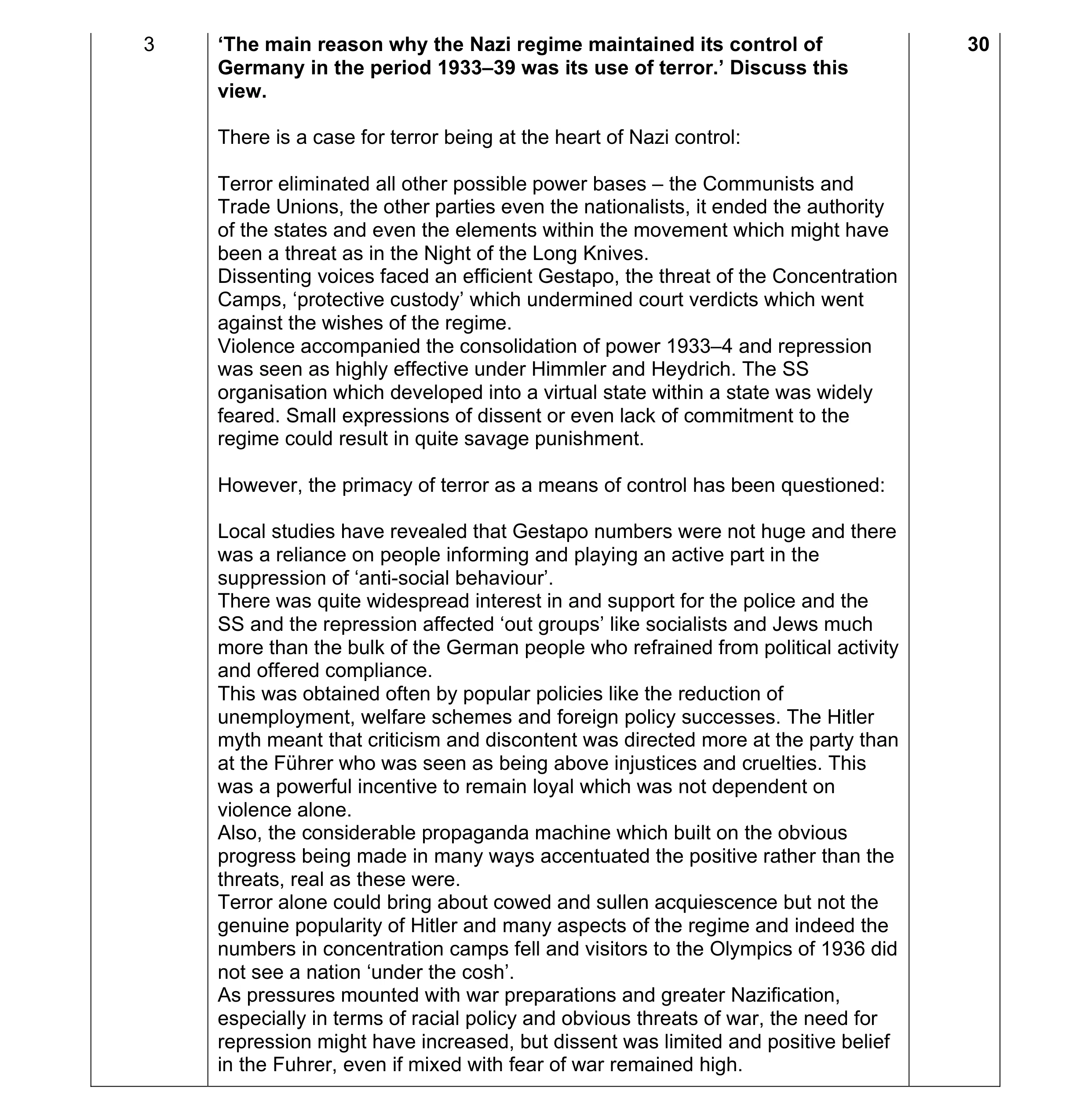 30
30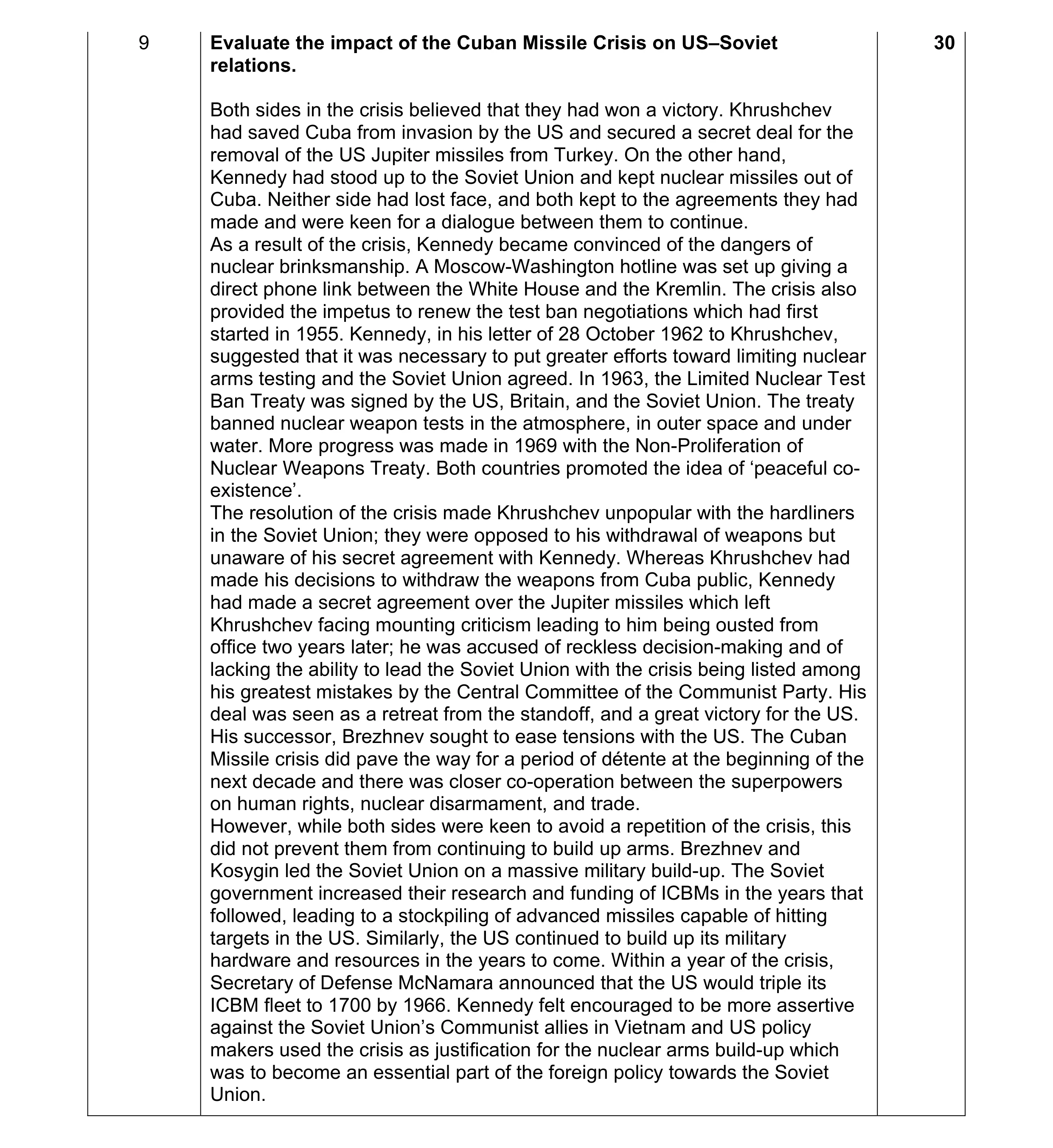 30
30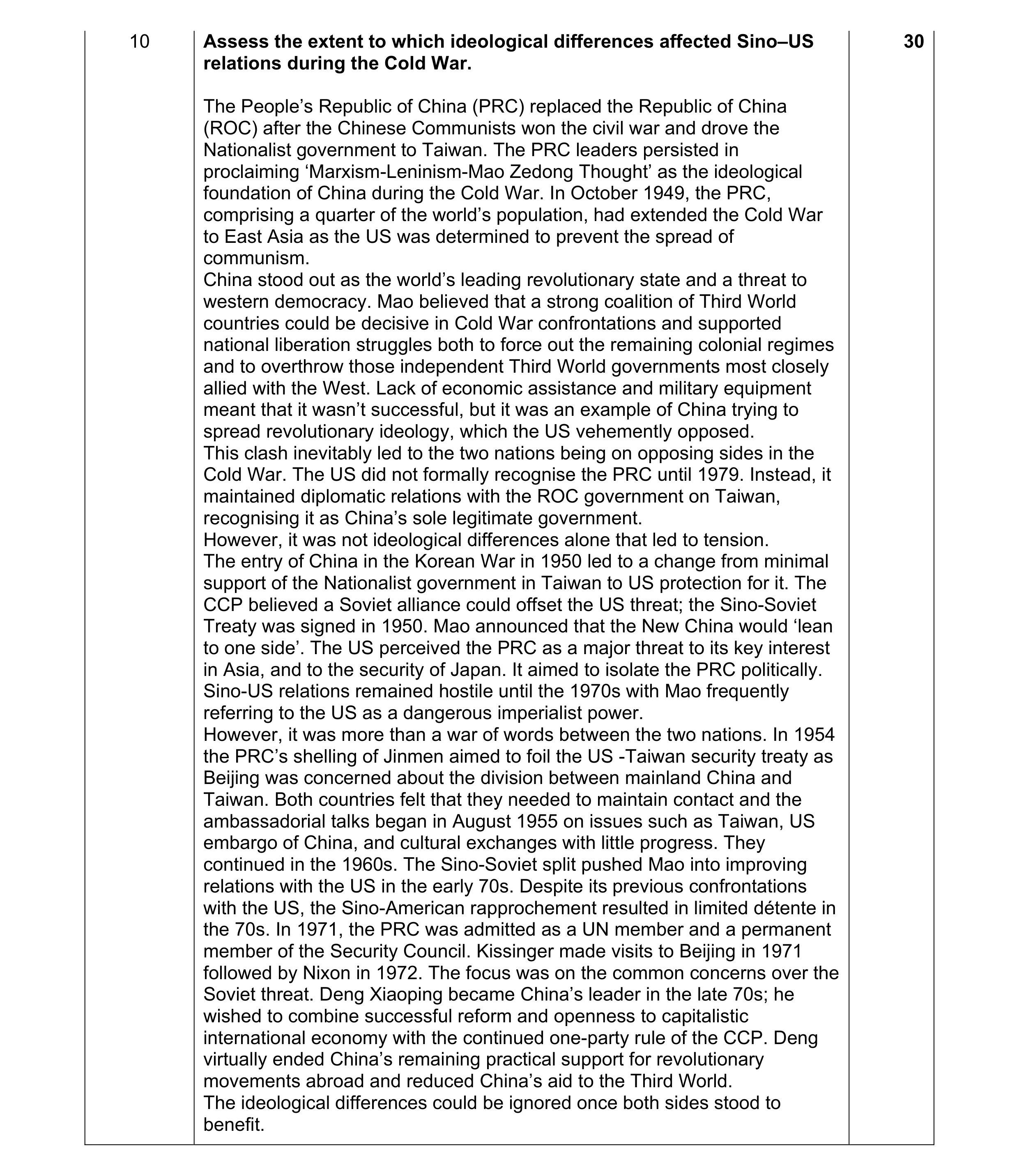 30
30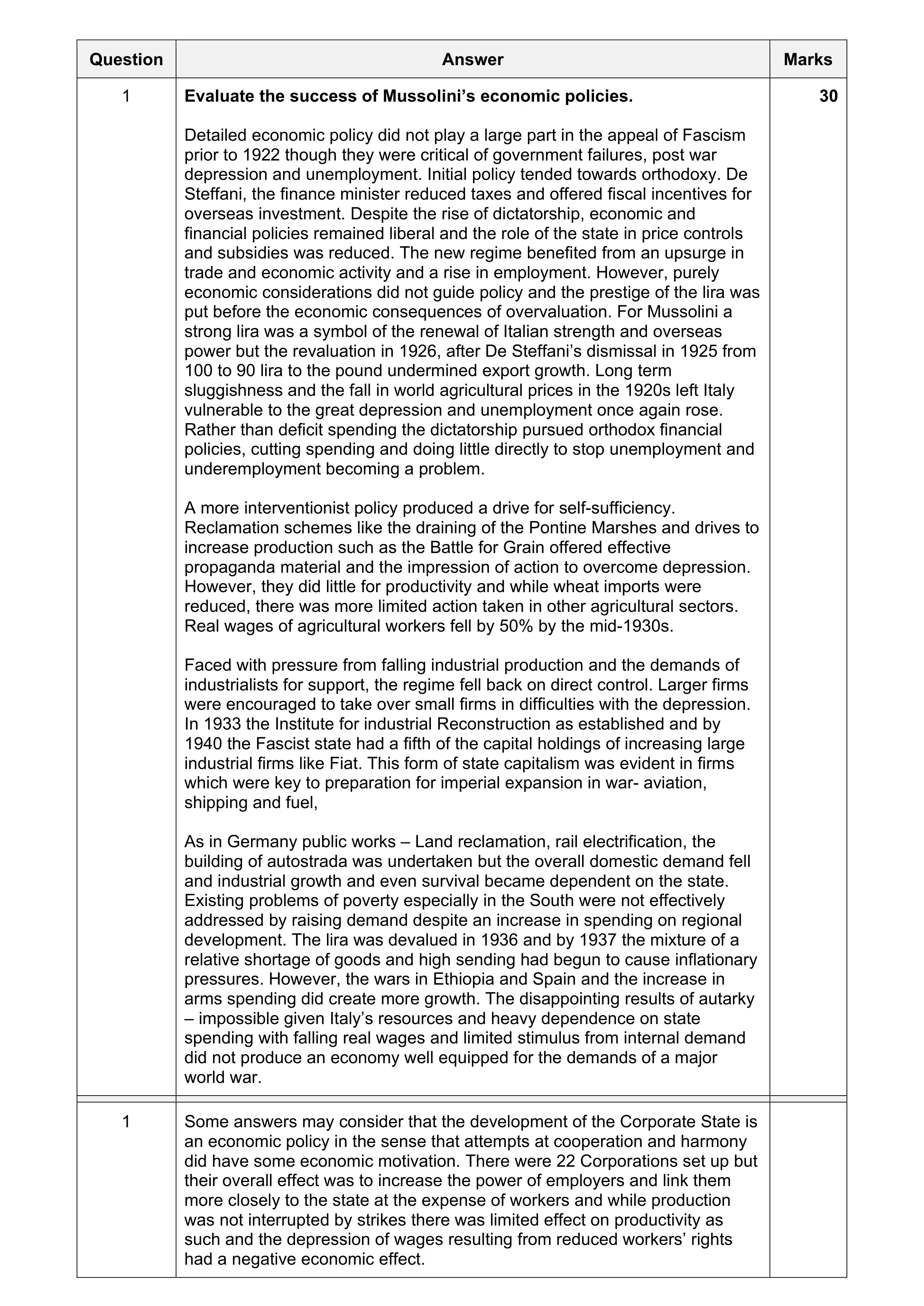 30
30 30
30 30
30 30
30 30
30 30
30 30
30 30
30 30
30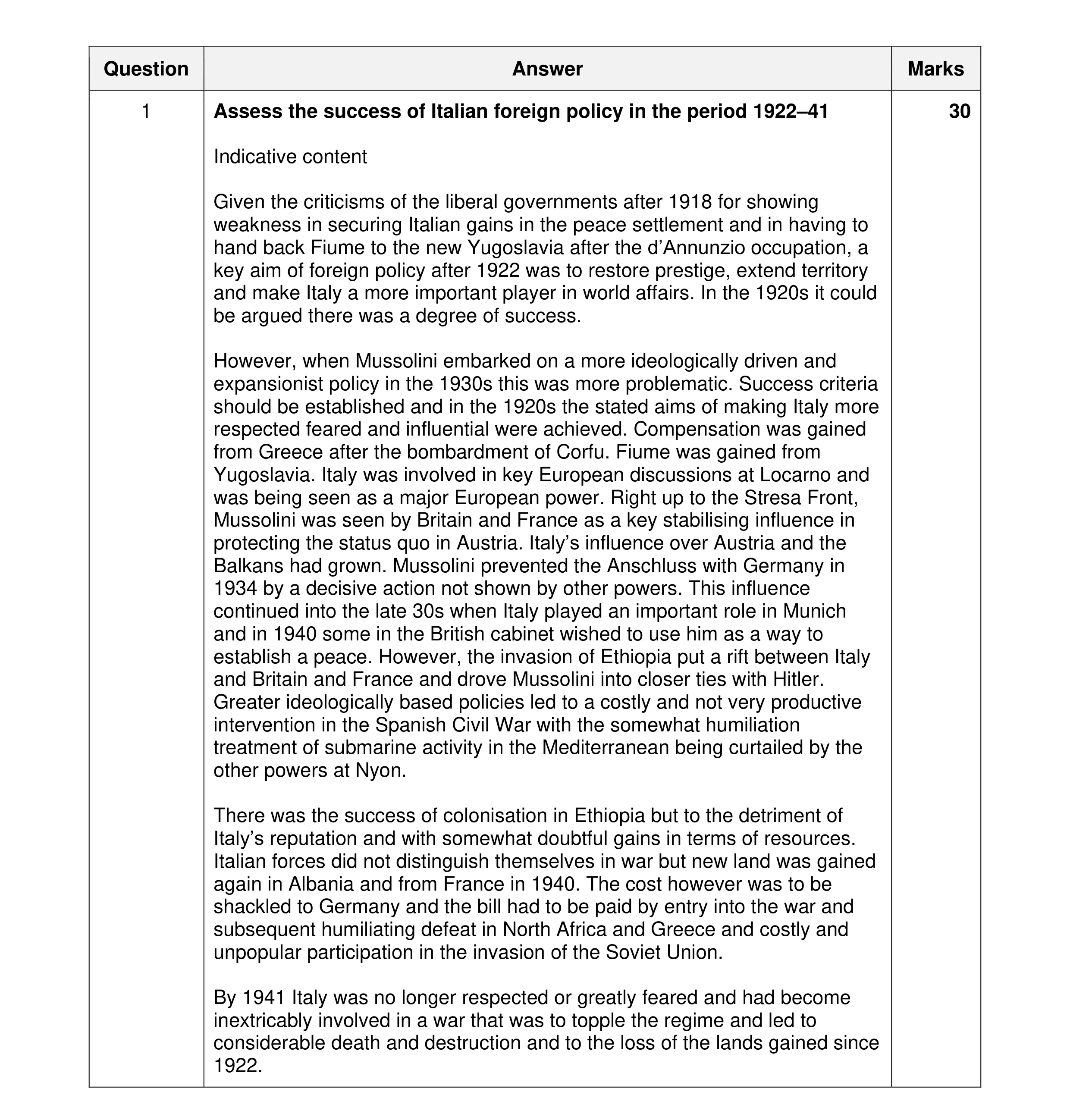 30
30 30
30 30
30 30
30 30
30 30
30 30
30 30
30 30
30 30
30 30
30 30
30 30
30 30
30 30
30 30
30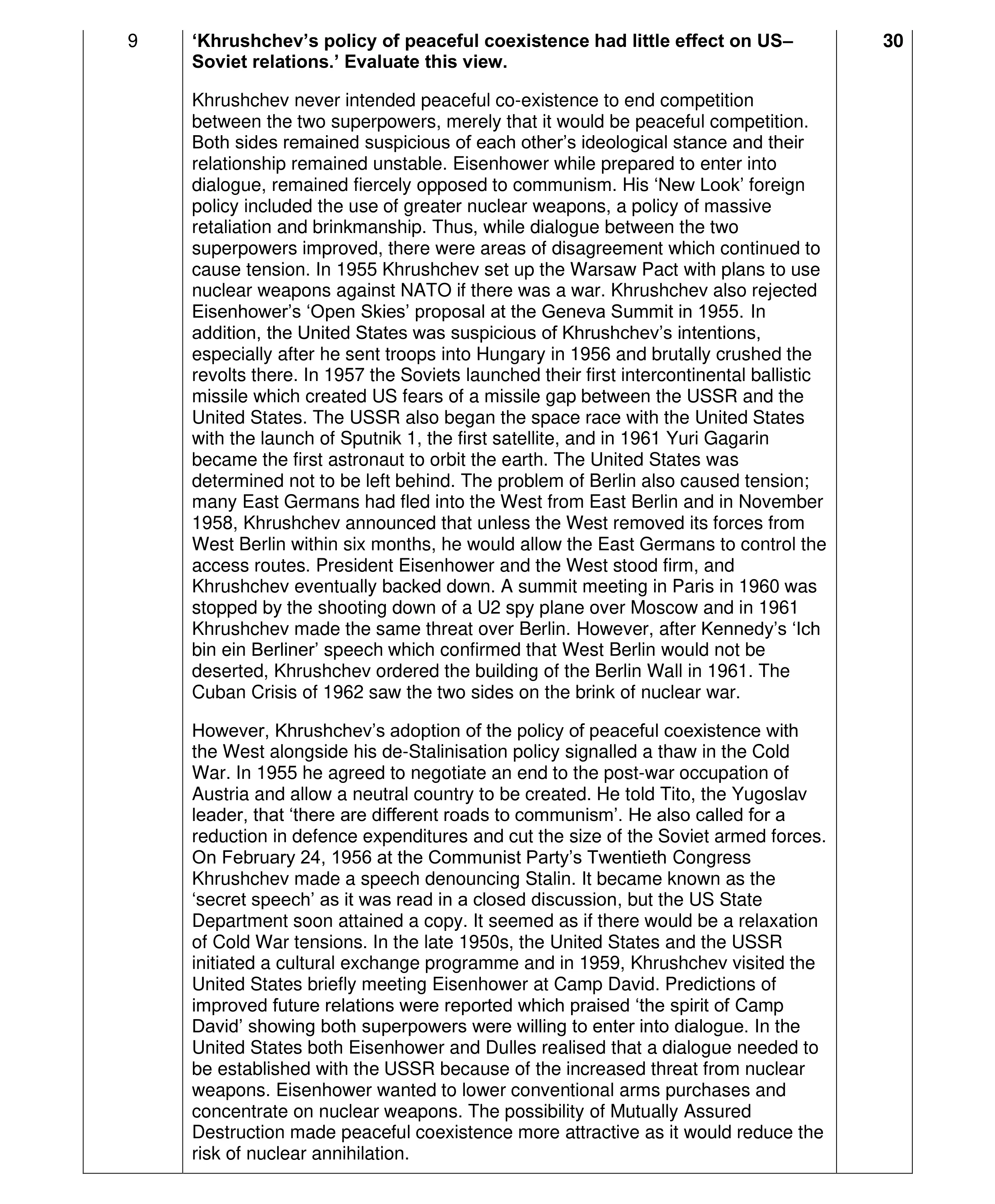 30
30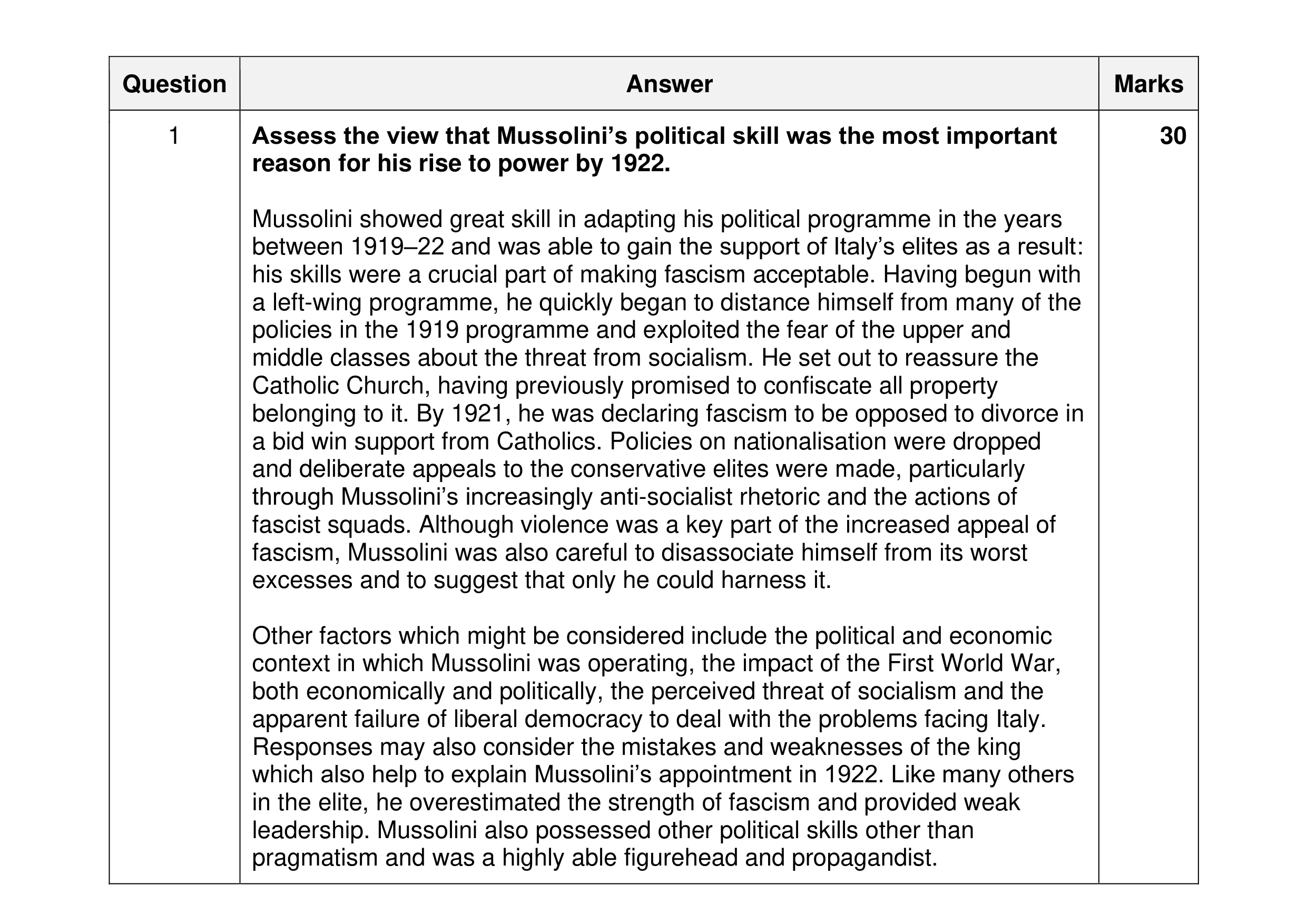 30
30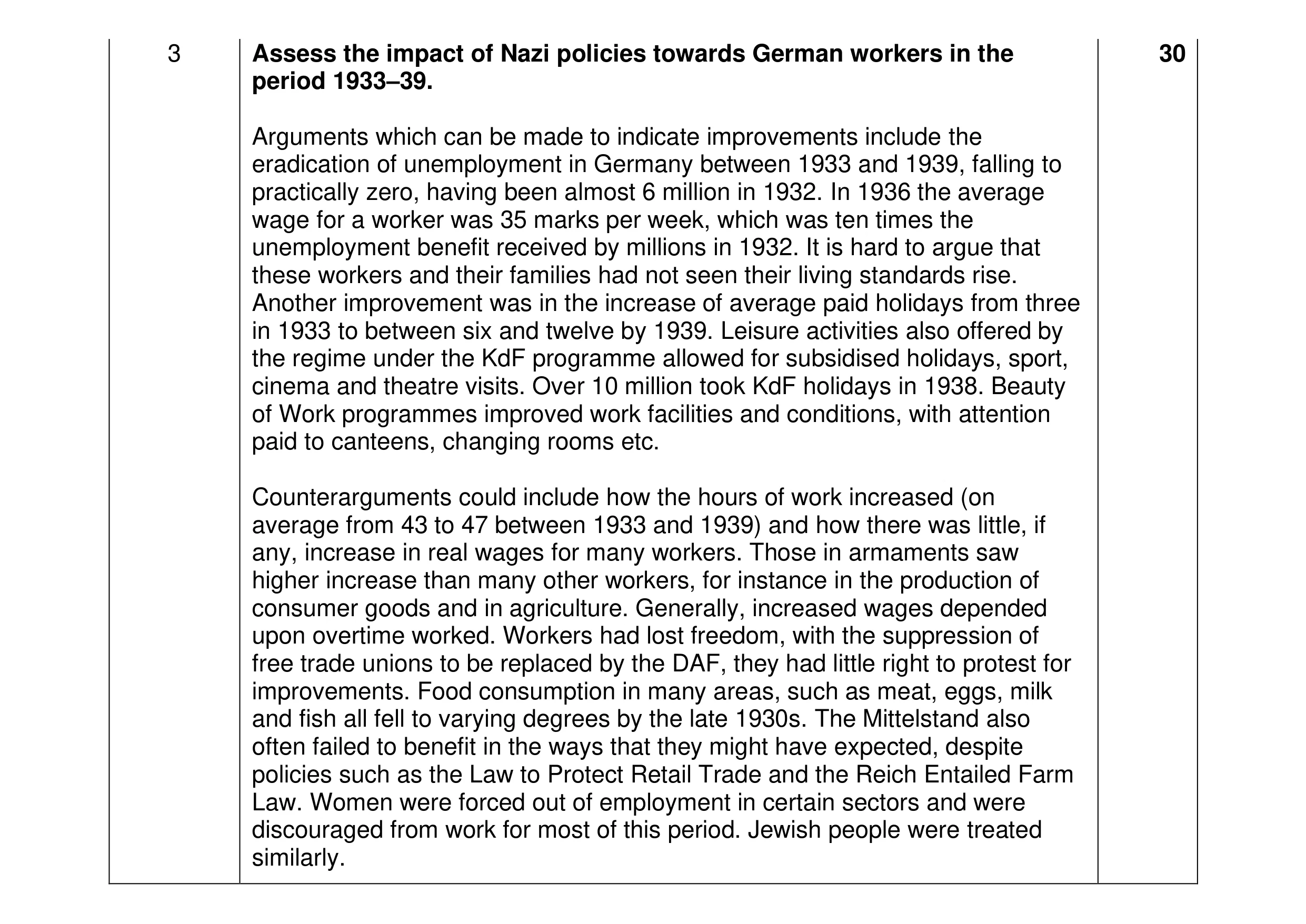 30
30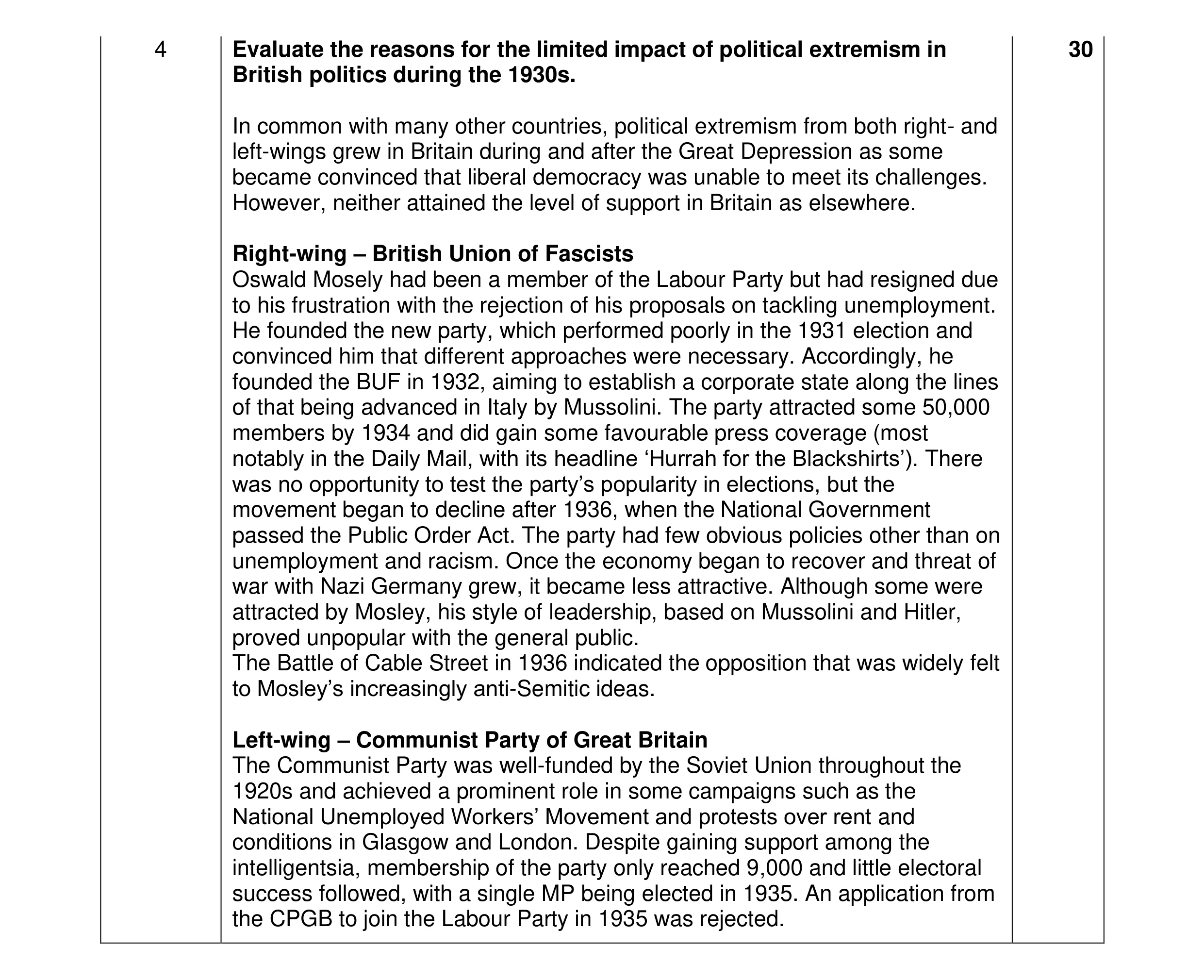 30
30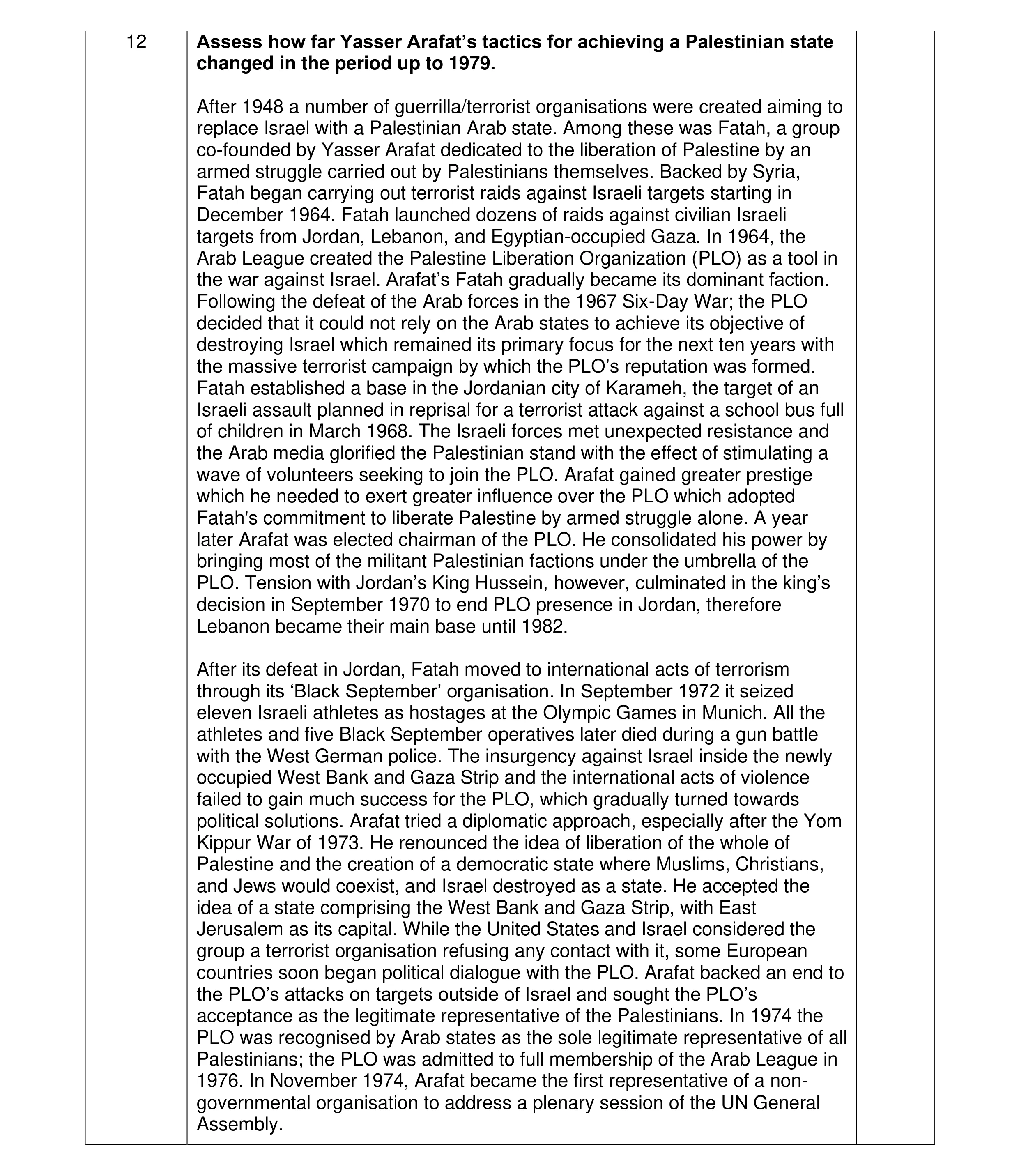 30
30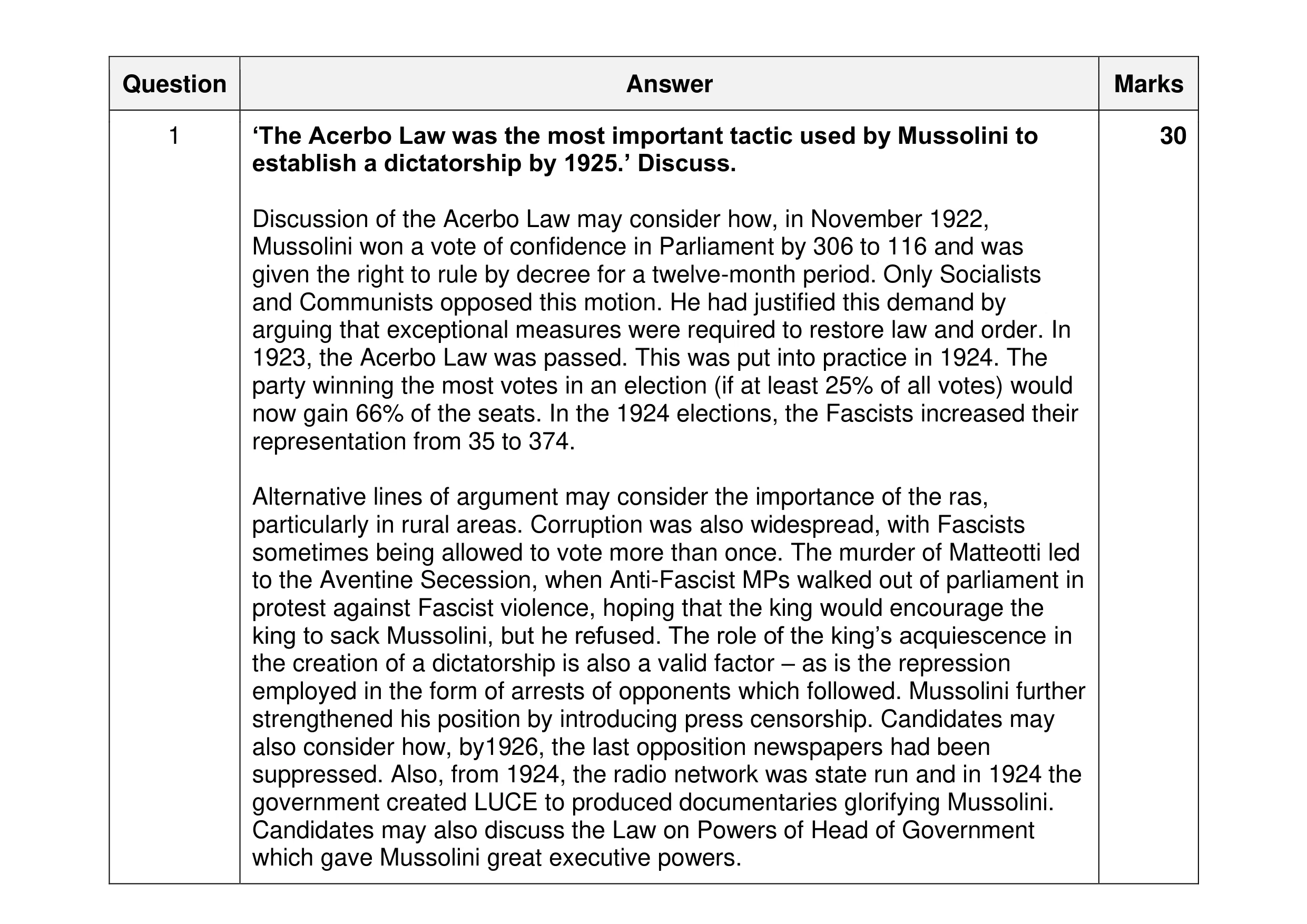 30
30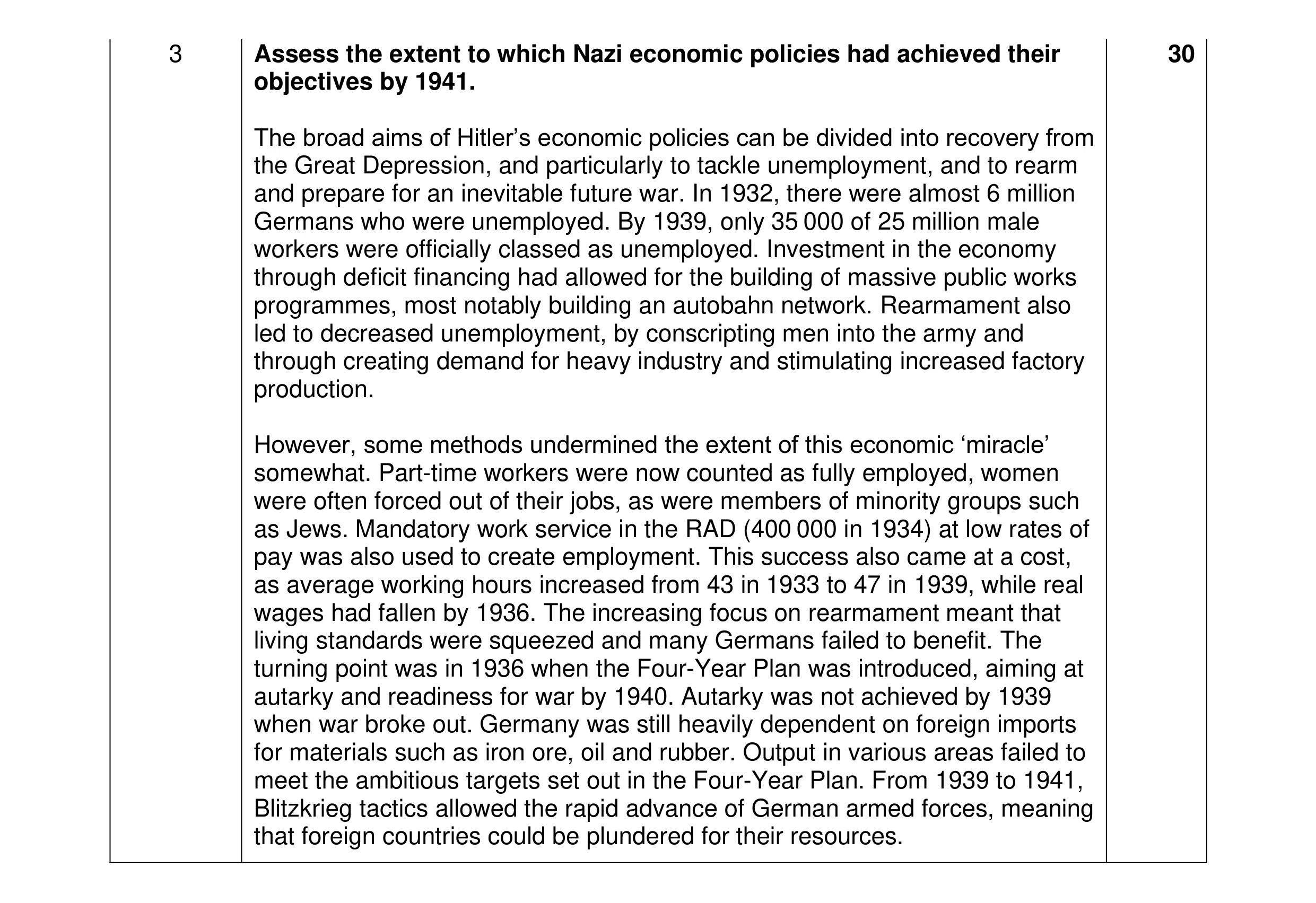 30
30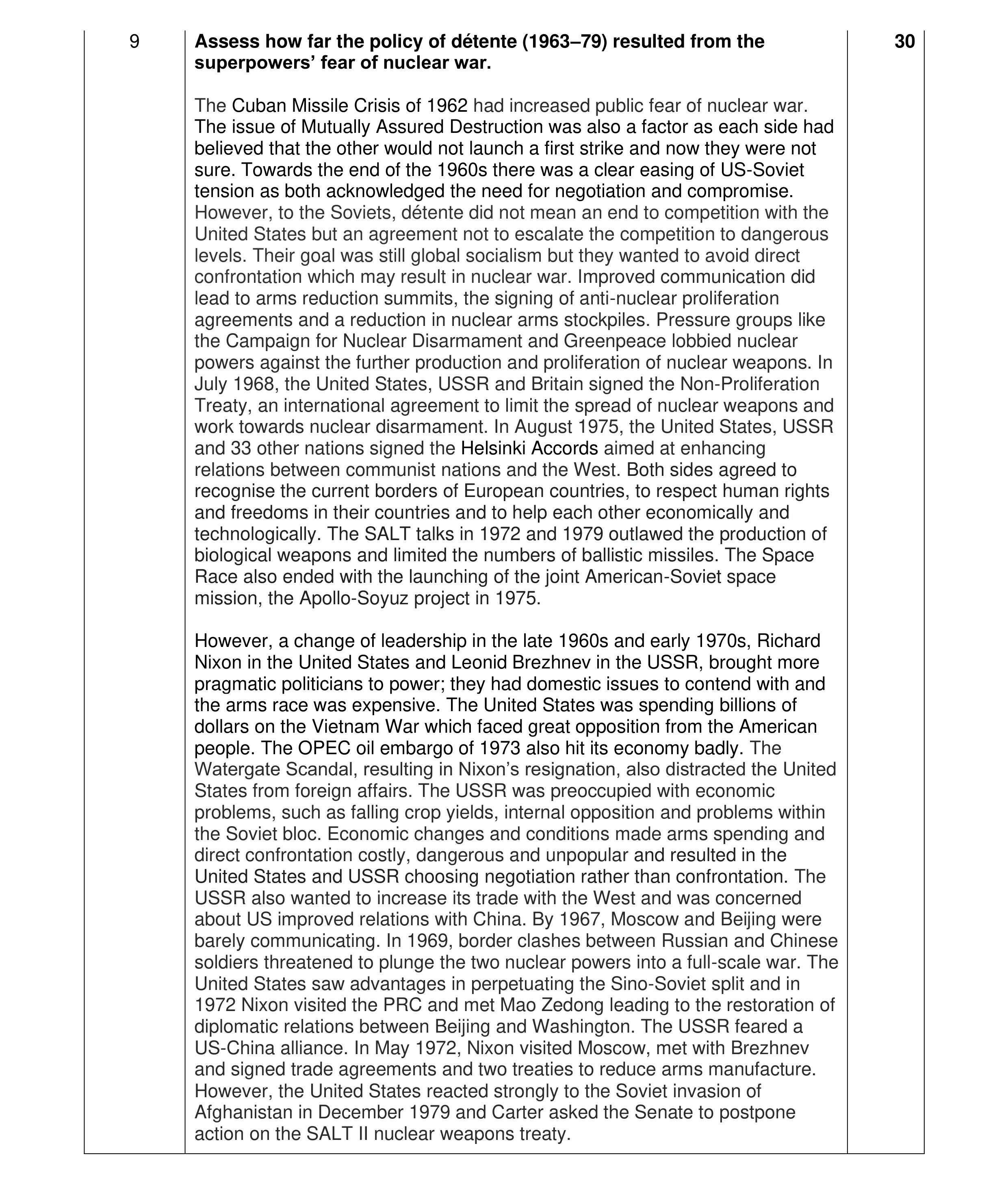 30
30 30
30 30
30 30
30 30
30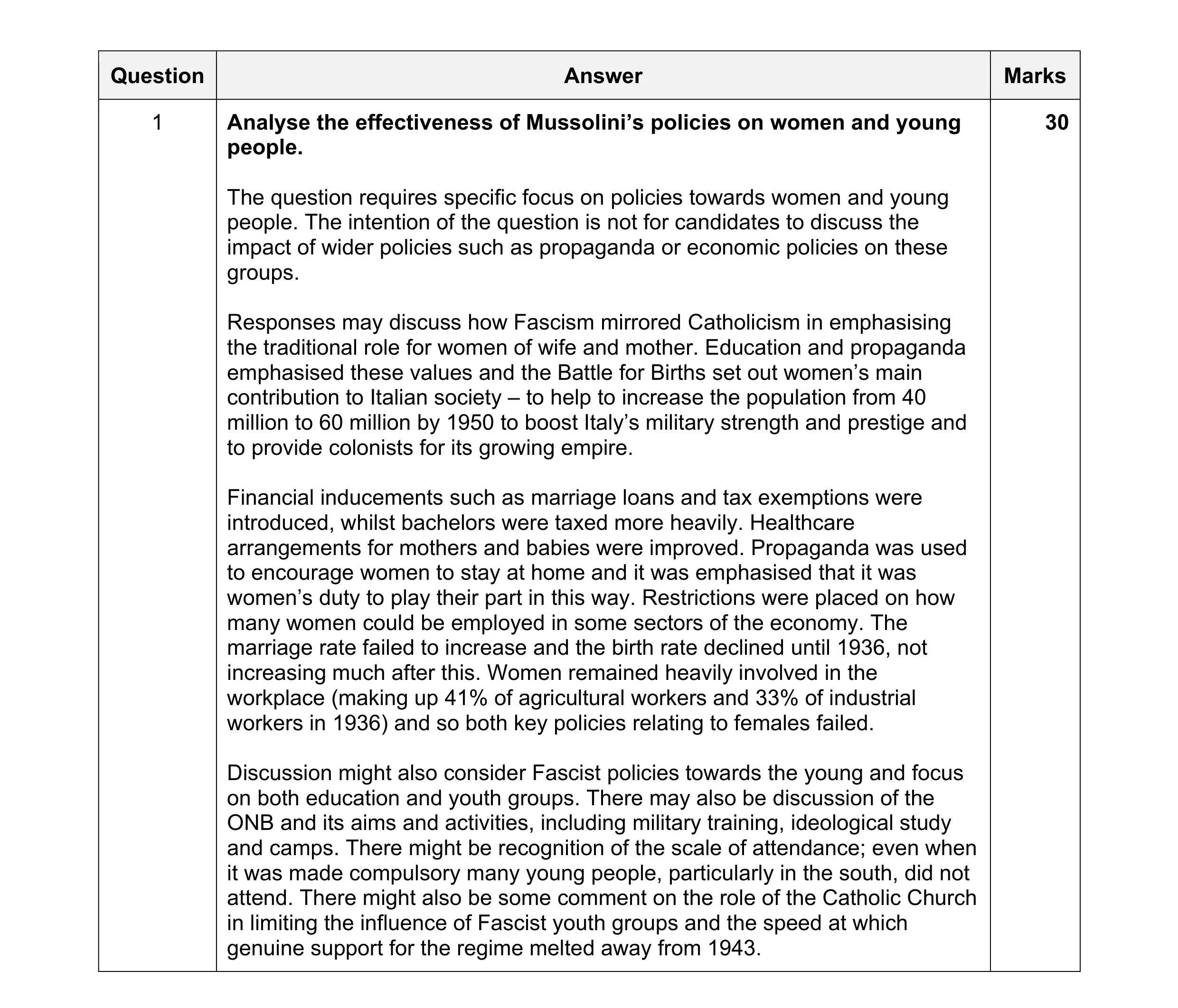 30
30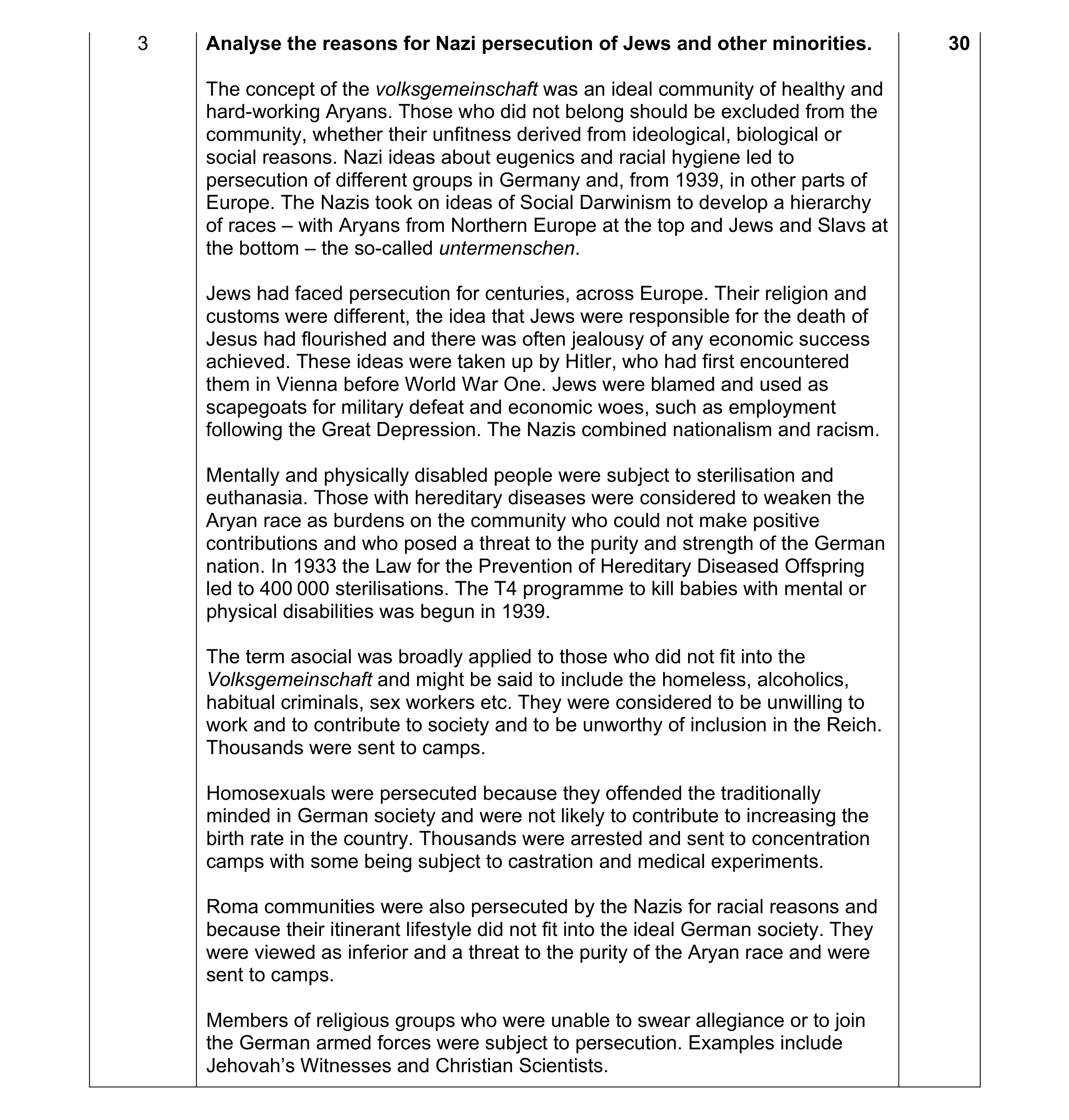 30
30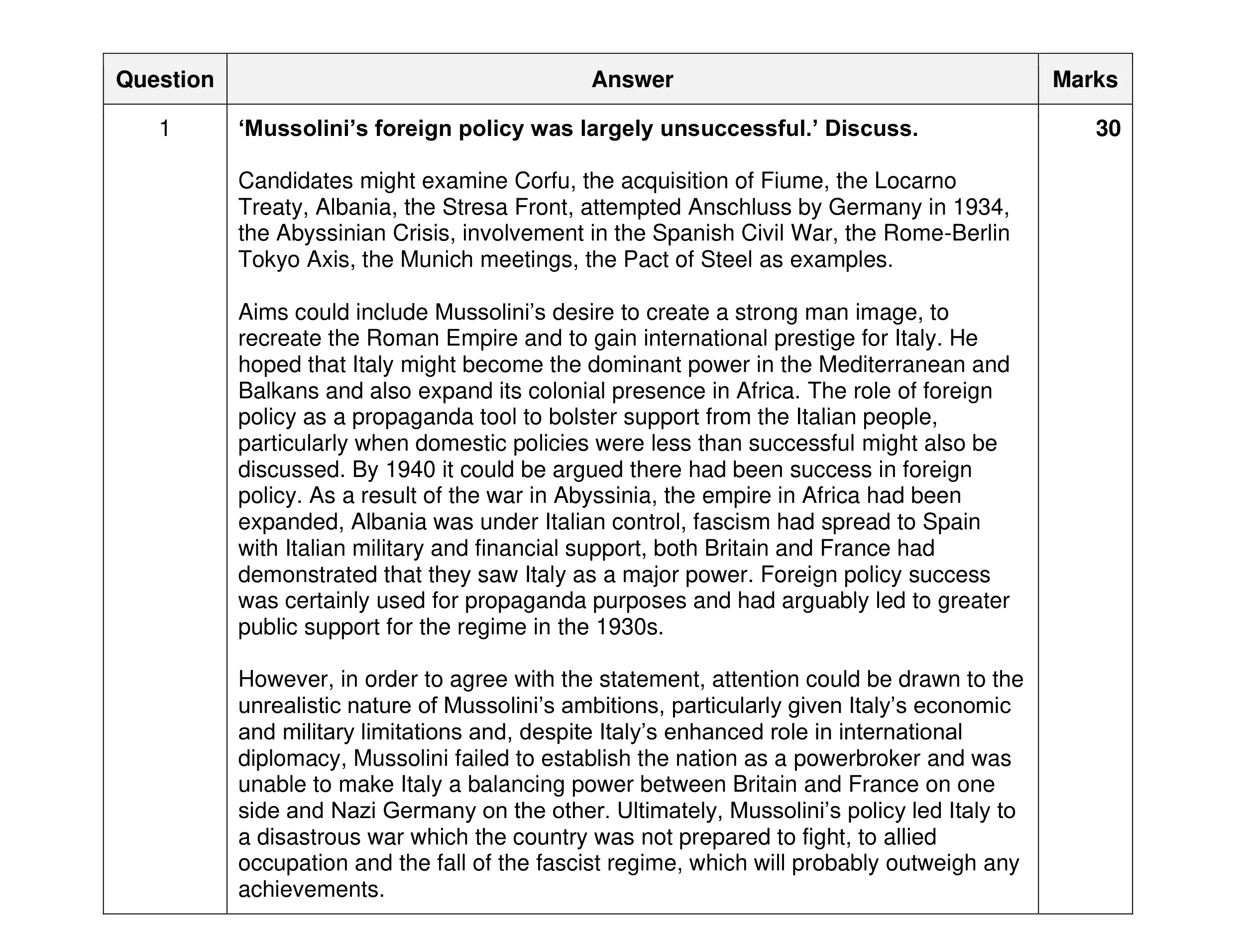 30
30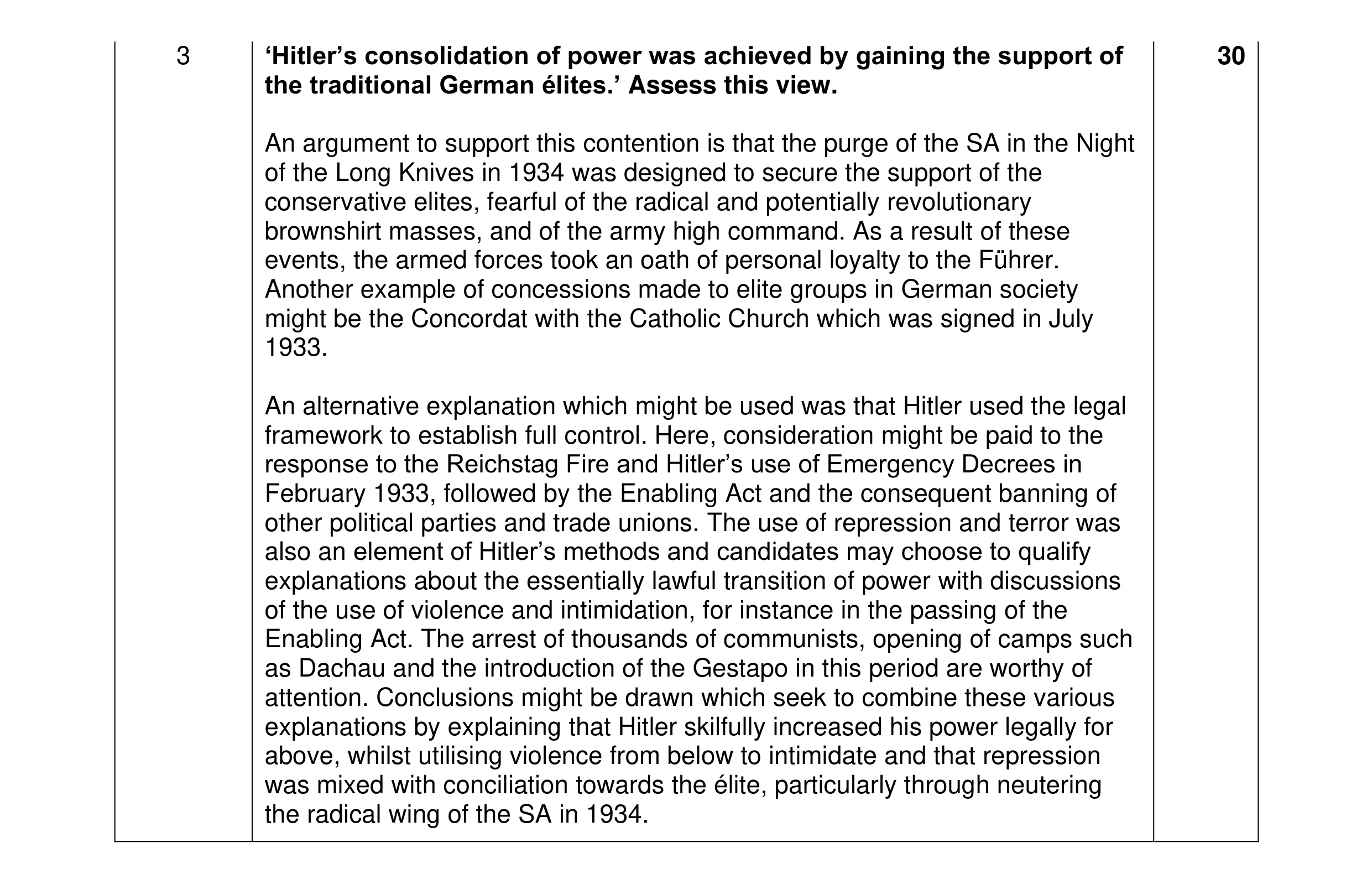 30
30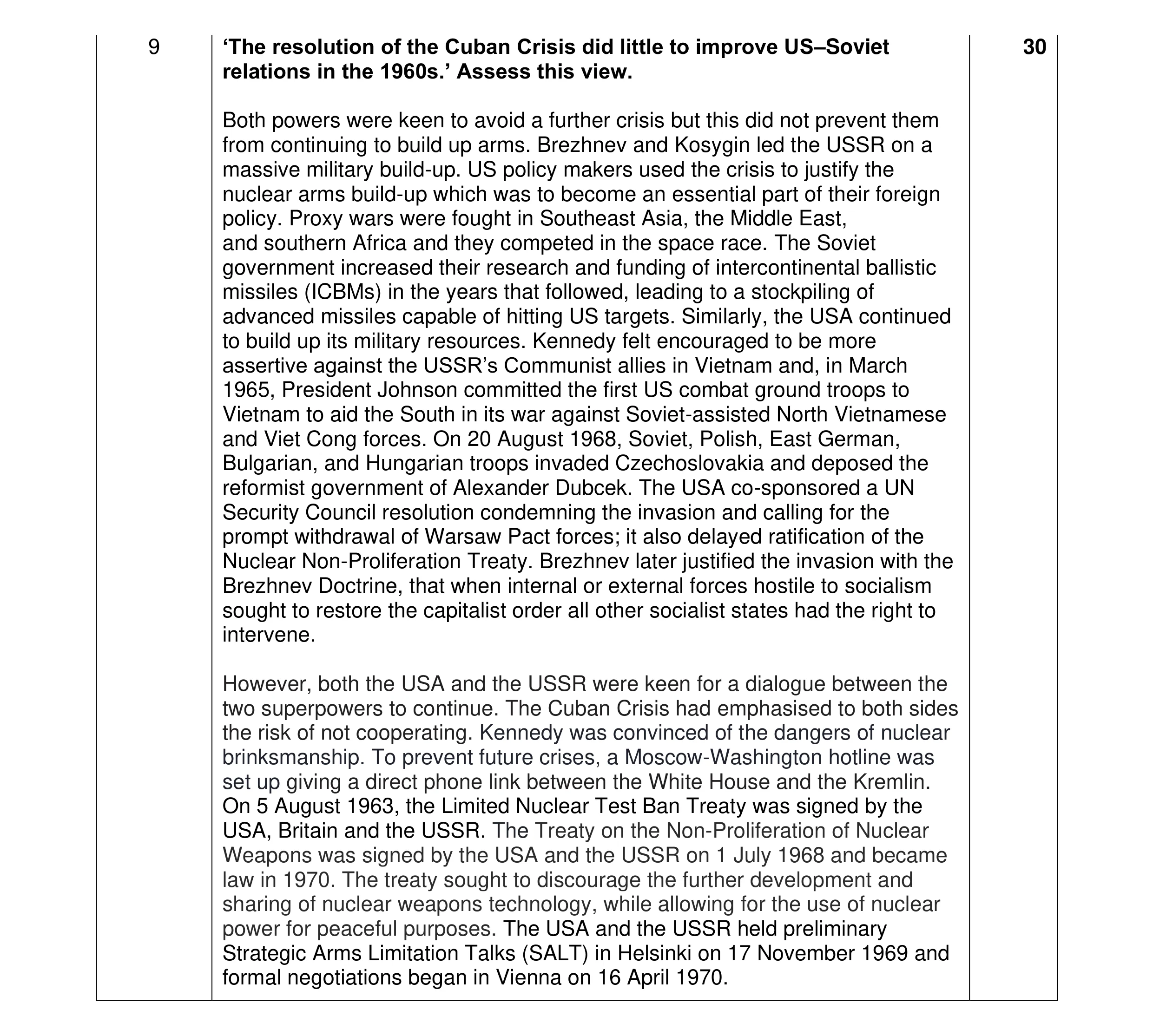 30
30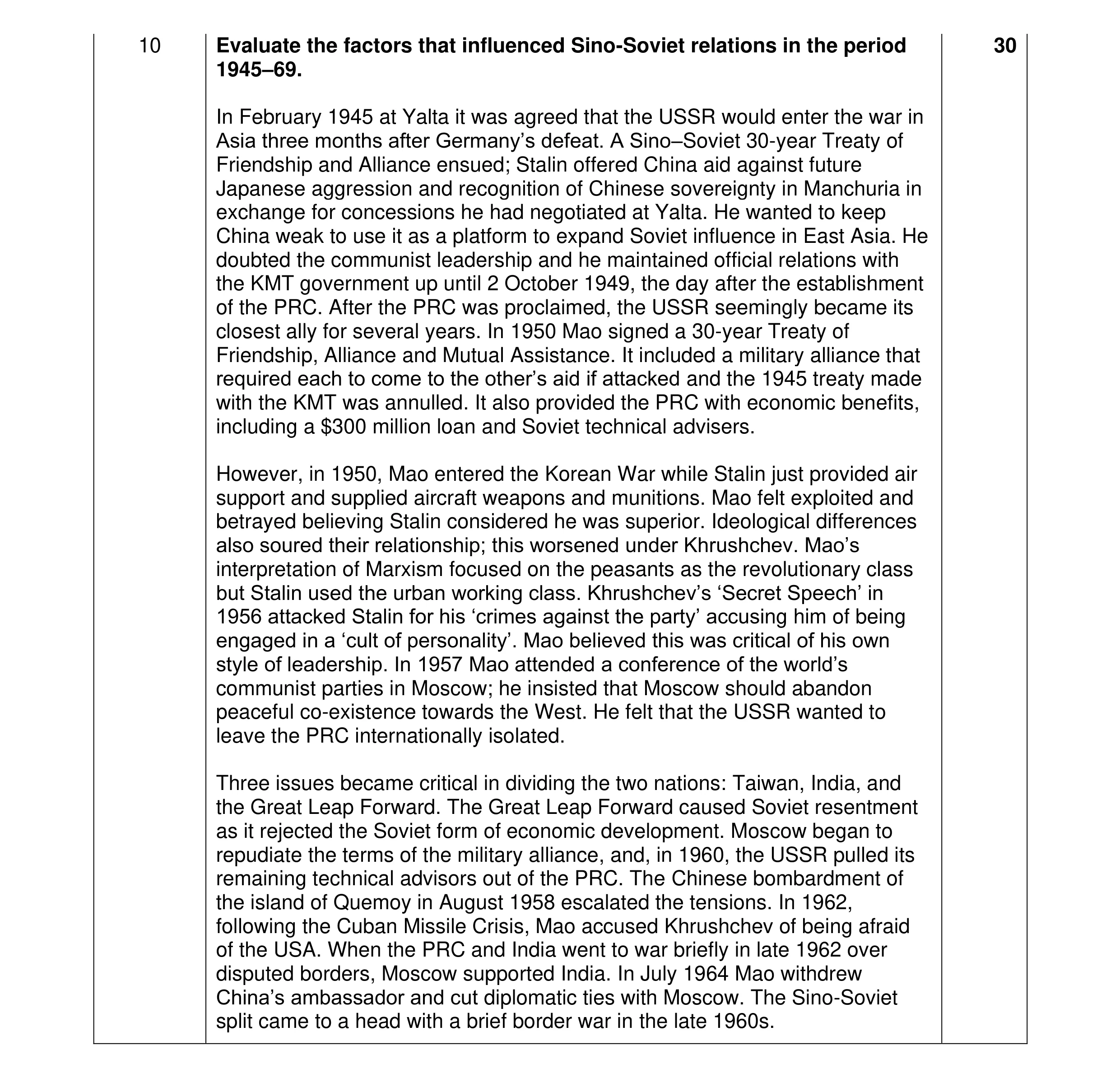 30
30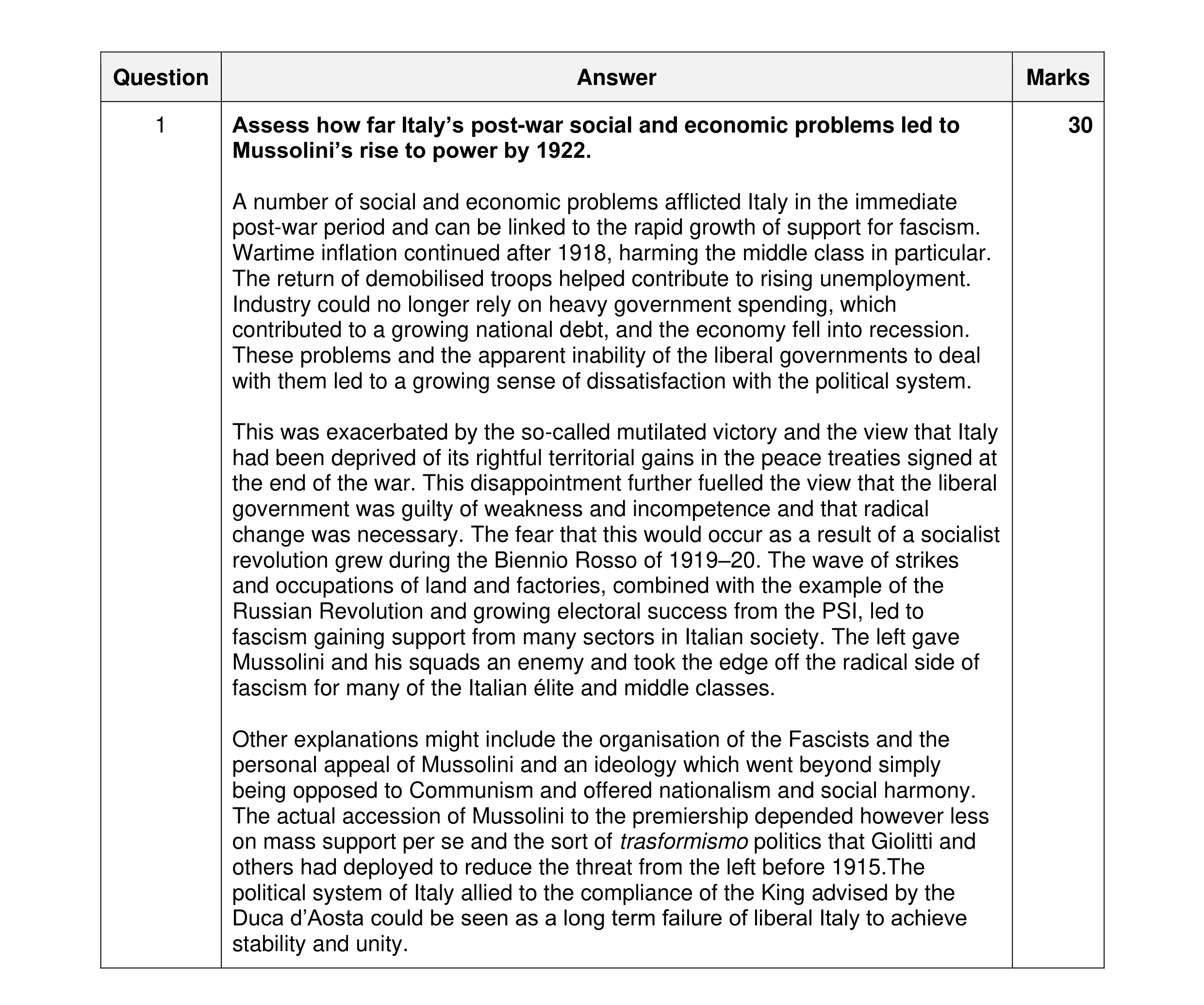 30
30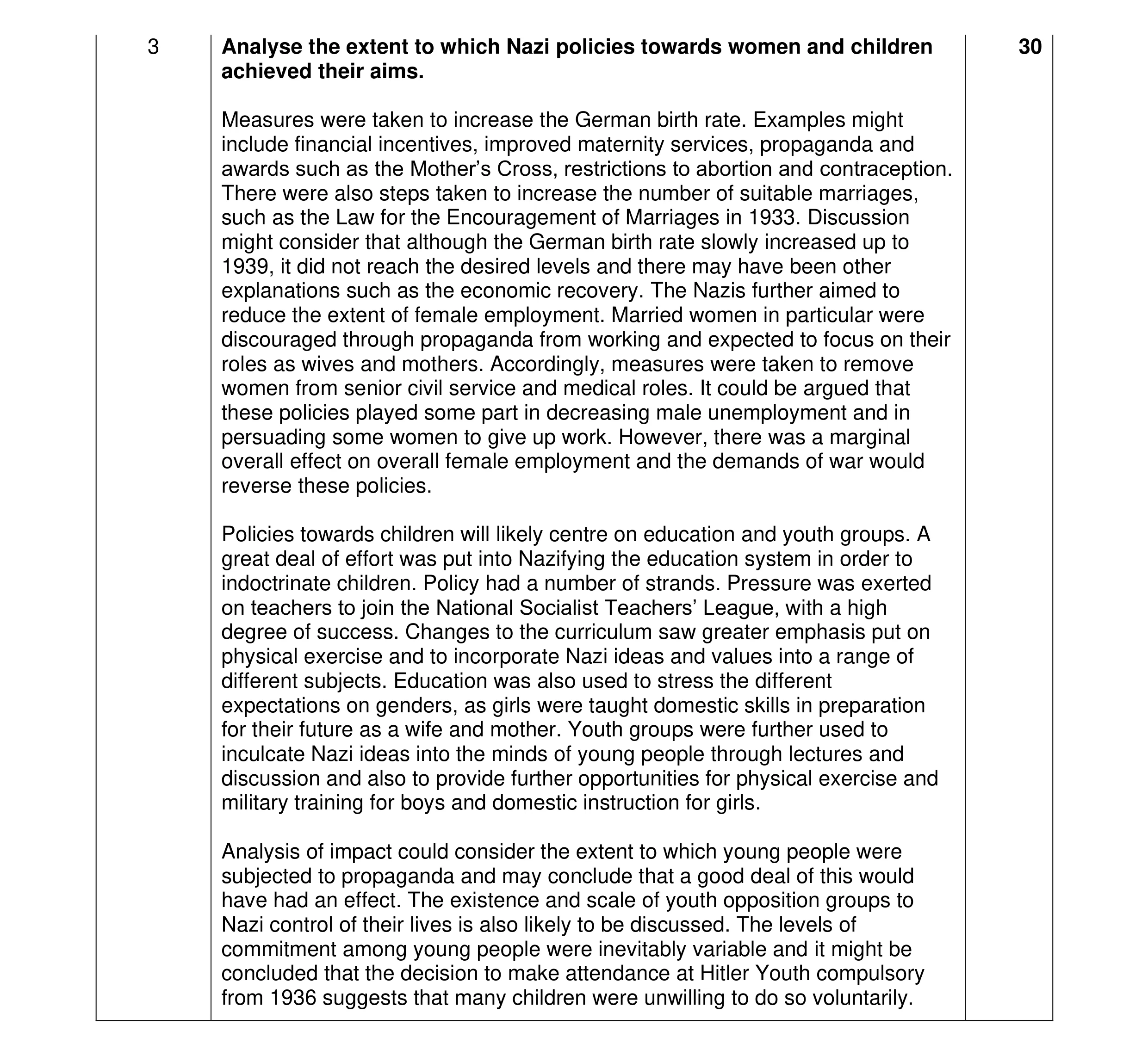 30
30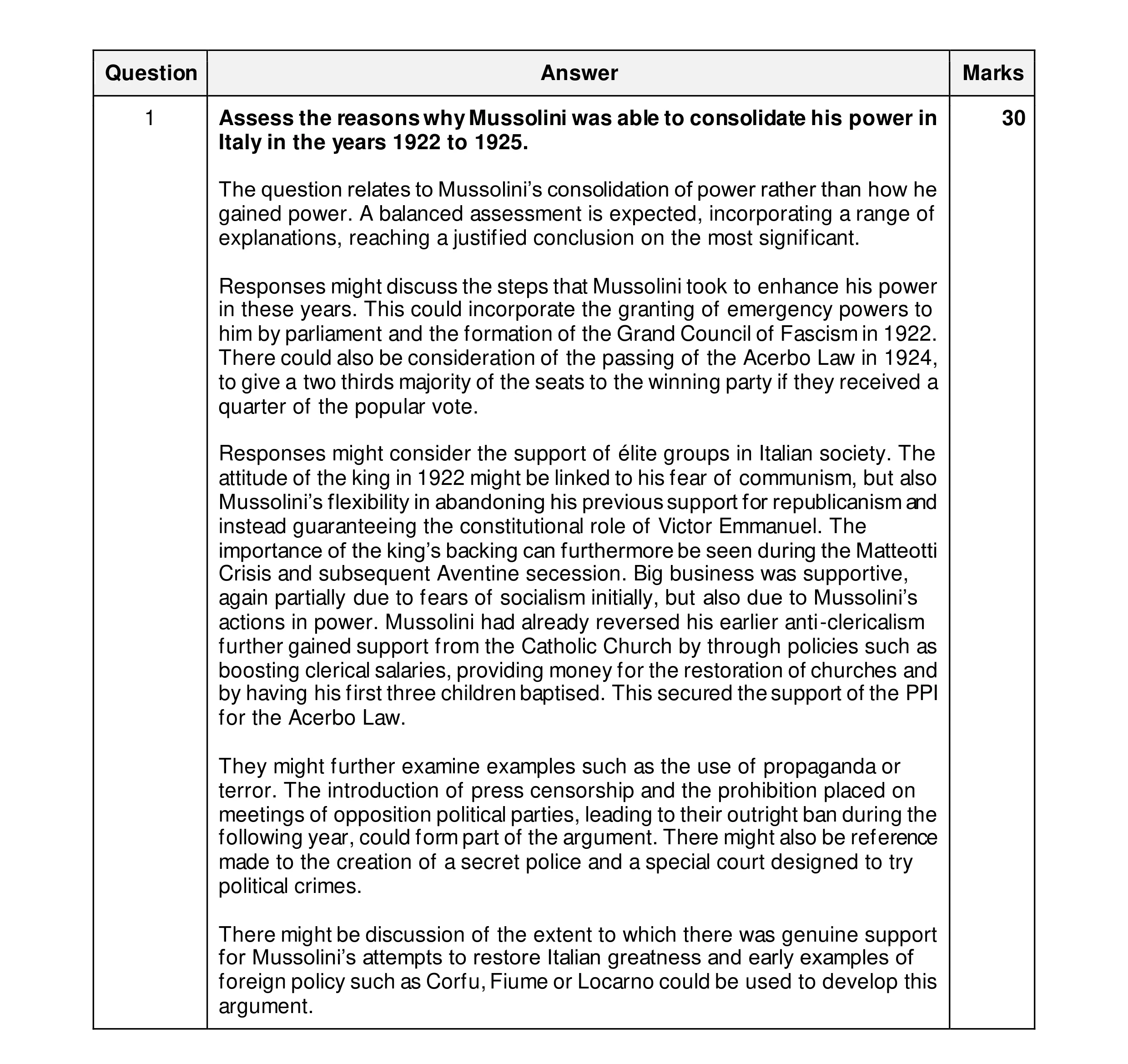 30
30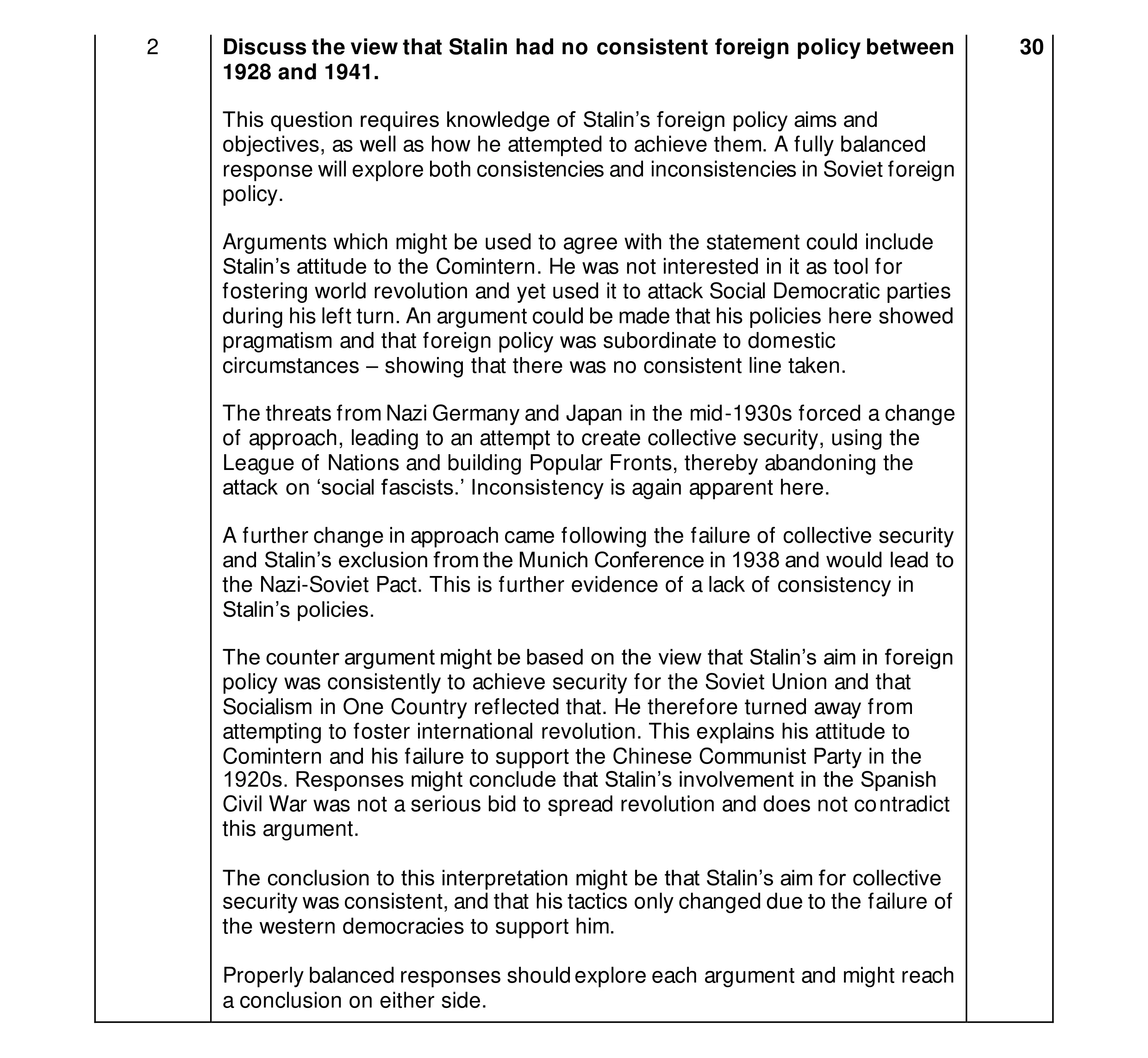 30
30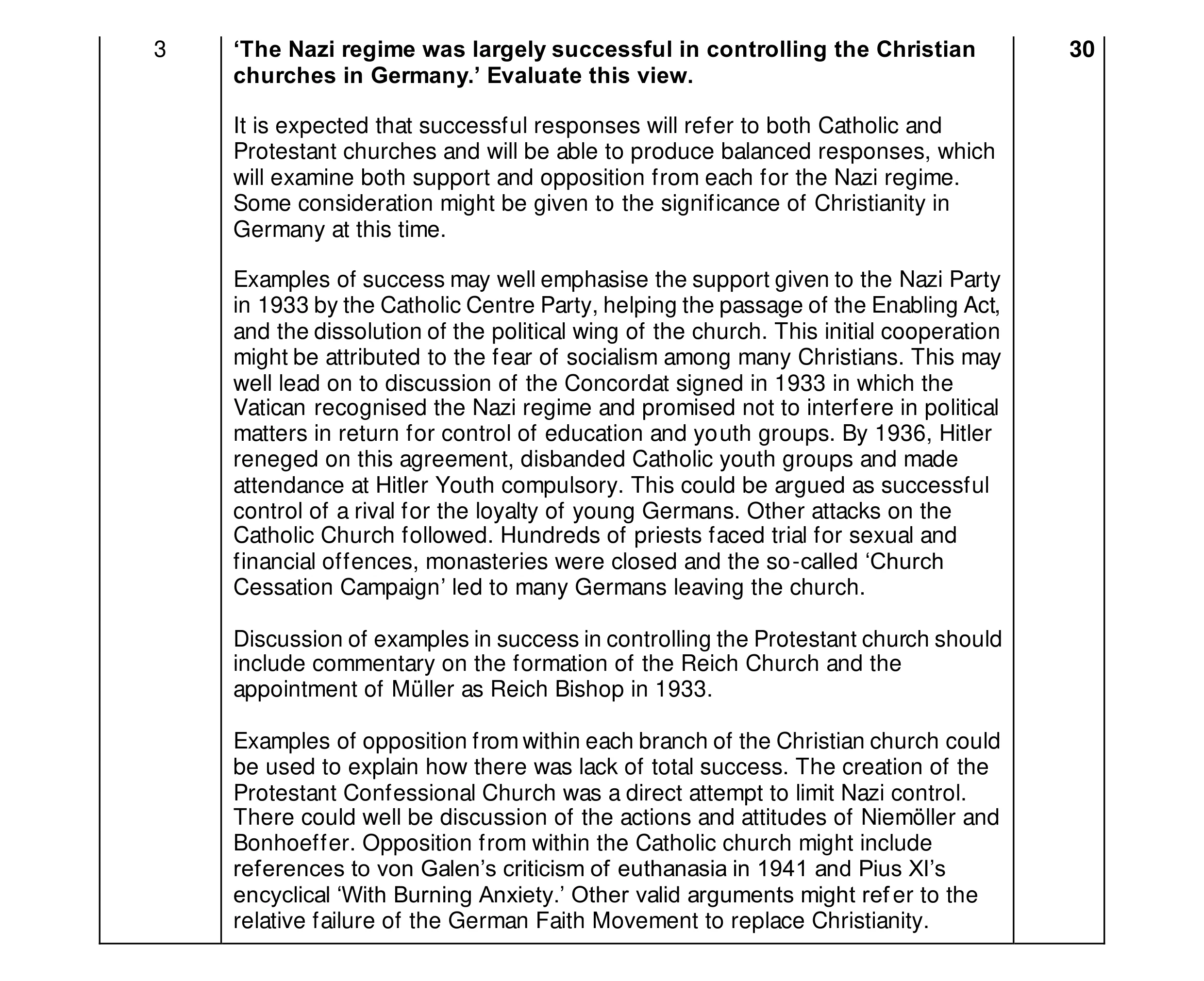 30
30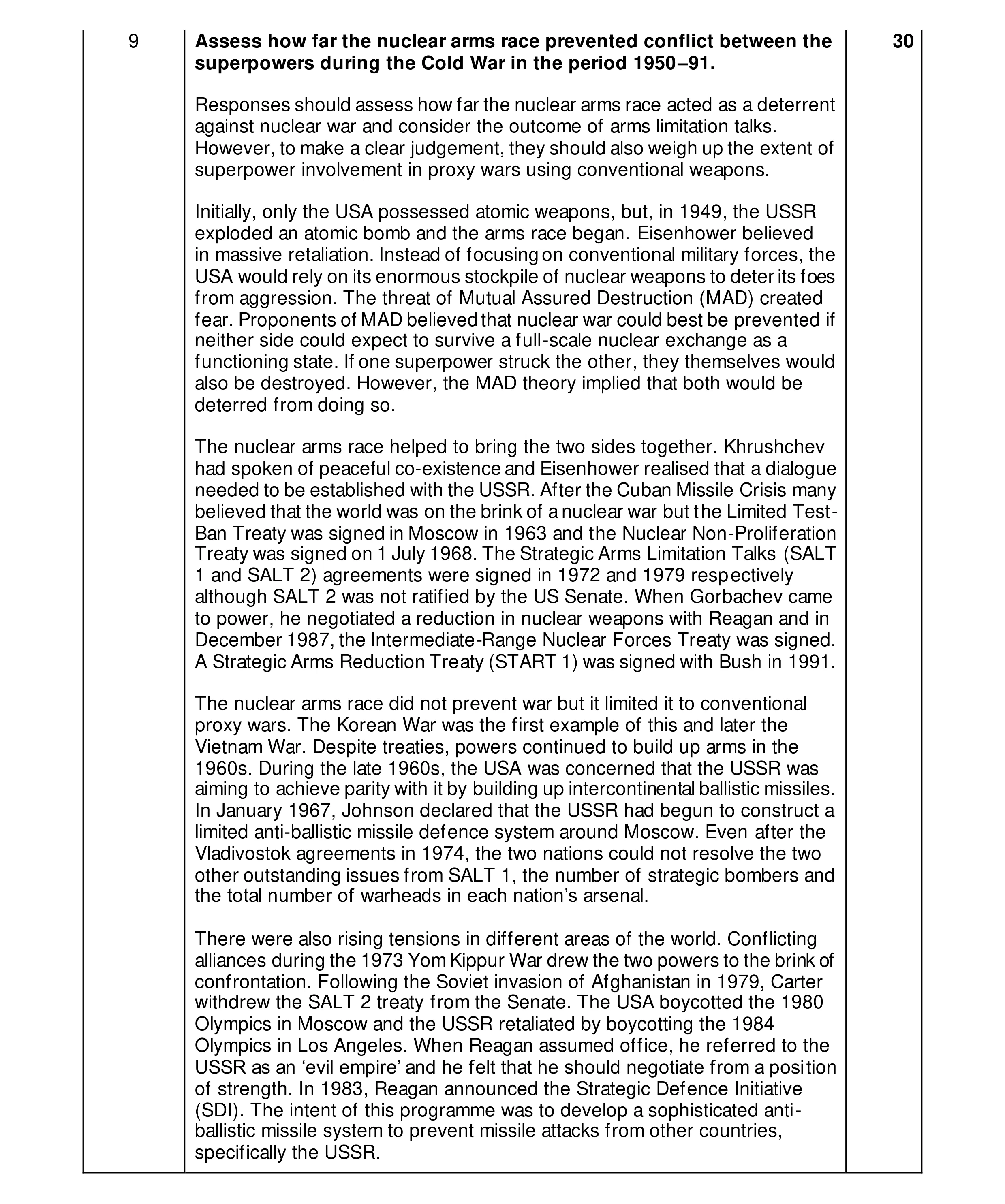 30
30 30
30 30
30 30
30 30
30 30
30 30
30 30
30 30
30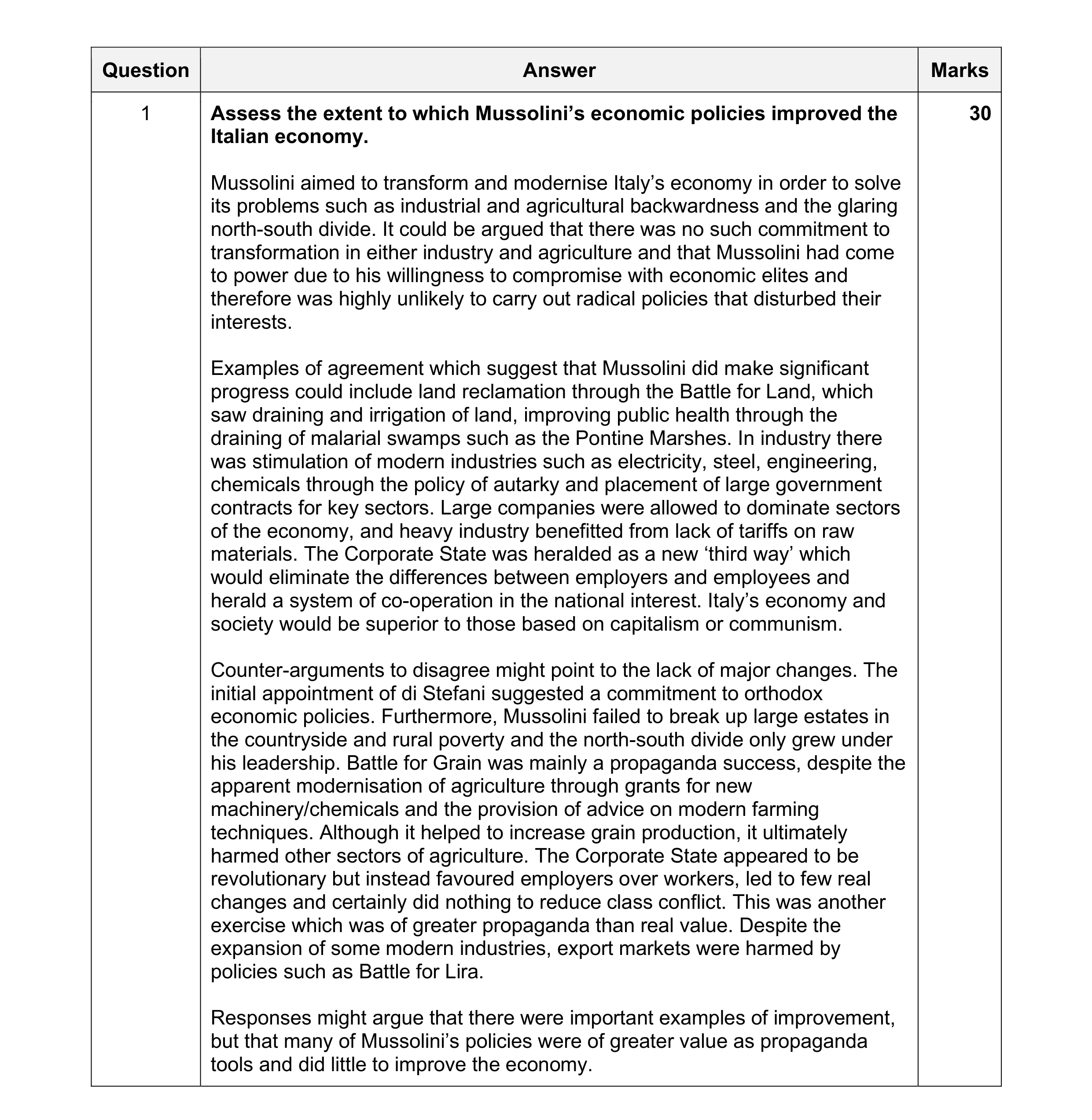 30
30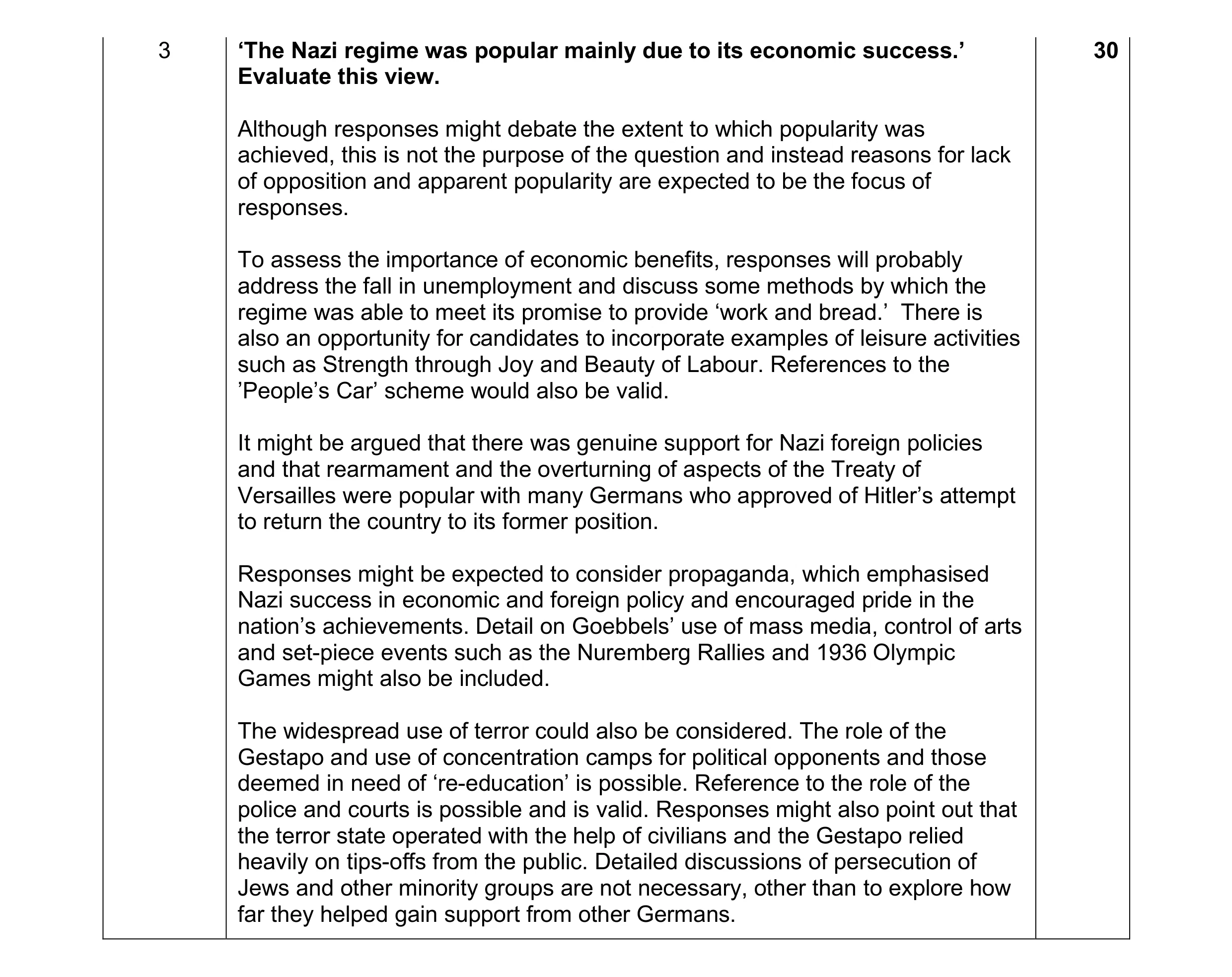 30
30 30
30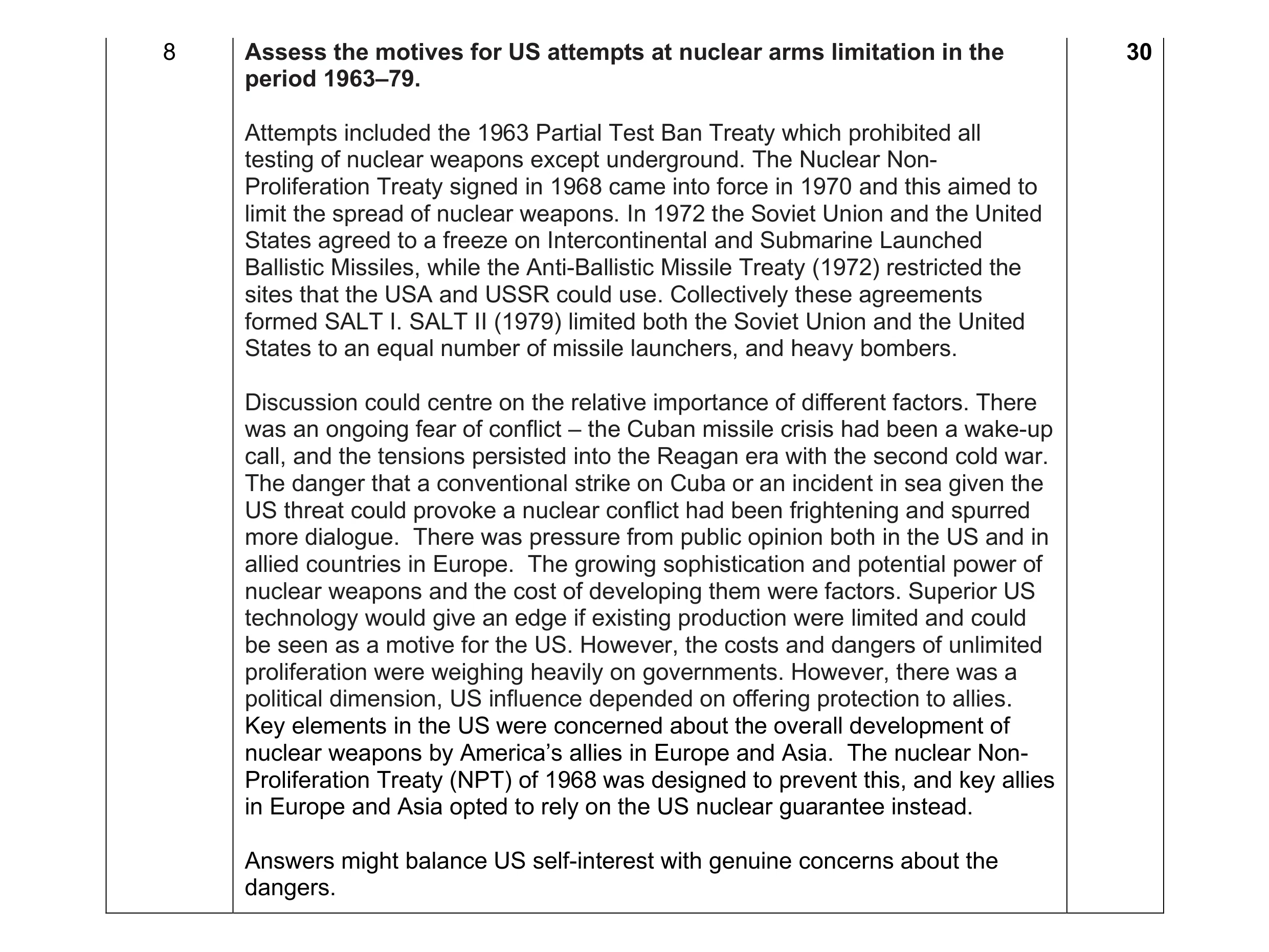 30
30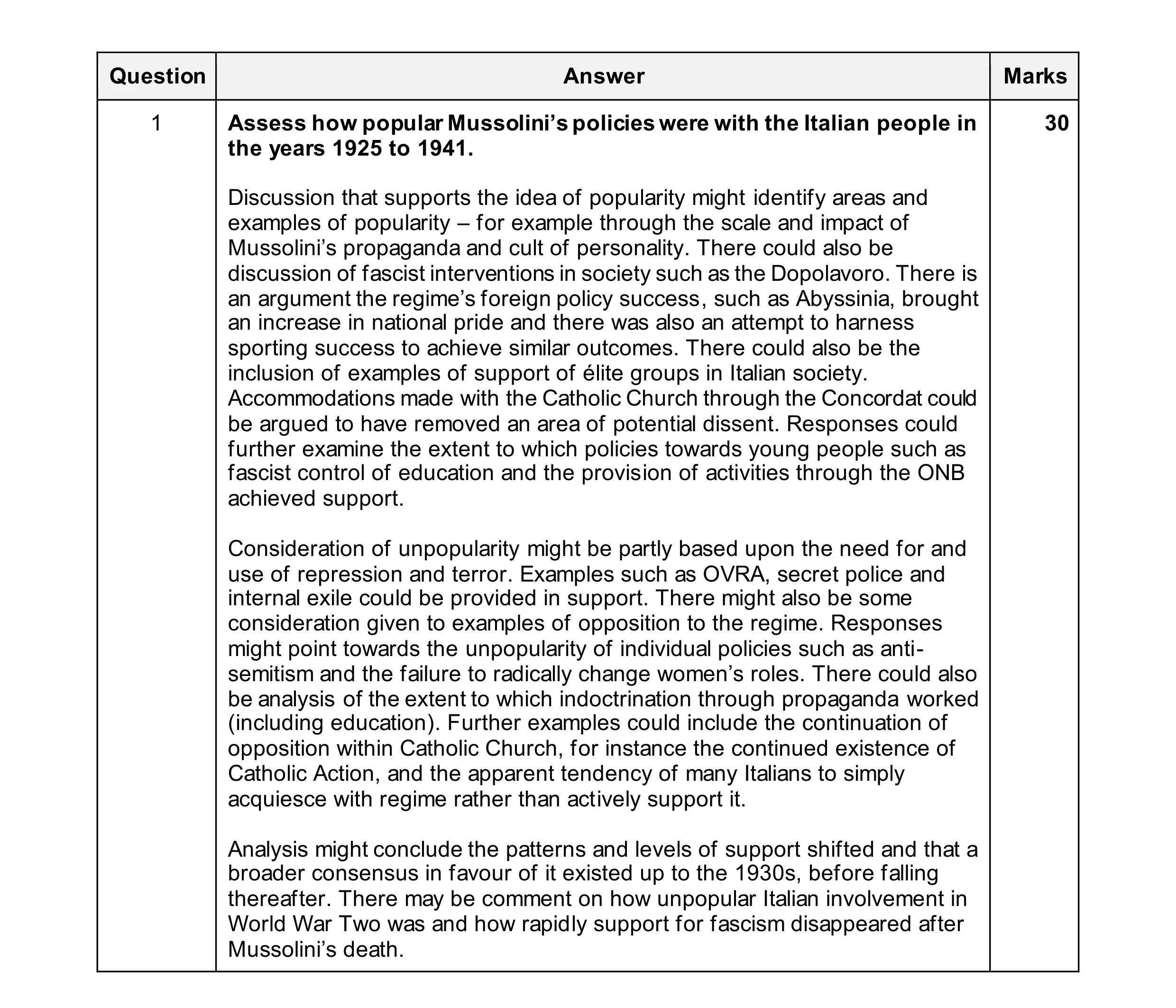 30
30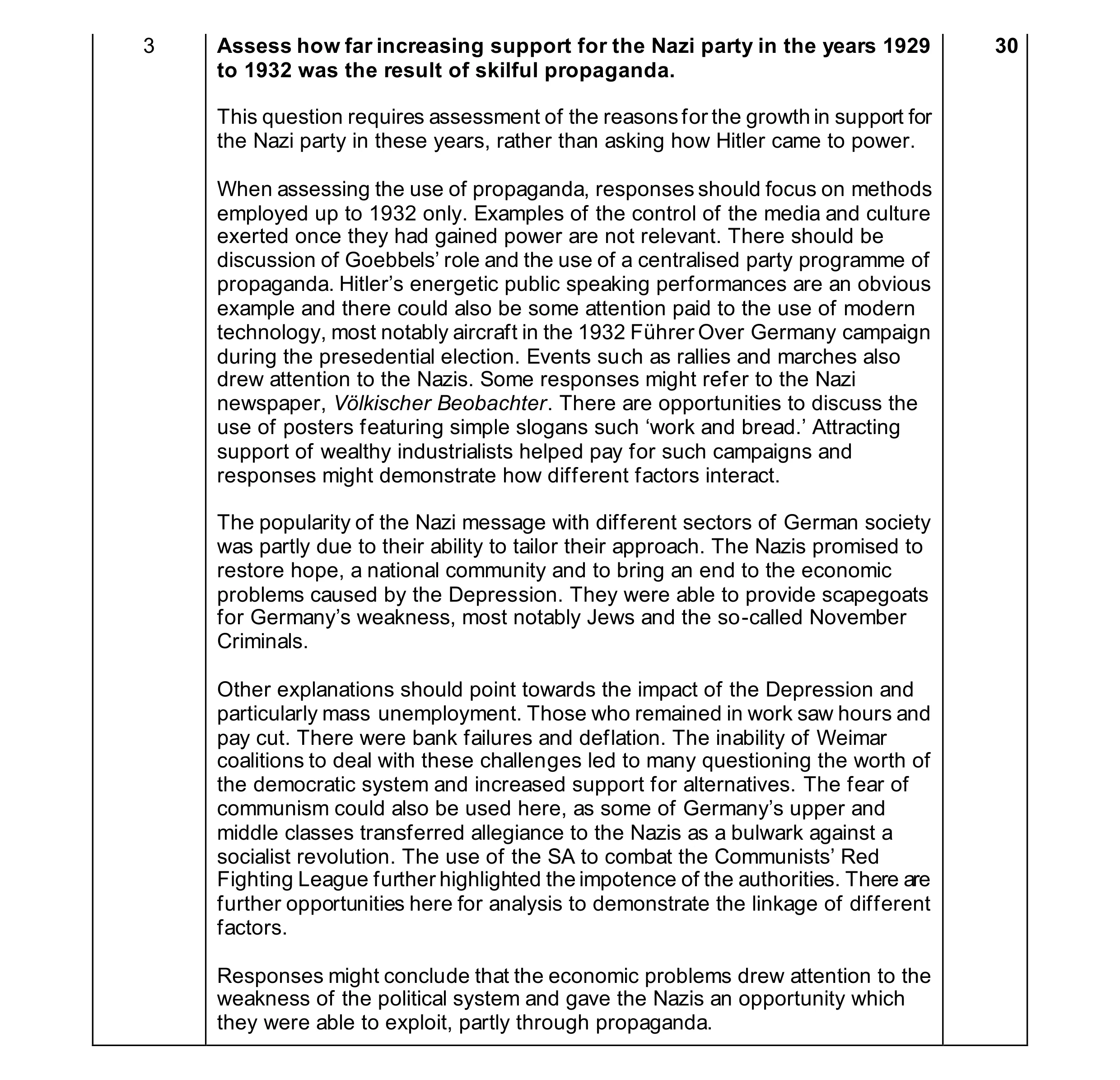 30
30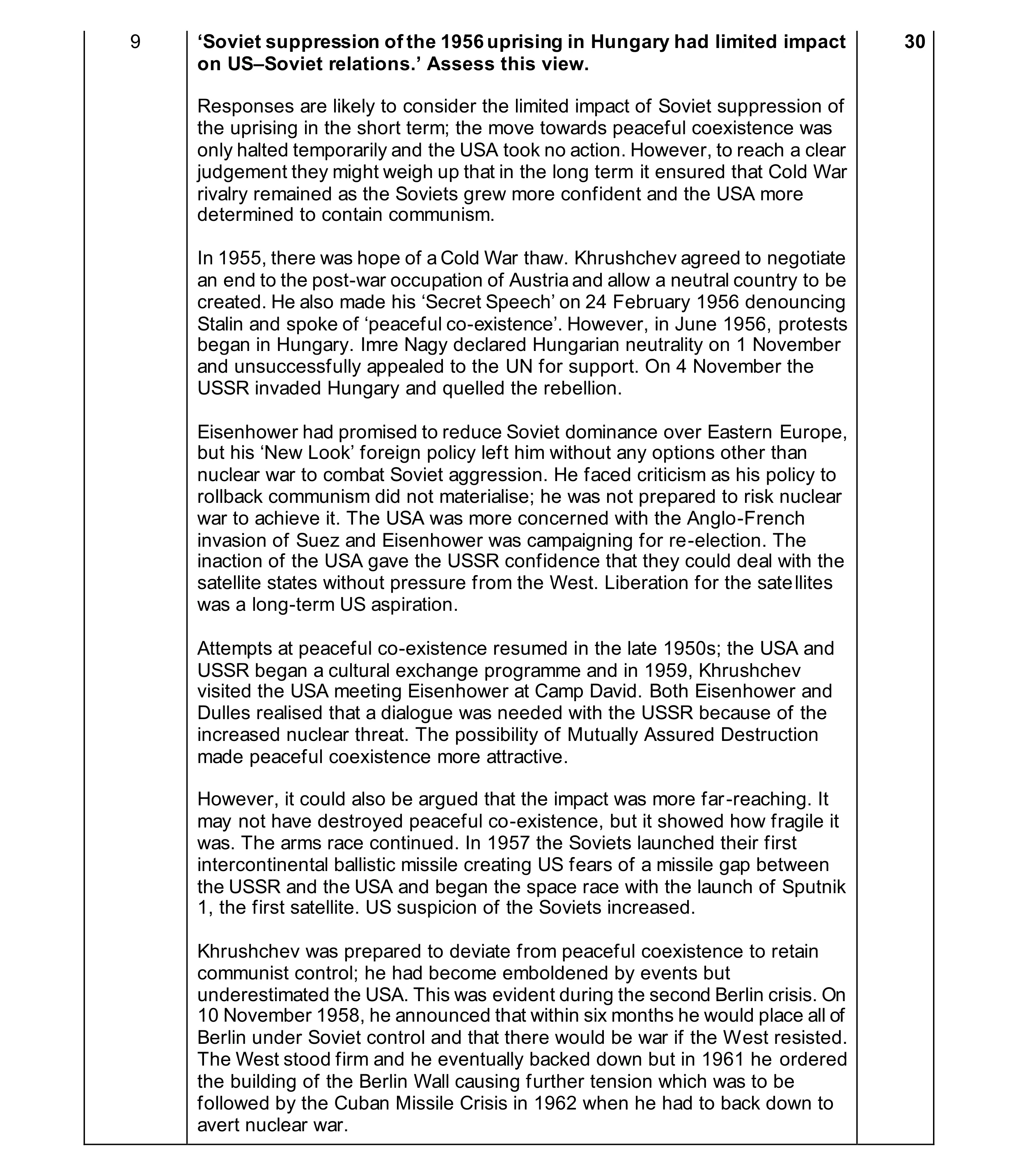 30
30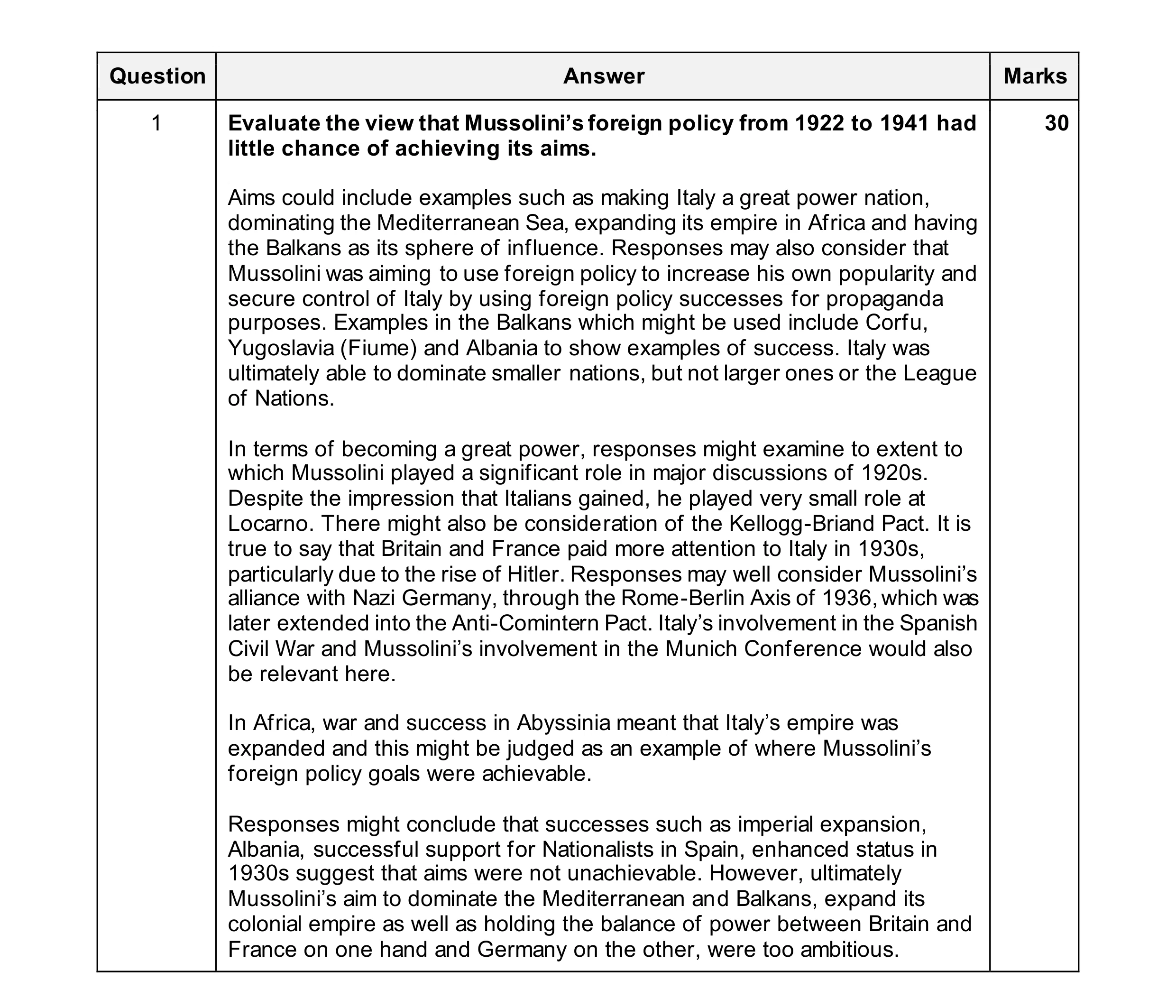 30
30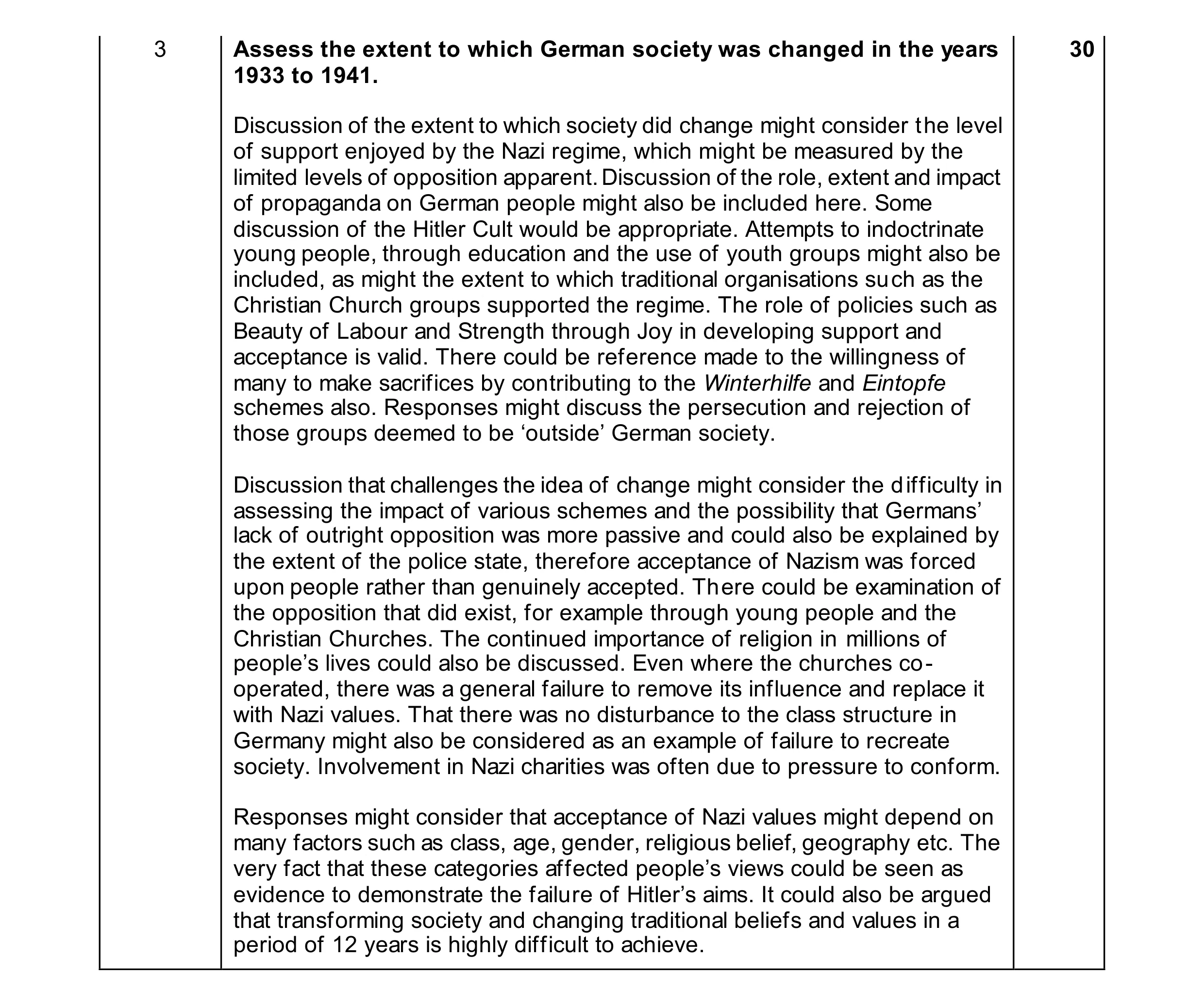 30
30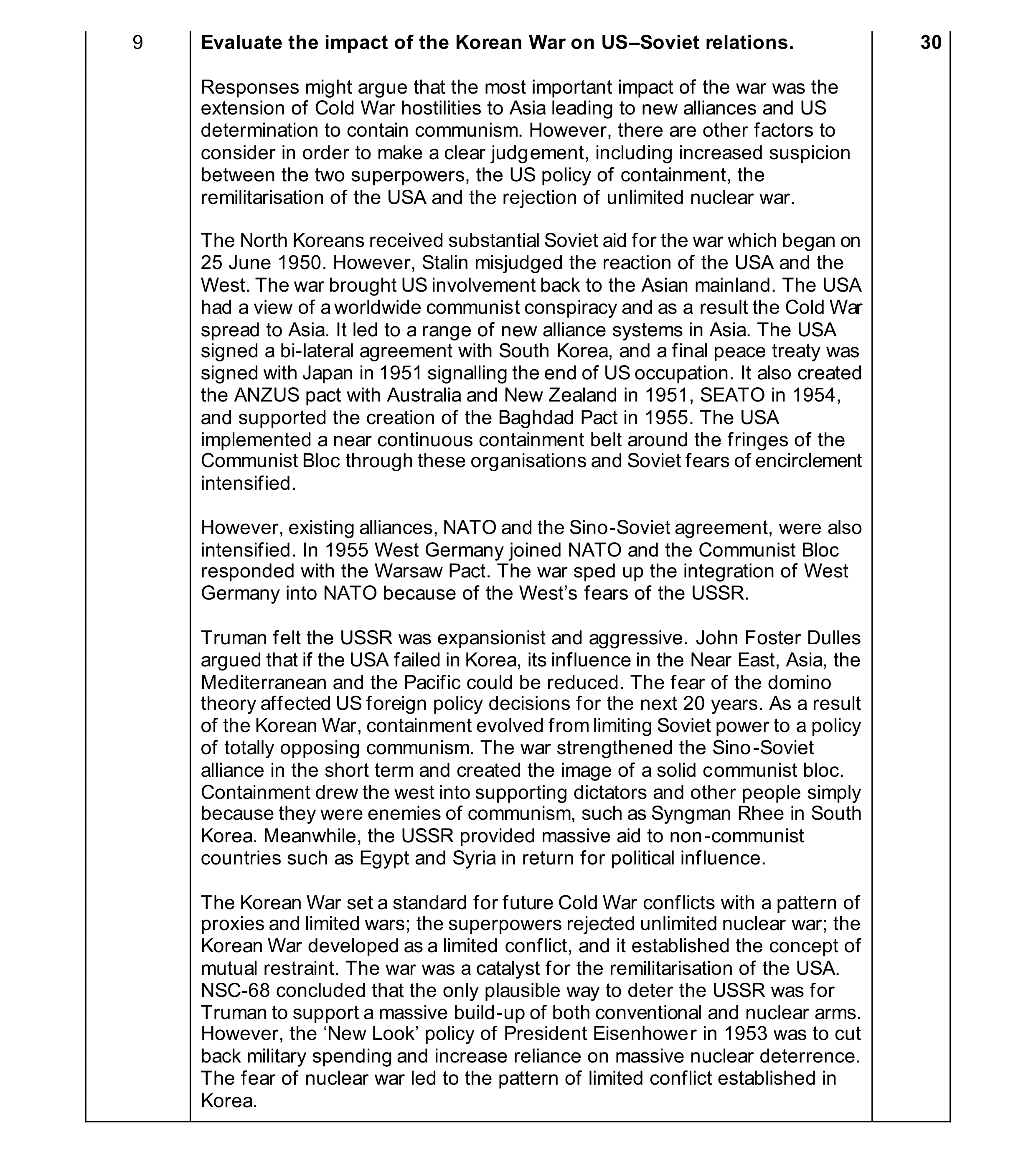 30
30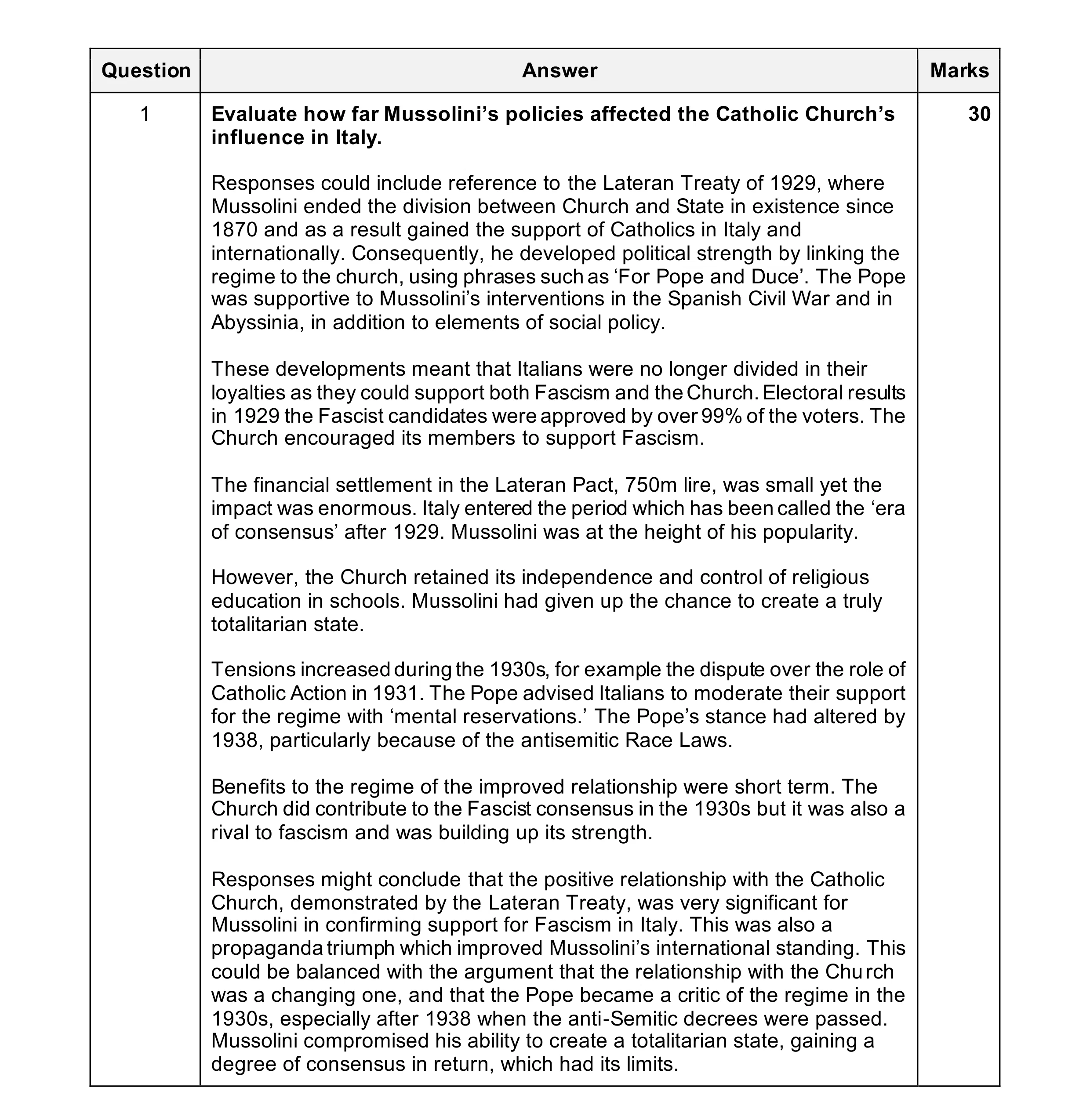 30
30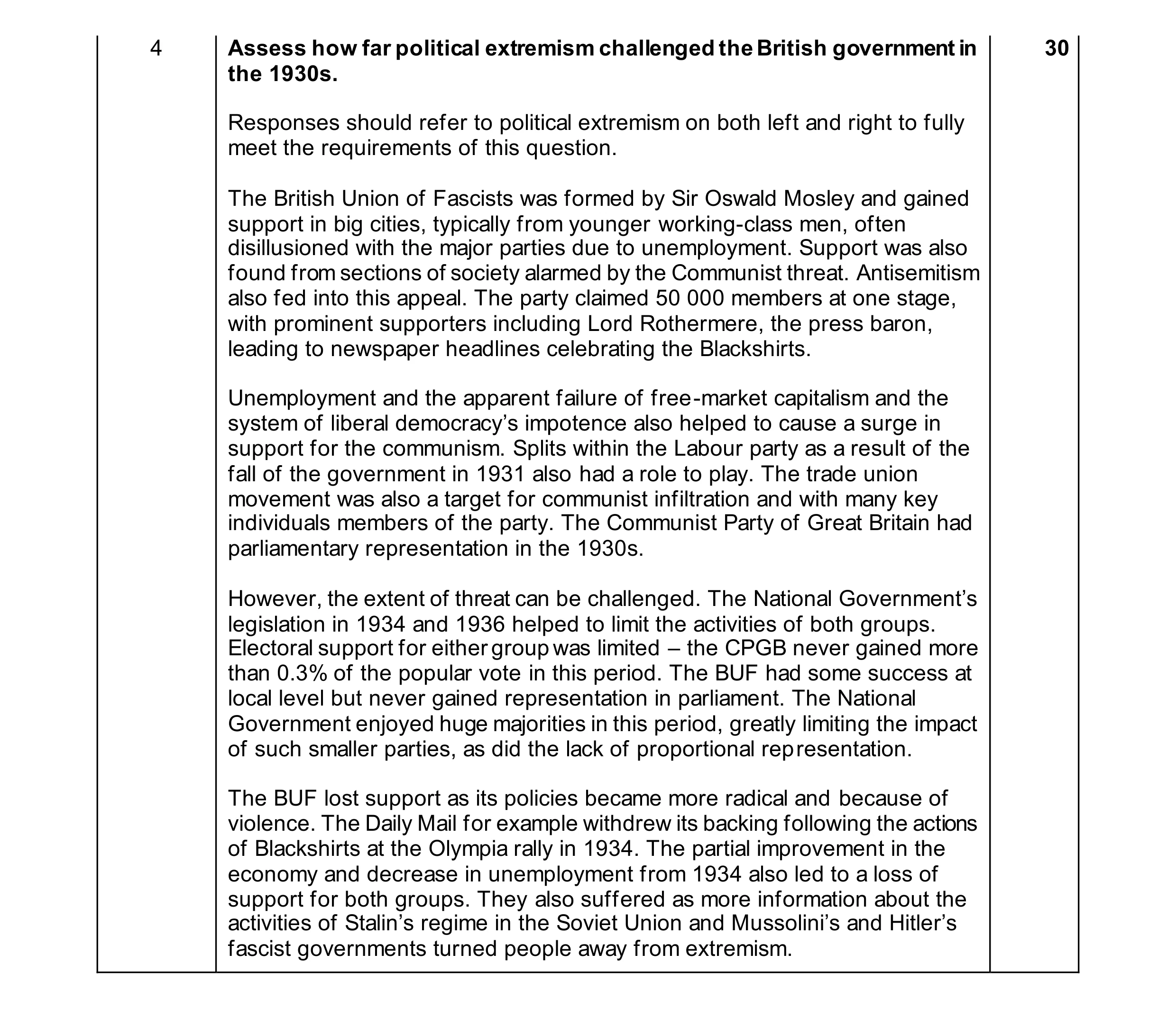 30
30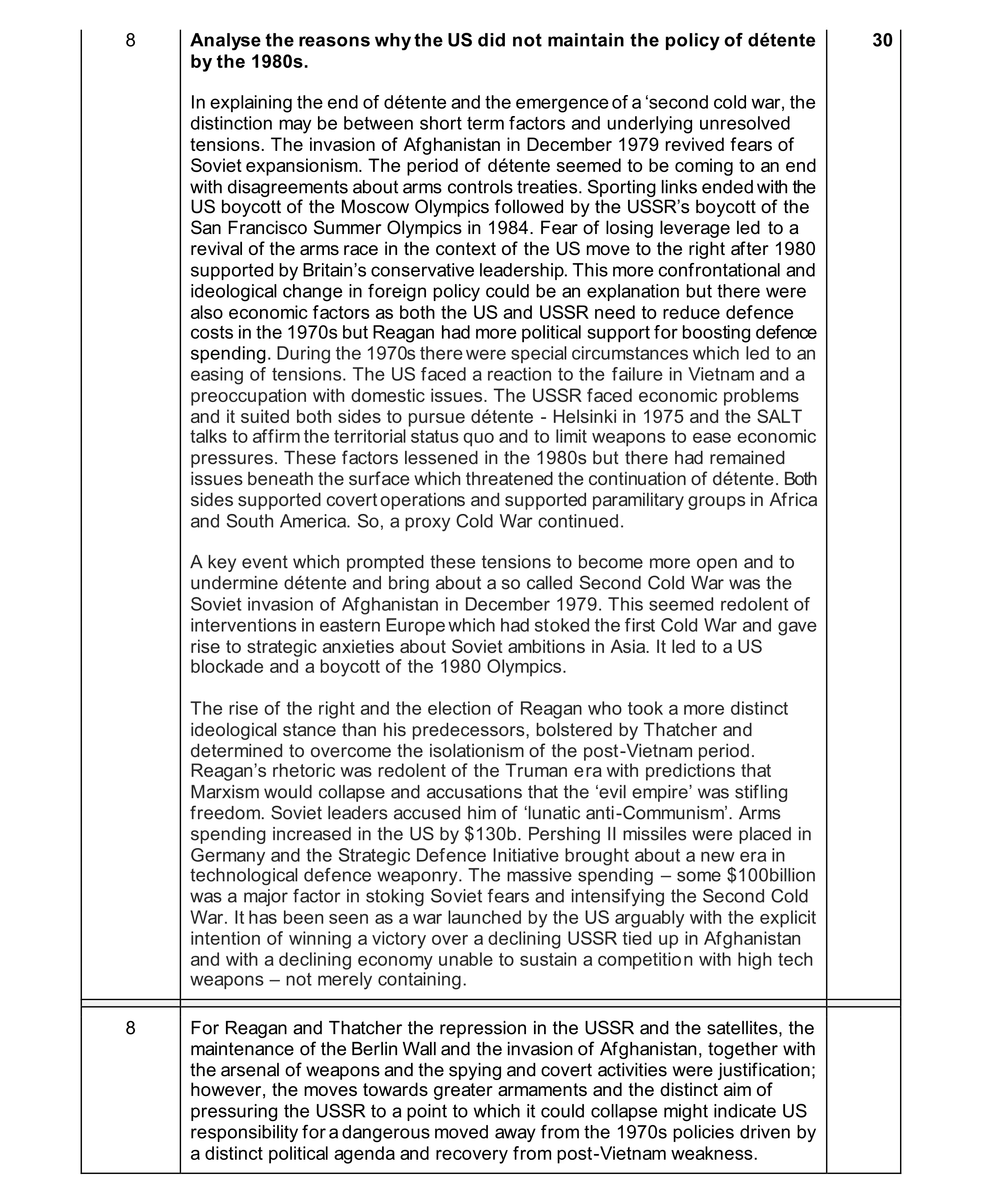 30
30