Questions as text
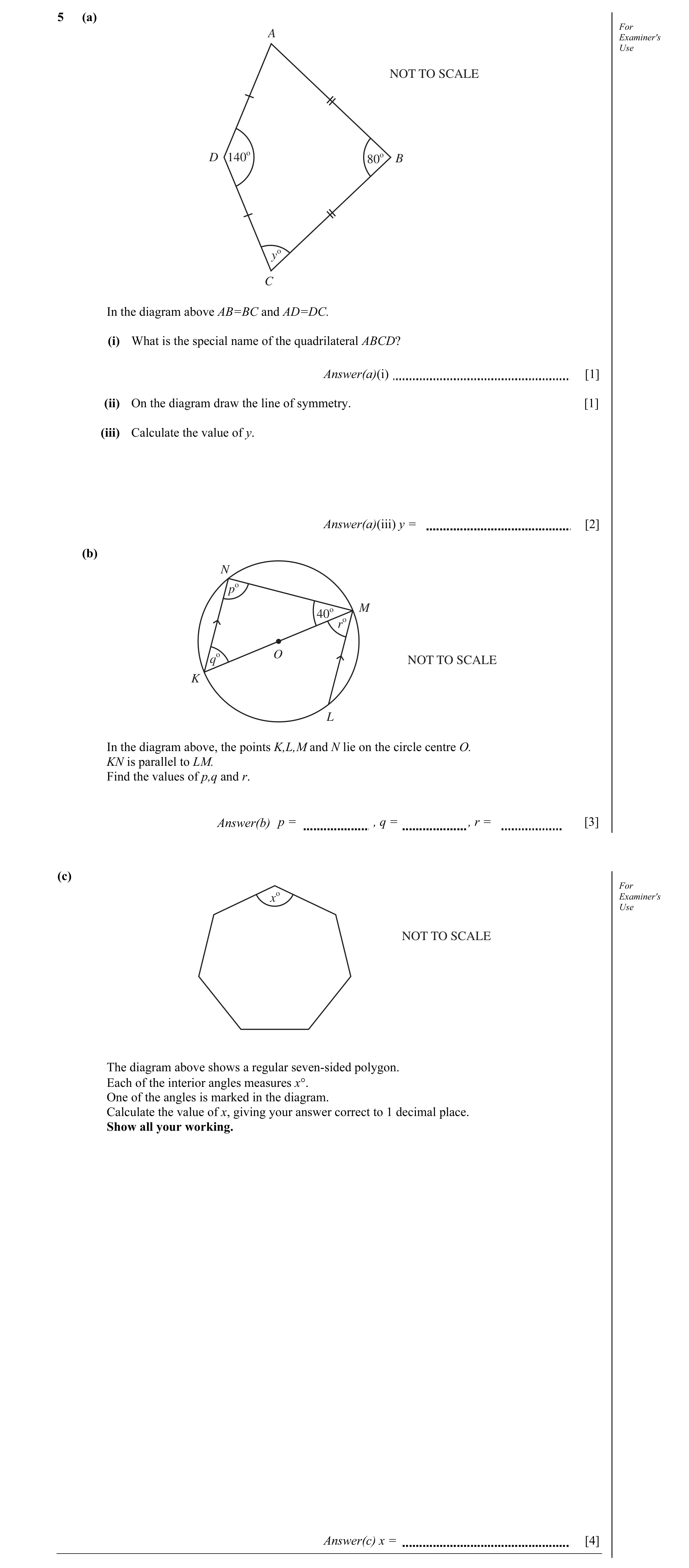
Q1 · For A Examiner's Use NOT TO SCALE D 140o 80o B yo C In the diagram above AB=BC and AD=DC 0580/31 Oct/Nov 2004
5 (a) For A Examiner's Use NOT TO SCALE D 140o 80o B yo C In the diagram above AB=BC and AD=DC. (i) What is the special name of the quadrilateral ABCD? Answer(a)(i) [1] (ii) On the diagram draw the line of symmetry. [1] (iii) Calculate the value of y. Answer(a)(iii) y = [2] (b) N po 40o M ro qo O NOT TO SCALE K L In the diagram above, the points K,L,M and N lie on the circle centre O. KN is parallel to LM. Find the values of p,q and r. Answer(b) p = , q = , r = [3] (c) For xo Examiner's Use NOT TO SCALE The diagram above shows a regular seven-sided polygon. Each of the interior angles measures x°. One of the angles is marked in the diagram. Calculate the value of x, giving your answer correct to 1 decimal place. Show all your working. Answer(c) x = [4]
11 marks
Mark scheme: 5 a) i) kite 1 ii) correct line BD drawn 1 Allow broken line, one line only iii) 70 2 360 − 140 − 80 M1 for o.e. 2 b) (p =) 90 1 (q =) 50 1 (r =) 50 1√ f.t. from their q, not strict f.t. c) 128.6 c.a.o. 4 360 M2 for 180 - or 7 5× 180 o.e. 7 (may be implied by art 129) +A1 for 128.57 11
This question in 0580/31 Oct/Nov 2004
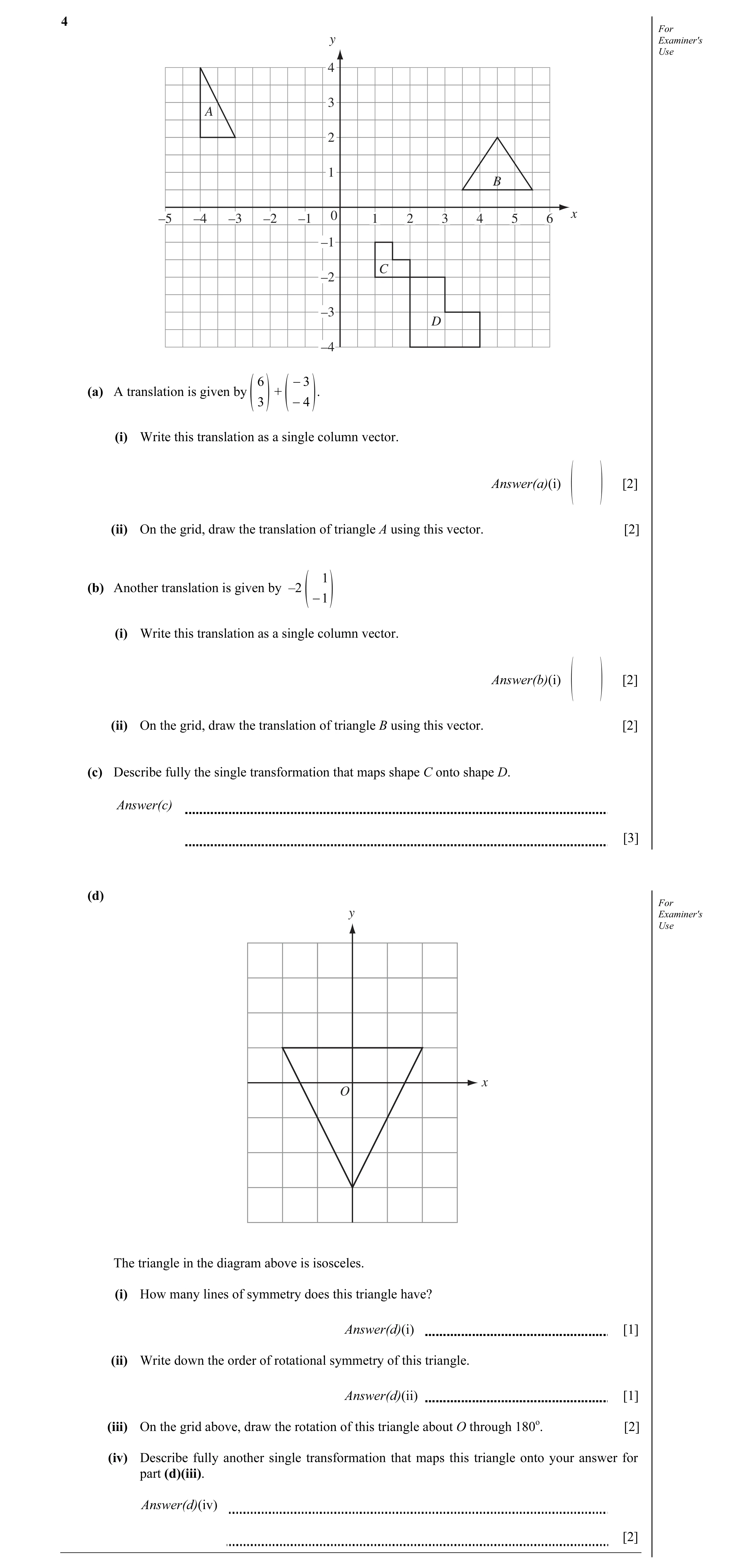
Q2 · For y Examiner's Use 4 3 A 2 1 B –5 –4 –3 –2 –1 0 1 2 3 4 5 6 x –1 C –2 –3 D –4 6 − 3 (a)… 0580/31 May/June 2005
4 For y Examiner's Use 4 3 A 2 1 B –5 –4 –3 –2 –1 0 1 2 3 4 5 6 x –1 C –2 –3 D –4 6 − 3 (a) A translation is given by + . 3 − 4 (i) Write this translation as a single column vector. Answer(a)(i) [2] (ii) On the grid, draw the translation of triangle A using this vector. [2] 1 (b) Another translation is given by –2 − 1 (i) Write this translation as a single column vector. Answer(b)(i) [2] (ii) On the grid, draw the translation of triangle B using this vector. [2] (c) Describe fully the single transformation that maps shape C onto shape D. Answer(c) [3] (d) For y Examiner's Use x O The triangle in the diagram above is isosceles. (i) How many lines of symmetry does this triangle have? Answer(d)(i) [1] (ii) Write down the order of rotational symmetry of this triangle. Answer(d)(ii) [1] (iii) On the grid above, draw the rotation of this triangle about O through 180o. [2] (iv) Describe fully another single transformation that maps this triangle onto your answer for part (d)(iii). Answer(d)(iv) [2]
17 marks
Mark scheme: 4 (a) (i) 3 1 –1 1 (ii) correct translation 1 f.t. } f.t. where possible (i.e. still on the grid) drawn 1 f.t. } condone inaccuracy/unruled if intention is clear } if ½ scale used then penalise first occurence only (–1) (b) (i) –2 1 2 1 (ii) correct translation 1 f.t. } f.t. where possible (i.e. still on the grid) drawn 1 f.t. } condone inaccuracy/unruled if intention is clear (c) enlargement 1 } (centre) (0,0) o.e. 1 } must be a single transformation (scale factor) 2 1 } (d) (i) 1 1 (ii) 1 1 (iii) correct rotation 2 SC1 for 180 rotation about any other point drawn SC1 for ± 90 rotation about O (iv) reflection M1 } must be a single transformation in the x-axis oe B1(dep) } condone inaccuracy/unruled if intention is clear } enlargement, s.f. = –1, centre (0,0) is B2 17
This question in 0580/31 May/June 2005
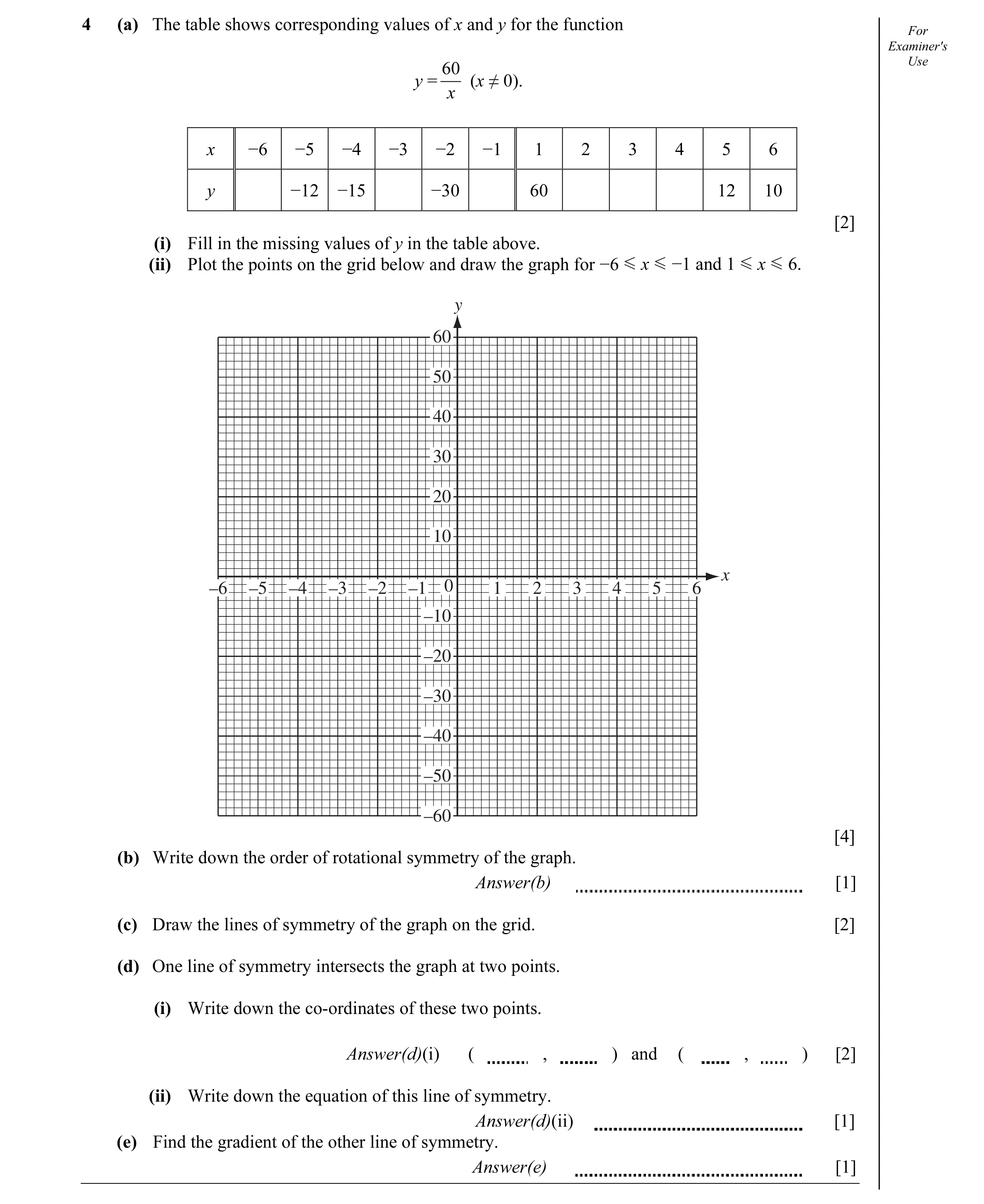
Q3 · The table shows corresponding values of x and y for the function For Examiner's 60 Use y… 0580/31 May/June 2007
4 (a) The table shows corresponding values of x and y for the function For Examiner's 60 Use y = (x ≠ 0). x x −6 −5 −4 −3 −2 −1 1 2 3 4 5 6 y −12 −15 −30 60 12 10 [2] (i) Fill in the missing values of y in the table above. (ii) Plot the points on the grid below and draw the graph for −6 x −1 and 1 x 6. y 60 50 40 30 20 10 x –6 –5 –4 –3 –2 –1 0 1 2 3 4 5 6 –10 –20 –30 –40 –50 –60 [4] (b) Write down the order of rotational symmetry of the graph. Answer(b) [1] (c) Draw the lines of symmetry of the graph on the grid. [2] (d) One line of symmetry intersects the graph at two points. (i) Write down the co-ordinates of these two points. Answer(d)(i) ( , ) and ( , ) [2] (ii) Write down the equation of this line of symmetry. Answer(d)(ii) [1] (e) Find the gradient of the other line of symmetry. Answer(e) [1]
13 marks
Mark scheme: 4 (a) (i) −10, −20, −60, 30, 20, 15 B2 B1 for –20 (x = –3) or 20 (x = 3) (ii) Their 12 points plotted correctly. P3ft P2ft for 10 or 11 points correct. P1ft for 8 or 9 points or 1 quadrant correct. Smooth curves through all points. C1 Two distinct curves; no part of curves between x = –1 and x = 1 (b) 2 B1 (c) Correct lines ruled B1,B1 Minimum length from x = –3 to x = 3. (d) (i) (2.4 to 2.5, 24 to 25) B1ft ft their points of intersection (−2.4 to −2.5, −24 to −25) B1ft ft their points of intersection (ii) y = 10x oe B1 cao (e) −10 B1 cao [13] IGCSE – May/June 2007 0580/0581 03
This question in 0580/31 May/June 2007
Q4 · For y Examiner's Use 12 10 8 6 A 4 2 x –12 –10 –8 –6 –4 –2 0 2 4 6 8 10 12 –2 –4 B –6 –8… 0580/32 Oct/Nov 2010
5 For y Examiner's Use 12 10 8 6 A 4 2 x –12 –10 –8 –6 –4 –2 0 2 4 6 8 10 12 –2 –4 B –6 –8 –10 –12 A graph is drawn on the grid. Points A and B are marked on the curves. (a) (i) Write down the co-ordinates of the points A and B. Answer(a)(i) A( , ) and B( , ) [2] (ii) The equation of the graph is xy = n. Write down the value of n. Answer(a)(ii) n = [1] (b) (i) Write down the order of rotational symmetry of the graph. For Examiner's Use Answer(b)(i) [1] (ii) On the grid, draw the lines of symmetry of the graph. [2] (iii) Write down the equation of each line of symmetry. Answer(b)(iii) and [2] (c) (i) One line of symmetry crosses both curves. Write down the x co-ordinates of the points where this line meets each curve. Give your answers to 1 decimal place. Answer(c)(i) x = and x = [2] (ii) On the grid, draw the line which passes through the point (0, 4) and is parallel to the line of symmetry in part (c)(i). [1] (iii) Write down the equation of this line in the form y = mx + c. Answer(c)(iii) y = [2]
13 marks
Mark scheme: 5 (a) (i) (2, 6) and (–3, –4) 2 B1 for one pair correct (ii) (n =) 12 cao 1 (b) (i) 2 cao 1 (ii) Lines of symmetry drawn 1, 1 (iii) y = x oe and y = –x oe cao 1, 1 (c) (i) (x =) 3.3 to 3.7 and 1ft ft their graph (x =) –3.3 to –3.7 1ft (ii) Line parallel to line in (c)(i) 1ft (c)(i) line must be linear through (0, 4) (iii) y = x + 4 oe 2ft B1 for y = mx + 4 (m ≠ 0) or for y = x + k (k ≠ 0) B1ft for y = mx + ‘4’ (m ≠ 0) or for y = ‘m’x + k (k ≠ 0) IGCSE – October/November 2010 0580 32
This question in 0580/32 Oct/Nov 2010
Q5 · Draw all the lines of symmetry on this rectangle 0580/33 May/June 2012
5 (a) Draw all the lines of symmetry on this rectangle. For Examiner's Use [2] (b) Shade one square so that the shaded shape has rotational symmetry of order 2. [1] (c) On the grid below, draw an enlargement of the triangle with a scale factor of 2. [2] (d) For y Examiner's Use 6 5 4 3 A 2 1 x –6 –5 –4 –3 –2 –1 0 1 2 3 4 5 6 –1 –2 D –3 –4 P –5 –6 (i) Write down the co-ordinates of the point P. Answer(d)(i) ( , ) [1] (ii) Reflect triangle A in the y-axis. Label the image B. [1] 1 (iii) Translate triangle A by the vector . −3 Label the image C. [2] (iv) Describe the single transformation that maps triangle A onto triangle D. Answer(d)(iv) [3]
12 marks
Mark scheme: 5 (a) two correct ruled lines 1,1 SC1 correct but freehand or fully correct with one extra line (b) correct square shaded 1 (c) correct enlargement 2 1 for a correct side (d) (i) 1, –5 1 (ii) correct reflection 1 (iii) correct translation 2 B1 for either direction e.g. 1 to the right or 3 down SC1 for complete correct 3 left and 1 up triangle (iv) rotation, (centre) (0,0) 3 1 for rotation, 1 for (centre) (0,0), 1 for angle 180 angle 180 IGCSE – May/June 2012 0580 33
This question in 0580/33 May/June 2012
Q6 · On each of the following shapes draw any lines of symmetry 0580/31 May/June 2013
3 (a) On each of the following shapes draw any lines of symmetry. For Examiner′s Use (i) [1] (ii) [2] (b) Complete this shape by shading one square so that it has rotational symmetry of order 2. [1] (c) For Examiner′s y Use 7 6 B 5 4 3 A 2 T 1 x –7 –6 –5 –4 –3 –2 –1 0 1 2 3 4 5 6 7 –1 –2 –3 –4 –5 –6 –7 On the grid, draw the image of triangle T after a (i) refl ection in the line x = 4, [2] -5 (ii) translation by the vector , [2] -4 e o (iii) rotation, centre (4, 1) through 180°. [2] (d) Describe fully the single transformation that maps (i) triangle T onto triangle A, Answer(d)(i) … [3] (ii) triangle T onto triangle B. Answer(d)(ii) … [2] _____________________________________________________________________________________
15 marks
Mark scheme: 3 (a) (i) one correct line 1 (ii) only two correct lines 2 B1 for either correct line with at most one incorrect (b) correct square 1 (c) (i) correct reflection 2 B1 for reflection in x = k or y = 4 (ii) correct translation 2 B1 for 5 left or 4 down − 4 SC for translation of − 5 (iii) correct rotation 2 B1 for a correct rotation about the wrong centre (d) (i) rotation 1 centre (0,0) 1 angle 90° 1 [anticlockwise] 1 (ii) translation − 6 1 3
This question in 0580/31 May/June 2013
Q7 · For Examiner′s y Use 9 8 7 6 5 B A 4 3 2 1 x –8 –7 –6 –5 –4 –3 –2 –1 0 1 2 3 4 5 6 7 8 –1… 0580/33 May/June 2013
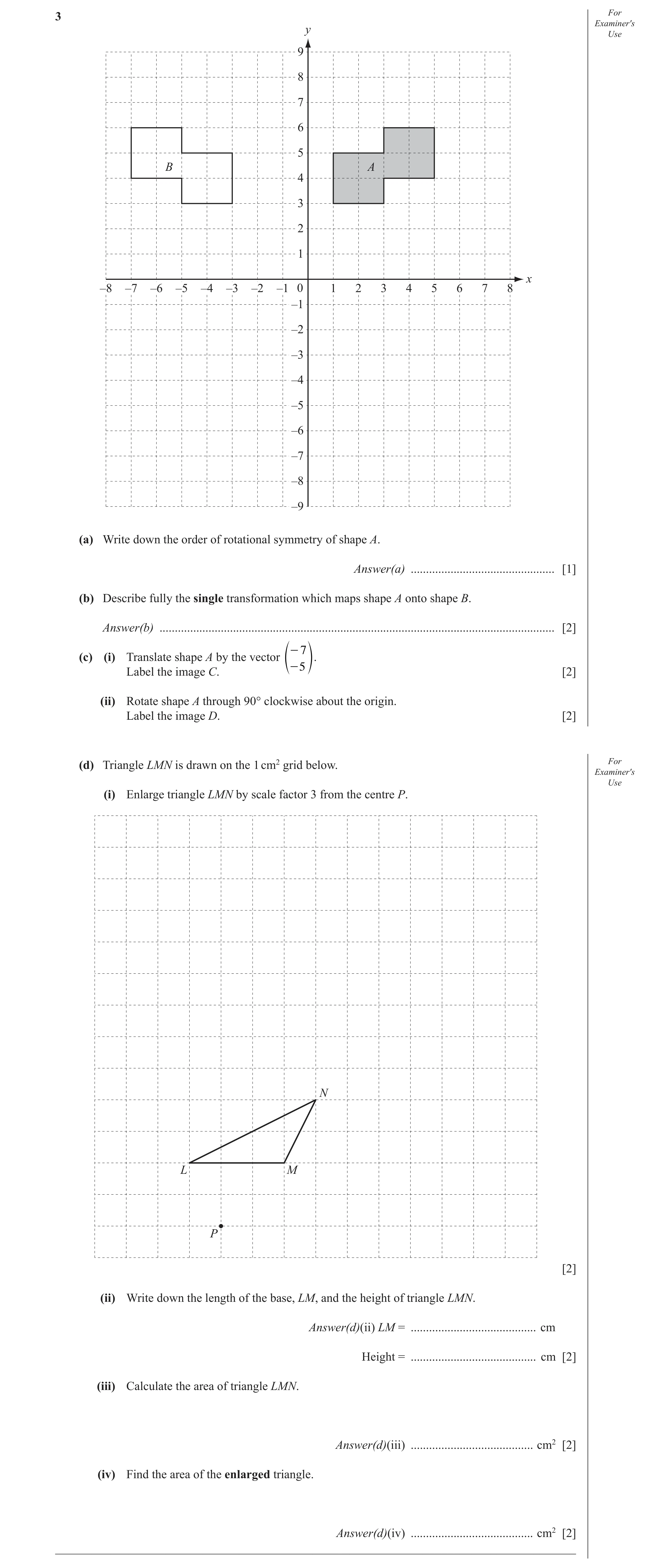
3 For Examiner′s y Use 9 8 7 6 5 B A 4 3 2 1 x –8 –7 –6 –5 –4 –3 –2 –1 0 1 2 3 4 5 6 7 8 –1 –2 –3 –4 –5 –6 –7 –8 –9 (a) Write down the order of rotational symmetry of shape A. Answer(a) … [1] (b) Describe fully the single transformation which maps shape A onto shape B. Answer(b) … [2] - 7 (c) (i) Translate shape A by the vector . -5 e o Label the image C. [2] (ii) Rotate shape A through 90° clockwise about the origin. Label the image D. [2] (d) Triangle LMN is drawn on the 1 cm2 grid below. For Examiner′s Use (i) Enlarge triangle LMN by scale factor 3 from the centre P. N L M P [2] (ii) Write down the length of the base, LM, and the height of triangle LMN. Answer(d)(ii) LM = … cm Height = … cm [2] (iii) Calculate the area of triangle LMN. Answer(d)(iii) … cm2 [2] (iv) Find the area of the enlarged triangle. Answer(d)(iv) … cm2 [2] _____________________________________________________________________________________
15 marks
Mark scheme: 3 (a) 2 1 (b) Reflection 1 x = –1 1 − 7 B1 for 7 left or 5 down 2 (c) (i) Translation − 5 SC1 for translation − 5 − 7 (ii) Rotation 90° clockwise about 2 B1 for any other rotation of 90° about other the origin shown. point (d) (i) Correct enlargement shown 2 B1 for an enlargement with any correct scale factor and/or correct shape incorrect position (ii) 3, 2 1, 1 SC1 for 2, 3 (iii) 3 2ft M1 their LM × their height ÷ 2 (iv) 27 2ft M1 their base × their height ÷ 2 from their enlarged triangle.
This question in 0580/33 May/June 2013
Q8 · Complete the table of values for y = , x ≠ 0 0580/31 May/June 2014
86 (a) (i) Complete the table of values for y = , x ≠ 0 . x x –8 –4 –2 –1 1 2 4 8 y –2 2 [3] 8 (ii) On the grid, draw the graph of y = for –8 Ğ x Ğ –1 and 1 Ğ x Ğ 8 . x y 8 6 4 2 x –8 –6 –4 –2 0 2 4 6 8 –2 –4 –6 –8 [4] (iii) Write down the order of rotational symmetry of your graph. Answer(a)(iii) … [1] (b) (i) Complete this table of values for y = 1.5x + 3 . x –6 –4 –2 0 2 y –6 3 [2] (ii) On the grid, draw the graph of y = 1.5x + 3 . [1] 8 (c) Use your graphs to solve the equation = 1.5x + 3 . x Answer(c) x = … or x = … [2] (d) Write down the gradient of the graph of y = 1.5x + 3 . Answer(d) … [1] __________________________________________________________________________________________
14 marks
Mark scheme: 6 (a) (i) −1, −4, −8, 8, 4, 1. 3 1 for each symmetrical pair (ii) 8 points correctly plotted, within ½ square. 3FT B2FT for 6 or 7 correct Or B1 FT for 4 or 5 correct 2 smooth correct curves, not joined 1 (iii) 2 1 IGCSE – May/June 2014 0580 31 (b) (i) −3 0 6 2 B1 for two correct (ii) Correct ruled line 1 (c) 1.4 to 1.6 and −3.6 to −3.4 1FT,1FT FT from their graph ±0.1 (d) 1.5 1
This question in 0580/31 May/June 2014
Q9 · Draw the line of symmetry on the shape below 0580/32 May/June 2014
3 (a) Draw the line of symmetry on the shape below. [1] (b) Write down the order of rotational symmetry of the shape below. Answer(b) … [1] (c) (i) NOT TO 72° SCALE 157° x° Work out the value of x. Answer(c)(i) x = … [1] (ii) 49° NOT TO SCALE y° 54° Work out the value of y. Answer(c)(ii) y = … [2] (d) A NOT TO SCALE 34° O B C AC is a diameter of the circle, centre O. Calculate angle ACB. Answer(d) Angle ACB = … [2] (e) The diagram below shows parts of shape P and shape Q. Shape P is a regular hexagon and shape Q is another regular polygon. The two shapes have one side in common. 100° NOT TO SCALE P Q 100° Find the number of sides in shape Q. Show each step of your working. Answer(e) … [5] __________________________________________________________________________________________
12 marks
Mark scheme: 3 (a) correct mirror line 1 (b) 2 1 (c) (i) 131 1 (ii) 103 2 M1 for 180 – 49 – 54 or 49 + 54 or 77 seen or fully correct method (d) 56 2 M1 for 180 – 90 – 34 or better or indication of angle B = 90 (e) 9 with supporting working 5 M2 for internal angle of P =120 or M1 for 180 – (360 ÷ 6) or (6 – 2) × 180 ÷ 6 M1FT for 360 – their ‘120’ – 100 [= 140] M1FT for 360 ÷ (180 – their ‘140’) if M0 then answer of 9 scores SC2 IGCSE – May/June 2014 0580 32
This question in 0580/32 May/June 2014
Q10 · A B D C ABCD is a parallelogram 0580/31 May/June 2015
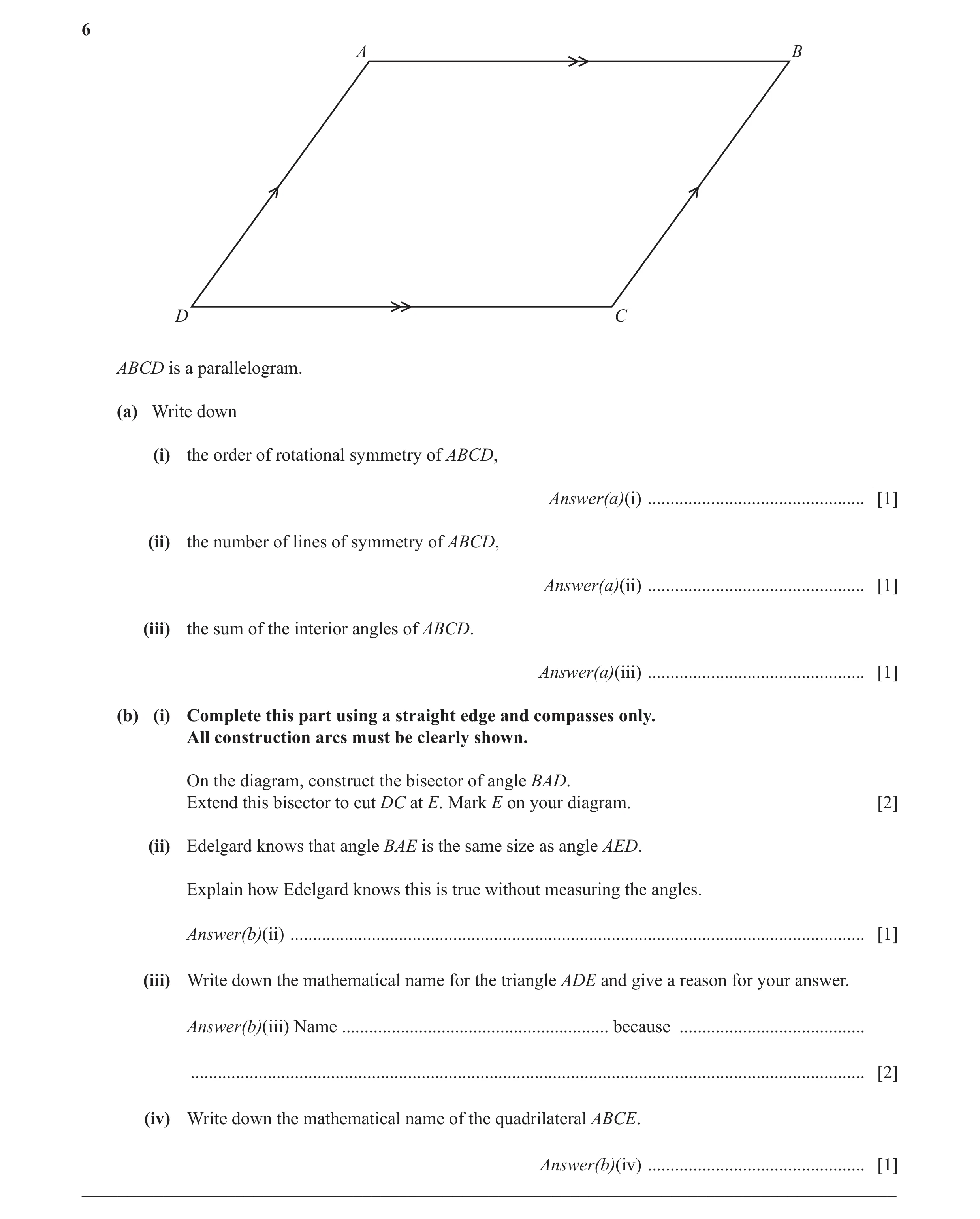
6 A B D C ABCD is a parallelogram. (a) Write down (i) the order of rotational symmetry of ABCD, Answer(a)(i) … [1] (ii) the number of lines of symmetry of ABCD, Answer(a)(ii) … [1] (iii) the sum of the interior angles of ABCD. Answer(a)(iii) … [1] (b) (i) Complete this part using a straight edge and compasses only. All construction arcs must be clearly shown. On the diagram, construct the bisector of angle BAD. Extend this bisector to cut DC at E. Mark E on your diagram. [2] (ii) Edelgard knows that angle BAE is the same size as angle AED. Explain how Edelgard knows this is true without measuring the angles. Answer(b)(ii) … [1] (iii) Write down the mathematical name for the triangle ADE and give a reason for your answer. Answer(b)(iii) Name … because … … [2] (iv) Write down the mathematical name of the quadrilateral ABCE. Answer(b)(iv) … [1] __________________________________________________________________________________________
9 marks
Mark scheme: 6 (a) (i) 2 1 (ii) 0 1 (iii) 360 1 (b) (i) correct bisector drawn with 2 pairs of 2 B1 for correct bisector without arcs correct arcs reaching DC reaching DC or correct bisector with 2 pairs of arcs not reaching DC (ii) alternate [angles] 1 (iii) isosceles 1 [angle] DAE = [angle] DEA oe 1 (iv) trapezium 1
This question in 0580/31 May/June 2015
Q11 · Complete the table of values for y = –x2 + 5x 0580/31 May/June 2015
9 (a) (i) Complete the table of values for y = –x2 + 5x . x –1 0 1 2 3 4 5 6 y –6 4 4 0 [2] (ii) On the grid, draw the graph of y = –x2 + 5x for –1 x 6 . y 7 6 5 4 3 2 1 x –2 –1 0 1 2 3 4 5 6 –1 –2 –3 –4 –5 –6 [4] (b) Write down the co-ordinates of the highest point on the graph. Answer(b) ( … , … ) [1] (c) Use your graph to solve the equation –x2 + 5x = –3. Answer(c) x = … or x = … [2] (d) (i) On the grid, draw the line of symmetry for the graph. [1] (ii) Write down the equation of the line of symmetry for the graph. Answer(d)(ii) … [1] (iii) The curve passes through the points (–10, –150) and (k, –150). Use the symmetry of the curve to find the value of k. Answer(d)(iii) k = … [1] __________________________________________________________________________________________
12 marks
Mark scheme: 9 (a) (i) 0, 6, 6, –6 2 B1 for any 3 correct (ii) 8 points correctly plotted 4 B3FT for 7 or 8 correct correct smooth curve B2FT for 5 or 6 correct B1FT for 3 or 4 correct (b) (2.5, k) where 6 < k ≤ 6.5 1 (c) 5.4 to 5.7 1FT –0.4 to –0.7 1FT (d) (i) correct line drawn 1 (ii) x = 2.5 1 (iii) 15 1
This question in 0580/31 May/June 2015
Q12 · Y 10 9 8 7 6 5 4 3 C 2 1 x –7 –6 –5 –4 –3 –2 –1 0 1 2 3 4 5 6 7 –1 –2 –3 –4 A –5 –6 B –7… 0580/32 May/June 2015
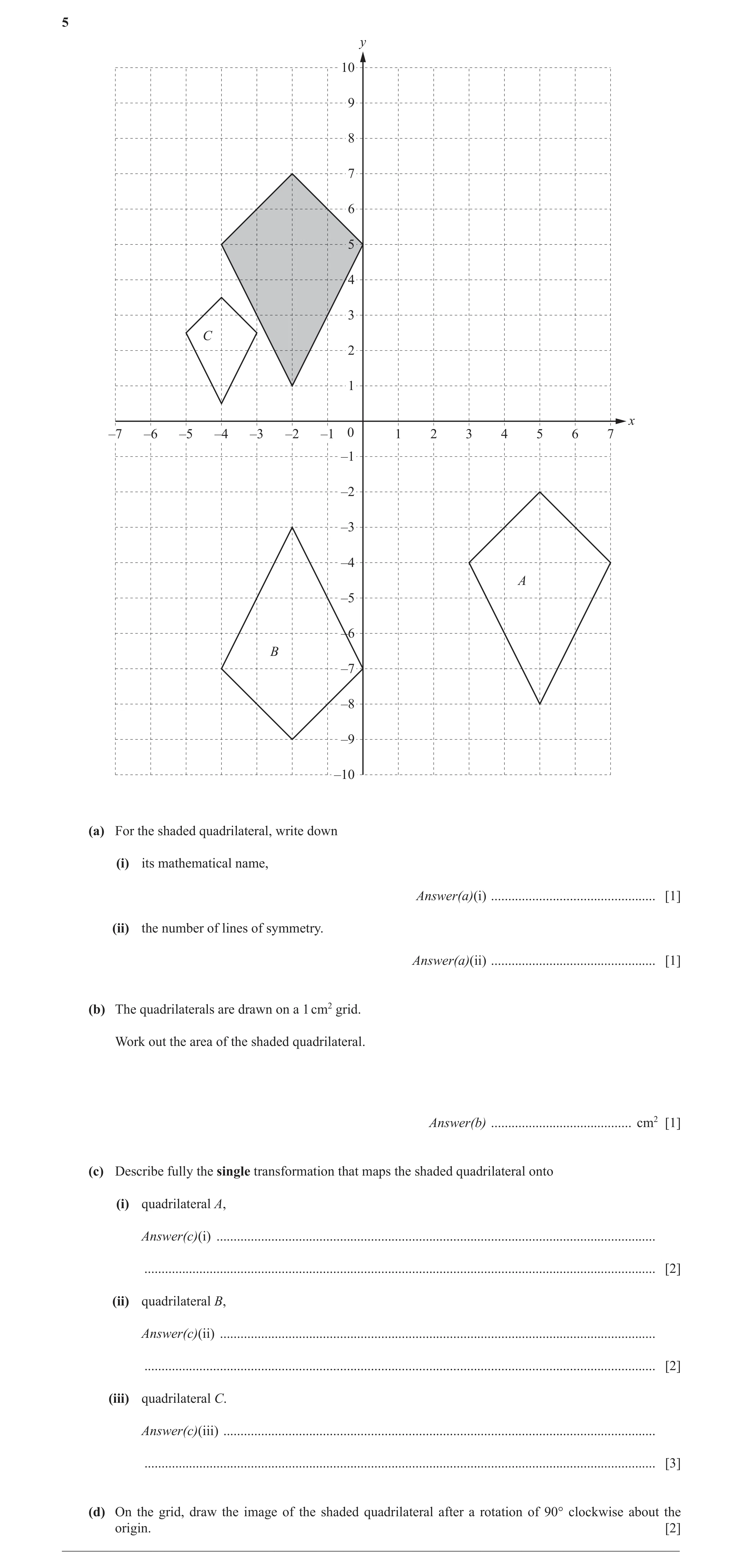
5 y 10 9 8 7 6 5 4 3 C 2 1 x –7 –6 –5 –4 –3 –2 –1 0 1 2 3 4 5 6 7 –1 –2 –3 –4 A –5 –6 B –7 –8 –9 –10 (a) For the shaded quadrilateral, write down (i) its mathematical name, Answer(a)(i) … [1] (ii) the number of lines of symmetry. Answer(a)(ii) … [1] (b) The quadrilaterals are drawn on a 1 cm2 grid. Work out the area of the shaded quadrilateral. Answer(b) … cm2 [1] (c) Describe fully the single transformation that maps the shaded quadrilateral onto (i) quadrilateral A, Answer(c)(i) … … [2] (ii) quadrilateral B, Answer(c)(ii) … … [2] (iii) quadrilateral C. Answer(c)(iii) … … [3] (d) On the grid, draw the image of the shaded quadrilateral after a rotation of 90° clockwise about the origin. [2] __________________________________________________________________________________________
12 marks
Mark scheme: 5 (a) (i) Kite 1 (ii) 1 1 (b) 12 1 (c) (i) Translation 1 7 1 −9 (ii) Reflection 1 y = −1 oe 1 (iii) Enlargement 1 1 1 [Scale Factor] 2 1 [Centre] (−6, 0) (d) Correct rotation 2 B1 for a ‘correct’ rotation of 90° anti- clockwise or correct orientation but wrong position 1 1 6 (a) (i) 3 × 60 [= 195] 4 (ii) 22 45 2 B1 for [Total time =] 6 [hours] 30 [minutes] or 1 6 [hours] or 390 [minutes] 2 or M1 for adding to 16 15 their attempt at 1 1 3 + 2 + 45 4 2 (iii) 13 : 10 : 3 2 B1 for 3 1 : 2 1 : 3 or 195 : 150 : 45 or 4 2 4 better or SC1 for 13,10,3 in the wrong order in a ratio (b) (i) 78 1 (ii) 30 1 (iii) 87 1FT 195 – (their (b)(i) + their (b)(ii)) 22 5. − 20 7. (c) 8 3 M2 for × 100 or better 22 5. or B1 for 22.5 – 20.7
This question in 0580/32 May/June 2015
Q13 · Write down the order of rotational symmetry of this shape 0580/31 Oct/Nov 2015
8 (a) (i) Write down the order of rotational symmetry of this shape. Answer(a)(i) … [1] (ii) Draw the lines of symmetry on the shape. [2] (b) y 7 6 P 5 4 3 A 2 1 x –9 –8 –7 –6 –5 –4 –3 –2 –1 0 1 2 3 4 5 6 7 8 9 –1 –2 –3 –4 B –5 –6 –7 (i) On the grid, reflect triangle A in the line x = –1. [2] (ii) On the grid, enlarge triangle A with centre P and scale factor 3. [2] (iii) Describe fully the single transformation that maps triangle A onto triangle B. Answer(b)(iii) … … [3] __________________________________________________________________________________________
10 marks
Mark scheme: 8 (a) (i) 2 1 (ii) Two correct lines of symmetry 2 B1 for one correct line drawn (b) (i) Correct reflection 2 B1 for reflection in x = k or y = –1 (ii) Correct enlargement 2 B1 for correct shape, incorrect position or enlargement correct centre, incorrect scale factor (iii) Rotation B1 90° clockwise oe B1 [Centre] (0, 0) oe B1
This question in 0580/31 Oct/Nov 2015
Q14 · 5 (a) (i) Complete the table of values for y = , x ! 0580/33 May/June 2016
16 5 (a) (i) Complete the table of values for y = , x ! 0 . x x −16 −8 −4 −2 −1 1 2 4 8 16 y −1 −2 −8 16 4 2 [2] 16 (ii) On the grid, draw the graph of y = for - 16 G x G - 1 and 1 G x G 16 . x y 16 14 12 10 8 6 4 2 x 0 –16 –14 –12 –10 –8 –6 –4 –2 2 4 6 8 10 12 14 16 –2 –4 –6 –8 –10 –12 –14 –16 [4] (b) Write down the order of rotational symmetry of your graph. … [1] (c) One line of symmetry crosses the graph twice. (i) Draw this line of symmetry on the grid. [1] (ii) Write down the equation of this line of symmetry. … [1] 16 (d) By drawing a suitable line on the grid, solve the equation = 7 . x x = … [2]
11 marks
Mark scheme: 5 (a) (i) −4 −16 8 1 2 B1 for 3 correct (ii) Completely correct curve 4 B3FT for 9 or 10 correctly plotted B2FT for 7 or 8 correctly plotted B1FT for 5 or 6 correctly plotted (b) 2 1 (c) (i) Ruled line y = x drawn 1 Must at least intersect the graph in two places (ii) y = x oe 1 (d) Continuous ruled line y = 7 1 Must intersect the graph drawn 2.1 to 2.5 1FT
This question in 0580/33 May/June 2016
Q15 · Polygon A is shown on the grid 0580/32 Oct/Nov 2016
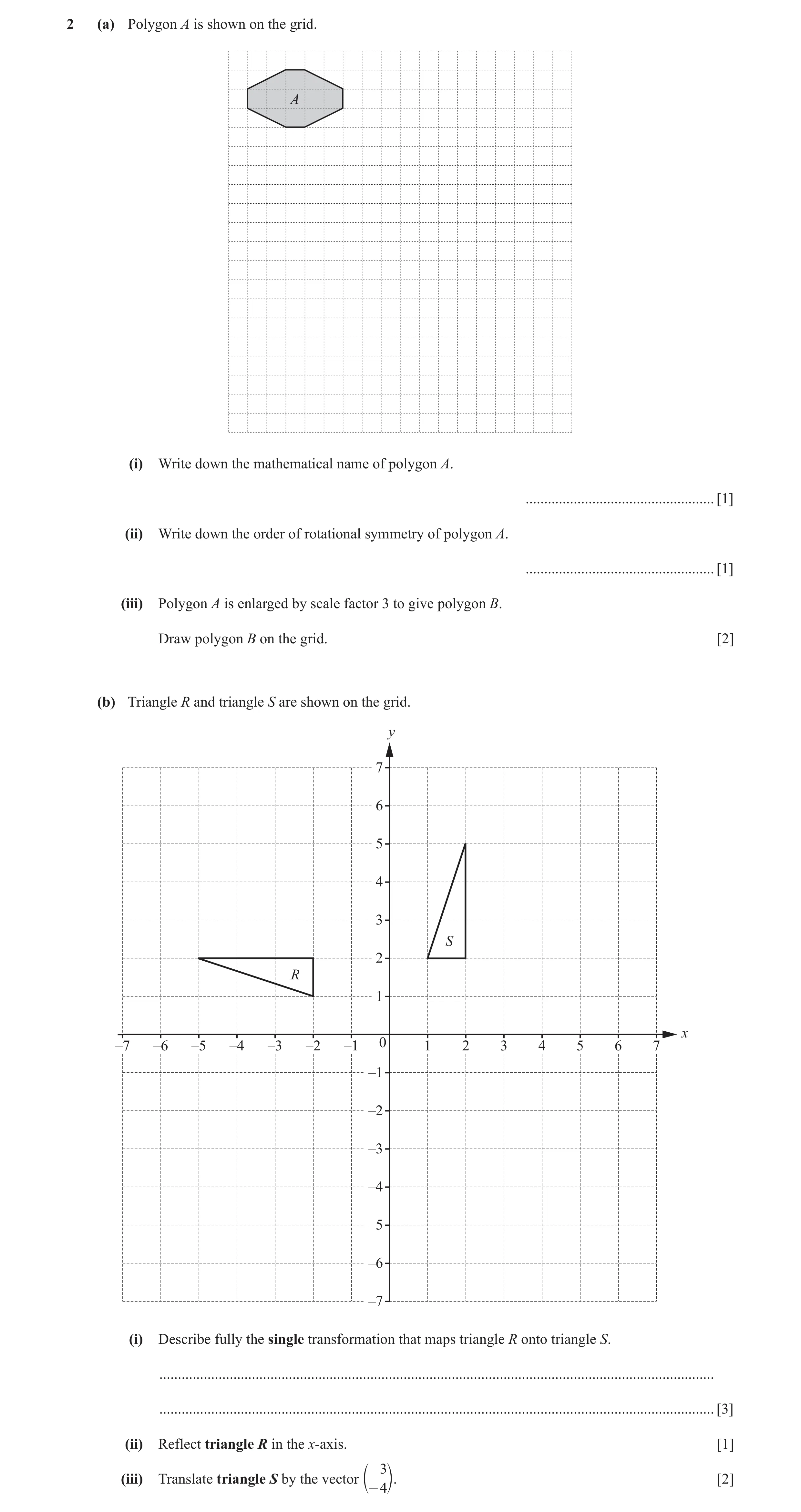
2 (a) Polygon A is shown on the grid. A (i) Write down the mathematical name of polygon A. … [1] (ii) Write down the order of rotational symmetry of polygon A. … [1] (iii) Polygon A is enlarged by scale factor 3 to give polygon B. Draw polygon B on the grid. [2] (b) Triangle R and triangle S are shown on the grid. y 7 6 5 4 3 S 2 R 1 x –7 –6 –5 –4 –3 –2 –1 0 1 2 3 4 5 6 7 –1 –2 –3 –4 –5 –6 –7 (i) Describe fully the single transformation that maps triangle R onto triangle S. … … [3] (ii) Reflect triangle R in the x-axis. [1] 3 (iii) Translate triangle S by the vector [2] c- 4m.
10 marks
Mark scheme: 2 (a) (i) Octagon 1 (ii) 2 1 (iii) Correct enlargement 2 B1 for enlargement with incorrect scale factor (sf ≠1) or B1 for any four sides correct (b) (i) Rotation B1 90° clockwise oe B1 [Centre] (0, 0) oe B1 (ii) Correct reflection 1 Vertices (–2, –1), (–2, –2), (–5, –2)
This question in 0580/32 Oct/Nov 2016
Question 16 0580/32 Feb/March 2017
4 (a) Complete this statement. To be obtuse, an angle must be between … degrees and … degrees. [1] (b) parallelogram square rectangle kite trapezium rhombus Choose one word from the box to complete each statement. A … has no lines of symmetry but has rotational symmetry of order 2. A … has two lines of symmetry but no right angles. A … has one line of symmetry but no rotational symmetry. [3] (c) a° NOT TO SCALE 56° 73° b° c° The diagram shows four straight lines. Write down the values of a, b and c. Give a geometrical reason for each answer. a = … because … b = … because … c = … because … [6] (d) The scale drawing shows the positions of two towns F and G. The scale is 1 cm represents 1.5 km. North North F G Scale: 1 cm to 1.5 km (i) Measure the bearing of G from F. … [1] (ii) Find the distance, in kilometres, between town F and town G. … km [1] (iii) Another town, H, is 10.5 km from town G. The bearing of H from G is 174°. On the scale drawing, mark the position of town H. [2]
14 marks
Mark scheme: 4 (a) 90, 180 1 (b) parallelogram 1 rhombus 1 kite 1 (c) 56 vertically opposite [to 56°] 1,1 56 corresponding [to 56°] 1,1 73 alternate [to 73°] 1,1 (d) (i) 113 1 (ii) 7.5 km 1 (iii) H correct 2 B1 for correct angle or correct distance
This question in 0580/32 Feb/March 2017
Q17 · Here is a sequence of diagrams made using identical rectangles 0580/31 May/June 2017
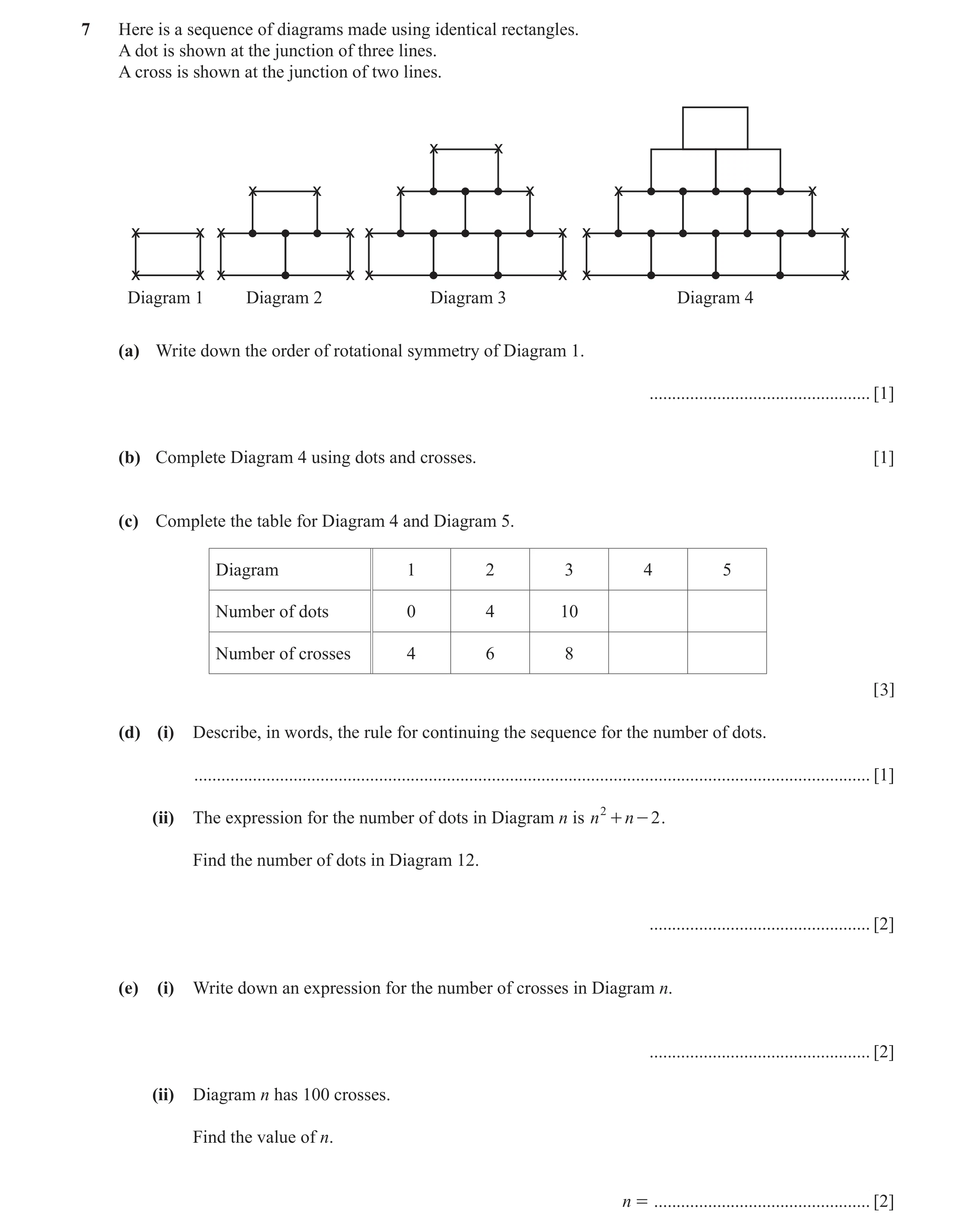
7 Here is a sequence of diagrams made using identical rectangles. A dot is shown at the junction of three lines. A cross is shown at the junction of two lines. x x x x x x x x x x x x x x x x x x x x x x x x Diagram 1 Diagram 2 Diagram 3 Diagram 4 (a) Write down the order of rotational symmetry of Diagram 1. … [1] (b) Complete Diagram 4 using dots and crosses. [1] (c) Complete the table for Diagram 4 and Diagram 5. Diagram 1 2 3 4 5 Number of dots 0 4 10 Number of crosses 4 6 8 [3] (d) (i) Describe, in words, the rule for continuing the sequence for the number of dots. … [1] (ii) The expression for the number of dots in Diagram n is n 2 + n - 2 . Find the number of dots in Diagram 12. … [2] (e) (i) Write down an expression for the number of crosses in Diagram n. … [2] (ii) Diagram n has 100 crosses. Find the value of n. n = … [2]
12 marks
Mark scheme: 7(a) 2 1 7(b) 3 dots correctly placed 1 4 crosses correctly placed 7(c) 18 28 1,1 If zero scored, SC1 for their 18 + 10 10 12 1 7(d)(i) Add two more each time oe 1 7(d)(ii) 154 2 M1 for 122 + 12 − 2 7(e)(i) 2n + 2 oe final answer 2 B1 for 2n + j or kn + 2 (k ≠ 0 or 1) 7(e)(ii) 49 2 M1 for their (e)(i) = 100 provided (e)(i) is algebraic soi
This question in 0580/31 May/June 2017
Q18 · Write down the order of rotational symmetry of each shape 0580/32 Oct/Nov 2017
3 (a) Write down the order of rotational symmetry of each shape. … … [2] (b) y 8 7 6 B 5 4 3 A 2 1 x –6 –5 –4 –3 –2 –1 0 1 2 3 4 5 6 7 8 –1 –2 –3 –4 –5 (i) On the grid, reflect triangle A in the line x = −1. [2] (ii) On the grid, enlarge triangle A by scale factor 2, centre (0, 0). [2] (iii) Describe fully the single transformation that maps triangle A onto triangle B. … … [2]
8 marks
Mark scheme: 3(a) 2, 6 2 B1 mark for each 3(b)(i) Triangle at (–3, 1) (–5, 3) (–3, 3) 2 B1 for reflection in x = k or y = –1 3(b)(ii) Triangle at (2, 2) (2, 6) (6, 6) 2 B1 for correct size and orientation, incorrect centre 3(b)(iii) Translation 1 − 5 1 3
This question in 0580/32 Oct/Nov 2017
Q19 · Draw all the lines of symmetry on each shape 0580/33 May/June 2018
2 (a) Draw all the lines of symmetry on each shape. [4] (b) The diagram shows an isosceles triangle and a straight line AB. NOT TO SCALE 48° x° y° A B Find the value of x and the value of y. x = … y = … [2] (c) Find the size of one interior angle of a regular decagon. … [3] (d) P C k° NOT TO B SCALE j° O 37° R A The points A, B and C lie on the circumference of a circle, centre O. PBR is a tangent to the circle and angle BAC = 37°. Find the value of j and the value of k. j = … k = … [3] (e) A NOT TO SCALE 18 cm B D E C ABC and ADE are isosceles triangles, each with perpendicular height 18 cm. BC = 35 cm and DE = 27 cm. Find the total area of the two shaded parts of the diagram. … cm2 [3]
15 marks
Mark scheme: 2(a) [star] 6 correct lines only 2 B1 for 3 correct lines [rectangle] 2 correct lines only 2 B1 for only 1 correct line or 2 correct lines and 1 wrong 2(b) [x = ] 66 2 B1 for one correct angle [y = ] 114 or for both angles adding to 180 2(c) 144 3 M1 for 360 ÷ 10 soi by 36 M1 for [y = ] 180 – their 36 If 0 scored SC2 for a correct interior angle of a regular polygon (greater than 90), providing not from wrong working 2(d) [j = ] 53 3 B2 for one correct angle [k = ] 37 or B1 for 90 seen, marked on drawing in the correct place or for both angles adding to 90 2(e) 72 3 M1 for (18 × 35) ÷ 2 implied by 315 M1 for (18 × 27) ÷ 2 implied by 243
This question in 0580/33 May/June 2018
Q20 · Draw all the lines of symmetry on the rectangle below 0580/32 Oct/Nov 2018
5 (a) Draw all the lines of symmetry on the rectangle below. [2] (b) Work out the size of one interior angle of a regular hexagon. … [3] (c) The diagram shows a plan of a garden. 40 m NOT TO 10 m SCALE 24 m 24 m 12 m 12 m Work out the area of the garden. … m2 [3] (d) A NOT TO x° SCALE 132° B C D The diagram shows an isosceles triangle, ABC. BCD is a straight line. Find the value of x. x = … [2] (e) The diagram shows a hollow metal pipe in the shape of a cylinder. NOT TO SCALE 18 cm (i) This diagram shows the cross-section of the pipe. NOT TO 7.5 cm SCALE 6 cm Work out the shaded area. … cm2 [3] (ii) The cylinder is 18 cm long. Work out the volume of the metal. … cm3 [1] (iii) Work out the curved surface area of the outside of the pipe. … cm2 [3]
17 marks
Mark scheme: 5(a) Two correct lines 2 B1 for 1 correct line and no diagonals or 2 correct lines and one diagonal 5(b) 120 3 M2 for 180 − (360 ÷ 6) oe or (6 – 2) × 180 ÷ 6 oe or M1 for 360 ÷ 6 oe or (6 – 2) × 180 oe 5(c) 736 3 M2 for 40 × 24 − (24 − 10) × (40 − 2 × 12) oe or M1 for one of these two areas or B1 for one of 14 or 16 seen OR M2 for 2 × (24 × 12) + 10 × (40 − 2 × 12) or M1 for one of these three areas or B1 for one of 14 or 16 seen OR M2 for 40 × 10 + 2 × (24 – 10) × 12 or M1 for one of these three areas or B1 for one of 14 or 16 seen 5(d) 84 2 M1 for 180 − 2 × (180 − 132) or better or B1 for 48 seen 5(e)(i) 63.6 or 63.61 to 63.63 3 M2 for 7.52 × π − 62 × π or better or M1 for 7.52 × π or 62 × π or better 5(e)(ii) 1140 or 1150 or 1144 to 1146 1 FT their (e)(i) × 18 evaluated 5(e)(iii) 848 or 848.2 to 848.4 3 M2 for 2 × π × 7.5 × 18 or better or M1 for 2 × π × 7.5 or better If 0 scored SC1 for 679 or 678.5 to 678.7
This question in 0580/32 Oct/Nov 2018
Q21 · Soraya makes rectangular flags 0580/31 Oct/Nov 2019
7 (a) Soraya makes rectangular flags. (i) On the rectangle, draw the lines of symmetry. [2] (ii) Each flag measures 1.2 m by 1.8 m. Calculate the area of one flag. … m2 [2] (b) Each flag costs $15 to make. Soraya sells one flag for $21. Calculate the percentage profit. … % [3] (c) Soraya makes 30 flags. 11 flags are pink, 7 are yellow, 5 are blue, 4 are silver and 3 are green. Soraya takes a flag at random. Find the probability that the flag she takes is (i) pink, … [1] (ii) not blue, … [1] (iii) red. … [1] (d) Soraya decides to make a mathematically similar flag. 1.8 m 2.4 m 1.2 m h NOT TO SCALE Calculate the height, h, of the new flag. h = … m [2] (e) NOT TO 25 m SCALE 8 m The diagram shows a flagpole in Soraya’s garden. The flagpole has height 25 m. A rope from the top of the flagpole is tied to the ground 8 m from its base. Calculate the length of this rope. … m [2]
14 marks
Mark scheme: 7(a)(i) Two correct lines drawn 2 B1 for one correct, no extras or two correct and one extra 7(a)(ii) 2.16 2 M1 for 1.2 × 1.8 7(b) 40 3 21 − 15 M2 for [× 100] or 15 21 − 1 [×100] 15 21 or × 100 [−100] oe 15 21 or M1 for or 21−15 15 7(c)(i) 11 1 oe 30 7(c)(ii) 25 1 oe 30 7(c)(iii) 0 1 7(d) 1.6 2 2.4 1.8 1.8 1.2 M1 for or or or soi 1.8 2.4 1.2 1.8 7(e) 26.2 or 26.24 to 26.25 2 M1 for 252 + 82 or better
This question in 0580/31 Oct/Nov 2019
Q22 · The diagram shows a regular polygon 0580/33 May/June 2020
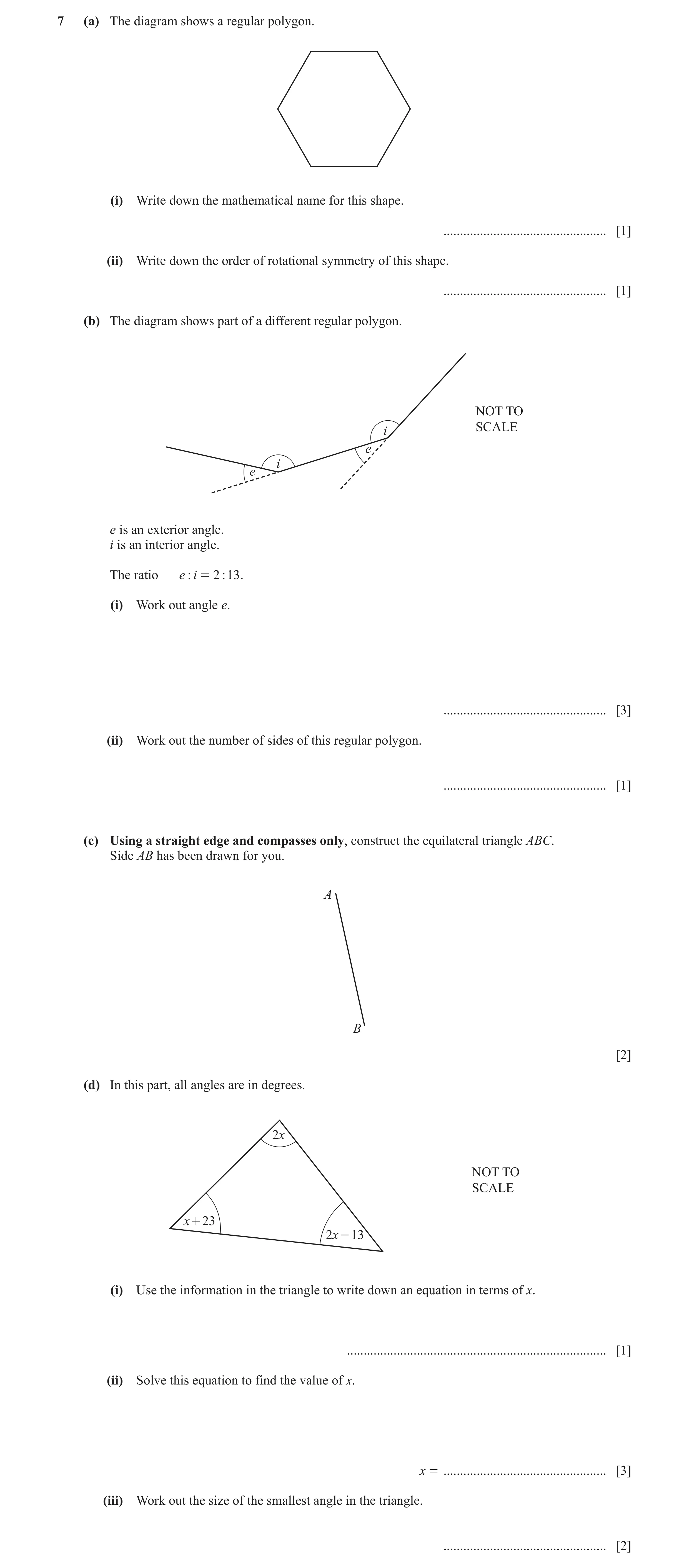
7 (a) The diagram shows a regular polygon. (i) Write down the mathematical name for this shape. … [1] (ii) Write down the order of rotational symmetry of this shape. … [1] (b) The diagram shows part of a different regular polygon. NOT TO SCALE i e i e e is an exterior angle. i is an interior angle. The ratio e : i = 2 : 13 . (i) Work out angle e. … [3] (ii) Work out the number of sides of this regular polygon. … [1] (c) Using a straight edge and compasses only, construct the equilateral triangle ABC. Side AB has been drawn for you. A B [2] (d) In this part, all angles are in degrees. 2x NOT TO SCALE x + 23 2x - 13 (i) Use the information in the triangle to write down an equation in terms of x. … [1] (ii) Solve this equation to find the value of x. x = … [3] (iii) Work out the size of the smallest angle in the triangle. … [2]
14 marks
Mark scheme: 7(a)(i) Hexagon 1 7(a)(ii) 6 1 7(b)(i) 24 3 180 M2 for × k where k = 1, 2 or 13 2 + 13 or B1 for e + i = 180 soi 7(b)(ii) 15 1 360 FT if is an integer their (b)(i) 7(c) Correct ruled triangle with arcs 2 M1 for correct triangle without arcs or for correct arcs and no lines 7(d)(i) 2x + x + 23 + 2x – 13 = 180 oe 1 7(d)(ii) 34 3 M1 for correctly collecting their like terms in form ax + b = k M1 for correctly isolating their x k − b x = a 7(d)(iii) 55 2 M1 for evaluating 2x – 13 and x + 23 with their x
This question in 0580/33 May/June 2020
Q23 · 5 (a) Complete the table of values for y = 0580/32 May/June 2021
185 (a) Complete the table of values for y = . x x -8 -6 -4 -3 -2 2 3 4 6 8 y -3 -6 6 3 [3] 18 (b) On the grid, draw the graph of y = for -8 G x G - 2 and 2 G x G 8 . x y 1010 88 66 44 22 x –– 88 –– 66 –– 44 – 2 0 22 44 66 88 – 2 – 4 – 6 – 8 – 10 (c) Write down the order of rotational symmetry of the graph. … [1] (d) (i) On the grid, plot and join the points (-8, -3) and (6, 4). [2] 18 (ii) Write down the values of x where this line intersects the graph of y = . x x = … and x = … [2] (iii) Find the equation of this line in the form y = mx + c . y = … [2]
14 marks
Mark scheme: 5(a) −2.25 −4.5 −9 9 4.5 2.25 3 B2 for 4 or 5 correct or B1 for 2 or 3 correct 5(b) Correct curve 4 B3FT for 9 or 10 points correctly plotted or B2FT for 7 or 8 points correctly plotted or B1FT for 5 or 6 points correctly plotted 5(c) 2 1 5(d)(i) (−8, −3) and (6, 4) plotted and joined in a 2 B1 for one point correctly plotted or both ruled line correctly plotted but not joined, or ruled 5(d)(ii) −7.3 to −6.9 and 4.9 to 5.3 2 B1FT for each 5(d)(iii) 1 2 1 [y =] x + 1 oe final answer B1 for x + c (c ≠ +1) or 2 2 1 kx + 1 k ≠ 0 or 2 or B1FT for (their m)x + c or kx + their intercept (k ≠ 0)
This question in 0580/32 May/June 2021
Q24 · Write down the order of rotational symmetry of each shape 0580/33 Oct/Nov 2021
3 (a) Write down the order of rotational symmetry of each shape. … … [2] (b) Triangles A, B and C are shown on the grid. y 8 7 6 5 C 4 3 2 1 x – 8 – 7 – 6 – 5 – 4 – 3 – 2 – 1 0 1 2 3 4 5 6 7 8 9 10 – 1 – 2 – 3 B A – 4 – 5 – 6 (i) Describe fully the single transformation that maps (a) triangle A onto triangle B, … … [3] (b) triangle A onto triangle C. … … [3] (ii) On the grid, reflect triangle C in the line x =- 1. [2] 5 (iii) On the grid, translate triangle C by the vector [2] e- 1o.
12 marks
Mark scheme: 3(a) 8 2 B1 for each 4 3(b)(i)(a) Enlargement 3 B1 for each [centre] (–7, –5) [sf] 2 3(b)(i)(b) Rotation 3 B1 for each [centre] (0, 0) oe 180° 3(b)(ii) Triangle at (–3, 5), (–5, 5), (–5, 2) 2 B1 for correct reflection in x = k k ≠ –1 3(b)(iii) Triangle at (6, 4), (8, 4), (8, 1) 2 5 k B1 for a translation by or k –1
This question in 0580/33 Oct/Nov 2021
Q25 · - 62 (a) (i) Complete the table of values for y = 0580/32 May/June 2022
- 62 (a) (i) Complete the table of values for y = . x x -6 -4 -3 -2 -1.5 -1 1 1.5 2 3 5 6 y 1 2 3 6 -6 -3 -2 -1 [3] - 6 (ii) On the grid, draw the graph of y = for - 6 G x G - 1 and 1 G x G 6 . x y 6 5 4 3 2 1 – 6 – 5 – 4 – 3 – 2 – 1 0 1 2 3 4 5 6 x – 1 – 2 – 3 – 4 – 5 – 6 [4] (iii) Write down the order of rotational symmetry of the graph. … [1] (iv) Write down the equation of each line of symmetry of the graph. … and … [2] (v) On the grid, draw the line y = 2.5 . [1] - 6 (vi) Use your graph to solve the equation = 2 .5 . x x = … [1] (b) L P Draw a line that passes through the point P and is perpendicular to line L. [1] (c) Find the equation of the straight line that • is parallel to the line y = 3x + 5 and • passes through the point (1, 7). Give your answer in the form y = mx + c . y = … [2]
15 marks
Mark scheme: 2(a)(i) 1.5 4 –4 –1.2 3 B2 for 3 correct or B1 for 1 or 2 correct 2(a)(ii) Correct graph drawn 4 B3FT for 12 or 11 correct plots B2FT for 10 or 9 correct plots B1FT for 8,7 or 6 correct plots 2(a)(iii) 2 1 2(a)(iv) y x oe y x oe 2 B1 for each 2(a)(v) Correct ruled line 1 2(a)(vi) 2.4 1 FT their graph and y 2.5 2(b) Correct ruled line 1 2(c) y 3 x 4 cao 2 B1 for final answer y 3 x k , k 5 or y jx 4 , j ≠ 0
This question in 0580/32 May/June 2022
Q26 · 7 (a) Complete the table of values for y = , x ≠ 0 0580/33 May/June 2022
157 (a) Complete the table of values for y = , x ≠ 0. x x - 15 - 10 - 5 - 3 - 2 - 1 1 2 3 5 10 15 y - .15 - 5 - 15 15 5 [3] 15 (b) On the grid, draw the graph of y = for - 15 G x G - 1 and 1 G x G 15 . x y 16 14 12 10 8 6 4 2 x – 16 – 14 – 12 – 10 – 8 – 6 – 4 – 2 0 2 4 6 8 10 12 14 16 – 2 – 4 – 6 – 8 – 10 – 12 – 14 – 16 [4] (c) Write down the order of rotational symmetry of the graph. … [1] (d) (i) On the grid, draw the lines of symmetry of the graph. [2] (ii) Write down the equation of the line of symmetry that does not intersect the graph. … [1] 15(e) Use your graph to solve the equation =- 6 . x x = … [1]
12 marks
Mark scheme: 7(a) −1 −3 −7.5 7.5 3 1.5 1 3 B2 for 5 or 6 correct B1 for 3 or 4 correct 7(b) Correct curve 4 B3FT for 11 or 12 points correctly plotted B2FT for 9 or 10 points correctly plotted B1FT for 6, 7 or 8 points correctly plotted 7(c) 2 1 7(d)(i) Lines y = x and y = −x drawn 2 B1 for each 7(d)(ii) y = −x oe 1 7(e) −2.5 1 FT their intersection of y = –6 with their graph
This question in 0580/33 May/June 2022
Q27 · Write down the order of rotational symmetry of the diagram 0580/32 Feb/March 2023
8 (a) (i) Write down the order of rotational symmetry of the diagram. … [1] (ii) On the diagram, draw all the lines of symmetry. [2] (b) The grid shows the first three diagrams in a sequence. Each diagram is made using small grey and small white squares to make grey and white columns. Diagram 1 Diagram 2 Diagram 3 Diagram 4 (i) On the grid, draw Diagram 4. [1] (ii) (a) Complete this statement. Diagram n has … grey columns. [1] (b) Find an expression, in terms of n, for the total number of columns in Diagram n. … [2] (c) Find an expression, in terms of n, for the fraction of columns that are grey in Diagram n. … [1] (iii) Diagram number 1 2 3 4 5 Number of grey squares 6 8 10 Number of white squares 3 8 15 Total number of squares 9 16 25 (a) Complete the table. [3] (b) Write an expression, in terms of n, for the number of grey squares in Diagram n. … [2] (c) The number of white squares in Diagram n is n ( n + 2) . Work out the number of white squares in Diagram 30. … [2] (d) Diagram k has a total of 1296 squares. Work out the value of k. k = … [2] Question 9 is printed on the next page.
17 marks
Mark scheme: 8(a)(i) 2 1 8(a)(ii) 2 lines of symmetry drawn 2 B1 for one correct line and no extras or for two correct lines and one extra 8(b)(i) Correct diagram drawn 1 8(b)(ii)(a) 2 1 8(b)(ii)(b) n + 2 oe final answer 2 B1 for n + k or B1 for an + 2 , a 0 8(b)(ii)(c) 2 1 2 oe final answer FT n + 2 their ( b )( ii )( b ) 8(b)(iii)(a) 12, 14 3 B2 for 4 or 5 correct 24, 35 or B1 for 2 or 3 correct 36, 49 8(b)(iii)(b) 2n + 4 oe final answer 2 B1 for 2n + k or an + 4 , a 0 or 2n + 4 seen and spoilt 8(b)(iii)(c) 960 2 M1 for 30 ( 30 + 2 ) oe 8(b)(iii)(d) 34 2 M1 for 1296 soi or for ( k + 2 ) 2 = 1296 oe
This question in 0580/32 Feb/March 2023
Q28 · For each quadrilateral, draw any lines of symmetry and write down its mathematical name 0580/32 May/June 2023
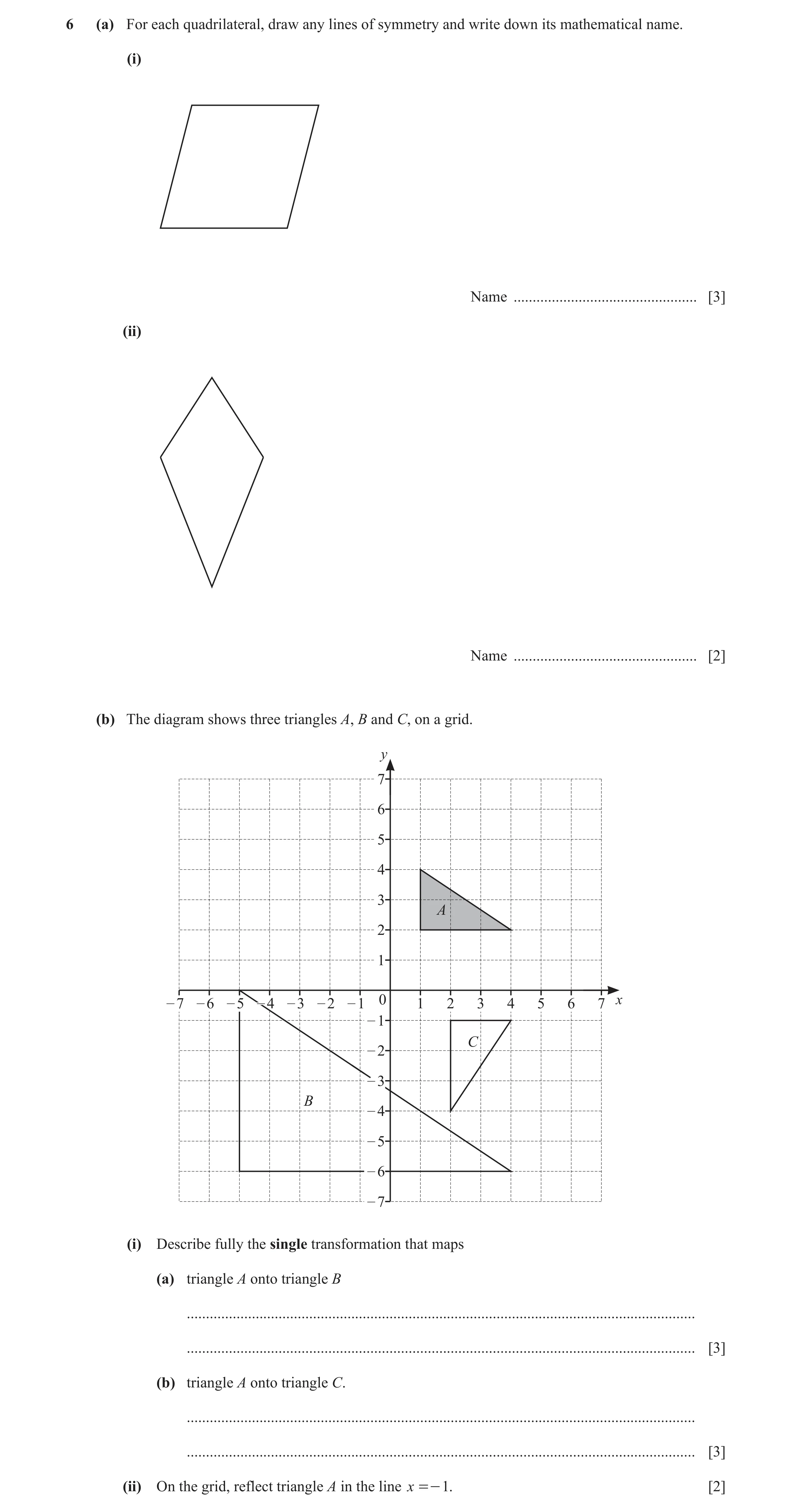
6 (a) For each quadrilateral, draw any lines of symmetry and write down its mathematical name. (i) Name … [3] (ii) Name … [2] (b) The diagram shows three triangles A, B and C, on a grid. y 7 6 5 4 3 A 2 1 – 7 – 6 – 5 –– 44 – 3 – 2 – 1 0 1 2 3 4 5 6 7 x – 1 C – 2 – 3 B – 4 – 5 – 6 – 7 (i) Describe fully the single transformation that maps (a) triangle A onto triangle B … … [3] (b) triangle A onto triangle C. … … [3] (ii) On the grid, reflect triangle A in the line x =- 1. [2]
13 marks
Mark scheme: 6(a)(i) Two correct diagonals 2 B1 for one accurate diagonal and no extra or two correct and one extra rhombus 1 6(a)(ii) 1 correct diagonal 1 kite 1 6(b)(i)(a) Enlargement 3 B1 for each (sf=) 3 oe (centre) (4, 6) oe 6(b)(i)(b) Rotation 3 B1 for each 90° clockwise oe (centre) (0, 0) oe 6(b)(ii) Correct reflection, points (–3, 2) 2 B1 for a correct reflection in y = −1 (–6, 2) (–3, 4) or in x = k
This question in 0580/32 May/June 2023
Q29 · L P Draw a line through point P that is perpendicular to line l 0580/32 Feb/March 2024
1 (a) l P Draw a line through point P that is perpendicular to line l. [1] (b) Write down the mathematical names for two different quadrilaterals with • two lines of symmetry and • rotational symmetry of order two. … and … [2] (c) The diagram shows a quadrilateral on a 1 cm2 grid. Find the area of this quadrilateral. … cm2 [1] (d) H G x° F 143° 103° NOT TO SCALE 82° E y° D The diagram shows a quadrilateral DEFG and a straight line FGH. (i) Angle DEF = 82° . Write down the mathematical name for this type of angle. … [1] (ii) Work out the value of x. Give a geometrical reason for your answer. x = … because … … [2] (iii) Work out the value of y. Give a geometrical reason for your answer. y = … because … … [2]
9 marks
Mark scheme: Question Answer Marks Partial Marks 1(a) Ruled line drawn through P, 1 perpendicular to l. 1(b) rectangle rhombus 2 B1 for each 1(c) 11 1 1(d)(i) acute 1 1(d)(ii) 37 1 Angles on a straight line add to 180 1 1(d)(iii) 32 1 Angles in a quadrilateral add to 360 1
This question in 0580/32 Feb/March 2024
Q30 · A wedding invitation is in the shape of a rectangle 0580/33 Oct/Nov 2024
3 (a) A wedding invitation is in the shape of a rectangle. Draw the lines of symmetry on this rectangle. [2] (b) There are 98 adults and 56 children at the wedding. Find the fraction of people who are children. Give your fraction in its simplest form. … [2] (c) The wedding meal starts at 13 15 and lasts for 2 hours 50 minutes. Find the time the meal ends. … [1] (d) The probability that it will rain at the wedding is 0.12 . Find the probability that it will not rain. … [1] (e) (i) These are the ages of the staff at the wedding. 16 24 39 28 17 48 31 33 17 29 40 25 Complete the stem-and-leaf diagram. 1 2 3 4 Key: 1|6 represents 16 [2] (ii) Find the range. … [1]
9 marks
Mark scheme: 3(a) 2 correct lines only 2 B1 for one correct line with no extras or 2 correct and 1 extra 3(b) 4 2 M1 for 98 + 56 cao 11 3(c) 16 05 1 3(d) 0.88 1 3(e)(i) 1 6 7 7 2 B1 for two or three rows correct or a fully 2 4 5 8 9 correct unordered stem-and-leaf diagram 3 1 3 9 4 0 8 3(e)(ii) 32 1 FT their (e)(i) dep. on an ordered table
This question in 0580/33 Oct/Nov 2024
Q31 · Write down the order of rotational symmetry for this shape 0580/31 May/June 2025
5 (a) Write down the order of rotational symmetry for this shape. … [1] (b) Draw all the lines of symmetry on this shape. [2]
3 marks
Mark scheme: 5(a) 2 1 5(b) Two correct lines 2 B1 for one correct line only or two correct lines and one incorrect line
This question in 0580/31 May/June 2025
Q32 · Shade one square so that the diagram has 1 line of symmetry 0580/33 May/June 2025
2 Shade one square so that the diagram has 1 line of symmetry. [1]
1 marks
Mark scheme: 2 1
This question in 0580/33 May/June 2025
 5 / 50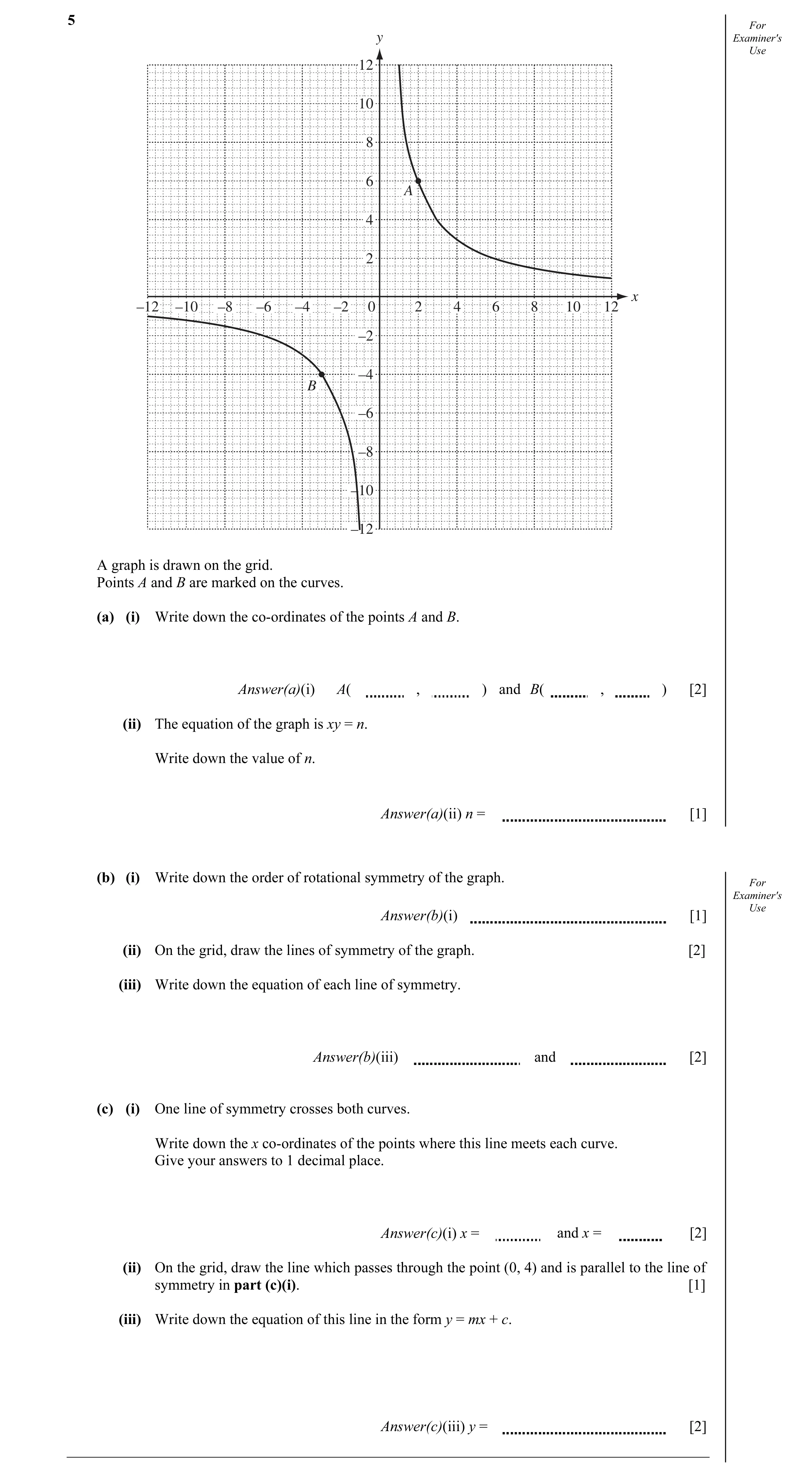
![Question 5: (a) Draw all the lines of symmetry on this rectangle. For Examiner's Use [2] (b) Shade one square so that the shaded shape has rotational s…](https://img.pastlit.com/crops/d231724f-1a92-4cda-abe4-d37dbe391c0d/q5.webp)
![Question 6: (a) On each of the following shapes draw any lines of symmetry. For Examiner′s Use (i) [1] (ii) [2] (b) Complete this shape by shading one …](https://img.pastlit.com/crops/9ddabebd-6b26-4cc6-bbf2-3841d2b58c69/q3.webp)
![Question 8: (a) (i) Complete the table of values for y = , x ≠ 0 . x x –8 –4 –2 –1 1 2 4 8 y –2 2 [3] 8 (ii) On the grid, draw the graph of y = for –8 …](https://img.pastlit.com/crops/0cabe16c-b9c2-49b5-bbdf-a881450b77d6/q6.webp)
![Question 9: (a) Draw the line of symmetry on the shape below. [1] (b) Write down the order of rotational symmetry of the shape below. Answer(b) .......…](https://img.pastlit.com/crops/1bd31a2d-80fe-4c91-becf-ba6ffd38a7a5/q3.webp)
 18 / 50
![Question 11: (a) (i) Complete the table of values for y = –x2 + 5x . x –1 0 1 2 3 4 5 6 y –6 4 4 0 [2] (ii) On the grid, draw the graph of y = –x2 + 5x …](https://img.pastlit.com/crops/8d0922c7-dc75-46ff-bd10-699c9d739bbc/q9.webp)
![Question 13: (a) (i) Write down the order of rotational symmetry of this shape. Answer(a)(i) ................................................ [1] (ii) D…](https://img.pastlit.com/crops/5bf94e37-a15d-4732-bc71-9cdffaa50407/q8.webp) 22 / 50
22 / 50![Question 14: 5 (a) (i) Complete the table of values for y = , x ! 0 . x x −16 −8 −4 −2 −1 1 2 4 8 16 y −1 −2 −8 16 4 2 [2] 16 (ii) On the grid, draw the…](https://img.pastlit.com/crops/1c5112c9-a468-4caf-826e-d478842cebd2/q5.webp)
![Question 16: (a) Complete this statement. To be obtuse, an angle must be between ............... degrees and ............... degrees. [1] (b) parallelog…](https://img.pastlit.com/crops/02f75533-14f1-4840-a433-be63793ab2e4/q4.webp)
 28 / 50
![Question 18: (a) Write down the order of rotational symmetry of each shape. ....................... ....................... [2] (b) y 8 7 6 B 5 4 3 A 2 …](https://img.pastlit.com/crops/af508e64-f88e-4bd2-ad49-d439108a3563/q3.webp) 29 / 50
29 / 50![Question 19: (a) Draw all the lines of symmetry on each shape. [4] (b) The diagram shows an isosceles triangle and a straight line AB. NOT TO SCALE 48° …](https://img.pastlit.com/crops/271dbb44-fdf6-4470-8e73-cf0feb44b84d/q2.webp)
![Question 20: (a) Draw all the lines of symmetry on the rectangle below. [2] (b) Work out the size of one interior angle of a regular hexagon. ..........…](https://img.pastlit.com/crops/fd7080ae-7d67-43c8-a1a5-c05881c1ff49/q5.webp)
![Question 21: (a) Soraya makes rectangular flags. (i) On the rectangle, draw the lines of symmetry. [2] (ii) Each flag measures 1.2 m by 1.8 m. Calculate…](https://img.pastlit.com/crops/2bc5a897-a38d-4956-9610-c7c5234b5dec/q7.webp)
![Question 23: 5 (a) Complete the table of values for y = . x x -8 -6 -4 -3 -2 2 3 4 6 8 y -3 -6 6 3 [3] 18 (b) On the grid, draw the graph of y = for -8 …](https://img.pastlit.com/crops/6d9fdb3e-3a7d-48f4-903d-ba4f3a2ac825/q5.webp)
![Question 24: (a) Write down the order of rotational symmetry of each shape. .................... .................... [2] (b) Triangles A, B and C are s…](https://img.pastlit.com/crops/61379cd6-b627-47dc-935f-94e6ad969515/q3.webp) 40 / 50
40 / 50![Question 25: - 62 (a) (i) Complete the table of values for y = . x x -6 -4 -3 -2 -1.5 -1 1 1.5 2 3 5 6 y 1 2 3 6 -6 -3 -2 -1 [3] - 6 (ii) On the grid, d…](https://img.pastlit.com/crops/f002e79f-33b8-4c75-b1ce-a8c38bfa6051/q2.webp)
![Question 26: 7 (a) Complete the table of values for y = , x ≠ 0. x x - 15 - 10 - 5 - 3 - 2 - 1 1 2 3 5 10 15 y - .15 - 5 - 15 15 5 [3] 15 (b) On the gri…](https://img.pastlit.com/crops/4b641403-3113-425c-9d8a-8850626652f2/q7.webp)
![Question 27: (a) (i) Write down the order of rotational symmetry of the diagram. ................................................. [1] (ii) On the diagr…](https://img.pastlit.com/crops/e21aa3e0-8601-41dc-828c-4e3a1ceae37d/q8.webp)
![Question 29: (a) l P Draw a line through point P that is perpendicular to line l. [1] (b) Write down the mathematical names for two different quadrilate…](https://img.pastlit.com/crops/a0b6e752-92f3-4adb-be25-0e4cc9591f81/q1.webp)
![Question 30: (a) A wedding invitation is in the shape of a rectangle. Draw the lines of symmetry on this rectangle. [2] (b) There are 98 adults and 56 c…](https://img.pastlit.com/crops/03a0551c-488d-4968-a0a8-acea063e832e/q3.webp) 49 / 50
49 / 50![Question 31: (a) Write down the order of rotational symmetry for this shape. ................................................. [1] (b) Draw all the line…](https://img.pastlit.com/crops/48a7a278-61b2-4acd-bc9b-8fa74dc576f6/q5.webp)
![Question 32: Shade one square so that the diagram has 1 line of symmetry. [1]](https://img.pastlit.com/crops/4860e4cf-0997-4ba6-9174-0197f00a0aa1/q2.webp) 50 / 50
50 / 50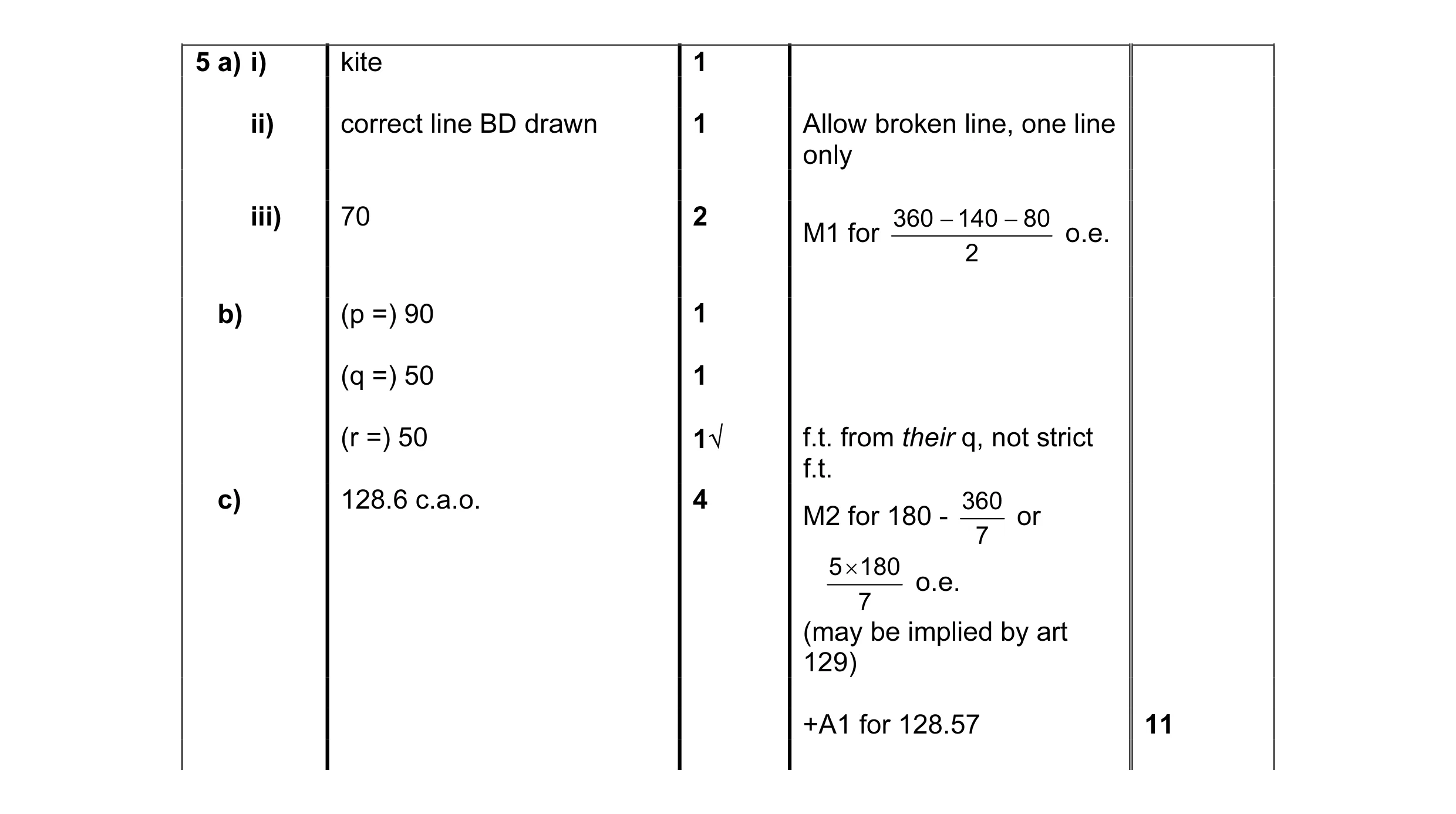 11
11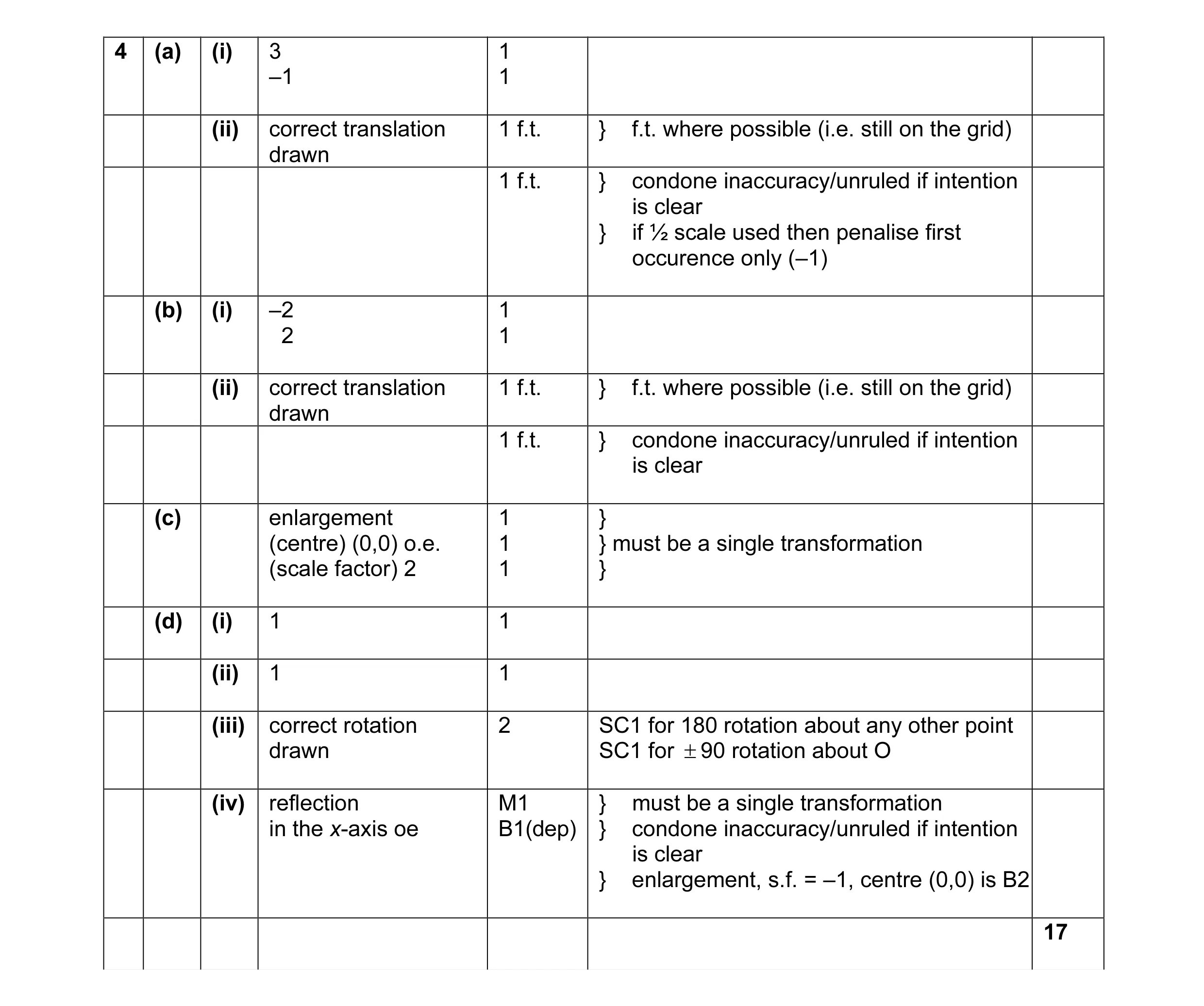 17
17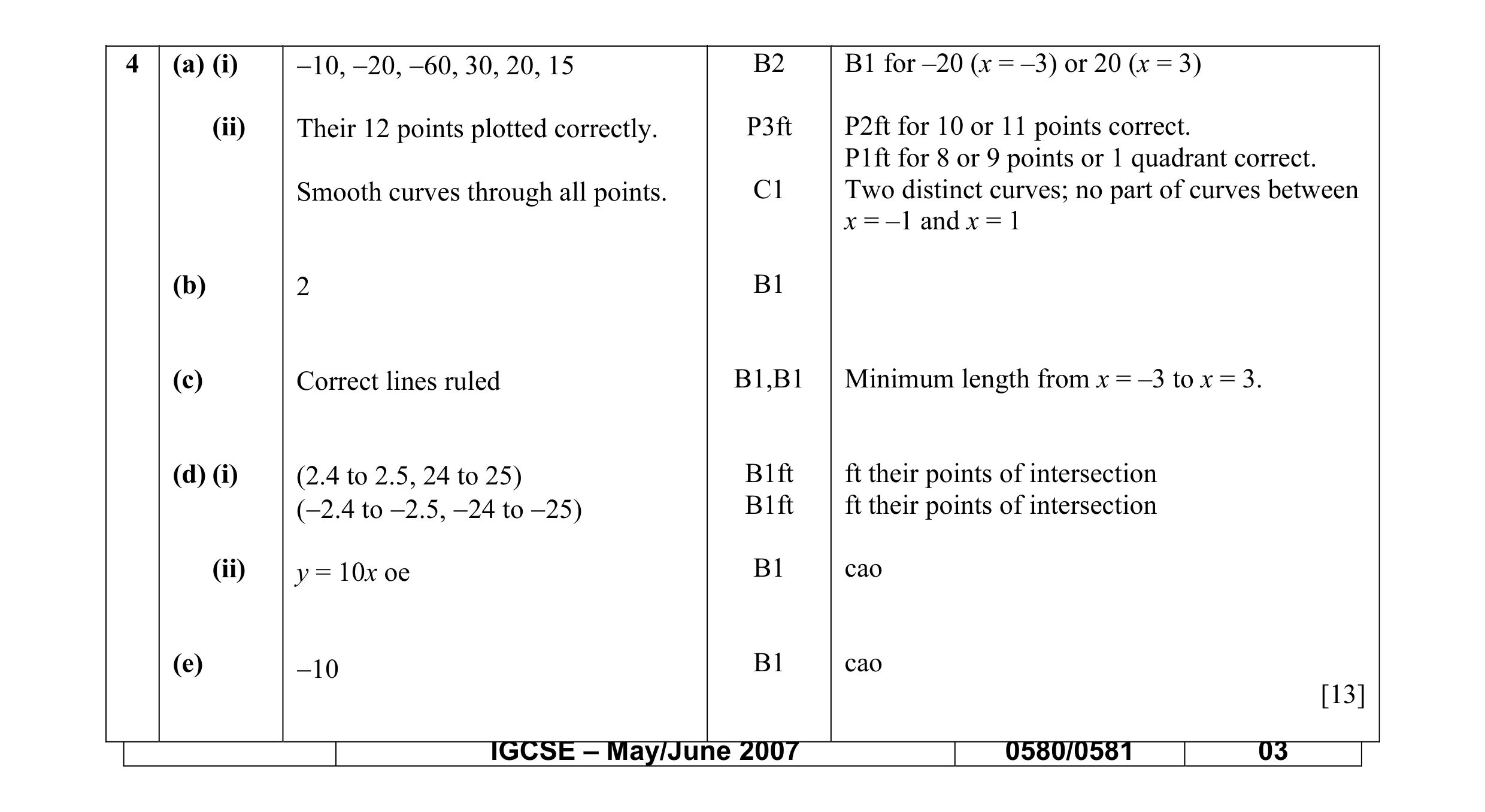 13
13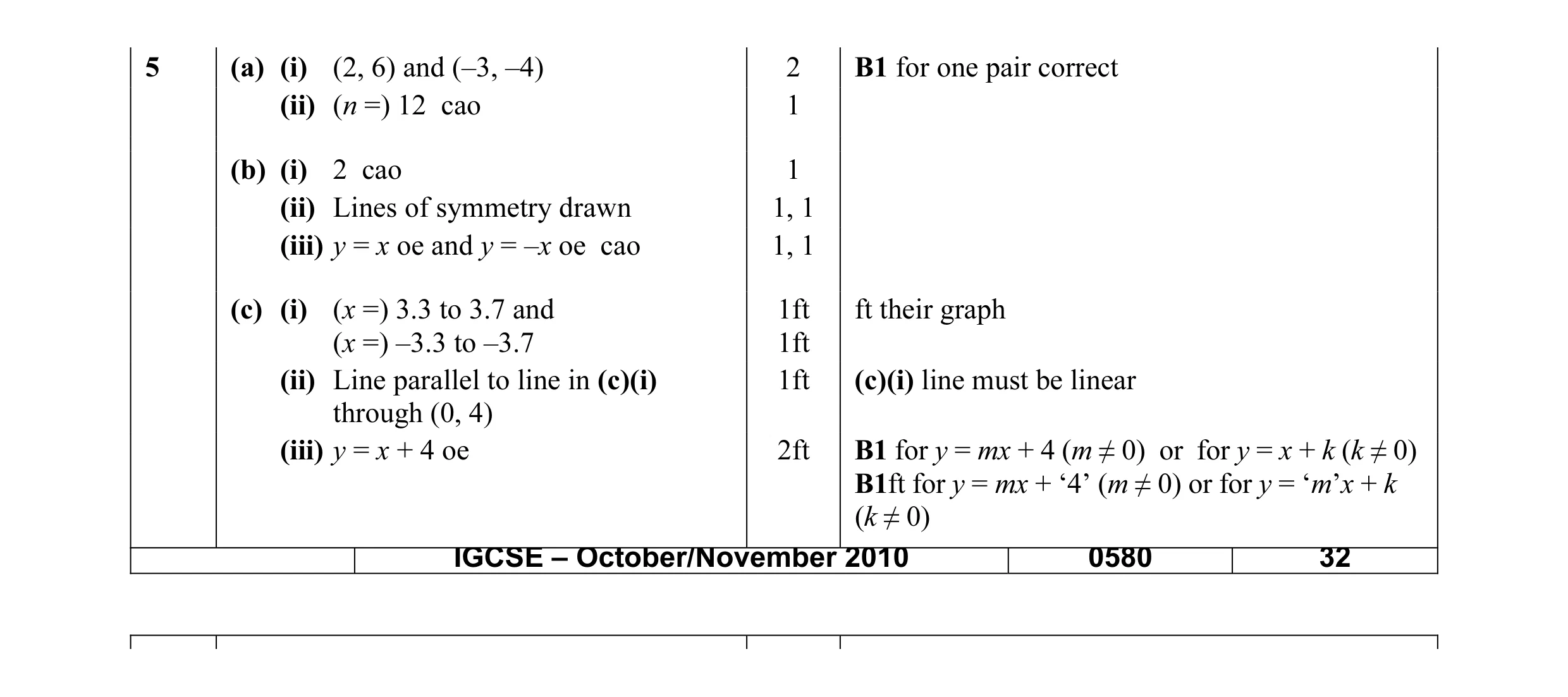 13
13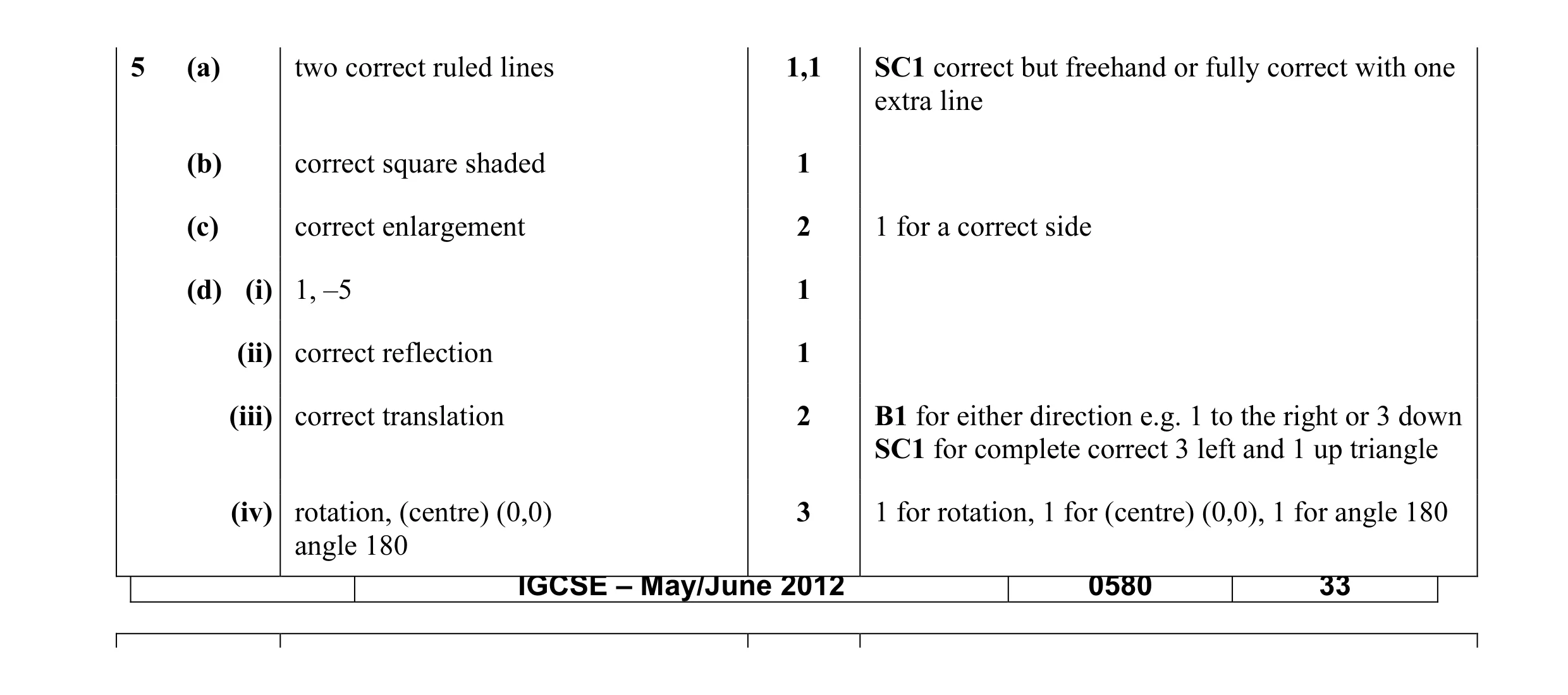 12
12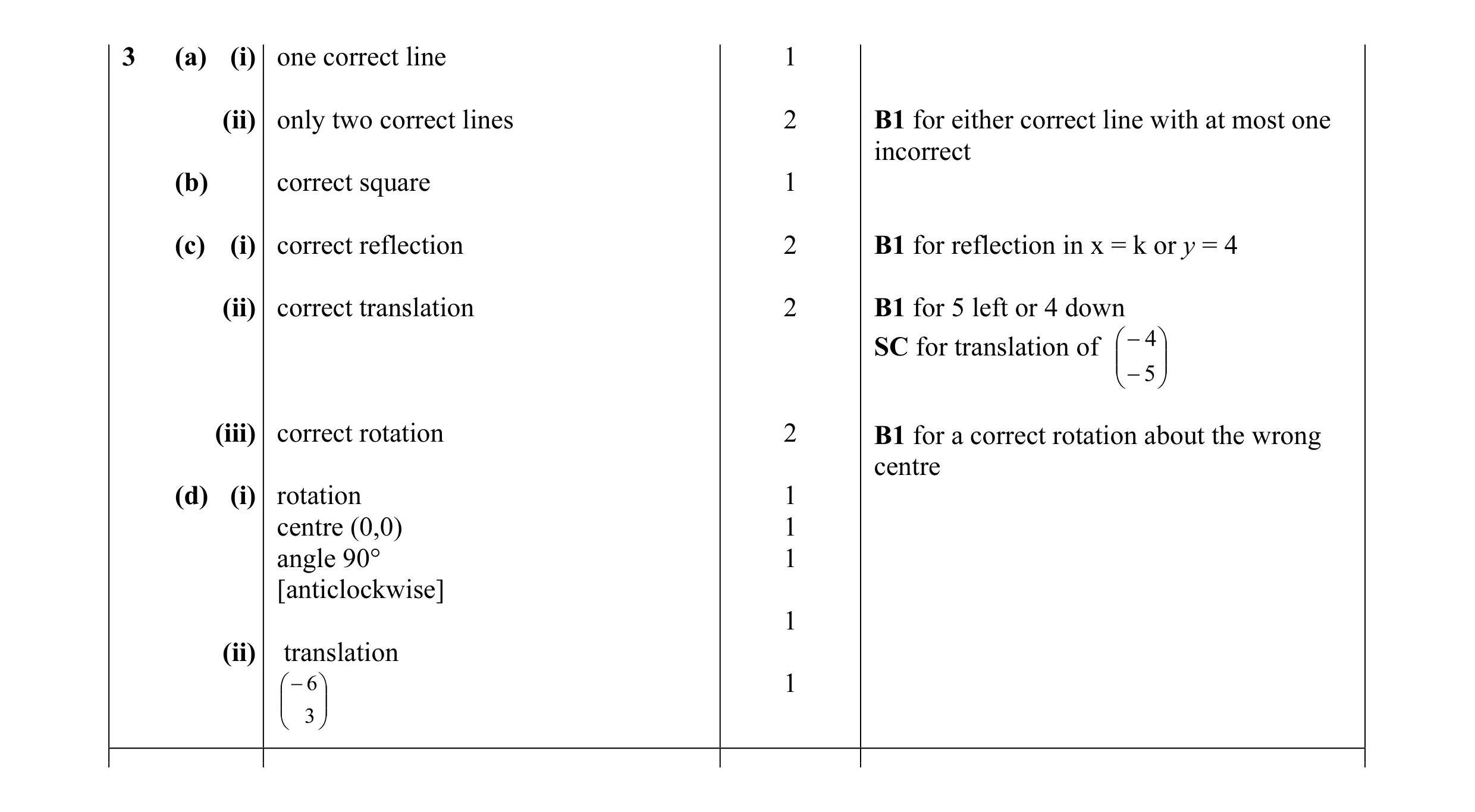 15
15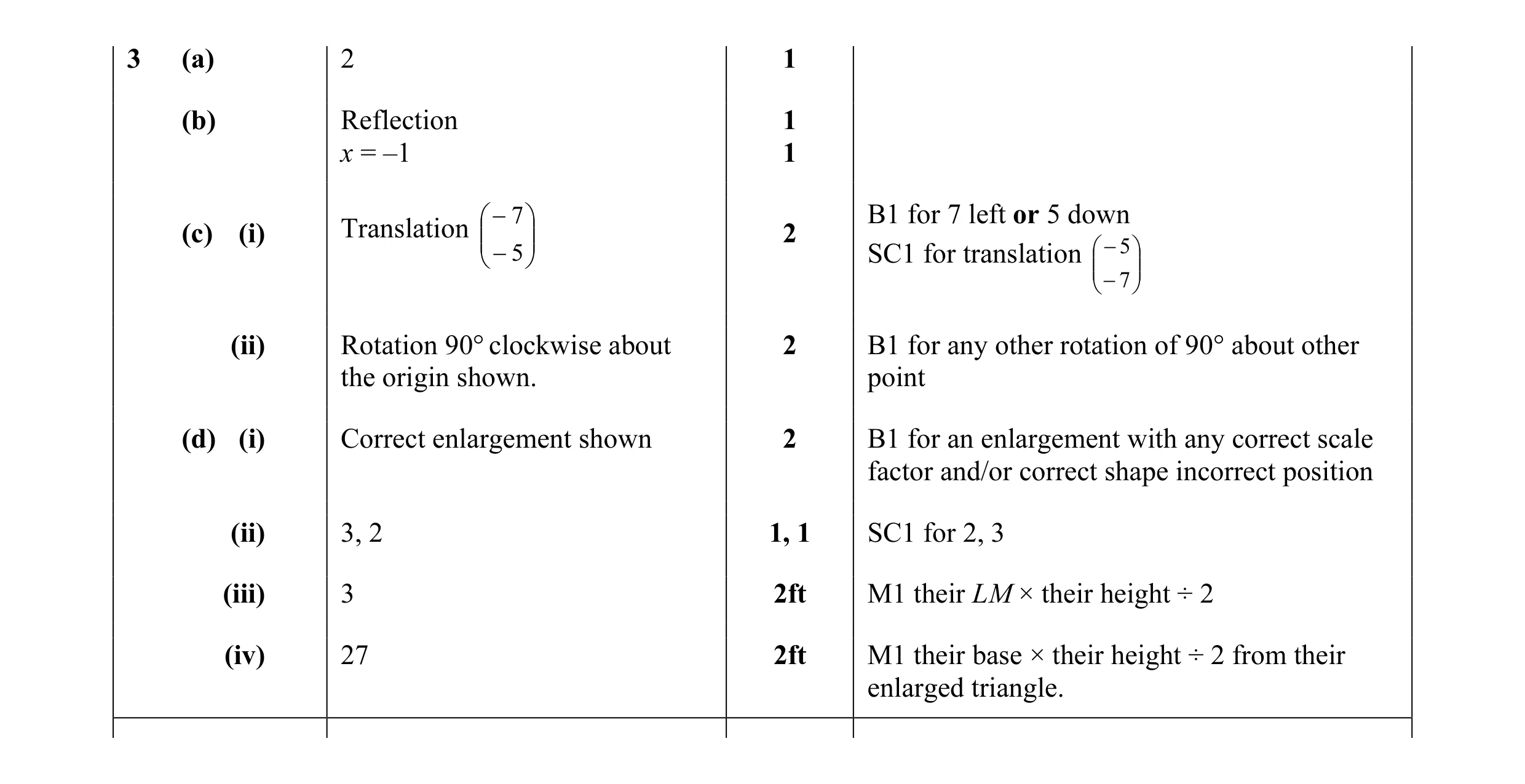 15
15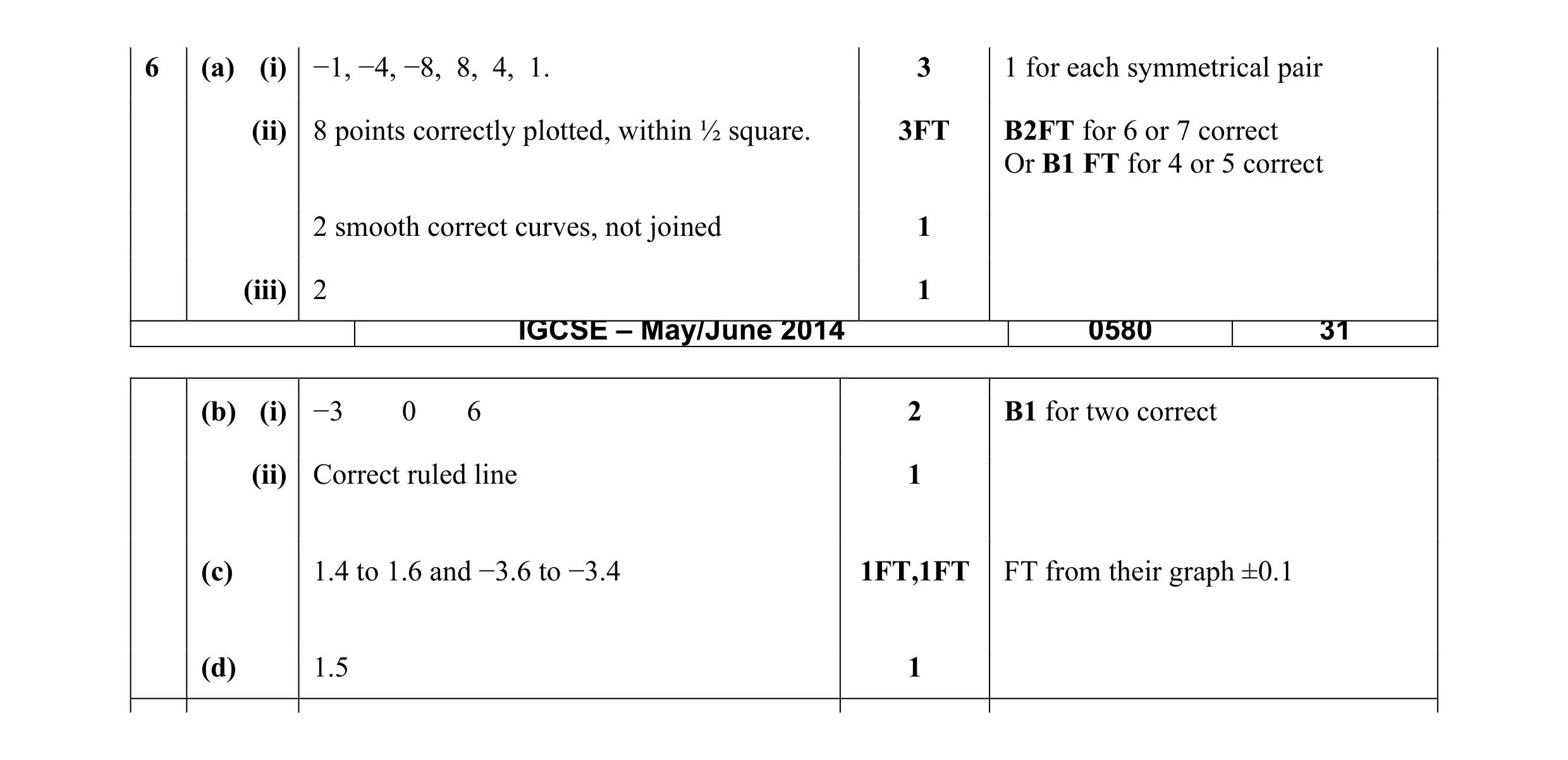 14
14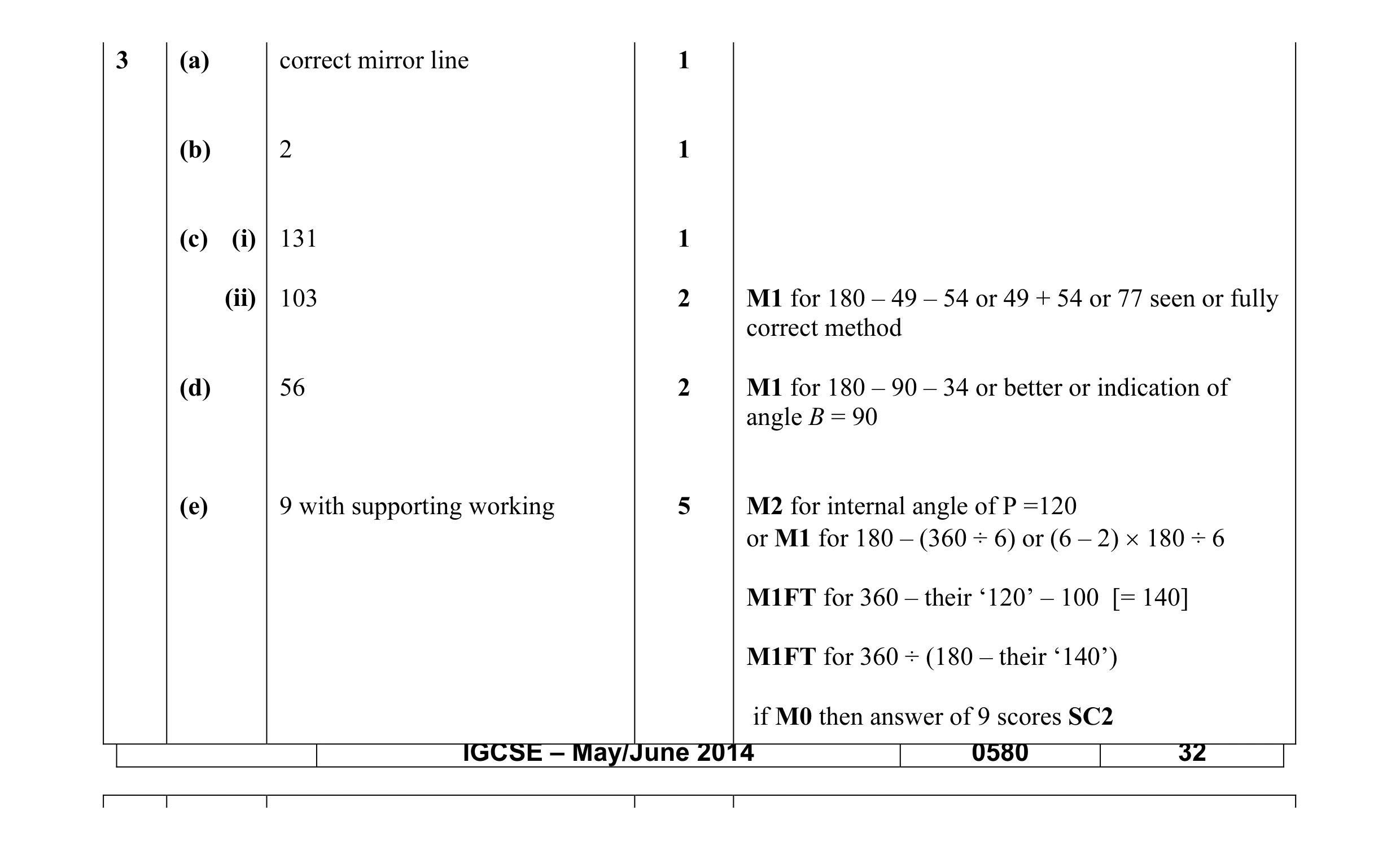 12
12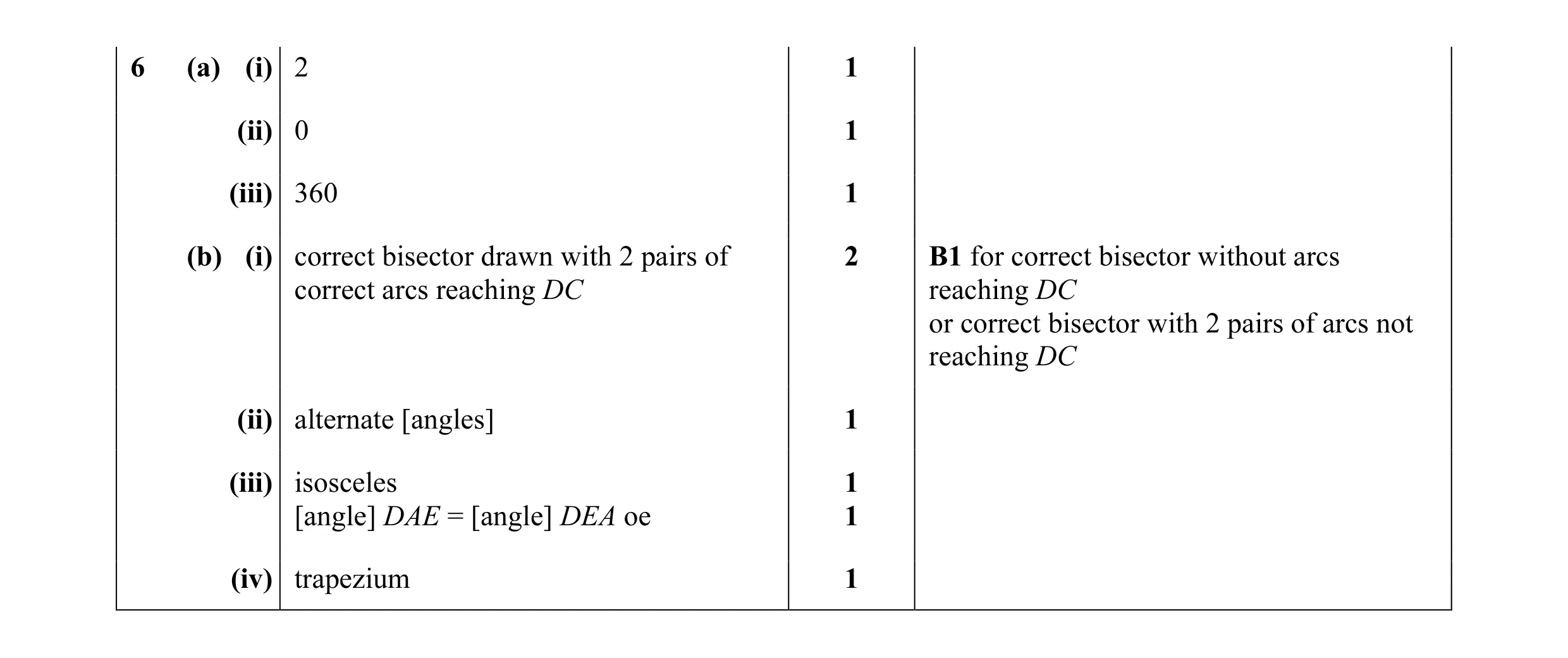 9
9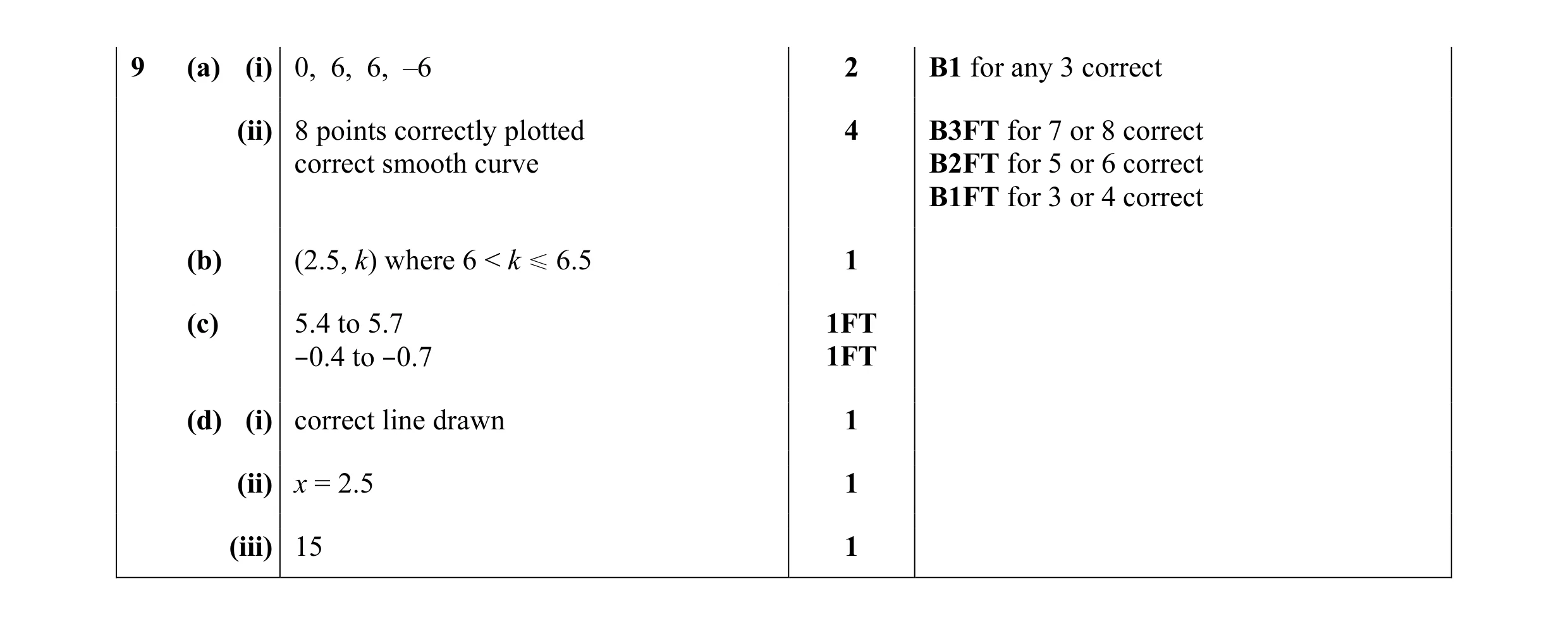 12
12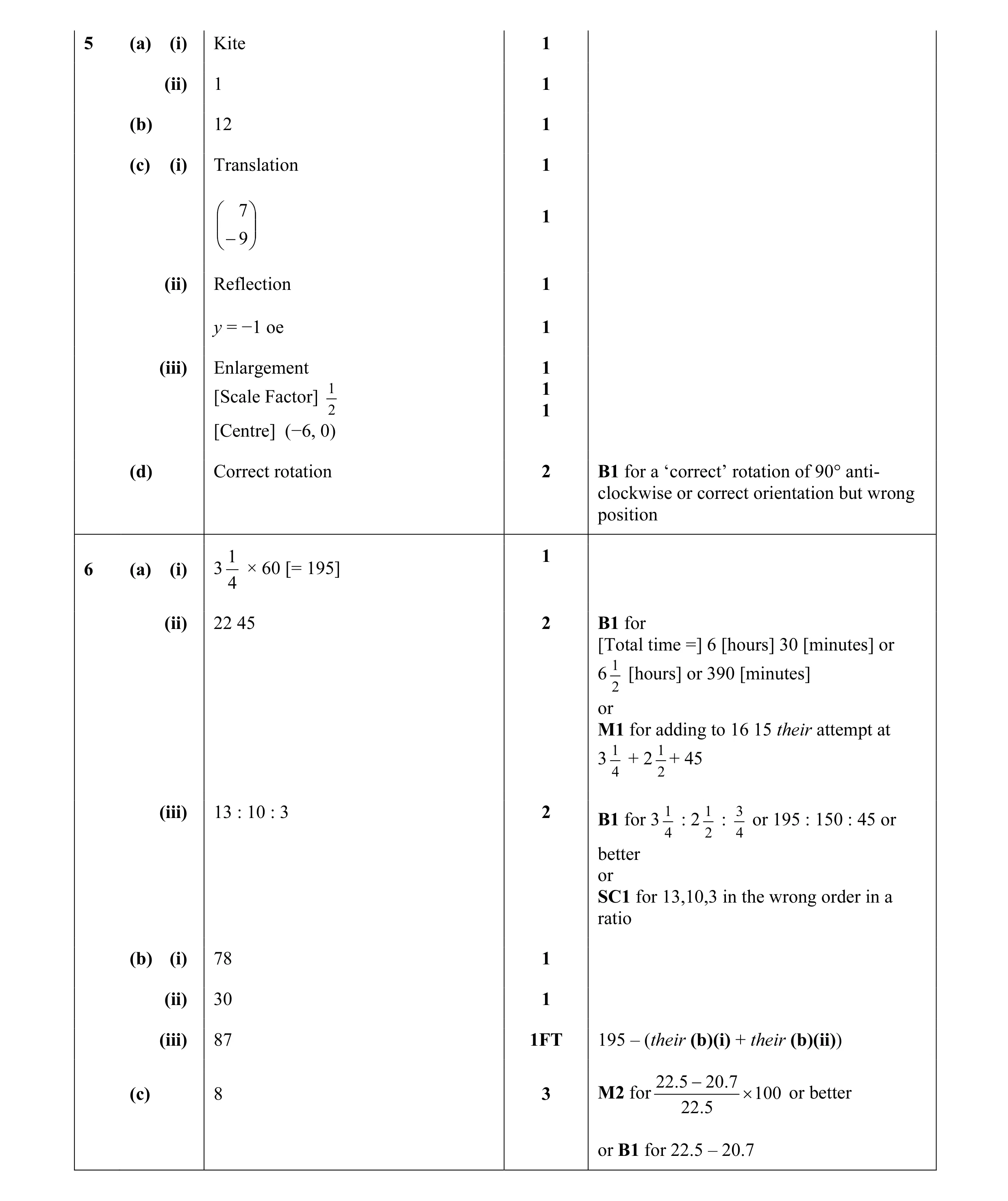 12
12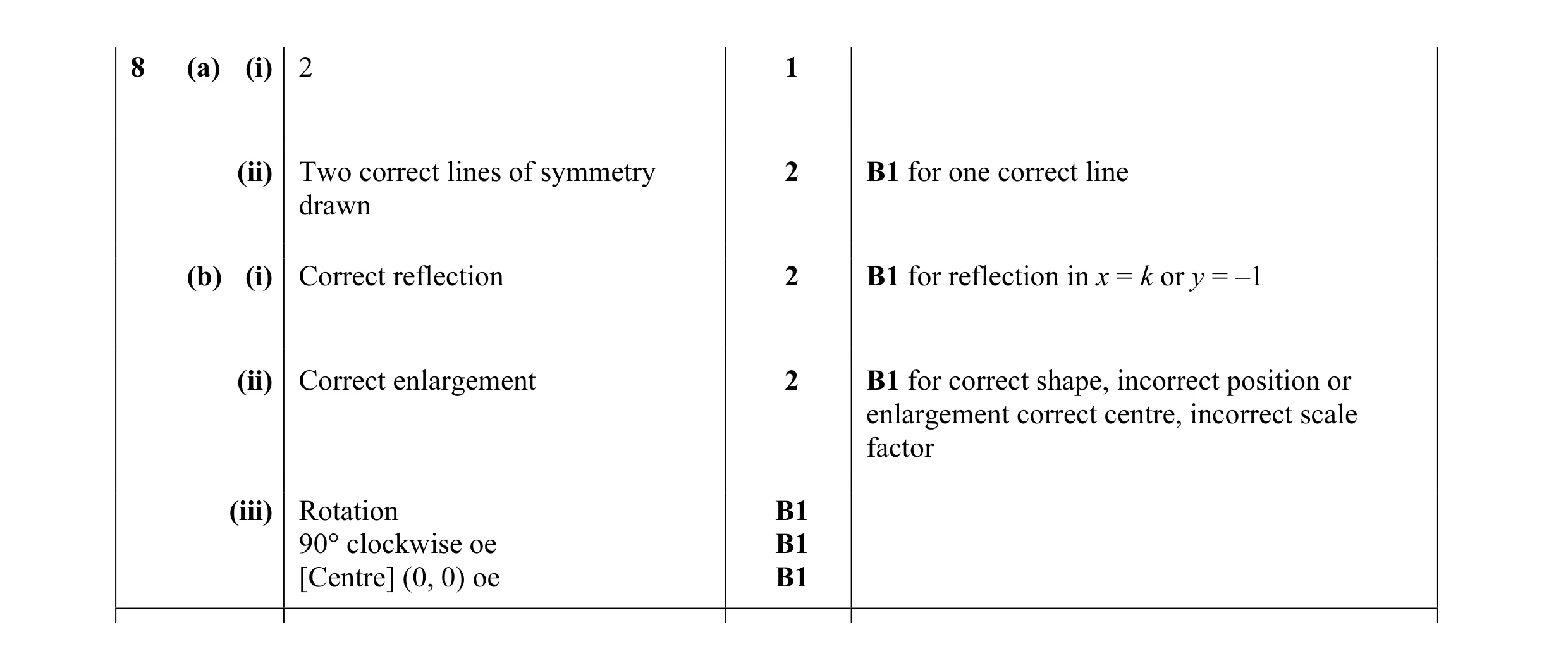 10
10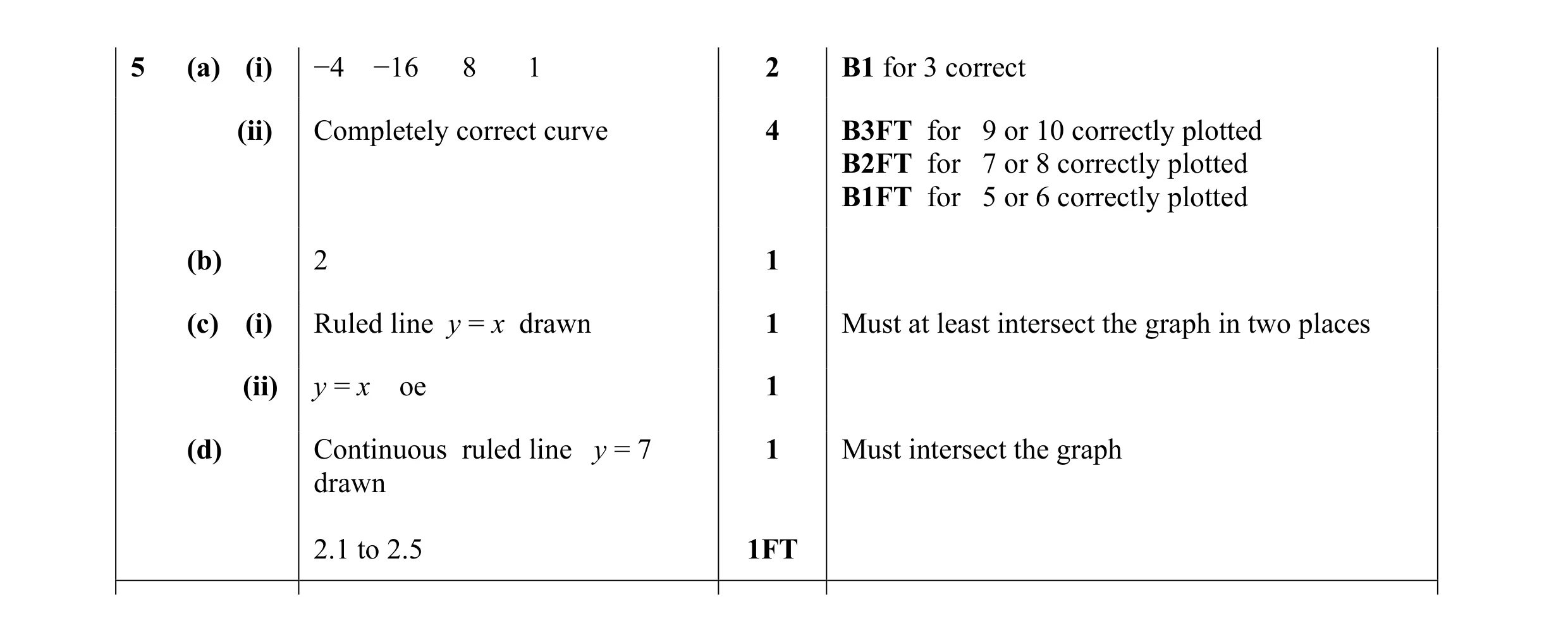 11
11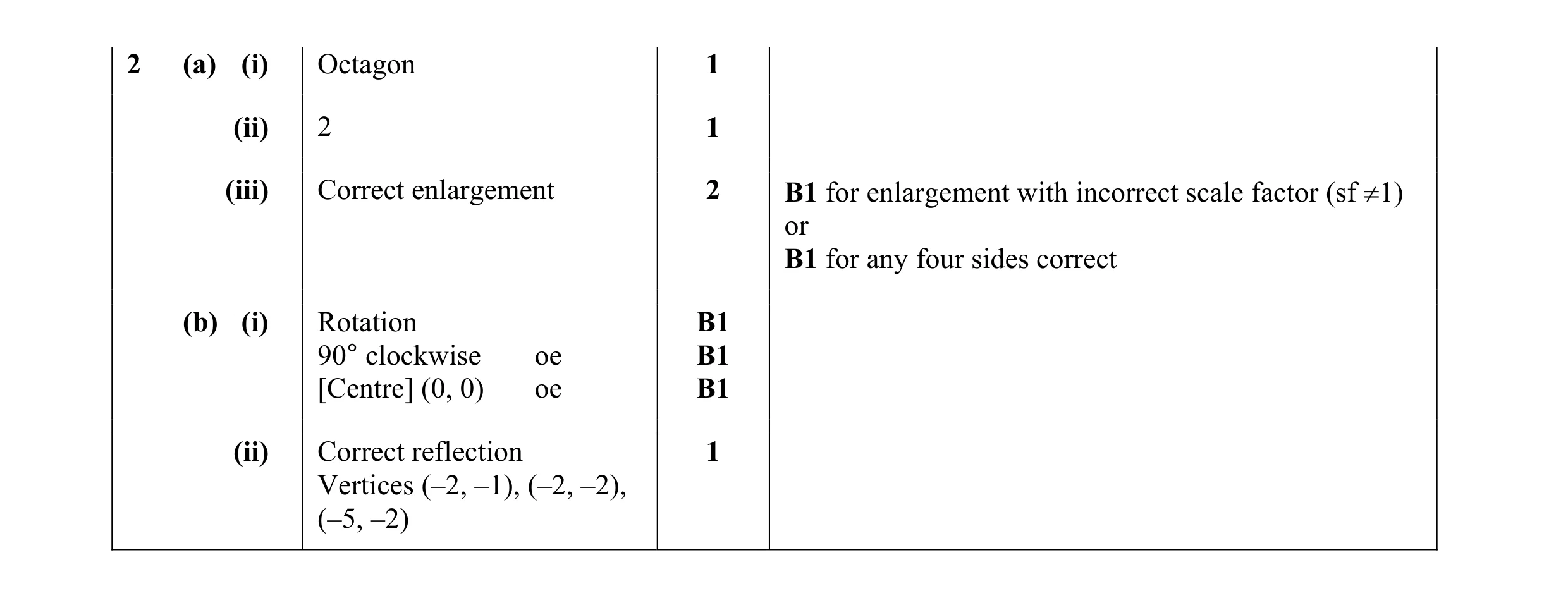 10
10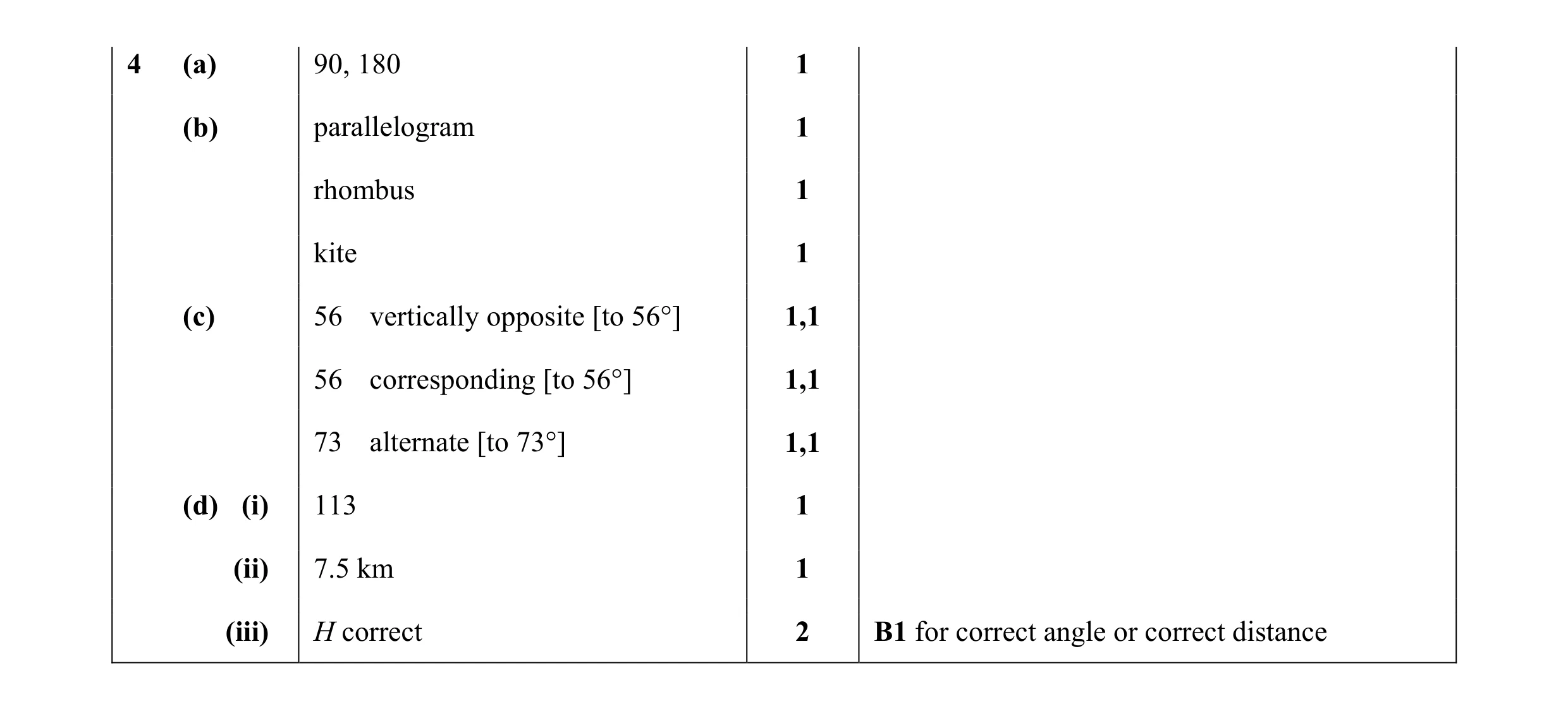 14
14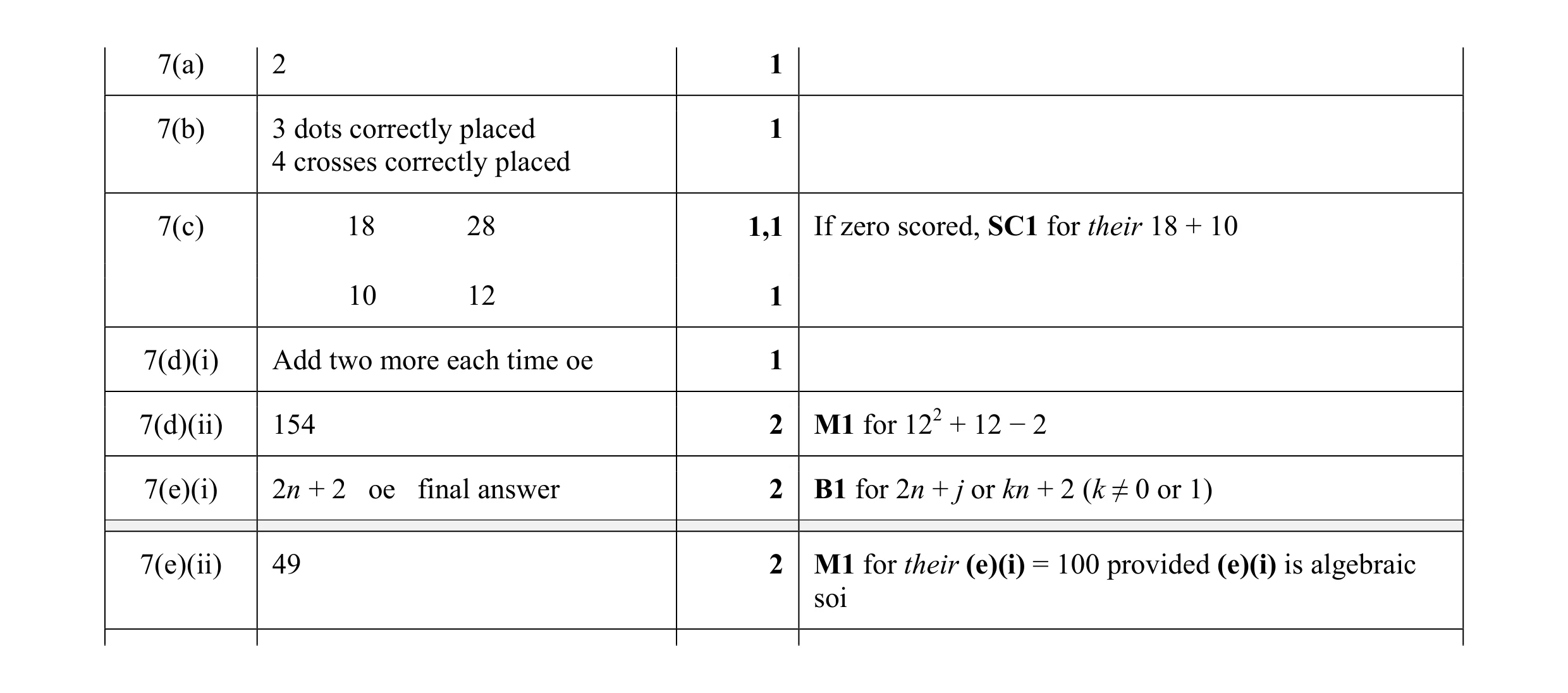 12
12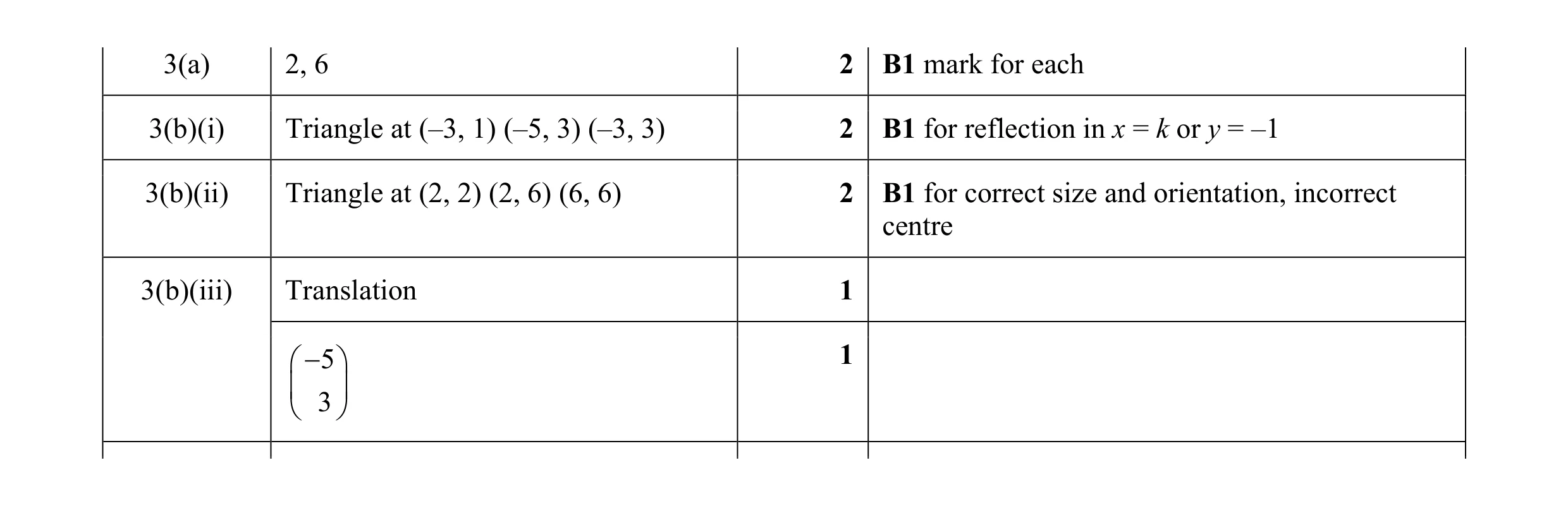 8
8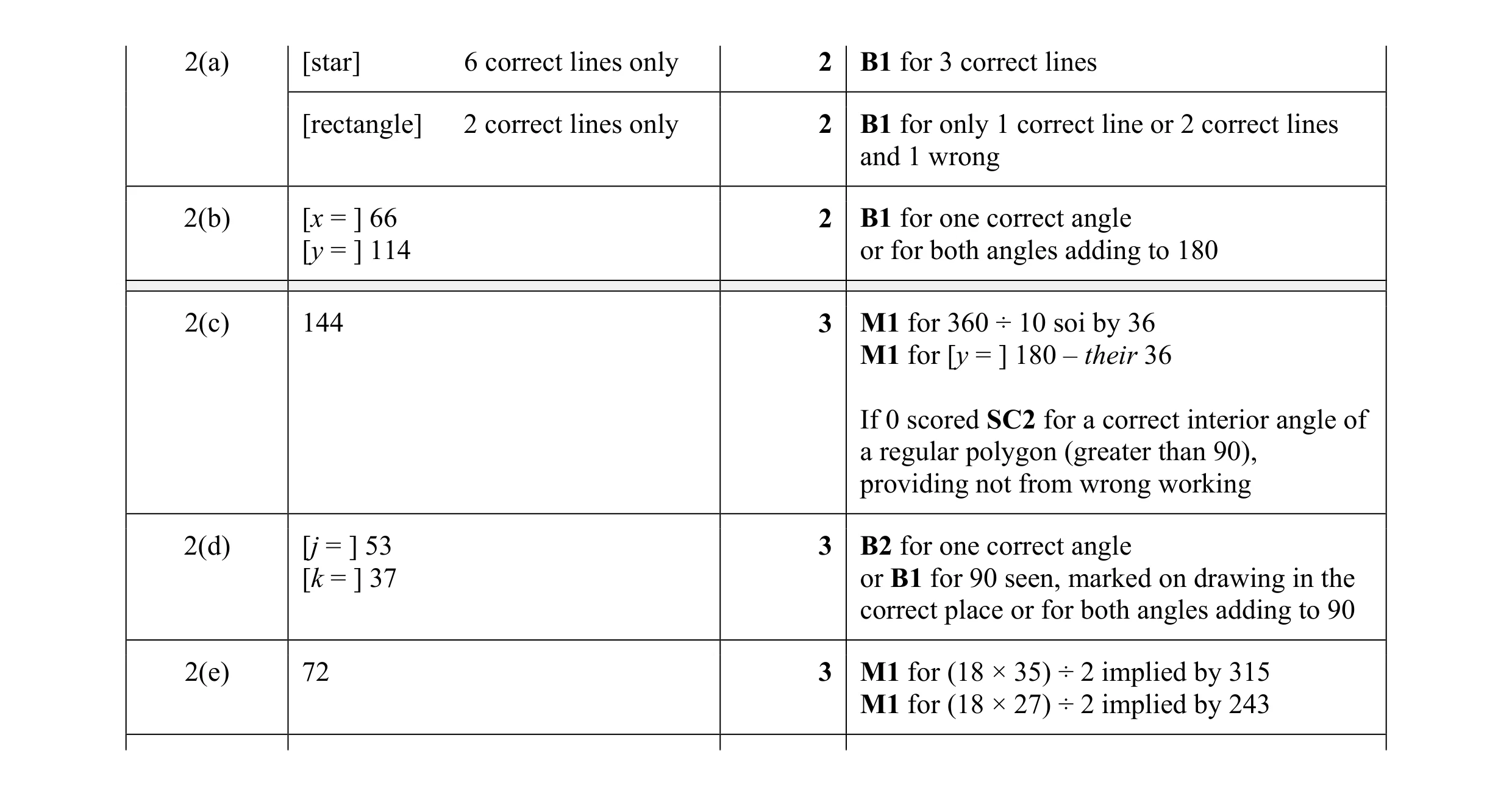 15
15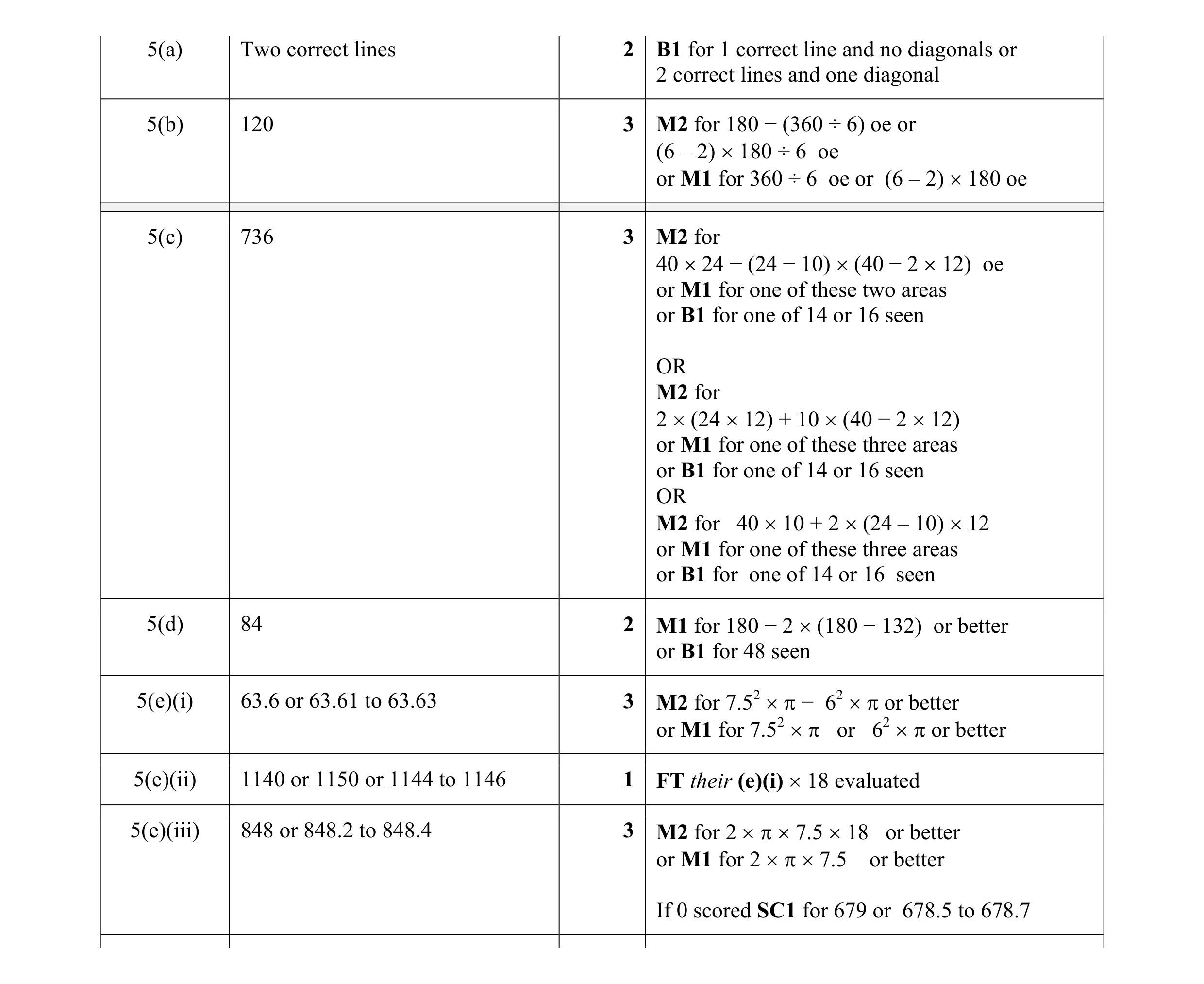 17
17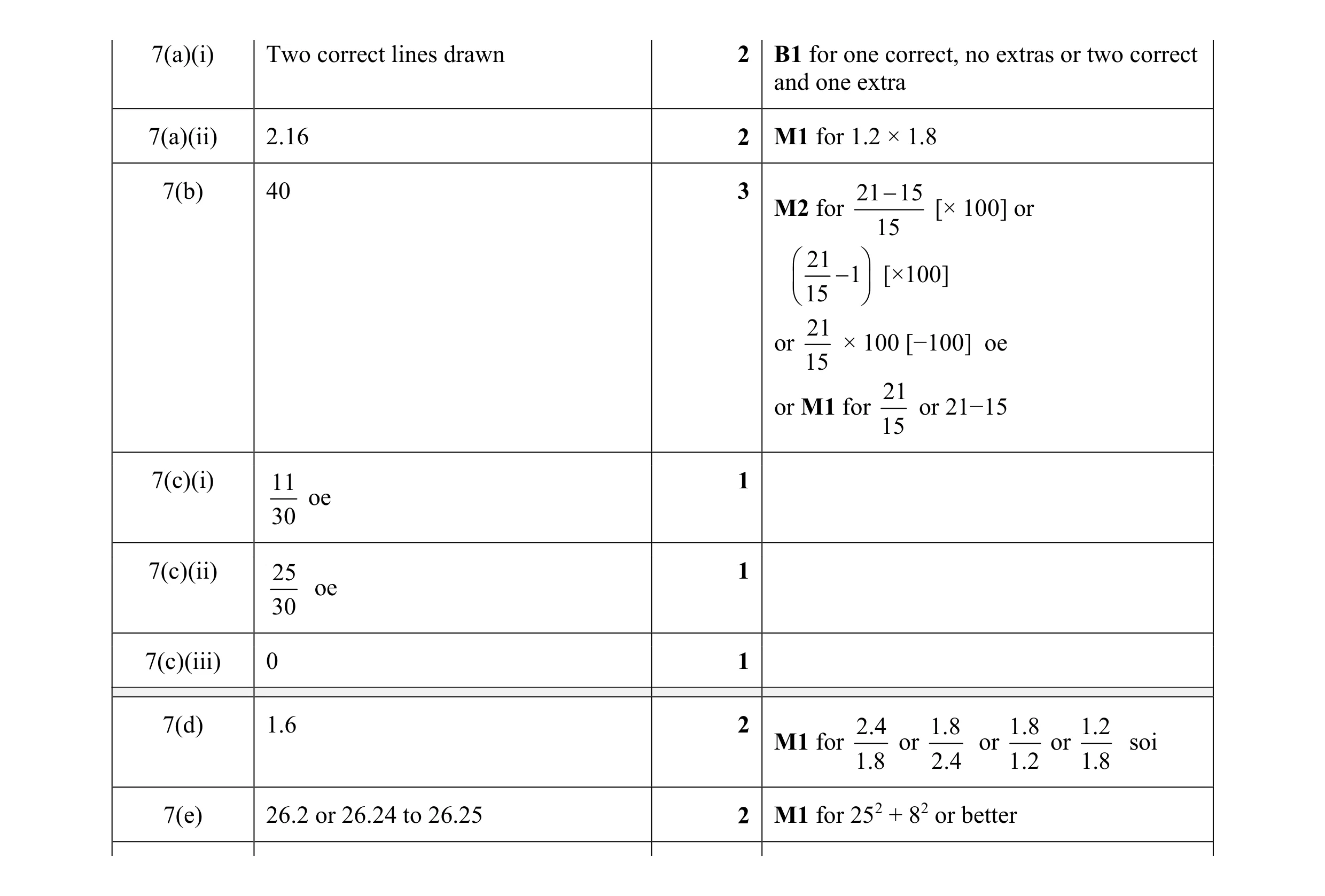 14
14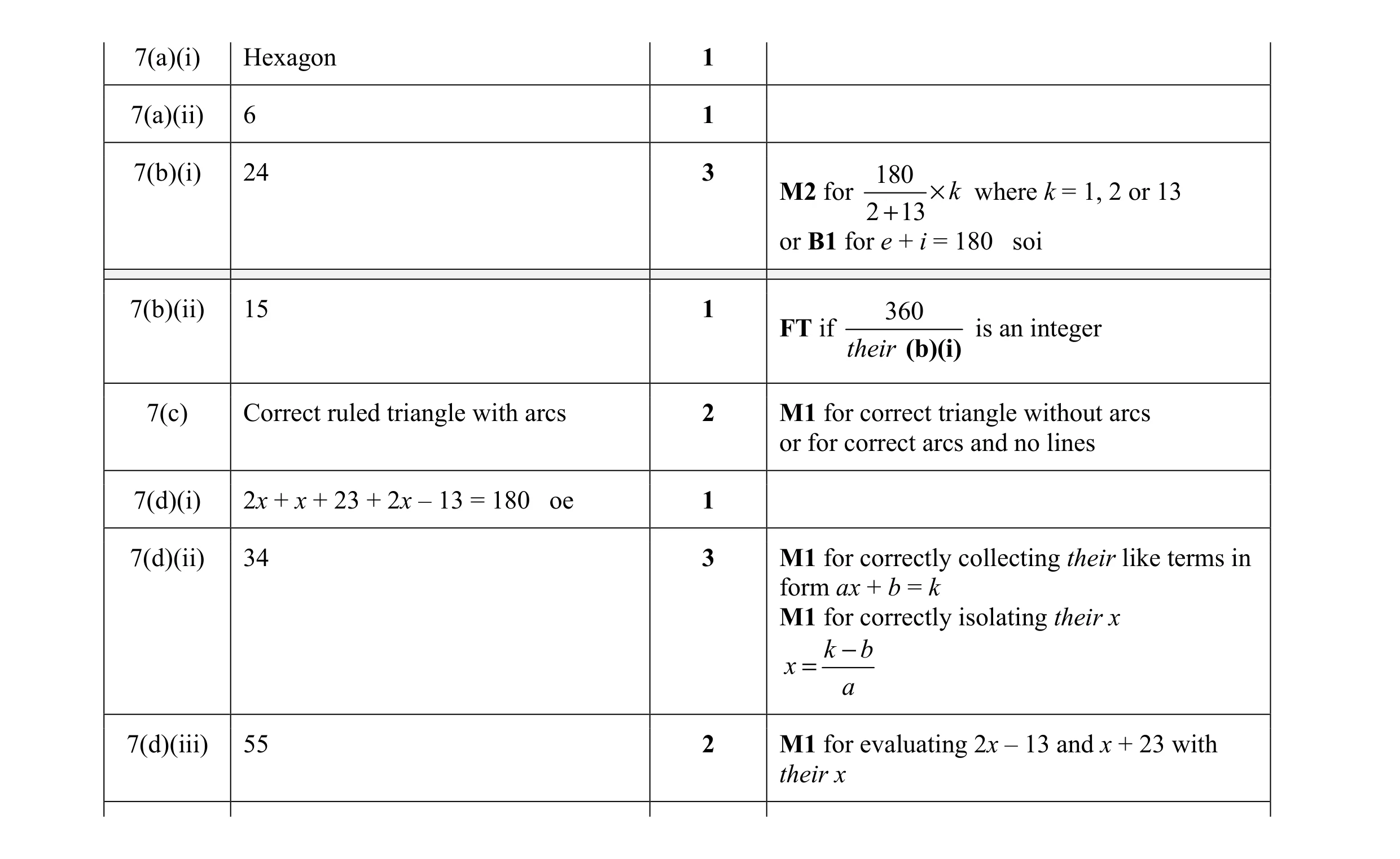 14
14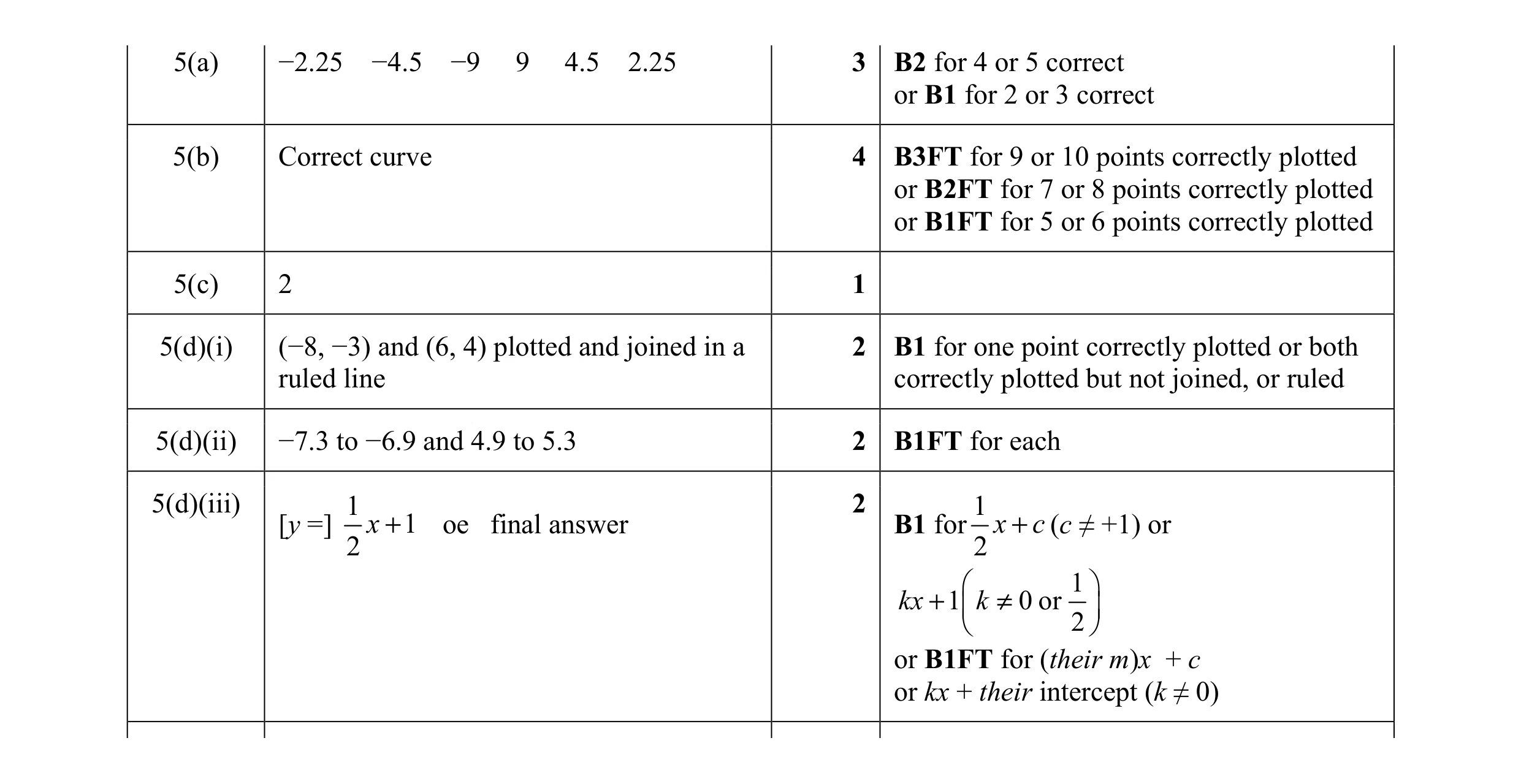 14
14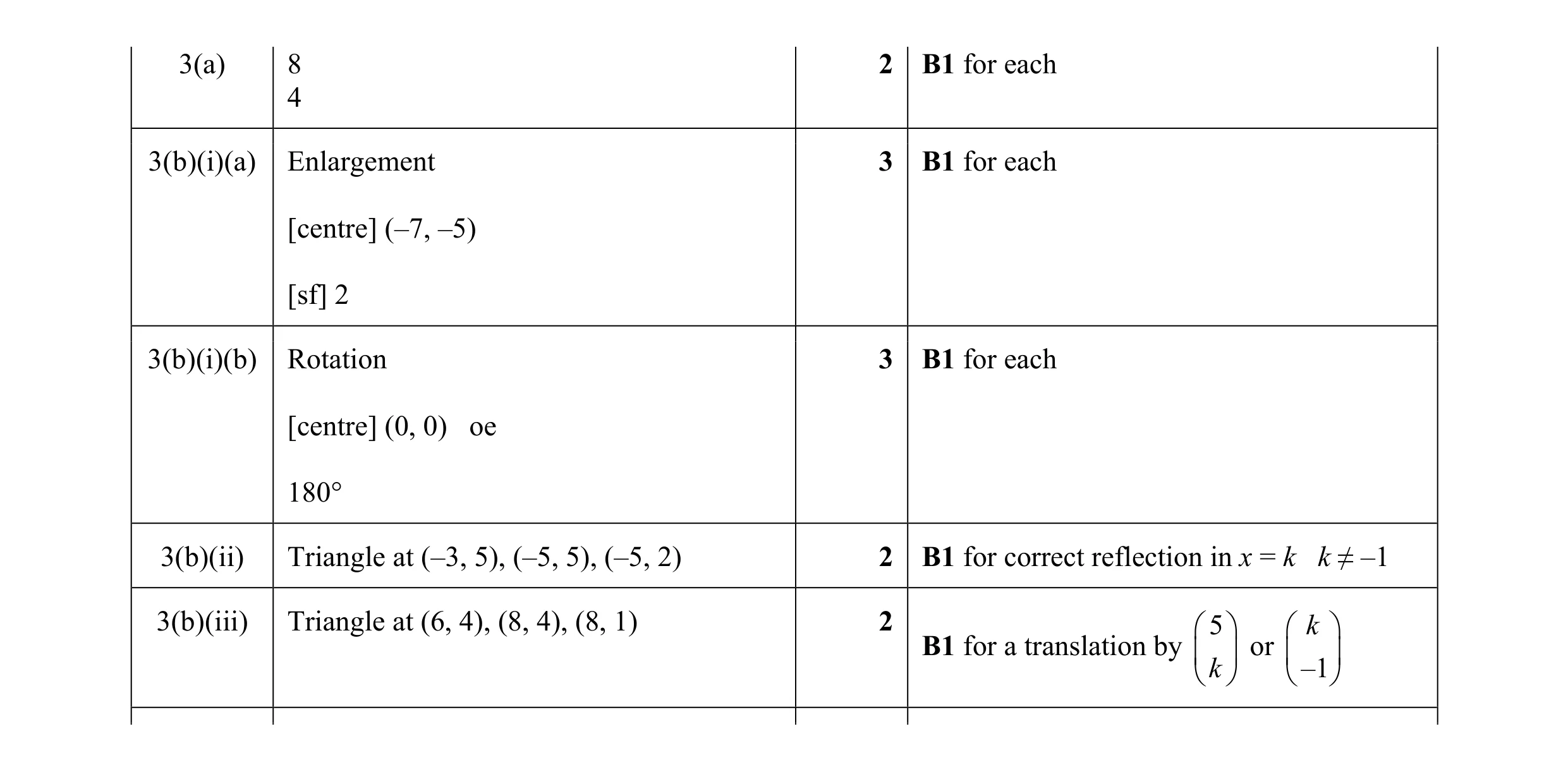 12
12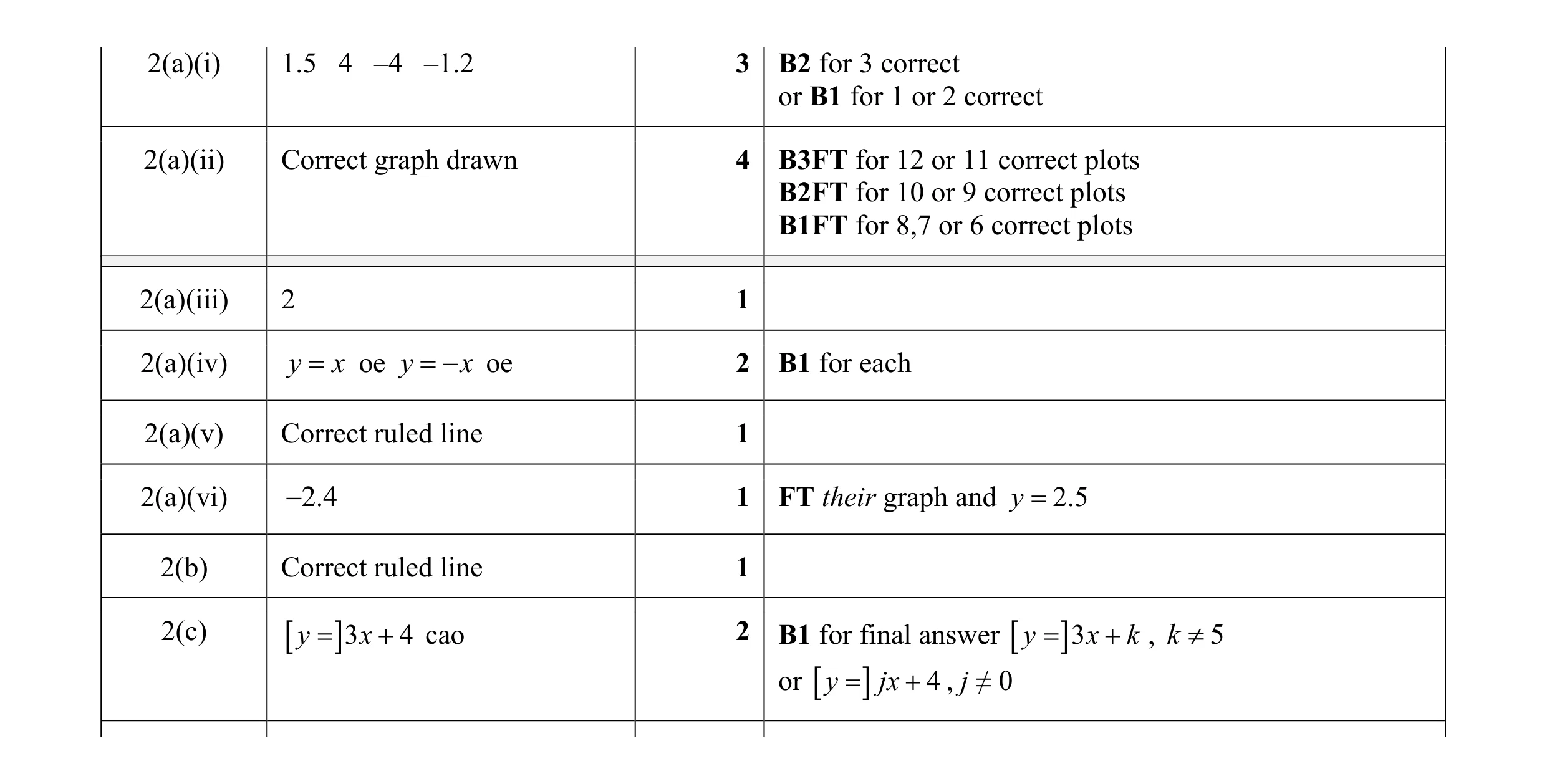 15
15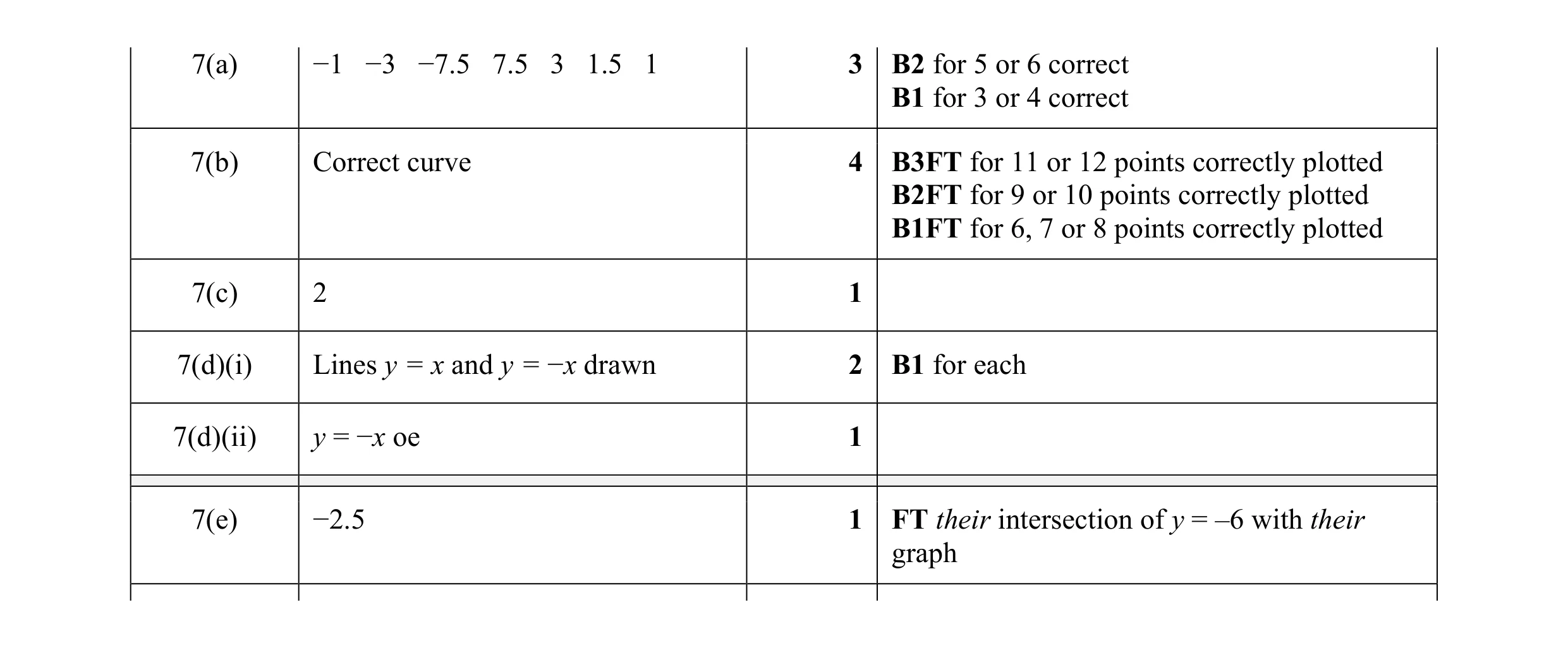 12
12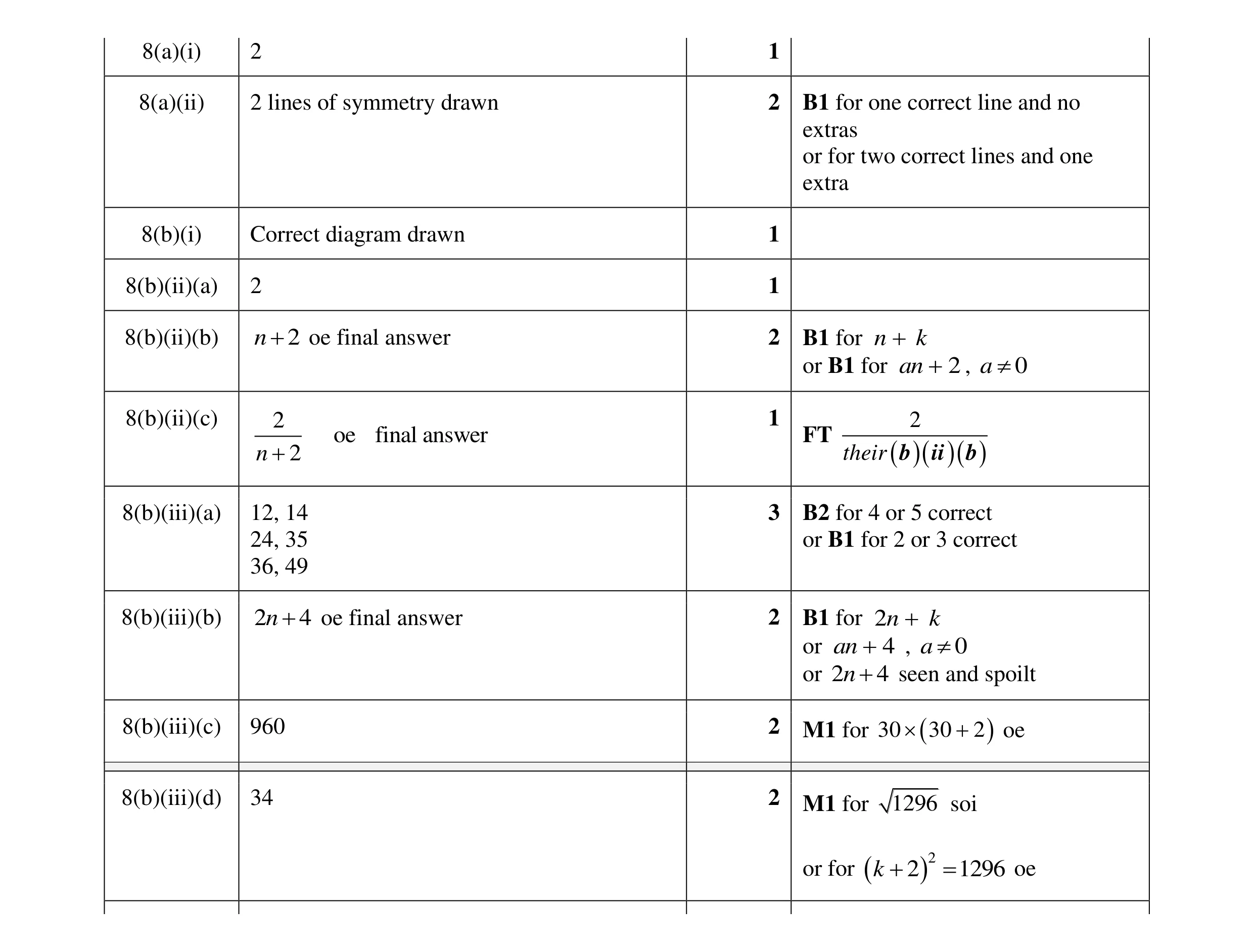 17
17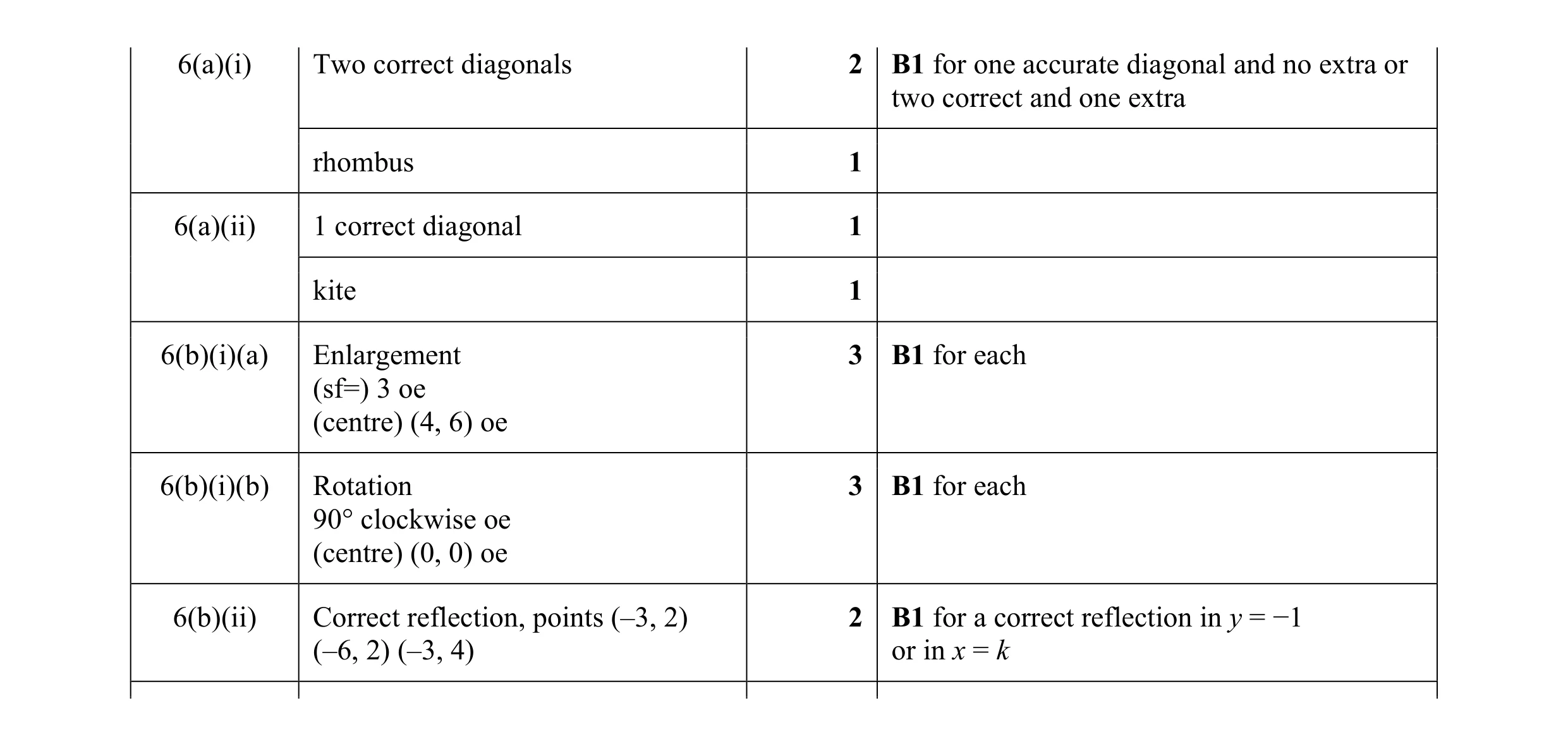 13
13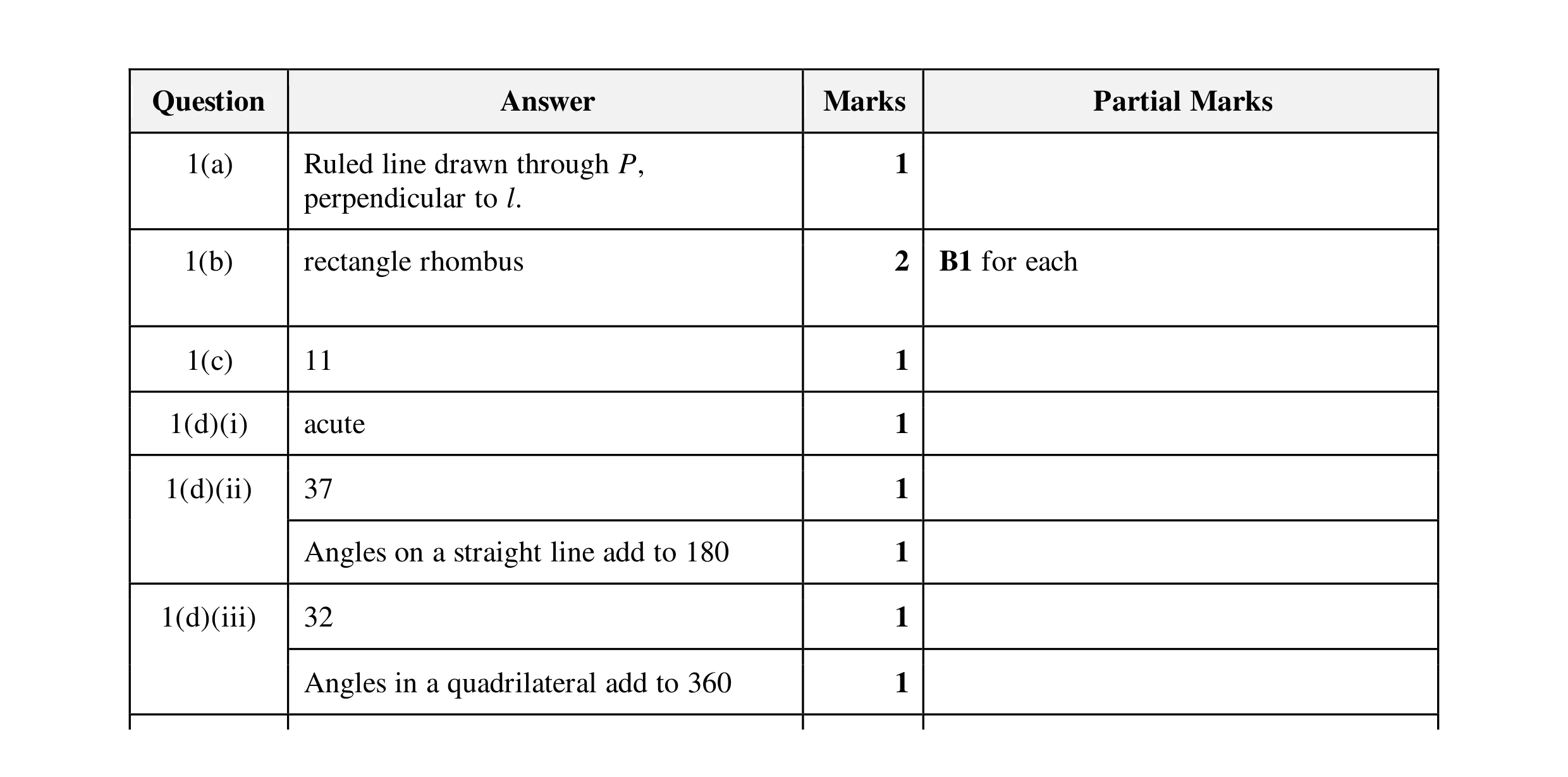 9
9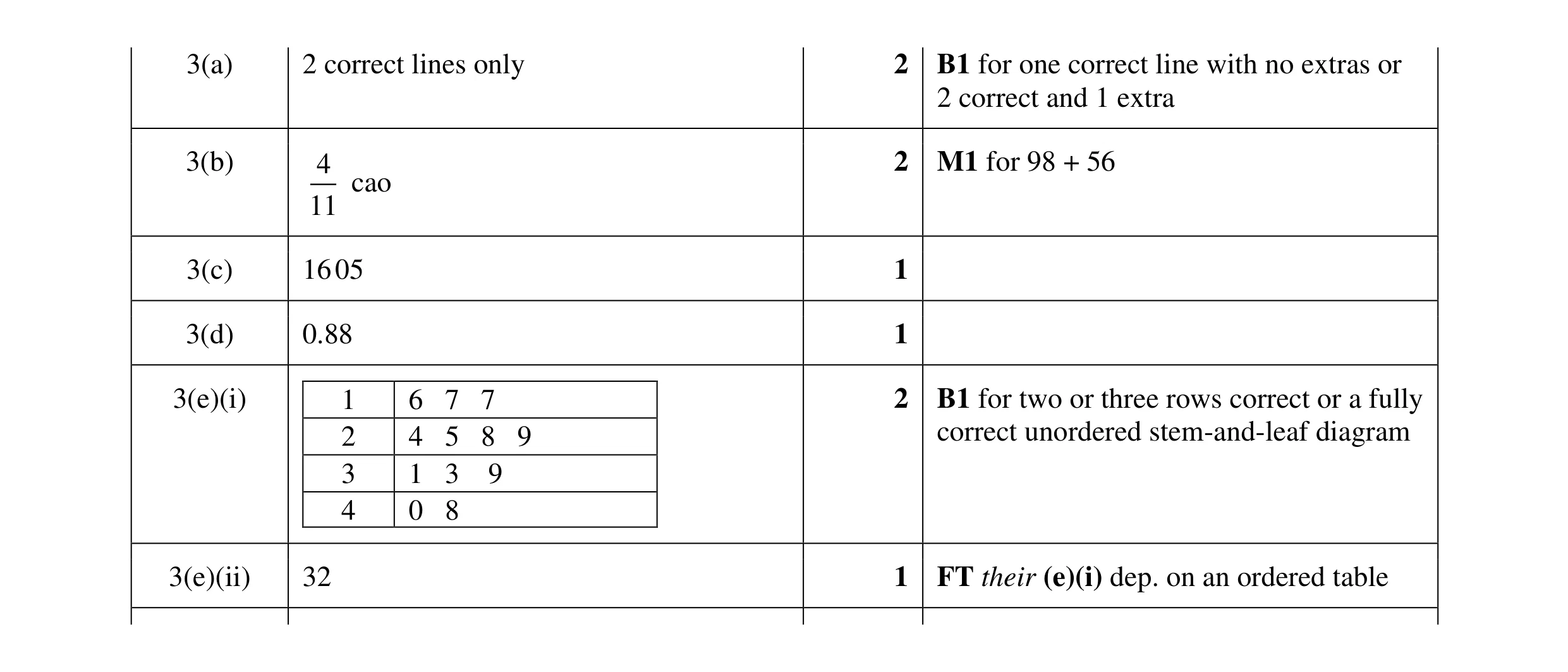 9
9 3
3 1
1