Questions as text
Q1 · In the study by Giacalone and Rosenfeld (1987), the Sabotage Reasons Questionnaire asked… 9990/42 Feb/March 2018
4 In the study by Giacalone and Rosenfeld (1987), the Sabotage Reasons Questionnaire asked workers to rate each of the sabotage methods on a 7-point scale of 1 (not at all justifiable) to 7 (totally justifiable). (a) Give one way in which this study was ethical. [2] (b) Suggest two ways in which the data from the Sabotage Reasons Questionnaire could be analysed, including reasons for your suggestions. [4] (c) Suggest how the reliability of this questionnaire could be tested. [4] (d) Discuss advantages and disadvantages of using a 7-point scale in questionnaires given to workers. You should include a conclusion in your answer. [5]
15 marks
Mark scheme: 4(a) Give one way in which this study was ethical. 2 Marks: 1 mark for basic answer e.g. identification. +1 mark for elaboration/example. Most likely answer (other appropriate responses to be credited): • informed consent: participants volunteered for the study. • confidentiality: told they should not write their names or any identifying information on the questionnaires. • not deceived: told that management would not have access to their responses. 4(b) Suggest two ways in which the data from the Sabotage Reasons 4 Questionnaire could be analysed, including reasons for your suggestions. Marks: Question always requires two ‘things’ • 1 mark basic answer. 2 marks elaboration, twice. • Max 2 marks if only ‘one’ is answered. Most likely answer (other appropriate responses to be credited): • Calculation of a mean, median, mode or range – summarising data. • Note: if sufficient detail two of these can be credited. • Presentation of data using a bar chart – visual and differences can be seen at a glance. • Calculation of a statistical test. Not required but is worth credit. 4(c) Suggest how the reliability of this questionnaire could be tested. 4 Marks: 1–2 marks basic answer. 3–4 marks detailed answer/elaboration (e.g. use of terminology) Most likely answer (other appropriate responses to be credited): The reliability of this questionnaire could be tested in two ways: • Test-retest: test given to workers initially and then given to the same workers again after a period of time (e.g. 1 month) and scores compared. • Split half: half the 29(!) items into 1–14 and 15–29, or (i) Q1, Q3, Q5 etc. and (ii) Q2, Q4, Q6 etc. and then compare the scores from the two halves. 4(d) Discuss advantages and disadvantages of using a 7-point scale in 5 questionnaires given to workers. You should include a conclusion in your answer. Question always plural of each argument. Question always requires conclusion. • 1 mark for each for/against argument up to 4 max. • 1 mark for conclusion. Note: If three (or more) arguments for one side, best two credited. If one argument only, max 2 marks. Most likely answer (other appropriate responses to be credited): Advantages • a 7-point scale allows a wide range of responses from ‘not at all justifiable’ to ‘totally justifiable’ • a 7-point scale includes a mid-point, which is neutral, so any participant who really feels neutral can choose this option. • a 7-point scale will provide quantitative data that can be statistically analysed. Disadvantages • participants could ‘opt-out’ and give neutral responses (mid-point) for every answer. A participant may do this if they fear that management will see the responses. • neutral responses do not help researchers to draw conclusions. A forced 6-point choice does not allow an opt out and a decision, even 51/49 one way or the other must be made. Conclusion: (a decision reached by reasoning) any appropriate conclusion drawn from the discussion that has been presented. Marks: 1 mark if appropriate. 0 marks if the conclusion repeats what has already been stated. Section B: Design question (a)=10 marks, (b)=8 marks
This question in 9990/42 Feb/March 2018
Q2 · The study by Gold et al 9990/41 May/June 2018
4 The study by Gold et al. (1992) found that the number of shiftwork accidents made by nurses was significantly higher in those working a ‘rotator’ shift. To investigate this further, the researchers sent questionnaires to all nurses. However, only 78% returned their questionnaires. (a) Explain what Gold et al. meant by a ‘rotator’ shift. [2] (b) Give two findings for ‘rotators’ compared with ‘non-rotators’, other than the number of shiftwork accidents. [4] (c) Suggest two reasons why only 78% of participants returned their questionnaires. [4] (d) Discuss the advantages and disadvantages of using questionnaires to gather data about accidents in the workplace. You should include a conclusion in your answer. [5]
15 marks
Mark scheme: 4(a) Explain what Gold et al. meant by a ‘rotator’ shift. 2 Marks: 1 mark for basic answer e.g. identification. 1 mark for elaboration/example. Most likely answer (other appropriate responses to be credited): A rotator shift is where a worker works, within a month, 4 or more day or evening shifts and 4 or more night shifts. Other shifts patterns include: day/evening only; night, day/evening and occasional night; night/occasional day/evening; part-time rotator. 4(b) Give two findings for ‘rotators’ compared with ‘non-rotators’, other 4 than the number of shiftwork accidents. Marks: 1 mark basic finding/statement, 2 marks elaboration, such as inclusion of data, × 2 Most likely answer (other appropriate responses to be credited): • Rotators had twice the odds of nodding off whilst driving to and from work; when compared to day/evening nurses, rotators had 3.9 times the odds and night nurses had 3.6 times the odds of nodding off while driving to or from work in the preceding year. • Rotators had more sleep/wake cycle disruption and nodded off more at work. Nodding off on the night shift occurred at least once per week in 35.3% of rotators, 32.4% of night nurses, and 20.7% of day/evening nurses who worked occasional nights. On the other hand, neither day/evening nurses nor rotating nurses reported significant problems with nodding off on the day or evening shift (rates for nodding off: 2.8% and 2.7%). 4(c) Suggest two reasons why only 78% of participants returned their 4 questionnaires. Marks: 1 mark basic answer, 2 marks elaboration, × 2 Most likely answer (other appropriate responses to be credited): 36 (4.1%) refused to participate and 155 (17.7%) failed to return the questionnaire. • may not see the questionnaire; • may see it and complete it but not return it; • decide that it does not apply to them; • they have something to hide; • they do not want to give out personal details. 4(d) Discuss the advantages and disadvantages of using questionnaires to 5 gather data about accidents in the workplace. You should include a conclusion in your answer. Marks: Question requires discussion; always plural of each argument, and always requires conclusion. 1 mark for each advantage/disadvantage up to 4 max. 1 mark for conclusion. Most likely answer (other appropriate responses to be credited): Advantages • Questionnaires can include a wide range of pertinent items that may not be included in a self report of an accident. • Questionnaires can provide quantitative data which may allow comparisons to be made with other accidents of the same type. • Questionnaires can provide qualitative data through open ended questions allowing a worker to report in detail what happened. Disadvantages • the questionnaire might be pre-written with items that do not apply or do not cover the specifics of a particular accident. • workers may not answer the questions truthfully if their job is at stake. • Questionnaires may only give quantitative data; an open ended- question may be more revealing • Questionnaires might include leading words. Conclusion: any appropriate conclusion drawn from the discussion that has been presented.
This question in 9990/41 May/June 2018
Q3 · Design a study using a questionnaire to investigate management perceptions of bullying at… 9990/41 May/June 2018
8 (a) Design a study using a questionnaire to investigate management perceptions of bullying at work. [10] (b) Explain the psychological and methodological evidence on which your questionnaire is based. [8] Section C You must answer one question from this section. Psychology and abnormality
18 marks
Mark scheme: 8(a) Design a study using a questionnaire to investigate management 10 perceptions of bullying at work. Marks: use generic levels of response Design a study question part (a). Additional: Candidates should design the study showing evidence of design features appropriate to the named method. The named method is: any appropriate method. Typical features: • Questionnaires/Interviews: type, setting, example questions. Scoring/rating scale, analysis of responses. • Typical features of research methodology: sampling technique and sample, type of data, ethics, reliability, validity, data analysis. 8(b) Explain the psychological and methodological evidence on which your 8 study is based. Marks: use generic levels of response ‘Design a study’ question part (b). Note: If only methodological or psychological explanation is provided max 5 marks. Candidates are expected to explain the reasons for the suggested design in part (a). Explanation should be both psychological and methodological. Psychological to include appropriate theory or research. Additional: candidates are expected to justify their decisions or evidence presented regarding the design made in answer to question part (a). Syllabus: Physical and psychological work conditions: psychological: bullying at work (Einarsen, 1999) Psychological: From the study: ‘Bullying occurs when someone at work is systematically subjected to aggressive behaviour from one or more colleagues or superiors over a long period of time, in a situation where the target finds it difficult to defend him or herself or to escape the situation.’ There are different kinds of bullying and there are different ways in which bullying can be measured. Methodological: explanation of method using typical features as above.
This question in 9990/41 May/June 2018
Q4 · The study by Gold et al 9990/43 May/June 2018
4 The study by Gold et al. (1992) found that the number of shiftwork accidents made by nurses was significantly higher in those working a ‘rotator’ shift. To investigate this further, the researchers sent questionnaires to all nurses. However, only 78% returned their questionnaires. (a) Explain what Gold et al. meant by a ‘rotator’ shift. [2] (b) Give two findings for ‘rotators’ compared with ‘non-rotators’, other than the number of shiftwork accidents. [4] (c) Suggest two reasons why only 78% of participants returned their questionnaires. [4] (d) Discuss the advantages and disadvantages of using questionnaires to gather data about accidents in the workplace. You should include a conclusion in your answer. [5]
15 marks
Mark scheme: 4(a) Explain what Gold et al. meant by a ‘rotator’ shift. 2 Marks: 1 mark for basic answer e.g. identification. 1 mark for elaboration/example. Most likely answer (other appropriate responses to be credited): A rotator shift is where a worker works, within a month, 4 or more day or evening shifts and 4 or more night shifts. Other shifts patterns include: day/evening only; night, day/evening and occasional night; night/occasional day/evening; part-time rotator. 4(b) Give two findings for ‘rotators’ compared with ‘non-rotators’, other 4 than the number of shiftwork accidents. Marks: 1 mark basic finding/statement, 2 marks elaboration, such as inclusion of data, × 2 Most likely answer (other appropriate responses to be credited): • Rotators had twice the odds of nodding off whilst driving to and from work; when compared to day/evening nurses, rotators had 3.9 times the odds and night nurses had 3.6 times the odds of nodding off while driving to or from work in the preceding year. • Rotators had more sleep/wake cycle disruption and nodded off more at work. Nodding off on the night shift occurred at least once per week in 35.3% of rotators, 32.4% of night nurses, and 20.7% of day/evening nurses who worked occasional nights. On the other hand, neither day/evening nurses nor rotating nurses reported significant problems with nodding off on the day or evening shift (rates for nodding off: 2.8% and 2.7%). 4(c) Suggest two reasons why only 78% of participants returned their 4 questionnaires. Marks: 1 mark basic answer, 2 marks elaboration, × 2 Most likely answer (other appropriate responses to be credited): 36 (4.1%) refused to participate and 155 (17.7%) failed to return the questionnaire. • may not see the questionnaire; • may see it and complete it but not return it; • decide that it does not apply to them; • they have something to hide; • they do not want to give out personal details. 4(d) Discuss the advantages and disadvantages of using questionnaires to 5 gather data about accidents in the workplace. You should include a conclusion in your answer. Marks: Question requires discussion; always plural of each argument, and always requires conclusion. 1 mark for each advantage/disadvantage up to 4 max. 1 mark for conclusion. Most likely answer (other appropriate responses to be credited): Advantages • Questionnaires can include a wide range of pertinent items that may not be included in a self report of an accident. • Questionnaires can provide quantitative data which may allow comparisons to be made with other accidents of the same type. • Questionnaires can provide qualitative data through open ended questions allowing a worker to report in detail what happened. Disadvantages • the questionnaire might be pre-written with items that do not apply or do not cover the specifics of a particular accident. • workers may not answer the questions truthfully if their job is at stake. • Questionnaires may only give quantitative data; an open ended- question may be more revealing • Questionnaires might include leading words. Conclusion: any appropriate conclusion drawn from the discussion that has been presented.
This question in 9990/43 May/June 2018
Q5 · Design a study using a questionnaire to investigate management perceptions of bullying at… 9990/43 May/June 2018
8 (a) Design a study using a questionnaire to investigate management perceptions of bullying at work. [10] (b) Explain the psychological and methodological evidence on which your questionnaire is based. [8] Section C You must answer one question from this section. Psychology and abnormality
18 marks
Mark scheme: 8(a) Design a study using a questionnaire to investigate management 10 perceptions of bullying at work. Marks: use generic levels of response Design a study question part (a). Additional: Candidates should design the study showing evidence of design features appropriate to the named method. The named method is: any appropriate method. Typical features: • Questionnaires/Interviews: type, setting, example questions. Scoring/rating scale, analysis of responses. • Typical features of research methodology: sampling technique and sample, type of data, ethics, reliability, validity, data analysis. 8(b) Explain the psychological and methodological evidence on which your 8 study is based. Marks: use generic levels of response ‘Design a study’ question part (b). Note: If only methodological or psychological explanation is provided max 5 marks. Candidates are expected to explain the reasons for the suggested design in part (a). Explanation should be both psychological and methodological. Psychological to include appropriate theory or research. Additional: candidates are expected to justify their decisions or evidence presented regarding the design made in answer to question part (a). Syllabus: Physical and psychological work conditions: psychological: bullying at work (Einarsen, 1999) Psychological: From the study: ‘Bullying occurs when someone at work is systematically subjected to aggressive behaviour from one or more colleagues or superiors over a long period of time, in a situation where the target finds it difficult to defend him or herself or to escape the situation.’ There are different kinds of bullying and there are different ways in which bullying can be measured. Methodological: explanation of method using typical features as above.
This question in 9990/43 May/June 2018
Q6 · Manager José was bullied at work for many years 9990/42 Oct/Nov 2018
4 Manager José was bullied at work for many years. The bullies argued with him every day and stole his belongings. Eventually he left to work for an employer where bullying was not tolerated. (a) Explain the effects bullying may have on an individual in the workplace. [2] (b) Suggest two phases in the development of bullying at work. [4] (c) Give two differences between dispute-related bullying and predatory bullying. [4] (d) Discuss the advantages and disadvantages of using interviews to investigate bullying at work. You should include a conclusion in your answer. [5]
15 marks
Mark scheme: 4(a) Explain the effects bullying may have on an individual in the 2 workplace. Marks: 1 mark for basic answer e.g. identification. 1 mark for elaboration/ example. Most likely answer (other appropriate responses to be credited): • health effects such as symptoms of stress, possible post-traumatic stress syndrome. • Withdrawal from work such as absenteeism; withdrawal from any work- based social activity. • Inability to concentrate on tasks at work. • Decision to leave the workplace • Some victims of bullying may have suicidal thoughts. 4(b) Suggest two phases in the development of bullying at work. 4 Marks: 1 basic answer. 2 marks detailed answer/elaboration ×2 Most likely answer (other appropriate responses to be credited): Quote from study: • In the early phases of the bullying, victims are typically subjected to aggressive behaviour that is difficult to pinpoint by being very indirect and discreet. • Later on more direct aggressive acts appear. The victims are clearly isolated and avoided, humiliated in public by being made a laughing- stock of the department, and so on. • In the end both physical and psychological means of violence may be used. Quote from study (also to be credited): Bullying seems to contain at least four phases: • aggressive behaviour: a situation where rather subtle aggressive outlets start to be directed against one or more persons in the work group. • bullying, where these aggressive outlets become more open, direct and frequent. In this second phase it becomes evident that the victim has problems in defending him/herself either as a consequence of already existing psychological or social factors, or as a consequence of the bullying itself, which after a while seems to place a social stigma on the victim. • stigmatisation and severe trauma. Credit can also be given for Allport’s (1954) phases. 4(c) Give two differences between dispute-related bullying and predatory 4 bullying. Marks: 1 basic answer. 2 marks detailed answer/elaboration ×2 Most likely answer (other appropriate responses to be credited): Quote from study: • dispute-related aggression develops out of grievances and involves social control reactions to perceived wrong-doing. A work-related conflict. • dispute-related bullying occurs as a result of an highly escalated interpersonal conflict. • Predatory bullying refers to cases where the victim personally has done nothing provocative that may reasonably justify the behaviour of the bully. • the victim is accidentally in a situation where a predator either is demonstrating power or in other ways is trying to exploit an accidental victim into compliance. • the victim is attacked because he or she belongs to a certain out-group 4(d) Discuss the advantages and disadvantages of using interviews to 5 investigate bullying at work. You should include a conclusion in your answer. Marks: Question requires discussion; always plural of each argument, and always requires conclusion. 1 mark for each advantage/disadvantage (however detailed) and related to the question up to 4 max. 1 mark for two strengths/weaknesses unrelated to the question. 1 mark for conclusion. Most likely answer (other appropriate responses to be credited): Advantages: • interviews allow people to present their side of the study in full detail; • interviews can be done in a safe and private environment; • an interview could be unstructured, allowing free interaction; it could be structured allowing management to cover ‘essential’ questions. • the interview can be recorded providing evidence of what was said should it be needed. Disadvantages: • people may be reluctant to be interviewed, to ‘blow the whistle’, to bring the bullying into the open; • people may not tell the truth, hiding information or modifying it. • people may not tell the truth for fear of revenge or further attacks/ bullying • people think they will be perceived as weak, inferior or inadequate by management. Conclusion: any appropriate conclusion drawn from the discussion that has been presented. 1 mark if appropriate. A conclusion is a ‘decision reached by reasoning’ and so a summary of points already made scores 0 marks.
This question in 9990/42 Oct/Nov 2018
Q7 · Design a field experiment to investigate the effectiveness of a reward system to reduce… 9990/42 Feb/March 2019
7 (a) Design a field experiment to investigate the effectiveness of a reward system to reduce the number of accidents in school science lessons. [10] (b) Explain the psychological and methodological evidence on which your experiment is based. [8] Psychology and organisations
18 marks
Mark scheme: 7(a) Design a field experiment to investigate the effectiveness of a reward 10 system to reduce the number of accidents in school science lessons. Marks: use generic levels of response Design a study question part (a). Additional: Candidates should design the study showing evidence of design features appropriate to the named method. The named method is: any appropriate method but must include fear arousal campaign. Specific features: Experiments: type, IV, DV, controls, experimental design. General features of research methodology: sampling technique and sample, type of data, ethics, reliability, validity, data analysis. 7(b) Explain the psychological and methodological evidence on which your 8 study is based. Marks: use generic levels of response ‘Design a study’ question part (b). Note: If only methodological or psychological explanation is provided max 5 marks Candidates are expected to explain the reasons for the suggested design in part (a). Explanation should be both psychological and methodological. Psychological to include appropriate theory or research. Additional: candidates are expected to justify their decisions or evidence presented regarding the design made in answer to question part (a). Syllabus: health promo in schools, worksites and communities; worksites (Fox et al., 1987) Psychological: Fox et al. (1987) use a token economy system to reduce accidents in the workplace. Operant conditioning could also be used, with positive reinforcement being applied to increase safety behaviour. Note: the question states reward system, so positive punishment would be inappropriate. Methodological: explanation of method using general and specific features as above.
This question in 9990/42 Feb/March 2019
Q8 · Design a study to investigate worker preference for the metropolitan or the continental… 9990/42 Feb/March 2020
8 (a) Design a study to investigate worker preference for the metropolitan or the continental rapid rotation system of shiftwork. [10] (b) Explain the psychological and methodological evidence on which your study is based. [8] Section C You must answer one question from this section. Psychology and abnormality
18 marks
Mark scheme: 8(a) Design a study to investigate worker preference for the metropolitan or 10 the continental rapid rotation system of shiftwork. Marks: use generic levels of response Design a study question part (a). Additional: Candidates should design the study showing evidence of design features appropriate to the named method. The named method is: any appropriate method. Specific features: • Experiments: type, IV, DV, controls, experimental design. • Observations: type, setting, response categories, sampling frame, number of observers. • Questionnaires/Interviews: type, setting, example questions. Scoring/rating scale, analysis of responses. General features of research methodology: sampling technique and sample, type of data, ethics, reliability, validity, data analysis. Logically candidates will choose an experiment with IV being the two shifts and the DV being worker preference assessed on a questionnaire or through an interview. 8(b) Explain the psychological and methodological evidence on which your 8 study is based. Marks: use generic levels of response ‘Design a study’ question part (b). N.B. If only methodological or psychological explanation is provided max 5 marks Candidates are expected to explain the reasons for the suggested design in part (a). Explanation should be both psychological and methodological. Psychological to include appropriate theory or research. Additional: candidates are expected to justify their decisions or evidence presented regarding the design made in answer to question part (a). Syllabus: shiftwork: rapid rotation theory (metropolitan rota and continental rota); slow rotation theory (Pheasant, 1991) Psychological: • Metropolitan rota: work two early (6 am to 2 pm), two late (2 pm to 10 pm), two night (10 pm to 6 am), two rest. • Continental rota: work two early, two late, three night, two rest, then two early, three late, two night, three rest. N.B. 2 marks max if psychological knowledge is not related to answer. Methodological: explanation of method using general and specific features as above.
This question in 9990/42 Feb/March 2020
Q9 · Accidents at work may be caused by human errors or errors in operator-machine systems 9990/41 May/June 2021
8 Accidents at work may be caused by human errors or errors in operator-machine systems. (a) Design a study to investigate which errors result in the most risk of accidents for workers. [10] (b) Explain the psychological and methodological evidence on which your study is based. [8] Section C You must answer one question from this section. Psychology and abnormality
18 marks
Mark scheme: 8(a) Accidents at work may be caused by human errors or errors in 10 operator-machine systems. Design a study to investigate which errors result in the most risk of accidents for workers. Marks: use generic levels of response Design a study question part (a). Additional: Candidates should design the study showing evidence of design features appropriate to the named method. The named method is: any appropriate method. Specific features: • Experiments: type, IV, DV, controls, experimental design. • Observations: type, setting, response categories, sampling frame, number of observers. • Questionnaires/Interviews: type, setting, example questions. Scoring/rating scale, analysis of responses. General features of research methodology: sampling technique & sample, type of data, ethics, reliability, validity, data analysis. 8(b) Explain the psychological and methodological evidence on which your 8 study is based. Candidates are expected to explain the reasons for the suggested design in part (a). Explanation should be both psychological and methodological. Psychological to include appropriate theory or research. Marks: use generic levels of response ‘Design a study’ question part (b). ‘Psychological’ = 4 marks; ‘methodological’ = 4 marks If only methodological or psychological explanation is provided max 5 marks If ‘psychological’ described and not related to part (a) max 2 marks. Syllabus: accidents at work: errors and accidents in operator-machine systems Psychological: Riggio (1990) suggests when operating machines there can be errors of: • Omission: failing to do something, such as forgetting to turn something off. • Commission: performing an act incorrectly, i.e. doing something wrong. • Sequence errors: doing something out of order. • Timing errors: doing something too quickly, or too slowly Errors can be due to tiredness/fatigue, use of alcohol and/or drugs or because of accident proneness. More errors happen during the 8pm-6am ‘graveyard’ shift. Methodological: explanation of method using general and specific features as above.
This question in 9990/41 May/June 2021
Q10 · A machine in your factory has been sabotaged 9990/42 May/June 2021
8 A machine in your factory has been sabotaged. You know who is responsible and want to find the reason for this unacceptable behaviour. (a) Design a study using an interview to investigate the reason for sabotaging the machine. [10] (b) Explain the psychological and methodological evidence on which your study is based. [8] Section C You must answer one question from this section. Psychology and abnormality
18 marks
Mark scheme: 8(a) A machine in your factory has been sabotaged. You know who is 10 responsible and want to find the reason for this unacceptable behaviour. Design a study using an interview to investigate the reason for sabotaging the machine. Marks: use generic levels of response ‘Design a study’ question part (a). Additional: Candidates should design the study showing evidence of design features appropriate to the named method. The named method: interview. Typical features: • Questionnaires/Interviews: type, setting, example questions. Scoring/rating scale, analysis of responses. Typical features of research methodology: sampling technique and sample, type of data, ethics, reliability, validity, data analysis. 8(b) Explain the psychological and methodological evidence on which your 8 study is based. Candidates are expected to explain the reasons for the suggested design in part (a). Explanation should be both psychological and methodological. Psychological to include appropriate theory or research. Marks: use generic levels of response ‘Design a study’ question part (b). ‘Psychological’ = 4 marks; ‘methodological’ = 4 marks If only methodological or psychological explanation is provided max 5 marks If ‘psychological’ described and not related to part (a) max 2 marks. Syllabus: workplace sabotage (Giacalone and Rosenfeld, 1987) Psychological: There are many reasons. Giacalone and Rosenfeld provide eleven: Self- defence, Revenge, An eye for an eye, Protect oneself from boss/company, To protect one's job, The foreman/company deserved it, The foreman/company hurt me previously, No one was hurt by the action, Release of frustrations, Just for fun/laughs. Other reasons are also possible: slowing down or easing the work process, dishonesty, causing chaos or attempting to assert control. Methodological: explanation of method using general and specific features as above.
This question in 9990/42 May/June 2021
Q11 · Accidents at work may be caused by human errors or errors in operator-machine systems 9990/43 May/June 2021
8 Accidents at work may be caused by human errors or errors in operator-machine systems. (a) Design a study to investigate which errors result in the most risk of accidents for workers. [10] (b) Explain the psychological and methodological evidence on which your study is based. [8] Section C You must answer one question from this section. Psychology and abnormality
18 marks
Mark scheme: 8(a) Accidents at work may be caused by human errors or errors in 10 operator-machine systems. Design a study to investigate which errors result in the most risk of accidents for workers. Marks: use generic levels of response Design a study question part (a). Additional: Candidates should design the study showing evidence of design features appropriate to the named method. The named method is: any appropriate method. Specific features: • Experiments: type, IV, DV, controls, experimental design. • Observations: type, setting, response categories, sampling frame, number of observers. • Questionnaires/Interviews: type, setting, example questions. Scoring/rating scale, analysis of responses. General features of research methodology: sampling technique & sample, type of data, ethics, reliability, validity, data analysis. 8(b) Explain the psychological and methodological evidence on which your 8 study is based. Candidates are expected to explain the reasons for the suggested design in part (a). Explanation should be both psychological and methodological. Psychological to include appropriate theory or research. Marks: use generic levels of response ‘Design a study’ question part (b). ‘Psychological’ = 4 marks; ‘methodological’ = 4 marks If only methodological or psychological explanation is provided max 5 marks If ‘psychological’ described and not related to part (a) max 2 marks. Syllabus: accidents at work: errors and accidents in operator-machine systems Psychological: Riggio (1990) suggests when operating machines there can be errors of: • Omission: failing to do something, such as forgetting to turn something off. • Commission: performing an act incorrectly, i.e. doing something wrong. • Sequence errors: doing something out of order. • Timing errors: doing something too quickly, or too slowly Errors can be due to tiredness/fatigue, use of alcohol and/or drugs or because of accident proneness. More errors happen during the 8pm-6am ‘graveyard’ shift. Methodological: explanation of method using general and specific features as above.
This question in 9990/43 May/June 2021
Q12 · One type of rapid rotation is the metropolitan shift-work rota: work two early shifts (6… 9990/42 Oct/Nov 2021
4 One type of rapid rotation is the metropolitan shift-work rota: work two early shifts (6 am to 2 pm), two late (2 pm to 10 pm), two night (10 pm to 6 am), two rest days. Then repeat. (a) Explain what is meant by ‘temporal conditions of work environments’. [2] (b) (i) Give one difference between the metropolitan rota and one other type of rapid rotation. [2] (ii) Suggest two negative effects of shift-work on health. [2] (c) Suggest two ways in which the number of hours people work can be organised, other than rotation of shifts. [4] (d) Discuss the advantages and disadvantages of shift-work, other than in relation to health. You should include a conclusion in your answer. [5]
15 marks
Mark scheme: 4 One type of rapid rotation is the metropolitan shift-work rota: work two early shifts (6am to 2pm), two late (2pm to 10pm), two night (10pm to 6am), two rest days. Then repeat. 4(a) Explain what is meant by ‘temporal conditions of work environments’. 2 Most likely answer (other appropriate responses to be credited): Temporal relates to time. Examples can relate to shiftwork, flexi-time or compressed working weeks or ‘on-call’. Marks: 1 mark basic answer (time), 2 marks detailed answer/elaboration/ example. 4(b)(i) Give one difference between the metropolitan rota and one other type of 2 rapid rotation. Most likely answer (other appropriate responses to be credited): Metropolitan: only ever 2 days on/off same pattern [two early 6–2, two late 2– 10, two night 10–6] with weekend break every 4 weeks Continental rota: work two early, two late, three night, two rest; two early, three late, two night, three rest which gives a 3 day free week-end every 8 weeks. Marks: 1 mark for ‘general difference’, 2 marks for statement of difference for each. 4(b)(ii) Suggest two negative effects of shift-work on health. 2 Most likely answer (other appropriate responses to be credited): Knutsson (2003) states • ‘The strongest evidence exists for an association between shiftwork and peptic ulcer disease (or gastrointestinal), coronary heart disease (or cardiovascular) and pregnancy (miscarriage, pre-term birth and low birth weight). • there is no evidence for mortality; no evidence for increased risk of cancer.’ • Sleep disturbances are common (Pheasant, 1991) Marks: 1 mark for each correct answer x2 4(c) Suggest two ways in which the number of hours people work can be 4 organised, other than rotation of shifts. Most likely answer (other appropriate responses to be credited): • Flexi-time people work the same number of hours each week (e.g. 36) but they can choose to work whenever they wish, such as start at 10am and end at 6pm) • Compressed work-week people choose to work very long days to provide more days off work (e.g. work 12 hours for 3 days) • On-call system people may be on-call for 24 or 36 hours and work whenever needed (e.g. medical doctor in a hospital) • Working ‘9–5’ Marks: 1 mark basic answer, 2 marks elaboration/example x2 4(d) Discuss the advantages and disadvantages of shift-work, other than in 5 relation to health. You should include a conclusion in your answer. Marks: Question requires discussion; always plural of each argument, and always requires conclusion. 1 mark for each advantage/disadvantage (however basic/detailed) which is related to the question (max 4 marks). 1 mark for conclusion. 2 marks max for two strengths and two weaknesses unrelated to the question. Conclusion: any appropriate conclusion drawn from the discussion that has been presented. 1 mark if appropriate. A conclusion is a ‘decision reached by reasoning’ and so a summary of points already made scores 0 marks. Most likely answer (other appropriate responses to be credited): Advantages • People can work shifts to fit their lifestyle/family life • People can earn more pay working shifts (e.g. at ‘unsociable’ hours) • People can compress their working week into three days (e.g. 3 days of 12 hours) • The organisation can maintain production 24 hours a day; the service can operate 24 hours per day (e.g. a hospital) Disadvantages • People have to work ‘unsociable’ hours in rotation with others (work weekend, holidays) • People who work shifts (especially rapid rotation) have a disrupted family life. • People cannot settle to a routine as working time changes frequently.
This question in 9990/42 Oct/Nov 2021
Question 13 9990/41 Oct/Nov 2022
4 Gold et al. (1992) studied the effect of shift patterns on sleep. Fig. 4.1 shows the percentage of participants in each sleep time category per 24 hours on workdays for the four types of shift. 100 90 80 sleep time category per 24 hours 70 less than five hours’ sleep 60 percent 50 between five and seven hours’ sleep 40 more than seven hours’ sleep 30 20 1010 0 day/ night rotator occasional evening nights shift type Fig. 4.1 (a) Outline what is meant by ‘rotator’ in this study. [2] (b) Give two findings from the data shown in Fig. 4.1. [4] (c) (i) Identify two types of error or accident that were more likely to happen to nurses on a rotator shift in this study. [2] (ii) Other than errors or accidents, shiftwork can have direct effects on health. Suggest two effects shiftwork could have on health. [2] (d) Discuss whether the findings of the study by Gold et al. can be generalised. You should consider both sides of the argument and include a conclusion. [5]
15 marks
Mark scheme: 4 Gold et al. (1992) studied the effect of shift patterns on sleep. Fig. 4.1 shows the percentage of participants in each sleep time category per 24 hours on workdays for the four types of shifts. 4(a) Outline what is meant by a ‘rotator’ in this study. 2 Most likely answer (other appropriate responses to be credited): • From study: Within a month working 4 or more day or evening shifts and 4 or more-night shifts • A worker who works a pattern of rotating (alternating) shifts (days/ evenings/nights) compared to day workers, evening workers, night workers and day workers with occasional nights Marks: 1 mark basic answer (simple description), 2 marks detailed answer/ elaboration. 4(b) Give two findings from the data shown in Fig. 4.1. 4 Most likely answer (other appropriate responses to be credited): • 20% of night workers had less than 5 hours’ sleep (or comment from other category about <5 hours • 3% of ‘day/evening’ slept <= 5 hours per 24 on workdays • 59% of day/evening workers and night workers had > 5–7 hours’ sleep • Day/evening workers had 39% of >7 hours’ sleep Marks: 2 marks each correct answer. 4(c)(i) Identify two types of error or accident that were more likely to happen 2 to nurses on a rotator shift in this study. Most likely answer (no other answers allowed): • driving accidents • medication errors • job procedural errors • work-related personal injuries Marks: 1 mark for each correct answer. 4(c)(ii) Other than errors or accidents, shift work can have direct effects on 2 health. Suggest two effects shift work could have on health. Most likely answer (other appropriate responses to be credited): • gastrointestinal disease: more common in shift workers. Symptoms include peptic ulcers, constipation and diarrhoea • cardiovascular disease: increases in blood pressure and other ‘heart hormones’ • cancer: such as increased risk of breast cancer in shift workers • diabetes and metabolic disturbances: increase in uric acid, cholesterol, glucose which can lead to gout, diabetes and other ailments • pregnancy: shift work associated with premature birth and low birth weight Note: most physiological effects can receive credit. These answers taken from Knutsson (2003). Marks: 1 mark identification of effect, 2 marks detailed answer/elaboration. 4(d) Discuss whether the findings of the study by Gold et al. can be 5 generalised. You should consider both sides of the argument and include a conclusion. Most likely answer (other appropriate responses to be credited): Can generalise: • Any work involving shifts will involve loss of sleep; disruption of cycle • People doing shift work are more likely to have accidents than people not working shifts • Nurses are typical of many other occupations Cannot generalise: • Nurses may be different from other people/different occupations • Nurses help save people’s lives. Many other workers perform boring, repetitive tasks and so are different • Nurses in this sample work a different shift pattern from other occupations such as the metropolitan or continental rota • Nurses in this sample are from Massachusetts (USA) and they might have different attitudes from people in other states/countries Conclusion: any appropriate conclusion drawn from the discussion that has been presented. 1 mark if appropriate. A conclusion is a ‘decision reached by reasoning’ and so a summary of points already made scores 0 marks. Marks: Question requires discussion; always plural of each argument, and always requires conclusion. 1 mark for each strength/weakness (however detailed) and related to the question up to 4 max. 2 marks max for two strengths/weaknesses unrelated to the question. 1 mark for conclusion.
This question in 9990/41 Oct/Nov 2022
Q14 · A new machine has been designed, but it is dangerous to use 9990/41 Oct/Nov 2022
8 A new machine has been designed, but it is dangerous to use. In order to reduce errors and accidents, the operator‑machine system needs to be improved. (a) Design an experiment to investigate one way that the safety of the new machine could be improved. [10] (b) Explain the psychological and methodological evidence on which your experiment is based. [8] Section C You must answer one question from this section. Psychology and abnormality
18 marks
Mark scheme: 8(a) A new machine has been designed, but it is dangerous to use. In order 10 to reduce errors and accidents, the operator-machine system needs to be improved. Design an experiment to investigate one way that the safety of the new machine could be improved. Marks: use generic levels of response Design a study question part (a). Additional: Candidates should design the study showing evidence of design features appropriate to the named method. The named method is experiment. Typical features: Experiments: type, IV, DV, controls, experimental design. General features of research methodology: sampling technique and sample, type of data, ethics, reliability, validity, data analysis. 8(b) Explain the psychological and methodological evidence on which your 8 experiment is based. Marks: use generic levels of response ‘Design a study’ question part (b). Note: If only methodological or psychological explanation is provided max 5 marks. Candidates are expected to explain the reasons for the suggested design in part (a). Explanation should be both psychological and methodological. Psychological to include appropriate theory or research. Additional: candidates are expected to justify their decisions or evidence presented regarding the design made in answer to question part (a). Syllabus: accidents at work: errors and accidents in operator-machine systems Psychological: • There are many characteristics of operator-machine systems. Controls (knobs, switches etc.) and displays (visual and auditory) are also relevant, especially auditory. But what sound should the alarm have; how loud should it be? • Human decision-making also relevant. Generally there are four types of error, and error of omission (failing to do something) is relevant. Alarm could be ignored if it is too quiet/cannot be heard • Reference to decibel levels may also feature Methodological: explanation of method using general and specific features as above.
This question in 9990/41 Oct/Nov 2022
Question 15 9990/43 Oct/Nov 2022
4 Gold et al. (1992) studied the effect of shift patterns on sleep. Fig. 4.1 shows the percentage of participants in each sleep time category per 24 hours on workdays for the four types of shift. 100 90 80 sleep time category per 24 hours 70 less than five hours’ sleep 60 percent 50 between five and seven hours’ sleep 40 more than seven hours’ sleep 30 20 1010 0 day/ night rotator occasional evening nights shift type Fig. 4.1 (a) Outline what is meant by ‘rotator’ in this study. [2] (b) Give two findings from the data shown in Fig. 4.1. [4] (c) (i) Identify two types of error or accident that were more likely to happen to nurses on a rotator shift in this study. [2] (ii) Other than errors or accidents, shiftwork can have direct effects on health. Suggest two effects shiftwork could have on health. [2] (d) Discuss whether the findings of the study by Gold et al. can be generalised. You should consider both sides of the argument and include a conclusion. [5]
15 marks
Mark scheme: 4 Gold et al. (1992) studied the effect of shift patterns on sleep. Fig. 4.1 shows the percentage of participants in each sleep time category per 24 hours on workdays for the four types of shifts. 4(a) Outline what is meant by a ‘rotator’ in this study. 2 Most likely answer (other appropriate responses to be credited): • From study: Within a month working 4 or more day or evening shifts and 4 or more-night shifts • A worker who works a pattern of rotating (alternating) shifts (days/ evenings/nights) compared to day workers, evening workers, night workers and day workers with occasional nights Marks: 1 mark basic answer (simple description), 2 marks detailed answer/ elaboration. 4(b) Give two findings from the data shown in Fig. 4.1. 4 Most likely answer (other appropriate responses to be credited): • 20% of night workers had less than 5 hours’ sleep (or comment from other category about <5 hours • 3% of ‘day/evening’ slept <= 5 hours per 24 on workdays • 59% of day/evening workers and night workers had > 5–7 hours’ sleep • Day/evening workers had 39% of >7 hours’ sleep Marks: 2 marks each correct answer. 4(c)(i) Identify two types of error or accident that were more likely to happen 2 to nurses on a rotator shift in this study. Most likely answer (no other answers allowed): • driving accidents • medication errors • job procedural errors • work-related personal injuries Marks: 1 mark for each correct answer. 4(c)(ii) Other than errors or accidents, shift work can have direct effects on 2 health. Suggest two effects shift work could have on health. Most likely answer (other appropriate responses to be credited): • gastrointestinal disease: more common in shift workers. Symptoms include peptic ulcers, constipation and diarrhoea • cardiovascular disease: increases in blood pressure and other ‘heart hormones’ • cancer: such as increased risk of breast cancer in shift workers • diabetes and metabolic disturbances: increase in uric acid, cholesterol, glucose which can lead to gout, diabetes and other ailments • pregnancy: shift work associated with premature birth and low birth weight Note: most physiological effects can receive credit. These answers taken from Knutsson (2003). Marks: 1 mark identification of effect, 2 marks detailed answer/elaboration. 4(d) Discuss whether the findings of the study by Gold et al. can be 5 generalised. You should consider both sides of the argument and include a conclusion. Most likely answer (other appropriate responses to be credited): Can generalise: • Any work involving shifts will involve loss of sleep; disruption of cycle • People doing shift work are more likely to have accidents than people not working shifts • Nurses are typical of many other occupations Cannot generalise: • Nurses may be different from other people/different occupations • Nurses help save people’s lives. Many other workers perform boring, repetitive tasks and so are different • Nurses in this sample work a different shift pattern from other occupations such as the metropolitan or continental rota • Nurses in this sample are from Massachusetts (USA) and they might have different attitudes from people in other states/countries Conclusion: any appropriate conclusion drawn from the discussion that has been presented. 1 mark if appropriate. A conclusion is a ‘decision reached by reasoning’ and so a summary of points already made scores 0 marks. Marks: Question requires discussion; always plural of each argument, and always requires conclusion. 1 mark for each strength/weakness (however detailed) and related to the question up to 4 max. 2 marks max for two strengths/weaknesses unrelated to the question. 1 mark for conclusion.
This question in 9990/43 Oct/Nov 2022
Q16 · A new machine has been designed, but it is dangerous to use 9990/43 Oct/Nov 2022
8 A new machine has been designed, but it is dangerous to use. In order to reduce errors and accidents, the operator‑machine system needs to be improved. (a) Design an experiment to investigate one way that the safety of the new machine could be improved. [10] (b) Explain the psychological and methodological evidence on which your experiment is based. [8] Section C You must answer one question from this section. Psychology and abnormality
18 marks
Mark scheme: 8(a) A new machine has been designed, but it is dangerous to use. In order 10 to reduce errors and accidents, the operator-machine system needs to be improved. Design an experiment to investigate one way that the safety of the new machine could be improved. Marks: use generic levels of response Design a study question part (a). Additional: Candidates should design the study showing evidence of design features appropriate to the named method. The named method is experiment. Typical features: Experiments: type, IV, DV, controls, experimental design. General features of research methodology: sampling technique and sample, type of data, ethics, reliability, validity, data analysis. 8(b) Explain the psychological and methodological evidence on which your 8 experiment is based. Marks: use generic levels of response ‘Design a study’ question part (b). Note: If only methodological or psychological explanation is provided max 5 marks. Candidates are expected to explain the reasons for the suggested design in part (a). Explanation should be both psychological and methodological. Psychological to include appropriate theory or research. Additional: candidates are expected to justify their decisions or evidence presented regarding the design made in answer to question part (a). Syllabus: accidents at work: errors and accidents in operator-machine systems Psychological: • There are many characteristics of operator-machine systems. Controls (knobs, switches etc.) and displays (visual and auditory) are also relevant, especially auditory. But what sound should the alarm have; how loud should it be? • Human decision-making also relevant. Generally there are four types of error, and error of omission (failing to do something) is relevant. Alarm could be ignored if it is too quiet/cannot be heard • Reference to decibel levels may also feature Methodological: explanation of method using general and specific features as above.
This question in 9990/43 Oct/Nov 2022
Q17 · ‘All accidents at work are caused by errors in operator-machine systems (system errors)… 9990/41 Oct/Nov 2023
12 ‘All accidents at work are caused by errors in operator-machine systems (system errors); not by other factors, such as human error.’ To what extent do you agree with this statement? Use examples of research you have studied to support your answer. [12]
12 marks
Mark scheme: 12 ‘All accidents at work are caused by errors in operator-machine systems 12 (system errors); not by other factors, such as human error.’ To what extent do you agree with this statement? Use examples of research you have studied to support your answer. Marks: use generic levels of response in table C. Syllabus: Health and safety: accidents at work: errors and accidents in operator-machine systems. Most likely (any other appropriate responses should be credited): Human error: • Riggio (1990) outlines four type of human error (omission, commission, sequence errors and timing errors). • human error can be due to tiredness/fatigue, use of alcohol and/or drugs or because of accident proneness (accident prone personality). • more errors happen during the 8pm–6am ‘graveyard’ shift because humans are vulnerable. • humans make substitution errors and apply motion stereotypes when an emergency happens. Systems errors: • sometimes there are systems errors: the Three Mile Island incident is commonly quoted where the poorly designed system was unmanageable. • sometimes machines are poorly designed where lights are too dim, buzzers too quiet, controls not user-friendly. • most accidents are a combination of both human and system errors: the machine-operator system does not work flawlessly.
This question in 9990/41 Oct/Nov 2023
Q18 · Sabotage quotes from workers: Ron: ‘When I worked in a car factory, I would put a banana… 9990/42 Oct/Nov 2023
4 Sabotage quotes from workers: Ron: ‘When I worked in a car factory, I would put a banana in a door panel. The new car would smell for weeks.’ John: ‘When at work in a factory, I would force a wire basket into the machinery. It gave us a 20-minute break while it was fixed.’ Giacalone and Rosenfeld (1987) conducted a study using a questionnaire with a 7-point scale. They classified sabotage into different methods/forms (actions workers used to sabotage) and different reasons (why workers sabotaged). (a) Identify two reasons for sabotage as identified by Giacalone and Rosenfeld. [2] (b) Suggest two reasons why the findings of this study cannot be generalised. [4] (c) Suggest two ways in which sabotage could be investigated, other than by questionnaire. [4] (d) Discuss the strengths and weaknesses of using closed questions to gather data from workers about sabotage in their organisation. You should include a conclusion in your answer. [5]
15 marks
Mark scheme: 4 Sabotage quotes from workers: Ron: ‘When I worked in a car factory, I would put a banana in a door panel. The new car would smell for weeks’. John: ‘When at work, I would force a wire basket into the machinery. It gave us a 20 minute break while it was fixed’. 4(a) Identify two reasons for sabotage as identified by Giacalone and 2 Rosenfeld. Definitive answers: self defence protect oneself from boss/company to protect one’s job revenge the foreman/company deserved it release of frustrations an eye for an eye the foreman/company hurt me previously just for fun/ no one was hurt by the action laughs Marks: 1 mark for correct identification 2 4(b) Suggest two reasons why the findings of this study cannot be 4 generalised. Most likely answer (other appropriate responses to be credited): • relatively small sample size (for a factory) (1 mark) there were only 38 workers (2 marks) • they were all from one factory/type of organisation (1 mark) an electrical factory (2 marks) • located in one country (1 mark) the factory was in north eastern United States (2 marks) Marks: 1 mark basic answer, +1 mark for related to this study 2 Credit any comparison. 4(c) Suggest two ways in which sabotage could be investigated, other than 4 by questionnaire. Most likely answer (other appropriate responses to be credited): • by interviewing the workers (0 marks), using a semi-structured interview for example (1 mark) workers would be allowed to expand on any of their sabotage experiences (2 marks) • by observing workers (0 marks) using participant or non-participant observation (1 mark) where actual sabotage behaviours could be observed (2 marks) • any other appropriate method receives credit. Marks: 1 mark method identified and elaborated (see above indicative content) 2 marks related to sabotage. 1 mark method identified plus example. 4(d) Discuss the strengths and weaknesses of using closed questions to 5 gather data from workers about sabotage in their organisation. You should include a conclusion in your answer. Most likely answer (other appropriate responses to be credited): Strengths: • closed questions provide quantitative data so statistics can be applied to compare different forms of sabotage • closed questions mean that answers are fixed • closed questions using a 7-point scale provides a range of possible answers Weaknesses: • workers can give false answers • when using a 7-point scale workers can opt for the neutral/mid-point • workers willing to ‘talk’ cannot do so with a fixed choice / closed questions Conclusion: any appropriate conclusion drawn from the discussion that has been presented. 1 mark if appropriate. A conclusion is a ‘decision reached by reasoning’ and so a summary of points already made scores 0 marks. Marks: Question requires discussion; always plural of each argument, and always requires conclusion. 1 mark for each advantage/disadvantage (however detailed) and related to the question up to 4 max. 2 marks max for two strengths/weaknesses unrelated to the question. 1 mark for conclusion.
This question in 9990/42 Oct/Nov 2023
Q19 · ‘All accidents at work are caused by errors in operator-machine systems (system errors)… 9990/43 Oct/Nov 2023
12 ‘All accidents at work are caused by errors in operator-machine systems (system errors); not by other factors, such as human error.’ To what extent do you agree with this statement? Use examples of research you have studied to support your answer. [12]
12 marks
Mark scheme: 12 ‘All accidents at work are caused by errors in operator-machine systems 12 (system errors); not by other factors, such as human error.’ To what extent do you agree with this statement? Use examples of research you have studied to support your answer. Marks: use generic levels of response in table C. Syllabus: Health and safety: accidents at work: errors and accidents in operator-machine systems. Most likely (any other appropriate responses should be credited): Human error: • Riggio (1990) outlines four type of human error (omission, commission, sequence errors and timing errors). • human error can be due to tiredness/fatigue, use of alcohol and/or drugs or because of accident proneness (accident prone personality). • more errors happen during the 8pm–6am ‘graveyard’ shift because humans are vulnerable. • humans make substitution errors and apply motion stereotypes when an emergency happens. Systems errors: • sometimes there are systems errors: the Three Mile Island incident is commonly quoted where the poorly designed system was unmanageable. • sometimes machines are poorly designed where lights are too dim, buzzers too quiet, controls not user-friendly. • most accidents are a combination of both human and system errors: the machine-operator system does not work flawlessly.
This question in 9990/43 Oct/Nov 2023
Q20 · Explain what is meant by the term ‘workplace sabotage’ 9990/41 May/June 2024
8 (a) Explain what is meant by the term ‘workplace sabotage’. [2] (b) Suggest one open question that workers could be asked about reasons for sabotage. [2] (c) Explain two weaknesses of collecting data about workplace sabotage from workers using an interview. [4]
8 marks
Mark scheme: 8(a) Explain what is meant by the term ‘workplace sabotage'. 2 Syllabus: 4.5.3 workplace sabotage including methods and reasons for sabotage. Key study reasons for sabotage in the workplace: Giacalone and Rosenfeld (1987). Award 2 marks for explanation plus example. Award 1 mark for explanation/example. Answers may include: Defined as any behaviour by a payroll employee which is intended to inflict a production or profit loss for the targeted organisation. Answer can be equivalent wording. Examples (slowdown’s, destructiveness, dishonesty, causing chaos) (quotes from study). NOTE: detailed examples may be given, but identification of a type, as above, is sufficient. 8(b) Suggest one open question that workers could be asked about reasons 2 for sabotage. Award 2 marks for an appropriate suggestion stated and applied to study with detail / elaboration / example. Award 1 mark for an appropriate suggestion identified but not applied. Answers may include: question must be open ended e.g. ‘Describe or Explain why …’ (1) question itself could be one of the 11 ‘reasons’ included in the study, but it doesn’t have to be. Example ‘Explain what you do to release frustrations when you are at work’ (2) NOTE: 11 reasons for sabotage (e.g. revenge, deserved it) is different from 29 sabotage methods aka sabotage forms (work slowdowns, destruction of machinery etc, dishonesty and causing chaos). Other appropriate responses to be credited. 8(c) Explain two weaknesses of collecting data about workplace sabotage 4 from workers using an interview. Up to 2 marks for each weakness 2. Award 2 marks for an appropriate weakness stated and applied as required by the question with detail / elaboration / example. Award 1 mark for an appropriate weakness stated but not applied. Answers may include: The participant may not tell the truth, exaggerate or underemphasise details (1) which may lead the researcher to make inaccurate conclusions about the sabotage reason or method (2). The participant may be afraid that if they tell the truth they may lose their job (1) and so what is said about the sabotage method or form may be false (2). The participant may not define sabotage in the same way as the interviewer (1) for example, how serious does an event have to be to count as sabotage (2). Other appropriate responses to be credited.
This question in 9990/41 May/June 2024
Q21 · Workers in assembly-line industries can sabotage machinery 9990/41 May/June 2024
12 Workers in assembly-line industries can sabotage machinery. (a) Plan a study using a structured observation to investigate which is the most common way to sabotage machinery in assembly-line workers. Your plan must include details about: • behavioural categories • steps for making the study reliable. [10] (b) For one piece of psychological knowledge on which your plan is based: (i) Describe this psychological knowledge. [4] (ii) Explain how you used two features of this psychological knowledge to plan your study. [4] (c) (i) Explain one reason for your choice of behavioural categories. [2] (ii) Explain one weakness of your choice of behavioural categories. [2] (iii) Explain one reason for your choice of steps for making the study reliable. [2]
24 marks
Mark scheme: 12(a) Plan a study using a structured observation to investigate which is the 10 most common way to sabotage machinery in assembly-line workers. Your plan must include details about: behavioural categories steps for making the study reliable. Use Table A: AO2 Application to mark candidate responses to this question. Credit both general features and specific features of the plan. The specific features of the plan The general features of the plan should include: should include (if appropriate): structured or unstructured sample and sampling technique covert or overt ethical guidelines controlled or naturalistic a procedure participant or non-participant the location number of observers (inter-rater type of data, analysis of data, reliability) use of descriptive statistics behavioural categories an aim or hypothesis could also include event or time (directional or non- sampling directional)/null hypothesis steps for making the study valid and reliable Credit other elements of the plan as appropriate using the marking grid. 12(b) For one piece of psychological knowledge on which your plan is based: 12(b)(i) Describe this psychological knowledge. 4 Syllabus: 4.5.3 workplace sabotage including methods and reasons for sabotage (exemplified by the following key study). Key study reasons for sabotage in the workplace: Giacalone and Rosenfeld (1987). Description: 1. Methods or ‘forms of sabotage’ include the ways/methods/forms that workers actually do, the actions they take to express their feelings. Giacalone and Rosenfeld identified four main types: work slowdown; destruction of machinery, premises or products; dishonesty; and causing chaos. They then listed 29 ‘forms’ or examples that action might take including: stealing to compensate for poor pay; creating work slowdowns; ‘forgetting’ to turn on/off a switch. 2. Reasons: why people sabotage is not relevant but could be included. Giacalone and Rosenfeld identified 11 reasons including: revenge; release of frustration; to protect one’s job. Marks Description 34 The knowledge is appropriate. Relevant points are correctly described in good detail. 12 Basic points are identified with some elaboration and understanding. The answer lacks detail (a sentence or two). 0 No creditable response. 12(b)(ii) Explain how you used two features of this psychological knowledge to 4 plan your study. Candidates should explain how the psychological knowledge described in (b)(i) has informed their plan in part (a). For each feature: Marks Description 2 Suitable answer that relates a feature and explains how the feature was used, expanded or modified to make it appropriate to the plan. The knowledge has clearly been applied to the plan. 1 Basic answer that identifies a feature. 0 No creditable response. Example: Use CCTV in assembly line factory. Structured observation with categories from Giacalone & Rosenfeld. Two observers agree that behaviour ‘x’ is ‘y’ type of sabotage. After period of time list of most common type achieved. 12(c)(i) Explain one reason for your choice of behavioural categories. 2 Candidates should use the choice of behavioural categories stated in (a). Award 2 marks if an appropriate reason is given and justified. Award 1 mark if an appropriate reason is given but not justified. Example: behavioural categories were used because they could be agreed and defined before the observation started (1) related to plan (2) behavioural categories were used because each observer would know exactly what they were looking for, reducing ambiguity (1) related to plan (2). 12(c)(ii) Explain one weakness of your choice of behavioural categories. 2 Candidates should use the behavioural categories stated in (c)(i). Marks Description 2 Weakness is given and applied to the plan. 1 Weakness is given without being applied to the plan. 0 No creditable response. Example unique or behaviours not planned for could be observed and have to be excluded (1) related to study (2) the categories chosen might not fully apply or be ambiguous when the observation is conducted (1) related to study (2). 12(c)(iii) Explain one reason for your choice of steps for making the study 2 reliable. Candidates should use the steps for making the study reliable stated in (a). Award 2 marks if an appropriate reason is given and justified. Award 1 mark if an appropriate reason is given but not justified. Example: use of behavioural categories and two observers (1) related to plan (2) use of two observers so inter-rater agreement can be assessed (1) related to plan (2)
This question in 9990/41 May/June 2024
Q22 · Explain what is meant by the term ‘workplace sabotage’ 9990/43 May/June 2024
8 (a) Explain what is meant by the term ‘workplace sabotage’. [2] (b) Suggest one open question that workers could be asked about reasons for sabotage. [2] (c) Explain two weaknesses of collecting data about workplace sabotage from workers using an interview. [4]
8 marks
Mark scheme: 8(a) Explain what is meant by the term ‘workplace sabotage'. 2 Syllabus: 4.5.3 workplace sabotage including methods and reasons for sabotage. Key study reasons for sabotage in the workplace: Giacalone and Rosenfeld (1987). Award 2 marks for explanation plus example. Award 1 mark for explanation/example. Answers may include: Defined as any behaviour by a payroll employee which is intended to inflict a production or profit loss for the targeted organisation. Answer can be equivalent wording. Examples (slowdown’s, destructiveness, dishonesty, causing chaos) (quotes from study). NOTE: detailed examples may be given, but identification of a type, as above, is sufficient. 8(b) Suggest one open question that workers could be asked about reasons 2 for sabotage. Award 2 marks for an appropriate suggestion stated and applied to study with detail / elaboration / example. Award 1 mark for an appropriate suggestion identified but not applied. Answers may include: question must be open ended e.g. ‘Describe or Explain why …’ (1) question itself could be one of the 11 ‘reasons’ included in the study, but it doesn’t have to be. Example ‘Explain what you do to release frustrations when you are at work’ (2) NOTE: 11 reasons for sabotage (e.g. revenge, deserved it) is different from 29 sabotage methods aka sabotage forms (work slowdowns, destruction of machinery etc, dishonesty and causing chaos). Other appropriate responses to be credited. 8(c) Explain two weaknesses of collecting data about workplace sabotage 4 from workers using an interview. Up to 2 marks for each weakness 2. Award 2 marks for an appropriate weakness stated and applied as required by the question with detail / elaboration / example. Award 1 mark for an appropriate weakness stated but not applied. Answers may include: The participant may not tell the truth, exaggerate or underemphasise details (1) which may lead the researcher to make inaccurate conclusions about the sabotage reason or method (2). The participant may be afraid that if they tell the truth they may lose their job (1) and so what is said about the sabotage method or form may be false (2). The participant may not define sabotage in the same way as the interviewer (1) for example, how serious does an event have to be to count as sabotage (2). Other appropriate responses to be credited.
This question in 9990/43 May/June 2024
Q23 · Workers in assembly-line industries can sabotage machinery 9990/43 May/June 2024
12 Workers in assembly-line industries can sabotage machinery. (a) Plan a study using a structured observation to investigate which is the most common way to sabotage machinery in assembly-line workers. Your plan must include details about: • behavioural categories • steps for making the study reliable. [10] (b) For one piece of psychological knowledge on which your plan is based: (i) Describe this psychological knowledge. [4] (ii) Explain how you used two features of this psychological knowledge to plan your study. [4] (c) (i) Explain one reason for your choice of behavioural categories. [2] (ii) Explain one weakness of your choice of behavioural categories. [2] (iii) Explain one reason for your choice of steps for making the study reliable. [2]
24 marks
Mark scheme: 12(a) Plan a study using a structured observation to investigate which is the 10 most common way to sabotage machinery in assembly-line workers. Your plan must include details about: behavioural categories steps for making the study reliable. Use Table A: AO2 Application to mark candidate responses to this question. Credit both general features and specific features of the plan. The specific features of the plan The general features of the plan should include: should include (if appropriate): structured or unstructured sample and sampling technique covert or overt ethical guidelines controlled or naturalistic a procedure participant or non-participant the location number of observers (inter-rater type of data, analysis of data, reliability) use of descriptive statistics behavioural categories an aim or hypothesis could also include event or time (directional or non- sampling directional)/null hypothesis steps for making the study valid and reliable Credit other elements of the plan as appropriate using the marking grid. 12(b) For one piece of psychological knowledge on which your plan is based: 12(b)(i) Describe this psychological knowledge. 4 Syllabus: 4.5.3 workplace sabotage including methods and reasons for sabotage (exemplified by the following key study). Key study reasons for sabotage in the workplace: Giacalone and Rosenfeld (1987). Description: 1. Methods or ‘forms of sabotage’ include the ways/methods/forms that workers actually do, the actions they take to express their feelings. Giacalone and Rosenfeld identified four main types: work slowdown; destruction of machinery, premises or products; dishonesty; and causing chaos. They then listed 29 ‘forms’ or examples that action might take including: stealing to compensate for poor pay; creating work slowdowns; ‘forgetting’ to turn on/off a switch. 2. Reasons: why people sabotage is not relevant but could be included. Giacalone and Rosenfeld identified 11 reasons including: revenge; release of frustration; to protect one’s job. Marks Description 34 The knowledge is appropriate. Relevant points are correctly described in good detail. 12 Basic points are identified with some elaboration and understanding. The answer lacks detail (a sentence or two). 0 No creditable response. 12(b)(ii) Explain how you used two features of this psychological knowledge to 4 plan your study. Candidates should explain how the psychological knowledge described in (b)(i) has informed their plan in part (a). For each feature: Marks Description 2 Suitable answer that relates a feature and explains how the feature was used, expanded or modified to make it appropriate to the plan. The knowledge has clearly been applied to the plan. 1 Basic answer that identifies a feature. 0 No creditable response. Example: Use CCTV in assembly line factory. Structured observation with categories from Giacalone & Rosenfeld. Two observers agree that behaviour ‘x’ is ‘y’ type of sabotage. After period of time list of most common type achieved. 12(c)(i) Explain one reason for your choice of behavioural categories. 2 Candidates should use the choice of behavioural categories stated in (a). Award 2 marks if an appropriate reason is given and justified. Award 1 mark if an appropriate reason is given but not justified. Example: behavioural categories were used because they could be agreed and defined before the observation started (1) related to plan (2) behavioural categories were used because each observer would know exactly what they were looking for, reducing ambiguity (1) related to plan (2). 12(c)(ii) Explain one weakness of your choice of behavioural categories. 2 Candidates should use the behavioural categories stated in (c)(i). Marks Description 2 Weakness is given and applied to the plan. 1 Weakness is given without being applied to the plan. 0 No creditable response. Example unique or behaviours not planned for could be observed and have to be excluded (1) related to study (2) the categories chosen might not fully apply or be ambiguous when the observation is conducted (1) related to study (2). 12(c)(iii) Explain one reason for your choice of steps for making the study 2 reliable. Candidates should use the steps for making the study reliable stated in (a). Award 2 marks if an appropriate reason is given and justified. Award 1 mark if an appropriate reason is given but not justified. Example: use of behavioural categories and two observers (1) related to plan (2) use of two observers so inter-rater agreement can be assessed (1) related to plan (2)
This question in 9990/43 May/June 2024
Q24 · From the key study by Swat (1997) on monitoring accidents and risk events: (a) (i)… 9990/41 Oct/Nov 2024
7 From the key study by Swat (1997) on monitoring accidents and risk events: (a) (i) Explain what is meant by the term ‘accident frequency’ as used in this study. [2] (ii) State which two industrial plants had the highest accident frequency (rate). [2] (b) Suggest one way in which accidents in industrial plants can be reduced. [2] (c) Explain one strength and one weakness of measuring accident frequency. [4]
10 marks
Mark scheme: 7 From the key study by Swat (1997) on monitoring accidents and risk events: 7(a)(i) Explain what is meant by the term ‘accident frequency’ as used in this 2 study. Syllabus: 4.4.3 Key study on the monitoring of accidents and risk events: Swat (1997). Marks: Award 1 mark for each feature. Definitive answer: • the number of injury accidents (not minor incidents) NB: essential for 2 mark answer • with sick leave days off work • per 100 employees in a year. 7(a)(ii) State which two industrial plants had the highest accident frequency 2 (rate). Marks: Award 1 mark for each correct example. • Foundry 5.9 • Meat processing 2.8 7(b) Suggest one way in which accidents in industrial plants can be 2 reduced. Syllabus 4.4.3 reducing accidents at work: token economy, including a study, e.g. Fox et al. (1987). Same syllabus subsection as the Swat key study Marks: Award 2 marks for an appropriate suggestion applied to context with detail / elaboration / example. Award 1 mark for an appropriate suggestion identified but not applied. Answers may include (other appropriate responses to be credited). • use of token economy (1 mark) (as used in the e.g. study by Fox et al. (1987)). Token economy was used at two open-cast mines. Employees could earn stamps/ tokens (to gain rewards) for working without time lost for injury; not being involved in accidental damage to equipment; and behaviour that prevented accidents or injuries. Stamps were lost for unsafe behaviour that could cause accidents (2 marks). • providing information (health promotion strategy) (1 mark) maybe reference to Lewin (1992) heart health manual (2 marks) 7(c) Explain one strength and one weakness of measuring accident 4 frequency. Marks: Up to 2 marks for each strength and up to 2 marks for each weakness. Award 2 marks for an appropriate strength/weakness stated and applied as required by the question with detail / elaboration / example. Award 1 mark for an appropriate strength/weakness stated but not applied. Answers may include (other appropriate responses to be credited): Strengths: • to be categorised as an accident, the event must be formally reported to management (1 mark) and this applied to all the plants in this study (2 marks) • accident frequency rates are quantitative, and so statistics can be compiled (1 mark) for example the number of accidents in different companies/industries can be compared (2 marks) Weaknesses: • accident frequency does not take into account accidents severity (1 mark) when it is essential to measure this to take into account an accident where a worker misses one day compared to months (2 marks) • accident frequency does not take into account minor incidents (1 mark) which still raise health and safety issues, but which are often not reported officially (2 marks)
This question in 9990/41 Oct/Nov 2024
Q25 · The key study by Giacalone and Rosenfeld (1987) on sabotage in the workplace divided… 9990/42 Oct/Nov 2024
7 The key study by Giacalone and Rosenfeld (1987) on sabotage in the workplace divided workers into two groups: (a) (i) Explain how the sample of participants were divided into these two groups. [2] (ii) State one difference between the results of the Sabotage Methods Questionnaire for these two groups of participants. [2] (b) Suggest one way that the reliability of the Sabotage Methods Questionnaire could be tested. [2] (c) Explain two weaknesses of using a volunteer sample of workers to answer questionnaires about sabotage. [4]
10 marks
Mark scheme: 7 The key study by Giacalone and Rosenfeld (1987) on sabotage in the workplace divided workers into two groups: 7(a)(i) Explain how the sample of participants were divided into these two 2 groups. Syllabus 4.5.3 Key study reasons for sabotage in the workplace: Giacalone and Rosenfeld (1987). Marks: Award 2 marks for a detailed explanation. Award 1 mark for a partial explanation. Definitive answer • participants complete sabotage reasons questionnaires using 7-point scale • participants responses were ‘summed’ and median splits calculated (Md = 25.5) • high reason accepters scored high (above 25.5); low reason accepters scored low (below 25.5) NB: the four ‘global’ categories e.g. work slowdown’s are not groups. 7(a)(ii) State one difference between the results of the Sabotage Methods 2 Questionnaire for these two groups of participants. Marks: Award 2 marks where both sides are included and difference is clear. Award 1 mark for general statement of difference Three types of answer acceptable here: (i) High reason accepters showed ‘a variety of reasons would more readily justify all forms of sabotage’. Low reason accepters showed fewer reasons would justify all forms of sabotage (2 marks) (ii) (general differences) high reason accepters (more than low reason accepters): justified production slowdowns more (1 mark) justified destruction of machinery, premises or products (1 mark) justified causing more chaos (1 mark) (iii): (Specific examples from the 29 sabotage forms) Example: Q20 Attempting to scare a foreman/supervisor into quitting/getting a transfer HR 2.53, LR 1.11 (2 marks) Q19 Setting up a foreman to get him/her into trouble HR 2.74, LR 1.32 (2 marks) 7(b) Suggest one way that the reliability of the Sabotage Methods 2 Questionnaire could be tested. Marks: Award 2 marks for an appropriate suggestion stated and applied to study with detail / elaboration / example. Award 1 mark for an appropriate effect suggestion but not applied. Answers may include (other appropriate responses to be credited). • test-retest where the test is repeated at a later date (1 mark). The SMQ could be given to the same participant on different occasions (2 marks) • the split-half method involves splitting the test into two and administering each half of the test to the same person. (1 mark) The SMQ scores from the two halves should show a strong correlation (2 marks). 7(c) Explain two weaknesses of using a volunteer sample of workers to 4 answer questionnaires about sabotage. Marks: Up to 2 marks for each weakness. Award 2 marks for an appropriate weakness stated and applied as required by the question with detail / elaboration / example. Award 1 mark for an appropriate weakness stated but not applied. Answers may include (other appropriate responses to be credited): Weaknesses: • the participant may agree to take part because they have not sabotaged anything (1 mark) and so the true extent of sabotage forms is not known (2 marks) • the participant may not be honest in their answers (1 mark) because if they told the truth about sabotage they may lose their job (2 marks) • the participants are volunteers and have a particular type of personality (1 mark) which would result in them never sabotaging anything (2 marks)
This question in 9990/42 Oct/Nov 2024
Q26 · Shiftwork can be divided into two types: slow rotation and rapid rotation 9990/42 Oct/Nov 2024
12 Shiftwork can be divided into two types: slow rotation and rapid rotation. (a) Plan an experiment to investigate which type of rotation has the most negative effect on the health of workers. Your plan must include details about: • controls • dependent variable. [10] (b) For one piece of psychological knowledge on which your plan is based: (i) Describe this psychological knowledge. [4] (ii) Explain how you used two features of this psychological knowledge to plan your experiment. [4] (c) (i) Explain one reason for your choice of controls. [2] (ii) Explain one weakness of your choice of controls. [2] (iii) Explain one reason for your choice of dependent variable. [2]
24 marks
Mark scheme: 12 Shiftwork can be divided into two types: slow rotation and rapid rotation. 12(a) Plan an experiment to investigate which type of rotation has the most 10 negative effect on the health of workers. Your plan must include details about: • controls • dependent variable Use Table A: AO2 Application to mark candidate responses to this question. Credit both general features and specific features of the plan. The specific features of the plan The general features of the plan should include: should include (if appropriate): • type of experiment • sample and sampling technique • independent variable • ethical guidelines • dependent variable • a procedure • controls • a location • choice of experimental design. • type of data, analysis of data, • If appropriate: use of descriptive statistics • counterbalancing, random • an aim or hypothesis allocation (RCT) (directional or non-directional)/ • single blind/double blind null hypothesis • other appropriate features • steps for making the study valid and reliable Credit other elements of the plan as appropriate using the marking grid. 12(b) For one piece of psychological knowledge on which your plan is based: 12(b)(i) Describe this psychological knowledge. 4 Syllabus: 4.4.2 effects of shiftwork on health and accidents, including a study, e.g. Gold et al. (1992). NB: the Gold et al. study is an ‘e.g.’ study so an alternative may be used. Description: Slow rotation (shift change every 3–4 weeks) is best; rapid rotation (change every few days) worst for health. Health effects include sleep disturbances, and physical and mental fatigue. Shiftwork is also associated with an increased likelihood of an accident. Knutsson (2003) reviewed the effects of shiftwork on health and found that shift work is associated with specific pathological disorders, particularly peptic ulcer disease, coronary heart disease and compromised pregnancy outcome. Gold et al. (1992) found nurses were more likely to nod off, have frequent lapses of attention and slower reaction time – but these are not really negative health effects. Marks Description 3–4 The knowledge is appropriate. Relevant points are correctly described in good detail. 1–2 Basic points are identified with some elaboration and understanding. The answer lacks detail (a sentence or two). 0 No creditable response 12(b)(ii) Explain how you used two features of this psychological knowledge to 4 plan your study. Candidates should explain how the psychological knowledge described in (b)(i) has informed their plan in part (a). For each feature: Marks Description 2 Suitable answer that relates a feature and explains how the feature was used, expanded or modified to make it appropriate to the plan. The knowledge has clearly been applied to the plan. 1 Basic answer that identifies a feature 0 No creditable response NB 1 mark for explanation of follow on from (b)i; 1 mark for explanation appearing in (a) x2 Example: IV: slow rotation (change 3–4 weeks) and rapid rotation (change every few days). DV number of instances of incidents reported (accidents, peptic ulcers, sleep disturbance) in a three-year period. Controls: same occupation; same shift pattern, no combination). 12(c)(i) Explain one reason for your choice of controls. 2 Candidates should use the controls stated in (a). Award 2 marks if an appropriate reason is given and justified. Award 1 mark if an appropriate reason is given but not justified. Example: • so the study is valid; it is more likely that the DV has been caused by the IV (1 mark) related to plan (2 marks) • situational variables are controlled to control extraneous variables such as noise, temperature and lighting (1 mark) related to plan (2 marks). 12(c)(ii) Explain one weakness of your choice of controls. 2 Candidates should use the controls stated in (ci). Award 2 marks if a weakness is given and justified. Award 1 mark if a weakness is given but not justified. Example: • if too many controls are applied the experiment loses ecological validity (1 mark) related to study (2 marks) • if too many controls are applied demand characteristics are perhaps more likely (1 mark) related to study (2 marks) 12(c)(iii) Explain one reason for your choice of dependent variable. 2 Candidates should use the choice of dependent variable stated in (a). Award 2 marks if an appropriate reason is given and justified. Award 1 mark if an appropriate reason is given but not justified. Example: • explanation of why the specific DV was chosen (1 mark) related to study i.e. actual DV (2 marks) e.g. the number of days workers in each condition take off work for health reasons was chosen because this shows there was sufficient reason to take a day off and gives a quantitative measure which is useful for analysis.
This question in 9990/42 Oct/Nov 2024
Q27 · From the key study by Swat (1997) on monitoring accidents and risk events: (a) (i)… 9990/43 Oct/Nov 2024
7 From the key study by Swat (1997) on monitoring accidents and risk events: (a) (i) Explain what is meant by the term ‘accident frequency’ as used in this study. [2] (ii) State which two industrial plants had the highest accident frequency (rate). [2] (b) Suggest one way in which accidents in industrial plants can be reduced. [2] (c) Explain one strength and one weakness of measuring accident frequency. [4]
10 marks
Mark scheme: 7 From the key study by Swat (1997) on monitoring accidents and risk events: 7(a)(i) Explain what is meant by the term ‘accident frequency’ as used in this 2 study. Syllabus: 4.4.3 Key study on the monitoring of accidents and risk events: Swat (1997). Marks: Award 1 mark for each feature. Definitive answer: • the number of injury accidents (not minor incidents) NB: essential for 2 mark answer • with sick leave days off work • per 100 employees in a year. 7(a)(ii) State which two industrial plants had the highest accident frequency 2 (rate). Marks: Award 1 mark for each correct example. • Foundry 5.9 • Meat processing 2.8 7(b) Suggest one way in which accidents in industrial plants can be 2 reduced. Syllabus 4.4.3 reducing accidents at work: token economy, including a study, e.g. Fox et al. (1987). Same syllabus subsection as the Swat key study Marks: Award 2 marks for an appropriate suggestion applied to context with detail / elaboration / example. Award 1 mark for an appropriate suggestion identified but not applied. Answers may include (other appropriate responses to be credited). • use of token economy (1 mark) (as used in the e.g. study by Fox et al. (1987)). Token economy was used at two open-cast mines. Employees could earn stamps/ tokens (to gain rewards) for working without time lost for injury; not being involved in accidental damage to equipment; and behaviour that prevented accidents or injuries. Stamps were lost for unsafe behaviour that could cause accidents (2 marks). • providing information (health promotion strategy) (1 mark) maybe reference to Lewin (1992) heart health manual (2 marks) 7(c) Explain one strength and one weakness of measuring accident 4 frequency. Marks: Up to 2 marks for each strength and up to 2 marks for each weakness. Award 2 marks for an appropriate strength/weakness stated and applied as required by the question with detail / elaboration / example. Award 1 mark for an appropriate strength/weakness stated but not applied. Answers may include (other appropriate responses to be credited): Strengths: • to be categorised as an accident, the event must be formally reported to management (1 mark) and this applied to all the plants in this study (2 marks) • accident frequency rates are quantitative, and so statistics can be compiled (1 mark) for example the number of accidents in different companies/industries can be compared (2 marks) Weaknesses: • accident frequency does not take into account accidents severity (1 mark) when it is essential to measure this to take into account an accident where a worker misses one day compared to months (2 marks) • accident frequency does not take into account minor incidents (1 mark) which still raise health and safety issues, but which are often not reported officially (2 marks)
This question in 9990/43 Oct/Nov 2024
Q28 · From the key study by Swat (1997) on monitoring accidents and risk events: (a) Outline… 9990/42 Feb/March 2025
7 From the key study by Swat (1997) on monitoring accidents and risk events: (a) Outline two causes of accidents identified by Swat. [4] (b) Suggest one reason why all accidents are not reported. [2] (c) Explain one reason why generalisations can be made from this study and one reason why generalisations cannot be made from this study. [4]
10 marks
Mark scheme: 7 From the key study by Swat (1997) on monitoring accidents and risk events: 7(a) Outline two causes of accidents identified by Swat. 4 AO1 Syllabus: 4.4.3 Key study on the monitoring of accidents and risk events: Swat (1997). Marks: Award 2 marks for a detailed outline. Award 1 mark for identification. Definitive answers (quote from study): We have distinguished 4 essential causes of accidents: • insufficient supervision (1 mark) inadequate control of whether the worker has followed the correct code of practice (2 marks) • poor workplace organisation (1 mark) faults in the determination of workplace organisation system, e.g. inadequate personal protection, too high a pace of work, incorrect work procedures, failure to nominate a person responsible for group tasks) (2 marks) • technical factors (1 mark) defects in technical object, failure to meet the predetermined technical requirements (2 marks), • worker inadvertence (or worker error) (1 mark) individual error of the worker difficult to predict by the supervisor, resulting e.g. from an inadvertent action (2 marks) • Swat also adds (quote from study) Insufficient supervision was found in as much as 89% of cases studied. Poor workplace organization was involved in 40% of the accidents. Worker inadvertence constituted an essential cause of 14% of accidents. Technical factors were responsible for only 11% of the cases studied. It should be added that the mechanism of 9 (13%) accidents could not be clearly explained. Note: correct percentage of causes credited as +1 mark) Note: poor housekeeping is not listed as a cause by Swat. Credit only if linked to one of above. 7(b) Suggest one reason why all accidents are not reported. 2 AO2 Marks: Award 2 marks for an appropriate suggestion stated and applied to study with detail / elaboration / example. Award 1 mark for an appropriate suggestion identified but not applied. Answers may include (other appropriate responses to be credited). • reported accidents may have to meet certain criteria so ‘minor’ accidents are not reported (1 mark) for example, a person may have to be taken to hospital or take time off work for the accident to be counted (2 marks) • reported accidents may result in a shut-down or halt in production whilst the cause is investigated (1 mark) which the company would not want, so the accident is not officially reported (2 marks) 7(c) Explain one reason why generalisations can be made from this study 4 and one reason why generalisations cannot be made from this study. AO3 Marks: Up to 2 marks for each ‘can generalise’ and up to 2 marks for each ‘cannot generalise’. Award 2 marks for an appropriate can/cannot generalise stated and applied as required by the question with detail / elaboration / example. Award 1 mark for an appropriate can/cannot generalise stated but not applied. Answers may include (other appropriate responses to be credited): Can be made: • the study included a range of four very different trades (1 mark) foundry, machinery plant, meat processing and furniture (2 marks) • if accidents in different trades can be categorised relatively easily then perhaps they apply to many other trades (1 mark) e.g. ‘poor housekeeping’ was a very common cause of accidents (2 marks) Cannot be made: • just because the finding from one study identifies common elements it does not mean that those elements will be found elsewhere (1 mark) ‘housekeeping’ for example might be key in the four trades in the study, but no other trade or even in those same trades (2 marks). • the study was conducted in one country and there might be something specific to work organisations (1 mark) that are not present in the work organisations of other countries, such as Poland (2 marks).
This question in 9990/42 Feb/March 2025
Q29 · From the key study on reasons for sabotage in the workplace by Giacalone and Rosenfeld… 9990/41 May/June 2025
7 From the key study on reasons for sabotage in the workplace by Giacalone and Rosenfeld (1987): (a) (i) ‘Subjects were told that they should not write their names or any identifying information on the questionnaires.’ Outline why this was necessary in this study. [2] (ii) ‘Each subject was also advised that the questionnaires were being used for an industrial psychology seminar and that management would not have access to the responses.’ Outline why this was necessary in this study. [2] (b) The questionnaires used in the study were constructed by an employee who had recently resigned. Suggest one reason why an employee who had recently resigned was chosen to help construct the questionnaires. [2] (c) Explain two reasons why generalisations cannot be made about sabotage from one study. [4]
10 marks
Mark scheme: 7(a)(i) ‘Subjects were told that they should not write their names or any 2 identifying information on the questionnaires.’ Outline why this was necessary in this study. Syllabus: 4.5.3 Key study reasons for sabotage in the workplace: Giacalone and Rosenfeld (1987). Marks: Award 2 marks for outline and related to study. Award 1 mark for brief outline Most likely answer: Confidentiality so participants can remain anonymous (1 mark) and management cannot behave inappropriately towards them (tell off/demote/sacked) because of their answers (2 marks) Note: answer does not have to use the term confidentiality. 7(a)(ii) ‘Each subject was also advised that the questionnaires were being used 2 for an industrial psychology seminar and that management would not have access to the responses.’ Outline why this was necessary in this study. Marks: Award 2 marks for outline and related to study. Award 1 mark for brief outline Most likely answer: Deception so participants remain naïve about the purpose of the study (1 mark) because otherwise participants might not be honest about sabotage and data gathered might not be valid (2 marks) Note: answer does not have to use the term deception. 7(b) The questionnaires used in the study were constructed by an employee 2 who had recently resigned. Suggest one reason why an employee who had recently resigned was chosen to help construct the questionnaires. Marks: Award 2 marks for an appropriate suggestion stated and applied to study with detail / elaboration / example. Award 1 mark for an appropriate suggestion identified but not applied. Answers may include (other appropriate responses to be credited). • the ex-employee had experience with the company (1 mark) this would provide more insight into the reasons for sabotage than from any other source (2 marks) • the ex-employee knew the company and ways in which workers had committed sabotage actions (1 mark) this would provide more insight into the reasons for sabotage than from any other source (2 marks) • the ex-employee may have resigned rather than be sacked for committing an act of sabotage (1 mark) and so the researcher has first-hand knowledge (2 marks) • the ex-employee would not be returning to work for the company (1 mark) and so would provide honest answers; tell the employers the truth (2 marks) 7(c) Explain two reasons why generalisations cannot be made about 4 sabotage from one study. Marks: Up to 2 marks for each ‘cannot generalise’ 2 Award 2 marks for an appropriate ‘cannot generalise’ stated and applied as required by the question with detail / elaboration / example. Award 1 mark for an appropriate ‘cannot generalise’ stated but not applied. Answers may include (other appropriate responses to be credited): Reasons: • definitions of what is and is not sabotage might differ from one company to another (1 mark) Giacolone and Rosenfeld listed methods and forms based on one of their workers (2 marks) • ‘work tools’ (e.g. machinery) in one industry might be different from work tools in another industry (1 mark). Giacolone and Rosenfeld’s study was conducted in an electrical factory very different from an office (2 marks) • any one study will be conducted in a particular country which may not generalise to other countries (1 mark). Workers in some countries may never sabotage! (2 marks) Note: 0 marks for sample size/number of workers. Study found many reasons among the 38 workers.
This question in 9990/41 May/June 2025
Q30 · Explain what is meant by an ‘error of commission’ when investigating accidents at work 9990/41 May/June 2025
8 (a) Explain what is meant by an ‘error of commission’ when investigating accidents at work. [2] (b) Suggest one way in which an error of commission could be reduced. [2] (c) Explain two weaknesses when gathering data about accidents at work. [4]
8 marks
Mark scheme: 8(a) Explain what is meant by an ‘error of commission’ when investigating 2 accidents at work. Syllabus: 4.4.3 accidents at work focusing on human errors (errors of omission, commission, sequencing and timing). Marks: Award 2 marks for explanation with detail/example. Award 1 mark for explanation with no detail or no example. Answers may include (other appropriate responses to be credited): • an error of commission is where a worker misuses or misapplies standard/procedural information (1 mark) it is: • an error because an operator performs an action which is incorrect or inappropriate (+1 mark) • where an operator performs an incorrect additional action which should not have been done (+1 mark) • any appropriate example (+1 mark) such as switching off a functional engine causing a plane to crash (Kegworth) • Candidates may also write about reasons for errors of commission (+1 mark) only credited as extension of initial explanation (alone NAQ), such as • belief perseverance: an operator continues to use information in their decision-making that has previously been dismissed. • sunk cost bias: an operator remains committed to a decision because of the time and effort that has already gone into that plan even though the plan may have become inappropriate. • extra-evidentiary bias: an operator uses information despite having been told it should be ignored. • hindsight bias: an operator falsely over-estimates the accuracy of their past knowledge. 8(b) Suggest one way in which an error of commission could be reduced. 2 Marks: Award 2 marks for an appropriate suggestion stated and applied to study with detail / elaboration / example. Award 1 mark for an appropriate suggestion identified but not applied. Answers may include (other appropriate responses to be credited): • train the operator to fit the machine (1 mark) all operators should receive full initial training and then have compulsory refresher sessions (2 marks) • design the machine/system to fit the operator (1 mark) ensure that the machine is appropriately designed with appropriate visual displays, audio warnings, appropriately designed controls (2 marks). • introduce an accident reduction strategy such as token economy (1 mark) so workers are rewarded for not making errors at work (perhaps plus example) (2 marks) 8(c) Explain two weaknesses when gathering data about accidents at work. 4 Marks: Up to 2 marks for each weakness: Award 2 marks for an appropriate weakness stated and applied as required by the question with detail / elaboration / example. Award 1 mark for an appropriate weakness stated but not applied. Answers may include (other appropriate responses to be credited): Weaknesses: • the operator may not tell the truth, exaggerate or underemphasise details (1 mark) which may lead to inaccurate conclusions about the reason for the accident (2 marks) • the operator may be afraid that if they tell the truth they may lose their job (1 mark) and so what is said about the accident may be incorrect (2 marks) • different definitions of ‘accident’ made by the operator/company/health and safety authorities (1 mark) resulting in accidents not being reported at all (2 marks)
This question in 9990/41 May/June 2025
Q31 · Plan a study using an interview to investigate the effects of rapid rotation shiftwork on… 9990/41 May/June 2025
12 (a) Plan a study using an interview to investigate the effects of rapid rotation shiftwork on the health of workers. Your plan must include details about: • question scoring/interpretation • interview format. [10] (b) For one piece of psychological knowledge on which your plan is based: (i) Describe this psychological knowledge. [4] (ii) Explain how you used two features of this psychological knowledge to plan your study. [4] (c) (i) Explain one reason for your choice of question scoring/interpretation. [2] (ii) Explain one weakness of your choice of question scoring/interpretation. [2] (iii) Explain one reason for your choice of interview format. [2]
24 marks
Mark scheme: 12(a) Plan a study using an interview to investigate effect of rapid rotation 10 shiftwork on the health of workers. Your plan must include details about: • question scoring/interpretation • interview format Use Table A: AO2 Application to mark candidate responses to this question. Credit both general features and specific features of the plan. The specific features of the The general features of the plan should plan should include: include (if appropriate): • interview technique • sample and sampling technique (telephone or face-to- • ethical guidelines face) • a procedure • interview format • a location (structured, • type of data, analysis of data, use unstructured, semi- of descriptive statistics structured). • an aim or hypothesis (directional or • question format (open non-directional)/null hypothesis and/or closed) • steps for making the study valid • examples of questions and reliable • question scoring/interpretation • number of questions Credit other elements of the plan as appropriate using the marking grid. 12(b) For one piece of psychological knowledge on which your plan is based: 12(b)(i) Describe this psychological knowledge. 4 Syllabus: 4.4.2 design of work: shiftwork: rapid rotation and slow rotation, on- call and flexi-time including definitions and examples of each. Effects of shiftwork on health and accidents, including a study, e.g. Gold et al. (1992). Description: rapid rotation shifts (i) Metropolitan rota: work 2 early (6 am to 2 pm), 2 late (2 pm to 10 pm), 2 night (10 pm to 6 am), 2 rest; (ii) Continental rota: work 2 early, 2 late, 3 night; 2 rest, 2 early, 3 late; 2 night, 2 rest, 3 early; 2 late, 2 night, 3 rest. Knutsson (2003): shift work is associated with specific pathological disorders, particularly peptic ulcer disease, coronary heart disease and compromised pregnancy outcome. There is no evidence to suggest that shiftwork affects mortality or cancer. Gastrointestinal disorders (peptic ulcer disease) are more common in shift-workers than in day workers. Note: accidents are not relevant Gold et al. study: Rotating shift work, sleep, and accidents related to sleepiness in hospital nurses). Marks Description 3–4 The knowledge is appropriate. Relevant points are correctly described in good detail. 1–2 Basic points are identified with some elaboration and understanding. The answer lacks detail (a sentence or two). 0 No creditable response 12(b)(ii) Explain how you used two features of this psychological knowledge to 4 plan your study. Candidates should explain how the psychological knowledge described in (b)(i) has informed their plan in part (a). For each feature: Marks Description 2 Suitable answer that relates a feature and explains how the feature was used, expanded or modified to make it appropriate to the plan. The knowledge has clearly been applied to the plan. 1 Basic answer that identifies a feature 0 No creditable response Note 1 mark for explanation of follow on from (b)(i); 1 mark for explanation appearing in (a) 2 Example: Participants can be asked about whether their shift is a metropolitan or a continental shift rota. They can then be asked whether they have suffered or received treatment for disorders such as a peptic ulcer. 12(c)(i) Explain one reason for your choice of question scoring/interpretation. 2 Candidates must use the choice of question scoring/interpretation stated in (a). Award 2 marks: reason is given and applied to the plan Award 1 mark: reason is given without being applied to the plan Example • a (n-point) scale was used because each participant’s could express the amount of agreement/disagreement (1 mark) related to study (2 marks). • a yes/no was used because each participant’s response could be compared (1 mark) related to study (2 marks). • quantitative data was gathered because it allowed statistical analysis/production of descriptive statistics (1 mark) related to study (2 marks). • as the data is qualitative, a number of judges/raters were used to reach agreement on the words produced (1 mark) related to study (2 marks) • the answers gave qualitative data so was coded by raters/judges to ‘convert’ into quantitative data for statistical analysis (1 mark) related to study (2 marks) 12(c)(ii) Explain one weakness of your choice of question scoring/interpretation. 2 Candidates must use the choice of question scoring/interpretation stated in (c)(i) Award 2 marks: weakness is given and applied to the plan Award 1 mark: weakness is given without being applied to the plan Example • a different [e.g.3 or 7] point scale should have been used rather than the [e.g. 5] point used because the range of answers was too narrow/too wide (1 mark) related to study (2 marks) • a forced/fixed choice point scale should have been used (e.g. 4 point) because many participants opted for the middle/neutral answer on my [5 point] scale (1 mark) related to study (2 marks) • the raters/judges interpreting the answers may not agree leading to false findings (1 mark) related to study (2 marks) • only one person gathered the answers and they might have some bias toward the outcome of the study (1 mark) related to study (2 marks) 12(c)(iii) Explain one reason for your choice of interview format. 2 Candidates must use the interview format stated in (a). Award 2 marks: reason is given and applied to the plan Award 1 mark: reason is given without being applied to the plan Example: • a structured interview was used so all participants received the same questions (1 mark) in the same order (1 mark) related to plan (2 marks). • a semi-structured interview was used so although there were fixed questions there was also the option to ask questions that might arise during the interview (1 mark) related to plan (2 marks) • an unstructured interview was used so participants had the flexibility so could answer in any way they pleased (1 mark) related to plan (2 marks).
This question in 9990/41 May/June 2025
Q32 · Plan an experiment to investigate the effectiveness of a reward system to reduce the… 9990/42 May/June 2025
12 (a) Plan an experiment to investigate the effectiveness of a reward system to reduce the number of accidents in a factory where clothes are made. Your plan must include details about: • experimental design • type of experiment. [10] (b) For one piece of psychological knowledge on which your plan is based: (i) Describe this psychological knowledge. [4] (ii) Explain how you used two features of this psychological knowledge to plan your experiment. [4] (c) (i) Explain one reason for your choice of experimental design. [2] (ii) Explain one weakness of your choice of experimental design. [2] (iii) Explain one reason for your choice of type of experiment. [2]
24 marks
Mark scheme: 12(a) Plan an experiment to investigate the effectiveness of a reward system 10 to reduce the number of accidents in a factory where clothes are made. Your plan must include details about: • experimental design • type of experiment Use Table A: AO2 Application to mark candidate responses to this question. Credit both general features and specific features of the plan. The specific features of the The general features of the plan should plan should include: include (if appropriate): • type of experiment • sample and sampling technique • independent variable • ethical guidelines • dependent variable • a procedure • controls • a location • choice of experimental • type of data, analysis of data, use design. of descriptive statistics If appropriate: • an aim or hypothesis (directional or • counterbalancing, random non-directional)/null hypothesis allocation (RCT) • steps for making the study valid • single blind/double blind and reliable • other appropriate features Credit other elements of the plan as appropriate using the marking grid. 12(b) For one piece of psychological knowledge on which your plan is based: 12(b)(i) Describe this psychological knowledge. 4 Syllabus: 4.4.3 Health and safety. reducing accidents at work: token economy, including a study, e.g. Fox et al. (1987). Description: Fox et al. (1987) studied the use of a token economy system at two open-cast mines. Employees could earn stamps/tokens to gain rewards for working without time lost for injury; not being involved in accidental damage to equipment; and behaviour that prevented accidents or injuries. Stamps were lost for unsafe behaviour that could cause accidents. The token economy is based on the learning approach and Skinner’s positive reinforcement (and this explanation alone receives credit). Marks Description 3–4 The knowledge is appropriate. Relevant points are correctly described in good detail. 1–2 Basic points are identified with some elaboration and understanding. The answer lacks detail (a sentence or two). 0 No creditable response 12(b)(ii) Explain how you used two features of this psychological knowledge to 4 plan your study. Candidates should explain how the psychological knowledge described in (b)(i) has informed their plan in part (a) For each feature: Marks Description 2 Suitable answer that relates a feature and explains how the feature was used, expanded or modified to make it appropriate to the plan. The knowledge has clearly been applied to the plan. 1 Basic answer that identifies a feature 0 No creditable response Note 1 mark for explanation of follow on from (b)(i); 1 mark for explanation appearing in (a) 2 Example: In two clothes factories one would be a control and the other would be given a reward (the IV) in the form of a token (like Fox et al.). A year later the number of accidents (the DV) would be compared to see if the token system was effective. 12(c)(i) Explain one reason for your choice of experimental design. 2 Candidates must use the experimental design stated in (a). Award 2 marks: appropriate independent or related design is given, applied to the plan and worded correctly. Award 1 mark: appropriate independent or related design is given, with an attempt to apply to the plan. Partial answer. Award 0 mark: no creditable response. The design is incorrect or there is no attempt to apply it to the plan to the plan (only definition provided). Example • an independent design was chosen because it allows an experimental group to be compared directly to a control group or one treatment group with another (1 mark) related to plan (2 marks) • a repeated design would control participant variables (1 mark) related to plan (2 marks) 12(c)(ii) Explain one weakness of your choice of experimental design. 2 Candidates must use the design stated in (c)i Award 2 marks: weakness is given and applied to the plan Award 1 mark: weakness is given without being applied to the plan Example: • with an independent design there is no control over participant variables (1 mark) related to study (2 marks) • a repeated measures design would not work because the same participant would do two (or more) conditions and the effect of the first might influence the second (and third) (1 mark) related to study (2 marks) • with a repeated measures design there is the possibility of order effects (1 mark) related to study (2 marks) • with a repeated measures design there is the possibility that the participant is more likely to work out the aim of the experiment (1 mark) related to study (2 marks) • with an independent design more participants are needed (1 mark) related to study (2 marks) 12(c)(iii) Explain one reason for your choice of type of experiment. 2 Candidates must use the choice of experiment stated in (a). Award 2 marks: reason is given and applied to the plan Award 1 mark: reason is given without being applied to the plan Examples • laboratory experiments have high levels of control, so the DV is more likely to be caused by the IV (1 mark) example from part (a) of plan (2 marks) • field experiment perhaps more difficult to control but possible to have high levels of ecological validity (1 mark) example from part (a) of plan (2 marks)
This question in 9990/42 May/June 2025
Q33 · From the key study on reasons for sabotage in the workplace by Giacalone and Rosenfeld… 9990/43 May/June 2025
7 From the key study on reasons for sabotage in the workplace by Giacalone and Rosenfeld (1987): (a) (i) ‘Subjects were told that they should not write their names or any identifying information on the questionnaires.’ Outline why this was necessary in this study. [2] (ii) ‘Each subject was also advised that the questionnaires were being used for an industrial psychology seminar and that management would not have access to the responses.’ Outline why this was necessary in this study. [2] (b) The questionnaires used in the study were constructed by an employee who had recently resigned. Suggest one reason why an employee who had recently resigned was chosen to help construct the questionnaires. [2] (c) Explain two reasons why generalisations cannot be made about sabotage from one study. [4]
10 marks
Mark scheme: 7(a)(i) ‘Subjects were told that they should not write their names or any 2 identifying information on the questionnaires.’ Outline why this was necessary in this study. Syllabus: 4.5.3 Key study reasons for sabotage in the workplace: Giacalone and Rosenfeld (1987). Marks: Award 2 marks for outline and related to study. Award 1 mark for brief outline Most likely answer: Confidentiality so participants can remain anonymous (1 mark) and management cannot behave inappropriately towards them (tell off/demote/sacked) because of their answers (2 marks) Note: answer does not have to use the term confidentiality. 7(a)(ii) ‘Each subject was also advised that the questionnaires were being used 2 for an industrial psychology seminar and that management would not have access to the responses.’ Outline why this was necessary in this study. Marks: Award 2 marks for outline and related to study. Award 1 mark for brief outline Most likely answer: Deception so participants remain naïve about the purpose of the study (1 mark) because otherwise participants might not be honest about sabotage and data gathered might not be valid (2 marks) Note: answer does not have to use the term deception. 7(b) The questionnaires used in the study were constructed by an employee 2 who had recently resigned. Suggest one reason why an employee who had recently resigned was chosen to help construct the questionnaires. Marks: Award 2 marks for an appropriate suggestion stated and applied to study with detail / elaboration / example. Award 1 mark for an appropriate suggestion identified but not applied. Answers may include (other appropriate responses to be credited). • the ex-employee had experience with the company (1 mark) this would provide more insight into the reasons for sabotage than from any other source (2 marks) • the ex-employee knew the company and ways in which workers had committed sabotage actions (1 mark) this would provide more insight into the reasons for sabotage than from any other source (2 marks) • the ex-employee may have resigned rather than be sacked for committing an act of sabotage (1 mark) and so the researcher has first-hand knowledge (2 marks) • the ex-employee would not be returning to work for the company (1 mark) and so would provide honest answers; tell the employers the truth (2 marks) 7(c) Explain two reasons why generalisations cannot be made about 4 sabotage from one study. Marks: Up to 2 marks for each ‘cannot generalise’ 2 Award 2 marks for an appropriate ‘cannot generalise’ stated and applied as required by the question with detail / elaboration / example. Award 1 mark for an appropriate ‘cannot generalise’ stated but not applied. Answers may include (other appropriate responses to be credited): Reasons: • definitions of what is and is not sabotage might differ from one company to another (1 mark) Giacolone and Rosenfeld listed methods and forms based on one of their workers (2 marks) • ‘work tools’ (e.g. machinery) in one industry might be different from work tools in another industry (1 mark). Giacolone and Rosenfeld’s study was conducted in an electrical factory very different from an office (2 marks) • any one study will be conducted in a particular country which may not generalise to other countries (1 mark). Workers in some countries may never sabotage! (2 marks) Note: 0 marks for sample size/number of workers. Study found many reasons among the 38 workers.
This question in 9990/43 May/June 2025
Q34 · Explain what is meant by an ‘error of commission’ when investigating accidents at work 9990/43 May/June 2025
8 (a) Explain what is meant by an ‘error of commission’ when investigating accidents at work. [2] (b) Suggest one way in which an error of commission could be reduced. [2] (c) Explain two weaknesses when gathering data about accidents at work. [4]
8 marks
Mark scheme: 8(a) Explain what is meant by an ‘error of commission’ when investigating 2 accidents at work. Syllabus: 4.4.3 accidents at work focusing on human errors (errors of omission, commission, sequencing and timing). Marks: Award 2 marks for explanation with detail/example. Award 1 mark for explanation with no detail or no example. Answers may include (other appropriate responses to be credited): • an error of commission is where a worker misuses or misapplies standard/procedural information (1 mark) it is: • an error because an operator performs an action which is incorrect or inappropriate (+1 mark) • where an operator performs an incorrect additional action which should not have been done (+1 mark) • any appropriate example (+1 mark) such as switching off a functional engine causing a plane to crash (Kegworth) • Candidates may also write about reasons for errors of commission (+1 mark) only credited as extension of initial explanation (alone NAQ), such as • belief perseverance: an operator continues to use information in their decision-making that has previously been dismissed. • sunk cost bias: an operator remains committed to a decision because of the time and effort that has already gone into that plan even though the plan may have become inappropriate. • extra-evidentiary bias: an operator uses information despite having been told it should be ignored. • hindsight bias: an operator falsely over-estimates the accuracy of their past knowledge. 8(b) Suggest one way in which an error of commission could be reduced. 2 Marks: Award 2 marks for an appropriate suggestion stated and applied to study with detail / elaboration / example. Award 1 mark for an appropriate suggestion identified but not applied. Answers may include (other appropriate responses to be credited): • train the operator to fit the machine (1 mark) all operators should receive full initial training and then have compulsory refresher sessions (2 marks) • design the machine/system to fit the operator (1 mark) ensure that the machine is appropriately designed with appropriate visual displays, audio warnings, appropriately designed controls (2 marks). • introduce an accident reduction strategy such as token economy (1 mark) so workers are rewarded for not making errors at work (perhaps plus example) (2 marks) 8(c) Explain two weaknesses when gathering data about accidents at work. 4 Marks: Up to 2 marks for each weakness: Award 2 marks for an appropriate weakness stated and applied as required by the question with detail / elaboration / example. Award 1 mark for an appropriate weakness stated but not applied. Answers may include (other appropriate responses to be credited): Weaknesses: • the operator may not tell the truth, exaggerate or underemphasise details (1 mark) which may lead to inaccurate conclusions about the reason for the accident (2 marks) • the operator may be afraid that if they tell the truth they may lose their job (1 mark) and so what is said about the accident may be incorrect (2 marks) • different definitions of ‘accident’ made by the operator/company/health and safety authorities (1 mark) resulting in accidents not being reported at all (2 marks)
This question in 9990/43 May/June 2025
Q35 · Plan a study using an interview to investigate the effects of rapid rotation shiftwork on… 9990/43 May/June 2025
12 (a) Plan a study using an interview to investigate the effects of rapid rotation shiftwork on the health of workers. Your plan must include details about: • question scoring/interpretation • interview format. [10] (b) For one piece of psychological knowledge on which your plan is based: (i) Describe this psychological knowledge. [4] (ii) Explain how you used two features of this psychological knowledge to plan your study. [4] (c) (i) Explain one reason for your choice of question scoring/interpretation. [2] (ii) Explain one weakness of your choice of question scoring/interpretation. [2] (iii) Explain one reason for your choice of interview format. [2]
24 marks
Mark scheme: 12(a) Plan a study using an interview to investigate effect of rapid rotation 10 shiftwork on the health of workers. Your plan must include details about: • question scoring/interpretation • interview format Use Table A: AO2 Application to mark candidate responses to this question. Credit both general features and specific features of the plan. The specific features of the The general features of the plan should plan should include: include (if appropriate): • interview technique • sample and sampling technique (telephone or face-to- • ethical guidelines face) • a procedure • interview format • a location (structured, • type of data, analysis of data, use unstructured, semi- of descriptive statistics structured). • an aim or hypothesis (directional or • question format (open non-directional)/null hypothesis and/or closed) • steps for making the study valid • examples of questions and reliable • question scoring/interpretation • number of questions Credit other elements of the plan as appropriate using the marking grid. 12(b) For one piece of psychological knowledge on which your plan is based: 12(b)(i) Describe this psychological knowledge. 4 Syllabus: 4.4.2 design of work: shiftwork: rapid rotation and slow rotation, on- call and flexi-time including definitions and examples of each. Effects of shiftwork on health and accidents, including a study, e.g. Gold et al. (1992). Description: rapid rotation shifts (i) Metropolitan rota: work 2 early (6 am to 2 pm), 2 late (2 pm to 10 pm), 2 night (10 pm to 6 am), 2 rest; (ii) Continental rota: work 2 early, 2 late, 3 night; 2 rest, 2 early, 3 late; 2 night, 2 rest, 3 early; 2 late, 2 night, 3 rest. Knutsson (2003): shift work is associated with specific pathological disorders, particularly peptic ulcer disease, coronary heart disease and compromised pregnancy outcome. There is no evidence to suggest that shiftwork affects mortality or cancer. Gastrointestinal disorders (peptic ulcer disease) are more common in shift-workers than in day workers. Note: accidents are not relevant Gold et al. study: Rotating shift work, sleep, and accidents related to sleepiness in hospital nurses). Marks Description 3–4 The knowledge is appropriate. Relevant points are correctly described in good detail. 1–2 Basic points are identified with some elaboration and understanding. The answer lacks detail (a sentence or two). 0 No creditable response 12(b)(ii) Explain how you used two features of this psychological knowledge to 4 plan your study. Candidates should explain how the psychological knowledge described in (b)(i) has informed their plan in part (a). For each feature: Marks Description 2 Suitable answer that relates a feature and explains how the feature was used, expanded or modified to make it appropriate to the plan. The knowledge has clearly been applied to the plan. 1 Basic answer that identifies a feature 0 No creditable response Note 1 mark for explanation of follow on from (b)(i); 1 mark for explanation appearing in (a) 2 Example: Participants can be asked about whether their shift is a metropolitan or a continental shift rota. They can then be asked whether they have suffered or received treatment for disorders such as a peptic ulcer. 12(c)(i) Explain one reason for your choice of question scoring/interpretation. 2 Candidates must use the choice of question scoring/interpretation stated in (a). Award 2 marks: reason is given and applied to the plan Award 1 mark: reason is given without being applied to the plan Example • a (n-point) scale was used because each participant’s could express the amount of agreement/disagreement (1 mark) related to study (2 marks). • a yes/no was used because each participant’s response could be compared (1 mark) related to study (2 marks). • quantitative data was gathered because it allowed statistical analysis/production of descriptive statistics (1 mark) related to study (2 marks). • as the data is qualitative, a number of judges/raters were used to reach agreement on the words produced (1 mark) related to study (2 marks) • the answers gave qualitative data so was coded by raters/judges to ‘convert’ into quantitative data for statistical analysis (1 mark) related to study (2 marks) 12(c)(ii) Explain one weakness of your choice of question scoring/interpretation. 2 Candidates must use the choice of question scoring/interpretation stated in (c)(i) Award 2 marks: weakness is given and applied to the plan Award 1 mark: weakness is given without being applied to the plan Example • a different [e.g.3 or 7] point scale should have been used rather than the [e.g. 5] point used because the range of answers was too narrow/too wide (1 mark) related to study (2 marks) • a forced/fixed choice point scale should have been used (e.g. 4 point) because many participants opted for the middle/neutral answer on my [5 point] scale (1 mark) related to study (2 marks) • the raters/judges interpreting the answers may not agree leading to false findings (1 mark) related to study (2 marks) • only one person gathered the answers and they might have some bias toward the outcome of the study (1 mark) related to study (2 marks) 12(c)(iii) Explain one reason for your choice of interview format. 2 Candidates must use the interview format stated in (a). Award 2 marks: reason is given and applied to the plan Award 1 mark: reason is given without being applied to the plan Example: • a structured interview was used so all participants received the same questions (1 mark) in the same order (1 mark) related to plan (2 marks). • a semi-structured interview was used so although there were fixed questions there was also the option to ask questions that might arise during the interview (1 mark) related to plan (2 marks) • an unstructured interview was used so participants had the flexibility so could answer in any way they pleased (1 mark) related to plan (2 marks).
This question in 9990/43 May/June 2025
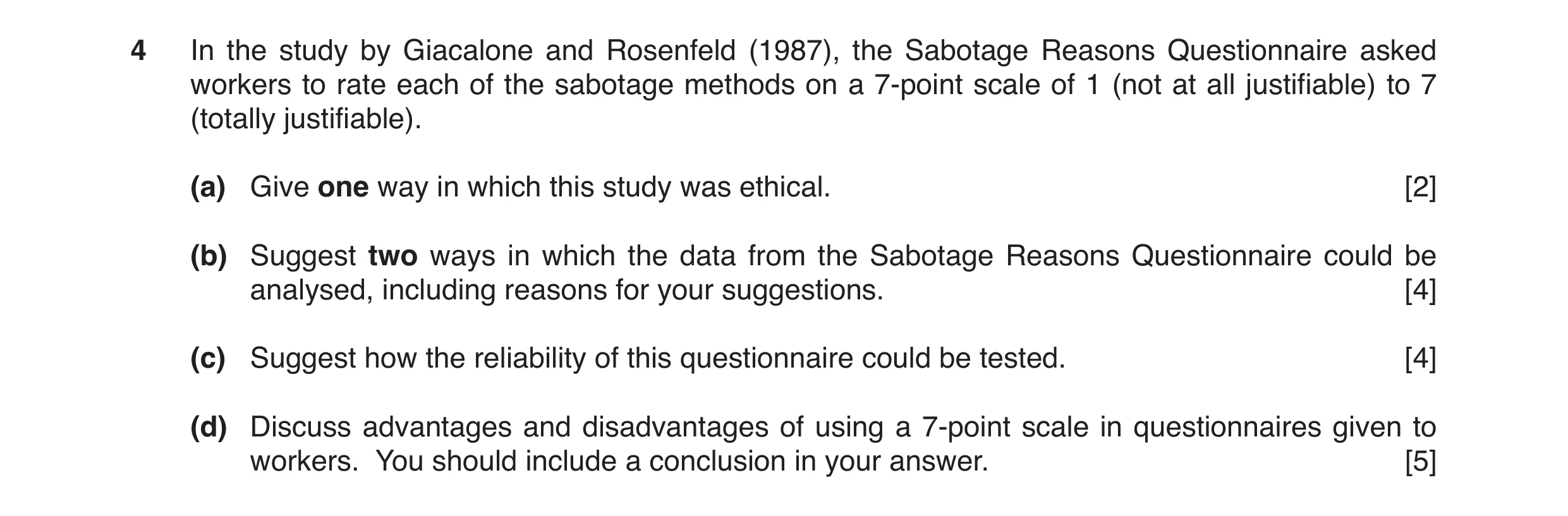
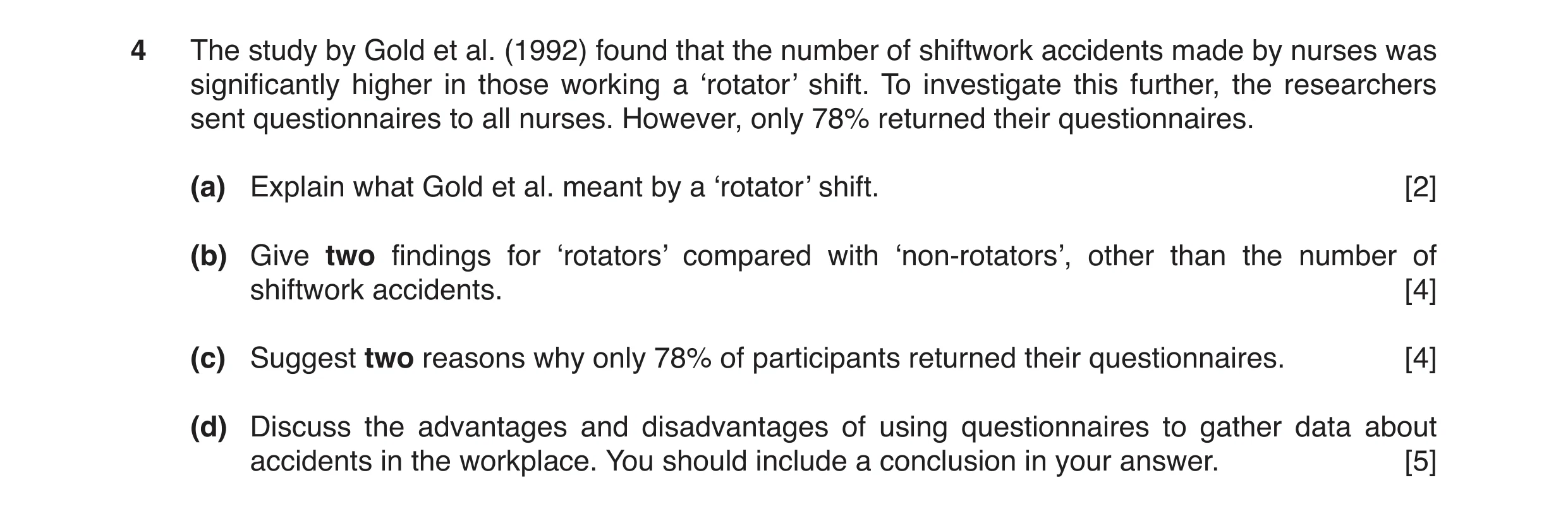
![Question 3: (a) Design a study using a questionnaire to investigate management perceptions of bullying at work. [10] (b) Explain the psychological and …](https://img.pastlit.com/crops/f08eebab-62ad-4693-8b8f-6314d36b9177/q8.webp)
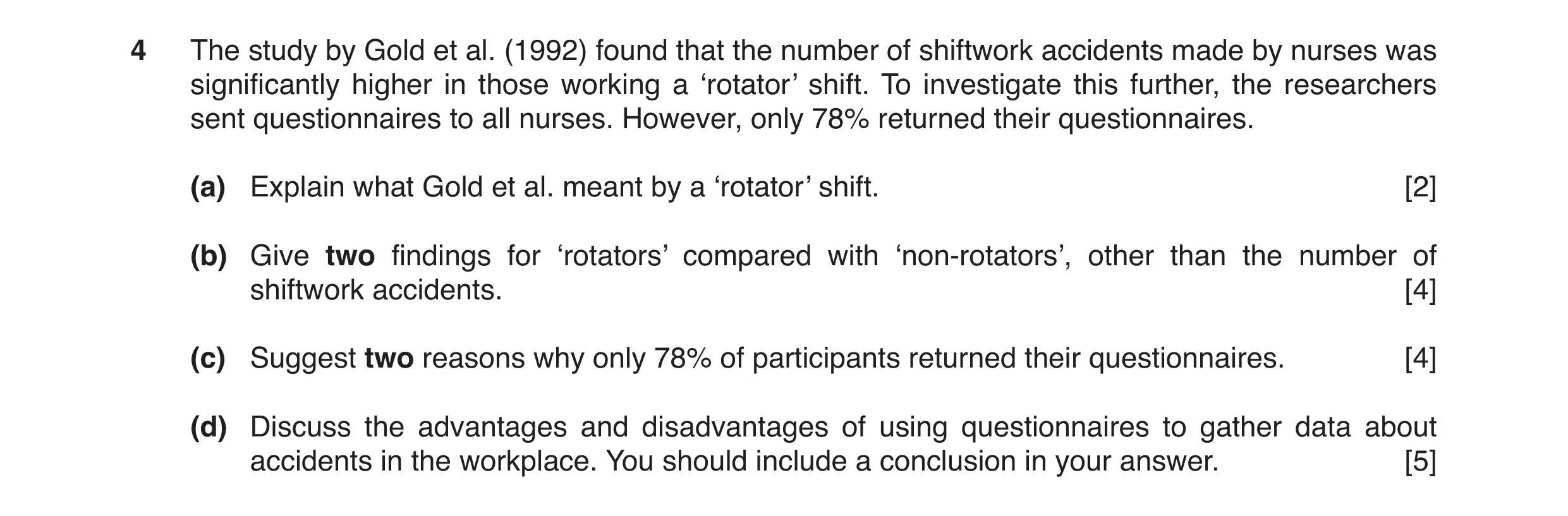 1 / 12
![Question 5: (a) Design a study using a questionnaire to investigate management perceptions of bullying at work. [10] (b) Explain the psychological and …](https://img.pastlit.com/crops/332fba13-81b3-41e4-a115-37b5ea2eb524/q8.webp)
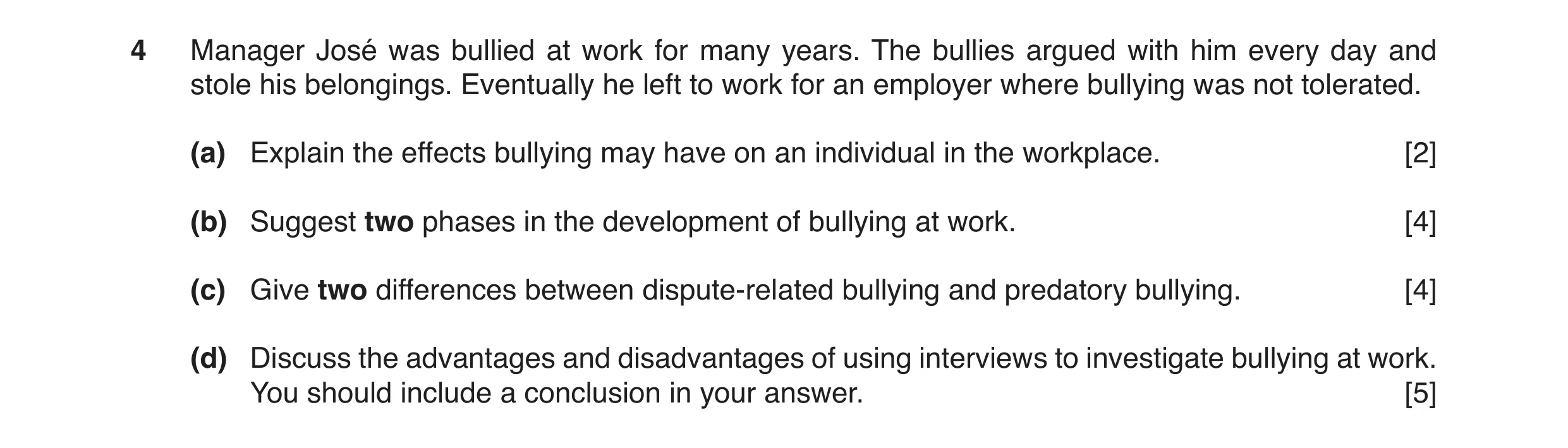
![Question 8: (a) Design a study to investigate worker preference for the metropolitan or the continental rapid rotation system of shiftwork. [10] (b) Ex…](https://img.pastlit.com/crops/11560810-75b8-4e27-9544-e6c67d2cefca/q8.webp) 2 / 12
2 / 12
 3 / 12
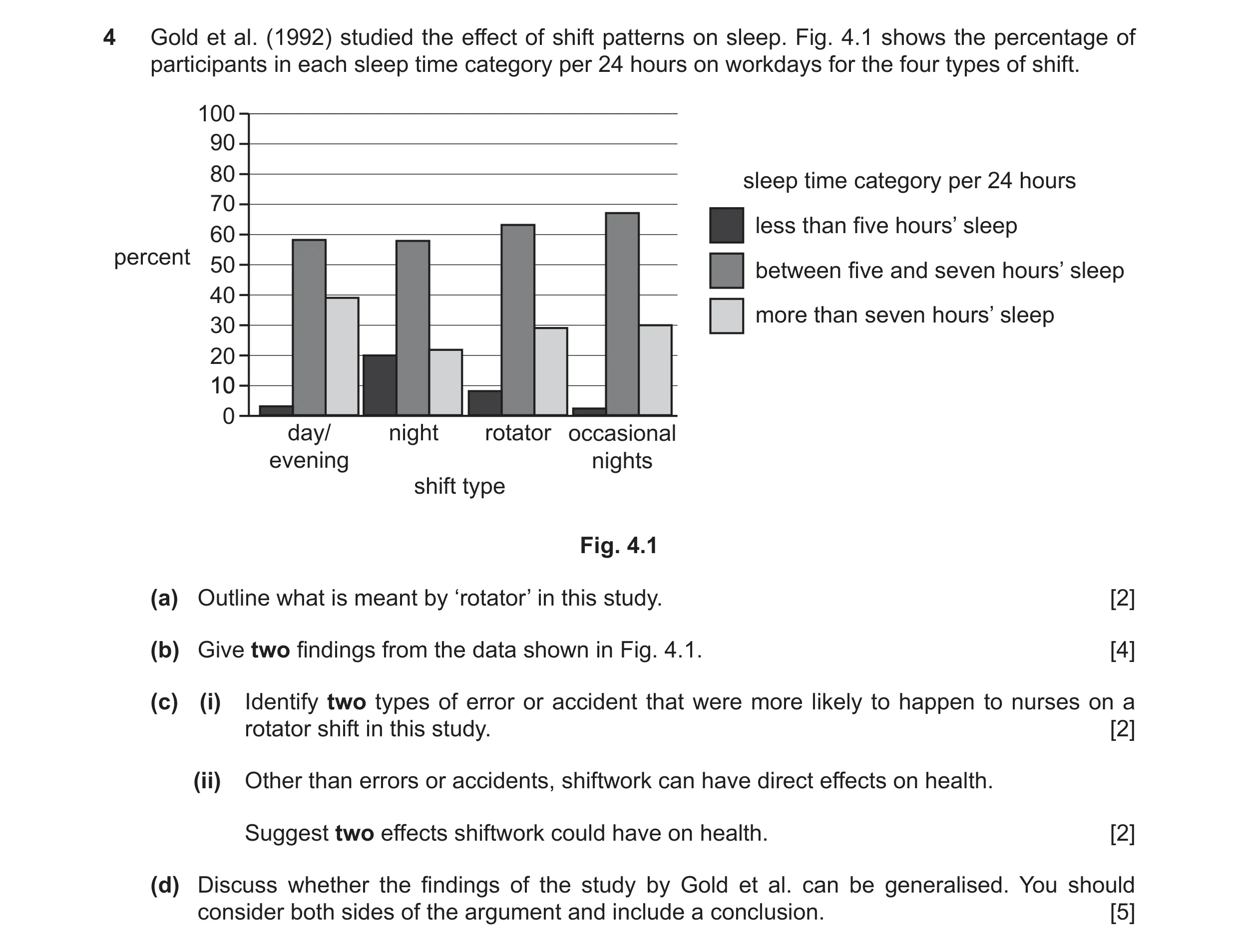 4 / 12
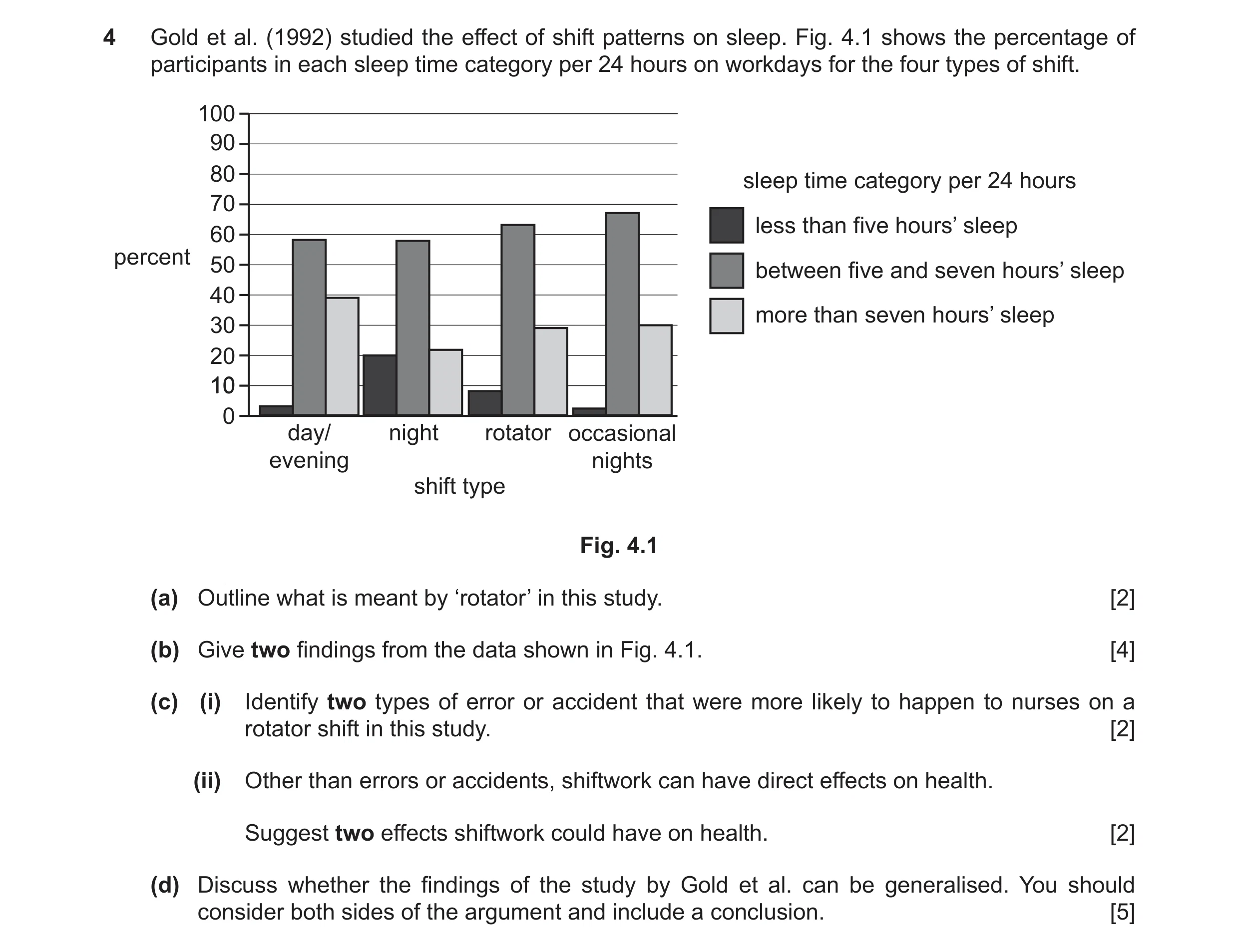 5 / 12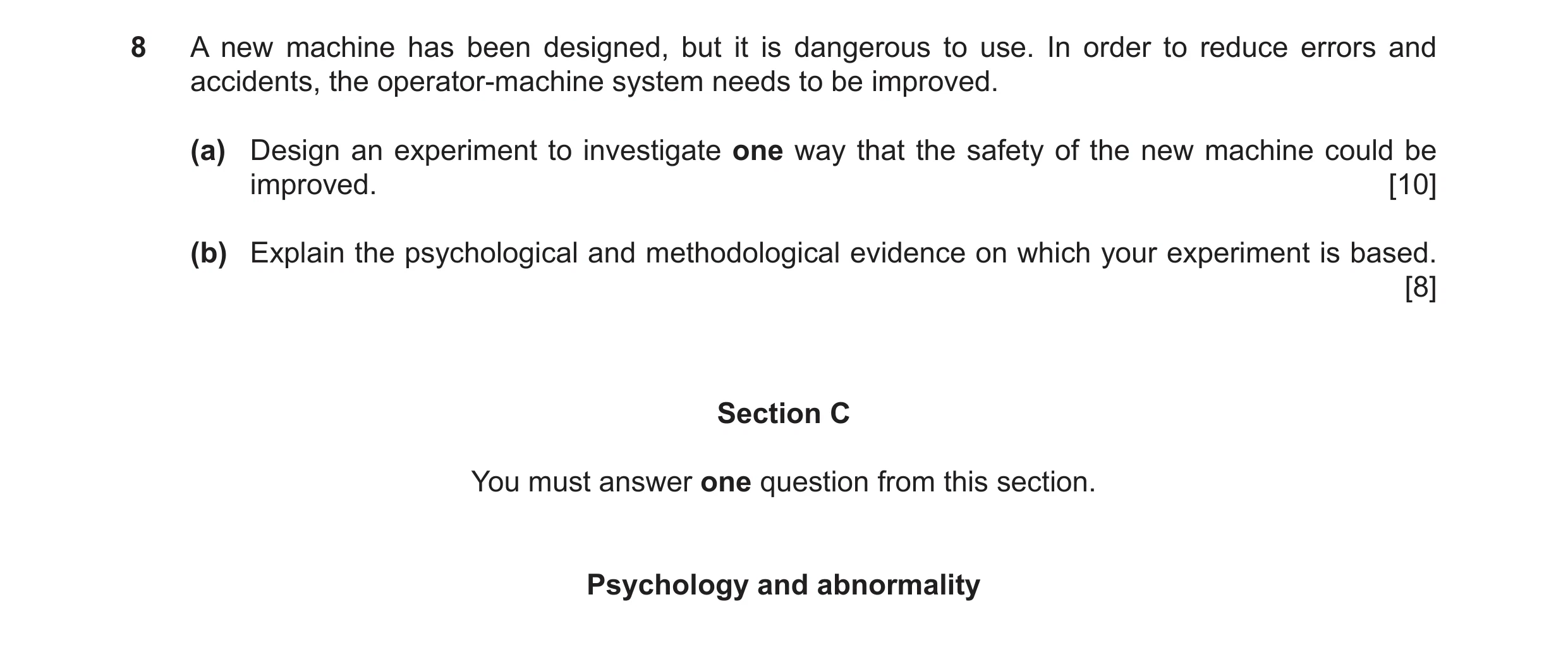

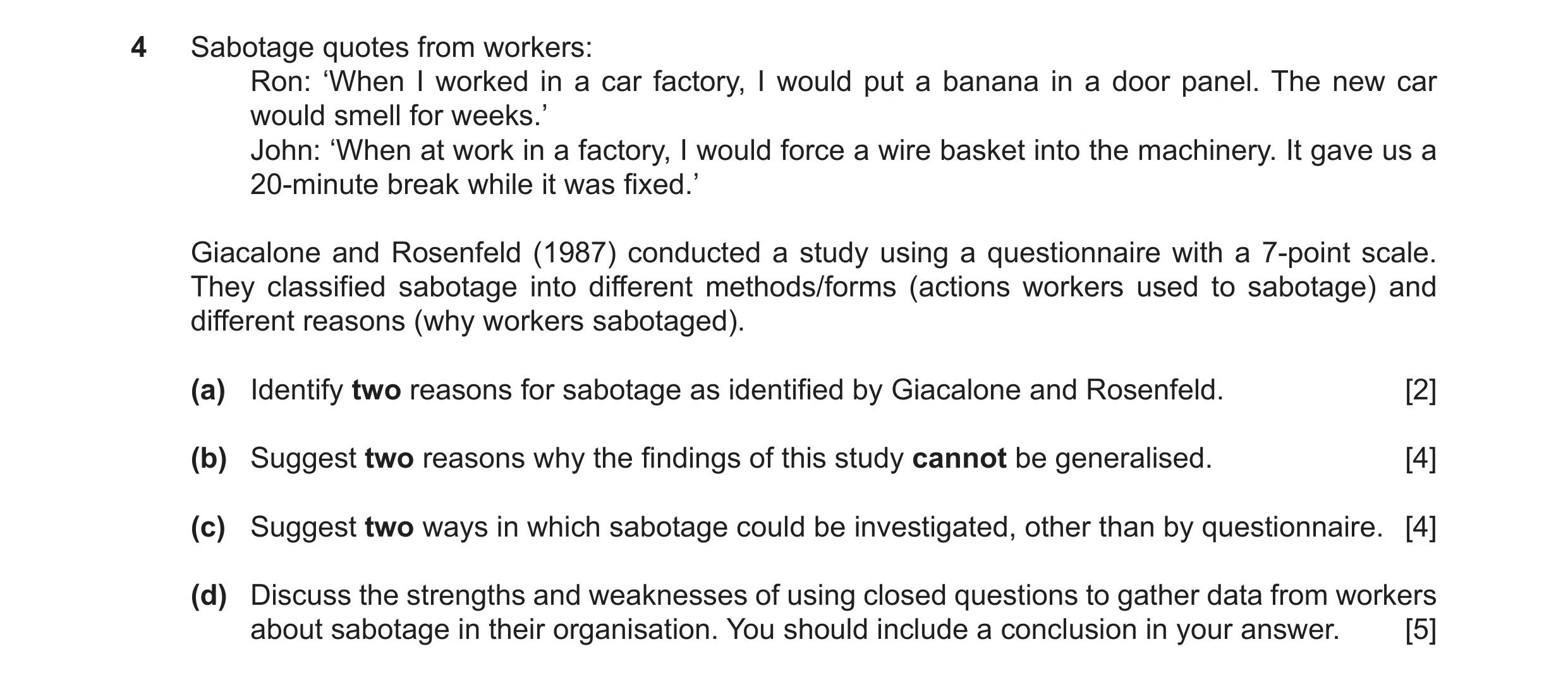
 6 / 12
![Question 20: (a) Explain what is meant by the term ‘workplace sabotage’. [2] (b) Suggest one open question that workers could be asked about reasons for…](https://img.pastlit.com/crops/fb362ec3-a787-4fc0-a4ff-b935dbdfebba/q8.webp)
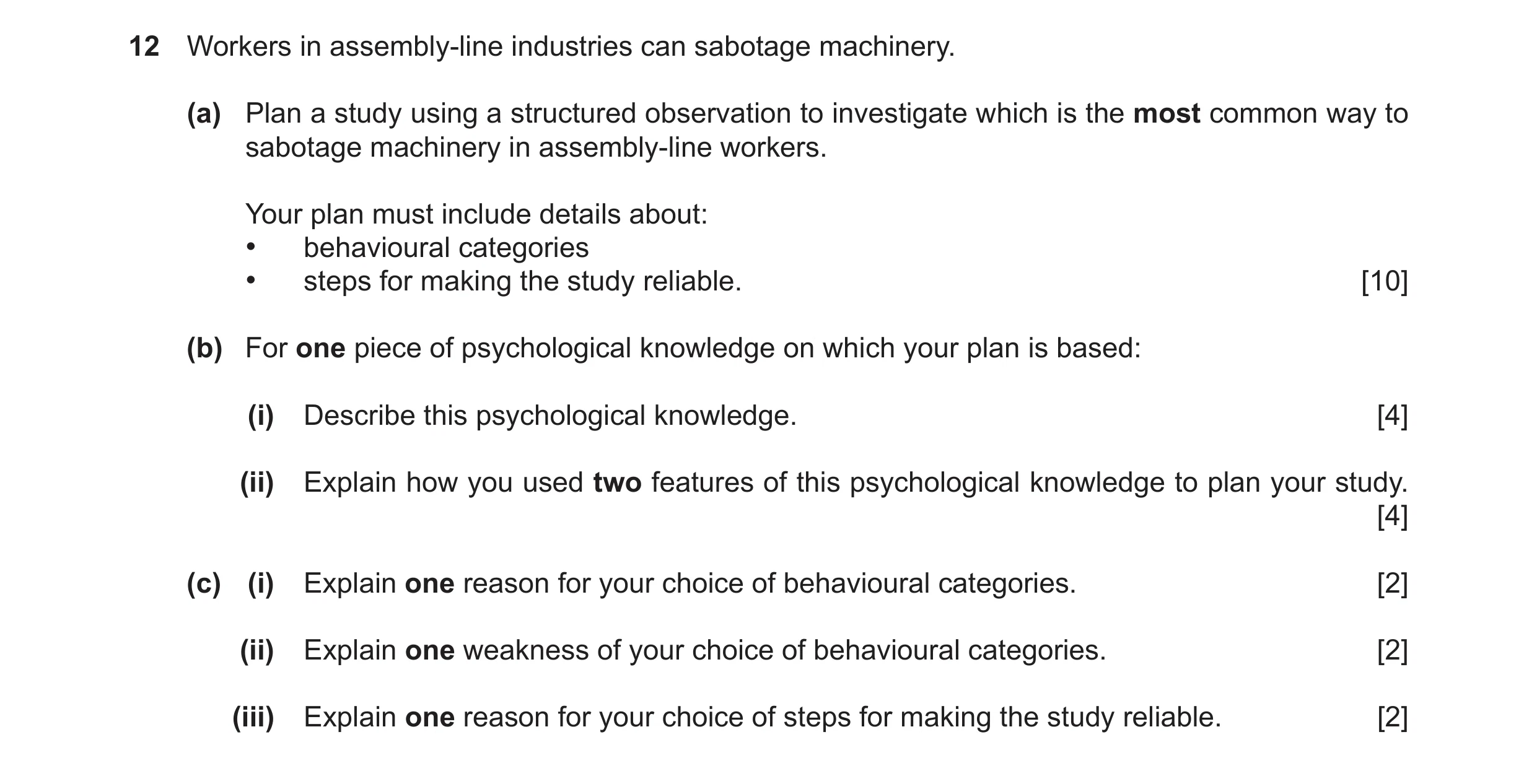
![Question 22: (a) Explain what is meant by the term ‘workplace sabotage’. [2] (b) Suggest one open question that workers could be asked about reasons for…](https://img.pastlit.com/crops/6f46166b-89b0-45c4-b73a-1051e98f85ba/q8.webp) 7 / 12
7 / 12
 8 / 12
![Question 28: From the key study by Swat (1997) on monitoring accidents and risk events: (a) Outline two causes of accidents identified by Swat. [4] (b) …](https://img.pastlit.com/crops/498fd2b9-779d-498b-91aa-540a4ef65650/q7.webp) 9 / 12
9 / 12
![Question 30: (a) Explain what is meant by an ‘error of commission’ when investigating accidents at work. [2] (b) Suggest one way in which an error of co…](https://img.pastlit.com/crops/50b4fd2a-8101-434e-95f5-673b15ac8cef/q8.webp)
 10 / 12
![Question 34: (a) Explain what is meant by an ‘error of commission’ when investigating accidents at work. [2] (b) Suggest one way in which an error of co…](https://img.pastlit.com/crops/175c06c6-f891-4afe-b8e9-7c043f168c2b/q8.webp) 11 / 12
11 / 12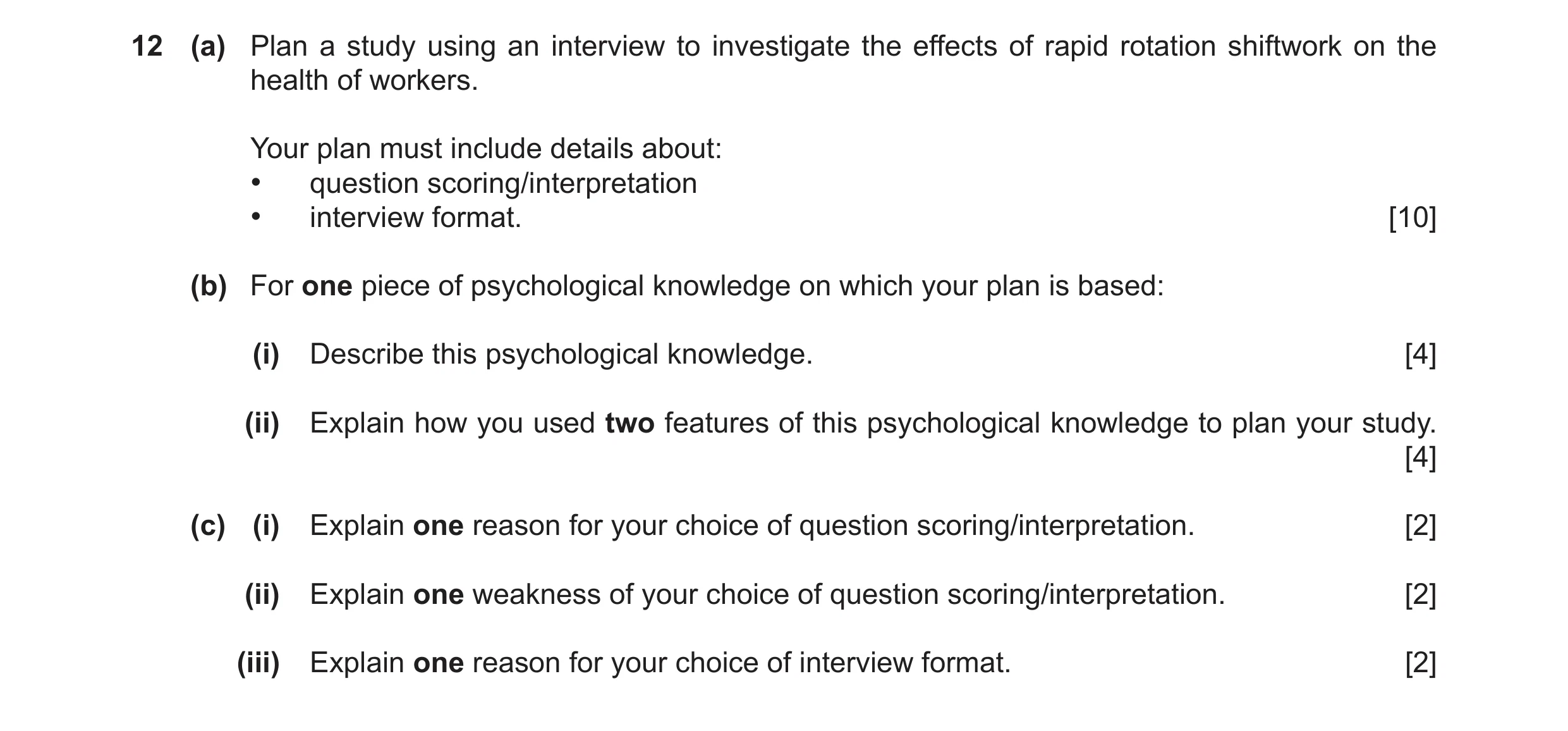 12 / 12
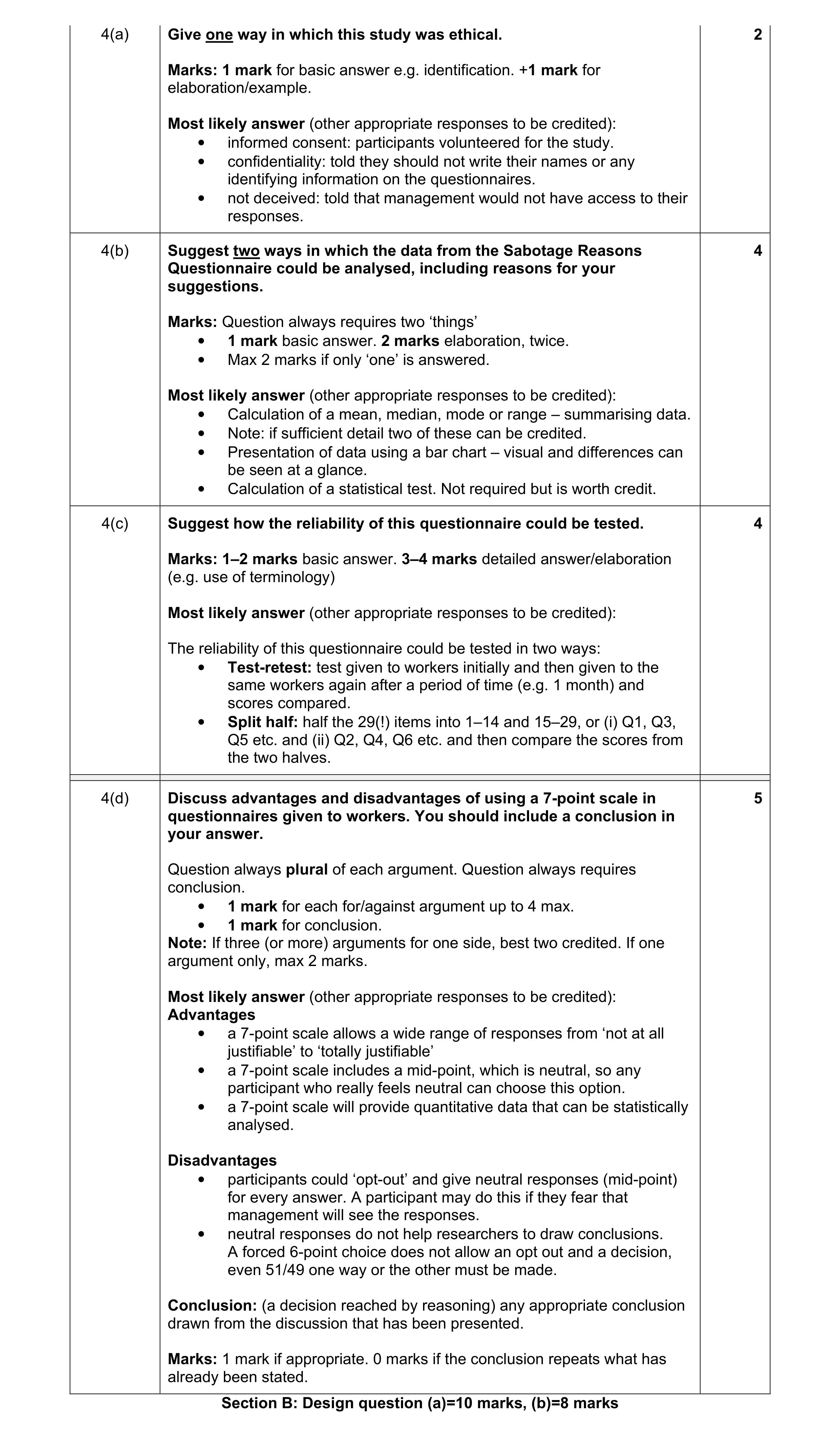 15
15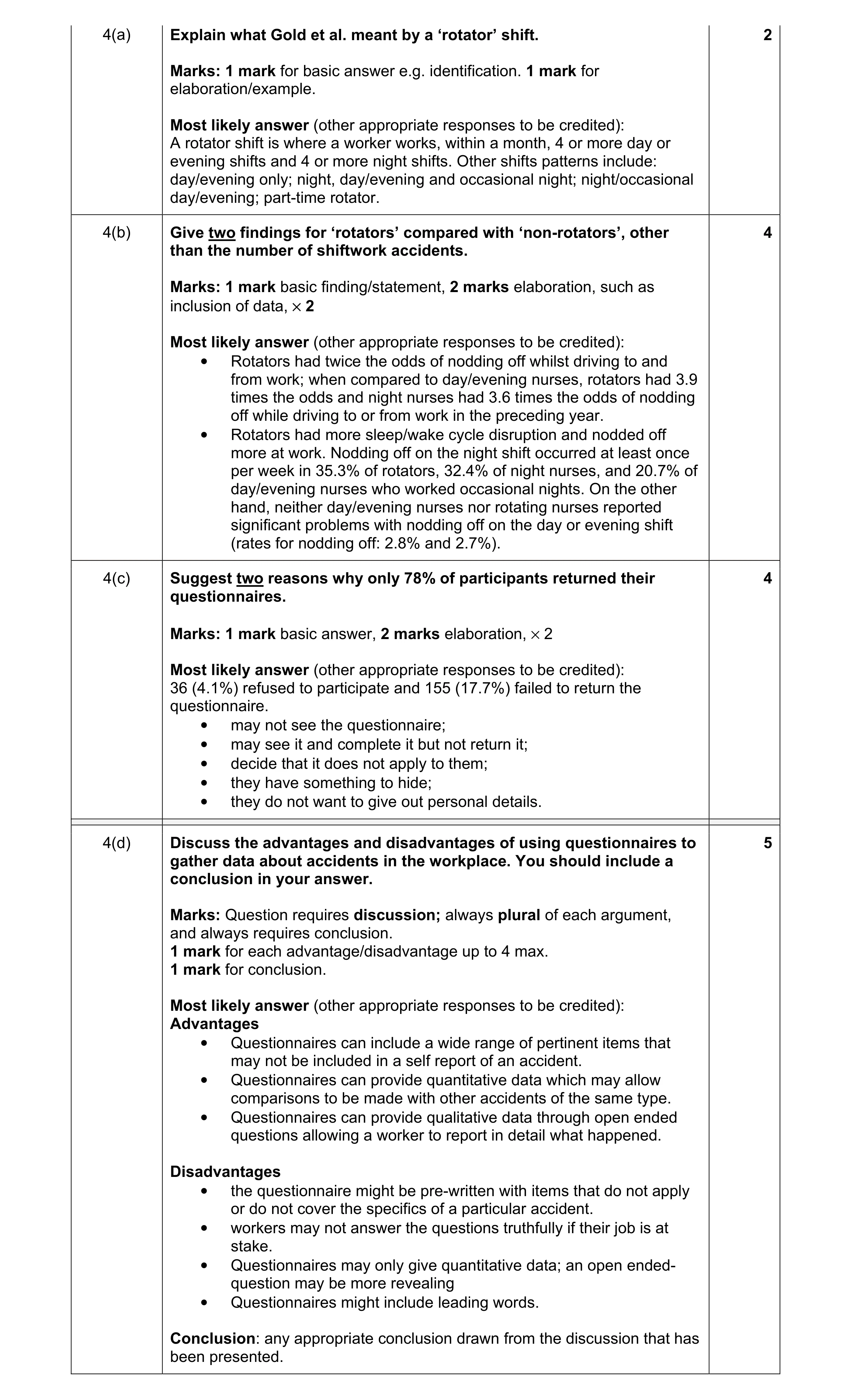 15
15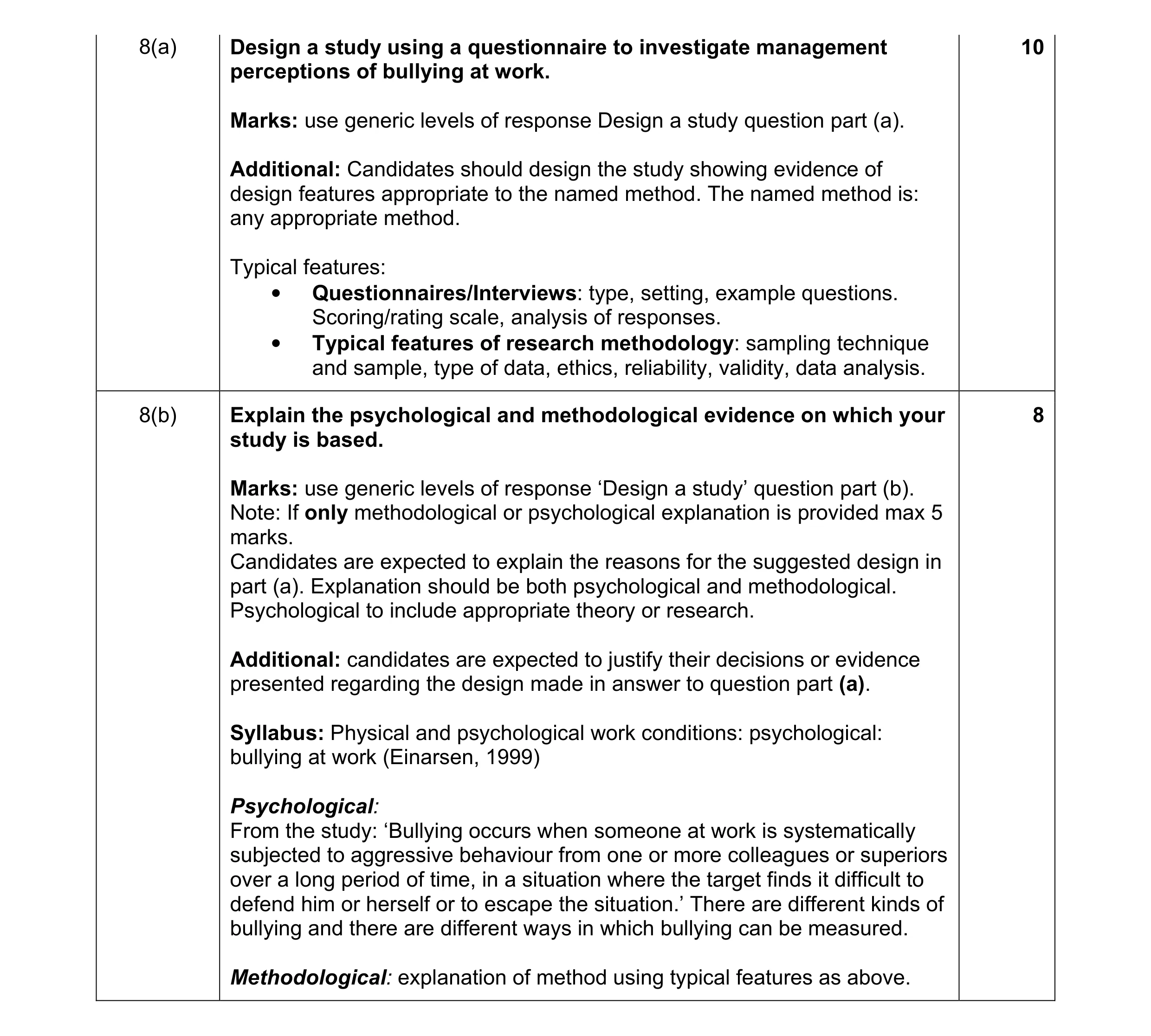 18
18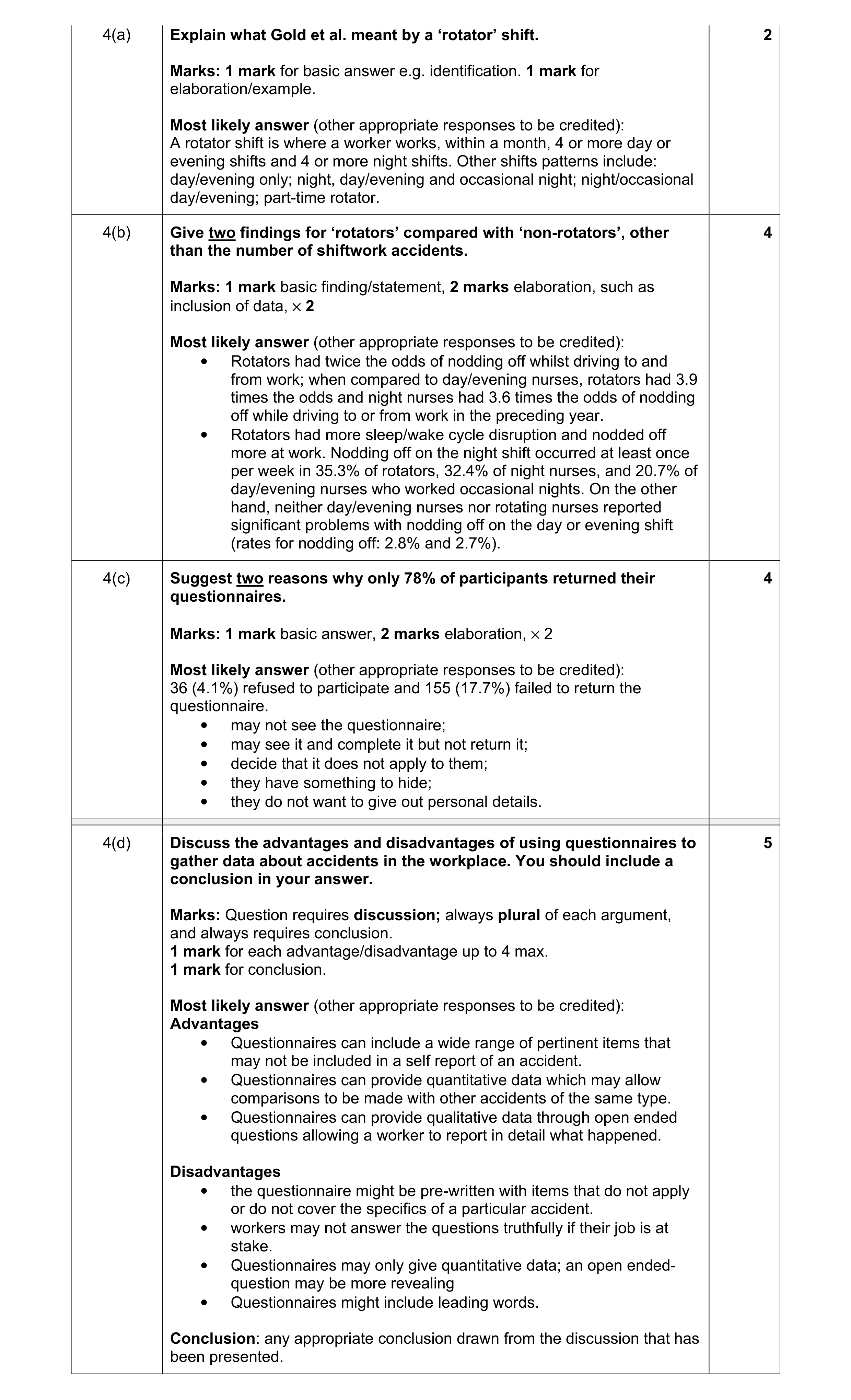 15
15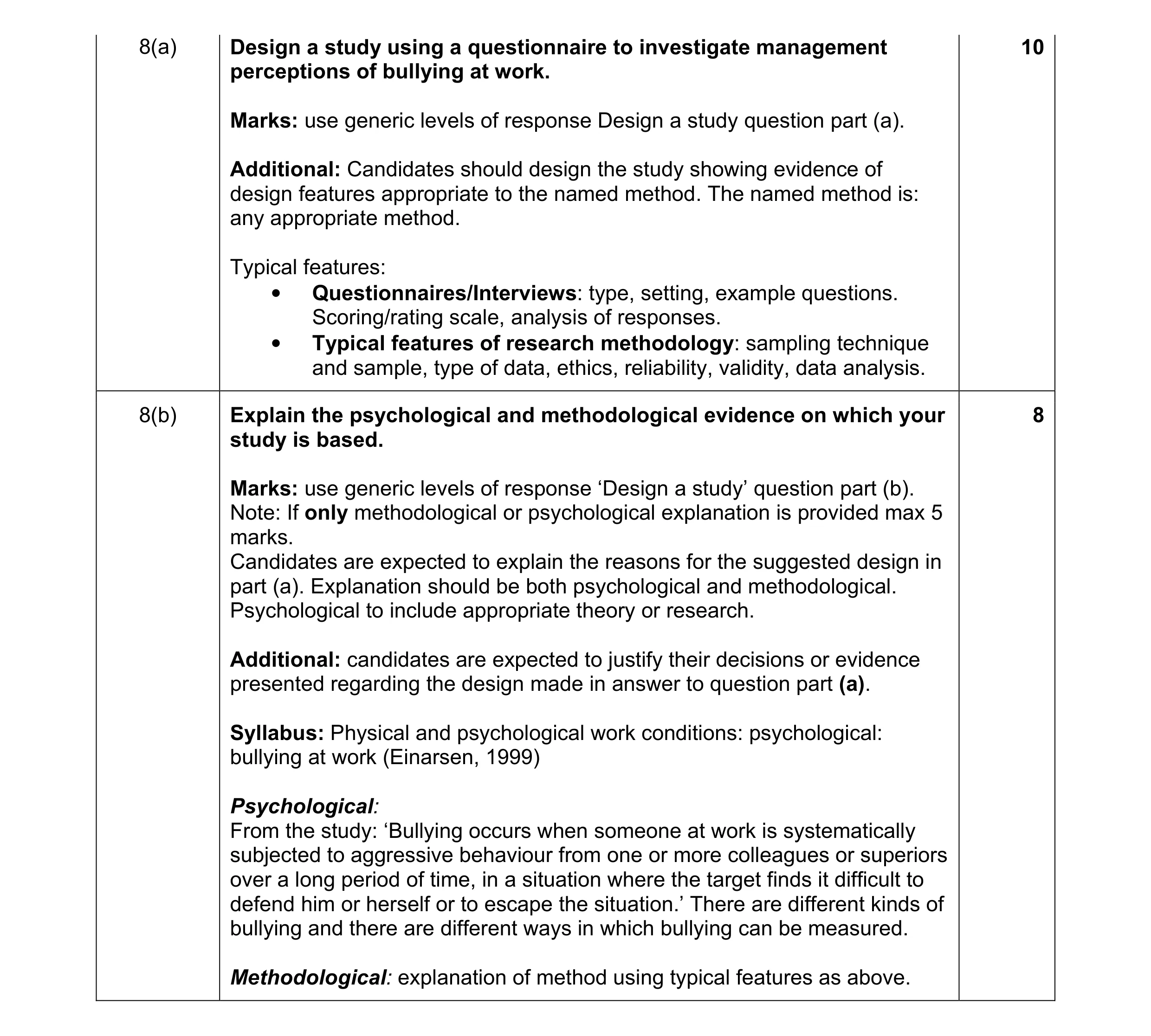 18
18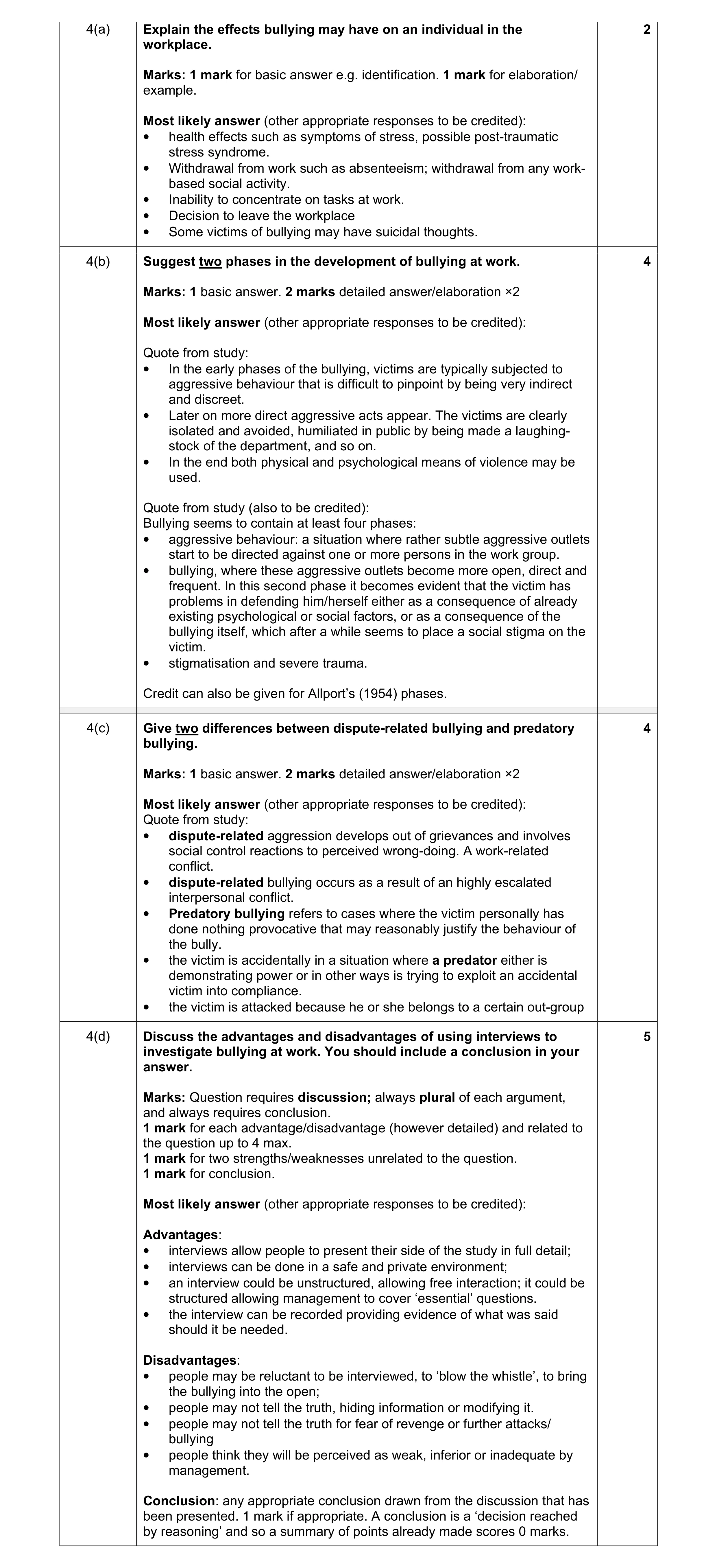 15
15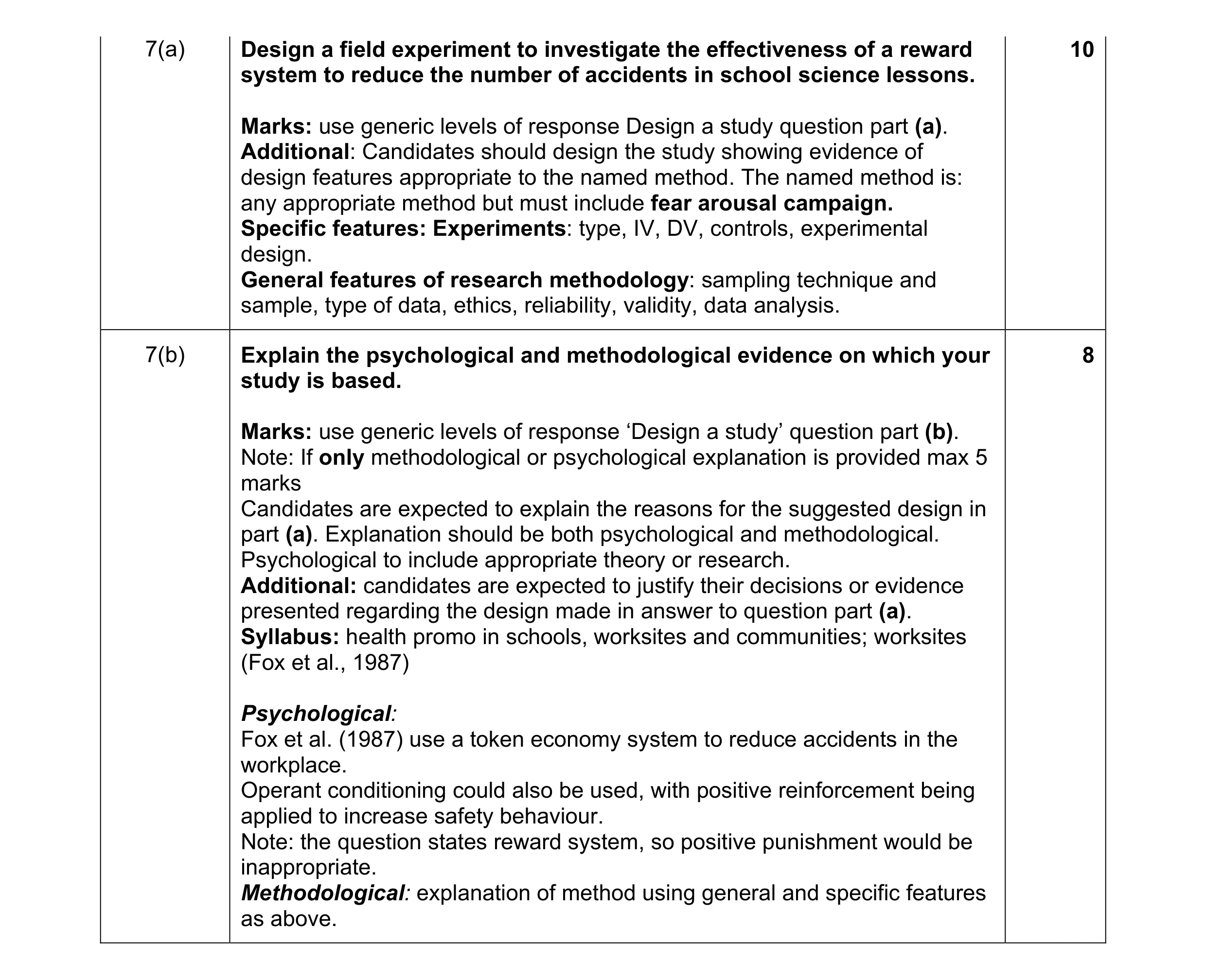 18
18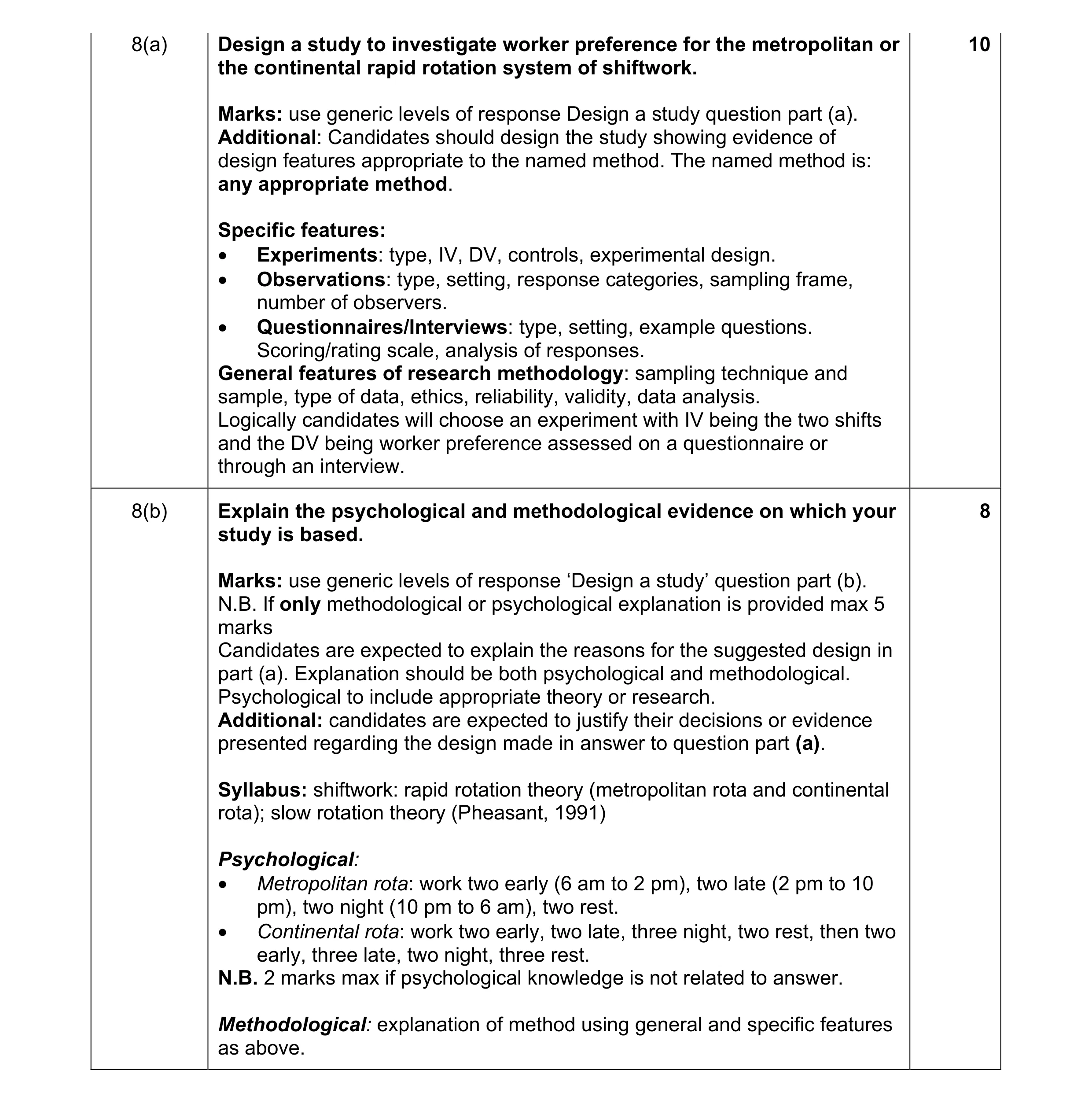 18
18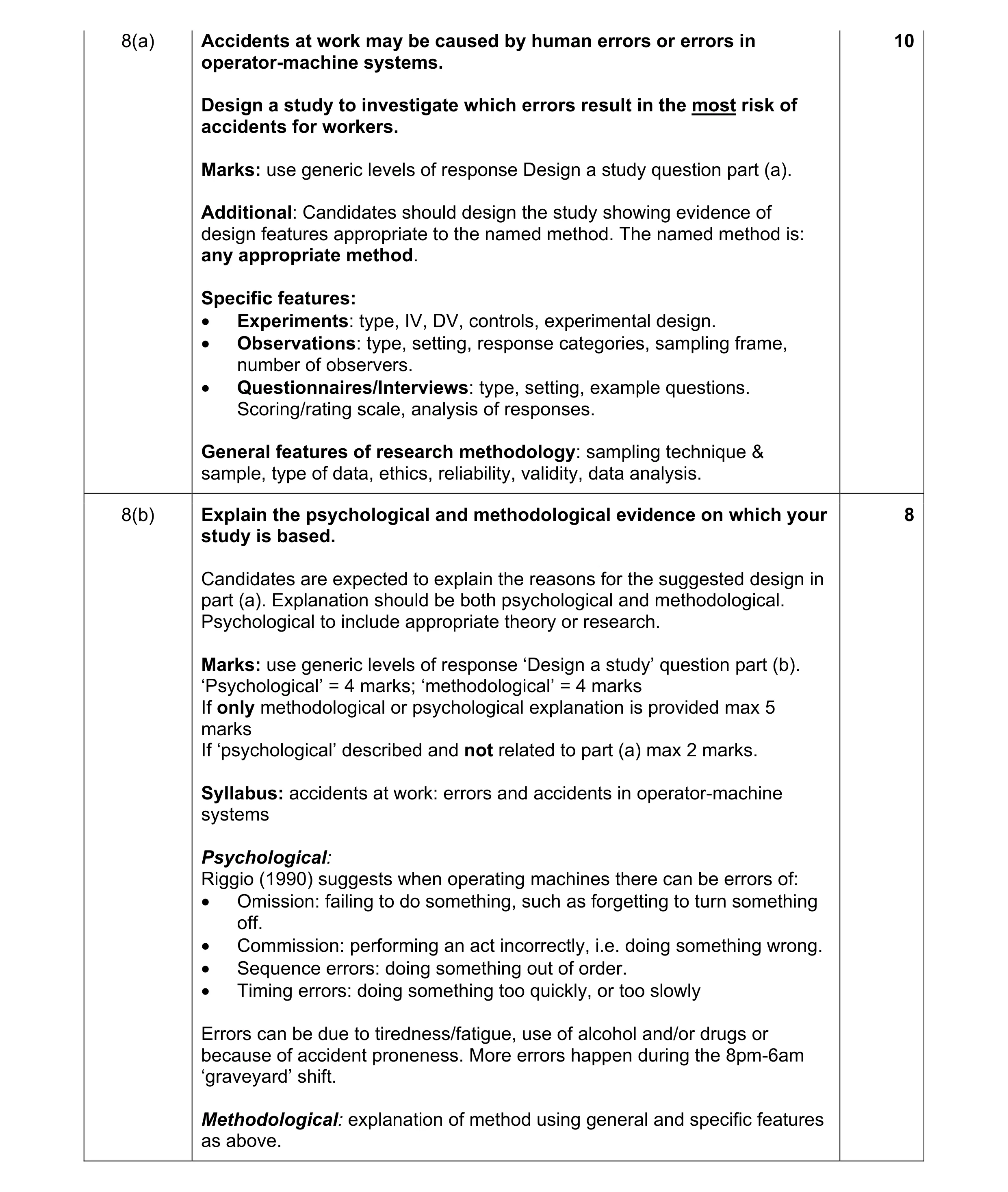 18
18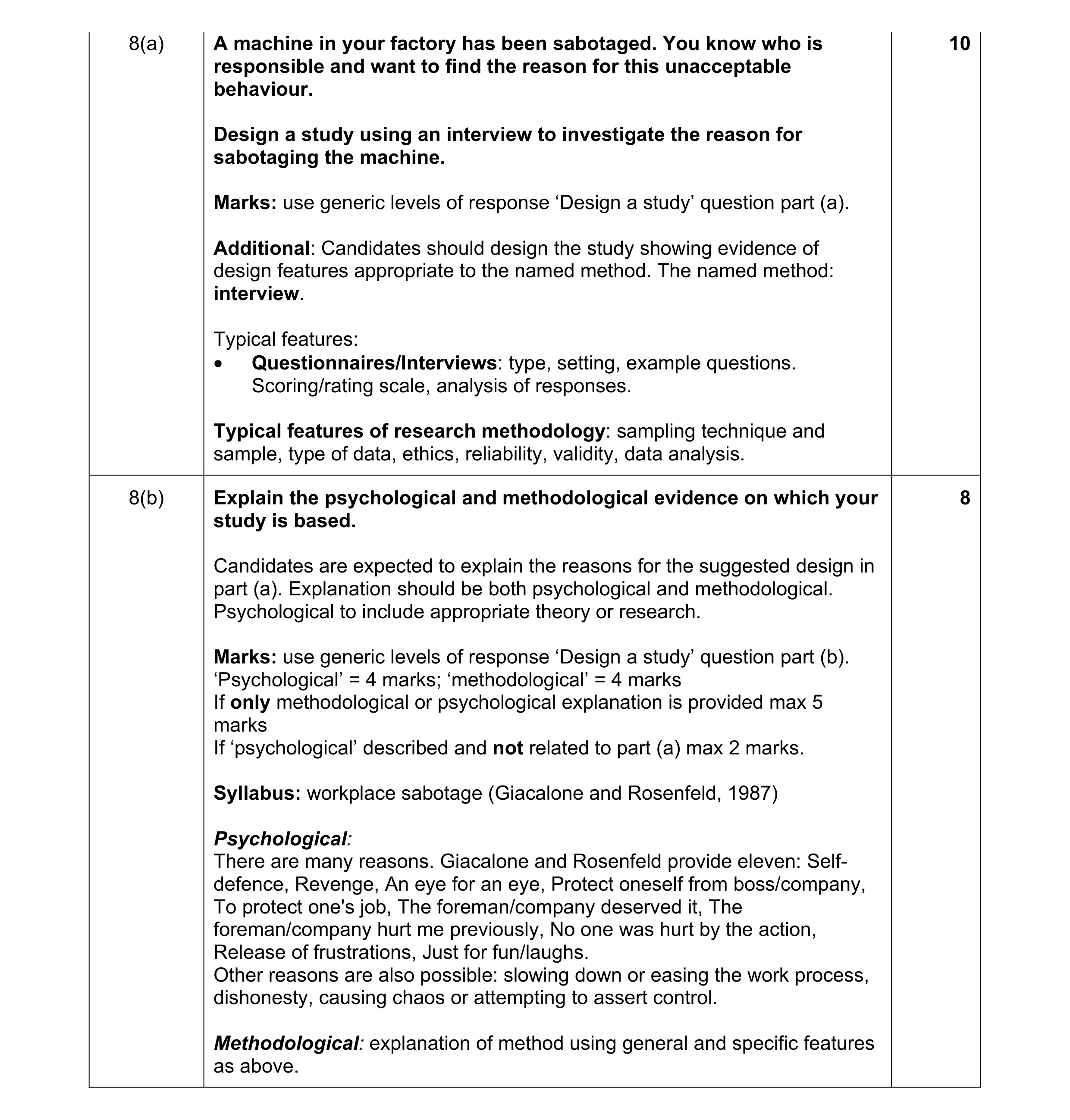 18
18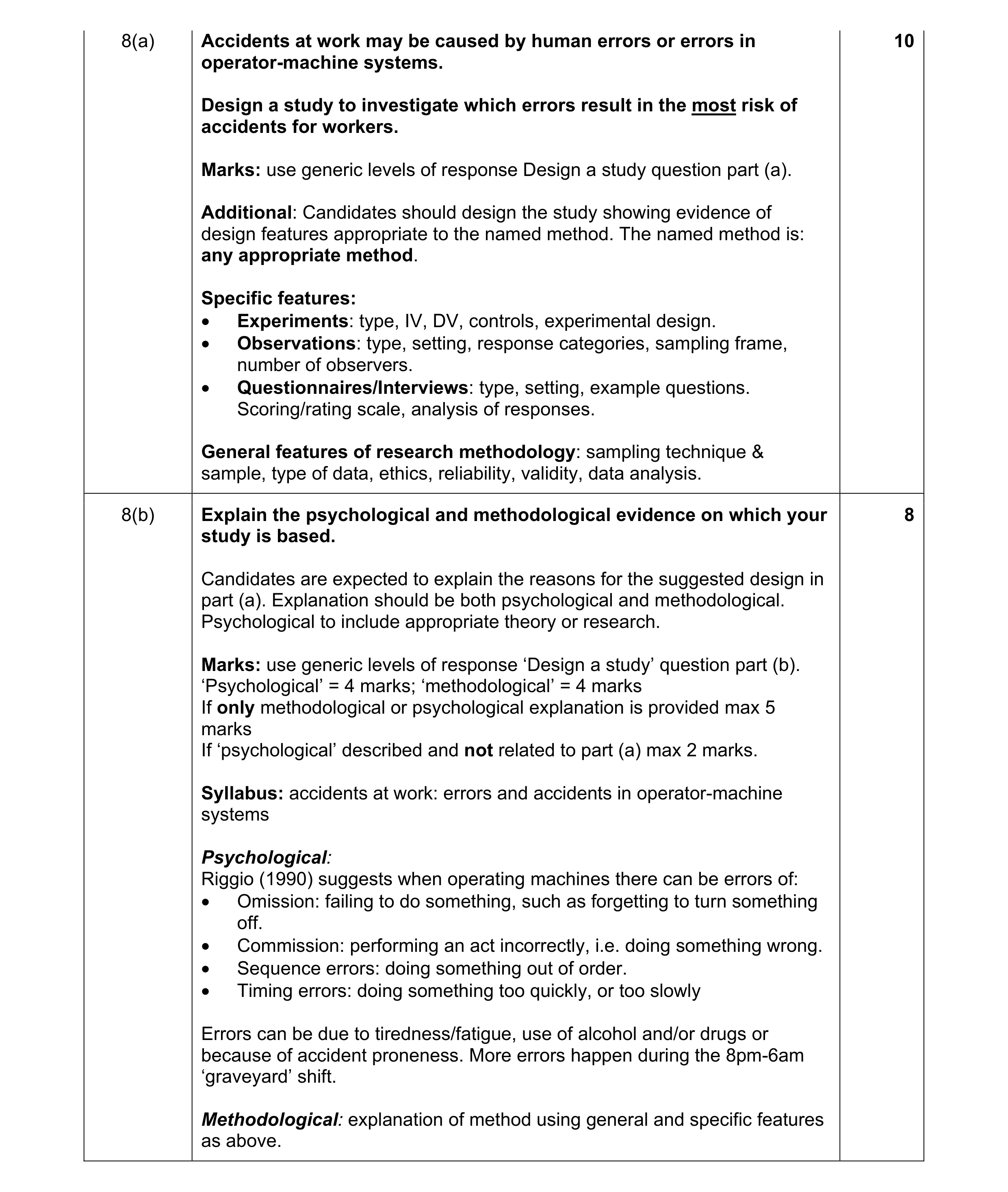 18
18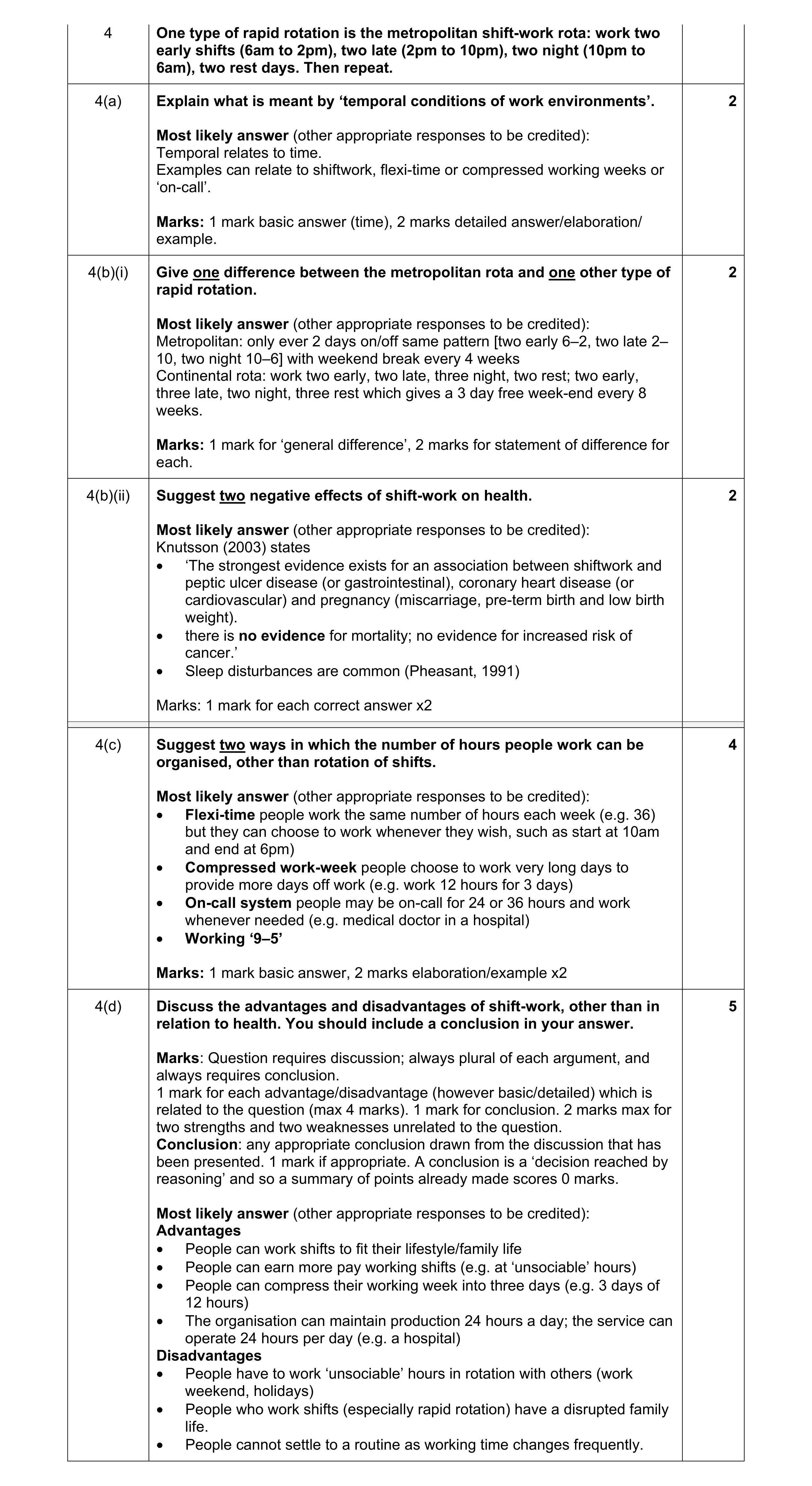 15
15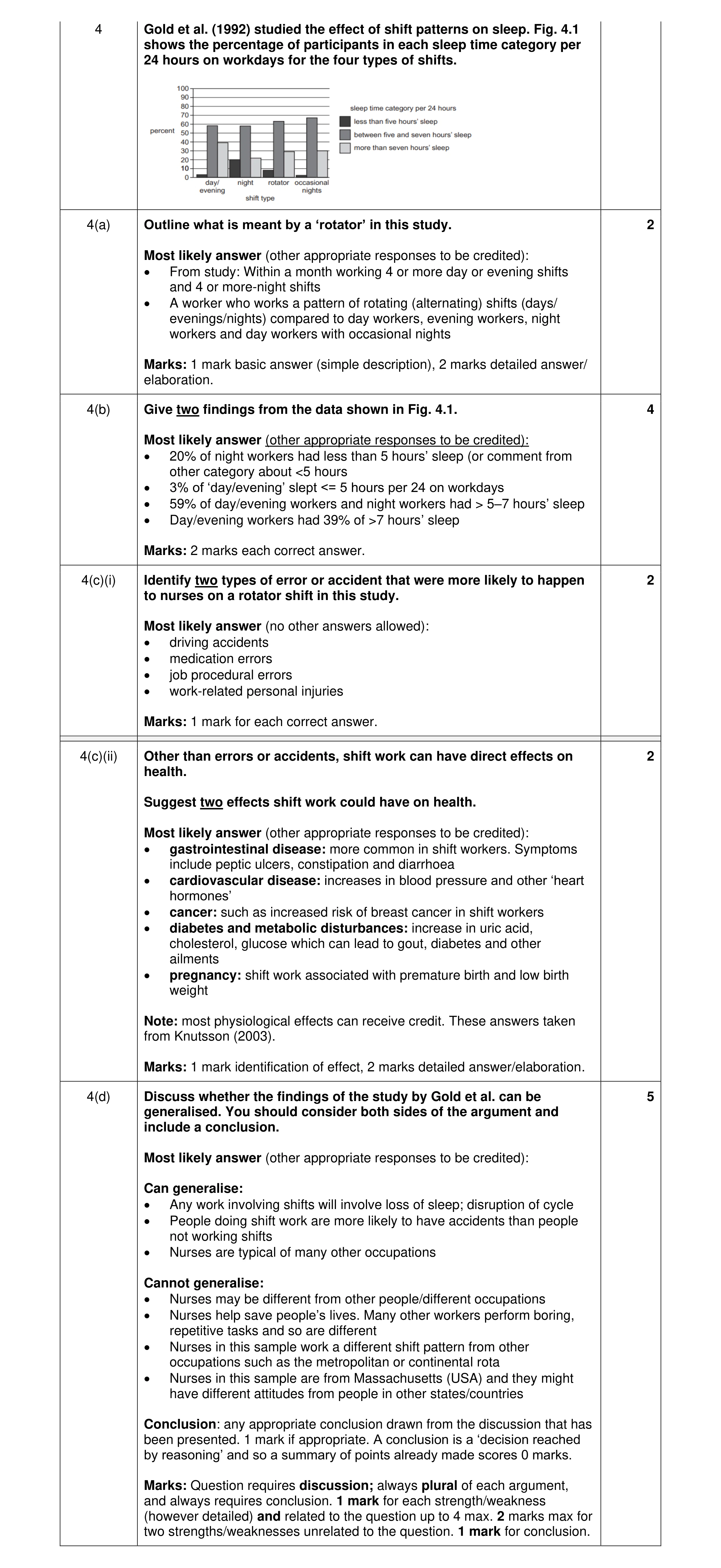 15
15 18
18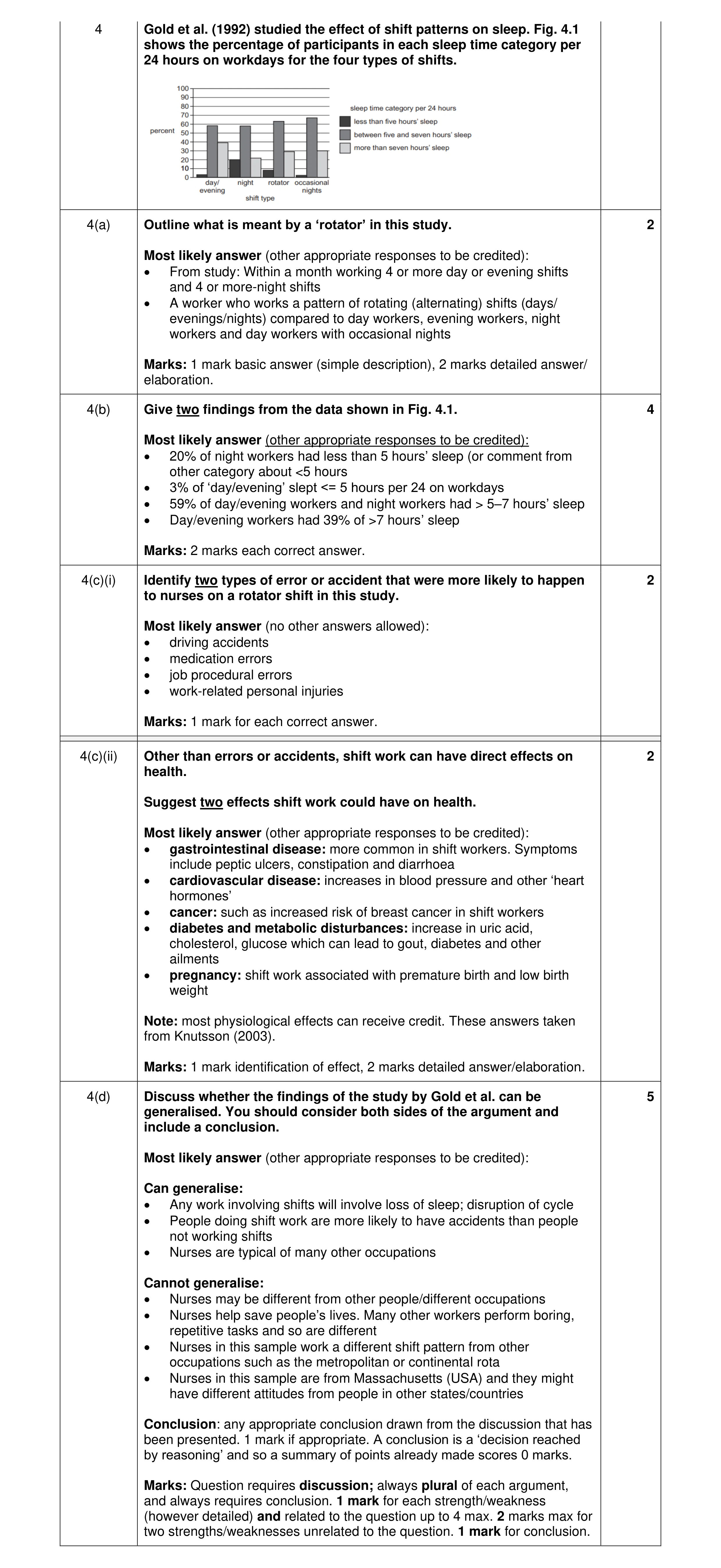 15
15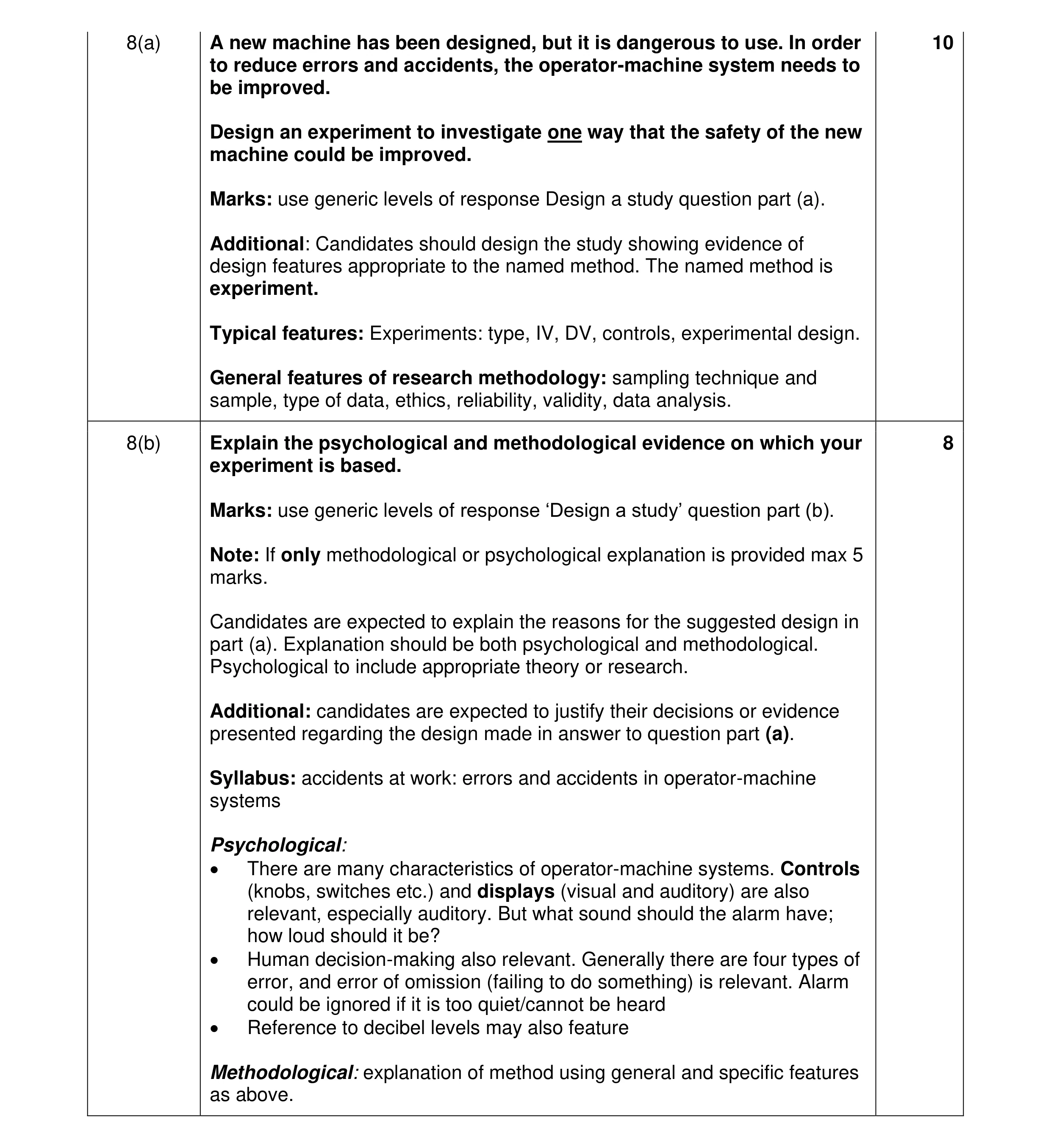 18
18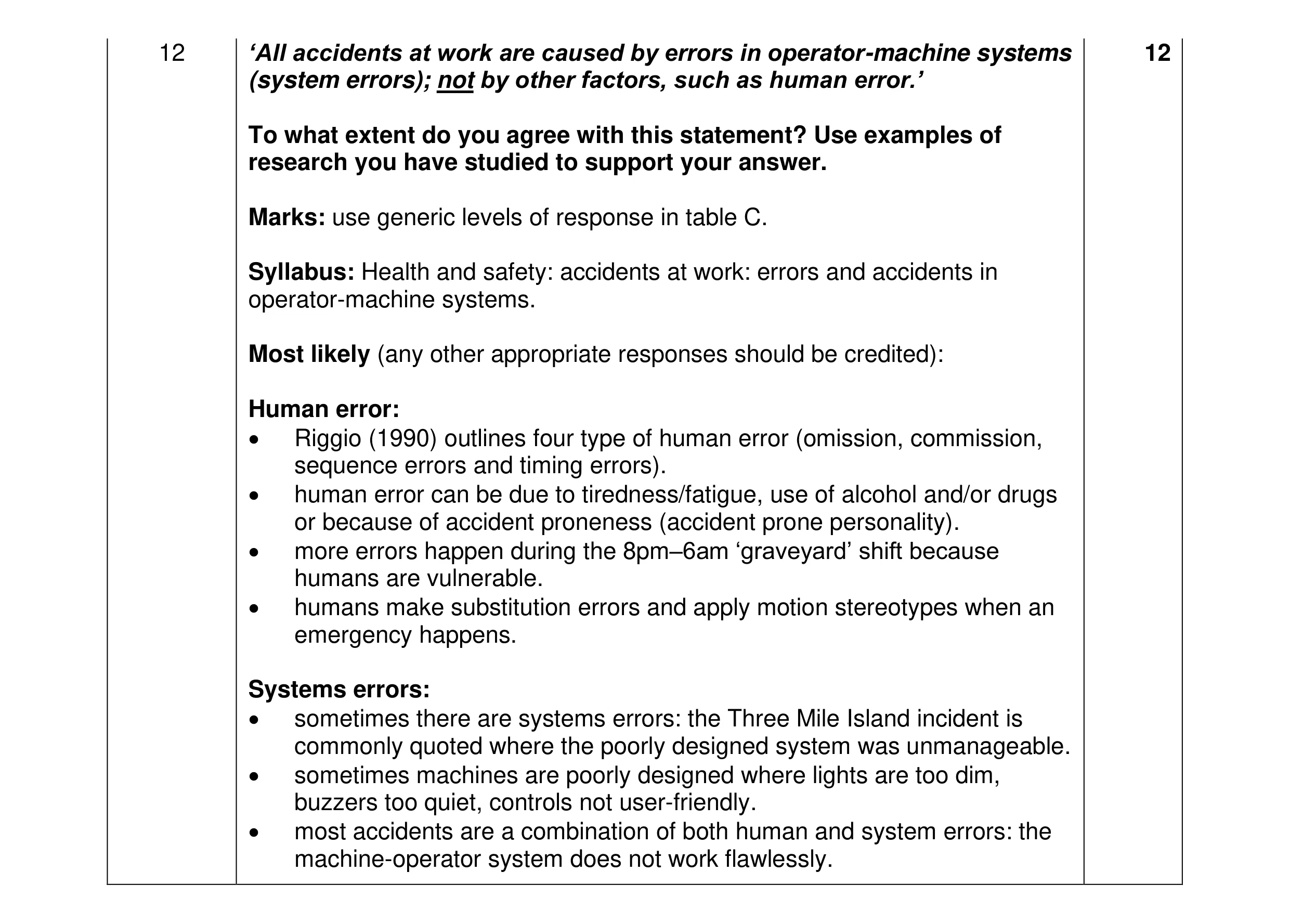 12
12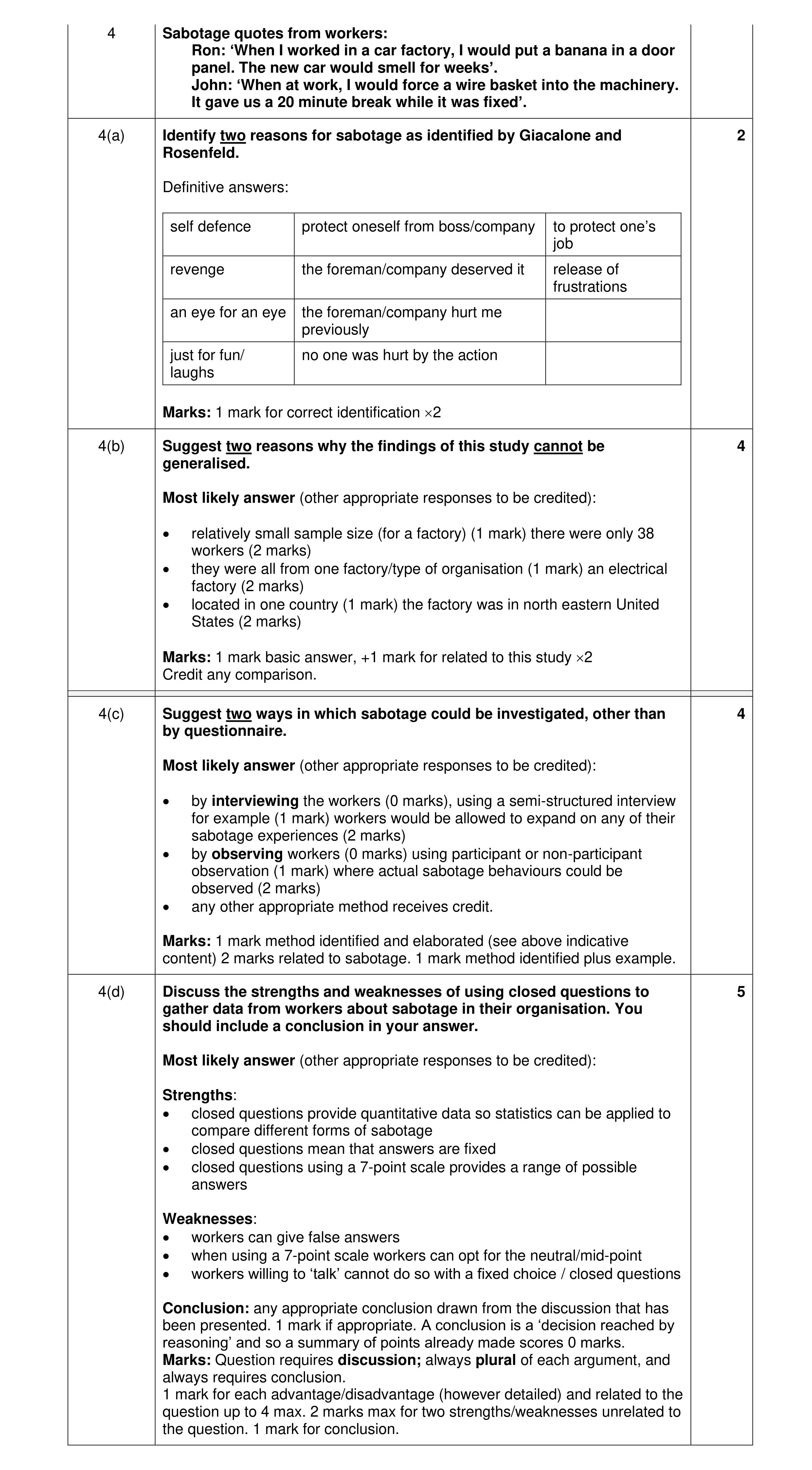 15
15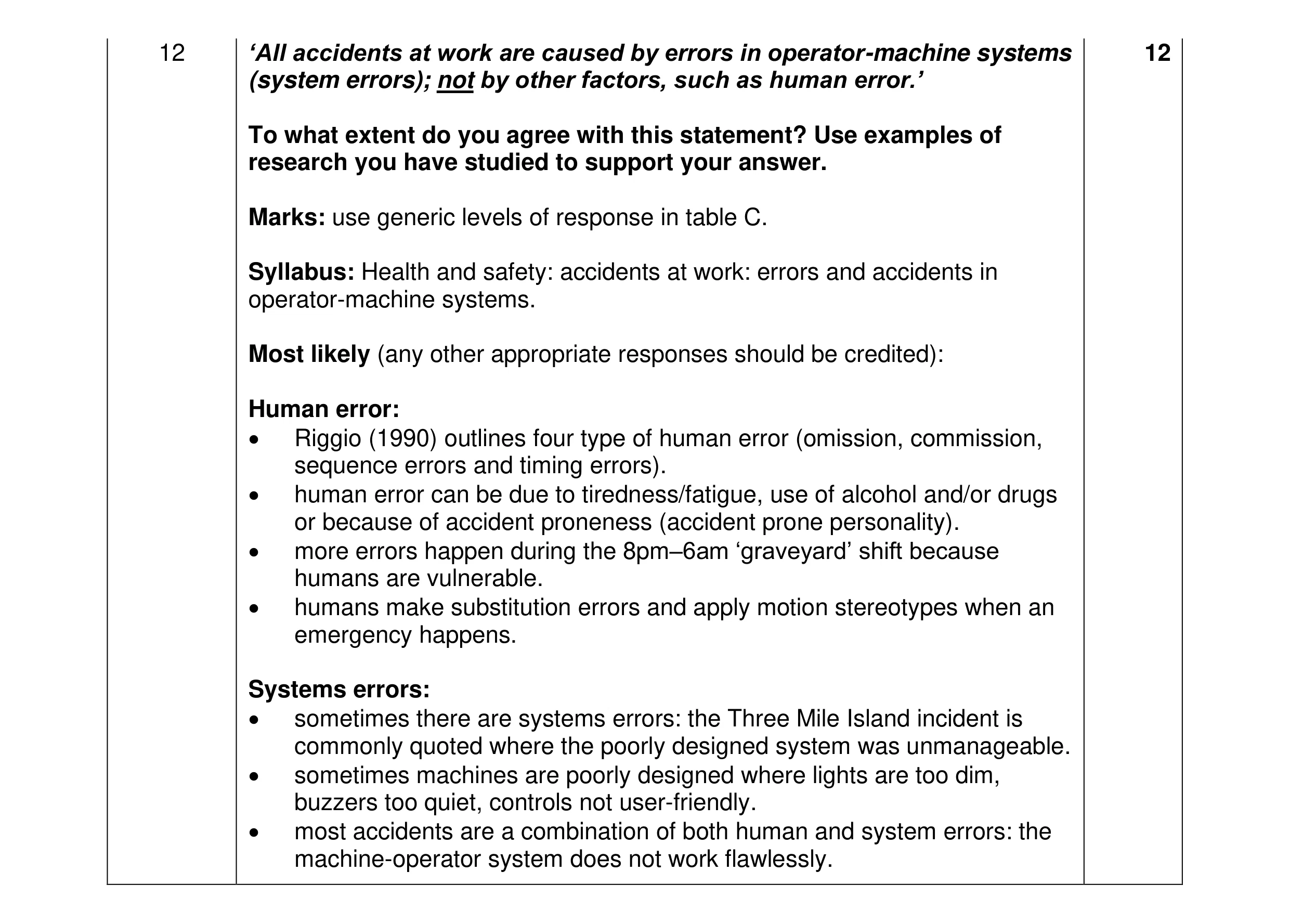 12
12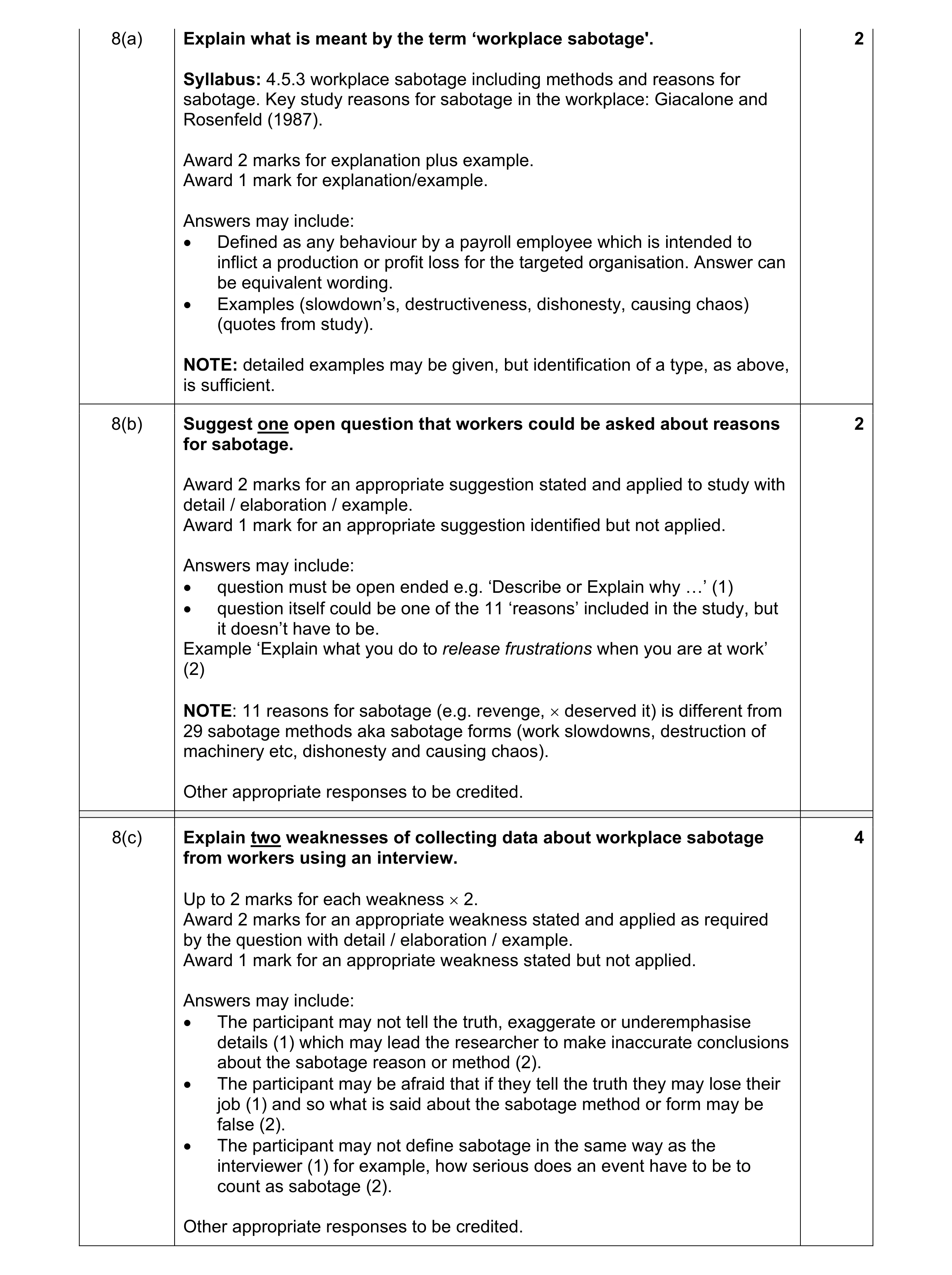 8
8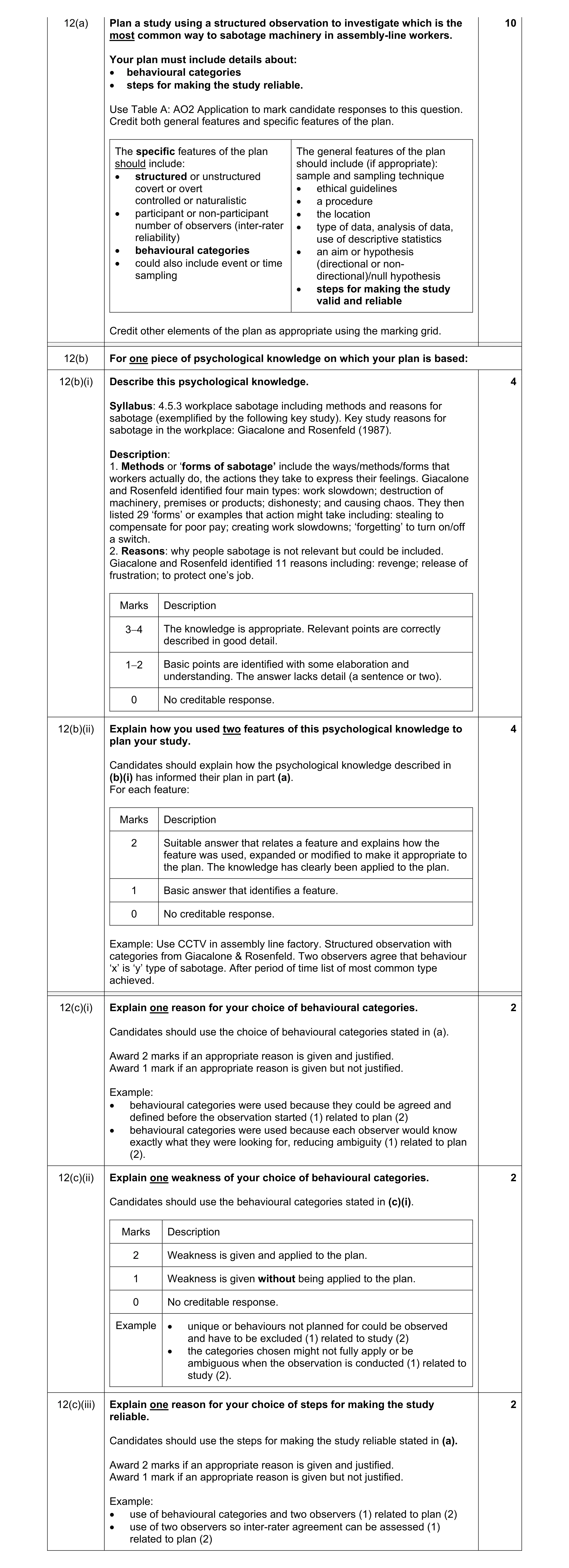 24
24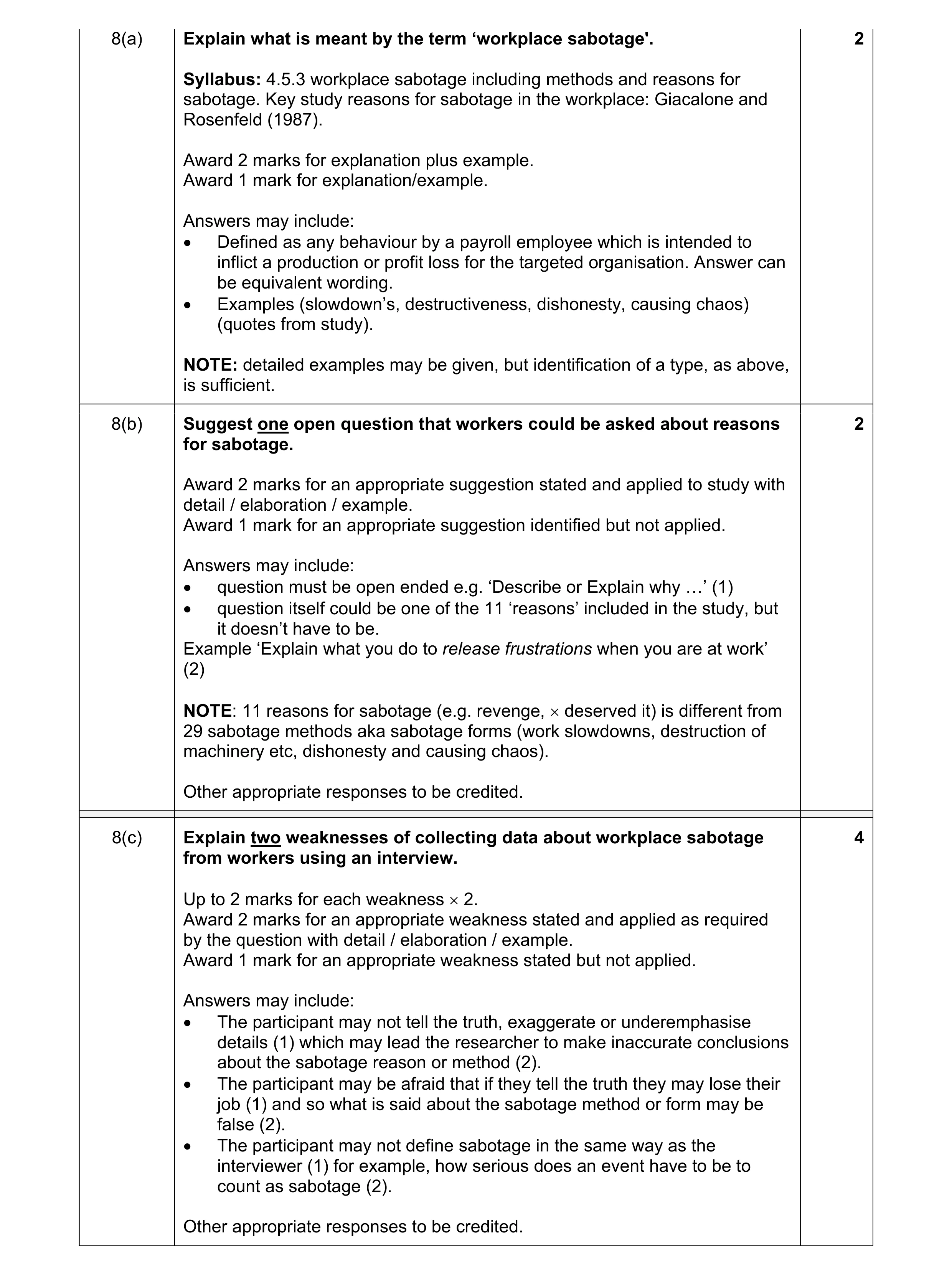 8
8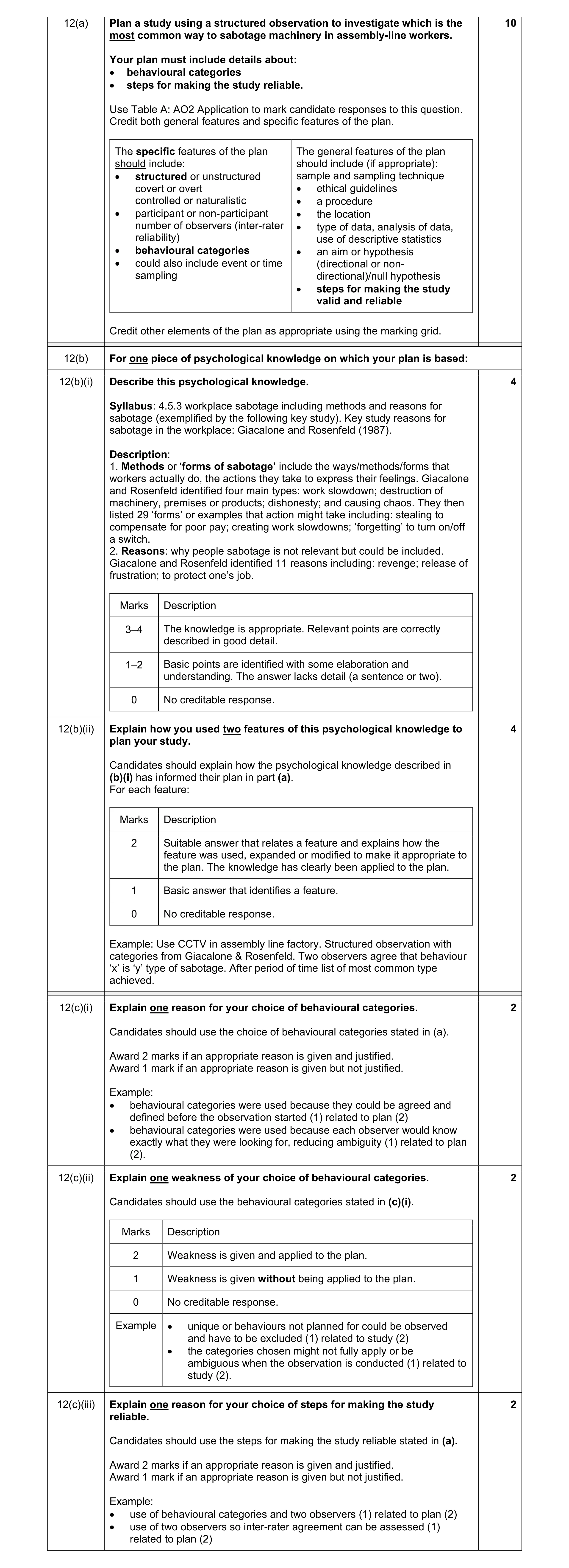 24
24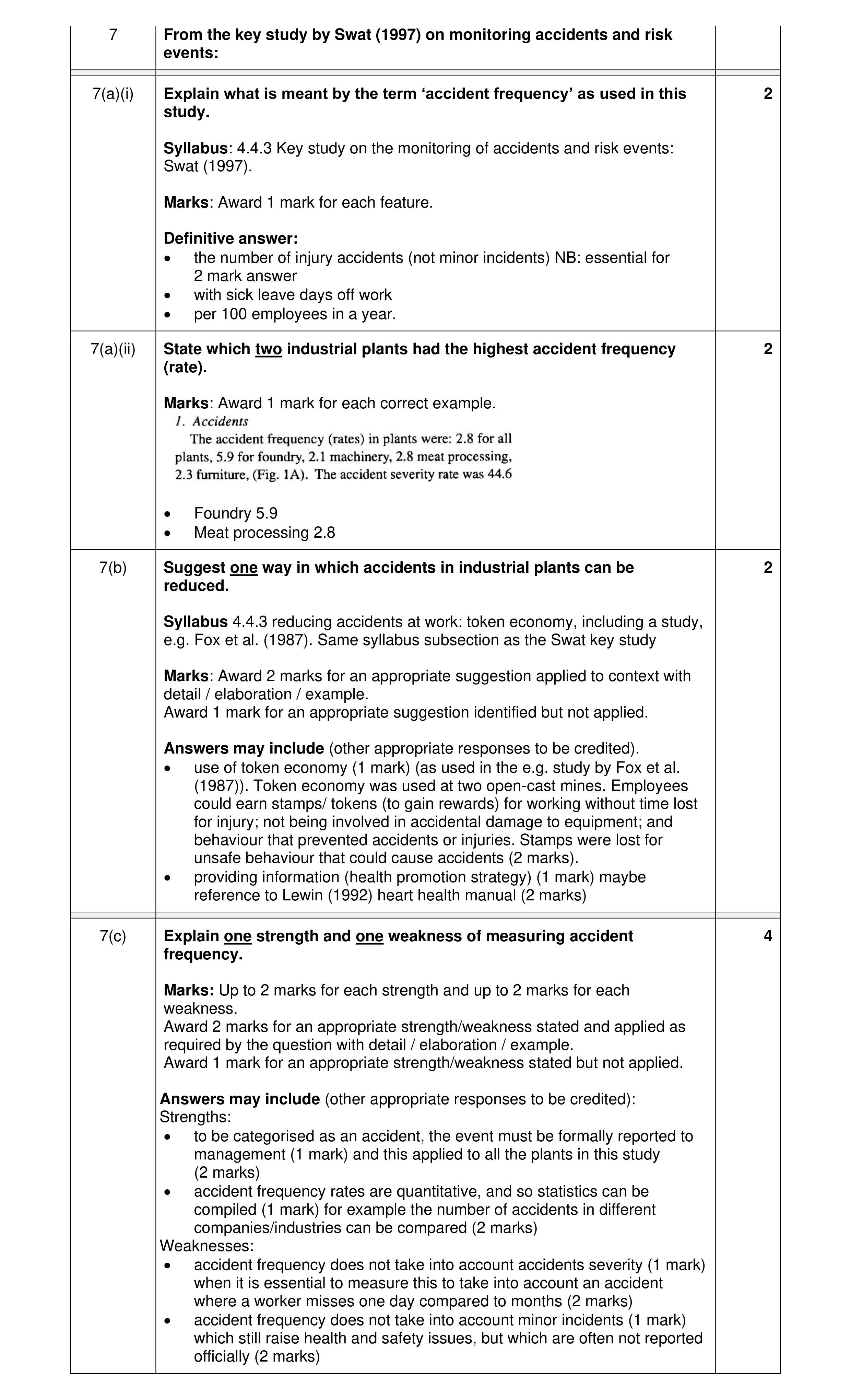 10
10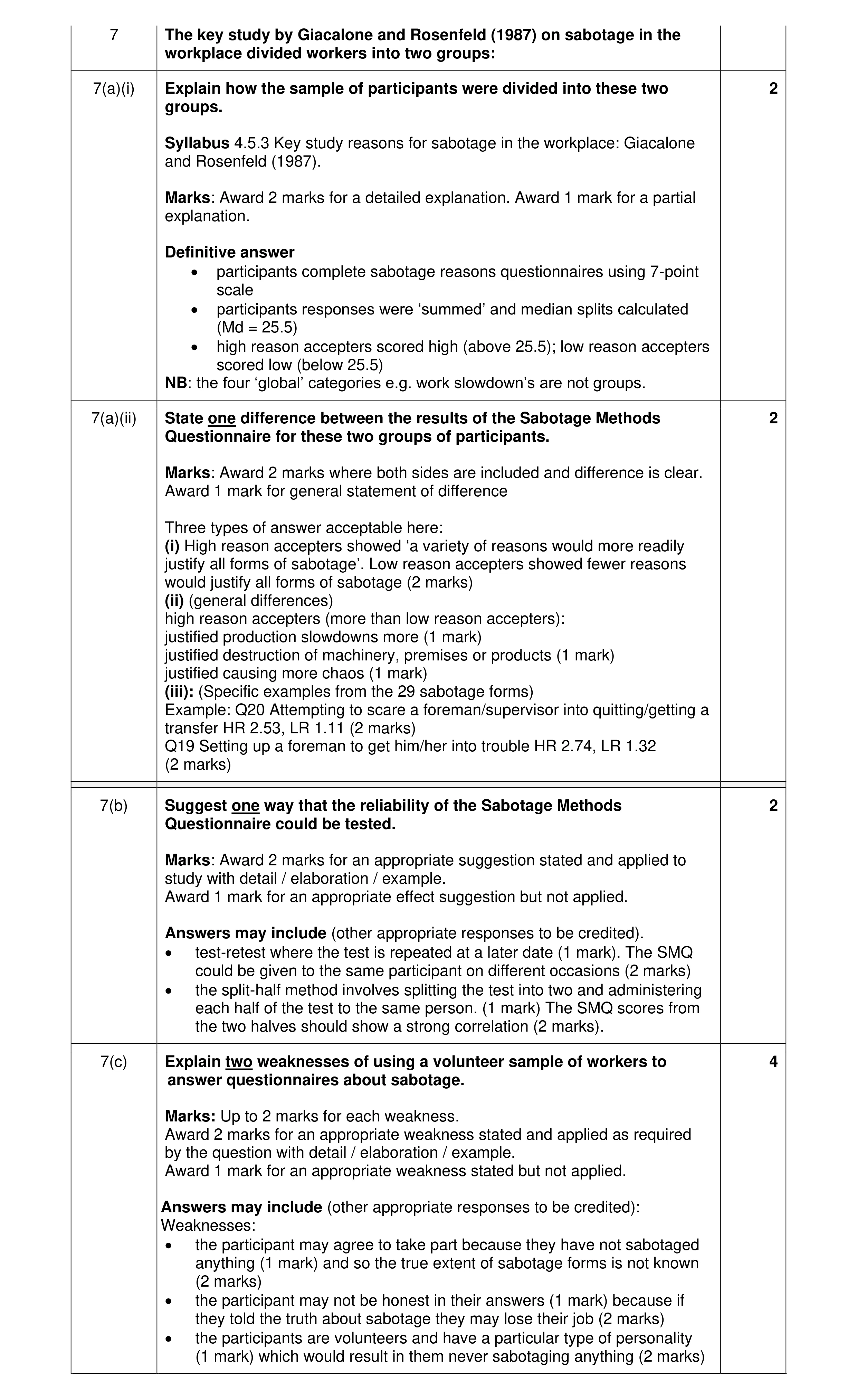 10
10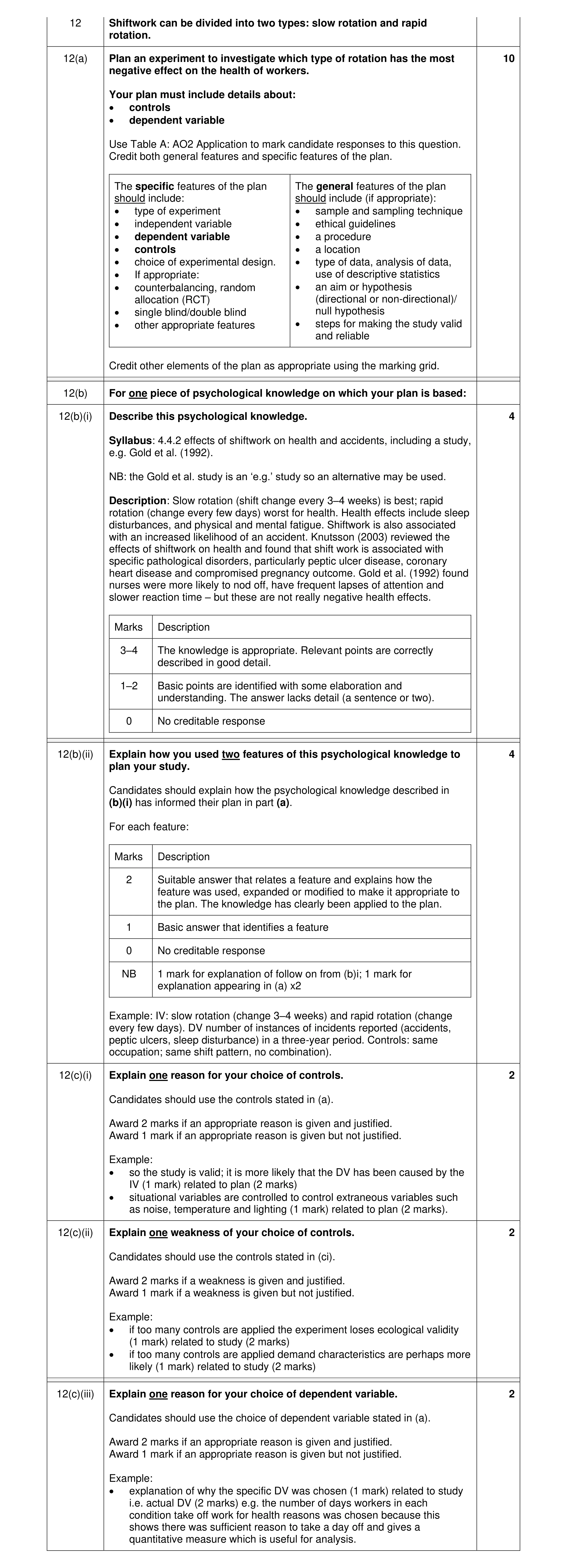 24
24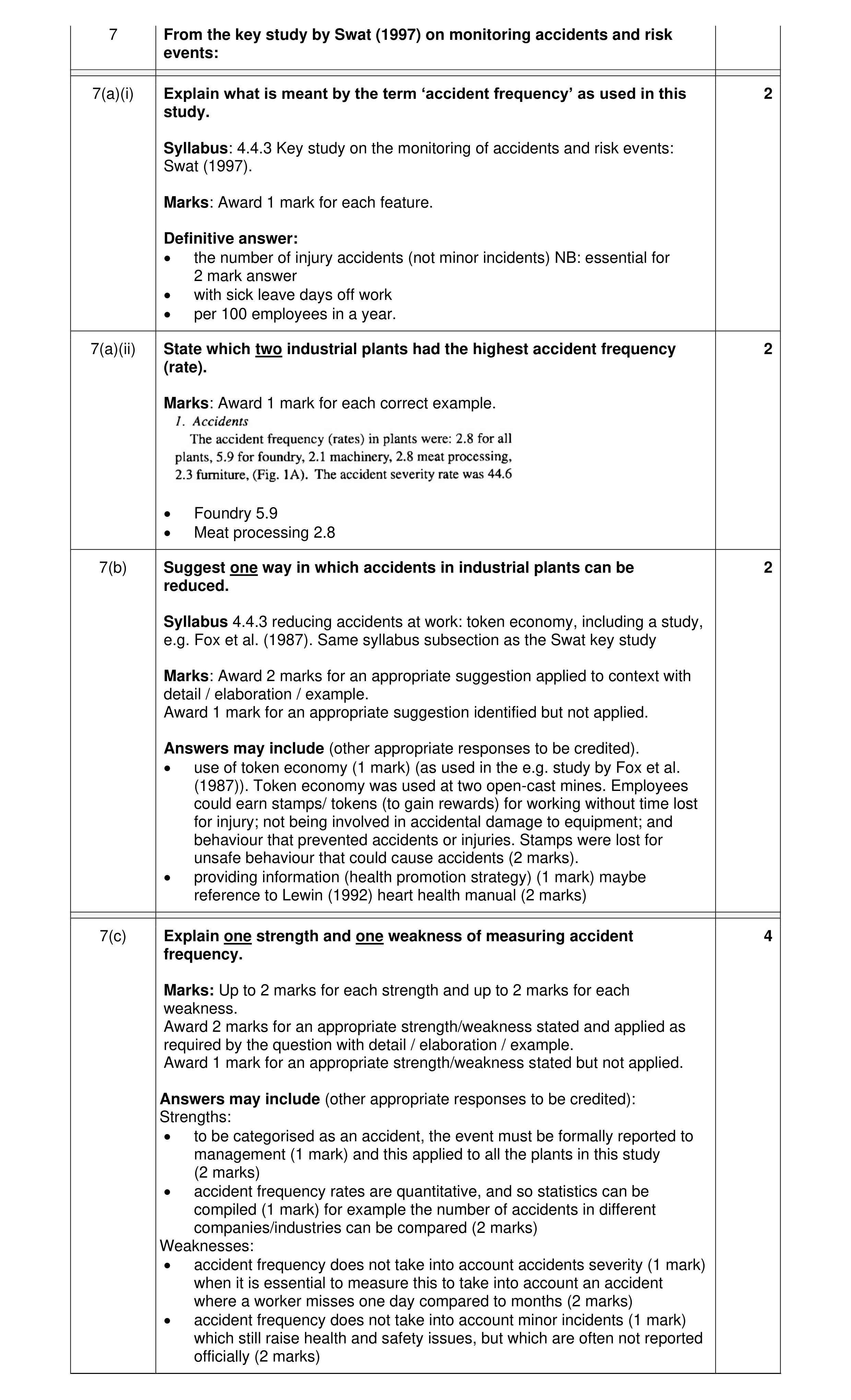 10
10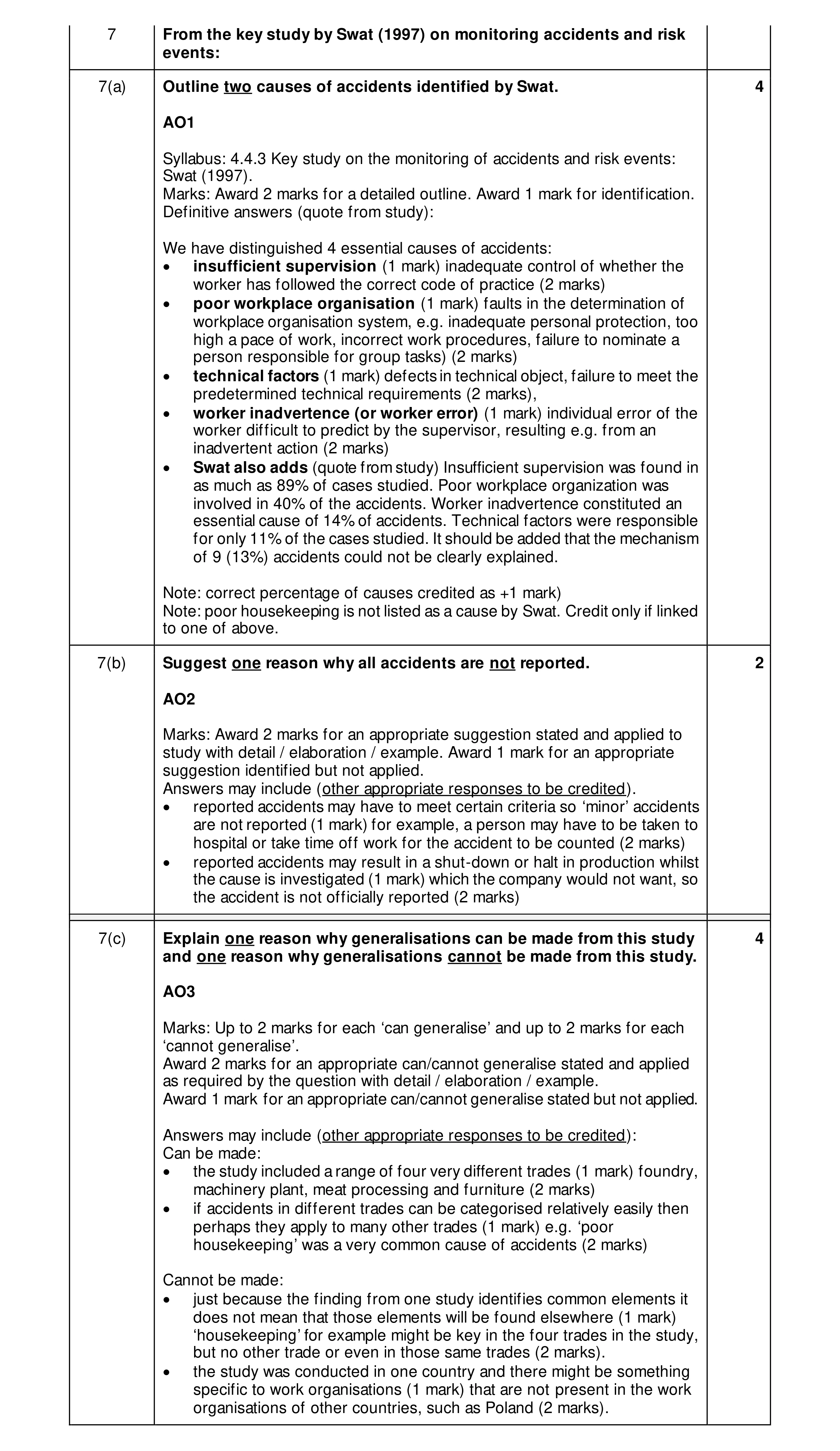 10
10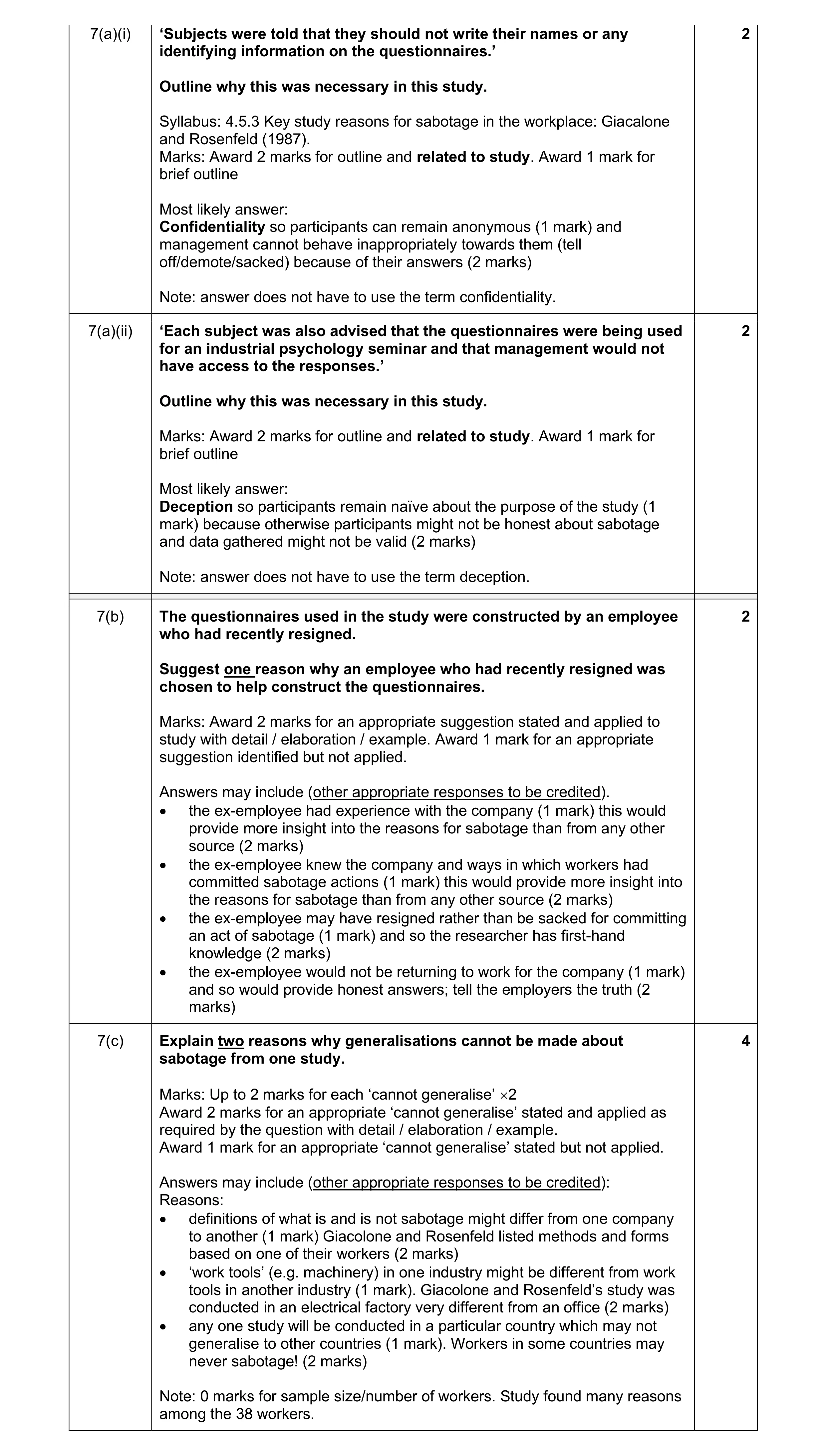 10
10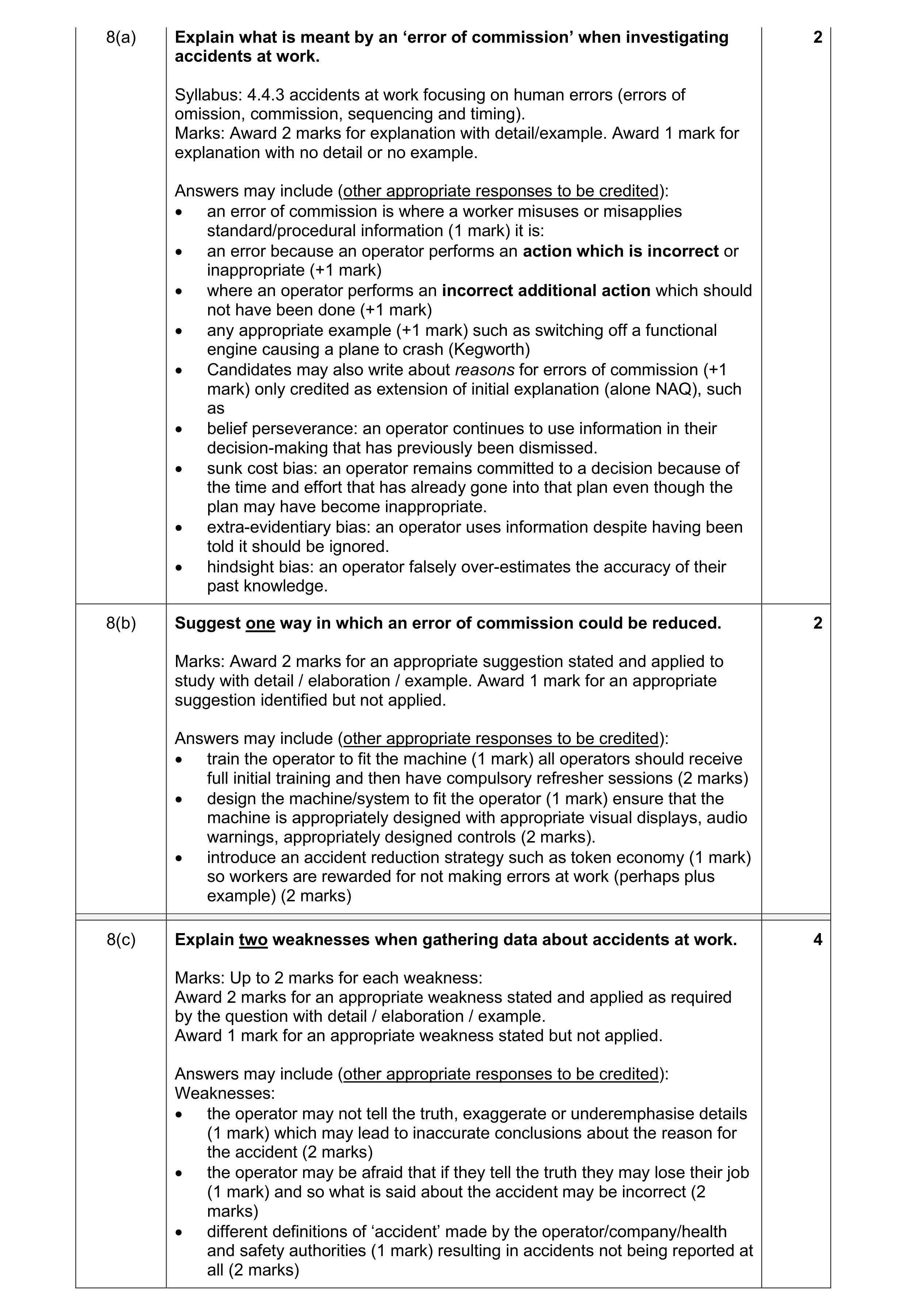 8
8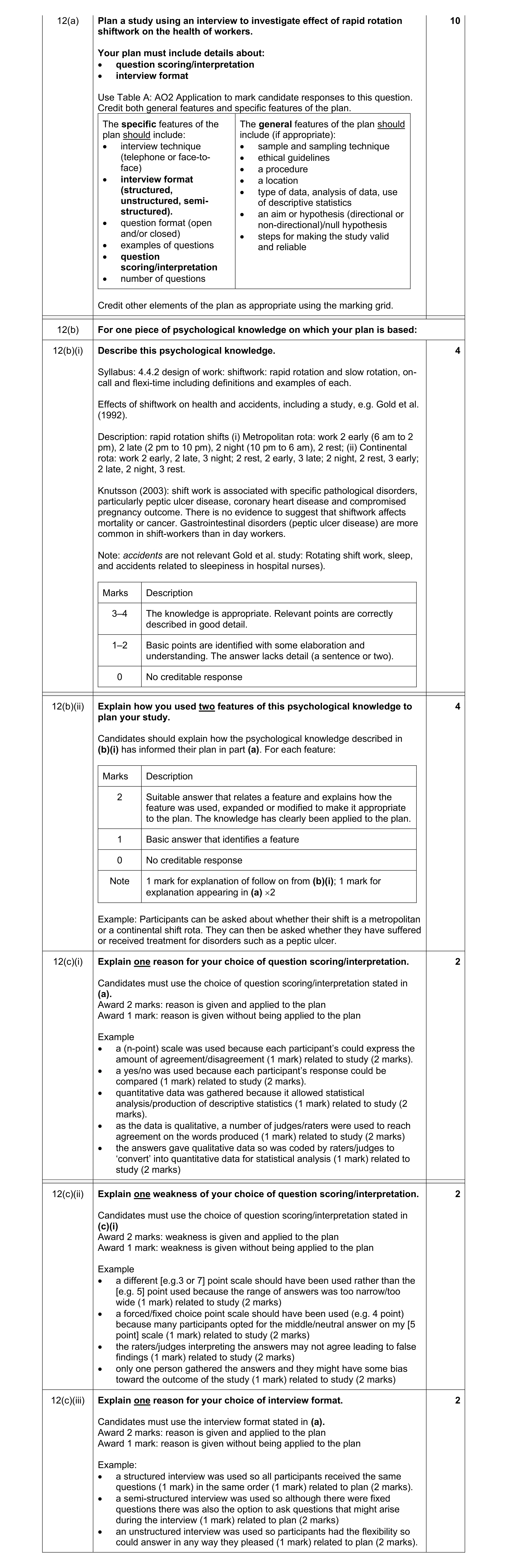 24
24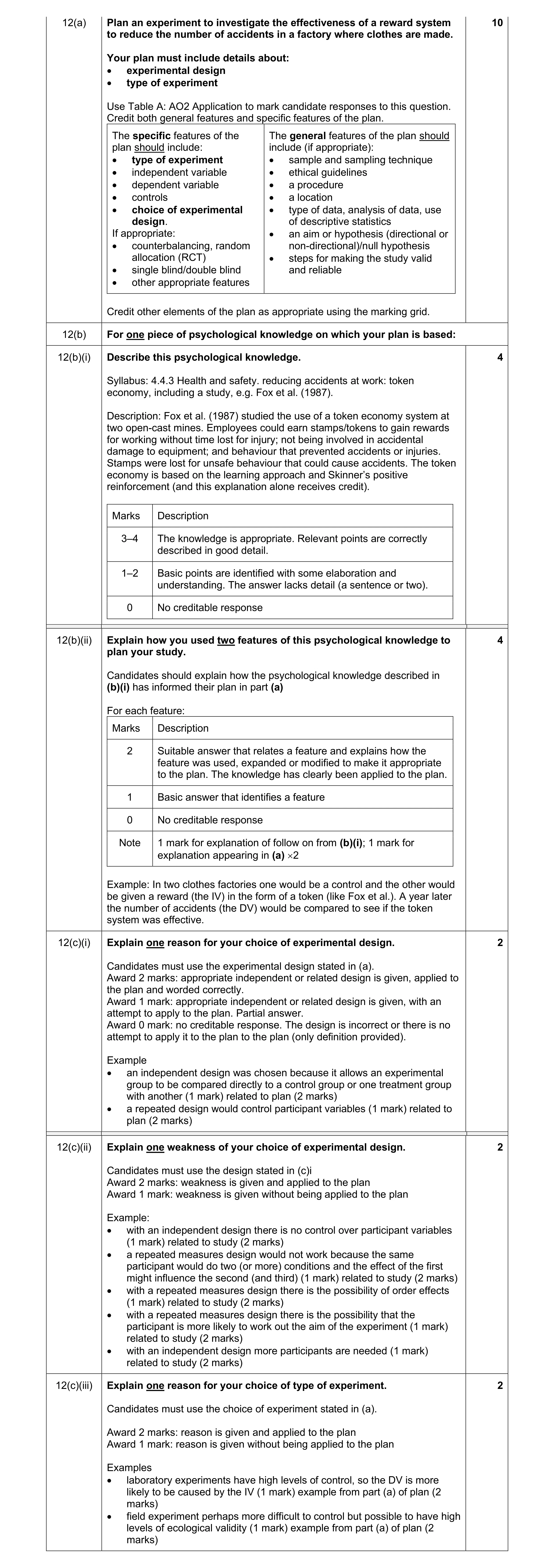 24
24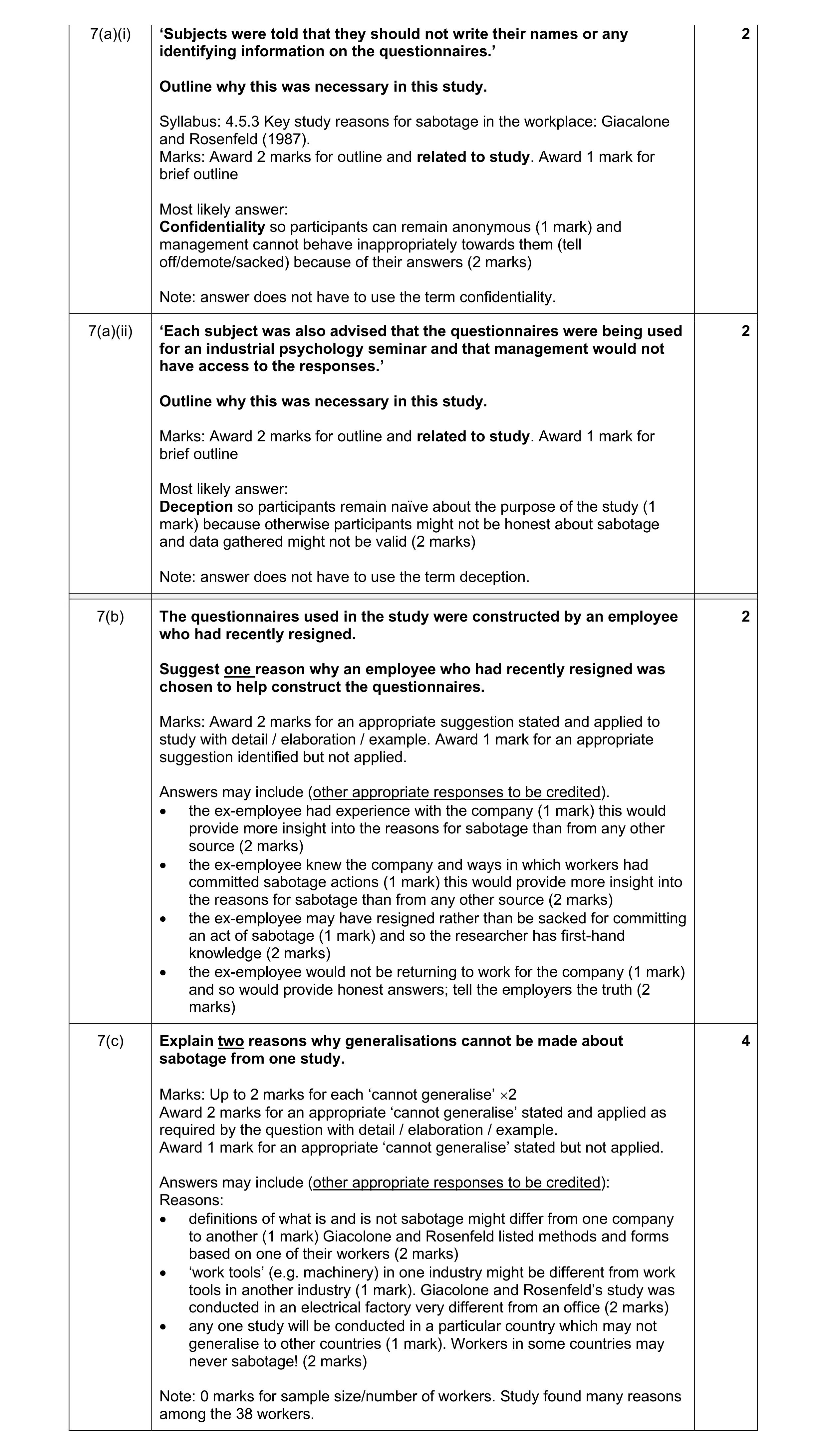 10
10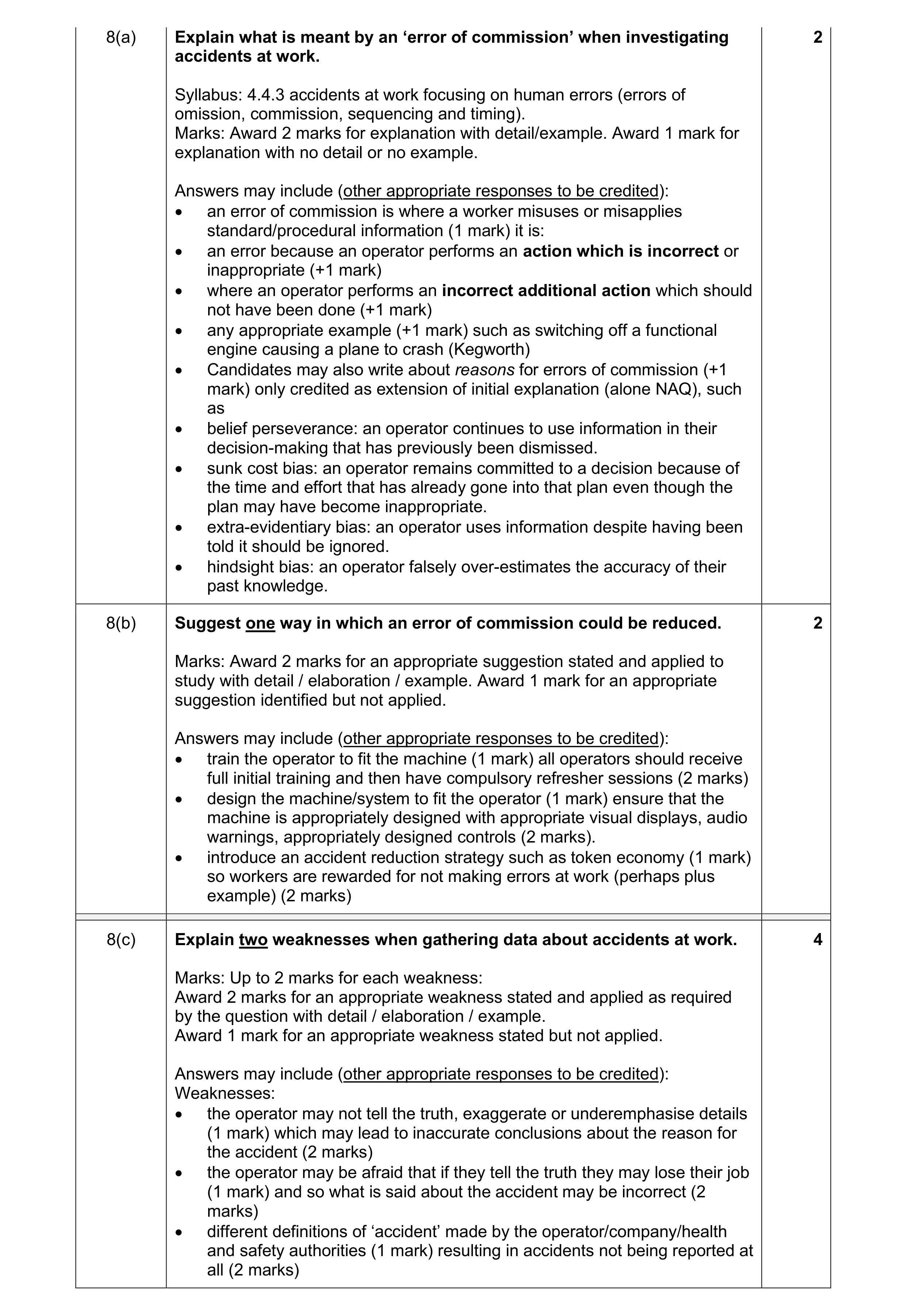 8
8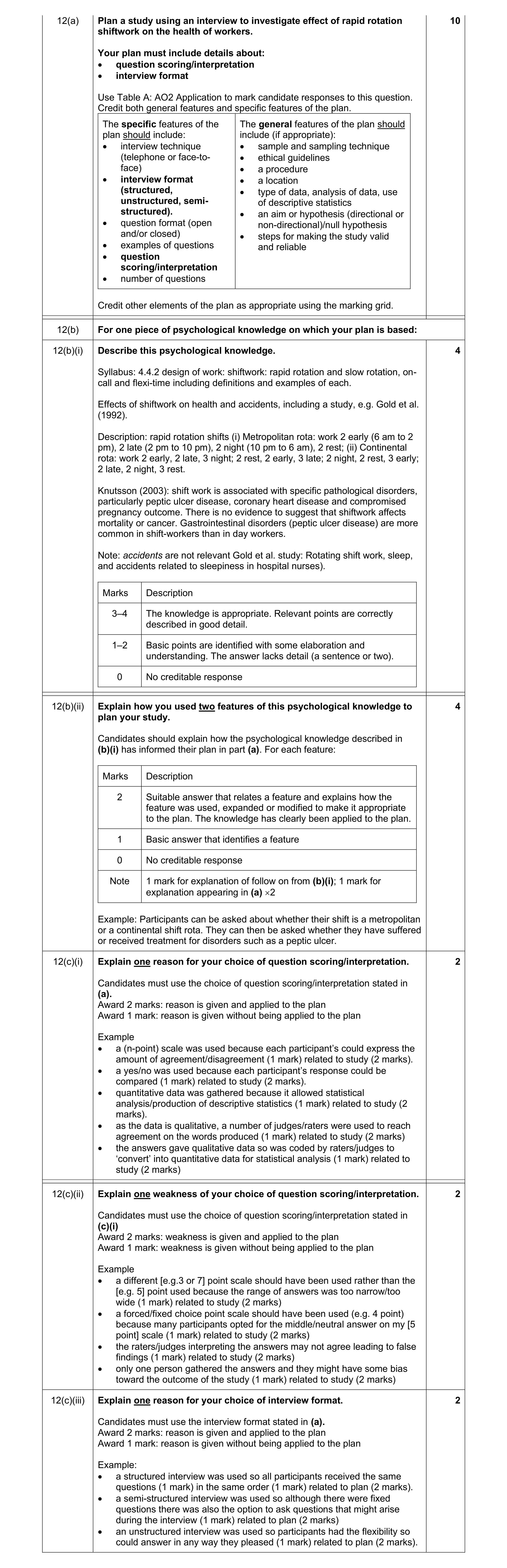 24
24