Questions as text
Q1 · Explain what is meant by ‘the slow rotation theory’ of shiftwork (Pheasant, 1991) 9990/32 Feb/March 2018
7 (a) Explain what is meant by ‘the slow rotation theory’ of shiftwork (Pheasant, 1991). [2] (b) Describe the findings of the study by Fox et al. (1987) on the use of token economies to reduce accidents at work. [4] (c) Explain one strength and one weakness of the study by Fox et al. (1987). [6]
12 marks
Mark scheme: 7(a) Explain what is meant by ‘the slow rotation theory’ of shiftwork 2 (Pheasant, 1991). Award 1 mark for a basic explanation of the term/concept. Award 2 marks for a detailed explanation of the term/concept. For example: Infrequent changes to the shift work pattern that workers have to follow. These could be changes that take place after a number of weeks. For example, working three weeks of day shifts and then doing three weeks of night shifts. Brief definition plus brief example is sufficient for 2 marks. Other appropriate responses should also be credited. 7(b) Describe the findings of the study by Fox et al. (1987) on the use of 4 token economies to reduce accidents at work. Award 1–2 marks for a basic answer with some understanding of the topic area. Award 3–4 marks for a detailed answer with clear understanding of the topic area. For example: There was a large reduction in the number of days lost because of injuries, the number of lost-time injuries and the costs of accidents and injuries. The reduction in costs far outweighed the cost of the token economies. No deaths or permanent injuries were reported at one of the mines (Navajo Mine) used in the study. These reductions lasted for a number of years. Anecdotal evidence suggests the workers and their families really appreciated the rewards obtained from the token economies system (after an early period of scepticism). Therefore, it was felt morale had improved at both mines used in the study. Other appropriate responses should also be credited. 7(c) Explain one strength and one weakness of the study by Fox et al. 6 (1987). Likely strengths include: • strengths of longitudinal method • two mines used so greater generalisability • shows the effectiveness of the token economy system • positive ethical issues • strengths of quantitative data collected, etc. Likely weaknesses include: • lack of qualitative data • possibility of the effects of tokens not lasting once they are removed • cost of the tokens • some workers may not value the tokens; there will be individual differences. Mark according to the levels of response criteria below: Level 3 (5–6 marks) • Candidates will show a clear understanding of the question and will explain one strength and one weakness. • Candidates will provide a good explanation with clear detail. Level 2 (3–4 marks) • Candidates will show an understanding of the question and will explain one appropriate weakness in detail or one appropriate strength in detail. OR one weakness and one strength in less detail. Level 1 (1–2 marks) • Candidates will show a basic understanding of the question and will attempt an explanation of either a strength or a weakness. (This could include both but as an attempt only.) • Candidates will provide a limited explanation. Level 0 (0 marks) No response worthy of credit. Other appropriate responses should also be credited.
This question in 9990/32 Feb/March 2018
Q2 · Describe what psychologists have discovered about health and safety in the working… 9990/31 Oct/Nov 2018
8 (a) Describe what psychologists have discovered about health and safety in the working environment. [8] (b) Evaluate what psychologists have discovered about health and safety in the working environment, including a discussion about qualitative and quantitative data. [10]
18 marks
Mark scheme: 8(a) Describe what psychologists have discovered about health and safety 8 in the working environment. Health and safety in the working environment, including the following: • accidents at work: errors and accidents in operator-machine systems • reducing accidents at work: token economy (Fox et al., 1987) • safety promotion campaigns (Cowpe, 1989) Accidents at work: errors and accidents in operator-machine systems Candidates may give real life examples of an error such as Three Mile Island, Herald Free Enterprise or describe how these accidents might occur. In an automated factory/work environment staff are responsible for a part of the production line rather than all of it and operate the machine which then does the work. Machines/technology have become more and more advanced and this is where human error can occur. Reducing accidents at work: token economy (Fox et al., 1987) Study carried out in two open-pit mines. Token economy introduced where the workers were awarded stamps for working without lost-time injuries (and in a group without lost-time injury), no equipment-damaging accidents and behaviour that prevented an accident/injury. Stamps could be exchanged for 1000s of items at various stores. Found a large reduction in number of days lost due to injury after introduction of token economy. Safety promotion campaigns (Cowpe, 1989) Abstract: Aim: Test effectiveness of an advertising campaign about the dangers of chip pan fires. Method and Procedure: Quasi experiment; TV adverts of how to prevent and put out chip pan fires; TV ads shown in 10 British TV regions; Asked viewers in these regions to complete questionnaire about safe use of chip pan fires and measure government statistics about number of fires. Results: Questionnaires showed awareness of preventing and putting out chip pan fires increased from 62% to 96% after the campaign. All regions showed a 12% decrease in number of chip pan fires. If adverts overlapped in areas, it showed the smallest reduction in fires, suggesting seeing the adverts too much reduced their effectiveness. Number of chip pan fires was lowest during the campaign, but figures after the campaign were still lower than they had been before. Conclusion: Media campaigns can be successful in increasing awareness about chip pan safety and reduce number of chip pan fires. Biggest effect is seen during the campaign, and is less successful if people are over-exposed to them as they become desensitised to its message. Mark according to the levels of response descriptors in Table A. Other appropriate responses should also be credited. 8(b) Evaluate what psychologists have discovered about health and safety 10 in the working environment, including a discussion about qualitative and quantitative data. A range of issues could be used for evaluation here. These include: • Named issue – qualitative and quantitative data with reference to the data collected in the research in this topic and/or how information is given to employees regarding health and safety (be it qualitatively or quantitatively or both) Evaluation of methods used to collect data. The vast majority of the data collected in both Fox and Cowpe’s studies were quantitative. Fox et al. also collected some qualitative data about the nature of the accidents that occurred in the mines from the reports given by the employees. • Generalisability – Cowpe and Fox have restricted samples and can therefore lack generalisability. If a specific case of human error is made the candidate can argue this also lacks generalisability. • Reliability – studies rely on self report data which can be reliable as the same questions are asked of each participant but the wording may be interpreted differently or the answer scale may also be interpreted differently by participants. • Validity – studies rely on self report data and therefore the participants may show social desirability or demand characteristics e.g. may say they are being more safe with chip pans when in fact they are not. For government data, not all accidents/fires/etc. get reported. Mark according to the levels of response descriptors in Table B. Other appropriate responses should also be credited.
This question in 9990/31 Oct/Nov 2018
Q3 · Explain what is meant by ‘slow rotation’ in shiftwork 9990/32 Feb/March 2019
7 (a) Explain what is meant by ‘slow rotation’ in shiftwork. [2] (b) Describe the study by Gold et al. (1992) on shiftwork and accidents. [4] (c) Explain one strength and one weakness of the study by Gold et al. (1992). [6]
12 marks
Mark scheme: 7(a) Explain what is meant by ‘slow rotation’ in shiftwork. 2 Award 1 mark for a basic explanation of the term/concept. Award 2 marks for a detailed explanation of the term/concept. For example: Shiftwork refers to a working pattern that does not involve working the same hours all the time. Slow rotation shift changes are infrequent changes e.g. working the same day shift for a number of weeks and then night shifts for a similar number of weeks. Examples (as above) can achieve up to one mark on their own. Other appropriate responses should also be credited. 7(b) Describe the study by Gold et al. (1992) on shiftwork and accidents. 4 Award 1–2 marks for a basic answer with some understanding of the research. Award 3–4 marks for a detailed answer with clear understanding of the research. Abstract: A hospital-based survey on shiftwork, sleep, and accidents was carried out among 878 Massachusetts nurses (all female) 687 questionnaires were returned. In comparison to nurses who worked only day/evening shifts, rotators had more sleep/wake cycle disruption and nodded off more at work. Rotators had twice the odds of nodding off while driving to or from work and twice the odds of a reported accident or error related to sleepiness. Application of circadian principles to the design of hospital work schedules may result in improved health and safety for nurses and patients. A detailed answer should include reference to the aim, participants, method and result(s) of the study. Other appropriate responses should also be credited. (e.g. details of the study, such as results which are not listed above). 7(c) Explain one strength and one weakness of the research by Gold et al. 6 (1992). Likely strengths include – • Strengths of quantitative data and self-reports • Kept confidential – this could increase honesty in the responses • Useful to the hospital and similar companies to be aware of problems of shiftwork (especially for those who change shifts frequently) and accidents • Large sample size, lots of other variables taken into account (use of medication, age etc.). Likely weaknesses include – • Lack of generalisability due to the study just using one hospital (in one area of USA) • Only nurses considered (may be different for other shiftworkers) • Only female nurses used • Small period of time considered (4 weeks) • Problems of self-report (exaggeration (many people do not like shiftwork so may change the amount of time they say they have nodded off in an attempt to change their shift in the future/keep their dayshift) • Social desirability bias Mark according to the levels of response criteria below: Level 3 (5–6 marks) • Candidates will show a clear understanding of the question and will discuss one strength and one weakness. • Candidates will provide a good explanation with clear detail. Level 2 (3–4 marks) • Candidates will show an understanding of the question and will discuss one appropriate weakness in detail or one appropriate strength in detail. OR one weakness and one strength in less detail. Level 1 (1–2 marks) • Candidates will show a basic understanding of the question and will attempt a discussion of either a strength or a weakness. They could include both but just as an attempt. • Candidates will provide a limited explanation. Level 0 (0 marks) No response worthy of credit. Other appropriate responses should also be credited.
This question in 9990/32 Feb/March 2019
Q4 · Explain what is meant by ‘enlargement’ as a job design technique 9990/31 May/June 2019
7 (a) Explain what is meant by ‘enlargement’ as a job design technique. [2] (b) Describe two of the four general methods of workplace sabotage outlined by Giacalone and Rosenfeld (1987). [4] (c) Explain one strength and one weakness of the study by Giacalone and Rosenfeld (1987) on workplace sabotage. [6]
12 marks
Mark scheme: 7(a) Explain what is meant by ‘enlargement’ as a job design technique. 2 Award 1 mark for a basic explanation of the term/concept. Award 2 marks for a detailed explanation of the term/concept. For example: It increases the scope of the employee’s duties and they perform a wider variety of tasks during their working day. (1) This can be either horizontal where more tasks are given to the employee (1) or vertical which could be higher level jobs or more responsibility given to the employee. (1) Other appropriate responses should also be credited. 7(b) Describe two of the four general methods of workplace sabotage 4 outlined by Giacalone and Rosenfeld (1987). Award 1–2 marks for a basic answer with some understanding of the topic area. Award 3–4 marks for a detailed answer with clear understanding of the topic area. For example: Work slowdown (1), e.g. doing personal work on company time (1) Destruction of machinery, premises or products (1) – carving poetry on bathroom walls (1) Causing chaos (1) – setting up the foreman to get him/her in trouble (1) The above three are aimed at hurting the company. Dishonesty (1) – stealing This can hurt the company as well as achieve personal gains for the employees. (1) Other appropriate responses should also be credited. 7(c) Explain one strength and one weakness of the study by Giacalone and 6 Rosenfeld (1987) on workplace sabotage. Likely strengths include – • Strengths of quantitative data and self-reports, • Kept confidential – this could increase honesty in the responses • Useful to the company and similar companies to be aware of sabotage methods and to look for methods to reduce these in their organisation • Asked by non-supervisory personnel so may be more honest in their response Likely weaknesses include – • Lack of generalisability due to the study just using one factory and interviewing 38 of its employees • Just quantitative data collected • Although kept confidential the employees may not be honest about the sabotage methods used • Only former employees who could exaggerate the sabotage methods Mark according to the levels of response criteria below: Level 3 (5–6 marks) • Candidates will show a clear understanding of the question and will discuss one strength and one weakness. • Candidates will provide a good explanation with clear detail. Level 2 (3–4 marks) • Candidates will show an understanding of the question and will discuss one appropriate weakness in detail or one appropriate strength in detail. OR one weakness and one strength in less detail. Level 1 (1–2 marks) • Candidates will show a basic understanding of the question and will attempt a discussion of either a strength or a weakness. They could include both but just as an attempt. • Candidates will provide a limited explanation. Level 0 (0 marks) • No response worthy of credit. Other appropriate responses should also be credited.
This question in 9990/31 May/June 2019
Q5 · Explain what is meant by ‘enlargement’ as a job design technique 9990/33 May/June 2019
7 (a) Explain what is meant by ‘enlargement’ as a job design technique. [2] (b) Describe two of the four general methods of workplace sabotage outlined by Giacalone and Rosenfeld (1987). [4] (c) Explain one strength and one weakness of the study by Giacalone and Rosenfeld (1987) on workplace sabotage. [6]
12 marks
Mark scheme: 7(a) Explain what is meant by ‘enlargement’ as a job design technique. 2 Award 1 mark for a basic explanation of the term/concept. Award 2 marks for a detailed explanation of the term/concept. For example: It increases the scope of the employee’s duties and they perform a wider variety of tasks during their working day. (1) This can be either horizontal where more tasks are given to the employee (1) or vertical which could be higher level jobs or more responsibility given to the employee. (1) Other appropriate responses should also be credited. 7(b) Describe two of the four general methods of workplace sabotage 4 outlined by Giacalone and Rosenfeld (1987). Award 1–2 marks for a basic answer with some understanding of the topic area. Award 3–4 marks for a detailed answer with clear understanding of the topic area. For example: Work slowdown (1), e.g. doing personal work on company time (1) Destruction of machinery, premises or products (1) – carving poetry on bathroom walls (1) Causing chaos (1) – setting up the foreman to get him/her in trouble (1) The above three are aimed at hurting the company. Dishonesty (1) – stealing This can hurt the company as well as achieve personal gains for the employees. (1) Other appropriate responses should also be credited. 7(c) Explain one strength and one weakness of the study by Giacalone and 6 Rosenfeld (1987) on workplace sabotage. Likely strengths include – • Strengths of quantitative data and self-reports, • Kept confidential – this could increase honesty in the responses • Useful to the company and similar companies to be aware of sabotage methods and to look for methods to reduce these in their organisation • Asked by non-supervisory personnel so may be more honest in their response Likely weaknesses include – • Lack of generalisability due to the study just using one factory and interviewing 38 of its employees • Just quantitative data collected • Although kept confidential the employees may not be honest about the sabotage methods used • Only former employees who could exaggerate the sabotage methods Mark according to the levels of response criteria below: Level 3 (5–6 marks) • Candidates will show a clear understanding of the question and will discuss one strength and one weakness. • Candidates will provide a good explanation with clear detail. Level 2 (3–4 marks) • Candidates will show an understanding of the question and will discuss one appropriate weakness in detail or one appropriate strength in detail. OR one weakness and one strength in less detail. Level 1 (1–2 marks) • Candidates will show a basic understanding of the question and will attempt a discussion of either a strength or a weakness. They could include both but just as an attempt. • Candidates will provide a limited explanation. Level 0 (0 marks) • No response worthy of credit. Other appropriate responses should also be credited.
This question in 9990/33 May/June 2019
Q6 · Outline how Fox et al 9990/32 Feb/March 2020
5 (a) Outline how Fox et al. (1987) used a token economy in worksites to promote health. [2] (b) Describe the procedure of the ‘whole-school’ Food Dude programme from the study by Tapper et al. (2003). [4] (c) Explain one strength and one weakness of the study by Tapper et al. [6]
12 marks
Mark scheme: 5(a) Outline how Fox et al. (1987) used a token economy in worksites to 2 promote health. Award 1 mark for a basic outline of the term/concept. Award 2 marks for a detailed outline of the term/concept. For example: Fox et al. gave stamps for no lost-time injury (1). Stamps could be exchanged for items at redemption stores (1) Other appropriate responses should also be credited. 5(b) Describe the procedure of the ‘whole-school’ Food Dude programme 4 from the study by Tapper et al. (2003). Award 1–2 marks for a basic answer with some understanding of the topic area. Award 3–4 marks for a detailed answer with clear understanding of the topic area. For example: Children aged 4–11 watched the Food Dudes programme in lessons (1). They received rewards such as a Food Dudes sticker if they ate fruit and vegetables put out in front of them (1). They receive a Food Dude sticker for tasting a food (1), or a sticker and a small prize for eating a whole portion (1). The intervention phase was followed by a maintenance phase during which there are no videos and the letters and rewards became more intermittent (1). Additional content: Self reports were done with some of the parents to evaluate how many fruit and vegetables were consumed at home (1). Also credit the control group used during the later phases of the study where they just monitored consumption of fruit and vegetables when given extra fruit and vegetables that were delivered to the school during the duration of the study (1). Qualitative data was collected from both parents and teachers (1). Other appropriate responses should also be credited. 5(c) Explain one strength and one weakness of the study by Tapper et al. 6 Likely strengths include: • Wide age range of children studied (5–6 years, 2–4 years, 4–11 years) • Different types of studies done (e.g. some at home and some at school – nursery and primary school) • Both qualitative (e.g. enjoyment of the programme, enthusiasm for curriculum work, etc. and quantitative (number of fruit and vegetables eaten both at home and at school) data collected. Increases validity as can make comparisons as well as having detailed information on how the children responded to the programme. • Collected data from the teachers and parents which helps improve validity. • Highly ethical study as consent obtained from the parents and the school (and improved fruit and vegetable consumption which is a very good outcome for the children involved) • Provided training and all of the necessary equipment including the food to the schools • Good practical applications to be used in other schools. • Schools from a variety of locations in the UK (e.g. North Wales, Manchester, Oxfordshire, London) which improves generalisability. Likely weaknesses include: • Generalisability (UK) • Just based in primary schools so not sure if this would work with secondary school children or adults. • Could be an expensive programme to introduce in all schools so is less practical. • Social desirability and demand characteristics were possible as the participants may have told the researchers that the fruit and vegetable consumption increased when in fact either it had not or the participant/teacher/parent was not sure about the actual consumption. 5(c) Mark according to the levels of response criteria below: Level 3 (5–6 marks) • Candidates will show a clear understanding of the question and will explain one strength and one weakness. • Candidates will provide a good explanation with clear detail. Level 2 (3–4 marks) • Candidates will show an understanding of the question and will explain one appropriate weakness in detail or one appropriate strength in detail. OR one weakness and one strength in less detail. Level 1 (1–2 marks) • Candidates will show a basic understanding of the question and will attempt an explanation of either a strength or a weakness. They could include both but just as an attempt. • Candidates will provide a limited explanation. Level 0 (0 marks) No response worthy of credit. Other appropriate responses should also be credited
This question in 9990/32 Feb/March 2020
Q7 · Explain what is meant by a ‘continental rota’ in shiftwork 9990/32 Oct/Nov 2020
7 (a) Explain what is meant by a ‘continental rota’ in shiftwork. [2] (b) Outline two types of bullying at work from the study by Einarsen (1999). [4] (c) Explain two weaknesses of the study by Einarsen (1999). [6]
12 marks
Mark scheme: 7(a) Explain what is meant by a ‘continental rota’ in shiftwork. Award 1 mark for a basic explanation of the term/concept Award 2 marks for a detailed explanation of the term/concept For example: A type of rapid rotation shift which is more complex than metropolitan rotas (1). It involves: Week 1 – 2 day shift, 3 twilight (swing) shifts, 2 night shifts; Week 2 – 2 days off, 3 day shifts, 2 twilight shifts; Week 3 – 2 night shifts, 3 days off, 2 day shifts; Week 4 – 2 twilight shifts, 3 night shifts, 2 days off (2); The cycle then repeats. Other appropriate responses should also be credited. 7(b) Outline two types of bullying at work from the study by Einarsen (1999). For each type: Award 1 mark for a basic answer (e.g. just naming) Award 2 marks for a detailed answer For example: • Work related bulling (e.g. changing work tasks or making tasks difficult to perform); • Social isolation; • Personal attacks or attacks on private life (e.g. by ridicule, insulting remarks or gossip); • Verbal threats (e.g. criticised, yelled at or humiliated in public); • Physical violence (or threats of such violence); Other appropriate responses should also be credited. 4 Question Answer Marks 7(c) Explain two weaknesses of the study by Einarsen (1999). Likely weaknesses include: • Reliance on self-reports, which are prone to demand characteristics; • Although comprehensive, it is not offering solutions to the problem of workplace bullying; • Lack of qualitative data reported from the studies; • Possible ethical issues in the gathering of the data in the original studies (participant distress); • Review article so data is second hand; Mark according to the levels of response criteria below: Level 3 (5–6 marks) • Candidates will show a clear understanding of the question and will discuss two weaknesses; • Candidates will provide a good explanation with clear detail; Level 2 (3–4 marks) • Candidates will show an understanding of the question and will discuss one appropriate weakness in detail or two appropriate weaknesses in less detail; Level 1 (1–2 marks) • Candidates will show a basic understanding of the question and will attempt a discussion of a weakness; • Candidates will provide a limited explanation; Level 0 (0 marks) No response worthy of credit. Other appropriate responses should also be credited. 6
This question in 9990/32 Oct/Nov 2020
Q8 · Identify one physical and one psychological work condition 9990/32 Feb/March 2021
7 (a) Identify one physical and one psychological work condition. [2] (b) Cowpe (1989) tested a safety promotion campaign. Describe this safety promotion campaign. [4] (c) Explain one strength and one weakness of this safety promotion campaign. [6]
12 marks
Mark scheme: 7(a) Identify one physical and one psychological work condition. 2 Award 1 mark for a basic explanation of the term/concept.- 1 identified. Award 2 marks for a detailed explanation of the term/concept. – 2 identified. For example: Physical – layout of the office/factory, shift timings, open plan offices, etc. Psychological – how you feel about how your colleagues treat you at work, motivation, satisfaction, how you feel about being bullied, etc. Other appropriate responses should also be credited. 7(b) Cowpe (1989) tested a safety promotion campaign. 4 Describe this safety promotion campaign. Award 1–2 marks for a basic answer with some understanding of the topic area. Award 3–4 marks for a detailed answer with clear understanding of the topic area. For example: 60 second adverts shown on television (1), Showed the initial causes of the fire (over-filling and in-attendance) (1), then showed the actions required to put the chip pan fire out (1) e.g. turn off the heat, cover the pan with a damp cloth or leave the pan to cool down (1 mark each up to a maximum of 2) Shown on ten regional television areas in UK from 1976–1984. (1) Other appropriate responses should also be credited. 7(c) Explain one strength and one weakness of this safety promotion 6 campaign. Likely strengths include – • Cowpe considered a number of strategies before deciding on the containment strategy (credit references to why prevention strategy was rejected) • Shown over a number of years – strengths of longitudinal research – can check that the campaign has continued to have an effect on reducing chip pan fires in the long term. • Shown in a variety of places so has fairly good population validity and can be more certain this strategy would work in other parts of the UK • Good practical applications for showing health and safety promotion advertising on television. Although the effect decayed over time, the cost of the advertising concluded to be worth it due to the reduction in loss of life and property. Likely weaknesses include – • Ethnocentric to the UK where the advertising campaign might be more effective as most people have access to a television. • Lacks temporal validity as people no longer have chip pans and this wouldn’t tell us if we could prevent other types of fires using a similar advertising campaign. Also many people do not watch advertising in the same way as we can skip through advertising when watching television/internet videos. • Lacks qualitative data. We do not know why the fires stopped or if it was the advertising that caused the reduction in the fires as just quantitative data was collected. Mark according to the levels of response criteria below: Level 3 (5–6 marks) • Candidates will show a clear understanding of the question and will explain one strength and one weakness. • Candidates will provide a good explanation with clear detail. Level 2 (3–4 marks) • Candidates will show an understanding of the question and will explain one appropriate weakness in detail or one appropriate strength in detail. OR one weakness and one strength in less detail. Level 1 (1–2 marks) • Candidates will show a basic understanding of the question and will attempt an explanation of either a strength or a weakness. They could include both but just as an attempt. • Candidates will provide a limited explanation. Level 0 (0 marks) No response worthy of credit. Other appropriate responses should also be credited.
This question in 9990/32 Feb/March 2021
Q9 · Describe what psychologists have discovered about health and safety in organisational… 9990/32 Feb/March 2022
8 (a) Describe what psychologists have discovered about health and safety in organisational work conditions (accidents at work, reducing accidents at work, safety promotion campaigns). [8] (b) Evaluate what psychologists have discovered about health and safety in organisational work conditions (accidents at work, reducing accidents at work, safety promotion campaigns), including a discussion about experiments. [10]
18 marks
Mark scheme: 8(a) Describe what psychologists have discovered about health and safety in organisational work conditions (accidents at work, reducing accidents at work, safety promotion campaigns). Health and safety in the working environment, including the following: • accidents at work: errors and accidents in operator-machine systems • reducing accidents at work: token economy (Fox et al., 1987) • safety promotion campaigns (Cowpe, 1989) Accidents at work: errors and accidents in operator-machine systems Candidates may give real life examples of an error such as Three Mile Island, Herald Free Enterprise or describe how these accidents might occur. In an automated factory/work environment staff are responsible for a part of the production line rather than all of it and operate the machine which then does the work. Machines/technology has become more and more advance and this is where human error can occur. Reducing accidents at work: token economy (Fox et al., 1987) Study carried out in two open-pit mines. Token economy introduced where the workers were awarded stamps for working without lost-time injuries (and in a group without lost-time injury), no equipment-damaging accidents and behaviour that prevented an accident/injury. Stamps could be exchanged for 1000s of items at various stores. Found a large reduction in number of days lost due to injury after introduction of token economy. Safety promotion campaigns (Cowpe, 1989) Aim: Test effectiveness of an advertising campaign about the dangers of chip pan fires. Method and Procedure: Quasi experiment; TV adverts of how to prevent and put out chip pan fires; TV ads shown in 10 British TV regions; Asked viewers in these regions to complete questionnaire about safe use of chip pan fires and measure government statistics about number of fires Results: Questionnaires showed awareness of preventing and putting out chip pan fires increased from 62% to 96% after the campaign. All regions showed a 12% decrease in number of chip pan fires. If adverts overlapped in areas, it showed the smallest reduction in fires, suggesting seeing the adverts too much reduced their effectiveness. Number of chip pan fires was lowest during the campaign, but figures after the campaign were still lower than they had been before. Conclusion: Media campaigns can be successful in increasing awareness about chip pan safety and reduce number of chip pan fires. Biggest effect is seen during the campaign, and is less successful if people are over-exposed to them as they become desensitised to its message. Mark according to the levels of response descriptors in Table A. Other appropriate responses should also be credited. Question Answer Marks 8(b) Evaluate what psychologists have discovered about health and safety in organisational work conditions (accidents at work, reducing accidents at work, safety promotion campaigns), including a discussion about experiments. A range of issues could be used for evaluation here. These include: • Named issue – experiments Strengths – good ecological validity (Cowpe – participants were watching their televisions with the adverts as normal and using their chip pans as they would normally, Fox et al. was done in two open pit mines where the workers were working as normal.) Some controls put into place (Cowpe – the areas that watched the adverts and the content of the adverts were standardised, Fox et al. – the tokens given and the items available to purchase as well as the reasons for the tokens being given. Weakness – but could lack some control – Cowpe – we don’t know how many of the households saw the adverts or paid attention to them, the drop in fires could be due to other reasons; Fox et al. there may have been inconsistencies in giving out the tokens – some staff may have received more than others for the same behaviour. • Qualitative and quantitative data • Self reports • Reliability • Validity • Generalisability • Ethics • Determinism vs freewill Mark according to the levels of response descriptors in Table B. Other appropriate responses should also be credited. 10
This question in 9990/32 Feb/March 2022
Q10 · Explain what is meant by ‘enrichment’ as a job design technique 9990/31 May/June 2022
7 (a) Explain what is meant by ‘enrichment’ as a job design technique. [2] (b) Describe the study on workplace sabotage by Giacalone and Rosenfeld (1987). [4] (c) Explain two weaknesses of the study by Giacalone and Rosenfeld. [6]
12 marks
Mark scheme: 7(a) Explain what is meant by ‘enrichment’ as a job design technique. Award 1 mark for a basic explanation of the term/concept. Award 2 marks for a detailed explanation of the term/concept. For example: Redesigning the job to make it more challenging and interesting for the employee. (1) These will usually involve more skills (1) and a higher level of responsibility. (1) Other appropriate responses should also be credited. 7(b) Describe the study on workplace sabotage by Giacalone and Rosenfeld (1987). Award 1–2 marks for a basic answer with some understanding of the topic area. Award 3–4 marks for a detailed answer with clear understanding of the topic area. For example: 38 Unionised factory workers in an electrical factory volunteered (1) and rated reasons that would justify the use of sabotage. (1) Given list of 29 sabotage methods (1) and asked to rate them on a scale of 1–7 (totally justifiable) (1) High- reason acceptors justified production slowdowns more than low-reason acceptors. (1) High-reason acceptors also justified destruction (machinery, premises, etc.) more than low-reason. (1) All (high and low) did accept a variety of reasons for sabotage justified all forms except dishonesty. (1) Methods of sabotage included slowdowns, destructiveness, dishonesty and causing chaos. (1) Other appropriate responses should also be credited. 4 Question Answer Marks 7(c) Explain two weaknesses of the study by Giacalone and Rosenfeld. Likely weaknesses include – Generalisability (38 Unionised factory workers in an electrical factory) Quantitative data collected so does not give the reasons for the worker’s response. Reasons for sabotage and types of sabotage were created by an ex-employee. The reasons may have changed since the employee left the factory or this employee may not have been aware of all of the reasons for sabotage. Lowers validity A split was done at the median point to create the two groups – those closest to this median point may not have been high-reason or low-reason acceptors. Lowers validity. Reductionist management of the individual’s disorder. Self report measure so could suffer from social desirability. The workers may have been concerned about who would see their responses and may not have been entirely honest about whether they think the types/reasons for sabotage are justified. Mark according to the levels of response criteria below: Level 3 (5–6 marks) Candidates will show a clear understanding of the question and will explain two weaknesses. Candidates will provide a good explanation with clear detail. Level 2 (3–4 marks) Candidates will show an understanding of the question and will explain one appropriate weakness in detail or one appropriate strength in detail. OR two weaknesses in less detail. Level 1 (1–2 marks) Candidates will show a basic understanding of the question and will attempt an explanation of a weakness. They could include two weaknesses both but just as an attempt. Candidates will provide a limited explanation. Level 0 (0 marks) No response worthy of credit. Other appropriate responses should also be credited. 6
This question in 9990/31 May/June 2022
Q11 · Describe what psychologists have discovered about temporal conditions of work… 9990/32 May/June 2022
8 (a) Describe what psychologists have discovered about temporal conditions of work environments (shift-work, effects of shift-work on health, shift-work and accidents). [8] (b) Evaluate what psychologists have discovered about temporal conditions of work environments (shift-work, effects of shift-work on health, shift-work and accidents), including a discussion about ecological validity. [10]
18 marks
Mark scheme: 8(a) Describe what psychologists have discovered about temporal conditions of work environments (shift-work, effects of shift-work on health, shift-work and accidents). Temporal conditions of work environments, including the following: Shift-work: rapid rotation theory (metropolitan rota and continental rota); slow rotation theory (Pheasant, 1991) Effects of shift-work on health (Knutsson, 2003) Shift-work and accidents (Gold et al, 1992) Shift-work When a worker does not do the same work pattern each week then this is called shift-work e.g. working 6am to 2pm for a week followed by working 2pm to 10pm the following week. Rapid rotation refers to frequent shift changes and takes the form of a metropolitan rota (2 day shifts, 2 twilight shifts, then 2 night shifts, 2 days off) and continental rota (2 day shifts, 2 twilight shifts, 3 night shifts, 2 days off, 2 day shifts, 3 twilight shifts, 2 night shifts, 3 days off). Slow rotation is when changes of shift happen infrequently e.g., working twilight shifts for 3 weeks, 3 days off then nights for 3 weeks. Pheasant (1991) asserts that companies use slow rotation because, from a physiological perspective it takes time to adjust to shift pattern changes so they should happen rarely. Permanent night shift, for example, is better than a continental shift pattern as there is less disruption to circadian rhythms. 8 Question Answer Marks 8(a) Knutsson A review article examining the relationship between shift-work and a variety of health issues. Mortality – based on 2 studies, one in UK and one in Denmark, little or no correlation was found between mortality rates and shift-work. Gastrointestinal disease – this is significantly more common in shift-workers compared to day workers. Peptic and duodenal ulcers are more common in shift-workers (including printers, taxi drivers, truck drivers, and factory workers). Cardiovascular disease – Studies from a variety of countries found a significant relationship between shift-work and cardiovascular disease. Cancer – Studies with nurses, flight attendants, and telegraph operators have shown an increased risk of breast cancer in women working night shifts. However, increased risk to carcinogens could not be controlled for in these studies. Diabetes and metabolic disturbances – Evidence of a relationship with shift-work is lacking. There is some evidence of increased BMI in shift-workers, raising the risk of diabetes. Pregnancy – studies have shown relationships between shift-work and both premature birth and low birth weight. A further study showed an increase risk of miscarriage. Gold et al. A hospital-based survey on shift-work, sleep, and accidents was given to 878 Massachusetts nurses. 687 nurses (all female) returned the survey. In comparison to nurses who worked only day/evening shifts, rotators had more sleep/wake cycle disruption and nodded off more at work. Rotators had twice the odds of nodding off while driving to or from work and twice the odds of a reported accident or error related to sleepiness. Application of circadian principles to the design of hospital work schedules may result in improved health and safety for nurses and patients. Mark according to the levels of response descriptors in Table A. Other appropriate responses should also be credited. 10 Question Answer Marks 8(b) Evaluate what psychologists have discovered about temporal conditions of work environments (shift-work, effects of shift-work on health, shift-work and accidents), including a discussion about ecological validity. A range of issues could be used including: Named issue – ecological validity – High in the studies in this topic area. Gold and Knutson were studies in the everyday work environment (hospital, Gold and Knutson, review article of studies done where the workers experienced shift work). However, Gold asked his participants to complete a self-report which could lower the ecological validity as this is not something that is done in everyday life. On the other hand, employers do employee surveys that are similar to the one used by Gold to determine the effects of the work conditions, hours, environment, etc on their workers. Reductionism Determinism Correlation Individual/situational Sampling/generalisability Nature/Nurture Usefulness Mark according to the levels of response descriptors in Table B. Other appropriate responses should also be credited.
This question in 9990/32 May/June 2022
Q12 · Explain what is meant by ‘enrichment’ as a job design technique 9990/33 May/June 2022
7 (a) Explain what is meant by ‘enrichment’ as a job design technique. [2] (b) Describe the study on workplace sabotage by Giacalone and Rosenfeld (1987). [4] (c) Explain two weaknesses of the study by Giacalone and Rosenfeld. [6]
12 marks
Mark scheme: 7(a) Explain what is meant by ‘enrichment’ as a job design technique. Award 1 mark for a basic explanation of the term/concept. Award 2 marks for a detailed explanation of the term/concept. For example: Redesigning the job to make it more challenging and interesting for the employee. (1) These will usually involve more skills (1) and a higher level of responsibility. (1) Other appropriate responses should also be credited. 7(b) Describe the study on workplace sabotage by Giacalone and Rosenfeld (1987). Award 1–2 marks for a basic answer with some understanding of the topic area. Award 3–4 marks for a detailed answer with clear understanding of the topic area. For example: 38 Unionised factory workers in an electrical factory volunteered (1) and rated reasons that would justify the use of sabotage. (1) Given list of 29 sabotage methods (1) and asked to rate them on a scale of 1–7 (totally justifiable) (1) High- reason acceptors justified production slowdowns more than low-reason acceptors. (1) High-reason acceptors also justified destruction (machinery, premises, etc.) more than low-reason. (1) All (high and low) did accept a variety of reasons for sabotage justified all forms except dishonesty. (1) Methods of sabotage included slowdowns, destructiveness, dishonesty and causing chaos. (1) Other appropriate responses should also be credited. 4 Question Answer Marks 7(c) Explain two weaknesses of the study by Giacalone and Rosenfeld. Likely weaknesses include – Generalisability (38 Unionised factory workers in an electrical factory) Quantitative data collected so does not give the reasons for the worker’s response. Reasons for sabotage and types of sabotage were created by an ex-employee. The reasons may have changed since the employee left the factory or this employee may not have been aware of all of the reasons for sabotage. Lowers validity A split was done at the median point to create the two groups – those closest to this median point may not have been high-reason or low-reason acceptors. Lowers validity. Reductionist management of the individual’s disorder. Self report measure so could suffer from social desirability. The workers may have been concerned about who would see their responses and may not have been entirely honest about whether they think the types/reasons for sabotage are justified. Mark according to the levels of response criteria below: Level 3 (5–6 marks) Candidates will show a clear understanding of the question and will explain two weaknesses. Candidates will provide a good explanation with clear detail. Level 2 (3–4 marks) Candidates will show an understanding of the question and will explain one appropriate weakness in detail or one appropriate strength in detail. OR two weaknesses in less detail. Level 1 (1–2 marks) Candidates will show a basic understanding of the question and will attempt an explanation of a weakness. They could include two weaknesses both but just as an attempt. Candidates will provide a limited explanation. Level 0 (0 marks) No response worthy of credit. Other appropriate responses should also be credited. 6
This question in 9990/33 May/June 2022
Q13 · Outline how a token economy can be used to reduce accidents at work 9990/31 May/June 2023
7 (a) Outline how a token economy can be used to reduce accidents at work. [2] (b) Describe the study by Oldham and Brass (1979) on open plan offices. [4] (c) Explain one strength and one weakness of the study by Oldham and Brass. [6]
12 marks
Mark scheme: 7(a) Outline how a token economy can be used to reduce accidents at work. 2 Award 1 mark for a basic outline of the term/concept. Award 2 marks for a detailed outline of the term/concept. For example Uses operant conditioning to reward employees for no lost time / medically treated injury. (1) Stamps/tokens are given which can be exchanged for goods in a shop. (1) OR Tokens are given to an employee who follows safety guidelines to reduce accidents. (1) Tokens can be saved and then exchanged for goods in a shop. (1) OR A target of reducing accidents over a time period (e.g. one month) is set for the organisation. (1) If this target is reached a token is given to the employees which can be exchanged for goods in a shop. (1) Other appropriate responses should also be credited. 7(b) Describe the study by Oldham and Brass (1979) on open plan offices. 4 Award 1–2 marks for a basic answer with some understanding of the topic area. Award 3–4 marks for a detailed answer with clear understanding of the topic area. For example 128 employees of a newspaper in the midwest, USA were moved from traditional to open-plan office. (1) Questionnaires were given before and after the move and measured job characteristics (1), various questions on satisfaction with work and interpersonal relationships at work (1). Found employees’ internal motivation and satisfaction with work and colleagues decreased after the move to the open plan office. (1) Found it difficult to concentrate / complete tasks. (1) Described open plan office as being like a ‘fishbowl’ and it was impossible to have private conversations. (1) Other appropriate responses should also be credited. 7(c) Explain one strength and one weakness of the study by Oldham and 6 Brass. Likely strengths include – In depth – study collected quantitative data on a wide variety of measures (e.g. work satisfaction, motivation and interpersonal satisfaction) as well as qualitative data. Can make comparisons between different employees as well as track changes over time and the qualitative data allowed the employees to explain how they felt about the open-plan office. Ethical – although names were given on questionnaires to enable follow- up, the participants were reassured it would be confidential. No harm was caused as the move was not done by Oldham and Brass but decided by the newspaper. Practical applications – shows that traditional offices are preferred over open-plan offices. Good sample size from a wide variety of employees at the newspaper Good validity as the measures were taken at three different time periods. It is good that the questionnaires were taken a while after the move as the employees may have found the move disruptive and stressful. 18 weeks does given enough time for the employees to settle into their new offices. Good ecological validity as the move was decided by the newspaper and employees do experience office moves in everyday life. Likely weaknesses include – Poor generalisability as one newspaper from one city in USA. Also no part-time or supervisory staff were included who could have shown a preference for the open-plan offices. Poor temporal validity as study / move to open-plan office was done in 1979. Work has changed considerably since then – more women working, more part-time work, more temporary contracts, change in newspapers with a move to online news reporting. Poor validity of measures due to social desirability / demand characteristics (e.g. participants had to put their name so this could increase social desirability) Lack of control over extraneous variables as some employees work may have been much more disrupted than others due to the move. The control group just had 5 participants which makes comparisons less valid as this is such a small group. No measures were taken of productivity or efficiency which could have shown improvements. No long term follow up beyond the 18 weeks. The newspaper employees might have changed their opinions on the open-plan offices after a year or two which would have given more time for the employees to adjust and get over the stress and disruption of the move. 7(c) Mark according to the levels of response criteria below: Level 3 (5–6 marks) Candidates will show a clear understanding of the question and will explain one strength and one weakness. Candidates will provide a good explanation with clear detail. Level 2 (3–4 marks) Candidates will show an understanding of the question and will explain one appropriate weakness in detail or one appropriate strength in detail. OR one weakness and one strength in less detail. Level 1 (1–2 marks) Candidates will show a basic understanding of the question and will attempt an explanation of either a strength or a weakness. They could include both but just as an attempt. Candidates will provide a limited explanation. Level 0 (0 marks) No response worthy of credit.
This question in 9990/31 May/June 2023
Q14 · Outline how a token economy can be used to reduce accidents at work 9990/33 May/June 2023
7 (a) Outline how a token economy can be used to reduce accidents at work. [2] (b) Describe the study by Oldham and Brass (1979) on open plan offices. [4] (c) Explain one strength and one weakness of the study by Oldham and Brass. [6]
12 marks
Mark scheme: 7(a) Outline how a token economy can be used to reduce accidents at work. 2 Award 1 mark for a basic outline of the term/concept. Award 2 marks for a detailed outline of the term/concept. For example Uses operant conditioning to reward employees for no lost time / medically treated injury. (1) Stamps/tokens are given which can be exchanged for goods in a shop. (1) OR Tokens are given to an employee who follows safety guidelines to reduce accidents. (1) Tokens can be saved and then exchanged for goods in a shop. (1) OR A target of reducing accidents over a time period (e.g. one month) is set for the organisation. (1) If this target is reached a token is given to the employees which can be exchanged for goods in a shop. (1) Other appropriate responses should also be credited. 7(b) Describe the study by Oldham and Brass (1979) on open plan offices. 4 Award 1–2 marks for a basic answer with some understanding of the topic area. Award 3–4 marks for a detailed answer with clear understanding of the topic area. For example 128 employees of a newspaper in the midwest, USA were moved from traditional to open-plan office. (1) Questionnaires were given before and after the move and measured job characteristics (1), various questions on satisfaction with work and interpersonal relationships at work (1). Found employees’ internal motivation and satisfaction with work and colleagues decreased after the move to the open plan office. (1) Found it difficult to concentrate / complete tasks. (1) Described open plan office as being like a ‘fishbowl’ and it was impossible to have private conversations. (1) Other appropriate responses should also be credited. 7(c) Explain one strength and one weakness of the study by Oldham and 6 Brass. Likely strengths include – In depth – study collected quantitative data on a wide variety of measures (e.g. work satisfaction, motivation and interpersonal satisfaction) as well as qualitative data. Can make comparisons between different employees as well as track changes over time and the qualitative data allowed the employees to explain how they felt about the open-plan office. Ethical – although names were given on questionnaires to enable follow- up, the participants were reassured it would be confidential. No harm was caused as the move was not done by Oldham and Brass but decided by the newspaper. Practical applications – shows that traditional offices are preferred over open-plan offices. Good sample size from a wide variety of employees at the newspaper Good validity as the measures were taken at three different time periods. It is good that the questionnaires were taken a while after the move as the employees may have found the move disruptive and stressful. 18 weeks does given enough time for the employees to settle into their new offices. Good ecological validity as the move was decided by the newspaper and employees do experience office moves in everyday life. Likely weaknesses include – Poor generalisability as one newspaper from one city in USA. Also no part-time or supervisory staff were included who could have shown a preference for the open-plan offices. Poor temporal validity as study / move to open-plan office was done in 1979. Work has changed considerably since then – more women working, more part-time work, more temporary contracts, change in newspapers with a move to online news reporting. Poor validity of measures due to social desirability / demand characteristics (e.g. participants had to put their name so this could increase social desirability) Lack of control over extraneous variables as some employees work may have been much more disrupted than others due to the move. The control group just had 5 participants which makes comparisons less valid as this is such a small group. No measures were taken of productivity or efficiency which could have shown improvements. No long term follow up beyond the 18 weeks. The newspaper employees might have changed their opinions on the open-plan offices after a year or two which would have given more time for the employees to adjust and get over the stress and disruption of the move. 7(c) Mark according to the levels of response criteria below: Level 3 (5–6 marks) Candidates will show a clear understanding of the question and will explain one strength and one weakness. Candidates will provide a good explanation with clear detail. Level 2 (3–4 marks) Candidates will show an understanding of the question and will explain one appropriate weakness in detail or one appropriate strength in detail. OR one weakness and one strength in less detail. Level 1 (1–2 marks) Candidates will show a basic understanding of the question and will attempt an explanation of either a strength or a weakness. They could include both but just as an attempt. Candidates will provide a limited explanation. Level 0 (0 marks) No response worthy of credit.
This question in 9990/33 May/June 2023
Q15 · Samir is a manager in a bicycle factory 9990/32 Feb/March 2024
15 (a) Samir is a manager in a bicycle factory. He has noticed several acts of sabotage, for example, some of his workers have been leaving the factory before their shift has finished without permission. Samir has also seen one employee putting some bicycle parts belonging to the factory into their car. (i) Using your knowledge of the study by Giacalone and Rosenfeld (1987): Outline one reason that a worker at Samir’s factory could give for one of these acts of sabotage. [2] (ii) Suggest one way that Samir could reduce sabotage at his factory. [2] (b) Explain one weakness for the way to reduce sabotage that you have suggested in part (a)(ii). [2]
6 marks
Mark scheme: 15(a) Samir is a manager in a bicycle factory. He has noticed several acts of sabotage, for example, some of his workers have been leaving the factory before their shift has finished without permission. Samir has also seen one employee putting some bicycle parts belonging to the factory into their car. 15(a)(i) Using your knowledge of the study by Giacalone and Rosenfeld (1987): 2 Not appropriate- Outline one reason that a worker at Samir’s factory could give for one of Self defense these acts of sabotage. Protect oneself from boss/company To protect one’s job Award 2 marks for an outline of reason for one of the acts of sabotage. Award 1 mark for a basic outline of reason for one of the acts of sabotage. Anecdotal = 0 – the reason I left was my family had an emergency – not in G and R Reasons may include: so 0. • Revenge Needs to link to one of the acts of sabotage • The foreman/company deserved it for 2 marks (leaving early, theft) • The foreman/company hurt me previously • No one was hurt by the action • Release of frustrations • Just for fun/laughs Example: One reason an employee might give for taking leaving their shift early without permission is no one is hurt by this. (1) The employee might say that they have completed all of the work on the bicycles during their shift as they work very quickly compared to other workers so deserve to leave early. (1) OR One reason an employee might give for taking bicycle parts belonging to the factory is that the company deserves it. (1) The employee might say that their pay is very low and taking the parts helps to make up for the low pay. (1) Other appropriate responses should also be credited. 15(a)(ii) Suggest one way that Samir could reduce sabotage at his factory. 2 Can allow practical solution to prevent one of the specific acts (e.g. timecard, security For suggested way: tag on equipment where an alarm goes off Award 2 marks for a detailed explanation of the way to reduce sabotage. when leaving factory) Award 1 mark for a basic outline of the way to reduce sabotage. Suggestions may include: • Allow workers to discuss with management their grievances (and make changes) about how they are being treated at the factory. • Increase the worker’s pay/implement a bonus scheme for worker’s who complete their work more quickly • Implement a plan to help workers feel valued by the factory. • Offer counselling to the workers at the factory. • Check vehicles for goods/employees leaving the factory during shift Example: Samir has a meeting with his workers and senior management at the factory to discuss any grievances/problems workers are experiencing (such as low pay). (1) Management could then implement changes to address the problems such as putting up their hourly salary so that the worker feels fairly paid and does not need to express their dissatisfaction through sabotage. (1) Other appropriate responses should also be credited. 15(b) Explain one weakness for the way to reduce sabotage that you have 2 suggested in part (a)(ii). Award 2 marks for a detailed explanation of the weakness. Award 1 mark for a basic explanation of the weakness. Weaknesses may include: Workers may not feel that they can be open about their grievances. Possible time and cost of suggestion. Management may listen to grievances but not implement any changes to address these. Example: The workers may not feel they can be open about their grievances with the management of the factory. (1) They may worry that their job could be at risk or made more difficult if they explain how they feel about how they are being treated. (1) Other appropriate responses should also be credited.
This question in 9990/32 Feb/March 2024
Q16 · Joseph works on a production line in a car factory 9990/31 May/June 2024
15 Joseph works on a production line in a car factory. He forgot to use eye protection during his shift and damaged his eye. (a) (i) Explain the type of human error made by Joseph. [2] (ii) Suggest one way the management at this car factory could avoid this type of human error. [2] (b) For the way you suggested in part (a)(ii): Explain one weakness of this way to avoid this type of human error. [2]
6 marks
Mark scheme: 15(a)(i) Joseph works on a production line in a car factory. He forgot to use eye protection during his shift and damaged his eye. Explain the type of human error made by Joseph. Award 2 marks for an explanation of the type of error made by Joseph. Award 1 mark for a basic explanation of the type of error made by Joseph. Example: Joseph made an error of omission OR an error where a behaviour should have been performed but is not. (1) He should put on his protection goggles when he is working on the production line, but he forgot to do this. (1) Other appropriate responses should also be credited. 1 mark for link to Jospeh as to why it is an omission. Question Answer Marks Guidance 15(a)(ii) Suggest one way the management at this car factory could avoid this type of human error. For the suggested way: Award 2 marks for a suggestion of a way to avoid this type of human error. Award 1 mark for a basic outline of a suggestion of a way to avoid this type of human error. Suggestions may include: Token economy SMART target to reduce error of omission Safety supervisor Safety training Example: The management of this car factory could introduce a token economy system. (1) When the workers at the factory remember to put on their safety equipment before starting work, they can be given a token that could be exchanged for goods. (1) Other appropriate responses should also be credited. 2 1 mark – specific idea 1 mark – why it will reduce error of omission/not wearing eye protection/human error Question Answer Marks Guidance 15(b) For the way you suggested in part (a)(ii): Explain one weakness of this way to avoid this type of human error. Award 2 marks for an explanation of the weakness. Award 1 mark for a basic explanation of the weakness. Weaknesses may include: Difficulties in monitoring whether the SMART target has been met. Cost of implementing a token economy system. The workers may not want the goods that they can exchange for their tokens. Example: One weakness of introducing a token economy system/SMART target is that it may be difficult for the manager to monitor whether the target has been met. (1) Car factories are very busy places when there is a shift change and it may be difficult for the manager to see each employee to check that they are wearing all their protective gear. (1) Other appropriate responses should also be credited. 2 Outline of weakness.
This question in 9990/31 May/June 2024
Q17 · Arjun is being bullied at work by his manager, Tia 9990/32 May/June 2024
13 Arjun is being bullied at work by his manager, Tia. When Arjun is interviewed about the bullying, he says it started when Tia was promoted to manager. Tia can become stressed at work and this increases the bullying. Arjun worries about the bullying all the time and thinks that Tia is encouraging his team to talk to others about him. Suggest why Tia is bullying Arjun, using your knowledge of the causes of bullying at work. [4]
4 marks
Mark scheme: 13 Arjun is being bullied at work by his manager, Tia. When Arjun is interviewed about the bullying, he says it started when Tia was promoted to manager. Tia can become stressed at work and this increases the bullying. Arjun worries about the bullying all the time and thinks that Tia is encouraging his team to talk to others about him. Suggest why Tia is bullying Arjun, using your knowledge of the causes of bullying at work. Award 3–4 marks for a detailed answer with clear understanding of the causes of bullying linked to suggesting why Tia is bullying Arjun. Award 1–2 marks for a basic answer with some understanding of the causes of bullying linked to suggesting why Tia is bullying Arjun. Suggested reasons for bullying: Individual/personality The bully Competition/status for jobs Feelings of envy/uncertainty over own ability The victim Personality provokes aggression in others Any of sensitive, suspicious, angry, lower self-esteem and anxious in social situations. 1 or more suggestion. Question Answer Marks Guidance 13 The workplace/situation Poor design Poor leadership behaviour Socially exposed victim Low moral standards Low morale Example: Bullying is caused by personality and situational factors. (1) One situational factor is that Tia has become Arjun’s manager, and this might have caused predatory bullying where Tia has power over Arjun. (1) In addition, Tia is displacing her stress onto Arjun in the form of bullying rather than dealing with her work stress. (1) Arjun appears to have a personality that may make him more prone to bullying, such as being suspicious, when he says he thinks his team is talking about him. (1) Or Arjun is anxious in social settings so notices subtle changes in others’ behaviours which he has interpreted as talking about him behind his back. (1) Other appropriate responses should also be credited.
This question in 9990/32 May/June 2024
Q18 · Describe what psychologists have discovered about: • token economy used to reduce… 9990/32 May/June 2024
16 (a) Describe what psychologists have discovered about: • token economy used to reduce accidents at work, and • monitoring accidents and risk events. [6] (b) Evaluate what psychologists have discovered about: • token economy used to reduce accidents at work, and • monitoring accidents and risk events, including a discussion about objective and subjective data. Evaluation in your answer can include strengths, weaknesses and a discussion of issues and debates. [10]
16 marks
Mark scheme: 16(a) Describe what psychologists have discovered about: token economy used to reduce accidents at work, and monitoring accidents and risk events. Use Table A: AO1 Knowledge and understanding to mark candidate responses to this question. Candidates must discuss both token economies and monitoring accidents and risk events, but do not need to use the examples of Fox et al. and Swat study from the syllabus. Reducing accidents at work: Token economies are used to reduce accidents in the workplace. Tokens are no value stamps/chips that can be collected as a reward whenever an employee or groups of employees do not have any accidents/follow safety procedures. The tokens are a positive reinforcement for the safety behaviour. Workers can save up their tokens to purchase things at a shop/online store. Can be items of low value (snacks) or high value (BBQ). Fox et al., 1987 Study carried out in two open-pit mines. Token economy introduced where the workers were awarded stamps for working without lost-time injuries (and in a group without lost-time injury), no equipment-damaging accidents and behaviour that prevented an accident/injury. Stamps could be exchanged for 1000s of items at various stores. Found there was a large reduction in the number of days lost because of injuries, the number of lost time injuries and the costs of accidents and injuries. The reduction in costs far outweighed the cost of the token economies. No deaths or permanent injuries were reported at one of the mines (Navajo Mine) used in the study. These reductions lasted for a number of years. Anecdotal evidence suggests the workers and their families really appreciated the rewards obtained from the token economies system (after an early period of scepticism). Therefore, it was felt morale had improved at both mines used in the study. response has described only part of the question even if the response otherwise meets the criteria for Level 3. 16(a) Monitoring accidents and risk events Important to monitor accidents and classify the type of accident and its cause in order to put into place procedures (or correct procedures that are leading to accidents) that will lead to fewer accidents. Monitoring accidents that lead to minor injuries can help to prevent more serious accidents in the future. Often serious accidents are preceded by a number of more minor accidents. Many accidents are caused by poor housekeeping so recording these types of accidents is very important so that changes to operational procedures can be implemented to reduce these types of accidents in the future. Accidents should be recorded in terms of the circumstances in which they occurred (e.g. what type of accident was it ‘slip and fall’ and what was the cause/circumstance of this accident e.g. manual accident). Swat (1997) 3 year study which aimed to create a useful way of recording and reducing accidents at work. 4 industrial plants in Lodz, Poland were used as sample with 2964 employees. All of the plants were old. 83 accidents were analysed in terms of frequency, severity and direct and indirect causes. Data collected via collective accident reports provided by safety supervisors, the researcher’s investigation of individual accident protocols, and interviews with the safety supervisors and line managers. 45.8% of accidents were due to violation of housekeeping. Large differences in types of accidents in the 4 plants. For example, fall and slip was low in the furniture plant but high in the meat processing plant. Additional study in 1994 at a meat processing plant found that 95% of accidents were not reported. Conclusions – accidents should be recorded according to circumstances in which they occur and the type of accident needs to be recorded. Minor injuries, especially those requiring first aid should be recorded. Housekeeping controls should be incorporated into safety monitoring system as these types of accidents are the most common. 4 causes of accidents – insufficient organisation, poor workplace organisation, technical factors and worker inadvertence (individual error of the worker). Accidents due to poor housekeeping are easy to resolve as due to safety management faults which can be fixed. In factories with highest accident rates, poor operating factors were higher. Again, this is something which can be resolved/fixed. Other appropriate responses should also be credited. Question Answer Marks Guidance 16(b) Evaluate what psychologists have discovered about: token economy used to reduce accidents at work, and monitoring accidents and risk events, including a discussion about objective and subjective data. Evaluation in your answer can include strengths, weaknesses and a discussion of issues and debates. Use Table B: AO3 Analysis and evaluation to mark candidate responses to this question. Depending on the examples studied by candidates their answers may vary. A range of issues could be used for evaluation. These include: Named issue – objective and subjective data Data collected in both Fox et al. and Swat studies were somewhat objective as it is the records the plants/mines have on the accidents in the workplace. The organisations will have procedures in place for recording accidents and this will be done in a systematic way. However, the data is also subjective as it requires the employee to record the accident (and it has been noted in Swat study that many accidents are not recorded) as well as record it accurately from the employee's memory of the accident which is open to inaccuracy and social desirability. 10 Question Answer Marks Guidance 16(b) Individual and situational explanations These both offer situational explanations as it is the token economy which is reducing the accidents at work. The positive reinforcement in the environment is what is causing the reduction in accidents. There will be an individual element as the type of products that the tokens can be exchanged for will be valued by some employees more than others. Also certain types of jobs may lead to more accidents and some employees are more accident prone than others. Swat identified many situational factors that lead to increased accidents (e.g. poor procedures for housekeeping, not recording minor accidents and correcting what led to these accidents to prevent more serious accidents in the future). Idiographic versus nomothetic Both provide general laws of behaviour (accidents). Token economies lead to reduction in accidents and recording of type and situation that led to accident can lead to changes in procedures in the workplace and therefore prevent accidents in future. Longitudinal studies Evaluation of this method used by both Fox et al. and Swat. Generalisations from findings Evaluation of samples used – two open pit mines in Fox et al. and four plants (five including follow up study) in Poland. Large sample sizes but issues with generalising to other types of organisations and other cultures. Additional issues/debates candidates may include: Ethics Validity Reliability Applications to everyday life Determinism versus free will Other appropriate responses should also be credited.
This question in 9990/32 May/June 2024
Q19 · Joseph works on a production line in a car factory 9990/33 May/June 2024
15 Joseph works on a production line in a car factory. He forgot to use eye protection during his shift and damaged his eye. (a) (i) Explain the type of human error made by Joseph. [2] (ii) Suggest one way the management at this car factory could avoid this type of human error. [2] (b) For the way you suggested in part (a)(ii): Explain one weakness of this way to avoid this type of human error. [2]
6 marks
Mark scheme: 15(a)(i) Joseph works on a production line in a car factory. He forgot to use eye protection during his shift and damaged his eye. Explain the type of human error made by Joseph. Award 2 marks for an explanation of the type of error made by Joseph. Award 1 mark for a basic explanation of the type of error made by Joseph. Example: Joseph made an error of omission OR an error where a behaviour should have been performed but is not. (1) He should put on his protection goggles when he is working on the production line, but he forgot to do this. (1) Other appropriate responses should also be credited. 1 mark for link to Jospeh as to why it is an omission. Question Answer Marks Guidance 15(a)(ii) Suggest one way the management at this car factory could avoid this type of human error. For the suggested way: Award 2 marks for a suggestion of a way to avoid this type of human error. Award 1 mark for a basic outline of a suggestion of a way to avoid this type of human error. Suggestions may include: Token economy SMART target to reduce error of omission Safety supervisor Safety training Example: The management of this car factory could introduce a token economy system. (1) When the workers at the factory remember to put on their safety equipment before starting work, they can be given a token that could be exchanged for goods. (1) Other appropriate responses should also be credited. 2 1 mark – specific idea 1 mark – why it will reduce error of omission/not wearing eye protection/human error Question Answer Marks Guidance 15(b) For the way you suggested in part (a)(ii): Explain one weakness of this way to avoid this type of human error. Award 2 marks for an explanation of the weakness. Award 1 mark for a basic explanation of the weakness. Weaknesses may include: Difficulties in monitoring whether the SMART target has been met. Cost of implementing a token economy system. The workers may not want the goods that they can exchange for their tokens. Example: One weakness of introducing a token economy system/SMART target is that it may be difficult for the manager to monitor whether the target has been met. (1) Car factories are very busy places when there is a shift change and it may be difficult for the manager to see each employee to check that they are wearing all their protective gear. (1) Other appropriate responses should also be credited. 2 Outline of weakness.
This question in 9990/33 May/June 2024
Q20 · Describe what psychologists have discovered about temporal conditions of work… 9990/31 Oct/Nov 2025
16 (a) Describe what psychologists have discovered about temporal conditions of work environments: • rapid rotation and slow rotation shiftwork, and • a study about the effects of shiftwork on health and accidents. [6] (b) Evaluate what psychologists have discovered about temporal conditions of work environments: • rapid rotation and slow rotation shiftwork, and • a study about the effects of shiftwork on health and accidents, including a discussion of quantitative and qualitative data. Evaluation in your answer can include strengths, weaknesses and a discussion of issues and debates. [10]
16 marks
Mark scheme: 16(a) Describe what psychologists have discovered about temporal conditions of work 6 Annotations: environments: Add the levels to get the • Rapid rotation and slow rotation shiftwork, and mark awarded e.g. L1 and • A study about effects of shiftwork on health and accidents L2 = 3 marks, L1 and L3 = 4 marks, L3 and L3 = 6 marks Use Table A: AO1 Knowledge and understanding to mark candidate responses to this question. Plus, overall level at the For each bullet point awarded L1 to L3 depending on detail and accuracy bottom of the response as follows: Rapid rotation and slow rotation shiftwork 1 or 2 marks = L1 Pheasant identified two main approaches to organizing shift working – rapid rotation theory and 3 or 4 marks = L2 slow rotation theory. 5 or 6 marks = L3 Rapid rotation shifts are frequent shift changes. They include metropolitan rotas where workers work 2 day shifts, then 2 afternoon shifts, then 2 night shifts, then 2 days off (8-day pattern). A continental rota is where they complete 2 day shifts, 2 twilight shifts, 3 night shifts, then 2 days off, 2 day shifts, 3 twilight shifts, 2 night shifts, and then 3 days off. The cycle then repeats. Evidence suggests this rapid rotation pattern is very difficult for the people to adjust to due to the disruption to circadian rhythms. Slow rotation shift changes are infrequent changes. For example, working night shifts for several days and then day shifts for several days. This pattern does allow circadian rhythms to adapt to one shift and this causes fewer health issues. Example studies: 1 Gold et al. (1992) A hospital-based survey on shiftwork, sleep, and accidents was carried out among 635 Massachusetts nurses (all female). In comparison to nurses who worked only day/evening shifts, rotators had more sleep/wake cycle disruption and nodded off more at work. Rotators had twice the odds of nodding off while driving to or from work and twice the odds of a reported accident or error related to sleepiness. Application of circadian principles to the design of hospital work schedules may result in improved health and safety for nurses and patients. 16(a) 2 Knutsson (2003) A review article examining the relationship between shiftwork and a variety of health issues. • Mortality – based on 2 studies, one in UK and one in Denmark, little or no correlation was found between mortality rates and shiftwork. • Gastrointestinal disease – this is significantly more common in shift workers compared to day workers. Peptic and duodenal ulcers are more common in shift workers (including printers, taxi drivers, truck drivers, and factory workers). • Cardiovascular disease – Studies from a variety of countries found a significant relationship between shiftwork and cardiovascular disease. • Cancer – Studies with nurses, flight attendants, and telegraph operators have shown an increased risk of breast cancer in women working night shifts. However, increase risk to carcinogens could not be controlled for in these studies. • Diabetes and metabolic disturbances – Evidence of a relationship with shiftwork is lacking. There is some evidence of increased BMI in shift workers, raising the risk of diabetes. • Pregnancy – studies have shown relationships between shiftwork and both premature birth and low birth weight. A further study showed an increase risk of miscarriage. In order to achieve L3 with the study details of the procedure and at least one result must be included 16(b) Evaluate what psychologists have discovered about temporal conditions of work 10 For each evaluation environments: point/issue/strength/weakness • Rapid rotation and slow rotation shiftwork, and /paragraph assess each and • A study about effects of shiftwork on health and accidents record level on left hand side. including a discussion of quantitative and qualitative data. Use AN for analysis and Use Table B: AO3 Analysis and evaluation to mark candidate responses to this question. CONT for specific detail. Depending on the examples studied by candidates their answers may vary. Overall level awarded A range of issues could be used for evaluation, including: underneath the candidate’s • Named issue – quantitative and qualitative data – Vast majority of data in Knutsson and response as follows – ‘best fit’ Gold et al. is quantitative. However, candidates may have used different studies that from individual points e.g. if all produced more qualitative data. Quantitative data is easier to analyse and compare to L2 award L2 regardless of produce percentages and means, for example but it is important to keep in mind that in how many, e.g. 6 L2 = 4 many cases data is correlational rather than causal marks. • Application to everyday life - obvious application to everyday life as these are studies that If 1 L4 and 2 L3 award L4 (but give 7 rather than 8 marks). are relevant to workers. If it is found that rapid rotation shifts lead to a greater number of accidents or increased risk of cardiovascular disease, for example, then organisations could If only 2 points but different change the patterns to slow rotation to reduce these risks. Candidates should be providing levels not usually sufficient for examples of how these findings can be applied to workers. the higher level overall, • Determinism versus free-will – It appears that the effects of shiftwork on circadian rhythms e.g. 1 L1 and 1 L2 = L1 (2 marks). is deterministic. Our biology dictates that shiftwork affects sleep and need for sleep is a e.g. 1 L2 and 1 L3 = L2 (4 major factor in health and accidents. It is difficult to see how a free-will interpretation could marks). be used unless it is suggested that some people choose to undertake jobs where shiftwork is common and that these people are more or less affected by temporal conditions of work. • Questionnaires – In the Gold et al. study a great deal of data was gathered by questionnaires from the nurses. Questionnaires enable a great deal of data to be gathered with ease and if given the correct environment, the nurses may have answered the questions asked in detail and with great accuracy. However, people are not always truthful in questionnaires and it could be that other self-report measures such as interviews with more open questions could yield more valid data. 16(b) • Validity – Use of questionnaires in studies can increase or decrease validity (see questionnaires above). Depending on the study used, the temporal validity of the data could be said to be quite high as shifts in hospitals do not appear to have changed in the last 30 years. Knutsson’s review article presents data from a great number of studies. This could make the population validity high. Ecological validity should also be high as all research is citing the work of actual people in their everyday jobs. In addition, candidates may also use the following issues: • Reductionism versus holism • Usefulness/application to everyday life. • Correlations • Nature versus nurture Other appropriate responses should also be credited.
This question in 9990/31 Oct/Nov 2025
Q21 · Outline the reductionism versus holism debate 9990/32 Oct/Nov 2025
14 (a) Outline the reductionism versus holism debate. [2] (b) Explain one strength of taking a holistic approach when investigating the effects of shiftwork on health and accidents. [2]
4 marks
Mark scheme: 14(a) Outline the reductionism versus holism debate. 2 1 mark for definition of both terms which are unclear / 1 mark definition reductionism. poorly expressed 1 mark definition holism. Example: The reductionism versus holism debate is about the extent to which behaviour can be best understood by breaking it down into its component parts/elements (1) or by looking at the behaviour in the context of the whole person (1). Other appropriate responses should also be credited. 14(b) Explain one strength of taking a holistic approach when investigating the effects of 2 shiftwork on health and accidents. 1 mark = strength 1 mark = explain with a link to effects on shiftwork on health and accidents Example: If researchers take a holistic approach, they avoid the problem of investigating elements of a problem and can instead look at the whole picture (1). With shiftwork and health and accidents, it can be straightforward to look at say how one shift pattern results in an increase in say cardiovascular disease but that relationship is correlational (1). It could be that the cardiovascular disease is caused by a lifestyle factor that happens to also correlate to higher levels of shiftwork (1). Other appropriate responses should also be credited.
This question in 9990/32 Oct/Nov 2025
Q22 · Describe what psychologists have discovered about temporal conditions of work… 9990/33 Oct/Nov 2025
16 (a) Describe what psychologists have discovered about temporal conditions of work environments: • rapid rotation and slow rotation shiftwork, and • a study about the effects of shiftwork on health and accidents. [6] (b) Evaluate what psychologists have discovered about temporal conditions of work environments: • rapid rotation and slow rotation shiftwork, and • a study about the effects of shiftwork on health and accidents, including a discussion of quantitative and qualitative data. Evaluation in your answer can include strengths, weaknesses and a discussion of issues and debates. [10]
16 marks
Mark scheme: 16(a) Describe what psychologists have discovered about temporal conditions of work 6 Annotations: environments: Add the levels to get the • Rapid rotation and slow rotation shiftwork, and mark awarded e.g. L1 and • A study about effects of shiftwork on health and accidents L2 = 3 marks, L1 and L3 = 4 marks, L3 and L3 = 6 marks Use Table A: AO1 Knowledge and understanding to mark candidate responses to this question. Plus, overall level at the For each bullet point awarded L1 to L3 depending on detail and accuracy bottom of the response as follows: Rapid rotation and slow rotation shiftwork 1 or 2 marks = L1 Pheasant identified two main approaches to organizing shift working – rapid rotation theory and 3 or 4 marks = L2 slow rotation theory. 5 or 6 marks = L3 Rapid rotation shifts are frequent shift changes. They include metropolitan rotas where workers work 2 day shifts, then 2 afternoon shifts, then 2 night shifts, then 2 days off (8-day pattern). A continental rota is where they complete 2 day shifts, 2 twilight shifts, 3 night shifts, then 2 days off, 2 day shifts, 3 twilight shifts, 2 night shifts, and then 3 days off. The cycle then repeats. Evidence suggests this rapid rotation pattern is very difficult for the people to adjust to due to the disruption to circadian rhythms. Slow rotation shift changes are infrequent changes. For example, working night shifts for several days and then day shifts for several days. This pattern does allow circadian rhythms to adapt to one shift and this causes fewer health issues. Example studies: 1 Gold et al. (1992) A hospital-based survey on shiftwork, sleep, and accidents was carried out among 635 Massachusetts nurses (all female). In comparison to nurses who worked only day/evening shifts, rotators had more sleep/wake cycle disruption and nodded off more at work. Rotators had twice the odds of nodding off while driving to or from work and twice the odds of a reported accident or error related to sleepiness. Application of circadian principles to the design of hospital work schedules may result in improved health and safety for nurses and patients. 16(a) 2 Knutsson (2003) A review article examining the relationship between shiftwork and a variety of health issues. • Mortality – based on 2 studies, one in UK and one in Denmark, little or no correlation was found between mortality rates and shiftwork. • Gastrointestinal disease – this is significantly more common in shift workers compared to day workers. Peptic and duodenal ulcers are more common in shift workers (including printers, taxi drivers, truck drivers, and factory workers). • Cardiovascular disease – Studies from a variety of countries found a significant relationship between shiftwork and cardiovascular disease. • Cancer – Studies with nurses, flight attendants, and telegraph operators have shown an increased risk of breast cancer in women working night shifts. However, increase risk to carcinogens could not be controlled for in these studies. • Diabetes and metabolic disturbances – Evidence of a relationship with shiftwork is lacking. There is some evidence of increased BMI in shift workers, raising the risk of diabetes. • Pregnancy – studies have shown relationships between shiftwork and both premature birth and low birth weight. A further study showed an increase risk of miscarriage. In order to achieve L3 with the study details of the procedure and at least one result must be included 16(b) Evaluate what psychologists have discovered about temporal conditions of work 10 For each evaluation environments: point/issue/strength/weakness • Rapid rotation and slow rotation shiftwork, and /paragraph assess each and • A study about effects of shiftwork on health and accidents record level on left hand side. including a discussion of quantitative and qualitative data. Use AN for analysis and Use Table B: AO3 Analysis and evaluation to mark candidate responses to this question. CONT for specific detail. Depending on the examples studied by candidates their answers may vary. Overall level awarded A range of issues could be used for evaluation, including: underneath the candidate’s • Named issue – quantitative and qualitative data – Vast majority of data in Knutsson and response as follows – ‘best fit’ Gold et al. is quantitative. However, candidates may have used different studies that from individual points e.g. if all produced more qualitative data. Quantitative data is easier to analyse and compare to L2 award L2 regardless of produce percentages and means, for example but it is important to keep in mind that in how many, e.g. 6 L2 = 4 many cases data is correlational rather than causal marks. • Application to everyday life - obvious application to everyday life as these are studies that If 1 L4 and 2 L3 award L4 (but give 7 rather than 8 marks). are relevant to workers. If it is found that rapid rotation shifts lead to a greater number of accidents or increased risk of cardiovascular disease, for example, then organisations could If only 2 points but different change the patterns to slow rotation to reduce these risks. Candidates should be providing levels not usually sufficient for examples of how these findings can be applied to workers. the higher level overall, • Determinism versus free-will – It appears that the effects of shiftwork on circadian rhythms e.g. 1 L1 and 1 L2 = L1 (2 marks). is deterministic. Our biology dictates that shiftwork affects sleep and need for sleep is a e.g. 1 L2 and 1 L3 = L2 (4 major factor in health and accidents. It is difficult to see how a free-will interpretation could marks). be used unless it is suggested that some people choose to undertake jobs where shiftwork is common and that these people are more or less affected by temporal conditions of work. • Questionnaires – In the Gold et al. study a great deal of data was gathered by questionnaires from the nurses. Questionnaires enable a great deal of data to be gathered with ease and if given the correct environment, the nurses may have answered the questions asked in detail and with great accuracy. However, people are not always truthful in questionnaires and it could be that other self-report measures such as interviews with more open questions could yield more valid data. 16(b) • Validity – Use of questionnaires in studies can increase or decrease validity (see questionnaires above). Depending on the study used, the temporal validity of the data could be said to be quite high as shifts in hospitals do not appear to have changed in the last 30 years. Knutsson’s review article presents data from a great number of studies. This could make the population validity high. Ecological validity should also be high as all research is citing the work of actual people in their everyday jobs. In addition, candidates may also use the following issues: • Reductionism versus holism • Usefulness/application to everyday life. • Correlations • Nature versus nurture Other appropriate responses should also be credited.
This question in 9990/33 Oct/Nov 2025
![Question 1: (a) Explain what is meant by ‘the slow rotation theory’ of shiftwork (Pheasant, 1991). [2] (b) Describe the findings of the study by Fox et…](https://img.pastlit.com/crops/ba3d9c64-bd76-453a-8df5-a53f7b912b01/q7.webp)
![Question 2: (a) Describe what psychologists have discovered about health and safety in the working environment. [8] (b) Evaluate what psychologists hav…](https://img.pastlit.com/crops/62730e4c-5a1b-4b06-9ee3-d43b07cd82dc/q8.webp)
![Question 3: (a) Explain what is meant by ‘slow rotation’ in shiftwork. [2] (b) Describe the study by Gold et al. (1992) on shiftwork and accidents. [4]…](https://img.pastlit.com/crops/5e875e8a-07bc-4ad9-a9b0-07d874711d31/q7.webp)
![Question 4: (a) Explain what is meant by ‘enlargement’ as a job design technique. [2] (b) Describe two of the four general methods of workplace sabotag…](https://img.pastlit.com/crops/9953a42d-3ac9-460d-99ab-27c587b21805/q7.webp)
![Question 5: (a) Explain what is meant by ‘enlargement’ as a job design technique. [2] (b) Describe two of the four general methods of workplace sabotag…](https://img.pastlit.com/crops/398a879f-5e82-437b-a0a2-9db66df21eed/q7.webp)
![Question 6: (a) Outline how Fox et al. (1987) used a token economy in worksites to promote health. [2] (b) Describe the procedure of the ‘whole-school’…](https://img.pastlit.com/crops/2038e619-0365-4f2b-b919-1de8d74c953d/q5.webp) 1 / 5
1 / 5![Question 7: (a) Explain what is meant by a ‘continental rota’ in shiftwork. [2] (b) Outline two types of bullying at work from the study by Einarsen (1…](https://img.pastlit.com/crops/8e52a706-bc74-4931-bd72-032a06f9d58c/q7.webp)
![Question 8: (a) Identify one physical and one psychological work condition. [2] (b) Cowpe (1989) tested a safety promotion campaign. Describe this safe…](https://img.pastlit.com/crops/9cb3996e-22c0-4c6f-8e9c-9c299ef2d5dd/q7.webp)

![Question 10: (a) Explain what is meant by ‘enrichment’ as a job design technique. [2] (b) Describe the study on workplace sabotage by Giacalone and Rose…](https://img.pastlit.com/crops/6865d89a-7a93-405c-997e-aff25650e868/q7.webp)

![Question 12: (a) Explain what is meant by ‘enrichment’ as a job design technique. [2] (b) Describe the study on workplace sabotage by Giacalone and Rose…](https://img.pastlit.com/crops/daa169cb-aec6-42cd-86d8-a413cf226300/q7.webp) 2 / 5
2 / 5![Question 13: (a) Outline how a token economy can be used to reduce accidents at work. [2] (b) Describe the study by Oldham and Brass (1979) on open plan…](https://img.pastlit.com/crops/680ef6f6-f37a-40a7-9847-297dcb67ed92/q7.webp)
![Question 14: (a) Outline how a token economy can be used to reduce accidents at work. [2] (b) Describe the study by Oldham and Brass (1979) on open plan…](https://img.pastlit.com/crops/9bde9cac-0ab1-4445-a8c8-2674d259fc9e/q7.webp)
 3 / 5
3 / 5
![Question 21: (a) Outline the reductionism versus holism debate. [2] (b) Explain one strength of taking a holistic approach when investigating the effect…](https://img.pastlit.com/crops/f9c34e1d-b432-4a74-b63e-d57843345cb1/q14.webp) 4 / 5
4 / 5 5 / 5
5 / 5 12
12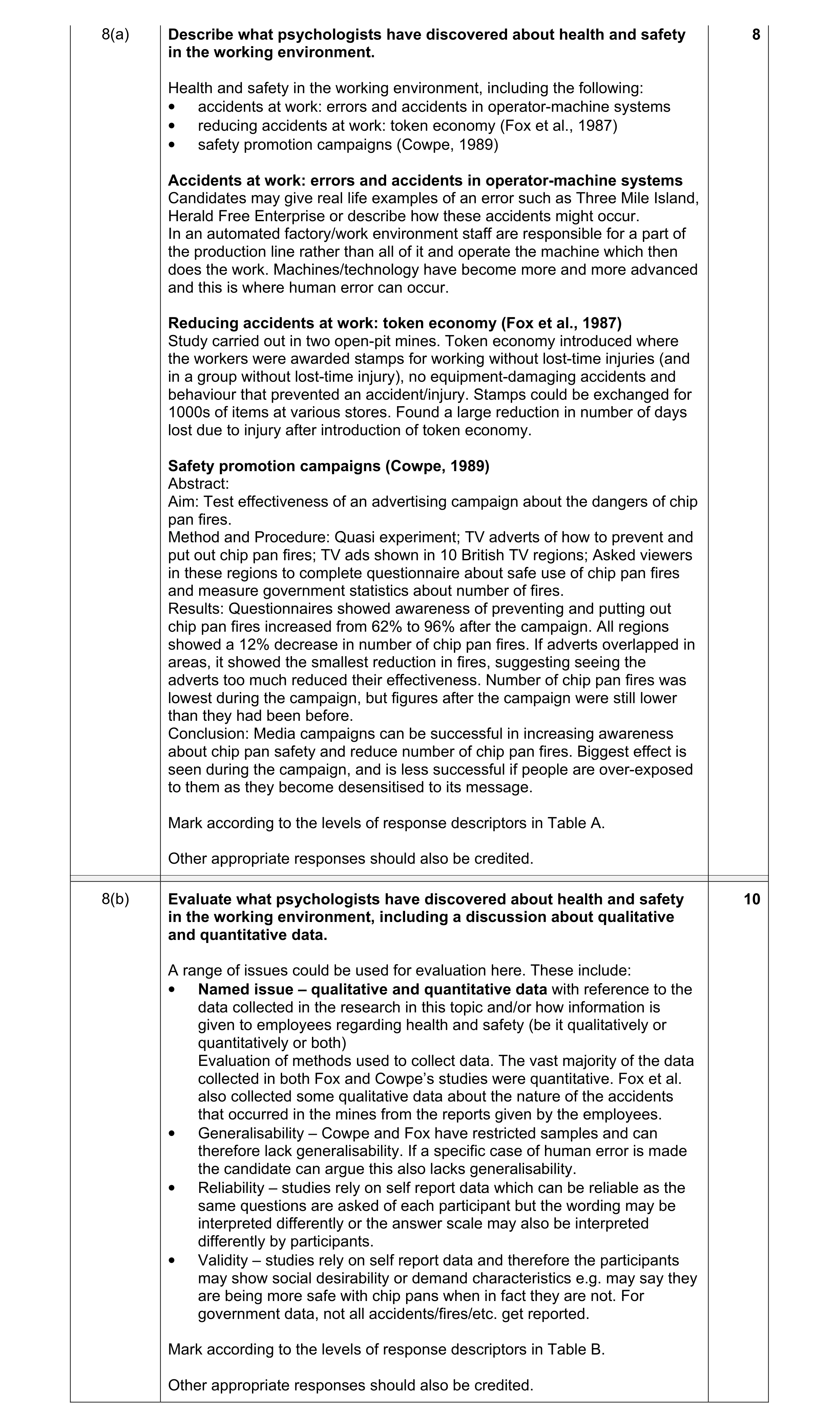 18
18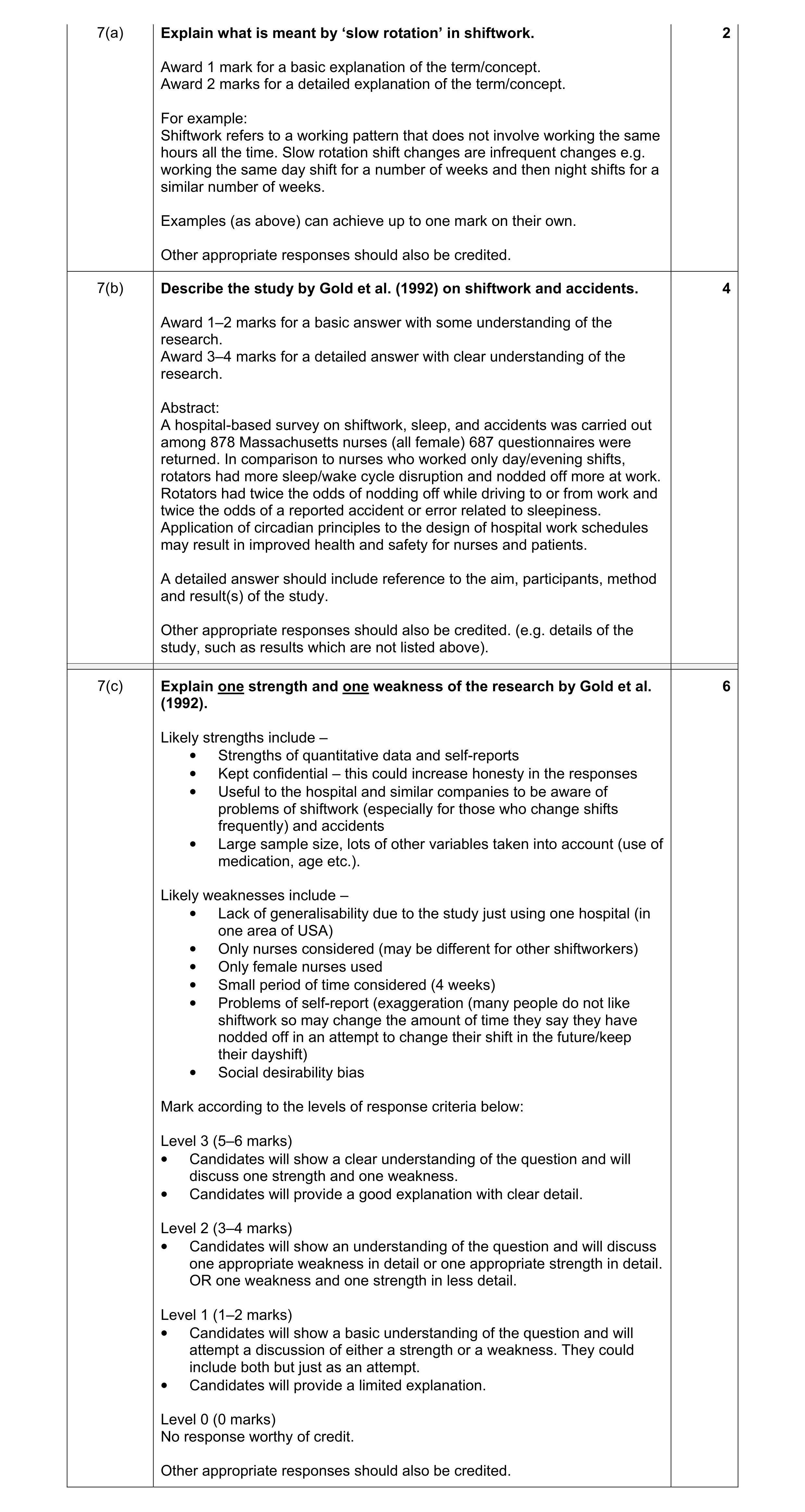 12
12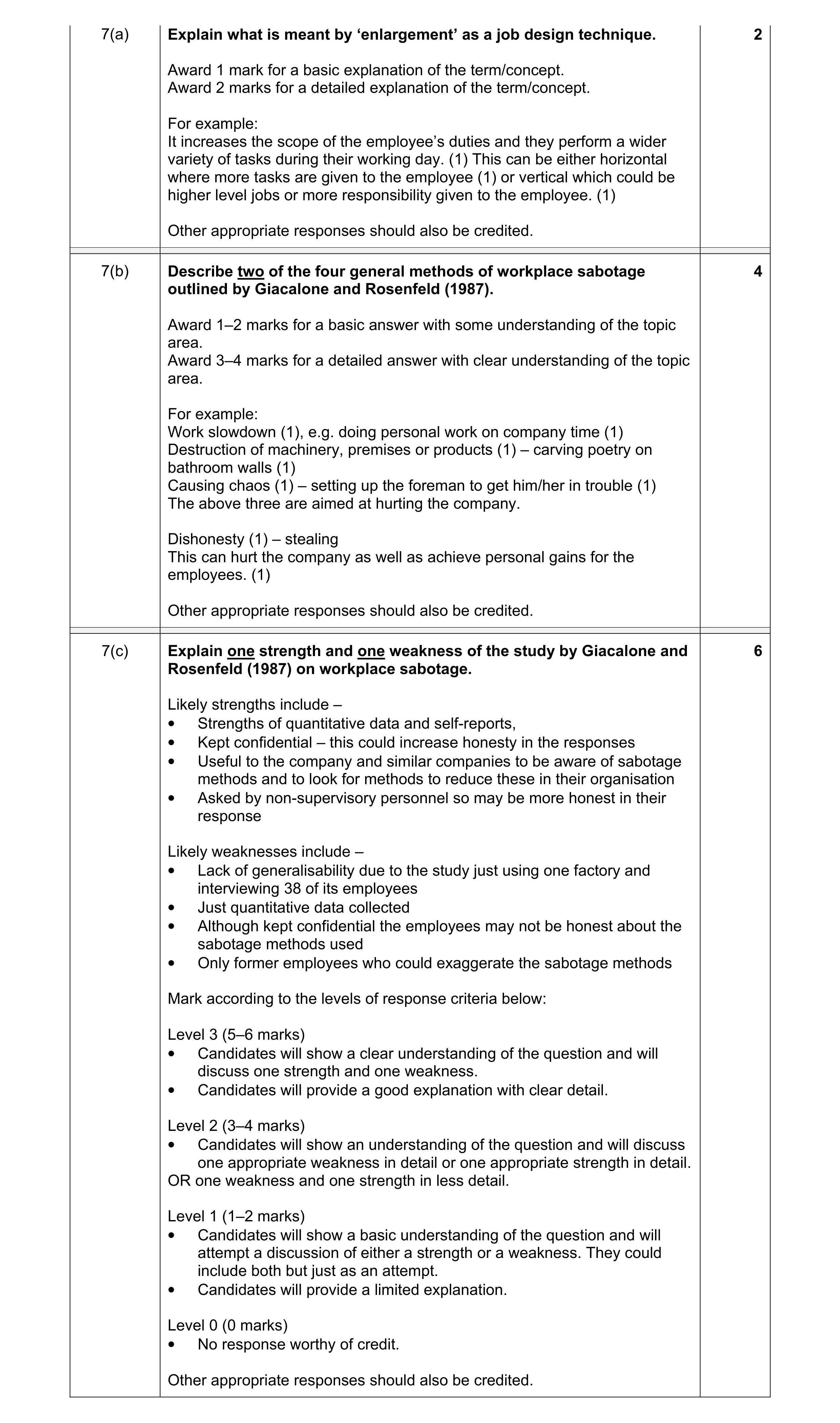 12
12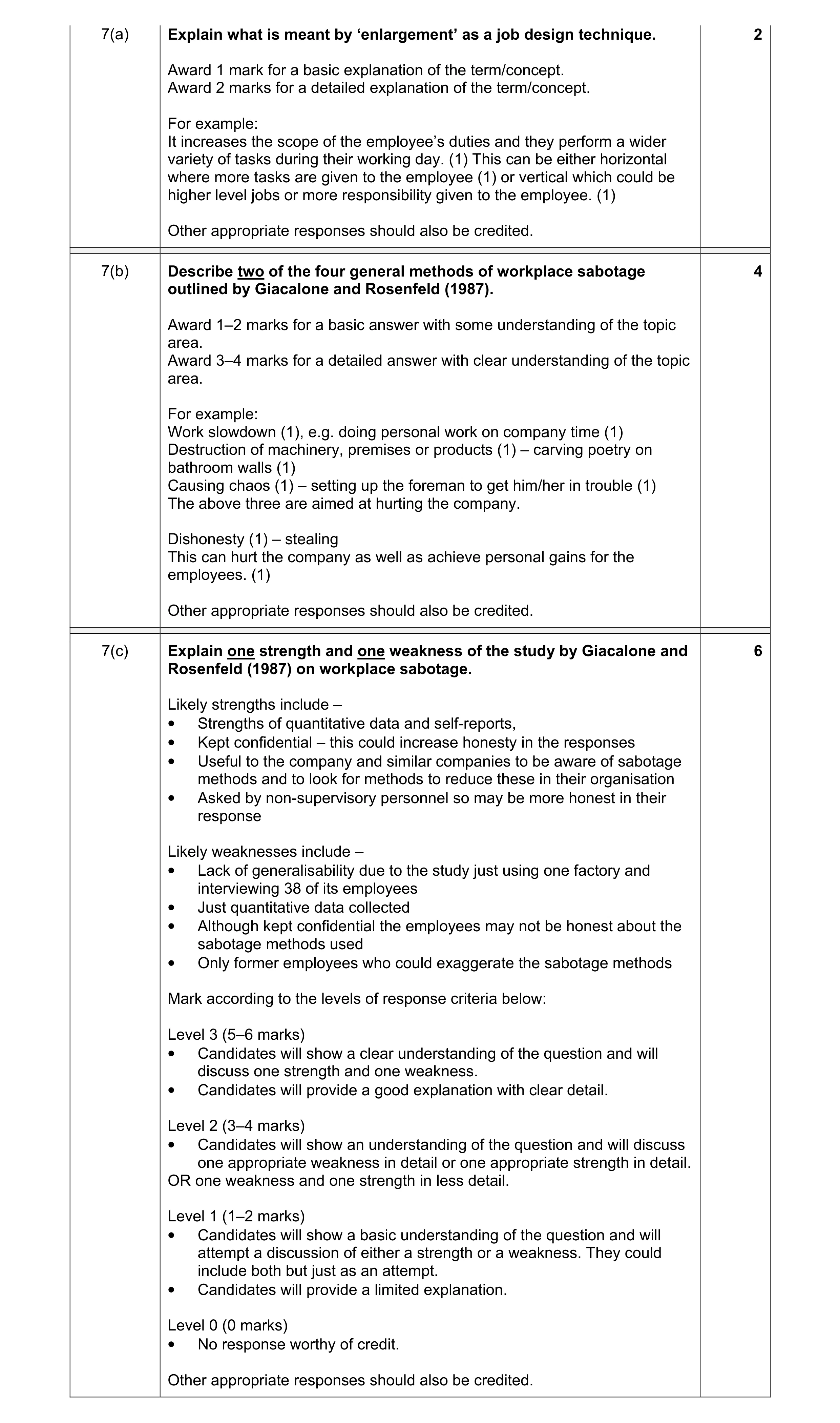 12
12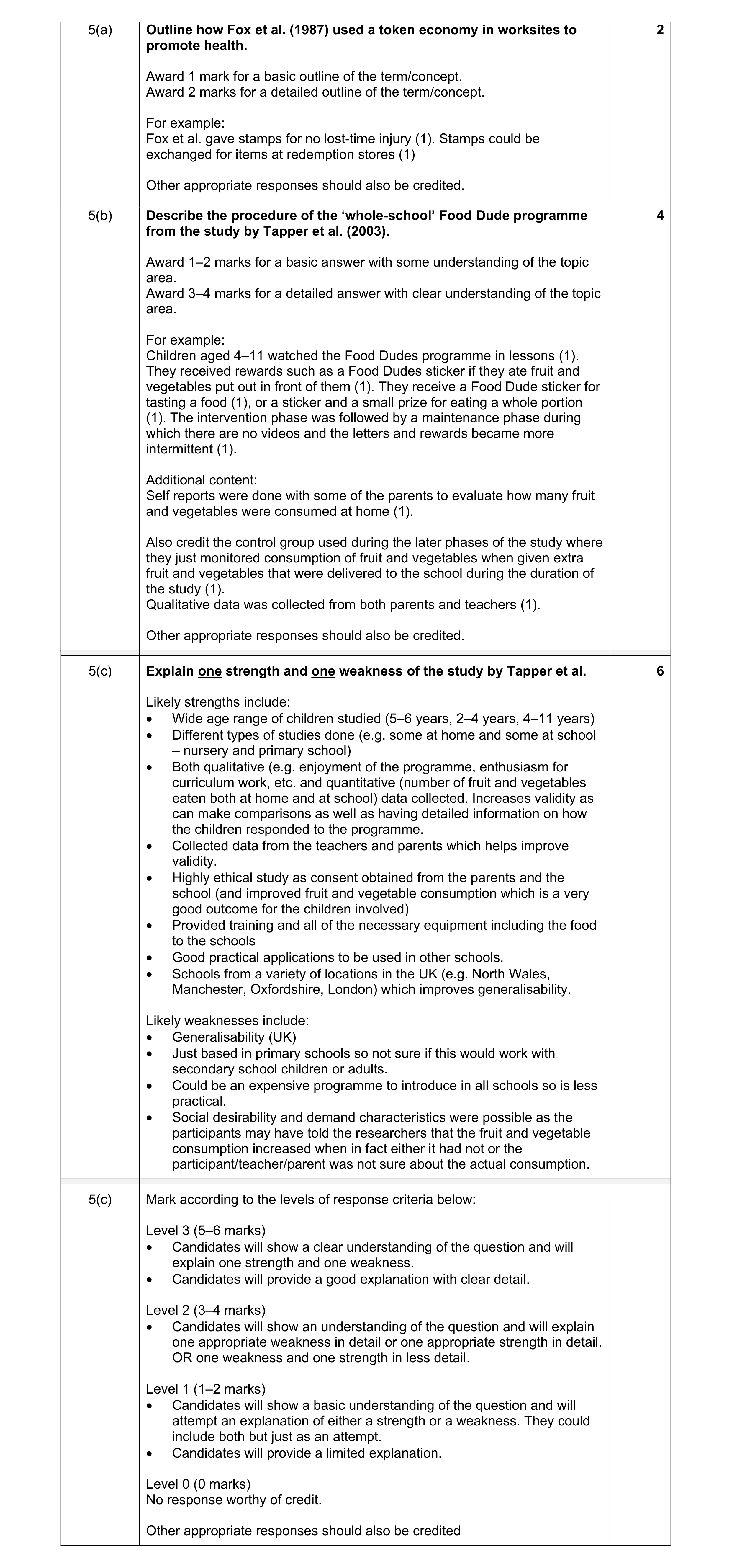 12
12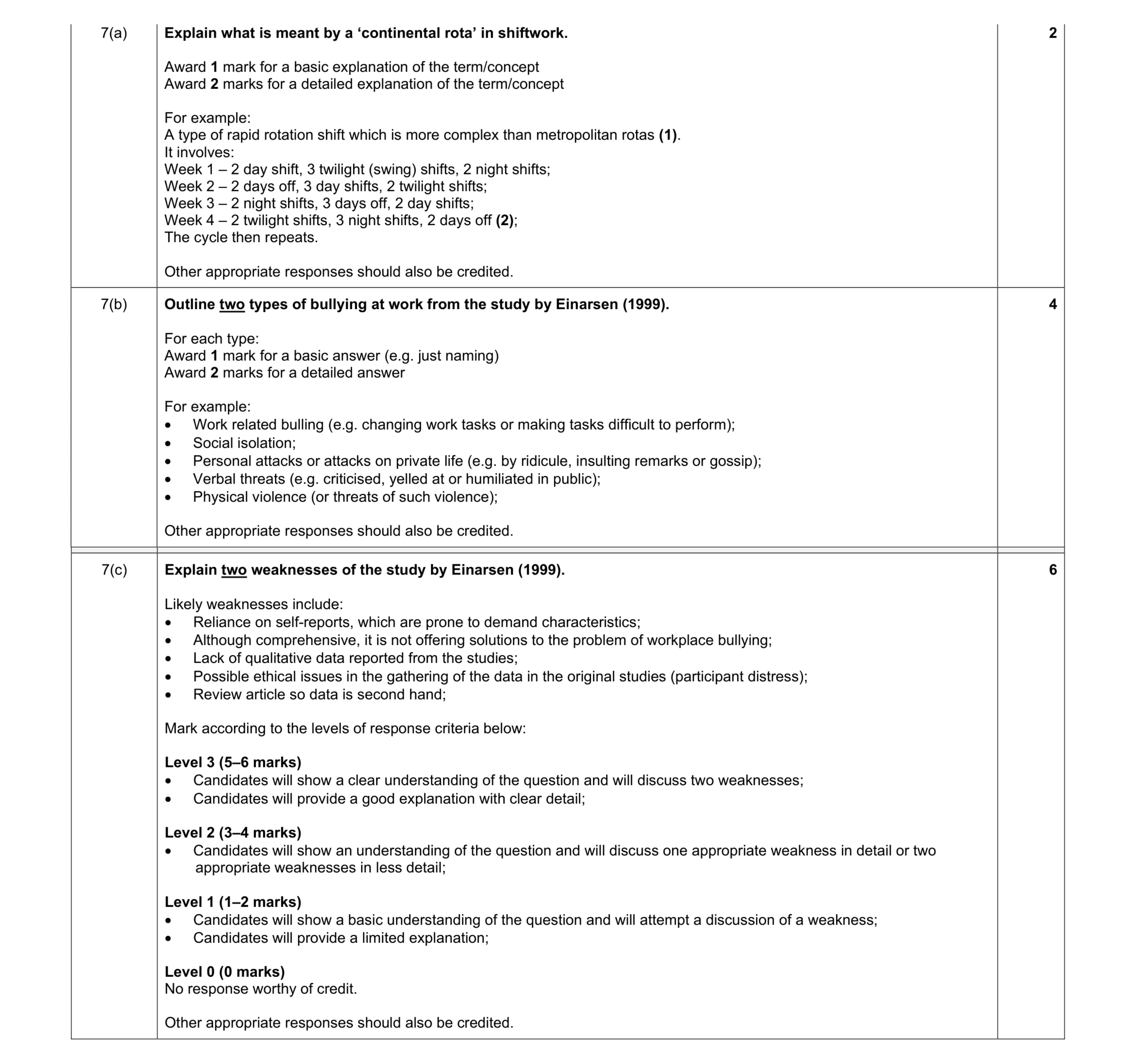 12
12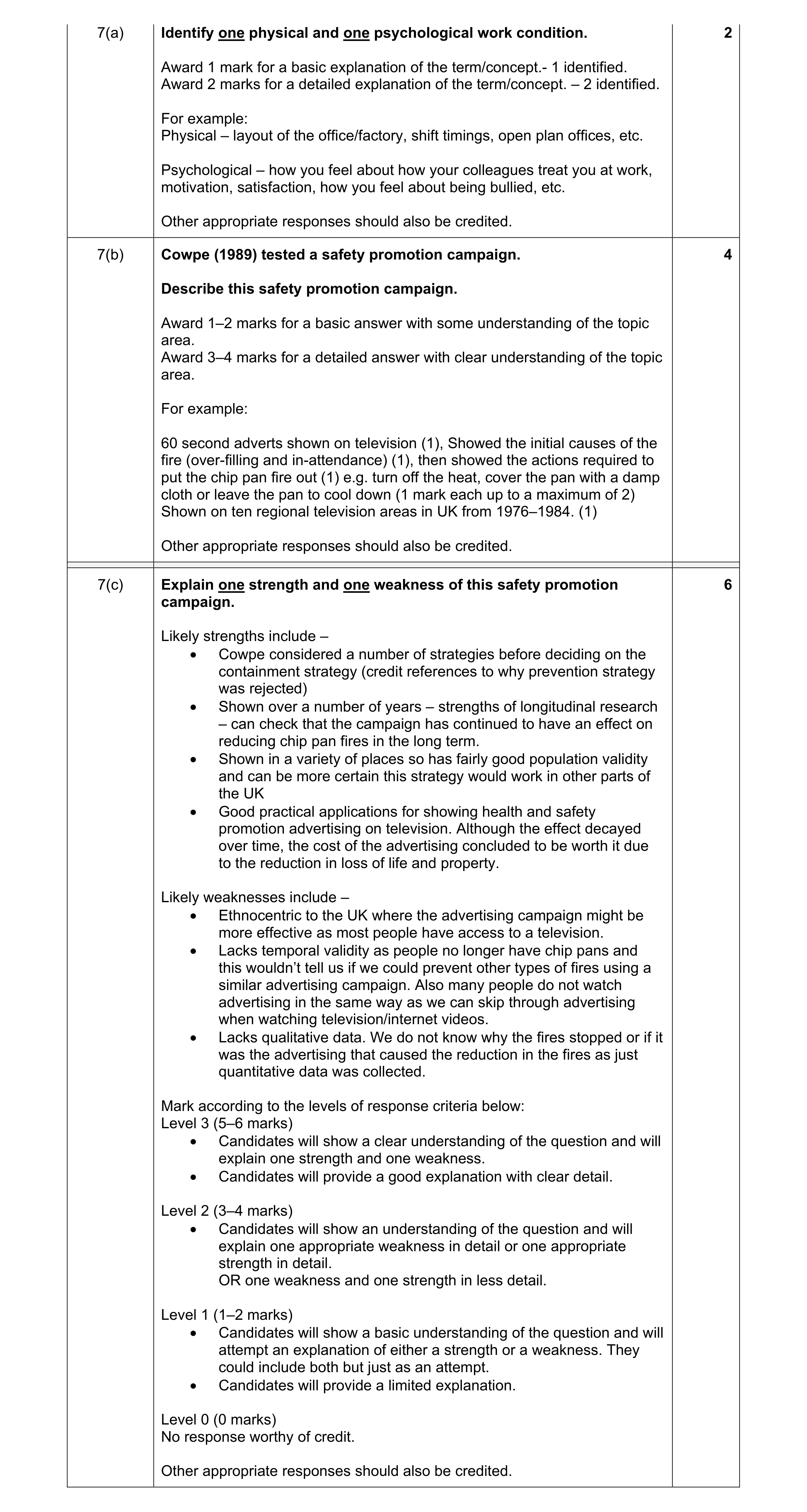 12
12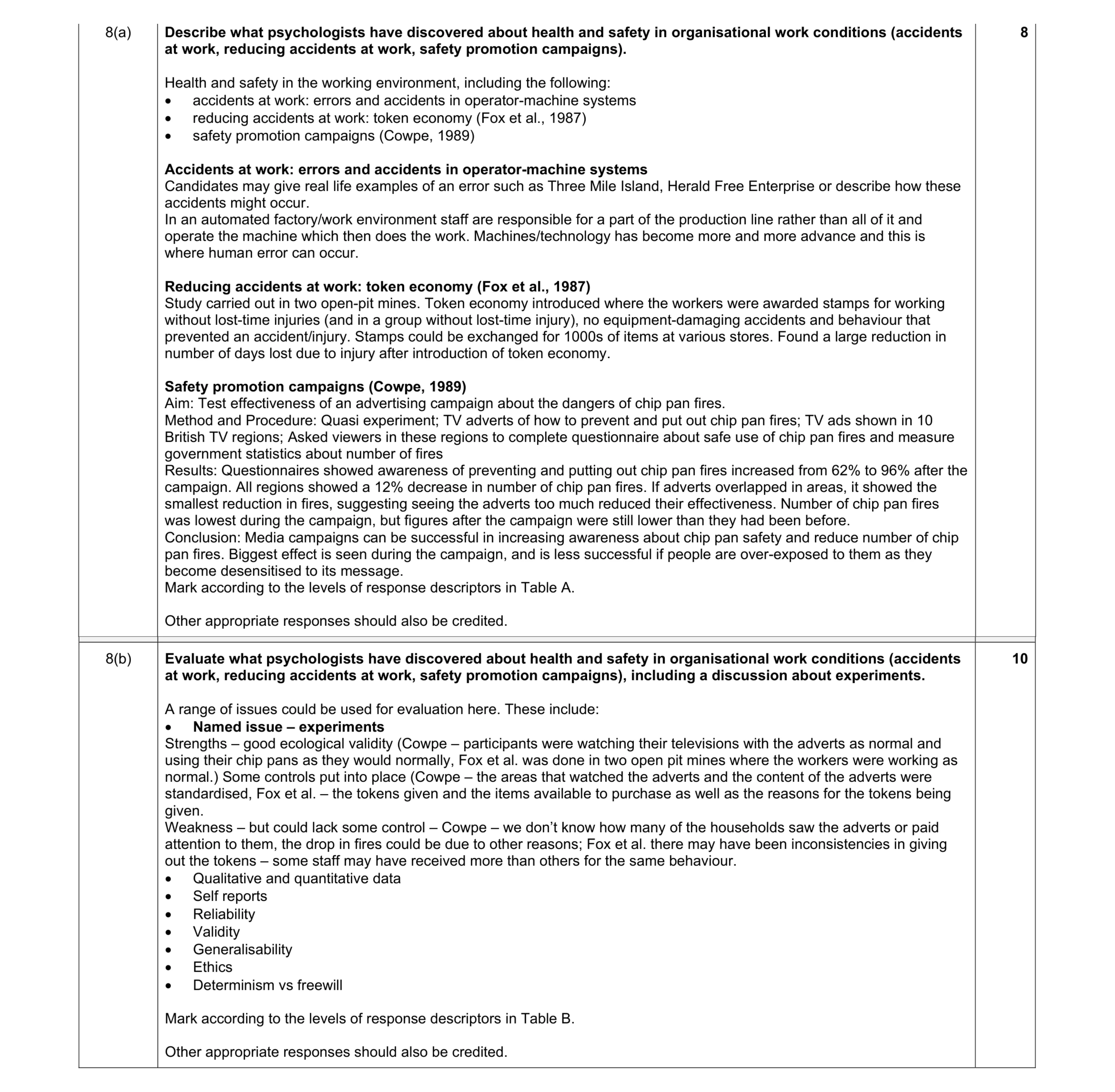 18
18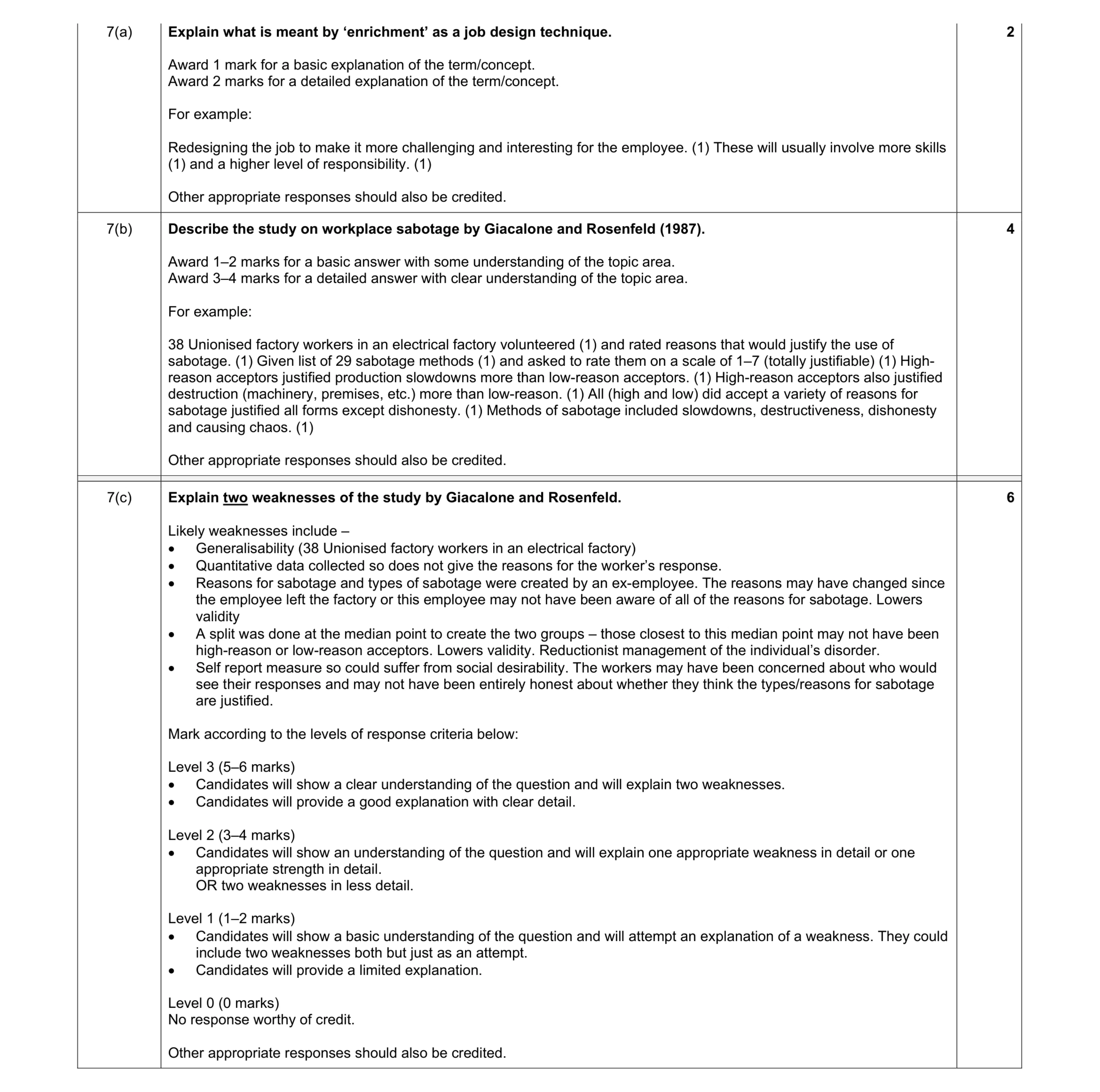 12
12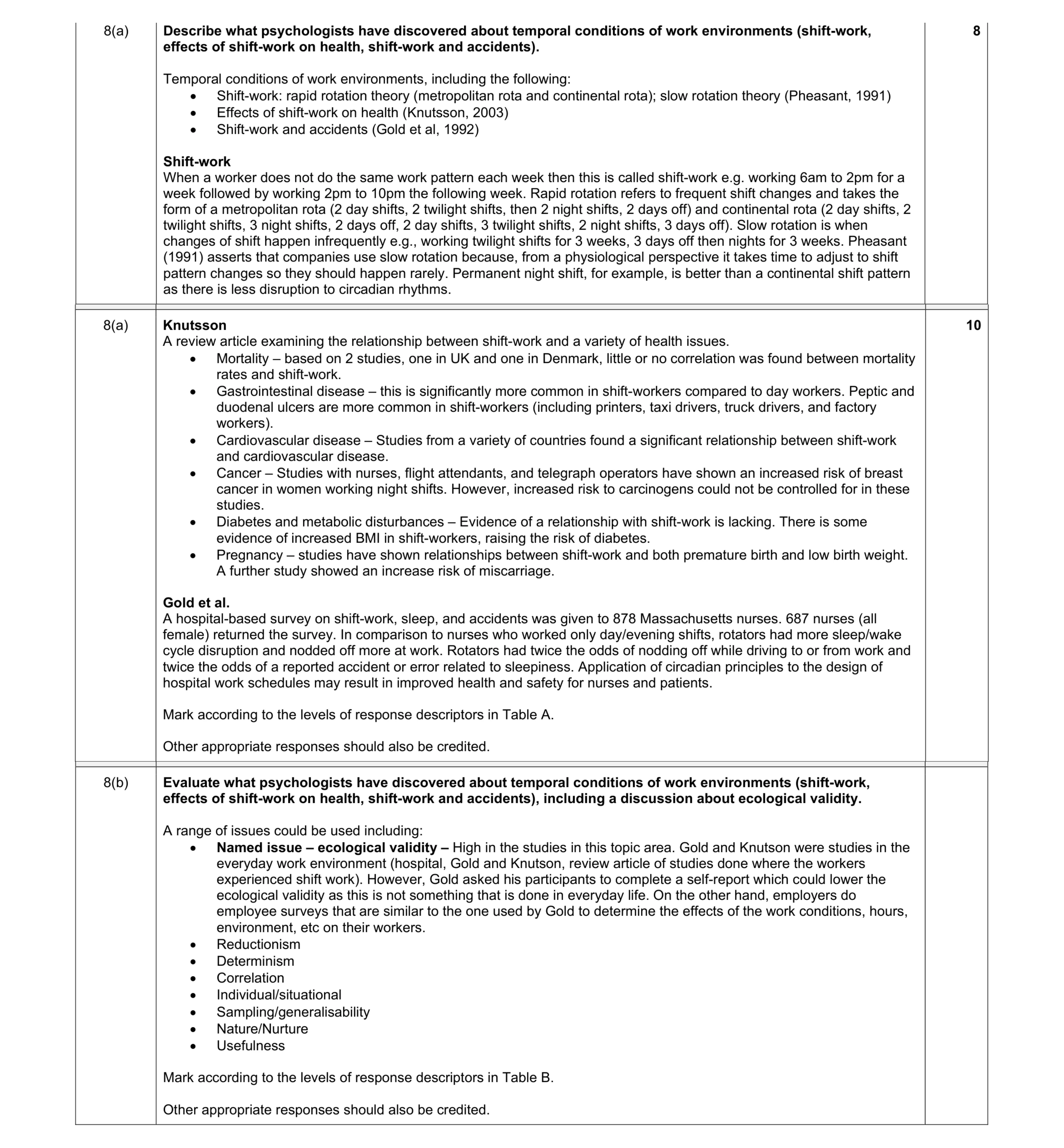 18
18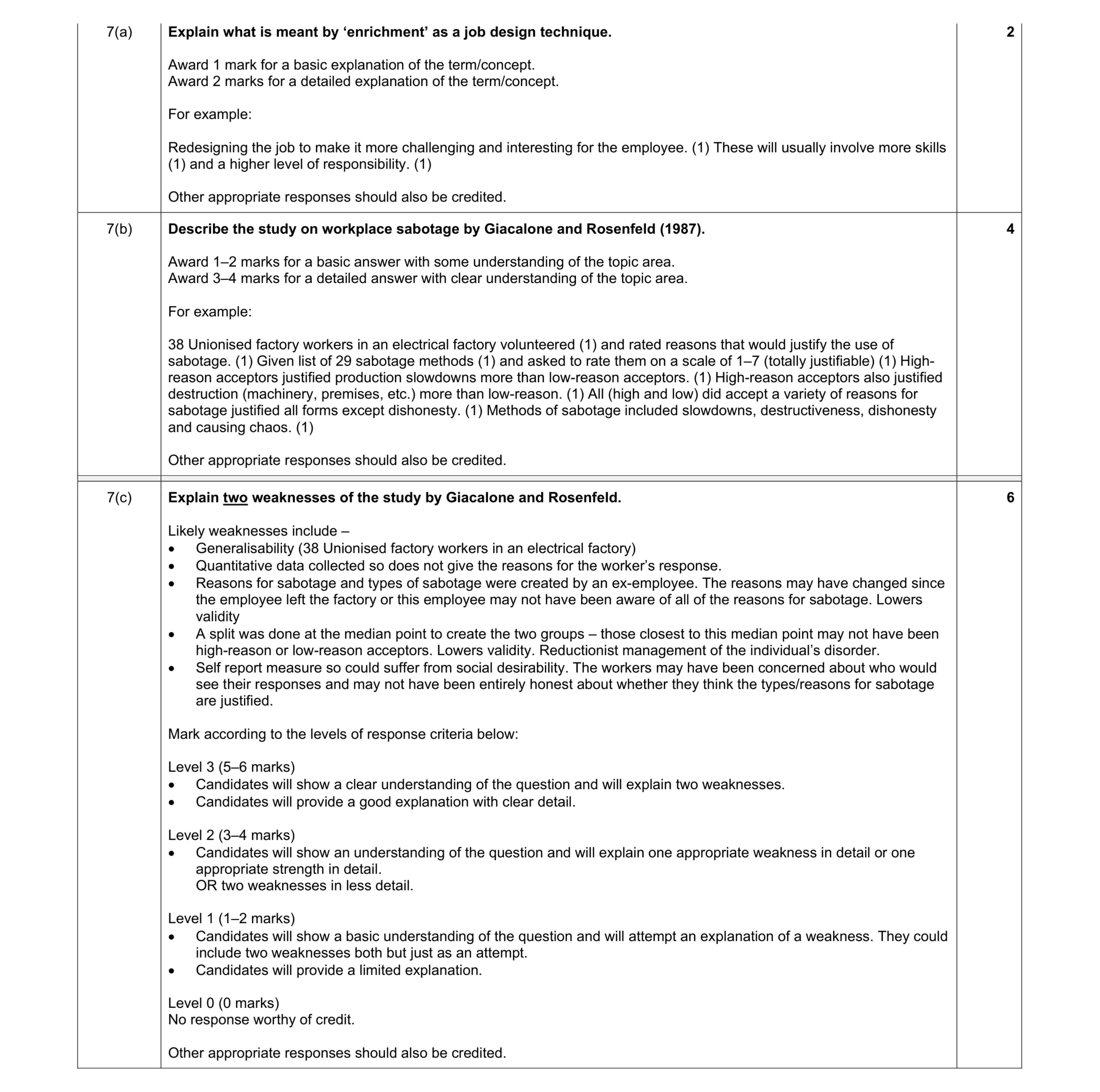 12
12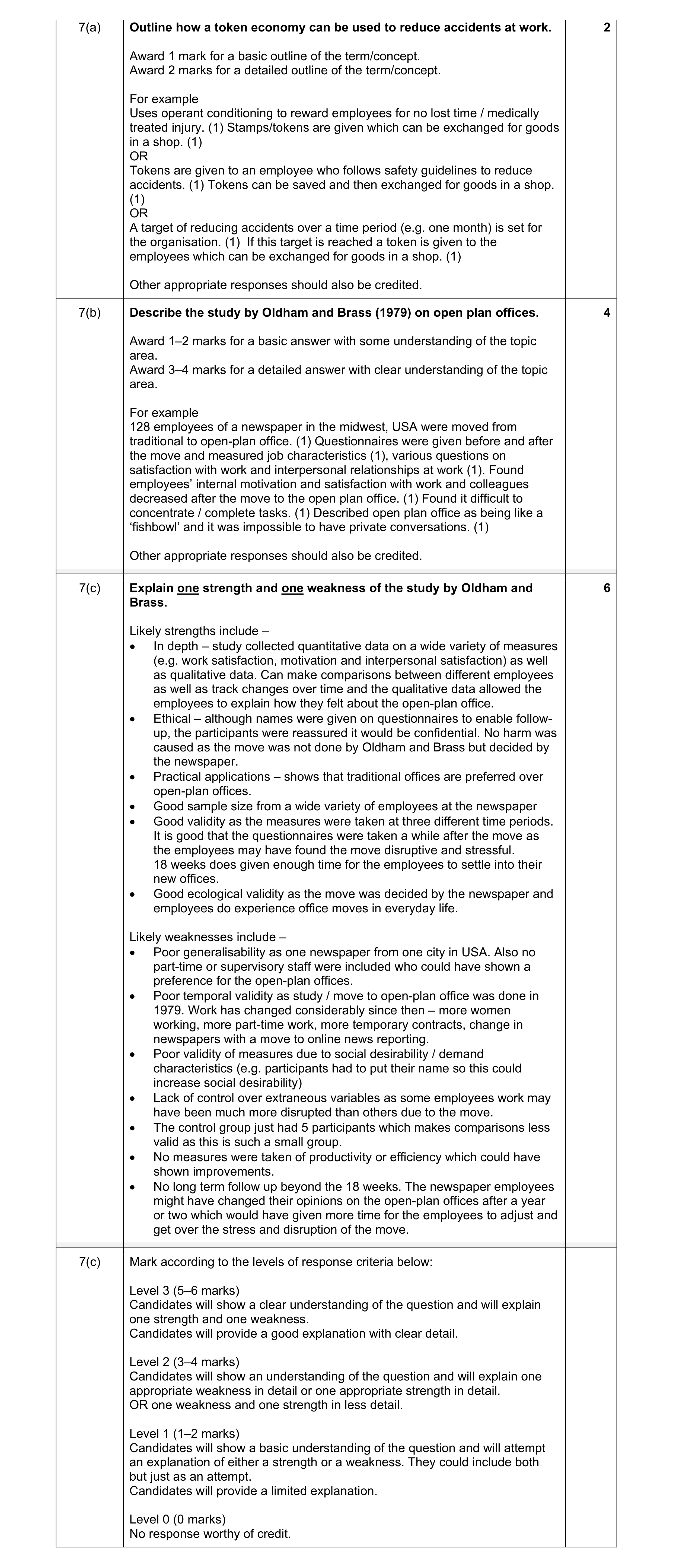 12
12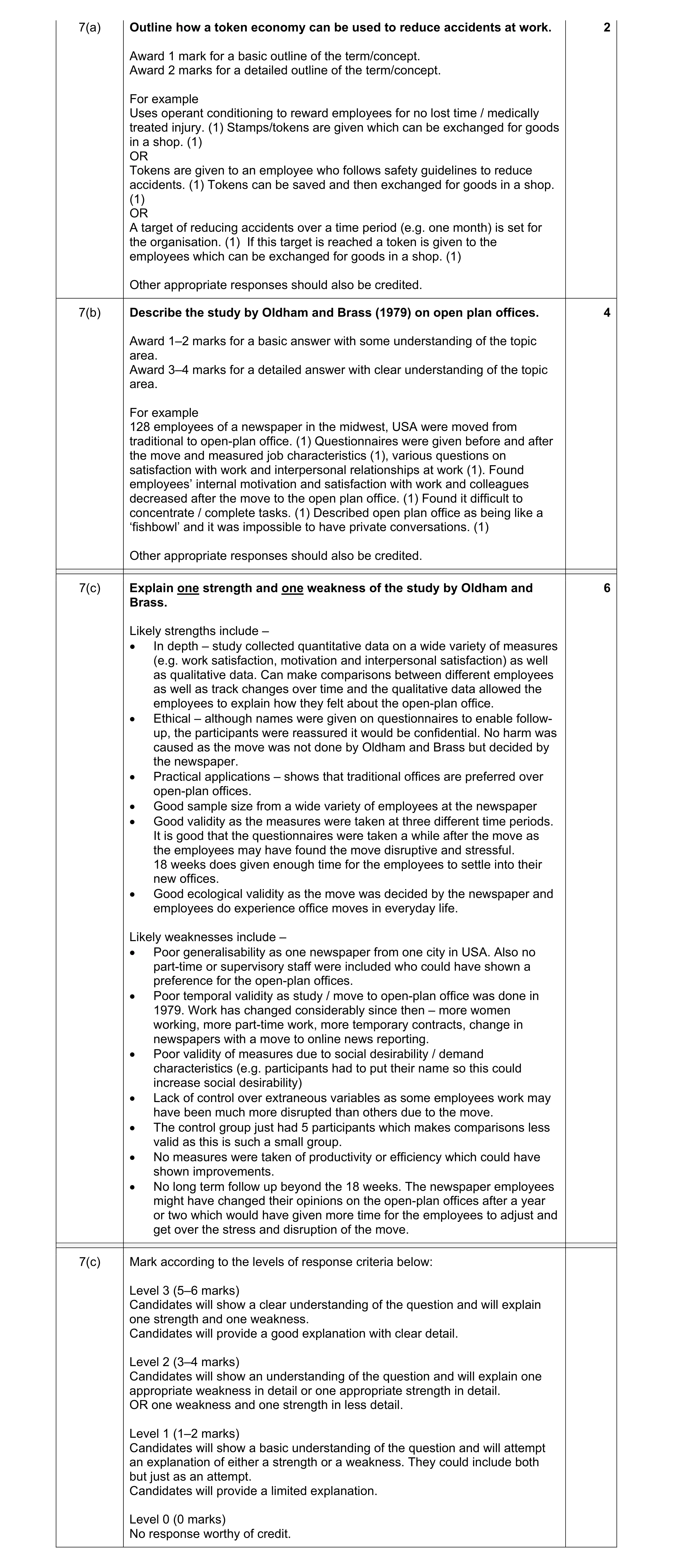 12
12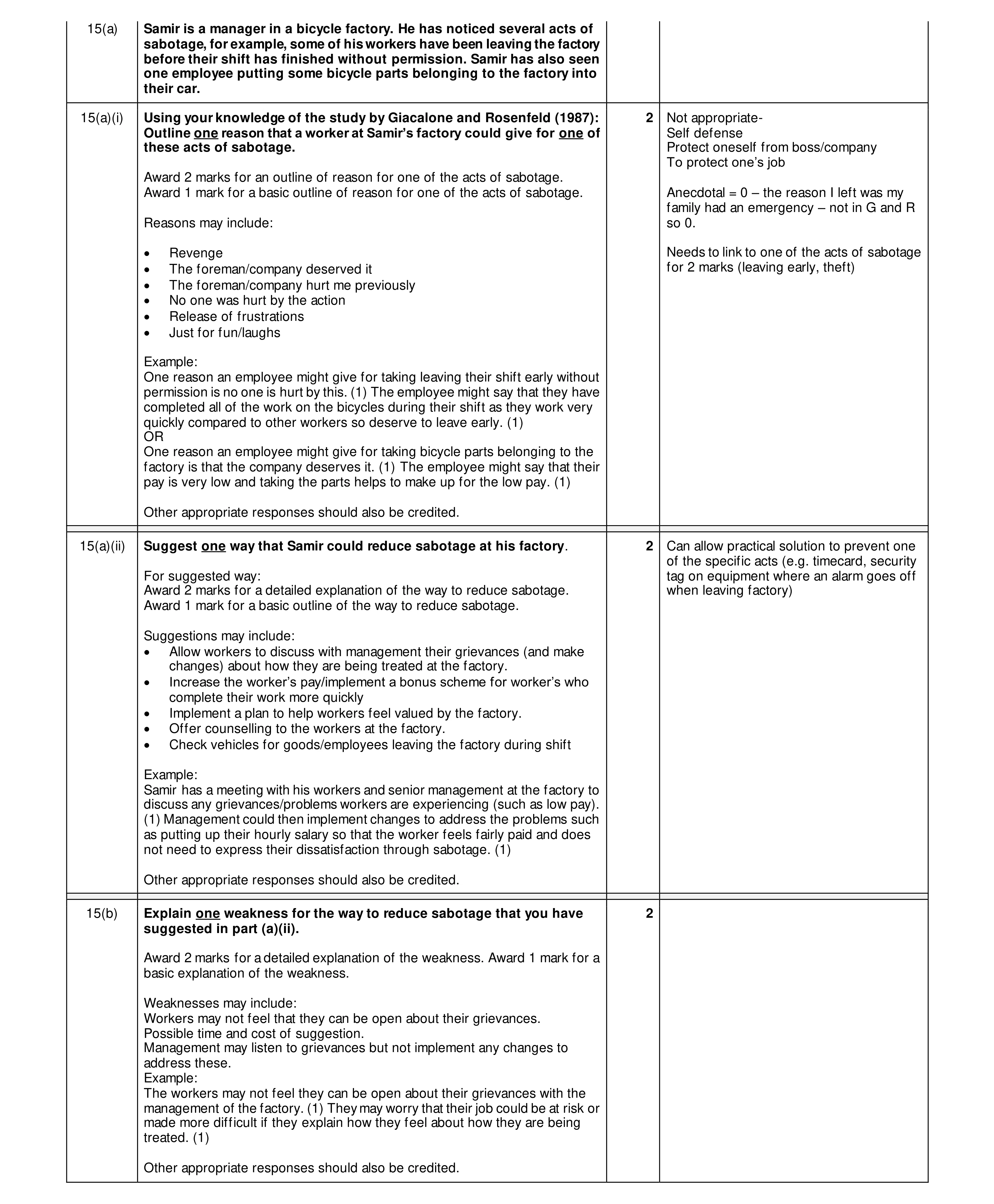 6
6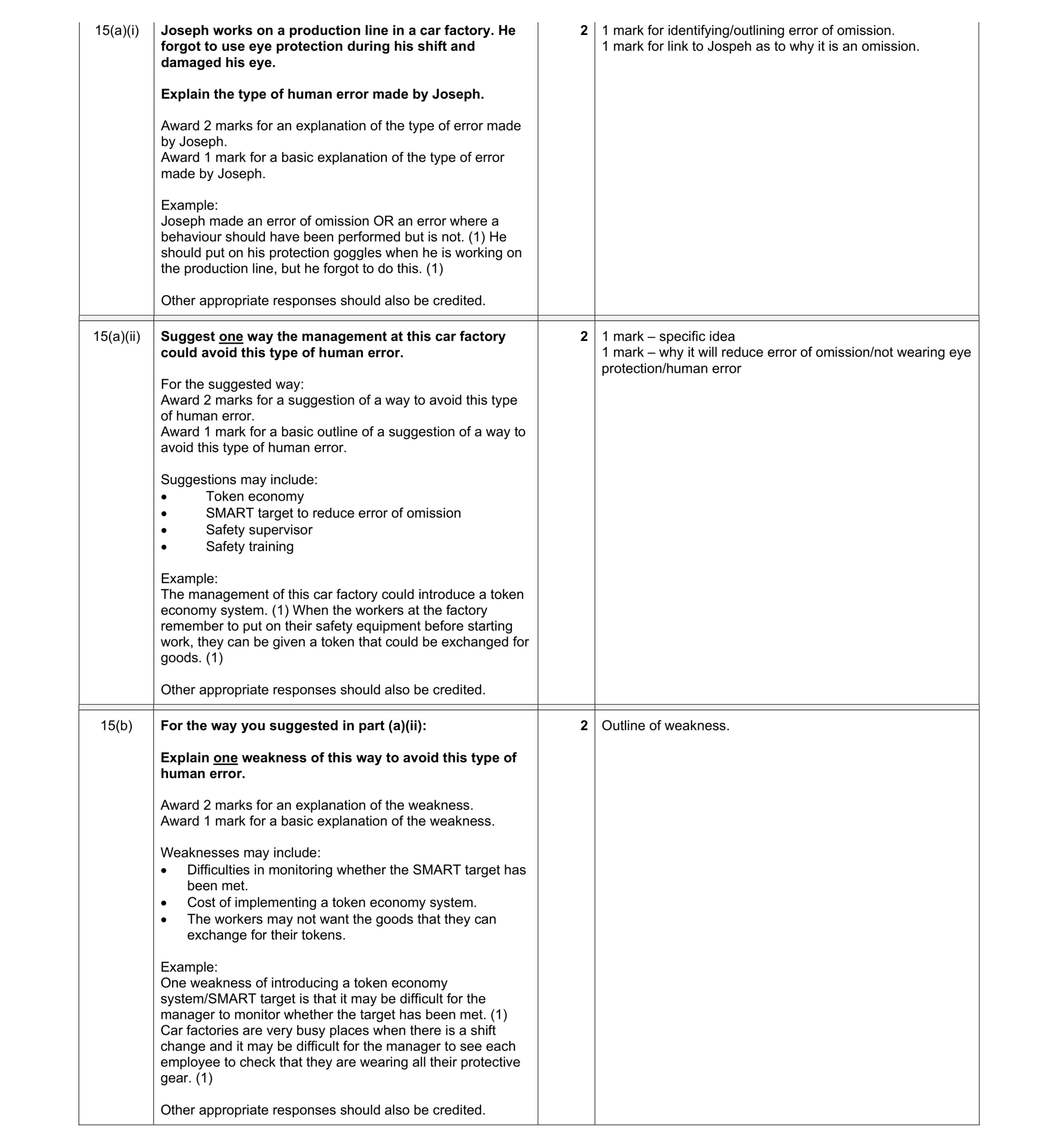 6
6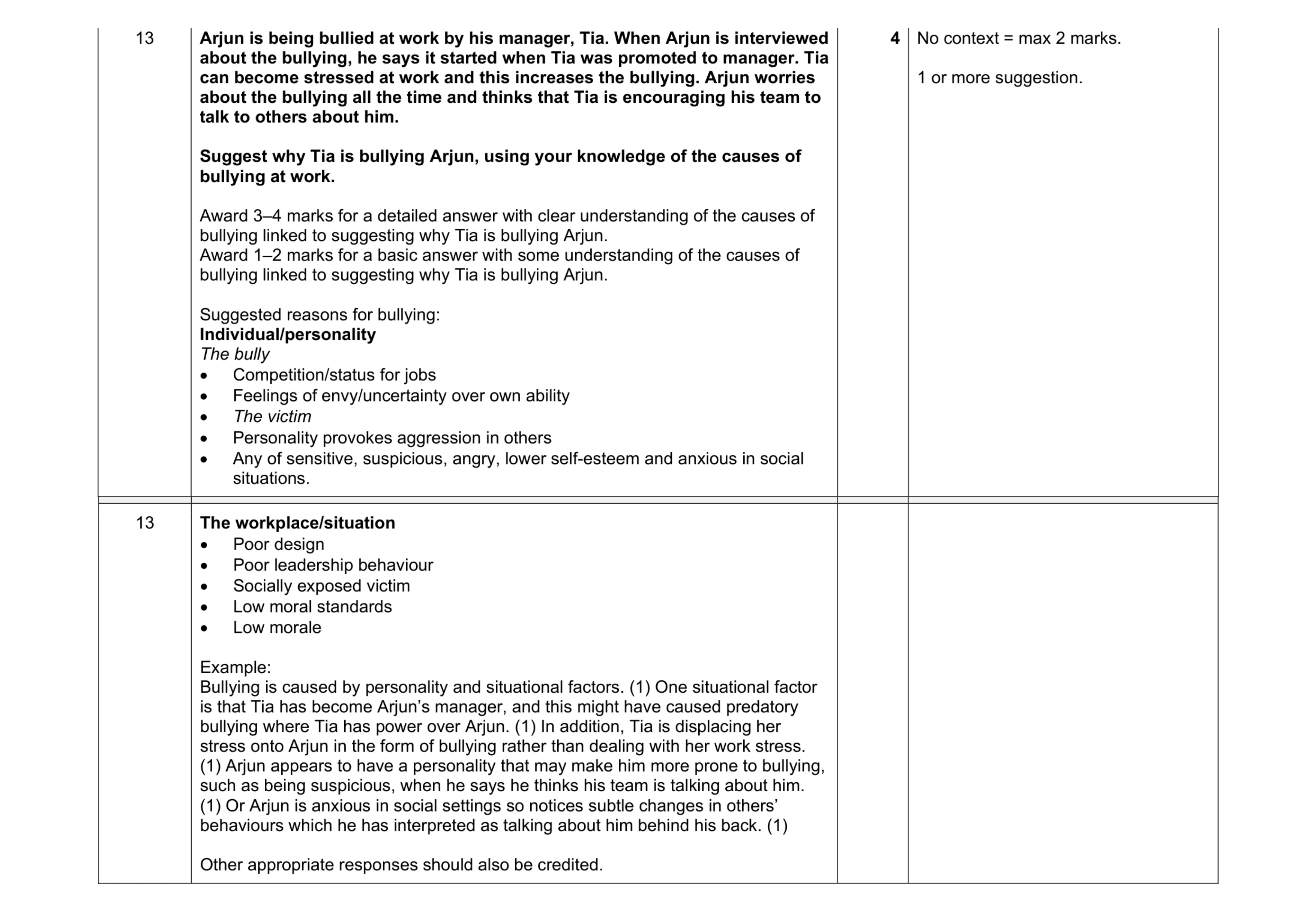 4
4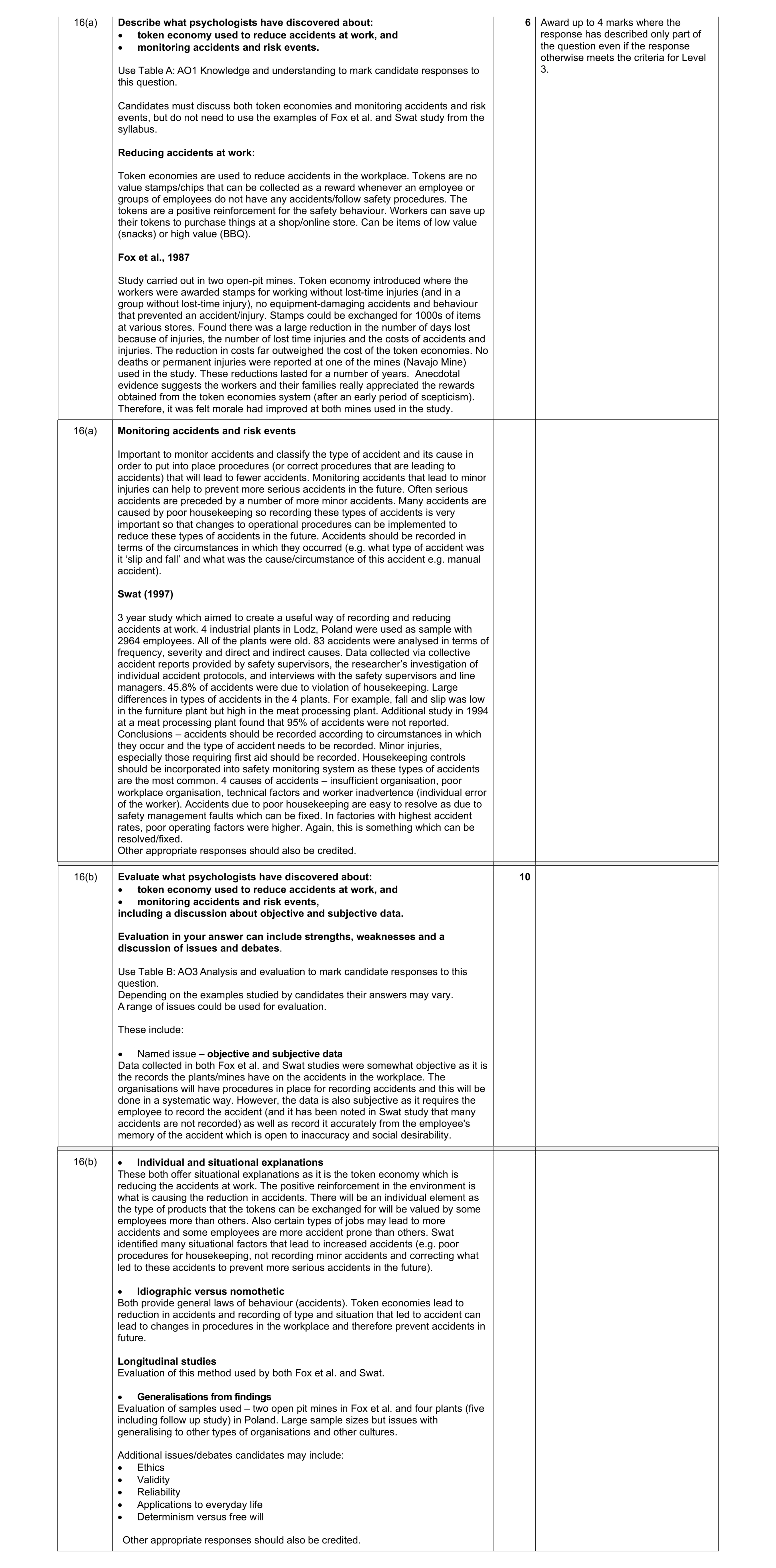 16
16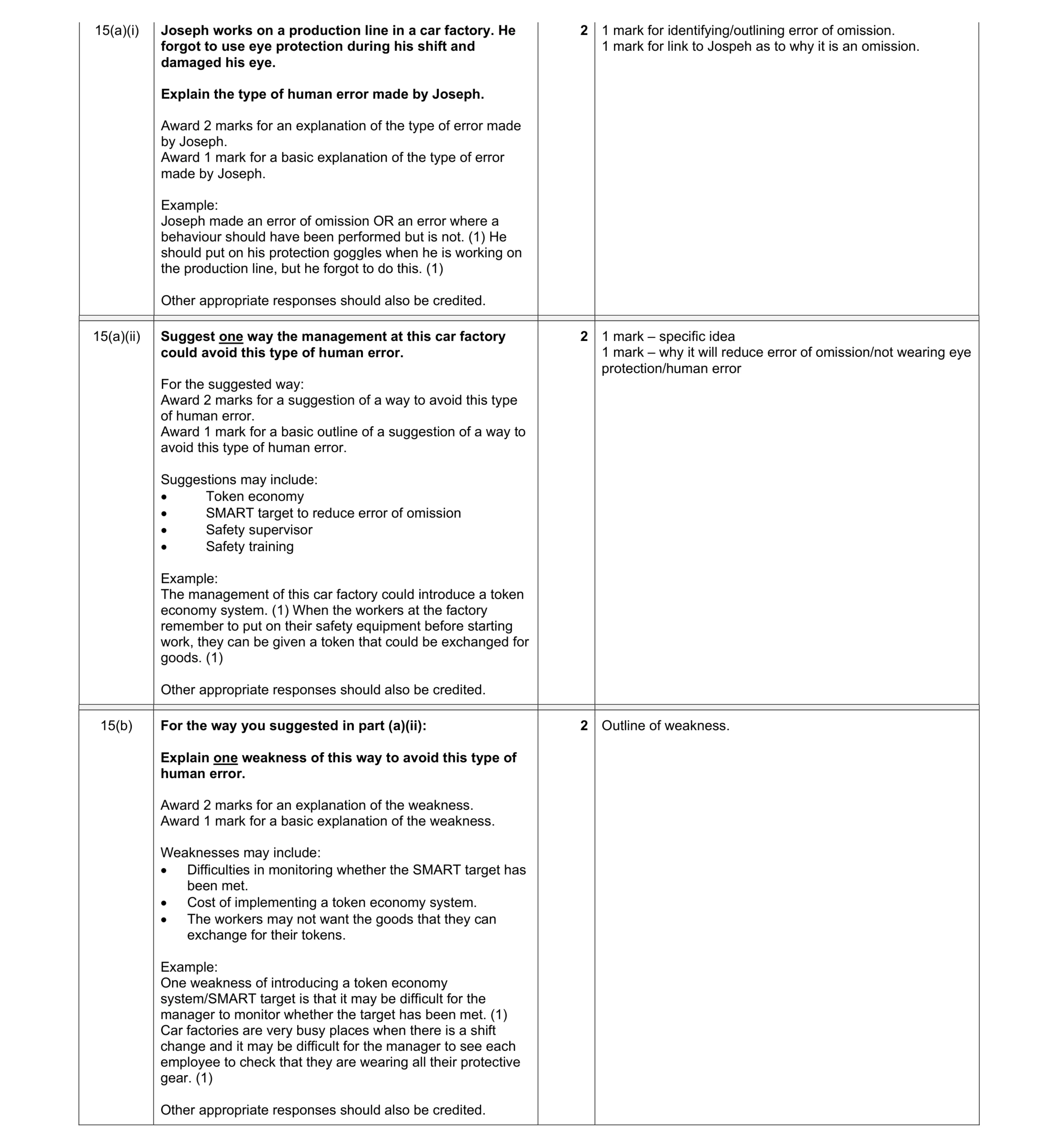 6
6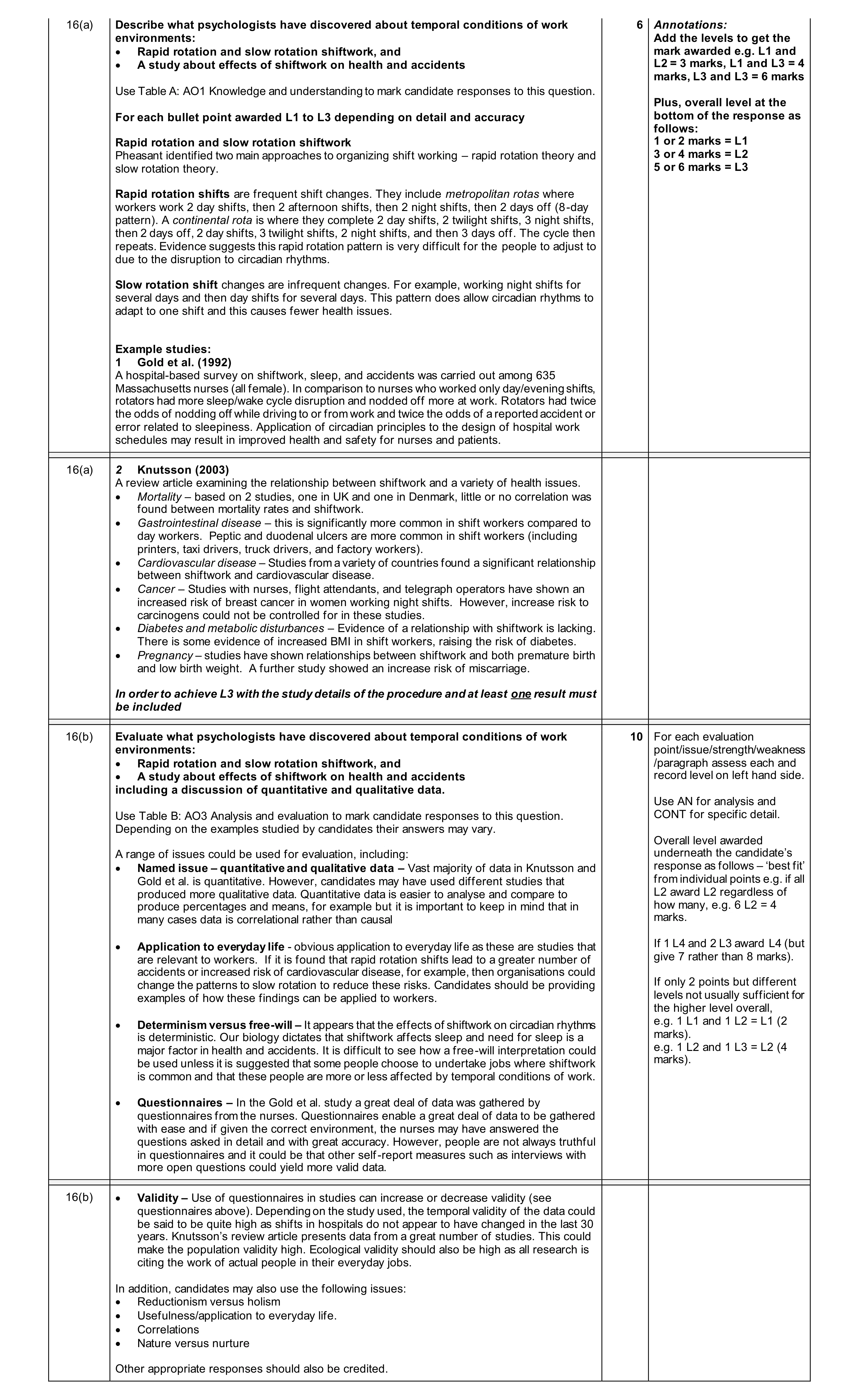 16
16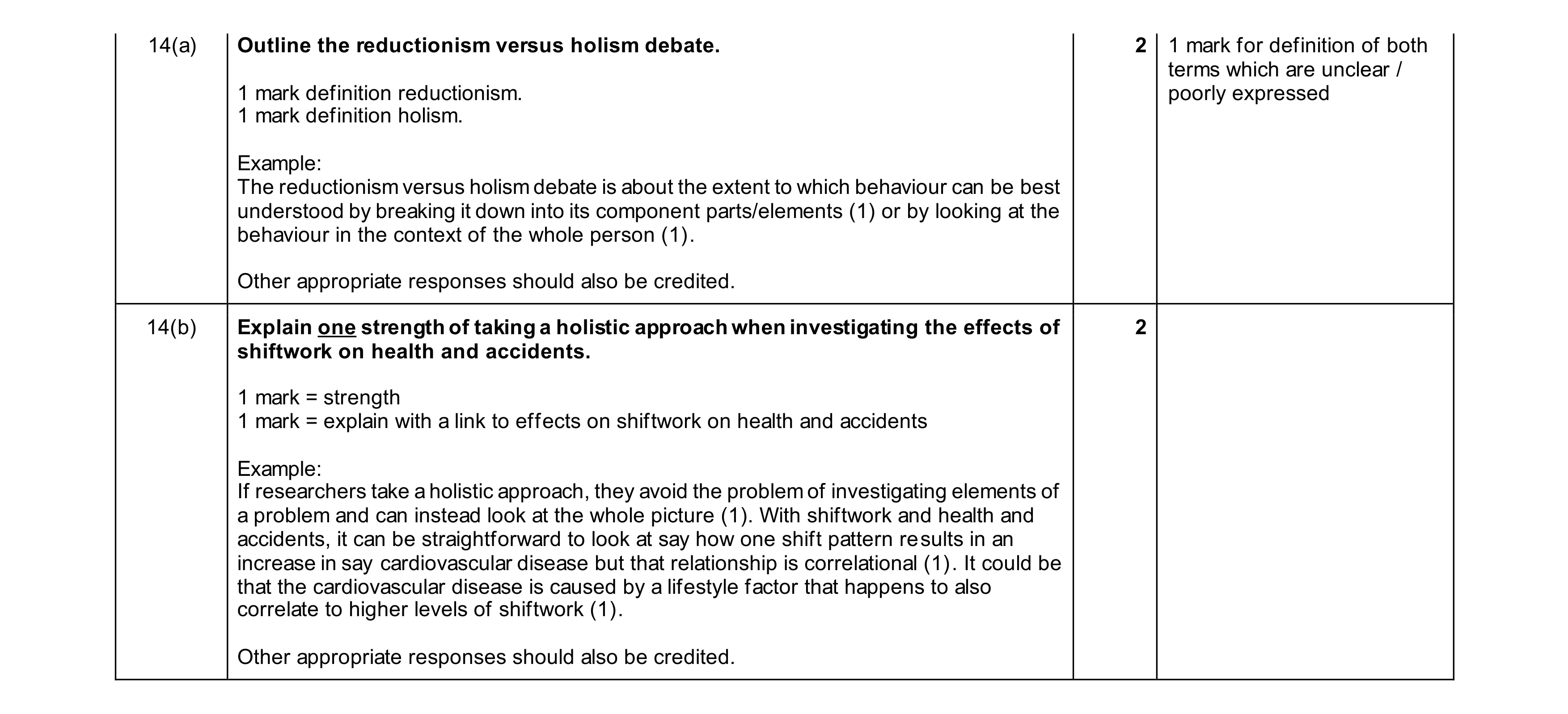 4
4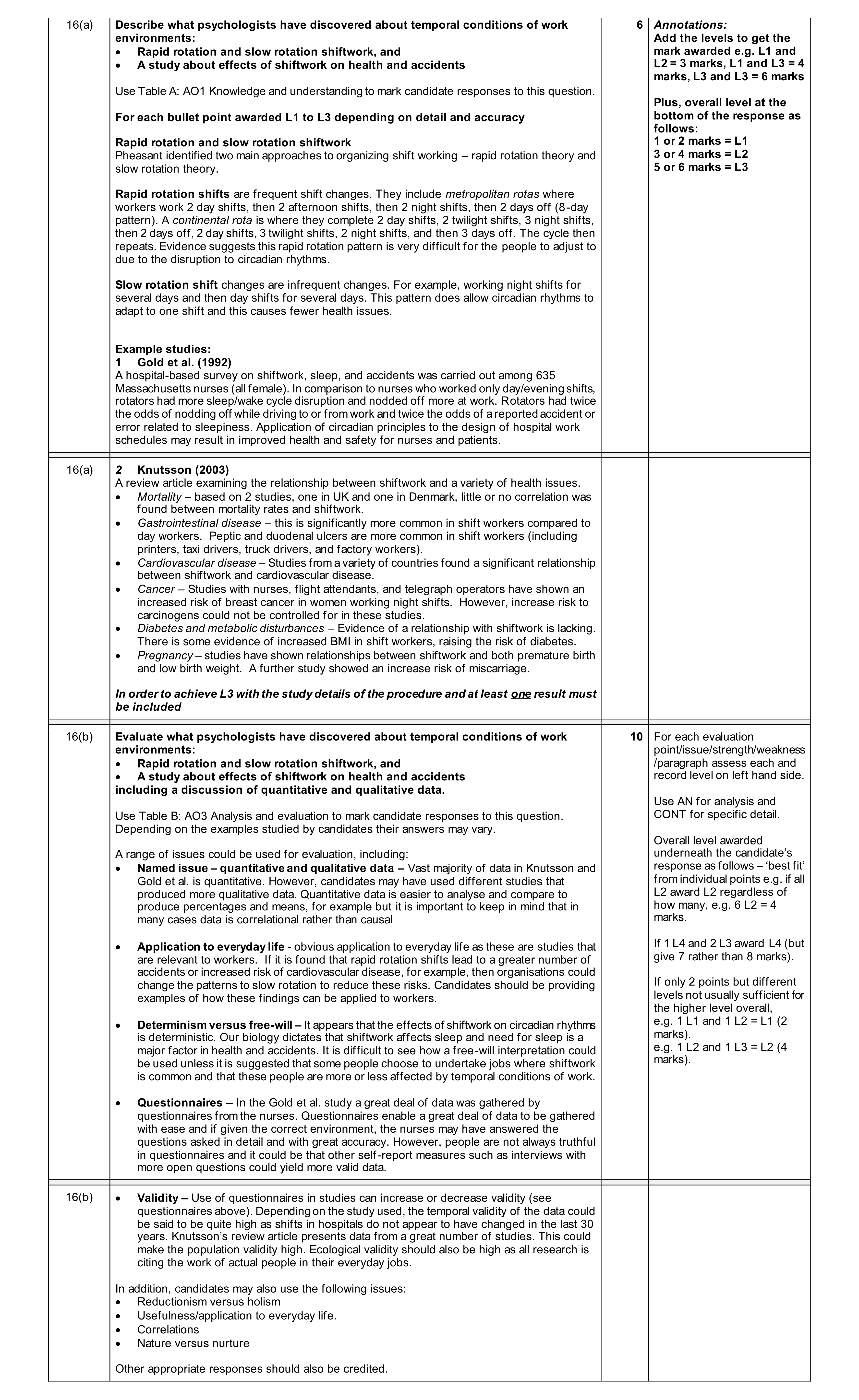 16
16