Questions as text
Q1 · Explain what is meant by the ‘GAS model of stress’ (Selye, 1936) 9990/32 Feb/March 2018
5 (a) Explain what is meant by the ‘GAS model of stress’ (Selye, 1936). [2] (b) Describe one questionnaire that measures stress. [4] (c) Explain one similarity and one difference between one psychological measure of stress and one physiological measure of stress. [6]
12 marks
Mark scheme: 5(a) Explain what is meant by the ‘GAS model of stress’ (Selye, 1936). 2 Award 1 mark for a basic explanation of the term/concept. Award 2 marks for a detailed explanation of the term/concept. For example: This is how the body responds to an external stressor. According to this model there are three phases the body goes through when responding to stress. These are the alarm reaction, resistance phase and exhaustion phase. A description of the three phases (although can be described rather than named) required for 2 marks. Other appropriate responses should also be credited. 5(b) Describe one questionnaire that measures stress. 4 Award 1–2 marks for a basic answer with some understanding of the topic area. Award 3–4 marks for a detailed answer with clear understanding of the topic area. Candidates will most likely described the Holmes Rahe Social Readjustment Rating Scale (SRRS) For example: SRRS – Produces quantitative data. 43 life events are listed (e.g. loss of job). The person choses which events have happened to them over the past 12 months. Each event has a score associated with it that the person adds up at the end to get their stress scores. The higher the score, the higher the stress levels. Other appropriate responses should also be credited (such as Daily Hassles scale). 5(c) Explain one similarity and one difference between one psychological 6 measure of stress and one physiological measure of stress. Candidates will most likely compare the SRRS to a physiological measure of stress (e.g. blood tests). Similarities • Both can produce quantitative data • Can be quick to complete by the person or the doctor Differences • Physiological measures can be painful (e.g. blood test) whereas psychological measures are not painful. • Physiological measures should not cause any mental harm (unless there is a specific phobia) but it can be distressing to focus on negative events. Mark according to the levels of response criteria below: Level 3 (5–6 marks) • Candidates will show a clear understanding of the question and will explain one similarity and one difference. • Candidates will provide a good explanation with clear detail. Level 2 (3–4 marks) • Candidates will show an understanding of the question and will explain one appropriate similarity in detail or one appropriate difference in detail OR one similarity and one difference in less detail. • Candidates will provide a good explanation. Level 1 (1–2 marks) • Candidates will show a basic understanding of the question and will attempt an explanation of a similarity or a difference. (This could include both but as an attempt only.) • Candidates will provide a limited explanation. Level 0 (0 marks) No response worthy of credit. Other appropriate responses should also be credited
This question in 9990/32 Feb/March 2018
Q2 · Describe what psychologists have discovered about the management of stress 9990/32 May/June 2018
6 (a) Describe what psychologists have discovered about the management of stress. [8] (b) Evaluate what psychologists have discovered about the management of stress, including a discussion about ethics. [10] Psychology and organisations Answer all questions.
18 marks
Mark scheme: 6(a) Describe what psychologists have discovered about the management of 8 stress. Management of stress, including the following: • medical techniques (biochemical) • psychological techniques: biofeedback (Budzynski et al., 1969) and imagery (Bridge, 1988) • preventing stress (Meichenbaum, 1985) Medical techniques (biochemical) Antidepressants (SSRIs) such as fluoxetine (Prozac). Regulates serotonin (mood stabiliser) in the brain. Benzodiazepines (BZs) – Benzodiazepines act as a sedative which shows down the body’s functions. They work by increasing the effect of a brain chemical called GABA (gamma amino butyric acid). GABA reduces brain activity in the areas of the brain responsible for: rational thought, memory, emotions and essential functions, such as breathing. The main effects of benzodiazepines are: sedation, reduced anxiety and muscle relaxation. Psychological techniques: biofeedback (Budzynski et al., 1969) and imagery (Bridge, 1988) Biofeedback – A medical device monitors physical processes (such as heart rate, blood pressure, etc.) and immediate feedback is given to the patient. The patient can then learn to do relaxation to reduce the physical processes and therefore hope to reduce the experience of stress. Budzynski found this technique was effective in helping to reduce tension headaches. Imagery – Sensory awareness of various muscle groups while imagining a peaceful scene of their choice (as used by Bridge in their study of women with cancer). Imagining a peaceful or beautiful setting while doing relaxation exercises such as deep breathing or muscle relaxation. Bridge found that the patient’s mood when using imagery improved over the course of therapy (although symptoms did not improve). Preventing stress (Meichenbaum, 1985) Stress Inoculation therapy – a form of CBT. Three phases 1 Conceptualisation – discussing the nature of the problem with the therapist Taught about stressors and how they affect the body. 2 Skills acquisition and rehearsal – taught relaxation and problem solving techniques and practice in the session. 3 Application and follow through – the client practices between sessions and they discuss with the therapist how it is going and make alterations as necessary. Mark according to the levels of response descriptors in Table A. Other appropriate responses should also be credited. 6(b) Evaluate what psychologists have discovered about the management of 10 stress, including a discussion about ethics. • Named issue – ethics (can be of the management techniques and/or the ethics of the research). In all of the studies listed above (Budzynski and Bridge) there was a control group who did not receive any treatment. This could be considered unethical as the participants were not given the opportunity to find a way of management their stress levels. However, it did improve stress levels for the patients in the experimental conditions which improves the ethics of the study. In terms of the ethics of the treatments themselves – biochemical techniques (drug therapy) can be addictive for the patient whereas the psychological techniques do not involve any biochemical changes so are therefore more ethical. • nature versus nurture debate with reference to the various management strategies and the theory on which they are based. Biochemical techniques are down to nature whereas the others involve some nature as they recognise the symptoms of stress are biological in nature but also suggest that the patient can learn (nurture) to relax and solve problems in a different way that produces less stress. • comparisons of different management techniques – any issues can be used to make comparisons. Do not credit issues twice. • Application of psychology to everyday life (with reference to management strategies) – all have been shown to be effective through the research. The studies are all done in the everyday life of the patients so they are looking at genuine (often long term as in the case of Bridge) reduction in experiences of stress. • usefulness (effectiveness) of different management strategies – all have been shown to be effective via the research. Can evaluate the evidence with reference back to effectiveness. • reductionist nature of the management strategies – biochemical and the most reductionist and the other treatments are less reductionist as they take into account both the biological as well as the psychological causes of stress. • deterministic nature of the management techniques – all require some form of free will (even if it is just to take the medication). Biochemical is the most deterministic with the psychological treatments involving much more free will as the patient has to go away and practice the relaxation and problem solving techniques. • appropriateness of management techniques (e.g. if there are side effects) – Biochemical can have side effects and the psychological therapies might be difficult for some patients as they involve talking to someone and being able to be reflective which some patients may find difficult. • cost of management strategies biochemical is the least costly whereas the other therapies have some cost to the patient/health service. • ethics of management techniques. – all are ethical as they require the permission of the patient to take part in or take the treatment in the case of biochemical. • evidence to suggest management techniques work and an evaluation of this evidence with reference back to the management technique Mark according to the levels of response descriptors in Table B. Other appropriate responses should also be credited.
This question in 9990/32 May/June 2018
Q3 · Describe what psychologists have discovered about causes of stress 9990/32 Feb/March 2019
6 (a) Describe what psychologists have discovered about causes of stress. [8] (b) Evaluate what psychologists have discovered about causes of stress, including a discussion on reliability. [10] Psychology and organisations Answer all questions.
18 marks
Mark scheme: 6(a) Describe what psychologists have discovered about causes of stress. 8 Could include – Causes of stress: work (Chandola et al., 2008), life events (Holmes and Rahe, 1967), personality (Friedman and Roseman, 1974). Causes of stress – Work – Chandola et al (2008) 10 308 London male and female civil servants. Questionnaire and clinical data collected. Questions asked about work stress and behavioural risk factors. Clinical data included metabolic syndrome, morning rise in cortisol and incident CHD. Chronic work stress was associated with CHD and stronger amongst participants aged under 50. Similar associations between work stress and low physical activity, poor diet, metabolic syndrome and lower heart rate vulnerability. Work stress associated with a higher morning rise in cortisol. 32% of the effect of work stress on CHD attributed to its effect on health behaviour and the metabolic syndrome. Life events – Holmes & Rahe (1967) using Social Readjustment Rating Scale SRRS. Derived initially from a questionnaire with 394 participants asked to rate 43 life events given the arbitrary rating of 50 for marriage. Death of a spouse received a mean rating of 100, with divorce scoring 73. Pregnancy was rated 40, business re-adjustment 39, and change in sleeping habits 16. Those who score over 300 on the SRRS in any one year are found to have suffered more illness due to stress. Personality – Friedman & Rosenman (1974) Link between Type A personality and heart conditions, due to physiological stress on body. Coronary patients are often impatient, tense, and competitive. These individuals who have Type A personality, are more likely to be ill with coronary conditions compared to those who are Type B (laid back). Other sources can be described including Daily Hassles and Lack of Control. Mark according to the levels of response descriptors in Table A. Other appropriate responses should also be credited. 6(b) Evaluate what psychologists have discovered about causes of stress, 10 including a discussion on reliability. A range of issues could be used for evaluation here. These include: • Named issue – Reliability Reliability in research includes use of control group (Johansson) or lack of one, gathering data over extended time (Holmes & Rahe), other measures of stress being used Johansson/Chandola), or link with daily hassles. Reference to lack of support from other studies. Reliability of measure of stress. • Individual differences • Practical applications • Ethnocentrism • Comparison of the sources. • Validity Mark according to the levels of response descriptors in Table B. Other appropriate responses should also be credited. Psychology and organisations
This question in 9990/32 Feb/March 2019
Q4 · Explain what is meant by a ‘psychological measure’ of stress 9990/33 May/June 2020
5 (a) Explain what is meant by a ‘psychological measure’ of stress. [2] (b) Describe one physiological measure of stress. [4] (c) Explain one strength and one weakness of the physiological measure described in (b). [6]
12 marks
Mark scheme: 5(a) Explain what is meant by a ‘psychological measure’ of stress. 2 Award 1 mark for a basic explanation of the term/concept. Award 2 marks for a detailed explanation of the term/concept. For example: These are tools that are used by psychologists to measure the experience of stress by the participant/patient. (1) Commonly, psychometric tests are used to measure stress that produce a stress score at the end to compare to a baseline score. (1) Other appropriate responses should also be credited. 5(b) Describe one physiological measure of stress. 4 Award 1–2 marks for a basic answer with some understanding of the topic area. Award 3–4 marks for a detailed answer with clear understanding of the topic area. For example: An fMRI measures brain activity by detecting changes in cerebral blood flow (1). The patient might be asked to do a control task and then a stressful task in order to see the changes in blood flow in the brain. (1) Alternatively a control group of non-stressed participants (assessed using a different physiological measure or a questionnaire) (1) could be compared to participants who are stressed. It can then be inferred that any differences have been caused by stress. (1) Other appropriate responses should also be credited. 5(c) Explain one strength and one weakness of the physiological measure 6 described in (b). Likely strengths include: • Objective data • Strengths of quantitative data. • Reliable measure • Measures brain activity in certain locations in the brain and is much more precise than other types of devices such as EEG • Could be used before and after treatment to see if stress levels have reduced • Practical application. Likely weaknesses include: • Could lack validity as there could be other reasons for the change in cerebral blood flow • Weaknesses of quantitative data including lack of detail about the reasons for the physiological measure • Lacks qualitative data. Mark according to the levels of response criteria below: Level 3 (5–6 marks) • Candidates will show a clear understanding of the question and will discuss one strength and one weakness. • Candidates will provide a good explanation with clear detail. Level 2 (3–4 marks) • Candidates will show an understanding of the question and will discuss one appropriate weakness in detail or one appropriate strength in detail. OR one weakness and one strength in less detail. Level 1 (1–2 marks) • Candidates will show a basic understanding of the question and will attempt a discussion of either a strength or a weakness. They could include both but just as an attempt. • Candidates will provide a limited explanation. Level 0 (0 marks) No response worthy of credit. Other appropriate responses should also be credited.
This question in 9990/33 May/June 2020
Q5 · Describe what psychologists have discovered about measuring stress 9990/32 Feb/March 2021
6 (a) Describe what psychologists have discovered about measuring stress. [8] (b) Evaluate what psychologists have discovered about measuring stress, including a discussion about validity. [10] Psychology and organisations Answer all questions.
18 marks
Mark scheme: 6(a) Describe what psychologists have discovered about measuring stress. 8 Measuring stress, including the following: • physiological measures: recording devices and sample tests (Wang et al., 2005, Evans and Wener, 2007) • psychological measures: self-report questionnaires (Holmes and Rahe, 1967; Friedman and Rosenman, 1974) Physiological measures Recording device (fMRI) An fMRI measures brain activity by detecting changes in blood flow. The participant or patient might be asked to do a control task and then a stressful task in order to see the changes in blood flow in the brain. Alternatively a control group of non-stressed participants (assessed using a different physiological measure or a questionnaire) could be compared to participants who are stressed. It can then be inferred that any differences have been caused by stress. Wang et al. (2005) 32 participants with 25 in stress condition and 7 in control. 2 were excluded due to incomplete data. All native english speakers and screened for history of neurologic and psychiatric disease. Asked to do a mental arithmetic task while in an fMRI. Prompted to restart if they made a mistake and also prompted to work quickly. High stress was preceded with a low stress condition where participants counted backwards from 1000. Self reports were taken of anxiety and stress, heart rate and a saliva sample. They found the stress condition showed more negative emotions (mild to moderate levels) and the ventral right prefrontal cortex plays a key role in the central stress response. Evans and Wener (2007) 139 adult commuters. Salivatory cortisol measured. Once during the morning commute and once at a weekend at home. Mood assessed by 5 point semantic differential scale during morning commute. Motivation measured at the end of the commute via persistence on a proof-reading task. Crowding assessed by the number of passengers on the train and also the number of passengers around the participant. Carriage and seat density. Found density of the train carriage did not affect the levels of stress whereas seat density near to the passenger affected both self-reported stress and levels of cortisol in saliva. Therefore it is the personal space intrusions around the passenger and not on the train generally that lead to increased stress. Psychological measures Holmes Rahe SSRS Produces quantitative data. 43 life events are listed (e.g. loss of job). The person chooses which events have happened to them over the past 12 months. Each event has a score associated with it that the person adds up at the end to get their stress scores. The higher the score, the higher the stress levels. 6(a) Friedman and Rosenman, 1974 Believed the causes of stress come from a combination of events in a person’s life as well as the type of personality they have. Type A personality are more likely to experience events as stressful compared to type B. Type As are controlling, high achieving and competitive; whereas type Bs are non-competitive, non-controlling and work more slowly. The aim of their study was to investigate the link between type A personality, stress and coronary heart disease. They did an 8 1/2 year longitudinal study with 3000 healthy men between ages 39–59. They were assessed to determine their personality type, and then followed up throughout the 8 1/2 years. The men were split into two groups, depending on whether they were assessed as Type A or non-Type A. More than twice as many type As developed coronary heart disease during the study compared to the non-type A (type Bs) 70% of CHD was type A and 30% was type B. The researchers believed that type As are more likely to suffer stress due to their personality type and therefore develop more health problems as time passes. Mark according to the levels of response descriptors in Table A. Other appropriate responses should also be credited. 6(b) Evaluate what psychologists have discovered about measuring stress, 10 including a discussion about validity. A range of issues could be used for evaluation here. These include: • Named issue – validity – Can discuss the validity of the self-report measures and also the research. E.g. good face validity, however both questionnaires are somewhat brief and use quantitative data so lack depth, social desirability in response to self-report but both studies check this with physiological data (cortisol/coronary heart disease) which improves validity. Good population validity for Friedman and Rosenman due to sample size. Evans and Wener are not as good due to a small sample and all mass transit users. • Self-reports • Generalisability • Usefulness (application of psychology to everyday life) • Longitudinal vs snapshot • Evaluation of field method for studies • Strengths and weaknesses of measuring the dependent variable of stress (e.g. validity and reliability) • Strengths and weaknesses of quantitative data Mark according to the levels of response descriptors in Table B. Other appropriate responses should also be credited. Psychology and organisations
This question in 9990/32 Feb/March 2021
Q6 · Outline how one biochemical technique reduces stress 9990/32 May/June 2021
5 (a) Outline how one biochemical technique reduces stress. [2] (b) Describe the study by Chandola et al. (2008) on work as a cause of stress. [4] (c) Discuss the generalisability of the study by Chandola et al. [6]
12 marks
Mark scheme: 5(a) Outline how one biochemical technique reduces stress. 2 Award 1 mark for a basic explanation of the term/concept. Award 2 marks for a detailed explanation of the term/concept. For example: Antidepressants (SSRIs) such as fluoxetine (Prozac). Regulates serotonin (mood stabiliser) in the brain to reduce stress levels. OR Benzodiazepines (BZs) – Benzodiazepines act as a sedative which slows down the body’s functions. The main effects of benzodiazepines are: sedation, reduced anxiety and muscle relaxation. OR Betablockers – these reduce blood pressure by blocking the effects of epinephrine/adrenaline. Therefore the person’s heart beats more slowly and as a result they will experience less stress. 1 mark for identifying the drug and 1 mark for outline of how it reduces stress. Other appropriate responses should also be credited. 5(b) Describe the study by Chandola et al. (2008) on work as a cause of 4 stress. Award 1–2 marks for a basic answer with some understanding of the topic area. Award 3–4 marks for a detailed answer with clear understanding of the topic area. For example 10,308 London male and female civil servants. (1) Questionnaire and clinical data collected. (1) Chronic work stress was associated with CHD and stronger amongst participants aged under 50. (1) 32% of the effect of work stress on CHD attributed to its effect on health behaviour and the metabolic syndrome. (1) 5(c) Discuss the generalisability of the study by Chandola et al. 6 Points could include • Large sample size makes it more generalisable (10,308) • Just civil servants, limits generalisability to office workers • Good generalisability to everyday life as measures taken are typical of what might be used during a visit to the doctor (e.g. heart rate), however completing a questionnaire on stress could be argued as atypical of everyday life (or typical as many patients complete questionnaires on stress at work or at the doctors) • Good age range (35–55) although could be argued that it is not generalisable to younger participants or the very old (the eldest participant would have been 74 years old at the end of the longitudinal study in 2004). • All participants are from London so could be argued to be ethnocentric. Mark according to the levels of response criteria below: Level 3 (5–6 marks) • Candidates will show a clear understanding of the question and will discuss at least two points regarding generalisability. • Candidates will provide a good explanation with clear detail. Level 2 (3–4 marks) • Candidates will show an understanding of the question and will discuss one point about generalisability in detail or two or more in less detail. • Candidates will provide a good explanation. Level 1 (1–2 marks) • Candidates will show a basic understanding of the question and will attempt a discussion about generalisability. • Candidates will provide a limited explanation. Level 0 (0 marks) No response worthy of credit. Other appropriate responses should also be credited.
This question in 9990/32 May/June 2021
Q7 · Explain why people with Type A personality are more likely to experience stress-related… 9990/31 May/June 2022
5 (a) Explain why people with Type A personality are more likely to experience stress-related illness. [2] (b) Describe stress inoculation training (SIT) as a technique for preventing stress (Meichenbaum, 1985). [4] (c) Explain one strength and one weakness of stress inoculation training (SIT) as a technique for preventing stress. [6]
12 marks
Mark scheme: 5(a) Explain why people with Type A personality are more likely to experience stress-related illness. Award 1 mark for a basic explanation of the term/concept. Award 2 marks for a detailed explanation of the term/concept. For example: Friedman and Rosenman believed that certain personality types were more prone to stress than others. They found that Type A personality (competitive, controlling) people were more prone to stress related illnesses such as CHD. (1) Those with Type B personality (not competitive, non-controlling, more ‘laid back’) were less prone to these illnesses. This would suggest that Type A personality types were more prone to stress than Type B. (1) OR People with Type A personality are more likely to experience stress-related illnesses due to their personality which is competitive and controlling. (1) This could lead a person to work long-hours, have poor sleep, etc. and therefore would be more prone to get CHD. (1) Other appropriate responses should also be credited. Question Answer Marks 5(b) Describe stress inoculation training (SIT) as a technique for preventing stress (Meichenbaum, 1985). Award 1–2 marks for a basic answer with some understanding of the topic area. Award 3–4 marks for a detailed answer with clear understanding of the topic area. For example Stress inoculation training – a form of CBT. Three phases 1 Conceptualisation – discussing the nature of the problem with the therapist. Taught about stressors and how they affect the body. 2 Skills acquisition and rehearsal – taught relaxation and problem-solving techniques and practice in the session. 3 Application and follow through – the client practices between sessions and they discuss with the therapist how it is going and make alterations as necessary. (4 marks) As a result of going for this type of therapy the patient will experience less stress. They will be able to use the relaxation and problem-solving techniques learned in therapy and apply them in new situations where they might have previously found stressful. (2) Other appropriate responses should also be credited. 4 Question Answer Marks 5(c) Explain one strength and one weakness of stress inoculation training (SIT) as a technique for preventing stress. Likely strengths include – Effectiveness – This is a good treatment that can help patients in the long term. Patients will learn techniques that prevent stress and improve the quality of their life. It provides a variety of coping strategies so if one doesn’t work the patient can try another one. It reviews the effectiveness for each patient during therapy and adjustments can be made. It does not involve taking any medication which might have side effects and can be addictive. Allows for individual differences to be addressed in terms of preventing stress. Everyone will face different stressful events and the therapy is tailored to suit each individual patient’s life. Different coping strategies and relaxation techniques will work better for some than others and this can also be tailored to suit the individual. It is a somewhat holistic strategy that takes place over a number of sessions. It involves a combination of techniques – building a good patient/therapist relationship, discussing stressful experiences and then building a toolkit of techniques to deal with these experiences/new events, it also reviews the effectiveness of the strategies once the patient has had the opportunity to try out the coping strategies. Likely weaknesses include – Might not be appropriate for all patients – some patients will not wish to talk about private experiences and feelings so may not be suited to SIT. Could also be argued to be reductionist strategy as it is ignoring the biological causes of stress. Some patients may be more prone to stress due to differences in their underlying nervous system and therefore find the coping strategies either don’t work for them or are much more difficult to implement. Cost/time of treatment – likely to be a level 1 or 2 response. Mark according to the levels of response criteria below: Level 3 (5–6 marks) Candidates will show a clear understanding of the question and will explain one strength and one weakness. Candidates will provide a good explanation with clear detail. Level 2 (3–4 marks) Candidates will show an understanding of the question and will explain one appropriate weakness in detail or one appropriate strength in detail. OR one weakness and one strength in less detail. 6 Question Answer Marks 5(c) Level 1 (1–2 marks) Candidates will show a basic understanding of the question and will attempt an explanation of either a strength or a weakness. They could include both but just as an attempt. Candidates will provide a limited explanation. Level 0 (0 marks) No response worthy of credit. Other appropriate responses should also be credited.
This question in 9990/31 May/June 2022
Q8 · Explain why people with Type A personality are more likely to experience stress-related… 9990/33 May/June 2022
5 (a) Explain why people with Type A personality are more likely to experience stress-related illness. [2] (b) Describe stress inoculation training (SIT) as a technique for preventing stress (Meichenbaum, 1985). [4] (c) Explain one strength and one weakness of stress inoculation training (SIT) as a technique for preventing stress. [6]
12 marks
Mark scheme: 5(a) Explain why people with Type A personality are more likely to experience stress-related illness. Award 1 mark for a basic explanation of the term/concept. Award 2 marks for a detailed explanation of the term/concept. For example: Friedman and Rosenman believed that certain personality types were more prone to stress than others. They found that Type A personality (competitive, controlling) people were more prone to stress related illnesses such as CHD. (1) Those with Type B personality (not competitive, non-controlling, more ‘laid back’) were less prone to these illnesses. This would suggest that Type A personality types were more prone to stress than Type B. (1) OR People with Type A personality are more likely to experience stress-related illnesses due to their personality which is competitive and controlling. (1) This could lead a person to work long-hours, have poor sleep, etc. and therefore would be more prone to get CHD. (1) Other appropriate responses should also be credited. Question Answer Marks 5(b) Describe stress inoculation training (SIT) as a technique for preventing stress (Meichenbaum, 1985). Award 1–2 marks for a basic answer with some understanding of the topic area. Award 3–4 marks for a detailed answer with clear understanding of the topic area. For example Stress inoculation training – a form of CBT. Three phases 1 Conceptualisation – discussing the nature of the problem with the therapist. Taught about stressors and how they affect the body. 2 Skills acquisition and rehearsal – taught relaxation and problem-solving techniques and practice in the session. 3 Application and follow through – the client practices between sessions and they discuss with the therapist how it is going and make alterations as necessary. (4 marks) As a result of going for this type of therapy the patient will experience less stress. They will be able to use the relaxation and problem-solving techniques learned in therapy and apply them in new situations where they might have previously found stressful. (2) Other appropriate responses should also be credited. 4 Question Answer Marks 5(c) Explain one strength and one weakness of stress inoculation training (SIT) as a technique for preventing stress. Likely strengths include – Effectiveness – This is a good treatment that can help patients in the long term. Patients will learn techniques that prevent stress and improve the quality of their life. It provides a variety of coping strategies so if one doesn’t work the patient can try another one. It reviews the effectiveness for each patient during therapy and adjustments can be made. It does not involve taking any medication which might have side effects and can be addictive. Allows for individual differences to be addressed in terms of preventing stress. Everyone will face different stressful events and the therapy is tailored to suit each individual patient’s life. Different coping strategies and relaxation techniques will work better for some than others and this can also be tailored to suit the individual. It is a somewhat holistic strategy that takes place over a number of sessions. It involves a combination of techniques – building a good patient/therapist relationship, discussing stressful experiences and then building a toolkit of techniques to deal with these experiences/new events, it also reviews the effectiveness of the strategies once the patient has had the opportunity to try out the coping strategies. Likely weaknesses include – Might not be appropriate for all patients – some patients will not wish to talk about private experiences and feelings so may not be suited to SIT. Could also be argued to be reductionist strategy as it is ignoring the biological causes of stress. Some patients may be more prone to stress due to differences in their underlying nervous system and therefore find the coping strategies either don’t work for them or are much more difficult to implement. Cost/time of treatment – likely to be a level 1 or 2 response. Mark according to the levels of response criteria below: Level 3 (5–6 marks) Candidates will show a clear understanding of the question and will explain one strength and one weakness. Candidates will provide a good explanation with clear detail. Level 2 (3–4 marks) Candidates will show an understanding of the question and will explain one appropriate weakness in detail or one appropriate strength in detail. OR one weakness and one strength in less detail. 6 Question Answer Marks 5(c) Level 1 (1–2 marks) Candidates will show a basic understanding of the question and will attempt an explanation of either a strength or a weakness. They could include both but just as an attempt. Candidates will provide a limited explanation. Level 0 (0 marks) No response worthy of credit. Other appropriate responses should also be credited.
This question in 9990/33 May/June 2022
Q9 · Describe what psychologists have discovered about sources of stress (physiology of stress… 9990/32 Oct/Nov 2022
6 (a) Describe what psychologists have discovered about sources of stress (physiology of stress and effects on health, and causes of stress). [8] (b) Evaluate what psychologists have discovered about sources of stress (physiology of stress and effects on health, and causes of stress), including a discussion of nature versus nurture. [10] Psychology and organisations Answer all questions.
18 marks
Mark scheme: 6(a) Describe what psychologists have discovered about sources of stress 8 (physiology of stress and effects on health and causes of stress). Physiology of stress and effects on health: The GAS Model (Selye, 1936). Causes of stress: work (Chandola et al., 2008), life events (Holmes and Rahe, 1967), personality (Friedman and Roseman, 1974). Physiology of stress and effects on health Physiological response controlled by autonomic nervous system, that acts to stimulate breathing and heart rate as well as endocrine system. Endocrine system is slower and uses hormones to respond to signals from nerves or other glands. In emergency ‘fight or flight’ response is fast and sympathetic nervous system sends impulses to endocrine system. A number of effects on health including hypertension and atherosclerosis, increasing risk of heart attack. Also, can cause gastrointestinal disorders leading to gastric ulcer or IBS. Selye’s general adaptation syndrome (GAS) model – links between stress and illness demonstrated in rats. Proposed as evolutionary model to help in escaping from physical danger. Three phases: • Alarm reaction (fight or flight) • Resistance stage (attempt to reduce arousal level) • Exhaustion stage (if his levels of arousal are prolonged, eventually some part of the physiological system will break down. The exhaustion stage is vital for health because the body cannot remain in a heightened state of physiological arousal indefinitely. Major ‘break down’ effects can include high blood pressure leading to potential stroke or myocardial infarction (‘heart attack’) and minor effects could be stomach ulcers Causes of stress Work – Chandola et al., (2008) studied 10,308 London civil servants. Starting in 1985, this longitudinal study was completed in 2004. Data were gathered using self-report postal questionnaires and a clinical examination assessing biological risk factors (including coronary heart disease (CHD), blood pressure, cortisol levels (cortisol is a result of prolonged physiological arousal) and waist measurements) and behavioural factors (diet, exercise, alcohol consumption and smoking). Results showed that work stress was associated with lack of exercise and poor diet; work stress was more common in those under 50; and the more stress that was reported, the more likely there was to be a report of CHD. 6(a) Life events – Holmes and Rahe (1967) using Social Readjustment Rating Scale SRRS. Derived initially from a questionnaire with 394 participants asked to rate 43 life events, given the arbitrary rating of 50 for marriage. Death of a spouse received a mean rating of 100, with divorce scoring 73. Pregnancy was rated 40, business re-adjustment 39, and change in sleeping habits 16. Those who score over 300 on the SRRS in any one year are found to have suffered more illness due to stress. Personality – Friedman and Rosenman (1974). Link between Type A personality and heart conditions, due to physiological stress on body. Type A people are likely to be aggressive, assertive, competitive, and time conscious. Coronary patients are often impatient, tense, and competitive. These individuals who have Type A personality are more likely to be ill with coronary conditions compared to those who are Type B (laid back). Other sources can be described including Daily Hassles and Lack of Control. Mark according to the levels of response descriptors in Table A. Other appropriate responses should also be credited. 6(b) Evaluate what psychologists have discovered about sources of stress 10 (physiology of stress and effects on health and causes of stress) including a discussion of nature versus nurture. A range of issues could be used for evaluation here. These include: • Named issue – Nature versus nurture: GAS model is essentially biological and because it is evolutionary this is nature as is the concept of personality types. Despite Friedman’s assertion that we can learn to behave more like a Type B person, our personality is fixed and innate. Work factors and life events are to do with nurture. However, in a lot of situations, it is incredibly difficult to separate out how much is nature and how much nurture and the two can interact e.g. someone born with a Type A personality may choose a high-powered and thus stressful job so the nature of the personality interacts with the nurture of the work environment. • Individual versus situational • Reliability • Psychological approaches • Individual • Practical applications • Cultural bias • Comparison of the sources • Validity • Snapshot vs longitudinal research Mark according to the levels of response descriptors in Table B. Other appropriate responses should also be credited. Psychology and organisations
This question in 9990/32 Oct/Nov 2022
Q10 · Describe what psychologists have discovered about the management of stress 9990/31 May/June 2023
6 (a) Describe what psychologists have discovered about the management of stress. [8] (b) Evaluate what psychologists have discovered about the management of stress, including a discussion of experiments. [10] Psychology and organisations Answer all questions.
18 marks
Mark scheme: 6(a) Describe what psychologists have discovered about the management of 8 stress. Management of stress, including the following: medical techniques (biochemical) psychological techniques: biofeedback (Budzynski et al., 1969) and imagery (Bridge, 1988) preventing stress (Meichenbaum, 1985) Medical techniques (biochemical) Antidepressants (SSRIs) such as fluoxetine (Prozac). Regulates serotonin (mood stabiliser) in the brain. Benzodiazepines (BZs) – Benzodiazepines act as a sedative which shows down the body’s functions. They work by increasing the effect of a brain chemical called GABA (gamma aminobutyric acid). GABA reduces brain activity in the areas of the brain responsible for: rational thought, memory, emotions and essential functions, such as breathing. The main effects of benzodiazepines are: sedation, reduced anxiety and muscle relaxation. Psychological techniques: biofeedback (Budzynski et al., 1969) and imagery (Bridge, 1988) Biofeedback A medical device monitors physical processes (such as heart rate, blood pressure, etc.) and immediate feedback is given to the patient. The patient can then learn to do relaxation to reduce the physical processes and therefore hope to reduce the experience of stress. Budzynski found this technique was effective in helping to reduce tension headaches. Budzynski carried out an experiment on 15 patients who experienced tension headaches. Randomly allocated to one of three conditions. After connected to the device all told to relax their forehead muscle as deeply as possible. Experimental group told the tone would vary with the level of tension in the muscle. Told to keep the tone as low as possible. The constant low tone, irrelevant feedback group was told to relax deeply, especially the forehead muscle, and were also told that the monotonous tone would help them to relax. The silent group was told to relax as deeply as possible, especially the forehead muscle. Mean level of muscle tension measured over five sessions. Participants in the experimental group (feedback group) had significant reduction in muscle tension compared to the other two groups. 6(a) Imagery Sensory awareness of various muscle groups while imagining a peaceful scene of their choice (as used by Bridge in their study of women with cancer). Imagining a peaceful or beautiful setting while doing relaxation exercises such as deep breathing or muscle relaxation. Bridge found that the patient’s mood when using imagery improved over the course of therapy (although symptoms did not improve). Bridge carried out a controlled randomised trail on the effectiveness of imagery and carried out research on 154 female patients who suffered from cancer – 139 women completed the full course of therapy. Six week treatment programme. Controls were encouraged to talk about themselves; relaxation group was taught concentration on individual muscle groups; relaxation and imagery group was also taught to imagine peaceful scene of own choice to enhance relaxation. Relaxation and relaxation plus imagery groups were given tape recording repeating instructions and told to practise at least 15 minutes a day. Results - Improvement of mood and of depression and anxiety on self rating scales. Preventing stress (Meichenbaum, 1985) Stress Inoculation therapy – a form of CBT. Three phases: (1) Conceptualisation – discussing the nature of the problem with the therapist, taught about stressors and how they affect the body. (2) Skills acquisition and rehearsal – taught relaxation and problem solving techniques and practice in the session. (3) Application and follow through – the client practices between sessions and they discuss with the therapist how it is going and make alterations as necessary. Mark according to the levels of response descriptors in Table A. Other appropriate responses should also be credited. 6(b) Evaluate what psychologists have discovered about the management of 10 stress, including a discussion of experiments. A range of issues could be used for evaluation here. These include: Named issue – Experiments – all of the research is medical research so does have some ecological validity. Also good control of variables. But there may be demand characteristics as participants/patients know they are in a study and may report stress levels are reduced. Budzynski’s study has two control groups which is good for baseline comparisons. Also used controls so that each participant experienced the same procedure except for the difference in whether stress was induced during the study. Bridge et al. followed a standardised procedure although there would be differences in what the women did outside of the therapy sessions which would lower the reliability of the study. Generalisability Strengths and weaknesses of self-reports Reductionist nature of the management strategies comparisons of different management techniques – any issues can be used to make comparisons. Do not credit issues twice. Application of psychology to everyday life (with reference to management strategies) usefulness (effectiveness) of different management strategies deterministic nature of the management techniques appropriateness of management techniques (e.g. if there are side effects) cost of management strategies evidence to suggest management techniques work and an evaluation of this evidence with reference back to the management technique Mark according to the levels of response descriptors in Table B. Other appropriate responses should also be credited. Psychology and organisations
This question in 9990/31 May/June 2023
Q11 · Describe what psychologists have discovered about the management of stress 9990/33 May/June 2023
6 (a) Describe what psychologists have discovered about the management of stress. [8] (b) Evaluate what psychologists have discovered about the management of stress, including a discussion of experiments. [10] Psychology and organisations Answer all questions.
18 marks
Mark scheme: 6(a) Describe what psychologists have discovered about the management of 8 stress. Management of stress, including the following: medical techniques (biochemical) psychological techniques: biofeedback (Budzynski et al., 1969) and imagery (Bridge, 1988) preventing stress (Meichenbaum, 1985) Medical techniques (biochemical) Antidepressants (SSRIs) such as fluoxetine (Prozac). Regulates serotonin (mood stabiliser) in the brain. Benzodiazepines (BZs) – Benzodiazepines act as a sedative which shows down the body’s functions. They work by increasing the effect of a brain chemical called GABA (gamma aminobutyric acid). GABA reduces brain activity in the areas of the brain responsible for: rational thought, memory, emotions and essential functions, such as breathing. The main effects of benzodiazepines are: sedation, reduced anxiety and muscle relaxation. Psychological techniques: biofeedback (Budzynski et al., 1969) and imagery (Bridge, 1988) Biofeedback A medical device monitors physical processes (such as heart rate, blood pressure, etc.) and immediate feedback is given to the patient. The patient can then learn to do relaxation to reduce the physical processes and therefore hope to reduce the experience of stress. Budzynski found this technique was effective in helping to reduce tension headaches. Budzynski carried out an experiment on 15 patients who experienced tension headaches. Randomly allocated to one of three conditions. After connected to the device all told to relax their forehead muscle as deeply as possible. Experimental group told the tone would vary with the level of tension in the muscle. Told to keep the tone as low as possible. The constant low tone, irrelevant feedback group was told to relax deeply, especially the forehead muscle, and were also told that the monotonous tone would help them to relax. The silent group was told to relax as deeply as possible, especially the forehead muscle. Mean level of muscle tension measured over five sessions. Participants in the experimental group (feedback group) had significant reduction in muscle tension compared to the other two groups. 6(a) Imagery Sensory awareness of various muscle groups while imagining a peaceful scene of their choice (as used by Bridge in their study of women with cancer). Imagining a peaceful or beautiful setting while doing relaxation exercises such as deep breathing or muscle relaxation. Bridge found that the patient’s mood when using imagery improved over the course of therapy (although symptoms did not improve). Bridge carried out a controlled randomised trail on the effectiveness of imagery and carried out research on 154 female patients who suffered from cancer – 139 women completed the full course of therapy. Six week treatment programme. Controls were encouraged to talk about themselves; relaxation group was taught concentration on individual muscle groups; relaxation and imagery group was also taught to imagine peaceful scene of own choice to enhance relaxation. Relaxation and relaxation plus imagery groups were given tape recording repeating instructions and told to practise at least 15 minutes a day. Results - Improvement of mood and of depression and anxiety on self rating scales. Preventing stress (Meichenbaum, 1985) Stress Inoculation therapy – a form of CBT. Three phases: (1) Conceptualisation – discussing the nature of the problem with the therapist, taught about stressors and how they affect the body. (2) Skills acquisition and rehearsal – taught relaxation and problem solving techniques and practice in the session. (3) Application and follow through – the client practices between sessions and they discuss with the therapist how it is going and make alterations as necessary. Mark according to the levels of response descriptors in Table A. Other appropriate responses should also be credited. 6(b) Evaluate what psychologists have discovered about the management of 10 stress, including a discussion of experiments. A range of issues could be used for evaluation here. These include: Named issue – Experiments – all of the research is medical research so does have some ecological validity. Also good control of variables. But there may be demand characteristics as participants/patients know they are in a study and may report stress levels are reduced. Budzynski’s study has two control groups which is good for baseline comparisons. Also used controls so that each participant experienced the same procedure except for the difference in whether stress was induced during the study. Bridge et al. followed a standardised procedure although there would be differences in what the women did outside of the therapy sessions which would lower the reliability of the study. Generalisability Strengths and weaknesses of self-reports Reductionist nature of the management strategies comparisons of different management techniques – any issues can be used to make comparisons. Do not credit issues twice. Application of psychology to everyday life (with reference to management strategies) usefulness (effectiveness) of different management strategies deterministic nature of the management techniques appropriateness of management techniques (e.g. if there are side effects) cost of management strategies evidence to suggest management techniques work and an evaluation of this evidence with reference back to the management technique Mark according to the levels of response descriptors in Table B. Other appropriate responses should also be credited. Psychology and organisations
This question in 9990/33 May/June 2023
Q12 · Identify two recording devices that give physiological measures of stress 9990/31 Oct/Nov 2023
5 (a) Identify two recording devices that give physiological measures of stress. [2] (b) Describe the study about psychological measures of stress by Friedman and Rosenman (1974). [4] (c) Explain two weaknesses of the study by Friedman and Rosenman. [6]
12 marks
Mark scheme: 5(a) Identify two recording devices that give physiological 2 Credit either identifying or describing what the recording measures of stress. device measures. Award 1 mark for each correctly identified item. Credit PET scan, EMG/sEMG Do not credit urine Most likely answers • Functional magnetic resonance imaging (fMRI) • Sphygmomanometer (to measure blood pressure) • Galvanic skin response apparatus (measures electrical conductivity of skin, due to increased sweating) • Heart rate monitors (including wearables e.g. Fitbit, Apple watch) • Electrocardiogram (ECG) Other appropriate responses should also be credited. 5(b) Describe the study about psychological measures of 4 1 mark for sample stress by Friedman and Rosenman (1974). 2 marks for procedure (time scale and measured using Award 1–2 marks for a basic answer with some personality test / type A/B questionnaire) understanding of the topic area. Award 3–4 marks for a detailed answer with clear 2 marks for results understanding of the topic area. For full marks need to identify that type A/B personality and Longitudinal study of 3000 healthy men aged 39–59 (1), the result that type A is more likely to suffer from CHD/poor assessed for personality type, followed up regularly for 9 health or more likely to die. years (1). Roughly half of the men assessed as Type A personalities (competitive, organised, ambitious, like control, work fast, feel guilty when they relax, hostile) and half as Type B personalities (not competitive, work more slowly, flexible, relaxed, patient) (1). Over the study over 70% of the 257 men who died had Type A personalities. (1) People who are Type A are more susceptible to stress and consequently more likely to have a stress-related illness such as coronary heart disease (CHD).(1) Other appropriate responses should also be credited. 5(c) Explain two weaknesses of the study by Friedman and 6 If more than two weaknesses are given, credit the best two. Rosenman. Weaknesses could include: • Androcentric/beta bias as only males used in the study • Assumed all CHD stress-related rather than another organic source • Only considered one stress-related illness when there could be others present that do not necessarily cause fatalities but could still be debilitating • It is based on the idea that people are either Type A or Type B personalities, when personality is more complex than this • Based on the idea that personality is a stable entity and does not vary according to time, mood, age • Reductionist as it is assuming a cause and effect relationship between personality features and CHD, when the CHD could be due to a number of different factors • Measurement of personality may be culturally biased as based on ideas that are important in Western culture • Other researchers assert that it is only the hostility factor in the Type A personality that is the risk factor for CHD 5(c) Mark according to the levels of response criteria below: Level 3 (5–6 marks) • Candidates will show a clear understanding of the question and will explain two weaknesses. • Candidates will provide a good explanation with clear detail. Level 2 (3–4 marks) • Candidates will show an understanding of the question and will explain one weakness in detail. OR two weaknesses in less detail. Level 1 (1–2 marks) • Candidates will show a basic understanding of the question and will attempt an explanation of one weakness. They could include two but just as an attempt. • Candidates will provide a limited explanation. Level 0 (0 marks) No response worthy of credit. Other appropriate responses should also be credited.
This question in 9990/31 Oct/Nov 2023
Q13 · Identify two recording devices that give physiological measures of stress 9990/33 Oct/Nov 2023
5 (a) Identify two recording devices that give physiological measures of stress. [2] (b) Describe the study about psychological measures of stress by Friedman and Rosenman (1974). [4] (c) Explain two weaknesses of the study by Friedman and Rosenman. [6]
12 marks
Mark scheme: 5(a) Identify two recording devices that give physiological 2 Credit either identifying or describing what the recording measures of stress. device measures. Award 1 mark for each correctly identified item. Credit PET scan, EMG/sEMG Do not credit urine Most likely answers • Functional magnetic resonance imaging (fMRI) • Sphygmomanometer (to measure blood pressure) • Galvanic skin response apparatus (measures electrical conductivity of skin, due to increased sweating) • Heart rate monitors (including wearables e.g. Fitbit, Apple watch) • Electrocardiogram (ECG) Other appropriate responses should also be credited. 5(b) Describe the study about psychological measures of 4 1 mark for sample stress by Friedman and Rosenman (1974). 2 marks for procedure (time scale and measured using Award 1–2 marks for a basic answer with some personality test / type A/B questionnaire) understanding of the topic area. Award 3–4 marks for a detailed answer with clear 2 marks for results understanding of the topic area. For full marks need to identify that type A/B personality and Longitudinal study of 3000 healthy men aged 39–59 (1), the result that type A is more likely to suffer from CHD/poor assessed for personality type, followed up regularly for 9 health or more likely to die. years (1). Roughly half of the men assessed as Type A personalities (competitive, organised, ambitious, like control, work fast, feel guilty when they relax, hostile) and half as Type B personalities (not competitive, work more slowly, flexible, relaxed, patient) (1). Over the study over 70% of the 257 men who died had Type A personalities. (1) People who are Type A are more susceptible to stress and consequently more likely to have a stress-related illness such as coronary heart disease (CHD).(1) Other appropriate responses should also be credited. 5(c) Explain two weaknesses of the study by Friedman and 6 If more than two weaknesses are given, credit the best two. Rosenman. Weaknesses could include: • Androcentric/beta bias as only males used in the study • Assumed all CHD stress-related rather than another organic source • Only considered one stress-related illness when there could be others present that do not necessarily cause fatalities but could still be debilitating • It is based on the idea that people are either Type A or Type B personalities, when personality is more complex than this • Based on the idea that personality is a stable entity and does not vary according to time, mood, age • Reductionist as it is assuming a cause and effect relationship between personality features and CHD, when the CHD could be due to a number of different factors • Measurement of personality may be culturally biased as based on ideas that are important in Western culture • Other researchers assert that it is only the hostility factor in the Type A personality that is the risk factor for CHD 5(c) Mark according to the levels of response criteria below: Level 3 (5–6 marks) • Candidates will show a clear understanding of the question and will explain two weaknesses. • Candidates will provide a good explanation with clear detail. Level 2 (3–4 marks) • Candidates will show an understanding of the question and will explain one weakness in detail. OR two weaknesses in less detail. Level 1 (1–2 marks) • Candidates will show a basic understanding of the question and will attempt an explanation of one weakness. They could include two but just as an attempt. • Candidates will provide a limited explanation. Level 0 (0 marks) No response worthy of credit. Other appropriate responses should also be credited.
This question in 9990/33 Oct/Nov 2023
Q14 · Describe what psychologists have discovered about: • biofeedback to manage stress, and •… 9990/32 Feb/March 2024
12 (a) Describe what psychologists have discovered about: • biofeedback to manage stress, and • stress inoculation training to prevent stress. [6] (b) Evaluate what psychologists have discovered about: • biofeedback to manage stress, and • stress inoculation training to prevent stress, including a discussion about determinism versus free-will. Evaluation in your answer can include strengths, weaknesses and a discussion of issues and debates. [10] Section D: Organisational Psychology Answer all questions.
16 marks
Mark scheme: 12(a) Describe what psychologists have discovered about: 6 Award up to 4 marks where the response • biofeedback to manage stress, and has described only part of the question even • stress inoculation training to prevent stress. if the response otherwise meets the criteria for level 3. Use Table A: AO1 Knowledge and understanding to mark candidate responses to this question. Candidates must discuss both biofeedback and stress inoculation training, but they do not need to use the Budzynski et al. example from the syllabus. Answers may include: Syllabus content • psychological therapy: biofeedback, e.g. Budzynski et al. (1969) • preventing stress: three phases of stress inoculation training Biofeedback – A medical device monitors physical processes (such as heart rate, blood pressure, etc.) and immediate feedback is given to the patient. The patient can then learn to do relaxation to reduce the physical processes and therefore hope to reduce the experience of stress. Budzynski found this technique was effective in helping to reduce tension headaches. Budzynski carried out an experiment on 15 patients who experienced tension headaches. Randomly allocated to one of three conditions. After connected to the device all told to relax their forehead muscle as deeply as possible. Experimental group told the tone would vary with the level of tension in the muscle. Told to keep the tone as low as possible. The constant low tone, irrelevant feedback group was told to relax deeply, especially the forehead muscle, and were also told that the monotonous tone would help them to relax. The silent group was told to relax as deeply as possible, especially the forehead muscle. Mean level of muscle tension measured over five sessions. Participants in the experimental group (feedback group) had significant reduction in muscle tension compared to the other two groups. 12(a) Preventing stress Stress inoculation therapy – a form of CBT. Three phases 1 Conceptualisation – discussing the nature of the problem with the therapist. Taught about stressors and how they affect the body. 2 Skills acquisition and rehearsal – taught relaxation and problem-solving techniques and practice in the session. 3 Application and follow through – the client practices between sessions and they discuss with the therapist how it is going and make alterations as necessary. Other appropriate responses should also be credited. 12(b) Evaluate what psychologists have discovered about: 10 • biofeedback to manage stress, and • stress inoculation training to prevent stress, including a discussion about determinism versus free-will. Evaluation in your answer can include strengths, weaknesses and a discussion of issues and debates. Use Table B: AO3 Analysis and evaluation to mark candidate responses to this question. A range of issues could be used for evaluation. These include: • Named issue – determinism versus free-will – Both involve some free will. The patient chooses to do the therapy. The patient will practice relaxation/stress inoculation problem solving techniques during the therapy session and can then apply these techniques in their everyday life. The experience of stress/stress related illness is outside of the control of the patient, but they can use their free will to both manage this stress. • Application of psychology to everyday life – Very useful treatments for both managing and preventing stress. Both have been shown to be effective through research. The studies are all done in the everyday life of the patients, so they are looking at genuine reduction in experiences of stress. • Individual and situational explanations – Biofeedback is situational as the patient hears the biofeedback (the situation) and then applies the relaxation techniques. SIT is both situational and individual. The therapist helps the patient with each stage of the process and also identifies stressors in their life (situational). The patient discusses problem solving techniques which will be unique to each person based on their stress (individual). • Generalisability from findings – 15 participants in Budzynski study all suffering from tension headaches (lacks generalisability to other types of stress conditions and very small sample size). 12(b) • Ethics – Good ethics in Budzynski study as all ethical guidelines can be met and patients experience a reduction in tension headaches. However, the two non-experimental groups did not experience as much reduction in their headaches. SIT can be a stressful therapy as the patient has to talk about their life stressors and practice techniques to solve these stressors. This can be upsetting for the patient and some of the techniques may not work. However, the long-term goal of SIT is to reduce their stress, so it is ethical. Other issues could include: • evaluation of quantitative data • evaluation of self-reports used • evaluation of experiments • reliability • reductionism versus holism Other appropriate responses should also be credited. Section D: Organisational Psychology
This question in 9990/32 Feb/March 2024
Q15 · Nadim has been feeling stressed at work but feels relaxed at home 9990/31 Oct/Nov 2024
11 Nadim has been feeling stressed at work but feels relaxed at home. His practitioner is concerned about the effect of this stress on Nadim. (a) Suggest how his practitioner could compare Nadim’s stress at home and at work, using two different biological measures. [4] (b) For one of the measures of stress you suggested in part (a): Explain one weakness of this measure of stress. [2]
6 marks
Mark scheme: 11(a) Nadim has been feeling stressed at work but feels relaxed at home. His 4 fMRI – cerebral blood flow – not practitioner is concerned about the effect of this stress on Nadim. a practical solution for this question as fMRI machines Suggest how his practitioner could compare Nadim’s stress at home and at work, could not measure changes in using two different biological measures. stress at home and at work. For each suggested way: Cortisol can be measured Award 2 marks for an explanation of the way to measure Nadim’s level of stress through either blood, urine, biologically. saliva and each can be credited Award 1 mark for a basic outline of the way to measure stress biologically. separately for up to 2 marks. Syllabus content: Blood, urine and saliva do not Biological measures of stress including recording devices for heart rate and brain measure anything else that can function (fMRI), including a study, e.g., Wang et al. (2005) and sample tests for salivary infer stress levels. cortisol, including a study, e.g., Evans and Wener (2007) Heart rate variability (HRV) Suggestions could include: • Measuring heart rate – higher heart rate usually associated with greater stress 1 mark measure levels so heart rate should be expected to be higher at work than at home 1 mark is how comparing home • Measuring blood pressure (sphygmomanometer) – higher bp usually associated and work stress. with greater stress • Galvanic skin response (GSR) – sweat (due to stress) causes skin to increase in OR conductivity • Salivary cortisol 1 mark measure • Measuring heart rate variability (HRV) via a smart watch – high score more relaxed. 1 mark what the score/result of the test means in terms of • Blood, urine and saliva test measuring cortisol. stress. Example: Nadim’s doctor could ask Nadim to take home a blood pressure machine to take regular reading of his blood pressure. (1) If Nadim is stressed at work, the doctor would expect his blood pressure to be higher at work than at home. (1) 11(a) Nadim’s doctor could ask Nadim to produce regular saliva samples both at home and at work to measure cortisol. (1) Cortisol is increased in stressful situations (1) The doctor would expect Nadim’s salivary cortisol levels to be higher at work than at home. (1) Other appropriate responses should also be credited. 11(b) For one of the measures of stress you suggested in part (a): 2 Explain one weakness of this measure of stress. Award 2 marks for an explanation of the weakness in the context of measuring stress. Award 1 mark for a basic explanation of the weakness. Weaknesses may include: • Measurement will not indicate source of stress, just that it may be present • Some biological measures may have high reading for a completely different reason e.g., high bp could be due to obesity or lack of fitness rather than stress • White coat effect (although this would be reduced if Nadim is able to do the testing and does so regularly). • Single measurements may not give an accurate picture. Examples: Nadim may have a day when his main source of stress at work is not present e.g. his boss. (1) As a result his measure of salivary cortisol will not tell the story of the reason why he is stressed at work and in fact would suggest he is not. (1) Nadim may not remember to take his blood pressure readings regularly (1) so his usual stress rate / bp is never recorded. (1) Other appropriate responses should also be credited.
This question in 9990/31 Oct/Nov 2024
Q16 · Describe psychological measures of stress: • a test of Friedman and Rosenman’s Type A… 9990/32 Oct/Nov 2024
12 (a) Describe psychological measures of stress: • a test of Friedman and Rosenman’s Type A personality, and • Holmes and Rahe’s life events questionnaire. [6] (b) Evaluate psychological measures of stress: • a test of Friedman and Rosenman’s Type A personality, and • Holmes and Rahe’s life events questionnaire, including a discussion about questionnaires. Evaluation in your answer can include strengths, weaknesses and a discussion of issues and debates. [10] Section D: Organisational Psychology Answer all questions.
16 marks
Mark scheme: 12(a) Describe psychological measures of stress: 6 Award up to 4 marks where the response • a test of Friedman and Rosenman’s Type A personality, and has described only part of the question • Holmes and Rahe’s life events questionnaire. even if the response otherwise meets the criteria for Level 3. Use Table A: AO1 Knowledge and understanding to mark candidate responses to this question. Type A/B – outline of personality features for each (with no indication of a test) = L1 Psychological measures: self-report questionnaires, including tests of Friedman and Rosenman’s Type A personality and Holmes and Rahe’s life events questionnaire. Friedman and Rosenman’s Type A personality • Friedman and Rosenman believed the causes of stress come from a combination of events in a person’s life as well as the type of personality they have. Type A personality are more likely to experience events as stressful compared to type B. Type As are controlling, high achieving and competitive; whereas type Bs are non-competitive, non-controlling and work more slowly. • No standardised measure of type A personality • There are many ways to measure type A personality including forced choice questions and Likert scale and the SI assessment (an interview measuring a person’s emotional, nonverbal and verbal responses/expressive style). • Examples of type A personality questionnaires include The Jenkins Activity Survey (JAS) – a questionnaire with 3 main categories: speed and impatience, job involvement and hard-driving competitiveness; Framingham Type A Behaviour Pattern scale – assesses an individual's sense of time urgency, competitive drive, and perceptions of job pressures; Finnish Type A scale; and Bortner Short Rating Scale; 12(a) Holmes Rahe life events questionnaire • Social readjustment rating scale (SRRS) • Produces quantitative data. • 43 life events are listed (e.g., death of a spouse, loss of job). • The person chooses which events have happened to them over the past 12 months. • Each event has a score associated with it e.g., marriage scores 50 • Scores are added and the higher the score, the higher the stress levels. • Those scoring 300 life change units or more are more susceptible to illness. Other appropriate responses should also be credited. 12(b) Evaluate psychological measures of stress: 10 • a test of Friedman and Rosenman’s Type A personality, and • Holmes and Rahe’s life events questionnaire. including a discussion about questionnaires. Evaluation in your answer can include strengths, weaknesses and a discussion of issues and debates. Use Table B: AO3 Analysis and evaluation to mark candidate responses to this question. A range of issues could be used for evaluation. These include: • Named issue – questionnaires – Both the SRRS and the various Type A personality tests are self-administered questionnaires. Both of these produce quantitative data but can be open to social desirability as well as demand characteristics. The person completing it may not want to admit certain life events (e.g., trouble with the law or sexual difficulties) due to embarrassment. They may also not recall events that have occurred during the past year. Both were done as questionnaires rather than interviews so can be done more confidentially and there is an increased likelihood of honesty from participants in a questionnaire. Type A personality can also be assessed via interview. • Psychometrics – Both types of tests are psychometric measures since they are measuring a feature of personality and experience. Psychometric measures can be seen as reductionist and fail to capture the full qualitative experience of personality. However, as scores are produced these can be compared to assess reliability and can be used for data analysis. • Subjective and objective data – SRRS produces data that is objective. This can be an issue as they do not allow the participant to express the degree to which the events are actually stressful. Loss of job, for example, though difficult could result in freedom to pursue other avenues of employment that may be a great deal more satisfying. For others, it 12(b) could represent loss of a job that they love and lead to a significant loss of self-esteem. Objective data is easy to analyse and compare. Type A personality tests will sometime ask objective questions but often they are subjective as they are asking an opinion or an extent to which an item is true. • Validity – Both types of questionnaires should be relatively high in face validity and ecological validity. However, stress is not just experienced by life events. Other research suggests that daily hassles and uplifts are more significant in stress levels. Forced choice items in Type A tests can lack validity. • Reliability – SRRS is a reliable measure as it is standardized. Due to the multiple versions of Type A personality tests, reliability is harder to ascertain. Additional issues could include • Generalisability • Application to everyday life • Quantitative data Other appropriate responses should also be credited. Section D: Organisational Psychology
This question in 9990/32 Oct/Nov 2024
Q17 · Nadim has been feeling stressed at work but feels relaxed at home 9990/33 Oct/Nov 2024
11 Nadim has been feeling stressed at work but feels relaxed at home. His practitioner is concerned about the effect of this stress on Nadim. (a) Suggest how his practitioner could compare Nadim’s stress at home and at work, using two different biological measures. [4] (b) For one of the measures of stress you suggested in part (a): Explain one weakness of this measure of stress. [2]
6 marks
Mark scheme: 11(a) Nadim has been feeling stressed at work but feels relaxed at home. His 4 fMRI – cerebral blood flow – not practitioner is concerned about the effect of this stress on Nadim. a practical solution for this question as fMRI machines Suggest how his practitioner could compare Nadim’s stress at home and at work, could not measure changes in using two different biological measures. stress at home and at work. For each suggested way: Cortisol can be measured Award 2 marks for an explanation of the way to measure Nadim’s level of stress through either blood, urine, biologically. saliva and each can be credited Award 1 mark for a basic outline of the way to measure stress biologically. separately for up to 2 marks. Syllabus content: Blood, urine and saliva do not Biological measures of stress including recording devices for heart rate and brain measure anything else that can function (fMRI), including a study, e.g., Wang et al. (2005) and sample tests for salivary infer stress levels. cortisol, including a study, e.g., Evans and Wener (2007) Heart rate variability (HRV) Suggestions could include: • Measuring heart rate – higher heart rate usually associated with greater stress 1 mark measure levels so heart rate should be expected to be higher at work than at home 1 mark is how comparing home • Measuring blood pressure (sphygmomanometer) – higher bp usually associated and work stress. with greater stress • Galvanic skin response (GSR) – sweat (due to stress) causes skin to increase in OR conductivity • Salivary cortisol 1 mark measure • Measuring heart rate variability (HRV) via a smart watch – high score more relaxed. 1 mark what the score/result of the test means in terms of • Blood, urine and saliva test measuring cortisol. stress. Example: Nadim’s doctor could ask Nadim to take home a blood pressure machine to take regular reading of his blood pressure. (1) If Nadim is stressed at work, the doctor would expect his blood pressure to be higher at work than at home. (1) 11(a) Nadim’s doctor could ask Nadim to produce regular saliva samples both at home and at work to measure cortisol. (1) Cortisol is increased in stressful situations (1) The doctor would expect Nadim’s salivary cortisol levels to be higher at work than at home. (1) Other appropriate responses should also be credited. 11(b) For one of the measures of stress you suggested in part (a): 2 Explain one weakness of this measure of stress. Award 2 marks for an explanation of the weakness in the context of measuring stress. Award 1 mark for a basic explanation of the weakness. Weaknesses may include: • Measurement will not indicate source of stress, just that it may be present • Some biological measures may have high reading for a completely different reason e.g., high bp could be due to obesity or lack of fitness rather than stress • White coat effect (although this would be reduced if Nadim is able to do the testing and does so regularly). • Single measurements may not give an accurate picture. Examples: Nadim may have a day when his main source of stress at work is not present e.g. his boss. (1) As a result his measure of salivary cortisol will not tell the story of the reason why he is stressed at work and in fact would suggest he is not. (1) Nadim may not remember to take his blood pressure readings regularly (1) so his usual stress rate / bp is never recorded. (1) Other appropriate responses should also be credited.
This question in 9990/33 Oct/Nov 2024
Q18 · Samay has been experiencing stress at work for many years 9990/32 Feb/March 2025
9 Samay has been experiencing stress at work for many years. His doctor tells him that he is in the ‘exhaustion’ phase of the GAS model of stress. (a) Suggest two physical effects of stress that Samay may be experiencing. [2] (b) For one of the physical effects of stress you suggested in part (a): Suggest the effect this could have on Samay at work. [2]
4 marks
Mark scheme: 9 Samay has been experiencing stress at work for many years. His doctor tells him that he is in the ‘exhaustion’ phase of the GAS model of stress. 9(a) Suggest two physical effects of stress that Samay may be experiencing. 2 Accept first two answers. Award 1 mark for each physical effect of stress that Samay may be experiencing. Likely content • Fatigue • Weakened immune system • Headaches • Changes to appetite • High blood pressure • Increased resting heart rate • Rise in blood sugar • Increase respiration rate • Increased muscle tension • Increase sweating/perspiration Example: Samay may experience fatigue and lowered appetite. (2) Other appropriate responses should also be credited. 9(b) For one of the physical effects of stress you suggested in part (a): 2 Suggest the effect this could have on Samay at work. Award 2 marks for a suggestion of the effect this could have on Samay at work. Award 1 mark for a basic suggestion of the effect this could have on Samay at work. Likely content Fatigue – find it difficult to arrive at work on time, difficult to concentrate while at work due to sleepiness/lack of energy Weakened immune system so will get illnesses requiring time off work or if goes to work doesn’t work as effectively due to ill health. Headaches – may effect his ability to concentrate and make him irritable at work. Changes to appetite – if eating less may lack energy while at work. High blood pressure – may lead to increased risk of heart attack or stroke which will require significant time off work. Example If Samay is experiencing fatigue from stress he may find it difficult to arrive at work on time. (1) This may also mean he will find it difficult to concentrate on projects he is doing at work due to sleepiness/lack of energy. (1) Other appropriate responses should also be credited.
This question in 9990/32 Feb/March 2025
Q19 · Describe the study by Bridge et al 9990/31 May/June 2025
12 (a) Describe the study by Bridge et al. (1988) on relaxation and imagery in reducing stress during medical treatment. [6] (b) Evaluate the study by Bridge et al., including a discussion about field experiments. Evaluation in your answer can include strengths, weaknesses and a discussion of issues and debates. [10] Section D: Organisational Psychology Answer all questions.
16 marks
Mark scheme: 12(a) Describe the study by Bridge et al. (1988) on relaxation 6 1 tick per mark and imagery in reducing stress during medical treatment. Sample (2) Conditions (1) Use Table A: AO1 Knowledge and understanding to mark Procedure details (2) candidate responses to this question. Measures used (2) The response must describe the key study. Result (2) – no marks for ‘reduces stress’ Details may include: Essential for full marks Feature of the sample Aim – To investigate if stress can be reduced for patients Conditions (all 3) receiving treatment for early breast cancer. Outline of what they did/procedure Result Sample – 154 female patients who suffered from breast Plus two other details cancer – 139 women completed the full course of therapy. All patients having six weeks of radiotherapy at Middlesex Measures Hospital, London. All aged under 70. Patients randomly Profile of mood states (POMS) which measures tension, assigned to one of three groups. Initial scores for profile of fatigue, anger, confusion, vigour and depression. mood states and Leeds general scales for depression and anxiety were the same in all groups. 47 were randomised to Leeds general depression scale receive relaxation training, 44 to receive relaxation plus imagery training, and 48 to serve as controls. Leeds general anxiety scale Procedure – Do not credit lower stress as this was not measured. Six-week treatment programme. Sessions lasted about 30 minutes. Measured mood disturbance score (POMS), Leeds general depression scale, Leeds general anxiety scale, Controls were encouraged to talk about themselves/given no treatment; relaxation group was taught concentration on individual muscle groups; relaxation and imagery group was also taught to imagine peaceful scene of own choice to enhance relaxation. Relaxation and relaxation plus imagery groups were given tape recording repeating instructions and told to practise at least 15 minutes a day. 12(a) Results – At six weeks total mood disturbance score was significantly less in the intervention groups, women in the combined intervention group being more relaxed than those receiving relaxation training only; mood in the control group was worse. Women aged 55 and over benefited most. There was no difference in Leeds general scales for depression and anxiety scores among the groups. Conclusion – Women with early-stage breast cancer benefitted in terms of improved mood from receiving relaxation training. Other appropriate responses should also be credited. 12(b) Evaluate the study by Bridge et al., including a 10 discussion about field experiments. Evaluation in your answer can include strengths, weaknesses and a discussion of issues and debates. Use Table B: AO3 Analysis and evaluation to mark candidate responses to this question. A range of issues could be used for evaluation. These include: • Named issue – field experiments – Strengths include that the study has good ecological validity (30 minute sessions occurred with a therapist similar to psychological treatments given to any patient and patients are often given mood questionnaires to measure progress in treatment), control of the IV – patients were randomly assigned to one of the three conditions, good controls as patients were given standardised form of treatment and measurements of mood were the same for all participants. Weaknesses – may lack control of extraneous variables as patients may engage in other stress reducing activities during the period of the study, demand characteristics as participants in the relaxation groups are aware of the groups they belong to and may indicate improvements in mood as they believe this is what is expected of them. • Application to everyday life – Shows how relaxation and relaxation plus imagery can be used with patients suffering from ill health to help improve mood. 12(b) • Individual and situational explanations – This is situational as it is the situation of doing the therapy (relaxation or relaxation plus imagery) that is improving the patients’ mood. The situation of receiving radiotherapy has shown in research to decrease mood, so that the new situation of having the therapy can be seen as responsible for this mood reduction. • Generalisations from findings – There is a good sample size and age range for the study. However, it was just done on women so cannot be generalised to men who might not engage as well with the relaxation/imagery training. In addition, the study was completed in one hospital in London so there may be cultural differences. • Ethics –Informed consent was obtained from the participants. Some of the participants dropped out before the end which shows there was a right to withdraw. Improved the mood of the participants in the two experimental conditions. Could argue that the relaxation/imagery was not offered to control group after the study which could have benefited their mood. • Determinism versus free-will – Somewhat deterministic as it is the relaxation/imagery training that is causing the improvement in mood. However, it is the participants free-will to attend the therapy and engage with the homework tasks given. Other issues could include: • evaluation of quantitative data • evaluation of self-reports used • longitudinal research method • idiographic and nomothetic Other appropriate responses should also be credited. Section D: Organisational Psychology
This question in 9990/31 May/June 2025
Q20 · Isha has been experiencing stress at work 9990/32 May/June 2025
9 Isha has been experiencing stress at work. She worries about whether she will meet deadlines and whether the quality of her work is good enough. Suggest how stress inoculation training could help to reduce Isha’s stress at work. [4]
4 marks
Mark scheme: 9 Isha has been experiencing stress at work. She worries about whether she will meet 4 If no link to specific deadlines and whether the quality of her work is good enough. symptoms – work situations (deadlines, Suggest how stress inoculation training could help to reduce Isha’s stress at work. quality of work) – cap at 3 Award 3–4 marks for a detailed answer with clear understanding of how stress inoculation 1 mark per stage 3 therapy could help to reduce Isha’s stress at work. 1 mark for link Award 1–2 marks for a basic answer with some understanding of how stress inoculation therapy could help to reduce Isha’s stress at work. Likely content: Involves teaching the individual specific skills related to managing/ reducing/preventing their stress levels, such as relaxation techniques, cognitive restructuring, problem solving strategies, assertiveness training and coping self-statements. Goal of SIT is to teach the individual how to effectively manage their own emotions in order for them to better handle difficult situations they may encounter in work environments. First stage of SIT involves educating the person about what causes stress reactions- can include identifying factors such as negative thinking patterns or external triggers like deadlines at work which can lead an individual into experiencing distressful feelings like fear/anger. Second stage – Therapist/coach/instructor teaching specific skills on how best manage those triggers when they arise again in future scenarios so that one’s reaction isn't quite so extreme – this could involve learning breathing exercises during moments of tension etc. Third stage – Patient practices applying these new methods out loud with guidance from an instructor before putting them into action independently between sessions – this provides further reinforcement until eventually over time more permanent changes are made within one's behaviour due to lessened reactivity towards stressful events outside of themselves; thus allowing greater control over personal emotions 9 Example: Stress inoculation training (SIT) could help reduce Isha’s stress by helping her to learn to manage her stressful reaction to work deadlines/quality of her work. (1) First the therapist would talk to Isha about her negative thinking around not meeting work deadlines and how this is causing her stress. (1) Then the therapist will teach Isha coping strategies such as relaxation exercises when she feels stress about work deadlines/quality of her work. (1) Finally, Isha can practice these relaxation techniques while she is at work and worrying about meeting a deadline and her stress reaction will reduce. (1) Other appropriate responses should also be credited.
This question in 9990/32 May/June 2025
Q21 · Describe the study by Bridge et al 9990/33 May/June 2025
12 (a) Describe the study by Bridge et al. (1988) on relaxation and imagery in reducing stress during medical treatment. [6] (b) Evaluate the study by Bridge et al., including a discussion about field experiments. Evaluation in your answer can include strengths, weaknesses and a discussion of issues and debates. [10] Section D: Organisational Psychology Answer all questions.
16 marks
Mark scheme: 12(a) Describe the study by Bridge et al. (1988) on relaxation 6 1 tick per mark and imagery in reducing stress during medical treatment. Sample (2) Conditions (1) Use Table A: AO1 Knowledge and understanding to mark Procedure details (2) candidate responses to this question. Measures used (2) The response must describe the key study. Result (2) – no marks for ‘reduces stress’ Details may include: Essential for full marks Feature of the sample Aim – To investigate if stress can be reduced for patients Conditions (all 3) receiving treatment for early breast cancer. Outline of what they did/procedure Result Sample – 154 female patients who suffered from breast Plus two other details cancer – 139 women completed the full course of therapy. All patients having six weeks of radiotherapy at Middlesex Measures Hospital, London. All aged under 70. Patients randomly Profile of mood states (POMS) which measures tension, assigned to one of three groups. Initial scores for profile of fatigue, anger, confusion, vigour and depression. mood states and Leeds general scales for depression and anxiety were the same in all groups. 47 were randomised to Leeds general depression scale receive relaxation training, 44 to receive relaxation plus imagery training, and 48 to serve as controls. Leeds general anxiety scale Procedure – Do not credit lower stress as this was not measured. Six-week treatment programme. Sessions lasted about 30 minutes. Measured mood disturbance score (POMS), Leeds general depression scale, Leeds general anxiety scale, Controls were encouraged to talk about themselves/given no treatment; relaxation group was taught concentration on individual muscle groups; relaxation and imagery group was also taught to imagine peaceful scene of own choice to enhance relaxation. Relaxation and relaxation plus imagery groups were given tape recording repeating instructions and told to practise at least 15 minutes a day. 12(a) Results – At six weeks total mood disturbance score was significantly less in the intervention groups, women in the combined intervention group being more relaxed than those receiving relaxation training only; mood in the control group was worse. Women aged 55 and over benefited most. There was no difference in Leeds general scales for depression and anxiety scores among the groups. Conclusion – Women with early-stage breast cancer benefitted in terms of improved mood from receiving relaxation training. Other appropriate responses should also be credited. 12(b) Evaluate the study by Bridge et al., including a 10 discussion about field experiments. Evaluation in your answer can include strengths, weaknesses and a discussion of issues and debates. Use Table B: AO3 Analysis and evaluation to mark candidate responses to this question. A range of issues could be used for evaluation. These include: • Named issue – field experiments – Strengths include that the study has good ecological validity (30 minute sessions occurred with a therapist similar to psychological treatments given to any patient and patients are often given mood questionnaires to measure progress in treatment), control of the IV – patients were randomly assigned to one of the three conditions, good controls as patients were given standardised form of treatment and measurements of mood were the same for all participants. Weaknesses – may lack control of extraneous variables as patients may engage in other stress reducing activities during the period of the study, demand characteristics as participants in the relaxation groups are aware of the groups they belong to and may indicate improvements in mood as they believe this is what is expected of them. • Application to everyday life – Shows how relaxation and relaxation plus imagery can be used with patients suffering from ill health to help improve mood. 12(b) • Individual and situational explanations – This is situational as it is the situation of doing the therapy (relaxation or relaxation plus imagery) that is improving the patients’ mood. The situation of receiving radiotherapy has shown in research to decrease mood, so that the new situation of having the therapy can be seen as responsible for this mood reduction. • Generalisations from findings – There is a good sample size and age range for the study. However, it was just done on women so cannot be generalised to men who might not engage as well with the relaxation/imagery training. In addition, the study was completed in one hospital in London so there may be cultural differences. • Ethics –Informed consent was obtained from the participants. Some of the participants dropped out before the end which shows there was a right to withdraw. Improved the mood of the participants in the two experimental conditions. Could argue that the relaxation/imagery was not offered to control group after the study which could have benefited their mood. • Determinism versus free-will – Somewhat deterministic as it is the relaxation/imagery training that is causing the improvement in mood. However, it is the participants free-will to attend the therapy and engage with the homework tasks given. Other issues could include: • evaluation of quantitative data • evaluation of self-reports used • longitudinal research method • idiographic and nomothetic Other appropriate responses should also be credited. Section D: Organisational Psychology
This question in 9990/33 May/June 2025
Q22 · Outline what is meant by the determinism versus free-will debate 9990/32 Oct/Nov 2025
10 (a) Outline what is meant by the determinism versus free-will debate. [2] (b) Explain why free-will is important for one way to manage stress. [2]
4 marks
Mark scheme: 10(a) Outline what is meant by the determinism versus free-will debate. 2 1 mark definition determinism. 1 mark definition of free-will. Example: The determinism versus free-will debate examines the extent to which behaviour is due to internal or external forces (1) or within our own personal control (1). Other appropriate responses should also be credited. 10(b) Explain why free will is important for one way to manage stress. 2 1 mark for one way to manage stress. 1 mark for why this way is free-will or why it is important Ways to manage stress include: • Biofeedback • Use of imagery • Stress inoculation training Example: Biofeedback is a method for managing stress based upon learning to control some of the body’s reactions to stress (1). This uses free-will because it is within the control of the individual to respond to the information given (1) and learn how to relax muscles or slow breathing to slow down the beeping noise (1). Other appropriate responses should also be credited.
This question in 9990/32 Oct/Nov 2025
Q23 · Lydia has recently started a new job 9990/32 Oct/Nov 2025
11 Lydia has recently started a new job. She is also helping a sick relative at home. Lydia is irritable, anxious and often very tired. Lydia thinks these symptoms may be due to stress. (a) Suggest how the GAS model can explain the symptoms Lydia is experiencing. [4] (b) Explain one weakness of the GAS model. [2]
6 marks
Mark scheme: 11(a) Lydia has recently started a new job. She is also helping a sick relative at home. 4 Lydia is irritable, anxious and often very tired. Lydia thinks these symptoms may be due to stress. Suggest how the GAS Model can explain the symptoms Lydia is experiencing. Award 3–4 marks for a detailed answer with clear understanding of how the GAS model can explain Lydia’s symptoms. Award 1–2 marks for a basic answer with some understanding of how the GAS model can explain Lydia’s symptoms. Syllabus content: Sources of stress – physiology of stress: the GAS Model and effects of stress on health. Suggestions could include reference to: • Alarm reaction stage – cortisol and adrenaline give increased energy, increased heart rate and faster breathing to prepare for fight or flight. • Resistance stage – body returns to normal and repairs itself but remains on high alert for a while. If stressor passes then heart rate and bp return to normal and no lasting damage. But if stressor continues then body remains on high alert and adapts to live with this higher stress level (although we may be unaware). Outward signs of this would be irritability, frustration and poor concentration. If resistance stage continues for too long can lead to exhaustion stage. • Exhaustion stage – Can drain emotional, mental and physical resources and leave individual unable to fight the stress effectively. Signs of exhaustion include fatigue, depression, anxiety and a decreased tolerance for stress. Can lead to serious physical effects such as headache, insomnia, changes to appetite etc. Chronic stress could lead to Type 2 diabetes, substance abuse, high bp (increased risk of stroke or heart attack), and a weakened immune system. 11(a) Example: Lydia’s symptoms are high levels of irritability, anxiety and fatigue (1). In the GAS Model, the alarm reaction stage could explain how Lydia needs extra energy (1) to deal with stressful demands such as her new job (1). In the resistance stage of the GAS model, Lydia is continuing to experience her stressors as her job will be stressful for a while and her sick relative’s needs continue (1). This can explain her experience of irritability as this is a characteristic experienced in the resistance stage (1). The exhaustion stage of the GAS Model would explain her tiredness and anxiety (1) as these are signs of the exhaustion Lydia is experiencing (1). Other appropriate responses should also be credited. 11(b) Explain one weakness of the GAS model. 2 Award 2 marks for an explanation of the weakness in the context of the GAS Model Award 1 mark for a basic explanation of the weakness. Weaknesses may include: • Deterministic – not much individuals can do to prevent it or help themselves • Individual – does not explain different levels of response to the same stressors and how some people experience chronic effects and others do not • Reductionist – does not really look at the ‘whole’ person • Does not distinguish between physical, emotional and mental stressors Example: One weakness of the GAS model to explaining stress is that it could be seen as reductionist (1). By dividing the stress response into stages it can miss the complexity of experiencing stress (1). For example, in Lydia’s case her new job could be a new stressor (putting her in the alarm reaction stage) but her sick relative is ongoing and she may be in the exhaustion stage in terms of caring responsibilities (1). The GAS Model fails to capture the complexity that the interaction of these stages may have on one another (1). Other appropriate responses should also be credited.
This question in 9990/32 Oct/Nov 2025
![Question 1: (a) Explain what is meant by the ‘GAS model of stress’ (Selye, 1936). [2] (b) Describe one questionnaire that measures stress. [4] (c) Expl…](https://img.pastlit.com/crops/ba3d9c64-bd76-453a-8df5-a53f7b912b01/q5.webp)
![Question 2: (a) Describe what psychologists have discovered about the management of stress. [8] (b) Evaluate what psychologists have discovered about t…](https://img.pastlit.com/crops/705a3e9e-198f-4515-838b-6245e8cf46df/q6.webp)
![Question 3: (a) Describe what psychologists have discovered about causes of stress. [8] (b) Evaluate what psychologists have discovered about causes of…](https://img.pastlit.com/crops/5e875e8a-07bc-4ad9-a9b0-07d874711d31/q6.webp)
![Question 4: (a) Explain what is meant by a ‘psychological measure’ of stress. [2] (b) Describe one physiological measure of stress. [4] (c) Explain one…](https://img.pastlit.com/crops/7671860a-c1d7-4671-9abd-a9de315310b5/q5.webp)
![Question 5: (a) Describe what psychologists have discovered about measuring stress. [8] (b) Evaluate what psychologists have discovered about measuring…](https://img.pastlit.com/crops/9cb3996e-22c0-4c6f-8e9c-9c299ef2d5dd/q6.webp) 1 / 5
1 / 5![Question 6: (a) Outline how one biochemical technique reduces stress. [2] (b) Describe the study by Chandola et al. (2008) on work as a cause of stress…](https://img.pastlit.com/crops/b5af6e2c-c779-4476-88e2-0d78de262ad6/q5.webp)
![Question 7: (a) Explain why people with Type A personality are more likely to experience stress-related illness. [2] (b) Describe stress inoculation tr…](https://img.pastlit.com/crops/6865d89a-7a93-405c-997e-aff25650e868/q5.webp)
![Question 8: (a) Explain why people with Type A personality are more likely to experience stress-related illness. [2] (b) Describe stress inoculation tr…](https://img.pastlit.com/crops/daa169cb-aec6-42cd-86d8-a413cf226300/q5.webp)
![Question 10: (a) Describe what psychologists have discovered about the management of stress. [8] (b) Evaluate what psychologists have discovered about t…](https://img.pastlit.com/crops/680ef6f6-f37a-40a7-9847-297dcb67ed92/q6.webp) 2 / 5
2 / 5![Question 11: (a) Describe what psychologists have discovered about the management of stress. [8] (b) Evaluate what psychologists have discovered about t…](https://img.pastlit.com/crops/9bde9cac-0ab1-4445-a8c8-2674d259fc9e/q6.webp)
![Question 12: (a) Identify two recording devices that give physiological measures of stress. [2] (b) Describe the study about psychological measures of s…](https://img.pastlit.com/crops/20d2edb4-804e-4a56-9f2c-f3265321c37c/q5.webp)
![Question 13: (a) Identify two recording devices that give physiological measures of stress. [2] (b) Describe the study about psychological measures of s…](https://img.pastlit.com/crops/13012a5c-542b-44d3-ba37-20bbfdb80e5d/q5.webp)
 3 / 5
3 / 5
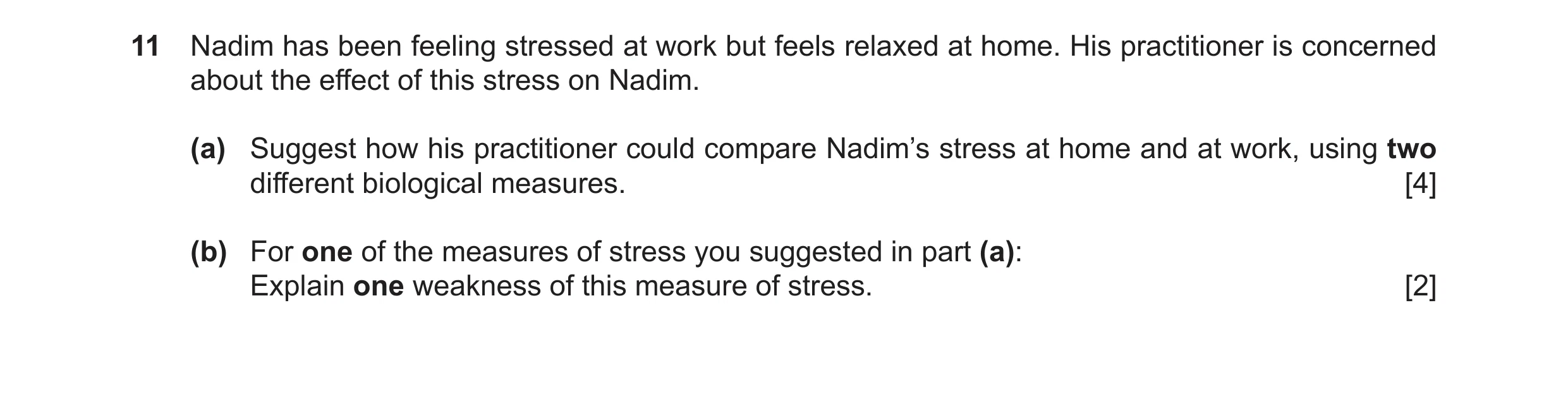
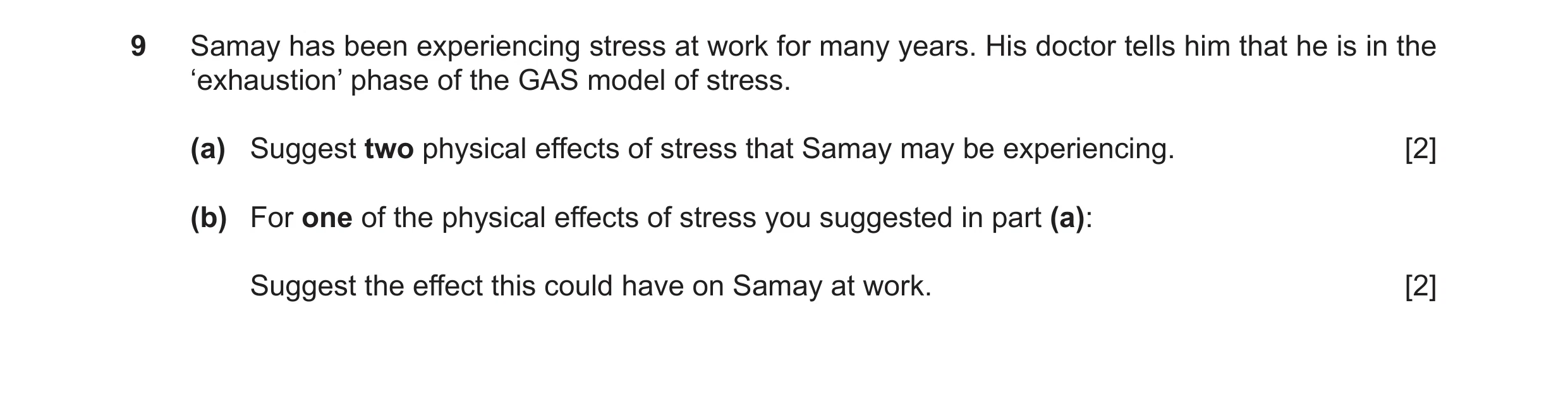 4 / 5
4 / 5![Question 19: (a) Describe the study by Bridge et al. (1988) on relaxation and imagery in reducing stress during medical treatment. [6] (b) Evaluate the …](https://img.pastlit.com/crops/0936810b-6075-4b2b-b0c6-c5e08199a719/q12.webp)

![Question 21: (a) Describe the study by Bridge et al. (1988) on relaxation and imagery in reducing stress during medical treatment. [6] (b) Evaluate the …](https://img.pastlit.com/crops/3243291a-af55-484c-b515-1f970209370f/q12.webp)
![Question 22: (a) Outline what is meant by the determinism versus free-will debate. [2] (b) Explain why free-will is important for one way to manage stre…](https://img.pastlit.com/crops/f9c34e1d-b432-4a74-b63e-d57843345cb1/q10.webp)
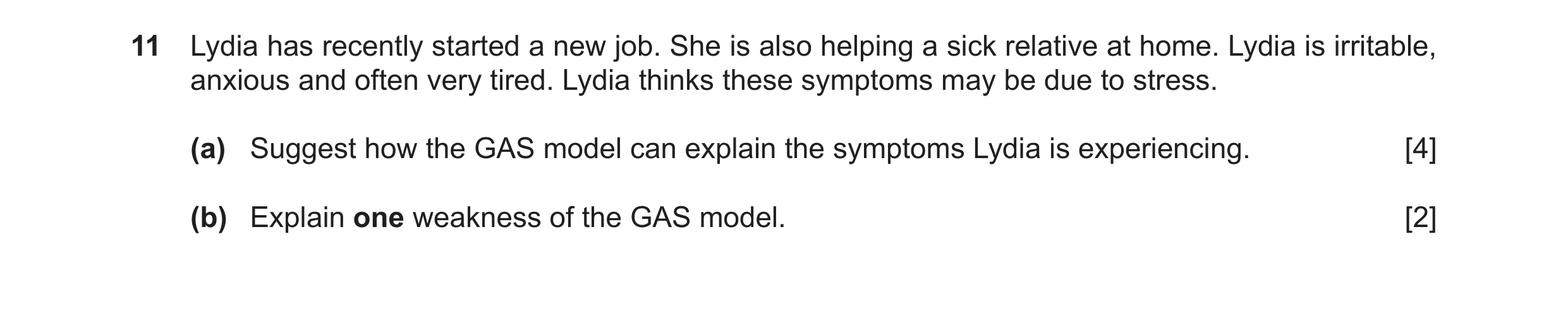 5 / 5
5 / 5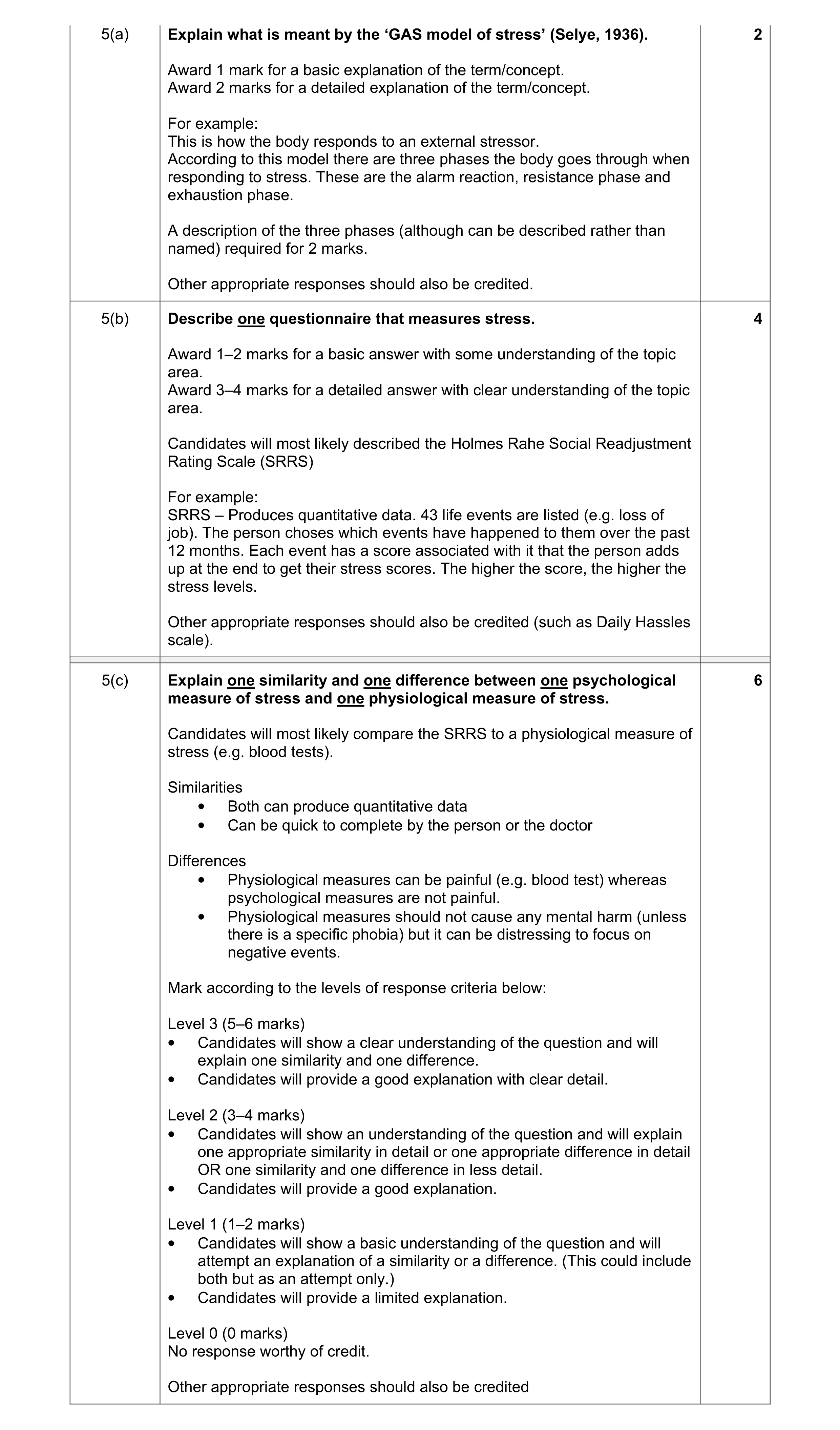 12
12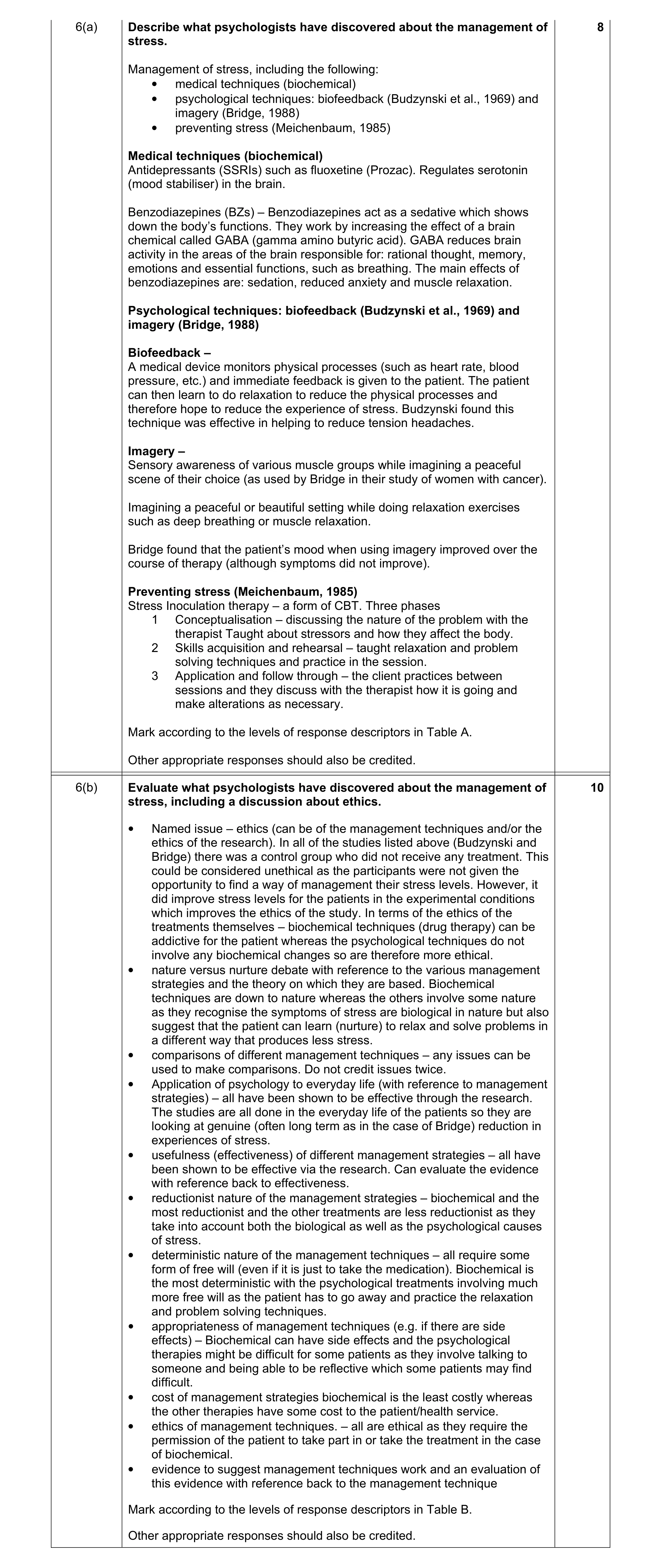 18
18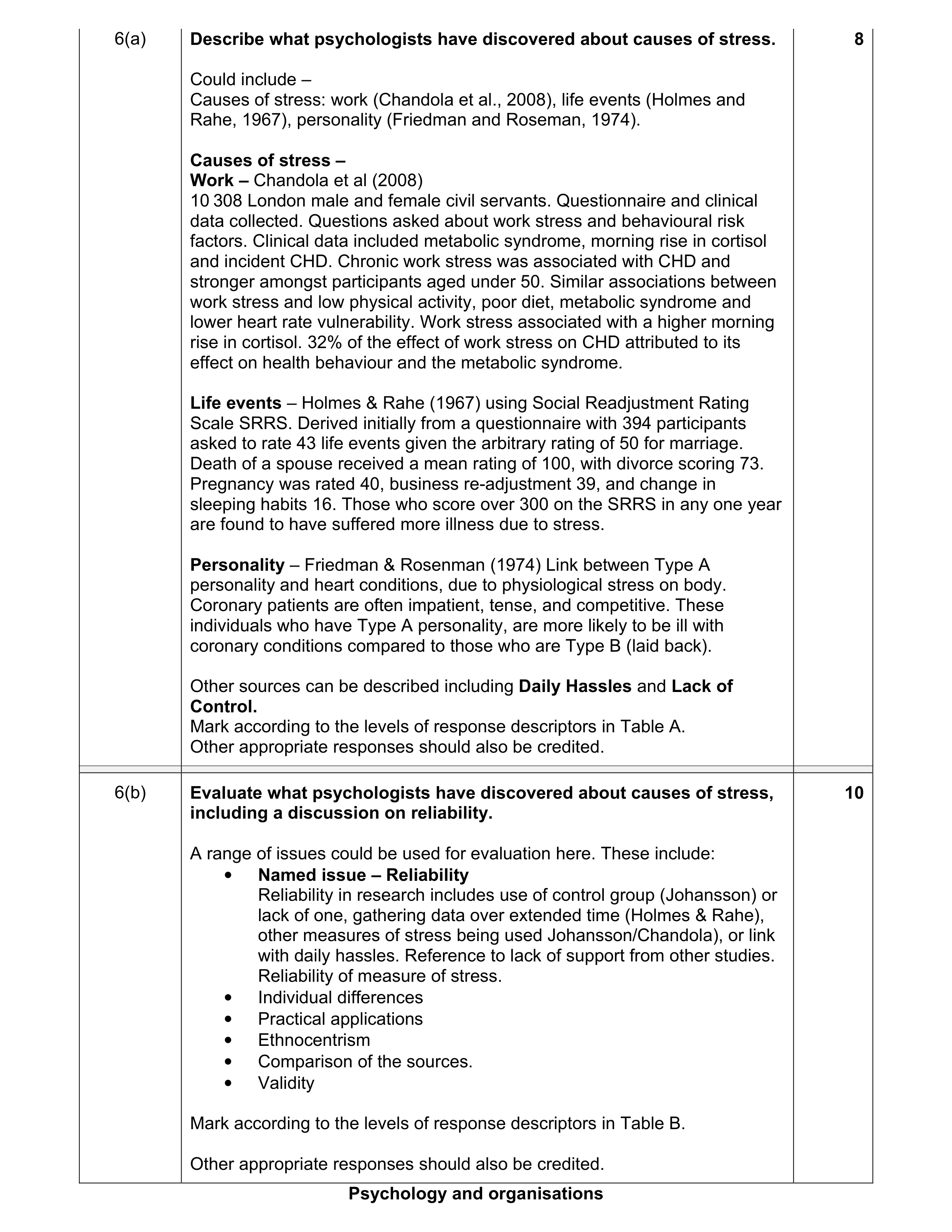 18
18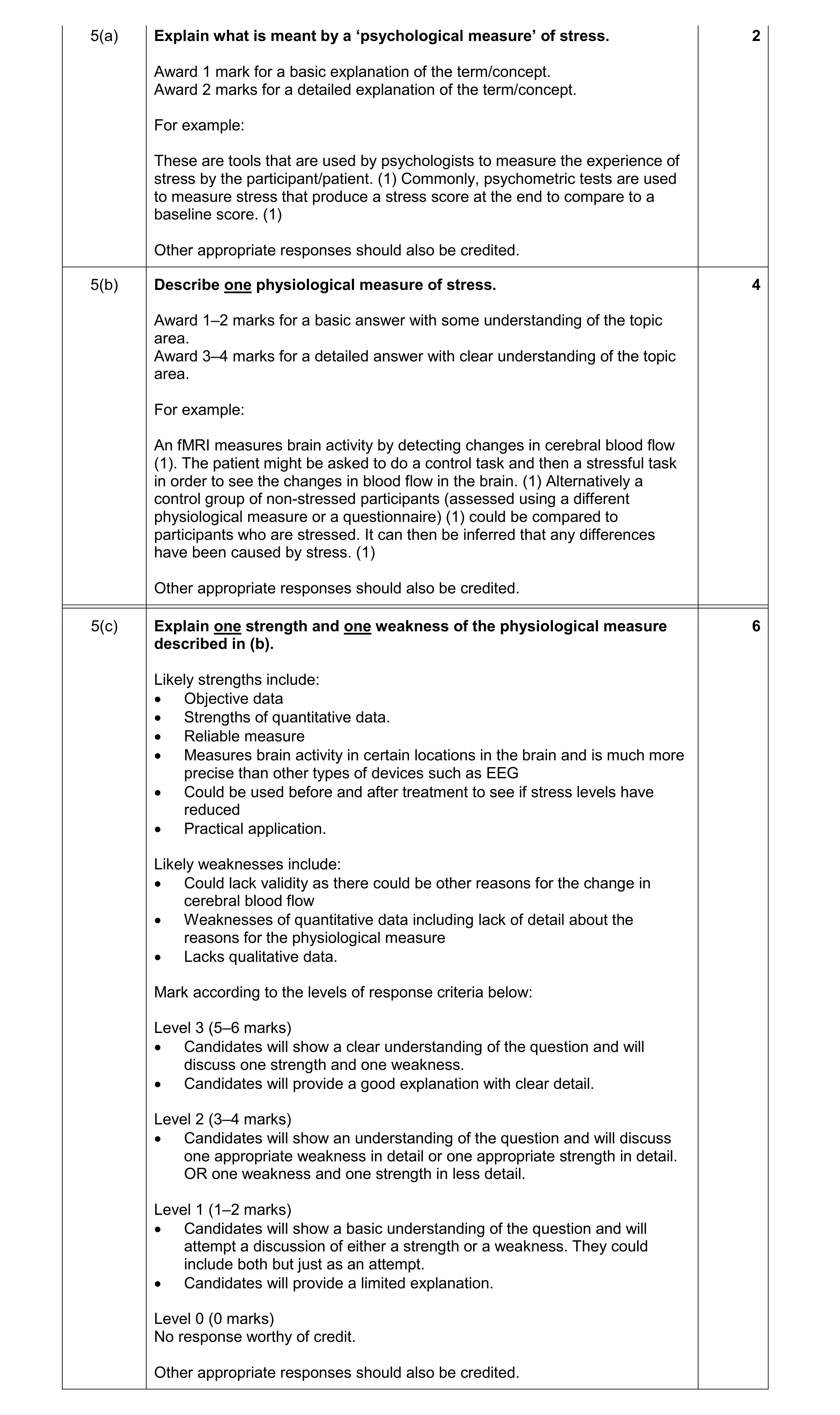 12
12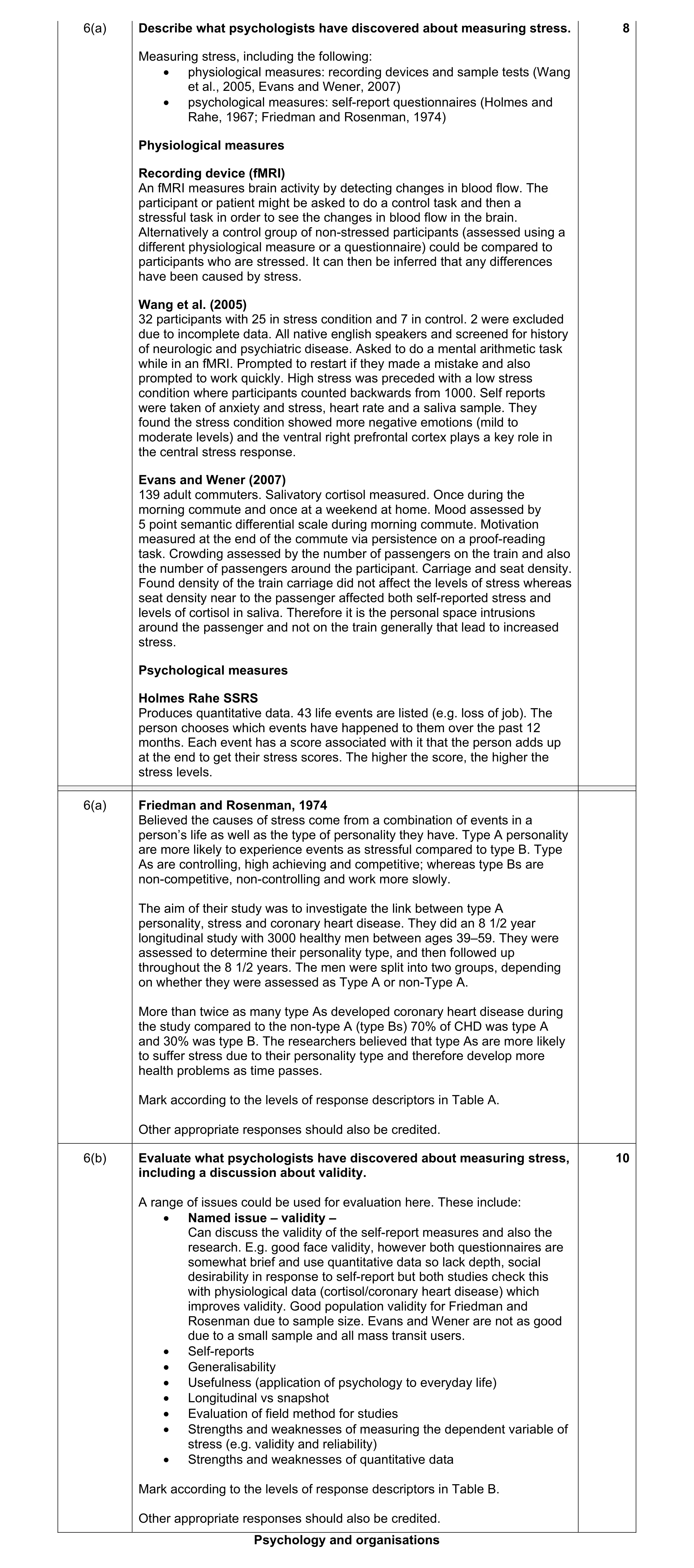 18
18 12
12 12
12 12
12 18
18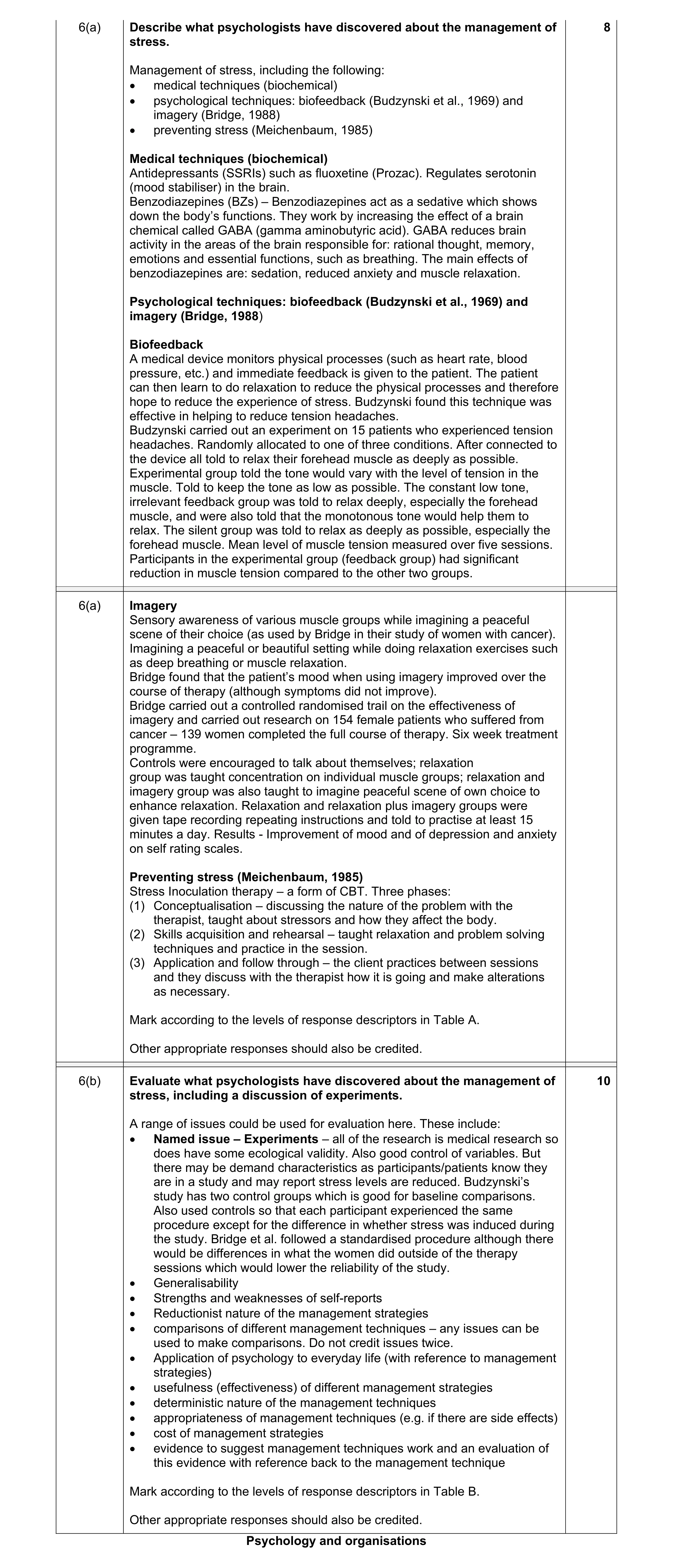 18
18 18
18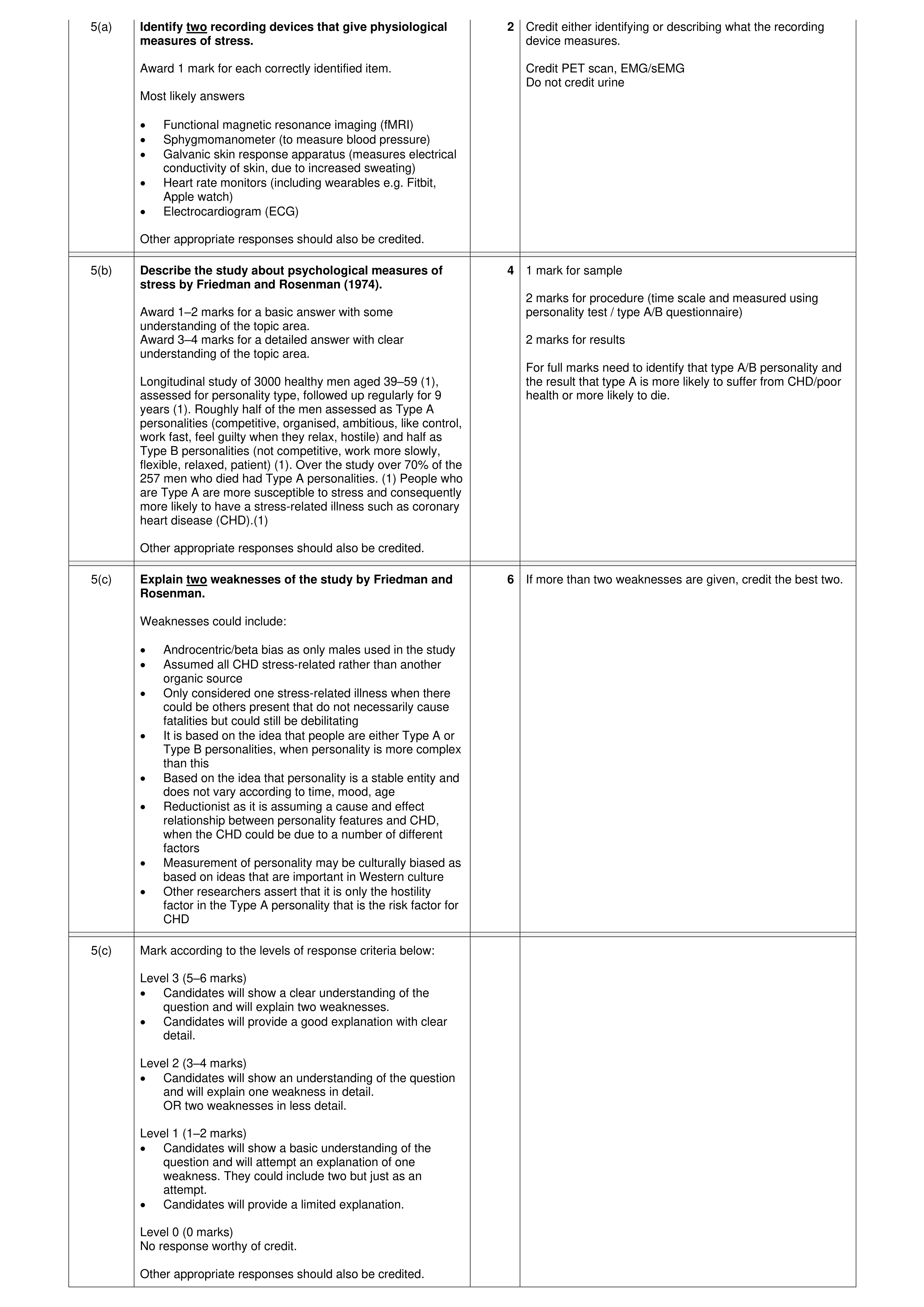 12
12 12
12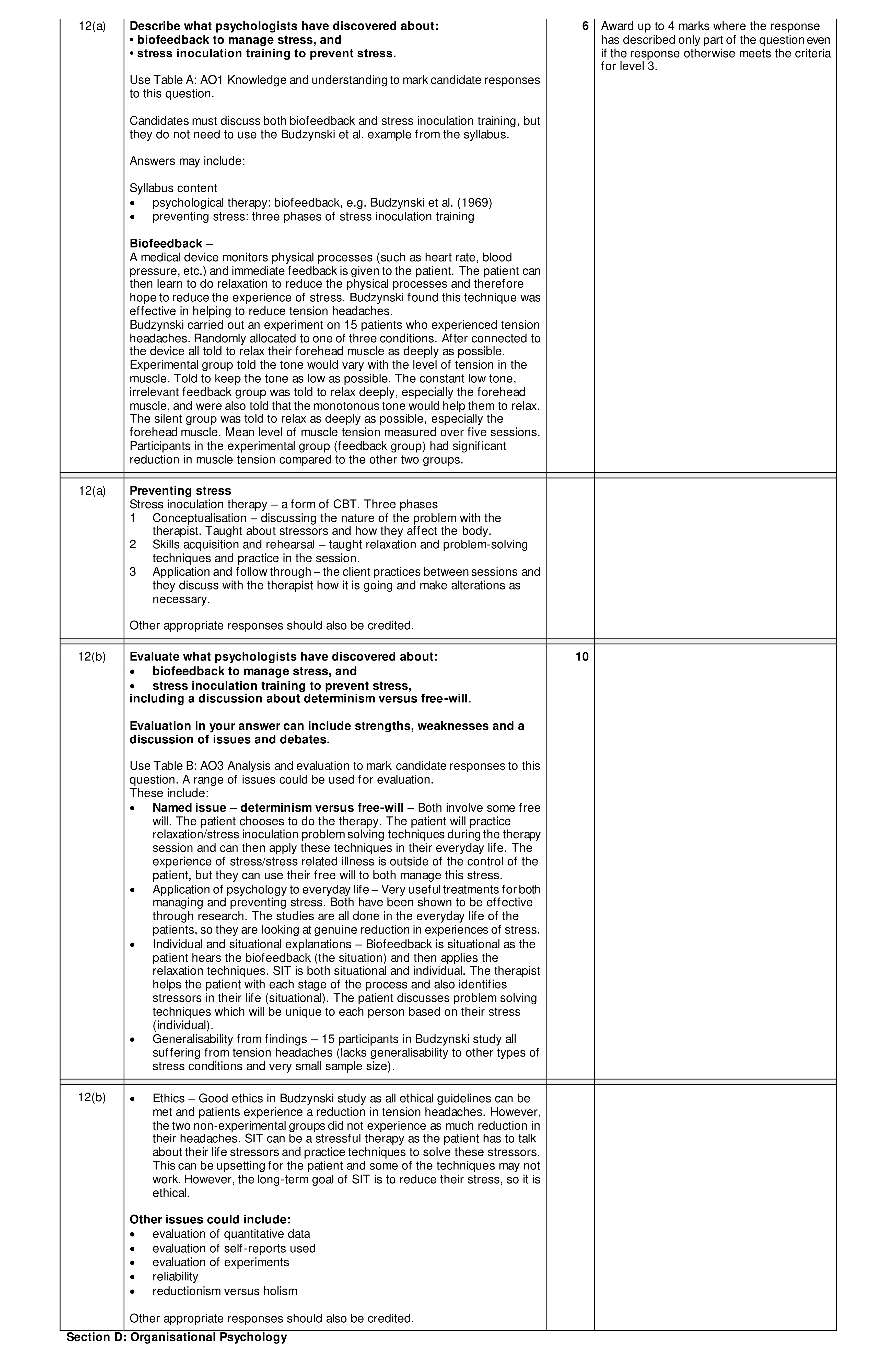 16
16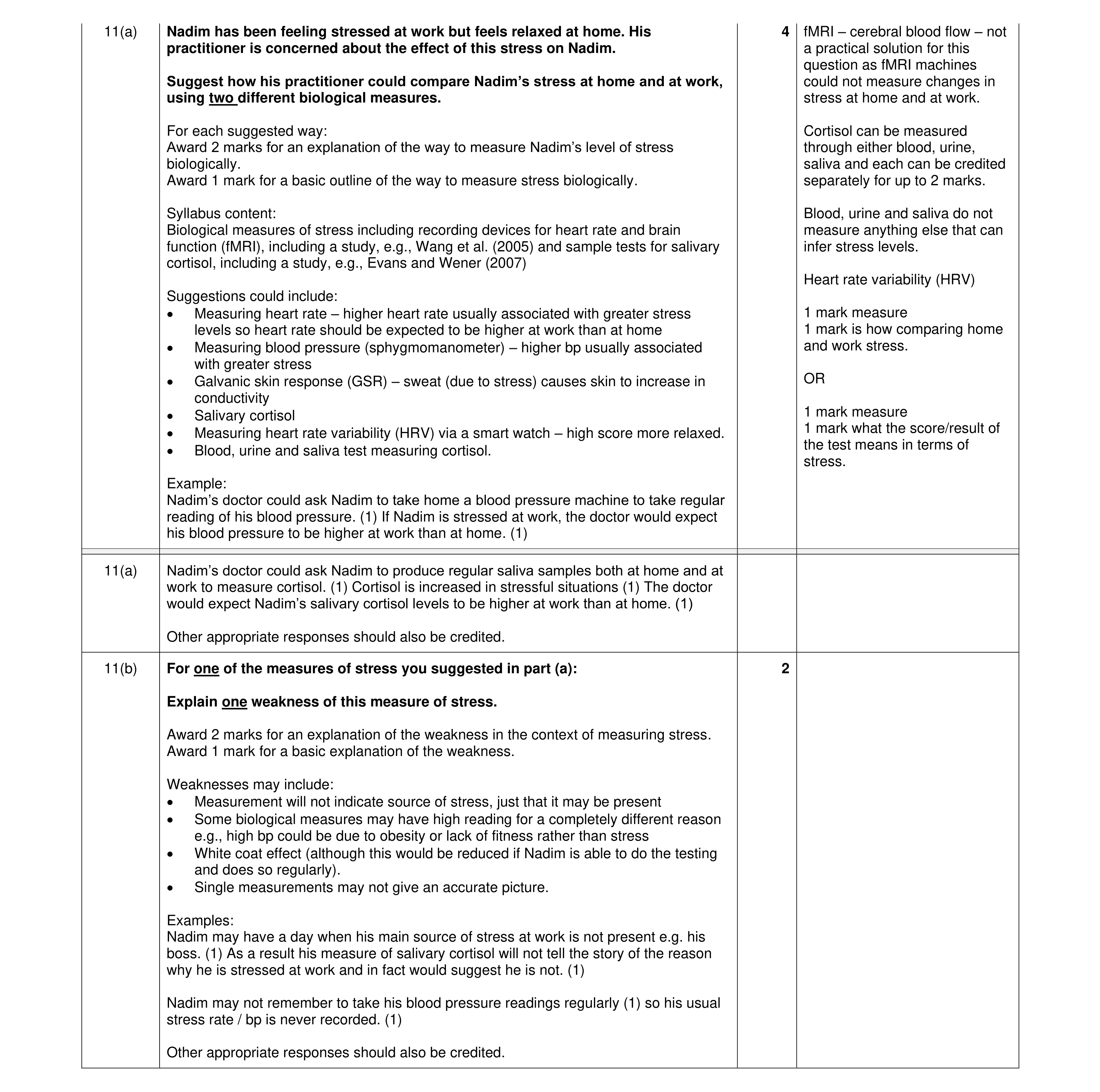 6
6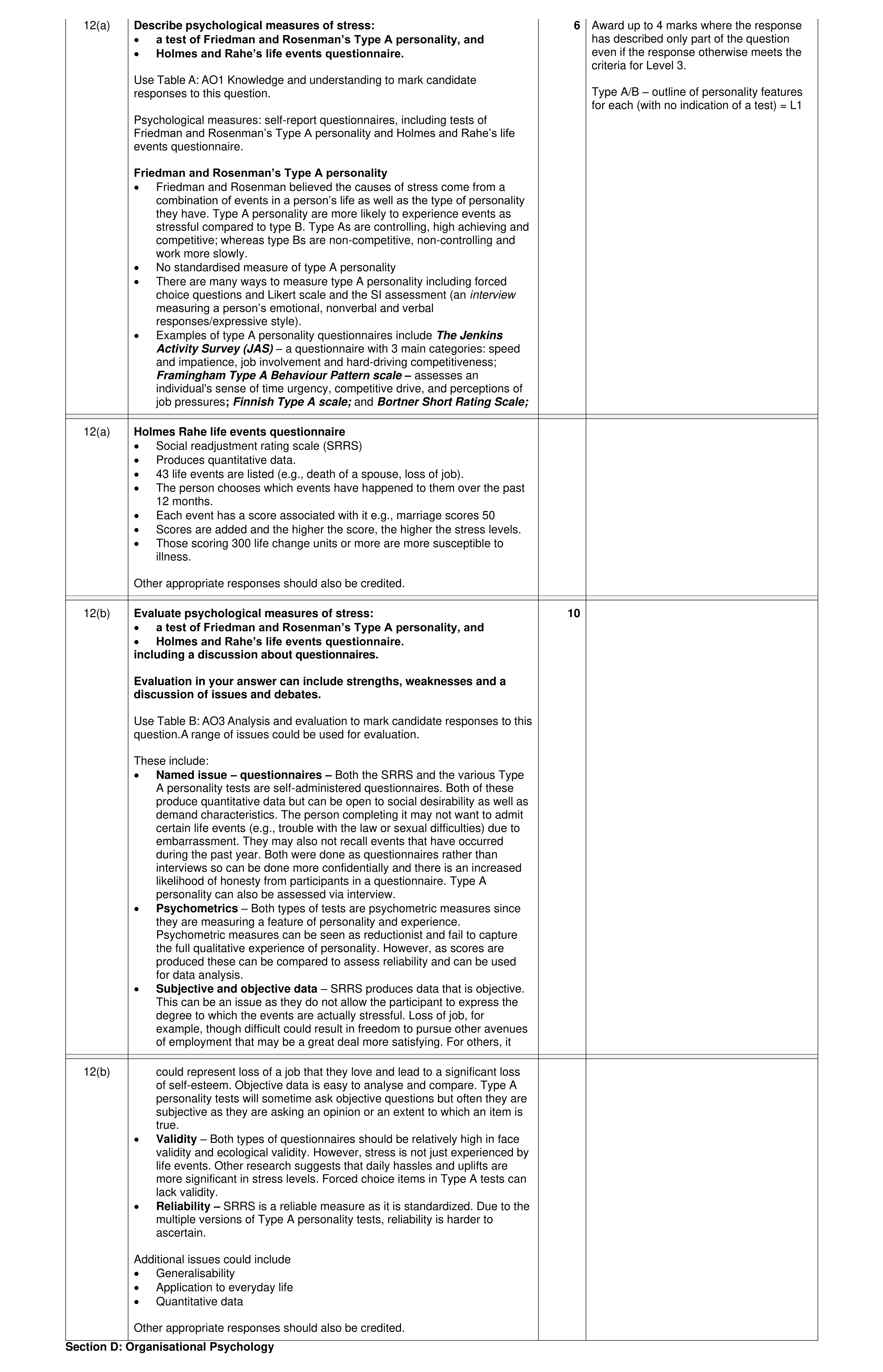 16
16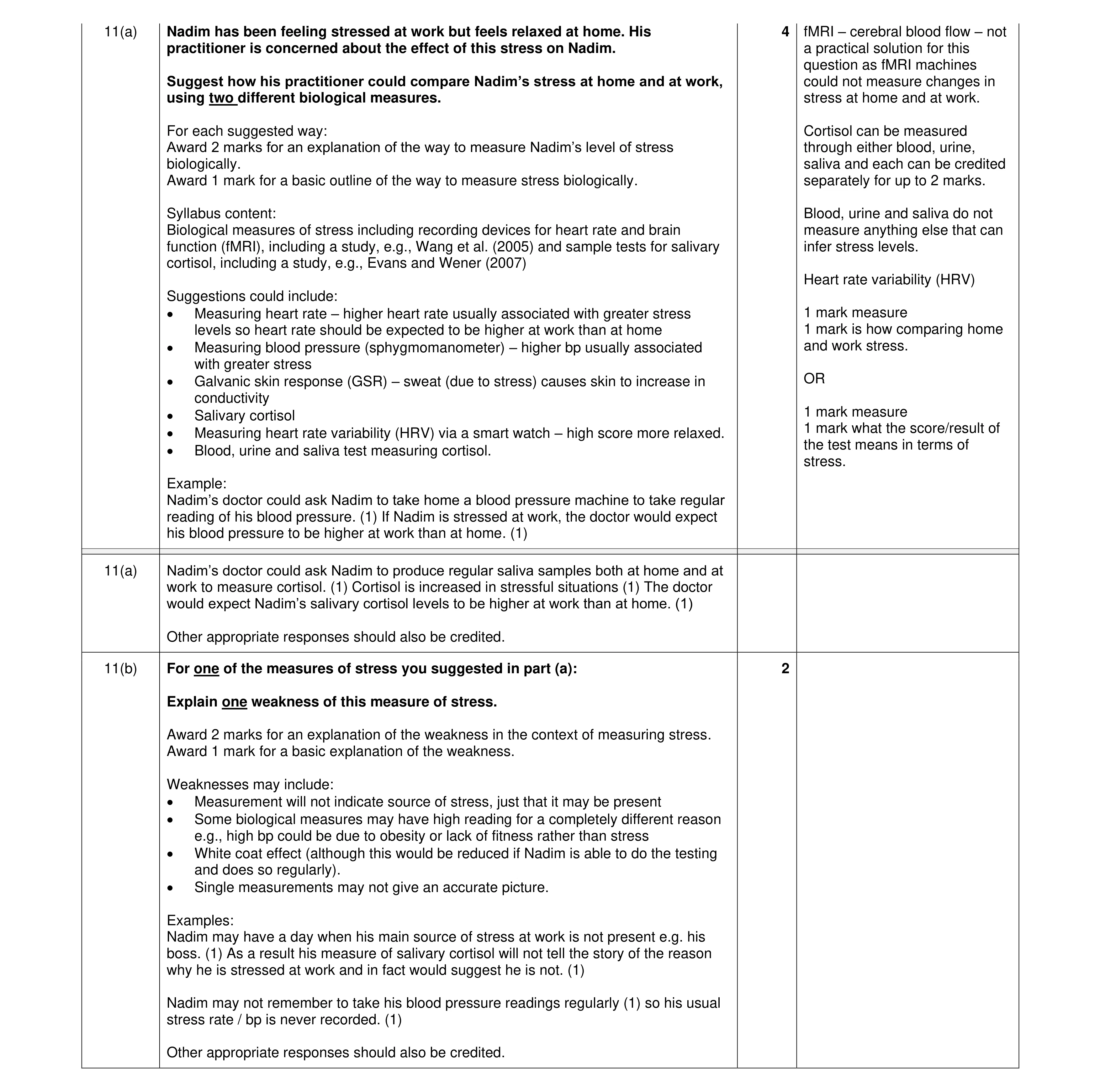 6
6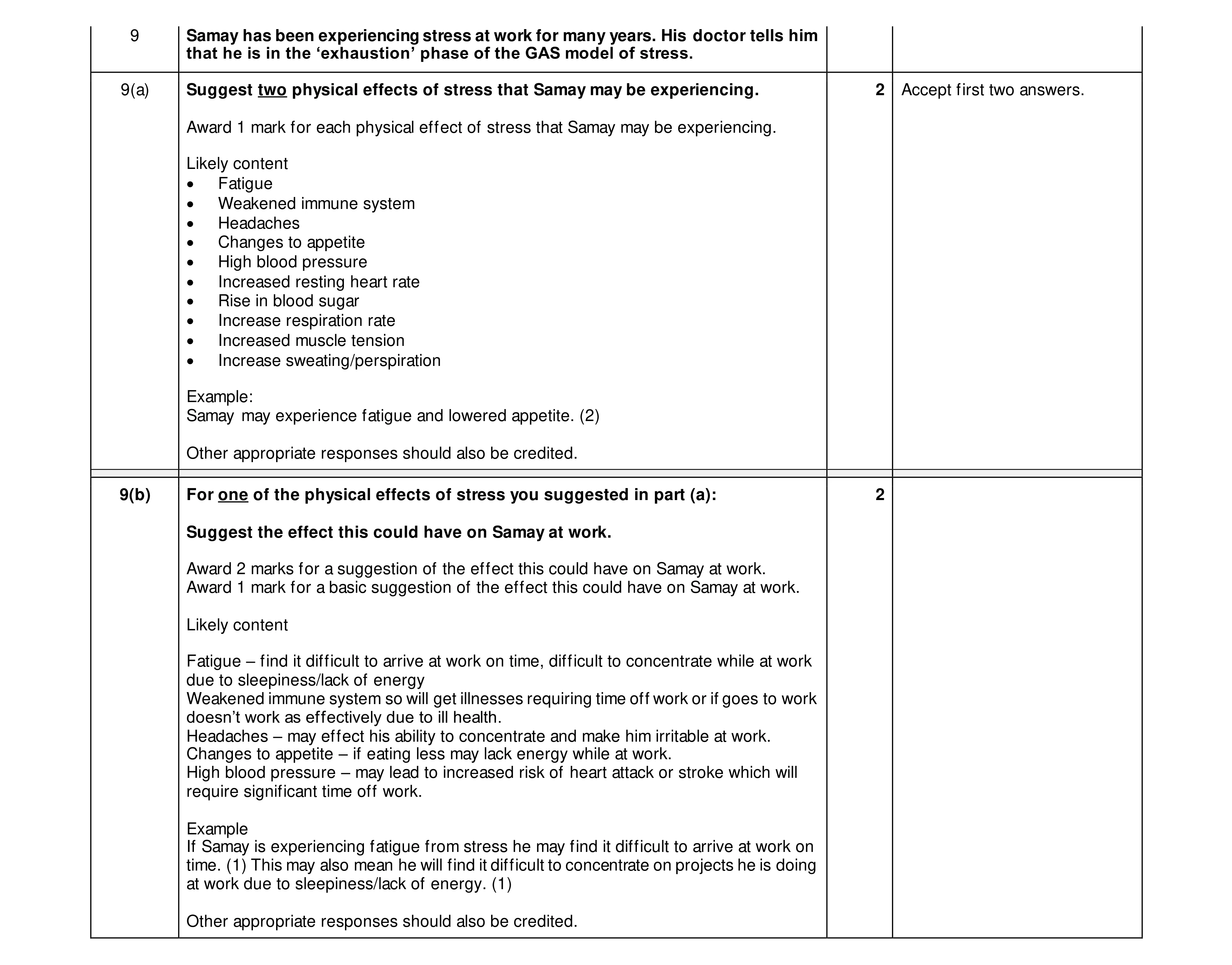 4
4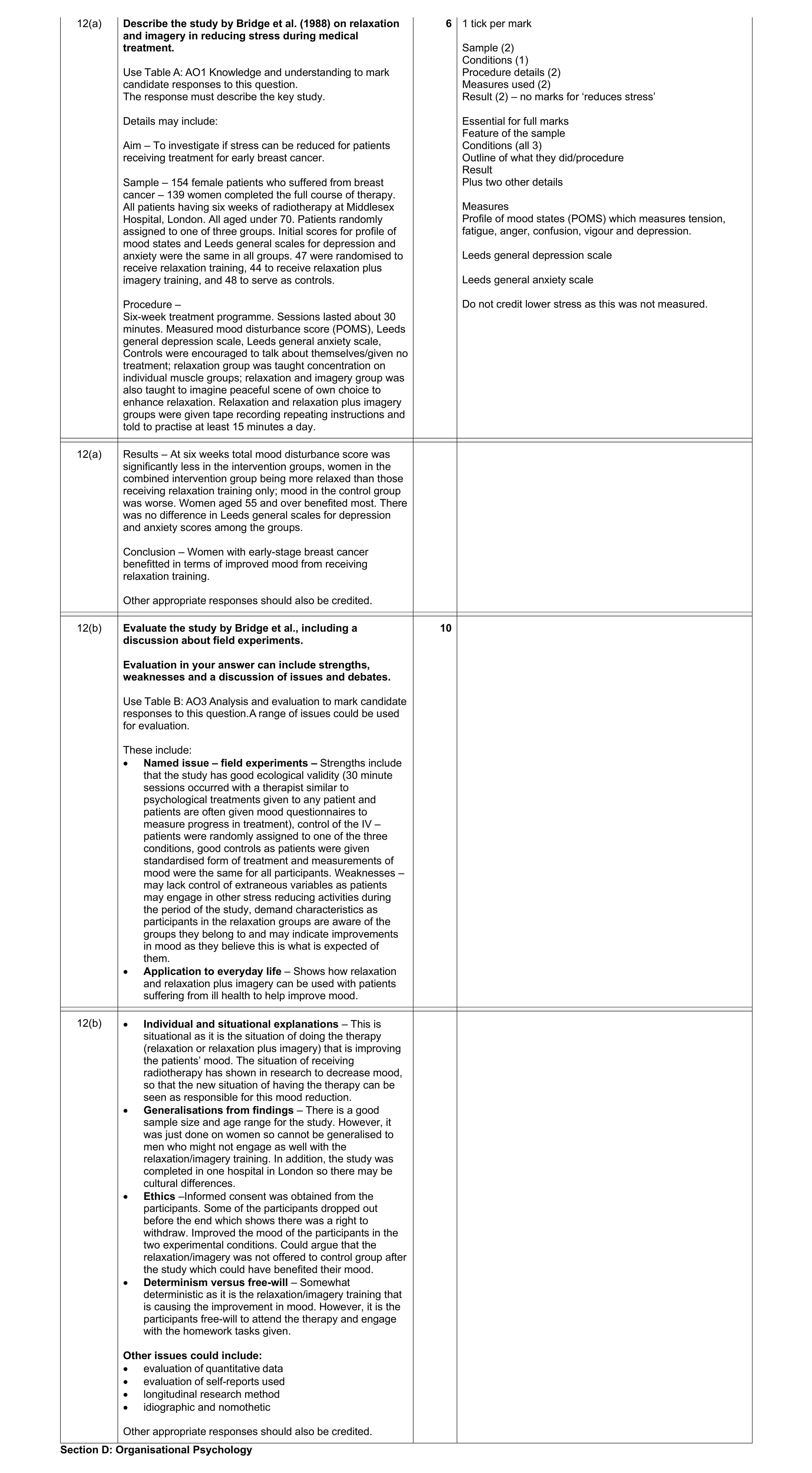 16
16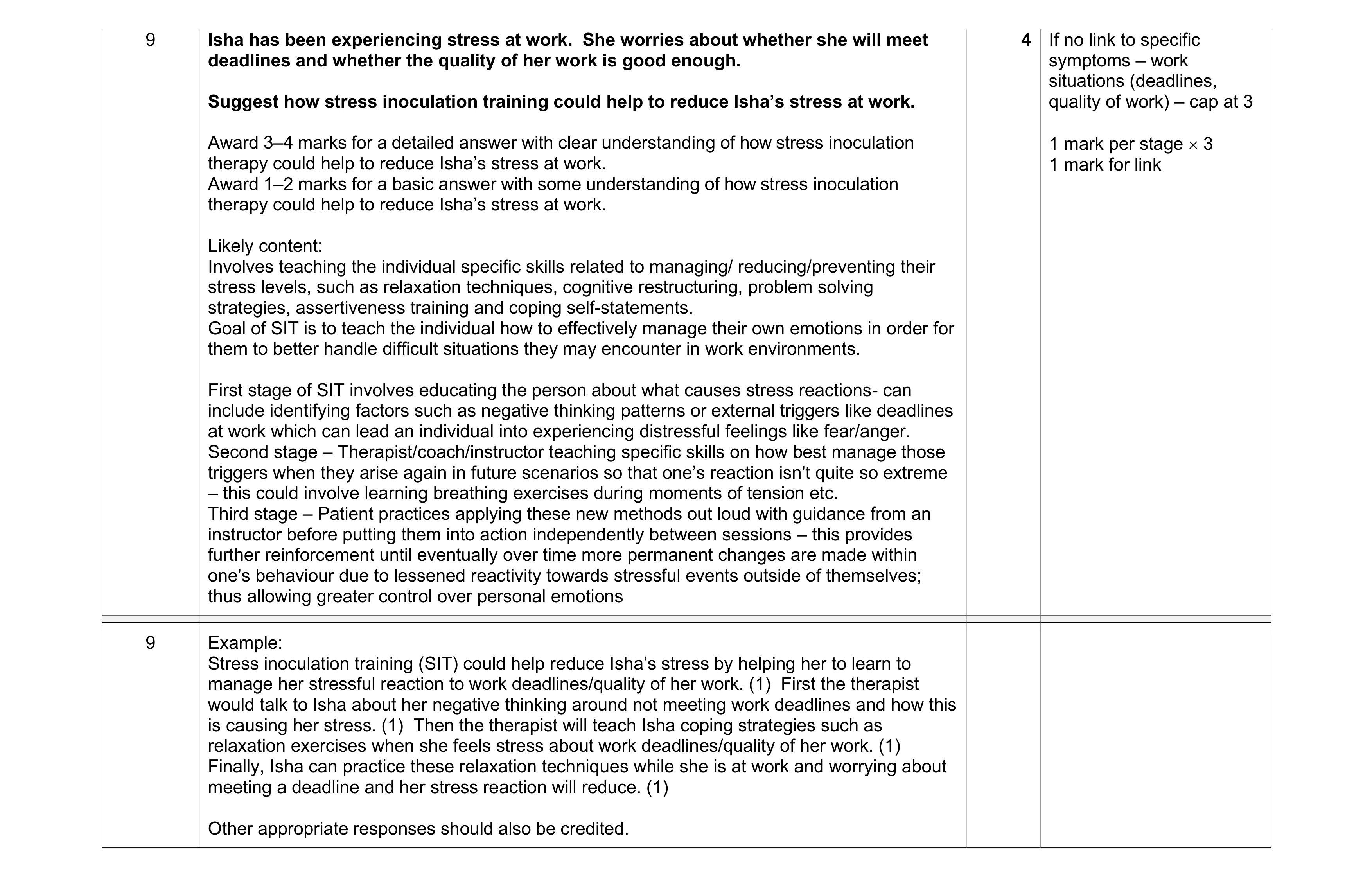 4
4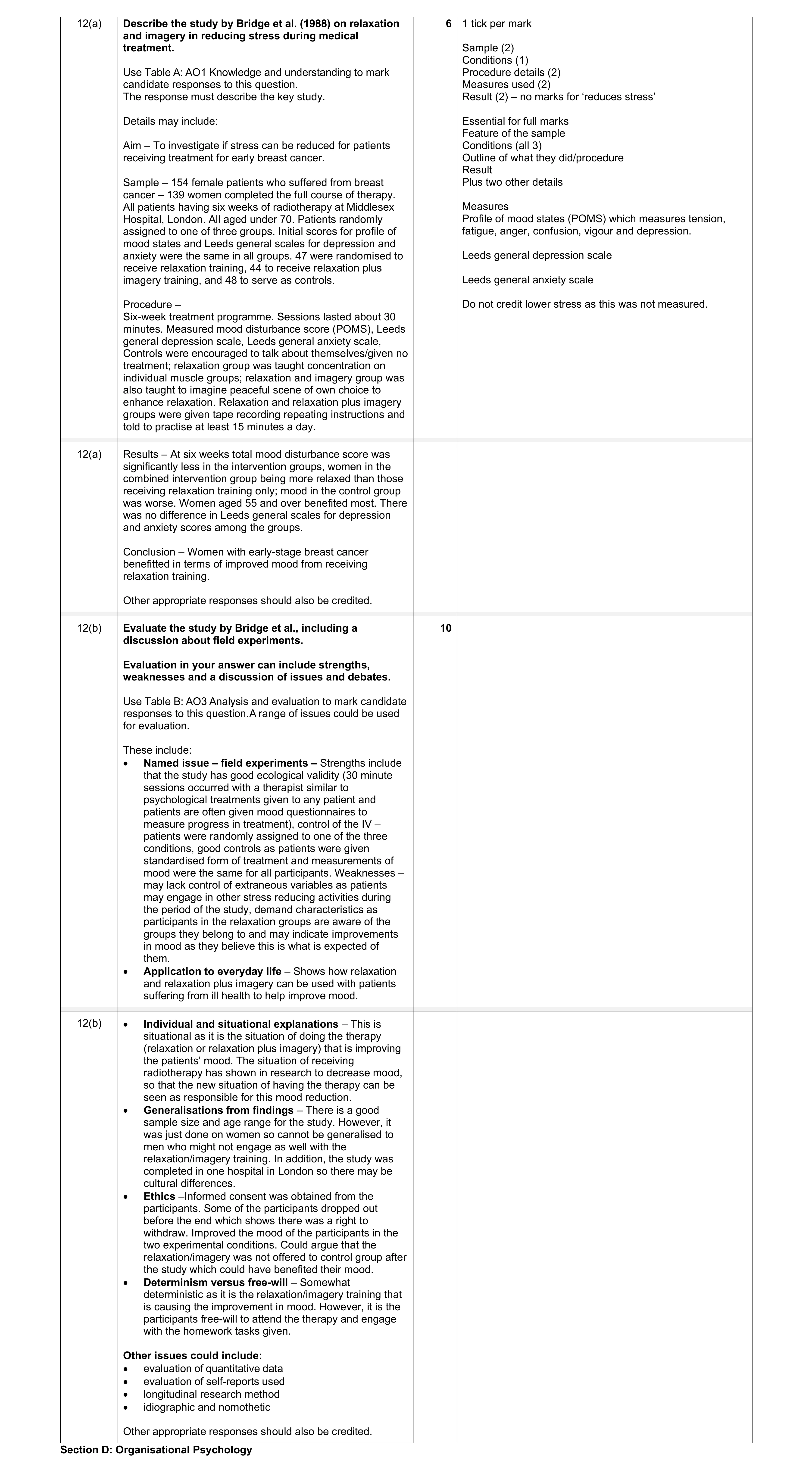 16
16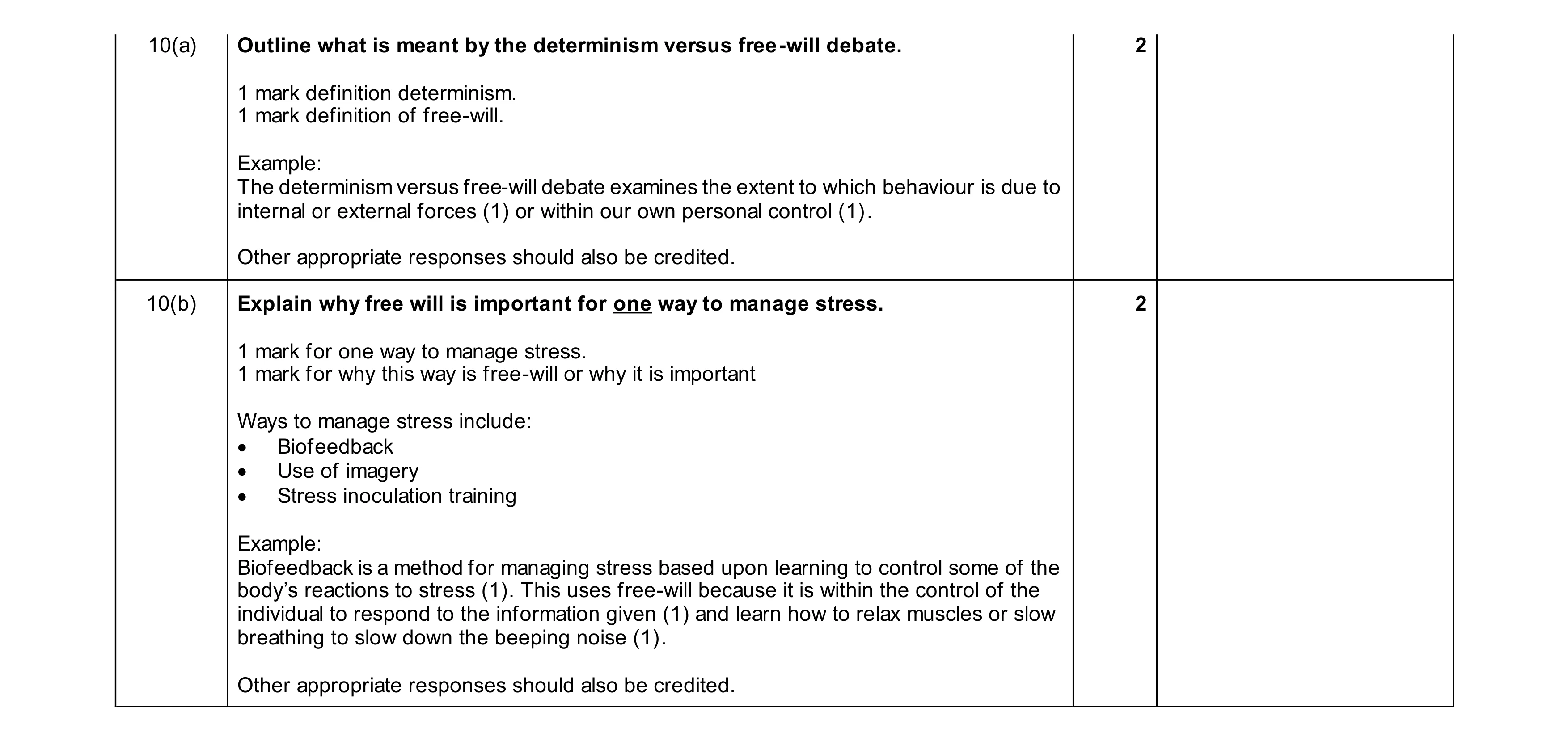 4
4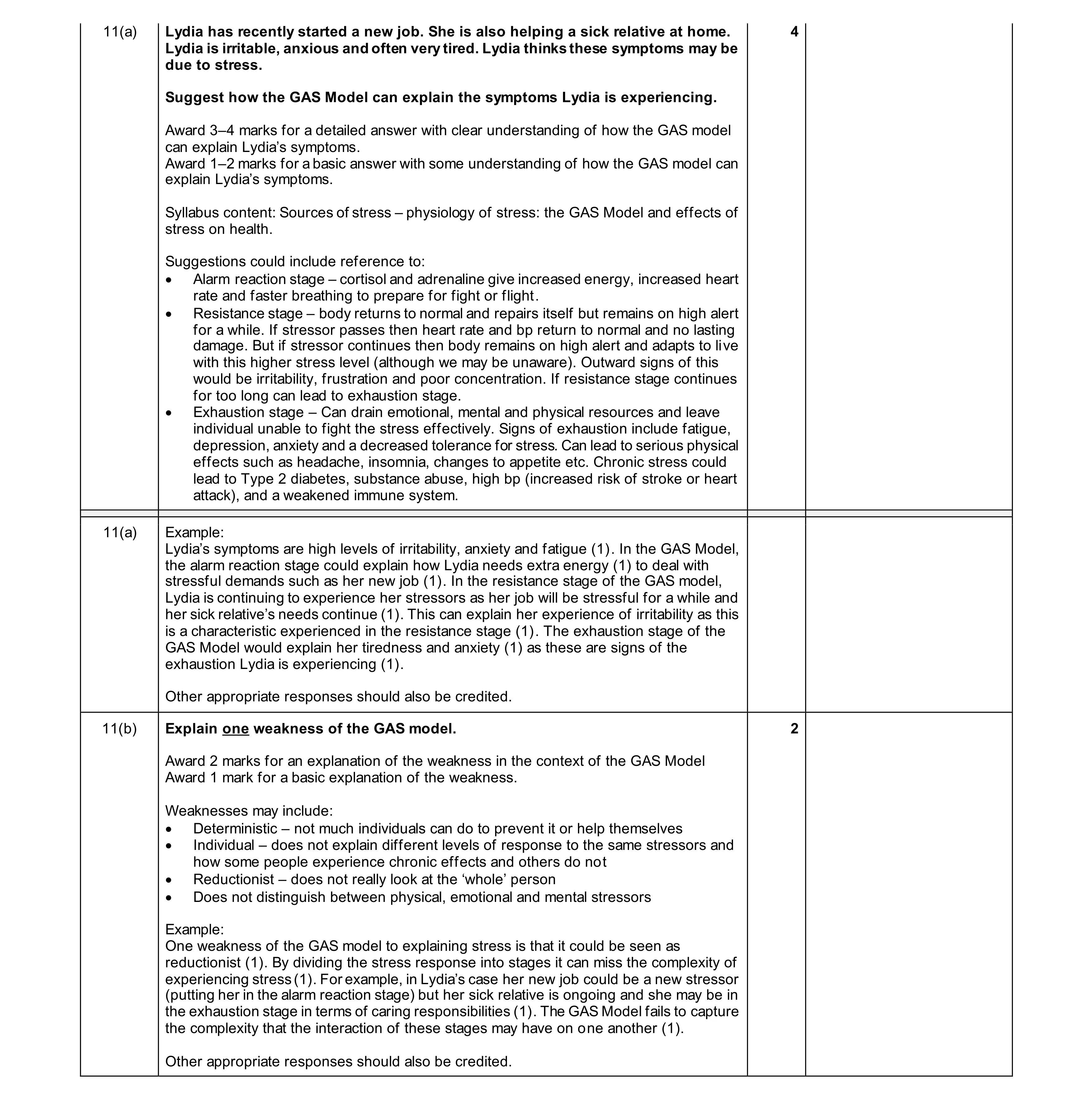 6
6