Questions as text
Q1 · ‘Please don’t make me sit in the middle!’ Evans and Wener (2007) claim that sitting in… 9990/41 May/June 2018
3 ‘Please don’t make me sit in the middle!’ Evans and Wener (2007) claim that sitting in the middle seat of a row of three and having their personal space invaded is the reason why people experience crowding and stress on public transport. (a) Explain how salivary cortisol can be used to measure stress. [2] (b) Give two advantages of measuring salivary cortisol. [4] (c) Suggest two alternative physiological measures of stress and explain why each of these was not used in the Evans and Wener study. [4] (d) Different ways to investigate stress can be more or less reductionist. Discuss the evidence that the approach taken by Evans and Wener is reductionist. You should consider both sides of the argument and include a conclusion. [5] Psychology and organisations
15 marks
Mark scheme: 3(a) Explain how salivary cortisol can be used to measure stress. 2 Marks: 1 mark for basic answer e.g. identification. 1 mark for elaboration/example/how it is used. Most likely answer (other appropriate responses to be credited): • salivary cortisol is a hormone produced in stressful situations (as is adrenaline) • saliva sample, collected in a salivette, can record levels of saliva giving an accurate measure of the extent of a stress response. 3(b) Give two advantages of measuring salivary cortisol. 4 Marks: 1 mark basic answer, 2 marks elaboration × 2 Indicative content: • salivary cortisol is reliable: all people produce salivary cortisol in stressful situations. • Salivary cortisol is ‘objective’; more difficult to be manipulated by a person. • Salivary cortisol is easily collected (in a salivette) unlike previous studies where urine samples were collected. • Participants are much more likely to participate than if a urine sample was needed. 3(c) Suggest two alternative physiological measures of stress and explain 4 why each of these was not used in the Evans and Wener study. Marks: 1 mark each alternative identified × 2. 1 mark each appropriate elaboration × 2. Most likely answer (other appropriate responses to be credited): • Urine sample – can measure the amount of adrenaline present in urine; not easy to take a sample on a train. People are less likely to agree to this than a saliva sample. • Blood sample – can measure the amount of adrenaline present in blood; not easy to take a sample on a train. Taking blood is invasive and people may opt out; taking blood needs a sterile environment – not a train. • GSR – can measure changes in skin conductance in stressful situations, but is unreliable. 3(d) Different ways to investigate stress can be more or less reductionist. 5 Discuss the evidence that the approach taken by Evans and Wener is reductionist. You should consider both sides of the argument and include a conclusion. Marks: Question requires discussion; always plural of each argument, and always requires conclusion. 1 mark for each advantage/disadvantage up to 4 max. 1 mark for conclusion. Most likely answer (other appropriate responses to be credited): Advantages • physiological measures are reliable. • physiological measures are relatively more objective than subjective psychological responses. • physiological measures provide quantitative data that can be analysed and compared. Disadvantages • physiological measures may not be valid – they may measure stress before the measure is taken or anticipated stress to happen in the future, not the stressful event under investigation. • physiological measures do not provide an explanation for the stress response. • physiological measures isolate the response at that time and place; other factors may be responsible that are not considered in this study. Sitting in the middle may not be the only stressor for a person. Conclusion: any appropriate conclusion drawn from the discussion that has been presented.
This question in 9990/41 May/June 2018
Q2 · Design an experiment to investigate the effectiveness of a stress inoculation programme… 9990/41 May/June 2018
7 (a) Design an experiment to investigate the effectiveness of a stress inoculation programme to reduce ill health. [10] (b) Explain the psychological and methodological evidence on which your experiment is based. [8] Psychology and organisations
18 marks
Mark scheme: 7(a) Design an experiment to investigate the effectiveness of a stress 10 inocculation programme to reduce ill health. Marks: use generic levels of response Design a study question part (a). Additional: Candidates should design the study showing evidence of design features appropriate to the named method. The named method is: experiment. Typical features: • Experiments: type, IV, DV, controls, experimental design. • Typical features of research methodology: sampling technique and sample, type of data, ethics, reliability, validity, data analysis. 7(b) Explain the psychological and methodological evidence on which your 8 study is based. Marks: use generic levels of response ‘Design a study’ question part (b). Note: If only methodological or psychological explanation is provided max 5 marks. Candidates are expected to explain the reasons for the suggested design in part (a). Explanation should be both psychological and methodological. Psychological to include appropriate theory or research. Additional: candidates are expected to justify their decisions or evidence presented regarding the design made in answer to question part (a). Syllabus: management of stress: preventing stress (Meichenbaum, 1985) Psychological: Meichenbaum outlines stress inoculation training, designed to prevent stress from being a problem for a person. Three phases of conceptualisation, skill acquisition and rehearsal and relapse prevention. Methodological: explanation of method using typical features as above.
This question in 9990/41 May/June 2018
Q3 · ‘Please don’t make me sit in the middle!’ Evans and Wener (2007) claim that sitting in… 9990/43 May/June 2018
3 ‘Please don’t make me sit in the middle!’ Evans and Wener (2007) claim that sitting in the middle seat of a row of three and having their personal space invaded is the reason why people experience crowding and stress on public transport. (a) Explain how salivary cortisol can be used to measure stress. [2] (b) Give two advantages of measuring salivary cortisol. [4] (c) Suggest two alternative physiological measures of stress and explain why each of these was not used in the Evans and Wener study. [4] (d) Different ways to investigate stress can be more or less reductionist. Discuss the evidence that the approach taken by Evans and Wener is reductionist. You should consider both sides of the argument and include a conclusion. [5] Psychology and organisations
15 marks
Mark scheme: 3(a) Explain how salivary cortisol can be used to measure stress. 2 Marks: 1 mark for basic answer e.g. identification. 1 mark for elaboration/example/how it is used. Most likely answer (other appropriate responses to be credited): • salivary cortisol is a hormone produced in stressful situations (as is adrenaline) • saliva sample, collected in a salivette, can record levels of saliva giving an accurate measure of the extent of a stress response. 3(b) Give two advantages of measuring salivary cortisol. 4 Marks: 1 mark basic answer, 2 marks elaboration × 2 Indicative content: • salivary cortisol is reliable: all people produce salivary cortisol in stressful situations. • Salivary cortisol is ‘objective’; more difficult to be manipulated by a person. • Salivary cortisol is easily collected (in a salivette) unlike previous studies where urine samples were collected. • Participants are much more likely to participate than if a urine sample was needed. 3(c) Suggest two alternative physiological measures of stress and explain 4 why each of these was not used in the Evans and Wener study. Marks: 1 mark each alternative identified × 2. 1 mark each appropriate elaboration × 2. Most likely answer (other appropriate responses to be credited): • Urine sample – can measure the amount of adrenaline present in urine; not easy to take a sample on a train. People are less likely to agree to this than a saliva sample. • Blood sample – can measure the amount of adrenaline present in blood; not easy to take a sample on a train. Taking blood is invasive and people may opt out; taking blood needs a sterile environment – not a train. • GSR – can measure changes in skin conductance in stressful situations, but is unreliable. 3(d) Different ways to investigate stress can be more or less reductionist. 5 Discuss the evidence that the approach taken by Evans and Wener is reductionist. You should consider both sides of the argument and include a conclusion. Marks: Question requires discussion; always plural of each argument, and always requires conclusion. 1 mark for each advantage/disadvantage up to 4 max. 1 mark for conclusion. Most likely answer (other appropriate responses to be credited): Advantages • physiological measures are reliable. • physiological measures are relatively more objective than subjective psychological responses. • physiological measures provide quantitative data that can be analysed and compared. Disadvantages • physiological measures may not be valid – they may measure stress before the measure is taken or anticipated stress to happen in the future, not the stressful event under investigation. • physiological measures do not provide an explanation for the stress response. • physiological measures isolate the response at that time and place; other factors may be responsible that are not considered in this study. Sitting in the middle may not be the only stressor for a person. Conclusion: any appropriate conclusion drawn from the discussion that has been presented.
This question in 9990/43 May/June 2018
Q4 · Design an experiment to investigate the effectiveness of a stress inoculation programme… 9990/43 May/June 2018
7 (a) Design an experiment to investigate the effectiveness of a stress inoculation programme to reduce ill health. [10] (b) Explain the psychological and methodological evidence on which your experiment is based. [8] Psychology and organisations
18 marks
Mark scheme: 7(a) Design an experiment to investigate the effectiveness of a stress 10 inocculation programme to reduce ill health. Marks: use generic levels of response Design a study question part (a). Additional: Candidates should design the study showing evidence of design features appropriate to the named method. The named method is: experiment. Typical features: • Experiments: type, IV, DV, controls, experimental design. • Typical features of research methodology: sampling technique and sample, type of data, ethics, reliability, validity, data analysis. 7(b) Explain the psychological and methodological evidence on which your 8 study is based. Marks: use generic levels of response ‘Design a study’ question part (b). Note: If only methodological or psychological explanation is provided max 5 marks. Candidates are expected to explain the reasons for the suggested design in part (a). Explanation should be both psychological and methodological. Psychological to include appropriate theory or research. Additional: candidates are expected to justify their decisions or evidence presented regarding the design made in answer to question part (a). Syllabus: management of stress: preventing stress (Meichenbaum, 1985) Psychological: Meichenbaum outlines stress inoculation training, designed to prevent stress from being a problem for a person. Three phases of conceptualisation, skill acquisition and rehearsal and relapse prevention. Methodological: explanation of method using typical features as above.
This question in 9990/43 May/June 2018
Q5 · Holmes and Rahe (1967) devised a questionnaire, based on an opportunity sample in the US 9990/41 Oct/Nov 2018
3 Holmes and Rahe (1967) devised a questionnaire, based on an opportunity sample in the US. This was called the Social Readjustment Rating Scale (SRRS) and is used to assess how life events cause stress. They believed that any change in life, whether positive or negative, was stressful. (a) Explain how a total score is calculated for a participant using the SRRS. [2] (b) Describe one alternative way to calculate a total score for a participant using the SRRS. [4] (c) Suggest two practical applications of the SRRS. [4] (d) Discuss cultural bias in the development and use of the SRRS. You should consider both sides of the argument and include a conclusion in your answer. [5] Psychology and organisations
15 marks
Mark scheme: 3(a) Explain how a total score is calculated for a participant using the 2 SRRS. Marks: 1 mark for each aspect. Most likely answer (other appropriate responses to be credited): • life event items ranked and allocated a number of points e.g. death of spouse = 100. • If happened in the last six months (or twelve months) allocated points are scored. • Total points for all items added to give SRRS score. • 300 points or more may result in health problems. 3(b) Describe one alternative way to calculate a total score for a participant 4 using the SRRS. Marks: 1–2 marks basic answer. 3–4 marks detailed answer/elaboration. Note: no credit for ‘daily hassles’ as they are not life events. Must be an alternative rating scale. Any other form of assessment cannot be credited. Most likely answer (other appropriate responses to be credited): • A Likert-type scale could be used and the total found; • Participants could allocate points as an event applies to their specific circumstances. • A visual analogue scale e.g. ‘how much stress does x cause you’ could be used. 3(c) Suggest two practical applications of the SRRS. 4 Marks: 1 mark basic answer. 2 marks elaboration, twice. Most likely answer (other appropriate responses to be credited): • People consulting a medical practitioner with symptoms of stress could be given a SRRS to determine the cause of the stress i.e. whether they have a high life events score. • People can monitor their own life events and if they are heading towards a high score, can avoid events which would make the score higher and affect their health. Not going on vacation, changing social activities, etc. 3(d) Discuss cultural bias in the development and use of the SRRS. You 5 should consider both sides of the argument and include a conclusion in your answer. Marks: Question requires discussion; always plural of each argument, and always requires conclusion. 1 mark for each advantage/disadvantage (however detailed) and related to the question up to 4 max. 1 mark for two strengths/weaknesses unrelated to the question. 1 mark for conclusion. Most likely answer (other appropriate responses to be credited): Bias: • applies to middle-aged males in the USA in the 1960s. Many examples of questions support this. • Rankings cannot be generalised – moving house has low rank in SRRS but may be much higher in other cultures. • Some events are missing, e.g. religious events which happen once (or more) per year. • Some cultures change and what may apply at one time may not at another. No bias: • Some question items do apply to all cultures, such as death of a close member of family. • The original USA version can be adapted and be appropriate for every individual culture. • The use of quantitative data is culture free. Conclusion: any appropriate conclusion drawn from the discussion that has been presented. 1 mark if appropriate. A conclusion is a ‘decision reached by reasoning’ and so a summary of points already made scores 0 marks.
This question in 9990/41 Oct/Nov 2018
Q6 · ‘Medical techniques, such as drugs, are all a person needs to reduce long-term stress.’… 9990/41 May/June 2019
11 ‘Medical techniques, such as drugs, are all a person needs to reduce long-term stress.’ To what extent do you agree with this statement? Use examples of research you have studied to support your answer. [12] Psychology and organisations
12 marks
Mark scheme: 11 ‘Medical techniques, such as drugs, are all a person needs to reduce 12 long-term stress.’ To what extent do you agree with this statement? Use examples of research you have studied to support your answer. Marks: use generic levels of response in table C. Syllabus: medical techniques (biochemical) Most likely (any other appropriate responses should be credited): For: • The use of drugs is quick and easy – simply swallow a pill and nothing else. • Drugs can help by relieving the associated symptoms of depression • Drugs do work. Kahn et al. (1986) found benzodiazepines were more effective than a placebo. • Drugs do not need relaxation techniques, cognitive therapies or any other time-consuming exercises. Against: • Drugs do not remove the cause of the stress, merely make the symptoms easier to live with. • Drugs are addictive and so are not good for treating a person long-term. • Drugs may be costly, alternative free / cognitive-behavioural techniques can be used.
This question in 9990/41 May/June 2019
Q7 · ‘Medical techniques, such as drugs, are all a person needs to reduce long-term stress.’… 9990/43 May/June 2019
11 ‘Medical techniques, such as drugs, are all a person needs to reduce long-term stress.’ To what extent do you agree with this statement? Use examples of research you have studied to support your answer. [12] Psychology and organisations
12 marks
Mark scheme: 11 ‘Medical techniques, such as drugs, are all a person needs to reduce 12 long-term stress.’ To what extent do you agree with this statement? Use examples of research you have studied to support your answer. Marks: use generic levels of response in table C. Syllabus: medical techniques (biochemical) Most likely (any other appropriate responses should be credited): For: • The use of drugs is quick and easy – simply swallow a pill and nothing else. • Drugs can help by relieving the associated symptoms of depression • Drugs do work. Kahn et al. (1986) found benzodiazepines were more effective than a placebo. • Drugs do not need relaxation techniques, cognitive therapies or any other time-consuming exercises. Against: • Drugs do not remove the cause of the stress, merely make the symptoms easier to live with. • Drugs are addictive and so are not good for treating a person long-term. • Drugs may be costly, alternative free / cognitive-behavioural techniques can be used.
This question in 9990/43 May/June 2019
Q8 · Newspaper headline: Imagine a pleasant scene that makes you smile 9990/41 Oct/Nov 2019
3 Newspaper headline: Imagine a pleasant scene that makes you smile. According to psychologist Linda Bridge, the stress of patients suffering from breast cancer can be reduced if they are taught to imagine a pleasant scene while they are relaxing. Bridge et al. (1988) found that after six weeks of using ‘imagery plus relaxation’, patients felt much better than those who had just relaxed or those who had no stress relief intervention. (a) Explain what is meant by the term ‘imagery’. [2] (b) Outline two reasons why imagery was successful, according to Bridge et al. (1988). [4] (c) (i) Explain what experimental design was used in the study by Bridge et al. (1988). [2] (ii) Outline one disadvantage of this design. [2] (d) Discuss the evidence suggesting that using longitudinal studies to gather data on people who are ill, is useful. You should consider both sides of the argument and include a conclusion in your answer. [5] Psychology and organisations
15 marks
Mark scheme: 3(a) Explain what is meant by the term ‘imagery’. 2 Most likely answer (other appropriate responses to be credited): • an image or picture a person has in their mind (1 mark) about an object, event or particularly a scene which is pleasant, relaxing and brings happiness/a smile to the person imagining the scene (+1 mark) Marks: 1 mark for basic answer e.g. identification. 1 mark for elaboration/example. 3(b) Outline two reasons why imagery was successful, according to Bridge et 4 al. (1988). Most likely answer: • the simplicity of the imagery, suggesting a peaceful, pleasant scene of the patient's choice, meant that it was within everyone's grasp • often the image made the patient smile, at a time when smiles were perhaps few and far between • the pleasant scene could be recalled easily at any time, and the researchers emphasised that it was a resource which every person had within them Marks: 1 mark for basic answer (apply anywhere). 1 mark for elaboration/example (without needing help). ×2 0 marks Any reason not Bridge et al. 0 Marks for describing the findings. 3(c)(i) Explain what experimental design was used in the study by Bridge et al. 2 (1988). Most likely answer: • The design was independent measures (1 mark) – different women did the three conditions: relaxation only, relaxation plus imagery, and control (+1 mark) – one set of patients do one condition and another set do a different condition (+1 mark) Marks: 1 mark basic answer (identification), 2 marks detailed answer/elaboration or use of example. 3(c)(ii) Outline one disadvantage of this design. 2 Most likely answer (other appropriate responses to be credited): • individual differences between participants are not controlled • for example: Twenty five women had received adjuvant chemotherapy at the time of or after operation before being recruited to the study. Their initial scores on the profile of mood states and Leeds general scales were compared with the scores of the 114 women who did not have adjuvant chemotherapy Marks: 1 mark basic answer, 2 marks detailed answer/elaboration or use of example. 3(d) Discuss the evidence suggesting that using longitudinal studies to 5 gather data on people who are ill, is useful. You should consider both sides of the argument and include a conclusion in your answer. Marks: Question requires discussion; always plural of each argument, and always requires conclusion. 1 mark for each advantage/disadvantage (however detailed) and related to the question up to 4 max. 2 marks max for two strengths/weaknesses unrelated to the question. 1 mark for conclusion. Note: no credit for references to individuals. Longitudinal can be many. Points can be isolated and credited. Most likely answer (other appropriate responses to be credited): Advantages: • it determines change or stability of illness over time • it tracks the development of the same individual, so many factors remain constant • measures can be repeated and so have reliability Disadvantages: • attrition: participants drop out; can’t be contacted • once a study has started the main variables cannot be changed, even though something new may be more relevant • unforseen variables may occur; becoming seriously ill may change beliefs significantly as might making a full recovery Note: no credit for ‘timeconsuming’ Question is about people who are ill, not participants in experiments. Conclusion: any appropriate conclusion drawn from the discussion that has been presented. 1 mark if appropriate. A conclusion is a ‘decision reached by reasoning’ and so a summary of points already made scores 0 marks.
This question in 9990/41 Oct/Nov 2019
Q9 · Newspaper headline: Imagine a pleasant scene that makes you smile 9990/42 Oct/Nov 2019
3 Newspaper headline: Imagine a pleasant scene that makes you smile. According to psychologist Linda Bridge, the stress of patients suffering from breast cancer can be reduced if they are taught to imagine a pleasant scene while they are relaxing. Bridge et al. (1988) found that after six weeks of using ‘imagery plus relaxation’, patients felt much better than those who had just relaxed or those who had no stress relief intervention. (a) Explain what is meant by the term ‘imagery’. [2] (b) Outline two reasons why imagery was successful, according to Bridge et al. (1988). [4] (c) (i) Explain what experimental design was used in the study by Bridge et al. (1988). [2] (ii) Outline one disadvantage of this design. [2] (d) Discuss the evidence suggesting that using longitudinal studies to gather data on people who are ill, is useful. You should consider both sides of the argument and include a conclusion in your answer. [5] Psychology and organisations
15 marks
Mark scheme: 3(a) Explain what is meant by the term ‘imagery’. 2 Most likely answer (other appropriate responses to be credited): • an image or picture a person has in their mind (1 mark) about an object, event or particularly a scene which is pleasant, relaxing and brings happiness/a smile to the person imagining the scene (+1 mark) Marks: 1 mark for basic answer e.g. identification. 1 mark for elaboration/example. 3(b) Outline two reasons why imagery was successful, according to Bridge et 4 al. (1988). Most likely answer: • the simplicity of the imagery, suggesting a peaceful, pleasant scene of the patient's choice, meant that it was within everyone's grasp • often the image made the patient smile, at a time when smiles were perhaps few and far between • the pleasant scene could be recalled easily at any time, and the researchers emphasised that it was a resource which every person had within them Marks: 1 mark for basic answer (apply anywhere). 1 mark for elaboration/example (without needing help). ×2 0 marks Any reason not Bridge et al. 0 Marks for describing the findings. 3(c)(i) Explain what experimental design was used in the study by Bridge et al. 2 (1988). Most likely answer: • The design was independent measures (1 mark) – different women did the three conditions: relaxation only, relaxation plus imagery, and control (+1 mark) – one set of patients do one condition and another set do a different condition (+1 mark) Marks: 1 mark basic answer (identification), 2 marks detailed answer/elaboration or use of example. 3(c)(ii) Outline one disadvantage of this design. 2 Most likely answer (other appropriate responses to be credited): • individual differences between participants are not controlled • for example: Twenty five women had received adjuvant chemotherapy at the time of or after operation before being recruited to the study. Their initial scores on the profile of mood states and Leeds general scales were compared with the scores of the 114 women who did not have adjuvant chemotherapy Marks: 1 mark basic answer, 2 marks detailed answer/elaboration or use of example. 3(d) Discuss the evidence suggesting that using longitudinal studies to gather 5 data on people who are ill, is useful. You should consider both sides of the argument and include a conclusion in your answer. Marks: Question requires discussion; always plural of each argument, and always requires conclusion. 1 mark for each advantage/disadvantage (however detailed) and related to the question up to 4 max. 2 marks max for two strengths/weaknesses unrelated to the question. 1 mark for conclusion. Note: no credit for references to individuals. Longitudinal can be many. Points can be isolated and credited. Most likely answer (other appropriate responses to be credited): Advantages: • it determines change or stability of illness over time • it tracks the development of the same individual, so many factors remain constant • measures can be repeated and so have reliability Disadvantages: • attrition: participants drop out; can’t be contacted • once a study has started the main variables cannot be changed, even though something new may be more relevant • unforseen variables may occur; becoming seriously ill may change beliefs significantly as might making a full recovery Note: no credit for ‘timeconsuming’ Question is about people who are ill, not participants in experiments. Conclusion: any appropriate conclusion drawn from the discussion that has been presented. 1 mark if appropriate. A conclusion is a ‘decision reached by reasoning’ and so a summary of points already made scores 0 marks.
This question in 9990/42 Oct/Nov 2019
Q10 · Newspaper headline: Imagine a pleasant scene that makes you smile 9990/43 Oct/Nov 2019
3 Newspaper headline: Imagine a pleasant scene that makes you smile. According to psychologist Linda Bridge, the stress of patients suffering from breast cancer can be reduced if they are taught to imagine a pleasant scene while they are relaxing. Bridge et al. (1988) found that after six weeks of using ‘imagery plus relaxation’, patients felt much better than those who had just relaxed or those who had no stress relief intervention. (a) Explain what is meant by the term ‘imagery’. [2] (b) Outline two reasons why imagery was successful, according to Bridge et al. (1988). [4] (c) (i) Explain what experimental design was used in the study by Bridge et al. (1988). [2] (ii) Outline one disadvantage of this design. [2] (d) Discuss the evidence suggesting that using longitudinal studies to gather data on people who are ill, is useful. You should consider both sides of the argument and include a conclusion in your answer. [5] Psychology and organisations
15 marks
Mark scheme: 3(a) Explain what is meant by the term ‘imagery’. 2 Most likely answer (other appropriate responses to be credited): • an image or picture a person has in their mind (1 mark) about an object, event or particularly a scene which is pleasant, relaxing and brings happiness/a smile to the person imagining the scene (+1 mark) Marks: 1 mark for basic answer e.g. identification. 1 mark for elaboration/example. 3(b) Outline two reasons why imagery was successful, according to Bridge et 4 al. (1988). Most likely answer: • the simplicity of the imagery, suggesting a peaceful, pleasant scene of the patient's choice, meant that it was within everyone's grasp • often the image made the patient smile, at a time when smiles were perhaps few and far between • the pleasant scene could be recalled easily at any time, and the researchers emphasised that it was a resource which every person had within them Marks: 1 mark for basic answer (apply anywhere). 1 mark for elaboration/example (without needing help). ×2 0 marks Any reason not Bridge et al. 0 Marks for describing the findings. 3(c)(i) Explain what experimental design was used in the study by Bridge et al. 2 (1988). Most likely answer: • The design was independent measures (1 mark) – different women did the three conditions: relaxation only, relaxation plus imagery, and control (+1 mark) – one set of patients do one condition and another set do a different condition (+1 mark) Marks: 1 mark basic answer (identification), 2 marks detailed answer/elaboration or use of example. 3(c)(ii) Outline one disadvantage of this design. 2 Most likely answer (other appropriate responses to be credited): • individual differences between participants are not controlled • for example: Twenty five women had received adjuvant chemotherapy at the time of or after operation before being recruited to the study. Their initial scores on the profile of mood states and Leeds general scales were compared with the scores of the 114 women who did not have adjuvant chemotherapy Marks: 1 mark basic answer, 2 marks detailed answer/elaboration or use of example. 3(d) Discuss the evidence suggesting that using longitudinal studies to 5 gather data on people who are ill, is useful. You should consider both sides of the argument and include a conclusion in your answer. Marks: Question requires discussion; always plural of each argument, and always requires conclusion. 1 mark for each advantage/disadvantage (however detailed) and related to the question up to 4 max. 2 marks max for two strengths/weaknesses unrelated to the question. 1 mark for conclusion. Note: no credit for references to individuals. Longitudinal can be many. Points can be isolated and credited. Most likely answer (other appropriate responses to be credited): Advantages: • it determines change or stability of illness over time • it tracks the development of the same individual, so many factors remain constant • measures can be repeated and so have reliability Disadvantages: • attrition: participants drop out; can’t be contacted • once a study has started the main variables cannot be changed, even though something new may be more relevant • unforseen variables may occur; becoming seriously ill may change beliefs significantly as might making a full recovery Note: no credit for ‘timeconsuming’ Question is about people who are ill, not participants in experiments. Conclusion: any appropriate conclusion drawn from the discussion that has been presented. 1 mark if appropriate. A conclusion is a ‘decision reached by reasoning’ and so a summary of points already made scores 0 marks.
This question in 9990/43 Oct/Nov 2019
Q11 · Weinstein (1980) asked students about their own chances of living past 80, getting lung… 9990/42 Feb/March 2021
3 Weinstein (1980) asked students about their own chances of living past 80, getting lung cancer or having a heart attack before the age of 40, to investigate unrealistic optimism as an individual factor in changing health beliefs. (a) Explain what is meant by ‘unrealistic optimism’. [2] (b) (i) Outline the ‘measures of optimism’ questionnaire. [2] (ii) Outline the scale used by the students to answer the questionnaire items. [2] (c) Suggest two ways to assess unrealistic optimism, other than by a questionnaire using closed questions. [4] (d) Discuss the advantages and disadvantages of assessing unrealistic optimism using students. You should include a conclusion in your answer. [5] Psychology and organisations
15 marks
Mark scheme: 3 Weinstein (1980) asked students about their own chances of living past 80, getting lung cancer, or having a heart attack before the age of 40, to investigate unrealistic optimism as an individual factor in changing health beliefs. 3(a) Explain what is meant by 'unrealistic optimism’. 2 Most likely (quote from study) • people tend to think they are invulnerable (1 mark) that it will not happen to them (2 marks) • they expect others to be victims of misfortune, not themselves (1 mark) so they do not change their health beliefs (2 marks) • From study: such ideas imply not merely a hopeful outlook on life, but an error in judgment that can be labelled unrealistic optimism (2 marks) Marks: 1 mark for: basic statement, 1 mark for elaboration/example. 3(b)(i) Outline the 'measures of optimism' questionnaire. 2 Most likely answer (other appropriate responses to be credited): Quoting from study • students made comparative judgments about the likelihood that specific events would take place in their lives • 18 positive and 24 negative life events are used. • The 42 events were divided randomly between two rating forms. • Positive and negative events were intermixed. • Examples of items: positive: living past 80 years; negative: getting lung cancer Marks: two of the above statements (or any other correct statement) 1 mark each. 3(b)(ii) Outline the scale used by the students to answer the questionnaire 2 items. Most likely answer (other appropriate responses to be credited): Quoting from study Question: what do you think are the chances that the following events will happen to you? • the choices range from much less than average, through average, to much more than average • beneath the description of each event were the following choices: ‘100% less (no chance), 80% less, 60% less, 40% less, 20% less, 10% less, average, 10% more, 20% more, 40% more, 60% more, 80% more, 100% more, 3 times average, and 5 times average.’ • to calculate the mean comparative judgment, the 15 response choices were given the values -100%, -80%, -60%, -40%, -20%, -10%, 0%, 10%, 20%, 40%, 60%,, 80%, 100%, 200%, and 400% to reflect their deviation from a response of ‘average.’ • A 15 point scale (1 mark) 100% less to 100% more (2 marks) Marks: 1 mark for: basic statement, 1 mark for elaboration/example. 3(c) Suggest two ways to assess unrealistic optimism, other than by a 4 questionnaire using closed questions. Most likely answer (other appropriate responses to be credited): • use an open-ended questionnaire (1 mark) to gather qualitative data and detailed reasons for the optimism (2 marks) • use an interview (1 mark) which could have open-ended questions (and so be face-to-face rather than questionnaire completed individually) (2 marks) • Could observe people (1 mark) to see what decisions, and consequent behaviour they make in relation to certain events (2 marks) • Could gather ‘family data’ (interview) (1 mark) to ask about the student as a child to look for unrealistic optimistic tendencies (2 marks). Marks: 1 mark basic answer (identification of way), 2 marks detailed answer/elaboration X2 3(d) Discuss the advantages and disadvantages of assessing unrealistic 5 optimism using students. You should include a conclusion in your answer. Marks: Question requires discussion; always plural of each argument, and always requires conclusion. 1 mark for each advantage/disadvantage (however basic/detailed) which is related to the question (max 4 marks). 1 mark for conclusion. 2 marks max for two strengths and two weaknesses unrelated to the question. Conclusion: any appropriate conclusion drawn from the discussion that has been presented. 1 mark if appropriate. A conclusion is a ‘decision reached by reasoning’ and so a summary of points already made scores 0 marks. Most likely answer (other appropriate responses to be credited): Advantages • students are often readily available, are able and willing to participate • students are ‘responsible adults’ and make their own decisions about health • students are ‘away from the family’ and perhaps less influence (ref Lau et al.) • students are young, ‘carefree’ and are not thinking about how to prolong their life Disadvantages • students may be available but for course credits, money or to impress a teacher they may not give truthful answers • students because they are relatively young may be unrealistically optimistic, but may ‘grow out of it’ as they mature/get older. • students for many reasons may not be typical or represent the wider population. • students because they are younger may be relatively healthier than people in the wider population.
This question in 9990/42 Feb/March 2021
Q12 · ‘Young people have unrealistic optimism therefore do not think it is necessary to prevent… 9990/41 Oct/Nov 2021
11 ‘Young people have unrealistic optimism therefore do not think it is necessary to prevent stress.’ To what extent do you agree with this statement? Use examples of research you have studied to support your answer. [12] Psychology and organisations
12 marks
Mark scheme: 11 ‘Young people have unrealistic optimism therefore do not think it is 12 necessary to prevent stress.’ To what extent do you agree with this statement? Use examples of research you have studied to support your answer. Marks: use generic levels of response in table C. Syllabus: unrealistic optimism (Weinstein, 1980); preventing stress (Meichenbaum, 1985) Most likely (any other appropriate responses should be credited): For: • Weinstein found the participants rated their own chances to be above average for positive events and below average for negative events i.e. students have unrealistic optimism. • Young people/students are generally fit and healthy and are not concerned with extending their lives • Lau et al. outline the ‘enduring family socialisation model’ where values learned as a child remain stable, and so are not open to change Against: • Some people do not have unrealistic optimism and believe it will happen to them. • Some people are hypochondriacs and assume minor ailments are major illnesses. They will undergo stress inoculation if it helps prevent stress. • Some people have a ‘lifelong openness’ view (Lau et al.) and are always open to persuasion – they have unrealistic optimism because they haven’t yet been persuaded (providing information or fear appeal).
This question in 9990/41 Oct/Nov 2021
Question 13 9990/42 Oct/Nov 2021
3 Wang et al. (2005) used several measures to test the validity of their stress tasks. One of these measures was heart rate. 90 minute) 80 per 70 (beats 60 Rate Heart 0 12 24 36 48 Baseline Low High Baseline Anatomical 1 Stress Stress 2 Scan Task Task Time (min) Fig. 3.1 (a) Give two findings from the graph in Fig. 3.1. [2] (b) (i) Outline the two tasks given by Wang et al. (2005) to create stress. [2] (ii) Explain what causes heart rate to change with stress levels. [2] (c) Outline two non-physiological measures that were used to test the validity of the stress tasks. [4] (d) Discuss the advantages and disadvantages of using physiological measures to test the validity of stress tasks in this study. You should include a conclusion in your answer. [5] Psychology and organisations
15 marks
Mark scheme: 3 Wang et al. (2005) used several measures to test the validity of their stress tasks. One of these measures was heart rate. Fig. 3.1 3(a)(i) Give two findings from the graph in Fig. 3.1. 2 Most likely answer (other appropriate responses to be credited): • Heart rate is highest during the high stress task • Heart rate is lower for the low stress task than the high stress task • Heart rate is lower at the end of the baseline 1 than either task • Heart rate is lowest after the final anatomical scan. Marks: 1 mark for each correct answer (2 max). 3(b)(i) Outline the two tasks given by Wang et al. (2005) to create stress. 2 Definitive answer (other appropriate responses to be credited): • Low stress task: during which subjects counted aloud backward from 1000 • High stress task: Subjects were instructed to perform serial subtraction of 13 from a four-digit number and respond verbally whilst being encouraged to go faster. Marks: 1 mark for each correct task. Note: ‘high stress task and low stress task’ (part of stem) = 0 marks. 3(b)(ii) Explain what causes heart rate to change with stress levels. 2 Most likely answer (other appropriate responses to be credited): Increased heart rate (in relation to stress) is determined by hormones: pituitary gland secreting hormones (e.g. ACTH) stimulating adrenal cortex (corticosteroids such as cortisol and aldosterone) and adrenal medulla (catecholamines such as adrenaline). Cortisol increases heart rate and blood pressure. Aldosterone allows blood pressure increase leading to increased heart rate. Adrenaline increases heart rate (plus many other things) Marks: 1 mark basic answer (simple use), 2 marks detailed answer/ elaboration, or use of example. 3(c) Outline two non-physiological measures that were used to test the 2 validity of the stress tasks. • self report of stress and anxiety (scale 1–9) before/after each task (dotted line on graph). • self report of effort, frustration and task difficulty (scale 1–9) only after stress tasks. Note: 0 marks for questionnaires. There were no questions as such, just a number announced by the participant. Marks: 1 mark identification of measure, 2 marks detailed answer/elaboration or use of example. 3(d) Discuss the advantages and disadvantages of using physiological 5 measures to test the validity of stress tasks in this study. You should include a conclusion in your answer. Marks: Question requires discussion; always plural of each argument, and always requires conclusion. 1 mark for each advantage/disadvantage (however basic/detailed) which is related to the question (max 4 marks). 1 mark for conclusion. 2 marks max for two strengths and two weaknesses unrelated to the question. Conclusion: any appropriate conclusion drawn from the discussion that has been presented. 1 mark if appropriate. A conclusion is a ‘decision reached by reasoning’ and so a summary of points already made scores 0 marks. Most likely answer (other appropriate responses to be credited): Advantages • physiological data (e.g. brain activity, hormone, etc) is objective and not open to bias or opinion by the participant (or misinterpretation by experimenter). • the use of physiological recording devices provide consistent (reliable) measurement, e.g. a sphygmomanometer measures blood pressure on a standard scale • human physiological functioning is the same in all cultures: a cultural universal and so generalisations more likely. Disadvantages • Psychological data is important and should not be ignored by researchers; the participant can explain how they feel such as giving a 1– 9 rating. • Physiological data can be correlational and so cause and effect cannot be assumed. • One measure of physiological functioning is reductionist; other measures should be taken also. The study assessed patients on self-report and behavioural measures in addition to physiological measures. Conclusion: any appropriate conclusion drawn from the discussion that has been presented. 1 mark if appropriate.
This question in 9990/42 Oct/Nov 2021
Q14 · ‘Psychological measures of stress, such as the measure of life events proposed by Holmes… 9990/42 Oct/Nov 2021
11 ‘Psychological measures of stress, such as the measure of life events proposed by Holmes and Rahe, are too subjective to be of any use.’ To what extent do you agree with this statement? Use examples of research you have studied to support your answer. [12] Psychology and organisations
12 marks
Mark scheme: 11 Psychological measures of stress, such as the measure of life events 12 proposed by Holmes and Rahe, are too subjective to be of any use.’ To what extent do you agree with this statement? Use examples of research you have studied to support your answer. Marks: use generic levels of response in table C. Syllabus: life events (Holmes & Rahe 1967), personality (Friedman & Rosenman 1974) Most likely (any other appropriate responses should be credited): No use: • People can answer in any way they choose, such as giving socially desirable responses • Such questionnaires produce subjective rather than objective data (even if a number is applied) • Psychological measures ignore the role played by physiology • Such questionnaires are restricted to the culture in which they were written Useful: • useful because they give a measure and (quantitative data) that can be compared • They validate physiological measures (e.g. Wang study) • Psychological questionnaires can be applied to specific aspects of life that cause stress, such as life events or personality type.
This question in 9990/42 Oct/Nov 2021
Q15 · ‘Young people have unrealistic optimism therefore do not think it is necessary to prevent… 9990/43 Oct/Nov 2021
11 ‘Young people have unrealistic optimism therefore do not think it is necessary to prevent stress.’ To what extent do you agree with this statement? Use examples of research you have studied to support your answer. [12] Psychology and organisations
12 marks
Mark scheme: 11 ‘Young people have unrealistic optimism therefore do not think it is 12 necessary to prevent stress.’ To what extent do you agree with this statement? Use examples of research you have studied to support your answer. Marks: use generic levels of response in table C. Syllabus: unrealistic optimism (Weinstein, 1980); preventing stress (Meichenbaum, 1985) Most likely (any other appropriate responses should be credited): For: • Weinstein found the participants rated their own chances to be above average for positive events and below average for negative events i.e. students have unrealistic optimism. • Young people/students are generally fit and healthy and are not concerned with extending their lives • Lau et al. outline the ‘enduring family socialisation model’ where values learned as a child remain stable, and so are not open to change Against: • Some people do not have unrealistic optimism and believe it will happen to them. • Some people are hypochondriacs and assume minor ailments are major illnesses. They will undergo stress inoculation if it helps prevent stress. • Some people have a ‘lifelong openness’ view (Lau et al.) and are always open to persuasion – they have unrealistic optimism because they haven’t yet been persuaded (providing information or fear appeal).
This question in 9990/43 Oct/Nov 2021
Q16 · Design an experiment to investigate the effectiveness of biofeedback in the management of… 9990/42 Feb/March 2022
7 (a) Design an experiment to investigate the effectiveness of biofeedback in the management of stress. [10] (b) Explain the psychological and methodological evidence on which your experiment is based. [8] Psychology and organisations
18 marks
Mark scheme: 7(a) Design an experiment to investigate the effectiveness of biofeedback in 10 the management of stress. Marks: use generic levels of response ‘Design a study’ question part (a). Additional: Candidates should design the study showing evidence of design features appropriate to the named method. The named method is: experiment. Typical features: Experiments: type, IV, DV, controls, experimental design. General features of research methodology: sampling technique and sample, type of data, ethics, reliability, validity, data analysis. Logically a laboratory experiment with IV of high self-monitors and low self- monitors (determined by self-monitoring test). Brands could be presented with a DV or time it takes to identify the brand correctly. 7(b) Explain the psychological and methodological evidence on which your 8 experiment is based. Marks: use generic levels of response ‘Design a study’ question part (b). Note: If only methodological or psychological explanation is provided max 5 marks Candidates are expected to explain the reasons for the suggested design in part (a). Explanation should be both psychological and methodological. Psychological to include appropriate theory or research. Additional: candidates are expected to justify their decisions or evidence presented regarding the design made in answer to question part (a). Syllabus: psychological techniques: biofeedback (Budzynski et al., 1969) Psychological: Biofeedback: A technique where people control their own biological functions. For example, GSR measures skin conductance which changes with levels of physiological arousal. A tone or meter reading shows levels. By relaxing, tone of meter reading can be reduced. Methodological: explanation of method using general and specific features as above.
This question in 9990/42 Feb/March 2022
Q17 · Biofeedback can be used for the management of stress 9990/42 May/June 2022
3 Biofeedback can be used for the management of stress. Budzynski et al. (1969) used biofeedback to reduce tension headaches. Three conditions were used: • variable pitch (correct feedback) • constant low tone (irrelevant feedback) • silent (no feedback). The results of the study are shown in Fig. 3.1. 16 14 12 mean level variable pitch 10 of muscle (correct feedback) F F action potential 8 F silent (microvolts) 6 (no feedback) 4 constant low tone (irrelevant feedback) 2 F = feedback session 00 1 2 3 4 5 session Fig. 3.1 (a) Outline what is meant by ‘biofeedback’, using an example. [2] (b) Give two findings from the data in Fig. 3.1. [4] (c) Suggest two techniques that can be used for the management of stress, other than biofeedback. [4] (d) Discuss the strengths and weaknesses of using biofeedback for the management of stress. You should include a conclusion in your answer. [5] Psychology and organisations
15 marks
Mark scheme: 3 Biofeedback can be used for the management of stress. Budzynski et al. (1969) used biofeedback to reduce tension headaches. Three conditions were used: variable pitch (correct feedback) constant low tone (irrelevant feedback) silent (no feedback). The results of the study are shown in Fig. 3.1. 3(a) Outline what is meant by biofeedback, using an example. 2 Most likely answer (other appropriate responses to be credited): A technique where people control their own biological functions. For example, GSR measures skin conductance which changes with levels of physiological arousal. A tone or meter reading shows levels. By relaxing, tone of meter reading can be lowered. Marks: 1 mark for partial answer 2 marks detailed answer/elaboration/ example. Must include physiological and psychological for 2 marks. 3(b) Give two findings from the data in Fig. 3.1. 4 Most likely answer (other appropriate responses to be credited): The mean level for ‘feedback’ starts high at session 1 and ends as lowest at session 5 The low tone condition begins as lowest in session 1 and ends as highest by session 5 The silent condition begins as ‘middle’ in session 1 and ends as ‘middle in session 5 Marks: 2 marks for detailed statement as indicated above. Numbers are not needed for full marks, although they can be added to confirm 2 marks. 3(c) Suggest two techniques that can be used for the management of 4 stress, other than biofeedback. Most likely answer (other appropriate responses to be credited): the use of biochemical (medical) techniques (1 mark) for example, antidepressants are often prescribed for anxiety. Prozac (an SSRI) is common (+ 1 mark). the use of imagery and relaxation (1 mark) such as used in the study by Bridge et al. stress inoculation training (SIT) (1 mark) Meichenbaum (1985) also creditworthy. Marks: 1 mark for identification of alternative, + 1 mark for detailed answer/ elaboration 2 3(d) Discuss the strengths and weaknesses of using biofeedback for the 5 management of stress. You should include a conclusion in your answer. Most likely answer (other appropriate responses to be credited): Advantages: people control the treatment themselves people can apply it wherever they are it gives feedback i.e. there is visual or auditory feedback of the level of stress the person is experiencing and this can be rewarding. Disadvantages: people may prefer to have a medical treatment; a medically qualified person treating them people may not be ‘good’ at biofeedback. They have to be active for the procedure to work and they may prefer to be passive biofeedback needs time to become proficient; it isn’t a quick ‘take a drug’ solution Conclusion: any appropriate conclusion drawn from the discussion that has been presented. 1 mark if appropriate. A conclusion is a ‘decision reached by reasoning’ and so a summary of points already made scores 0 marks. Marks: Question requires discussion; always plural of each argument, and always requires conclusion. 1 mark for each strength/weakness (however detailed) and related to the question up to 4 max. 2 marks max for two strengths/weaknesses unrelated to the question. 1 mark for conclusion.
This question in 9990/42 May/June 2022
Q18 · ‘Psychological measures of stress are more valid and reliable than physiological… 9990/42 May/June 2022
11 ‘Psychological measures of stress are more valid and reliable than physiological measures.’ To what extent do you agree with this statement? Use examples of research you have studied to support your answer. [12] Psychology and organisations
12 marks
Mark scheme: 11 ‘Psychological measures of stress are more valid and reliable than 12 physiological measures.’ To what extent do you agree with this statement? Use examples of research you have studied to support your answer. Marks: use generic levels of response in table C. Syllabus: subjective: psychological measures: self-report questionnaires; physiological measures: recording devices and sample test Most likely (any other appropriate responses should be credited): Psychological more valid/reliable: subjective (qualitative) data is important and should not be ignored by researchers; the person can explain how they feel and explain their stress Physiological data can be correlational and so cause and effect cannot be assumed One measure of physiological functioning is reductionist; other measures should be taken also Physiological measures in isolation from psychological measures mean nothing: there are many causes of high blood pressure and an explanation is essential. Psychological not more valid/reliable: physiological data (e.g. brain activity, hormone, etc.) is objective and not open to bias or opinion by the participant (or misinterpretation by experimenter) the use of physiological recording devices provide consistent (reliable) measurement. E.g. a sphygmomanometer measures blood pressure on a standard scale human physiological functioning is the same in all cultures: a cultural universal and so generalisations more likely.
This question in 9990/42 May/June 2022
Q19 · ‘Psychological techniques to manage stress are more effective than any medical… 9990/42 Feb/March 2023
11 ‘Psychological techniques to manage stress are more effective than any medical technique.’ To what extent do you agree with this statement? Use examples of research you have studied to support your answer. [12] Psychology and organisations
12 marks
Mark scheme: 11 ‘Psychological techniques to manage stress are more effective than 12 any medical technique.’ To what extent do you agree with this statement? Use examples of research you have studied to support your answer. Marks: use generic levels of response in table C. Syllabus: psychological techniques: biofeedback (Budzynski et al., 1969) and imagery (Bridge, 1988) Most likely (any other appropriate responses should be credited): Psychological more effective: • psychological techniques need the person to be active, rather than passive, and involved in their own treatment. This is a good thing. • there is no addiction with psychological techniques. Taking drugs is addictive and long term consumption will lead to addiction. • psychological techniques can be used for a range of different things, pain reduction for example. • psychological techniques such as biofeedback and imagery can be applied by the person anywhere and any time. Medical more effective: • the use of drugs is quick and easy – simply swallow a pill and nothing else. • drugs can help by relieving the associated symptoms of stress • drugs do not need relaxation techniques, cognitive therapies or any other time-consuming exercises.
This question in 9990/42 Feb/March 2023
Q20 · Using a sample of 3000 healthy men aged 39–59, Friedman and Rosenman (1974) found that… 9990/42 May/June 2023
3 Using a sample of 3000 healthy men aged 39–59, Friedman and Rosenman (1974) found that those men with a Type A personality experienced more stress-related ill-health over a period of nine years than men with a Type B personality. (a) Explain one physiological effect that stress may have on health. [2] (b) Explain two characteristics of a Type A personality. [4] (c) Suggest two causes of stress, other than personality. [4] (d) Discuss the strengths and weaknesses of conducting longitudinal studies to measure stress. You should include a conclusion in your answer. [5] Psychology and organisations
15 marks
Mark scheme: 3 Using a sample of 3000 healthy men aged 39–59, Friedman and Rosenman (1974) found that those men with a Type A personality experienced more stress-related ill-health over a period of nine years than men with a Type B personality. 3(a) Explain one physiological effect that stress may have on health. 2 Most likely answer (other appropriate responses to be credited): Stress caused heightened physiological responses (increases in breathing, heart rate, blood pressure, etc.). This increase in functioning cannot continue indefinitely. At some point some part of the system will breakdown. Could cause: Death (1 mark) with explanation from paragraph above (2 marks) Stomach ulcer (1 mark) continued reduced blood supply to stomach / ‘butterflies’ Stroke (1 mark) due to continued high blood pressure (2 marks) Marks: 1 mark for identification of some aspect of physiology +1 marks related to ill-health. Note: the general adaptation Syndrome (GAS) may be described. 0 marks for description of the model itself; credit only if effect on health is included. 3(b) Explain two characteristics of a Type A personality. 4 Most likely answer (other appropriate responses to be credited): Aggressive and assertive (1 mark) Type As tend to be easily aroused to anger or hostility, which they may or may not express overtly (2 marks) Competitive (1 mark) Type As tend to be very self-critical and to strive towards goals without feeling a sense of joy in their efforts or accomplishments (2 marks) Time conscious (1 mark) Type As tend to be in a constant struggle against the clock. Often they quickly become impatient with delays and unproductive time, schedule commitments too tightly, and try to do more than one thing at a time (2 marks) Any similar feature can receive credit Marks: 1 mark for identification of characteristic 2 marks for explanation/ elaboration/example 2 3(c) Suggest two causes of stress, other than personality. 4 Most likely answer (other appropriate responses to be credited): life events major life events are stressful e.g. Holmes and Rahe (1967) (1 mark), where events causing changes in routine, whether positive (getting married) or negative (death of a close friend) (2 marks) work some types of work are more stressful than others (1 mark). Chandola et al. (2008) found that work stress was associated with: long hours, job security, work relationships, access to resources and communications. High job demands and low control of task / work situation (2 marks) Marks: 1 mark for identification of alternative, +1 mark for detailed answer/ elaboration 2 Note: no marks for personality (see question) 3(d) Discuss the strengths and weaknesses of conducting longitudinal 5 studies to measure stress. You should include a conclusion in your answer. Most likely answer (other appropriate responses to be credited): Strengths it determines change or stability over time it tracks the development of the same individual, so many factors remain constant measures can be repeated with the same person and so have reliability (test-retest) Weaknesses attrition: participants drop out; can’t be contacted once a study has started the main variables cannot be changed, even though something new may be more relevant unforeseen variables may occur and disrupt the research Conclusion: any appropriate conclusion drawn from the discussion that has been presented. 1 mark if appropriate. A conclusion is a ‘decision reached by reasoning’ and so a summary of points already made scores 0 marks. Marks: Question requires discussion; always plural of each argument, and always requires conclusion. 1 mark for each advantage/disadvantage (however detailed) and related to the question up to 4 max. 2 marks max for two strengths/weaknesses unrelated to the question. 1 mark for conclusion.
This question in 9990/42 May/June 2023
Q21 · Design a study to investigate whether a stress-prevention technique is more effective for… 9990/42 May/June 2023
7 (a) Design a study to investigate whether a stress-prevention technique is more effective for women than men. [10] (b) Explain the psychological and methodological evidence on which your study is based. [8] Psychology and organisations
18 marks
Mark scheme: 7(a) Design a study to investigate whether a stress-prevention technique is 10 more effective for women than men. Marks: use generic levels of response Design a study question part (a). Additional: Candidates should design the study showing evidence of design features appropriate to the named method. The named method is: any appropriate method Specific features: Experiments: type, IV, DV, controls, experimental design. Observations: type, setting, response categories, sampling frame, number of observers. Questionnaires/Interviews: type, setting, example questions. Scoring/rating scale, analysis of responses. General features of research methodology: sampling technique and sample, type of data, ethics, reliability, validity, data analysis 7(b) Explain the psychological and methodological evidence on which your 8 study is based. Marks: use generic levels of response ‘Design a study’ question part (b). Note: If only methodological or psychological explanation is provided max 5 marks Candidates are expected to explain the reasons for the suggested design in part (a). Explanation should be both psychological and methodological. Psychological to include appropriate theory or research. Additional: candidates are expected to justify their decisions or evidence presented regarding the design made in answer to question part (a). Syllabus: preventing stress (Meichenbaum, 1985) Psychological: Meichenbaum (1985) ‘prevented’ stress with self-instructional training and stress inoculation therapy. Stress inoculation training focuses on replacing maladaptive statements with positive, coping statements and relaxation, which leads the person to respond to stress in more positive ways. Three stages: Conceptualisation: the trainer talks about stress and normal coping. Skill acquisition: education about physiological and cognitive aspects of stress and techniques used to manage. Replacement of negative thought patterns with positive. Application of new skills through a series of stressful situations. Methodological: explanation of method using general and specific features as above.
This question in 9990/42 May/June 2023
Q22 · In the key study by Bridge et al 9990/41 May/June 2024
5 In the key study by Bridge et al. (1988), the ‘profile of mood states’ questionnaire was used to assess the effectiveness of their relaxation and imagery treatment programme on stress. (a) (i) Explain why the study by Bridge et al. is longitudinal. [2] (ii) Compare the results for total mood disturbance for any two groups. [2] (b) Suggest how the results of total mood disturbance could be presented in a graph. [2] (c) Explain two strengths of using a longitudinal study to assess the effectiveness of relaxation and imagery on stress. [4]
10 marks
Mark scheme: 5(a)(i) Explain why the study by Bridge et al. is longitudinal. 2 Syllabus: 3.4.3 Key study on relaxation and imagery in reducing stress during medical treatment: Bridge et al. (1988). Award 2 marks for a detailed explanation. Award 1 mark for a partial explanation. Answers may include: the study lasted for six weeks (1) patients saw two researchers once a week for six weeks (+1) scores were taken by Leeds General Scale and profile of mood states at initial assessment and again after six weeks (2 marks). 5(a)(ii) Compare the results for total mood disturbance for any two groups. 2 Award 2 marks for an appropriate statement plus numbers. Award 1 mark for an appropriate statement. Answers may include: At six weeks total mood disturbance score was significantly less in the intervention groups than the control group (1) intervention e.g. 53.9 compared to 61.4 (+1). Women in the combined intervention group being more relaxed than those receiving relaxation training only (1) e.g. 53.9 compared to 61.9 (+1). NOTE: numbers do not have to be exact. Groups include control group. NOTE: ‘initial’ versus ‘six weeks’ are not groups. 5(b) Suggest how the results of total mood disturbance could be presented 2 in a graph. Award 2 marks for an appropriate suggestion stated and applied to study with detail / elaboration / example. Award 1 mark for an appropriate suggestion identified but not applied. Answers may include: bar chart (1) with bars for initial/six-week tests and for each of the three groups (2). NOTE: credit up to 2 marks for full explanation without naming graph. NOTE: drawings are not required for full marks, although a drawing is creditworthy. NOTE: 0 marks for histogram (data not continuous scale). Other appropriate responses to be credited. 5(c) Explain two strengths of using a longitudinal study to assess the 4 effectiveness of relaxation and imagery on stress. Up to 2 marks for each strength x 2. Award 2 marks for an appropriate strength stated and applied as required by the question with detail / elaboration / example. Award 1 mark for an appropriate strength stated but not applied. Answers may include: It determines change or effectiveness in same person over time (1) the participants who were assessed on the Leeds scale and profile of mood were assessed at the beginning of the study and again at the end (2). It tracks the development of the same individual, so many participant variables remain constant (1) the Leeds scale and profile of mood were used both at the beginning of the study and again at the end on the same participant (2). The consistency of the measures can be tested i.e. reliability (1) the Leeds scale and profile of mood were used both at the beginning of the study and again at the end on the same participant (2). Other appropriate responses to be credited.
This question in 9990/41 May/June 2024
Q23 · Stress can be measured using sample tests for salivary cortisol, e.g 9990/42 May/June 2024
6 Stress can be measured using sample tests for salivary cortisol, e.g. in the study by Evans and Wener (2007). (a) Outline the procedure of one study that measured stress using salivary cortisol. [2] (b) Collecting saliva to test from some groups of participants, such as children, can be difficult. Suggest how salivary cortisol tests could be conducted with children. Your suggestion must be ethical. [2] (c) Explain two strengths of using a biological measure, such as salivary cortisol, to measure stress. [4] Organisational Psychology Answer all questions if you have studied this option.
8 marks
Mark scheme: 6(a) Outline the procedure of one study that measured stress using salivary 2 cortisol. Syllabus 3.4.2 sample tests for salivary cortisol, including a study, e.g. Evans and Wener (2007). Award 2 marks for a detailed outline. Award 1 mark for a partial outline. Answers may include: Evans and Wener (2007) studied 139 men and women travelling from home to work on a train journey. Salivary cortisol was collected at the end of the journey and at the participants home the following weekend. A participant dribbles into a salivette to collect cortisol, which appears in saliva. Other appropriate responses to be credited. 6(b) Collecting saliva to test from some groups of participants, such as 2 children, can be difficult. Suggest how salivary cortisol tests could be conducted with children. Your suggestion must be ethical. Award 2 marks for an appropriate suggestion stated and applied to study with detail / elaboration / example. Award 1 mark for an appropriate suggestion identified but not applied. Answers may include: they can spit into a salivette (1) just like adults and it can be done in different situations (2) they can ‘play a game’ (1) they can ‘clear their throat’ (1) and spit into some receptacle (2) Other appropriate responses to be credited. 6(c) Explain two strengths of using a biological measure, such as salivary 4 cortisol, to measure stress. Up to 2 marks for each strength 2 Award 2 marks for an appropriate strength stated and applied as required by the question with detail / elaboration / example. Award 1 mark for an appropriate strength stated but not applied. Answers may include: provides objective (‘factual’) data (1) so accurate assessment of cortisol levels can be known (2) the test is reliable (same test repeated on every person) (1) so accurate numbers on cortisol levels (2) the test is valid (measures cortisol) (1) if a person is stressed high levels will be shown (2) Other appropriate responses to be credited.
This question in 9990/42 May/June 2024
Q24 · Plan a study using a semi-structured interview to investigate whether stress inoculation… 9990/42 May/June 2024
11 (a) Plan a study using a semi-structured interview to investigate whether stress inoculation training is effective. Your plan must include details about: • interview technique • type(s) of data. [10] (b) For one piece of psychological knowledge on which your plan is based: (i) Describe this psychological knowledge. [4] (ii) Explain how you used two features of this psychological knowledge to plan your study. [4] (c) (i) Explain one reason for your choice of interview technique. [2] (ii) Explain one strength of a semi-structured interview in your study. [2] (iii) Explain one reason for your choice of one type of data. [2] Organisational Psychology
24 marks
Mark scheme: 11(a) Plan a study using a semi-structured interview to investigate whether 10 stress inoculation training is effective. Your plan must include details about: interview technique type(s) of data. Use Table A: AO2 Application to mark candidate responses to this question. Credit both general features and specific features of the plan. The specific features of the plan The general features of the plan should include: should include (if appropriate): interview technique sample and sampling (telephone or face-to-face) technique interview format (structured, ethical guidelines unstructured, semi-structured). a procedure question format (open and/or the location closed) type(s) of data, analysis of examples of questions data, use of descriptive question scoring/interpretation statistics number of questions an aim or hypothesis (directional or non- directional)/null hypothesis steps for making the study valid and reliable Credit other elements of the plan as appropriate using the marking grid. 11(b) For one piece of psychological knowledge on which your plan is based: 11(b)(i) Describe this psychological knowledge. 4 Description: Meichenbaum (1985) prevented stress with self-instructional training and stress inoculation therapy. He believed stress was caused because people think about events in catastrophising ways. Stress inoculation training focuses on replacing maladaptive statements with positive, coping statements and relaxation, which leads the person to respond to stress in more positive ways. Stress inoculation training has three stages: Conceptualisation, Skill acquisition and Application and Follow-through. Marks Description 3–4 The knowledge is appropriate. Relevant points are correctly described in good detail. 1–2 Basic points are identified with some elaboration and understanding. The answer lacks detail (a sentence or two). 0 No creditable response. 11(b)(ii) Explain how you used two features of this psychological knowledge to 4 plan your study. Candidates should explain how the psychological knowledge described in (b)(i) has informed their plan in part (a). For each feature: Marks Description 2 Suitable answer that relates a feature and explains how the feature was used, expanded or modified to make it appropriate to the plan. The knowledge has clearly been applied to the plan. 1 Basic answer that identifies a feature. 0 No creditable response. Example: Using telephone interview, give semi-structured interview after completion of ‘application and follow-through stage’. Ask ‘Did you find the training: excellent/good/not good/useless. Ask ‘Explain why you chose that answer option? 11(c)(i) Explain one reason for your choice of interview technique. 2 Candidates should use the choice of interview technique stated in (a). Award 2 marks if an appropriate reason is given and justified. Award 1 mark if an appropriate reason is given but not justified. Example: face-to-face and then non-verbal responses can be noted by the interviewer (1) related to plan (2) face-to-face because it is much more ‘personable’ than talking on a telephone (1) related to plan (2) telephone because the interview will be short and to the point (1) related to plan (2) telephone because a much wider sample can be obtained; because there is no travelling involved by either interviewer or interviewee (1) related to plan (2). 11(c)(ii) Explain one strength of a semi-structured interview in your study. 2 Candidates should use the interview format stated in (a). Marks Description 2 Strength is given and applied to the plan. 1 Strength is given without being applied to the plan. 0 No creditable response. Example interviewer has the potential to gather both quantitative and qualitative data (1) related to plan (2) interviewer has the opportunity to ask both fixed questions for comparison and ad hoc questions (1) related to plan (2) 11(c)(iii) Explain one reason for your choice of one type of data. 2 Candidates should use the type of data stated in (a). Award 2 marks if an appropriate reason is given and justified. Award 1 mark if an appropriate reason is given but not justified. Example: quantitative data can be statistically analysed by researchers (1) related to plan (2) qualitative data can allow participants to provide reasons for their answer (1) related to plan (2) both quantitative and qualitative data can be gathered to provide ‘best of both worlds’ (1) related to plan (2)
This question in 9990/42 May/June 2024
Q25 · In the key study by Bridge et al 9990/43 May/June 2024
5 In the key study by Bridge et al. (1988), the ‘profile of mood states’ questionnaire was used to assess the effectiveness of their relaxation and imagery treatment programme on stress. (a) (i) Explain why the study by Bridge et al. is longitudinal. [2] (ii) Compare the results for total mood disturbance for any two groups. [2] (b) Suggest how the results of total mood disturbance could be presented in a graph. [2] (c) Explain two strengths of using a longitudinal study to assess the effectiveness of relaxation and imagery on stress. [4]
10 marks
Mark scheme: 5(a)(i) Explain why the study by Bridge et al. is longitudinal. 2 Syllabus: 3.4.3 Key study on relaxation and imagery in reducing stress during medical treatment: Bridge et al. (1988). Award 2 marks for a detailed explanation. Award 1 mark for a partial explanation. Answers may include: the study lasted for six weeks (1) patients saw two researchers once a week for six weeks (+1) scores were taken by Leeds General Scale and profile of mood states at initial assessment and again after six weeks (2 marks). 5(a)(ii) Compare the results for total mood disturbance for any two groups. 2 Award 2 marks for an appropriate statement plus numbers. Award 1 mark for an appropriate statement. Answers may include: At six weeks total mood disturbance score was significantly less in the intervention groups than the control group (1) intervention e.g. 53.9 compared to 61.4 (+1). Women in the combined intervention group being more relaxed than those receiving relaxation training only (1) e.g. 53.9 compared to 61.9 (+1). NOTE: numbers do not have to be exact. Groups include control group. NOTE: ‘initial’ versus ‘six weeks’ are not groups. 5(b) Suggest how the results of total mood disturbance could be presented 2 in a graph. Award 2 marks for an appropriate suggestion stated and applied to study with detail / elaboration / example. Award 1 mark for an appropriate suggestion identified but not applied. Answers may include: bar chart (1) with bars for initial/six-week tests and for each of the three groups (2). NOTE: credit up to 2 marks for full explanation without naming graph. NOTE: drawings are not required for full marks, although a drawing is creditworthy. NOTE: 0 marks for histogram (data not continuous scale). Other appropriate responses to be credited. 5(c) Explain two strengths of using a longitudinal study to assess the 4 effectiveness of relaxation and imagery on stress. Up to 2 marks for each strength x 2. Award 2 marks for an appropriate strength stated and applied as required by the question with detail / elaboration / example. Award 1 mark for an appropriate strength stated but not applied. Answers may include: It determines change or effectiveness in same person over time (1) the participants who were assessed on the Leeds scale and profile of mood were assessed at the beginning of the study and again at the end (2). It tracks the development of the same individual, so many participant variables remain constant (1) the Leeds scale and profile of mood were used both at the beginning of the study and again at the end on the same participant (2). The consistency of the measures can be tested i.e. reliability (1) the Leeds scale and profile of mood were used both at the beginning of the study and again at the end on the same participant (2). Other appropriate responses to be credited.
This question in 9990/43 May/June 2024
Q26 · The key study by Bridge et al 9990/41 Oct/Nov 2025
5 The key study by Bridge et al. (1988) on reducing stress during medical treatment divided the female participants into two experimental groups and one control group. (a) (i) Outline the procedure followed by the ‘relaxation plus imagery’ experimental group. [2] (ii) Outline the experimental design that was used in this study. [2] (b) Suggest one problem if a different experimental design was used in this study, other than the one you outlined in part (a)(ii). [2] (c) Explain one strength and one weakness of using a sample of female participants in studies on reducing stress. [4]
10 marks
Mark scheme: 5 The key study by Bridge et al. (1988) on reducing stress during medical treatment divided the female participants into two experimental groups and one control group. 5(a)(i) Outline the procedure followed by the ‘relaxation plus imagery’ 2 experimental group. Syllabus 3.4.3 Managing stress: Key study on relaxation and imagery in reducing stress during medical treatment: Bridge et al. (1988). Marks: Award 1 mark for correct point about relaxation (common to all groups); award 1 mark for imagery (specific to this group) Definitive answer: • both treatment groups (relaxation and relaxation plus imagery) were taught a relaxation technique which by a process of direct concentration focuses sensory awareness on a series of individual muscle groups. • patients were also given instructions for diaphragmatic breathing, which slows respiration, induces a calmer state, and reduces tension. • in addition to the breathing and relaxation, each patient in the relaxation plus imagery group was taught to imagine a peaceful scene of her own choice as a means of enhancing the relaxation. 5(a)(ii) Outline the experimental design that was used in this study. 2 Marks: Award 1 mark for each correct point (2 marks max) Definitive answer: Independent measures design (1 mark) relaxation only, and relaxation and imagery participated in only one condition (2 marks). 5(b) Suggest one problem if a different experimental design was used in this 2 study, other than the one you outlined in part (a)(ii). Marks: Award 2 marks for an appropriate suggestion stated and applied to study with detail/elaboration/example. Award 1 mark for an appropriate suggestion identified but not applied. Answers may include (other appropriate responses to be credited): If a repeated measures design was used: • knowledge of one technique would influence the next (1 mark) making either the relaxation or relaxation plus imagery redundant (2 marks). • treatment would go on for too long, potentially leading to attrition (1 mark) and so the sample would be too small to determine the effectiveness of either the relaxation/ relaxation plus imagery technique (2 marks) 5(c) Explain one strength and one weakness of using a sample of female 4 participants in studies on reducing stress. Marks: up to 2 marks for each strength and up to 2 marks for each weakness. Award 2 marks for an appropriate strength/weakness stated and applied as required by the question with detail/elaboration/example. Award 1 mark for an appropriate strength/weakness stated but not applied. Answers may include (other appropriate responses to be credited): Strengths: • stress reduction techniques can be tailored specifically for females rather than a generic ‘one size fits all’ (1 mark) particularly useful if the technique is designed to help reduce their anxiety about their illness (2 marks) • stress reduction techniques can be tailored specifically for females with ‘female illnesses’ (1 mark) in this study the participants had breast cancer (2 marks). Weakness • rather than one technique fits all, it would mean that a range of different techniques would be needed (1 mark) that are appropriate for men (or even different age ranges/ different types of illness (2 marks). • The female/female illness techniques would not generalise depending on the illness (1 mark) men can get breast cancer; but not ovarian (females do not get prostate cancer) (2 marks).
This question in 9990/41 Oct/Nov 2025
Q27 · Plan an experiment to investigate the effectiveness of biofeedback to manage stress in… 9990/41 Oct/Nov 2025
11 (a) Plan an experiment to investigate the effectiveness of biofeedback to manage stress in university students. Your plan must include details about: • experimental design • dependent variable. [10] (b) For one piece of psychological knowledge on which your plan is based: (i) Describe this psychological knowledge. [4] (ii) Explain how you used two features of this psychological knowledge to plan your experiment. [4] (c) (i) Explain one reason for your choice of experimental design. [2] (ii) Explain one weakness of your choice of experimental design. [2] (iii) Explain one reason for your choice of dependent variable. [2] Organisational Psychology
24 marks
Mark scheme: 11(a) Plan an experiment to investigate the effectiveness of biofeedback to 10 manage stress in university students. Your plan must include details about: • experimental design • dependent variable. Use Table A: AO2 Application to mark candidate responses to this question. Credit both general features and specific features of the plan. The specific features of the plan The general features of the plan should include: should include (if appropriate): • type of experiment • sample and sampling technique • independent variable • ethical guidelines • dependent variable • a procedure • controls • type of data, analysis of data, • choice of experimental use of descriptive statistics design. • an aim or hypothesis If appropriate: (directional or non- • counterbalancing, random directional)/null hypothesis allocation (RCT) • steps for making the study valid • single blind/double blind and reliable • other appropriate features 11(b) For one piece of psychological knowledge on which your plan is based: 11(b)(i) Describe this psychological knowledge. 4 Syllabus: 3.4.3 Managing stress: psychological therapy: biofeedback, including a study e.g. Budzynski et al. (1969) Description: Budzynski and Stoyva (1969) conducted an experiment using biofeedback on 15 people suffering headaches. The biofeedback device could provide auditory feedback with the pitch of the tone determined by the level of muscle tension. Group 1: ‘feedback’ tone reflected level of muscle tension; group 2: received irrelevant constant low tone feedback; group 3 a no-feedback ‘silent’ group. The feedback group showed a 50% decrease, the no feedback group a 24% decline and the irrelevant feedback group a 28% increase in forehead muscle tension. As the syllabus defines Budzynski and Stoyva (1969) as an ‘e.g. study’ any alternative research on biofeedback can receive credit. Marks Description 3–4 The knowledge is appropriate. Relevant points are correctly described in good detail. 1–2 Basic points are identified with some elaboration and understanding. The answer lacks detail (a sentence or two). 0 No creditable response 11(b)(ii) Explain how you used two features of this psychological knowledge to 4 plan your study. Candidates should explain how the psychological knowledge described in (b)(i) has informed their plan in part (a). For each feature: Marks Description 2 Suitable answer that relates a feature and explains how the feature was used, expanded or modified to make it appropriate to the plan. The knowledge has clearly been applied to the plan. 1 Basic answer that identifies a feature 0 No creditable response Example: Budzynski and Stoyva (1969) used a device like a GSR (galvanic skin response) so the same device was used in my study. University students experiencing stress would undergo at least ten sessions of biofeedback and other would have no biofeedback (like Budzynski and Stoyva). The results from the two groups could be compared. 11(c)(i) Explain one reason for your choice of experimental design. 2 Candidates should use the experimental design stated in (a). Award 2 marks: appropriate independent or related design is given, applied to the plan and worded correctly. Award 1 mark: appropriate independent or related design is given, with an attempt to apply to the plan. Partial answer. Award 0 mark: no creditable response. The design is incorrect or there is no attempt to apply it to the plan (only definition provided). Example • an independent design was chosen because it allows an experimental group to be compared directly to a control group or one treatment group with another (1 mark) related to plan (2 marks) • a repeated design would control participant variables (1 mark) related to plan (2 marks) 11(c)(ii) Explain one weakness of your choice of type of experiment. 2 Candidates should use the design stated in (c)(i) Award 2 marks weakness is given and applied to the plan Award 1 mark weakness is given without being applied to the plan Example • laboratory experiments have low ecological validity and behaviour may be different from that in real life (1 mark) example from part (a) of plan (2 marks) • field experiments are perhaps more difficult to control but possible to have high levels of ecological validity (1 mark) example from part (a) of plan (2 marks) 11(c)(iii) Explain one reason for your choice of dependent variable. 2 Candidates should use the dependent variable stated in (a). Award 2 marks if an appropriate reason is given and justified. Explanation of why the specific DV was chosen (1 mark) related to study i.e. actual DV (2 marks) Award 1 mark if an appropriate reason is given but not justified. Example: • level of tone emitted [or number on scale shown] from the GSR (galvanic skin response) (1 mark) was chosen because this is a recognised measure of stress and is commonly used by practitioners (2 marks) • result of a saliva sample on a scale 0–10 (1 mark) because this is what was used by Evans and Wener, 2007 in their study of stress on a commuter train (2 marks) • chosen because it provides quantitative data allowing comparisons and descriptive statistics to be displayed (1 mark)
This question in 9990/41 Oct/Nov 2025
Q28 · Plan a study using an interview to investigate unrealistic optimism in adults about… 9990/42 Oct/Nov 2025
11 (a) Plan a study using an interview to investigate unrealistic optimism in adults about health beliefs. Your plan must include details about: • question format • interview format. [10] (b) For one piece of psychological knowledge on which your plan is based: (i) Describe this psychological knowledge. [4] (ii) Explain how you used two features of this psychological knowledge to plan your study. [4] (c) (i) Explain one reason for your choice of question format. [2] (ii) Explain one weakness of your choice of question format. [2] (iii) Explain one reason for your choice of interview format. [2] Organisational Psychology
24 marks
Mark scheme: 11(a) Plan a study using an interview to investigate unrealistic optimism in 10 adults about health beliefs. Your plan must include details about: • question format • interview format. Use Table A: AO2 Application to mark candidate responses to this question. Credit both general features and specific features of the plan. The specific features of the plan The general features of the plan should include: should include (if appropriate): • interview technique (telephone • sample and sampling technique or face-to-face) • ethical guidelines • interview format (structured, • a procedure unstructured, • type of data, analysis of data, semi-structured). use of descriptive statistics • question format (open and/or • an aim or hypothesis closed) (directional or non- • examples of questions directional)/null hypothesis • question scoring/interpretation • steps for making the study valid • number of questions and reliable 11(b) For one piece of psychological knowledge on which your plan is based: 11(b)(i) Describe this psychological knowledge. 4 Syllabus: 3.5.3 Individual factors in changing health beliefs. unrealistic optimism: reason for disregarding positive health advice, including a study, e.g. Weinstein (1980). Description: unrealistic optimism or optimistic bias is a reason why many people continue to smoke cigarettes even though they cause lung and many other cancers – people falsely believe that it won’t happen to them. Another term for this is ‘illusion of invulnerability’ and it is the reason why the Titanic sank in 1912. The captain thought that the ship would never sink. Although it is an ‘e.g.’ study, candidates may include the Weinstein (1980) study. Weinstein (1980) Study 1, 258 college students estimated how much their own chances were of experiencing 42 events (18 positive and 23 negative events). Overall, the participants rated their own chances to be above average for positive events and below average for negative events supporting the main hypothesis. Study 2, using 120 female college students, tested the idea that people are unrealistically optimistic because they focus on factors that improve their own chances but fail to realise that other people are just the same. When these participants realised they were the same, unrealistic optimism decreased but was not eliminated altogether. Marks Description 3–4 The knowledge is appropriate. Relevant points are correctly described in good detail. 1–2 Basic points are identified with some elaboration and understanding. The answer lacks detail (a sentence or two). 0 No creditable response 11(b)(ii) Explain how you used two features of this psychological knowledge to 4 plan your study. Candidates should explain how the psychological knowledge described in (b)(i) has informed their plan in part (a). For each feature: Marks Description 2 Suitable answer that relates a feature and explains how the feature was used, expanded or modified to make it appropriate to the plan. The knowledge has clearly been applied to the plan. 1 Basic answer that identifies a feature 0 No creditable response Example: A structured interview could be used with closed questions asking (for example) on a scale of 1 (highly likely) to 5 (highly unlikely) what are your chances of living longer than the average age of death in this country? This question is based on the psychological knowledge of unrealistic optimism I outlined in (b)(i). 11(c)(i) Explain one reason for your choice of question format. 2 Candidates must use the question format stated in (a). Award 2 marks: reason is given and applied to the plan Award 1 mark: reason is given without being applied to the plan Example: open questions: • the data gathered may be ‘rich’ and detailed (1 mark) related to plan (2 marks) • it allows participants the opportunity to express a range of feelings and explain their behaviour (1 mark) related to plan (2 marks) closed questions: • answers are in the same format for all participants (1 mark) related to plan (2 marks) • answers may be easy to score/analyse (1 mark) related to plan (2 marks) • relatively large numbers of participants can be questioned relatively quickly (1 mark) related to plan (2 marks) 11(c)(ii) Explain one weakness of your choice of question format. 2 Candidates must use the question format stated in (c)(i). Award 2 marks: weakness is given and applied to the plan Award 1 mark: weakness is given without being applied to the plan Example: Open questions: • participants may not wish to express a range of feelings or explain their behaviour (1 mark) related to plan (2 marks). • Answers may be more difficult to analyse because it is qualitative data with no scale/fixed answers (1 mark) related to plan (2 marks) Closed questions: • participants have no opportunity to express a range of feelings or explain their behaviour stating ‘yes’ for example, does not allow participants to explain how they feel (1 mark) related to plan (2 marks) • participants can only respond with the answer options they have which might be forced (4-point scale) or limited (5-point scale) (1 mark) related to plan (2 marks) 11(c)(iii) Explain one reason for your choice of interview format. 2 Candidates should use the interview format stated in (a). Award 2 marks: reason is given and applied to the plan Award 1 mark: reason is given without being applied to the plan Example: • a structured interview was used so all participants received the same questions in the same order (1 mark) related to plan (2 marks) • a semi structured interview was used so although there were fixed questions there was also the option to ask questions that might arise during the interview (1 mark) related to plan (2 marks) • an unstructured interview was used so participants had the flexibility so answer in any way they pleased (1 mark) related to plan (2 marks)
This question in 9990/42 Oct/Nov 2025
Q29 · The key study by Bridge et al 9990/43 Oct/Nov 2025
5 The key study by Bridge et al. (1988) on reducing stress during medical treatment divided the female participants into two experimental groups and one control group. (a) (i) Outline the procedure followed by the ‘relaxation plus imagery’ experimental group. [2] (ii) Outline the experimental design that was used in this study. [2] (b) Suggest one problem if a different experimental design was used in this study, other than the one you outlined in part (a)(ii). [2] (c) Explain one strength and one weakness of using a sample of female participants in studies on reducing stress. [4]
10 marks
Mark scheme: 5 The key study by Bridge et al. (1988) on reducing stress during medical treatment divided the female participants into two experimental groups and one control group. 5(a)(i) Outline the procedure followed by the ‘relaxation plus imagery’ 2 experimental group. Syllabus 3.4.3 Managing stress: Key study on relaxation and imagery in reducing stress during medical treatment: Bridge et al. (1988). Marks: Award 1 mark for correct point about relaxation (common to all groups); award 1 mark for imagery (specific to this group) Definitive answer: • both treatment groups (relaxation and relaxation plus imagery) were taught a relaxation technique which by a process of direct concentration focuses sensory awareness on a series of individual muscle groups. • patients were also given instructions for diaphragmatic breathing, which slows respiration, induces a calmer state, and reduces tension. • in addition to the breathing and relaxation, each patient in the relaxation plus imagery group was taught to imagine a peaceful scene of her own choice as a means of enhancing the relaxation. 5(a)(ii) Outline the experimental design that was used in this study. 2 Marks: Award 1 mark for each correct point (2 marks max) Definitive answer: Independent measures design (1 mark) relaxation only, and relaxation and imagery participated in only one condition (2 marks). 5(b) Suggest one problem if a different experimental design was used in this 2 study, other than the one you outlined in part (a)(ii). Marks: Award 2 marks for an appropriate suggestion stated and applied to study with detail/elaboration/example. Award 1 mark for an appropriate suggestion identified but not applied. Answers may include (other appropriate responses to be credited): If a repeated measures design was used: • knowledge of one technique would influence the next (1 mark) making either the relaxation or relaxation plus imagery redundant (2 marks). • treatment would go on for too long, potentially leading to attrition (1 mark) and so the sample would be too small to determine the effectiveness of either the relaxation/ relaxation plus imagery technique (2 marks) 5(c) Explain one strength and one weakness of using a sample of female 4 participants in studies on reducing stress. Marks: up to 2 marks for each strength and up to 2 marks for each weakness. Award 2 marks for an appropriate strength/weakness stated and applied as required by the question with detail/elaboration/example. Award 1 mark for an appropriate strength/weakness stated but not applied. Answers may include (other appropriate responses to be credited): Strengths: • stress reduction techniques can be tailored specifically for females rather than a generic ‘one size fits all’ (1 mark) particularly useful if the technique is designed to help reduce their anxiety about their illness (2 marks) • stress reduction techniques can be tailored specifically for females with ‘female illnesses’ (1 mark) in this study the participants had breast cancer (2 marks). Weakness • rather than one technique fits all, it would mean that a range of different techniques would be needed (1 mark) that are appropriate for men (or even different age ranges/ different types of illness (2 marks). • The female/female illness techniques would not generalise depending on the illness (1 mark) men can get breast cancer; but not ovarian (females do not get prostate cancer) (2 marks).
This question in 9990/43 Oct/Nov 2025
Q30 · Plan an experiment to investigate the effectiveness of biofeedback to manage stress in… 9990/43 Oct/Nov 2025
11 (a) Plan an experiment to investigate the effectiveness of biofeedback to manage stress in university students. Your plan must include details about: • experimental design • dependent variable. [10] (b) For one piece of psychological knowledge on which your plan is based: (i) Describe this psychological knowledge. [4] (ii) Explain how you used two features of this psychological knowledge to plan your experiment. [4] (c) (i) Explain one reason for your choice of experimental design. [2] (ii) Explain one weakness of your choice of experimental design. [2] (iii) Explain one reason for your choice of dependent variable. [2] Organisational Psychology
24 marks
Mark scheme: 11(a) Plan an experiment to investigate the effectiveness of biofeedback to 10 manage stress in university students. Your plan must include details about: • experimental design • dependent variable. Use Table A: AO2 Application to mark candidate responses to this question. Credit both general features and specific features of the plan. The specific features of the plan The general features of the plan should include: should include (if appropriate): • type of experiment • sample and sampling technique • independent variable • ethical guidelines • dependent variable • a procedure • controls • type of data, analysis of data, • choice of experimental use of descriptive statistics design. • an aim or hypothesis If appropriate: (directional or non- • counterbalancing, random directional)/null hypothesis allocation (RCT) • steps for making the study valid • single blind/double blind and reliable • other appropriate features 11(b) For one piece of psychological knowledge on which your plan is based: 11(b)(i) Describe this psychological knowledge. 4 Syllabus: 3.4.3 Managing stress: psychological therapy: biofeedback, including a study e.g. Budzynski et al. (1969) Description: Budzynski and Stoyva (1969) conducted an experiment using biofeedback on 15 people suffering headaches. The biofeedback device could provide auditory feedback with the pitch of the tone determined by the level of muscle tension. Group 1: ‘feedback’ tone reflected level of muscle tension; group 2: received irrelevant constant low tone feedback; group 3 a no-feedback ‘silent’ group. The feedback group showed a 50% decrease, the no feedback group a 24% decline and the irrelevant feedback group a 28% increase in forehead muscle tension. As the syllabus defines Budzynski and Stoyva (1969) as an ‘e.g. study’ any alternative research on biofeedback can receive credit. Marks Description 3–4 The knowledge is appropriate. Relevant points are correctly described in good detail. 1–2 Basic points are identified with some elaboration and understanding. The answer lacks detail (a sentence or two). 0 No creditable response 11(b)(ii) Explain how you used two features of this psychological knowledge to 4 plan your study. Candidates should explain how the psychological knowledge described in (b)(i) has informed their plan in part (a). For each feature: Marks Description 2 Suitable answer that relates a feature and explains how the feature was used, expanded or modified to make it appropriate to the plan. The knowledge has clearly been applied to the plan. 1 Basic answer that identifies a feature 0 No creditable response Example: Budzynski and Stoyva (1969) used a device like a GSR (galvanic skin response) so the same device was used in my study. University students experiencing stress would undergo at least ten sessions of biofeedback and other would have no biofeedback (like Budzynski and Stoyva). The results from the two groups could be compared. 11(c)(i) Explain one reason for your choice of experimental design. 2 Candidates should use the experimental design stated in (a). Award 2 marks: appropriate independent or related design is given, applied to the plan and worded correctly. Award 1 mark: appropriate independent or related design is given, with an attempt to apply to the plan. Partial answer. Award 0 mark: no creditable response. The design is incorrect or there is no attempt to apply it to the plan (only definition provided). Example • an independent design was chosen because it allows an experimental group to be compared directly to a control group or one treatment group with another (1 mark) related to plan (2 marks) • a repeated design would control participant variables (1 mark) related to plan (2 marks) 11(c)(ii) Explain one weakness of your choice of type of experiment. 2 Candidates should use the design stated in (c)(i) Award 2 marks weakness is given and applied to the plan Award 1 mark weakness is given without being applied to the plan Example • laboratory experiments have low ecological validity and behaviour may be different from that in real life (1 mark) example from part (a) of plan (2 marks) • field experiments are perhaps more difficult to control but possible to have high levels of ecological validity (1 mark) example from part (a) of plan (2 marks) 11(c)(iii) Explain one reason for your choice of dependent variable. 2 Candidates should use the dependent variable stated in (a). Award 2 marks if an appropriate reason is given and justified. Explanation of why the specific DV was chosen (1 mark) related to study i.e. actual DV (2 marks) Award 1 mark if an appropriate reason is given but not justified. Example: • level of tone emitted [or number on scale shown] from the GSR (galvanic skin response) (1 mark) was chosen because this is a recognised measure of stress and is commonly used by practitioners (2 marks) • result of a saliva sample on a scale 0–10 (1 mark) because this is what was used by Evans and Wener, 2007 in their study of stress on a commuter train (2 marks) • chosen because it provides quantitative data allowing comparisons and descriptive statistics to be displayed (1 mark)
This question in 9990/43 Oct/Nov 2025
![Question 2: (a) Design an experiment to investigate the effectiveness of a stress inoculation programme to reduce ill health. [10] (b) Explain the psyc…](https://img.pastlit.com/crops/f08eebab-62ad-4693-8b8f-6314d36b9177/q7.webp)
 1 / 11
![Question 4: (a) Design an experiment to investigate the effectiveness of a stress inoculation programme to reduce ill health. [10] (b) Explain the psyc…](https://img.pastlit.com/crops/332fba13-81b3-41e4-a115-37b5ea2eb524/q7.webp)
 2 / 11
 3 / 11
 4 / 11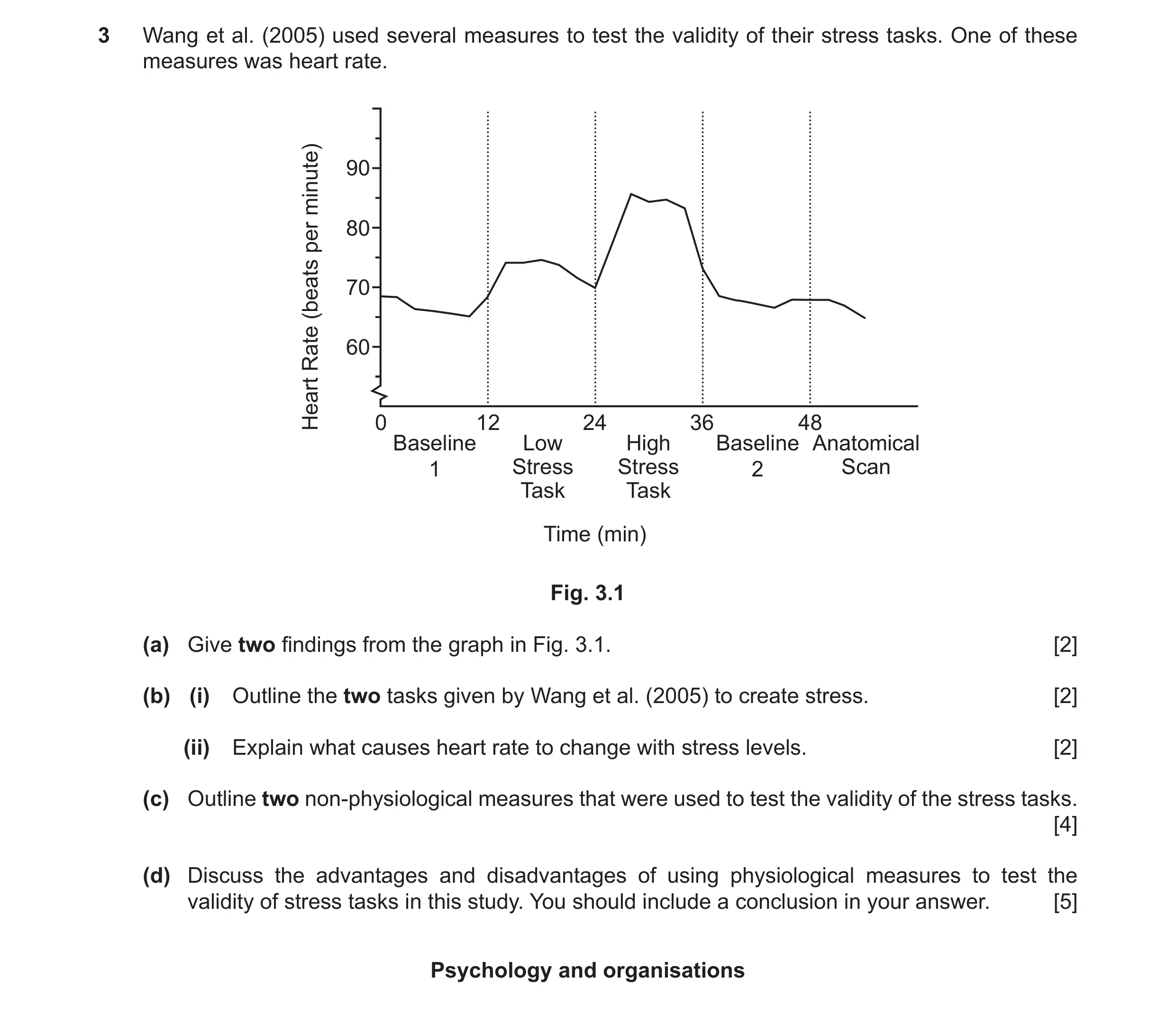
 5 / 11
![Question 16: (a) Design an experiment to investigate the effectiveness of biofeedback in the management of stress. [10] (b) Explain the psychological an…](https://img.pastlit.com/crops/4d1ae068-602a-494b-b2ca-1535ba7904da/q7.webp)
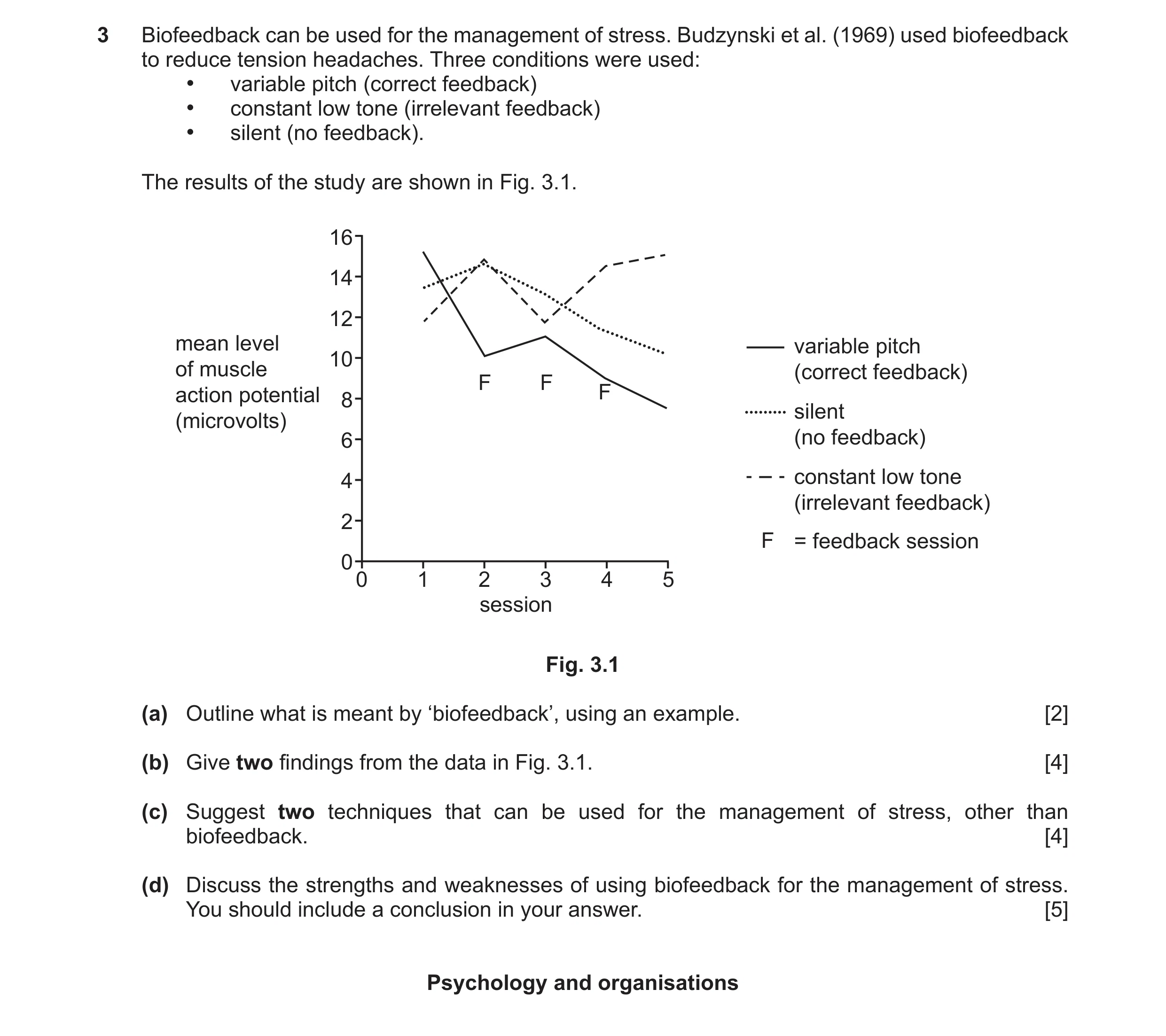
 6 / 11
![Question 21: (a) Design a study to investigate whether a stress-prevention technique is more effective for women than men. [10] (b) Explain the psycholo…](https://img.pastlit.com/crops/beb40438-8075-443b-a28c-bb53e50a5bf6/q7.webp)
 7 / 11
 8 / 11
 9 / 11
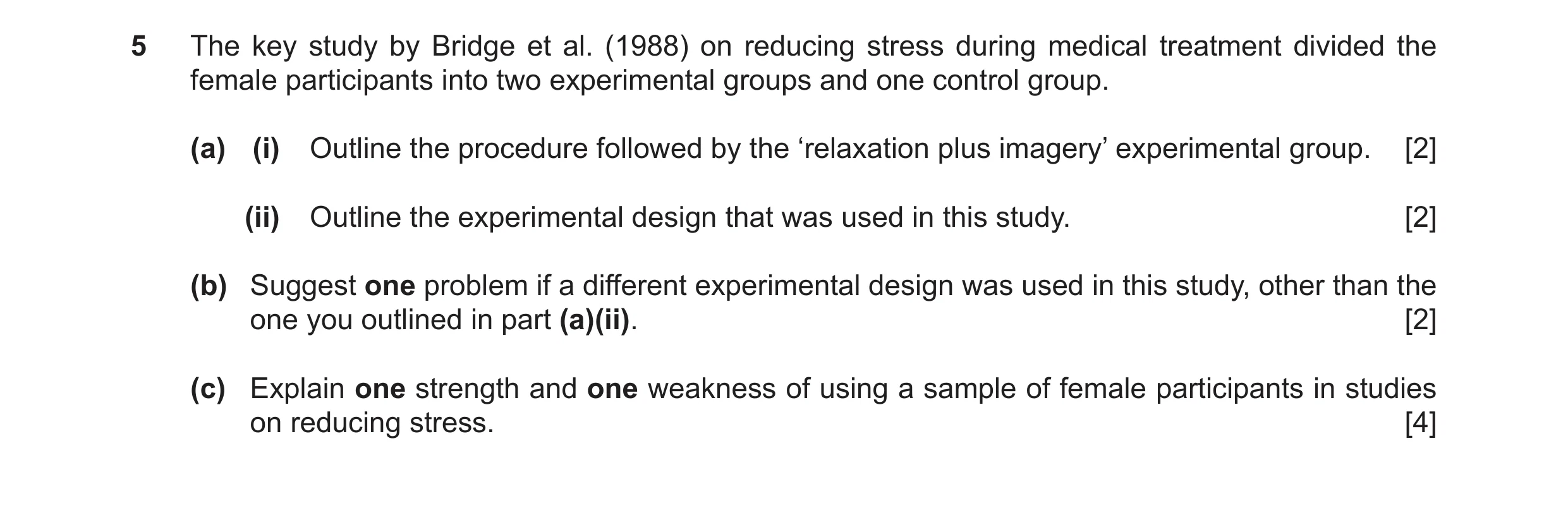 10 / 11
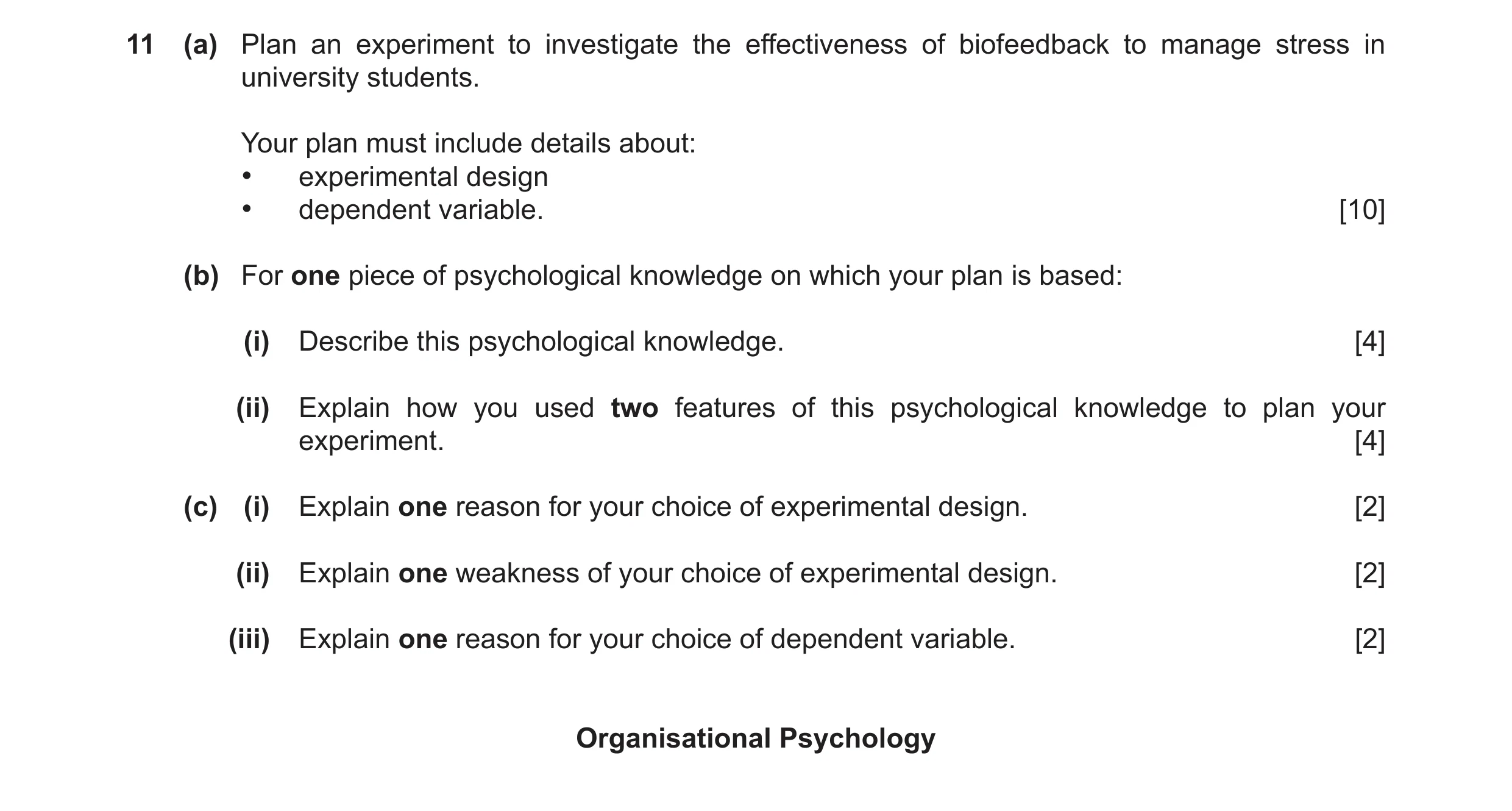 11 / 11
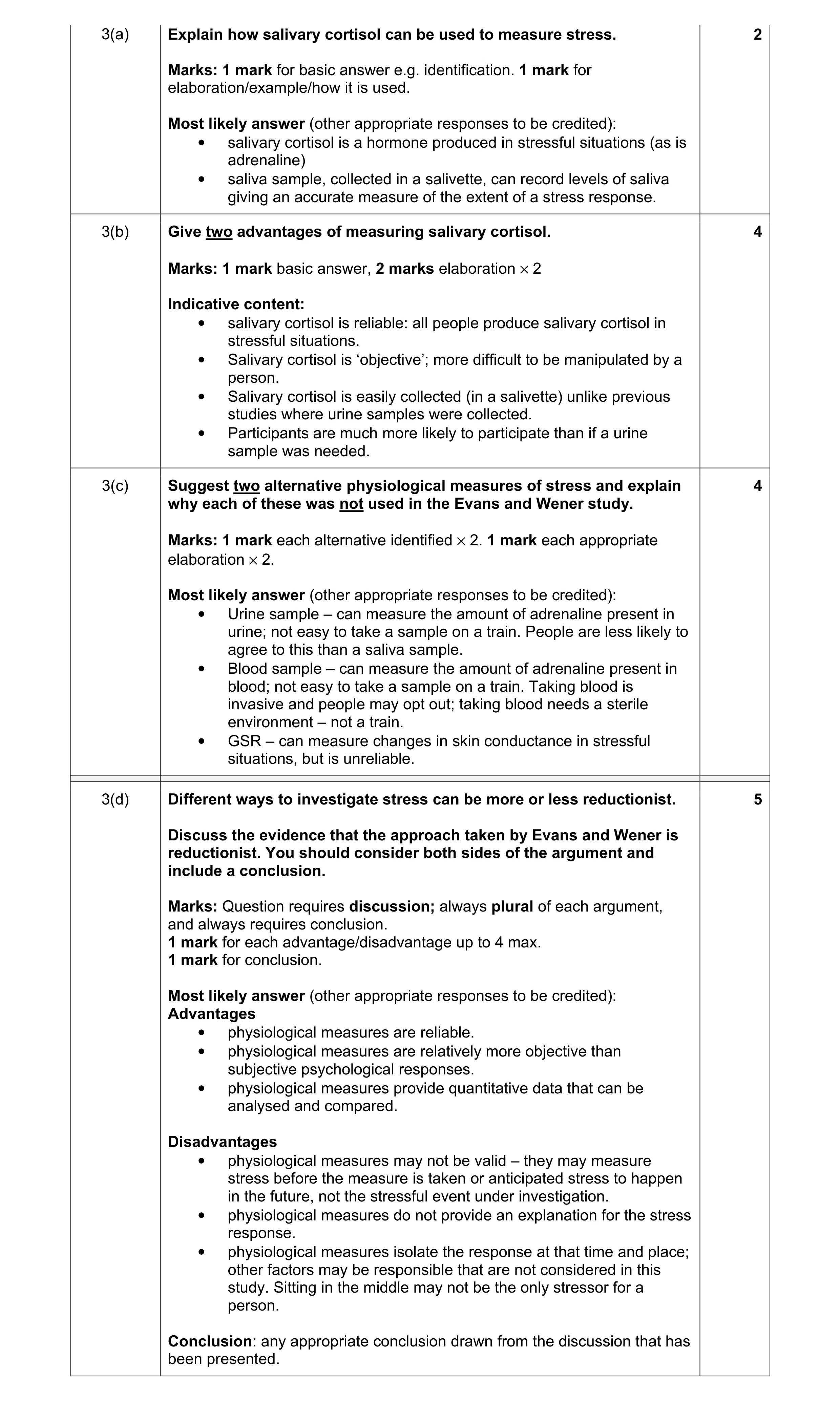 15
15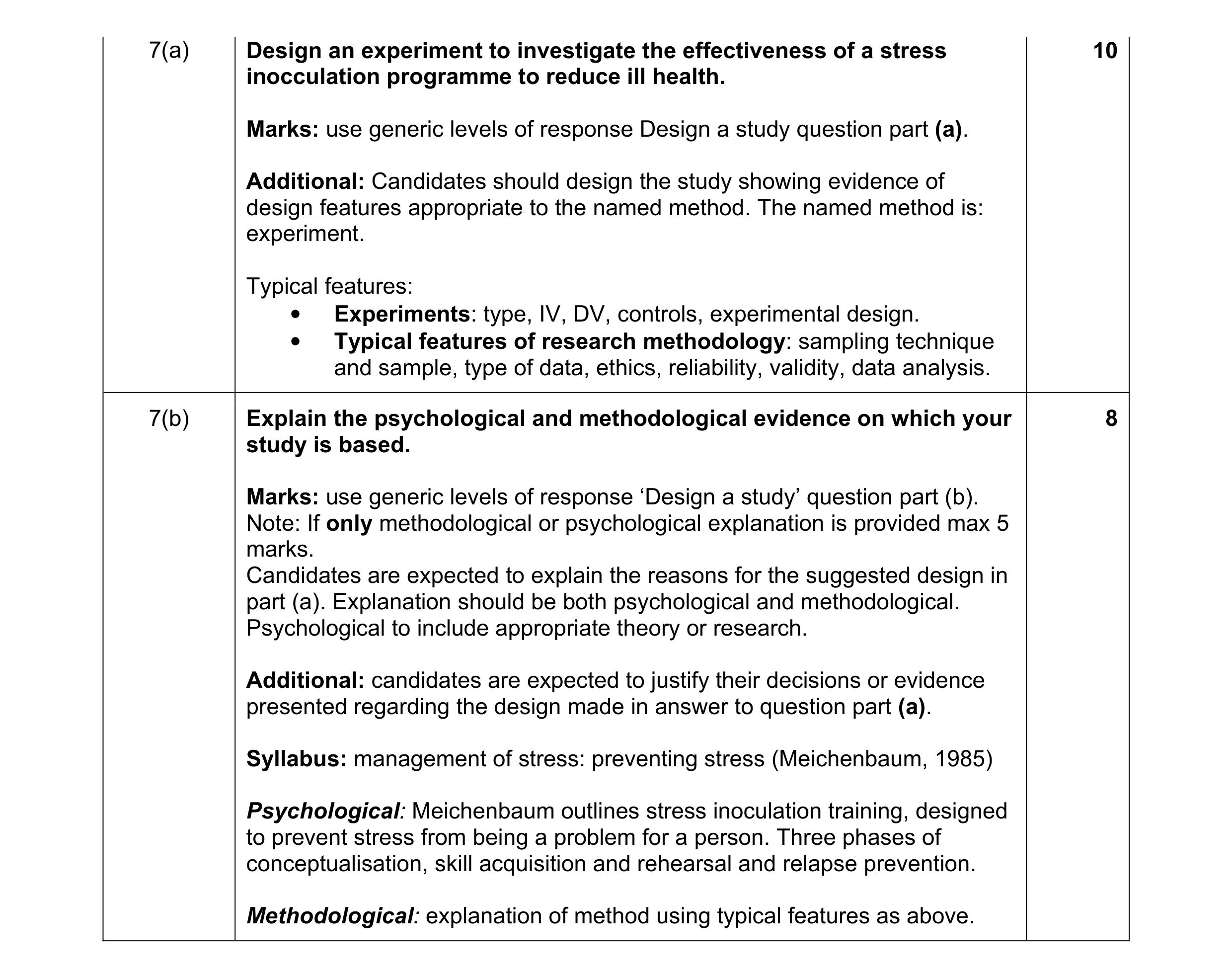 18
18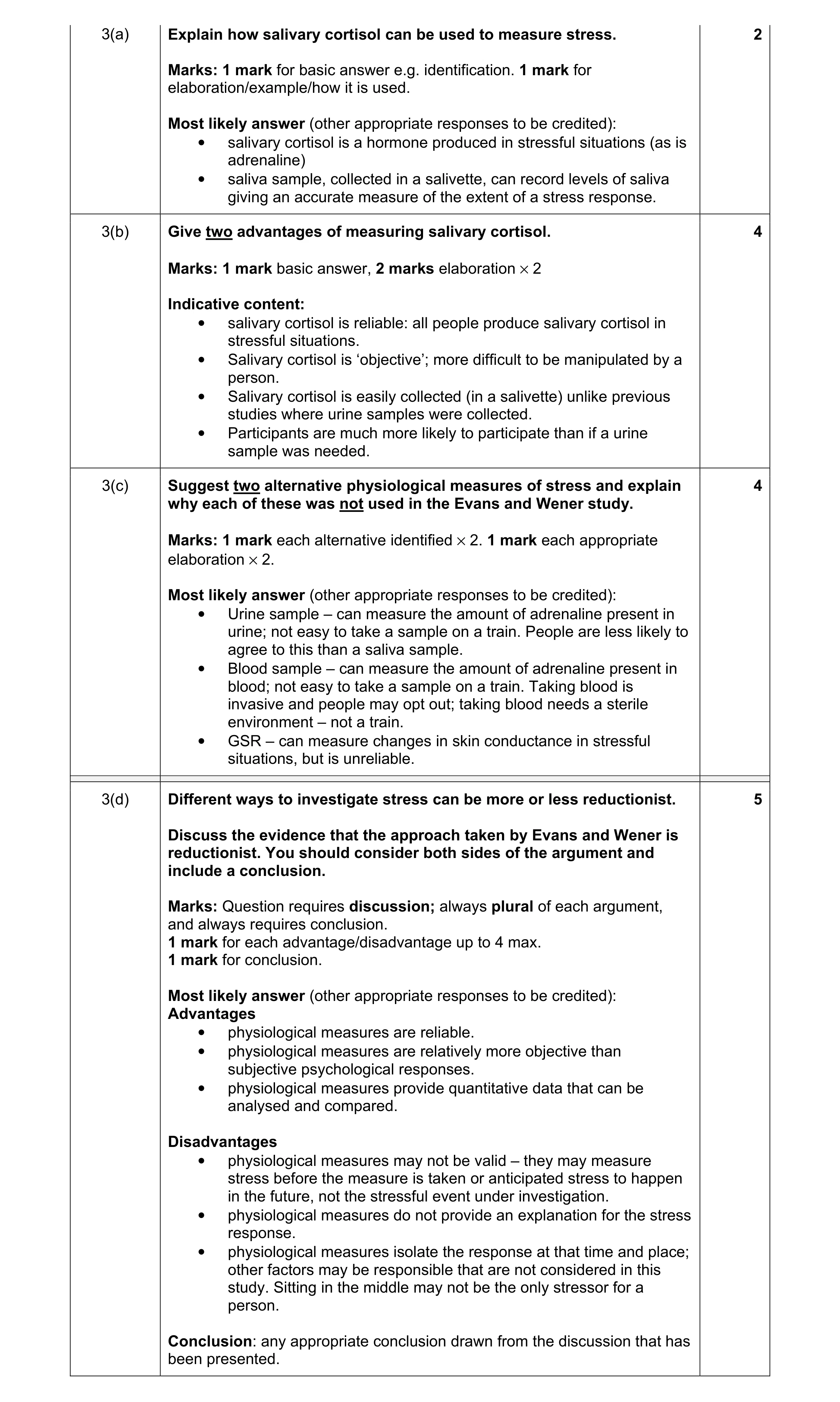 15
15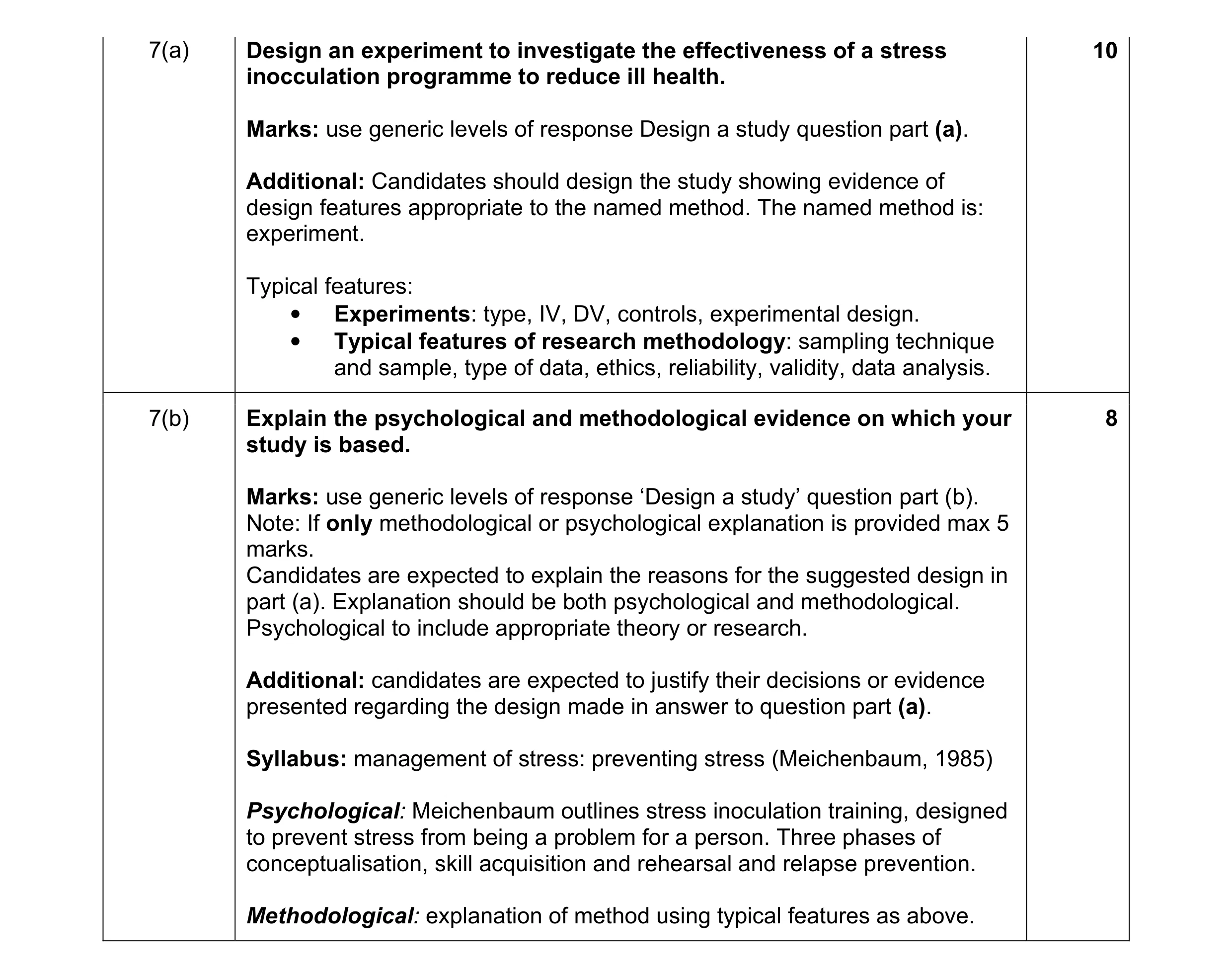 18
18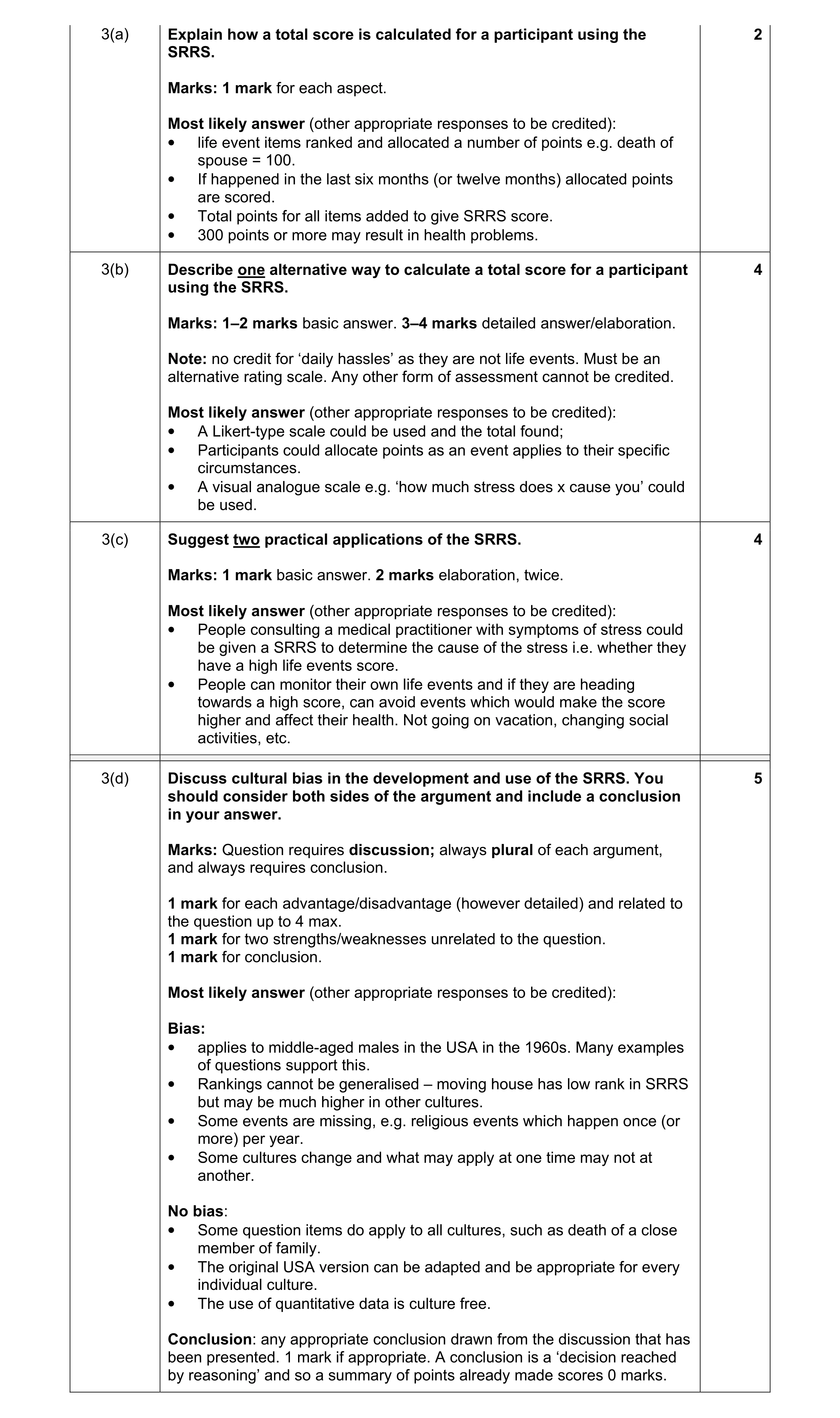 15
15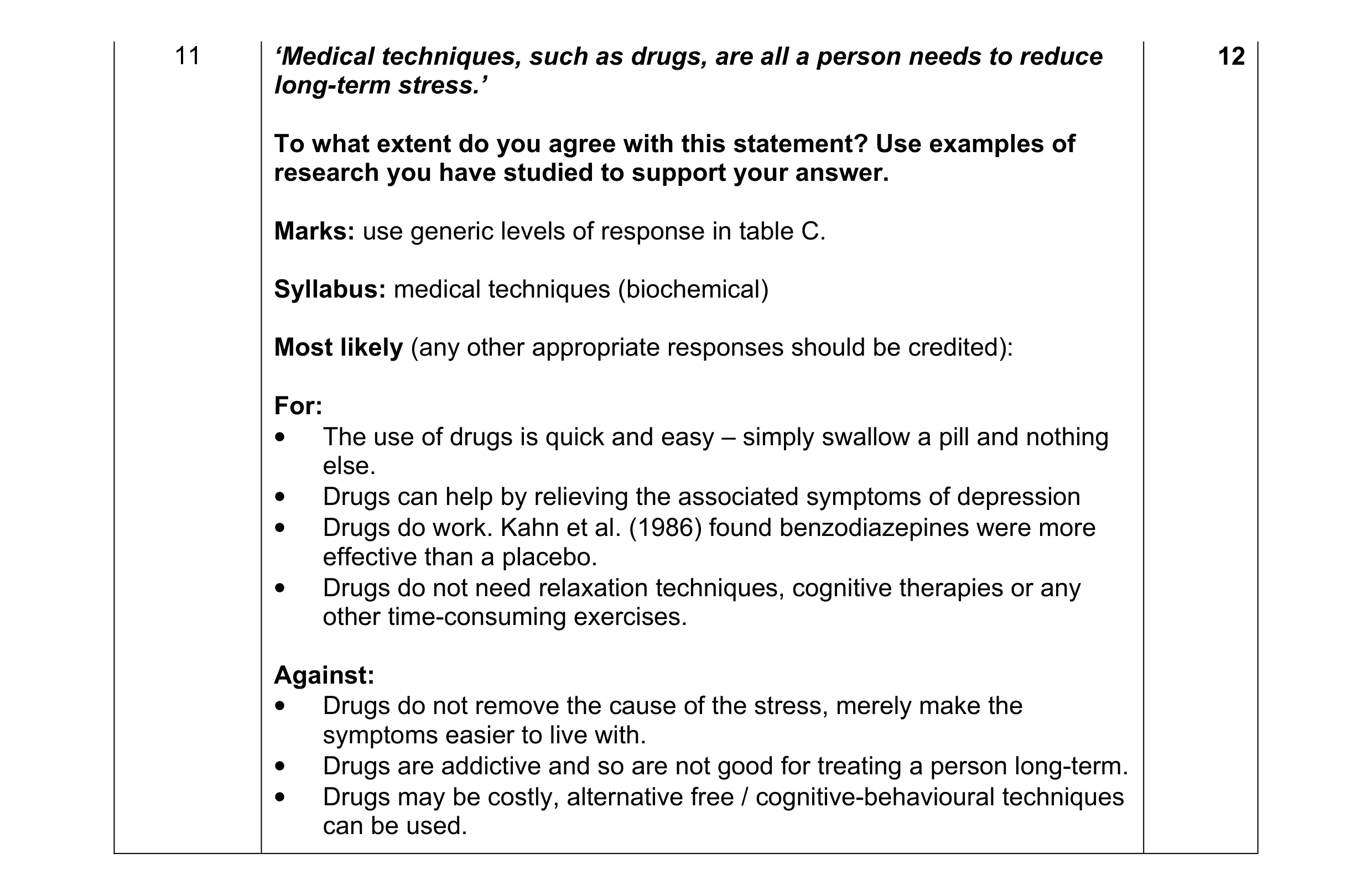 12
12 12
12 15
15 15
15 15
15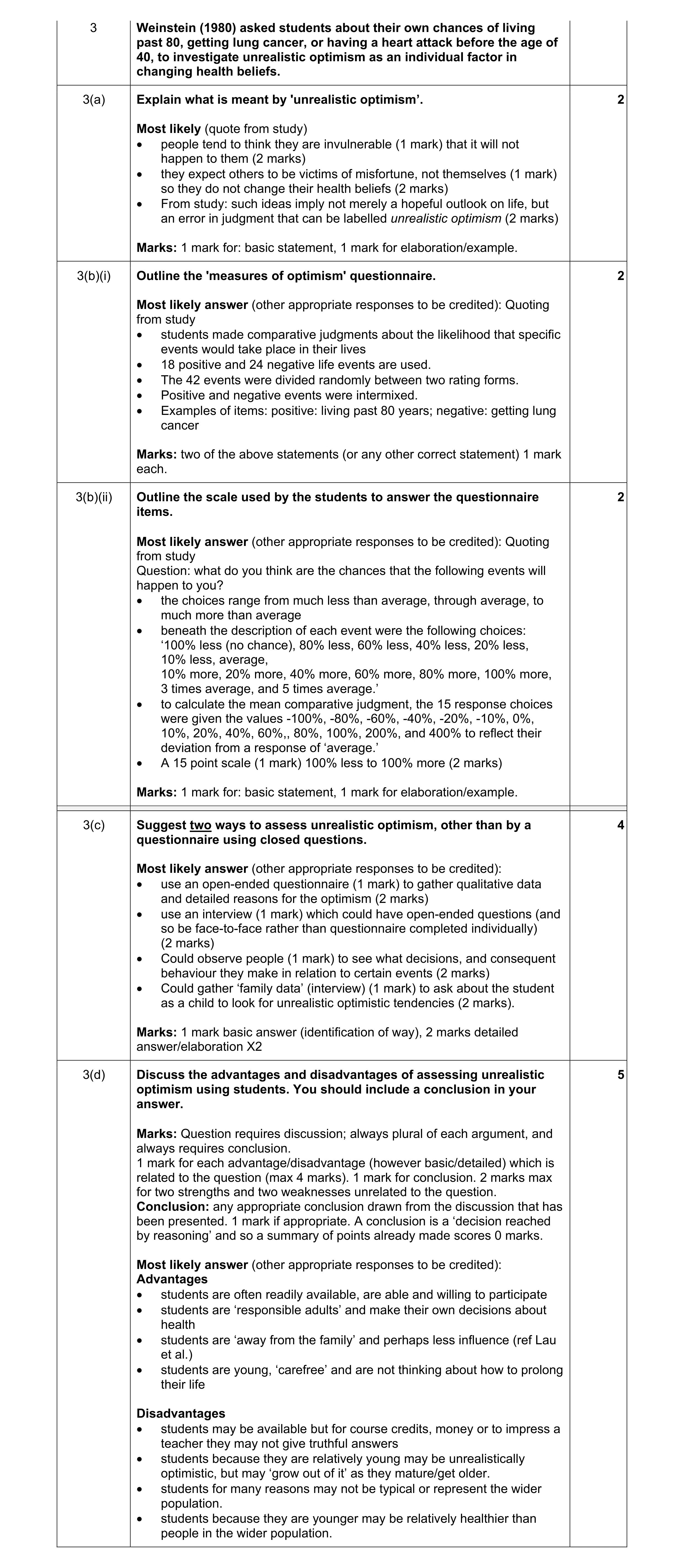 15
15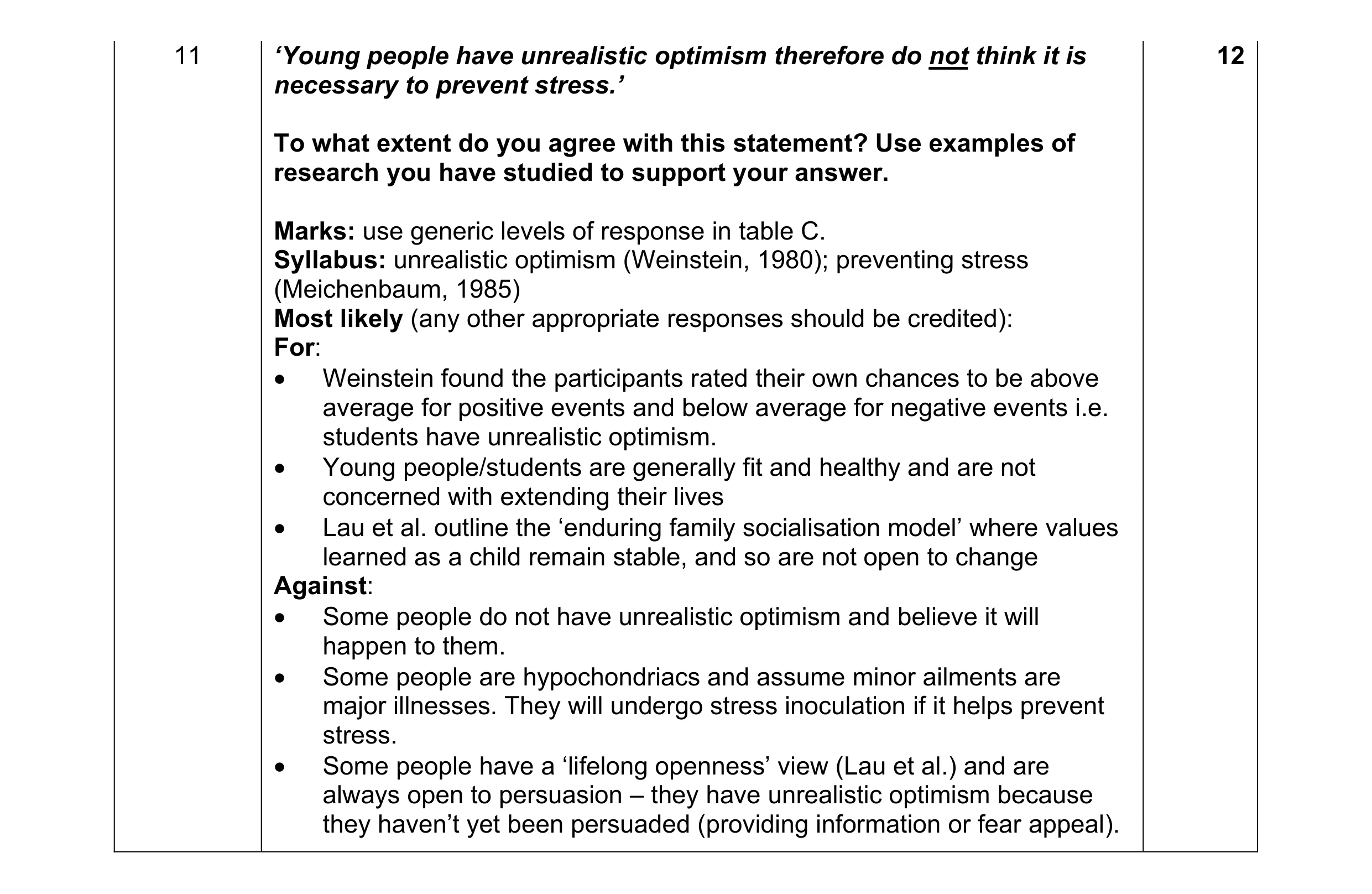 12
12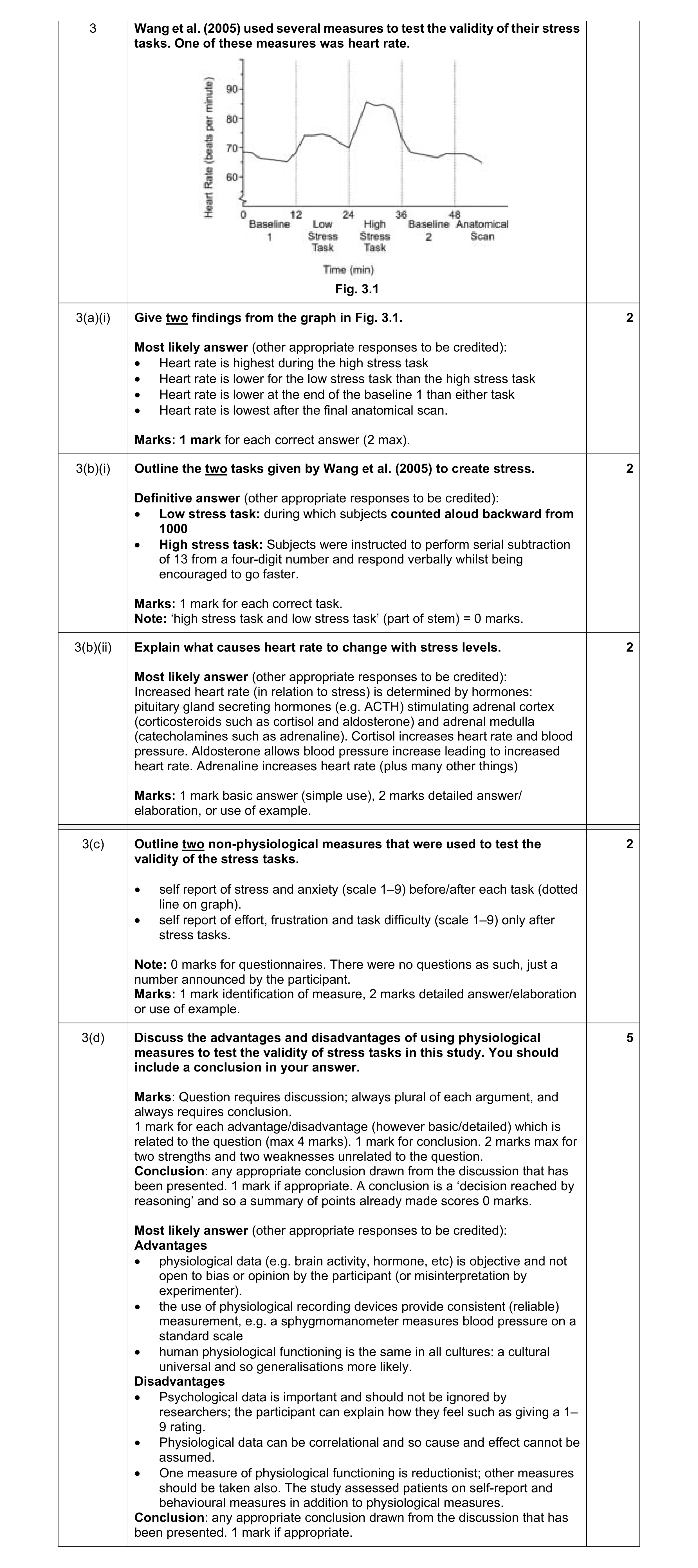 15
15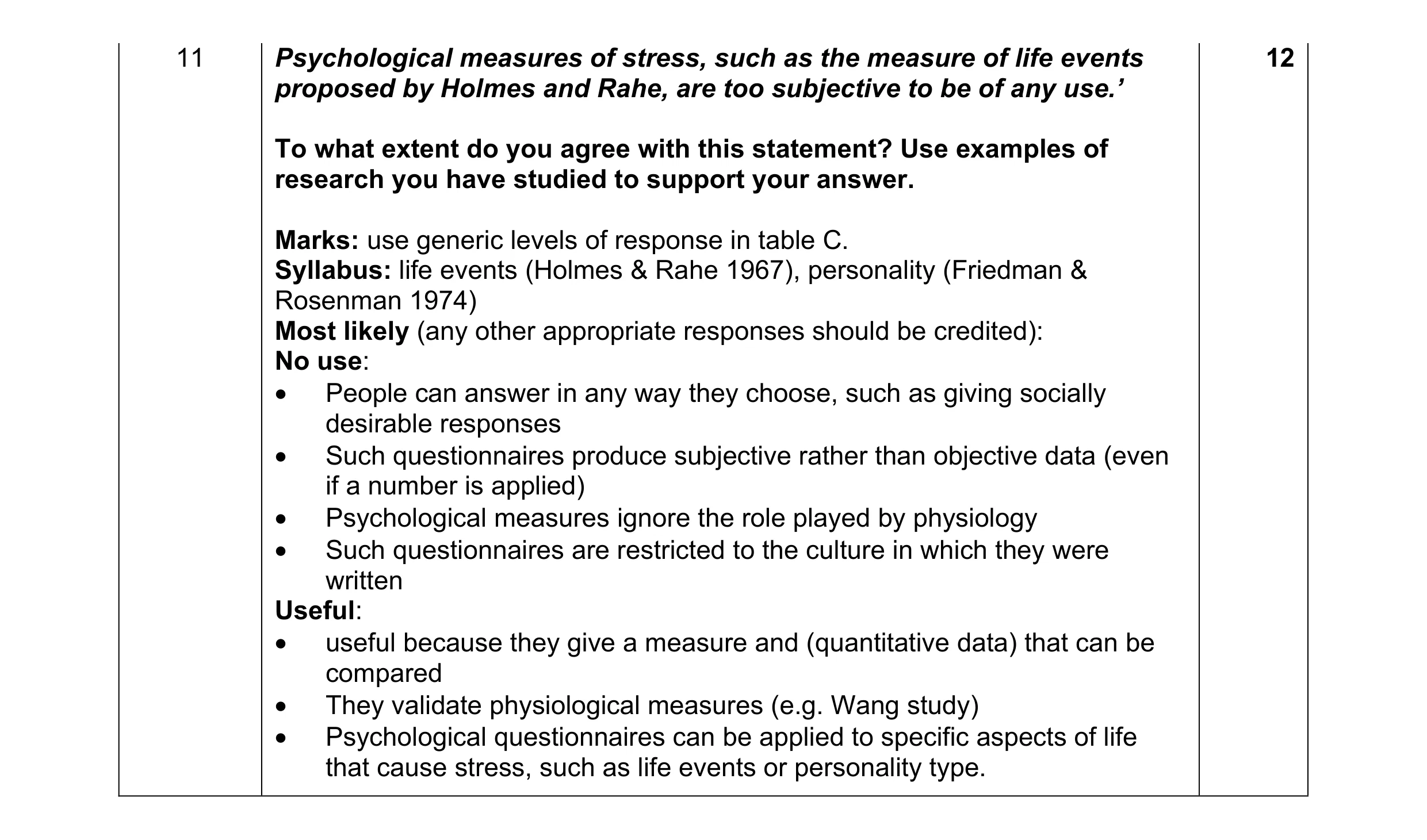 12
12 12
12 18
18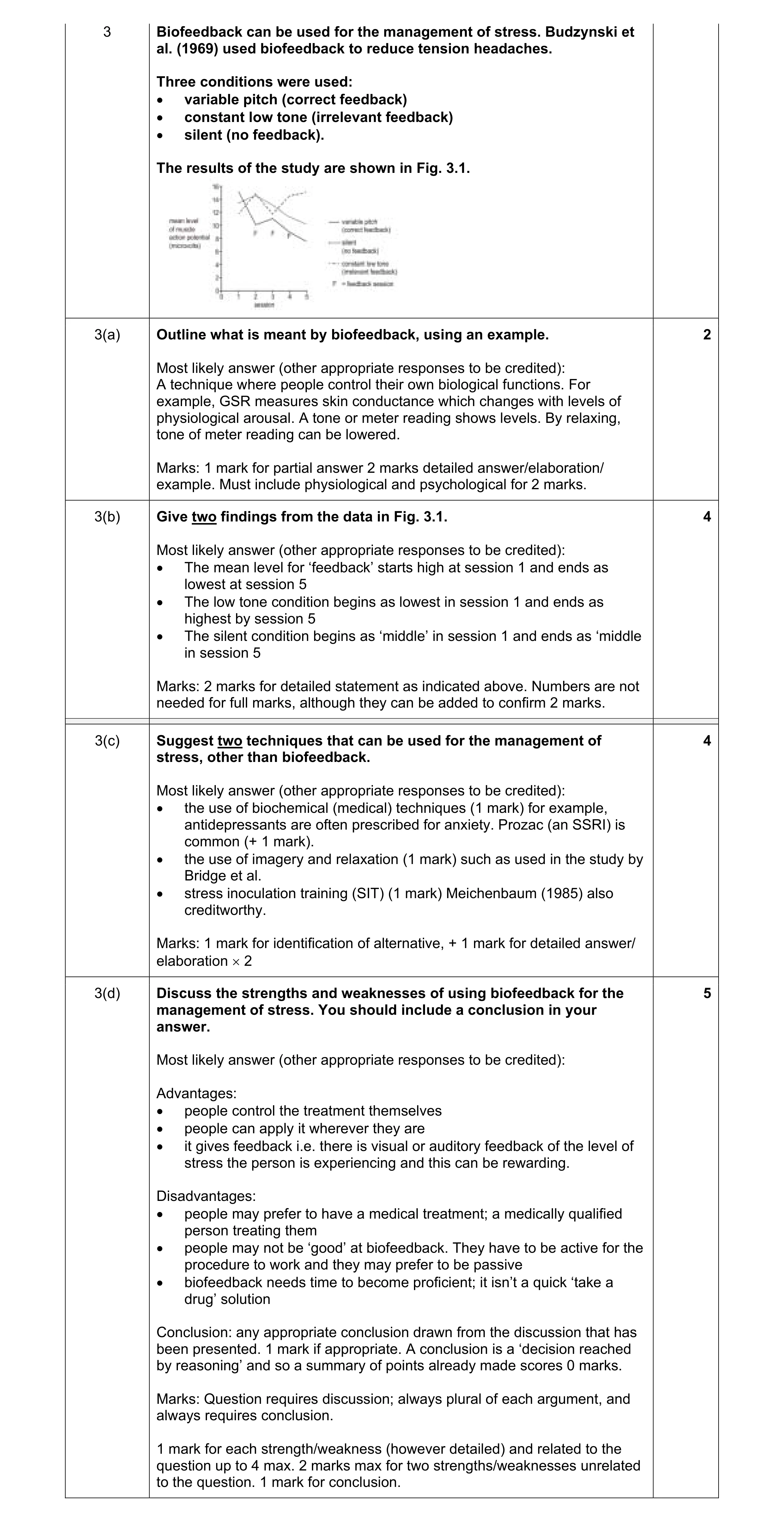 15
15 12
12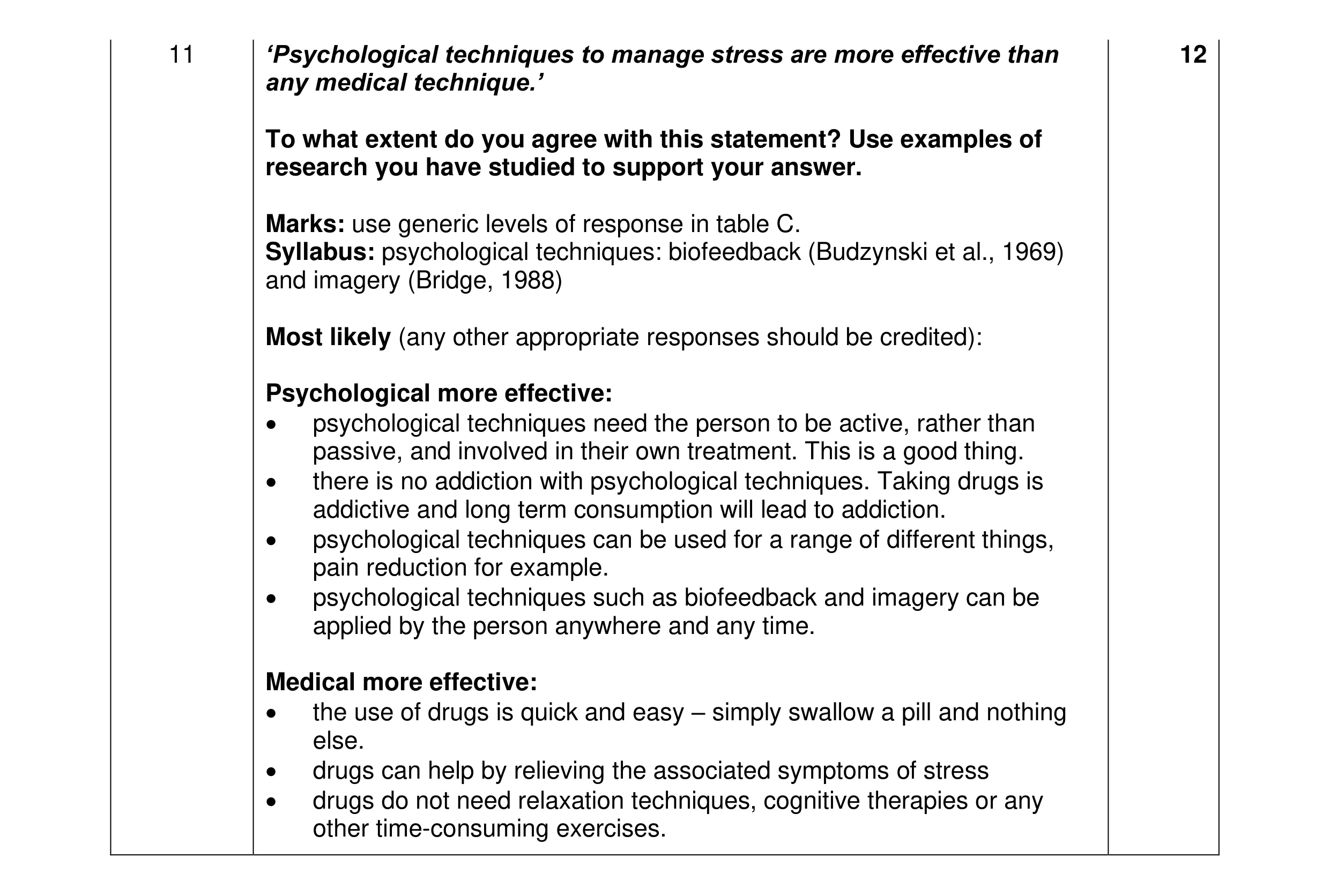 12
12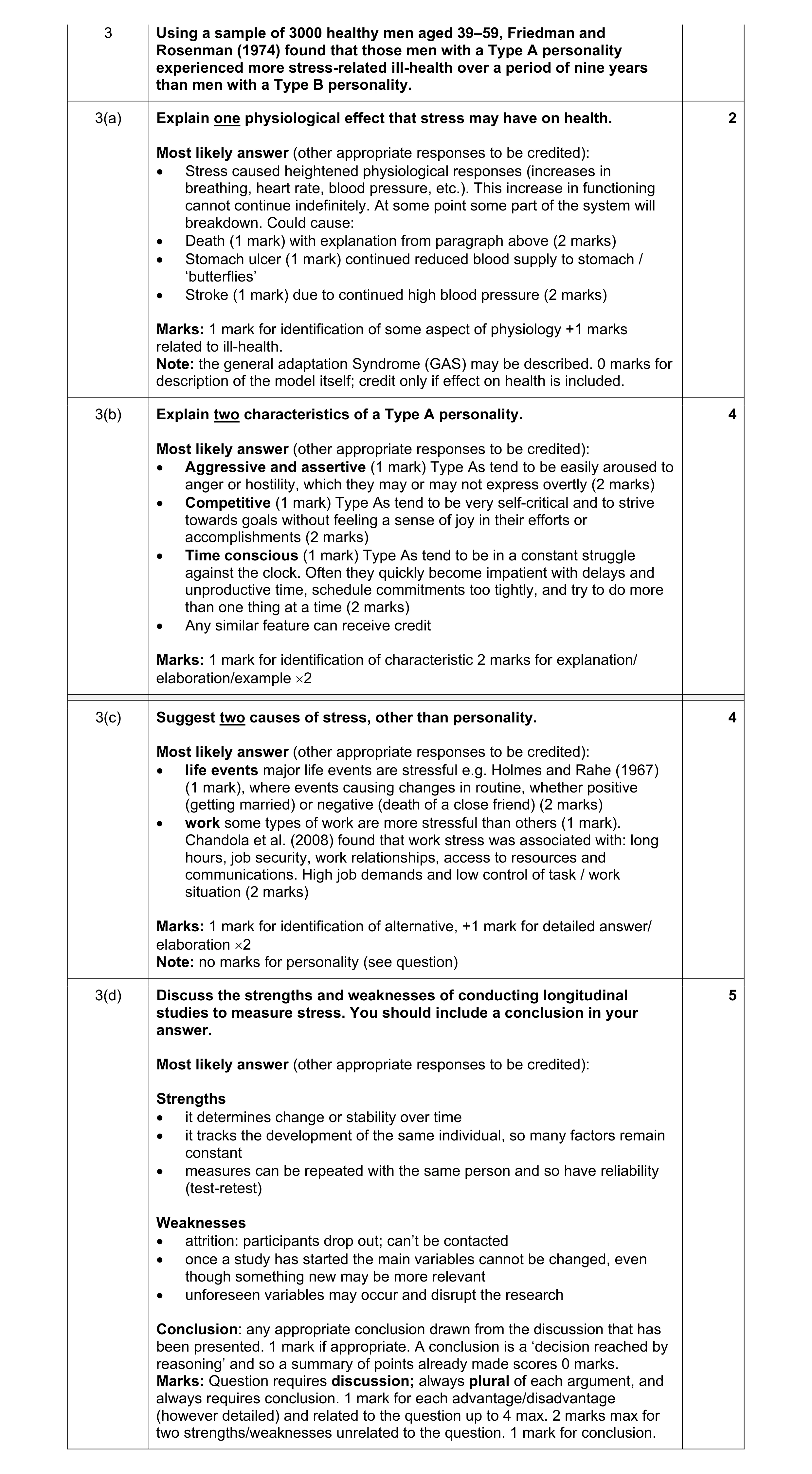 15
15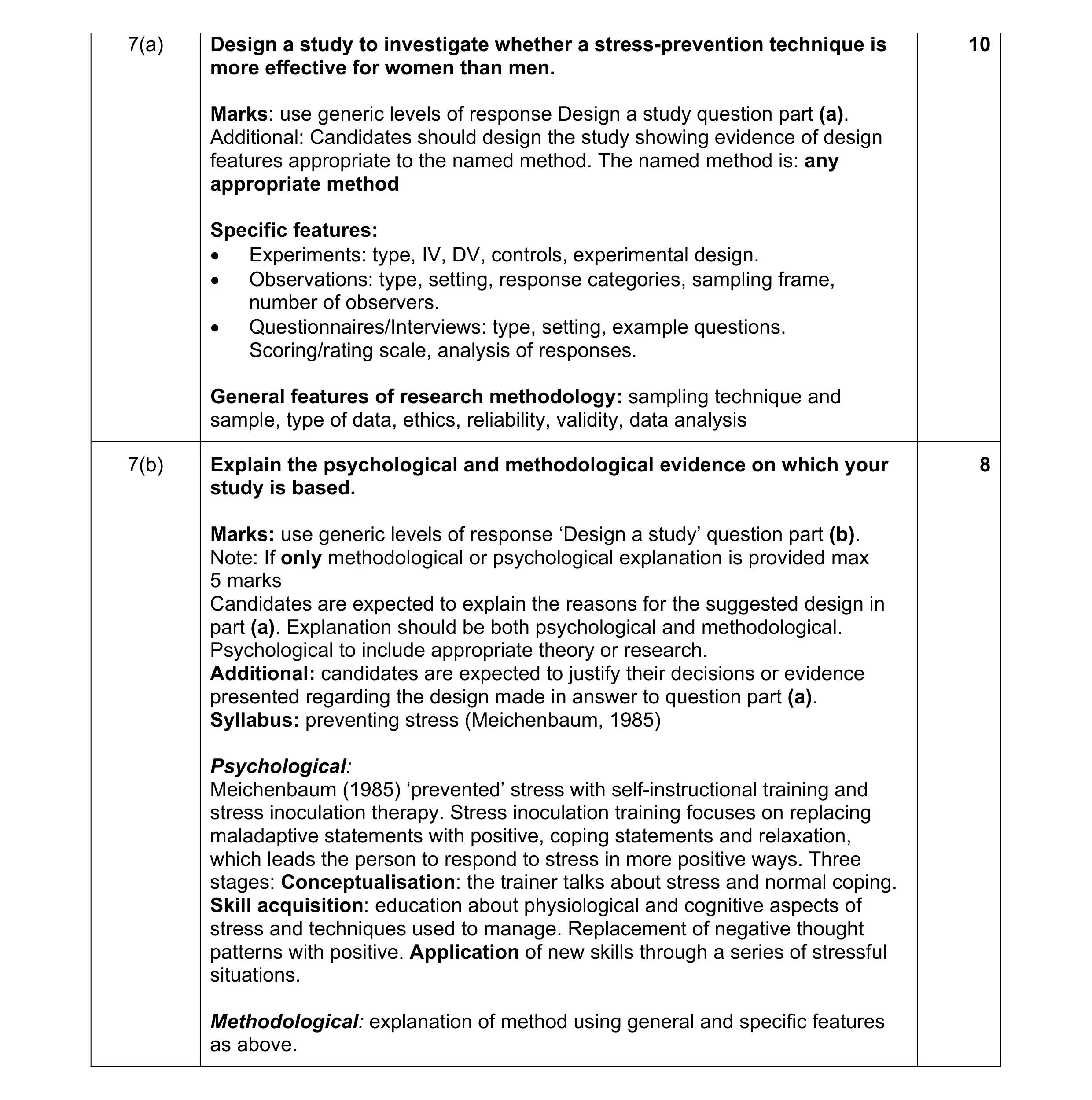 18
18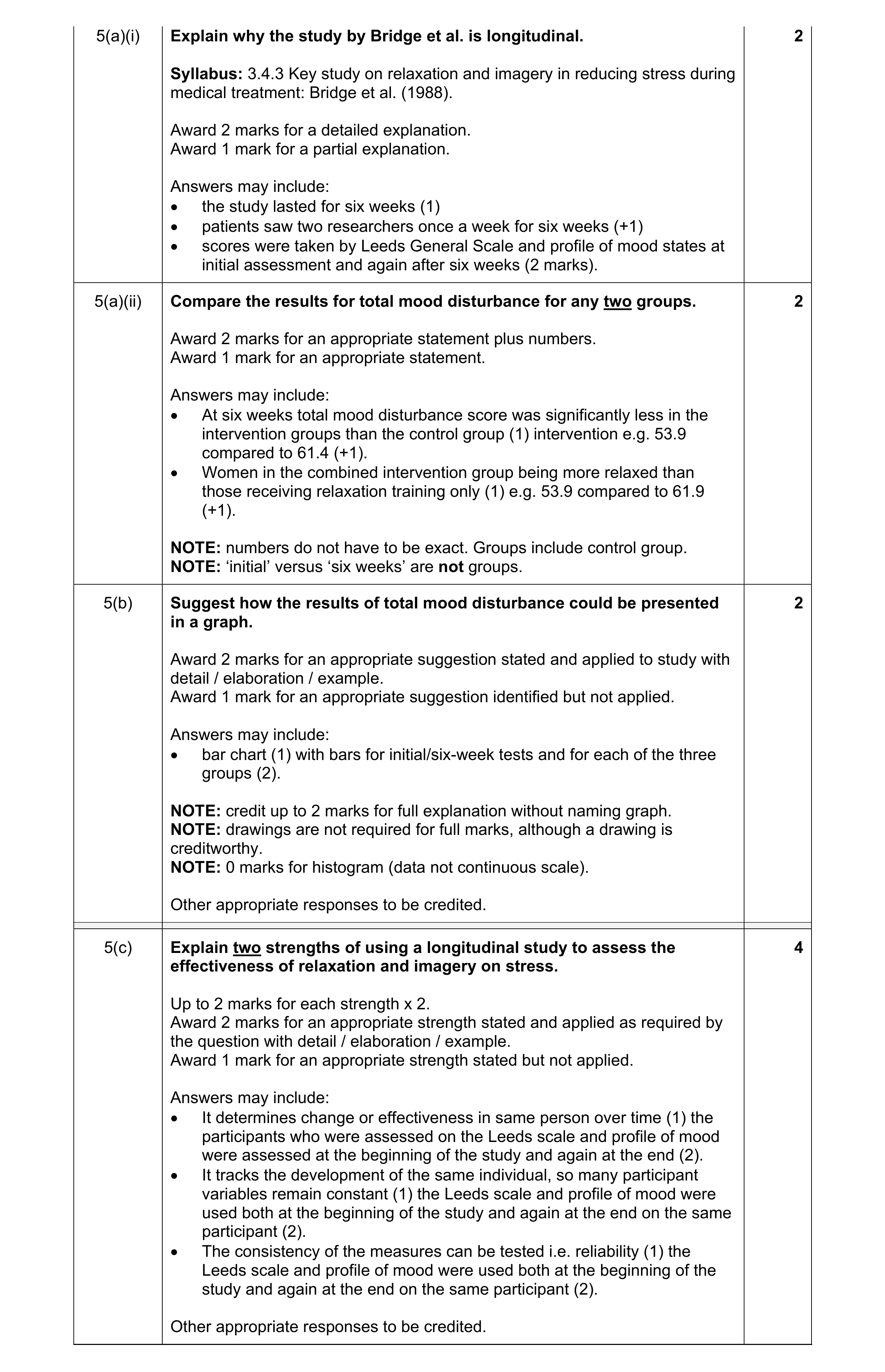 10
10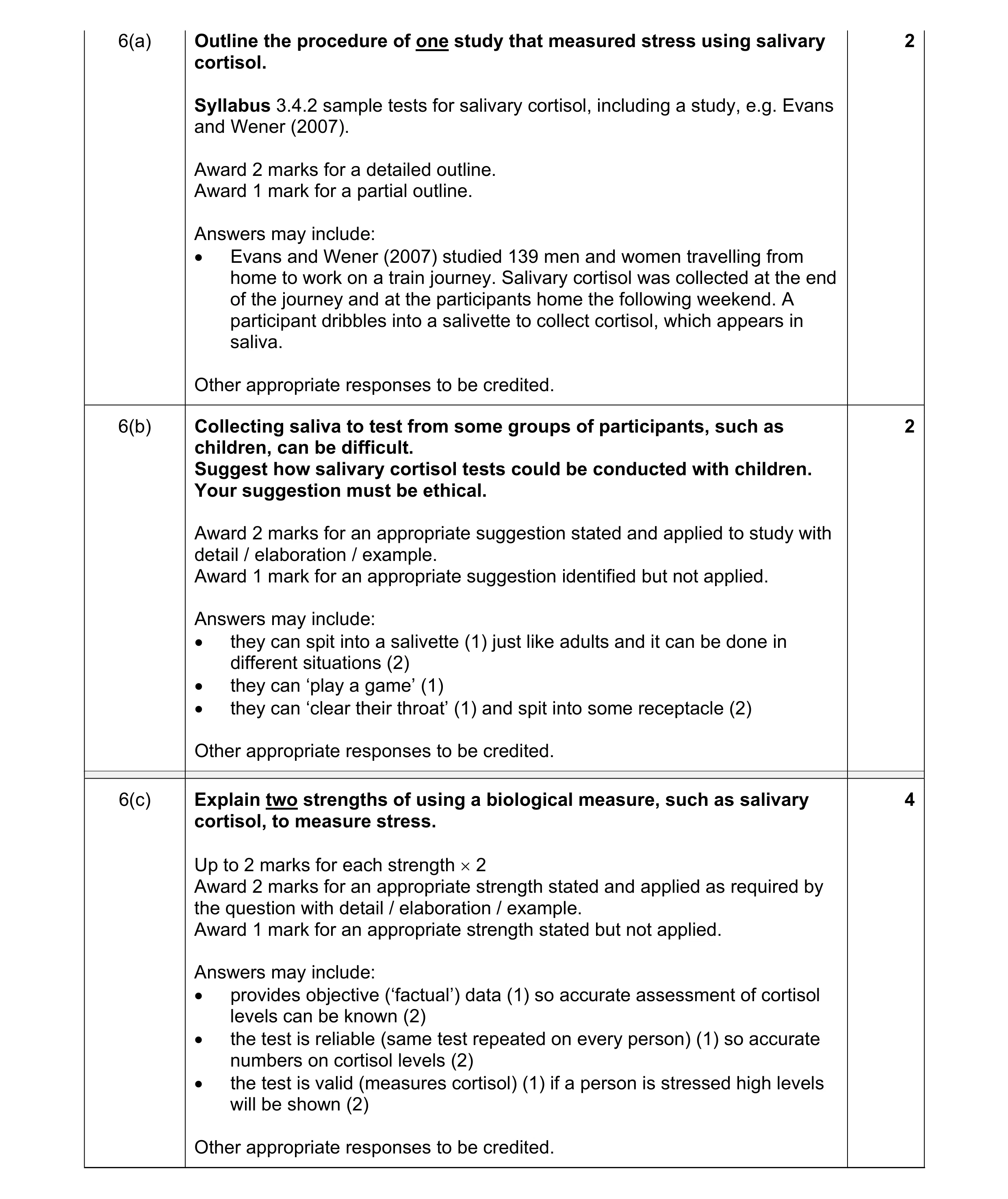 8
8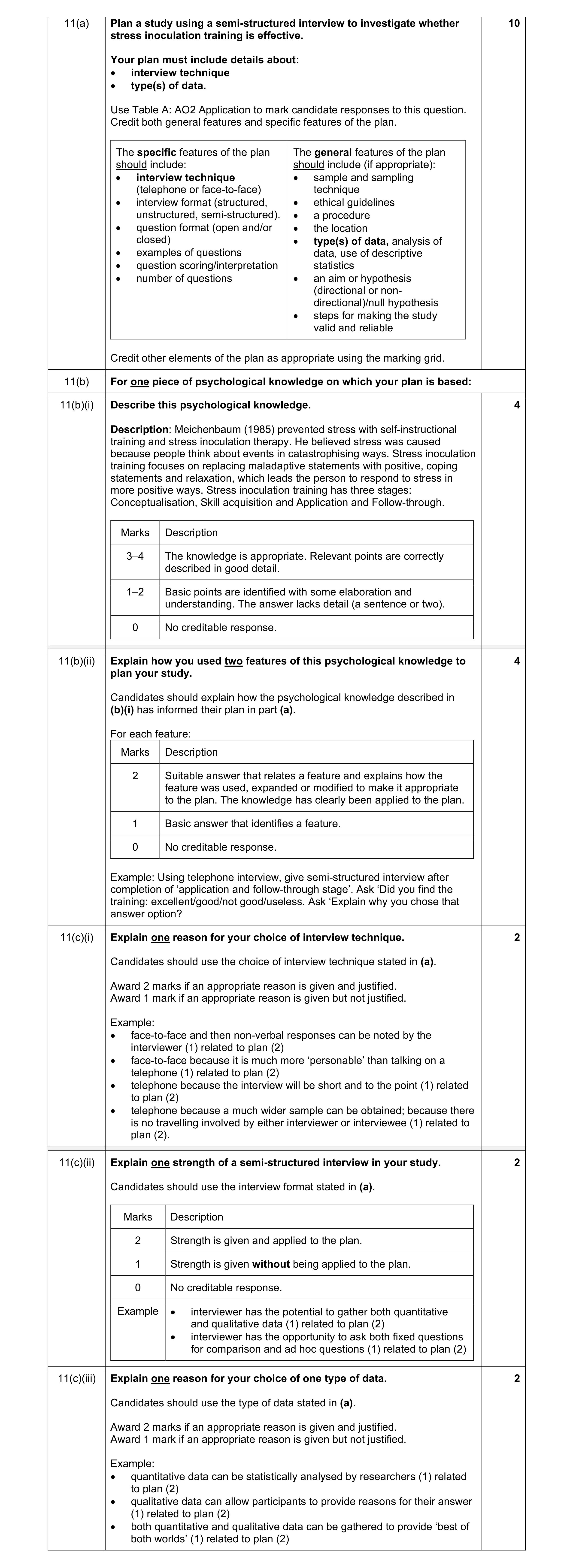 24
24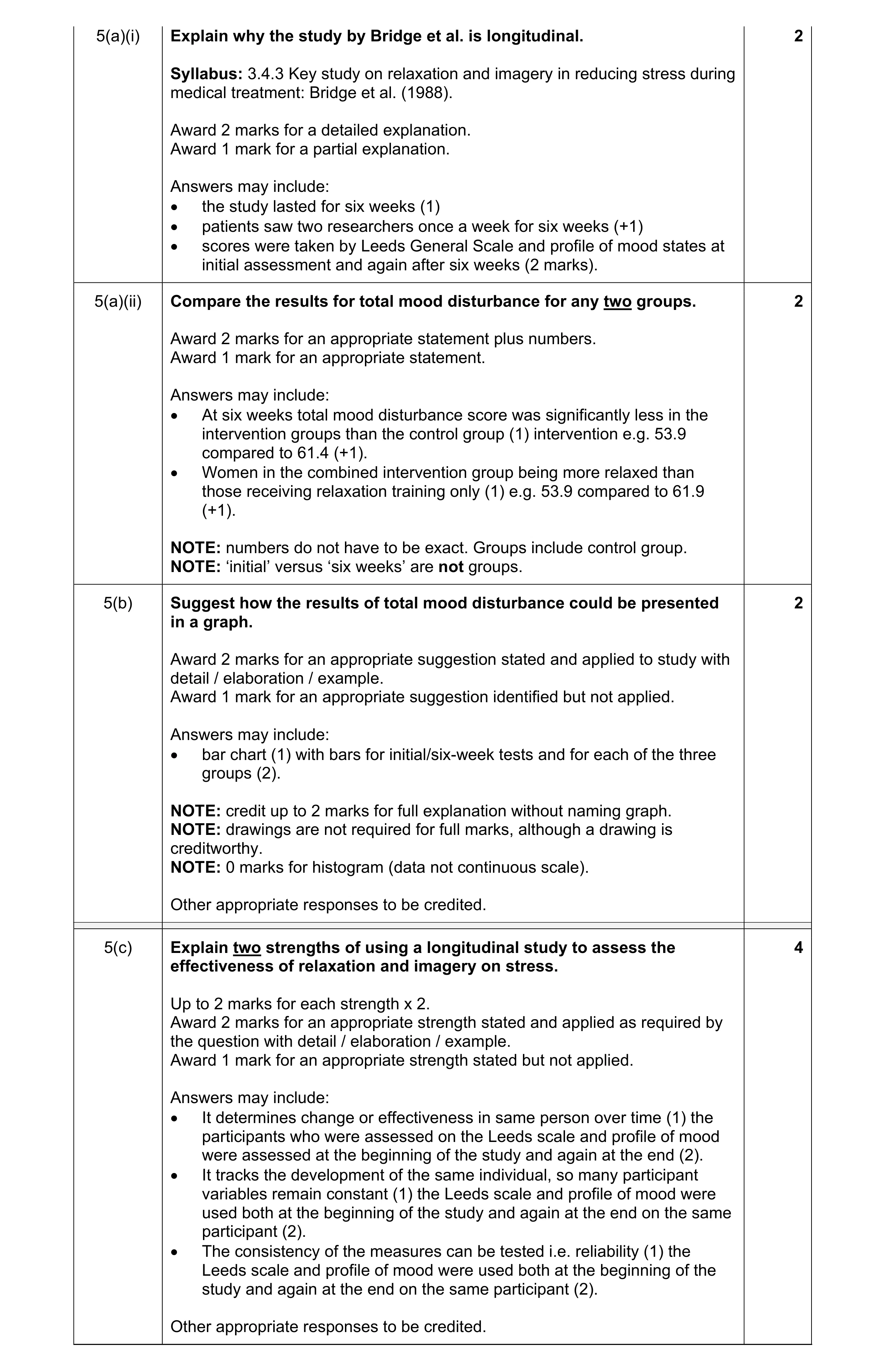 10
10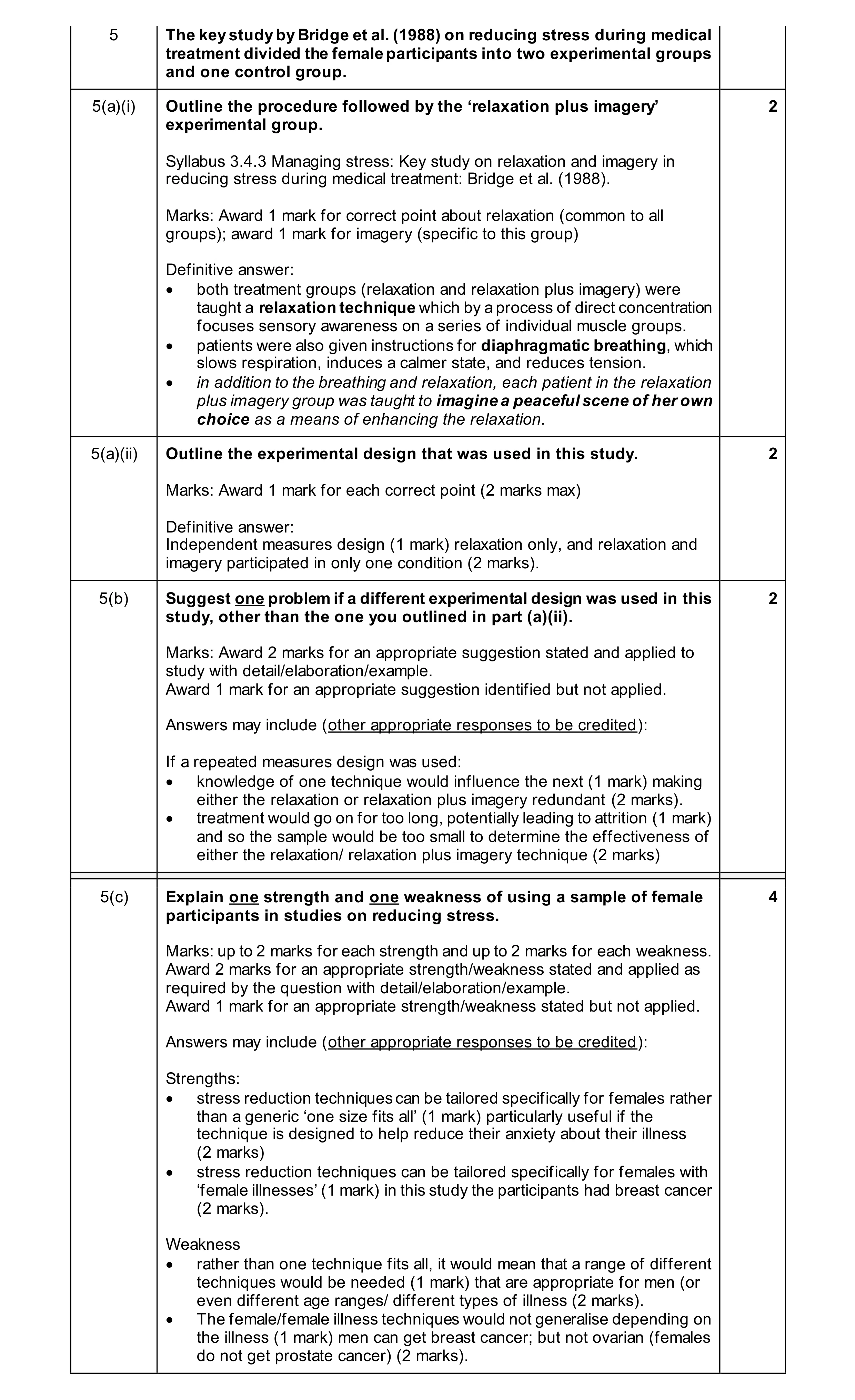 10
10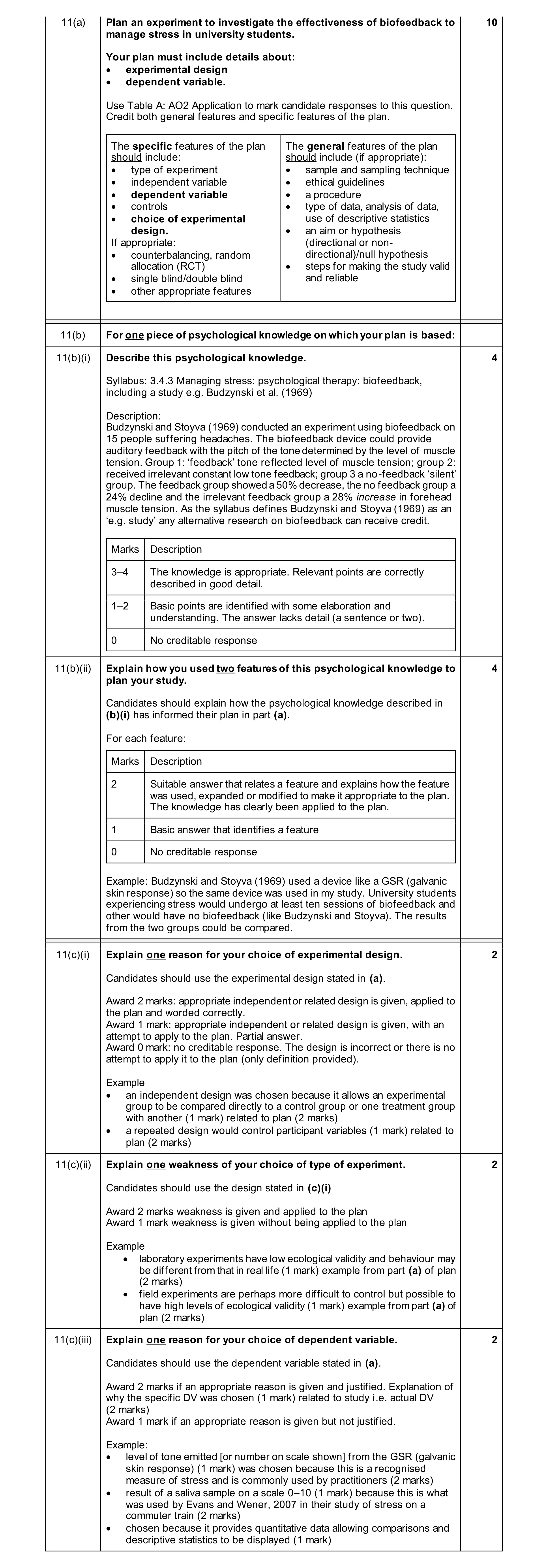 24
24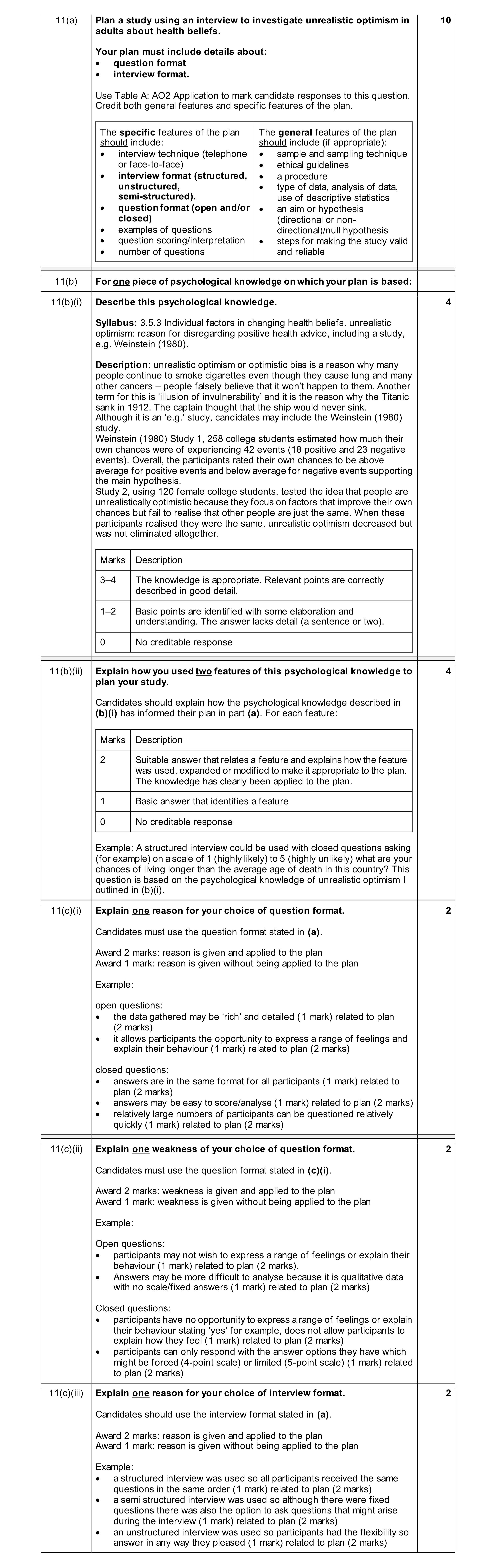 24
24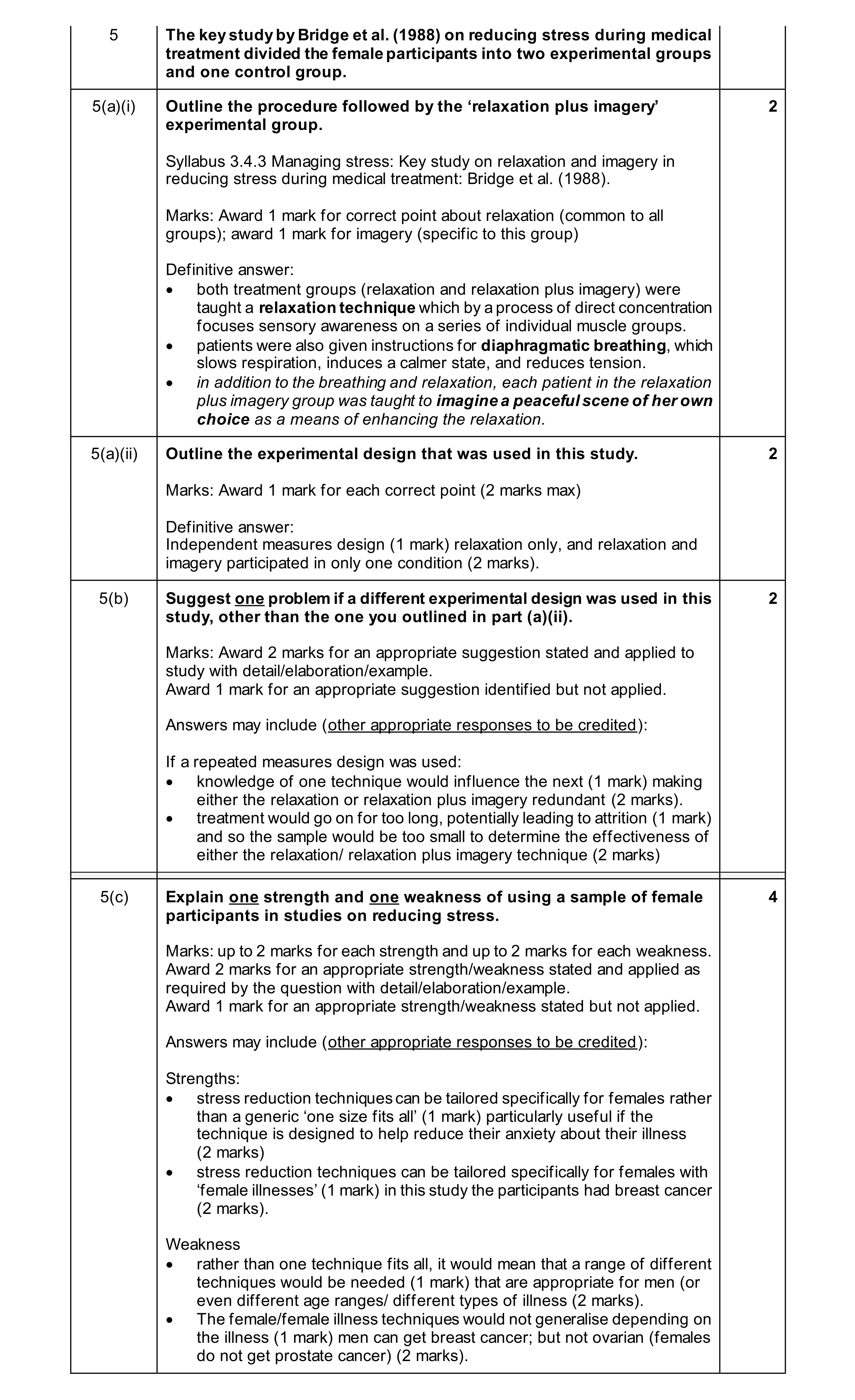 10
10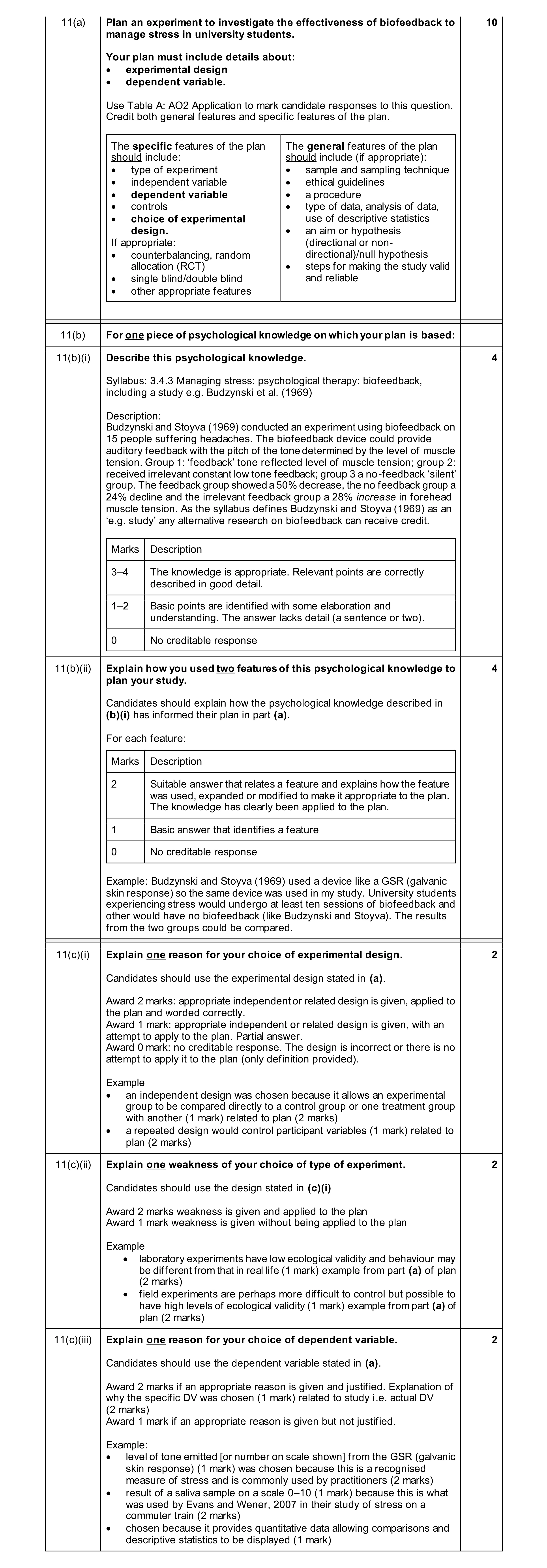 24
24