Cambridge A Level Psychology (from 2018) 9990 — 2022 Oct/Nov Paper 3 · Variant 2
9990/32/O/N/22 · 8 questions · 60 marks · ≈68 min
The question paper and its mark scheme, free to read here and free to download. This is Cambridge’s own paper, exactly as it was sat.
Question paper4 pages




Mark scheme28 pages
Answers below. Sit the paper first if you are practising.




















Questions as text
Q1 · Explain what is meant by ‘kleptomania’
1 (a) Explain what is meant by ‘kleptomania’. [2] (b) Outline two of the components that Griffiths (2005) used to define addiction. [4] (c) Explain one strength and one weakness of the definition of addiction proposed by Griffiths. [6]
Mark scheme: Psychology and abnormality Question Answer Marks 1(a) Explain what is meant by ‘kleptomania’. 2 Award 1 mark for a basic explanation of the term/concept. Award 2 marks for a detailed explanation of the term/concept. For example: Kleptomania is a non-substance addictive disorder in which the person concerned cannot resist the impulse to steal objects (1). The objects are not needed for personal use and they are not stolen because of their monetary value (1). Kleptomaniacs may feel tension or anxiety before the act of stealing and pleasure/gratification after the theft (1). Other appropriate responses should also be credited 1(b) Outline two of the components that Griffiths (2005) used to define 4 addiction. For each component: Award 1 marks for a basic answer with some understanding of the topic area e.g. naming the component. Award 2 marks for a detailed answer with clear understanding of the topic area. • Salience – the activity (e.g. gambling, pyromania) becomes the most important thing to the individual. They think about it all the time even when not engaged in it. This can be experienced as a ‘craving’ • Mood modification – the activity has the subjective experience of altering the person’s mood. This could be a ‘buzz’ or a ‘high’, ‘euphoria’, or paradoxically it can be tranquilising with an ‘escape’ or ‘numbing’. This can be for the same substance/activity • Tolerance – the process whereby increasing amounts of a particular activity are required to achieve the effects from before e.g. a gambler increasing their bet or spending longer periods of time in gambling • Withdrawal symptoms – The unpleasant feeling and/or physical effects occurring when the activity is reduced suddenly or stopped. This can be seen as irritability or physical (e.g. insomnia, headaches) • Conflict – this can be between the addict and those around them (interpersonal conflict) or within the individual themselves (intrapsychic conflict). This can result in compromising relationships, work or social activities. Intrapsychic conflict can be experienced by the individual as a ‘loss of control’ • Relapse – the tendency for repeatedly returning to the addictive behaviour even after a long period of abstinence or control Other appropriate responses should also be credited. 1(c) Explain one strength and one weakness of the definition of addiction 6 proposed by Griffiths. Likely strengths include: • Comprehensive definition with objective criteria. This makes it pretty clear whether or not an individual is an addict as they have to exhibit all 6 components. This can help with diagnosis • Individuals (and their families/colleagues) having knowledge of these components can even self-diagnose putting them in a position to acknowledge their problem and seek help • Clear diagnosis using these 6 components can lead to appropriate treatment or modification techniques and also ability to recognise when relapse has occurred • By classifying all addictions in the same way, whether substance or non-substance, the essential elements of what constitutes addiction can be better researched • There is a growing body of research that points to the similarities present in all addictions, whether pyromania, exercise, overeating, gambling, smoking or taking drugs. This model supports that Likely weaknesses include: • Possible lack of validity / individual differences. Someone engaging in a potentially addictive behaviour may not have experienced all of the components (e.g. relapse, as they have not yet tried to reduce the behaviour) but this would not necessarily mean they are not an addict • Components rely partly on the subjective experience of the individual who may still not wish to recognise their addiction and so deny, for example, that they need to do more and more to get their ‘fix’, potentially limiting treatment • It does not explain why someone becomes addicted and another person does not. Why, for example, might one person play a slot machine for 30 minutes one day (experiencing the ‘high’) and not do so again for years, but another person with the same experience finds themselves thinking about it all the time • Many would argue that to describe non-substance addiction in the same way as substance addiction is incorrect because there has to be a physiological aspect to withdrawal and this does not occur without a substance Mark according to the levels of response criteria below: Level 3 (5–6 marks) • Candidates will show a clear understanding of the question and will explain one strength and one weakness. • Candidates will provide a good explanation with clear detail. Level 2 (3–4 marks) • Candidates will show an understanding of the question and will explain one appropriate weakness in detail or one appropriate strength in detail. OR • one weakness and one strength in less detail. 1(c) Level 1 (1–2 marks) • Candidates will show a basic understanding of the question and will attempt an explanation of either a strength or a weakness. They could include both but just as an attempt. • Candidates will provide a limited explanation. Level 0 (0 marks) No response worthy of credit. Other appropriate responses should also be credited.
Q2 · Describe treatments and management of schizophrenia and delusional disorder (biochemical…
2 (a) Describe treatments and management of schizophrenia and delusional disorder (biochemical, ECT, token economy, CBT). [8] (b) Evaluate treatments and management of schizophrenia and delusional disorder (biochemical, ECT, token economy, CBT), including a discussion of ethics. [10] Psychology and consumer behaviour Answer all questions.
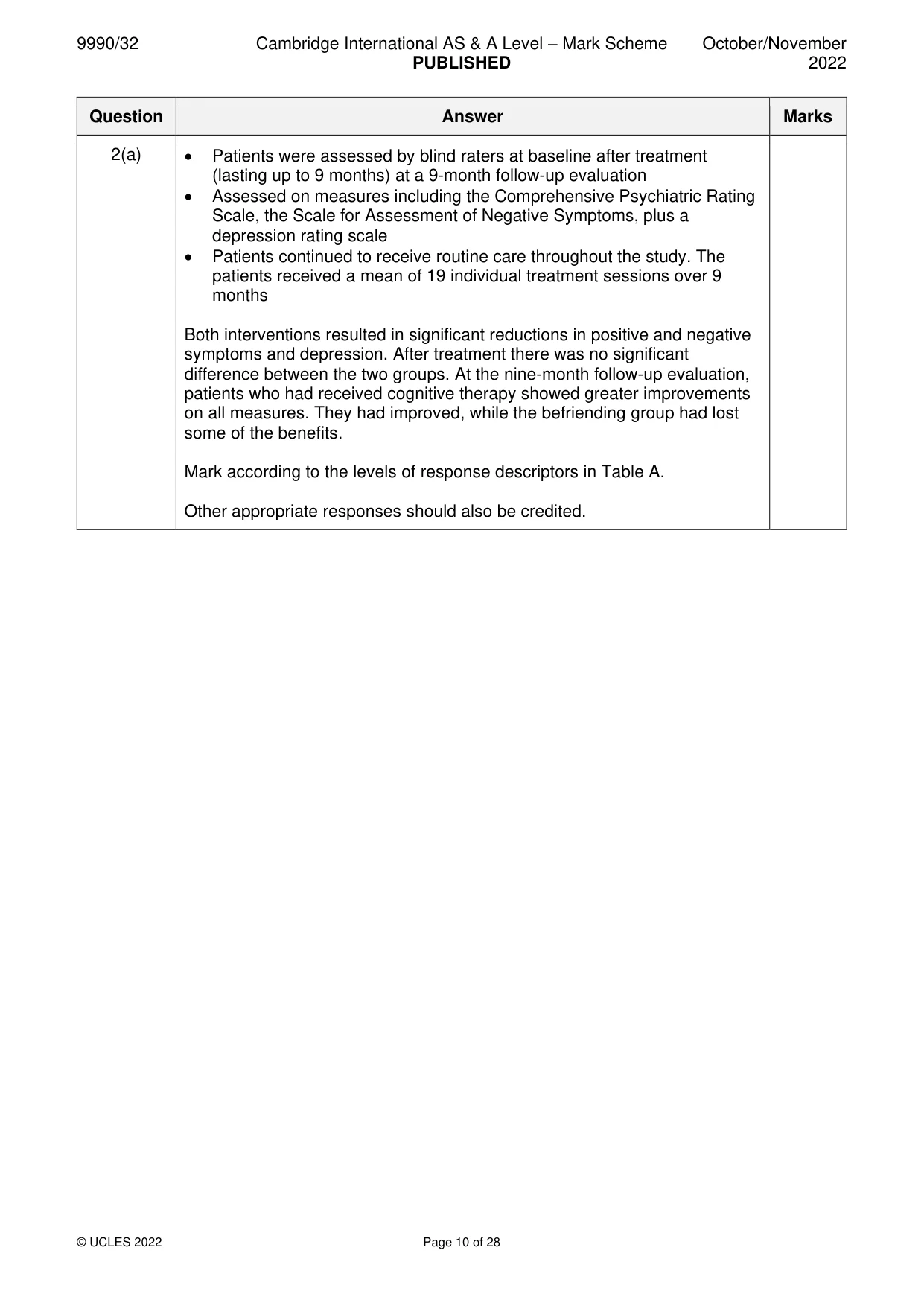
Mark scheme: 2(a) Describe treatments and management of schizophrenia and delusional 8 disorder (biochemical, ECT, token economy, CBT). Treatment and management of schizophrenia and delusional disorder, including the following: • biochemical (antipsychotics and atypical antipsychotics) • electro-convulsive therapy • token economy (Paul and Lentz, 1977) • cognitive-behavioural therapy (Sensky, 2000) Biochemical (antipsychotics and atypical antipsychotics) Chlorpromazine and other antipsychotics block dopamine and serotonin receptors in the (cortical and limbic regions) brain. Reduces agitation and hostility in the patient. After 2+ weeks reduces positive symptoms. Electro-convulsive therapy A general anaesthetic and a drug that relaxes muscles is given. Electrodes are placed on the scalp and a finely controlled electric current through those electrodes for a very short time. This will cause a brief seizure in the brain. The seizure is what treats the symptoms. Can be performed unilaterally or bilaterally. Often 12 weeks of treatment done 2x per week. One theory is affects post-synaptic responses to CNS transmitters. Often used effectively for acute episodes of psychosis and for catatonic symptoms. Token economy (Paul and Lentz, 1977) Aim was to investigate the effectiveness of operant conditioning by reinforcing appropriate behaviour with schizophrenic patient. Set up token economy system in hospital ward. 84 patients given tokens as reward when behaved appropriately. Could be exchanged for luxury items. Study lasted around 4.5 years. Independent measures design where half of patients received milieu therapy (therapeutic community), traditional hospital treatment and token economy. Behaviour monitored through observations, interviews and standardised questionnaires. Results – positive and negative symptoms were significantly reduced 11% of patients needed drug treatment, compared to 100% of the control group. Being able to live independently – 97% token economy group, 71% milieu therapy and 46% traditional hospital treatment group. Conclusion – operant conditioning is an effective means of treating people with chronic schizophrenia. Cognitive-behavioural therapy (Sensky, 2000) To compare cognitive behavioural therapy (CBT) with non-specific befriending interventions for patients with schizophrenia. A randomised controlled design: • Patients were allocated to one of two groups: a cognitive behavioural therapy group and a non-specific befriending control group • 90 patients. 57 from clinics in Newcastle, Cleveland and Durham and 33 from London. They had diagnoses of schizophrenia that had not responded to medication. Aged 16–60 years • Patients were allocated to one of two groups • Both interventions were delivered by two experienced nurses who received regular supervision 2(a) • Patients were assessed by blind raters at baseline after treatment (lasting up to 9 months) at a 9-month follow-up evaluation • Assessed on measures including the Comprehensive Psychiatric Rating Scale, the Scale for Assessment of Negative Symptoms, plus a depression rating scale • Patients continued to receive routine care throughout the study. The patients received a mean of 19 individual treatment sessions over 9 months Both interventions resulted in significant reductions in positive and negative symptoms and depression. After treatment there was no significant difference between the two groups. At the nine-month follow-up evaluation, patients who had received cognitive therapy showed greater improvements on all measures. They had improved, while the befriending group had lost some of the benefits. Mark according to the levels of response descriptors in Table A. Other appropriate responses should also be credited. 2(b) Evaluate treatments and management of schizophrenia and delusional 10 disorder (biochemical, ECT, token economy, CBT), including a discussion of ethics. A range of issues could be used for evaluation here. These include: • Named issue – Ethics: Some treatments can be forced on a patient with schizophrenia such as biochemical and ECT if they are committed to a hospital. You cannot force anyone to participate in cognitive and behavioural treatments so they could be considered more ethical. Difficult to be sure that a psychotic individual has given fully informed consent to any treatment. Potential risk of physical harm from treatment with ECT and (to a lesser extent) drug therapies. However, ethical issues of consent and withdrawal could be balanced against benefit to the individual in helping manage their symptoms. • Determinism • Nature versus nurture • Appropriateness • Usefulness/effectiveness • Reductionism • Cost • Psychological approaches • Evaluation of studies on effectiveness Mark according to the levels of response descriptors in Table B. Other appropriate responses should also be credited. Psychology and consumer behaviour
Q3 · Explain what is meant by ‘satisficing’ in consumer decision-making
3 (a) Explain what is meant by ‘satisficing’ in consumer decision-making. [2] (b) Describe ‘prospect theory’ in consumer decision-making. [4] (c) Explain two weaknesses of prospect theory in consumer decision-making. [6]
Mark scheme: 3(a) Explain what is meant by ‘satisficing’ in consumer decision-making. 2 Award 1 mark for a basic explanation of the term/concept. Award 2 marks for a detailed explanation of the term/concept. For example: Satisficing is when the consumer chooses the first product encountered that meets their basic requirements (1) and no further considerations are needed (1). For example, if a basic household item like a toaster needs to be replaced, the consumer may simply buy the first one they see (1). Satisficing is a non-compensatory strategy (1). Other appropriate responses should also be credited. 3(b) Describe ‘prospect theory’ in consumer decision-making. 4 Award 1–2 marks for a basic answer with some understanding of the topic area. Award 3–4 marks for a detailed answer with clear understanding of the topic area. For example: Prospect theory states that decision-making is based on weighing up costs and benefits and that value (or utility) is not a single entity. Costs and benefits can be seen differently so if there are alternatives, the one presented in terms of benefits will be chosen over the one presented in terms of possible losses (loss aversion). In addition, people put more value on things they own (endowment effect). The theory involves 4 stages: 1 Editing – using ‘rules of thumb’ / shortcuts such as availability heuristics 2 Coding – setting a reference point for outcome to be measured 3 Value – costs and benefits 4 Weighting and risk assessment e.g. ‘framing’ so 80% prefer this compared to 20% do not Other appropriate responses should also be credited. 3(c) Explain two weaknesses of prospect theory in consumer decision- 6 making. Possible weaknesses: • It is very complex compared to other decision-making models and so quite difficult to apply practically. A person may employ some of the aspects but not all, for example • It would only apply to certain purchases by some individuals and not to all consumer decision-making, so limiting its validity and usefulness. For example, decision to purchase of a household item such as a kettle may be due to prospect theory as the consumer needs to quickly purchase this item as they use it everyday. In addition, the product is not expensive so if the consumer does make a poor decision, it does not cost much to purchase a better product. There are individual differences in terms of what is considered expensive. However, consumers may spend much longer researching and shopping for expensive items such as cars, mobile phones, televisions. It is also not relevant to products where there is not much difference between brands (e.g. milk) • It is a theory and has no specific research backup. Furthermore, research would be difficult to carry out as we can only know decision- making processes by self-report and individuals may not be aware of the processes going on when they decide to make a purchase • It suggests that decision-making is cognitive and rational when it may rely on ‘gut-feeling’ and emotional reaction. What an individual may choose today may not be the same item as tomorrow Mark according to the levels of response criteria below: Level 3 (5–6 marks) • Candidates will show a clear understanding of the question and will discuss two strengths in detail. • Candidates will provide a good explanation with clear detail. Level 2 (3–4 marks) • Candidates will show an understanding of the question and will discuss one strength in detail or two in less detail. • Candidates will provide a good explanation. Level 1 (1–2 marks) • Candidates will show a basic understanding of the question and will attempt a discussion of strengths. • Candidates will provide a limited explanation. Level 0 (0 marks) No response worthy of credit. Other appropriate responses should also be credited.
Q4 · Describe what psychologists have discovered about selling the product (sales techniques…
4 (a) Describe what psychologists have discovered about selling the product (sales techniques, interpersonal influence techniques, ways to close a sale). [8] (b) Evaluate what psychologists have discovered about selling the product (sales techniques, interpersonal influence techniques, ways to close a sale), including a discussion on usefulness. [10] Psychology and health Answer all questions.
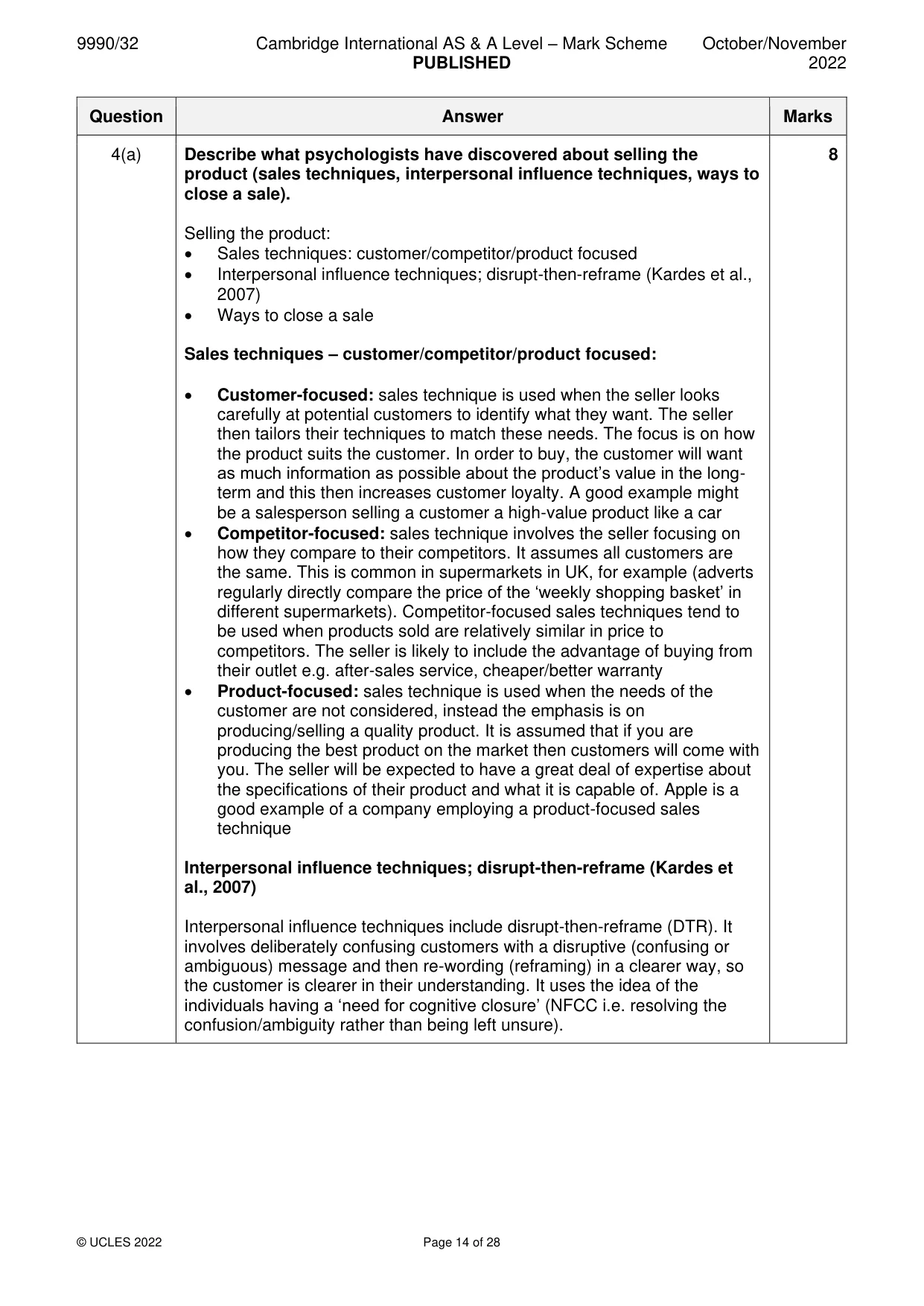
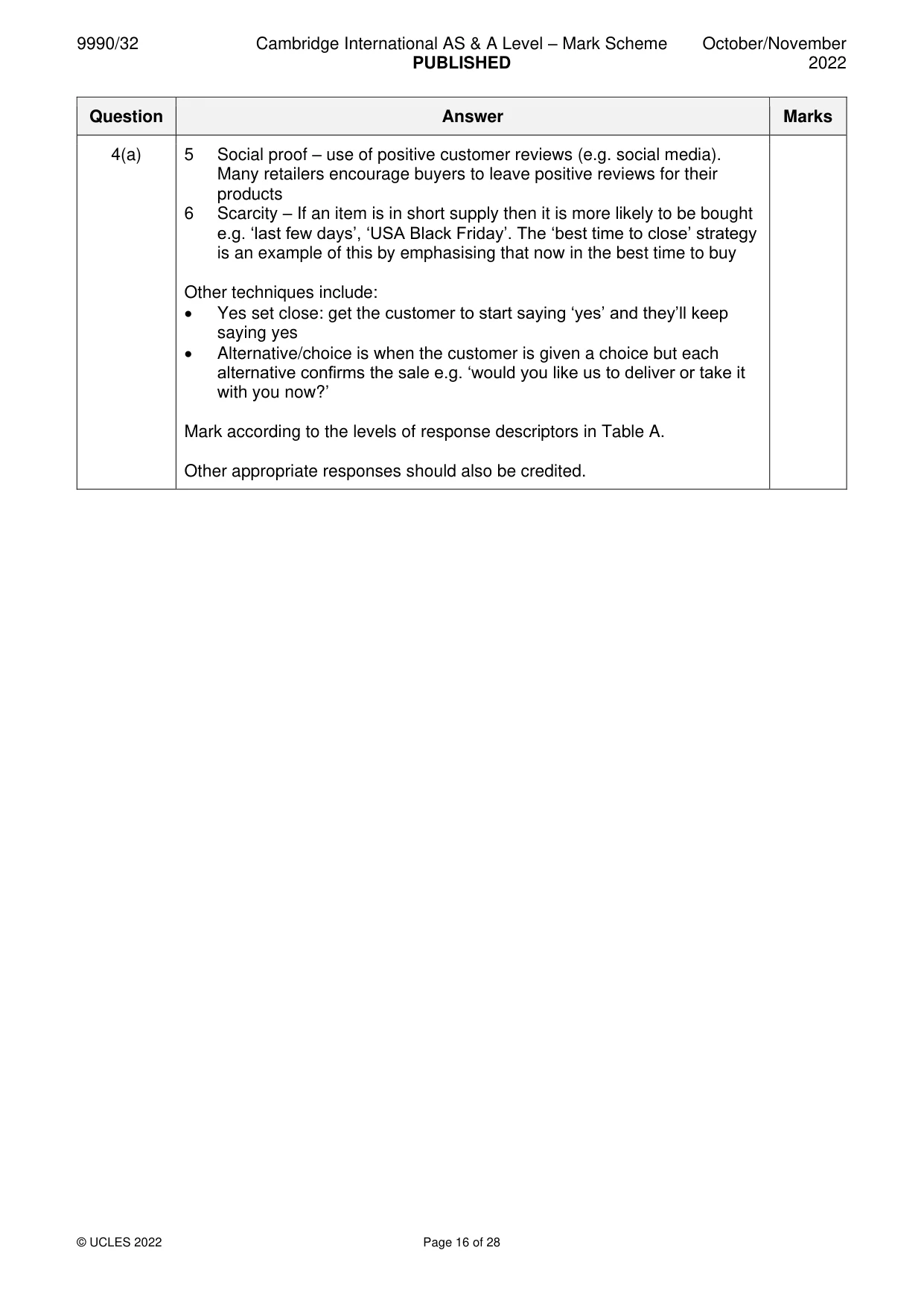
Mark scheme: 4(a) Describe what psychologists have discovered about selling the 8 product (sales techniques, interpersonal influence techniques, ways to close a sale). Selling the product: • Sales techniques: customer/competitor/product focused • Interpersonal influence techniques; disrupt-then-reframe (Kardes et al., 2007) • Ways to close a sale Sales techniques – customer/competitor/product focused: • Customer-focused: sales technique is used when the seller looks carefully at potential customers to identify what they want. The seller then tailors their techniques to match these needs. The focus is on how the product suits the customer. In order to buy, the customer will want as much information as possible about the product’s value in the long- term and this then increases customer loyalty. A good example might be a salesperson selling a customer a high-value product like a car • Competitor-focused: sales technique involves the seller focusing on how they compare to their competitors. It assumes all customers are the same. This is common in supermarkets in UK, for example (adverts regularly directly compare the price of the ‘weekly shopping basket’ in different supermarkets). Competitor-focused sales techniques tend to be used when products sold are relatively similar in price to competitors. The seller is likely to include the advantage of buying from their outlet e.g. after-sales service, cheaper/better warranty • Product-focused: sales technique is used when the needs of the customer are not considered, instead the emphasis is on producing/selling a quality product. It is assumed that if you are producing the best product on the market then customers will come with you. The seller will be expected to have a great deal of expertise about the specifications of their product and what it is capable of. Apple is a good example of a company employing a product-focused sales technique Interpersonal influence techniques; disrupt-then-reframe (Kardes et al., 2007) Interpersonal influence techniques include disrupt-then-reframe (DTR). It involves deliberately confusing customers with a disruptive (confusing or ambiguous) message and then re-wording (reframing) in a clearer way, so the customer is clearer in their understanding. It uses the idea of the individuals having a ‘need for cognitive closure’ (NFCC i.e. resolving the confusion/ambiguity rather than being left unsure). 4(a) Kardes et al. carried out 3 experiments: 1 A field experiment with 147 participants (43 m, 104 f, mean age 46) approached in a supermarket with candy. In the DTR condition, the seller said ‘The price is now 100 eurocents,’ then after a 2 s pause, ‘that’s 1 euro. It’s a bargain!’. In the reframe only condition, the seller said ‘The price is now 1 euro. It’s a bargain!’. In total 54% of participants bought the box of candy, 65% from the DTR and 44% from the control (reframe only) 2 A field experiment with 155 student participants (59% f, 41% m) from University of Twente in the Netherlands were asked if they would give €3 to a student interest group in order to join the group. The DTR condition was ‘You can now become a member for half a year for 300 eurocents,’ followed by a 2 s pause and ‘That’s 3 euros. That’s a really small investment!’ In the reframe only it was ‘You can now become a member for half a year for 3 euros. That’s a really small investment!’. Participants then completed a 20-item questionnaire assessing their NFCC. Scores on the NFCC questionnaire were assigned as high- or low-NFCC. In total, 22% of participants paid the €3, 30% in the DTR group donated compared to 13% in the reframe only condition. Of those assessed as high-NFCC, 43% complied with the request in the DTR condition. For low-NFCC participants, the effect to the DTR technique was non-significant. This builds on the findings from experiment 1 in that it shows a predicted interaction between DTR and NFCC 3 A lab experiment with 137 undergraduate participants from Indiana University (69 m, 68 f) divided in to 3 conditions: DTR, reframe only and disrupt only. Participants watched a video clip, heard one of the three statements regarding views on an increase in tuition fees of $75 to pay for research to raise the profile of the university. They also completed a 46-item questionnaire to assess NFCC. Results showed again that DTR was effective because of the need for cognitive closure Ways to close a sale Most techniques for closing a sale involve social psychological principles. Cialdini (1984) suggests that there are 6 ways to get people to say ‘yes’: 1 Reciprocity – If you give me the sale, I can give you something e.g. free trial, reduced price 2 Commitment and consistency – getting a micro-commitment (committing to something small) can lead to agreeing to larger (step-by- step technique). This could be signing up to a free newsletter initially 3 Liking – not just the product, but the seller, store, celebrity endorsement etc. as demonstrated by similarity: people like people like themselves; humour can also be effective 4 Authority – Knowing the product, being an expect. Think about how much people are prepared to pay premium prices for beauty products endorsed by people in lab coats (scientists). It’s important to answer questions posed and know about competitors 4(a) 5 Social proof – use of positive customer reviews (e.g. social media). Many retailers encourage buyers to leave positive reviews for their products 6 Scarcity – If an item is in short supply then it is more likely to be bought e.g. ‘last few days’, ‘USA Black Friday’. The ‘best time to close’ strategy is an example of this by emphasising that now in the best time to buy Other techniques include: • Yes set close: get the customer to start saying ‘yes’ and they’ll keep saying yes • Alternative/choice is when the customer is given a choice but each alternative confirms the sale e.g. ‘would you like us to deliver or take it with you now?’ Mark according to the levels of response descriptors in Table A. Other appropriate responses should also be credited. 4(b) Evaluate what psychologists have discovered about selling the 10 product (sales techniques, interpersonal influence techniques, ways to close a sale), including a discussion on usefulness. A range of issues could be used for evaluation here. These include: • Named issue – usefulness: The sales techniques with the different focus (customer, product etc.) could usefully be applied depending on the type of product being sold but in practice more than one of these could be used depending on what is being sold and it may not generalise well. Kardes has some utility in showing a relationship between DTR as a sales technique and NFCC. However, this could be limited as DTR has no significant effect on those who score low on NFCC and this would not be obvious from looking at a customer. The ways to close a sale could be useful to sellers and salespeople particularly as it is direct practical advice that helps to ensure that they succeed in their selling but also that the customer’s needs are met. • Generalisations / Cultural bias • Methods (self-report/observations/experiments) • Quantitative/Qualitative data • Validity • Ethics • Reductionism/holism Mark according to the levels of response descriptors in Table B. Other appropriate responses should also be credited. Psychology and health
Q5 · Identify two biochemical tests that measure non-adherence in patients
5 (a) Identify two biochemical tests that measure non-adherence in patients. [2] (b) Describe the procedure used in the study by Chung and Naya (2000) on pill counting. [4] (c) Explain two weaknesses of the study by Chung and Naya. [6]
Mark scheme: 5(a) Identify two biochemical tests that measure non-adherence in patients. 2 Award 1 mark for each one. For example: • Blood tests • Urine tests Other appropriate responses should also be credited. 5(b) Describe the procedure used in the study by Chung and Naya (2000) 4 on pill counting. Award 1–2 marks for a basic answer with some understanding of the topic area. Award 3–4 marks for a detailed answer with clear understanding of the topic area. • 57 patients (32 m, 25 f, aged 18–55) and taking oral medication for asthma took part (although only 47 completed the study) • Initial screening of 2–3 weeks to see if suitable patient for asthma study • Participants prescribed 20 mg of zafirlukast to be taken twice a day, with 12 hours between doses and not at mealtimes. Participants were given 56 tablets at a time and were asked to return to hospital every 3 weeks for more drugs • Study took place over 12 weeks • Medication bottles lids were fitted with a TrackCapTM device consisting of a microprocessor that recorded the time the bottle was opened • Returned to clinic every 3 weeks where they collected more tablets • Pill count done and compared to TrackCapTM data • Participants were told their pill-taking was being monitored but not exactly how Other appropriate responses should also be credited. 5(c) Explain two weaknesses of the study by Chung and Naya. 6 Likely weaknesses include: • Lack of generalisability – only a total of 47 patients completed the study; only trialled for 12 weeks; only one drug trialled • Ethics – although the participants did give consent and were told their tablet-taking was being monitored, they were not told how this was being done • Potential lack of validity – TrackCapTM does not actually record each time a pill is taken specifically. It does not recognise multiple openings that occurred within one minute of each other; cannot recognise how many pills are removed each time; if the cap was left off the bottle for more than 15 minutes it recorded an additional event • Demand characteristics – Participants knew that their pill-taking was being monitored and this could have caused them to be more (or less) adherent than they usually were • Study did not assess why the participants were (or were not) adherent to the drug and this could have impacted on their level of drug-taking • Adherence could depend on a number of factors including potential side-effects of the medication, seriousness of their condition or physiological consequences of not taking their medication all of which could act as additional ‘reminders’ (or not) to take their medication Mark according to the levels of response criteria below: Level 3 (5–6 marks) • Candidates will show a clear understanding of the question and will explain two weaknesses. • Candidates will provide a good explanation with clear detail. Level 2 (3–4 marks) • Candidates will show an understanding of the question and will explain one weakness in detail. OR • two weaknesses in less detail. Level 1 (1–2 marks) • Candidates will show a basic understanding of the question and will attempt an explanation of a weakness. They could include two weaknesses but just as an attempt. • Candidates will provide a limited explanation. Level 0 (0 marks) No response worthy of credit. Other appropriate responses should also be credited.
Q6 · Describe what psychologists have discovered about sources of stress (physiology of stress…
6 (a) Describe what psychologists have discovered about sources of stress (physiology of stress and effects on health, and causes of stress). [8] (b) Evaluate what psychologists have discovered about sources of stress (physiology of stress and effects on health, and causes of stress), including a discussion of nature versus nurture. [10] Psychology and organisations Answer all questions.
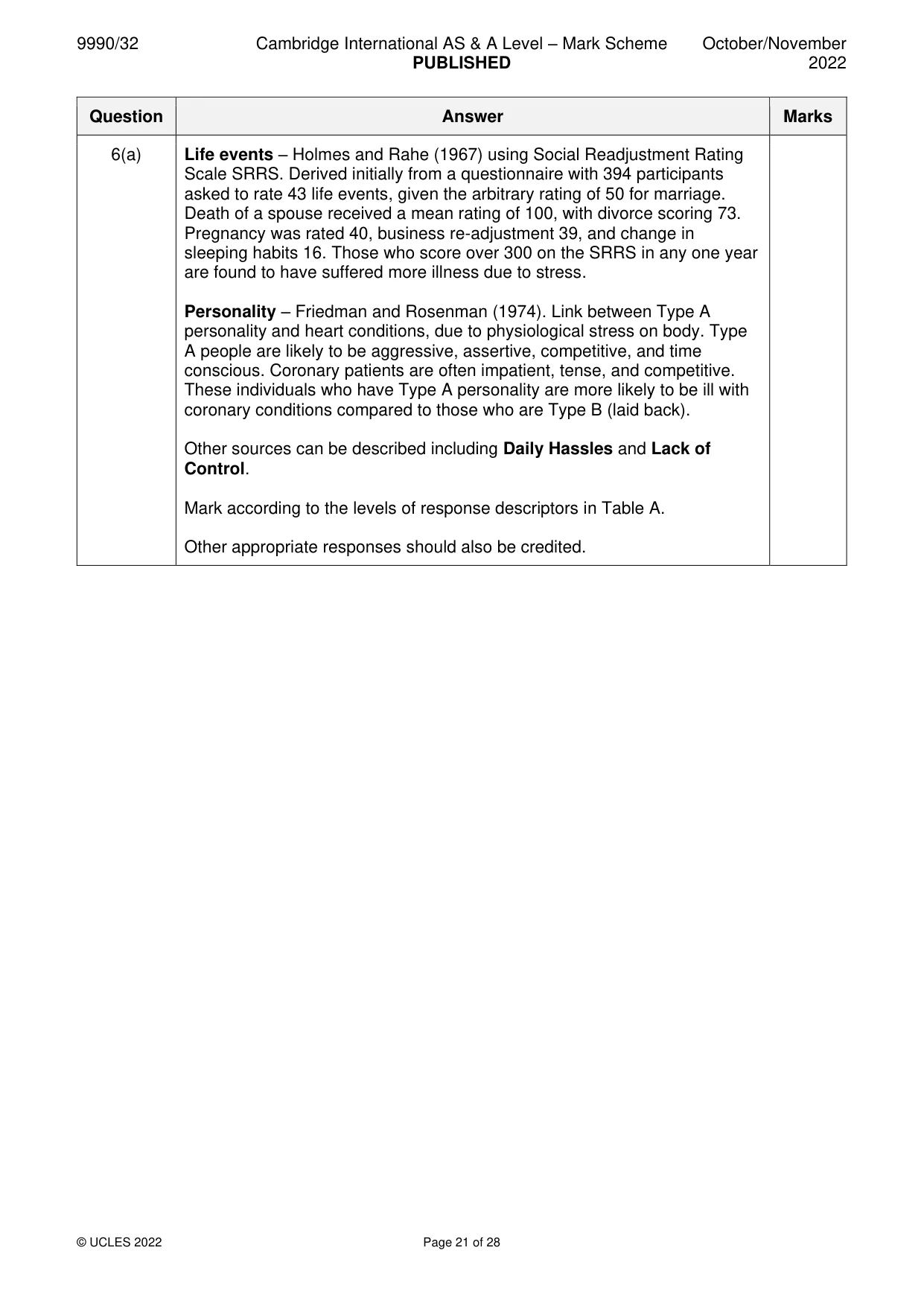
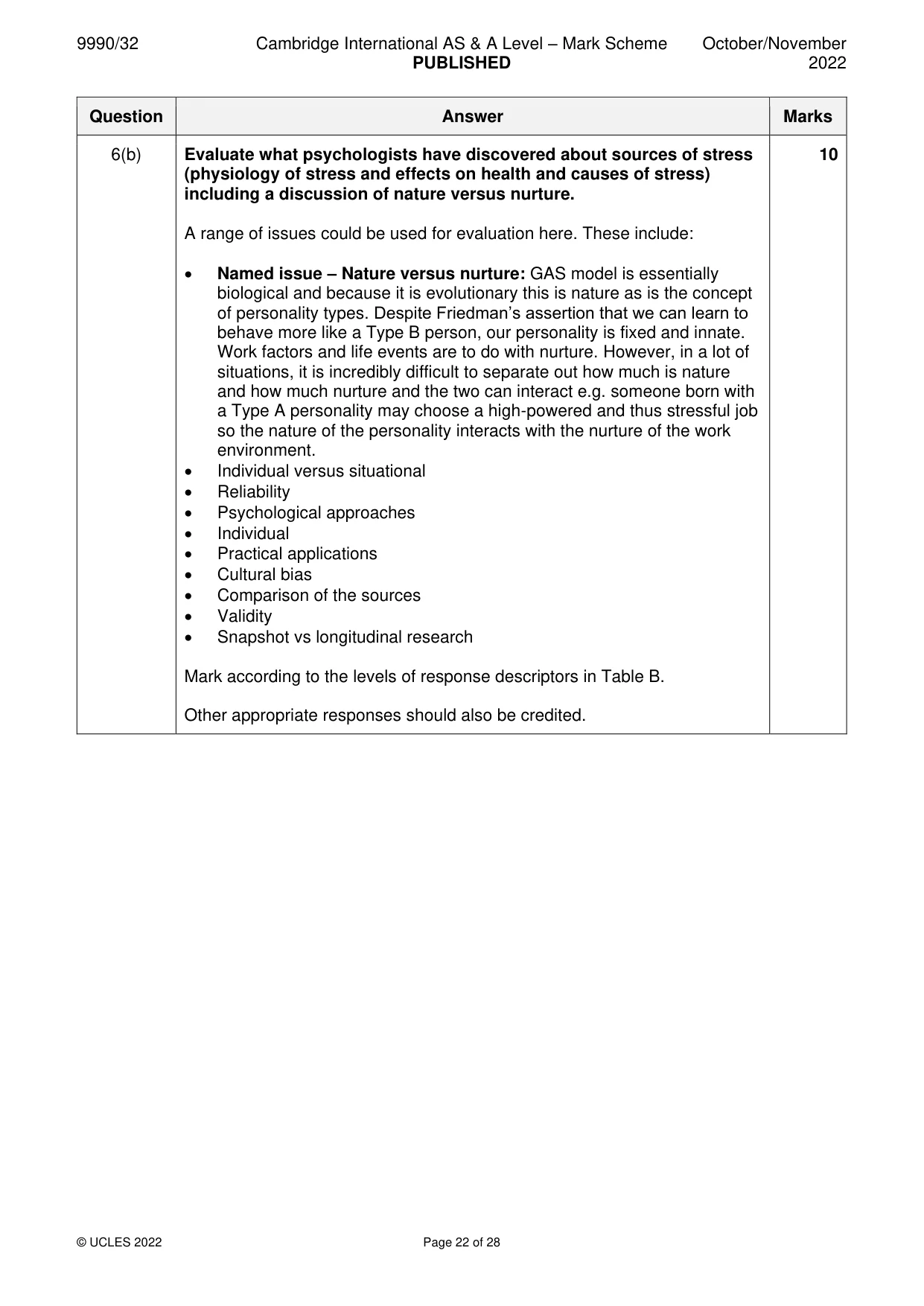
Mark scheme: 6(a) Describe what psychologists have discovered about sources of stress 8 (physiology of stress and effects on health and causes of stress). Physiology of stress and effects on health: The GAS Model (Selye, 1936). Causes of stress: work (Chandola et al., 2008), life events (Holmes and Rahe, 1967), personality (Friedman and Roseman, 1974). Physiology of stress and effects on health Physiological response controlled by autonomic nervous system, that acts to stimulate breathing and heart rate as well as endocrine system. Endocrine system is slower and uses hormones to respond to signals from nerves or other glands. In emergency ‘fight or flight’ response is fast and sympathetic nervous system sends impulses to endocrine system. A number of effects on health including hypertension and atherosclerosis, increasing risk of heart attack. Also, can cause gastrointestinal disorders leading to gastric ulcer or IBS. Selye’s general adaptation syndrome (GAS) model – links between stress and illness demonstrated in rats. Proposed as evolutionary model to help in escaping from physical danger. Three phases: • Alarm reaction (fight or flight) • Resistance stage (attempt to reduce arousal level) • Exhaustion stage (if his levels of arousal are prolonged, eventually some part of the physiological system will break down. The exhaustion stage is vital for health because the body cannot remain in a heightened state of physiological arousal indefinitely. Major ‘break down’ effects can include high blood pressure leading to potential stroke or myocardial infarction (‘heart attack’) and minor effects could be stomach ulcers Causes of stress Work – Chandola et al., (2008) studied 10,308 London civil servants. Starting in 1985, this longitudinal study was completed in 2004. Data were gathered using self-report postal questionnaires and a clinical examination assessing biological risk factors (including coronary heart disease (CHD), blood pressure, cortisol levels (cortisol is a result of prolonged physiological arousal) and waist measurements) and behavioural factors (diet, exercise, alcohol consumption and smoking). Results showed that work stress was associated with lack of exercise and poor diet; work stress was more common in those under 50; and the more stress that was reported, the more likely there was to be a report of CHD. 6(a) Life events – Holmes and Rahe (1967) using Social Readjustment Rating Scale SRRS. Derived initially from a questionnaire with 394 participants asked to rate 43 life events, given the arbitrary rating of 50 for marriage. Death of a spouse received a mean rating of 100, with divorce scoring 73. Pregnancy was rated 40, business re-adjustment 39, and change in sleeping habits 16. Those who score over 300 on the SRRS in any one year are found to have suffered more illness due to stress. Personality – Friedman and Rosenman (1974). Link between Type A personality and heart conditions, due to physiological stress on body. Type A people are likely to be aggressive, assertive, competitive, and time conscious. Coronary patients are often impatient, tense, and competitive. These individuals who have Type A personality are more likely to be ill with coronary conditions compared to those who are Type B (laid back). Other sources can be described including Daily Hassles and Lack of Control. Mark according to the levels of response descriptors in Table A. Other appropriate responses should also be credited. 6(b) Evaluate what psychologists have discovered about sources of stress 10 (physiology of stress and effects on health and causes of stress) including a discussion of nature versus nurture. A range of issues could be used for evaluation here. These include: • Named issue – Nature versus nurture: GAS model is essentially biological and because it is evolutionary this is nature as is the concept of personality types. Despite Friedman’s assertion that we can learn to behave more like a Type B person, our personality is fixed and innate. Work factors and life events are to do with nurture. However, in a lot of situations, it is incredibly difficult to separate out how much is nature and how much nurture and the two can interact e.g. someone born with a Type A personality may choose a high-powered and thus stressful job so the nature of the personality interacts with the nurture of the work environment. • Individual versus situational • Reliability • Psychological approaches • Individual • Practical applications • Cultural bias • Comparison of the sources • Validity • Snapshot vs longitudinal research Mark according to the levels of response descriptors in Table B. Other appropriate responses should also be credited. Psychology and organisations
Q7 · Explain what is meant by ‘organisational commitment’, e.g
7 (a) Explain what is meant by ‘organisational commitment’, e.g. Mowday et al. (1979). [2] (b) Outline two hygiene factors identified by Herzberg (1959) in the two-factor theory of job satisfaction. [4] (c) Explain one strength and one weakness of the two-factor theory of job satisfaction. [6]
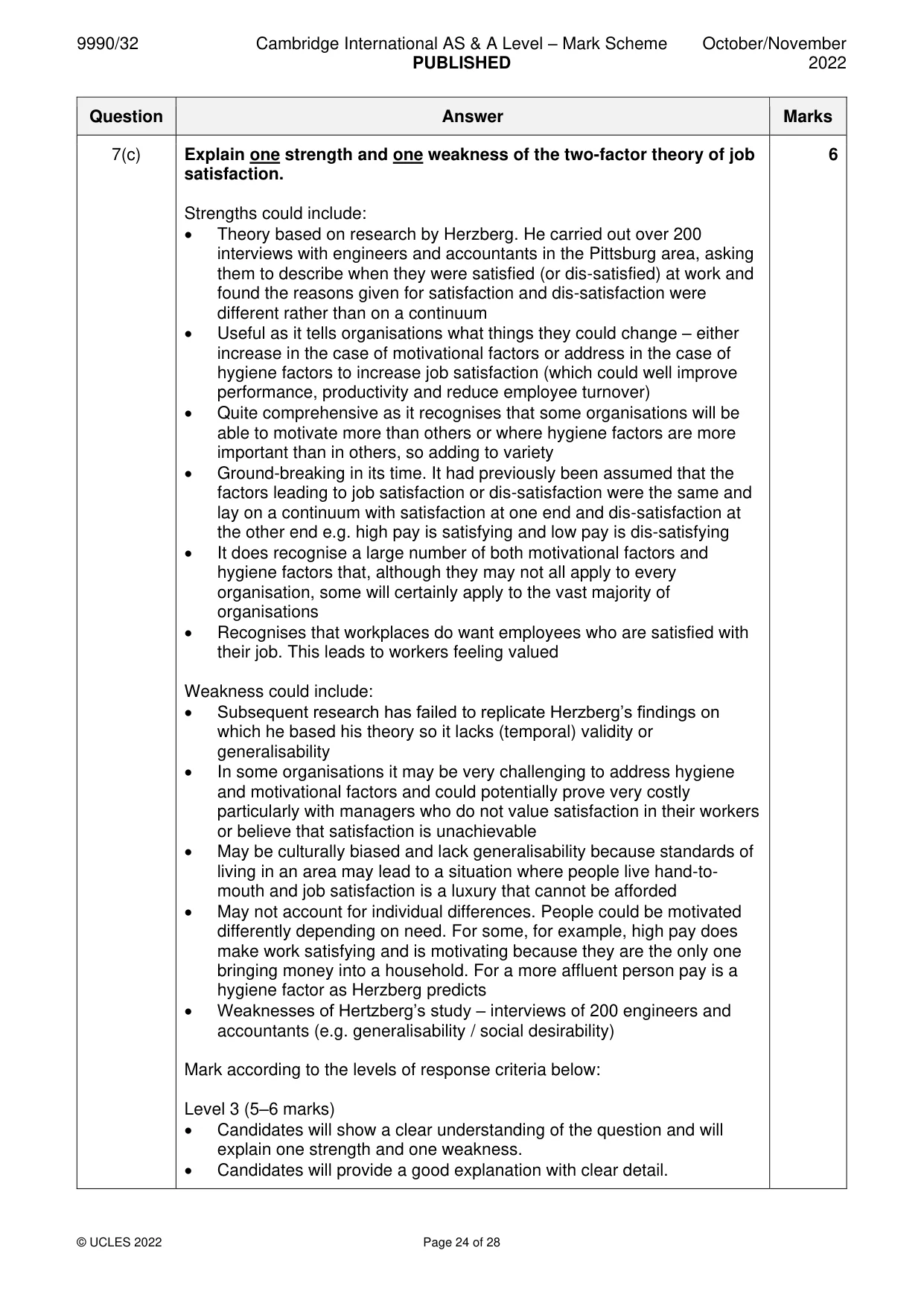
Mark scheme: 7(a) Explain what is meant by ‘organisational commitment’, e.g. Mowday et 2 al. (1979). Award 1 mark for a basic explanation of the term/concept. Award 2 marks for a detailed explanation of the term/concept. For example: Organisational commitment involves an active relationship with the organisation so that the person concerned is willing to give something of themselves in order to contribute to that organisation’s well-being (1). It can be characterised by at least 3 related factors: a strong belief in and acceptance of the organisation’s goals and values (1); a willingness to exert considerable effort on behalf of the organisation (1); and a strong desire to maintain membership in the organisation (1). Other appropriate responses should also be credited. 7(b) Outline two hygiene factors identified by Herzberg (1959) in the two- 4 factor theory of job satisfaction. For each correctly identified factor, award 1 mark for a basic answer (e.g. naming) and award 2 marks for a detailed answer with clear understanding of the topic area. Background: The two-factor theory says that there are separate factors causing job satisfaction as opposed to job dissatisfaction. The ‘satisfiers’ are motivational factors and the ‘dis-satisfiers’ are the hygiene factors. Hygiene factors include: • Salary – pay should be equal and competitive to those in same industry in comparable role as well as appropriate and reasonable • Job security – permanent contract or risk of unemployment is low • Company policies – policies should include dress code, breaks, flexible working hours, vacation etc. and be clear and fair • Fringe benefits – company should be offering healthcare, benefits for family members, paid holidays, insurance, etc. • Physical working conditions – Any machinery or equipment must be well maintained. Conditions should be safe, hygienic and clean • Interpersonal relations – no conflict or bullying. The relationships between employee with peers, superiors and subordinates should be acceptable and appropriate Other appropriate responses should also be credited. 7(c) Explain one strength and one weakness of the two-factor theory of job 6 satisfaction. Strengths could include: • Theory based on research by Herzberg. He carried out over 200 interviews with engineers and accountants in the Pittsburg area, asking them to describe when they were satisfied (or dis-satisfied) at work and found the reasons given for satisfaction and dis-satisfaction were different rather than on a continuum • Useful as it tells organisations what things they could change – either increase in the case of motivational factors or address in the case of hygiene factors to increase job satisfaction (which could well improve performance, productivity and reduce employee turnover) • Quite comprehensive as it recognises that some organisations will be able to motivate more than others or where hygiene factors are more important than in others, so adding to variety • Ground-breaking in its time. It had previously been assumed that the factors leading to job satisfaction or dis-satisfaction were the same and lay on a continuum with satisfaction at one end and dis-satisfaction at the other end e.g. high pay is satisfying and low pay is dis-satisfying • It does recognise a large number of both motivational factors and hygiene factors that, although they may not all apply to every organisation, some will certainly apply to the vast majority of organisations • Recognises that workplaces do want employees who are satisfied with their job. This leads to workers feeling valued Weakness could include: • Subsequent research has failed to replicate Herzberg’s findings on which he based his theory so it lacks (temporal) validity or generalisability • In some organisations it may be very challenging to address hygiene and motivational factors and could potentially prove very costly particularly with managers who do not value satisfaction in their workers or believe that satisfaction is unachievable • May be culturally biased and lack generalisability because standards of living in an area may lead to a situation where people live hand-to- mouth and job satisfaction is a luxury that cannot be afforded • May not account for individual differences. People could be motivated differently depending on need. For some, for example, high pay does make work satisfying and is motivating because they are the only one bringing money into a household. For a more affluent person pay is a hygiene factor as Herzberg predicts • Weaknesses of Hertzberg’s study – interviews of 200 engineers and accountants (e.g. generalisability / social desirability) Mark according to the levels of response criteria below: Level 3 (5–6 marks) • Candidates will show a clear understanding of the question and will explain one strength and one weakness. • Candidates will provide a good explanation with clear detail. 7(c) Level 2 (3–4 marks) • Candidates will show an understanding of the question and will explain one appropriate weakness in detail or one appropriate strength in detail. OR • one weakness and one strength in less detail. Level 1 (1–2 marks) • Candidates will show a basic understanding of the question and will attempt an explanation of either a strength or a weakness. They could include both but just as an attempt. • Candidates will provide a limited explanation. Level 0 (0 marks) No response worthy of credit. Other appropriate responses should also be credited.
Q8 · Describe what psychologists have discovered about need theories (hierarchy of needs, ERG…
8 (a) Describe what psychologists have discovered about need theories (hierarchy of needs, ERG theory, achievement motivation). [8] (b) Evaluate what psychologists have discovered about need theories (hierarchy of needs, ERG theory, achievement motivation), including a discussion of determinism versus free-will. [10]
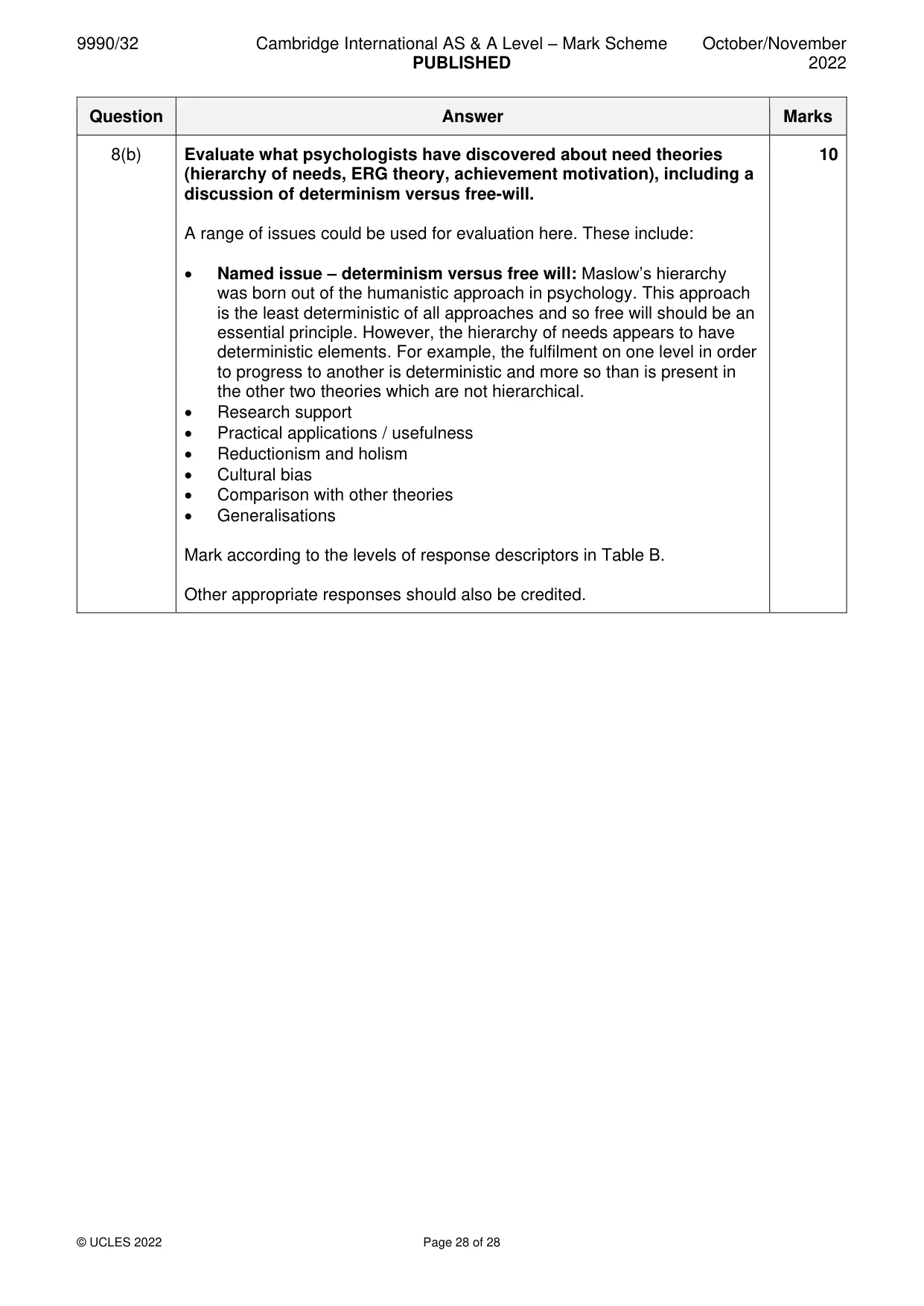
Mark scheme: 8(a) Describe what psychologists have discovered about need theories 8 (hierarchy of needs, ERG theory, achievement motivation). Need theories, including: • Hierarchy of needs (Maslow, 1970) • ERG theory (Alderfer, 1972) • Achievement motivation (McClelland, 1965) Hierarchy of needs – Maslow Maslow’s theory proposes a hierarchy with the most basic needs of an individual at the bottom and gradually becoming more complex as the hierarchy is climbed. Originally proposed as a five-tier hierarchy it was further expanded to 7 and then 8 levels (as illustrated). In the original model: 1 Physiological (survival) – food, drink, warmth, shelter etc. 2 Safety – security and protection from harm; a need for law and order 3 Social – need for relationships, affection and family 4 Esteem – need for achievement, mastery and status 5 Self-actualisation – realising potential and fulfilment In order to progress to higher levels, Maslow believed the more basic needs had to be satisfied. Workers have to have their physiological needs met before they can progress to the next level of the pyramid. The additional needs added: • Cognitive – having knowledge and understanding • Aesthetic – appreciation for art, music, beauty • Transcendent – helping other to self-actualise ERG theory – Aldefer (1972) Essentially a reorganisation of Maslow’s hierarchy into three simpler categories: E – Existence needs which are need for the basic material necessities of life. Encompasses Maslow’s physiological and safety needs. R – Relatedness needs – the need for an ability to maintain relationships both in work and in private. Encompasses Maslow’s social and esteem needs. G – Growth needs – the need for self-development and advancement. Encompasses Maslow’s self-actualisation. ERG is not a hierarchy and workers can be motivated by more than one category at a time. Relative importance of needs may change over time depending on factors such as lifestyle, relationships and family. 8(a) Achievement motivation – McClelland McClelland asserted that we have 3 work-related needs. All workers need: 1 Achievement – the desire to get a job done, master tasks and be successful. We want to be able to achieve on the basis of hard work rather than luck 2 Affiliation – the desire to be accepted and liked by others. Effort is employed to create and maintain friendships and relationships 3 Power – the desire to influence others’ lives as well as in the control of others. The need for discipline is important Like ERG theory, achievement motivation is not a hierarchy. McClelland asserted that good managers have the need for power, not necessarily the need for achievement and certainly not the need for affiliation. Need for affiliation can be measured using the Thematic Apperception Test (TAT). These are a series of ambiguous images that an individual is asked to interpret. Mark according to the levels of response descriptors in Table A. Other appropriate responses should also be credited. 8(b) Evaluate what psychologists have discovered about need theories 10 (hierarchy of needs, ERG theory, achievement motivation), including a discussion of determinism versus free-will. A range of issues could be used for evaluation here. These include: • Named issue – determinism versus free will: Maslow’s hierarchy was born out of the humanistic approach in psychology. This approach is the least deterministic of all approaches and so free will should be an essential principle. However, the hierarchy of needs appears to have deterministic elements. For example, the fulfilment on one level in order to progress to another is deterministic and more so than is present in the other two theories which are not hierarchical. • Research support • Practical applications / usefulness • Reductionism and holism • Cultural bias • Comparison with other theories • Generalisations Mark according to the levels of response descriptors in Table B. Other appropriate responses should also be credited.
What was in this paper
The subtopics covered by these 8 questions, and how many questions each got. Open one in a new tab to see every Cambridge question on it.
What you needed in this session
Cambridge’s own grade thresholds for 2022 Oct/Nov, Paper 3 · Variant 2. A higher threshold means an easier paper — the bar moves with how the cohort did.