Questions as text
Q1 · Explain what is meant by a ‘button phobia’ 9990/31 Oct/Nov 2018
1 (a) Explain what is meant by a ‘button phobia’. [2] (b) Describe cognitive-behavioural therapy (CBT) as a treatment for a button phobia. [4] (c) Explain one strength and one weakness of cognitive-behavioural therapy (CBT) as a treatment for anxiety disorders. [6]
12 marks
Mark scheme: Question Answer Marks 1(a) Explain what is meant by a ‘button phobia’. 2 Award 1 mark for a basic explanation of the term/concept. Award 2 marks for a detailed explanation of the term/concept. For example: It is an irrational and persistent fear of buttons (stand alone ones or those on clothing). People suffering from it tend to avoid clothes with buttons. It is a relatively rare phobia. Candidates may also refer to the subject of the AS Level core study by Saavedra and Silverman who suffered from a button phobia. Other appropriate responses should also be credited. 1(b) Describe cognitive-behavioural therapy (CBT) as a treatment for a 4 button phobia. Award 1–2 marks for a basic answer with some understanding of the topic area. Award 3–4 marks for a detailed answer with clear understanding of the topic area. Need to link to button phobia to get into 3–4 mark band. For example: Cognitive behavioural therapy addresses negative patterns and distortions in the way we look at the world and ourselves. This involves two main components, which includes cognitive therapy, which examines how negative thoughts/cognitions contribute to anxiety and the phobia of buttons. It also examines the behaviour/reactions to situations (or objects such as buttons) that trigger anxiety. The patient will attend regular appointments and complete homework assignments to identify their triggers to their button phobia as well as practice the new thinking patterns and behaviours which will help to reduce their anxiety around buttons. Other appropriate responses should also be credited. 1(c) Explain one strength and one weakness of cognitive-behavioural 6 therapy (CBT) as a treatment for anxiety disorders. Strengths could include short nature of therapy (often 8–12 sessions), effectiveness as backed up by research evidence, clear strategies to implement, specific homework to complete each week, reduction in anxiety (and possibly as a result of this a return to work, improvement in social life, reduction in medication, etc.). Weaknesses could include motivation to undertake therapy, time and ability to do homework set each week, cost of treatment if paying privately, subjective nature of therapy sessions (e.g. some people may find it difficult and/or uncomfortable to describe their anxiety issues), anxiety may persist due to biological reasons in spite of treatment, etc. Mark according to the levels of response criteria below: Level 3 (5–6 marks) • Candidates will show a clear understanding of the question and will outline one strength and one weakness. • Candidates will provide a good explanation with clear detail. Level 2 (3–4 marks) • Candidates will show an understanding of the question and will outline one appropriate weakness in detail or one appropriate strength in detail. • Candidates will provide a good explanation. Level 1 (1–2 marks) • Candidates will show a basic understanding of the question and will attempt an outline of either a strength or a weakness. • Candidates will provide a limited explanation. Level 0 (0 marks) • No response worthy of credit. Other appropriate responses should also be credited.
This question in 9990/31 Oct/Nov 2018
Q2 · Describe explanations of phobias 9990/32 Oct/Nov 2018
2 (a) Describe explanations of phobias. [8] (b) Evaluate explanations of phobias, including a discussion of determinism. [10] Psychology and consumer behaviour Answer all questions.
18 marks
Mark scheme: 2(a) Describe explanations of phobias. 8 Explanations of phobias, including the following: • behavioural (classical conditioning, Watson, 1920) • psychoanalytic (Freud, 1909) • biomedical/genetic (Ost, 1992) • cognitive (DiNardo et al., 1988) Behavioural (classical conditioning, Watson, 1920) A phobia develops as the neutral stimulus is paired with something the person is afraid of (the unconditioned stimulus). If enough pairings occur or the initial UCS is very frightening the person will end up with a fear of the NS. The NS then becomes the CS. Candidates may describe the case of the little Albert who was conditioned to be afraid of a rat by Watson banging an iron bar behind the baby which made him cry. Eventually just the sight of the rat was enough to cause the crying. Psychoanalytic (Freud, 1909) A fear is repressed into the unconscious to protect the ego. The phobia can be a redirected fear during an intensely frightening experience (e.g. a physical attack) onto an object. Candidates can also summarise the case of little Hans. Biomedical/genetic (Ost, 1992) Ost found that blood-phobic subjects had more first degree relatives with the same phobia compared to injection-phobic participants (61% vs 29%). In addition, the blood-phobic patients were more likely to fear they would faint in the phobic situation (77% vs 48%). Concluded that there appears to be a strong genetic link and more likely to lead to a strong physiological response (fainting). Cognitive (DiNardo et al., 1988) We have irrational thoughts about an object due to a previous experience that we believe will be repeated. DiNardo and his colleagues studied a group of people with dog phobias and found a matched group who did not suffer from that phobia. They found that over 50% of people with dog phobias could recall being bitten or having a frightening past experience with a dog. However, 50% of the group with no dog phobia also had memories of being bitten by dogs and yet had not developed any anxiety about seeing dogs in the future. This shows that not everyone who is exposed to conditioning would end up developing a phobia, and it may be explained more through our thought processes after an event than the event itself. Mark according to the levels of response descriptors in Table A. Other appropriate responses should also be credited. 2(b) Evaluate explanations of phobias, including a discussion of 10 determinism. A range of issues could be used for evaluation here. These include: • Names issue – Determinism. All of the explanations of phobias are deterministic. E.g. The behavioural explanation suggest phobias are learned. This is deterministic because the person who develops the phobia has no choice but to develop it due to their learning experience. For example, Little Albert learned to be afraid of the white rat because of the noise he associated with the rat not because he chose to be afraid. • nature versus nurture debate with reference to the various explanations. E.g. biomedical is nature and behavioural is nurture. • comparisons of different explanations • Application of psychology to everyday life (with reference to explanations) – Useful as the explanations can then be used to help someone understand their phobia better and feel reassured by the explanation. In addition, the explanations lead on to the treatments. • reductionist nature of the explanations – biomedical is reductionist and psychodynamic is more complex/holistic/less reductionist. • Evidence to support the explanations (and an evaluation of this evidence if linked back to explanation) e.g. the case study approach used by Watson and Freud, just people with dog phobias (or no phobia) studied by DiNardo. Mark according to the levels of response descriptors in Table B. Other appropriate responses should also be credited. Psychology and consumer behaviour
This question in 9990/32 Oct/Nov 2018
Q3 · Describe the treatment and management of anxiety disorders 9990/31 May/June 2019
2 (a) Describe the treatment and management of anxiety disorders. [8] (b) Evaluate the treatment and management of anxiety disorders, including a discussion of the longitudinal research method. [10] Psychology and consumer behaviour Answer all questions.
18 marks
Mark scheme: 2(a) Describe the treatment and management of anxiety disorders. 8 To include the following – Systematic desensitisation (Wolpe, 1958) Applied tension (Ost et al., 1989) Cognitive-behavioural therapy (Ost and Westling, 1989) Candidates may include details of the treatments as well as details of the studies. Either on their own or in combination can receive up to full credit. Systematic desensitisation – Wolpe – Behavioural therapy based on classical conditioning and developed by Wolpe. Patient is taught muscle relaxation and breathing exercises. Secondly, a fear hierarchy is created with the most feared item/experience at the top down to the least feared at the bottom. Finally, the patient works their way up the hierarchy practising the relaxation techniques at each level til they reach the highest fear. Applied tension – Ost et al. – Developed to help people who have a phobia of blood and/or needles and faint at the sight of them. This involves tensing the muscles in the body to raise blood pressure and makes it less likely the person will faint. Study from 1989 with 30 patients who had a phobia of blood, wounds and injuries. Compared with patients using applied relaxation and a combination of applied tension and applied relaxation. Found the applied tension patients responded as well as the other groups and the treatment took less time to complete so therefore was seen as more effective than applied relaxation. Cognitive-behavioural therapy – Ost and Westling This therapy is where the patient and therapist identify faulty thinking about the object/experience that the patient has a phobia about. The patient is taught relaxation techniques and practices these between sessions when faced with the phobic object. The patient is also taught to think alternative thoughts about the phobic object when presented with it (e.g. most dogs do not bite). The study took place over 12 weeks to compare the effectiveness of CBT with applied relaxation in participants with a panic disorder (many had agoraphobia). The patients were also followed up at one year. They worked with the therapist to identify situations when the panic occurred and thought of alternative explanations. They practiced coming up with these alternative thoughts between sessions. Both the CBT and the applied relaxation group had a reduction is symptoms. Showing CBT is effective. Mark according to the levels of response descriptors in Table A. Other appropriate responses should also be credited. 2(b) Evaluate the treatment and management of anxiety disorders, 10 including a discussion of the longitudinal research method. A range of issues could be used for evaluation here. These include: • Named issue – longitudinal method – used by Ost et al and Ost and Westling. These studies show change over time and the effectiveness of the treatment. In addition, they provide more detail than a snapshot study on the effectiveness of the treatments in comparison to other treatment methods. Participants may drop out of the research (even if they continue with therapy). • Deterministic nature of the treatments. • Nature versus nurture debate with reference to the various treatments of anxiety disorders. • Usefulness (effectiveness) of different treatments • Reductionist nature of the treatments • Appropriateness of treatments • Cost of treatments • Ethics of treatments Mark according to the levels of response descriptors in Table B. Other appropriate responses should also be credited.
This question in 9990/31 May/June 2019
Q4 · Describe the treatment and management of anxiety disorders 9990/33 May/June 2019
2 (a) Describe the treatment and management of anxiety disorders. [8] (b) Evaluate the treatment and management of anxiety disorders, including a discussion of the longitudinal research method. [10] Psychology and consumer behaviour Answer all questions.
18 marks
Mark scheme: 2(a) Describe the treatment and management of anxiety disorders. 8 To include the following – Systematic desensitisation (Wolpe, 1958) Applied tension (Ost et al., 1989) Cognitive-behavioural therapy (Ost and Westling, 1989) Candidates may include details of the treatments as well as details of the studies. Either on their own or in combination can receive up to full credit. Systematic desensitisation – Wolpe – Behavioural therapy based on classical conditioning and developed by Wolpe. Patient is taught muscle relaxation and breathing exercises. Secondly, a fear hierarchy is created with the most feared item/experience at the top down to the least feared at the bottom. Finally, the patient works their way up the hierarchy practising the relaxation techniques at each level til they reach the highest fear. Applied tension – Ost et al. – Developed to help people who have a phobia of blood and/or needles and faint at the sight of them. This involves tensing the muscles in the body to raise blood pressure and makes it less likely the person will faint. Study from 1989 with 30 patients who had a phobia of blood, wounds and injuries. Compared with patients using applied relaxation and a combination of applied tension and applied relaxation. Found the applied tension patients responded as well as the other groups and the treatment took less time to complete so therefore was seen as more effective than applied relaxation. Cognitive-behavioural therapy – Ost and Westling This therapy is where the patient and therapist identify faulty thinking about the object/experience that the patient has a phobia about. The patient is taught relaxation techniques and practices these between sessions when faced with the phobic object. The patient is also taught to think alternative thoughts about the phobic object when presented with it (e.g. most dogs do not bite). The study took place over 12 weeks to compare the effectiveness of CBT with applied relaxation in participants with a panic disorder (many had agoraphobia). The patients were also followed up at one year. They worked with the therapist to identify situations when the panic occurred and thought of alternative explanations. They practiced coming up with these alternative thoughts between sessions. Both the CBT and the applied relaxation group had a reduction is symptoms. Showing CBT is effective. Mark according to the levels of response descriptors in Table A. Other appropriate responses should also be credited. 2(b) Evaluate the treatment and management of anxiety disorders, 10 including a discussion of the longitudinal research method. A range of issues could be used for evaluation here. These include: • Named issue – longitudinal method – used by Ost et al and Ost and Westling. These studies show change over time and the effectiveness of the treatment. In addition, they provide more detail than a snapshot study on the effectiveness of the treatments in comparison to other treatment methods. Participants may drop out of the research (even if they continue with therapy). • Deterministic nature of the treatments. • Nature versus nurture debate with reference to the various treatments of anxiety disorders. • Usefulness (effectiveness) of different treatments • Reductionist nature of the treatments • Appropriateness of treatments • Cost of treatments • Ethics of treatments Mark according to the levels of response descriptors in Table B. Other appropriate responses should also be credited.
This question in 9990/33 May/June 2019
Q5 · Describe the characteristics, types and measures of anxiety disorders 9990/32 Feb/March 2020
2 (a) Describe the characteristics, types and measures of anxiety disorders. [8] (b) Evaluate the characteristics, types and measures of anxiety disorders, including a discussion of case studies. [10] Psychology and consumer behaviour Answer all questions.
18 marks
Mark scheme: 2(a) Describe the characteristics, types and measures of anxiety disorders. 8 Characteristics, types and measures, including the following: • characteristics of generalised anxiety and examples/case studies of phobias • types: agoraphobia and specific phobias (blood phobia, animal phobia, button phobia) • measures: the blood injection phobia inventory (BIPI); Generalised Anxiety Disorder assessment (GAD-7) Characteristics of generalised anxiety and examples/case studies of phobias Generalised anxiety Frequent and persistent worry and anxiety about a perceived threat in the surrounding environment. The perceived threat is usually something that is not actually very threatening and the person may realise their fears are disproportionate to the situation. The symptoms must last for several weeks and include apprehension, motor tension and autonomic over-activity. Case studies – Little Hans, Little Albert and Saavedra case study for button phobia Little Albert – 10-month old baby who was conditioned by Watson and Raynor to have a phobia of white rats. This was done using classical conditioning by hitting a metal bar behind Albert when presented with a white rat. Albert developed a fear which became generalised over time to include white objects and anything with fur (e.g. Santa’s beard). Types: agoraphobia and specific phobias (blood phobia, animal phobia, button phobia) Blood – hemophobia or haemophobia is extreme and irrational fear of blood and can extend to needles. Leads to increase in heart rate and drop in blood pressure can lead to fainting. Buttons – koumpounophobia is a relatively rare phobia. It is an irrational and persistent fear of buttons (stand alone ones or those on clothing). People suffering from koumpounophobia tend to avoid clothes with buttons. Animal – zoophobia is a persistent and irrational fear of a particular species or type of animal – most often snakes, rats, or other rodents. Seeing or even hearing about the feared animal can usually invoke a physiological response similar to fear and such encounters are usually avoided where possible. 2(a) Measures: the blood injection phobia inventory (BIPI); Generalised Anxiety Disorder assessment (GAD-7) The Blood-injection Phobia Inventory (BIPI) is a questionnaire that has 18 items or stimulus content and 27 phobic responses that covered a range of situations related to blood and injection phobias: Patient given range of situations and asked to evaluate their reaction to each. Rate frequency of symptoms on a scale ranging from 0 = Never to 3 = Always. GAD-7 Seven item questionnaire measure severity of anxiety. A score out of 21 is generated and the higher the score the more severe the GAD. e.g. Not being able to stop or control anything Feeling nervous, anxious or on edge Choose from (0–3 scale) • Not at all • Several days • More than half the days • Nearly every day. Mark according to the levels of response descriptors in Table A. Other appropriate responses should also be credited. 2(b) Evaluate the characteristics, types and measures of anxiety disorders, 10 including a discussion of case studies. A range of issues could be used for evaluation here. These include: • Named issue – case studies. Weaknesses – The studies in the syllabus (Watson, Freud and Saavedra) all have just one participant who is male. These cannot be generalised to female and adult participants. They have a specific phobia of an object and there are many phobias that are about situations/experiences (e.g. flying, social phobia, agoraphobia, etc.) Strengths – every study will focus on specific types of phobias as it would not be possible to include all phobias in the study. Case studies are very detailed and show how the participant overcomes their phobia over the time period of the study. • Quantitative data • Reliability and validity of measures • Practical applications • Psychometric tests • Cultural bias • Generalisability • Reductionism Mark according to the levels of response descriptors in Table B. Other appropriate responses should also be credited. Psychology and consumer behaviour
This question in 9990/32 Feb/March 2020
Q6 · Explain what is meant by ‘hypochondriasis’ 9990/32 Feb/March 2021
5 (a) Explain what is meant by ‘hypochondriasis’. [2] (b) Describe the study by Savage and Armstrong (1990) on practitioner consulting style and patient satisfaction. [4] (c) Explain two strengths of the study by Savage and Armstrong. [6]
12 marks
Mark scheme: 5(a) Explain what is meant by ‘hypochondriasis’. 2 Award 1 mark for a basic explanation of the term/concept. Award 2 marks for a detailed explanation of the term/concept. For example: Persistent fear of having a serious medical illness. (1) Often interpret normal symptoms/sensations as a sign of an illness with a negative outcome. (1) E.g. indigestion could be interpreted as stomach cancer. (1) Other appropriate responses should also be credited. 5(b) Describe the study by Savage and Armstrong (1990) on practitioner 4 consulting style and patient satisfaction. Award 1–2 marks for a basic answer with some understanding of the topic area. Award 3–4 marks for a detailed answer with clear understanding of the topic area. For example: 359 participants from a London general practice were used. Age 16–75. 200 used after many participants were excluded. Patient satisfaction with the GP’s perceived understanding of their problem and explanation they received and whether they felt that they had been helped were taken immediately after the consultation and one week later. Randomly assigned to either directing or sharing style of consultation. Found those with a directing style of consultation reported higher levels of satisfaction. Particularly true for those with a physical problem and those receiving a prescription. Concluded that style does influence satisfaction in some types of consultations (patients with physical problem and those receiving a prescription). 5(c) Explain two strengths of the study by Savage and Armstrong. 6 Likely strengths include – • Wide age range of participants used (200) • Quantitative data collected so comparisons can be made. • Tested both at the time of the consultation and a week later so can check that the participant still has the same feelings about the consultation. This improves the validity of the study. • Useful to practitioners so they can use a directing style while consulting those with a physical illness and/or where a prescription is required. • Satisfaction was measured using two measures so more likely to achieve a valid and/or reliable result. • Randomly allocated to conditions which increases validity. Mark according to the levels of response criteria below: Level 3 (5–6 marks) • Candidates will show a clear understanding of the question and will explain two strengths. • Candidates will provide a good explanation with clear detail. Level 2 (3–4 marks) • Candidates will show an understanding of the question and will explain one appropriate strength in detail. OR two strengths in less detail. Level 1 (1–2 marks) • Candidates will show a basic understanding of the question and will attempt an explanation of a strength. They could include two strengths but just as an attempt. • Candidates will provide a limited explanation. Level 0 (0 marks) No response worthy of credit. Other appropriate responses should also be credited.
This question in 9990/32 Feb/March 2021
Q7 · Outline the behavioural explanation of phobias 9990/32 Oct/Nov 2021
1 (a) Outline the behavioural explanation of phobias. [2] (b) Describe the Generalised Anxiety Disorder assessment (GAD-7). [4] (c) Explain one strength and one weakness of the GAD-7. [6]
12 marks
Mark scheme: Question Answer Marks 1(a) Outline the behavioural explanation of phobias. 2 Award 1 mark for a basic explanation of the term/concept. Award 2 marks for a detailed explanation of the term/concept. For example: Classical conditioning can explain how a phobia can be learned. (1) A previously neutral stimulus can be repeatedly paired with an unconditioned stimulus that produces fear, so that the neutral stimulus becomes the conditioned stimulus. (2) This could occur as a result of trauma where one pairing may be sufficient.(1) Other appropriate responses should also be credited. 1(b) Describe the Generalised Anxiety Disorder assessment (GAD-7). 4 Award 1–2 marks for a basic answer with some understanding of the topic area. Award 3–4 marks for a detailed answer with clear understanding of the topic area. For example: GAD-7 is a screening tool using a questionnaire for generalised anxiety. (1) It consists of 7 items each scored on a scale of 0 to 3. (1) Patients are asked to report how often in the last 2 weeks they have been bothered by the 7 items. (1) 0 represents not at all, 1 is several days, 2 is over half the days and 3 is nearly every day. (1) The 7 items are 1 Feeling nervous, anxious, or on edge 2 Not being able to stop or control worrying 3 Worrying too much about different things 4 Trouble relaxing 5 Being so restless that it’s hard to sit still 6 Becoming easily annoyed or irritable 7 Feeling afraid as if something awful might happen. (Maximum 2 marks for the items) Scored out of 21. (1) Scores of 0–5 (mild), 6–10 (moderate), and 15–21 (severe). (1) Other appropriate responses should also be credited. 1(c) Explain one strength and one weakness of the GAD-7. 6 Likely strengths • High reliability. 965 patients had a telephone interview with clinician and ‘good’ agreement found between self-report and interviewer- administered versions of the scale. • High validity – specifically criterion, construct, factorial, and procedural validity. Increasing scores on the scale were strongly associated with functional impairment. Despite depression symptoms and GAD symptoms frequently co-occurring, factor analysis (factorial validity) confirmed them as distinct. • Quick and easy to use as questions are clear and unambiguous. • Measures a number of characteristics of anxiety • Self-report – patient is giving their experience of anxiety rather than relying on the interpretation of someone else • Allows patient to self-monitor • Easy to analyse for comparisons e.g. before and after treatment Likely weaknesses • Only a screening tool. For diagnosis, a clinician would need to carry out further assessment • Self-report so prone to some subjective biases (patients may exaggerate or have poor memory of exactly how often they were anxious) • Psychometrics can fail to capture complexity of experience of anxiety • Patients may prefer to explain how anxiety has affected them in their own words (no open questions / qualitative data in GAD-7). • Some symptom overlap with other disorders can make it hard to distinguish the features due to GAD and those due to, say, depression. Mark according to the levels of response criteria below: Level 3 (5–6 marks) • Candidates will show a clear understanding of the question and will explain one strength and one weakness. • Candidates will provide a good explanation with clear detail. Level 2 (3–4 marks) • Candidates will show an understanding of the question and will explain one appropriate weakness in detail or one appropriate strength in detail. • OR one weakness and one strength in less detail. Level 1 (1–2 marks) • Candidates will show a basic understanding of the question and will attempt an explanation of either a strength or a weakness. Could include both but just as an attempt. • Candidates will provide a limited explanation. Level 0 (0 marks) No response worthy of credit. Other appropriate responses should also be credited.
This question in 9990/32 Oct/Nov 2021
Q8 · Describe explanations of phobias 9990/31 May/June 2022
2 (a) Describe explanations of phobias. [8] (b) Evaluate explanations of phobias, including a discussion of nature versus nurture. [10] Psychology and consumer behaviour Answer all questions.
18 marks
Mark scheme: 2(a) Describe explanations of phobias. Explanations of phobias, including the following: behavioural (classical conditioning, Watson, 1920) psychoanalytic (Freud, 1909) biomedical/genetic (Ost, 1992) cognitive (DiNardo et al., 1988) Behavioural (classical conditioning, Watson, 1920) A phobia develops as the neutral stimulus is paired with something the person is afraid of (the unconditioned stimulus). If enough pairings occur or the initial UCS is very frightening the person will end up with a fear of the NS. The NS then becomes the CS. Candidates may describe the case of the little Albert who was conditioned to be afraid of a rat by Watson banging an iron bar behind the baby which made him cry. Eventually just the sight of the rat was enough to cause the crying. Psychoanalytic (Freud, 1909) A fear is repressed into the unconscious to protect the ego. The phobia can be a redirected fear during an intensely frightening experience (e.g. a physical attack) onto an object. Fear and anxiety can result from impulses from the id which may be repressed or denied. This repression creates internal conflict which leads to a phobia. Candidates can also summarise the case of little Hans with reference to explanation of phobia(s). Biomedical/genetic (Ost, 1992) Found that blood-phobic subjects had more first-degree relatives with the same phobia compared to injection-phobic participants (61% vs 29%). In addition, the blood-phobic patients were more likely to fear they would faint in the phobic situation (77% vs 48%). Concluded that there appears to be a strong genetic link and more likely to lead to a strong physiological response (fainting). Question Answer Marks 2(a) Cognitive (DiNardo et al., 1988) We have irrational thoughts about an object due to a previous experience that we believe will be repeated. DiNardo and his colleagues studied 32/37 women (18–21 years old). Some of this group had a dog phobia and some did not suffer from a dog phobia. Started with 17 dog-phobic and 20 non-dog-phobic – some were excluded from some of the results for a variety of reasons e.g. did not do the behavioural test. Participants did a self-report and had a behavioural test where they were approached by and had to touch a dog. Heart rate was monitored and rated anxiety on 0–8 scale. Dog- phobic group rated their fear higher than non-dog-phobic participants and this increased as the dog got closer to the phobic participants. Phobic/no conditioning had higher heart rate than phobic /conditioning event. No significant difference between heart rate of phobic/conditioning and non-phobic/conditioning. Also found that 56% of people with dog phobias could recall being bitten or having a frightening past experience with a dog. However, 66% of the group with no dog phobia also had memories of being bitten by dogs and yet had not developed any anxiety about seeing dogs in the future. This shows that not everyone who is exposed to conditioning would end up developing a phobia, and it may be explained more through our thought processes after an event than the event itself. Mark according to the levels of response descriptors in Table A. Other appropriate responses should also be credited. Question Answer Marks 2(b) Evaluate explanations of phobias, including a discussion of nature versus nurture. A range of issues could be used for evaluation here. These include: Names issue – nature versus nurture debate with reference to the various explanations. E.g. biomedical is nature and behavioural is nurture, psychodynamic is both nature and nurture (we all go through the psychosexual stages but whether we pass through them successfully is due to life experiences/nurture), DiNardo/cognitive is mainly nurture as the person needs to have a bad experience but then develops negative thoughts about this experience. Determinism comparisons of different explanations Application of psychology to everyday life (with reference to explanations) Reductionist/holistic nature of the explanations Evidence to support the explanations (and an evaluation of this evidence if linked back to explanation) Mark according to the levels of response descriptors in Table B. Other appropriate responses should also be credited. 10
This question in 9990/31 May/June 2022
Q9 · Explain what is meant by ‘blood phobia’ 9990/32 May/June 2022
1 (a) Explain what is meant by ‘blood phobia’. [2] (b) Describe features of the blood injection phobia inventory (BIPI). [4] (c) Explain one similarity and one difference between the BIPI and the Generalised Anxiety Disorder assessment (GAD-7). [6]
12 marks
Mark scheme: 1(a) Explain what is meant ‘blood phobia’. Award 1 mark for a basic explanation of the term/concept. Award 2 marks for a detailed explanation of the term/concept. For example: It is an irrational and persistent fear of blood / blood related products / certain medical procedures. (2) People with this phobia tend to avoid these procedures and may faint or feel sick at the sight of blood. (1) Other appropriate responses should also be credited. 2 1(b) Describe features of the blood injection phobia inventory (BIPI). Award 1–2 marks for a basic answer with some understanding of the topic area. Award 3–4 marks for a detailed answer with clear understanding of the topic area. The Blood-injection Phobia Inventory (BIPI) is a questionnaire has 18 items of stimulus content (1) and 27 phobic responses (1). 50 items total (1) that covered a range of situations related to blood and injection phobias which are rated. (1) Patient asked to evaluate their reaction/response to each on a 4 point scale (0–3). (1) Reactions cover cognitive, physiological and behavioural responses. (1) Rate frequency of symptoms / responses on a scale ranging from 0 = Never to 3 = Always. (1) Credit examples of the situations / responses up to a maximum of 2 marks. (1 per situation/response) E.g. Situations: When I see blood on my arm or finger after pricking myself with a needle. When I think of the colour red. Responses/reactions: I faint. My mind goes blank Other appropriate responses should also be credited. 4 Question Answer Marks 1(c) Explain one similarity and one difference between the BIPI and the Generalised Anxiety Disorder assessment (GAD–7). Similarities Both self-reports collected quantitative data and ask the participants to rate their response to various statements. Both use a 0–3 rating scale / 4 point scale. As both collect quantitative data this allows for comparisons to be made (e.g., before and after treatment to see if there is an improvement in symptoms) however it does not give depth of why the patient may feel the way they do about the statement. Both could be open to social desirability bias as the patient may feel that they should show an improvement post treatment and therefore give a more positive response to the questions than what they really feel. For example, they may say they are not feeling as nervous in the GAD-7 on as many days as they were at the start of treatment. Differences The GAD–7 is just 7 items while the BIPI is 18/50 items. This means the GAD–7 is fast for the patient to do so they won’t get bored while completing it and not accurately record their symptoms. But the BIPI is a more holistic measure with 18/50 items and can give the practitioner more details about the phobia. The GAD–7 is for generalised anxiety disorder and refers to how many days in the past two weeks a patient has been thinking and feeling anxious whereas the BIPI is specific to blood phobia and does not specify how often the person reacts in this way or the time period when it has most recently occurred. GAD–7 is often used as a screening test which could lead to treatment or referral to a specialist. It is often used by general practitioners rather than providing a formal diagnosis which could be done using the BIPI. 6 Question Answer Marks 1(c) Mark according to the levels of response criteria below: Level 3 (5–6 marks) Candidates will show a clear understanding of the question and will include one similarity and one difference. Candidates will provide a good explanation with clear detail. Level 2 (3–4 marks) Candidates will show an understanding of the question and will include one appropriate similarity in detail or one appropriate difference in detail OR one similarity and one difference in less detail. Candidates will provide a good explanation. Level 1 (1–2 marks) Candidates will show a basic understanding of the question and will attempt a similarity and/or difference. This could include both but just as an attempt. Candidates will provide a limited explanation. Level 0 (0 marks) No response worthy of credit. Other appropriate responses should also be credited.
This question in 9990/32 May/June 2022
Q10 · Describe explanations of phobias 9990/33 May/June 2022
2 (a) Describe explanations of phobias. [8] (b) Evaluate explanations of phobias, including a discussion of nature versus nurture. [10] Psychology and consumer behaviour Answer all questions.
18 marks
Mark scheme: 2(a) Describe explanations of phobias. Explanations of phobias, including the following: behavioural (classical conditioning, Watson, 1920) psychoanalytic (Freud, 1909) biomedical/genetic (Ost, 1992) cognitive (DiNardo et al., 1988) Behavioural (classical conditioning, Watson, 1920) A phobia develops as the neutral stimulus is paired with something the person is afraid of (the unconditioned stimulus). If enough pairings occur or the initial UCS is very frightening the person will end up with a fear of the NS. The NS then becomes the CS. Candidates may describe the case of the little Albert who was conditioned to be afraid of a rat by Watson banging an iron bar behind the baby which made him cry. Eventually just the sight of the rat was enough to cause the crying. Psychoanalytic (Freud, 1909) A fear is repressed into the unconscious to protect the ego. The phobia can be a redirected fear during an intensely frightening experience (e.g. a physical attack) onto an object. Fear and anxiety can result from impulses from the id which may be repressed or denied. This repression creates internal conflict which leads to a phobia. Candidates can also summarise the case of little Hans with reference to explanation of phobia(s). Biomedical/genetic (Ost, 1992) Found that blood-phobic subjects had more first-degree relatives with the same phobia compared to injection-phobic participants (61% vs 29%). In addition, the blood-phobic patients were more likely to fear they would faint in the phobic situation (77% vs 48%). Concluded that there appears to be a strong genetic link and more likely to lead to a strong physiological response (fainting). Question Answer Marks 2(a) Cognitive (DiNardo et al., 1988) We have irrational thoughts about an object due to a previous experience that we believe will be repeated. DiNardo and his colleagues studied 32/37 women (18–21 years old). Some of this group had a dog phobia and some did not suffer from a dog phobia. Started with 17 dog-phobic and 20 non-dog-phobic – some were excluded from some of the results for a variety of reasons e.g. did not do the behavioural test. Participants did a self-report and had a behavioural test where they were approached by and had to touch a dog. Heart rate was monitored and rated anxiety on 0–8 scale. Dog- phobic group rated their fear higher than non-dog-phobic participants and this increased as the dog got closer to the phobic participants. Phobic/no conditioning had higher heart rate than phobic /conditioning event. No significant difference between heart rate of phobic/conditioning and non-phobic/conditioning. Also found that 56% of people with dog phobias could recall being bitten or having a frightening past experience with a dog. However, 66% of the group with no dog phobia also had memories of being bitten by dogs and yet had not developed any anxiety about seeing dogs in the future. This shows that not everyone who is exposed to conditioning would end up developing a phobia, and it may be explained more through our thought processes after an event than the event itself. Mark according to the levels of response descriptors in Table A. Other appropriate responses should also be credited. Question Answer Marks 2(b) Evaluate explanations of phobias, including a discussion of nature versus nurture. A range of issues could be used for evaluation here. These include: Names issue – nature versus nurture debate with reference to the various explanations. E.g. biomedical is nature and behavioural is nurture, psychodynamic is both nature and nurture (we all go through the psychosexual stages but whether we pass through them successfully is due to life experiences/nurture), DiNardo/cognitive is mainly nurture as the person needs to have a bad experience but then develops negative thoughts about this experience. Determinism comparisons of different explanations Application of psychology to everyday life (with reference to explanations) Reductionist/holistic nature of the explanations Evidence to support the explanations (and an evaluation of this evidence if linked back to explanation) Mark according to the levels of response descriptors in Table B. Other appropriate responses should also be credited. 10
This question in 9990/33 May/June 2022
Q11 · Describe the treatment and management of anxiety disorders (systematic desensitisation… 9990/32 Feb/March 2023
2 (a) Describe the treatment and management of anxiety disorders (systematic desensitisation, applied tension, cognitive-behavioural therapy). [8] (b) Evaluate the treatment and management of anxiety disorders (systematic desensitisation, applied tension, cognitive-behavioural therapy), including a discussion of determinism versus free-will. [10] Psychology and consumer behaviour Answer all questions.
18 marks
Mark scheme: 2(a) Describe the treatment and management of anxiety disorders 8 (systematic desensitisation, applied tension, cognitive-behavioural therapy). The syllabus covers– Systematic desensitisation (Wolpe, 1958) Applied tension (Ost et al., 1989) Cognitive-behavioural therapy (Ost and Westling, 1989) Candidates may include details of the treatments as well as details of the studies. Either on their own or in combination can receive up to full credit. Systematic desensitisation – Wolpe – Behavioural therapy based on classical conditioning and developed by Wolpe. Patient is taught muscle relaxation and breathing exercises. Secondly, a fear hierarchy is created with the most feared item/experience at the top, down to the least feared at the bottom. Finally, the patient works their way up the hierarchy practising the relaxation techniques at each level til they reach the highest fear. Applied tension – Ost et al. – Developed to help people who have a phobia of blood and/or needles and faint at the sight of them. This involves tensing the muscles in the body to raise blood pressure and makes it less likely the person will faint. Study from 1989 with 30 patients who had a phobia of blood, wounds and injuries. Compared with patients using applied relaxation and a combination of applied tension and applied relaxation. Those in applied tension had 5 sessions, applied relaxation 9, combined 10. Each session lasted 45-60 minutes. Assessed prior to study (including observed watching videos involving surgical operations). During applied tension treatment exposed to situations involving blood (e.g. slides of pictures involving wounds, blood donation). Followed up 6 months later. 73% of participants across all groups had improvement. Found the applied tension patients responded as well as the other groups and the treatment took less time to complete so therefore was seen as more effective than applied relaxation. Cognitive-behavioural therapy – Ost and Westling – This therapy is where the patient and therapist identify faulty thinking about the object/experience that the patient has a phobia about. The patient is taught relaxation techniques and practices these between sessions when faced with the phobic object. The patient is also taught to think alternative thoughts about the phobic object when presented with it (e.g. most dogs do not bite). The study took place over 12 weeks to compare the effectiveness of CBT with applied relaxation in 38 participants with a panic disorder (many had agoraphobia). The patients were also followed up at one year. They worked with the therapist to identify situations when the panic occurred and thought of alternative explanations. They practiced coming up with these alternative thoughts between sessions. Both the CBT and the applied relaxation group had a reduction in symptoms. Showing CBT is effective. Mark according to the levels of response descriptors in Table A. Other appropriate responses should also be credited. 2(b) Evaluate treatment and management of anxiety disorders (systematic 10 desensitisation, applied tension, cognitive-behavioural therapy), including a discussion of determinism versus free-will. A range of issues could be used for evaluation here. These include: • Named issue – Determinism versus free-will. All of the treatments are deterministic to some extent but also show the free will of the patients during the treatment. The panic felt by all of the patients is determined but they use their free will to reduce the panic felt (or apply tension). For example, systematic desensitisation is somewhat deterministic as the patient’s experience of panic when exposed to the phobic stimuli is determined by their experiences. However, it also shows free-will as the patient (with the help of the therapist) decides to participate in the therapy and allows themselves to be deliberately exposed to increasingly stressful stimuli to help them to overcome their phobia. • Comparison of different treatments • Usefulness (effectiveness) of different treatments • Reductionist nature of the treatments • Appropriateness of treatments • Generalisability of research • Validity of research • Reliability of research • Ethics of treatments/research • Nature/nurture Mark according to the levels of response descriptors in Table B. Other appropriate responses should also be credited. Psychology and consumer behaviour
This question in 9990/32 Feb/March 2023
Q12 · Describe the behavioural explanation and the psychodynamic explanation of fear-related… 9990/31 May/June 2024
4 (a) Describe the behavioural explanation and the psychodynamic explanation of fear-related disorders. [6] (b) Evaluate the behavioural explanation and the psychodynamic explanation of fear-related disorders, including a discussion about longitudinal studies. Evaluation in your answer can include strengths, weaknesses and a discussion of issues and debates. [10]
16 marks
This question in 9990/31 May/June 2024
Q13 · Craig has a phobia of blood and injections 9990/32 May/June 2024
1 Craig has a phobia of blood and injections. He watches someone having an injection on television, feels faint and now he is too frightened to turn on his television. Suggest how applied tension could treat Craig’s phobia so that he can watch television. [4]
4 marks
Mark scheme: 1 Craig has a phobia of blood and injections. He watches someone having an injection on television, feels faint and now he is too frightened to turn on his television. Suggest how applied tension could treat Craig’s phobia so that he can watch television. Award 3–4 marks for a detailed answer with clear understanding of applied tension linked to treating Craig’s phobias so he can watch television. Award 1–2 marks for a basic answer with some understanding of applied tension linked to treating Craig’s phobia. Example: Craig should go to therapy to learn applied tension as he is likely to feel faint or actually faint when he tries to watch television. (1) During the therapy Craig can learn to tense his muscles (1) when he sees a television or tries to switch the television on. (1) Craig should practice this several times a day and he will find that he can watch television without fainting. (1) Other appropriate responses should also be credited. 4 For full marks Must reference Craig needs to do the AT/tensing muscles while he is watching TV. Must be in context to achieve 3-4 marks (e.g. referencing watching tv, blood/injections). Can achieve 1 mark for tensing muscles and a 2nd mark for approximate timings of tensing/relax e.g. He should tense his muscles (1) for about 10 to 15 seconds and then relax for about 20 to 30 seconds. (1) Relaxation on its own = 0 marks.
This question in 9990/32 May/June 2024
Q14 · Outline what is meant by ‘nurture’, including an example from the behavioural explanation… 9990/32 May/June 2024
2 (a) Outline what is meant by ‘nurture’, including an example from the behavioural explanation of fear-related disorders. [2] (b) Explain one weakness of the behavioural explanation of fear-related disorders from the nurture side of the nature versus nurture debate. [2]
4 marks
Mark scheme: 2(a) Outline what is meant by ‘nurture’, including an example from the behavioural explanation of fear-related disorders. Award 1 mark for outline of nurture. Award 1 mark for example from behavioural explanation of fear-related disorders. Example: Nurture is where behaviour is caused by the environment / is learned. (1) The behaviourist explanation of phobias suggests that a phobia is learned through association of the neutral stimulus with the unconditioned stimulus until it produces a conditioned response of fear. (1) Other appropriate responses should also be credited. fear-related disorders. Social learning theory is creditworthy as an example e.g. learning a phobia due to copying the phobia of a parent, vicarious reinforcement, role model, observational learning. Trauma on its own is not creditworthy. Needs to outline that trauma is then associated with the object, situation, etc. that the person becomes phobic to. Behavioural – phobias can be learned = 0 marks. Just identifying a study e.g. Little Albert or button phobia or identifying ‘classical conditioning’ on its own = 0 marks. Question Answer Marks Guidance 2(b) Explain one weakness of the behavioural explanation of fear-related disorders from the nurture side of the nature versus nurture debate. Award 2 marks for an explanation of the weakness in context. Award 1 mark for a basic outline of weakness. Weaknesses might include: Ignores biological/psychodynamic explanations of fear-related disorders. Impossible to determine if fear-related disorders are due to nurture or nature (or the extent to which the disorder is due to nurture or nature). Reductionist explanation suggests the factor causing the fear-related disorder is the environment (pairing of NS and UCS) when some have a fear-related disorder without this experience. Suggests that anyone exposed to a negative stimulus will develop a phobia (deterministic) when this is not the case. Example: One weakness of the behavioural explanation of phobias from the nurture side of the debate is that it is difficult to determine if the phobia is due to nurture or nature. (1) There is evidence that phobias may develop due to genetics and evidence from the study on Little Albert that phobias can be learned. (1) It is impossible to know whether a phobia someone has is due to their genetics/environment or a mixture of the two. (1) Other appropriate responses should also be credited. 2 Context = behavioural explanation of fear-related disorders. The weakness must be a weakness of behavioural explanation being due to nurture and not a generic weakness of behavioural (e.g. the Little Albert study is unethical). No credit to just identifying a weakness on its own. (e.g. it is reductionist).
This question in 9990/32 May/June 2024
Q15 · Describe the behavioural explanation and the psychodynamic explanation of fear-related… 9990/33 May/June 2024
4 (a) Describe the behavioural explanation and the psychodynamic explanation of fear-related disorders. [6] (b) Evaluate the behavioural explanation and the psychodynamic explanation of fear-related disorders, including a discussion about longitudinal studies. Evaluation in your answer can include strengths, weaknesses and a discussion of issues and debates. [10]
16 marks
This question in 9990/33 May/June 2024
Q16 · Jude has a phobia of some foods 9990/31 Oct/Nov 2024
1 Jude has a phobia of some foods. This affects his everyday life because he is anxious when other people are eating these foods near him. Suggest how systematic desensitisation could treat Jude’s phobia. [4]
4 marks
Mark scheme: Question Answer Marks Guidance 1 Jude has a phobia of some foods. This affects his everyday life because he is 4 Context = food types, eating in anxious when other people are eating these foods near him. public – If just identifying food phobia – Suggest how systematic desensitisation could treat Jude’s phobia. max 3; needs something specific (as above) for full Award 3–4 marks for a detailed answer with clear understanding of how systematic marks. desensitisation could help Jude with his phobia of certain foods. Award 1–2 marks for a basic answer with some understanding of how systematic Must include for full marks: desensitisation could help Jude with his phobia of certain foods. Fear hierarchy, relaxation, how gradual exposure works and • Hierarchy of fear created by Jude and therapist with most fearful situation given contextualised highest rating, lowers fear level food-related situation at the bottom. • Therapist teaches Jude how to relax. Reciprocal inhibition can be • Jude is exposed to lowest level fear level and learns to relax (based on reciprocal credited (needs to outline this inhibition). rather than just identify for • Jude exposed to next level of fear and learns how to relax while encountering credit). phobic stimulus • Many take a number of sessions to work right up to the most fearful situation. Example: Jude will be asked to create a fear hierarchy with least feared food encounter at the bottom and most at the top, usually giving a rating of fear for each level.(1) If his phobia is of, for example, eating fatty foods, then on his hierarchy his lowest fear level could be being in a restaurant with other diners but not eating himself (1), mid-fear could be seeing a very fatty food on the plate of someone on his table/nearby, highest level could be having a lot of fatty food on his plate and being in a restaurant and eating with others.(1) Therapist will teach relaxation techniques to Jude so that he can relax when in his phobic situation, since we cannot be fearful and relaxed simultaneously.(1) Jude will be exposed to lower level fearful food-related situation first (go to a restaurant) and learn how to relax in that situation. 1 Once relaxed, move on to the next level of fear (someone nearby has fatty food on their plate) and learn to relax in that situation. (1) This is continued gradually, over a number of sessions, each time exposing Jude to situations he rated as higher and higher on his fear hierarchy. Eventually Jude will be able to encounter his most feared food-related situation and not feel fear. (1) Other appropriate responses should also be credited.
This question in 9990/31 Oct/Nov 2024
Q17 · Aisha finds she has trouble relaxing 9990/31 Oct/Nov 2024
3 Aisha finds she has trouble relaxing. She visits her doctor, who suggests using the Generalised Anxiety Disorder assessment (GAD-7). (a) Suggest two reasons why the doctor wants to use the GAD-7 with Aisha. [4] (b) Explain one weakness of the GAD-7. [2]
6 marks
Mark scheme: 3(a) Aisha finds she has trouble relaxing. She visits her doctor, who suggests using 4 the Generalised Anxiety Disorder assessment (GAD-7). Suggest two reasons why the doctor wants to use the GAD-7 with Aisha. For each reason: Award 2 marks for an answer with clear understanding of GAD-7 in context. Award 1 mark for a basic answer with some understanding of GAD-7 GAD – 7 = • GAD-7 is a screening test for anxiety. • Trouble relaxing is one of the items on the GAD-7 • Quick to do and won’t make Aisha more anxious e.g. 7 items, each scoring from 0 to 3 • Patient assigns scores to items according to how often they have experienced them in the last 2 weeks with 0 = not at all, 1 = ‘several days’, 2 = ‘more than half the days’, 3 = ‘nearly every day’ • The maximum score that can be obtained is 21. • The 7 items are feeling nervous, anxious or on edge, not being able to stop or control worrying, worrying too much about different things, trouble relaxing, being so restless that it is hard to sit still, becoming easily annoyed or irritable, feeling afraid as if something awful might happen. Example: The clinician can use GAD-7 with Aisha to screen for Generalised Anxiety disorder (1). If her score is high enough, she can be referred on to a specialist for further therapy for anxiety (1) GAD-7 is an easy assessment to use with Aisha as she only needs to answer simple questions related to how she feels over the last 2 weeks. It only takes a few minutes to complete. (2) Other appropriate responses should also be credited. 3(b) Explain one weakness of the GAD-7. 2 Award 2 marks for an explanation of a weakness of GAD-7. Award 1 mark for a basic explanation of a weakness of GAD-7. One weakness from: • Only a screening test. Cannot be used for full diagnosis. • Needs practitioner for levels moderate and above • List of items cannot explain the complexity of experiencing anxiety • Items only say how often symptoms occur and not how severe they are or the effect on the person’s life • It can be difficult to be fully aware of what was experienced over the past 2 weeks unless a detailed diary had been kept • Possibility as self-report or under- or over-estimating experiences due to potential social desirability • Lacks qualitative in-depth understanding of anxiety experienced by patient. Example: One weakness of GAD-7 is that a psychometric screening test like this cannot successfully capture the experience of anxiety. (1) Aisha may have found some items far more debilitating on her daily living than others and this is not shown simply by how often they are experienced. (1) Other appropriate responses should also be credited.
This question in 9990/31 Oct/Nov 2024
Q18 · Jude has a phobia of some foods 9990/33 Oct/Nov 2024
1 Jude has a phobia of some foods. This affects his everyday life because he is anxious when other people are eating these foods near him. Suggest how systematic desensitisation could treat Jude’s phobia. [4]
4 marks
Mark scheme: Question Answer Marks Guidance 1 Jude has a phobia of some foods. This affects his everyday life because he is 4 Context = food types, eating in anxious when other people are eating these foods near him. public – If just identifying food phobia – Suggest how systematic desensitisation could treat Jude’s phobia. max 3; needs something specific (as above) for full Award 3–4 marks for a detailed answer with clear understanding of how systematic marks. desensitisation could help Jude with his phobia of certain foods. Award 1–2 marks for a basic answer with some understanding of how systematic Must include for full marks: desensitisation could help Jude with his phobia of certain foods. Fear hierarchy, relaxation, how gradual exposure works and • Hierarchy of fear created by Jude and therapist with most fearful situation given contextualised highest rating, lowers fear level food-related situation at the bottom. • Therapist teaches Jude how to relax. Reciprocal inhibition can be • Jude is exposed to lowest level fear level and learns to relax (based on reciprocal credited (needs to outline this inhibition). rather than just identify for • Jude exposed to next level of fear and learns how to relax while encountering credit). phobic stimulus • Many take a number of sessions to work right up to the most fearful situation. Example: Jude will be asked to create a fear hierarchy with least feared food encounter at the bottom and most at the top, usually giving a rating of fear for each level.(1) If his phobia is of, for example, eating fatty foods, then on his hierarchy his lowest fear level could be being in a restaurant with other diners but not eating himself (1), mid-fear could be seeing a very fatty food on the plate of someone on his table/nearby, highest level could be having a lot of fatty food on his plate and being in a restaurant and eating with others.(1) Therapist will teach relaxation techniques to Jude so that he can relax when in his phobic situation, since we cannot be fearful and relaxed simultaneously.(1) Jude will be exposed to lower level fearful food-related situation first (go to a restaurant) and learn how to relax in that situation. 1 Once relaxed, move on to the next level of fear (someone nearby has fatty food on their plate) and learn to relax in that situation. (1) This is continued gradually, over a number of sessions, each time exposing Jude to situations he rated as higher and higher on his fear hierarchy. Eventually Jude will be able to encounter his most feared food-related situation and not feel fear. (1) Other appropriate responses should also be credited.
This question in 9990/33 Oct/Nov 2024
Q19 · Aisha finds she has trouble relaxing 9990/33 Oct/Nov 2024
3 Aisha finds she has trouble relaxing. She visits her doctor, who suggests using the Generalised Anxiety Disorder assessment (GAD-7). (a) Suggest two reasons why the doctor wants to use the GAD-7 with Aisha. [4] (b) Explain one weakness of the GAD-7. [2]
6 marks
Mark scheme: 3(a) Aisha finds she has trouble relaxing. She visits her doctor, who suggests using 4 the Generalised Anxiety Disorder assessment (GAD-7). Suggest two reasons why the doctor wants to use the GAD-7 with Aisha. For each reason: Award 2 marks for an answer with clear understanding of GAD-7 in context. Award 1 mark for a basic answer with some understanding of GAD-7 GAD – 7 = • GAD-7 is a screening test for anxiety. • Trouble relaxing is one of the items on the GAD-7 • Quick to do and won’t make Aisha more anxious e.g. 7 items, each scoring from 0 to 3 • Patient assigns scores to items according to how often they have experienced them in the last 2 weeks with 0 = not at all, 1 = ‘several days’, 2 = ‘more than half the days’, 3 = ‘nearly every day’ • The maximum score that can be obtained is 21. • The 7 items are feeling nervous, anxious or on edge, not being able to stop or control worrying, worrying too much about different things, trouble relaxing, being so restless that it is hard to sit still, becoming easily annoyed or irritable, feeling afraid as if something awful might happen. Example: The clinician can use GAD-7 with Aisha to screen for Generalised Anxiety disorder (1). If her score is high enough, she can be referred on to a specialist for further therapy for anxiety (1) GAD-7 is an easy assessment to use with Aisha as she only needs to answer simple questions related to how she feels over the last 2 weeks. It only takes a few minutes to complete. (2) Other appropriate responses should also be credited. 3(b) Explain one weakness of the GAD-7. 2 Award 2 marks for an explanation of a weakness of GAD-7. Award 1 mark for a basic explanation of a weakness of GAD-7. One weakness from: • Only a screening test. Cannot be used for full diagnosis. • Needs practitioner for levels moderate and above • List of items cannot explain the complexity of experiencing anxiety • Items only say how often symptoms occur and not how severe they are or the effect on the person’s life • It can be difficult to be fully aware of what was experienced over the past 2 weeks unless a detailed diary had been kept • Possibility as self-report or under- or over-estimating experiences due to potential social desirability • Lacks qualitative in-depth understanding of anxiety experienced by patient. Example: One weakness of GAD-7 is that a psychometric screening test like this cannot successfully capture the experience of anxiety. (1) Aisha may have found some items far more debilitating on her daily living than others and this is not shown simply by how often they are experienced. (1) Other appropriate responses should also be credited.
This question in 9990/33 Oct/Nov 2024
Q20 · Outline what is meant by determinism, including an example from the psychodynamic… 9990/32 Feb/March 2025
2 (a) Outline what is meant by determinism, including an example from the psychodynamic explanation of fear-related disorders. [2] (b) Explain one problem psychologists may have when investigating the psychodynamic explanation of fear-related disorders. [2]
4 marks
Mark scheme: 2(a) Outline what is meant by determinism, including an example from the 2 Example = psychodynamic psychodynamic explanation of fear-related disorders. explanation of fear- related disorders. Award 1 mark for an outline of the term/concept. Award 1 mark for an example. Example: Determinism means the individual has little or no control over the decisions that they make. (1) OR behaviour is caused/determined by external or unconscious forces. (1) AND For example, the psychodynamic explanation of phobias is deterministic as the phobia is caused by the unconscious repressing childhood conflict and displacing the fear created by the conflict onto the phobic object.(1) OR the phobia is caused by the unconscious impulses of the ID which is being denied/repressed. (1) Other appropriate responses should also be credited. 2(b) Explain one problem psychologists may have when investigating the 2 Not generalisable due to over- psychodynamic explanation of fear-related disorders. reliance on case studies.- must link to psychodynamic/fear- Award 2 marks for an explanation of the problem. related disorders. Award 1 mark for a basic outline of problem. Ethics regarding lack of consent Problems might include: from children = 0 • Fear-related disorder/phobia may have developed in early childhood so the person doesn’t remember what happened. Allow 1 mark for problems with • Psychologist may use techniques such as hypnosis to access childhood memories psychodynamic explanation of which can be inaccurate. fear-related disorders (missing • The ‘true’ cause of the fear is unconscious and difficult to access (or use hypnosis investigating part of Q). as outlined above) • Data collected is usually qualitative (through conversations with the Can credit definition within the example. therapist/psychologist) and is subjective. • The unconscious, ID, Ego, super-ego cannot be measured in a scientific way. Reference to id, ego, superego as from fear-related disorders Example: As the cause of fear-related disorders is early childhood conflict, the patient may not remember it. (1) The psychologist might use techniques such as hypnosis/dream analysis to access these memories but they are subjective ways of collecting data. (1) Other appropriate responses should also be credited.
This question in 9990/32 Feb/March 2025
Q21 · Eesha has generalised anxiety disorder and her clinician wants to monitor her during… 9990/32 Feb/March 2025
3 Eesha has generalised anxiety disorder and her clinician wants to monitor her during therapy. (a) Suggest how the Generalised Anxiety Disorder assessment (GAD-7) could be used to monitor Eesha during and after her therapy. [4] (b) Explain one weakness of the GAD-7. [2]
6 marks
Mark scheme: 3 Eesha has generalised anxiety disorder and her clinician wants to monitor her during therapy. 3(a) Suggest how the Generalised Anxiety Disorder assessment (GAD-7) could be 4 2 marks max if no reference to used to monitor Eesha during and after her therapy. scoring/items in GAD-7 Award 3–4 marks for a detailed answer with clear understanding of how GAD-7 can be used to monitor Eesha during and after her treatment. Award 1–2 marks for a basic answer with some understanding of how GAD-7 can be used to monitor Eesha during and after her treatment. Example: During – The counsellor can use the GAD 7 to monitor Eesha’s anxiety during treatment such as after a few months to monitor her progress. (1) This will tell them if her difficulties in relaxing or becoming easily irritated are happening less frequently. (1) If Eesha’s score is over 15 out of maximum of 21 this indicates severe anxiety and might suggest therapy needs to be continued. (1) After – The counsellor would want Eesha to have a score of 9 or less which is mild anxiety before completing therapy. (1) Other appropriate responses should also be credited. 3(b) Explain one weakness of the GAD-7. 2 Needs to refer to the GAD-7 or Award 2 marks for an explanation of a weakness of GAD-7. symptom(s) of generalised Award 1 mark for a basic explanation of a weakness of GAD-7. anxiety disorder for full marks. One weakness from: Allow outline of social • Collects quantitative data so does not provide any in-depth information on anxiety. desirability • Limited choice of options 0 to 3 – several days and over half the days seem very similar to each other. • A patient may not want to admit her anxiety levels honestly as embarrassed. • Not clear how much of the day you spend feeling anxious in order for it to count as a day. Example: One weakness is that the GAD 7 does not provide in-depth information about the patient’s generalised anxiety disorder as the data collected is quantitative. (1) For example, one of the questions is to rate if you become irritable or annoyed and this does not explain why the person is annoyed so the therapist won’t know if what is annoying the patient is changing from one week to the next. (1) Other appropriate responses should also be credited.
This question in 9990/32 Feb/March 2025
Q22 · Outline systematic desensitisation as a treatment for a specific phobia 9990/32 May/June 2025
2 (a) Outline systematic desensitisation as a treatment for a specific phobia. [2] (b) Explain one reason why systematic desensitisation as a treatment for a specific phobia supports the situational side of the debate about individual and situational explanations. [2]
4 marks
Mark scheme: 2(a) Outline systematic desensitisation as a treatment for a specific phobia. 2 Award 2 marks for an outline of the term/concept. Award 1 mark for a basic outline of the term/concept. Likely content • Fear hierarchy • Muscle relaxation • Progressively exposed to object/situation that they have the phobia about. • Experiences ‘reciprocal inhibition’ – cannot feel both anxiety and relaxation around the object/situation at the same time so unlearns phobic reaction. Example: Systematic desensitisation is where the patient devises a fear hierarchy with the least feared object to the most feared object. (1) They are then exposed to the object and practice relaxation in order to reduce their anxiety around this object. (1) Can credit an example of a specific phobia. Other appropriate responses should also be credited. 2(b) Explain one reason why systematic desensitisation as a treatment for a specific phobia 2 The response must focus supports the situational side of the debate about individual and situational explanations. on the treatment. Award 2 marks for an explanation of why systematic desensitisation as a treatment for specific 1 mark for definition of phobia supports the situational side. situational. Award 1 mark for a basic explanation of why systematic desensitisation as a treatment for No credit – cause of specific phobia supports the situational side. phobia. Example: Do not credit if only Systematic desensitisation supports the situational side of the debate as the patient has to explaining why it is not unlearn the specific phobia within the situation of treatment. (1) The patient needs to individual with no mention experience the object/situation on their fear hierarchy in treatment sessions in order to of why it is situational. experience fear reduction and unlearn their phobia. (1) Other appropriate responses should also be credited.
This question in 9990/32 May/June 2025
Q23 · When Lina was a child, outside with her mother, she saw a snake 9990/32 May/June 2025
3 When Lina was a child, outside with her mother, she saw a snake. She then developed a phobia of snakes. (a) Suggest a psychodynamic explanation for why Lina has this phobia of snakes. [4] (b) Explain one weakness of the psychodynamic explanation for Lina’s phobia of snakes. [2]
6 marks
Mark scheme: 3 When Lina was a child, outside with her mother, she saw a snake. She then developed a phobia of snakes. 3(a) Suggest a psychodynamic explanation for why Lina has this phobia of snakes. 4 Award 3–4 marks for a detailed answer with clear understanding of a psychodynamic explanation for why Lina has this phobia of a snake. Award 1–2 marks for a basic answer with some understanding of a psychodynamic explanation for why Lina has this phobia of a snake. Likely content • Phobias are a result of unresolved conflict between the id and ego • The snake could be a phallic symbol to represent Lina’s penis envy during the Electra complex which she can’t express (repression) so it is expressed as a phobia of a snake. • Phobia can be displacement – Lina is frightened of something else which she doesn’t want to express (e.g. fear of mum). Example: A psychodynamic explanation for Lina’s snake phobia is that is the expression of her Electra complex that was not resolved. (1) The snake represents her ID’s repressed desire for a penis (1) which Lina’s would not want to express due to feeling ashamed of it. (1) Her fear that someone might find out how she feels, such as her mum, means her feelings of fear get put onto the snake rather than feeling afraid her mum will find out about her penis envy. (1) Other appropriate responses should also be credited. 3(b) Explain one weakness of the psychodynamic explanation for Lina’s phobia of snakes. 2 Only credit that it doesn’t consider biological/genetic Award 2 marks for an explanation of one weakness of the psychodynamic explanation for if it is clear that the Lina’s phobia of snakes. response is saying the Award 1 mark for a basic explanation of one weakness of the psychodynamic explanation for psychodynamic does not Lina’s phobia of snakes. consider that Lina could have inherited her phobia One weakness from: from her parents. • Difficult to prove that the snake phobia is due to her unresolved Electra complex as this was something that happened during early childhood and Lina will not remember it. Just stating ‘ignores • Incomplete explanation – something may have frightened Lina when she saw the snake biology/genetic’ on its own and this is why she has the phobia. = 0 • Lina’s phobia has occurred due to psychic determinism – so it is out of her control and she will need the help of a psychotherapist in order to treat it. Context needed for 2nd • Psychodynamic explanation is based on case study evidence (such as Little Hans) which mark (snakes/phobia). means the explanation can lack validity. Accept individual Example: differences. One weakness of the psychodynamic explanation for Lina’s phobia of snakes is that it offers an incomplete explanation of why she might have this phobia. (1) She may have been frightened when she saw the snake (e.g. her mum started shouting) and this is why she has the phobia rather than being due to the unresolved Electra complex. (1) Other appropriate responses should also be credited.
This question in 9990/32 May/June 2025
Q24 · Outline what is meant by ‘cultural differences’ 9990/31 Oct/Nov 2025
2 (a) Outline what is meant by ‘cultural differences’. [2] (b) Explain one reason why cultural differences could affect the diagnosis of an anxiety disorder. [2]
4 marks
Mark scheme: 2(a) Outline what is meant by ‘cultural differences’. 2 Differences between cultures 1 mark – definition of culture = no credit 1 mark – detail of how differences may occur / example of a difference. Candidates should define culture and describe how/why cultures differ. They may use an example. Annotate with ticks to show where marks awarded Examples: • Culture is a shared set of beliefs within a group (society) (1). • The set of beliefs may not be the same between different cultures (1). • Recognising that research conducted in one culture may not apply to another (1) because of the difference in societal norms (1). • Different common practices in one society can affect findings and may not be applicable universally, e.g. One culture may view hearing voices as something desirable (hearing voices of ancestors), whereas within another society this could be seen as a symptom of schizophrenia. (2) Other appropriate responses should also be credited. 2(b) Explain one reason why cultural differences could affect the diagnosis of an anxiety 2 disorder. 1 mark – Basic reason given (could have little reference to anxiety disorder). 1 mark – Reason with both cultural differences and anxiety disorder referenced. Candidates may focus on how cultural differences affect diagnosis of an anxiety disorder OR on the implications of that diagnosis within their culture. Annotate with ticks to show where marks awarded Examples: Being aware of the background of the individual gives information as to how debilitating their anxiety disorder is likely to be in terms of failure to function adequately and deviation from social norms (1). Diagnosing someone with a fear of snakes would be more significant (and presumably common) in a culture where snakes are more common and/or venomous (1). It will give the clinician a better understanding of appropriate treatment (1). One difference might be seen with the diagnosis of agoraphobia (1). In some cultures the fear of being outside the home could be linked to social norms of not leaving home frequently / being out alone (1). This could lead to agoraphobia as being seen as more acceptable in society (1). Fear of flying is much more likely to be diagnosed in those from wealthier nations (1). If an individual is unlikely to take a plane, then they are unlikely to be burdened by this phobia (1). More affluent people would be affected more as plane flights needed for travel (1). Other appropriate responses should also be credited.
This question in 9990/31 Oct/Nov 2025
Q25 · Habiba has a phobia of flying insects 9990/31 Oct/Nov 2025
3 Habiba has a phobia of flying insects. She is afraid of the noise they make and is very scared if one lands on her. Habiba’s therapist recommends that she is treated using systematic desensitisation. (a) Suggest how Habiba’s therapist can use systematic desensitisation to treat Habiba’s phobia. [4] (b) Explain one weakness of systematic desensitisation. [2]
6 marks
Mark scheme: 3(a) Habiba has a phobia of flying insects. She is afraid of the noise they make, and is very 4 For full marks context of flying scared if one lands on her. Habiba’s therapist recommends that she is treated using insects must be included systematic desensitisation. Suggest how Habiba’s therapist can use systematic desensitisation to treat Habiba’s phobia. Annotate with ticks to show where marks awarded 1 mark for outline/reference to each of the following • Teaching relaxation techniques • Creation of fear hierarchy (therapist and Habiba together) • Gradual exposure to least feared item whilst practicing relaxation (reciprocal inhibition) • Move on to next level of exposure, and again use relaxation • Over a number of sessions • Reference to flying insects/example Example: Habiba’s therapist teaches her relaxation techniques. These could include breathing exercises and visualization (1). Habiba and her therapist draw up a fear hierarchy. This could include, at the lowest level, Habiba looking at a picture of a fly (1) the next level up could be hearing a buzzing noise that is quite quiet and at the highest level a number of wasps flying around with one actually landing close to Habiba (1). Habiba is exposed to a photo of a fly and she uses the practiced relaxation techniques so that she feels relaxed when looking at the picture (1) based on the idea of reciprocal inhibition (you cannot feel both fear and relaxation at the same time) (1). Once relaxed at this lowest level, the therapist then exposes Habiba to the next level of stimulus and plays a quiet recording of a buzzing sound (1). Again, Habiba uses the techniques to relax whilst the sound is playing (1). This is repeated over a number of sessions (say 6) until Habiba is able to feel relaxed in the most fear-inducing step on her hierarchy (1). 3(b) Explain one weakness of systematic desensitisation. 2 Unethical – not creditworthy. 1 mark – basic weakness (could be true for other therapies) 2 marks – detailed weakness that references systematic desensitisation. Annotate with ticks to show where marks awarded Likely weakness from: • Requires the intervention of a therapist, which could make it difficult to obtain and/or costly • Takes place over several sessions and this requires commitment on behalf of patient • Patient may need to travel for treatment • Not suitable for some phobias • Treatment can be traumatic as involves exposure to feared stimulus – therefore the patient may stop treatment. Example: One weakness of using systematic desensitisation is that it requires commitment on the part of the patient because it usually takes place over a number of sessions (1). Sometimes patients do not have the financial resources or motivation to attend all of their sessions (1). Therapy is challenging as it means the patient has to confront their phobia and be exposed to it (1) as a result the therapy is not likely to be so successful as it hasn’t been completed (1). Other appropriate responses should also be credited.
This question in 9990/31 Oct/Nov 2025
Q26 · Describe the following treatments for anxiety disorders and fear-related disorders: •… 9990/32 Oct/Nov 2025
4 (a) Describe the following treatments for anxiety disorders and fear-related disorders: • cognitive-behavioural therapy (CBT), and • applied tension focusing on treating blood/injection/injury phobia. [6] (b) Evaluate the following treatments for anxiety disorders and fear-related disorders: • cognitive-behavioural therapy (CBT), and • applied tension focusing on treating blood/injection/injury phobia, including a discussion of generalisations. Evaluation in your answer can include strengths, weaknesses and a discussion of issues and debates. [10]
16 marks
Mark scheme: 4(a) Describe the following treatments for anxiety disorders and fear-related disorders: 6 Annotations: • cognitive-behavioural therapy (CBT), and Add the levels to get the mark • applied tension focusing on treating blood/injection/injury phobia. awarded e.g. NAQ and L2 = 2 marks, L1 and L2 = 3 marks, Use Table A: AO1 Knowledge and understanding to mark candidate responses to this L1 and L3 = 4 marks, L3 and question. L3 = 6 marks Syllabus content: Plus, overall level at the Treatment and management of anxiety disorders and fear-related disorders – bottom of the response as psychological therapy (exemplified by the following key study): follows: • Cognitive-behavioural therapy (CBT) 1 or 2 marks = L1 • Applied tension focusing on treating blood/injection/injury phobia 3 or 4 marks = L2 Key study on treating blood/injection/injury phobia using cognitive-behavioural therapy 5 or 6 marks = L3 (CBT) with applied tension: Chapman and DeLapp (2013). If the response describes Candidates would be expected to describe the therapies themselves. They can be credited Chapman and DeLapp study for referencing the study on its own must clearly Cognitive-behavioural therapy (CBT) identify which is CBT and which is Applied Tension in This therapy is where the patient and therapist identify faulty thinking about the the study for L3. object/experience that the patient has a phobia about. The patient is taught relaxation techniques and practices these between sessions when faced with the phobic object. The patient is also taught to think alternative thoughts about the phobic object when presented with it (e.g., most dogs do not bite). In the case study, T was educated about how common phobias are and he created a fear hierarchy, which he worked through. Subjective Unit of Discomfort Scale (SUDS), which was used to give ratings of his anxiety (from 0–100) at different stages of the hierarchy exposure. CBT also encourages patients to practice coming up with alternative thoughts between sessions. 4(a) Applied tension Developed to help people who have a phobia of blood and/or needles and faint at the sight of them. This involves tensing the muscles in the body to raise blood pressure and makes it less likely the person will faint. In the case study, applied tension with T was used together with cognitive-behavioural therapy. Before treatment, T’s self-assessments showed he had severe anxiety surrounding blood and injections. During the therapy sessions T was able to experience each stage of this fear hierarchy, without his SUDS becoming too high. This ended with him having blood taken (SUDS of 40/100 initially, then soon dropping to ‘nothing’) with only minimal applied muscle tension used. At 4-, 10-, and 12-months post-treatment, T reported back on that he no longer showed fear or terror to medical-related stimuli. Other appropriate responses should also be credited. 4(b) Evaluate following treatments for anxiety disorders and fear-related disorders: 10 For each evaluation • cognitive-behavioural therapy (CBT), and point/issue/strength/weakness • applied tension focusing on treating blood/injection/injury phobia, /paragraph assess each and including a discussion of generalisations. record level on left hand side. Use Table B: AO3 Analysis and evaluation to mark candidate responses to this question. Use AN for analysis and A range of issues could be used for evaluation here. CONT for specific detail. These include: Overall level awarded • Named issue – generalisations – There is a great deal of evidence for the success underneath the candidate’s of CBT in a range of mental illnesses. There is also evidence of the success for response as follows – ‘best fit’ applied tension as a treatment for haemophobia (blood/injection phobia). It is possible from individual points e.g. if all that applied tension does not work well (cannot be generalised to) other anxiety L2 award L2 regardless of disorders or even other phobias. In terms of the study by Chapman and DeLapp this is how many, e.g. 6 L2 = 4 a single case study. It could be that another patient would not be treated as effectively marks. as T and not necessarily receive the same type of combined CBT / applied tension treatment as T. However, unlike other phobias, blood and injection phobias can be If 1 L4 and 2 L3 award L4 (but quite debilitating in a number of individuals, particularly for those who need to undergo give 7 rather than 8 marks). a lot of medical treatment so findings may be quite generalisable despite only being undertaken on one participant. If only 2 points but different levels not usually sufficient for • Idiographic versus nomothetic – Use of this CBT / applied tension can be seen to the higher level overall, e.g. 1 L1 and 1 L2 = L1 (2 be idiographic as it was a case study. However, there is no reason why it may not apply to others with phobias and fear related disorders too, making this more marks). nomothetic. The use of the various questionnaires and assessments will be making e.g. 1 L2 and 1 L3 = L2 (4 marks). use of standardised assessments which will have been based upon results from large numbers of people, making these assessments nomothetic such as Beck Anxiety Inventory (BAI), Beck Depression Inventory (BDI), and Blood-Injection Symptom Scale (BISS) • Case studies – Chapman and DeLapp is a case study of one individual. The advantages of case studies are the acquisition of a great deal of data, enabling detail to be established. In this case this includes a variety of objective and quantitative measures, together with subjective data. However, case studies are not necessarily easy to generalise (see generalisations from findings). 4(b) • Self-reports – A large number of questionnaires and assessments were used in the Chapman and DeLapp study including Beck Anxiety Inventory (BAI), Beck Depression Inventory (BDI), Blood-Injection Symptom Scale (BISS), Quality-of-Life Satisfaction Questionnaire (Q-LES-Q), all of which allowed comparisons to be made before and after treatment in an objective manner. In addition, the subjective Unit of Discomfort Scale (SUDS), which was personalised to T, also enabled comparisons to be made. Qualitative reports after the study gave information about the success of the treatment. However, questionnaires can carry a risk of participants exaggerating or downplaying their symptoms in a way that more biomedical assessments will not. • Longitudinal studies – As the case study was carried out over some 9 sessions and then findings were further looked at for at least 12 months, this enabled change to be seen in T over an extended period of time. This is a strength because it is the same individual being looked at and it could enable researchers to discover an optimum number of sessions for successful treatment. Other possible issues/debates • Nature versus nurture • Determinism vs Free will • Reductionism vs holism • Quantitative data • Psychometrics Other appropriate responses should also be credited.
This question in 9990/32 Oct/Nov 2025
Q27 · Outline what is meant by ‘cultural differences’ 9990/33 Oct/Nov 2025
2 (a) Outline what is meant by ‘cultural differences’. [2] (b) Explain one reason why cultural differences could affect the diagnosis of an anxiety disorder. [2]
4 marks
Mark scheme: 2(a) Outline what is meant by ‘cultural differences’. 2 Differences between cultures 1 mark – definition of culture = no credit 1 mark – detail of how differences may occur / example of a difference. Candidates should define culture and describe how/why cultures differ. They may use an example. Annotate with ticks to show where marks awarded Examples: • Culture is a shared set of beliefs within a group (society) (1). • The set of beliefs may not be the same between different cultures (1). • Recognising that research conducted in one culture may not apply to another (1) because of the difference in societal norms (1). • Different common practices in one society can affect findings and may not be applicable universally, e.g. One culture may view hearing voices as something desirable (hearing voices of ancestors), whereas within another society this could be seen as a symptom of schizophrenia. (2) Other appropriate responses should also be credited. 2(b) Explain one reason why cultural differences could affect the diagnosis of an anxiety 2 disorder. 1 mark – Basic reason given (could have little reference to anxiety disorder). 1 mark – Reason with both cultural differences and anxiety disorder referenced. Candidates may focus on how cultural differences affect diagnosis of an anxiety disorder OR on the implications of that diagnosis within their culture. Annotate with ticks to show where marks awarded Examples: Being aware of the background of the individual gives information as to how debilitating their anxiety disorder is likely to be in terms of failure to function adequately and deviation from social norms (1). Diagnosing someone with a fear of snakes would be more significant (and presumably common) in a culture where snakes are more common and/or venomous (1). It will give the clinician a better understanding of appropriate treatment (1). One difference might be seen with the diagnosis of agoraphobia (1). In some cultures the fear of being outside the home could be linked to social norms of not leaving home frequently / being out alone (1). This could lead to agoraphobia as being seen as more acceptable in society (1). Fear of flying is much more likely to be diagnosed in those from wealthier nations (1). If an individual is unlikely to take a plane, then they are unlikely to be burdened by this phobia (1). More affluent people would be affected more as plane flights needed for travel (1). Other appropriate responses should also be credited.
This question in 9990/33 Oct/Nov 2025
Q28 · Habiba has a phobia of flying insects 9990/33 Oct/Nov 2025
3 Habiba has a phobia of flying insects. She is afraid of the noise they make and is very scared if one lands on her. Habiba’s therapist recommends that she is treated using systematic desensitisation. (a) Suggest how Habiba’s therapist can use systematic desensitisation to treat Habiba’s phobia. [4] (b) Explain one weakness of systematic desensitisation. [2]
6 marks
Mark scheme: 3(a) Habiba has a phobia of flying insects. She is afraid of the noise they make, and is very 4 For full marks context of flying scared if one lands on her. Habiba’s therapist recommends that she is treated using insects must be included systematic desensitisation. Suggest how Habiba’s therapist can use systematic desensitisation to treat Habiba’s phobia. Annotate with ticks to show where marks awarded 1 mark for outline/reference to each of the following • Teaching relaxation techniques • Creation of fear hierarchy (therapist and Habiba together) • Gradual exposure to least feared item whilst practicing relaxation (reciprocal inhibition) • Move on to next level of exposure, and again use relaxation • Over a number of sessions • Reference to flying insects/example Example: Habiba’s therapist teaches her relaxation techniques. These could include breathing exercises and visualization (1). Habiba and her therapist draw up a fear hierarchy. This could include, at the lowest level, Habiba looking at a picture of a fly (1) the next level up could be hearing a buzzing noise that is quite quiet and at the highest level a number of wasps flying around with one actually landing close to Habiba (1). Habiba is exposed to a photo of a fly and she uses the practiced relaxation techniques so that she feels relaxed when looking at the picture (1) based on the idea of reciprocal inhibition (you cannot feel both fear and relaxation at the same time) (1). Once relaxed at this lowest level, the therapist then exposes Habiba to the next level of stimulus and plays a quiet recording of a buzzing sound (1). Again, Habiba uses the techniques to relax whilst the sound is playing (1). This is repeated over a number of sessions (say 6) until Habiba is able to feel relaxed in the most fear-inducing step on her hierarchy (1). 3(b) Explain one weakness of systematic desensitisation. 2 Unethical – not creditworthy. 1 mark – basic weakness (could be true for other therapies) 2 marks – detailed weakness that references systematic desensitisation. Annotate with ticks to show where marks awarded Likely weakness from: • Requires the intervention of a therapist, which could make it difficult to obtain and/or costly • Takes place over several sessions and this requires commitment on behalf of patient • Patient may need to travel for treatment • Not suitable for some phobias • Treatment can be traumatic as involves exposure to feared stimulus – therefore the patient may stop treatment. Example: One weakness of using systematic desensitisation is that it requires commitment on the part of the patient because it usually takes place over a number of sessions (1). Sometimes patients do not have the financial resources or motivation to attend all of their sessions (1). Therapy is challenging as it means the patient has to confront their phobia and be exposed to it (1) as a result the therapy is not likely to be so successful as it hasn’t been completed (1). Other appropriate responses should also be credited.
This question in 9990/33 Oct/Nov 2025
![Question 1: (a) Explain what is meant by a ‘button phobia’. [2] (b) Describe cognitive-behavioural therapy (CBT) as a treatment for a button phobia. [4…](https://img.pastlit.com/crops/62730e4c-5a1b-4b06-9ee3-d43b07cd82dc/q1.webp)
![Question 2: (a) Describe explanations of phobias. [8] (b) Evaluate explanations of phobias, including a discussion of determinism. [10] Psychology and …](https://img.pastlit.com/crops/3c29d4c6-f995-4018-9bf4-8406b8e7ea17/q2.webp)
![Question 3: (a) Describe the treatment and management of anxiety disorders. [8] (b) Evaluate the treatment and management of anxiety disorders, includi…](https://img.pastlit.com/crops/9953a42d-3ac9-460d-99ab-27c587b21805/q2.webp)
![Question 4: (a) Describe the treatment and management of anxiety disorders. [8] (b) Evaluate the treatment and management of anxiety disorders, includi…](https://img.pastlit.com/crops/398a879f-5e82-437b-a0a2-9db66df21eed/q2.webp)
![Question 5: (a) Describe the characteristics, types and measures of anxiety disorders. [8] (b) Evaluate the characteristics, types and measures of anxi…](https://img.pastlit.com/crops/2038e619-0365-4f2b-b919-1de8d74c953d/q2.webp) 1 / 5
1 / 5![Question 6: (a) Explain what is meant by ‘hypochondriasis’. [2] (b) Describe the study by Savage and Armstrong (1990) on practitioner consulting style …](https://img.pastlit.com/crops/9cb3996e-22c0-4c6f-8e9c-9c299ef2d5dd/q5.webp)
![Question 7: (a) Outline the behavioural explanation of phobias. [2] (b) Describe the Generalised Anxiety Disorder assessment (GAD-7). [4] (c) Explain o…](https://img.pastlit.com/crops/0bba3915-f998-4157-aa3f-6c02e605fdde/q1.webp)
![Question 8: (a) Describe explanations of phobias. [8] (b) Evaluate explanations of phobias, including a discussion of nature versus nurture. [10] Psych…](https://img.pastlit.com/crops/6865d89a-7a93-405c-997e-aff25650e868/q2.webp)
![Question 9: (a) Explain what is meant by ‘blood phobia’. [2] (b) Describe features of the blood injection phobia inventory (BIPI). [4] (c) Explain one …](https://img.pastlit.com/crops/d8889f82-0b64-4ab6-910a-dc483756b634/q1.webp)
![Question 10: (a) Describe explanations of phobias. [8] (b) Evaluate explanations of phobias, including a discussion of nature versus nurture. [10] Psych…](https://img.pastlit.com/crops/daa169cb-aec6-42cd-86d8-a413cf226300/q2.webp) 2 / 5
2 / 5
![Question 12: (a) Describe the behavioural explanation and the psychodynamic explanation of fear-related disorders. [6] (b) Evaluate the behavioural expl…](https://img.pastlit.com/crops/da4e28f5-6bc7-4dd1-acc8-579a4cf852f3/q4.webp)

![Question 14: (a) Outline what is meant by ‘nurture’, including an example from the behavioural explanation of fear-related disorders. [2] (b) Explain on…](https://img.pastlit.com/crops/9f47f029-0ba4-49d7-b5ca-31bbe632d30e/q2.webp)
![Question 15: (a) Describe the behavioural explanation and the psychodynamic explanation of fear-related disorders. [6] (b) Evaluate the behavioural expl…](https://img.pastlit.com/crops/d851c39d-19cf-40d1-8c47-6b2ea1e43cb7/q4.webp)
 3 / 5
3 / 5

![Question 20: (a) Outline what is meant by determinism, including an example from the psychodynamic explanation of fear-related disorders. [2] (b) Explai…](https://img.pastlit.com/crops/fd272d35-be54-4559-950f-83ab5103f98c/q2.webp)
![Question 22: (a) Outline systematic desensitisation as a treatment for a specific phobia. [2] (b) Explain one reason why systematic desensitisation as a…](https://img.pastlit.com/crops/8b219ac0-2c0f-4fbe-8859-4f5574ae4cf8/q2.webp) 4 / 5
4 / 5
![Question 24: (a) Outline what is meant by ‘cultural differences’. [2] (b) Explain one reason why cultural differences could affect the diagnosis of an a…](https://img.pastlit.com/crops/d8bdfb41-d21c-473b-8895-607374ab9f82/q2.webp)
![Question 27: (a) Outline what is meant by ‘cultural differences’. [2] (b) Explain one reason why cultural differences could affect the diagnosis of an a…](https://img.pastlit.com/crops/a7d1c7ff-3d82-4e87-a1a8-df3814fe3333/q2.webp)
 5 / 5
5 / 5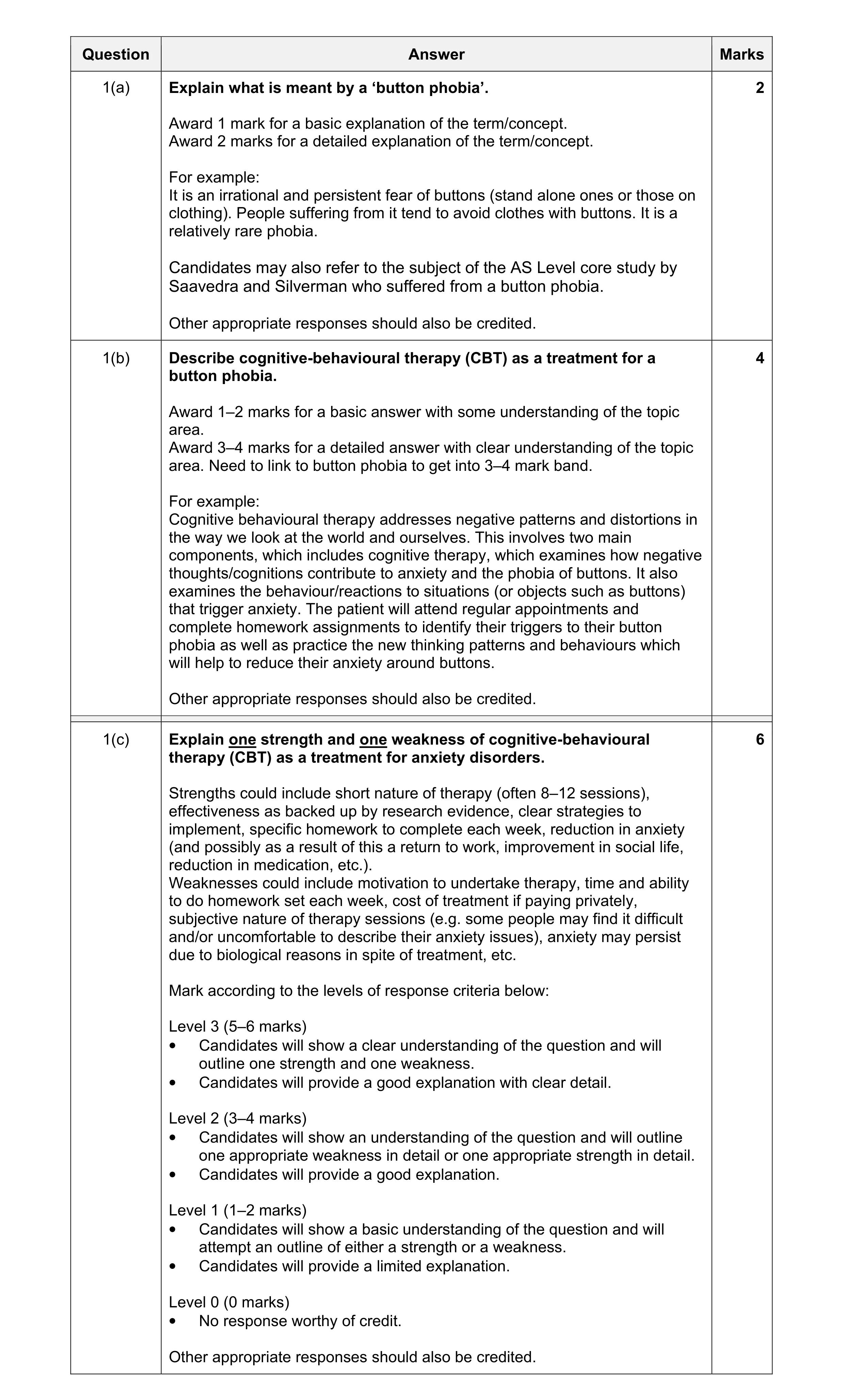 12
12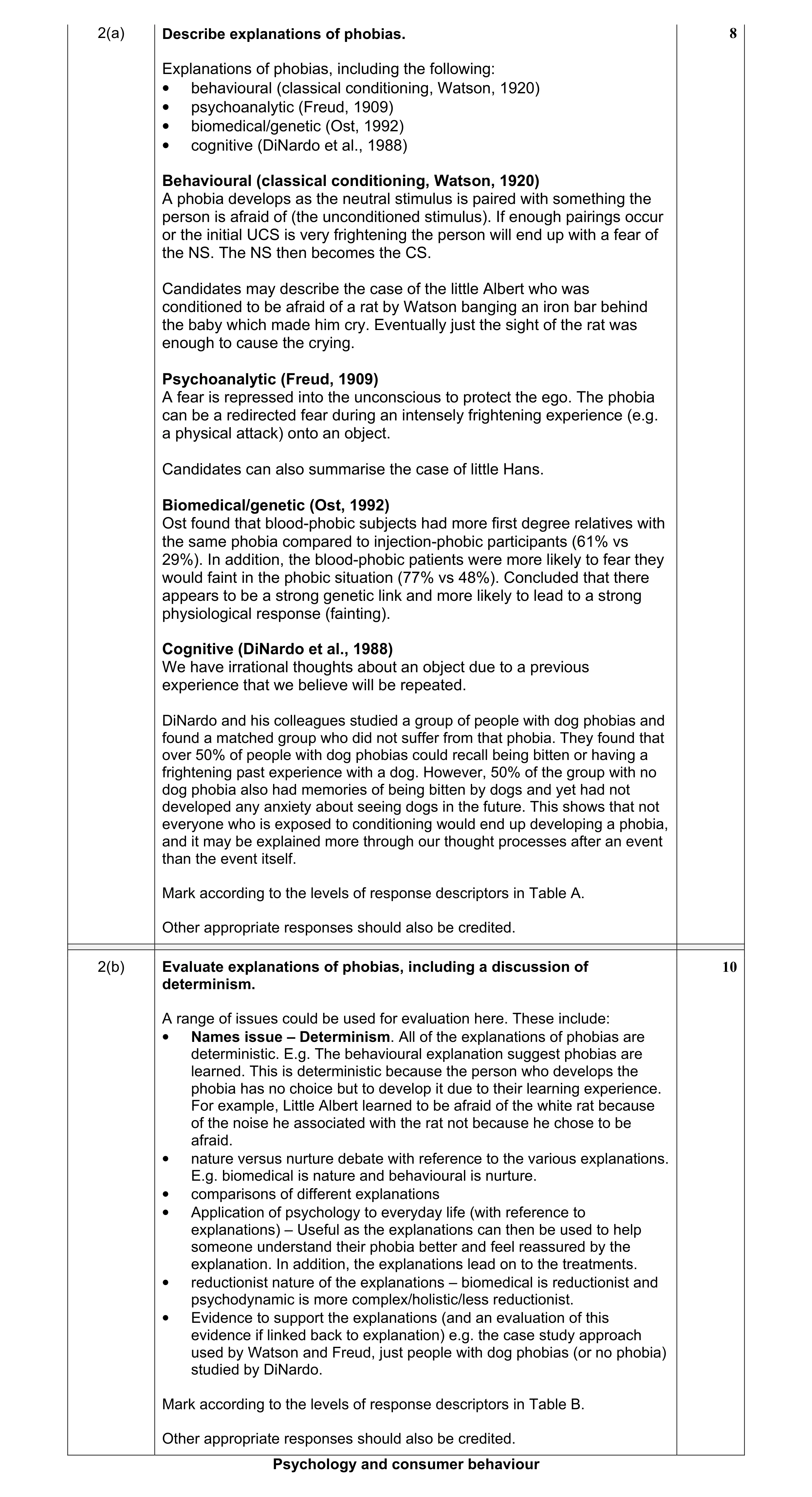 18
18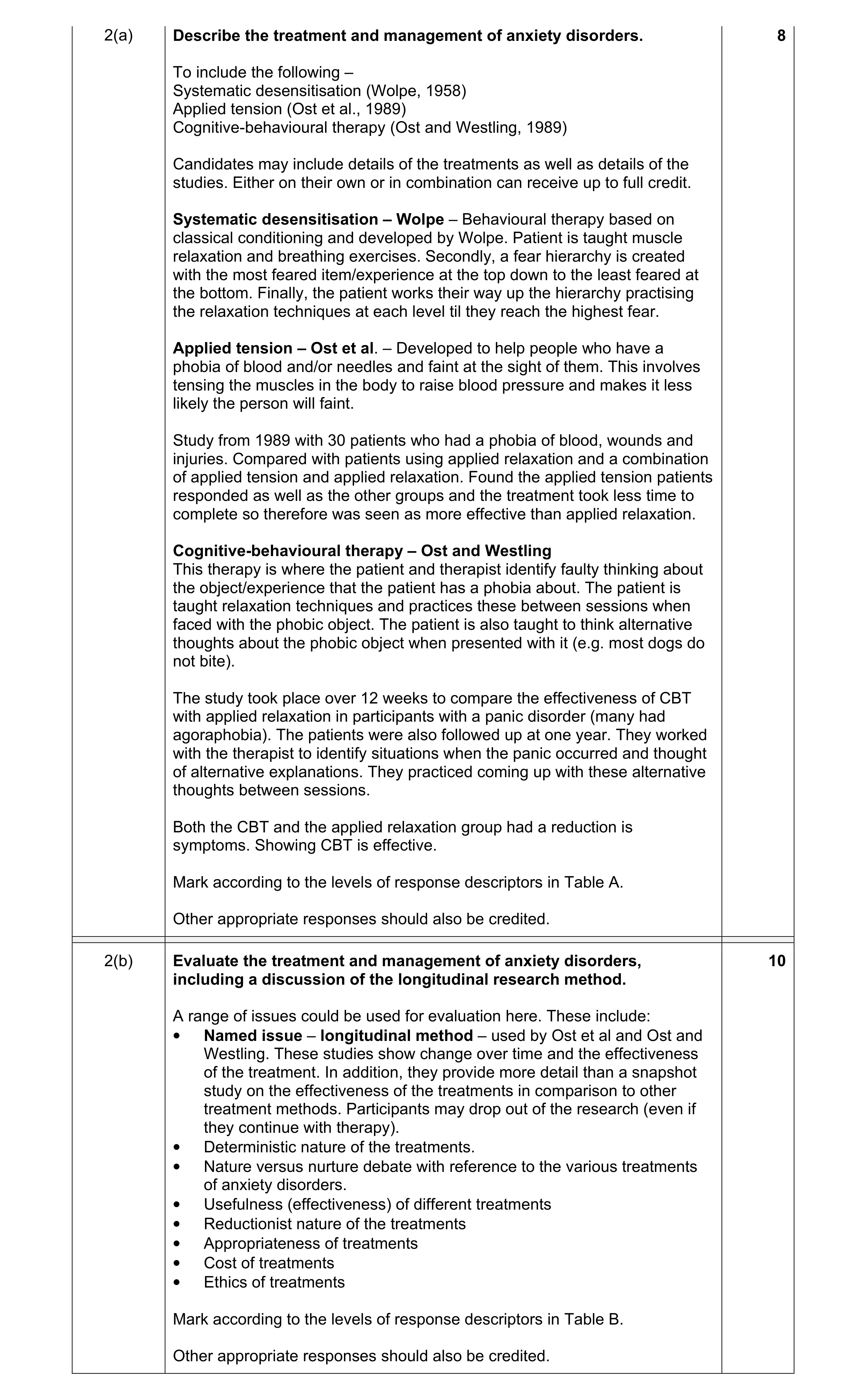 18
18 18
18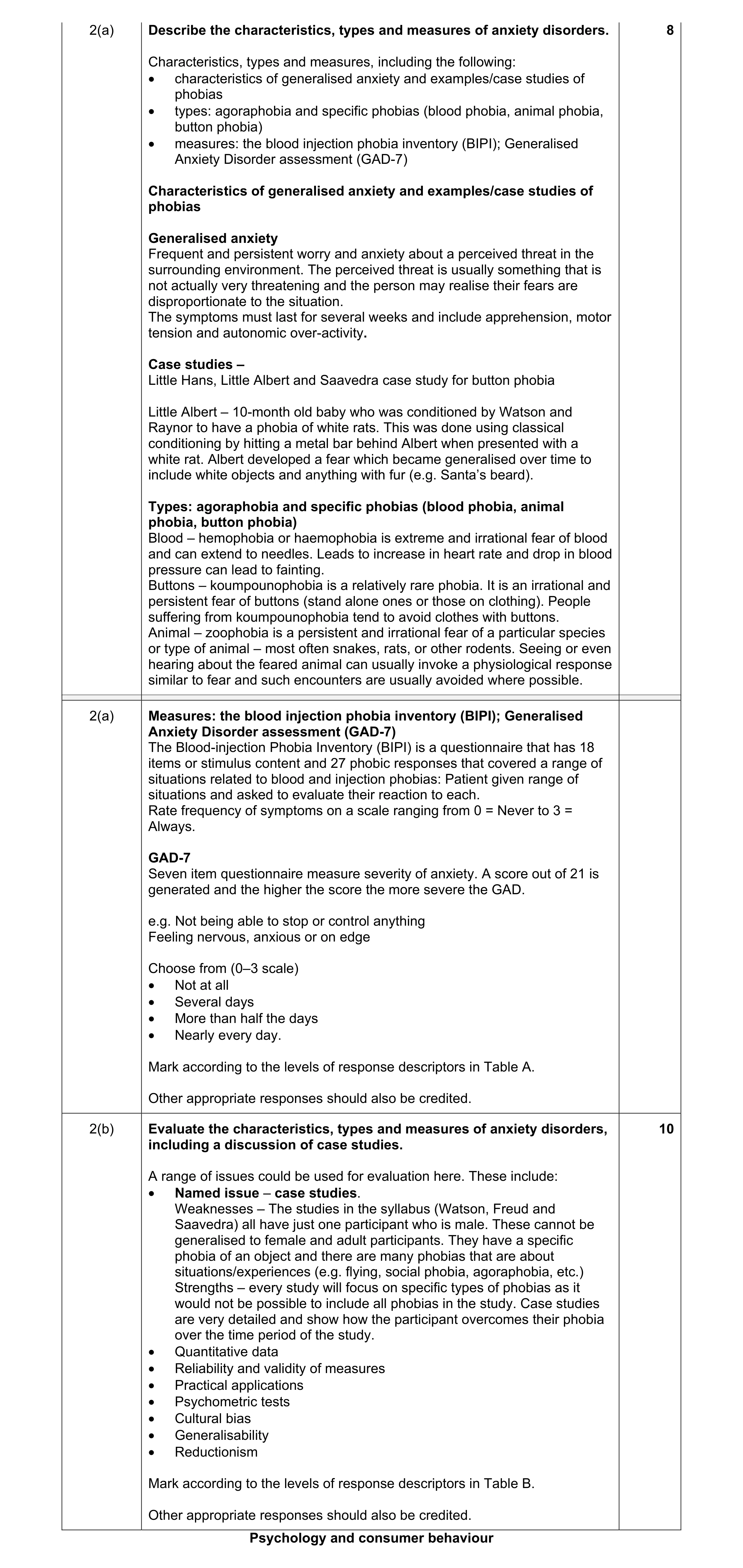 18
18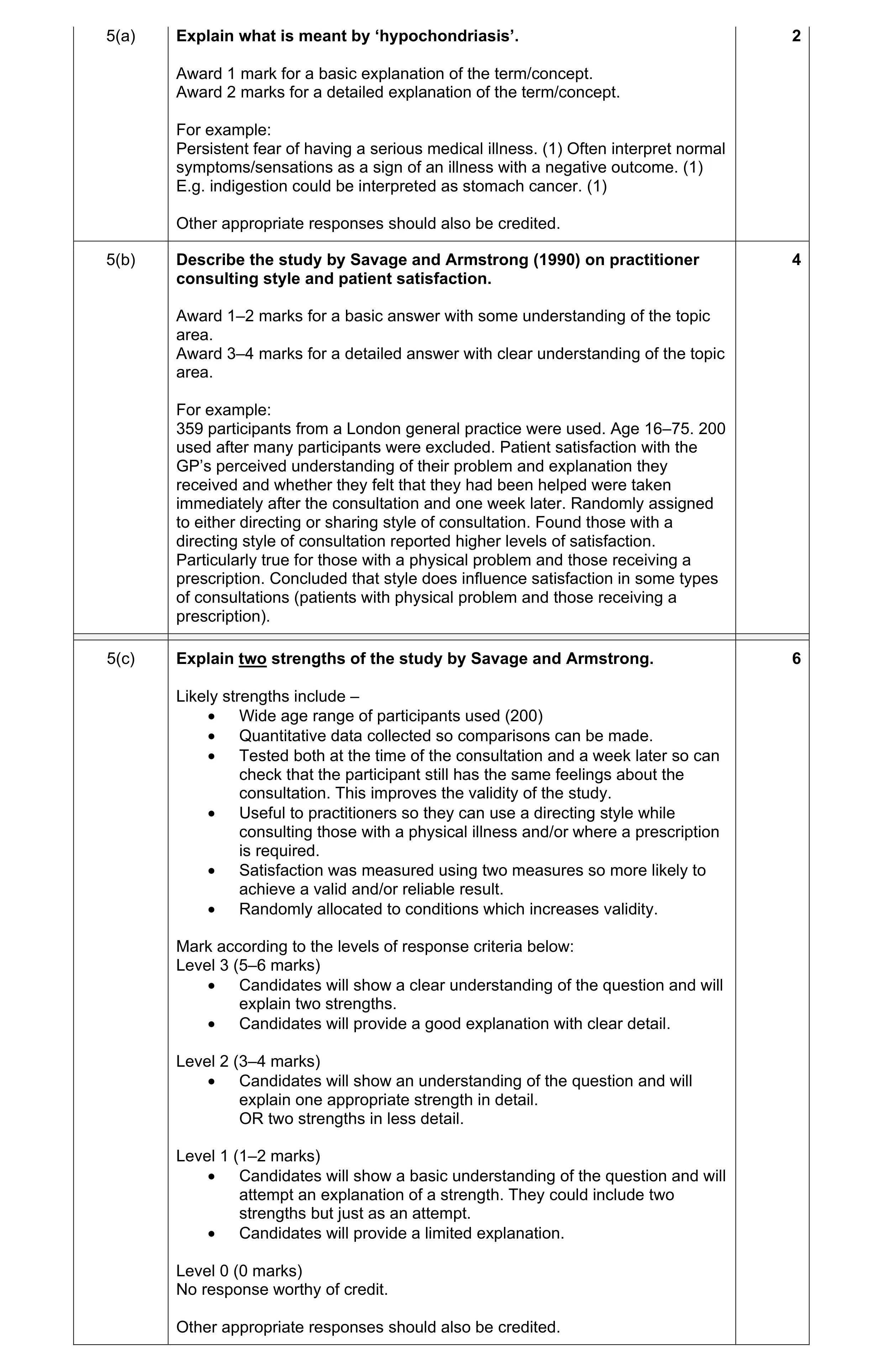 12
12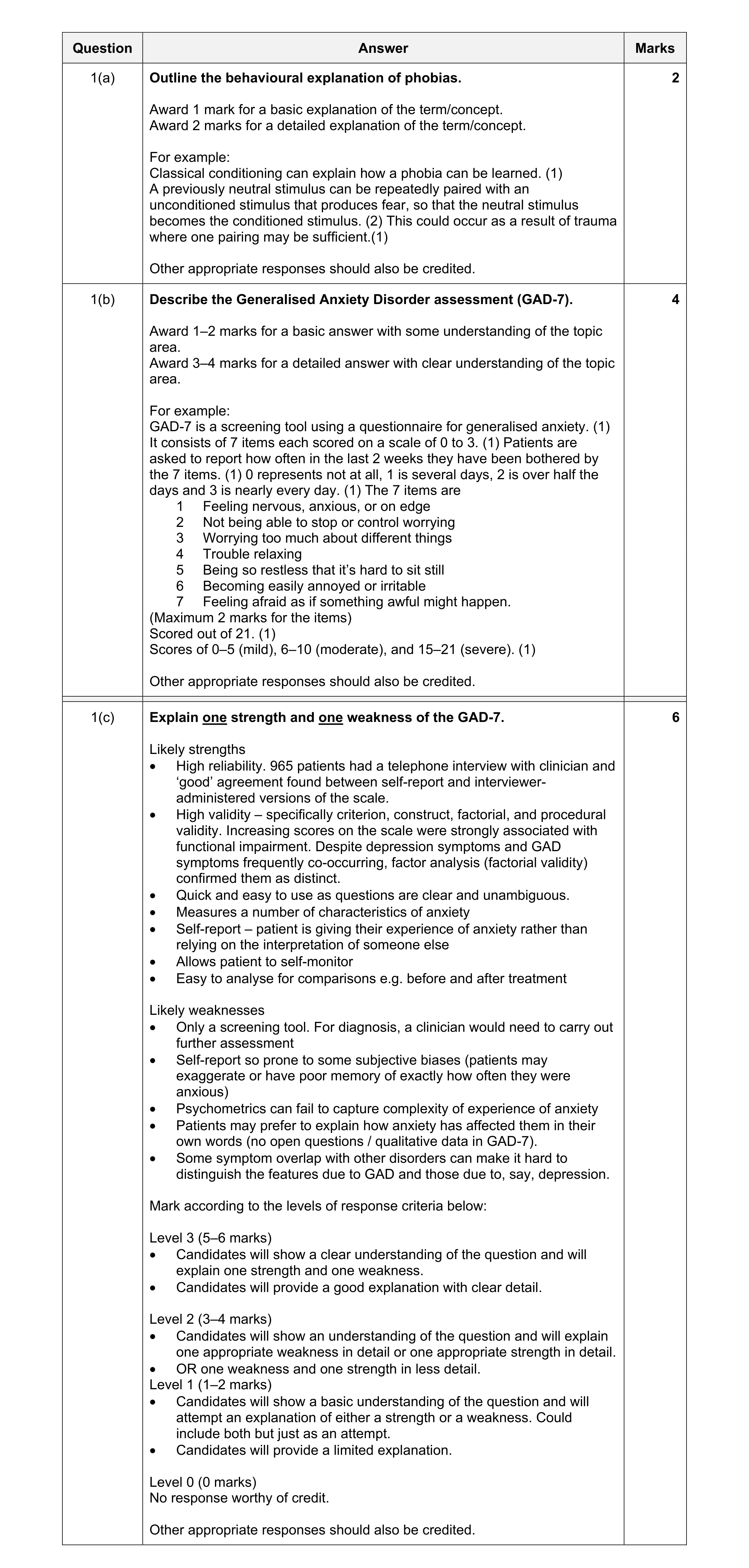 12
12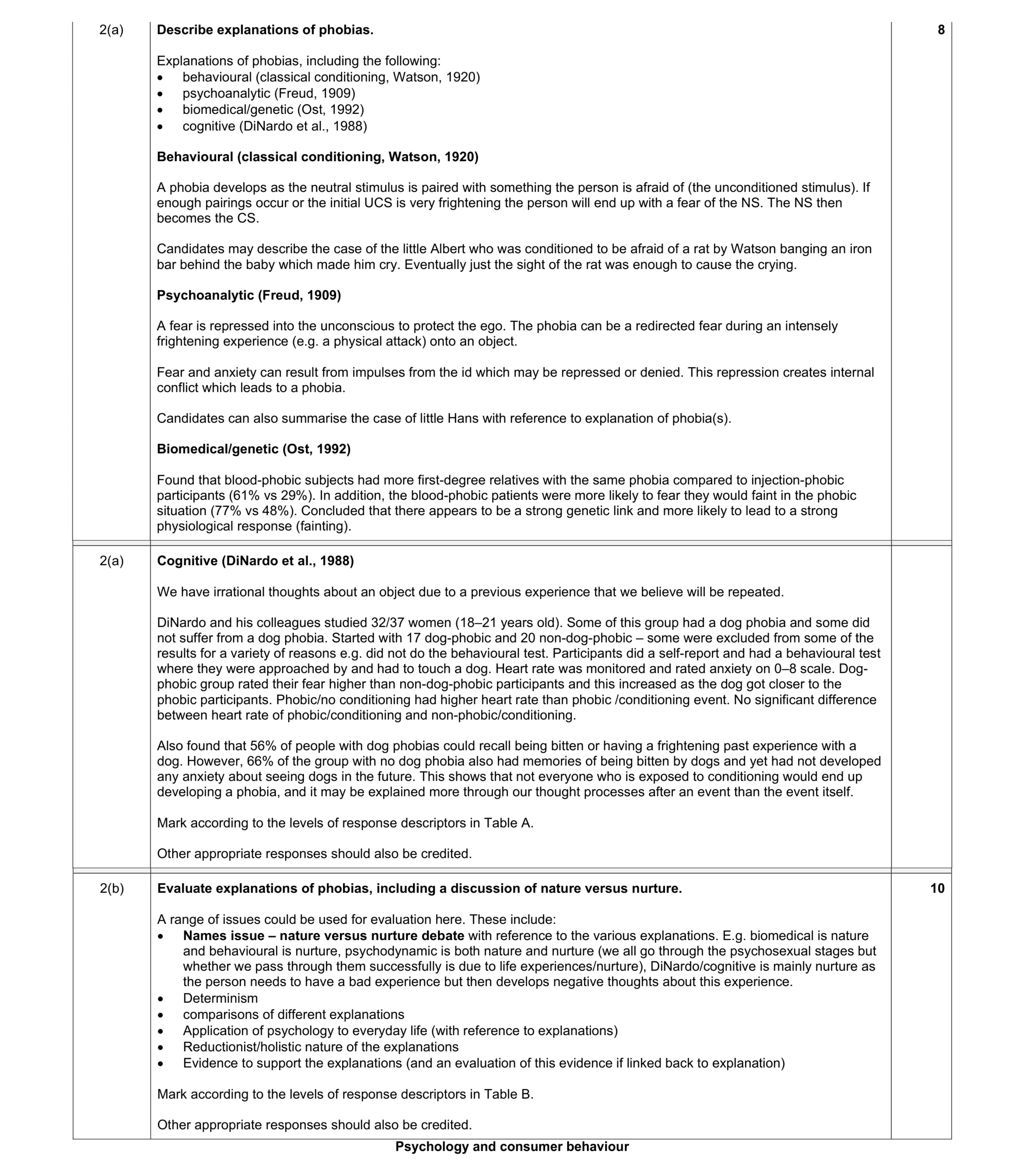 18
18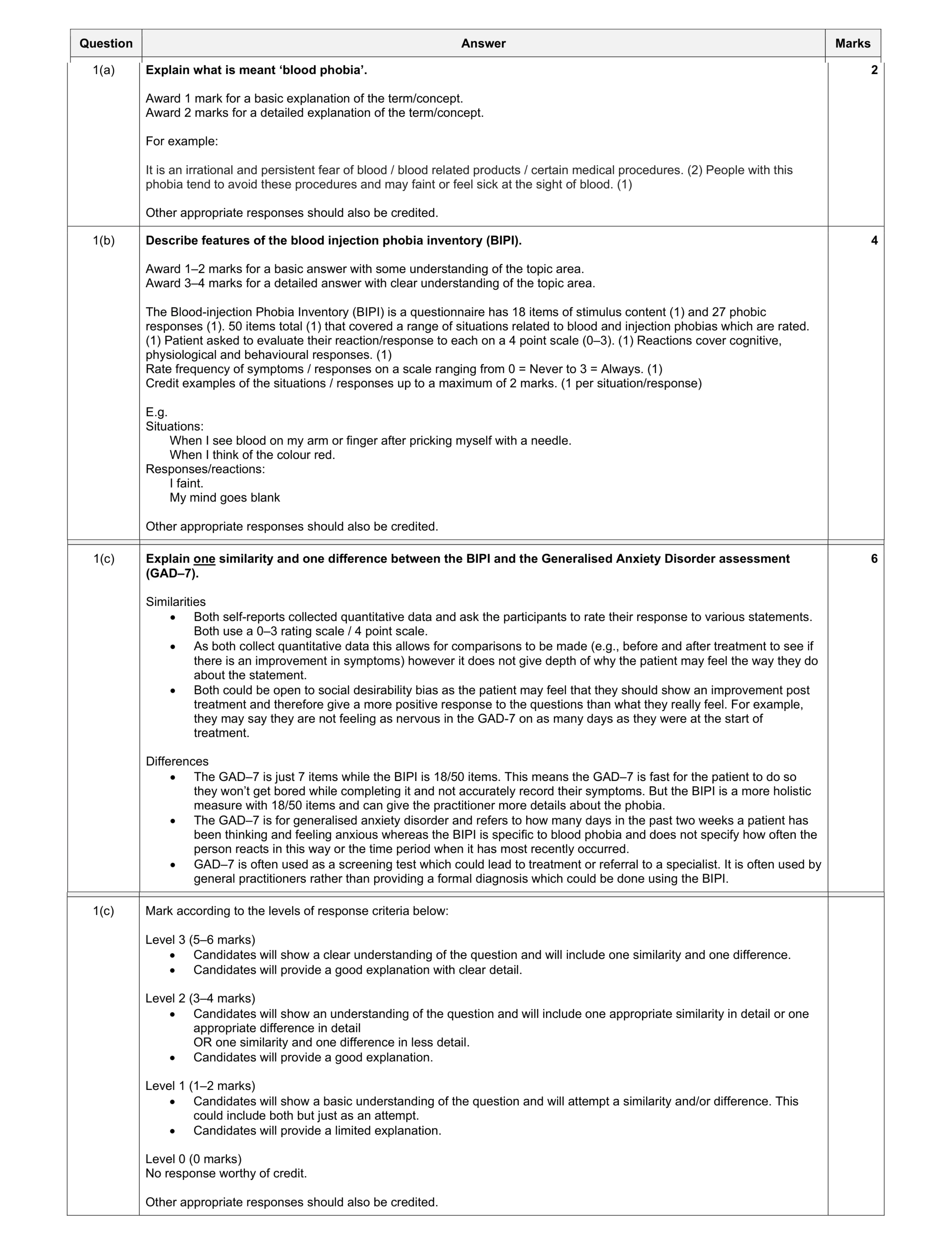 12
12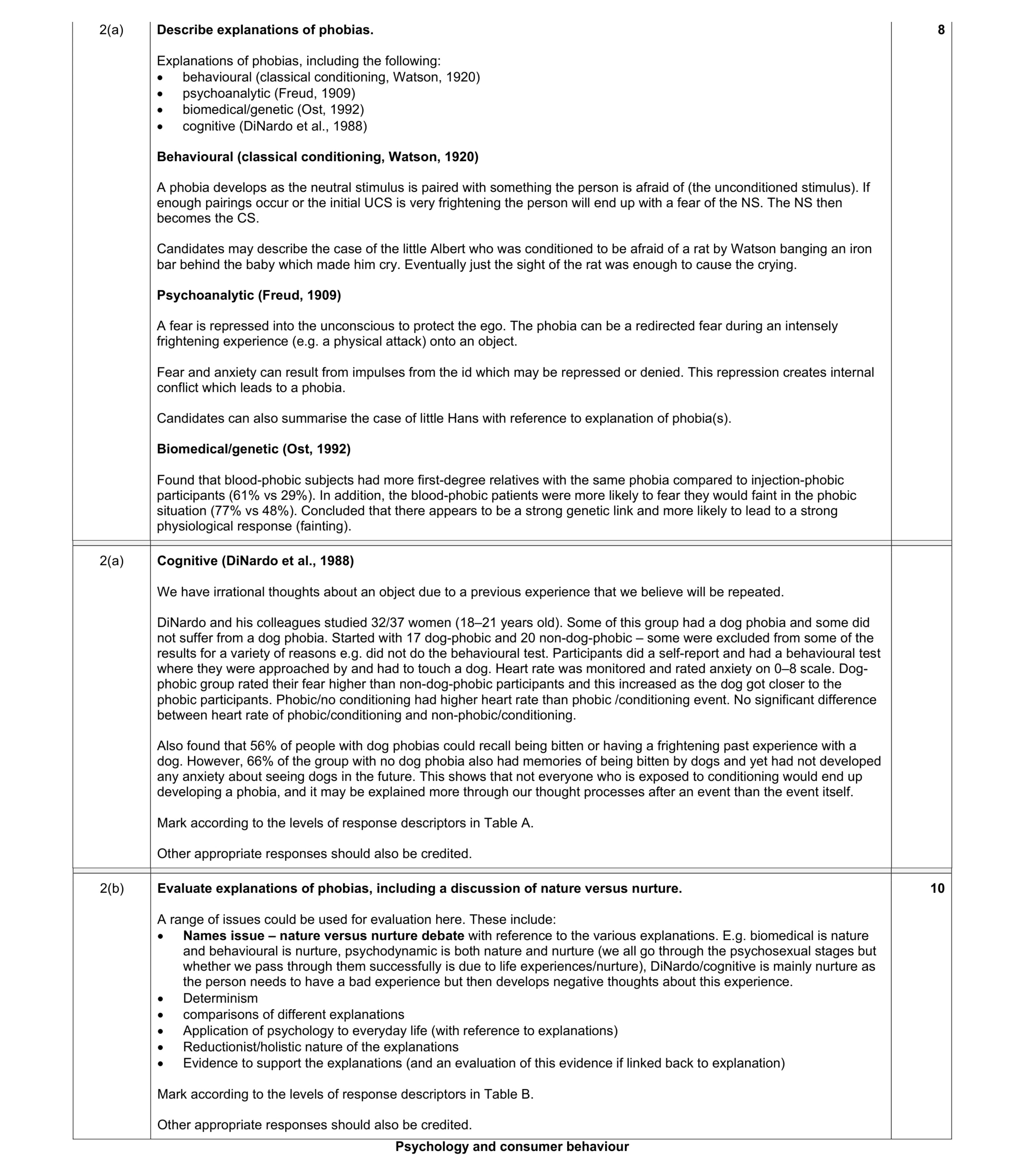 18
18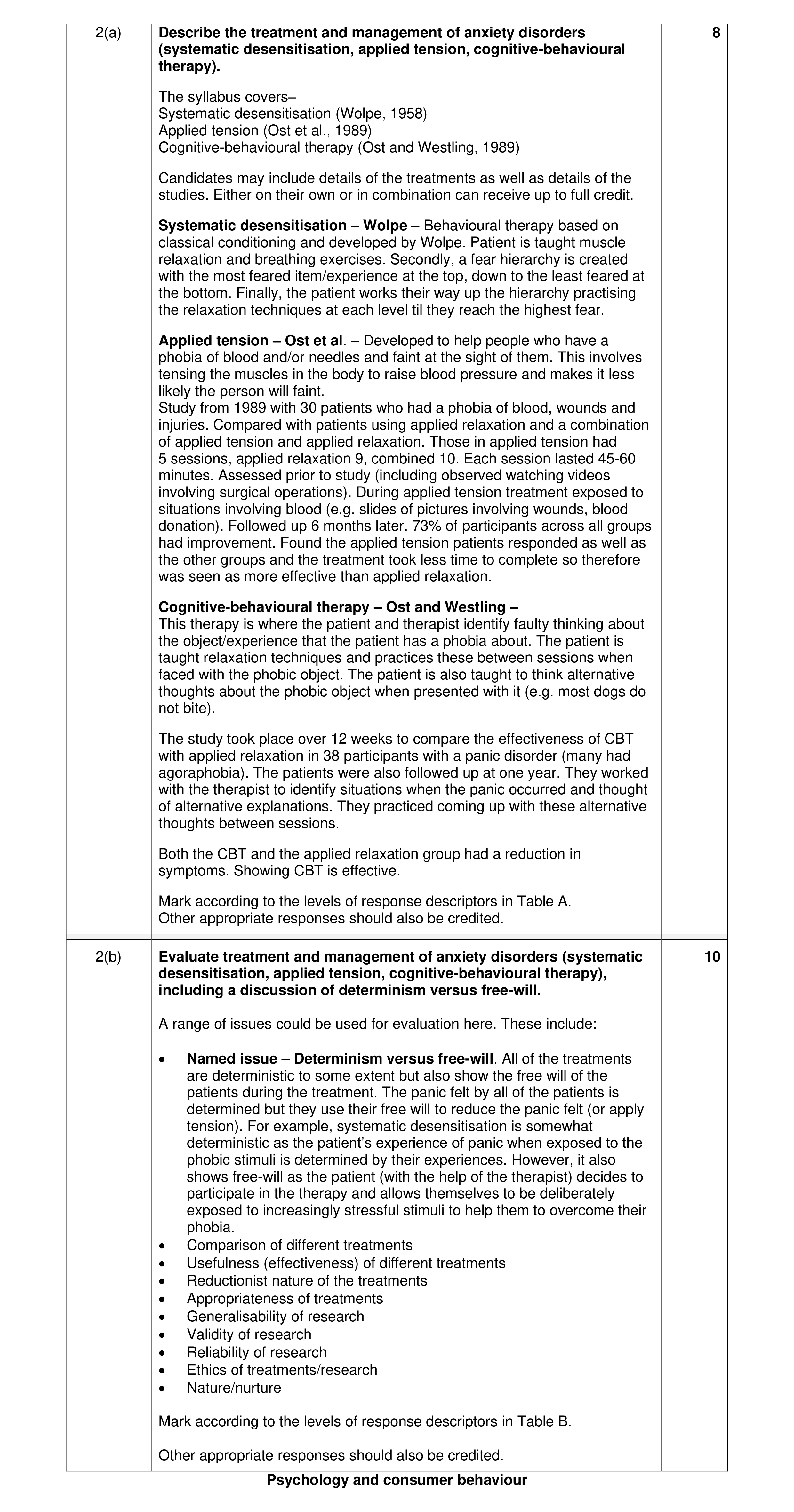 18
18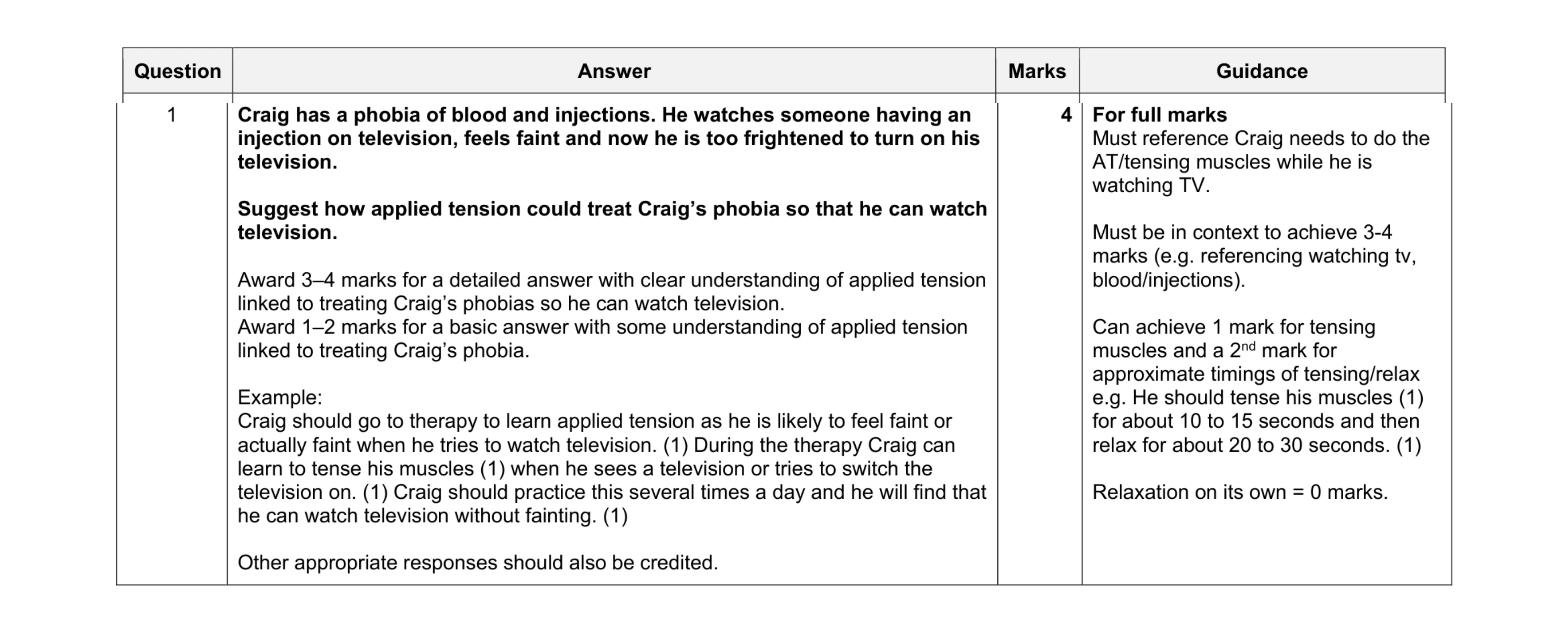 4
4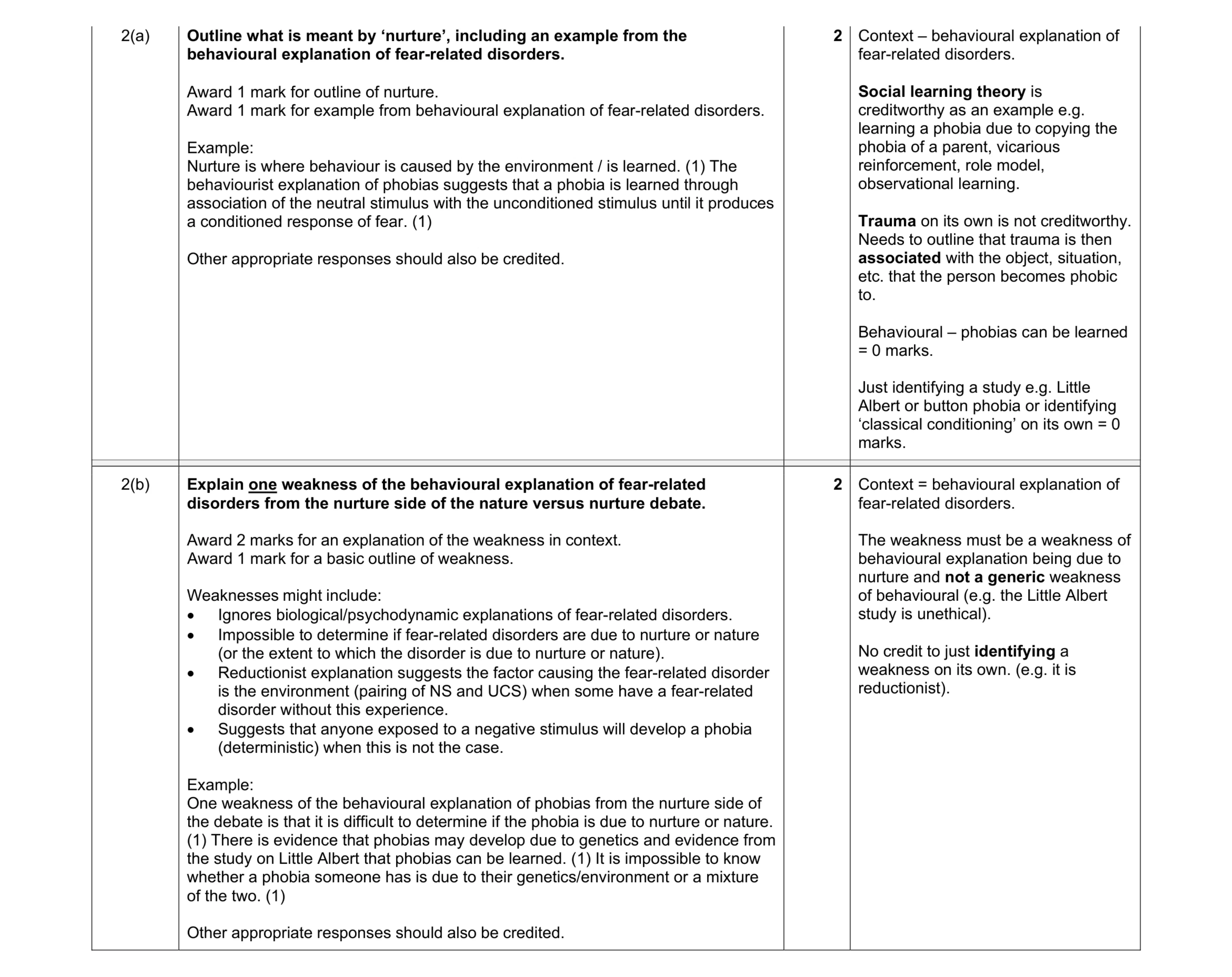 4
4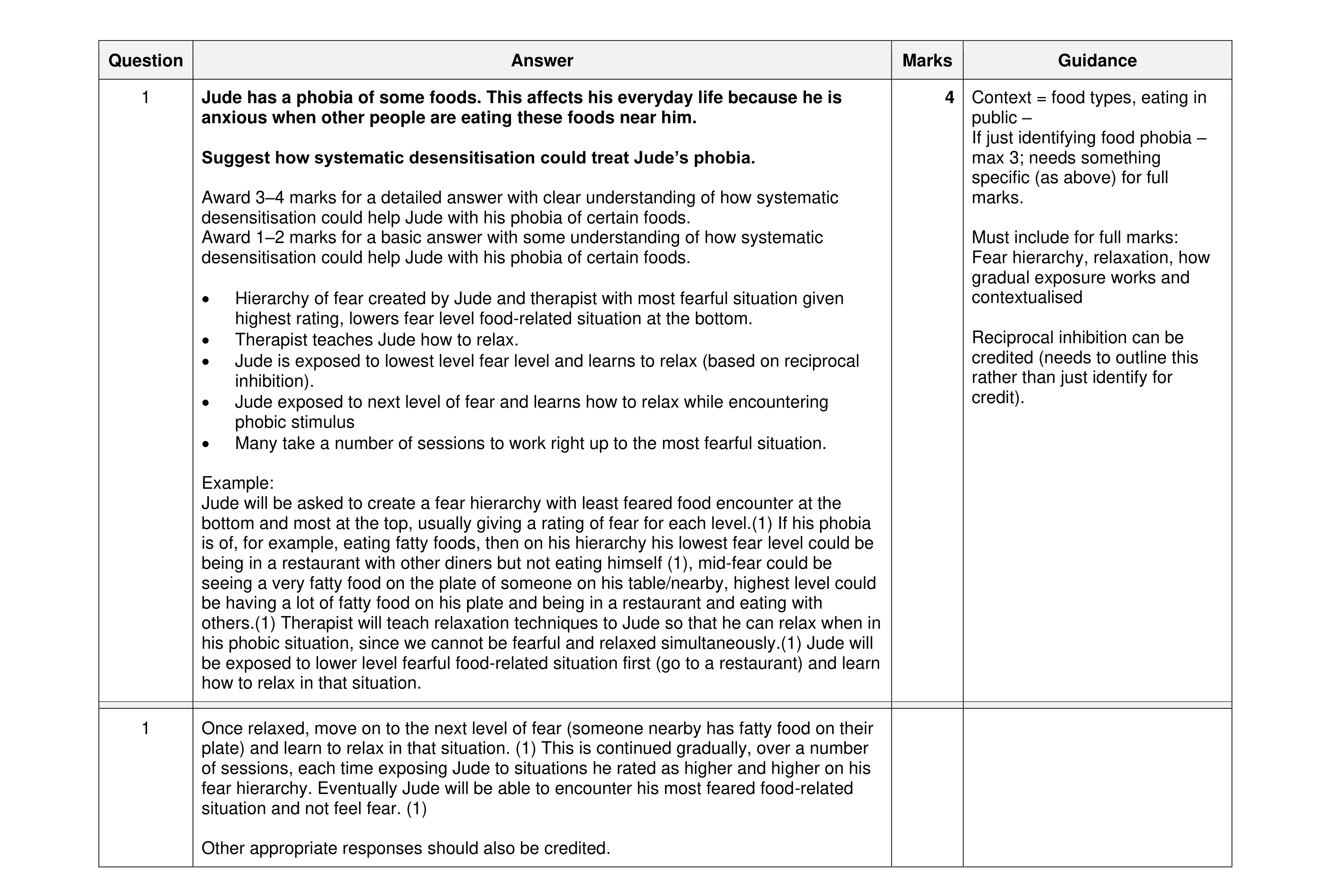 4
4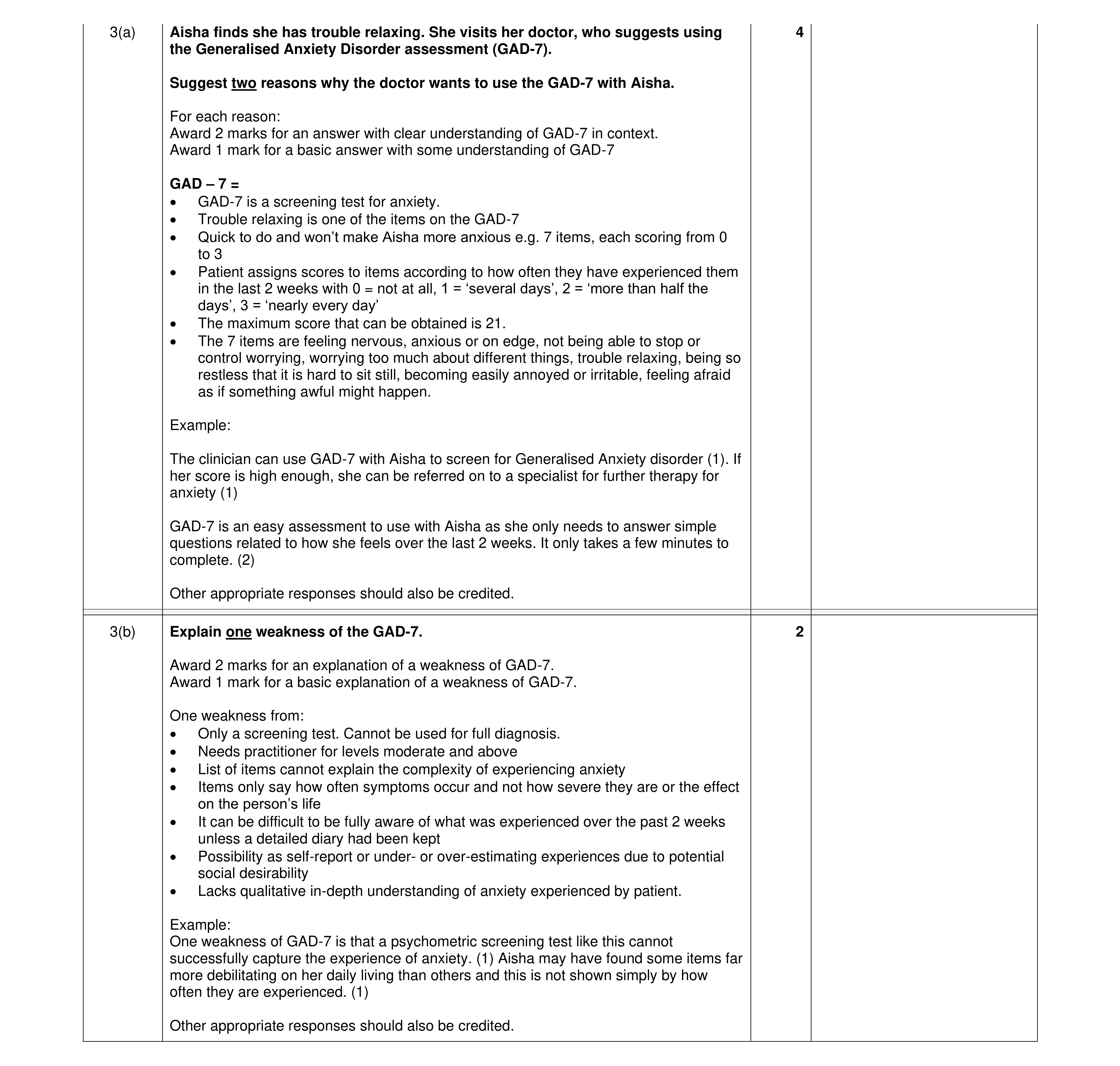 6
6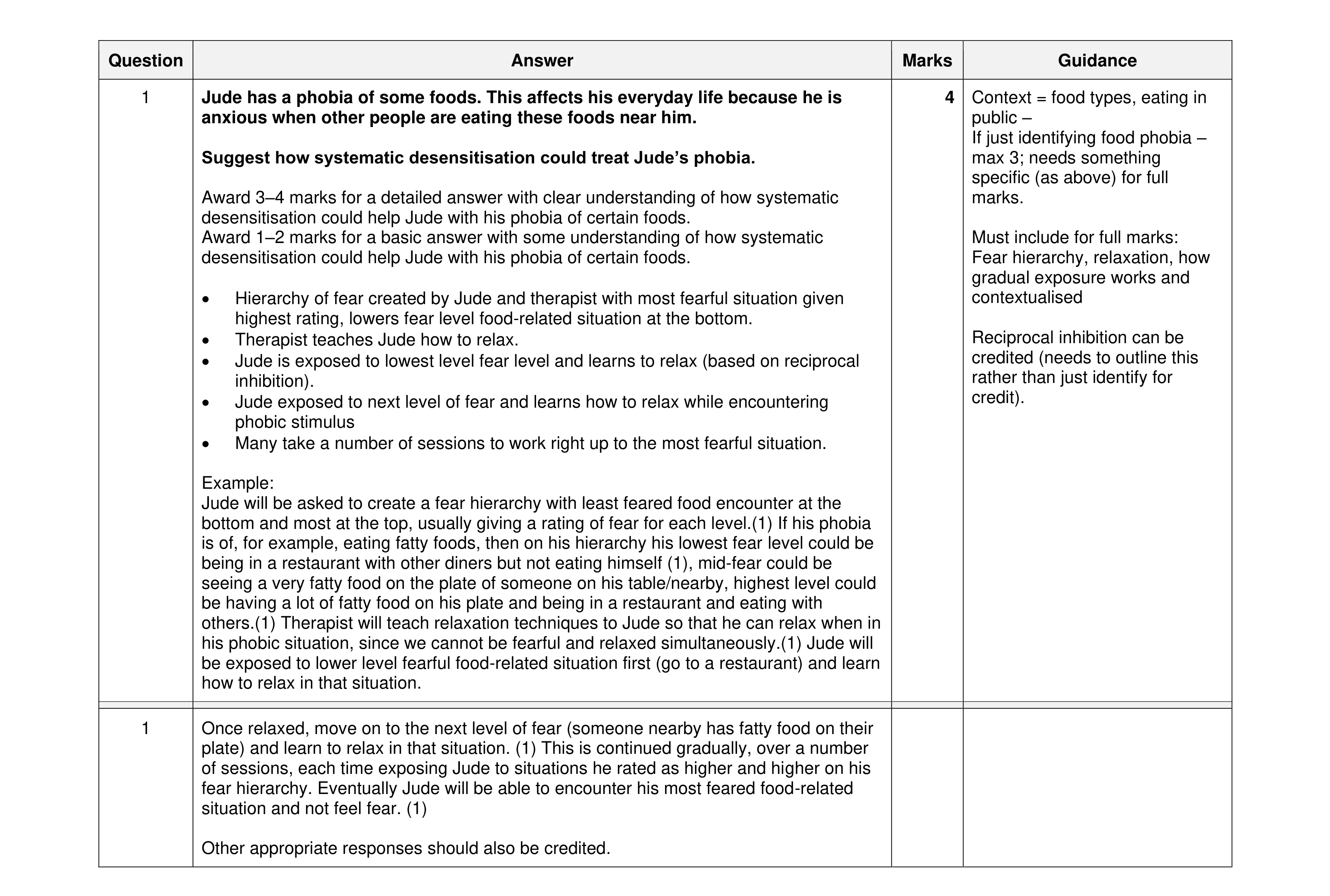 4
4 6
6 4
4 6
6 4
4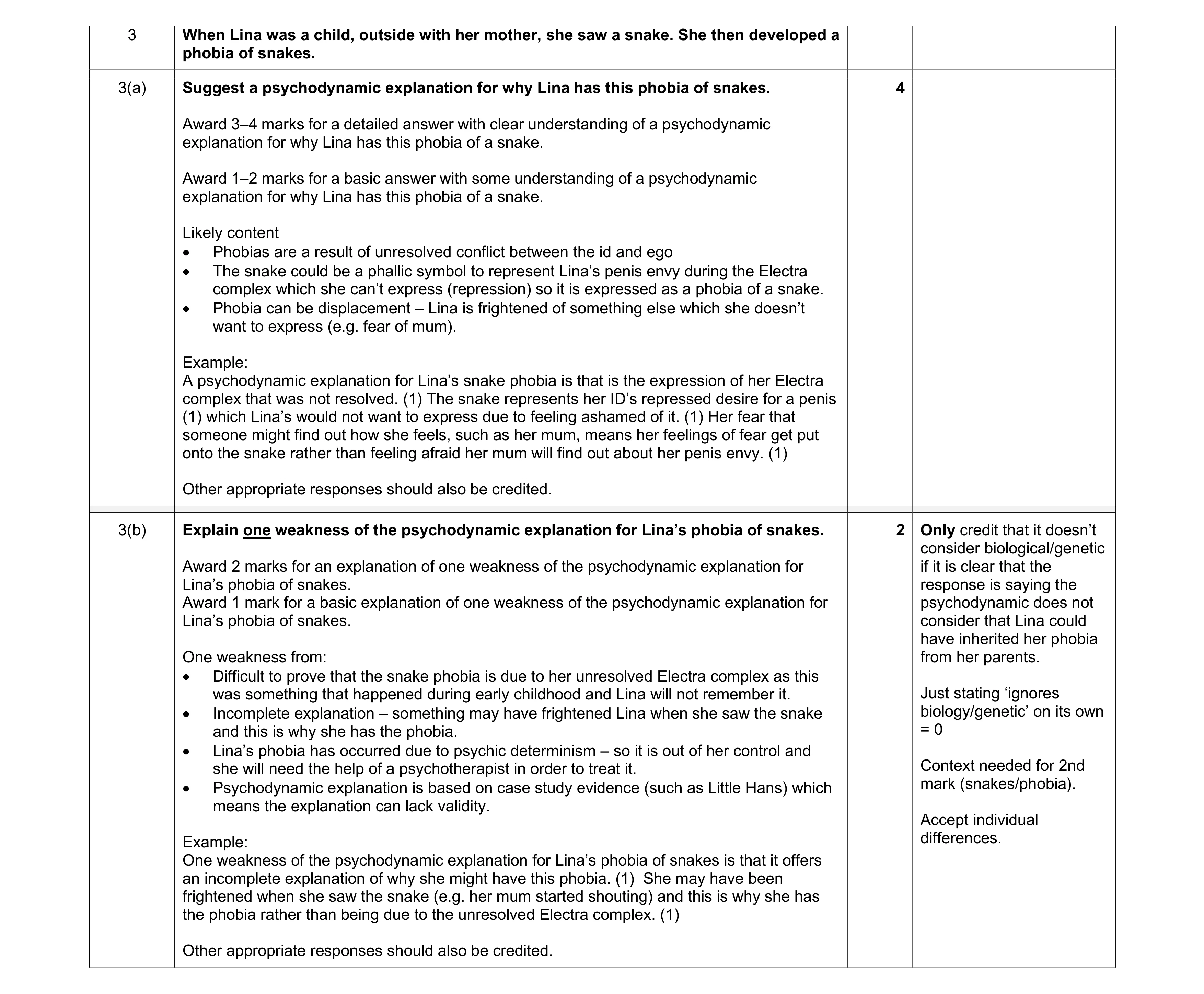 6
6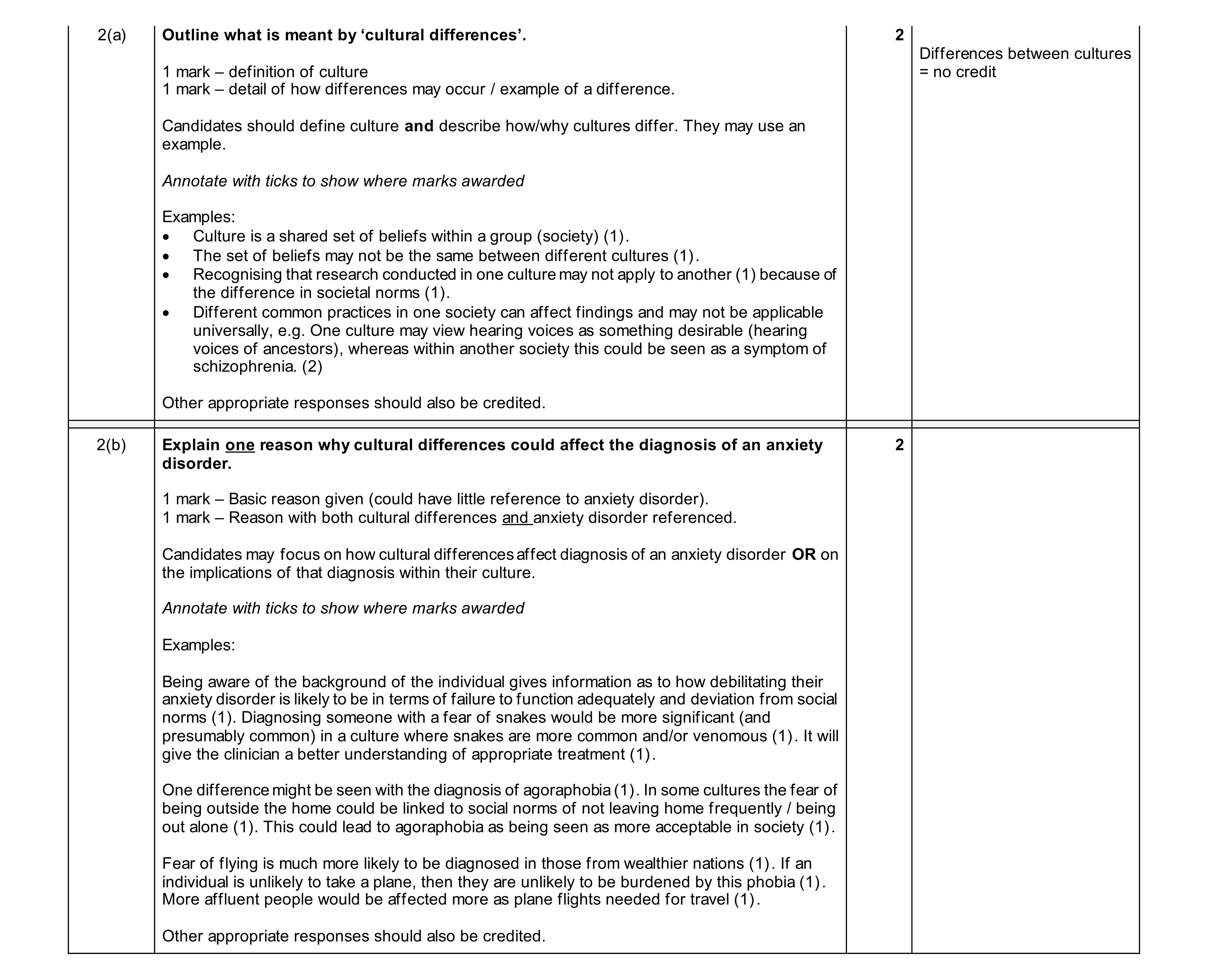 4
4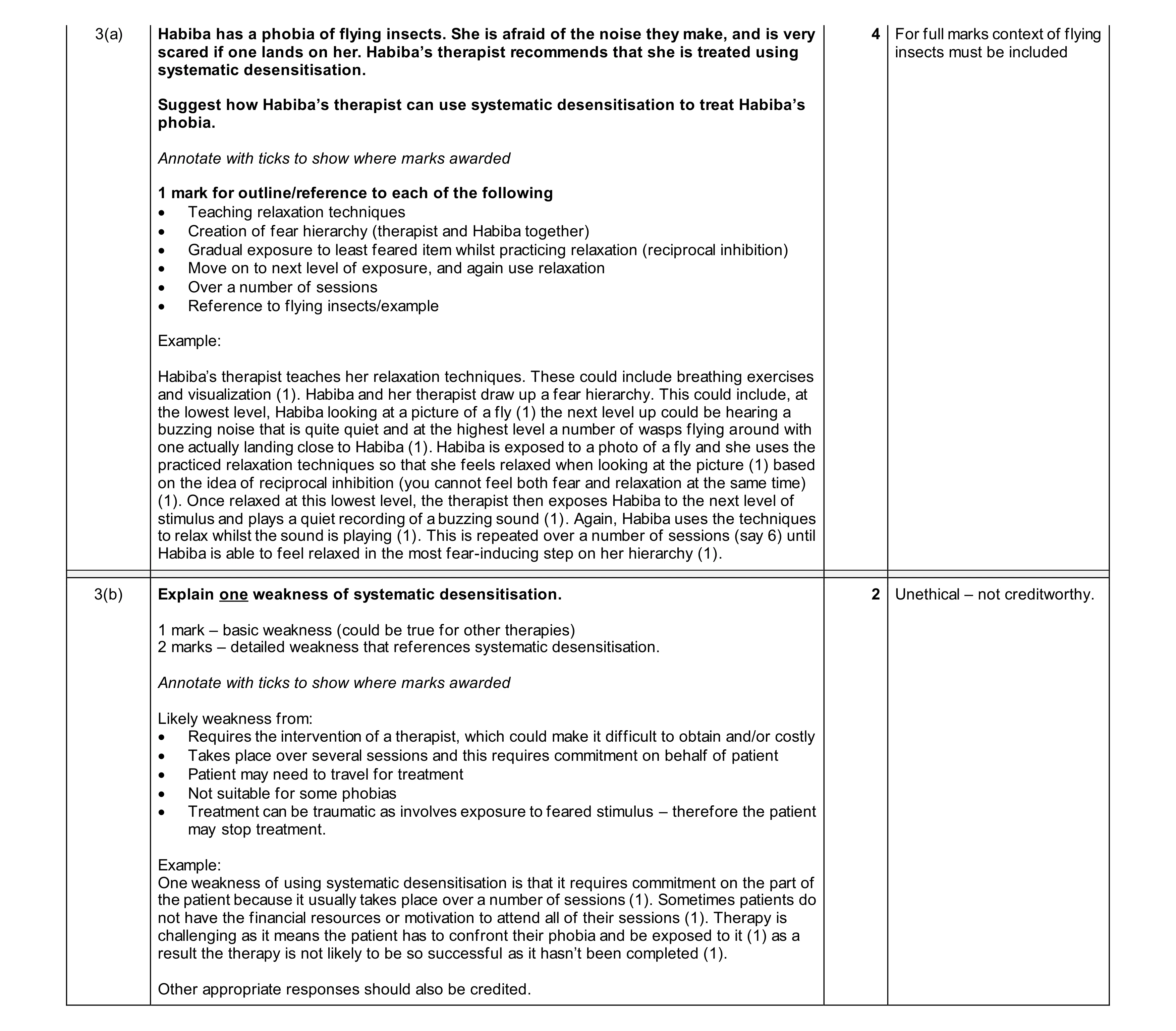 6
6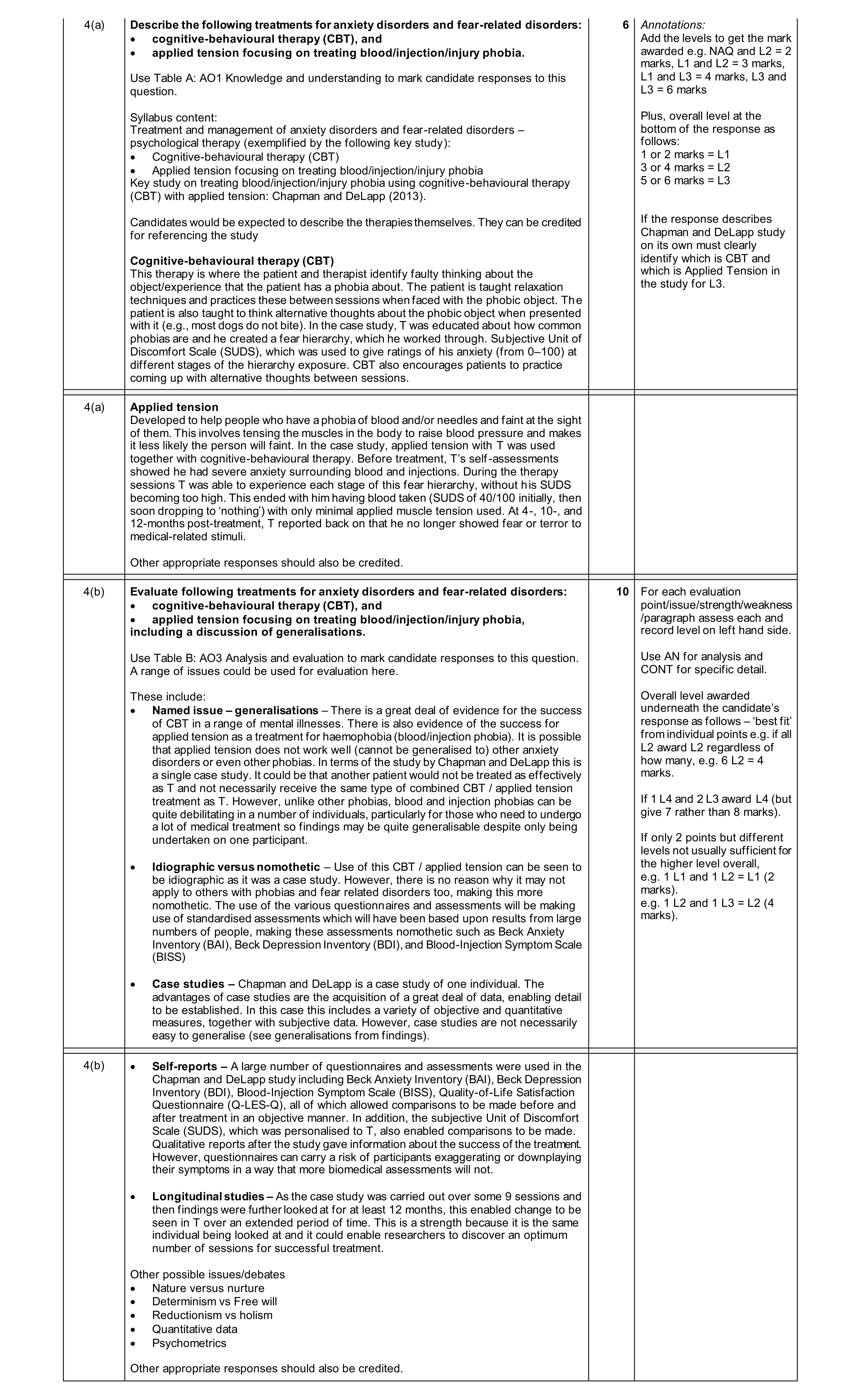 16
16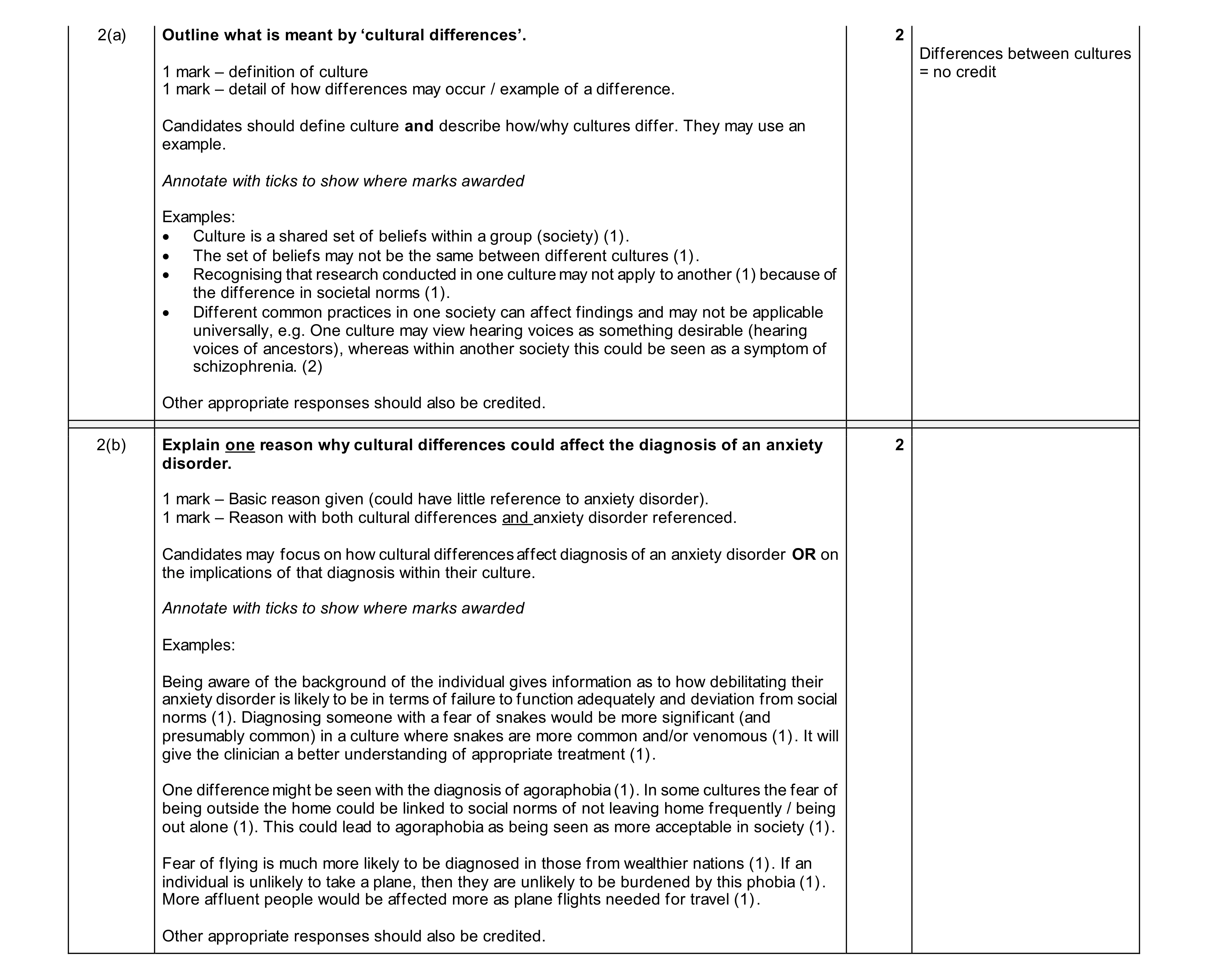 4
4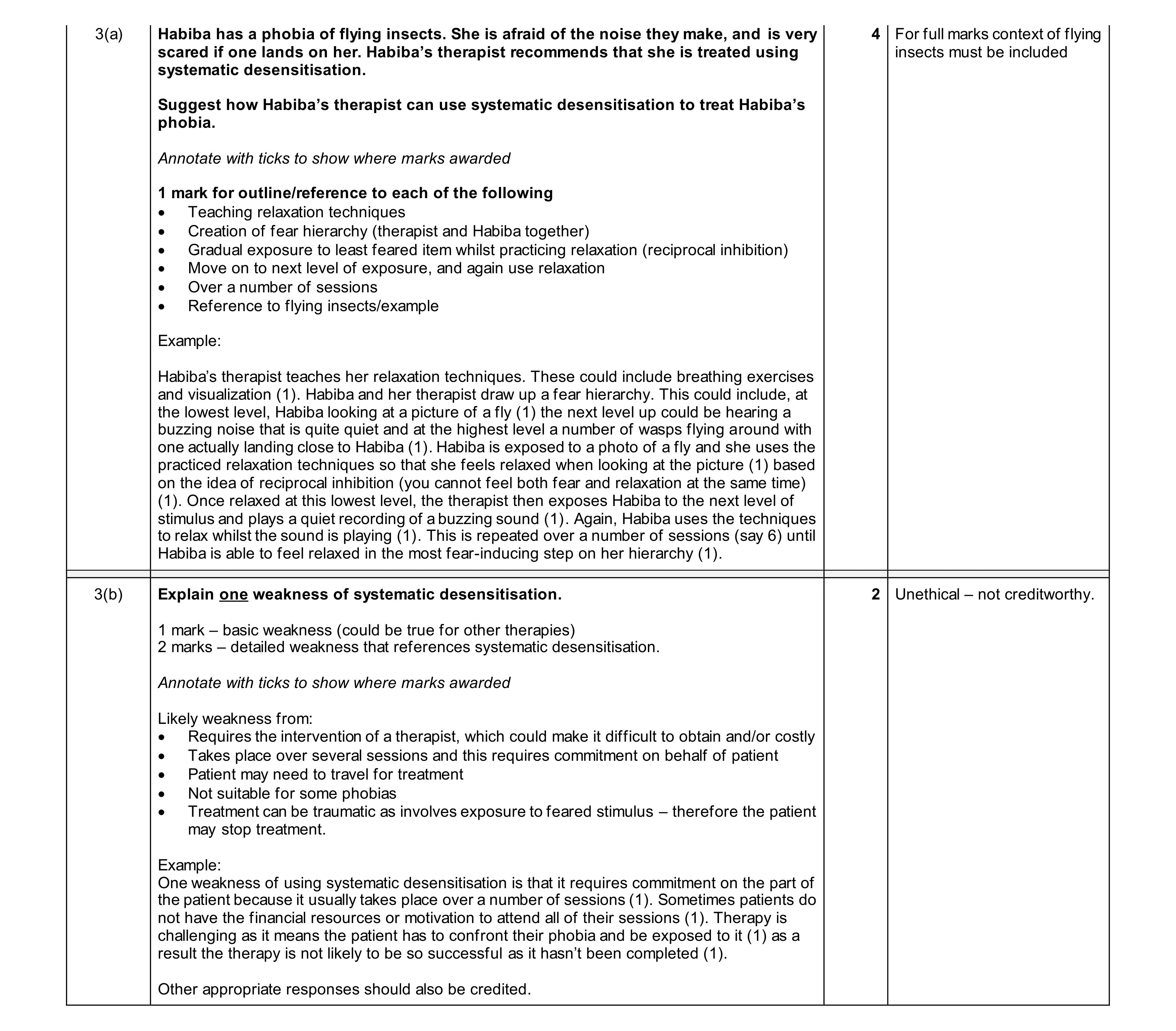 6
6