Questions as text
Q1 · Billy has a fear of the dark, and has read about Freud’s psychoanalytic explanation of… 9990/42 Feb/March 2018
1 Billy has a fear of the dark, and has read about Freud’s psychoanalytic explanation of phobias. Billy thinks this is a good explanation for his fear, but his sister Janet does not agree. (a) Outline Freud’s psychoanalytic explanation of phobias. [2] (b) Give two limitations of this psychoanalytic explanation of phobias. [4] (c) Suggest one alternative explanation for phobias. [4] (d) Discuss advantages and disadvantages of using case studies to study phobias. You should include a conclusion in your answer. [5] Psychology and consumer behaviour
15 marks
Mark scheme: Question Answer Marks 1 Billy has a fear of the dark, and has read about Freud’s psychoanalytic explanation of phobias. Billy thinks this is a good explanation for his fear, but his sister Janet does not agree. 1(a) Outline Freud’s psychoanalytic explanation of phobias. 2 Marks: 1 mark for basic answer e.g. identification. +1 mark for elaboration/example. Question does not ask what the phobia was of. Most likely answer (other appropriate responses to be credited): Phobias are defence mechanisms against anxiety created by any unresolved conflict between the id and the ego. The ego uses displacement for example to rechannel anxiety to another ‘thing’. In the classic case little Hans had a fear of horses, displaced from a fear of his father. 1(b) Give two limitations of this psychoanalytic explanation of phobias. 4 Marks: 1 mark basic answer. 2 marks elaboration, twice. Most likely answer (other appropriate responses to be credited): • There is no scientific evidence that the id, ego or superego exist • A phobia may be a direct result of an incident (e.g. phobia of a dog after being bitten by a dog) rather than displaced anxiety. • Very little/no supporting evidence. Only evidence is one case study. Note: no marks for little Hans unless explicitly related to the psychoanalytic explanation. 1(c) Suggest one alternative explanation for phobias. 4 Marks: 1–2 marks basic answer. 3–4 marks detailed answer/elaboration. Most likely answer (other appropriate responses to be credited): • Behaviourists believe all behaviour is learned including phobias (e.g. little Albert) • DiNardo et al. (1988) suggest a cognitive explanation. Not all people bitten by a dog develop a phobia of dogs. 1(d) Discuss the advantages and disadvantages of using case studies to 5 study phobias. You should include a conclusion in your answer. Question always plural of each argument. Question always requires conclusion. • 1 mark for each for/against argument up to 4 max. • 1 mark for conclusion. • 0 marks for definition/explanation of a case study. Note: If three (or more) arguments for one side, best two credited. If one argument only, max 2 marks. Most likely answer (other appropriate responses to be credited): For: • a case study is a detailed investigation into one ‘thing’, in the case of abnormality; this would be a person • unique cases can be understood which adds to knowledge about the disorder • a range of different methodologies are often used: interviews, questionnaires, tests (psychometric, projective and physiological). Against: • a case study can be of one individual and so cannot be generalised • individual differences (or ‘everyone is unique’) in disorders (e.g. cognitions) means that what is applied to one person cannot always be applied to others • people who have disorders are by definition abnormal and so findings cannot be applied to people without the disorder. Conclusion: (a decision reached by reasoning) any appropriate conclusion drawn from the discussion that has been presented. Marks: 1 mark if appropriate. 0 marks if the conclusion repeats what has already been stated. Section A: Stimulus question psychology and consumer behaviour
This question in 9990/42 Feb/March 2018
Q2 · ‘Even though Little Albert was just one child, the behavioural explanation of anxiety… 9990/42 May/June 2018
9 ‘Even though Little Albert was just one child, the behavioural explanation of anxiety disorders can be generalised to everyone.’ To what extent do you agree with this statement? Use examples of research you have studied to support your answer. [12] Psychology and consumer behaviour
12 marks
Mark scheme: 9 ‘Even though Little Albert was just one child, the behavioural 12 explanation of anxiety disorders can be generalised to everyone.’ To what extent do you agree with this statement? Use examples of research you have studied to support your answer. Marks: use generic levels of response in table C. Syllabus: explanations of phobias: behavioural (classical conditioning, Watson, 1920). Most likely (any other appropriate responses should be credited): For: • The behavioural explanation of learning (classical conditioning) occurs for all people with many things (not just Little Albert) • The behavioural explanation led to the development of ways in which fears and phobias can be reduced (e.g. systematic desensitisation). • The principles can be generalised, not necessarily the specific example. Against: • People are different and what applies to many people will not apply to many others. • The approach excludes the role of cognitive factors (such as the DiNardo example with fears of dogs) • The case study of little Albert had weaknesses – claims that Albert was not a normal child.
This question in 9990/42 May/June 2018
Q3 · The Generalised Anxiety Disorder assessment (GAD-7) was developed using questionnaires… 9990/42 May/June 2019
1 The Generalised Anxiety Disorder assessment (GAD-7) was developed using questionnaires with 2740 patients, followed by a telephone interview with 965 of these patients who were selected randomly. The GAD-7 asks 7 questions each scored from 0–3. A score of 15 or more indicates severe anxiety. (a) Explain what is meant by ‘generalised anxiety disorder’. [2] (b) Suggest two advantages of using quantitative data to assess anxiety. [4] (c) Outline two advantages of the sample used to develop the GAD-7. [4] (d) Discuss the strengths and weaknesses of using telephone interviews to assess anxiety. You should include a conclusion in your answer. [5] Psychology and consumer behaviour
15 marks
Mark scheme: Question Question Marks Section A: Psychology and abnormality 1 The Generalised Anxiety Disorder assessment (GAD-7) was developed using questionnaires with 2740 patients, followed by a telephone interview with 965 of these patients who were selected randomly. The GAD-7 asks 7 questions each scored from 0–3. A score of 15 or more indicates severe anxiety. 1(a) Explain what is meant by ‘generalised anxiety disorder’. 2 Most likely answer (other appropriate responses to be credited): • GAD is a long-term condition that causes feelings of anxiety about a wide range of situations and issues, (is general) rather than one specific event. • people with GAD feel anxious most days and often struggle to remember the last time they felt relaxed. As soon as one anxious thought is resolved, another may appear about a different issue. • GAD can cause both psychological (mental) and physical symptoms. These vary from person to person, but can include: feeling restless or worried, having trouble concentrating or sleeping, having dizziness or palpitations. Marks: 1 mark for basic answer e.g. one feature (bold above). 1 mark for elaboration (e.g. range of features/example/examples of symptoms. 1(b) Suggest two advantages of using quantitative data to assess anxiety. 4 Most likely answer (other appropriate responses to be credited): • responses from participants can be compared with responses from other participants on the same rating scale. • data can be compared with other studies done previously and in the future. • data can be analysed statistically • a number isn’t open to question by researchers and researcher bias doesn’t apply. Marks: 1 mark for advantage of quantitative but not related. 1 mark for advantage that is related. ×2 1(c) Outline two advantages of the sample used to develop the GAD-7. 4 Most likely answer (other appropriate responses to be credited): • random sample so no sampling bias. • 12 different states of the USA so more generalised/representative • large numbers (965) so less effect of anomalies. Marks: 1 mark for advantage of sample but not related. 1 mark for advantage that is related. ×2 1(d) Discuss the strengths and weaknesses of using telephone interviews 5 to assess anxiety. You should include a conclusion in your answer. Marks: Question requires discussion; always plural of each argument, and always requires conclusion. 1 mark for each advantage/disadvantage (however detailed) and related to the question up to 4 max. 2 marks max for two strengths/weaknesses unrelated to the question. 1 mark for conclusion. Most likely answer (other appropriate responses to be credited): Advantages • interviews allow people to present their side of the study in full detail (gather qualitative data); • interviews can be done in a safe and private environment (e.g. at home); • an Interview could be unstructured, allowing free interaction; it could be structured allowing ‘essential’ questions to be included with every participant (quantitative data). • The interview can be recorded providing evidence of what was said should it be needed. Disadvantages • people can more easily withdraw (put down telephone/hang-up) • people may get bored if interview is longer than 20 average call time. • people not understand rating scale/questions being asked and repeating takes time. • Any choice of responses needs to be simple/easy to compare options for respondents. Conclusion: any appropriate conclusion drawn from the discussion that has been presented. 1 mark if appropriate. A conclusion is a ‘decision reached by reasoning’ and so a summary of points already made scores 0 marks.
This question in 9990/42 May/June 2019
Q4 · People who have been bitten by an animal may interpret this experience in different ways… 9990/42 May/June 2019
5 People who have been bitten by an animal may interpret this experience in different ways, and for some a phobia develops. (a) Design a study using a questionnaire to investigate why people interpret the experience of being bitten by an animal in different ways. [10] (b) Explain the psychological and methodological evidence on which your study is based. [8] Psychology and consumer behaviour
18 marks
Mark scheme: 5(a) People who have been bitten by an animal may interpret this 10 experience in different ways, and for some a phobia develops. Design a study using a questionnaire to investigate why people interpret the experience of being bitten by an animal in different ways. Marks: use generic levels of response Design a study question part (a). Additional: Candidates should design the study showing evidence of design features appropriate to the named method. The named method is: questionnaire. Specific features: Questionnaires/Interviews: type, setting, example questions. Scoring/rating scale, analysis of responses. General features of research methodology: sampling technique and sample, type of data, ethics, reliability, validity, data analysis. 5(b) Explain the psychological and methodological evidence on which your 8 study is based. Marks: use generic levels of response ‘Design a study’ question part (b). Note: If only methodological or psychological explanation is provided max 5 marks Candidates are expected to explain the reasons for the suggested design in part (a). Explanation should be both psychological and methodological. Psychological to include appropriate theory or research. Additional: candidates are expected to justify their decisions or evidence presented regarding the design made in answer to question part (a). Syllabus: explanations of phobias: cognitive (DiNardo et al., 1988) Psychological: Some people develop a phobia of all dogs (generalising from one to all). Some people develop of phobia for the same type of dog that bit them, but no other. Some people do not develop any phobia with the view that it was just one ‘unique’ dog that bit them and other dogs are diifferent. Methodological: explanation of method using general and specific features as above. Note: 2 marks max if psychological knowledge is not related to answer.
This question in 9990/42 May/June 2019
Q5 · Design a study using an observation to investigate whether a person has generalised… 9990/41 Oct/Nov 2019
5 (a) Design a study using an observation to investigate whether a person has generalised anxiety disorder. [10] (b) Explain the psychological and methodological evidence on which your study is based. [8] Psychology and consumer behaviour
18 marks
Mark scheme: 5(a) Design a study using an observation to investigate whether a person 10 has generalised anxiety disorder. Marks: use generic levels of response Design a study question part (a). Additional: Candidates should design the study showing evidence of design features appropriate to the named method. The named method: observation. Specific features: Observations: type, setting, response categories, sampling frame, number of observers. General features of research methodology: sampling technique and sample, type of data, ethics, reliability, validity, data analysis. 5(b) Explain the psychological and methodological evidence on which your 8 study is based. Marks: use generic levels of response ‘Design a study’ question part (b). Note: If only methodological or psychological explanation is provided max 5 marks Candidates are expected to explain the reasons for the suggested design in part (a). Explanation should be both psychological and methodological. Psychological to include appropriate theory or research. Additional: candidates are expected to justify their decisions or evidence presented regarding the design made in answer to question part (a). Syllabus: measures: characteristics of generalised anxiety and examples; Generalised Anxiety Disorder assessment (GAD-7) Psychological: • GAD is a long-term condition that causes feelings of anxiety about a wide range of situations and issues, rather than one specific event • people with GAD feel anxious most days and often struggle to remember the last time they felt relaxed. As soon as one anxious thought is resolved, another may appear about a different issue • GAD can cause both psychological (mental) and physical symptoms. These vary from person to person, but can include: feeling restless or worried, having trouble concentrating or sleeping, having dizziness or palpitations Note: candidates may describe studies of anxiety such as Ost, Watson and Rayner, etc. These must be related to part (a) to receive credit. Methodological: explanation of method using general and specific features as above.
This question in 9990/41 Oct/Nov 2019
Q6 · Design a study using an observation to investigate whether a person has generalised… 9990/42 Oct/Nov 2019
5 (a) Design a study using an observation to investigate whether a person has generalised anxiety disorder. [10] (b) Explain the psychological and methodological evidence on which your study is based. [8] Psychology and consumer behaviour
18 marks
Mark scheme: 5(a) Design a study using an observation to investigate whether a person has 10 generalised anxiety disorder. Marks: use generic levels of response Design a study question part (a). Additional: Candidates should design the study showing evidence of design features appropriate to the named method. The named method: observation. Specific features: Observations: type, setting, response categories, sampling frame, number of observers. General features of research methodology: sampling technique and sample, type of data, ethics, reliability, validity, data analysis. 5(b) Explain the psychological and methodological evidence on which your 8 study is based. Marks: use generic levels of response ‘Design a study’ question part (b). Note: If only methodological or psychological explanation is provided max 5 marks Candidates are expected to explain the reasons for the suggested design in part (a). Explanation should be both psychological and methodological. Psychological to include appropriate theory or research. Additional: candidates are expected to justify their decisions or evidence presented regarding the design made in answer to question part (a). Syllabus: measures: characteristics of generalised anxiety and examples; Generalised Anxiety Disorder assessment (GAD-7) Psychological: • GAD is a long-term condition that causes feelings of anxiety about a wide range of situations and issues, rather than one specific event • people with GAD feel anxious most days and often struggle to remember the last time they felt relaxed. As soon as one anxious thought is resolved, another may appear about a different issue • GAD can cause both psychological (mental) and physical symptoms. These vary from person to person, but can include: feeling restless or worried, having trouble concentrating or sleeping, having dizziness or palpitations Note: candidates may describe studies of anxiety such as Ost, Watson and Rayner, etc. These must be related to part (a) to receive credit. Methodological: explanation of method using general and specific features as above.
This question in 9990/42 Oct/Nov 2019
Q7 · Design a study using an observation to investigate whether a person has generalised… 9990/43 Oct/Nov 2019
5 (a) Design a study using an observation to investigate whether a person has generalised anxiety disorder. [10] (b) Explain the psychological and methodological evidence on which your study is based. [8] Psychology and consumer behaviour
18 marks
Mark scheme: 5(a) Design a study using an observation to investigate whether a person 10 has generalised anxiety disorder. Marks: use generic levels of response Design a study question part (a). Additional: Candidates should design the study showing evidence of design features appropriate to the named method. The named method: observation. Specific features: Observations: type, setting, response categories, sampling frame, number of observers. General features of research methodology: sampling technique and sample, type of data, ethics, reliability, validity, data analysis. 5(b) Explain the psychological and methodological evidence on which your 8 study is based. Marks: use generic levels of response ‘Design a study’ question part (b). Note: If only methodological or psychological explanation is provided max 5 marks Candidates are expected to explain the reasons for the suggested design in part (a). Explanation should be both psychological and methodological. Psychological to include appropriate theory or research. Additional: candidates are expected to justify their decisions or evidence presented regarding the design made in answer to question part (a). Syllabus: measures: characteristics of generalised anxiety and examples; Generalised Anxiety Disorder assessment (GAD-7) Psychological: • GAD is a long-term condition that causes feelings of anxiety about a wide range of situations and issues, rather than one specific event • people with GAD feel anxious most days and often struggle to remember the last time they felt relaxed. As soon as one anxious thought is resolved, another may appear about a different issue • GAD can cause both psychological (mental) and physical symptoms. These vary from person to person, but can include: feeling restless or worried, having trouble concentrating or sleeping, having dizziness or palpitations Note: candidates may describe studies of anxiety such as Ost, Watson and Rayner, etc. These must be related to part (a) to receive credit. Methodological: explanation of method using general and specific features as above.
This question in 9990/43 Oct/Nov 2019
Q8 · Design a study to investigate which type of phobia the general public think is the most… 9990/41 May/June 2020
5 (a) Design a study to investigate which type of phobia the general public think is the most common. [10] (b) Explain the psychological and methodological evidence on which your study is based. [8] Psychology and consumer behaviour
18 marks
Mark scheme: 5(a) Design a study to investigate which type of phobia the general public 10 think is the most common. Marks: use generic levels of response Design a study question part (a). Additional: Candidates should design the study showing evidence of design features appropriate to the named method. The named method is: any appropriate method. Specific features: • Experiments: type, IV, DV, controls, experimental design. • Observations: type, setting, response categories, sampling frame, number of observers. • Questionnaires/Interviews: type, setting, example questions. Scoring/rating scale, analysis of responses. General features of research methodology: sampling technique and sample, type of data, ethics, reliability, validity, data analysis. 5(b) Explain the psychological and methodological evidence on which your 8 study is based. Marks: use generic levels of response ‘Design a study’ question part (b). NB If only methodological or psychological explanation is provided max 5 marks Candidates are expected to explain the reasons for the suggested design in part (a). Explanation should be both psychological and methodological. Psychological to include appropriate theory or research. Additional: candidates are expected to justify their decisions or evidence presented regarding the design made in answer to question part (a). Syllabus: characteristics of anxiety disorders: types: agoraphobia and specific phobias (blood phobia, animal phobia, button phobia). Psychological: Types of phobia from various sources: dogs (DiNardo et al.); buttons (Saavedra and Silver); various animals (Watson and Rayner) Horses (little Hans). NB 2 marks max if psychological knowledge is not related to answer. Methodological: explanation of method using general and specific features as above.
This question in 9990/41 May/June 2020
Q9 · Design a study to investigate which type of phobia the general public think is the most… 9990/43 May/June 2020
5 (a) Design a study to investigate which type of phobia the general public think is the most common. [10] (b) Explain the psychological and methodological evidence on which your study is based. [8] Psychology and consumer behaviour
18 marks
Mark scheme: 5(a) Design a study to investigate which type of phobia the general public 10 think is the most common. Marks: use generic levels of response Design a study question part (a). Additional: Candidates should design the study showing evidence of design features appropriate to the named method. The named method is: any appropriate method. Specific features: • Experiments: type, IV, DV, controls, experimental design. • Observations: type, setting, response categories, sampling frame, number of observers. • Questionnaires/Interviews: type, setting, example questions. Scoring/rating scale, analysis of responses. General features of research methodology: sampling technique and sample, type of data, ethics, reliability, validity, data analysis. 5(b) Explain the psychological and methodological evidence on which your 8 study is based. Marks: use generic levels of response ‘Design a study’ question part (b). NB If only methodological or psychological explanation is provided max 5 marks Candidates are expected to explain the reasons for the suggested design in part (a). Explanation should be both psychological and methodological. Psychological to include appropriate theory or research. Additional: candidates are expected to justify their decisions or evidence presented regarding the design made in answer to question part (a). Syllabus: characteristics of anxiety disorders: types: agoraphobia and specific phobias (blood phobia, animal phobia, button phobia). Psychological: Types of phobia from various sources: dogs (DiNardo et al.); buttons (Saavedra and Silver); various animals (Watson and Rayner) Horses (little Hans). NB 2 marks max if psychological knowledge is not related to answer. Methodological: explanation of method using general and specific features as above.
This question in 9990/43 May/June 2020
Q10 · Ost and Westling (1995) compared the effectiveness of applied relaxation (AR) with… 9990/42 Feb/March 2021
1 Ost and Westling (1995) compared the effectiveness of applied relaxation (AR) with cognitive-behavioural therapy (CBT) when treating 38 patients for panic disorder. They gathered data in three phases at different times: pre-intervention (baseline), post-intervention and at a follow-up. 4 3 frequency of panic attacks 2 per week 1 AR CBT 0 pre post follow-up 1 year Fig. 1.1 Graph to show frequency of panic attacks (a) Give two conclusions from Fig. 1.1. [2] (b) Outline two ways in which Ost and Westling (1995) gathered data during these phases. [4] (c) (i) Explain how the treatment of the applied relaxation (AR) group differed from the treatment of the CBT group in this study. [2] (ii) Explain how the physiological effect of applied relaxation is different from the physiological effect of applied tension. [2] (d) Some treatment and management techniques for anxiety disorders involve learning; these are called behavioural techniques. Discuss the strengths and weaknesses of using behavioural techniques to treat anxiety disorders. You should include a conclusion in your answer. [5] Psychology and consumer behaviour
15 marks
Mark scheme: Question Answer Marks Section A: Stimulus question Psychology and abnormality 1 Ost and Westling (1995) compared the effectiveness of applied relaxation (AR) with cognitive-behavioural therapy (CBT) when treating 38 patients for panic disorder. They gathered data in three phases at different times: pre-intervention (baseline), post-intervention and at a follow-up. 1(a) Give two conclusions from Fig. 1.1. 2 Most likely answer (other appropriate responses to be credited): • Both applied relaxation and cognitive behaviour therapy are effective in treating panic disorder. • There is no difference between applied relaxation and cognitive behaviour therapy in treating panic disorder • Both therapies are long-lasting (improvement continues after 1 year). Marks: 1 mark for each correct conclusion. Note: answers do not need numbers to achieve full marks. 1(b) Outline two ways in which Ost and Westling (1995) gathered data 4 during these phases. Most likely answers • Independent assessor ratings (1 mark) by a qualified therapist (2 marks) • Self-report scales (1 mark) providing quantitative data (2 marks) • Self-observation of panic attacks (1 mark) keeping a diary of frequency and severity of attacks (2 marks) Note: Observation by therapist = 0 marks; identification only = 0 (e.g. ‘self- report’) Marks: 1 mark basic answer (brief outline), 2 marks detail/elaboration of way X2. 1(c)(i) Explain how the treatment of the applied relaxation (AR) group differed 2 from the treatment of the CBT group in this study. Most likely answer The applied relaxation (AR) group were taught progressive muscle relaxation (PMR) (1 mark) to be used in both panic and non-panic situations. The cognitive behaviour therapy CBT group were taught only CBT (1 mark) Marks: 1 mark for one group and 1 mark for second group. 1(c)(ii) Explain how the physiological effect of applied relaxation is different 2 from the physiological effect of applied tension. Most likely answer Applied relaxation involves tensing and relaxing muscles slowly to relax muscles, decrease blood pressure and counteract the effects of stress- related hormones (e.g. adrenaline and cortisol) whereas applied tension involves tensing muscles rapidly to increase blood pressure. Marks: 1 mark for statement of each, 2 marks for explicit and correct difference. 1(d) Some treatment and management techniques for anxiety disorders 5 involve learning; these are called behavioural techniques. Discuss the strengths and weaknesses of using behavioural techniques to treat anxiety disorders. You should include a conclusion in your answer. Marks: Question requires discussion; always plural of each argument, and always requires conclusion. 1 mark for each advantage/disadvantage (however basic/detailed) which is related to the question (max 4 marks). 1 mark for conclusion. 2 marks max for two strengths and two weaknesses unrelated to the question. Conclusion: any appropriate conclusion drawn from the discussion that has been presented. 1 mark if appropriate. A conclusion is a ‘decision reached by reasoning’ and so a summary of points already made scores 0 marks. Most likely answer (other appropriate responses to be credited): Strengths: • techniques can be applied by anyone, in any place at any time • behavioural techniques focus on alleviating the symptoms rather than the cause • behavioural techniques are more likely to be generalised because all people can learn and ‘unlearn’ following the same principles • no medication is taken; the patient cannot become addicted to medication. • the therapist will guide the patient through the treatment. Weaknesses: • behavioural techniques take time and effort from the person (unlike swallowing a pill) • the techniques do not cure anything, merely make it easier to live with • behavioural techniques ignore the role of biochemical • a therapist is needed which is more costly than taking a drug.
This question in 9990/42 Feb/March 2021
Q11 · ‘The genetic explanation of phobias is better than all other explanations.’ To what… 9990/42 Feb/March 2021
9 ‘The genetic explanation of phobias is better than all other explanations.’ To what extent do you agree with this statement? Use examples of research you have studied to support your answer. [12] Psychology and consumer behaviour
12 marks
Mark scheme: 9 ‘The genetic explanation of phobias is better than all other 12 explanations.’ To what extent do you agree with this statement? Use examples of research you have studied to support your answer. Marks: use generic levels of response in table C. Syllabus: explanations of phobias: biomedical/genetic (Ost, 1992) Most likely (any other appropriate responses should be credited): Better: • genetic explanations are reductionist and can therefore be studied much more precisely than say psychodynamic explanations • genetic findings can be replicated and generalised to everyone if a specific gene for phobias is identified • genetic explanations provide an underlying cause for how it is possible for phobias to arise at all (an ultimate i.e. evolutionary explanation) whereas others can only provide an explanation of a specific phobia in a specific individual. Not better: • other explanations are also ‘scientific’; behavioural explanations are based on observable behaviour. • just because an explanation is based on science it does not mean that it is correct. The psychodynamic explanation has no science, yet it may be correct. • explanations should take a more holist view, rather than reducing the explanation to one factor.
This question in 9990/42 Feb/March 2021
Q12 · Design a study to investigate the long-term effectiveness of applied tension 9990/41 Oct/Nov 2021
5 (a) Design a study to investigate the long-term effectiveness of applied tension. [10] (b) Explain the psychological and methodological evidence on which your study is based. [8] Psychology and consumer behaviour
18 marks
Mark scheme: 5(a) Design a study to investigate the long-term effectiveness of applied 10 tension. Marks: use generic levels of response Design a study question part (a). Additional: Candidates should design the study showing evidence of design features appropriate to the named method. The named method: any appropriate method. Specific features: • Experiments: type, IV, DV, controls, experimental design. • Observations: type, setting, response categories, sampling frame, number of observers. • Questionnaires/Interviews: type, setting, example questions. Scoring/rating scale, analysis of responses. General features of research methodology: sampling technique & sample, type of data, ethics, reliability, validity, data analysis. 5(b) Explain the psychological and methodological evidence on which your 8 study is based. Marks: use generic levels of response ‘Design a study’ question part (b). Note: If only methodological or psychological explanation is provided max 5 marks Candidates are expected to explain the reasons for the suggested design in part (a). Explanation should be both psychological and methodological. Psychological to include appropriate theory or research. Additional: candidates are expected to justify their decisions or evidence presented regarding the design made in answer to question part (a). Syllabus: applied tension (Ost et al., 1989) Psychological: At the sight of blood, blood pressure drops sharply often leading the person to faint (pass out). The way to counter the drop in blood pressure is to raise blood pressure. Ost et al. (1989) call the technique of raising blood pressure applied tension. It involves tensing the muscles in the arms, legs and body for about 10–15 seconds, relaxing for 20–30 seconds and then repeating both of these five times. Methodological: explanation of method using general and specific features as above.
This question in 9990/41 Oct/Nov 2021
Q13 · ‘Even though little Hans was just one child, the psychoanalytic explanation of phobias… 9990/41 Oct/Nov 2021
9 ‘Even though little Hans was just one child, the psychoanalytic explanation of phobias can be generalised to everyone.’ To what extent do you agree with this statement? Use examples of research you have studied to support your answer. [12] Psychology and consumer behaviour
12 marks
Mark scheme: 9 ‘Even though little Hans was just one child, the psychoanalytic 12 explanation of phobias can be generalised to everyone.’ To what extent do you agree with this statement? Use examples of research you have studied to support your answer. Marks: use generic levels of response in table C. Syllabus: psychoanalytic (Freud, 1909) Most likely (any other appropriate responses should be credited): Can generalise: • The psychoanalytic explanation of phobias applies to everyone; a cultural universal • The psychoanalytic explanation led to the development of ways in which fears and phobias can be explained • The principles, id, ego and superego, can be generalised, not necessarily the specific example. Cannot generalise: • People are different and what applies to many people will not apply to all. • The approach excludes the role of cognitive factors (such as the DiNardo example with fears of dogs) or behavioural explanations. • The case study of little Hans had weaknesses – claims that Hans was not a ‘normal’ child.
This question in 9990/41 Oct/Nov 2021
Q14 · Design a study to investigate the long-term effectiveness of applied tension 9990/43 Oct/Nov 2021
5 (a) Design a study to investigate the long-term effectiveness of applied tension. [10] (b) Explain the psychological and methodological evidence on which your study is based. [8] Psychology and consumer behaviour
18 marks
Mark scheme: 5(a) Design a study to investigate the long-term effectiveness of applied 10 tension. Marks: use generic levels of response Design a study question part (a). Additional: Candidates should design the study showing evidence of design features appropriate to the named method. The named method: any appropriate method. Specific features: • Experiments: type, IV, DV, controls, experimental design. • Observations: type, setting, response categories, sampling frame, number of observers. • Questionnaires/Interviews: type, setting, example questions. Scoring/rating scale, analysis of responses. General features of research methodology: sampling technique & sample, type of data, ethics, reliability, validity, data analysis. 5(b) Explain the psychological and methodological evidence on which your 8 study is based. Marks: use generic levels of response ‘Design a study’ question part (b). Note: If only methodological or psychological explanation is provided max 5 marks Candidates are expected to explain the reasons for the suggested design in part (a). Explanation should be both psychological and methodological. Psychological to include appropriate theory or research. Additional: candidates are expected to justify their decisions or evidence presented regarding the design made in answer to question part (a). Syllabus: applied tension (Ost et al., 1989) Psychological: At the sight of blood, blood pressure drops sharply often leading the person to faint (pass out). The way to counter the drop in blood pressure is to raise blood pressure. Ost et al. (1989) call the technique of raising blood pressure applied tension. It involves tensing the muscles in the arms, legs and body for about 10–15 seconds, relaxing for 20–30 seconds and then repeating both of these five times. Methodological: explanation of method using general and specific features as above.
This question in 9990/43 Oct/Nov 2021
Q15 · ‘Even though little Hans was just one child, the psychoanalytic explanation of phobias… 9990/43 Oct/Nov 2021
9 ‘Even though little Hans was just one child, the psychoanalytic explanation of phobias can be generalised to everyone.’ To what extent do you agree with this statement? Use examples of research you have studied to support your answer. [12] Psychology and consumer behaviour
12 marks
Mark scheme: 9 ‘Even though little Hans was just one child, the psychoanalytic 12 explanation of phobias can be generalised to everyone.’ To what extent do you agree with this statement? Use examples of research you have studied to support your answer. Marks: use generic levels of response in table C. Syllabus: psychoanalytic (Freud, 1909) Most likely (any other appropriate responses should be credited): Can generalise: • The psychoanalytic explanation of phobias applies to everyone; a cultural universal • The psychoanalytic explanation led to the development of ways in which fears and phobias can be explained • The principles, id, ego and superego, can be generalised, not necessarily the specific example. Cannot generalise: • People are different and what applies to many people will not apply to all. • The approach excludes the role of cognitive factors (such as the DiNardo example with fears of dogs) or behavioural explanations. • The case study of little Hans had weaknesses – claims that Hans was not a ‘normal’ child.
This question in 9990/43 Oct/Nov 2021
Q16 · Design a study using a questionnaire to investigate gender differences in hypochondriasis 9990/42 May/June 2022
7 (a) Design a study using a questionnaire to investigate gender differences in hypochondriasis. [10] (b) Explain the psychological and methodological evidence on which your study is based. [8] Psychology and organisations
18 marks
Mark scheme: 7(a) Design a study using a questionnaire to investigate gender differences 10 in hypochondriasis. Marks: use generic levels of response Design a study question part (a). Additional: Candidates should design the study showing evidence of design features appropriate to the named method. The named method is: questionnaire. Specific features: Questionnaires/Interviews: type, setting, example questions. Scoring/rating scale, analysis of responses. General features of research methodology: sampling technique and sample, type of data, ethics, reliability, validity, data analysis. 7(b) Explain the psychological and methodological evidence on which your 8 study is based. Marks: use generic levels of response ‘Design a study’ question part (b). Note: If only methodological or psychological explanation is provided max 5 marks Candidates are expected to explain the reasons for the suggested design in part (a). Explanation should be both psychological and methodological. Psychological to include appropriate theory or research. Additional: candidates are expected to justify their decisions or evidence presented regarding the design made in answer to question part (a). Syllabus: misusing health services: misuse: hypochondriasis (Barlow and Durand, 1995) Psychological: Hypochondriasis is a fear of serious medical illness. Minor (or no) symptom is perceived as something more serious. Usually a trigger (even watching a fictional television programme) leads to there being a perceived threat. Usually has comorbidity with bipolar disorder and OCD. Methodological: explanation of method using general and specific features as above.
This question in 9990/42 May/June 2022
Q17 · Richard has a fear of oranges and knows about the behavioural explanation of phobias 9990/41 Oct/Nov 2022
1 Richard has a fear of oranges and knows about the behavioural explanation of phobias. Richard wants to be treated using systematic desensitisation (Wolpe, 1958). However, his partner thinks that other treatments may be better. (a) Explain what is meant by a ‘behavioural explanation of phobias’. [2] (b) Explain how systematic desensitisation would be used to treat Richard’s fear of oranges. [4] (c) Suggest two ways in which a phobia can be treated, other than systematic desensitisation. [4] (d) Discuss the strengths and weaknesses of using systematic desensitisation to treat phobias. You should include a conclusion in your answer. [5] Psychology and consumer behaviour
15 marks
Mark scheme: Question Answer Marks Section A: Stimulus question Psychology and abnormality 1 Richard has a fear of oranges and knows about the behavioural explanation of phobias. Richard wants to be treated using systematic desensitisation (Wolpe, 1958). However, his partner thinks that other treatments may be better. 1(a) Explain what is meant by a ‘behavioural explanation of phobias’. 2 Most likely answer (other appropriate responses to be credited): • all behaviours are learned (and so are phobias) • behaviours are learned through association and so are phobias • example of little Albert (Watson, 1920) may be given Marks: 1 mark for basic answer; +1 mark for elaboration/example. 1(b) Explain how systematic desensitisation would be used to treat 4 Richard’s fear of oranges. Most likely answer (other appropriate responses to be credited): Systematic desensitisation (Wolpe (1958) 1 learning of progressive muscle relaxation / deep breathing. 2 creation of anxiety hierarchy (least fearful to most fearful). Marks: 1 mark for basic answer, 2–4 marks for increasing detail and quality (2 marks max if only one component, however detailed). 1(c) Suggest two ways in which a phobia can be treated, other than 4 systematic desensitisation. Most likely answer (other appropriate responses to be credited): Syllabus includes: • cognitive-behavioural therapy (Ost and Westling, 1995) used applied relaxation which involves tensing and relaxing muscles to relax muscles, decrease blood pressure and counteract the effects of stress- related hormones (e.g. adrenaline and cortisol) • applied tension (Ost et al, 1989) for blood or needle phobia but also vasovagal syncope. Involves tensing muscles to increase blood pressure. Note: cannot apply to any other phobia Marks: 1 mark for identifying alternative +1 mark for elaboration/example 2. Note: no marks for SSRI, covert sensitisation, imaginal desensitisation, exposure therapy. 1(d) Discuss the strengths and weaknesses of using systematic 5 desensitisation to treat phobias. You should include a conclusion in your answer. Most likely answer (other appropriate responses to be credited): Strengths: • the technique can be generalised to many other phobias (and anxiety) • it is effective and has been used for over 60 years • progressive muscle relaxation can be used anywhere by the ‘patient’ • it does not involve the use of any drug Weaknesses: • behavioural techniques take time and effort from the person (unlike swallowing a pill) • the techniques do not cure anything, merely make it easier to live with • behavioural techniques alone may be insufficient. Cognitive behaviour therapy better Conclusion: any appropriate conclusion drawn from the discussion that has been presented. 1 mark if appropriate. A conclusion is a ‘decision reached by reasoning’ and so a summary of points already made scores 0 marks. Marks: Question requires discussion; always plural of each argument, and always requires conclusion. 1 mark for each strength/weakness (however detailed) and related to the question up to 4 max. 2 marks max for two strengths/weaknesses unrelated to the question. 1 mark for conclusion.
This question in 9990/41 Oct/Nov 2022
Q18 · The Blood Injection Phobia Inventory (BIPI) is a questionnaire with items about phobic… 9990/42 Oct/Nov 2022
1 The Blood Injection Phobia Inventory (BIPI) is a questionnaire with items about phobic situations. The participants rate their cognitive, behavioural and physiological responses to these phobic situations on four-point scales. Fig. 1.1 shows one of these items. Item 5. When I hear a conversation about blood. Type of Response statement four-point scale response never sometimes almost always always Cognitive I think I’m going to faint. 0 1 2 3 Behavioural I escape from the situation immediately. 0 1 2 3 Physiological Response X 0 1 2 3 Fig. 1.1 (a) Suggest one physiological response statement that could be used for Response X in Fig. 1.1. [2] (b) Suggest two strengths of using a four-point scale to measure anxiety in people with blood injection phobia. [4] (c) (i) Suggest one way in which anxiety in people with blood injection phobia could be measured, other than using a rating scale. [2] (ii) Suggest one weakness with the measure you suggested in (c)(i). [2] (d) Discuss the strengths and weaknesses of using quantitative data to assess blood injection phobia. You should include a conclusion in your answer. [5] Psychology and consumer behaviour
15 marks
Mark scheme: Question Answer Marks Section A: Stimulus question Psychology and abnormality 1 The Blood Injection Phobia Inventory (BIPI) is a questionnaire with items about phobic situations. The participants rate their cognitive, behavioural and physiological responses to these phobic situations on four-point scales. Fig. 1.1 shows one of these items. Item 5. When I hear a conversation about blood. four-point scale Type of Response response statement never sometimes almost always always Cognitive I think I’m 0 1 2 3 going to faint. Behavioural I escape from the situation 0 1 2 3 immediately. Physiological Response X 0 1 2 3 Fig 1.1 1(a) Suggest one physiological response statement that could be used for 2 Response X in Fig. 1.1. Most likely answer (other appropriate responses to be credited): Answers from the original are: (a) My heartbeat speeds up. (b) My palms or armpits sweat. (c) My muscles start to tense. (d) I feel that I am getting dizzy. (e) I breathe more quickly. (f) I feel a cold sweat all over my body. (g) I feel more blood pumping in my body. (h) I feel my face is hot. (i) I lose consciousness. (j) I get pale. (k) I faint. (l) I feel a lump in my throat (m) I feel stomach discomfort. Note: Any other appropriate physiological statement/question to receive credit. Marks: 1 mark for appropriate physiological response; +1 mark for ‘response statement’ i.e. worded as a statement. 0 marks for statement if physiological response is incorrect. 1(b) Suggest two strengths of using a four-point scale to measure anxiety 4 in people with blood injection phobia. Most likely answer (other appropriate responses to be credited): • a four point scale allows a wide range of responses e.g. from ‘never’ to ‘always’ so allows individual differences in ratings of anxiety • a four point scale is ‘simple’ i.e. easy to choose from • a four point scale provides quantitative data that can be statistically analysed* • the BIPI is a four point scale – it is a psychometric test (valid, reliable, etc.) • a four point scale can be used over time to check improvement (1 mark) in a person trying to reduce anxiety of blood/injection phobia (+1 mark). Marks: 1 mark for correct answer (as above) +1 mark for related to study (examples as above) ×2 Note: quantitative data is NOT objective. Credit quantitative (as above)* but not ‘it is objective’ Note: do not credit ‘general/overall less time consuming / easy/convenient’ 1(c)(i) Suggest one way in which anxiety in people with blood injection 2 phobia could be measured, other than using a rating scale. Most likely answer (other appropriate responses to be credited): • Observation of the behaviour of the person with blood anxiety (1 mark) such what do they do when they see a pool of blood on the floor (+1 mark). • Clinical interview with the person with blood anxiety, (1 mark) asking questions about how they feel in certain situations such as ‘When I see a pool of blood on the floor’ (+1 mark) Marks: 1 mark identification of ‘other way’ +1 mark for relating to blood anxiety. Note: answers involving inventories/questionnaires (with rating scales) = 0 (BIPI is an Inventory) Note: credit answers using ‘rating scales’ on ‘machinery’ e.g. blood pressure, etc 1(c)(ii) Suggest one weakness with the measure you suggested in (c)(i). 2 Most likely answer (other appropriate responses to be credited): • Observation: cognitive responses cannot be observed; some physiological responses cannot be seen (1 mark) such as muscles tensing (1 mark) • Clinical interview: person may not tell the truth (1 mark) e.g. ‘I’m going to faint’ when they are not (1 mark) Marks: 1 mark for weakness +1 mark for relating to study. Note: if part (a) is incorrect then part (b) must also be incorrect. 1(d) Discuss the strengths and weaknesses of using quantitative data to 5 assess blood injection phobia. You should include a conclusion in your answer. Most likely answer (other appropriate responses to be credited): Strengths: • responses from participants can be compared with responses from other participants on the same rating scale. • data can be compared with other studies done previously and in the future. • data can be analysed statistically • a number isn’t open to question by researchers and researcher bias doesn’t apply. Weaknesses: • a reason or explanation cannot be provided by participants • participants can feel uninvolved if they are not asked for an explanation • reducing a phobia to numbers is not perhaps what a patient would expect to happen. Note: do not credit demand characteristics – this is not a ‘study’ this is real life (and people with a real phobia) Conclusion: any appropriate conclusion drawn from the discussion that has been presented. 1 mark if appropriate. A conclusion is a ‘decision reached by reasoning’ and so a summary of points already made scores 0 marks. Marks: Question requires discussion; always plural of each argument, and always requires conclusion. 1 mark for each strength/weakness (however detailed) and related to the question up to 4 max. 2 marks max for two strengths/weaknesses unrelated to the question. 1 mark for conclusion.
This question in 9990/42 Oct/Nov 2022
Q19 · ‘The cognitive explanation of phobias is better than all other explanations.’ To what… 9990/42 Oct/Nov 2022
9 ‘The cognitive explanation of phobias is better than all other explanations.’ To what extent do you agree with this statement? Use examples of research you have studied to support your answer. [12] Psychology and consumer behaviour
12 marks
Mark scheme: 9 ‘The cognitive explanation of phobias is better than all other 12 explanations.’ To what extent do you agree with this statement? Use examples of research you have studied to support your answer. Marks: use generic levels of response in table C. Syllabus: definitions, types, examples and case studies of schizophrenia and psychotic disorders Most likely (any other appropriate responses should be credited): Better: • cognitive explanations are reductionist and can therefore be studied much more precisely than e.g. psychodynamic explanations • ‘everyone thinks’ and so a cognitive explanation applies to everyone (e.g. people have negative thoughts which can be changed to positive thoughts) • cognitive explanations such as DiNardo’s explain why people behave in certain ways, a strictly behavioural approach cannot. • cognitive explanations lead to cognitive therapies which have shown to be successful over many years Not better • other explanations may be more ‘scientific’; cognitive explanations are based on what cannot be observed. • cognitive explanations are reductionist and do not take into account other explanations which together may provide a more holistic approach. • cognitive explanations are ‘individual’ rather than ‘situational’
This question in 9990/42 Oct/Nov 2022
Q20 · Richard has a fear of oranges and knows about the behavioural explanation of phobias 9990/43 Oct/Nov 2022
1 Richard has a fear of oranges and knows about the behavioural explanation of phobias. Richard wants to be treated using systematic desensitisation (Wolpe, 1958). However, his partner thinks that other treatments may be better. (a) Explain what is meant by a ‘behavioural explanation of phobias’. [2] (b) Explain how systematic desensitisation would be used to treat Richard’s fear of oranges. [4] (c) Suggest two ways in which a phobia can be treated, other than systematic desensitisation. [4] (d) Discuss the strengths and weaknesses of using systematic desensitisation to treat phobias. You should include a conclusion in your answer. [5] Psychology and consumer behaviour
15 marks
Mark scheme: Question Answer Marks Section A: Stimulus question Psychology and abnormality 1 Richard has a fear of oranges and knows about the behavioural explanation of phobias. Richard wants to be treated using systematic desensitisation (Wolpe, 1958). However, his partner thinks that other treatments may be better. 1(a) Explain what is meant by a ‘behavioural explanation of phobias’. 2 Most likely answer (other appropriate responses to be credited): • all behaviours are learned (and so are phobias) • behaviours are learned through association and so are phobias • example of little Albert (Watson, 1920) may be given Marks: 1 mark for basic answer; +1 mark for elaboration/example. 1(b) Explain how systematic desensitisation would be used to treat 4 Richard’s fear of oranges. Most likely answer (other appropriate responses to be credited): Systematic desensitisation (Wolpe (1958) 1 learning of progressive muscle relaxation / deep breathing. 2 creation of anxiety hierarchy (least fearful to most fearful). Marks: 1 mark for basic answer, 2–4 marks for increasing detail and quality (2 marks max if only one component, however detailed). 1(c) Suggest two ways in which a phobia can be treated, other than 4 systematic desensitisation. Most likely answer (other appropriate responses to be credited): Syllabus includes: • cognitive-behavioural therapy (Ost and Westling, 1995) used applied relaxation which involves tensing and relaxing muscles to relax muscles, decrease blood pressure and counteract the effects of stress- related hormones (e.g. adrenaline and cortisol) • applied tension (Ost et al, 1989) for blood or needle phobia but also vasovagal syncope. Involves tensing muscles to increase blood pressure. Note: cannot apply to any other phobia Marks: 1 mark for identifying alternative +1 mark for elaboration/example 2. Note: no marks for SSRI, covert sensitisation, imaginal desensitisation, exposure therapy. 1(d) Discuss the strengths and weaknesses of using systematic 5 desensitisation to treat phobias. You should include a conclusion in your answer. Most likely answer (other appropriate responses to be credited): Strengths: • the technique can be generalised to many other phobias (and anxiety) • it is effective and has been used for over 60 years • progressive muscle relaxation can be used anywhere by the ‘patient’ • it does not involve the use of any drug Weaknesses: • behavioural techniques take time and effort from the person (unlike swallowing a pill) • the techniques do not cure anything, merely make it easier to live with • behavioural techniques alone may be insufficient. Cognitive behaviour therapy better Conclusion: any appropriate conclusion drawn from the discussion that has been presented. 1 mark if appropriate. A conclusion is a ‘decision reached by reasoning’ and so a summary of points already made scores 0 marks. Marks: Question requires discussion; always plural of each argument, and always requires conclusion. 1 mark for each strength/weakness (however detailed) and related to the question up to 4 max. 2 marks max for two strengths/weaknesses unrelated to the question. 1 mark for conclusion.
This question in 9990/43 Oct/Nov 2022
Q21 · Design a study to investigate the long-term effectiveness of systematic desensitisation… 9990/41 Oct/Nov 2023
5 (a) Design a study to investigate the long-term effectiveness of systematic desensitisation in the treatment of anxiety disorders. [10] (b) Explain the psychological and methodological evidence on which your study is based. [8] Psychology and consumer behaviour
18 marks
Mark scheme: 5(a) Design a study to investigate the long-term effectiveness of systematic 10 desensitisation in the treatment of anxiety disorders. Marks: use generic levels of response Design a study question part (a). Additional: Candidates should design the study showing evidence of design features appropriate to the named method. The named method is: any appropriate method Specific features: • Experiments: type, IV, DV, controls, experimental design. • Observations: type, setting, response categories, sampling frame, number of observers. • Questionnaires/Interviews: type, setting, example questions. Scoring/rating scale, analysis of responses. General features of research methodology: sampling technique and sample, type of data, ethics, reliability, validity, data analysis. 5(b) Explain the psychological and methodological evidence on which your 8 study is based. Marks: use generic levels of response ‘Design a study’ question part (b). NOTE: If only methodological or psychological explanation is provided max. 5 marks Candidates are expected to explain the reasons for the suggested design in part (a). Explanation should be both psychological and methodological. Psychological to include appropriate theory or research. Additional: candidates are expected to justify their decisions or evidence presented regarding the design made in answer to question part (a). Syllabus: treatment and management of anxiety disorders: systematic desensitisation (Wolpe, 1958) Psychological: An anxiety hierarchy is constructed – a range of situations or events with which the fear is associated, arranged from least fearful (e.g. imagining exposure) to the most fearful (e.g. in vivo). The patient is trained in deep muscle relaxation and deep breathing techniques. The patient then thinks about, or is brought into contact with, the least fearful item and applies relaxation techniques. When relaxed, the next item in the hierarchy is presented. This continues until the person is desensitised. Methodological: explanation of method using general and specific features as above.
This question in 9990/41 Oct/Nov 2023
Q22 · ‘Psychometric measures used to assess anxiety disorders, such as the Generalised Anxiety… 9990/41 Oct/Nov 2023
9 ‘Psychometric measures used to assess anxiety disorders, such as the Generalised Anxiety Disorder assessment (GAD-7), provide therapists with no useful information.’ To what extent do you agree with this statement? Use examples of research you have studied to support your answer. [12] Psychology and consumer behaviour
12 marks
Mark scheme: 9 ‘Psychometric measures used to assess anxiety disorders, such as the 12 Generalised Anxiety Disorder assessment (GAD-7), provide therapists with no useful information.’ To what extent do you agree with this statement? Use examples of research you have studied to support your answer. Marks: use generic levels of response in table C. Syllabus: characteristics of anxiety disorders: measures: the blood injection phobia inventory (BIPI); Generalised Anxiety Disorder assessment (GAD-7) Most likely (any other appropriate responses should be credited): Useful: • measures such as BIPI and GAD-7 indicate the severity of a disorder. • these measures can highlight specific features of the disorder. • these measures can be used as comparisons with others with the same disorder. • these measures provide quantitative data. Not useful: • talking to a therapist in a clinical interview can reveal perhaps more than any test. • the measure can use scales (5 or 7 point) which may not represent what the person thinks: they could take a neutral option. • people answering the questionnaires may not be honest about everything. • measures assume people have similarities; they are less individualistic.
This question in 9990/41 Oct/Nov 2023
Q23 · Generalised anxiety is a disorder that can be caused by a wide range of situations or… 9990/42 Oct/Nov 2023
1 Generalised anxiety is a disorder that can be caused by a wide range of situations or events, rather than one specific event. Whereas for phobias, it is possible to have a specific phobia, such as an animal phobia. Generalised anxiety can be measured using the GAD-7. (a) Outline two characteristics of generalised anxiety, other than it being caused by a wide range of situations or events, rather than one specific event. [2] (b) Explain how the GAD-7 measures generalised anxiety. [4] (c) Outline two case studies that investigated a child with an animal phobia. [4] (d) Discuss the strengths and weaknesses of using psychometric tests, such as the GAD-7, to measure generalised anxiety. You should include a conclusion in your answer. [5] Psychology and consumer behaviour
15 marks
Mark scheme: Question Answer Marks Section A: Stimulus question Psychology and abnormality 1 Generalised anxiety is a disorder that can be caused by a wide range of situations or events, rather than one specific event. Whereas for phobias, it is possible to have a specific phobia, such as an animal phobia. Generalised anxiety can be measured using the GAD-7. 1(a) Outline two characteristics of generalised anxiety, other than it being 2 caused by a wide range of situations or events, rather than one specific event. Most likely answer (other appropriate responses to be credited): • excessive, uncontrollable and often irrational worry, which • interferes with daily functioning • it is a long-term condition • feeling anxious most days and struggling to remember the last time they felt relaxed; as soon as one anxious thought is resolved, another may appear about a different issue • physical symptoms of headaches, nausea, numbness in hands and feet, muscle tension, difficulty swallowing and/or breathing, trembling, twitching and sweating, increased heart rate (any two features needed for 1 mark) • panic attacks Marks: 1 mark for each correct characteristic (i.e. 1 mark for each correct bullet-point) 1(b) Explain how the GAD-7 measures generalised anxiety disorder. 4 Most likely answer (other appropriate responses to be credited): • selecting from a 0–3 scale (none to nearly every day). • 7 problems/situations • example: worrying too much about different things (0, 1, 2, 3) • Max score 21. • 4 point scale (0–3) • Total score 0–5 mild anxiety, 6–10 moderate anxiety, 11–15 moderately severe anxiety and 15–21 severe anxiety. • Max score 21 Marks: 1 mark for each correct point. Note: the other measure in this syllabus section is the BIPI for assessing the specific blood/injury phobia. Descriptions of BIPI score 0 marks. 1(c) Outline two case studies that investigated a child with an animal phobia. 4 Most likely answers: • Little Albert (Watson, 1920) Albert was classically conditioned to be afraid of a white rat (and similar things). This was achieved using the ‘classical conditioning formula’. • Little Hans (Freud, 1909) who has a fear of horses (displacement from his father because Hans was in Oedipus complex). Marks: 1 mark basic answer, 2 marks for elaboration and detail 2 Marks: 0 marks for ‘Kimya’ who was 39 years old 1(d) Discuss the strengths and weaknesses of using psychometric tests, 5 such as the GAD-7, to measure generalised anxiety. You should include a conclusion in your answer. Most likely answer (other appropriate responses to be credited): Strengths: • quantitative data produced by a psychometric test allows comparison between one person and another • subjectivity of a clinical interview is removed • person can complete the questionnaire/scale in their own time Weaknesses: • psychometric tests are subjective and a person may not answer truthfully in relation to their anxiety • there may be ‘social desirability’ • person may not understand terminology used on a test Conclusion: any appropriate conclusion drawn from the discussion that has been presented. 1 mark if appropriate. A conclusion is a ‘decision reached by reasoning’ and so a summary of points already made scores 0 marks. Marks: Question requires discussion; always plural of each argument, and always requires conclusion. 1 mark for each advantage/disadvantage (however detailed) and related to the question up to 4 max. 2 marks max for two strengths/weaknesses unrelated to the question. 1 mark for conclusion.
This question in 9990/42 Oct/Nov 2023
Q24 · Design a study to investigate the long-term effectiveness of systematic desensitisation… 9990/43 Oct/Nov 2023
5 (a) Design a study to investigate the long-term effectiveness of systematic desensitisation in the treatment of anxiety disorders. [10] (b) Explain the psychological and methodological evidence on which your study is based. [8] Psychology and consumer behaviour
18 marks
Mark scheme: 5(a) Design a study to investigate the long-term effectiveness of systematic 10 desensitisation in the treatment of anxiety disorders. Marks: use generic levels of response Design a study question part (a). Additional: Candidates should design the study showing evidence of design features appropriate to the named method. The named method is: any appropriate method Specific features: • Experiments: type, IV, DV, controls, experimental design. • Observations: type, setting, response categories, sampling frame, number of observers. • Questionnaires/Interviews: type, setting, example questions. Scoring/rating scale, analysis of responses. General features of research methodology: sampling technique and sample, type of data, ethics, reliability, validity, data analysis. 5(b) Explain the psychological and methodological evidence on which your 8 study is based. Marks: use generic levels of response ‘Design a study’ question part (b). NOTE: If only methodological or psychological explanation is provided max. 5 marks Candidates are expected to explain the reasons for the suggested design in part (a). Explanation should be both psychological and methodological. Psychological to include appropriate theory or research. Additional: candidates are expected to justify their decisions or evidence presented regarding the design made in answer to question part (a). Syllabus: treatment and management of anxiety disorders: systematic desensitisation (Wolpe, 1958) Psychological: An anxiety hierarchy is constructed – a range of situations or events with which the fear is associated, arranged from least fearful (e.g. imagining exposure) to the most fearful (e.g. in vivo). The patient is trained in deep muscle relaxation and deep breathing techniques. The patient then thinks about, or is brought into contact with, the least fearful item and applies relaxation techniques. When relaxed, the next item in the hierarchy is presented. This continues until the person is desensitised. Methodological: explanation of method using general and specific features as above.
This question in 9990/43 Oct/Nov 2023
Q25 · ‘Psychometric measures used to assess anxiety disorders, such as the Generalised Anxiety… 9990/43 Oct/Nov 2023
9 ‘Psychometric measures used to assess anxiety disorders, such as the Generalised Anxiety Disorder assessment (GAD-7), provide therapists with no useful information.’ To what extent do you agree with this statement? Use examples of research you have studied to support your answer. [12] Psychology and consumer behaviour
12 marks
Mark scheme: 9 ‘Psychometric measures used to assess anxiety disorders, such as the 12 Generalised Anxiety Disorder assessment (GAD-7), provide therapists with no useful information.’ To what extent do you agree with this statement? Use examples of research you have studied to support your answer. Marks: use generic levels of response in table C. Syllabus: characteristics of anxiety disorders: measures: the blood injection phobia inventory (BIPI); Generalised Anxiety Disorder assessment (GAD-7) Most likely (any other appropriate responses should be credited): Useful: • measures such as BIPI and GAD-7 indicate the severity of a disorder. • these measures can highlight specific features of the disorder. • these measures can be used as comparisons with others with the same disorder. • these measures provide quantitative data. Not useful: • talking to a therapist in a clinical interview can reveal perhaps more than any test. • the measure can use scales (5 or 7 point) which may not represent what the person thinks: they could take a neutral option. • people answering the questionnaires may not be honest about everything. • measures assume people have similarities; they are less individualistic.
This question in 9990/43 Oct/Nov 2023
Q26 · Generalised anxiety disorder can be assessed using the GAD-7 9990/42 Feb/March 2024
2 Generalised anxiety disorder can be assessed using the GAD-7. (a) Outline how answers are scored on the GAD-7 scale. [2] (b) Suggest how the validity of the GAD-7 could be tested. [2] (c) Explain one strength and one weakness of the GAD-7 scale. [4] Consumer Psychology Answer all questions if you have studied this option.
8 marks
Mark scheme: 2 Generalised anxiety disorder can be assessed using the GAD-7. 2(a) Outline how answers are scored on the GAD-7 scale. 2 Syllabus 1.4.1 Generalised Anxiety Disorder assessment (GAD-7). Award 2 marks for a detailed outline. Award 1 mark for a partial outline. Definitive answer: • the ‘GAD score’ is calculated by assigning scores of 0 (not at all), 1 (several days), 2 (more than half the days), and 3 nearly every day, to all 7 questions (hence GAD-7). • a GAD-7 total score for the seven items ranges from 0 to 21. Scores represent: 0–5 mild anxiety, 6–10 moderate anxiety, 11–15 moderately severe anxiety and 15–21 severe anxiety. Example: the GAD-7 has a four-point scale (1 mark) ranging from 0 not at all to 3 nearly every day (2 marks). 2(b) Suggest how the validity of the GAD-7 could be tested. 2 Marks: Award 2 marks for an appropriate suggestion and applied to study with detail / elaboration / example. Award 1 mark for an appropriate suggestion identified but not applied. Answers may include (other appropriate responses to be credited). Note: the study itself states ‘it has good criterion, construct, factorial and procedural validity’ and there are detailed paragraphs on each of these. This detail is NOT expected in the answer; this is a ‘suggest’ question and the GAD-7 doesn’t have a study to be included. Note: does not need to use the terms criterion validity or construct validity. • criterion validity by comparing the GAD-7 to other measures of generalised anxiety (1 mark) and if the two scores have a strong correlation the GAD-7 could be said to be valid (2 marks) • construct validity by seeing if seeing if the GAD-7 matches up with theoretical ideas about what it is supposed to be measuring (1 mark) and if it does the GAD-7 could be said to be valid (2 marks). • ecological validity: does the scale apply to real life (1 mark) do the questions (on paper) reflect real life experiences of people (2 marks) • temporal validity: test the GAD-7 over time (1 mark) to see if the person shows any improvement (2 marks) 2(c) Explain one strength and one weakness of the GAD-7 scale. 4 Marks: Up to 2 marks for each strength and up to 2 marks for each weakness: Award 2 marks for an appropriate strength/weakness stated and applied as required by the question with detail / elaboration / example. Award 1 mark for an appropriate strength/weakness stated but not applied. Answers may include (other appropriate responses to be credited): Strengths: • the scale is easy to use / is not complex (1 mark) as there are only 7 questions and the same scoring is used for each item (2 marks) • the scale can apply to any form of disorder involving anxiety or anyone with feelings of anxiety (1 mark) because of the nature of the questions such as ‘trouble relaxing’ are deliberately general (2 marks) Weaknesses: • the time frame is ambiguous (1 mark) the scale only applies to the last two weeks, when there might have been an improvement from previously (2 marks) • the wording of the scale is ambiguous (1 mark) use of the term ‘several days’ for example (2 marks)
This question in 9990/42 Feb/March 2024
Q27 · The key study by Chapman and DeLapp (2013) treated an individual with a… 9990/42 Oct/Nov 2024
1 The key study by Chapman and DeLapp (2013) treated an individual with a blood/injection/injury phobia using an exposure hierarchy with applied tension: (a) (i) Explain what is meant by the term ‘exposure hierarchy’. [2] (ii) Give two examples of situations included in the exposure hierarchy in this study. [2] (b) Suggest how blood/injection/injury phobia could be diagnosed without using rating scales. Your suggestion must be ethical. [2] (c) Explain one strength and one weakness of the case study research method as used in this study. [4]
10 marks
Mark scheme: Question Answer Marks 1 The key study by Chapman and DeLapp (2013) treated an individual with a blood/injection/injury phobia using an exposure hierarchy with applied tension: 1(a)(i) Explain what is meant by the term ‘exposure hierarchy’. 2 Syllabus: Key study on treating blood/injection/injury phobia using cognitive- behavioural therapy (CBT) with applied tension: Chapman and DeLapp (2013). Marks: Award 2 marks for a detailed explanation. Award 1 mark for a partial explanation. Definitive answer: • an exposure hierarchy is a list of situations that an individual fears or avoids that are ordered according to how much anxiety they elicit. The least anxiety-provoking situations are at the bottom while the most anxiety-provoking situations are at the top. Exposure hierarchies typically consist of 10 or so situations. NB: does not need an example from ‘this study’ 1(a)(ii) Give two examples of situations included in the exposure hierarchy in 2 this study. Marks: Award 1 mark (2 max) for each appropriate example. Definitive answer: • any two situations from the list above. NB answers do not have to be word perfect for credit. NB ‘pricking finger’ is part of the study but not on the hierarchy. 1(b) Suggest how blood/injection/injury phobia could be diagnosed without 2 using rating scales. Your suggestion must be ethical. Marks: Award 2 marks for an appropriate suggestion stated and applied to study with detail / elaboration / example. Award 1 mark for an appropriate suggestion identified but not applied. Answers may include (other appropriate responses to be credited). • use a clinical interview where the clinician can ask any question to aid diagnosis (1 mark) they can ask about blood/injection/injury situations and responses to exposure (2 marks). • use an observation such as a controlled, overt observation where the clinician can control a situation and observe the patient’s responses (2 marks). NB any unethical suggestion receives 0 marks. 1(c) Explain one strength and one weakness of the case study research 4 method as used in this study. Marks: up to 2 marks for each strength and up to 2 marks for each weakness: Award 2 marks for an appropriate strength/weakness stated and applied as required by the question with detail / elaboration / example. Award 1 mark for an appropriate strength/weakness stated but not applied. Answers may include (other appropriate responses to be credited): Strengths: • a case study can be used as a pilot study (1 mark) and it may help others who need treating for vasovagal syncope in relation to medical and other situations (2 marks) • ‘T’ was studied as part of his everyday life (1 mark), he was not a participant volunteering to be part of a study, but a person with real-life problems (2 marks) Weaknesses: • ‘T’ is only one person (not representative of the population) and so generalisations are difficult (1 mark) ‘T’s’ specific experiences regarding fainting and medical procedures may be unique (2 marks) • Case studies are difficult (if not impossible) to replicate (1 mark) because of the uniqueness of each case such as ‘T’ (2 marks)
This question in 9990/42 Oct/Nov 2024
Q28 · Plan a study using a questionnaire with open questions to investigate generalised anxiety… 9990/42 Oct/Nov 2024
9 (a) Plan a study using a questionnaire with open questions to investigate generalised anxiety disorder in university students. Your plan must include details about: • question interpretation/scoring • the questionnaire technique. [10] (b) For one piece of psychological knowledge on which your plan is based: (i) Describe this psychological knowledge. [4] (ii) Explain how you used two features of this psychological knowledge to plan your study. [4] (c) (i) Explain one reason for the way you chose to interpret/score responses to your questions. [2] (ii) Explain one weakness of the way you chose to interpret/score responses to your questions. [2] (iii) Explain one reason for your choice of questionnaire technique. [2] Consumer Psychology
24 marks
Mark scheme: 9(a) Plan a study using a questionnaire with open questions to investigate 10 generalised anxiety disorder in university students. Your plan must include details about: • question interpretation/scoring • the questionnaire technique. Use Table A: AO2 Application to mark candidate responses to this question. Credit both general features and specific features of the plan. The specific features of the plan The general features of the plan should include: should include (if appropriate): • technique (paper/pencil, online, • sample and sampling technique postal) • ethical guidelines • format (open and/or closed) • a procedure • examples of questions • a location • question • type of data, analysis of data, scoring/interpretation use of descriptive statistics • number of questions • an aim or hypothesis (directional or non- directional)/null hypothesis • steps for making the study valid and reliable Credit other elements of the plan as appropriate using the marking grid. 9(b) For one piece of psychological knowledge on which your plan is based: 9(b)(i) Describe this psychological knowledge. 4 Syllabus: 1.4.1 diagnostic criteria (ICD-11) of anxiety disorders and fear- related disorders: – generalised anxiety disorder measures of anxiety and fear-related disorders: – Generalised Anxiety Disorder assessment (GAD-7). Description: 1 Generalised anxiety disorder: a person has a ‘panic attack’ but do not know its cause. Characteristics: excessive, uncontrollable and often irrational worry, which interferes with daily functioning; physical symptoms of headaches, nausea, numbness in hands and feet, muscle tension, difficulty swallowing and/or breathing, trembling, twitching and sweating; feeling anxious most days. Struggling to remember the last time they felt relaxed; as one anxious thought is resolved, another may appear about a different issue. Chronic condition. 2 In support (as GAD questions are closed). The ‘GAD score’ is calculated by assigning scores of 0 (not at all), 1 (several days), 2 more than half the days), and 3 nearly every day. A GAD-7 total score ranges from 0 to 21. 0–5 mild anxiety, 6–10 moderate anxiety, 11–15 moderately severe anxiety and 15–21 severe anxiety. Sample questions may be used. Marks Description 3–4 The knowledge is appropriate. Relevant points are correctly described in good detail. 1–2 Basic points are identified with some elaboration and understanding. The answer lacks detail (a sentence or two). 0 No creditable response 9(b)(ii) Explain how you used two features of this psychological knowledge to 4 plan your study. Candidates should explain how the psychological knowledge described in (b)(i) has informed their plan in part (a). For each feature: Marks Description 2 Suitable answer that relates a feature and explains how the feature was used, expanded or modified to make it appropriate to the plan. The knowledge has clearly been applied to the plan. 1 Basic answer that identifies a feature 0 No creditable response NB 1 mark for explanation of follow on from (b)i; 1 mark for explanation appearing in (a) x2 Example: design paper/pencil questionnaire with open questions asking (for example) ‘Describe the symptoms you experience when having an attack’. From GAD ‘Do you have trouble relaxing? Explain why’ (0–3: not at all > nearly every day). 9(c)(i) Explain one reason for the way you chose to interpret/score responses 2 to your questions. Candidates should use the choice of interpretation/scoring stated in (a). Award 2 marks if an appropriate reason is given and justified. Award 1 mark if an appropriate reason is given but not justified. Example: • an (n-point) scale was used to keep the answer choice simple for participants because each participant’s score could be compared (1 mark) related to plan (2 marks). • yes/no (don’t know) answers were used to keep the answer choice simple for participants yet provide quantitative data for statistical analysis • the answers gave qualitative data so was coded by raters/judges to ‘convert’ into quantitative data for statistical analysis (1 mark) related to study (2 marks) 9(c)(ii) Explain one weakness of the way you chose to interpret/score 2 responses to your questions. Candidates should use the choice of interpretation/scoring responses in (c)(i). Award 2 marks if a weakness is given and applied to the plan Award 1 mark if a weakness is given without being applied to the plan Example: • the raters/judges interpreting the answers may not agree leading to false findings (1 mark) related to study (2 marks) • only one person gathered the answers and they might have some bias toward the outcome of the study (1 mark) related to study (2 marks) 9(c)(iii) Explain one reason for your choice of questionnaire technique. 2 Candidates should use the questionnaire technique stated in (a). Award 2 marks if an appropriate reason is given and justified. Award 1 mark if an appropriate reason is given but not justified. Example: Paper/pencil • because they are face-to-face perhaps participants are more likely to complete the questionnaire and perhaps be more honest in their answers (1 mark) related to plan (2 marks). • paper/pencil because the researcher is there at the time watching and waiting and so the environment is perhaps more likely to be controlled if done in a laboratory with students for example (1 mark) related to plan (2 marks). Online • online because the sample size can be much larger and potentially much more diverse than paper/pencil or face-to-face which is probably done in a relatively restricted place (in street, laboratory) related to plan (2 marks). • online because there is no researcher waiting, watching or influencing the person in any way. The participant is more likely to be honest in their responses related to plan (2 marks). Postal • postal because the sample size can be much larger and potentially much more diverse than paper/pencil or face-to-face which is probably done in in a relatively restricted place (in street, laboratory) (1 mark) related to plan (2 marks). • postal because there is no researcher waiting, watching or influencing the person in any way. The participant is more likely to be honest in their responses (1 mark) related to plan (2 marks).
This question in 9990/42 Oct/Nov 2024
Q29 · The key study by Chapman and DeLapp (2013) on blood/injection/injury phobia used the… 9990/41 May/June 2025
1 The key study by Chapman and DeLapp (2013) on blood/injection/injury phobia used the subjective unit of discomfort scale (SUDS) to assess the change in the anxiety levels of the patient ‘T’. (a) (i) Identify two situations included in the SUDS hierarchy used with ‘T’, other than ‘getting a phlebotomy’. [2] (ii) Give the results for one situation of the SUDS hierarchy identified in part (a) that show a change in the anxiety levels of ‘T’. [2] (b) Suggest one reason why the data gathered from ‘T’ might not be valid. [2] (c) Explain two strengths of using quantitative data to assess the effectiveness of blood/injection/ injury anxiety measures. [4]
10 marks
Mark scheme: Question Answer Marks 1 The key study by Chapman and DeLapp (2013) on blood/injection/injury phobia used the subjective unit of discomfort scale (SUDS) to assess the change in the anxiety levels of the patient ‘T’. 1(a)(i) Identify two situations included in the SUDS hierarchy used with ‘T’, 2 other than ‘getting a phlebotomy’. Syllabus 1.4.3 Key study on treating blood/injection/injury phobia using cognitive-behavioural therapy (CBT) with applied tension: Chapman and DeLapp (2013). Marks: 1 mark for each correct answer Note: wording does not need to be exact. Definitive answers: Getting a physical or stress test Seeing someone get a phlebotomy in person Getting blood pressure taken at Taking my own blood sugar CVS (a local pharmacy) or Wal-Mart Getting blood pressure by a nurse Wife taking my blood sugar Taking blood pressure myself Seeing someone get a phlebotomy in a video Wrapping a tourniquet around my arm and touching my veins 1(a)(ii) Give the results for one situation of the SUDS hierarchy identified in part 2 (a) that show a change in the anxiety levels of ‘T’. Marks: 1 mark for comment related to a situation and comment about numbers but no numbers. 2 marks for comment plus reasonably accurate numbers for that situation. Note: numbers can be before versus during, during versus after, or before versus after. ‘During’ is the results as the therapy session progressed. Definitive answers: Situation Before During After Getting a physical or stress test 100 Getting blood pressure taken at CVS (a 90 local pharmacy) or Wal-Mart Getting blood pressure by a nurse 85 Taking blood pressure myself 75 554535 20 Seeing someone get a phlebotomy in 55 6545 300 person Taking my own blood sugar 55 Wife taking my blood sugar 50 45 20 Seeing someone get a phlebotomy in a 50 video Wrapping a tourniquet around my arm and 45 4030 2015 touching my veins 1(b) Suggest one reason why the data gathered from ‘T’ might not be valid. 2 Marks: Award 2 marks for an appropriate suggestion stated and applied to study with detail/elaboration/example. Award 1 mark for an appropriate suggestion identified but not applied. Answers may include (other appropriate responses to be credited). • ‘T’ may not tell the truth (1 mark) about his subjective rating of anxiety level so the measure is not measuring accurately what T is claiming (2 marks) • T might be responding to social desirability/demand characteristics (1 mark) rating of anxiety level so the measure is not measuring accurately what T is claiming (2 marks) 1(c) Explain two strengths of using quantitative data to assess the 4 effectiveness of blood/injection/injury anxiety measures. Marks: Up to 2 marks for each strength 2 Award 2 marks for an appropriate strength stated and applied as required by the question with detail/elaboration/example. Award 1 mark for an appropriate strength stated but not applied. Answers may include (other appropriate responses to be credited): Strengths: • quantitative data is unambiguous (and objective) fact (1 mark) this allows the therapist to make a precise judgement about the current state of anxiety in the blood phobic (2 marks) • test producing quantitative data can be replicated e.g. measure can be repeated on numerous occasions (1 mark) and so progress, or lack of it, in the blood phobic can be seen (2 marks) • quantitative data can be used for statistical analysis/visual displays (1 mark) to compare with other people with a blood phobia, for example (2 marks) Note: do not credit ‘statistical analysis’ and ‘make comparisons’ as two points unless justified. Note: credit a comparison/contrast (such as with qualitative data) as + mark.
This question in 9990/41 May/June 2025
Q30 · The key study by Chapman and DeLapp (2013) on blood/injection/injury phobia used the… 9990/43 May/June 2025
1 The key study by Chapman and DeLapp (2013) on blood/injection/injury phobia used the subjective unit of discomfort scale (SUDS) to assess the change in the anxiety levels of the patient ‘T’. (a) (i) Identify two situations included in the SUDS hierarchy used with ‘T’, other than ‘getting a phlebotomy’. [2] (ii) Give the results for one situation of the SUDS hierarchy identified in part (a) that show a change in the anxiety levels of ‘T’. [2] (b) Suggest one reason why the data gathered from ‘T’ might not be valid. [2] (c) Explain two strengths of using quantitative data to assess the effectiveness of blood/injection/ injury anxiety measures. [4]
10 marks
Mark scheme: Question Answer Marks 1 The key study by Chapman and DeLapp (2013) on blood/injection/injury phobia used the subjective unit of discomfort scale (SUDS) to assess the change in the anxiety levels of the patient ‘T’. 1(a)(i) Identify two situations included in the SUDS hierarchy used with ‘T’, 2 other than ‘getting a phlebotomy’. Syllabus 1.4.3 Key study on treating blood/injection/injury phobia using cognitive-behavioural therapy (CBT) with applied tension: Chapman and DeLapp (2013). Marks: 1 mark for each correct answer Note: wording does not need to be exact. Definitive answers: Getting a physical or stress test Seeing someone get a phlebotomy in person Getting blood pressure taken at Taking my own blood sugar CVS (a local pharmacy) or Wal-Mart Getting blood pressure by a nurse Wife taking my blood sugar Taking blood pressure myself Seeing someone get a phlebotomy in a video Wrapping a tourniquet around my arm and touching my veins 1(a)(ii) Give the results for one situation of the SUDS hierarchy identified in part 2 (a) that show a change in the anxiety levels of ‘T’. Marks: 1 mark for comment related to a situation and comment about numbers but no numbers. 2 marks for comment plus reasonably accurate numbers for that situation. Note: numbers can be before versus during, during versus after, or before versus after. ‘During’ is the results as the therapy session progressed. Definitive answers: Situation Before During After Getting a physical or stress test 100 Getting blood pressure taken at CVS (a 90 local pharmacy) or Wal-Mart Getting blood pressure by a nurse 85 Taking blood pressure myself 75 554535 20 Seeing someone get a phlebotomy in 55 6545 300 person Taking my own blood sugar 55 Wife taking my blood sugar 50 45 20 Seeing someone get a phlebotomy in a 50 video Wrapping a tourniquet around my arm and 45 4030 2015 touching my veins 1(b) Suggest one reason why the data gathered from ‘T’ might not be valid. 2 Marks: Award 2 marks for an appropriate suggestion stated and applied to study with detail/elaboration/example. Award 1 mark for an appropriate suggestion identified but not applied. Answers may include (other appropriate responses to be credited). • ‘T’ may not tell the truth (1 mark) about his subjective rating of anxiety level so the measure is not measuring accurately what T is claiming (2 marks) • T might be responding to social desirability/demand characteristics (1 mark) rating of anxiety level so the measure is not measuring accurately what T is claiming (2 marks) 1(c) Explain two strengths of using quantitative data to assess the 4 effectiveness of blood/injection/injury anxiety measures. Marks: Up to 2 marks for each strength 2 Award 2 marks for an appropriate strength stated and applied as required by the question with detail/elaboration/example. Award 1 mark for an appropriate strength stated but not applied. Answers may include (other appropriate responses to be credited): Strengths: • quantitative data is unambiguous (and objective) fact (1 mark) this allows the therapist to make a precise judgement about the current state of anxiety in the blood phobic (2 marks) • test producing quantitative data can be replicated e.g. measure can be repeated on numerous occasions (1 mark) and so progress, or lack of it, in the blood phobic can be seen (2 marks) • quantitative data can be used for statistical analysis/visual displays (1 mark) to compare with other people with a blood phobia, for example (2 marks) Note: do not credit ‘statistical analysis’ and ‘make comparisons’ as two points unless justified. Note: credit a comparison/contrast (such as with qualitative data) as + mark.
This question in 9990/43 May/June 2025
 1 / 8
1 / 8![Question 5: (a) Design a study using an observation to investigate whether a person has generalised anxiety disorder. [10] (b) Explain the psychologica…](https://img.pastlit.com/crops/178b47bf-da0e-4d15-82b8-0a5cf3e108e1/q5.webp)
![Question 6: (a) Design a study using an observation to investigate whether a person has generalised anxiety disorder. [10] (b) Explain the psychologica…](https://img.pastlit.com/crops/529fc217-7a95-431d-8324-507488bd5b24/q5.webp)
![Question 7: (a) Design a study using an observation to investigate whether a person has generalised anxiety disorder. [10] (b) Explain the psychologica…](https://img.pastlit.com/crops/9db307fb-eda0-428e-9224-e78f31d7bc5c/q5.webp)
![Question 8: (a) Design a study to investigate which type of phobia the general public think is the most common. [10] (b) Explain the psychological and …](https://img.pastlit.com/crops/56acf742-01d1-4aed-b161-01be180ea042/q5.webp)
![Question 9: (a) Design a study to investigate which type of phobia the general public think is the most common. [10] (b) Explain the psychological and …](https://img.pastlit.com/crops/0ac81e9d-7681-4b6a-9a79-e879d454d328/q5.webp) 2 / 8
2 / 8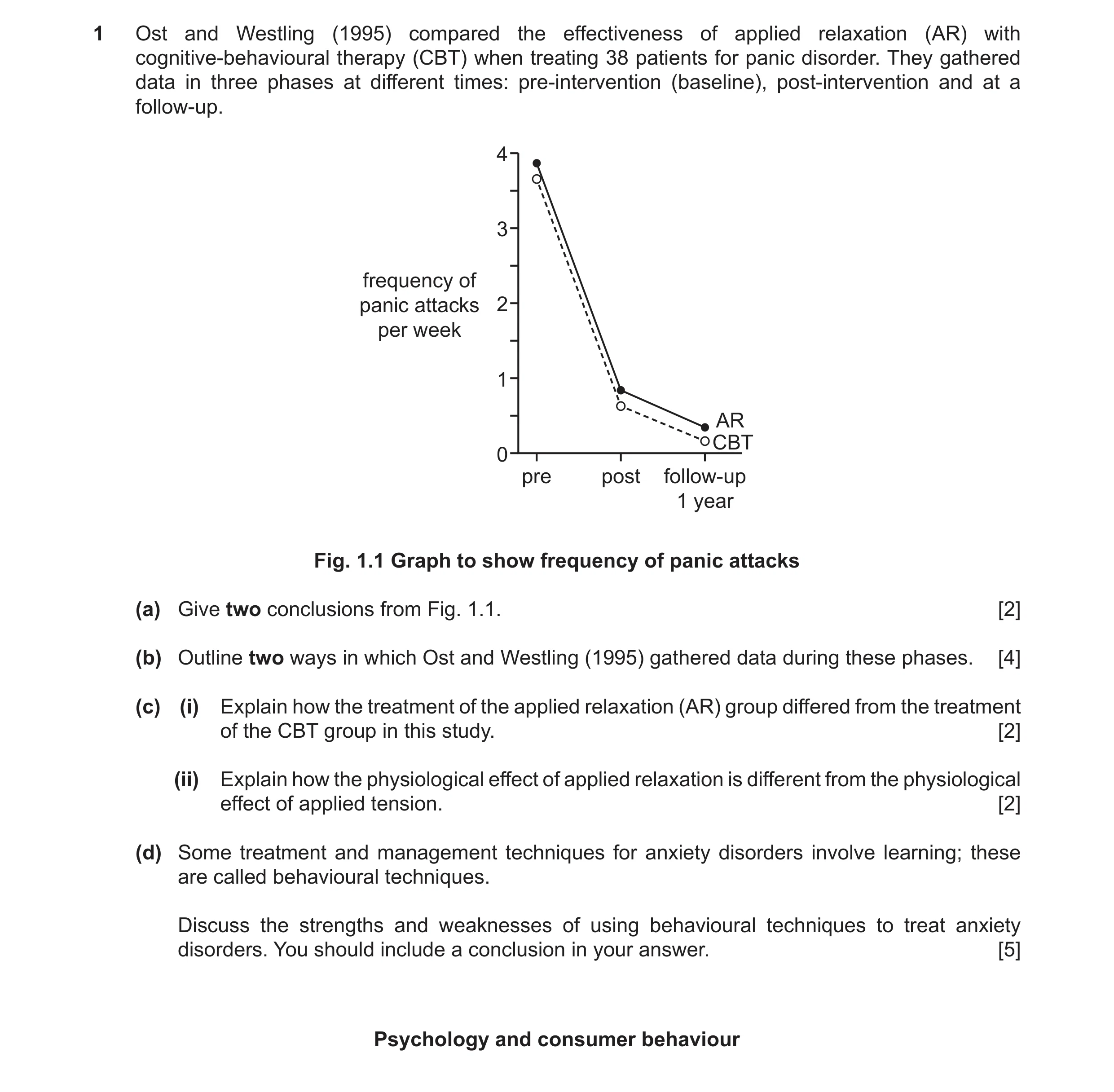
![Question 12: (a) Design a study to investigate the long-term effectiveness of applied tension. [10] (b) Explain the psychological and methodological evi…](https://img.pastlit.com/crops/51277194-a8cf-4bbf-9382-1e7b026bae9b/q5.webp) 3 / 8
3 / 8
![Question 14: (a) Design a study to investigate the long-term effectiveness of applied tension. [10] (b) Explain the psychological and methodological evi…](https://img.pastlit.com/crops/dd21ac07-c0ab-485b-8d79-d990c9aa92a1/q5.webp)
![Question 16: (a) Design a study using a questionnaire to investigate gender differences in hypochondriasis. [10] (b) Explain the psychological and metho…](https://img.pastlit.com/crops/0bb7edd8-80f6-4c05-adee-9d2d8c593544/q7.webp)
 4 / 8
4 / 8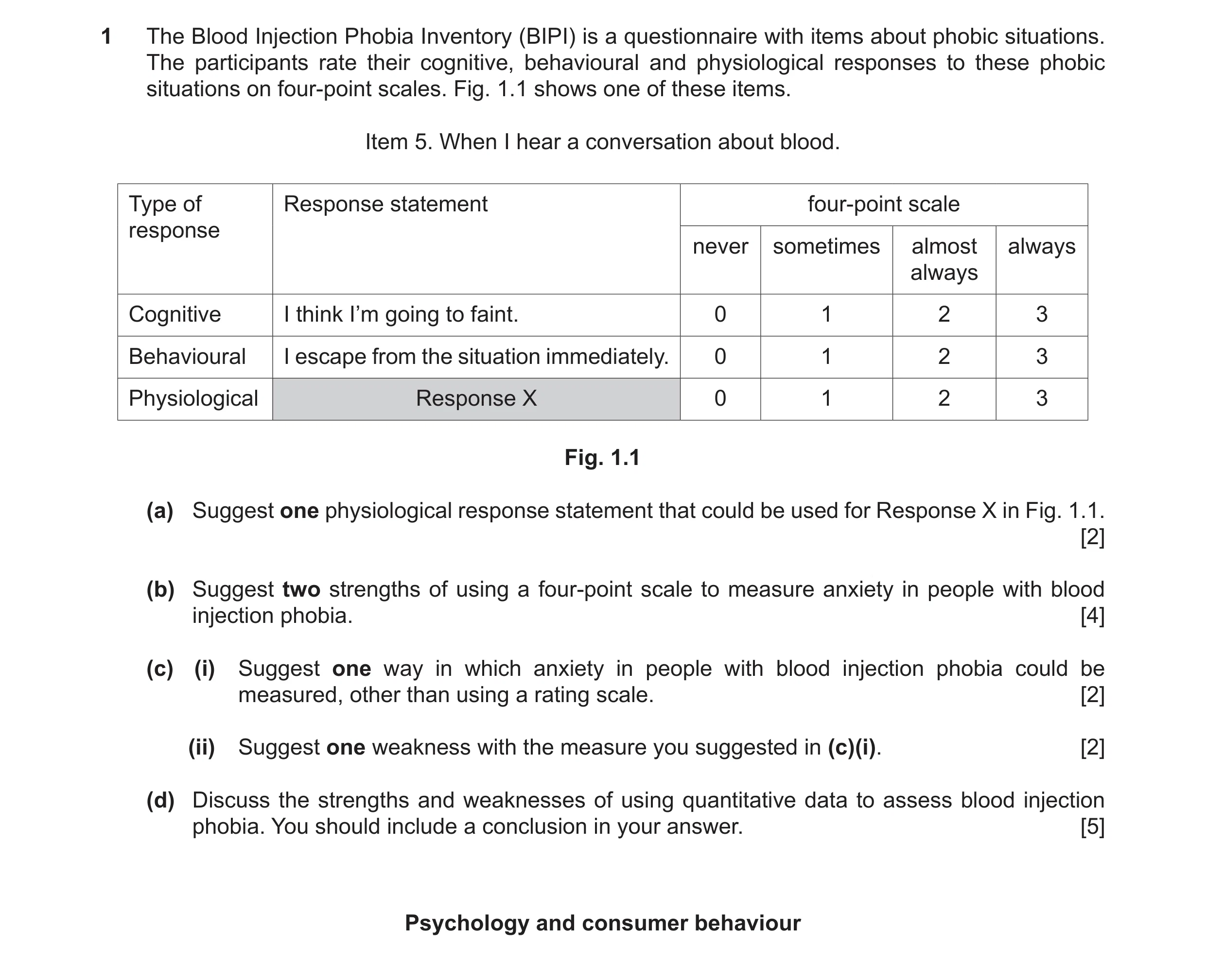
 5 / 8
5 / 8
![Question 21: (a) Design a study to investigate the long-term effectiveness of systematic desensitisation in the treatment of anxiety disorders. [10] (b)…](https://img.pastlit.com/crops/25ad80ee-306e-4bd0-a6a4-0718502286de/q5.webp)
 6 / 8
6 / 8![Question 24: (a) Design a study to investigate the long-term effectiveness of systematic desensitisation in the treatment of anxiety disorders. [10] (b)…](https://img.pastlit.com/crops/84b20a3f-be1a-42da-9eaa-f6d3604d18c2/q5.webp)
![Question 26: Generalised anxiety disorder can be assessed using the GAD-7. (a) Outline how answers are scored on the GAD-7 scale. [2] (b) Suggest how th…](https://img.pastlit.com/crops/8bc76506-f784-48eb-bc92-7728316e6459/q2.webp)
 7 / 8
7 / 8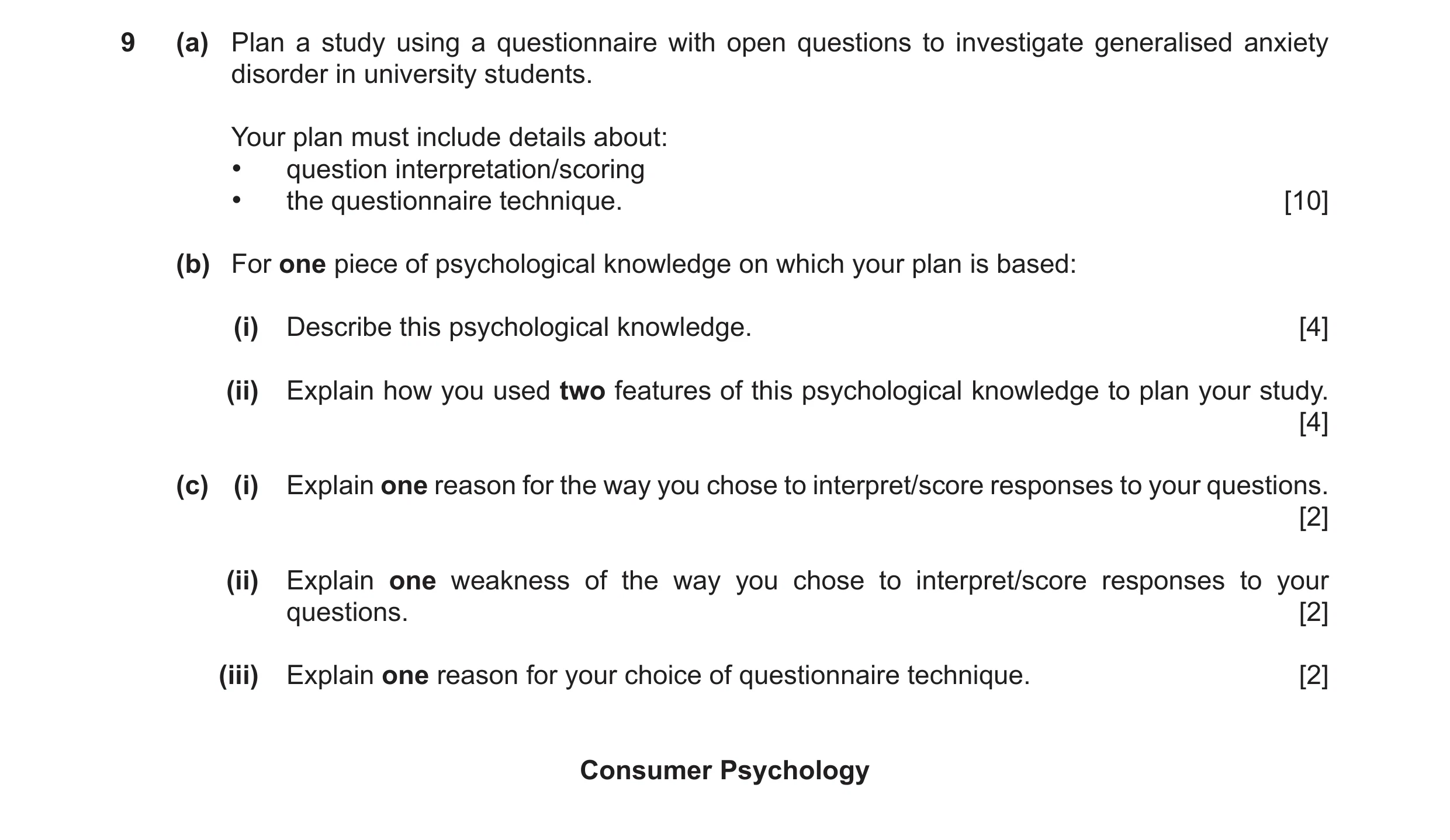
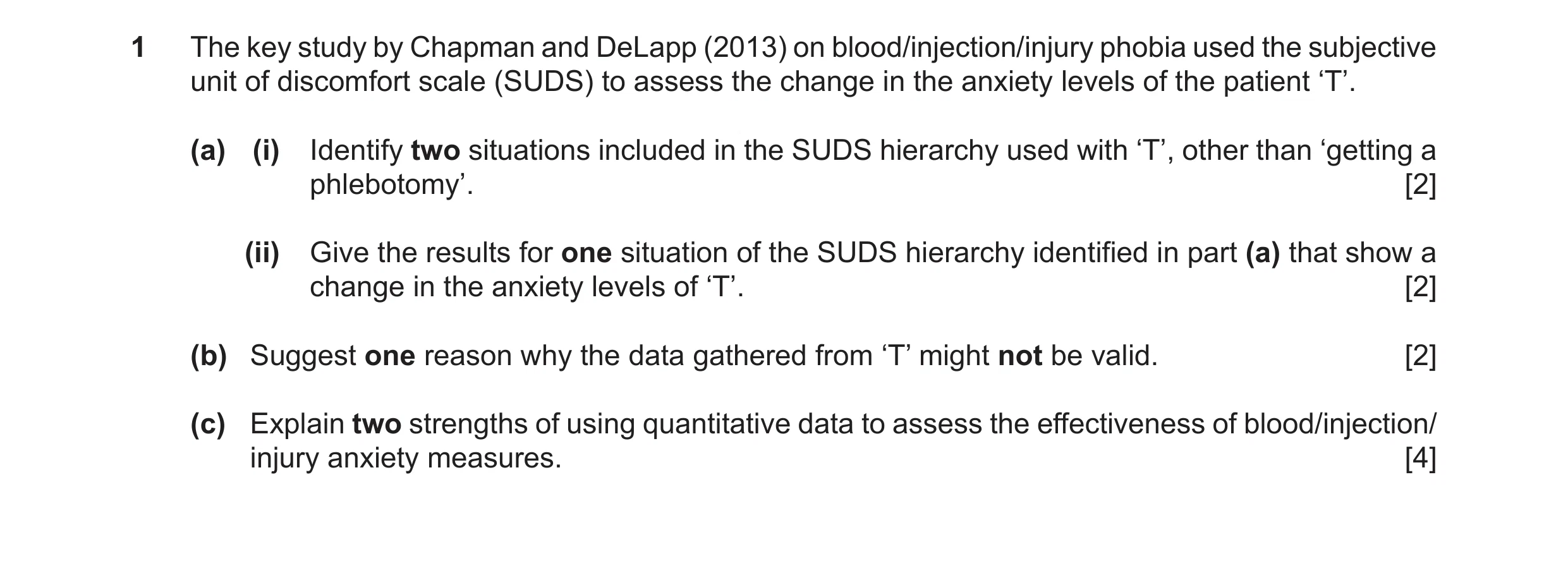
 8 / 8
8 / 8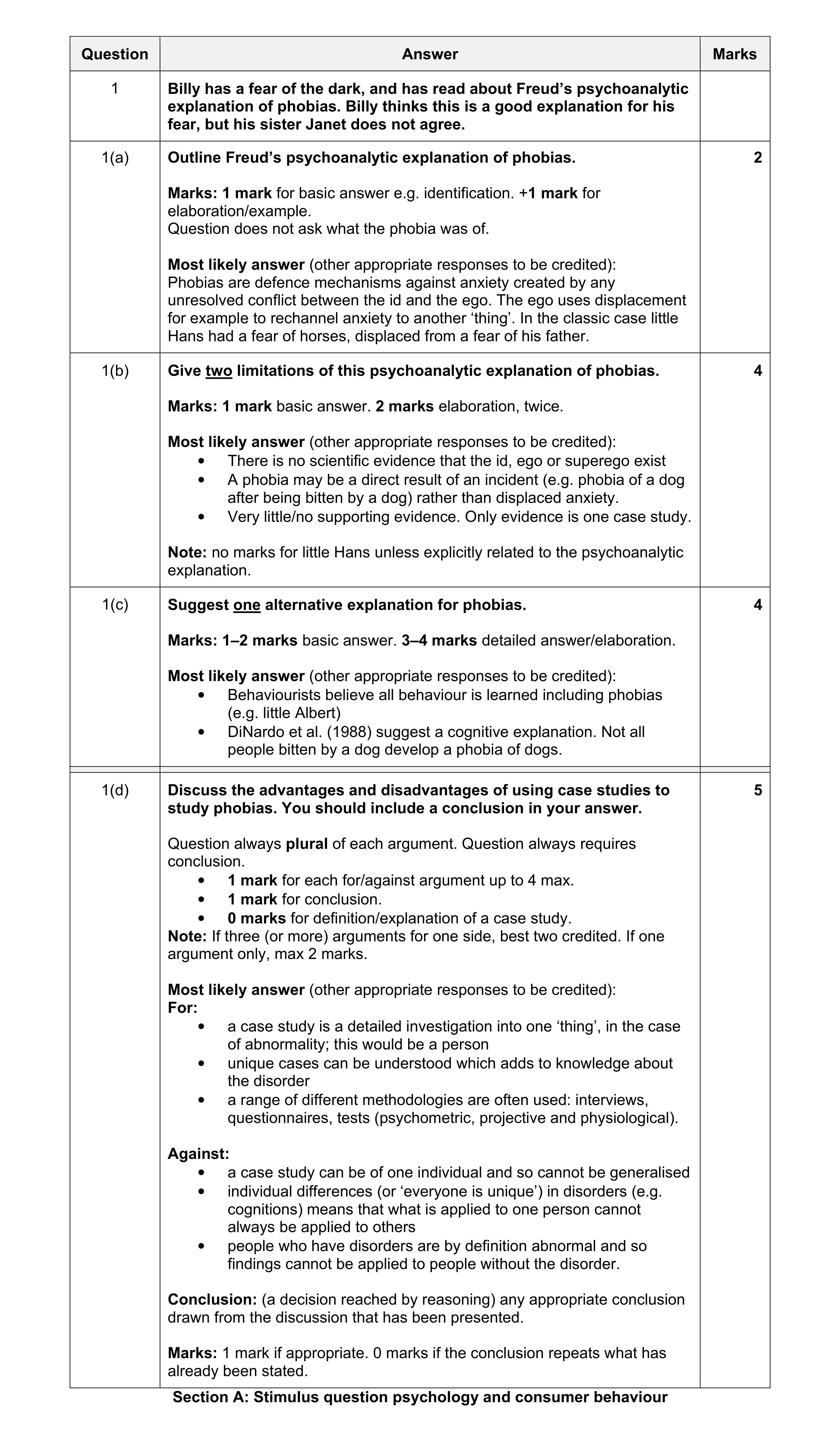 15
15 12
12 15
15 18
18 18
18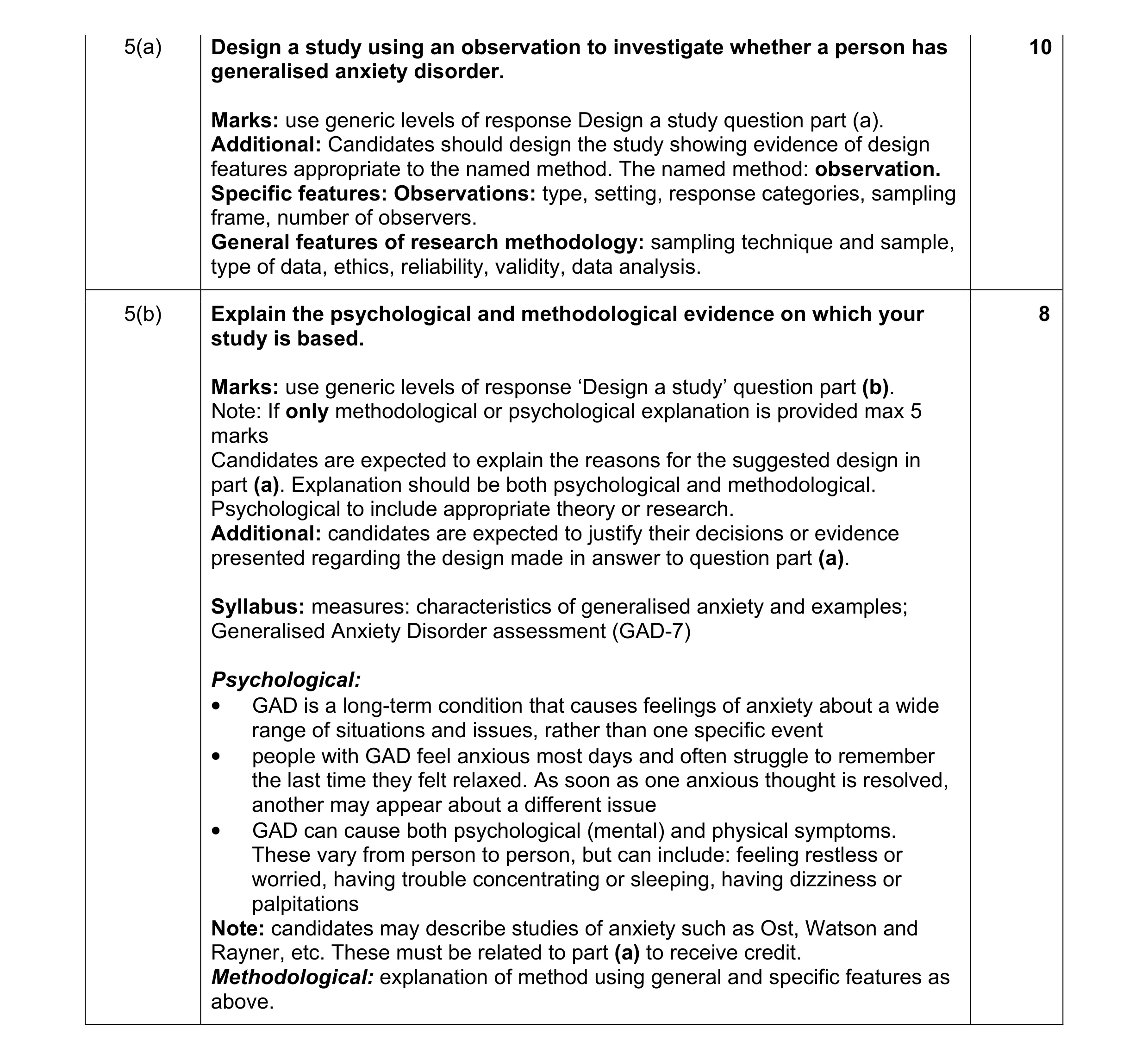 18
18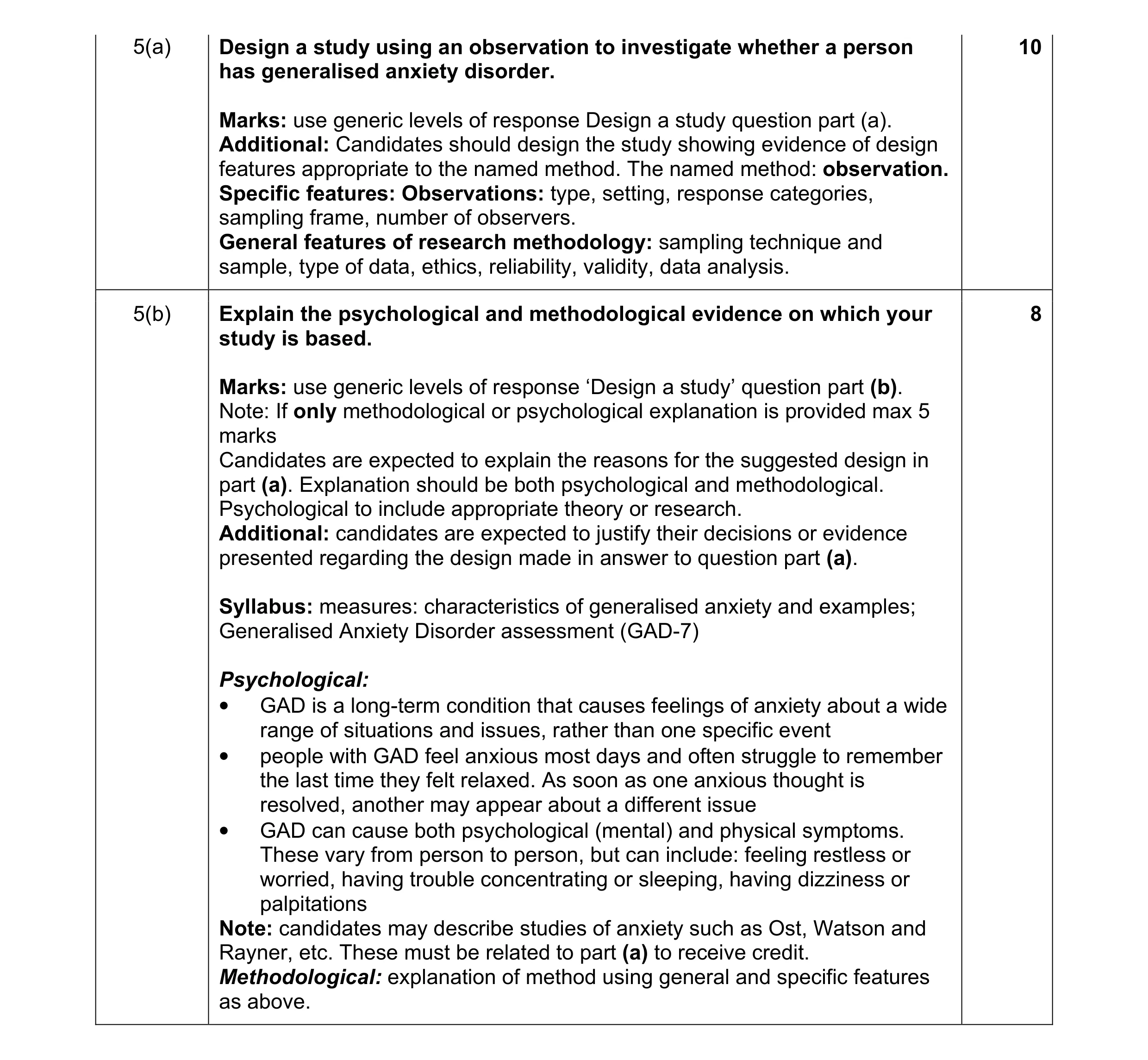 18
18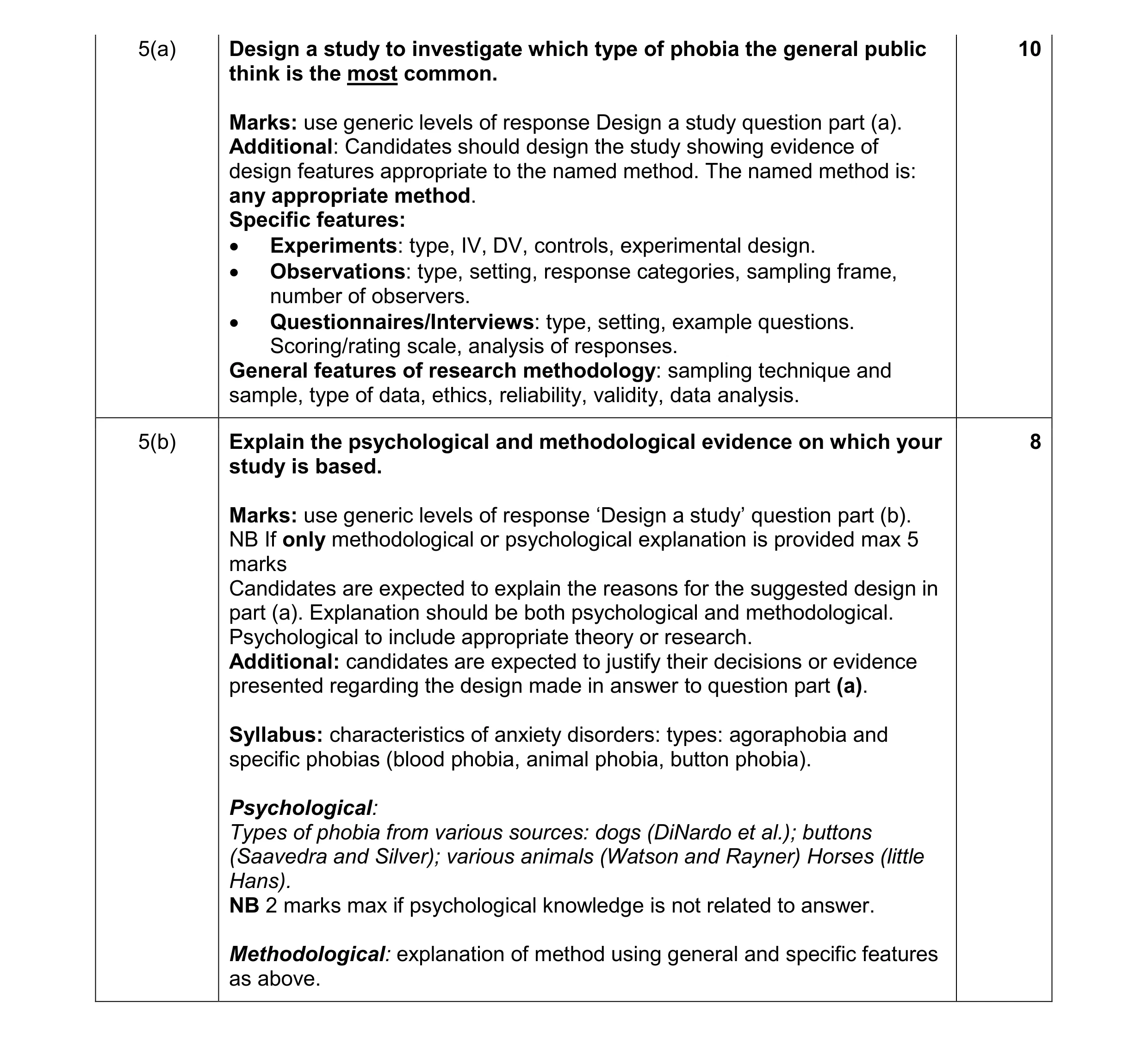 18
18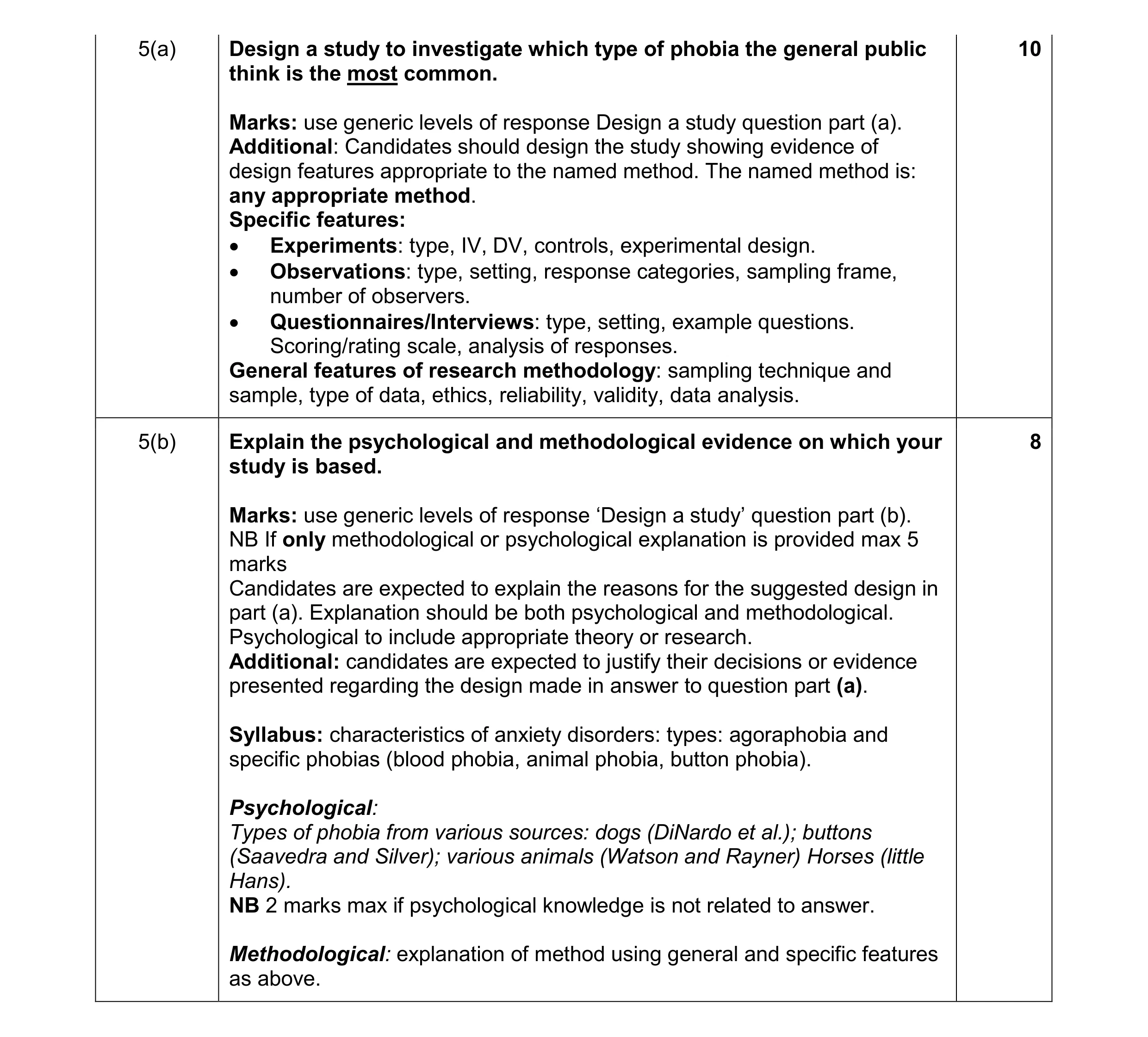 18
18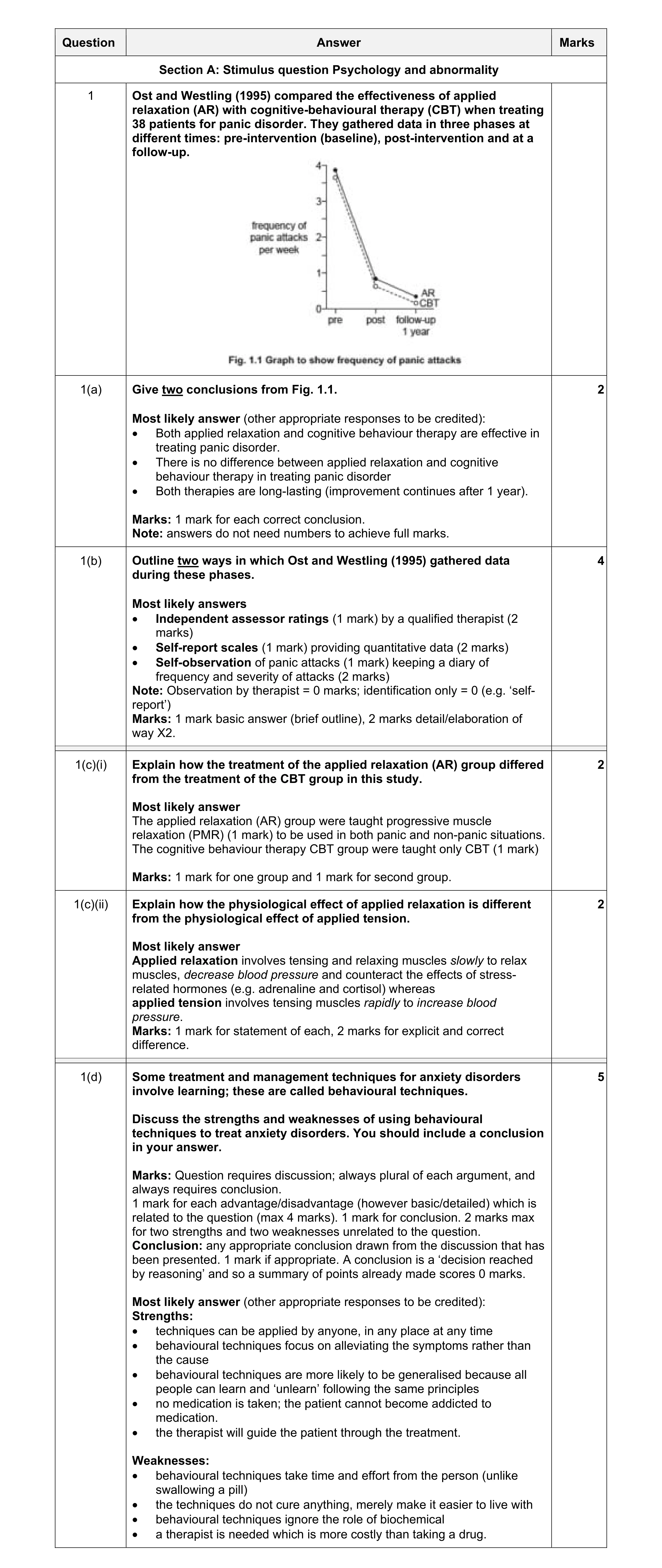 15
15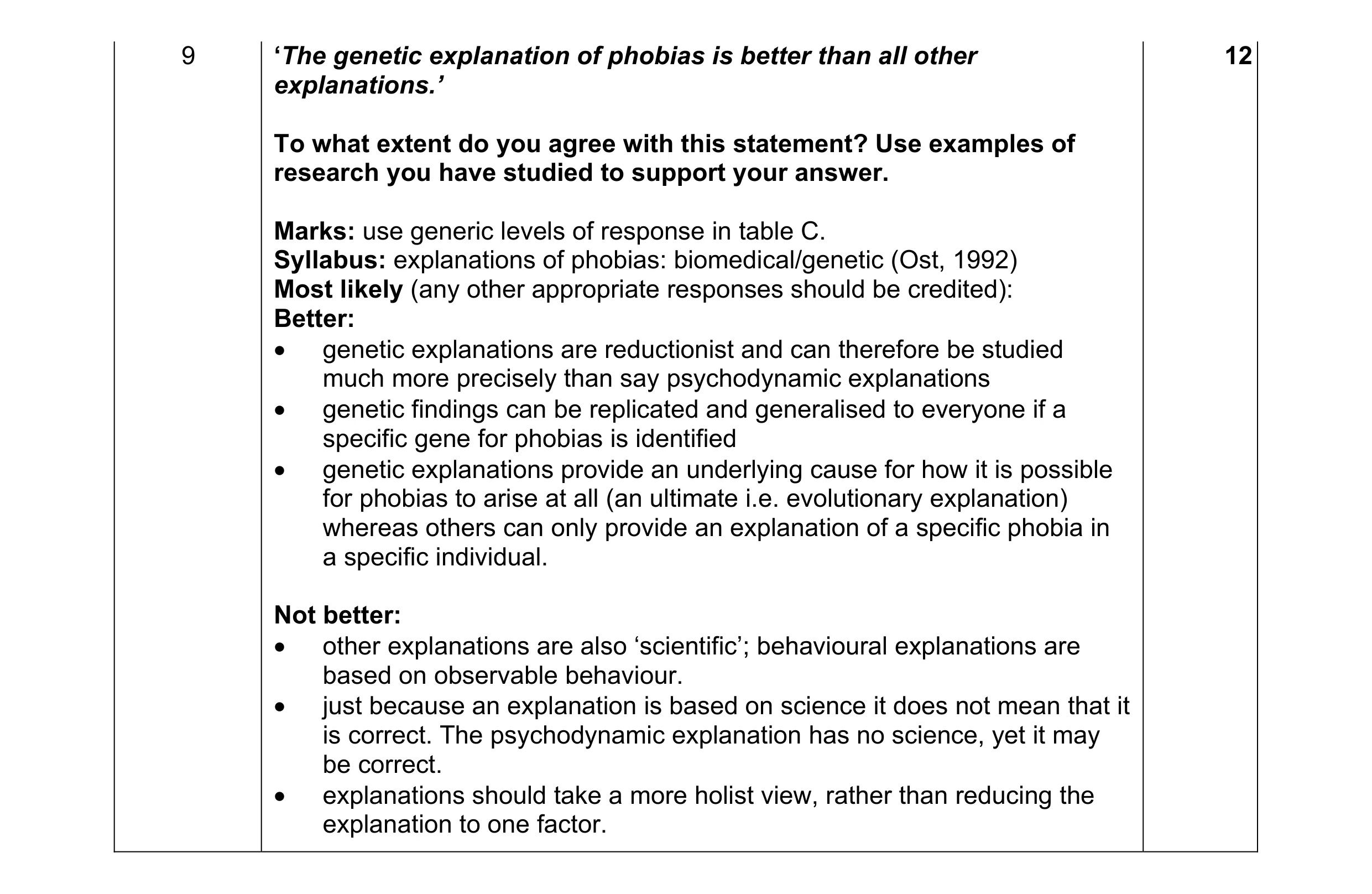 12
12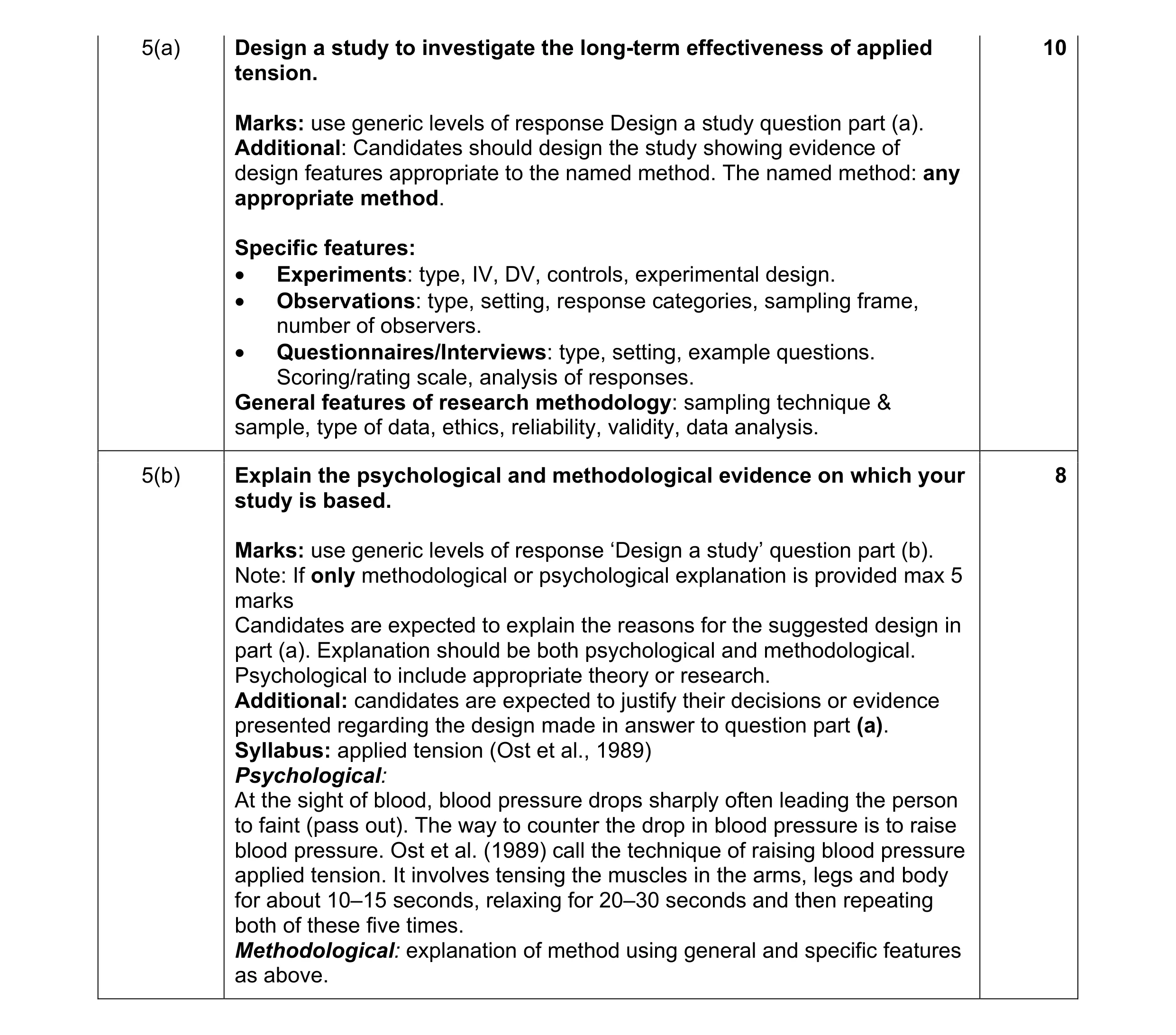 18
18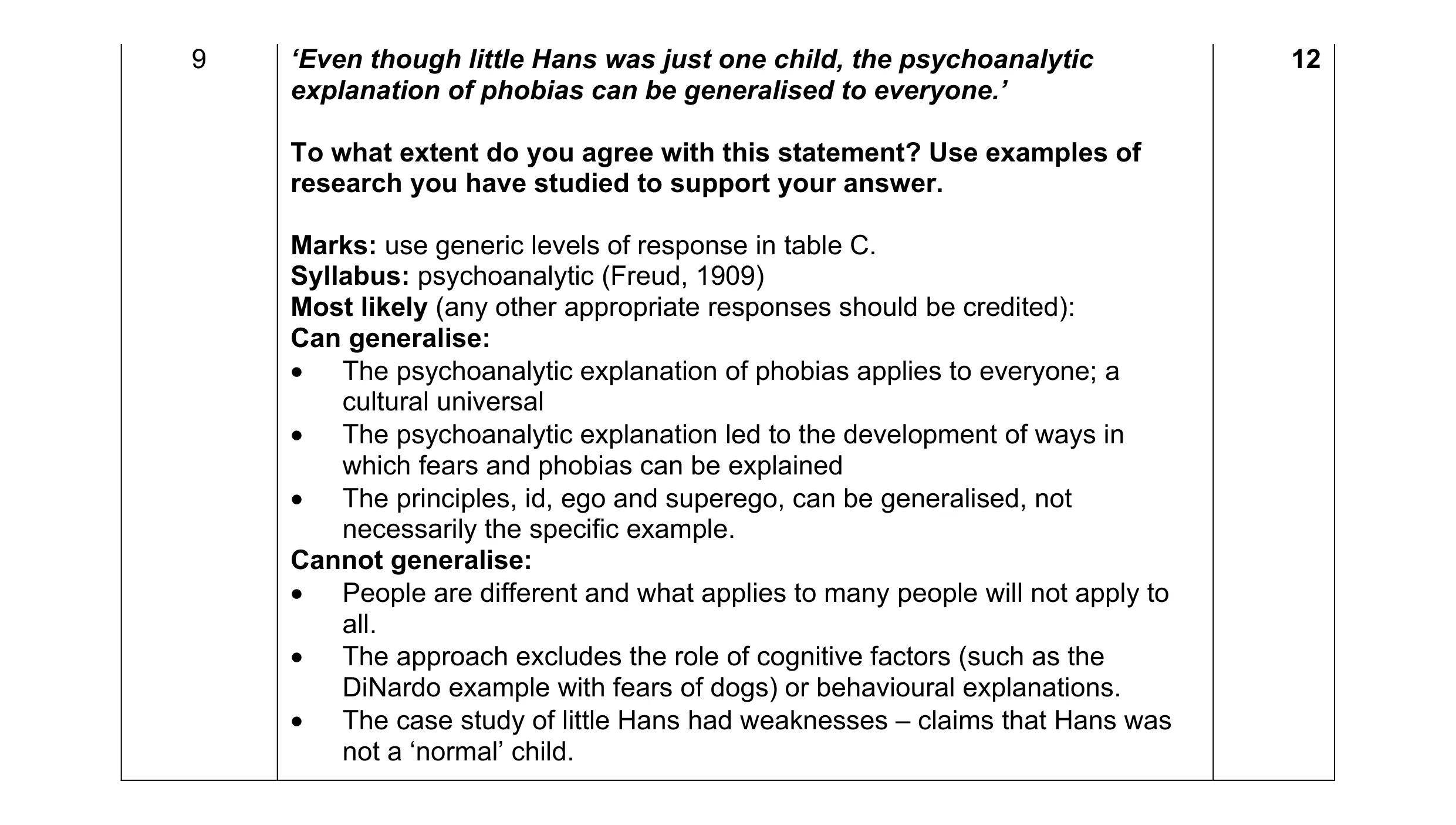 12
12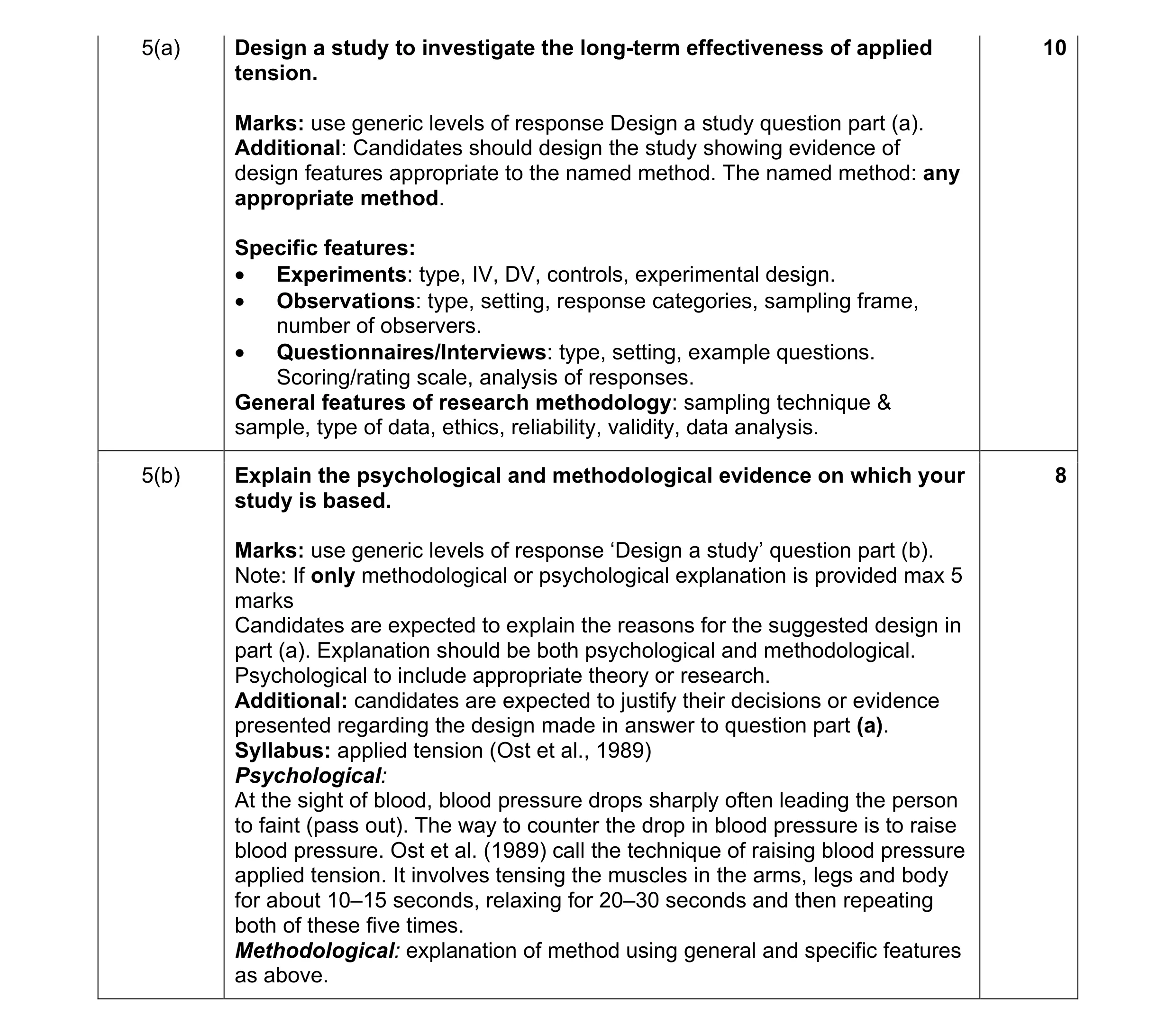 18
18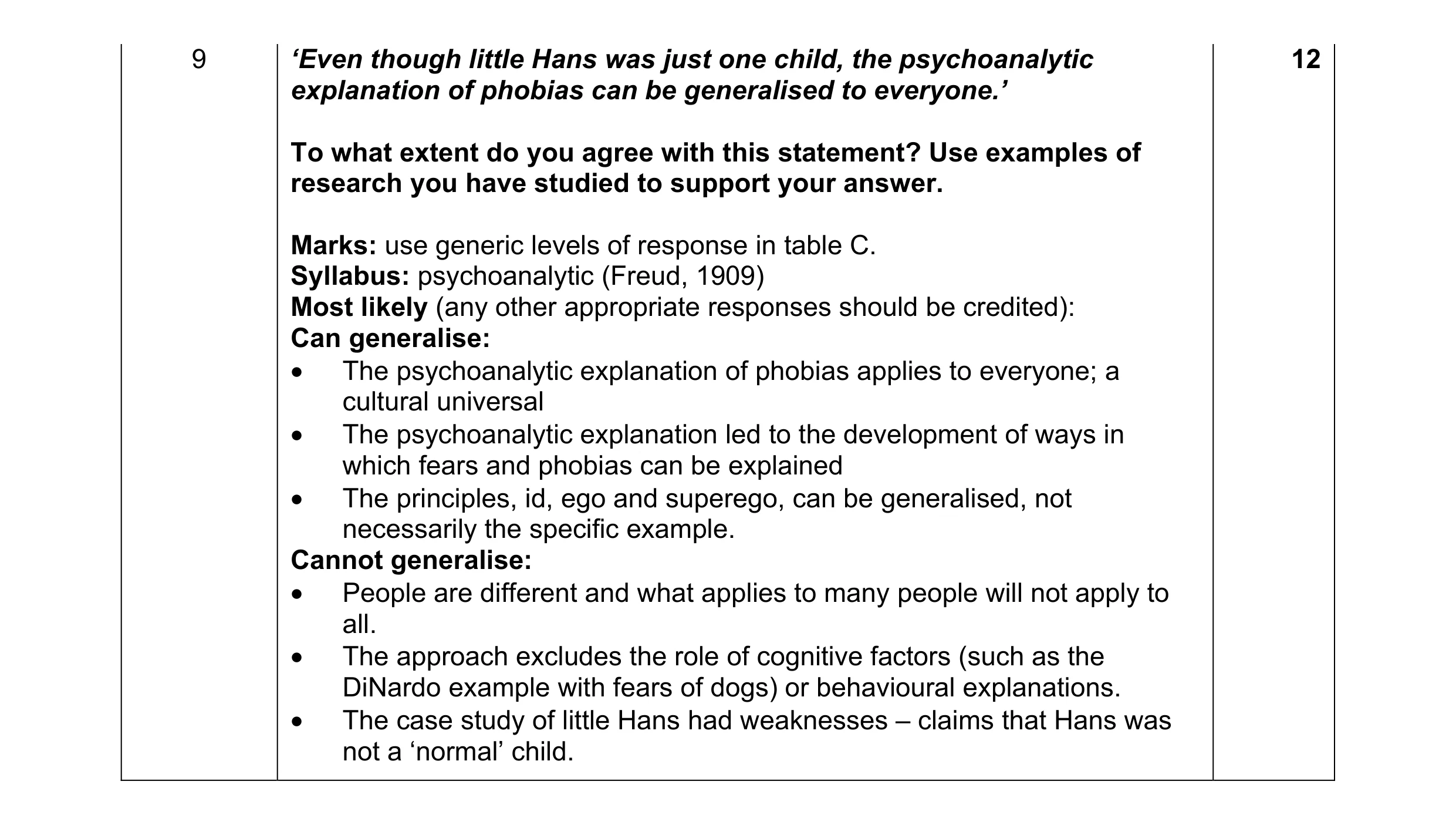 12
12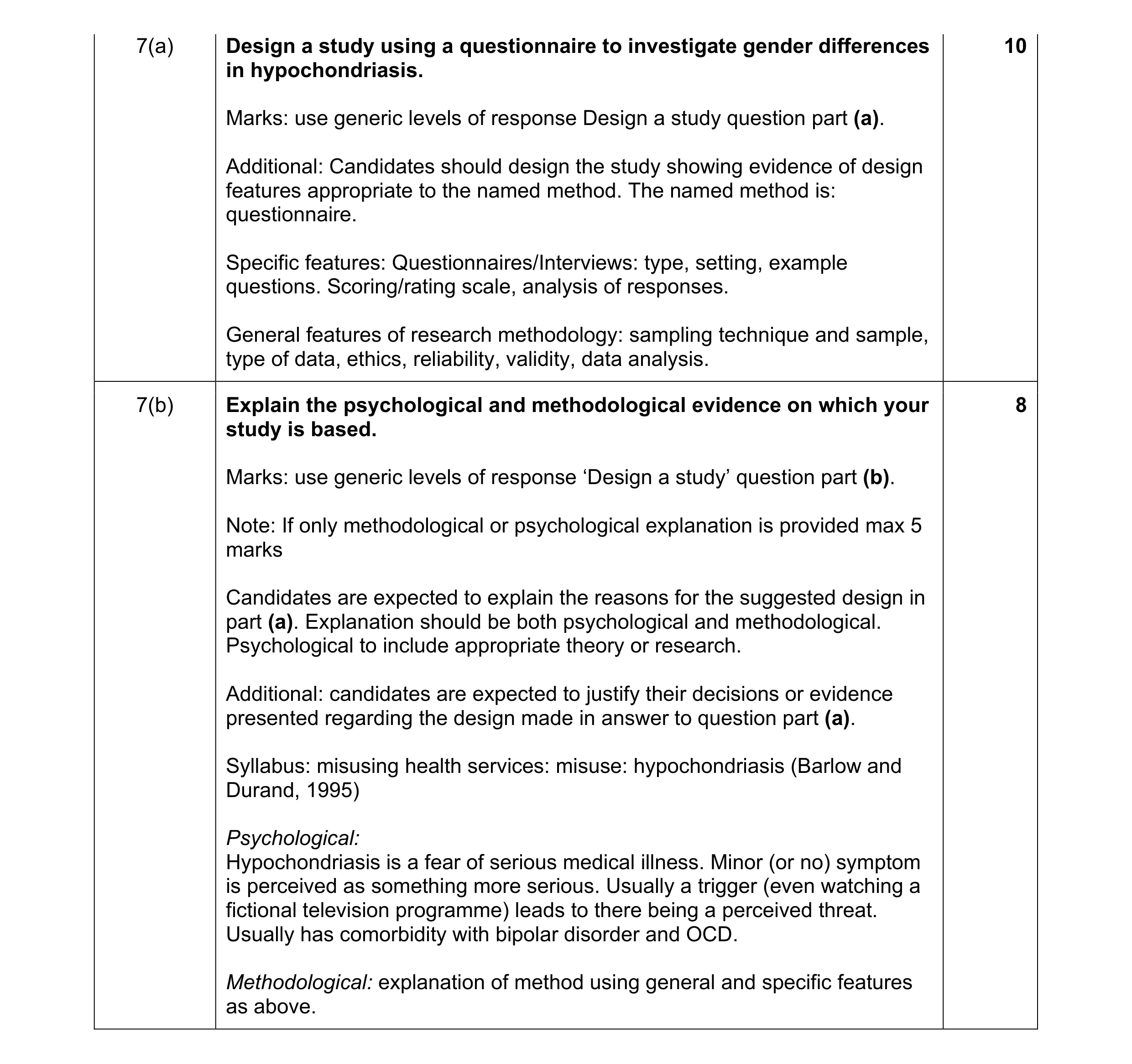 18
18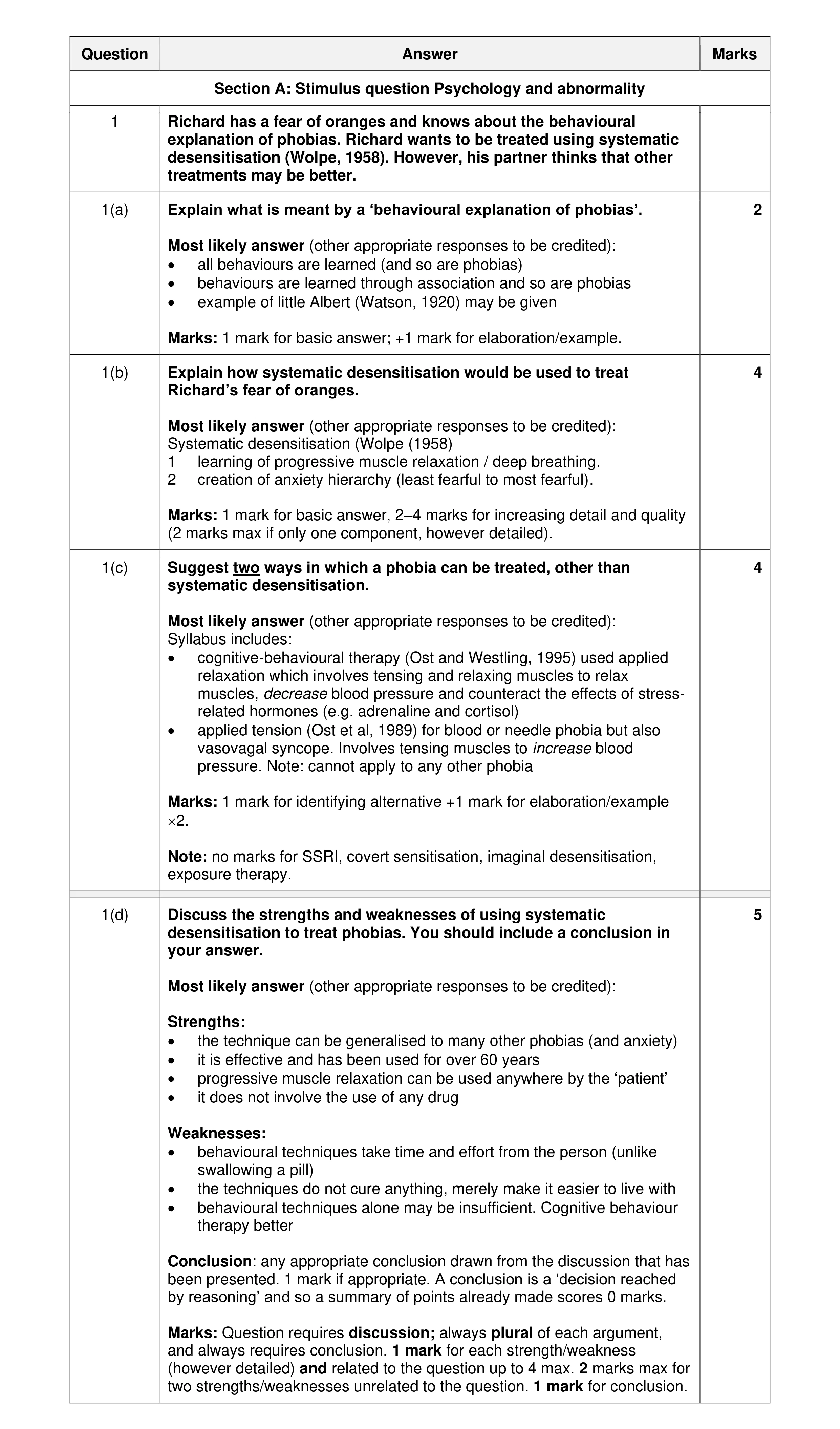 15
15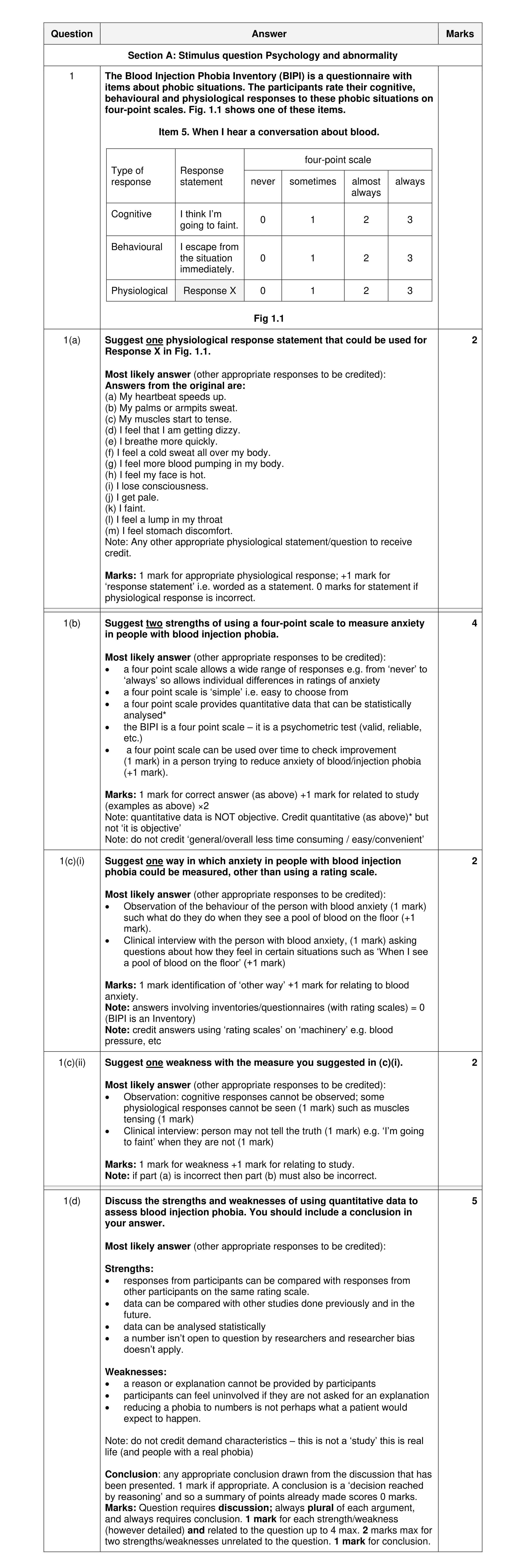 15
15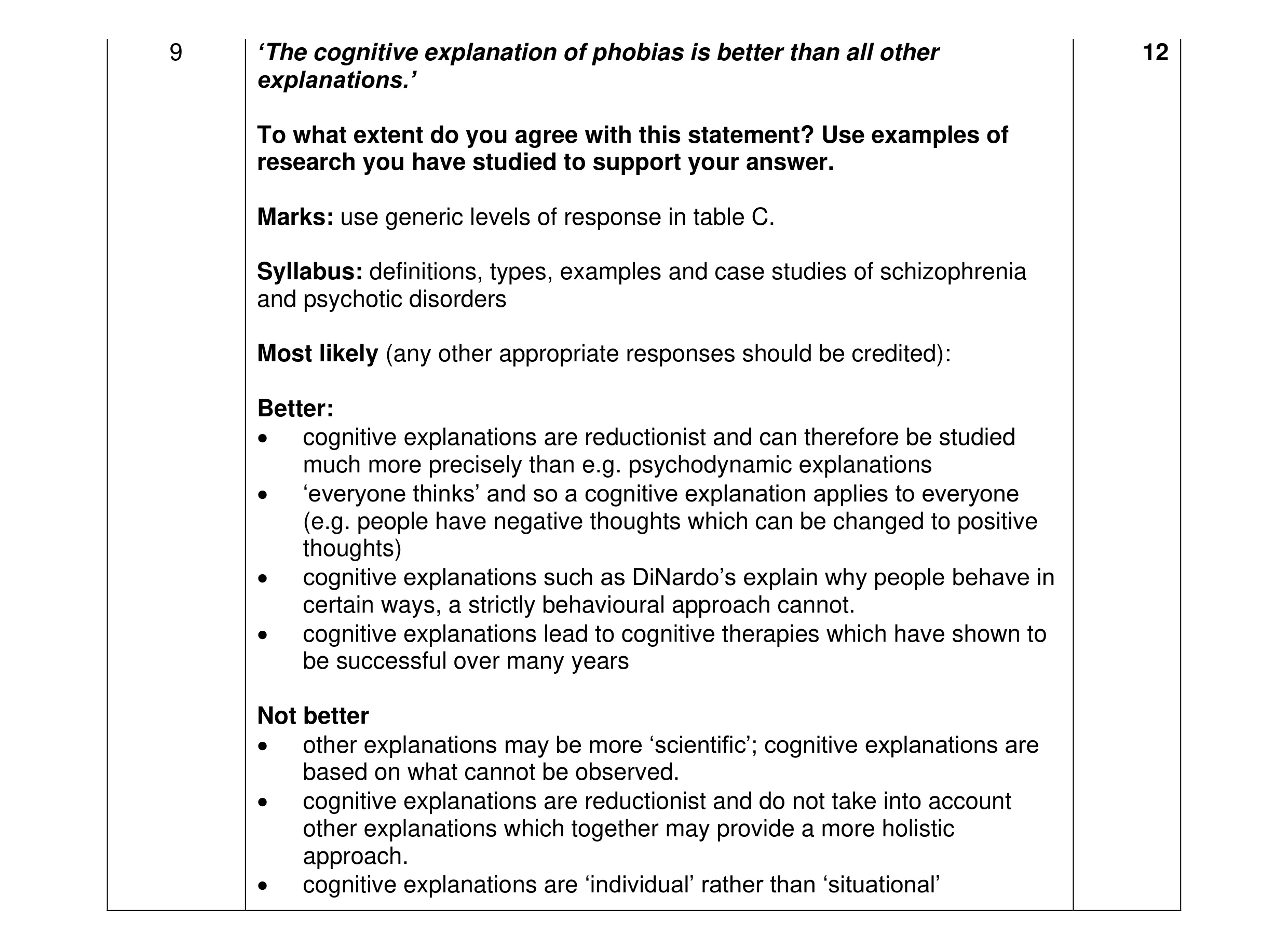 12
12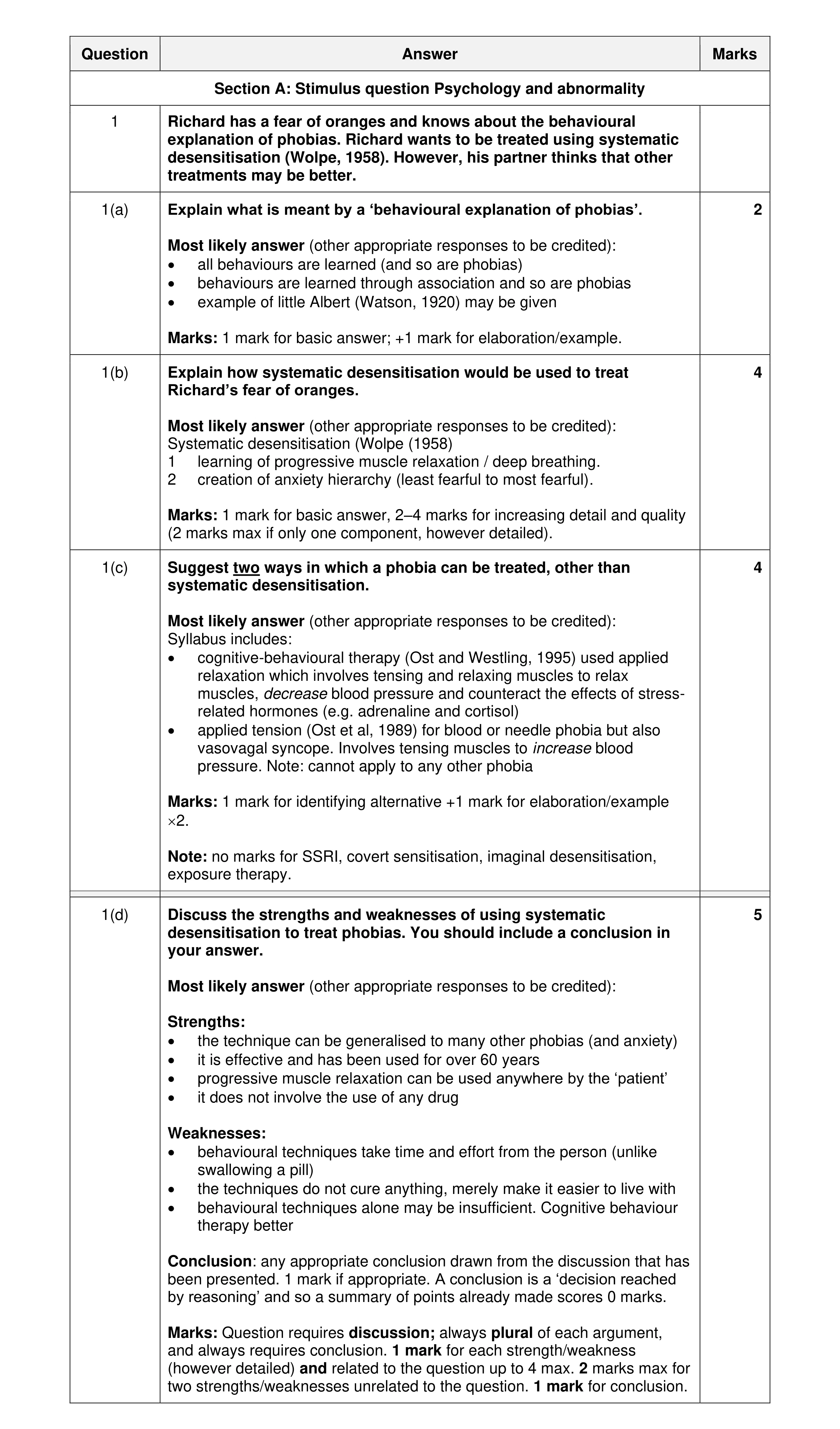 15
15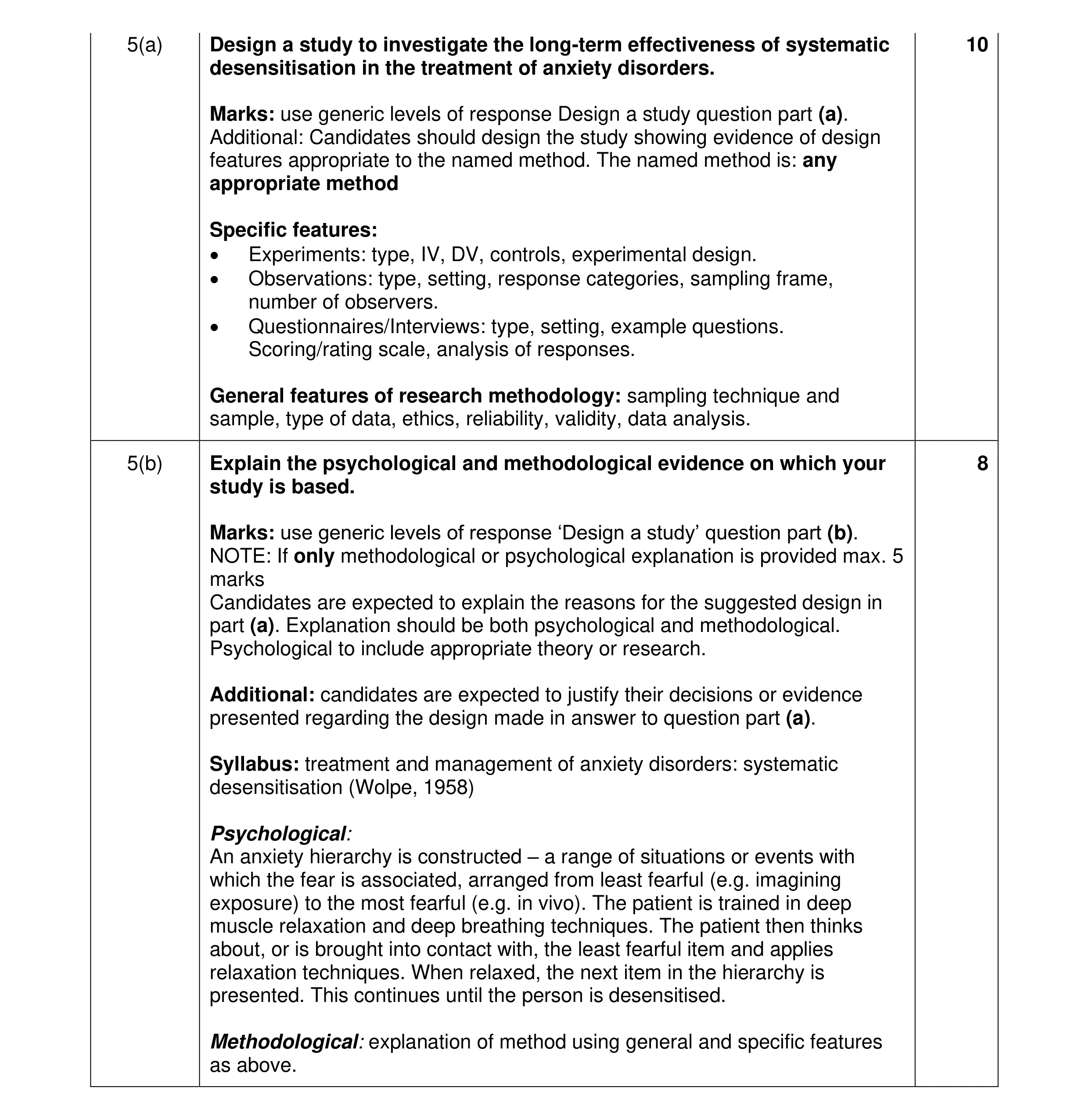 18
18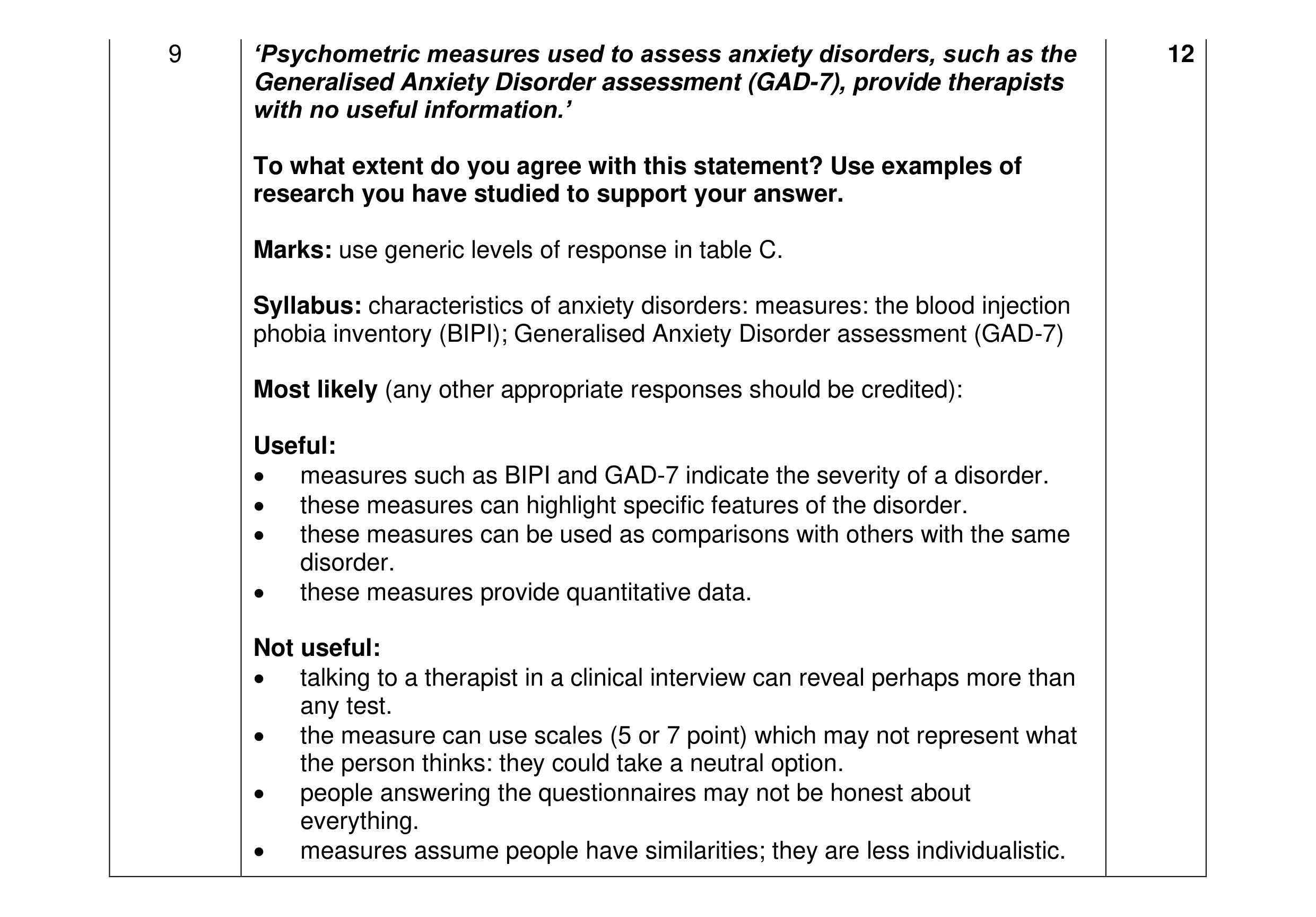 12
12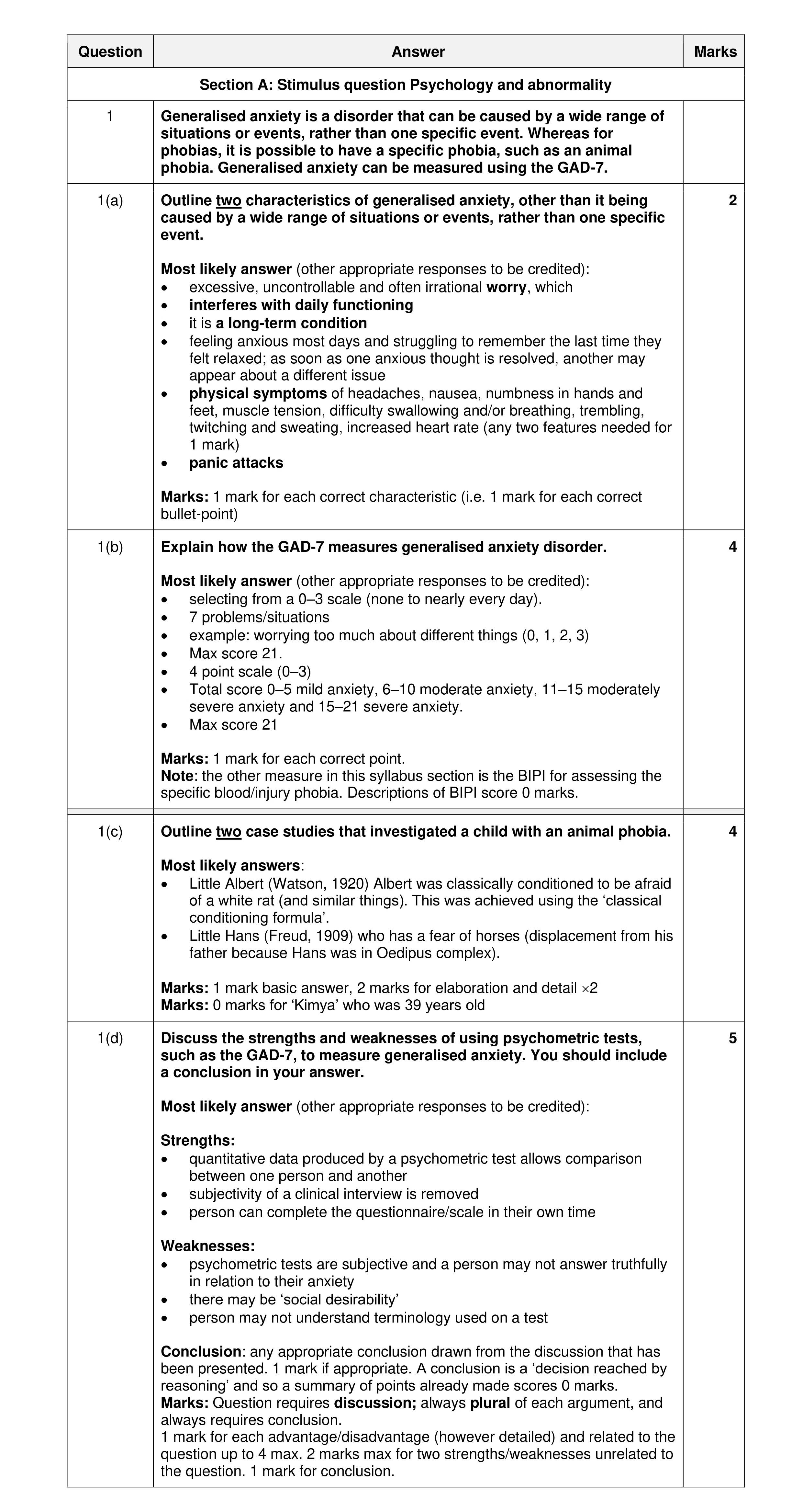 15
15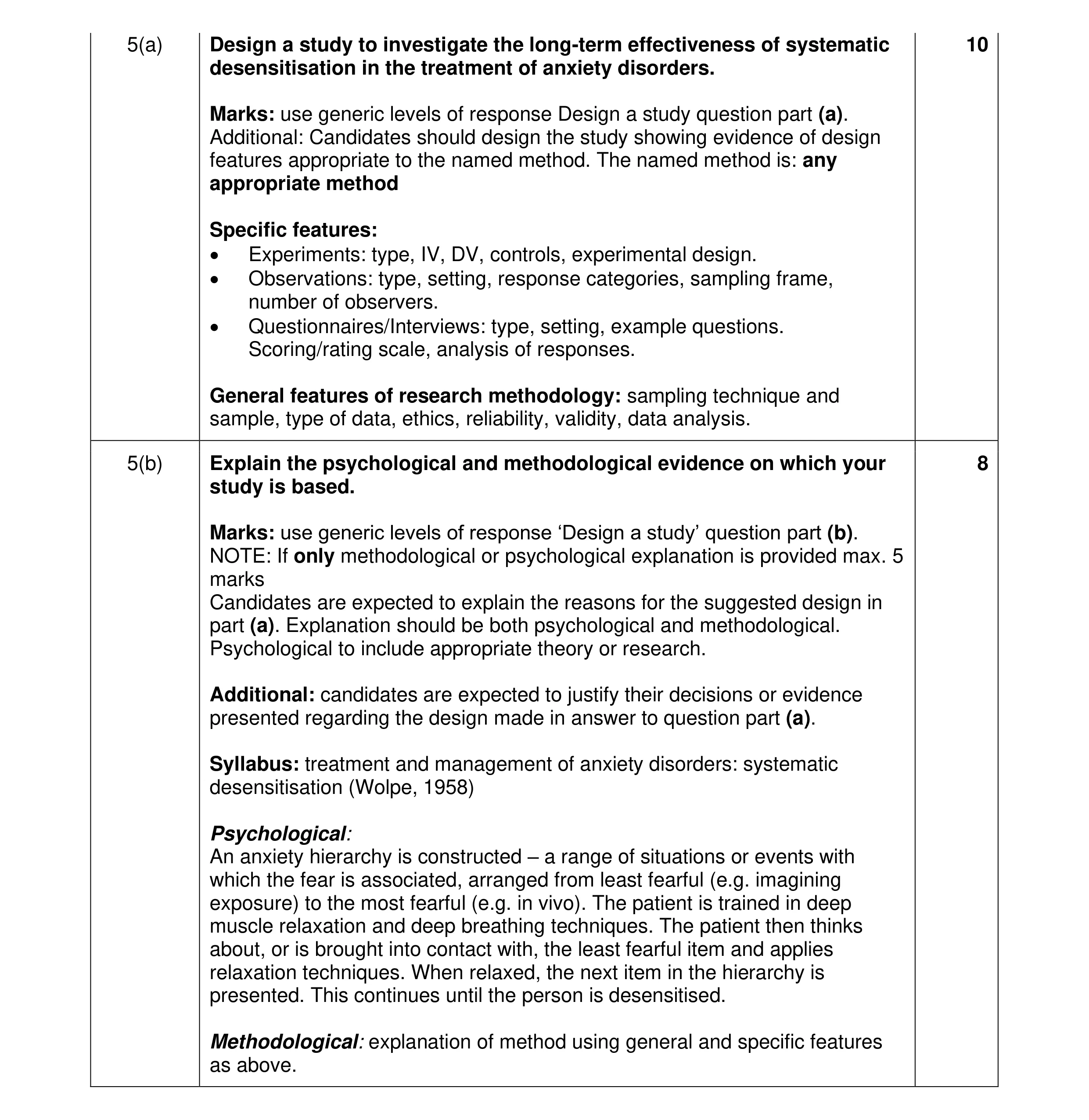 18
18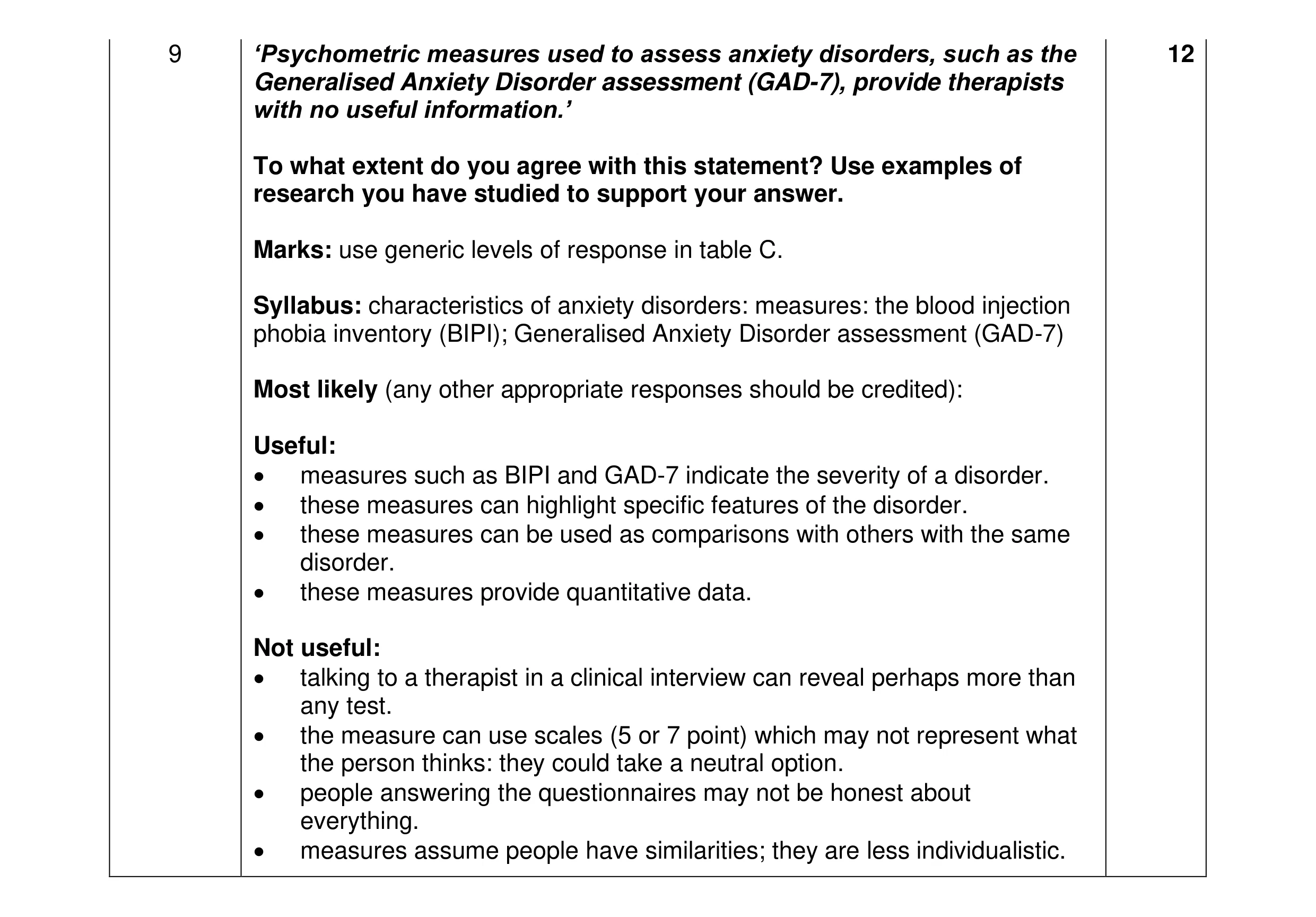 12
12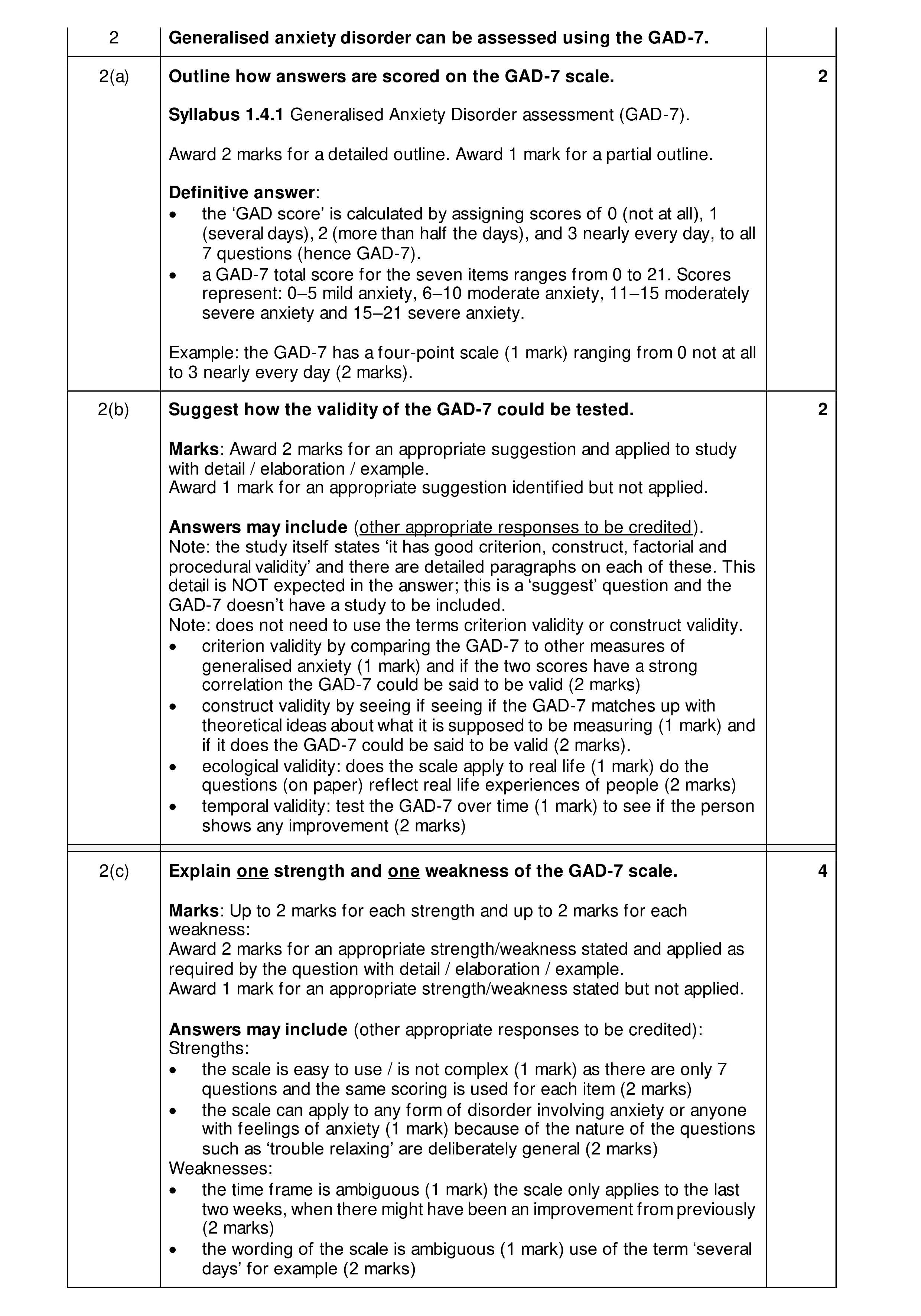 8
8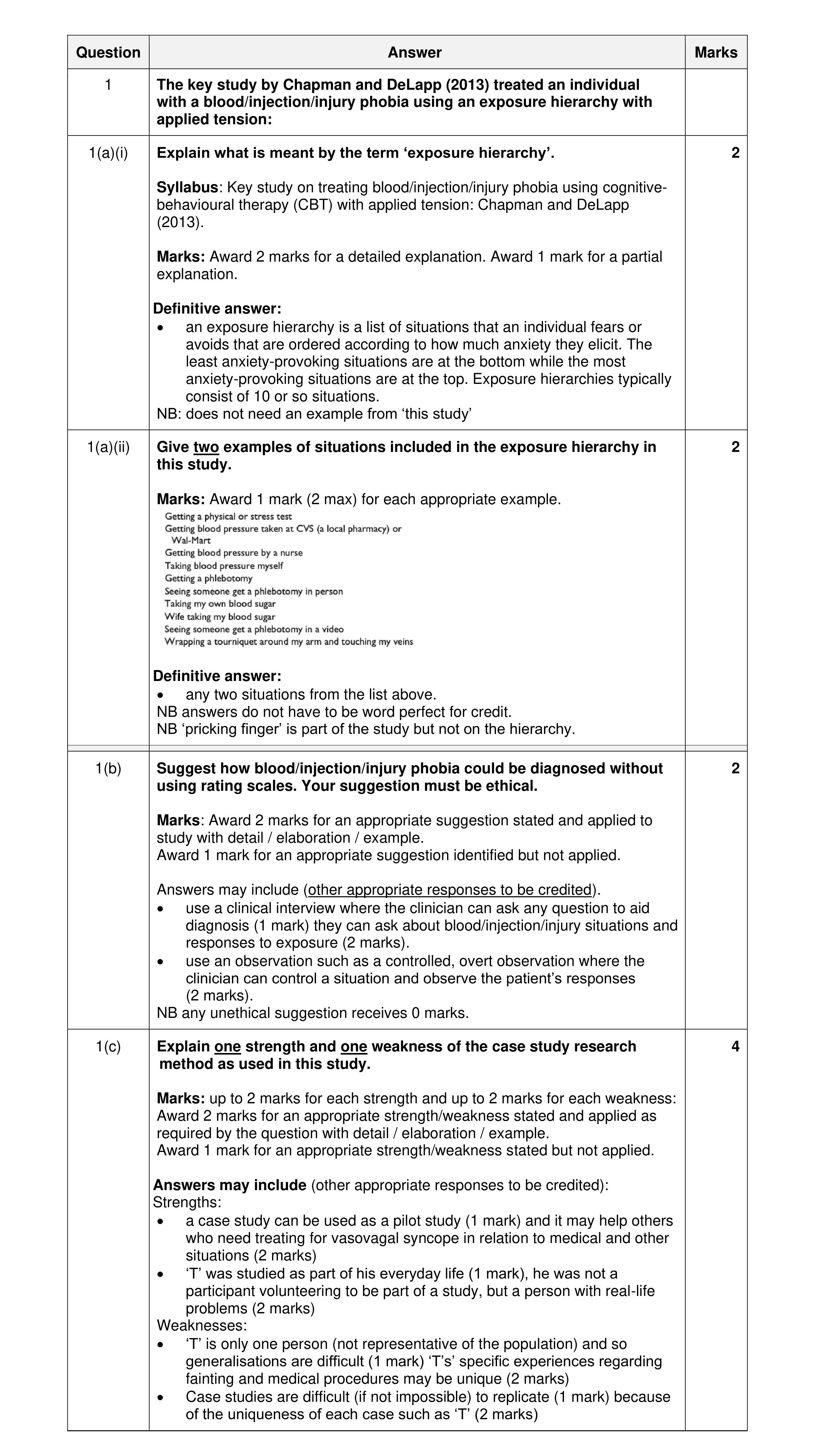 10
10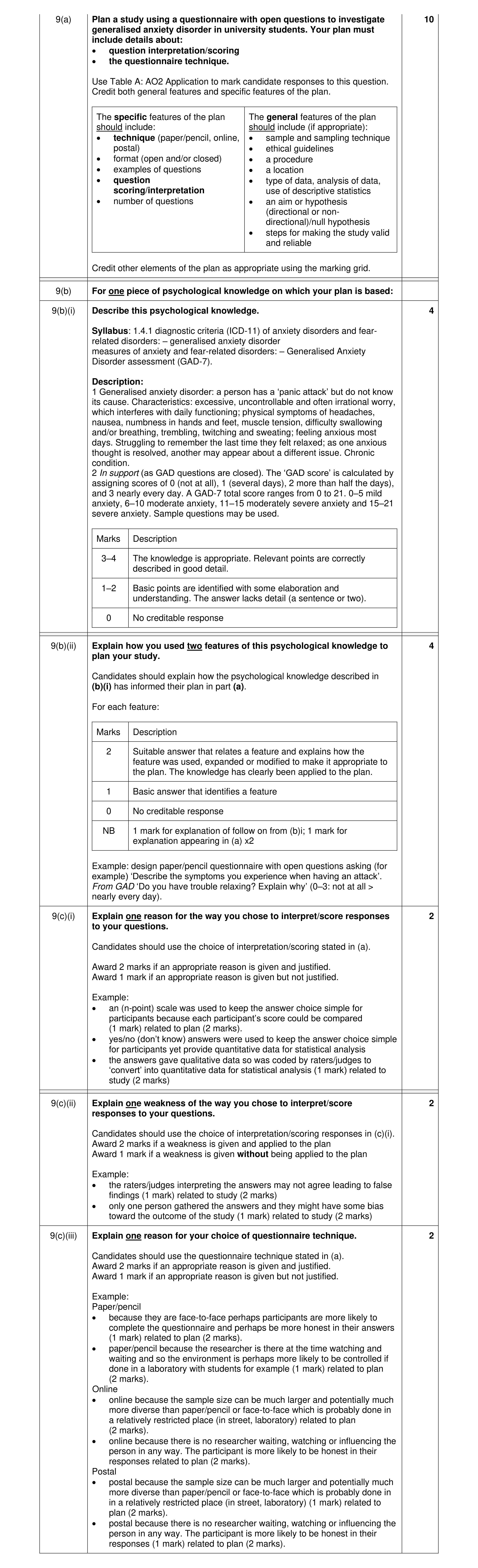 24
24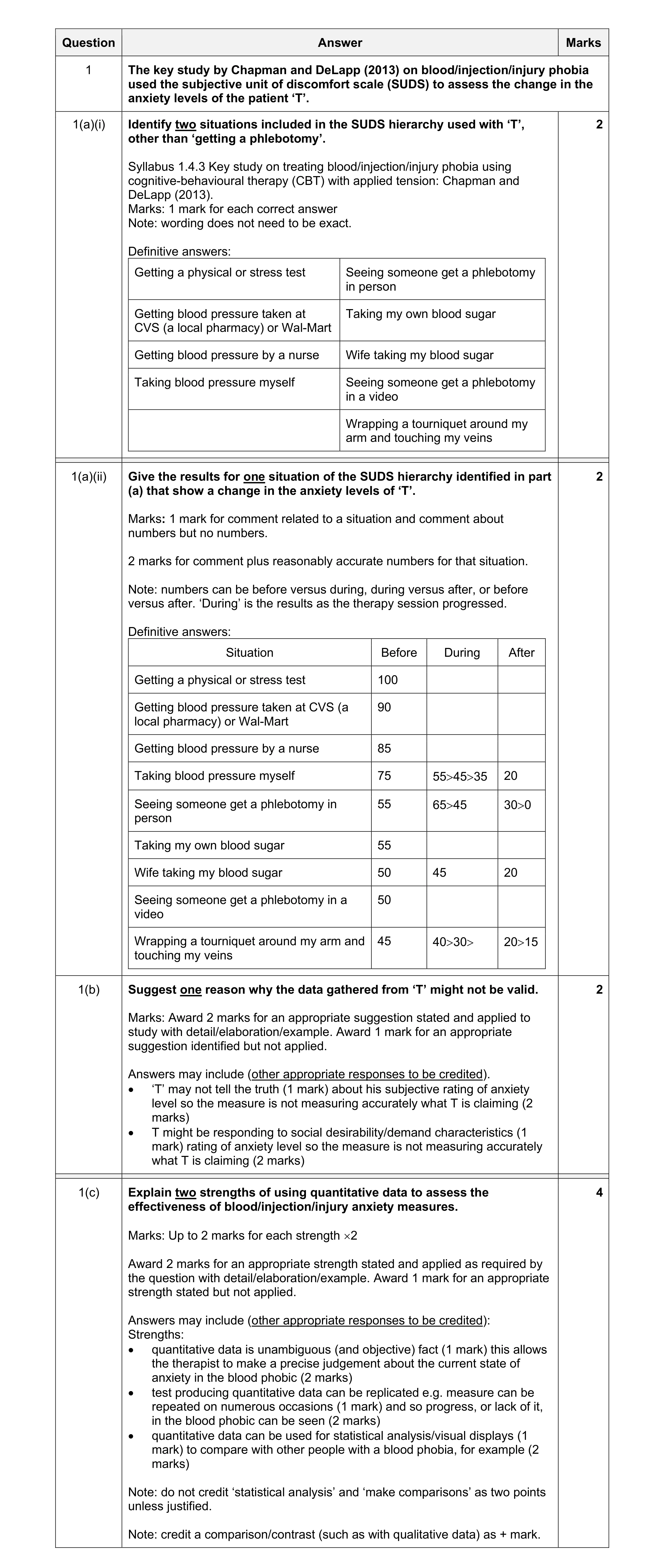 10
10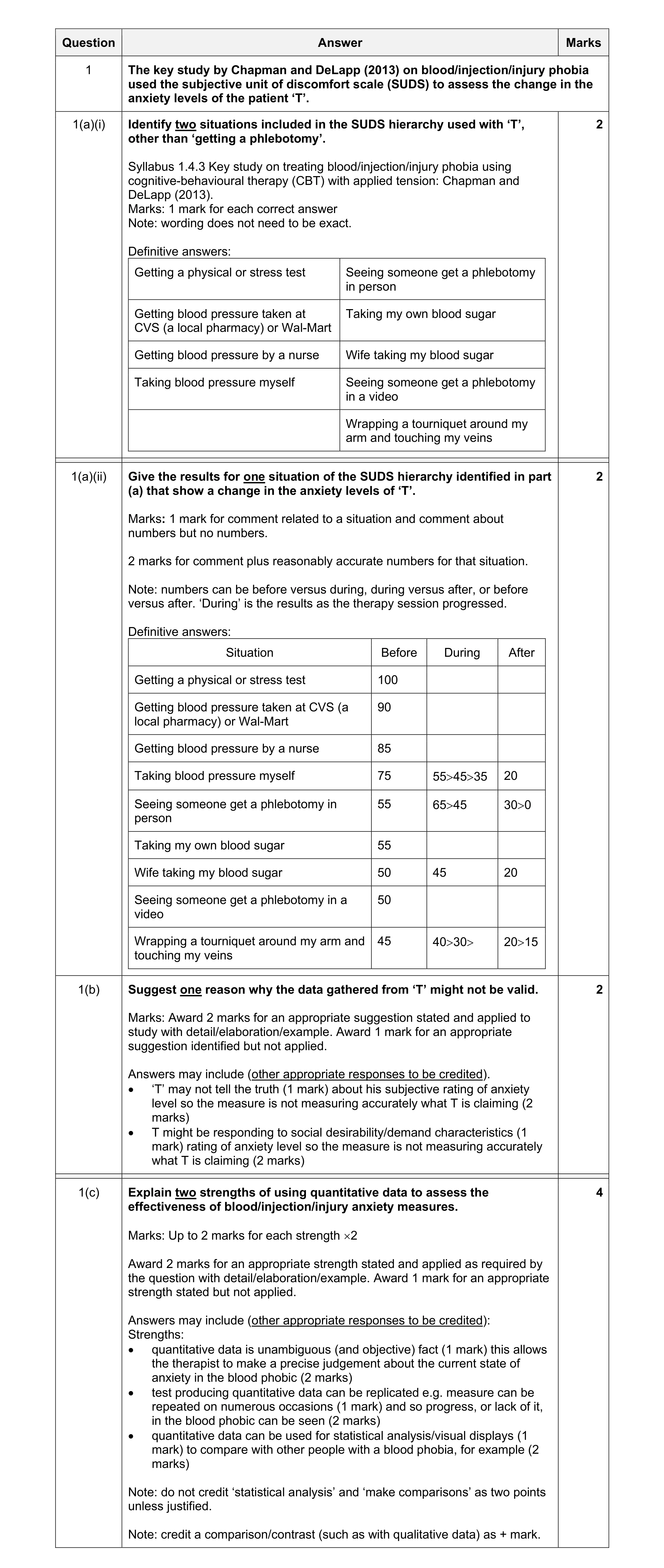 10
10