Questions as text
Q1 · Blaszczynski and Nower (2002) looked at the effect of imaginal desensitisation on… 9990/41 May/June 2018
1 Blaszczynski and Nower (2002) looked at the effect of imaginal desensitisation on patients with impulse control disorders and used relaxation (trigger) monitoring tables to measure the effectiveness of their therapy. These tables are completed at home by the patient. At the end of their treatment, the patient should report a significant reduction in the frequency and intensity of urges to act on impulse. (a) Explain the technique of ‘imaginal desensitisation’. [2] (b) Give two advantages of ‘imaginal desensitisation’. [4] (c) Suggest two problems with the use of relaxation monitoring tables. [4] (d) Discuss the advantages and disadvantages of psychological techniques to treat impulse control disorders. You should include a conclusion in your answer. [5] Psychology and consumer behaviour
15 marks
Mark scheme: Question Answer Marks Section A: Stimulus question Psychology and abnormality 1 Blaszczynski and Nower (2002) looked at the effect of imaginal desensitisation on patients with impulse control disorders and used relaxation (trigger) monitoring tables to measure the effectiveness of their therapy. These tables are completed at home by the patient. At the end of their treatment, the patient should report a significant reduction in the frequency and intensity of urges to act on impulse. 1(a) Explain the technique of ‘imaginal desensitisation’. 2 Marks: for components of: ‘relaxation’ 1 mark, for ‘imaginal’ 1 mark. Most likely answer (other appropriate responses to be credited): The technique involves teaching a brief progressive muscle relaxation procedure. Clients are then instructed to visualize themselves being exposed to a situation that triggers the drive to carry out their impulsive behaviour, contemplating acting on their urge but then leaving the situation in a state of continued relaxation without having acted upon their urge. Sessions can be recorded on cassette audiotape for home-practice. 1(b) Give two advantages of ‘imaginal desensitisation’. 4 Marks: for each advantage: 1 mark basic answer. 2 marks elaboration. Most likely answer (other appropriate responses to be credited): From Blaszczynski and Nower: • It reduces the strength of the drive to carry out an habitual behaviour • It empowers the client by providing the necessary skills to resist such urges • It enhances a sense of self-efficacy by demonstrating that the client is in control of his actions • It can be used anywhere once the individual has learned the technique • It can be applied to a range of similar problems 1(c) Suggest two problems with the use of relaxation monitoring tables. 4 Marks: for each problem 1 mark basic answer, 2 marks elaboration Most likely answer (other appropriate responses to be credited): • patients may forget to fill them in; • may fill then in even though they have not completed a session; • may lie about their progress; • may not be able complete the sheets at the appropriate time each day and forget what has happened (Handout 3) • may misjudge the rating of ‘feelings when planning the behaviour’ (Handout 1) 1(d) Discuss the advantages and disadvantages of psychological 5 techniques to treat impulse control disorders. You should include a conclusion in your answer. Marks: Question requires discussion; always plural of each argument, and always requires conclusion. 1 mark for each advantage/disadvantage up to 4 max. 1 mark for conclusion. Most likely answer (other appropriate responses to be credited): Advantages • once trained, techniques can be applied at home by the client; applied any time, any place, anywhere. • there are no drugs to take and so side effects and no addiction to the drugs. • the technique can be applied to a wide range of different disorders: gambling, sexual paraphilia, trihotillomania, kleptomania, compulsive buying, explosive aggression and compulsive eating behaviour. Disadvantages • Time with a therapist is initially much more than that given by a medical practitioner prescribing drugs. • A person may decide to withdraw from treatment to engage in the impulsive behaviour. • Any psychological therapy takes more time than taking a drug at the same time every day. Conclusion: any appropriate conclusion drawn from the discussion that has been presented.
This question in 9990/41 May/June 2018
Q2 · A person is accused of setting several fires 9990/41 May/June 2018
5 A person is accused of setting several fires. You have to determine whether they are an accidental firesetter, an arsonist or a pyromaniac. (a) Design an interview to find out what type of firesetter the accused person is. [10] (b) Explain the psychological and methodological evidence on which your interview is based. [8] Psychology and consumer behaviour
18 marks
Mark scheme: 5(a) Design an interview to investigate what type of firesetter the accused 10 person is. Marks: use generic levels of response ‘Design a study’ question part (a). Additional: Candidates should design the study showing evidence of design features appropriate to the named method. The named method is: interview. Typical features: • Questionnaires/Interviews: type, setting, example questions. Scoring/rating scale, analysis of responses. • Typical features of research methodology: sampling technique and sample, type of data, ethics, reliability, validity, data analysis. 5(b) Explain the psychological and methodological evidence on which your 8 interview is based. Marks: use generic levels of response ‘Design a study’ question part (b). Note: If only methodological or psychological explanation is provided max 5 marks. Candidates are expected to explain the reasons for the suggested design in part (a). Explanation should be both psychological and methodological. Psychological to include appropriate theory or research. Additional: candidates are expected to justify their decisions or evidence presented regarding the design made in answer to question part (a). Syllabus: characteristics of ICDs and non-substance addictive disorder: types: kleptomania, pyromania (Burton et al., 2012) and gambling disorder. Psychological: Not all firesetters have committed arson; most arsonists do not meet the diagnostic criteria for pyromania. In short, firesetting is a behaviour, arson is a crime, and pyromania is a psychiatric diagnosis. Firesetting is a behaviour that includes both the accidental (e.g., falling asleep with a cigarette) and intentional setting of fires (with or without criminal intent). Intentional firesetting is not always a symptom of underlying psychiatric pathology, nor is it always a criminal act. For example, interest in fire is nearly universal in children, and firesetting is often due to curiosity in this age group. Arson, a subtype of firesetting, is a criminal act in which one wilfully and maliciously sets fire to or aids in setting fire to a structure, dwelling, or property of another. Individuals with pyromania engage in intentional and pathological firesetting, but do not always commit the crime of arson. Note: Any additional evidence that is appropriate is to receive credit. Methodological: explanation of method using typical features as above.
This question in 9990/41 May/June 2018
Q3 · Blaszczynski and Nower (2002) looked at the effect of imaginal desensitisation on… 9990/43 May/June 2018
1 Blaszczynski and Nower (2002) looked at the effect of imaginal desensitisation on patients with impulse control disorders and used relaxation (trigger) monitoring tables to measure the effectiveness of their therapy. These tables are completed at home by the patient. At the end of their treatment, the patient should report a significant reduction in the frequency and intensity of urges to act on impulse. (a) Explain the technique of ‘imaginal desensitisation’. [2] (b) Give two advantages of ‘imaginal desensitisation’. [4] (c) Suggest two problems with the use of relaxation monitoring tables. [4] (d) Discuss the advantages and disadvantages of psychological techniques to treat impulse control disorders. You should include a conclusion in your answer. [5] Psychology and consumer behaviour
15 marks
Mark scheme: Question Answer Marks Section A: Stimulus question Psychology and abnormality 1 Blaszczynski and Nower (2002) looked at the effect of imaginal desensitisation on patients with impulse control disorders and used relaxation (trigger) monitoring tables to measure the effectiveness of their therapy. These tables are completed at home by the patient. At the end of their treatment, the patient should report a significant reduction in the frequency and intensity of urges to act on impulse. 1(a) Explain the technique of ‘imaginal desensitisation’. 2 Marks: for components of: ‘relaxation’ 1 mark, for ‘imaginal’ 1 mark. Most likely answer (other appropriate responses to be credited): The technique involves teaching a brief progressive muscle relaxation procedure. Clients are then instructed to visualize themselves being exposed to a situation that triggers the drive to carry out their impulsive behaviour, contemplating acting on their urge but then leaving the situation in a state of continued relaxation without having acted upon their urge. Sessions can be recorded on cassette audiotape for home-practice. 1(b) Give two advantages of ‘imaginal desensitisation’. 4 Marks: for each advantage: 1 mark basic answer. 2 marks elaboration. Most likely answer (other appropriate responses to be credited): From Blaszczynski and Nower: • It reduces the strength of the drive to carry out an habitual behaviour • It empowers the client by providing the necessary skills to resist such urges • It enhances a sense of self-efficacy by demonstrating that the client is in control of his actions • It can be used anywhere once the individual has learned the technique • It can be applied to a range of similar problems 1(c) Suggest two problems with the use of relaxation monitoring tables. 4 Marks: for each problem 1 mark basic answer, 2 marks elaboration Most likely answer (other appropriate responses to be credited): • patients may forget to fill them in; • may fill then in even though they have not completed a session; • may lie about their progress; • may not be able complete the sheets at the appropriate time each day and forget what has happened (Handout 3) • may misjudge the rating of ‘feelings when planning the behaviour’ (Handout 1) 1(d) Discuss the advantages and disadvantages of psychological 5 techniques to treat impulse control disorders. You should include a conclusion in your answer. Marks: Question requires discussion; always plural of each argument, and always requires conclusion. 1 mark for each advantage/disadvantage up to 4 max. 1 mark for conclusion. Most likely answer (other appropriate responses to be credited): Advantages • once trained, techniques can be applied at home by the client; applied any time, any place, anywhere. • there are no drugs to take and so side effects and no addiction to the drugs. • the technique can be applied to a wide range of different disorders: gambling, sexual paraphilia, trihotillomania, kleptomania, compulsive buying, explosive aggression and compulsive eating behaviour. Disadvantages • Time with a therapist is initially much more than that given by a medical practitioner prescribing drugs. • A person may decide to withdraw from treatment to engage in the impulsive behaviour. • Any psychological therapy takes more time than taking a drug at the same time every day. Conclusion: any appropriate conclusion drawn from the discussion that has been presented.
This question in 9990/43 May/June 2018
Q4 · A person is accused of setting several fires 9990/43 May/June 2018
5 A person is accused of setting several fires. You have to determine whether they are an accidental firesetter, an arsonist or a pyromaniac. (a) Design an interview to find out what type of firesetter the accused person is. [10] (b) Explain the psychological and methodological evidence on which your interview is based. [8] Psychology and consumer behaviour
18 marks
Mark scheme: 5(a) Design an interview to investigate what type of firesetter the accused 10 person is. Marks: use generic levels of response ‘Design a study’ question part (a). Additional: Candidates should design the study showing evidence of design features appropriate to the named method. The named method is: interview. Typical features: • Questionnaires/Interviews: type, setting, example questions. Scoring/rating scale, analysis of responses. • Typical features of research methodology: sampling technique and sample, type of data, ethics, reliability, validity, data analysis. 5(b) Explain the psychological and methodological evidence on which your 8 interview is based. Marks: use generic levels of response ‘Design a study’ question part (b). Note: If only methodological or psychological explanation is provided max 5 marks. Candidates are expected to explain the reasons for the suggested design in part (a). Explanation should be both psychological and methodological. Psychological to include appropriate theory or research. Additional: candidates are expected to justify their decisions or evidence presented regarding the design made in answer to question part (a). Syllabus: characteristics of ICDs and non-substance addictive disorder: types: kleptomania, pyromania (Burton et al., 2012) and gambling disorder. Psychological: Not all firesetters have committed arson; most arsonists do not meet the diagnostic criteria for pyromania. In short, firesetting is a behaviour, arson is a crime, and pyromania is a psychiatric diagnosis. Firesetting is a behaviour that includes both the accidental (e.g., falling asleep with a cigarette) and intentional setting of fires (with or without criminal intent). Intentional firesetting is not always a symptom of underlying psychiatric pathology, nor is it always a criminal act. For example, interest in fire is nearly universal in children, and firesetting is often due to curiosity in this age group. Arson, a subtype of firesetting, is a criminal act in which one wilfully and maliciously sets fire to or aids in setting fire to a structure, dwelling, or property of another. Individuals with pyromania engage in intentional and pathological firesetting, but do not always commit the crime of arson. Note: Any additional evidence that is appropriate is to receive credit. Methodological: explanation of method using typical features as above.
This question in 9990/43 May/June 2018
Q5 · The feeling-state theory proposes that impulse control disorders are caused by intense… 9990/41 Oct/Nov 2018
5 The feeling-state theory proposes that impulse control disorders are caused by intense positive feelings that become associated with an experience such as stealing or gambling. (a) Design an experiment to investigate the intensity of positive feelings about an event, in people with and without an impulse control disorder. [10] (b) Explain the psychological and methodological evidence on which your experiment is based. [8] Psychology and consumer behaviour
18 marks
Mark scheme: 5(a) Design an experiment to investigate the intensity of positive feelings 10 about an event, in people with and without an impulse control disorder. Marks: use generic levels of response Design a study question part (a). Additional: Candidates should design the study showing evidence of design features appropriate to the named method. The named method is: experiment. Typical features: • Experiments: type, IV, DV, controls, experimental design. • Typical features of research methodology: sampling technique and sample, type of data, ethics, reliability, validity, data analysis. 5(b) Explain the psychological and methodological evidence on which your 8 study is based. Marks: use generic levels of response ‘Design a study’ question part (b). Note: If only methodological or psychological explanation is provided max 5 marks Candidates are expected to explain the reasons for the suggested design in part (a). Explanation should be both psychological and methodological. Psychological to include appropriate theory or research. Additional: candidates are expected to justify their decisions or evidence presented regarding the design made in answer to question part (a). Syllabus: causes of impulse control disorders and non-substance addictive disorder: behavioural: positive reinforcement. Psychological: Miller (2010) Abstract: Impulse-control disorders such as pathological gambling, sexual addiction, and compulsive shopping cause enormous suffering in people’s lives. The feeling-state theory of impulse-control disorders postulates that these disorders are created when intense positive feelings become linked with specific behaviours. The effect of this linkage is that, to generate the same feeling, the person compulsively reenacts the behavior related to that original positive-feeling event, even if detrimental to his or her own well- being. This reenactment creates the impulse-control disorder. The therapy described in this article is the Impulse-Control Disorder Protocol (ICDP), which uses a modified form of eye movement desensitization and reprocessing (EMDR) to address these fixations. A case study of an individual with pathological gambling illustrates the application of ICDP. Methodological: explanation of method using typical features as above.
This question in 9990/41 Oct/Nov 2018
Q6 · Miller (2010) described the case study of ‘John’ who received impulse control therapy 9990/41 May/June 2019
1 Miller (2010) described the case study of ‘John’ who received impulse control therapy. John was a 35-year-old successful banker, but had a long history of gambling problems. In 10 years, John lost more than $1 000 000 playing poker. (a) Explain the ‘feeling-state’ theory of impulse control disorders. [2] (b) Give two differences between impulse control disorder protocol (ICDP) and eye movement desensitisation and reprocessing (EMDR). [4] (c) Suggest two cognitive-behavioural treatments for impulse control disorders. [4] (d) Discuss the strengths and weaknesses of using case studies to investigate impulse control therapy. You should include a conclusion in your answer. [5] Psychology and consumer behaviour
15 marks
Mark scheme: Question Answer Marks Section A: Psychology and abnormality 1 Miller (2010) described the case study of ‘John’ who received impulse control therapy. John was a 35-year-old successful banker, but had a long history of gambling problems. In 10 years, John lost more than $1 000 000 playing poker. 1(a) Explain the ‘feeling-state’ theory of impulse control disorders. 2 Most likely answer (other appropriate responses to be credited): The ‘feeling state’ is when positive feelings are linked with specific events and form a ‘state-dependent’ memory. Marks: 1 mark ‘positive feelings linked to an event’ 2 marks ‘form a state- dependent memory’. 1(b) Give two differences between impulse control disorder protocol (ICDP) 4 and eye movement desensitisation and reprocessing (EMDR). Most likely answer (other appropriate responses to be credited): • EMDR is involves in reducing the negative beliefs caused by traumatic events (such as PTSD). ICDP involves trying to reduce the positive beliefs associated with a feeling state. • EMDR effectiveness can be assessed using the Subjective Units of Disturbance Scale. (SUDS). The effectiveness of ICDP can be assessed using the Positive Feeling Scale (PFS). Marks: 2 marks for difference (i.e. both sides must be stated for full marks) 1 mark if both sides are not stated or merely described × 2 1(c) Suggest two cognitive-behavioural treatments for impulse control 4 disorders. Most likely answer (other appropriate responses to be credited): • Covert sensitisation (Glover, 2011), is where an imagined (and so covert) aversive stimulus (such as being caught or feeling nauseous) is paired with an undesirable behaviour so that behaviour is not repeated. • Imaginal desensitisation (Blaszczynski and Nower, 2002), involves teaching progressive muscle relaxation with the person visualising themselves being exposed to the situation that triggers the drive to carry out the impulsive behaviour. Marks: 1 mark basic answer (identification), 2 marks detailed answer / elaboration × 2. Note: 0 marks for aversion therapy (a behavioural therapy) or token economy. 1(d) Discuss the strengths and weaknesses of using case studies to 5 investigate impulse control therapy. You should include a conclusion in your answer. Marks: Question requires discussion; always plural of each argument, and always requires conclusion. 1 mark for each advantage / disadvantage (however detailed) and related to the question up to 4 max. 2 marks max. for two strengths / weaknesses unrelated to the question. 1 mark for conclusion. Most likely answer (other appropriate responses to be credited): Strengths: • The general principles of the therapy can apply to other people • A case study gives in-depth detail showing how therapy can work in specific cases. • If many case studies produce similar results, it is possible to generalise. Weaknesses: • No standardised measurement was taken, • The therapist was the assessor, • The case study may not generalise to other people with gambling problems or other types of impulse-control problems, • No objective behavioural assessments were conducted, • A longer term follow-up is necessary to determine if the impulse-control problems return. Conclusion: any appropriate conclusion drawn from the discussion that has been presented. 1 mark if appropriate. A conclusion is a ‘decision reached by reasoning’ and so a summary of points already made scores 0 marks.
This question in 9990/41 May/June 2019
Q7 · ‘The biochemical explanation is the only scientific explanation for impulse control… 9990/41 May/June 2019
9 ‘The biochemical explanation is the only scientific explanation for impulse control disorders.’ To what extent do you agree with this statement? Use examples of research you have studied to support your answer. [12] Psychology and consumer behaviour
12 marks
Mark scheme: 9 ‘The biochemical explanation is the only scientific explanation for 12 impulse control disorders.’ To what extent do you agree with this statement? Use examples of research you have studied to support your answer. Marks: use generic levels of response in table C. Syllabus: causes of impulse control disorders and non-substance addictive disorder; biochemical: dopamine Most likely (any other appropriate responses should be credited): For: • Biochemical explanations are scientific in that their function can easily be tested and results are reliable and valid. Data is mainly objective. • Experiments can be conducted with variables controlled and cause and effect being shown. • Studies have shown e.g. Vroon et al. (2010) the function of dopamine. Against: • Biochemical explanations are reductionist in that ‘dopamine’ works in conjunction with other systems e.g. as shown in Miller’s (2010) feelings- states theory. • There are alternative explanations for impulse control disorders (e.g. cognitive behavioural) • Alternative explanations such as ‘positive reinforcement’ is based on observable behaviour which is also objective and measureable.
This question in 9990/41 May/June 2019
Q8 · Miller (2010) described the case study of ‘John’ who received impulse control therapy 9990/43 May/June 2019
1 Miller (2010) described the case study of ‘John’ who received impulse control therapy. John was a 35-year-old successful banker, but had a long history of gambling problems. In 10 years, John lost more than $1 000 000 playing poker. (a) Explain the ‘feeling-state’ theory of impulse control disorders. [2] (b) Give two differences between impulse control disorder protocol (ICDP) and eye movement desensitisation and reprocessing (EMDR). [4] (c) Suggest two cognitive-behavioural treatments for impulse control disorders. [4] (d) Discuss the strengths and weaknesses of using case studies to investigate impulse control therapy. You should include a conclusion in your answer. [5] Psychology and consumer behaviour
15 marks
Mark scheme: Question Answer Marks Section A: Psychology and abnormality 1 Miller (2010) described the case study of ‘John’ who received impulse control therapy. John was a 35-year-old successful banker, but had a long history of gambling problems. In 10 years, John lost more than $1 000 000 playing poker. 1(a) Explain the ‘feeling-state’ theory of impulse control disorders. 2 Most likely answer (other appropriate responses to be credited): The ‘feeling state’ is when positive feelings are linked with specific events and form a ‘state-dependent’ memory. Marks: 1 mark ‘positive feelings linked to an event’ 2 marks ‘form a state- dependent memory’. 1(b) Give two differences between impulse control disorder protocol (ICDP) 4 and eye movement desensitisation and reprocessing (EMDR). Most likely answer (other appropriate responses to be credited): • EMDR is involves in reducing the negative beliefs caused by traumatic events (such as PTSD). ICDP involves trying to reduce the positive beliefs associated with a feeling state. • EMDR effectiveness can be assessed using the Subjective Units of Disturbance Scale. (SUDS). The effectiveness of ICDP can be assessed using the Positive Feeling Scale (PFS). Marks: 2 marks for difference (i.e. both sides must be stated for full marks) 1 mark if both sides are not stated or merely described × 2 1(c) Suggest two cognitive-behavioural treatments for impulse control 4 disorders. Most likely answer (other appropriate responses to be credited): • Covert sensitisation (Glover, 2011), is where an imagined (and so covert) aversive stimulus (such as being caught or feeling nauseous) is paired with an undesirable behaviour so that behaviour is not repeated. • Imaginal desensitisation (Blaszczynski and Nower, 2002), involves teaching progressive muscle relaxation with the person visualising themselves being exposed to the situation that triggers the drive to carry out the impulsive behaviour. Marks: 1 mark basic answer (identification), 2 marks detailed answer / elaboration × 2. Note: 0 marks for aversion therapy (a behavioural therapy) or token economy. 1(d) Discuss the strengths and weaknesses of using case studies to 5 investigate impulse control therapy. You should include a conclusion in your answer. Marks: Question requires discussion; always plural of each argument, and always requires conclusion. 1 mark for each advantage / disadvantage (however detailed) and related to the question up to 4 max. 2 marks max. for two strengths / weaknesses unrelated to the question. 1 mark for conclusion. Most likely answer (other appropriate responses to be credited): Strengths: • The general principles of the therapy can apply to other people • A case study gives in-depth detail showing how therapy can work in specific cases. • If many case studies produce similar results, it is possible to generalise. Weaknesses: • No standardised measurement was taken, • The therapist was the assessor, • The case study may not generalise to other people with gambling problems or other types of impulse-control problems, • No objective behavioural assessments were conducted, • A longer term follow-up is necessary to determine if the impulse-control problems return. Conclusion: any appropriate conclusion drawn from the discussion that has been presented. 1 mark if appropriate. A conclusion is a ‘decision reached by reasoning’ and so a summary of points already made scores 0 marks.
This question in 9990/43 May/June 2019
Q9 · ‘The biochemical explanation is the only scientific explanation for impulse control… 9990/43 May/June 2019
9 ‘The biochemical explanation is the only scientific explanation for impulse control disorders.’ To what extent do you agree with this statement? Use examples of research you have studied to support your answer. [12] Psychology and consumer behaviour
12 marks
Mark scheme: 9 ‘The biochemical explanation is the only scientific explanation for 12 impulse control disorders.’ To what extent do you agree with this statement? Use examples of research you have studied to support your answer. Marks: use generic levels of response in table C. Syllabus: causes of impulse control disorders and non-substance addictive disorder; biochemical: dopamine Most likely (any other appropriate responses should be credited): For: • Biochemical explanations are scientific in that their function can easily be tested and results are reliable and valid. Data is mainly objective. • Experiments can be conducted with variables controlled and cause and effect being shown. • Studies have shown e.g. Vroon et al. (2010) the function of dopamine. Against: • Biochemical explanations are reductionist in that ‘dopamine’ works in conjunction with other systems e.g. as shown in Miller’s (2010) feelings- states theory. • There are alternative explanations for impulse control disorders (e.g. cognitive behavioural) • Alternative explanations such as ‘positive reinforcement’ is based on observable behaviour which is also objective and measureable.
This question in 9990/43 May/June 2019
Q10 · A question from the Kleptomania Symptom Assessment Scale (K-SAS): During the past WEEK… 9990/41 Oct/Nov 2019
1 A question from the Kleptomania Symptom Assessment Scale (K-SAS): During the past WEEK, approximately how many hours (add up hours) did you spend thinking about stealing? Please circle the appropriate number. None 1 hour or less 1 to 4 hours 4 to 10 hours over 10 hours 0 1 2 3 4 (a) Explain the characteristics of kleptomania. [2] (b) Suggest two possible limitations of answers participants may give to the question above. [4] (c) (i) Suggest how the reliability of the K-SAS could be assessed. [2] (ii) Suggest how the validity of the K-SAS could be assessed. [2] (d) Discuss the strengths and weaknesses of using self-report questionnaires to measure kleptomania. You should include a conclusion in your answer. [5] Psychology and consumer behaviour
15 marks
Mark scheme: Question Answer Marks Section A: Psychology and abnormality 1 A question from the Kleptomania Symptom Assessment Scale (K-SAS): During the past WEEK, approximately how many hours (add up hours) did you spend thinking about stealing? Please circle the appropriate number. 1(a) Explain the characteristics of kleptomania. 2 Most likely answer (other appropriate responses to be credited): Note: Question is characteristics (plural) so two different characteristics needed. • not being able to resist the urge to collect or hoard things • involves experiencing tension before the theft; feelings of pleasure, gratification, or relief when committing the theft • uncontrollable urge to steal (with example) = 1 mark Marks: 1 mark for basic answer, e.g. identification. 1 mark for elaboration/example. 1(b) Suggest two possible limitations of answers participants may give to the 4 question above. Most likely answer (other appropriate responses to be credited): • the question is ambiguous; 1 and 4 hours appear twice so which should a participant choose? • what constitutes ‘thinking about stealing’? Vague thoughts or planning in detail something major? Note: Answers which do not relate to ‘the question above’ 1 mark max however detailed. • participants may give socially desirable answers either to hide their symptoms (for assessment) or to show their therapy is working • only quantitative data/no in-depth answers. Marks: 1 mark for basic answer. 1 mark for elaboration/example. ×2 1(c)(i) Suggest how the reliability of the K-SAS could be assessed. 2 Most likely answer (other appropriate responses to be credited): • reliability: use test-retest (1 mark) give the same test to same person at a later date (+1 mark) • reliability: use split half Marks: 1 mark for basic answer. 1 mark for elaboration/example. 0 marks for inter-rater reliability of scores/numbers. 1(c)(ii) Suggest how the validity of the K-SAS could be assessed. 2 Most likely answer (other appropriate responses to be credited): • validity: concurrent validity – compared with an alternative measure (e.g. Global Assessment Functioning Scale) • face validity – it looks like it measures kleptomania Marks: 1 mark for basic answer. 1 mark for elaboration/example. 0 marks for ecological validity. 1(d) Discuss the strengths and weaknesses of using self-report 5 questionnaires to measure kleptomania. You should include a conclusion in your answer. Marks: Question requires discussion; always plural of each argument, and always requires conclusion. 1 mark for each advantage/disadvantage (however detailed) and related to the question up to 4 max. 2 marks max for two strengths/weaknesses unrelated to the question. 1 mark for conclusion. Most likely answer (other appropriate responses to be credited): Strengths: • questionnaires using quantitative data provide the therapist with useful information so they can assess the extent of the problem (1 mark). The K-SAS question can show that a person may spend over 10 hours per week thinking about stealing (+1 mark) • in general, asking people directly means that people are given the opportunity to express their feelings and explain their behaviour rather than the researcher trying to work out reasons for their behaviour from other methods. The K-SAS gives the therapist important information • relatively large numbers of participants can be done relatively easily. Questionnaires are easy to replicate • data can be quantitative, but may also be qualitative depending on type of question Weaknesses: • some participants may provide socially desirable responses; not give truthful answers; respond to demand characteristics • closed/fixed choice questions may force people into choosing answers that do not reflect their true opinion and therefore may lower the validity • researchers have to be careful about use of leading questions; it could affect the validity of the data collected Conclusion: any appropriate conclusion drawn from the discussion that has been presented. 1 mark if appropriate. A conclusion is a ‘decision reached by reasoning’ and so a summary of points already made scores 0 marks.
This question in 9990/41 Oct/Nov 2019
Q11 · ‘All impulse control disorders are caused by a person receiving positive reinforcement… 9990/41 Oct/Nov 2019
9 ‘All impulse control disorders are caused by a person receiving positive reinforcement after engaging in a particular behaviour.’ To what extent do you agree with this statement? Use examples of research you have studied to support your answer. [12] Psychology and consumer behaviour
12 marks
Mark scheme: 9 ‘All impulse control disorders are caused by a person receiving positive 12 reinforcement after engaging in a particular behaviour.’ To what extent do you agree with this statement? Use examples of research you have studied to support your answer. Marks: use generic levels of response in table C. Syllabus: causes of impulse control disorders and non-substance addictive disorder; behavioural: positive reinforcement. Most likely (any other appropriate responses should be credited): For: • the behavioural explanation of learning has repeatedly shown that behaviour is strongly influenced by its antecedents • positive reinforcement is the basis of explanations of ICDs such as that by Miller (feeling-states) • this approach explains other abnormalities such as fears and phobias, and there are successful treatments based on these principles Against: • cognitive explanations show that not all people respond in the same way to positive reinforcement (positive punishment can be rewarding for some people, such as attention seekers • biomedical explanations would also suggest that behaviour is determined by dopamine, seratonin, etc. • Freud would suggest that ICDs are the result of defence mechanisms, etc.
This question in 9990/41 Oct/Nov 2019
Q12 · A question from the Kleptomania Symptom Assessment Scale (K-SAS): During the past WEEK… 9990/42 Oct/Nov 2019
1 A question from the Kleptomania Symptom Assessment Scale (K-SAS): During the past WEEK, approximately how many hours (add up hours) did you spend thinking about stealing? Please circle the appropriate number. None 1 hour or less 1 to 4 hours 4 to 10 hours over 10 hours 0 1 2 3 4 (a) Explain the characteristics of kleptomania. [2] (b) Suggest two possible limitations of answers participants may give to the question above. [4] (c) (i) Suggest how the reliability of the K-SAS could be assessed. [2] (ii) Suggest how the validity of the K-SAS could be assessed. [2] (d) Discuss the strengths and weaknesses of using self-report questionnaires to measure kleptomania. You should include a conclusion in your answer. [5] Psychology and consumer behaviour
15 marks
Mark scheme: Question Answer Marks Section A: Psychology and abnormality 1 A question from the Kleptomania Symptom Assessment Scale (K-SAS): During the past WEEK, approximately how many hours (add up hours) did you spend thinking about stealing? Please circle the appropriate number. 1(a) Explain the characteristics of kleptomania. 2 Most likely answer (other appropriate responses to be credited): Note: Question is characteristics (plural) so two different characteristics needed. • not being able to resist the urge to collect or hoard things • involves experiencing tension before the theft; feelings of pleasure, gratification, or relief when committing the theft • uncontrollable urge to steal (with example) = 1 mark Marks: 1 mark for basic answer, e.g. identification. 1 mark for elaboration/example. 1(b) Suggest two possible limitations of answers participants may give to the 4 question above. Most likely answer (other appropriate responses to be credited): • the question is ambiguous; 1 and 4 hours appear twice so which should a participant choose? • what constitutes ‘thinking about stealing’? Vague thoughts or planning in detail something major? Note: Answers which do not relate to ‘the question above’ 1 mark max however detailed. • participants may give socially desirable answers either to hide their symptoms (for assessment) or to show their therapy is working • only quantitative data/no in-depth answers. Marks: 1 mark for basic answer. 1 mark for elaboration/example. ×2 1(c)(i) Suggest how the reliability of the K-SAS could be assessed. 2 Most likely answer (other appropriate responses to be credited): • reliability: use test-retest (1 mark) give the same test to same person at a later date (+1 mark) • reliability: use split half Marks: 1 mark for basic answer. 1 mark for elaboration/example. 0 marks for inter-rater reliability of scores/numbers. 1(c)(ii) Suggest how the validity of the K-SAS could be assessed. 2 Most likely answer (other appropriate responses to be credited): • validity: concurrent validity – compared with an alternative measure (e.g. Global Assessment Functioning Scale) • face validity – it looks like it measures kleptomania Marks: 1 mark for basic answer. 1 mark for elaboration/example. 0 marks for ecological validity. 1(d) Discuss the strengths and weaknesses of using self-report questionnaires 5 to measure kleptomania. You should include a conclusion in your answer. Marks: Question requires discussion; always plural of each argument, and always requires conclusion. 1 mark for each advantage/disadvantage (however detailed) and related to the question up to 4 max. 2 marks max for two strengths/weaknesses unrelated to the question. 1 mark for conclusion. Most likely answer (other appropriate responses to be credited): Strengths: • questionnaires using quantitative data provide the therapist with useful information so they can assess the extent of the problem (1 mark). The K-SAS question can show that a person may spend over 10 hours per week thinking about stealing (+1 mark) • in general, asking people directly means that people are given the opportunity to express their feelings and explain their behaviour rather than the researcher trying to work out reasons for their behaviour from other methods. The K-SAS gives the therapist important information • relatively large numbers of participants can be done relatively easily. Questionnaires are easy to replicate • data can be quantitative, but may also be qualitative depending on type of question Weaknesses: • some participants may provide socially desirable responses; not give truthful answers; respond to demand characteristics • closed/fixed choice questions may force people into choosing answers that do not reflect their true opinion and therefore may lower the validity • researchers have to be careful about use of leading questions; it could affect the validity of the data collected Conclusion: any appropriate conclusion drawn from the discussion that has been presented. 1 mark if appropriate. A conclusion is a ‘decision reached by reasoning’ and so a summary of points already made scores 0 marks.
This question in 9990/42 Oct/Nov 2019
Q13 · ‘All impulse control disorders are caused by a person receiving positive reinforcement… 9990/42 Oct/Nov 2019
9 ‘All impulse control disorders are caused by a person receiving positive reinforcement after engaging in a particular behaviour.’ To what extent do you agree with this statement? Use examples of research you have studied to support your answer. [12] Psychology and consumer behaviour
12 marks
Mark scheme: 9 ‘All impulse control disorders are caused by a person receiving positive 12 reinforcement after engaging in a particular behaviour.’ To what extent do you agree with this statement? Use examples of research you have studied to support your answer. Marks: use generic levels of response in table C. Syllabus: causes of impulse control disorders and non-substance addictive disorder; behavioural: positive reinforcement. Most likely (any other appropriate responses should be credited): For: • the behavioural explanation of learning has repeatedly shown that behaviour is strongly influenced by its antecedents • positive reinforcement is the basis of explanations of ICDs such as that by Miller (feeling-states) • this approach explains other abnormalities such as fears and phobias, and there are successful treatments based on these principles Against: • cognitive explanations show that not all people respond in the same way to positive reinforcement (positive punishment can be rewarding for some people, such as attention seekers • biomedical explanations would also suggest that behaviour is determined by dopamine, seratonin, etc. • Freud would suggest that ICDs are the result of defence mechanisms, etc.
This question in 9990/42 Oct/Nov 2019
Q14 · A question from the Kleptomania Symptom Assessment Scale (K-SAS): During the past WEEK… 9990/43 Oct/Nov 2019
1 A question from the Kleptomania Symptom Assessment Scale (K-SAS): During the past WEEK, approximately how many hours (add up hours) did you spend thinking about stealing? Please circle the appropriate number. None 1 hour or less 1 to 4 hours 4 to 10 hours over 10 hours 0 1 2 3 4 (a) Explain the characteristics of kleptomania. [2] (b) Suggest two possible limitations of answers participants may give to the question above. [4] (c) (i) Suggest how the reliability of the K-SAS could be assessed. [2] (ii) Suggest how the validity of the K-SAS could be assessed. [2] (d) Discuss the strengths and weaknesses of using self-report questionnaires to measure kleptomania. You should include a conclusion in your answer. [5] Psychology and consumer behaviour
15 marks
Mark scheme: Question Answer Marks Section A: Psychology and abnormality 1 A question from the Kleptomania Symptom Assessment Scale (K-SAS): During the past WEEK, approximately how many hours (add up hours) did you spend thinking about stealing? Please circle the appropriate number. 1(a) Explain the characteristics of kleptomania. 2 Most likely answer (other appropriate responses to be credited): Note: Question is characteristics (plural) so two different characteristics needed. • not being able to resist the urge to collect or hoard things • involves experiencing tension before the theft; feelings of pleasure, gratification, or relief when committing the theft • uncontrollable urge to steal (with example) = 1 mark Marks: 1 mark for basic answer, e.g. identification. 1 mark for elaboration/example. 1(b) Suggest two possible limitations of answers participants may give to the 4 question above. Most likely answer (other appropriate responses to be credited): • the question is ambiguous; 1 and 4 hours appear twice so which should a participant choose? • what constitutes ‘thinking about stealing’? Vague thoughts or planning in detail something major? Note: Answers which do not relate to ‘the question above’ 1 mark max however detailed. • participants may give socially desirable answers either to hide their symptoms (for assessment) or to show their therapy is working • only quantitative data/no in-depth answers. Marks: 1 mark for basic answer. 1 mark for elaboration/example. ×2 1(c)(i) Suggest how the reliability of the K-SAS could be assessed. 2 Most likely answer (other appropriate responses to be credited): • reliability: use test-retest (1 mark) give the same test to same person at a later date (+1 mark) • reliability: use split half Marks: 1 mark for basic answer. 1 mark for elaboration/example. 0 marks for inter-rater reliability of scores/numbers. 1(c)(ii) Suggest how the validity of the K-SAS could be assessed. 2 Most likely answer (other appropriate responses to be credited): • validity: concurrent validity – compared with an alternative measure (e.g. Global Assessment Functioning Scale) • face validity – it looks like it measures kleptomania Marks: 1 mark for basic answer. 1 mark for elaboration/example. 0 marks for ecological validity. 1(d) Discuss the strengths and weaknesses of using self-report 5 questionnaires to measure kleptomania. You should include a conclusion in your answer. Marks: Question requires discussion; always plural of each argument, and always requires conclusion. 1 mark for each advantage/disadvantage (however detailed) and related to the question up to 4 max. 2 marks max for two strengths/weaknesses unrelated to the question. 1 mark for conclusion. Most likely answer (other appropriate responses to be credited): Strengths: • questionnaires using quantitative data provide the therapist with useful information so they can assess the extent of the problem (1 mark). The K-SAS question can show that a person may spend over 10 hours per week thinking about stealing (+1 mark) • in general, asking people directly means that people are given the opportunity to express their feelings and explain their behaviour rather than the researcher trying to work out reasons for their behaviour from other methods. The K-SAS gives the therapist important information • relatively large numbers of participants can be done relatively easily. Questionnaires are easy to replicate • data can be quantitative, but may also be qualitative depending on type of question Weaknesses: • some participants may provide socially desirable responses; not give truthful answers; respond to demand characteristics • closed/fixed choice questions may force people into choosing answers that do not reflect their true opinion and therefore may lower the validity • researchers have to be careful about use of leading questions; it could affect the validity of the data collected Conclusion: any appropriate conclusion drawn from the discussion that has been presented. 1 mark if appropriate. A conclusion is a ‘decision reached by reasoning’ and so a summary of points already made scores 0 marks.
This question in 9990/43 Oct/Nov 2019
Q15 · ‘All impulse control disorders are caused by a person receiving positive reinforcement… 9990/43 Oct/Nov 2019
9 ‘All impulse control disorders are caused by a person receiving positive reinforcement after engaging in a particular behaviour.’ To what extent do you agree with this statement? Use examples of research you have studied to support your answer. [12] Psychology and consumer behaviour
12 marks
Mark scheme: 9 ‘All impulse control disorders are caused by a person receiving positive 12 reinforcement after engaging in a particular behaviour.’ To what extent do you agree with this statement? Use examples of research you have studied to support your answer. Marks: use generic levels of response in table C. Syllabus: causes of impulse control disorders and non-substance addictive disorder; behavioural: positive reinforcement. Most likely (any other appropriate responses should be credited): For: • the behavioural explanation of learning has repeatedly shown that behaviour is strongly influenced by its antecedents • positive reinforcement is the basis of explanations of ICDs such as that by Miller (feeling-states) • this approach explains other abnormalities such as fears and phobias, and there are successful treatments based on these principles Against: • cognitive explanations show that not all people respond in the same way to positive reinforcement (positive punishment can be rewarding for some people, such as attention seekers • biomedical explanations would also suggest that behaviour is determined by dopamine, seratonin, etc. • Freud would suggest that ICDs are the result of defence mechanisms, etc.
This question in 9990/43 Oct/Nov 2019
Q16 · Griffiths (2005) refers to a case of a person addicted to gambling who says: ‘If I wasn’t… 9990/41 May/June 2021
1 Griffiths (2005) refers to a case of a person addicted to gambling who says: ‘If I wasn’t actually gambling I was spending the rest of my time working out clever little schemes to obtain money to feed my habit. These two activities literally took up all my time.’ This quote is typical of gambling and many other types of addictive behaviours, including pyromania and kleptomania. (a) Explain what is meant by ‘pyromania’. [2] (b) Give two components of any addiction outlined by Griffiths (2005). [4] (c) Suggest two ways to measure a person’s addiction to gambling, other than using a questionnaire. [4] (d) Discuss the strengths and weaknesses of using questionnaires to measure kleptomania. You should include a conclusion in your answer. [5] Psychology and consumer behaviour
15 marks
Mark scheme: Question Answer Marks Section A: Stimulus question Psychology and abnormality 1 Griffiths (2005) refers to a case of a person addicted to gambling who says: ‘If I wasn’t actually gambling I was spending the rest of my time working out clever little schemes to obtain money to feed my habit. These two activities literally took up all my time’. This quote is typical of gambling and many other types of addictive behaviours, including pyromania and kleptomania. 1(a) Explain what is meant by 'pyromania'. 2 Most likely answer (other appropriate responses to be credited): • Where the person has deliberately and intentionally set fires on more than one occasion. • Experiences tension or affective arousal before the act. • Has a fascination with, interest in, curiosity about, or attraction to fire and its situational contexts (e.g., paraphernalia, uses, and consequences). • Pleasure, gratification, power or relief when setting fires or when witnessing or participating in their aftermath. • The fire-setting is not done for monetary gain, as an expression of socio-political ideology, to conceal criminal activity, to express anger or vengeance, to improve one’s living circumstances, in response to a delusion or hallucination, or as a result of impaired judgment. • The fire-setting is not explained by conduct disorder, a manic episode, or antisocial personality disorder. Marks: 1 mark for basic answer (likes setting fires), 2 marks for detail/elaboration/example (as indicated above) 1(b) Give two components of any addiction outlined by Griffiths (2005). 4 Most likely answers: • Salience when the particular activity becomes the most important activity in the person’s life and dominates their thinking (preoccupations and cognitive distortions), feelings (cravings) and behaviour (deterioration of socialised behaviour) • Mood modification/euphoria the subjective experience that people report as a consequence of engaging in the particular activity (i.e. an arousing ‘buzz’ or a ‘high’) • Tolerance the process whereby increasing amounts of the particular activity are required to achieve the former effects • Withdrawal symptoms the unpleasant feeling states and/or physical effects which occur when the particular activity is discontinued or suddenly reduced • Conflict conflicts between the addict and those around them (interpersonal conflict) or from within the individual themselves (intrapsychic conflict) • Relapse the tendency for repeated reversions to earlier patterns of the particular activity to recur Note: answer does not have to be related to any example, although examples receive credit. Marks: 1 mark basic answer (identification component), 2 marks detail/elaboration/example X2. 1(c) Suggest two ways to measure a person’s addiction to gambling, other 4 than using a questionnaire. Most likely answer (other appropriate responses to be credited): • Observation (covert or overt; structured; non-participant, natural – or any combination of these • Interview (face-to-face or by telephone) • Case study (one person with range of methods, or for example the case study of ‘Jo’ by Griffiths. • Physiological measure (such as ECG, GSR, hormone levels) Marks: 1 mark basic answer (identification of method plus a comment about how that method would work. Max 1 mark for each suggestion if not related to gambling), 2 marks related to gambling, X2 Some answers may suggest ‘anecdotal’ measures. Max 1 mark for such answers Note: 0 marks for questionnaires such as Gambling prevalence survey, CPGI, etc Note: rating scales must be based on a question, so 0 marks for ‘rating scale’ Note: 0 marks for interviews/open ended questions that make no reference to measurement. 1(d) Discuss the strengths and weaknesses of using questionnaires to 5 measure kleptomania. You should include a conclusion in your answer. Marks: 1 mark for each strength/weakness (however basic/detailed) which is related/linked to the question (max 4 marks). 1 mark for conclusion. Conclusion: any appropriate conclusion drawn from the discussion that has been presented. 1 mark if appropriate. A conclusion is a ‘decision reached by reasoning’ and so a summary of points already made scores 0 marks. Most likely answer (other appropriate responses to be credited): Strengths: • Asking people directly, using a questionnaire, especially open-ended, means that participants are given the opportunity to express their feelings about stealing and explain their stealing behaviour rather than the researcher trying to work out reasons for this behaviour from other methods • Relatively large numbers of participants can be done relatively easily in comparison to say a face-to-face interview or experiment. Questionnaires are easy to replicate. • Data can be qualitative, but may also be quantitative depending on type of question Weaknesses: • Some participants may provide socially desirable responses; not give truthful answers about their stealing behaviour; respond to demand characteristics. • Closed/fixed-choice questions may force people into choosing answers that do not reflect their true opinion and therefore may lower the validity. • Researchers have to be careful about use of leading questions; it could affect the validity of the data collected.
This question in 9990/41 May/June 2021
Q17 · ‘Psychometric measures, such as the Kleptomania Symptom Assessment Scale (K-SAS), provide… 9990/41 May/June 2021
9 ‘Psychometric measures, such as the Kleptomania Symptom Assessment Scale (K-SAS), provide therapists with no useful information.’ To what extent do you agree with this statement? Use examples of research you have studied to support your answer. [12] Psychology and consumer behaviour
12 marks
Mark scheme: 9 ‘Psychometric measures, such as the Kleptomania Symptom 12 Assessment Scale (K-SAS), provide therapists with no useful information.’ To what extent do you agree with this statement? Use examples of research you have studied to support your answer. Marks: use generic levels of response in table C. Syllabus: measures: Kleptomania Symptom Assessment Scale (K-SAS) Most likely (any other appropriate responses should be credited): Useful: • Measures such as K-SAS indicate the severity of a disorder • The measure can highlight specific features of the disorder • The measure can be used as a comparison to others with the same disorder • The measure provides quantitative data • Any feature of a psychometric test (e.g. reliable, standardised) Not useful: • Measures can use scales (5 or 7 point) which allow the person to ‘opt out’ or give a neutral answer’ • Scales do not take individual differences into account; there might be some aspect which the scales do not cover • A patient may want to talk to a therapist about the problem, not just fill in a questionnaire. • Interviews by therapists may reveal far more about the individual problem • Interviews can reveal specific problems not covered by a general psychometric test.
This question in 9990/41 May/June 2021
Q18 · Griffiths (2005) refers to a case of a person addicted to gambling who says: ‘If I wasn’t… 9990/43 May/June 2021
1 Griffiths (2005) refers to a case of a person addicted to gambling who says: ‘If I wasn’t actually gambling I was spending the rest of my time working out clever little schemes to obtain money to feed my habit. These two activities literally took up all my time.’ This quote is typical of gambling and many other types of addictive behaviours, including pyromania and kleptomania. (a) Explain what is meant by ‘pyromania’. [2] (b) Give two components of any addiction outlined by Griffiths (2005). [4] (c) Suggest two ways to measure a person’s addiction to gambling, other than using a questionnaire. [4] (d) Discuss the strengths and weaknesses of using questionnaires to measure kleptomania. You should include a conclusion in your answer. [5] Psychology and consumer behaviour
15 marks
Mark scheme: Question Answer Marks Section A: Stimulus question Psychology and abnormality 1 Griffiths (2005) refers to a case of a person addicted to gambling who says: ‘If I wasn’t actually gambling I was spending the rest of my time working out clever little schemes to obtain money to feed my habit. These two activities literally took up all my time’. This quote is typical of gambling and many other types of addictive behaviours, including pyromania and kleptomania. 1(a) Explain what is meant by 'pyromania'. 2 Most likely answer (other appropriate responses to be credited): • Where the person has deliberately and intentionally set fires on more than one occasion. • Experiences tension or affective arousal before the act. • Has a fascination with, interest in, curiosity about, or attraction to fire and its situational contexts (e.g., paraphernalia, uses, and consequences). • Pleasure, gratification, power or relief when setting fires or when witnessing or participating in their aftermath. • The fire-setting is not done for monetary gain, as an expression of socio-political ideology, to conceal criminal activity, to express anger or vengeance, to improve one’s living circumstances, in response to a delusion or hallucination, or as a result of impaired judgment. • The fire-setting is not explained by conduct disorder, a manic episode, or antisocial personality disorder. Marks: 1 mark for basic answer (likes setting fires), 2 marks for detail/elaboration/example (as indicated above) 1(b) Give two components of any addiction outlined by Griffiths (2005). 4 Most likely answers: • Salience when the particular activity becomes the most important activity in the person’s life and dominates their thinking (preoccupations and cognitive distortions), feelings (cravings) and behaviour (deterioration of socialised behaviour) • Mood modification/euphoria the subjective experience that people report as a consequence of engaging in the particular activity (i.e. an arousing ‘buzz’ or a ‘high’) • Tolerance the process whereby increasing amounts of the particular activity are required to achieve the former effects • Withdrawal symptoms the unpleasant feeling states and/or physical effects which occur when the particular activity is discontinued or suddenly reduced • Conflict conflicts between the addict and those around them (interpersonal conflict) or from within the individual themselves (intrapsychic conflict) • Relapse the tendency for repeated reversions to earlier patterns of the particular activity to recur Note: answer does not have to be related to any example, although examples receive credit. Marks: 1 mark basic answer (identification component), 2 marks detail/elaboration/example X2. 1(c) Suggest two ways to measure a person’s addiction to gambling, other 4 than using a questionnaire. Most likely answer (other appropriate responses to be credited): • Observation (covert or overt; structured; non-participant, natural – or any combination of these • Interview (face-to-face or by telephone) • Case study (one person with range of methods, or for example the case study of ‘Jo’ by Griffiths. • Physiological measure (such as ECG, GSR, hormone levels) Marks: 1 mark basic answer (identification of method plus a comment about how that method would work. Max 1 mark for each suggestion if not related to gambling), 2 marks related to gambling, X2 Some answers may suggest ‘anecdotal’ measures. Max 1 mark for such answers Note: 0 marks for questionnaires such as Gambling prevalence survey, CPGI, etc Note: rating scales must be based on a question, so 0 marks for ‘rating scale’ Note: 0 marks for interviews/open ended questions that make no reference to measurement. 1(d) Discuss the strengths and weaknesses of using questionnaires to 5 measure kleptomania. You should include a conclusion in your answer. Marks: 1 mark for each strength/weakness (however basic/detailed) which is related/linked to the question (max 4 marks). 1 mark for conclusion. Conclusion: any appropriate conclusion drawn from the discussion that has been presented. 1 mark if appropriate. A conclusion is a ‘decision reached by reasoning’ and so a summary of points already made scores 0 marks. Most likely answer (other appropriate responses to be credited): Strengths: • Asking people directly, using a questionnaire, especially open-ended, means that participants are given the opportunity to express their feelings about stealing and explain their stealing behaviour rather than the researcher trying to work out reasons for this behaviour from other methods • Relatively large numbers of participants can be done relatively easily in comparison to say a face-to-face interview or experiment. Questionnaires are easy to replicate. • Data can be qualitative, but may also be quantitative depending on type of question Weaknesses: • Some participants may provide socially desirable responses; not give truthful answers about their stealing behaviour; respond to demand characteristics. • Closed/fixed-choice questions may force people into choosing answers that do not reflect their true opinion and therefore may lower the validity. • Researchers have to be careful about use of leading questions; it could affect the validity of the data collected.
This question in 9990/43 May/June 2021
Q19 · ‘Psychometric measures, such as the Kleptomania Symptom Assessment Scale (K-SAS), provide… 9990/43 May/June 2021
9 ‘Psychometric measures, such as the Kleptomania Symptom Assessment Scale (K-SAS), provide therapists with no useful information.’ To what extent do you agree with this statement? Use examples of research you have studied to support your answer. [12] Psychology and consumer behaviour
12 marks
Mark scheme: 9 ‘Psychometric measures, such as the Kleptomania Symptom 12 Assessment Scale (K-SAS), provide therapists with no useful information.’ To what extent do you agree with this statement? Use examples of research you have studied to support your answer. Marks: use generic levels of response in table C. Syllabus: measures: Kleptomania Symptom Assessment Scale (K-SAS) Most likely (any other appropriate responses should be credited): Useful: • Measures such as K-SAS indicate the severity of a disorder • The measure can highlight specific features of the disorder • The measure can be used as a comparison to others with the same disorder • The measure provides quantitative data • Any feature of a psychometric test (e.g. reliable, standardised) Not useful: • Measures can use scales (5 or 7 point) which allow the person to ‘opt out’ or give a neutral answer’ • Scales do not take individual differences into account; there might be some aspect which the scales do not cover • A patient may want to talk to a therapist about the problem, not just fill in a questionnaire. • Interviews by therapists may reveal far more about the individual problem • Interviews can reveal specific problems not covered by a general psychometric test.
This question in 9990/43 May/June 2021
Q20 · A woman was treated by Glover (2011) for kleptomania 9990/41 Oct/Nov 2021
1 A woman was treated by Glover (2011) for kleptomania. She had a 14-year history of daily compulsive shoplifting and was treated with covert sensitisation. At a 19-month follow-up she was free of stealing behaviour apart from one lapse, and there were corresponding improvements in her self-esteem and socialisation. (a) Explain what is meant by ‘covert sensitisation’. [2] (b) Outline how the aversive stimulus was used in the study by Glover (2011) to treat the woman’s kleptomania. [4] (c) Give two differences between covert sensitisation and imaginal desensitisation. [4] (d) Discuss the advantages and disadvantages of using covert sensitisation to treat impulse control disorders. You should include a conclusion in your answer. [5] Psychology and consumer behaviour
15 marks
Mark scheme: Question Answer Marks Section A: Stimulus question Psychology and abnormality 1 A woman was treated by Glover (2011) for kleptomania. She had a 14- year history of daily compulsive shoplifting and was treated with covert sensitisation. At a 19-month follow-up she was free of stealing behaviour apart from one lapse, and there were corresponding improvements in her self-esteem and socialisation. 1(a) Explain what is meant by ‘covert sensitisation’. 2 Most likely answer (other appropriate responses to be credited): • Covert sensitisation is a form of behaviour therapy in which an undesirable behaviour is paired with an unpleasant image in order to eliminate that behaviour. • Desensitisation is opposite, so 0 marks. Marks: 1 mark for partial answer, 2 marks for elaboration/example. Example can be anything appropriate. Note: if above definition is given award 2 marks. 1(b) Outline how the aversive stimulus was used in the study by Glover 4 (2011) to treat the woman’s kleptomania. Most likely answers: quoting study • It was decided to use imagery of nausea and vomiting paired with the act of stealing. • Episodes of imagery were used involving increasing nausea as she approached an article in a supermarket which she intended to steal, leading to vomiting as she lifted the article, with other shoppers’ attention being attracted to her. • The vomiting and other unpleasant sensations ceased as soon as she replaced the article, turned away and left the shop Marks: 1–2 marks basic answer 3–4 marks detail/elaboration. 1(c) Give two differences between covert sensitisation and imaginal 4 desensitisation. Most likely answer (other appropriate responses to be credited): Difference: CS: client imagines engaging in the event (e.g. stealing) and experiencing negative consequences (such as vomiting). ID: uses progressive muscle relaxation with imagery of successfully avoiding event (e.g. stealing) Difference: CS: person creates an imagined unpleasant association between addictive behaviour and unpleasant stimulus. ID: relaxation based. Imaginal desensitisation significantly decreased the heightened state of arousal and anxiety typically associated with gambling urges Marks: 1 mark for description, 2 marks for direct difference (e.g. X is and Y is) x2 1(d) Discuss the advantages and disadvantages of using covert 5 sensitisation to treat impulse control disorders. You should include a conclusion in your answer. Marks: Question requires discussion; always plural of each argument, and always requires conclusion. 1 mark for each advantage/disadvantage (however basic/detailed) which is related to the question (max 4 marks). 1 mark for conclusion. 2 marks max for two strengths and two weaknesses unrelated to the question. Conclusion: any appropriate conclusion drawn from the discussion that has been presented. 1 mark if appropriate. A conclusion is a ‘decision reached by reasoning’ and so a summary of points already made scores 0 marks. Most likely answer (other appropriate responses to be credited): Advantages: • Techniques can be applied by anyone, in any place at any time. • Behavioural techniques focus on alleviating the symptoms of ICD rather than the cause • Behavioural techniques are more likely to be generalised because all people can learn and ‘unlearn’ following the same principles • No medication is taken; the patient cannot become addicted to medication. • The therapist will guide the patient through the treatment. Disadvantages: • Behavioural techniques take time and effort from the person (unlike swallowing a pill) • The techniques do not cure the ICD, merely make it easier to live with • Behavioural techniques ignore the role of biochemicals • A therapist is needed which is more costly than taking a drug. • Sensitisation involves imagining something unpleasant in association with the event, so is ‘negative’ rather than imaginal desensitisation which is more ‘positive’
This question in 9990/41 Oct/Nov 2021
Q21 · A woman was treated by Glover (2011) for kleptomania 9990/43 Oct/Nov 2021
1 A woman was treated by Glover (2011) for kleptomania. She had a 14-year history of daily compulsive shoplifting and was treated with covert sensitisation. At a 19-month follow-up she was free of stealing behaviour apart from one lapse, and there were corresponding improvements in her self-esteem and socialisation. (a) Explain what is meant by ‘covert sensitisation’. [2] (b) Outline how the aversive stimulus was used in the study by Glover (2011) to treat the woman’s kleptomania. [4] (c) Give two differences between covert sensitisation and imaginal desensitisation. [4] (d) Discuss the advantages and disadvantages of using covert sensitisation to treat impulse control disorders. You should include a conclusion in your answer. [5] Psychology and consumer behaviour
15 marks
Mark scheme: Question Answer Marks Section A: Stimulus question Psychology and abnormality 1 A woman was treated by Glover (2011) for kleptomania. She had a 14- year history of daily compulsive shoplifting and was treated with covert sensitisation. At a 19-month follow-up she was free of stealing behaviour apart from one lapse, and there were corresponding improvements in her self-esteem and socialisation. 1(a) Explain what is meant by ‘covert sensitisation’. 2 Most likely answer (other appropriate responses to be credited): • Covert sensitisation is a form of behaviour therapy in which an undesirable behaviour is paired with an unpleasant image in order to eliminate that behaviour. • Desensitisation is opposite, so 0 marks. Marks: 1 mark for partial answer, 2 marks for elaboration/example. Example can be anything appropriate. Note: if above definition is given award 2 marks. 1(b) Outline how the aversive stimulus was used in the study by Glover 4 (2011) to treat the woman’s kleptomania. Most likely answers: quoting study • It was decided to use imagery of nausea and vomiting paired with the act of stealing. • Episodes of imagery were used involving increasing nausea as she approached an article in a supermarket which she intended to steal, leading to vomiting as she lifted the article, with other shoppers’ attention being attracted to her. • The vomiting and other unpleasant sensations ceased as soon as she replaced the article, turned away and left the shop Marks: 1–2 marks basic answer 3–4 marks detail/elaboration. 1(c) Give two differences between covert sensitisation and imaginal 4 desensitisation. Most likely answer (other appropriate responses to be credited): Difference: CS: client imagines engaging in the event (e.g. stealing) and experiencing negative consequences (such as vomiting). ID: uses progressive muscle relaxation with imagery of successfully avoiding event (e.g. stealing) Difference: CS: person creates an imagined unpleasant association between addictive behaviour and unpleasant stimulus. ID: relaxation based. Imaginal desensitisation significantly decreased the heightened state of arousal and anxiety typically associated with gambling urges Marks: 1 mark for description, 2 marks for direct difference (e.g. X is and Y is) x2 1(d) Discuss the advantages and disadvantages of using covert 5 sensitisation to treat impulse control disorders. You should include a conclusion in your answer. Marks: Question requires discussion; always plural of each argument, and always requires conclusion. 1 mark for each advantage/disadvantage (however basic/detailed) which is related to the question (max 4 marks). 1 mark for conclusion. 2 marks max for two strengths and two weaknesses unrelated to the question. Conclusion: any appropriate conclusion drawn from the discussion that has been presented. 1 mark if appropriate. A conclusion is a ‘decision reached by reasoning’ and so a summary of points already made scores 0 marks. Most likely answer (other appropriate responses to be credited): Advantages: • Techniques can be applied by anyone, in any place at any time. • Behavioural techniques focus on alleviating the symptoms of ICD rather than the cause • Behavioural techniques are more likely to be generalised because all people can learn and ‘unlearn’ following the same principles • No medication is taken; the patient cannot become addicted to medication. • The therapist will guide the patient through the treatment. Disadvantages: • Behavioural techniques take time and effort from the person (unlike swallowing a pill) • The techniques do not cure the ICD, merely make it easier to live with • Behavioural techniques ignore the role of biochemicals • A therapist is needed which is more costly than taking a drug. • Sensitisation involves imagining something unpleasant in association with the event, so is ‘negative’ rather than imaginal desensitisation which is more ‘positive’
This question in 9990/43 Oct/Nov 2021
Q22 · Design a study to investigate gender differences in the effectiveness of imaginal… 9990/42 Feb/March 2022
5 (a) Design a study to investigate gender differences in the effectiveness of imaginal desensitisation for the treatment of impulse control disorders. [10] (b) Explain the psychological and methodological evidence on which your study is based. [8] Psychology and consumer behaviour
18 marks
Mark scheme: 5(a) Design a study to investigate gender differences in the effectiveness of 10 imaginal desensitisation for the treatment of impulse control disorders. Marks: use generic levels of response ‘Design a study’ question part (a). Additional: Candidates should design the study showing evidence of design features appropriate to the named method. The named method is: any appropriate method, but must be longitudinal. Typical features: • Experiments: type, IV, DV, controls, experimental design. • Observations: type, setting, response categories, sampling frame, number of observers. • Questionnaires/Interviews: type, setting, example questions. Scoring/rating scale, analysis of responses. Typical features of research methodology: sampling technique and sample, type of data, ethics, reliability, validity, data analysis. 5(b) Explain the psychological and methodological evidence on which your 8 study is based. Marks: use generic levels of response ‘Design a study’ question part (b). Note If only methodological or psychological explanation is provided max 5 marks Candidates are expected to explain the reasons for the suggested design in part (a). Explanation should be both psychological and methodological. Psychological to include appropriate theory or research. Additional: candidates are expected to justify their decisions or evidence presented regarding the design made in answer to question part (a). Syllabus: imaginal desensitisation (Blaszczynski and Nower, 2002) Psychological: imaginal desensitisation: The technique involves teaching a brief progressive muscle relaxation procedure. Clients are then instructed to visualize themselves being exposed to a situation that triggers the drive to carry out their impulsive behaviour, contemplating acting on their urge but then leaving the situation in a state of continued relaxation without having acted upon their urge. Sessions can be recorded on cassette audiotape for home-practice. Methodological: explanation of method using general and specific features as above.
This question in 9990/42 Feb/March 2022
Q23 · ‘Behavioural explanations of impulse control disorders are too reductionist to be… 9990/42 Feb/March 2022
9 ‘Behavioural explanations of impulse control disorders are too reductionist to be useful.’ To what extent do you agree with this statement? Use examples of research you have studied to support your answer. [12] Psychology and consumer behaviour
12 marks
Mark scheme: 9 ‘Behavioural explanations of impulse control disorders are too 12 reductionist to be useful.’ To what extent do you agree with this statement? Use examples of research you have studied to support your answer. Marks: use generic levels of response in table C. Syllabus: causes of impulse control disorders and non-substance addictive disorder: behavioural: positive reinforcement Most likely (any other appropriate responses should be credited): Not too reductionist • behavioural explanations are reductionist and can therefore be studied much more precisely than say psychodynamic explanations • behavioural explanations can be replicated and generalised to everyone if a specific gene for phobias is identified • behavioural explanations can apply to many (all?) other disorders. Indeed, ‘all behaviour is learned’ Too reductionist • reducing to principles of behaviour (classical or operant conditioning) is too reductionist. • just because an explanation is based on behaviour it does not mean that it is correct. The psychodynamic explanation has no science, yet it may be correct. • explanations should take a more holist view, rather than reducing the explanation to one factor.
This question in 9990/42 Feb/March 2022
Q24 · In a case study by Glover, a 56-year-old married woman who had been shoplifting every day… 9990/41 May/June 2022
1 In a case study by Glover, a 56-year-old married woman who had been shoplifting every day for 14 years attended treatment sessions. Her treatment used covert sensitisation with aversive imagery. (a) Explain what is meant by the term ‘aversive imagery’. [2] (b) Suggest two strengths of the use of a face-to-face interview by a therapist treating a patient with kleptomania. [4] (c) Suggest why biochemical treatments might not be effective when treating kleptomania. [4] (d) Discuss whether generalisations can or cannot be made from this case study. You should consider both sides of the argument and include a conclusion. [5] Psychology and consumer behaviour
15 marks
Mark scheme: Question Answer Marks 1(a) In a case study by Glover, a 56-year-old married woman who had been 2 shoplifting every day for 14 years attended treatment sessions. Her treatment used covert sensitisation with aversive imagery. Explain what is meant by the term ‘aversive imagery’. Most likely answer (other appropriate responses to be credited): an image that induces change in behaviour using negative reinforcement or positive punishment. for example, in the study by Glover the participant imagined nausea and vomitting as she approached an item in a supermarket with all other shoppers watching until she replaced the item and left the store. Marks: 1 mark for partial explanation; 2 marks for detailed explanation. 1(b) Suggest two strengths of the use of a face-to-face interview by a 4 therapist treating a patient with kleptomania. Most likely answer (other appropriate responses to be credited): the therapist can observe the patient’s responses to questions and other non-verbal movements which may help with diagnosis/therapy e.g. to see of the patient is being honest or not. the therapist is providing a more personal service – seeing face to face and giving time to the patient, to understand their kleptomania, unlike a telephone interview which is less personal the patient can observe the therapist, non-verbal communication, and see whether the therapist gives ‘nods of agreement’ to positive patient behaviour which can be rewarding the patient can ask questions about their kleptomania which they may not do over a telephone. Marks: 1 mark for suggestion; 2 marks for related to kleptomania 2 1(c) Suggest why biochemical treatments might not be effective when 4 treating kleptomania. Most likely answer (other appropriate responses to be credited): there is no drug that specifically stops a person from stealing (better used with addiction to alcohol / an emetic such as ipecac which causes vomiting) the person may not take the drug the drug may be addictive and long-term use may cause additional problems. drugs reduce symptoms but do not remove the cause (what symptoms does a person with kleptomania have?) Marks: 1 mark for each suggestion outlined and (1 mark) related to kleptomania 2 OR 1 mark for suggestion and 24 marks for detail and related to kleptomania. 1(d) Discuss whether generalisations can or cannot be made from this case 5 study. You should consider both sides of the argument and include a conclusion. Most likely answer (other appropriate responses to be credited): Can the treatment of covert sensitisation can be generalised to others with kleptomania covert sensitisation can be used to treat other ICDs such as pyromania Cannot the specifics of this individual case cannot be generalised the aversive images (nausea and vomiting) will not work with everyone; different images need to be used. Conclusion: any appropriate conclusion drawn from the discussion that has been presented. 1 mark if appropriate. A conclusion is a ‘decision reached by reasoning’ and so a summary of points already made scores 0 marks. Marks: Question requires discussion; always plural of each argument, and always requires conclusion. 1 mark for each point for/against (however detailed) and related to the question up to 4 max. 2 marks max for two points for/against unrelated to the question. 1 mark for conclusion.
This question in 9990/41 May/June 2022
Q25 · Design a study to investigate the effectiveness of biochemical treatments for impulse… 9990/41 May/June 2022
5 (a) Design a study to investigate the effectiveness of biochemical treatments for impulse control disorder. [10] (b) Explain the psychological and methodological evidence on which your study is based. [8] Psychology and consumer behaviour
18 marks
Mark scheme: 5(a) Design a study to investigate the effectiveness of biochemical 10 treatments for impulse control disorder. Marks: use generic levels of response Design a study question part (a). Additional: Candidates should design the study showing evidence of design features appropriate to the named method. The named method is: any appropriate method. Specific features: Experiments: type, IV, DV, controls, experimental design. Observations: type, setting, response categories, sampling frame, number of observers. Questionnaires/Interviews: type, setting, example questions. Scoring/rating scale, analysis of responses. General features of research methodology: sampling technique & sample, type of data, ethics, reliability, validity, data analysis. 5(b) Explain the psychological and methodological evidence on which your 8 study is based. Marks: use generic levels of response ‘Design a study’ question part (b). Note: If only methodological or psychological explanation is provided max 5 marks Candidates are expected to explain the reasons for the suggested design in part (a). Explanation should be both psychological and methodological. Psychological to include appropriate theory or research. Additional: candidates are expected to justify their decisions or evidence presented regarding the design made in answer to question part (a). Syllabus: treating and managing ICDs and non-substance addictive disorder: biochemical (Grant et al., 2008) Psychological: The biochemical treatment using nalmefene is believed by Grant et al. (2008) to help reduce the urge to gamble. To test its effectiveness, participants were assessed to ensure they were suitable to participate. They were then randomly allocated to either a group receiving nalmefene or to a group receiving a placebo. Methodological: explanation of method using general and specific features as above.
This question in 9990/41 May/June 2022
Q26 · In a case study by Glover, a 56-year-old married woman who had been shoplifting every day… 9990/43 May/June 2022
1 In a case study by Glover, a 56-year-old married woman who had been shoplifting every day for 14 years attended treatment sessions. Her treatment used covert sensitisation with aversive imagery. (a) Explain what is meant by the term ‘aversive imagery’. [2] (b) Suggest two strengths of the use of a face-to-face interview by a therapist treating a patient with kleptomania. [4] (c) Suggest why biochemical treatments might not be effective when treating kleptomania. [4] (d) Discuss whether generalisations can or cannot be made from this case study. You should consider both sides of the argument and include a conclusion. [5] Psychology and consumer behaviour
15 marks
Mark scheme: Question Answer Marks 1(a) In a case study by Glover, a 56-year-old married woman who had been 2 shoplifting every day for 14 years attended treatment sessions. Her treatment used covert sensitisation with aversive imagery. Explain what is meant by the term ‘aversive imagery’. Most likely answer (other appropriate responses to be credited): an image that induces change in behaviour using negative reinforcement or positive punishment. for example, in the study by Glover the participant imagined nausea and vomitting as she approached an item in a supermarket with all other shoppers watching until she replaced the item and left the store. Marks: 1 mark for partial explanation; 2 marks for detailed explanation. 1(b) Suggest two strengths of the use of a face-to-face interview by a 4 therapist treating a patient with kleptomania. Most likely answer (other appropriate responses to be credited): the therapist can observe the patient’s responses to questions and other non-verbal movements which may help with diagnosis/therapy e.g. to see of the patient is being honest or not. the therapist is providing a more personal service – seeing face to face and giving time to the patient, to understand their kleptomania, unlike a telephone interview which is less personal the patient can observe the therapist, non-verbal communication, and see whether the therapist gives ‘nods of agreement’ to positive patient behaviour which can be rewarding the patient can ask questions about their kleptomania which they may not do over a telephone. Marks: 1 mark for suggestion; 2 marks for related to kleptomania 2 1(c) Suggest why biochemical treatments might not be effective when 4 treating kleptomania. Most likely answer (other appropriate responses to be credited): there is no drug that specifically stops a person from stealing (better used with addiction to alcohol / an emetic such as ipecac which causes vomiting) the person may not take the drug the drug may be addictive and long-term use may cause additional problems. drugs reduce symptoms but do not remove the cause (what symptoms does a person with kleptomania have?) Marks: 1 mark for each suggestion outlined and (1 mark) related to kleptomania 2 OR 1 mark for suggestion and 24 marks for detail and related to kleptomania. 1(d) Discuss whether generalisations can or cannot be made from this case 5 study. You should consider both sides of the argument and include a conclusion. Most likely answer (other appropriate responses to be credited): Can the treatment of covert sensitisation can be generalised to others with kleptomania covert sensitisation can be used to treat other ICDs such as pyromania Cannot the specifics of this individual case cannot be generalised the aversive images (nausea and vomiting) will not work with everyone; different images need to be used. Conclusion: any appropriate conclusion drawn from the discussion that has been presented. 1 mark if appropriate. A conclusion is a ‘decision reached by reasoning’ and so a summary of points already made scores 0 marks. Marks: Question requires discussion; always plural of each argument, and always requires conclusion. 1 mark for each point for/against (however detailed) and related to the question up to 4 max. 2 marks max for two points for/against unrelated to the question. 1 mark for conclusion.
This question in 9990/43 May/June 2022
Q27 · Design a study to investigate the effectiveness of biochemical treatments for impulse… 9990/43 May/June 2022
5 (a) Design a study to investigate the effectiveness of biochemical treatments for impulse control disorder. [10] (b) Explain the psychological and methodological evidence on which your study is based. [8] Psychology and consumer behaviour
18 marks
Mark scheme: 5(a) Design a study to investigate the effectiveness of biochemical 10 treatments for impulse control disorder. Marks: use generic levels of response Design a study question part (a). Additional: Candidates should design the study showing evidence of design features appropriate to the named method. The named method is: any appropriate method. Specific features: Experiments: type, IV, DV, controls, experimental design. Observations: type, setting, response categories, sampling frame, number of observers. Questionnaires/Interviews: type, setting, example questions. Scoring/rating scale, analysis of responses. General features of research methodology: sampling technique & sample, type of data, ethics, reliability, validity, data analysis. 5(b) Explain the psychological and methodological evidence on which your 8 study is based. Marks: use generic levels of response ‘Design a study’ question part (b). Note: If only methodological or psychological explanation is provided max 5 marks Candidates are expected to explain the reasons for the suggested design in part (a). Explanation should be both psychological and methodological. Psychological to include appropriate theory or research. Additional: candidates are expected to justify their decisions or evidence presented regarding the design made in answer to question part (a). Syllabus: treating and managing ICDs and non-substance addictive disorder: biochemical (Grant et al., 2008) Psychological: The biochemical treatment using nalmefene is believed by Grant et al. (2008) to help reduce the urge to gamble. To test its effectiveness, participants were assessed to ensure they were suitable to participate. They were then randomly allocated to either a group receiving nalmefene or to a group receiving a placebo. Methodological: explanation of method using general and specific features as above.
This question in 9990/43 May/June 2022
Q28 · ‘All impulse control disorders are caused by high levels of dopamine.’ To what extent do… 9990/42 May/June 2023
9 ‘All impulse control disorders are caused by high levels of dopamine.’ To what extent do you agree with this statement? Use examples of research you have studied to support your answer. [12] Psychology and consumer behaviour
12 marks
Mark scheme: 9 ‘All impulse control disorders are caused by high levels of dopamine.’ 12 To what extent do you agree with this statement? Use examples of research you have studied to support your answer. Marks: use generic levels of response in table C. Syllabus: causes of impulse control disorders and non-substance addictive disorder: biochemical: dopamine Most likely (any other appropriate responses should be credited): Agree evidence has shown the relationship between high levels of dopamine and addictive behaviours. dopamine can be measured physiologically and the presence of high levels is an objective measurement. dopamine is perhaps the underlying cause of all ICDs and addictions. Disagree correlation of dopamine with ICDs is not causal dopamine does not explain why there are different ICDs such as kleptomania and pyromania alternative explanations are equally valid: the behavioural: positive reinforcement explanation and feeling-state theory (Miller, 2010)
This question in 9990/42 May/June 2023
Q29 · Design a study using a questionnaire to investigate the frequency of characteristics of… 9990/42 Oct/Nov 2023
5 (a) Design a study using a questionnaire to investigate the frequency of characteristics of addiction in a group of individuals diagnosed with a gambling disorder. [10] (b) Explain the psychological and methodological evidence on which your study is based. [8] Psychology and consumer behaviour
18 marks
Mark scheme: 5(a) Design a study using a questionnaire to investigate the frequency of 10 characteristics of addiction in a group of individuals diagnosed with a gambling disorder. Marks: use generic levels of response Design a study question part (a). Additional: Candidates should design the study showing evidence of design features appropriate to the named method. The named method is: questionnaire. Specific features: Questionnaires/Interviews: type, setting, example questions. Scoring/rating scale, analysis of responses. General features of research methodology: sampling technique and sample, type of data, ethics, reliability, validity, data analysis. 5(b) Explain the psychological and methodological evidence on which your 8 study is based. Marks: use generic levels of response ‘Design a study’ question part (b). Note If only methodological or psychological explanation is provided max 5 marks Candidates are expected to explain the reasons for the suggested design in part (a). Explanation should be both psychological and methodological. Psychological to include appropriate theory or research. Additional: candidates are expected to justify their decisions or evidence presented regarding the design made in answer to question part (a). Syllabus: characteristics of ICDs and non-substance addictive disorder: definitions (Griffiths, 2005) Psychological: Griffiths outlines six characteristics of addiction. • salience when the particular activity becomes the most important activity in the person’s life and dominates their thinking (preoccupations and cognitive distortions), feelings (cravings) and behaviour (deterioration of socialised behaviour) • mood modification/euphoria the subjective experience that people report as a consequence of engaging in the particular activity (i.e. an arousing ‘buzz’ or a ‘high’) • tolerance the process whereby increasing amounts of the particular activity are required to achieve the former effects • withdrawal symptoms the unpleasant feeling states and/or physical effects which occur when the particular activity is discontinued or suddenly reduced • conflict conflicts between the addict and those around them (interpersonal conflict) or from within the individual themselves (intrapsychic conflict) • relapse the tendency for repeated reversions to earlier patterns of the particular activity to recur Methodological: explanation of method using general and specific features as above.
This question in 9990/42 Oct/Nov 2023
Q30 · ‘A case study of a person with an impulse control disorder, such as kleptomania, will… 9990/42 Oct/Nov 2023
9 ‘A case study of a person with an impulse control disorder, such as kleptomania, will reveal more about the characteristics of the disorder than any other method.’ To what extent do you agree with this statement? Use examples of research you have studied to support your answer. [12] Psychology and consumer behaviour
12 marks
Mark scheme: 9 ‘A case study of a person with an impulse control disorder, such as 12 kleptomania, will reveal more about the characteristics of the disorder than any other method.’ To what extent do you agree with this statement? Use examples of research you have studied to support your answer. Marks: use generic levels of response in table C Syllabus: characteristics of ICDs and non-substance addictive disorder Most likely (any other appropriate responses should be credited): Agree (support): • a case study gives in-depth detail showing the specifics of the ICDs allowing more about the disorder to be learned • there is no reason why the details of one person should not apply to others • the general principles of any ICD therapy can be applied to other people Disagree: • the K-SAS is a psychometric measure so the extent of kleptomania can be compared in different people. Can be other points about K-SAS • there are always individual differences and what may be true for one person may not be true for another • a nomothetic approach is more useful than an idiographic; every person is a unique individual. • treatments cannot be tailored to each individual. The use of drugs as a treatment is applied to everyone. • a case study may not generalise to other people with gambling problems or other types of impulse-control problems
This question in 9990/42 Oct/Nov 2023
Q31 · From the key study by Grant et al 9990/42 Feb/March 2024
1 From the key study by Grant et al. (2008) on treating gambling disorder with drugs and placebo: (a) Explain what is meant by a double-blind, placebo-controlled trial as used in this study. [4] (b) Suggest one effect if a double-blind trial had not been used in this study. [2] (c) Explain two strengths of conducting placebo-controlled trials in studies of gambling disorder. [4]
10 marks
Mark scheme: Question Answer Marks 1 From the key study by Grant et al. (2008) on treating gambling disorder with drugs and placebo: 1(a) Explain what is meant by a double-blind, placebo-controlled trial as 4 used in this study. Syllabus: 1.3.3 Key study on treating gambling disorder with drugs and placebo: Grant et al. (2008). Marks: Double-blind: Award 2 marks for a detailed explanation. Award 1 mark for a partial explanation (definition). Placebo controlled: Award 2 marks for a detailed explanation. Award 1 mark for a partial explanation (definition). Answers may include (other appropriate responses to be credited): • double-blind: an experimental procedure where neither the participant nor the researcher is aware of which condition the participant is in (1 mark) so a participant could be in the nalmefene (or naltrexone) group or the control (placebo) group and not know which group they are in (2 marks) • placebo-controlled: a control group where no test medication is received but where the medication given has no actual effect, but the participant may think they are receiving the test medication (1 mark) so a participant could be in the nalmefene (or naltrexone) group or the control (placebo) group and not know which group they are in (2 marks). 1(b) Suggest one effect if a double-blind trial had not been used in this 2 study. Marks: Award 2 marks for an appropriate suggestion stated and applied to study with detail / elaboration / example. Award 1 mark for an appropriate suggestion identified but not applied. Answers may include (other appropriate responses to be credited). Note: ‘effect’ could be on anything, not just validity. Note: only one of the two possibilities below is required for 2 marks. • participant bias: if a participant knows which group they are in, nalmefene (or naltrexone) group or the control (placebo) group, they might change their behaviour to support the aims of the study (or go against it) (2 marks). • experimenter bias: if an experimenter knows which group a participant is in nalmefene (or naltrexone) group or the control (placebo) group, they may bias their behaviour toward the participant to support the aims of the study (2 marks). 1(c) Explain two strengths of conducting placebo-controlled trials in studies 4 of gambling disorder. Marks: up to 2 marks for each strength 2 Award 2 marks for an appropriate strength stated and applied as required by the question with detail / elaboration / example. Award 1 mark for an appropriate strength stated but not applied. Answers may include (other appropriate responses to be credited): Strengths: • it is a control with a control group so there is a baseline to which the results of the experimental group can be compared (1 mark) and the effectiveness of the nalmefene (or naltrexone) on gambling disorder can be revealed (2 marks). • it is a placebo and so the participant will behave as if they are in the experimental group (1 mark) because they do not know whether they are in the nalmefene (or naltrexone) group or the control (placebo) group (2 marks)
This question in 9990/42 Feb/March 2024
Q32 · Plan a covert observation to investigate the effectiveness of covert sensitisation for… 9990/42 Feb/March 2024
9 (a) Plan a covert observation to investigate the effectiveness of covert sensitisation for treating kleptomania. Your plan must include details about: • structured observation or unstructured observation • steps for making the study reliable. [10] (b) For one piece of psychological knowledge on which your plan is based: (i) Describe this psychological knowledge. [4] (ii) Explain how you used two features of this psychological knowledge to plan your study. [4] (c) (i) Explain one reason for your choice of structured observation or unstructured observation. [2] (ii) Explain one strength of using covert observation in your study. [2] (iii) Explain one reason for your choice of steps for making the study reliable. [2] Consumer Psychology
24 marks
Mark scheme: 9(a) Plan a covert observation to investigate the effectiveness of covert 10 sensitisation for treating kleptomania. Your plan must include details about: • structured or unstructured observation • steps for making the study reliable. Use Table A: AO2 Application to mark candidate responses to this question. Credit both general features and specific features of the plan. The specific features of the plan The general features of the plan should include: should include (if appropriate): • structured or unstructured • sample and sampling technique • covert or overt • ethical guidelines • controlled or naturalistic • a procedure • participant or non-participant • type of data, analysis of data*, • number of observers (inter-rater use of descriptive statistics reliability) • an aim or hypothesis • behavioural categories (directional or non- • could include: event or time directional)/null hypothesis sampling • steps for making the study valid and reliable 9(b) For one piece of psychological knowledge on which your plan is based: 9(b)(i) Describe this psychological knowledge. 4 Syllabus: 1.3.3 Treatment and management of impulse control disorders. covert sensitisation, including a study, e.g. Glover (1985) Answers are likely to include (other appropriate responses to be credited): (1) covert sensitisation is a form of behaviour therapy in which an undesirable behaviour is paired with an unpleasant image in order to eliminate that behaviour. (2) details from the Glover study can be used, or any other appropriate study. (3) kleptomania: this is the repetitive, uncontrollable stealing of items not needed for personal use. diagnostic criteria could also be included. Note: credit ‘muscle relaxation’ for covert sensitisation because it was used by Glover. Marks Description 3–4 The knowledge is appropriate. Relevant points are correctly described in good detail. 1–2 Basic points are identified with some elaboration and understanding. The answer lacks detail (a sentence or two). 0 No creditable response 9(b)(ii) Explain how you used two features of this psychological knowledge to 4 plan your study. Candidates should explain how the psychological knowledge described in (b)(i) has informed their plan in part (a). For each feature: Marks Description 2 Suitable answer that relates a feature and explains how the feature was used, expanded or modified to make it appropriate to the plan. The knowledge has clearly been applied to the plan. 1 Basic answer that identifies a feature 0 No creditable response 9(c)(i) Explain one reason for your choice of a structured or unstructured 2 observation. Candidates must use the choice of structured or unstructured observation stated in (a). Award 2 marks if an appropriate reason is given and justified. Award 1 mark if an appropriate reason is given but not justified. Example: a structured observation uses behaviour checklists so it might be more reliable than unstructured observation (1 mark) related to plan (2 marks). 9(c)(ii) Explain one strength of using covert observation in your study. 2 Candidates must use the choice of covert observation stated in (a). Marks Description 2 Strength is given and applied to the plan 1 Strength is given without being applied to the plan 0 No creditable response Example • the role of observer would not be apparent / would be hidden/disguised from the participant (1 mark) related to plan (2 marks) • participants won’t change behaviour / respond to demand characteristics / show social desirability (1 mark) related to plan (2 marks) 9(c)(iii) Explain one reason for your choice of steps for making the study 2 reliable. Candidates must use the steps for making the study reliable stated in (a). Award 2 marks if an appropriate reason is given and justified. Award 1 mark if an appropriate reason is given but not justified. Example: • use of behavioural categories and two observers (1 mark) related to plan (2 marks) • use of two observers so inter-rater agreement can be assessed (1 mark) related to plan (2 marks)
This question in 9990/42 Feb/March 2024
Q33 · Covert sensitisation is a treatment for impulse control disorders 9990/41 May/June 2024
2 Covert sensitisation is a treatment for impulse control disorders. (a) Outline how one study used covert sensitisation to treat a participant (e.g. Glover, 1985). [2] (b) Suggest how the effectiveness of covert sensitisation could be measured using an online questionnaire. [2] (c) Explain two strengths of psychological treatments, such as covert sensitisation, for kleptomania. [4] Consumer Psychology Answer all questions if you have studied this option.
8 marks
Mark scheme: 2(a) Outline how one study used covert sensitisation to treat a participant 2 (e.g. Glover, 1985). Award 2 marks for a detailed outline. Award 1 mark for a partial outline. Answers may include: From the study by Glover: It was decided to use imagery of nausea and vomiting paired with the act of stealing. Episodes of imagery were used involving increasing nausea as she approached an article in a supermarket which she intended to steal, leading to vomiting as she lifted the article, with other shoppers’ attention being attracted to her. The vomiting and other unpleasant sensations ceased as soon as she replaced the article, turned away and left the shop. Other appropriate responses to be credited. 2(b) Suggest how the effectiveness of covert sensitisation could be 2 measured using an online questionnaire. Award 2 marks for an appropriate suggestion stated and applied to study with detail/elaboration/example. Award 1 mark for an appropriate suggestion identified but not applied. Answers may include: questionnaire could be created which could include a range of closed and open questions format (1) aimed at people who have received covert sensitisation (+1) ask ‘Can you now resist the temptation to steal items?’ (or equivalent) (+1) ask ‘Describe how you feel when you are now in a situation where you would previously have ‘given way to temptation’? (or equivalent) (+1) K-SAS could be used before, during and after (+1). Other appropriate responses to be credited. 2(c) Explain two strengths of psychological treatments, such as covert 4 sensitisation, for kleptomania. Syllabus 1.3.3 Psychological (cognitive-behavioural) therapies including: – covert sensitisation, including a study, e.g. Glover (1985) – imaginal desensitisation, including a study, e.g. Blaszczynski and Nower (2003). Up to 2 marks for each strength 2. Award 2 marks for an appropriate strength stated and applied as required by the question with detail / elaboration / example. Award 1 mark for an appropriate strength stated but not applied. Answers may include: Technique can be applied by anyone, in any place at any time (1) so the ‘patient’ can apply the technique themselves when they are exposed to a situation where they might be tempted to steal an item (2). As no medication is taken, the patient cannot become addicted to medication (1) unlike other biochemical treatments (2). Behavioural techniques are more likely to be generalised because all people can learn and ‘unlearn’ following the same principles (1) meaning that the principles of covert sensitisation can be generalised to not only people with kleptomania but other impulse control disorders (2). Other appropriate responses to be credited.
This question in 9990/41 May/June 2024
Q34 · Kleptomania can be assessed using the Kleptomania Symptom Assessment Scale (K-SAS) 9990/42 May/June 2024
2 Kleptomania can be assessed using the Kleptomania Symptom Assessment Scale (K-SAS). (a) State one question used on the K-SAS. [2] (b) Suggest one way that the reliability of the K-SAS could be tested. [2] (c) Explain two weaknesses of the K-SAS. [4] Consumer Psychology Answer all questions if you have studied this option.
8 marks
Mark scheme: 2(a) State one question used on the K-SAS. 2 Syllabus 1.3.1 measure of impulse control disorders: Kleptomania Symptom Assessment Scale (K-SAS). Award 1 mark for partial answer. Award 2 marks for full answer. Definitive answer: 1 If you had urges to steal during the past WEEK, on average, how strong were your urges? During the past WEEK, 2 how many times did you experience urges to steal? 3 how many hours (add up hours) were you preoccupied with your urges to steal? 4 how much were you able to control your urges? 5 how often did thoughts about stealing come up? 6 approximately how many hours (add up hours) did you spend thinking about stealing? 7 how much were you able to control your thoughts of stealing? 8 on average, how much tension or excitement did you have shortly before you committed a theft? If you did not actually steal anything, please estimate how much anticipatory tension or excitement you believe you would have experienced, if you had committed a theft. 9 on average, how much excitement and pleasure did you feel when you successfully committed a theft? If you did not actually steal, please estimate how much excitement and pleasure you believe you would have experienced if you had committed a theft. 10 how much emotional distress (mental pain or anguish, shame, guilt, embarrassment) has your stealing caused you? 11 how much personal trouble (relationship, financial, legal, job, medical or health) has your stealing caused you? 12 how many times did you steal? NOTE: marks awarded for ‘closed question responses’ i.e. scale to answer question. See attached. 2(b) Suggest one way that the reliability of the K-SAS could be tested. 2 Award 2 marks for an appropriate suggestion stated and applied to study with detail / elaboration / example. Award 1 mark for an appropriate suggestion identified but not applied. Answers may include: Test-retest where the test is repeated at a later date (1). The K-SAS could be given to the same participant on different occasions (2). The split-half method involves splitting the test into two and administering each half of the test to the same person. (1) The K-SAS scores from the two halves should show a strong correlation (2). Note: 0 marks for inter-rater reliability. Other appropriate responses to be credited. 2(c) Explain two weaknesses of the K-SAS. 4 Up to 2 marks for each weakness x 2. Award 2 marks for an appropriate weakness stated and applied as required by the question with detail / elaboration / example. Award 1 mark for an appropriate weakness stated but not applied. Answers may include: the wording of some questions is ambiguous (1) e.g. Q6 uses ‘approximately’ how many hours (2). it requires the participant to think retrospectively about their thoughts/behaviours and they might not be able to remember (1) so it uses words like ‘approximately’ which is not very precise (2) some rating scales are ambiguous (1) Q6 for example, has 1–4 hours and then 4–10 hours, the two overlapping (2) there are different rating scales for each question (1) and this may confuse, perhaps a carry over from a previous question/answer leading to an incorrect rating (2). No qualitative data gathered, so no ‘why’ (1) example any K-SAS question (2). NOTE: 0 marks for response bias/social desirability (participant bias, not K- SAS). Other appropriate responses to be credited.
This question in 9990/42 May/June 2024
Q35 · Plan a study using a questionnaire with closed questions to investigate the effectiveness… 9990/42 May/June 2024
9 (a) Plan a study using a questionnaire with closed questions to investigate the effectiveness of using imaginal desensitisation for treating pyromania. Your plan must include details about: • questionnaire technique • rating scale. [10] (b) For one piece of psychological knowledge on which your plan is based: (i) Describe this psychological knowledge. [4] (ii) Explain how you used two features of this psychological knowledge to plan your study. [4] (c) (i) Explain one reason for your choice of questionnaire technique. [2] (ii) Explain one weakness of your choice of questionnaire technique. [2] (iii) Explain one reason for your choice of rating scale. [2] Consumer Psychology
24 marks
Mark scheme: 9(a) Plan a study using a questionnaire with closed questions to investigate 10 the effectiveness of using imaginal desensitisation for treating pyromania. Your plan must include details about: questionnaire technique rating scale. Use Table A: AO2 Application to mark candidate responses to this question. Credit both general features and specific features of the plan. The specific features of the The general features of the plan plan should include: should include (if appropriate): technique (paper/pencil, sample and sampling online, postal) technique format (open and/or ethical guidelines closed) a procedure examples of questions the location question type of data, analysis of scoring/interpretation data, use of descriptive number of questions statistics an aim or hypothesis (directional or non- directional)/null hypothesis steps for making the study valid and reliable Credit other elements of the plan as appropriate using the marking grid. 9(b) For one piece of psychological knowledge on which your plan is based: 9(b)(i) Describe this psychological knowledge. 4 Syllabus: 1.3.1 diagnostic criteria (ICD-11) of impulse control disorders: – kleptomania – pyromania – gambling disorder. Syllabus: 1.3.3 psychological (cognitive-behavioural) therapies including: – imaginal desensitisation, including a study, e.g. Blaszczynski and Nower (2003). Description: 1 Diagnostic criteria for ICD (inc pyromania) example: a recurrent failure to control strong impulses to set fires, resulting in multiple acts of, or attempts at, setting fire to property or other objects; lack of an apparent motive for the acts of, or attempts at, fire setting; persistent fascination or preoccupation with fire and related stimuli (e.g. watching fires, building fires, fascination with firefighting equipment). 2 Treatment of imaginal desensitisation e.g. Blaszczynski and Nower (2003). It involves teaching progressive muscle relaxation and then the person visualises themselves being exposed to the situation that triggers the drive to carry out the impulsive behaviour. Marks Description 3–4 The knowledge is appropriate. Relevant points are correctly described in good detail. 1–2 Basic points are identified with some elaboration and understanding. The answer lacks detail (a sentence or two). 0 No creditable response. 9(b)(ii) Explain how you used two features of this psychological knowledge to plan your study. Candidates should explain how the psychological knowledge described in (b)(i) has informed their plan in part (a). For each feature: Marks Description 2 Suitable answer that relates a feature and explains how the feature was used, expanded or modified to make it appropriate to the plan. The knowledge has clearly been applied to the plan. 1 Basic answer that identifies a feature. 0 No creditable response. Example: participants treated with imaginal desensitisation. After treatment given online questionnaire with closed questions e.g. Have your urges to set a fire since treatment been: Scale 1–4 (1–4 very strong/strong/weak/very weak). 9(c)(i) Explain one reason for your choice of questionnaire technique. 2 Candidates should use the questionnaire technique stated in (a). Award 2 marks if an appropriate reason is given and justified. Award 1 mark if an appropriate reason is given but not justified. Example: Paper/pencil because they are face-to-face perhaps participants are more likely to complete the questionnaire and perhaps be more honest in their answers (1) related to plan (2) paper/pencil because the researcher is there at the time watching and waiting and so the environment is perhaps more likely to be controlled if done in a laboratory with students for example (1) related to plan (2). Online online because the sample size can be much larger and potentially much more diverse than paper/pencil or face-to-face which is probably done in a relatively restricted place (in street, laboratory) related to plan (2) online because there is no researcher waiting, watching or influencing the person in any way. The participant is more likely to be honest in their responses related to plan (2). Postal postal because the sample size can be much larger and potentially much more diverse than paper/pencil or face-to-face which is probably done in in a relatively restricted place (in street, laboratory) (1) related to plan (2) postal because there is no researcher waiting, watching or influencing the person in any way. The participant is more likely to be honest in their responses (1) related to plan (2). 9(c)(ii) Explain one weakness of your choice of questionnaire technique. 2 Candidates should use the questionnaire technique stated in (c)(i) Marks Description 2 Weakness is given and applied to the plan. 1 Weakness is given without being applied to the plan. 0 No creditable response. Example online means that the participant is perhaps more likely to drop-out without completing the questionnaire (right to withdraw) (1) related to plan (2) paper-pencil/face-to-face means that the participant may be more likely to respond to demand characteristics and ‘say what they think the researcher wants them to say’ (1) related to plan (2) postal means that the questionnaire can be treated like ‘junk-mail’ and thrown away; it could be started and then forgotten; it may not be returned because that may incur costs for the participant (1) related to plan (2). 9(c)(iii) Explain one reason for your choice of rating scale. 2 Candidates should use the question scoring/interpretation stated in (a). Award 2 marks if an appropriate reason is given and justified. Award 1 mark if an appropriate reason is given but not justified. Example: a scale was used because each participant’s score could be compared to other participants (1) related to plan (2) quantitative data was gathered because it allowed statistical analysis (1) related to plan (2) a fixed choice scale was chosen so a participant could not ‘opt-out’ and give a neutral answer (1) related to plan (2).
This question in 9990/42 May/June 2024
Q36 · Covert sensitisation is a treatment for impulse control disorders 9990/43 May/June 2024
2 Covert sensitisation is a treatment for impulse control disorders. (a) Outline how one study used covert sensitisation to treat a participant (e.g. Glover, 1985). [2] (b) Suggest how the effectiveness of covert sensitisation could be measured using an online questionnaire. [2] (c) Explain two strengths of psychological treatments, such as covert sensitisation, for kleptomania. [4] Consumer Psychology Answer all questions if you have studied this option.
8 marks
Mark scheme: 2(a) Outline how one study used covert sensitisation to treat a participant 2 (e.g. Glover, 1985). Award 2 marks for a detailed outline. Award 1 mark for a partial outline. Answers may include: From the study by Glover: It was decided to use imagery of nausea and vomiting paired with the act of stealing. Episodes of imagery were used involving increasing nausea as she approached an article in a supermarket which she intended to steal, leading to vomiting as she lifted the article, with other shoppers’ attention being attracted to her. The vomiting and other unpleasant sensations ceased as soon as she replaced the article, turned away and left the shop. Other appropriate responses to be credited. 2(b) Suggest how the effectiveness of covert sensitisation could be 2 measured using an online questionnaire. Award 2 marks for an appropriate suggestion stated and applied to study with detail/elaboration/example. Award 1 mark for an appropriate suggestion identified but not applied. Answers may include: questionnaire could be created which could include a range of closed and open questions format (1) aimed at people who have received covert sensitisation (+1) ask ‘Can you now resist the temptation to steal items?’ (or equivalent) (+1) ask ‘Describe how you feel when you are now in a situation where you would previously have ‘given way to temptation’? (or equivalent) (+1) K-SAS could be used before, during and after (+1). Other appropriate responses to be credited. 2(c) Explain two strengths of psychological treatments, such as covert 4 sensitisation, for kleptomania. Syllabus 1.3.3 Psychological (cognitive-behavioural) therapies including: – covert sensitisation, including a study, e.g. Glover (1985) – imaginal desensitisation, including a study, e.g. Blaszczynski and Nower (2003). Up to 2 marks for each strength 2. Award 2 marks for an appropriate strength stated and applied as required by the question with detail / elaboration / example. Award 1 mark for an appropriate strength stated but not applied. Answers may include: Technique can be applied by anyone, in any place at any time (1) so the ‘patient’ can apply the technique themselves when they are exposed to a situation where they might be tempted to steal an item (2). As no medication is taken, the patient cannot become addicted to medication (1) unlike other biochemical treatments (2). Behavioural techniques are more likely to be generalised because all people can learn and ‘unlearn’ following the same principles (1) meaning that the principles of covert sensitisation can be generalised to not only people with kleptomania but other impulse control disorders (2). Other appropriate responses to be credited.
This question in 9990/43 May/June 2024
Q37 · Explain what is meant by the term ‘pyromania’ 9990/41 Oct/Nov 2024
2 (a) Explain what is meant by the term ‘pyromania’. [2] (b) Suggest one way in which pyromania could be measured, other than by self-report. [2] (c) Explain two strengths of using self-report to measure pyromania. [4] Consumer Psychology Answer all questions if you have studied this option.
8 marks
Mark scheme: 2(a) Explain what is meant by the term ‘pyromania’. 2 Syllabus 1.3.1 diagnostic criteria (ICD-11) of impulse control disorders: – kleptomania – pyromania – gambling disorder. measure of impulse control disorders: Kleptomania Symptom Assessment Scale (K-SAS). Marks: Award 2 marks for a detailed explanation. Award 1 mark for a partial explanation. Full marks can be awarded for any one feature, plus the example (see below). Answers may include (from ICD-11) (other appropriate responses to be credited): • a recurrent failure to control strong impulses (1 mark) to set fires, resulting in multiple acts of, or attempts at, setting fire to property or other objects (2 marks). • lack of an apparent motive for the acts of, or attempts at, fire setting (1 mark) (e.g., monetary gain, revenge, sabotage, political statement, attracting recognition) (2 marks) • persistent fascination or preoccupation with fire and related stimuli (e.g., watching fires, building fires, fascination with firefighting equipment). • the individual experiences increased tension or affective arousal prior to instances of, or attempts at, fire setting. • the individual experiences pleasure, excitement, relief or gratification during, and immediately following the act of setting the fire, witnessing its effects, or participating in its aftermath. • acts of, or attempts at, fire setting are not better accounted for by a Disorder of Intellectual Development, another mental disorder (e.g., a Manic Episode), or Substance Intoxication. NB: description of any of 6 features of addiction in isolation 0 marks; can be used as elaboration. 2(b) Suggest one way in which pyromania could be measured, other than by 2 self-report. Marks: Award 2 marks for an appropriate suggestion in context with detail / elaboration / example. Award 1 mark for an appropriate suggestion identified but not applied. Answers may include (other appropriate responses to be credited). • observation: covert or overt; structured; non-participant, natural – or any combination of these (1 mark) over a period of time to see how many diagnostic features of pyromania are evident (2 marks). • case study of one person (1 mark) to see how many diagnostic features or pyromania are evident (2 marks). • experiment where a participant is exposed to a ‘fire-setting situation’ (1 mark) and their behaviour is observed for any resistance to set a fire (2 marks) NB: interviews and questionnaires are self-reports. 2(c) Explain two strengths of using self-report to measure pyromania. 4 Marks: Up to 2 marks for each strength X2 Award 2 marks for an appropriate strength stated and applied as required by the question with detail / elaboration / example. Award 1 mark for an appropriate strength stated but not applied. Answers may include (other appropriate responses to be credited): Strengths: • measuring pyromania gives the tester a measure of the extent of the problem (1 mark) such as scoring high on a pyromania questionnaire NOT K-SAS (+1 mark) then appropriate treatment for pyromania could be decided (+1 mark). • measuring pyromania and its characteristics can help understand more about it (1 mark) such as its addictive nature (+1 mark) or any other feature from the characteristics listed in (a) (+1 mark) • measuring pyromania can raise awareness/ help prevent any further occurrence of the behaviour (1 mark) such as setting fires (2 marks)
This question in 9990/41 Oct/Nov 2024
Q38 · Explain what is meant by the term ‘pyromania’ 9990/43 Oct/Nov 2024
2 (a) Explain what is meant by the term ‘pyromania’. [2] (b) Suggest one way in which pyromania could be measured, other than by self-report. [2] (c) Explain two strengths of using self-report to measure pyromania. [4] Consumer Psychology Answer all questions if you have studied this option.
8 marks
Mark scheme: 2(a) Explain what is meant by the term ‘pyromania’. 2 Syllabus 1.3.1 diagnostic criteria (ICD-11) of impulse control disorders: – kleptomania – pyromania – gambling disorder. measure of impulse control disorders: Kleptomania Symptom Assessment Scale (K-SAS). Marks: Award 2 marks for a detailed explanation. Award 1 mark for a partial explanation. Full marks can be awarded for any one feature, plus the example (see below). Answers may include (from ICD-11) (other appropriate responses to be credited): • a recurrent failure to control strong impulses (1 mark) to set fires, resulting in multiple acts of, or attempts at, setting fire to property or other objects (2 marks). • lack of an apparent motive for the acts of, or attempts at, fire setting (1 mark) (e.g., monetary gain, revenge, sabotage, political statement, attracting recognition) (2 marks) • persistent fascination or preoccupation with fire and related stimuli (e.g., watching fires, building fires, fascination with firefighting equipment). • the individual experiences increased tension or affective arousal prior to instances of, or attempts at, fire setting. • the individual experiences pleasure, excitement, relief or gratification during, and immediately following the act of setting the fire, witnessing its effects, or participating in its aftermath. • acts of, or attempts at, fire setting are not better accounted for by a Disorder of Intellectual Development, another mental disorder (e.g., a Manic Episode), or Substance Intoxication. NB: description of any of 6 features of addiction in isolation 0 marks; can be used as elaboration. 2(b) Suggest one way in which pyromania could be measured, other than by 2 self-report. Marks: Award 2 marks for an appropriate suggestion in context with detail / elaboration / example. Award 1 mark for an appropriate suggestion identified but not applied. Answers may include (other appropriate responses to be credited). • observation: covert or overt; structured; non-participant, natural – or any combination of these (1 mark) over a period of time to see how many diagnostic features of pyromania are evident (2 marks). • case study of one person (1 mark) to see how many diagnostic features or pyromania are evident (2 marks). • experiment where a participant is exposed to a ‘fire-setting situation’ (1 mark) and their behaviour is observed for any resistance to set a fire (2 marks) NB: interviews and questionnaires are self-reports. 2(c) Explain two strengths of using self-report to measure pyromania. 4 Marks: Up to 2 marks for each strength X2 Award 2 marks for an appropriate strength stated and applied as required by the question with detail / elaboration / example. Award 1 mark for an appropriate strength stated but not applied. Answers may include (other appropriate responses to be credited): Strengths: • measuring pyromania gives the tester a measure of the extent of the problem (1 mark) such as scoring high on a pyromania questionnaire NOT K-SAS (+1 mark) then appropriate treatment for pyromania could be decided (+1 mark). • measuring pyromania and its characteristics can help understand more about it (1 mark) such as its addictive nature (+1 mark) or any other feature from the characteristics listed in (a) (+1 mark) • measuring pyromania can raise awareness/ help prevent any further occurrence of the behaviour (1 mark) such as setting fires (2 marks)
This question in 9990/43 Oct/Nov 2024
Q39 · State two diagnostic criteria of gambling disorder 9990/42 Feb/March 2025
2 (a) State two diagnostic criteria of gambling disorder. [2] (b) Suggest one way in which gambling disorder could be measured, other than by self-report. Your answer must be ethical. [2] (c) Explain two weaknesses of using a self-report to measure gambling disorder. [4] Consumer Psychology Answer all questions if you have studied this option.
8 marks
Mark scheme: 2(a) State two diagnostic criteria of gambling disorder. 2 AO1 Syllabus 1.3.1 diagnostic criteria (ICD-11) of impulse control disorders: – kleptomania – pyromania – gambling disorder. Marks: Award 1 mark for each correct criterion (in bold) 2 max. Definitive answer (ICD-11): Essential (Required) Features: • a persistent pattern of gambling behaviour, which may be predominantly online or offline, manifested by all of the following: – impaired control over gambling behaviour – increasing priority given to gambling behaviour; precedence over other life interests and daily activities; – continuation or escalation despite negative consequences • the pattern of gambling behaviour may be continuous or episodic and recurrent but is manifested over an extended period of time (e.g. 12 months). • the pattern of gambling behaviour results in significant distress or impairment in personal, family, social, educational, occupational, or other important areas of functioning. Note: 0 marks for general features of ICD’s (i.e. that could apply to any ICD). 2(b) Suggest one way in which gambling disorder could be measured, other 2 than by self-report. Your answer must be ethical. AO2 Marks: Award 2 marks for an appropriate suggestion and applied to study with detail / elaboration / example. Award 1 mark for an appropriate suggestion identified but not applied. Answers may include (other appropriate responses to be credited). • observation: covert or overt; structured; non-participant, natural – or any combination of these (1 mark) over a period of time to see how many diagnostic features of the gambling disorder are evident (2 marks). • case study of one person (1 mark) to see how many diagnostic features of the gambling disorder are evident (2 marks). • experiment where a gambler is exposed to a situation (1 mark) and their behaviour is observed for gambling tendencies (2 marks) Note: interviews and questionnaires are self-reports so 0 marks. 2(c) Explain two weaknesses of using a self-report to measure gambling 4 disorder. AO3 Marks: Up to 2 marks for each weakness 2 Award 2 marks for an appropriate weakness stated and applied as required by the question with detail / elaboration / example. Award 1 mark for an appropriate weakness stated but not applied. Answers may include (other appropriate responses to be credited): Weaknesses: • the gambler may not provide honest answers to questions (1 mark) • perhaps to hide the extent of their gambling addiction (+1 marks) • such as their behaviour over a recent time period, saying that they have not gambled when they have (+1 mark) • researcher bias in interpretation of answers if open questions used (1 mark) so incorrect measure and implication for treatment of gambling disorder (2 marks) • if closed questions used they might not account for individual differences/unique cases (1 mark) which would have implications for the measure/treatment of the gambler (2 marks) • give ‘socially desirable’ answers (1 mark) to hide the extent of their addiction (2 marks)
This question in 9990/42 Feb/March 2025
Q40 · The key study by Grant et al 9990/41 Oct/Nov 2025
1 The key study by Grant et al. (2008) treated gambling disorder in one of two double-blind placebo-controlled trials, in a university and treatment centres. (a) (i) Identify the drug used in each trial. [2] (ii) State the duration of each trial. [2] (b) Suggest why placebo-controlled trials were used in this study. [2] (c) Explain one strength and one weakness of using multiple locations within this study. [4]
10 marks
Mark scheme: Question Answer Marks 1 The key study by Grant et al. (2008) treated gambling disorder in one of two double-blind placebo-controlled trials, in a university and treatment centres. 1(a)(i) Identify the drug used in each trial. 2 Syllabus: 1.3.3 Key study on treating gambling disorder with drugs and placebo: Grant et al. (2008). Marks: Award 1 mark for each correct answer. Definitive answers: • Nalmefene (1 mark) • Naltrexone (1 mark) NB: trial does not need to be specified (e.g. trial 1 = nalmefene) NB: 0 marks for opioid antagonists. 1(a)(ii) State the duration of each trial. 2 Marks: Award 1 mark for each correct answer. Definitive answers: • 16 weeks (1 mark) • 18 weeks (1 mark) NB: trial does not need to be specified (e.g. trial 1 = 16 weeks) 1(b) Suggest why placebo-controlled trials were used in this study. 2 Marks: Award 2 marks for an appropriate suggestion stated and applied to study with detail / elaboration / example. Award 1 mark for an appropriate suggestion identified but not applied. Answers may include (other appropriate responses to be credited): • to find out whether a drug treatment works better than a substance that does not have an active drug in it (1 mark) • to act as a control group or baseline to compare ‘with drug’ and ‘without drug’ conditions (1 mark) • to provide a baseline for a comparison between drug and non-drug conditions (1 mark) • without it, it might lead to false conclusions about the effect of the drug (1 mark) • without a placebo group, participants would know that they are receiving an active drug and this alone might result in a change in behaviour (1 mark) • related to study: inclusion of nalmefene/naltrexone; treatment of gambling disorder (+1 mark). NB: answer must refer to placebo for 2 marks. 1(c) Explain one strength and one weakness of using multiple locations 4 within this study. Marks: up to 2 marks for each strength and up to 2 marks for each weakness: Award 2 marks for an appropriate strength/weakness stated and applied as required by the question with detail/elaboration/example. Award 1 mark for an appropriate strength/weakness stated but not applied. Answers may include (other appropriate responses to be credited): Strengths: • participants might be different, perhaps making the study more representative/generalisable (1 mark) such as those living close to a university compared to those living near a treatment centre (2 marks) • a different location may provide a different outcome (1 mark) a study conducted in a laboratory (University of Minnesota) compared to a real- life setting (out-patient psychiatric treatment centres) (2 marks) Weaknesses: • participants in one location might have different characteristics from participants in a different location (1 mark) in this study participants were either at a University (attended there/students) rather than those at treatment centres (non-students) (2 marks) • different locations might attract different types of personalities which might affect behaviour/results (1 mark) people perhaps might participate at a university rather than a treatment centre/might participate because it is a treatment centre (2 marks)
This question in 9990/41 Oct/Nov 2025
Q41 · Plan a study using a structured observation to investigate the effectiveness of imaginal… 9990/41 Oct/Nov 2025
9 (a) Plan a study using a structured observation to investigate the effectiveness of imaginal desensitisation for treating gambling disorder. Your plan must include details about: • naturalistic or controlled observation • type(s) of data. [10] (b) For one piece of psychological knowledge on which your plan is based: (i) Describe this psychological knowledge. [4] (ii) Explain how you used two features of this psychological knowledge to plan your study. [4] (c) (i) Explain one reason for your choice of naturalistic observation or controlled observation. [2] (ii) Explain one strength of using a structured observation in your study. [2] (iii) Explain one reason for your choice of type(s) of data. [2] Consumer Psychology
24 marks
Mark scheme: 9(a) Plan a study using a structured observation to investigate the 10 effectiveness of imaginal desensitisation for treating gambling disorder. • naturalistic or controlled observation • type(s) of data Use Table A: AO2 Application to mark candidate responses to this question. Credit both general features and specific features of the plan. The specific features of the plan The general features of the plan should include: should include (if appropriate): • structured or unstructured • sample and sampling technique • covert or overt • ethical guidelines • controlled or naturalistic • a procedure • participant or non-participant • type(s) of data, analysis of • number of observers (inter-rater data, use of descriptive reliability) statistics • behavioural categories • an aim or hypothesis • could include: event or time (directional or non-directional)/ sampling null hypothesis • steps for making the study valid and reliable 9(b) For one piece of psychological knowledge on which your plan is based: 9(b)(i) Describe this psychological knowledge. 4 Syllabus: 1.3.3 Treatment and management of impulse control disorders. imaginal desensitisation, including a study, e.g. Blaszczynski and Nower (2003) Description: Imaginal desensitisation involves teaching progressive muscle relaxation and then the person visualises themselves being exposed to the situation. This triggers the drive to carry out the impulsive behaviour and the aim is to reduce the strength of the drive. Blaszcznski and Nower (2003) found this technique was particularly effective with gamblers. There are six steps in a typical treatment sequence: Initiating the urge, planning to follow through on the urge, arriving at the venue, getting arousal and excitement with the behaviour, having ‘second thoughts’ about the behaviour and decreasing the attractiveness of the behaviour. Blaszcznski and Nower (2003) conducted initial sessions with the therapist then conducted at home. 0 marks for covert sensitisation. Marks Description 3–4 The knowledge is appropriate. Relevant points are correctly described in good detail. 1–2 Basic points are identified with some elaboration and understanding. The answer lacks detail (a sentence or two). 0 No creditable response 9(b)(ii) Explain how you used two features of this psychological knowledge to 4 plan your study. Candidates should explain how the psychological knowledge described in (b)(i) has informed their plan in part (a). For each feature: Marks Description 2 Suitable answer that relates a feature and explains how the feature was used, expanded or modified to make it appropriate to the plan. The knowledge has clearly been applied to the plan. 1 Basic answer that identifies a feature 0 No creditable response Example: In (b)(i) I explained how gamblers are taught progressive muscle relaxation with sessions specific to their type of gambling. Therefore in (a) I planned that after many sessions a structured observation can be conducted in a naturalistic setting to see whether they still engage in their specific type of gambling. 9(c)(i) Explain one reason for your choice of naturalistic observation or 2 controlled observation. Candidates should use the choice of interpretation/scoring stated in (a). Award 2 marks: reason is given and applied to the plan Award 1 mark: reason is given without being applied to the plan Example: naturalistic observation because • it is conducted in a real-world setting (1 mark) such as a gambling casino where gambling behaviour could be covertly observed (2 marks) • behaviours are likely to be normal (high in ecological validity) (1 mark) because the participant will not know they are being observed in the casino and so effectiveness of treatment assessed (2 marks) • a full range of casino atmospherics are present (1 mark) so the effectiveness of the treatment in a real-world setting of a gambling casino is tested (2 marks) controlled observation because • it is conducted in a laboratory setting (1 mark) and so all variables such as the type of gambling, such as cards or machines, can be controlled (2 marks) • it is a ‘safe’ environment where the patient knows they are being observed (1 mark) and that they cannot lose (or win) real money (2 marks) 9(c)(ii) Explain one strength of using a structured observation in your study. 2 Candidates should use the choice of covert observation stated in (a). Award 2 marks if an appropriate strength is given and justified. Award 1 mark if an appropriate strength is given but not justified. Example • a structured observation uses behaviour checklists so observers know exactly what they are looking for, it is more reliable than unstructured observation (1 mark) related to study (2 marks) • a structured observation uses behaviour checklists two observers can independently record behaviour and their reliability checked (1 mark) related to study (2 marks) • a structured observation can be used as a technique to measure the DV in an experiment (1 mark) related to study (2 marks) 9(c)(iii) Explain one reason for your choice of type(s) of data. 2 Candidates should use the type(s) of data stated in (a). Award 2 marks: reason is given and applied to the plan Award 1 mark: reason is given without being applied to the plan. Example: • quantitative data can be statistically analysed by researchers (1 mark) related to plan (2 marks) • qualitative data can allow participants to provide reasons for their answer (1 mark) related to plan (2 marks) • both quantitative and qualitative data can be gathered to provide ‘best of both worlds’ (1 mark) related to plan (2 marks) Question Answer Marks
This question in 9990/41 Oct/Nov 2025
Q42 · Miller used a case study to support his ‘feeling-state theory’ of impulse control… 9990/42 Oct/Nov 2025
2 Miller used a case study to support his ‘feeling-state theory’ of impulse control disorders. (a) Outline Miller’s feeling-state theory explanation of impulse control disorders. [2] (b) Suggest one way Miller could support his theory, other than with a case study. [2] (c) Explain two reasons why generalisations cannot be made about feeling-states from one study. [4] Consumer Psychology Answer all questions if you have studied this option.
8 marks
Mark scheme: 2 Miller used a case study to support his ‘feeling-state theory’ of impulse control disorders. 2(a) Outline Miller’s feeling-state theory explanation of impulse control 2 disorders. Syllabus 1.3.2 explanations of impulse control disorders. cognitive: Miller’s feeling-state theory. Marks: Award 2 marks for a detailed outline. Award 1 mark for a partial outline. Definitive answer: The feeling-state theory (Miller, 2010) argues that disorders are created when intense positive feelings (‘intense desire’) become linked with specific behaviours (a ‘triggering event’), and this creates a state-dependent memory or a ‘feeling-state’. To generate the same feeling-state, the person compulsively repeats the same behaviour, even if it is detrimental. This re-enactment creates the impulse- control disorder. Note: diagrams not needed (but do help) 2(b) Suggest one way Miller could support his theory, other than with a case 2 study. Marks: Award 2 marks for an appropriate suggestion stated and applied to study with detail / elaboration / example. Award 1 mark for an appropriate suggestion identified but not applied. Answers may include (other appropriate responses to be credited). • observation (features) of behaviour appropriate to the ICD being studied (1 mark) For example how much/how often a person engages in the particular behaviour (2 marks) • interview (format/technique) by a person qualified to assess ‘feeling states’ ICD’s (1 mark) with appropriate example (2 marks) • questionnaire (format/technique) constructed to assess feeling-states (1 mark) with appropriate example (2 marks) 2(c) Explain two reasons why generalisations cannot be made about feeling- 4 states from one study. Marks: Up to 2 marks for each reason Award 2 marks for an appropriate reason stated and applied as required by the question with detail / elaboration / example. Award 1 mark for an appropriate reason stated but not applied. Answers may include (other appropriate responses to be credited): • feeling-states is only one explanation of ICD’s, there are other explanations which may be more/less accurate (1 mark) such as cognitive, behavioural and psychodynamic (2 marks) • Miller also used the case study of John to support his explanation (1 mark). John is only one person and generalising from a case study is a problem (2 marks) • there is only one study to support Miller’s theory, so it is lacking methodological support (1 mark) • Miller’s theory is too general and it may not apply to all ICD’s (1 mark) Miller’s example is John with a gambling problem (2 marks) NB: no marks for cultural differences; ‘feeling states’ are internal/psychological that everyone has.
This question in 9990/42 Oct/Nov 2025
Q43 · Plan a study using a questionnaire to investigate thoughts about fires in people… 9990/42 Oct/Nov 2025
9 (a) Plan a study using a questionnaire to investigate thoughts about fires in people diagnosed with pyromania. Your plan must include details about: • question format • questionnaire technique. [10] (b) For one piece of psychological knowledge on which your plan is based: (i) Describe this psychological knowledge. [4] (ii) Explain how you used two features of this psychological knowledge to plan your study. [4] (c) (i) Explain one reason for your choice of question format. [2] (ii) Explain one weakness of your choice of question format. [2] (iii) Explain one reason for your choice of questionnaire technique. [2] Consumer Psychology
24 marks
Mark scheme: 9(a) Plan a study using a questionnaire to investigate thoughts about fires in 10 people diagnosed with pyromania. Your plan must include details about: • question format • questionnaire technique Use Table A: AO2 Application to mark candidate responses to this question. Credit both general features and specific features of the plan. The specific features of the plan The general features of the plan should include: should include (if appropriate): • technique (paper/pencil, • sample and sampling technique online, postal) • ethical guidelines • format (open and/or closed) • a procedure • examples of questions • type of data, analysis of data, • question scoring/interpretation use of descriptive statistics • number of questions • an aim or hypothesis (directional or non-directional)/ null hypothesis • steps for making the study valid and reliable 9(b) For one piece of psychological knowledge on which your plan is based: 9(b)(i) Describe this psychological knowledge. 4 Syllabus: 1.3.1 diagnostic criteria (ICD-11) of impulse control disorders: Kleptomania, pyromania & gambling disorder. Description: Pyromania is where a person has the urge to deliberately start a fire (and often to watch the fire or emergency services). Specifically, before setting the fire, the person must have felt some feelings of tension or arousal, must show that attraction to fire, must feel a sense of relief or satisfaction from setting the fire and witnessing it, and must not have other motives for setting the fire. Characteristics of addictions (Griffiths) may also be included. Note: ‘PSAS’ (like K-SAS) does not exist so 0 marks. Marks Description 3–4 The knowledge is appropriate. Relevant points are correctly described in good detail. 1–2 Basic points are identified with some elaboration and understanding. The answer lacks detail (a sentence or two). 0 No creditable response 9(b)(ii) Explain how you used two features of this psychological knowledge to 4 plan your study. Candidates should explain how the psychological knowledge described in (b)(i) has informed their plan in part (a). For each feature: Marks Description 2 Suitable answer that relates a feature and explains how the feature was used, expanded or modified to make it appropriate to the plan. The knowledge has clearly been applied to the plan. 1 Basic answer that identifies a feature 0 No creditable response Example: Question format could be open, asking for example ‘Describe how you feel after watching a fire’. This links the question format I used in (a) with psychological knowledge about feelings after watching a fire I outlined in (b)(i). 9(c)(i) Explain one reason for your choice of question format. 2 Candidates must use the question format stated in (a). Award 2 marks: reason is given and applied to the plan Award 1 mark: reason is given without being applied to the plan Example (other appropriate responses to be credited): open questions: • the data gathered may be ‘rich’ and detailed (1 mark) related to plan (2 marks) • it allows participants the opportunity to express a range of feelings and explain their behaviour (1 mark) related to plan (2 marks) closed questions: • answers are in the same format for all participants (1 mark) related to plan (2 marks) • answers may be easy to score/analyse (1 mark) related to plan (2 marks) • relatively large numbers of participants can be questioned relatively quickly (1 mark) related to plan (2 marks) both closed and open: • open and closed are used to gather both qualitative and quantitative data (1 mark) related to plan (2 marks) 9(c)(ii) Explain one weakness of your choice of question format. 2 Candidates must use the question format stated in (c)(i). Award 2 marks: weakness is given and applied to the plan Award 1 mark: weakness is given without being applied to the plan Example (other appropriate responses to be credited): Open questions: • participants may not wish to express a range of feelings or explain their behaviour (1 mark) related to plan (2 marks). • Answers may be more difficult to analyse because it is qualitative data with no scale/fixed answers (1 mark) related to plan (2 marks) Closed questions: • participants have no opportunity to express a range of feelings or explain their behaviour stating ‘yes’ for example, does not allow participants to explain how they feel (1 mark) related to plan (2 marks) • participants can only respond with the answer options they have which might be forced (4-point scale) or limited (5-point scale) (1 mark) related to plan (2 marks) Both open and closed: • longer data analysis (e.g. recording and categorising open answers; use of judges/raters?) (1 mark) related to plan (2 marks) 9(c)(iii) Explain one reason for your choice of questionnaire technique. 2 Candidates should use the questionnaire technique stated in (a). Award 2 marks: reason is given and applied to the plan Award 1 mark: reason is given without being applied to the plan Example (other appropriate responses to be credited): Paper/pencil • because they are face-to-face perhaps participants are more likely to complete the questionnaire and perhaps be more honest in their answers (1 mark) related to plan (2 marks). • paper/pencil because the researcher is there at the time watching and waiting and so the environment is perhaps more likely to be controlled if done in a laboratory with students for example (1 mark) related to plan (2 marks). Online • online because the sample size can be much larger and potentially much more diverse than paper/pencil or face-to-face which is probably done in a relatively restricted place (in street, laboratory) related to plan (2 marks). • online because there is no researcher waiting, watching or influencing the person in any way. The participant is more likely to be honest in their responses (1 mark) related to plan (2 marks). Postal • postal because the sample size can be much larger and potentially much more diverse than paper/pencil or face-to-face which is probably done in in a relatively restricted place (in street, laboratory) (1 mark) related to plan (2 marks). • postal because there is no researcher waiting, watching or influencing the person in any way. The participant is more likely to be honest in their responses (1 mark) related to plan (2 marks).
This question in 9990/42 Oct/Nov 2025
Q44 · The key study by Grant et al 9990/43 Oct/Nov 2025
1 The key study by Grant et al. (2008) treated gambling disorder in one of two double-blind placebo-controlled trials, in a university and treatment centres. (a) (i) Identify the drug used in each trial. [2] (ii) State the duration of each trial. [2] (b) Suggest why placebo-controlled trials were used in this study. [2] (c) Explain one strength and one weakness of using multiple locations within this study. [4]
10 marks
Mark scheme: Question Answer Marks 1 The key study by Grant et al. (2008) treated gambling disorder in one of two double-blind placebo-controlled trials, in a university and treatment centres. 1(a)(i) Identify the drug used in each trial. 2 Syllabus: 1.3.3 Key study on treating gambling disorder with drugs and placebo: Grant et al. (2008). Marks: Award 1 mark for each correct answer. Definitive answers: • Nalmefene (1 mark) • Naltrexone (1 mark) NB: trial does not need to be specified (e.g. trial 1 = nalmefene) NB: 0 marks for opioid antagonists. 1(a)(ii) State the duration of each trial. 2 Marks: Award 1 mark for each correct answer. Definitive answers: • 16 weeks (1 mark) • 18 weeks (1 mark) NB: trial does not need to be specified (e.g. trial 1 = 16 weeks) 1(b) Suggest why placebo-controlled trials were used in this study. 2 Marks: Award 2 marks for an appropriate suggestion stated and applied to study with detail / elaboration / example. Award 1 mark for an appropriate suggestion identified but not applied. Answers may include (other appropriate responses to be credited): • to find out whether a drug treatment works better than a substance that does not have an active drug in it (1 mark) • to act as a control group or baseline to compare ‘with drug’ and ‘without drug’ conditions (1 mark) • to provide a baseline for a comparison between drug and non-drug conditions (1 mark) • without it, it might lead to false conclusions about the effect of the drug (1 mark) • without a placebo group, participants would know that they are receiving an active drug and this alone might result in a change in behaviour (1 mark) • related to study: inclusion of nalmefene/naltrexone; treatment of gambling disorder (+1 mark). NB: answer must refer to placebo for 2 marks. 1(c) Explain one strength and one weakness of using multiple locations 4 within this study. Marks: up to 2 marks for each strength and up to 2 marks for each weakness: Award 2 marks for an appropriate strength/weakness stated and applied as required by the question with detail/elaboration/example. Award 1 mark for an appropriate strength/weakness stated but not applied. Answers may include (other appropriate responses to be credited): Strengths: • participants might be different, perhaps making the study more representative/generalisable (1 mark) such as those living close to a university compared to those living near a treatment centre (2 marks) • a different location may provide a different outcome (1 mark) a study conducted in a laboratory (University of Minnesota) compared to a real- life setting (out-patient psychiatric treatment centres) (2 marks) Weaknesses: • participants in one location might have different characteristics from participants in a different location (1 mark) in this study participants were either at a University (attended there/students) rather than those at treatment centres (non-students) (2 marks) • different locations might attract different types of personalities which might affect behaviour/results (1 mark) people perhaps might participate at a university rather than a treatment centre/might participate because it is a treatment centre (2 marks)
This question in 9990/43 Oct/Nov 2025
Q45 · Plan a study using a structured observation to investigate the effectiveness of imaginal… 9990/43 Oct/Nov 2025
9 (a) Plan a study using a structured observation to investigate the effectiveness of imaginal desensitisation for treating gambling disorder. Your plan must include details about: • naturalistic or controlled observation • type(s) of data. [10] (b) For one piece of psychological knowledge on which your plan is based: (i) Describe this psychological knowledge. [4] (ii) Explain how you used two features of this psychological knowledge to plan your study. [4] (c) (i) Explain one reason for your choice of naturalistic observation or controlled observation. [2] (ii) Explain one strength of using a structured observation in your study. [2] (iii) Explain one reason for your choice of type(s) of data. [2] Consumer Psychology
24 marks
Mark scheme: 9(a) Plan a study using a structured observation to investigate the 10 effectiveness of imaginal desensitisation for treating gambling disorder. • naturalistic or controlled observation • type(s) of data Use Table A: AO2 Application to mark candidate responses to this question. Credit both general features and specific features of the plan. The specific features of the plan The general features of the plan should include: should include (if appropriate): • structured or unstructured • sample and sampling technique • covert or overt • ethical guidelines • controlled or naturalistic • a procedure • participant or non-participant • type(s) of data, analysis of • number of observers (inter-rater data, use of descriptive reliability) statistics • behavioural categories • an aim or hypothesis • could include: event or time (directional or non-directional)/ sampling null hypothesis • steps for making the study valid and reliable 9(b) For one piece of psychological knowledge on which your plan is based: 9(b)(i) Describe this psychological knowledge. 4 Syllabus: 1.3.3 Treatment and management of impulse control disorders. imaginal desensitisation, including a study, e.g. Blaszczynski and Nower (2003) Description: Imaginal desensitisation involves teaching progressive muscle relaxation and then the person visualises themselves being exposed to the situation. This triggers the drive to carry out the impulsive behaviour and the aim is to reduce the strength of the drive. Blaszcznski and Nower (2003) found this technique was particularly effective with gamblers. There are six steps in a typical treatment sequence: Initiating the urge, planning to follow through on the urge, arriving at the venue, getting arousal and excitement with the behaviour, having ‘second thoughts’ about the behaviour and decreasing the attractiveness of the behaviour. Blaszcznski and Nower (2003) conducted initial sessions with the therapist then conducted at home. 0 marks for covert sensitisation. Marks Description 3–4 The knowledge is appropriate. Relevant points are correctly described in good detail. 1–2 Basic points are identified with some elaboration and understanding. The answer lacks detail (a sentence or two). 0 No creditable response 9(b)(ii) Explain how you used two features of this psychological knowledge to 4 plan your study. Candidates should explain how the psychological knowledge described in (b)(i) has informed their plan in part (a). For each feature: Marks Description 2 Suitable answer that relates a feature and explains how the feature was used, expanded or modified to make it appropriate to the plan. The knowledge has clearly been applied to the plan. 1 Basic answer that identifies a feature 0 No creditable response Example: In (b)(i) I explained how gamblers are taught progressive muscle relaxation with sessions specific to their type of gambling. Therefore in (a) I planned that after many sessions a structured observation can be conducted in a naturalistic setting to see whether they still engage in their specific type of gambling. 9(c)(i) Explain one reason for your choice of naturalistic observation or 2 controlled observation. Candidates should use the choice of interpretation/scoring stated in (a). Award 2 marks: reason is given and applied to the plan Award 1 mark: reason is given without being applied to the plan Example: naturalistic observation because • it is conducted in a real-world setting (1 mark) such as a gambling casino where gambling behaviour could be covertly observed (2 marks) • behaviours are likely to be normal (high in ecological validity) (1 mark) because the participant will not know they are being observed in the casino and so effectiveness of treatment assessed (2 marks) • a full range of casino atmospherics are present (1 mark) so the effectiveness of the treatment in a real-world setting of a gambling casino is tested (2 marks) controlled observation because • it is conducted in a laboratory setting (1 mark) and so all variables such as the type of gambling, such as cards or machines, can be controlled (2 marks) • it is a ‘safe’ environment where the patient knows they are being observed (1 mark) and that they cannot lose (or win) real money (2 marks) 9(c)(ii) Explain one strength of using a structured observation in your study. 2 Candidates should use the choice of covert observation stated in (a). Award 2 marks if an appropriate strength is given and justified. Award 1 mark if an appropriate strength is given but not justified. Example • a structured observation uses behaviour checklists so observers know exactly what they are looking for, it is more reliable than unstructured observation (1 mark) related to study (2 marks) • a structured observation uses behaviour checklists two observers can independently record behaviour and their reliability checked (1 mark) related to study (2 marks) • a structured observation can be used as a technique to measure the DV in an experiment (1 mark) related to study (2 marks) 9(c)(iii) Explain one reason for your choice of type(s) of data. 2 Candidates should use the type(s) of data stated in (a). Award 2 marks: reason is given and applied to the plan Award 1 mark: reason is given without being applied to the plan. Example: • quantitative data can be statistically analysed by researchers (1 mark) related to plan (2 marks) • qualitative data can allow participants to provide reasons for their answer (1 mark) related to plan (2 marks) • both quantitative and qualitative data can be gathered to provide ‘best of both worlds’ (1 mark) related to plan (2 marks) Question Answer Marks
This question in 9990/43 Oct/Nov 2025
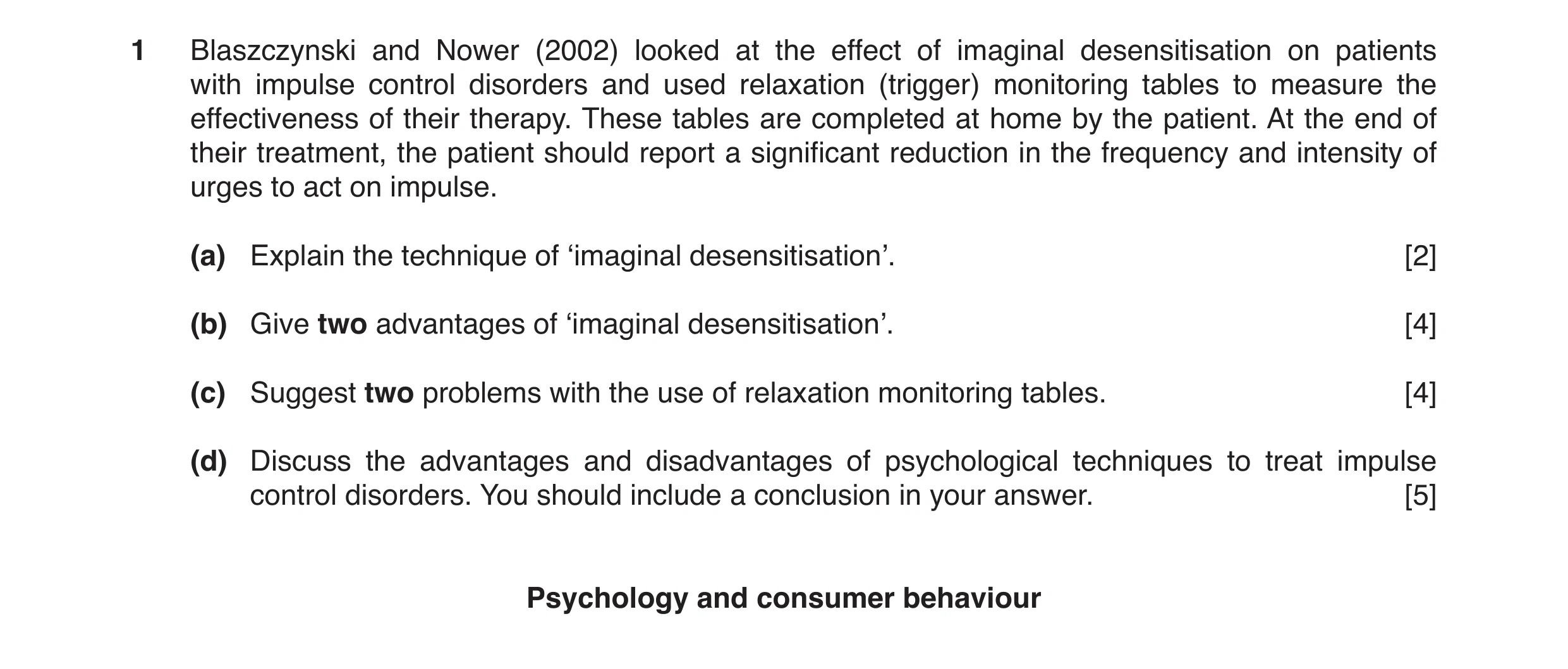
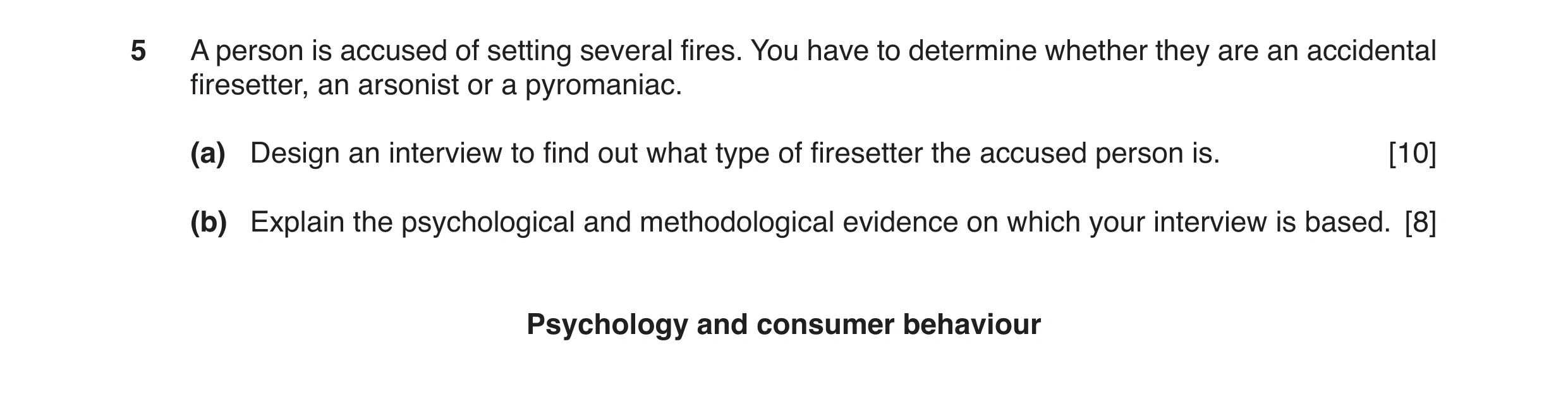
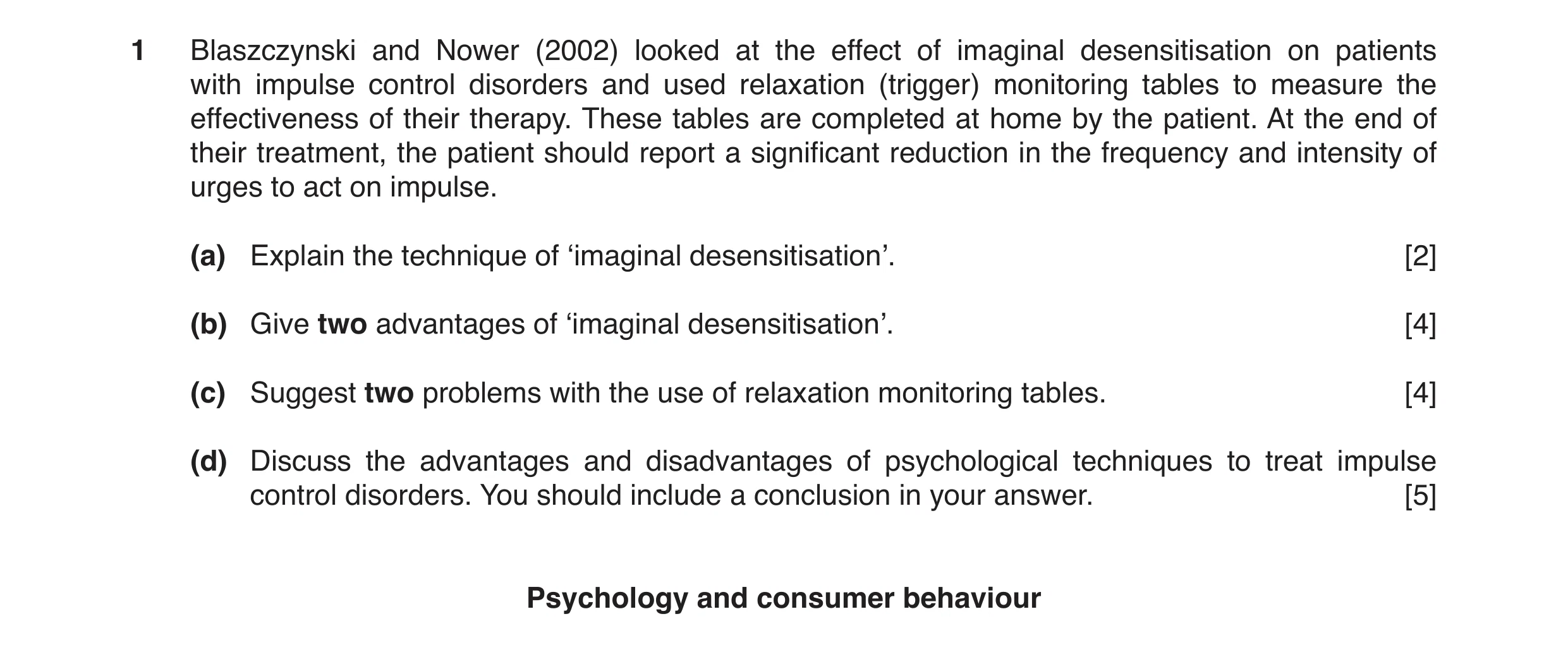 1 / 14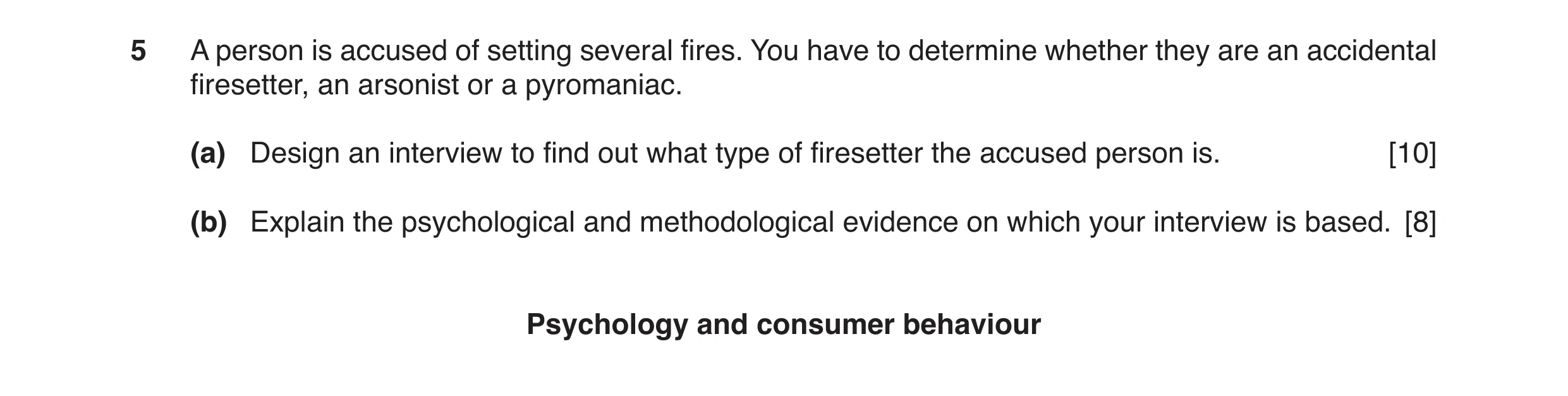
 2 / 14
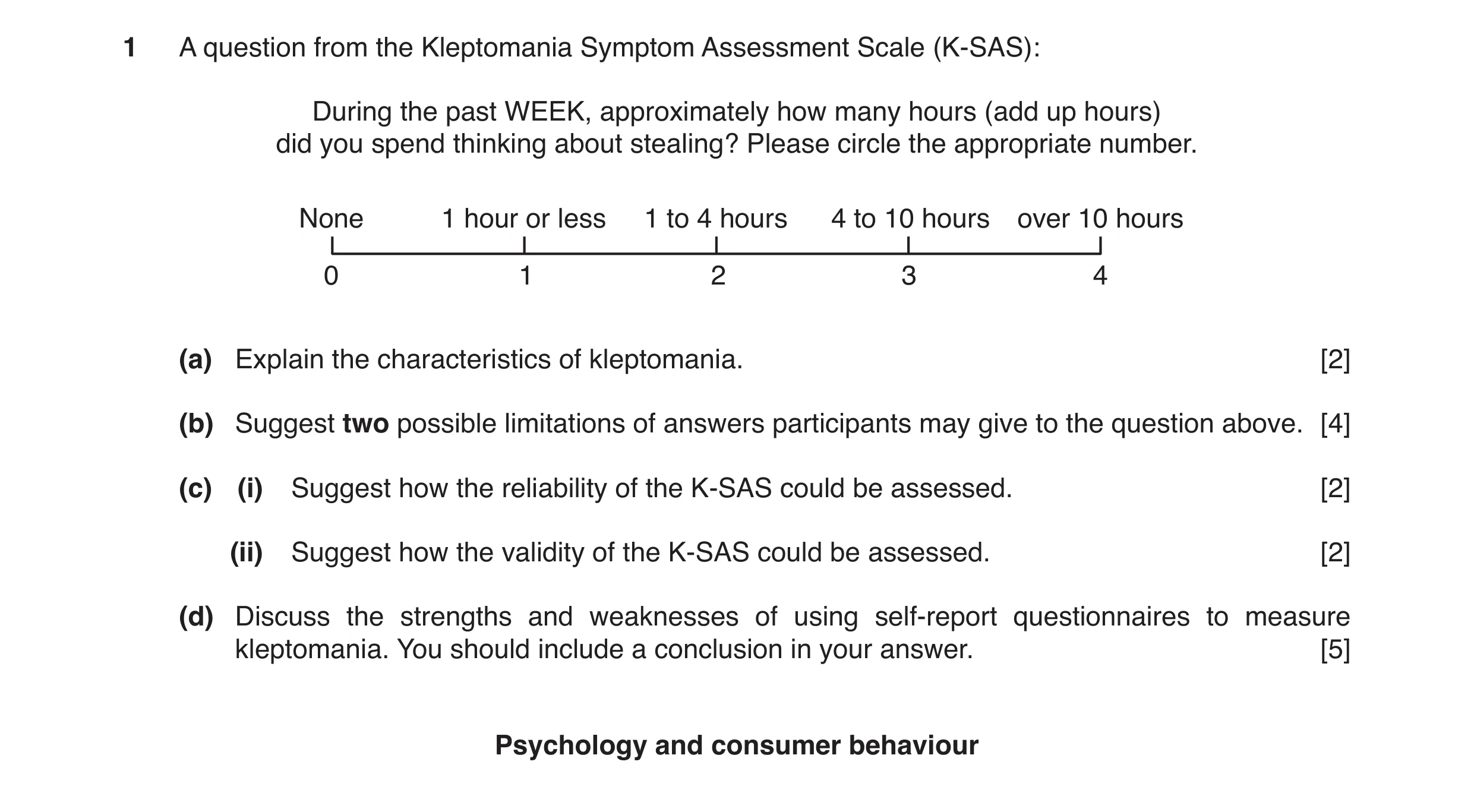 3 / 14
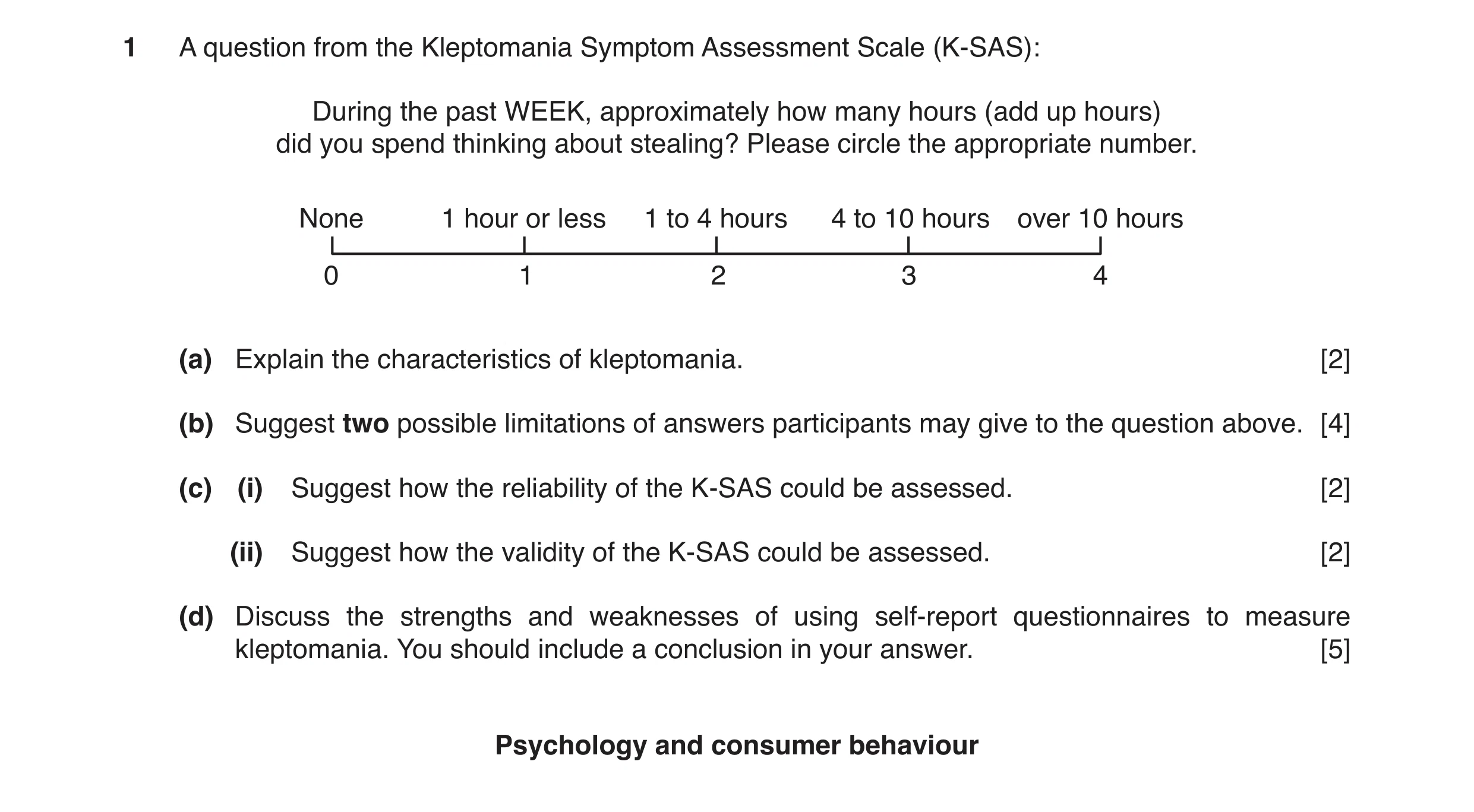
 4 / 14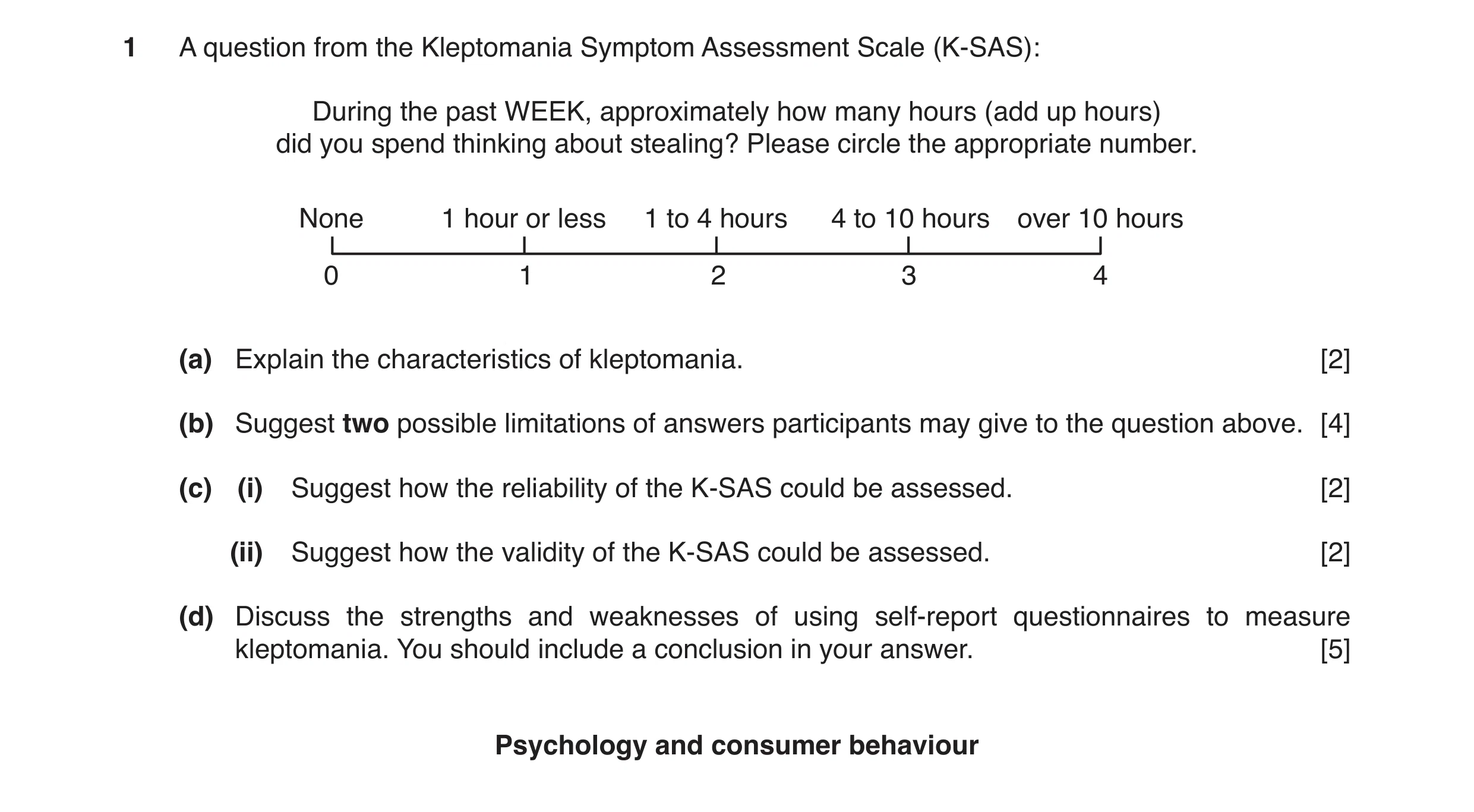
 5 / 14
 6 / 14
 7 / 14
![Question 25: (a) Design a study to investigate the effectiveness of biochemical treatments for impulse control disorder. [10] (b) Explain the psychologi…](https://img.pastlit.com/crops/2d7f7187-b9f0-4dd2-a35a-693d574a90b7/q5.webp)
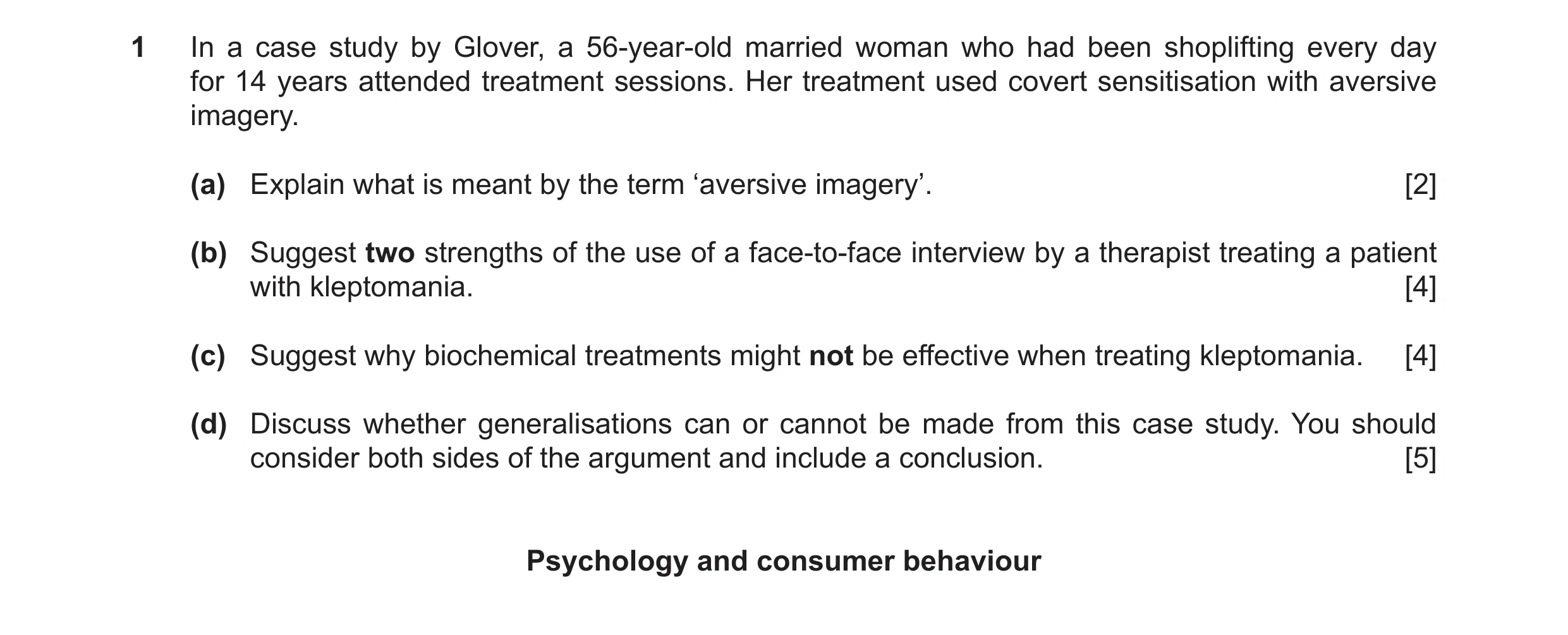
![Question 27: (a) Design a study to investigate the effectiveness of biochemical treatments for impulse control disorder. [10] (b) Explain the psychologi…](https://img.pastlit.com/crops/80021244-75c0-4761-863b-a2115c87d250/q5.webp)
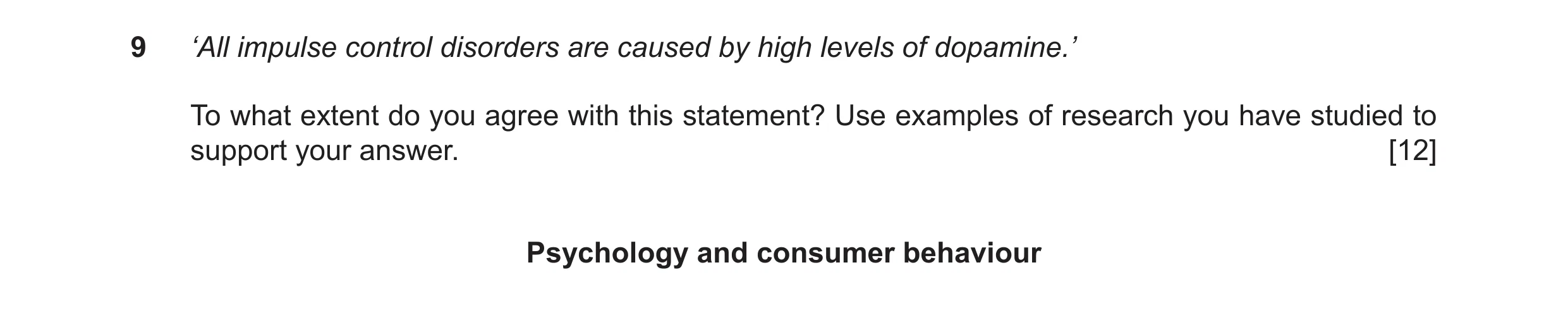
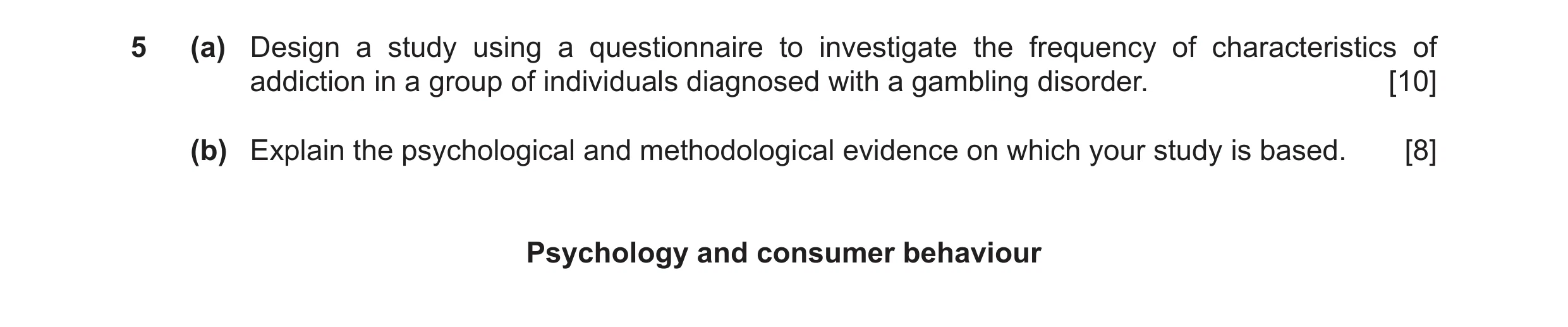 8 / 14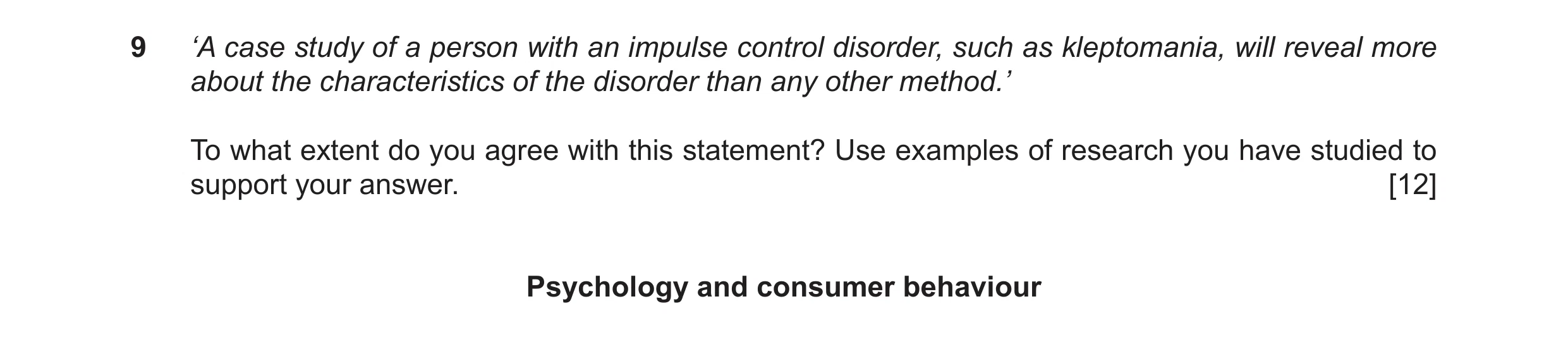
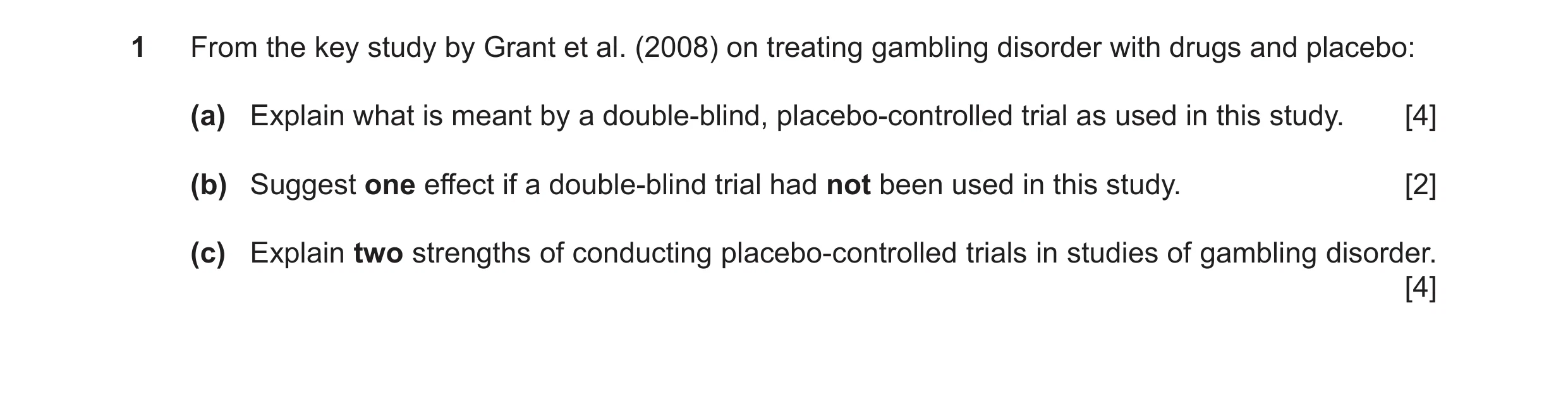
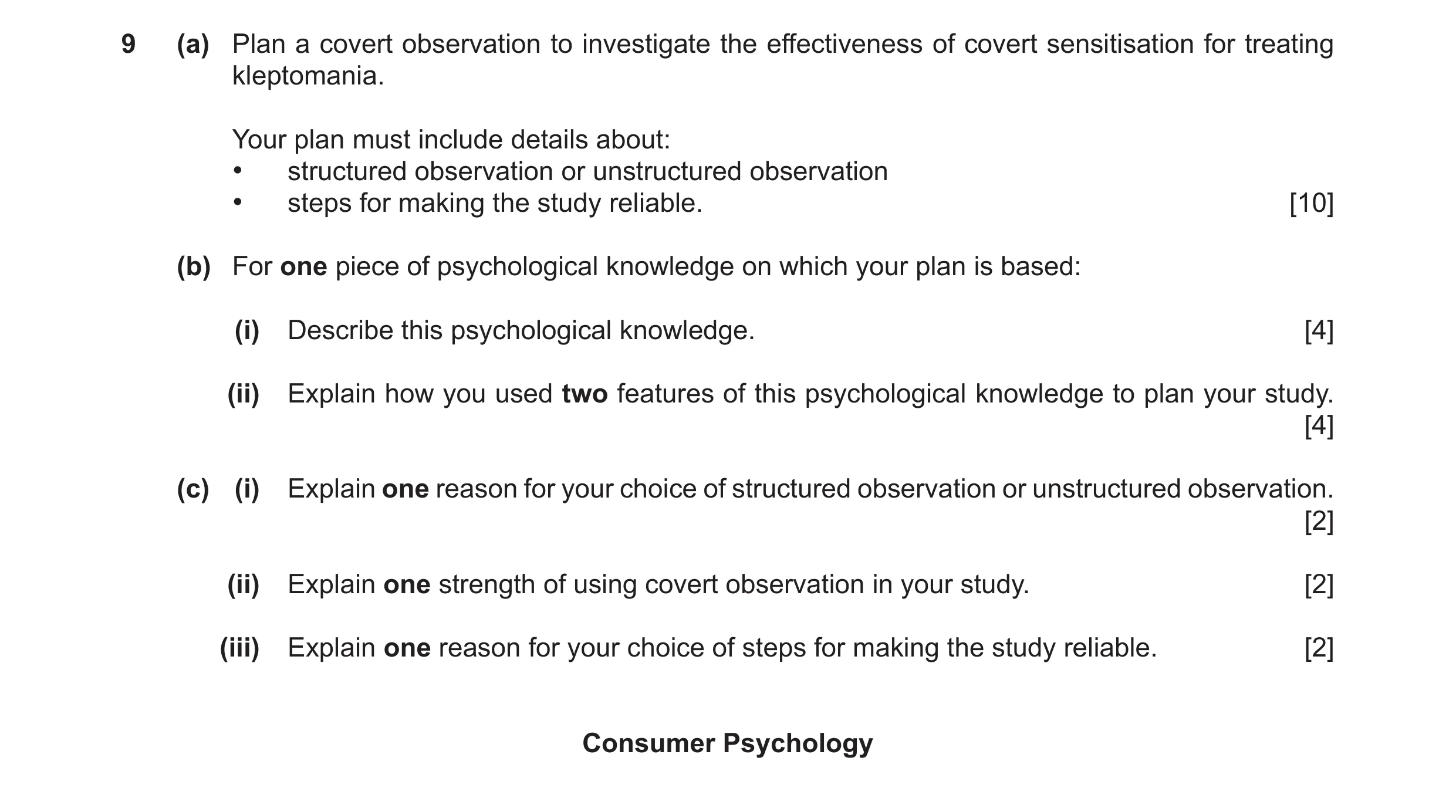 9 / 14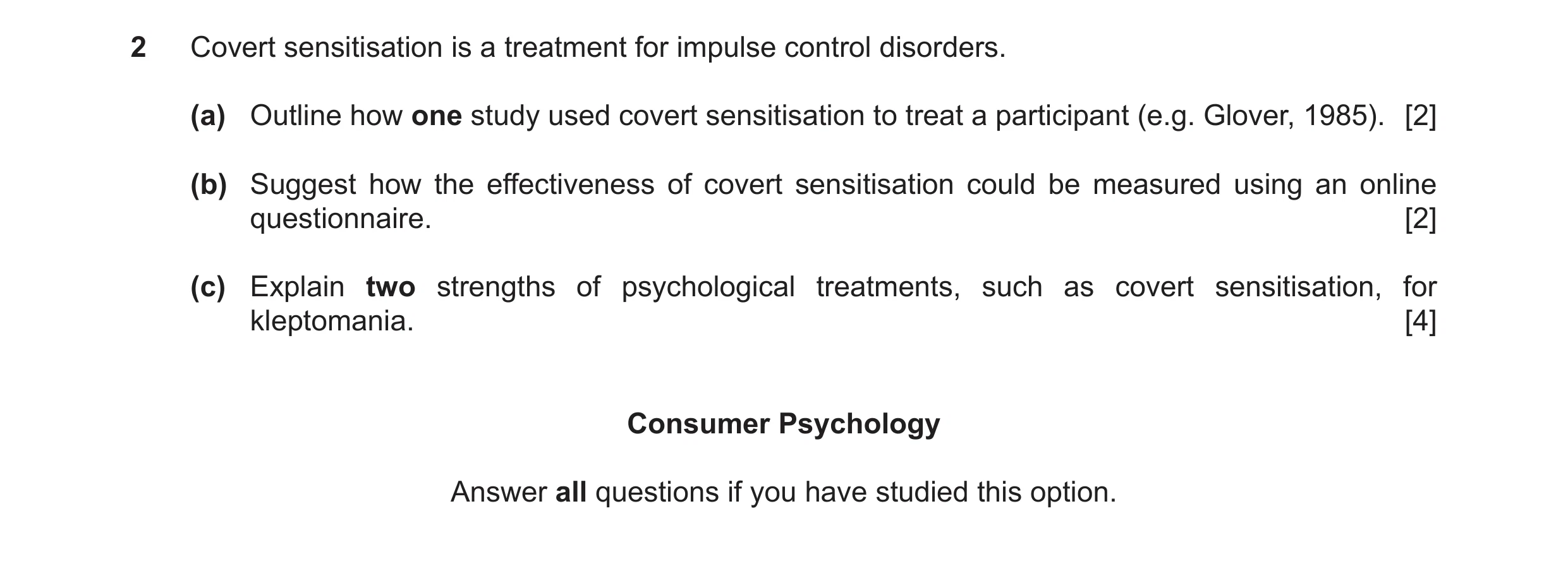
![Question 34: Kleptomania can be assessed using the Kleptomania Symptom Assessment Scale (K-SAS). (a) State one question used on the K-SAS. [2] (b) Sugge…](https://img.pastlit.com/crops/2bd78365-8336-4ddc-b058-d1ebca4953dd/q2.webp)
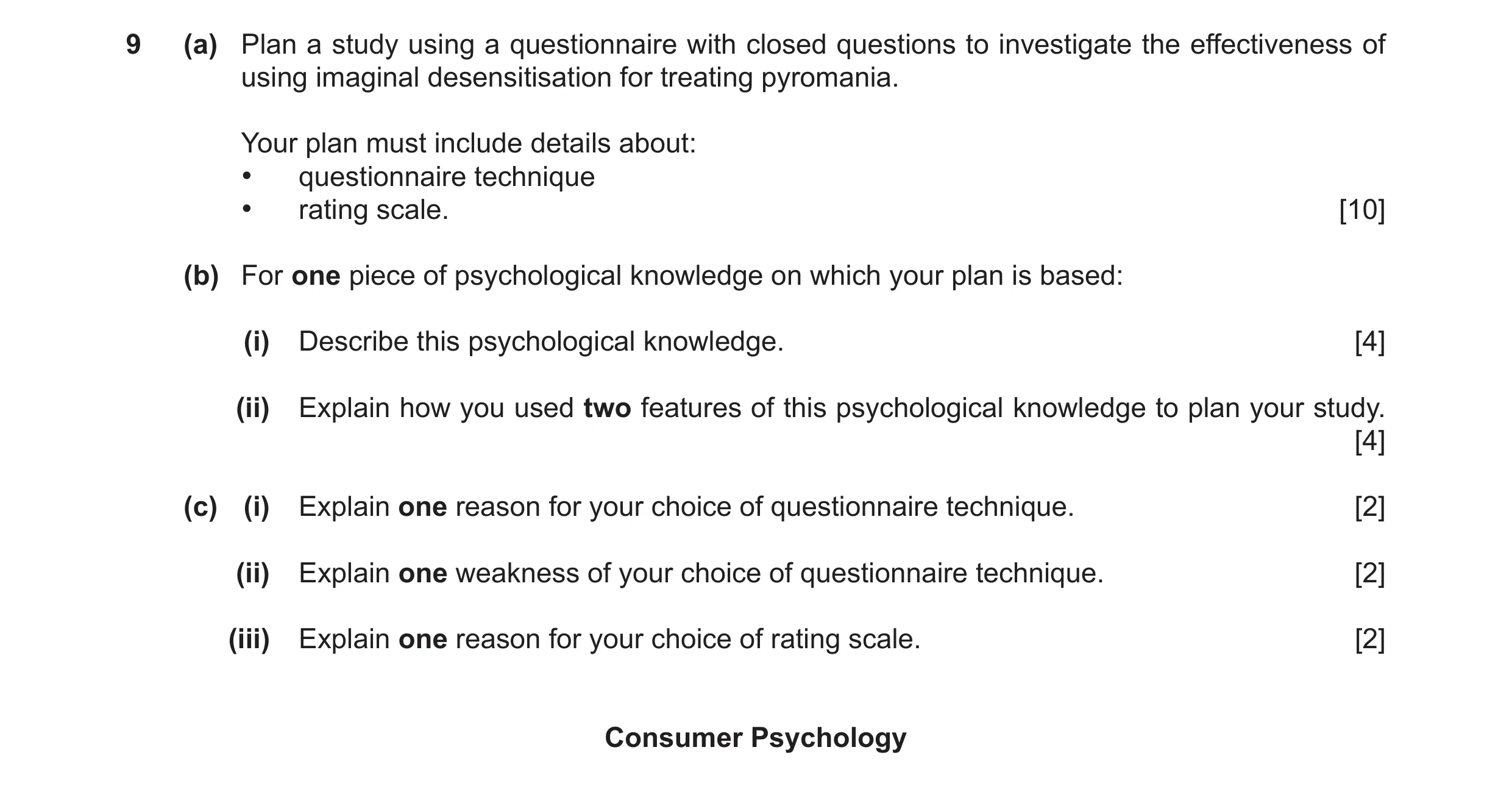 10 / 14
![Question 37: (a) Explain what is meant by the term ‘pyromania’. [2] (b) Suggest one way in which pyromania could be measured, other than by self-report.…](https://img.pastlit.com/crops/2734b90a-26d9-408b-8b4a-d7c96815e311/q2.webp)
![Question 38: (a) Explain what is meant by the term ‘pyromania’. [2] (b) Suggest one way in which pyromania could be measured, other than by self-report.…](https://img.pastlit.com/crops/951ad258-22d0-4a4f-a741-9291c20187c9/q2.webp)
![Question 39: (a) State two diagnostic criteria of gambling disorder. [2] (b) Suggest one way in which gambling disorder could be measured, other than by…](https://img.pastlit.com/crops/498fd2b9-779d-498b-91aa-540a4ef65650/q2.webp) 11 / 14
11 / 14
 12 / 14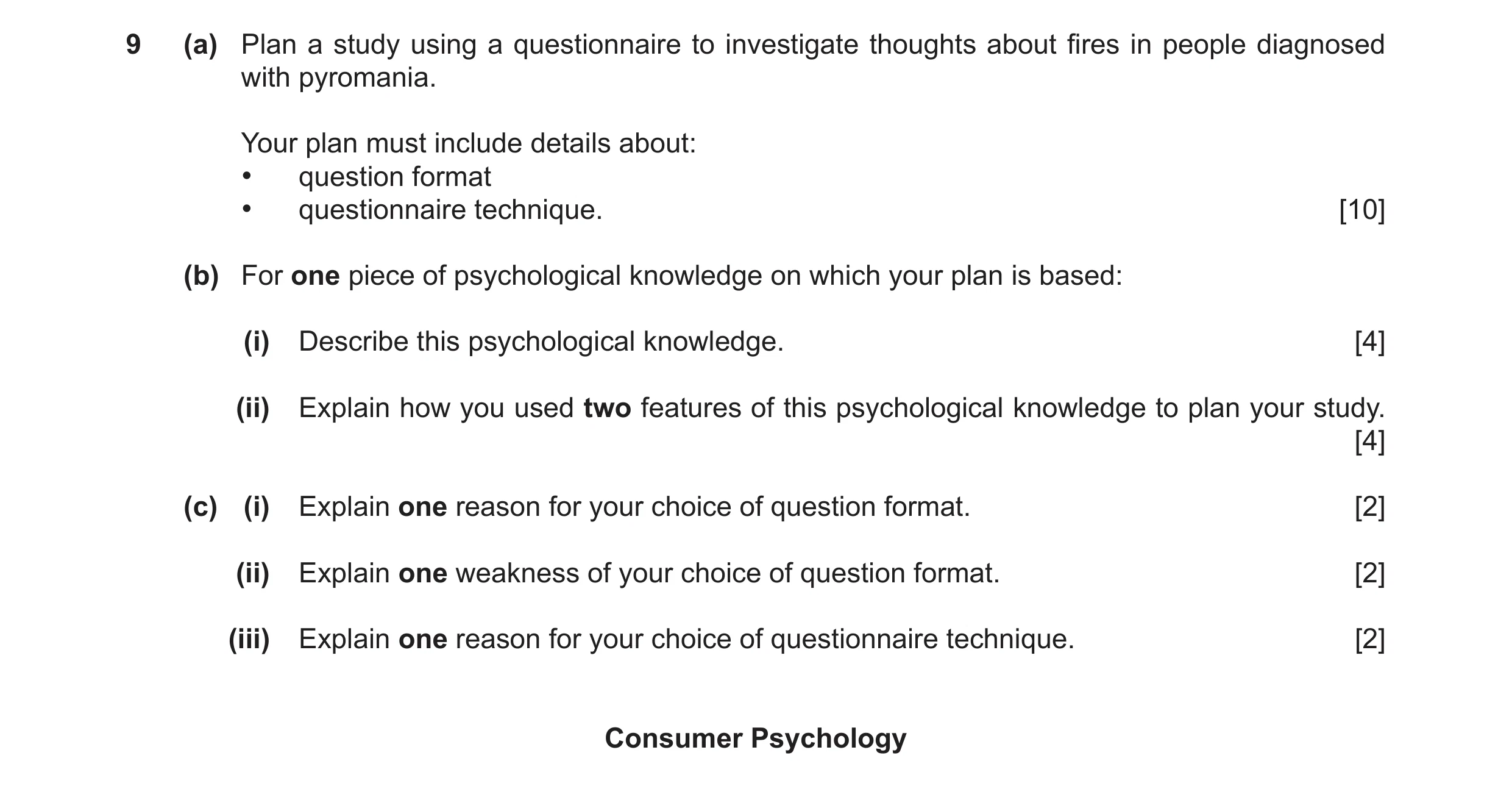
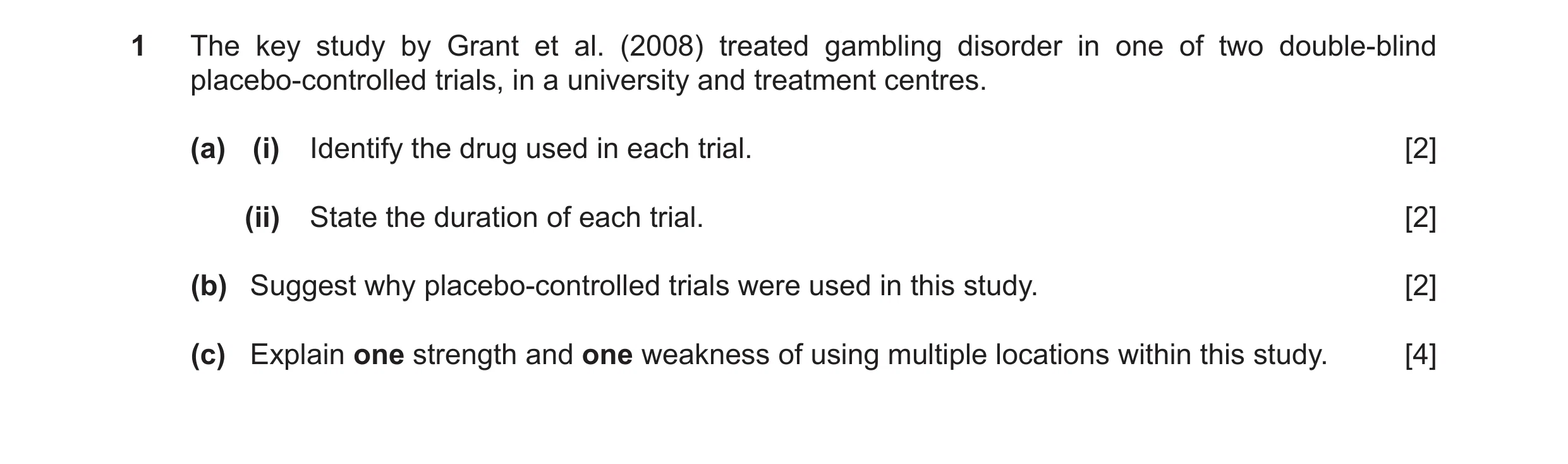 13 / 14
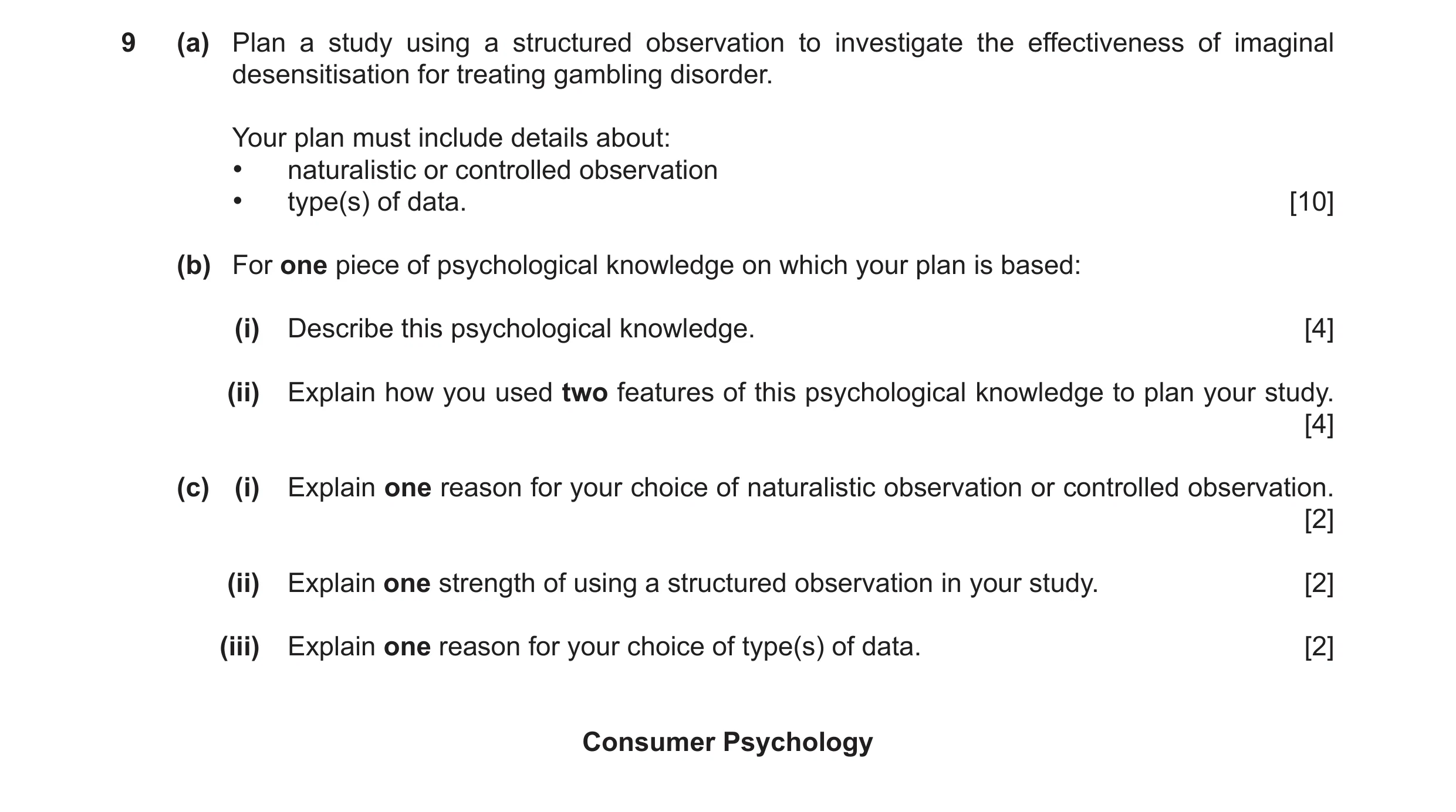 14 / 14
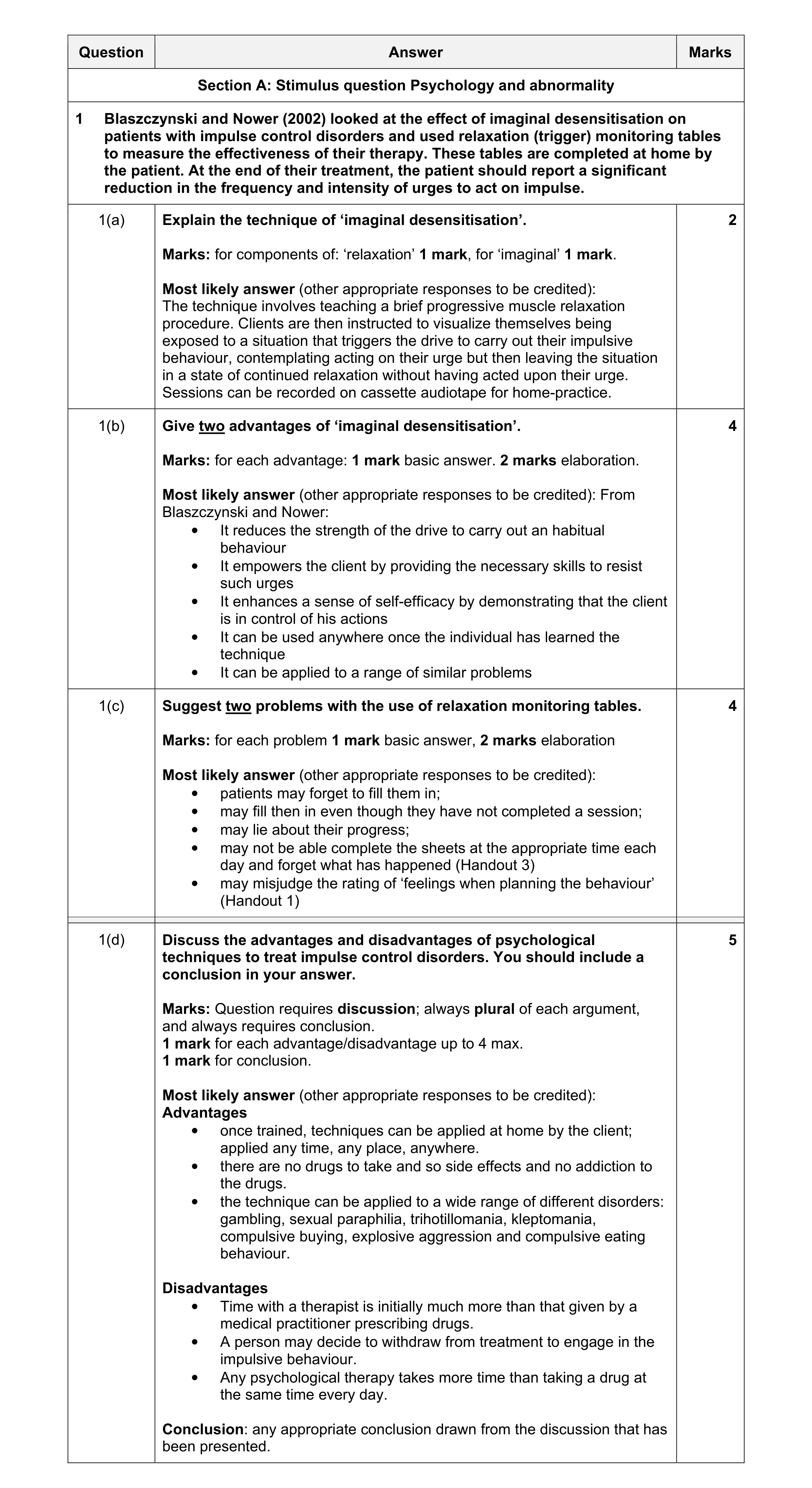 15
15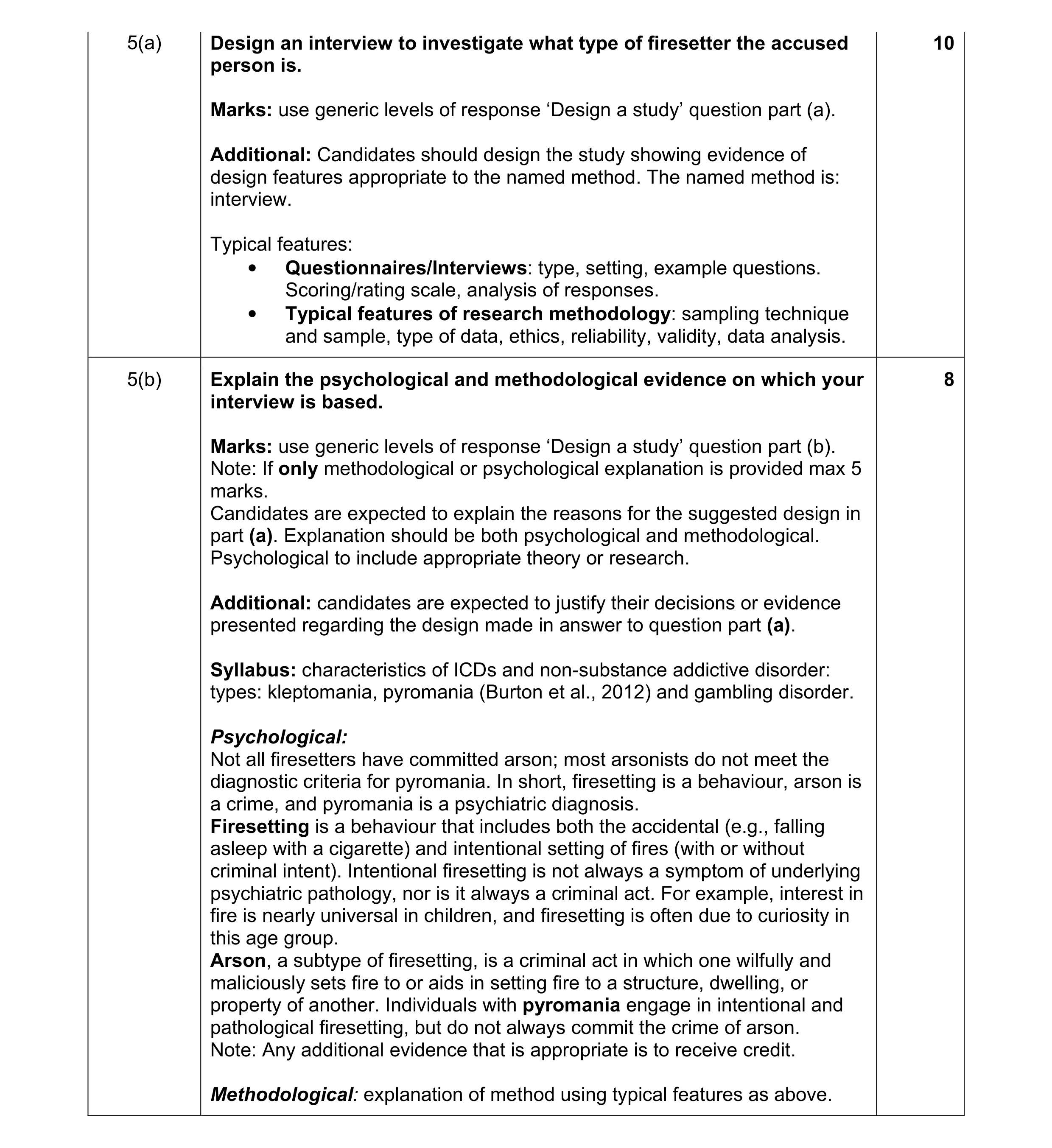 18
18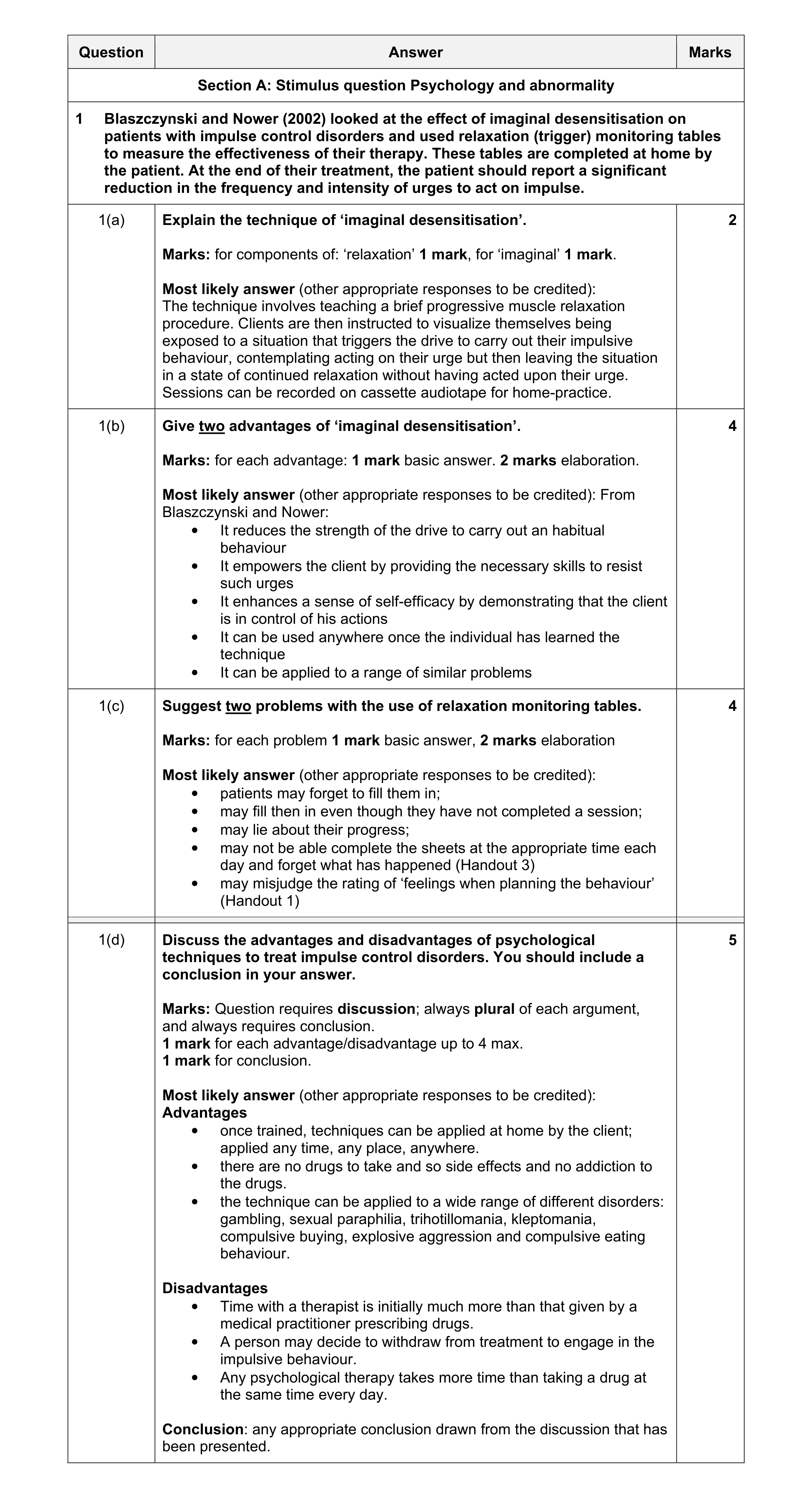 15
15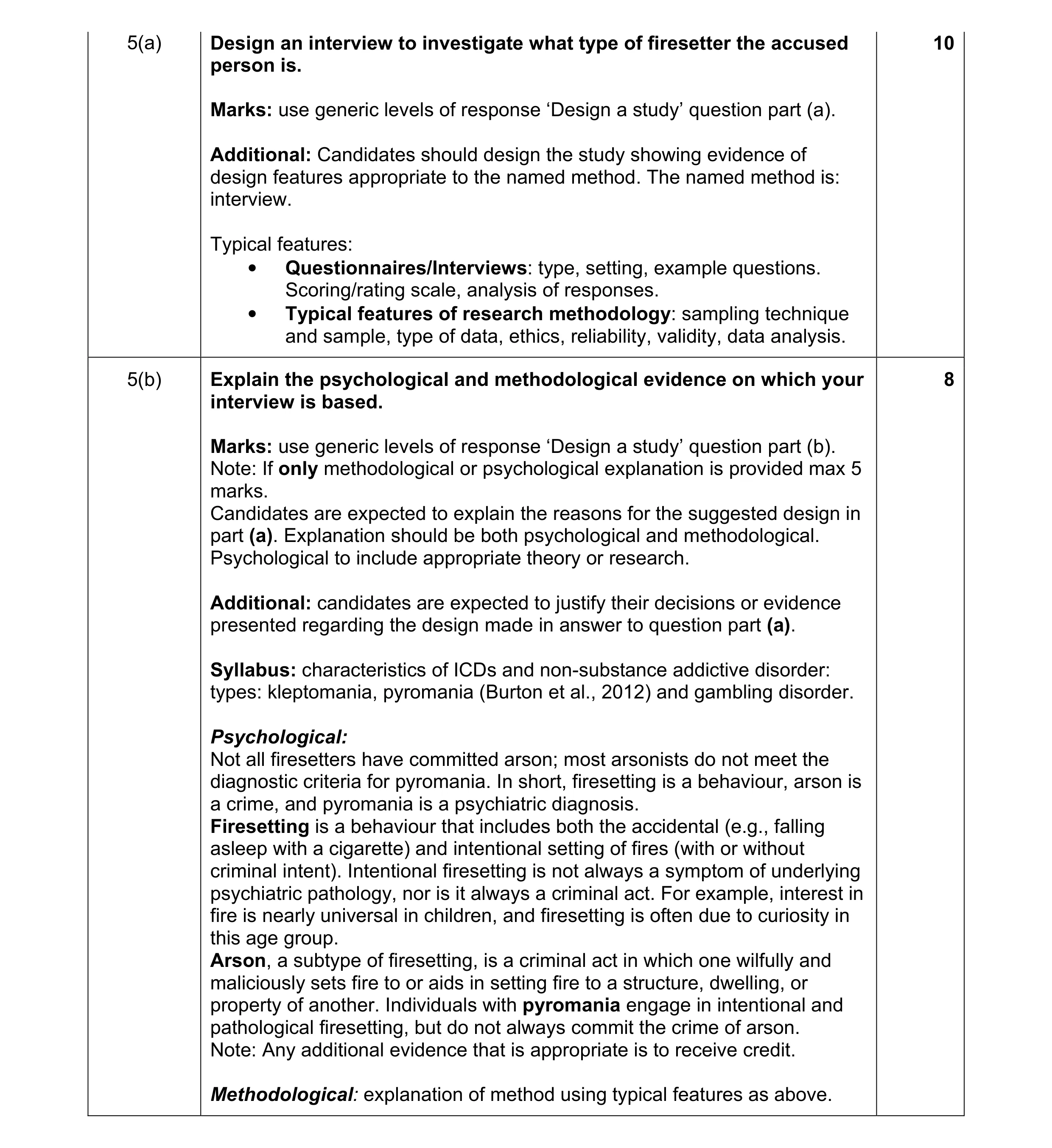 18
18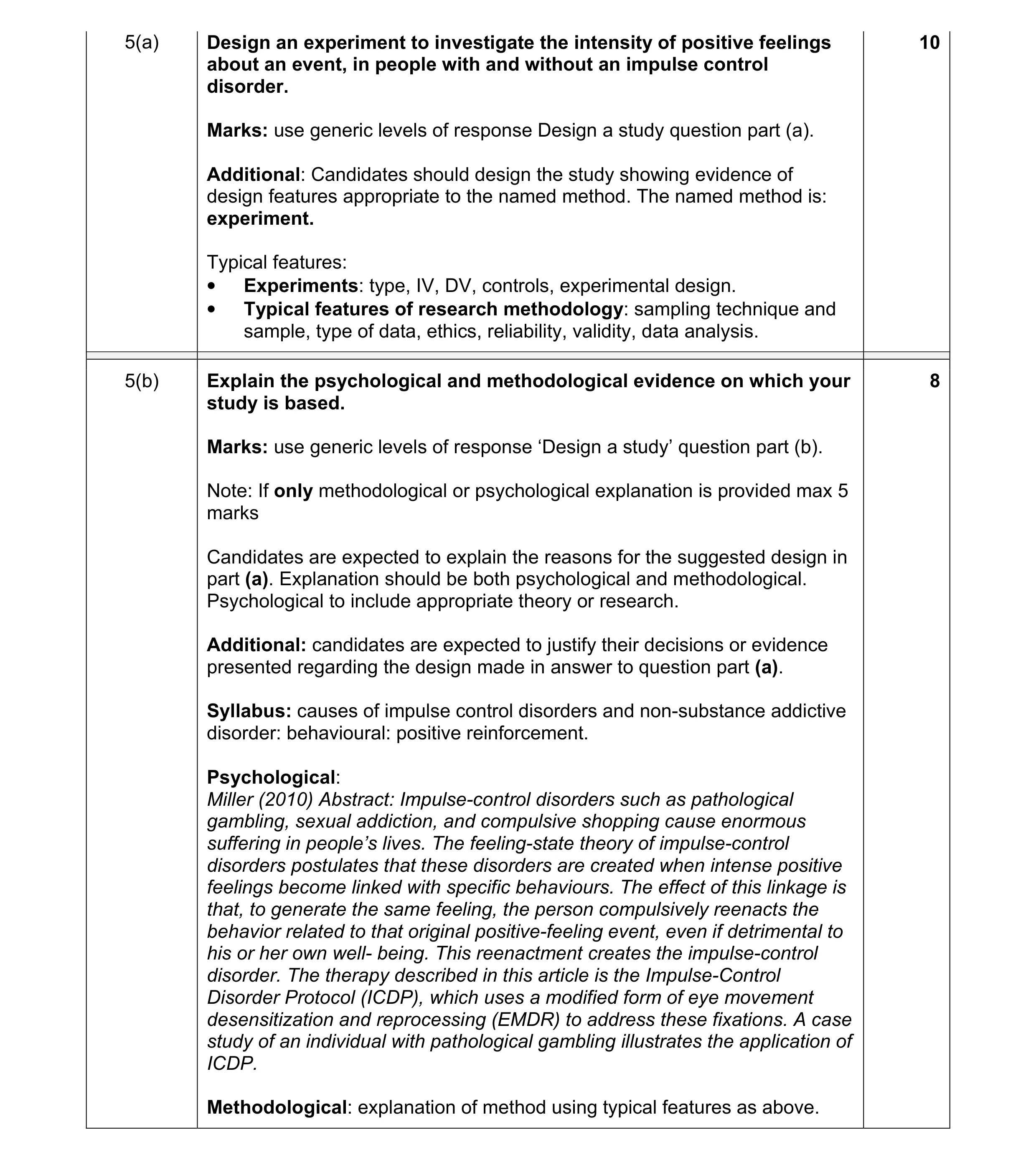 18
18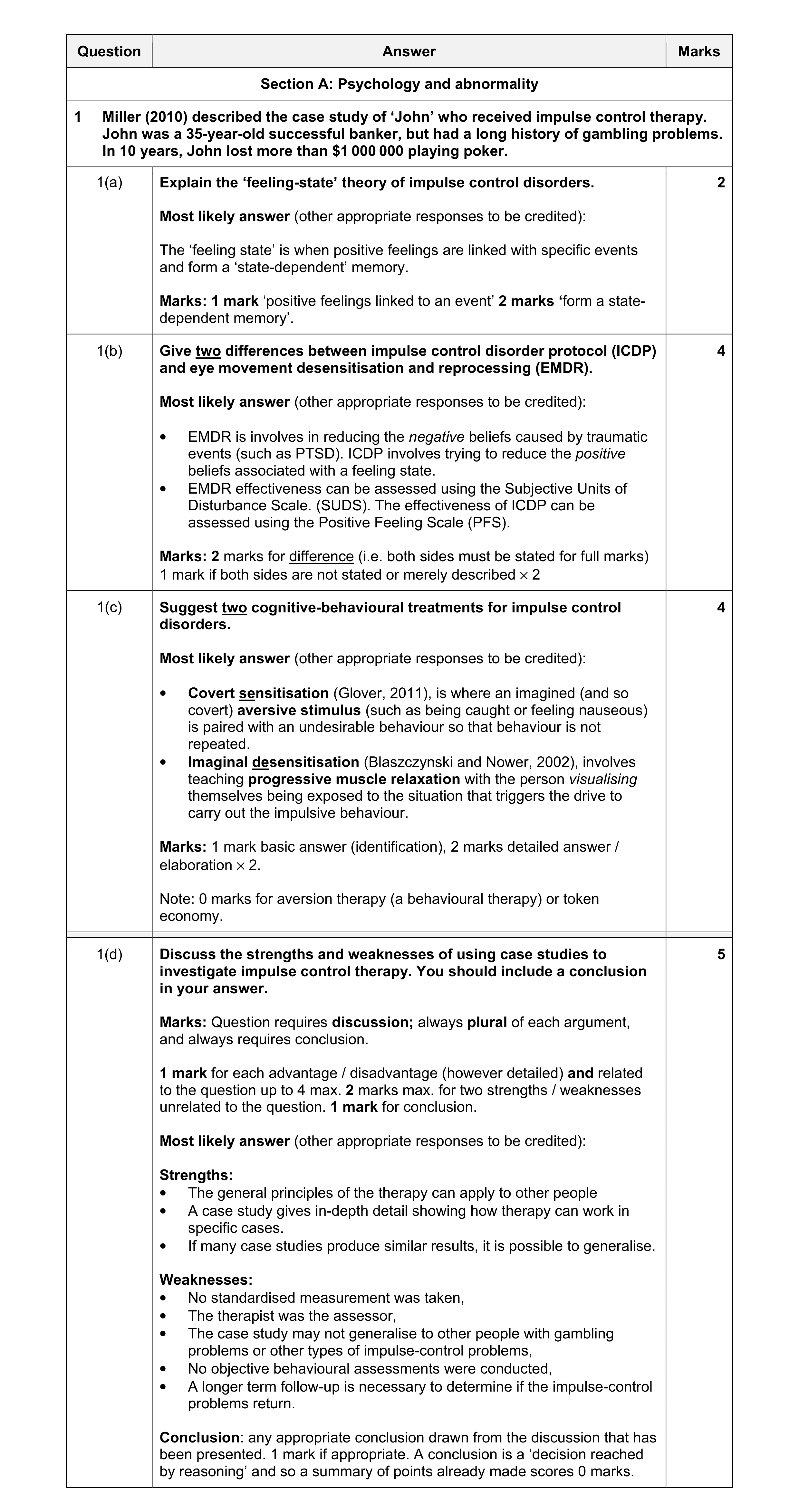 15
15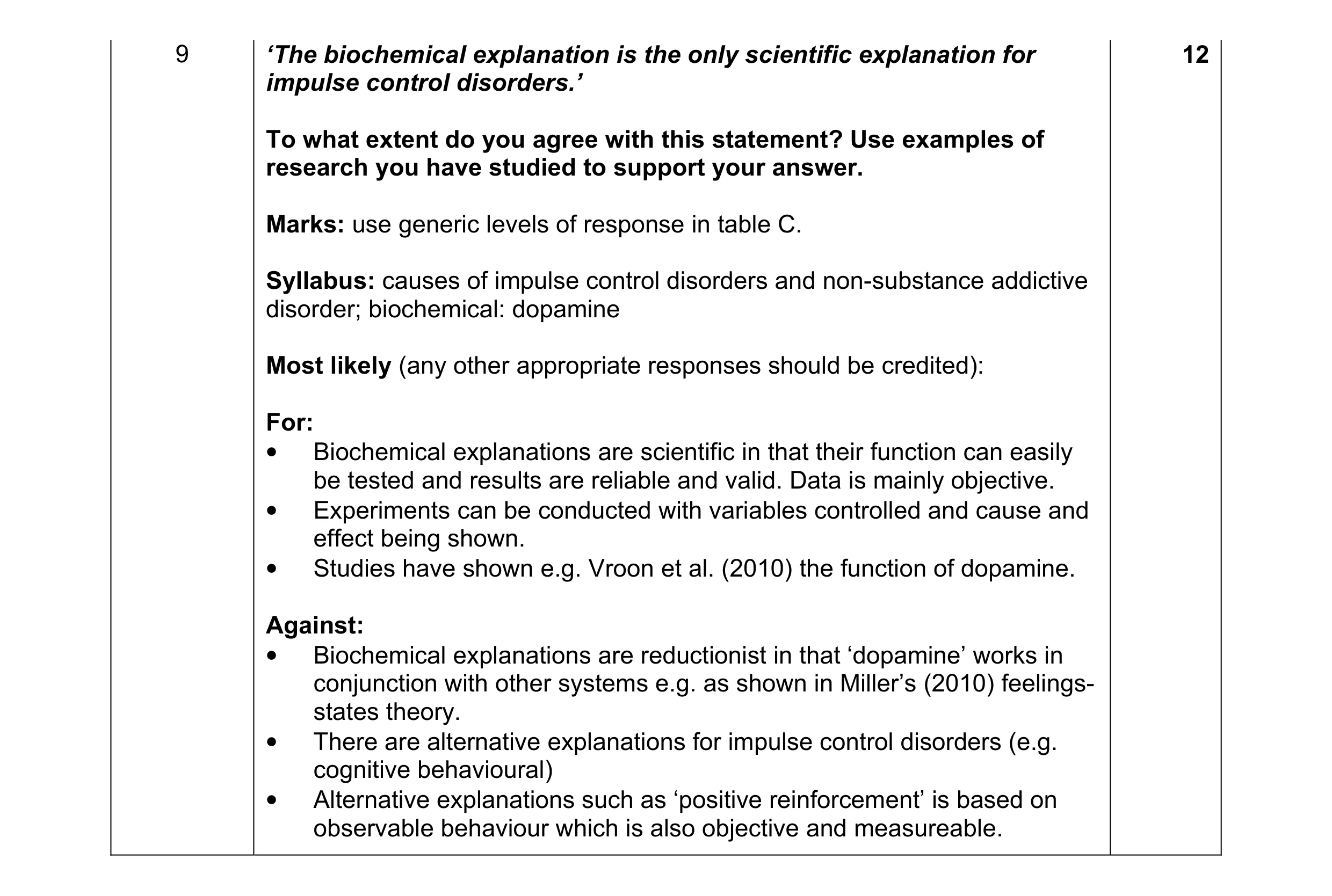 12
12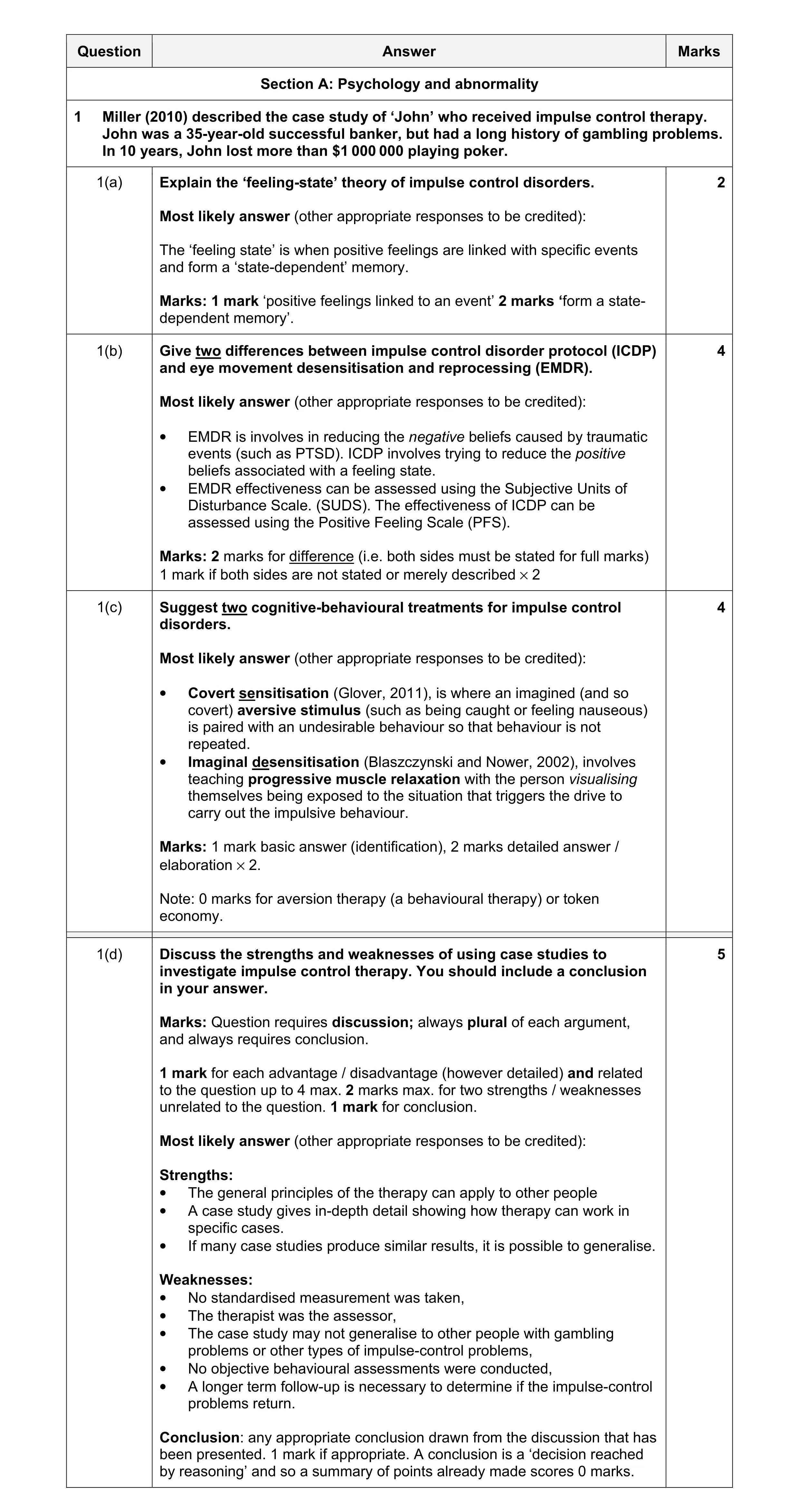 15
15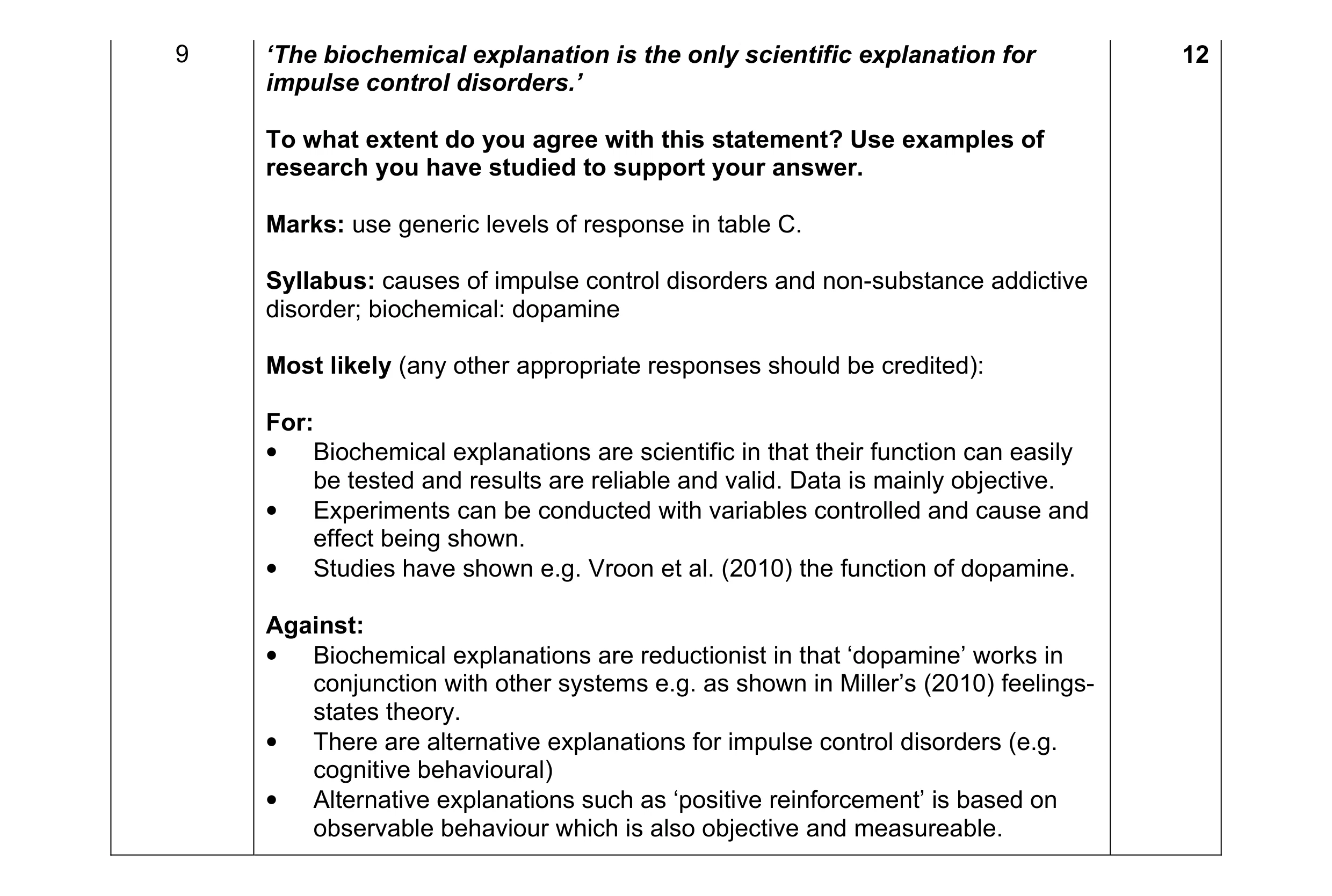 12
12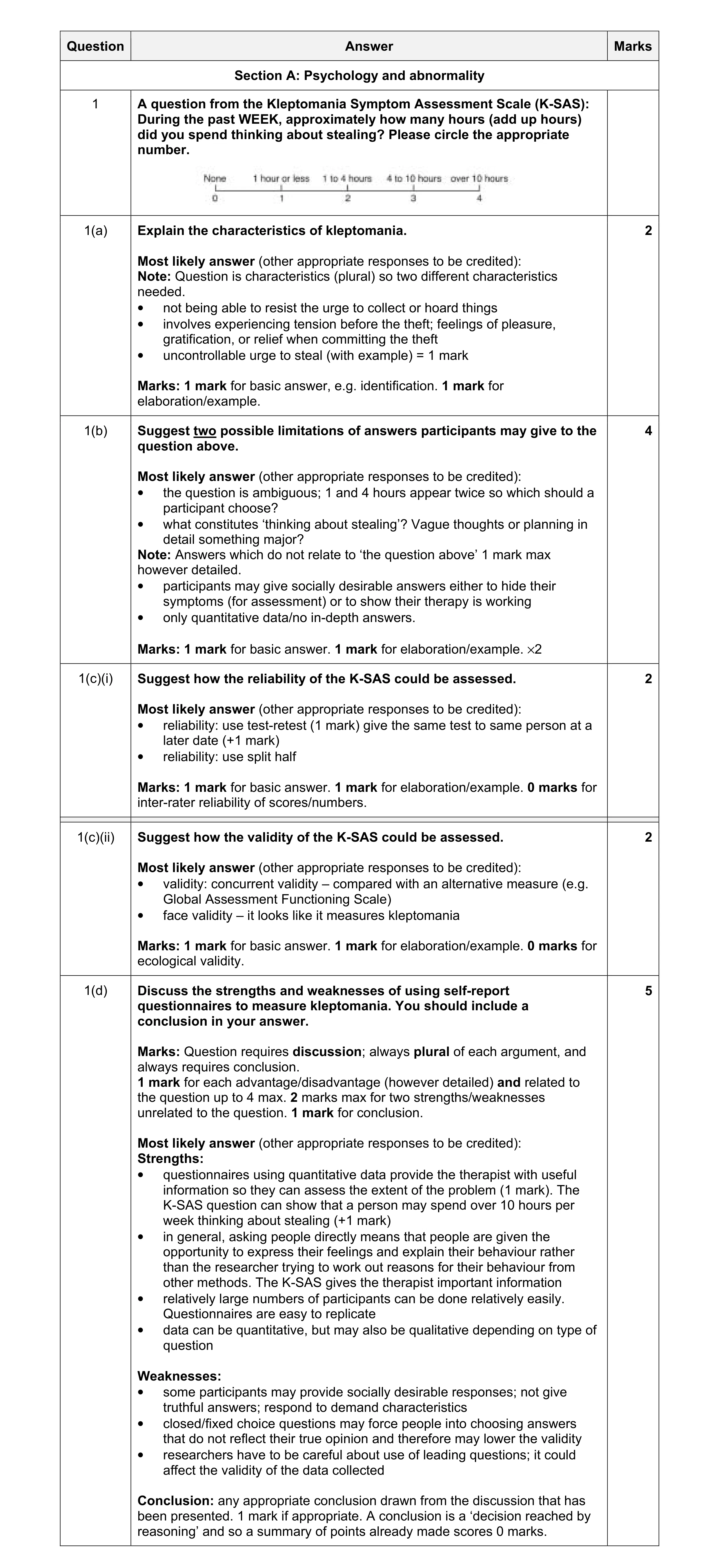 15
15 12
12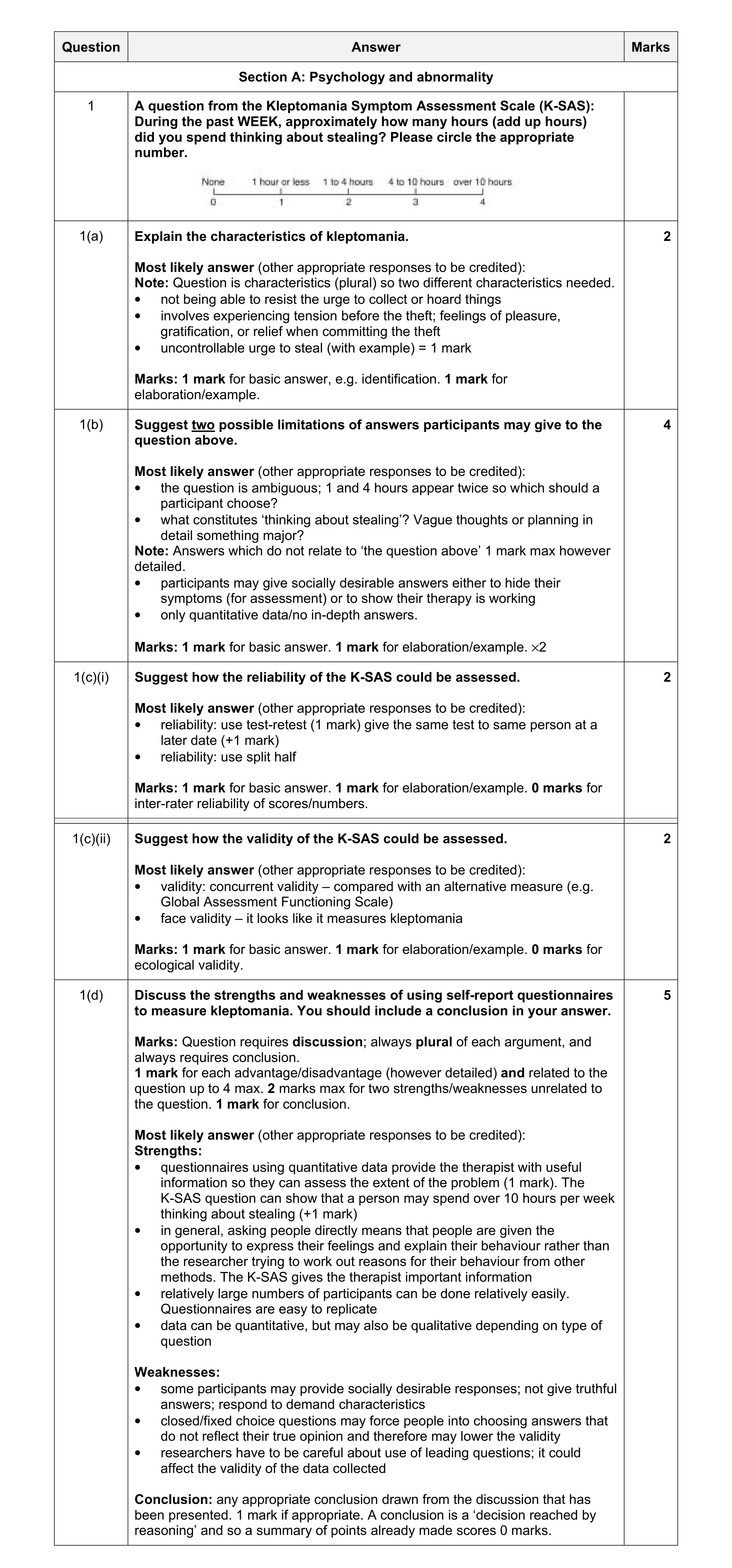 15
15 12
12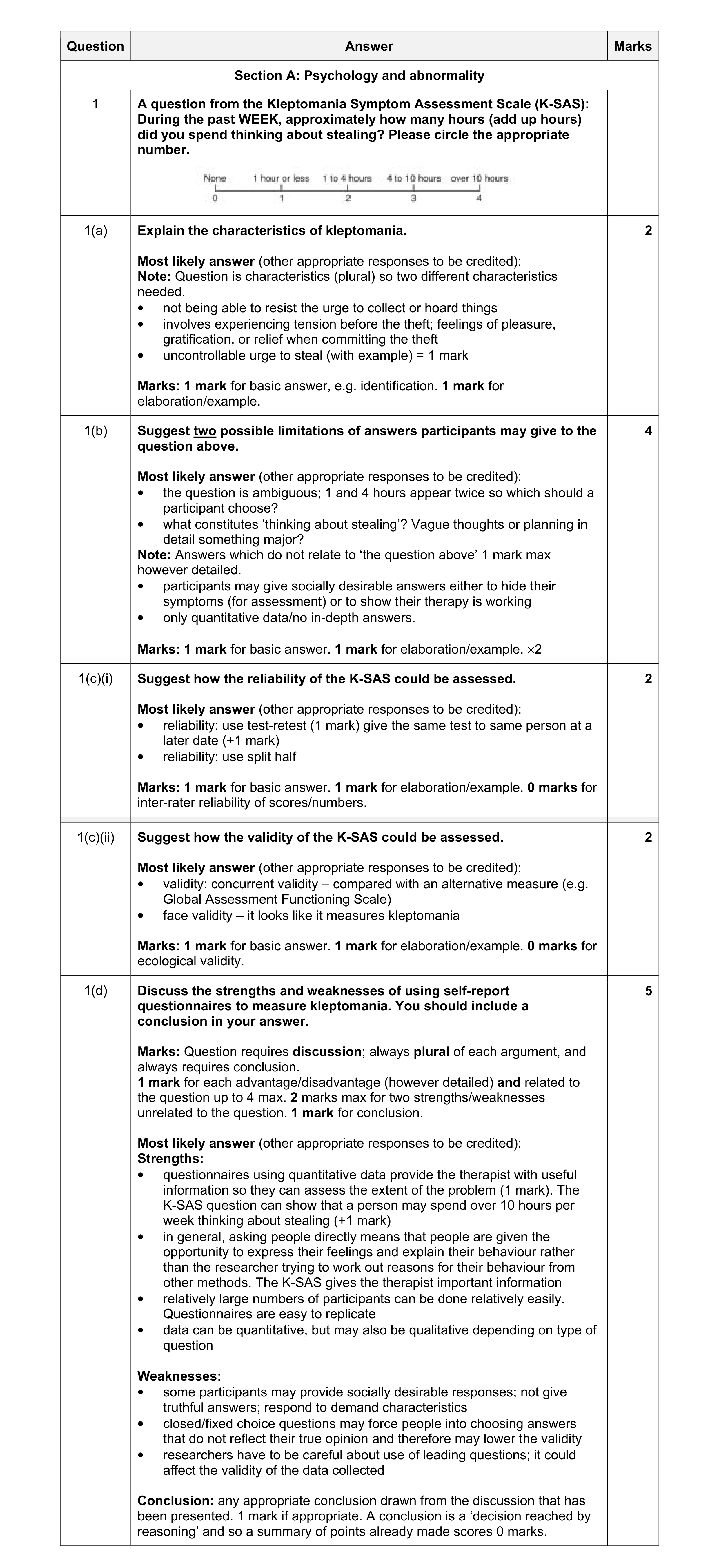 15
15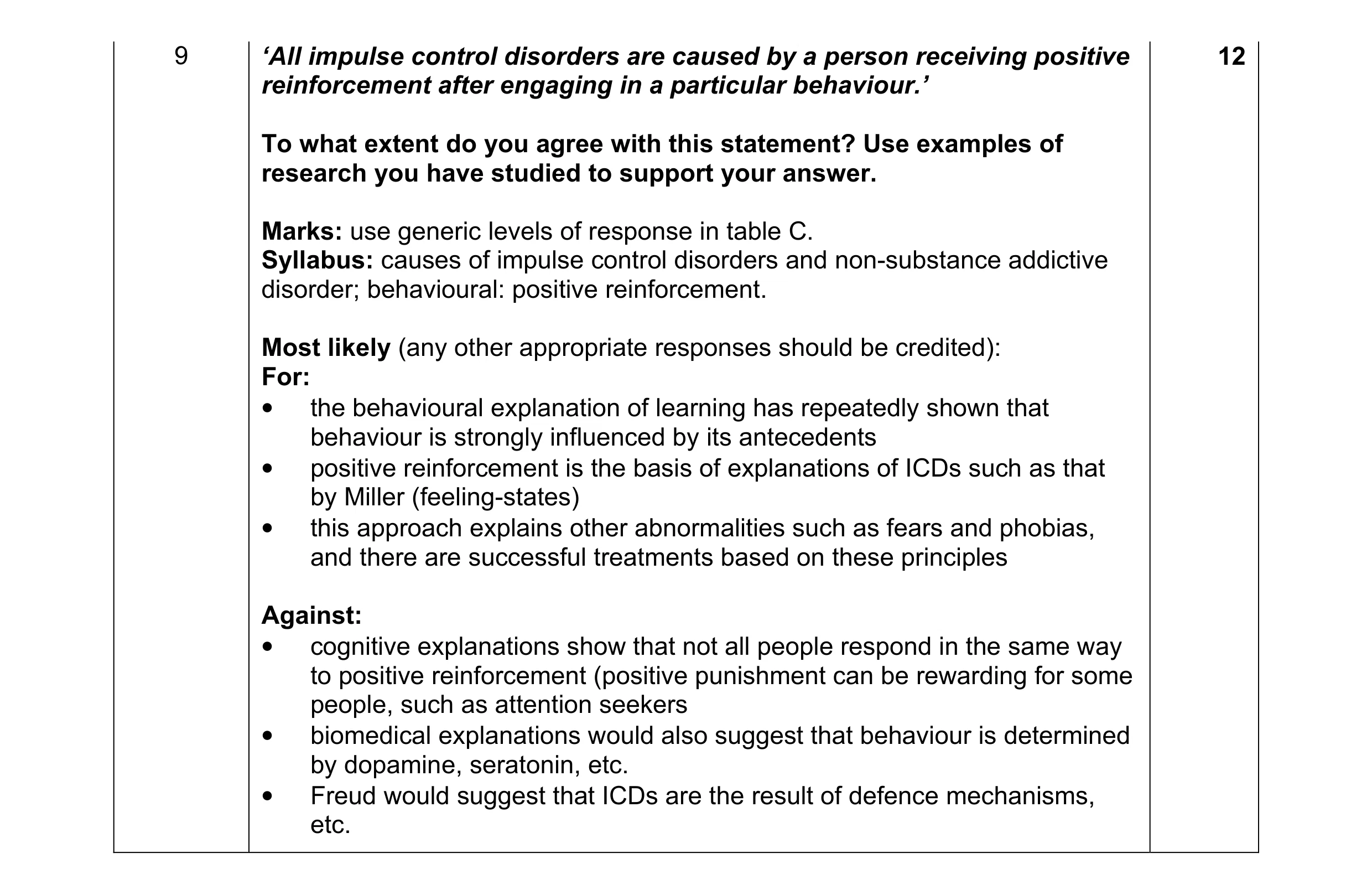 12
12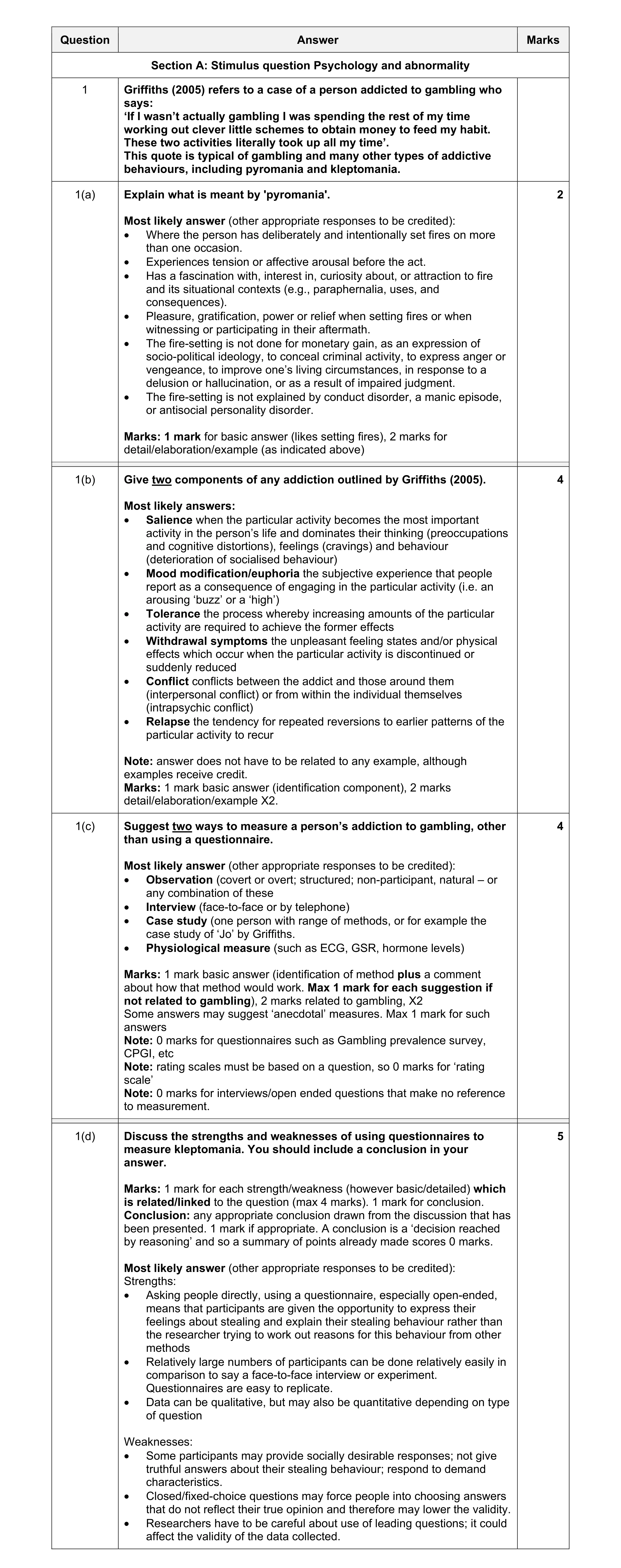 15
15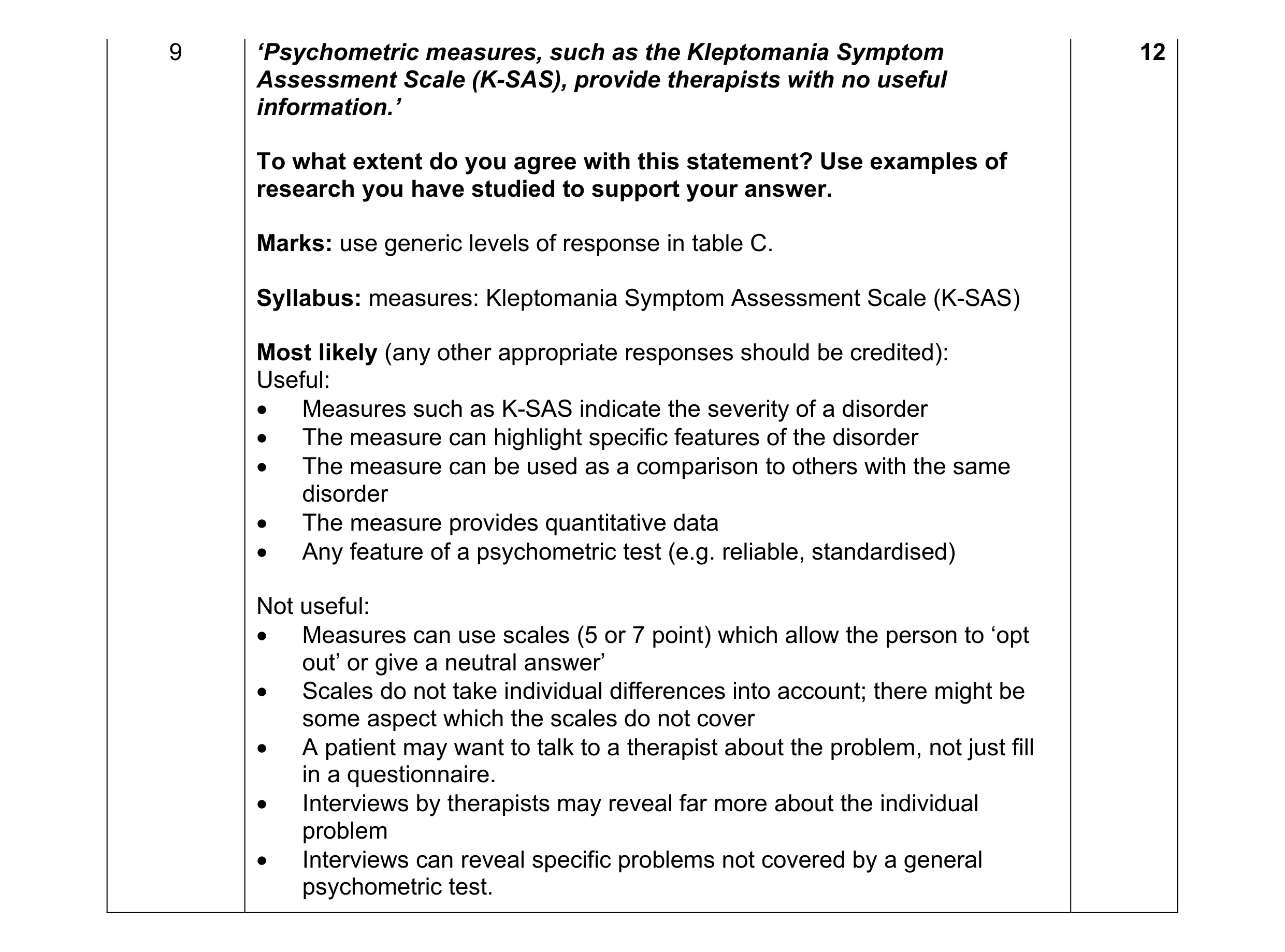 12
12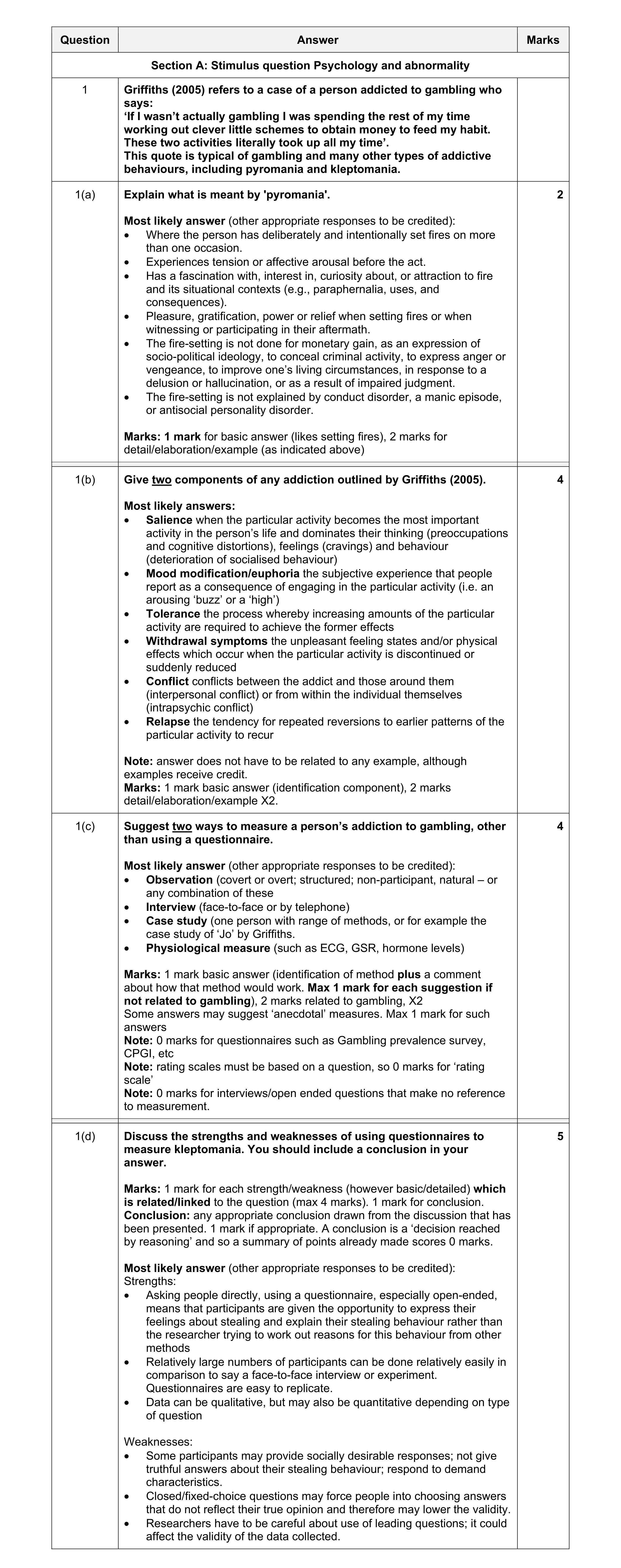 15
15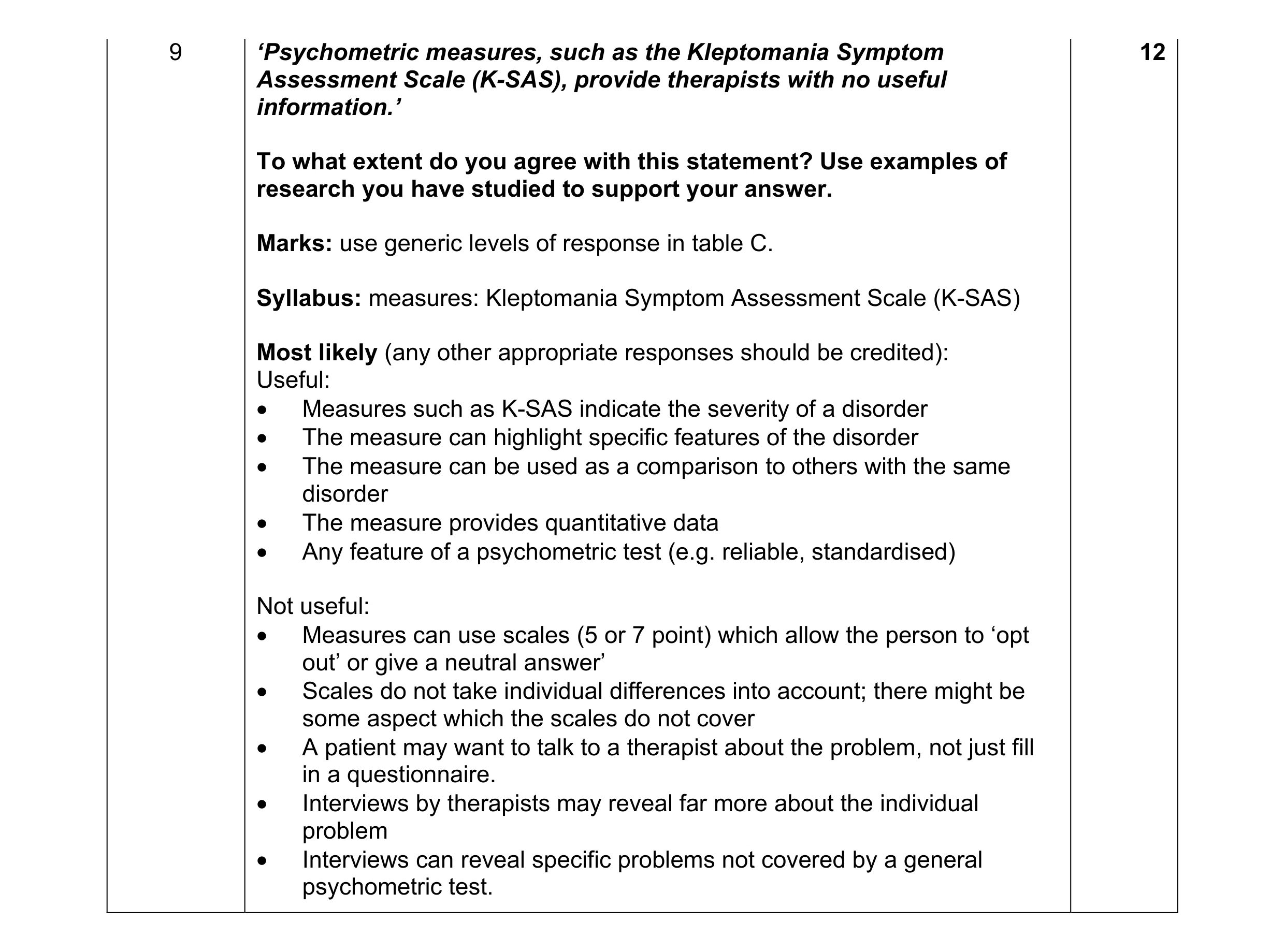 12
12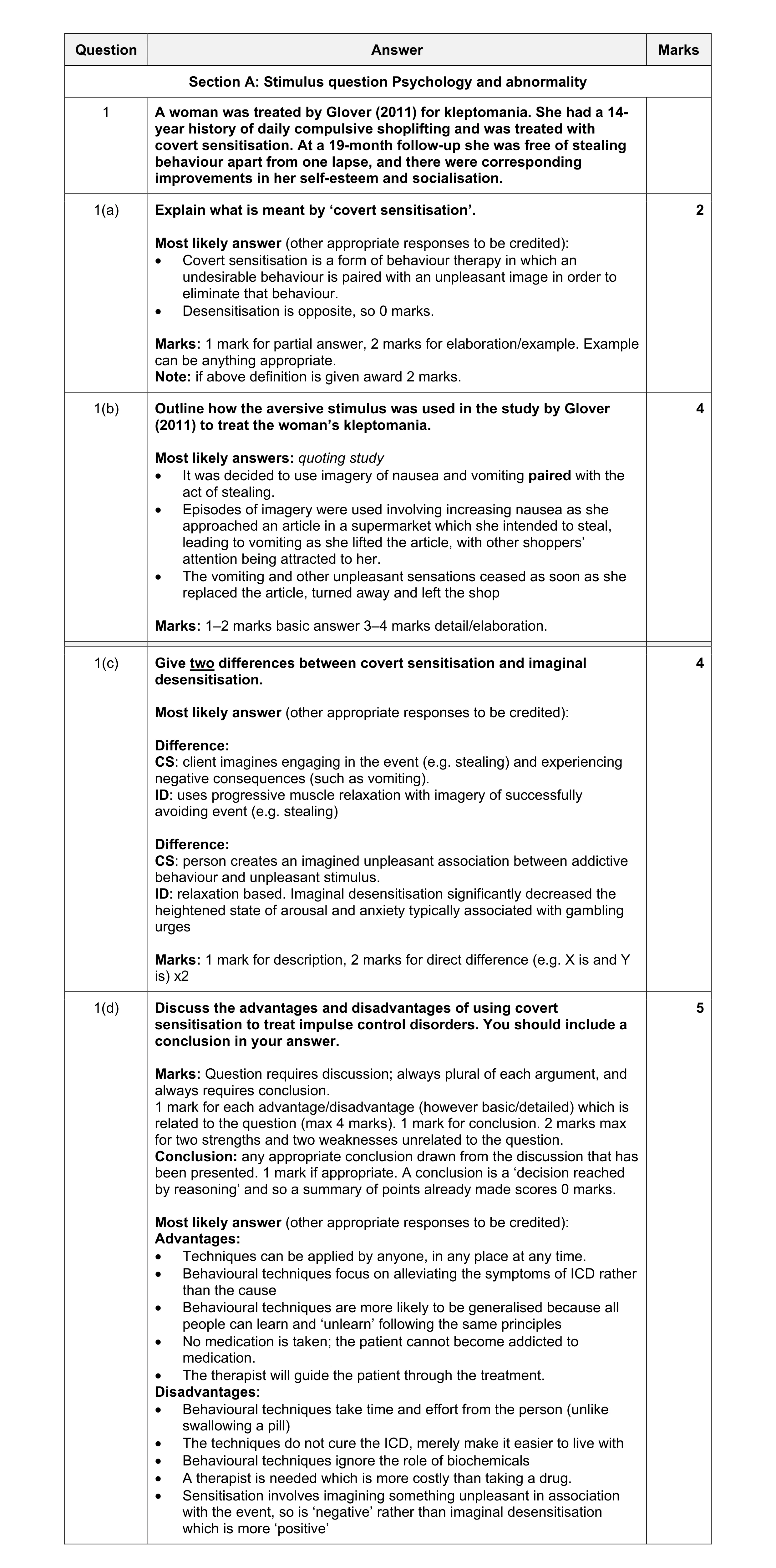 15
15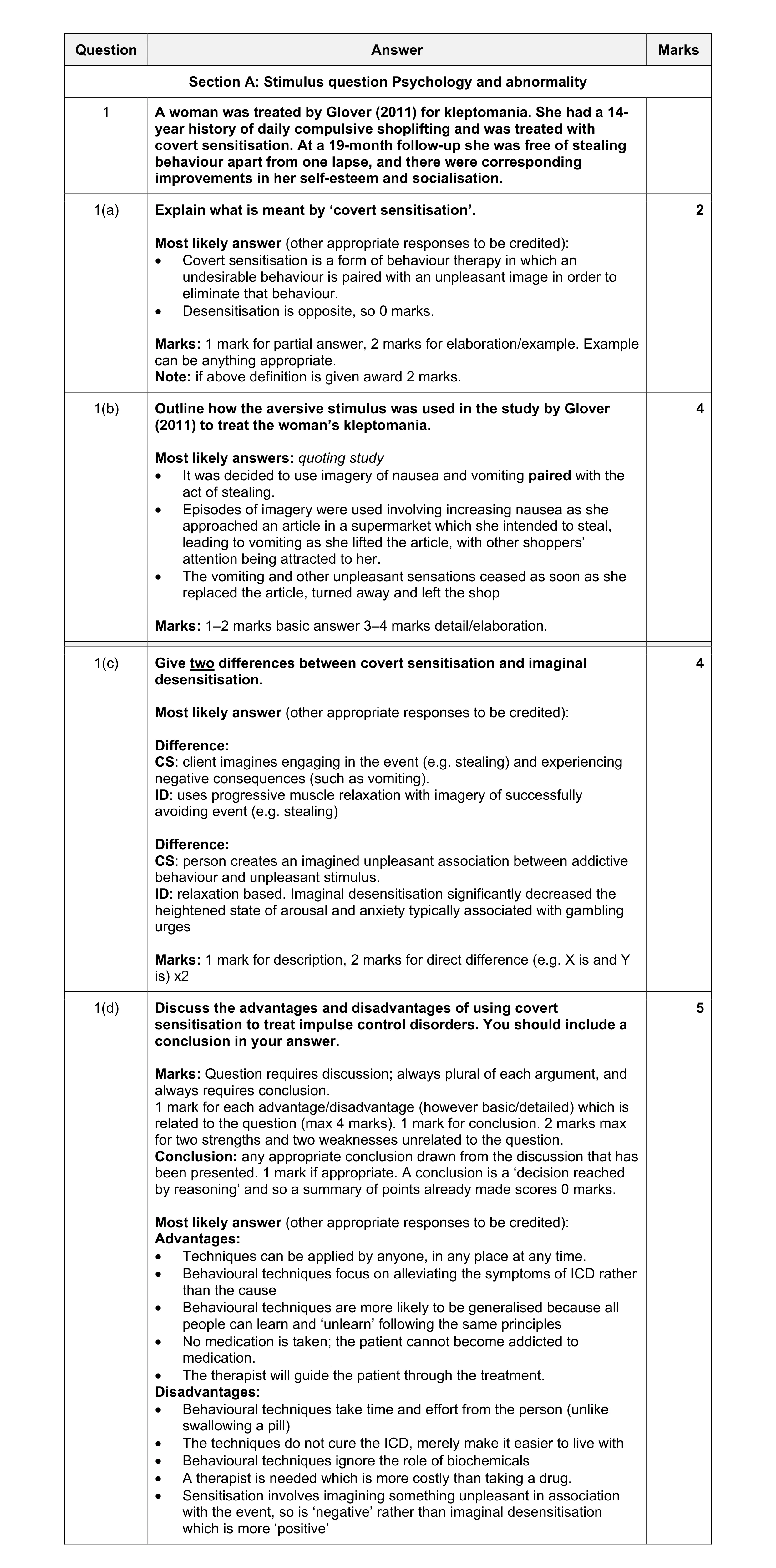 15
15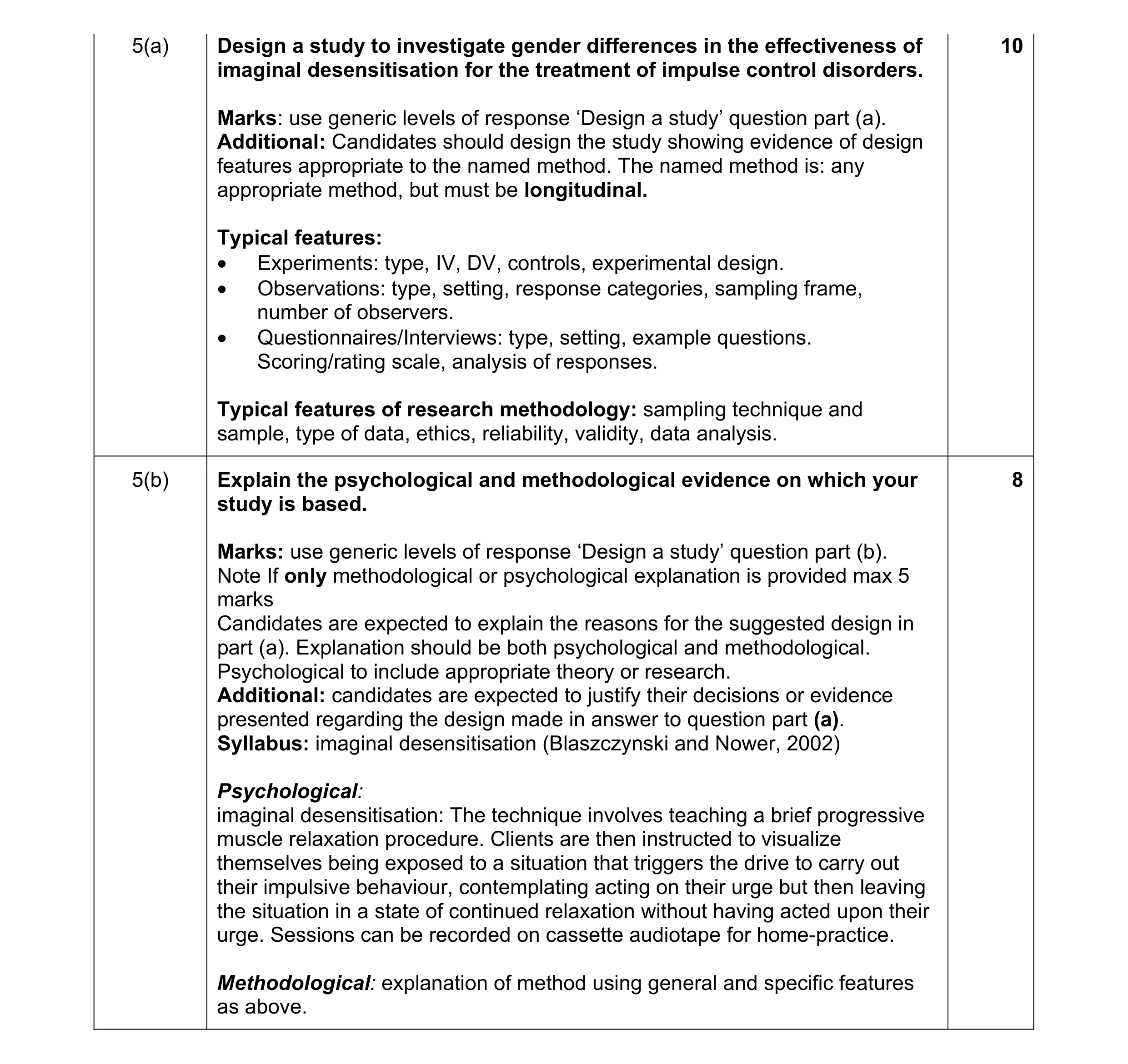 18
18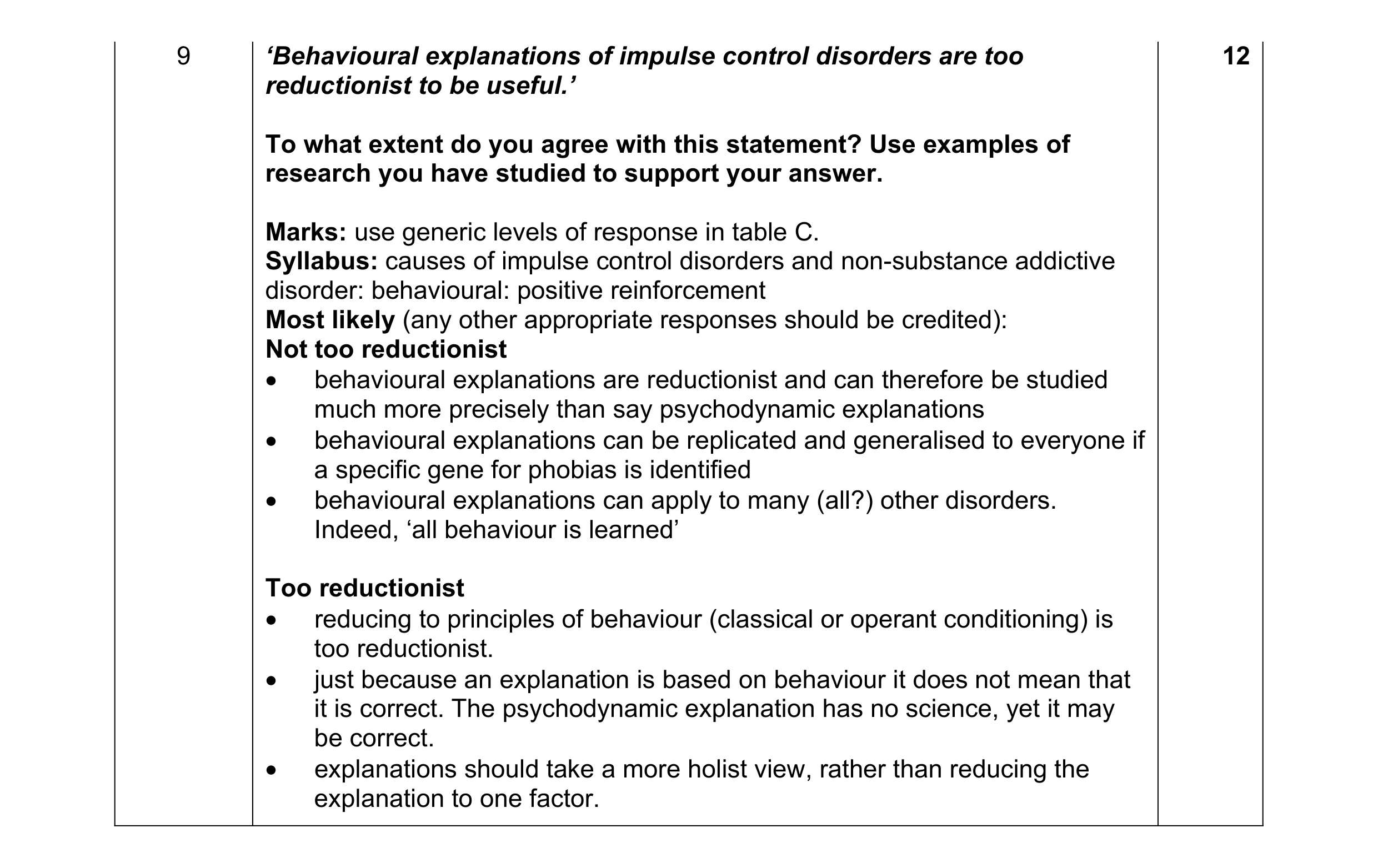 12
12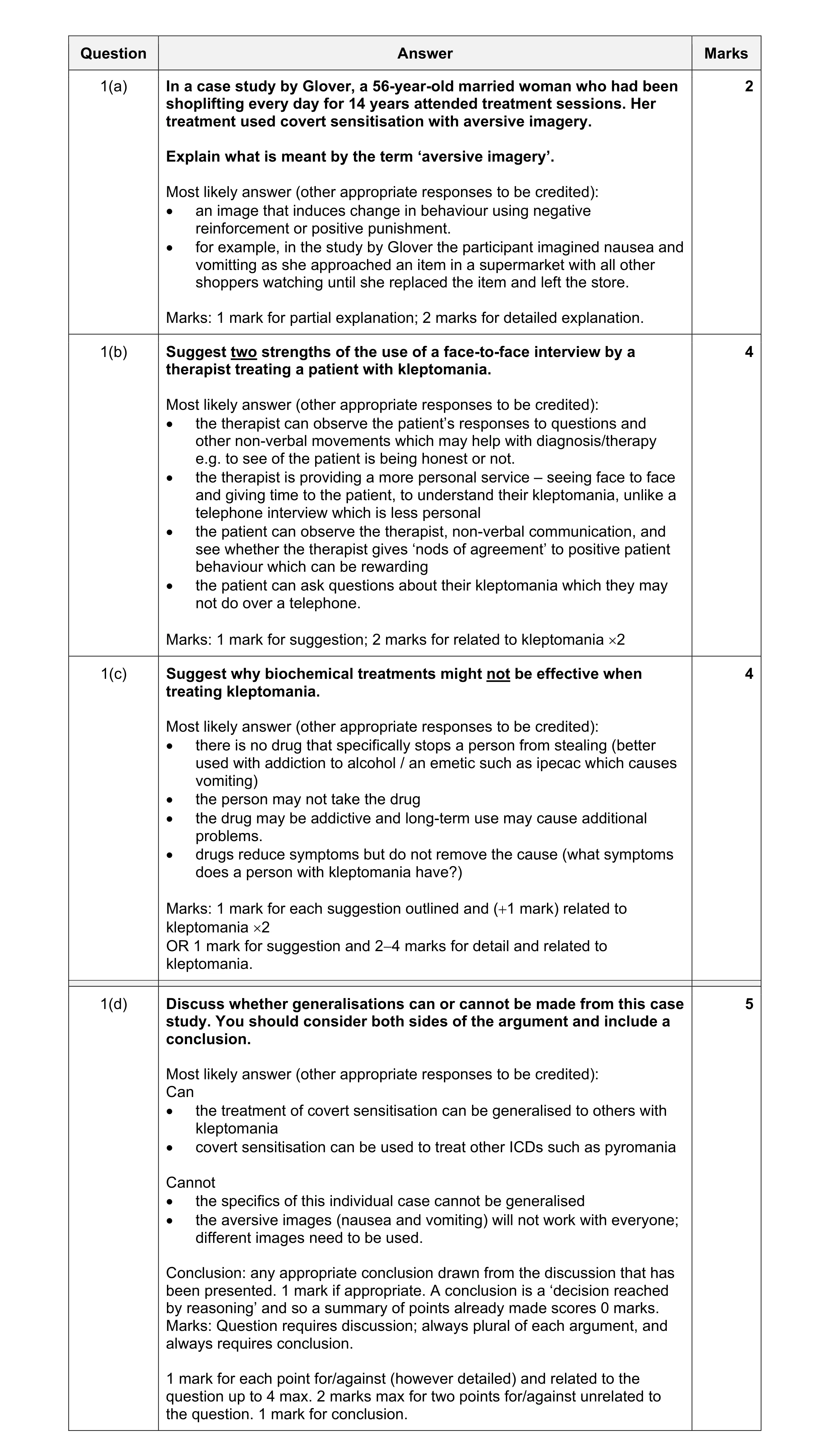 15
15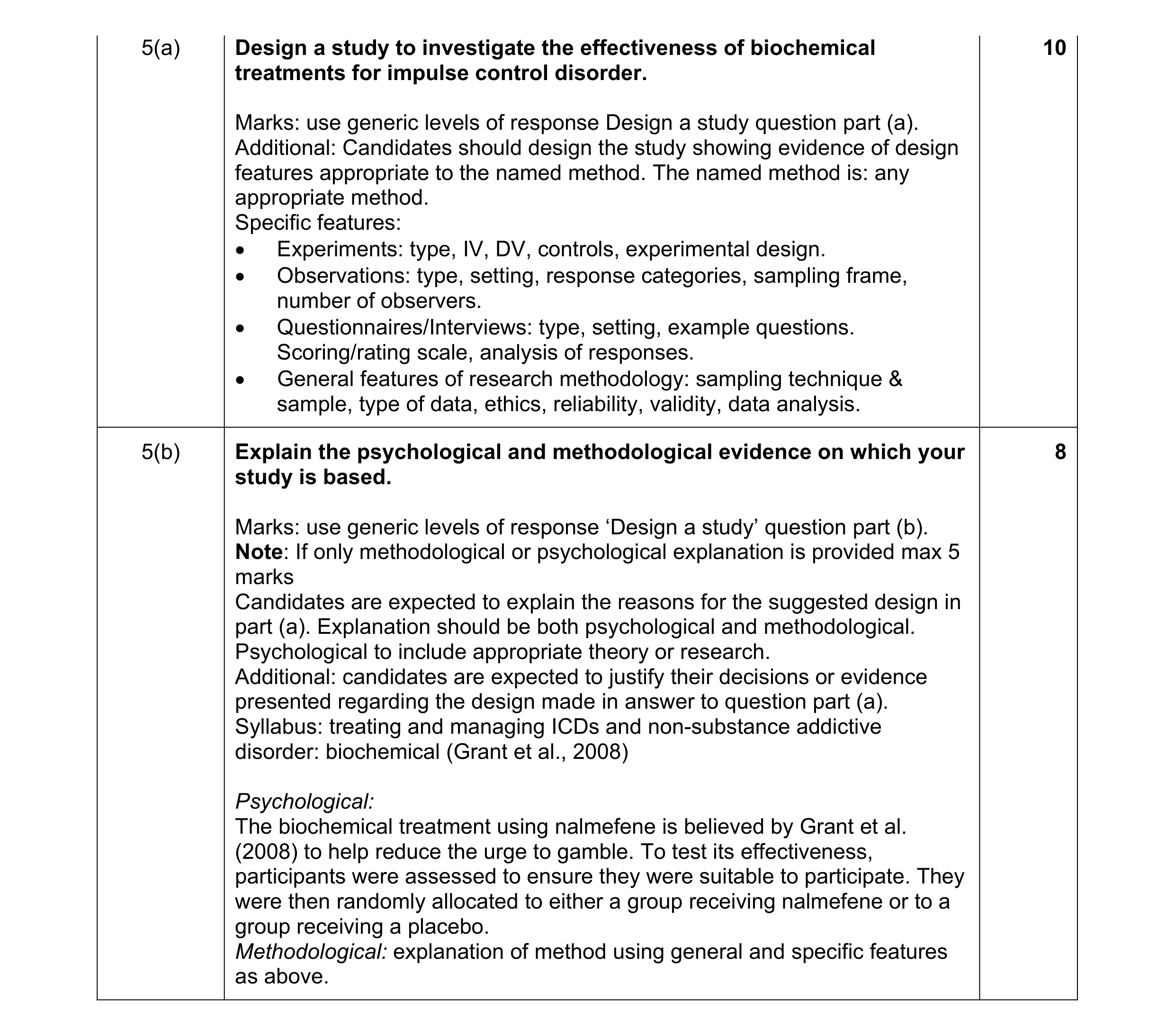 18
18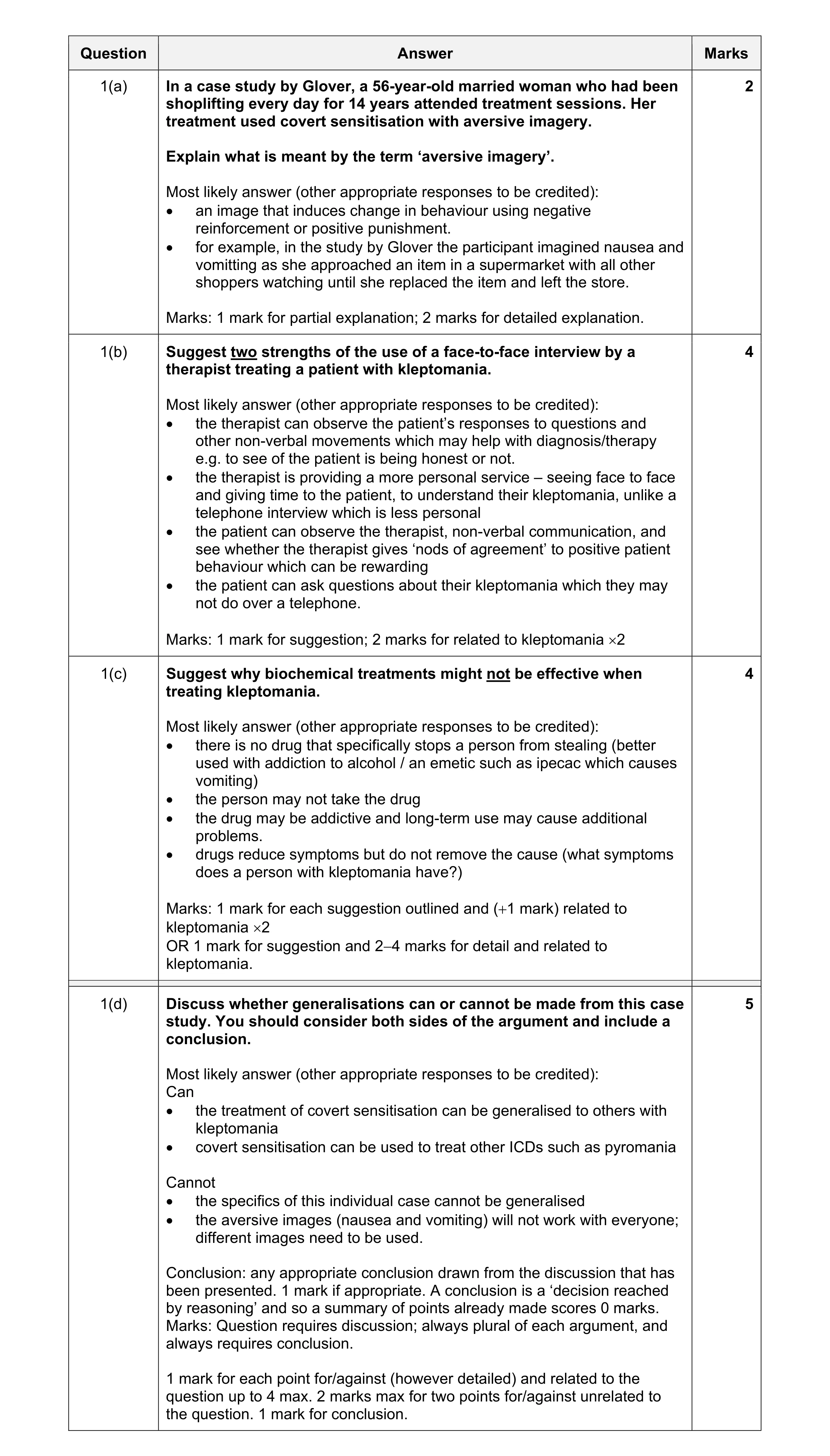 15
15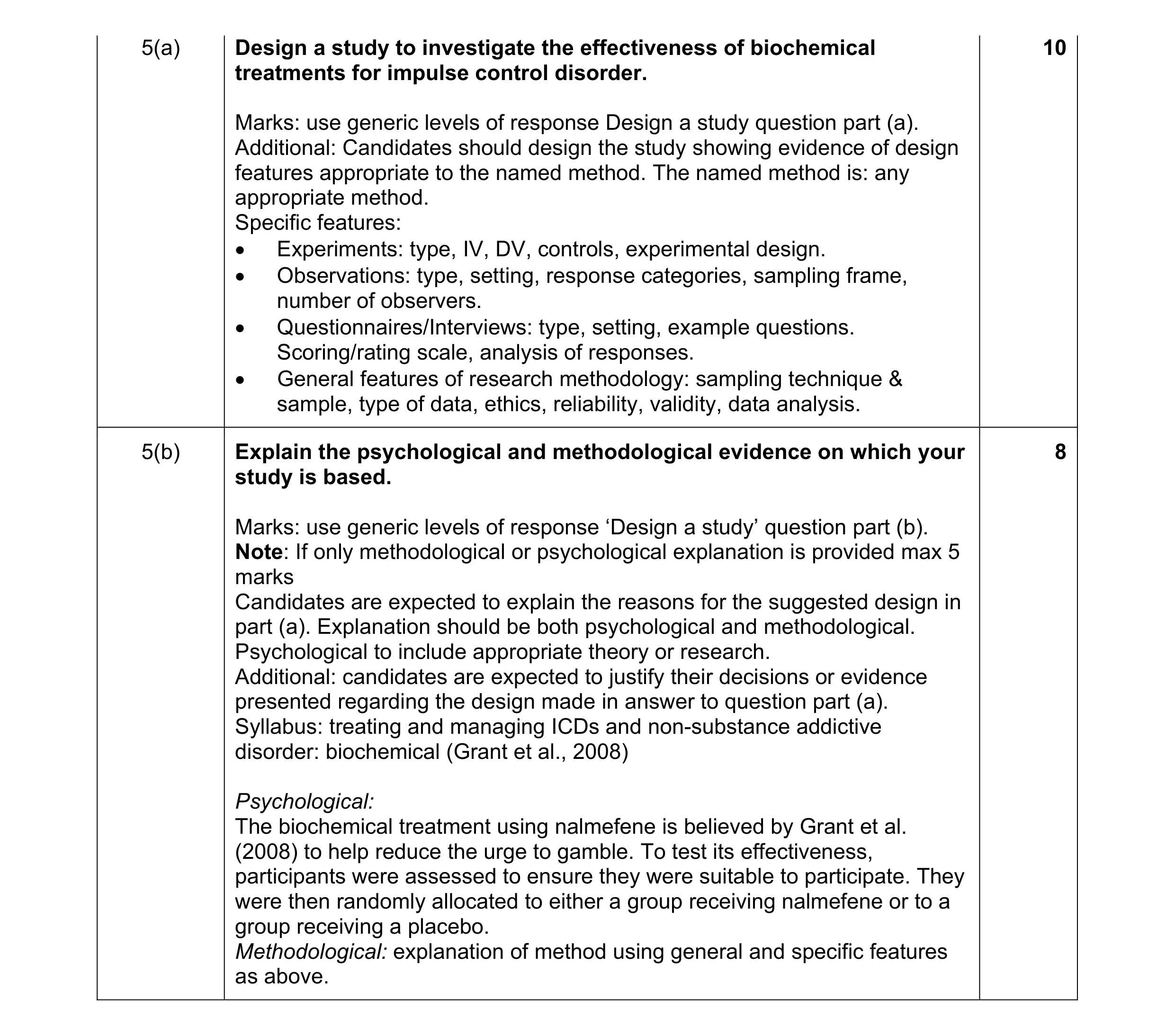 18
18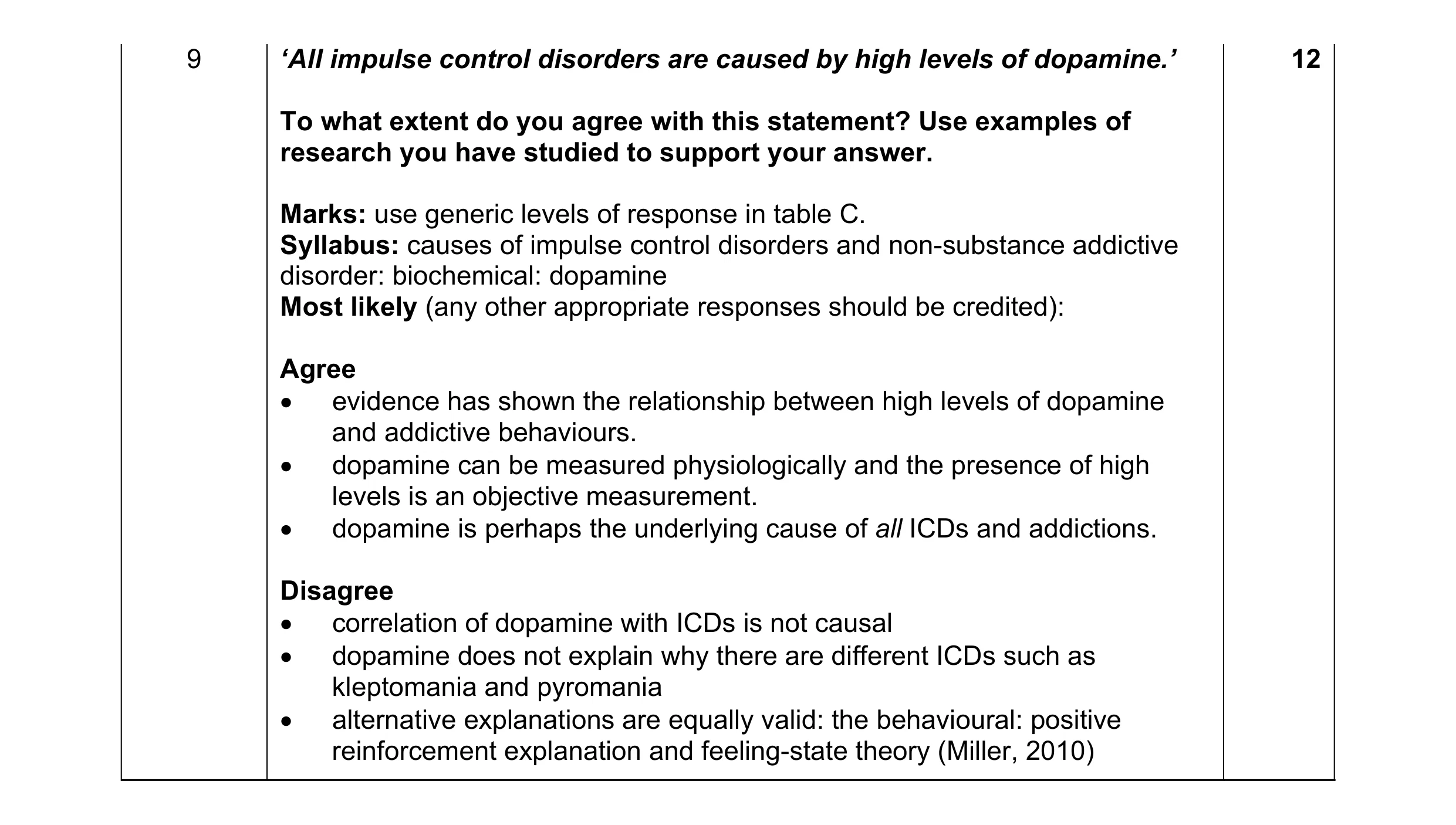 12
12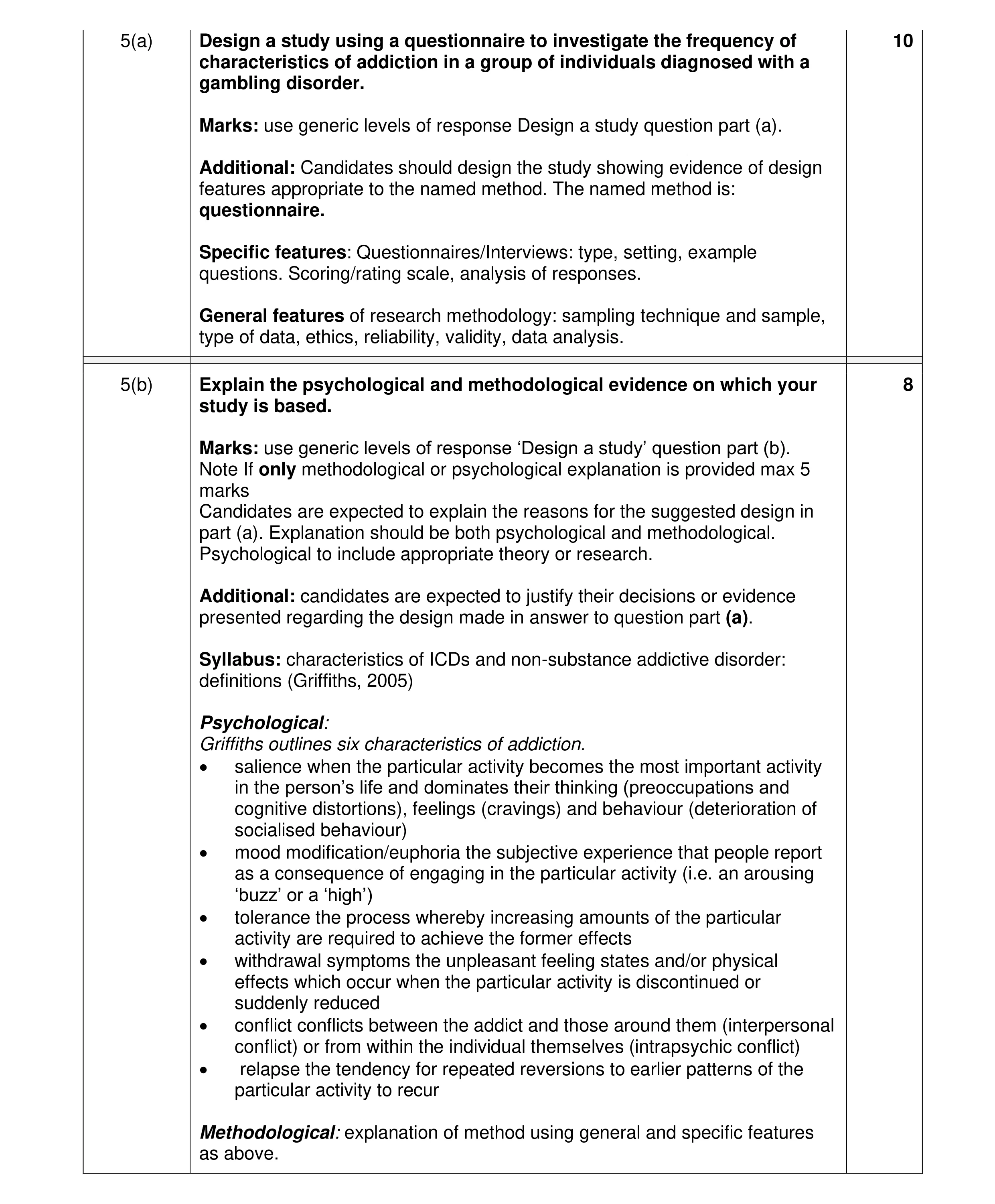 18
18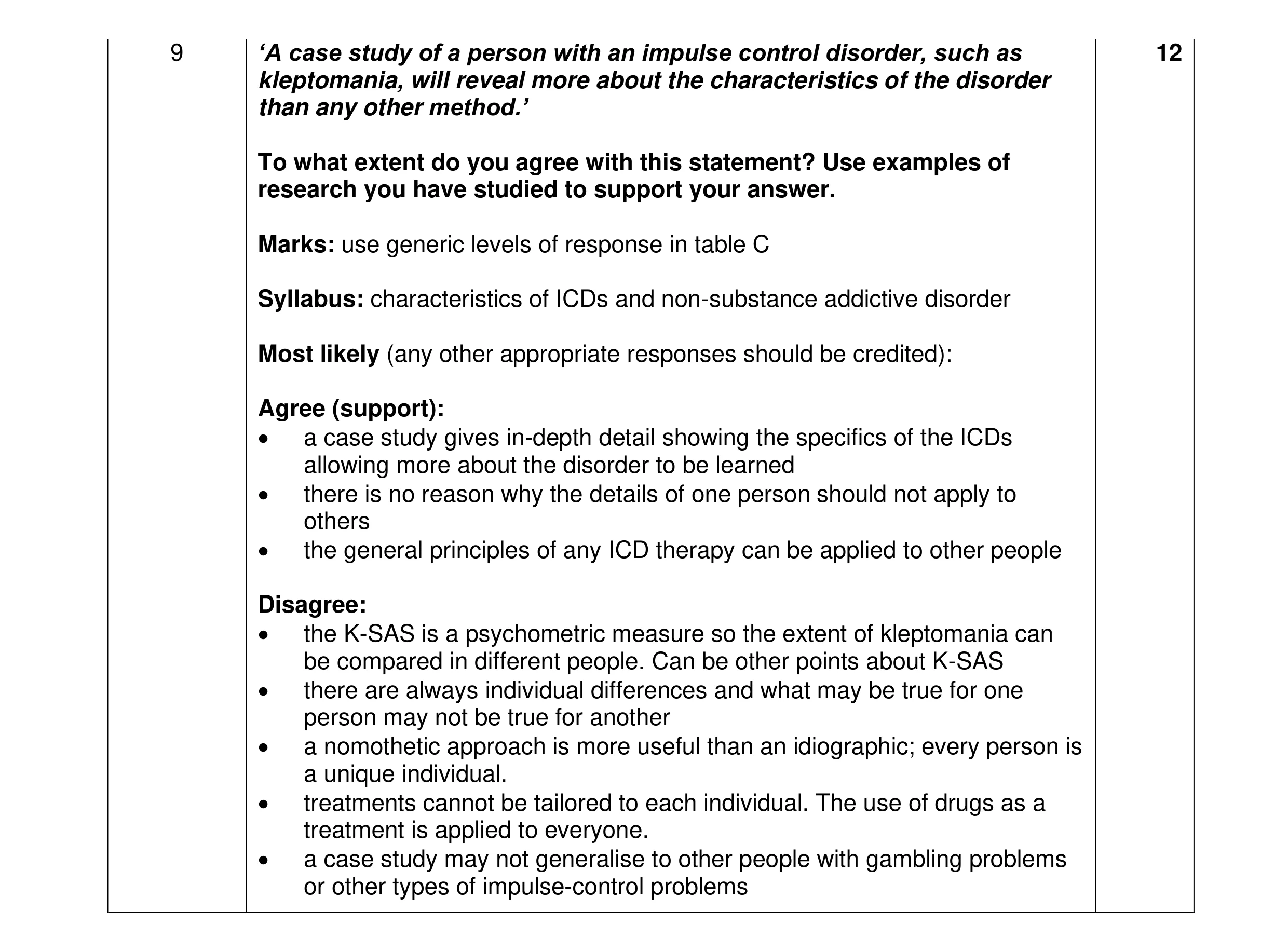 12
12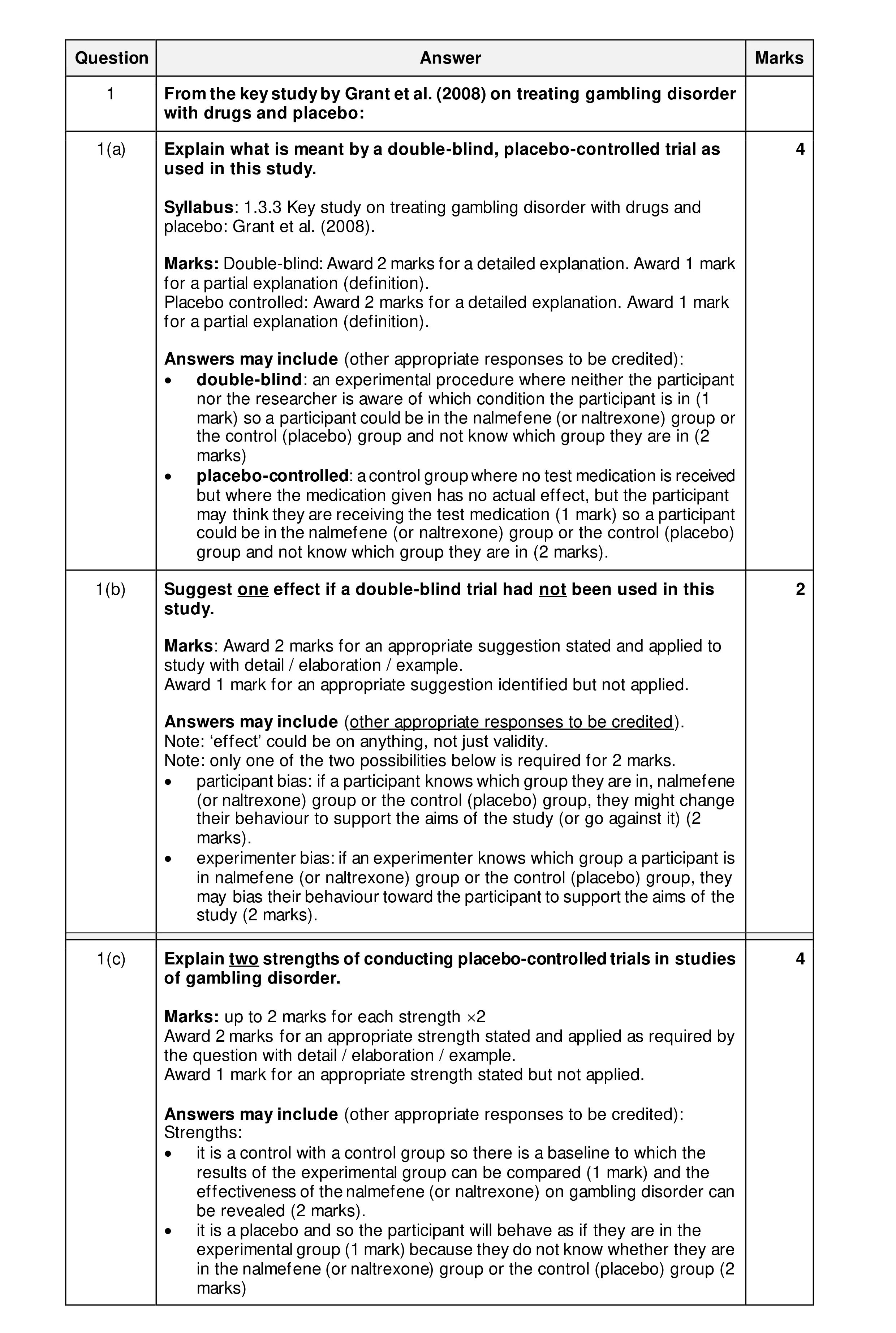 10
10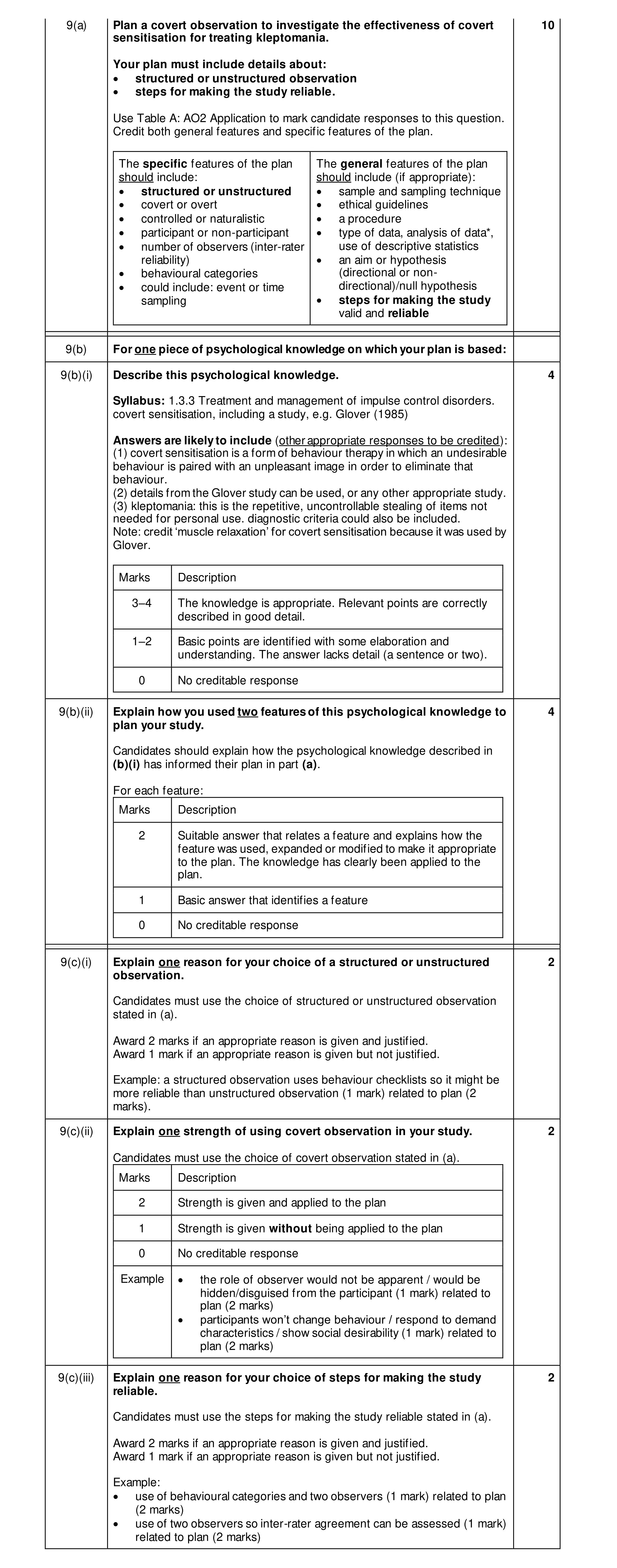 24
24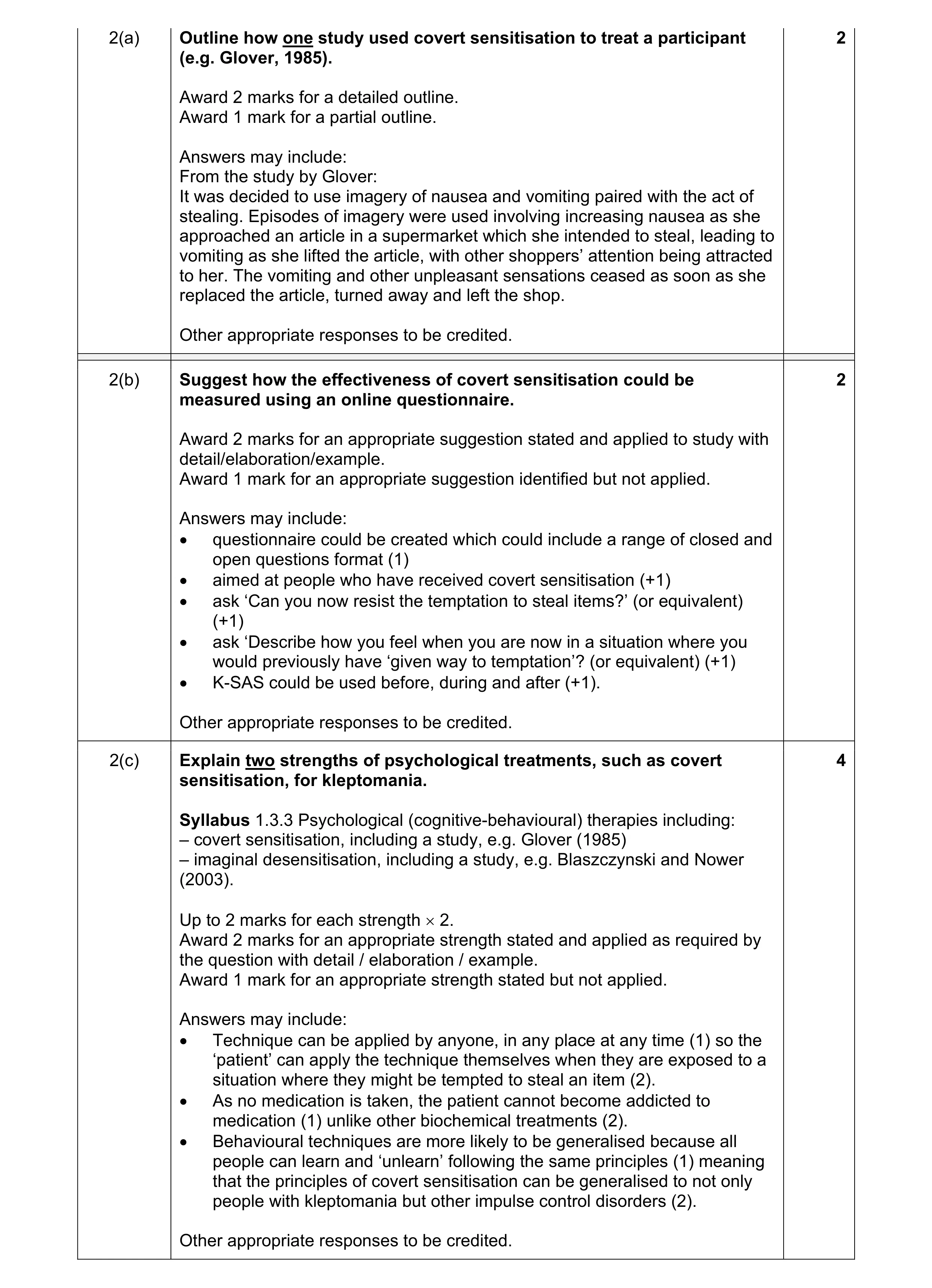 8
8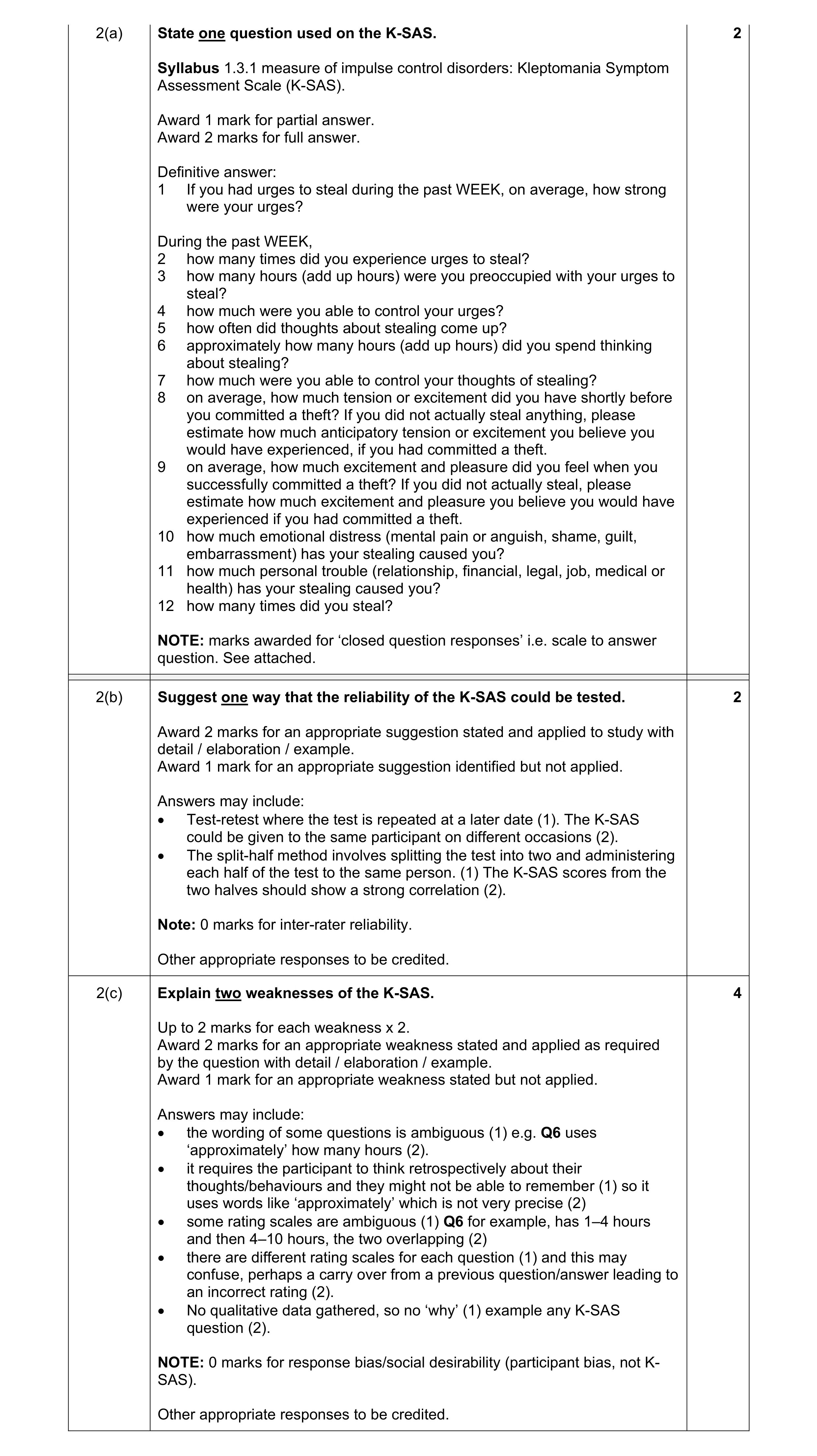 8
8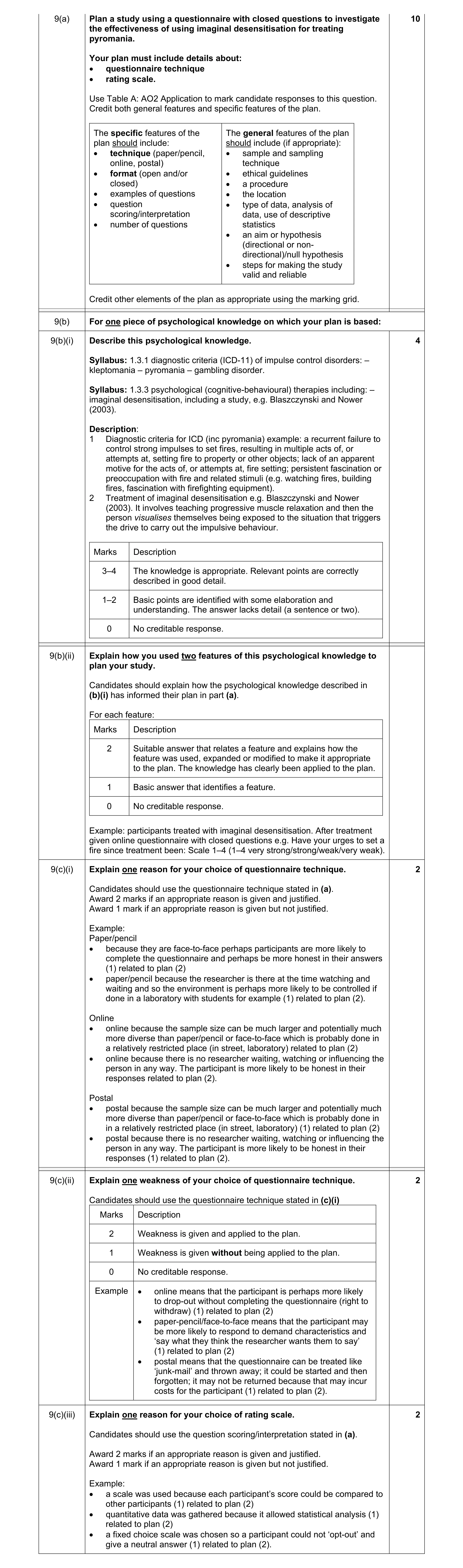 24
24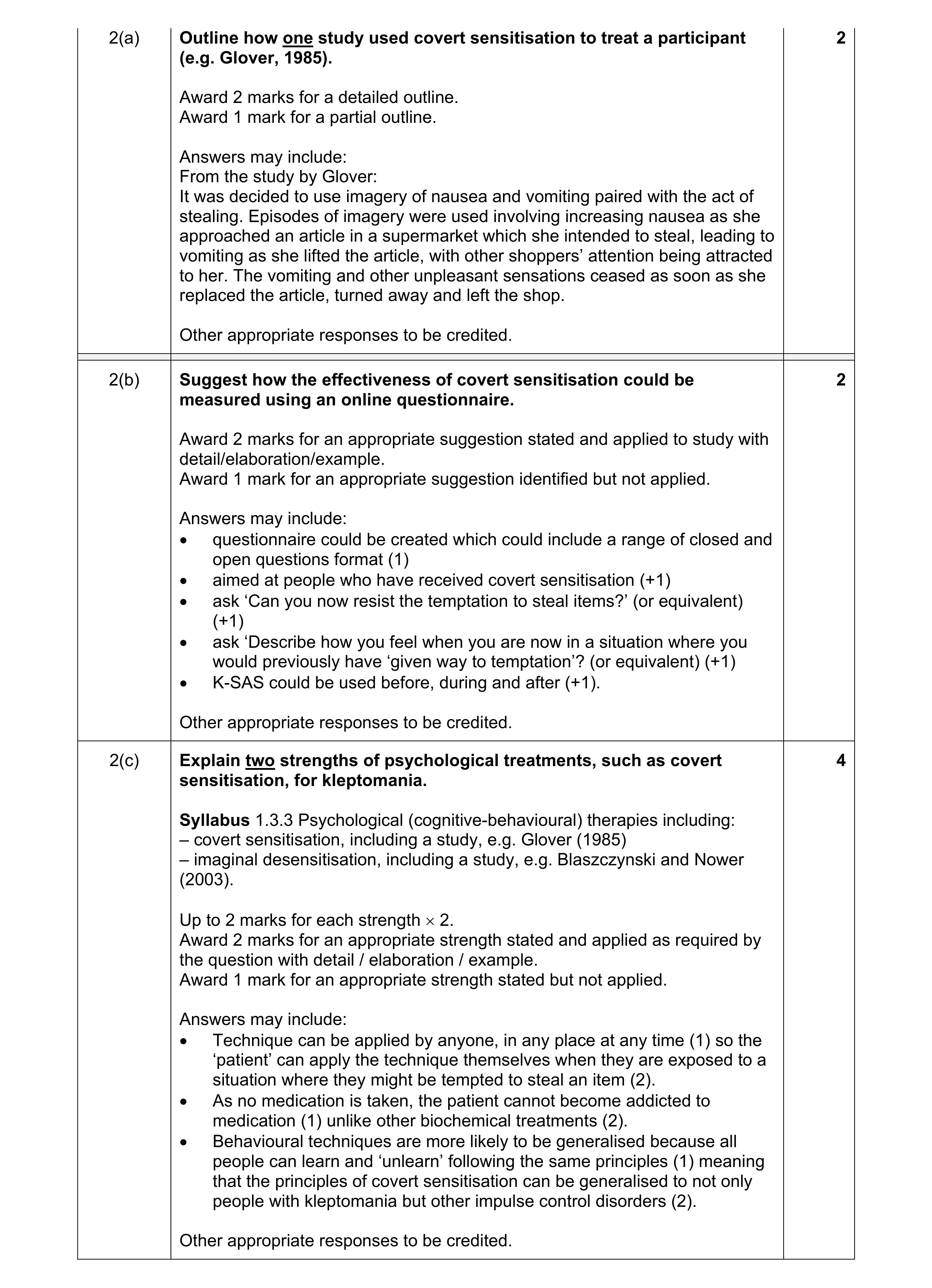 8
8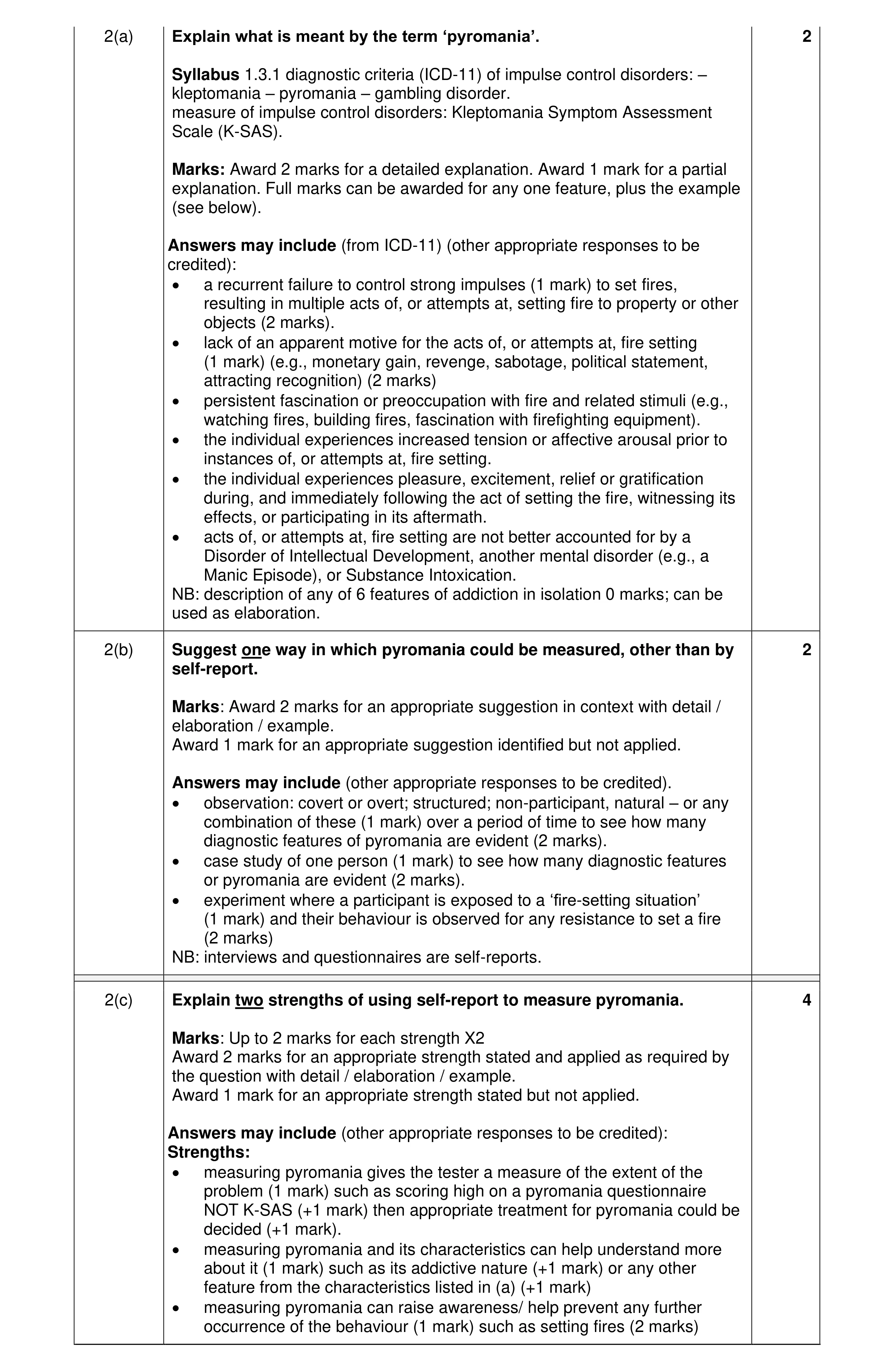 8
8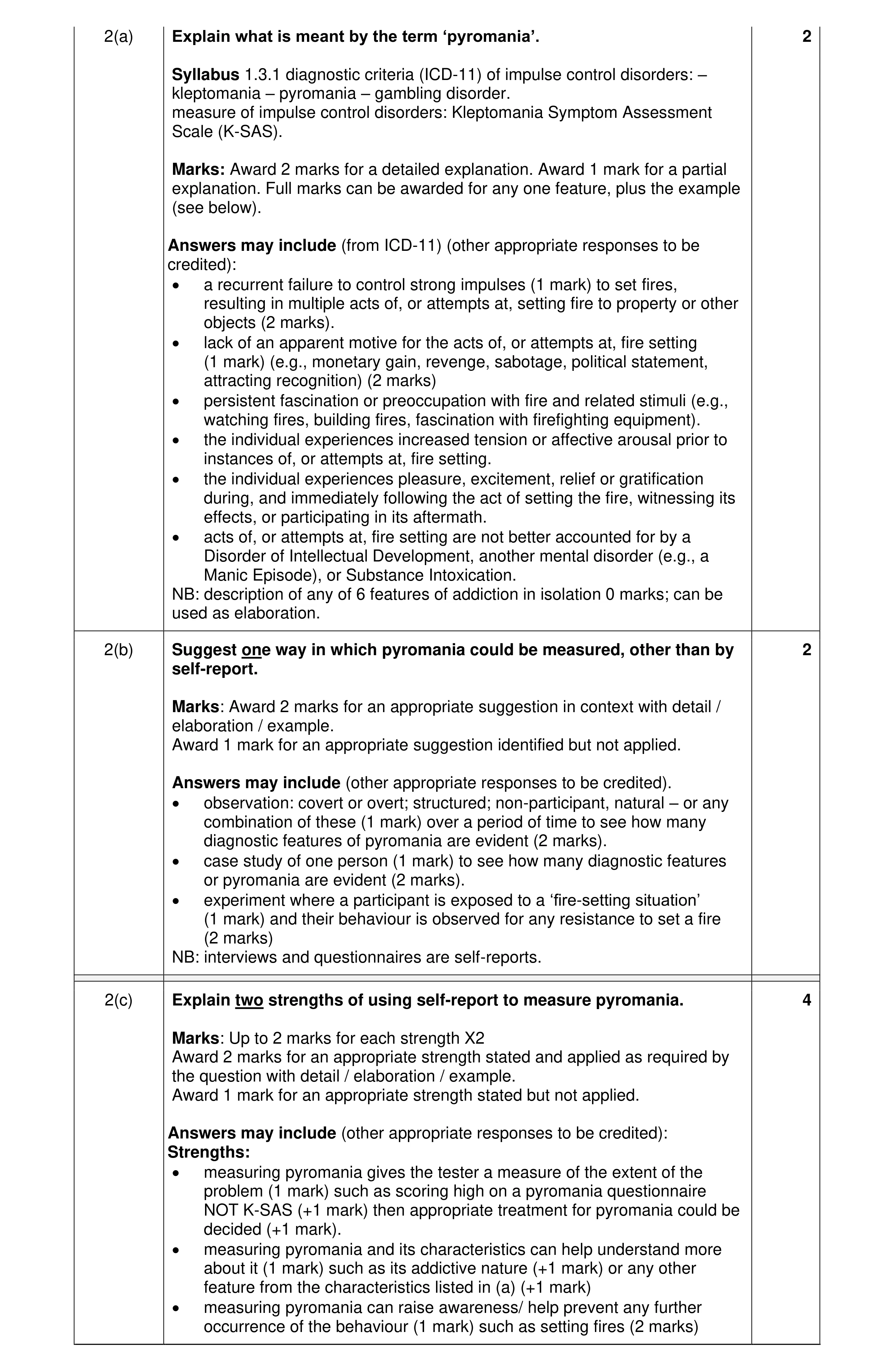 8
8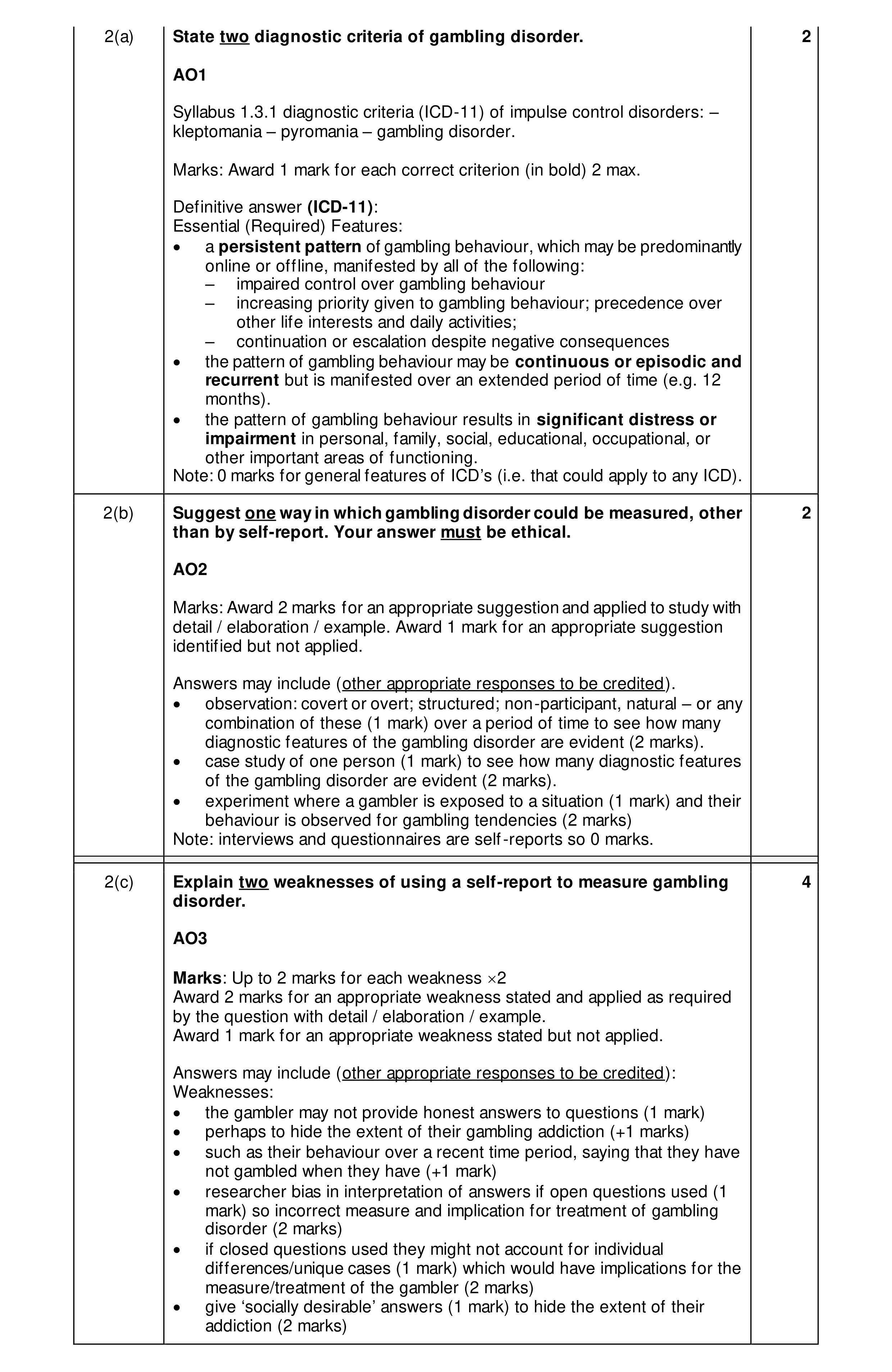 8
8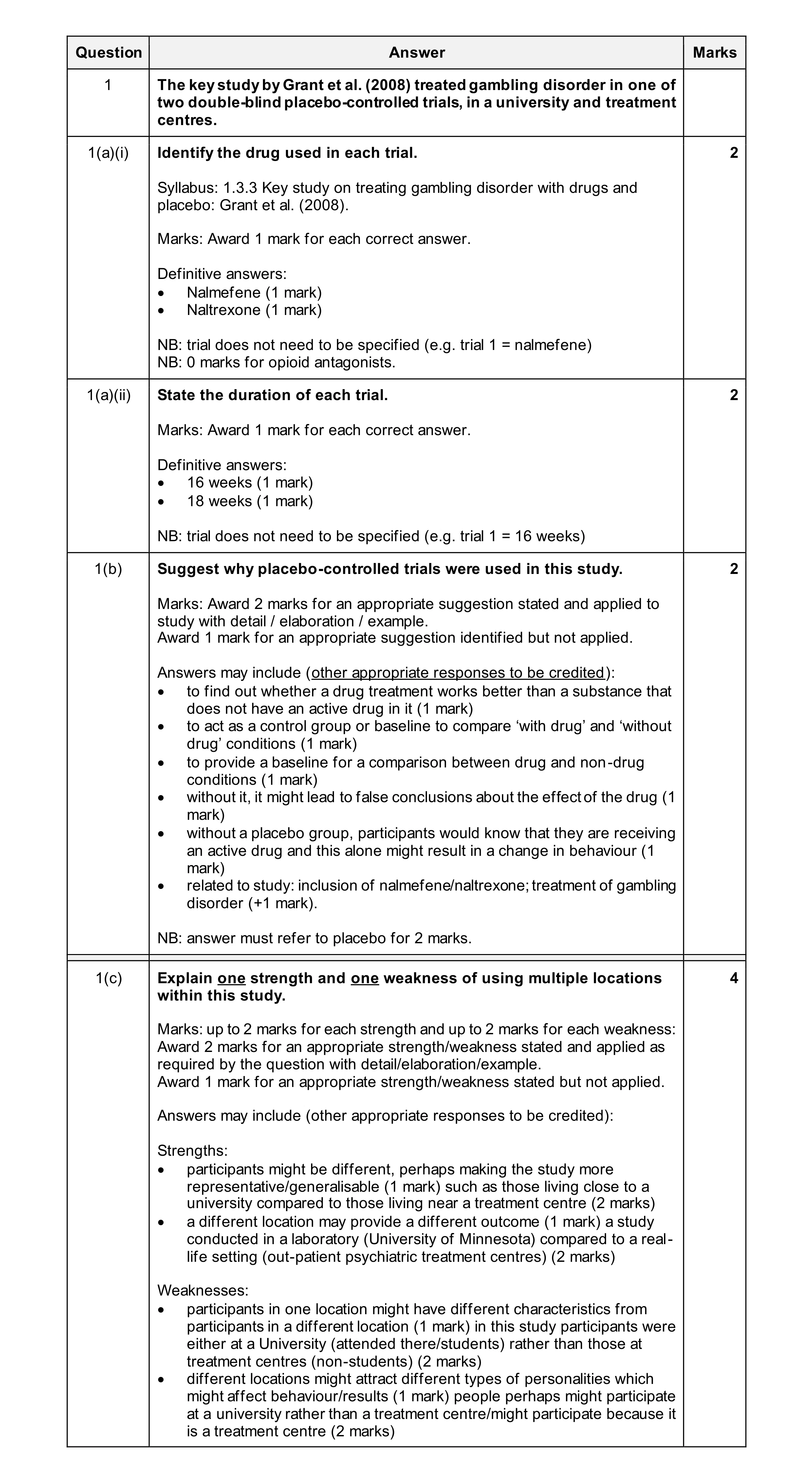 10
10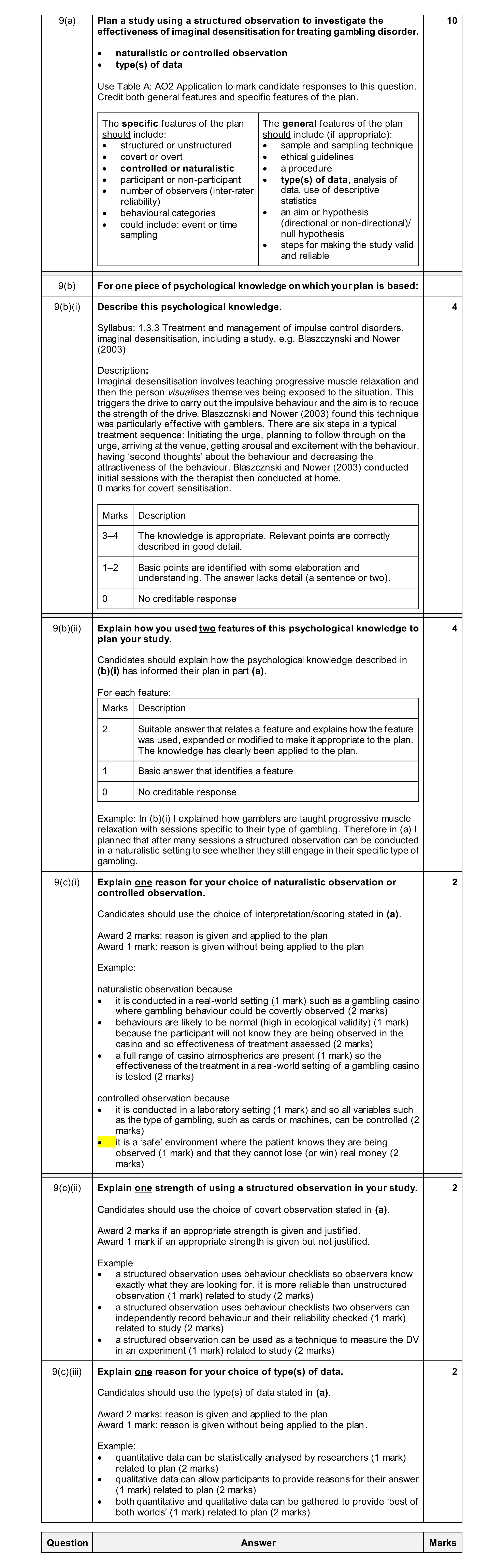 24
24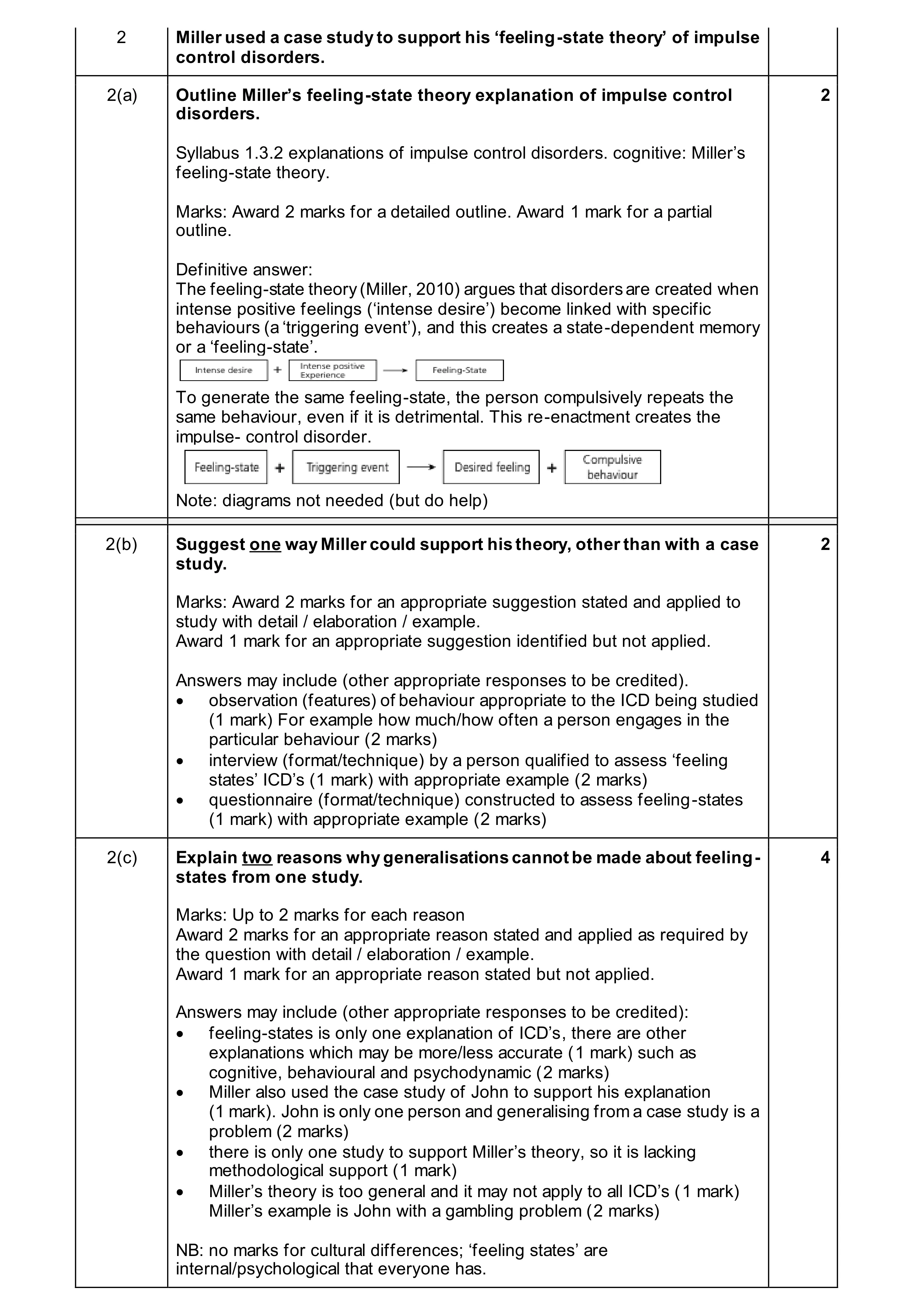 8
8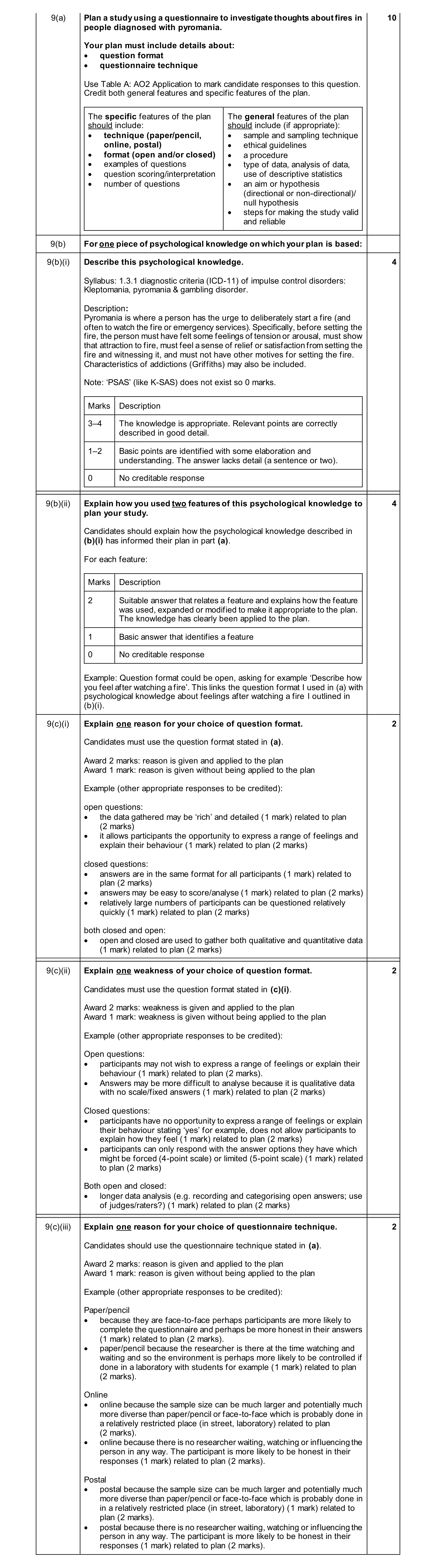 24
24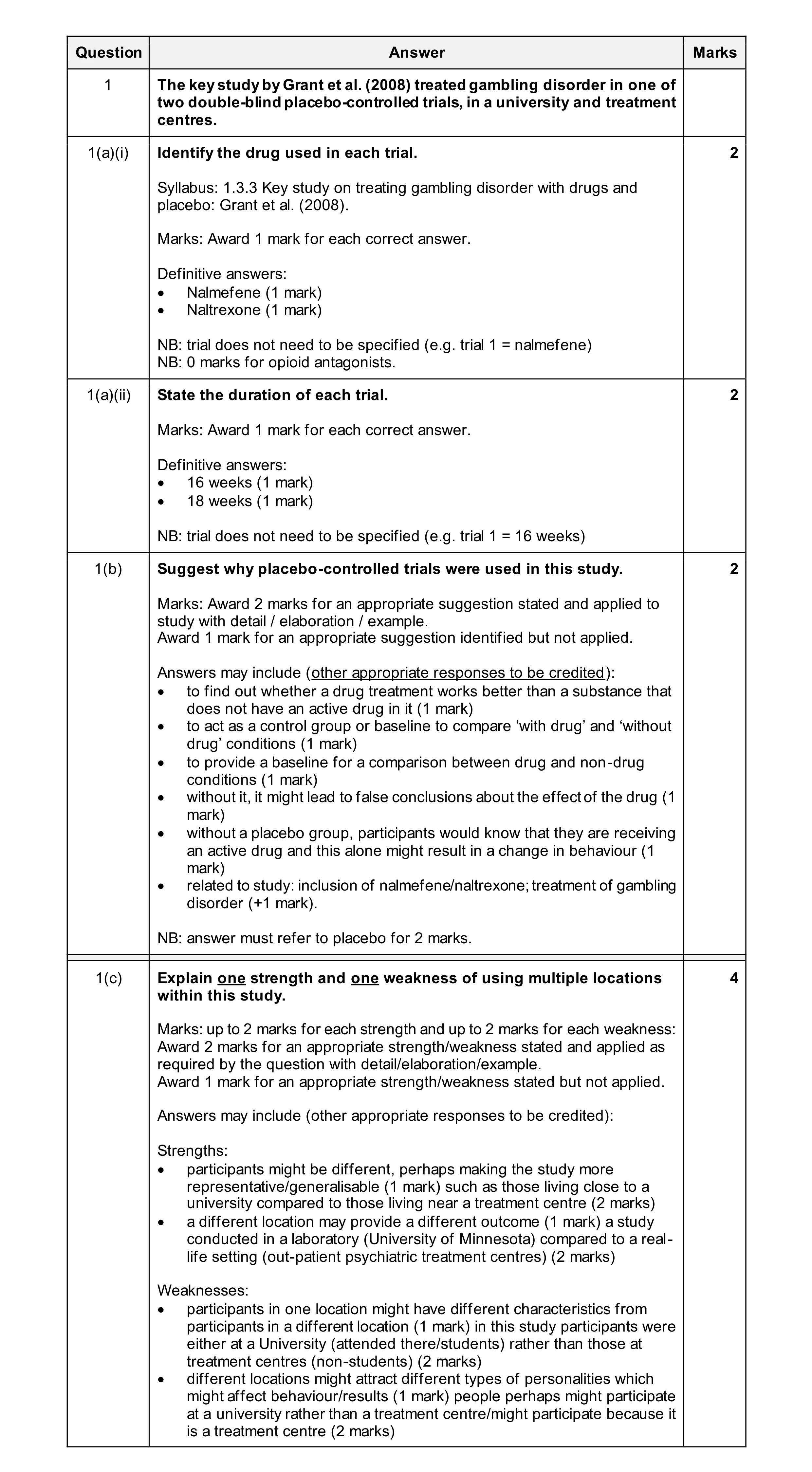 10
10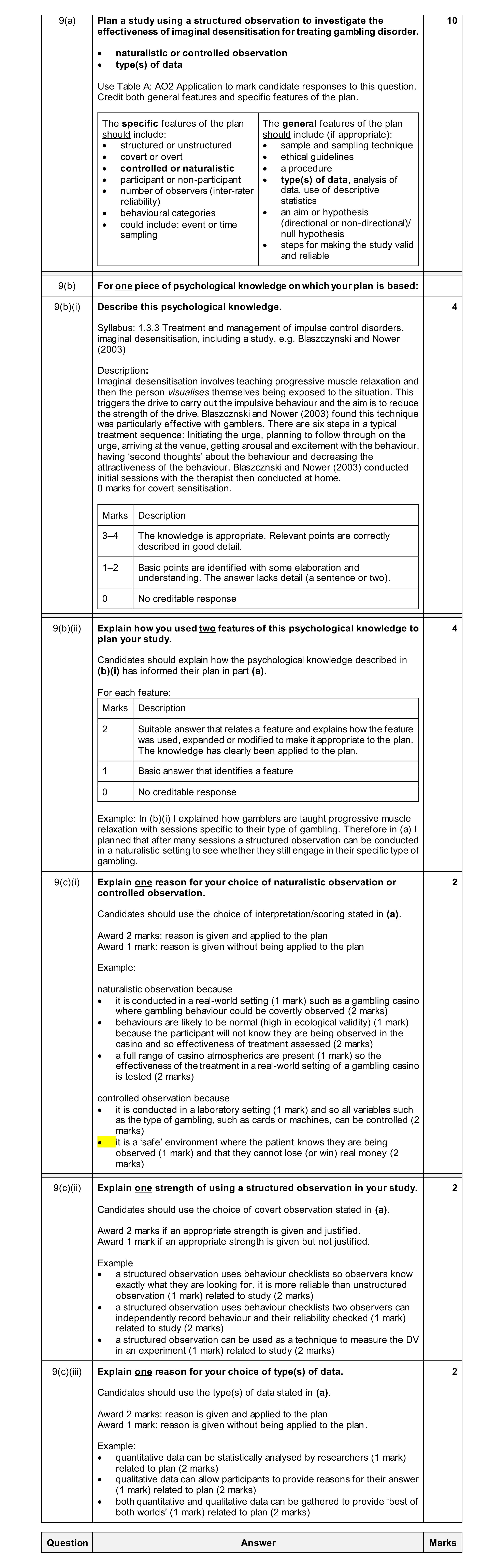 24
24