Questions as text
Q1 · The polynomial 2x3 + ax2 −4 is denoted by p(x) 9709/31 Oct/Nov 2004
3 The polynomial 2x3 + ax2 −4 is denoted by p(x). It is given that (x −2) is a factor of p(x). (i) Find the value of a. [2] When a has this value, (ii) factorise p(x), [2] (iii) solve the inequality p(x) > 0, justifying your answer. [2]
6 marks
Mark scheme: 3 (i) Substitute 2 for x and equate to zero, or divide by x – 2 and equate remainder to zero M1 Obtain answer a = −3 A1 2 (ii) Attempt to find quadratic factor by division or inspection M1 State quadratic factor 2x2 + x + 2 A1 2 [The M1 is earned if division reaches a partial quotient of 2x2 + kx, or if inspection has an unknown factor of 2x2 + bx + c and an equation in b and/or c, or if two coefficients with the correct moduli are stated without working.] (iii) State answer x > 2 (and nothing else) B1* Make a correct justification e.g. 2x2 + x + 2 (has no zeros and) is always positive B1(dep*) 2 [SR: The answer x ≥ 2 gets B0, but in this case allow the second B mark if the remaining work is correct.] A AND AS LEVEL – NOVEMBER 2004 9709 3
This question in 9709/31 Oct/Nov 2004
Q2 · The polynomial x4 + 5x + a is denoted by p(x) 9709/31 May/June 2005
5 The polynomial x4 + 5x + a is denoted by p(x). It is given that x2 −x + 3 is a factor of p(x). (i) Find the value of a and factorise p(x) completely. [6] (ii) Hence state the number of real roots of the equation p(x) = 0, justifying your answer. [2]
8 marks
Mark scheme: 5 (i) EITHER: Attempt division by x 2 −x + 3 reaching a partial quotient x 2 + x B1 Complete division and equate constant remainder to zero M1 Obtain answer a = −6 A1 OR: Commence inspection and reach unknown factor of x 2 + x + c B1 Obtain 3c = a and an equation in c M1 Obtain answer a = −6 A1 State or obtain factor x2 + x - 2 B1 State or obtain factors x + 2 and x – 1 B1 + B1 6 (ii) State that x2 + x – 2 = 0, has two (real) roots B1 Show that x2 − x + 3 = 0, has no (real) roots B1 2
This question in 9709/31 May/June 2005
Q3 · Given that a is a positive constant, solve the inequality |x −3a| > |x −a| 9709/31 Oct/Nov 2005
1 Given that a is a positive constant, solve the inequality |x −3a| > |x −a| . [4]
4 marks
Mark scheme: 1 EITHER: State or imply non-modular inequality ( x − 3a ) 2 > ( x − a ) 2 , or corresponding equation B1 Expand and solve the inequality, or equivalent M1 Obtain critical value 2a A1 State correct answer x < 2a only A1 OR: State a correct linear equation for the critical value, e.g. x –3a = −(x –a), or corresponding inequality B1 Solve the linear equation for x, or equivalent M1 Obtain critical value 2a A1 State correct answer x < 2a only A1 OR: Make recognizable sketches of both y = x –3a and y = x –a on a single diagram B1 Obtain a critical value from the intersection of the graphs M1 Obtain critical value 2a A1 Obtain correct answer x < 2a only A1 [4]
This question in 9709/31 Oct/Nov 2005
Q4 · Solve the inequality |x −2| > 3|2x + 1| 9709/31 May/June 2008
1 Solve the inequality |x −2| > 3|2x + 1|. [4]
4 marks
Mark scheme: 1 EITHER State or imply non-modular inequality( x − 2 )2 > (3(2 x + 1))2 , or corresponding quadratic equation, or pair of linear equations ( x − 2 ) = ±3(2 x + )1 B1 Make reasonable solution attempt at a 3-term quadratic, or solve two linear equations M1 Obtain critical values x = −1 and x = − 1 A1 7 State answer − 1 < x < − 1 A1 7 OR Obtain the critical value x = −1 from a graphical method, or by inspection, or by solving a linear equation or inequality B1 Obtain the critical value x = − 1 similarly B2 7 State answer − 1 < x < − 1 B1 [4] 7 [Do not condone ≤ for <; accept − 5 and − 0.14 for − 1 .] 35 7 2
This question in 9709/31 May/June 2008
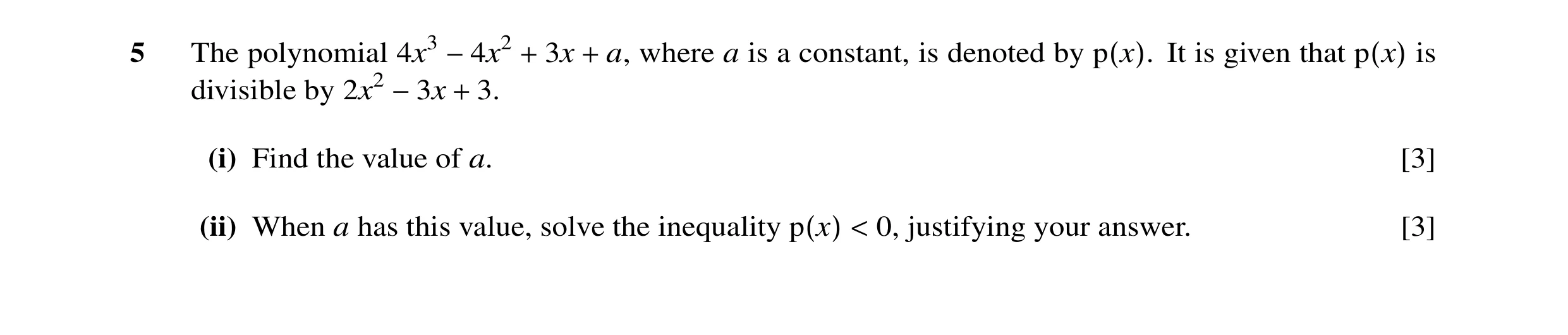
Q5 · The polynomial 4x3 −4x2 + 3x + a, where a is a constant, is denoted by p(x) 9709/31 Oct/Nov 2008
5 The polynomial 4x3 −4x2 + 3x + a, where a is a constant, is denoted by p(x). It is given that p(x) is divisible by 2x2 −3x + 3. (i) Find the value of a. [3] (ii) When a has this value, solve the inequality p(x) < 0, justifying your answer. [3]
6 marks
Mark scheme: 5 (i) EITHER: Attempt division by 2 x 2 −x3 + 3 and state partial quotient 2x B1 Complete division and form an equation for a M1 Obtain a = 3 A1 OR1: By inspection or using an unknown factor bx + c, obtain b = 2 B1 Complete the factorisation and obtain a M1 Obtain a = 3 A1 OR2: Find a complex root of 2 x 2 −x3 + 3 = 0 and substitute it in p(x) M1 Equate a correct expression to zero A1 Obtain a = 3 A1 OR3: Use 2 x 2 ≡x3 − 3 in p(x) at least once B1 Reduce the expression to the form a + c = 0, or equivalent M1 Obtain a = 3 A1 [3] (ii) State answer x < − 1 only B1 2 Carry out a complete method for showing 2 x 2 −x3 + 3 is never zero M1 Complete the justification of the answer by showing that 2 x 2 −x3 + 3 > 0 for all x A1 [3] [These last two marks are independent of the B mark, so B0M1A1 is possible. Alternative methods include (a) Complete the square M1 and use a correct completion to justify the answer A1; (b) Draw a recognizable graph of y = 2 x 2 + 3 x − 3 or p(x) M1 and use a correct graph to justify the answer A1; (c) Find the x-coordinate of the stationary point of y = 2 x 2 + 3 x − 3 and either find its y-coordinate or determine its nature M1, then use minimum point with correct coordinates to justify the answer A1.] [Do not accept ≤ for < ]
This question in 9709/31 Oct/Nov 2008
Q6 · Solve the inequality 2 [4] −3x < |x −3| 9709/31 Oct/Nov 2009
1 Solve the inequality 2 [4] −3x < |x −3|.
4 marks
Mark scheme: 1 EITHER: State or imply non-modular inequality (2 – 3x)2 < (x – 3)2, or corresponding equation, and make a reasonable solution attempt at a 3-term quadratic M1 Obtain critical value x = – 1 A1 2 Obtain x > – 1 A1 2 Fully justify x > – 1 as only answer A1 2 OR1: State the relevant critical linear equation, i.e. 2 – 3x = 3 – x B1 Obtain critical value x = – 1 B1 2 Obtain x > – 1 B1 2 Fully justify x > – 1 as only answer B1 2 OR2: Obtain the critical value x = – 1 by inspection, or by solving a linear inequality B2 2 Obtain x > – 1 B1 2 Fully justify x > – 1 as only answer B1 2 OR3: Make recognisable sketches of y = 2 – 3x and y = |x – 3| on a single diagram B1 Obtain critical value x = – 1 B1 2 Obtain x > – 1 B1 2 Fully justify x > – 1 as only answer B1 [4] 2 [Condone [ for > in the third mark but not the fourth.]
This question in 9709/31 Oct/Nov 2009
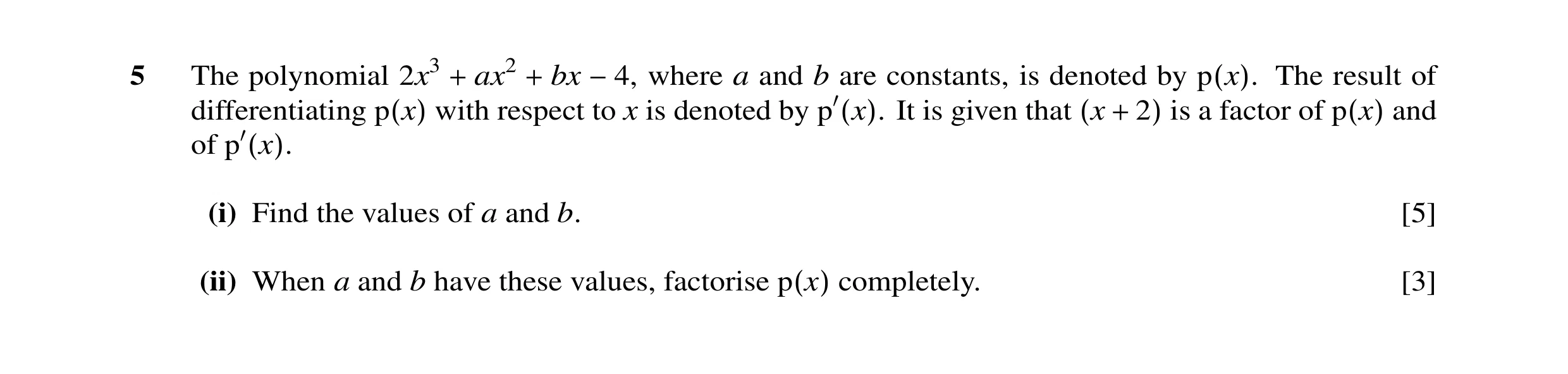
Q7 · The polynomial 2x3 ax2 bx where a and b are constants, is denoted by The result of… 9709/32 Oct/Nov 2009
5 The polynomial 2x3 ax2 bx where a and b are constants, is denoted by The result of differentiating with+ respect+ −4,to x is denoted by It is given that is p(x).a factor of and of p(x) p′(x). (x + 2) p(x) p′(x). (i) Find the values of a and b. [5] (ii) When a and b have these values, factorise completely. [3] p(x)
8 marks
Mark scheme: 5 (i) Substitute x = –2, equate to zero and state a correct equation, e.g. –16 + 4a – 2b – 4 = 0 B1 Differentiate p(x), substitute x = –2 and equate to zero M1 Obtain a correct equation, e.g. 24 – 4a + b = 0 A1 Solve for a or for b M1 Obtian a = 7 and b = 4 A1 [5] (ii) EITHER: State or imply (x + 2)2 is a factor B1 Attempt division by (x + 2)2 reaching a quotient 2x + k or use inspection with unknown factor cx + d reaching c = 2 or d = –1 M1 Obtain factorisation (x + 2)2 (2x – 1) A1 OR: Attempt division by (x + 2) M1 Obtain quadratic factor 2x2 + 3x – 2 A1 Obtain factorisation (x + 2)(x + 2)(2x – 1) A1 [3] [The M1 is earned if division reaches a partial quotient of 2x2 + kx, or if inspection has an unknown factor of 2x2 + ex + f and an equation in e and/or f, or if two coefficients with the correct moduli are stated without working.] GCE A/AS LEVEL – October/November 2009 9709 32 dx 2 2
This question in 9709/32 Oct/Nov 2009
Q8 · The polynomial 2x3 5x2 ax b, where a and b are constants, is denoted by It is given that… 9709/32 May/June 2010
5 The polynomial 2x3 5x2 ax b, where a and b are constants, is denoted by It is given that is a factor of+ +and that+ when is divided by the remainderp(x).is 9. (2x + 1) p(x) p(x) (x + 2) (i) Find the values of a and b. [5] (ii) When a and b have these values, factorise completely. [3] p(x)
8 marks
Mark scheme: 5 (i) Substitute x = − 12 , equate to zero and obtain a correct equation, e.g. − 1 + 5 − 1 a + b = 0 B1 4 4 2 Substitute x = −2 and equate to 9 M1 Obtain a correct equation, e.g. − 16 + 20 − 2 a + b = 9 A1 Solve for a or for b M1 Obtain a = −4 and b = −3 A1 [5] GCE AS/A LEVEL – May/June 2010 9709 32 (ii) Attempt division by 2x + 1 reaching a partial quotient of x 2 + kx M1 Obtain quadratic factor x 2 + 2 x − 3 A1 Obtain factorisation ( 2 x + 1)( x + 3)( x − )1 A1 [3] [The M1 is earned if inspection has an unknown factor of x 2 + ex + f and an equation in e and/or f, or if two coefficients with the correct moduli are stated without working.] [If linear factors are found by the factor theorem, give B1 + B1 for (x −1) and (x + 3), and then B1 for the complete factorisation.] 1 dy
This question in 9709/32 May/June 2010
Q9 · Solve the inequality [4] 2|x −3| > |3x + 1| 9709/32 Oct/Nov 2010
1 Solve the inequality [4] 2|x −3| > |3x + 1|.
4 marks
Mark scheme: 1 EITHER: State or imply non-modular inequality (2(x – 3))2 > (3x + 1)2, or corresponding quadratic equation, or pair of linear equations 2(x – 3) = ±(3x + 1) B1 Make reasonable solution attempt at a 3-term quadratic, or solve two linear equations M1 Obtain critical values x = –7 and x = 1 A1 State answer –7 < x < 1 A1 OR: Obtain critical value x = –7 or x = 1 from a graphical method, or by inspection, or by solving a linear equation or inequality B1 Obtain critical values x = –7 and x = 1 B2 State answer –7 < x < 1 B1 [4] [Do not condone: < for <.]
This question in 9709/32 Oct/Nov 2010
Q10 · The polynomial is defined by f(x) 12x3 25x2 f(x) = + −4x −12 9709/31 May/June 2011
4 The polynomial is defined by f(x) 12x3 25x2 f(x) = + −4x −12. (i) Show that 0 and factorise completely. [4] f(−2) = f(x) (ii) Given that 12 27y 25 9y 3y 0, × + × −4 × −12 = state the value of 3y and hence find y correct to 3 significant figures. [3]
7 marks
Mark scheme: 4 (i) Verify that –96 + 100 + 8 – 12 = 0 B1 Attempt to find quadratic factor by division by (x + 2), reaching a partial quotient 12x2 + kx, inspection or use of an identity M1 Obtain 12x2 + x – 6 A1 State (x + 2)(4x + 3)(3x – 2) A1 [4] [The M1 can be earned if inspection has unknown factor Ax2 + Bx – 6 and an equation in A and/or B or equation 12x2 + Bx + C and an equation in B and/or C.] (ii) State 3y = 23 and no other value B1 Use correct method for finding y from equation of form 3y = k, where k > 0 M1 Obtain –0.369 and no other value A1 [3] 2 2
This question in 9709/31 May/June 2011
Q11 · Solve the inequality |x| < |5 + 2x| 9709/32 May/June 2011
1 Solve the inequality |x| < |5 + 2x|. [3]
3 marks
Mark scheme: 1 EITHER: State or imply non-modular inequality x 2 < (5 + 2 x )2 , or corresponding equation, or pair of linear equations x = ± (5 + 2 x ) M1 5 Obtain critical values –5 and − only A1 3 5 Obtain final answer x < –5, x > − A1 3 OR: State one critical value e.g. –5, by solving a linear equation or inequality, or from a graphical method, or by inspection B1 5 State the other critical value, e.g. − , and no other B1 3 5 Obtain final answer x < –5, x > − B1 [3] 3 [Do not condone ≤ or ≥.]
This question in 9709/32 May/June 2011
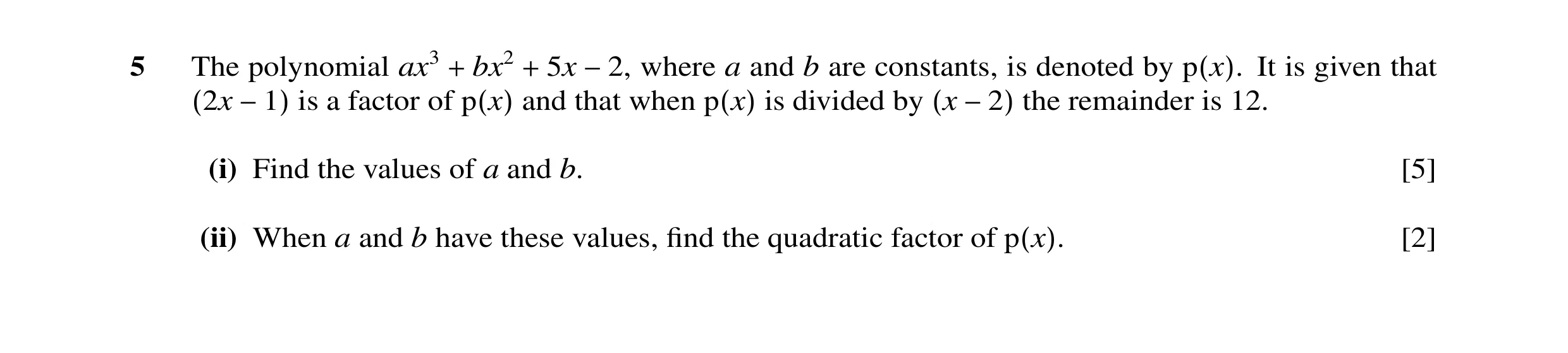
Q12 · The polynomial ax3 bx2 5x where a and b are constants, is denoted by It is given that + +… 9709/33 May/June 2011
5 The polynomial ax3 bx2 5x where a and b are constants, is denoted by It is given that + + −2, p(x). is a factor of and that when is divided by the remainder is 12. (2x −1) p(x) p(x) (x −2) (i) Find the values of a and b. [5] (ii) When a and b have these values, find the quadratic factor of [2] p(x).
7 marks
Mark scheme: 1 5 (i) Substitute x = and equate to zero, or divide, and obtain a correct equation, e.g. 2 1 1 5 a + b + − 2 = 0 B1 8 4 2 Substitute x = 2 and equate result to 12, or divide and equate constant remainder to 12 M1 Obtain a correct equation, e.g. 8a + 4b + 10 – 2 = 12 A1 Solve for a or for b M1 Obtain a = 2 and b = –3 A1 [5] 1 2 (ii) Attempt division by 2x – 1 reaching a partial quotient ax + kx M1 2 Obtain quadratic factor x2 – x + 2 A1 [2] [The M1 is earned if inspection has an unknown factor Ax2 + Bx + 2 and an equation in A 1 2 and/or B, or an unknown factor of ax + Bx + C and an equation in B and/or C.] 2
This question in 9709/33 May/June 2011
Q13 · The polynomial x4 3x3 ax 3 is denoted by It is given that is divisible by x2 1 9709/31 Oct/Nov 2011
3 The polynomial x4 3x3 ax 3 is denoted by It is given that is divisible by x2 1. + + + p(x). p(x) −x + (i) Find the value of a. [4] (ii) When a has this value, find the real roots of the equation 0. [2] p(x) =
6 marks
Mark scheme: 3 (i) EITHER: Attempt division by x2 – x + 1 reaching a partial quotient of x2 + kx M1 Obtain quotient x2 + 4x + 3 A1 Equate remainder of form lx to zero and solve for a, or equivalent M1 Obtain answer a = 1 A1 OR: Substitute a complex zero of x2 – x + 1 in p(x) and equate to zero M1 Obtain a correct equation in a in any unsimplified form A1 Expand terms, use i2 = –1 and solve for a M1 Obtain answer a = 1 A1 [4] [SR: The first M1 is earned if inspection reaches an unknown factor x2 + Bx + C and an equation in B and/or C, or an unknown factor Ax2 + Bx + 3 and an equation in A and/or B. The second M1 is only earned if use of the equation a = B – C is seen or implied.] (ii) State answer, e.g. x = –3 B1 State answer, e.g. x = –1 and no others B1 [2]
This question in 9709/31 Oct/Nov 2011
Q14 · The polynomial is defined by p(x) ax3 4x p(x) = −x2 + −a, where a is a constant 9709/33 Oct/Nov 2011
7 The polynomial is defined by p(x) ax3 4x p(x) = −x2 + −a, where a is a constant. It is given that is a factor of (2x −1) p(x). (i) Find the value of a and hence factorise [4] p(x). 8x (ii) When a has the value found in part (i), express −13 in partial fractions. [5] p(x)
9 marks
Mark scheme: 7 (i) Substitute x = 12 and equate to zero or divide by (2x –1), reach a2 x2 + kx + ...and equate remainder to zero or by inspection reach a2 x2 + bx + c and an equation in b/c or by inspection reach Ax2 + Bx + a and an equation in A/B M1 Obtain a = 2 A1 Attempt to find quadratic factor by division or inspection or equivalent M1 Obtain (2x –1)(x2 +2) A1cwo [4] A Bx + C (ii) State or imply form + 2 , following factors from part (i) B1√ 2 x − 1 x + 2 Use relevant method to find a constant M1 Obtain A = –4, following factors from part (i) A1√ Obtain B = 2 A1 Obtain C = 5 A1 GCE AS/A LEVEL – October/November 2011 9709 33 2 2
This question in 9709/33 Oct/Nov 2011
Q15 · The polynomial is defined by p(x) x3 4a, p(x) = −3ax + where a is a constant 9709/31 May/June 2012
3 The polynomial is defined by p(x) x3 4a, p(x) = −3ax + where a is a constant. (i) Given that is a factor of find the value of a. [2] (x −2) p(x), (ii) When a has this value, (a) factorise completely, [3] p(x) (b) find all the roots of the equation 0. [2] p(x2) =
7 marks
Mark scheme: 3 (i) Substitute x = 2 and equate to zero, or divide by x – 2 and equate constant remainder to zero, or equivalent M1 Obtain a = 4 A1 [2] (ii) (a) Find further (quadratic or linear) factor by division, inspection or factor theorem or equivalent M1 Obtain x2 + 2x – 8 or x + 4 A1 State (x – 2)2(x + 4) or equivalent A1 [3] (b) State any two of the four (or six) roots B1 State all roots ( ± 2 , ± i2 ), provided two are purely imaginary B1 [2] 2
This question in 9709/31 May/June 2012
Q16 · R 1 3 Expand in ascending powers of x, up to and including the term in x2, simplifying… 9709/32 May/June 2012
r 1 3 Expand in ascending powers of x, up to and including the term in x2, simplifying the −x 1 x coefficients. + [5]
5 marks
Mark scheme: 2 2 − 23 EITHER: State a correct unsimplified term in x or x of 1( − x ) or 1( + x ) B1 1 State correct unsimplified expansion of 1( − x ) 2 up to the term in x 2 B1 − 12 2 State correct unsimplified expansion of 1( + x ) up to the term in x B1 1 2 − 12 Obtain sufficient terms of the product of the expansions of 1( − x ) and 1( + x ) M1 1 2 Obtain final answer 1 − x + x A1 2 2 − 12 OR1: State that the given expression equals 1( − x )(1 − x ) and state that the first term of 2 − 12 the expansion of 1( −x ) is 1 B1 2 2 − 12 State correct unsimplified term in x of 1( −x ) B1 2 − 12 2 State correct unsimplified expansion of 1( −x ) up to the term in x B1 Obtain sufficient terms of the product of (1 – x) and the expansion M1 1 2 Obtain final answer 1 − x + x A1 2 1 OR2: State correct unsimplified expansion of 1( + x ) 2 up to the term in x 2 B1 Multiply expansion by (1 – x) and obtain 1 – 2x + 2x2 B1 Carry out correct method to obtain one non-constant term of the expansion of 2 2 M1 (1 − 2 x + 2 x 1 ) Obtain a correct unsimplified expansion with sufficient terms A1 1 2 Obtain final answer 1 − x + x A1 [5] 2 1 2 by the EITHER scheme.] [Treat 1( + x ) −1 1( − x 2 ) 1 [Symbolic coefficients, e.g. 2 , are not sufficient for the B marks.] 2
This question in 9709/32 May/June 2012
Q17 · Find the set of values of x satisfying the inequality [4] 3|x −1| < |2x + 1| 9709/32 Oct/Nov 2012
1 Find the set of values of x satisfying the inequality [4] 3|x −1| < |2x + 1|.
4 marks
Mark scheme: 1 EITHER State or imply non-modular inequality (3(x – 1))2 < (2x + 1)2 or corresponding quadratic equation, or pair of linear equations 3(x – 1) = ± (2x + 1) B1 Make reasonable solution attempt at a 3-term quadratic, or solve two linear equations M1 2 Obtain critical values x = 5 and x = 4 A1 2 State answer 5 < x < 4 A1 2 OR Obtain critical value x = 5 or x = 4 from a graphical method, or by inspection, or by solving a linear equation or inequality B1 2 Obtain critical values x = 5 and x = 4 B2 2 State answer 5 < x < 4 B1 [4] [Do not condone for .] 1
This question in 9709/32 Oct/Nov 2012
Q18 · Y x a O b The diagram shows the curve y x4 2x3 2x2 which crosses the x-axis at the points… 9709/33 Oct/Nov 2012
6 y x a O b The diagram shows the curve y x4 2x3 2x2 which crosses the x-axis at the points = + + −4x −16, (α, 0) and where α β. It is given that α is an integer. (β, 0) < (i) Find the value of α. [2] (ii) Show that β satisfies the equation x [3] = 3√(8 −2x). (iii) Use an iteration process based on the equation in part (ii) to find the value of β correct to 2 decimal places. Show the result of each iteration to 4 decimal places. [3]
8 marks
Mark scheme: 6 (i) Find y for x = –2 M1 Obtain 0 and conclude that ~== –2 A1 [2] (ii) Either Find cubic factor by division or inspection or equivalent M1 Obtain x 3 + 2 x − 8 A1 Rearrange to confirm given equation x = 3 8 − 2 x A1 Or Derive cubic factor from given equation and form product with (x – ~) M1 ( x + 2 )(x 3 + 2 x − 8 ) A1 Obtain quartic x 4 + 2 x 3 + 2 x 2 − 4 x − 16 ( = 0) A1 Or Derive cubic factor from given equation and divide the quartic by the cubic M1 (x 4 + 2 x 3 + 2 x 2 − 4 x − 16 ) ÷ (x 3 + 2 x − 8 ) A1 Obtain correct quotient and zero remainder A1 [3] (iii) Use the given iterative formula correctly at least once M1 Obtain final answer 1.67 A1 Show sufficient iterations to at least 4 d.p. to justify answer 1.67 to 2 d.p. or show there is a change of sign in interval (1.665, 1.675) A1 [3] GCE A LEVEL – October/November 2012 9709 33
This question in 9709/33 Oct/Nov 2012
Q19 · Find the quotient and remainder when 2x2 is divided by x 2 9709/31 May/June 2013
1 Find the quotient and remainder when 2x2 is divided by x 2. [3] +
3 marks
Mark scheme: 1 Carry out division or equivalent at least as far as two terms of quotient M1 Obtain quotient 2 x − 4 A1 Obtain remainder 8 A1 [3] 1
This question in 9709/31 May/June 2013
Q20 · Solve the equation 4x x 9709/31 May/June 2013
4 (i) Solve the equation 4x x . [3] −1 = −3 4y correct to 3 significant figures. [3] −3 (ii) Hence solve the equation 4y+1 −1 =
6 marks
Mark scheme: 4 (i) Either State or imply non-modular equation (4 x − 1) 2 = ( x − 3) 2 or pair of linear equations 4 x −=1 ± ( x − 3) B1 Solve a three-term quadratic equation or two linear equations M1 2 4 Obtain − and A1 3 5 2 Or Obtain value − from inspection or solving linear equation B1 3 4 Obtain value similarly B2 [3] 5 y 4 (ii) State or imply at least 4 = , following a positive answer from part (i) B1√ 5 Apply logarithms and use log a b = b log a property M1 Obtain –0.161 and no other answer A1 [3]
This question in 9709/31 May/June 2013
Q21 · Solve the equation x 13x 9709/32 May/June 2013
1 Solve the equation x 13x . [3] −2 =
3 marks
Mark scheme: 2 1 1 EITHER: State or imply non-modular equation ( x − 2 ) = x , 3 1 or pair of equations x − 2 = ± x M1 3 Obtain answer x = 3 A1 3 Obtain answer x = , or equivalent A1 2 OR: Obtain answer x = 3 by solving an equation or by inspection B1 1 State or imply the equation x – 2 = − , or equivalent M1 3 3 Obtain answer x = , or equivalent A1 [3] 2
This question in 9709/32 May/June 2013
Q22 · Find the set of values of x satisfying the inequality x + 2a > 3 x −a , where a is a… 9709/32 May/June 2014
1 Find the set of values of x satisfying the inequality x + 2a > 3 x −a , where a is a positive constant. [4]
4 marks
Mark scheme: 1 EITHER: State or imply non-modular inequality ( x + 2 a ) 2 > (3( x − a )) 2 , or corresponding quadratic equation, or pair of linear equations ( x + 2 a ) = ±3( x − a ) B1 Make reasonable solution attempt at a 3-term quadratic, or solve two linear equations for x M1 Obtain critical values x = 14 a and x = 52 a A1 State answer 14 a < x < 52 a A1 OR: Obtain critical value x = 52 a from a graphical method, or by inspection, or by solving a linear equation or inequality B1 Obtain critical value x = 14 a similarly B2 State answer 14 a < x < 52 a B1 4 [Do not condone Y for <.] 2 1
This question in 9709/32 May/June 2014
Q23 · Show that, for small values of x2, 2 1 1 6x2 3 −2x2 −2 − + ≈kx4, where the value of the… 9709/31 May/June 2015
3 Show that, for small values of x2, 2 1 1 6x2 3 −2x2 −2 − + ≈kx4, where the value of the constant k is to be determined. [6]
6 marks
Mark scheme: 3 Either Obtain correct (unsimplified) version of x 2 or x 4 term in 1( −x2 2) −2 M1 Obtain 1 + 4 x 2 A1 Obtain … + 12x 4 A1 2 Obtain correct (unsimplified) version of x 2 or x 4 term in 1( + 6 x 2) 3 M1 Obtain 1 + 4 x 2 − 4 x 4 A1 Combine expansions to obtain k = 16 with no error seen A1 2 Or Obtain correct (unsimplified) version of x 2 or x 4 term in 1( + 6 x 2) 3 M1 Obtain 1 + 4 x 2 A1 Obtain … − 4x 4 A1 Obtain correct (unsimplified) version of x 2 or x 4 term in 1( −x2 2) −2 M1 Obtain 1 + 4 x 2 + 12 x 4 A1 Combine expansions to obtain k = 16 with no error seen A1 [6]
This question in 9709/31 May/June 2015
Q24 · Solve the inequality 2x −5 > 3 2x + 1 9709/31 Oct/Nov 2015
1 Solve the inequality 2x −5 > 3 2x + 1 . [4]
4 marks
Mark scheme: 1 EITHER: State or imply non-modular inequality ( 2 x − 5) 2 > ((3 2 x + 1)) 2 , or corresponding quadratic equation, or pair of linear equations ( 2 x − 5) = ±3( 2 x + )1 B1 Make reasonable solution attempt at a 3-term quadratic, or solve two linear equations for x M1 1 A1 Obtain critical values –2 and 4 1 A1 State final answer − 2 < x < 4 OR: Obtain critical value x = −2 from a graphical method, or by inspection, or by solving a linear equation or inequality B1 1 similarly B2 Obtain critical value x = 4 State final answer − 2 < x < 14 B1 [4] [Do not condone ⩽ for < ]
This question in 9709/31 Oct/Nov 2015
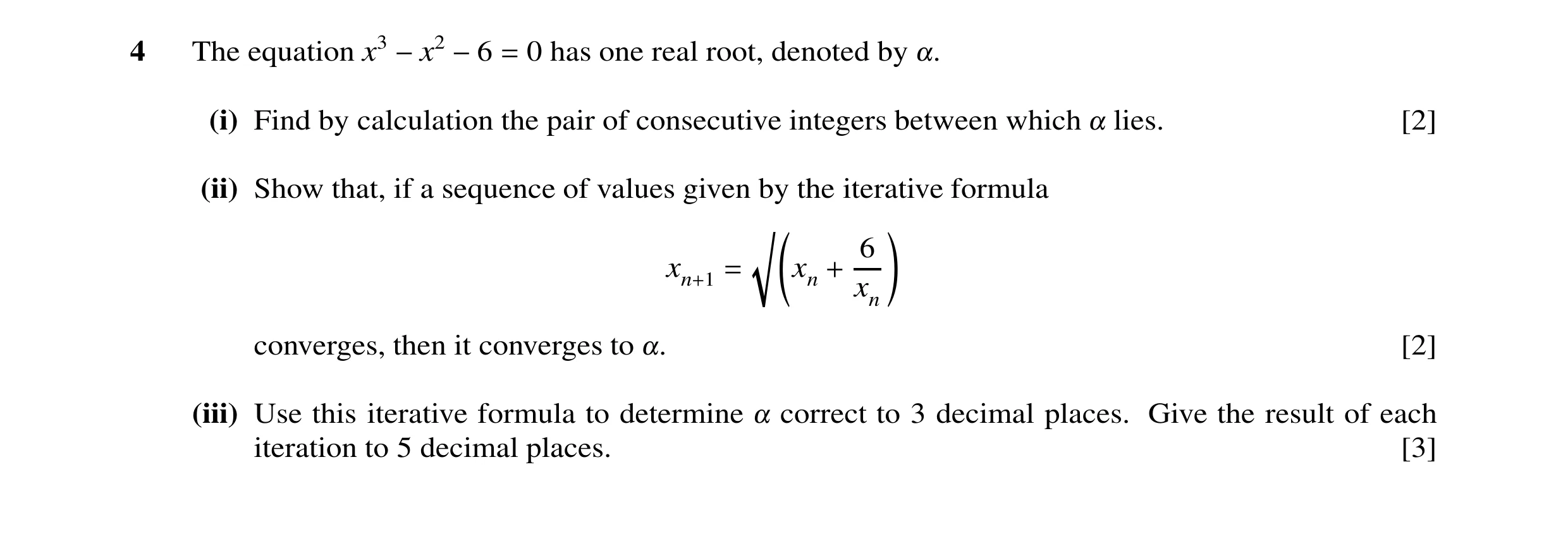
Q25 · The equation x3 −x2 −6 = 0 has one real root, denoted by ! 9709/31 Oct/Nov 2015
4 The equation x3 −x2 −6 = 0 has one real root, denoted by !. (i) Find by calculation the pair of consecutive integers between which ! lies. [2] (ii) Show that, if a sequence of values given by the iterative formula _P Q 6 xn+1 = xn + xn converges, then it converges to !. [2] (iii) Use this iterative formula to determine ! correct to 3 decimal places. Give the result of each iteration to 5 decimal places. [3]
7 marks
Mark scheme: 4 (i) Evaluate, or consider the sign of, x 3 −x 2 − 6 for two integer values of x, or equivalent M1 Obtain the pair x = 2 and x = 3, with no errors seen A1 [2] (ii) State a suitable equation, e.g. x = ( x + ( 6 / x )) B1 Rearrange this as x 3 −x 2 − 6 = 0 , or work vice versa B1 [2] (iii) Use the iterative formula correctly at least once M1 Obtain final answer 2.219 A1 Show sufficient iterates to 5 d.p. to justify 2.219 to 3 d.p., or show there is a sign change in the interval (2.2185, 2.2195) A1 [3]
This question in 9709/31 Oct/Nov 2015
Q26 · Solve the equation 2 x 3 x 9709/31 May/June 2016
1 (i) Solve the equation 2 x 3 x . [3] −1 = (ii) Hence solve the equation 2 5x 3 5x , giving your answer correct to 3 significant figures. −1 = [2] 1
5 marks
Mark scheme: 1 (i) EITHER: State or imply non-modular equation (2( x − 1)) 2 = (3 x ) 2 , or pair of linear equations 2( x − 1) = ±3 x B1 Make reasonable solution attempt at a 3-term quadratic, or solve two linear equations M1 Obtain answers x = −and2 x = 52 A1 OR: Obtain answer x = −by2 inspection or by solving a linear equation (B1 Obtain answer x = 52 similarly B2) [3] (ii) Use correct method for solving an equation of the form 5x = a or 5x +1 = a , where a > 0 M1 Obtain answer x =– 0.569 only A1 [2] 2 ∫ 2
This question in 9709/31 May/June 2016
Q27 · Solve the inequality 2 x 3x 1 9709/33 May/June 2016
1 Solve the inequality 2 x 3x 1 . [4] −2 > +
4 marks
Mark scheme: 1 EITHER: State or imply non-modular inequality (2( x − 2)) 2 > (3 x + 1) 2 , or corresponding quadratic equation, or pair of linear equations 2( x − 2) = ± (3 x + 1) B1 Make reasonable solution attempt at a 3-term quadratic, or solve two linear equations for x M1 Obtain critical values x = −5 and x = 53 A1 State final answer −<5 x < 53 A1 OR: Obtain critical value x = −5 from a graphical method, or by inspection, or by solving a linear equation or inequality (B1 Obtain critical value x = 53 similarly B2 State final answer −<5 x < 53 B1) [Do not condone ≤ for <.] [4]
This question in 9709/33 May/June 2016
Q28 · Solve the inequality x 3x [4] −3 < −4 9709/32 May/June 2017
2 Solve the inequality x 3x [4] −3 < −4. … … … … … … … … … … … … … … … … … … … … … … … … …
4 marks
Mark scheme: 2 EITHER: (B1 2 2 State or imply non-modular inequality ( x − 3) < (3 x − 4) , or corresponding equation Make reasonable attempt at solving a three term quadratic M1 7 A1 Obtain critical value x = 4 7 A1) State final answer x > only 4 OR1: (B1 State the relevant critical inequality 3 − x < 3 x − 4 , or corresponding equation Solve for x M1 7 A1 Obtain critical value x = 4 7 A1) State final answer x > only 4 OR2: (B1 Make recognizable sketches of y = x − 3 and y = 3 x − 4 on a single diagram Find x-coordinate of the intersection M1 7 A1 Obtain x = 4 7 A1) State final answer x > only 4 Total: 4
This question in 9709/32 May/June 2017
Q29 · The polynomial x4 2x3 ax b, where a and b are constants, is divisible by x2 1 9709/31 May/June 2018
4 The polynomial x4 2x3 ax b, where a and b are constants, is divisible by x2 1. Find the values of a and b. + + + −x + [5] … … … … … … … … … … … … … … … … … … … … … … … … …
5 marks
Mark scheme: 4 EITHER: Commence division by x 2 − x + 1 and reach a partial quotient M1 of the form x 2 + kx Obtain quotient x 2 + 3 x + 2 A1 Either Set remainder identically equal to zero and solve for a or for b, or M1 multiply given divisor and found quotient and obtain a or b Obtain a = 1 A1 Obtain b = 2 A1 OR: Assume an unknown factor x 2 + Bx + C and obtain an equation M1 in B and/or C Obtain B = 3 and A = 2 A1 Either Use equations to obtain a or b or multiply given divisor and M1 found factor to obtain a or b Obtain a = 1 A1 Obtain b = 2 A1 5
This question in 9709/31 May/June 2018
Q30 · By sketching a suitable pair of graphs, show that the equation x3 3 has exactly one real… 9709/31 Oct/Nov 2018
3 (i) By sketching a suitable pair of graphs, show that the equation x3 3 has exactly one real = −x root. [2] (ii) Show that if a sequence of real values given by the iterative formula 2x3 3 n + xn+1 = 3x2 1 n + converges, then it converges to the root of the equation in part (i). [2] … … … … … … … … … … … … … … … … … … … … … … … … (iii) Use this iterative formula to determine the root correct to 3 decimal places. Give the result of each iteration to 5 decimal places. [3] … … … … … … … … … … … …
7 marks
Mark scheme: 3 (i) Sketch a relevant graph, e.g. 3 y x = B1 Sketch a second relevant graph, e.g. y = 3 – x, and justify the given statement B1 Consideration of behaviour for x < 0 is needed for the second B1 2 3(ii) State or imply the equation ( ) ( ) 3 2 2 3 / 3 1 x x x = + + B1 Rearrange this in the form 3 3 x x = − , or commence work vice versa B1 2 Question Answer Marks Guidance 3(iii) Use the iterative formula correctly at least once M1 Obtain final answer 1.213 A1 Show sufficient iterations to 5 d.p. or more to justify 1.213 to 3 d.p., or show there is a sign change in the interval (1.2125, 1.2135) A1 3
This question in 9709/31 Oct/Nov 2018
Q31 · Solve the inequality 3 2x x 4 9709/32 Oct/Nov 2018
1 Solve the inequality 3 2x x 4 . [4] −1 > + … … … … … … … … … … … … … … … … … … … … … … … … …
4 marks
Mark scheme: 1 State or imply non-modular inequality ( ) ( ) 2 2 2 3 2 1 4 − > + x x , or corresponding quadratic equation, or pair of linear equations/inequalities ( ) ( ) 3 2 1 4 − =± + x x 2 35 44 7 0 − − = x x Make reasonable attempt at solving a 3-term quadratic, or solve two linear equations for x M1 Allow for reasonable attempt at factorising e.g. (5x – 7)(7x + 1) Obtain critical values x = 7 5 and x = 1 7 − A1 Accept 1.4 and -0.143 or better for penultimate A mark State final answer 7 5 > x , 1 7 <− x A1 ‘and’ is A0, 7 1 5 7 < < − x is A0. Must be exact values. Must be strict inequalities in final answer Alternative Obtain critical value x = 7 5 from a graphical method B1 or by inspection, or by solving a linear equation or an inequality Obtain critical value 1 7 = − x similarly B2 State final answer 7 5 > x or 1 7 < − x or equivalent B1 [Do not condone ⩾ for >, or ⩽ for <.] 4
This question in 9709/32 Oct/Nov 2018
Q32 · Find the set of values of x satisfying the inequality 2 2x x 3a , where a is a positive… 9709/33 Oct/Nov 2018
1 Find the set of values of x satisfying the inequality 2 2x x 3a , where a is a positive constant. −a < + [4] … … … … … … … … … … … … … … … … … … … … … … … … …
4 marks
Mark scheme: 1 EITHER: State or imply non-modular inequality ( ) ( ) 2 2 2 2 2 3 x a x a − < + , or corresponding quadratic equation, or pair of linear equations 2(2x – a) = ± (x + 3a) B1 Make reasonable attempt at solving a 3-term quadratic, or solve two linear equations for x M1 Obtain critical values 5 3 x a = and 1 5 x a = − A1 State final answer 1 5 5 3 a x a − < < A1 OR: Obtain critical value 5 3 x a = from a graphical method, or by inspection, or by solving a linear equation or an inequality B1 Obtain critical value 1 5 x a = − similarly B2 State final answer 1 5 5 3 a x a − < < [Do not condone ⩽ for < in the final answer.] B1 4
This question in 9709/33 Oct/Nov 2018
Q33 · By sketching a suitable pair of graphs, show that the equation x3 3 has exactly one real… 9709/33 Oct/Nov 2018
3 (i) By sketching a suitable pair of graphs, show that the equation x3 3 has exactly one real = −x root. [2] (ii) Show that if a sequence of real values given by the iterative formula 2x3 3 n + xn+1 = 3x2 1 n + converges, then it converges to the root of the equation in part (i). [2] … … … … … … … … … … … … … … … … … … … … … … … … (iii) Use this iterative formula to determine the root correct to 3 decimal places. Give the result of each iteration to 5 decimal places. [3] … … … … … … … … … … … …
7 marks
Mark scheme: 3 (i) Sketch a relevant graph, e.g. 3 y x = B1 Sketch a second relevant graph, e.g. y = 3 – x, and justify the given statement B1 Consideration of behaviour for x < 0 is needed for the second B1 2 3(ii) State or imply the equation ( ) ( ) 3 2 2 3 / 3 1 x x x = + + B1 Rearrange this in the form 3 3 x x = − , or commence work vice versa B1 2 Question Answer Marks Guidance 3(iii) Use the iterative formula correctly at least once M1 Obtain final answer 1.213 A1 Show sufficient iterations to 5 d.p. or more to justify 1.213 to 3 d.p., or show there is a sign change in the interval (1.2125, 1.2135) A1 3
This question in 9709/33 Oct/Nov 2018
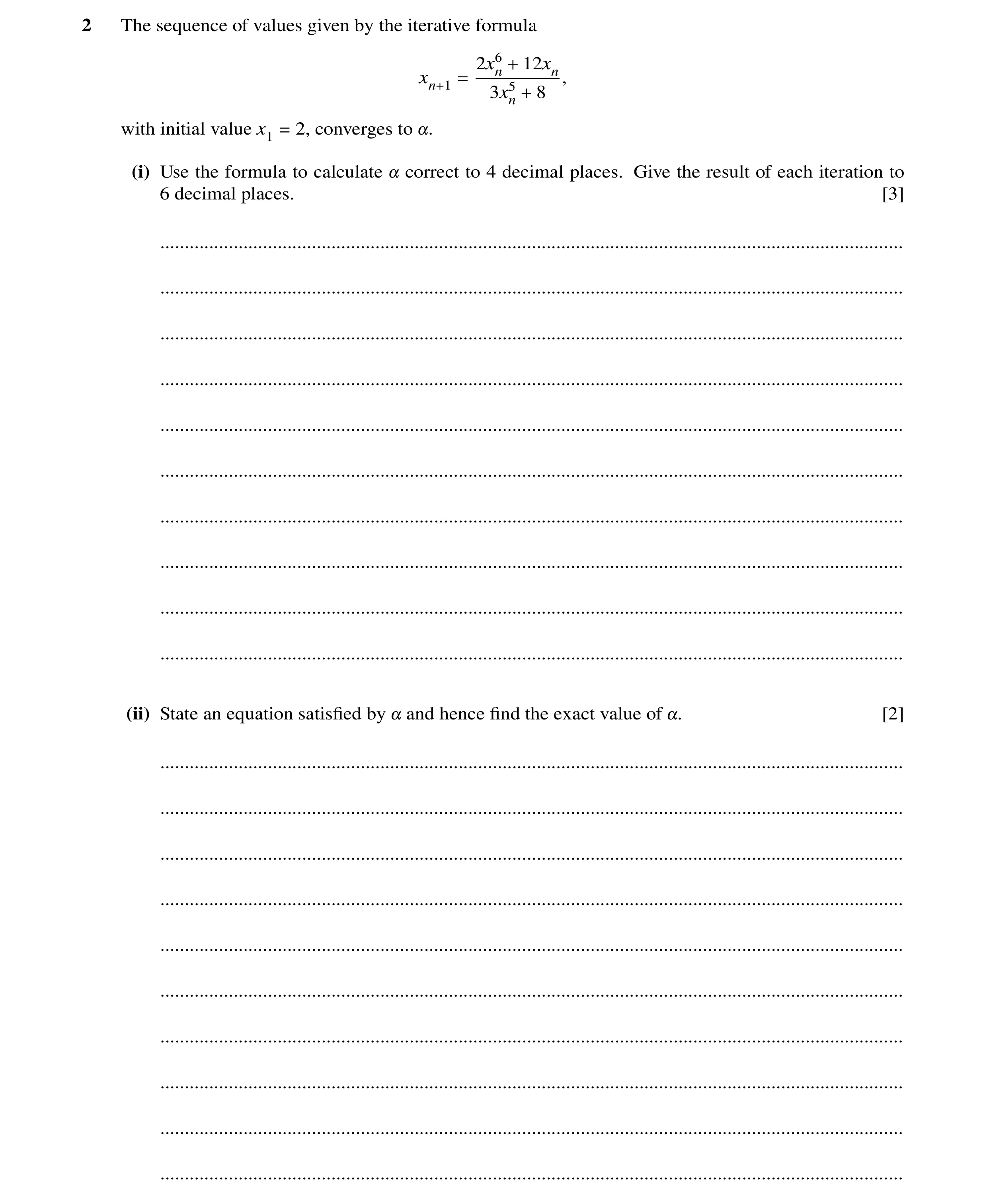
Q34 · The sequence of values given by the iterative formula 2x6 n 12xn + , xn+1 = 3x5 8 n +… 9709/32 Feb/March 2019
2 The sequence of values given by the iterative formula 2x6 n 12xn + , xn+1 = 3x5 8 n + with initial value x1 2, converges to = !. (i) Use the formula to calculate correct to 4 decimal places. Give the result of each iteration to ! 6 decimal places. [3] … … … … … … … … … … (ii) State an equation satisfied by and hence find the exact value of [2] ! !. … … … … … … … … … …
5 marks
Mark scheme: 2(i) Use the iterative formula correctly at least once M1 Obtain answer 1.3195 A1 Show sufficient iterations to 6 d.p. to justify 1.3195 to 4 d.p., or show there is a sign change in (1.31945, 1.31955) A1 3 2(ii) State x = 6 5 2 12 3 8 + + x x x , or equivalent B1 State answer 5 4 , or exact equivalent B1 2
This question in 9709/32 Feb/March 2019
Q35 · Y x a O b The diagram shows the curve y x4 The curve intersects the x-axis at the points… 9709/33 May/June 2019
6 y x a O b The diagram shows the curve y x4 The curve intersects the x-axis at the points a, 0 = −2x3 −7x −6. and b, 0 , where a b. It is given that b is an integer. < (i) Find the value of b. [1] … … … … … … … (ii) Hence show that a satisfies the equation a 2 a2 a3 . [4] = −13 + + … … … … … … … … … … … … … … … … … … (iii) Use an iterative formula based on the equation in part (ii) to determine a correct to 3 decimal places. Give the result of each iteration to 5 decimal places. [3] … … … … … … … … … … … … … …
8 marks
Mark scheme: 6(i) State b = 3 B1 1 6(ii) Commence division by x – b and reach partial quotient 3 2 + x kx M1 Obtain quotient 3 2 3 2 + + + x x x A1 There being no remainder Equate quotient to zero and rearrange to make the subject a M1 Obtain the given equation A1 4 6(iii) Use the iterative formula ( ) 2 3 1 1 2 3 + = − + + n n n a a a correctly at least once M1 Obtain final answer –0.715 A1 Show sufficient iterations to 5 d.p. to justify –0.715 to 3 d.p., or show there is a sign change in the interval (–0.7145, –0.7155) A1 3
This question in 9709/33 May/June 2019
Q36 · Solve the inequality 2 x 2 3x 9709/33 Oct/Nov 2019
1 Solve the inequality 2 x 2 3x . [4] + > −1 … … … … … … … … … … … … … … … … … … … … … … … … …
4 marks
Mark scheme: 1 2 2 2 3 1 + > − x x , or corresponding quadratic equation, or pair of linear equations 2(x + 2) = ± (3x – 1) B1 Make reasonable attempt at solving a 3-term quadratic, or solve two linear equations for x M1 Obtain critical values 3 5 = − x and x = 5 A1 State final answer 3 5 5 − < < x A1 Alternative method for question 1 Obtain critical value x = 5 from a graphical method, or by inspection, or by solving a linear equation or an inequality B1 Obtain critical value 3 5 = − x similarly B2 State final answer 3 5 5 − < < x B1 4
This question in 9709/33 Oct/Nov 2019
Q37 · Sketch the graph of y x 9709/32 Feb/March 2020
1 (a) Sketch the graph of y x . [1] = −2 (b) Solve the inequality x 3x [3] −2 < −4. … … … … … … … … … … … … … … … …
4 marks
Mark scheme: 1(a) Make a recognisable sketch graph of 2 = − y x B1 1 1(b) Find x-coordinate of intersection with y = 3x – 4 M1 Obtain 3 2 = x A1 State final answer 3 2 > x only A1 Alternative method for question 1(b) Solve the linear inequality 3 4 2 −> − x x , or corresponding equation M1 Obtain critical value 3 2 = x A1 State final answer 3 2 > x only A1 Alternative method for question 1(b) Solve the quadratic inequality ( ) ( ) 2 2 2 3 4 − < − x x , or corresponding equation M1 Obtain critical value 3 2 = x A1 State final answer 3 2 > x only A1 3
This question in 9709/32 Feb/March 2020
Q38 · Find the quotient and remainder when 2x3 6x 3 is divided by x2 3 9709/31 May/June 2020
5 (a) Find the quotient and remainder when 2x3 6x 3 is divided by x2 3. [3] −x2 + + + … … … … … … … … … … … … … … … … … … … … … … … … … 3 2x3 6x 3 (b) Using your answer to part (a), find the exact value of dx. [5] −x2 + + x2 3 Ô1 + … … … … … … … … … … … … … … … … … … … … … … … …
8 marks
Mark scheme: 5(a) M1 Obtain quotient 2x – 1 A1 Obtain remainder 6 A1 3 5(b) Obtain terms x2 – x (FT on quotient of the form 2x + k) B1FT Obtain term of the form 1 tan 3 − x a M1 Obtain term 1 6 tan 3 3 − x (FT on a constant remainder) A1FT Use x = 1 and x = 3 as limits in a solution containing a term of the form ( ) 1 tan− a bx M1 Obtain final answer 1 6 3 π + , or exact equivalent A1 5
This question in 9709/31 May/June 2020
Q39 · By sketching a suitable pair of graphs, show that the equation x5 2 x has exactly one… 9709/33 May/June 2020
6 (a) By sketching a suitable pair of graphs, show that the equation x5 2 x has exactly one real = + root. [2] … … (b) Show that if a sequence of values given by the iterative formula 4x5 2 n + xn+1 = 5x4 n −1 converges, then it converges to the root of the equation in part (a). [2] … … … … … … … … … … … … … … … … (c) Use the iterative formula with initial value x1 1.5 to calculate the root correct to 3 decimal = places. Give the result of each iteration to 5 decimal places. [3] … … … … … … … … … … … … … …
7 marks
Mark scheme: 6(a) Sketch a second relevant graph, e.g. y = x + 2 and justify the given statement B1 2 6(b) State a suitable equation, e.g. 5 4 4 2 5 1 x x x + = − B1 Rearrange this as x5 = 2 + x or commence working vice versa B1 2 6(c) Use the iterative formula correctly at least once M1 Obtain final answer 1.267 A1 Show sufficient iterations to 5 d.p. to justify 1.267 to 3 d.p., or show there is a sign change in the interval (1.2665, 1.2675) A1 3
This question in 9709/33 May/June 2020
Q40 · Solve the inequality 2 −5x > 2 x −3 9709/31 Oct/Nov 2020
1 Solve the inequality 2 −5x > 2 x −3 . [4] … … … … … … … … … … … … … … … … … … … … … … … … …
4 marks
Mark scheme: 1 Make a recognisable sketch graph of 2 3 = − y x and the line y = 2 – 5x x = 3 stated, domain at least (– 2, 5). Find x-coordinate of intersection with y = 2 – 5x M1 Find point of intersection with y = 2|x – 3| or solve 2 – 5x with 2(x – 3) or –2(x – 3) Obtain 4 3 = − x A1 State final answer 4 3 < − x A1 Do not accept x < –1.33 [Do not condone ⩽ for < in the final answer.] Alternative method for question 1 State or imply non-modular inequality/equality (2 – 5x)2 >, ⩾, =, 22(x – 3)2, or corresponding quadratic equation, or pair of linear equations (2 – 5x) >, ⩾ , =, ± 2(x – 3) B1 Two correct linear equations only Make reasonable attempt at solving a 3-term quadratic, or solve one linear equation, or linear inequality for x M1 21x2 + 4x – 32 = (3x + 4)(7x – 8) = 0 2 – 5x or –(2 – 5x) with 2(x – 3) or –2(x – 3) Obtain critical value 4 3 = − x A1 State final answer 4 3 <− x A1 Do not accept x < –1.33 [Do not condone ⩽ for < in the final answer.] 4
This question in 9709/31 Oct/Nov 2020
Q41 · Solve the inequality 2 −5x > 2 x −3 9709/33 Oct/Nov 2020
1 Solve the inequality 2 −5x > 2 x −3 . [4] … … … … … … … … … … … … … … … … … … … … … … … … …
4 marks
Mark scheme: 1 Make a recognisable sketch graph of 2 3 = − y x and the line y = 2 – 5x x = 3 stated, domain at least (– 2, 5). Find x-coordinate of intersection with y = 2 – 5x M1 Find point of intersection with y = 2|x – 3| or solve 2 – 5x with 2(x – 3) or –2(x – 3) Obtain 4 3 = − x A1 State final answer 4 3 < − x A1 Do not accept x < –1.33 [Do not condone ⩽ for < in the final answer.] Alternative method for question 1 State or imply non-modular inequality/equality (2 – 5x)2 >, ⩾, =, 22(x – 3)2, or corresponding quadratic equation, or pair of linear equations (2 – 5x) >, ⩾ , =, ± 2(x – 3) B1 Two correct linear equations only Make reasonable attempt at solving a 3-term quadratic, or solve one linear equation, or linear inequality for x M1 21x2 + 4x – 32 = (3x + 4)(7x – 8) = 0 2 – 5x or –(2 – 5x) with 2(x – 3) or –2(x – 3) Obtain critical value 4 3 = − x A1 State final answer 4 3 <− x A1 Do not accept x < –1.33 [Do not condone ⩽ for < in the final answer.] 4
This question in 9709/33 Oct/Nov 2020
Q42 · Solve the inequality 2 3x x 1 9709/31 May/June 2021
1 Solve the inequality 2 3x x 1 . [4] −1 < + … … … … … … … … … … … … … … … … … … … … … … … … …
4 marks
Mark scheme: 1 State or imply non-modular inequality ( ) ( ) 2 2 2 2 3 1 1 − < + x x , or corresponding quadratic equation, or pair of linear equations Form and solve a 3-term quadratic, or solve two linear equations for x M1 e.g. 2 35 26 3 0 − + = x x Obtain critical values x = 3 5 and x = 1 7 A1 Allow 0.143 or better State final answer 1 3 7 5 < < x A1 Exact values required. Accept 1 3 7 5 x x > < and Do not condone ⩽ for < in the final answer. Fractions need not be in lowest terms. Alternative method for Question 1 Obtain critical value x = 3 5 from a graphical method, or by solving a linear equation or linear inequality B1 Obtain critical value x = 1 7 similarly B2 Allow 0.143 or better State final answer 1 3 7 5 < < x B1 OE. Exact values required. Accept 1 3 7 5 x x > < and Do not condone ⩽ for < in the final answer. Fractions need not be in lowest terms. 4
This question in 9709/31 May/June 2021
Q43 · Solve the inequality 2x 3 x 1 9709/32 May/June 2021
1 Solve the inequality 2x 3 x 1 . [4] −1 < + … … … … … … … … … … … … … … … … … … … … … … … … …
4 marks
Mark scheme: 1 State or imply non-modular inequality ( ) ( ) 2 2 2 2 1 3 1 − < + x x , or corresponding quadratic equation B1 e.g. 2 5 22 8 0 + + = x x Allow recovery from ‘invisible brackets’ on RHS Form and solve a 3-term quadratic in x M1 Obtain critical values x = – 4 and x = 2 5 − A1 State final answer x < – 4, 2 5 > − x A1 Do not condone ⩽ for <, or ⩾ for > in the final answer. Allow ‘or’ but not ‘and’. 2 4 5 − < < − x scores A0. Accept equivalent forms using brackets e.g. ( ) ( ) , 4 0.4, ∈−∞− ∪− ∞ x Alternative method for Question 1 Obtain critical value x = – 4 from a graphical method, or by solving a linear equation or linear inequality B1 Obtain critical value x = 2 5 − similarly B2 State final answer x < – 4, 2 5 > − x B1 Do not condone ⩽ for <, or ⩾ for > in the final answer. Allow ‘or’ but not ‘and’. 2 4 5 − < < − x scores A0. Accept equivalent forms using brackets e.g. ( ) ( ) , 4 0.4, ∈−∞− ∪− ∞ x 4 1 2 -1
This question in 9709/32 May/June 2021
Q44 · Sketch the graph of y 2x 9709/33 Oct/Nov 2021
2 (a) Sketch the graph of y 2x . [1] = −3 (b) Solve the inequality 2x 3x 2. [3] −3 < + … … … … … … … … … … … … … … …
4 marks
Mark scheme: 2(a) Show a recognizable sketch graph of 2 3 y x = − B1 1 Question Answer Marks Guidance 2(b) Find x-coordinate of intersection with y = 3x + 2 M1 Obtain 1 5 x = A1 State final answer 1 5 x > only A1 Alternative method for Question 2(b) Solve the linear inequality 3 2 3 2 x x − < + , or corresponding equation M1 Obtain critical value 1 5 x = A1 State final answer 1 5 x > only A1 Alternative method for Question 2(b) Solve the quadratic inequality ( ) ( ) 2 2 2 3 3 2 x x − < + , or corresponding equation M1 Obtain critical value 1 5 x = A1 State final answer 1 5 x > only A1 3
This question in 9709/33 Oct/Nov 2021
Q45 · Solve the inequality 2x 3 3 x 2 9709/32 Feb/March 2022
1 Solve the inequality 2x 3 3 x 2 . [4] + > + … … … … … … … … … … … … … … … … … … … … … … … … …
4 marks
Mark scheme: 1 State or imply non-modular inequality ( ) ( ) 2 2 2 2 3 3 2 + > + x x , or corresponding quadratic equation, or pair of linear equations B1 Make a reasonable attempt at solving a 3-term quadratic, or solve two linear equations for x M1 Quadratic formula or (5x + 9)(x +3) Obtain critical values x = – 3 and x = 9 5 − A1 OE State final answer 9 3 5 −< < − x or 3 > − x and 9 5 < − x A1 [Do not condone ⩽ for < in the final answer.] No ISW Alternative method for question 1 Obtain critical value x = – 3 from a graphical method, or by solving a linear equation or linear inequality B1 2x + 3 = 3(x + 2) x = − 3 Obtain critical value x = 9 5 − similarly B2 State final answer 9 3 5 −< < − x or 3 > − x and 9 5 < − x B1 [Do not condone ⩽ for < in the final answer.] No ISW 4
This question in 9709/32 Feb/March 2022
Q46 · Find the quotient and remainder when 8x3 4x2 2x 7 is divided by 4x2 1 9709/32 Feb/March 2022
8 (a) Find the quotient and remainder when 8x3 4x2 2x 7 is divided by 4x2 1. [3] + + + + … … … … … … … … … … … … … … … … … … … … … … … … … 1 2 8x3 4x2 2x 7 (b) Hence find the exact value of dx. [5] + + + 4x2 1 Ô0 + … … … … … … … … … … … … … … … … … … … … … … … …
8 marks
Mark scheme: 8(a) Commence division and reach quotient of the form 2x ± 1 + r Obtain (quotient) 2x + 1 A1 Obtain (remainder) 6 A1 3 Question Answer Marks Guidance 8(b) Obtain terms 2 + x x B1 OE Obtain term of the form 1 tan 2 − a x M1 Obtain term 1 3tan 2 − x A1 OE Use x = 0 and 1 2 = x as limits in a solution containing a term of the form 1 tan 2 − a x M1 2 1 1 π 2 2 4 a æ ö÷ ç + + ÷ ç ÷ çè ø , need π 4 seen or implied Obtain final answer 3 (1 π 4 + ), or exact equivalent A1 ISW, Answers in degrees score A0. 5
This question in 9709/32 Feb/March 2022
Q47 · Find, in terms of a, the set of values of x satisfying the inequality 2 3x a 2x 3a , + <… 9709/33 May/June 2022
1 Find, in terms of a, the set of values of x satisfying the inequality 2 3x a 2x 3a , + < + where a is a positive constant. [4] … … … … … … … … … … … … … … … … … … … … … … …
4 marks
Mark scheme: 1 State or imply non-modular inequality 2 2 2 2 3 2 3 x a x a , or corresponding quadratic equation, or pair of linear equations 2 2 6 2 2 3 x a x a or 32x2 + 12xa 5a2 = 0 2(3x + a) = (2x + 3a) and 2(3x + a) = (2x + 3a) Solve 3-term quadratic, or solve two linear equations for x M1 Apply general rules for solving quadratic equation by formula or by factors. Instead of x = {formula}, have {formula} = 0 and try to solve for a then M0 Obtain critical values x = 1 4 a and x = 5 8 a A1 State final answer 5 1 8 4 a x a or 0.625a < x < 0.25a or 5 8 x a and 1 4 x a or 5 8 x a 1 4 x a A1 Do not condone ⩽ for < in the final answer. Do not ISW. SC Set a to value, (say a = 1), after initial B1 gained, then 5 1 8 4 x B1 maximum 2 out of 4. Alternative method for question 1 Obtain critical value x = 1 4 a from a graphical method, or by solving a linear equation or linear inequality B1 Obtain critical value x = 5 8 a similarly B2 State final answer 5 1 8 4 a x a or 0.625a < x < 0.25a or 5 8 x a and 1 4 x a or 5 8 x a 1 4 x a B1 Do not condone ⩽ for < in the final answer. Do not ISW. SC Set a to value, (say a = 1), after initial B1 gained, then 5 1 8 4 x B1 maximum 2 out of 4. 4
This question in 9709/33 May/June 2022
Q48 · Sketch the graph of y = 2x + 1 9709/31 Oct/Nov 2022
1 (a) Sketch the graph of y = 2x + 1 . [1] (b) Solve the inequality 3x + 5 < 2x + 1 . [3] … … … … … … … … … … … … … …
4 marks
Mark scheme: Question Answer Marks Guidance 1(a) Show a recognisable sketch graph of y = 2 x + 1 B1 y 1 x 1 - 2 Ignore y = 3 x + 5 if also drawn on the sketch. 1 1(b) Find x-coordinate of intersection with y = 3x + 5 M1 6 A1 Obtain x = − 5 6 A1 Do not condone for < in the final answer. State final answer x − only 5 Alternative method 1 for question 1(b) Solve the linear inequality 3 x + 5 − ( 2 x + 1) , or corresponding equation M1 Must solve the relevant equation. 6 A1 Ignore – 4 if seen. Obtain critical value x = − 5 6 A1 State final answer x − only 5 Alternative method 2 for question 1(b) 2 2 M1 2 Solve the quadratic inequality ( 3x + 5 ) ( 2 x + 1) , or corresponding 5 x + 26 x + 24 0 equation 6 A1 Ignore – 4 if seen. Obtain critical value x = − 5 6 A1 State final answer x − only 5 3
This question in 9709/31 Oct/Nov 2022
Q49 · Sketch the graph of y 2x 3 9709/31 May/June 2023
2 (a) Sketch the graph of y 2x 3 . [1] = + (b) Solve the inequality 3x 8 2x 3 . [3] + > + … … … … … … … … … … …
4 marks
Mark scheme: 2(a) B1 Show a recognizable sketch graph of 2 3 . y x (Ignore any attempt to sketch 3 8 y x ). Straight lines. Vertex in approximately correct position on x axis. Symmetry. 1 y x -3 2 3 Question Answer Marks Guidance 2(b) Find x-coordinate of intersection with 3 8 y x M1 Obtain 11 5 x A1 State final answer 11 5 x only A1 2.2 x Do not condone ⩾ for >. Alternative Method 1 Solve the linear inequality 3 8 2 3 , x x or corresponding linear equation M1 Obtain critical value 11 5 x A1 State final answer 11 5 x only A1 2.2 x Do not condone ⩾ for >. Alternative Method 2 Solve the quadratic inequality 2 2 3 8 2 3 , x x or corresponding quadratic equation (M1) 2 5 36 55 x x . Obtain critical value 11 5 x (A1) Ignore -5 if seen. State final answer 11 5 x only (A1) 2.2 x Do not condone ⩾ for >. 3
This question in 9709/31 May/June 2023
Q50 · Solve the inequality 5x 2 3x 9709/32 May/June 2023
1 Solve the inequality 5x 2 3x . [4] −3 < −7 … … … … … … … … … … … … … … … … … … … … … … … … …
4 marks
Mark scheme: 1 State or imply non-modular inequality 2 2 2 (5 3) 2 (3 7) x x , or corresponding quadratic equation, or pair of linear equations (5x – 3) = ± 2(3x – 7) B1 2 11 138 187 0 x x . Solve a 3-term quadratic, or solve two linear equations for x M1 If no working is shown, the M1 is implied by the correct roots for an incorrect quadratic. Obtain critical values 17 and 11 11 x x A1 Accept 1.55 or better. State final answer 17 , 11 11 x x A1 Strict inequality required. In set notation, allow notation for open sets but not for closed sets e.g. accept 17 , 11, 11 or 17 ( , [ ]11, ) 11 but not 17 ( , ] [11, ) 11 . Allow ‘or’ but not ‘and’. Accept . Final A0 for 17 11 11 x . Exact values expected but ISW if exact inequalities seen followed by decimal approx. Alternative Method for Question 1 Obtain critical value x = 11 from a graphical method, or by inspection, or by solving a linear equation or an inequality B1 Obtain critical value 17 11 x similarly B2 Accept decimal value. State final answer 17 , 11 11 x x B1 Strict inequality required. See notes above. 4
This question in 9709/32 May/June 2023
Q51 · Find the quotient and remainder when 2x4 is divided by x2 x 3 9709/33 May/June 2023
2 Find the quotient and remainder when 2x4 is divided by x2 x 3. [3] −27 + + … … … … … … … … … … … … … … … … … … … … … … … … …
3 marks
Mark scheme: 2 Divide to obtain quotient 2 2 2 x x k (k ≠ 0) M1 Obtain result in answer column, together with a linear polynomial or a constant as remainder. If correct: Obtain [quotient] 2 2 2 4 x x A1 Allow unless quotient and remainder interchanged, then A0 A1. Obtain [remainder] 10 15 x A1 Allow (x2 + x + 3)(2x2 – 2x – 4) + 10x – 15. Alternative Method for Question 2 Expand 2 2 3 x x Ax Bx C Dx E and reach A = 2, B = ± 2, C = k M1 Solve all 3 equations for A, B and C, allow sign errors in establishing equations and in solving. If correct, A = 2, A + B = 0, 3A + B + C = 0, 3B + C + D = 0, 3C + E = − 27. Obtain result in answer column, together with a linear polynomial or a constant as remainder. Obtain [quotient] 2 2 2 4 x x A1 Allow unless quotient and remainder interchanged, then A0 A1. Obtain [remainder] 10 15 x A1 Allow (x2 + x + 3) (2x2 – 2x – 4) + 10x – 15. 3
This question in 9709/33 May/June 2023
Q52 · Sketch the graph of y 4x 9709/32 Oct/Nov 2023
1 (a) Sketch the graph of y 4x . [1] = −2 (b) Solve the inequality 1 3x 4x . [4] + < −2 … … … … … … … … … … … … …
5 marks
Mark scheme: Question Answer Marks Guidance 1(a) B1 Show a recognizable sketch graph of y = 4 x − 2 . y Roughly symmetrical. Should extend into the second quadrant. Ignore y = 4 x − 2 below the axis if intention is clear e.g. dashed or the required lines are clearly bolder. Some indication of scale on both axes – accept dashes. 2 Must go beyond (0, 2) and (1, 2). Ignore any attempt to sketch y = 1 + 3 x . x 1 2 1 1(b) Obtain critical value x = 3 B1 Allow incorrect inequality. Allow if later rejected. Allow 217 . Solve the linear equation 1 + 3x = 2 − 4 x M1 Or corresponding linear inequality. Obtain critical value 17 A1 Allow 0.143 or better. Allow incorrect inequality. Allow if later rejected. Obtain final answer x 17 [or] x 3 A1 Or equivalent. Allow with a comma, or nothing between. Strict inequalities only. Exact values. A0 for 17 x 3 A0 for x 17 and x .3 Alternative method for question 1(b) Solve the quadratic inequality ( 4 x − 2 ) 2 (1 + 3 x ) 2 , or corresponding M1 e.g. 7 x 2 − 22 x + 3 = 0 . Available if they start with the correct equation / quadratic equation inequality, have a correct method for squaring 2 2 2 (i.e. not ( a + b ) = a + b ) and a correct method for solving. Need to obtain at least one critical value. Obtain critical value x = 3 A1 Allow incorrect inequality. Allow if later rejected. Allow 217 . Obtain critical value 17 A1 Allow 0.143 or better. Allow incorrect inequality. Allow if later rejected. Obtain final answer x 17 [or] x 3 A1 Or equivalent. Strict inequalities only. Allow with a comma, or nothing between. Exact values. A0 for 17 x 3 A0 for x 17 and x .3 4
This question in 9709/32 Oct/Nov 2023
Q53 · Find the quotient and remainder when x 4 - 3x 3 + 9x 2 - 12x + 27 is divided by x 2 + 5 9709/32 Feb/March 2024
1 Find the quotient and remainder when x 4 - 3x 3 + 9x 2 - 12x + 27 is divided by x 2 + 5 . [3] … … … … … … … … … … … … … … … … … … … … … … … … … … …
3 marks
Mark scheme: Question Answer Marks Guidance 1 Commence division and reach partial quotient of the form x 2 ± 3 x M1 + Dx + E or x 4 − 3 x 3 + 9 x 2 − 12 x + 27 = ( x 2 + 5 )( Ax 2 + Bx + C ) or Ax4 + Bx3 + (5A + C)x2 + 5Bx + 5C and reach A = 1and B = ±3 Obtain quotient x 2 − 3 x + 4 A1 A = 1, B = −3 [5A + C = 9 so C = 4; 5B + D = − 12 so D = 3; 5C + E = 27 so E = 7]. A pair of incorrect statements ‘remainder x 2 − 3 x + 4 ’ and ‘quotient 3 x + 7 ’ score M1 A1 A0. Obtain remainder 3 x + 7 A1 x2 − 3x + 4 3 x2 + 5 x4 – 3x3 + 9x2– 12x + 27 x4 + 5x2 − 3x3 + 4x2 − 3x3 − 15x + 4x2+ 3x + 4x2 + 20 + 3x + 7
This question in 9709/32 Feb/March 2024
Q54 · Expand ( 3 + x)( 1 - 2x) 1 in ascending powers of x, up to and including the term in x2… 9709/31 May/June 2024
21 Expand ( 3 + x)( 1 - 2x) 1 in ascending powers of x, up to and including the term in x2, simplifying the coefficients. [4] … … … … … … … … … … … … … … … … … … … … … … … … … …
4 marks
Mark scheme: 1 State correct unsimplified first two terms of the expansion of 1 2 1 2 x , e.g. 1 1 2 2 x B1 Symbolic coefficients are not sufficient. 1 – x State correct unsimplified term in x2, e.g. 2 1 1 1 2 2 2 2! x B1 Symbolic coefficients are not sufficient. 2 1 2 x Obtain sufficient terms of the product of (3 + x) and the expansion up to the term in x2 M1 Obtain final answer 3 – 2x – 2 5 2 x A1 4
This question in 9709/31 May/June 2024
Q55 · Sketch the graph of y = x - 2a , where a is a positive constant 9709/32 May/June 2024
1 (a) Sketch the graph of y = x - 2a , where a is a positive constant. [1] (b) Solve the inequality 2x - 3a 1 x - 2a . [2] … … … … … … … … … … … … … …
3 marks
Mark scheme: 1(a) B1 Correct shape, roughly symmetrical. Both sections should be solid straight lines. If not drawn with a ruler the intention must be clear. Allow construction lines if dashed or clearly fainter. 2a marked on each axis (must be 2a, not just 2). Needs to extend into negative x. If a is given a value, then B0. Ignore y = 2x – 3a if seen. 1 1(b) Solve linear equation or inequality to obtain critical value 5 3 x a or exact equivalent. B1 Ignore x a if seen. Obtain 5 3 x a or exact equivalent B1 Accept 10 6 x a or 5 3, . a Must be strict inequality. Need a clear final solution: x a or x a must be rejected if seen as part of the working. Rejection can be implied, e.g. if only the correct inequality is underlined. B0 B0 if a is given a value. Alternative Method for Question 1(b) Solve quadratic equation 2 2 2 3 2 x a x a to obtain critical value 5 3 x a or exact equivalent (B1) 2 2 3 8 5 0 x ax a Ignore x a if seen. Obtain 5 3 x a or exact equivalent (B1) Accept 10 6 x a or 5 3, . a Must be strict inequality. Need a clear final solution: x a or x a must be rejected if seen as part of the working. Rejection can be implied, e.g. if only the correct inequality is underlined. B0 B0 if a is given a value. 2 2a 2a y x O
This question in 9709/32 May/June 2024
Q56 · Let f ( )x = 8x 3 + 54x 2 - 17x - 21 9709/33 May/June 2024
7 Let f ( )x = 8x 3 + 54x 2 - 17x - 21. (a) Show that x + 7 is a factor of f ( )x . [1] … … … … … … … … … … … … (b) Find the quotient when f ( )x is divided by x + 7 . [2] … … … … … … … … … … … … … (c) Hence solve the equation 8 cos 3 i+ 54 cos 2i - 17 cos i - 21 = 0 , for 0° G i G 360° . [3] … … … … … … … … … … … … … … … … … … … … … … … … …
6 marks
Mark scheme: 7(a) This is sufficient if no errors seen. [ – 2744 + 2646 +119 – 21 = 0] Or complete division of 8x3 + 54x2 – 17x – 21 by x + 7 to get quotient 8x2 – 2x – 3 and remainder of 0 Or state (x + 7)(8x2 – 2x – 3) is sufficient Factors must be stated again in (b) to collect marks there Correct division: 8x2 −2x −3 . x + 7 8x3 + 54x2 − 17x − 21 8x3 + 56x2 . − 2x2 −17x − 2x2 −14x . − 3x − 21 − 3x − 21 1 7(b) Commence division and reach partial quotient of the form 8x2 ± 2x or 8x3 + 54x2 – 17x – 21 = (x + 7)(Ax2 + Bx + C) and reach A = 8 and B = ± 2 or C = –3 M1 Condone no visible working. Obtain quotient 8x2 – 2x – 3 with no errors seen Stating (x + 7)(8x2 – 2x – 3) is sufficient A1 Division can terminate with 0 or −3x – 21 stated once or twice. The working of division and finding quotient may be seen in (a) but results required here to collect marks. 2 Question Answer Marks Guidance 7(c) Solve quadratic from (b) to obtain a value for 𝜃 = 1 1 cos 2 or 1 3 cos 4 M1 (x + 7) (8x2 − 2x – 3) = (x + 7)(4x – 3)(2x + 1) = 0 x = cos 2 4 96 1 3 and . 16 2 4 Obtain one answer, e.g. 𝜃 = 120° A1 Obtain three further answers, e.g. 𝜃 = 240°, 41.4° and 318.6° (condone 319°) and no others in the interval A1 Accept more accurate answers. Answers in radians, maximum 2/3. 3
This question in 9709/33 May/June 2024
Q57 · The polynomial 4x 3 + ax 2 + 5x + b , where a and b are constants, is denoted by p ( )x 9709/31 Oct/Nov 2024
1 The polynomial 4x 3 + ax 2 + 5x + b , where a and b are constants, is denoted by p ( )x . It is given that ( 2x + 1) is a factor of p ( )x . When p ( )x is divided by ( x - 4) the remainder is equal to 3 times the remainder when p ( )x is divided by ( x - 2) . Find the values of a and b. [5] … … … … … … … … … … … … … … … … … … … … … … … … …
5 marks
Mark scheme: Question Answer Marks Guidance 1 Substitute x = − 12 and equate the result to zero M1 a Obtain a correct equation, e.g. − 84 + a4 − 52 + b = 0 A1 ( 4 + b = 3) Any equivalent form. Substitute x = 2 and x = 4 and use p ( 4 ) = 3p ( 2 ) M1 If using long division, M1 is for correct use of two constant remainders. Condone if 3 is on the wrong side. Obtain a correct equation, e.g. 3 ( 32 + 4 a + 10 + b ) = 256 + 16 a + 20 + b A1 ( − 2 a + b = 75 ) Any equivalent form. Obtain a = −32 and b = 11 A1 5
This question in 9709/31 Oct/Nov 2024
Q58 · The polynomial 6 x 3 + ax 2 + bx + 9 is denoted by p ( )x , where a and b are constants 9709/32 Feb/March 2025
9 The polynomial 6 x 3 + ax 2 + bx + 9 is denoted by p ( )x , where a and b are constants. It is given that ( x - 3 ) is a factor of p ( )x , and when the first derivative pl ( )x is divided by ( x - 3 ) the remainder is 72. (a) Find the values of a and b. [5] … … … … … … … … … … … … … … … … … … … … … … … … … … (b) When a and b have the values found in part (a), factorise p ( )x completely. [3] … … … … … … … … … … … … … … … … … (c) Hence solve the inequality p ( )x 1 0 . [2] … … … … … … … … …
10 marks
Mark scheme: 9(a) Substitute x = 3 or –3 into p (x) and equate to 0 or into p' (x) and equate to 72 M1* Obtain 162 + 9a + 3b + 9 = 0 A1 OE Obtain 162 + 6a + b = 72 A1 OE Solve simultaneous equations to obtain either a or b after using p (±3) = 0 and DM1 pꞌ (±3) = 72 Obtain a = –11 and b = –24 A1 5 9(b) Equate (x – 3)(6x2 + Ax + B) to 6x3 – 11x2 – 24x + 9 and obtain equations to solve for M1 Using their a and their b. A and B A – 18 = a = − 11, B – 3A = − b = − 24, − 3B = 9. A = 7 and B = –3. or divide 6x3 – 11x2 – 24x + 9 by x – 3 and reach 6x2 ± 7x Or reach 6x2 ± (their a + 18) x. (x – 3)(6x2 + 7x – 3) A1 SOI Obtain (x – 3)(2x + 3)(3x – 1) A1 3 1 Special Case: If only( x –3)( x + 2 )( x – 3 ) or (x – 3)(2x + 3)(3x – 1) seen, SC B1 only (but can gain two marks in (c)). 3 9(c) 3 1 B1 FT Must be final answer not in working. Obtain one correct region x − or x 3 FT is on the last two brackets (not ( x – 3 ) ). 2 3 1 B1 FT 3 1 Obtain both regions x − 3, x 3 Allow x − and x 3. 2 3 2 3 3 1 SC B1 for x − , x 3. 2 3 FT is on the last two brackets (not ( x – 3 ) ). If incorrect factor or factors in (b) but correct regions here, allow SC B1 only. 2
This question in 9709/32 Feb/March 2025
Q59 · Sketch the graph of y = 2 x - 3 9709/31 May/June 2025
1 (a) Sketch the graph of y = 2 x - 3 . [1] (b) Solve the inequality 3x - 1 1 2 x - 3 . [2] … … … … … … … … … … … … …
3 marks
Mark scheme: Question Answer Marks Guidance 1(a) y B1 Symmetrical. In correct position. Condone if no complete scale shown, but must see 3 and 32 marked. 3 Needs to exist for negative x. Must be intending straight lines. Ignore y = 3 x − 1 if seen. x O 3 2 1 1(b) Obtain critical value 54 from 3x −=1 3 − 2 x B1 State final answer x 54 B1 Alternative Method for Question 1(b) 4 2 2 B1 Ignore x = − 2 if seen. Obtain critical value 5 from ( 3 x − 1) = ( 3 − 2 x ) State final answer x 54 B1 2
This question in 9709/31 May/June 2025
Q60 · The polynomial 3 x 3 + pax 2 + 7a 2 x + qa 3 is denoted by f ( )x , where p, q and a are… 9709/31 May/June 2025
5 The polynomial 3 x 3 + pax 2 + 7a 2 x + qa 3 is denoted by f ( )x , where p, q and a are constants and a ! 0 . When f ( )x is divided by ( x + 2a ) the remainder is -22a 3 . When f ( )x is divided by ( 3x - a ) the remainder is -a3 . Find the values of p and q. [5] … … … … … … … … … … … … … … … … … … … … … … … … …
5 marks
Mark scheme: 5 Use f ( − 2 a ) = − 22 a 3 M1 Or use long division and equate a constant remainder to −22a3 . Obtain −24 a 3 + 4 pa 3 − 14 a 3 + qa 3 = −22 a 3 A1 Must evaluate the terms. OE, e.g. 4 p + q = 16. a 3 M1 Or use long division and equate a constant Use f = − a 3 remainder to −a3. Obtain 19 a 3 + 91 pa 3 + 73 a 3 + qa 3 = − a 3 A1 Must evaluate the terms. OE, e.g. p + 9 q = −31 Obtain p = 5, q = −4 A1 5
This question in 9709/31 May/June 2025
Q61 · Find the quotient and remainder when x 3 + 5x 2 - 2x - 15 is divided by x 2 - 3 9709/31 May/June 2025
10 (a) Find the quotient and remainder when x 3 + 5x 2 - 2x - 15 is divided by x 2 - 3 . [3] … … … … … … … … … … … … … (b) The variables x and y satisfy the differential equation d y x 3 + 5 x 2 - 2 x - 15 = . dx 6y ( x 2 - 3 ) It is given that y = 2 when x = 2 . Solve the differential equation to obtain an expression for y2 in terms of x. [5] … … … … … … … … … … … … … … … … … … … … … … … … … … … … … … … … … … … … …
8 marks
Mark scheme: M1 x + 510(a) Divide by ( x 2 − 3 ) to obtain x + k ( k 0 ) x 2 − 3 3x +5x 2 − 2x −15 3x −3x +5x 2 + x +5x 2 −15 x Obtain quotient x + 5 A1 Obtain remainder x A1 ISW x Allow . x 2 − 3 3 2 10(b) x 3 + 5 x − 2 x − 15 Separate variables correctly and obtain 6 y dy = 3 y 2 B1 6 y dy = dx. OE from 2 x − 3 Obtain 12 x 2 + 5 x B1ft Follow their linear quotient. 1 2 B1ft From the x term in their remainder ax + b. x − 3 Obtain 2 ln ( ) C = 0 Use y = 2, x = 2 to evaluate the constant of integration in an integral containing M1 12 = 2 + 10 + 12 ln1 + C k ln x 2 − 3 ( ) 2 1 2 5 1 2 A1 OE x − 3 Obtain y = 6 x + 3 x + 6 ln ( ) 5
This question in 9709/31 May/June 2025
Q62 · Sketch the graph of y = 3 x - 2 a , where a is a positive constant 9709/33 May/June 2025
1 (a) Sketch the graph of y = 3 x - 2 a , where a is a positive constant. [1] (b) Hence or otherwise solve the inequality 3x - 2a 1 x + 5a . [3] … … … … … … … … … … … … …
4 marks
Mark scheme: Question Answer Marks Guidance 1(a) y B1 Symmetrical. In correct position. Lines intended to be straight. Must be in both first and second quadrants. 2a Key coordinates must be correct. Ignore y = x + 5 a if seen. x O 2a 3 1 1(b) 7 a B1 Allow if seen in an inequality. Obtain critical value from x + 5a = 3x − 2a 2 3 a B1 Allow if seen in an inequality. Obtain critical value − from x + 5a = 2a − 3x 4 3a 7 a B1 3a 7 a State final answer − x SC B1 only for − x with their a from 4 2 4 2 part (a). Allow any equivalent notation. 3a 7 a Allow − x and x . 4 2 Alternative Method for Question 1(b) Solve quadratic equation ( 3 x − 2a ) 2 = ( x + 5a ) 2 M1 8 x 2 − 22ax − 21a 2 = 0 3a 7 a A1 Obtain critical values − and 4 2 3a 7 a A1 3a 7 a State final answer − x SC B1 only for − x with their a from 4 2 4 2 part (a). Allow any equivalent notation. 3a 7 a Allow − x and x . 4 2 3
This question in 9709/33 May/June 2025
Q63 · It is given that f ( x) = ( x - a ) 2 g ( x) , where f ( x) and g ( x) are polynomials 9709/32 Oct/Nov 2025
5 (a) It is given that f ( x) = ( x - a ) 2 g ( x) , where f ( x) and g ( x) are polynomials. Show that ( x - a ) is a factor of fl( )x . [2] … … … … … … … … (b) It is given that ( x - 3 ) 2 is a factor of 2x 3 - 4 x 2 + px + q , where p and q are constants. Find the values of p and q. [5] … … … … … … … … … … … … … … … …
7 marks
Mark scheme: 5(a) Use correct product rule M1 2 f ( x ) = ( x − a ) g ( x ) + 2 ( x − a ) g ( x ) Allow incorrect chain rule. Obtain correct derivative and state a clear conclusion A1 AG E.g. take out a factor of (x – a) and show the factorised form as far as ( x − a )h( x ) correctly (no further comment needed), or show that f ( a ) = 0 and state that ‘(x – a) is a factor’. 2 5(b) Use f ( 3 ) = 0 M1 2 33 − 4 32 + 3 p + q = 0 Obtain 3 p + q = −18 A1 OE Powers should be evaluated but do not need to be simplified. Use f ( 3 ) = 0 M1 54 − 24 + p = 0 Obtain p = −30 A1 OE Obtain p = −30, q = 72 A1 Correct only. Alternative Method for Question 5(b) 2 M1 Q 0 Attempt division of f(x) by( x − 3) as far as ( 2 x + Q ) Obtain quotient ( 2 x + 8 ) A1 Equate linear remainder to zero and compare coefficients M1 2 Or expand ( 2 x + 8 )( x − 3) and compare coefficients. Method to obtain an equation in p or q. obtain one of p = −30, q = 72 A1 Obtain p = −30, q = 72 A1 Correct answers only. 5(b) Alternative Method 2 for Question 5(b) Use f ( 3 ) = 0 M1 54 − 36 + 3 p + q = 0 Obtain 3 p + q = −18 A1 OE Powers evaluated. 2 M1 Using this as part of a hybrid method they need to be Divide f(x) by( x − 3) as far as ( 2 x + Q ) and form an equation in p only or q working towards a second equation by considering only or in p and q coefficients in the remainder or use f ( −4 ) = 0 or equivalent for their ( 2 x + 8 ) . Obtain correct equation in p or q A1 Obtain p = −30, q = 72 A1 Correct answer only. Alternative Method 3 for Question 5(b) f ( x ) = 6 x 2 − 8 x + p B1 = ( x − 3 )( 6 x + 10 ) M1 Use the factor x − 3. Obtain p = −30 A1 2 3 2 M1 2 = 2 x − 4 x − 30 x + q Use the factor ( x − 3) . f ( x ) = ( x − 3) ( 2 x + Q ) ( ) Q = 8, q = 72 A1 5(b) Alternative Method 4 for Question 5(b) 2 M1 A = 2 can be found by inspection. Expand f ( x ) = ( x − 3) ( Ax + B ) and compare at least one coefficient other than for x3 Obtain q = 9 B and p = 9 A − 6 B A1 or obtain B = 8 Use their A and B to solve for p or q M1 A = 2 B = 8 Obtain one of p = −30, q = 72 A1 Obtain p = −30, q = 72 A1 Correct answer only. 5
This question in 9709/32 Oct/Nov 2025
Q64 · Solve the inequality 3x + 2 1 3 2x - 1 9709/33 Oct/Nov 2025
1 Solve the inequality 3x + 2 1 3 2x - 1 . [4] … … … … … … … … … … … … … … … … … … … … … … … … … … …
4 marks
Mark scheme: Question Answer Marks Guidance 1 State or imply non-modular inequality (3 x + 2) 2 < 32 (2 x − 1) 2 , B1 Allow ‘=’, or any inequality sign. or pair of linear equations (3x + 2) = ± 3(2x – 1) Make reasonable attempt at solving a 3-term quadratic, or solve two linear M1 E.g. 27x2 – 48x + 5 = 0, (9x – 1)(3x – 5) = 0, x = … equations for x Allow even if quadratic not given in a 3-term form. See guidelines document for solving a quadratic. 1 5 A1 Allow ‘=’, or any inequality sign. Obtain critical values x = and x = 9 3 1 5 A1 Allow ‘OR’ but not ‘AND’. State final answer x < , x > only Allow ‘ ∪’ but not ‘ ∩’. 9 3 No marks can be scored if no working is seen. Alternative Method for Question 1 5 B1 Allow ‘=’, or any inequality sign. Obtain critical value x = from a graphical method, or by inspection, or by 3 solving a linear equation or an inequality 1 B2 Allow ‘=’, or any inequality sign. Obtain critical value x = similarly 9 1 5 B1 Allow ‘OR’ but not ‘AND’. State final answer x < , x > only Allow ‘ ∪’ but not ‘ ∩’. 9 3 No marks can be scored if no working is seen. 4
This question in 9709/33 Oct/Nov 2025
Q65 · Sketch the graph of y = 3x - 6 9709/35 Oct/Nov 2025
1 (a) Sketch the graph of y = 3x - 6 . [1] (b) Solve the inequality 5x - 3 1 3x - 6 . [3] … … … … … … … … … … … … … …
4 marks
Mark scheme: Question Answer Marks Guidance 1(a) y B1 Straight lines. Symmetrical, and extending into the second quadrant. 2 and 6 marked correctly on the axes. Ignore y = 3 x − 6 below the axis if intention is 6 clear, e.g. dotted line or the required lines are clearly bolder. O 2 x Ignore any attempt to sketch y = 5 x − 3. 1 1(b) Solve the linear equation 6 − 3x = 5 x − 3, or solve the quadratic equation M1 Or corresponding inequality. ( 5 x − 3) 2 = ( 3x − 6 ) 2 Obtain critical value x = 98 A1 Ignore x = − 32 if seen. Obtain final answer x 98 A1 No other answer. 3
This question in 9709/35 Oct/Nov 2025
![Question 1: The polynomial 2x3 + ax2 −4 is denoted by p(x). It is given that (x −2) is a factor of p(x). (i) Find the value of a. [2] When a has this v…](https://img.pastlit.com/crops/94c119d2-4c4b-40f9-8932-046f3d9fd834/q3.webp)

![Question 3: Given that a is a positive constant, solve the inequality |x −3a| > |x −a| . [4]](https://img.pastlit.com/crops/30dc943a-8456-4af1-900c-c784344d9b37/q1.webp)
![Question 4: Solve the inequality |x −2| > 3|2x + 1|. [4]](https://img.pastlit.com/crops/9699d55b-73cc-4415-b122-2405309f51c4/q1.webp)
![Question 6: Solve the inequality 2 [4] −3x < |x −3|.](https://img.pastlit.com/crops/2a04340e-e118-4900-bca2-4404ab2fc10d/q1.webp)
 1 / 52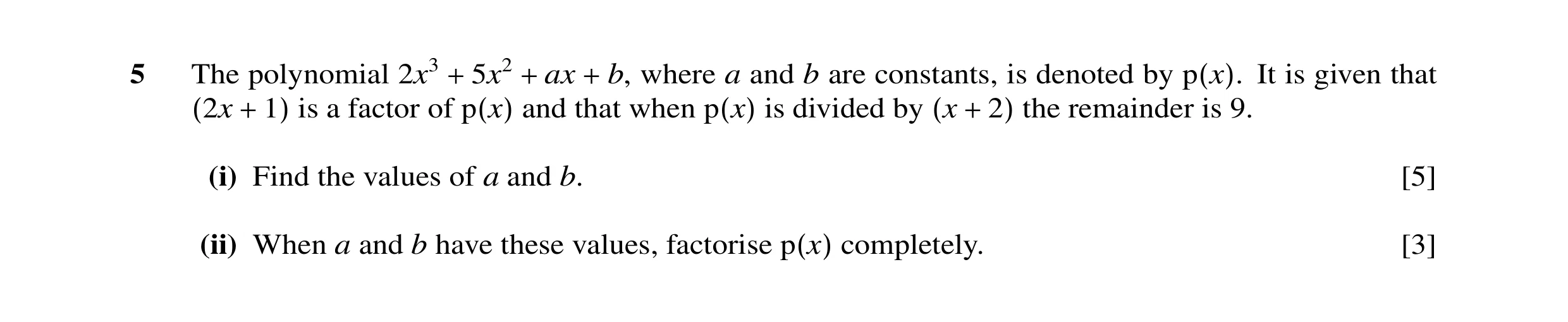
![Question 9: Solve the inequality [4] 2|x −3| > |3x + 1|.](https://img.pastlit.com/crops/658e5349-2f08-4903-881d-6443720f3016/q1.webp)
![Question 10: The polynomial is defined by f(x) 12x3 25x2 f(x) = + −4x −12. (i) Show that 0 and factorise completely. [4] f(−2) = f(x) (ii) Given that 12 …](https://img.pastlit.com/crops/d538f322-2ff3-415c-9ee8-f3a360a45a53/q4.webp)
![Question 11: Solve the inequality |x| < |5 + 2x|. [3]](https://img.pastlit.com/crops/4bf8f599-bb44-417c-8dac-7e136b851345/q1.webp)
![Question 13: The polynomial x4 3x3 ax 3 is denoted by It is given that is divisible by x2 1. + + + p(x). p(x) −x + (i) Find the value of a. [4] (ii) Whe…](https://img.pastlit.com/crops/0920e587-5d13-4c9d-8d5e-c8d598cebd65/q3.webp) 2 / 52
2 / 52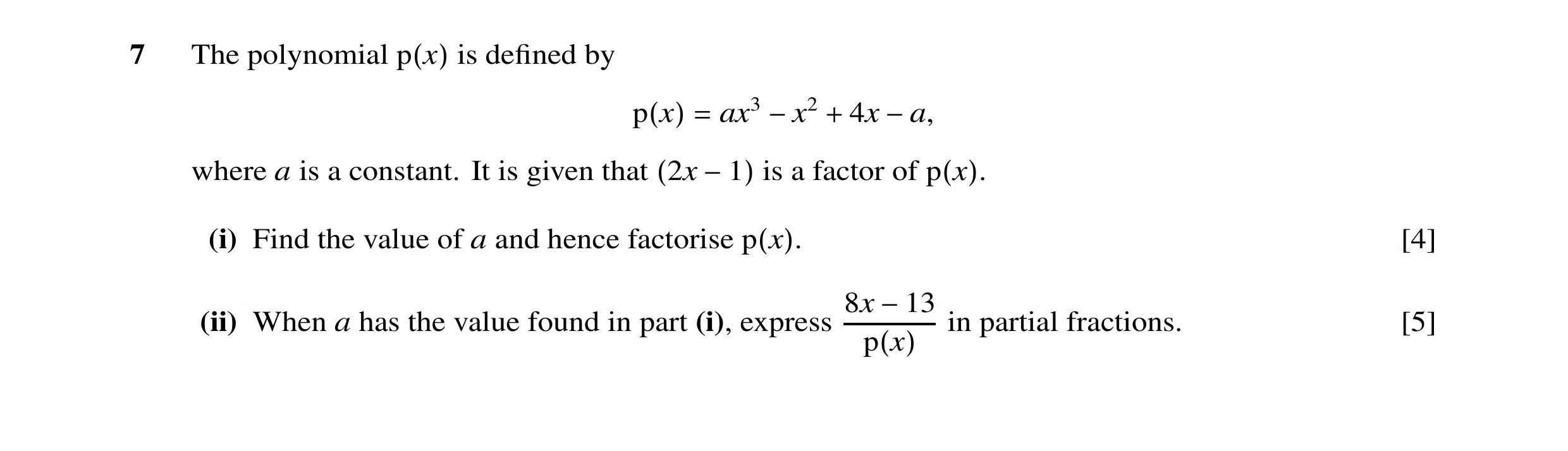
![Question 15: The polynomial is defined by p(x) x3 4a, p(x) = −3ax + where a is a constant. (i) Given that is a factor of find the value of a. [2] (x −2) p…](https://img.pastlit.com/crops/eb1ffb76-7688-4dc9-97bb-4f11caac8ca1/q3.webp)
![Question 16: r 1 3 Expand in ascending powers of x, up to and including the term in x2, simplifying the −x 1 x coefficients. + [5]](https://img.pastlit.com/crops/d3a757d5-02ce-47e9-b3a4-84f29b5e3b6c/q3.webp)
![Question 17: Find the set of values of x satisfying the inequality [4] 3|x −1| < |2x + 1|.](https://img.pastlit.com/crops/950f411d-6ca2-4a14-93da-d283f37bfbb0/q1.webp) 3 / 52
3 / 52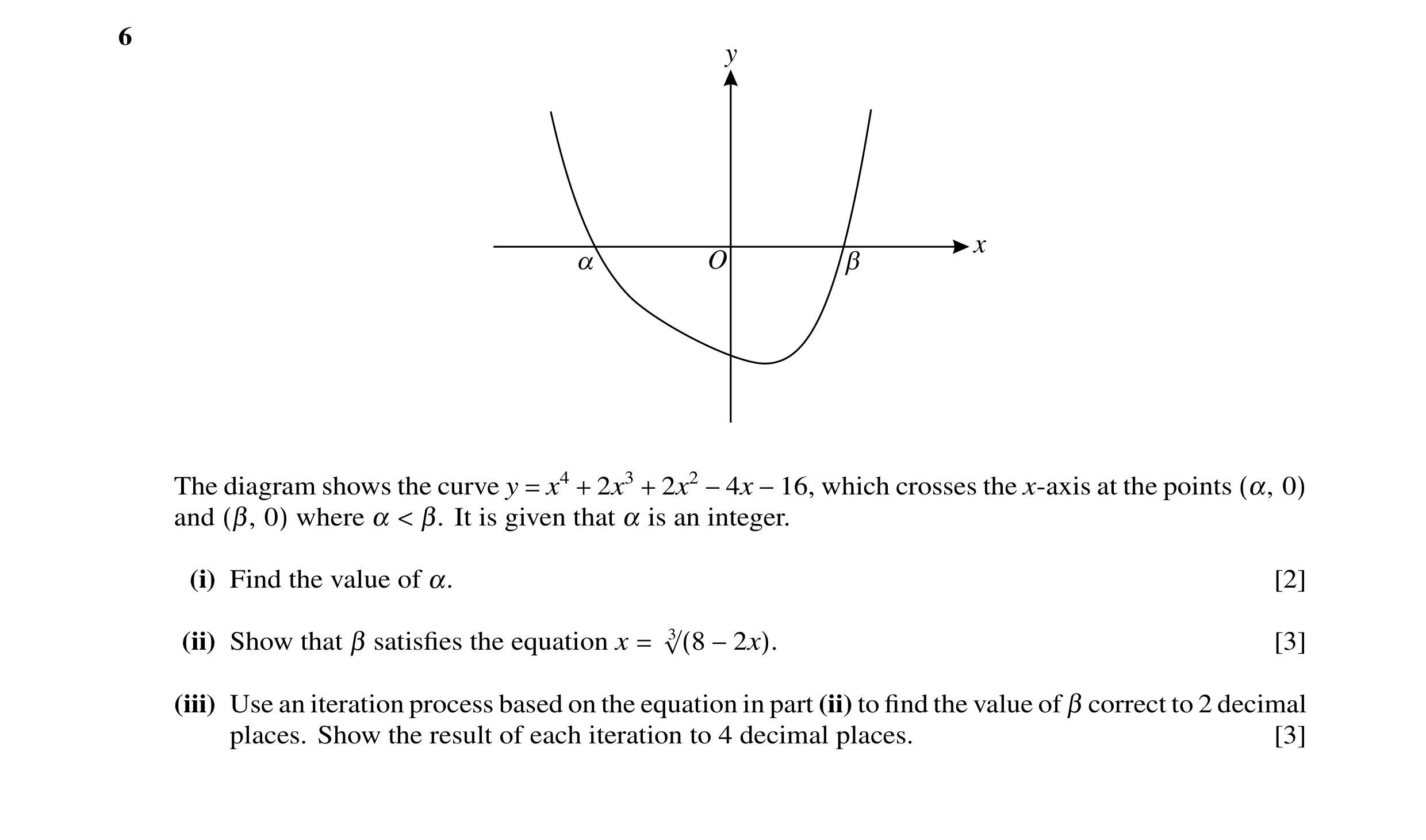
![Question 19: Find the quotient and remainder when 2x2 is divided by x 2. [3] +](https://img.pastlit.com/crops/f443cc9f-3bf7-4e06-a568-31cd464ddfeb/q1.webp)
![Question 20: (i) Solve the equation 4x x . [3] −1 = −3 4y correct to 3 significant figures. [3] −3 (ii) Hence solve the equation 4y+1 −1 =](https://img.pastlit.com/crops/f443cc9f-3bf7-4e06-a568-31cd464ddfeb/q4.webp)
![Question 21: Solve the equation x 13x . [3] −2 =](https://img.pastlit.com/crops/c090cf90-bc79-43c6-8bb9-fc4326e39b9a/q1.webp)
![Question 22: Find the set of values of x satisfying the inequality x + 2a > 3 x −a , where a is a positive constant. [4]](https://img.pastlit.com/crops/b68229ca-15f1-4244-90c8-9375b0f8a343/q1.webp) 4 / 52
4 / 52![Question 23: Show that, for small values of x2, 2 1 1 6x2 3 −2x2 −2 − + ≈kx4, where the value of the constant k is to be determined. [6]](https://img.pastlit.com/crops/736097b2-5338-4d17-8f53-2c0429ac1fe8/q3.webp)
![Question 24: Solve the inequality 2x −5 > 3 2x + 1 . [4]](https://img.pastlit.com/crops/82bdda8e-4c32-4bd1-a19a-cad64efaa663/q1.webp)
![Question 26: (i) Solve the equation 2 x 3 x . [3] −1 = (ii) Hence solve the equation 2 5x 3 5x , giving your answer correct to 3 significant figures. −1 =…](https://img.pastlit.com/crops/4ad1f781-f1a0-43b9-b6aa-81bb681f020c/q1.webp)
![Question 27: Solve the inequality 2 x 3x 1 . [4] −2 > +](https://img.pastlit.com/crops/c91f5662-265c-4ab3-b2ad-cd0cccaee20c/q1.webp) 5 / 52
5 / 52![Question 28: Solve the inequality x 3x [4] −3 < −4. ....................................................................................................…](https://img.pastlit.com/crops/2cbf4649-4746-4bba-8000-8f6d6647fdb0/q2.webp) 6 / 52
6 / 52![Question 29: The polynomial x4 2x3 ax b, where a and b are constants, is divisible by x2 1. Find the values of a and b. + + + −x + [5] .................…](https://img.pastlit.com/crops/ac5d0c01-6b23-49b7-bdb9-227e3260c3e1/q4.webp) 7 / 52
7 / 52![Question 30: (i) By sketching a suitable pair of graphs, show that the equation x3 3 has exactly one real = −x root. [2] (ii) Show that if a sequence of…](https://img.pastlit.com/crops/ad7fc026-6630-470a-930d-95edc11b46e6/q3.webp)
![Question 31: Solve the inequality 3 2x x 4 . [4] −1 > + ................................................................................................…](https://img.pastlit.com/crops/fd219bb1-034f-4ad1-9fab-ee5ddab6fef0/q1.webp) 10 / 52
10 / 52![Question 32: Find the set of values of x satisfying the inequality 2 2x x 3a , where a is a positive constant. −a < + [4] ..............................…](https://img.pastlit.com/crops/ced9d7ba-268c-4da6-96ec-c904072cd544/q1.webp) 11 / 52
11 / 52![Question 33: (i) By sketching a suitable pair of graphs, show that the equation x3 3 has exactly one real = −x root. [2] (ii) Show that if a sequence of…](https://img.pastlit.com/crops/ced9d7ba-268c-4da6-96ec-c904072cd544/q3.webp)
 14 / 52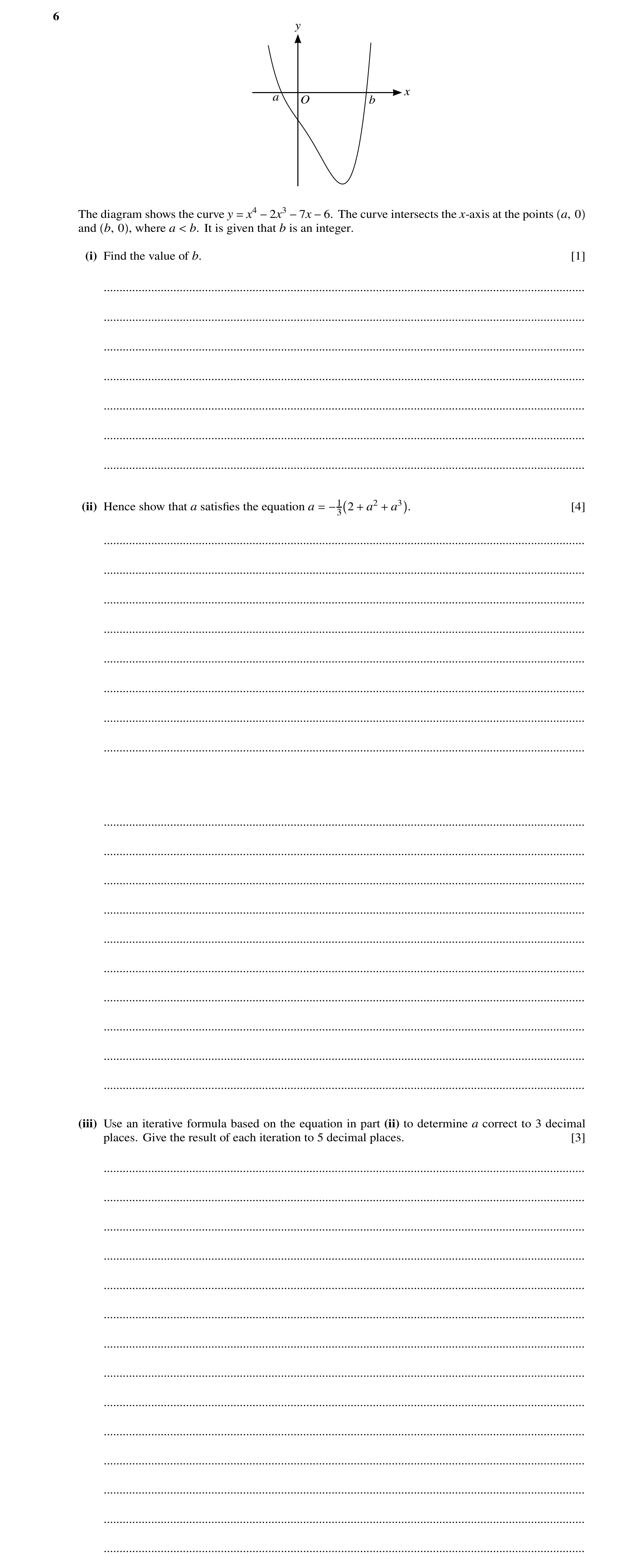
![Question 36: Solve the inequality 2 x 2 3x . [4] + > −1 ................................................................................................…](https://img.pastlit.com/crops/fe0ae6c6-b9fa-4440-a02b-3147ecfe6f88/q1.webp) 17 / 52
17 / 52![Question 37: (a) Sketch the graph of y x . [1] = −2 (b) Solve the inequality x 3x [3] −2 < −4. .........................................................…](https://img.pastlit.com/crops/f58e7cec-5e84-4f3c-8892-a7e9286804b3/q1.webp) 18 / 52
18 / 52![Question 38: (a) Find the quotient and remainder when 2x3 6x 3 is divided by x2 3. [3] −x2 + + + .......................................................…](https://img.pastlit.com/crops/bf3553f7-27e1-41b2-99a3-e4630a5ae4eb/q5.webp)
![Question 39: (a) By sketching a suitable pair of graphs, show that the equation x5 2 x has exactly one real = + root. [2] ..............................…](https://img.pastlit.com/crops/429d7d53-ff50-4de2-970b-2bc2d3d65c0c/q6.webp)
![Question 40: Solve the inequality 2 −5x > 2 x −3 . [4] .................................................................................................…](https://img.pastlit.com/crops/3a02ee54-c531-4ca9-8b0d-9fddb6de09ae/q1.webp) 23 / 52
23 / 52![Question 41: Solve the inequality 2 −5x > 2 x −3 . [4] .................................................................................................…](https://img.pastlit.com/crops/8cdb5860-55d7-42a4-a880-5c07b9f5ec08/q1.webp) 24 / 52
24 / 52![Question 42: Solve the inequality 2 3x x 1 . [4] −1 < + ................................................................................................…](https://img.pastlit.com/crops/bdf04a7f-20ca-4000-bf61-1940968c5b80/q1.webp) 25 / 52
25 / 52![Question 43: Solve the inequality 2x 3 x 1 . [4] −1 < + ................................................................................................…](https://img.pastlit.com/crops/297393de-cb18-4b69-bc5e-d963e340cfdb/q1.webp) 26 / 52
26 / 52![Question 44: (a) Sketch the graph of y 2x . [1] = −3 (b) Solve the inequality 2x 3x 2. [3] −3 < + ......................................................…](https://img.pastlit.com/crops/3443591c-60a0-4c06-9ba4-3336b6467ced/q2.webp) 27 / 52
27 / 52![Question 45: Solve the inequality 2x 3 3 x 2 . [4] + > + ...............................................................................................…](https://img.pastlit.com/crops/ef254321-79cb-4b49-ba72-69cbbac5b209/q1.webp) 28 / 52
28 / 52![Question 46: (a) Find the quotient and remainder when 8x3 4x2 2x 7 is divided by 4x2 1. [3] + + + + ....................................................…](https://img.pastlit.com/crops/ef254321-79cb-4b49-ba72-69cbbac5b209/q8.webp)
![Question 47: Find, in terms of a, the set of values of x satisfying the inequality 2 3x a 2x 3a , + < + where a is a positive constant. [4] ............…](https://img.pastlit.com/crops/c8e31760-c2e2-4c66-9b71-c0d0526fa670/q1.webp) 31 / 52
31 / 52![Question 48: (a) Sketch the graph of y = 2x + 1 . [1] (b) Solve the inequality 3x + 5 < 2x + 1 . [3] ...................................................…](https://img.pastlit.com/crops/8f5dbae1-3311-4796-87f2-848e75def0fd/q1.webp) 32 / 52
32 / 52![Question 49: (a) Sketch the graph of y 2x 3 . [1] = + (b) Solve the inequality 3x 8 2x 3 . [3] + > + ...................................................…](https://img.pastlit.com/crops/488e34c4-6c7f-4fa4-b4c1-c2325bd922a5/q2.webp) 33 / 52
33 / 52![Question 50: Solve the inequality 5x 2 3x . [4] −3 < −7 ................................................................................................…](https://img.pastlit.com/crops/37e733e0-89b7-496d-830e-a720f434c92d/q1.webp) 34 / 52
34 / 52![Question 51: Find the quotient and remainder when 2x4 is divided by x2 x 3. [3] −27 + + ................................................................…](https://img.pastlit.com/crops/5d96cc8c-39fa-45a2-9b76-113321d10ffc/q2.webp) 35 / 52
35 / 52![Question 52: (a) Sketch the graph of y 4x . [1] = −2 (b) Solve the inequality 1 3x 4x . [4] + < −2 .....................................................…](https://img.pastlit.com/crops/ae258b5e-8a2e-4842-a7e8-06fd44528f8f/q1.webp) 36 / 52
36 / 52![Question 53: Find the quotient and remainder when x 4 - 3x 3 + 9x 2 - 12x + 27 is divided by x 2 + 5 . [3] .............................................…](https://img.pastlit.com/crops/7e578ace-a8a9-41e0-8743-11cacfdd1971/q1.webp) 37 / 52
37 / 52![Question 54: Expand ( 3 + x)( 1 - 2x) 1 in ascending powers of x, up to and including the term in x2, simplifying the coefficients. [4] ................…](https://img.pastlit.com/crops/46c73ebf-ea38-4b29-a885-ce1c66be5c92/q1.webp) 38 / 52
38 / 52![Question 55: (a) Sketch the graph of y = x - 2a , where a is a positive constant. [1] (b) Solve the inequality 2x - 3a 1 x - 2a . [2] ..................…](https://img.pastlit.com/crops/18234476-d402-4642-b4fc-9b7d05c714cf/q1.webp) 39 / 52
39 / 52![Question 56: Let f ( )x = 8x 3 + 54x 2 - 17x - 21. (a) Show that x + 7 is a factor of f ( )x . [1] .....................................................…](https://img.pastlit.com/crops/d2d39ed6-d2b4-4ffa-ad32-37304543c1ec/q7.webp)
 42 / 52
![Question 59: (a) Sketch the graph of y = 2 x - 3 . [1] (b) Solve the inequality 3x - 1 1 2 x - 3 . [2] .................................................…](https://img.pastlit.com/crops/35ad073c-3fe6-49fc-b398-3784f6257656/q1.webp) 45 / 52
45 / 52 46 / 52
![Question 61: (a) Find the quotient and remainder when x 3 + 5x 2 - 2x - 15 is divided by x 2 - 3 . [3] .................................................…](https://img.pastlit.com/crops/35ad073c-3fe6-49fc-b398-3784f6257656/q10.webp)
![Question 62: (a) Sketch the graph of y = 3 x - 2 a , where a is a positive constant. [1] (b) Hence or otherwise solve the inequality 3x - 2a 1 x + 5a . …](https://img.pastlit.com/crops/415ffc4f-fb97-4c15-bcf3-c75615bc7963/q1.webp) 49 / 52
49 / 52![Question 63: (a) It is given that f ( x) = ( x - a ) 2 g ( x) , where f ( x) and g ( x) are polynomials. Show that ( x - a ) is a factor of fl( )x . [2]…](https://img.pastlit.com/crops/f5e004ff-26c4-46a2-a338-e8ed2bf9d1b6/q5.webp) 50 / 52
50 / 52![Question 64: Solve the inequality 3x + 2 1 3 2x - 1 . [4] ..............................................................................................…](https://img.pastlit.com/crops/a04cea19-353d-4ed0-876c-c4b4619e09a6/q1.webp) 51 / 52
51 / 52![Question 65: (a) Sketch the graph of y = 3x - 6 . [1] (b) Solve the inequality 5x - 3 1 3x - 6 . [3] ...................................................…](https://img.pastlit.com/crops/b8c83517-d7f2-49a3-959c-4199641a00a3/q1.webp) 52 / 52
52 / 52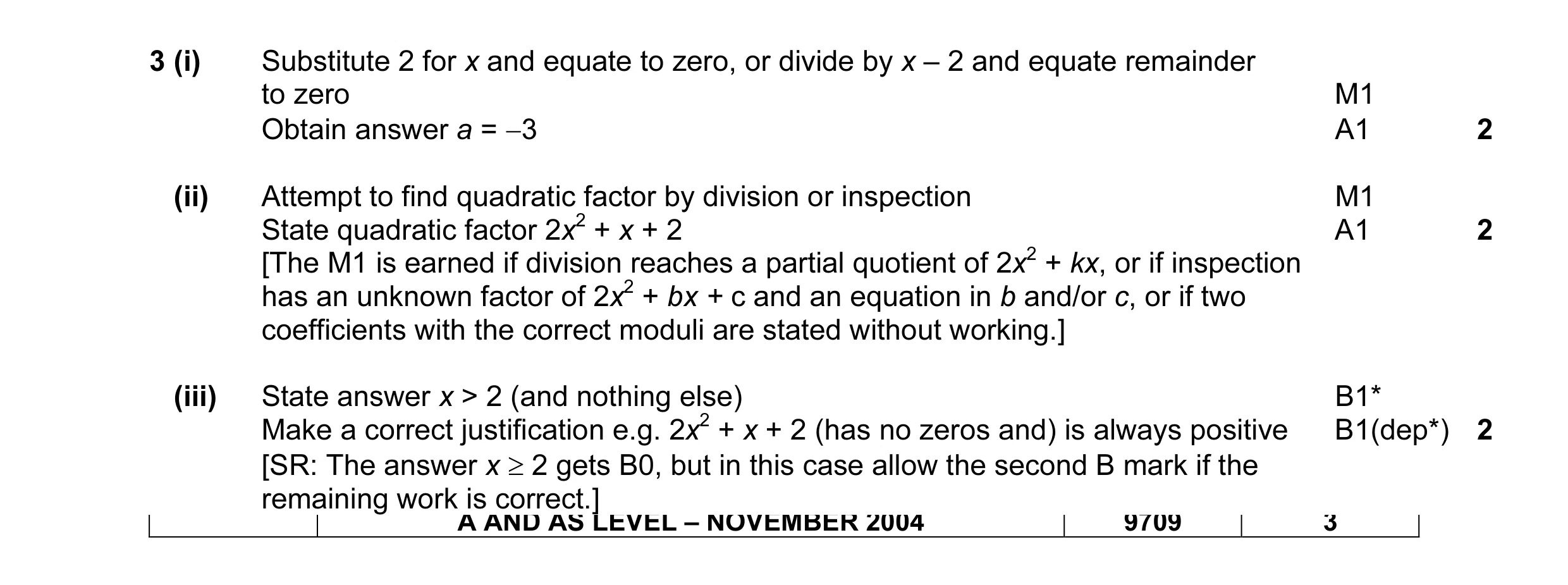 6
6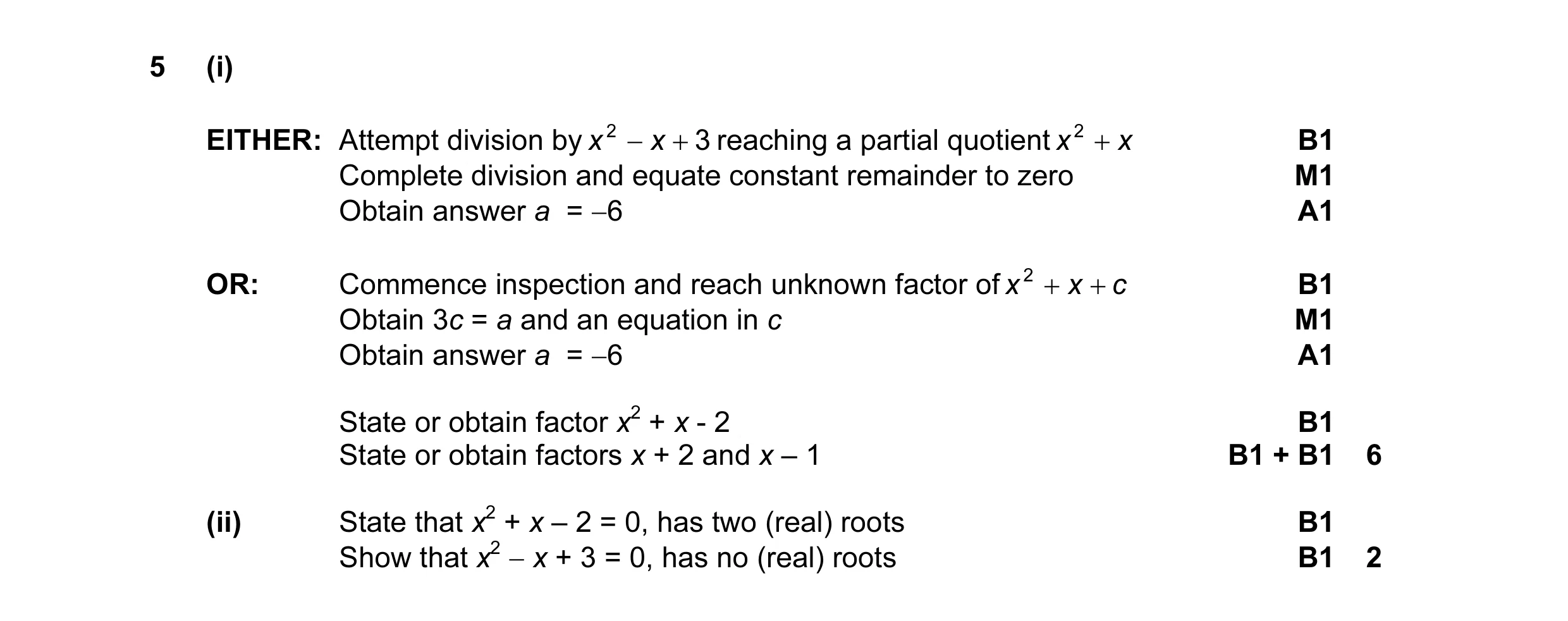 8
8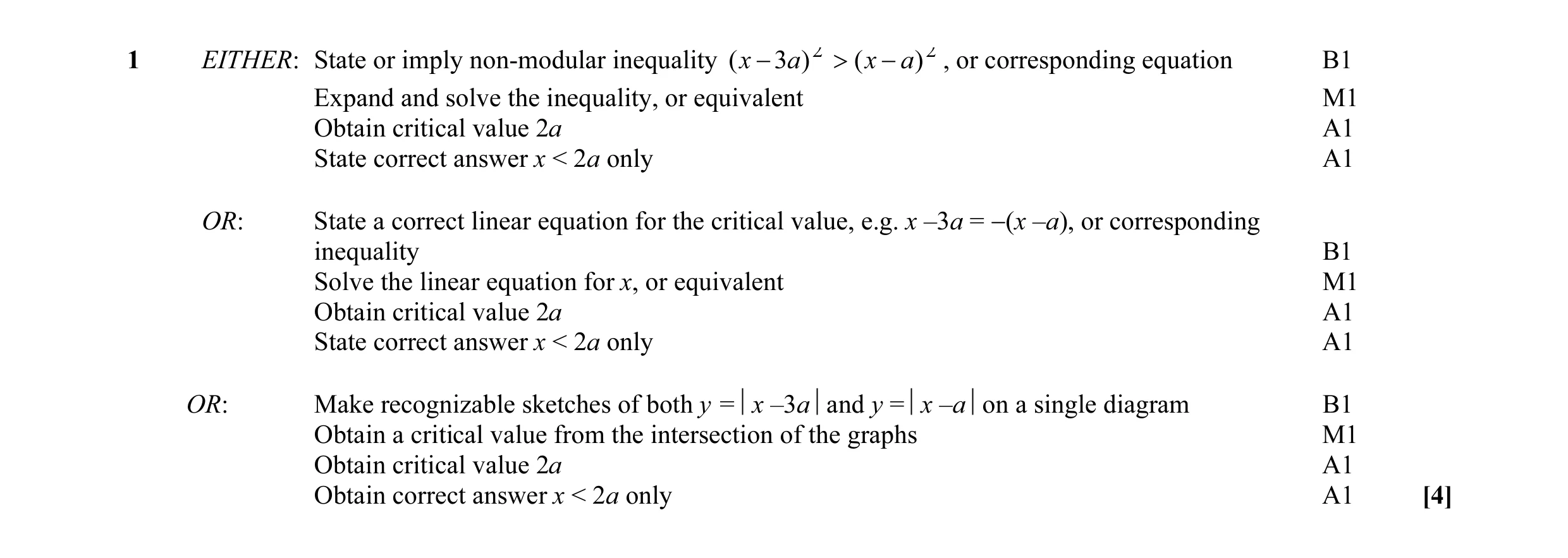 4
4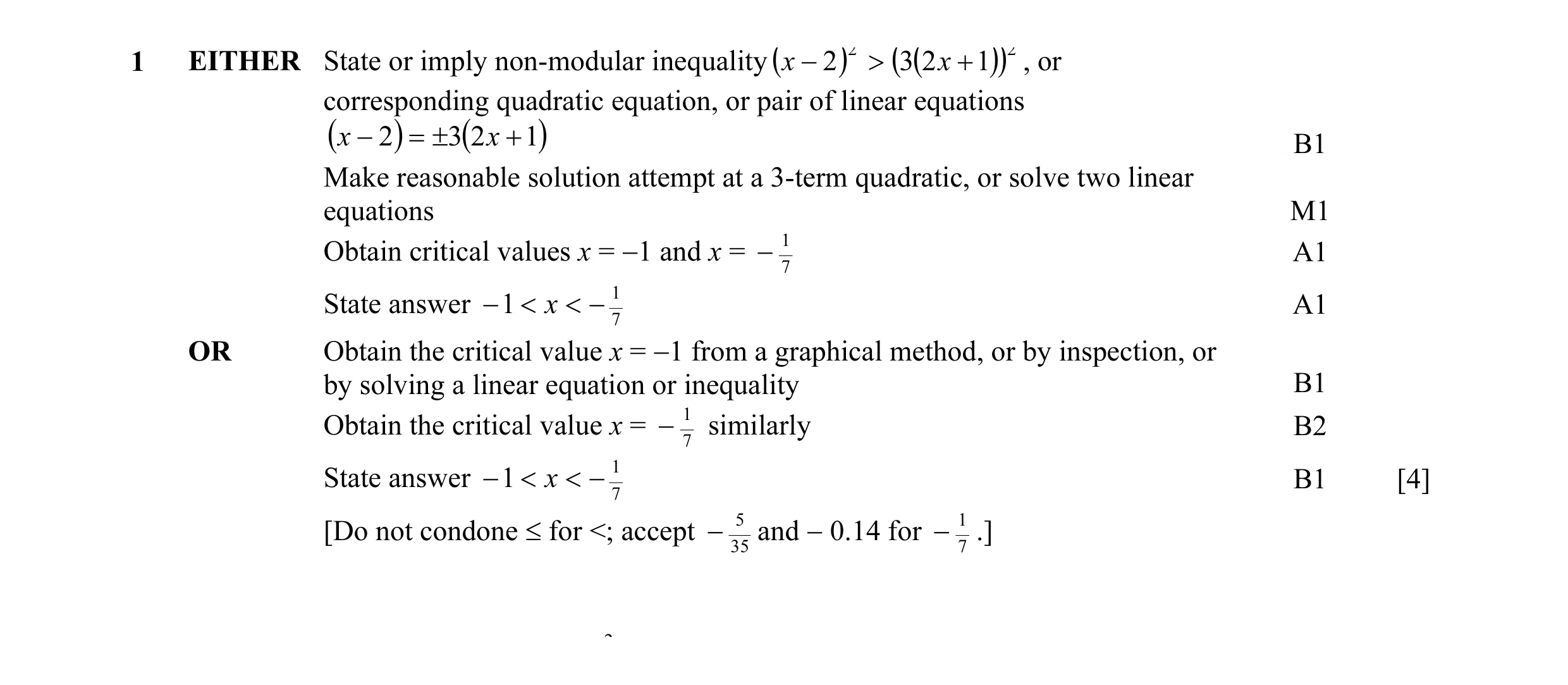 4
4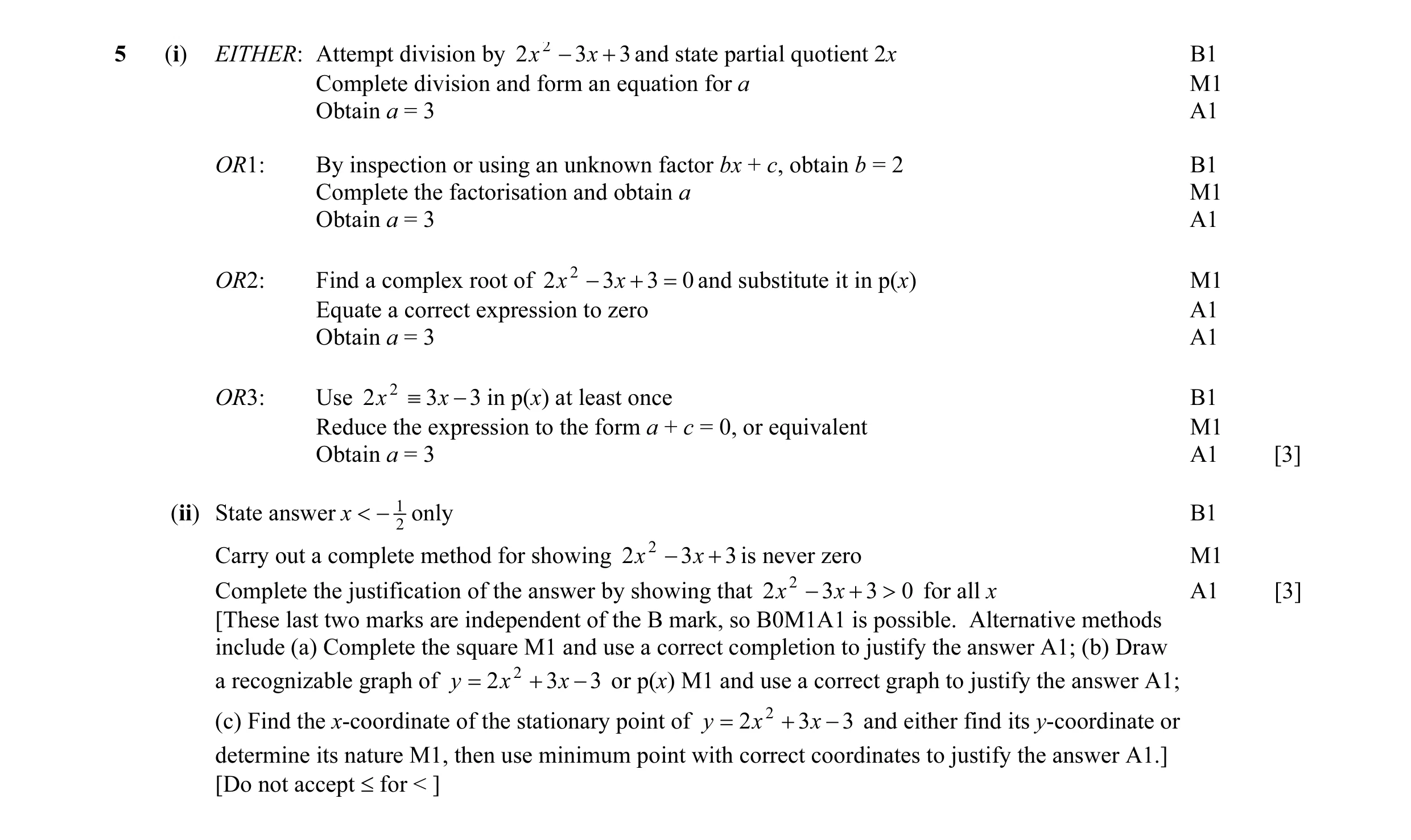 6
6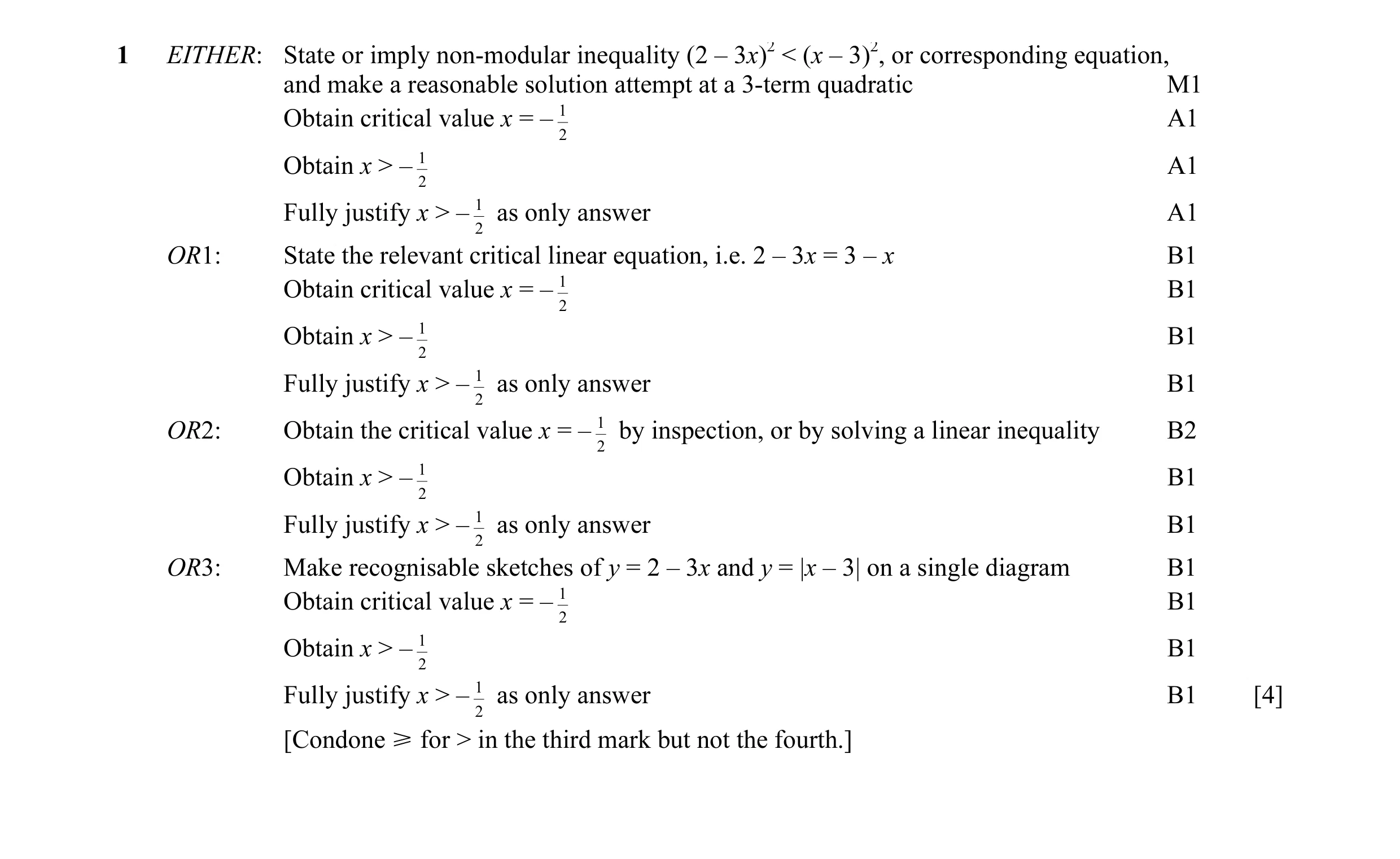 4
4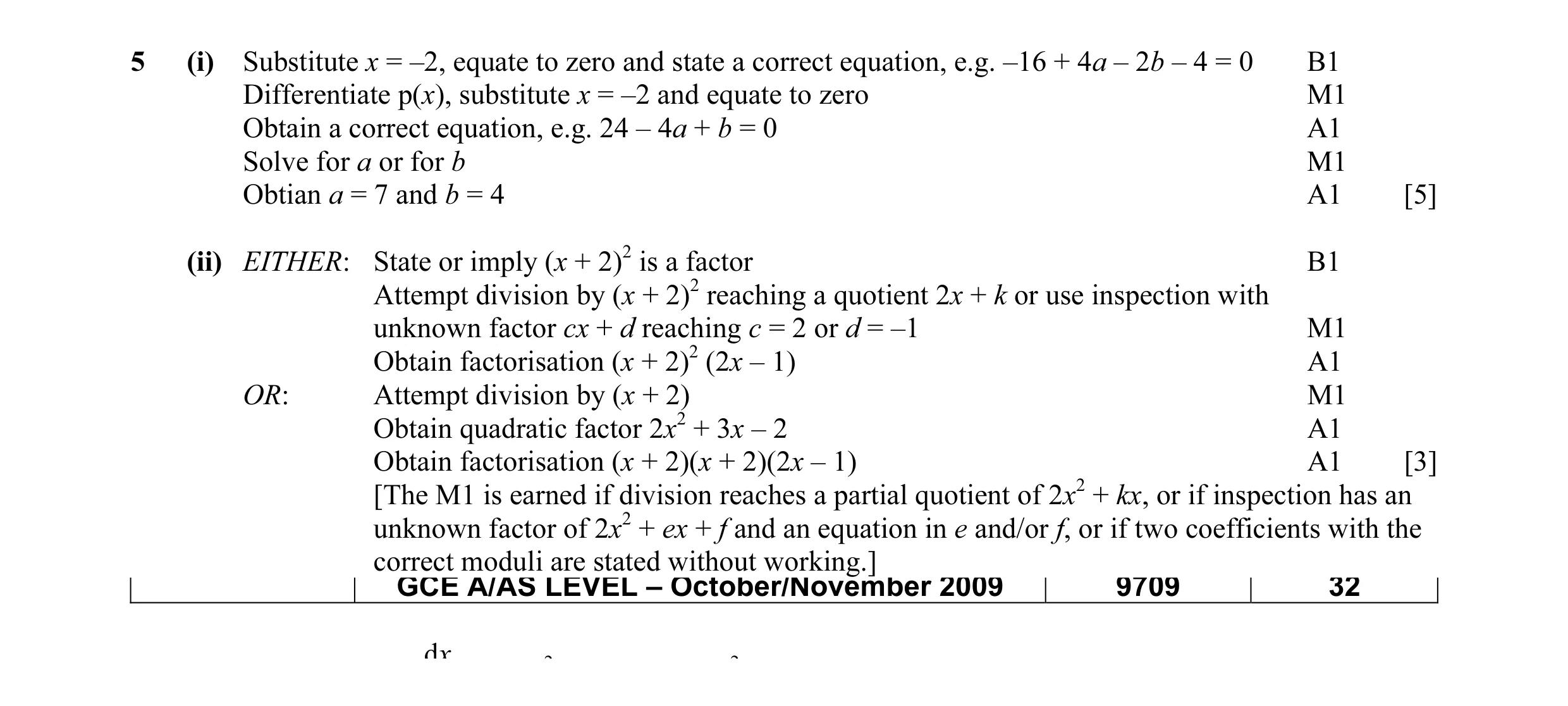 8
8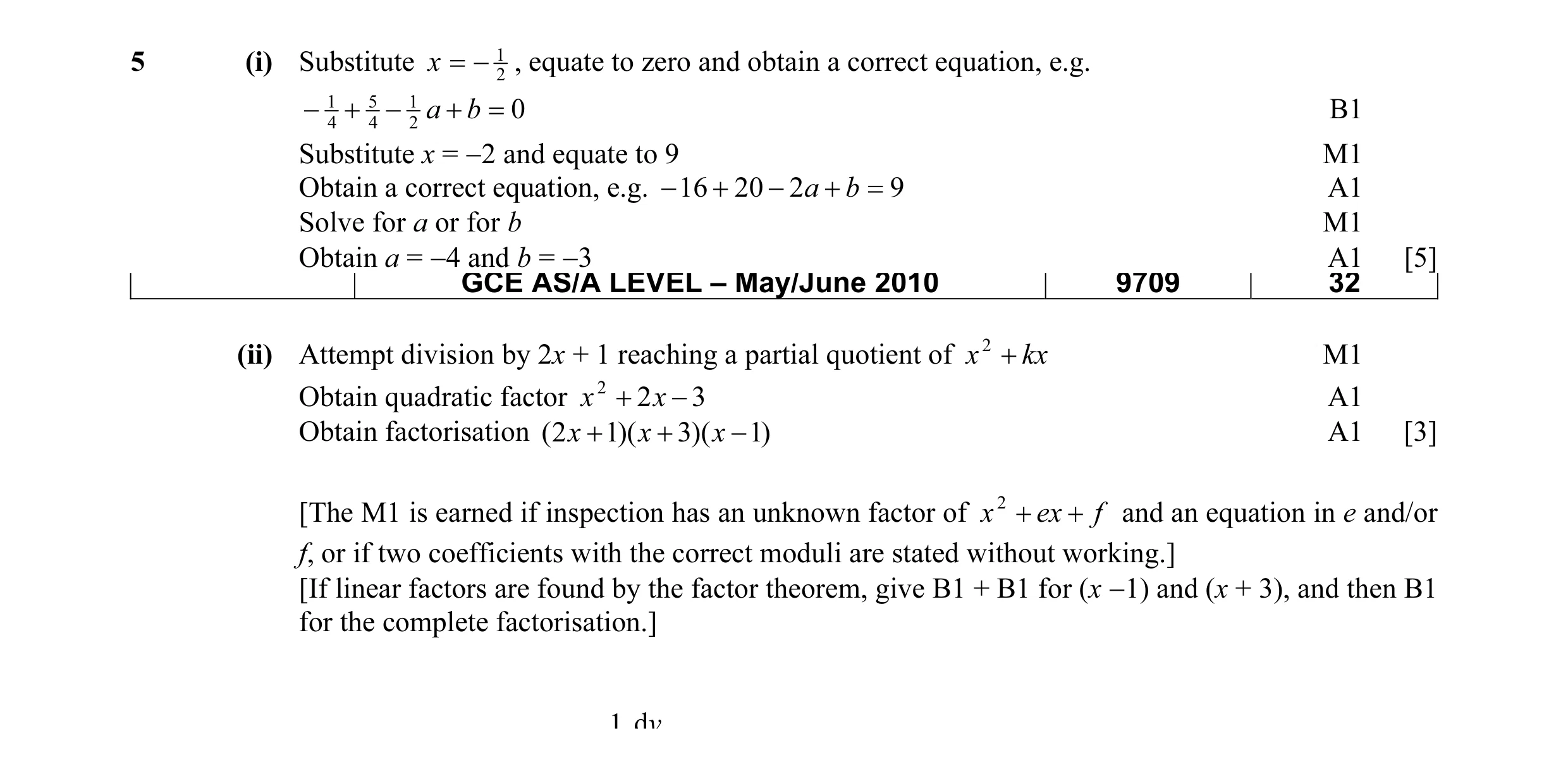 8
8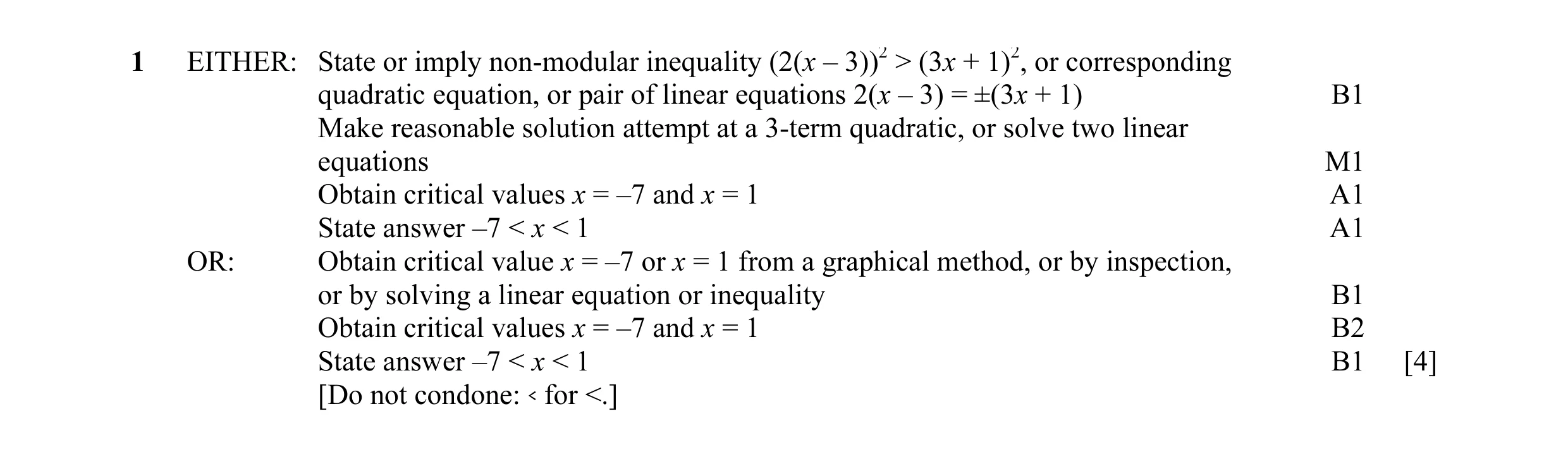 4
4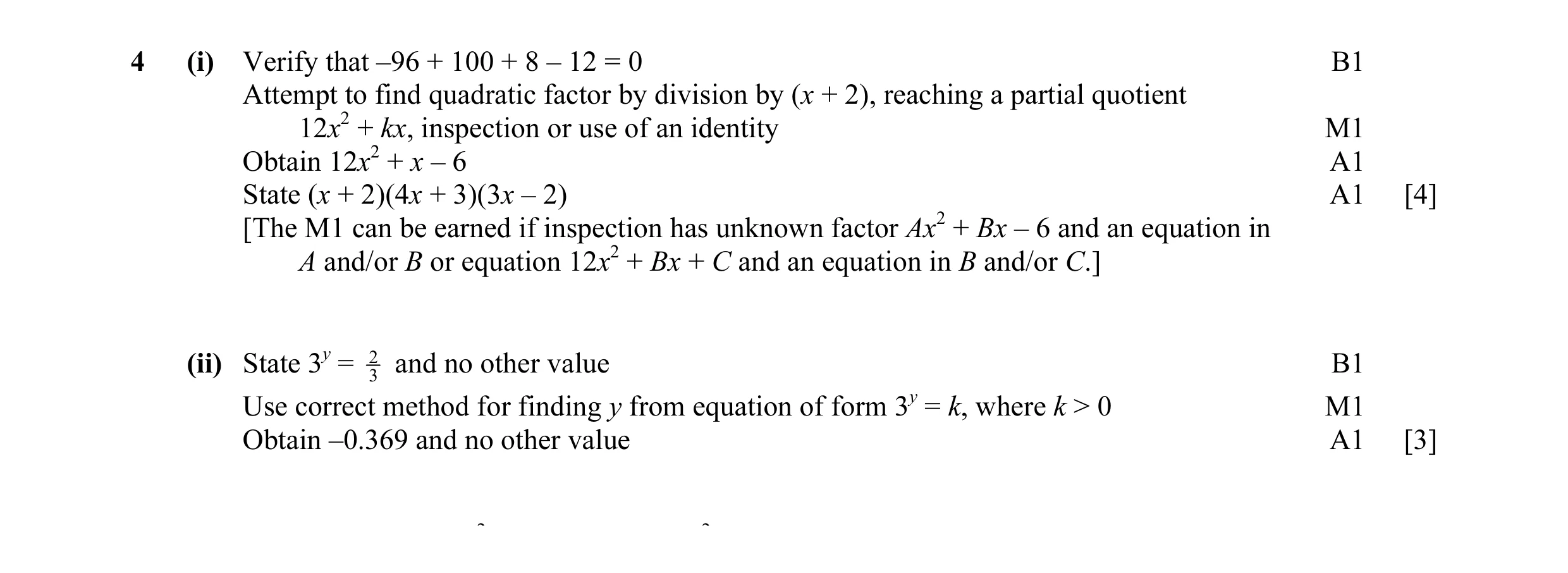 7
7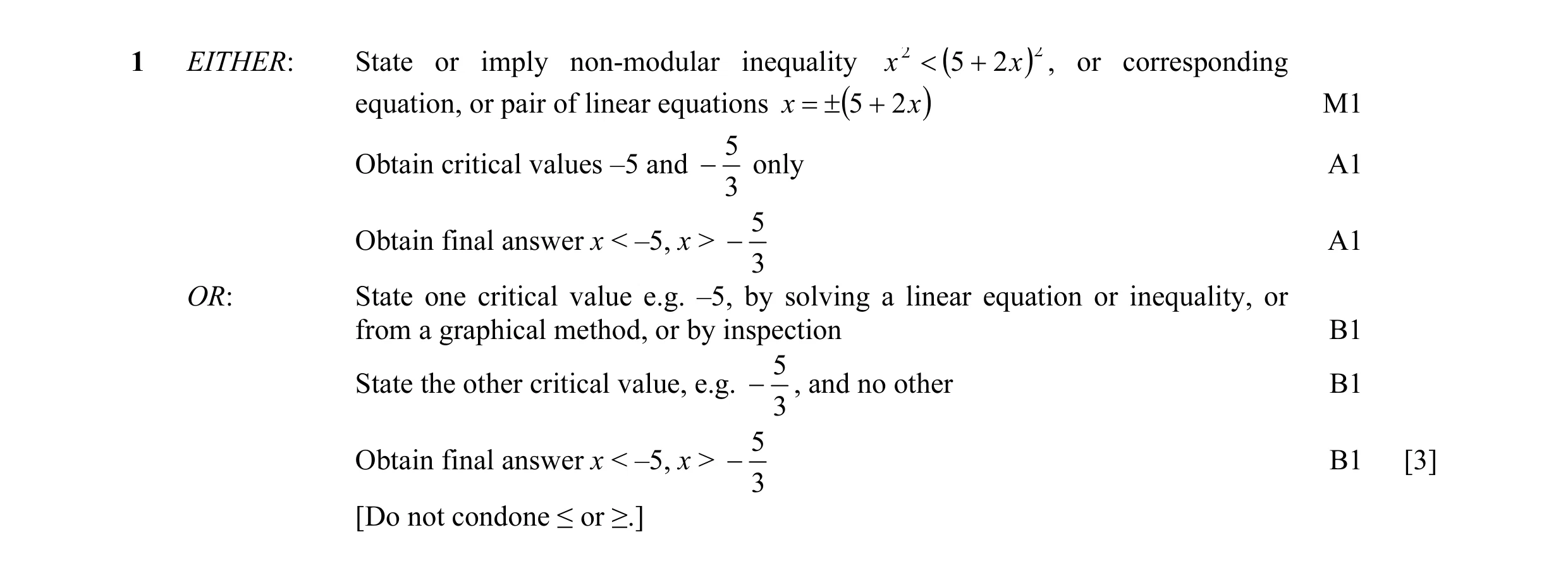 3
3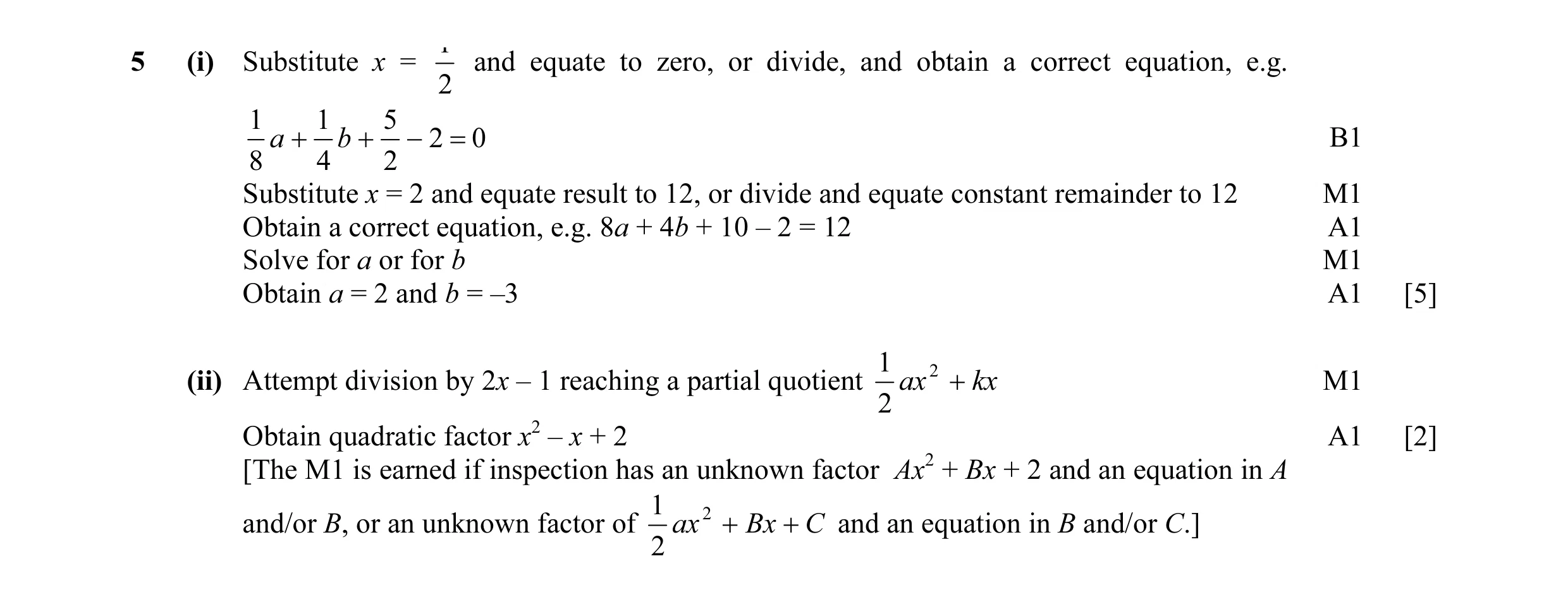 7
7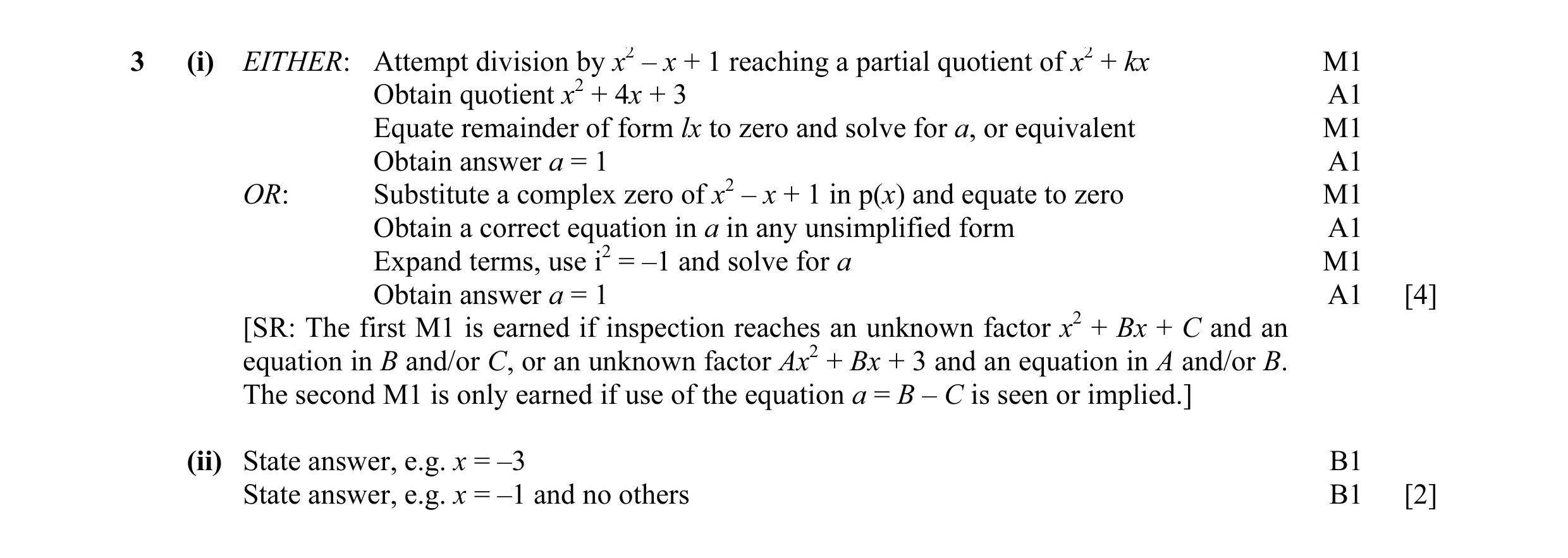 6
6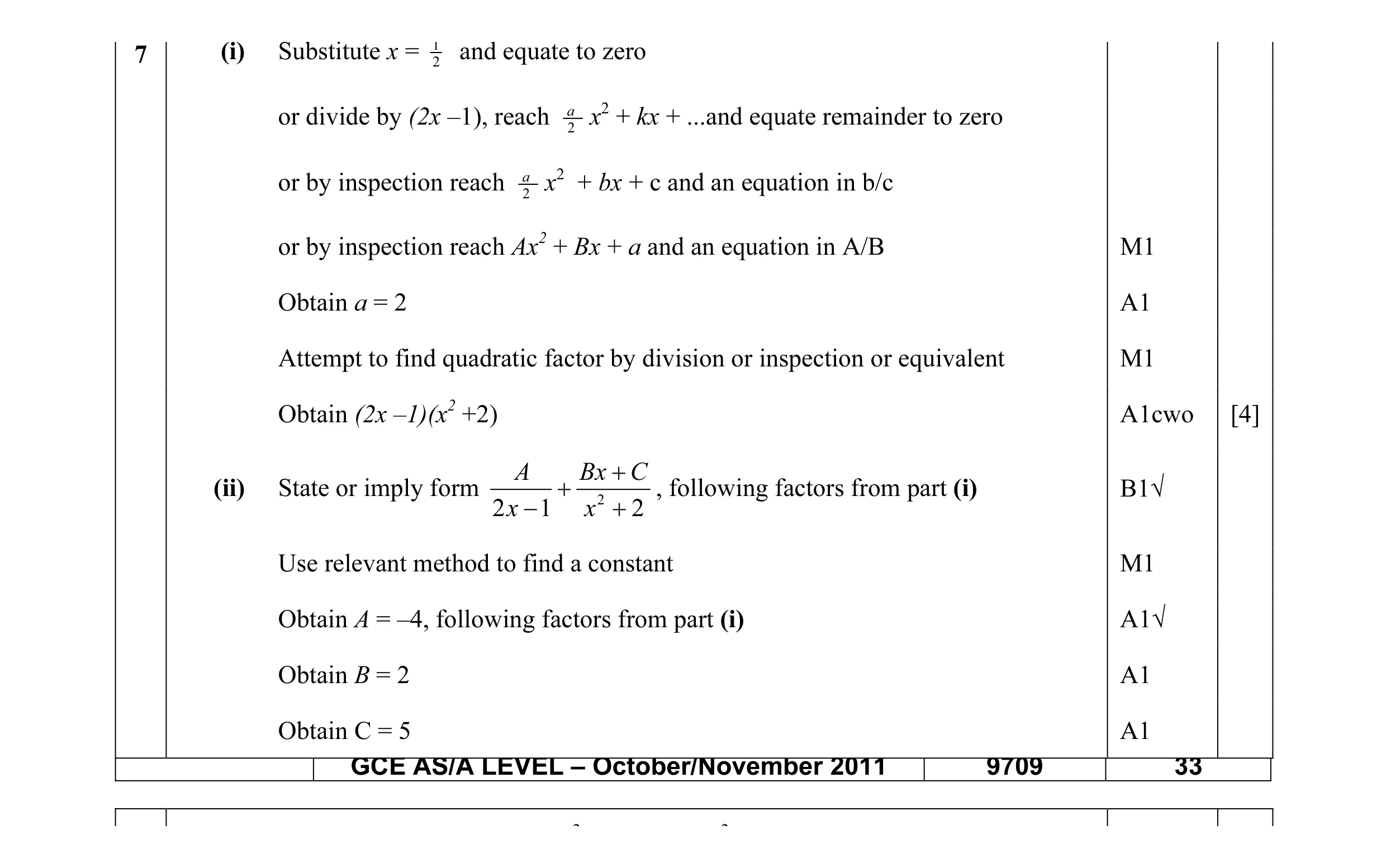 9
9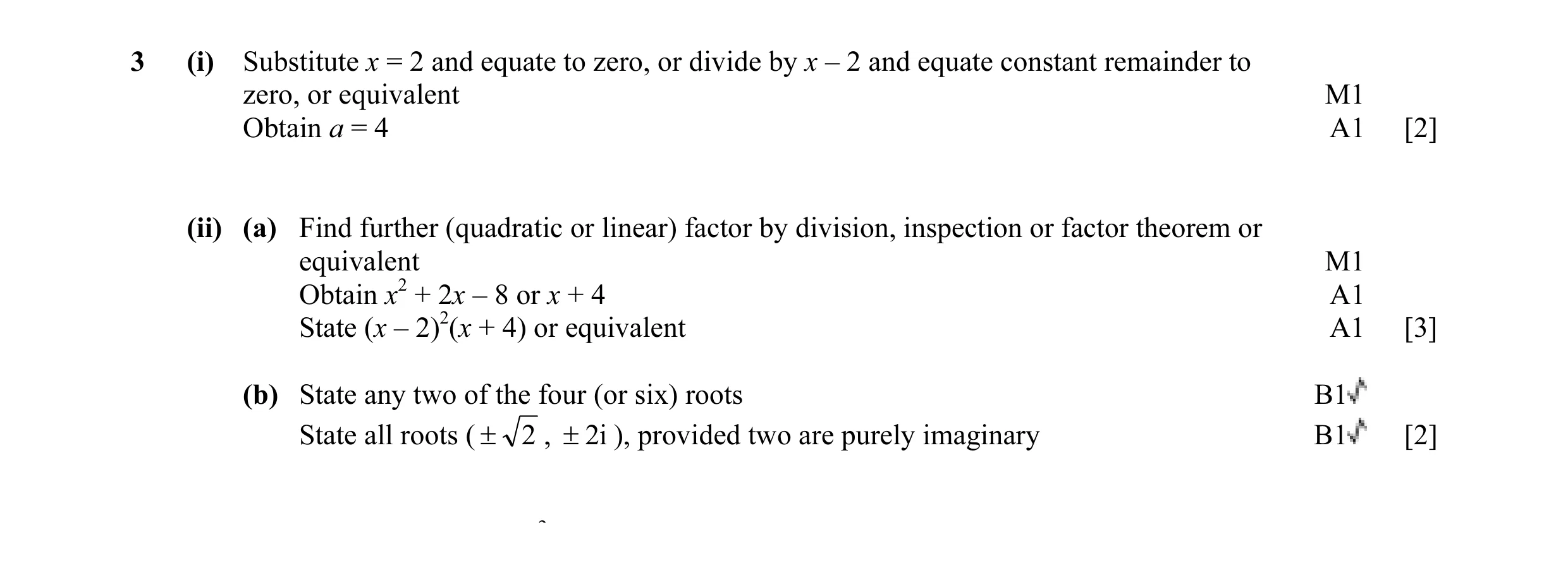 7
7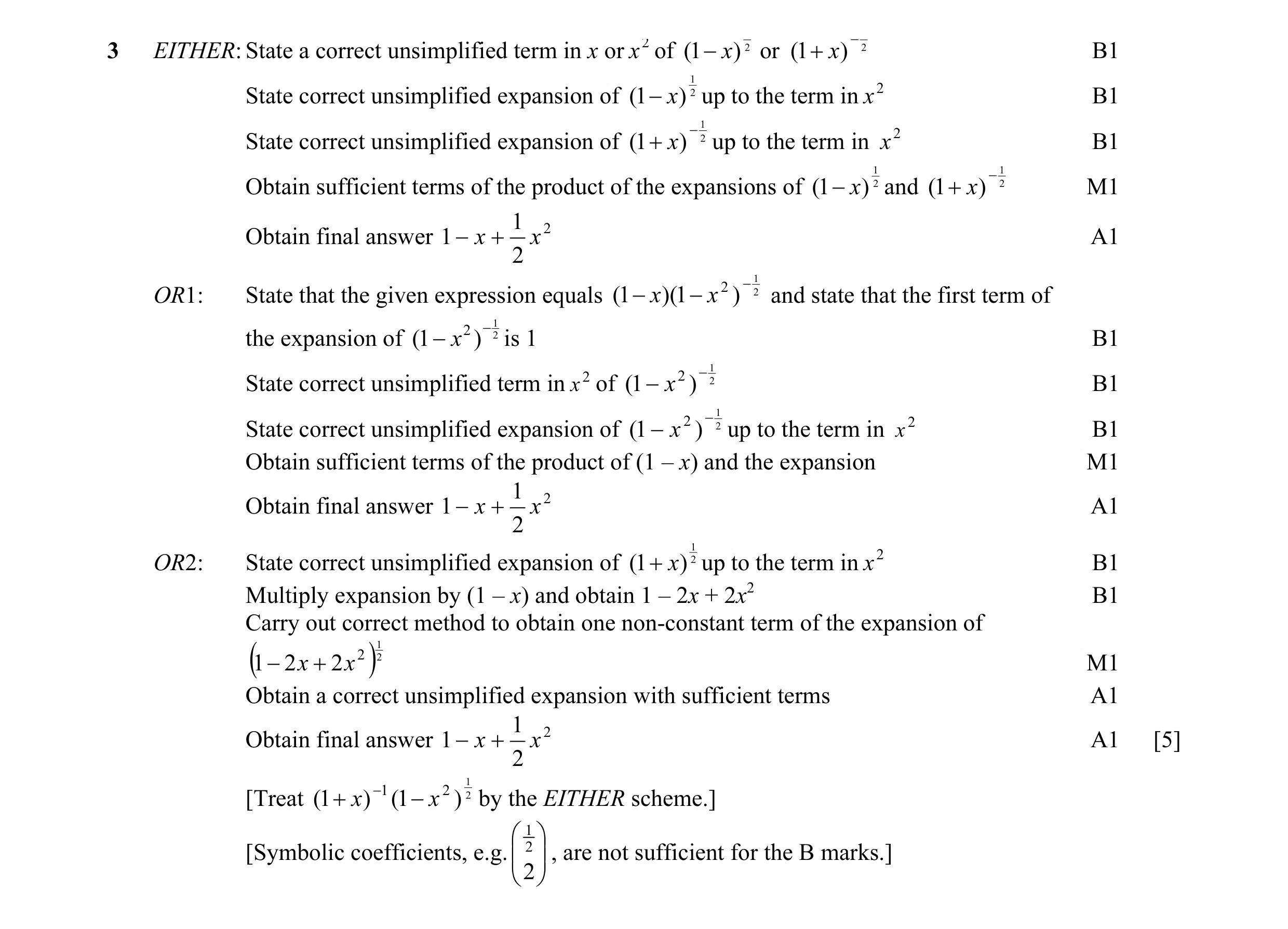 5
5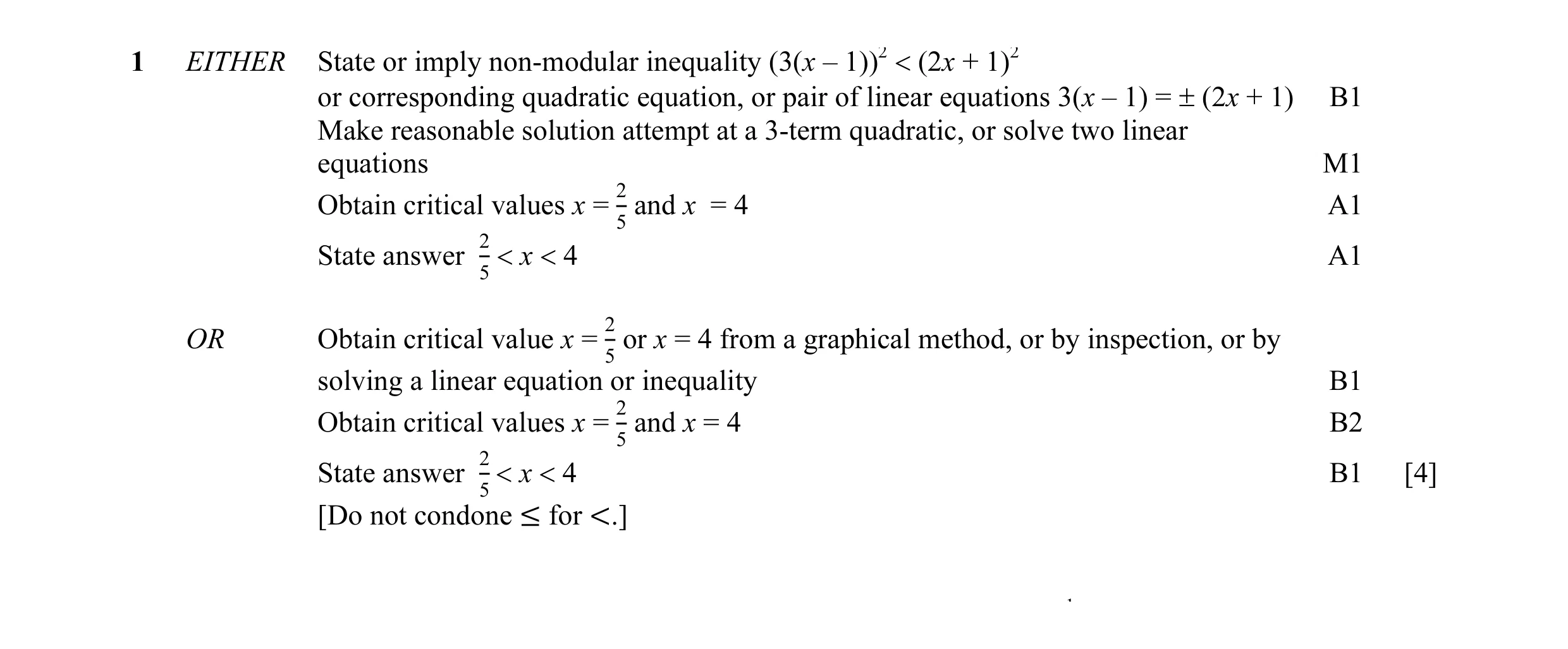 4
4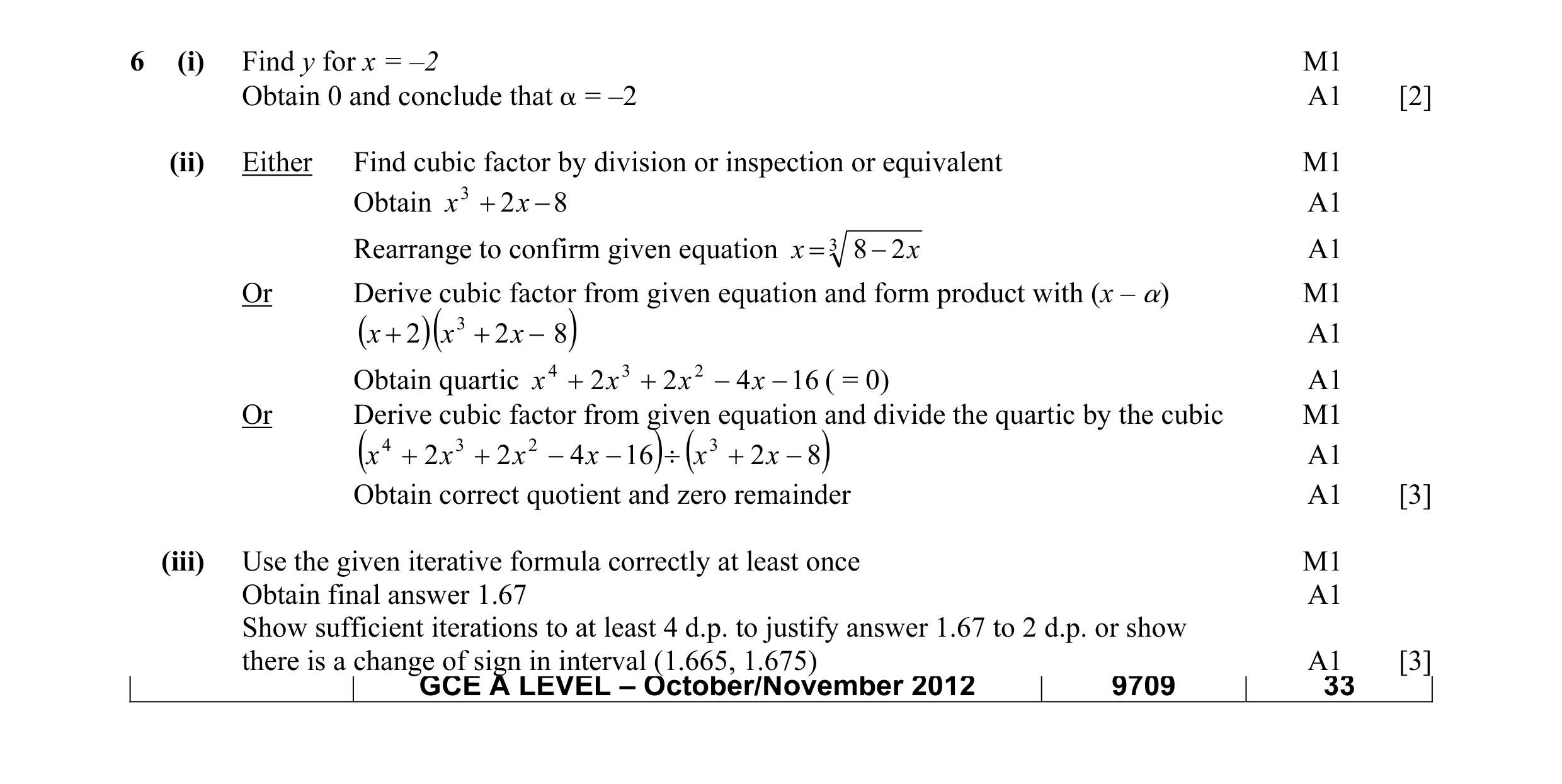 8
8 3
3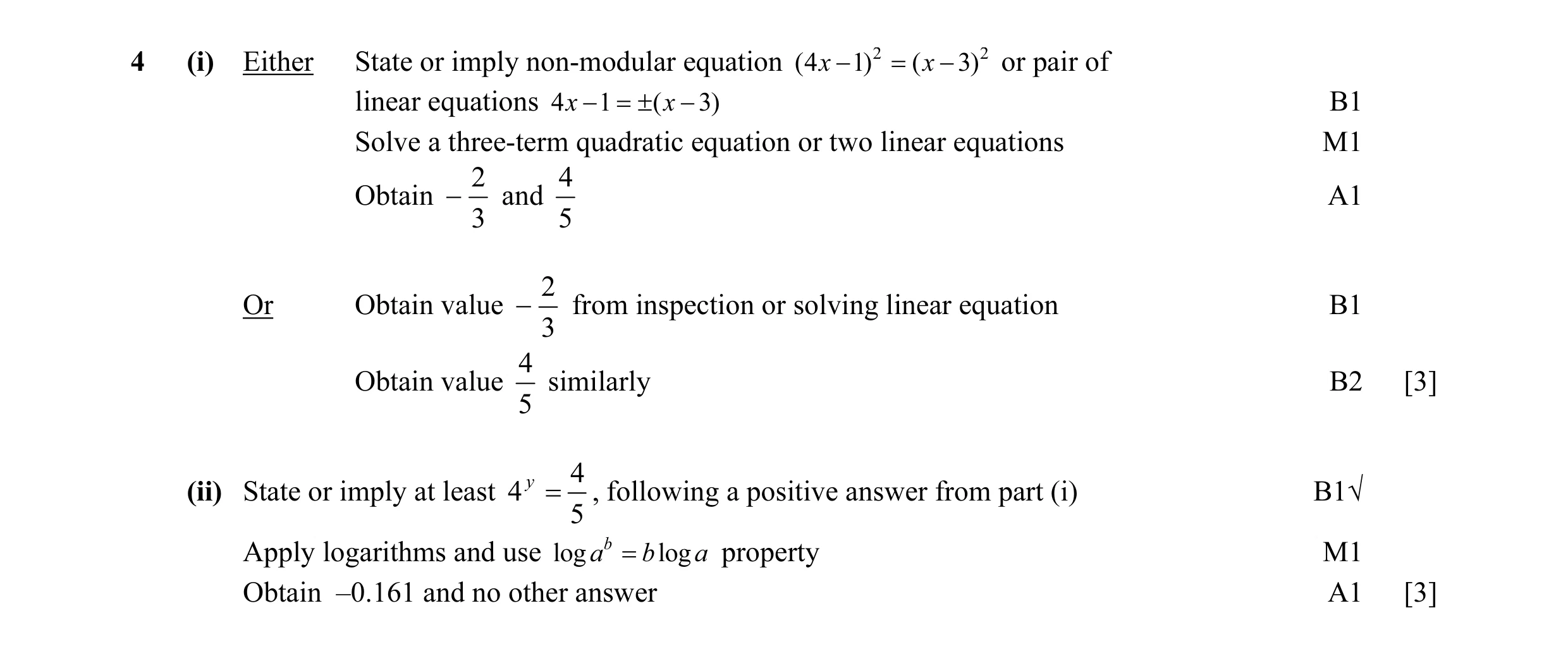 6
6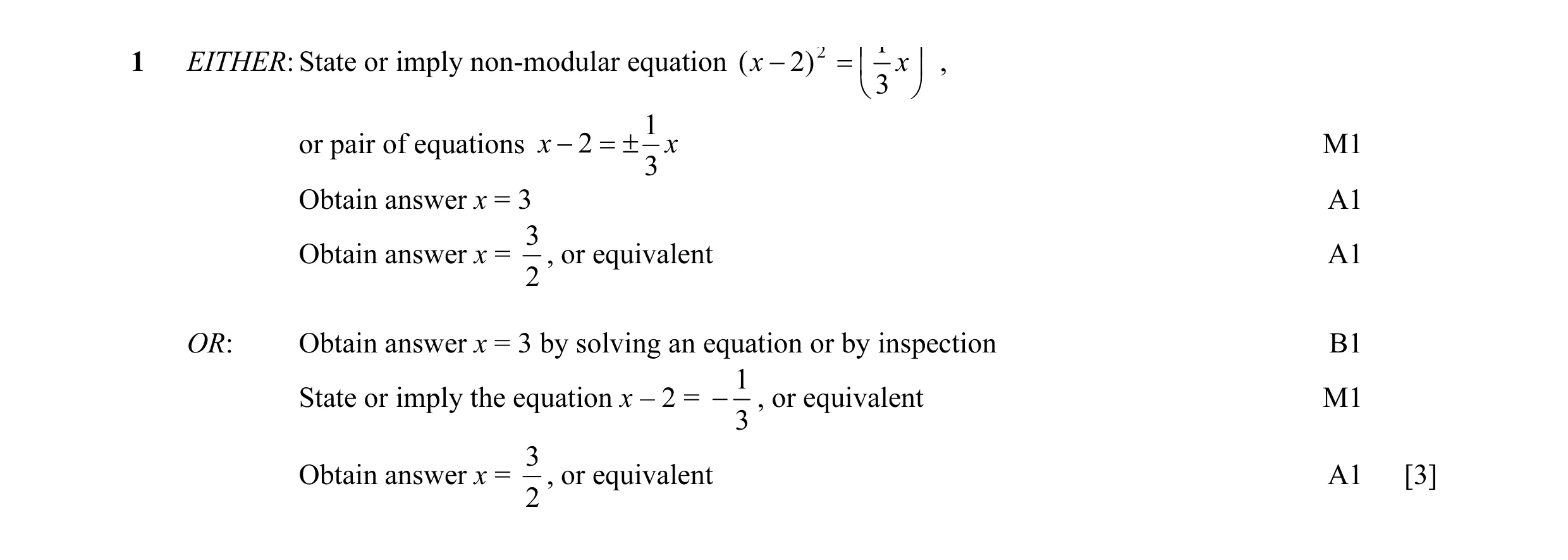 3
3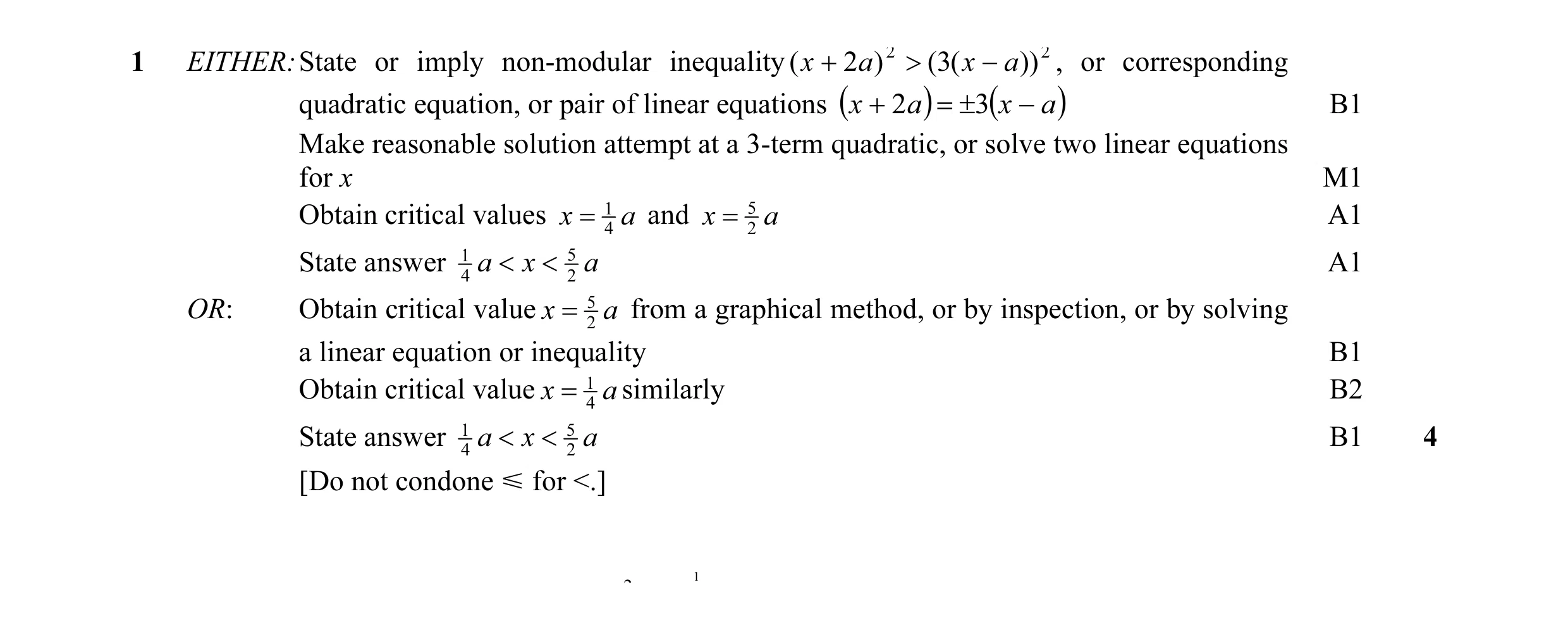 4
4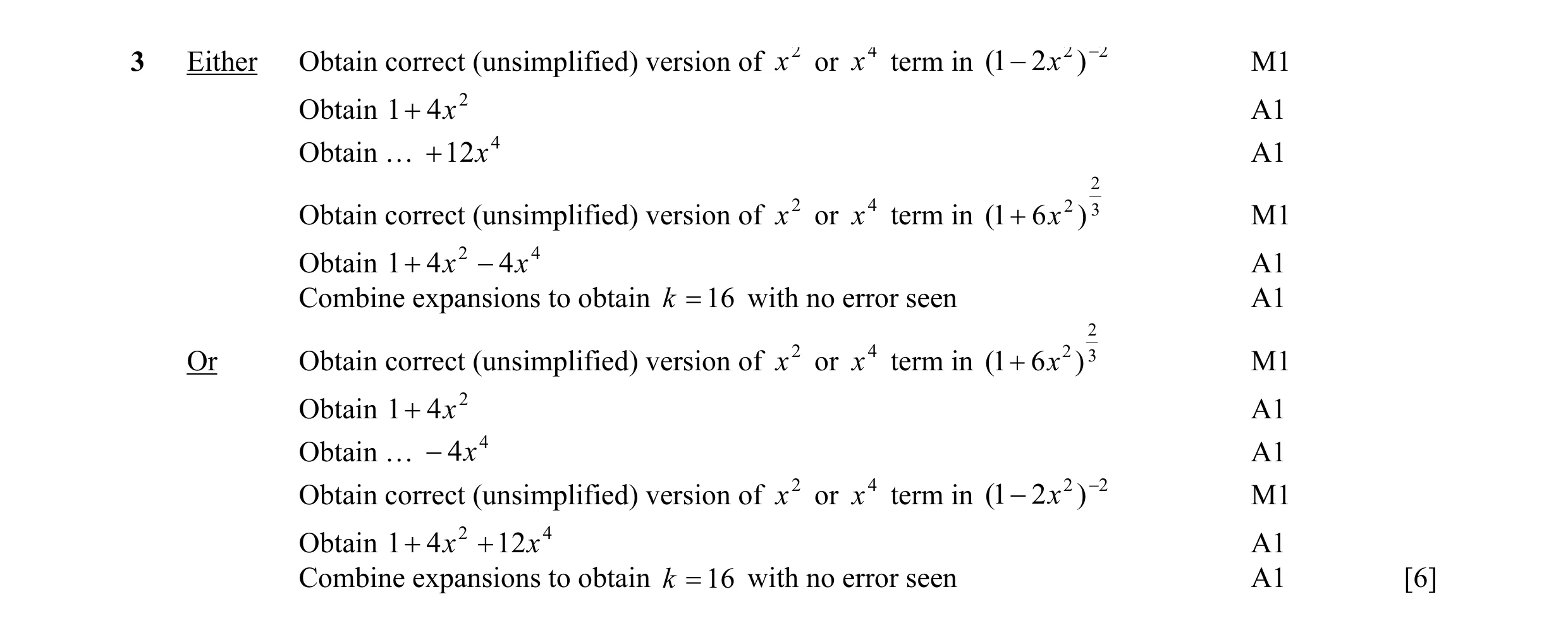 6
6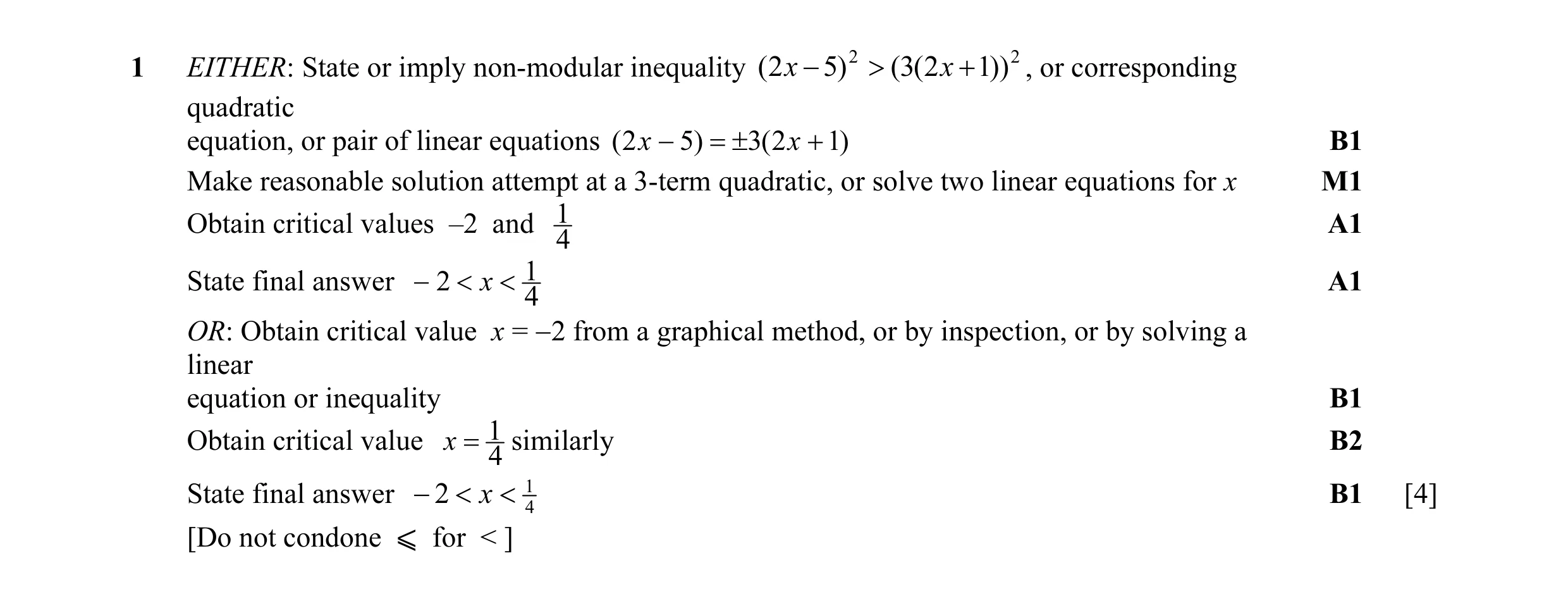 4
4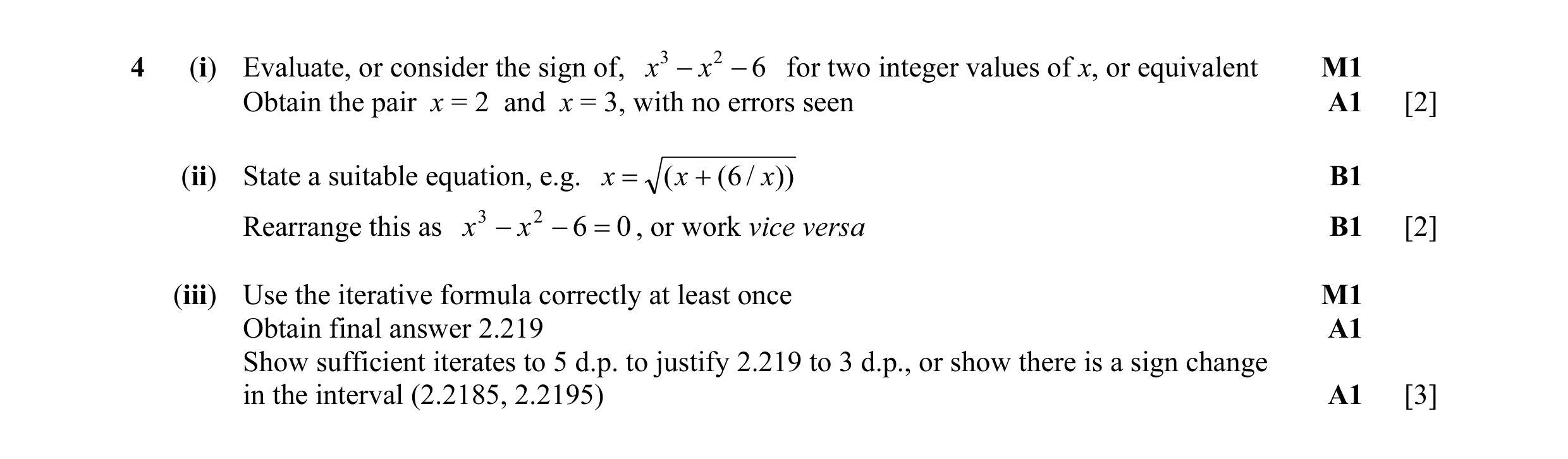 7
7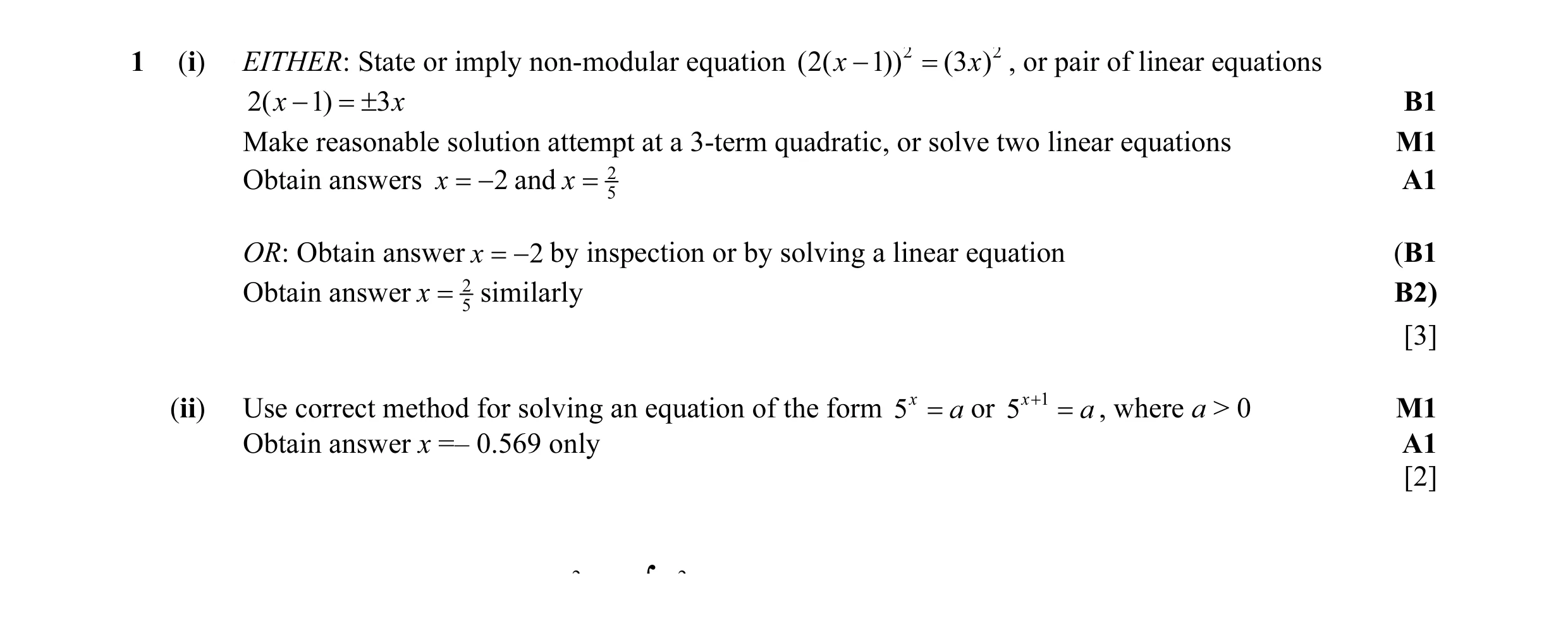 5
5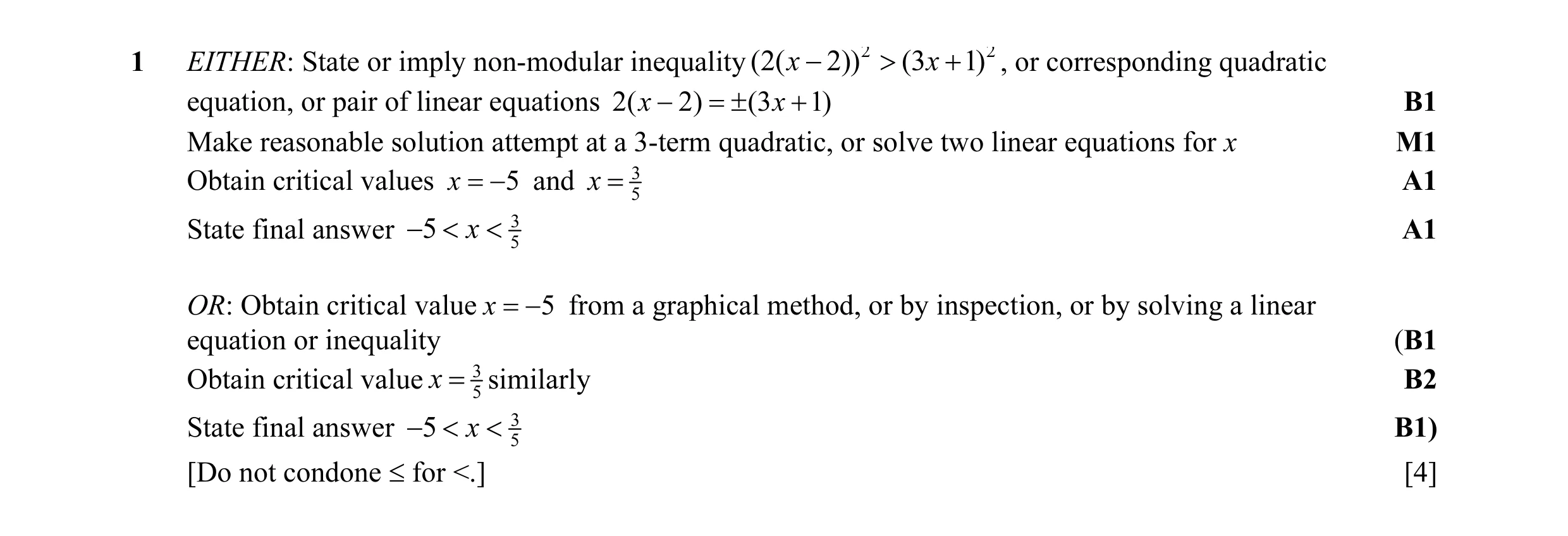 4
4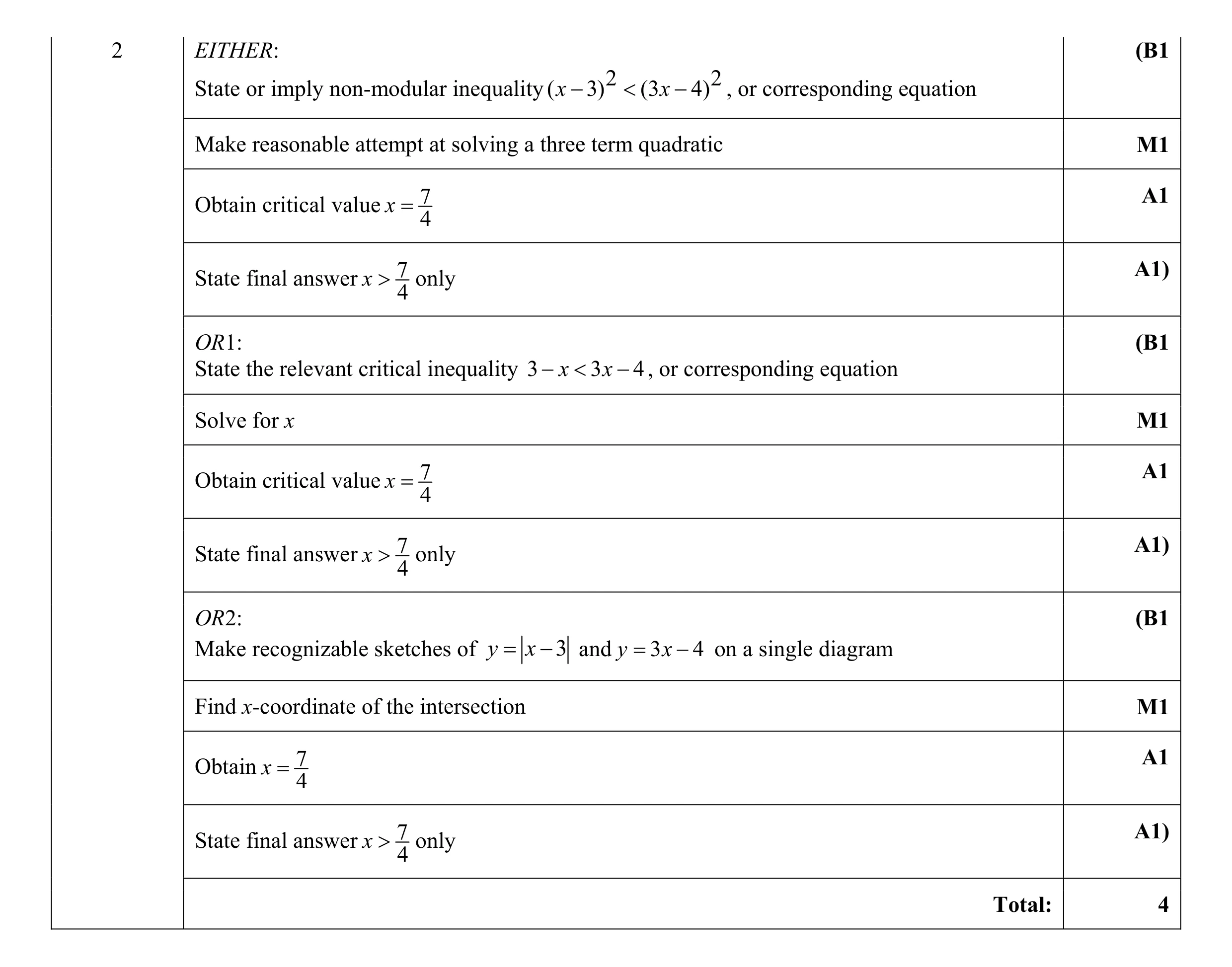 4
4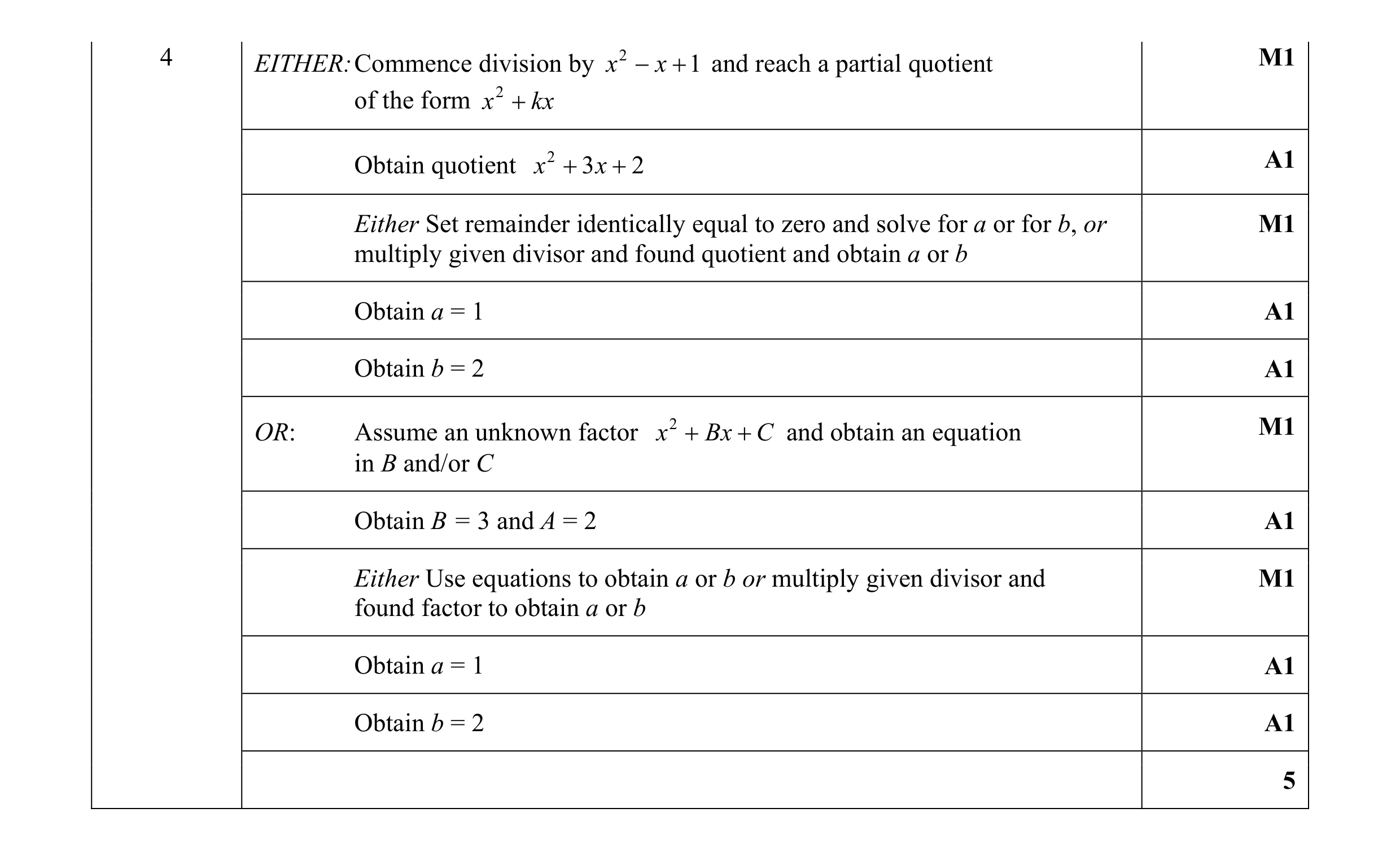 5
5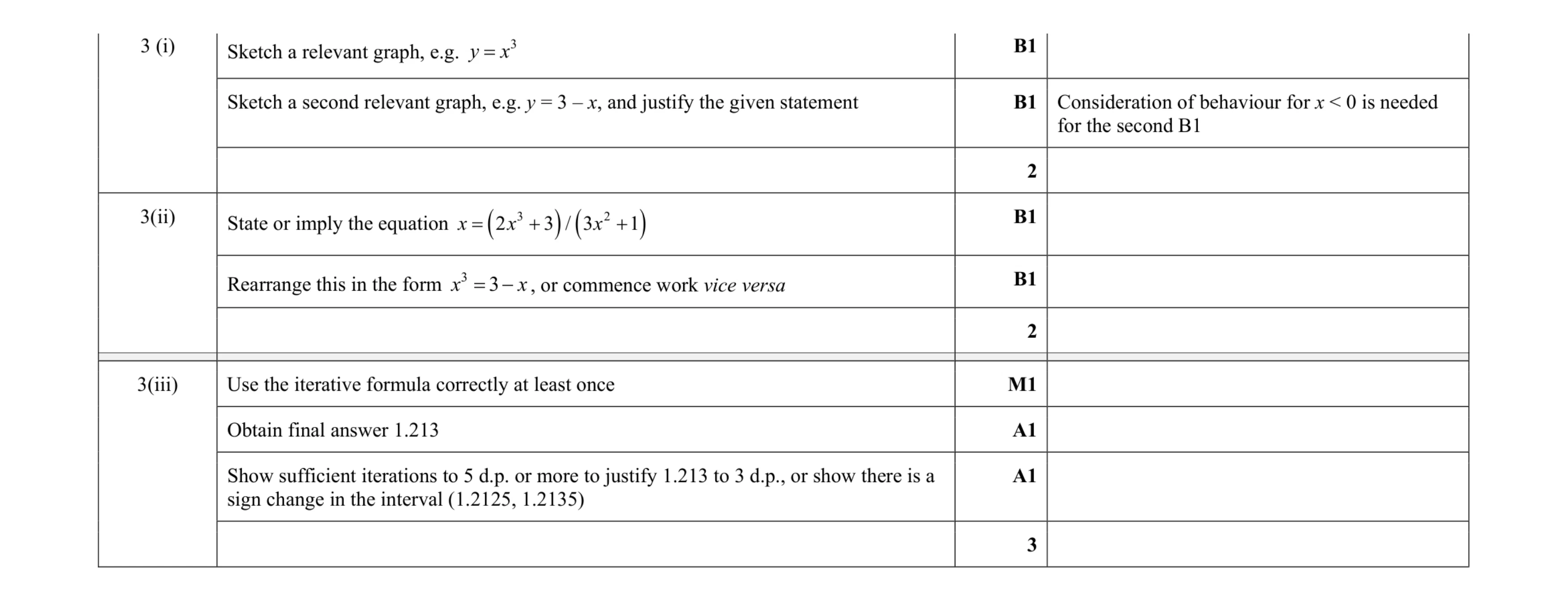 7
7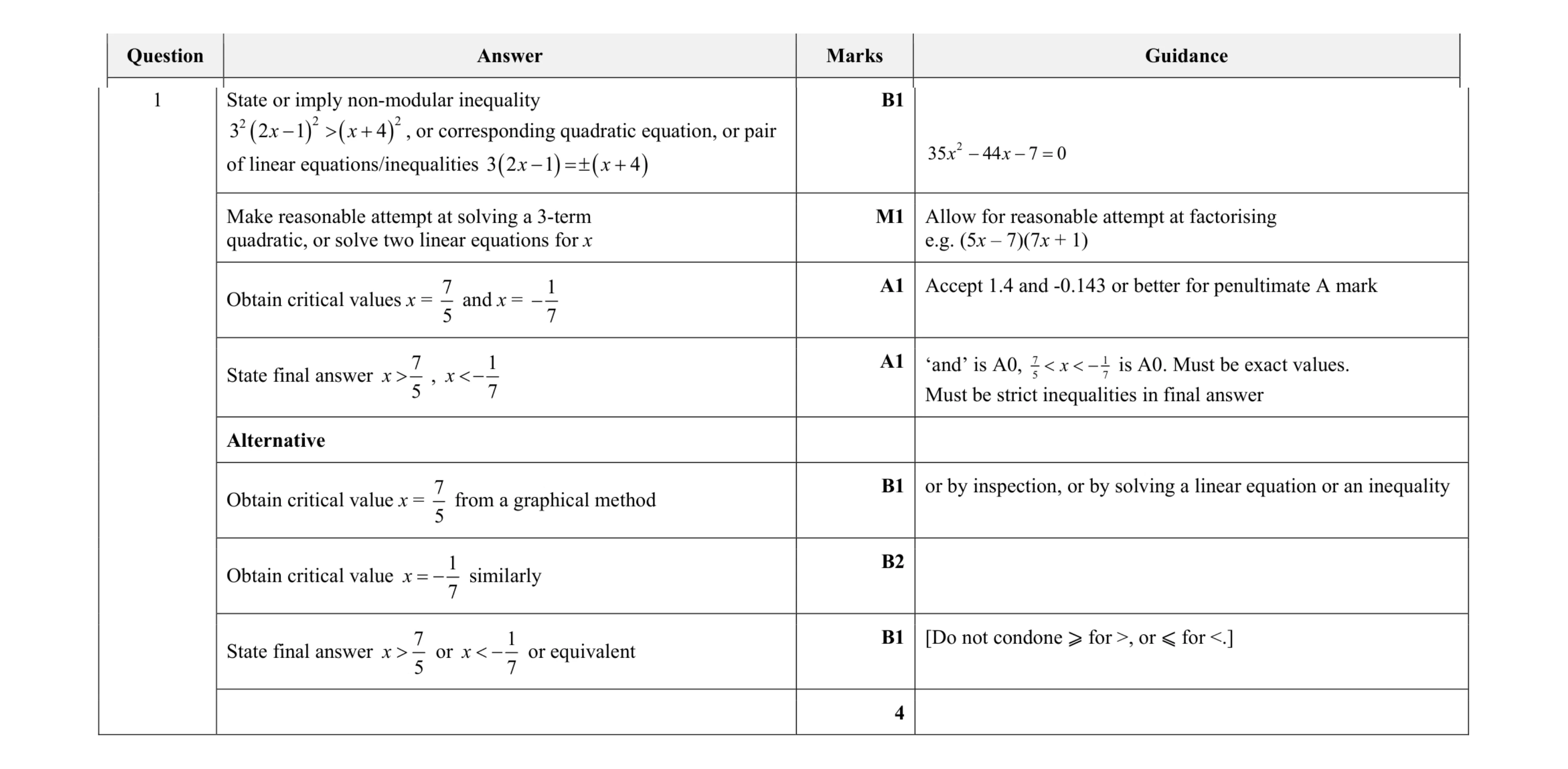 4
4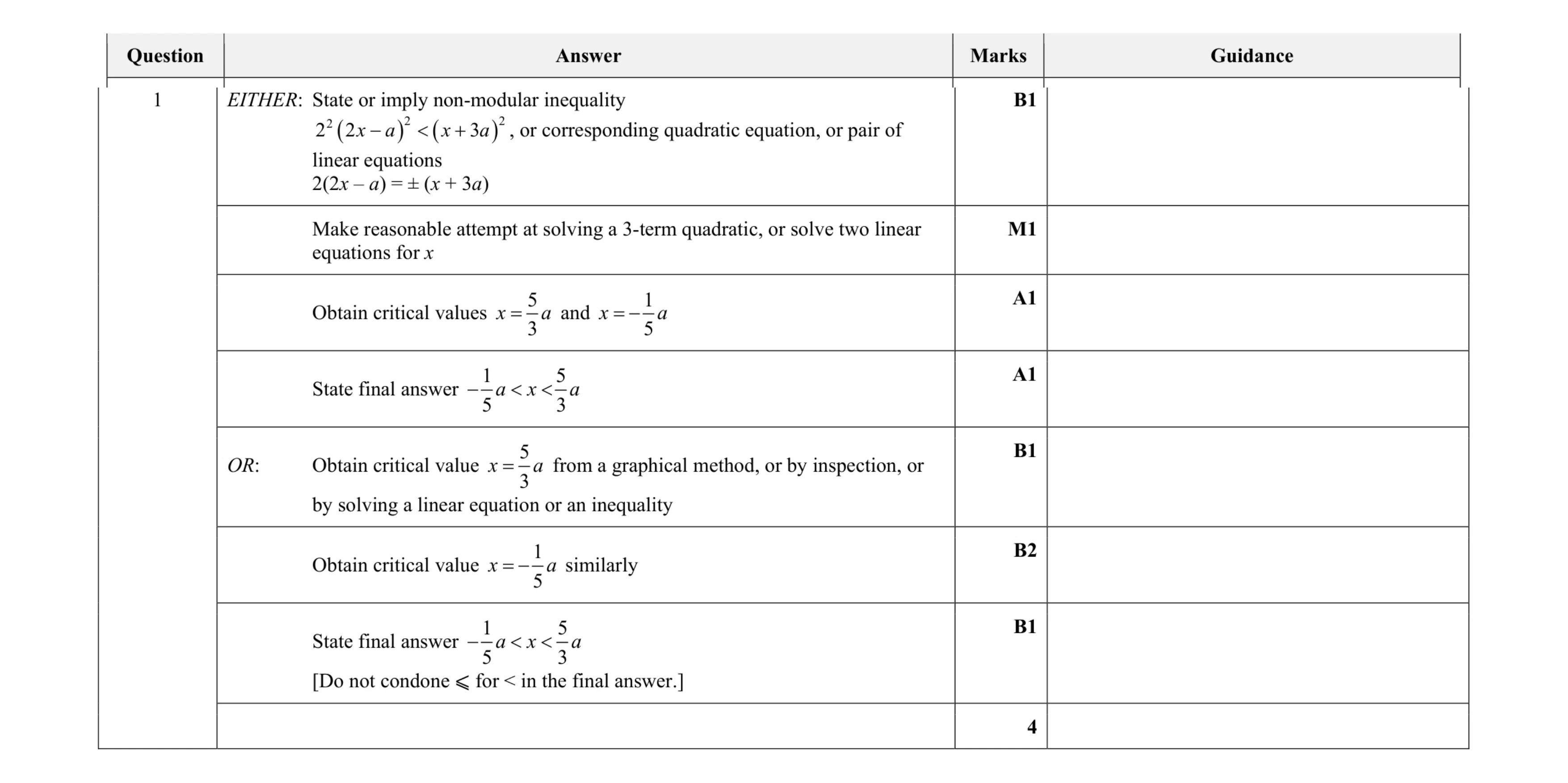 4
4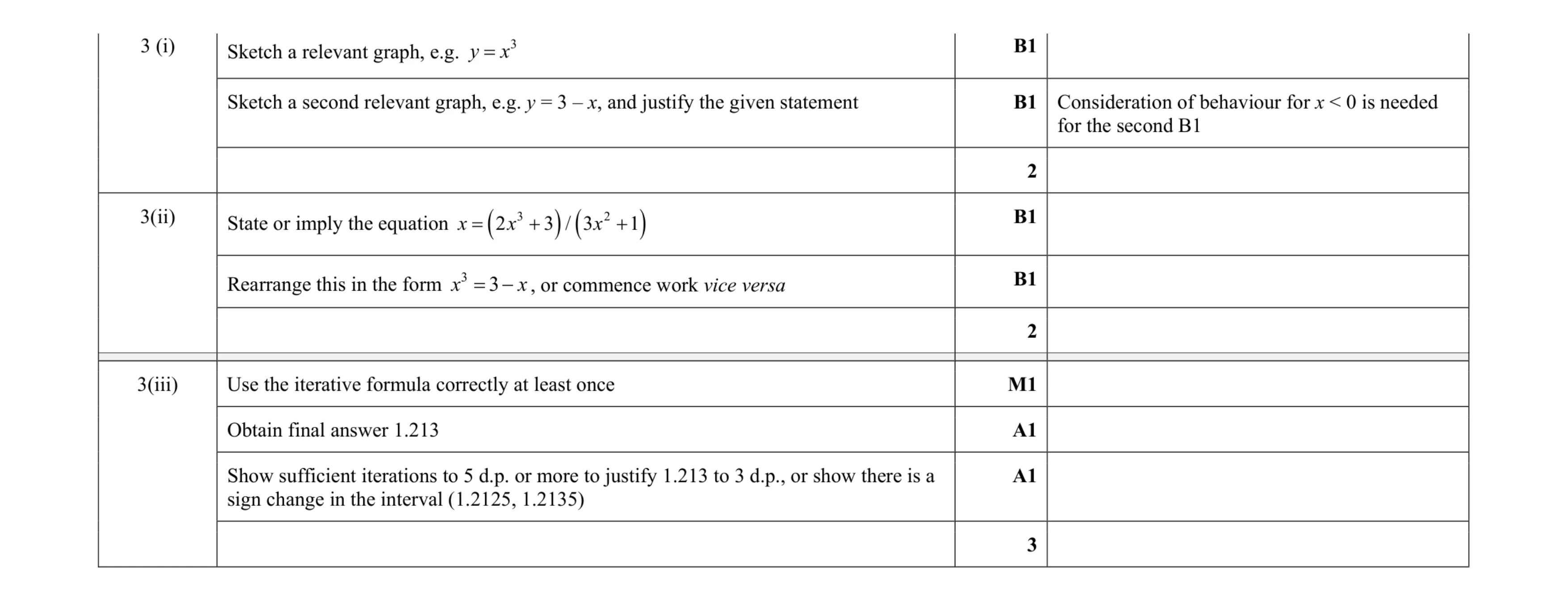 7
7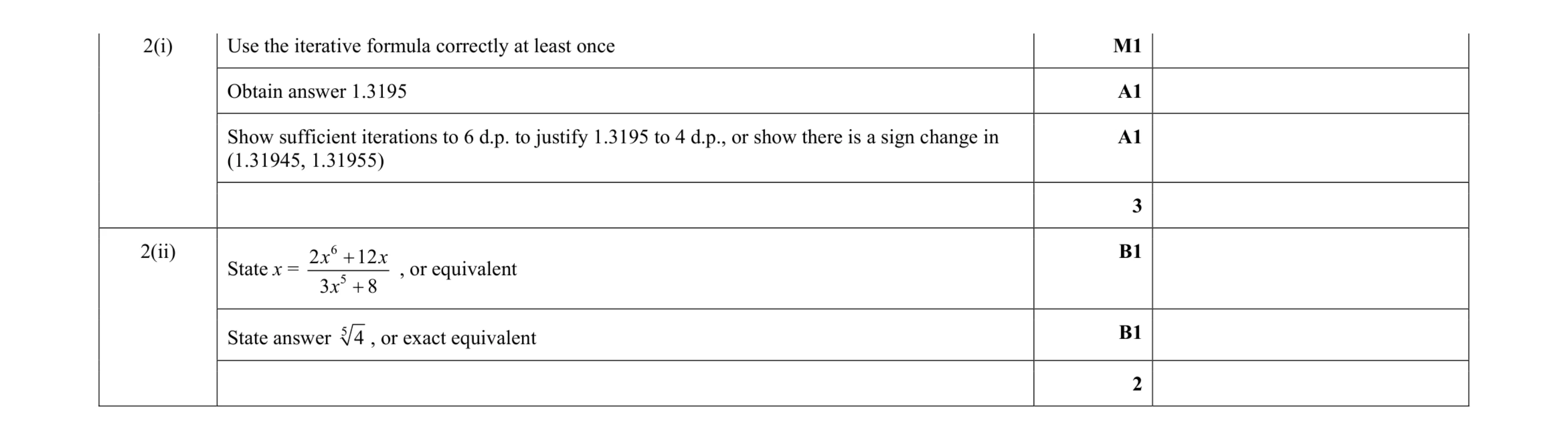 5
5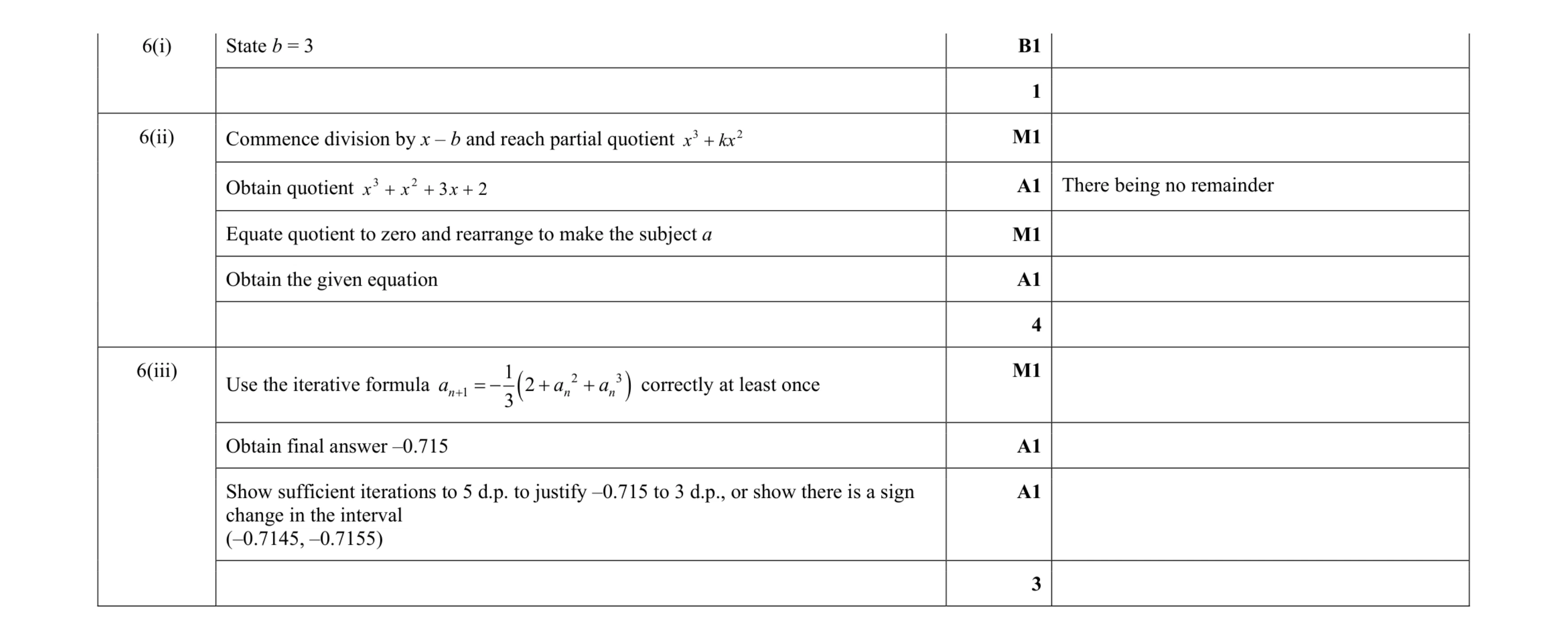 8
8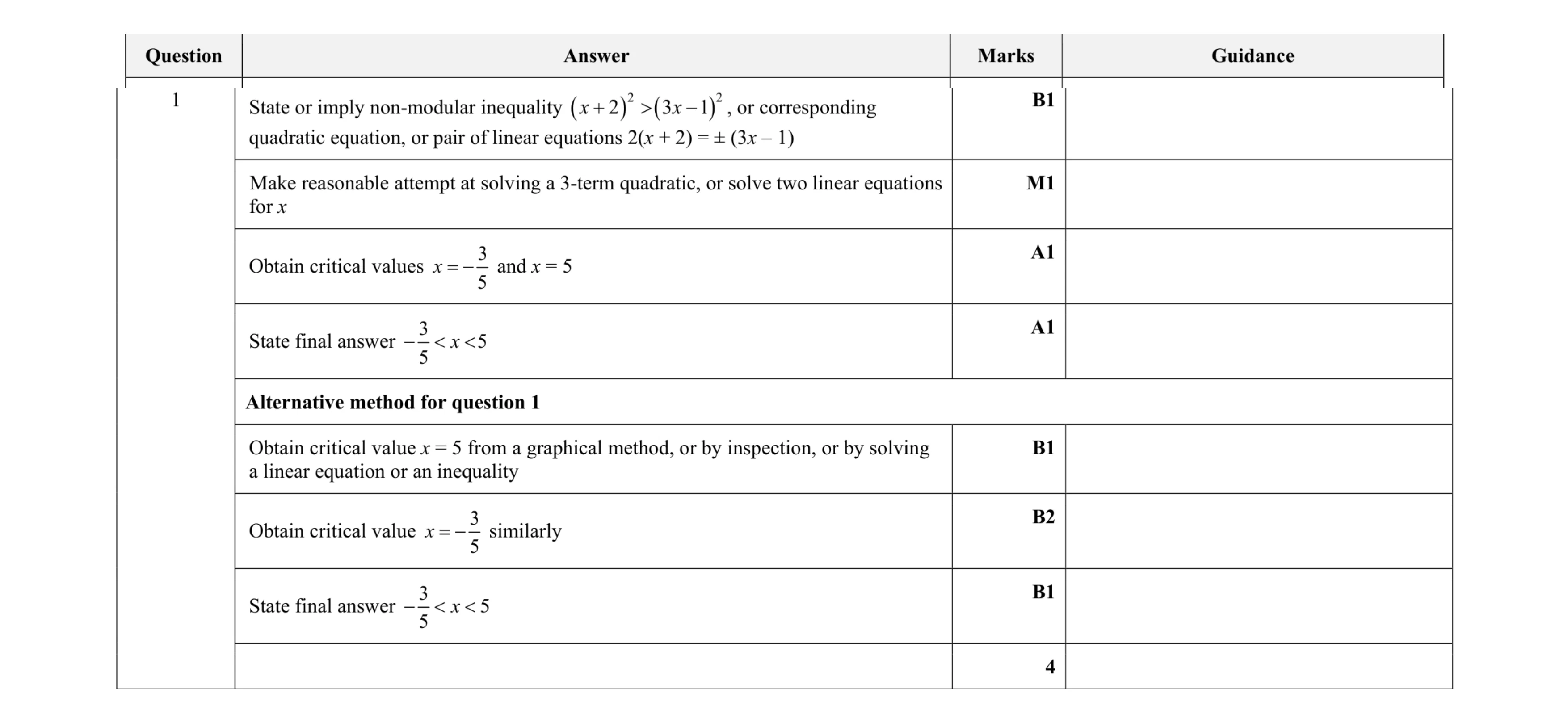 4
4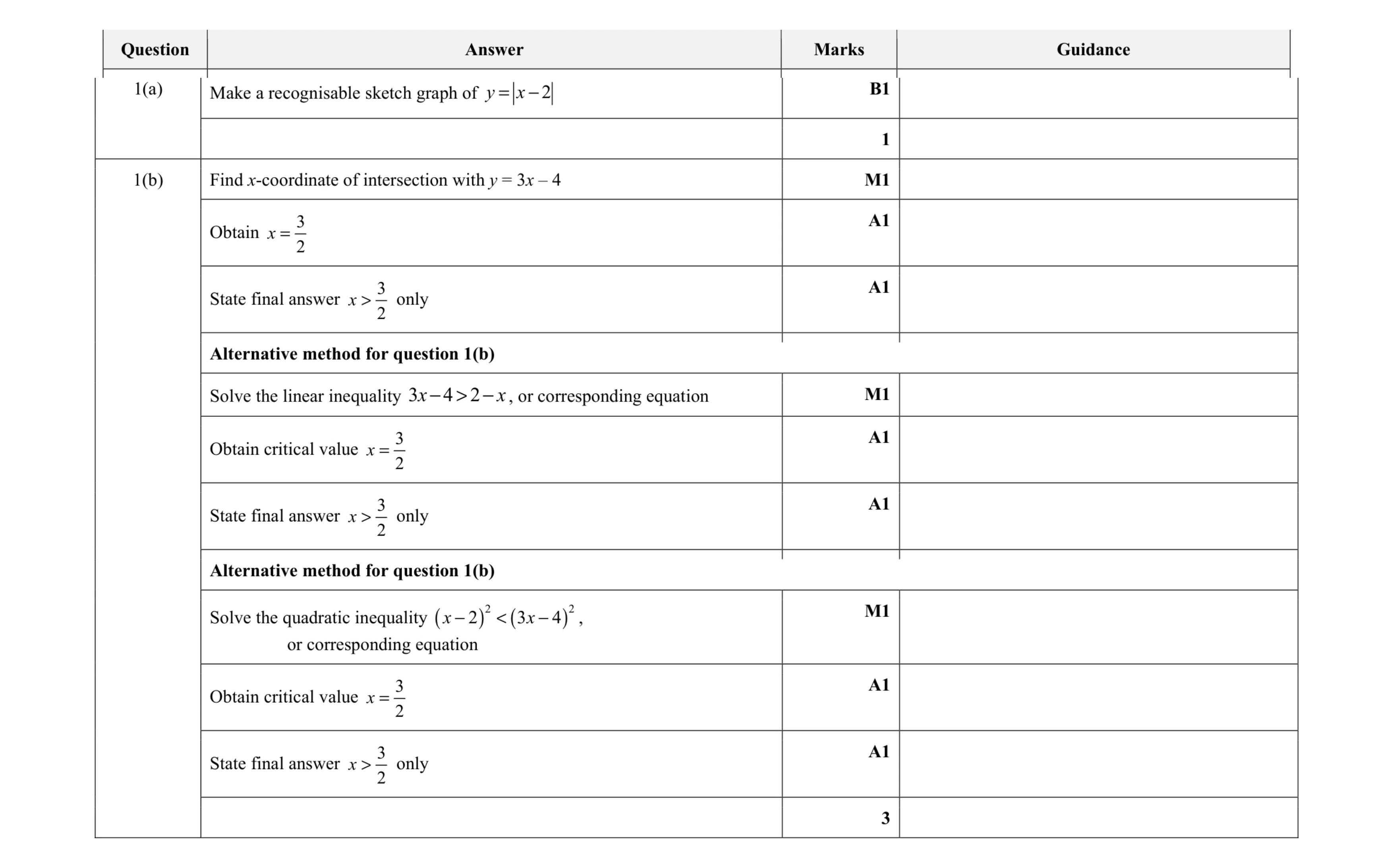 4
4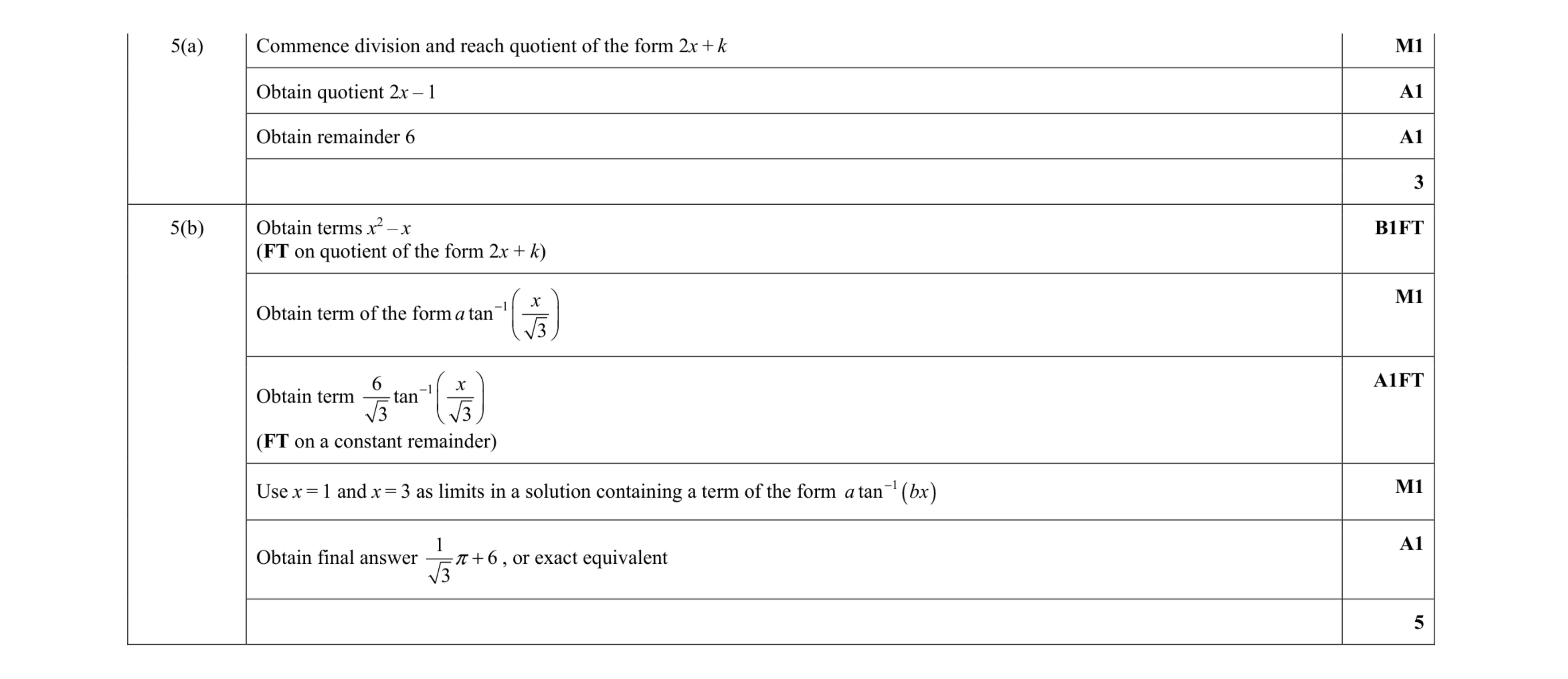 8
8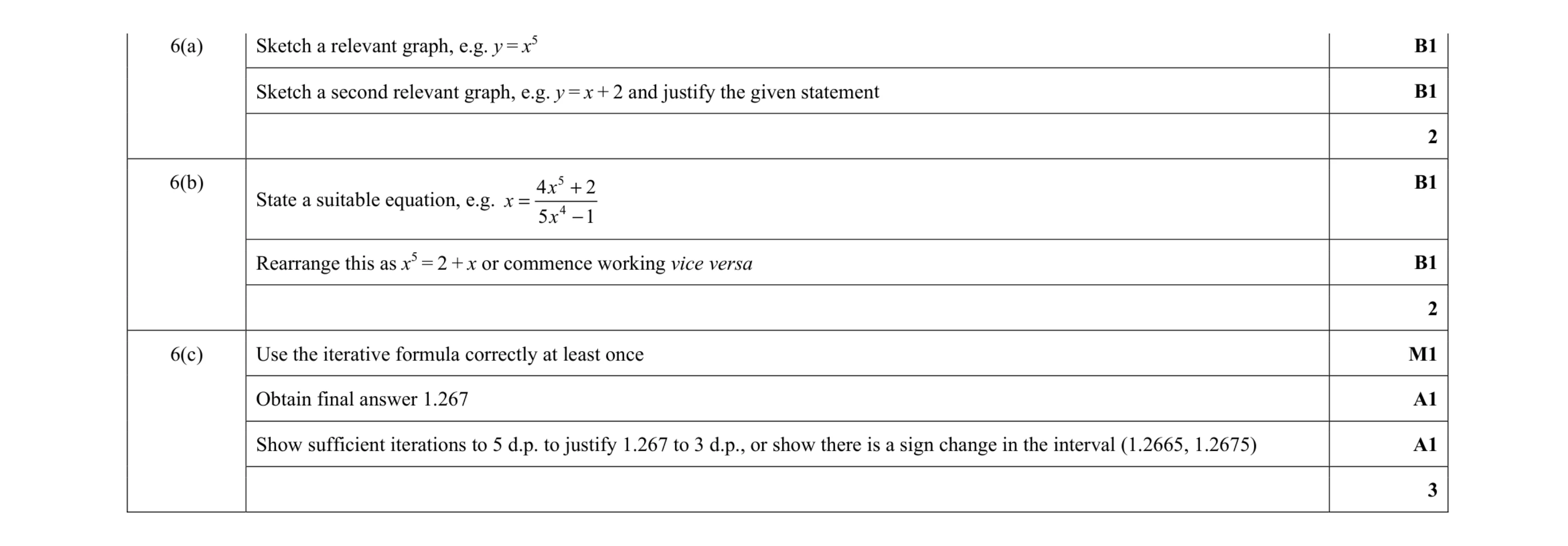 7
7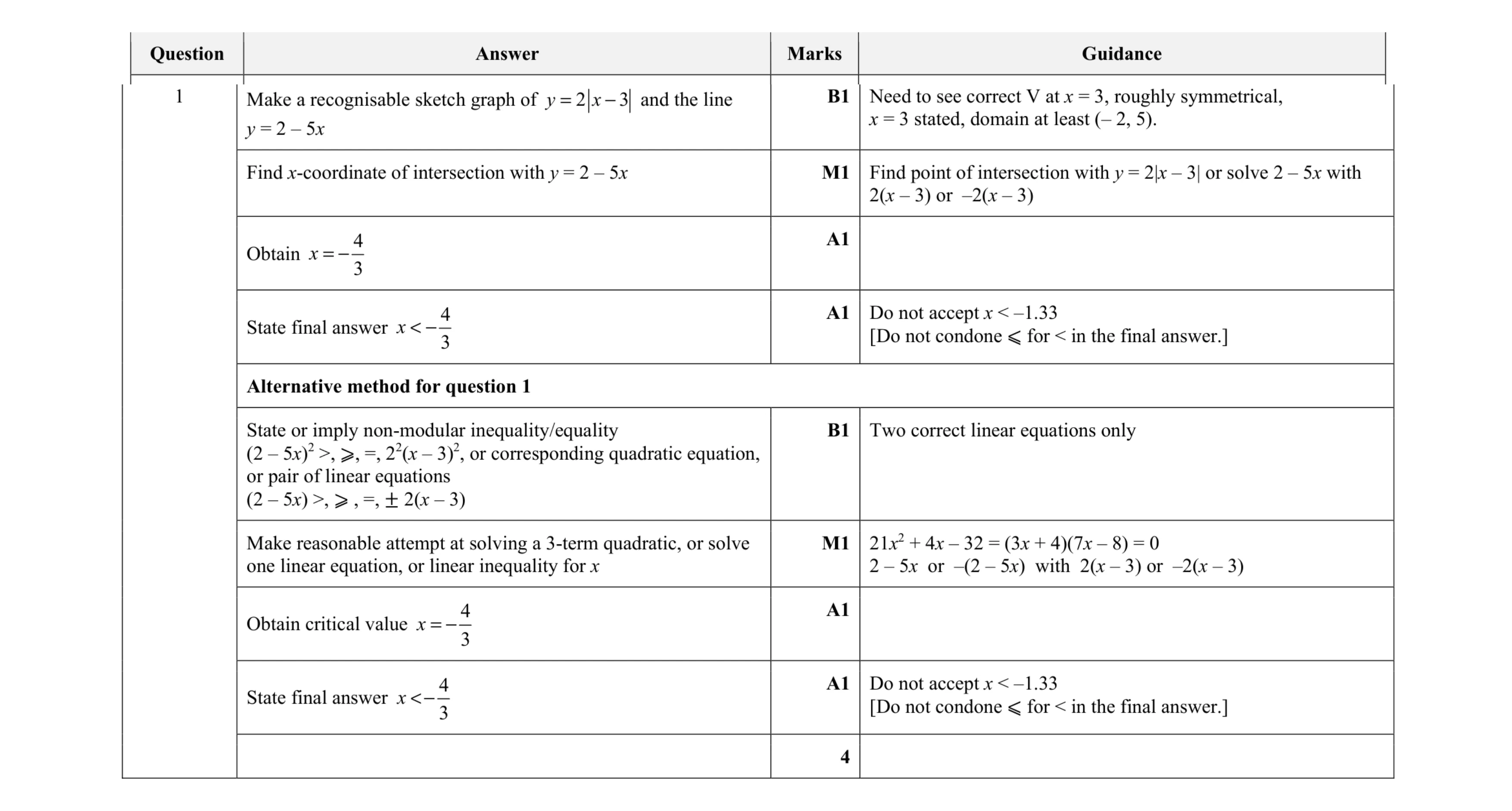 4
4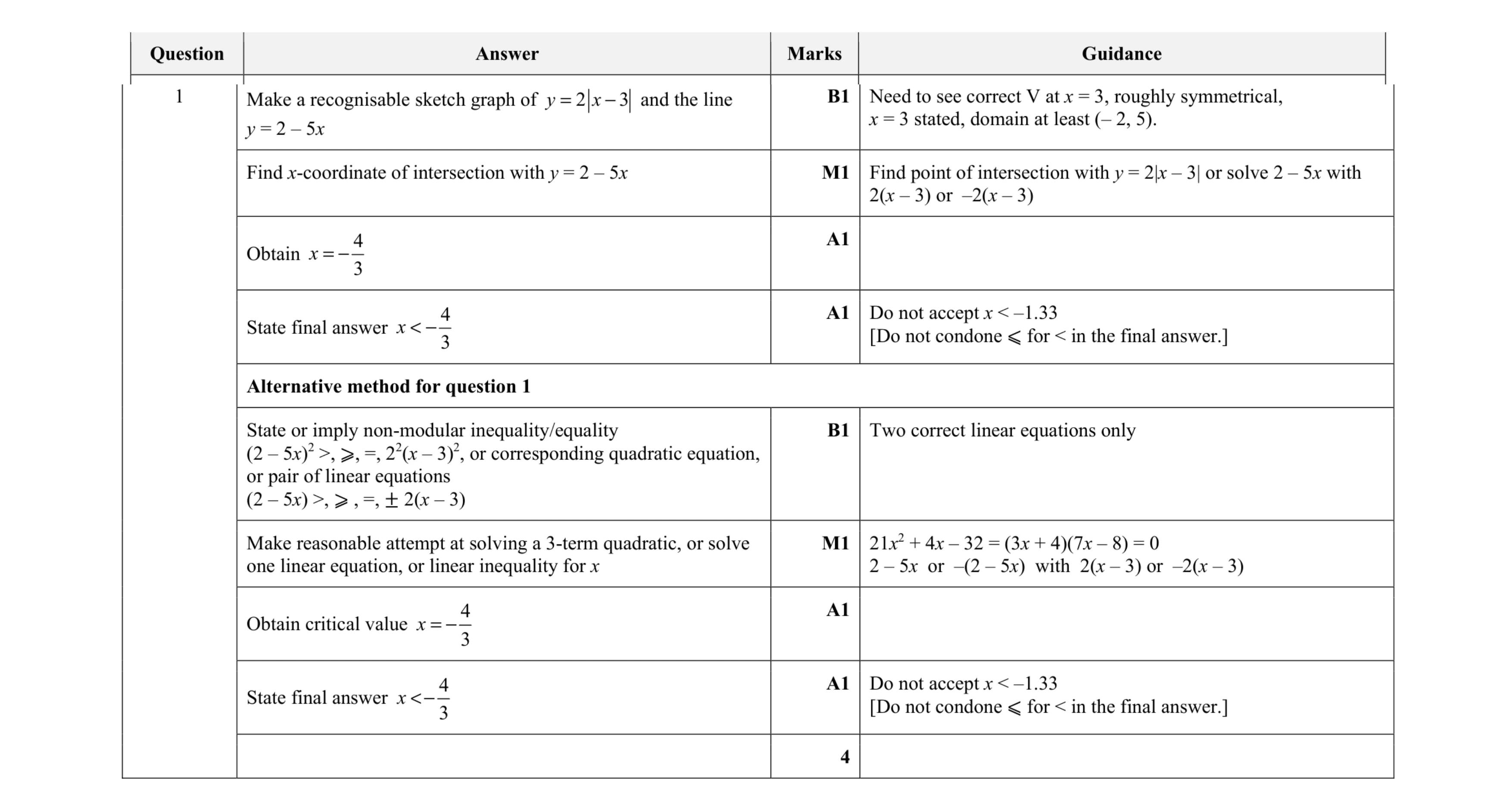 4
4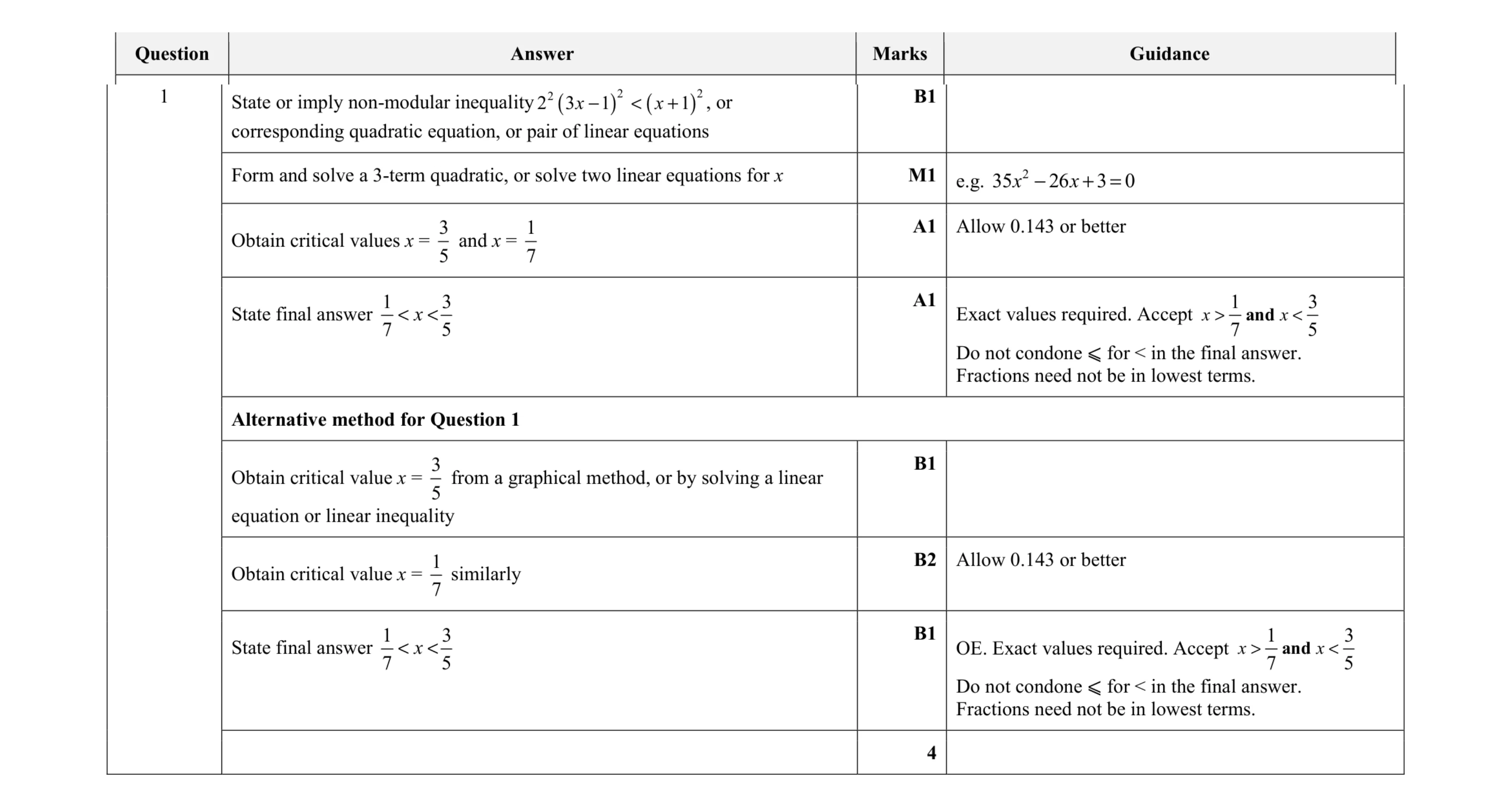 4
4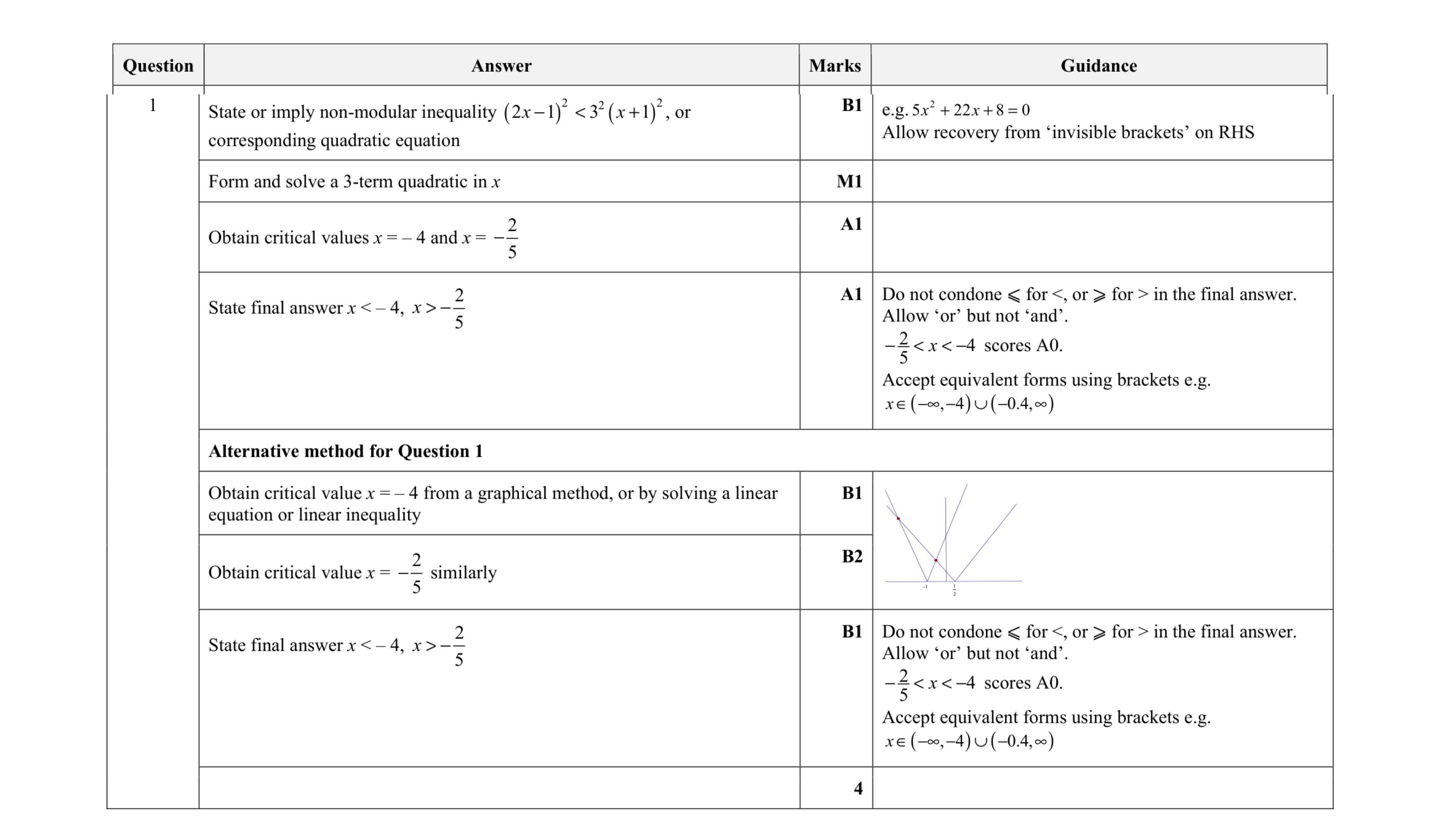 4
4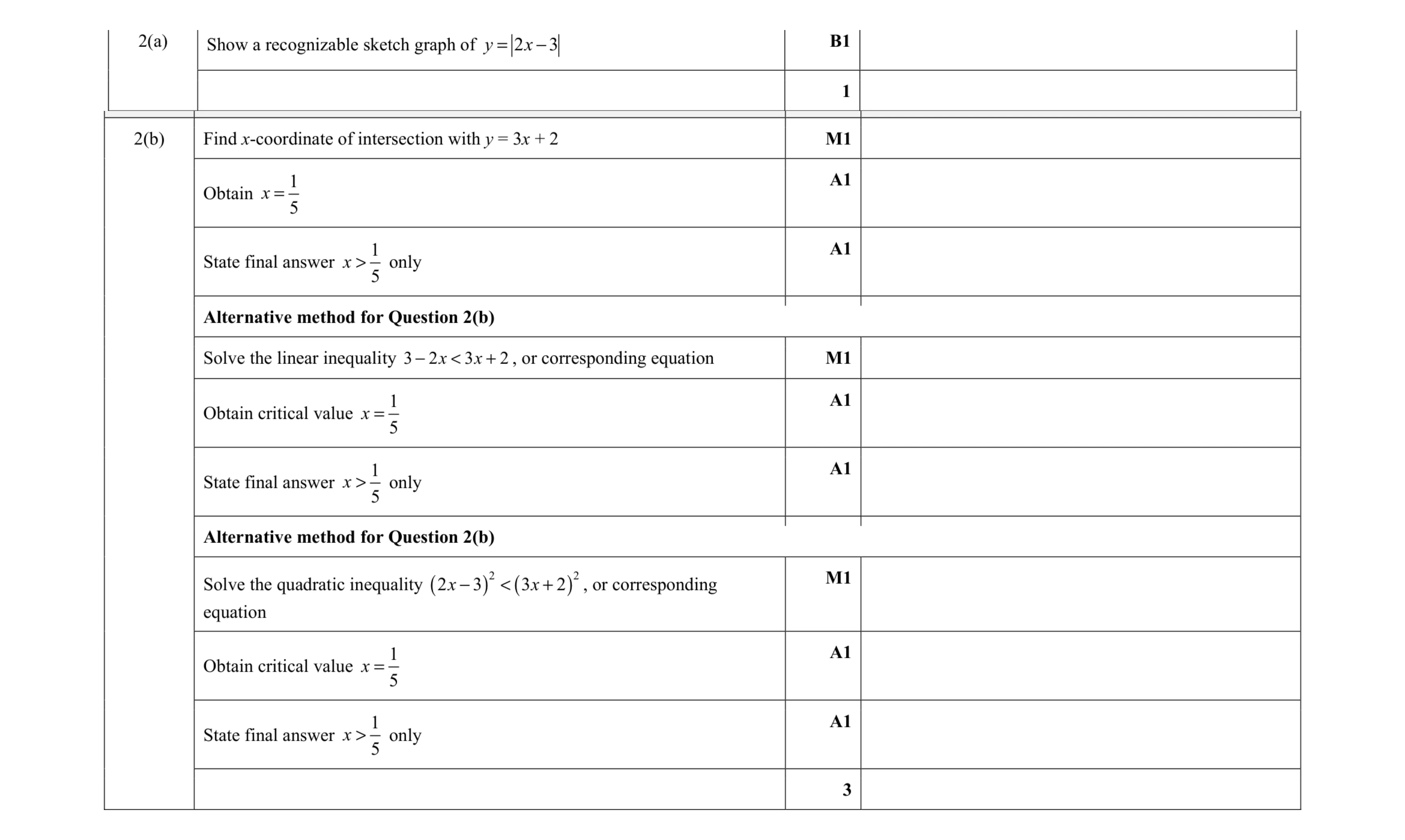 4
4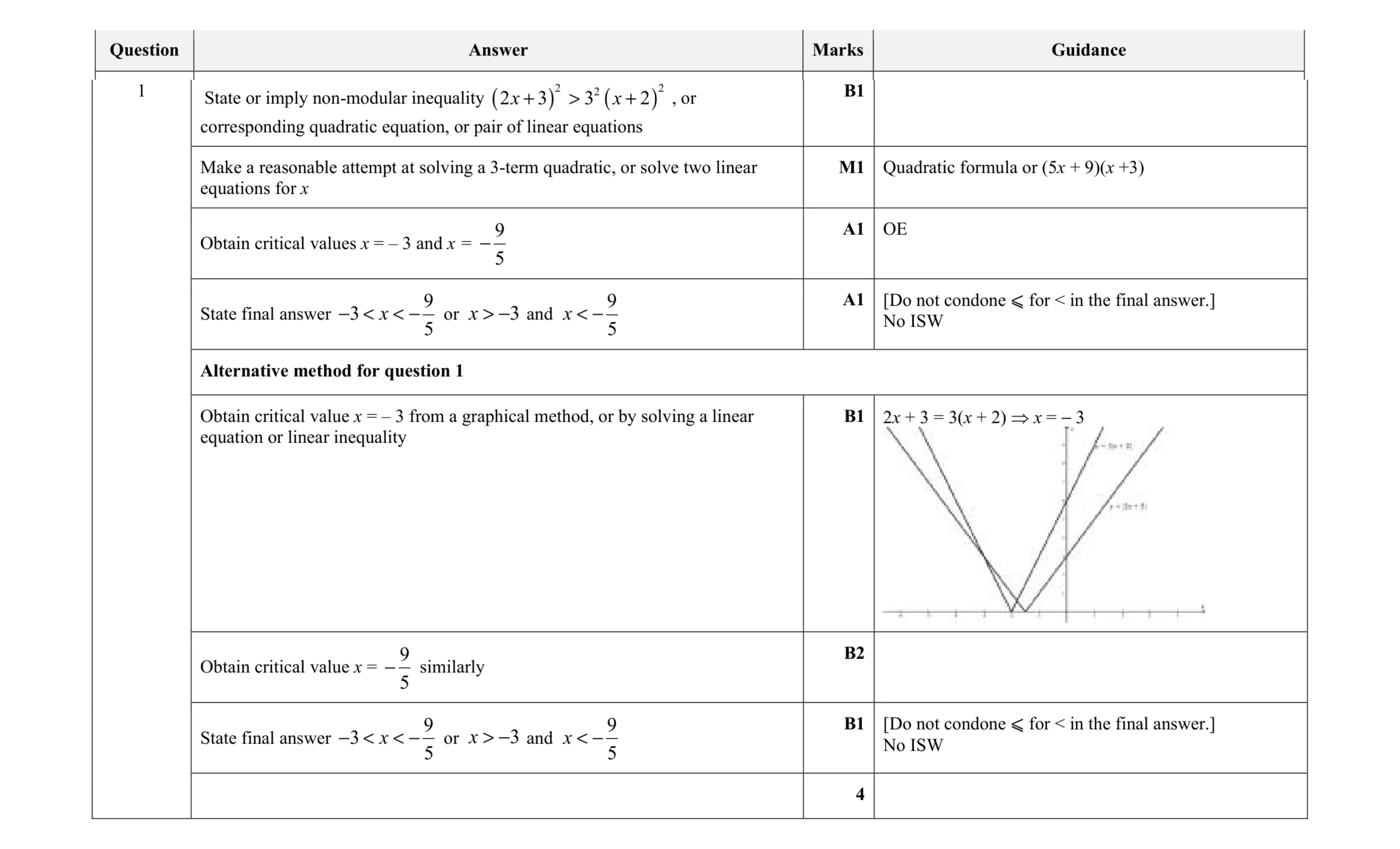 4
4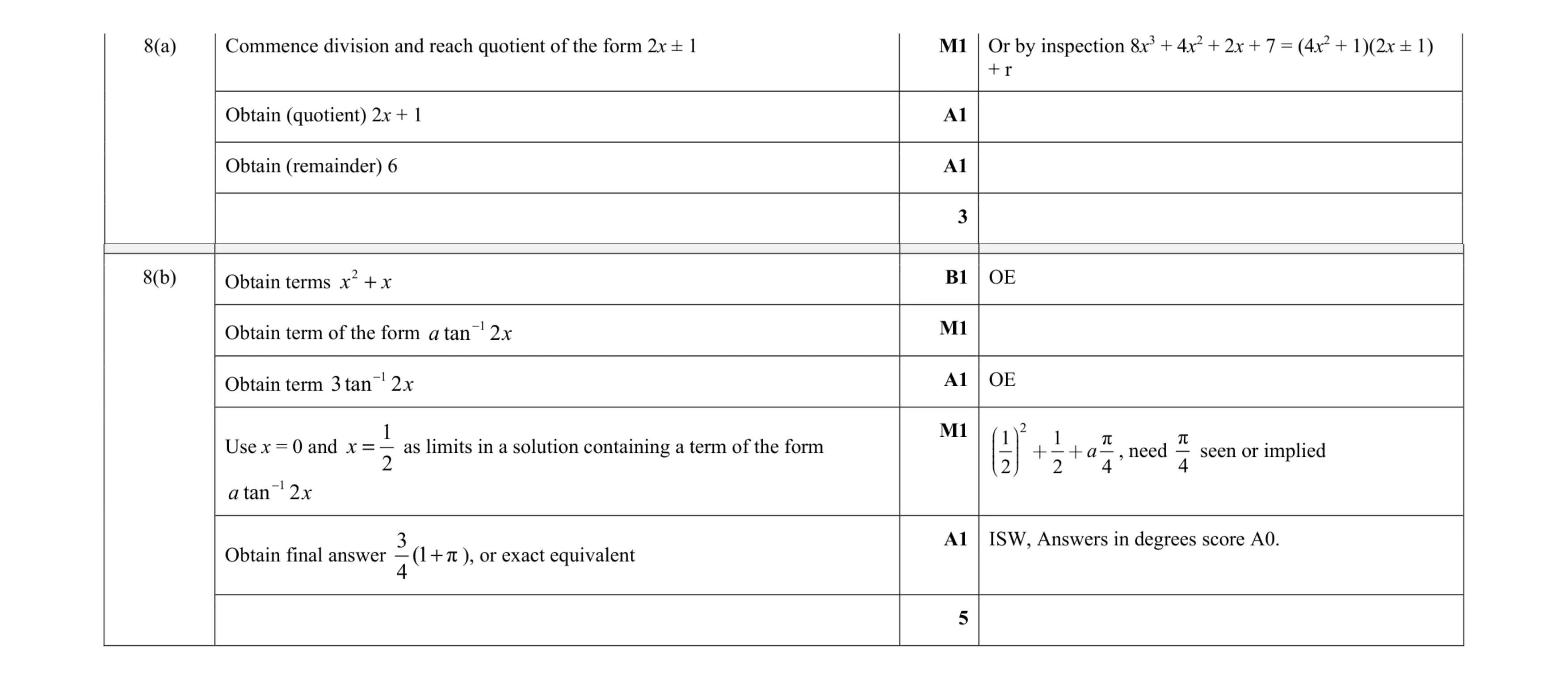 8
8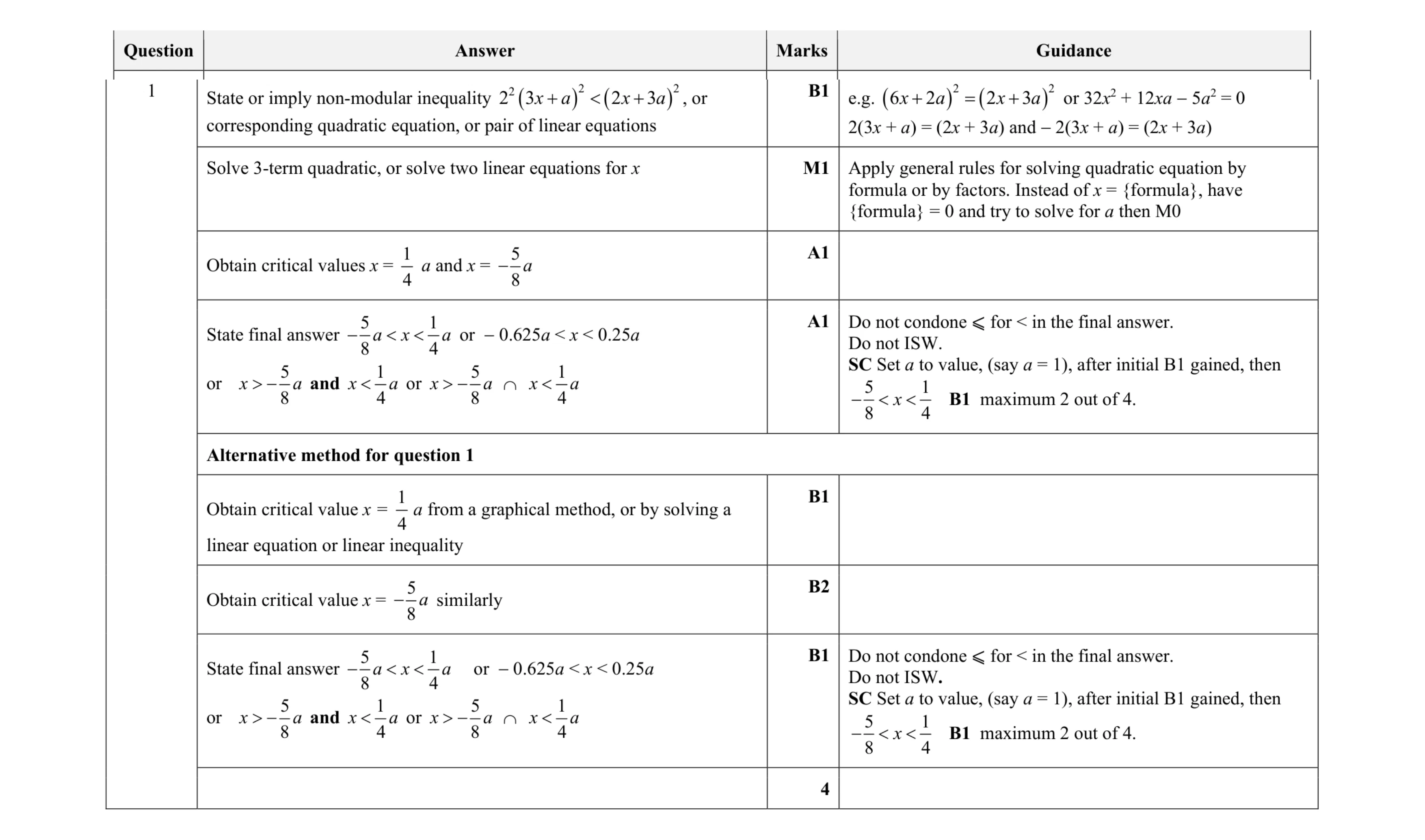 4
4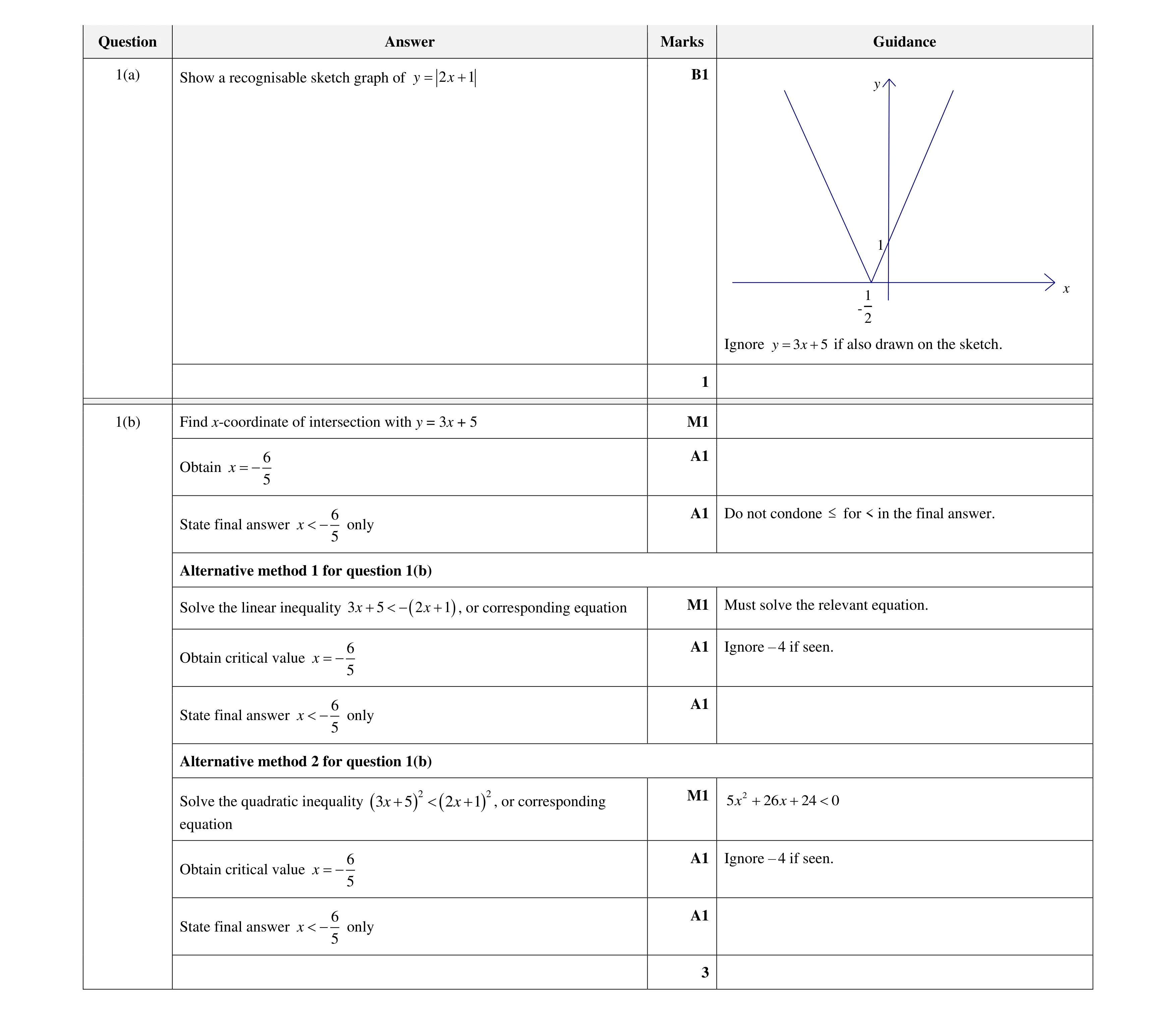 4
4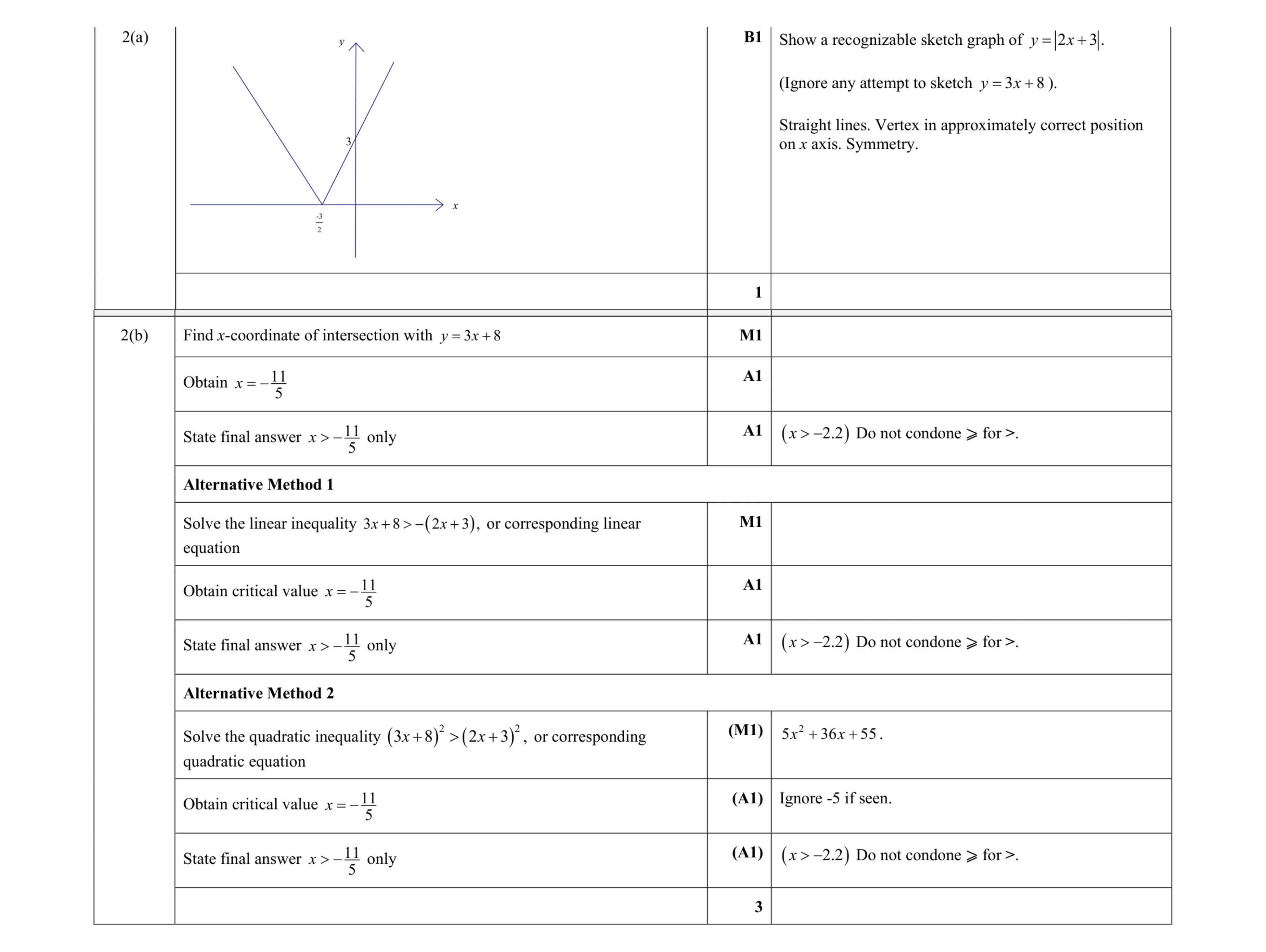 4
4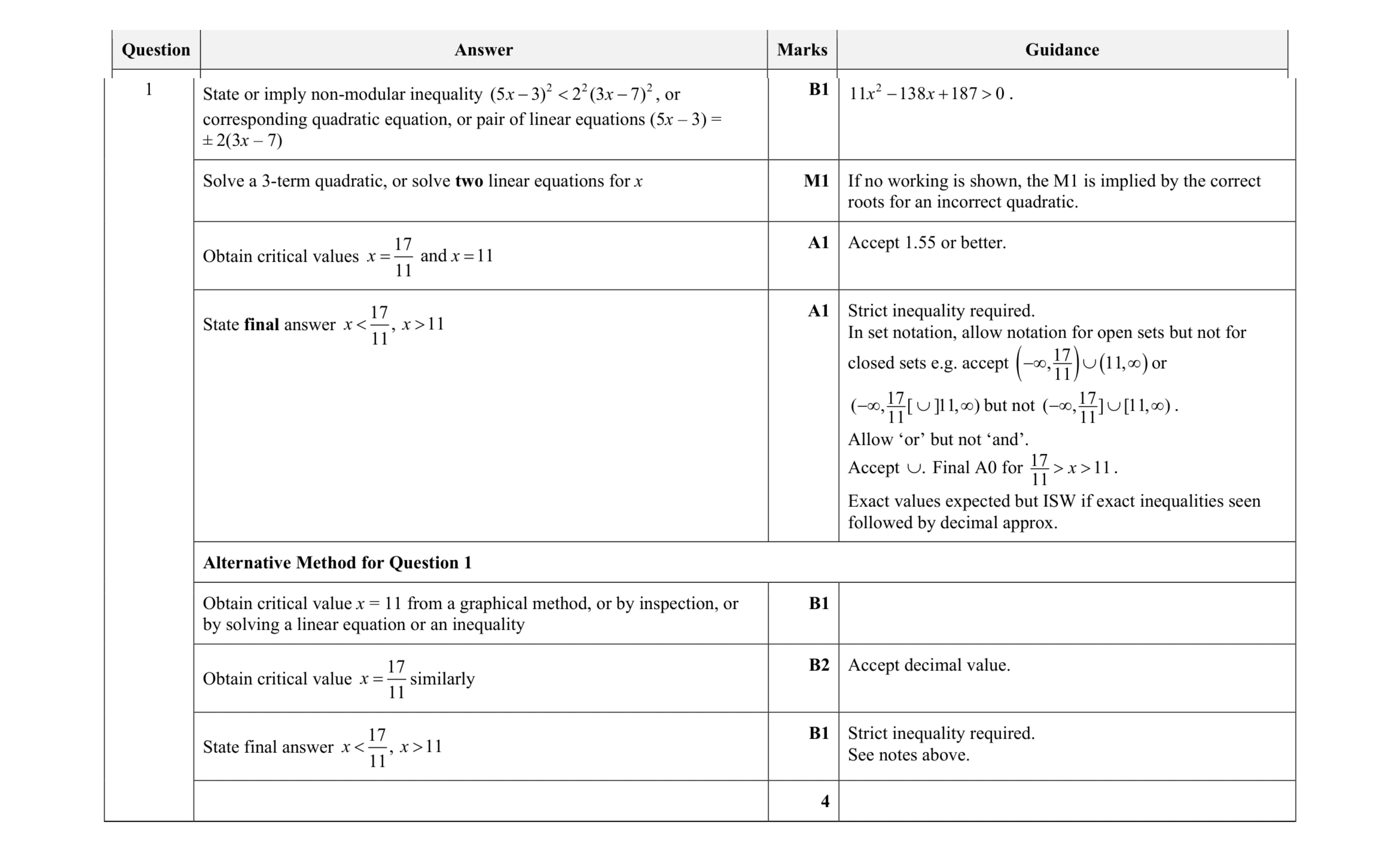 4
4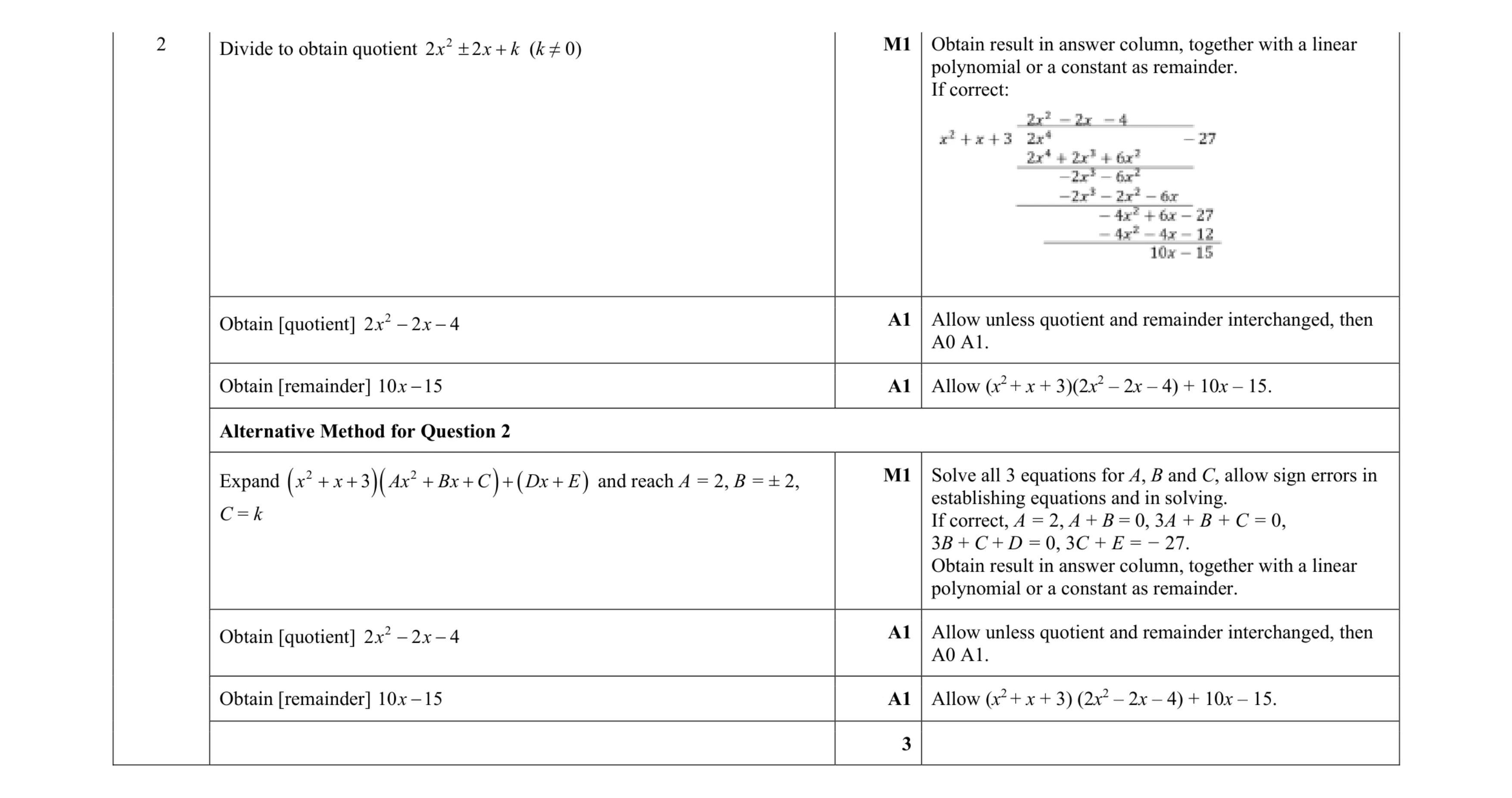 3
3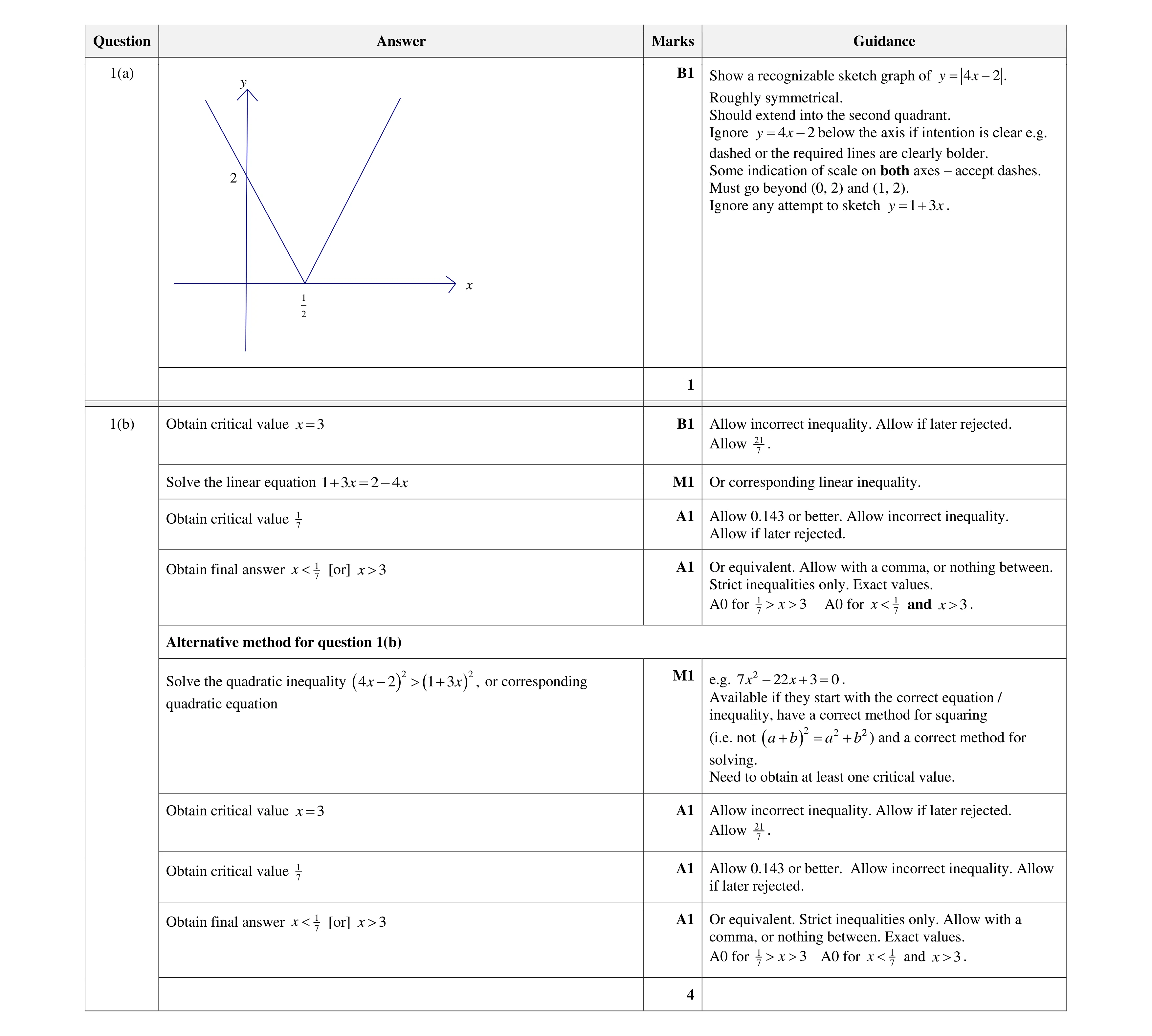 5
5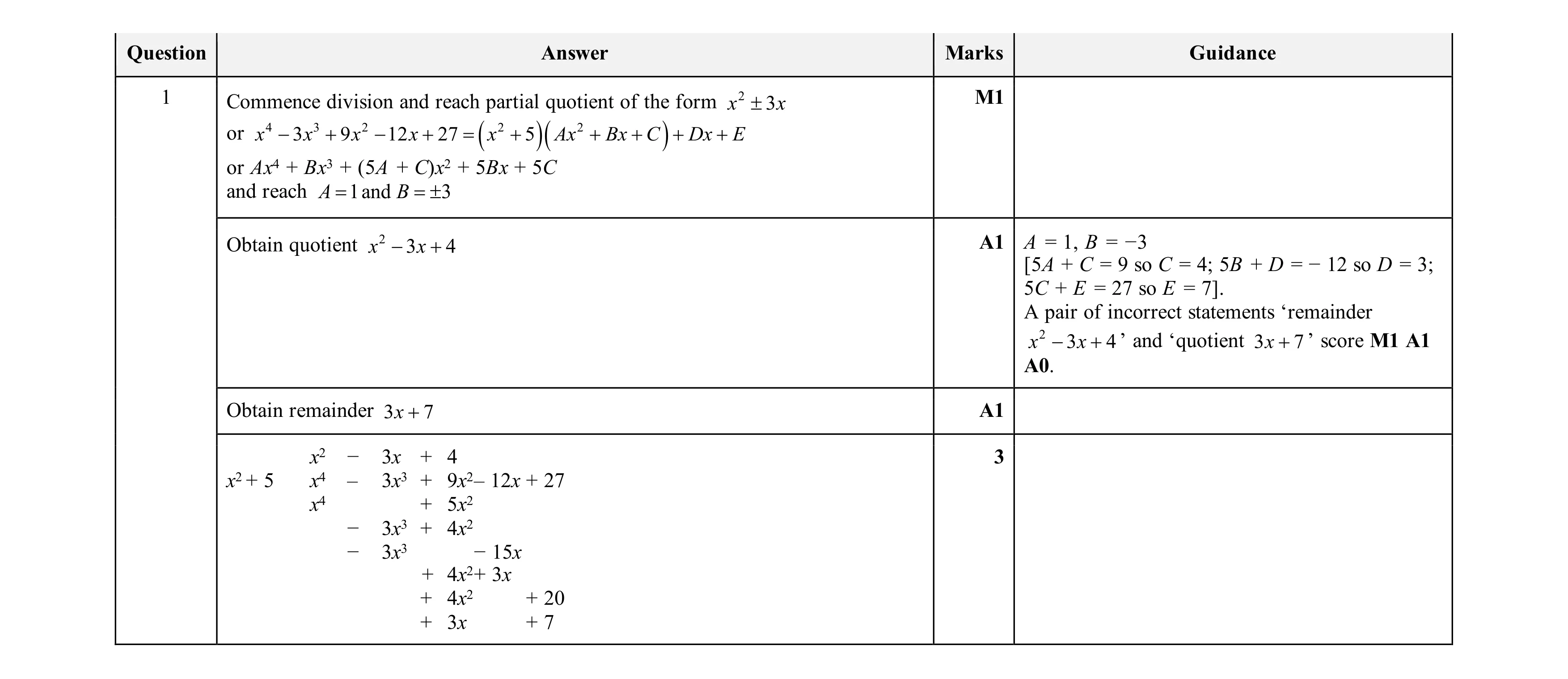 3
3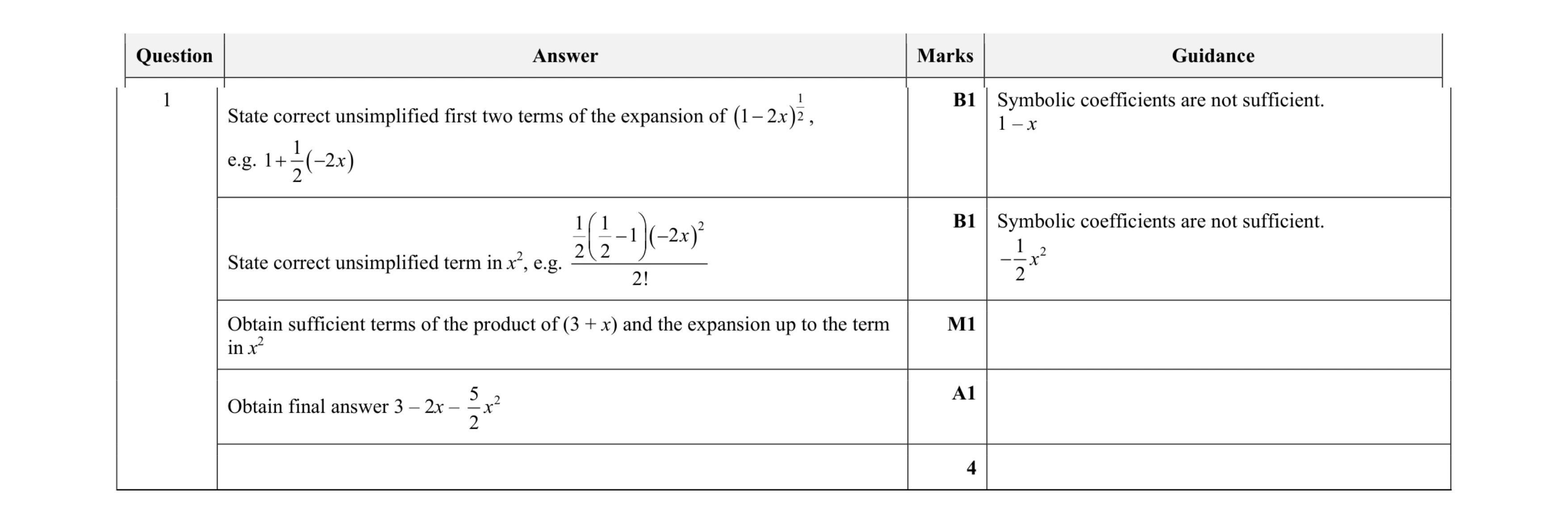 4
4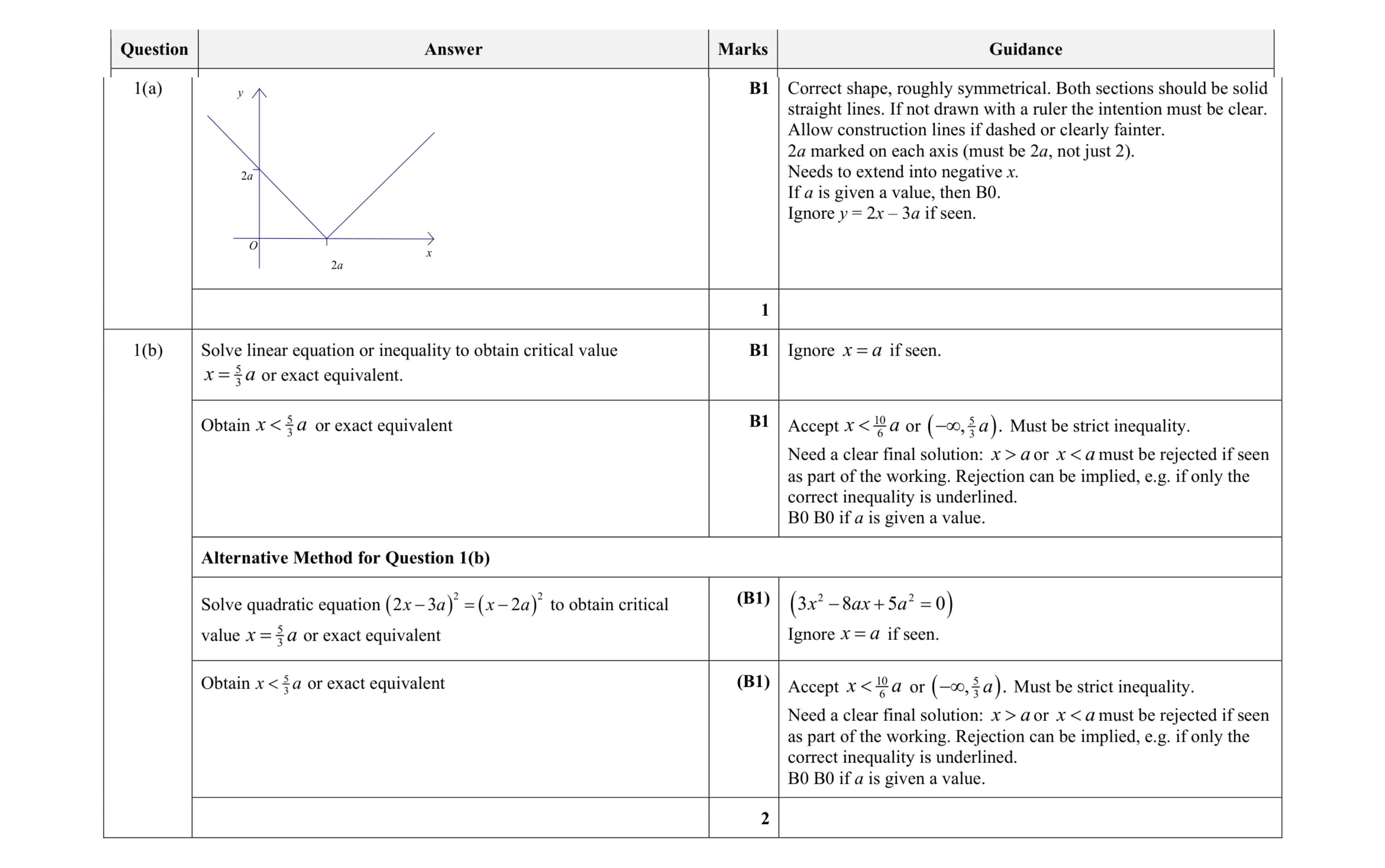 3
3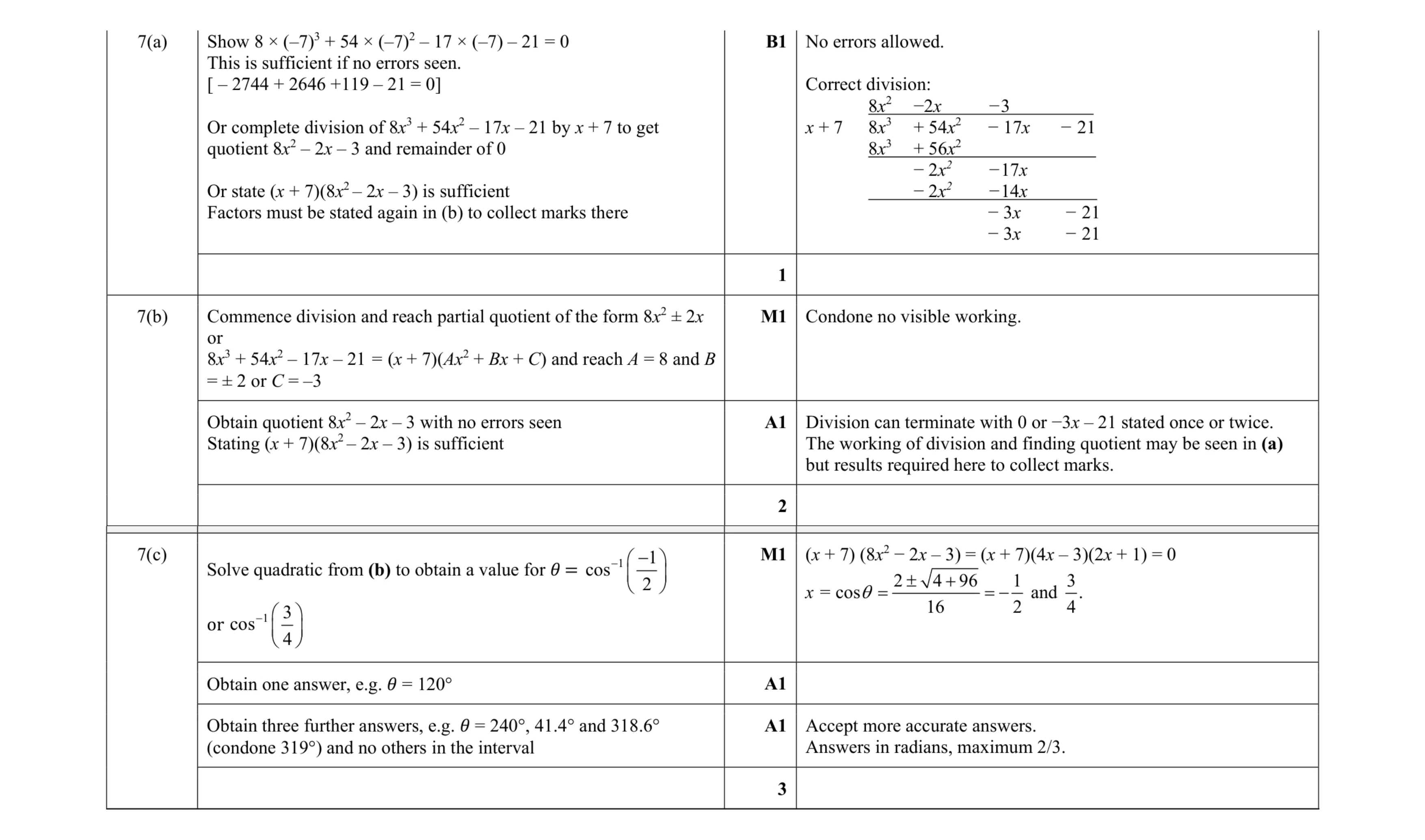 6
6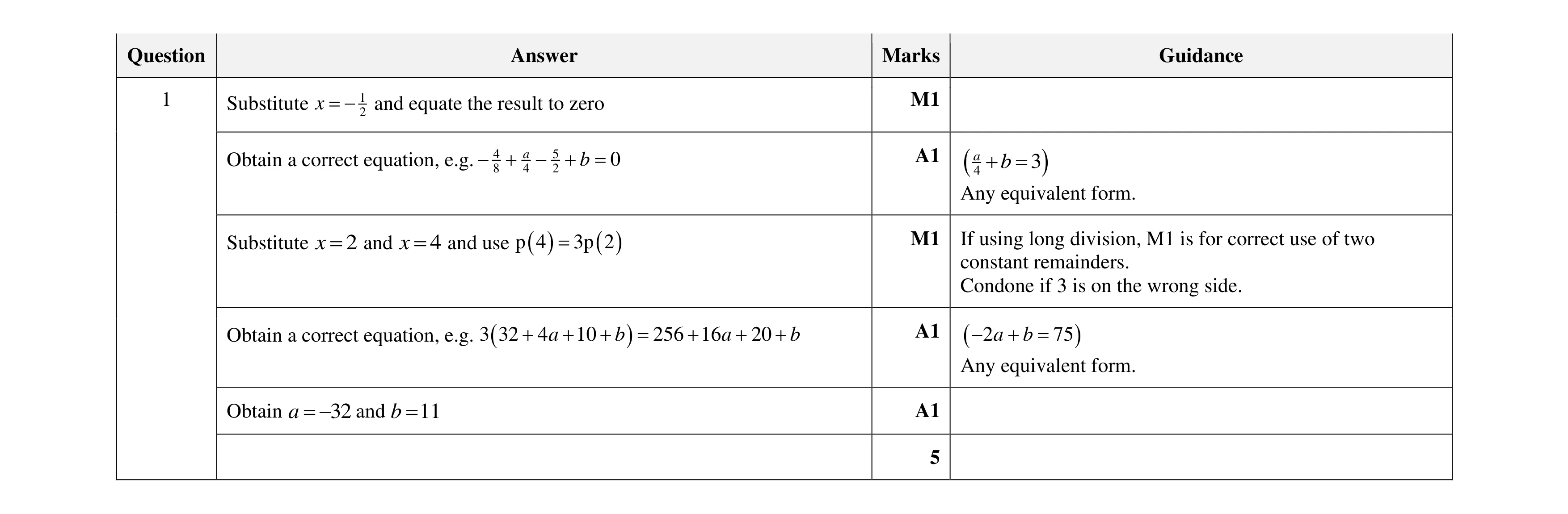 5
5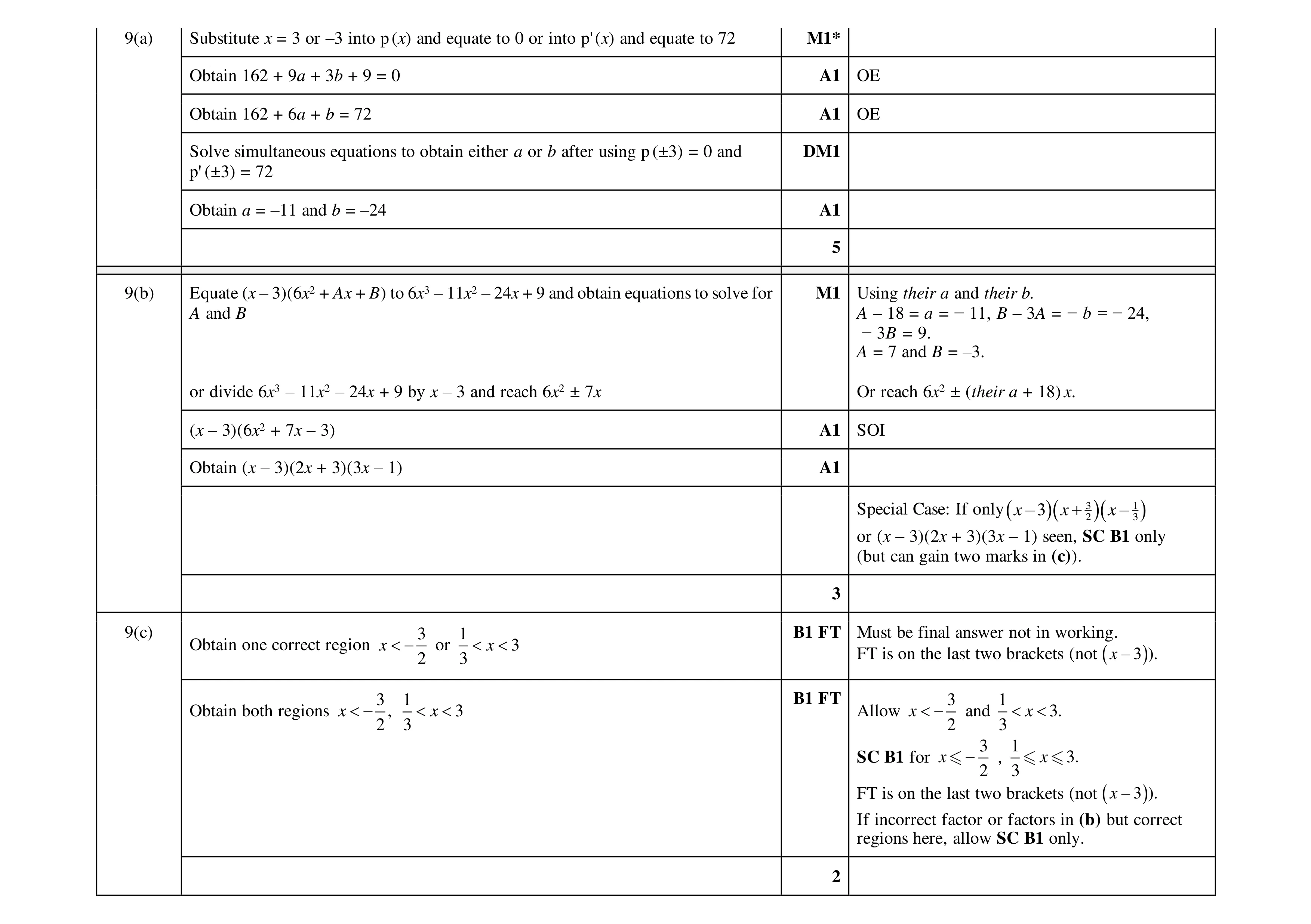 10
10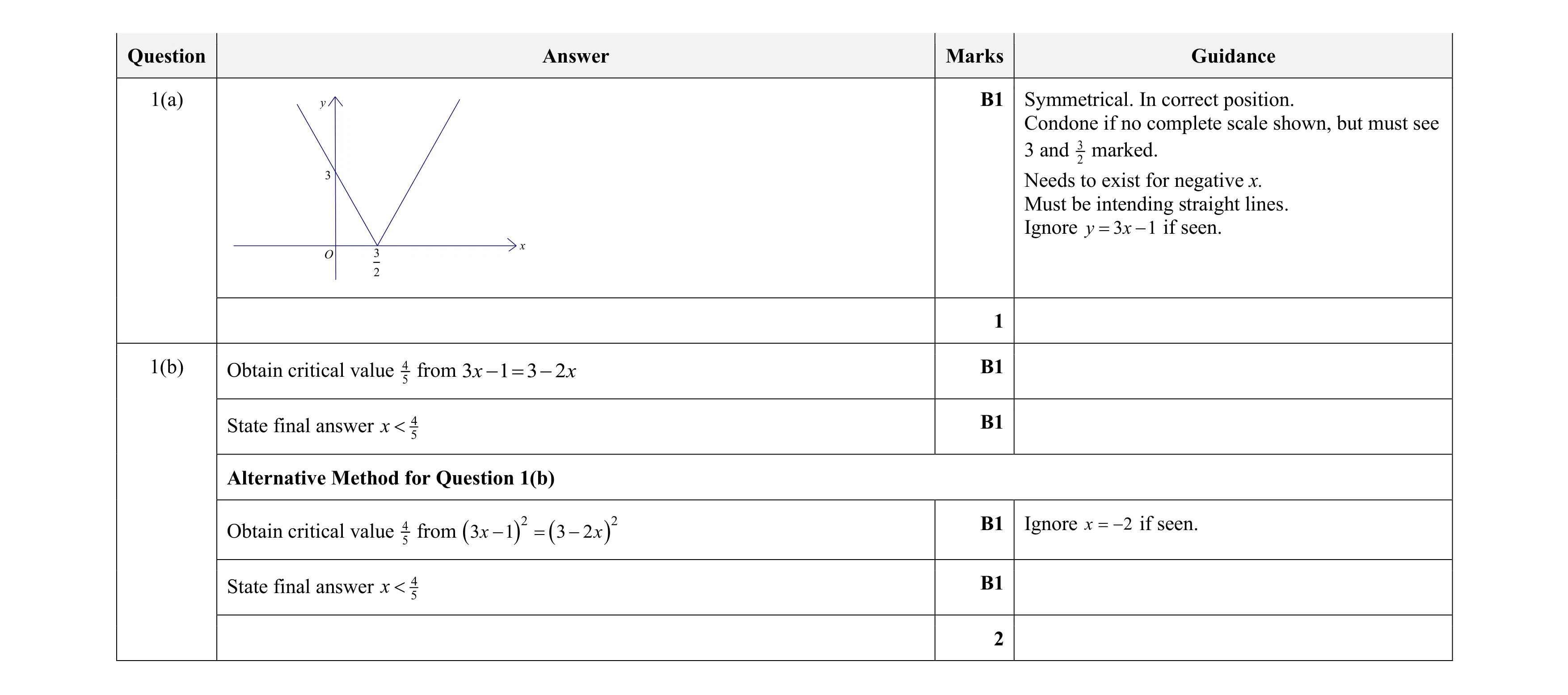 3
3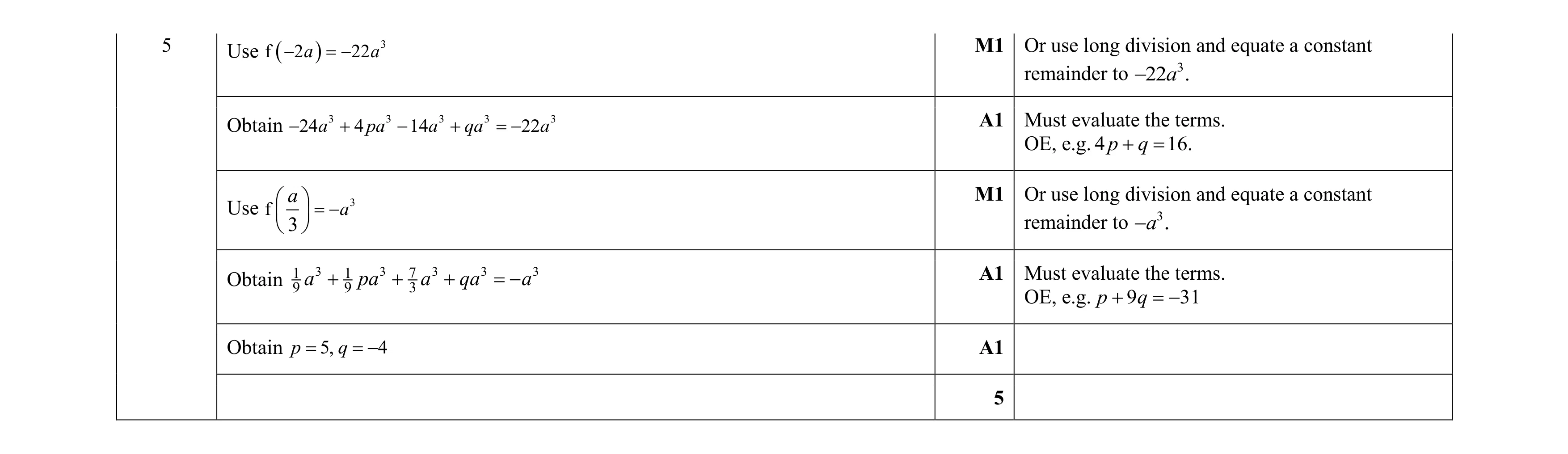 5
5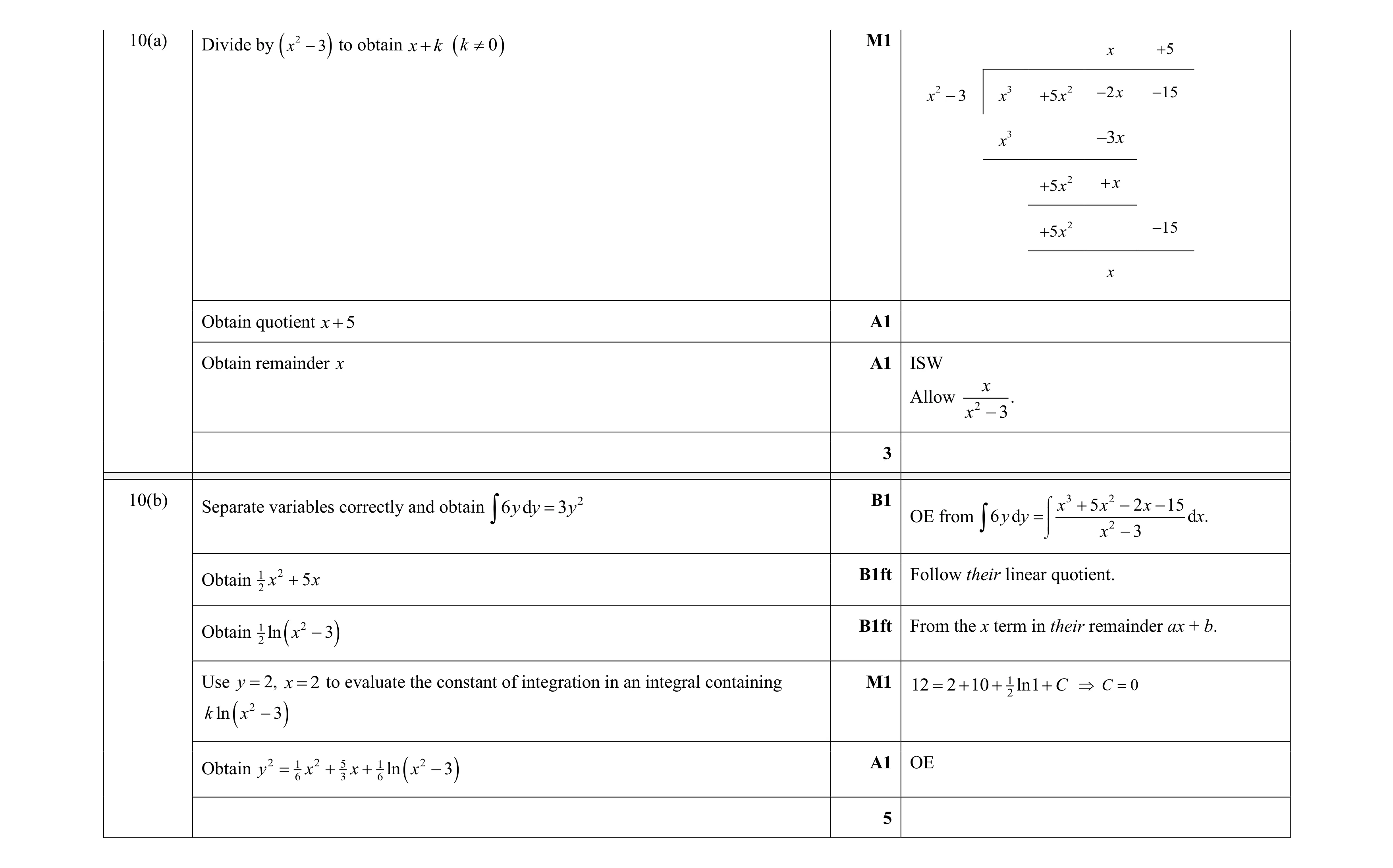 8
8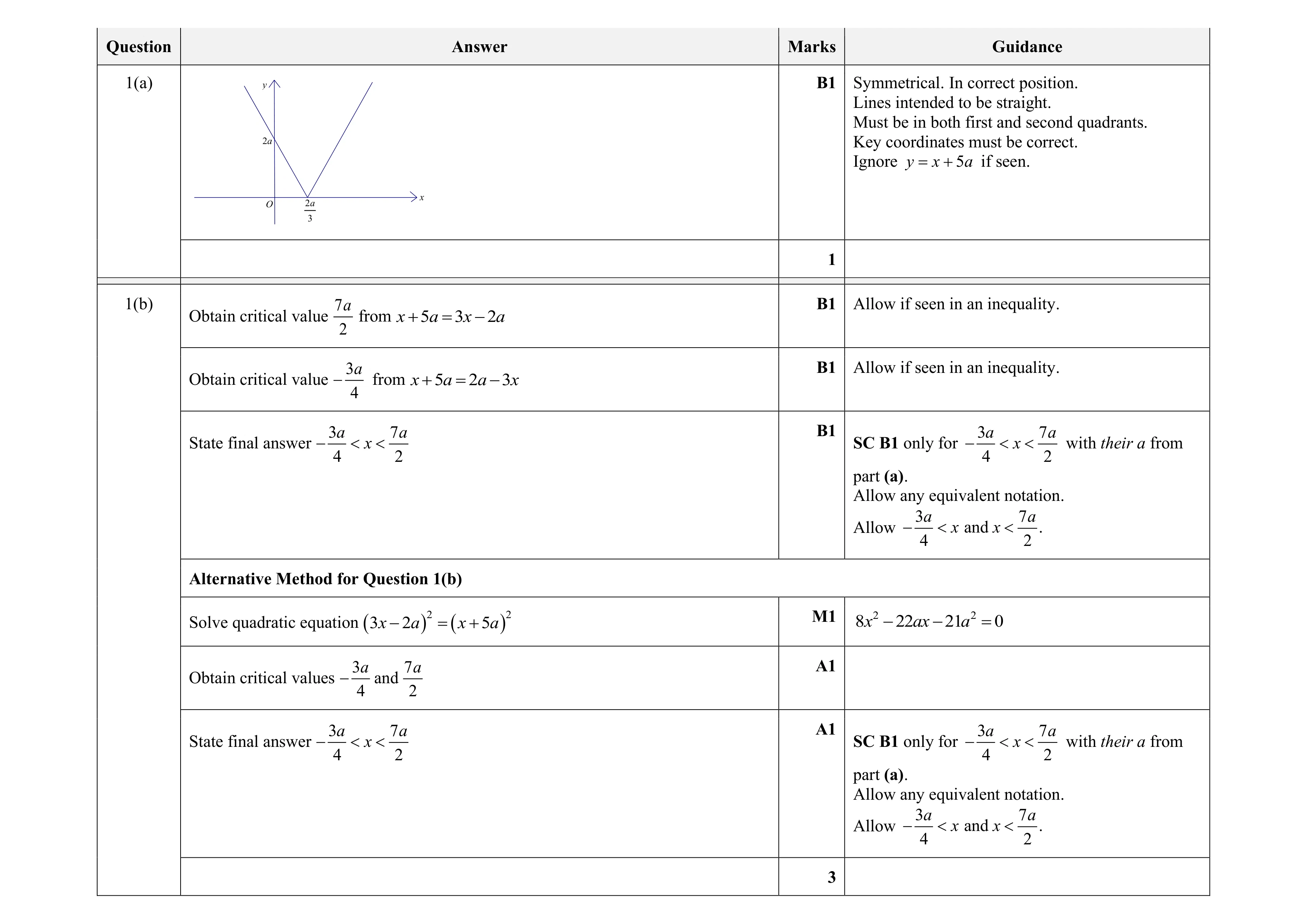 4
4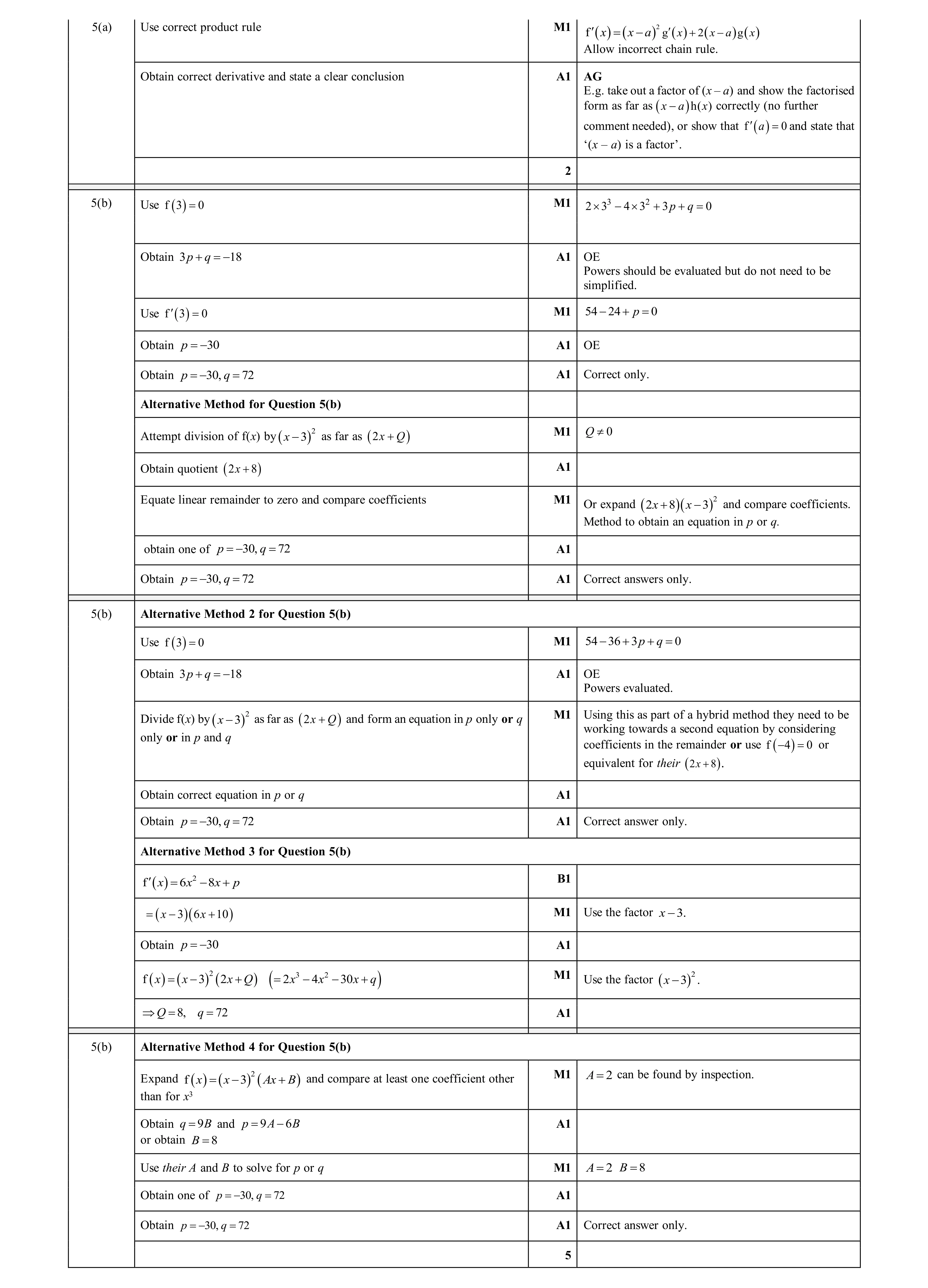 7
7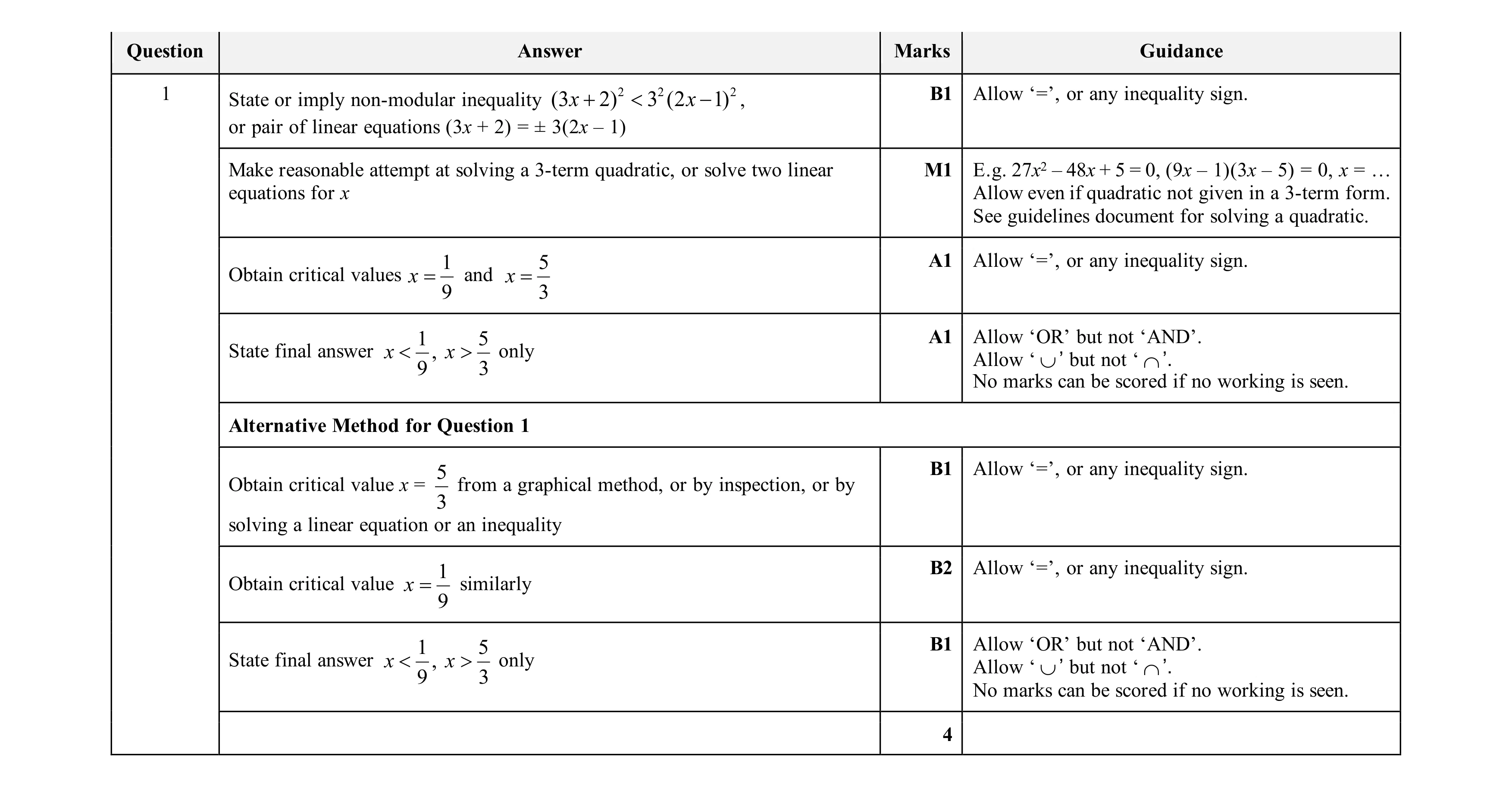 4
4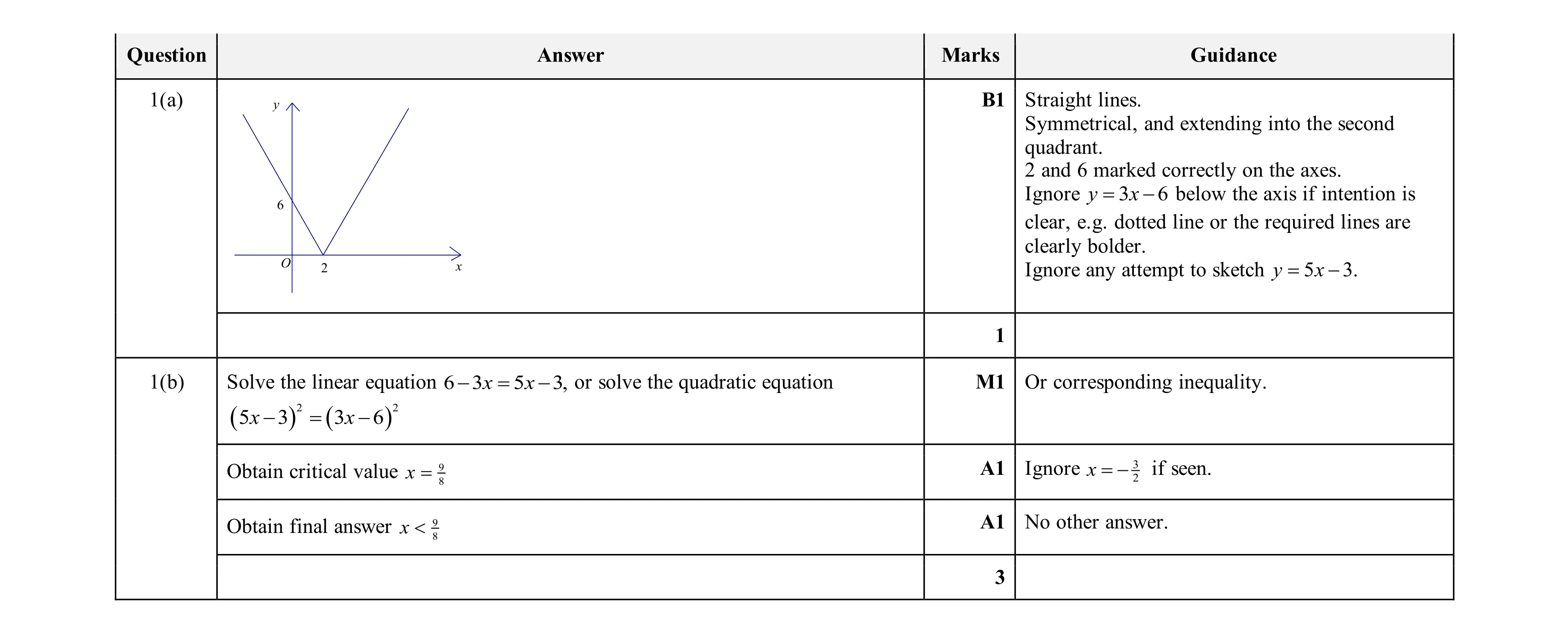 4
4