Questions as text
Q1 · The Great Crash, the Great Depression and the New Deal policies, 1920–41 (a) Explain why… 9489/21 May/June 2021
6 The Great Crash, the Great Depression and the New Deal policies, 1920–41 (a) Explain why Roosevelt began his presidency with a ‘Hundred Days’ plan. [10] (b) How far were government policies during the 1920s responsible for the Great Crash? [20] Section C: International Option International history, 1870–1945 Answer both parts of two questions.
30 marks
Mark scheme: 6(a) Explain why Roosevelt began his presidency with a ‘Hundred Days’ 10 plan. • Although elected in November 1932, Roosevelt was not inaugurated until March 1933, and in that time the economic depression in the United States had deepened and its impact worsened. Therefore, taking action was the priority as president. • As well as objective external factors which required urgent action, there were also political reasons for acting so quickly. His election gave Roosevelt a store of popularity, which he could use to overcome the obstacles to effective government presented by the US Constitution, and especially the separation of powers. As a result, Roosevelt saw the need to take drastic action in his first 100 days. • His first action was to close all the banks for four days. This was designed to stabilise the system and allow for an audit of all banks. Only once deemed to be credible under the Emergency Banking Relief Act were banks allowed to reopen. • The Banking Act of 1933 sought to deal with the speculative anarchy, which had played a key role in the 1929 Crash. This included a federal guarantee of all bank deposits (temporarily $2500 per accountholder, rising permanently to $5000 from July 1934), separation of commercial and investment banking, and strengthening of the Federal Reserve's ability to stabilise the economy. • The Federal Emergency Relief Administration pumped $500 million into state-run welfare programs (supplied $3.1 billion by the time of its closure in December 1935). FDR recognised the need for a support system for the poor. Accept any other valid responses. 6(b) How far were government policies during the 1920s responsible for the 20 Great Crash? Impact of government policies: • America tried to sell its surplus goods in Europe. However, the Fordney- McCumber Tariff Act of 1922 had led to European countries imposing tariffs on American goods. This meant American goods were too expensive to buy in Europe and, as a result, there was not much trade between America and Europe. • The laissez-faire policies of the Republican presidents of the 1920s meant that there was little regulation in the economy. Banks were unregulated and even before the crash many went out of business leaving customers with no way of getting their money back. Many banks were small and local rather than national, which meant they had no way of dealing with a shock like the Wall Street Crash. • Low interest rates encouraged share speculation and the practice of buying on the margin. Other factors as causes of the Wall Street Crash: • Overproduction in the agricultural sector – As farming techniques improved, farmers started producing more food. However, the demand for grain fell in America because of Prohibition and changes in tastes in food. There was also less demand from Europeans for food from America, because they were growing their own crops and there was a tariff war. • Overproduction of consumer goods – By the end of the 1920s, there were too many consumer goods unsold in the USA. Mass production methods led to supply outstripping demand. People who could afford items had already purchased them, such as cars and household gadgets. Also, people in agriculture and the traditional industries, who were on low wages, could not afford consumer goods. This led to workers being laid off, which reduced demand for goods even further. • Shares and Speculation – The government’s selling of war bonds during World War One meant ordinary people became attracted to investments. Their interest continued in the 1920s, especially when they saw wealthy people making huge profits from buying and selling shares. Many Americans who could ill-afford to lose money became caught up in this disastrous type of speculation. Some people even bought shares ‘on the margin’, i.e., they borrowed money to buy shares and then held on to them until they were worth more than the debt. Then they sold the shares, paid off the original debt and made a profit. Accept any other valid responses.
This question in 9489/21 May/June 2021
Q2 · The Great Crash, the Great Depression and the New Deal policies, 1920–41 (a) Explain why… 9489/22 May/June 2021
6 The Great Crash, the Great Depression and the New Deal policies, 1920–41 (a) Explain why the New Deal faced criticism from some on the liberal left. [10] (b) How far was President Hoover to blame for the impact of the Great Depression? [20] Section C: International option International history, 1870–1945
30 marks
Mark scheme: 6(a) Explain why the New Deal faced criticism by some on the liberal left. 10 • Many left-wing liberals simply believed that the New Deal did not go far enough and that FDR was making too many concessions to the business classes. They saw the New Deal’s policies as rejecting radical change in favour of accepting the current economic and social inequalities. • Huey Long, the Democratic Senator for Louisiana, was the best-known critic of the New Deal from the left. He wanted more federal government action to redistribute wealth from the rich to the poor, as shown by his ‘Share Our Wealth’ plan. Dr Francis Townsend, a retired doctor, also opposed the New Deal for failing to support retired people. • These criticisms applied to the First New Deal of 1933–1935, which was more concerned with reversing the US economy’s rapid decline than with promoting social justice and a more equal society. Huey Long was assassinated in 1935, effectively ending his movement, whereas FDR did introduce social security for the elderly as part of the Second New Deal. Accept any other valid responses. 6(b) How far was President Hoover to blame for the impact of the Great 20 Depression? Hoover was politically unprepared to deal with a crisis such as the aftermath of the Wall Street Crash, and his attempts to intervene often worsened the impact: • Firstly, he decided to keep the US on the gold standard, putting the US at a competitive disadvantage against countries that had abandoned gold. Higher interest rates were required to achieve this, a policy that deepened the recession. • Hoover signed the Smoot-Hawley Bill, which increased tariffs and harmed foreign trade, though not as much as is sometimes portrayed. • In late 1932, Hoover decided to increase taxes to re-establish confidence in American economic policy. It only served to further deflate the economy. • His policies were ‘too little too late’. Hoover did take some steps to allow the federal government to become more involved in the economy: • The Reconstruction Finance Corporation aided private-sector loans, while the Home Loans Bank System aimed to assist mortgagees. As a result, he eventually allowed the US federal government to take action in response to the onset of economic depression. • The Wall Street Crash was to blame for causing an unprecedented situation that no one could have anticipated in the short term. • Roosevelt also failed to deal with the impact of the Crash adequately, necessitating the introduction of a Second New Deal. Some historians argue that the Depression did not effectively end until the outbreak of World War Ⅱ. He opposed what he called ‘dangerous’ federal government action, such as more direct economic intervention. Hoover’s policies certainly did little to alleviate the US’ deteriorating economic problems during his presidency. The question of whether he was to blame for the Great Depression’s severity is still being debated. Accept any other valid responses.
This question in 9489/22 May/June 2021
Q3 · The Great Crash, the Great Depression and the New Deal policies, 1920–41 (a) Explain why… 9489/23 May/June 2021
6 The Great Crash, the Great Depression and the New Deal policies, 1920–41 (a) Explain why the Great Depression lasted for so long. [10] (b) ‘Opposition from the Supreme Court was the most significant challenge faced by Roosevelt’s New Deal.’ How far do you agree? [20] Section C: International option International history, 1870–1945
30 marks
Mark scheme: 6(a) Explain why the Great Depression lasted for so long. 10 Most historians would agree that the Depression last at least a decade although different dates and measures give different results. What’s clear is that many argue that the Depression was not really solved until the United States economy was put on a war footing at the beginning of the 1940s. It was rare for a slump to last this long; the so-called ‘forgotten depression’ of 1920–21 was over in a matter of months. Possible points include: • Failure of Hoover to act quickly enough – this question is not just about FDR policies; it is possible to argue that if Hoover had adopted different policies more quickly the Depression need not have been so deep or so long • According to left-wing economists, FDR followed the policies needed to restore economic growth and reduce unemployment; he stabilised the banking system, he took the dollar off the gold standard, and the federal government led investment in infrastructure such as rural electrification. Yet unemployment remained stubbornly high and growth limited. • In 1937–38, the so-called Roosevelt Recession occurred when FDR made attempts to balance the budget. Some more recent economic studies of the 1930s argue that the New Deal itself prolonged the depression. The argument is that government intervention, especially via the NIRA, allowed companies to charge higher prices and inflate wages. Consumers could not afford the higher prices and used their higher wages to help reduce debts while higher wages meant employers were unlikely to recruit more workers. • Candidates may also discuss the global context that FDR was operating in – recovering quickly in the midst of a worldwide economic depression and increasing political instability was perhaps too much to ask. Accept other valid responses. 6(b) ‘Opposition from the Supreme Court was the most significant 20 challenge faced by Roosevelt’s New Deal.’ How far do you agree? Key Opposition from the Supreme Court: • Schechter vs. United States, 1935, which ruled the National Industrial Recovery Act unconstitutional. US vs. Butler 1936, which undermined the Agricultural Adjustment Act and Morehead vs. New York, 1936, which ruled New York state’s minimum wage to be against the constitution. The first two in particular overturned key elements of the New Deal. • The Supreme Court was dominated by the ‘Four Horsemen’, conservative judges opposed to New Deal reforms which expanded the role of federal government on ideological grounds. Too often a fifth ‘swing’ judge supported their interpretation of the constitution. • However, after the court packing plan and the Second New Deal the Supreme Court was less obstructionist, sometimes even overturning judgements it had made a few months before, e.g. with regards to Social Security. Other points of discussion on New Deal opposition: • The two best known are figures are Huey Long and Charles Coughlin. Huey Long was a Democratic Senator, Charles Coughlin a Roman Catholic priest. • Both, after initially supporting the New Deal, turned against it for being too cautious and ineffective. Both used the new medium of the radio to gain support. Before his assassination, Huey Long became more left-wing. Father Coughlin’s views moved more towards the right. Both gained a great public response but it never turned into organised and effective electoral opposition to a President and a party which gained more support in 1936. • The most organised and most public right-wing opposition to the New Deal was the American Liberty League, set up in 1934. It combined conservatives Democrats and some leading industrialists and some popular support for private enterprise, which these groups felt was being eroded by the New Deal. Once FDR was re- elected in 1936, the American Liberty League lost support and soon disbanded. Accept other valid responses.
This question in 9489/23 May/June 2021
Q4 · The Great Crash, the Great Depression and the New Deal policies, 1920–41 (a) Explain why… 9489/21 Oct/Nov 2021
6 The Great Crash, the Great Depression and the New Deal policies, 1920–41 (a) Explain why Hoover found it difficult to respond to the consequences of the Great Crash. [10] (b) ‘The most significant opposition to the New Deal came from those on the left of politics.’ How far do you agree with this view? [20] Section C: International option International history, 1870–1945
30 marks
Mark scheme: 6(a) Explain why Hoover found it difficult to respond to the consequences of 10 the Great Crash. • The Great Crash of October 1929 occurred within the first year of Hoover’s presidency. He struggled to deal with the downturn in the US economy because of the severity of the downturn and the miscalculations he made. • In 1929–30, Hoover had expected much the same to happen. In fact, the Crash was initially welcomed by some as a necessary correction to the excesses of the Roaring Twenties – Hoover held and was affected by such beliefs. • Hoover relied on traditional and limited means of trying to help the various states undertake their own relief efforts. He was opposed to the more radical solution of federal government taking direct action to address the consequences of the Great Crash. • Hoover did take some steps to allow the federal government to become more involved in the economy. The Reconstruction Finance Corporation gave some support to loans to private industry; the Home Loans Bank System aimed to help mortgagees. So, belatedly, he let the US federal government take some action to address the onset of economic depression. Accept any other valid responses. 6(b) ‘The most significant opposition to the New Deal came from those on 20 the left of politics.’ How far do you agree with this view? Left wing opposition to the New Deal: • Many left-wing liberal simply believed that the New Deal wasn’t going far enough and that FDR was making too many concessions to the business classes. They saw the policies of the New Deal as rejecting radical change in favour of accepting the economic and social inequalities that already existed. • Huey Long, the Democratic Senator for Louisiana, was the best-known critic of the New Deal from the left. He wanted more federal government action to redistribute wealth from the rich to the poor, as shown by his ‘Share Our Wealth’ plan. He had around 4.6 million supporters which encouraged him, in March 1935, to declare that he would run against FDR in the 1936 election. He was assassinated in September 1935. This ended a potentially key threat to FDR’s New Deal as Long might have drawn votes away from him to allow a Republican victory. • Dr Francis Townsend, a retired doctor, also opposed the New Deal for failing to support retired people. He proposed that all citizens over 60 receive a pension of $200 per month which had to be spent in 30 days. A tax of 2% on commercial transactions would meet the cost. Half a million Americans joined 3000 Townsend clubs to lobby for the plan. Congress received a petition in support of Townsend’s plan signed by 20 million but ignored it. Nonetheless, the popularity of Townsend movement spurred FDR to create the Social Security Act of 1935. This led to the evaporation of most of Townsend’s support. • These criticisms applied to the First New Deal 1933–35, which focused more on reversing the rapid decline in the US economy rather than providing social justice and a more equal society. Other significant opposition which could be discussed: • Opposition from the right – The Liberty League attacked the New Deal as a socialistic experiment. The group railed against “regimentation” and claimed attacks upon individual liberties. Politically ineffective, most Liberty Leaguers had to content themselves with simple rage against New Deal policies and personalities. • Another right-wing popular leader was Father Charles E. Coughlin, known as ‘The Radio Priest’. His enemies were FDR, international bankers, communists, and labor unions. He blamed the depression on greedy bankers and called FDR a tool of the moneyed interests. He eventually became anti-Semitic and blamed the Jews for all kinds of problems. He formed an organisation called the Christian Front to advance his positions. • Supreme Court – Schechter vs. United States, 1935, which ruled the National Industrial Recovery Act unconstitutional. US vs. Butler 1936, which undermined the Agricultural Adjustment Act, and Morehead vs. New York 1936, which ruled New York state’s minimum wage to be against the constitution. The first two overturned key elements of the New Deal. However, the TVA was accepted as constitutional by the court and the fear of FDR’s ‘court-packing’ plan did lead to a more constructive relationship between the court and FDR (the National Labour Relations Act and the Social Security tax were declared constitutional in 1937). Accept any other valid responses.
This question in 9489/21 Oct/Nov 2021
Q5 · The Great Crash, the Great Depression and the New Deal policies, 1920–41 (a) Explain why… 9489/22 Oct/Nov 2021
6 The Great Crash, the Great Depression and the New Deal policies, 1920–41 (a) Explain why farmers experienced difficulties during the 1920s. [10] (b) ‘Roosevelt’s efforts to stabilise the banking system were the most significant achievement of the First New Deal.’ How far do you agree? [20] Section C: International option International history, 1870–1945
30 marks
Mark scheme: 6(a) Explain why farmers experienced difficulties during the 1920s. 10 • As farming techniques improved, farmers started producing more food. This had been welcomed during the years of the First World War as the United States exported food to countries like Britain. • However, the demand for grain fell in America because of Prohibition and changes in tastes in food. This led to overproduction of some products. • There was also less demand from Europeans for food from America because they were growing their own crops after the devastation of war and there was a tariff war – the Fordney-McCumber Tariff Act 1922 had led to European countries imposing tariffs on American goods. This meant American goods, including foodstuffs, were too expensive to buy in Europe. • These problems meant that farmers could not afford to produce the new machinery which was being produced which in turn led to a fall in profits. • It is possible to suggest that the Depression began for farmers during the 1920s. Accept any other valid responses. 6(b) ‘Roosevelt’s efforts to stabilise the banking system were the most 20 significant achievement of the First New Deal.’ How far do you agree? Impact of banking policies: • By 1933, about 9000 banks, holding the savings of 27 million families, had failed. Of those bank failings, 1456 folded in 1932 alone. Farm foreclosures were averaging 20 000 a month. • Roosevelt immediately declared a national bank holiday, which closed all banks. In just four days, his aides drafted the Emergency Banking Relief Act, which permitted solvent banks to reopen under government supervision and allowed the RFC to buy the stock of troubled banks and keep them open until they could be reorganised. The law also gave the president broad powers over the Federal Reserve System. The law radically reshaped the nation's banking system and Congress passed the law in just eight hours. • The Act was designed to give people confidence and re-float the economy – in a fireside chat, Roosevelt said: “I can assure you that it is safer to keep your money in a reopened bank than under the mattress”. Other policies in the first 100 days: • Roosevelt used his ‘fireside chats’ to appeal directly to Americans to trust him and his policies – he started these in his first 100 days. • Other acts passed in the first 100 days – Prices had fallen so low that it no longer paid for many farmers to plant crops. To prevent the crop surpluses that led to low prices, the Agricultural Adjustment Act (AAA) called, for the first time, for the government to pay farmers not to plant. • Other Alphabet Acts were also passed, including the Civilian Conservation Corps (CCC), which gave work to 250 000 men, the Tennessee Valley Authority (TVA), which assisted in economic development in the Tennessee valley, and the Public Works Administration (PWA), which supervised the construction of public works. • These policies and their impact can also be discussed as part of the wider First New Deal. Accept any other valid responses.
This question in 9489/22 Oct/Nov 2021
Q6 · The Great Crash, the Great Depression and the New Deal policies, 1920–41 (a) Explain why… 9489/23 Oct/Nov 2021
6 The Great Crash, the Great Depression and the New Deal policies, 1920–41 (a) Explain why the US economy experienced problems in 1937–38. [10] (b) To what extent were structural weaknesses in the US economy to blame for the Great Crash of 1929? [20] Section C: International option International history, 1870–1945
30 marks
Mark scheme: 6(a) Explain why the US economy experienced problems in 1937–38. 10 In what became known as the Roosevelt recession, the economic downturn of 1937 was, in the context of the Great Depression, what would now be called a ‘double-dip recession’. Profits fell, investment fell and unemployment rose again. Four years of growth came to an end. Possible explanations for why: • The political explanation, believed by Roosevelt, was that the recession was a conspiracy by a ‘modern industrial oligarchy’ against the New Deal. Key businesses had cut investment and profits and laid off workers in protest against the New Deal in an attempt to undermine it. • The economic explanation was that the recession was simply the workings of the business cycle: after four years of economic growth, some contraction was unavoidable. • Other explanations include: that the deflationary policies of the federal government caused the recession. Monetary policy was tightened by the Federal Reserve and fiscal policy was tightened by the administration. The latter involved both cutting expenditure, especially by the WPA and the PWA, and increasing taxes, in the form of payments for the new Social Security, first payable in January 1937. Accept other valid responses. 6(b) To what extent were structural weaknesses in the US economy to blame 20 for the Great Crash of 1929? Structural weakness in the US economy: • In spite of, or maybe because of, the ‘boom’ the American economy remained unequal. 60% of all Americans lived on less than $2000 a year which was seen as the poverty line and the top 5% of earners controlled 1/3 of the wealth. This meant that most people could only afford to buy by extending their credit. • Farmers continued to over-produce during the 1920s in spite of the recovery of European agricultural systems after the First World War. Farmers’ average wage was $477 below the national average and they could not afford to take part in the consumer spending of the ‘boom’. • Older industries such as mining and textiles continued to collapse meaning that workers lost jobs in some areas. • Mass production meant that it wouldn’t be long until production outweighed demand – this was exacerbated by the Republican tariff policies of the 1920s. • There was lack of control of banks that allowed them to lend far more than their reserves could cover which meant that people were able to borrow without restriction which led them to panic when share prices started to fall Other possible areas for discussion: • Mass psychology. More people – and companies and banks – followed the markets as stock prices rose in the late1920s in the belief that stock prices would continue to rise. Once the bubble burst, investors who were greatly dependent upon borrowed funds for their investments had to sell shares as soon as possible to repay debts and minimise losses. • The economic growth of the 1920s created a growth in stock prices which exceeded the basic value of the products and profits of relevant companies. This was a financial bubble. Accept any other valid responses.
This question in 9489/23 Oct/Nov 2021
Q7 · The Great Crash, the Great Depression and the New Deal policies, 1920–41 (a) Explain why… 9489/22 Feb/March 2022
6 The Great Crash, the Great Depression and the New Deal policies, 1920–41 (a) Explain why oversupply became a problem in the US economy in the 1920s. [10] (b) To what extent did opposition to the New Deal come from the conservative right? [20] Section C: International option International history, 1870–1945
30 marks
Mark scheme: 6(a) Explain why oversupply became a problem in the US economy in the 10 1920s. Indicative content By the mid to late 1920s it was becoming clear that there was a problem of overproduction in several sectors of the American economy: • Farming – farmers had not shared in the economic prosperity of the 1920s. Many continued to produce food at a rate which had been needed during the First World War but with European markets recovering this level of production was no longer needed and this resulted in falling prices. The lives of farmers in many states were ones of constant debt and struggles which meant that they could not share in the consumer spending of the 1920s. • Mass consumer production – by the late 1920s demand for consumer goods was beginning to slow. Many houses had already purchased the totemic goods of the boom (i.e. a car, a refrigerator, a vacuum cleaner) and so did not need to buy them again. Although production kept employment high many goods were not being sold and so stockpiling started to become a problem. • Florida real estate bubble – oversupply was also a problem in construction with vast estates being built in Florida and prices going through the roof. By 1925 this bubble began to collapse as investors looked elsewhere and tried to sell for a profit. Some see this as a valuable predictor of what was to come later to the whole economy. Accept any other valid responses. 6(b) To what extent did opposition to the New Deal come from the 20 conservative right? Indicative Content: Possible discussion of opposition from the right: • The most organised and most public right-wing opposition to the New Deal was the American Liberty League, set up in 1934. It combined conservative Democrats and some leading industrialists and some popular support for private enterprise, which these groups felt was being eroded by the New Deal. Once FDR was re-elected in 1936, the American Liberty League lost support and soon disbanded. • However, in Congress at least, conservative Democrats started to work across the aisle with some Republicans. In December 1937, they published a Conservative Manifesto praising private enterprise. The right- wing opposition in the Senate blocked an anti-lynching bill approved by the House, to FDR’s embarrassment. • FDR pushed through Congress the Fair Labour Standards Act, which introduced a minimum wage, against conservative opposition. Relations between FDR and Southern Democrats deteriorated. The right-wing opposition in the Senate blocked further New Deal reforms. Possible discussion of opposition from the left: • The leading left-wing opponents – Father Coughlin, Francis Townsend and Huey Long – are better remembered than the American Liberty League and the ‘Old Right’ Conservative Coalition of the later 1930s. • Coughlin established a National Union for Social Justice in 1934 and a third party to contest the 1936 presidential elections. Francis Townsend gained national publicity for his proposal to introduce Social Security for the old. Long set up his Share Our Wealth movement in 1934, arguing for progressive taxation and great redistribution of wealth. • As well as personalities such as Coughlin, Townsend and Long, institutions such as labour unions should also be included. There was more labour unrest in the 1930s than is often remembered. This left-wing pressure, even though uncoordinated, was at its height during the First New Deal. There would seem to be a close connection between that left- wing pressure and the more radical Second New Deal of 1935–36, which did include Social Security reform and the Wagner Act. • Only Townsend remained to influence New Deal legislation in FDR’s second term, helping to persuade Congress to extend Social Security to include dependents of retired workers. Long had been assassinated in 1935 and Coughlin became more concerned with opposing communism. Thus, there is a clear contrast between opposition to the New Deal in the two presidential terms. Some candidates will include Supreme Court opposition to many New Deal reforms, but the Supreme Court is a judicial not a political institution and so cannot be seen as either left wing or right wing. Accept any other valid responses.
This question in 9489/22 Feb/March 2022
Q8 · The Great Crash, the Great Depression and the New Deal policies, 1920–41 (a) Explain why… 9489/21 May/June 2022
6 The Great Crash, the Great Depression and the New Deal policies, 1920–41 (a) Explain why the 1920s saw a growth in consumerism. [10] (b) ‘The need for a Second New Deal showed that the First had been a failure.’ How far do you agree? [20] Section C: International option International history, 1870–1945
30 marks
Mark scheme: 6(a) Explain why the 1920s saw a growth in consumerism. 10 Indicative content: New products – the life of the American housewife was transformed by newly available products in the 1920s. Refrigerators, vacuum cleaners, washing machines, and canned goods meant that chores were quicker. Many of these new products became cheaper as they were mass produced and so were available to many families. Financing – Buying on credit and instalment plans meant that many of the new products were available to some families for the first time. Over half of the nation’s cars were bought on credit in the 1920s. Consumer debt more than doubled between 1920 and 1930. Advertising – New style tabloid magazines such as the New York Daily News launched covering crime, sport and scandal. They also included lots of adverts for products for the home. Coca-Cola changed its advertising in the 1920s to show the drink as a ‘fun’ consumer product. In 1925 Bruce Barton’s book The Man Nobody Knows compared advertising and religion saying that Jesus Christ would have been an advertising man in modern day America. Accept any other valid responses. 6(b) ‘The need for a Second New Deal showed that the first had been a 20 failure.’ How far do you agree? Indicative Content: Possible areas of discussion around the First New Deal: The First New Deal of 1933–4 included federal action to relieve unemployment such as the Civilian Conservation Corps and Federal Emergency Relief Administration, and economic hardship, such as the Agricultural Adjustment Administration. It also stabilised the banking system and saw the USA leave the gold standard to allow for the inflation of the US economy. Much legislative and executive activity led to some relief and some recovery, if not a great deal of either. Overall though unemployment was not significantly reduced and demand in the economy had not recovered. These could be used to point to ‘failure’. Possible areas of discussion around the Second New Deal: The second New Deal of 1935–8 was more ambitious in its focus on reform as FDR articulated his vision of the future USA in 1934–5. The Social Security Act, introducing old age pensions, was the most radical social reform of the era while the Wagner Act established a new basis for labour relations – even if FDR was not keen on all aspects. The Wealth Tax Act was more symbolic than effective. The Emergency Relief Appropriations Act did much to provide effective work relief in the late 1930s. Some may argue that these ideas show that failure in the First New Deal had necessitated greater radicalism whilst others may suggest that it was a natural step after the ‘recovery’ phase of the First New Deal. Candidates will need to use some kind of metric to judge success or failure within the context of 1930s America. Accept any other valid responses.
This question in 9489/21 May/June 2022
Q9 · The Great Crash, the Great Depression and the New Deal policies, 1920–41 (a) Explain why… 9489/22 May/June 2022
6 The Great Crash, the Great Depression and the New Deal policies, 1920–41 (a) Explain why Roosevelt put together the New Deal Coalition. [10] (b) ‘Overproduction was the most significant weakness of the US economy in the 1920s.’ How far do you agree with this view? [20] Section C: International option International history, 1870–1945
30 marks
Mark scheme: 6(a) Explain why Roosevelt put together the New Deal Coalition. 10 Indicative content The 1932 Presidential Election and the 1934 mid-terms gave FDR complete control of Congress and brought together an electoral coalition of voters which was the key to Democratic success for many years to come. These groups included labour unions, liberals, religious, ethnic and racial minorities (Catholics, Jews and Blacks), Southern whites, poor people and those supported by federal relief programmes. Roosevelt needed to build a coalition of voters for the Democratic Party if he wanted to win the Presidential election as well as control Congress. He particularly needed to win voters in small towns and suburbs who had not traditionally voted Democrat. He also concentrated on trying to form ‘workers’ into a particular electoral group. Previously cultural, racial and geographic differences had meant they fell into different electoral groups. Roosevelt worked hard to build the idea of the Democrat Party as the party of the worker. There was also a considerable realignment of black votes in the North. African Americans had historically mistrusted Democrats but FDR worked hard to persuade them that he was the man who could offer them change. Accept any other valid responses. 6(b) ‘Overproduction was the most significant weakness of the US 20 economy in the 1920s.’ How far do you agree with this view? Indicative Content: Possible discussion of overproduction in the economy: Overproduction in the agricultural sector - As farming techniques improved, farmers started producing more food. However, the demand for grain fell in America because of Prohibition and changes in tastes in food. There was also less demand from Europeans for food from America because they were growing their own crops and there was a tariff war. Overproduction of consumer goods - By the end of the 1920s, there were too many consumer goods unsold in the USA. Mass production methods led to supply outstripping demand. People who could afford items, such as cars and household gadgets, had already purchased them. Also, people in agriculture and the traditional industries, who were on low wages, could not afford consumer goods. This led to workers being laid off, which reduced demand for goods even further. Possible discussion of other weaknesses in the economy: The laissez-faire policies of the Republican presidents of the 1920s meant that there was little regulation in the economy. Banks were unregulated and even before the crash many went out of business leaving customers with no way of getting their money back. Many banks were small and local rather than national which meant they had no way of dealing with a shock like the Wall Street Crash. Low interest rates encouraged share speculation and the practice of buying on the margin. Shares and Speculation – The government’s selling of war bonds during World War One meant ordinary people became attracted to investments. Their interest continued in the 1920s, especially when they saw wealthy people making huge profits from buying and selling shares. Many Americans who could ill-afford to lose money became caught up in this disastrous type of speculation. Some people even bought shares ‘on the margin’, i.e. they borrowed money to buy shares and then held on to them until they were worth more than the debt. Then they sold the shares, paid off the original debt and made a profit. Accept any other valid responses.
This question in 9489/22 May/June 2022
Q10 · The Great Crash, the Great Depression and the New Deal policies, 1920–41 (a) Explain why… 9489/23 May/June 2022
6 The Great Crash, the Great Depression and the New Deal policies, 1920–41 (a) Explain why the New Deal was criticised by those on the conservative right. [10] (b) ‘The policies of Republican governments were the main cause of weaknesses in the US economy in the 1920s.’ How far do you agree? [20] Section C: International option International history, 1870–1945
30 marks
Mark scheme: 6(a) Explain why the New Deal was criticised by those on the right. 10 Indicative content Right wing groups felt that the private enterprise was being eroded by the New Deal. Generally, the right felt that the New Deal involved too much government involvement in the economy. The most organised and most public right-wing opposition to the New Deal was the American Liberty League, set up in 1934. It combined conservatives Democrats and some leading industrialists and some popular support for private enterprise. By 1936 it had a membership of 125 000. Its aim was to defend the Constitution and its rights and liberties. It criticised the Agricultural Adjustment Act as marking a trend towards ‘fascist control of agriculture’ and the idea of Social Security as marking the end of democracy. In Congress some conservative Democrats started to work across the aisle with some Republicans. In December 1937, they published a Conservative Manifesto praising private enterprise. The right-wing opposition in the Senate blocked an anti-lynching bill approved by the House – this caused FDR a lot of embarrassment. Accept any other valid responses. 6(b) ‘The policies of Republican governments were the main cause of 20 weaknesses in the US economy in the 1920s.’ How far do you agree? Indicative Content Possible discussion of Republican policies: The laissez-faire policies of the Republican presidents of the 1920s meant that there was little regulation in the economy. Calvin Coolidge’s statement that “the chief business of the American people is business” was what guided the decisions of successive administrations. Harding’s Secretary of the Treasury Andrew Mellon was also a key figure in the early decade. He was a multi-millionaire having made his money in aluminium and banking. He believed that the economy should be run like a successful business i.e. tax cuts and formal budgeting. Banks were unregulated and even before the crash many went out of business leaving customers with no way of getting their money back. Many banks were small and local rather than national which meant they had no way of dealing with a shock like the Wall Street Crash. Low interest rates encouraged share speculation and the practice of buying on the margin. Possible discussion on other factors: Overproduction – Candidates might discuss overproduction in both the agricultural and consumer sectors. Farmers suffered from the fall in demand for grain in America because of Prohibition and changes in tastes in food. There was also less demand from Europeans for food from America because they were growing their own crops and there was a tariff war. Mass production methods in consumer goods led to supply outstripping demand. People who could afford items, such as cars and household gadgets, had already purchased them. Shares and credit– some candidates might discuss the rise in personal debt enabled by the growth of credit and the popularity of investing in the stock market. These ideas can also, of course, be linked to other factors. Accept any other valid responses.
This question in 9489/23 May/June 2022
Q11 · The Great Crash, the Great Depression and the New Deal policies, 1920–41 (a) Explain why… 9489/22 Feb/March 2023
6 The Great Crash, the Great Depression and the New Deal policies, 1920–41 (a) Explain why government policies had a negative impact on the 1920s economy. [10] (b) ‘Opposition to the New Deal was based on the claim that its measures were not ambitious enough to resolve America’s problems.’ How far do you agree? [20] Section C: International option International history, 1870–1945
30 marks
Mark scheme: 6(a) Explain why government policies had a negative impact on the 1920s 10 economy. Indicative content Republican policies of isolationism and small government led to some negative impacts during the 1920s. Candidates may include the following: • America tried to sell its surplus goods in Europe. However, the protectionist Fordney-McCumber Tariff Act 1922 had led to European countries imposing tariffs on American goods. This meant American goods were too expensive to buy in Europe and, as a result, there was not much trade between America and Europe • The laissez-faire policies of the Republican presidents (Harding, Coolidge, and Hoover) of the 1920s meant that there was little regulation in the economy. Banks were unregulated and even before the crash many went out of business leaving customers with no way of getting their money back. Many banks were small and local rather than national which meant they had no way of dealing with a shock like the Wall Street Crash. • Low interest rates encouraged share speculation and the practice of buying on the margin. Later in the decade this would form part of a major increase in public debt. Accept any other valid responses. 6(b) ‘Opposition to the New Deal was based on the claim that its measures 20 were not ambitious enough to resolve America’s problems.’ How far do you agree? Indicative content Possible discussions of those who believed the New Deal was not doing enough: • Many left-wing liberals simply believed that the New Deal wasn’t going far enough, and that FDR was making too many concessions to the business classes. They saw the policies of the New Deal as rejecting radical change in favour of accepting the economic and social inequalities that already existed. • Huey Long, the Democratic Senator for Louisiana, was the best-known critic of the New Deal from the left. He wanted more federal government action to redistribute wealth from the rich to the poor, as shown by his ‘Share Our Wealth’ plan. Dr Francis Townsend, a retired doctor, also opposed the New Deal for failing to support retired people. • These criticisms applied to the First New Deal 1933–35, which focused more on reversing the rapid decline in the US economy rather than providing social justice and a more equal society. Huey Long was assassinated in 1935, which meant his movement lost all momentum, while FDR did introduce social security for old people in the Second New Deal. Other significant opposition which could be discussed: • Opposition from the right – The Liberty League attacked the New Deal as a socialistic experiment. The group railed against “regimentation” and claimed attacks upon individual liberties. Politically ineffective, most Liberty Leaguers had to content themselves with simple rage against New Deal policies and personalities. • Another right-wing popular leader was Father Charles E. Coughlin, known as ‘The Radio Priest’. His enemies were FDR, international bankers, communists, and labor unions. He blamed the depression on greedy bankers, calling FDR a tool of the moneyed interests. He eventually turned to using anti-Semitic language in the late 30s. He formed an organization called the Christian Front to advance his positions. • Supreme Court Opposition – Schechter vs. United States, 1935, which ruled the National Industrial Recovery Act unconstitutional. US vs. Butler 1936, which undermined the Agricultural Adjustment Act and Morehead vs. New York, 1936, which ruled New York state’s minimum wage to be against the constitution. The first two, in particular, overturned key elements of the New Deal. Accept any other valid responses.
This question in 9489/22 Feb/March 2023
Q12 · The Great Crash, the Great Depression and the New Deal policies, 1920–41 (a) Explain why… 9489/21 May/June 2023
6 The Great Crash, the Great Depression and the New Deal policies, 1920–41 (a) Explain why new industries grew rapidly during the 1920s. [10] (b) To what extent was opposition to the New Deal effective? [20] Section C: International option International history, 1870–1945
30 marks
Mark scheme: 6(a) Explain why new industries grew rapidly during the 1920s. 10 Indicative content Energy was a key factor, especially electricity and oil. As electrification reached a growing number of cities and towns, consumers demanded new products such as lightbulbs, refrigerators, and toasters. Factories installed electric motors and saw productivity surge. Oil booms in Texas, Oklahoma, and California enabled the United States to dominate world petroleum production, which became even more important in an age of automobiles and trucks. New products – the life of the American housewife was transformed by newly available products in the 1920s. Refrigerators, vacuum cleaners, washing machines, and canned goods meant that chores were quicker. Many of these new products became cheaper as they were mass produced and so were available to many families. Mass production also transformed automobiles e.g. Henry Ford. Advertising – new style tabloid magazines such as the New York Daily News launched covering crime, sport and scandal. They also included lots of adverts for products for the home. Coca-Cola changed its advertising in the 1920s to show the drink as a ‘fun’ consumer product. In 1925 Bruce Barton’s book ‘The Man Nobody Knows’ compared advertising and religion saying that Jesus Christ would have been an advertising man in modern day America. These new markets drove new industries. Laissez-faire approach of the Republican governments throughout the 1920s encouraged the development of new industries. Accept any other valid responses. 6(b) To what extent was opposition to the New Deal effective? 20 Indicative content Possible discussion of effective New Deal opposition might consider the Second New Deal and how it is possible to argue that the opposition which Roosevelt faced from the left after 1933 did change his policies as he moved towards the Second New Deal and re-election. Speaking in 1935, Roosevelt himself said, ‘I am fighting Communism, Huey Longism, Coughlinism and Townsendism’. In 1936, these three movements came together to form the Union Party to contest the presidential election. It gained less than one million votes. It can be argued, however, that the threat posed by these groups to Roosevelt was such that he adapted his policies to address some of their demands, the clearest example being his plans for a Wealth Tax. Those plans did not come to much after the election, however. Some commentators go further, arguing that most of the Second New Deal was a response to these mass movements, for example, Social Security was first proposed by Francis Townsend. Furthermore, there was opposition from the Supreme Court, for example the rejection of crucial New Deal legislation, in particular the NRA and the AAA in 1935–36. The composition of the Supreme Court in 1933–36 with four conservatives – ‘the Four Horsemen’ – plus a swing judge being opposed to great federal state intervention. The tradition, based on the 1905 Lochner judgement, that the Supreme Court would always rule against laws and policies which limited individual economic freedom. Possible discussion of weaknesses of New Deal opposition might consider how the political opponent of the New Deal which would have the greatest effect on FDR’s reforms was the Republican Party in Congress. Not only were the numbers against the Republicans being effective but the party itself was divided between Eastern conservatives and Western progressives. They took quite different attitudes towards New Deal reforms. In addition, the Republicans were the minority party for the first time in a long time – this took a lot of getting used to. They were also seen as the party in charge when the Great Depression occurred and so blamed by many for the situation the country found itself in. The Republican approach seemed no answer to a depression of unprecedented depth. Discussion may also focus on opposition outside of Republican opposition. The two best known are Huey Long and Charles Coughlin. Huey Long was a Democratic Senator, Charles Coughlin a Roman Catholic priest. Both, after initially supporting the New Deal, turned against it for being too cautious and ineffective. Both used the new medium of the radio to gain support. Before his assassination, Huey Long became more left-wing. Father Coughlin’s views moved more towards the right. Both gained a great public response, but it never turned into organised and effective electoral opposition to a President and a party which gained more support in 1936. Accept any other valid responses.
This question in 9489/21 May/June 2023
Q13 · The Great Crash, the Great Depression and the New Deal policies, 1920–41 (a) Explain why… 9489/23 May/June 2023
6 The Great Crash, the Great Depression and the New Deal policies, 1920–41 (a) Explain why the banking system collapsed after the Great Crash of 1929. [10] (b) To what extent were Roosevelt’s actions in his First Hundred Days focused on helping rural communities? [20] Section C: International option International history, 1870–1945
30 marks
Mark scheme: 6(a) Explain why the banking system collapsed after the Great Crash of 10 1929. Indicative content In the autumn of 1930, many believed that the US economy was on the road to recovery. The previous three economic recessions, in 1920, 1923, and 1926, had lasted an average of fifteen months. The downturn that began in the summer of 1929 had lasted for fifteen months. In November 1930, however, a series of crises among commercial banks turned what had been a typical recession into the beginning of the Great Depression. One issue was that whilst 8000 banks operated under the Federal Reserve System, 16 000 did not. This meant they were not subject to the same rules and regulations as those who were. Many of these banks had very few cash reserves. It also meant that it was difficult to move banking reserves around the country quickly when needed. As banks began to fail because of lack of reserves the panic associated with this spread from town to town. This was first witnessed in Tennessee and Kentucky following the failure of Caldwell and Company. People began to withdraw funds en masse from banks for fear that they were about to close. Banking crises continued to pop up around the country into 1931 – this time the location was Chicago. These crises caused panic, deflation and a lack of availability of credit. Accept any other valid responses. 6(b) To what extent were Roosevelt’s actions in his First Hundred Days 20 focused on helping rural communities? Indicative content Possible discussions about Roosevelt’s focus on rural communities might consider that, by March 1933, American farmers were making less than half of what they’d earned in 1919 and a third of American farmers had lost their land. In Oklahoma, for example, wheat farmers had seen profits drop from $1.2 million to a pitiful $7000. In Georgia, as Eleanor Roosevelt’s friend Lorena Hickok observed, ‘Half-starved Whites and Blacks struggle in competition for less to eat than my dog gets at home, for the privilege of living in huts that are infinitely less comfortable than his kennel.’ Many also believed that helping rural communities should be the focus of Roosevelt’s actions. His advisor Rexford Tugwell that the Great Depression stemmed from the disastrous condition of agriculture in the United States. Curtailing overproduction may also be considered, for example, the Agricultural Adjustment Act (May 1933) paid farmers to reduce production and take land out of cultivation. Although the sight of destroying produce and livestock was shocking to many Americans it meant that prices began to rise. Furthermore, the Tennessee Valley Authority Act (May 1933) provided hydro-electric power to residents in three Southern states and was the beginning of a process of rural electrification. Possible discussions about other actions of the first Hundred days might consider banking and how Roosevelt immediately declared a national bank holiday, which closed all banks. In just four days, his aides drafted the Emergency Banking Relief Act, which permitted solvent banks to reopen under government supervision, and allowed the RFC to buy the stock of troubled banks and to keep them open until they could be reorganized. The law also gave the president broad powers over the Federal Reserve System. The law radically reshaped the nation's banking system; Congress passed the law in just eight hours. The Act was designed to give people confidence and refloat the economy – in a fireside chat Roosevelt told people ‘I can assure you that it is safer to keep your money in a reopened bank than under the mattress’. Other Alphabet Acts were also passed including the Civilian Conservation Corps (CCC) which gave work to 250 000 men and the Public Works Administration (PWA) to supervise the construction of public works. Accept any other valid responses.
This question in 9489/23 May/June 2023
Q14 · The Great Crash, the Great Depression and the New Deal policies, 1920–41 (a) Explain why… 9489/21 Oct/Nov 2023
6 The Great Crash, the Great Depression and the New Deal policies, 1920–41 (a) Explain why many on the liberal left opposed the New Deal. [10] (b) To what extent was lack of government regulation to blame for the Great Crash? [20] Section C: International option International history, 1870–1945
30 marks
Mark scheme: 6(a) Explain why many on the liberal left opposed the New Deal. 10 Indicative content • Many on the left opposed the New Deal because they saw it as insufficiently radical and believed that it accepted most existing inequalities. They believed that FDR was making far too many concessions to the business classes. • The best-known liberal critic was Huey Long, Democratic Senator for Louisiana. He wanted more federal government action to redistribute wealth from the rich to the poor, as shown by his ‘Share Our Wealth’ plan. Dr Francis Townsend, a retired doctor, also opposed the New Deal for failing to support retired people. Father Charles Coughlin an initial supporter of FDR fell out with him, accusing him of being too friendly to bankers. Coughlin set up the National Union for Social Justice in 1934. It called for monetary reforms, nationalisation of major industries and railways and protection of labour rights. Its membership ran into millions. • These criticisms applied to the First New Deal 1933–35, which focused more on reversing the rapid decline in the US economy rather than providing social justice and a more equal society. • Huey Long was assassinated in 1935, which meant his movement lost all momentum, while FDR did introduce social security for old people in the Second New Deal. Coughlin’s attacks upon ‘Jewish bankers’ soon developed into vitriolic antisemitism and open support for several of Nazi Germany’s and Fascist Italy’s policies. Note: The small numbers of Communists active in American politics had much more fundamental problems with the New Deal and are unlikely to be discussed in this question. Accept any other valid responses. 6(b) To what extent was lack of government regulation to blame for the Great 20 Crash? Indicative content Possible discussion of lack of government regulation might include the laissez-faire policies of the Republican presidents of the 1920s meant that there was little regulation in the economy. Banks were unregulated and even before the crash many went out of business leaving customers with no way of getting their money back. Many banks were small and local rather than national which meant they had no way of dealing with a shock like the Wall Street Crash. Candidates may also discuss Shares and Speculation – the government’s selling of war bonds during World War One meant ordinary people became attracted to investments. Their interest continued in the 1920s, especially when they saw wealthy people making huge profits from buying and selling shares. Many Americans who could ill-afford to lose money became caught up in this disastrous type of speculation. Some people even bought shares “on the margin”, i.e. they borrowed money to buy shares and then held on to them until they were worth more than the debt. Then they sold the shares, paid off the original debt and made a profit. Possible discussion of other factors may include overproduction in the agricultural sector. As farming techniques improved, farmers started producing more food. However, the demand for grain fell in America because of Prohibition and changes in tastes in food. There was also less demand from Europeans for food from America because they were growing their own crops and there was a tariff war. Candidates may also discuss overproduction of consumer goods. By the end of the 1920s, there were too many consumer goods unsold in the USA. Mass production methods led to supply outstripping demand. People who could afford items, such as cars and household gadgets, had already purchased them. Also, people in agriculture and the traditional industries, who were on low wages, could not afford consumer goods. This led to workers being laid off, which reduced demand for goods even further. Accept any other valid responses.
This question in 9489/21 Oct/Nov 2023
Q15 · The Great Crash, the Great Depression and the New Deal policies, 1920–41 (a) Explain why… 9489/22 Oct/Nov 2023
6 The Great Crash, the Great Depression and the New Deal policies, 1920–41 (a) Explain why Roosevelt established the Alphabet Agencies. [10] (b) ‘The Great Crash was caused by speculation on the stock market.’ How far do you agree? [20] Section C: International option International history, 1870–1945
30 marks
Mark scheme: 6(a) Explain why Roosevelt established the Alphabet Agencies. 10 Indicative content Roosevelt and his advisors known as the ‘brains trust’ set up a number of agencies designed to tackle the major problems of the Depression. They became known as Alphabet Agencies as they were often referred to by their initials. Candidates may include the following: • Agencies designed to help farmers – The Agricultural Adjustment Act (AAA) paid farmers to produce fewer crops. This aimed to end overproduction and drive food prices back up. The Farm Credit Administration improved mortgages for about 20% of farms, meaning farmers could pay more easily and avoid repossession. • Agencies designed to get people back to work – The Civilian Conservation Corps (CCC) was set up to give outdoor conservation work to half a million 17 to 23-year-olds. They lived in camps and were paid $30 a month, most of which was sent home to their families. The Public Works Administration involved $3.3 billion of federal money for public works schemes and for hiring skilled workers. • Agencies designed to help industry – The NRA set up a scheme where business owners could pledge to follow guidelines on wages, working hours, workplace conditions and prices. The NRA also gave workers the legal right to join a union and campaign for better working conditions. Union membership rose from 3.1 million to 3.9 million in 1939. • Improvement in technology – The Tennessee Valley Authority (TVA) was set up to solve the problems of poverty, underdevelopment, and soil erosion in states along the Tennessee River. Federal control allowed it to achieve more than state governments could. Accept any other valid responses. 6(b) ‘The Great Crash was caused by speculation on the stock market.’ How 20 far do you agree? Indicative content Possible discussions concerning speculation on the stock market might induce the government’s selling of war bonds during World War One meant ordinary people became attracted to investments. Their interest continued in the 1920s, especially when they saw wealthy people making huge profits from buying and selling shares. Many Americans, who could ill-afford to lose money, became caught up in this disastrous type of speculation. Some people even bought shares ‘on the margin’, i.e. they borrowed money to buy shares and then held on to them until they were worth more than the debt. Then they sold the shares, paid off the original debt and made a profit. However, it was difficult for this kind of market to continue over a long period of time. Possible discussions of other factors might include overproduction in the agricultural sector. As farming techniques improved, farmers started producing more food. However, the demand for grain fell in America because of Prohibition and changes in tastes in food. There was also less demand from Europeans for food from America because they were growing their own crops and there was a tariff war. The laissez-faire policies of the Republican presidents of the 1920s also meant that there was little regulation in the economy. Banks were unregulated and even before the crash many went out of business leaving customers with no way of getting their money back. Many banks were small and local rather than national which meant they had no way of dealing with a shock like the Wall Street Crash. Overproduction of consumer goods might also be considered. By the end of the 1920s, there were too many consumer goods unsold in the USA. Mass production methods led to supply outstripping demand. People who could afford items, such as cars and household gadgets, had already purchased them. Also, people in agriculture and the traditional industries, who were on low wages, could not afford consumer goods. This led to workers being laid off, which reduced demand for goods even further. Accept any other valid responses.
This question in 9489/22 Oct/Nov 2023
Q16 · The Great Crash, the Great Depression and the New Deal policies, 1920–41 (a) Explain why… 9489/23 Oct/Nov 2023
6 The Great Crash, the Great Depression and the New Deal policies, 1920–41 (a) Explain why there was a ‘Roosevelt Recession’ in 1937–38. [10] (b) How far do you agree that the Depression was caused by Hoover’s reaction to the Great Crash? [20] Section C: International option International history, 1870–1945
30 marks
Mark scheme: 6(a) Explain why there was a ‘Roosevelt Recession’ in 1937–38. 10 Indicative content In what became known as the Roosevelt recession, the economic downturn of 1937 was, in the context of the Great Depression, what would now be called a ‘double-dip recession’. Profits fell, investment fell, and unemployment rose again – GDP dropped 10% and unemployment went back up to 20%. Four years of growth came to an end. Possible explanations for why: • The political explanation, believed by Roosevelt, was that the recession was a conspiracy by a ‘modern industrial oligarchy’ against the New Deal. Key businesses had cut investment and profits and laid off workers in protest against the New Deal in an attempt to undermine it. • The economic explanation was that the recession was simply the workings of the business cycle: after four years of economic growth, some contraction was unavoidable. • Other explanations include: that the deflationary policies of the federal government caused the recession. Monetary policy was tightened by the Federal Reserve and fiscal policy was tightened by the administration. The latter involved both cutting expenditure, especially by the WPA and the PWA, and increasing taxes, in the form of payments for the new Social Security, first payable in January 1937. Accept any other valid responses. 6(b) How far do you agree that the Depression was caused by Hoover’s 20 reaction to the Great Crash? Indicative content Hoover was politically unprepared to deal with a crisis like the aftermath of the Wall Street Crash and although he did try to take some action this often made the impact worse. Firstly, he decided to keep the USA on the gold standard, putting the USA at a competitive disadvantage compared with countries which did give up on gold. Doing so required higher interest rates, a policy which deepened the recession. Hoover also signed the Smoot-Hawley Bill to increase tariffs, another move which hit foreign trade – although not by as much as is sometimes portrayed. In late 1932, Hoover decided to increase taxes in order to try and restore confidence in American economic policy. All it did was further deflate the economy. However, Hoover did take some steps to allow the federal government to become more involved in the economy. In particular the Reconstruction Finance Corporation gave some support to loans to private industry; the Home Loans Bank System aimed to help mortgagees. So, eventually, he let the US federal government take some action to address the onset of economic depression. There were also other structural problems which would have been difficult for anyone to deal with. In the autumn of 1930, many believed that the US economy was on the road to recovery. The previous three economic recessions, in 1920, 1923, and 1926, had lasted an average of fifteen months. The downturn that began in the summer of 1929 had lasted for fifteen months. In November 1930, however, a series of crises among commercial banks turned what had been a typical recession into the beginning of the Great Depression. The banking crises continued to pop up around the country into 1931 – this time the location was Chicago. These crises caused panic, deflation and a lack of availability of credit. Accept any other valid responses.
This question in 9489/23 Oct/Nov 2023
Q17 · The Great Crash, the Great Depression and the New Deal policies, 1920–41 (a) Explain why… 9489/22 Feb/March 2025
6 The Great Crash, the Great Depression and the New Deal policies, 1920–41 (a) Explain why the value of shares fell rapidly in the Great Crash. [10] (b) ‘The depression of 1937–38 showed that the New Deal had failed.’ How far do you agree? [20] Section C: International option International history, 1870–1945
30 marks
Mark scheme: 6(a) Explain why the value of shares fell rapidly in the Great Crash. 10 Indicative content: • In the lead-up to the crash various companies had published weak results indicating that their share prices were significantly above asset value (especially public utilities). This meant that certain companies’ shares were seen as over-valued. The panic sale of shares was concentrated on these companies. • Public utility shares were difficult to value as share prices reflected the anticipated profit rather than the value of the company’s assets. Hence there was greater volatility in these shares. • There was nervousness among investors, especially inexperienced investors. There was a general opinion developing that shares had risen too rapidly and did not reflect the value of the companies. This applied to some areas of the market more than others. When the prices of shares on these companies began to drop, panic selling began. • Buying on the margin meant that companies in which investors had hoped to make a quick profit were more vulnerable to price fluctuations: when the price started to fall, it fell quickly, as shareholders needed to cover their debts. Accept any other valid responses. 6(b) ‘The depression of 1937–38 showed that the New Deal had failed.’ How 20 far do you agree? Indicative content: There is evidence to support this view. As soon as federal funding was withdrawn from the agencies supporting employment, unemployment rose and share prices tumbled again. The New Deal had not solved the problems to the extent that economic indicators were stable without government support. Employment had never come down to the pre-crash level, and many New Deal jobs were temporary or boondoggle jobs. They put more money into the economy but did not help employers or business enough to prevent another recession. They had addressed the symptoms of the depression rather than the causes, such as structural weaknesses. On the other hand, it can be argued that the New Deal had not failed. Measures to set financial institutions on a sounder footing had been successful. The New Deal had been successful in alleviating some of the features of the depression, for example, creating jobs. However, in 1937, FDR had simply followed the wrong advice and tried to reduce the budget deficit too soon. The policies were working; where they were not, they had been adapted. Nevertheless, further support was needed to address the remaining problems before the economy could be weaned off federal support. In addition, the world-wide depression was a factor beyond the control of the US government. It impacted the US economy in ways that the New Deal could not control or remedy, for example, by reducing export markets. Accept any other valid responses.
This question in 9489/22 Feb/March 2025
Q18 · The Great Crash, the Great Depression and the New Deal policies, 1920–41 (a) Explain why… 9489/21 May/June 2025
6 The Great Crash, the Great Depression and the New Deal policies, 1920–41 (a) Explain why many banks failed after the Great Crash. [10] (b) ‘Roosevelt won the 1936 presidential election because he was seen as the champion of the “have‑nots”.’ How far do you agree? [20] Section C: International option International history, 1870–1945
30 marks
Mark scheme: 6(a) Explain why many banks failed after the Great Crash. 10 Indicative content • The banking system was under-regulated before the Great Crash and many banks were poorly managed. The under-regulation reflected the reluctance of government to intervene in the running of businesses including banks. Regulation could have prevented banks from lending money with inadequate security and from speculating imprudently with their customers’ money. • As well as lending money to speculators, the banks themselves, in collaboration with other financial institutions, had begun to speculate on the Stock Exchange using customers’ investments. This was not their area of expertise and they took too many risks. They had too few reserves in relation to the loans they made and too many loans were unsecured. • The bankers had ignored all the warning signs in the economy suggesting that borrowing was at an unsustainable level, as well as the advice of the Federal Reserve. • When the crash occurred, some borrowers defaulted on their loans, and the value of shares owned by banks fell. Banks were, therefore, likely to fail because they had insufficient reserves. As faith in banks started to falter there was a rush on the banks and the banks did not have sufficient cash to meet the demand. Consequently, banks had to close their doors and an increasing number failed altogether. Accept any other valid responses. 6(b) ‘Roosevelt won the 1936 presidential election because he was seen as 20 the champion of the “have-nots”.’ How far do you agree? Indicative content Roosevelt won 60% of the popular vote because he appealed to traditional Democrat supporters but also African Americans, many urban workers, small farmers in the West, middle-class liberals. The addition of many ‘have-nots’ who had previously been more likely to vote Republican meant that Roosevelt’s New Deal Coalition won all bar two states and hence over 500 votes in the electoral college. These voters saw Roosevelt as the candidate most likely to serve their needs because, although the economy was still weak, unemployment was lower than it had been and Roosevelt had begun to introduce ‘reform’ elements such as the Social Security Act and unemployment benefits that proved popular with most Americans. On the other hand, the opposition was weak and divided. The Republicans, who had not recovered fully from the perceived weakness of the Hoover era, nominated Landon. Landon, a political moderate, accepted much of the New Deal but criticised it for waste and inefficiency. Landon proved to be an ineffective campaigner who rarely travelled. Most of the Republican policies were devised by others. Senator Huey Long had threatened to divide the Democratic vote, although his intentions were unclear. There was a suggestion that, if and when he did not win the Democratic nomination, he would form a Third Party based on the ‘Share our Wealth’ ticket. But, due to his untimely death (he was assassinated in 1935), President Roosevelt faced only one primary opponent and at the Democratic Party convention Roosevelt and Vice President John Nance Garner were re-nominated without opposition. The populist Union Party was formed from Senator Huey Long’s successors along with Father Charles Coughlin and Francis Townsend among others. It nominated Congressman William Lemke for president. The party was based on personalities rather than real cohesion; it polled only 2% of the popular vote. Accept any other valid responses.
This question in 9489/21 May/June 2025
Q19 · The Great Crash, the Great Depression and the New Deal policies, 1920–41 (a) Explain why… 9489/22 May/June 2025
6 The Great Crash, the Great Depression and the New Deal policies, 1920–41 (a) Explain why the conservative right viewed the New Deal as anti-capitalist. [10] (b) ‘The weakness of financial institutions was the main cause of the Great Depression.’ How far do you agree? [20] Section C: International option International history, 1870–1945
30 marks
Mark scheme: 6(a) Explain why the conservative right viewed the New Deal as anti- 10 capitalist. Indicative content • The New Deal was viewed as anti-capitalist because it interfered with free working of banks and businesses and with market forces and prevented them from making profits. • Conservatives thought that government was taking on too much power and they likened this to a Socialist dictatorship. For example, the New Deal introduced regulation of banking, it used government money to finance big capital projects, it introduced measures creating jobs. • Business leaders thought that banks and big business were being scapegoated as the ones who had caused the depression and that they were, therefore, being undermined and over regulated. They thought that in a capitalist system, businesses should be allowed more freedom to operate and that they should be subject to market forces. • They thought that the way to solve the problems of the depression was to encourage further investment in businesses. However, in their view the New Deal had caused a lack of confidence in business and consequently reduced investment. It was, therefore, anti-capitalist. • New Deal legislations gave greater rights to workers, e.g. to form trade unions, and these were seen as restricting the rights of capitalist employers. Accept any other valid responses. 6(b) ‘The weakness of financial institutions was the main cause of the Great 20 Depression.’ How far do you agree? Indicative content The weakness of financial institutions played a major part in causing the Great Depression. The Federal Reserve Bank had limited regulatory powers. Most US banks were small and served only their local communities. They had few reserves, and many were deeply involved in the speculation that led to the Great Crash, when they collapsed. The weakness of the financial system meant many banks and other financial institutions collapsed under the pressure of a drop in the value of the stock market in which they were over- committed and the run on the banks that resulted from the Great Crash. As a result, small investors lost their savings and therefore purchasing power. This reduced their spending power and helped to create the depression. In addition, banks and other financial institutions sold shares, leading to a lack of investment in businesses and industry, further exacerbating the depression. With faith in American institutions weakened, big investors moved their money and gold out of the US meaning that their wealth was not available to support and rebuild American businesses. There were, however, other factors that caused the Great Depression. There were structural weaknesses in the economy with many Americans living in poverty throughout the 1920s. Important areas of the economy were already depressed. Farmers had not adjusted well to changing markets after the First World War and many were over-stretched with debt. Old industries had also struggled in the face of competition, for example, from new power sources and synthetic textiles. The American government system also made the economy and welfare the responsibility of state and local government. There had always been tension over the responsibilities of federal vs state legislation. There was no mechanism within the federal government for addressing a nation-wide economic crisis. This meant that federal government response was slow and hesitant with no means of addressing the immediate welfare needs of the unemployed. Accept any other valid responses.
This question in 9489/22 May/June 2025
Q20 · The Great Crash, the Great Depression and the New Deal policies, 1920–41 (a) Explain why… 9489/23 May/June 2025
6 The Great Crash, the Great Depression and the New Deal policies, 1920–41 (a) Explain why Roosevelt needed to encourage Southern Democrats to support the New Deal coalition. [10] (b) ‘Overproduction was the most serious problem facing US agriculture in the 1920s.’ How far do you agree? [20] Section C: International option International history, 1870–1945
30 marks
Mark scheme: 6(a) Explain why Roosevelt needed to encourage Southern Democrats to 10 support the New Deal coalition. Indicative content • Although he had a strong popular mandate in each election, Roosevelt needed the support of a majority in each house of Congress to achieve his New Deal aims. Representatives and Senators would not necessarily vote for laws along party lines. • Southern Democratic Congress representatives were often experienced politicians. They were influential and knew how to manage Congress because they were elected to Congress repeatedly so had many years of experience in Congressional politics. They formed an influential bloc whose support was needed if New Deal bills were to pass into law. • Southern Democrats might oppose New Deal bills on the grounds they undermined states’ rights or that they specifically helped African Americans too much. States’ rights were very important to southerners; laws giving federal control over aspects of the economy could be considered to violate states’ rights. Roosevelt needed to encourage Southern Democrats to join his coalition to ensure their support, as their opposition would mean New Deal laws would not be passed by both houses. Accept any other valid responses. 6(b) ‘Over-production was the most serious problem facing US agriculture in 20 the 1920s.’ How far do you agree? Indicative content The agricultural sector of the economy was depressed throughout the 1920s for a variety of reasons. The market was relatively inelastic as there was a limit to how much food was needed by a population. With immigration declining due to quotas, there was relatively little increase in domestic demand. Meanwhile demand for exports declined. As a result, there was over- production. During the First World War American farmers had benefited from exporting to Europe and farm prices had increased markedly. They had also begun to cultivate less-productive, marginal land. When the war ended, exports to Europe declined. Food prices consequently decreased. However, agriculture was not able to respond to this decrease in demand. The only way for farmers to make more money was to produce more. However, this created surpluses which further depressed prices. With most farmers operating on a small scale, they had no control over prices. Despite 40% of Americans being involved in agriculture there was little federal interest in the plight of farmers, and it was difficult to know how to help such a diverse industry. When bills were introduced to allow federal government to purchase surpluses, they were vetoed by President Coolidge. The high level of debt was also a problem. Sharecroppers were already mired in debt. During the First World War, with prices high, more farmers had borrowed money to buy more land and machinery. Low prices meant they struggled to repay debts. This created a cycle of poverty from which they could not escape. Accept any other valid responses.
This question in 9489/23 May/June 2025
Q21 · The Great Crash, the Great Depression and the New Deal policies, 1920–41 (a) Explain why… 9489/22 Oct/Nov 2025
6 The Great Crash, the Great Depression and the New Deal policies, 1920–41 (a) Explain why people bought goods on hire purchase in the 1920s. [10] (b) How far do you agree that the key to Roosevelt’s political success was his ability to communicate effectively with the American people? [20] Section C: International option International history, 1870–1945
30 marks
Mark scheme: 6(a) Explain why people bought goods on hire purchase in the 1920s. 10 Indicative content • In the 1920s there were many new consumer goods available for consumers. These included electrical appliances for the home – radios, refrigerators as well as cars. • These products were extensively advertised so that many aspired to own these items. • Optimism of both lenders and borrowers about the health of the economy encouraged the signing of hire purchase agreements on the assumption that high employment levels and high wages would be maintained. • Loans were made with limited assessment of borrowers’ capacity to re- pay/collateral and were easily available Accept any other valid responses. 6(b) How far do you agree that the key to Roosevelt’s political success was 20 his ability to communicate effectively with the American people? Indicative content Roosevelt was the first American politician to make effective use of his own communication skills using the new technology of radio in his fire-side chats. He also travelled extensively around the country, making speeches, and listening to people. In doing so, he presented himself as champion of the American people, showing empathy with their problems. He showed himself to be the saviour of the small man – of small farmers, and the working class in cities. This could be the reason for his electoral successes, particularly because of Hoover’s perceived indifference to the plight of the poor in 1932. To some extent, however, his ability to present himself as such depended on the promises, introduction, and successes of New Deal measures. Although the promises made in the 1932 campaign were vague, and there were many criticisms of the New Deal, he presented them effectively as solutions to the problems created by the depression. His record in politics before he stood for the presidency was also strong. For example, as Governor of New York as he had introduced a series of measures to mitigate the effects of the depression. He was also an astute political strategist. He formed the New Deal coalition. He gave power to those excluded by and alienated from the old establishment, including Jews and Irish Catholics. This meant that, while retaining the support of many Democrats, including the liberal left, he broadened his support base. Those who opposed him – for example big business – did not have significant support at the ballot box. He knew when to compromise. For example, he learned from the experience of Supreme Court opposition and his initial unpopular response. Accept any other valid responses.
This question in 9489/22 Oct/Nov 2025
Q22 · The Great Crash, the Great Depression and the New Deal policies, 1920–41 (a) Explain why… 9489/23 Oct/Nov 2025
6 The Great Crash, the Great Depression and the New Deal policies, 1920–41 (a) Explain why there was panic selling of shares in late October 1929. [10] (b) To what extent did Roosevelt introduce the Second New Deal to gain the support of the liberal left? [20] Section C: International option International history, 1870–1945
30 marks
Mark scheme: 6(a) Explain why there was panic selling of shares in late October 1929. 10 Indicative content • The period of panic selling has been variously attributed to a range of causes. Prices on Wall Street had risen markedly during the previous months, fuelling the idea that shares were over-priced and that a re- alignment with true values of companies was imminent. • There were rumours about over-production, and some weaker company reports which made investors nervous. There were clear signs of a downturn in the economy. • Experienced investors began selling so that they did not lose out. This, in turn, spooked smaller investors. • Buying on the margin meant that for many investors a 10% drop would mean they lost everything, so selling quickly and taking a small loss was preferable to waiting. The result was panic selling, with the shares of some companies losing much of their value. Accept any other valid responses. 6(b) To what extent did Roosevelt introduce the Second New Deal to gain the 20 support of the liberal left? Indicative content In support of the question, consideration might be given to how, although the Democrats had done well in the mid-terms in 1934, the prospect of the presidential election of 1936 meant Roosevelt needed to respond to criticisms to remain in office. The Second New Deal addressed some of the concerns of the liberal left (although did not go far enough for some) and there was a greater focus on welfare and social issues, for example the Social Security Act was passed in 1935 providing pensions, and the Fair Labor Standards Act in 1938 which, amongst other things, established a Federal minimum wage. Consideration of other reasons why the Second New Deal was introduced may include how the impact of the early New Deal programs had been mixed at best. While the gross national product did slowly move upward between 1933 and 1935, about ten million Americans remained out of work. Further action was, therefore, needed in this respect. The Second New Deal can, therefore, be seen as a continuation of what Roosevelt planned from the start, building on the ‘reform’ aspects of earlier legislation. There had also been challenges to the New Deal from the Supreme Court. The Second New Deal measures circumvented these by avoiding legislating in areas considered the domain of state law. Accept any other valid responses.
This question in 9489/23 Oct/Nov 2025
![Question 3: The Great Crash, the Great Depression and the New Deal policies, 1920–41 (a) Explain why the Great Depression lasted for so long. [10] (b) …](https://img.pastlit.com/crops/a2dd7a46-f840-4e99-a1a1-4c55cac6aff6/q6.webp)
 1 / 6
1 / 6
![Question 8: The Great Crash, the Great Depression and the New Deal policies, 1920–41 (a) Explain why the 1920s saw a growth in consumerism. [10] (b) ‘T…](https://img.pastlit.com/crops/0632145a-fdbe-4ced-ad0e-98806fbd3a40/q6.webp) 2 / 6
2 / 6
![Question 12: The Great Crash, the Great Depression and the New Deal policies, 1920–41 (a) Explain why new industries grew rapidly during the 1920s. [10]…](https://img.pastlit.com/crops/918b9df9-a753-48e6-b28a-da3c8235de60/q6.webp) 3 / 6
3 / 6
![Question 15: The Great Crash, the Great Depression and the New Deal policies, 1920–41 (a) Explain why Roosevelt established the Alphabet Agencies. [10] …](https://img.pastlit.com/crops/1c0289c9-3e5f-4d38-a85a-0247ebc67c41/q6.webp)
![Question 16: The Great Crash, the Great Depression and the New Deal policies, 1920–41 (a) Explain why there was a ‘Roosevelt Recession’ in 1937–38. [10]…](https://img.pastlit.com/crops/4e9a4013-918d-4de7-8097-ec79c6b04326/q6.webp) 4 / 6
4 / 6
![Question 18: The Great Crash, the Great Depression and the New Deal policies, 1920–41 (a) Explain why many banks failed after the Great Crash. [10] (b) …](https://img.pastlit.com/crops/437c8215-73eb-4aff-b91b-9fe5da52cbf3/q6.webp)
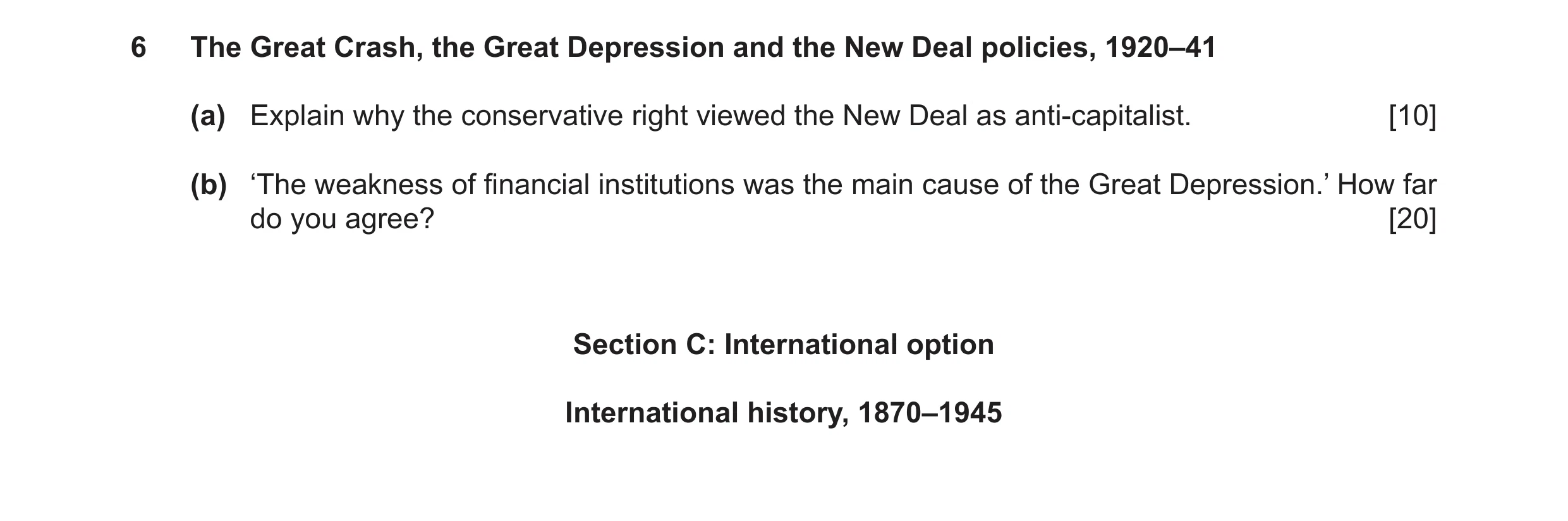
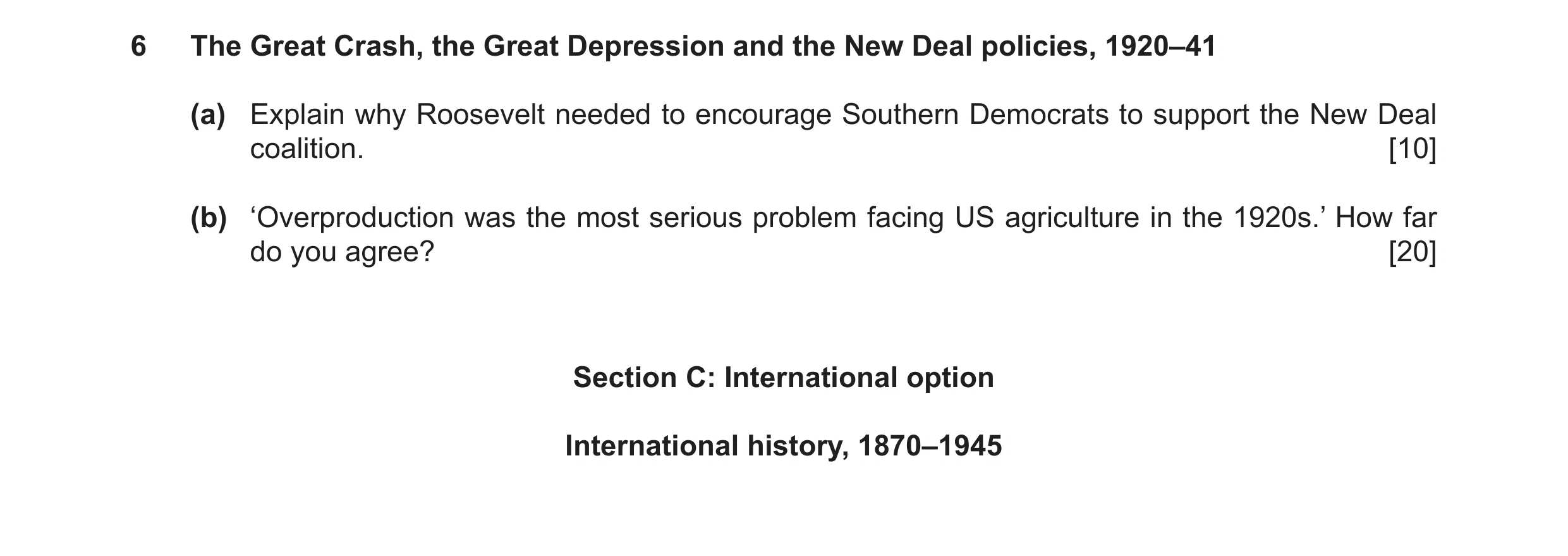 5 / 6
5 / 6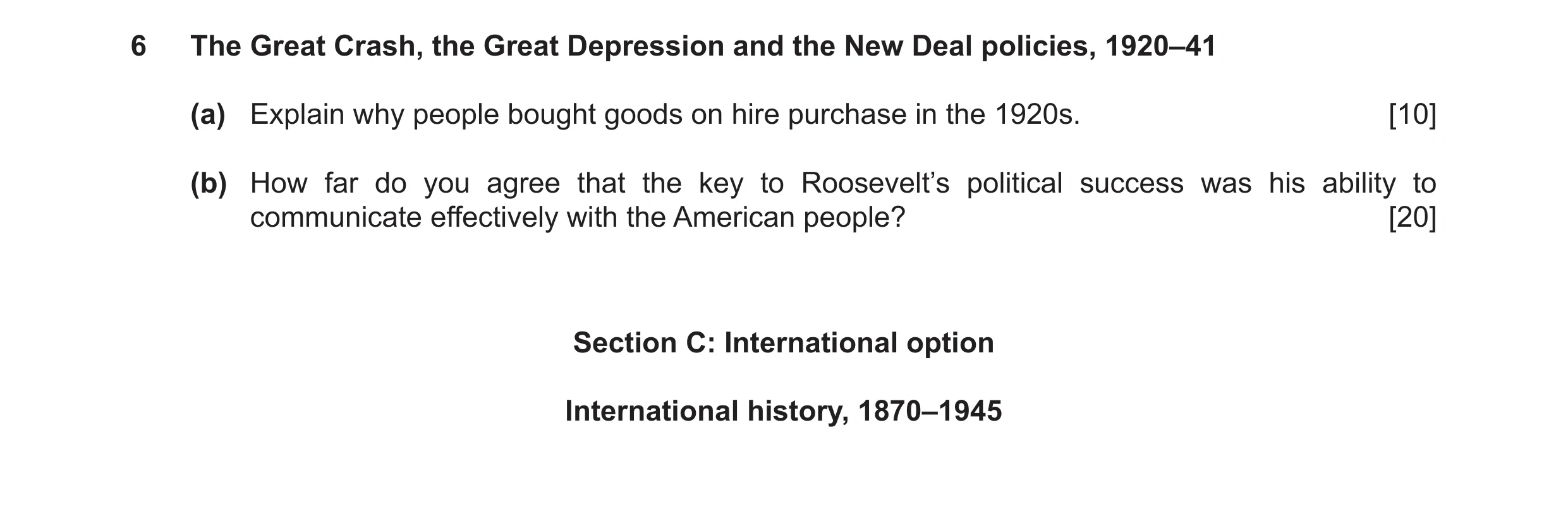
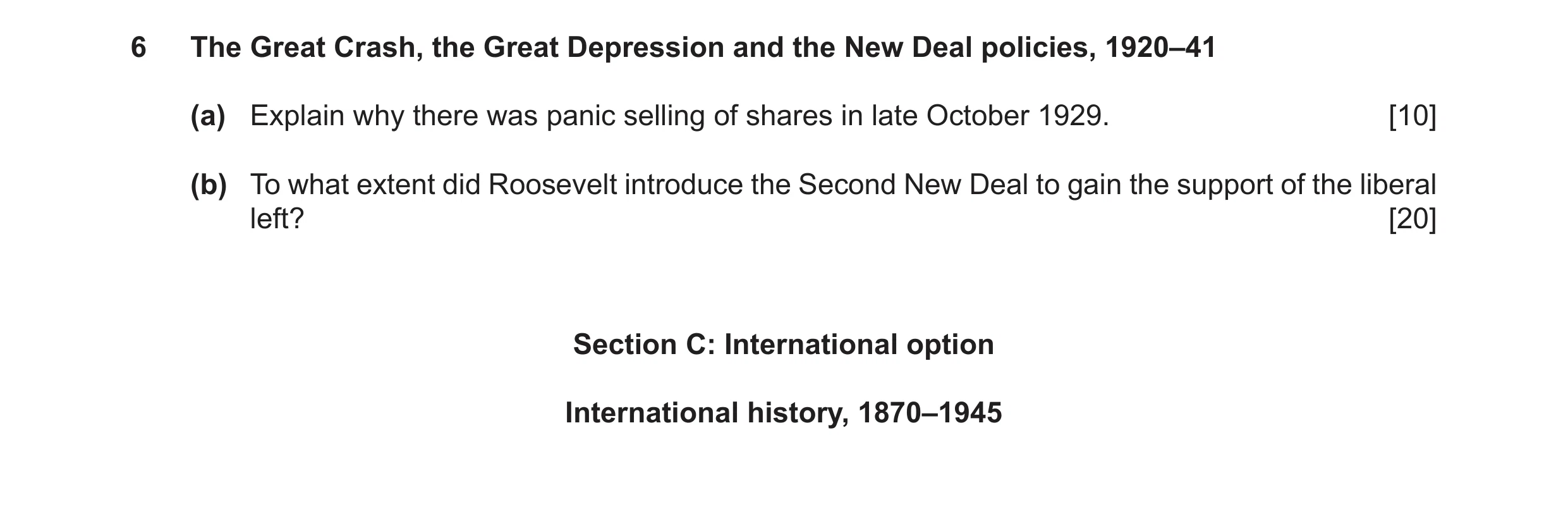 6 / 6
6 / 6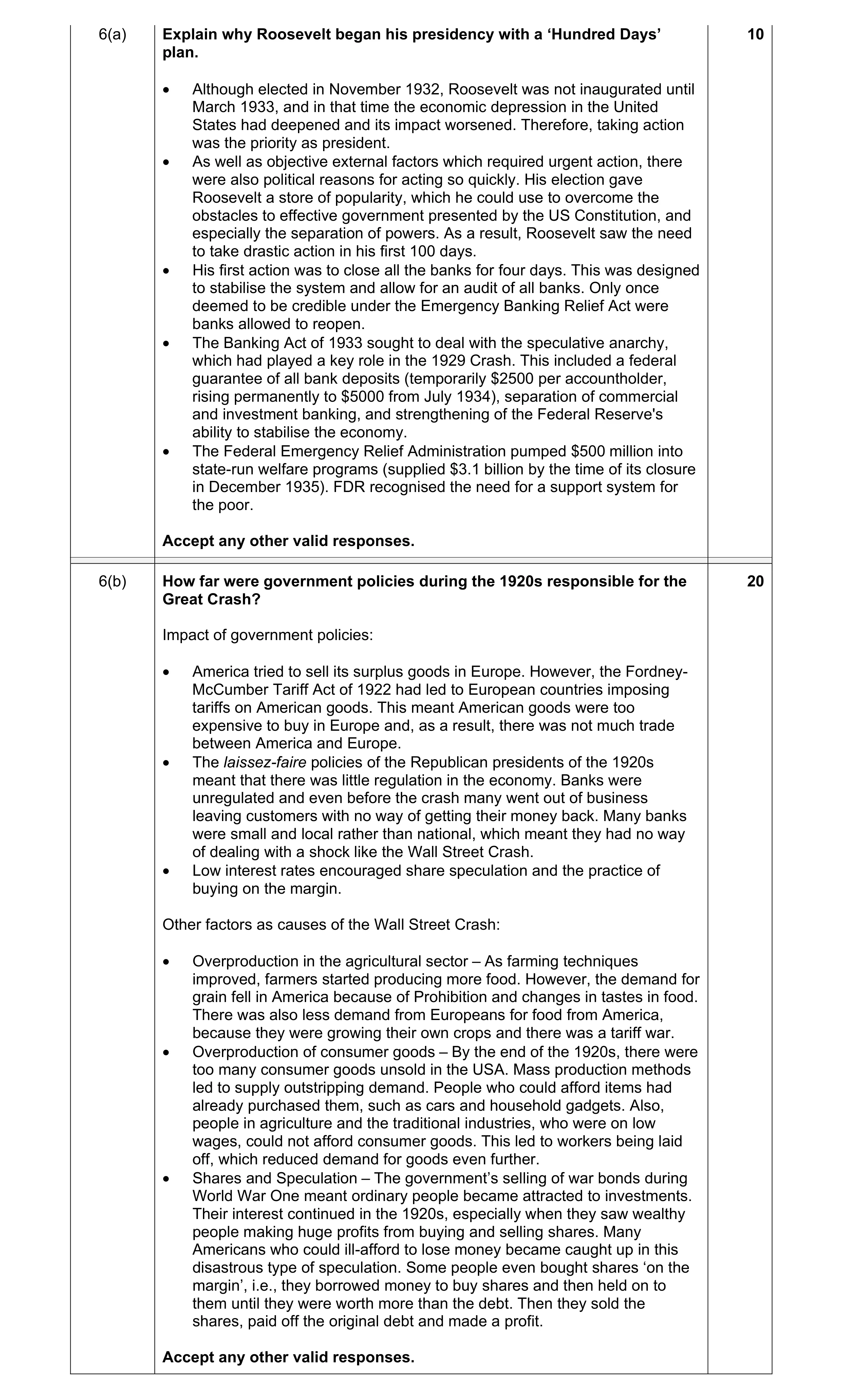 30
30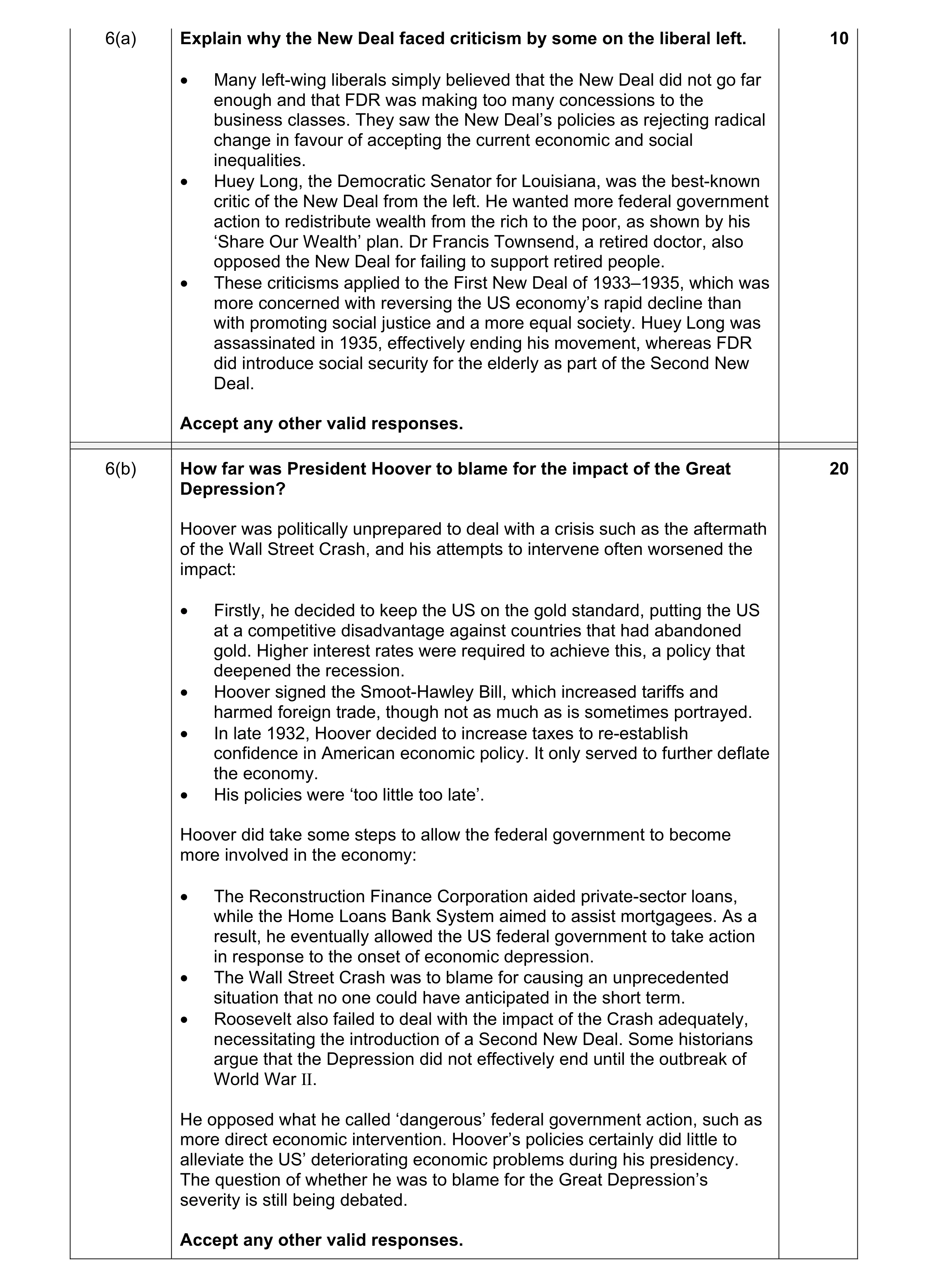 30
30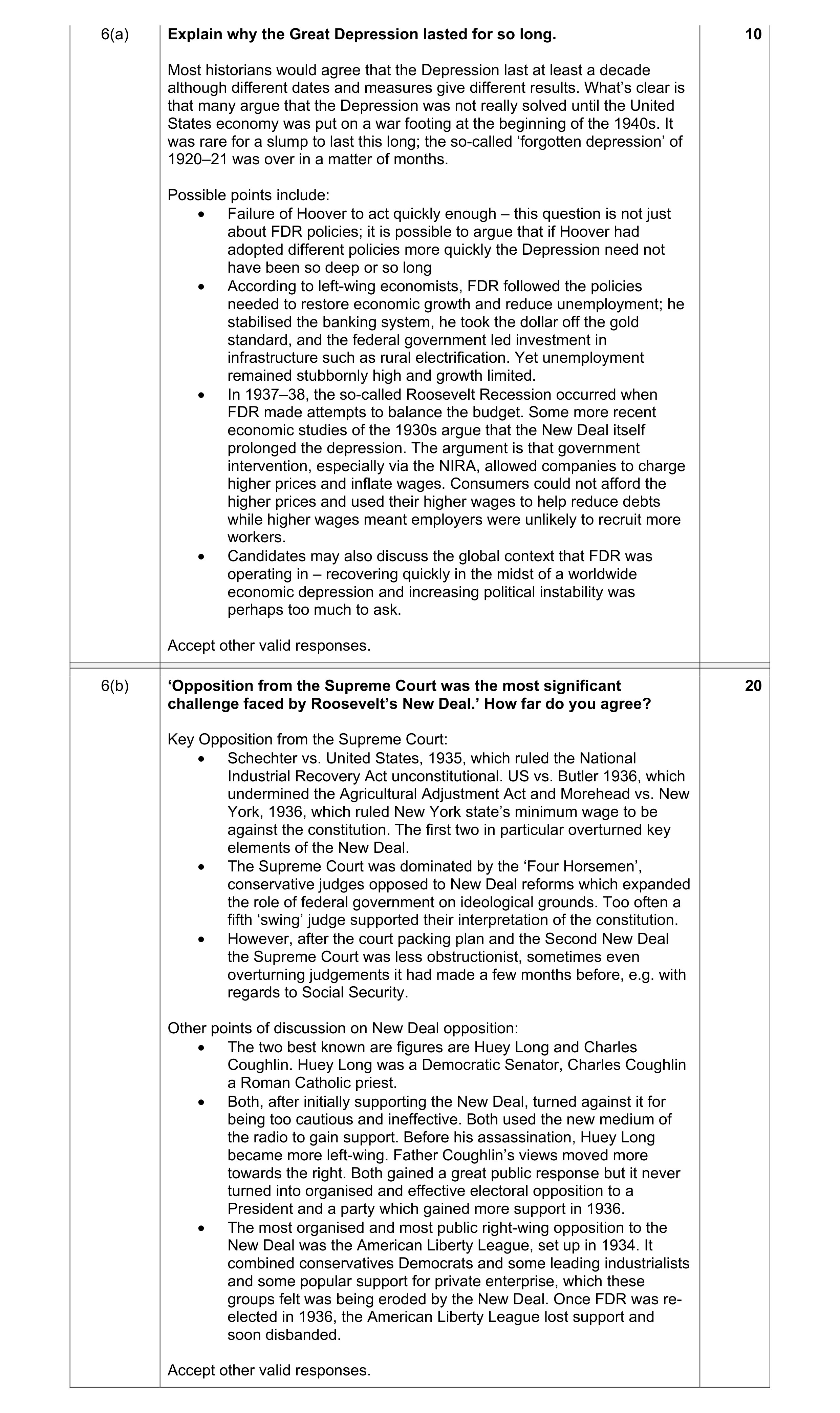 30
30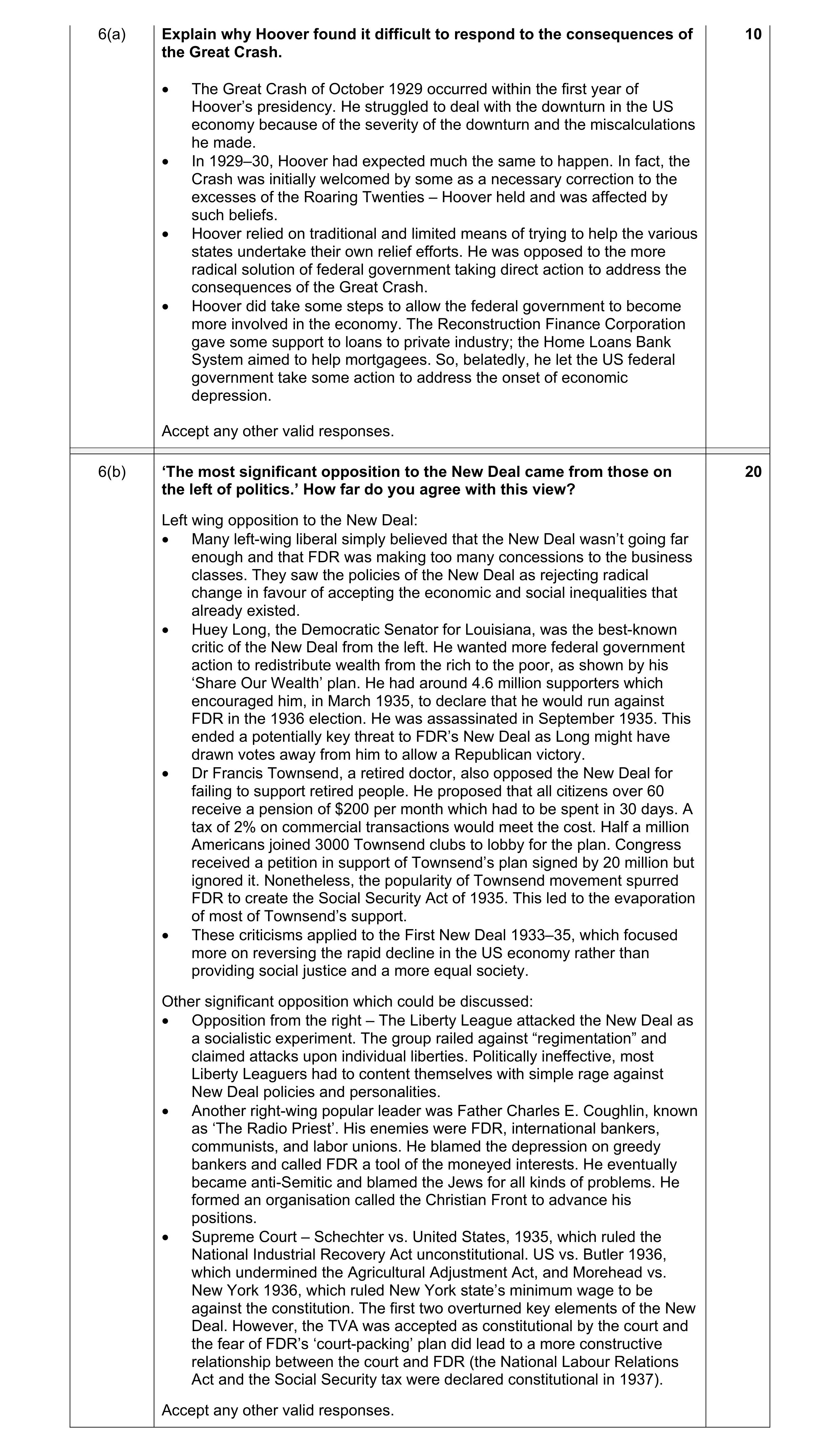 30
30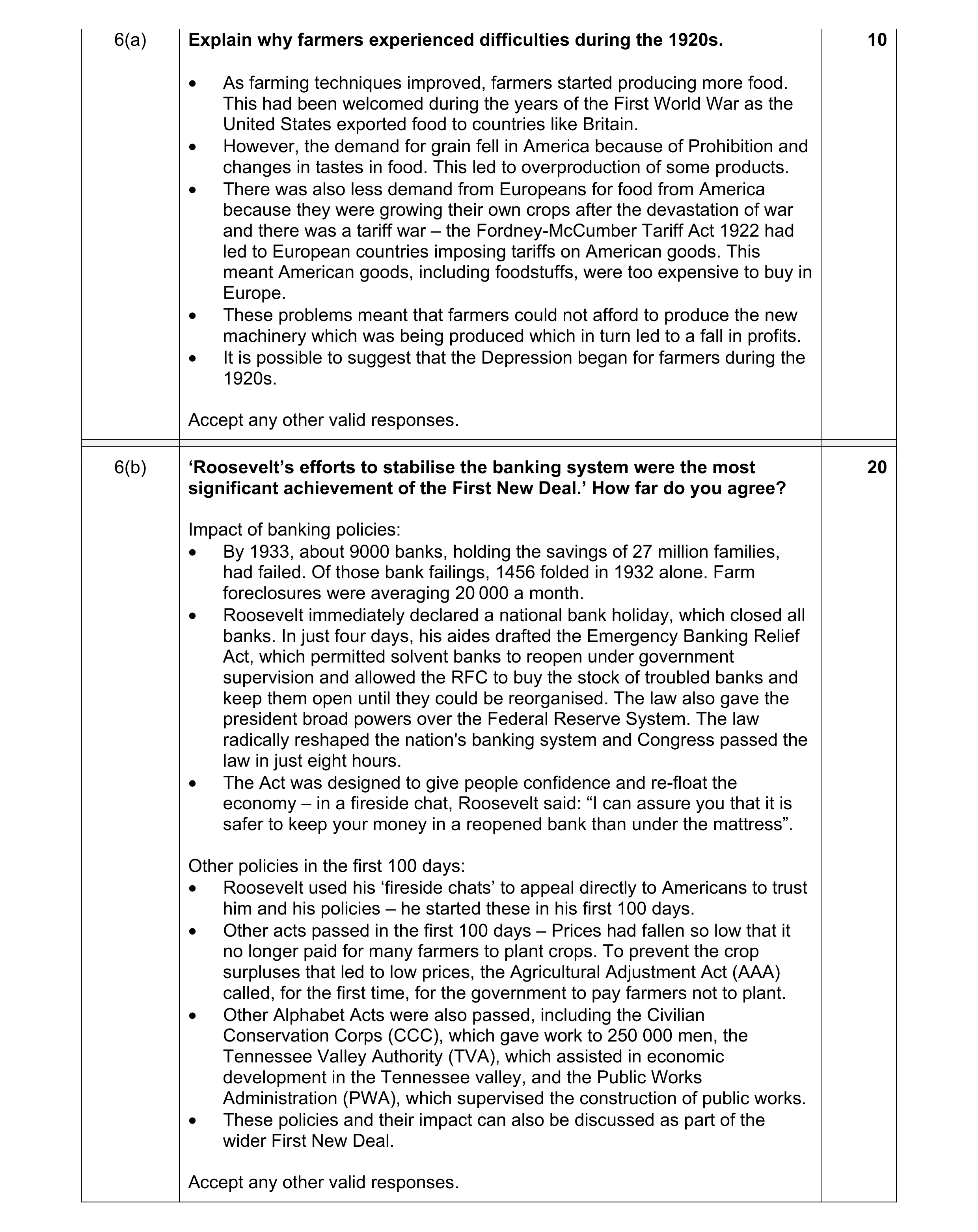 30
30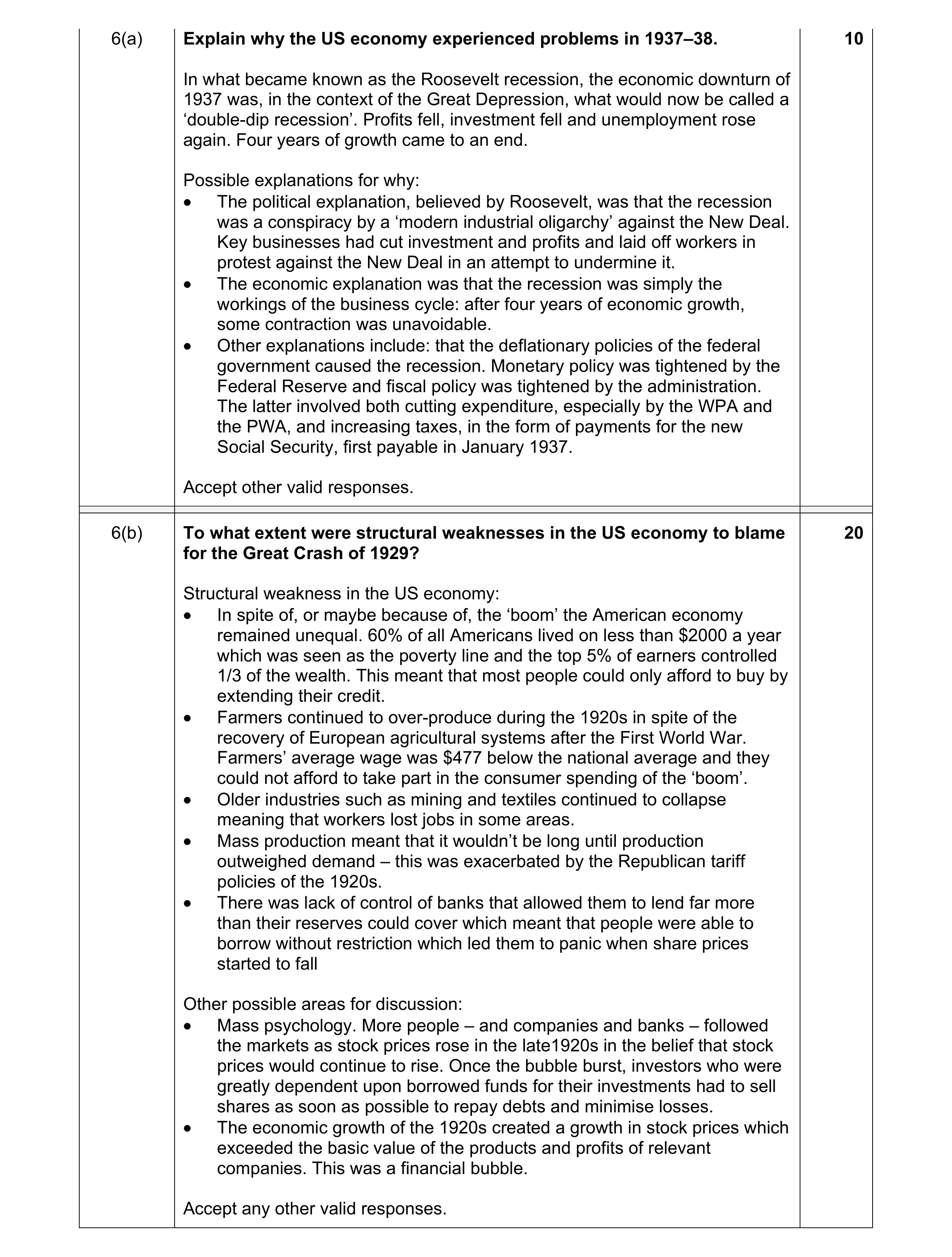 30
30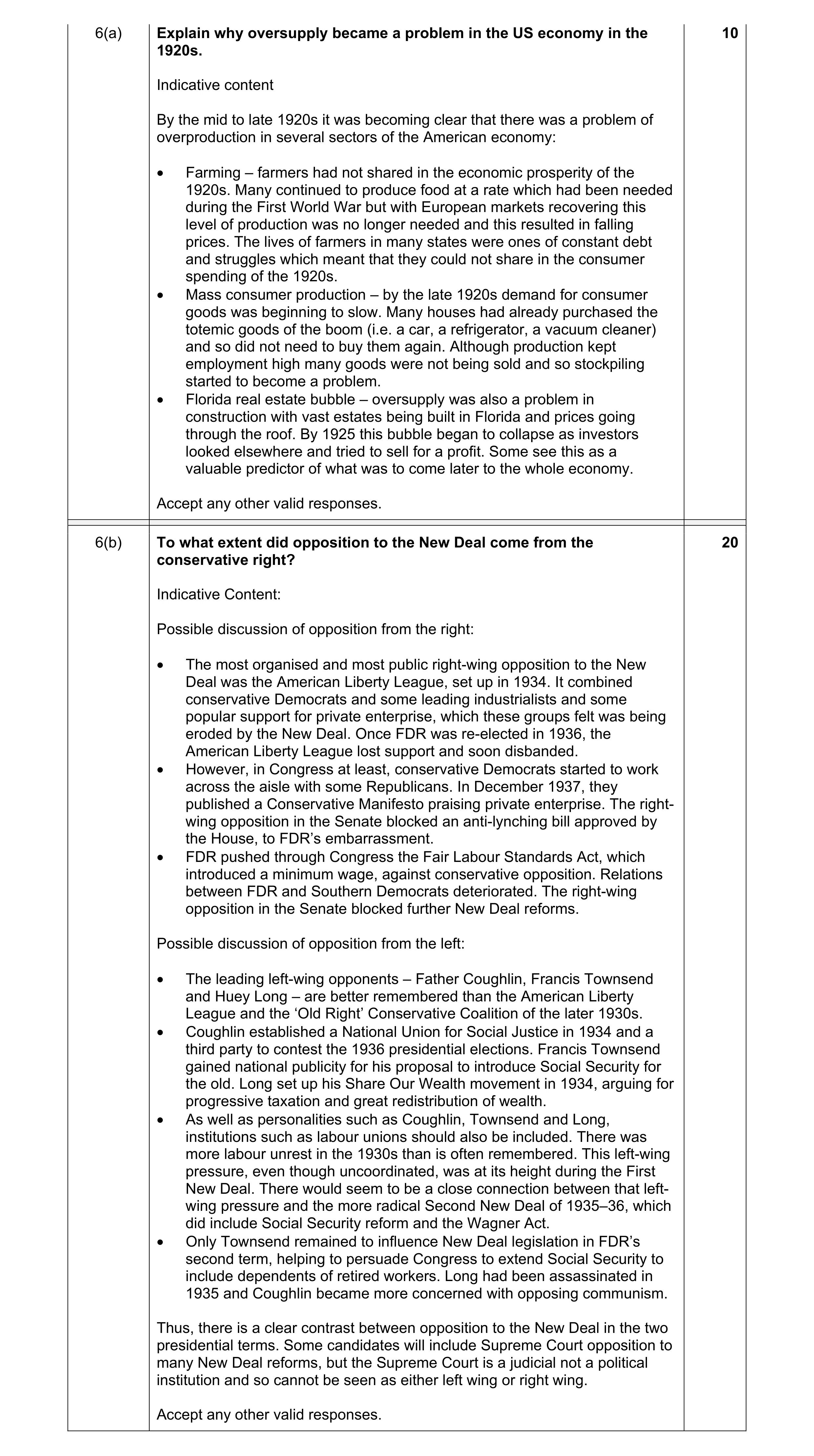 30
30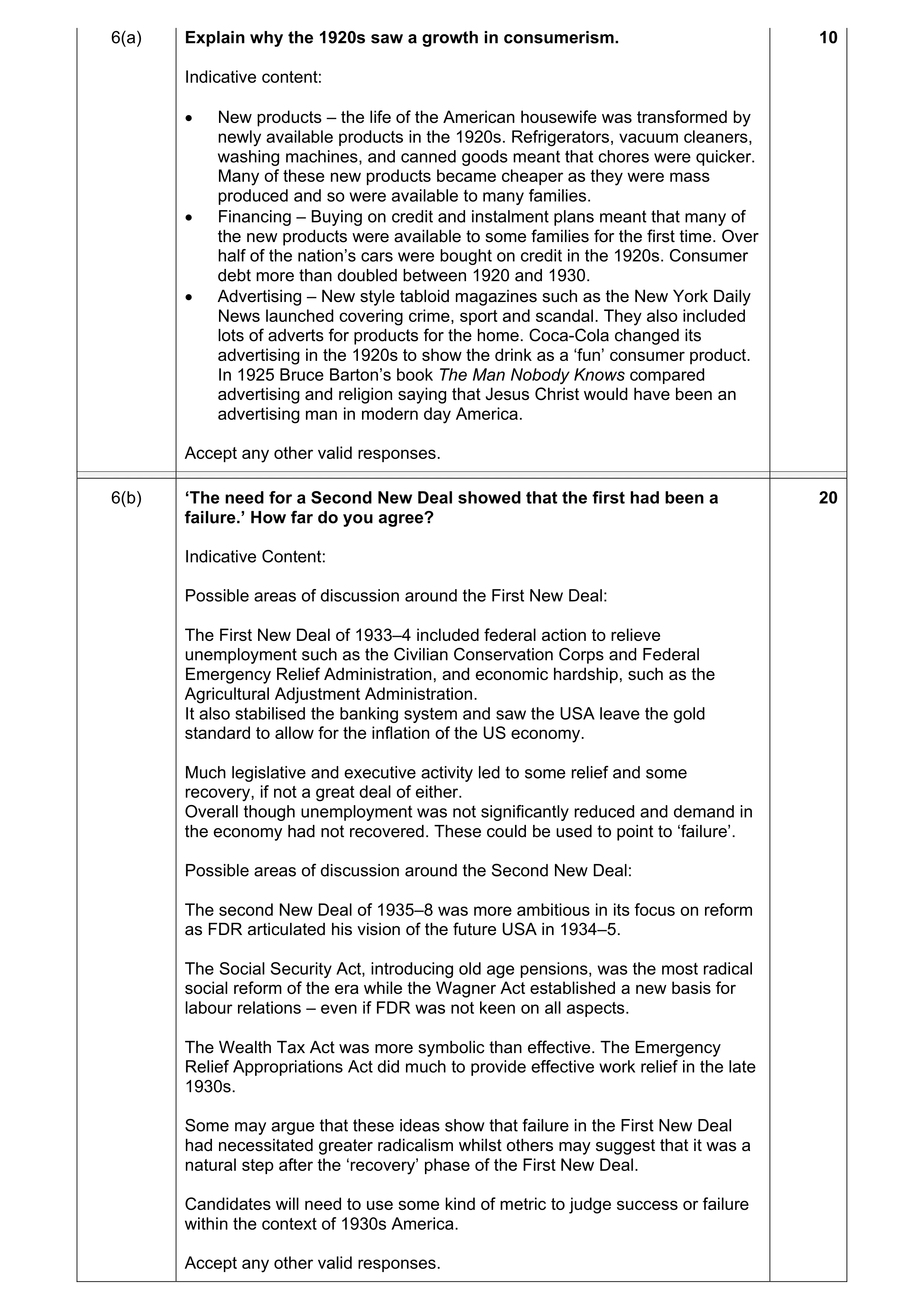 30
30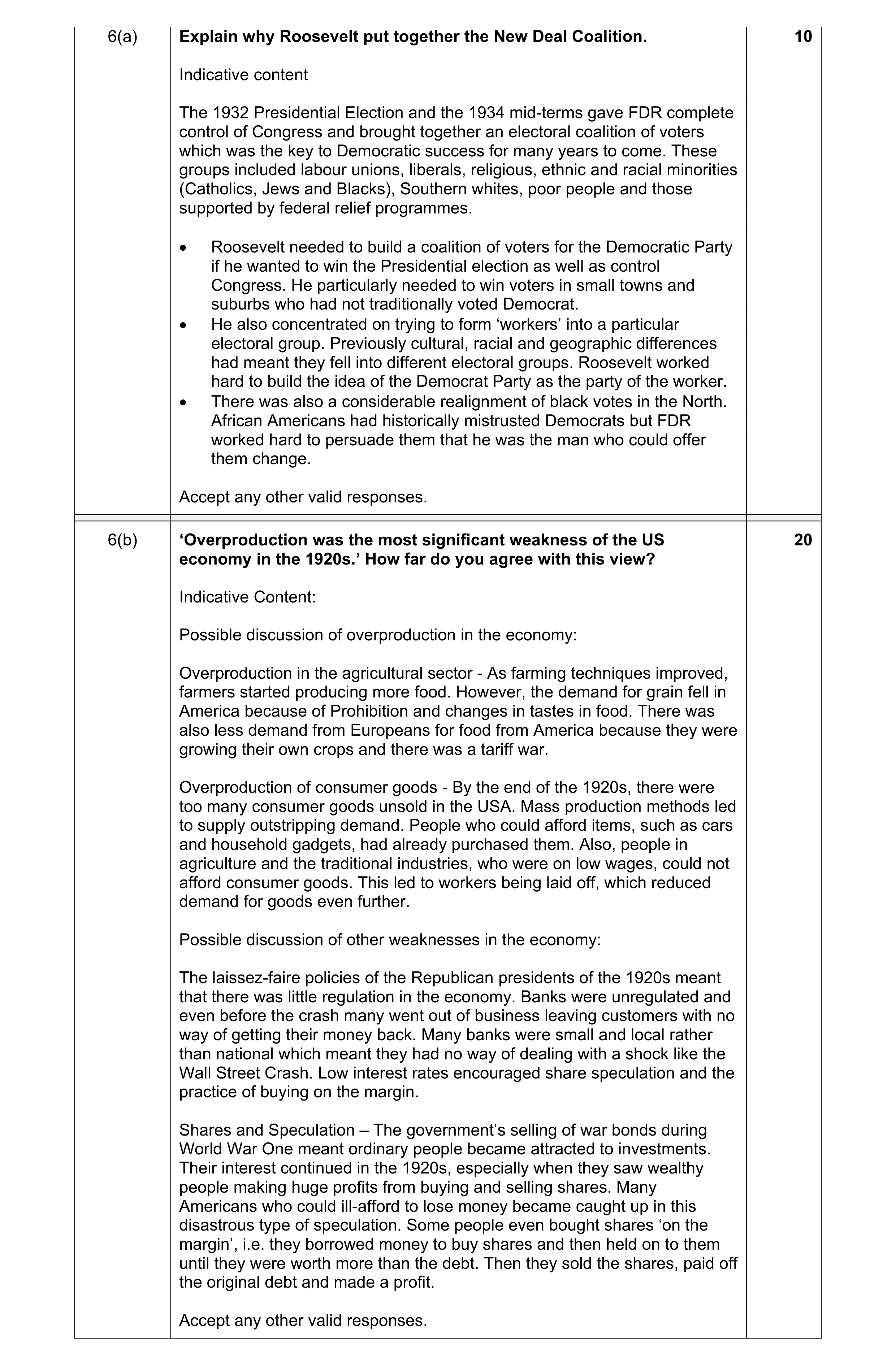 30
30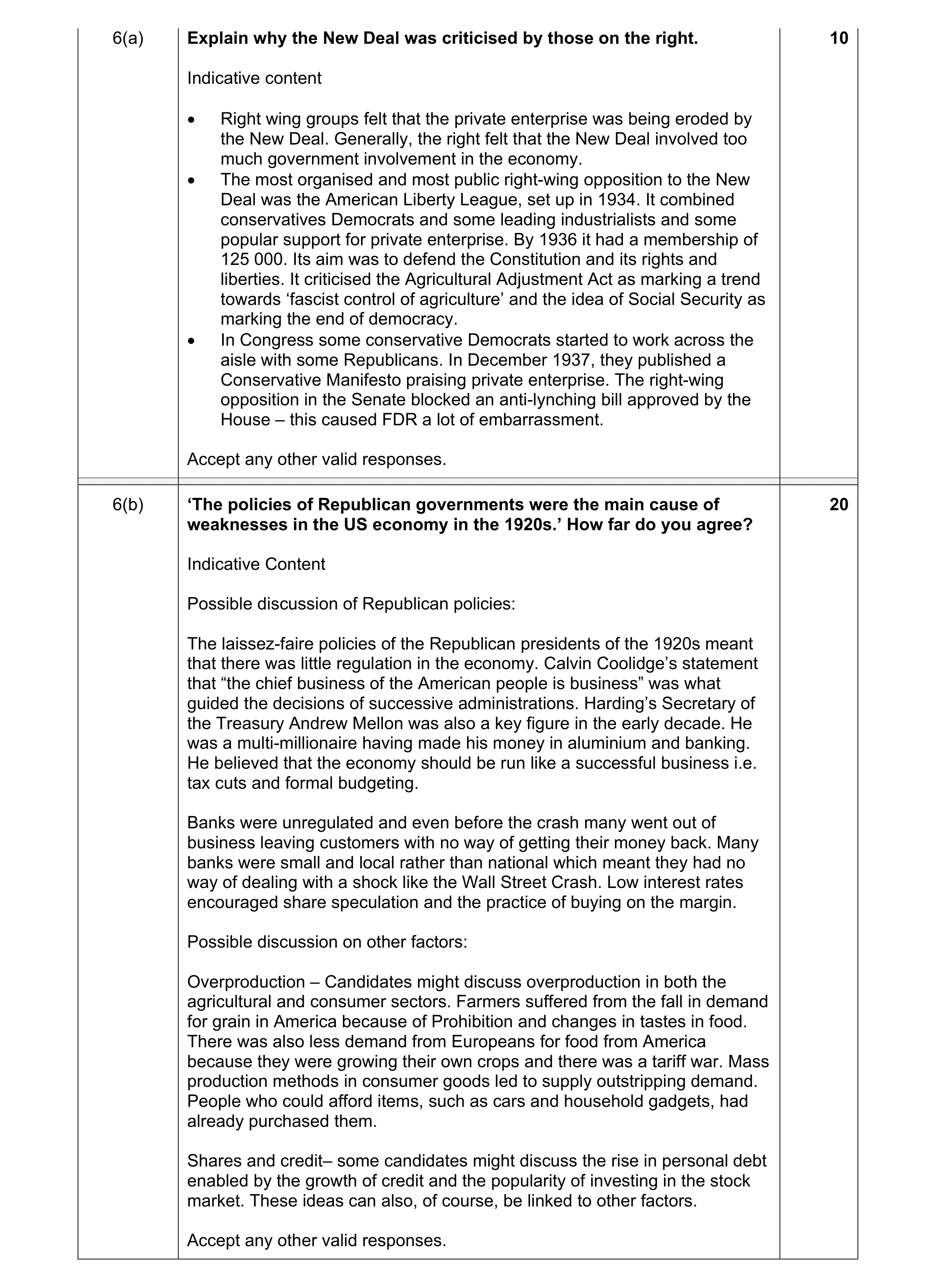 30
30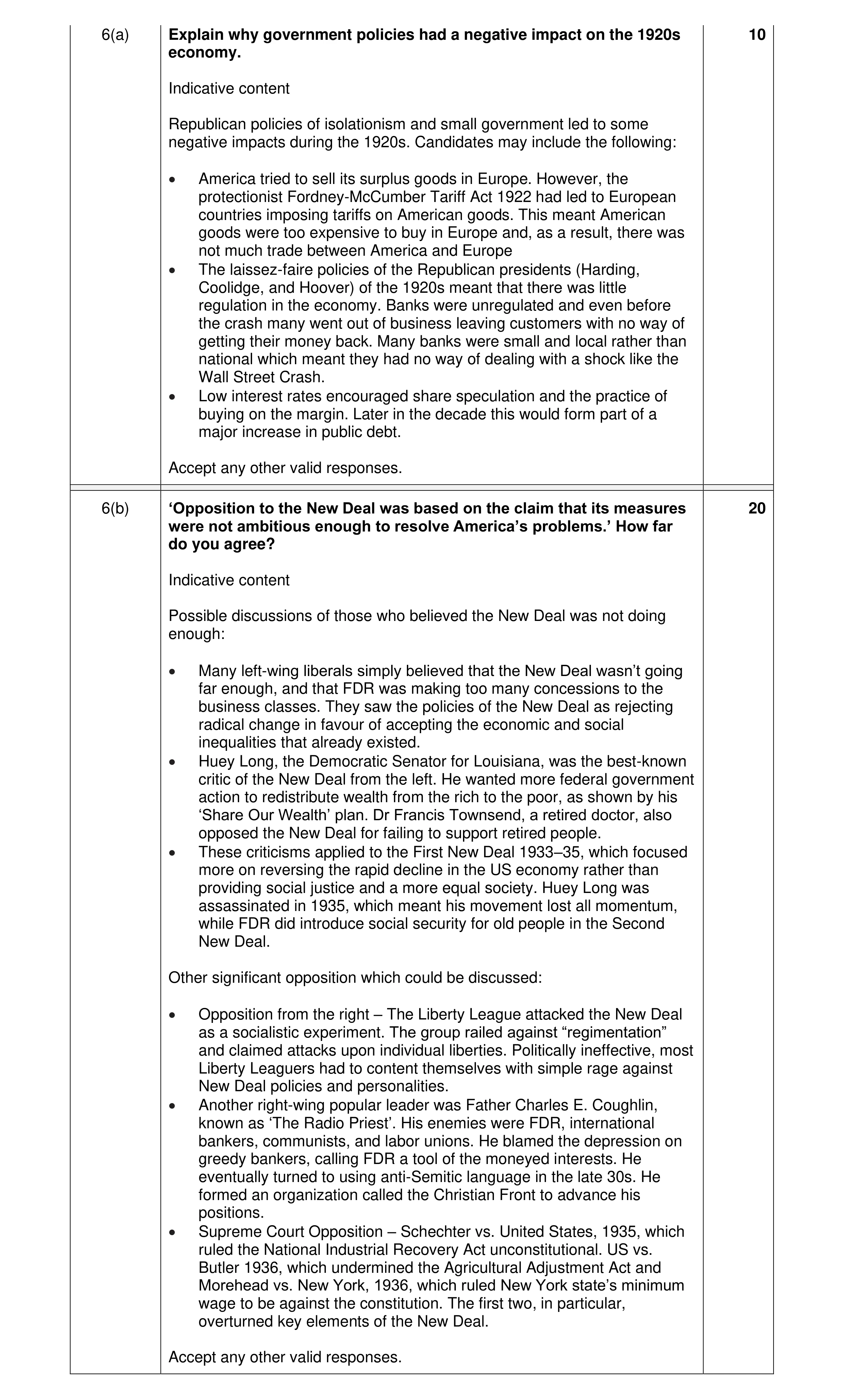 30
30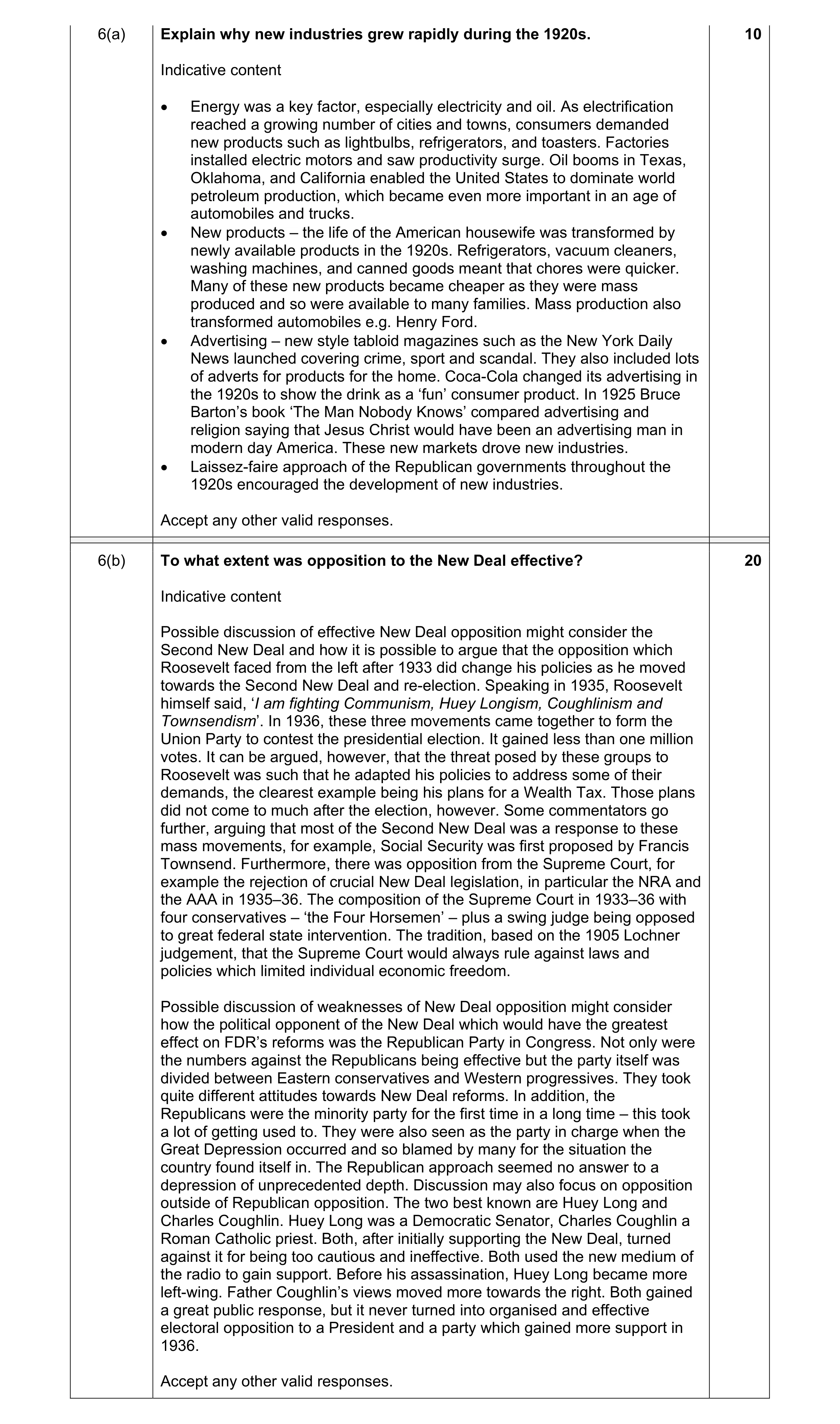 30
30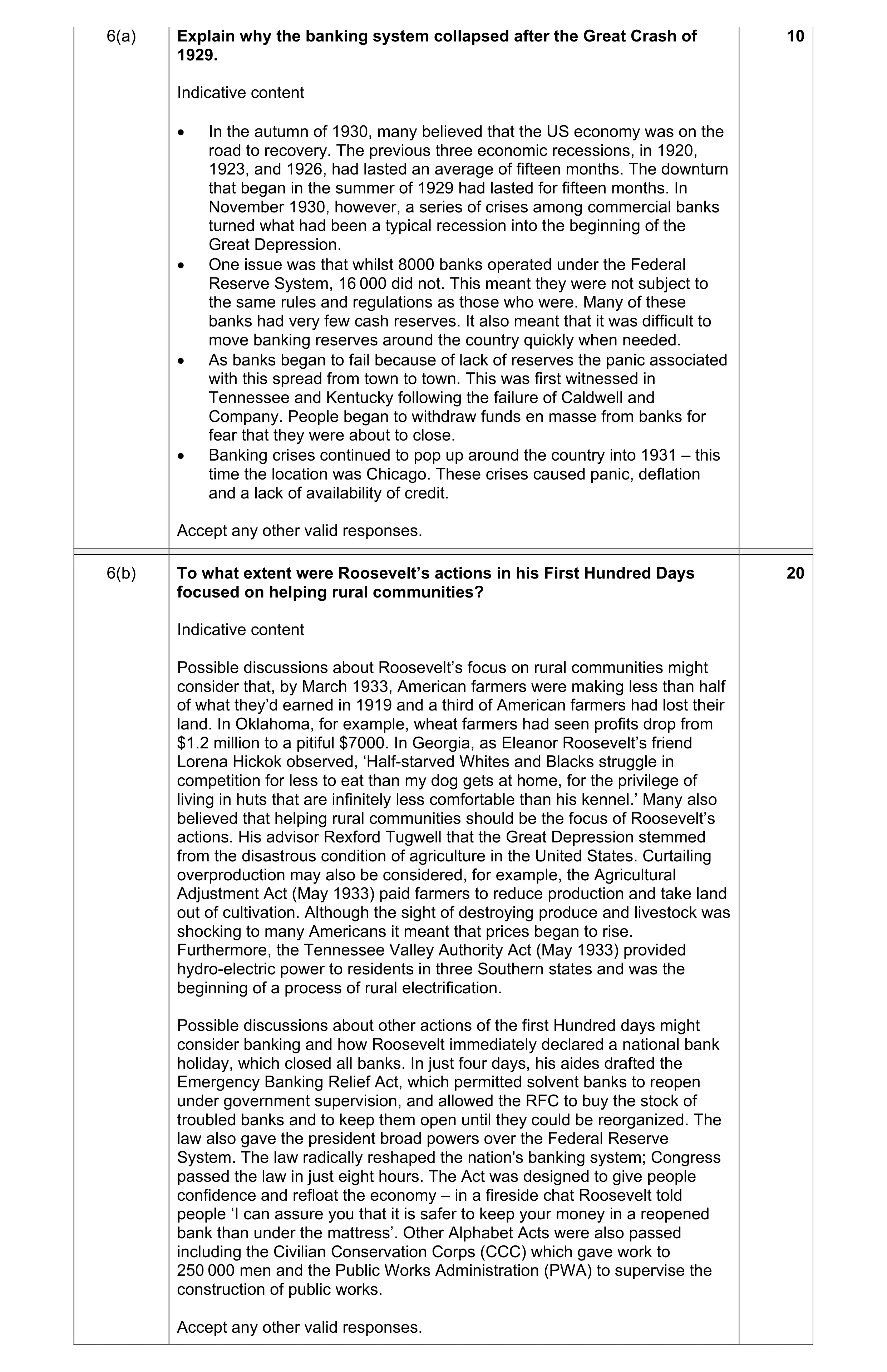 30
30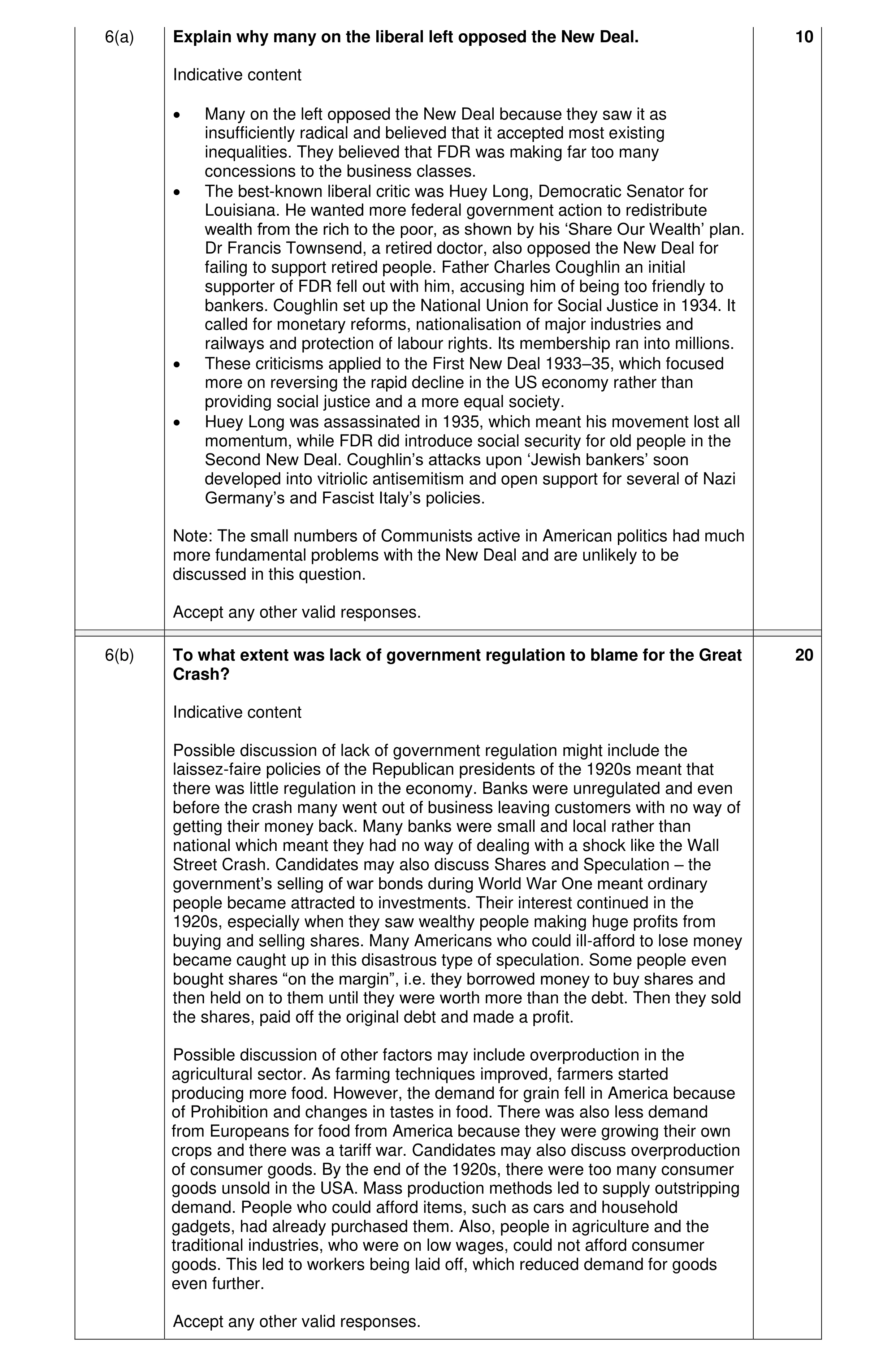 30
30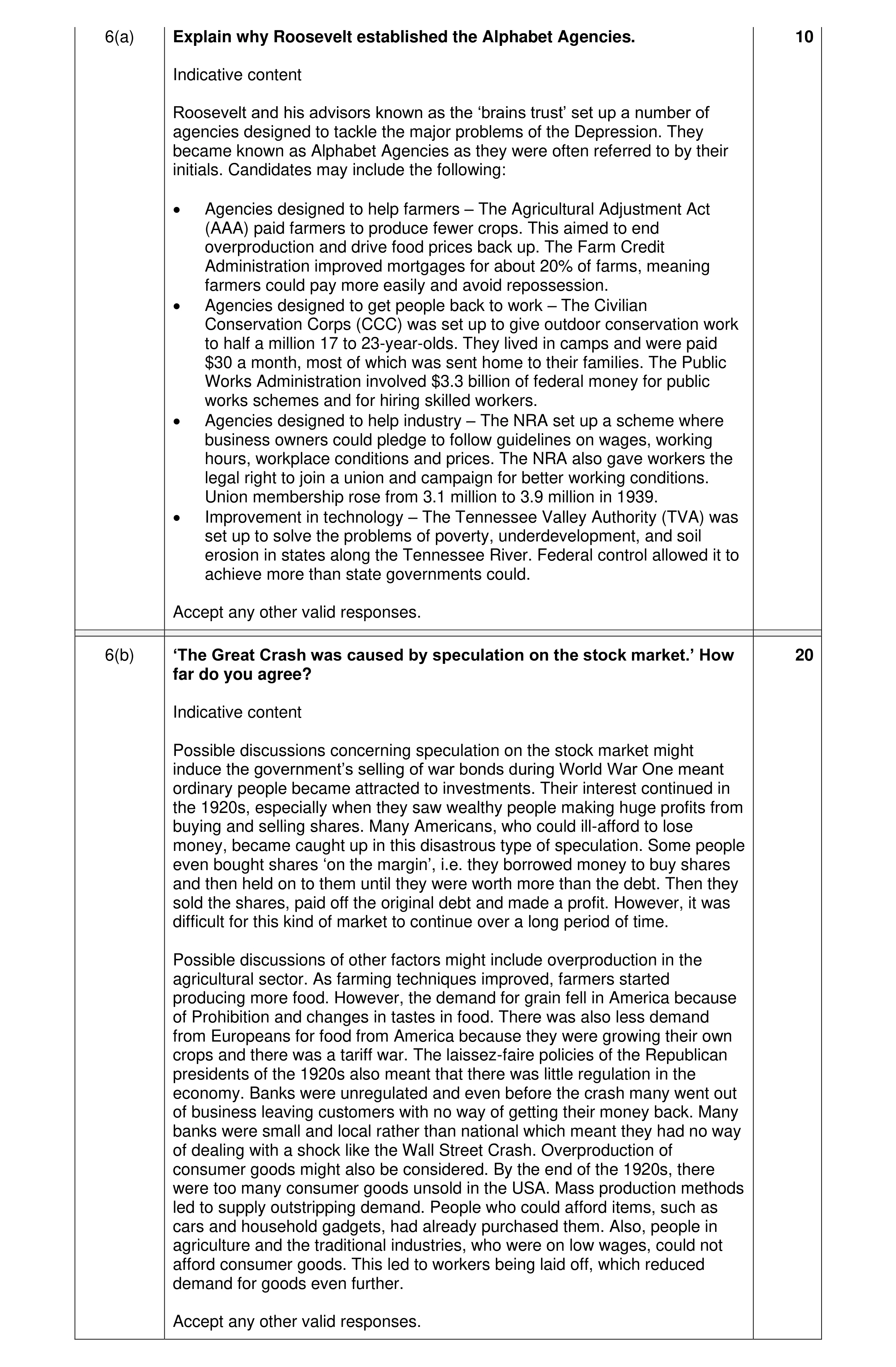 30
30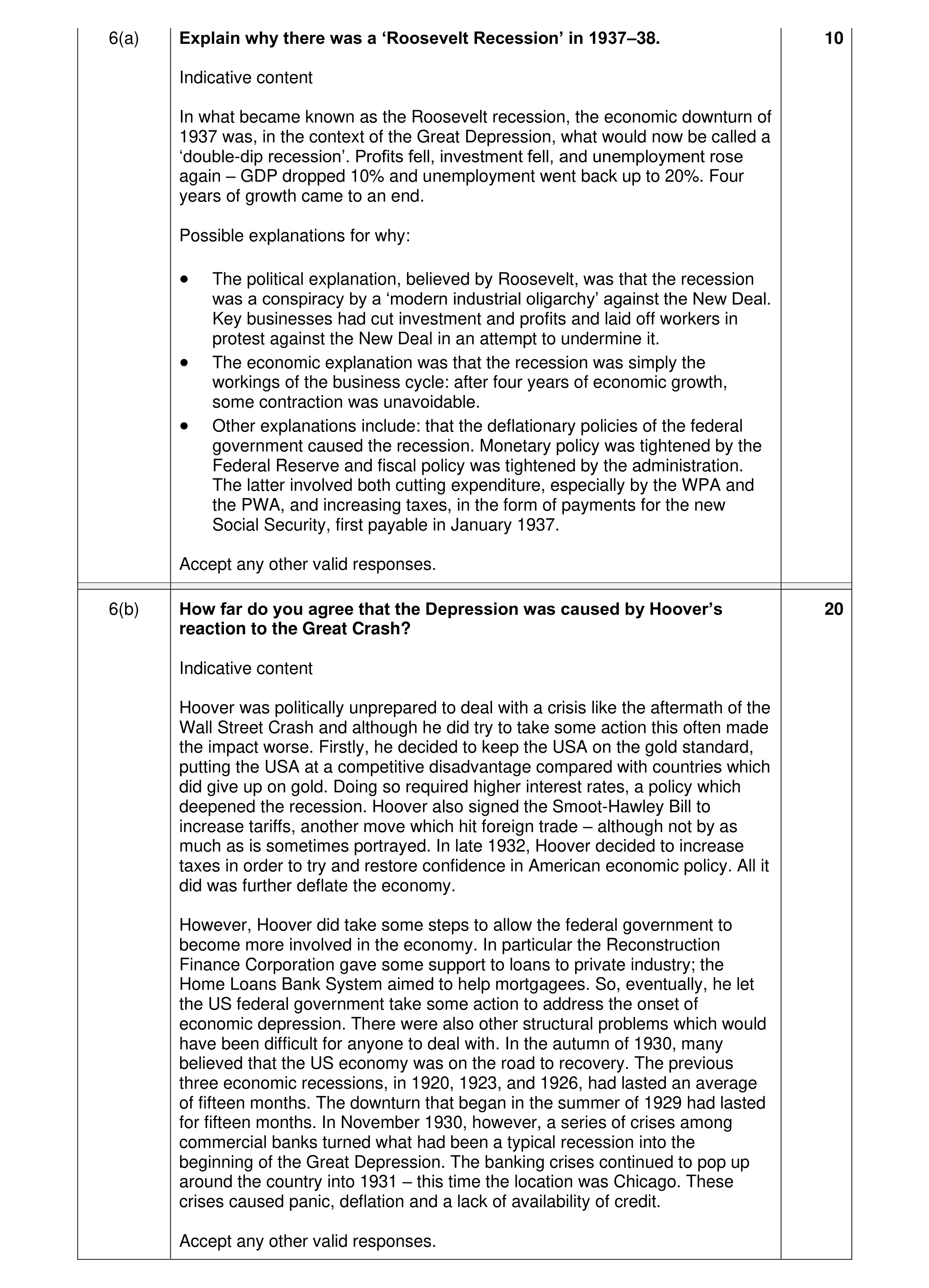 30
30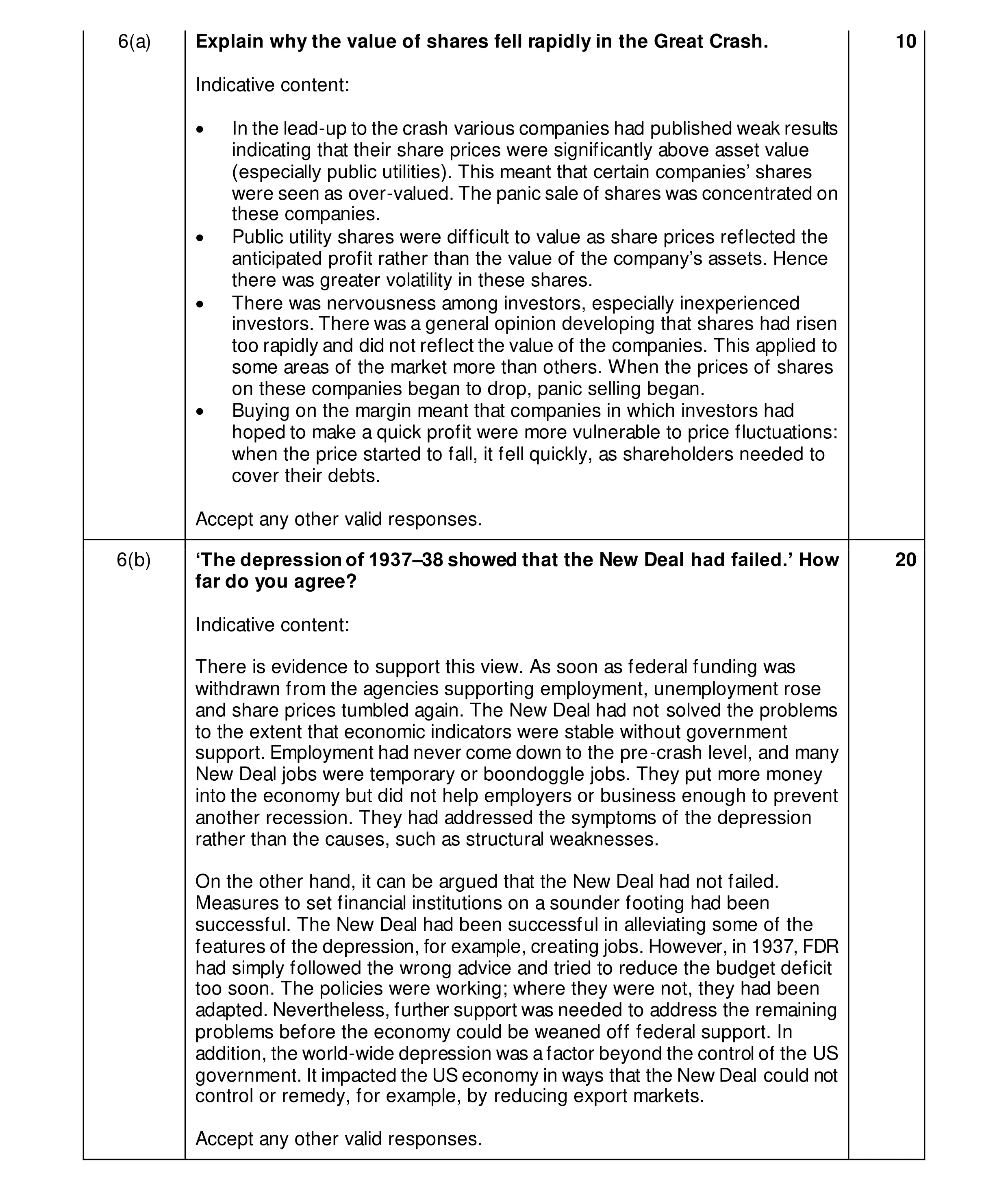 30
30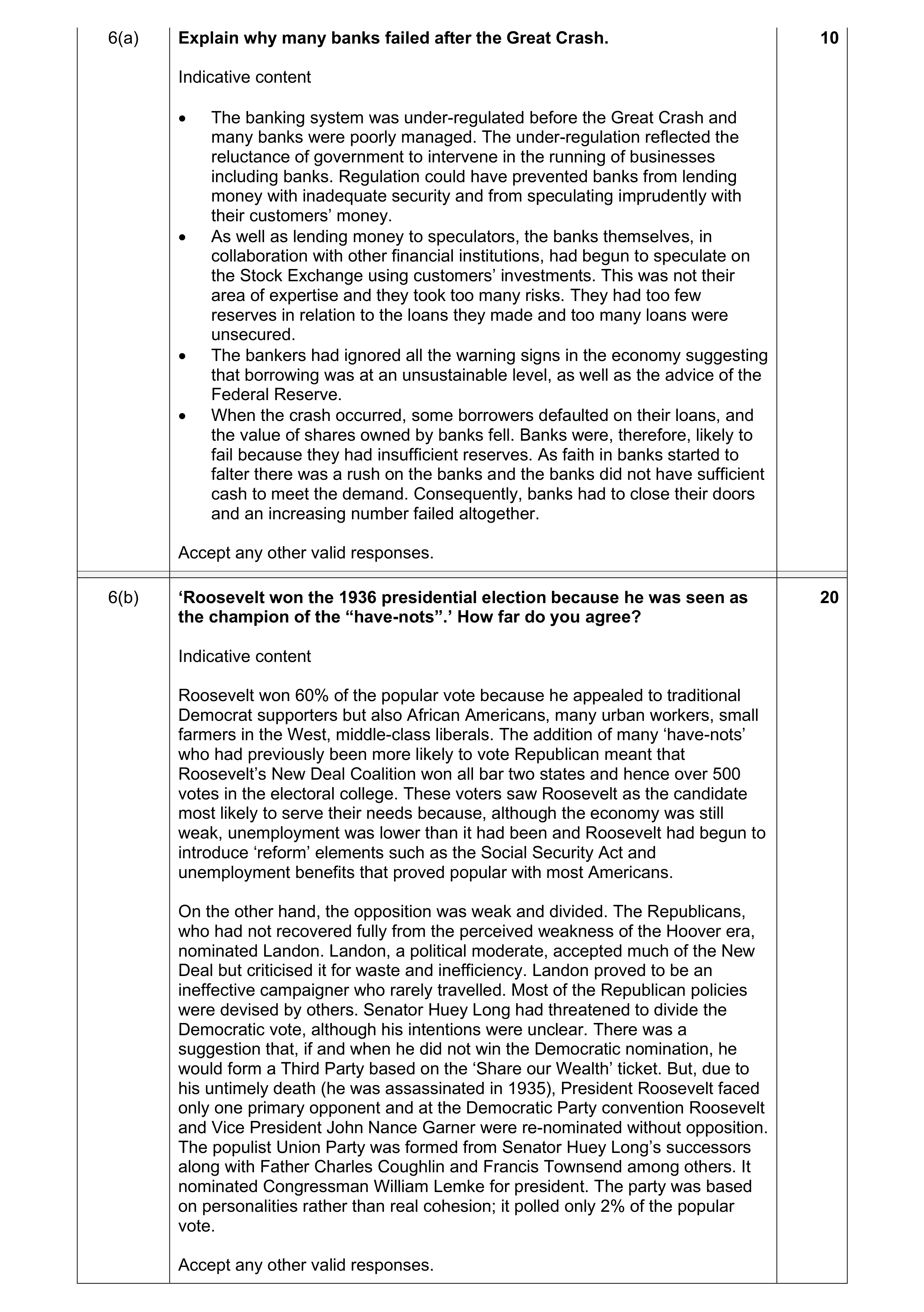 30
30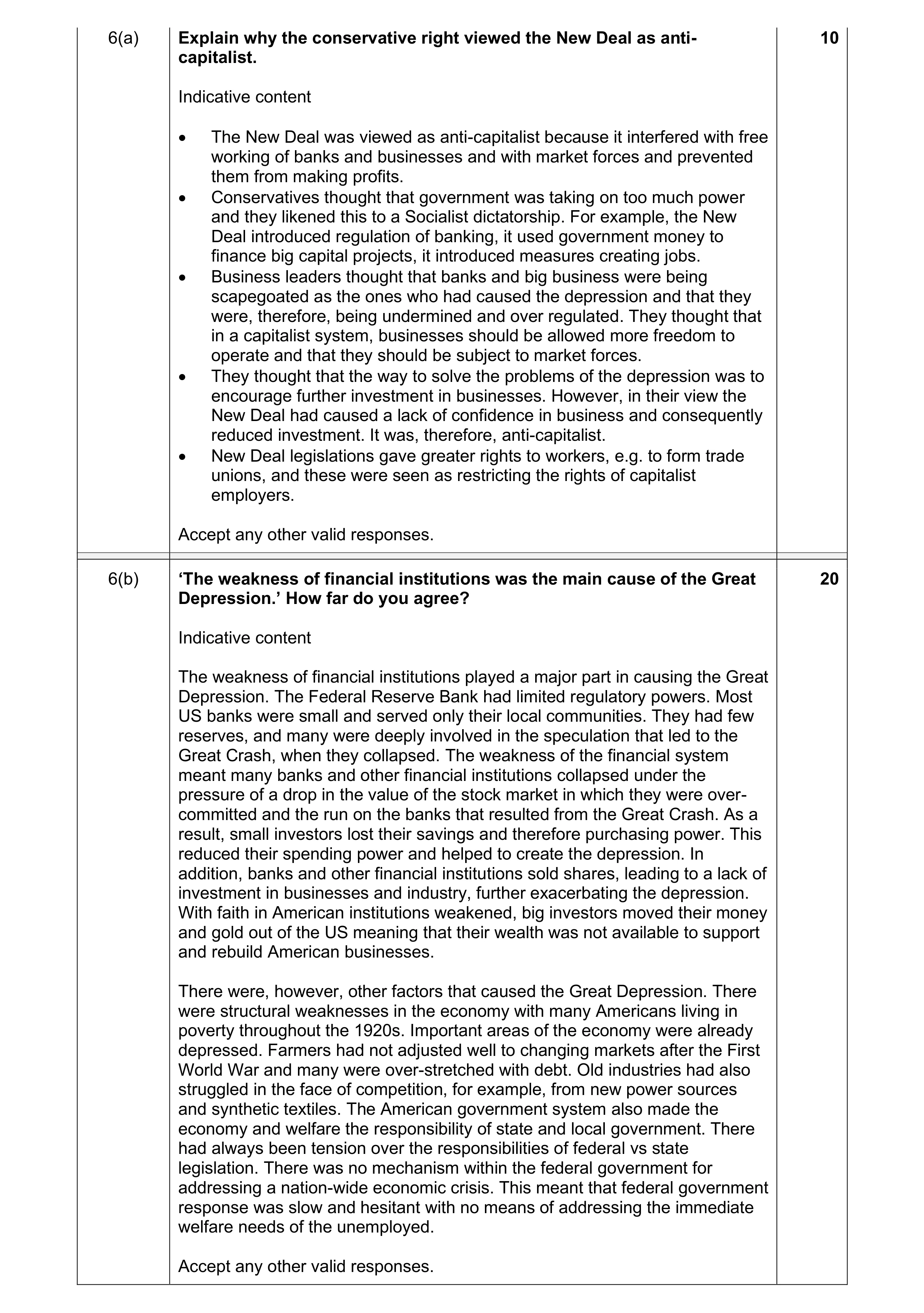 30
30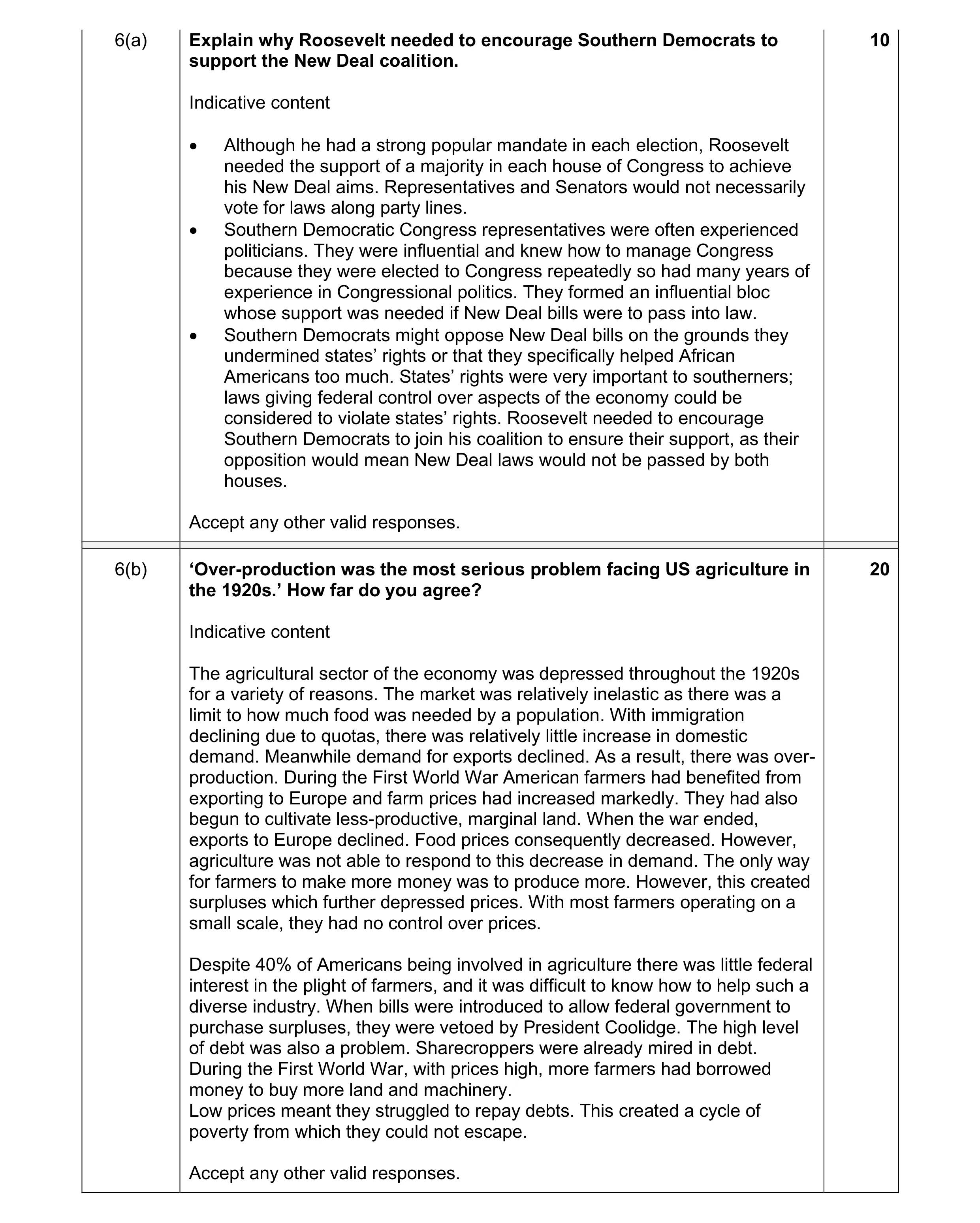 30
30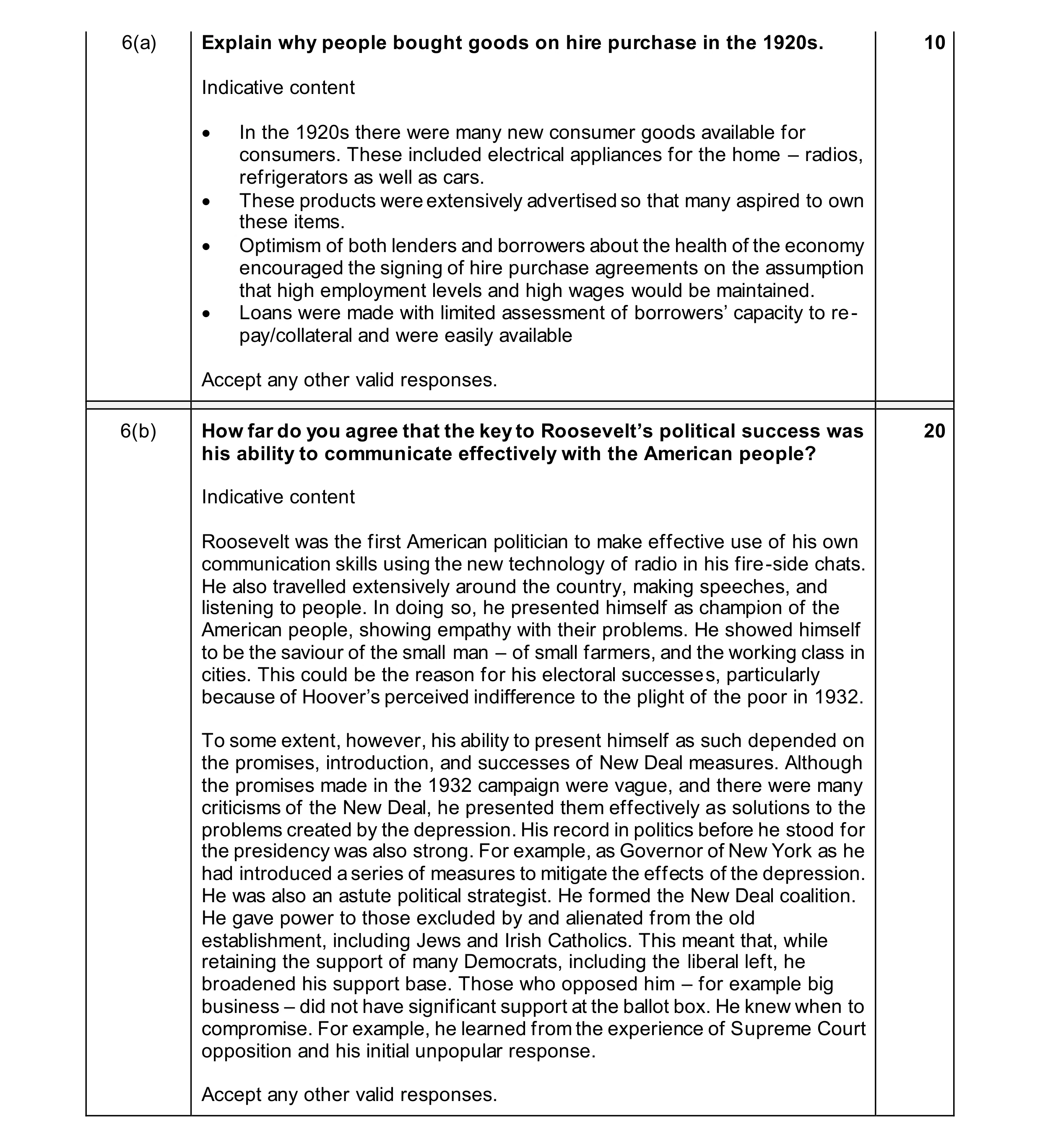 30
30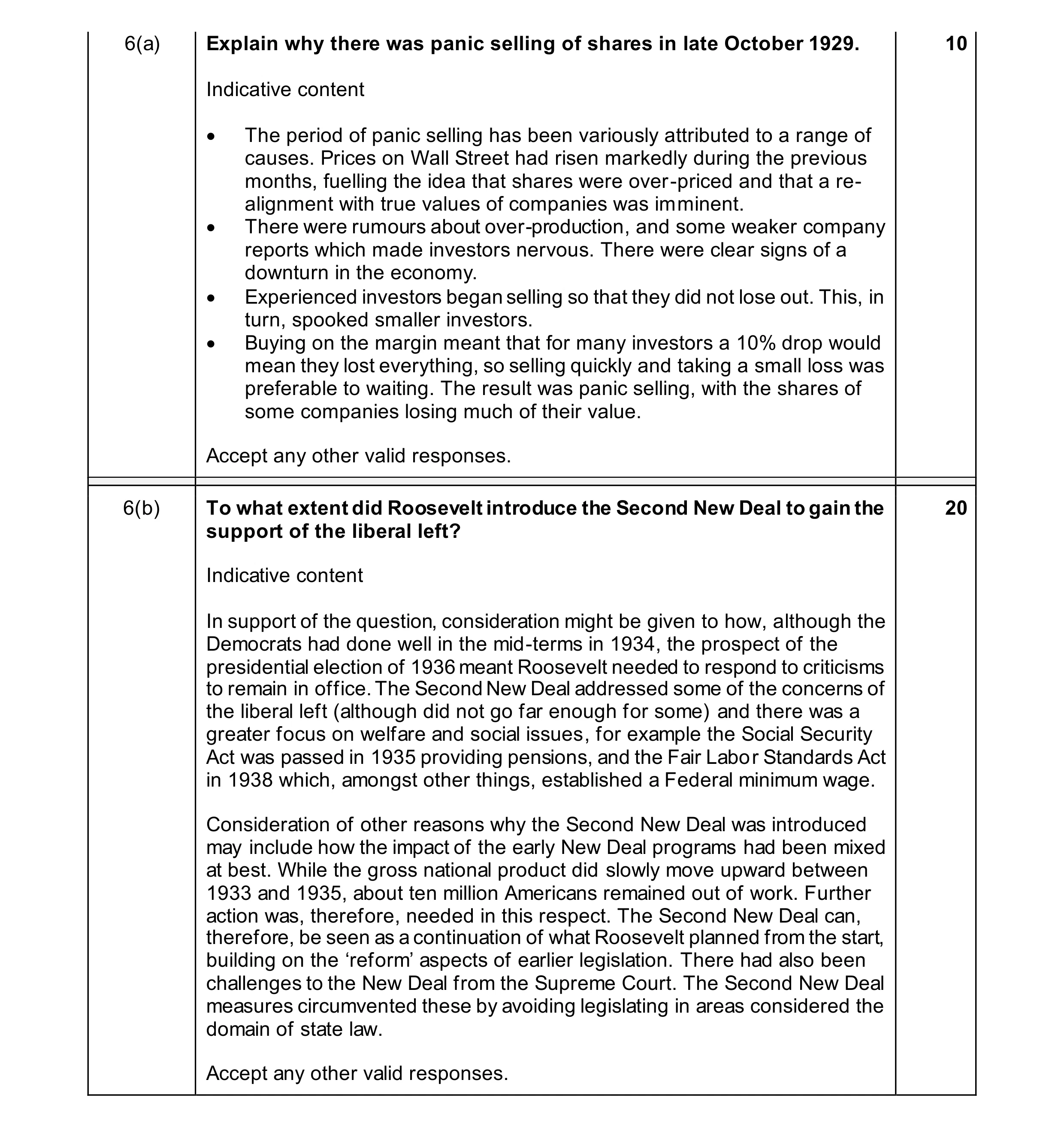 30
30