Questions as text
Q1 · Square Deal is a game for two players, played over a number of rounds 9694/31 May/June 2017
4 Square Deal is a game for two players, played over a number of rounds. In each round both players have a 4 × 4 grid onto which numbered tiles are placed. There are 34 tiles, numbered as follows: 0 0 1 1 1 2 2 2 2 3 3 3 3 3 4 4 4 4 4 4 5 5 5 5 5 6 6 6 6 7 7 7 8 8 At the beginning of a round the tiles are placed in a bag. The players then take turns to withdraw two tiles at a time from the bag, at random. At each turn, one of the two tiles must be placed on the player’s own grid and the other one placed on the opponent’s grid. Each player attempts to create rows and columns of four numbers that add up to a total that is a square number, and tries to prevent the other player from doing so. The round continues until both grids are full. A player’s score for the round is the sum of the highest value row and the highest value column. • The value of a row or column that adds up to a total which is a square number is the sum of the squares of the individual numbers. • A row or column that does not add up to a square number has a value of zero. For example, in the grid below, two rows add up to totals which are square numbers: 4 + 1 + 7 + 4 = 16 and 2 + 5 + 0 + 2 = 9. The values of these rows are 42 + 12 + 72 + 42 = 82 points and 22 + 52 + 02 + 22 = 33 points. There are no columns with totals which are square numbers. The player’s score for this round is 82 (highest value row) + 0 (highest value column) = 82 points. 7 3 3 5 4 1 7 4 8 5 2 4 2 5 0 2 The game is normally won by the first player to reach an overall total of 900 points. However, a player whose grid in any round has all four rows and all four columns adding up to totals which are square numbers is said to have made a Square Deal. No points are scored in this round: instead, the player making the Square Deal wins the game immediately. Russell and Gordon are playing a game of Square Deal. Russell’s grid at the end of the first round was as follows: 5 7 0 8 4 6 3 3 1 7 6 2 4 5 8 4 (a) What was Russell’s score in the first round? [3] In a later round, Gordon had a chance of making a Square Deal on the final turn of the round. He knew that the four tiles still in the bag were 0, 2, 4 and 7, and his grid was as follows: 4 6 3 3 4 5 7 5 1 2 1 3 2 6 5 However, when he took two of the tiles from the bag, the best score that he could make on his own grid was 158 points, made up of 74 points for the highest value row and 84 points for the highest value column. (b) Which two tiles did Gordon take from the bag on the final turn of this round? Explain your answer. [3] (c) (i) What is the highest possible score that a player could achieve in a single round? [3] (ii) Draw a completed grid that would produce this score. [2] In the round currently in progress the two grids are as follows: 5 0 3 5 4 4 2 3 8 6 7 2 7 8 6 3 1 7 1 4 3 0 2 5 4 5 2 6 Russell’s grid Gordon’s grid It is Russell’s turn, and he has taken tiles numbered 1 and 5 from the bag. (d) Taking into account the four tiles left in the bag ahead of Gordon’s turn, explain in detail why Russell should place the 1 on his own grid and the 5 on Gordon’s grid and on which squares the tiles should be placed. [4]
15 marks
Mark scheme: 4(a) 249 (points) (12 + 72 + 62 + 22 and 72 + 62 + 72 + 52) 3 If 3 marks cannot be awarded, award 1 mark for each of the following: • Identification of all three lines (and no others) that add up to square number totals: (4,6,3,3) (1,7,6,2) and (7,6,7,5). • Correct calculation of the value of at least one of the three lines: 70, 90 and 159 points respectively. 4(b) 2 and 4 with justification 3 Award 1 mark the correct pair chosen Award 1 mark each for recognition of the following: • 0 would have allowed him to make a Square Deal. • 7 would have produced a column value of 90 points (or “greater than 84”) 4(c)(i) 352 (82 + 82 + 72 + 22 and 82 + 72 + 72 + 32) 3 Award 2 marks for an answer of 340 or more. (340 fails to appreciate that one of the 8s can be used in a row and a column, and is made up of 82 + 82 + 72 + 22 and 72 + 72 + 62 + 52.) Award 1 mark for sight of 181 or identification of (8,8,7,2) as the best possible line OR for a row and a column that each add up to 25. 4(c)(ii) Award 1 mark for any complete grid that does not contain any numbers that 2 would not be allowed (e.g. three 0s, four 1s, one or more 9s etc.). Award 1 mark for any grid (even if incomplete) that would produce 352 or the candidate’s answer to (c)(i) – provided it is more than 158. 4(d) 1 placed in third row of Russell’s grid and 5 placed in bottom row of 4 Gordon’s grid + explanation Award 1 mark for stating (or indicating clearly in some other way) that the 1 should be placed in the third row down (or other suitable description) of Russell’s grid and the 5 should be placed in the bottom row of Gordon’s grid. Award 1 mark each (up to a maximum of 3) for any of the following observations: • The four tiles left in the bag are 3, 4, 4 and 6. OR There is still a 3 in the bag, but no 2 or 8. • (So) placing 5 in Gordon’s bottom row guarantees that his score for the round will be 0. • 1 on Russell’s grid (in third row/second column) guarantees a score for the round (02 + 62 + 12 + 22 = 41). • Unless Gordon takes the 3 from the bag, he will have to place a number in Russell’s last square (4 or 6) that will create a row that scores points (82 + 62 + 72 + 42 = 165) OR a column that is better than the one already in place (52 + 62 + 12 + 42 = 78). SC1: if no other marks can be awarded, award 1 mark for stating that tile 1 should be placed in the third row of Russell’s grid, AND tile 5 can go in either of Gordon’s empty spaces.
This question in 9694/31 May/June 2017
Q2 · Five days every week, Faridah sells ice cream at the beach from a box on the back of her… 9694/31 Oct/Nov 2017
1 Five days every week, Faridah sells ice cream at the beach from a box on the back of her bicycle. Each morning she cycles from her home to the beach with the ice cream, and some of it melts, the liquid dripping out of the box onto the road as she travels. When she gets to the beach she sells all of her remaining ice cream and then cycles back home. There are two routes that Faridah can take to the beach. The direct route takes 10 minutes but involves cycling through the sunshine. The scenic route takes 25 minutes but stays mainly in the shade. The ice cream melts more quickly on the direct route, and Faridah finds that she loses 60 grams for every minute of the journey, whereas on the scenic route she loses only 20 grams for every minute of the journey. (a) Which route leads to the smaller total loss of ice cream? [2] Faridah is considering buying a better-insulated box for her bicycle. The new box would lead to a loss of only 10 grams per minute on the direct route and only 5 grams per minute on the scenic route. Unfortunately, the new box would be a lot heavier, and each route would now take Faridah twice as long to travel as it did before. Faridah decides that she will always use the route which results in the smaller loss of ice cream. (b) How much ice cream could Faridah save each day by using the better-insulated box? [1] Buying and fitting the new box to her bicycle would cost Faridah $15. She sells every 600 grams of ice cream for $1. (c) How many weeks would it take her to recover this cost from the ice cream that she saves? [2] Faridah decides not to buy the better-insulated box. Iman suggests that she should take the bus to the beach each day and walk home. The bus journey would cost $0.80 and the ice cream loss on the bus journey would be 1 gram per minute. (d) What is the longest possible time that the bus journey could take if Faridah is to make more money than she would by cycling? [2] Faridah decides to continue using her bicycle, because she enjoys the exercise. However, she considers changing to a better-quality ice cream. She can sell every 500 grams of this ice cream for $1, but unfortunately it melts more quickly. She will lose 80 grams per minute on the direct route and 40 grams per minute on the scenic route. Faridah wants to know how much ice cream she would need to start with each day in order to make more money by changing to the better-quality ice cream. She knows that there will be a quantity of ice cream for which she will make the same amount of money, whichever type she takes. (e) What is this quantity? [3] [Question 2 begins on the next page]
10 marks
Mark scheme: Question Answer Marks 1(a) The scenic route loses 20 × 25 = 500 g, whereas the direct route loses 2 60 × 10 = 600 g. Award 1 mark for either of these masses, or for ‘scenic by 100 g’. No marks for unsupported answer. 1(b) With the better-insulated box, the direct route loses 10 × 20 = 200 g, 1 whereas the scenic route loses 5 × 50 = 250 g. So Faridah could save 500 g – 200 g = 300 g. 1(c) It would take 2 days, each day saving 300 g of ice cream, to recoup $1, so it 2 would take 30 days to recoup the $15, which corresponds to 6 weeks. Award 1 mark for 50¢ per day or equivalent. 1(d) In terms of ice-cream saving, the $0.80 bus fare corresponds to 2 600 × 0.8 g = 480 g of ice cream. Currently, Faridah is losing 500 g of ice cream a day, so the bus journey would be an improvement if she lost less than 20 g of ice cream on the journey, which means that the journey would have to take less than 20 minutes. Award 1 mark for comparing the net cost of taking a bus journey (for an arbitrary number of minutes) and the net cost of not; this includes consideration of 0 minutes, which reduces to the equivalence between the bus fare and 480 g of ice cream OR for an algebraic representation: (t/600) + 0.8 = 500/600. 1(e) The total quantity needed is 2300 g 3 1 mark for any comparison of profit from n normal ice-creams on scenic route (500 g lost, $1 for 600 g) with profit from n luxury ice creams on direct route (800 g lost, $1 for 500 g). e.g.: 800 g of luxury gives no money, whereas 800 g of normal yields 50 cents. 1 further mark for any improved comparison of quantities, or a comparison of rates (e.g. every additional 300 g of ice cream would be sold for 10¢ more if it is the better quality ice cream, so 1500 g is needed to compensate for the 50¢ loss). Alternatively: (q – 500)/600 = (q – 800)/500 [2 marks; 1 mark for either side correct]
This question in 9694/31 Oct/Nov 2017
Q3 · Fred earns his living as a taxi-driver, offering lifts between his home town of… 9694/32 Oct/Nov 2017
1 Fred earns his living as a taxi-driver, offering lifts between his home town of Honeytrees and the airport, a distance of 30 km. He charges a basic rate of $32 for a single journey. The journey in either direction takes at least 40 minutes and at most 70 minutes, depending on the traffic. Fred takes a minimum break of 10 minutes between each single journey. He works a shift of at most 7 hours each day. Fred’s first journey is always from Honeytrees to the airport and his final journey must arrive in Honeytrees before the end of his shift. There are always enough passengers wishing to travel from Honeytrees to the airport. Often he is able to pick up a customer for the return journey. If not, he drives back after his 10 minute break, without a passenger. (a) What is the greatest amount of money that Fred is able to take in one shift? [2] Fred decides to change the price that he charges. For each single journey, there will be a basic charge of $28 for the first 40 minutes, plus $0.60 for every further 3 minutes, or part thereof. (This means that as soon as the timer has moved beyond any multiple of 3 minutes, he adds the next $0.60.) (b) Assuming that there are always sufficient customers at Honeytrees and at the airport, find the greatest amount of money that Fred is certain to take in one shift. [3] The Transport Agency has announced that there will be roadworks between Honeytrees and the airport in both directions for the foreseeable future. This means that journey times will be increased by 20%. (c) Find Fred’s maximum charge for a single journey. [1] Fred wants to move into a new house and he needs to increase his income. He decides to work a longer shift of up to 9 hours each day. He still has a 10 minute break between each single journey, but after 4 single journeys he has a longer break of 30 minutes. The roadworks are still in place. There are always sufficient customers at Honeytrees, but not necessarily at the airport. Last Wednesday, Fred made a number of journeys. Two of these journeys took the maximum length of time and the remaining journeys each took 65 minutes. (d) (i) How long after the beginning of his shift did Fred complete his last journey? [2] (ii) Find the difference between the greatest and the least amounts of money that Fred could have taken. [2]
10 marks
Mark scheme: Question Answer Marks 1(a) The final journey could be 70 minutes long either way, and so will not be 2 embarked on after (7 hours – 150 minutes =) 4.5 hours (or 270 minutes) [1 mark] In which case only 6 paid journeys possible (40+10+40 + 10+40+10+40 + 10+40+10+40 = 290) 6 × $32 = $192 Condone $256 (8 journeys soi [1 mark] at $32) 1 mark for max journeys for their time limit. 1(b) 270 minutes last time to set out; 4 journeys each over 60 minutes (and three 3 rests) would exceed this, so total fare cannot be less than 4 × ($28 + (7 × 0.6)) = 4 × $32.20 = $128.80 If 3 marks not awarded, award 1 mark each for the following (max 2): • Time threshold 270 mins oe (may be seen in (a)) • Acknowledgement that minimum paid time is what’s certain • Correctly deducing number of returns for their threshold • Pays in both directions (dependent on previous mark) SC: 2 marks for 61 or over 60 minutes seen OR 1 mark for 51 minutes seen OR 2 marks for $224 or $131.20 or $136 or $168 OR 1 mark for $68 or $112 1(c) Maximum journey time = 84 minutes (20% greater than 70 minutes) 1 charge = $28 plus (15 × $0.60) = $37 1(d)(i) 2 journeys of 84 minutes plus 4 journeys of 65 minutes. 2 Time = 84 + 10 + 84 + 10 + 65 +10 + 65 + 30 = 358 minutes plus (65 + 10 + 65) = 498 minutes = 8 hours 18 minutes. 1 mark for 6 journeys (supported) OR arriving at 358 minutes for the section of his shift up to his first extended break soi. SC: 1 mark for 508 – from wrongly including an extra 10 minutes at end 1(d)(ii) Greatest = $37 × 2 + 4 × $33.40 = $207.60 2 Least = 3 × 65 minute journeys =$100.20 Difference = $107.40 Award 1 mark for $207.60 or $100.20
This question in 9694/32 Oct/Nov 2017
Q4 · Fred earns his living as a taxi-driver, offering lifts between his home town of… 9694/33 Oct/Nov 2017
1 Fred earns his living as a taxi-driver, offering lifts between his home town of Honeytrees and the airport, a distance of 30 km. He charges a basic rate of $32 for a single journey. The journey in either direction takes at least 40 minutes and at most 70 minutes, depending on the traffic. Fred takes a minimum break of 10 minutes between each single journey. He works a shift of at most 7 hours each day. Fred’s first journey is always from Honeytrees to the airport and his final journey must arrive in Honeytrees before the end of his shift. There are always enough passengers wishing to travel from Honeytrees to the airport. Often he is able to pick up a customer for the return journey. If not, he drives back after his 10 minute break, without a passenger. (a) What is the greatest amount of money that Fred is able to take in one shift? [2] Fred decides to change the price that he charges. For each single journey, there will be a basic charge of $28 for the first 40 minutes, plus $0.60 for every further 3 minutes, or part thereof. (This means that as soon as the timer has moved beyond any multiple of 3 minutes, he adds the next $0.60.) (b) Assuming that there are always sufficient customers at Honeytrees and at the airport, find the greatest amount of money that Fred is certain to take in one shift. [3] The Transport Agency has announced that there will be roadworks between Honeytrees and the airport in both directions for the foreseeable future. This means that journey times will be increased by 20%. (c) Find Fred’s maximum charge for a single journey. [1] Fred wants to move into a new house and he needs to increase his income. He decides to work a longer shift of up to 9 hours each day. He still has a 10 minute break between each single journey, but after 4 single journeys he has a longer break of 30 minutes. The roadworks are still in place. There are always sufficient customers at Honeytrees, but not necessarily at the airport. Last Wednesday, Fred made a number of journeys. Two of these journeys took the maximum length of time and the remaining journeys each took 65 minutes. (d) (i) How long after the beginning of his shift did Fred complete his last journey? [2] (ii) Find the difference between the greatest and the least amounts of money that Fred could have taken. [2]
10 marks
Mark scheme: Question Answer Marks 1(a) The final journey could be 70 minutes long either way, and so will not be 2 embarked on after (7 hours – 150 minutes =) 4.5 hours (or 270 minutes) [1 mark] In which case only 6 paid journeys possible (40+10+40 + 10+40+10+40 + 10+40+10+40 = 290) 6 × $32 = $192 Condone $256 (8 journeys soi [1 mark] at $32) 1 mark for max journeys for their time limit. 1(b) 270 minutes last time to set out; 4 journeys each over 60 minutes (and three 3 rests) would exceed this, so total fare cannot be less than 4 × ($28 + (7 × 0.6)) = 4 × $32.20 = $128.80 If 3 marks not awarded, award 1 mark each for the following (max 2): • Time threshold 270 mins oe (may be seen in (a)) • Acknowledgement that minimum paid time is what’s certain • Correctly deducing number of returns for their threshold • Pays in both directions (dependent on previous mark) SC: 2 marks for 61 or over 60 minutes seen OR 1 mark for 51 minutes seen OR 2 marks for $224 or $131.20 or $136 or $168 OR 1 mark for $68 or $112 1(c) Maximum journey time = 84 minutes (20% greater than 70 minutes) 1 charge = $28 plus (15 × $0.60) = $37 1(d)(i) 2 journeys of 84 minutes plus 4 journeys of 65 minutes. 2 Time = 84 + 10 + 84 + 10 + 65 +10 + 65 + 30 = 358 minutes plus (65 + 10 + 65) = 498 minutes = 8 hours 18 minutes. 1 mark for 6 journeys (supported) OR arriving at 358 minutes for the section of his shift up to his first extended break soi. SC: 1 mark for 508 – from wrongly including an extra 10 minutes at end 1(d)(ii) Greatest = $37 × 2 + 4 × $33.40 = $207.60 2 Least = 3 × 65 minute journeys =$100.20 Difference = $107.40 Award 1 mark for $207.60 or $100.20
This question in 9694/33 Oct/Nov 2017
Q5 · Birdnest village school educates children for 5 years 9694/31 Oct/Nov 2018
2 Birdnest village school educates children for 5 years. All the children from the village of Birdnest attend the school; they are known as Nesters. Children from other villages also attend; they are known as Cuckoos. To get to school, all of the children walk, cycle or travel by car, because there is no school bus available. Each child uses the same method to get home as they do to get to school. There used to be 5 classes, one for each school year, each with 20 children. It was decided that the number of children in the school will be doubled over time, with an extra class of 20 being added each year for 5 consecutive years, starting with the youngest and working up. All the extra children will be Cuckoos. The local residents are concerned about the number of cars that will be parked near the school at the end of the day, and are trying to work out how many to expect. They assume that: • Each car provides transport for one child only. • There is the same total number of Nesters, year after year. • Each school year has the same proportion of Nesters who travel by car. • Each school year has the same proportion of Cuckoos who travel by car. In years before the expansion began, there were consistently 35 cars parked near the school to collect children at the end of the day. During the first year of the expansion, however, this number increased to 45. (a) How many cars would be parked near the school once the expansion was complete? [1] (b) (i) What proportion of Cuckoos travel by car? [1] (ii) How many Nesters would you conclude were at the school, if you assumed that none of the Nesters travel by car? [1] In fact, some of the Nesters do travel by car. At the beginning of the second year of expansion, it was agreed that all the Nesters in the final year would walk or cycle. As a result, there were 52 cars parked near the school during the second year. (c) How many Nesters are there at the school? [3] At the beginning of the third year of expansion, all final year children, both Nesters and Cuckoos, were told that they must walk or cycle to school. (d) How many cars were parked near the school during the third year of expansion? [2] This policy was continued during the fourth year of the expansion. However, the local residents noticed what they considered to be a large increase in the number of cars parked near the school. They suggested that, during the fifth year of expansion, all the Nesters at the school should walk or cycle, but that no restrictions should be imposed on the Cuckoos. (e) Would this suggested change have resulted in fewer cars being parked near the school than there would have been otherwise? Provide figures to support your answer. [2]
10 marks
Mark scheme: 2(a) An increase of 10 each year would result in a total of 35 + 5 × 10 = 85. 1 2(b)(i) An extra 20 Cuckoos resulted in an extra 10 cars, so 50%. 1 2(b)(ii) If all 35 cars in year zero are from Cuckoos, there are 70 Cuckoos before 1 the expansion. Thus there would be 5 × 20 – 70 = 30. 2(c) Stopping fourth year children resulted in 55 – 52 = 3 fewer cars than with no 3 change, so 3 fifth year Nesters no longer coming by car. [1] This means there were originally 15 Nesters coming by car and 20 outsiders. [1] Hence Cuckoos were 40 of the children. The remaining 60 would be Nesters. [1] 2(d) Half of Cuckoos and quarter of Nesters come by car, but only those not in 2 the last year. The expansion of Cuckoos hasn’t reached the final year yet, so 32 + 60 Cuckoos not in last year. 12 + 46 = 58 1 mark for first step of method: number of Nesters (48) OR Cuckoos (92) not in final year OR 1 mark for method to find number of cars used by those in their final year (N/4 + C/2) SC: 1 mark for 62 (= 12 + 50), ignoring proportion of Cuckoos in last school year Alternatively: There would be 10 extra cars, but 4 final year Cuckoos no longer drive, so 52 + 6 = 58 2(e) There would be 68 cars in both the fourth and fifth year (since the 20 2 Cuckoos from the first year would now reach their last year.) But, if any Cuckoos could come by car, half of the 140, i.e. 70 would, so this is not fewer. 1 mark for 68 or 70 seen. Year of 0 1 2 3 4 5 expansion Nesters 60 60 60 60 60 60 Cuckoos 40 60 80 100 120 140 Cuckoos not in 32 52 72 92 112 112 final year Nesters by car 15 15 12 12 12 12 Cuckoos by 20 30 40 46 56 56 car Total cars 35 45 52 58 68 68
This question in 9694/31 Oct/Nov 2018
Q6 · Jaspreet owns a business making suits to order – he only makes the suits once a customer… 9694/31 Oct/Nov 2018
3 Jaspreet owns a business making suits to order – he only makes the suits once a customer has ordered them. Customers can order any number of pairs of trousers, jackets and waistcoats at the following prices: Pair of trousers $40 Jacket $85 Waistcoat $50 If a jacket is bought with a pair of trousers, the price is reduced by $10, meaning that the two items together cost just $115. Last Monday morning Roger ordered two pairs of trousers and one jacket. (a) What was the total price of this order? [1] Jaspreet does not make any of the items himself, but employs two tailors, Harry and Joe, for this. Each of them works for a total of 8 hours each day from Monday to Friday. Only one tailor can work on any one item at any time. When one item is finished the tailor will immediately start work on another, if there are more items still to be made. Each tailor takes a total of 10 hours to make a pair of trousers, 20 hours to make a jacket and 15 hours to make a waistcoat. Each item must be entirely made by one tailor. The tailors were able to start working on Roger’s order at the start of work on Tuesday. Their work was planned so that the order would be completed as quickly as possible. (b) On which day was the order completed? [1] (c) What is the maximum total price of an order that the two tailors would be able to complete within four working days, if they had no other work needing to be done? [3] Priya is organising a large event and wants to know how long an order would take to be completed. The order would be for 5 pairs of trousers, 7 jackets and 3 waistcoats. (d) What is the minimum number of hours in which the work on this order could be completed? Suggest a set of items that each tailor should make. [3] Customers come into Jaspreet’s shop and are measured for the items that they want. He then tells them which day they can come to collect their items. On Monday morning this week, both of the tailors still had work to do on orders from last week. Harry had 4 hours of work left on a waistcoat, while Joe had 3 hours left to work on a jacket. Following this there were two further orders to be completed, the details of which are below: Order Collection day 1 pair of trousers Wednesday 1 waistcoat Friday 1 pair of trousers A customer urgently needs a jacket, a waistcoat and pair of trousers for an event this weekend and asked on Monday morning if his order can be completed to collect on Friday, at the end of the working day. Both of the tailors are willing to work for more hours this week. (e) How many extra hours would Jaspreet need to ask the tailors to work in order to get the order ready to collect before the end of normal working hours on Friday, without completing either of the other orders late? Suggest a set of items that each tailor should make. [3] (f) How many extra hours would be needed to complete the orders on time if Harry was unable to work any extra hours? [1] If an order is not ready on the agreed collection day, Jaspreet reduces the price by 20%. The reduction increases by an additional 10% for each extra weekday that the order is late, as compensation. For example, if an order for which the agreed collection day was Thursday is not ready until Monday, the price will be reduced by 30%. Jaspreet has decided that he will not pay for any additional hours of work from the tailors, but he will make sure that the urgent order is completed by Friday. (g) If he allocates the work in the best possible way, how much money will he lose? [3]
15 marks
Mark scheme: 3(a) Trousers bought with jacket: $115 1 Additional pair of trousers: $40 Total price = $155 3(b) The quickest way to complete the order is for one tailor to make the jacket 1 (20 hours) and one tailor to make the trousers (20 hours in total). Therefore 20 hours are needed in total. 16 hours of work will be completed on Tuesday and Wednesday, so the items will be ready on Thursday. 3(c) Four working days is a total of 32 hours, so each tailor can make either 3 3 pairs of trousers ($120 each, so $240) 1 pair of trousers and 1 jacket ($125 – discount $10 each, so $230) 2 waistcoats ($100 each, so $200) The maximum total price would be $240. If 3 marks cannot be awarded, award 1 mark for (max 2): calculating the income per hour for two of the three items ($4, $4.25, $3.33) OR correctly calculating one of the three options above (120/240, 125/250, 100/200) correctly applying the discount (115/230) SC: 2 marks for an answer of $250 for 1 trousers and 1 jacket (forgetting the discount) OR an answer of $120 (forgetting there are two tailors) 3(d) The total time for the order is 5 × 10 + 7 × 20 + 3 × 15 = 235 hours. [1] 3 This means that the shortest time is 120 hours. [1] One way to achieve this would be for Harry to do 6 jackets and Joe to do 5 trousers, 1 jacket and 3 waistcoats Alternative: Harry does 1 trouser, 4 jackets and 2 waistcoats, and Joe does 4 trouser, 3 jacket and 1 waistcoat [1] 3(e) The total time needed for completing the orders is 7 hours for the order that 3 is still in progress, 10 hours, 25 hours and 45 hours for the other three orders, making a total of 87 hours for all of the work. [1] There is a total of 2 × 5 × 8 = 80 hours available if no extra hours are worked, so 7 extra hours will be needed. [1] If Harry is given 40 hours from the three orders (so that he has 4 extra hours), this will leave Joe with 3 extra hours. For example, Harry could be allocated two pairs of trousers followed by the jacket, and Joe the two waistcoats and a pair of trousers. [1] Alternatively, for solutions using scheduling: A schedule which allows for the non-urgent orders to be completed on time. [1] A schedule in which both tailors are occupied for the full 40 hours of the normal week. [1] Answer of 7 hours. [1] 3(f) If Harry can’t work any extra hours then he needs to have work allocated 1 that gets him as close as possible to his 40 hours. After he has completed the 4 hours to finish the waistcoat he can be allocated 35 hours of work to make a total of 39 in the week. 8 extra hours will be needed. 3(g) Since there are 7 hours more work needed than are available by the end of 3 the week, one of the orders must be completed on Monday. Delaying any one order to be finished on Monday will allow the others to be completed on time. [1] The order that is due on Wednesday would need a 40% reduction. The discount would be $16. The order that is due on Friday would need a 20% reduction. The discount would be $18. [1 for the value of either discount] The best option involves losing $16.
This question in 9694/31 Oct/Nov 2018
Q7 · David is trying to work out the bonuses that he will pay to his employees for their work… 9694/31 Oct/Nov 2018
4 David is trying to work out the bonuses that he will pay to his employees for their work over the past six months. The city in which they work is divided into four zones and each of the employees works in just one of the zones. The sales made by each employee in each month are shown in the table below. Sales Total Employee Zone sales Jan Feb Mar Apr May Jun Anna North 13 10 12 20 12 13 80 Carol East 16 12 20 19 14 14 95 Frank East 9 15 13 17 21 17 92 John South 5 8 4 13 5 1 36 Martin North 18 11 18 12 18 22 99 Oliver West 10 18 14 11 17 16 86 Rachel South 7 8 11 9 9 9 53 Tanya West 11 14 16 15 20 9 85 (a) In which zone have the most sales taken place? [1] Bonuses have already been paid at the end of each month according to the following rules: • The employee with the highest number of sales in the month receives $150 • The employee with the second-highest receives $50 (There has never been a tie, but if there were, David would decide what to do.) (b) How much has Carol already received in bonuses from the first six months? [2] David is aware that the South zone is a more difficult one to make sales in and so wants to alter the way in which he pays bonuses to reflect this. He has decided to allocate different numbers of points to sales in each of the zones based on the difficulty of making sales. The points are awarded for the sales in any one month. Points per sale Zone Sales Sales Sales Sales 1–10 11–15 16–20 21+ North 1 1 1 1 East 1 1 1 2 South 2 2 3 5 West 1 2 2 3 So, for example, in the East zone sales are worth one point each for the first 20 sales and then any further sales are worth 2 points each. David is going to use this system to award additional bonuses for the past six months. (c) How many points were Tanya’s sales in May worth? [2] The total number of points awarded over the six months is calculated. Each employee receives a bonus of $100 for every point above 100 that they have earned. This bonus is in addition to the monthly bonuses that have already been awarded. (d) Which employees will receive bonuses based on their points scores, and how much will each bonus be? [4] Some of the employees suggest that it would be better if all the monthly bonuses were cancelled and the bonuses were instead calculated every three months. They suggest that the number of points for each of the three months should be added up and a bonus of $100 awarded for every point above 50. Had this system applied to the first six months, the bonuses would have been calculated based on the periods Jan–Mar and Apr–Jun. (e) How would Martin’s total bonus for the six months have changed if the employees’ proposed new system were in place? [3] David decides to adopt the employees’ proposed new system for bonuses. Oliver wishes to earn a bonus of at least $1000 for the next three months. He sets himself a target number of sales per month, so that if he achieves this number in each of the three months, he will get the bonus he wants. John also wishes to earn a bonus of at least $1000 for the next three months, and adopts the same strategy as Oliver. (f) How many more sales per month will Oliver need to make than John, if they both set the lowest target that they can? [3]
15 marks
Mark scheme: 4(a) North: 80 + 99 = 179 1 East: 95 + 92 = 187 South: 36 + 53 = 89 West: 86 + 85 = 171 The most sales took place in East zone 4(b) Carol had the highest sales in Mar 2 and the second highest sales in Jan and Apr Total bonuses were 2 × $50 + $150 = $250 1 mark for an answer showing an incorrect judgement for ONE of Carol’s monthly bonuses: e.g. 50 + 150 = $200 or 50 + 50 + 50 + 150 = $300. 4(c) Tanya works in the West zone, so the first 10 sales are worth 10 points in 2 total. [1] The remaining 10 sales are worth 2 points each, so the total is 30 SC: 1 mark for 40 or ‘2 each’ 4(d) Neither North zone employee will receive any bonus 4 Neither East zone employee will receive any bonus In the South zone all sales were worth 2 points, so Rachel will have a bonus of $600 and John will not get a bonus. In the West zone, both employees will receive bonuses. Bonuses will be awarded to Rachel, Oliver and Tanya [1] (dependent on no others identified) Rachel had a bonus of $600 [1] Oliver had a bonus of $1200 [1] Tanya had a bonus of $1100 [1] SC: 1 mark for identification that North and East zone employees do not receive bonuses; may be implied by correct points totals for A, C, F and M seen. 4(e) Martin would have received bonuses for most sales in 2 of the months and 3 second highest in 1 of the months, which would have been $350. He would not have received any bonuses from the points. Therefore his total bonus in the old system was $350. [1] Under the new system, Martin would have earned 47 points in the first three months and then 52 points in the second three months, so would receive no bonus for the first three months and $200 in the second three months. [1] Martin’s total bonus would be $150 less. 4(f) A bonus of $1000 requires a total of 60 points for the three month period. 3 Since Oliver is in the West zone he would achieve 30 points from 10 sales every month and would only need an additional 5 sales per month (at 2 points each) to reach 60 points. Oliver’s minimum target would be 15 sales per month. [1] Since John is in the South zone he can achieve 60 points by making 10 sales per month (at 2 points each). [1] Oliver would need to make 5 sales more per month than John. SC: 2marks for 15 difference in total sales (rather than number per month)
This question in 9694/31 Oct/Nov 2018
Q8 · Birdnest village school educates children for 5 years 9694/33 Oct/Nov 2018
2 Birdnest village school educates children for 5 years. All the children from the village of Birdnest attend the school; they are known as Nesters. Children from other villages also attend; they are known as Cuckoos. To get to school, all of the children walk, cycle or travel by car, because there is no school bus available. Each child uses the same method to get home as they do to get to school. There used to be 5 classes, one for each school year, each with 20 children. It was decided that the number of children in the school will be doubled over time, with an extra class of 20 being added each year for 5 consecutive years, starting with the youngest and working up. All the extra children will be Cuckoos. The local residents are concerned about the number of cars that will be parked near the school at the end of the day, and are trying to work out how many to expect. They assume that: • Each car provides transport for one child only. • There is the same total number of Nesters, year after year. • Each school year has the same proportion of Nesters who travel by car. • Each school year has the same proportion of Cuckoos who travel by car. In years before the expansion began, there were consistently 35 cars parked near the school to collect children at the end of the day. During the first year of the expansion, however, this number increased to 45. (a) How many cars would be parked near the school once the expansion was complete? [1] (b) (i) What proportion of Cuckoos travel by car? [1] (ii) How many Nesters would you conclude were at the school, if you assumed that none of the Nesters travel by car? [1] In fact, some of the Nesters do travel by car. At the beginning of the second year of expansion, it was agreed that all the Nesters in the final year would walk or cycle. As a result, there were 52 cars parked near the school during the second year. (c) How many Nesters are there at the school? [3] At the beginning of the third year of expansion, all final year children, both Nesters and Cuckoos, were told that they must walk or cycle to school. (d) How many cars were parked near the school during the third year of expansion? [2] This policy was continued during the fourth year of the expansion. However, the local residents noticed what they considered to be a large increase in the number of cars parked near the school. They suggested that, during the fifth year of expansion, all the Nesters at the school should walk or cycle, but that no restrictions should be imposed on the Cuckoos. (e) Would this suggested change have resulted in fewer cars being parked near the school than there would have been otherwise? Provide figures to support your answer. [2]
10 marks
Mark scheme: 2(a) An increase of 10 each year would result in a total of 35 + 5 × 10 = 85. 1 2(b)(i) An extra 20 Cuckoos resulted in an extra 10 cars, so 50%. 1 2(b)(ii) If all 35 cars in year zero are from Cuckoos, there are 70 Cuckoos before 1 the expansion. Thus there would be 5 × 20 – 70 = 30. 2(c) Stopping fourth year children resulted in 55 – 52 = 3 fewer cars than with no 3 change, so 3 fifth year Nesters no longer coming by car. [1] This means there were originally 15 Nesters coming by car and 20 outsiders. [1] Hence Cuckoos were 40 of the children. The remaining 60 would be Nesters. [1] 2(d) Half of Cuckoos and quarter of Nesters come by car, but only those not in 2 the last year. The expansion of Cuckoos hasn’t reached the final year yet, so 32 + 60 Cuckoos not in last year. 12 + 46 = 58 1 mark for first step of method: number of Nesters (48) OR Cuckoos (92) not in final year OR 1 mark for method to find number of cars used by those in their final year (N/4 + C/2) SC: 1 mark for 62 (= 12 + 50), ignoring proportion of Cuckoos in last school year Alternatively: There would be 10 extra cars, but 4 final year Cuckoos no longer drive, so 52 + 6 = 58 2(e) There would be 68 cars in both the fourth and fifth year (since the 20 2 Cuckoos from the first year would now reach their last year.) But, if any Cuckoos could come by car, half of the 140, i.e. 70 would, so this is not fewer. 1 mark for 68 or 70 seen. Year of 0 1 2 3 4 5 expansion Nesters 60 60 60 60 60 60 Cuckoos 40 60 80 100 120 140 Cuckoos not in 32 52 72 92 112 112 final year Nesters by car 15 15 12 12 12 12 Cuckoos by 20 30 40 46 56 56 car Total cars 35 45 52 58 68 68
This question in 9694/33 Oct/Nov 2018
Q9 · Jaspreet owns a business making suits to order – he only makes the suits once a customer… 9694/33 Oct/Nov 2018
3 Jaspreet owns a business making suits to order – he only makes the suits once a customer has ordered them. Customers can order any number of pairs of trousers, jackets and waistcoats at the following prices: Pair of trousers $40 Jacket $85 Waistcoat $50 If a jacket is bought with a pair of trousers, the price is reduced by $10, meaning that the two items together cost just $115. Last Monday morning Roger ordered two pairs of trousers and one jacket. (a) What was the total price of this order? [1] Jaspreet does not make any of the items himself, but employs two tailors, Harry and Joe, for this. Each of them works for a total of 8 hours each day from Monday to Friday. Only one tailor can work on any one item at any time. When one item is finished the tailor will immediately start work on another, if there are more items still to be made. Each tailor takes a total of 10 hours to make a pair of trousers, 20 hours to make a jacket and 15 hours to make a waistcoat. Each item must be entirely made by one tailor. The tailors were able to start working on Roger’s order at the start of work on Tuesday. Their work was planned so that the order would be completed as quickly as possible. (b) On which day was the order completed? [1] (c) What is the maximum total price of an order that the two tailors would be able to complete within four working days, if they had no other work needing to be done? [3] Priya is organising a large event and wants to know how long an order would take to be completed. The order would be for 5 pairs of trousers, 7 jackets and 3 waistcoats. (d) What is the minimum number of hours in which the work on this order could be completed? Suggest a set of items that each tailor should make. [3] Customers come into Jaspreet’s shop and are measured for the items that they want. He then tells them which day they can come to collect their items. On Monday morning this week, both of the tailors still had work to do on orders from last week. Harry had 4 hours of work left on a waistcoat, while Joe had 3 hours left to work on a jacket. Following this there were two further orders to be completed, the details of which are below: Order Collection day 1 pair of trousers Wednesday 1 waistcoat Friday 1 pair of trousers A customer urgently needs a jacket, a waistcoat and pair of trousers for an event this weekend and asked on Monday morning if his order can be completed to collect on Friday, at the end of the working day. Both of the tailors are willing to work for more hours this week. (e) How many extra hours would Jaspreet need to ask the tailors to work in order to get the order ready to collect before the end of normal working hours on Friday, without completing either of the other orders late? Suggest a set of items that each tailor should make. [3] (f) How many extra hours would be needed to complete the orders on time if Harry was unable to work any extra hours? [1] If an order is not ready on the agreed collection day, Jaspreet reduces the price by 20%. The reduction increases by an additional 10% for each extra weekday that the order is late, as compensation. For example, if an order for which the agreed collection day was Thursday is not ready until Monday, the price will be reduced by 30%. Jaspreet has decided that he will not pay for any additional hours of work from the tailors, but he will make sure that the urgent order is completed by Friday. (g) If he allocates the work in the best possible way, how much money will he lose? [3]
15 marks
Mark scheme: 3(a) Trousers bought with jacket: $115 1 Additional pair of trousers: $40 Total price = $155 3(b) The quickest way to complete the order is for one tailor to make the jacket 1 (20 hours) and one tailor to make the trousers (20 hours in total). Therefore 20 hours are needed in total. 16 hours of work will be completed on Tuesday and Wednesday, so the items will be ready on Thursday. 3(c) Four working days is a total of 32 hours, so each tailor can make either 3 3 pairs of trousers ($120 each, so $240) 1 pair of trousers and 1 jacket ($125 – discount $10 each, so $230) 2 waistcoats ($100 each, so $200) The maximum total price would be $240. If 3 marks cannot be awarded, award 1 mark for (max 2): calculating the income per hour for two of the three items ($4, $4.25, $3.33) OR correctly calculating one of the three options above (120/240, 125/250, 100/200) correctly applying the discount (115/230) SC: 2 marks for an answer of $250 for 1 trousers and 1 jacket (forgetting the discount) OR an answer of $120 (forgetting there are two tailors) 3(d) The total time for the order is 5 × 10 + 7 × 20 + 3 × 15 = 235 hours. [1] 3 This means that the shortest time is 120 hours. [1] One way to achieve this would be for Harry to do 6 jackets and Joe to do 5 trousers, 1 jacket and 3 waistcoats Alternative: Harry does 1 trouser, 4 jackets and 2 waistcoats, and Joe does 4 trouser, 3 jacket and 1 waistcoat [1] 3(e) The total time needed for completing the orders is 7 hours for the order that 3 is still in progress, 10 hours, 25 hours and 45 hours for the other three orders, making a total of 87 hours for all of the work. [1] There is a total of 2 × 5 × 8 = 80 hours available if no extra hours are worked, so 7 extra hours will be needed. [1] If Harry is given 40 hours from the three orders (so that he has 4 extra hours), this will leave Joe with 3 extra hours. For example, Harry could be allocated two pairs of trousers followed by the jacket, and Joe the two waistcoats and a pair of trousers. [1] Alternatively, for solutions using scheduling: A schedule which allows for the non-urgent orders to be completed on time. [1] A schedule in which both tailors are occupied for the full 40 hours of the normal week. [1] Answer of 7 hours. [1] 3(f) If Harry can’t work any extra hours then he needs to have work allocated 1 that gets him as close as possible to his 40 hours. After he has completed the 4 hours to finish the waistcoat he can be allocated 35 hours of work to make a total of 39 in the week. 8 extra hours will be needed. 3(g) Since there are 7 hours more work needed than are available by the end of 3 the week, one of the orders must be completed on Monday. Delaying any one order to be finished on Monday will allow the others to be completed on time. [1] The order that is due on Wednesday would need a 40% reduction. The discount would be $16. The order that is due on Friday would need a 20% reduction. The discount would be $18. [1 for the value of either discount] The best option involves losing $16.
This question in 9694/33 Oct/Nov 2018
Q10 · David is trying to work out the bonuses that he will pay to his employees for their work… 9694/33 Oct/Nov 2018
4 David is trying to work out the bonuses that he will pay to his employees for their work over the past six months. The city in which they work is divided into four zones and each of the employees works in just one of the zones. The sales made by each employee in each month are shown in the table below. Sales Total Employee Zone sales Jan Feb Mar Apr May Jun Anna North 13 10 12 20 12 13 80 Carol East 16 12 20 19 14 14 95 Frank East 9 15 13 17 21 17 92 John South 5 8 4 13 5 1 36 Martin North 18 11 18 12 18 22 99 Oliver West 10 18 14 11 17 16 86 Rachel South 7 8 11 9 9 9 53 Tanya West 11 14 16 15 20 9 85 (a) In which zone have the most sales taken place? [1] Bonuses have already been paid at the end of each month according to the following rules: • The employee with the highest number of sales in the month receives $150 • The employee with the second-highest receives $50 (There has never been a tie, but if there were, David would decide what to do.) (b) How much has Carol already received in bonuses from the first six months? [2] David is aware that the South zone is a more difficult one to make sales in and so wants to alter the way in which he pays bonuses to reflect this. He has decided to allocate different numbers of points to sales in each of the zones based on the difficulty of making sales. The points are awarded for the sales in any one month. Points per sale Zone Sales Sales Sales Sales 1–10 11–15 16–20 21+ North 1 1 1 1 East 1 1 1 2 South 2 2 3 5 West 1 2 2 3 So, for example, in the East zone sales are worth one point each for the first 20 sales and then any further sales are worth 2 points each. David is going to use this system to award additional bonuses for the past six months. (c) How many points were Tanya’s sales in May worth? [2] The total number of points awarded over the six months is calculated. Each employee receives a bonus of $100 for every point above 100 that they have earned. This bonus is in addition to the monthly bonuses that have already been awarded. (d) Which employees will receive bonuses based on their points scores, and how much will each bonus be? [4] Some of the employees suggest that it would be better if all the monthly bonuses were cancelled and the bonuses were instead calculated every three months. They suggest that the number of points for each of the three months should be added up and a bonus of $100 awarded for every point above 50. Had this system applied to the first six months, the bonuses would have been calculated based on the periods Jan–Mar and Apr–Jun. (e) How would Martin’s total bonus for the six months have changed if the employees’ proposed new system were in place? [3] David decides to adopt the employees’ proposed new system for bonuses. Oliver wishes to earn a bonus of at least $1000 for the next three months. He sets himself a target number of sales per month, so that if he achieves this number in each of the three months, he will get the bonus he wants. John also wishes to earn a bonus of at least $1000 for the next three months, and adopts the same strategy as Oliver. (f) How many more sales per month will Oliver need to make than John, if they both set the lowest target that they can? [3]
15 marks
Mark scheme: 4(a) North: 80 + 99 = 179 1 East: 95 + 92 = 187 South: 36 + 53 = 89 West: 86 + 85 = 171 The most sales took place in East zone 4(b) Carol had the highest sales in Mar 2 and the second highest sales in Jan and Apr Total bonuses were 2 × $50 + $150 = $250 1 mark for an answer showing an incorrect judgement for ONE of Carol’s monthly bonuses: e.g. 50 + 150 = $200 or 50 + 50 + 50 + 150 = $300. 4(c) Tanya works in the West zone, so the first 10 sales are worth 10 points in 2 total. [1] The remaining 10 sales are worth 2 points each, so the total is 30 SC: 1 mark for 40 or ‘2 each’ 4(d) Neither North zone employee will receive any bonus 4 Neither East zone employee will receive any bonus In the South zone all sales were worth 2 points, so Rachel will have a bonus of $600 and John will not get a bonus. In the West zone, both employees will receive bonuses. Bonuses will be awarded to Rachel, Oliver and Tanya [1] (dependent on no others identified) Rachel had a bonus of $600 [1] Oliver had a bonus of $1200 [1] Tanya had a bonus of $1100 [1] SC: 1 mark for identification that North and East zone employees do not receive bonuses; may be implied by correct points totals for A, C, F and M seen. 4(e) Martin would have received bonuses for most sales in 2 of the months and 3 second highest in 1 of the months, which would have been $350. He would not have received any bonuses from the points. Therefore his total bonus in the old system was $350. [1] Under the new system, Martin would have earned 47 points in the first three months and then 52 points in the second three months, so would receive no bonus for the first three months and $200 in the second three months. [1] Martin’s total bonus would be $150 less. 4(f) A bonus of $1000 requires a total of 60 points for the three month period. 3 Since Oliver is in the West zone he would achieve 30 points from 10 sales every month and would only need an additional 5 sales per month (at 2 points each) to reach 60 points. Oliver’s minimum target would be 15 sales per month. [1] Since John is in the South zone he can achieve 60 points by making 10 sales per month (at 2 points each). [1] Oliver would need to make 5 sales more per month than John. SC: 2marks for 15 difference in total sales (rather than number per month)
This question in 9694/33 Oct/Nov 2018
Q11 · Joshua is a taxi driver who is considering working only on Fridays, doing a 12-hour shift… 9694/31 May/June 2019
2 Joshua is a taxi driver who is considering working only on Fridays, doing a 12-hour shift from 08:00 to 20:00. He is permitted to collect passengers from the railway station only. He collects a passenger, drives them to their destination, and returns to the station to collect the next passenger. For each journey Joshua plans to charge a fixed fare of $2, plus $1 per kilometre of journey distance from the railway station to the passenger’s destination. His fuel costs are $0.20 per kilometre that he drives his taxi (including the return journey to the station). His profit for that passenger is the difference between the fare he charges and his fuel costs. (a) Show that Joshua’s profit for a journey distance of 10 km will be $8. [1] (b) For what journey distance would Joshua make a profit of $14? [2] Joshua wants to estimate how much profit he will make in one 12-hour shift. He assumes an average journey distance of 10 km and an average speed of 40 km/h. He ignores the time taken for passengers getting in and out of the taxi and assumes that there are always passengers waiting at the station. (c) How much profit does Joshua estimate for a 12-hour shift? [2] (d) Would Joshua estimate more profit or less profit if he assumed an average journey distance of 20 km instead of 10 km? Justify your answer. [1] Joshua assumes an average journey distance of 10 km. (e) What average speed would Joshua have to assume in order to make a total profit of $240 per shift? [2] The price of fuel increases from $0.20 per km to $0.25 per km. Joshua wants to make the same profit as he would have done before the increase. He does not want to change his fixed fare of $2, so will adjust his charge per kilometre instead. He continues to assume an average journey distance of 10 km and average speed of 40 km/h. (f) How much will Joshua need to charge per kilometre? [2]
10 marks
Mark scheme: 2(a) Income = ($2 + 10 × $1 =) $12. Cost = 10 × 2 × $0.2 = $4. 1 Difference = $8 AG 2(b) A profit of $14 would require a journey distance of (14 – 2)/0.6 = 20 km 2 1 mark for $0.60 soi Trial & Improvement approach: a correct calculation for a distance greater than 10km, and an improvement attempt [1] 2(c) The average number of jobs per hour will be 40/(2 × 10) = 2, so he 2 estimates that he will do 12 × 2 = 24 during his shift. So he will make a profit of 24 × 8 = $192. Award 1 for 24 journeys OR for a correct hourly profit of $16. 2(d) He will be able to complete 12 trips at $14 profit each, so will only make 1 $168. This is less than $192. OR His hourly profit will drop from $16 to $14. OR Longer journeys means fewer fixed fares oe 2(e) A total profit per shift of $240 corresponds to 30 journeys earning $8 per 2 journey. This is 600 km, so he will need to travel at 50 km/h. OR A total profit per shift of $240 corresponds to an hourly profit of $20. To achieve this, an average speed of 20/16 × 40 = 50 km/h will be needed. 1 mark for either 30 journeys, or 5/4 oe 2(f) For each 10 km journey, his fuel cost will increase by 20 × $0.05 = $1. [1] 2 Therefore, he will need to charge $1 ÷ 10 more per kilometre, so $1.10. If neither of the above marks can be awarded, award 1 mark for a correct algebraic expression for the profit : Hourly : 2(2 + 10r – 5) = $16 oe OR Shift profit: ($2 x 24 + 240r) – $0.25×480 (= $192) oe OR Journey Profit: (2+10r)–(0.25×2×10) = $8 oe
This question in 9694/31 May/June 2019
Q12 · Spelanskor is a game for two players, played over a number of rounds 9694/31 May/June 2019
4 Spelanskor is a game for two players, played over a number of rounds. The first player to score a total of 60 points or more wins the game. The equipment for playing the game consists of a board, 28 lettered tiles and a bag. The board and the tiles are shown below. E E E E E Player I Player E F F G A B N H H I I O N N N O T O R R S Bin S T T U V V W X Before the beginning of the first round, the two players agree who will be player A and who will be player B during the game. The player to take the first turn is decided by the toss of a coin for the first round, then alternates for subsequent rounds. At the beginning of each round, all the tiles are placed in the bag. Both players take three tiles from the bag at random and place them, face up, in their respective sections on the board. The players take it in turns to place one tile onto one of the five rows, each of which has a fixed letter printed on it. Whenever a player places a tile that completes one of the following words: ONE, TWO, THREE, FOUR, FIVE, SIX, SEVEN, EIGHT, NINE or TEN, they score that many points. The following rules apply to the placing of tiles: • A tile can only be placed immediately to the left or right of a tile or fixed letter that is already on a row. No gaps are allowed. • A tile can only be placed if it spells part of, or the whole of, a number from ONE to TEN. For instance, only G, N, V or X can be placed to the right of the fixed I on the second row to begin with, and if V is placed there, then subsequently only E can be placed to the right and F to the left. • As soon as a row can only lead to one possible number, the same number must not be attempted on another row. For instance, if V has been placed to the right of the fixed I on the second row, then V cannot be placed to the left of the E on the first row at a later turn. At each turn, a player must place a tile on one of the five rows if it is possible to do so. If it is not possible, they must place one of their three tiles, face up, in the bin. After placing a tile on one of the rows or in the bin, they take another tile from the bag, unless there are no tiles left to take. Each round finishes when all five rows have spelled a different number or both players have no further tiles to play. A round may also be brought to an early conclusion if both players agree that it will not be possible to complete any further numbers. The game is over as soon as one player’s score reaches 60. If a round is in progress when this happens, it is not continued. (a) The maximum combined score for both players in one round of Spelanskor is 38. This occurs when TEN, NINE, EIGHT, SEVEN and FOUR are spelled. Give two examples of the order in which these five words can appear together on the board, from the top row to the bottom row. [2] Greg and Ingrid are playing a game of Spelanskor. (b) In the first round, Greg started with all three N tiles and he had the first turn. He decided to place one of the tiles on row 2, to the right of the fixed I. List all the other possible moves that had been available to him. [2] (c) In the second round, all five rows spelled even numbers. Greg scored points for the top row and the bottom two rows, and Ingrid scored points for the other two rows. How many points did Greg score and how many points did Ingrid score in this round? [2] (d) In the third round, the appearance of the rows after two turns each was as follows: E I N N O U G H T It was Greg’s turn next. He was not able to place a tile on any of the rows, so he had to place one in the bin. What were the letters on Greg’s three tiles? [2] (e) In the fourth round, Ingrid had the first turn, and the appearance of the rows after two turns each was as follows: V E I X I N O H T The letters placed, in order, for the rest of this round were: F, S, I, E, U, S, R, F, and N. (i) Which one of these letters was placed in the bin? [1] (ii) They agreed to end the round after four numbers had been completed. How did they know that the fifth number could not be completed? [1] (iii) How many points did Greg score and how many points did Ingrid score in this round? [2] (f) Greg and Ingrid now both have 59 points and they are about to begin the fifth round. Greg’s letters are T, S and H. Ingrid’s letters are W, H and X. Greg is to play first. State what move Greg should make, and explain why this makes him certain to win on his second turn. [3]
15 marks
Mark scheme: 4(a) Award 1 mark each (maximum 2 marks) for any of the following five 2 possibilities (accept words or digits): SEVEN, EIGHT, NINE, FOUR, TEN SEVEN, NINE, TEN, FOUR, EIGHT EIGHT, NINE, SEVEN, FOUR, TEN NINE, EIGHT, SEVEN, FOUR, TEN TEN, NINE, SEVEN, FOUR, EIGHT 4(b) row 1, to the left (of the fixed E) NE (row 1) 2 row 1, to the right (of the fixed E) EN (row 1) row 2, to the left (of the fixed I) NI (row 2) row 2, to the right (of the fixed I) IN (row 2) Given row 4, to the right (of the fixed O) ON (row 4) Ignore repetition of the location given (i.e. row 2, to the right of the fixed I) Award 1 mark for two or three correct. 4(c) Greg scored 14 points; Ingrid scored 16 points 2 Order : EIGHT – SIX – TEN – FOUR – TWO 1 mark for appreciation that SIX must be on the second row and FOUR on the fourth row. 4(d) H, W and X (it is possible to place all the other available tiles on at least one 2 row) 2 marks for all three letters in any order. Award 1 mark for two correct letters. 4(e)(i) S (the second S – placed by Greg) 1 4(e)(ii) There was not another I in the bag (with which to spell EIGHT). 1 4(e)(iii) Greg scored 11 points [1] 2 Ingrid scored 13 points [1] (Greg completed SIX with the first S and FIVE with the second F; Ingrid completed FOUR with the R and NINE with the N.) Allow 1 mark for 11 points and 13 points, either credited the wrong way round or not specified who scored which. SC: 1 mark for Greg scores 19 and Ingrid scores 5 (if S is disregarded rather than discarded). 4(f) Greg should play his H next to the T (on either side, making EIGHT or 3 THREE) [1] Forcing Ingrid to play either her X (to the right of the I), in which case Greg can use S (to make SIX) [1] or her W (Ito the left of the O), in which case Greg can use T (to make TWO) [1]
This question in 9694/31 May/June 2019
Q13 · The British Diplomatic staff in Bolandia are paid a tax-free cost of living allowance to… 9694/32 May/June 2019
2 The British Diplomatic staff in Bolandia are paid a tax-free cost of living allowance to compensate for the extra costs of living abroad. This is calculated from the price of a ‘basket of supermarket goods’. The annual inspection checks the local prices in three supermarkets in the capital against those in the British town Bromley (converted to Bolandian Dollars). This year’s figures for the basket were: Standard Bromley Cotes HyperFood Dasamart amount of Bread $27 $26 $29 $30 Coffee $13 $10 $15 $18 Shampoo $19 $24 $17 $28 Potatoes $22 $20 $25 $26 Macassar Oil $31 $35 $33 $34 Cheese $18 $19 $16 $15 Total $130 $134 $135 $151 Not included under current scheme, but also checked for possible future use: Brill-milk $28 $32 $31 $30 The inspectors looked for the cheapest items they could find in the local supermarkets. They determined that the basket of products is cheaper in Bolandia, so no allowance would be paid. (a) How much did they calculate the basket of goods would cost? [1] (b) It was suggested that using the average Bolandian price for each item would be fair. The mean price was calculated as $140, but someone suggested using the median instead. What would be the price of the basket of goods if the median were used? [1] Since each supermarket had heavily-discounted items that distorted the comparison, it was agreed that the entire basket would be purchased in one supermarket. The cheapest total would be used instead. (c) Each of the three supermarkets had one of the items at half price. If these discounts had not been in place, the cheapest total would have been $152. Which supermarket would have had the cheapest total, and which product were they discounting? Explain why this is the only possibility. [3] The selection of items and quantities used for the basket was set many years ago. Macassar Oil is no longer routinely purchased, so it was replaced by Brill-milk, the prices for which are shown in the table above. (d) Explain whether the allowance will go up, down or remain the same if the cheapest total is used but the allowance is set by (i) the difference between the basket price in the two countries. [1] (ii) the ratio of the basket prices in the two countries. [2] The staff want the allowance to be as large as possible. (e) The staff noted that many of them could not afford to live in Bromley. Would it increase the allowance if the basket were calculated based on the prices in a less expensive town in Britain? Explain your answer. [1] The staff are paid their salaries in the UK, in British Pounds. The allowance is later reduced to zero because the currency exchange rate between the two countries has changed. (f) What is the impact on the spending power of the staff in Bolandia? [1]
10 marks
Mark scheme: 2(a) 26+10+17+20+33+15 = $121 1 2(b) Sum of medians is 29 + 15 + 24 + 25 + 34 + 16 = $143 1 2(c) Shampoo at HyperFood [2]. 3 The increases for the three supermarkets would be $18, $17 and $1 (respectively). Cotes does not have any product priced at $18, and Dasamart does not have any product priced at $1 [1]. If 0 scored, award 1 mark for $18, $17 and $1 OR for consideration of totals with a price doubled compared with $152. SC: Bromley Potatoes [1] 2(d)(i) In Cotes, replacing Macassar Oil with Brill-milk reduces the basket price by 1 the same ($3) in both countries, so the allowance will remain the same. (Identification of figures compared required.) 2(d)(ii) The quotient will change from 134/130 (1.0308) to 131/127 (1.0315), so the 2 allowance will go up. Sight of both correct ‘ratios’, with no or incorrect conclusion. [1] SC: 1 mark for correct deduction from ratios involving another supermarket or average. 2(e) Yes. If the UK prices are lower, the allowance will be higher. 1 2(f) Since their salaries in pounds remain the same but buy more dollars, their 1 spending power in Bolandia will increase.
This question in 9694/32 May/June 2019
Q14 · The British Diplomatic staff in Bolandia are paid a tax-free cost of living allowance to… 9694/33 May/June 2019
2 The British Diplomatic staff in Bolandia are paid a tax-free cost of living allowance to compensate for the extra costs of living abroad. This is calculated from the price of a ‘basket of supermarket goods’. The annual inspection checks the local prices in three supermarkets in the capital against those in the British town Bromley (converted to Bolandian Dollars). This year’s figures for the basket were: Standard Bromley Cotes HyperFood Dasamart amount of Bread $27 $26 $29 $30 Coffee $13 $10 $15 $18 Shampoo $19 $24 $17 $28 Potatoes $22 $20 $25 $26 Macassar Oil $31 $35 $33 $34 Cheese $18 $19 $16 $15 Total $130 $134 $135 $151 Not included under current scheme, but also checked for possible future use: Brill-milk $28 $32 $31 $30 The inspectors looked for the cheapest items they could find in the local supermarkets. They determined that the basket of products is cheaper in Bolandia, so no allowance would be paid. (a) How much did they calculate the basket of goods would cost? [1] (b) It was suggested that using the average Bolandian price for each item would be fair. The mean price was calculated as $140, but someone suggested using the median instead. What would be the price of the basket of goods if the median were used? [1] Since each supermarket had heavily-discounted items that distorted the comparison, it was agreed that the entire basket would be purchased in one supermarket. The cheapest total would be used instead. (c) Each of the three supermarkets had one of the items at half price. If these discounts had not been in place, the cheapest total would have been $152. Which supermarket would have had the cheapest total, and which product were they discounting? Explain why this is the only possibility. [3] The selection of items and quantities used for the basket was set many years ago. Macassar Oil is no longer routinely purchased, so it was replaced by Brill-milk, the prices for which are shown in the table above. (d) Explain whether the allowance will go up, down or remain the same if the cheapest total is used but the allowance is set by (i) the difference between the basket price in the two countries. [1] (ii) the ratio of the basket prices in the two countries. [2] The staff want the allowance to be as large as possible. (e) The staff noted that many of them could not afford to live in Bromley. Would it increase the allowance if the basket were calculated based on the prices in a less expensive town in Britain? Explain your answer. [1] The staff are paid their salaries in the UK, in British Pounds. The allowance is later reduced to zero because the currency exchange rate between the two countries has changed. (f) What is the impact on the spending power of the staff in Bolandia? [1]
10 marks
Mark scheme: 2(a) 26+10+17+20+33+15 = $121 1 2(b) Sum of medians is 29 + 15 + 24 + 25 + 34 + 16 = $143 1 2(c) Shampoo at HyperFood [2]. 3 The increases for the three supermarkets would be $18, $17 and $1 (respectively). Cotes does not have any product priced at $18, and Dasamart does not have any product priced at $1 [1]. If 0 scored, award 1 mark for $18, $17 and $1 OR for consideration of totals with a price doubled compared with $152. SC: Bromley Potatoes [1] 2(d)(i) In Cotes, replacing Macassar Oil with Brill-milk reduces the basket price by 1 the same ($3) in both countries, so the allowance will remain the same. (Identification of figures compared required.) 2(d)(ii) The quotient will change from 134/130 (1.0308) to 131/127 (1.0315), so the 2 allowance will go up. Sight of both correct ‘ratios’, with no or incorrect conclusion. [1] SC: 1 mark for correct deduction from ratios involving another supermarket or average. 2(e) Yes. If the UK prices are lower, the allowance will be higher. 1 2(f) Since their salaries in pounds remain the same but buy more dollars, their 1 spending power in Bolandia will increase.
This question in 9694/33 May/June 2019
Q15 · Electronic passports (e-passports) are only useful if their origin can be checked 9694/31 Oct/Nov 2019
2 Electronic passports (e-passports) are only useful if their origin can be checked. To make things simpler, individual countries use ‘trust chains’ to help them decide which e-passports to accept. To ensure a consistent approach, all the border staff in a particular country follow the same set of trust policies. Each country trusts its own e-passports, and has a list of other countries whose e-passports it trusts directly, which is equivalent to a set of trust policies. Each country usually publishes all its policies, meaning that everyone else knows what they are. If A has a policy to trust B, it is shown with an arrow: A B If A trusts B, and B has a published policy to trust C, then A will also trust C. This continues in a chain, so long as A knows about each policy. (a) If there were only four countries involved, what would be the minimum number of policies needed for everyone to trust the e-passports from everyone else (i) if all the policies were published? [1] (ii) if all the policies were kept secret? [1] Here are five countries and the five relevant published policies (known to all): A B C D E (b) How many more published policies would be needed so that each country can trust e-passports from all the others? Draw a diagram showing an example. [2] A federation of 7 countries uses electronic passports, and all the trust policies are published. (c) The original passport readers took 30 seconds to check each step in the chain, so it was suggested that chains should be no longer than 2 steps (e.g. A trusts B and B trusts C) to ensure there is never more than a minute’s wait when passports are checked. (i) Show a scheme for this federation as a diagram, with the minimum number of policies such that each party can trust any other with a chain of at most 2 steps. Indicate how many policies are required. [2] (ii) If one country were to leave the federation, what is the worst outcome for the rest? [1] (d) A scheme was devised for this federation in which all policies were reciprocated (i.e. if A trusts B then B trusts A) around a single loop. If one country left, what would be the increase in the longest chain that would be needed between any two countries? [1] Faster equipment has reduced the time to check, but they want to minimise the average time to wait for a check to be made without having too many policies or problems if one country leaves. Two schemes are proposed, both of which are symmetrical and so provide the same scenario to each country. Checks are always done using a chain that is as short as possible. Skip 1 Skip 2 (e) If all checks are equally likely, and no country leaves, which scheme is better? Explain your answer. [2]
10 marks
Mark scheme: 2(a)(i) There must be 4. 1 2(a)(ii) All 12 distinct ordered pairs. 1 2(b) Both C and E need to trust others, and there are solutions with just 2: 2 EA and CA (or CB or CD or CE), or CA and EC (or EB or ED) 2 marks for any complete and correct diagram (condone omission of given 5 arrows) 1 mark for any diagram in which all trust relationships present, but also superfluous ones but with a maximum of 4 extra connections. SC: 1 mark for links identified but not shown in diagram. 2(c)(i) One country has to trust all others, and all others have to trust it: a six- 2 pointed star. 2 × 6 = 12 policies are required. 1 mark for any directed graph with desired property but which is not minimal SC: 1 mark for correct structure with 6 nodes instead of 7. 2(c)(ii) The departure of the central country would remove all trusted links for 1 everyone. 2(d) Rotational symmetry means that we only have to look at one case. 1 Longest chain was 3, is now 5, so difference of 2 Must be supported 2(e) 2 All countries are the same (by symmetry). The minimum steps others are: Skip 1: 1,1,2,2,3,3; Skip 2: 1,2,1,2,3,2 So Skip 2 is better by 1 step in 6 passport checks. 1 mark for Skip 2 with supporting evidence of decision. 1 mark for satisfactory quantification of the difference: allow any clear, precise explanation, e.g. average number of checks, total checks for all chains for 1 particular country, etc.
This question in 9694/31 Oct/Nov 2019
Q16 · Peregrine is spending a week walking along a famous mountain path 9694/31 Oct/Nov 2019
3 Peregrine is spending a week walking along a famous mountain path. He is planning to walk from hostel to hostel, staying each night at a different one. All the people that he meets on the path are also walking the same route, in one direction or the other, and also staying at hostels. His map does not show the locations of the hostels, and so he does not know the distances between them. He assumes that everyone else on the path does know the distances, but he does not speak the local language and avoids talking to anyone he meets. No-one walks before 06:00 or after 18:00 each day. No hostels are more than 36 km apart. Peregrine assumes that he and all other walkers walk at 3 km/h (i.e. 1 km every 20 minutes). On Monday, Peregrine sets off at 07:00, and at 11:00 meets the first walker coming from the next hostel along the path. (a) What is the greatest distance there could be between the two hostels? [2] This walker in fact set off at 07:30, and took a 30-minute break just before meeting Peregrine. (b) At what time will Peregrine reach the next hostel, if he takes no breaks himself? [1] On Tuesday, Peregrine sets off at 09:00. He thinks that the next hostel along this part of the path may be quite far away, and is concerned that he may not reach it before 18:00. (c) At what time should he turn back if he has not met anyone yet? Explain your answer. [2] He knows that some walkers do not walk all the way from one hostel to the next. Instead, they walk out along the path for a while and then return back the way they came. On Wednesday, Peregrine leaves his hostel at 09:00. (d) What is the latest time that he could pass a walker who was returning to the hostel that they both started the day in? [2] Peregrine thinks that most walkers are one of two types: • The first type like to get to the next hostel as early as possible, in order to relax when they get there. These walkers set off at 06:00 and do not take any breaks. • The second type like to have lunch up in the mountains. These walkers plan their journey so that they are exactly halfway between hostels at 13:00. They stay at this point for an hour to eat lunch before continuing their journey. On Thursday, Peregrine sets off at 09:20, and meets the first walkers coming the other way at 10:20. (e) At what time should he expect to meet those who are having lunch in the mountains? [4] On Friday and Saturday, Peregrine walks in the foothills, where the path is less steep. Families with young children often walk on these sections of the path, and they are also popular with runners. He assumes that families walk at 2 km/h, and runners run at 4 km/h. On Friday, Peregrine sets off from his hostel at 09:00. He overtakes a family at 14:00. (f) (i) What is the maximum amount of time he might have to walk to reach the next hostel? [1] (ii) What is the latest time he can expect to overtake a family who set off from the same hostel as him? [1] On Saturday, Peregrine sets off from his hostel at 11:00. (g) What is the latest time that a runner who overtakes him could have set off from the same hostel as him? [2]
15 marks
Mark scheme: 3(a) Peregrine has been walking 07:00 until 11:00 = 4 hours = 12 km 2 other walker could have been walking from 06:00 until 11:00: 5 hours = 15 km 1 mark for either of 12 km or 15 km seen 9 × 3 = 27 km 3(b) Effectively 8 am start for other walker : 9 km / 3 hour walk 1 So Peregrine will reach his destination at 11am + 3 hours = 14:00 3(c) If he does not meet someone by 12:00 [1] he should turn back. 2 The person he meets may have been walking since 06:00 (18 km travelled) and he may therefore have that far to go [1]. 3(d) Furthest out and back would be 06:00 + 18 km = 12:00. 2 If P left at 9 am he will have walked 9 km by then They walk towards each other and meet at 13:30 [2] Award 1 mark for considering the distance or time walked by someone starting at any time between 06:00 and 09:00 3(e) At 10:20 the first walkers will have walked for 4 hours 20 minutes = 13 km [1] 4 He has walked 1 hour = 3 km. So 16 km [1] between hostels, so halfway point is 8 km in. This will take Peregrine 2 hours 40 minutes to accomplish: 12:00 [1] Picnickers leave at 10:20 in order to reach halfway point at 13:00 They will meet at 12:30 3(f)(i) The family must be at the hostel by nightfall: 1 14:00 to 18:00 = 4 hours = 8 km = 2 hours 40 minutes for Peregrine 3(f)(ii) If the family sets off at 6 am, and walks without stopping, they walk ‘2t’ km in 1 the hours after 6 am and he walks 3(t – 3) km. These are equal when t = 9 : at 15:00 3(g) Maximum distance to next hostel = 7 hours = 21 km 2 For the runner this is 21/4 [1] hours at 4 km/h. He must have set off no later than 12:45
This question in 9694/31 Oct/Nov 2019
Q17 · Electronic passports (e-passports) are only useful if their origin can be checked 9694/32 Oct/Nov 2019
2 Electronic passports (e-passports) are only useful if their origin can be checked. To make things simpler, individual countries use ‘trust chains’ to help them decide which e-passports to accept. To ensure a consistent approach, all the border staff in a particular country follow the same set of trust policies. Each country trusts its own e-passports, and has a list of other countries whose e-passports it trusts directly, which is equivalent to a set of trust policies. Each country usually publishes all its policies, meaning that everyone else knows what they are. If A has a policy to trust B, it is shown with an arrow: A B If A trusts B, and B has a published policy to trust C, then A will also trust C. This continues in a chain, so long as A knows about each policy. (a) If there were only four countries involved, what would be the minimum number of policies needed for everyone to trust the e-passports from everyone else (i) if all the policies were published? [1] (ii) if all the policies were kept secret? [1] Here are five countries and the five relevant published policies (known to all): A B C D E (b) How many more published policies would be needed so that each country can trust e-passports from all the others? Draw a diagram showing an example. [2] A federation of 7 countries uses electronic passports, and all the trust policies are published. (c) The original passport readers took 30 seconds to check each step in the chain, so it was suggested that chains should be no longer than 2 steps (e.g. A trusts B and B trusts C) to ensure there is never more than a minute’s wait when passports are checked. (i) Show a scheme for this federation as a diagram, with the minimum number of policies such that each party can trust any other with a chain of at most 2 steps. Indicate how many policies are required. [2] (ii) If one country were to leave the federation, what is the worst outcome for the rest? [1] (d) A scheme was devised for this federation in which all policies were reciprocated (i.e. if A trusts B then B trusts A) around a single loop. If one country left, what would be the increase in the longest chain that would be needed between any two countries? [1] Faster equipment has reduced the time to check, but they want to minimise the average time to wait for a check to be made without having too many policies or problems if one country leaves. Two schemes are proposed, both of which are symmetrical and so provide the same scenario to each country. Checks are always done using a chain that is as short as possible. Skip 1 Skip 2 (e) If all checks are equally likely, and no country leaves, which scheme is better? Explain your answer. [2]
10 marks
Mark scheme: 2(a)(i) There must be 4. 1 2(a)(ii) All 12 distinct ordered pairs. 1 2(b) Both C and E need to trust others, and there are solutions with just 2: 2 EA and CA (or CB or CD or CE), or CA and EC (or EB or ED) 2 marks for any complete and correct diagram (condone omission of given 5 arrows) 1 mark for any diagram in which all trust relationships present, but also superfluous ones but with a maximum of 4 extra connections. SC: 1 mark for links identified but not shown in diagram. 2(c)(i) One country has to trust all others, and all others have to trust it: a six- 2 pointed star. 2 × 6 = 12 policies are required. 1 mark for any directed graph with desired property but which is not minimal SC: 1 mark for correct structure with 6 nodes instead of 7. 2(c)(ii) The departure of the central country would remove all trusted links for 1 everyone. 2(d) Rotational symmetry means that we only have to look at one case. 1 Longest chain was 3, is now 5, so difference of 2 Must be supported 2(e) 2 All countries are the same (by symmetry). The minimum steps others are: Skip 1: 1,1,2,2,3,3; Skip 2: 1,2,1,2,3,2 So Skip 2 is better by 1 step in 6 passport checks. 1 mark for Skip 2 with supporting evidence of decision. 1 mark for satisfactory quantification of the difference: allow any clear, precise explanation, e.g. average number of checks, total checks for all chains for 1 particular country, etc.
This question in 9694/32 Oct/Nov 2019
Q18 · Peregrine is spending a week walking along a famous mountain path 9694/32 Oct/Nov 2019
3 Peregrine is spending a week walking along a famous mountain path. He is planning to walk from hostel to hostel, staying each night at a different one. All the people that he meets on the path are also walking the same route, in one direction or the other, and also staying at hostels. His map does not show the locations of the hostels, and so he does not know the distances between them. He assumes that everyone else on the path does know the distances, but he does not speak the local language and avoids talking to anyone he meets. No-one walks before 06:00 or after 18:00 each day. No hostels are more than 36 km apart. Peregrine assumes that he and all other walkers walk at 3 km/h (i.e. 1 km every 20 minutes). On Monday, Peregrine sets off at 07:00, and at 11:00 meets the first walker coming from the next hostel along the path. (a) What is the greatest distance there could be between the two hostels? [2] This walker in fact set off at 07:30, and took a 30-minute break just before meeting Peregrine. (b) At what time will Peregrine reach the next hostel, if he takes no breaks himself? [1] On Tuesday, Peregrine sets off at 09:00. He thinks that the next hostel along this part of the path may be quite far away, and is concerned that he may not reach it before 18:00. (c) At what time should he turn back if he has not met anyone yet? Explain your answer. [2] He knows that some walkers do not walk all the way from one hostel to the next. Instead, they walk out along the path for a while and then return back the way they came. On Wednesday, Peregrine leaves his hostel at 09:00. (d) What is the latest time that he could pass a walker who was returning to the hostel that they both started the day in? [2] Peregrine thinks that most walkers are one of two types: • The first type like to get to the next hostel as early as possible, in order to relax when they get there. These walkers set off at 06:00 and do not take any breaks. • The second type like to have lunch up in the mountains. These walkers plan their journey so that they are exactly halfway between hostels at 13:00. They stay at this point for an hour to eat lunch before continuing their journey. On Thursday, Peregrine sets off at 09:20, and meets the first walkers coming the other way at 10:20. (e) At what time should he expect to meet those who are having lunch in the mountains? [4] On Friday and Saturday, Peregrine walks in the foothills, where the path is less steep. Families with young children often walk on these sections of the path, and they are also popular with runners. He assumes that families walk at 2 km/h, and runners run at 4 km/h. On Friday, Peregrine sets off from his hostel at 09:00. He overtakes a family at 14:00. (f) (i) What is the maximum amount of time he might have to walk to reach the next hostel? [1] (ii) What is the latest time he can expect to overtake a family who set off from the same hostel as him? [1] On Saturday, Peregrine sets off from his hostel at 11:00. (g) What is the latest time that a runner who overtakes him could have set off from the same hostel as him? [2]
15 marks
Mark scheme: 3(a) Peregrine has been walking 07:00 until 11:00 = 4 hours = 12 km 2 other walker could have been walking from 06:00 until 11:00: 5 hours = 15 km 1 mark for either of 12 km or 15 km seen 9 × 3 = 27 km 3(b) Effectively 8 am start for other walker : 9 km / 3 hour walk 1 So Peregrine will reach his destination at 11am + 3 hours = 14:00 3(c) If he does not meet someone by 12:00 [1] he should turn back. 2 The person he meets may have been walking since 06:00 (18 km travelled) and he may therefore have that far to go [1]. 3(d) Furthest out and back would be 06:00 + 18 km = 12:00. 2 If P left at 9 am he will have walked 9 km by then They walk towards each other and meet at 13:30 [2] Award 1 mark for considering the distance or time walked by someone starting at any time between 06:00 and 09:00 3(e) At 10:20 the first walkers will have walked for 4 hours 20 minutes = 13 km [1] 4 He has walked 1 hour = 3 km. So 16 km [1] between hostels, so halfway point is 8 km in. This will take Peregrine 2 hours 40 minutes to accomplish: 12:00 [1] Picnickers leave at 10:20 in order to reach halfway point at 13:00 They will meet at 12:30 3(f)(i) The family must be at the hostel by nightfall: 1 14:00 to 18:00 = 4 hours = 8 km = 2 hours 40 minutes for Peregrine 3(f)(ii) If the family sets off at 6 am, and walks without stopping, they walk ‘2t’ km in 1 the hours after 6 am and he walks 3(t – 3) km. These are equal when t = 9 : at 15:00 3(g) Maximum distance to next hostel = 7 hours = 21 km 2 For the runner this is 21/4 [1] hours at 4 km/h. He must have set off no later than 12:45
This question in 9694/32 Oct/Nov 2019
Q19 · Electronic passports (e-passports) are only useful if their origin can be checked 9694/33 Oct/Nov 2019
2 Electronic passports (e-passports) are only useful if their origin can be checked. To make things simpler, individual countries use ‘trust chains’ to help them decide which e-passports to accept. To ensure a consistent approach, all the border staff in a particular country follow the same set of trust policies. Each country trusts its own e-passports, and has a list of other countries whose e-passports it trusts directly, which is equivalent to a set of trust policies. Each country usually publishes all its policies, meaning that everyone else knows what they are. If A has a policy to trust B, it is shown with an arrow: A B If A trusts B, and B has a published policy to trust C, then A will also trust C. This continues in a chain, so long as A knows about each policy. (a) If there were only four countries involved, what would be the minimum number of policies needed for everyone to trust the e-passports from everyone else (i) if all the policies were published? [1] (ii) if all the policies were kept secret? [1] Here are five countries and the five relevant published policies (known to all): A B C D E (b) How many more published policies would be needed so that each country can trust e-passports from all the others? Draw a diagram showing an example. [2] A federation of 7 countries uses electronic passports, and all the trust policies are published. (c) The original passport readers took 30 seconds to check each step in the chain, so it was suggested that chains should be no longer than 2 steps (e.g. A trusts B and B trusts C) to ensure there is never more than a minute’s wait when passports are checked. (i) Show a scheme for this federation as a diagram, with the minimum number of policies such that each party can trust any other with a chain of at most 2 steps. Indicate how many policies are required. [2] (ii) If one country were to leave the federation, what is the worst outcome for the rest? [1] (d) A scheme was devised for this federation in which all policies were reciprocated (i.e. if A trusts B then B trusts A) around a single loop. If one country left, what would be the increase in the longest chain that would be needed between any two countries? [1] Faster equipment has reduced the time to check, but they want to minimise the average time to wait for a check to be made without having too many policies or problems if one country leaves. Two schemes are proposed, both of which are symmetrical and so provide the same scenario to each country. Checks are always done using a chain that is as short as possible. Skip 1 Skip 2 (e) If all checks are equally likely, and no country leaves, which scheme is better? Explain your answer. [2]
10 marks
Mark scheme: 2(a)(i) There must be 4. 1 2(a)(ii) All 12 distinct ordered pairs. 1 2(b) Both C and E need to trust others, and there are solutions with just 2: 2 EA and CA (or CB or CD or CE), or CA and EC (or EB or ED) 2 marks for any complete and correct diagram (condone omission of given 5 arrows) 1 mark for any diagram in which all trust relationships present, but also superfluous ones but with a maximum of 4 extra connections. SC: 1 mark for links identified but not shown in diagram. 2(c)(i) One country has to trust all others, and all others have to trust it: a six- 2 pointed star. 2 × 6 = 12 policies are required. 1 mark for any directed graph with desired property but which is not minimal SC: 1 mark for correct structure with 6 nodes instead of 7. 2(c)(ii) The departure of the central country would remove all trusted links for 1 everyone. 2(d) Rotational symmetry means that we only have to look at one case. 1 Longest chain was 3, is now 5, so difference of 2 Must be supported 2(e) 2 All countries are the same (by symmetry). The minimum steps others are: Skip 1: 1,1,2,2,3,3; Skip 2: 1,2,1,2,3,2 So Skip 2 is better by 1 step in 6 passport checks. 1 mark for Skip 2 with supporting evidence of decision. 1 mark for satisfactory quantification of the difference: allow any clear, precise explanation, e.g. average number of checks, total checks for all chains for 1 particular country, etc.
This question in 9694/33 Oct/Nov 2019
Q20 · Peregrine is spending a week walking along a famous mountain path 9694/33 Oct/Nov 2019
3 Peregrine is spending a week walking along a famous mountain path. He is planning to walk from hostel to hostel, staying each night at a different one. All the people that he meets on the path are also walking the same route, in one direction or the other, and also staying at hostels. His map does not show the locations of the hostels, and so he does not know the distances between them. He assumes that everyone else on the path does know the distances, but he does not speak the local language and avoids talking to anyone he meets. No-one walks before 06:00 or after 18:00 each day. No hostels are more than 36 km apart. Peregrine assumes that he and all other walkers walk at 3 km/h (i.e. 1 km every 20 minutes). On Monday, Peregrine sets off at 07:00, and at 11:00 meets the first walker coming from the next hostel along the path. (a) What is the greatest distance there could be between the two hostels? [2] This walker in fact set off at 07:30, and took a 30-minute break just before meeting Peregrine. (b) At what time will Peregrine reach the next hostel, if he takes no breaks himself? [1] On Tuesday, Peregrine sets off at 09:00. He thinks that the next hostel along this part of the path may be quite far away, and is concerned that he may not reach it before 18:00. (c) At what time should he turn back if he has not met anyone yet? Explain your answer. [2] He knows that some walkers do not walk all the way from one hostel to the next. Instead, they walk out along the path for a while and then return back the way they came. On Wednesday, Peregrine leaves his hostel at 09:00. (d) What is the latest time that he could pass a walker who was returning to the hostel that they both started the day in? [2] Peregrine thinks that most walkers are one of two types: • The first type like to get to the next hostel as early as possible, in order to relax when they get there. These walkers set off at 06:00 and do not take any breaks. • The second type like to have lunch up in the mountains. These walkers plan their journey so that they are exactly halfway between hostels at 13:00. They stay at this point for an hour to eat lunch before continuing their journey. On Thursday, Peregrine sets off at 09:20, and meets the first walkers coming the other way at 10:20. (e) At what time should he expect to meet those who are having lunch in the mountains? [4] On Friday and Saturday, Peregrine walks in the foothills, where the path is less steep. Families with young children often walk on these sections of the path, and they are also popular with runners. He assumes that families walk at 2 km/h, and runners run at 4 km/h. On Friday, Peregrine sets off from his hostel at 09:00. He overtakes a family at 14:00. (f) (i) What is the maximum amount of time he might have to walk to reach the next hostel? [1] (ii) What is the latest time he can expect to overtake a family who set off from the same hostel as him? [1] On Saturday, Peregrine sets off from his hostel at 11:00. (g) What is the latest time that a runner who overtakes him could have set off from the same hostel as him? [2]
15 marks
Mark scheme: 3(a) Peregrine has been walking 07:00 until 11:00 = 4 hours = 12 km 2 other walker could have been walking from 06:00 until 11:00: 5 hours = 15 km 1 mark for either of 12 km or 15 km seen 9 × 3 = 27 km 3(b) Effectively 8 am start for other walker : 9 km / 3 hour walk 1 So Peregrine will reach his destination at 11am + 3 hours = 14:00 3(c) If he does not meet someone by 12:00 [1] he should turn back. 2 The person he meets may have been walking since 06:00 (18 km travelled) and he may therefore have that far to go [1]. 3(d) Furthest out and back would be 06:00 + 18 km = 12:00. 2 If P left at 9 am he will have walked 9 km by then They walk towards each other and meet at 13:30 [2] Award 1 mark for considering the distance or time walked by someone starting at any time between 06:00 and 09:00 3(e) At 10:20 the first walkers will have walked for 4 hours 20 minutes = 13 km [1] 4 He has walked 1 hour = 3 km. So 16 km [1] between hostels, so halfway point is 8 km in. This will take Peregrine 2 hours 40 minutes to accomplish: 12:00 [1] Picnickers leave at 10:20 in order to reach halfway point at 13:00 They will meet at 12:30 3(f)(i) The family must be at the hostel by nightfall: 1 14:00 to 18:00 = 4 hours = 8 km = 2 hours 40 minutes for Peregrine 3(f)(ii) If the family sets off at 6 am, and walks without stopping, they walk ‘2t’ km in 1 the hours after 6 am and he walks 3(t – 3) km. These are equal when t = 9 : at 15:00 3(g) Maximum distance to next hostel = 7 hours = 21 km 2 For the runner this is 21/4 [1] hours at 4 km/h. He must have set off no later than 12:45
This question in 9694/33 Oct/Nov 2019
Q21 · The all-inclusive holiday resort at Cofete provides buffet meals every day, but guests… 9694/31 May/June 2020
3 The all-inclusive holiday resort at Cofete provides buffet meals every day, but guests may choose to go for some evening meals in the three speciality restaurants: Albanian, Bosnian, or Croatian. Some guests are not pleased because there are significant restrictions on the choices: • Only two restaurants are open each evening. • They must be booked, in person, the morning of the day before. • A guest may visit each restaurant only once during their holiday. • A guest can have only one booking ‘open’ at a time (so once a booking has been made, the guest cannot make another booking until after they have had that meal). The schedule for which restaurants are open each evening is: Sunday Monday Tuesday Wednesday Thursday Friday Saturday A & B A & C A & C A & C B & C B & C A & B Guests arrive at the resort in the afternoon and leave in the morning, after 7 nights, to get the flight home. A guest who arrives on Thursday finds that his options are restricted: if he wishes to dine at all three speciality restaurants, he has no choice about which restaurant to visit on one of the days. (a) Which day, which restaurant, and why? [3] (b) For which other day of arrival is there a similar restriction on a guest’s options if they want to visit all three restaurants? Explain your answer. [2] A new manager suggests changing the schedule slightly to the more symmetrical Sunday Monday Tuesday Wednesday Thursday Friday Saturday A & B A & C B & C A & C B & C A & C A & B (c) Which guests would have reason to complain about this change, and what would be the grounds for complaint? [2] (d) The staff suggest several other schedules in which there are exactly two restaurants open on each evening. Why can there never be such a schedule when all three restaurants are open for the same number of evenings a week? [1] The manager’s suggested schedule would not be as good for the staff in restaurants A and B as the original one, because they prefer to have a single break each week. The manager suggests using the original schedule, but opening all three restaurants on one evening of the week. There are two days when it would be better to do this than any of the others. (e) Which two days, and why are they better? [2]
10 marks
Mark scheme: 3(a) Saturday [1], B [1 (dependent)], 3 because to visit all three he has to go on Saturday, Monday, and Wednesday, and of those days B is only open on Saturday [1]. 3(b) Arrival on Saturday [1] means that one has to visit B on Friday [1]. 2 3(c) With Monday, Wednesday and Friday all the same, those arriving on 2 Saturday [1] cannot use all three restaurants [1] soi. SC: 1 mark for Friday (A), Sunday (A) and Monday (B) arrivals now also have restrictions on when they can dine. 3(d) 14 is not a multiple of 3. 1 3(e) Monday and Wednesday [1] 2 because either would make the staff break contiguous OR would avoid any restrictions on options / allow choice for the Thursday and Saturday arrivals. 1 mark for either reason
This question in 9694/31 May/June 2020
Q22 · In Bolandian currency, $1 is worth 100 cents (¢) 9694/32 May/June 2020
1 In Bolandian currency, $1 is worth 100 cents (¢). Only the following coins are used: 1¢, 2¢, 5¢, 10¢, 20¢ and 50¢ On Monday, Peter has $1.10 in his pocket, all in coins, but he cannot make exactly $1 using these. (a) How many of which coins must Peter have in his pocket on Monday? [1] On Tuesday, Peter has some coins in his pocket, but he still cannot make exactly $1 using these. (b) What is the maximum amount of money that Peter could have in his pocket on Tuesday? Write down the coins that he has. [2] On Wednesday, Peter decides that he wants to be able to make any amount of money in cents up to and including $1.60. (c) What is the smallest possible total number of coins which will enable him to do this? Write down the coins that he would need. [2] On Thursday, Peter decides to use his new purse. His new purse can hold up to 12 coins in total, of any values. He wants to be able to make any amount of money in cents up to the maximum possible value. (d) What is this maximum value? [2] On Friday, Peter leaves his purse at home and keeps his coins in his pocket again. He decides that, as on Wednesday, he wants to be able to make any amount of money in cents up to and including $1.60. This time, however, he does not mind how many coins he needs to have in his pocket, but he wants the total weight of the coins to be as small as possible. The weights, in grams, of the different coins are shown in the table below. Value (¢) Weight (g) 1 5 2 5 5 5 10 10 20 5 50 20 (e) What is the smallest possible weight of coins that will allow Peter to do this? Write down a suitable set of coins. [2] The Bolandian treasury considers introducing a 25¢ coin with a weight of 5 g. (f) Would this allow Peter to reduce the total weight of coins in his pocket on Friday? Explain your answer. [1] [Question 2 begins on the next page]
10 marks
Mark scheme: Question Answer Marks 1(a) He must have one 50¢ and three 20¢ coins. 1 1(b) The maximum is one 50¢, four 20¢, one 5¢ and four 2¢ coins, [1] 2 making $1.43. [1] SC: 1 mark for £1.41 or £1.39, from miscounting 2¢ coins OR 1 mark for $1.30, considering only 20¢ and 50¢. 1(c) He needs 9 coins: 2 two 50¢, two 20¢, one 10¢, one 5¢, two 2¢ and one 1¢ coins. 1 mark for one extra or omitted coin, or for 9 without a list. 1(d) He should have the same set as Wednesday, but add three 50¢ coins: 2 five 50¢, two 20¢, one 10¢, one 5¢, two 2¢, and one 1¢ coins [1] meaning that he can make any amount up to $2.50 + $0.60 = $3.10. [1] FT both marks from (c) 1(e) The value to weight ratio is very high for 20¢ coins, so a sensible strategy is 2 to maximise the number of these. So he could have e.g. seven 20¢, one 10¢, one 5¢, two 2¢ and one 1¢ coins [1] with a total weight of 65 g. [1] 1(f) Yes, because five 20¢ could be swapped for four 25¢, saving 5 g. 1 FT: if their (e) includes a 50¢ coin: two 25¢ weigh less than one 50¢
This question in 9694/32 May/June 2020
Q23 · Every year at the two-day Chevalier Horse Show teams of four riders from Frogford… 9694/32 May/June 2020
2 Every year at the two-day Chevalier Horse Show teams of four riders from Frogford, Hockingham and Witherston Horse Clubs take part in a jumping competition. The competition consists of five rounds, all over the same course. The first four rounds take place on the first day of the show and the final round is on the second day. In each round the placings are decided by a combination of the time taken to complete the course and any penalties for hitting fences. It is not possible for two or more riders to be placed jointly in the same position in any round. Points are awarded as follows: Position 1st 2nd 3rd 4th 5th 6th 7th 8th 9th Points 20 15 12 10 8 6 4 2 1 In the first and final rounds the riders all ride their own horses. However, for the second, third and fourth rounds a draw is made to allocate the twelve horses to the riders. The draw is organised such that no rider is allocated a horse from their own club in these rounds and every rider is allocated a different horse in each of the three rounds. The final round of this year’s competition is in progress. Yesterday’s results are detailed below. Frogford Round 1 Round 2 Round 3 Round 4 Rider Total Horse Points Horse Points Horse Points Horse Points Jenny Rocket 0 Aspen 20 Deister 0 Tamino 0 20 Mahela Biscuit 10 Sapphire 0 Aspen 4 Meteor 10 24 Natalie Pedro 12 Tamino 8 Verdi 20 Calypso 1 41 Robert Norton 0 Calypso 4 Harvey 0 Deister 12 16 Team total 101 Hockingham Round 1 Round 2 Round 3 Round 4 Rider Total Horse Points Horse Points Horse Points Horse Points Andrew Verdi 6 Rocket 6 Meteor Pedro 0 13 Dilani Tamino 20 Norton 1 Calypso Sapphire 8 41 Graham Aspen 0 Meteor 15 Sapphire Harvey 20 41 Sana Deister 4 Harvey 0 Rocket Biscuit 0 19 Team total 114 Witherston Round 1 Round 2 Round 3 Round 4 Rider Total Horse Points Horse Points Horse Points Horse Points Brian Sapphire 1 Biscuit 0 Pedro 2 Verdi 15 18 Hanif Calypso 15 Pedro 10 Tamino 10 Rocket 6 41 Laura Harvey 8 Deister 2 Norton 8 Aspen 2 20 Tamsin Meteor 2 Verdi 12 Biscuit 0 Norton 4 18 Team total 97 (a) All four of the Hockingham riders scored points in the third round, but they are missing from the table. In which positions were each of the four Hockingham riders placed in the third round? [2] (b) Andrew is disappointed to be in last place individually after the fourth round, but he is proud of his horse Verdi. How many points have riders from the other two clubs scored in total while riding Verdi? [1] (c) Which horse failed to provide its riders with any points at all in the second, third and fourth rounds? [1] (d) Which of the Hockingham riders rode three horses from the same club in the second, third and fourth rounds? [1] (e) In the second round, Sana was originally placed third. However, she was later disqualified when it was discovered that she had crossed the start line before the starting bell had been rung. How many more points would Hockingham have scored in the second round if Sana had not been disqualified? [2] There is a trophy for the winning team, and also one for the top individual rider. If there is a tie for first place after the fifth round, for either the team or the individual trophy, then that trophy is shared. Last year all three teams shared the team trophy. The individual trophy was also shared, between two riders. (f) Explain why there will definitely not be a tie for the trophy for the top individual rider this year, assuming no disqualifications. [4] In today’s final round, four riders have already jumped and the current positions in this round are as follows: 1st Tamsin; 2nd Andrew; 3rd Robert; 4th Brian (g) Give a final order of positions of the riders in today’s round that would result in a three-way tie for the team trophy again this year. [4]
15 marks
Mark scheme: 2(a) Andrew 9th; Dilani 3rd; Graham 6th; Sana 2nd 2 1 mark (max) for any of the following: • two or three positions correct • sight of correct number of points for all four riders (1, 12, 6, and 15 respectively) • all four correct positions without the names of the riders 2(b) 12 (Tamsin), 20 (Natalie) and 15 (Brian) makes 1 47 (points) 2(c) Biscuit (ridden by Brian, Tamsin and Sana) 1 2(d) Graham (rode Meteor, Sapphire and Harvey from Witherston) 1 2(e) Andrew would have scored 4 instead of 6; 2 Dilani would have scored 0 instead of 1. 1 mark for either Sana would have scored 12 instead of 0. 12 – 2 – 1 = 9 2(f) 1 mark for each of the following: 4 • None of the (seven) riders who have fewer than 21 points at the end of the fourth round can win. • At least one of the (four) riders with 41 points will score (because only three score no points). • All the riders with 41 points who score will score a different number of points. • Mahela could total 44 points (if he wins the round), but none of those with 41 points could tie with him (because it is not possible to score 3 points). 2(g) 4 marks for any assignment of positions to the riders that does not violate 4 the order for the four known riders and is consistent with the correct total points. If 4 not scored: A three-way tie requires each team to have (5 × 78 ÷ 3 =) 130 points. [1] OR (78 – 30 =) 48 points to split between them, so 16 each [1] Therefore Frogford need (16 + 13 =) 29 points, Hockingham 16 points and Witherston (16 + 17=) 33 points. [1] 1 mark for any valid allocation of points that gives the right total for each team, e.g. 15 + 10 + 4 + 0 = 29; 8 + 6 + 2 + 0 = 16; 20 + 12 + 1 + 0 = 33.
This question in 9694/32 May/June 2020
Q24 · Sally is organising a charity concert next month 9694/32 May/June 2020
4 Sally is organising a charity concert next month. She has booked the hall and is deciding on the price that she should set for tickets. She has researched the numbers of tickets sold for five similar concerts in the past. In each of the concerts that she has researched only one price of ticket was available. The results of her research are shown in the table. Ticket Number Number price ($) available sold 20 200 161 25 200 129 30 100 100 35 150 101 40 150 79 Sally thinks that the number of people willing to buy a ticket will reduce by a similar amount for every extra $5 charged. She assumes that anyone who attended one of the concerts would have been interested in attending all of the concerts. (a) Which row of the table is inconsistent with the others, if Sally is correct? [1] For all of the concerts the profit was given to charity. The total cost for use of a venue depends on the size of the venue, which is indicated by the number of tickets available for the concert. The total cost for a venue is $4 for each available ticket, plus an additional $200. (b) Which was the concert that gave the most to charity, and how much was given? [3] Sally devises a model to help her to plan her concert. She assumes that 160 people would be willing to buy a ticket priced at $20, and the number will reduce by 20 people for every additional $5 on the price. Sally will only consider prices that are a multiple of $5. The maximum number of tickets that Sally can sell for her concert is 150. (c) What is the maximum income Sally could receive from the sale of tickets? [2] Sally discussed her plans for the concert with a friend, Julia. There are 60 premium seats in the hall, so Julia suggested that Sally should charge a higher price for these. The other 90 seats would be offered at the standard price. Sally makes the following assumptions: A) Any customer who is willing to pay for one will buy a higher-priced ticket, if one is still available. B) Any customer who is willing to buy a higher-priced ticket is willing to buy one of the standard tickets, if no higher-priced tickets are available. For example, if the higher price were $25 and the standard price $20, all 60 premium tickets would be sold and there would still be 100 people willing to buy a standard ticket, so all 150 tickets would be sold. (d) What two prices should Sally set for the tickets to give the maximum possible income? [3] Julia pointed out to Sally that she disagrees with the first of Sally’s assumptions (assumption A). She thinks that some of the customers who would be willing to buy tickets at the higher price might still choose to buy the standard ones if they are still available. Julia estimates that half of the customers who would buy at the higher price would do this. Sally therefore adjusts her model so that the number of people who would be willing to buy a higher-priced ticket is now half of what it was before. (e) (i) By how much would Sally expect her income to be reduced, if she keeps the prices found in part (d)? [2] (ii) With the adjusted model, what two prices will produce the highest possible income? [4]
15 marks
Mark scheme: 4(a) The increase of price between the cheapest and most expensive tickets was 1 $20 and the drop in sales was approximately 80. The sales for $20, $30, $35 and $40 are consistent with a drop of sales by 20 for each additional $5 on the price (the $30 are consistent as the capacity had been reached, so it is possible that another 20 customers would have bought tickets). The $25 row is the inconsistent one (allow any clear identification of the row). 4(b) The concert with tickets $35 made the largest donation to charity. [1] 3 The income was a total of $3535. [1] The cost of the venue was $800, so the donation to charity was $2735. 4(c) The options for the amount that Sally earns are: 2 Ticket price Number sold Amount made $20 150 $3000 $25 140 $3500 $30 120 $3600 $35 100 $3500 $40 80 $3200 The total income reduces as the price increases. The most that Sally can receive from sales is therefore $3600. 1 mark for any correct total income calculated. 4(d) Sally’s model predicts that 60 tickets would sell at $45 and only 40 would 3 sell at $50, so the best choice of price for the more expensive tickets would be $45. [1] For the remaining tickets, the options are shown in the table below. Ticket price Number sold Amount made $20 90 $1800 $25 80 $2000 $30 60 $1800 $35 40 $1400 $40 20 $800 1 mark for a correct calculation with the adjusted number sold. It is therefore best to set the cheaper price as $25. [1] 4(e)(i) 30 tickets would not be sold at the higher price, reducing the income by 2 $1350. But 10 additional standard tickets can be sold for an extra $250. The expected income would be reduced by $1100. 1 mark for $600 or $1350. ft their $25 in (d). 4(e)(ii) Working through the different options, starting with the higher price: 4 Higher Number Lower Number Total Income Income price sold price sold income $30 60 $1800 $25 80 $2000 $3800 $35 50 $1750 $25 90 $2250 $4000 $40 40 $1600 $30 80 $2400 $4000 $45 30 $1350 $30 90 $2700 $4050 $50 20 $1000 $35 80 $2800 $3800 $55 10 $550 $35 90 $3150 $3700 Sally should therefore charge $45 for the more expensive tickets and $30 for the cheaper tickets. 1 mark for identifying the correct total income for any combination of ticket prices. 1 mark for finding the best lower price to go with a given higher price. 1 mark for reaching a combination that generates an income of at least $4000.
This question in 9694/32 May/June 2020
Q25 · In Bolandian currency, $1 is worth 100 cents (¢) 9694/33 May/June 2020
1 In Bolandian currency, $1 is worth 100 cents (¢). Only the following coins are used: 1¢, 2¢, 5¢, 10¢, 20¢ and 50¢ On Monday, Peter has $1.10 in his pocket, all in coins, but he cannot make exactly $1 using these. (a) How many of which coins must Peter have in his pocket on Monday? [1] On Tuesday, Peter has some coins in his pocket, but he still cannot make exactly $1 using these. (b) What is the maximum amount of money that Peter could have in his pocket on Tuesday? Write down the coins that he has. [2] On Wednesday, Peter decides that he wants to be able to make any amount of money in cents up to and including $1.60. (c) What is the smallest possible total number of coins which will enable him to do this? Write down the coins that he would need. [2] On Thursday, Peter decides to use his new purse. His new purse can hold up to 12 coins in total, of any values. He wants to be able to make any amount of money in cents up to the maximum possible value. (d) What is this maximum value? [2] On Friday, Peter leaves his purse at home and keeps his coins in his pocket again. He decides that, as on Wednesday, he wants to be able to make any amount of money in cents up to and including $1.60. This time, however, he does not mind how many coins he needs to have in his pocket, but he wants the total weight of the coins to be as small as possible. The weights, in grams, of the different coins are shown in the table below. Value (¢) Weight (g) 1 5 2 5 5 5 10 10 20 5 50 20 (e) What is the smallest possible weight of coins that will allow Peter to do this? Write down a suitable set of coins. [2] The Bolandian treasury considers introducing a 25¢ coin with a weight of 5 g. (f) Would this allow Peter to reduce the total weight of coins in his pocket on Friday? Explain your answer. [1] [Question 2 begins on the next page]
10 marks
Mark scheme: Question Answer Marks 1(a) He must have one 50¢ and three 20¢ coins. 1 1(b) The maximum is one 50¢, four 20¢, one 5¢ and four 2¢ coins, [1] 2 making $1.43. [1] SC: 1 mark for £1.41 or £1.39, from miscounting 2¢ coins OR 1 mark for $1.30, considering only 20¢ and 50¢. 1(c) He needs 9 coins: 2 two 50¢, two 20¢, one 10¢, one 5¢, two 2¢ and one 1¢ coins. 1 mark for one extra or omitted coin, or for 9 without a list. 1(d) He should have the same set as Wednesday, but add three 50¢ coins: 2 five 50¢, two 20¢, one 10¢, one 5¢, two 2¢, and one 1¢ coins [1] meaning that he can make any amount up to $2.50 + $0.60 = $3.10. [1] FT both marks from (c) 1(e) The value to weight ratio is very high for 20¢ coins, so a sensible strategy is 2 to maximise the number of these. So he could have e.g. seven 20¢, one 10¢, one 5¢, two 2¢ and one 1¢ coins [1] with a total weight of 65 g. [1] 1(f) Yes, because five 20¢ could be swapped for four 25¢, saving 5 g. 1 FT: if their (e) includes a 50¢ coin: two 25¢ weigh less than one 50¢
This question in 9694/33 May/June 2020
Q26 · Every year at the two-day Chevalier Horse Show teams of four riders from Frogford… 9694/33 May/June 2020
2 Every year at the two-day Chevalier Horse Show teams of four riders from Frogford, Hockingham and Witherston Horse Clubs take part in a jumping competition. The competition consists of five rounds, all over the same course. The first four rounds take place on the first day of the show and the final round is on the second day. In each round the placings are decided by a combination of the time taken to complete the course and any penalties for hitting fences. It is not possible for two or more riders to be placed jointly in the same position in any round. Points are awarded as follows: Position 1st 2nd 3rd 4th 5th 6th 7th 8th 9th Points 20 15 12 10 8 6 4 2 1 In the first and final rounds the riders all ride their own horses. However, for the second, third and fourth rounds a draw is made to allocate the twelve horses to the riders. The draw is organised such that no rider is allocated a horse from their own club in these rounds and every rider is allocated a different horse in each of the three rounds. The final round of this year’s competition is in progress. Yesterday’s results are detailed below. Frogford Round 1 Round 2 Round 3 Round 4 Rider Total Horse Points Horse Points Horse Points Horse Points Jenny Rocket 0 Aspen 20 Deister 0 Tamino 0 20 Mahela Biscuit 10 Sapphire 0 Aspen 4 Meteor 10 24 Natalie Pedro 12 Tamino 8 Verdi 20 Calypso 1 41 Robert Norton 0 Calypso 4 Harvey 0 Deister 12 16 Team total 101 Hockingham Round 1 Round 2 Round 3 Round 4 Rider Total Horse Points Horse Points Horse Points Horse Points Andrew Verdi 6 Rocket 6 Meteor Pedro 0 13 Dilani Tamino 20 Norton 1 Calypso Sapphire 8 41 Graham Aspen 0 Meteor 15 Sapphire Harvey 20 41 Sana Deister 4 Harvey 0 Rocket Biscuit 0 19 Team total 114 Witherston Round 1 Round 2 Round 3 Round 4 Rider Total Horse Points Horse Points Horse Points Horse Points Brian Sapphire 1 Biscuit 0 Pedro 2 Verdi 15 18 Hanif Calypso 15 Pedro 10 Tamino 10 Rocket 6 41 Laura Harvey 8 Deister 2 Norton 8 Aspen 2 20 Tamsin Meteor 2 Verdi 12 Biscuit 0 Norton 4 18 Team total 97 (a) All four of the Hockingham riders scored points in the third round, but they are missing from the table. In which positions were each of the four Hockingham riders placed in the third round? [2] (b) Andrew is disappointed to be in last place individually after the fourth round, but he is proud of his horse Verdi. How many points have riders from the other two clubs scored in total while riding Verdi? [1] (c) Which horse failed to provide its riders with any points at all in the second, third and fourth rounds? [1] (d) Which of the Hockingham riders rode three horses from the same club in the second, third and fourth rounds? [1] (e) In the second round, Sana was originally placed third. However, she was later disqualified when it was discovered that she had crossed the start line before the starting bell had been rung. How many more points would Hockingham have scored in the second round if Sana had not been disqualified? [2] There is a trophy for the winning team, and also one for the top individual rider. If there is a tie for first place after the fifth round, for either the team or the individual trophy, then that trophy is shared. Last year all three teams shared the team trophy. The individual trophy was also shared, between two riders. (f) Explain why there will definitely not be a tie for the trophy for the top individual rider this year, assuming no disqualifications. [4] In today’s final round, four riders have already jumped and the current positions in this round are as follows: 1st Tamsin; 2nd Andrew; 3rd Robert; 4th Brian (g) Give a final order of positions of the riders in today’s round that would result in a three-way tie for the team trophy again this year. [4]
15 marks
Mark scheme: 2(a) Andrew 9th; Dilani 3rd; Graham 6th; Sana 2nd 2 1 mark (max) for any of the following: • two or three positions correct • sight of correct number of points for all four riders (1, 12, 6, and 15 respectively) • all four correct positions without the names of the riders 2(b) 12 (Tamsin), 20 (Natalie) and 15 (Brian) makes 1 47 (points) 2(c) Biscuit (ridden by Brian, Tamsin and Sana) 1 2(d) Graham (rode Meteor, Sapphire and Harvey from Witherston) 1 2(e) Andrew would have scored 4 instead of 6; 2 Dilani would have scored 0 instead of 1. 1 mark for either Sana would have scored 12 instead of 0. 12 – 2 – 1 = 9 2(f) 1 mark for each of the following: 4 • None of the (seven) riders who have fewer than 21 points at the end of the fourth round can win. • At least one of the (four) riders with 41 points will score (because only three score no points). • All the riders with 41 points who score will score a different number of points. • Mahela could total 44 points (if he wins the round), but none of those with 41 points could tie with him (because it is not possible to score 3 points). 2(g) 4 marks for any assignment of positions to the riders that does not violate 4 the order for the four known riders and is consistent with the correct total points. If 4 not scored: A three-way tie requires each team to have (5 × 78 ÷ 3 =) 130 points. [1] OR (78 – 30 =) 48 points to split between them, so 16 each [1] Therefore Frogford need (16 + 13 =) 29 points, Hockingham 16 points and Witherston (16 + 17=) 33 points. [1] 1 mark for any valid allocation of points that gives the right total for each team, e.g. 15 + 10 + 4 + 0 = 29; 8 + 6 + 2 + 0 = 16; 20 + 12 + 1 + 0 = 33.
This question in 9694/33 May/June 2020
Q27 · Sally is organising a charity concert next month 9694/33 May/June 2020
4 Sally is organising a charity concert next month. She has booked the hall and is deciding on the price that she should set for tickets. She has researched the numbers of tickets sold for five similar concerts in the past. In each of the concerts that she has researched only one price of ticket was available. The results of her research are shown in the table. Ticket Number Number price ($) available sold 20 200 161 25 200 129 30 100 100 35 150 101 40 150 79 Sally thinks that the number of people willing to buy a ticket will reduce by a similar amount for every extra $5 charged. She assumes that anyone who attended one of the concerts would have been interested in attending all of the concerts. (a) Which row of the table is inconsistent with the others, if Sally is correct? [1] For all of the concerts the profit was given to charity. The total cost for use of a venue depends on the size of the venue, which is indicated by the number of tickets available for the concert. The total cost for a venue is $4 for each available ticket, plus an additional $200. (b) Which was the concert that gave the most to charity, and how much was given? [3] Sally devises a model to help her to plan her concert. She assumes that 160 people would be willing to buy a ticket priced at $20, and the number will reduce by 20 people for every additional $5 on the price. Sally will only consider prices that are a multiple of $5. The maximum number of tickets that Sally can sell for her concert is 150. (c) What is the maximum income Sally could receive from the sale of tickets? [2] Sally discussed her plans for the concert with a friend, Julia. There are 60 premium seats in the hall, so Julia suggested that Sally should charge a higher price for these. The other 90 seats would be offered at the standard price. Sally makes the following assumptions: A) Any customer who is willing to pay for one will buy a higher-priced ticket, if one is still available. B) Any customer who is willing to buy a higher-priced ticket is willing to buy one of the standard tickets, if no higher-priced tickets are available. For example, if the higher price were $25 and the standard price $20, all 60 premium tickets would be sold and there would still be 100 people willing to buy a standard ticket, so all 150 tickets would be sold. (d) What two prices should Sally set for the tickets to give the maximum possible income? [3] Julia pointed out to Sally that she disagrees with the first of Sally’s assumptions (assumption A). She thinks that some of the customers who would be willing to buy tickets at the higher price might still choose to buy the standard ones if they are still available. Julia estimates that half of the customers who would buy at the higher price would do this. Sally therefore adjusts her model so that the number of people who would be willing to buy a higher-priced ticket is now half of what it was before. (e) (i) By how much would Sally expect her income to be reduced, if she keeps the prices found in part (d)? [2] (ii) With the adjusted model, what two prices will produce the highest possible income? [4]
15 marks
Mark scheme: 4(a) The increase of price between the cheapest and most expensive tickets was 1 $20 and the drop in sales was approximately 80. The sales for $20, $30, $35 and $40 are consistent with a drop of sales by 20 for each additional $5 on the price (the $30 are consistent as the capacity had been reached, so it is possible that another 20 customers would have bought tickets). The $25 row is the inconsistent one (allow any clear identification of the row). 4(b) The concert with tickets $35 made the largest donation to charity. [1] 3 The income was a total of $3535. [1] The cost of the venue was $800, so the donation to charity was $2735. 4(c) The options for the amount that Sally earns are: 2 Ticket price Number sold Amount made $20 150 $3000 $25 140 $3500 $30 120 $3600 $35 100 $3500 $40 80 $3200 The total income reduces as the price increases. The most that Sally can receive from sales is therefore $3600. 1 mark for any correct total income calculated. 4(d) Sally’s model predicts that 60 tickets would sell at $45 and only 40 would 3 sell at $50, so the best choice of price for the more expensive tickets would be $45. [1] For the remaining tickets, the options are shown in the table below. Ticket price Number sold Amount made $20 90 $1800 $25 80 $2000 $30 60 $1800 $35 40 $1400 $40 20 $800 1 mark for a correct calculation with the adjusted number sold. It is therefore best to set the cheaper price as $25. [1] 4(e)(i) 30 tickets would not be sold at the higher price, reducing the income by 2 $1350. But 10 additional standard tickets can be sold for an extra $250. The expected income would be reduced by $1100. 1 mark for $600 or $1350. ft their $25 in (d). 4(e)(ii) Working through the different options, starting with the higher price: 4 Higher Number Lower Number Total Income Income price sold price sold income $30 60 $1800 $25 80 $2000 $3800 $35 50 $1750 $25 90 $2250 $4000 $40 40 $1600 $30 80 $2400 $4000 $45 30 $1350 $30 90 $2700 $4050 $50 20 $1000 $35 80 $2800 $3800 $55 10 $550 $35 90 $3150 $3700 Sally should therefore charge $45 for the more expensive tickets and $30 for the cheaper tickets. 1 mark for identifying the correct total income for any combination of ticket prices. 1 mark for finding the best lower price to go with a given higher price. 1 mark for reaching a combination that generates an income of at least $4000.
This question in 9694/33 May/June 2020
Q28 · In a country where too much food is grown it was decided to pay farmers to leave 10% of… 9694/31 Oct/Nov 2020
1 In a country where too much food is grown it was decided to pay farmers to leave 10% of their land unused. This is called a set-aside subsidy. The administrators expected that paying for 10% of the land to be left unused would result in a 10% reduction in production. However, the farmers (unsurprisingly) selected the least productive 10% of the land. Jacques has two fields, each 500 m by 400 m, separated by a thin hedge and surrounded by a stone wall. Each field contains 20 hectares of land (1 hectare = 10 000 m2). The annual yield in tonnes for each hectare is shown: the top field can yield 91 tonnes in total, and the bottom field 64 tonnes in total. 4 4 5 6 6 4 4 5 5 6 3 4 4 5 6 2 3 4 5 6 2 3 4 5 6 2 3 4 4 5 1 2 3 4 5 1 1 2 3 4 Jacques stopped using the hectares representing the least productive 10% of each field. (a) How many more tonnes did Jacques produce than the administrators expected? [2] If Jacques removed the hedge between the fields he could claim to have only one large field, and so increase his production without loss of subsidy. (b) How many more tonnes could Jacques grow by doing this? [1] The set-aside subsidy is calculated as 15% of the total possible yield from a field (i.e. as if no land were set-aside), multiplied by last year’s sale price for the crop. Last year’s price for Jacques’ crop was $900 per tonne. (c) How much set-aside subsidy would Jacques get this year? [2] Jacques hopes to sell his crop for $1000 per tonne this year. He knows that there is also an annual environmental grant for having hedges. However, he has discovered that if he cuts away just 100 m of hedge he would be able to consider all his land to be one field. (d) What is the highest hedge grant per 100 m that would lead to a higher total income if he does this? [2] The selling price of crops varies from year to year. (e) What is the smallest price per tonne for this year that would mean a farmer would make more money overall by not setting aside any of his or her land? [2] Jacques predicted that next year would be such a high price per tonne that no set-aside would be worthwhile, so he grew a hedge between each hectare of his land so that he could get the subsidy for having them next year. (f) How many metres of hedge would he now have in total? [1] [Question 2 begins on the next page]
10 marks
Mark scheme: Question Answer Marks 1(a) Two hectares from each 20 hectare field, so least are 2 + 3 and 1 + 1 [1] 2 = 7, Original was 155 so 15.5 expected 15.5 – 7 = 8.5. 1 mark for 7 or 15.5 seen SC: 1 mark for treating as one field: 1 + 1 + 1 + 2 = 5 hectares out of action. So, 10.5 more than expected. 1(b) Least four hectares of the combined area produce 1 + 1 + 1 + 2 = 5, 1 so 7 – 5 = 2 OR 150 – 148 = 2 FT their 7 OR their 148 from (a) 1(c) $900 × 15% × 155 = $20 925 2 1 mark for 15% correctly combined with one of other numbers. 1(d) $1999 ignore cents. 2 Accept ⩽ $2000 FT (b) × $1000 1 mark for $2001 or > $2000 1(e) The largest percentage loss is 10% [1] 2 from a field of uniform production. The threshold is when 10% of the new price is 15% of the old, or $1350. 1(f) 100m of 4 × 8 (down) + 7 × 5 (across) = 6700 m 1
This question in 9694/31 Oct/Nov 2020
Q29 · The Goodlen Dancing Society holds a dancing competition every Saturday 9694/31 Oct/Nov 2020
2 The Goodlen Dancing Society holds a dancing competition every Saturday. Ten couples take part each Saturday, and each couple dances the Waltz and the Jive. Their performances are judged by five experts and by the audience. For each dance, each expert gives each couple a score out of 10. For each couple, the highest score and the lowest score are ignored and the remaining three scores are added together to give the total score for that dance. Points are then awarded as follows: 12 for the highest total score, 10 for the second-highest total score, 8 for the third-highest total score, then 7, 6, 5, 4, 3, 2 ending with 1 point for the tenth-highest total score. If two or more couples have the same total score, then each of the couples is given the points corresponding to that score. For example, if the leading four couples have scores 25, 24, 24, 23, then they will receive 12, 10, 10, 7 points respectively. The scores awarded last Saturday by the experts for the Waltz are shown in the following table. Couple A B C D E F G H I J Expert 1 8 6 5 9 4 8 8 6 7 9 Expert 2 7 7 5 8 5 8 9 7 8 7 Expert 3 8 8 6 8 7 8 6 6 7 6 Expert 4 8 7 8 6 5 8 9 7 8 9 Expert 5 7 6 5 8 8 8 8 6 7 8 (a) Copy and complete the table below to show the total scores and points after the Waltz. Couple A B C D E F G H I J Total score for Waltz 23 20 16 17 24 25 22 24 Points for Waltz 6 [2] For the Jive, the points awarded were as follows: Couple A B C D E F G H I J Points for Jive 6 3 2 10 4 7 6 12 1 8 (b) Which couple had the highest total number of points after the two dances, and how many points did they have? [1] The audience vote is also taken into consideration. The following table shows the percentage of the total audience vote gained by each couple. Couple A B C D E F G H I J % of vote 6 4 5 8 7 10 21 14 9 16 Points are awarded as for the two dances (12, 10, 8, 7 etc. ) based on this percentage vote. These points are added to those gained from the experts’ scores to give a grand total. The five couples with the highest grand totals qualify for the final. (c) Which couple had the highest grand total, and what was this grand total? [2] It was later discovered that there was an error in the recording of the audience vote. The percentages scored by couples B and H had been switched and in fact, couple B gained 14% and couple H gained 4% of the audience vote. (d) Couple B said that they should have been in the final. Show that they were incorrect. [2] This Saturday, the same ten couples competed again in the dancing competition. All the rules for scoring and awarding points were the same as last Saturday. The points gained by each couple as a result of the experts’ scores for the Waltz are shown in the following table. Couple A B C D E F G H I J Points for Waltz 2 5 4 12 10 6 8 1 7 3 After the points had been awarded for the Jive, five couples were tied for 1st place with 16 points each and four couples were tied for 6th place. No two couples received the same number of points for the Jive. (e) Which couple were in 10th place and how many points did they have? [3] The points from the audience vote were then added to give the grand total for each couple. (f) Explain why none of the couples who tied for 6th place after the two dances could have the highest grand total when the audience vote is included. [2] In the audience vote, each couple gained at least 1% of the vote and each percentage was an exact whole number. No couples had equal percentages of the vote. Couple D had the highest percentage of the vote. (g) What are the least and the greatest percentages of the audience vote that couple D could have received? [3]
15 marks
Mark scheme: 2(a) 2 Couple A B C D E F G H I J Total score 23 20 16 24 17 24 25 19 22 24 for Waltz Points for 6 4 1 10 2 10 12 3 5 10 Waltz 1 mark for top row, 1 mark for entire bottom row ft from top row 2(b) 1 Couple A B C D E F G H I J Points for 6 4 1 10 2 10 12 3 5 10 Waltz Points for 6 3 2 10 4 7 6 12 1 8 Jive Total 12 7 3 20 6 17 18 15 6 18 D with 20 points ft from (a) 2(c) 2 Couple A B C D E F G H I J Points for 6 4 1 10 2 10 12 3 5 10 Waltz Points for 6 3 2 10 4 7 6 12 1 8 Jive Points for 3 1 2 5 4 7 12 8 6 10 Audience Grand 15 8 5 25 10 24 30 23 12 28 Total G with 30 points 1 mark for audience points correctly assigned SC: 1 mark for G with 39 points (using percentage not points) 2(d) Couple B now have 4 + 3 + 8 = 15 points [1] 2 Couple H have 16 points and are still in 5th place / D, F, G, H and J all have at least 16 points [1] 2(e) Only possibility is that the points for the Jive were: 3 2, 3, 12, 4, 6, 10, 8, 7, 1, 5 giving totals 4, 8, 16, 16, 16, 16, 16, 8, 8, 8 So A with 4 points 1 mark for indication that the couples with 16 points must be C, D, E, F, and G 1 mark for deducing that the four tied (in 6th place) each have 8 points 2(f) One of couples with 16 will have at least 5 points, a total of 21. [1] The couples on 8 points can get a maximum of 12 points, a total of 20. [1] 2(g) Greatest is 55 [1] 3 Least is 15 [2] 1 mark for attempt to find a set of scores that add to 100 with at least 4 adjacent pairs.
This question in 9694/31 Oct/Nov 2020
Q30 · In a country where too much food is grown it was decided to pay farmers to leave 10% of… 9694/32 Oct/Nov 2020
1 In a country where too much food is grown it was decided to pay farmers to leave 10% of their land unused. This is called a set-aside subsidy. The administrators expected that paying for 10% of the land to be left unused would result in a 10% reduction in production. However, the farmers (unsurprisingly) selected the least productive 10% of the land. Jacques has two fields, each 500 m by 400 m, separated by a thin hedge and surrounded by a stone wall. Each field contains 20 hectares of land (1 hectare = 10 000 m2). The annual yield in tonnes for each hectare is shown: the top field can yield 91 tonnes in total, and the bottom field 64 tonnes in total. 4 4 5 6 6 4 4 5 5 6 3 4 4 5 6 2 3 4 5 6 2 3 4 5 6 2 3 4 4 5 1 2 3 4 5 1 1 2 3 4 Jacques stopped using the hectares representing the least productive 10% of each field. (a) How many more tonnes did Jacques produce than the administrators expected? [2] If Jacques removed the hedge between the fields he could claim to have only one large field, and so increase his production without loss of subsidy. (b) How many more tonnes could Jacques grow by doing this? [1] The set-aside subsidy is calculated as 15% of the total possible yield from a field (i.e. as if no land were set-aside), multiplied by last year’s sale price for the crop. Last year’s price for Jacques’ crop was $900 per tonne. (c) How much set-aside subsidy would Jacques get this year? [2] Jacques hopes to sell his crop for $1000 per tonne this year. He knows that there is also an annual environmental grant for having hedges. However, he has discovered that if he cuts away just 100 m of hedge he would be able to consider all his land to be one field. (d) What is the highest hedge grant per 100 m that would lead to a higher total income if he does this? [2] The selling price of crops varies from year to year. (e) What is the smallest price per tonne for this year that would mean a farmer would make more money overall by not setting aside any of his or her land? [2] Jacques predicted that next year would be such a high price per tonne that no set-aside would be worthwhile, so he grew a hedge between each hectare of his land so that he could get the subsidy for having them next year. (f) How many metres of hedge would he now have in total? [1] [Question 2 begins on the next page]
10 marks
Mark scheme: Question Answer Marks 1(a) Two hectares from each 20 hectare field, so least are 2 + 3 and 1 + 1 [1] 2 = 7, Original was 155 so 15.5 expected 15.5 – 7 = 8.5. 1 mark for 7 or 15.5 seen SC: 1 mark for treating as one field: 1 + 1 + 1 + 2 = 5 hectares out of action. So, 10.5 more than expected. 1(b) Least four hectares of the combined area produce 1 + 1 + 1 + 2 = 5, 1 so 7 – 5 = 2 OR 150 – 148 = 2 FT their 7 OR their 148 from (a) 1(c) $900 × 15% × 155 = $20 925 2 1 mark for 15% correctly combined with one of other numbers. 1(d) $1999 ignore cents. 2 Accept ⩽ $2000 FT (b) × $1000 1 mark for $2001 or > $2000 1(e) The largest percentage loss is 10% [1] 2 from a field of uniform production. The threshold is when 10% of the new price is 15% of the old, or $1350. 1(f) 100m of 4 × 8 (down) + 7 × 5 (across) = 6700 m 1
This question in 9694/32 Oct/Nov 2020
Q31 · The Goodlen Dancing Society holds a dancing competition every Saturday 9694/32 Oct/Nov 2020
2 The Goodlen Dancing Society holds a dancing competition every Saturday. Ten couples take part each Saturday, and each couple dances the Waltz and the Jive. Their performances are judged by five experts and by the audience. For each dance, each expert gives each couple a score out of 10. For each couple, the highest score and the lowest score are ignored and the remaining three scores are added together to give the total score for that dance. Points are then awarded as follows: 12 for the highest total score, 10 for the second-highest total score, 8 for the third-highest total score, then 7, 6, 5, 4, 3, 2 ending with 1 point for the tenth-highest total score. If two or more couples have the same total score, then each of the couples is given the points corresponding to that score. For example, if the leading four couples have scores 25, 24, 24, 23, then they will receive 12, 10, 10, 7 points respectively. The scores awarded last Saturday by the experts for the Waltz are shown in the following table. Couple A B C D E F G H I J Expert 1 8 6 5 9 4 8 8 6 7 9 Expert 2 7 7 5 8 5 8 9 7 8 7 Expert 3 8 8 6 8 7 8 6 6 7 6 Expert 4 8 7 8 6 5 8 9 7 8 9 Expert 5 7 6 5 8 8 8 8 6 7 8 (a) Copy and complete the table below to show the total scores and points after the Waltz. Couple A B C D E F G H I J Total score for Waltz 23 20 16 17 24 25 22 24 Points for Waltz 6 [2] For the Jive, the points awarded were as follows: Couple A B C D E F G H I J Points for Jive 6 3 2 10 4 7 6 12 1 8 (b) Which couple had the highest total number of points after the two dances, and how many points did they have? [1] The audience vote is also taken into consideration. The following table shows the percentage of the total audience vote gained by each couple. Couple A B C D E F G H I J % of vote 6 4 5 8 7 10 21 14 9 16 Points are awarded as for the two dances (12, 10, 8, 7 etc. ) based on this percentage vote. These points are added to those gained from the experts’ scores to give a grand total. The five couples with the highest grand totals qualify for the final. (c) Which couple had the highest grand total, and what was this grand total? [2] It was later discovered that there was an error in the recording of the audience vote. The percentages scored by couples B and H had been switched and in fact, couple B gained 14% and couple H gained 4% of the audience vote. (d) Couple B said that they should have been in the final. Show that they were incorrect. [2] This Saturday, the same ten couples competed again in the dancing competition. All the rules for scoring and awarding points were the same as last Saturday. The points gained by each couple as a result of the experts’ scores for the Waltz are shown in the following table. Couple A B C D E F G H I J Points for Waltz 2 5 4 12 10 6 8 1 7 3 After the points had been awarded for the Jive, five couples were tied for 1st place with 16 points each and four couples were tied for 6th place. No two couples received the same number of points for the Jive. (e) Which couple were in 10th place and how many points did they have? [3] The points from the audience vote were then added to give the grand total for each couple. (f) Explain why none of the couples who tied for 6th place after the two dances could have the highest grand total when the audience vote is included. [2] In the audience vote, each couple gained at least 1% of the vote and each percentage was an exact whole number. No couples had equal percentages of the vote. Couple D had the highest percentage of the vote. (g) What are the least and the greatest percentages of the audience vote that couple D could have received? [3]
15 marks
Mark scheme: 2(a) 2 Couple A B C D E F G H I J Total score 23 20 16 24 17 24 25 19 22 24 for Waltz Points for 6 4 1 10 2 10 12 3 5 10 Waltz 1 mark for top row, 1 mark for entire bottom row ft from top row 2(b) 1 Couple A B C D E F G H I J Points for 6 4 1 10 2 10 12 3 5 10 Waltz Points for 6 3 2 10 4 7 6 12 1 8 Jive Total 12 7 3 20 6 17 18 15 6 18 D with 20 points ft from (a) 2(c) 2 Couple A B C D E F G H I J Points for 6 4 1 10 2 10 12 3 5 10 Waltz Points for 6 3 2 10 4 7 6 12 1 8 Jive Points for 3 1 2 5 4 7 12 8 6 10 Audience Grand 15 8 5 25 10 24 30 23 12 28 Total G with 30 points 1 mark for audience points correctly assigned SC: 1 mark for G with 39 points (using percentage not points) 2(d) Couple B now have 4 + 3 + 8 = 15 points [1] 2 Couple H have 16 points and are still in 5th place / D, F, G, H and J all have at least 16 points [1] 2(e) Only possibility is that the points for the Jive were: 3 2, 3, 12, 4, 6, 10, 8, 7, 1, 5 giving totals 4, 8, 16, 16, 16, 16, 16, 8, 8, 8 So A with 4 points 1 mark for indication that the couples with 16 points must be C, D, E, F, and G 1 mark for deducing that the four tied (in 6th place) each have 8 points 2(f) One of couples with 16 will have at least 5 points, a total of 21. [1] The couples on 8 points can get a maximum of 12 points, a total of 20. [1] 2(g) Greatest is 55 [1] 3 Least is 15 [2] 1 mark for attempt to find a set of scores that add to 100 with at least 4 adjacent pairs.
This question in 9694/32 Oct/Nov 2020
Q32 · In a country where too much food is grown it was decided to pay farmers to leave 10% of… 9694/33 Oct/Nov 2020
1 In a country where too much food is grown it was decided to pay farmers to leave 10% of their land unused. This is called a set-aside subsidy. The administrators expected that paying for 10% of the land to be left unused would result in a 10% reduction in production. However, the farmers (unsurprisingly) selected the least productive 10% of the land. Jacques has two fields, each 500 m by 400 m, separated by a thin hedge and surrounded by a stone wall. Each field contains 20 hectares of land (1 hectare = 10 000 m2). The annual yield in tonnes for each hectare is shown: the top field can yield 91 tonnes in total, and the bottom field 64 tonnes in total. 4 4 5 6 6 4 4 5 5 6 3 4 4 5 6 2 3 4 5 6 2 3 4 5 6 2 3 4 4 5 1 2 3 4 5 1 1 2 3 4 Jacques stopped using the hectares representing the least productive 10% of each field. (a) How many more tonnes did Jacques produce than the administrators expected? [2] If Jacques removed the hedge between the fields he could claim to have only one large field, and so increase his production without loss of subsidy. (b) How many more tonnes could Jacques grow by doing this? [1] The set-aside subsidy is calculated as 15% of the total possible yield from a field (i.e. as if no land were set-aside), multiplied by last year’s sale price for the crop. Last year’s price for Jacques’ crop was $900 per tonne. (c) How much set-aside subsidy would Jacques get this year? [2] Jacques hopes to sell his crop for $1000 per tonne this year. He knows that there is also an annual environmental grant for having hedges. However, he has discovered that if he cuts away just 100 m of hedge he would be able to consider all his land to be one field. (d) What is the highest hedge grant per 100 m that would lead to a higher total income if he does this? [2] The selling price of crops varies from year to year. (e) What is the smallest price per tonne for this year that would mean a farmer would make more money overall by not setting aside any of his or her land? [2] Jacques predicted that next year would be such a high price per tonne that no set-aside would be worthwhile, so he grew a hedge between each hectare of his land so that he could get the subsidy for having them next year. (f) How many metres of hedge would he now have in total? [1] [Question 2 begins on the next page]
10 marks
Mark scheme: Question Answer Marks 1(a) Two hectares from each 20 hectare field, so least are 2 + 3 and 1 + 1 [1] 2 = 7, Original was 155 so 15.5 expected 15.5 – 7 = 8.5. 1 mark for 7 or 15.5 seen SC: 1 mark for treating as one field: 1 + 1 + 1 + 2 = 5 hectares out of action. So, 10.5 more than expected. 1(b) Least four hectares of the combined area produce 1 + 1 + 1 + 2 = 5, 1 so 7 – 5 = 2 OR 150 – 148 = 2 FT their 7 OR their 148 from (a) 1(c) $900 × 15% × 155 = $20 925 2 1 mark for 15% correctly combined with one of other numbers. 1(d) $1999 ignore cents. 2 Accept ⩽ $2000 FT (b) × $1000 1 mark for $2001 or > $2000 1(e) The largest percentage loss is 10% [1] 2 from a field of uniform production. The threshold is when 10% of the new price is 15% of the old, or $1350. 1(f) 100m of 4 × 8 (down) + 7 × 5 (across) = 6700 m 1
This question in 9694/33 Oct/Nov 2020
Q33 · The Goodlen Dancing Society holds a dancing competition every Saturday 9694/33 Oct/Nov 2020
2 The Goodlen Dancing Society holds a dancing competition every Saturday. Ten couples take part each Saturday, and each couple dances the Waltz and the Jive. Their performances are judged by five experts and by the audience. For each dance, each expert gives each couple a score out of 10. For each couple, the highest score and the lowest score are ignored and the remaining three scores are added together to give the total score for that dance. Points are then awarded as follows: 12 for the highest total score, 10 for the second-highest total score, 8 for the third-highest total score, then 7, 6, 5, 4, 3, 2 ending with 1 point for the tenth-highest total score. If two or more couples have the same total score, then each of the couples is given the points corresponding to that score. For example, if the leading four couples have scores 25, 24, 24, 23, then they will receive 12, 10, 10, 7 points respectively. The scores awarded last Saturday by the experts for the Waltz are shown in the following table. Couple A B C D E F G H I J Expert 1 8 6 5 9 4 8 8 6 7 9 Expert 2 7 7 5 8 5 8 9 7 8 7 Expert 3 8 8 6 8 7 8 6 6 7 6 Expert 4 8 7 8 6 5 8 9 7 8 9 Expert 5 7 6 5 8 8 8 8 6 7 8 (a) Copy and complete the table below to show the total scores and points after the Waltz. Couple A B C D E F G H I J Total score for Waltz 23 20 16 17 24 25 22 24 Points for Waltz 6 [2] For the Jive, the points awarded were as follows: Couple A B C D E F G H I J Points for Jive 6 3 2 10 4 7 6 12 1 8 (b) Which couple had the highest total number of points after the two dances, and how many points did they have? [1] The audience vote is also taken into consideration. The following table shows the percentage of the total audience vote gained by each couple. Couple A B C D E F G H I J % of vote 6 4 5 8 7 10 21 14 9 16 Points are awarded as for the two dances (12, 10, 8, 7 etc. ) based on this percentage vote. These points are added to those gained from the experts’ scores to give a grand total. The five couples with the highest grand totals qualify for the final. (c) Which couple had the highest grand total, and what was this grand total? [2] It was later discovered that there was an error in the recording of the audience vote. The percentages scored by couples B and H had been switched and in fact, couple B gained 14% and couple H gained 4% of the audience vote. (d) Couple B said that they should have been in the final. Show that they were incorrect. [2] This Saturday, the same ten couples competed again in the dancing competition. All the rules for scoring and awarding points were the same as last Saturday. The points gained by each couple as a result of the experts’ scores for the Waltz are shown in the following table. Couple A B C D E F G H I J Points for Waltz 2 5 4 12 10 6 8 1 7 3 After the points had been awarded for the Jive, five couples were tied for 1st place with 16 points each and four couples were tied for 6th place. No two couples received the same number of points for the Jive. (e) Which couple were in 10th place and how many points did they have? [3] The points from the audience vote were then added to give the grand total for each couple. (f) Explain why none of the couples who tied for 6th place after the two dances could have the highest grand total when the audience vote is included. [2] In the audience vote, each couple gained at least 1% of the vote and each percentage was an exact whole number. No couples had equal percentages of the vote. Couple D had the highest percentage of the vote. (g) What are the least and the greatest percentages of the audience vote that couple D could have received? [3]
15 marks
Mark scheme: 2(a) 2 Couple A B C D E F G H I J Total score 23 20 16 24 17 24 25 19 22 24 for Waltz Points for 6 4 1 10 2 10 12 3 5 10 Waltz 1 mark for top row, 1 mark for entire bottom row ft from top row 2(b) 1 Couple A B C D E F G H I J Points for 6 4 1 10 2 10 12 3 5 10 Waltz Points for 6 3 2 10 4 7 6 12 1 8 Jive Total 12 7 3 20 6 17 18 15 6 18 D with 20 points ft from (a) 2(c) 2 Couple A B C D E F G H I J Points for 6 4 1 10 2 10 12 3 5 10 Waltz Points for 6 3 2 10 4 7 6 12 1 8 Jive Points for 3 1 2 5 4 7 12 8 6 10 Audience Grand 15 8 5 25 10 24 30 23 12 28 Total G with 30 points 1 mark for audience points correctly assigned SC: 1 mark for G with 39 points (using percentage not points) 2(d) Couple B now have 4 + 3 + 8 = 15 points [1] 2 Couple H have 16 points and are still in 5th place / D, F, G, H and J all have at least 16 points [1] 2(e) Only possibility is that the points for the Jive were: 3 2, 3, 12, 4, 6, 10, 8, 7, 1, 5 giving totals 4, 8, 16, 16, 16, 16, 16, 8, 8, 8 So A with 4 points 1 mark for indication that the couples with 16 points must be C, D, E, F, and G 1 mark for deducing that the four tied (in 6th place) each have 8 points 2(f) One of couples with 16 will have at least 5 points, a total of 21. [1] The couples on 8 points can get a maximum of 12 points, a total of 20. [1] 2(g) Greatest is 55 [1] 3 Least is 15 [2] 1 mark for attempt to find a set of scores that add to 100 with at least 4 adjacent pairs.
This question in 9694/33 Oct/Nov 2020
Q34 · There is a long-distance cycle route between Princeville and Queda, of total length 1560… 9694/31 May/June 2021
1 There is a long-distance cycle route between Princeville and Queda, of total length 1560 km. Eric plans to cycle along the whole route, leaving Princeville on Monday 1 August. He will cycle 50 km per day on Mondays, Tuesdays, Wednesdays, Thursdays and Fridays, and 30 km on Saturdays. He will have a rest day every Sunday. (There are 31 days in August.) (a) Show that, by the end of August, Eric will have cycled 1270 km. [1] (b) On what date and day of the week will Eric arrive in Queda? [2] Eric decides he will cycle 11 km further than planned each day, but still keep Sundays as rest days. (c) Show that Eric will be able to complete the route during August. [2] Ferino also plans to cycle along the whole route from Princeville to Queda, but he will follow a four-day pattern. He will cycle 60 km on the first day, 40 km on the second day and 80 km on the third day. Then on the fourth day he will rest. He will repeat this pattern every four days. He is able to start his cycling on any day in July or August. (There are 31 days in July.) Ferino makes a plan that means that, by the end of the day on 9 August, he will have covered exactly 400 km since the beginning of that month. (d) (i) How far will Ferino cycle on 9 August? [1] (ii) How much further in total will Ferino have cycled by the end of 19 August? (Assume that he will not be due to reach Queda until after this date.) [1] Ferino finds out that there is a concert in Queda on 31 August and he decides to change his plan so that he will arrive in Queda before 31 August. (e) What is the latest date on which Ferino could leave Princeville? [3]
10 marks
Mark scheme: Question Answer Marks 1(a) 50 × 5 + 30 = 280 km each week. 1 4 complete weeks plus 3 days in August: total = 280 × 4 + 150 = 1270 km AG 1(b) Cycles the remaining distance of 290 km in September. 2 This is one complete week plus one day for the remaining 10 km. Thursday [1] 8 September [1] 1(c) Eric cycles on 27 days in August. Extra 11 km a day means 297 km extra 2 1270 + 297 = 1567 > 1560, so completes in August [Alternatively 297 > 290 so completes in August] 1 mark for 27 or 297 or 1567 soi 1(d)(i) He cycles 400 km in 9 days. (40 + 80 + 0 + 60) × 2 + 40 = 400, so 40 km 1 1(d)(ii) In next 10 days, he will cycle (80 + 0 + 60 + 40) × 2 + 80 + 0 = 440 km 1 ft from (d)(i): 80: 360 + 0 + 60 = 420 0: 360 + 60 + 40 = 460 60: 360 + 40 + 80 = 480 1(e) 1560 = (60 + 40 + 80 + 0) × 8 + 120 [1] 3 120 is achieved by 3 more days (60 + 40 + 80) 35 days in total needed [1] Start must be 35 days before 31 August 27 July OR Cycles maximum of 30 days in August: distance = (40 + 80 + 0 + 60) × 7 + 40 + 80 = 1380 km Therefore, cycles 1560 – 1380 = 180 km in July 31 July is 60 km, which leads to 28 July for 180 km (40 + 80 + 0 + 60) But, starts with a 60 km day, so 27 July 1 mark for 1380 km in August or 180 km in July SC: 1 mark for July 28th
This question in 9694/31 May/June 2021
Q35 · John is looking for a hotel near a conference hall 9694/31 May/June 2021
3 John is looking for a hotel near a conference hall. This is a list of the hotels available online, and a graph of the cost in $ against distance from the conference hall in km: 100 Hotel Distance Cost per night 90 Bessy 6.3 $74 Liza 4.5 $60 80 Liz 3.0 $80 Cost 70 Elsie 4.0 $85 per night 60 Beth 7.0 $64 Elizabeth 3.0 $70 50 Betty 5.0 $90 40 Lisbet 2.0 $80 0 Libby 7.3 $55 0 5 10 Distance John is not interested in any hotel if there is some hotel both at least as cheap and at least as close. (If two are the same, either would do.) (a) (i) Which four hotels will he consider? [2] (ii) Give two examples of a price and distance for a new hotel that would remove just one of these four from consideration. Each example must remove a different hotel, and identify it. [3] Another hotel, the Eliza Lodge, does not have its details available online. It is 2.7 km away and costs $57 per night. (b) Which hotels would be omitted from consideration if the Eliza Lodge had details online? [1] Unfortunately, the Eliza Lodge does not have any rooms available. John will need a taxi from the conference hall to the hotel in the evening and back again in the morning; this will increase the cost of his stay at any hotel. The price of a taxi involves a fixed charge and a cost related to the distance. (c) (i) What is the lowest taxi rate per km that would result in just one of the hotels listed online being of interest? [3] (ii) Which of the hotels listed online would cost the same total for taxi and accommodation at this rate, but not be chosen because it is further away? [1] [Question 4 begins on the next page]
10 marks
Mark scheme: 3(a)(i) Lisbet, Elizabeth, Liza, Libby (in any order) 2 1 mark for any three correct and no more than four given. 3(a)(ii) 0.0 < x ⩽ 2.0 , 70 < y ⩽ 80 – Lisbet 3 2.0 < x ⩽ 3.0 , 60 < y ⩽ 70 – Elizabeth 3.0 < x ⩽ 4.5 , 55 < y ⩽ 60 – Liza 4.5. < x ⩽ 7.3 , 0 < y ⩽ 55 – Libby 1 mark for any suitable x, y 1 mark for second suitable x, y from a different range 1 mark for both the matching hotels 3(b) Liza & Elizabeth 1 3(c)(i) Award up to 2 marks for 3 Algebraic Inequality between any pair of hotels [1] The fixed charge is constant for all cases and can be ignored explicitly identified [1]. The (cheapest) nearest is always included, in this case Lisbet. [1] The steepest rate of change (is from there to Elizabeth:) $10 for 1 km [1] The critical combination is Lisbet and Elizabeth. [1] There are two trips, so $5 per km. SC: 2 marks for $10 (per km) final answer 3(c)(ii) Elizabeth 1
This question in 9694/31 May/June 2021
Q36 · There is a train service between Arba and Boab 9694/32 May/June 2022
1 There is a train service between Arba and Boab. Details of the different types of train ticket available are shown in the table below. Type of ticket Restrictions on use Cost One journey in either direction Single $4.50 (Arba to Boab OR Boab to Arba) One journey in each direction on the same day Day return $7.50 (Arba to Boab AND Boab to Arba) 5* weekly 5 single journeys in either direction in the same week $20.00 Weekly return 5 journeys in each direction in the same week $36.00 Any two journeys, in either direction, both on Saturday, Weekend special $5.00 both on Sunday or one on Saturday and one on Sunday Jacob and Katy live in Arba and travel by train to and from work in Boab. Each of them makes all of the journeys allowed by each ticket that he or she buys, and does not make any other journeys by train. Jacob works on Mondays, Tuesdays and Wednesdays. (a) What are the five possible costs that Jacob could pay for train journeys in one week? [2] Katy works on Tuesdays, Wednesdays, Thursdays, Fridays and Saturdays. (b) What is the least possible cost that Katy could pay for train journeys in one week? State how she would achieve this. [2] Trains are not very reliable, and often arrive late on weekdays. However, they are never late on Saturdays and Sundays. There is a compensation scheme when trains arrive more than 15 minutes late. Currently, any customer on a train that arrives late at the customer’s destination can claim $1 for that journey. However, a new system has been proposed: instead of the separate $1 claims, customers whose trains arrived late on 10 or more occasions in any year can now claim a voucher giving one week of free travel in the following year. Only one such claim may be made each year. Katy works 40 weeks in a year. She wants to work out the impact of the change to the compensation scheme on her travel costs. She assumes that between 10% and 20% of her trains will arrive late. (c) Based on her assumption: (i) What is the greatest amount that Katy could claim in compensation in one year under the current scheme? [1] (ii) Show that Katy’s travel costs could be lower by at most $3 under the proposed scheme. [2] The charges for train journeys are simplified as shown below. Type of ticket Restrictions on use Cost Single One journey in either direction $5 Day return One journey in each direction on the same day $9 Any number of journeys in either direction in a period of Weekly $50 seven days Donald also lives in Arba. He gets a job in Boab for four weeks in April. Each week starts on a Monday and he must work six days in each week, but he can choose which six days they are. This year, 1 April is a Monday. (d) (i) What is the least possible total cost of Donald’s journeys to and from work in April? [2] (ii) Donald achieves this least possible cost, and chooses not to work on Monday 1 April. What is the latest possible date of the next day on which he will not work? [1]
10 marks
Mark scheme: Question Answer Marks 1(a) $22.50, $24.00, $24.50, $25.50, $27.00 2 1 mark for any three correct 1(b) 4 same-day returns and 1 Weekend special [1] 2 4 $7.50 + $5.00 = $35.00 [1] 1(c)(i) $64 1 SC: Allow $80 1(c)(ii) One week of travel costs $35 2 In the current scheme, her minimum claim = $32 [1] (The minimum satisfies the 10 or more occasions requirement) So costs could be lower by at most $35 – $32 = $3 AG SC: 2 marks for their (b) compared with half of their (c)(i) OR 2 marks for $35 or $45 compared with any of $32, $40 or half of their (c)(i) OR 1 mark for $45 or $40 or $32 or half of their 1(c)(i) seen 1(d)(i) Use the $50 weekly ticket for 7 return journeys in 7 days soi [1] 2 3 weekly + 3 day return: $150 + $27 = $177 1(d)(ii) 12th 1
This question in 9694/32 May/June 2022
Q37 · There is a train service between Arba and Boab 9694/33 May/June 2022
1 There is a train service between Arba and Boab. Details of the different types of train ticket available are shown in the table below. Type of ticket Restrictions on use Cost One journey in either direction Single $4.50 (Arba to Boab OR Boab to Arba) One journey in each direction on the same day Day return $7.50 (Arba to Boab AND Boab to Arba) 5* weekly 5 single journeys in either direction in the same week $20.00 Weekly return 5 journeys in each direction in the same week $36.00 Any two journeys, in either direction, both on Saturday, Weekend special $5.00 both on Sunday or one on Saturday and one on Sunday Jacob and Katy live in Arba and travel by train to and from work in Boab. Each of them makes all of the journeys allowed by each ticket that he or she buys, and does not make any other journeys by train. Jacob works on Mondays, Tuesdays and Wednesdays. (a) What are the five possible costs that Jacob could pay for train journeys in one week? [2] Katy works on Tuesdays, Wednesdays, Thursdays, Fridays and Saturdays. (b) What is the least possible cost that Katy could pay for train journeys in one week? State how she would achieve this. [2] Trains are not very reliable, and often arrive late on weekdays. However, they are never late on Saturdays and Sundays. There is a compensation scheme when trains arrive more than 15 minutes late. Currently, any customer on a train that arrives late at the customer’s destination can claim $1 for that journey. However, a new system has been proposed: instead of the separate $1 claims, customers whose trains arrived late on 10 or more occasions in any year can now claim a voucher giving one week of free travel in the following year. Only one such claim may be made each year. Katy works 40 weeks in a year. She wants to work out the impact of the change to the compensation scheme on her travel costs. She assumes that between 10% and 20% of her trains will arrive late. (c) Based on her assumption: (i) What is the greatest amount that Katy could claim in compensation in one year under the current scheme? [1] (ii) Show that Katy’s travel costs could be lower by at most $3 under the proposed scheme. [2] The charges for train journeys are simplified as shown below. Type of ticket Restrictions on use Cost Single One journey in either direction $5 Day return One journey in each direction on the same day $9 Any number of journeys in either direction in a period of Weekly $50 seven days Donald also lives in Arba. He gets a job in Boab for four weeks in April. Each week starts on a Monday and he must work six days in each week, but he can choose which six days they are. This year, 1 April is a Monday. (d) (i) What is the least possible total cost of Donald’s journeys to and from work in April? [2] (ii) Donald achieves this least possible cost, and chooses not to work on Monday 1 April. What is the latest possible date of the next day on which he will not work? [1]
10 marks
Mark scheme: Question Answer Marks 1(a) $22.50, $24.00, $24.50, $25.50, $27.00 2 1 mark for any three correct 1(b) 4 same-day returns and 1 Weekend special [1] 2 4 $7.50 + $5.00 = $35.00 [1] 1(c)(i) $64 1 SC: Allow $80 1(c)(ii) One week of travel costs $35 2 In the current scheme, her minimum claim = $32 [1] (The minimum satisfies the 10 or more occasions requirement) So costs could be lower by at most $35 – $32 = $3 AG SC: 2 marks for their (b) compared with half of their (c)(i) OR 2 marks for $35 or $45 compared with any of $32, $40 or half of their (c)(i) OR 1 mark for $45 or $40 or $32 or half of their 1(c)(i) seen 1(d)(i) Use the $50 weekly ticket for 7 return journeys in 7 days soi [1] 2 3 weekly + 3 day return: $150 + $27 = $177 1(d)(ii) 12th 1
This question in 9694/33 May/June 2022
Q38 · OrienT-8 is a single-player game, played on a 10 × 10 grid displayed on the touch screen… 9694/31 May/June 2023
1 OrienT-8 is a single-player game, played on a 10 × 10 grid displayed on the touch screen of an electronic device. The game consists of five rounds. In each round the grid contains eight T-shapes, each occupying four squares. • In round one, four are revealed at the start and the player has to find the other four. • In round two, three are revealed at the start and the player has to find the other five. • In round three, two are revealed at the start and the player has to find the other six. • In round four, one is revealed at the start and the player has to find the other seven. • In round five, none are revealed at the start and the player has to find all eight. At no time do two T-shapes ever touch, either edge to edge or corner to corner. In every round: • When a square is touched, either a tick (ü) appears in the square, indicating that part of a T-shape occupies the square, or a cross (X) appears. Each tick scores 2 points, whereas each cross deducts 1 point from the player’s score. • Immediately after a tick appears that completes a T-shape, all four squares turn black and a bonus of 2 points is added to the score. • The round ends when all eight T-shapes have been revealed or when twelve crosses have appeared, whichever occurs first. No points are scored for T-shapes already displayed at the start of any round. Tom is playing a game of OrienT-8. This is the current situation part way through round three. 91 92 93 94 95 96 97 98 X 81 82 84 85 86 X X 71 75 76 ü 78 79 61 X 63 64 65 66 ü 68 69 70 X 52 53 54 55 56 57 58 59 60 41 42 43 44 45 X 47 32 33 34 35 37 38 40 23 24 28 29 30 12 13 14 15 X 17 18 19 20 1 2 3 4 5 6 7 8 9 10 The squares have been numbered to help identify positions on the grid. For instance the T-shape in the top right corner can be described as 80-89-90-100. Tom has completed both of the first two rounds without any crosses appearing at all. He knows that he can complete this round without any further crosses and he is hopeful that he can beat his previous best total score of 273. (a) How many squares has Tom touched so far this round? [2] (b) What is Tom’s total score at present? [2] (c) What evidence is there that 11-21-22-31 and 39-48-49-50 are the two T-shapes that were revealed at the start of round three? [1] (d) Give the numbers of the ten squares that Tom will touch to complete the last three T-shapes in this round. [3] (e) In order to register a new personal best score, what is the maximum number of crosses that can be revealed altogether in the last two rounds? [2]
10 marks
Mark scheme: Question Answer Marks 1(a) 21 2 1 mark for sight of 12 (black squares not already revealed at the start of the round) or 9 (crosses + ticks) SC 1 mark for answer of 57 1(b) 117 2 1 mark for sight of 90 (score at the end of round two) OR 27 (score so far in this round) OR 93 seen (forgets bonus points) 1(c) There are no crosses in squares next to either of these two T-shapes 1 / there are crosses in squares next to each of the other (three) T-shapes. 1(d) 66 and 68 [1] 3 8, 9, 10 and 19 [1] 43, 52, 53 and 54 [1] 1(e) 117 points so far and will score a further 26 in round three = 143 points [1] 2 so 131 needed . ft their 117 + 26 for 143 There are a total of 70 + 80 = 150 points available for the last two rounds so he can afford 19 crosses maximum. Alternatively Tom’s maximum possible game score is 293 ft their 117 + 176 A maximum of 26 crosses allows a score of 274 1 mark for either He has already revealed 7 so can afford 19 more. SC 1 mark for answer of 20
This question in 9694/31 May/June 2023
Q39 · Julie sells sweets in her shop 9694/32 May/June 2023
2 Julie sells sweets in her shop. There are five different types of sweet available, each of which is a different colour. All sweets weigh a small whole number of grams. Sweets of the same colour do not necessarily weigh the same amount. Customers put the sweets that they wish to buy in one or more bags. The price for a bag of sweets is $1.00 for the bag, plus an amount for every complete 100 g of sweets, which is determined by the most expensive type of sweet in the bag. The amounts per 100 g are shown in the table. Sweet colour Red Yellow Green Blue Purple Price per 100 g $0.30 $0.50 $0.70 $0.80 $1.00 Julie’s first customer today buys 482 g of red sweets, 507 g of yellow sweets and 442 g of green sweets. (a) Show that it costs $10.80 to buy these sweets if they are all placed in one bag. [2] (b) How much would it cost to buy the sweets if they were bought in three bags with just one colour of sweet in each bag? [2] The customer in fact puts the sweets into bags in such a way that she pays the least possible total cost for the sweets. (c) What is this least possible total cost? [3] Julie’s second customer today wants to buy some yellow sweets and purple sweets and has $14.00 to spend. (d) What is the maximum possible total weight of the sweets bought if the customer buys as many sweets as possible with (i) equal weights of yellow and purple sweets? [2] (ii) exactly twice the weight of purple sweets as yellow sweets? [3] Julie has decided to change the way in which the price of a bag of sweets is calculated. There will no longer be a charge for the bag, but at least 500 g of sweets must be placed in any bag bought. The price for blue sweets will now be $0.95 for every complete 100 g. (e) What is the least weight of blue sweets that will be more expensive with this new system compared with the old one? [2] The price of purple sweets will be set so that bags of purple sweets are always more expensive with this new system compared to the old one. (f) What is the lowest value that could be set for the price for every complete 100 g of purple sweets? [1]
15 marks
Mark scheme: 2(a) Price per 10 g is $0.70. [1] 2 Total weight is 482 + 507 + 442 = 1431 g $1.00 + 14 $0.70 = $10.80 [1] AG 2(b) Prices for bags would be: 2 Red: $1.00 + 4 $0.30 = $2.20 Yellow: $1.00 + 5 $0.50 = $3.50 Green: $1.00 + 4 $0.70 = $3.80 1 mark for any one calculated correctly Total cost is $2.20 + $3.50 + $3.80 = $9.50 SC 1 mark for answer $6.50 2(c) The cheapest with 2 bags is: 3 R+Y: 989 g, so $1.00 + 9 $0.50 = $5.50 Total cost $3.80 + $5.50 = $9.30 With 3 bags: Add between 8 g and 57 g (inclusive) of yellow to the green bag reduces cost of yellow bag by $0.50 without increasing price of green bag Cheapest possible = $9.00 1 mark for correct calculation for any 2-bag case OR 2 marks for identifying $9.30 as cheapest with 2 bags 2(d)(i) 2 bags should be used, leaving $12.00 to spend on the sweets. 2 The amount paid for the bag containing purple sweets will be at least twice the amount paid for the bag containing only yellow sweets, so $4.00 will be paid for yellow sweets and $8.00 for purple sweets. [1] The maximum weight possible is 899 g for each colour. 1798 g 2(d)(ii) The amount paid for the bag containing purple sweets will be at least four 3 times the amount paid for the bag containing only yellow sweets. $2.40 and $9.60 is not possible, so values would be $2.00 and $10.00. [1] soi Weight in $2.00 bag would be up to 499 g Weight in $10.00 bag would be up to 1099 g Total weight would be 1598 g [1], but must be a multiple of 3 g, so 1596 g (one bag containing 499 g of yellow and one bag containing 33 g of yellow and 1064 g of purple) SC 1 mark for 1497 g (Maximum if only one colour in each bag) 2(e) Every complete 100 g will now cost $0.15 more. [1] 2 This will exceed $1.00 once 700 g has been bought. 2(f) $1.21 1
This question in 9694/32 May/June 2023
Q40 · The Bolandian Environment Agency is planning to plant trees on plots of land formerly… 9694/32 May/June 2023
4 The Bolandian Environment Agency is planning to plant trees on plots of land formerly used for industry. All the plots are rectangular (or square). There are strict regulations on which types of trees must be planted on these plots, and how they must be planted. Within the restrictions, as many trees as possible must be planted. Pine trees must be planted in straight rows with exactly 2 m between individual trees in a row and with exactly 2 m between rows of trees. The rows must be parallel to a boundary of the plot. There must be a gap of at least 2.5 m between any pine tree and the boundary of the plot of land. Wilfred works for the environment agency and he has been put in charge of planting the trees for a plot measuring 25 m by 25 m. (a) Show that there would be 11 pine trees in each row. [1] The boundaries must be planted with beech trees 0.5 m apart. The costs of trees are shown in the table. Batch of Batch of Batch of 1 tree 5 trees 25 trees 100 trees Pine $20 $95 $460 $1800 Beech $10 $45 $200 $700 Environment agency rules say that employees must not buy more trees than are needed for each plot, and they must pay the lowest possible price for the trees that they buy. (b) What is the total cost of all the trees needed for Wilfred’s plot? [3] Sookie also works for the environment agency and she has been put in charge of planting the trees for a plot measuring 40 m by 35 m. (c) (i) What is the total cost of all the trees needed for Sookie’s plot? [3] (ii) How much would be saved if the trees needed for Wilfred’s and Sookie’s plots were bought together? [2] Wilfred tells his supervisor that he and Sookie will not be able to buy all the pine trees required by the regulations for their plots, because they have been given a combined budget for pine trees of only $5000. The supervisor tells Wilfred that they should buy as many pine trees as they can, and he should plant up to a third of these on his plot; but he must have the same number of trees in each row. (d) What is the greatest number of pine trees that Wilfred can plant in his plot? [2] The supervisor decides to increase the budget so that all the trees required by the regulations can be bought. She also now notices on the plans that Wilfred’s and Sookie’s plots are next to each other, and decides to treat them as one single plot. 40 m 35 m 25 m 65 m All the trees for this plot will be bought together. Wilfred calculates the saving made on the cost of trees, compared with what the cost would have been if he and Sookie had bought the trees for their two separate plots together. (e) How much is this saving? [4]
15 marks
Mark scheme: 4(a) 25 – 2 2.5 = 20, so 20/2 = 10 gaps, so number of trees = 11 AG 1 4(b) 121 pine trees: cost = $1800 + 4 $95 + $20 = $2200 [1] 3 Number of beech = 4 25 2 = 200 [1] cost $1400 Total cost = $2200 + $1400 = $3600 4(c)(i) 40 – 5 = 35, so 18 trees; 35 – 5 = 30, so 16 trees, 3 total number of pine trees = 18 16 = 288 [1] Cost of pine trees = 2 $1800 + 3 $460 + 2 $95 + 3 $20 = $5230 OR cost of beech trees = 3 $700 = $2100 1 mark for either Total cost = $5230 + $2100 = $7330 4(c)(ii) Cost of beech trees is unchanged. 2 Number of pine trees = 121 + 288 = 409, cost = $7375 [1] Saving = $2200 + $5230 – $7375 = $55 4(d) 5000 = 2 1800 + 3 460 + 20 2 so number of trees = 200 + 75 + 1 = 276 [1] Wilfred will have up to 92 trees; the most he can plant is 90 (9 10) Condone 81 (Thinks ‘same in each row’ means ‘must be square’) 4(e) Common boundary of 25 m: so 100 fewer beech trees needed. [1] 4 Saving on beech trees = $700 Condone $400 for 50 fewer. Number of pine trees per row along the 65 m is 31 instead of (11 + 18 =) 29, so 2 extra for each of 11 rows, so 22 [1] So number of pine trees required is 409 + 22 = 431 Extra cost = $7775- $7375 = $400 [1] Saving is $700 – $400 = $300 Alternative: Beech perimeter price [1] Pine area price [1] (both ft) Total [1] Difference [1] (ft if saving)
This question in 9694/32 May/June 2023
Q41 · Julie sells sweets in her shop 9694/33 May/June 2023
2 Julie sells sweets in her shop. There are five different types of sweet available, each of which is a different colour. All sweets weigh a small whole number of grams. Sweets of the same colour do not necessarily weigh the same amount. Customers put the sweets that they wish to buy in one or more bags. The price for a bag of sweets is $1.00 for the bag, plus an amount for every complete 100 g of sweets, which is determined by the most expensive type of sweet in the bag. The amounts per 100 g are shown in the table. Sweet colour Red Yellow Green Blue Purple Price per 100 g $0.30 $0.50 $0.70 $0.80 $1.00 Julie’s first customer today buys 482 g of red sweets, 507 g of yellow sweets and 442 g of green sweets. (a) Show that it costs $10.80 to buy these sweets if they are all placed in one bag. [2] (b) How much would it cost to buy the sweets if they were bought in three bags with just one colour of sweet in each bag? [2] The customer in fact puts the sweets into bags in such a way that she pays the least possible total cost for the sweets. (c) What is this least possible total cost? [3] Julie’s second customer today wants to buy some yellow sweets and purple sweets and has $14.00 to spend. (d) What is the maximum possible total weight of the sweets bought if the customer buys as many sweets as possible with (i) equal weights of yellow and purple sweets? [2] (ii) exactly twice the weight of purple sweets as yellow sweets? [3] Julie has decided to change the way in which the price of a bag of sweets is calculated. There will no longer be a charge for the bag, but at least 500 g of sweets must be placed in any bag bought. The price for blue sweets will now be $0.95 for every complete 100 g. (e) What is the least weight of blue sweets that will be more expensive with this new system compared with the old one? [2] The price of purple sweets will be set so that bags of purple sweets are always more expensive with this new system compared to the old one. (f) What is the lowest value that could be set for the price for every complete 100 g of purple sweets? [1]
15 marks
Mark scheme: 2(a) Price per 10 g is $0.70. [1] 2 Total weight is 482 + 507 + 442 = 1431 g $1.00 + 14 $0.70 = $10.80 [1] AG 2(b) Prices for bags would be: 2 Red: $1.00 + 4 $0.30 = $2.20 Yellow: $1.00 + 5 $0.50 = $3.50 Green: $1.00 + 4 $0.70 = $3.80 1 mark for any one calculated correctly Total cost is $2.20 + $3.50 + $3.80 = $9.50 SC 1 mark for answer $6.50 2(c) The cheapest with 2 bags is: 3 R+Y: 989 g, so $1.00 + 9 $0.50 = $5.50 Total cost $3.80 + $5.50 = $9.30 With 3 bags: Add between 8 g and 57 g (inclusive) of yellow to the green bag reduces cost of yellow bag by $0.50 without increasing price of green bag Cheapest possible = $9.00 1 mark for correct calculation for any 2-bag case OR 2 marks for identifying $9.30 as cheapest with 2 bags 2(d)(i) 2 bags should be used, leaving $12.00 to spend on the sweets. 2 The amount paid for the bag containing purple sweets will be at least twice the amount paid for the bag containing only yellow sweets, so $4.00 will be paid for yellow sweets and $8.00 for purple sweets. [1] The maximum weight possible is 899 g for each colour. 1798 g 2(d)(ii) The amount paid for the bag containing purple sweets will be at least four 3 times the amount paid for the bag containing only yellow sweets. $2.40 and $9.60 is not possible, so values would be $2.00 and $10.00. [1] soi Weight in $2.00 bag would be up to 499 g Weight in $10.00 bag would be up to 1099 g Total weight would be 1598 g [1], but must be a multiple of 3 g, so 1596 g (one bag containing 499 g of yellow and one bag containing 33 g of yellow and 1064 g of purple) SC 1 mark for 1497 g (Maximum if only one colour in each bag) 2(e) Every complete 100 g will now cost $0.15 more. [1] 2 This will exceed $1.00 once 700 g has been bought. 2(f) $1.21 1
This question in 9694/33 May/June 2023
Q42 · The Bolandian Environment Agency is planning to plant trees on plots of land formerly… 9694/33 May/June 2023
4 The Bolandian Environment Agency is planning to plant trees on plots of land formerly used for industry. All the plots are rectangular (or square). There are strict regulations on which types of trees must be planted on these plots, and how they must be planted. Within the restrictions, as many trees as possible must be planted. Pine trees must be planted in straight rows with exactly 2 m between individual trees in a row and with exactly 2 m between rows of trees. The rows must be parallel to a boundary of the plot. There must be a gap of at least 2.5 m between any pine tree and the boundary of the plot of land. Wilfred works for the environment agency and he has been put in charge of planting the trees for a plot measuring 25 m by 25 m. (a) Show that there would be 11 pine trees in each row. [1] The boundaries must be planted with beech trees 0.5 m apart. The costs of trees are shown in the table. Batch of Batch of Batch of 1 tree 5 trees 25 trees 100 trees Pine $20 $95 $460 $1800 Beech $10 $45 $200 $700 Environment agency rules say that employees must not buy more trees than are needed for each plot, and they must pay the lowest possible price for the trees that they buy. (b) What is the total cost of all the trees needed for Wilfred’s plot? [3] Sookie also works for the environment agency and she has been put in charge of planting the trees for a plot measuring 40 m by 35 m. (c) (i) What is the total cost of all the trees needed for Sookie’s plot? [3] (ii) How much would be saved if the trees needed for Wilfred’s and Sookie’s plots were bought together? [2] Wilfred tells his supervisor that he and Sookie will not be able to buy all the pine trees required by the regulations for their plots, because they have been given a combined budget for pine trees of only $5000. The supervisor tells Wilfred that they should buy as many pine trees as they can, and he should plant up to a third of these on his plot; but he must have the same number of trees in each row. (d) What is the greatest number of pine trees that Wilfred can plant in his plot? [2] The supervisor decides to increase the budget so that all the trees required by the regulations can be bought. She also now notices on the plans that Wilfred’s and Sookie’s plots are next to each other, and decides to treat them as one single plot. 40 m 35 m 25 m 65 m All the trees for this plot will be bought together. Wilfred calculates the saving made on the cost of trees, compared with what the cost would have been if he and Sookie had bought the trees for their two separate plots together. (e) How much is this saving? [4]
15 marks
Mark scheme: 4(a) 25 – 2 2.5 = 20, so 20/2 = 10 gaps, so number of trees = 11 AG 1 4(b) 121 pine trees: cost = $1800 + 4 $95 + $20 = $2200 [1] 3 Number of beech = 4 25 2 = 200 [1] cost $1400 Total cost = $2200 + $1400 = $3600 4(c)(i) 40 – 5 = 35, so 18 trees; 35 – 5 = 30, so 16 trees, 3 total number of pine trees = 18 16 = 288 [1] Cost of pine trees = 2 $1800 + 3 $460 + 2 $95 + 3 $20 = $5230 OR cost of beech trees = 3 $700 = $2100 1 mark for either Total cost = $5230 + $2100 = $7330 4(c)(ii) Cost of beech trees is unchanged. 2 Number of pine trees = 121 + 288 = 409, cost = $7375 [1] Saving = $2200 + $5230 – $7375 = $55 4(d) 5000 = 2 1800 + 3 460 + 20 2 so number of trees = 200 + 75 + 1 = 276 [1] Wilfred will have up to 92 trees; the most he can plant is 90 (9 10) Condone 81 (Thinks ‘same in each row’ means ‘must be square’) 4(e) Common boundary of 25 m: so 100 fewer beech trees needed. [1] 4 Saving on beech trees = $700 Condone $400 for 50 fewer. Number of pine trees per row along the 65 m is 31 instead of (11 + 18 =) 29, so 2 extra for each of 11 rows, so 22 [1] So number of pine trees required is 409 + 22 = 431 Extra cost = $7775- $7375 = $400 [1] Saving is $700 – $400 = $300 Alternative: Beech perimeter price [1] Pine area price [1] (both ft) Total [1] Difference [1] (ft if saving)
This question in 9694/33 May/June 2023
Q43 · Jez runs his own company, carrying out repairs and routine services on laptops and tablets 9694/31 May/June 2024
4 Jez runs his own company, carrying out repairs and routine services on laptops and tablets. His business is very popular, and he always has plenty of work of each type waiting to be done. Jobs always take a whole number of hours. A laptop repair takes at least 1 hour and at most 6 hours to complete. A tablet repair takes at least 1 hour and at most 3 hours to complete. Routine services always take 1 hour to complete. For repairing laptops, Jez charges a basic fee of $100 for the first hour, then $50 for each subsequent hour. For repairing tablets, he charges a basic fee of $90 for the first hour, then $50 for each subsequent hour. For a routine service of a laptop or a tablet, he charges a fixed fee of $60. Before he begins a job, Jez is not able to predict how long a repair will take, so he always assumes that it could take the maximum time. He selects his next job at random from those he is certain that he will be able to complete on the same day. Jez works an 8-hour day. (a) What is the least amount of money that Jez might take in one day? [2] (b) What is the greatest amount of money that Jez could take in one day? [2] Jez pays himself a wage of $40 per hour and the other costs of running the business are $100 per working day. Jez decides that instead of working five 8-hour days in a week, he will work four 10-hour days in a week. He says that the least profit that he might make in one week will be increased by this change in his working pattern. (c) Is Jez correct? [3] Jez now decides to work only three 10-hour days, but he employs an apprentice, Becky, to help him. Becky works the same hours as Jez and is paid $25 per hour. She is able to carry out routine services on laptops and tablets, but not to do repairs. Customers are given a 20% reduction if Becky carries out the work on their laptop or tablet. Jez continues to pay himself $40 an hour. The other costs of running the business increase by 50%. (d) What is the least profit that Jez might now make in one day? [2] After a few months, Becky tells Jez that she would like to reduce her hours. If Jez allows this, he wants to be certain that he would make a profit of at least $200 each day. Becky would only be able to work at times when Jez was also working. (e) For how many hours a day would Becky need to be employed? [3] Jez agrees with Becky that, instead of reducing her hours, he will send her on a training course so that she will be able to repair tablets as well as carry out services. Following this, he will be able to pay her more than $25 an hour. However, she will need to continue to work the same three 10-hour days as him. (f) What is the most that Jez could pay Becky per hour so that he can still make a profit of at least $200 each day? [3]
15 marks
Mark scheme: 4(a) 1 laptop repair @ 6 hours = $350 [1] 2 + 2 services @ $60 = $120 $470 4(b) 3 laptop repairs @ 1 hour each = $300 [1] 2 + 3 tablet repairs @ 1 hour each = $270 + 2 services @ $60 = $120 $690 SC: 1 mark for answer of $800 4(c) Yes with $250 and $360 seen 3 5 8-hour days: least profit per day is ‘$470’ – $100 – 8 $40 = $50, so weekly profit = $250 4 10-hour days: least income comes from 1 laptop repair taking 6 hours + 4 services = $590 Profit per day = $590 – $100 – 10 $40 = $90, so weekly profit $360 OR since salary unchanged: Yes with $1850 and $1960 seen $470 – $100 = $370 and $590 – $100 = $490 per day so 5 $370 = $1850 and 4 $490 = $1960 Award 1 mark for $250 OR $590 OR $360 OR $1850 OR $490 OR $1960 Award 2 marks for $250 AND ($590 OR $360) OR $1850 AND ($490 OR $1960) Alternative methods may look at weekly income v. cost: Yes with $2350 and $110 seen $2350 → $2360, income +$10; cost –$100; so weekly profit increase by $110 Award 1 mark for $2350 or $2360 or $110 Award 2 marks for $2350 and ($2360 or $110) SC: 2 marks for stating Jez is correct based on $250 compared with $400 OR stating Jez is correct based on $1850 compared with $2000 4(d) Least income = $590 (Jez) + 10 $48 (Becky) = $1070 2 Outgoings are $150 + 10 $40 + 10 $25 = $800 1 mark for either Profit = $1070 – $800 = $270 Alternatively: Jez profit = $590 – 10 $40 = $190 Becky profit = 10 $48 – 10 $25 = $230 1 mark for either Other outgoings are $150 Profit = $190 + $230 – $150 = $270 SC: 2 marks for $280 if $600 for Jez seen in 4(c) 4(e) Follow through incorrect value of $600 in 4(c) OR their $270 in 4(d) except for 3 final answer Becky can do one service per hour, at a profit of $23 [1] Profit at 10 hours is $270, so can reduce profit by up to $70 [1] 70 / 23, so 3 hours reduction So 7 hours [1] Alternatively: Least income = $590 + $48x Outgoings = $150 + 10 $40 + $25x Profit per day = $(590 + 48x – 550 – 25x) = $(40 + 23x) [1] 40 + 23x ⩾ 200 [1] requires x to be at least 6.95, so Becky needs to work 7 hours [1] Alternatively: Becky can do one repair per hour, at a profit of $23 [1] Calculation of profit for Becky working a number of hours in the range [5,9] [1] 7 hours [1] 4(f) Least income from Jez is still $590 3 Least income from Becky: 10 routine service = $600 (before discount) so $480 once 20% discount applied [1] Minimum total income is therefore $590 + $480 = $1070 For $200 profit, outgoings must be at most $870 [1] Jez pays himself $400 Other costs are $150 Maximum amount that Becky can be paid is $320 for 10 hours $32 per hour Alternatively: Least income from Becky: 10 routine service = $600 (before discount) so $480 once 20% discount applied [1] Which is the same as before, so the profit is still $270 if Becky earns $25 per hour Maximum possible increase to Becky’s rate of pay is $70/10 [1] New rate of pay is $32 per hour
This question in 9694/31 May/June 2024
Q44 · A rural hospital is planning the staff and beds it will need during the forthcoming months 9694/31 Oct/Nov 2024
1 A rural hospital is planning the staff and beds it will need during the forthcoming months. Any patient arriving at the Accident and Emergency Department (A&E) needs to be seen by an Assessor. Each assessment takes 20 minutes. The Assessor classifies each patient as an Urgent case, a Supervision case, or a Home case. • Urgent cases are assigned a bed for 24 hours immediately after their assessment and are attended to as necessary by other staff. • Supervision cases need to be supervised until 6 hours after they arrived at A&E. They are assigned a bed for any supervision time remaining after their assessment. • Home cases can be sent home immediately after their assessment. The hospital has data, gathered over many years, about the number of different cases that have arrived at A&E during one-hour time periods. They have simplified this data as shown in the table below and intend to use this for their planning. Urgent Supervision Home Lower limit 0 0 2 Average (mean) 1 1 4 Upper limit 8 2 5 The hospital uses this data to model the arrivals of patients. To simplify their model, they assume that patients arrive as a group at the beginning of each hour. Patients are seen by an Assessor before any patient that arrived later. At present the hospital has two Assessors on duty at any time. (a) Explain why having at least two Assessors on duty can be justified by the row of averages in the table. [1] (b) Give an example of how patients could arrive over an 8-hour period that matches all the data in the table, and all be seen by two Assessors by the end of the period. [2] (c) How many beds does the hospital need if an average number of each of the different cases arrives every hour? [2] Consider an 8-hour period in which the numbers of arrivals are not beyond the limits in the table, and at the start of which there are no patients still waiting to be assessed. (d) If none of the beds is occupied just after this period, what are the least and the greatest number of arrivals there could have been? [2] (e) If there are three Assessors on duty at any time, what is the longest that someone who arrived during this period could wait for their assessment to begin? [3] [Turn over for Question 2]
10 marks
Mark scheme: Question Answer Marks 1(a) On average 6 arrivals. 1 assessment per 20 minutes = 3 per Assessor per 1 hour. 6 ÷ 3 = 2 Assessors needed. 1(b) 2 marks for any example with the correct totals AND values within the limits 2 AND must be at least cumulative 6,12,18….. 1 mark for any example with two of these features 1 mark for an example in which any one type of appointment has the correct total and values within the limits 1 2 3 4 5 6 7 8 total U 8 0 0 0 0 0 0 0 8 S 0 0 1 1 1 1 2 2 8 H 2 2 5 5 5 5 5 3 32 1(c) Supervision: 1 an hour for 24 hours, but they start leaving (one in one out) 2 after 6: 6 beds needed [1] Urgents: 1 an hour for 24 hours = 24 beds needed If (at any point in time) the Urgent case classified 24 hours ago was not assessed immediately upon arrival, then 1 more bed is needed Total = 31 SC: 2 marks for final answer 30 1(d) min = 8 2 homes = 16 arrivals [1] 2 max = (8 5 homes) + (2 3 supervision) = 46 arrivals [1] SC: If 0 scored, award 1 mark for max = 44. (from 2 2 supervision) 1(e) If all 15 (max of each) came at the same time then they would take 5 3 Assessor–hours to be seen If this happened every hour for 8 hours, 40 Assessor–hours needed [1] If there were only 3 Assessors, this would take 13 h 20 m to complete [1] Someone arriving at the beginning of the 8th hour could have to wait (13 h 20 m – 7 h – 20 m =) 6 hours [1] oe OR Only 9 patients can be assessed within an hour, so if 15 arrive there will be an overflow of 6 At the start of the 8th hour there could be 7 6 = 42 patients [1] from earlier hours still waiting, plus 15 arrivals for the 8th hour The total number of patients waiting to be seen at the start of the 8th hour could be 57 57 assessments takes 19 hours [1], so with 3 assessors 6 hours 20 minutes are required The assessment takes 20 minutes, so the longest wait would be 6 hours 20 minutes – 20 minutes = 6 hours [1]
This question in 9694/31 Oct/Nov 2024
Q45 · Fansee is a ball sport in which two teams attempt to hit a target suspended above the… 9694/31 Oct/Nov 2024
2 Fansee is a ball sport in which two teams attempt to hit a target suspended above the ground at their opponents’ end of the pitch. A fansee match consists of fifteen periods of play, known as ‘flytes’. Each flyte lasts for a maximum of 4 minutes and points are scored as follows: • When one team hits their target, they score a ‘tap’, which is worth 5 points. This brings the flyte to an immediate end. • If neither team has hit their target after four minutes of play, the team which has the ball at the end of the flyte scores a ‘hold’, which is worth 2 points. During a match, there is a break of 8 minutes between the fifth and sixth flytes and a break of 8 minutes between the tenth and eleventh flytes. All the other flytes begin exactly 1 minute after the end of the previous one. (a) What is the longest possible time that a fansee match can take to complete? [2] The team with the greater number of points after fifteen flytes wins the match. If both teams have the same number of points at the end of the match, the team that has scored the greater number of taps is the winner. (b) Explain why there will always be a winner. [1] Six teams are competing in a two-day fansee tournament. By the end of the tournament, later today, each team will have played five matches, one against each of the other teams. Only one fansee court is available, so two matches cannot be played simultaneously. The winner of the tournament will be the team with the most wins. If two or more teams have the same number of wins, the winner will be the team which has scored the greatest total number of points. The teams taking part are the Aces, the Deuces, the Treys, the Quartos, the Pentads and the Hexyls. Eight matches were played yesterday. The table below shows the points scored in yesterday’s matches. Points scored by Aces Deuces Treys Quartos Pentads Hexyls Aces 23 34 20 Deuces 31 28 12 Points Treys 32 33 24 scored against Quartos 26 19 Pentads 18 21 Hexyls 28 24 29 The Aces, the Deuces and the Quartos each won two matches yesterday and the Pentads and the Hexyls both won one. Only the Quartos are so far unbeaten, having defeated the Aces 34–26 and the Hexyls 29–19. (c) The greatest margin of victory in any of yesterday’s matches was 12 points. Which team won this match and who did they beat by 12 points? [1] (d) Which team won the match between the Treys and the Hexyls? Explain your answer. [1] (e) Explain how it can be deduced that the longest of yesterday’s matches was the match between the Deuces and the Pentads. [2] (f) How many taps and how many holds did each team score in the match between the Aces and the Deuces? [2] (g) The total number of taps scored by the Quartos yesterday was the same as the total number of holds they scored. How many taps did they score against the Hexyls? [2] The first of today’s seven matches is in progress. The fifth flyte has just finished and the Pentads are leading the Quartos 17–5. (h) What is the minimum number of the remaining ten flytes that the Quartos must score points from to have any chance of avoiding their first defeat of the tournament? [2] When this match has finished, the teams will all have played three matches. The organisers are currently arranging the order of play for the remaining six matches. They will make sure that: • no team plays in two consecutive matches at any time during the day • all teams have played their fourth match before any team plays its fifth match • all teams will have played each other once during the tournament. (i) Construct an order of play for the remaining six matches that meets these criteria. [2]
15 marks
Mark scheme: 2(a) (15 4) + (2 8) + (12 1) = 88 minutes oe 2 1 mark for 12 intervals of 1 minute each between flytes soi SC: 1 mark for a final answer of 89 minutes 2(b) For the scores to be level with both teams having scored the same number of 1 taps, they would need to have scored the same number of holds, which is not possible as there is an odd number of flytes 2(c) The Pentads beat the Treys (33 – 21) 1 2(d) The Hexyls: 1 The Treys did not win any matches OR the Hexyls won one match, but lost to the Aces and the Quartos 2(e) The total number of points scored was 30 (18 + 12) [1] 2 (which means that all the scores were holds,) so every flyte lasted 4 minutes / the maximum possible time [1] OR It was the only match in which there were no taps scored [1] so it lasted the maximum amount of time [1] 1 mark for associating fewer points with more time 2(f) The Aces’ 31 could be scored by 5 taps and 3 holds, 3 taps and 8 holds, or 1 2 tap and 13 holds The Deuces’ 23 could be scored by 3 taps and 4 holds or 1 tap and 9 holds 1 mark for identifying all possibilities for one of the teams The only pair which constitutes 15 flytes is Aces: 5 taps and 3 holds Deuces: 3 taps and 4 holds OR 1 mark for noting 31 + 23 = 54 = 30 + 3t total, 8 taps, so 7 holds. SC: 1 mark for full answer but with names swapped 2(g) 63 points scored by the Quartos must be from 63/(5 + 2) = 9 taps (+ 9 holds) 2 [1] They must have scored 6 taps (and 2 holds) against the Aces, so they scored 3 taps [1] (and 7 holds) against the Hexyls OR 34 against the Aces could be scored by 6 taps and 2 holds, 4 taps and 7 holds, or 2 taps and 12 holds 29 against the Hexyls could be scored by 5 taps and 2 holds, 3 taps and 7 holds, or 1 tap and 12 holds 1 mark for either Only one pair of these is consistent with the opponents’ scores, so they must have scored 6 taps against the Aces and 3 taps [1] against the Hexyls 2(h) 5 flytes won with taps would give them 30 points; if the Pentads won the 2 remaining five with holds they would have 27 1 mark for establishing that either 4 or 3 would not be enough: 4 taps would give the Deuces 25 points, but the other six flytes would give the Treys at least 29 points.3 taps would give the Quartos 20 points, but the other seven flytes would give the Pentads at least 31 points 2(i) Any one of the solutions shown in the table: 2 A v T A v T A v T A v T D v Q D v Q P v H P v H P v H P v H D v Q D v Q T v Q T v Q A v P A v P A v P D v H D v H T v Q D v H A v P T v Q D v H D v H D v H D v H D v H T v Q T v Q A v P A v P A v P A v P T v Q T v Q D v Q D v Q P v H P v H A v T P v H A v T D v Q P v H A v T D v Q A v T 1 mark for a schedule which includes each team twice, but has at most one instance of any of the following: Either Pentads or Quartos in the first match A team name appearing on two consecutive lines A team name not appearing in the last three lines 1 mark for correct answer with final game missing
This question in 9694/31 Oct/Nov 2024
Q46 · A rural hospital is planning the staff and beds it will need during the forthcoming months 9694/32 Oct/Nov 2024
1 A rural hospital is planning the staff and beds it will need during the forthcoming months. Any patient arriving at the Accident and Emergency Department (A&E) needs to be seen by an Assessor. Each assessment takes 20 minutes. The Assessor classifies each patient as an Urgent case, a Supervision case, or a Home case. • Urgent cases are assigned a bed for 24 hours immediately after their assessment and are attended to as necessary by other staff. • Supervision cases need to be supervised until 6 hours after they arrived at A&E. They are assigned a bed for any supervision time remaining after their assessment. • Home cases can be sent home immediately after their assessment. The hospital has data, gathered over many years, about the number of different cases that have arrived at A&E during one-hour time periods. They have simplified this data as shown in the table below and intend to use this for their planning. Urgent Supervision Home Lower limit 0 0 2 Average (mean) 1 1 4 Upper limit 8 2 5 The hospital uses this data to model the arrivals of patients. To simplify their model, they assume that patients arrive as a group at the beginning of each hour. Patients are seen by an Assessor before any patient that arrived later. At present the hospital has two Assessors on duty at any time. (a) Explain why having at least two Assessors on duty can be justified by the row of averages in the table. [1] (b) Give an example of how patients could arrive over an 8-hour period that matches all the data in the table, and all be seen by two Assessors by the end of the period. [2] (c) How many beds does the hospital need if an average number of each of the different cases arrives every hour? [2] Consider an 8-hour period in which the numbers of arrivals are not beyond the limits in the table, and at the start of which there are no patients still waiting to be assessed. (d) If none of the beds is occupied just after this period, what are the least and the greatest number of arrivals there could have been? [2] (e) If there are three Assessors on duty at any time, what is the longest that someone who arrived during this period could wait for their assessment to begin? [3] [Turn over for Question 2]
10 marks
Mark scheme: Question Answer Marks 1(a) On average 6 arrivals. 1 assessment per 20 minutes = 3 per Assessor per 1 hour. 6 ÷ 3 = 2 Assessors needed. 1(b) 2 marks for any example with the correct totals AND values within the limits 2 AND must be at least cumulative 6,12,18….. 1 mark for any example with two of these features 1 mark for an example in which any one type of appointment has the correct total and values within the limits 1 2 3 4 5 6 7 8 total U 8 0 0 0 0 0 0 0 8 S 0 0 1 1 1 1 2 2 8 H 2 2 5 5 5 5 5 3 32 1(c) Supervision: 1 an hour for 24 hours, but they start leaving (one in one out) 2 after 6: 6 beds needed [1] Urgents: 1 an hour for 24 hours = 24 beds needed If (at any point in time) the Urgent case classified 24 hours ago was not assessed immediately upon arrival, then 1 more bed is needed Total = 31 SC: 2 marks for final answer 30 1(d) min = 8 2 homes = 16 arrivals [1] 2 max = (8 5 homes) + (2 3 supervision) = 46 arrivals [1] SC: If 0 scored, award 1 mark for max = 44. (from 2 2 supervision) 1(e) If all 15 (max of each) came at the same time then they would take 5 3 Assessor–hours to be seen If this happened every hour for 8 hours, 40 Assessor–hours needed [1] If there were only 3 Assessors, this would take 13 h 20 m to complete [1] Someone arriving at the beginning of the 8th hour could have to wait (13 h 20 m – 7 h – 20 m =) 6 hours [1] oe OR Only 9 patients can be assessed within an hour, so if 15 arrive there will be an overflow of 6 At the start of the 8th hour there could be 7 6 = 42 patients [1] from earlier hours still waiting, plus 15 arrivals for the 8th hour The total number of patients waiting to be seen at the start of the 8th hour could be 57 57 assessments takes 19 hours [1], so with 3 assessors 6 hours 20 minutes are required The assessment takes 20 minutes, so the longest wait would be 6 hours 20 minutes – 20 minutes = 6 hours [1]
This question in 9694/32 Oct/Nov 2024
Q47 · Fansee is a ball sport in which two teams attempt to hit a target suspended above the… 9694/32 Oct/Nov 2024
2 Fansee is a ball sport in which two teams attempt to hit a target suspended above the ground at their opponents’ end of the pitch. A fansee match consists of fifteen periods of play, known as ‘flytes’. Each flyte lasts for a maximum of 4 minutes and points are scored as follows: • When one team hits their target, they score a ‘tap’, which is worth 5 points. This brings the flyte to an immediate end. • If neither team has hit their target after four minutes of play, the team which has the ball at the end of the flyte scores a ‘hold’, which is worth 2 points. During a match, there is a break of 8 minutes between the fifth and sixth flytes and a break of 8 minutes between the tenth and eleventh flytes. All the other flytes begin exactly 1 minute after the end of the previous one. (a) What is the longest possible time that a fansee match can take to complete? [2] The team with the greater number of points after fifteen flytes wins the match. If both teams have the same number of points at the end of the match, the team that has scored the greater number of taps is the winner. (b) Explain why there will always be a winner. [1] Six teams are competing in a two-day fansee tournament. By the end of the tournament, later today, each team will have played five matches, one against each of the other teams. Only one fansee court is available, so two matches cannot be played simultaneously. The winner of the tournament will be the team with the most wins. If two or more teams have the same number of wins, the winner will be the team which has scored the greatest total number of points. The teams taking part are the Aces, the Deuces, the Treys, the Quartos, the Pentads and the Hexyls. Eight matches were played yesterday. The table below shows the points scored in yesterday’s matches. Points scored by Aces Deuces Treys Quartos Pentads Hexyls Aces 23 34 20 Deuces 31 28 12 Points Treys 32 33 24 scored against Quartos 26 19 Pentads 18 21 Hexyls 28 24 29 The Aces, the Deuces and the Quartos each won two matches yesterday and the Pentads and the Hexyls both won one. Only the Quartos are so far unbeaten, having defeated the Aces 34–26 and the Hexyls 29–19. (c) The greatest margin of victory in any of yesterday’s matches was 12 points. Which team won this match and who did they beat by 12 points? [1] (d) Which team won the match between the Treys and the Hexyls? Explain your answer. [1] (e) Explain how it can be deduced that the longest of yesterday’s matches was the match between the Deuces and the Pentads. [2] (f) How many taps and how many holds did each team score in the match between the Aces and the Deuces? [2] (g) The total number of taps scored by the Quartos yesterday was the same as the total number of holds they scored. How many taps did they score against the Hexyls? [2] The first of today’s seven matches is in progress. The fifth flyte has just finished and the Pentads are leading the Quartos 17–5. (h) What is the minimum number of the remaining ten flytes that the Quartos must score points from to have any chance of avoiding their first defeat of the tournament? [2] When this match has finished, the teams will all have played three matches. The organisers are currently arranging the order of play for the remaining six matches. They will make sure that: • no team plays in two consecutive matches at any time during the day • all teams have played their fourth match before any team plays its fifth match • all teams will have played each other once during the tournament. (i) Construct an order of play for the remaining six matches that meets these criteria. [2]
15 marks
Mark scheme: 2(a) (15 4) + (2 8) + (12 1) = 88 minutes oe 2 1 mark for 12 intervals of 1 minute each between flytes soi SC: 1 mark for a final answer of 89 minutes 2(b) For the scores to be level with both teams having scored the same number of 1 taps, they would need to have scored the same number of holds, which is not possible as there is an odd number of flytes 2(c) The Pentads beat the Treys (33 – 21) 1 2(d) The Hexyls: 1 The Treys did not win any matches OR the Hexyls won one match, but lost to the Aces and the Quartos 2(e) The total number of points scored was 30 (18 + 12) [1] 2 (which means that all the scores were holds,) so every flyte lasted 4 minutes / the maximum possible time [1] OR It was the only match in which there were no taps scored [1] so it lasted the maximum amount of time [1] 1 mark for associating fewer points with more time 2(f) The Aces’ 31 could be scored by 5 taps and 3 holds, 3 taps and 8 holds, or 1 2 tap and 13 holds The Deuces’ 23 could be scored by 3 taps and 4 holds or 1 tap and 9 holds 1 mark for identifying all possibilities for one of the teams The only pair which constitutes 15 flytes is Aces: 5 taps and 3 holds Deuces: 3 taps and 4 holds OR 1 mark for noting 31 + 23 = 54 = 30 + 3t total, 8 taps, so 7 holds. SC: 1 mark for full answer but with names swapped 2(g) 63 points scored by the Quartos must be from 63/(5 + 2) = 9 taps (+ 9 holds) 2 [1] They must have scored 6 taps (and 2 holds) against the Aces, so they scored 3 taps [1] (and 7 holds) against the Hexyls OR 34 against the Aces could be scored by 6 taps and 2 holds, 4 taps and 7 holds, or 2 taps and 12 holds 29 against the Hexyls could be scored by 5 taps and 2 holds, 3 taps and 7 holds, or 1 tap and 12 holds 1 mark for either Only one pair of these is consistent with the opponents’ scores, so they must have scored 6 taps against the Aces and 3 taps [1] against the Hexyls 2(h) 5 flytes won with taps would give them 30 points; if the Pentads won the 2 remaining five with holds they would have 27 1 mark for establishing that either 4 or 3 would not be enough: 4 taps would give the Deuces 25 points, but the other six flytes would give the Treys at least 29 points.3 taps would give the Quartos 20 points, but the other seven flytes would give the Pentads at least 31 points 2(i) Any one of the solutions shown in the table: 2 A v T A v T A v T A v T D v Q D v Q P v H P v H P v H P v H D v Q D v Q T v Q T v Q A v P A v P A v P D v H D v H T v Q D v H A v P T v Q D v H D v H D v H D v H D v H T v Q T v Q A v P A v P A v P A v P T v Q T v Q D v Q D v Q P v H P v H A v T P v H A v T D v Q P v H A v T D v Q A v T 1 mark for a schedule which includes each team twice, but has at most one instance of any of the following: Either Pentads or Quartos in the first match A team name appearing on two consecutive lines A team name not appearing in the last three lines 1 mark for correct answer with final game missing
This question in 9694/32 Oct/Nov 2024
Q48 · A rural hospital is planning the staff and beds it will need during the forthcoming months 9694/33 Oct/Nov 2024
1 A rural hospital is planning the staff and beds it will need during the forthcoming months. Any patient arriving at the Accident and Emergency Department (A&E) needs to be seen by an Assessor. Each assessment takes 20 minutes. The Assessor classifies each patient as an Urgent case, a Supervision case, or a Home case. • Urgent cases are assigned a bed for 24 hours immediately after their assessment and are attended to as necessary by other staff. • Supervision cases need to be supervised until 6 hours after they arrived at A&E. They are assigned a bed for any supervision time remaining after their assessment. • Home cases can be sent home immediately after their assessment. The hospital has data, gathered over many years, about the number of different cases that have arrived at A&E during one-hour time periods. They have simplified this data as shown in the table below and intend to use this for their planning. Urgent Supervision Home Lower limit 0 0 2 Average (mean) 1 1 4 Upper limit 8 2 5 The hospital uses this data to model the arrivals of patients. To simplify their model, they assume that patients arrive as a group at the beginning of each hour. Patients are seen by an Assessor before any patient that arrived later. At present the hospital has two Assessors on duty at any time. (a) Explain why having at least two Assessors on duty can be justified by the row of averages in the table. [1] (b) Give an example of how patients could arrive over an 8-hour period that matches all the data in the table, and all be seen by two Assessors by the end of the period. [2] (c) How many beds does the hospital need if an average number of each of the different cases arrives every hour? [2] Consider an 8-hour period in which the numbers of arrivals are not beyond the limits in the table, and at the start of which there are no patients still waiting to be assessed. (d) If none of the beds is occupied just after this period, what are the least and the greatest number of arrivals there could have been? [2] (e) If there are three Assessors on duty at any time, what is the longest that someone who arrived during this period could wait for their assessment to begin? [3] [Turn over for Question 2]
10 marks
Mark scheme: Question Answer Marks 1(a) On average 6 arrivals. 1 assessment per 20 minutes = 3 per Assessor per 1 hour. 6 ÷ 3 = 2 Assessors needed. 1(b) 2 marks for any example with the correct totals AND values within the limits 2 AND must be at least cumulative 6,12,18….. 1 mark for any example with two of these features 1 mark for an example in which any one type of appointment has the correct total and values within the limits 1 2 3 4 5 6 7 8 total U 8 0 0 0 0 0 0 0 8 S 0 0 1 1 1 1 2 2 8 H 2 2 5 5 5 5 5 3 32 1(c) Supervision: 1 an hour for 24 hours, but they start leaving (one in one out) 2 after 6: 6 beds needed [1] Urgents: 1 an hour for 24 hours = 24 beds needed If (at any point in time) the Urgent case classified 24 hours ago was not assessed immediately upon arrival, then 1 more bed is needed Total = 31 SC: 2 marks for final answer 30 1(d) min = 8 2 homes = 16 arrivals [1] 2 max = (8 5 homes) + (2 3 supervision) = 46 arrivals [1] SC: If 0 scored, award 1 mark for max = 44. (from 2 2 supervision) 1(e) If all 15 (max of each) came at the same time then they would take 5 3 Assessor–hours to be seen If this happened every hour for 8 hours, 40 Assessor–hours needed [1] If there were only 3 Assessors, this would take 13 h 20 m to complete [1] Someone arriving at the beginning of the 8th hour could have to wait (13 h 20 m – 7 h – 20 m =) 6 hours [1] oe OR Only 9 patients can be assessed within an hour, so if 15 arrive there will be an overflow of 6 At the start of the 8th hour there could be 7 6 = 42 patients [1] from earlier hours still waiting, plus 15 arrivals for the 8th hour The total number of patients waiting to be seen at the start of the 8th hour could be 57 57 assessments takes 19 hours [1], so with 3 assessors 6 hours 20 minutes are required The assessment takes 20 minutes, so the longest wait would be 6 hours 20 minutes – 20 minutes = 6 hours [1]
This question in 9694/33 Oct/Nov 2024
Q49 · Fansee is a ball sport in which two teams attempt to hit a target suspended above the… 9694/33 Oct/Nov 2024
2 Fansee is a ball sport in which two teams attempt to hit a target suspended above the ground at their opponents’ end of the pitch. A fansee match consists of fifteen periods of play, known as ‘flytes’. Each flyte lasts for a maximum of 4 minutes and points are scored as follows: • When one team hits their target, they score a ‘tap’, which is worth 5 points. This brings the flyte to an immediate end. • If neither team has hit their target after four minutes of play, the team which has the ball at the end of the flyte scores a ‘hold’, which is worth 2 points. During a match, there is a break of 8 minutes between the fifth and sixth flytes and a break of 8 minutes between the tenth and eleventh flytes. All the other flytes begin exactly 1 minute after the end of the previous one. (a) What is the longest possible time that a fansee match can take to complete? [2] The team with the greater number of points after fifteen flytes wins the match. If both teams have the same number of points at the end of the match, the team that has scored the greater number of taps is the winner. (b) Explain why there will always be a winner. [1] Six teams are competing in a two-day fansee tournament. By the end of the tournament, later today, each team will have played five matches, one against each of the other teams. Only one fansee court is available, so two matches cannot be played simultaneously. The winner of the tournament will be the team with the most wins. If two or more teams have the same number of wins, the winner will be the team which has scored the greatest total number of points. The teams taking part are the Aces, the Deuces, the Treys, the Quartos, the Pentads and the Hexyls. Eight matches were played yesterday. The table below shows the points scored in yesterday’s matches. Points scored by Aces Deuces Treys Quartos Pentads Hexyls Aces 23 34 20 Deuces 31 28 12 Points Treys 32 33 24 scored against Quartos 26 19 Pentads 18 21 Hexyls 28 24 29 The Aces, the Deuces and the Quartos each won two matches yesterday and the Pentads and the Hexyls both won one. Only the Quartos are so far unbeaten, having defeated the Aces 34–26 and the Hexyls 29–19. (c) The greatest margin of victory in any of yesterday’s matches was 12 points. Which team won this match and who did they beat by 12 points? [1] (d) Which team won the match between the Treys and the Hexyls? Explain your answer. [1] (e) Explain how it can be deduced that the longest of yesterday’s matches was the match between the Deuces and the Pentads. [2] (f) How many taps and how many holds did each team score in the match between the Aces and the Deuces? [2] (g) The total number of taps scored by the Quartos yesterday was the same as the total number of holds they scored. How many taps did they score against the Hexyls? [2] The first of today’s seven matches is in progress. The fifth flyte has just finished and the Pentads are leading the Quartos 17–5. (h) What is the minimum number of the remaining ten flytes that the Quartos must score points from to have any chance of avoiding their first defeat of the tournament? [2] When this match has finished, the teams will all have played three matches. The organisers are currently arranging the order of play for the remaining six matches. They will make sure that: • no team plays in two consecutive matches at any time during the day • all teams have played their fourth match before any team plays its fifth match • all teams will have played each other once during the tournament. (i) Construct an order of play for the remaining six matches that meets these criteria. [2]
15 marks
Mark scheme: 2(a) (15 4) + (2 8) + (12 1) = 88 minutes oe 2 1 mark for 12 intervals of 1 minute each between flytes soi SC: 1 mark for a final answer of 89 minutes 2(b) For the scores to be level with both teams having scored the same number of 1 taps, they would need to have scored the same number of holds, which is not possible as there is an odd number of flytes 2(c) The Pentads beat the Treys (33 – 21) 1 2(d) The Hexyls: 1 The Treys did not win any matches OR the Hexyls won one match, but lost to the Aces and the Quartos 2(e) The total number of points scored was 30 (18 + 12) [1] 2 (which means that all the scores were holds,) so every flyte lasted 4 minutes / the maximum possible time [1] OR It was the only match in which there were no taps scored [1] so it lasted the maximum amount of time [1] 1 mark for associating fewer points with more time 2(f) The Aces’ 31 could be scored by 5 taps and 3 holds, 3 taps and 8 holds, or 1 2 tap and 13 holds The Deuces’ 23 could be scored by 3 taps and 4 holds or 1 tap and 9 holds 1 mark for identifying all possibilities for one of the teams The only pair which constitutes 15 flytes is Aces: 5 taps and 3 holds Deuces: 3 taps and 4 holds OR 1 mark for noting 31 + 23 = 54 = 30 + 3t total, 8 taps, so 7 holds. SC: 1 mark for full answer but with names swapped 2(g) 63 points scored by the Quartos must be from 63/(5 + 2) = 9 taps (+ 9 holds) 2 [1] They must have scored 6 taps (and 2 holds) against the Aces, so they scored 3 taps [1] (and 7 holds) against the Hexyls OR 34 against the Aces could be scored by 6 taps and 2 holds, 4 taps and 7 holds, or 2 taps and 12 holds 29 against the Hexyls could be scored by 5 taps and 2 holds, 3 taps and 7 holds, or 1 tap and 12 holds 1 mark for either Only one pair of these is consistent with the opponents’ scores, so they must have scored 6 taps against the Aces and 3 taps [1] against the Hexyls 2(h) 5 flytes won with taps would give them 30 points; if the Pentads won the 2 remaining five with holds they would have 27 1 mark for establishing that either 4 or 3 would not be enough: 4 taps would give the Deuces 25 points, but the other six flytes would give the Treys at least 29 points.3 taps would give the Quartos 20 points, but the other seven flytes would give the Pentads at least 31 points 2(i) Any one of the solutions shown in the table: 2 A v T A v T A v T A v T D v Q D v Q P v H P v H P v H P v H D v Q D v Q T v Q T v Q A v P A v P A v P D v H D v H T v Q D v H A v P T v Q D v H D v H D v H D v H D v H T v Q T v Q A v P A v P A v P A v P T v Q T v Q D v Q D v Q P v H P v H A v T P v H A v T D v Q P v H A v T D v Q A v T 1 mark for a schedule which includes each team twice, but has at most one instance of any of the following: Either Pentads or Quartos in the first match A team name appearing on two consecutive lines A team name not appearing in the last three lines 1 mark for correct answer with final game missing
This question in 9694/33 Oct/Nov 2024
Q50 · Your Choice is a TV general knowledge quiz 9694/32 May/June 2025
1 Your Choice is a TV general knowledge quiz. Three contestants take part in each show. The three contestants are asked the same 40 questions, each with four answer options, A, B, C and D to choose from. Each contestant has a keypad, linked to a central computer, with which to register their choices. $100 is awarded for every question that is answered correctly, distributed according to how many contestants give the correct answer. • If only one contestant gives the correct answer, that contestant receives $100. • If two contestants give the correct answer, they both receive $50. • If all three contestants give the correct answer, the first to register their choice receives $40 and the other two receive $30 each. After the 40th question, the contestant with the greatest amount of money is declared the winner of the show and progresses to the final stage, known as The Multiplier. On a recent show, for the first time all three contestants answered all 40 questions correctly. Ian and Diane both finished with the same total amount of money as each other, but Trina was the winner by $70. (a) What was Trina’s winning total? [2] In the show currently being recorded, the totals after the 40th question were: Una $1290 Duane $1270 Tracey $1240 Only two of the 40 questions were not answered correctly by any of the contestants. (b) Explain how this can be deduced. [2] Una was in last place until she was the only contestant to answer question number 40 correctly and received the only $100 award of the show. Tracey was disappointed not to win. Her total of 34 correct answers was greater than either of the others, but she was not the first to register her answer for any of the questions that were answered correctly by all three contestants. (c) (i) How many questions were answered correctly by all three contestants? [3] (ii) How many questions were answered correctly by two of the three contestants? [1] In The Multiplier, the contestant starts with their winning total and receives 10 further questions. $50 is deducted from the total for every question that the contestant chooses not to give an answer to and $100 is deducted for every incorrect answer. The contestant wins the final total multiplied by the number of ‘multiplier’ questions answered correctly. Una is hoping to win at least $5000. However, she has just answered the first ‘multiplier’ question incorrectly. She has now decided that she will only give an answer to a question if she knows it is correct. (d) Assuming that any answer that Una gives will be correct, what is the minimum number of questions she must answer in order to win at least $5000? [2] [Turn over for Question 2]
10 marks
Mark scheme: Question Answer Marks 1(a) Trina received $40 for 7 more questions than the other two, so she received 2 $40 for 18 questions (and the other two 11 each) [1] 18 $40 + 22 $30 = $1380 Alternative solution: 1 mark for sight of trial and improvement, beginning with two equal amounts and one slightly larger leading to $1310, $1310 and $1380 1(b) The contestants’ totals add up to ($1290 + $1270 + $1240 =) $3800 [1] 2 They would add up to $4000 [1] if all 40 were answered correctly by at least one contestant Discrepancy 2 $100 1(c)(i) Tracey’s $1240 for 34 correct answers was made up only of a combination of 3 $50 and $30 1 mark for any pair of multiples of $50 and $30 with a sum of 34, OR a total of $1240, evaluated correctly 1 mark for a second trial with an improved result 11 $50 + 23 $30 = $1240 (so) the number of questions answered correctly by all three is 23 Alternative solution: x + y = 34 oe [1] 50x + 30y = 1240 [1] 1(c)(ii) 40 – 2 (nobody) – 1 (Una only) – 23 ft = 14 ft 1 1(d) 5 $990 = $4950 [1] 2 6 $1040 = $6240 So (the minimum number of questions she must answer is) 6 [1] Alternative solution: 1 mark for a correct algebraic expression, e.g. n(1190 – (9 – n) 50) So (the minimum number of questions she must answer is) 6 [1]
This question in 9694/32 May/June 2025
Q51 · Grace is a children’s entertainer who can be booked for parties 9694/32 May/June 2025
2 Grace is a children’s entertainer who can be booked for parties. When she receives a request to perform at a party, Grace collects the following information: • The number of hours for which she will need to perform. • The distance that she will need to travel to reach the party. • Her own rating for the party, to indicate how much she thinks she will enjoy performing. The rating is either 1, 2 or 3. A rating of 3 is given to the parties that she will most enjoy performing at. • The fee that she will be paid for performing at the party, which must always be a whole number of dollars. Grace uses the following method to calculate a score for each request: • She subtracts the number of kilometres that she will need to travel to reach the party from the fee that she will be paid for performing. • She then divides this value by the number of hours for which she will perform. • If her rating for how much she would enjoy performing at the party is 1 then she reduces this amount by 10%. • If her rating for how much she would enjoy performing at the party is 3 then she increases this amount by 10%. Grace will not perform at any party with a score of less than 25. If she has more than one request scoring 25 or more for the same day then she will choose the one with the highest score. Grace has four requests to perform at parties next Saturday. The details are shown in the table. Customer Length (hours) Fee ($) Distance (km) Grace’s rating Mollie 3 88 10 1 John 2 68 6 2 Frank 3 99 12 3 Wendy 4 135 9 Grace has not yet decided on her rating for Wendy’s party. (a) Show that Grace will not perform at Mollie’s party. [2] (b) Show that Grace will not perform at John’s party. [2] Once she had allocated a rating to Wendy’s party, Grace used her system to decide that she would perform at Frank’s party. (c) What rating or ratings might Grace have given to Wendy’s party? [1] When Grace contacted John to tell him that she would not perform at his party, John offered to increase the fee. (d) What is the smallest fee that John could offer so that Grace would choose to perform at his party? [2] Grace decides that she would like to change her system so that she is more likely to choose longer parties. To do this she calculates the score as before, but then adds on a fixed amount for each hour that the party lasts. To decide on this fixed amount, Grace considers parties that she would need to travel 5 km to reach and that she would award a rating of 2. Initially, she wants to set the additional amount for each hour so that a 2-hour party with a fee of $69 will receive the same score as a 4-hour party with a fee of $109. (e) What is the amount that Grace would need to set for each hour that the party lasts? [2] Instead, Grace decides to set the fixed amount for each hour that the party lasts to 5. She realises that she needs to change the minimum score that a party needs to be given in order for her to choose to perform at it. She would like to choose a value that ensures that she will reject the same 3-hour parties as she would have rejected under her original system. (f) What is the minimum value that a party will need to score for Grace to perform at it? [1] (g) Show that, under the new system, Wendy’s party would have been chosen no matter what rating Grace gave it. [2] Grace considers the two parties shown below: Customer Length (hours) Fee ($) Distance (km) Grace’s rating Polly 5 180 5 1 Quentin 4 7 2 (h) What fee would need to be offered for Quentin’s party in order for both parties to receive the same score under the new system? [3]
15 marks
Mark scheme: 2(a) (88 – 10) / 3 = 26 [1] 2 90 % of 26 = 23.4 < 25 [1] Alternative solution: Mollie: (88 – 10) / 3 = 26 [1] 90 % of 26 = 23.4 Frank: 1.1 (99 – 12) / 3 = 31.9 Mollie’s rating of 23.4 is less than Frank’s 31.9, so not chosen [1] 2(b) John’s party has a rating of 31 2 Frank’s party has a rating of 31.9 1 mark for either rating calculated correctly Since 31 < 31.9, John’s party will not be chosen [1] 2(c) 135 – 9 = 126 and 126 ÷ 4 = 31.5 1 31.5 < 31.9 < 31.5 + 3.15 1 or 2 2(d) 31.9 2 = 63.8 [1] 2 The fee must be more than 63.8 + 6 = 69.8 $70 2(e) (69 – 5) ÷ 2 = 32 2 (109 – 5) ÷ 4 = 26 1 mark for both scores So 2 additional hours increases the score by 6 3 for each hour 2(f) 25 + 3 5 = 40 1 2(g) Under the new system, Frank’s party is the best of the others with a score of 2 46.9 [1] The lowest score Wendy’s party could be given is: (135 – 9) ÷ 4 = 31.5 31.5 – 3.15 = 28.35 28.35 + 4 5 = 48.35 [1] 2(h) Polly’s party would have a score of (180 – 5) / 5 = 35, 3 reduced by 10 % to 31.5 [1] plus the fixed amount of 25 = 56.5 To achieve a score of 56.5 would require a fee of (56.5 – 20) [1] 4 + 7 = $153 1 mark for calculating the score for Quentin’s for two choices of fee with improvement towards their value of Polly’s score SC: 2 marks for final answer $133
This question in 9694/32 May/June 2025
Q52 · Your Choice is a TV general knowledge quiz 9694/33 May/June 2025
1 Your Choice is a TV general knowledge quiz. Three contestants take part in each show. The three contestants are asked the same 40 questions, each with four answer options, A, B, C and D to choose from. Each contestant has a keypad, linked to a central computer, with which to register their choices. $100 is awarded for every question that is answered correctly, distributed according to how many contestants give the correct answer. • If only one contestant gives the correct answer, that contestant receives $100. • If two contestants give the correct answer, they both receive $50. • If all three contestants give the correct answer, the first to register their choice receives $40 and the other two receive $30 each. After the 40th question, the contestant with the greatest amount of money is declared the winner of the show and progresses to the final stage, known as The Multiplier. On a recent show, for the first time all three contestants answered all 40 questions correctly. Ian and Diane both finished with the same total amount of money as each other, but Trina was the winner by $70. (a) What was Trina’s winning total? [2] In the show currently being recorded, the totals after the 40th question were: Una $1290 Duane $1270 Tracey $1240 Only two of the 40 questions were not answered correctly by any of the contestants. (b) Explain how this can be deduced. [2] Una was in last place until she was the only contestant to answer question number 40 correctly and received the only $100 award of the show. Tracey was disappointed not to win. Her total of 34 correct answers was greater than either of the others, but she was not the first to register her answer for any of the questions that were answered correctly by all three contestants. (c) (i) How many questions were answered correctly by all three contestants? [3] (ii) How many questions were answered correctly by two of the three contestants? [1] In The Multiplier, the contestant starts with their winning total and receives 10 further questions. $50 is deducted from the total for every question that the contestant chooses not to give an answer to and $100 is deducted for every incorrect answer. The contestant wins the final total multiplied by the number of ‘multiplier’ questions answered correctly. Una is hoping to win at least $5000. However, she has just answered the first ‘multiplier’ question incorrectly. She has now decided that she will only give an answer to a question if she knows it is correct. (d) Assuming that any answer that Una gives will be correct, what is the minimum number of questions she must answer in order to win at least $5000? [2] [Turn over for Question 2]
10 marks
Mark scheme: Question Answer Marks 1(a) Trina received $40 for 7 more questions than the other two, so she received 2 $40 for 18 questions (and the other two 11 each) [1] 18 $40 + 22 $30 = $1380 Alternative solution: 1 mark for sight of trial and improvement, beginning with two equal amounts and one slightly larger leading to $1310, $1310 and $1380 1(b) The contestants’ totals add up to ($1290 + $1270 + $1240 =) $3800 [1] 2 They would add up to $4000 [1] if all 40 were answered correctly by at least one contestant Discrepancy 2 $100 1(c)(i) Tracey’s $1240 for 34 correct answers was made up only of a combination of 3 $50 and $30 1 mark for any pair of multiples of $50 and $30 with a sum of 34, OR a total of $1240, evaluated correctly 1 mark for a second trial with an improved result 11 $50 + 23 $30 = $1240 (so) the number of questions answered correctly by all three is 23 Alternative solution: x + y = 34 oe [1] 50x + 30y = 1240 [1] 1(c)(ii) 40 – 2 (nobody) – 1 (Una only) – 23 ft = 14 ft 1 1(d) 5 $990 = $4950 [1] 2 6 $1040 = $6240 So (the minimum number of questions she must answer is) 6 [1] Alternative solution: 1 mark for a correct algebraic expression, e.g. n(1190 – (9 – n) 50) So (the minimum number of questions she must answer is) 6 [1]
This question in 9694/33 May/June 2025
Q53 · Grace is a children’s entertainer who can be booked for parties 9694/33 May/June 2025
2 Grace is a children’s entertainer who can be booked for parties. When she receives a request to perform at a party, Grace collects the following information: • The number of hours for which she will need to perform. • The distance that she will need to travel to reach the party. • Her own rating for the party, to indicate how much she thinks she will enjoy performing. The rating is either 1, 2 or 3. A rating of 3 is given to the parties that she will most enjoy performing at. • The fee that she will be paid for performing at the party, which must always be a whole number of dollars. Grace uses the following method to calculate a score for each request: • She subtracts the number of kilometres that she will need to travel to reach the party from the fee that she will be paid for performing. • She then divides this value by the number of hours for which she will perform. • If her rating for how much she would enjoy performing at the party is 1 then she reduces this amount by 10%. • If her rating for how much she would enjoy performing at the party is 3 then she increases this amount by 10%. Grace will not perform at any party with a score of less than 25. If she has more than one request scoring 25 or more for the same day then she will choose the one with the highest score. Grace has four requests to perform at parties next Saturday. The details are shown in the table. Customer Length (hours) Fee ($) Distance (km) Grace’s rating Mollie 3 88 10 1 John 2 68 6 2 Frank 3 99 12 3 Wendy 4 135 9 Grace has not yet decided on her rating for Wendy’s party. (a) Show that Grace will not perform at Mollie’s party. [2] (b) Show that Grace will not perform at John’s party. [2] Once she had allocated a rating to Wendy’s party, Grace used her system to decide that she would perform at Frank’s party. (c) What rating or ratings might Grace have given to Wendy’s party? [1] When Grace contacted John to tell him that she would not perform at his party, John offered to increase the fee. (d) What is the smallest fee that John could offer so that Grace would choose to perform at his party? [2] Grace decides that she would like to change her system so that she is more likely to choose longer parties. To do this she calculates the score as before, but then adds on a fixed amount for each hour that the party lasts. To decide on this fixed amount, Grace considers parties that she would need to travel 5 km to reach and that she would award a rating of 2. Initially, she wants to set the additional amount for each hour so that a 2-hour party with a fee of $69 will receive the same score as a 4-hour party with a fee of $109. (e) What is the amount that Grace would need to set for each hour that the party lasts? [2] Instead, Grace decides to set the fixed amount for each hour that the party lasts to 5. She realises that she needs to change the minimum score that a party needs to be given in order for her to choose to perform at it. She would like to choose a value that ensures that she will reject the same 3-hour parties as she would have rejected under her original system. (f) What is the minimum value that a party will need to score for Grace to perform at it? [1] (g) Show that, under the new system, Wendy’s party would have been chosen no matter what rating Grace gave it. [2] Grace considers the two parties shown below: Customer Length (hours) Fee ($) Distance (km) Grace’s rating Polly 5 180 5 1 Quentin 4 7 2 (h) What fee would need to be offered for Quentin’s party in order for both parties to receive the same score under the new system? [3]
15 marks
Mark scheme: 2(a) (88 – 10) / 3 = 26 [1] 2 90 % of 26 = 23.4 < 25 [1] Alternative solution: Mollie: (88 – 10) / 3 = 26 [1] 90 % of 26 = 23.4 Frank: 1.1 (99 – 12) / 3 = 31.9 Mollie’s rating of 23.4 is less than Frank’s 31.9, so not chosen [1] 2(b) John’s party has a rating of 31 2 Frank’s party has a rating of 31.9 1 mark for either rating calculated correctly Since 31 < 31.9, John’s party will not be chosen [1] 2(c) 135 – 9 = 126 and 126 ÷ 4 = 31.5 1 31.5 < 31.9 < 31.5 + 3.15 1 or 2 2(d) 31.9 2 = 63.8 [1] 2 The fee must be more than 63.8 + 6 = 69.8 $70 2(e) (69 – 5) ÷ 2 = 32 2 (109 – 5) ÷ 4 = 26 1 mark for both scores So 2 additional hours increases the score by 6 3 for each hour 2(f) 25 + 3 5 = 40 1 2(g) Under the new system, Frank’s party is the best of the others with a score of 2 46.9 [1] The lowest score Wendy’s party could be given is: (135 – 9) ÷ 4 = 31.5 31.5 – 3.15 = 28.35 28.35 + 4 5 = 48.35 [1] 2(h) Polly’s party would have a score of (180 – 5) / 5 = 35, 3 reduced by 10 % to 31.5 [1] plus the fixed amount of 25 = 56.5 To achieve a score of 56.5 would require a fee of (56.5 – 20) [1] 4 + 7 = $153 1 mark for calculating the score for Quentin’s for two choices of fee with improvement towards their value of Polly’s score SC: 2 marks for final answer $133
This question in 9694/33 May/June 2025
Q54 · In the Double Triple Quiz there are 4 rounds of questions 9694/31 Oct/Nov 2025
2 In the Double Triple Quiz there are 4 rounds of questions. In each round each contestant is asked 5 questions. Points are awarded for correct answers. In round 1, there is no penalty for an incorrect answer or a ‘pass’ (no answer given). In subsequent rounds, points are deducted for incorrect answers or passes. The following table shows the points that are awarded and deducted, where for example ‘–10’ means that 10 points are deducted. Correct Incorrect Round Pass answer answer 1 10 0 0 2 20 –5 –15 3 30 –10 –25 4 50 –20 –35 It is possible for a contestant’s score (total number of points) to be negative (less than zero). Fred answered 3 questions correctly in each round. (a) Show that his least possible total number of points is 180. [2] Leah scored 15 points in the second round. (b) How many questions did Leah answer correctly, how many did she answer incorrectly and how many did she pass? [1] The notation (1, 4, 0) is used to denote that a contestant has answered 1 question correctly, answered 4 questions incorrectly and passed on 0 questions. Henry’s score in the second round was 40 points greater than Isaac’s score in the second round. Both of them answered at least one question correctly in the second round. (c) Find the four possible pairs of scores for Henry and Isaac with which this could have been achieved. [3] Four contestants took part in last night’s Double Triple Quiz. Their scores in each round and their total scores are shown in the following table. Round 1 Round 2 Round 3 Round 4 Total score Alexa 30 75 70 110 285 Betty 10 30 110 110 260 Charlie 50 100 40 80 270 Damon 40 50 15 180 285 (d) (i) Using the notation described above, state how many questions each contestant answered correctly, answered incorrectly, and passed in Round 4. [2] (ii) Charlie realises that he could have had the highest total score without answering any more questions correctly in round 4. How could he have achieved this? [1] Alexa and Damon progressed to the final. In the final, each contestant is asked 8 questions. For each question they can choose whether it is Easy or Hard. An Easy question scores 1 point for the correct answer and a Hard question scores 2 points for the correct answer. There are no deductions for incorrect answers or passes. Each contestant has a ‘Double’ which doubles the points for that question and a ‘Triple’ which triples the points for that question. They must use their Double and Triple once each, but not on the same question. They must choose which question they want to use each one on before they hear the question. In the event of a tie, the contestant who has answered the most questions correctly in the final will be the winner. (e) Show that the greatest number of points that a contestant can score in the final is 22. [1] Alexa chose to attempt Easy and Hard questions alternately, beginning with an Easy one. (f) Suppose she had scored 7 points after 5 questions and then answered the remaining 3 questions correctly. What would be her greatest and least possible total scores? Give an example of how each of these could be achieved. [2] Damon chose to attempt Hard questions for all 8 of his questions. After 5 questions, Alexa had 7 points and she had (in fact) already used her Double. After 5 questions, Damon had 6 points and he had not yet used his Double. After 8 questions, Alexa and Damon each had 16 points. (g) Explain why Alexa was declared as the winner of the final. [3]
15 marks
Mark scheme: 2(a) Points awarded are 3 (10 + 20 + 30 + 50) = 330 2 Biggest deduction for 2 questions is 0 – 30 – 50 – 70 = (−)150 [1] So least possible total is 330 – 150 = 180 [1] AG 2(b) 2 correct, 2 incorrect and 1 pass 1 2(c) 65, 25 from (4, 0, 1) and (2, 3, 0) 3 40, 0 from (3, 1, 1) and (1, 4, 0) 30, –10 from (3, 0, 2) and (1, 3, 1) 0, –40 from (1, 4, 0) and (1, 0, 4) 2 marks for 3 correct with at most one incorrect OR 2 marks for a list of 4 containing only correct pairs of scores or pairs of scores in which one player answered no questions correctly: 15, –25 from (2,2,1) and (0,5,0), 5, –35 from (2,1,2) and (0,4,1), –5, –45 from (2, 0, 3) and (0, 3, 2), –25, –65 from (0,5,0) and (0,1,4), –35, –75 from (0,4,1) and (0,0,5) OR 1 mark for 2 correct or finding vectors (-2, +3, –1) or (0, +4, –4) 2(d)(i) Alexa (3, 2, 0) 2 Betty (3, 2, 0) Charlie (3, 0, 2) Damon (4, 1, 0) 1 mark for any pair from AC, AD, BC, BD, CD correct 2(d)(ii) If Charlie had given answers (even if incorrect) to the two questions he 1 passed, then he would have at least 30 points more, so a total of at least 300, which is more than 285 2(e) 8 Hard questions, one with Double and one with Triple, 1 so 6 2 + 4 + 6 = 22 AG 2(f) Highest: scores in first 5 questions 1, 2, 1, 2, 1 (7) then Hard Double (4), Easy 2 (1), Hard Triple (6), total 18 [1] Lowest: Valid example for questions 1-5, e.g. 3, 4, 0, 0, 0 or 3, 2, 2, 0, 0 then Hard (2), Easy (1), Hard (2), total 12 [1] SC: 1 mark for 12 and 18 with no/incorrect example given 2(g) • Alexa must have answered her last three questions correctly to score 16 3 with one of them tripled. • Therefore she answered at most 2 questions incorrectly. • The only possibility is that Damon scores 6, 4 and 0 from his final three questions. • This means that he must have answered 3 questions incorrectly. 3 marks for all four steps in the reasoning given. 2 marks for any two given. 1 mark for any one given
This question in 9694/31 Oct/Nov 2025
Q55 · George and Rachel are playing a game of CounterBid 9694/31 Oct/Nov 2025
4 George and Rachel are playing a game of CounterBid. The equipment consists of a bag of counters, two small trays and two sets of the three cards shown below. Double the number of Add 5 counters Your opponent loses counters in your tray to your tray 5 counters from their tray At the start of the first round of the game, each player takes one set of the cards and one tray, into which they place 10 counters from the bag. For subsequent rounds, each player begins the round with the set of cards and the counters in their tray that they finished the previous round with. (They do not take another 10 counters from the bag at the start of the round.) In each round of the game the two players place their cards face down on the table in the order that they wish to play them. They then take up to 5 counters from their tray, which they place underneath their three cards such that their opponent cannot see how many have been assigned to each card. It is possible for one or more cards to have no counters assigned to it. The two players then reveal their first cards and the numbers of counters assigned to them, and the game progresses as follows: • The player who placed more counters under their card returns those counters to the bag and applies the effect of their card. The other player returns their counters to their tray and ignores the instruction on their own card. • If the two players placed the same number of counters, they both return their counters to the bag and apply the effects of their own cards. • If neither player placed any counters then both cards are ignored. The same procedure is then applied to the cards placed second, and then to the cards placed third. Counters added to or removed from players’ trays as a result of the cards are taken from or returned to the bag. If either player needs to remove more counters from their tray than they have available then they immediately lose the game. In the first round of the game, George and Rachel placed their cards and assigned counters to them as shown below. George Rachel Position Card played Counters Card played Counters Add 5 counters Double the number of 1 2 2 to your tray counters in your tray Double the number of Your opponent loses 2 2 0 counters in your tray 5 counters from their tray Your opponent loses Add 5 counters 3 1 2 5 counters from their tray to your tray (a) Show that, at the end of this round, George had 21 counters in his tray. [2] (b) How many counters did Rachel have in her tray at the end of this round? [1] (c) How would the outcome of this round have changed if (i) George had placed just 1 counter on his second card, rather than 2? [1] (ii) Rachel had placed 3 counters on her first card, rather than 2? [2] The positions in which the cards were placed in the second round were as shown below. George Rachel Position Card played Counters Card played Counters Double the number of Add 5 counters 1 counters in your tray to your tray Your opponent loses Double the number of 2 5 counters from their tray counters in your tray Add 5 counters Your opponent loses 3 to your tray 5 counters from their tray In this round, George placed 1 more counter than Rachel in two of the positions, but 2 fewer counters in the other position. He had a total of 24 counters in his tray at the end of the round. (d) (i) In which position did George allocate 2 fewer counters than Rachel? Explain your reasoning. [1] (ii) How many counters did George assign to each of the other two positions? [2] Simon is thinking about the best and worst possible starts to a game of CounterBid. (e) (i) What is the greatest number of counters that a player could have in their tray at the end of the first round? Give an example of such a round. [3] (ii) Give an example of a first round in which one of the players finishes the round with no counters in their tray. [3]
15 marks
Mark scheme: 4(a) George has 5 counters in his tray once the counters have been placed. 2 After the first card has been applied, this will increase to 10 counters. [1] The second card will be applied and double this to 20 counters. The final card will not be applied, so he will return the 1 counter to his tray. [1] 4(b) Rachel has 6 counters in her tray once the counters have been placed. 1 After the first card has been applied, this will increase to 12 counters, and once the final card has been applied it will increase to 17 counters. 4(c)(i) George would have two more / 23 counters 1 4(c)(ii) George would have 15 counters [1] 2 Rachel would have 15 counters [1] 4(d)(i) George cannot have placed more counters than Rachel on the first position, 1 as he would have to have more than 24 counters at the end of the round in that case [1] 4(d)(ii) To get 24 counters, he must have gained 5 and lost 2 [1] 2 From the given information, he must have placed at least 1 in each position So 1 and 1 4(e)(i) Score (8 + 5) 2 = 26 [1] 3 Any example with the following features (where Player 1 achieves the maximum possible): Player 1 adds no counters to ‘Your opponent loses 5 counters’ and Player 2 does not apply the ‘Your opponent loses 5 counters’ card [1] Player 1 adds 1 counter to ‘Add 5 counters to your tray’, in an earlier position than 1 counter added to ‘Double the number of counters in your tray’ card [1] 4(e)(ii) Any example in which 5 counters are allocated by the player who ends on 0 3 counters with the following features: For each position where counters are allocated, the opponent has not allocated more counters (so no counters are returned to the tray) [1] The player adds no counters to ‘You gain 5 counters’ [1] The player adds no counters to the Double card [1] OR The opponent will apply the ‘Your opponent loses 5 counters’ card before the player applies the Double card [1] SC: 1 mark for an example in which no counters are allocated to ‘Add 5’ or to ‘Double’
This question in 9694/31 Oct/Nov 2025
Q56 · In the Double Triple Quiz there are 4 rounds of questions 9694/32 Oct/Nov 2025
2 In the Double Triple Quiz there are 4 rounds of questions. In each round each contestant is asked 5 questions. Points are awarded for correct answers. In round 1, there is no penalty for an incorrect answer or a ‘pass’ (no answer given). In subsequent rounds, points are deducted for incorrect answers or passes. The following table shows the points that are awarded and deducted, where for example ‘–10’ means that 10 points are deducted. Correct Incorrect Round Pass answer answer 1 10 0 0 2 20 –5 –15 3 30 –10 –25 4 50 –20 –35 It is possible for a contestant’s score (total number of points) to be negative (less than zero). Fred answered 3 questions correctly in each round. (a) Show that his least possible total number of points is 180. [2] Leah scored 15 points in the second round. (b) How many questions did Leah answer correctly, how many did she answer incorrectly and how many did she pass? [1] The notation (1, 4, 0) is used to denote that a contestant has answered 1 question correctly, answered 4 questions incorrectly and passed on 0 questions. Henry’s score in the second round was 40 points greater than Isaac’s score in the second round. Both of them answered at least one question correctly in the second round. (c) Find the four possible pairs of scores for Henry and Isaac with which this could have been achieved. [3] Four contestants took part in last night’s Double Triple Quiz. Their scores in each round and their total scores are shown in the following table. Round 1 Round 2 Round 3 Round 4 Total score Alexa 30 75 70 110 285 Betty 10 30 110 110 260 Charlie 50 100 40 80 270 Damon 40 50 15 180 285 (d) (i) Using the notation described above, state how many questions each contestant answered correctly, answered incorrectly, and passed in Round 4. [2] (ii) Charlie realises that he could have had the highest total score without answering any more questions correctly in round 4. How could he have achieved this? [1] Alexa and Damon progressed to the final. In the final, each contestant is asked 8 questions. For each question they can choose whether it is Easy or Hard. An Easy question scores 1 point for the correct answer and a Hard question scores 2 points for the correct answer. There are no deductions for incorrect answers or passes. Each contestant has a ‘Double’ which doubles the points for that question and a ‘Triple’ which triples the points for that question. They must use their Double and Triple once each, but not on the same question. They must choose which question they want to use each one on before they hear the question. In the event of a tie, the contestant who has answered the most questions correctly in the final will be the winner. (e) Show that the greatest number of points that a contestant can score in the final is 22. [1] Alexa chose to attempt Easy and Hard questions alternately, beginning with an Easy one. (f) Suppose she had scored 7 points after 5 questions and then answered the remaining 3 questions correctly. What would be her greatest and least possible total scores? Give an example of how each of these could be achieved. [2] Damon chose to attempt Hard questions for all 8 of his questions. After 5 questions, Alexa had 7 points and she had (in fact) already used her Double. After 5 questions, Damon had 6 points and he had not yet used his Double. After 8 questions, Alexa and Damon each had 16 points. (g) Explain why Alexa was declared as the winner of the final. [3]
15 marks
Mark scheme: 2(a) Points awarded are 3 (10 + 20 + 30 + 50) = 330 2 Biggest deduction for 2 questions is 0 – 30 – 50 – 70 = (−)150 [1] So least possible total is 330 – 150 = 180 [1] AG 2(b) 2 correct, 2 incorrect and 1 pass 1 2(c) 65, 25 from (4, 0, 1) and (2, 3, 0) 3 40, 0 from (3, 1, 1) and (1, 4, 0) 30, –10 from (3, 0, 2) and (1, 3, 1) 0, –40 from (1, 4, 0) and (1, 0, 4) 2 marks for 3 correct with at most one incorrect OR 2 marks for a list of 4 containing only correct pairs of scores or pairs of scores in which one player answered no questions correctly: 15, –25 from (2,2,1) and (0,5,0), 5, –35 from (2,1,2) and (0,4,1), –5, –45 from (2, 0, 3) and (0, 3, 2), –25, –65 from (0,5,0) and (0,1,4), –35, –75 from (0,4,1) and (0,0,5) OR 1 mark for 2 correct or finding vectors (-2, +3, –1) or (0, +4, –4) 2(d)(i) Alexa (3, 2, 0) 2 Betty (3, 2, 0) Charlie (3, 0, 2) Damon (4, 1, 0) 1 mark for any pair from AC, AD, BC, BD, CD correct 2(d)(ii) If Charlie had given answers (even if incorrect) to the two questions he 1 passed, then he would have at least 30 points more, so a total of at least 300, which is more than 285 2(e) 8 Hard questions, one with Double and one with Triple, 1 so 6 2 + 4 + 6 = 22 AG 2(f) Highest: scores in first 5 questions 1, 2, 1, 2, 1 (7) then Hard Double (4), Easy 2 (1), Hard Triple (6), total 18 [1] Lowest: Valid example for questions 1-5, e.g. 3, 4, 0, 0, 0 or 3, 2, 2, 0, 0 then Hard (2), Easy (1), Hard (2), total 12 [1] SC: 1 mark for 12 and 18 with no/incorrect example given 2(g) • Alexa must have answered her last three questions correctly to score 16 3 with one of them tripled. • Therefore she answered at most 2 questions incorrectly. • The only possibility is that Damon scores 6, 4 and 0 from his final three questions. • This means that he must have answered 3 questions incorrectly. 3 marks for all four steps in the reasoning given. 2 marks for any two given. 1 mark for any one given
This question in 9694/32 Oct/Nov 2025
Q57 · George and Rachel are playing a game of CounterBid 9694/32 Oct/Nov 2025
4 George and Rachel are playing a game of CounterBid. The equipment consists of a bag of counters, two small trays and two sets of the three cards shown below. Double the number of Add 5 counters Your opponent loses counters in your tray to your tray 5 counters from their tray At the start of the first round of the game, each player takes one set of the cards and one tray, into which they place 10 counters from the bag. For subsequent rounds, each player begins the round with the set of cards and the counters in their tray that they finished the previous round with. (They do not take another 10 counters from the bag at the start of the round.) In each round of the game the two players place their cards face down on the table in the order that they wish to play them. They then take up to 5 counters from their tray, which they place underneath their three cards such that their opponent cannot see how many have been assigned to each card. It is possible for one or more cards to have no counters assigned to it. The two players then reveal their first cards and the numbers of counters assigned to them, and the game progresses as follows: • The player who placed more counters under their card returns those counters to the bag and applies the effect of their card. The other player returns their counters to their tray and ignores the instruction on their own card. • If the two players placed the same number of counters, they both return their counters to the bag and apply the effects of their own cards. • If neither player placed any counters then both cards are ignored. The same procedure is then applied to the cards placed second, and then to the cards placed third. Counters added to or removed from players’ trays as a result of the cards are taken from or returned to the bag. If either player needs to remove more counters from their tray than they have available then they immediately lose the game. In the first round of the game, George and Rachel placed their cards and assigned counters to them as shown below. George Rachel Position Card played Counters Card played Counters Add 5 counters Double the number of 1 2 2 to your tray counters in your tray Double the number of Your opponent loses 2 2 0 counters in your tray 5 counters from their tray Your opponent loses Add 5 counters 3 1 2 5 counters from their tray to your tray (a) Show that, at the end of this round, George had 21 counters in his tray. [2] (b) How many counters did Rachel have in her tray at the end of this round? [1] (c) How would the outcome of this round have changed if (i) George had placed just 1 counter on his second card, rather than 2? [1] (ii) Rachel had placed 3 counters on her first card, rather than 2? [2] The positions in which the cards were placed in the second round were as shown below. George Rachel Position Card played Counters Card played Counters Double the number of Add 5 counters 1 counters in your tray to your tray Your opponent loses Double the number of 2 5 counters from their tray counters in your tray Add 5 counters Your opponent loses 3 to your tray 5 counters from their tray In this round, George placed 1 more counter than Rachel in two of the positions, but 2 fewer counters in the other position. He had a total of 24 counters in his tray at the end of the round. (d) (i) In which position did George allocate 2 fewer counters than Rachel? Explain your reasoning. [1] (ii) How many counters did George assign to each of the other two positions? [2] Simon is thinking about the best and worst possible starts to a game of CounterBid. (e) (i) What is the greatest number of counters that a player could have in their tray at the end of the first round? Give an example of such a round. [3] (ii) Give an example of a first round in which one of the players finishes the round with no counters in their tray. [3]
15 marks
Mark scheme: 4(a) George has 5 counters in his tray once the counters have been placed. 2 After the first card has been applied, this will increase to 10 counters. [1] The second card will be applied and double this to 20 counters. The final card will not be applied, so he will return the 1 counter to his tray. [1] 4(b) Rachel has 6 counters in her tray once the counters have been placed. 1 After the first card has been applied, this will increase to 12 counters, and once the final card has been applied it will increase to 17 counters. 4(c)(i) George would have two more / 23 counters 1 4(c)(ii) George would have 15 counters [1] 2 Rachel would have 15 counters [1] 4(d)(i) George cannot have placed more counters than Rachel on the first position, 1 as he would have to have more than 24 counters at the end of the round in that case [1] 4(d)(ii) To get 24 counters, he must have gained 5 and lost 2 [1] 2 From the given information, he must have placed at least 1 in each position So 1 and 1 4(e)(i) Score (8 + 5) 2 = 26 [1] 3 Any example with the following features (where Player 1 achieves the maximum possible): Player 1 adds no counters to ‘Your opponent loses 5 counters’ and Player 2 does not apply the ‘Your opponent loses 5 counters’ card [1] Player 1 adds 1 counter to ‘Add 5 counters to your tray’, in an earlier position than 1 counter added to ‘Double the number of counters in your tray’ card [1] 4(e)(ii) Any example in which 5 counters are allocated by the player who ends on 0 3 counters with the following features: For each position where counters are allocated, the opponent has not allocated more counters (so no counters are returned to the tray) [1] The player adds no counters to ‘You gain 5 counters’ [1] The player adds no counters to the Double card [1] OR The opponent will apply the ‘Your opponent loses 5 counters’ card before the player applies the Double card [1] SC: 1 mark for an example in which no counters are allocated to ‘Add 5’ or to ‘Double’
This question in 9694/32 Oct/Nov 2025
Q58 · In the Double Triple Quiz there are 4 rounds of questions 9694/33 Oct/Nov 2025
2 In the Double Triple Quiz there are 4 rounds of questions. In each round each contestant is asked 5 questions. Points are awarded for correct answers. In round 1, there is no penalty for an incorrect answer or a ‘pass’ (no answer given). In subsequent rounds, points are deducted for incorrect answers or passes. The following table shows the points that are awarded and deducted, where for example ‘–10’ means that 10 points are deducted. Correct Incorrect Round Pass answer answer 1 10 0 0 2 20 –5 –15 3 30 –10 –25 4 50 –20 –35 It is possible for a contestant’s score (total number of points) to be negative (less than zero). Fred answered 3 questions correctly in each round. (a) Show that his least possible total number of points is 180. [2] Leah scored 15 points in the second round. (b) How many questions did Leah answer correctly, how many did she answer incorrectly and how many did she pass? [1] The notation (1, 4, 0) is used to denote that a contestant has answered 1 question correctly, answered 4 questions incorrectly and passed on 0 questions. Henry’s score in the second round was 40 points greater than Isaac’s score in the second round. Both of them answered at least one question correctly in the second round. (c) Find the four possible pairs of scores for Henry and Isaac with which this could have been achieved. [3] Four contestants took part in last night’s Double Triple Quiz. Their scores in each round and their total scores are shown in the following table. Round 1 Round 2 Round 3 Round 4 Total score Alexa 30 75 70 110 285 Betty 10 30 110 110 260 Charlie 50 100 40 80 270 Damon 40 50 15 180 285 (d) (i) Using the notation described above, state how many questions each contestant answered correctly, answered incorrectly, and passed in Round 4. [2] (ii) Charlie realises that he could have had the highest total score without answering any more questions correctly in round 4. How could he have achieved this? [1] Alexa and Damon progressed to the final. In the final, each contestant is asked 8 questions. For each question they can choose whether it is Easy or Hard. An Easy question scores 1 point for the correct answer and a Hard question scores 2 points for the correct answer. There are no deductions for incorrect answers or passes. Each contestant has a ‘Double’ which doubles the points for that question and a ‘Triple’ which triples the points for that question. They must use their Double and Triple once each, but not on the same question. They must choose which question they want to use each one on before they hear the question. In the event of a tie, the contestant who has answered the most questions correctly in the final will be the winner. (e) Show that the greatest number of points that a contestant can score in the final is 22. [1] Alexa chose to attempt Easy and Hard questions alternately, beginning with an Easy one. (f) Suppose she had scored 7 points after 5 questions and then answered the remaining 3 questions correctly. What would be her greatest and least possible total scores? Give an example of how each of these could be achieved. [2] Damon chose to attempt Hard questions for all 8 of his questions. After 5 questions, Alexa had 7 points and she had (in fact) already used her Double. After 5 questions, Damon had 6 points and he had not yet used his Double. After 8 questions, Alexa and Damon each had 16 points. (g) Explain why Alexa was declared as the winner of the final. [3]
15 marks
Mark scheme: 2(a) Points awarded are 3 (10 + 20 + 30 + 50) = 330 2 Biggest deduction for 2 questions is 0 – 30 – 50 – 70 = (−)150 [1] So least possible total is 330 – 150 = 180 [1] AG 2(b) 2 correct, 2 incorrect and 1 pass 1 2(c) 65, 25 from (4, 0, 1) and (2, 3, 0) 3 40, 0 from (3, 1, 1) and (1, 4, 0) 30, –10 from (3, 0, 2) and (1, 3, 1) 0, –40 from (1, 4, 0) and (1, 0, 4) 2 marks for 3 correct with at most one incorrect OR 2 marks for a list of 4 containing only correct pairs of scores or pairs of scores in which one player answered no questions correctly: 15, –25 from (2,2,1) and (0,5,0), 5, –35 from (2,1,2) and (0,4,1), –5, –45 from (2, 0, 3) and (0, 3, 2), –25, –65 from (0,5,0) and (0,1,4), –35, –75 from (0,4,1) and (0,0,5) OR 1 mark for 2 correct or finding vectors (-2, +3, –1) or (0, +4, –4) 2(d)(i) Alexa (3, 2, 0) 2 Betty (3, 2, 0) Charlie (3, 0, 2) Damon (4, 1, 0) 1 mark for any pair from AC, AD, BC, BD, CD correct 2(d)(ii) If Charlie had given answers (even if incorrect) to the two questions he 1 passed, then he would have at least 30 points more, so a total of at least 300, which is more than 285 2(e) 8 Hard questions, one with Double and one with Triple, 1 so 6 2 + 4 + 6 = 22 AG 2(f) Highest: scores in first 5 questions 1, 2, 1, 2, 1 (7) then Hard Double (4), Easy 2 (1), Hard Triple (6), total 18 [1] Lowest: Valid example for questions 1-5, e.g. 3, 4, 0, 0, 0 or 3, 2, 2, 0, 0 then Hard (2), Easy (1), Hard (2), total 12 [1] SC: 1 mark for 12 and 18 with no/incorrect example given 2(g) • Alexa must have answered her last three questions correctly to score 16 3 with one of them tripled. • Therefore she answered at most 2 questions incorrectly. • The only possibility is that Damon scores 6, 4 and 0 from his final three questions. • This means that he must have answered 3 questions incorrectly. 3 marks for all four steps in the reasoning given. 2 marks for any two given. 1 mark for any one given
This question in 9694/33 Oct/Nov 2025
Q59 · George and Rachel are playing a game of CounterBid 9694/33 Oct/Nov 2025
4 George and Rachel are playing a game of CounterBid. The equipment consists of a bag of counters, two small trays and two sets of the three cards shown below. Double the number of Add 5 counters Your opponent loses counters in your tray to your tray 5 counters from their tray At the start of the first round of the game, each player takes one set of the cards and one tray, into which they place 10 counters from the bag. For subsequent rounds, each player begins the round with the set of cards and the counters in their tray that they finished the previous round with. (They do not take another 10 counters from the bag at the start of the round.) In each round of the game the two players place their cards face down on the table in the order that they wish to play them. They then take up to 5 counters from their tray, which they place underneath their three cards such that their opponent cannot see how many have been assigned to each card. It is possible for one or more cards to have no counters assigned to it. The two players then reveal their first cards and the numbers of counters assigned to them, and the game progresses as follows: • The player who placed more counters under their card returns those counters to the bag and applies the effect of their card. The other player returns their counters to their tray and ignores the instruction on their own card. • If the two players placed the same number of counters, they both return their counters to the bag and apply the effects of their own cards. • If neither player placed any counters then both cards are ignored. The same procedure is then applied to the cards placed second, and then to the cards placed third. Counters added to or removed from players’ trays as a result of the cards are taken from or returned to the bag. If either player needs to remove more counters from their tray than they have available then they immediately lose the game. In the first round of the game, George and Rachel placed their cards and assigned counters to them as shown below. George Rachel Position Card played Counters Card played Counters Add 5 counters Double the number of 1 2 2 to your tray counters in your tray Double the number of Your opponent loses 2 2 0 counters in your tray 5 counters from their tray Your opponent loses Add 5 counters 3 1 2 5 counters from their tray to your tray (a) Show that, at the end of this round, George had 21 counters in his tray. [2] (b) How many counters did Rachel have in her tray at the end of this round? [1] (c) How would the outcome of this round have changed if (i) George had placed just 1 counter on his second card, rather than 2? [1] (ii) Rachel had placed 3 counters on her first card, rather than 2? [2] The positions in which the cards were placed in the second round were as shown below. George Rachel Position Card played Counters Card played Counters Double the number of Add 5 counters 1 counters in your tray to your tray Your opponent loses Double the number of 2 5 counters from their tray counters in your tray Add 5 counters Your opponent loses 3 to your tray 5 counters from their tray In this round, George placed 1 more counter than Rachel in two of the positions, but 2 fewer counters in the other position. He had a total of 24 counters in his tray at the end of the round. (d) (i) In which position did George allocate 2 fewer counters than Rachel? Explain your reasoning. [1] (ii) How many counters did George assign to each of the other two positions? [2] Simon is thinking about the best and worst possible starts to a game of CounterBid. (e) (i) What is the greatest number of counters that a player could have in their tray at the end of the first round? Give an example of such a round. [3] (ii) Give an example of a first round in which one of the players finishes the round with no counters in their tray. [3]
15 marks
Mark scheme: 4(a) George has 5 counters in his tray once the counters have been placed. 2 After the first card has been applied, this will increase to 10 counters. [1] The second card will be applied and double this to 20 counters. The final card will not be applied, so he will return the 1 counter to his tray. [1] 4(b) Rachel has 6 counters in her tray once the counters have been placed. 1 After the first card has been applied, this will increase to 12 counters, and once the final card has been applied it will increase to 17 counters. 4(c)(i) George would have two more / 23 counters 1 4(c)(ii) George would have 15 counters [1] 2 Rachel would have 15 counters [1] 4(d)(i) George cannot have placed more counters than Rachel on the first position, 1 as he would have to have more than 24 counters at the end of the round in that case [1] 4(d)(ii) To get 24 counters, he must have gained 5 and lost 2 [1] 2 From the given information, he must have placed at least 1 in each position So 1 and 1 4(e)(i) Score (8 + 5) 2 = 26 [1] 3 Any example with the following features (where Player 1 achieves the maximum possible): Player 1 adds no counters to ‘Your opponent loses 5 counters’ and Player 2 does not apply the ‘Your opponent loses 5 counters’ card [1] Player 1 adds 1 counter to ‘Add 5 counters to your tray’, in an earlier position than 1 counter added to ‘Double the number of counters in your tray’ card [1] 4(e)(ii) Any example in which 5 counters are allocated by the player who ends on 0 3 counters with the following features: For each position where counters are allocated, the opponent has not allocated more counters (so no counters are returned to the tray) [1] The player adds no counters to ‘You gain 5 counters’ [1] The player adds no counters to the Double card [1] OR The opponent will apply the ‘Your opponent loses 5 counters’ card before the player applies the Double card [1] SC: 1 mark for an example in which no counters are allocated to ‘Add 5’ or to ‘Double’
This question in 9694/33 Oct/Nov 2025
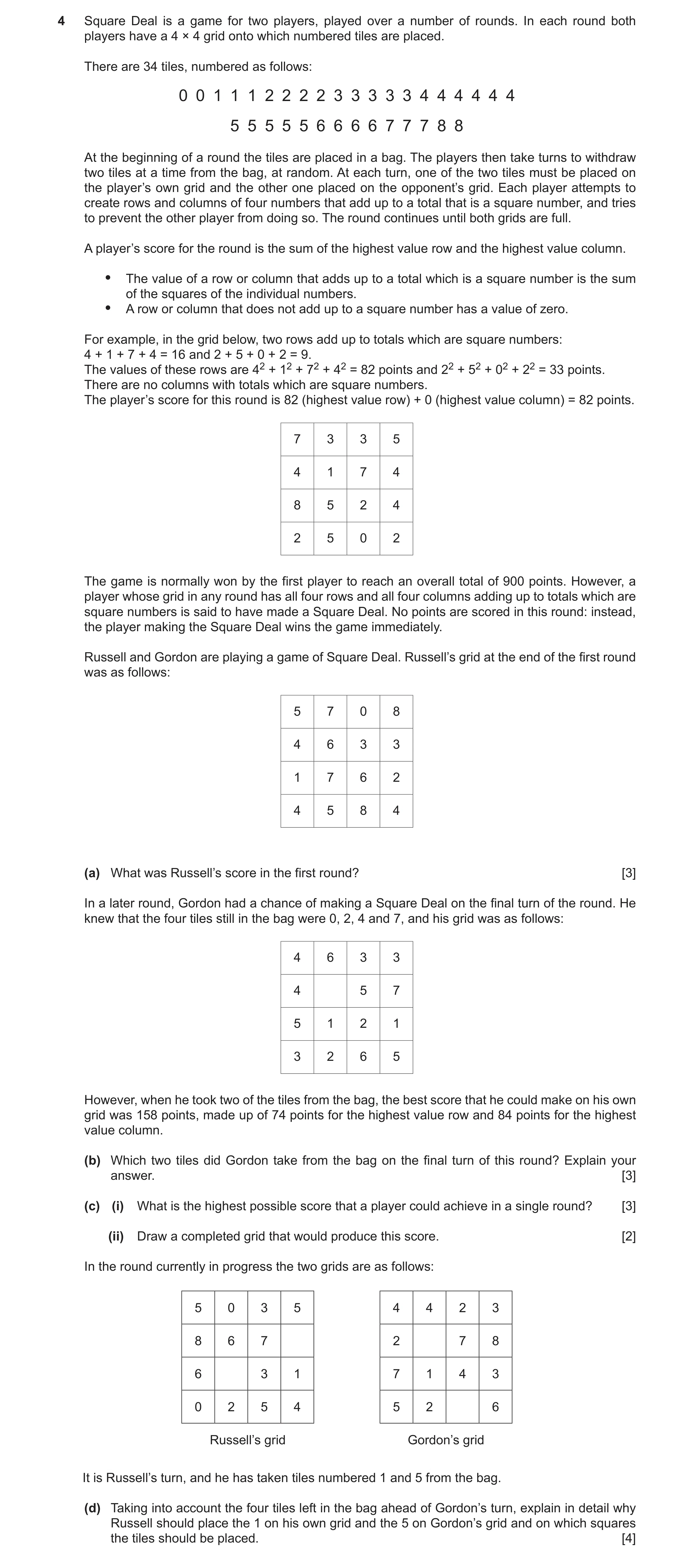
 4 / 79
 5 / 79
 6 / 79
 10 / 79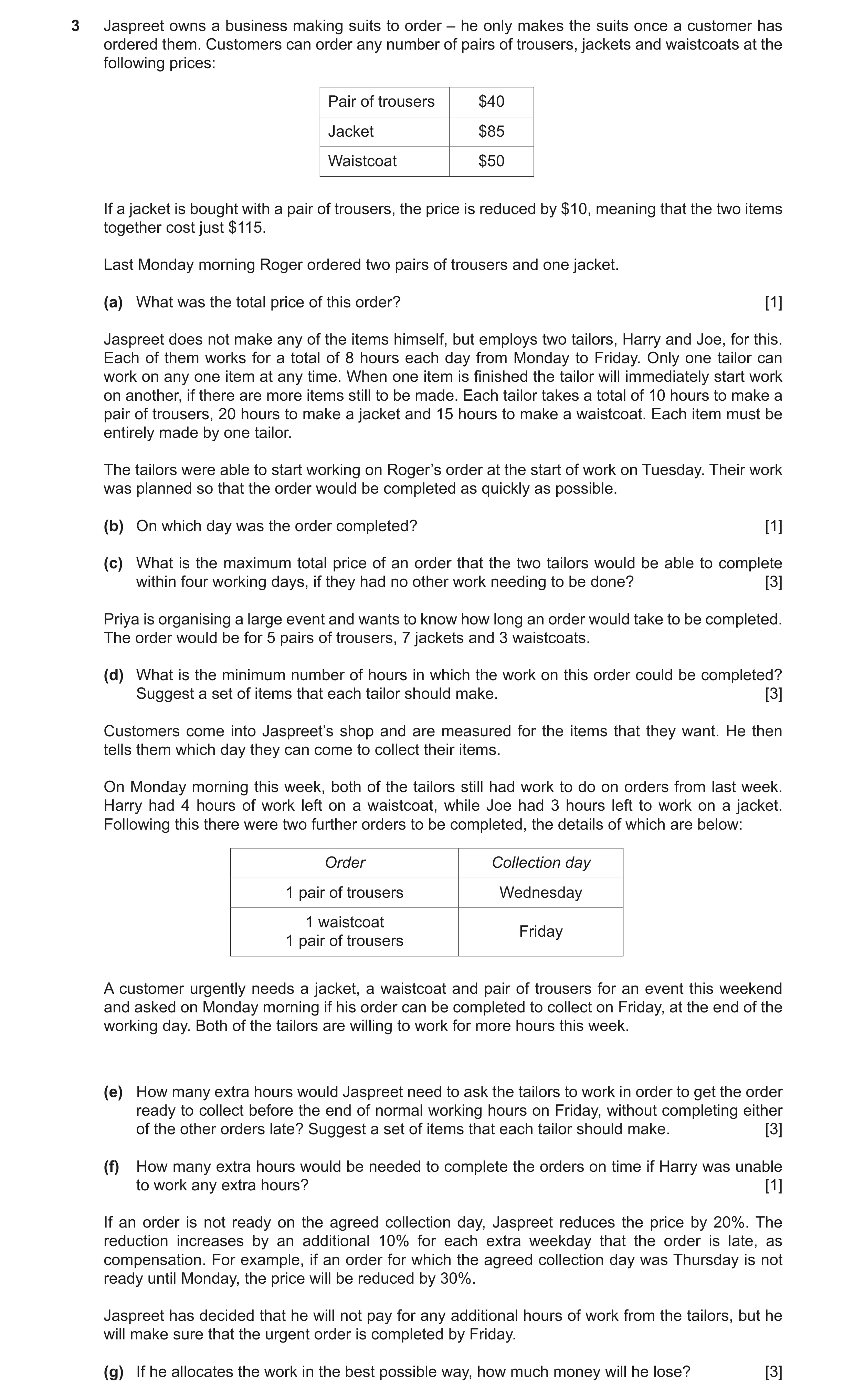
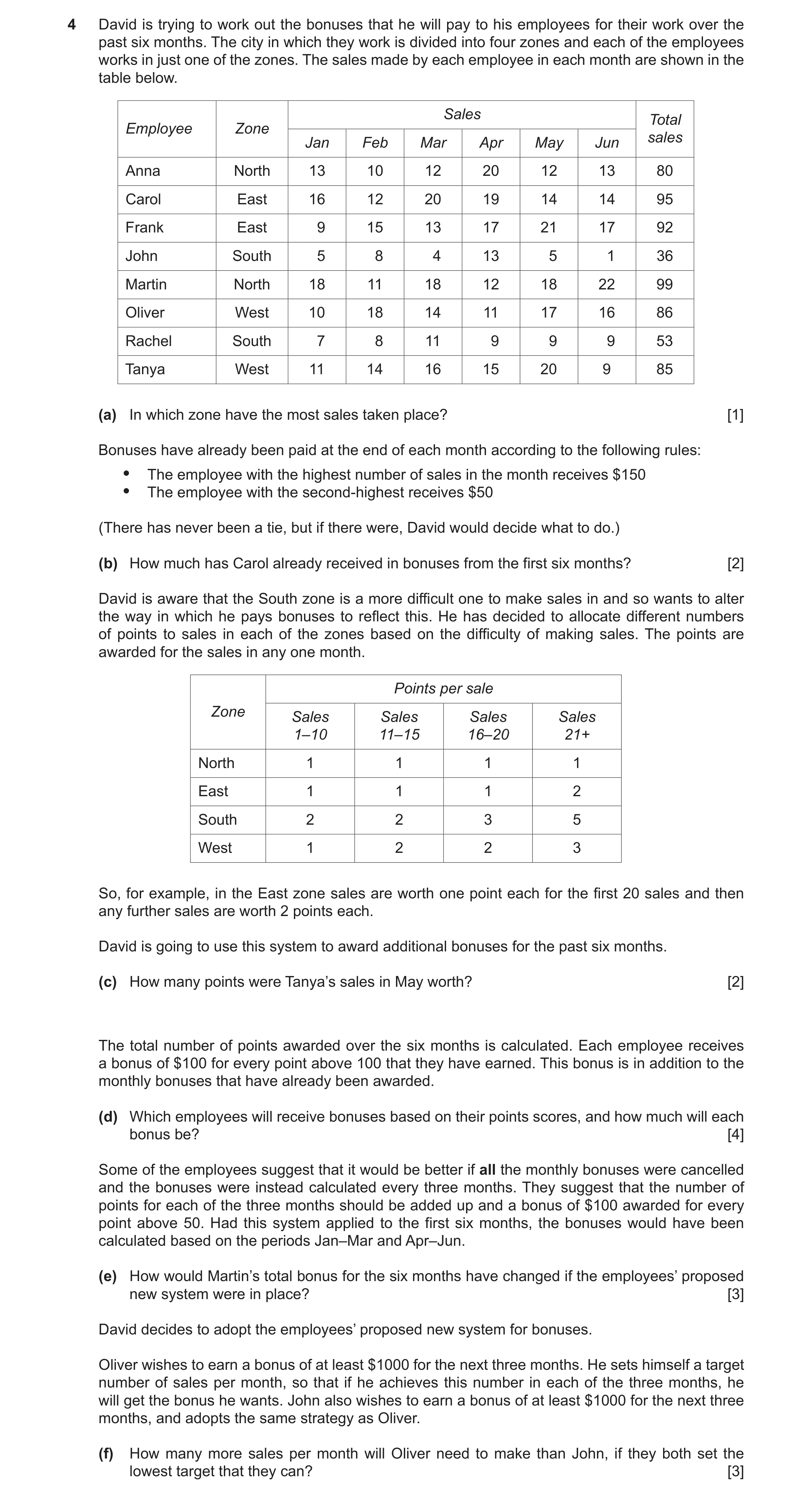
 14 / 79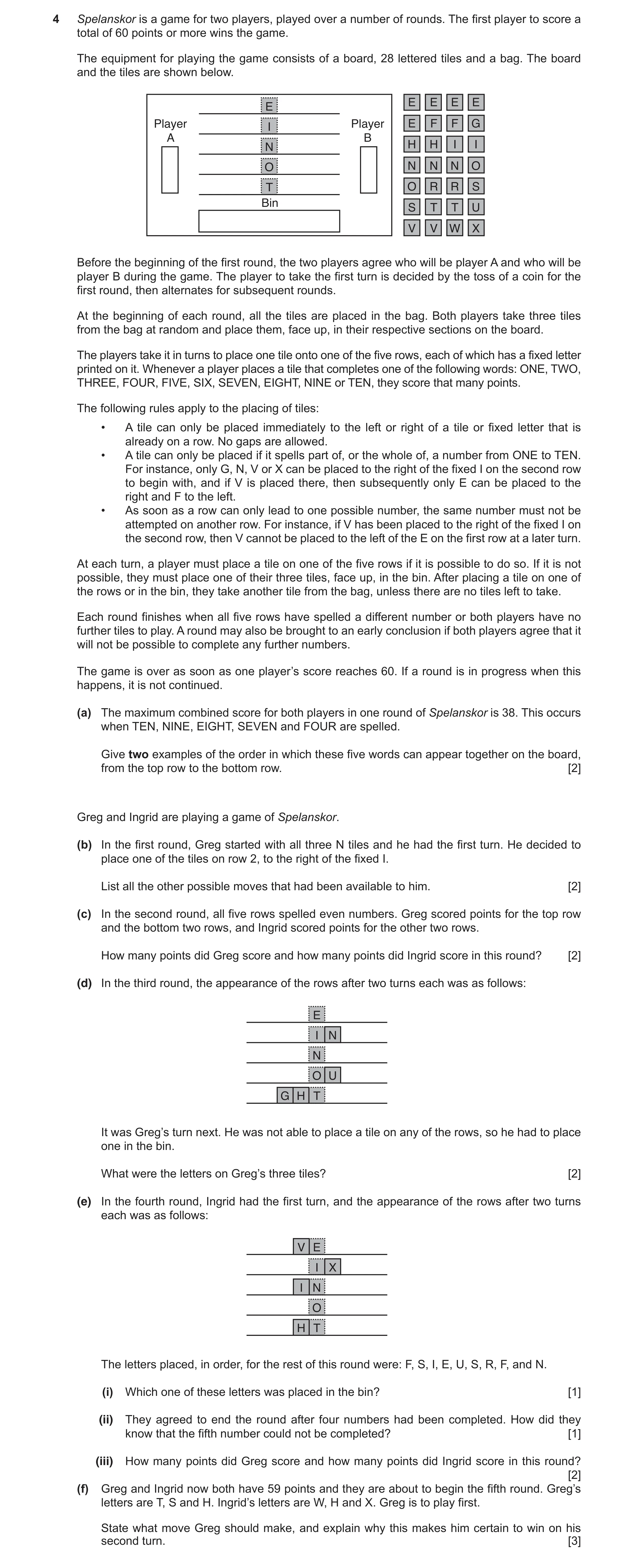
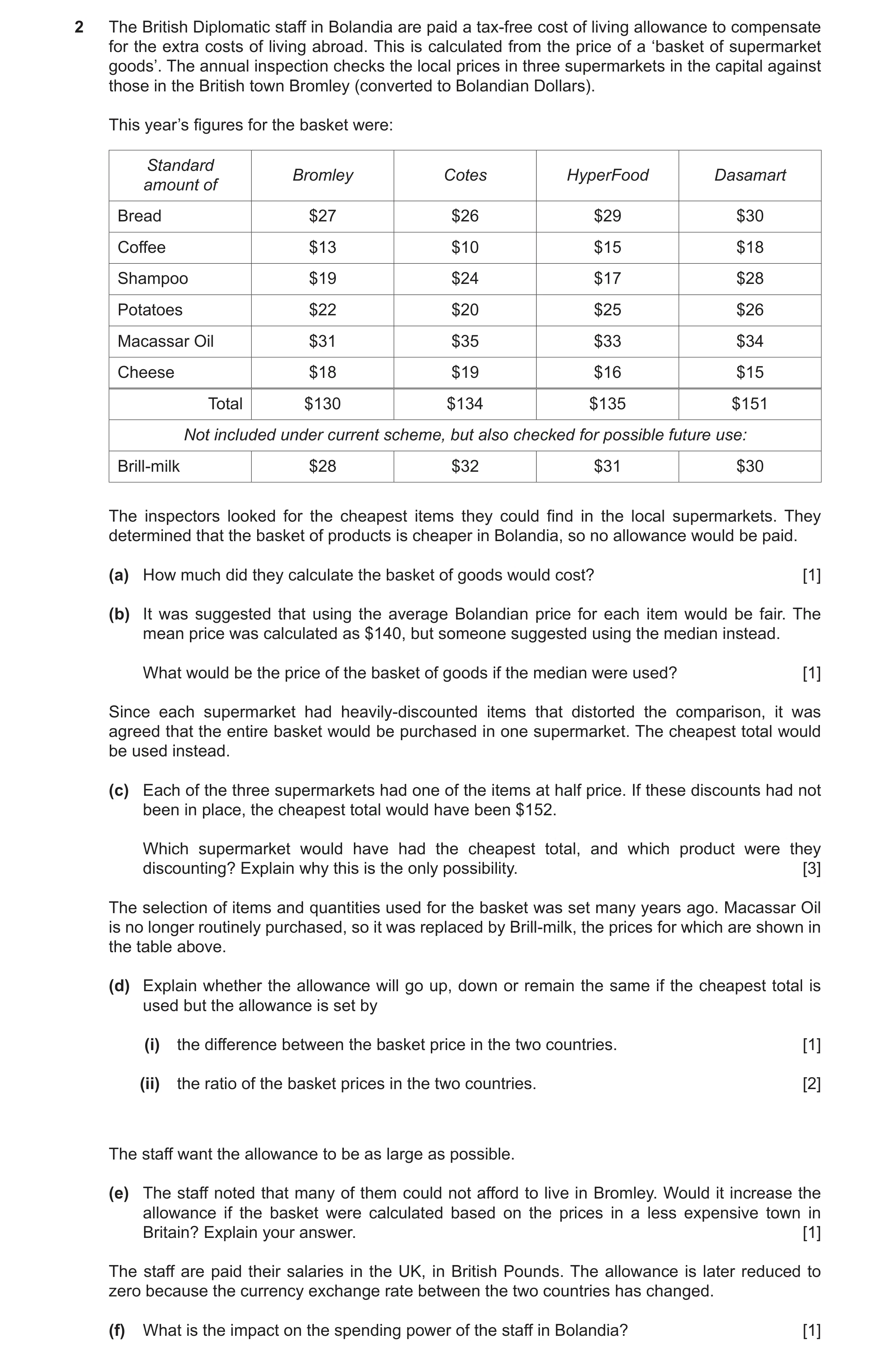
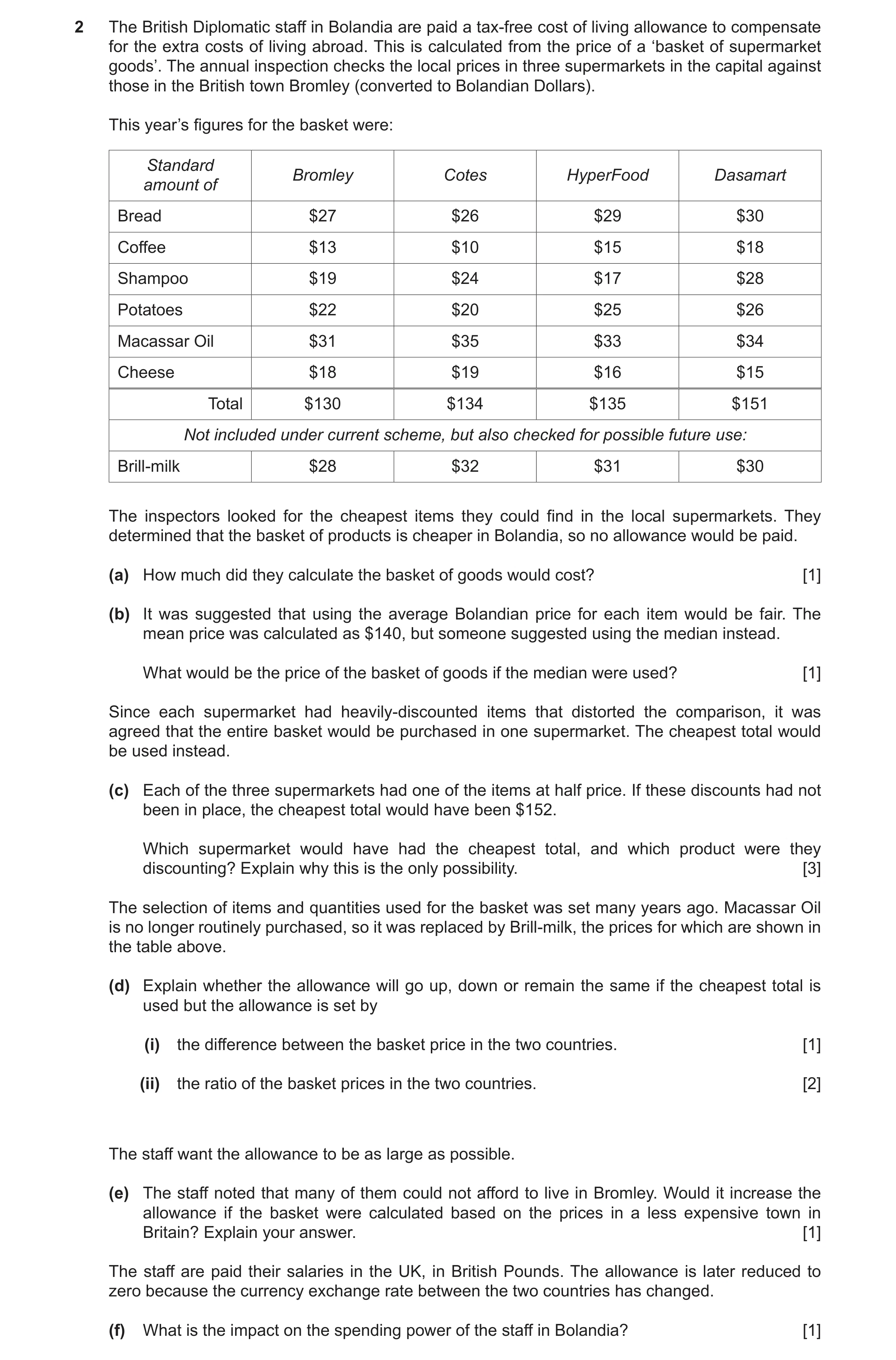
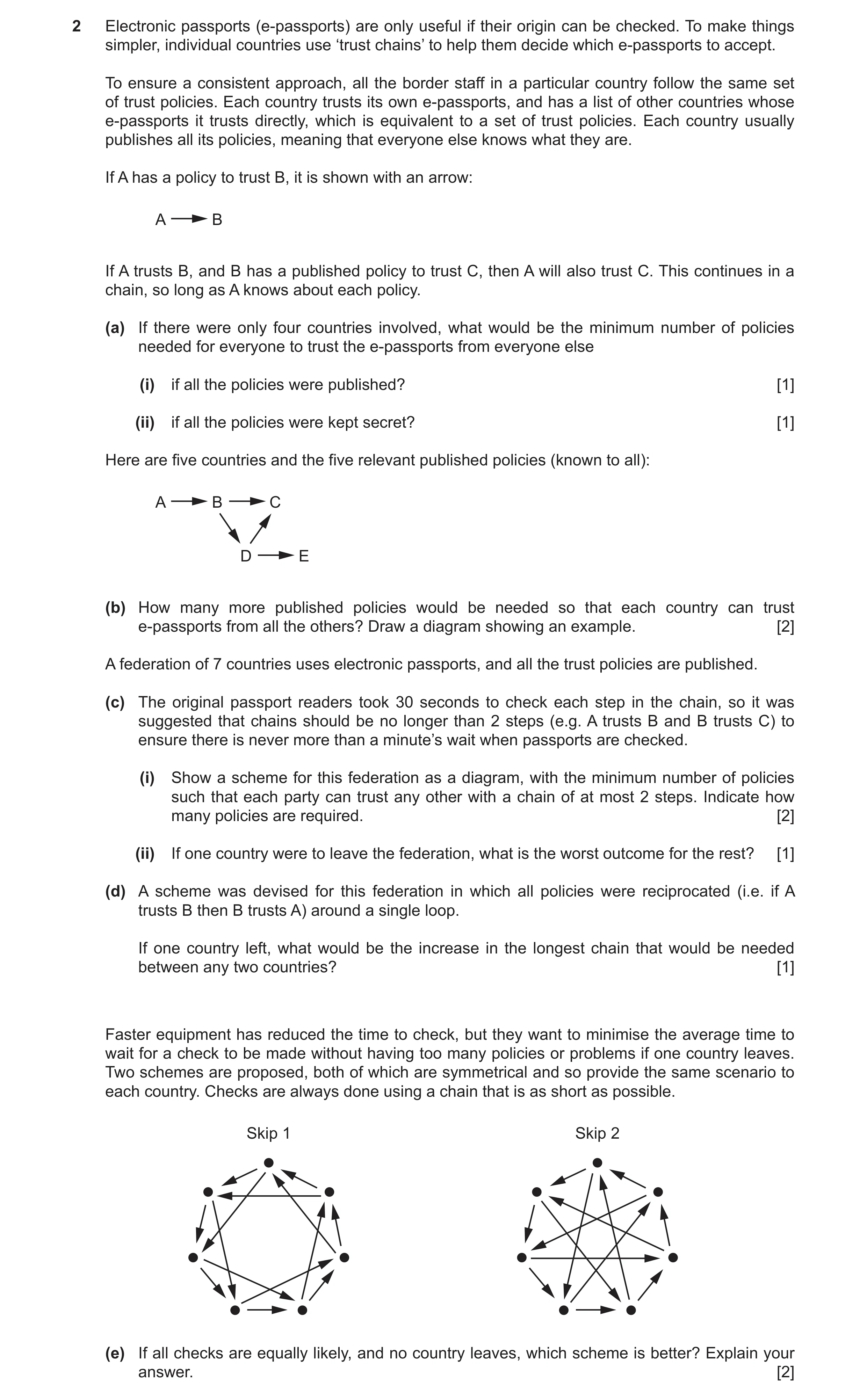
 20 / 79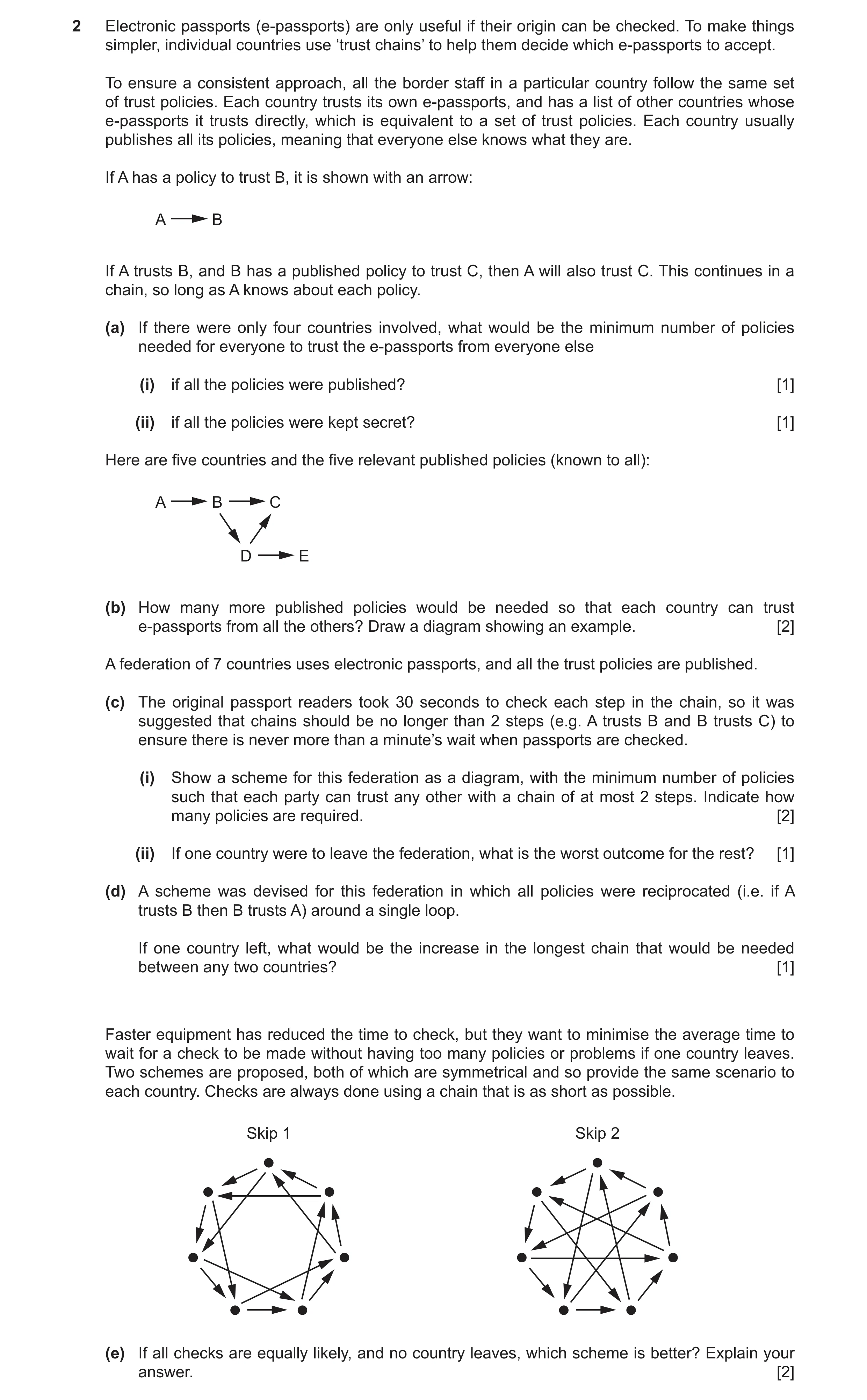
 23 / 79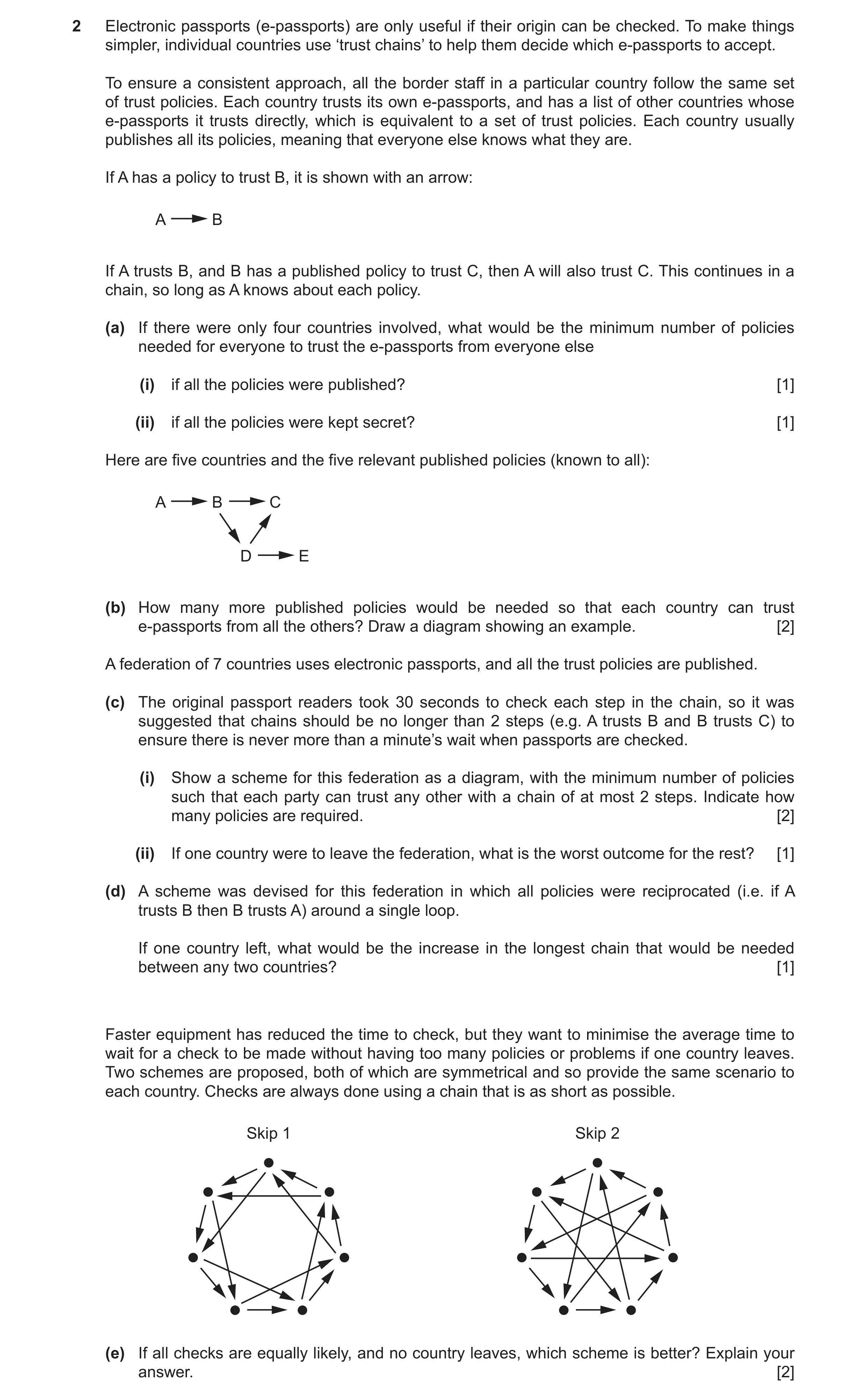
 26 / 79
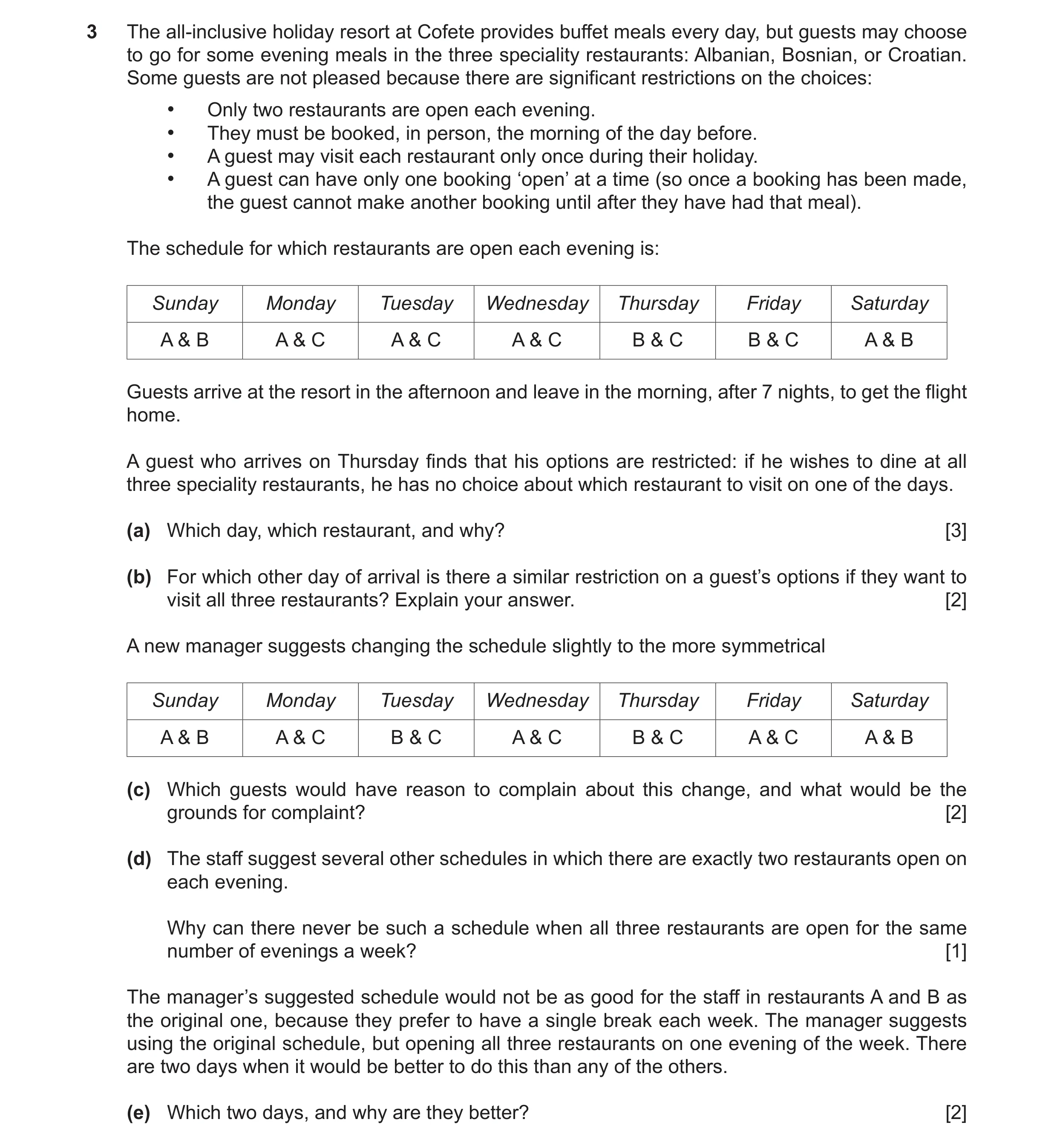 27 / 79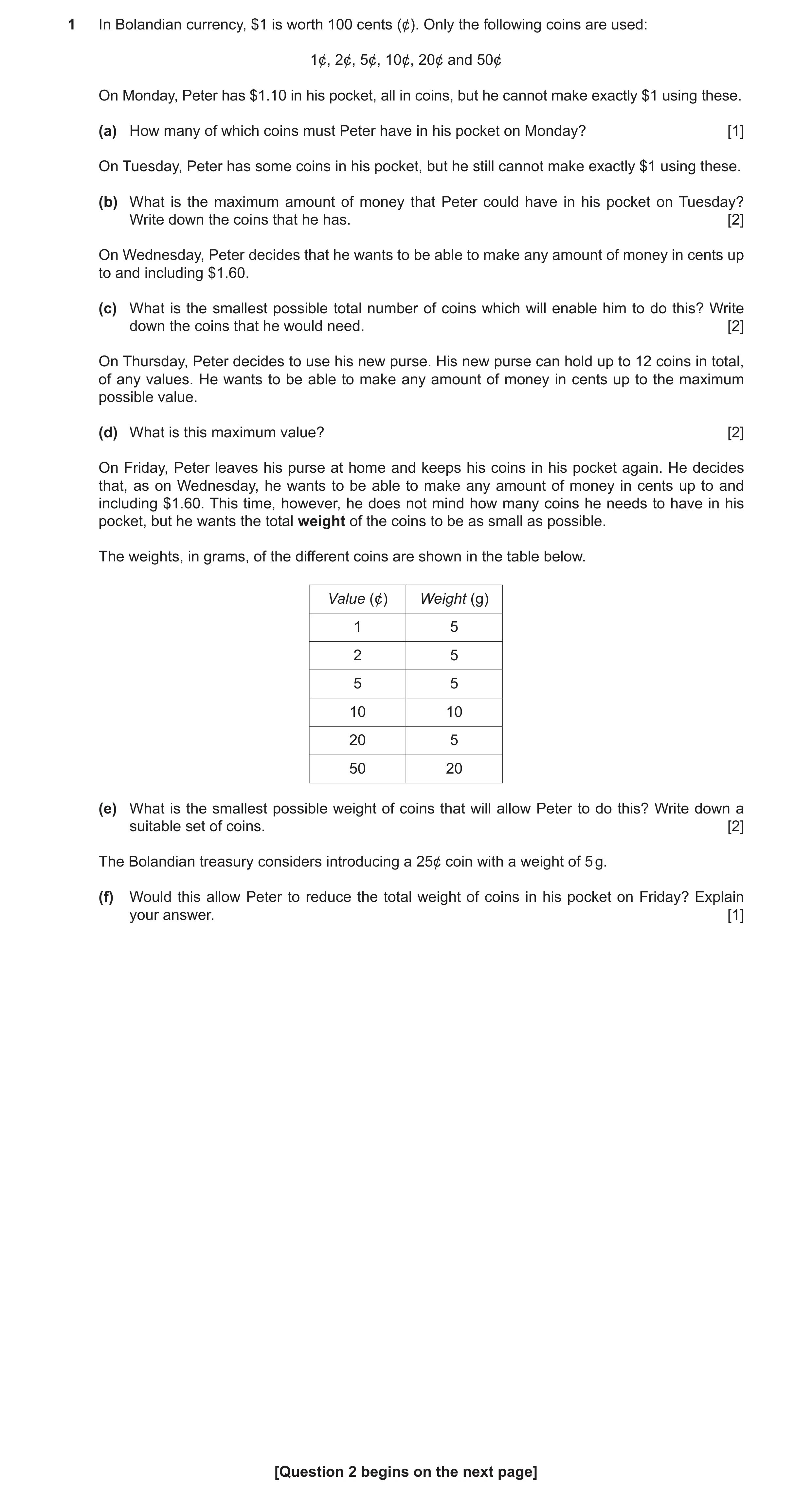
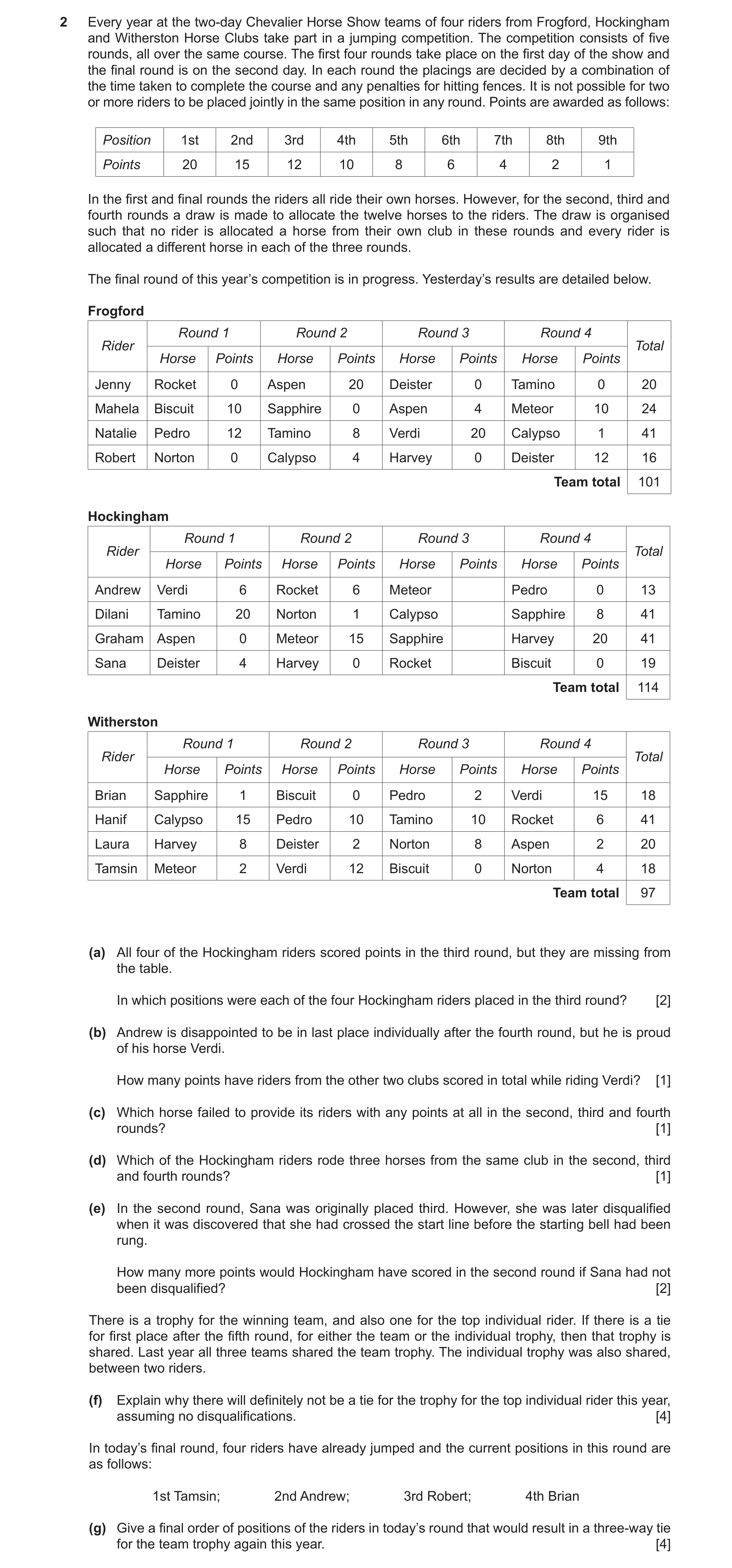
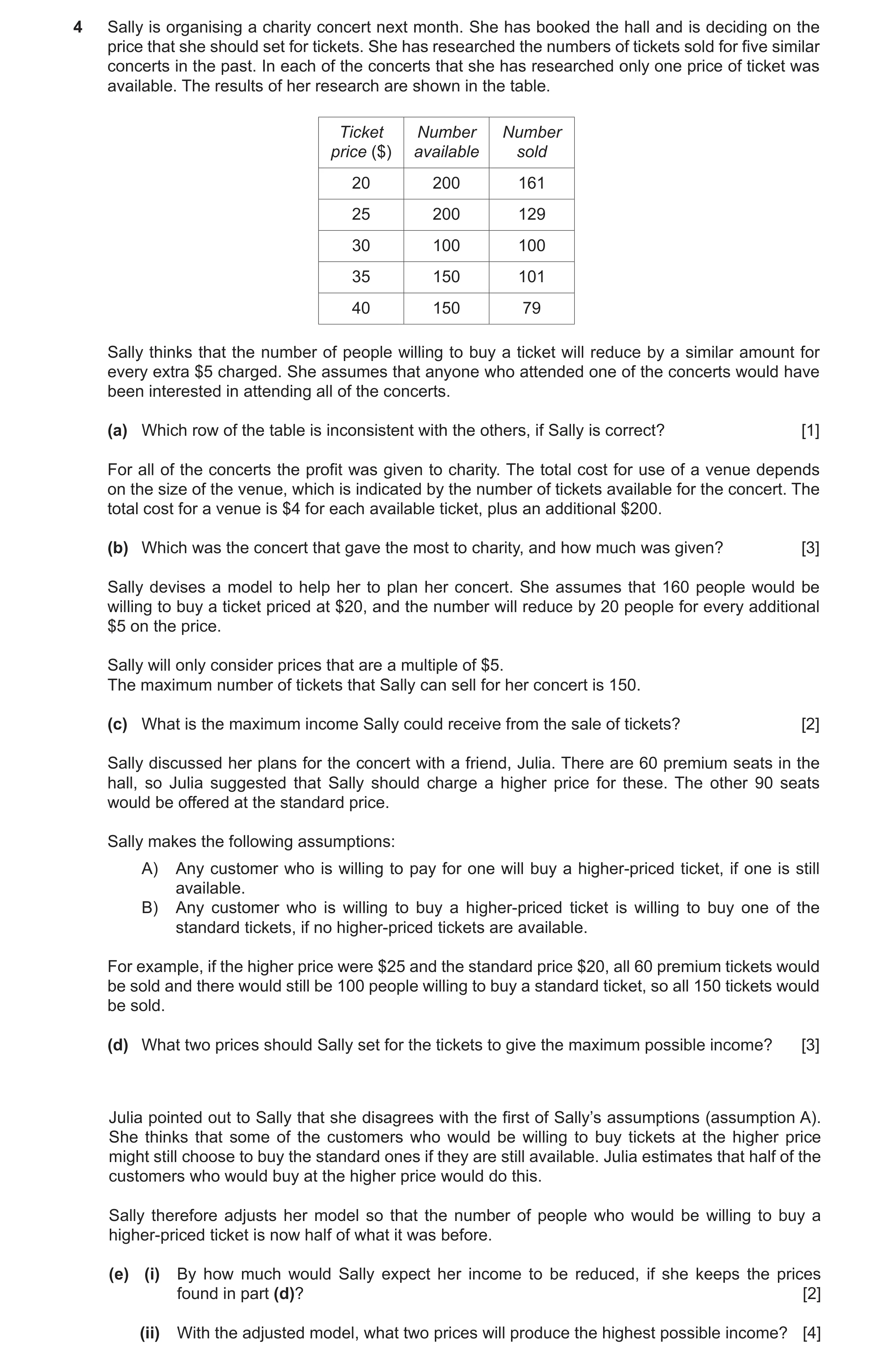
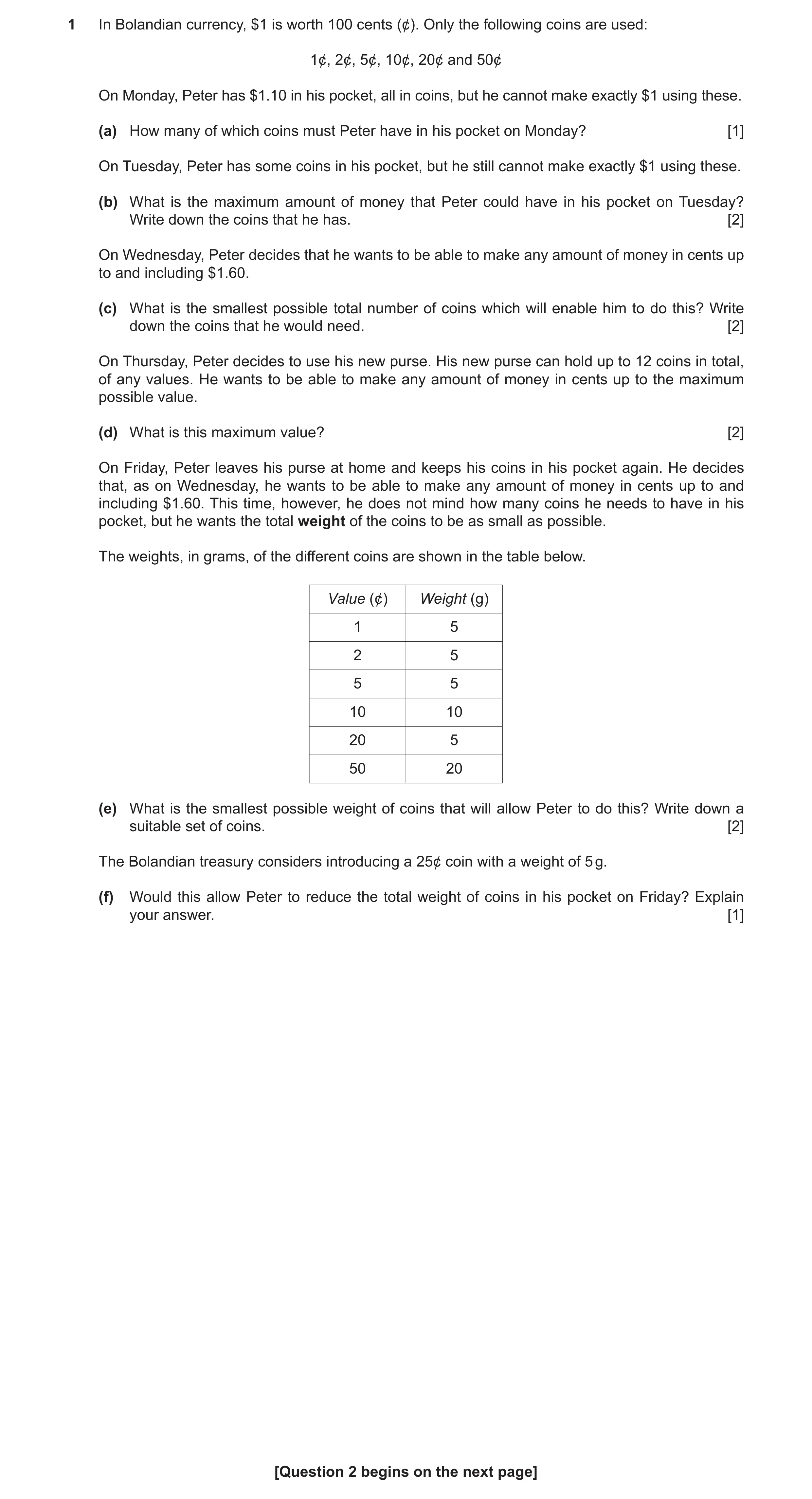
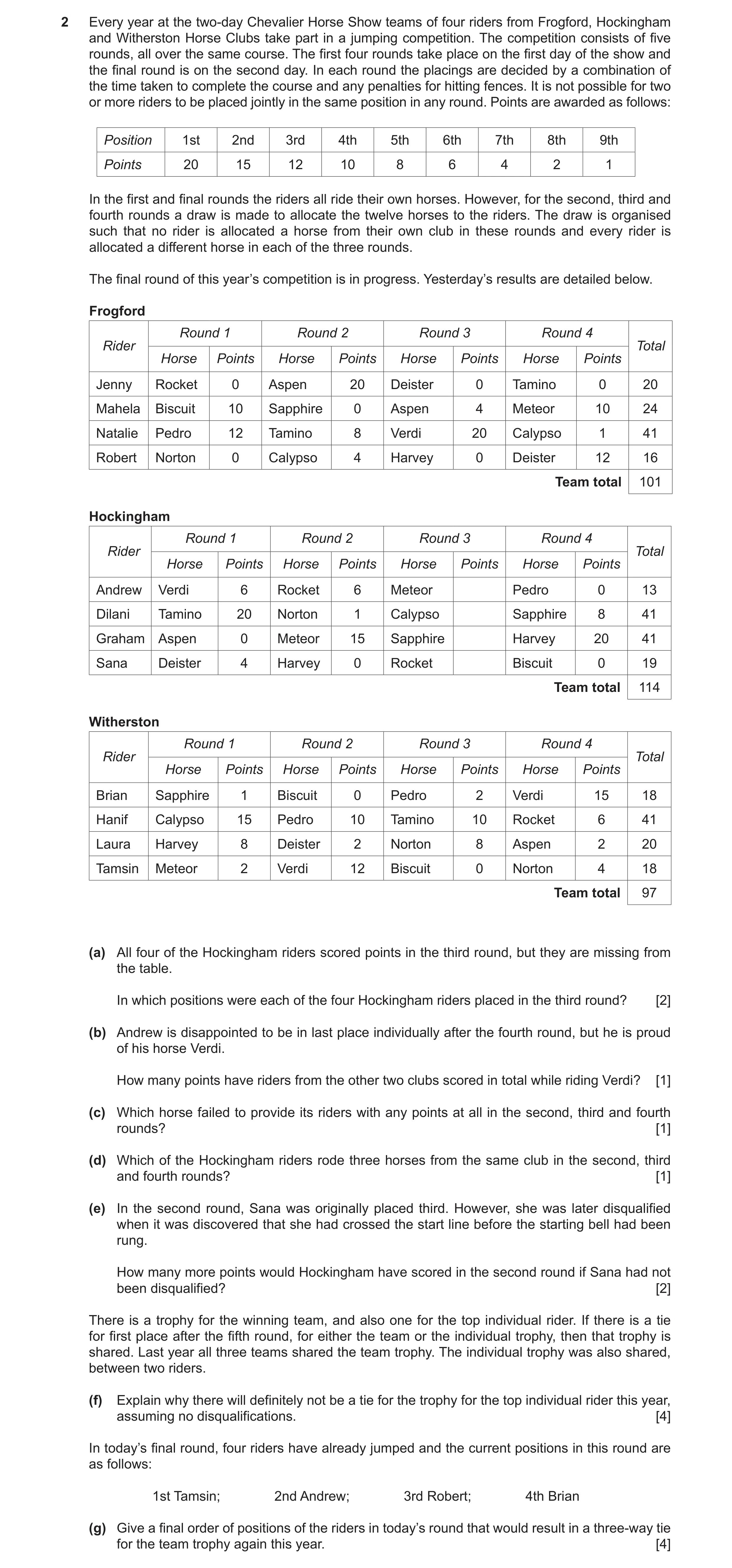
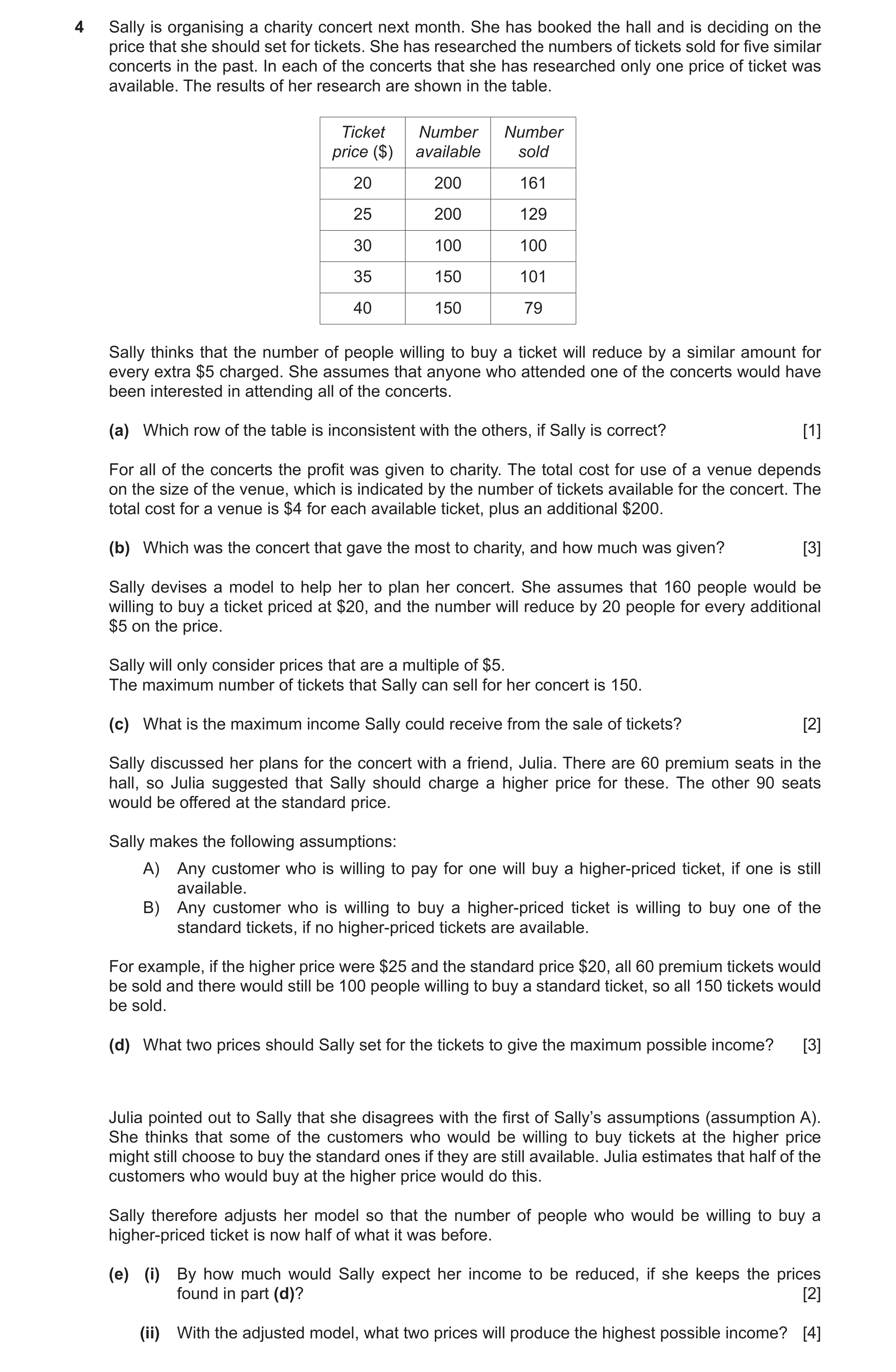
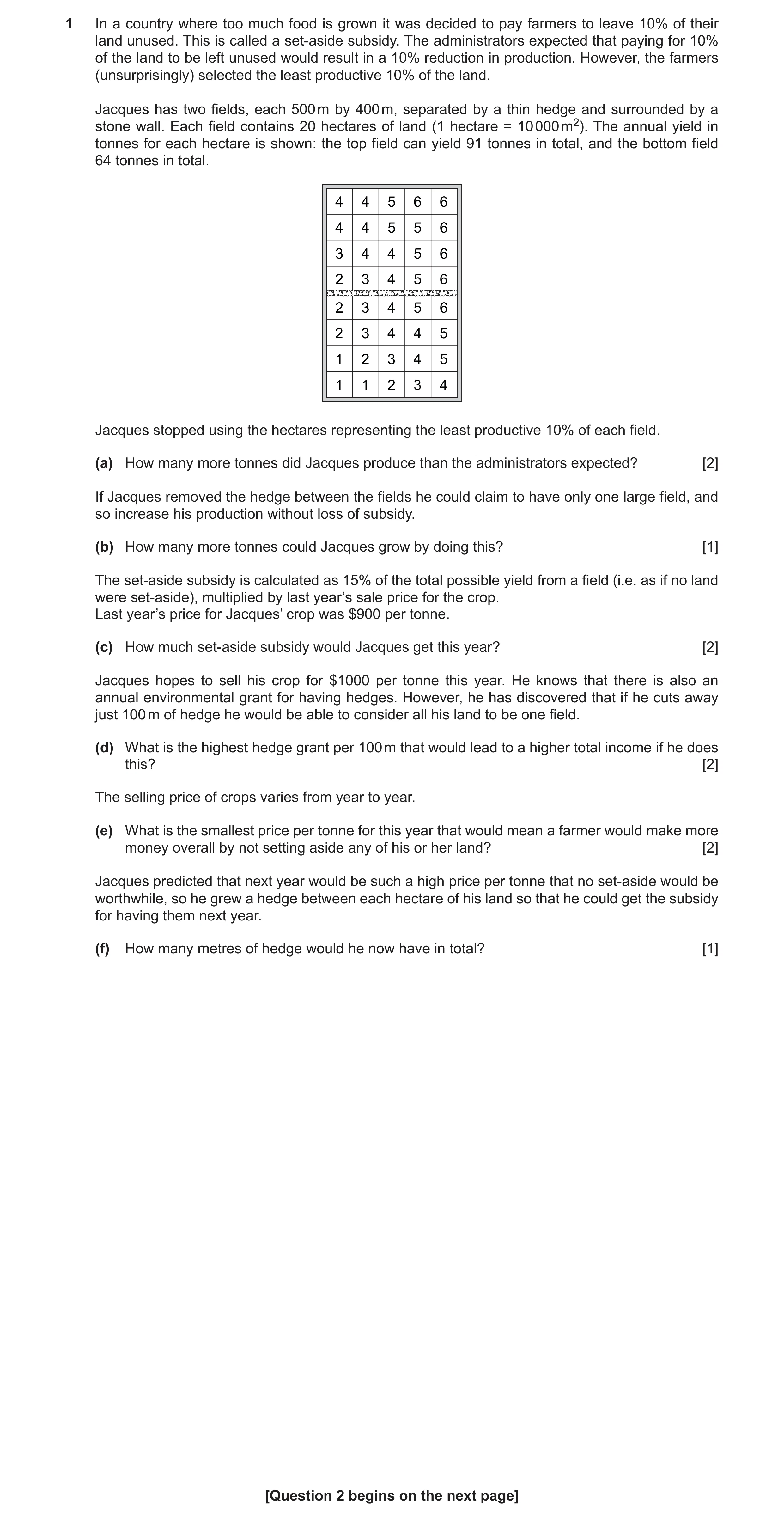
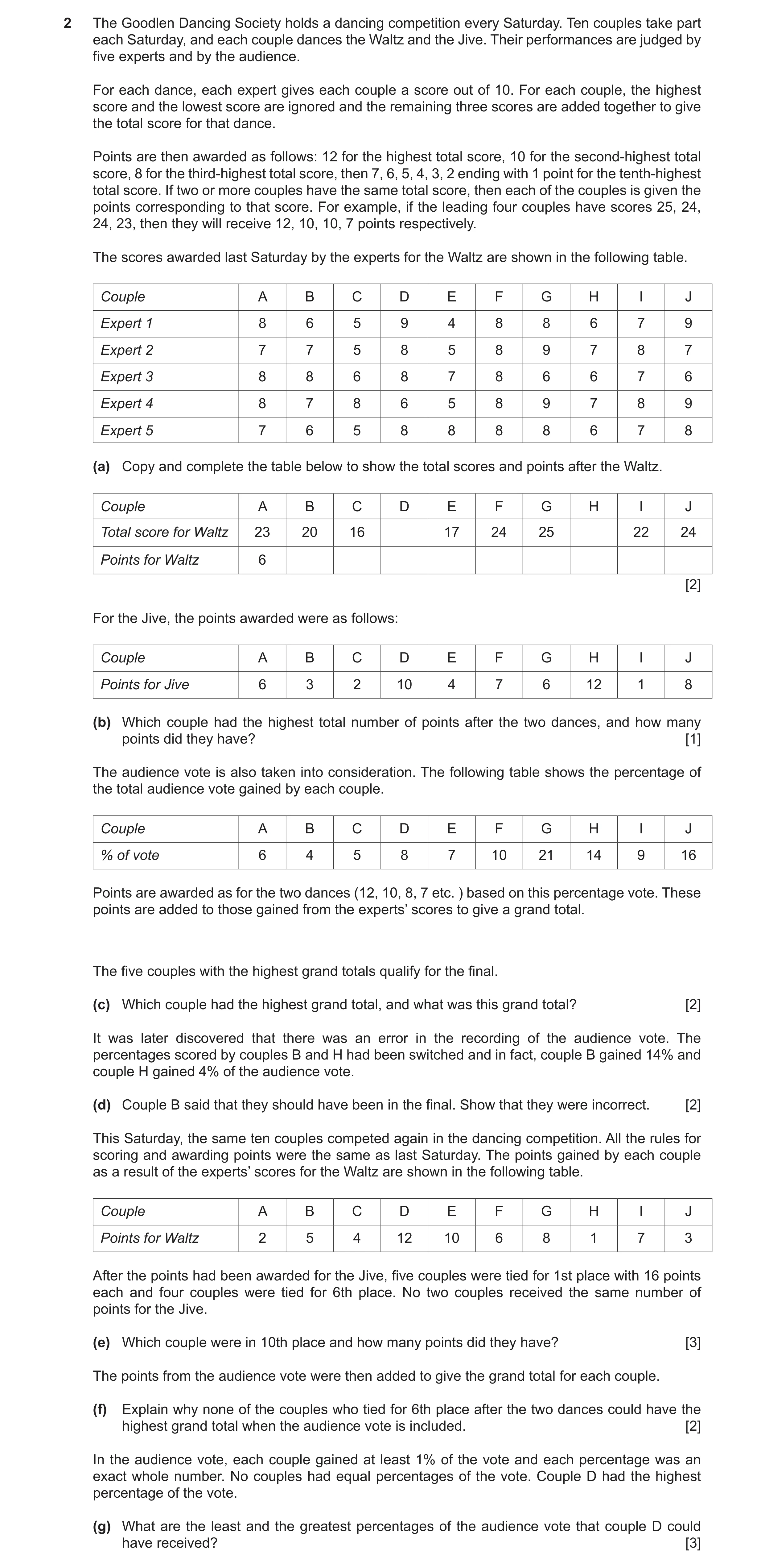
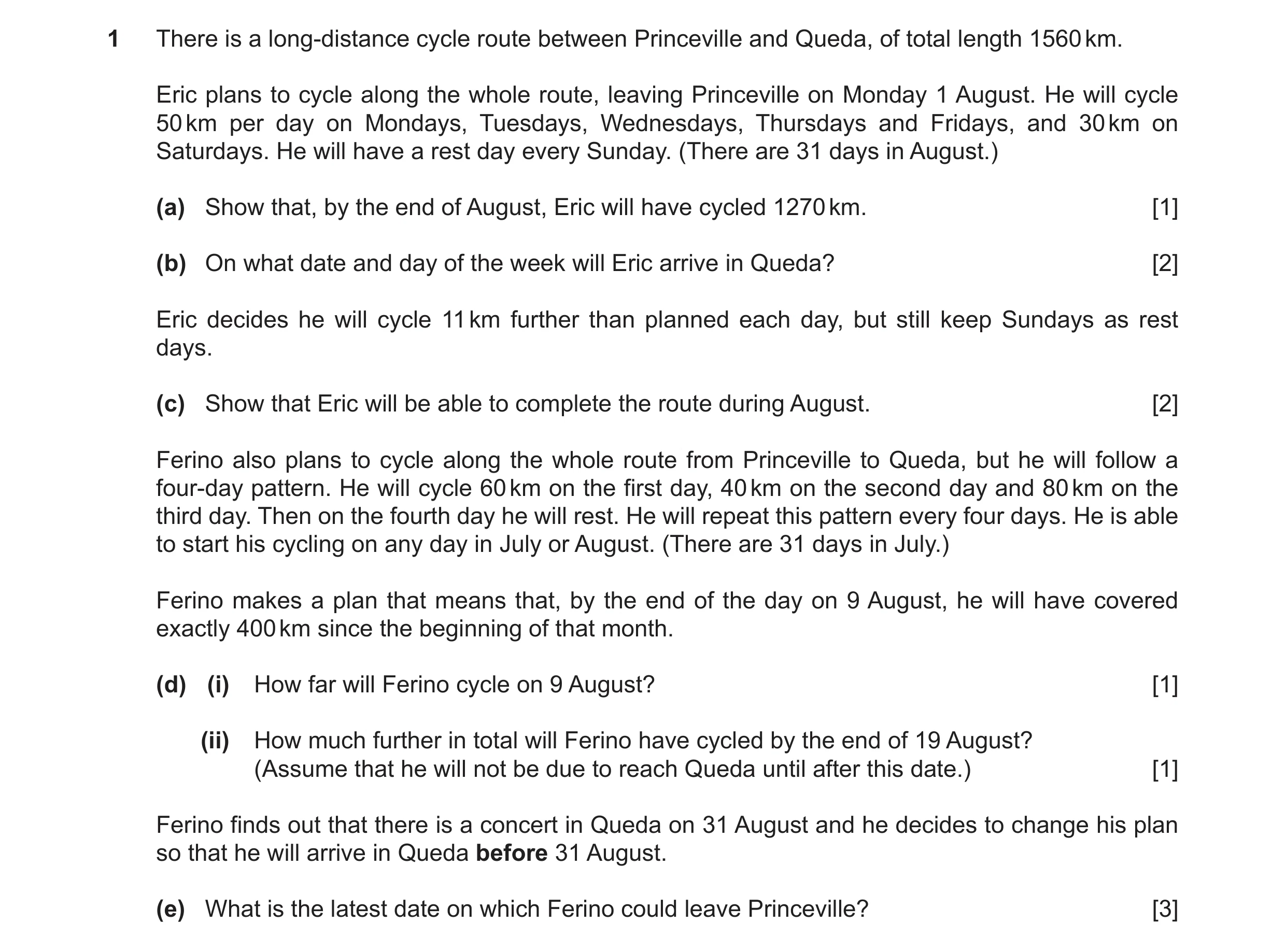 45 / 79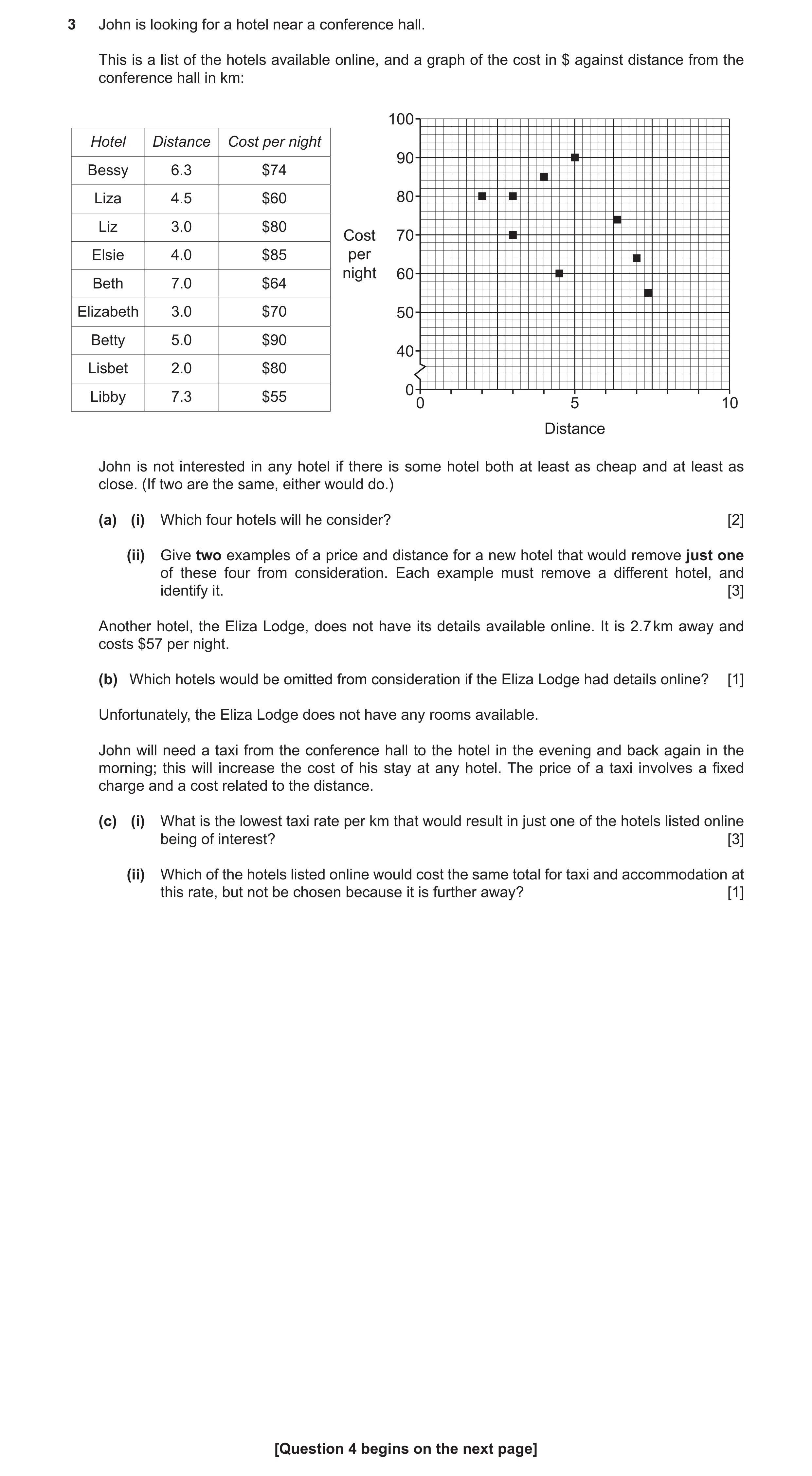
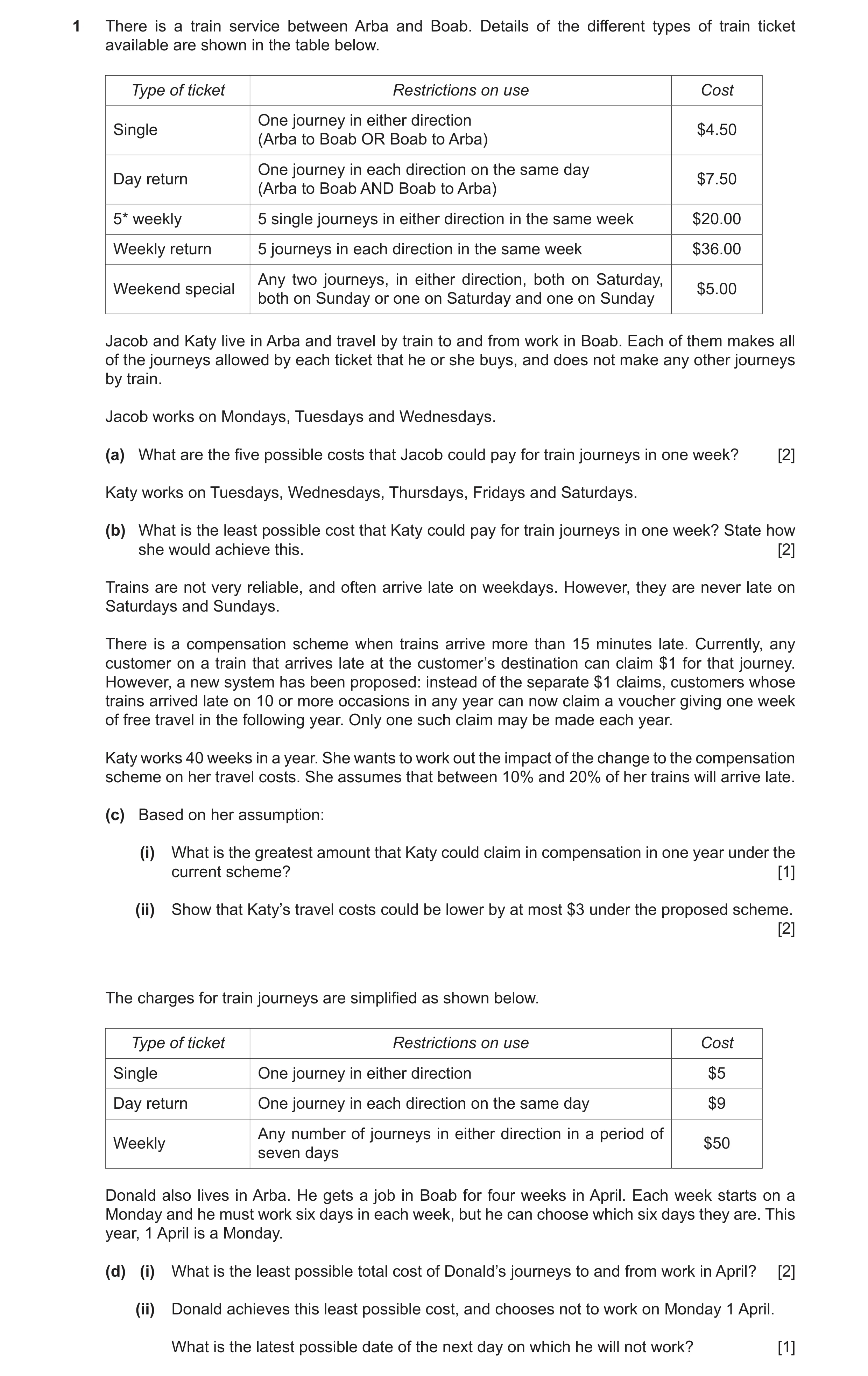
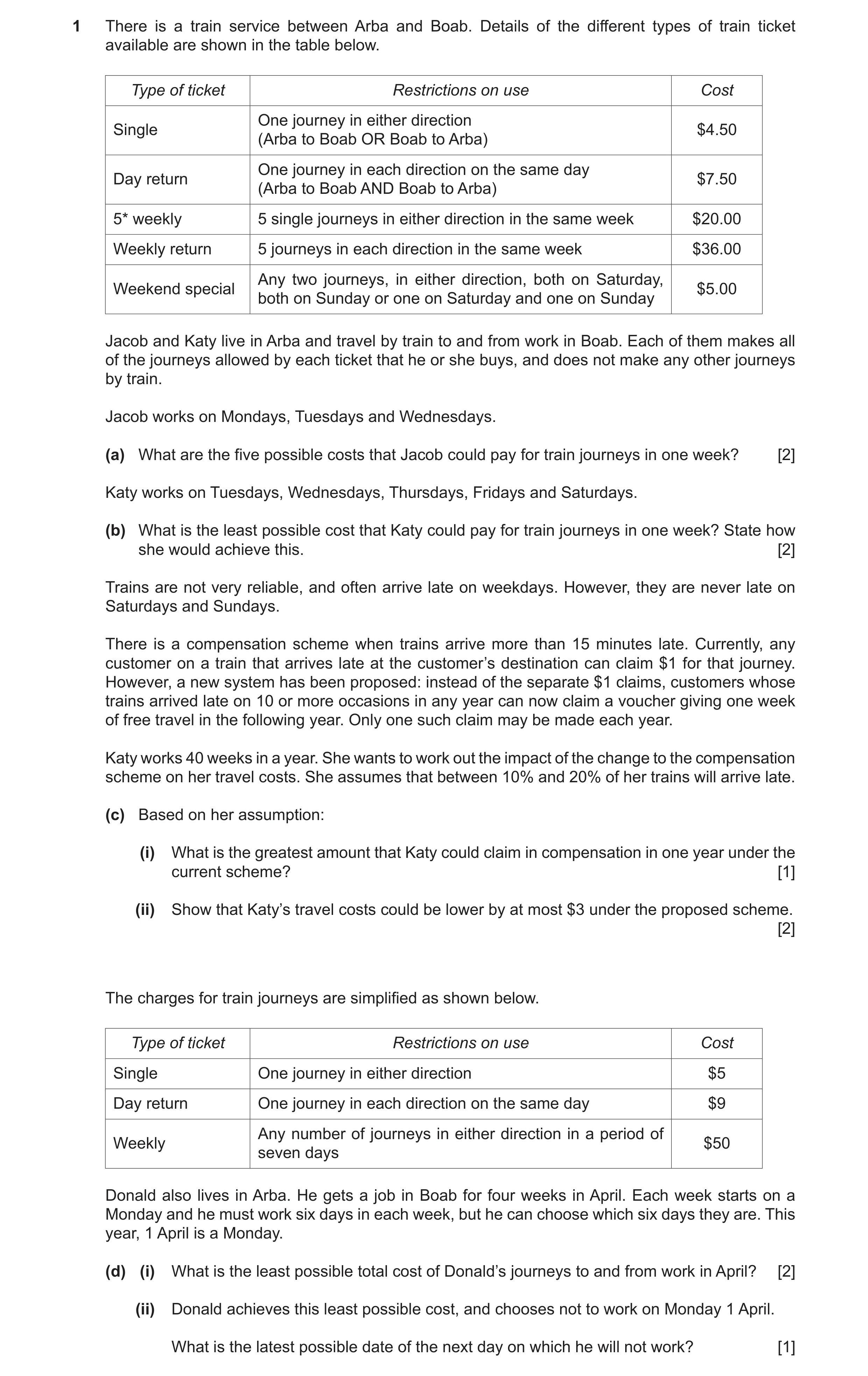
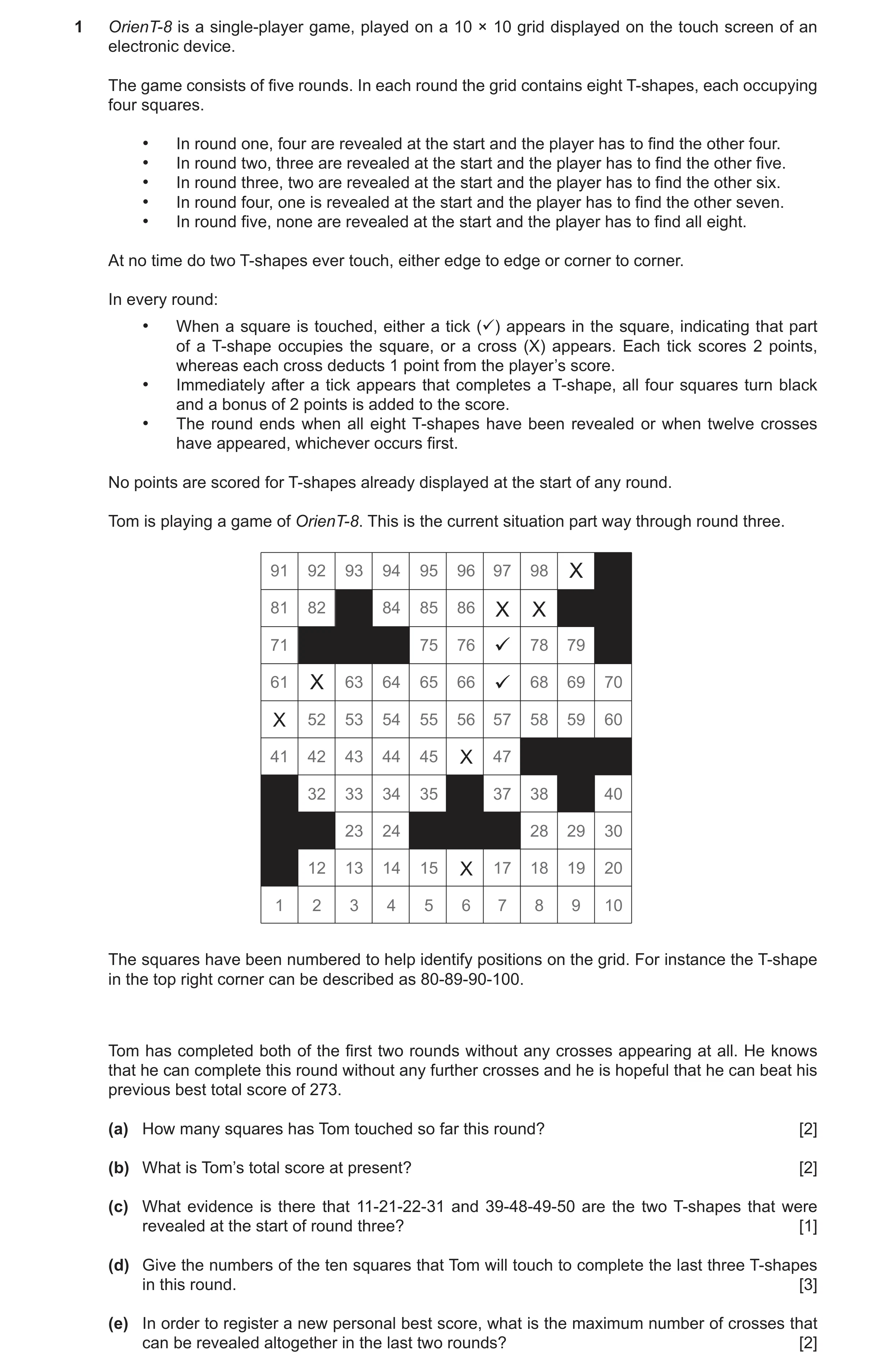
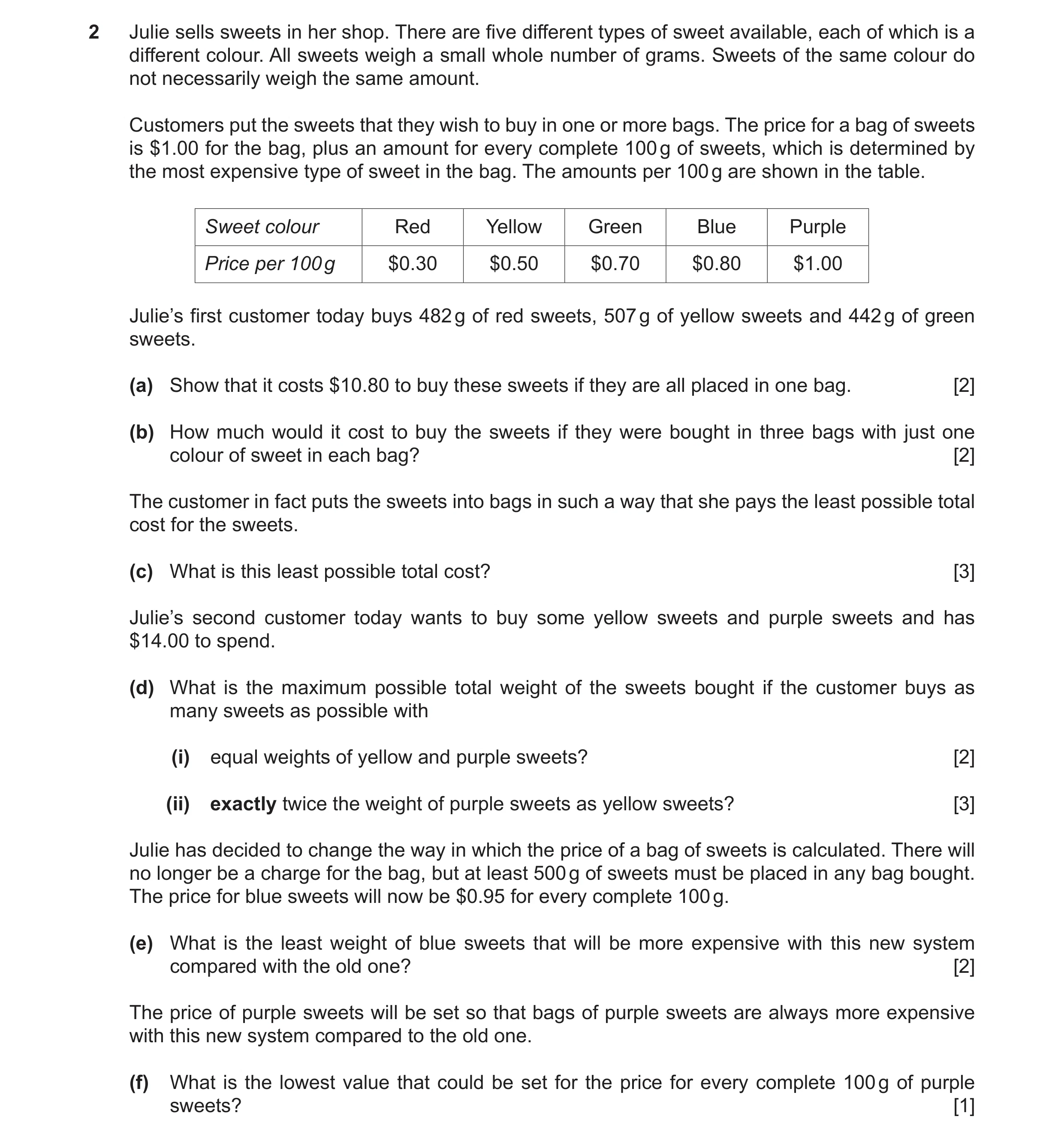 51 / 79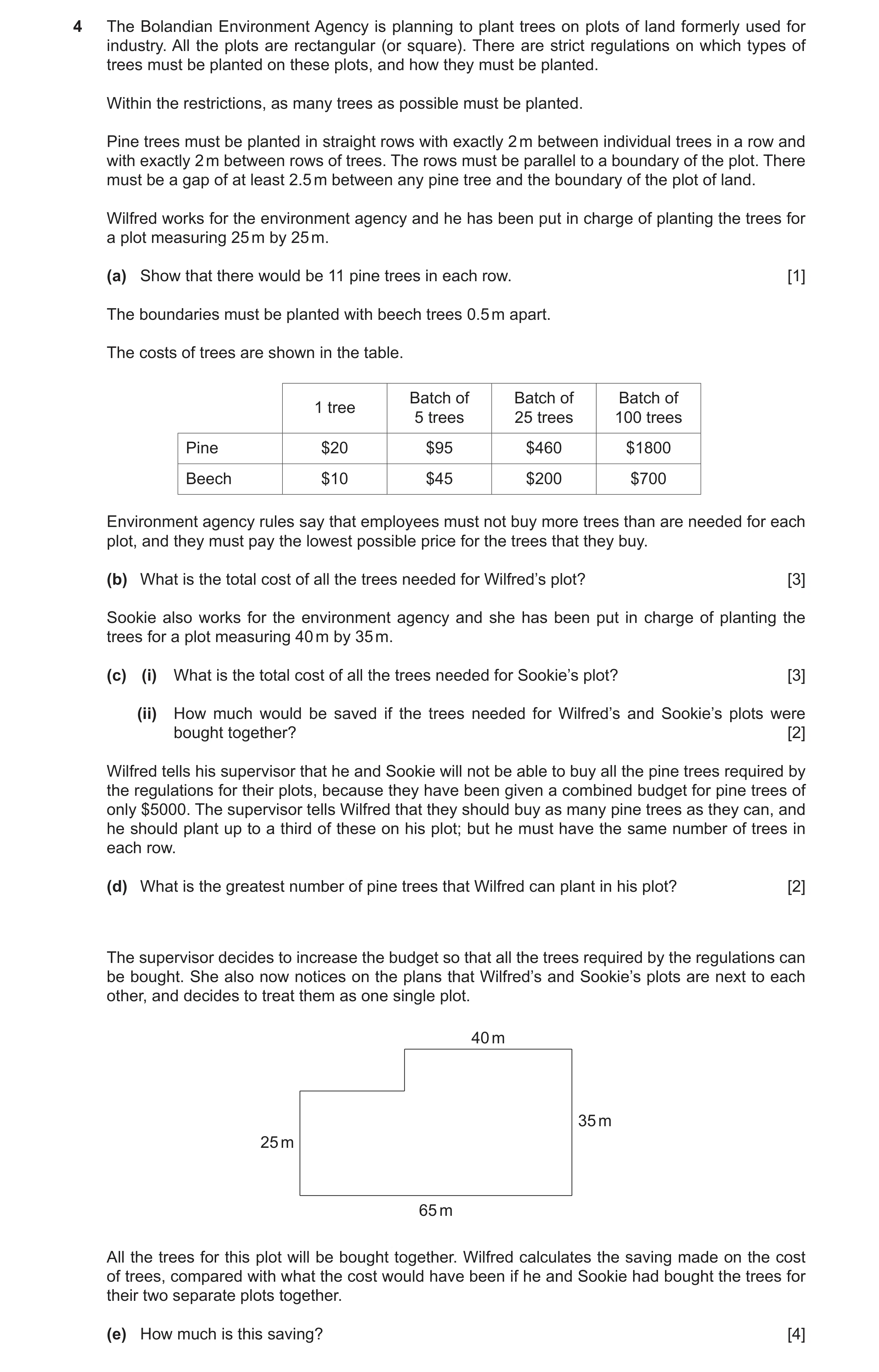
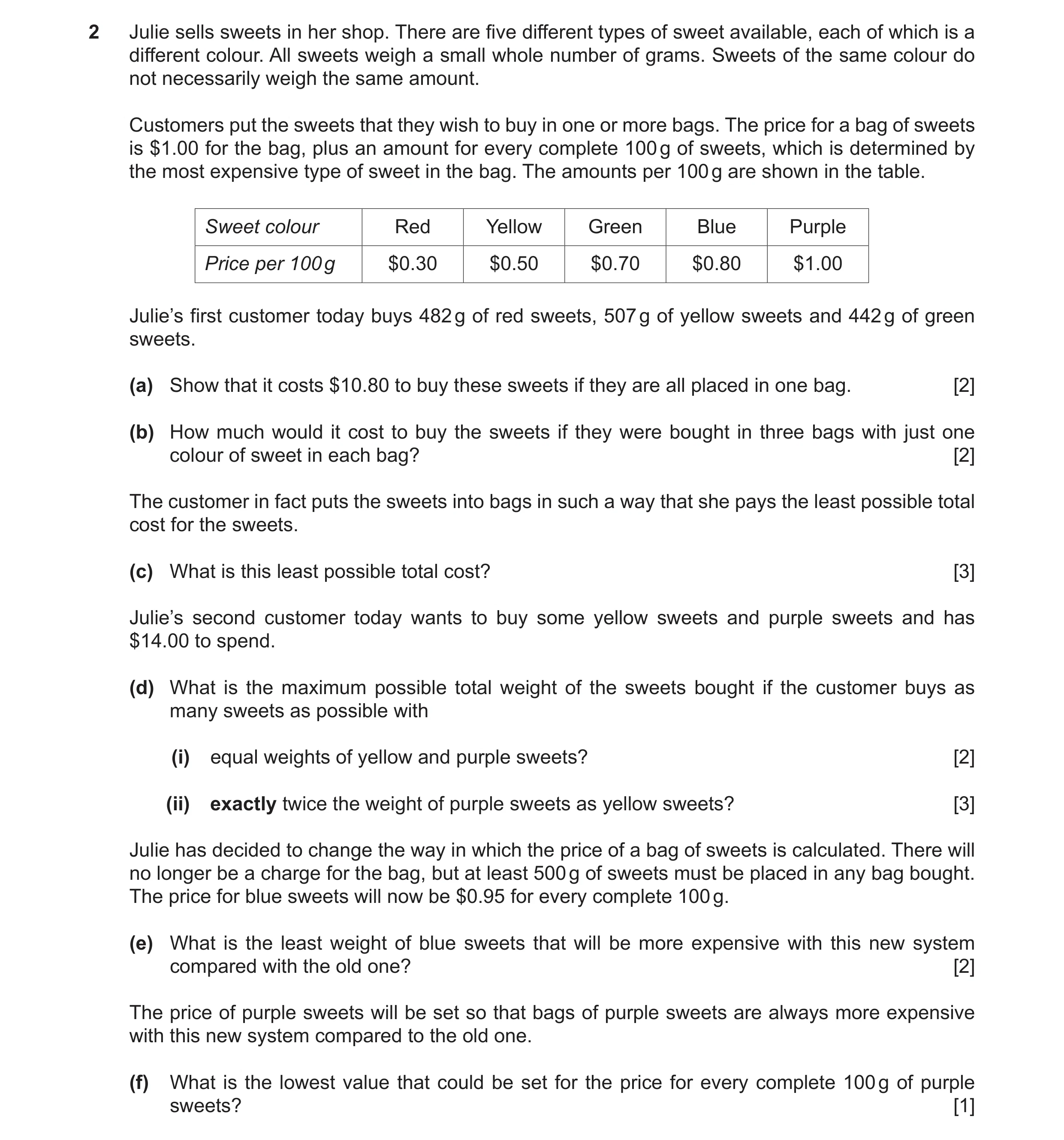 53 / 79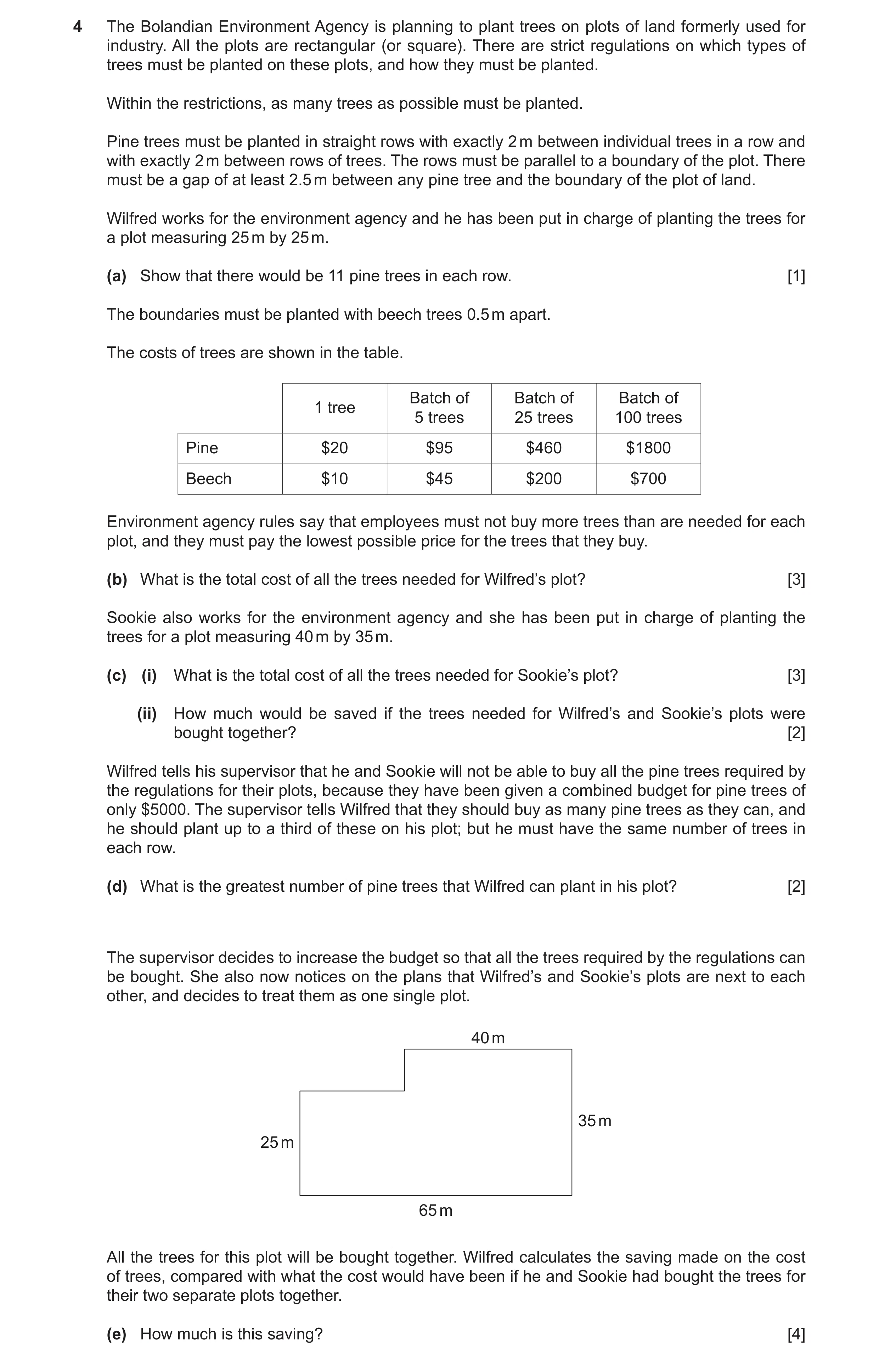
 55 / 79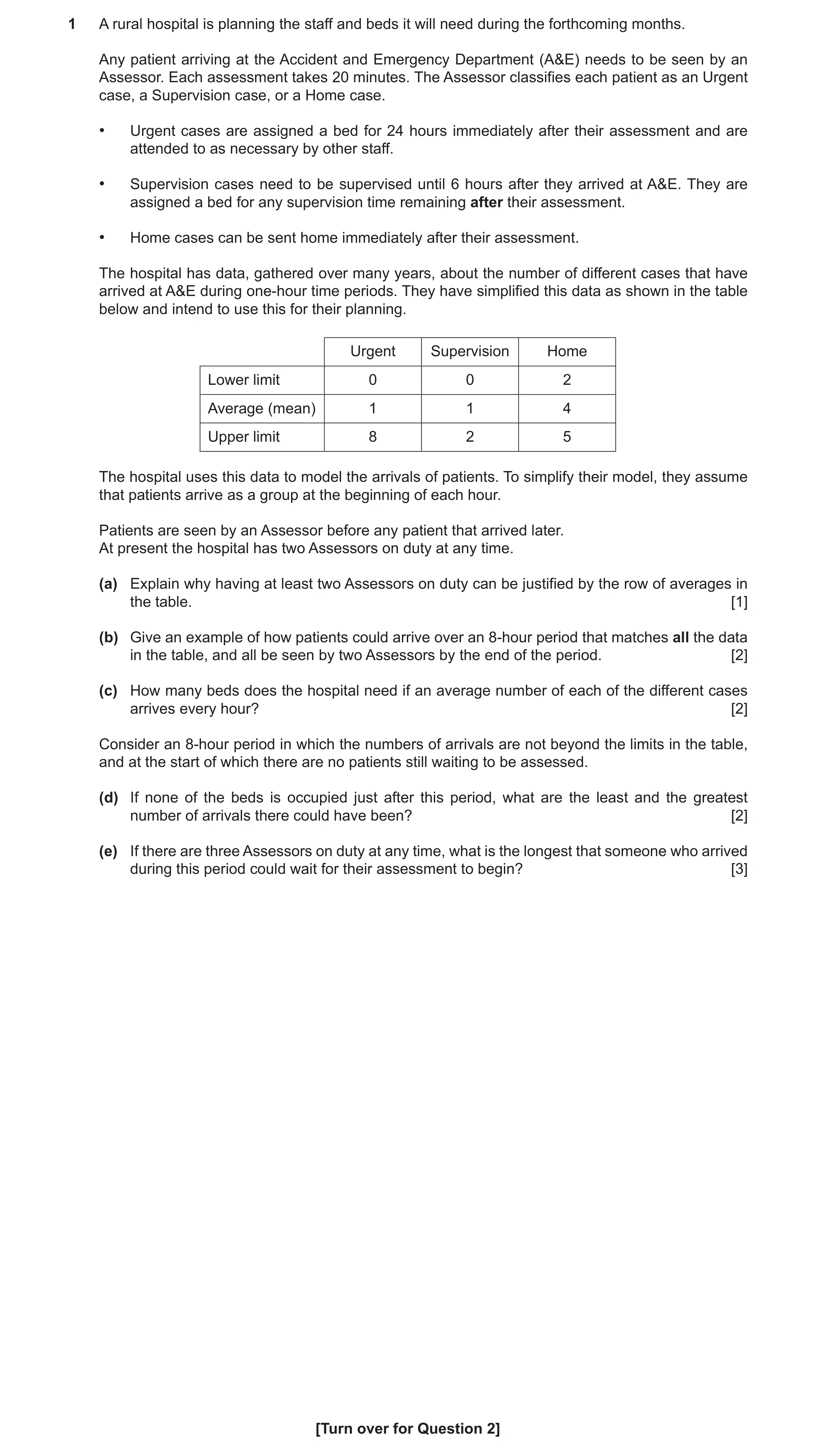
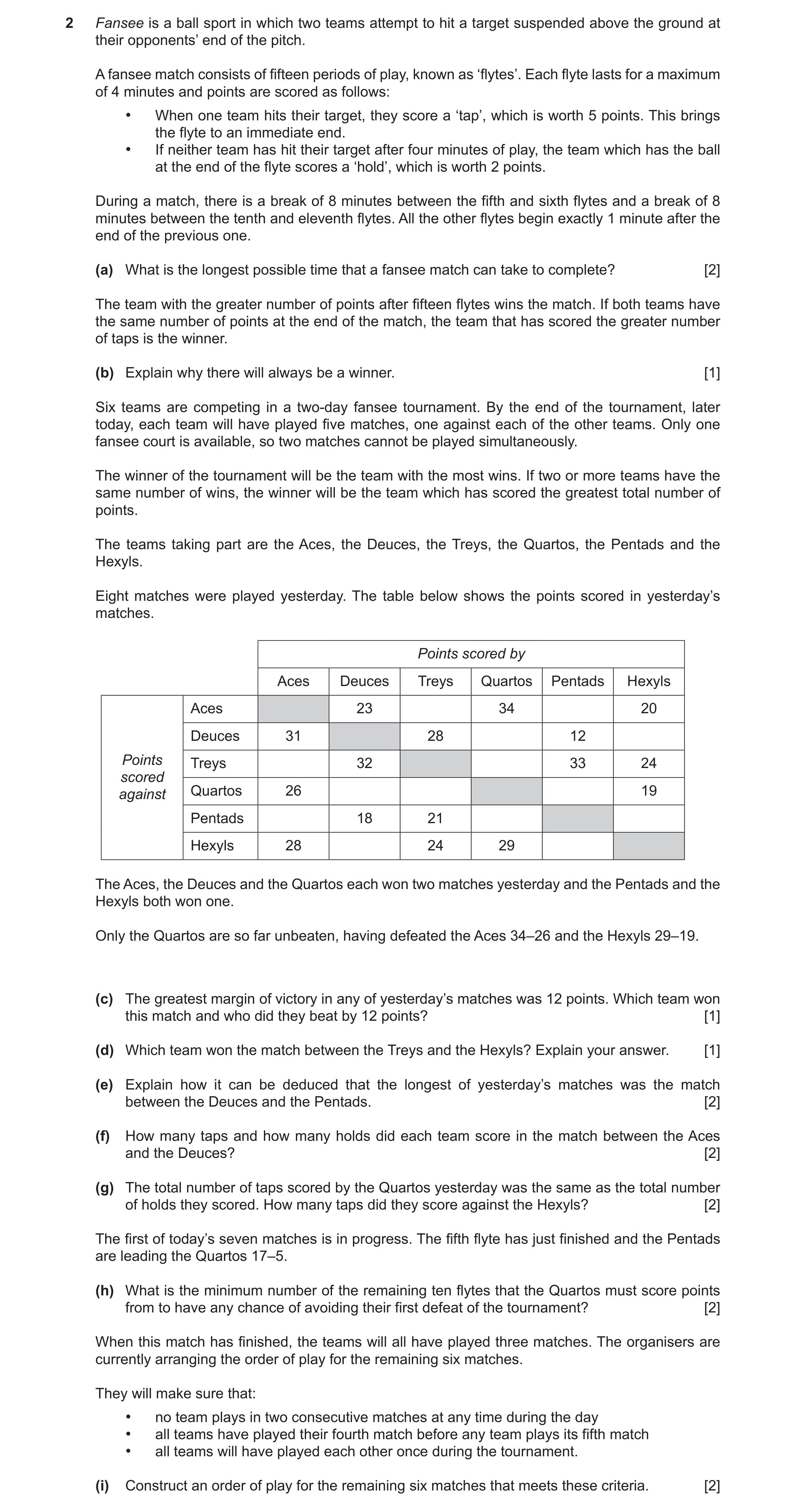
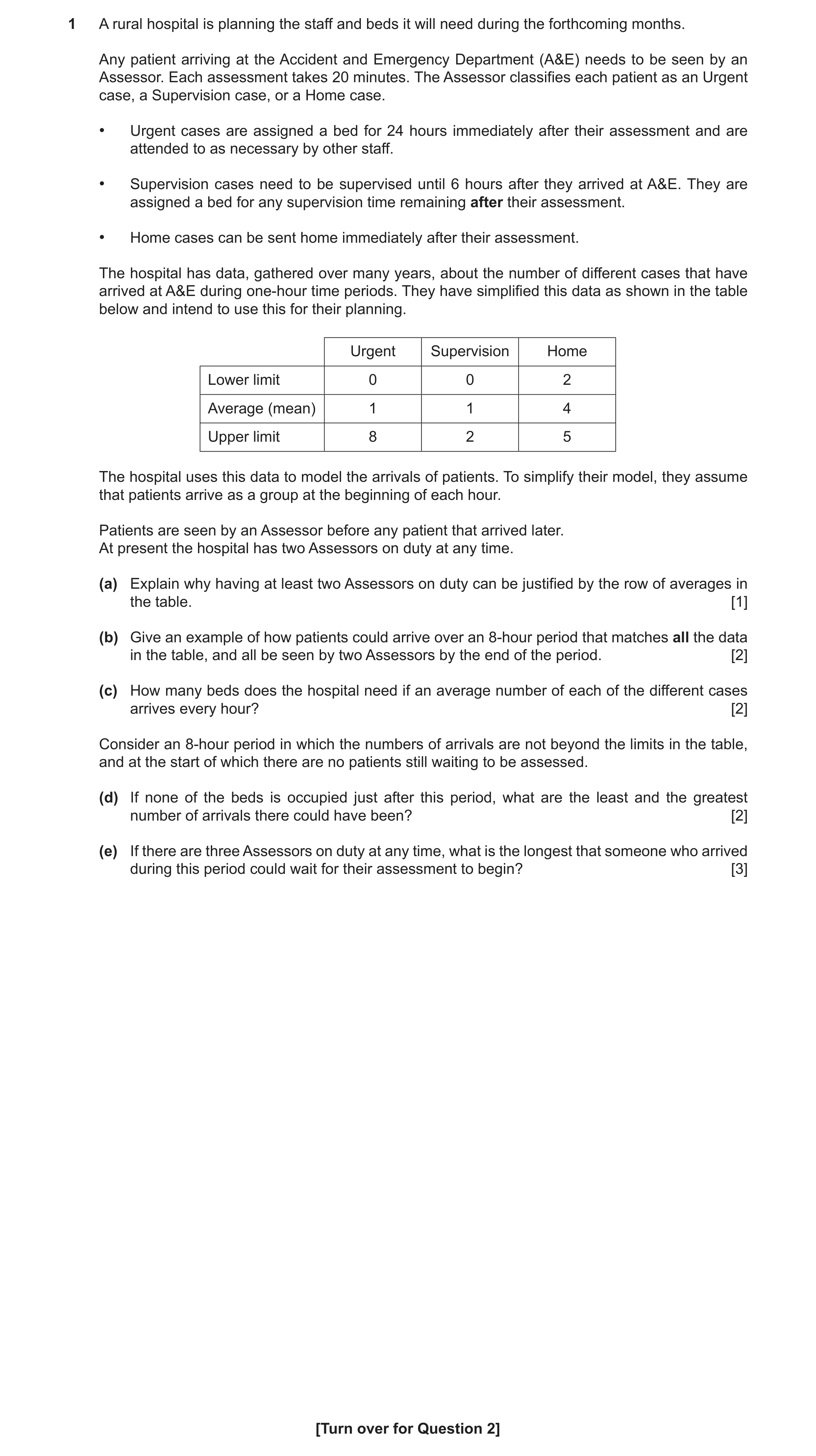
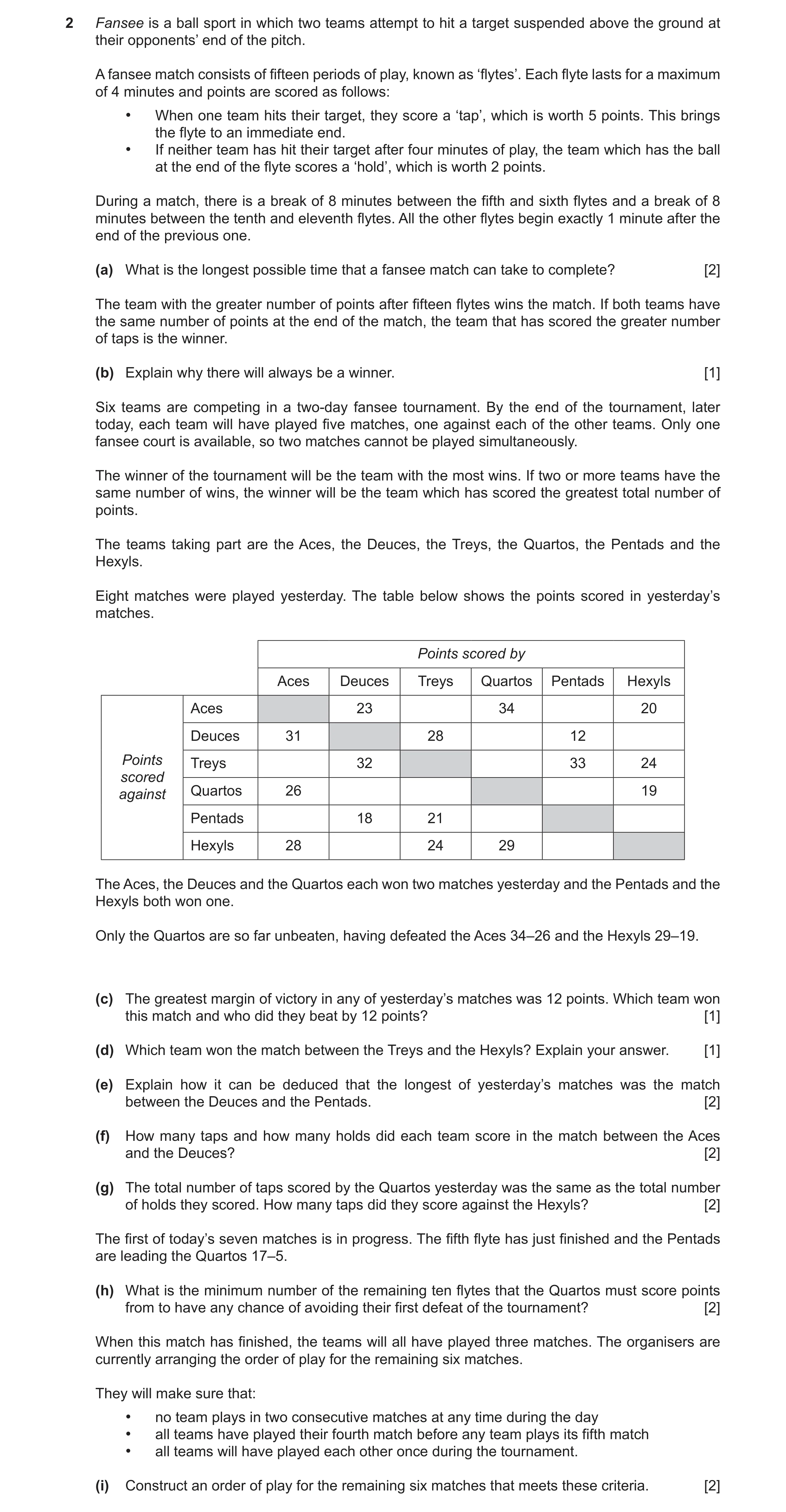
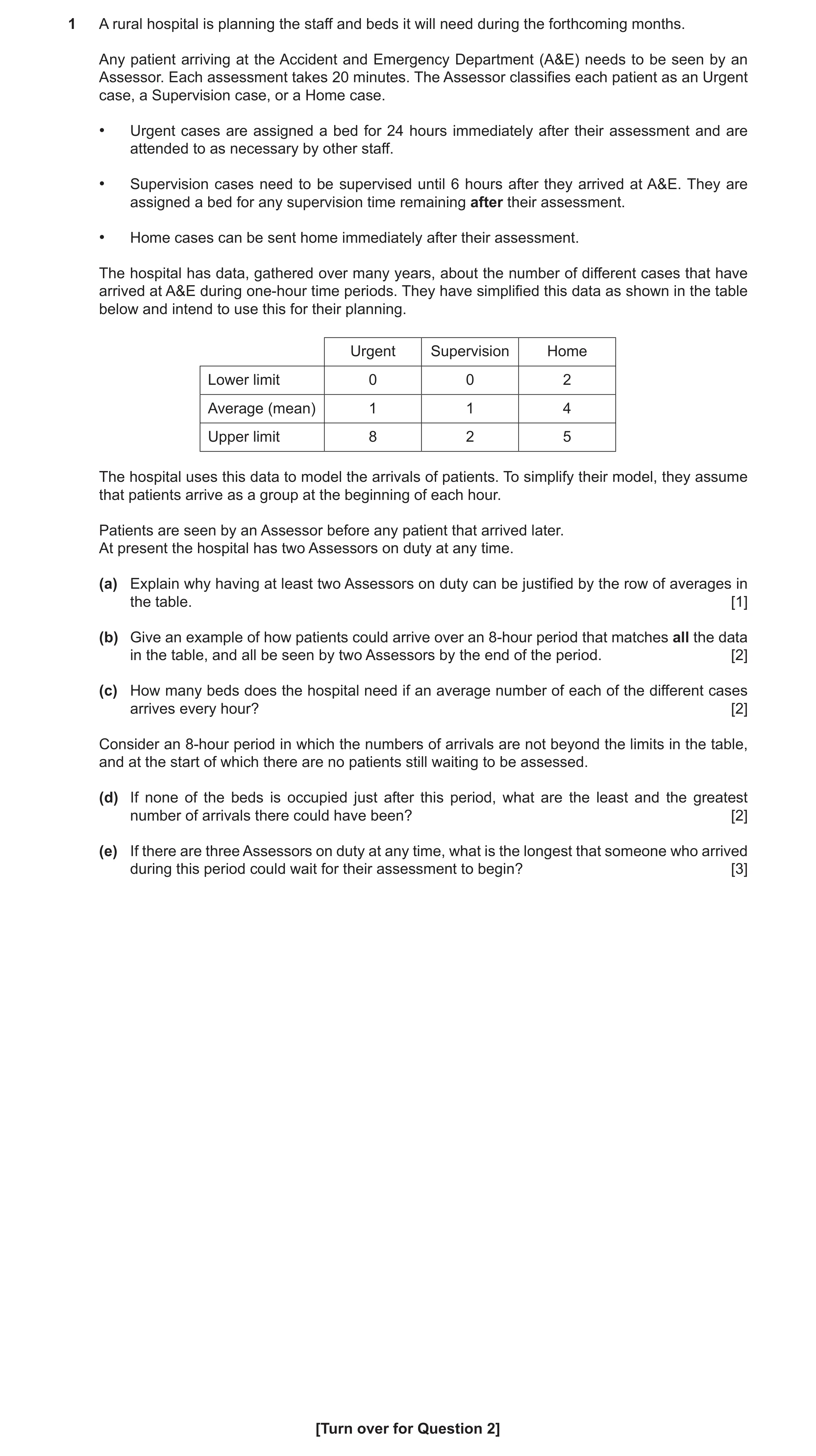
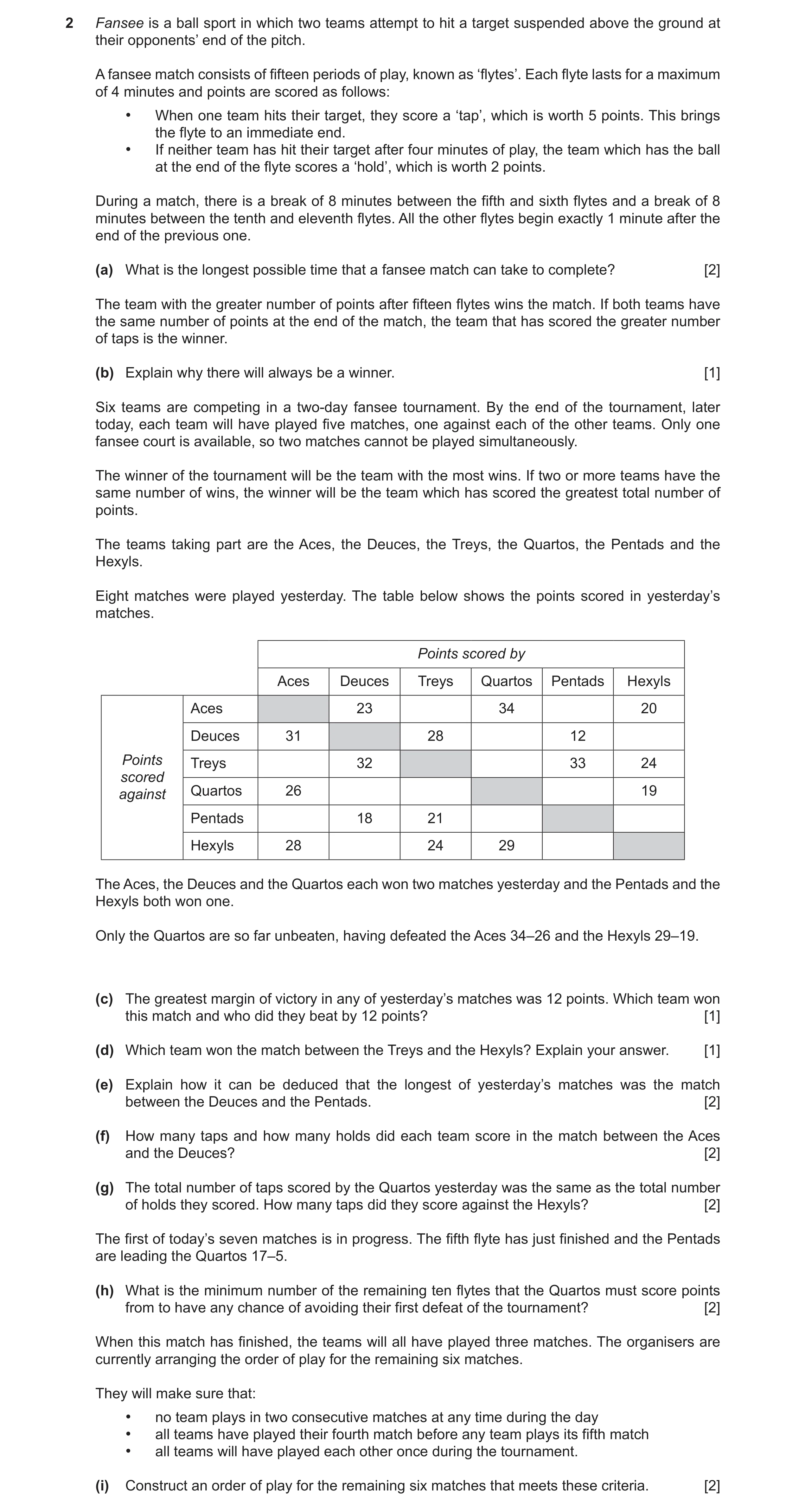
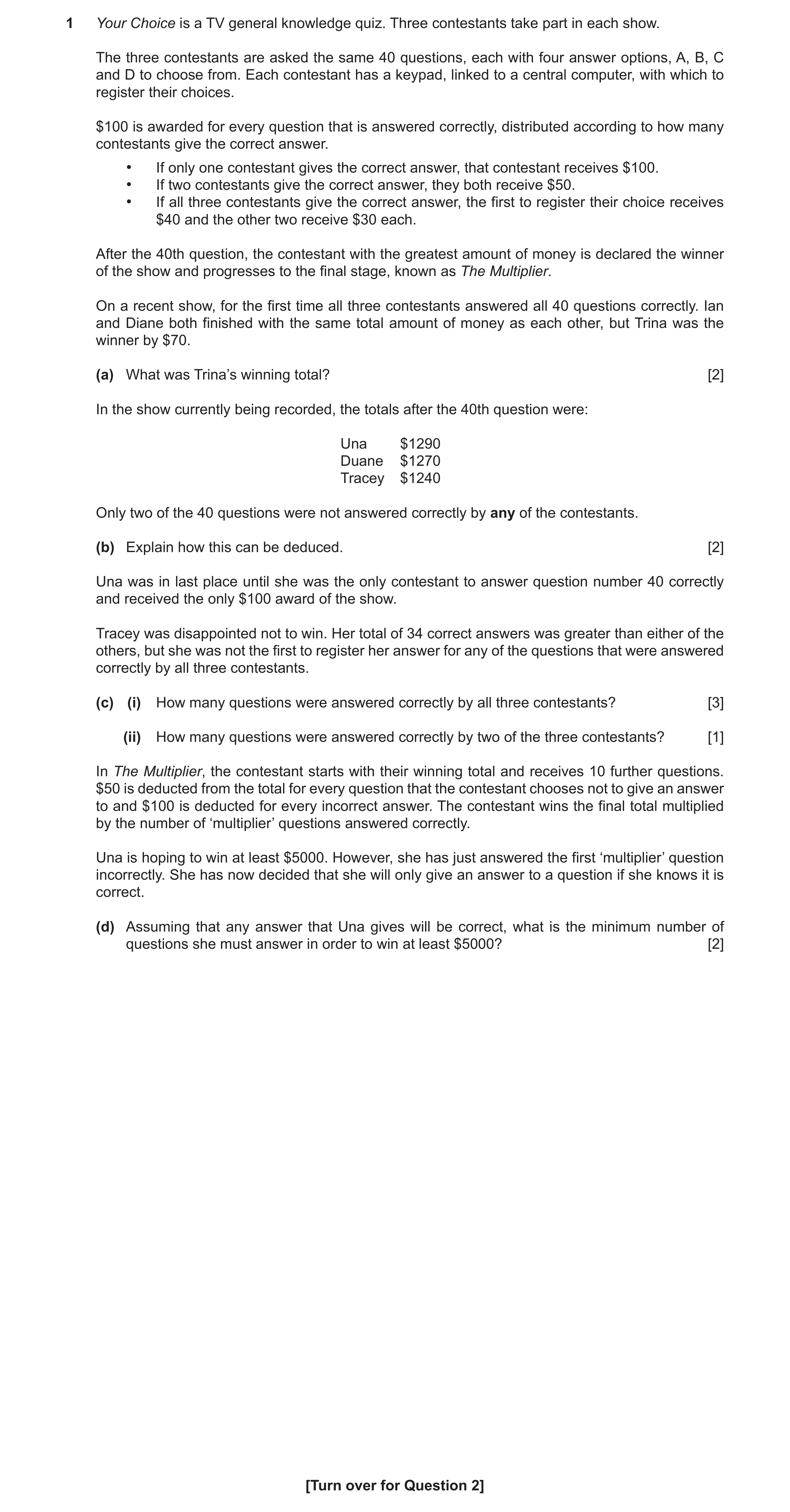
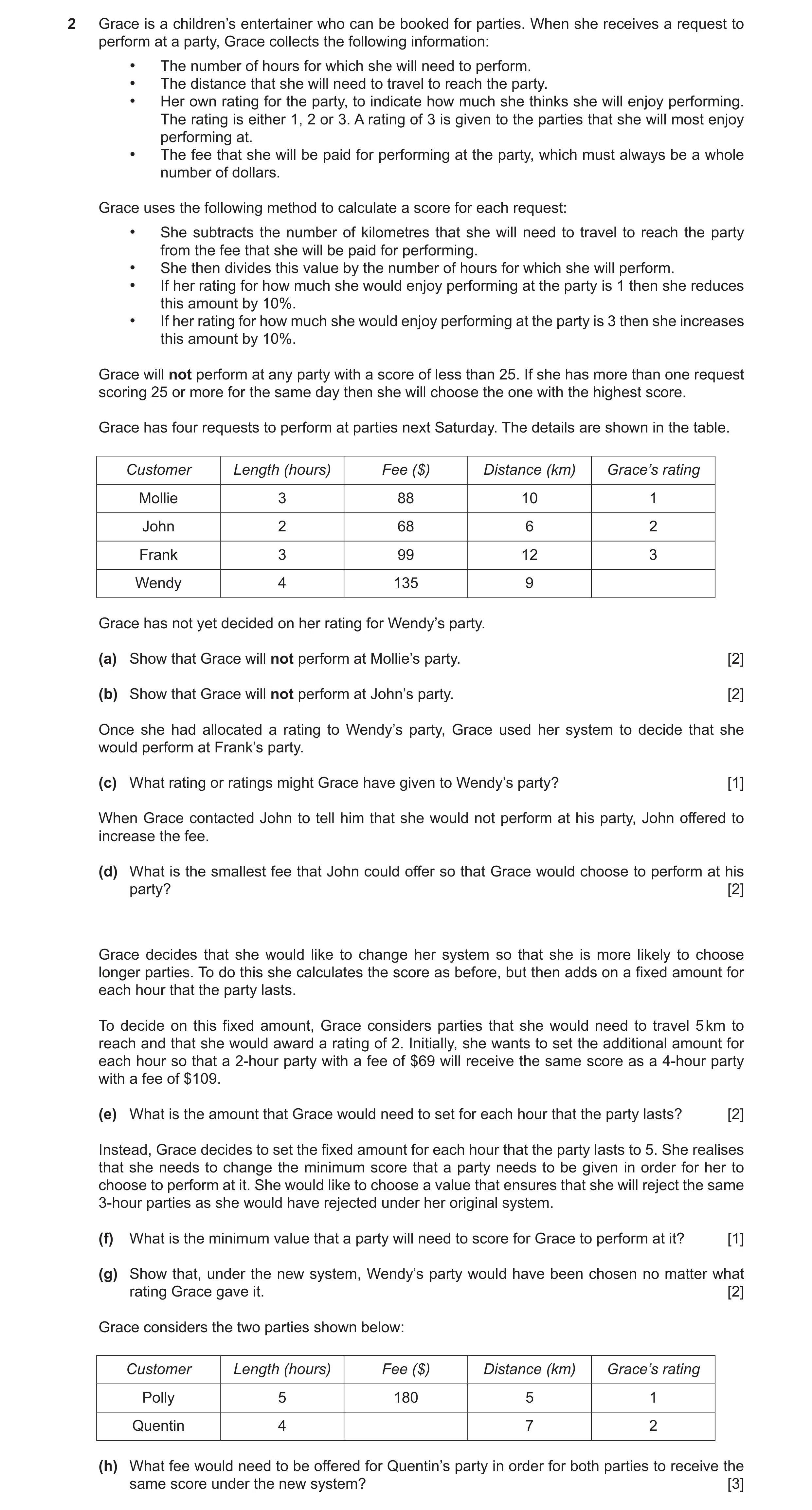
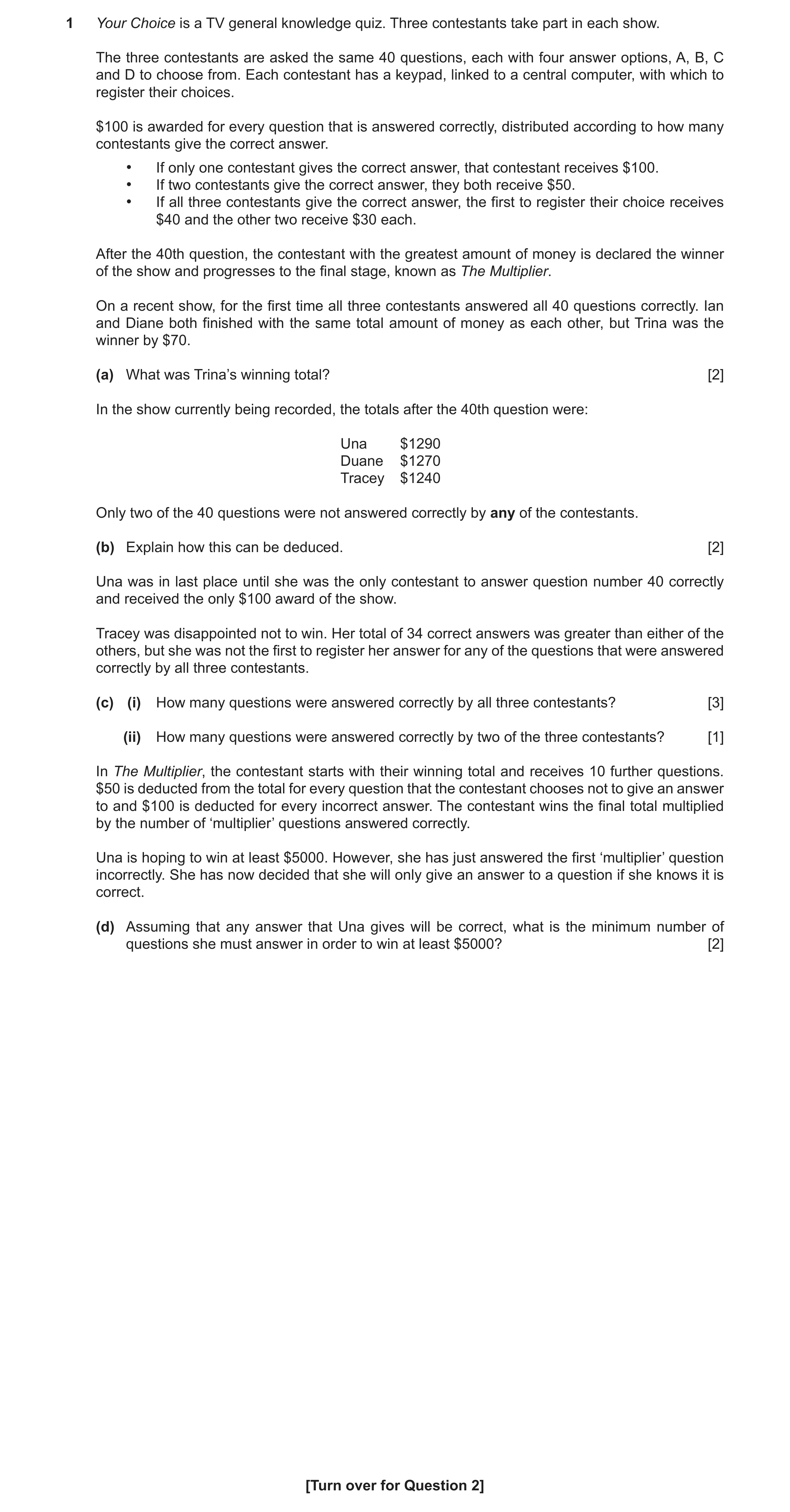
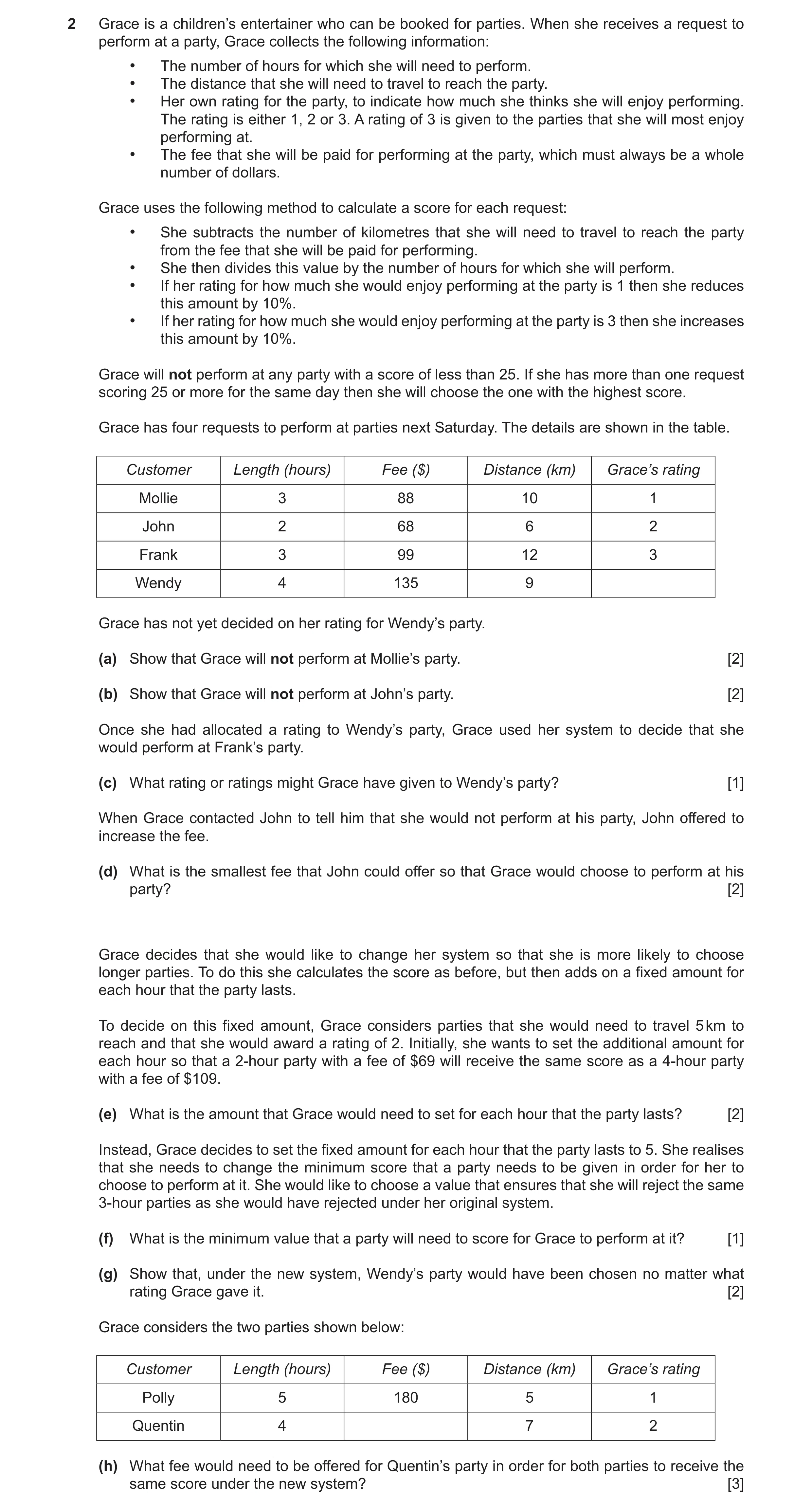
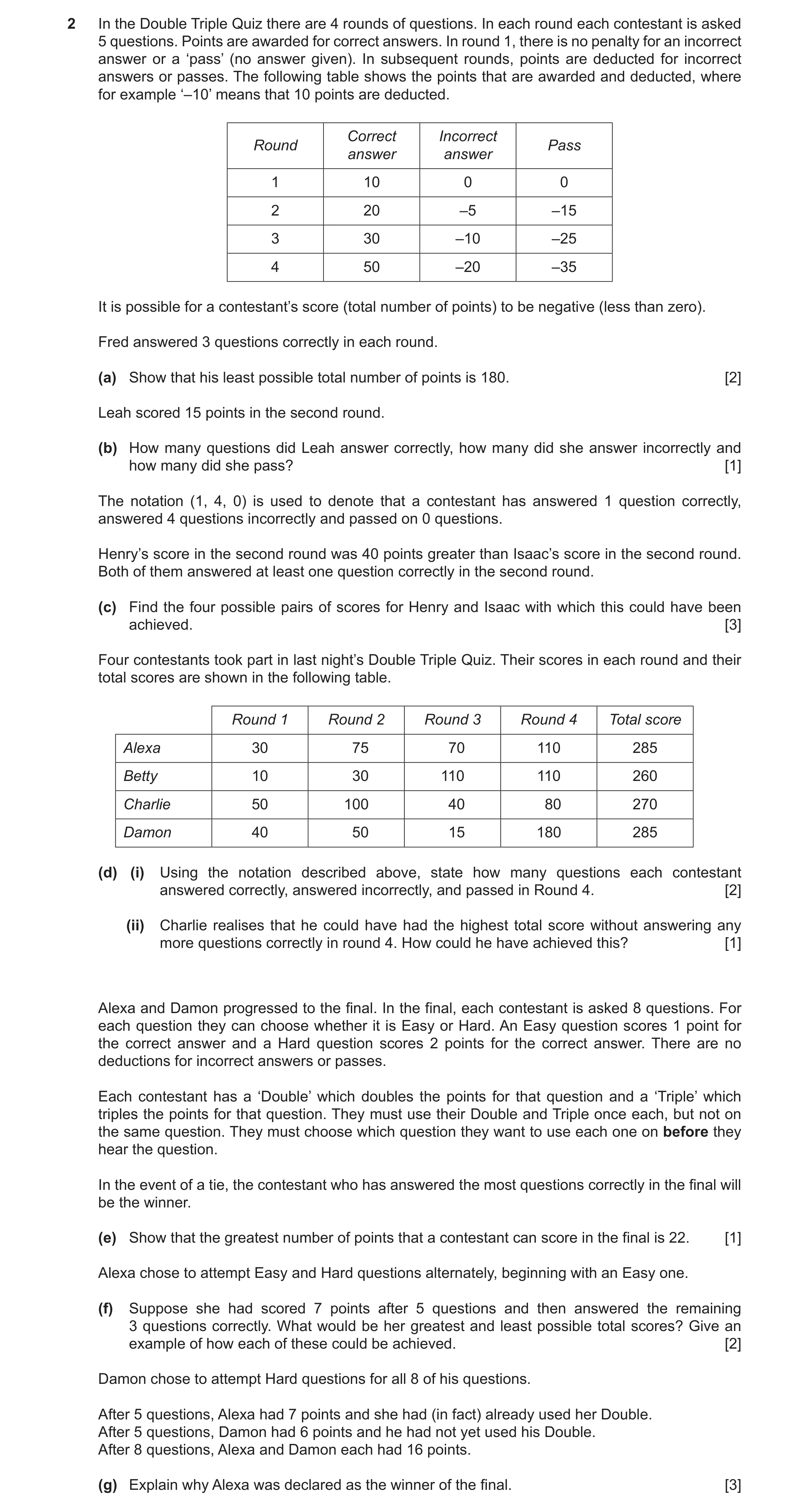
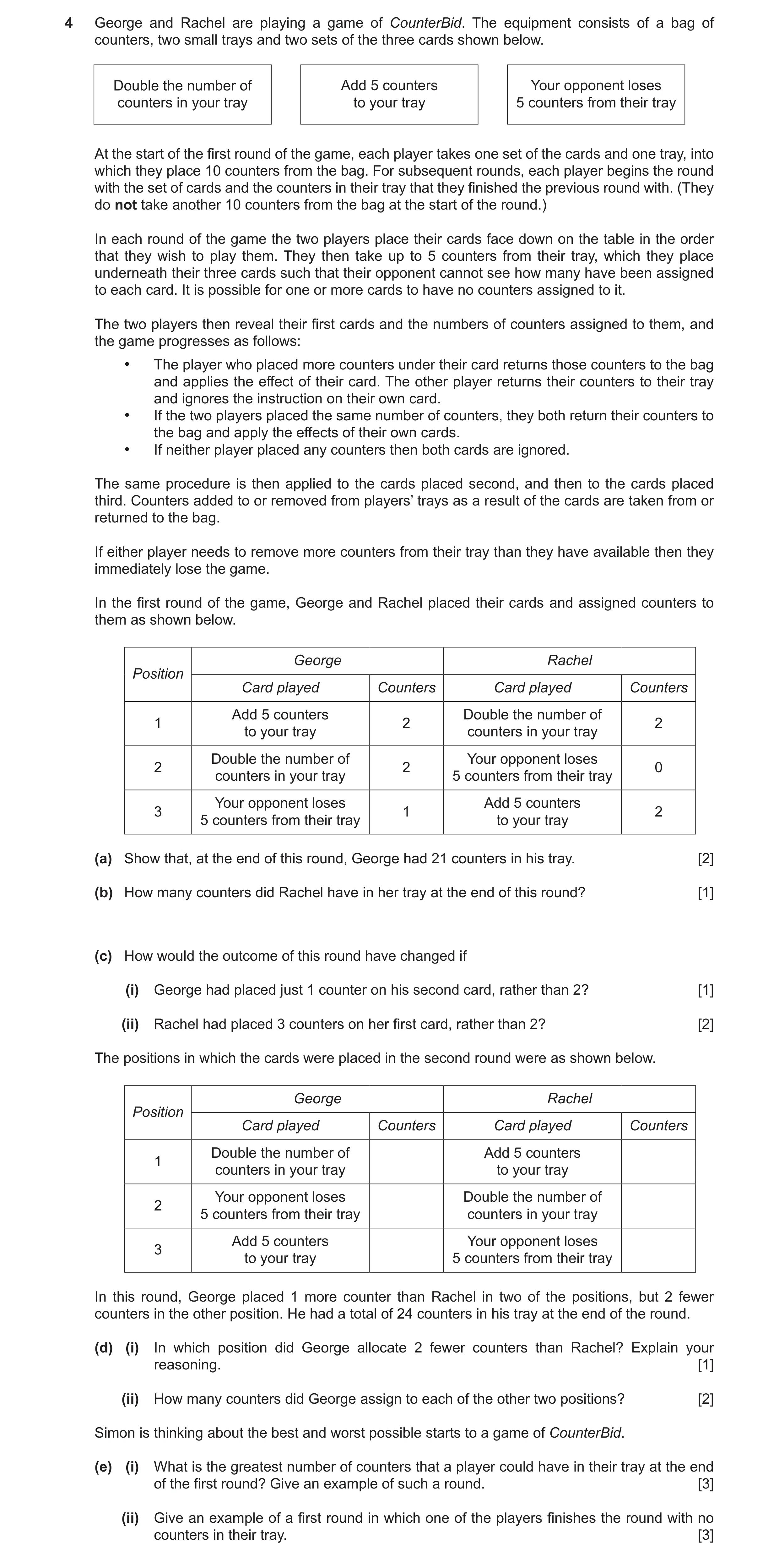
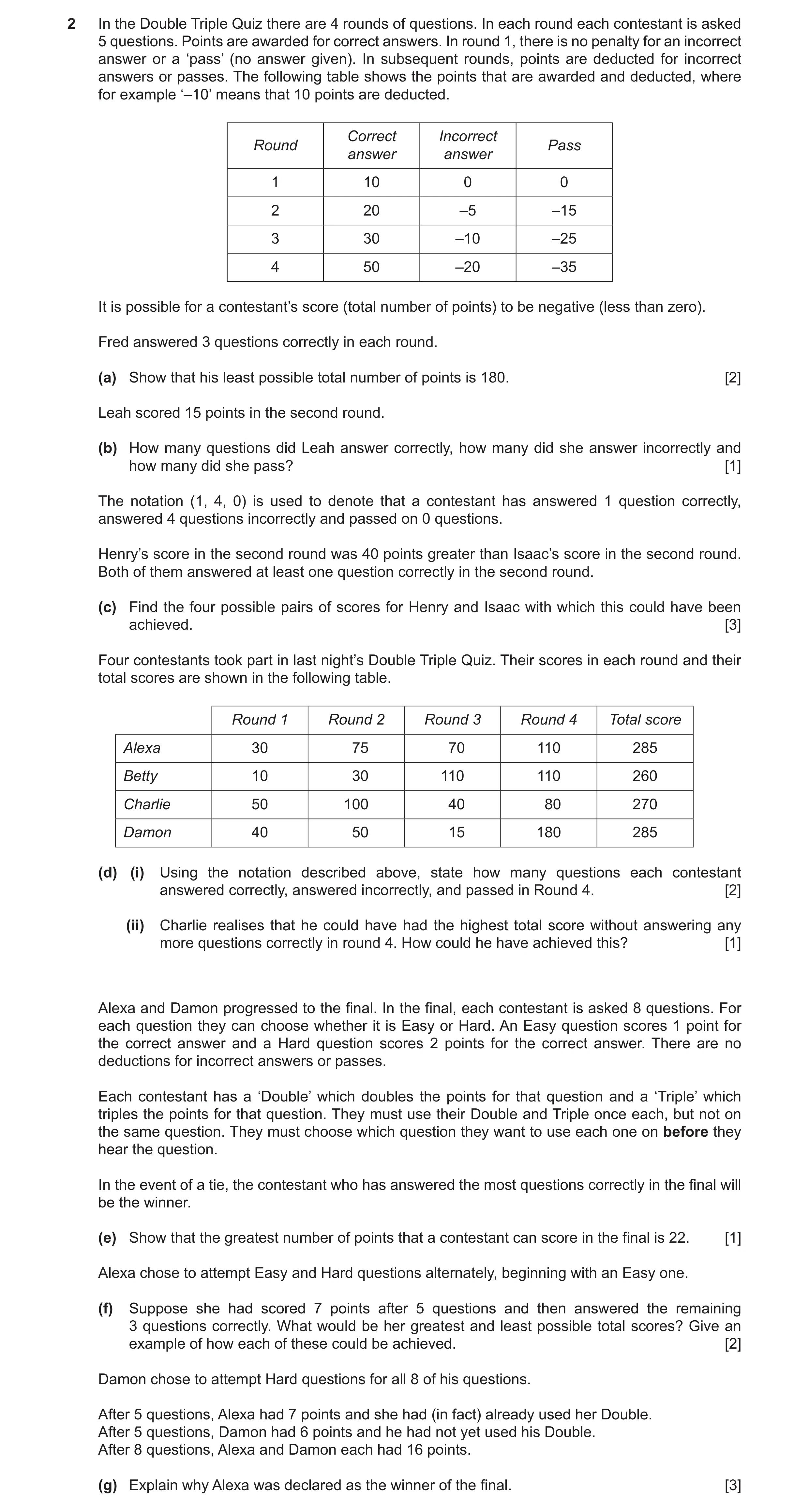
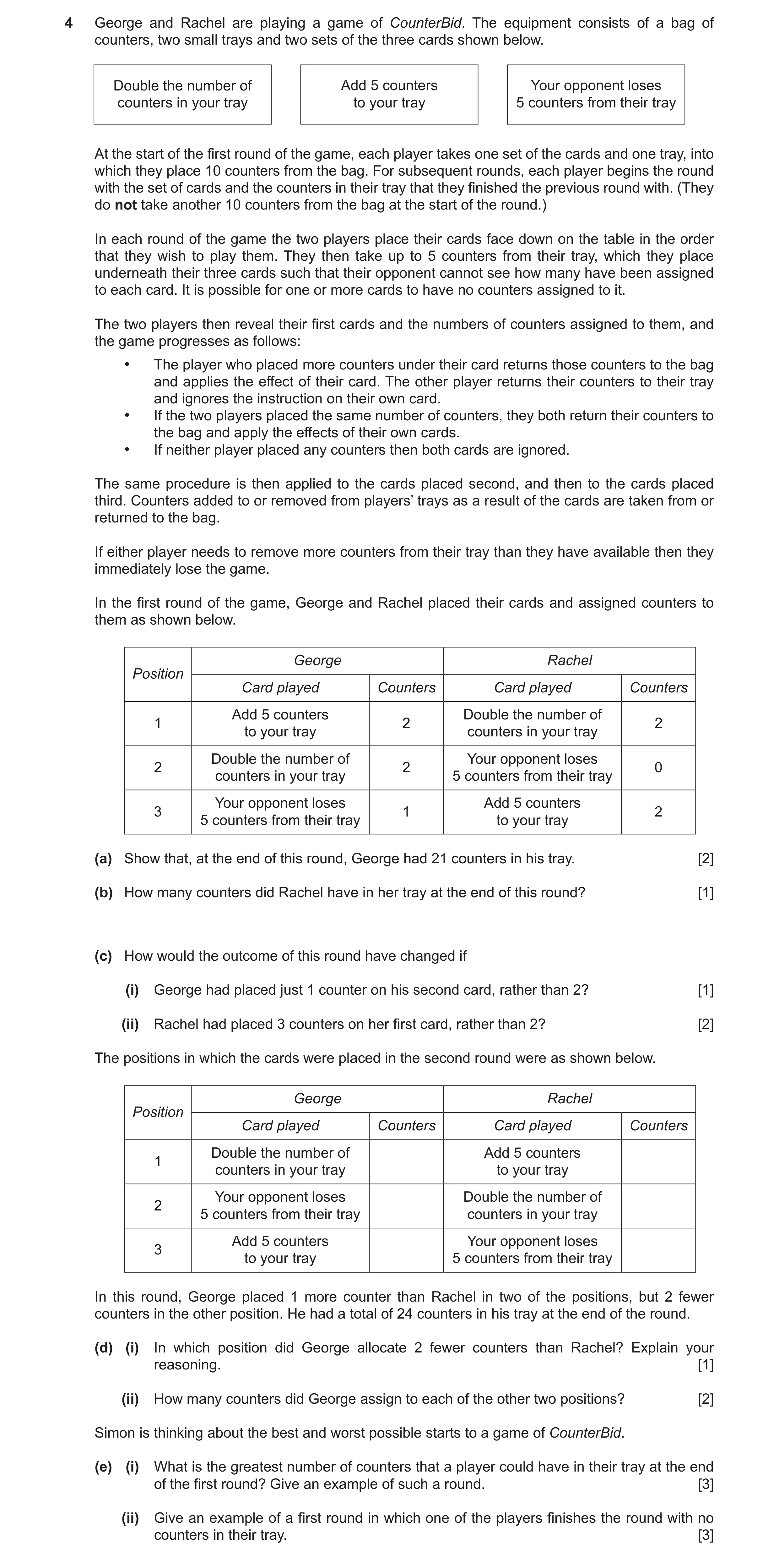
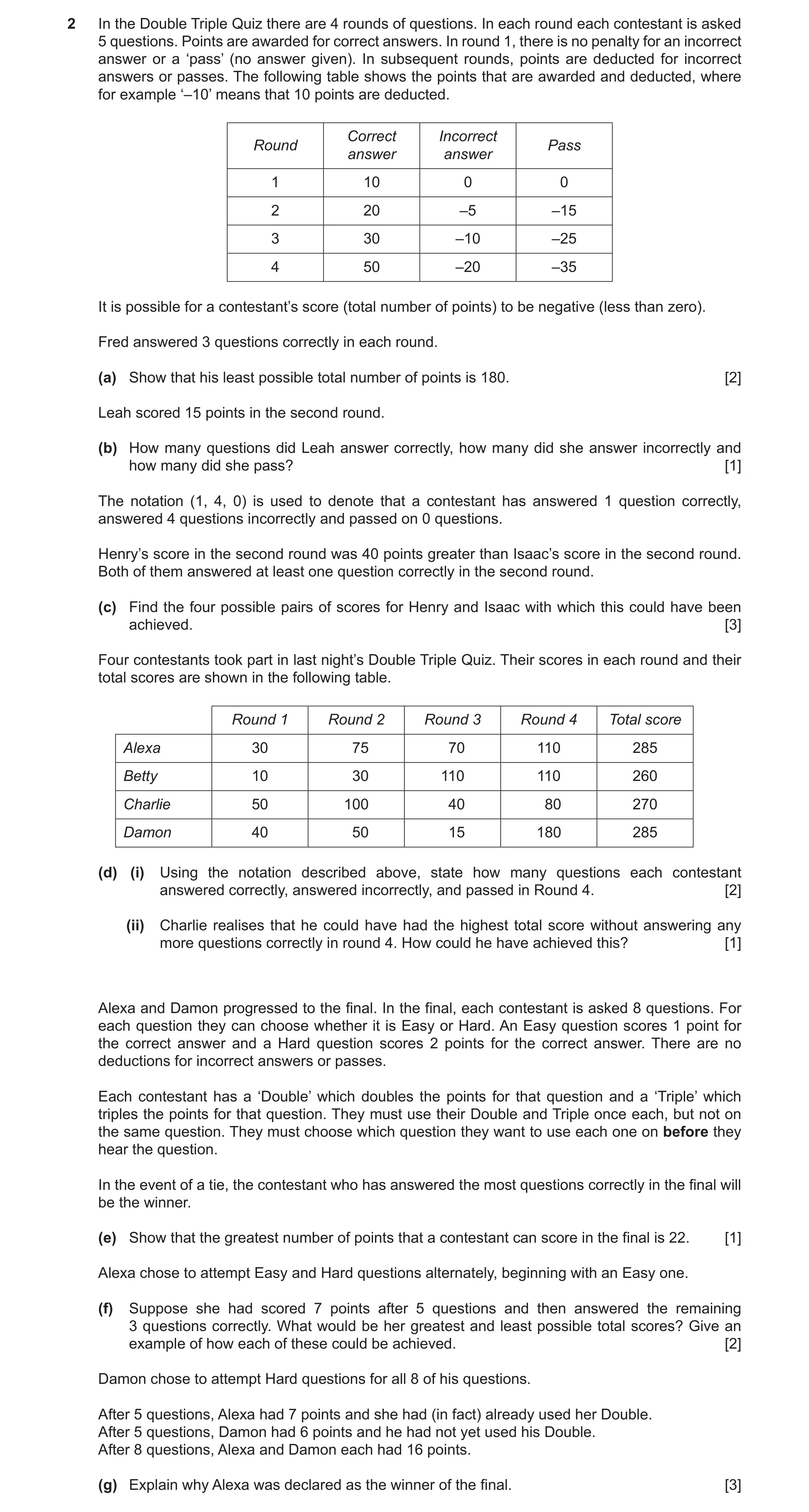
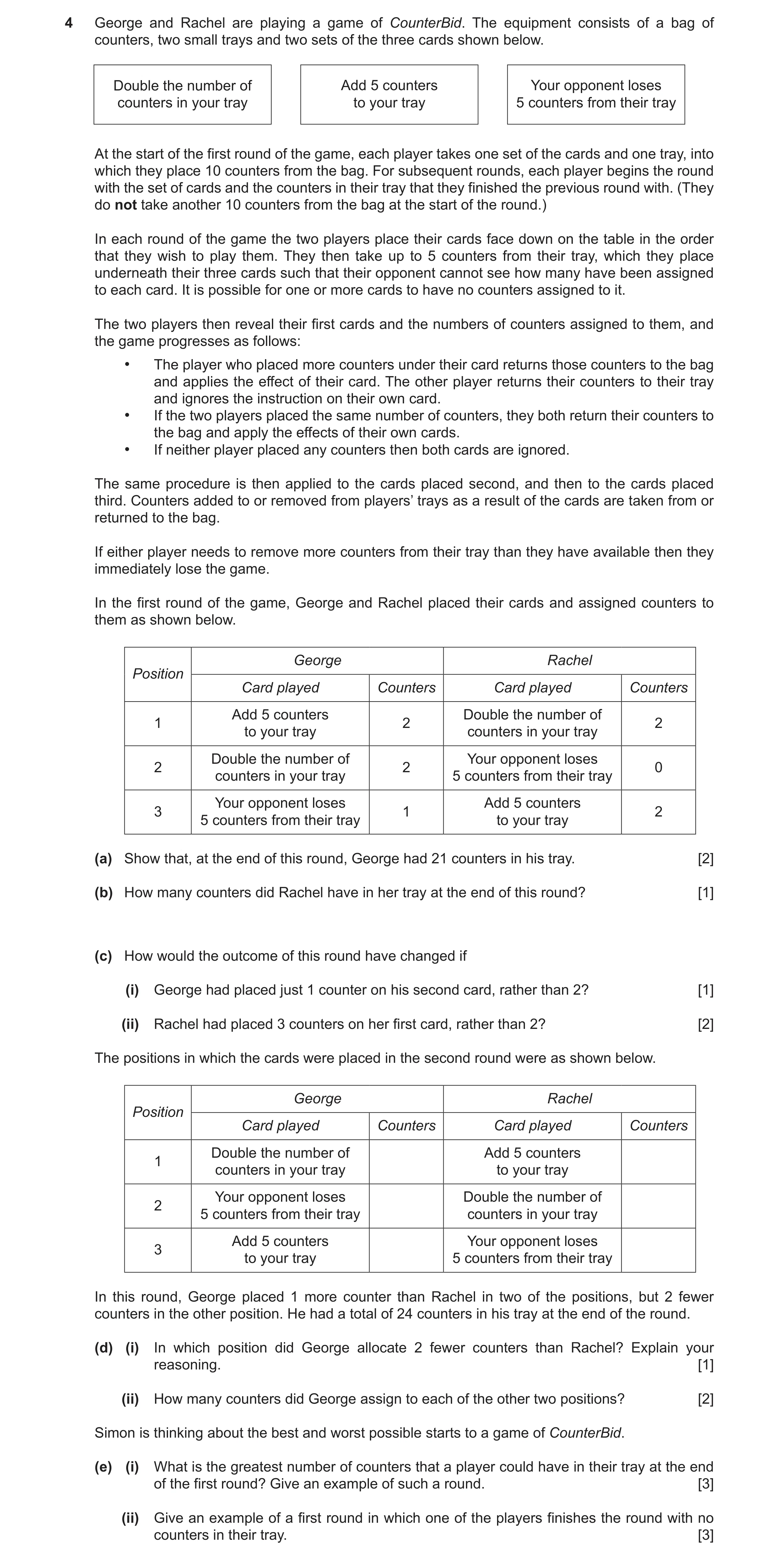
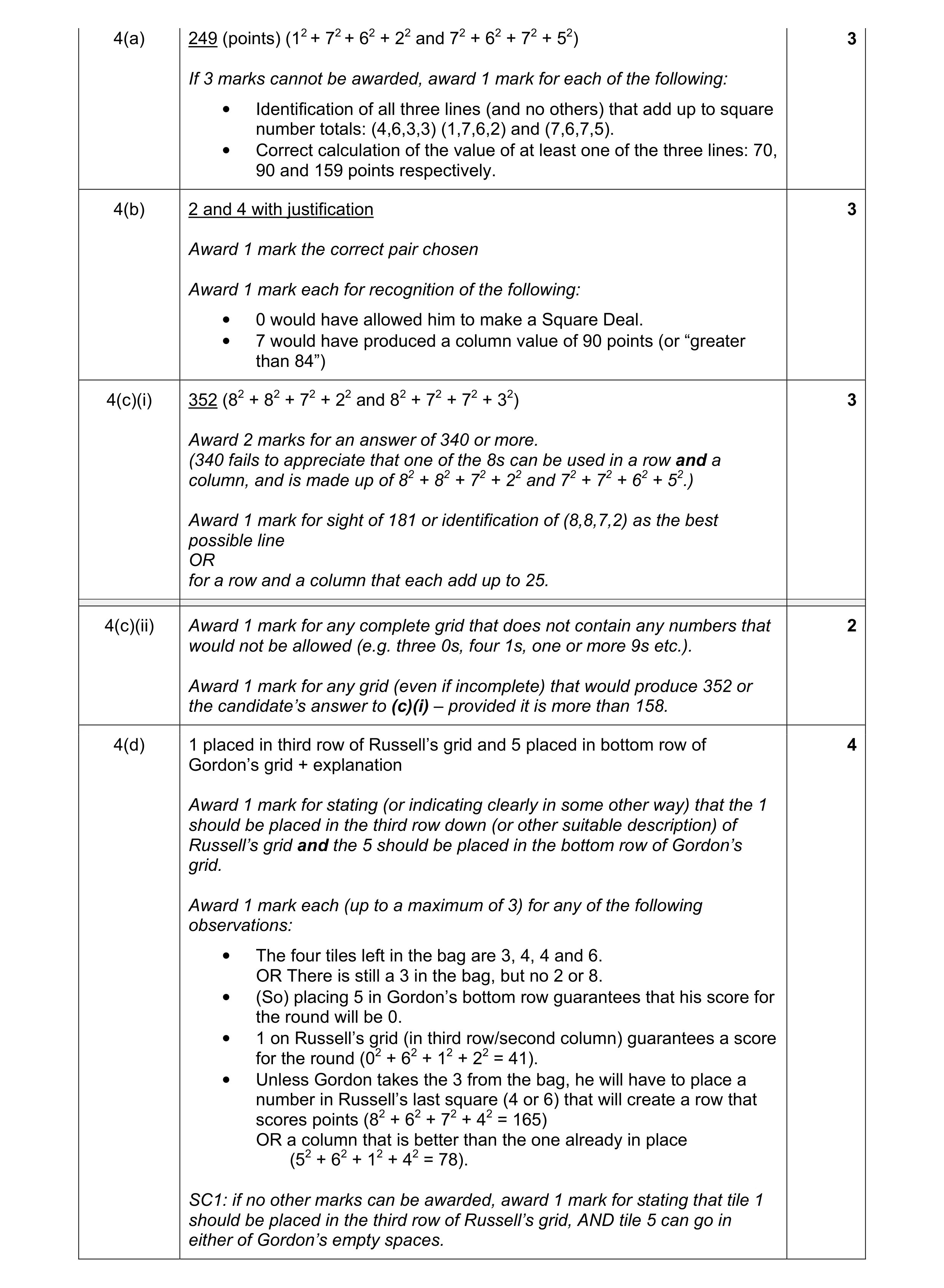 15
15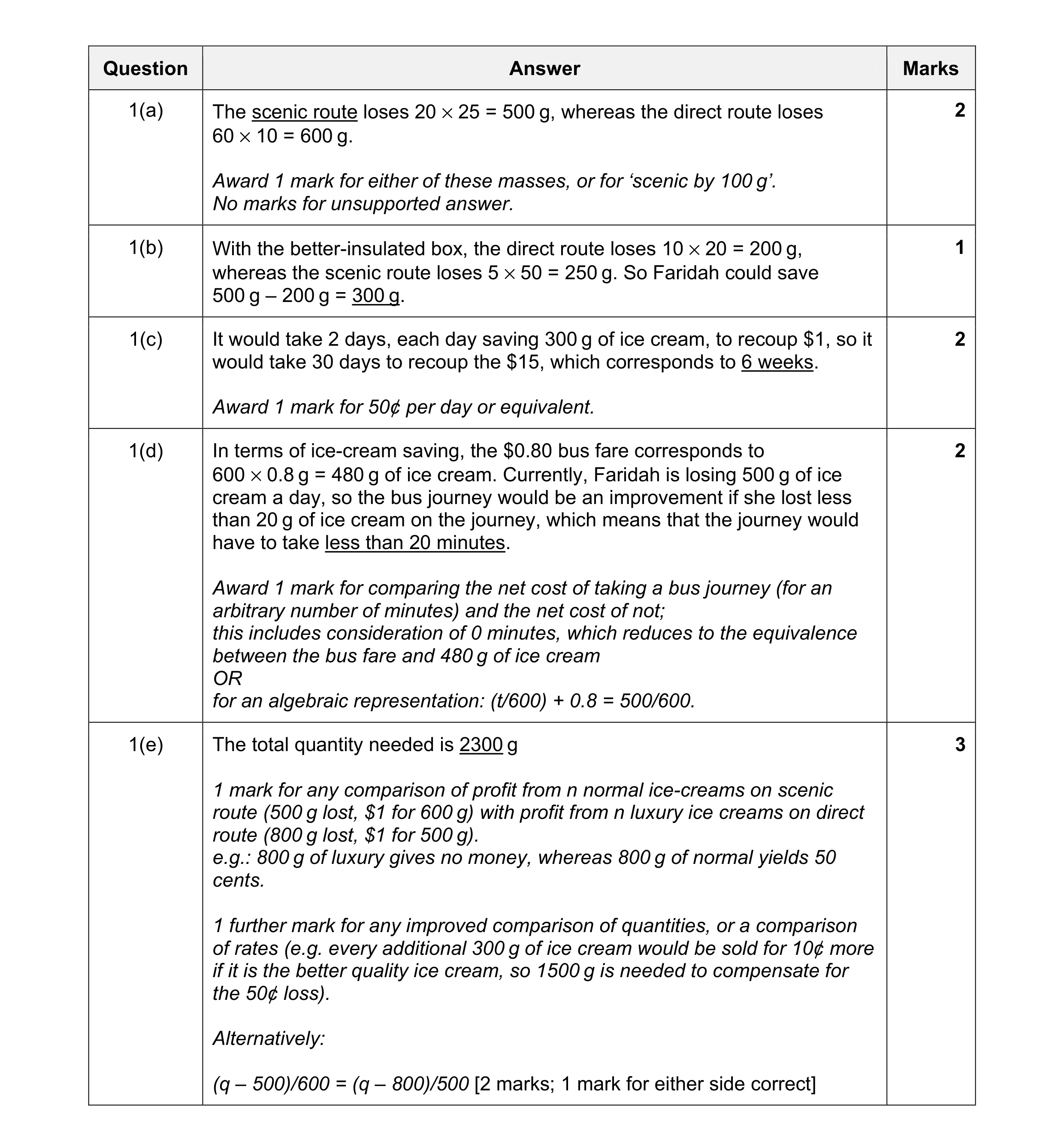 10
10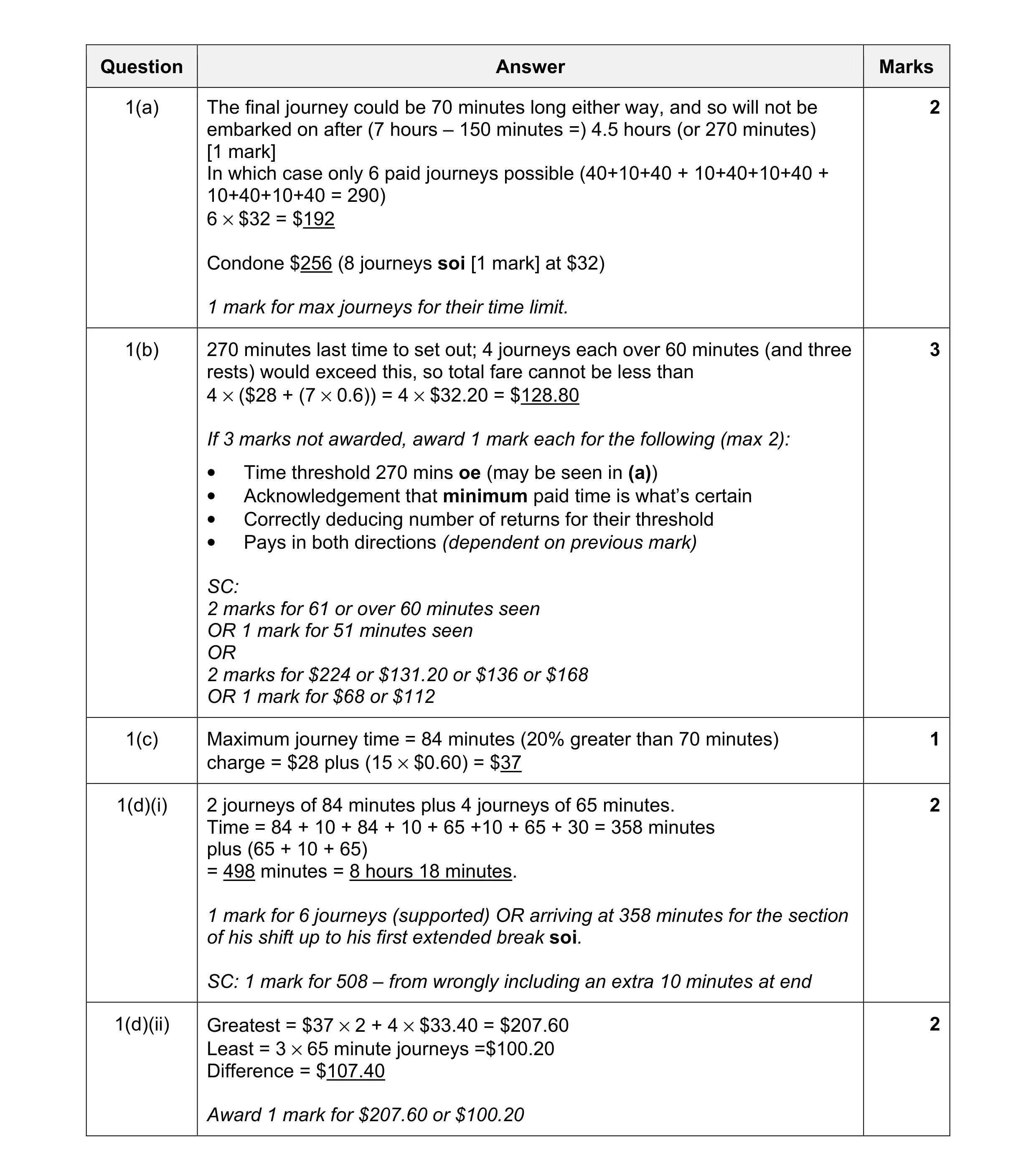 10
10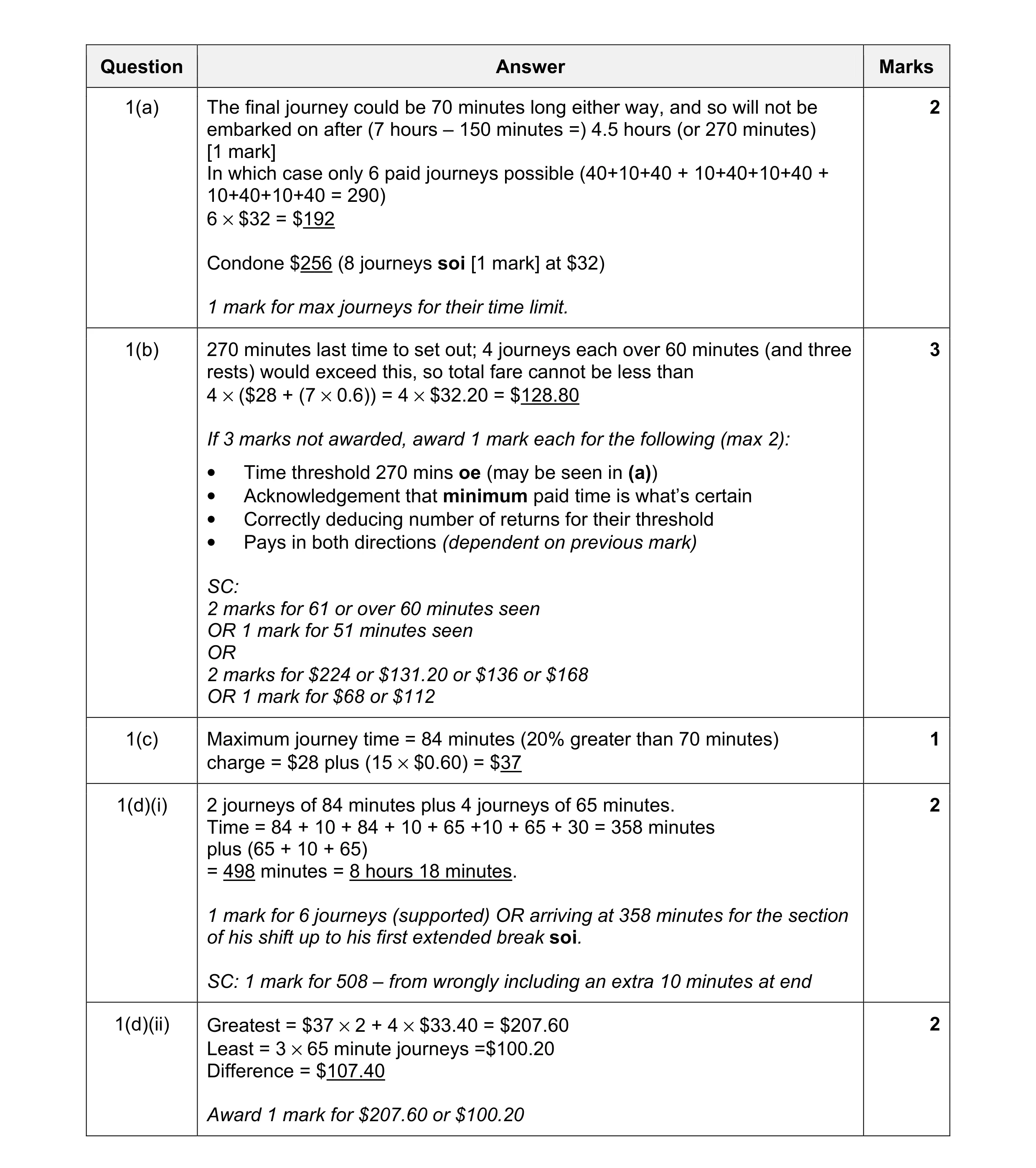 10
10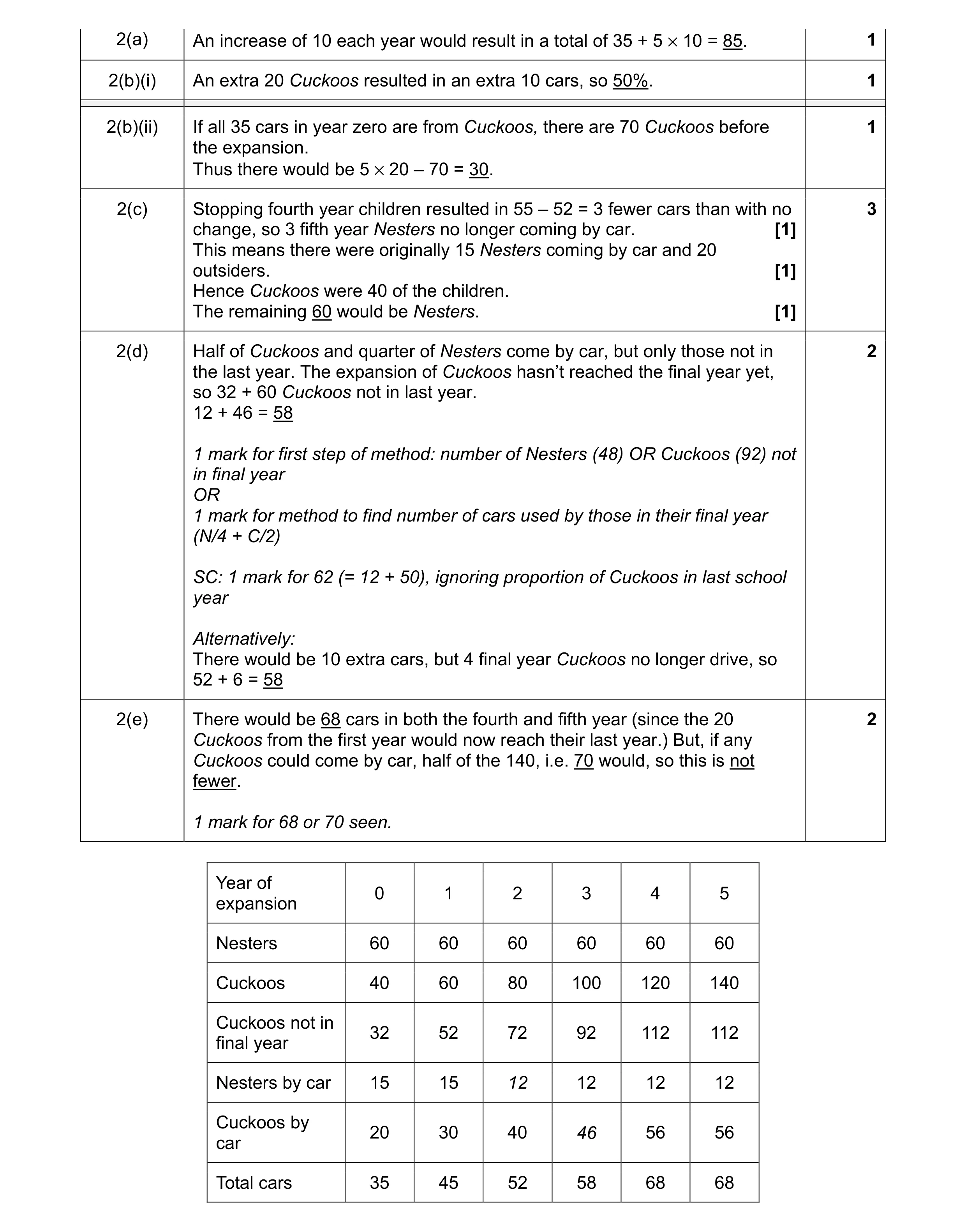 10
10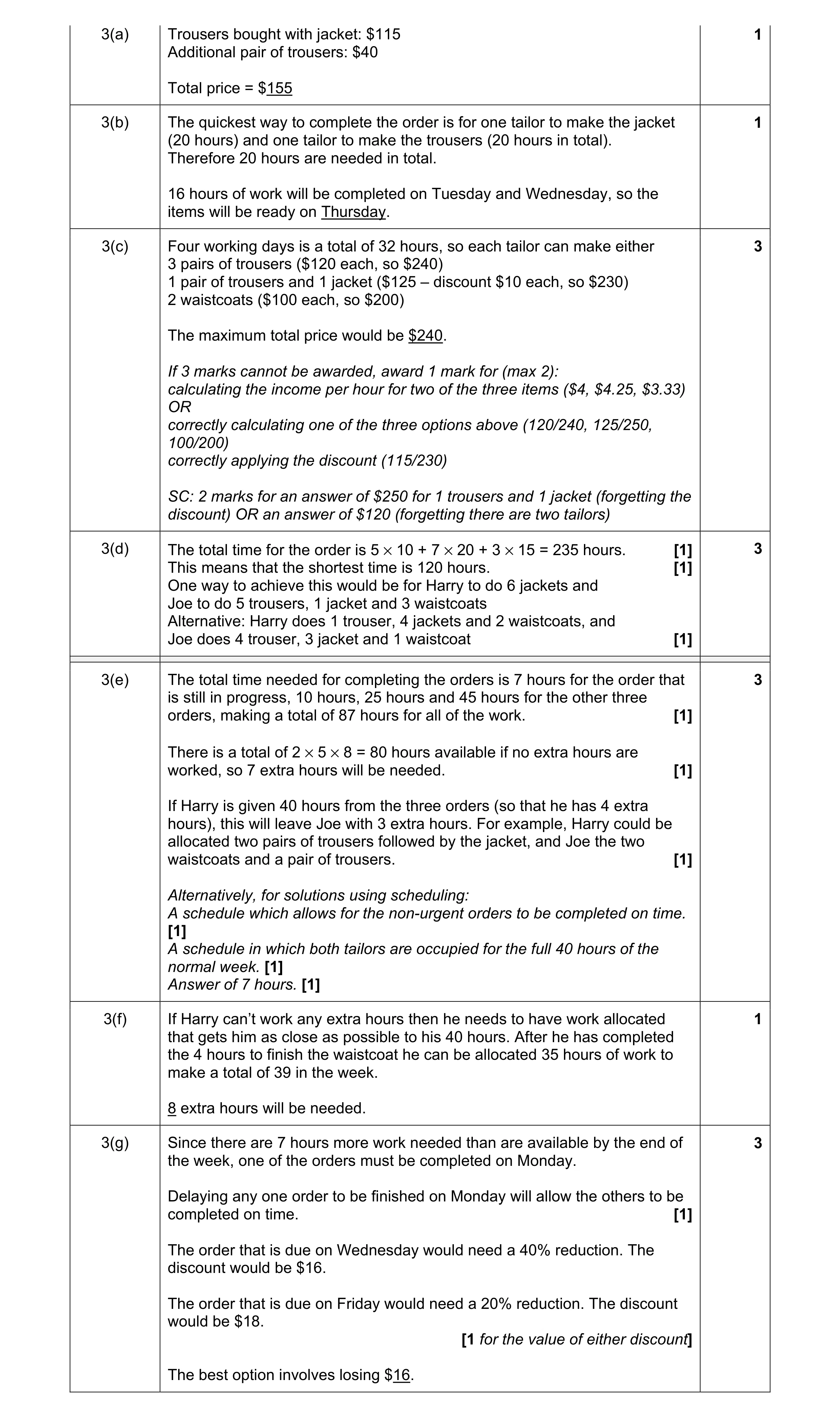 15
15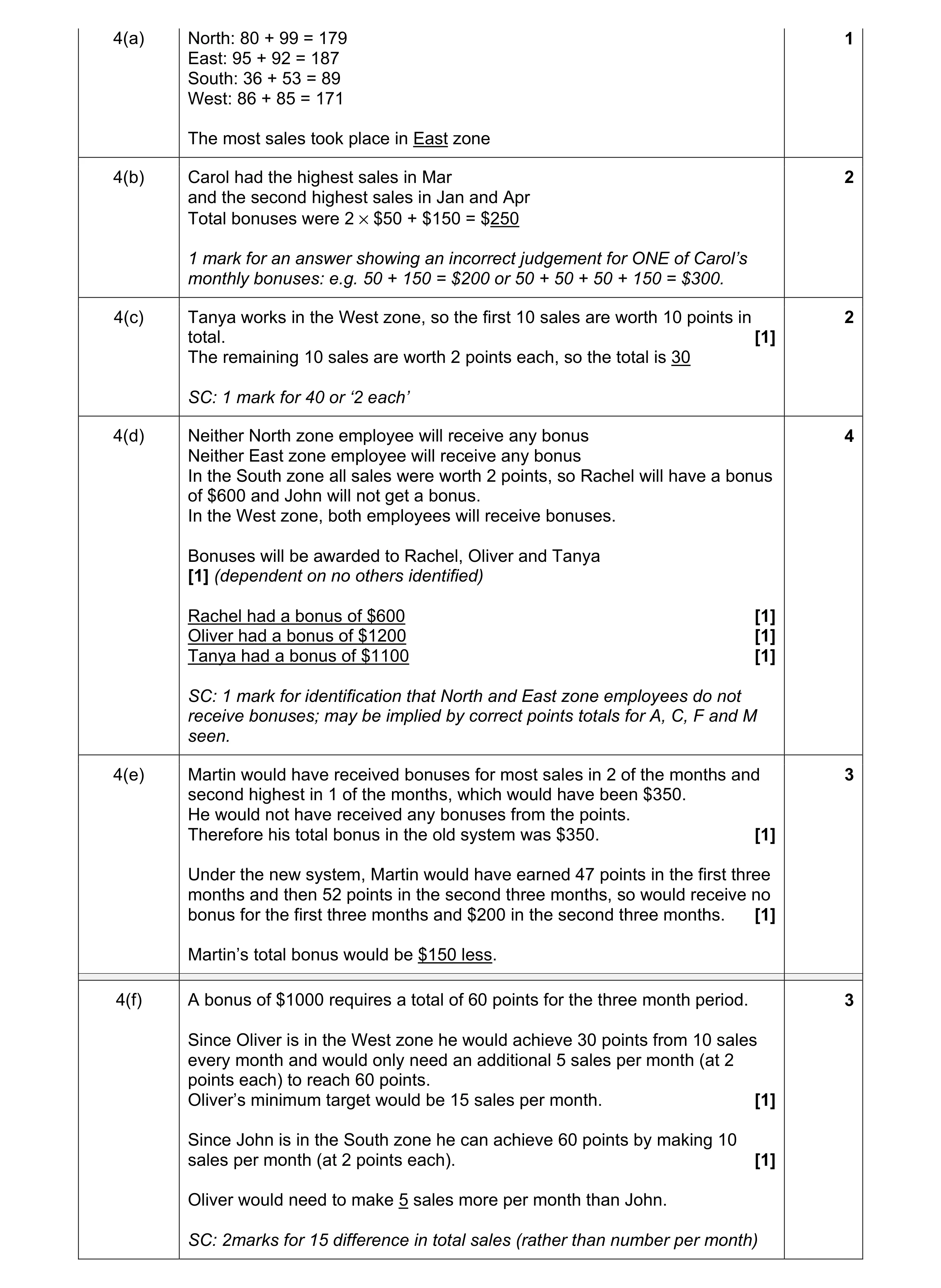 15
15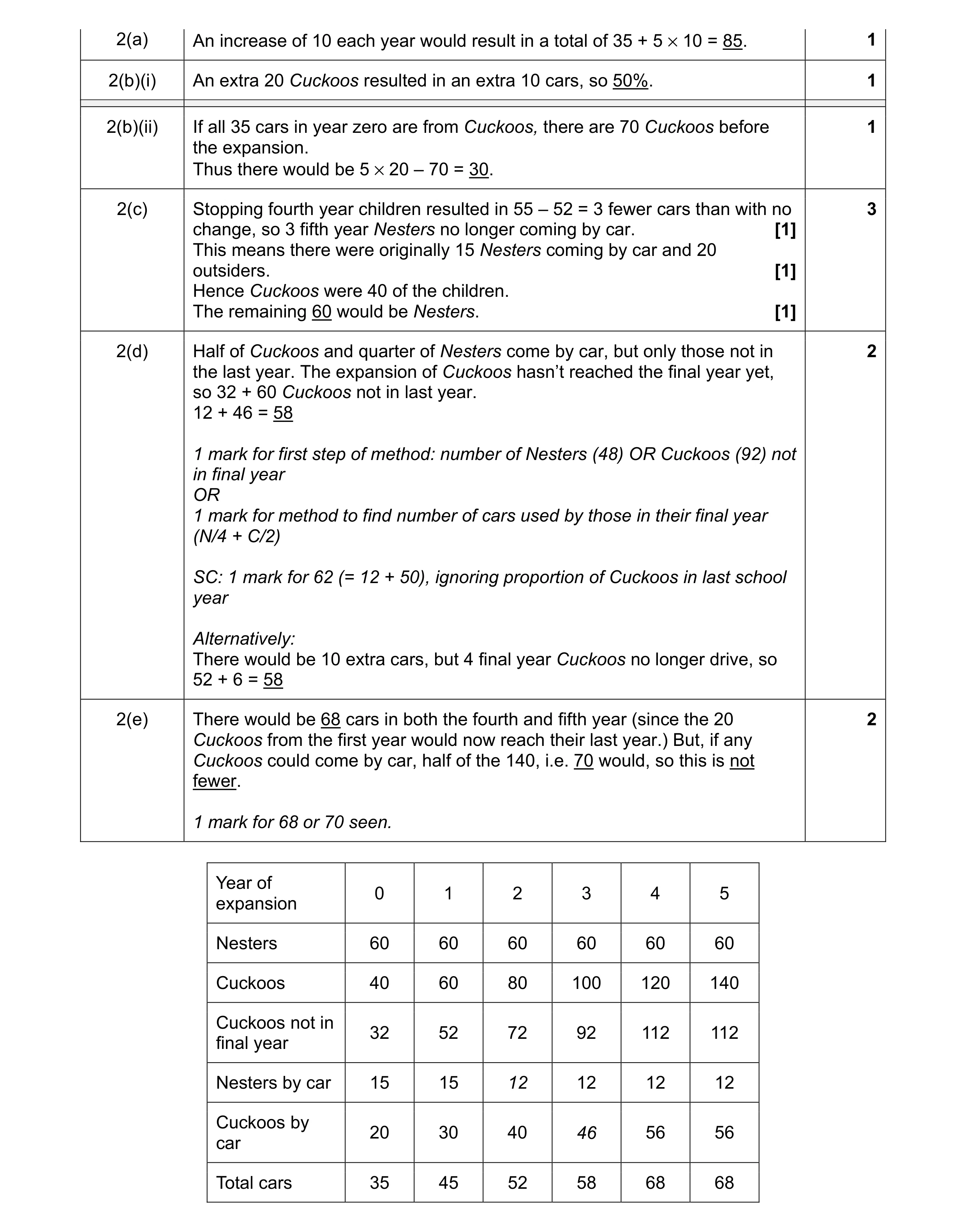 10
10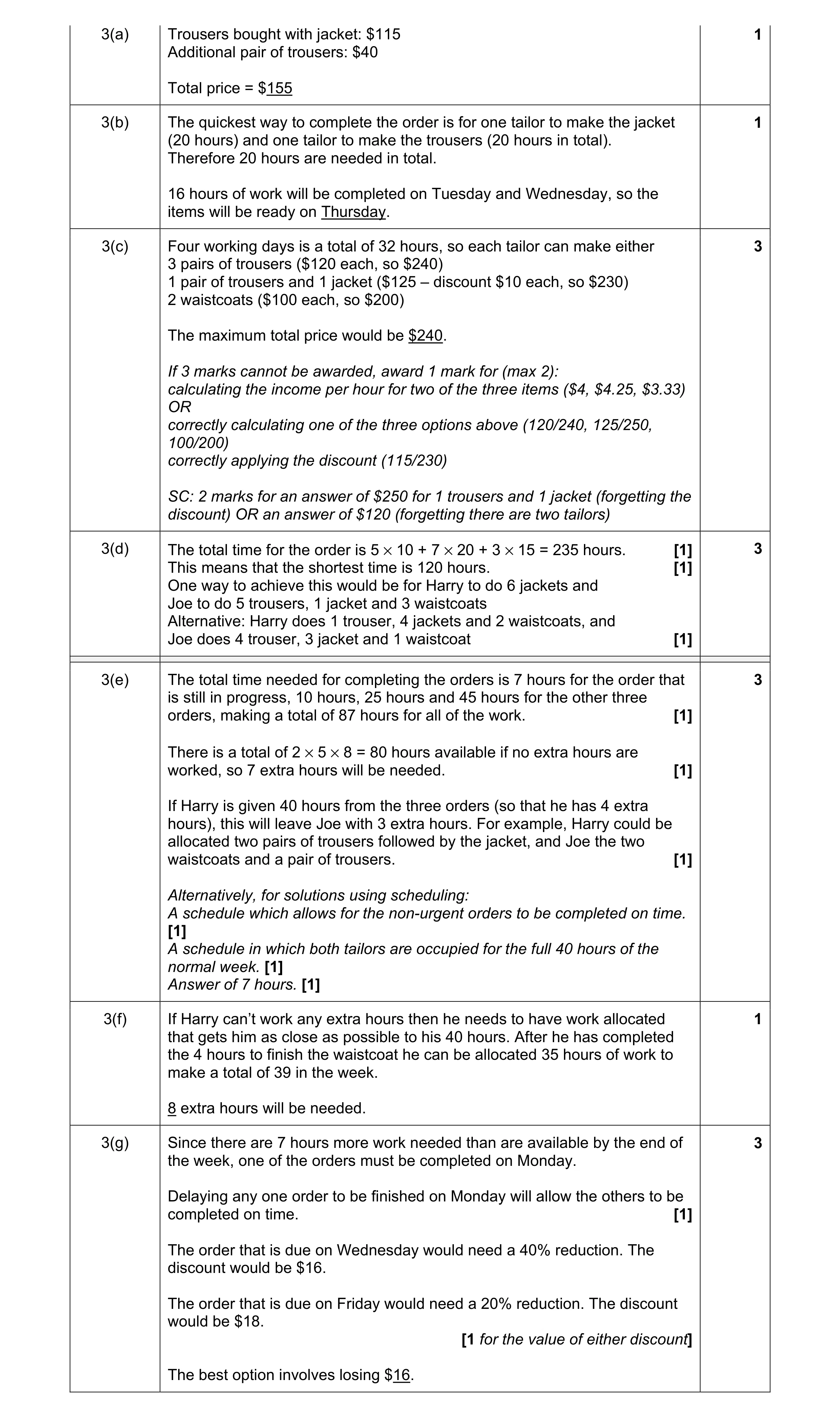 15
15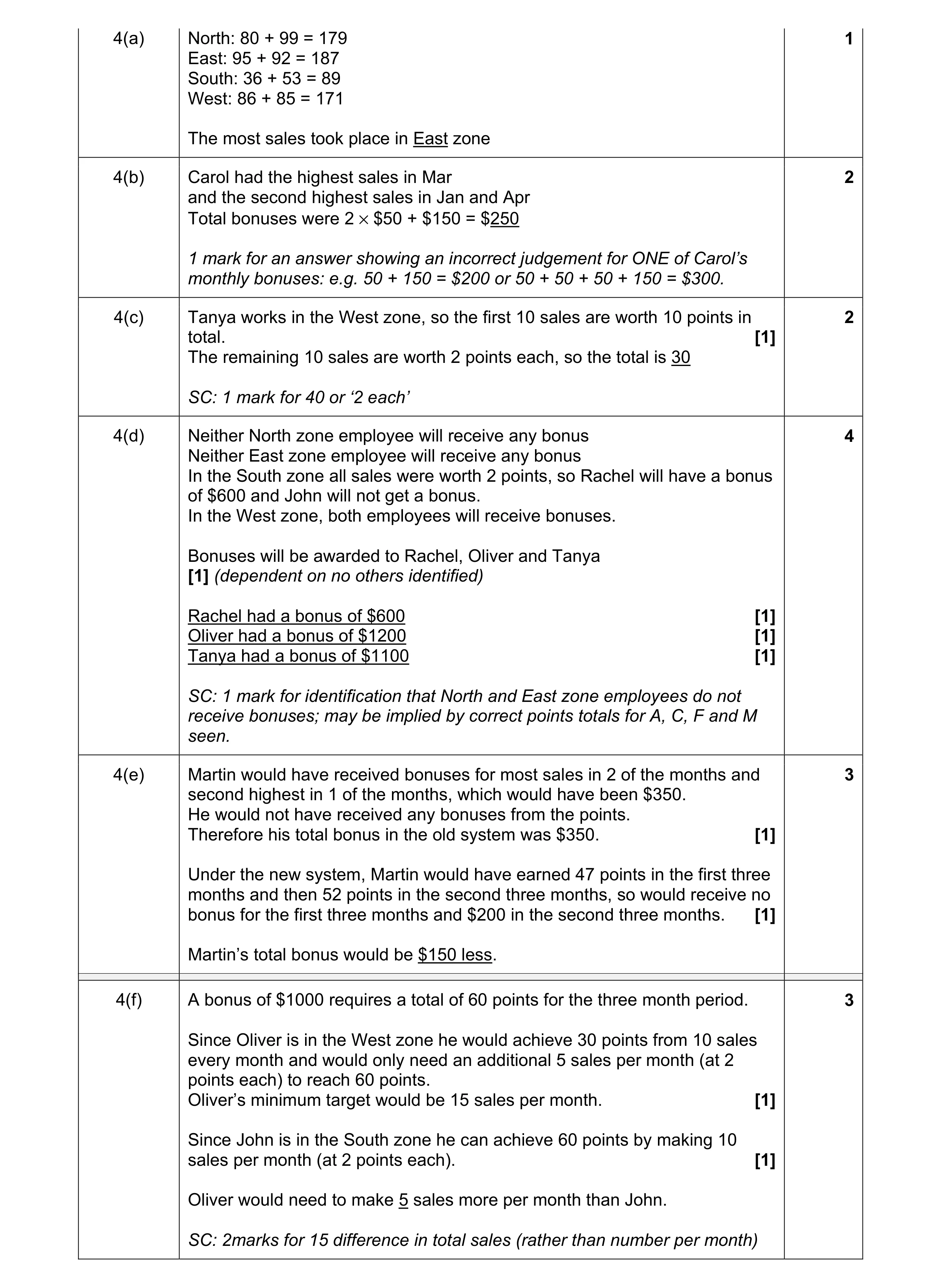 15
15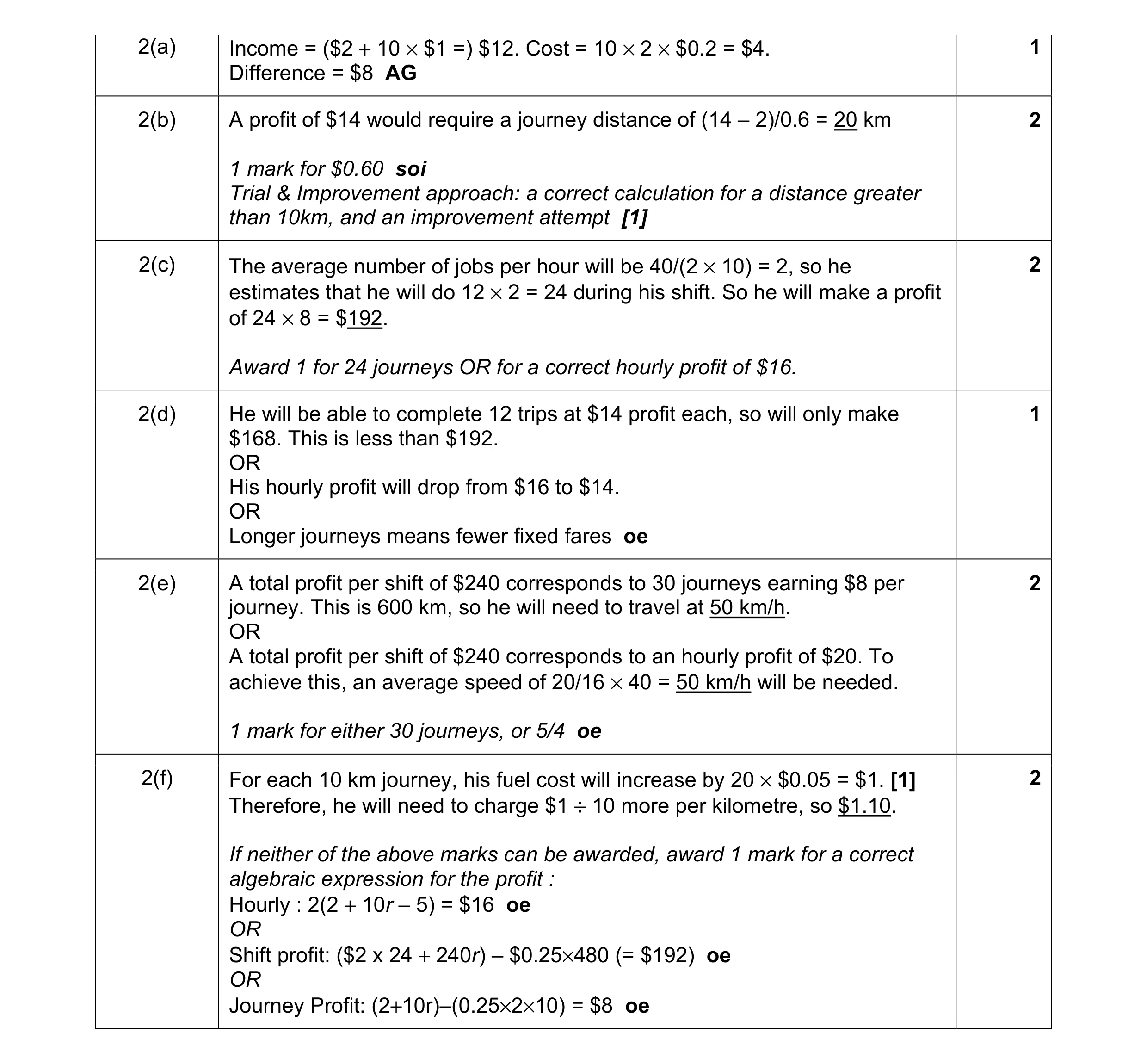 10
10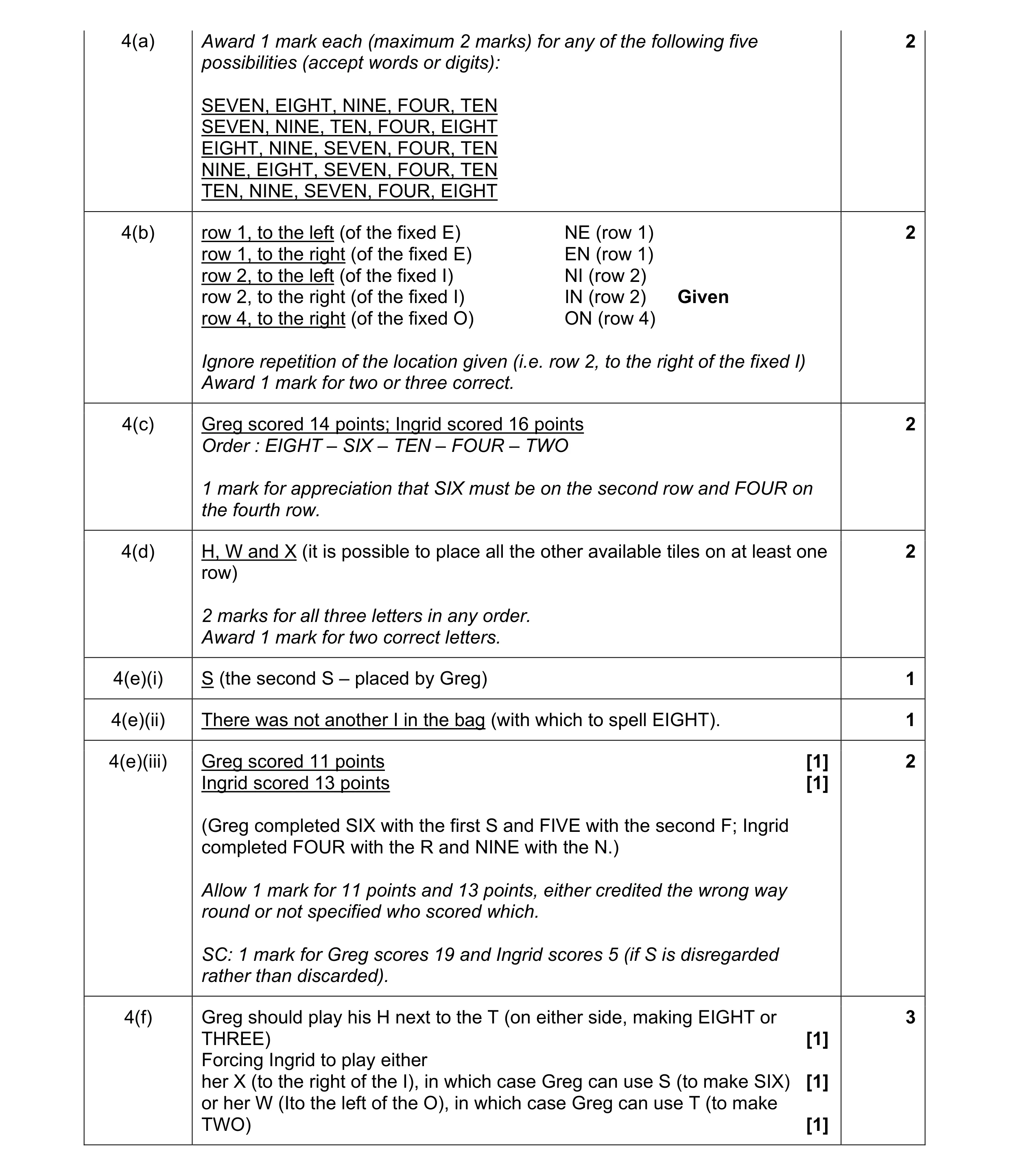 15
15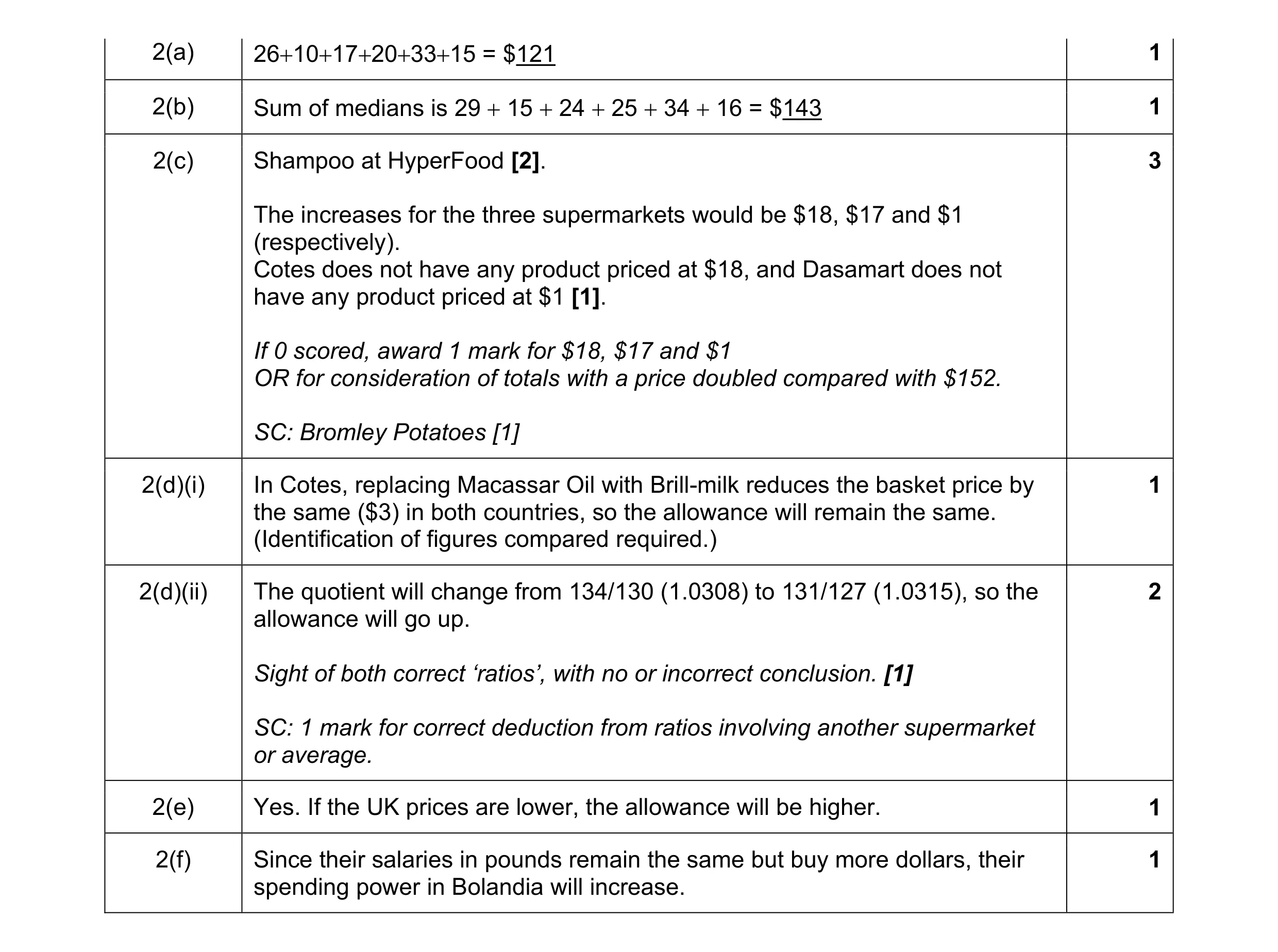 10
10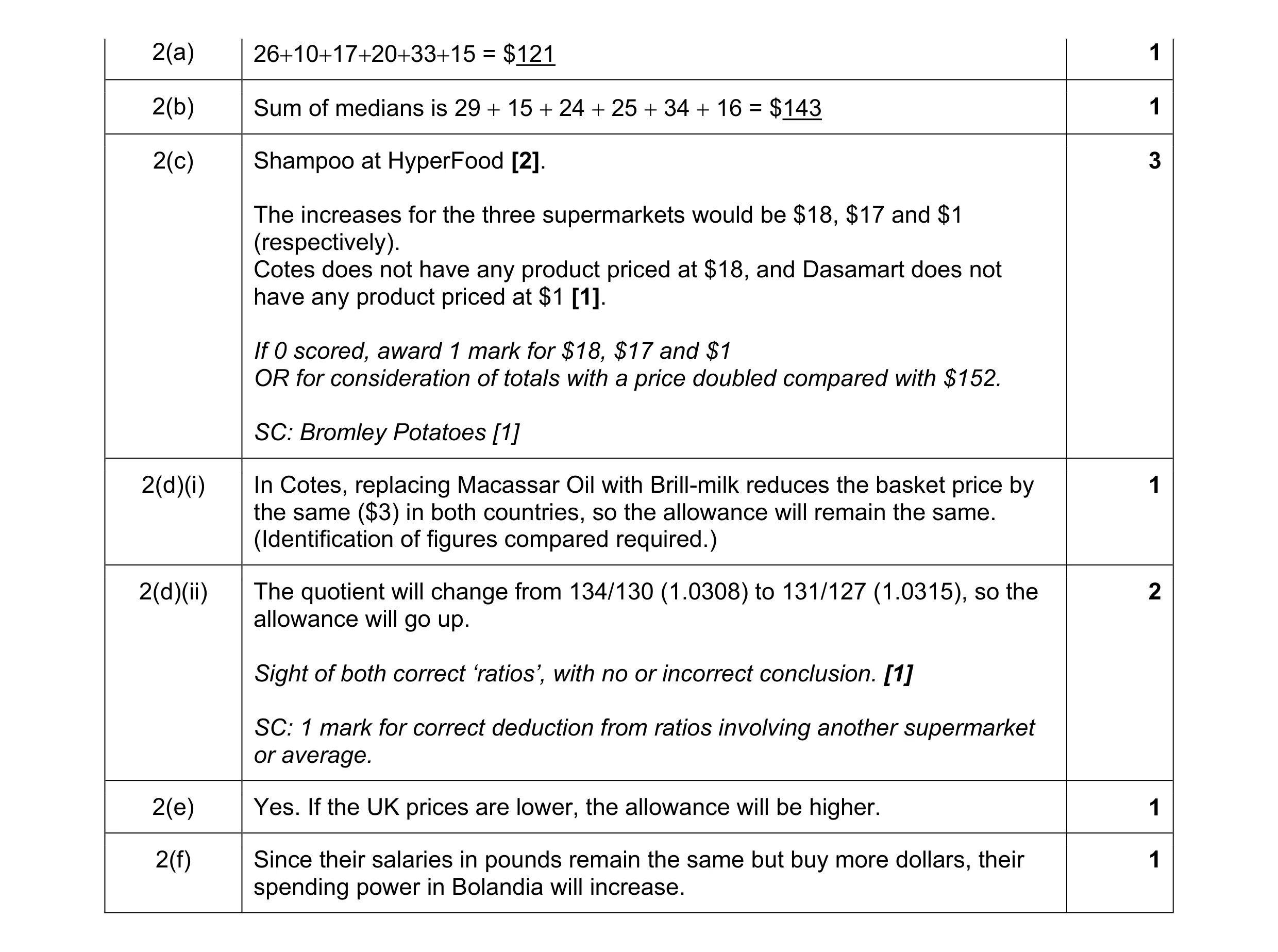 10
10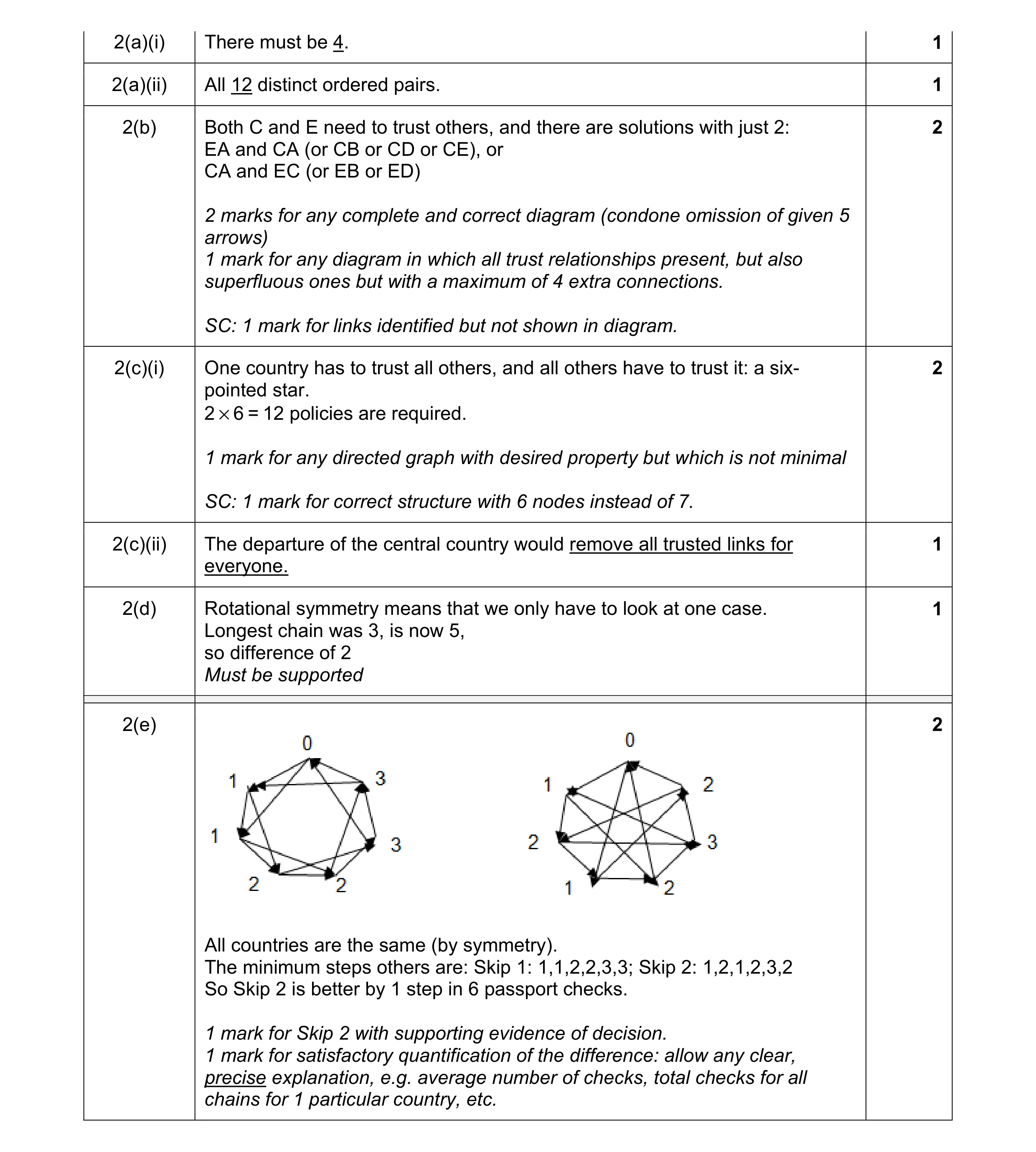 10
10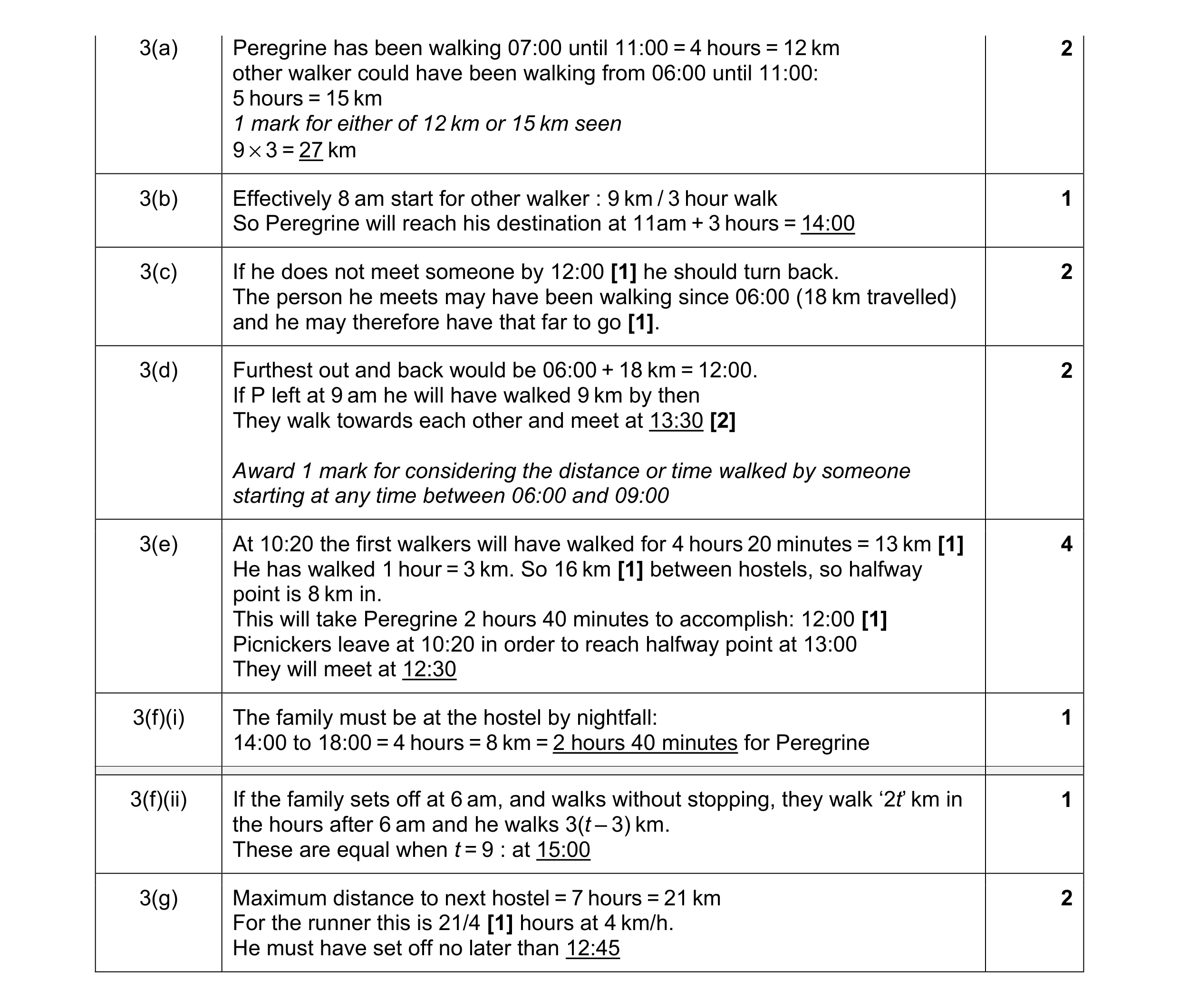 15
15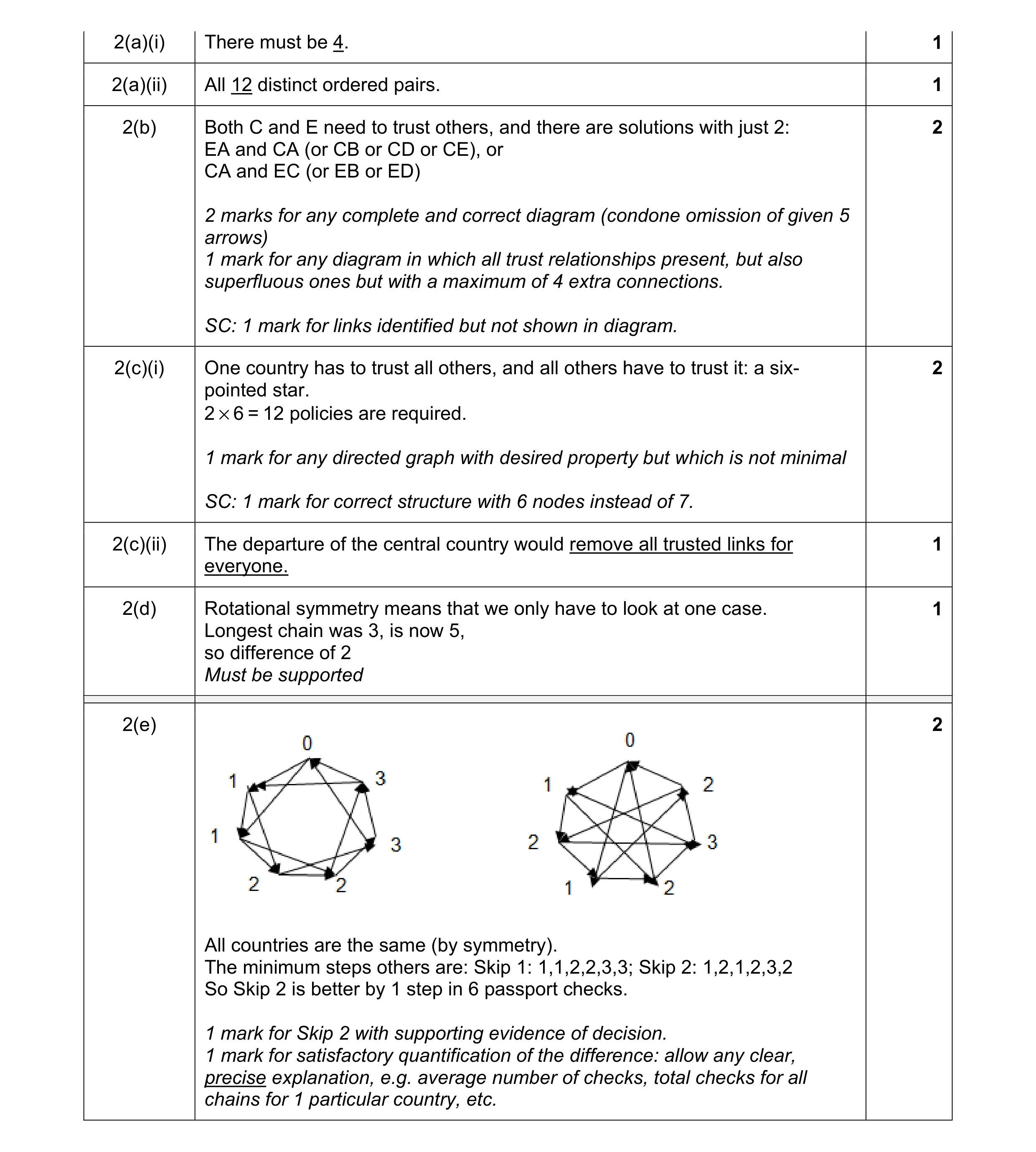 10
10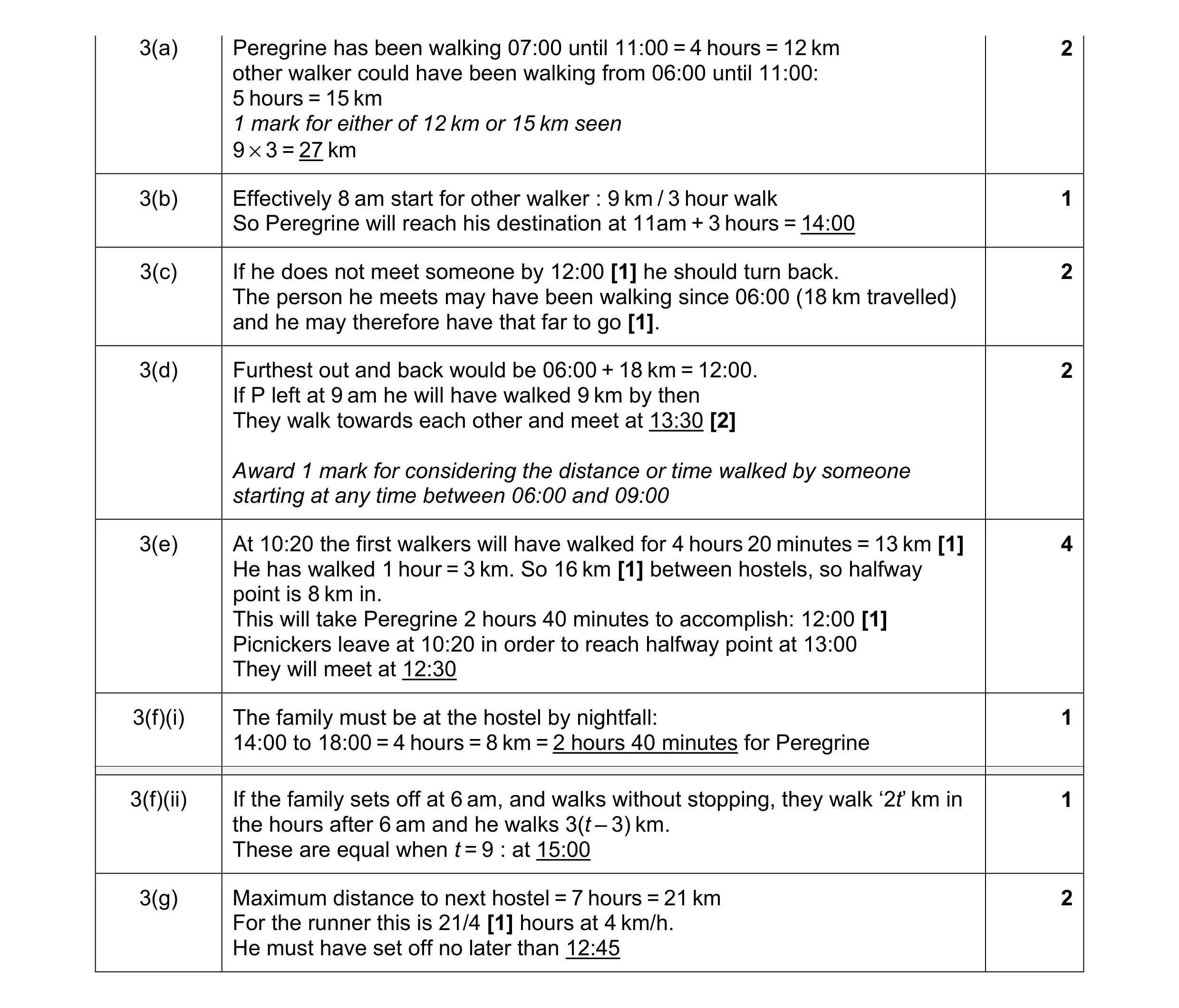 15
15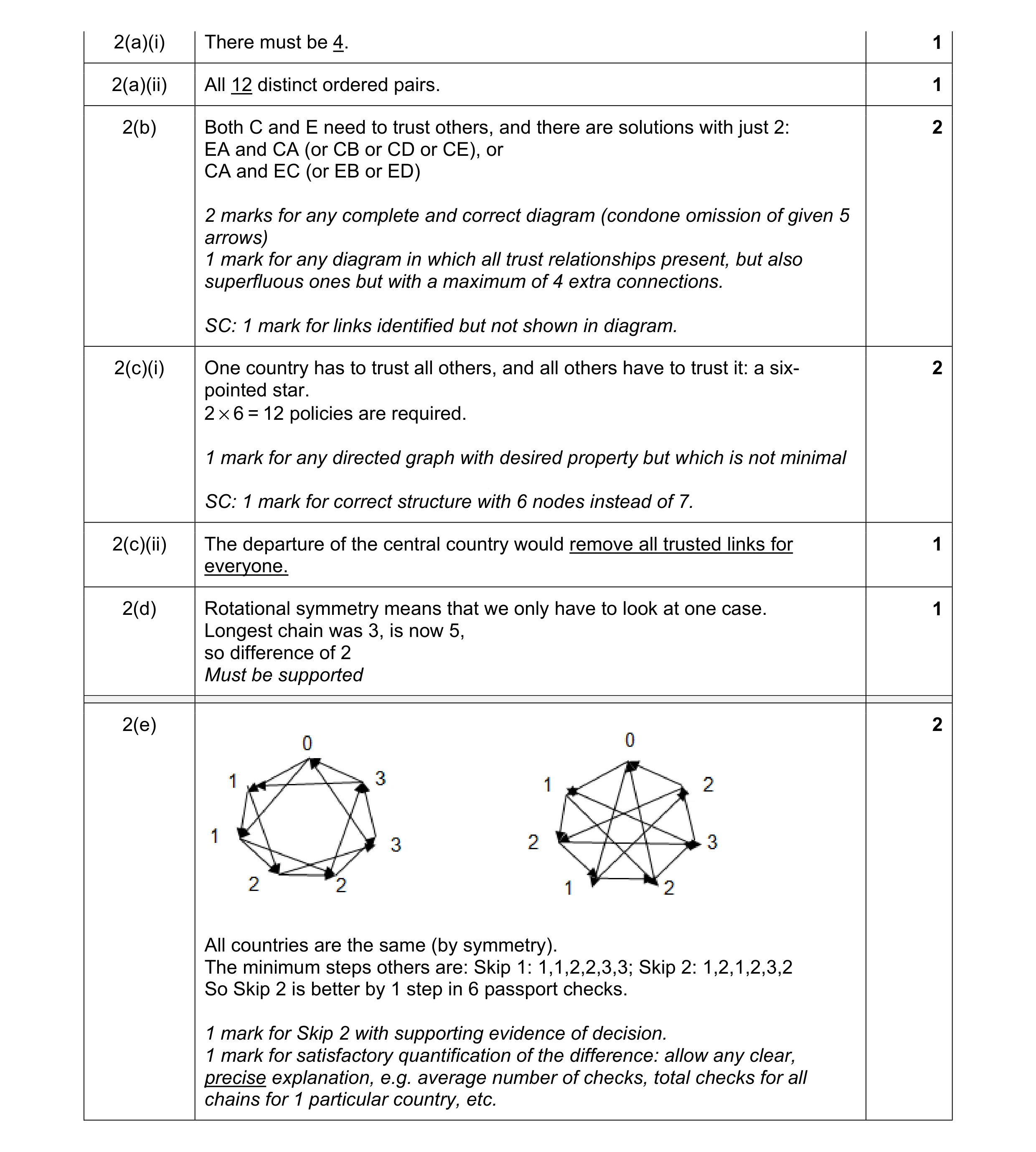 10
10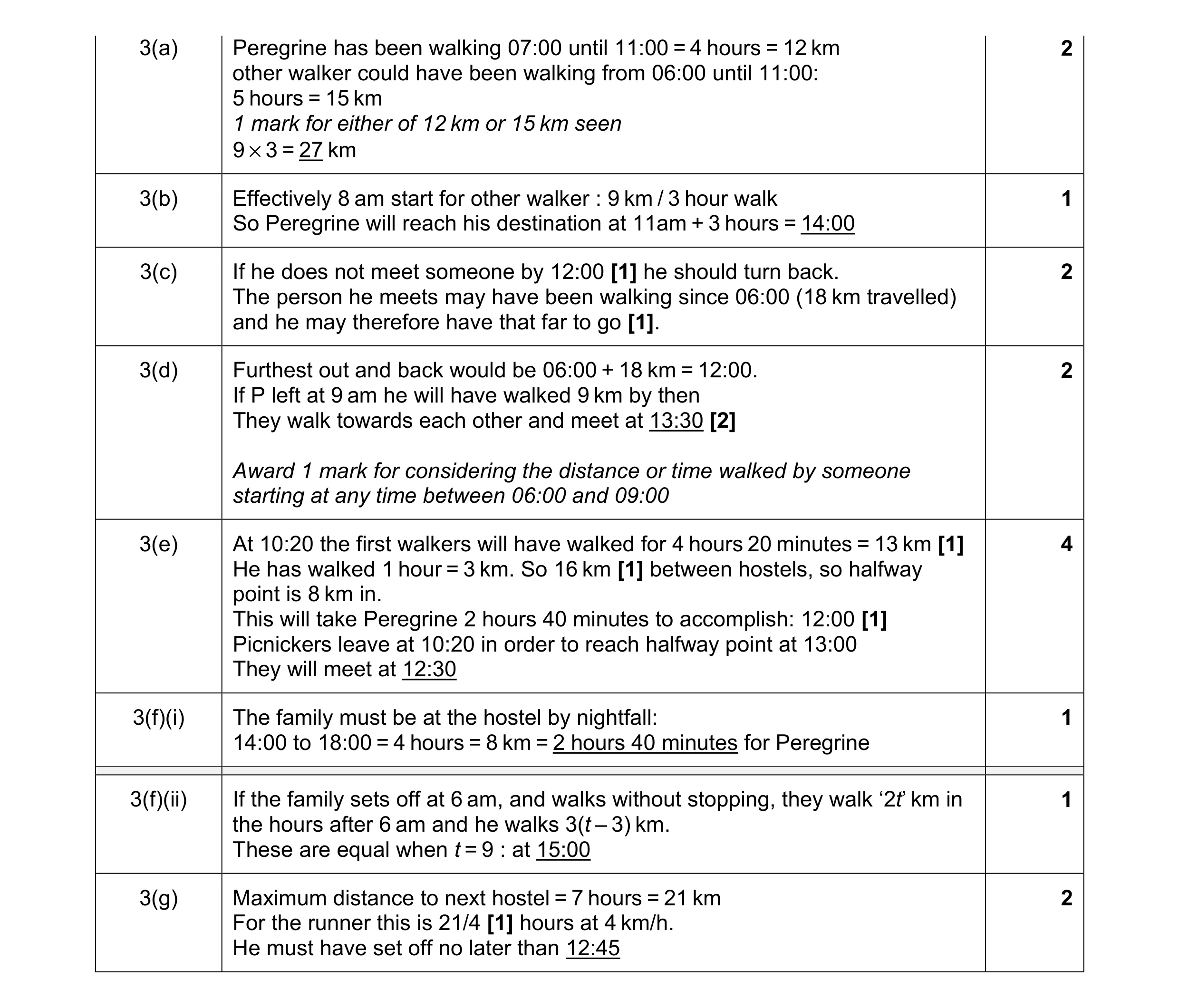 15
15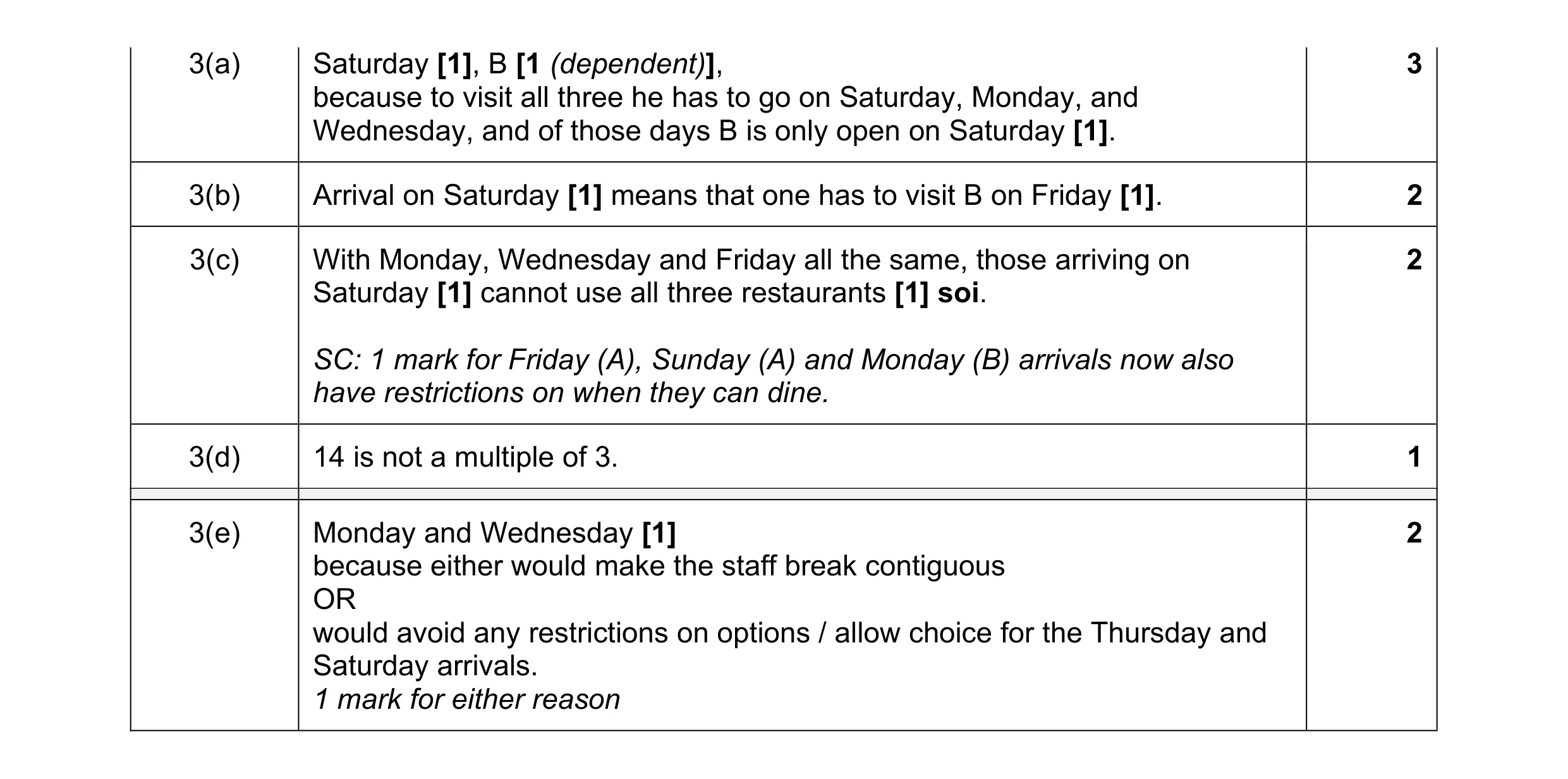 10
10 10
10 15
15 15
15 10
10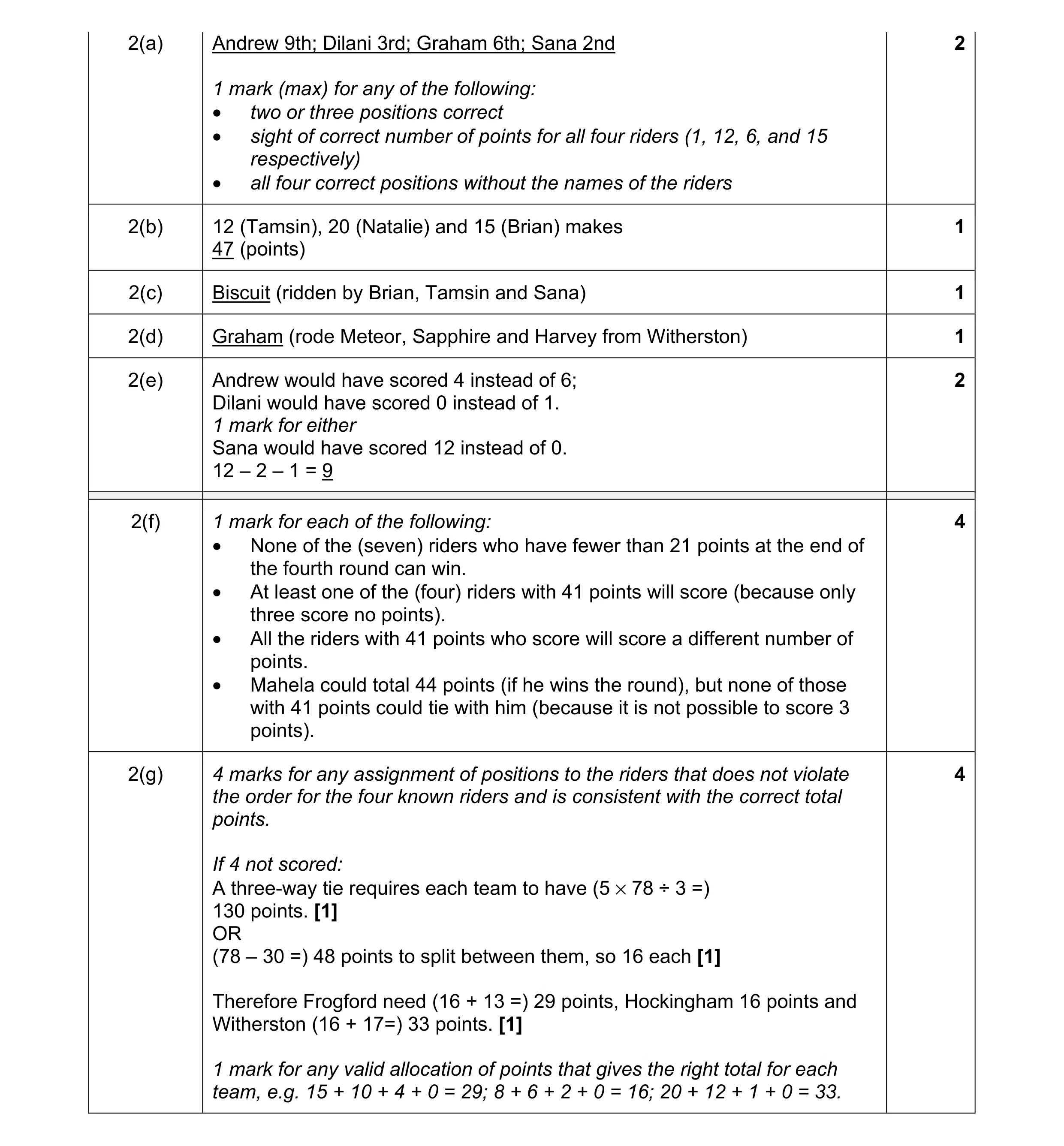 15
15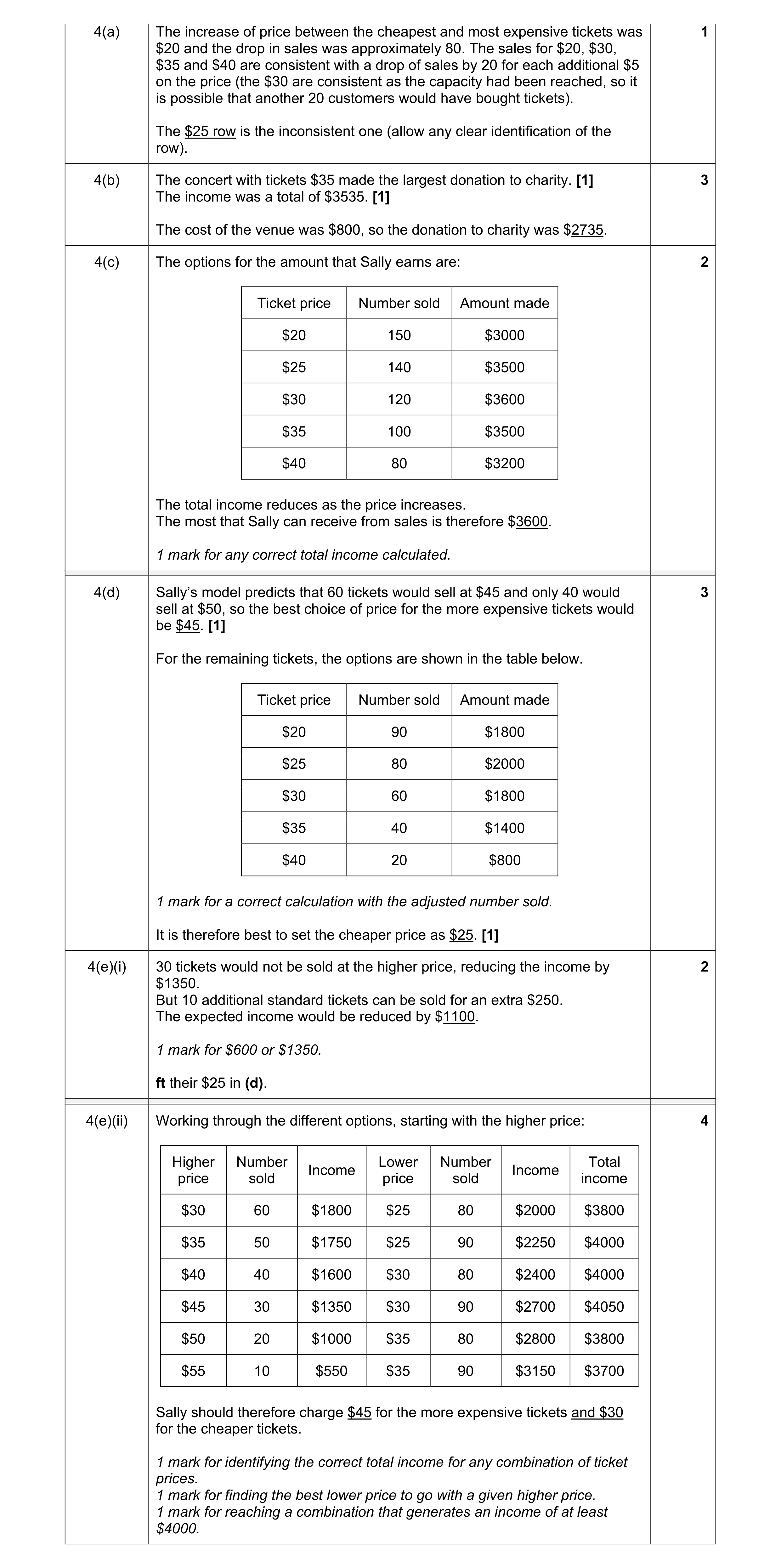 15
15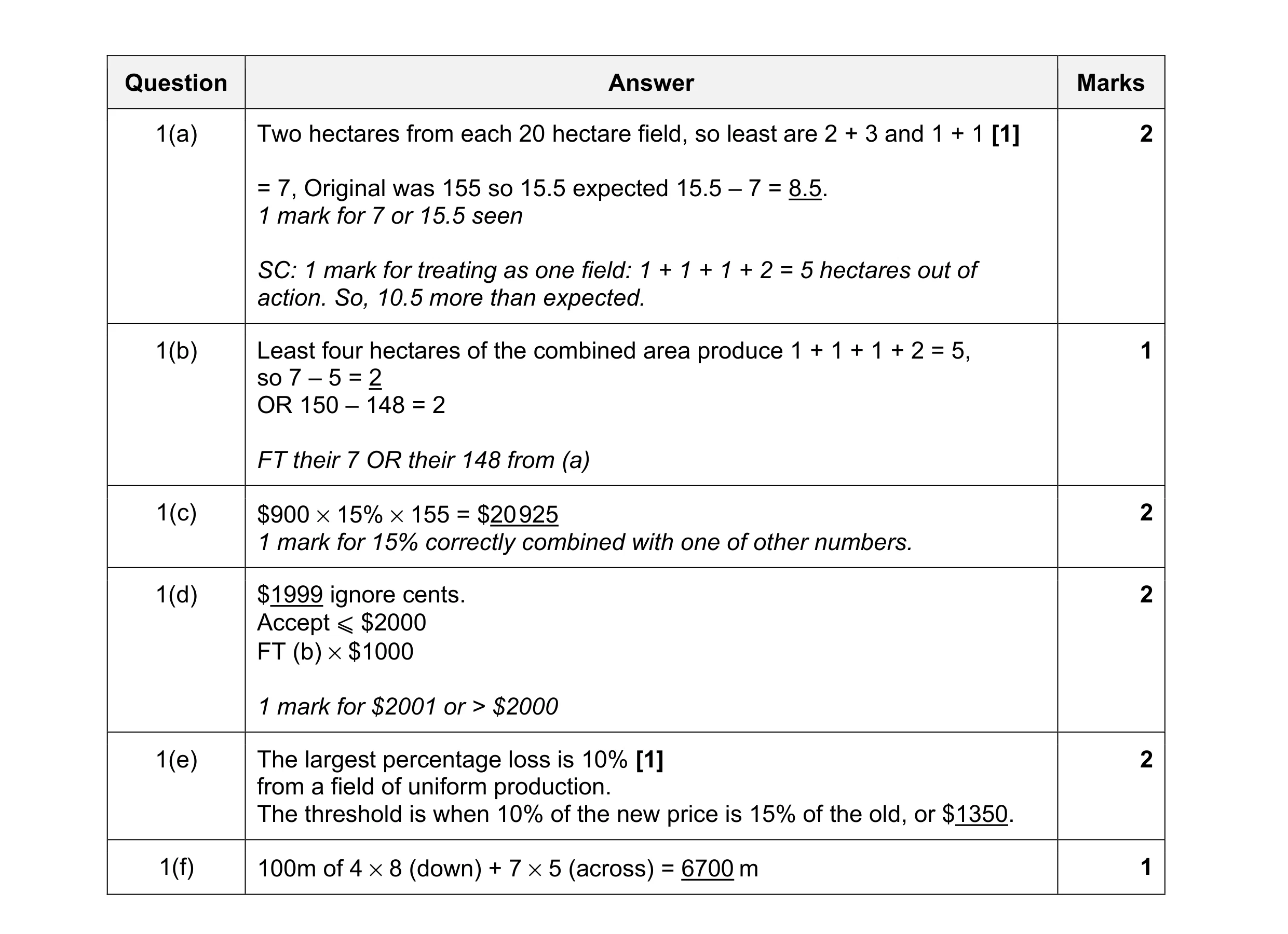 10
10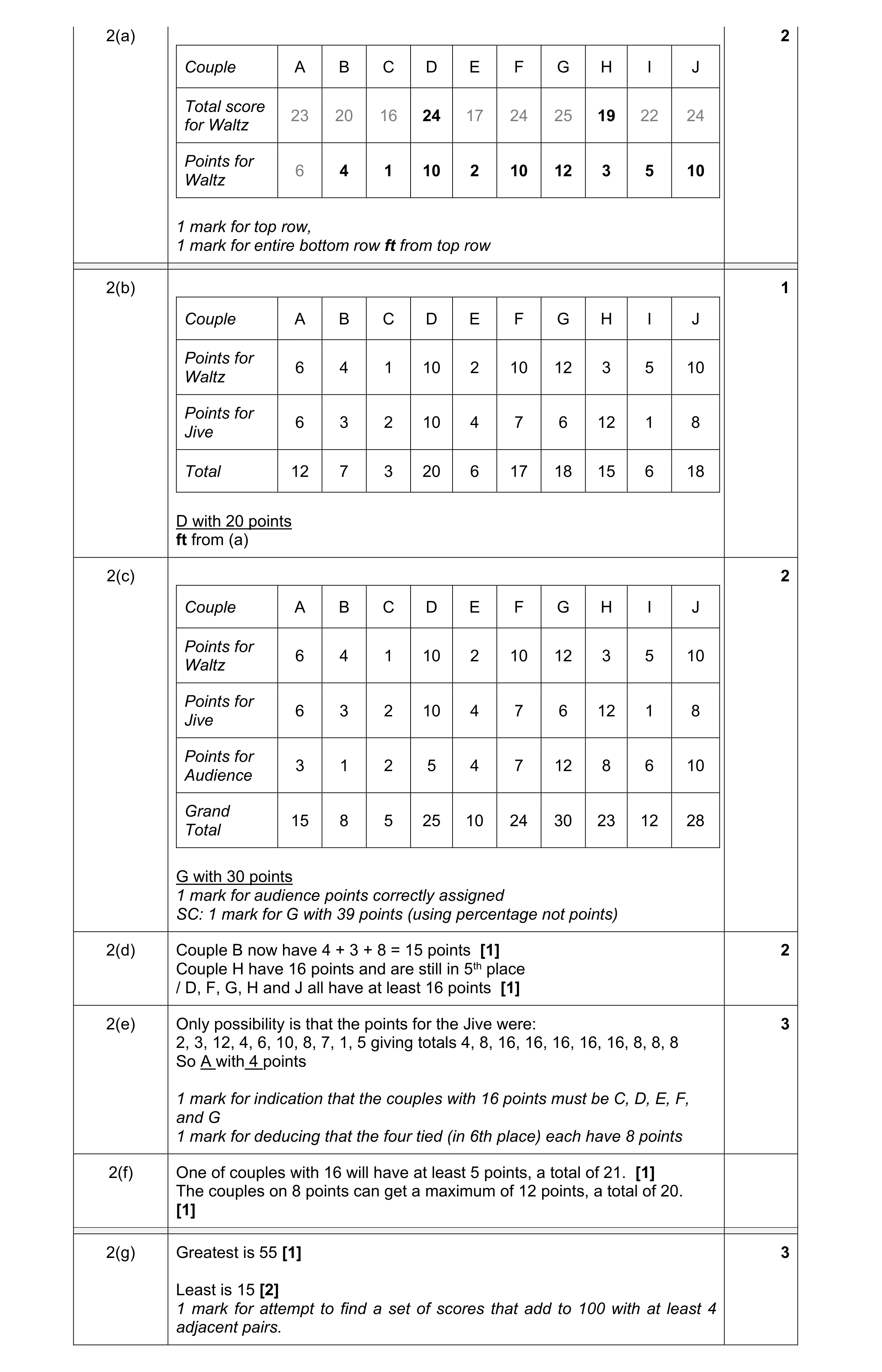 15
15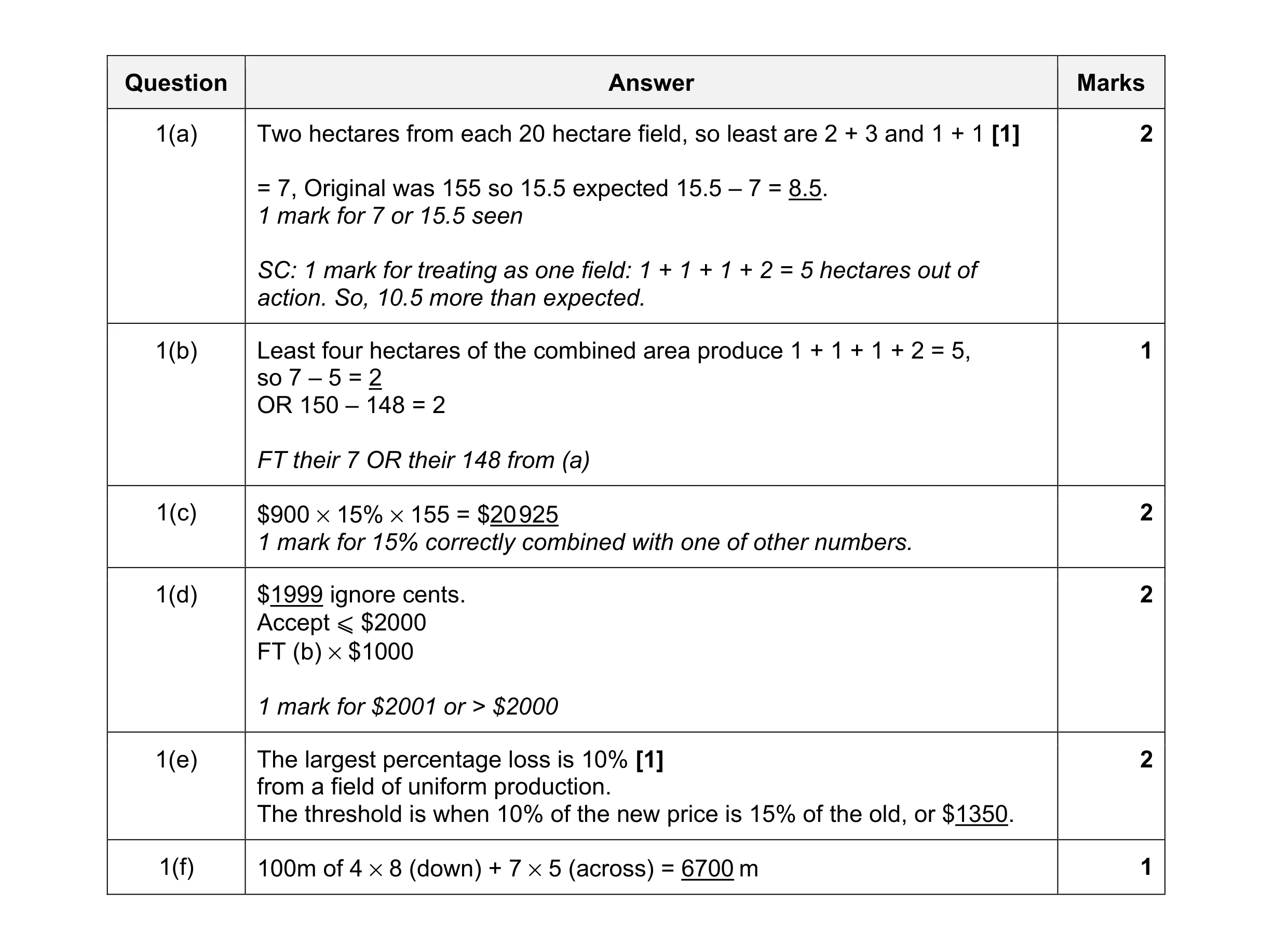 10
10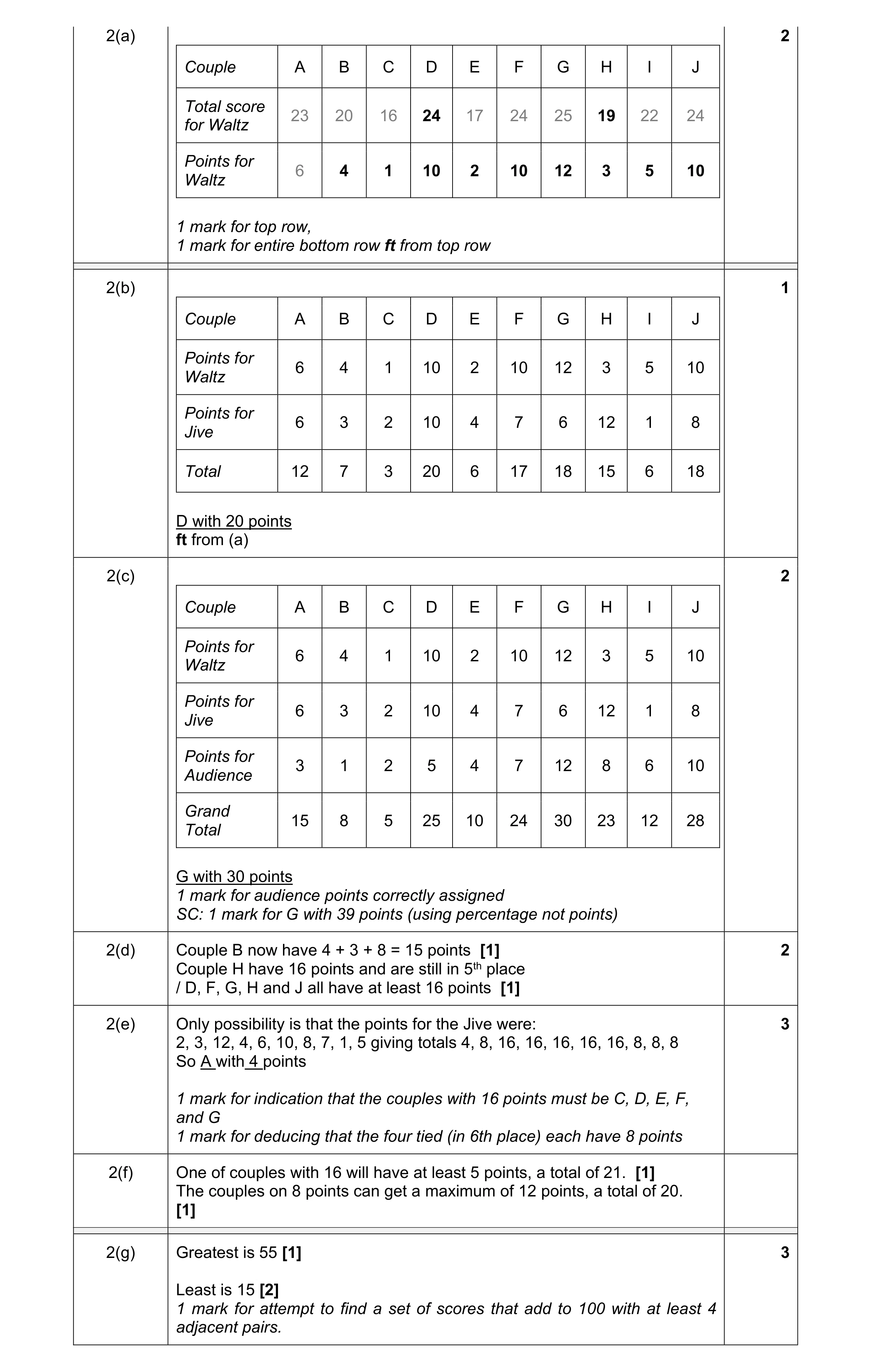 15
15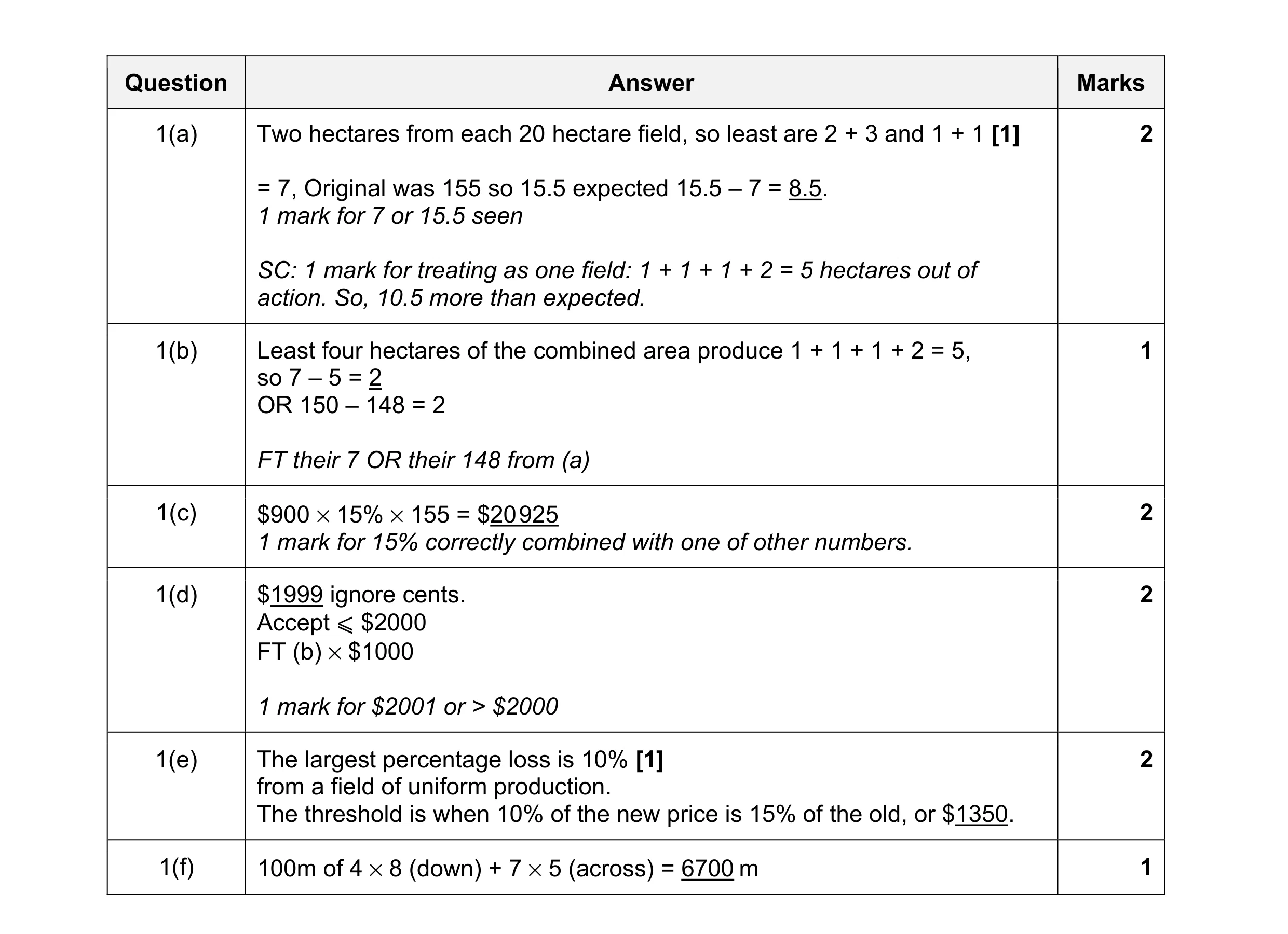 10
10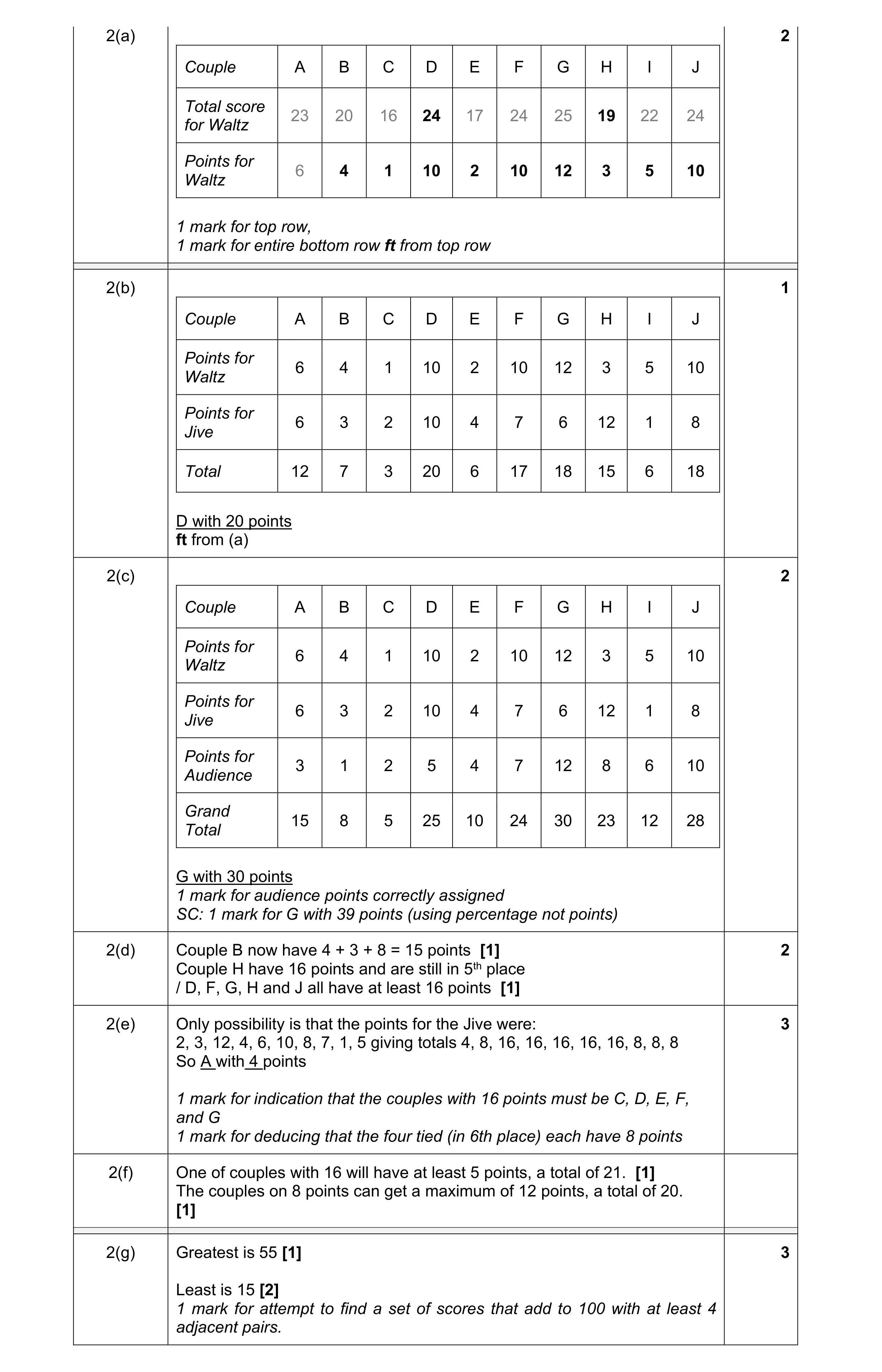 15
15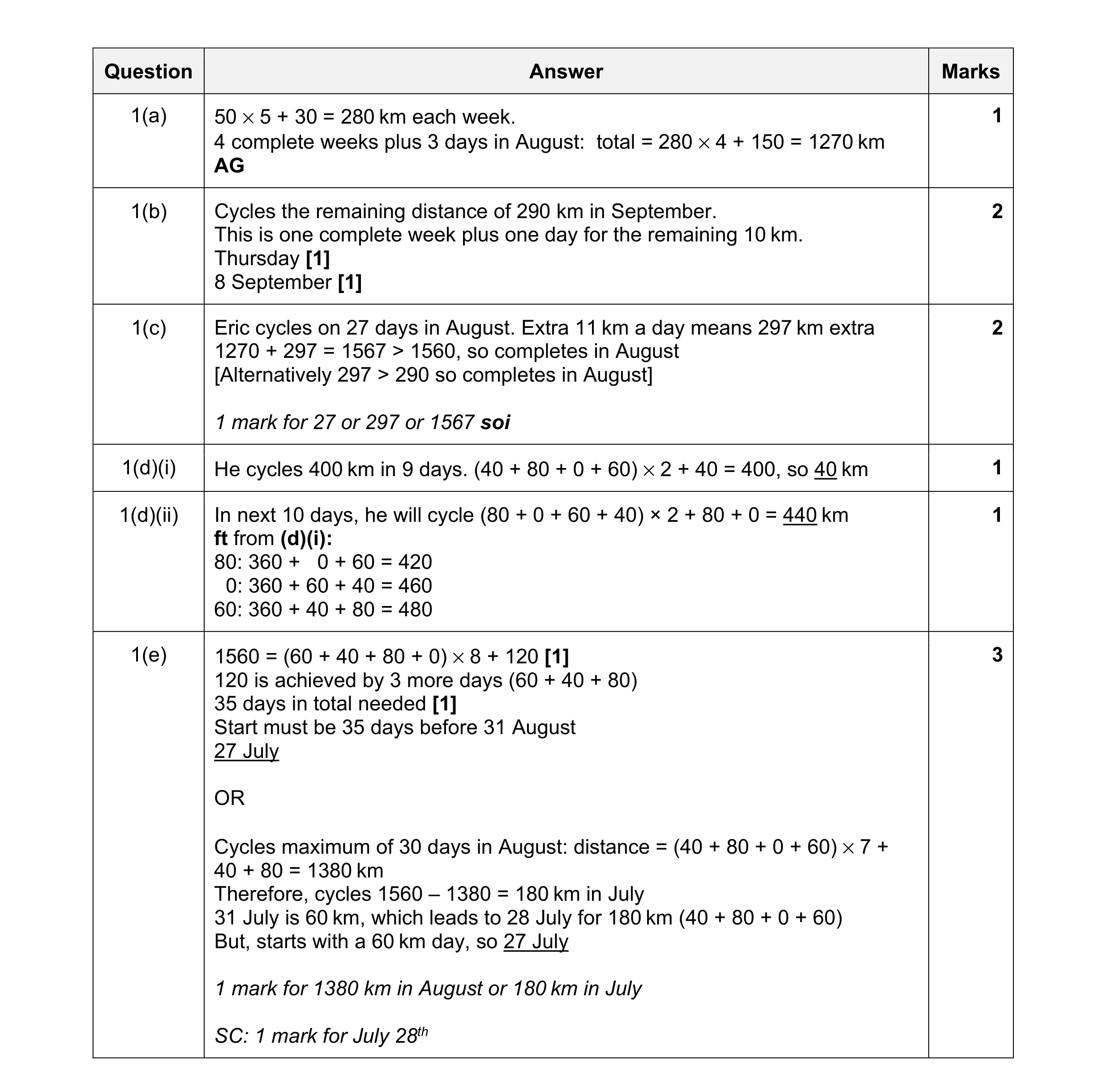 10
10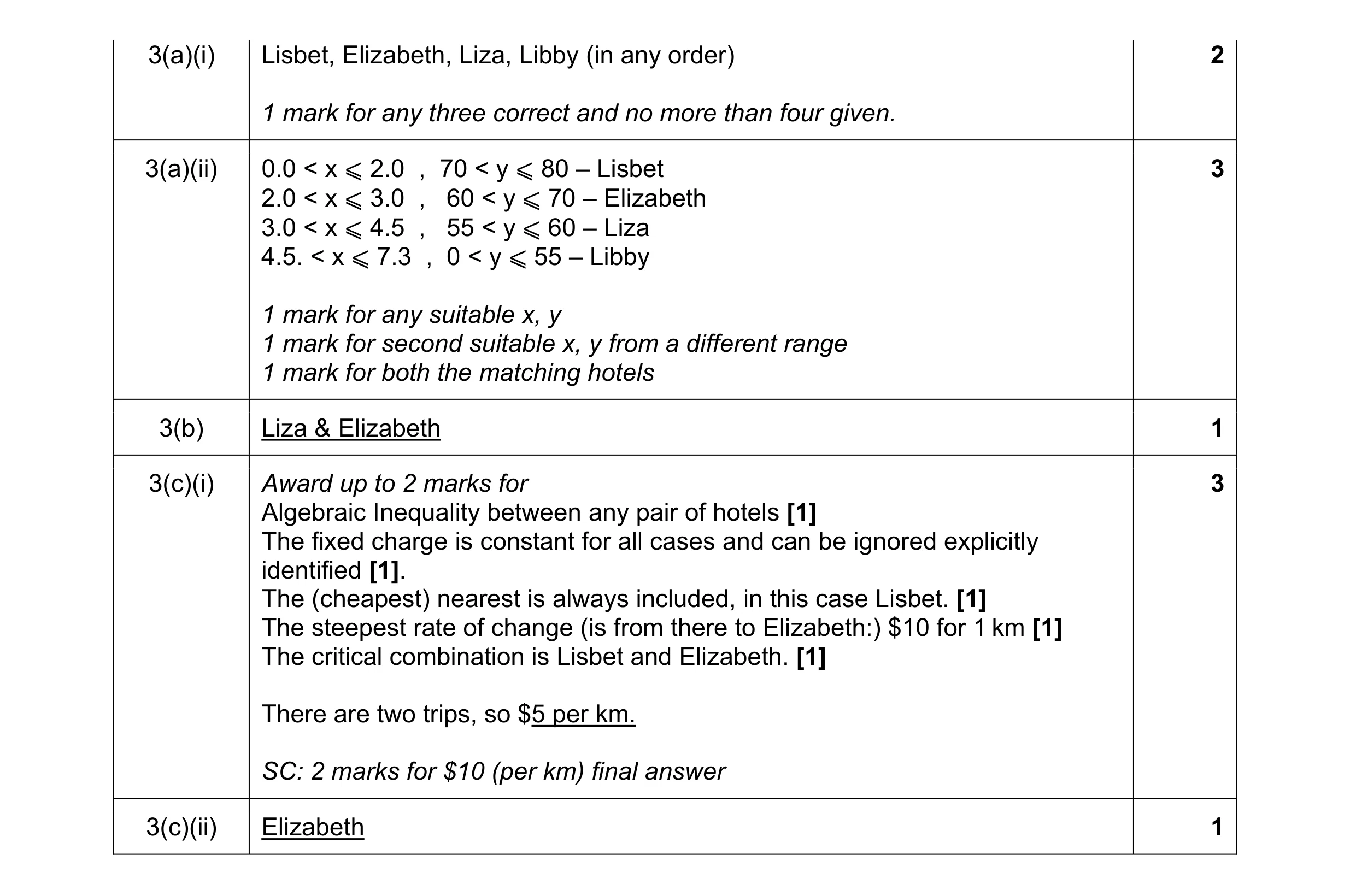 10
10 10
10 10
10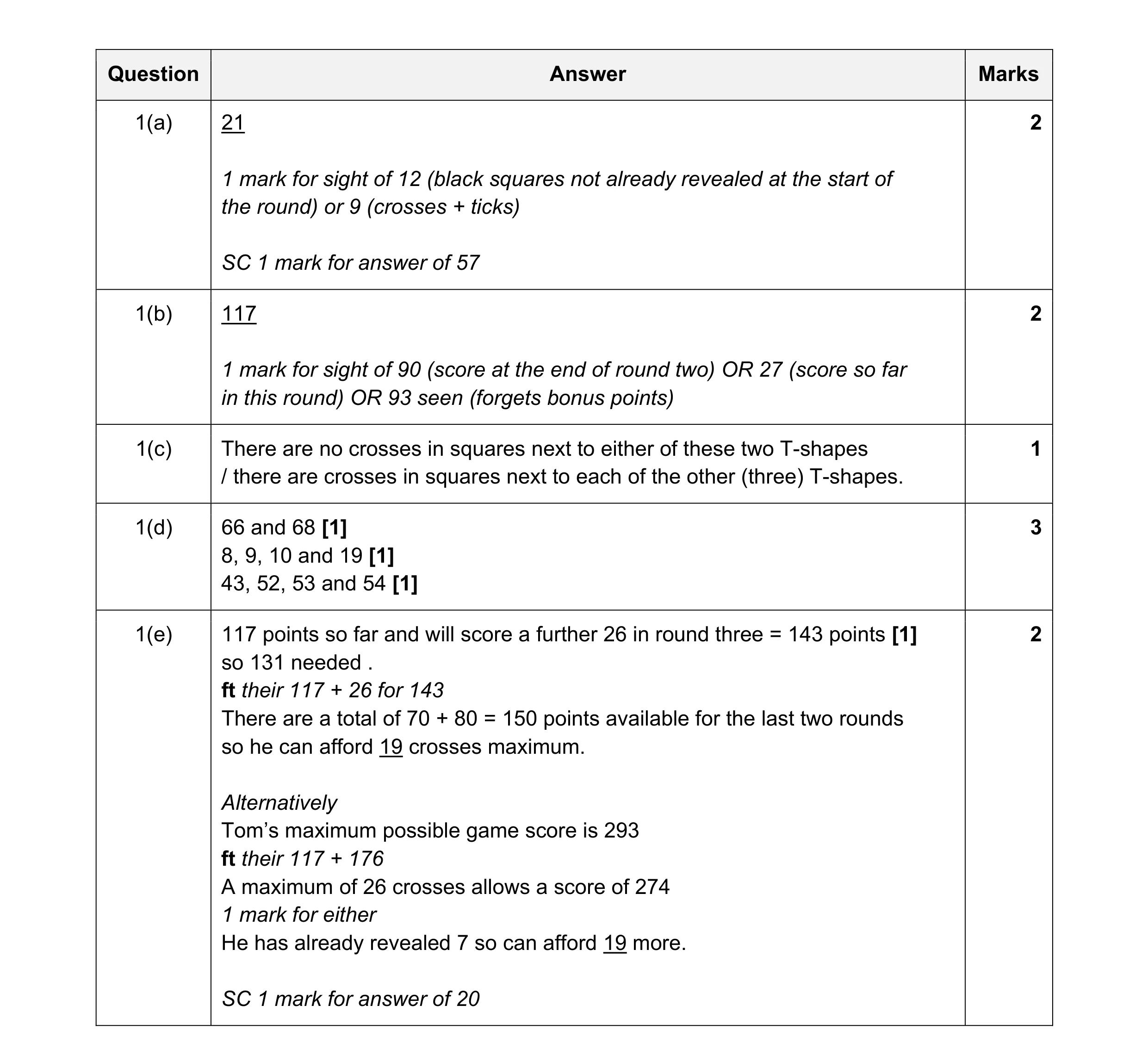 10
10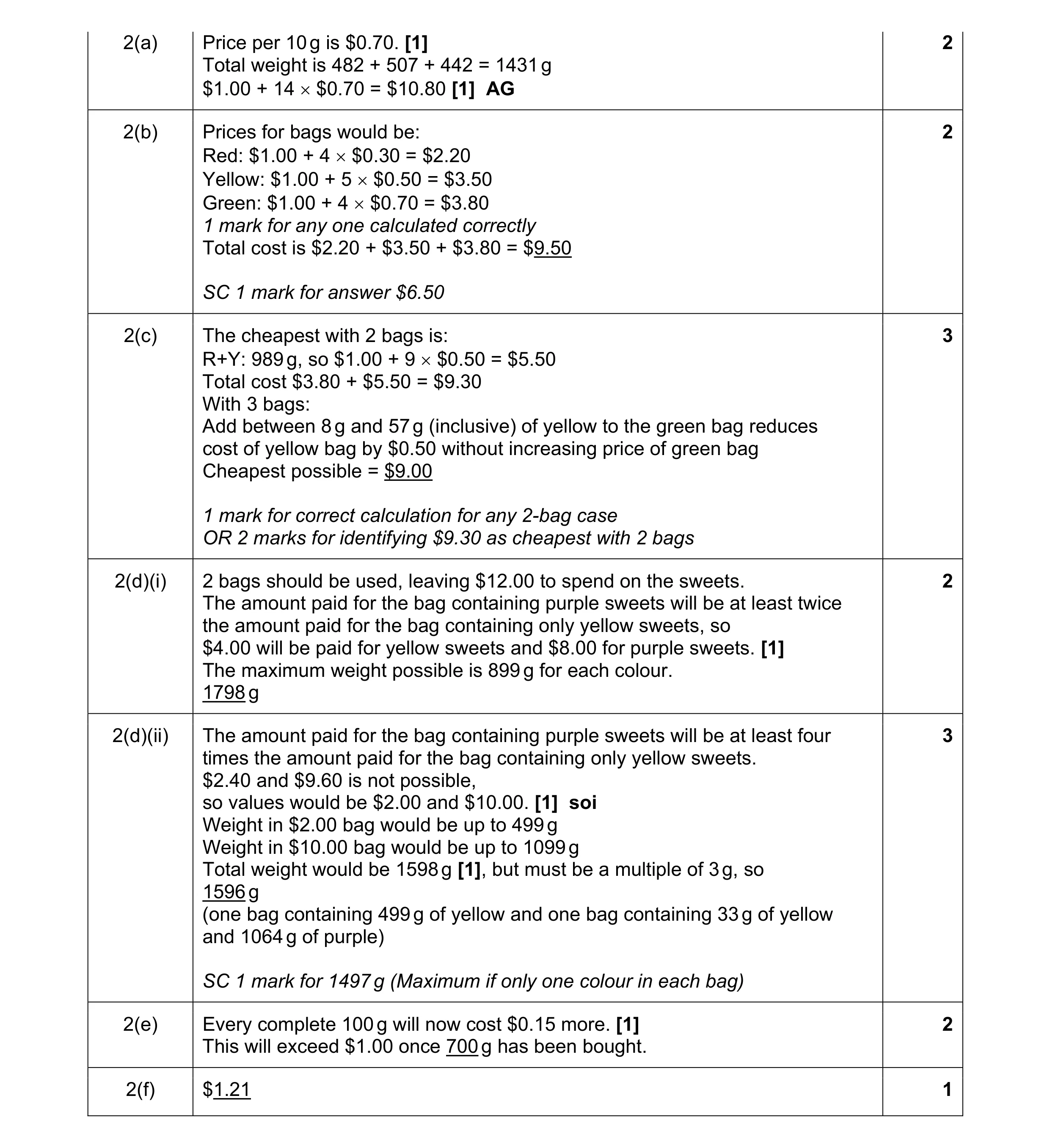 15
15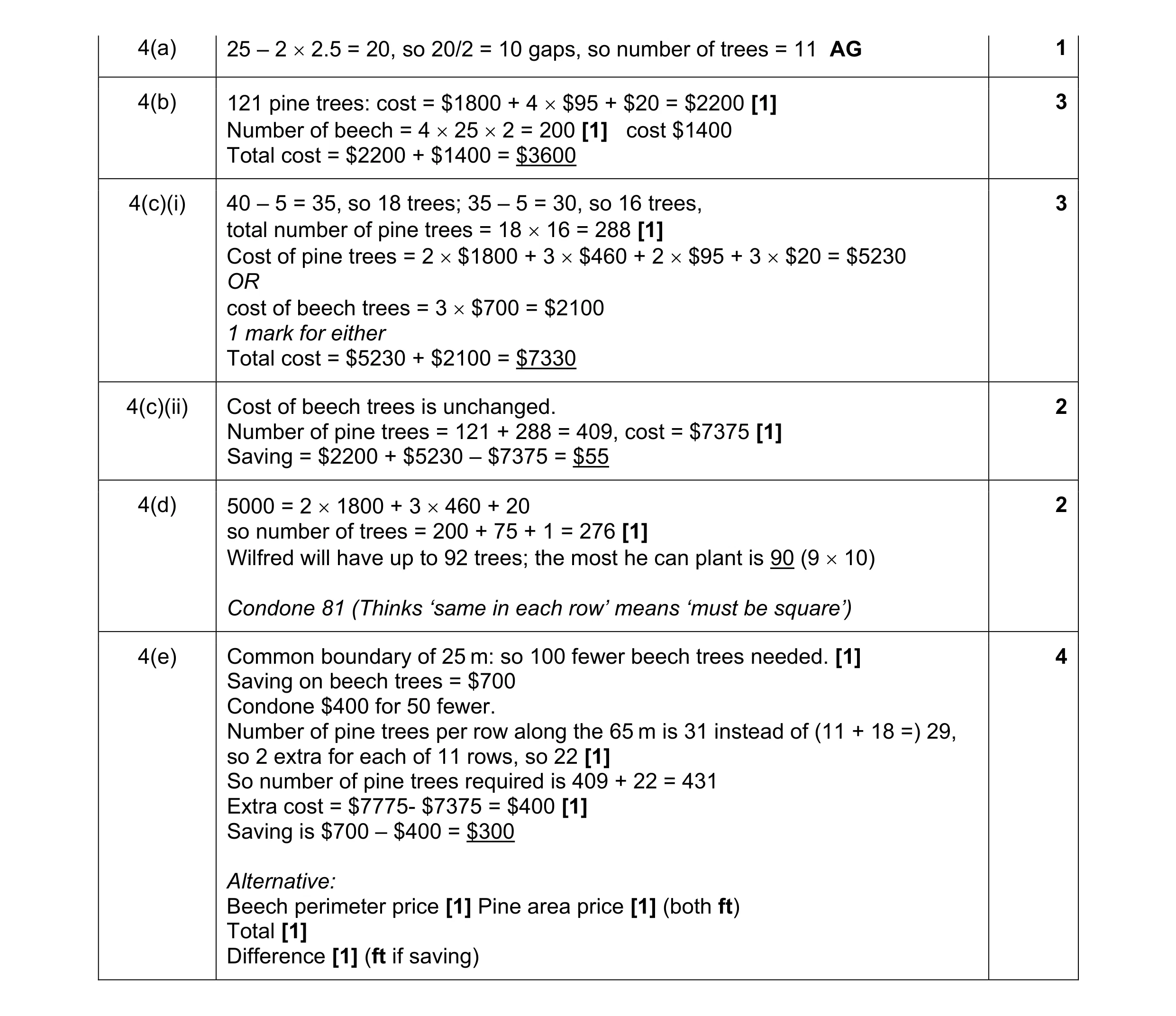 15
15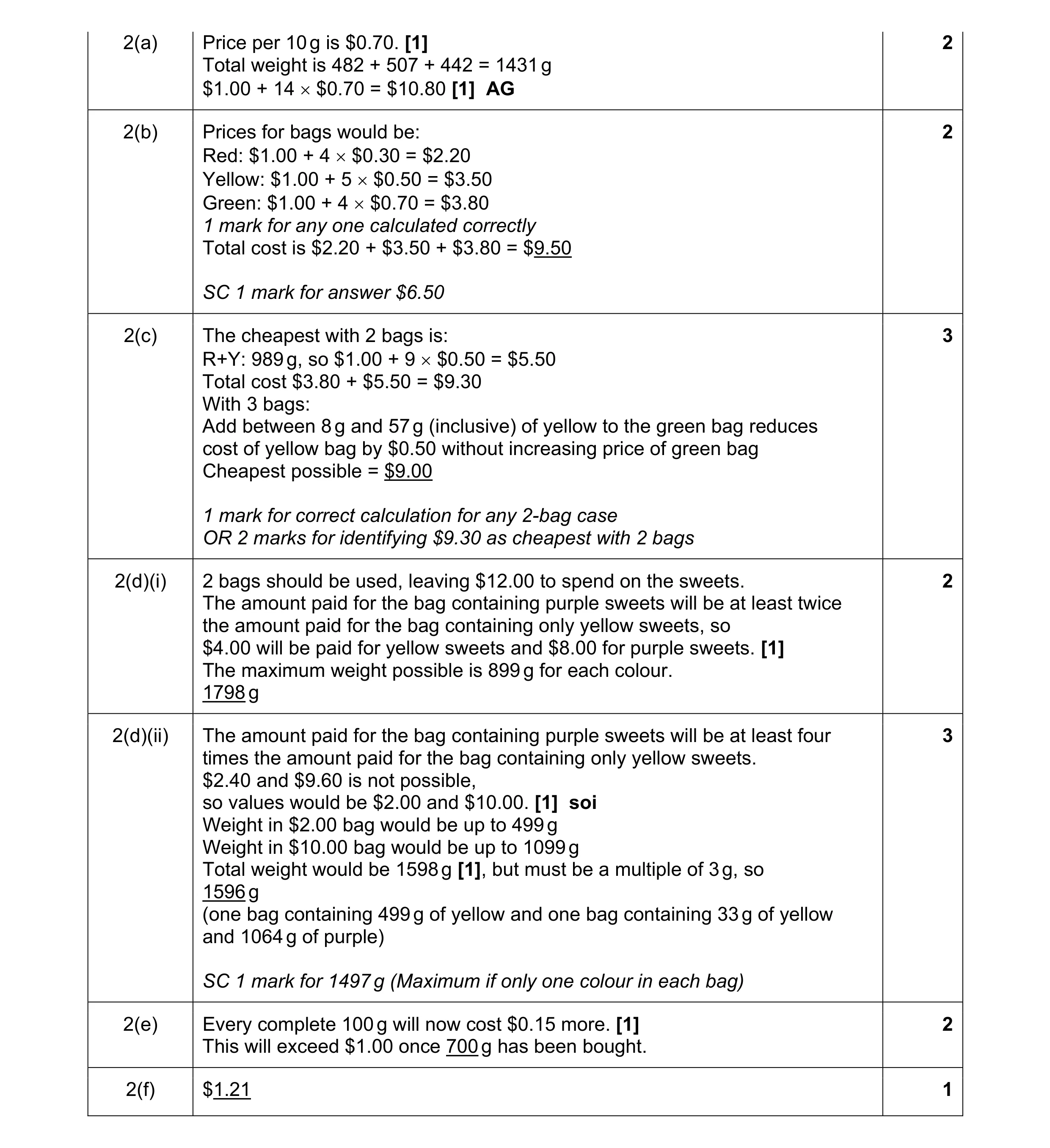 15
15 15
15 15
15 10
10 15
15 10
10 15
15 10
10 15
15 10
10 15
15 10
10 15
15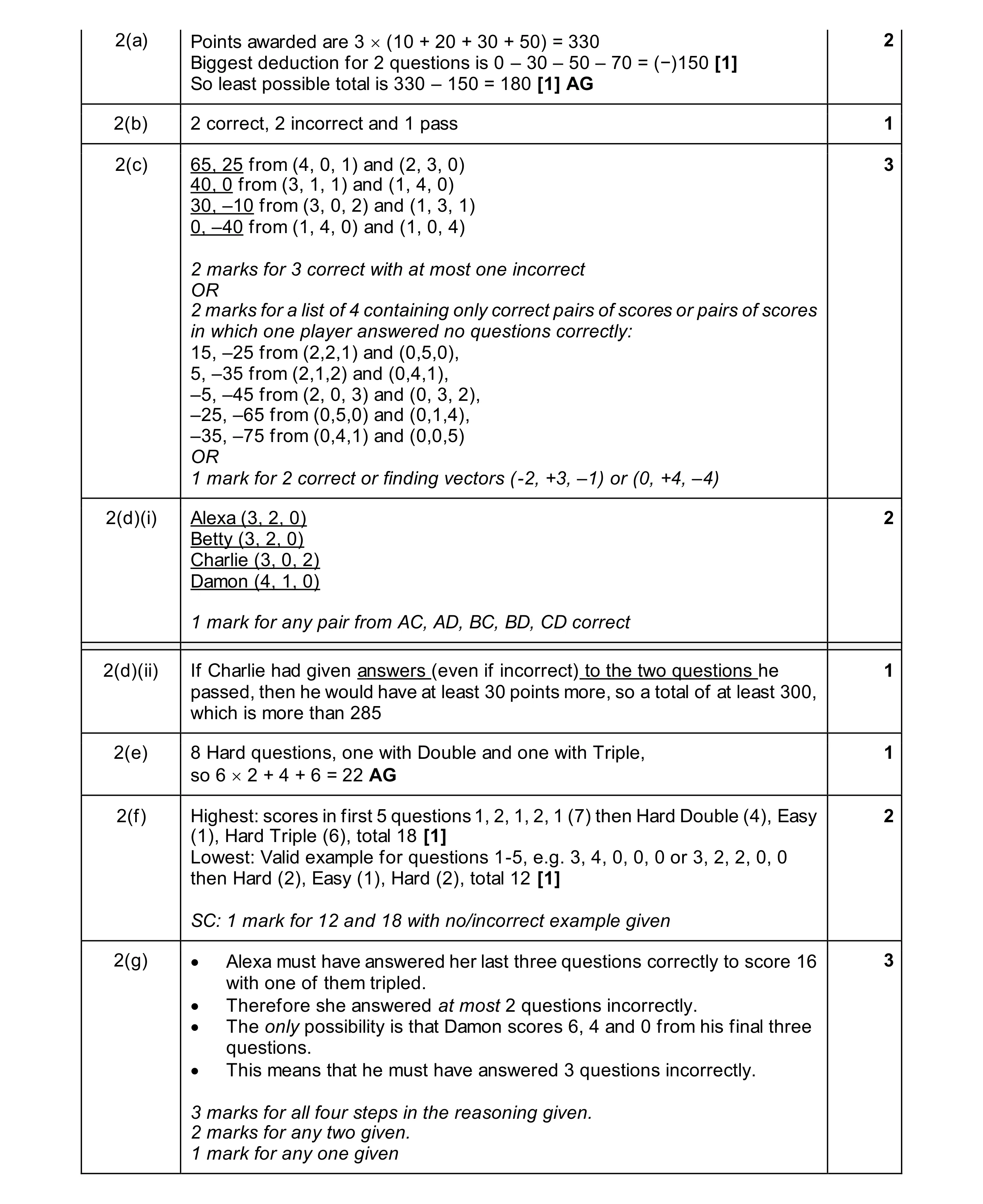 15
15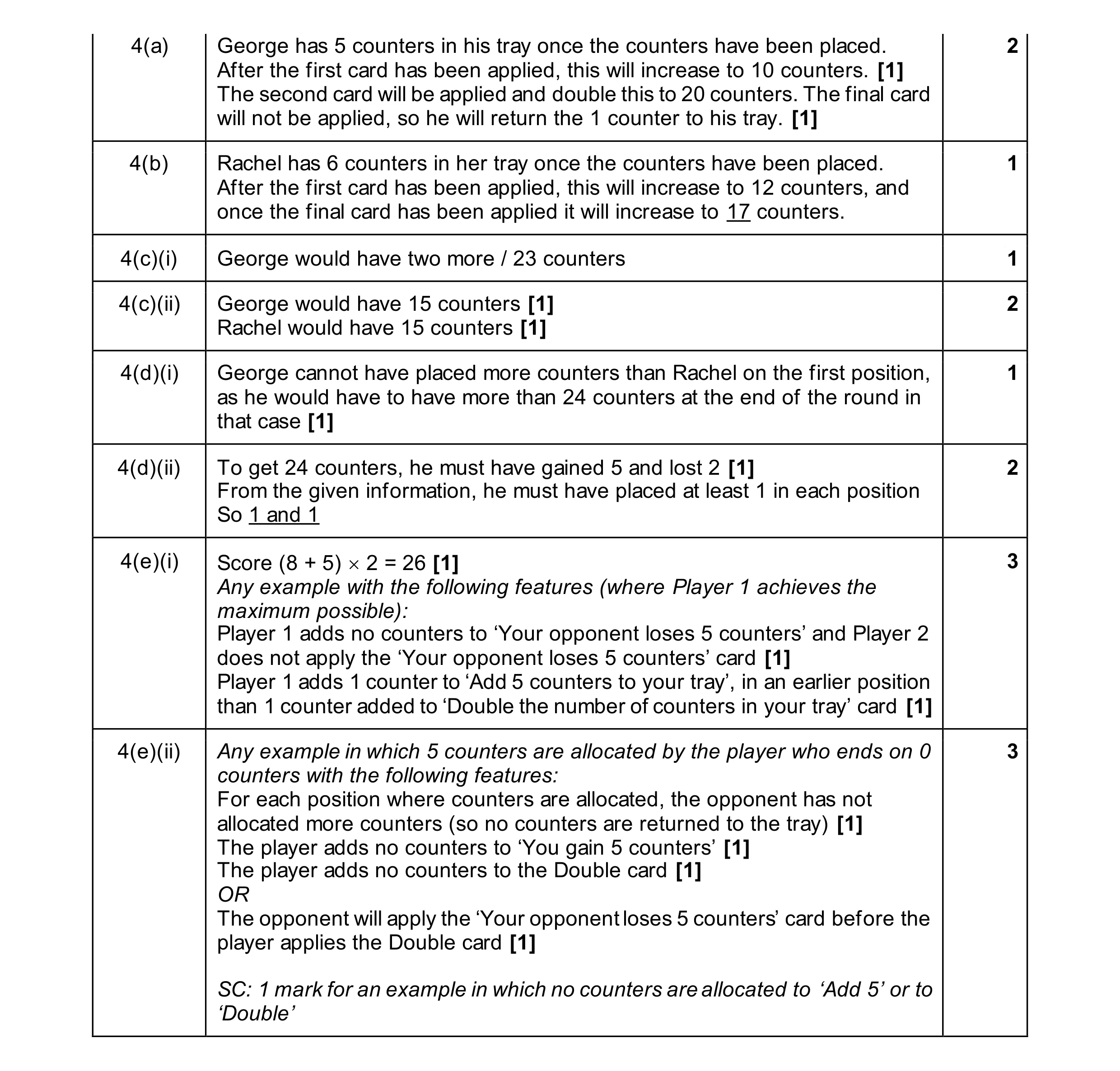 15
15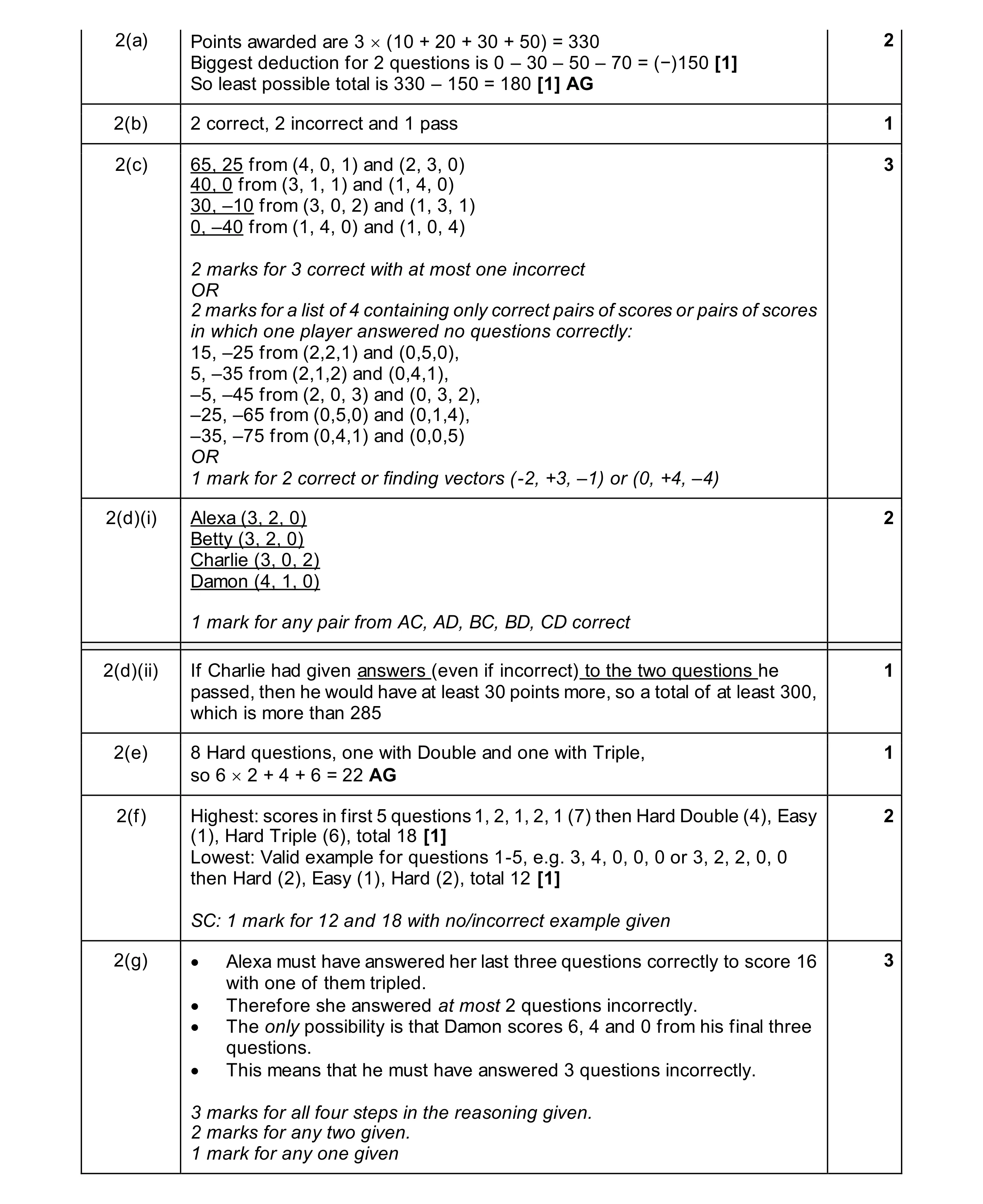 15
15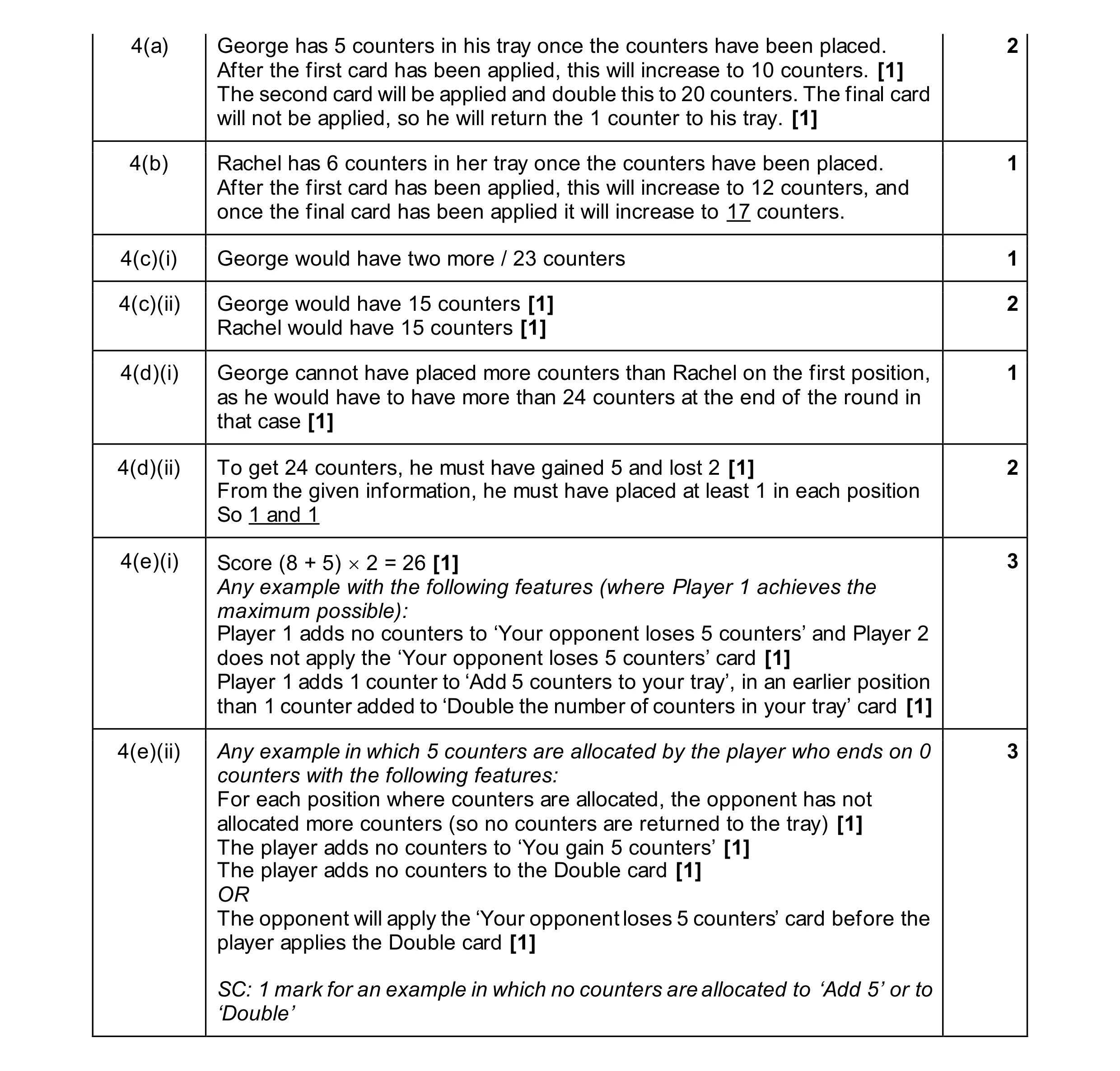 15
15 15
15 15
15