Questions as text
Q1 · Unhealthy behaviours are difficult to change because of lifestyles; behaviours developed… 9990/42 May/June 2018
3 Unhealthy behaviours are difficult to change because of lifestyles; behaviours developed over a period of years that have become habitual. Lau et al. (1990) found that understanding how these habits are formed in the early years is important to understanding how they can be changed. (a) Explain why the study by Lau et al. (1990) is longitudinal. [2] (b) Give two differences between the ‘enduring family socialisation model’ and the ‘lifelong openness’ model. [4] (c) Suggest one other model to explain the influence of family and peers on health beliefs. [4] (d) Discuss the advantages and disadvantages of conducting longitudinal studies on health beliefs. You should include a conclusion in your answer. [5] Psychology and organisations
15 marks
Mark scheme: 3(a) Explain why the study by Lau et al. (1990) is longitudinal. 2 Marks: 1 mark for basic answer (e.g. ‘over long period of time’), 1 mark for elaboration/ example (e.g. reason why) Most likely answer (other appropriate responses to be credited): • participants (students) complete baseline questions at start of university • participants complete additional questionnaires for each year they are at university. 3(b) Give two differences between the ‘enduring family socialisation model’ 4 and the ‘lifelong openness’ model. Marks: 2 marks for each correct difference. Indicative content: • The enduring family socialisation model argues that preventive health beliefs and behaviour are learned from the family during childhood and remain fairly stable throughout life. This model attributes primary influence to parents because their contact with their children begins earlier and is more sustained than contact from other socialising agents. This model does not view peers as very influential. The model would be invalidated by evidence from socialising agents outside the immediate family. • The lifelong openness model suggests that people are always open to persuasion from influential socialising agents; it gives parents no status. It would not expect the influence of a family to continue outside the home when alternative (and more important) models such as peers are available. This model would be invalidated if health beliefs remained stable after leaving home. 3(c) Suggest one other model to explain the influence of family and peers 4 on health beliefs. Marks: 1–2 marks basic answer. 3–4 marks detailed answer/elaboration. Most likely answer (other appropriate responses to be credited): The Windows of vulnerability model. • Parental influence persists unless the child is exposed to important social models who have different and more influential views. • there are periods of vulnerability: 1. Adolescents when children seek independence; 2. When children leave home and live on their own; 3. When they set up a home and get married (or similar). 3(d) Discuss the advantages and disadvantages of conducting longitudinal 5 studies on health beliefs. You should include a conclusion in your answer. Marks: Question requires discussion; always plural of each argument, and always requires conclusion. 1 mark for each advantage/disadvantage up to 4 max. 1 mark for conclusion. Advantages • it determines change or stability over time. Have parental beliefs persisted or have peers become influential. • it tracks the development of the same individual, so many factors remain constant. • measures can be repeated and so have reliability. Disadvantages • attrition: participants drop out; can’t be contacted. • once a study has started the main variables cannot be changed, even though something new may be more relevant. • unforeseen variables may occur; life experiences may change health beliefs. Becoming seriously ill may change beliefs significantly – and nothing to do with family or peers. Conclusion: any appropriate conclusion drawn from the discussion that has been presented.
This question in 9990/42 May/June 2018
Q2 · Despite many campaigns, people still suffer serious head injuries because they do not… 9990/42 May/June 2018
7 Despite many campaigns, people still suffer serious head injuries because they do not wear a protective helmet when riding a bicycle. (a) Design a study to investigate the effectiveness of a fear arousal campaign to promote the wearing of bicycle helmets. [10] (b) Explain the psychological and methodological evidence on which your study is based. [8] Psychology and organisations
18 marks
Mark scheme: 7(a) Design a study to investigate the effectiveness of a fear arousal 10 campaign to promote the wearing of bicycle helmets. Marks: use generic levels of response Design a study question part (a). Additional: Candidates should design the study showing evidence of design features appropriate to the named method. The named method is: any appropriate method but must include fear arousal campaign. Typical features: • Experiments: type, IV, DV, controls, experimental design. • Observations: type, setting, response categories, sampling frame, number of observers. • Questionnaires/Interviews: type, setting, example questions. Scoring/rating scale, analysis of responses. Typical features of research methodology: sampling technique and sample, type of data, ethics, reliability, validity, data analysis. 7(b) Explain the psychological and methodological evidence on which your 8 study is based. Marks: use generic levels of response ‘Design a study’ question part (b). Note: If only methodological or psychological explanation is provided max 5 marks. Candidates are expected to explain the reasons for the suggested design in part (a). Explanation should be both psychological and methodological. Psychological to include appropriate theory or research. Additional: candidates are expected to justify their decisions or evidence presented regarding the design made in answer to question part (a). Syllabus: strategies for promoting health: fear arousal (Janis and Feshbach, 1953; Cowpe, 1989). Psychological: Janis and Feshbach used a fear arousal campaign (three levels of fear) to raise awareness of dental hygiene. Minimal fear was most effective. Candidates may refer to the Dannenberg et al. (1993) study on cycle helmet use in the USA (Maryland). Here the law was changed and an ‘educational campaign’ implemented. Candidates may also refer to the Yale model of Communication where the characteristics of the message (maybe to arouse fear) may apply. Methodological: explanation of method using typical features as above.
This question in 9990/42 May/June 2018
Q3 · Children can be encouraged to eat more vegetables with a ‘food programme’ 9990/41 Oct/Nov 2018
7 Children can be encouraged to eat more vegetables with a ‘food programme’. (a) Design a study using an interview to investigate whether using such food programmes with children leads to them eating more vegetables as adults. [10] (b) Explain the psychological and methodological evidence on which your interview is based. [8] Psychology and organisations
18 marks
Mark scheme: 7(a) Design a study using an interview to investigate whether using such 10 food programmes with children leads to them eating more vegetables as adults. Marks: use generic levels of response Design a study question part (a). Additional: Candidates should design the study showing evidence of design features appropriate to the named method. The named method is: interview. Typical features: • Questionnaires/Interviews: type, setting, example questions. Scoring/rating scale, analysis of responses. • Typical features of research methodology: sampling technique and sample, type of data, ethics, reliability, validity, data analysis. 7(b) Explain the psychological and methodological evidence on which your 8 interview is based. Marks: use generic levels of response ‘Design a study’ question part (b). Note: If only methodological or psychological explanation is provided max 5 marks Candidates are expected to explain the reasons for the suggested design in part (a). Explanation should be both psychological and methodological. Psychological to include appropriate theory or research. Additional: candidates are expected to justify their decisions or evidence presented regarding the design made in answer to question part (a). Syllabus: health promotion in schools, worksites & communities: schools (Tapper et al., 2003). Psychological: Tapper et al. (2003) used The Food Dudes (picture cartoons and video tapes) as models to encourage children to eat vegetables. Using rewards (e.g. letters from Food Dudes) the campaign was very successful. Methodological: explanation of method using typical features as above.
This question in 9990/41 Oct/Nov 2018
Q4 · ‘The health beliefs and behaviour of young adults are formed by their friends rather than… 9990/41 Oct/Nov 2018
11 ‘The health beliefs and behaviour of young adults are formed by their friends rather than their family.’ To what extent do you agree with this statement? Use examples of research you have studied to support your answer. [12] Psychology and organisations
12 marks
Mark scheme: 11 ‘The health beliefs and behaviour of young adults are formed by their 12 friends rather than their family.’ To what extent do you agree with this statement? Use examples of research you have studied to support your answer. Marks: use generic levels of response in table C. Syllabus: individual factors in changing health beliefs: health change in adolescents (Lau, 1990) Most likely (any other appropriate responses should be credited): They may be, but about a 1 in 3 chance. Formed by family: • The enduring family socialisation model argues that preventive health beliefs and behaviour are learned from the family during childhood and remain fairly stable throughout life. This model attributes primary influence to parents because their contact with their children begins earlier, children are more easily influenced and have few alternative sources of learning. There is more sustained contact. Formed by friends/peers • the lifelong openness model. This suggests that people are always open to persuasion from influential socialising agents. When leaving the family, peers become very influential and the influence of the family is irrelevant. • The windows of vulnerability model suggests that parental influence persists unless the child is exposed to important social models who have different and more influential views. • There are periods of vulnerability when young adults: 1. seek independence; 2. leave home and live on their own; 3. set up a home and get married (or similar).
This question in 9990/41 Oct/Nov 2018
Q5 · The graph below is from the study by Yokley and Glenwick (1984) on the immunisation of… 9990/42 Feb/March 2019
3 The graph below is from the study by Yokley and Glenwick (1984) on the immunisation of pre-school children. intervention first second period follow-up period follow-up period 30 25 cumulative percentage of 20 children receiving one or more 15 inoculations across time periods 10 5 0 1 2 3 4 5 6 7 8 9 10 11 12 week Key to different conditions general prompt specific prompt specific prompt plus increased access specific prompt plus monetary incentive pooled control groups Fig. 3.1 (a) (i) Identify the condition in Fig. 3.1 which showed the most improvement in inoculation rate. [1] (ii) Identify the condition in Fig. 3.1 which showed the least improvement in inoculation rate. [1] (b) Give two differences between the information given to the ‘general prompt’ group and given to the ‘specific prompt plus monetary incentive’ group. [4] (c) (i) Identify the two control groups in this study. [2] (ii) Suggest why control groups were used in this study. [2] (d) Discuss the advantages and disadvantages of providing information about health using postal (mailed) prompts. You should include a conclusion in your answer. [5] Psychology and organisations
15 marks
Mark scheme: 3(a)(i) Identify the condition in Fig. 3.1 which showed the most improvement 1 in inoculation rate. Marks: 1 mark for: Most effective was the ‘specific prompt plus monetary incentive’. 3(a)(ii) Identify the condition in Fig. 3.1 which showed the least improvement 1 in inoculation rate. Marks: 1 mark for: Least effective was the ‘pooled control groups’. 3(b) Give two differences between the information given to the ‘general 4 prompt’ group and the ‘specific prompt plus monetary incentive’ group. Most likely answer (other appropriate responses to be credited): • MIG: monetary incentive (‘$175.00 in cash prizes’); GP: no monetary incentive. • MIG: details of specific immunisations needed; GP: standardisation immunisation schedule but not inoculations needed • MIG named child; GP: no named child. • ‘open for longer hours’ is incorrect as this applied to all conditions. Marks: 2 marks for difference (i.e. both sides must be stated for full marks) 1 mark if both sides are not stated or merely described. ×2 3(c)(i) Identify the two control groups in this study. 2 • Contact control group (n=189) telephone contact but no mailing, no prompt information. • No-contact control group (n=191) no contact at all. Marks: 1 mark for identification of each control group. Note: 0 marks for ‘pooled control groups’. This is repeating the words in the table (stem) showing no knowledge of either of these groups. 3(c)(ii) Suggest why control groups were used in this study. 2 • To see if there is a difference between experimental and control groups (1 mark) • As above, but with elaboration – to test effectiveness of different strategies using non-contact group as a baseline when nothing is done by health authorities (2 marks). Marks: 1 mark basic answer (simple description of control group), 2 marks detailed answer/elaboration or use of example. 3(d) Discuss the advantages and disadvantages of providing information 5 about health using postal (mailed) prompts. You should include a conclusion in your answer. Most likely answer (other appropriate responses to be credited): Advantages • Information can describe briefly or in more detail; can provide information or induce fear. • People can read at their own leisure (in their own home), think about and then make decisions (without pressure from anyone) • Prompts about health have been shown to be more effective then no prompts Disadvantages • People may not receive the mailing or receive it but never read it; • people read the information but not act on it (or forget to act on it) • people may delay acting (appraisal delay etc re Safer) Conclusion: any appropriate conclusion drawn from the discussion that has been presented. 1 mark if appropriate. Marks: Question requires discussion. Question always plural of each argument. Question always requires conclusion. • 1 mark for each strength/weakness (however detailed) and related to the question up to 4 max. • 1 mark for two strengths unrelated to the question. 1 mark for two weaknesses unrelated to the question. • 1 mark for conclusion. Note: If three (or more) arguments for one side, best two credited. If strength or weakness only, max 2 marks.
This question in 9990/42 Feb/March 2019
Q6 · ‘Providing information is the best way to promote health.’ To what extent do you agree… 9990/42 Feb/March 2019
11 ‘Providing information is the best way to promote health.’ To what extent do you agree with this statement? Use examples of research you have studied to support your answer. [12] Psychology and organisations
12 marks
Mark scheme: 11 ‘Providing information is the best way to promote health.’ 12 To what extent do you agree with this statement? Use examples of research you have studied to support your answer. Marks: use generic levels of response in table C. Syllabus: fear arousal (Janis and Feshbach, 1953; Cowpe, 1989) Most likely (any other appropriate responses should be credited): For: • Some studies (e.g. Janis and Feshbach, 1953) show that moderate fear is more effective. • There are alternative ways in which health can be promoted, such as providing information. • The study by Cowpe (1989) found that combining fear arousal and providing information was successful. Against: • Some studies (e.g. Leventhal et al., 1967) show that ‘high fear’ is more effective. • Too little fear arousal will have no effect at all. • Fear can also act as a cue to action (health belief Model)
This question in 9990/42 Feb/March 2019
Q7 · ‘Health promotion strategies developed in one country, such as those in the five-city… 9990/41 May/June 2020
11 ‘Health promotion strategies developed in one country, such as those in the five-city project (Farquhar et al., 1985), can never generalise to other countries.’ To what extent do you agree with this statement? Use examples of research you have studied to support your answer. [12] Psychology and organisations
12 marks
Mark scheme: 11 ‘Health promotion strategies developed in one country, such as those 12 in the five city project (Farquhar et al., 1985), can never generalise to other countries.’ To what extent do you agree with this statement? Use examples of research you have studied to support your answer. Marks: use generic levels of response in table C. Syllabus: health promo in schools, worksites & communities: communities (five city project, Farquhar et al., 1985) Most likely (any other appropriate responses should be credited): Only USA: • The USA has obesity and poor heart health, unlike many other countries in the world. • The USA has, perhaps, a greater number of people exposed to appropriate media, such as television. • The USA has many cities of approx. equal size so comparisons between cities can be made. Other countries may not have comparable cities/villages. Worldwide: • All countries need their inhabitants to improve their health in order to live longer • The techniques of health promotion, in general, are the same everywhere (fear arousal and providing information) • The measures taken in the five city project are physiological and so are reliable and the same measures can be taken anywhere on anyone.
This question in 9990/41 May/June 2020
Q8 · ‘Health promotion strategies developed in one country, such as those in the five-city… 9990/43 May/June 2020
11 ‘Health promotion strategies developed in one country, such as those in the five-city project (Farquhar et al., 1985), can never generalise to other countries.’ To what extent do you agree with this statement? Use examples of research you have studied to support your answer. [12] Psychology and organisations
12 marks
Mark scheme: 11 ‘Health promotion strategies developed in one country, such as those 12 in the five city project (Farquhar et al., 1985), can never generalise to other countries.’ To what extent do you agree with this statement? Use examples of research you have studied to support your answer. Marks: use generic levels of response in table C. Syllabus: health promo in schools, worksites & communities: communities (five city project, Farquhar et al., 1985) Most likely (any other appropriate responses should be credited): Only USA: • The USA has obesity and poor heart health, unlike many other countries in the world. • The USA has, perhaps, a greater number of people exposed to appropriate media, such as television. • The USA has many cities of approx. equal size so comparisons between cities can be made. Other countries may not have comparable cities/villages. Worldwide: • All countries need their inhabitants to improve their health in order to live longer • The techniques of health promotion, in general, are the same everywhere (fear arousal and providing information) • The measures taken in the five city project are physiological and so are reliable and the same measures can be taken anywhere on anyone.
This question in 9990/43 May/June 2020
Question 9 9990/41 May/June 2021
7 Prochaska et al. (1997) proposed the stages of change (transtheoretical) model. (a) Design a longitudinal study to investigate whether a person wishing to change their health behaviour follows the stages in this model. [10] (b) Explain the psychological and methodological evidence on which your study is based. [8] Psychology and organisations
18 marks
Mark scheme: 7(a) Prochaska et al. (1997) proposed the stages of change 10 (transtheoretical) model. Design a longitudinal study to investigate whether a person wishing to change their health behaviour follows the stages in this model. Marks: use generic levels of response Design a study question part (a). Additional: Candidates should design the study showing evidence of design features appropriate to the named method. The named method is: longitudinal study. Any method can be used, provided that the data gathered is over a period of time. Typical features: • Experiments: type, IV, DV, controls, experimental design. • Observations: type, setting, response categories, sampling frame, number of observers. • Questionnaires/Interviews: type, setting, example questions. Scoring/rating scale, analysis of responses. General features of research methodology: sampling technique & sample, type of data, ethics, reliability, validity, data analysis. 7(b) Explain the psychological and methodological evidence on which your 8 study is based. Candidates are expected to explain the reasons for the suggested design in part (a). Explanation should be both psychological and methodological. Psychological to include appropriate theory or research. Marks: use generic levels of response ‘Design a study’ question part (b). ‘Psychological’ = 4 marks; ‘methodological’ = 4 marks If only methodological or psychological explanation is provided max 5 marks If ‘psychological’ described and not related to part (a) max 2 marks. Syllabus: non-verbal communications (McKinstry and Wang, 1991) Psychological: McKinstry and Wang looked at different styles of a doctors’ appearance/ clothing. Participants looked at different male and female styles and found that wearing a white coat was generally preferred. Methodological: explanation of method using general and specific features as above.
This question in 9990/41 May/June 2021
Q10 · ‘Promoting healthy eating to children in schools is irrelevant; it is more important to… 9990/41 May/June 2021
11 ‘Promoting healthy eating to children in schools is irrelevant; it is more important to promote healthy eating to parents in the home.’ To what extent do you agree with this statement? Use examples of research you have studied to support your answer. [12] Psychology and organisations
12 marks
Mark scheme: 11 ‘Promoting healthy eating to children in schools is irrelevant; it is 12 more important to promote healthy eating to parents in the home.’ To what extent do you agree with this statement? Use examples of research you have studied to support your answer. Marks: use generic levels of response in table C. Syllabus: health promotion in schools, worksites & communities Most likely (any other appropriate responses should be credited): Schools not irrelevant: • Some studies such as Tapper et al. have shown healthy eating programmes to be effective in schools. • What children learn in school can be transferred to what children do in the home; in life. Application of operant conditioning: positive reinforcement can generalise Schools irrelevant: • Parents should be targeted to provide healthy food for their children; it is a ‘back-route’ to change the family through children in schools. • Parents influence children (Lau et al. ,1990) and the enduring family socialisation model. • Children are easily manipulated and can be influenced. Perhaps unethical without parental consent.
This question in 9990/41 May/June 2021
Question 11 9990/43 May/June 2021
7 Prochaska et al. (1997) proposed the stages of change (transtheoretical) model. (a) Design a longitudinal study to investigate whether a person wishing to change their health behaviour follows the stages in this model. [10] (b) Explain the psychological and methodological evidence on which your study is based. [8] Psychology and organisations
18 marks
Mark scheme: 7(a) Prochaska et al. (1997) proposed the stages of change 10 (transtheoretical) model. Design a longitudinal study to investigate whether a person wishing to change their health behaviour follows the stages in this model. Marks: use generic levels of response Design a study question part (a). Additional: Candidates should design the study showing evidence of design features appropriate to the named method. The named method is: longitudinal study. Any method can be used, provided that the data gathered is over a period of time. Typical features: • Experiments: type, IV, DV, controls, experimental design. • Observations: type, setting, response categories, sampling frame, number of observers. • Questionnaires/Interviews: type, setting, example questions. Scoring/rating scale, analysis of responses. General features of research methodology: sampling technique & sample, type of data, ethics, reliability, validity, data analysis. 7(b) Explain the psychological and methodological evidence on which your 8 study is based. Candidates are expected to explain the reasons for the suggested design in part (a). Explanation should be both psychological and methodological. Psychological to include appropriate theory or research. Marks: use generic levels of response ‘Design a study’ question part (b). ‘Psychological’ = 4 marks; ‘methodological’ = 4 marks If only methodological or psychological explanation is provided max 5 marks If ‘psychological’ described and not related to part (a) max 2 marks. Syllabus: non-verbal communications (McKinstry and Wang, 1991) Psychological: McKinstry and Wang looked at different styles of a doctors’ appearance/ clothing. Participants looked at different male and female styles and found that wearing a white coat was generally preferred. Methodological: explanation of method using general and specific features as above.
This question in 9990/43 May/June 2021
Q12 · ‘Promoting healthy eating to children in schools is irrelevant; it is more important to… 9990/43 May/June 2021
11 ‘Promoting healthy eating to children in schools is irrelevant; it is more important to promote healthy eating to parents in the home.’ To what extent do you agree with this statement? Use examples of research you have studied to support your answer. [12] Psychology and organisations
12 marks
Mark scheme: 11 ‘Promoting healthy eating to children in schools is irrelevant; it is 12 more important to promote healthy eating to parents in the home.’ To what extent do you agree with this statement? Use examples of research you have studied to support your answer. Marks: use generic levels of response in table C. Syllabus: health promotion in schools, worksites & communities Most likely (any other appropriate responses should be credited): Schools not irrelevant: • Some studies such as Tapper et al. have shown healthy eating programmes to be effective in schools. • What children learn in school can be transferred to what children do in the home; in life. Application of operant conditioning: positive reinforcement can generalise Schools irrelevant: • Parents should be targeted to provide healthy food for their children; it is a ‘back-route’ to change the family through children in schools. • Parents influence children (Lau et al. ,1990) and the enduring family socialisation model. • Children are easily manipulated and can be influenced. Perhaps unethical without parental consent.
This question in 9990/43 May/June 2021
Q13 · The consequences of irregular treatment and poor inhalation technique for children with… 9990/41 Oct/Nov 2021
3 The consequences of irregular treatment and poor inhalation technique for children with asthma are linked to more hospitalisations and increased morbidity. The ‘Funhaler’™ is a novel spacer device for asthma, devised by Watt et al. (2003) which aims to improve adherence. (a) Describe how the Funhaler™ differs from other spacer devices. [2] (b) Suggest why the Funhaler™ is a ‘behavioural technique’ to improve adherence. [4] (c) Suggest two reasons why children may not adhere and therefore fail to take prescribed medication. [4] (d) Discuss the advantages and disadvantages of conducting studies on non-adherence in children. You should include a conclusion in your answer. [5] Psychology and organisations
15 marks
Mark scheme: 3 The consequences of irregular treatment and poor inhalation technique for children with asthma are linked to more hospitalisations and increased morbidity. The ‘Funhaler’TM is a novel spacer device for asthma, devised by Watt et al. (2003) which aims to improve adherence. 3(a) Describe how the FunhalerTM differs from other spacer devices. 2 Most likely quoting study • This device incorporates a number of features to distract the attention of children from the drug delivery event itself and to provide a means of self-reinforcing the use of effective technique. • it isolates incentive toys (spinner and whistle) in a separate branch to the standard inhalation • the design of the toys themselves ensures sufficient inspiratory resistance to minimise entrainment of inspired air through the toy circuit. • the design attempts to link the optimal function of the toys to deep tidal breathing pattern conducive to effective medication. Marks: 1 mark basic answer, 2 marks for elaboration/example. Note: 0 marks ‘it is for children’ 3(b) Suggest why the FunhalerTM is a ‘behavioural technique’ to improve 4 adherence. Most likely answer (other appropriate responses to be credited): Quoting from study • Funhaler is a ‘toy’ with spinner and whistle and the harder blown the louder the whistle and the more the toy spins • This is fun for a child and is positive reinforcement. • Positive reinforcement should lead to repetition of the action i.e. taking medication • Answers may include reference to Skinner Marks: 1 mark for basic statement up to 4 marks for detail and quality of elaboration/example 3(c) Suggest two reasons why children may not adhere and therefore fail to 4 take prescribed medication. Most likely answer (other appropriate responses to be credited): Quoting study The reasons suggested (by Watt et al., 2003) for poor compliance are varied, including • ignorance, • fear, • boredom, • forgetfulness, and • apathy. Marks: 1 mark for identification and 1 mark for outline x2 3(d) Discuss the advantages and disadvantages of conducting studies on 5 non-adherence in children. You should include a conclusion in your answer. Marks: Question requires discussion; always plural of each argument, and always requires conclusion. 1 mark for each advantage/disadvantage (however basic/detailed) which is related to the question (max 4 marks). 1 mark for conclusion. 2 marks max for two strengths and two weaknesses unrelated to the question. Conclusion: any appropriate conclusion drawn from the discussion that has been presented. 1 mark if appropriate. A conclusion is a ‘decision reached by reasoning’ and so a summary of points already made scores 0 marks. Most likely answer (other appropriate responses to be credited): Advantages • children are young and naïve and so are more likely to behave naturally, even in laboratory experiments. • children will not question what is happening. • children are not adhering so studies involving children are as appropriate as adults as participants. Disadvantages • children may not understand complex instructions and if they do… • they may not be able to explain what they are thinking or how they feel. • children may not exercise the right to withdraw; they may not understand a debriefing. • children may be psychologically harmed by a study which may not be evident for many years.
This question in 9990/41 Oct/Nov 2021
Q14 · The consequences of irregular treatment and poor inhalation technique for children with… 9990/43 Oct/Nov 2021
3 The consequences of irregular treatment and poor inhalation technique for children with asthma are linked to more hospitalisations and increased morbidity. The ‘Funhaler’™ is a novel spacer device for asthma, devised by Watt et al. (2003) which aims to improve adherence. (a) Describe how the Funhaler™ differs from other spacer devices. [2] (b) Suggest why the Funhaler™ is a ‘behavioural technique’ to improve adherence. [4] (c) Suggest two reasons why children may not adhere and therefore fail to take prescribed medication. [4] (d) Discuss the advantages and disadvantages of conducting studies on non-adherence in children. You should include a conclusion in your answer. [5] Psychology and organisations
15 marks
Mark scheme: 3 The consequences of irregular treatment and poor inhalation technique for children with asthma are linked to more hospitalisations and increased morbidity. The ‘Funhaler’TM is a novel spacer device for asthma, devised by Watt et al. (2003) which aims to improve adherence. 3(a) Describe how the FunhalerTM differs from other spacer devices. 2 Most likely quoting study • This device incorporates a number of features to distract the attention of children from the drug delivery event itself and to provide a means of self-reinforcing the use of effective technique. • it isolates incentive toys (spinner and whistle) in a separate branch to the standard inhalation • the design of the toys themselves ensures sufficient inspiratory resistance to minimise entrainment of inspired air through the toy circuit. • the design attempts to link the optimal function of the toys to deep tidal breathing pattern conducive to effective medication. Marks: 1 mark basic answer, 2 marks for elaboration/example. Note: 0 marks ‘it is for children’ 3(b) Suggest why the FunhalerTM is a ‘behavioural technique’ to improve 4 adherence. Most likely answer (other appropriate responses to be credited): Quoting from study • Funhaler is a ‘toy’ with spinner and whistle and the harder blown the louder the whistle and the more the toy spins • This is fun for a child and is positive reinforcement. • Positive reinforcement should lead to repetition of the action i.e. taking medication • Answers may include reference to Skinner Marks: 1 mark for basic statement up to 4 marks for detail and quality of elaboration/example 3(c) Suggest two reasons why children may not adhere and therefore fail to 4 take prescribed medication. Most likely answer (other appropriate responses to be credited): Quoting study The reasons suggested (by Watt et al., 2003) for poor compliance are varied, including • ignorance, • fear, • boredom, • forgetfulness, and • apathy. Marks: 1 mark for identification and 1 mark for outline x2 3(d) Discuss the advantages and disadvantages of conducting studies on 5 non-adherence in children. You should include a conclusion in your answer. Marks: Question requires discussion; always plural of each argument, and always requires conclusion. 1 mark for each advantage/disadvantage (however basic/detailed) which is related to the question (max 4 marks). 1 mark for conclusion. 2 marks max for two strengths and two weaknesses unrelated to the question. Conclusion: any appropriate conclusion drawn from the discussion that has been presented. 1 mark if appropriate. A conclusion is a ‘decision reached by reasoning’ and so a summary of points already made scores 0 marks. Most likely answer (other appropriate responses to be credited): Advantages • children are young and naïve and so are more likely to behave naturally, even in laboratory experiments. • children will not question what is happening. • children are not adhering so studies involving children are as appropriate as adults as participants. Disadvantages • children may not understand complex instructions and if they do… • they may not be able to explain what they are thinking or how they feel. • children may not exercise the right to withdraw; they may not understand a debriefing. • children may be psychologically harmed by a study which may not be evident for many years.
This question in 9990/43 Oct/Nov 2021
Q15 · Food Dudes to the rescue 9990/42 Feb/March 2022
3 Food Dudes to the rescue. Prior to the study by Tapper et al. (2003), children in the UK aged 4 to 11 were not eating enough fruit and vegetables. Tapper et al. used the Food Dudes to present three food consumption techniques to children in three schools. (a) Suggest why it was important that Tapper et al. measured unhealthy food consumption as well as fruit and vegetable consumption. [2] (b) Explain two of the food consumption techniques used by Tapper et al. [4] (c) Suggest how two ethical guidelines apply to the use of children in this study. [4] (d) Discuss the strengths and weaknesses of using health promotion strategies in schools. Do not refer to ethics in your answer. You should include a conclusion in your answer. [5] Psychology and organisations
15 marks
Mark scheme: 3 Food Dudes to the rescue. Prior to the study by Tapper et al. (2003), children in the UK aged 4 to 11 were not eating enough fruit and vegetables. Tapper et al. used the Food Dudes to present three food consumption techniques to children in three schools. 3(a) Suggest why it was important that Tapper et al. measured unhealthy 2 food consumption as well as fruit and vegetable consumption. Most likely answer (other appropriate responses to be credited): Unhealthy food consumption acts as a baseline. If the consumption of fruit and vegetables increases then the consumption of unhealthy food should decrease. Marks: 1 mark for partial answer 2 marks detailed answer/elaboration/ example. 3(b) Explain two of the food consumption techniques used by Tapper et al. 4 Most likely answer (other appropriate responses to be credited): Quote: we tackle food consumption itself… we have employed three main techniques: • taste exposure The more you taste a novel food the more you learn to like it…so getting a child to repeatedly taste a new food may result in his or her learning to like the flavour. • modelling certain factors make modelling (imitation and observational learning) more effective. (i) a child is more likely to imitate another person if that person is liked or admired by the child (ii) is the same age or slightly older and (iii) has their behaviour rewarded. (iv) Observing multiple models has also been shown to be more effective than observing single models. • rewards research indicates that, when used appropriately, rewards can be very effective at altering behaviour. Rewards are most effective when they are highly desirable, achievable, their delivery is contingent upon performance, and when they convey the message that they are for behaviour that is both enjoyable and high status. The message here is clear: ‘Well done! You should be proud of yourself. Note: 0 marks for ‘procedures’: the studies evaluated the effects of four different procedures on children’s consumption of a range of fruit and vegetables presented to them. The procedures were as follows: fruit and vegetable presentation only; rewarded taste exposure; peer modelling; and rewarded taste exposure combined with peer modelling. Marks: 1 mark for partial answer 2 marks detailed answer/elaboration/ example. X2 3(c) Suggest how two ethical guidelines apply to the use of children in this 4 study. Most likely answer (other appropriate responses to be credited): • the children do not give consent themselves. It is done via classroom teachers and parents. • the taste exposure technique suggests that a child is continually fed food it does not like until it likes it. Tapper et al. even give examples of foods disliked as a child become liked as an adult (but the children here remain children) so possible psychological harm. • Credit can be given to answers such as ‘parents give consent’ (1 mark) and ‘it can be ensured that the children will not be harmed’ (1 mark) Marks: 1 mark for ethical guideline, 2 marks for relating to study X2 3(d) Discuss the strengths and weaknesses of using health promotion 5 strategies in schools. Do not refer to ethics in your answer. You should include a conclusion in your answer. Most likely answer (other appropriate responses to be credited): Strengths • Children in schools are receptive to new learning and new things • Children often see the classroom teacher as a perfect role model, so ideal for implementing modelling • Children spend most of their day at school and this includes a mid- morning break and lunch time, perfect opportunities to implement taste exposure, modelling and rewards. • Schools should provide appropriate and balanced dietary needs for children Weaknesses • Schools should not replace the family where appropriate eating behaviour should be taught. Schools should not contradict or what is taught in the home • Children are not in schools 24 hours a day, so what they are taught in schools may not be reinforced at home. • Children may be exposed to bad role models on television which might emphasise unhealthy eating to sell a produce. Conclusion: any appropriate conclusion drawn from the discussion that has been presented. 1 mark if appropriate. Marks: Question requires discussion; always plural of each argument, and always requires conclusion. 1 mark for each advantage/disadvantage (however detailed) and related to the question up to 4 max. 2 marks max for two strengths/weaknesses unrelated to the question. 1 mark for conclusion.
This question in 9990/42 Feb/March 2022
Q16 · In just one year in the UK there were 21 deaths and 1372 injuries caused by chip pan fires 9990/41 May/June 2022
4 In just one year in the UK there were 21 deaths and 1372 injuries caused by chip pan fires. Cowpe (1989) reported on a safety campaign where two television advertisements were shown in ten regions of the UK between 1976 and 1982. (a) Suggest the type of experiment used in this study. [2] (b) Explain how two safety promotion strategies were used in the television advertisements for this campaign. [4] (c) (i) Explain how the effectiveness of the campaign was measured. [2] (ii) Suggest one strength of gathering data in this way. [2] (d) Discuss the strengths and weaknesses of using television to promote safety in organisations. You should include a conclusion in your answer. [5]
15 marks
Mark scheme: 4(a) In just one year in the UK there were 21 deaths and 1372 injuries 2 caused by chip pan fires. Cowpe (1989) reported on a safety campaign where two television advertisements were shown in ten regions of the UK between 1976 and 1982. Suggest the type of experiment used in this study. Most likely answer (other appropriate responses to be credited): Field experiment: IV experimental groups (adverts in ten UK regions) [Quasi experiment – control over procedure but not participants] Marks: 1 mark identification or basic description, 2 marks related to this study. Note: natural experiment is incorrect because variables were manipulated. 4(b) Explain how two safety promotion strategies were used in the 4 television advertisements for this campaign. Most likely answer (other appropriate responses to be credited): prevention strategy telling people how to avoid a chip pan fire from starting. containment strategy educating people on correct and incorrect procedure to follow if a chip pan fire starts. Also accept providing information: this encompasses both of the above. fear arousal: the advertisements included video of actual chip pan fires and the shocked responses of people to the fire. The aim to make people fearful of a chip pan fire. Marks: 1 mark identification of strategy, 2 marks detailed answer / related to this campaign. 2 4(c)(i) Explain how the effectiveness of the campaign was measured. 2 Most likely answer (other appropriate responses to be credited): number of chip pan fires measured through fire brigade statistics. decline over 12 month period ranging from 7 to 12 reduction Marks: 1 mark basic answer, 2 marks detailed answer/elaboration/example. 4(c)(ii) Suggest one strength of gathering data in this way. 2 Most likely answer (other appropriate responses to be credited): the data is objective. There is either an ‘official’ fire or there is not data is quantitive and allows statistics/comparisons such as number of fires in different regions Marks: 1 mark basic answer, 2 marks detailed answer/elaboration/contrast/ example. 4(d) Discuss the strengths and weaknesses of using television to promote 5 safety in organisations. You should include a conclusion in your answer. Most likely answer (other appropriate responses to be credited): NB: any organisation can be used (workplace, school, etc) Strengths large numbers of most populations watch television television advertising can be focused (specific to one region or channel) or it can be general (to everyone). television advertising is the ‘perfect’ medium: not just a picture or words in a newspaper or poster). It has impact; can use ‘celebrities’ (see Yale model of communication) Weaknesses some people may not have access to a television some people might not watch the channel the advert is on (watching streaming television) some people may not watch television advertising Conclusion: any appropriate conclusion drawn from the discussion that has been presented. 1 mark if appropriate. A conclusion is a ‘decision reached by reasoning’ and so a summary of points already made scores 0 marks. Marks: Question requires discussion; always plural of each argument, and always requires conclusion. 1 mark for each strength/weakness (however detailed) and related to the question up to 4 max. 2 marks max for two strengths/weaknesses unrelated to the question. 1 mark for conclusion. Section B
This question in 9990/41 May/June 2022
Q17 · In just one year in the UK there were 21 deaths and 1372 injuries caused by chip pan fires 9990/43 May/June 2022
4 In just one year in the UK there were 21 deaths and 1372 injuries caused by chip pan fires. Cowpe (1989) reported on a safety campaign where two television advertisements were shown in ten regions of the UK between 1976 and 1982. (a) Suggest the type of experiment used in this study. [2] (b) Explain how two safety promotion strategies were used in the television advertisements for this campaign. [4] (c) (i) Explain how the effectiveness of the campaign was measured. [2] (ii) Suggest one strength of gathering data in this way. [2] (d) Discuss the strengths and weaknesses of using television to promote safety in organisations. You should include a conclusion in your answer. [5]
15 marks
Mark scheme: 4(a) In just one year in the UK there were 21 deaths and 1372 injuries 2 caused by chip pan fires. Cowpe (1989) reported on a safety campaign where two television advertisements were shown in ten regions of the UK between 1976 and 1982. Suggest the type of experiment used in this study. Most likely answer (other appropriate responses to be credited): Field experiment: IV experimental groups (adverts in ten UK regions) [Quasi experiment – control over procedure but not participants] Marks: 1 mark identification or basic description, 2 marks related to this study. Note: natural experiment is incorrect because variables were manipulated. 4(b) Explain how two safety promotion strategies were used in the 4 television advertisements for this campaign. Most likely answer (other appropriate responses to be credited): prevention strategy telling people how to avoid a chip pan fire from starting. containment strategy educating people on correct and incorrect procedure to follow if a chip pan fire starts. Also accept providing information: this encompasses both of the above. fear arousal: the advertisements included video of actual chip pan fires and the shocked responses of people to the fire. The aim to make people fearful of a chip pan fire. Marks: 1 mark identification of strategy, 2 marks detailed answer / related to this campaign. 2 4(c)(i) Explain how the effectiveness of the campaign was measured. 2 Most likely answer (other appropriate responses to be credited): number of chip pan fires measured through fire brigade statistics. decline over 12 month period ranging from 7 to 12 reduction Marks: 1 mark basic answer, 2 marks detailed answer/elaboration/example. 4(c)(ii) Suggest one strength of gathering data in this way. 2 Most likely answer (other appropriate responses to be credited): the data is objective. There is either an ‘official’ fire or there is not data is quantitive and allows statistics/comparisons such as number of fires in different regions Marks: 1 mark basic answer, 2 marks detailed answer/elaboration/contrast/ example. 4(d) Discuss the strengths and weaknesses of using television to promote 5 safety in organisations. You should include a conclusion in your answer. Most likely answer (other appropriate responses to be credited): NB: any organisation can be used (workplace, school, etc) Strengths large numbers of most populations watch television television advertising can be focused (specific to one region or channel) or it can be general (to everyone). television advertising is the ‘perfect’ medium: not just a picture or words in a newspaper or poster). It has impact; can use ‘celebrities’ (see Yale model of communication) Weaknesses some people may not have access to a television some people might not watch the channel the advert is on (watching streaming television) some people may not watch television advertising Conclusion: any appropriate conclusion drawn from the discussion that has been presented. 1 mark if appropriate. A conclusion is a ‘decision reached by reasoning’ and so a summary of points already made scores 0 marks. Marks: Question requires discussion; always plural of each argument, and always requires conclusion. 1 mark for each strength/weakness (however detailed) and related to the question up to 4 max. 2 marks max for two strengths/weaknesses unrelated to the question. 1 mark for conclusion. Section B
This question in 9990/43 May/June 2022
Q18 · Design a case study to investigate whether providing information is an effective way to… 9990/42 Oct/Nov 2022
7 (a) Design a case study to investigate whether providing information is an effective way to promote good dental health. [10] (b) Explain the psychological and methodological evidence on which your study is based. [8] Psychology and organisations
18 marks
Mark scheme: 7(a) Design a case study to investigate whether providing information is an 10 effective way to promote good dental health. Marks: use generic levels of response Design a study question part (a). Additional: Candidates should design the study showing evidence of design features appropriate to the named method. The named method is: case study Typical features: case studies: generally one unit/person; could be longitudinal (but not necessarily); could include a range of different methods to gather data observations, interviews, questionnaires; could include subjective and/or objective data; could include quantitative/qualitative data. General features of research methodology: sampling technique & sample, type of data, ethics, reliability, validity, data analysis. 7(b) Explain the psychological and methodological evidence on which your 8 study is based. Marks: use generic levels of response ‘Design a study’ question part (b). Note: If only methodological or psychological explanation is provided max 5 marks Candidates are expected to explain the reasons for the suggested design in part (a). Explanation should be both psychological and methodological. Psychological to include appropriate theory or research. Additional: candidates are expected to justify their decisions or evidence presented regarding the design made in answer to question part (a). Syllabus: strategies for promoting health; providing information (Lewin, 1992) Psychological: Lewin (1992) created the Heart Health Manual, providing information to people who had survived a heart attack to enable them to change their lifestyle to a more healthy one to try to prevent a future attack. Success reported: fewer returns to hospital for example. Methodological: explanation of method using general and specific features as above.
This question in 9990/42 Oct/Nov 2022
Q19 · The five city project (Farquhar et al., 1985) was a large experimental field study of… 9990/41 May/June 2023
3 The five city project (Farquhar et al., 1985) was a large experimental field study of community health education for the prevention of cardiovascular (heart) disease. Selection of the five cities was based on eight criteria (constraints). Data was collected over a six-year period using physiological measures, such as testing blood pressure and analysing urine samples, and behavioural measures. (a) Explain what makes the main experimental design of this study independent measures. [2] (b) Suggest why two of the selection criteria for the cities were important. [4] (c) Participants in randomly selected households were used in this study. (i) Suggest how this might have been done. [2] (ii) Explain why this random selection was important. [2] (d) Discuss the strengths and weaknesses of using physiological measures to assess the validity of community health promotion projects. You should include a conclusion in your answer. [5] Psychology and organisations
15 marks
Mark scheme: 3(a) The five city project (Farquhar et al., 1985) was a large experimental field 2 study of community health education for the prevention of cardiovascular (heart) disease. Selection of the five cities was based on eight criteria (constraints). Data was collected over a six-year period using physiological measures, such as testing blood pressure and analysing urine samples, and behavioural measures. Explain what makes the main experimental design of this study independent measures. Definitive answer (other appropriate responses to be credited): The design is independent measures because different communities participated in different conditions (1 mark). There were two independent treatment communities compared with three reference communities (2 marks) Marks: 1 mark for definition; 1 mark for ‘in this study’. 3(b) Suggest why two of the selection criteria for the cities were important. 4 NB: Answer is in two parts. In order to suggest why the selection criteria were important, the criteria need to be identified. 1 mark for identification and 1 mark for suggestion of ‘why’ 2 Selection criteria from study (definitive) 1) location in northern California, 2) populations exceeding 30 000, 3) total population of the five cities exceeding 300 000 to provide sufficient statistical power to the experiment, 4) reasonable similarity of ethnic, socioeconomic and demographic characteristics, 5) relative independence from other cities (eliminating suburbs of larger metropolitan areas), 6) no shared newspaper or electronic media markets between treatment and control cities, 7) shared media markets between treatment cities (to decrease costs), 8) relative independence of the two treatment cities, despite allowance of some shared media services. Suggestion ‘why’ (examples) comparison would not be possible if the cities were different: if sample sizes were under 30 000 and over 30 000 answer using any of the features above to support reason why. Marks: 1 mark for identification 2; 2 marks for elaboration/example 2. 3(c)(i) Participants in randomly selected households were used in this study. 2 Suggest how this might have been done. Most likely answer (other appropriate responses to be credited): using electoral registers (or equivalent) and putting every name into a hat and drawing out names (1 mark), each person in each of the five communities would be included in a very large hat (2 marks) using a computer to select a random sample (1 mark), the computer would select names from a register of all residents within each community (2 marks) Marks: 1 mark for basic answer; 2 marks for elaboration/example. 3(c)(ii) Explain why this random selection was important. 2 Most likely answer (other appropriate responses to be credited): because every individual in a target polulation had an equal chance of participating (1 mark) in the surveys and physiological tests (2 marks) it eliminates researcher bias (1 mark) because (any example, such as) choosing people from one specific region which may or may not be healthier than people from another (2 marks) Marks: 1 mark for basic answer; 2 marks for elaboration/example. 3(d) Discuss the strengths and weaknesses of using physiological measures 5 to assess the validity of community health promotion projects. You should include a conclusion in your answer. Most likely answer (other appropriate responses to be credited): Strengths physiological data is objective and not open to bias or opinion by the participant (or misinterpretation by experimenter) the use of physiological recording devices provide consistent (reliable) measurement, e.g. a sphygmomanometer measures blood pressure on a standard scale Weaknesses subjective (qualitative) data is important and should not be ignored by researchers physiological data can be correlational and so cause and effect cannot be assumed one measure of physiological functioning is reductionist; other measures should be taken also to be more thorough (holist) Conclusion: any appropriate conclusion drawn from the discussion that has been presented. 1 mark if appropriate. A conclusion is a ‘decision reached by reasoning’ and so a summary of points already made scores 0 marks. Marks: Question requires discussion; always plural of each argument, and always requires conclusion. 1 mark for each advantage/disadvantage (however detailed) and related to the question up to 4 max. 2 marks max for two strengths/weaknesses unrelated to the question. 1 mark for conclusion.
This question in 9990/41 May/June 2023
Q20 · ‘Fear arousal is the best strategy for promoting health.’ To what extent do you agree… 9990/41 May/June 2023
11 ‘Fear arousal is the best strategy for promoting health.’ To what extent do you agree with this statement? Use examples of research you have studied to support your answer. [12] Psychology and organisations
12 marks
Mark scheme: 11 ‘Fear arousal is the best strategy for promoting health.’ 12 To what extent do you agree with this statement? Use examples of research you have studied to support your answer. Marks: use generic levels of response in table C. Syllabus: strategies for promoting health: fear arousal (Janis and Feshbach, 1953; Cowpe, 1989) Most likely (any other appropriate responses should be credited): For (is best) a little fear is worth it if health is improved. The ends justify the means. people are not really harmed, it just makes them think about things they don’t want to think about. people can withdraw from experiment, stop reading or watching television if it works for some people then it is justified Against (is not best) the strong fear appeal (in the Janis and Feshbach study) was not the most effective, so strong fear appeals should not be used it is not desirable to upset people; there are alternative strategies, such as providing information. no one should be distressed by any strategy form any source. If people want to be unhealthy that is their choice rather than being ‘forced’ to be healthy. Alternative arousing fear is one thing, but people need to know what to do. Providing information is what is also needed. Cowpe (1989) used a combination of both approaches.
This question in 9990/41 May/June 2023
Q21 · The five city project (Farquhar et al., 1985) was a large experimental field study of… 9990/43 May/June 2023
3 The five city project (Farquhar et al., 1985) was a large experimental field study of community health education for the prevention of cardiovascular (heart) disease. Selection of the five cities was based on eight criteria (constraints). Data was collected over a six-year period using physiological measures, such as testing blood pressure and analysing urine samples, and behavioural measures. (a) Explain what makes the main experimental design of this study independent measures. [2] (b) Suggest why two of the selection criteria for the cities were important. [4] (c) Participants in randomly selected households were used in this study. (i) Suggest how this might have been done. [2] (ii) Explain why this random selection was important. [2] (d) Discuss the strengths and weaknesses of using physiological measures to assess the validity of community health promotion projects. You should include a conclusion in your answer. [5] Psychology and organisations
15 marks
Mark scheme: 3(a) The five city project (Farquhar et al., 1985) was a large experimental field 2 study of community health education for the prevention of cardiovascular (heart) disease. Selection of the five cities was based on eight criteria (constraints). Data was collected over a six-year period using physiological measures, such as testing blood pressure and analysing urine samples, and behavioural measures. Explain what makes the main experimental design of this study independent measures. Definitive answer (other appropriate responses to be credited): The design is independent measures because different communities participated in different conditions (1 mark). There were two independent treatment communities compared with three reference communities (2 marks) Marks: 1 mark for definition; 1 mark for ‘in this study’. 3(b) Suggest why two of the selection criteria for the cities were important. 4 NB: Answer is in two parts. In order to suggest why the selection criteria were important, the criteria need to be identified. 1 mark for identification and 1 mark for suggestion of ‘why’ 2 Selection criteria from study (definitive) 1) location in northern California, 2) populations exceeding 30 000, 3) total population of the five cities exceeding 300 000 to provide sufficient statistical power to the experiment, 4) reasonable similarity of ethnic, socioeconomic and demographic characteristics, 5) relative independence from other cities (eliminating suburbs of larger metropolitan areas), 6) no shared newspaper or electronic media markets between treatment and control cities, 7) shared media markets between treatment cities (to decrease costs), 8) relative independence of the two treatment cities, despite allowance of some shared media services. Suggestion ‘why’ (examples) comparison would not be possible if the cities were different: if sample sizes were under 30 000 and over 30 000 answer using any of the features above to support reason why. Marks: 1 mark for identification 2; 2 marks for elaboration/example 2. 3(c)(i) Participants in randomly selected households were used in this study. 2 Suggest how this might have been done. Most likely answer (other appropriate responses to be credited): using electoral registers (or equivalent) and putting every name into a hat and drawing out names (1 mark), each person in each of the five communities would be included in a very large hat (2 marks) using a computer to select a random sample (1 mark), the computer would select names from a register of all residents within each community (2 marks) Marks: 1 mark for basic answer; 2 marks for elaboration/example. 3(c)(ii) Explain why this random selection was important. 2 Most likely answer (other appropriate responses to be credited): because every individual in a target polulation had an equal chance of participating (1 mark) in the surveys and physiological tests (2 marks) it eliminates researcher bias (1 mark) because (any example, such as) choosing people from one specific region which may or may not be healthier than people from another (2 marks) Marks: 1 mark for basic answer; 2 marks for elaboration/example. 3(d) Discuss the strengths and weaknesses of using physiological measures 5 to assess the validity of community health promotion projects. You should include a conclusion in your answer. Most likely answer (other appropriate responses to be credited): Strengths physiological data is objective and not open to bias or opinion by the participant (or misinterpretation by experimenter) the use of physiological recording devices provide consistent (reliable) measurement, e.g. a sphygmomanometer measures blood pressure on a standard scale Weaknesses subjective (qualitative) data is important and should not be ignored by researchers physiological data can be correlational and so cause and effect cannot be assumed one measure of physiological functioning is reductionist; other measures should be taken also to be more thorough (holist) Conclusion: any appropriate conclusion drawn from the discussion that has been presented. 1 mark if appropriate. A conclusion is a ‘decision reached by reasoning’ and so a summary of points already made scores 0 marks. Marks: Question requires discussion; always plural of each argument, and always requires conclusion. 1 mark for each advantage/disadvantage (however detailed) and related to the question up to 4 max. 2 marks max for two strengths/weaknesses unrelated to the question. 1 mark for conclusion.
This question in 9990/43 May/June 2023
Q22 · ‘Fear arousal is the best strategy for promoting health.’ To what extent do you agree… 9990/43 May/June 2023
11 ‘Fear arousal is the best strategy for promoting health.’ To what extent do you agree with this statement? Use examples of research you have studied to support your answer. [12] Psychology and organisations
12 marks
Mark scheme: 11 ‘Fear arousal is the best strategy for promoting health.’ 12 To what extent do you agree with this statement? Use examples of research you have studied to support your answer. Marks: use generic levels of response in table C. Syllabus: strategies for promoting health: fear arousal (Janis and Feshbach, 1953; Cowpe, 1989) Most likely (any other appropriate responses should be credited): For (is best) a little fear is worth it if health is improved. The ends justify the means. people are not really harmed, it just makes them think about things they don’t want to think about. people can withdraw from experiment, stop reading or watching television if it works for some people then it is justified Against (is not best) the strong fear appeal (in the Janis and Feshbach study) was not the most effective, so strong fear appeals should not be used it is not desirable to upset people; there are alternative strategies, such as providing information. no one should be distressed by any strategy form any source. If people want to be unhealthy that is their choice rather than being ‘forced’ to be healthy. Alternative arousing fear is one thing, but people need to know what to do. Providing information is what is also needed. Cowpe (1989) used a combination of both approaches.
This question in 9990/43 May/June 2023
Question 23 9990/42 Oct/Nov 2023
7 Lau et al. (1990) studied beliefs about health change in adolescents using questionnaires. (a) Design a longitudinal study using an interview to investigate beliefs about health change in adults. [10] (b) Explain the psychological and methodological evidence on which your study is based. [8] Psychology and organisations
18 marks
Mark scheme: 7(a) Lau et al. (1990) studied beliefs about health change in adolescents 10 using questionnaires. Design a longitudinal study using an interview to investigate beliefs about health change in adults. Marks: use generic levels of response Design a study question part (a). Additional: Candidates should design the study showing evidence of design features appropriate to the named method. The named method is: interview. Specific features: Questionnaires/Interviews: type, setting, example questions. Scoring/rating scale, analysis of responses. Note the design must be longitudinal. General features of research methodology: sampling technique & sample, type of data, ethics, reliability, validity, data analysis. 7(b) Explain the psychological and methodological evidence on which your 8 study is based. Marks: use generic levels of response ‘Design a study’ question part (b). Note: If only methodological or psychological explanation is provided max 5 marks Candidates are expected to explain the reasons for the suggested design in part (a). Explanation should be both psychological and methodological. Psychological to include appropriate theory or research. Additional: candidates are expected to justify their decisions or evidence presented regarding the design made in answer to question part (a). Syllabus: health change in adolescents (Lau, 1990) Psychological: Lau et al. studied three health models that applied to adolescents: Lifelong openness model: people are always open influence from others throughout life. Windows of vulnerability model: parental influence persists unless the child is exposed to other social models (e.g. other students) Enduring family socialisation model: where health beliefs learned from the family during childhood remain fairly stable throughout life. Methodological: explanation of method using general and specific features as above.
This question in 9990/42 Oct/Nov 2023
Q24 · From the key study by Yokley and Glenwick (1984) on improving medical adherence using… 9990/42 Feb/March 2024
5 From the key study by Yokley and Glenwick (1984) on improving medical adherence using community interventions: (a) (i) Describe one cause of confounding identified by Yokley and Glenwick. [2] (ii) Explain what was done in the study by Yokley and Glenwick to prevent confounding. [2] (b) Suggest one strategy for promoting health that could be used to improve medical adherence, other than the strategy used by Yokley and Glenwick. [2] (c) Explain two strengths of conducting field experiments to study participation in immunisation interventions in communities. [4]
10 marks
Mark scheme: 5 From the key study by Yokley and Glenwick (1984) on improving medical adherence using community interventions: 5(a)(i) Describe one cause of confounding identified by Yokley and Glenwick. 2 Syllabus: 3.2.3: Key study on improving medical adherence using community interventions: Yokley and Glenwick (1984). Marks: Award 2 marks for a detailed description. Award 1 mark for a partial description. Definitive answer: • confounding may have resulted if individual children were targeted and children in the same family received different mail prompts emphasising different things. 5(a)(ii) Explain what was done in the study by Yokley and Glenwick to prevent 2 confounding. Marks: Award 2 marks for a detailed explanation. Award 1 mark for a partial explanation. Definitive answer: • rather than individual children, individual families were targeted (1 mark) which meant that only one prompt was sent to each family (2 marks) • randomly assigned to one of six conditions. 5(b) Suggest one strategy for promoting health that could be used to 2 improve medical adherence, other than the strategy used by Yokley and Glenwick. Marks: Award 2 marks for an appropriate suggestion and applied to study with detail / elaboration / example. Award 1 mark for an appropriate suggestion identified but not applied. Answers may include (other appropriate responses to be credited). • providing information on the benefits of medical adherence (1 mark) such as that used by Lewin (heart health manual) to tell people why they need to adhere (2 marks) • using fear arousal on the problems associated with medical non- adherence (1 mark) such as the strategy used by Janis and Feshback to scare people into adhering (2 marks) 5(c) Explain two strengths of conducting field experiments to study 4 participation in immunisation interventions in communities. Marks: Up to 2 marks for each strength 2 Award 2 marks for an appropriate strength stated and applied as required by the question with detail / elaboration / example. Award 1 mark for an appropriate strength stated but not applied. Answers may include (other appropriate responses to be credited): Strengths: • the setting is natural/high ecological validity (1 mark) the participants receive the mailing about participation in immunisation in their own home – just like any other mail (2 marks) • the participant behaves naturally because they do not know they are participating in a study (1 mark) the participants decide what to do about immunisation reflecting their beliefs about immunisation (2 marks)
This question in 9990/42 Feb/March 2024
Q25 · The key study by Shoshani and Steinmetz (2014) on using positive psychology in schools… 9990/42 Oct/Nov 2024
5 The key study by Shoshani and Steinmetz (2014) on using positive psychology in schools used questionnaires to gather data. These included the Rosenberg Self-Esteem Scale (RSE) and the General Self-Efficacy Scale, both of which used four-point scales. (a) (i) Outline the Rosenberg Self-Esteem Scale (RSE). [2] (ii) Outline the General Self-Efficacy Scale. [2] (b) Suggest one health promotion strategy that could be used to promote mental health in schools, other than the strategy referred to in this study. [2] (c) Explain one strength and one weakness of using four-point scales in this study. [4]
10 marks
Mark scheme: 5 The key study by Shoshani and Steinmetz (2014) on using positive psychology in schools used questionnaires to gather data. These included the Rosenberg Self-Esteem Scale (RSE) and the General Self- Efficacy Scale, both of which used four-point scales. 5(a)(i) Outline the Rosenberg Self-Esteem Scale (RSE). 2 Syllabus 3.5.3 Key study on using positive psychology in schools to improve mental health: Shoshani and Steinmetz (2014). Marks: Award 1 mark for each correct point (2 marks max) Definitive answer: • measures worthiness as a human being. • includes ten items • has positively and negatively worded items (e.g. people feeling satisfied with life) • Items rated on a 4-point Likert scale (1 strongly disagree to 4 strongly agree; no neutral) NB 0 marks for ‘self-esteem’ 5(a)(ii) Outline the General Self-Efficacy Scale. 2 Marks: Award 1 mark for each correct point (2 marks max) Definitive answer: • measures perceived self-efficacy • e.g. ‘I can always manage to solve difficult problems if I try hard enough’ • to predict coping with daily hassles and stressful events • it includes ten items, • items rated on a 4-point Likert-scale 1 = not at all to 4 exactly true 5(b) Suggest one health promotion strategy that could be used to promote 2 mental health in schools, other than the strategy referred to in this study. Marks: Award 2 marks for an appropriate suggestion stated and applied to study with detail / elaboration / example. Award 1 mark for an appropriate effect suggestion but not applied. Answers may include (other appropriate responses to be credited). • providing information is the strategy used in this study, but credit if the answer is different (1 mark) [this study: participants were involved in a positive psychology school-based intervention aimed at enhancing mental health and empowering staff and students (2 marks). • fear arousal could be used (1 mark) aimed at enhancing mental health and empowering the entire educational staff and students (2 marks) • credit ‘positive reinforcement’ (1 mark) example of Tapper et al. (2003, food dudes) 5(c) Explain one strength and one weakness of using four-point scales in 4 this study. Marks: up to 2 marks for each strength and up to 2 marks for each weakness. Award 2 marks for an appropriate strength/weakness stated and applied as required by the question with detail / elaboration / example. Award 1 mark for an appropriate strength/weakness stated but not applied. Answers may include (other appropriate responses to be credited): Strengths: • a four-point scale response must be either agree or disagree (even if 51/49) (1 mark) this means that self-esteem ratings can be determined (Rosenberg Questionnaire gives self-esteem scores of either agree or disagree) (2 marks). • it does not allow any participant to ‘tick’ neutral for every option item (1 mark) if they do not want their true self-esteem score to be known (2 marks) Weakness • a four-point scale allows no opt-out/neutral (1 mark) so no-one can say their self-esteem is neutral even if it is (2 marks). • a person might genuinely not be able to make a decision either way, but can’t opt out (1 mark) or the question is ambiguous (1 mark) or isn’t understood (1 mark) so a person has to commit themselves to a false response about their mental health (2 marks).
This question in 9990/42 Oct/Nov 2024
Q26 · Some children participated in a healthy eating programme when at school to encourage them… 9990/42 Oct/Nov 2024
11 Some children participated in a healthy eating programme when at school to encourage them to eat more vegetables. (a) Plan a study using a telephone interview of these children, once they are adults, to investigate whether their participation in this healthy eating programme resulted in eating more vegetables as adults. Your plan must include details about: • question format • interview format. [10] (b) For one piece of psychological knowledge on which your plan is based: (i) Describe this psychological knowledge. [4] (ii) Explain how you used two features of this psychological knowledge to plan your study. [4] (c) (i) Explain one reason for your choice of question format. [2] (ii) Explain one weakness of your choice of question format. [2] (iii) Explain one reason for your choice of interview format. [2] Organisational Psychology
24 marks
Mark scheme: 11(a) Some children participated in a healthy eating programme when at 10 school to encourage them to eat more vegetables. Plan a study using a telephone interview of these children, once they are adults, to investigate whether their participation in this healthy eating programme resulted in eating more vegetables as adults. Your plan must include details about: • question format • interview format. Use Table A: AO2 Application to mark candidate responses to this question. Credit both general features and specific features of the plan. The specific features of the plan The general features of the plan should include: should include (if appropriate): • interview technique (telephone • sample and sampling technique or face-to-face) • ethical guidelines • interview format (structured, • a procedure unstructured, semi-structured). • a location • question format (open and/or • type of data, analysis of data, closed) use of descriptive statistics • examples of questions • an aim or hypothesis • question scoring/interpretation (directional or non- • number of questions directional)/null hypothesis • steps for making the study valid and reliable Credit other elements of the plan as appropriate using the marking grid. 11(b) For one piece of psychological knowledge on which your plan is based: 11(b)(i) Describe this psychological knowledge. 4 Syllabus: 3.5.2 schools with a focus on healthy eating, including a study, e.g. Tapper et al. (2003). Description: NB: the Tapper et al. study is an ‘e.g.’ study so an alternative may be used. Tapper et al. (2000) used role models called the ‘Food Dudes’ and devised a programme aimed at promoting the eating of fruit and vegetables in schools. This field experiment was longitudinal. Over a 5-month period, children in an experimental and a control school were presented with fruit and vegetables at lunchtime. Results: lunchtime and home consumption in the experimental school was substantially higher than the control group, so the programme was effective. Marks Description 3–4 The knowledge is appropriate. Relevant points are correctly described in good detail. 1–2 Basic points are identified with some elaboration and understanding. The answer lacks detail (a sentence or two). 0 No creditable response 11(b)(ii) Explain how you used two features of this psychological knowledge to 4 plan your study. Candidates should explain how the psychological knowledge described in (b)(i) has informed their plan in part (a). For each feature: Marks Description 2 Suitable answer that relates a feature and explains how the feature was used, expanded or modified to make it appropriate to the plan. The knowledge has clearly been applied to the plan. 1 Basic answer that identifies a feature 0 No creditable response NB 1 mark for explanation of follow on from (b)i; 1 mark for explanation appearing in (a) x2 Example: structured interview with open and closed questions. ‘Describe what happened when you participated in the programme when you were a child.’ Is your consumption of fruit/vegetables: above average/average/below average? Explain why. 11(c)(i) Explain one reason for your choice of question format. 2 Candidates must use the question format stated in (a) Award 2 marks if an appropriate reason is given and justified. Award 1 mark if an appropriate reason is given but not justified. NB: candidates may use a combination of both open and closed. Credit as appropriate. Example: open questions: • the data gathered may be ‘rich’ and detailed (1 mark) related to plan (2 marks) • it allows participants the opportunity to express a range of feelings and explain their behaviour (1 mark) related to plan (2 marks) closed questions: • answers are in the same format for all participants (1 mark) related to plan (2 marks) • answers may be easy to score/analyse (1 mark) related to plan (2 marks) • relatively large numbers of participants can be questioned relatively quickly (1 mark) related to plan (2 marks) 11(c)(ii) Explain one weakness of your choice of question format. 2 Candidates must use the question format stated in (ci) Award 2 marks if a weakness is given and justified. Award 1 mark if a weakness is given but not justified. Example Open questions: • participants may not wish to express a range of feelings or explain their behaviour (1 mark) related to plan (2 marks). Closed questions • participants have no opportunity to express a range of feelings or explain their behaviour stating ‘yes’ for example, does not allow participants to explain how they feel (1 mark) related to plan (2 marks) 11(c)(iii) Explain one reason for your choice of interview format. 2 Candidates should use the interview format stated in (a). Award 2 marks if an appropriate reason is given and justified. Award 1 mark if an appropriate reason is given but not justified. Example: • a structured interview was used so all participants received the same questions in the same order (1 mark) related to plan (2 marks) • a semi structured interview was used so although there were fixed questions there was also the option to ask questions that might arise during the interview (1 mark) related to plan (2 marks) • an unstructured interview was used so participants had the flexibility so answer in any way they pleased (1 mark) related to plan (2 marks)
This question in 9990/42 Oct/Nov 2024
Q27 · From the key study on positive psychology in schools by Shoshani and Steinmetz (2014)… 9990/41 May/June 2025
5 From the key study on positive psychology in schools by Shoshani and Steinmetz (2014): (a) (i) Identify two features of the sample used in this study. [2] (ii) Give the two reasons why some participants withdrew from the study. [2] (b) The study included a ‘wait-list control condition’. Suggest one reason for including this ‘wait-list control condition’. [2] (c) Explain one strength and one weakness of using longitudinal studies to investigate positive psychology in schools. [4]
10 marks
Mark scheme: 5(a)(i) Identify two features of the sample used in this study. 2 Syllabus: 3.5.3 Key study on using positive psychology in schools to improve mental health: Shoshani and Steinmetz (2014) Marks: Award 1 mark for each correct feature Definitive answers: participants were: • 1167 (at the outset) OR 1038 (completed sets of data by the end) • the seventh, eighth and ninth grades • aged 11.8–14.7 years at the beginning of the study • from two large middle schools in the center of Israel. • were mostly Jewish (98 %). • 57 % of the study population reported middle socioeconomic status • family status (64 % lived in a two-parent family, 36 % lived in a single- parent family) Note: 0 marks for ‘mix of males & females’. M/F numbers not known. 5(a)(ii) Give the two reasons why some participants withdrew from the study. 2 Marks: Award 1 mark each correct reason (numbers are not needed but may be provided). Definitive answers (from study): • due to absence (34 intervention, 22 control) • refusal to complete questionnaires (2 intervention, 4 control) Note: intervention group a total of 65 students did not complete the study (65 intervention, 59 in control; this is not a reason); ‘later dropped out’ (29 intervention, 33 control) is not a reason 5(b) The study included a ‘wait-list control condition’. 2 Suggest one reason for including this ‘wait-list control condition’. Marks: Award 2 marks for an appropriate suggestion stated and applied to study with detail / elaboration / example. Award 1 mark for an appropriate suggestion identified but not applied. Answers may include (other appropriate responses to be credited). • schools and appropriate pupils are ‘ready and waiting’ (1 mark) six school principals agreed to be on the wait-control list (+1 mark) OR Another school was selected to the wait list control group, based on similar features to the intervention school (1 mark) such as socio-demographic characteristics and number of total students (+1 mark). • schools and appropriate pupils are prepared to be the intervention group (1 mark) with pupils continuing with the regular curricula of the social science lessons which were to impart information and to discuss issues related to the period of adolescence (+1 mark) • these schools act as a baseline (1 mark) to which the intervention group can be compared (2 marks) 5(c) Explain one strength and one weakness of using longitudinal studies to 4 investigate positive psychology in schools. Marks: Up to 2 marks for each strength and 2 marks for each weakness. Award 2 marks for an appropriate strength/weakness stated and applied as required by the question with detail / elaboration / example. Award 1 mark for an appropriate strength/weakness stated but not applied. Answers may include (other appropriate responses to be credited): Strengths: • it can test to see if what was taught remained with a student over time (1 mark) related to study (2 marks) • it can be used as a pilot study on which to base future studies (1 mark) related to study (2 marks) Note: only credit ‘rich, in-depth information if fully justified. No credit for bias due to ‘relationships’ Weaknesses: • participants are young and can be influenced by things later in life ‘windows of opportunity’ at different ages (e.g. Lau et al) (1 mark) related to study (2 marks) • participants move to different types of education which may or may not promote the same values (1 mark) related to study (2 marks)
This question in 9990/41 May/June 2025
Q28 · From the key study by Yokley and Glenwick (1984) on improving medical adherence using… 9990/42 May/June 2025
5 From the key study by Yokley and Glenwick (1984) on improving medical adherence using community interventions: (a) Outline two dependent variables (dependent measures) recorded by Yokley and Glenwick. [4] (b) Suggest one way that parents could receive information about the importance of inoculations for their children, other than by post or telephone. [2] (c) Explain two strengths of gathering objective data on inoculation adherence. [4]
10 marks
Mark scheme: 5(a) Outline two dependent variables (dependent measures) recorded by 4 Yokley and Glenwick. Syllabus: 3.2.3 Key study on improving medical adherence using community interventions: Yokley and Glenwick (1984). Marks: Award 2 marks for a detailed outline. Award 1 mark for a partial outline. Definitive answers: three measures considered most relevant to inoculation promotion were selected: • the number of target children (1 mark) receiving one or more inoculations at the clinic (2 marks) • the number of target children attending the clinic (1 mark) (for any reason) (2 marks) • the total number of inoculations/vaccinations/immunisations (1 mark) received by target children (2 marks). • number of children immunised =1; parents taking children to be immunised =0 5(b) Suggest one way that parents could receive information about the 2 importance of inoculations for their children, other than by post or telephone. Marks: Award 2 marks for an appropriate suggestion and applied to study with detail / elaboration / example. Award 1 mark for an appropriate suggestion identified but not applied. Answers may include (other appropriate responses to be credited): • advertisements on television (1 mark) a ‘famous person/celebrity’ could present an item (+ 1 mark) • school teachers could inform parents/parents’ evening (1 mark) • school teachers could ‘provide information’ teaching their children in class (1 mark) • send parents an email (1 mark) with detail (2 marks) • a fear arousal OR providing information campaign (1 mark) with detail such as ‘from a reliable source such as doctor’ (2 marks) • what specific vaccination/where to get it/when (added to any of above +1 mark) Note: ‘about the importance of inoculations for children’ (0 marks) Note: identification of way = 1 mark e.g. ‘by email’ =1 Note: 0 marks for ‘telephone or phone call’ Credit for text by phone or email by phone. 5(c) Explain two strengths of gathering objective data on inoculation 4 adherence. Marks: Up to 2 marks for each strength x2 Award 2 marks for an appropriate strength stated and applied as required by the question with detail / elaboration / example. Award 1 mark for an appropriate strength stated but not applied. Answers may include (other appropriate responses to be credited): Strengths • objective data is fact (1 mark) and the number of children receiving inoculations/ attending the clinic is unambiguous (2 marks) • objective data is derived from a source that has no subjectivity (1 mark) and the number of children receiving inoculations/attending the clinic is unambiguous (2 marks) • gathering objective data in this way is valid (1 mark) children receive their vaccination or they do not (2 marks) • the data collected will allow a comparison to see trends/changes (1 mark) in inoculations over time (2 marks). • objective data lends itself to quantitative analysis (1 mark) so data can be analysed to see patterns in inoculation uptake (2 marks).
This question in 9990/42 May/June 2025
Q29 · From the key study on positive psychology in schools by Shoshani and Steinmetz (2014)… 9990/43 May/June 2025
5 From the key study on positive psychology in schools by Shoshani and Steinmetz (2014): (a) (i) Identify two features of the sample used in this study. [2] (ii) Give the two reasons why some participants withdrew from the study. [2] (b) The study included a ‘wait-list control condition’. Suggest one reason for including this ‘wait-list control condition’. [2] (c) Explain one strength and one weakness of using longitudinal studies to investigate positive psychology in schools. [4]
10 marks
Mark scheme: 5(a)(i) Identify two features of the sample used in this study. 2 Syllabus: 3.5.3 Key study on using positive psychology in schools to improve mental health: Shoshani and Steinmetz (2014) Marks: Award 1 mark for each correct feature Definitive answers: participants were: • 1167 (at the outset) OR 1038 (completed sets of data by the end) • the seventh, eighth and ninth grades • aged 11.8–14.7 years at the beginning of the study • from two large middle schools in the center of Israel. • were mostly Jewish (98 %). • 57 % of the study population reported middle socioeconomic status • family status (64 % lived in a two-parent family, 36 % lived in a single- parent family) Note: 0 marks for ‘mix of males & females’. M/F numbers not known. 5(a)(ii) Give the two reasons why some participants withdrew from the study. 2 Marks: Award 1 mark each correct reason (numbers are not needed but may be provided). Definitive answers (from study): • due to absence (34 intervention, 22 control) • refusal to complete questionnaires (2 intervention, 4 control) Note: intervention group a total of 65 students did not complete the study (65 intervention, 59 in control; this is not a reason); ‘later dropped out’ (29 intervention, 33 control) is not a reason 5(b) The study included a ‘wait-list control condition’. 2 Suggest one reason for including this ‘wait-list control condition’. Marks: Award 2 marks for an appropriate suggestion stated and applied to study with detail / elaboration / example. Award 1 mark for an appropriate suggestion identified but not applied. Answers may include (other appropriate responses to be credited). • schools and appropriate pupils are ‘ready and waiting’ (1 mark) six school principals agreed to be on the wait-control list (+1 mark) OR Another school was selected to the wait list control group, based on similar features to the intervention school (1 mark) such as socio-demographic characteristics and number of total students (+1 mark). • schools and appropriate pupils are prepared to be the intervention group (1 mark) with pupils continuing with the regular curricula of the social science lessons which were to impart information and to discuss issues related to the period of adolescence (+1 mark) • these schools act as a baseline (1 mark) to which the intervention group can be compared (2 marks) 5(c) Explain one strength and one weakness of using longitudinal studies to 4 investigate positive psychology in schools. Marks: Up to 2 marks for each strength and 2 marks for each weakness. Award 2 marks for an appropriate strength/weakness stated and applied as required by the question with detail / elaboration / example. Award 1 mark for an appropriate strength/weakness stated but not applied. Answers may include (other appropriate responses to be credited): Strengths: • it can test to see if what was taught remained with a student over time (1 mark) related to study (2 marks) • it can be used as a pilot study on which to base future studies (1 mark) related to study (2 marks) Note: only credit ‘rich, in-depth information if fully justified. No credit for bias due to ‘relationships’ Weaknesses: • participants are young and can be influenced by things later in life ‘windows of opportunity’ at different ages (e.g. Lau et al) (1 mark) related to study (2 marks) • participants move to different types of education which may or may not promote the same values (1 mark) related to study (2 marks)
This question in 9990/43 May/June 2025
Q30 · Outline how one study used fear arousal to promote health (e.g 9990/42 Oct/Nov 2025
6 (a) Outline how one study used fear arousal to promote health (e.g. Janis and Feshbach, 1953). [2] (b) Suggest one way the fear arousal and providing information strategies could be used together to promote fire safety behaviour. [2] (c) Explain two weaknesses of using fear arousal to promote health. [4] Organisational Psychology Answer all questions if you have studied this option.
8 marks
Mark scheme: 6(a) Outline how one study used fear arousal to promote health (e.g. Janis 2 and Feshbach, 1953). Syllabus 3.5.1 fear arousal: use of fear to improve health, including a study, e.g. Janis and Feshbach (1953). Marks: Award 2 marks for a detailed outline. Award 1 mark for a partial outline. NB: this question uses an ‘e.g. study’ so any appropriate alternative should receive credit. Answers may include (other appropriate responses to be credited): Janis and Feshbach (1953) conducted a study on oral/dental hygiene. There were four groups: a minimal fear group, a moderate fear group, a strong fear group and a control group. They assessed the effectiveness of each level of fear through self-report questionnaires given before, immediately after, and 1 week after the fear presentations. It was found that although the strong fear group did arouse most fear, the minimal fear presentation was most effective in conformity to oral hygiene behaviour. The minimal fear presentation group showed 36% agreement with the advice but agreement was just 8% with the strong (scary) presentation, suggesting that low levels of fear are best. 6(b) Suggest one way the fear arousal and providing information strategies 2 could be used together to promote fire safety behaviour. Marks: Award 2 marks for an appropriate suggestion stated and applied to study with detail / elaboration / example. Award 1 mark for an appropriate suggestion identified but not applied. Answers may include (other appropriate responses to be credited): • fear of fire (fear arousal) could be shown and followed by ways to prevent fire (providing information) (1 mark) • example: by presenting an image/video to of a fire scare people and then information could be provided on (i) how to put out the fire; (ii) how to escape from the fire; (iii) actions that could be taken to prevent a fire. (2 marks) Note: 0 marks for unethical suggestions. 6(c) Explain two weaknesses of using fear arousal to promote health. 4 Marks: Up to 2 marks for each weakness. Award 2 marks for an appropriate weakness stated and applied as required by the question with detail / elaboration / example. Award 1 mark for an appropriate weakness stated but not applied. Note: any ‘health related’ example creditworthy such as smoking, diet, dental, etc. Answers may include (other appropriate responses to be credited): • the level of fear created might be too much and people respond negatively (1 mark) • the level of fear might be too mild and no-one responds sufficiently to have any change in behaviour (1 mark) • using fear may scare people into action, but without information being provided in addition, people would not know what to do to change behaviour (1 mark) • any ‘health related’ example creditworthy such as smoking, diet, dental, etc (+1 mark)
This question in 9990/42 Oct/Nov 2025
 1 / 9
1 / 9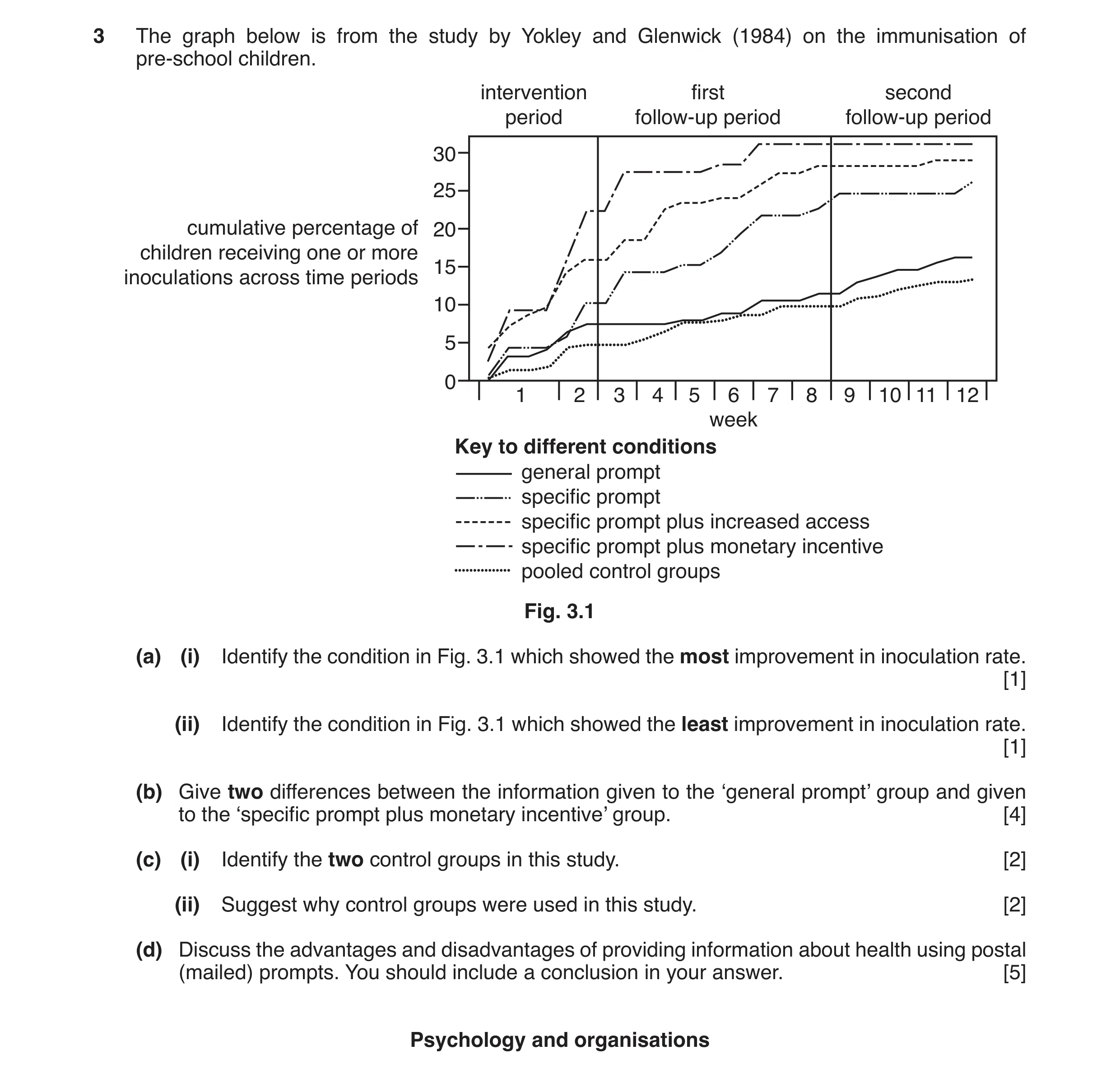
 2 / 9
2 / 9
 3 / 9
3 / 9
 4 / 9
4 / 9
 5 / 9
5 / 9![Question 18: (a) Design a case study to investigate whether providing information is an effective way to promote good dental health. [10] (b) Explain th…](https://img.pastlit.com/crops/0fca2ffe-f06f-4b99-bc19-261f74e9ddd6/q7.webp)
 6 / 9
6 / 9
 7 / 9
7 / 9
 8 / 9
8 / 9
![Question 30: (a) Outline how one study used fear arousal to promote health (e.g. Janis and Feshbach, 1953). [2] (b) Suggest one way the fear arousal and…](https://img.pastlit.com/crops/056c49d0-2699-4905-8850-b3046e31c45b/q6.webp) 9 / 9
9 / 9 15
15 18
18 18
18 12
12 15
15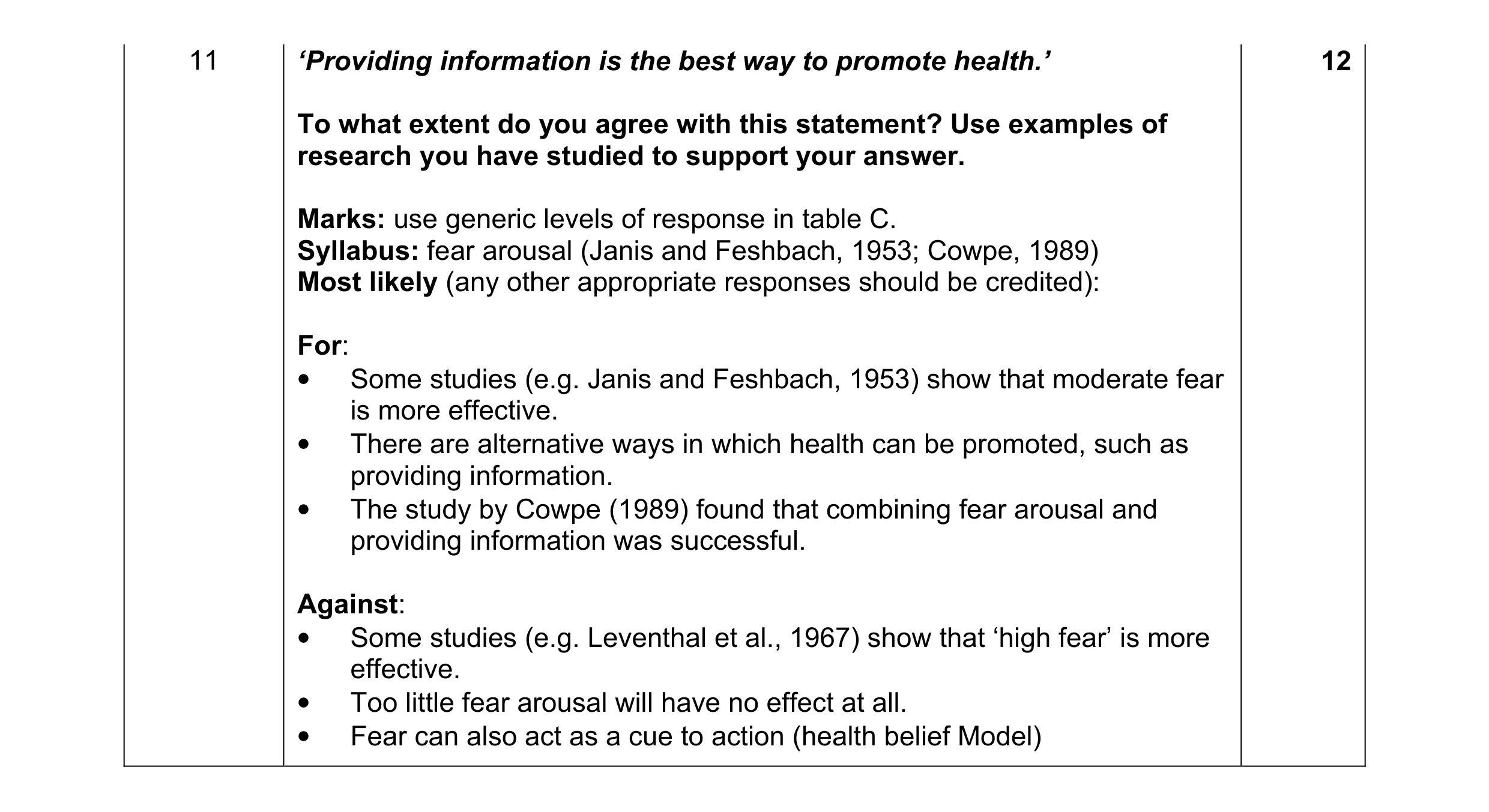 12
12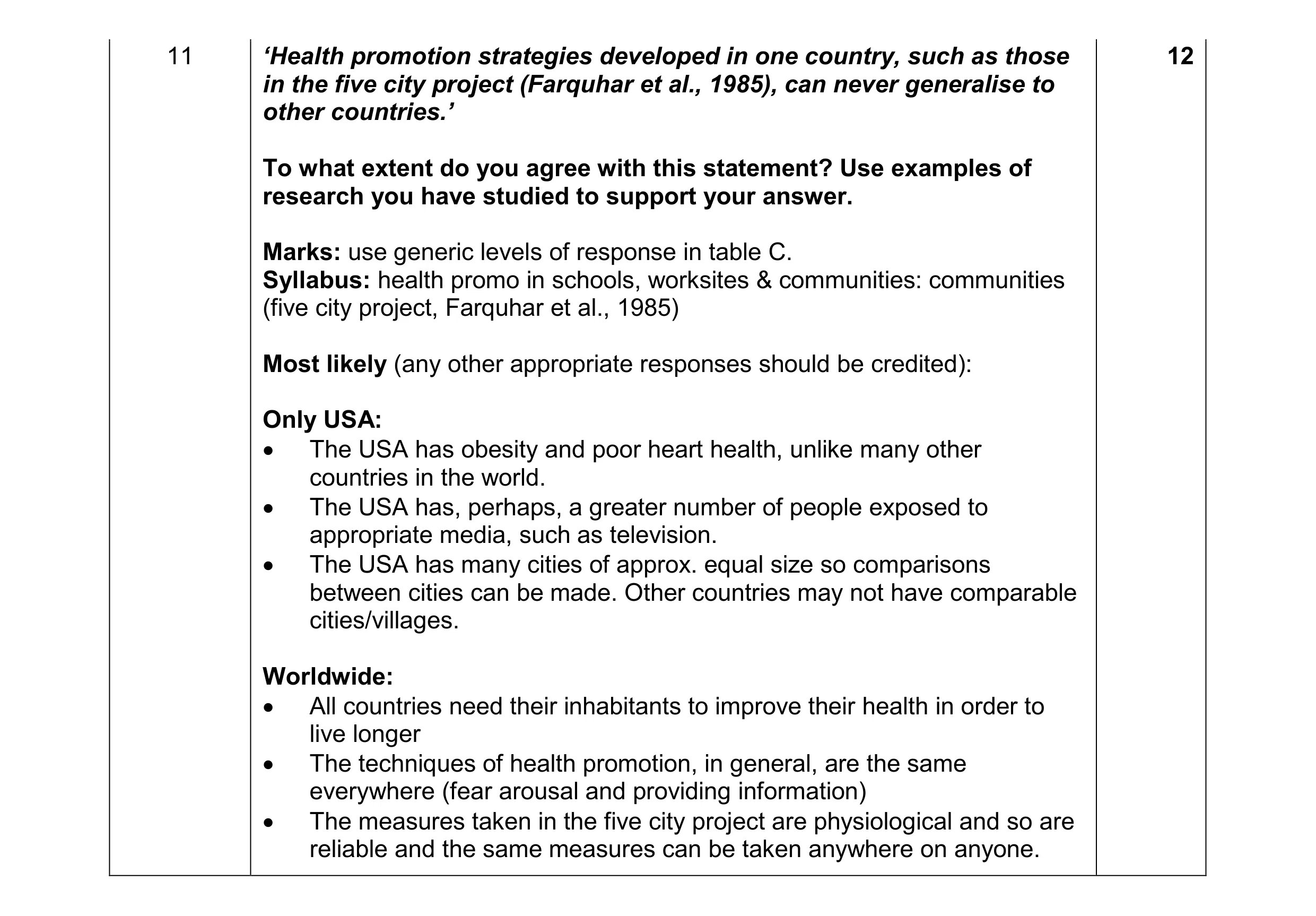 12
12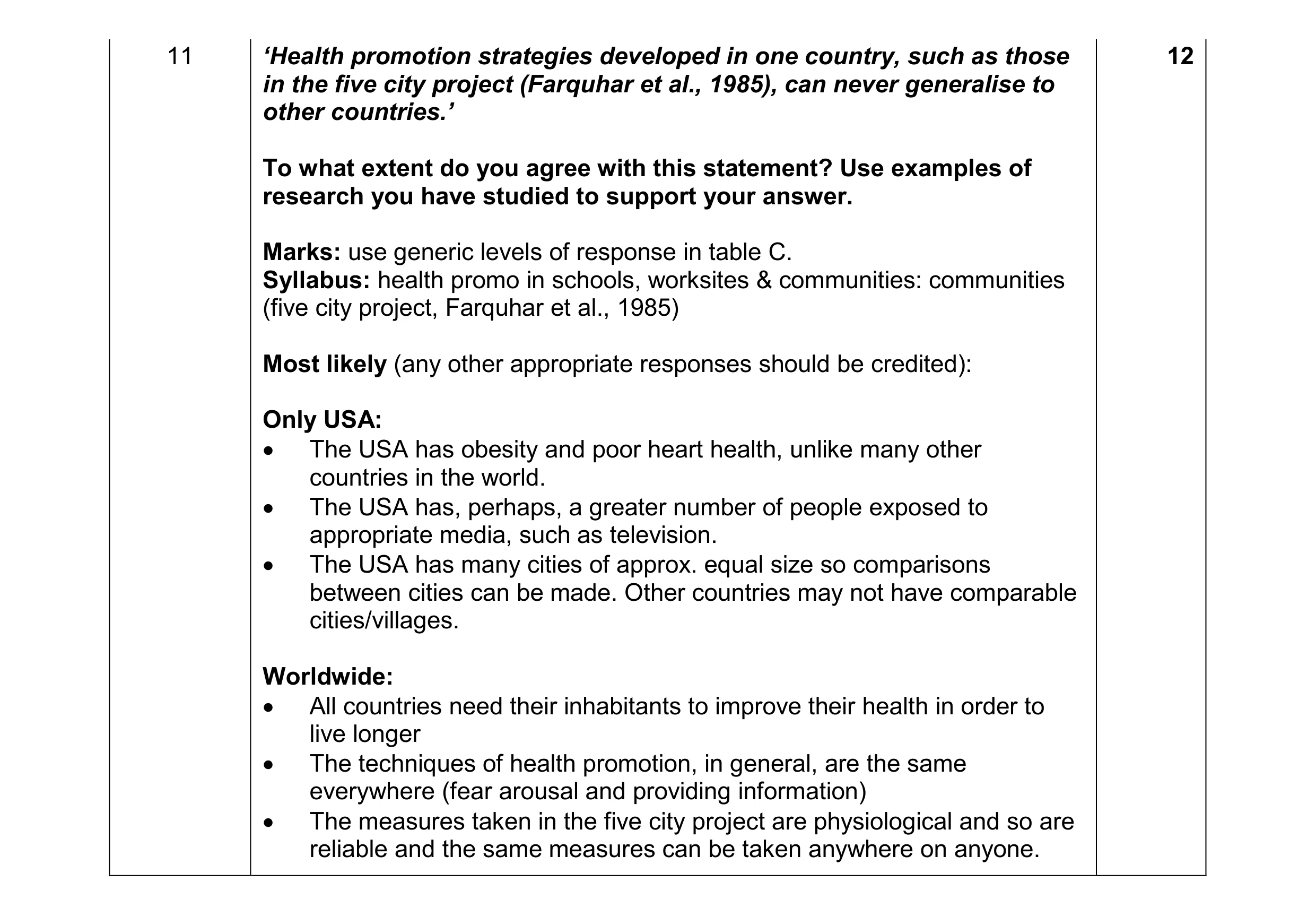 12
12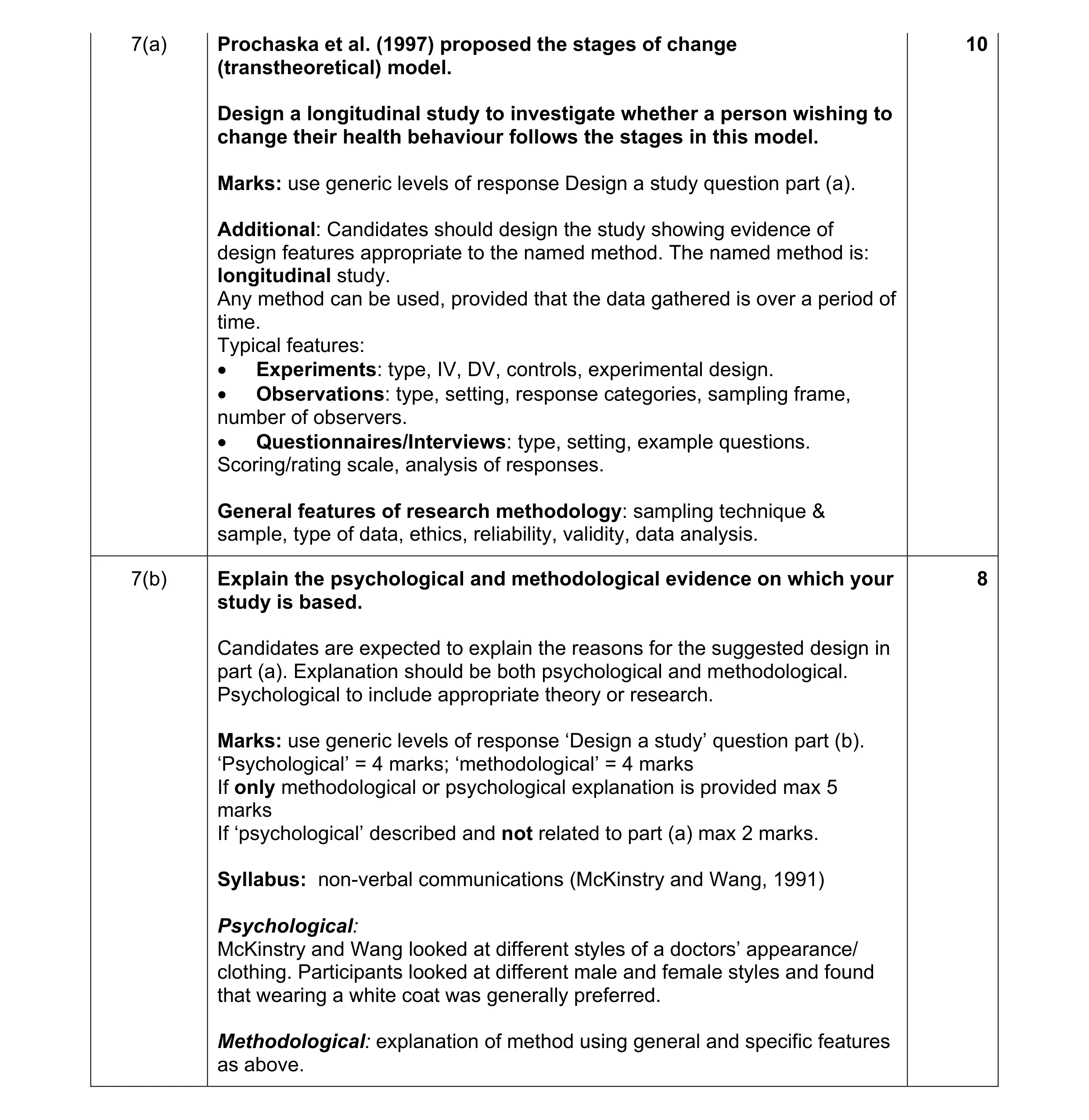 18
18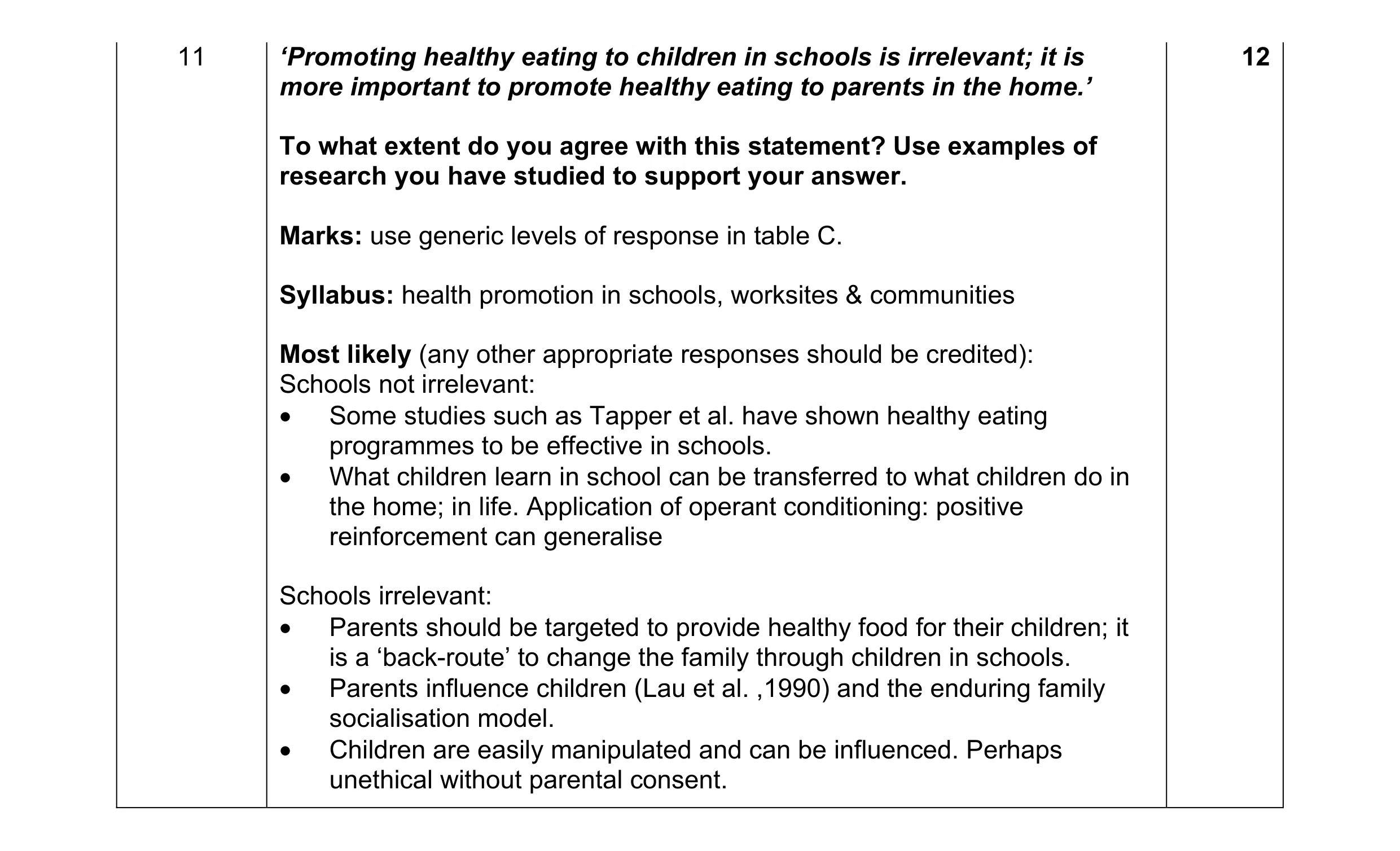 12
12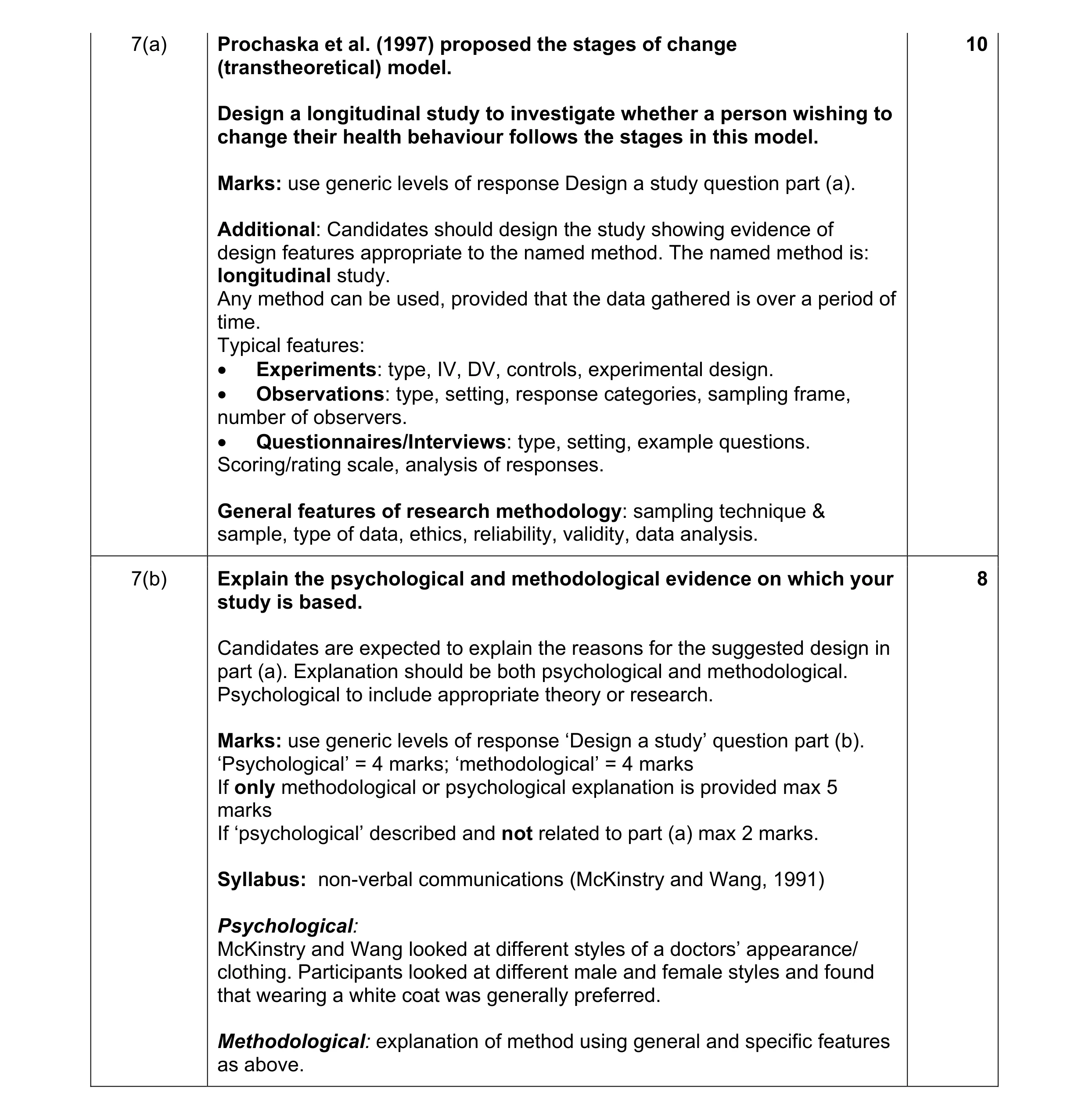 18
18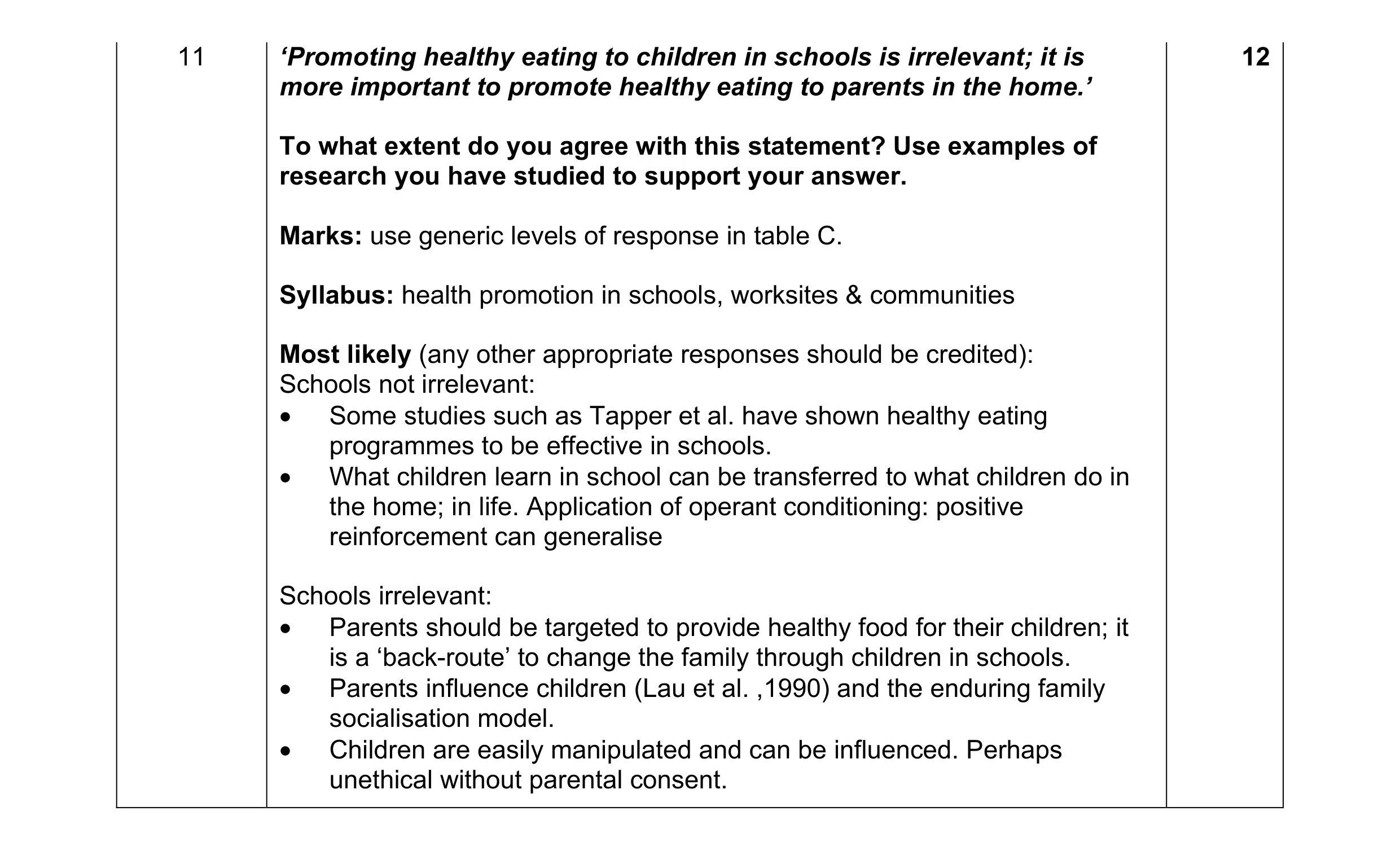 12
12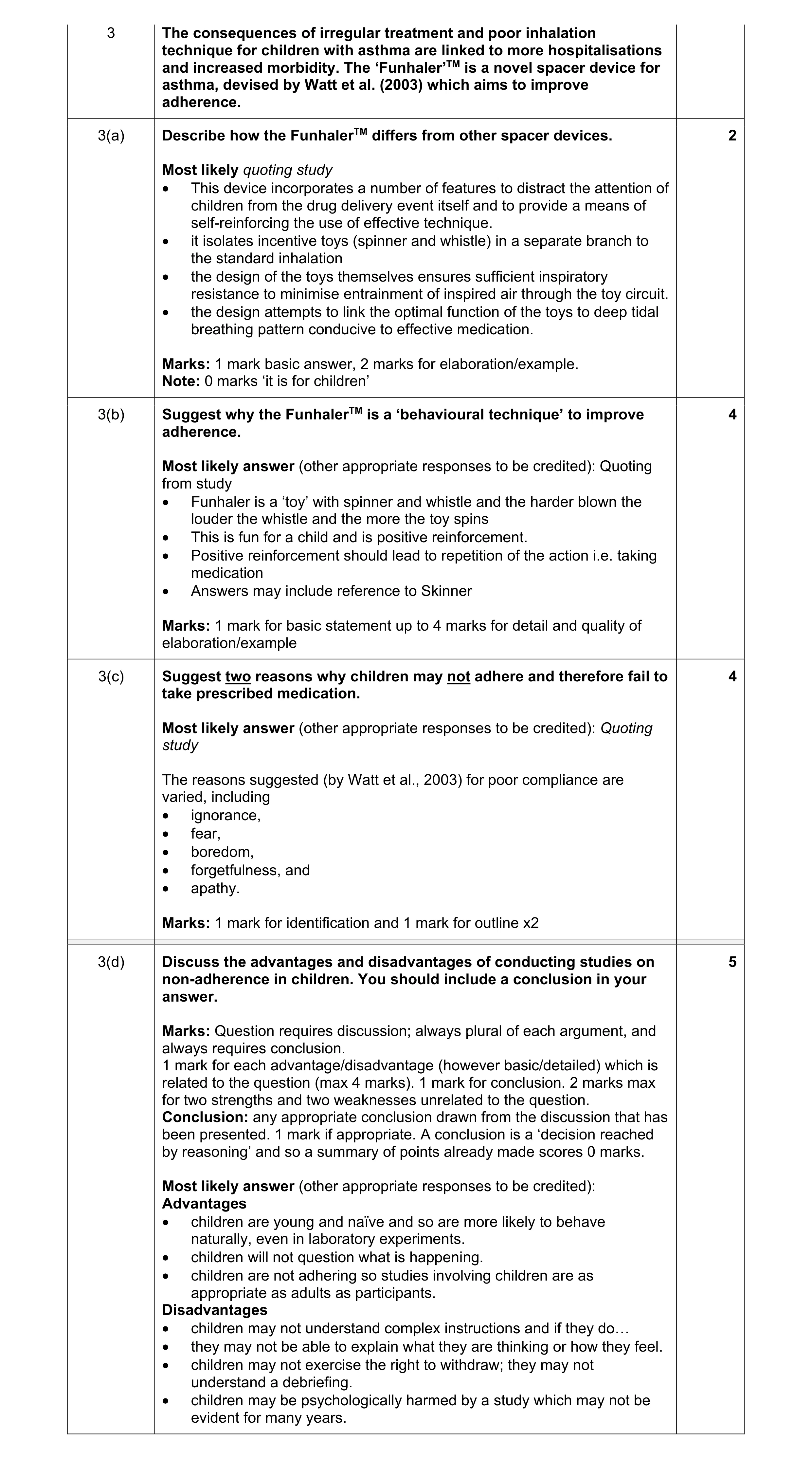 15
15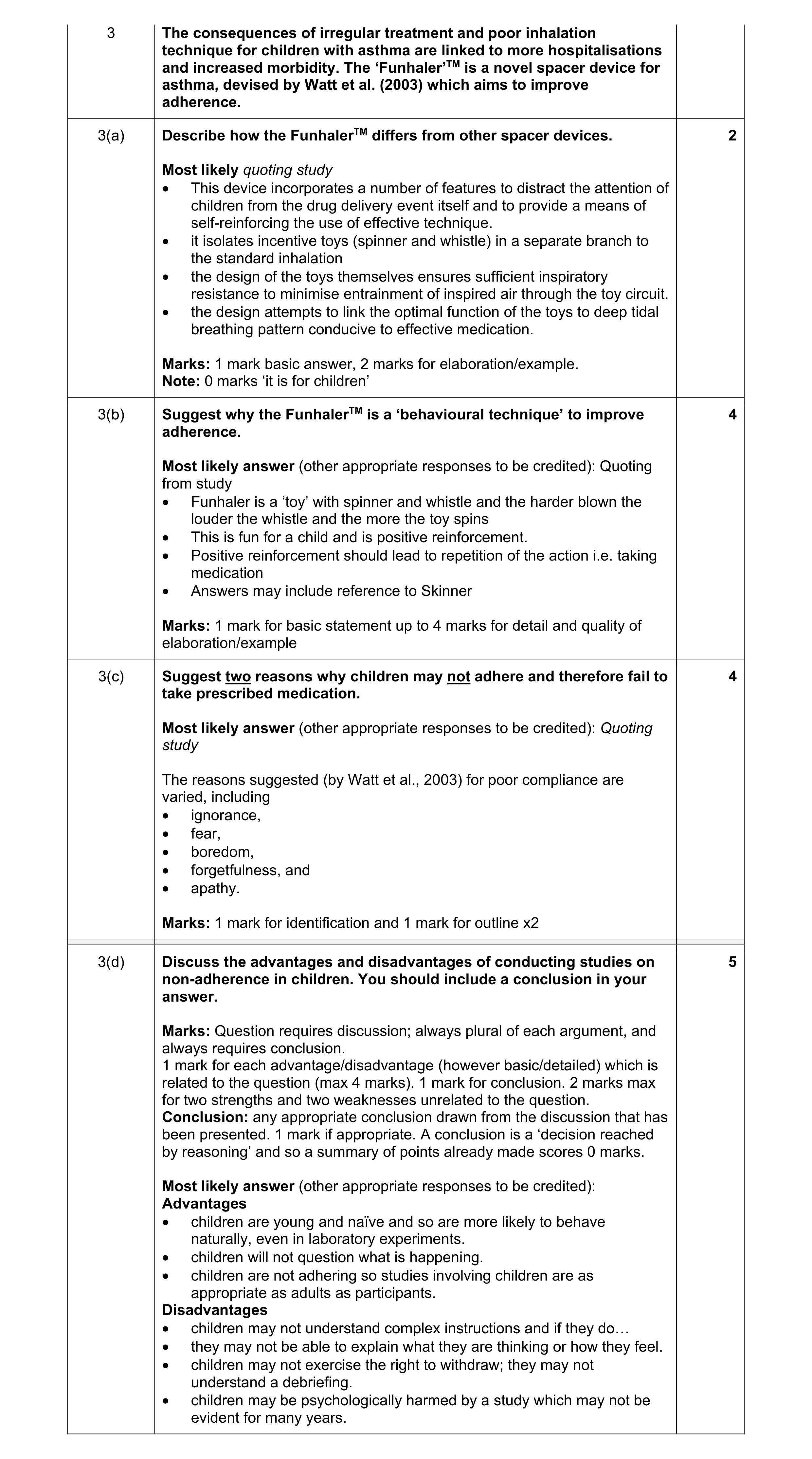 15
15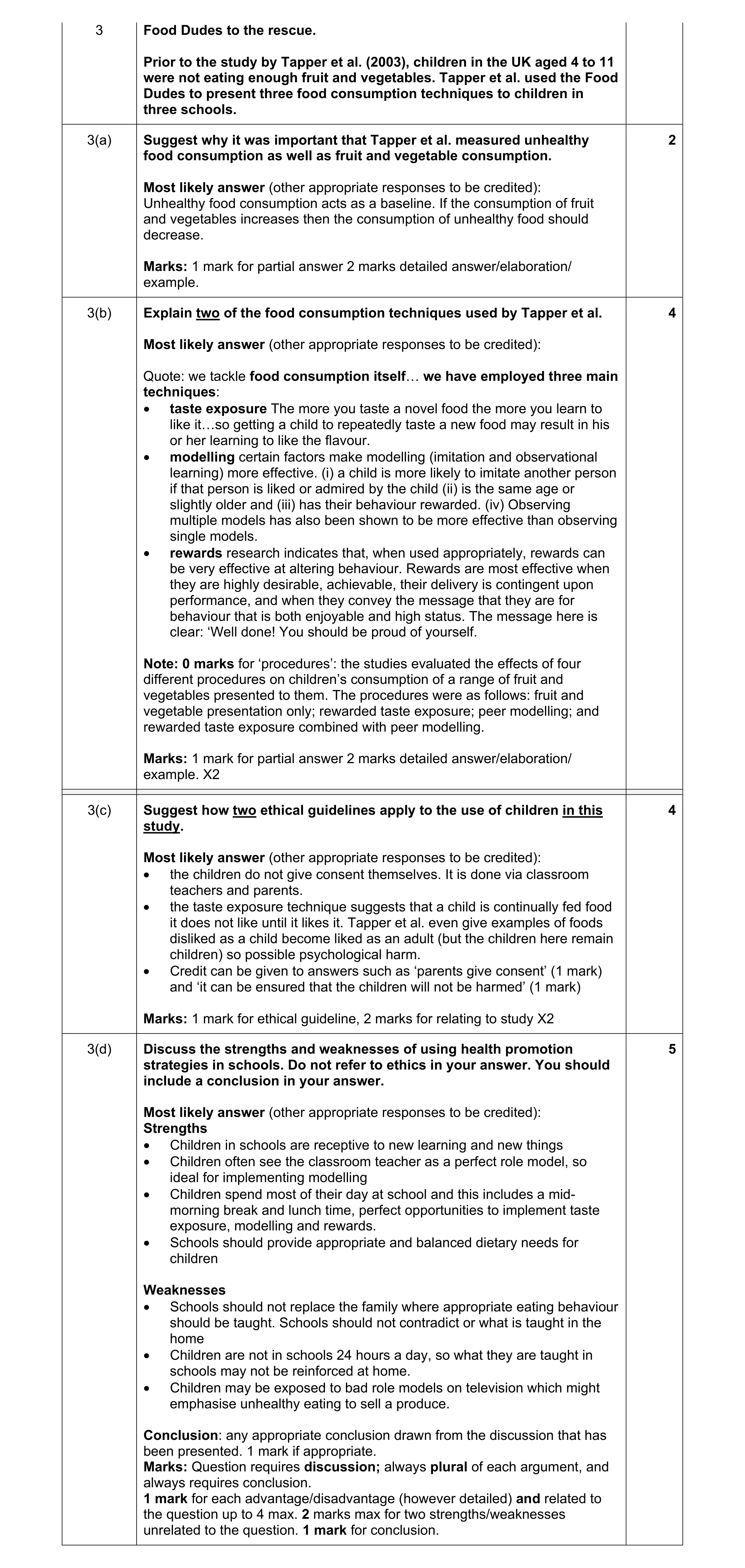 15
15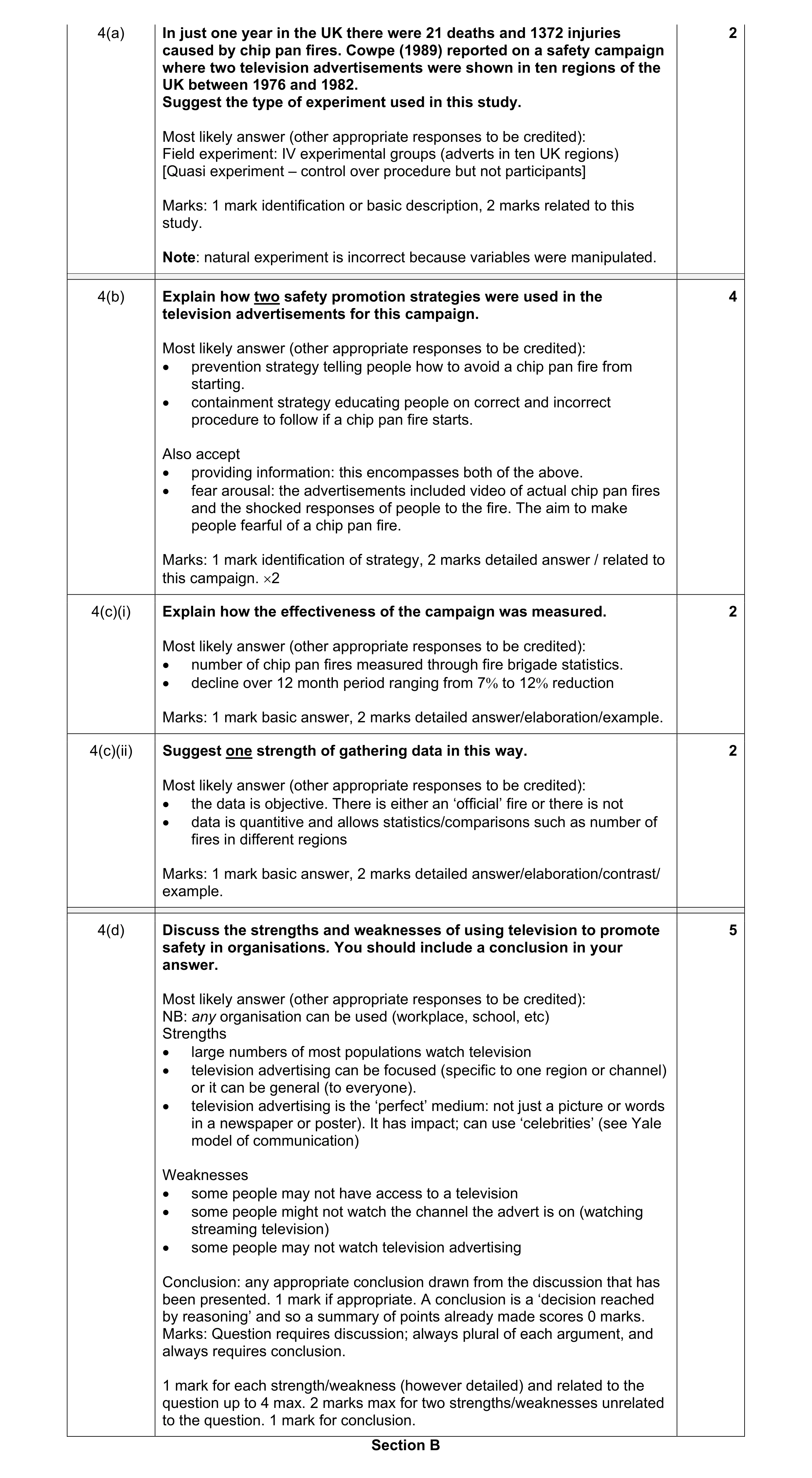 15
15 15
15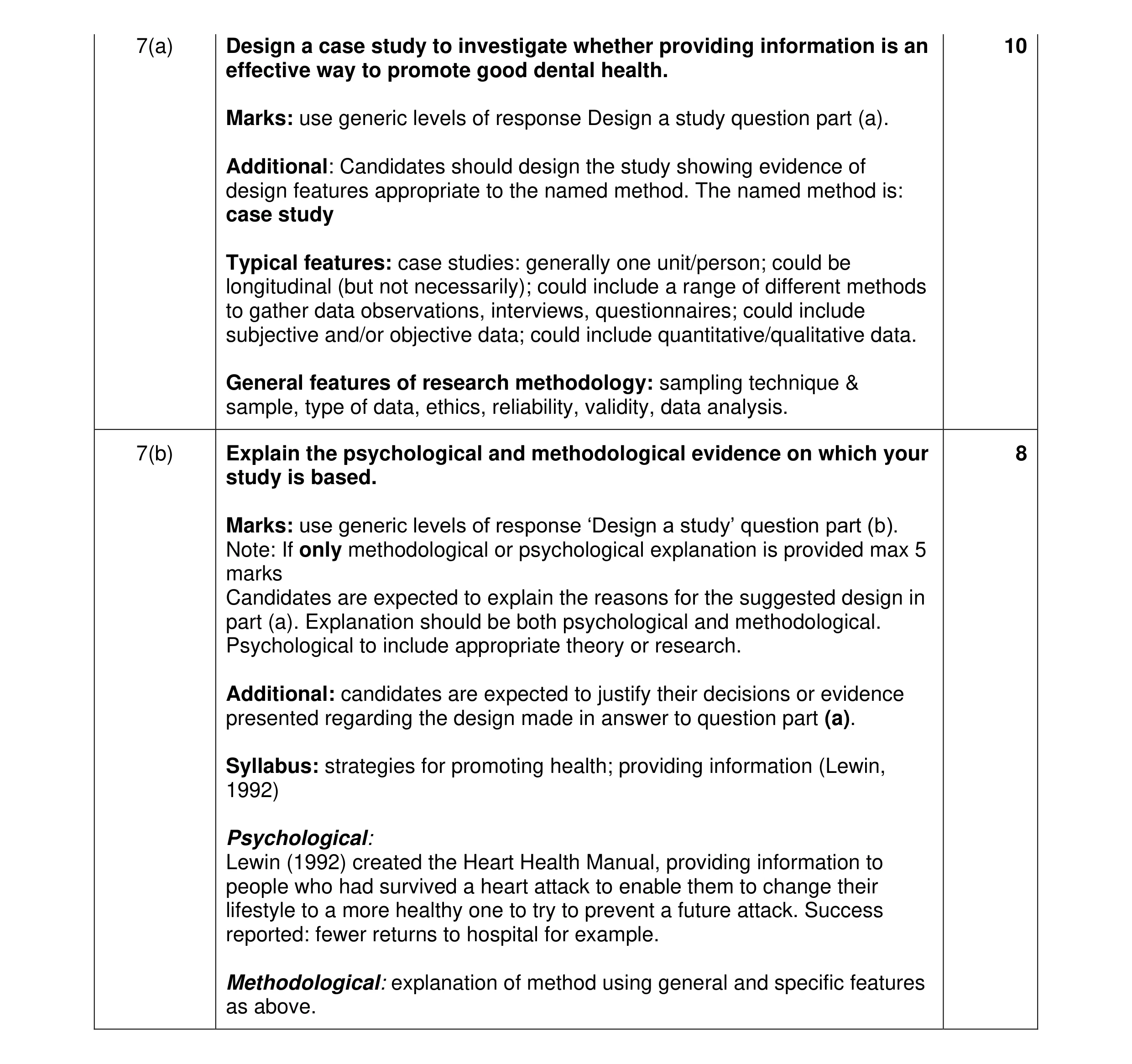 18
18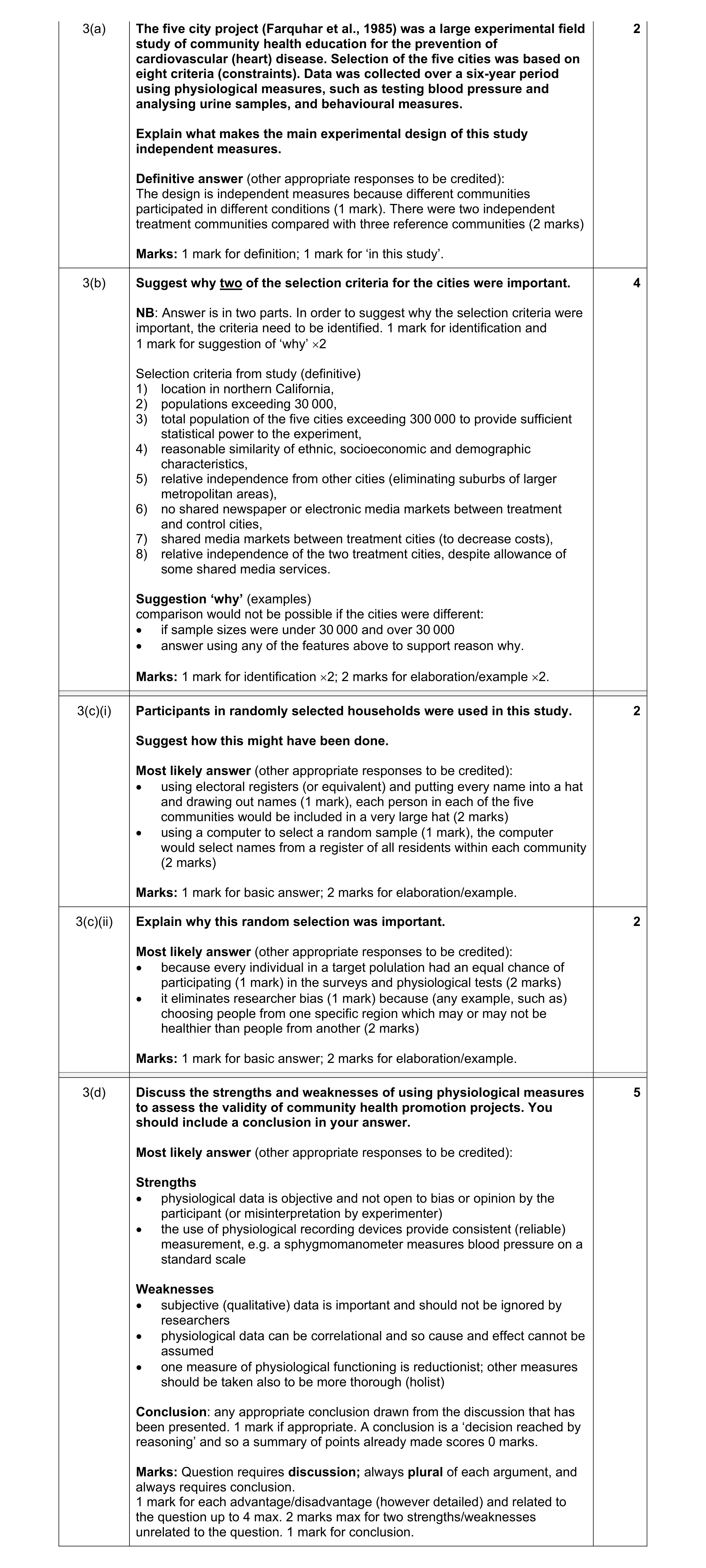 15
15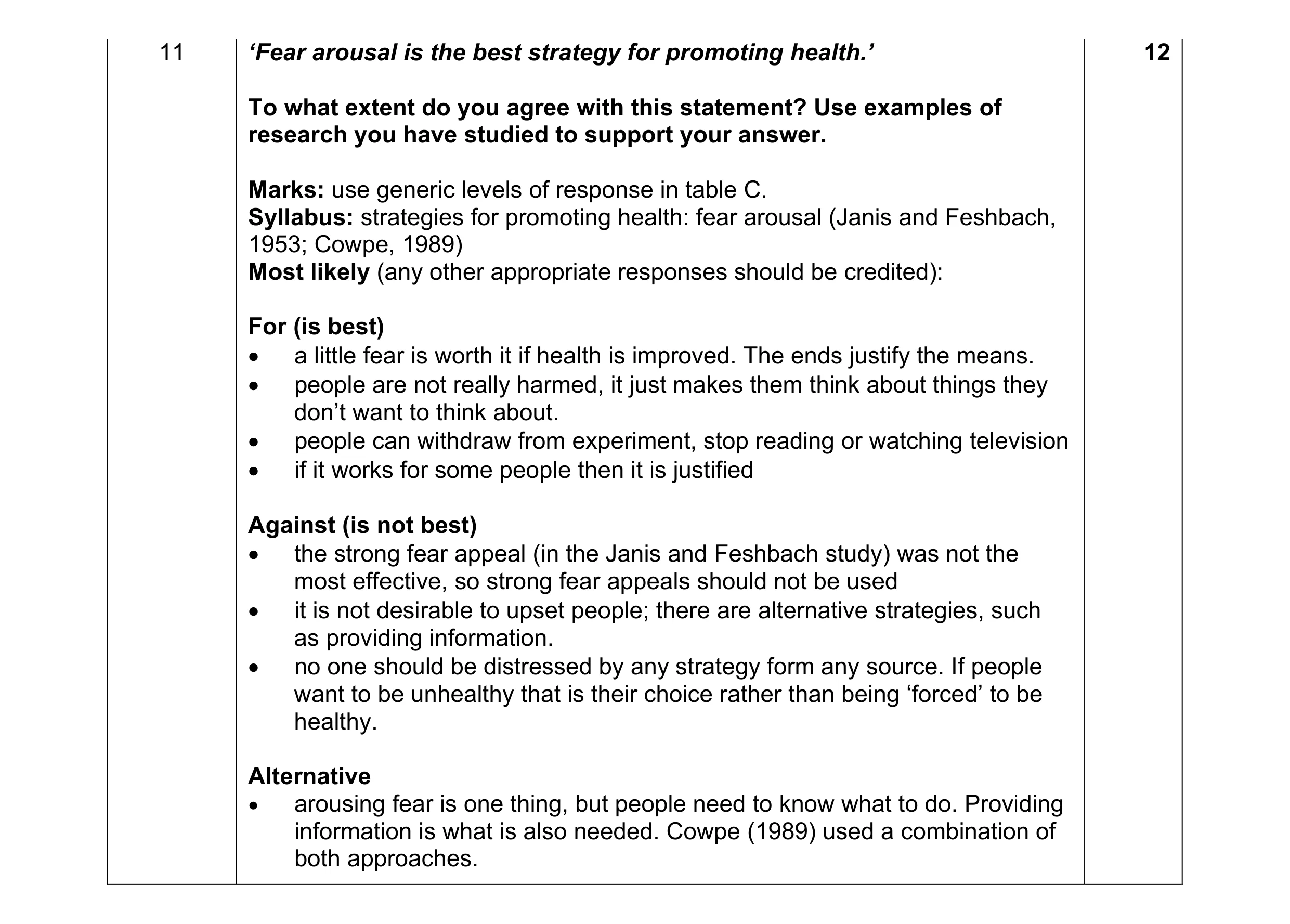 12
12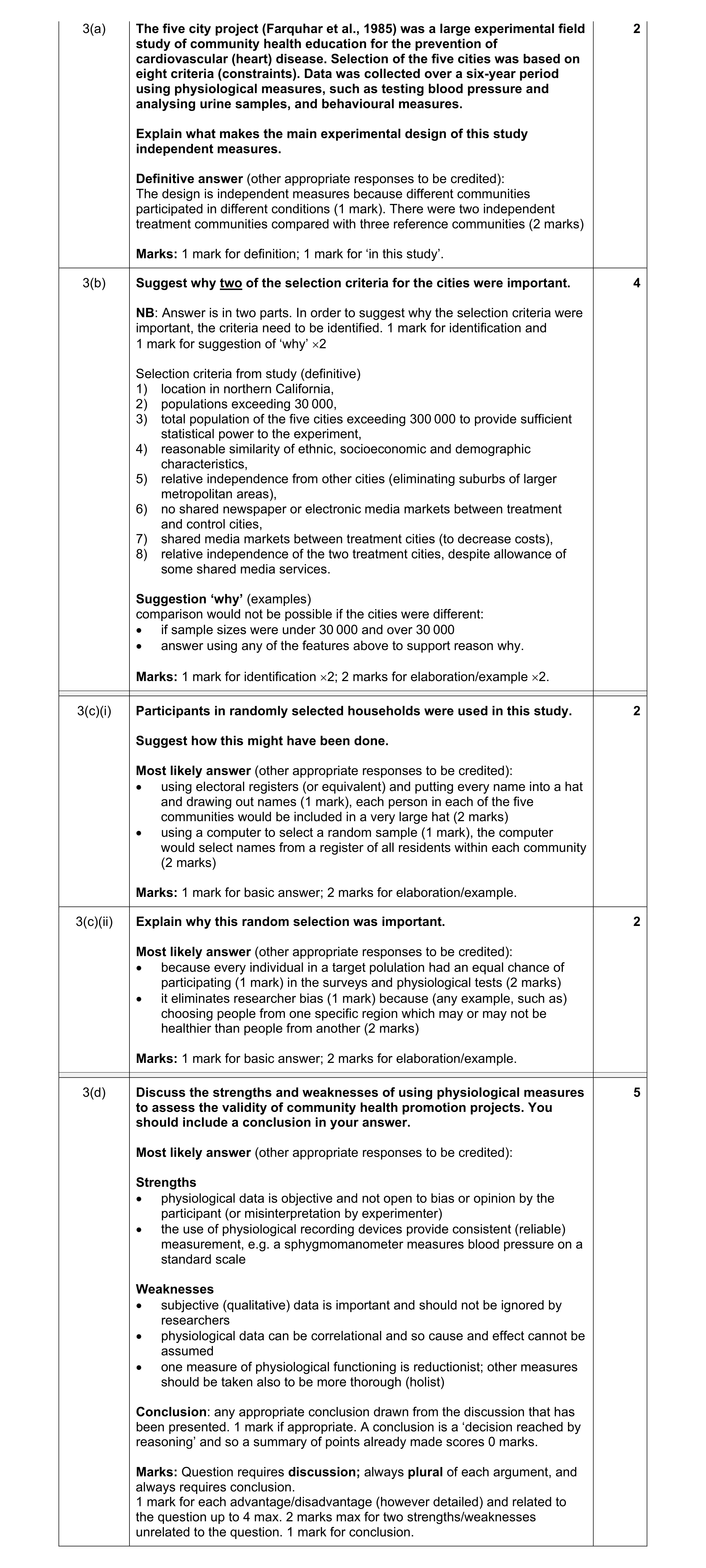 15
15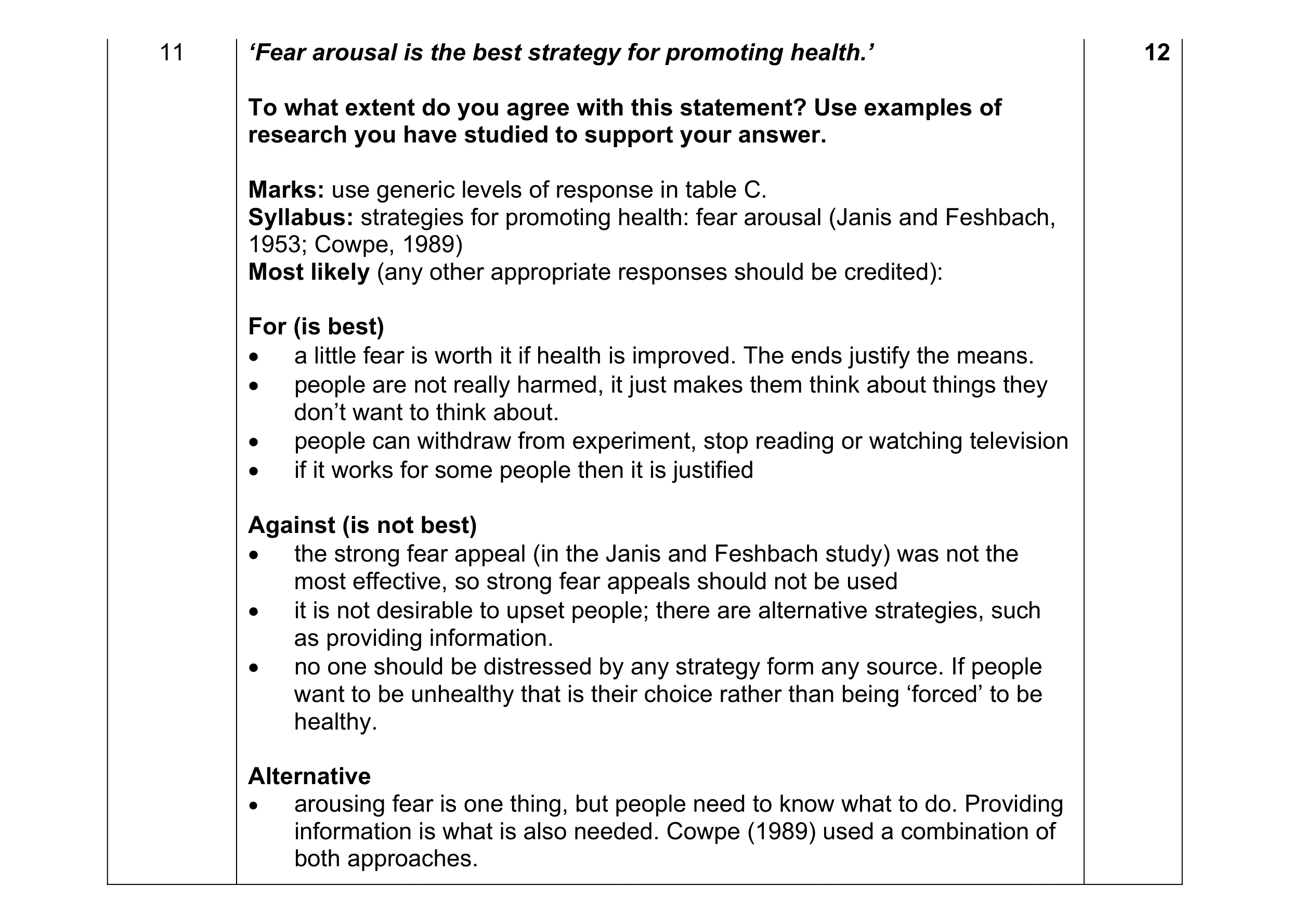 12
12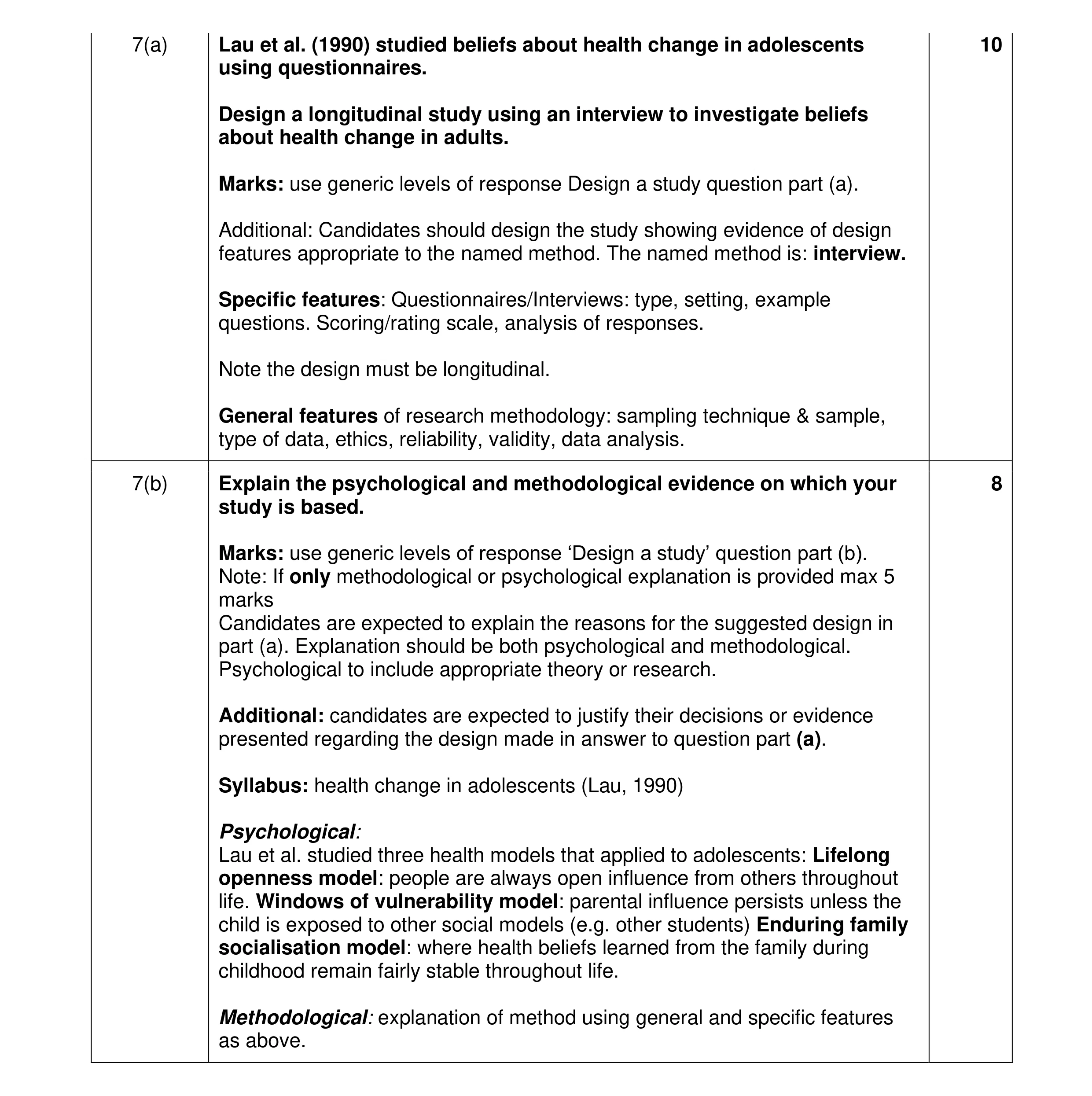 18
18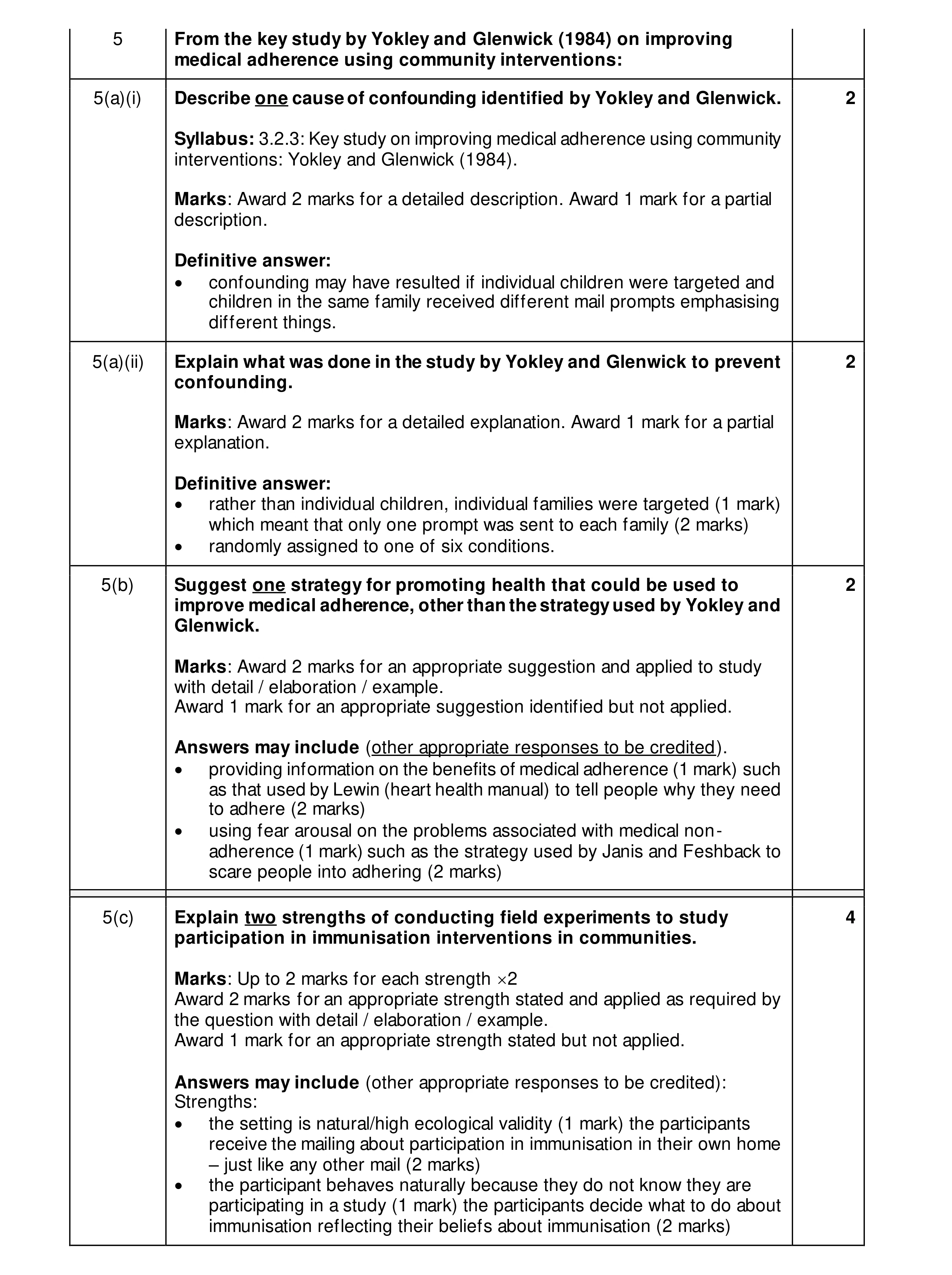 10
10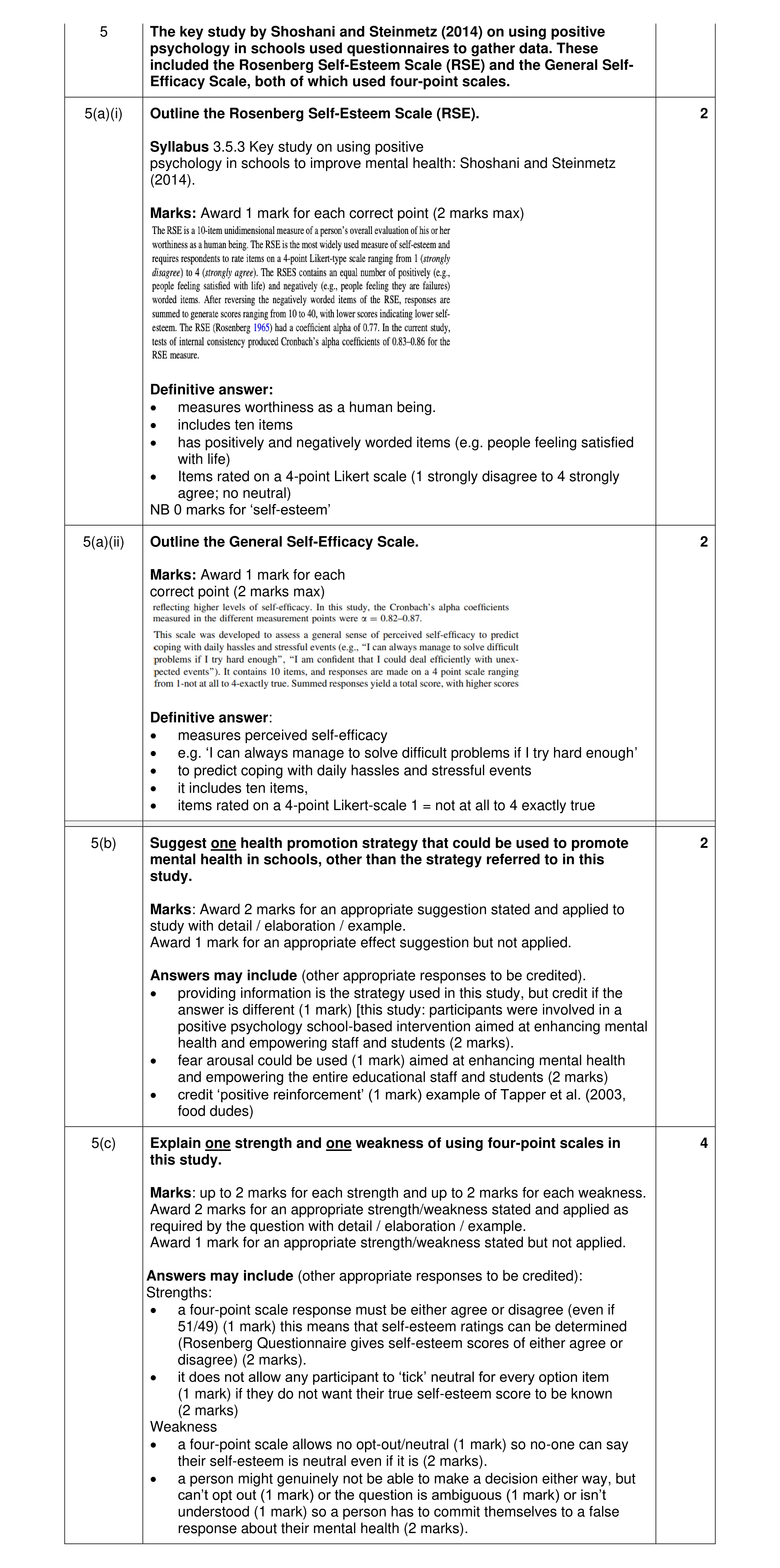 10
10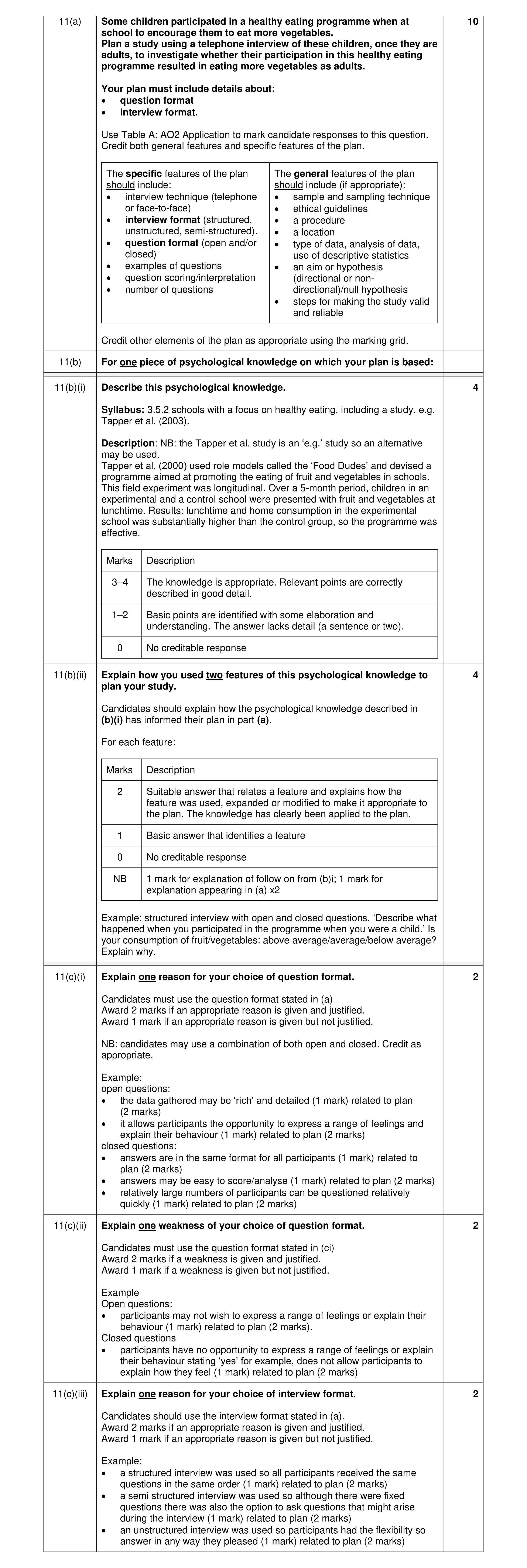 24
24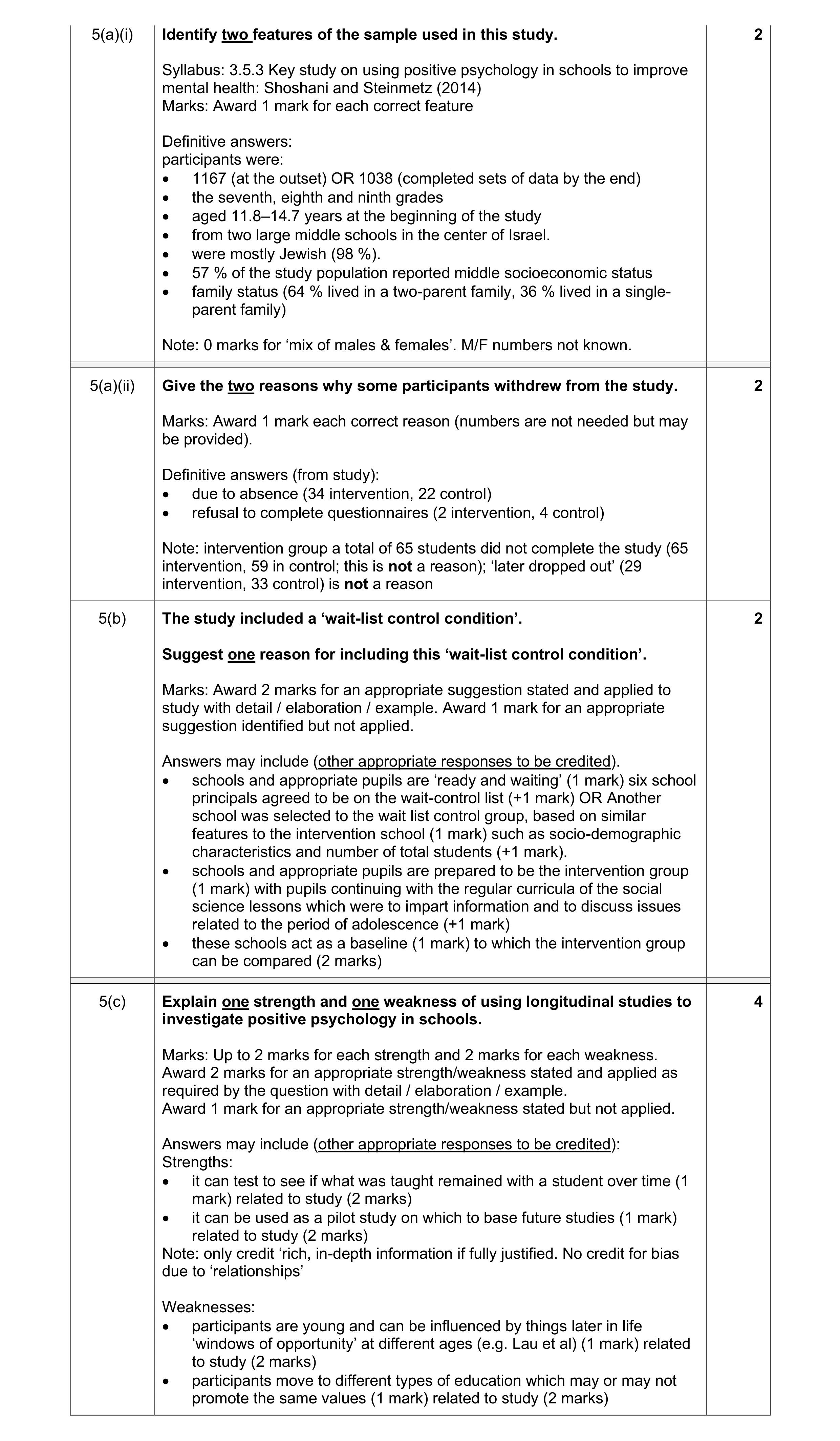 10
10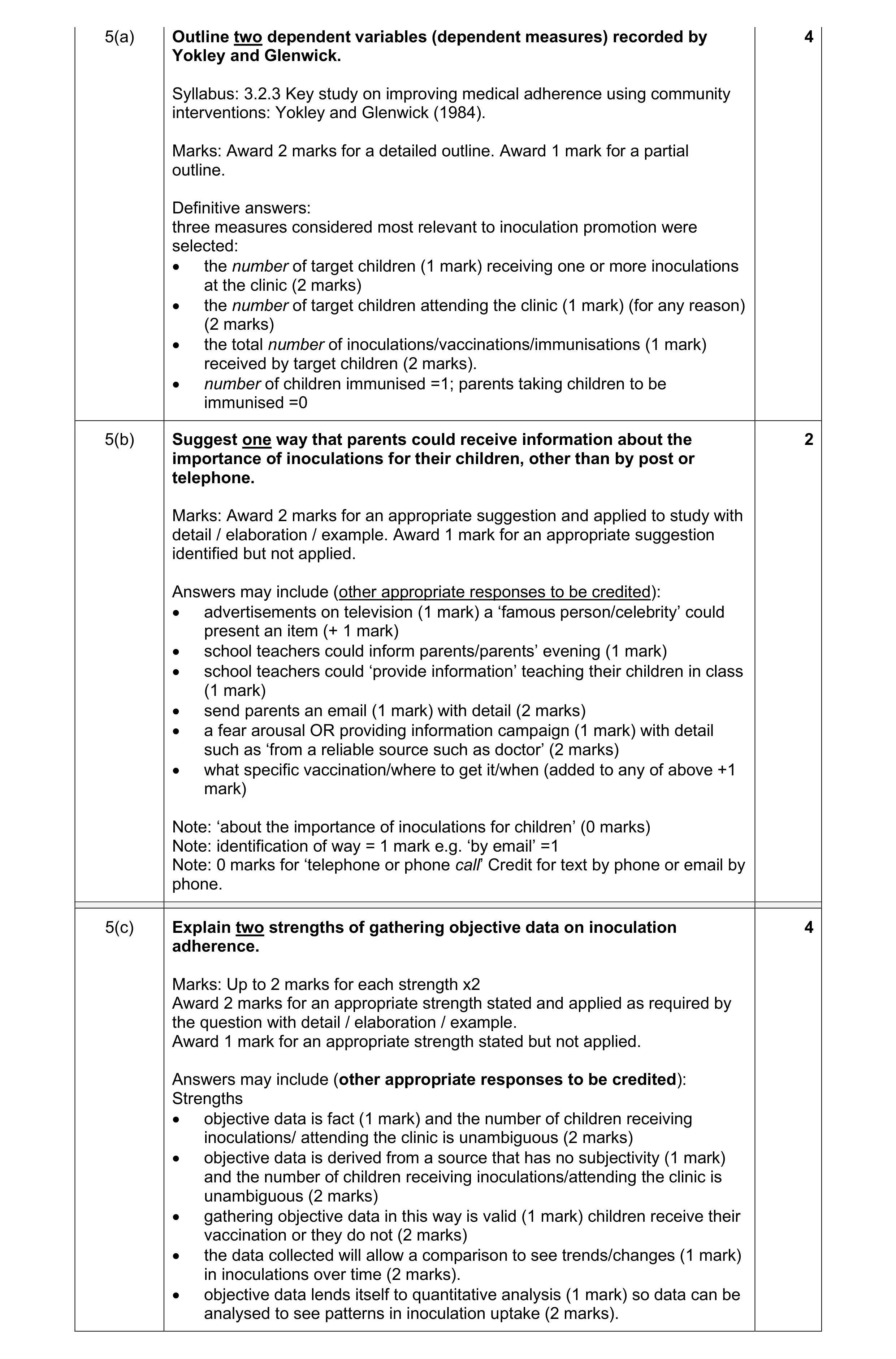 10
10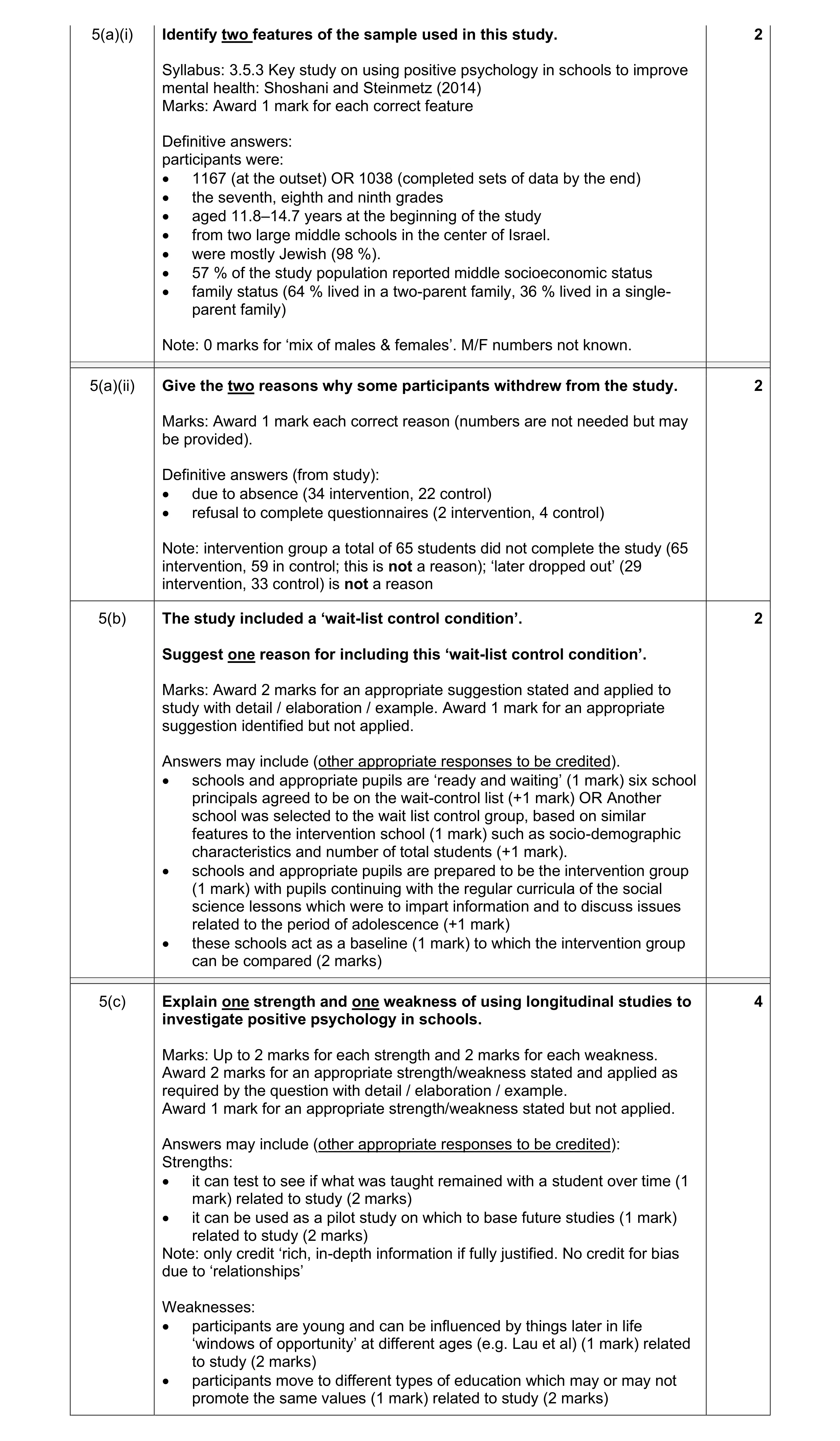 10
10 8
8