Questions as text
Q1 · Explain what is meant by ‘learned helplessness’ (Seligman, 1988) 9990/32 Feb/March 2018
1 (a) Explain what is meant by ‘learned helplessness’ (Seligman, 1988). [2] (b) Describe the Beck depression inventory. [4] (c) Explain two strengths of the Beck depression inventory. [6]
12 marks
Mark scheme: Question Answer Marks 1(a) Explain what is meant by ‘learned helplessness’ (Seligman, 1988). 2 Award 1 mark for a basic explanation of the term/concept. Award 2 marks for a detailed explanation of the term/concept. For example: Learned helplessness is where an individual feels they do not have control over a situation because they have had negative experiences of that situation in the past. This gives the individual a sense of helplessness and can then lead to depression. Please note – To be considered detailed the response must include something about how the negative experiences cause the sense of helplessness to develop. Other appropriate responses should also be credited. 1(b) Describe the Beck depression inventory. 4 Award 1–2 marks for a basic answer with some understanding of the topic area. Award 3–4 marks for a detailed answer with clear understanding of the topic area. For example: 21-item multiple choice questionnaire. It is a psychometric self report that measures the severity of depression. There are three versions of the questionnaire with the most recent from 1996. The patient reads various statements and answers with how much the statement applies to them on a 0–3 scale over the past two weeks. The statements cover issues such as self-dislike, tiredness, etc. The higher the score, the more depressed the person is deemed to be. e.g. • (0) I do not feel sad. • (1) I feel sad. • (2) I am sad all the time and I can't snap out of it. • (3) I am so sad or unhappy that I can't stand it 1–10: These ups and downs are considered normal 11–16: Mild mood disturbance 17–20: Borderline clinical depression 21–30: Moderate depression 31–40: Severe depression over 40: Extreme depression Version 2 – got rid of the statements that had the same scoring. Version 3 – Changed questions on body image, hypochondria and difficulty working and added in questions on sleep loss and appetite. Some credit can be given for the children’s depression inventory up to a maximum of 2 marks. Please note: The candidate must state approximately how many statements there are (1), something about the scoring system (1 or 2), an example of one of the statements or the topics covered by the BDI (1 or 2) and something about the meaning of the total scores (1 or 2). Other appropriate responses should also be credited. Credit any description of the three variations of the questionnaire. 1(c) Explain two strengths of the Beck depression inventory. 6 Likely strengths will be: • strengths of assessing depression symptoms using quantitative data, strengths relating to quantitative data such as can make comparisons between or within patients, do statistical tests, draw graphs, etc. • three variations of the scale exist which shows the scale has been updated to take into account changes to the diagnoses of depression • easy and quick to use to assess depression when the therapist/doctor has little time to do the assessment • can be done by the patient on their own to assess their depression • quick insight into the patients feelings • can compare to previous scores as treatment progresses to see if patient is improving Mark according to the levels of response criteria below: Level 3 (5–6 marks) • Candidates will show a clear understanding of the question and will explain two appropriate strengths. • Candidates will provide a good explanation with clear detail. Level 2 (3–4 marks) • Candidates will show an understanding of the question and will explain one appropriate strength in detail or two in less detail. • Candidates will provide a good explanation. Level 1 (1–2 marks) • Candidates will show a basic understanding of the question and will attempt an explanation of strengths. There could be a brief explanation of one strength. • Candidates will provide a limited explanation. Level 0 (0 marks) No response worthy of credit. Other appropriate responses should also be credited.
This question in 9990/32 Feb/March 2018
Q2 · Describe explanations of depression 9990/31 Oct/Nov 2018
2 (a) Describe explanations of depression. [8] (b) Evaluate explanations of depression, including a discussion of nature versus nurture. [10] Psychology and consumer behaviour Answer all questions.
18 marks
Mark scheme: 2(a) Describe explanations of depression. 8 Explanations of depression, including the following: • biological: genetic and neurochemical (Oruc et al., 1997) • cognitive (Beck, 1979) • learned helplessness/attributional style (Seligman, 1988) Genetic and neurochemical (Oruc et al., 1997) Depression has a genetic basis. Oruc et al., found the participants in their study with bipolar disorder – sixteen of the participants had at least one first degree relative who had a major affective disorder. In addition, polymorphisms in the genes of the participants could be responsible for the increased risk of developing bipolar disorder (just with the females in the sample). Also credit neurochemical explanation (low levels of serotonin). Cognitive (Beck, 1979) Depression due to faulty processing of information. Created the cognitive triad (negative views about the world, negative views about oneself and negative views about the future) which all influence each other and can lead the depressed individual to spiral into lowering moods. Learned helplessness/attributional style (Seligman, 1988) Credit this as an application to depression. Attributional Style Questionnaire given to 39 unipolar depressed patients at the beginning and end of cognitive therapy and also after a one year follow-up. Also gave this to 12 bipolar patients during a depressed episode. Found a pessimistic explanatory style for bad events correlated with severity of depression. As therapy progressed depression reduced as the explanatory style became less pessimistic. This continued to remain improved at the one-year follow-up. Learned helplessness is where the depressed person has learned they are helpless in the unpleasant situation they are currently living in and they no longer try to make their life/mood better. Mark according to the levels of response descriptors in Table A. Other appropriate responses should also be credited. 2(b) Evaluate explanations of depression, including a discussion of nature 10 versus nurture. A range of issues could be used for evaluation here. These include: • Named issue – nature versus nurture debate with reference to the various explanations. Genetic and neurochemical supports nature and cognitive and learned helplessness/attributional style support nurture. • comparisons of different explanations • Application of psychology to everyday life (with reference to explanations) – these approaches are useful as therapy has been created to improve the lives of patients with depression based on the approach (e.g. CBT, drug therapy) • reductionist nature of the explanations – the genetic/neurochemical is more reductionist than cognitive and learned helplessness. • deterministic nature of the explanations – the genetic/neurochemical is more deterministic than cognitive and learned helplessness. Learned helplessness could be seen as somewhat deterministic as the person may feel they have no choice and are trapped in the negative situation. • Evidence to support the explanations (and an evaluation of this evidence if linked back to explanation) e.g. Oruc et al. study just had patients with bipolar which is uncommon compared to unipolar depression. Mark according to the levels of response descriptors in Table B. Other appropriate responses should also be credited. Psychology and consumer behaviour
This question in 9990/31 Oct/Nov 2018
Q3 · Explain what is meant by ‘unipolar depression’ 9990/32 Feb/March 2019
1 (a) Explain what is meant by ‘unipolar depression’. [2] (b) Describe two drug treatments for depression. [4] (c) Explain one similarity and one difference between drug treatments for depression and cognitive restructuring treatment for depression (Beck, 1979). [6]
12 marks
Mark scheme: Question Answer Marks 1(a) Explain what is meant by ‘unipolar depression’. 2 Award 1 mark for a basic explanation of the term/concept. Award 2 marks for a detailed explanation of the term/concept. For example: An affective disorder characterised by persistent low mood(1), OR lack of energy(1), OR and hopelessness(1). Low mood is long term(1) OR periods of mania are not experienced(1). Response must mention that low mood is long term or periods of mania are not experienced to receive full marks. Other appropriate responses should also be credited. 1(b) Describe two drug treatments for depression. 4 For each named drug treatment (up to max of two): Award 1 mark for a basic answer with some understanding of the topic area. Award 2 marks for a detailed answer with clear understanding of the topic area. For example: Tricyclics (1) – increasing the brain's supply of norepinephrine (1) and serotonin levels (1). MAOI (1) – slowing the natural breakdown of norepinephrine (1) and serotonin (1) and dopamine (1). SSRI (1) – Act on the levels of the neurotransmitter serotonin at the synapse, preventing its breakdown and reuptake. (1) Other appropriate responses should also be credited. 1(c) Explain one similarity and one difference between drug treatments for 6 depression and cognitive restructuring treatment for depression (Beck, 1979). Similarities could include – • Both require professional (doctor to prescribe and psychologist to ‘teach’ CBT) • Both have research support for their success. • Both take some time to be effective (usually 4 weeks for SSRI) Differences could include – • Individual needs to be motivated (and of certain personality type/insight) for cognitive treatment, whereas individual needs relatively little motivation to take drug. • Drugs have side effects including dizziness, nausea, insomnia, constipation. No side effects with cognitive treatment. • Patient more actively involved in cognitive restructuring but passive in drug therapy. Mark according to the levels of response criteria below: Level 3 (5–6 marks) • Candidates will show a clear understanding of the question and will include one similarity and one difference. • Candidates will provide a good explanation with clear detail. Level 2 (3–4 marks) • Candidates will show an understanding of the question and will include one appropriate similarity in detail or one appropriate difference in detail. OR one similarity and one difference in less detail. • Candidates will provide a good explanation. Level 1 (1–2 marks) • Candidates will show a basic understanding of the question and will attempt a similarity and/or difference. This could include both but just as an attempt. • Candidates will provide a limited explanation. Level 0 (0 marks) No response worthy of credit. Other appropriate responses should also be credited
This question in 9990/32 Feb/March 2019
Q4 · Describe the treatment and management of depression 9990/31 Oct/Nov 2019
2 (a) Describe the treatment and management of depression. [8] (b) Evaluate the treatment and management of depression, including a discussion of ethics. [10] Psychology and consumer behaviour Answer all questions.
18 marks
Mark scheme: 2(a) Describe the treatment and management of depression. 8 Treatment and management of depression, including the following: • Biological: chemical/drugs (MAO, SSRIs) • Electro-convulsive therapy • Cognitive restructuring (Beck, 1979) • Rational emotive behaviour therapy (Ellis, 1962) Biological: chemical/drugs (MAOI, SSRIs) MAOI – older antidepressants not frequently used today. Inhibit monoamine oxidase. This is responsible for breaking down norepinephrine, serotonin and dopamine. The other more common medication prescribed is selective serotonin reuptake inhibitors (SSRIs). These can help improve depression by increasing the levels of serotonin in the brain. This can occur in two ways as the SSRI will increase the amount of serotonin in the blood stream as well as prevent it being reabsorbed and broken down once it crosses a synapse in the brain. Electro-convulsive therapy Involves passing electricity through the brain to induce a seizure. Can be bilateral or unilateral. The electric current is applied once the patient has been sedated. The seizure is monitored by the doctor and can last up to a minute. Patients may be given 6 to 12 sessions over a number of weeks. Cognitive restructuring (Beck, 1979) This is where the patient participates in a number of therapy sessions over weeks and/or months to alleviate their symptoms of depression. As it is believed the depressive symptoms are due to faulty thinking the therapist will help the patient to identify their faulty thinking and then correct these thinking patterns to more helpful ways of viewing themselves, the world and the future. Initially the patient and therapist will identify what the thinking patterns are, and the patient will be helped to come up with alternative thoughts. The patient then goes away between sessions and practices these alternative thoughts which should then lead to more helpful behaviours. Rational emotive behaviour therapy (Ellis, 1962) This follows the ABC model: Activating agent – what is the behaviour and/or attitude of the patient towards events in their lives. Beliefs – what is the belief of the patient toward the event. Cognitive – what types of thoughts does the patient have with regard to the event. Ellis believes if a person has constant negative beliefs about events in their lives, they are likely to suffer from depression. The goal of therapy is to identify the unhelpful thoughts and replace them with more rational and constructive thoughts. The patient will go away between sessions and practice developing more helpful thoughts about life experiences. Mark according to the levels of response descriptors in Table A. Other appropriate responses should also be credited. 2(b) Evaluate the treatment and management of depression, including a 10 discussion of ethics. A range of issues could be used for evaluation here. These include: • Named issue – Ethics – Candidates can consider both the ethics of the treatments (e.g. side effects, cost, etc.) or the ethics of the research that investigates the treatment and management of depression. For example, both the drug and ECT treatment have side effects that will be unpleasant for the patient whereas the therapies have no side effects but may be too costly for a patient to afford and therefore they are prevented from feeling better which is unethical. Or the ethics of research where the participants experience side effects or not and/or whether there is a placebo group who is not being given the treatment and therefore may not improve in terms of their depression and this is unethical. Many studies offer the placebo/control condition the opportunity to have the treatment at a later date which is more ethical. • Validity. • Application of psychology to everyday life (with reference to treatments). • Nature versus nurture debate with reference to the various treatments. • Comparisons of different treatments. • Reductionist/holistic nature of the treatments. • Deterministic nature of the treatments. • Appropriateness of treatments (e.g. cost, time, side-effects). • Research support for effectiveness of treatments. • Evaluation of research that shows support for effectiveness of treatments. Mark according to the levels of response descriptors in Table B. Other appropriate responses should also be credited. Psychology and consumer behaviour
This question in 9990/31 Oct/Nov 2019
Q5 · Describe the treatment and management of depression 9990/32 Oct/Nov 2019
2 (a) Describe the treatment and management of depression. [8] (b) Evaluate the treatment and management of depression, including a discussion of ethics. [10] Psychology and consumer behaviour Answer all questions.
18 marks
Mark scheme: 2(a) Describe the treatment and management of depression. 8 Treatment and management of depression, including the following: • Biological: chemical/drugs (MAO, SSRIs) • Electro-convulsive therapy • Cognitive restructuring (Beck, 1979) • Rational emotive behaviour therapy (Ellis, 1962) Biological: chemical/drugs (MAOI, SSRIs) MAOI – older antidepressants not frequently used today. Inhibit monoamine oxidase. This is responsible for breaking down norepinephrine, serotonin and dopamine. The other more common medication prescribed is selective serotonin reuptake inhibitors (SSRIs). These can help improve depression by increasing the levels of serotonin in the brain. This can occur in two ways as the SSRI will increase the amount of serotonin in the blood stream as well as prevent it being reabsorbed and broken down once it crosses a synapse in the brain. Electro-convulsive therapy Involves passing electricity through the brain to induce a seizure. Can be bilateral or unilateral. The electric current is applied once the patient has been sedated. The seizure is monitored by the doctor and can last up to a minute. Patients may be given 6 to 12 sessions over a number of weeks. Cognitive restructuring (Beck, 1979) This is where the patient participates in a number of therapy sessions over weeks and/or months to alleviate their symptoms of depression. As it is believed the depressive symptoms are due to faulty thinking the therapist will help the patient to identify their faulty thinking and then correct these thinking patterns to more helpful ways of viewing themselves, the world and the future. Initially the patient and therapist will identify what the thinking patterns are, and the patient will be helped to come up with alternative thoughts. The patient then goes away between sessions and practices these alternative thoughts which should then lead to more helpful behaviours. Rational emotive behaviour therapy (Ellis, 1962) This follows the ABC model: Activating agent – what is the behaviour and/or attitude of the patient towards events in their lives. Beliefs – what is the belief of the patient toward the event. Cognitive – what types of thoughts does the patient have with regard to the event. Ellis believes if a person has constant negative beliefs about events in their lives, they are likely to suffer from depression. The goal of therapy is to identify the unhelpful thoughts and replace them with more rational and constructive thoughts. The patient will go away between sessions and practice developing more helpful thoughts about life experiences. Mark according to the levels of response descriptors in Table A. Other appropriate responses should also be credited. 2(b) Evaluate the treatment and management of depression, including a 10 discussion of ethics. A range of issues could be used for evaluation here. These include: • Named issue – Ethics – Candidates can consider both the ethics of the treatments (e.g. side effects, cost, etc.) or the ethics of the research that investigates the treatment and management of depression. For example, both the drug and ECT treatment have side effects that will be unpleasant for the patient whereas the therapies have no side effects but may be too costly for a patient to afford and therefore they are prevented from feeling better which is unethical. Or the ethics of research where the participants experience side effects or not and/or whether there is a placebo group who is not being given the treatment and therefore may not improve in terms of their depression and this is unethical. Many studies offer the placebo/control condition the opportunity to have the treatment at a later date which is more ethical. • Validity. • Application of psychology to everyday life (with reference to treatments). • Nature versus nurture debate with reference to the various treatments. • Comparisons of different treatments. • Reductionist/holistic nature of the treatments. • Deterministic nature of the treatments. • Appropriateness of treatments (e.g. cost, time, side-effects). • Research support for effectiveness of treatments. • Evaluation of research that shows support for effectiveness of treatments. Mark according to the levels of response descriptors in Table B. Other appropriate responses should also be credited. Psychology and consumer behaviour
This question in 9990/32 Oct/Nov 2019
Q6 · Describe the treatment and management of depression 9990/33 Oct/Nov 2019
2 (a) Describe the treatment and management of depression. [8] (b) Evaluate the treatment and management of depression, including a discussion of ethics. [10] Psychology and consumer behaviour Answer all questions.
18 marks
Mark scheme: 2(a) Describe the treatment and management of depression. 8 Treatment and management of depression, including the following: • Biological: chemical/drugs (MAO, SSRIs) • Electro-convulsive therapy • Cognitive restructuring (Beck, 1979) • Rational emotive behaviour therapy (Ellis, 1962) Biological: chemical/drugs (MAOI, SSRIs) MAOI – older antidepressants not frequently used today. Inhibit monoamine oxidase. This is responsible for breaking down norepinephrine, serotonin and dopamine. The other more common medication prescribed is selective serotonin reuptake inhibitors (SSRIs). These can help improve depression by increasing the levels of serotonin in the brain. This can occur in two ways as the SSRI will increase the amount of serotonin in the blood stream as well as prevent it being reabsorbed and broken down once it crosses a synapse in the brain. Electro-convulsive therapy Involves passing electricity through the brain to induce a seizure. Can be bilateral or unilateral. The electric current is applied once the patient has been sedated. The seizure is monitored by the doctor and can last up to a minute. Patients may be given 6 to 12 sessions over a number of weeks. Cognitive restructuring (Beck, 1979) This is where the patient participates in a number of therapy sessions over weeks and/or months to alleviate their symptoms of depression. As it is believed the depressive symptoms are due to faulty thinking the therapist will help the patient to identify their faulty thinking and then correct these thinking patterns to more helpful ways of viewing themselves, the world and the future. Initially the patient and therapist will identify what the thinking patterns are, and the patient will be helped to come up with alternative thoughts. The patient then goes away between sessions and practices these alternative thoughts which should then lead to more helpful behaviours. Rational emotive behaviour therapy (Ellis, 1962) This follows the ABC model: Activating agent – what is the behaviour and/or attitude of the patient towards events in their lives. Beliefs – what is the belief of the patient toward the event. Cognitive – what types of thoughts does the patient have with regard to the event. Ellis believes if a person has constant negative beliefs about events in their lives, they are likely to suffer from depression. The goal of therapy is to identify the unhelpful thoughts and replace them with more rational and constructive thoughts. The patient will go away between sessions and practice developing more helpful thoughts about life experiences. Mark according to the levels of response descriptors in Table A. Other appropriate responses should also be credited. 2(b) Evaluate the treatment and management of depression, including a 10 discussion of ethics. A range of issues could be used for evaluation here. These include: • Named issue – Ethics – Candidates can consider both the ethics of the treatments (e.g. side effects, cost, etc.) or the ethics of the research that investigates the treatment and management of depression. For example, both the drug and ECT treatment have side effects that will be unpleasant for the patient whereas the therapies have no side effects but may be too costly for a patient to afford and therefore they are prevented from feeling better which is unethical. Or the ethics of research where the participants experience side effects or not and/or whether there is a placebo group who is not being given the treatment and therefore may not improve in terms of their depression and this is unethical. Many studies offer the placebo/control condition the opportunity to have the treatment at a later date which is more ethical. • Validity. • Application of psychology to everyday life (with reference to treatments). • Nature versus nurture debate with reference to the various treatments. • Comparisons of different treatments. • Reductionist/holistic nature of the treatments. • Deterministic nature of the treatments. • Appropriateness of treatments (e.g. cost, time, side-effects). • Research support for effectiveness of treatments. • Evaluation of research that shows support for effectiveness of treatments. Mark according to the levels of response descriptors in Table B. Other appropriate responses should also be credited. Psychology and consumer behaviour
This question in 9990/33 Oct/Nov 2019
Q7 · Describe explanations of depression 9990/33 May/June 2020
2 (a) Describe explanations of depression. [8] (b) Evaluate explanations of depression, including a discussion of practical applications. [10] Psychology and consumer behaviour Answer all questions.
18 marks
Mark scheme: 2(a) Describe explanations of depression. 8 Explanations of depression, including the following: • biological: genetic and neurochemical (Oruc et al., 1997) • cognitive (Beck, 1979) • learned helplessness/attributional style (Seligman, 1988) Genetic and neurochemical (Oruc et al., 1997) Depression has a genetic basis. Oruc et al. found the participants in their study with bipolar disorder – sixteen of the participants had at least one first degree relative who had a major affective disorder. In addition, polymorphisms in the genes of the participants could be responsible for the increased risk of developing bipolar disorder (just with the females in the sample). Also credit neurochemical explanation (low levels of serotonin). Cognitive (Beck, 1979) Depression due to faulty processing of information. Created the cognitive triad (negative views about the world, negative views about oneself and negative views about the future) which all influence each other and can lead the depressed individual to spiral into lowering moods. Learned helplessness/attributional style (Seligman, 1988) Learned helplessness is where the depressed person has learned they are helpless in the unpleasant situation they are currently living in and they no longer try to make their life/mood better. Mark according to the levels of response descriptors in Table A. Other appropriate responses should also be credited. 2(b) Evaluate explanations of depression, including a discussion of practical 10 applications. • Named issue – practical applications (with reference to explanations) – these approaches are useful as therapy has been created to improve the lives of patients with depression based on the approach (e.g. CBT, drug therapy). If the explanation is valid, then the application will be effective. However, if the explanation is not valid/reductionist the treatment which is based on the explanation may not work, may not fully work or may not work for everyone. For example, SSRIs do not work for everyone. Some feel much better, whereas others feel worse. This could be because the biochemical explanation is limited and therefore medication on its own will never be 100% effective without treating the other causes of depression. A range of other issues could be used for evaluation here. These include: • Generalisability • Nature versus nurture debate with reference to the explanations • Comparisons of different explanations • Reductionist nature of the explanations • Deterministic nature of the explanations • Evaluation of the evidence to support the explanations. Mark according to the levels of response descriptors in Table B. Other appropriate responses should also be credited. Psychology and consumer behaviour
This question in 9990/33 May/June 2020
Q8 · Explain what is meant by ‘bipolar’ disorder 9990/32 May/June 2021
1 (a) Explain what is meant by ‘bipolar’ disorder. [2] (b) Describe cognitive restructuring (Beck, 1979) as a treatment for depression. [4] (c) Explain one strength and one weakness of cognitive restructuring as a treatment for depression. [6]
12 marks
Mark scheme: Question Answer Marks 1(a) Explain what is meant by ‘bipolar’ disorder. 2 Award 1 mark for a basic explanation of the term/concept. Award 2 marks for a detailed explanation of the term/concept. For example, Two strongly contrasting phases of mood. (1) Periods of severely elevated mood followed by periods of very low mood lasting for several weeks or months. (2) Other appropriate responses should also be credited. 1(b) Describe cognitive restructuring (Beck, 1979) as a treatment for 4 depression. Award 1–2 marks for a basic answer with some understanding of the topic area. Award 3–4 marks for a detailed answer with clear understanding of the topic area. For example, This is where the patient participates in a number of therapy sessions over weeks and/or months to alleviate their symptoms of depression. (1) As it is believed the depressive symptoms are due to faulty thinking the therapist will help the patient to identify their faulty thinking and then correct these thinking patterns to more helpful ways of viewing themselves, the world and the future.(1) Initially the patient and therapist will identify what the thinking patterns are and the patient will be helped to come up with alternative thoughts. (1) The patient then goes away between sessions and practices these alternative thoughts which should then lead to more helpful behaviours which will lead the patient to feel more hopeful and positive.(1) Other appropriate responses should also be credited. 1(c) Explain one strength and one weakness of cognitive restructuring as a 6 treatment for depression. Likely strengths include – • Effectiveness of treatments – shown to be as effective as SSRIs for treating depression and give a toolkit for patients to use in the future if the depressive symptoms return. • Treatment does not have any side effects like medication and the patient has learned techniques to help with depression should they relapse in the future. • Can be inexpensive for the patient as could be offered for free in some countries • Fairly quick compared to other therapies as around 6–8 sessions. Psychotherapy can take over a year. • Empowering the patient – their free will is acknowledged and the patient is actively involved in their treatment. Likely weaknesses include – • Appropriateness of treatments as some patients will not want to discuss their personal problems with a therapist. OR some patients may be so severely depressed they cannot engage with the therapy. • Cost of treatment. Therapist’s time must be paid for either by the patient or by the health service. Therapists can charge £50–100 for a 50 minute session. This could lead to the patient feeling more depressed if they suffer financial hardship paying for the treatment. • Time consuming. Takes 6–8 sessions but can be offered up to 12. Some therapists will have two weeks between treatments so it could take almost six months to finish the therapy. For someone who is very depressed and might engage in self-injurious behaviour waiting for the therapy to get to the point where it is helpful might be dangerous. • Lots of effort/motivation required from the patient. • Patients may feel uncomfortable discussing their problems and may not be completely honest about their thoughts and experiences. Mark according to the levels of response criteria below: Level 3 (5–6 marks) • Candidates will show a clear understanding of the question and will explain one strength and one weakness. • Candidates will provide a good explanation with clear detail. Level 2 (3–4 marks) • Candidates will show an understanding of the question and will explain one appropriate weakness in detail or one appropriate strength in detail. OR one weakness and one strength in less detail. 1(c) Level 1 (1–2 marks) • Candidates will show a basic understanding of the question and will attempt an explanation of either a strength or a weakness. They could include both but just as an attempt. • Candidates will provide a limited explanation. Level 0 (0 marks) No response worthy of credit. Other appropriate responses should also be credited.
This question in 9990/32 May/June 2021
Q9 · Describe characteristics and measures of bipolar and related disorders 9990/31 Oct/Nov 2021
2 (a) Describe characteristics and measures of bipolar and related disorders. [8] (b) Evaluate characteristics and measures of bipolar and related disorders, including a discussion of validity. [10] Psychology and consumer behaviour Answer all questions.
18 marks
Mark scheme: 2(a) Describe characteristics and measures of bipolar and related disorders. 8 Characteristics of bipolar and related disorders, including the following: • Definitions and characteristics of abnormal affect • Types: depression (unipolar) and depression and mania (bipolar) • Measures: Beck depression inventory Definitions and characteristics of abnormal affect Abnormal effect disorders are classified as ‘mood disorders’ in DSM-V. This is in contrast to brief feelings of sadness/joy. Here, emotions are beyond the usual ups and downs experienced by all and are amplified or enhanced, characterised by persistent negative or positive mood. Emotions may include despair, emptiness, anger or euphoria. The extreme and persistent nature of these moods is distinct from everyday experience. Disorders of abnormal affect significantly impair the individual’s ability to function normally. Types: depression (unipolar) and depression and mania (bipolar) Unipolar depression, also known as major depressive disorder, or a depressive episode, includes having a depressed mood for an extended period of time. This includes a lack of pleasure in most activities, weight changes, changes in sleep patterns (sleeping too much (hypersomnia) or difficulty in sleeping (insomnia)), psychomotor agitation, fatigue, feelings of worthlessness and reduction in ability to concentrate. Bipolar disorder used to be known as manic depression. It is characterised by episodes of mania that cannot be accounted for in a physical way. Mania may include feelings of euphoria, rage or irritability. Behaviours associated with mania include racing thoughts or being easily distracted, over-confidence, speaking quickly, and engaging in risky behaviours (gambling or promiscuity, for example). Mania is one ‘pole’ of bipolarity. The other pole would be features of unipolar depression (although this is not essential for diagnosis). There must also be some change in polarity for a diagnosis of bipolar disorder to be made. Measures: Beck depression inventory This is a psychometric test used by professionals to measure level of depression. It contains 21 items and is used in questionnaire form. Each item includes at least 4 statements, the person taking the test must choose the one that best fits how they have been feeling during the past week or two weeks, depending on the version being used. Examples of items include: Satisfaction 0 I get as much satisfaction out of things as I used to 1 I don’t enjoy things the way I used to 2 I don’t get real satisfaction out of anything anymore 3 I am dissatisfied and bored with everything Unhappiness 0 I do not feel unhappy 1 I feel unhappy 2 I am unhappy 3 I am so unhappy that I can’t stand it 2(a) The total score is used to indicate the severity of the depression with a score of 10 as minimum for diagnosing mild depression, 19–29 for moderate depression, and a score of 30+ to indicate severe depression. Scoring does differ between the different versions. The Beck Depression Inventory has been revised twice since its initial introduction. Mark according to the levels of response descriptors in Table A. Other appropriate responses should also be credited. 2(b) Evaluate characteristics and measures of bipolar and related disorders, 10 including a discussion of validity. A range of issues could be used for evaluation here. These include: • Named issue – validity – bipolar and related disorders include a variety of different symptoms and no one key symptom is needed for diagnosis. DSM-V and ICD-10 do not ask for the same criteria or longevity of symptoms. Two individuals with very different symptoms could both be diagnosed with major depressive disorder. The reliance on self-report measures of depressed individuals (by definition) may be invalid within potential exaggeration or minimalization of symptoms. Co-morbidity could also call validity into question in terms of symptom overlap with, say, schizophrenia. However, the Beck depression inventory has been used in one form or another for over 50 years and appears to capture the essence of depression so is thought to have high validity. • Reliability • Usefulness • Reductionist • Co-morbidity • Gender bias Mark according to the levels of response descriptors in Table B. Other appropriate responses should also be credited. Psychology and consumer behaviour
This question in 9990/31 Oct/Nov 2021
Q10 · Describe characteristics and measures of bipolar and related disorders 9990/33 Oct/Nov 2021
2 (a) Describe characteristics and measures of bipolar and related disorders. [8] (b) Evaluate characteristics and measures of bipolar and related disorders, including a discussion of validity. [10] Psychology and consumer behaviour Answer all questions.
18 marks
Mark scheme: 2(a) Describe characteristics and measures of bipolar and related disorders. 8 Characteristics of bipolar and related disorders, including the following: • Definitions and characteristics of abnormal affect • Types: depression (unipolar) and depression and mania (bipolar) • Measures: Beck depression inventory Definitions and characteristics of abnormal affect Abnormal effect disorders are classified as ‘mood disorders’ in DSM-V. This is in contrast to brief feelings of sadness/joy. Here, emotions are beyond the usual ups and downs experienced by all and are amplified or enhanced, characterised by persistent negative or positive mood. Emotions may include despair, emptiness, anger or euphoria. The extreme and persistent nature of these moods is distinct from everyday experience. Disorders of abnormal affect significantly impair the individual’s ability to function normally. Types: depression (unipolar) and depression and mania (bipolar) Unipolar depression, also known as major depressive disorder, or a depressive episode, includes having a depressed mood for an extended period of time. This includes a lack of pleasure in most activities, weight changes, changes in sleep patterns (sleeping too much (hypersomnia) or difficulty in sleeping (insomnia)), psychomotor agitation, fatigue, feelings of worthlessness and reduction in ability to concentrate. Bipolar disorder used to be known as manic depression. It is characterised by episodes of mania that cannot be accounted for in a physical way. Mania may include feelings of euphoria, rage or irritability. Behaviours associated with mania include racing thoughts or being easily distracted, over-confidence, speaking quickly, and engaging in risky behaviours (gambling or promiscuity, for example). Mania is one ‘pole’ of bipolarity. The other pole would be features of unipolar depression (although this is not essential for diagnosis). There must also be some change in polarity for a diagnosis of bipolar disorder to be made. Measures: Beck depression inventory This is a psychometric test used by professionals to measure level of depression. It contains 21 items and is used in questionnaire form. Each item includes at least 4 statements, the person taking the test must choose the one that best fits how they have been feeling during the past week or two weeks, depending on the version being used. Examples of items include: Satisfaction 0 I get as much satisfaction out of things as I used to 1 I don’t enjoy things the way I used to 2 I don’t get real satisfaction out of anything anymore 3 I am dissatisfied and bored with everything Unhappiness 0 I do not feel unhappy 1 I feel unhappy 2 I am unhappy 3 I am so unhappy that I can’t stand it 2(a) The total score is used to indicate the severity of the depression with a score of 10 as minimum for diagnosing mild depression, 19–29 for moderate depression, and a score of 30+ to indicate severe depression. Scoring does differ between the different versions. The Beck Depression Inventory has been revised twice since its initial introduction. Mark according to the levels of response descriptors in Table A. Other appropriate responses should also be credited. 2(b) Evaluate characteristics and measures of bipolar and related disorders, 10 including a discussion of validity. A range of issues could be used for evaluation here. These include: • Named issue – validity – bipolar and related disorders include a variety of different symptoms and no one key symptom is needed for diagnosis. DSM-V and ICD-10 do not ask for the same criteria or longevity of symptoms. Two individuals with very different symptoms could both be diagnosed with major depressive disorder. The reliance on self-report measures of depressed individuals (by definition) may be invalid within potential exaggeration or minimalization of symptoms. Co-morbidity could also call validity into question in terms of symptom overlap with, say, schizophrenia. However, the Beck depression inventory has been used in one form or another for over 50 years and appears to capture the essence of depression so is thought to have high validity. • Reliability • Usefulness • Reductionist • Co-morbidity • Gender bias Mark according to the levels of response descriptors in Table B. Other appropriate responses should also be credited. Psychology and consumer behaviour
This question in 9990/33 Oct/Nov 2021
Q11 · Identify two characteristics of bipolar disorder 9990/31 May/June 2022
1 (a) Identify two characteristics of bipolar disorder. [2] (b) Describe rational emotive behaviour therapy (REBT) as a treatment for depression (Ellis, 1962). [4] (c) Explain one similarity and one difference between REBT and one biological treatment for depression. [6]
12 marks
Mark scheme: 1(a) Identify two characteristics of bipolar disorder. Award 1 mark for each characteristic of bipolar disorder. Must include both reference to a symptom of low mood and a symptom of high mood for full marks. Two strongly contrasting phases – high mood (manic phase) followed by very low mood. (2) High mood phase symptoms – euphoria, increased activity/energy, racing thoughts, impulsiveness. (1 max) Low mood phase symptoms – depressed mood, low energy/oversleeping, lack of interest in normal activities. (1 max) Other appropriate responses should also be credited. 1(b) Describe rational emotive behaviour therapy (REBT) as a treatment for depression (Ellis, 1962). Award 1–2 marks for a basic answer with some understanding of the topic area. Award 3–4 marks for a detailed answer with clear understanding of the topic area. For example – This follows the ABC model. (1) Activating agent – what is the behaviour and/or attitude of the patient towards events in their lives. (1) Beliefs – what is the belief of the patient toward the event. (1) Consequence – behavioural response in relation to the belief about the event. (1) Ellis believes if a person has constant negative beliefs about events in their lives, they are likely to suffer from depression. (1) The goal of therapy is to identify the unhelpful thoughts and replace them with more rational and constructive thoughts. The patient will go away between sessions and practice developing more helpful thoughts about life experiences and the depression symptoms should improve. (2) Other appropriate responses should also be credited. 4 Question Answer Marks 1(c) Explain one similarity and one difference between REBT and one biological treatment for depression. Comparison will be for the rational emotive behavioural therapy by Ellis (1962) and biological treatments including chemical/drugs (MAOIs, SSRIs) Similarities Provides an effective treatment for depression – those receiving the treatment be it biological or REBT showed significant improvements compared to their baseline at the start of treatment and the control group. Studies that have investigated the effectiveness of these treatments include a control group of patients who do not receive the treatment as a comparison. Allows valid conclusions to be drawn about the effectiveness of the treatment. Deterministic – it is the biological treatment/REBT that is causing the depression to lift and no other events/ experiences in the person’s life. It could be that the person changed jobs, and this is what caused their depression symptoms to improve rather than the biological treatment/REBT. Not as effective when there are co-morbidities such as anxiety, schizophrenia. Differences Biological treatments have side effects such as weight changes, appetite changes, sexual dysfunction, headaches, changes to sleep patterns and REBT does not have any side effects. The biological treatments might be more appropriate for patients who do not want to see a therapist/not comfortable with talking about their issues compared to REBT. REBT helps the patient to develop skills to challenge their irrational thoughts and replace them with more helpful thoughts. These skills can be used after therapy is over to continue to treat the depression. In contrast, biological treatments alter neurochemistry and treat the symptom of the disorder (low serotonin) so if the patient stops having the treatment the depression is likely to return. Biological treatments are from the biological approach which assumes that it is low serotonin levels that are causing the depression, and this is what is treated. In contrast, REBT is from the cognitive approach which assumes that it is due to faulty thinking patterns that the patient has depression, and this is what is addressed by this therapy. 6 Question Answer Marks 1(c) Mark according to the levels of response criteria below: Level 3 (5–6 marks) Candidates will show a clear understanding of the question and will include one similarity and one difference. Candidates will provide a good explanation with clear detail. Level 2 (3–4 marks) Candidates will show an understanding of the question and will include one appropriate similarity in detail or one appropriate difference in detail. OR one similarity and one difference in less detail. Candidates will provide a good explanation. Level 1 (1–2 marks) Candidates will show a basic understanding of the question and will attempt a similarity and/or difference. This could include both but just as an attempt. Candidates will provide a limited explanation. Level 0 (0 marks) No response worthy of credit. Other appropriate responses should also be credited.
This question in 9990/31 May/June 2022
Q12 · Identify two characteristics of bipolar disorder 9990/33 May/June 2022
1 (a) Identify two characteristics of bipolar disorder. [2] (b) Describe rational emotive behaviour therapy (REBT) as a treatment for depression (Ellis, 1962). [4] (c) Explain one similarity and one difference between REBT and one biological treatment for depression. [6]
12 marks
Mark scheme: 1(a) Identify two characteristics of bipolar disorder. Award 1 mark for each characteristic of bipolar disorder. Must include both reference to a symptom of low mood and a symptom of high mood for full marks. Two strongly contrasting phases – high mood (manic phase) followed by very low mood. (2) High mood phase symptoms – euphoria, increased activity/energy, racing thoughts, impulsiveness. (1 max) Low mood phase symptoms – depressed mood, low energy/oversleeping, lack of interest in normal activities. (1 max) Other appropriate responses should also be credited. 1(b) Describe rational emotive behaviour therapy (REBT) as a treatment for depression (Ellis, 1962). Award 1–2 marks for a basic answer with some understanding of the topic area. Award 3–4 marks for a detailed answer with clear understanding of the topic area. For example – This follows the ABC model. (1) Activating agent – what is the behaviour and/or attitude of the patient towards events in their lives. (1) Beliefs – what is the belief of the patient toward the event. (1) Consequence – behavioural response in relation to the belief about the event. (1) Ellis believes if a person has constant negative beliefs about events in their lives, they are likely to suffer from depression. (1) The goal of therapy is to identify the unhelpful thoughts and replace them with more rational and constructive thoughts. The patient will go away between sessions and practice developing more helpful thoughts about life experiences and the depression symptoms should improve. (2) Other appropriate responses should also be credited. 4 Question Answer Marks 1(c) Explain one similarity and one difference between REBT and one biological treatment for depression. Comparison will be for the rational emotive behavioural therapy by Ellis (1962) and biological treatments including chemical/drugs (MAOIs, SSRIs) Similarities Provides an effective treatment for depression – those receiving the treatment be it biological or REBT showed significant improvements compared to their baseline at the start of treatment and the control group. Studies that have investigated the effectiveness of these treatments include a control group of patients who do not receive the treatment as a comparison. Allows valid conclusions to be drawn about the effectiveness of the treatment. Deterministic – it is the biological treatment/REBT that is causing the depression to lift and no other events/ experiences in the person’s life. It could be that the person changed jobs, and this is what caused their depression symptoms to improve rather than the biological treatment/REBT. Not as effective when there are co-morbidities such as anxiety, schizophrenia. Differences Biological treatments have side effects such as weight changes, appetite changes, sexual dysfunction, headaches, changes to sleep patterns and REBT does not have any side effects. The biological treatments might be more appropriate for patients who do not want to see a therapist/not comfortable with talking about their issues compared to REBT. REBT helps the patient to develop skills to challenge their irrational thoughts and replace them with more helpful thoughts. These skills can be used after therapy is over to continue to treat the depression. In contrast, biological treatments alter neurochemistry and treat the symptom of the disorder (low serotonin) so if the patient stops having the treatment the depression is likely to return. Biological treatments are from the biological approach which assumes that it is low serotonin levels that are causing the depression, and this is what is treated. In contrast, REBT is from the cognitive approach which assumes that it is due to faulty thinking patterns that the patient has depression, and this is what is addressed by this therapy. 6 Question Answer Marks 1(c) Mark according to the levels of response criteria below: Level 3 (5–6 marks) Candidates will show a clear understanding of the question and will include one similarity and one difference. Candidates will provide a good explanation with clear detail. Level 2 (3–4 marks) Candidates will show an understanding of the question and will include one appropriate similarity in detail or one appropriate difference in detail. OR one similarity and one difference in less detail. Candidates will provide a good explanation. Level 1 (1–2 marks) Candidates will show a basic understanding of the question and will attempt a similarity and/or difference. This could include both but just as an attempt. Candidates will provide a limited explanation. Level 0 (0 marks) No response worthy of credit. Other appropriate responses should also be credited.
This question in 9990/33 May/June 2022
Q13 · Outline the cognitive explanation of depression (Beck, 1979) 9990/31 Oct/Nov 2022
1 (a) Outline the cognitive explanation of depression (Beck, 1979). [2] (b) Describe the study by Oruc et al. (1997) about a biological explanation for bipolar disorder. [4] (c) Explain two strengths of the study by Oruc et al. [6]
12 marks
Mark scheme: Psychology and abnormality Question Answer Marks 1(a) Outline the cognitive explanation of depression (Beck, 1979). 2 Award 1 mark for a basic outline of the term/concept. Award 2 marks for a detailed outline of the term/concept. Example 2-mark response: Depression is due to faulty information processing (1) in which the individual feels responsible for even the most insignificant events (1). For example, someone with depression may blame themselves for choosing the ‘wrong’ day for a family outing because it rains (1). Other appropriate responses should also be credited (e.g. other cognitive explanations not in the syllabus). 1(b) Describe the study by Oruc et al. (1997) about a biological explanation 4 for bipolar disorder. Award 1–2 marks for a basic answer with some understanding of the topic area. Award 3–4 marks for a detailed answer with clear understanding of the topic area. • 42 participants (aged between 31 and 70; 25 f 17 m) with diagnosis of bipolar disorder from 2 psychiatric institutions in Croatia • Control group of 40 (no history of mental illness), matched for sex and age • Information collected from participants and their family members and diagnosis confirmed through medical records • DNA testing for polymorphisms in serotonin receptor 2c (5-HTR2c) and the serotonin transporter (5-HTT) gene • 16/42 (38%) of experimental group had first degree relative with major affective disorder • But no overall association found between genes and presence of bipolar disorder • But when participants analysed separately by gender (as serotonin as a neurotransmitter is understood to be sexually dimorphic), associations found for both polymorphisms in female participants • Suggests polymorphisms in these genes could be responsible for increased risk of bipolar disorder in females 1(c) Explain two strengths of the study by Oruc et al. 6 Likely strengths include: • Valid – as control group of 40 is used for comparison • Reliable – Information about incidence of bipolar disorder in family collected by more than one means, increasing both reliability and validity • Objective – DNA valid as objective data and all results quantitative • Comprehensive – two different gene polymorphisms examined rather than just one to give larger view of role of serotonin mechanisms • Useful – If increased susceptibility in females then some intervention could be employed early on to reduce risk of development (but not necessary in males) • Ethical – confidentiality maintained and participants not put under any harm Mark according to the levels of response criteria below: Level 3 (5–6 marks) • Candidates will show a clear understanding of the question and will explain two strengths. • Candidates will provide a good explanation with clear detail. Level 2 (3–4 marks) • Candidates will show an understanding of the question and will explain one appropriate strength in detail. OR • two strengths in less detail. Level 1 (1–2 marks) • Candidates will show a basic understanding of the question and will attempt an explanation of a strength. They could include 2 strengths but just as an attempt. • Candidates will provide a limited explanation. Level 0 (0 marks) No response worthy of credit. Other appropriate responses should also be credited.
This question in 9990/31 Oct/Nov 2022
Q14 · Outline the cognitive explanation of depression (Beck, 1979) 9990/33 Oct/Nov 2022
1 (a) Outline the cognitive explanation of depression (Beck, 1979). [2] (b) Describe the study by Oruc et al. (1997) about a biological explanation for bipolar disorder. [4] (c) Explain two strengths of the study by Oruc et al. [6]
12 marks
Mark scheme: Psychology and abnormality Question Answer Marks 1(a) Outline the cognitive explanation of depression (Beck, 1979). 2 Award 1 mark for a basic outline of the term/concept. Award 2 marks for a detailed outline of the term/concept. Example 2-mark response: Depression is due to faulty information processing (1) in which the individual feels responsible for even the most insignificant events (1). For example, someone with depression may blame themselves for choosing the ‘wrong’ day for a family outing because it rains (1). Other appropriate responses should also be credited (e.g. other cognitive explanations not in the syllabus). 1(b) Describe the study by Oruc et al. (1997) about a biological explanation 4 for bipolar disorder. Award 1–2 marks for a basic answer with some understanding of the topic area. Award 3–4 marks for a detailed answer with clear understanding of the topic area. • 42 participants (aged between 31 and 70; 25 f 17 m) with diagnosis of bipolar disorder from 2 psychiatric institutions in Croatia • Control group of 40 (no history of mental illness), matched for sex and age • Information collected from participants and their family members and diagnosis confirmed through medical records • DNA testing for polymorphisms in serotonin receptor 2c (5-HTR2c) and the serotonin transporter (5-HTT) gene • 16/42 (38%) of experimental group had first degree relative with major affective disorder • But no overall association found between genes and presence of bipolar disorder • But when participants analysed separately by gender (as serotonin as a neurotransmitter is understood to be sexually dimorphic), associations found for both polymorphisms in female participants • Suggests polymorphisms in these genes could be responsible for increased risk of bipolar disorder in females 1(c) Explain two strengths of the study by Oruc et al. 6 Likely strengths include: • Valid – as control group of 40 is used for comparison • Reliable – Information about incidence of bipolar disorder in family collected by more than one means, increasing both reliability and validity • Objective – DNA valid as objective data and all results quantitative • Comprehensive – two different gene polymorphisms examined rather than just one to give larger view of role of serotonin mechanisms • Useful – If increased susceptibility in females then some intervention could be employed early on to reduce risk of development (but not necessary in males) • Ethical – confidentiality maintained and participants not put under any harm Mark according to the levels of response criteria below: Level 3 (5–6 marks) • Candidates will show a clear understanding of the question and will explain two strengths. • Candidates will provide a good explanation with clear detail. Level 2 (3–4 marks) • Candidates will show an understanding of the question and will explain one appropriate strength in detail. OR • two strengths in less detail. Level 1 (1–2 marks) • Candidates will show a basic understanding of the question and will attempt an explanation of a strength. They could include 2 strengths but just as an attempt. • Candidates will provide a limited explanation. Level 0 (0 marks) No response worthy of credit. Other appropriate responses should also be credited.
This question in 9990/33 Oct/Nov 2022
Q15 · Describe explanations of depression 9990/31 May/June 2023
2 (a) Describe explanations of depression. [8] (b) Evaluate explanations of depression, including a discussion about reductionism versus holism. [10] Psychology and consumer behaviour Answer all questions.
18 marks
Mark scheme: 2(a) Describe explanations of depression. 8 Explanations of depression, including the following: biological: genetic and neurochemical (Oruc et al., 1997) cognitive (Beck, 1979) learned helplessness / attributional style (Seligman, 1988) Genetic and neurochemical (Oruc et al., 1997) Depression has a genetic basis. Oruc et al. found the participants in their study with bipolar disorder – sixteen of the participants had at least one first degree relative who had a major affective disorder. In addition, polymorphisms in the genes of the participants could be responsible for the increased risk of developing bipolar disorder (just with the females in the sample). Also credit neurochemical explanation (low levels of serotonin). Cognitive (Beck, 1979) Depression due to faulty processing of information. Created the cognitive triad (negative views about the world, negative views about oneself and negative views about the future) which all influence each other and can lead the depressed individual to spiral into lowering moods. Learned helplessness / attributional style (Seligman, 1988) Credit this as an application to depression. Attributional Style Questionnaire given to 39 unipolar depressed patients at the beginning and end of cognitive therapy and also after a one year follow-up. Also gave this to 12 bipolar patients during a depressed episode. Found a pessimistic explanatory style for bad events correlated with severity of depression. As therapy progressed depression reduced as the explanatory style became less pessimistic. This continued to remain improved at the one-year follow-up. Learned helplessness is where the depressed person has learned they are helpless in the unpleasant situation they are currently living in and they no longer try to make their life/mood better. Mark according to the levels of response descriptors in Table A. Other appropriate responses should also be credited. 2(b) Evaluate explanations of depression, including a discussion about 10 reductionism versus holism. A range of issues could be used for evaluation here. These include: Named issue – Reductionism versus holism – the genetic/neurochemical explanation is more reductionist as it suggests depression has a genetic/biochemical cause and does not explain any other causes. Not everyone who has a first degree relative with depression will develop it and therefore other explanations could also explain the development of depression. The cognitive explanation is more holistic as it considers complex thought processes involved in the development of depression, however it could be considered to be somewhat reductionist as it ignores learning depression and/or genetic factors. Learned helplessness is also more holistic than genetic/neurochemical explanations as it looks at the more complex process of learning depression from life experiences. However, it could also be considered to be environmentally reductionist as it does not consider genetic/neurochemical causes. Nature versus nurture debate with reference to the various explanations. Comparisons of different explanations Application of psychology to everyday life (with reference to explanations) Deterministic nature of the explanations Evidence to support the explanations (and an evaluation of this evidence) Mark according to the levels of response descriptors in Table B. Other appropriate responses should also be credited. Psychology and consumer behaviour
This question in 9990/31 May/June 2023
Q16 · Describe explanations of depression 9990/33 May/June 2023
2 (a) Describe explanations of depression. [8] (b) Evaluate explanations of depression, including a discussion about reductionism versus holism. [10] Psychology and consumer behaviour Answer all questions.
18 marks
Mark scheme: 2(a) Describe explanations of depression. 8 Explanations of depression, including the following: biological: genetic and neurochemical (Oruc et al., 1997) cognitive (Beck, 1979) learned helplessness / attributional style (Seligman, 1988) Genetic and neurochemical (Oruc et al., 1997) Depression has a genetic basis. Oruc et al. found the participants in their study with bipolar disorder – sixteen of the participants had at least one first degree relative who had a major affective disorder. In addition, polymorphisms in the genes of the participants could be responsible for the increased risk of developing bipolar disorder (just with the females in the sample). Also credit neurochemical explanation (low levels of serotonin). Cognitive (Beck, 1979) Depression due to faulty processing of information. Created the cognitive triad (negative views about the world, negative views about oneself and negative views about the future) which all influence each other and can lead the depressed individual to spiral into lowering moods. Learned helplessness / attributional style (Seligman, 1988) Credit this as an application to depression. Attributional Style Questionnaire given to 39 unipolar depressed patients at the beginning and end of cognitive therapy and also after a one year follow-up. Also gave this to 12 bipolar patients during a depressed episode. Found a pessimistic explanatory style for bad events correlated with severity of depression. As therapy progressed depression reduced as the explanatory style became less pessimistic. This continued to remain improved at the one-year follow-up. Learned helplessness is where the depressed person has learned they are helpless in the unpleasant situation they are currently living in and they no longer try to make their life/mood better. Mark according to the levels of response descriptors in Table A. Other appropriate responses should also be credited. 2(b) Evaluate explanations of depression, including a discussion about 10 reductionism versus holism. A range of issues could be used for evaluation here. These include: Named issue – Reductionism versus holism – the genetic/neurochemical explanation is more reductionist as it suggests depression has a genetic/biochemical cause and does not explain any other causes. Not everyone who has a first degree relative with depression will develop it and therefore other explanations could also explain the development of depression. The cognitive explanation is more holistic as it considers complex thought processes involved in the development of depression, however it could be considered to be somewhat reductionist as it ignores learning depression and/or genetic factors. Learned helplessness is also more holistic than genetic/neurochemical explanations as it looks at the more complex process of learning depression from life experiences. However, it could also be considered to be environmentally reductionist as it does not consider genetic/neurochemical causes. Nature versus nurture debate with reference to the various explanations. Comparisons of different explanations Application of psychology to everyday life (with reference to explanations) Deterministic nature of the explanations Evidence to support the explanations (and an evaluation of this evidence) Mark according to the levels of response descriptors in Table B. Other appropriate responses should also be credited. Psychology and consumer behaviour
This question in 9990/33 May/June 2023
Q17 · Explain what is meant by ‘mania’ 9990/32 Oct/Nov 2023
1 (a) Explain what is meant by ‘mania’. [2] (b) Describe the study on depression and attributional style by Seligman et al. (1988). [4] (c) Explain the effectiveness of the controls used in the study by Seligman et al. [6]
12 marks
Mark scheme: Question Answer Marks Guidance 1(a) Explain what is meant by ‘mania’. 2 Euphoria, extreme high, over-confidence in one’s own ability, anger = 1 mark Award 1 mark for a basic explanation of the term/concept – one symptom. No credit for happiness, mood is lifted or improved, Award 2 marks for a detailed explanation of the term/ excitement, bad sleeping habits (as mania is just not concept – two symptoms. needing to sleep) For example: Max 1 if candidate states or implies that mania is bi-polar A condition suffered by those with bipolar disorder, which is disorder but does give symptom(s) of mania in their the opposite ‘pole’ to depression (1) It is characterised by response. any of the following – 1 mark per symptom • Long periods of euphoria (or ‘high’) • Rage/irritability • ‘spur of the moment’ decision-making • Racing thoughts • Suddenly starting new projects/hobbies • Extreme confidence • Having lots of new ideas / heightened creativity • Speaking quickly • Not needing to sleep / sleeping much less • Engaging in risky behaviour (gambling, sexual promiscuity) Other appropriate responses should also be credited. 1(b) Describe the study on depression and attributional style 4 No credit for just explaining how attributional style and by Seligman et al. (1988). depression are linked with no mention of the study. Award 1–2 marks for a basic answer with some No credit for linking learned helpless with depression. understanding of the topic area. e.g. stating that depression has a pessimistic attribution Award 3–4 marks for a detailed answer with clear style is not a result. However, stating that the more severe understanding of the topic area. the depression the more pessimistic the attributional style is = 1 result 39 patients with unipolar depression and 12 patients with bipolar disorder (mean age 36 from the same outpatients’ Full marks needs some detail of the sample (e.g. unipolar/ clinic), (together with 10 non-clinical adults acting as a bi-polar), data collection and one result. control group), were assessed. (1) All completed a short form of the BDI and the Attributional Style Questionnaire (ASQ) before their cognitive therapy, after their cognitive therapy and a year after therapy finished. (1) The ASQ asks patients to make causal attributions for 12 hypothetical events (both good and bad). They then rate each cause on a 7-point scale for internality, stability and globality. (2) The results were that a pessimistic explanatory style (scoring highly for internal, stable and global) for negative (bad) events correlated significantly with severity of depression at all three time points,(1) Explanatory style improved by the end of the therapy, as did depressive symptoms for the unipolar group. (2) The pattern was also seen in bipolar depressives but the significant results were not as strong. (1) This suggests that the way we make attributions is an important mechanism underlying the experience of depression. Other appropriate responses should also be credited. 1(c) Explain the effectiveness of the controls used in the 6 Annotate with levels study by Seligman et al. Credit can be given to demand characteristics with reference Points could include to BDI/ASQ • Make the study more reliable. The same procedure/ treatment was done for all participants in the study. This meant all experienced exactly the same thing during the study. • Reduces individual differences acts as a control as the study includes both unipolar and bi-polar patients. • The control group is not a very effective control in the study as they were just used as a baseline comparison for BDI and ASQ as the control group did not experience any therapy (as they had no psychiatric disorder). • Increases validity and reliability as scores of depression and attributional style were administered before and after treatment so that changes in these could be clearly measured. • Enables more objective data rather than reliance on subjective interpretations (use of same procedure/tests before and after treatment) • Relationships are not cause and effect but only correlational as participants cannot be randomly assigned to groups (quasi experiment). • Validity of the DNA collected using automated equipment in a lab-removes researcher bias. 1(c) Mark according to the levels of response criteria below: Level 3 (5–6 marks) • Candidates will show a clear understanding of the question and will explain at least two points regarding controls. • Candidates will provide a good explanation with clear detail. Level 2 (3–4 marks) • Candidates will show an understanding of the question and will explain one point about control in detail or two (or more) in less detail. • Candidates will provide a good explanation. Level 1 (1–2 marks) • Candidates will show a basic understanding of the question and will attempt an explanation about controls. • Candidates will provide a limited explanation. Level 0 (0 marks) No response worthy of credit. Other appropriate responses should also be credited.
This question in 9990/32 Oct/Nov 2023
Q18 · Describe the study by Oruč et al 9990/32 Feb/March 2024
4 (a) Describe the study by Oruč et al. (1997) on association analysis of the genetics of depressive disorder. [6] (b) Evaluate the study by Oruč et al., including a discussion about reliability. Evaluation in your answer can include strengths, weaknesses and a discussion of issues and debates. [10]
16 marks
Mark scheme: 4(a) Describe the study by Oruč et al. (1997) on association analysis of the 6 For full marks genetics of depressive disorder. Indication of sample (number of Use Table A: AO1 Knowledge and understanding to mark candidate responses participants, different groups) to this question. Results No significant association OR a specific The response must describe the key study. result. Details may include: Aim – To research the theory that serotonin genes are linked to bipolar disorder. Sample – 42 patients with bipolar (type 1) from in and out patients of a clinic in Croatia (25 f and 17 m aged 31–70), 40 healthy controls (age and sex matched). Procedure – Genetic analysis of DNA polymorphisms in the serotonin receptor 2c (5-HTR2c) and serotonin transporter (5-HTT) genes. Results – No significant associations in polymorphism in the receptor gene (5- HTR2c) were found in the total patient sample. 16 BPI patients had a positive family history as defined by at least one first-degree relative suffering from major affective disorders. When the individuals were divided according to gender, trends for association with both polymorphisms in female patients were observed. These results suggest that variations in these genes may be responsible for a minor increase in susceptibility for bipolar disorder in women. Other appropriate responses should also be credited. 4(b) Evaluate the study by Oruč et al., including a discussion about reliability. 10 Evaluation in your answer can include strengths, weaknesses and a discussion of issues and debates. Use Table B: AO3 Analysis and evaluation to mark candidate responses to this question. A range of issues could be used for evaluation here. These include: • Named issue – Reliability – The study is very reliable as a standardised procedure was followed with objective tests that can be repeated to check for reliability. A matched pairs design can be used in the same way on a future sample. DNA testing is objective and reliable. Family members' mental health status were checked using similar methods (asking the patient and checking medical records). However, it is possible the reliability of the family members diagnosis could be questioned as the diagnostic criteria applied to each family member could be different, done at different times using different guidelines and possibly interpreted differently by the practitioner. • Nature versus nurture – Somewhat on nature side of debate as found a genetic association for 16 of the participants as well as the female participants. Suggests nurture could be involved as a strong genetic link was not found for all participants. • Reductionism versus holism – Reductionist as the focus is just on the DNA analysis and family background of each participant. • Determinism versus free will – For those participants with a genetic association this suggests the bipolar disorder has been caused by genetics which is outside of the control of the patient. However, many of the participants did not show a genetic association which suggests that there could be other determining factors such as environment. Free will can be involved as the patient may choose to engage with both the manic and the depressive episodes (both thoughts and behaviours) 4(b) • Experiments – Highly controlled laboratory experiment with objective testing. Other issues could include: • Generalisability of findings • quantitative data • objective data Other appropriate responses should also be credited. Section B: Consumer Psychology
This question in 9990/32 Feb/March 2024
Q19 · Outline what is meant by the determinism versus free-will debate 9990/31 May/June 2024
2 (a) Outline what is meant by the determinism versus free-will debate. [2] (b) Explain one strength of applying the determinism side of the determinism versus free-will debate to the biochemical explanation for depressive disorder (unipolar). [2]
4 marks
This question in 9990/31 May/June 2024
Q20 · Olivia has a bipolar disorder and is receiving cognitive restructuring as therapy 9990/31 May/June 2024
3 Olivia has a bipolar disorder and is receiving cognitive restructuring as therapy. In her first session she said: ‘My life used to be 100% perfect! I had an amazing job and friends. I stayed up one night to research an expensive holiday. Recently everything has changed. I am not working and have no energy. No one likes me, not even my family, as I am not fun to be with. I have cancelled the holiday. Why does this keep happening to me? I feel amazing for a while and then it all changes and I am depressed again.’ (a) Suggest how cognitive restructuring can help Olivia with both her depressive and manic episodes. [4] (b) Explain one strength of using cognitive restructuring therapy with Olivia. [2]
6 marks
This question in 9990/31 May/June 2024
Q21 · Dr Begum is a clinician who sees a patient, Joan 9990/32 May/June 2024
3 Dr Begum is a clinician who sees a patient, Joan. Joan describes how she spends her day feeling miserable and not knowing what to do with her time. She thinks it is her own fault because she cannot decide if she wants to go out, so she stays in. Joan wants to sleep but this is also difficult. (a) Suggest how Dr Begum could use the Beck depression inventory (BDI) with Joan. [4] (b) Explain one reason why the Beck depression inventory (BDI) is valid. [2]
6 marks
Mark scheme: 3(a) Suggest how Dr Begum could use the Beck depression inventory (BDI) with Joan. Award 3–4 marks for a detailed answer with clear understanding of using BDI with Joan. Award 1–2 marks for a basic answer with some understanding of using BDI with Joan. Beck Depression Inventory 21-item multiple choice questionnaire. It is a psychometric self report that measures the severity of depression. The patient reads various statements and answers with how much the statement applies to them on a 0-3 / 4 point scale over the past two weeks. The statements cover issues such as self-dislike, tiredness, etc. The higher the score, the more depressed the person is deemed to be. e.g. (0) I do not feel sad. (1) I feel sad. (2) I am sad all the time and I can't snap out of it. (3) I am so sad or unhappy that I can't stand it. 1–10 : These ups and downs are considered normal 11–16: Mild mood disturbance 17–20: Borderline clinical depression 21–30: Moderate depression 31–40: Severe depression over–40: Extreme depression 4 Cap at 2 marks outlining the features of the BDI with no link to Joan or how it can be used with her. Cap at 3 marks if no reference is made to Joan specifically (e.g. one of her symptoms) but the response refers to how Dr Begum can use the BDI with Joan (e.g. diagnosis). Used to diagnose Joan with depression = 1 mark Question Answer Marks Guidance 3(a) Version 2– got rid of the statements that had the same scoring. Version 3 – changed questions on body image, hypochondria and difficulty working and added in questions on sleep loss and appetite. For example: Dr Begum could use the Beck Depression Inventory with Joan where she would read 21 statements (1) and answers on a 0-3 scale over the past week. (1) Joan will likely give high scores to the statements about sadness, sleep, losing interest in other people (1). She might also score highly on feeling she is worse than other people and feeling like a failure as she thinks it is her fault. (1) A score over 21 would indicate a diagnosis of depression as this is moderate depression. (1) OR a score over 17 might be considered for a diagnosis of depression as this is borderline clinical depression. (1) Other appropriate responses should also be credited. Question Answer Marks Guidance 3(b) Explain one reason why the Beck depression inventory (BDI) is valid. Award 2 marks for an explanation of why BDI is valid. Award 1 mark for a basic explanation of why BDI is valid. Likely answers from: There are 21 items, so the measure is valid as measuring a wide variety of symptoms of mood (affective) disorder. Includes both cognitive and physical symptoms (e.g. sadness, sleep). There is a choice of 4 items per statement rather than yes/no responses. Gives respondent opportunity to express how they feel in more depth. Good validity as covers the symptoms for depression that are in the ICD-11 such as depressed mood and loss of interest in activities. Good concurrent validity with Hamilton Psychiatric Scale (another measure of depression). The BDI has a positive correlation with the HAMD. Example: The Beck Depression Inventory is a valid way to measure depression as it includes 21 items so measures a wide variety of symptoms. (1) These symptoms include both cognitive and physical symptoms so patients with different types of symptoms (e.g. mainly cognitive) could receive a diagnosis of depression. (1) Other appropriate responses should also be credited. 2 Allow reference to either ICD-11 or DSM V. Objective data can be credited where the response explains that the clinician isn’t interpreting the response of the patient. No credit to identifying that the data is objective or quantitative on its own. No credit to reliability.
This question in 9990/32 May/June 2024
Q22 · Outline what is meant by the determinism versus free-will debate 9990/33 May/June 2024
2 (a) Outline what is meant by the determinism versus free-will debate. [2] (b) Explain one strength of applying the determinism side of the determinism versus free-will debate to the biochemical explanation for depressive disorder (unipolar). [2]
4 marks
This question in 9990/33 May/June 2024
Q23 · Olivia has a bipolar disorder and is receiving cognitive restructuring as therapy 9990/33 May/June 2024
3 Olivia has a bipolar disorder and is receiving cognitive restructuring as therapy. In her first session she said: ‘My life used to be 100% perfect! I had an amazing job and friends. I stayed up one night to research an expensive holiday. Recently everything has changed. I am not working and have no energy. No one likes me, not even my family, as I am not fun to be with. I have cancelled the holiday. Why does this keep happening to me? I feel amazing for a while and then it all changes and I am depressed again.’ (a) Suggest how cognitive restructuring can help Olivia with both her depressive and manic episodes. [4] (b) Explain one strength of using cognitive restructuring therapy with Olivia. [2]
6 marks
This question in 9990/33 May/June 2024
Q24 · Describe the following psychological explanations of depression: • Beck’s cognitive… 9990/32 May/June 2025
4 (a) Describe the following psychological explanations of depression: • Beck’s cognitive theory of depression, and • learned helplessness. [6] (b) Evaluate the following psychological explanations of depression: • Beck’s cognitive theory of depression, and • learned helplessness, including a discussion about determinism versus free‑will. Evaluation in your answer can include strengths, weaknesses and a discussion of issues and debates. [10]
16 marks
Mark scheme: 4(a) Describe the following psychological explanations of depression: 6 Award up to 4 marks • Beck’s cognitive theory of depression, and where the response • learned helplessness. has described only part of the question Use Table A: AO1 Knowledge and understanding to mark candidate responses to this even if the response question. otherwise meets the Candidates must discuss both Beck’s cognitive theory of depression and learned criteria for level 3. helplessness/attributional style as explanations of depression. They can include examples of studies. Can credit Seligman (1988) study but not study Beck’s cognitive theory of depression on dogs. Depression due to faulty processing of information. Created the cognitive triad (negative views about the world, negative views about oneself and negative views about the future) which all influence each other and can lead the depressed individual to spiral into lowering moods. The triad of a depressed person leads to negative automatic thoughts and are often irrational and inaccurate. These negative thoughts/schema cause patients to distort their view of life experiences through a pessimistic filter, leading to a cycle of negative attitudes, behaviours and emotions. Learned helplessness Learned helplessness – Individuals learn through negative experience(s) to behave in a passive and helpless way. This is because they view the negative experience (s) to be inescapable and so give up trying to feel better. It can occur when the person experiences repeated failures or negative outcomes despite their efforts to change the situation. These repeated failures can lead to a sense of helplessness and depression. Other appropriate responses should also be credited. 4(b) Evaluate the following psychological explanations of depression: 10 No credit for evaluation of • Beck’s cognitive theory of depression, and BDI • learned helplessness, including a discussion about determinism versus free-will. Evaluation in your answer can include strengths, weaknesses and a discussion of issues and debates. Use Table B: AO3 Analysis and evaluation to mark candidate responses to this question. A range of issues could be used for evaluation here. These include: • Named issue – Determinism versus free-will – Beck’s cognitive theory is somewhat deterministic as it is the negative experiences that lead to the automatic negative thinking. However, individuals can choose to think more positively and this can be seen when CBT is given to patients with depression and they can learn to change these automatic thoughts which shows free-will. Learned helplessness could be seen as somewhat deterministic as the person may feel they have no choice and are trapped in the negative situation. • Nature versus nurture – Beck’s cognitive theory supports nurture as the person is learning to have negative thoughts about themselves, the world and the future. Negative schemas are learned from experiences. Similarly learned helplessness supports nurture as it is the negative experience which is viewed as inescapable that leads to the development of helplessness. • Reductionism versus holism – The cognitive explanation is more holistic as it considers complex thought processes involved in the development of depression, however it could be considered to be somewhat reductionist as it ignores learning depression and/or genetic factors. Learned helplessness could also be considered somewhat holistic as it looks at the more complex process of learning depression from life experiences. However, it could also be considered to be environmentally reductionist as it does not consider genetic/neurochemical causes. 4(b) • Experiments – Seligman’s study is a quasi-experimental study. Strengths – good ecological validity, good control of measures of dependent variable used (BDI and attributional style questionnaire). Weaknesses – could have shown social desirability as patients were aware of their clinical/non-clinical status so may have reported more negative thoughts due to their depression diagnosis • Reliability – Seligman’s study was standardised with the use of the BDI and attributional style questionnaire which can be replicated. These are also reliable measures of depression/attributional style. The unipolar participants went through cognitive therapy and showed improvements. Therapy will be carried out differently with each participant which lacks reliability. Other issues could include: • Application to everyday life • Idiographic and nomothetic approach • Validity • Ethics Other appropriate responses should also be credited. Section B: Consumer Psychology
This question in 9990/32 May/June 2025
Q25 · Describe what psychologists investigating the treatment and management of mood… 9990/31 Oct/Nov 2025
4 (a) Describe what psychologists investigating the treatment and management of mood (affective) disorders have discovered about: • MAOI anti‑depressants, and • Ellis’s rational emotive behaviour therapy (REBT). [6] (b) Evaluate what psychologists investigating the treatment and management of mood (affective) disorders have discovered about: • MAOI anti‑depressants, and • Ellis’s rational emotive behaviour therapy (REBT), including a discussion of reductionism versus holism. Evaluation in your answer can include strengths, weaknesses and a discussion of issues and debates. [10]
16 marks
Mark scheme: 4(a) Describe what psychologists investigating the treatment and management of mood 6 Annotations: (affective) disorders have discovered about: Add the levels to get the mark • MAOI anti‑depressants, and awarded e.g. NAQ and L2 = 2 • Ellis’s rational emotive behaviour therapy (REBT). marks, L1 and L2 = 3 marks, L1 and L3 = 4 marks, L3 and Syllabus content L3 = 6 marks • Biological treatments including the use of anti-depressants (tricyclics, MAOIs and SSRIs) • Ellis’s rational emotive behaviour therapy (REBT) Plus, overall level at the bottom of the response as follows: For each bullet point award L1 to L3 depending on detail and accuracy. If bullet point not 1 or 2 marks = L1 creditworthy annotate with NAQ. 3 or 4 marks = L2 5 or 6 marks = L3 MAOIs • Monoamine oxidase inhibitors (MAOIs) act to inhibit the enzyme monoamine oxidase. REBT – if outlines features of • Monoamine oxidase is responsible for breaking down and removing the neurotransmitters CBT only can achieve L1 noradrenaline, serotonin and dopamine, which means MAOIs prevent this breakdown and levels of these neurotransmitters remain high in the brain. • Evidence shows MAOIs are effective. • MAOIs have been used since the 1950s but are usually only used now for depressive disorder where other antidepressants (such as SSRIs) have been unsuccessful. • Numerous side-effects – headache, drowsiness, insomnia, constipation but more importantly can interfere with other medication and certain foods high in tyramine (certain cheeses, red wine, fermented foods such as tofu). Can cause dangerously high blood pressure (hypertensive crisis). Ellis’s rational emotive behaviour therapy (REBT) • REBT is based on the principles of stoicism (we are only affected by our perception of external events rather than the events themselves) • In REBT therapist helps patient to understand the ABC model, where ‘B’ (belief) is most important part. • ABC model consists of ‘A’ Activating agent – what is the behaviour and/or attitude of the patient towards events in their lives, ‘B’ Beliefs – what is the belief of the patient toward the event, and ‘C’ Cognitive – what types of thoughts does the patient have with regard to the event. 4(a) • Ellis believes if a person has constant negative beliefs about events in their lives, they are likely to suffer from depression. • The goal of therapy is to identify the unhelpful thoughts and replace them with more rational and constructive thoughts. • Main technique used is ‘disputing’ where the therapist questions irrational beliefs • As a result of therapy, patient can see setbacks and choose how to think and feel about them. • REBT focuses on the present, with little desire to explore past (like psychoanalysis would do) • Metanalysis by Lyons and Woods (1991) of 70 REBT studies, found those receiving REBT showed significant improvement compared to control groups. Other appropriate responses should also be credited. 4(b) Evaluate what psychologists investigating the treatment and management of mood 10 (affective) disorders have discovered about: • MAOI anti‑depressants, and • Ellis’s rational emotive behaviour therapy (REBT), including a discussion of reductionism versus holism. Evaluation in your answer can include strengths, weaknesses and a discussion of issues and debates. 4(b) Named issue – reductionism versus holism Both treatments could be seen a reductionist. MAOIs see the source of affective disorders being the action of neurotransmitters, that are single fundamental units, rather than seeing the whole person and need to treat other aspects of their depression such as thoughts. REBT sees dysfunctional thoughts as the cause of depression, and these could be seen as reductionist. However, REBT does recognise that although it is the beliefs about events that are key to depression, the events themselves are important too. It could also be seen that MAOIs recognise the role of multiple neurotransmitters rather than just one. Application to everyday life Both treatments have research evidence regarding efficacy. Evidence for effectiveness of MAOIs has been around since the 1950s. As a drug, MOAIs are a relatively inexpensive treatments and easily available (although require a clinician to prescribe). It will impact somewhat on the individual’s life with regard to side effects and the need to avoid certain foods. REBT is also very effective (meta-analysis by Lyons and Woods (1991) shows this). However, as it is a therapy requiring one-to-one sessions this may not be as available to patients (compared to drug therapies). It needs a specialized therapist and for the patient to be able to get to the therapist. There may be some availability increasingly online, however it will tend to be more expensive than drug treatments whether provided by medical services or privately. Some patients may simply be unable to access it. In addition, REBT may not be suitable for all. It is quite a confrontational therapy that may be difficult for a depressed patient to engage with (lack of motivation or low self-esteem). Individual and Situational MAOIs are an individual treatment as the depression is caused by levels of neurotransmitters, which are individual. However, the neurotransmitter levels themselves could be caused by situational effects. Indeed, the link between levels of neurotransmitters and the existence of mental illness is correlational. Are the levels caused by the depression, or does the depression cause the levels? Similarly, REBT is individual in that the experience of depression depends upon the individual’s own beliefs about events. Yet the events themselves must, by their very nature, also affect the depression and these are situational. For example, for someone facing a huge stressor such as redundancy, divorce or bereavement (all of which are situational), depression is far more likely to arise however functionally a person thinks. 4(b) Determinism versus free-will Both treatments are somewhat deterministic. MAOIs show biological determinism in that we have no free will over the action of neurotransmitters. However, it could be seen that the decision to take (or not) a drug is the action of free-will. REBT would argue that it is our personal perception of events (beliefs) that determine depression and so a change in thinking determines recovery. Again, it is the patient’s own free will to accept and work in the therapy that will lead to recovery. Generalisations from findings Research evidence regarding efficacy could be said to be generalisations and both treatments are effective. However, there will be individual differences in recovery or acceptance of treatment. For many MAOIs are a drug treatment given because other drugs have been shown to have not helped. Side effects will affect some patients more than others. REBT is not easy to engage in due to its confrontational nature, so it is not suitable for all. Other possible issues/debates Cultural differences Nature versus nurture Ethics Nomothetic vs idiographic Other appropriate responses should also be credited.
This question in 9990/31 Oct/Nov 2025
Q26 · Halema has been having depressed moods 9990/32 Oct/Nov 2025
1 Halema has been having depressed moods. Her psychiatrist thinks Halema has either depressive disorder (unipolar) or bipolar disorder. Suggest two differences that may be seen in Halema’s behaviour that would help distinguish between depressive disorder (unipolar) and bipolar disorder. [4]
4 marks
Mark scheme: Question Answer Marks Guidance 1 Halema has been having depressed moods. Her psychiatrist thinks Halema has 4 Annotation – one tick per either depressive disorder (unipolar) or bipolar disorder. mark. Suggest two differences that may be seen in Halema’s behaviour that would help 1 mark for the difference distinguish between depressive disorder (unipolar) and bipolar disorder. 1 mark for detail such as an example. For each difference List of symptoms = 1 mark if Award 2 marks for a suggestion with clear understanding of the difference between unclear that there are different depressive disorder and bipolar disorder. episodes of these symptoms Award 1 mark for a basic answer for bipolar. Likely answers: Time - • Presence of manic episodes where mood is high only in bipolar disorder For example – 1 difference is • Periods of mixed episodes (mania and depression) in bipolar disorder only. that bipolar switches between • Descriptions of features of mania that would not be seen in depression (e.g. feeling mania and depression (1) and very high and elated, feeling extremely irritable or touchy, reduced need for sleep) depression is just low mood OR no switching OR it is Examples: constant. (1) If Halema has bipolar disorder, she is likely to experience manic episodes, where she is excessively euphoric and energised (1). She may be extremely talkative and this will last at Symptoms – least one week (1). However, with depressive disorder she will not have manic episodes (1). Difference is that bipolar includes Halema could experience mixed episodes where her mood will cycle rapidly between mania/euphoria/extremely depression and mania if she has bipolar disorder (1). If she has depressive disorder her irritable followed by mood will remain low for a significant length of time (1). She would experience difficulty in depression but unipolar is just concentrating, recurrent thoughts about death, guilt, and/or sleep disturbances (1). loss of appetite, low mood, sleep disruption. Other appropriate responses should also be credited.
This question in 9990/32 Oct/Nov 2025
Q27 · Outline learned helplessness as an explanation of depressive disorder 9990/32 Oct/Nov 2025
2 (a) Outline learned helplessness as an explanation of depressive disorder. [2] (b) Explain how the learned helplessness explanation of depressive disorder is an individual explanation. [2]
4 marks
Mark scheme: 2(a) Outline learned helplessness as an explanation of depressive disorder. 2 Can credit reference to Seligman’s dog study if the 1 mark = learned helplessness definition response outlines what is 1 mark = how does this explain depressive disorder meant by learned helplessness and/or states Example: how this explains depressive Learned helplessness explains depression as being the result of a perceived lack of disorder. control over situations (1). Depression occurs when the person stops trying to help themselves (1) because they believe nothing that they do will make things better (1). Other appropriate responses should also be credited. 2(b) Explain how the learned helplessness explanation of depressive disorder is an 2 individual explanation. 1 mark = what is an individual explanation 1 mark = link to learned helplessness. Examples: The learned helplessness explanation is individual (as opposed to situational) because the sufferer believes that they have a lack of control which makes them feel depressed because of their own personal experiences and thoughts (2). Two individuals could find themselves in the exact same situation but one will feel they can exert control and escape the situation (1) whereas the other does not. The one who is helpless has an individual view of the world that is different to that of other people (1). Other appropriate responses should also be credited.
This question in 9990/32 Oct/Nov 2025
Q28 · Describe what psychologists investigating the treatment and management of mood… 9990/33 Oct/Nov 2025
4 (a) Describe what psychologists investigating the treatment and management of mood (affective) disorders have discovered about: • MAOI anti‑depressants, and • Ellis’s rational emotive behaviour therapy (REBT). [6] (b) Evaluate what psychologists investigating the treatment and management of mood (affective) disorders have discovered about: • MAOI anti‑depressants, and • Ellis’s rational emotive behaviour therapy (REBT), including a discussion of reductionism versus holism. Evaluation in your answer can include strengths, weaknesses and a discussion of issues and debates. [10]
16 marks
Mark scheme: 4(a) Describe what psychologists investigating the treatment and management of mood 6 Annotations: (affective) disorders have discovered about: Add the levels to get the mark • MAOI anti‑depressants, and awarded e.g. NAQ and L2 = 2 • Ellis’s rational emotive behaviour therapy (REBT). marks, L1 and L2 = 3 marks, L1 and L3 = 4 marks, L3 and Syllabus content L3 = 6 marks • Biological treatments including the use of anti-depressants (tricyclics, MAOIs and SSRIs) • Ellis’s rational emotive behaviour therapy (REBT) Plus, overall level at the bottom of the response as follows: For each bullet point award L1 to L3 depending on detail and accuracy. If bullet point not 1 or 2 marks = L1 creditworthy annotate with NAQ. 3 or 4 marks = L2 5 or 6 marks = L3 MAOIs • Monoamine oxidase inhibitors (MAOIs) act to inhibit the enzyme monoamine oxidase. REBT – if outlines features of • Monoamine oxidase is responsible for breaking down and removing the neurotransmitters CBT only can achieve L1 noradrenaline, serotonin and dopamine, which means MAOIs prevent this breakdown and levels of these neurotransmitters remain high in the brain. • Evidence shows MAOIs are effective. • MAOIs have been used since the 1950s but are usually only used now for depressive disorder where other antidepressants (such as SSRIs) have been unsuccessful. • Numerous side-effects – headache, drowsiness, insomnia, constipation but more importantly can interfere with other medication and certain foods high in tyramine (certain cheeses, red wine, fermented foods such as tofu). Can cause dangerously high blood pressure (hypertensive crisis). Ellis’s rational emotive behaviour therapy (REBT) • REBT is based on the principles of stoicism (we are only affected by our perception of external events rather than the events themselves) • In REBT therapist helps patient to understand the ABC model, where ‘B’ (belief) is most important part. • ABC model consists of ‘A’ Activating agent – what is the behaviour and/or attitude of the patient towards events in their lives, ‘B’ Beliefs – what is the belief of the patient toward the event, and ‘C’ Cognitive – what types of thoughts does the patient have with regard to the event. 4(a) • Ellis believes if a person has constant negative beliefs about events in their lives, they are likely to suffer from depression. • The goal of therapy is to identify the unhelpful thoughts and replace them with more rational and constructive thoughts. • Main technique used is ‘disputing’ where the therapist questions irrational beliefs • As a result of therapy, patient can see setbacks and choose how to think and feel about them. • REBT focuses on the present, with little desire to explore past (like psychoanalysis would do) • Metanalysis by Lyons and Woods (1991) of 70 REBT studies, found those receiving REBT showed significant improvement compared to control groups. Other appropriate responses should also be credited. 4(b) Evaluate what psychologists investigating the treatment and management of mood 10 (affective) disorders have discovered about: • MAOI anti‑depressants, and • Ellis’s rational emotive behaviour therapy (REBT), including a discussion of reductionism versus holism. Evaluation in your answer can include strengths, weaknesses and a discussion of issues and debates. 4(b) Named issue – reductionism versus holism Both treatments could be seen a reductionist. MAOIs see the source of affective disorders being the action of neurotransmitters, that are single fundamental units, rather than seeing the whole person and need to treat other aspects of their depression such as thoughts. REBT sees dysfunctional thoughts as the cause of depression, and these could be seen as reductionist. However, REBT does recognise that although it is the beliefs about events that are key to depression, the events themselves are important too. It could also be seen that MAOIs recognise the role of multiple neurotransmitters rather than just one. Application to everyday life Both treatments have research evidence regarding efficacy. Evidence for effectiveness of MAOIs has been around since the 1950s. As a drug, MOAIs are a relatively inexpensive treatments and easily available (although require a clinician to prescribe). It will impact somewhat on the individual’s life with regard to side effects and the need to avoid certain foods. REBT is also very effective (meta-analysis by Lyons and Woods (1991) shows this). However, as it is a therapy requiring one-to-one sessions this may not be as available to patients (compared to drug therapies). It needs a specialized therapist and for the patient to be able to get to the therapist. There may be some availability increasingly online, however it will tend to be more expensive than drug treatments whether provided by medical services or privately. Some patients may simply be unable to access it. In addition, REBT may not be suitable for all. It is quite a confrontational therapy that may be difficult for a depressed patient to engage with (lack of motivation or low self-esteem). Individual and Situational MAOIs are an individual treatment as the depression is caused by levels of neurotransmitters, which are individual. However, the neurotransmitter levels themselves could be caused by situational effects. Indeed, the link between levels of neurotransmitters and the existence of mental illness is correlational. Are the levels caused by the depression, or does the depression cause the levels? Similarly, REBT is individual in that the experience of depression depends upon the individual’s own beliefs about events. Yet the events themselves must, by their very nature, also affect the depression and these are situational. For example, for someone facing a huge stressor such as redundancy, divorce or bereavement (all of which are situational), depression is far more likely to arise however functionally a person thinks. 4(b) Determinism versus free-will Both treatments are somewhat deterministic. MAOIs show biological determinism in that we have no free will over the action of neurotransmitters. However, it could be seen that the decision to take (or not) a drug is the action of free-will. REBT would argue that it is our personal perception of events (beliefs) that determine depression and so a change in thinking determines recovery. Again, it is the patient’s own free will to accept and work in the therapy that will lead to recovery. Generalisations from findings Research evidence regarding efficacy could be said to be generalisations and both treatments are effective. However, there will be individual differences in recovery or acceptance of treatment. For many MAOIs are a drug treatment given because other drugs have been shown to have not helped. Side effects will affect some patients more than others. REBT is not easy to engage in due to its confrontational nature, so it is not suitable for all. Other possible issues/debates Cultural differences Nature versus nurture Ethics Nomothetic vs idiographic Other appropriate responses should also be credited.
This question in 9990/33 Oct/Nov 2025
![Question 1: (a) Explain what is meant by ‘learned helplessness’ (Seligman, 1988). [2] (b) Describe the Beck depression inventory. [4] (c) Explain two s…](https://img.pastlit.com/crops/ba3d9c64-bd76-453a-8df5-a53f7b912b01/q1.webp)
![Question 2: (a) Describe explanations of depression. [8] (b) Evaluate explanations of depression, including a discussion of nature versus nurture. [10]…](https://img.pastlit.com/crops/62730e4c-5a1b-4b06-9ee3-d43b07cd82dc/q2.webp)
![Question 3: (a) Explain what is meant by ‘unipolar depression’. [2] (b) Describe two drug treatments for depression. [4] (c) Explain one similarity and…](https://img.pastlit.com/crops/5e875e8a-07bc-4ad9-a9b0-07d874711d31/q1.webp)
![Question 4: (a) Describe the treatment and management of depression. [8] (b) Evaluate the treatment and management of depression, including a discussio…](https://img.pastlit.com/crops/1bc7412b-5971-4418-ba9c-ca2ebf58cd56/q2.webp)
![Question 5: (a) Describe the treatment and management of depression. [8] (b) Evaluate the treatment and management of depression, including a discussio…](https://img.pastlit.com/crops/f06d084c-dc4a-4a2b-a19f-83c4e6d34f37/q2.webp) 1 / 6
1 / 6![Question 6: (a) Describe the treatment and management of depression. [8] (b) Evaluate the treatment and management of depression, including a discussio…](https://img.pastlit.com/crops/aba1a7ed-7ac2-4fc3-8e0b-e6dde8e1bedd/q2.webp)
![Question 7: (a) Describe explanations of depression. [8] (b) Evaluate explanations of depression, including a discussion of practical applications. [10…](https://img.pastlit.com/crops/7671860a-c1d7-4671-9abd-a9de315310b5/q2.webp)
![Question 8: (a) Explain what is meant by ‘bipolar’ disorder. [2] (b) Describe cognitive restructuring (Beck, 1979) as a treatment for depression. [4] (…](https://img.pastlit.com/crops/b5af6e2c-c779-4476-88e2-0d78de262ad6/q1.webp)
![Question 9: (a) Describe characteristics and measures of bipolar and related disorders. [8] (b) Evaluate characteristics and measures of bipolar and re…](https://img.pastlit.com/crops/a6cb62e1-f7bc-4d38-bca3-01aae3268654/q2.webp)
![Question 10: (a) Describe characteristics and measures of bipolar and related disorders. [8] (b) Evaluate characteristics and measures of bipolar and re…](https://img.pastlit.com/crops/a234d26d-5e12-4ea2-b903-12fa652f0d6d/q2.webp) 2 / 6
2 / 6![Question 11: (a) Identify two characteristics of bipolar disorder. [2] (b) Describe rational emotive behaviour therapy (REBT) as a treatment for depress…](https://img.pastlit.com/crops/6865d89a-7a93-405c-997e-aff25650e868/q1.webp)
![Question 12: (a) Identify two characteristics of bipolar disorder. [2] (b) Describe rational emotive behaviour therapy (REBT) as a treatment for depress…](https://img.pastlit.com/crops/daa169cb-aec6-42cd-86d8-a413cf226300/q1.webp)
![Question 13: (a) Outline the cognitive explanation of depression (Beck, 1979). [2] (b) Describe the study by Oruc et al. (1997) about a biological expla…](https://img.pastlit.com/crops/c62f3b93-f141-494b-9080-3da23bd5b9db/q1.webp)
![Question 14: (a) Outline the cognitive explanation of depression (Beck, 1979). [2] (b) Describe the study by Oruc et al. (1997) about a biological expla…](https://img.pastlit.com/crops/6f9025c3-9ce9-42a2-9dc7-0b143ff202e6/q1.webp)
![Question 15: (a) Describe explanations of depression. [8] (b) Evaluate explanations of depression, including a discussion about reductionism versus holi…](https://img.pastlit.com/crops/680ef6f6-f37a-40a7-9847-297dcb67ed92/q2.webp) 3 / 6
3 / 6![Question 16: (a) Describe explanations of depression. [8] (b) Evaluate explanations of depression, including a discussion about reductionism versus holi…](https://img.pastlit.com/crops/9bde9cac-0ab1-4445-a8c8-2674d259fc9e/q2.webp)
![Question 17: (a) Explain what is meant by ‘mania’. [2] (b) Describe the study on depression and attributional style by Seligman et al. (1988). [4] (c) E…](https://img.pastlit.com/crops/67c97c59-fe86-41c0-b8f7-5bf6b458ce84/q1.webp)
![Question 18: (a) Describe the study by Oruč et al. (1997) on association analysis of the genetics of depressive disorder. [6] (b) Evaluate the study by …](https://img.pastlit.com/crops/dc8ed178-dd95-4dfd-8891-7767488eb1db/q4.webp)
![Question 19: (a) Outline what is meant by the determinism versus free-will debate. [2] (b) Explain one strength of applying the determinism side of the …](https://img.pastlit.com/crops/da4e28f5-6bc7-4dd1-acc8-579a4cf852f3/q2.webp)
 4 / 6
4 / 6
![Question 22: (a) Outline what is meant by the determinism versus free-will debate. [2] (b) Explain one strength of applying the determinism side of the …](https://img.pastlit.com/crops/d851c39d-19cf-40d1-8c47-6b2ea1e43cb7/q2.webp)
 5 / 6
5 / 6

![Question 27: (a) Outline learned helplessness as an explanation of depressive disorder. [2] (b) Explain how the learned helplessness explanation of depr…](https://img.pastlit.com/crops/f9c34e1d-b432-4a74-b63e-d57843345cb1/q2.webp)
 6 / 6
6 / 6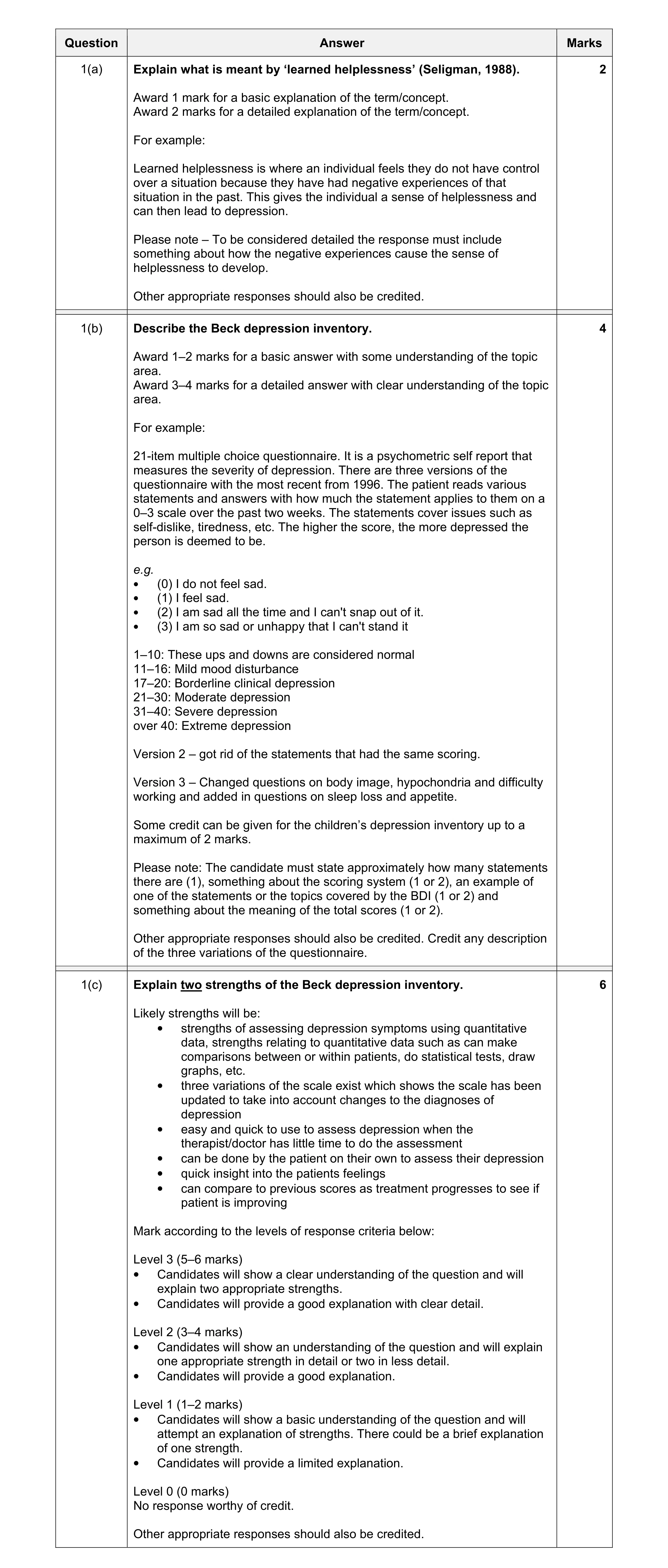 12
12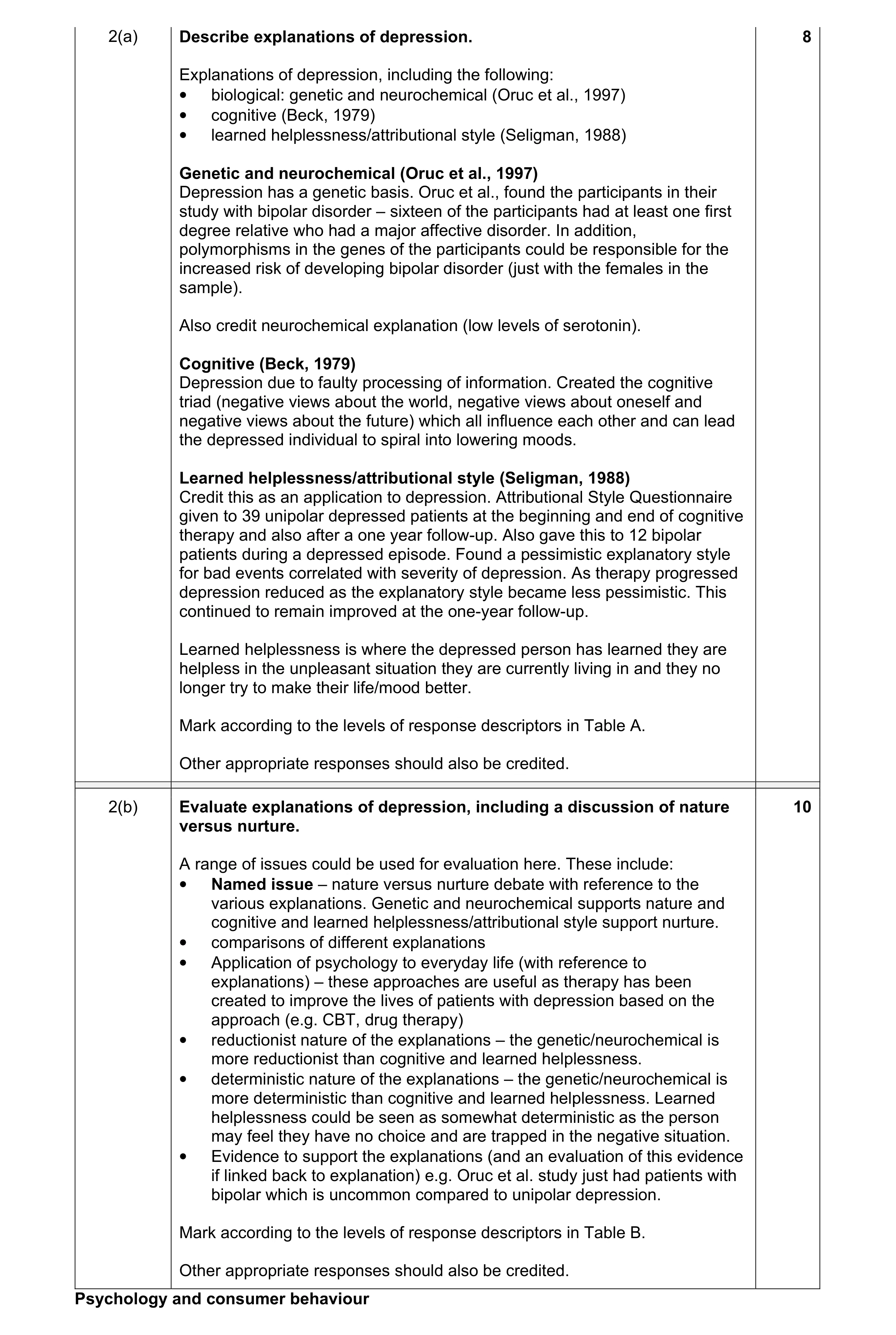 18
18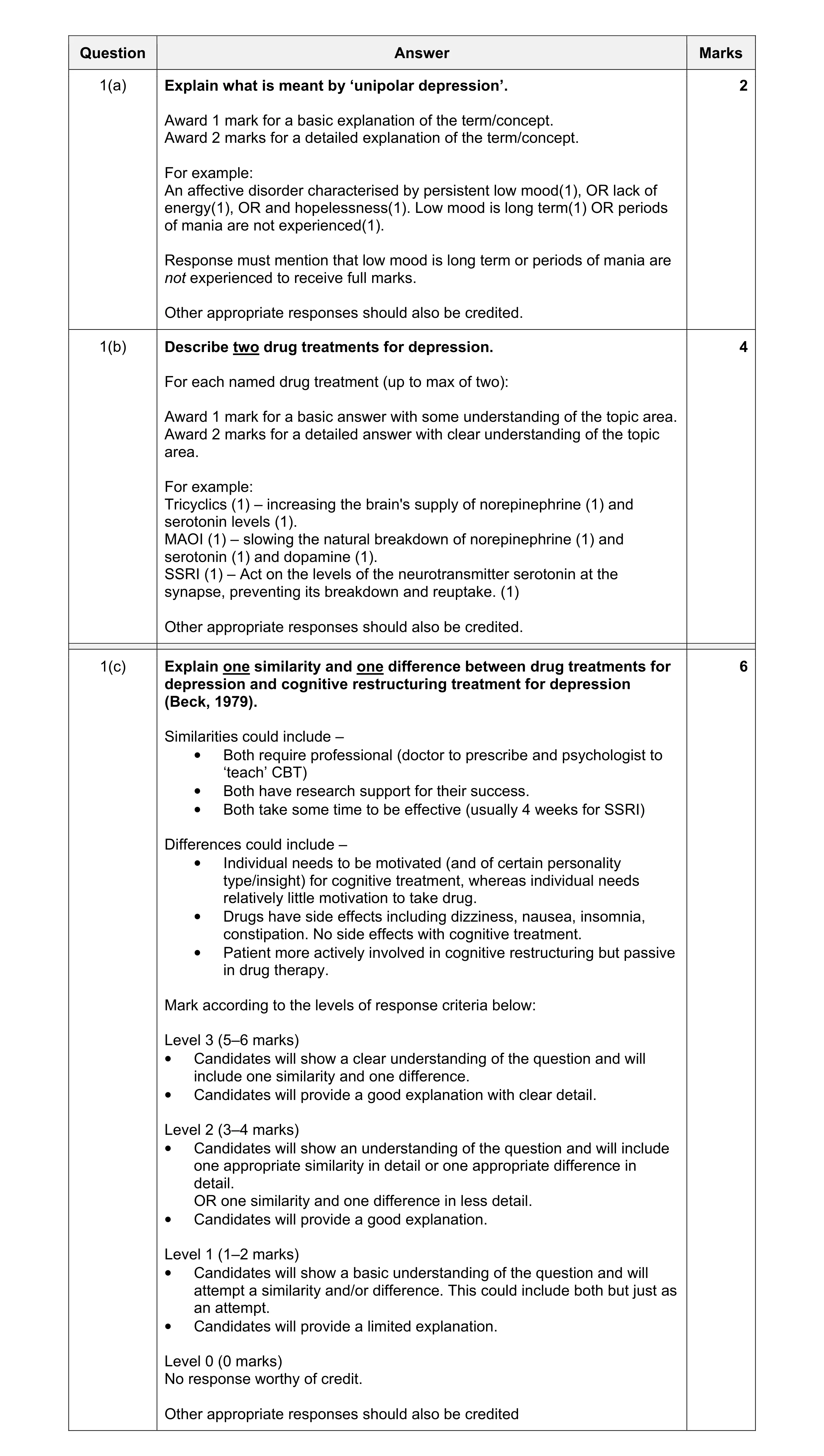 12
12 18
18 18
18 18
18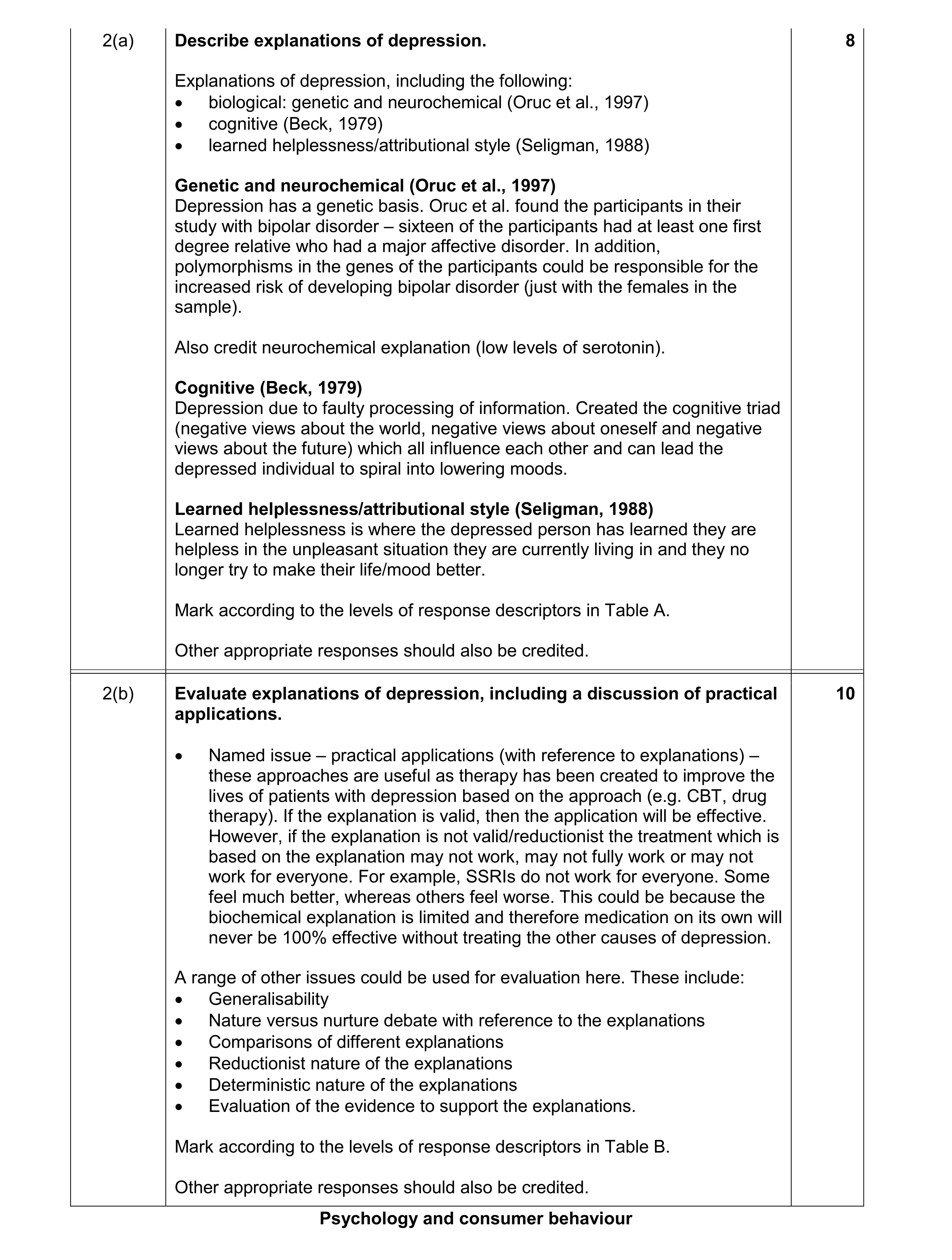 18
18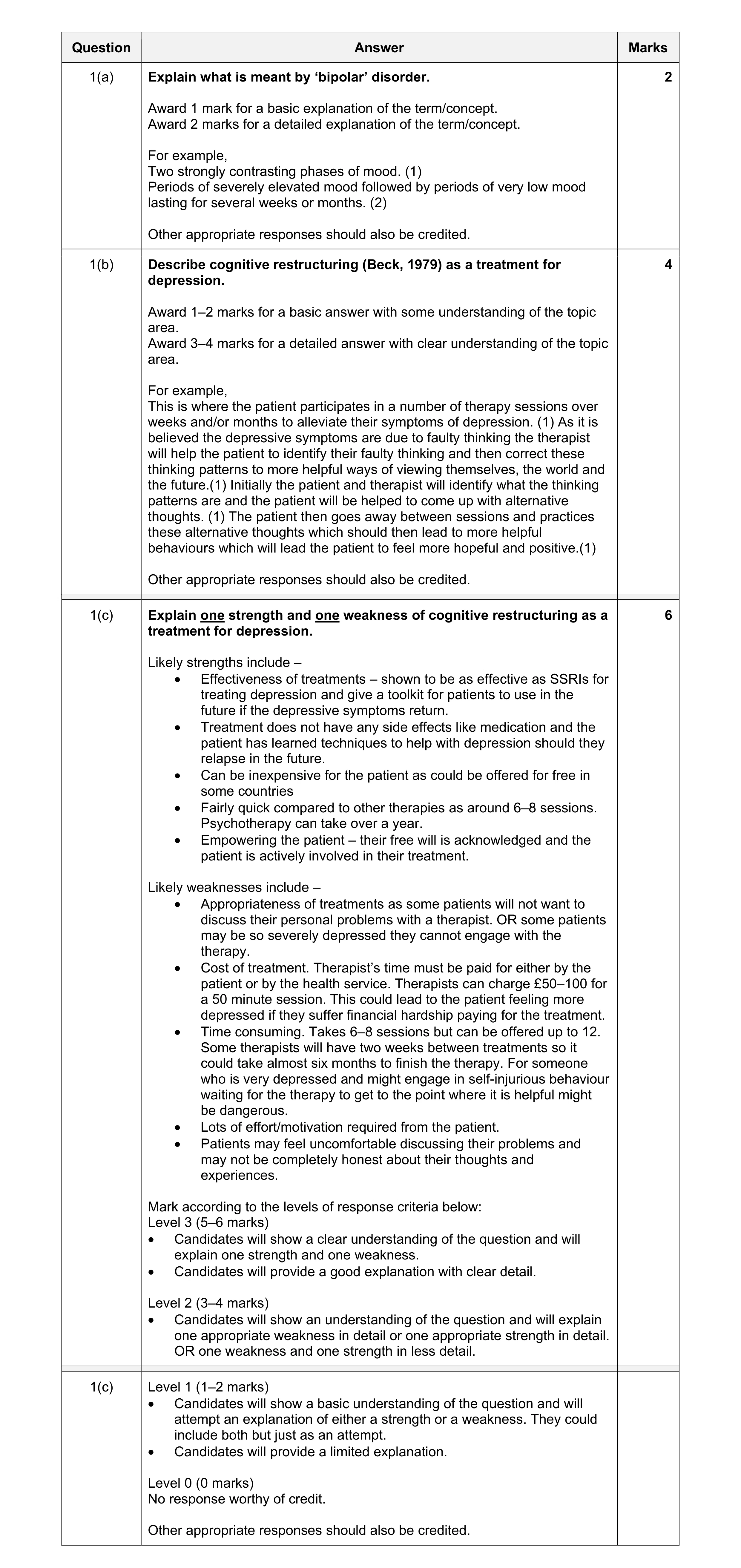 12
12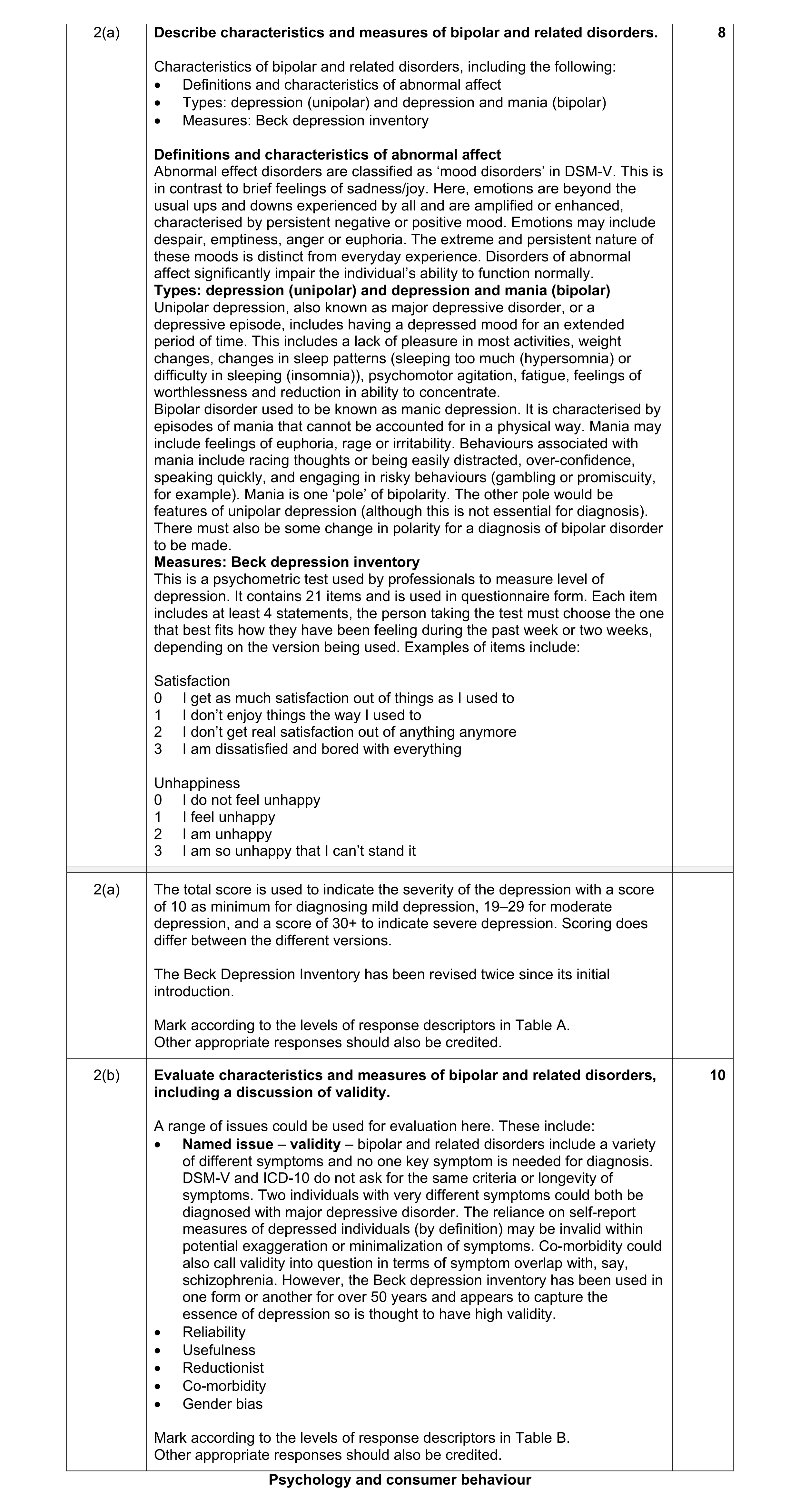 18
18 18
18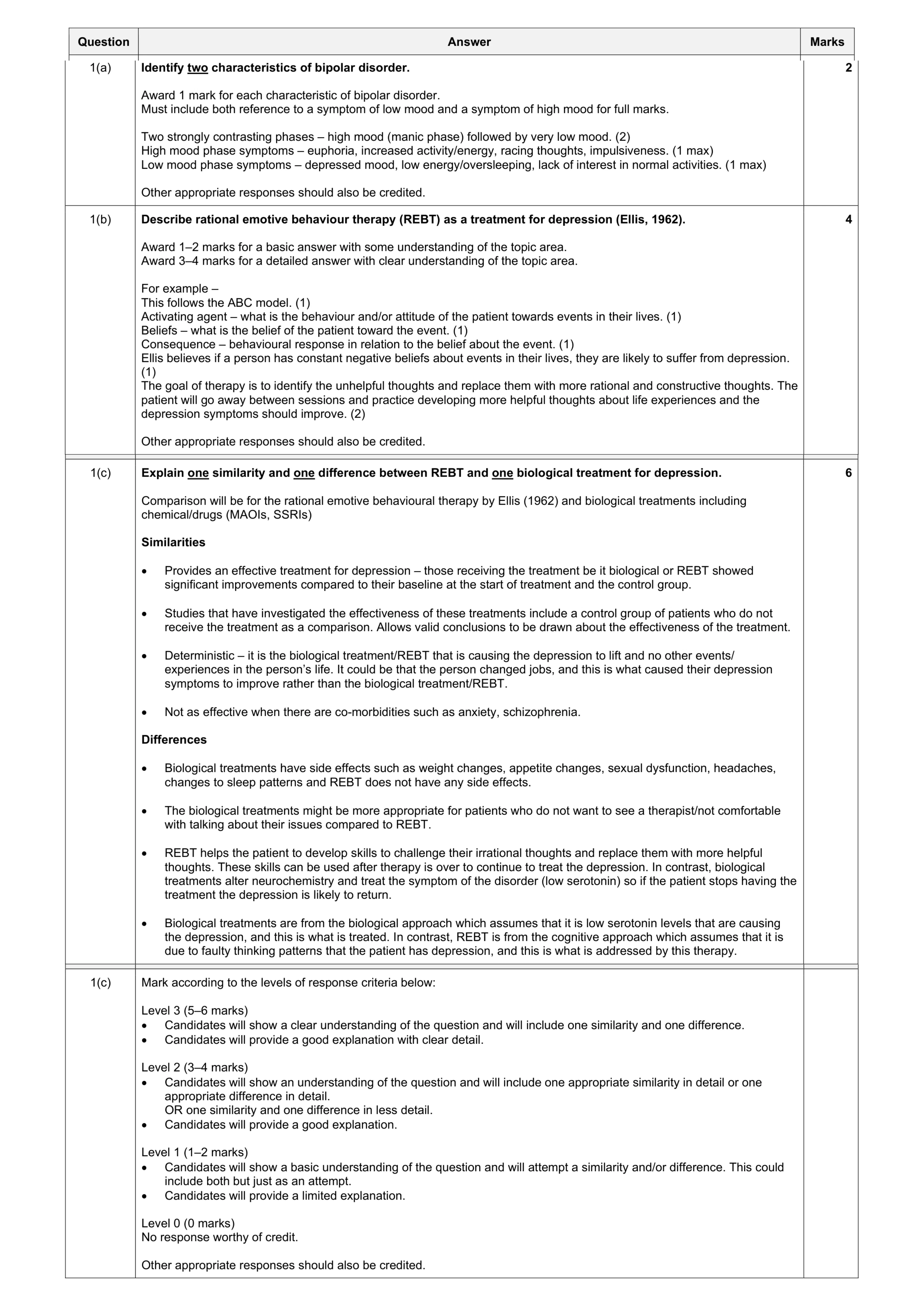 12
12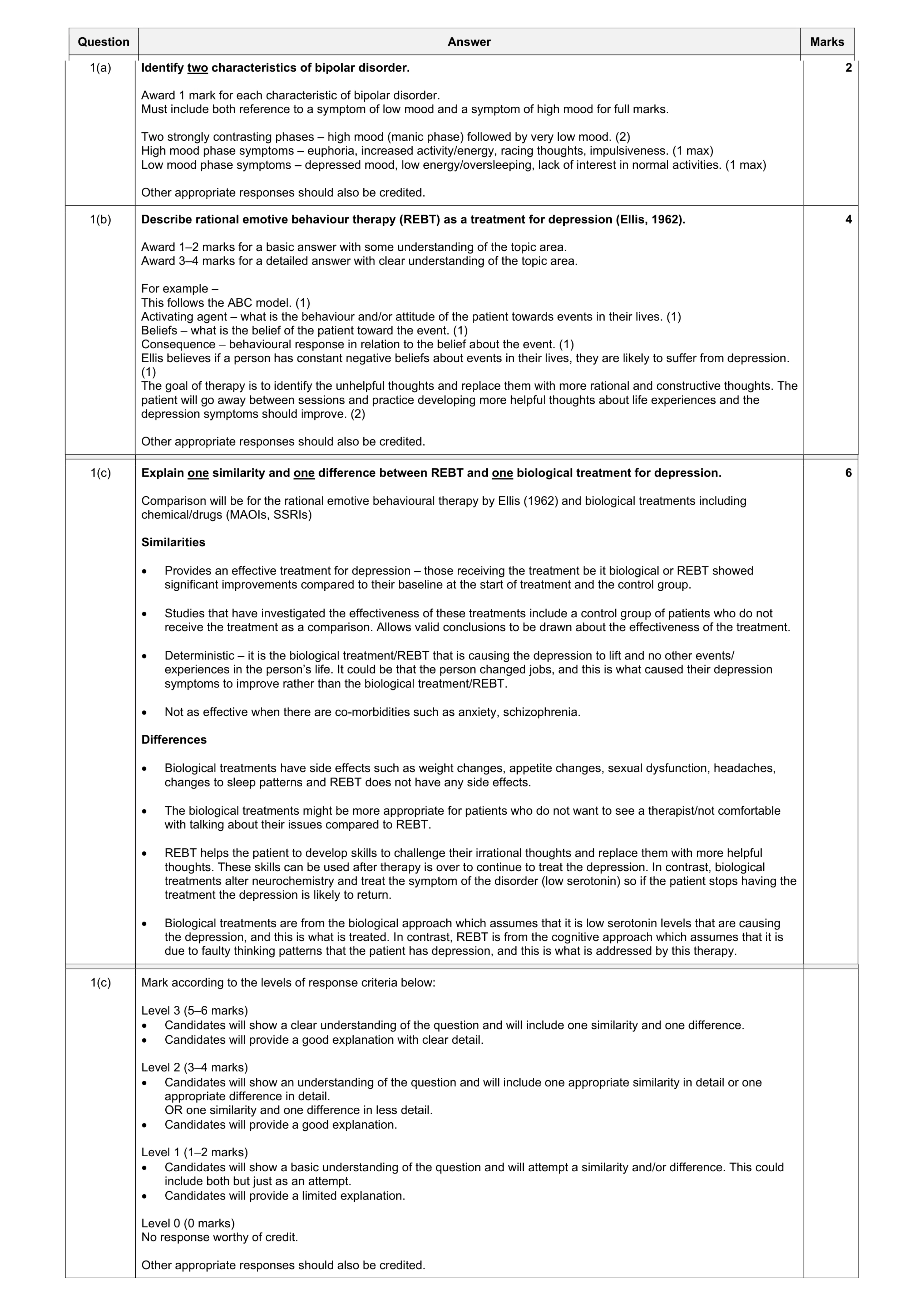 12
12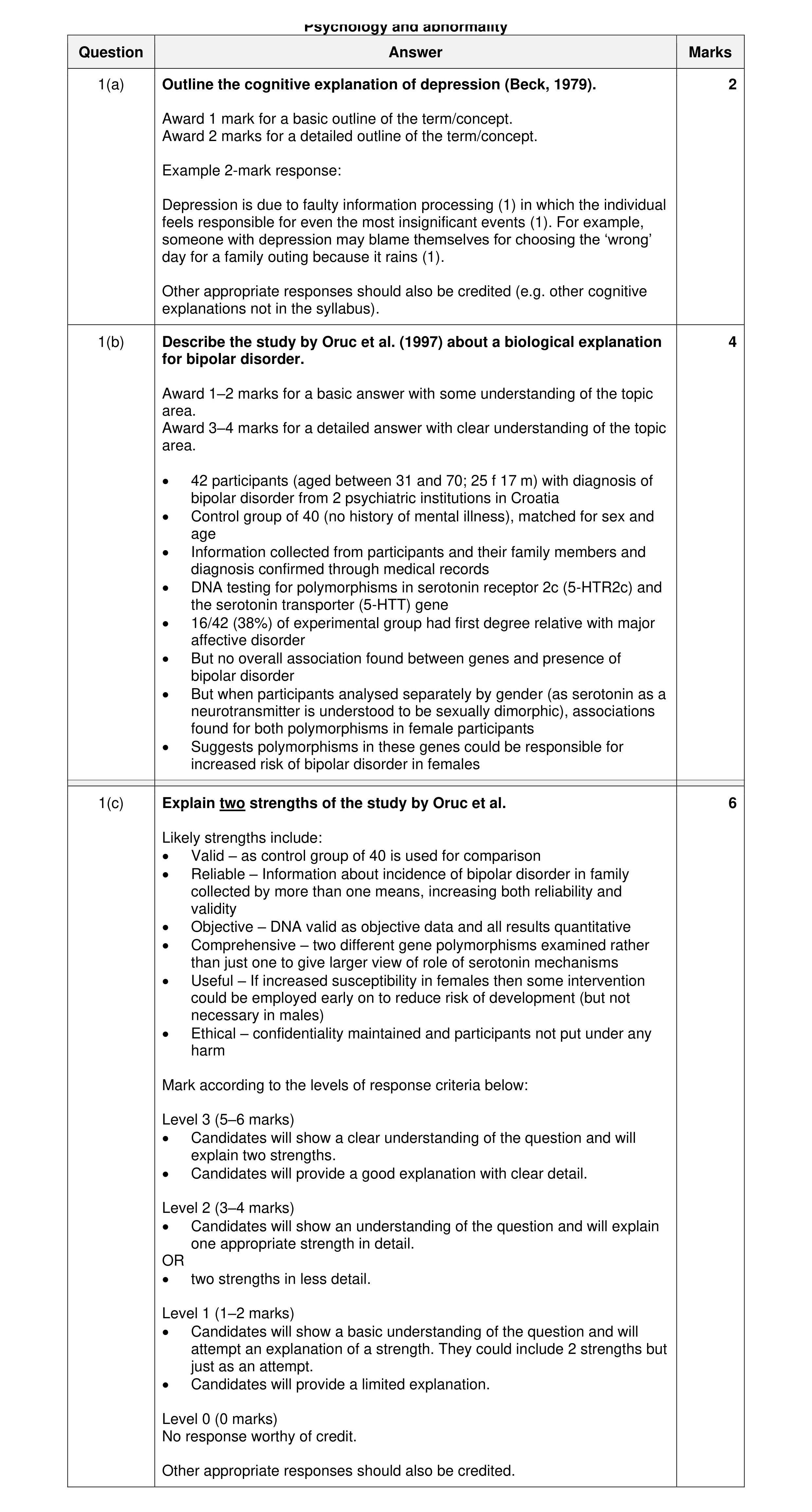 12
12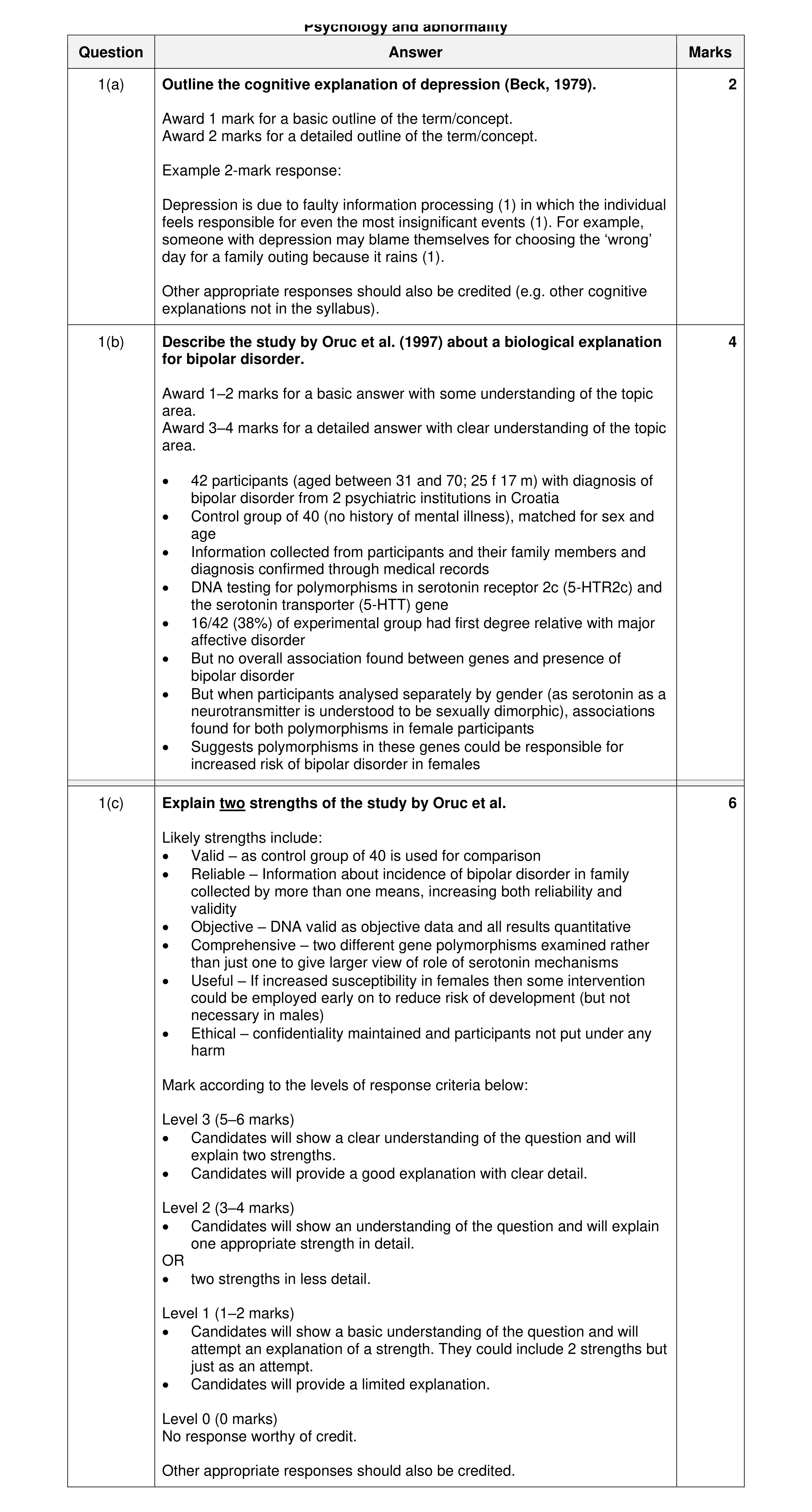 12
12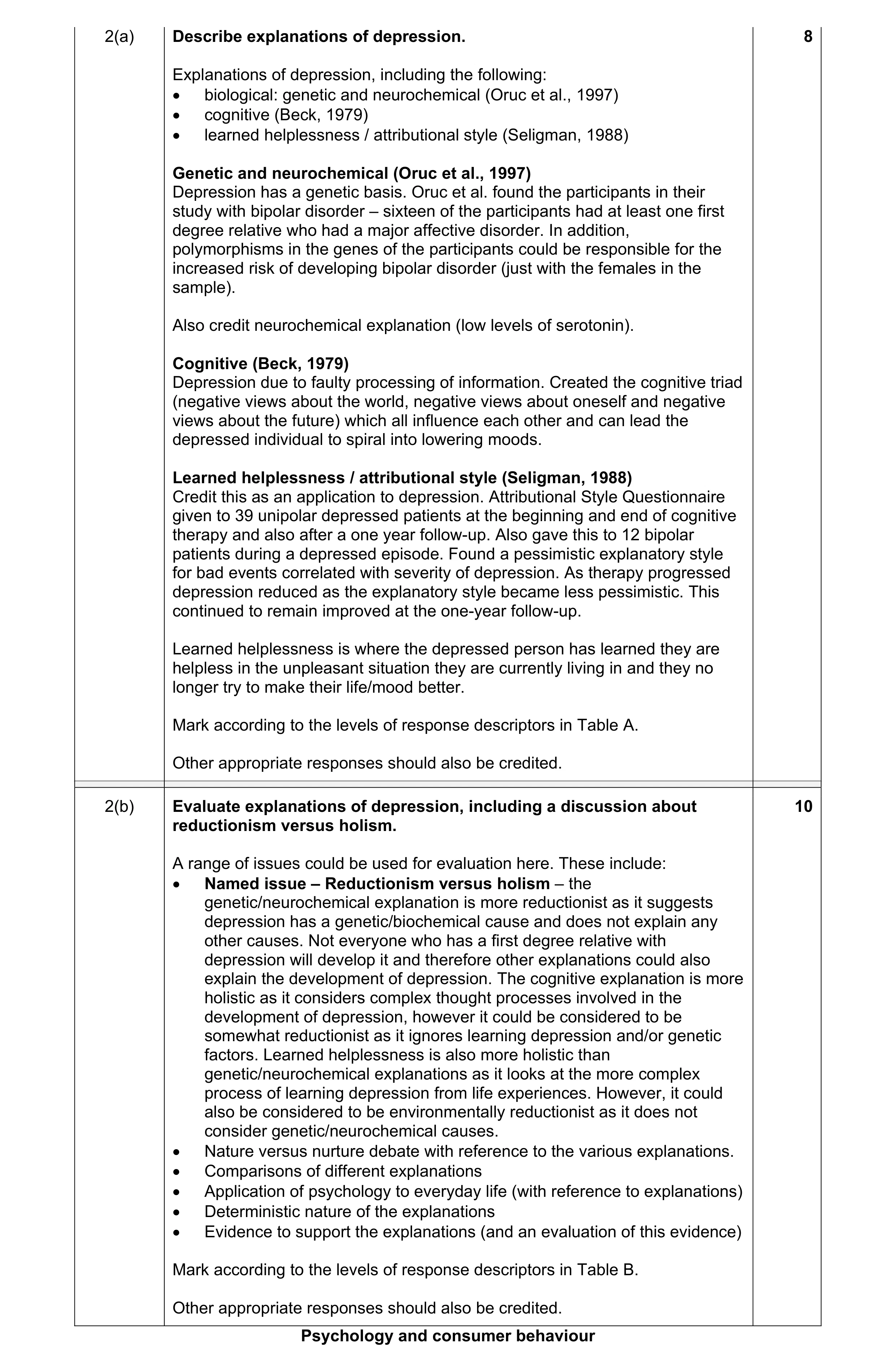 18
18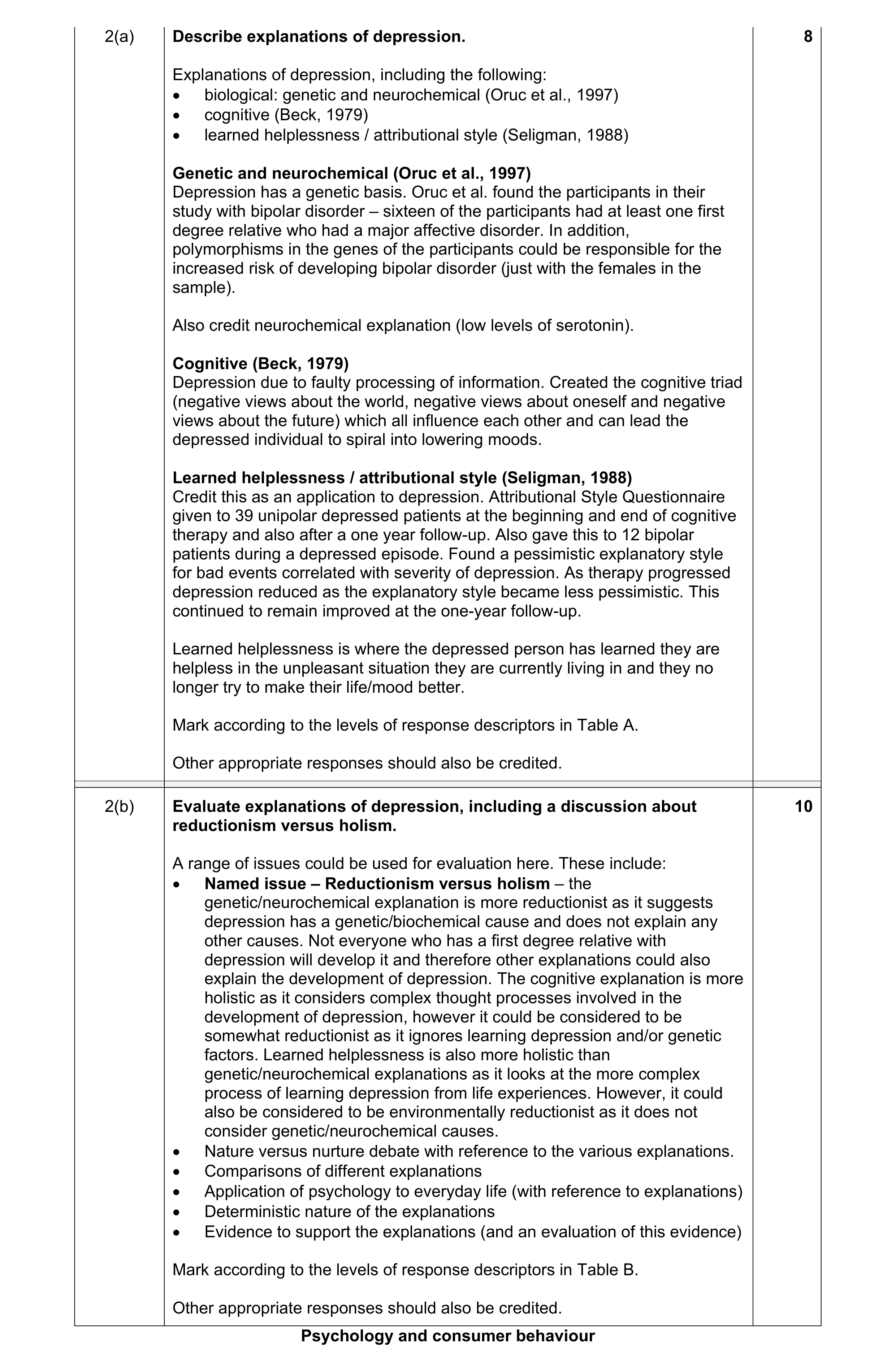 18
18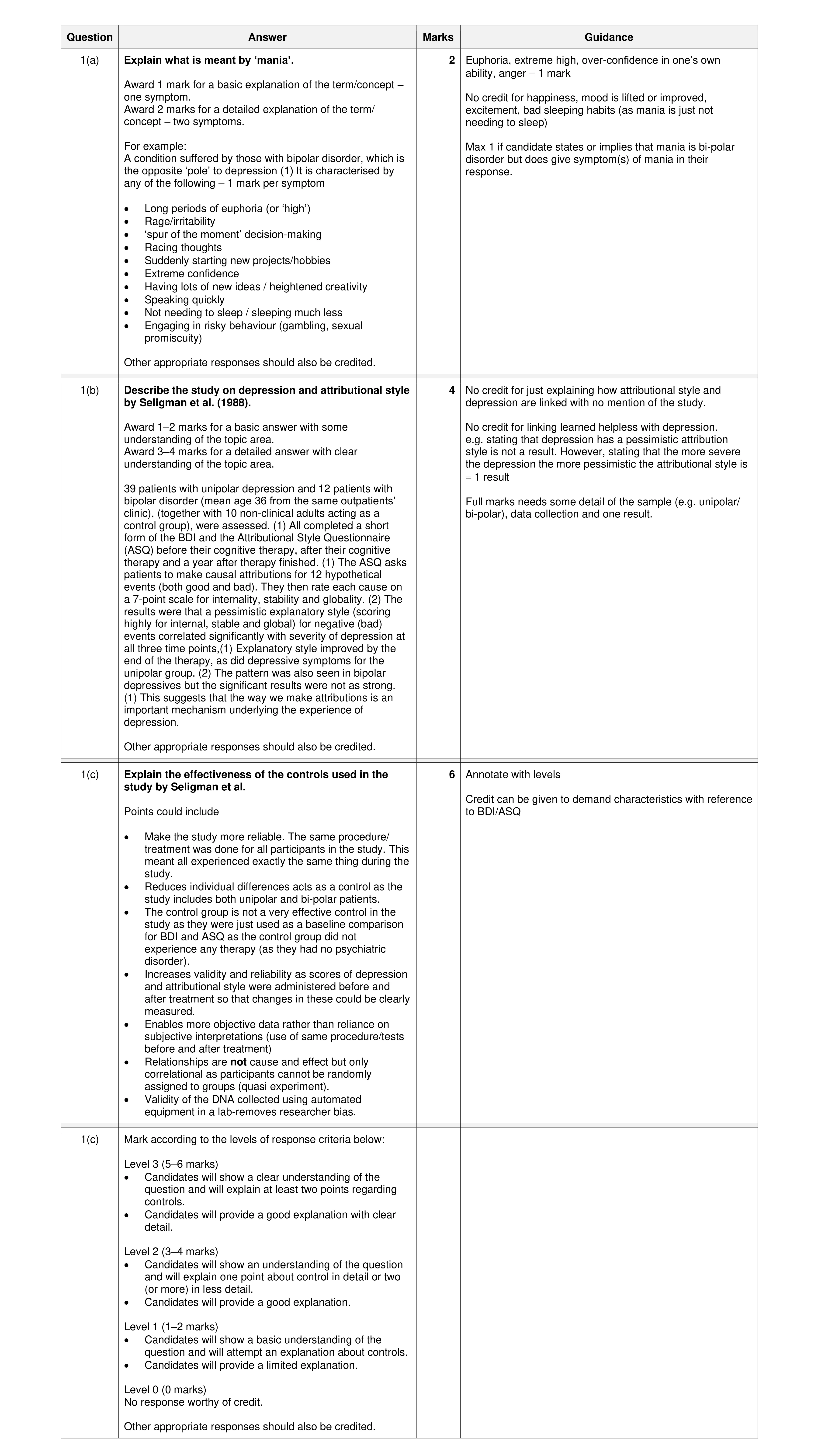 12
12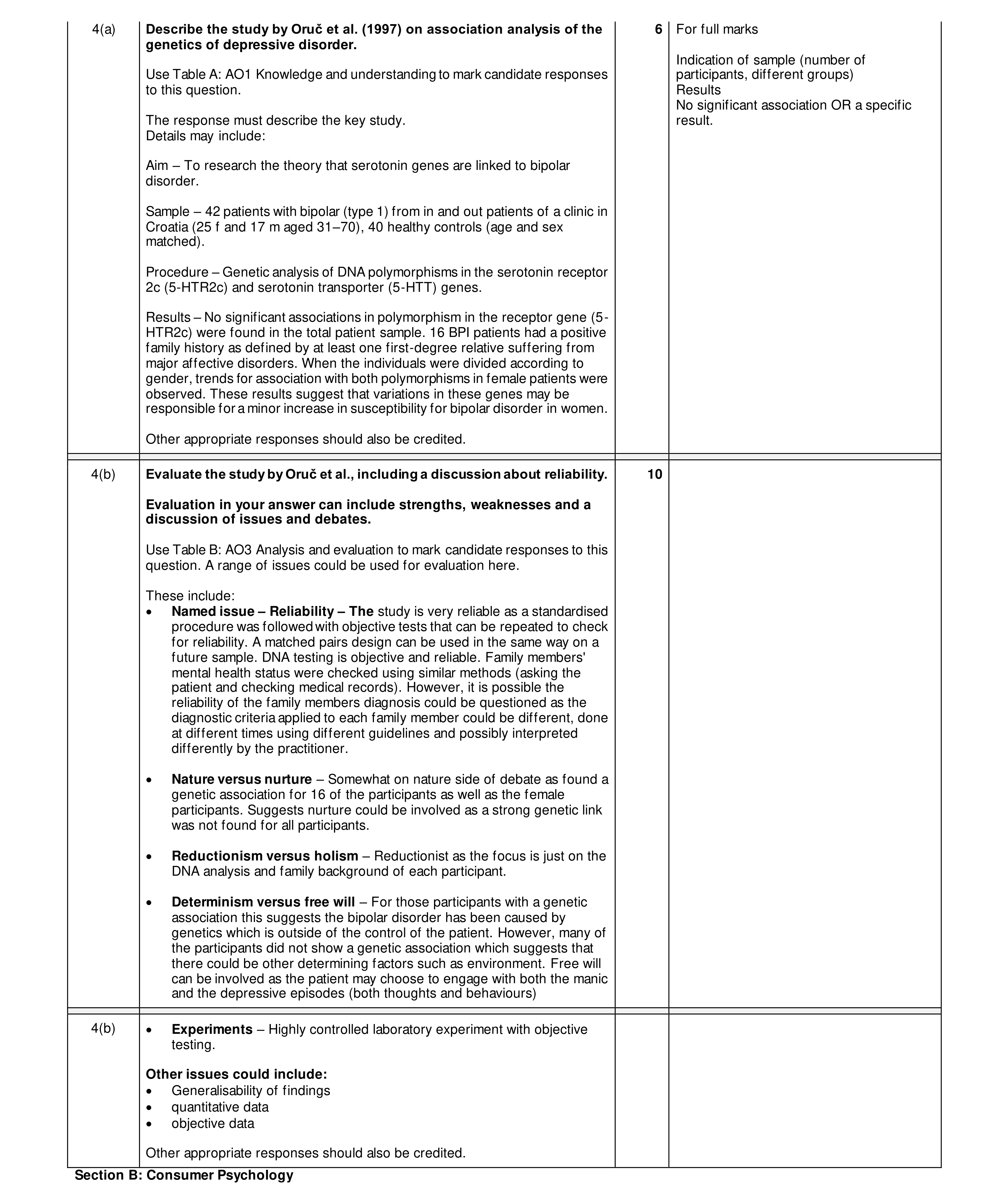 16
16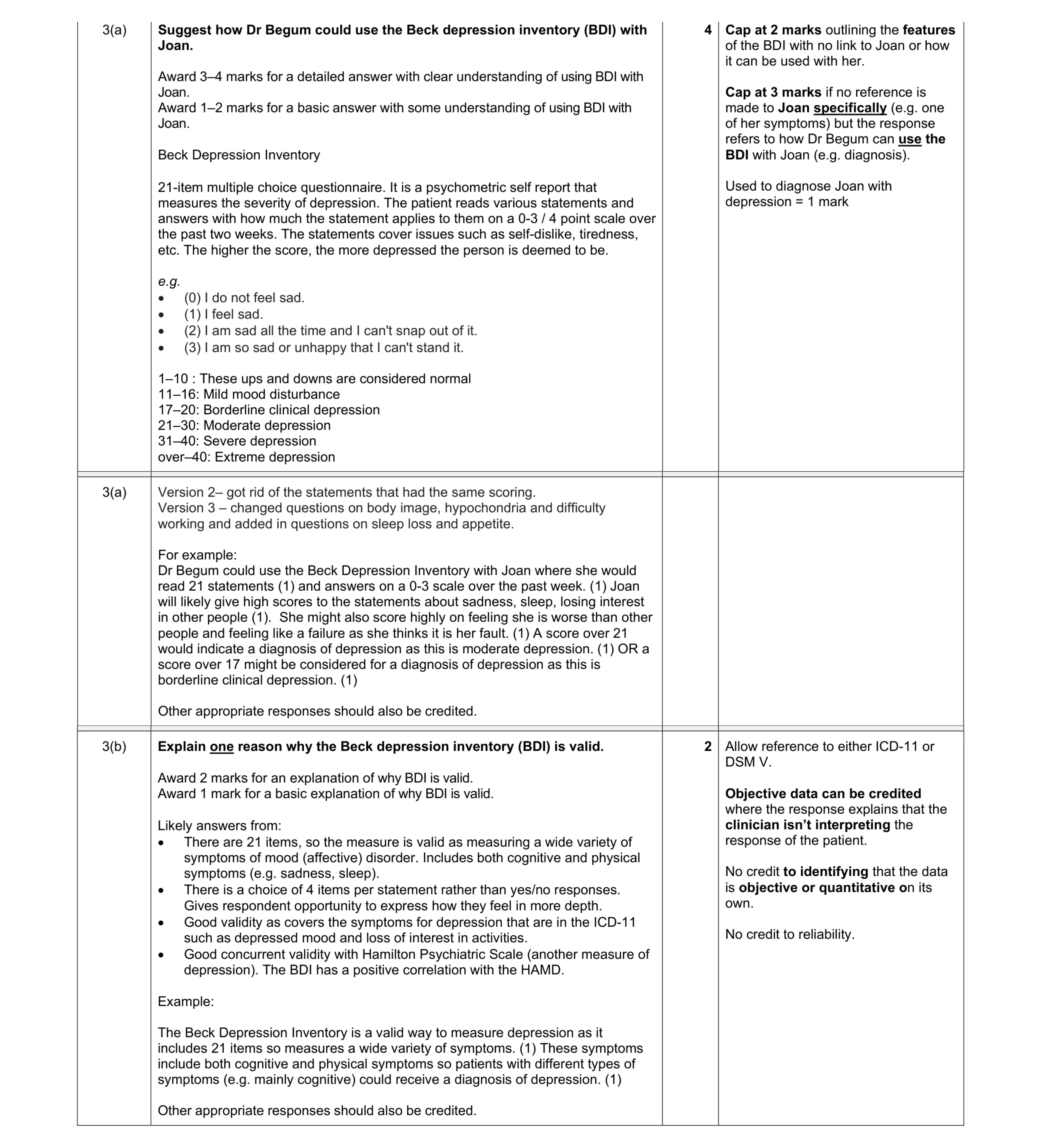 6
6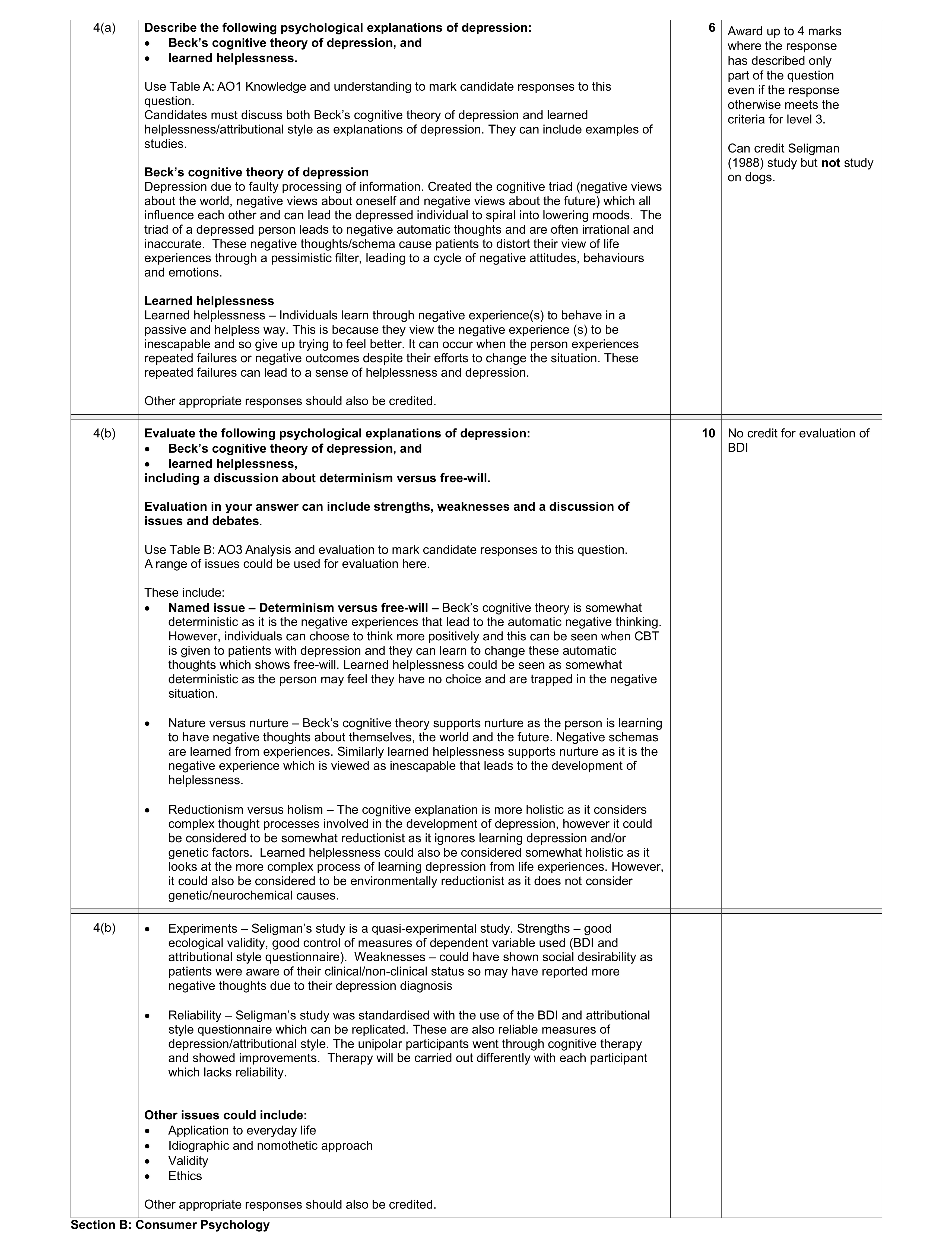 16
16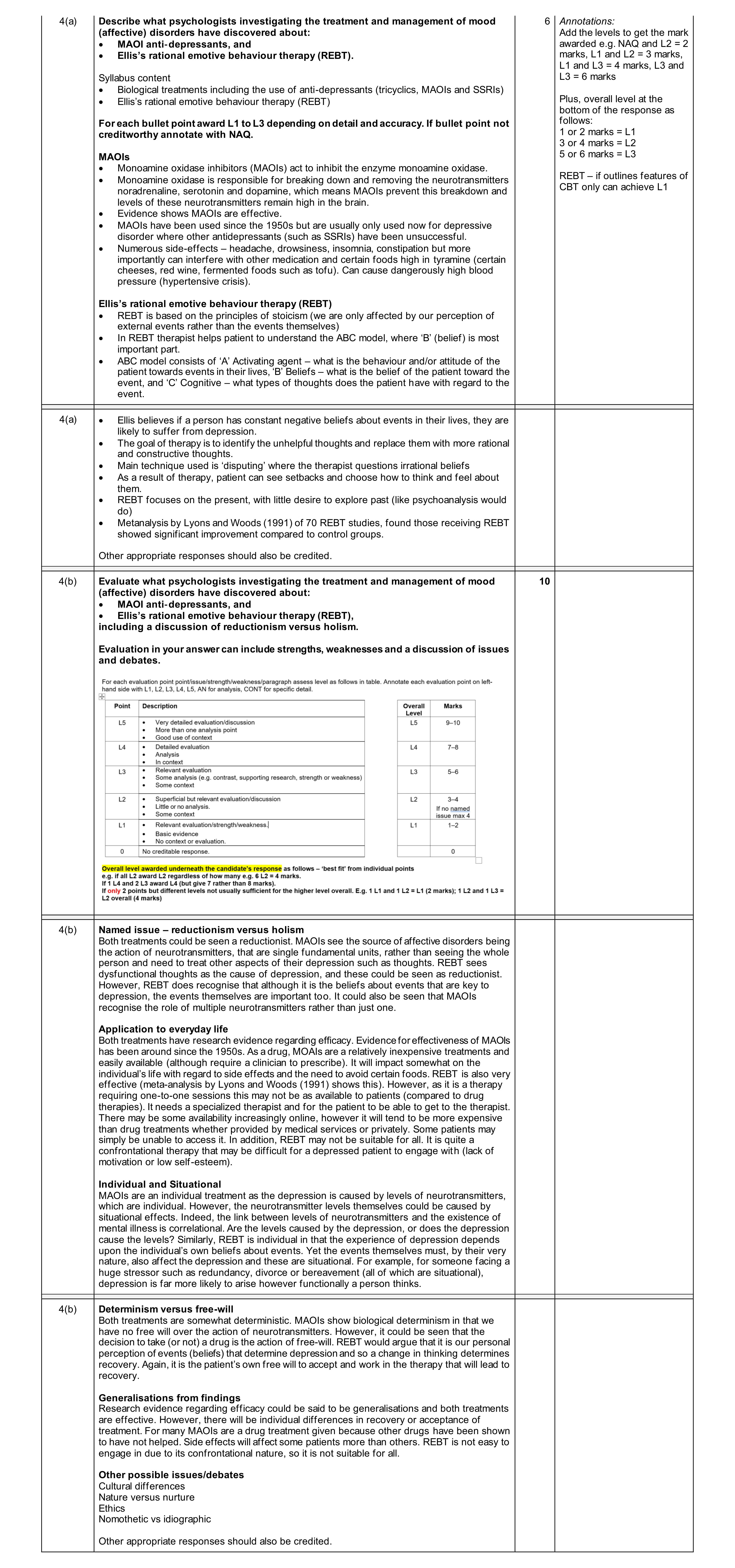 16
16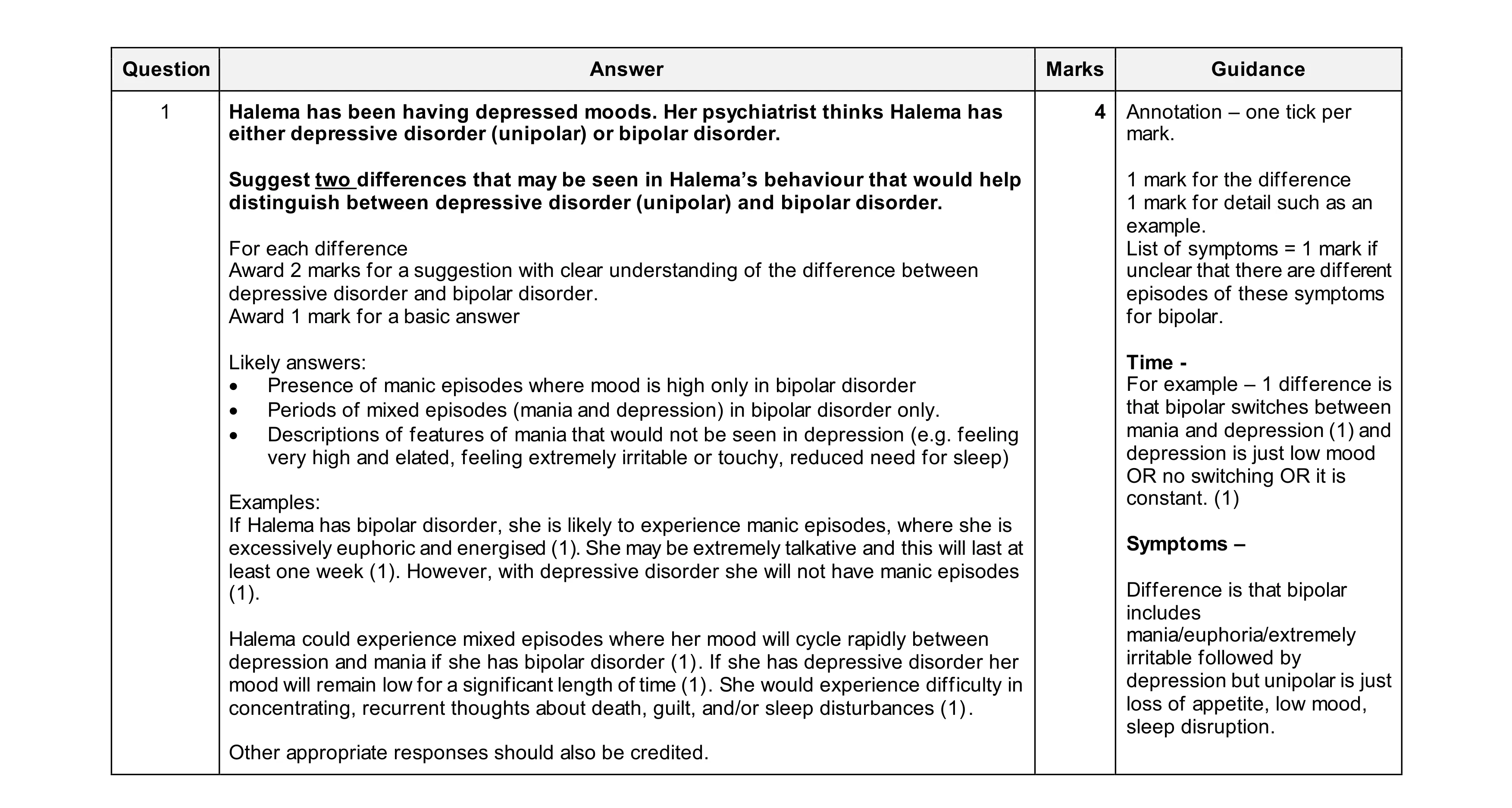 4
4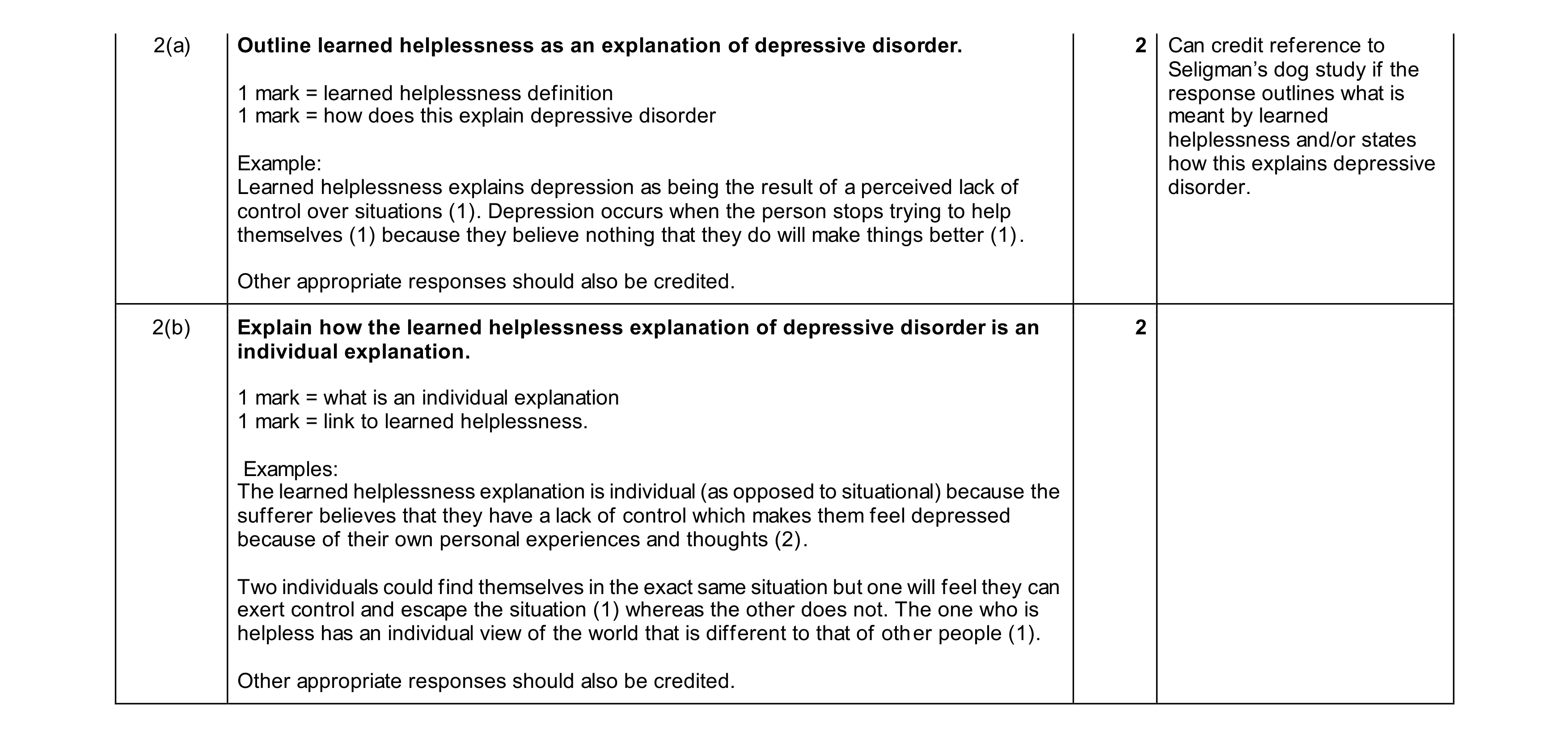 4
4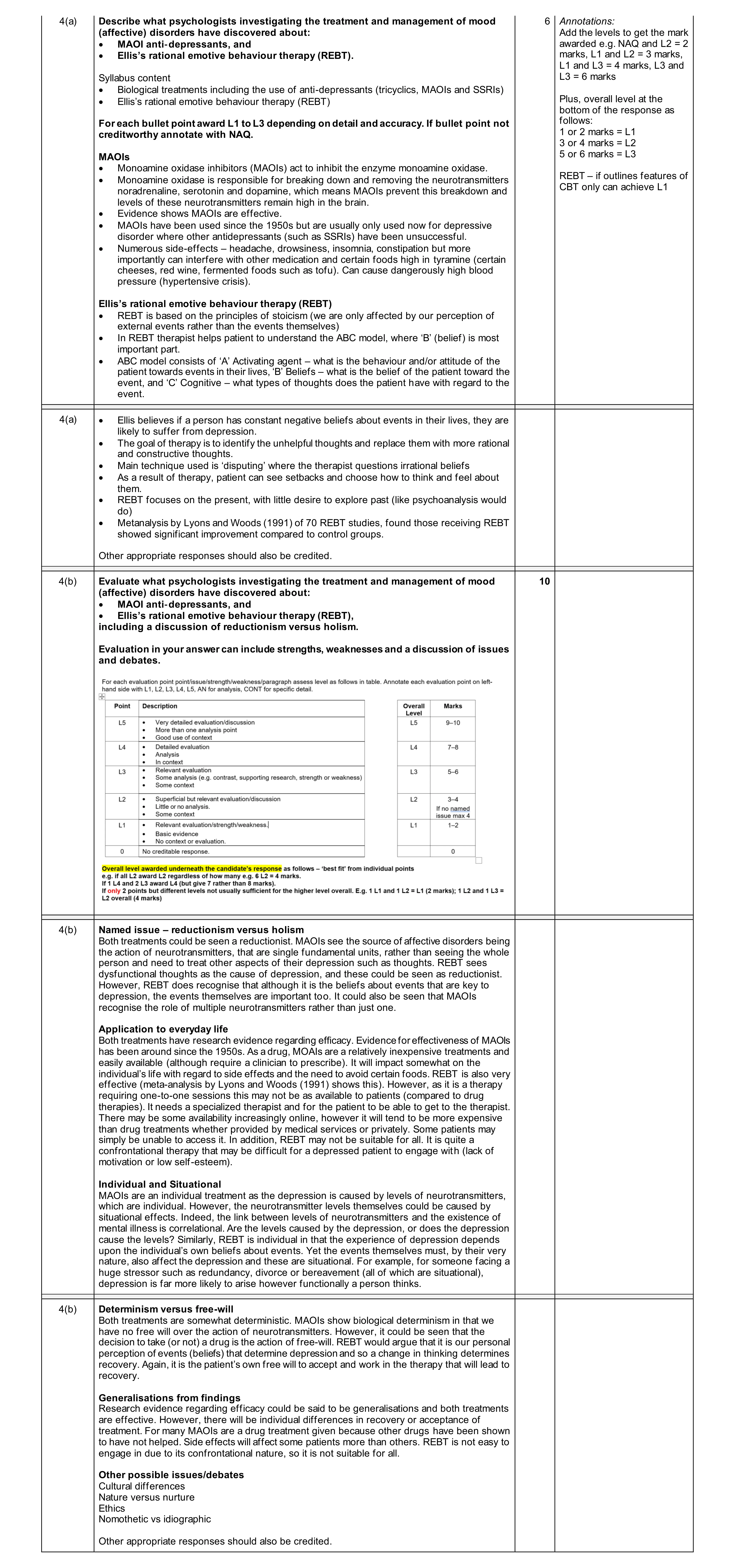 16
16