Questions as text
Q1 · ‘Electro-convulsive therapy (ECT) is not a cure for depression.’ To what extent do you… 9990/41 May/June 2018
9 ‘Electro-convulsive therapy (ECT) is not a cure for depression.’ To what extent do you agree with this statement? Use examples of research you have studied to support your answer. [12] Psychology and consumer behaviour
12 marks
Mark scheme: 9 ‘Electro-convulsive therapy (ECT) is not a cure for depression.’ 12 To what extent do you agree with this statement? Use examples of research you have studied to support your answer. Marks: use generic levels of response in table C. Syllabus: treatment and management of depression: electro-convulsive therapy. Most likely (any other appropriate responses should be credited): For: • ECT has a higher success rate for severe depression than any other form of treatment. • people who cannot take antidepressants due to problems of health or lack of response and pregnant women who suffer from depression or mania. • A patient who is very intent on suicide, and who would not wait three weeks for an antidepressant to work, would be a good candidate for ECT because it works more rapidly. Suicide attempts are relatively rare after ECT. Against: • 20 to 50% of the people who respond well to a course of ECT relapse within 6 months, a maintenance treatment of antidepressants, lithium or ECT at monthly or six week intervals is given. • The scientific evidence regarding the efficacy of the treatment has been firmly established in the professional literature. • Short-term memory loss is often reported. Many patients perceive the treatment as terrifying and shameful.
This question in 9990/41 May/June 2018
Q2 · ‘Electro-convulsive therapy (ECT) is not a cure for depression.’ To what extent do you… 9990/43 May/June 2018
9 ‘Electro-convulsive therapy (ECT) is not a cure for depression.’ To what extent do you agree with this statement? Use examples of research you have studied to support your answer. [12] Psychology and consumer behaviour
12 marks
Mark scheme: 9 ‘Electro-convulsive therapy (ECT) is not a cure for depression.’ 12 To what extent do you agree with this statement? Use examples of research you have studied to support your answer. Marks: use generic levels of response in table C. Syllabus: treatment and management of depression: electro-convulsive therapy. Most likely (any other appropriate responses should be credited): For: • ECT has a higher success rate for severe depression than any other form of treatment. • people who cannot take antidepressants due to problems of health or lack of response and pregnant women who suffer from depression or mania. • A patient who is very intent on suicide, and who would not wait three weeks for an antidepressant to work, would be a good candidate for ECT because it works more rapidly. Suicide attempts are relatively rare after ECT. Against: • 20 to 50% of the people who respond well to a course of ECT relapse within 6 months, a maintenance treatment of antidepressants, lithium or ECT at monthly or six week intervals is given. • The scientific evidence regarding the efficacy of the treatment has been firmly established in the professional literature. • Short-term memory loss is often reported. Many patients perceive the treatment as terrifying and shameful.
This question in 9990/43 May/June 2018
Q3 · ‘In the future it will be a fact that the cause of depression is biological.’ To what… 9990/42 Oct/Nov 2018
9 ‘In the future it will be a fact that the cause of depression is biological.’ To what extent do you agree with this statement? Use examples of research you have studied to support your answer. [12] Psychology and consumer behaviour
12 marks
Mark scheme: 9 ‘In the future it will be a fact that the cause of depression is biological.’ 12 To what extent do you agree with this statement? Use examples of research you have studied to support your answer. Marks: use generic levels of response in table C. Syllabus: Explanations of depression: biological: genetic and neurochemical (Oruc et al., 1997) Most likely (any other appropriate responses should be credited): For: • Research in genetics/DNA makes advances every day; only a matter of time before a gene for depression is discovered. • Research currently supports genetic links: Oruc et al. (1998) 50% of first-degree relatives of people with depression are significantly more likely to be depressed. • Research may identify specific chemicals/hormones triggering depression. Against: • There is still insufficient evidence and that evidence is weak: Oruc has only 50% and if it were ‘truly genetic’ it would be 100%. • There may be an underlying genetic link, but this only becomes active with interactions with the environment. • Many studies show twins where one develops a disorder and the other does not because of environmental influences such as peers. • The response of the body may be biological, and this may be due to a chemical imbalance, but the cause of depression can also be an external event and that will never change.
This question in 9990/42 Oct/Nov 2018
Q4 · ‘Cognitive explanations of depression are too reductionist to be useful.’ To what extent… 9990/42 May/June 2019
9 ‘Cognitive explanations of depression are too reductionist to be useful.’ To what extent do you agree with this statement? Use examples of research you have studied to support your answer. [12] Psychology and consumer behaviour
12 marks
Mark scheme: 9 ‘Cognitive explanations of depression are too reductionist to be 12 useful.’ To what extent do you agree with this statement? Use examples of research you have studied to support your answer. Marks: use generic levels of response in table C. Syllabus: Explanations of depression; cognitive (Beck, 1979) Most likely (any other appropriate responses should be credited): For: • people are different and what applies to some people will not apply to many others. • there are alternative approaches (biological (chemical imbalance) and learned helplessness) • being reductionist may exclude the role of other contributory factors Against: • the cognitive explanation is useful because depression in many people is due to ‘cognitive’ factors which Beck identifies. • reducing to one explanation allows it to be studied more specifically to identify individual factors responsible. • useful because a treatment is based on this approach – cognitive restructuring.
This question in 9990/42 May/June 2019
Q5 · The Beck depression inventory (BDI) includes 21 items, all of which are assessed on a… 9990/42 Feb/March 2020
1 The Beck depression inventory (BDI) includes 21 items, all of which are assessed on a four-point scale. One of the items is ‘irritation’, as shown below. 0 I am no more irritated by things than I ever was. 1 I am slightly more irritated now than usual. 2 I am quite annoyed or irritated a good deal of the time. 3 I feel irritated all the time. (a) State two items from the BDI, other than ‘irritation’. [2] (b) Explain the theory on which the BDI is based. [4] (c) (i) Suggest how the reliability of the BDI could be assessed. [2] (ii) Suggest how the validity of the BDI could be assessed. [2] (d) Discuss the strengths and weaknesses of using self-report questionnaires to measure depression. You should include a conclusion in your answer. [5] Psychology and consumer behaviour
15 marks
Mark scheme: Question Answer Marks Section A: Stimulus question Psychology and abnormality 1 The Beck depression inventory (BDI) includes 21 items, all of which are assessed on a four-point scale. One of the items is ‘irritation’, as shown below. 0 I am no more irritated by things than I ever was. 1 I am slightly more irritated now than usual. 2 I am quite annoyed or irritated a good deal of the time. 3 I feel irritated all the time. 1(a) State two items from the BDI, other than ‘irritation’. 2 Most likely answer (other appropriate responses to be credited): Q1 sad, Q2 future discouraged, Q3 feel like failure, Q4 no satisfaction/enjoyment, Q5 guilt, Q6 punished, Q7 disappointed, Q8 feeling worse/blame self, Q9 thoughts of killing self, Q10 crying, Q12 lost interest, Q13 decision-making, Q14 look worse/unattractive, Q15 working well/push hard, Q16 sleep, Q17 tiredness (fatigue), Q18 appetite, Q19 lost weight, Q20 health, Q21 lost interest in sex. Marks: 1 mark for correct identification of item. X2 1(b) Explain the theory on which the BDI is based. 4 Most likely answer (other appropriate responses to be credited): Beck (1979) believes that people react differently to aversive stimuli because of the thought patterns that they have built up throughout their lives. Schemas (core beliefs) are formed in early life, and include self-blame schema and ineptness schema. A person has negative automatic thoughts (NATs). The negative cognitive triad, comprises unrealistically negative views about the self, the world and the future. Marks: 1 mark basic answer (basic e.g. faulty cognition or cognitive triad.) 2–4 marks detailed answer/elaboration (e.g. what cognitive triad involves). 0 marks for learned helplessness or attribution theory. 0 marks for description of BDI. 1(c)(i) Suggest how the reliability of the BDI could be assessed. 2 Most likely answer (other appropriate responses to be credited): • Reliability: test-retest (way of judging reliability by administering the same test to the same person on two different occasions and comparing the result). • Reliability: split half (splitting a test in two halves and administering each half to the same person. The two scores should match). Marks: 1 mark basic answer (e.g. identification of term) 2 marks detailed answer/elaboration (term does not need to be identified). 0 marks for inter-rater reliability; 0 marks for ‘comparing with other studies’; 0 marks for definition. 1(c)(ii) Suggest how the validity of the BDI could be assessed. 2 Most likely answer (other appropriate responses to be credited): • Validity: concurrent validity – compared with an alternative measure • Face validity – it looks like it measures depression. • Other types of validity, but not ecological validity. Marks: 1 mark basic answer (e.g. identification of term), 2 marks detailed answer/elaboration. 1(d) Discuss the strengths and weaknesses of using self-report 5 questionnaires to measure depression. You should include a conclusion in your answer. Most likely answer (other appropriate responses to be credited): Strengths • Asking people directly means that participants are given the opportunity to express their feelings and explain their behaviour rather than the researcher trying to work out reasons for their behaviour from other methods • Relatively large numbers of participants can be done relatively easily. Questionnaires are easy to replicate. • Data can be qualitative, but may also be quantitative depending on type of question • Quantitative data (as used in this inventory) can be scored and compared to all other people completing the questionnaire. Weaknesses: • Some participants may provide socially desirable responses; not give truthful answers; respond to demand characteristics. • Closed/fixed choice questions may force people into choosing answers that do not reflect their true opinion and therefore may lower the validity. • Researchers have to be careful about use of leading questions; it could affect the validity of the data collected. Conclusion: any appropriate conclusion drawn from the discussion that has been presented. 1 mark if appropriate. A conclusion is a ‘decision reached by reasoning’ and so a summary of points already made scores 0 marks. Marks: Question requires discussion; always plural of each argument, and always requires conclusion. 1 mark for each advantage/disadvantage (however detailed) and related to the question up to 4 max. 2 marks max for two strengths/weaknesses unrelated to the question. 1 mark for conclusion.
This question in 9990/42 Feb/March 2020
Q6 · Design a longitudinal study to investigate whether electro-convulsive therapy (ECT) as a… 9990/42 Feb/March 2020
5 (a) Design a longitudinal study to investigate whether electro-convulsive therapy (ECT) as a treatment for depression has side effects. [10] (b) Explain the psychological and methodological evidence on which your study is based. [8] Psychology and consumer behaviour
18 marks
Mark scheme: 5(a) Design a longitudinal study to investigate whether electro-convulsive 10 therapy (ECT) as a treatment for depression has side effects. Marks: use generic levels of response Design a study question part (a). Additional: Candidates should design the study showing evidence of design features appropriate to the named method. The named method is: any appropriate method, but must be longitudinal. Typical features: • Experiments: type, IV, DV, controls, experimental design. • Observations: type, setting, response categories, sampling frame, number of observers. • Questionnaires/Interviews: type, setting, example questions. Scoring/rating scale, analysis of responses. Typical features of research methodology: sampling technique and sample, type of data, ethics, reliability, validity, data analysis. N.B.: max 1–3 marks if the design is not longitudinal [generic: The design may not be appropriate to the named investigation] 5(b) Explain the psychological and methodological evidence on which your 8 study is based. Marks: use generic levels of response ‘Design a study’ question part (b). N.B. If only methodological or psychological explanation is provided max 5 marks Candidates are expected to explain the reasons for the suggested design in part (a). Explanation should be both psychological and methodological. Psychological to include appropriate theory or research. Additional: candidates are expected to justify their decisions or evidence presented regarding the design made in answer to question part (a). Syllabus: Bipolar and related disorders: electro-convulsive therapy Psychological: ECT: possible side effects: 20% to 50% of the people who respond well to a course of ECT relapse within 6 months; Short-term memory loss is often reported. Many patients perceive the treatment as terrifying and shameful. Immediately after treatment the patient is often confused (and the confusion may not be temporary). N.B. 2 marks max if psychological knowledge is not related to answer. Methodological: explanation of method using general and specific features as above.
This question in 9990/42 Feb/March 2020
Q7 · Design a study to test age differences in the effectiveness of rational emotive behaviour… 9990/42 Feb/March 2021
5 (a) Design a study to test age differences in the effectiveness of rational emotive behaviour therapy for depression. [10] (b) Explain the psychological and methodological evidence on which your study is based. [8] Psychology and consumer behaviour
18 marks
Mark scheme: 5(a) Design a study to test age differences in the effectiveness of rational 10 emotive behaviour therapy for depression. Marks: use generic levels of response Design a study question part (a). Additional: Candidates should design the study showing evidence of design features appropriate to the named method. The named method is: any appropriate method. Specific features: • Experiments: type, IV, DV, controls, experimental design. • Observations: type, setting, response categories, sampling frame, number of observers. • Questionnaires/Interviews: type, setting, example questions. Scoring/rating scale, analysis of responses. General features of research methodology: sampling technique & sample, type of data, ethics, reliability, validity, data analysis. 5(b) Explain the psychological and methodological evidence on which your 8 study is based. Marks: use generic levels of response ‘Design a study’ question part (b). Note: If only methodological or psychological explanation is provided max 5 marks Candidates are expected to explain the reasons for the suggested design in part (a). Explanation should be both psychological and methodological. Psychological to include appropriate theory or research. Additional: candidates are expected to justify their decisions or evidence presented regarding the design made in answer to question part (a). Syllabus: rational emotive behaviour therapy (Ellis, 1962) Psychological: Ellis focused on how illogical beliefs are maintained through: A: an activating event, B: the belief held about A C: the consequences – thoughts, feelings or behaviours – resulting from A. REBT involves: D: disputing the irrational beliefs E: the effects of successful disruption of the irrational beliefs. Methodological: explanation of method using general and specific features as above.
This question in 9990/42 Feb/March 2021
Q8 · The ABC model of psychological change: • Activating event • Beliefs about the event •… 9990/42 Oct/Nov 2021
1 The ABC model of psychological change: • Activating event • Beliefs about the event • Consequences: emotional and behavioural responses. Ellis (1962) used this model in rational emotive behaviour therapy (REBT). The aim of REBT is to treat depression by changing a client’s thinking. (a) Explain why a depressed client’s thinking needs to be changed in order to treat their depression. [2] (b) (i) Outline one irrational belief that clients might have before starting REBT. [2] (ii) Outline how irrational beliefs are changed by REBT. [2] (c) Suggest one psychological treatment for depression, other than REBT. [4] (d) Discuss the strengths and weaknesses of psychological treatments for depression. You should include a conclusion in your answer. [5] Psychology and consumer behaviour
15 marks
Mark scheme: Question Answer Marks Section A: Stimulus question Psychology and abnormality 1 The ABC model of psychological change: • Activating event • Beliefs about the event • Consequences: emotional and behavioural responses. Ellis (1962) used this model in rational emotive behaviour therapy (REBT). The aim of REBT is to treat depression by changing a client’s thinking. 1(a) Explain why a depressed client’s thinking needs to be changed in order 2 to treat their depression. Most likely answer (other appropriate responses to be credited): • Identifying irrational thoughts, feelings and beliefs caused by situations that lead to distress and changing these mistaken beliefs into helping people respond rationally to situations. Marks: 1 mark basic answer, 2 marks detail/elaboration. 1(b)(i) Outline one irrational belief that clients might have before starting 2 REBT. Most likely answers (other appropriate responses to be credited): • awfulising (If I don't succeed it will be awful) • I-can't-stand-it-itis/Low frustration tolerance (I can’t stand it if…) • self-downing (I am a failure) • musterbating (I must be thoroughly competent) Marks: 1 mark statement of belief (such as awfulizing), 1 mark for statement such as ‘I am a failure’ OR +1 mark for ‘person thinking they are worthless, useless’, etc Note: 1 mark max for appropriate anecdotal answers not listed above. 1(b)(ii) Outline how irrational beliefs are changed by REBT. 2 Most likely answer (other appropriate responses to be credited): • D: the dispute or challenge phase. in order to act and feel differently, we must dispute or challenge the irrational beliefs experienced. • E: the new, more effective emotions and behaviours that result from more reasonable thinking about the original event. • Acceptance: If emotionally healthy, a person accepts reality, whether that reality is pleasant or unpleasant. Three forms: unconditional self- acceptance; unconditional other acceptance and unconditional life acceptance. Note: Description of explanation scores no marks [ABC (A: an activating event, B: the belief held about A, C: the consequences – thoughts, feelings or behaviours – resulting from A] but ‘if these are targeted by’ 1 mark max. Marks: 1 mark for ‘D’, ‘E’, ‘A’, 2 marks detail/elaboration. Note: 1 mark max for appropriate answers summarising the process. 1(c) Suggest one psychological treatment for depression, other than REBT. 4 Most likely answer • Beck et al. (1979) cognitive restructuring is a stage process: Identify negative automatic thoughts, challenge the NATs and replace with positive thoughts. (i) explanation of therapy, (ii) identification of unpleasant emotions, (iii) the situations in which these occur and (iv) associated negative automatic thoughts. (v) challenge the negative thoughts and (vi) replace them with positive thoughts. (vii) challenge the underlying dysfunctional beliefs and (viii) therapy ends. Note: Description of explanation scores 0 marks [negative cognitive triad, comprising unrealistically negative views about the self, the world and the future] but ‘if these are targeted by’ 1 mark max. Note: 0 marks for any biochemical treatment. Note: CBT scores 0 mark max unless it is fully justified. Marks: 1 mark for basic outline, 2 marks detail/elaboration. 1(d) Discuss the strengths and weaknesses of psychological treatments for 5 depression. You should include a conclusion in your answer. Marks: Question requires discussion; always plural of each argument, and always requires conclusion. 1 mark for each advantage/disadvantage (however basic/detailed) which is related to the question (max 4 marks). 1 mark for conclusion. 2 marks max for two strengths and two weaknesses unrelated to the question. Conclusion: any appropriate conclusion drawn from the discussion that has been presented. 1 mark if appropriate. A conclusion is a ‘decision reached by reasoning’ and so a summary of points already made scores 0 marks. Note: 0 marks for any biochemical treatment. Most likely answer (other appropriate responses to be credited): Strengths: • Techniques can be applied by anyone, in any place at any time. • cognitive techniques focus on ‘reorganising thoughts’ rather than removing the cause • cognitive techniques are more likely to be generalised because all people can apply the same principles of removing irrational thoughts • No medication is taken; the patient cannot become addicted to medication. • The therapist will guide the patient through the treatment. Weaknesses: • Cognitive techniques take time and effort from the person (unlike swallowing a pill) • The techniques do not cure anything, merely make it easier to live with • Cognitive techniques ignore the role of biochemical (biological determinism) • A therapist is needed which is more costly than taking a drug.
This question in 9990/42 Oct/Nov 2021
Q9 · One drug treatment for depression is monoamine oxidase inhibitors (MAOIs) 9990/42 Feb/March 2022
1 One drug treatment for depression is monoamine oxidase inhibitors (MAOIs). The effectiveness of this treatment can be tested using randomised control trials. (a) Explain how MAOIs work when treating depression. [2] (b) (i) Suggest how randomised control trials can be used to study the effectiveness of MAOIs. [2] (ii) Give one strength of a randomised control trial. [2] (c) Suggest one treatment for depression, other than MAOIs. [4] (d) Discuss the strengths and weaknesses of using drugs to treat depression. You should include a conclusion in your answer. [5] Psychology and consumer behaviour
15 marks
Mark scheme: Question Answer Marks Section A: Stimulus question Psychology and abnormality 1 One drug treatment for depression is monoamine oxidase inhibitors (MAOIs). The effectiveness of this treatment can be tested using randomised control trials. 1(a) Explain how MAOIs work when treating depression. 2 Most likely answer (other appropriate responses to be credited): MAOIs inhibit the enzyme monoamine oxidase. This enzyme normally breaks down noradrenaline, serotonin and dopamine, but if these neurotransmitters are not broken down, they stay at normal high levels and so ‘reduce depression’. Marks: 1 mark for partial explanation; 2 marks for detailed explanation. 1(b)(i) Suggest how randomised control trials can be used to study the 2 effectiveness of MAOIs. Most likely answer (other appropriate responses to be credited): • Participants are randomly allocated to conditions of MAOI or control (equal chance of being in either condition) • For example a participant has a 50/50 chance of being in an experimental (MAOI) group or a control (non-receiving of MAOI) group. Marks: 1 mark for ‘random allocation’ +1 mark for detail or related to study. 1(b)(ii) Give one strength of a randomised control trial. 2 Most likely answer (other appropriate responses to be credited): Researchers do not allocate participants to conditions so there is no bias. Instead participants are allocated randomly by chance, so reducing extraneous variables. Marks: 1 mark basic answer 2 marks detail/elaboration/example. 1(c) Suggest one treatment for depression, other than MAOIs. 4 Most likely answer (other appropriate responses to be credited): • Electroconvulsive therapy. Muscle relaxant given; electricity applied bilaterally or unilaterally; patient convulses (twitches because of muscle relaxant); Patient is unconscious, then wakes and recovers. • Beck et al. (1979) cognitive restructuring is a stage process, (i) explanation of therapy (ii) identification of unpleasant emotions, (iii) the situations in which these occur and (iv) associated negative automatic thoughts. (v) challenge the negative thoughts and (vi) replace them with positive thoughts. (vii) challenge the underlying dysfunctional beliefs and (viii) therapy ends. • Rational emotive behaviour therapy. (REBT) Ellis focused on how illogical beliefs are maintained through: A: an activating event, B: the belief held about A, C: the consequences – thoughts, feelings or behaviours – resulting from A. RET therefore involves: D: disputing the irrational beliefs, E: the effects of successful disruption of the irrational beliefs. • SSRIs: (e.g. Prozac) act on the neurotransmitter serotonin to stop it being reabsorbed and broken down after it has crossed a synapse. Marks: 1 mark identification. 2–4 marks for detail and quality. 1(d) Discuss the strengths and weaknesses of using drugs to treat 5 depression. You should include a conclusion in your answer. Most likely answer (other appropriate responses to be credited): Strengths • drugs easy to take; swallowing a pill. • drugs mean the patient is passive in their treatment (an advantage for many people) • drugs (MAOIs) inhibit production of neurochemicals associated with depression Weaknesses: • drugs are addictive so should be short-term use only. • drugs may not be taken as prescribed (non-adherence) • drugs ignore the role of alternative cuases of depression (treat symptom, not cause). Conclusion: any appropriate conclusion drawn from the discussion that has been presented. 1 mark if appropriate. A conclusion is a ‘decision reached by reasoning’ and so a summary of points already made scores 0 marks. Marks: Question requires discussion; always plural of each argument, and always requires conclusion. 1 mark for each advantage/disadvantage (however detailed) and related to the question up to 4 max. 2 marks max for two strengths/weaknesses unrelated to the question. 1 mark for conclusion.
This question in 9990/42 Feb/March 2022
Q10 · Design a study to investigate the effectiveness of chemical/drug treatments (MAOIs… 9990/42 May/June 2022
5 (a) Design a study to investigate the effectiveness of chemical/drug treatments (MAOIs, SSRIs) for depression. [10] (b) Explain the psychological and methodological evidence on which your study is based. [8] Psychology and consumer behaviour
18 marks
Mark scheme: 5(a) Design a study to investigate the effectiveness of chemical/drug 10 treatments (MAOIs, SSRIs) for depression. Marks: use generic levels of response Design a study question part (a). Additional: Candidates should design the study showing evidence of design features appropriate to the named method. The named method is: any appropriate method. Specific features: Experiments: type, IV, DV, controls, experimental design. Observations: type, setting, response categories, sampling frame, number of observers. Questionnaires/Interviews: type, setting, example questions. Scoring/rating scale, analysis of responses. General features of research methodology: sampling technique and sample, type of data, ethics, reliability, validity, data analysis. 5(b) Explain the psychological and methodological evidence on which your 8 study is based. Marks: use generic levels of response ‘Design a study’ question part (b). Note: If only methodological or psychological explanation is provided max 5 marks Candidates are expected to explain the reasons for the suggested design in part (a). Explanation should be both psychological and methodological. Psychological to include appropriate theory or research. Additional: candidates are expected to justify their decisions or evidence presented regarding the design made in answer to question part (a). Syllabus: treatment and management of depression: biological: chemical/ drugs (MAOIs, SSRIs) Psychological: For example: MAOIs inhibit the enzyme monoamine oxidase. This enzyme normally breaks down noradrenaline, serotonin and dopamine, but these neurotransmitters are not broken down, they stay at normal high levels and so ‘reduce depression’. The Beck Depression Inventory (BDI) will also feature in this answer (as DV) Methodological: explanation of method using general and specific features as above.
This question in 9990/42 May/June 2022
Q11 · ‘The nature versus nurture debate is irrelevant when explaining depression.’ To what… 9990/42 May/June 2022
9 ‘The nature versus nurture debate is irrelevant when explaining depression.’ To what extent do you agree with this statement? Use examples of research you have studied to support your answer. [12] Psychology and consumer behaviour
12 marks
Mark scheme: 9 ‘The nature versus nurture debate is irrelevant when explaining 12 depression.’ To what extent do you agree with this statement? Use examples of research you have studied to support your answer. Marks: use generic levels of response in table C. Syllabus: Explanations of depression Most likely (any other appropriate responses should be credited): Relevant: nature versus nurture is reductionist and can therefore be studied much more precisely than say psychoanalytic explanations nature or nurture can allow research to focus on the cause of the depression reasearch done on ‘nurture’ such as ‘learned helplessness’ other done on biological. Irrelevant: People will suffer from depression whether it is nature or nurture People’s symptoms will be treated whether the cause is nature of nurture The nature versus nurture debate is theoretical. It has no practical value Nature versus nurture determines the type of treatment (drugs versus restructuring or REBT) It might be that for some people the cause is ‘nature’ for others it is ‘nurture’.
This question in 9990/42 May/June 2022
Q12 · Depression can be treated with medical treatments and it can be managed with… 9990/42 Feb/March 2023
1 Depression can be treated with medical treatments and it can be managed with psychological treatments. Medical treatments include the use of electro‑convulsive therapy (ECT) and chemical/ drug treatments. Depression can also be treated psychologically. (a) Outline the procedure of ECT for depression. [2] (b) (i) Explain one chemical/drug treatment for depression. [2] (ii) Suggest one weakness of this chemical/drug treatment for depression. [2] (c) Outline two psychological treatments for depression. [4] (d) Discuss the strengths and weaknesses of using ECT for the treatment of depression. You should include a conclusion in your answer. [5] Psychology and consumer behaviour
15 marks
Mark scheme: Question Answer Marks Section A: Stimulus question Psychology and abnormality 1 Depression can be treated with medical treatments and it can be managed with psychological treatments. Medical treatments include the use of electro-convulsive therapy (ECT) and chemical/drug treatments. Depression can also be treated psychologically. 1(a) Outline the procedure of ECT for depression. 2 Most likely answer (other appropriate responses to be credited): • muscle relaxant given • electricity applied bilaterally or unilaterally • patient convulses (twitches because of muscle relaxant) • patient is unconscious, then wakes and recovers. Marks: 1 mark for brief outline, 2 marks for detail/elaboration. 1(b)(i) Explain one chemical/drug treatment for depression. 2 Most likely answer (other appropriate responses to be credited): chemical/drugs (MAO, SSRIs) • MAOIs inhibit the enzyme monoamine oxidase. This enzyme normally breaks down noradrenaline, serotonin and dopamine, but these neurotransmitters are not broken down, they stay at normal high levels and so ‘reduce depression’. • SSRIs prevent serotonin from being reabsorbed and broken down after crossing a synapse. Marks: 1 mark for identification, 2 marks for detail/elaboration. 1(b)(ii) Suggest one weakness of this chemical/drug treatment for depression. 2 Most likely answer (other appropriate responses to be credited): • side effects (1 mark) hypertension, dizziness, nausea, fatigue, headaches, insomnia (2 marks) • drugs have to be taken according to a treatment programme (1 mark) for example they have to be taken twice per day, every day or the depression returns (2 marks) • drugs are addictive (1 mark) which may occur after 3 or 4 weeks and withdrawal symptoms may be worse that initial depression (2 marks) Marks: 1 mark for identification, 2 marks for explanation/example. 0 marks if the answer in (b)(ii) is not the same chemical/drug treatment as explained in (b)(i). 1(c) Outline two psychological treatments for depression. 4 Most likely answer: • Beck et al. (1979) cognitive restructuring is a stage process, (i) explanation of therapy (ii) identification of unpleasant emotions, (iii) the situations in which these occur and (iv) associated negative automatic thoughts. (v) challenge the negative thoughts and (vi) replace them with positive thoughts. (vii) challenge the underlying dysfunctional beliefs and (viii) therapy ends. • Rational emotive behaviour therapy. (REBT) Ellis focused on how illogical beliefs are maintained through: A: an activating event, B: the belief held about A, C: the consequences – thoughts, feelings or behaviours – resulting from A. RET therefore involves: D: disputing the irrational beliefs, E: the effects of successful disruption of the irrational beliefs. Marks: 1 mark basic answer 2 marks for elaboration/example X2 Note: 0 marks for CBT unless fully justified. 0 marks for explanation with no reference to treatments. 1(d) Discuss the strengths and weaknesses of using ECT for the treatment 5 of depression. You should include a conclusion in your answer. Most likely answer (other appropriate responses to be credited): Strengths: • it is a medical treatment, prescribed by and applied by medical doctors • it is necessary for patients where all other medications have not worked • it successfully treats many patients both with schizophrenia and depression Weaknesses: • how ECT works still isn’t known • ECT can be given to a person without their consent (they are not ‘of sound mind’) • ECT has side-effects, both long and short term. Can include: loss of memory (temporary or worse) aspects of short-term or long-term memory. In people with other conditions it may affect the central nervous system and cardiovascular system. Conclusion: any appropriate conclusion drawn from the discussion that has been presented. 1 mark if appropriate. A conclusion is a ‘decision reached by reasoning’ and so a summary of points already made scores 0 marks. Marks: Question requires discussion; always plural of each argument, and always requires conclusion. 1 mark for each advantage/disadvantage (however detailed) and related to the question up to 4 max. 2 marks max for two strengths/weaknesses unrelated to the question. 1 mark for conclusion.
This question in 9990/42 Feb/March 2023
Q13 · One explanation of bipolar disorder is that it is genetic 9990/41 Oct/Nov 2023
1 One explanation of bipolar disorder is that it is genetic. The study by Oruc et al. (1997) selected 42 patients with bipolar disorder. Sixteen of these patients had a first-degree relative with a history of bipolar disorder. All patients had a clinical interview and their DNA was analysed. (a) Explain what is meant by the term ‘bipolar disorder’. [2] (b) Outline two findings from the study by Oruc et al. [4] (c) Outline one explanation for depression, other than a biological explanation. [4] (d) Discuss the strengths and weaknesses of using clinical interviews to gather data about the genetic explanation of depression. You should include a conclusion in your answer. [5] Psychology and consumer behaviour
15 marks
Mark scheme: Question Answer Marks Section A: Stimulus question Psychology and abnormality 1 One explanation of bipolar disorder is that it is genetic. The study by Oruc et al. (1997) selected 42 patients with bipolar disorder. Sixteen of these patients had a first-degree relative with a history of bipolar disorder. All patients had a clinical interview and their DNA was analysed. 1(a) Explain what is meant by the term 'bipolar disorder'. 2 Most likely answer (other appropriate responses to be credited): • also known as manic depression (1 mark) characterised by extreme mood swings from one pole to the other (hence bipolar) (2 marks) • bipolar disorder (BP) is characterised by episodes of elevated mood alternating with periods of depression (Oruc et al.) (2 marks) Marks: 1 mark for basic explanation, 2 marks for elaboration/detail. 1(b) Outline two findings from the study by Oruc et al. 4 Most likely answer (other appropriate responses to be credited): • no significant associations were found (1 mark) in the total patient sample (2 marks) OR between bipolar patients and control group (2 marks) • polymorphisms in female patients were observed (1 mark) OR these results suggest an increase in susceptibility for bipolar disorder in women (1 mark) i.e. serotonin receptor 5-HTR2c and serotonin transporter 5-HTT genes (2 marks) Marks: 1 mark basic, 2 marks for detail 2. 1(c) Outline one explanation for depression, other than a biological 4 explanation. Most likely answer: • Cognitive (Beck, 1979) proposes that people react differently to aversive stimuli because of negative automatic thoughts (NATs). Depression results from the negative cognitive triad, comprising unrealistically negative views about the self, the world and the future. • Learned helplessness/attributional style (Seligman, 1988) If a person makes an internal attribution (they are the cause), and if they believe that this is stable and global (the cause is consistent and this applies everywhere), then they may feel helpless and may experience depression. However, if they make other attributions (e.g. that the cause is external or situational; or unstable and specific), then helplessness and depression are unlikely. Marks: 1 mark basic answer, 2–4 marks outline of increasing detail and quality. 1(d) Discuss the strengths and weaknesses of using clinical interviews to 5 gather data about the genetic explanation of depression. You should include a conclusion in your answer. Most likely answer (other appropriate responses to be credited): Strengths: • the participant knows their family relationships and health and illness history, the practitioner does not • the participant can explain and answer any question that may be asked • the practitioner can use verbal and non-verbal skills or other tests • Weaknesses: • the participant may not tell the truth, exaggerate or underemphasise details • a clinical interview is subjective and no objective information is available • a participant may not know sufficient terminology to answer what is being asked Conclusion: any appropriate conclusion drawn from the discussion that has been presented. 1 mark if appropriate. A conclusion is a ‘decision reached by reasoning’ and so a summary of points already made scores 0 marks. Marks: Question requires discussion; always plural of each argument, and always requires conclusion. 1 mark for each advantage/disadvantage (however detailed) and related to the question up to 4 max. 2 marks max. for two strengths/weaknesses unrelated to the question. 1 mark for conclusion.
This question in 9990/41 Oct/Nov 2023
Q14 · One explanation of bipolar disorder is that it is genetic 9990/43 Oct/Nov 2023
1 One explanation of bipolar disorder is that it is genetic. The study by Oruc et al. (1997) selected 42 patients with bipolar disorder. Sixteen of these patients had a first-degree relative with a history of bipolar disorder. All patients had a clinical interview and their DNA was analysed. (a) Explain what is meant by the term ‘bipolar disorder’. [2] (b) Outline two findings from the study by Oruc et al. [4] (c) Outline one explanation for depression, other than a biological explanation. [4] (d) Discuss the strengths and weaknesses of using clinical interviews to gather data about the genetic explanation of depression. You should include a conclusion in your answer. [5] Psychology and consumer behaviour
15 marks
Mark scheme: Question Answer Marks Section A: Stimulus question Psychology and abnormality 1 One explanation of bipolar disorder is that it is genetic. The study by Oruc et al. (1997) selected 42 patients with bipolar disorder. Sixteen of these patients had a first-degree relative with a history of bipolar disorder. All patients had a clinical interview and their DNA was analysed. 1(a) Explain what is meant by the term 'bipolar disorder'. 2 Most likely answer (other appropriate responses to be credited): • also known as manic depression (1 mark) characterised by extreme mood swings from one pole to the other (hence bipolar) (2 marks) • bipolar disorder (BP) is characterised by episodes of elevated mood alternating with periods of depression (Oruc et al.) (2 marks) Marks: 1 mark for basic explanation, 2 marks for elaboration/detail. 1(b) Outline two findings from the study by Oruc et al. 4 Most likely answer (other appropriate responses to be credited): • no significant associations were found (1 mark) in the total patient sample (2 marks) OR between bipolar patients and control group (2 marks) • polymorphisms in female patients were observed (1 mark) OR these results suggest an increase in susceptibility for bipolar disorder in women (1 mark) i.e. serotonin receptor 5-HTR2c and serotonin transporter 5-HTT genes (2 marks) Marks: 1 mark basic, 2 marks for detail 2. 1(c) Outline one explanation for depression, other than a biological 4 explanation. Most likely answer: • Cognitive (Beck, 1979) proposes that people react differently to aversive stimuli because of negative automatic thoughts (NATs). Depression results from the negative cognitive triad, comprising unrealistically negative views about the self, the world and the future. • Learned helplessness/attributional style (Seligman, 1988) If a person makes an internal attribution (they are the cause), and if they believe that this is stable and global (the cause is consistent and this applies everywhere), then they may feel helpless and may experience depression. However, if they make other attributions (e.g. that the cause is external or situational; or unstable and specific), then helplessness and depression are unlikely. Marks: 1 mark basic answer, 2–4 marks outline of increasing detail and quality. 1(d) Discuss the strengths and weaknesses of using clinical interviews to 5 gather data about the genetic explanation of depression. You should include a conclusion in your answer. Most likely answer (other appropriate responses to be credited): Strengths: • the participant knows their family relationships and health and illness history, the practitioner does not • the participant can explain and answer any question that may be asked • the practitioner can use verbal and non-verbal skills or other tests • Weaknesses: • the participant may not tell the truth, exaggerate or underemphasise details • a clinical interview is subjective and no objective information is available • a participant may not know sufficient terminology to answer what is being asked Conclusion: any appropriate conclusion drawn from the discussion that has been presented. 1 mark if appropriate. A conclusion is a ‘decision reached by reasoning’ and so a summary of points already made scores 0 marks. Marks: Question requires discussion; always plural of each argument, and always requires conclusion. 1 mark for each advantage/disadvantage (however detailed) and related to the question up to 4 max. 2 marks max. for two strengths/weaknesses unrelated to the question. 1 mark for conclusion.
This question in 9990/43 Oct/Nov 2023
Q15 · From the key study by Oruč et al 9990/41 Oct/Nov 2024
1 From the key study by Oruč et al. (1997) on mood (affective) disorders: (a) (i) Outline what is meant by a clinical interview. [2] (ii) Outline one reason why the participants were interviewed. [2] (b) The interviews were reviewed by a second psychiatrist. Suggest one effect there could have been on the results if the interviews had not been reviewed by a second psychiatrist. [2] (c) Explain one strength and one weakness of a clinical interview as used in this study. [4]
10 marks
Mark scheme: Question Answer Marks 1 From the key study by Oruč et al. (1997) on mood (affective) disorders: 1(a)(i) Outline what is meant by a clinical interview. 2 Syllabus 1.2.2 Key study on association analysis of genetics of depressive disorder: Oruč et al. (1997). Marks: award 1 mark for each feature (up to 2 marks max). Answers may include (other appropriate responses to be credited). • a face-to-face interview (1 mark) • between a medical practitioner and a person/patient (1 mark) Essential for 2 marks • involving verbal and non-verbal exchange (1 mark) • in a medical setting (1 mark) • designed to diagnose symptoms, prescribe or assess treatment (1 mark) 1(a)(ii) Outline one reason why the participants were interviewed. 2 Marks: Award 2 marks for a detailed outline. Award 1 mark for a partial outline. Definitive answers: • patients had been previously assessed (1 mark) for lifetime psychopathology; the interview was done to confirm this (2 marks) • to ask about first degree relatives (1 mark) who had a history of a major affective disorder (2 marks) • to administer a psychometric test (1 mark) the SADS-L (Schedule for Affective Disorders and Schizophrenia – Lifetime Version) (2 marks) 1(b) The interviews were reviewed by a second psychiatrist. 2 Suggest one effect there could have been on the results if the interviews had not been reviewed by a second psychiatrist. Marks: Award 2 marks for an appropriate effect stated and applied to study with detail / elaboration / example. Award 1 mark for an appropriate effect identified but not applied. Answers may include (other appropriate responses to be credited): • the participant may not be suitable for the study (1 mark) which (i) may be bad for the person if they then participated (2 marks) (ii) it might break ethical guidelines (2 marks) • the data may be invalid (1 mark) because the first psychiatrist made an error in (i) diagnosis of BP type 1 (2 marks) (ii) checking the results of the SADS-L (2 marks) 1(c) Explain one strength and one weakness of a clinical interview as used in 4 this study. Marks: Up to 2 marks for each strength and up to 2 marks for each weakness: Award 2 marks for an appropriate strength/weakness stated and applied as required by the question with detail / elaboration / example. Award 1 mark for an appropriate strength/weakness stated but not applied. Answers may include (other appropriate responses to be credited): Strengths: • it is used to confirm the individual circumstances (1 mark) the patient knows their family relationships, has to complete the psychometric assessment test; the practitioner only has notes of previous history (2 marks). • the individual patient can explain and answer any question (1 mark) for example about their BP disorder type 1 that may be asked; to clarify their suitability for the study (2 marks) Weaknesses: • the patient may use vague terms to describe their condition and be unable to clearly explain what the practitioner needs to know, or fully understand what the study is about (1 mark) such as BP disorder type 1, transporter genes (2 marks) • the patient may not understand medical jargon (1 mark) that is used such as BP disorder type 1, transporter genes (2 marks)
This question in 9990/41 Oct/Nov 2024
Q16 · Plan an experiment to investigate which anti-depressant drug is more effective for… 9990/41 Oct/Nov 2024
9 (a) Plan an experiment to investigate which anti-depressant drug is more effective for treating depression. Your plan must include details about: • experimental design • type of experiment. [10] (b) For one piece of psychological knowledge on which your plan is based: (i) Describe this psychological knowledge. [4] (ii) Explain how you used two features of this psychological knowledge to plan your experiment. [4] (c) (i) Explain one reason for your choice of experimental design. [2] (ii) Explain one weakness of your choice of experimental design. [2] (iii) Explain one reason for your choice of type of experiment. [2] Consumer Psychology
24 marks
Mark scheme: 9(a) Plan an experiment to investigate which anti-depressant drug is more 10 effective for treating depression. Your plan must include details about: • experimental design • type of experiment Use Table A: AO2 Application to mark candidate responses to this question. Credit both general features and specific features of the plan. The specific features of the plan The general features of the plan should include: should include (if appropriate): • type of experiment • sample and sampling technique • independent variable • ethical guidelines • dependent variable • a procedure • controls • type of data, analysis of data, • choice of experimental design. use of descriptive statistics If appropriate: • an aim or hypothesis • counterbalancing, random (directional or non- allocation, randomised control directional)/null hypothesis trial • steps for making the study valid • single blind/double blind and reliable • other appropriate features Credit other elements of the plan as appropriate using the marking grid. 9(b) For one piece of psychological knowledge on which your plan is based: 9(b)(i) Describe this psychological knowledge. 4 Syllabus: 1.2.3 biological treatments including the use of anti-depressants (tricyclics, MAOIs and SSRIs). Description: Biochemicals: there many types of drug that relieve the symptoms of depression: • MAOIs inhibit the enzyme monoamine oxidase. This enzyme normally breaks down noradrenaline, serotonin and dopamine, but these neurotransmitters are not broken down, they stay at normal high levels and so ‘reduce depression’. • SSRIs selective serotonin reuptake inhibitors act on serotonin to stop it being reabsorbed and broken down after crossing a synapse NB: candidates could also legitimately include SNRIs (Serotonin- noradrenaline reuptake inhibitors (SNRIs), TCAs (tricyclic anti-depressants) SARIs (Serotonin antagonists and reuptake inhibitors) Marks Description 3–4 The knowledge is appropriate. Relevant points are correctly described in good detail. 1–2 Basic points are identified with some elaboration and understanding. The answer lacks detail (a sentence or two). 0 No creditable response 9(b)(ii) Explain how you used two features of this psychological knowledge to 4 plan your experiment. Candidates should explain how the psychological knowledge described in (b)(i) has informed their plan in part (a). For each feature: Marks Description 2 Suitable answer that relates a feature and explains how the feature was used, expanded or modified to make it appropriate to the plan. The knowledge has clearly been applied to the plan. 1 Basic answer that identifies a feature 0 No creditable response NB 1 mark for explanation of follow on from (b)i; 1 mark for explanation appearing in (a) x2 Example: measure of depression for baseline (BDI). Two independent groups for IV: group 1 given MAOIs, group 2 SSRIs. Controls: no other drugs to be taken; both groups for 12 months. DV is change in level of depression (BDI again). 9(c)(i) Explain one reason for your choice of experimental design. 2 Candidates should use the choice of experimental design stated in (a). Award 2 marks if an appropriate reason is given and justified. Award 1 mark if an appropriate reason is given but not justified. Example: • an independent design was chosen because it allows an experimental group to be compared directly to a control group or one treatment group with another (1 mark) related to plan (2 marks) • a repeated design would control participant variables (1 mark) related to plan (2 marks) 9(c)(ii) Explain one weakness of your choice of experimental design. 2 Candidates should use the design stated in (ci) Award 2 marks if a weakness is given and justified. Award 1 mark if a weakness is given but not justified. • with an independent design there is no control over participant variables (1 mark) related to study (2 marks) • a related design would not work because the same participant would do two (or more) conditions and the effect of the first might influence the second (and third) (1 mark) related to study (2 marks) • with a repeated measures design there is the possibility of order effects (1 mark) related to study (2 marks) • with a repeated measures design there is the possibility that the participant is more likely to work out the aim of the experiment (1 mark) related to study (2 marks) 9(c)(iii) Explain one reason for your choice of type of experiment. 2 Candidates should use the choice of experiment stated in (a). Award 2 marks: reason is given and applied to the plan Award 1 mark: reason is given without being applied to the plan Example: • laboratory experiments have high levels of control, so the DV is more likely to be caused by the IV (1 mark) example from part (a) of plan (2 marks) • field experiment perhaps more difficult to control but possible to have high levels of ecological validity (1 mark) example from part (a) of plan (2 marks)
This question in 9990/41 Oct/Nov 2024
Q17 · Depression can be measured using the Beck depression inventory (BDI) 9990/42 Oct/Nov 2024
2 Depression can be measured using the Beck depression inventory (BDI). (a) Outline how a person’s level of depression is interpreted using the BDI. [2] (b) Suggest one way that depression could be measured, other than by the BDI. [2] (c) Explain two weaknesses of the BDI. [4] Consumer Psychology Answer all questions if you have studied this option.
8 marks
Mark scheme: 2 Depression can be measured using the Beck Depression Inventory (BDI). 2(a) Outline how a person’s level of depression is interpreted using the BDI. 2 Syllabus 1.2.1 measure of depression: Beck depression inventory. Marks: Award 1 for each correct point (2 marks max) Definitive answer: • answer all 21 questions; add up the number 0/1/2/3 allocated to each question. • min score 0, max 63 (21 3) • scores out of 63 applied to 6 levels of depression e.g. 0–10 normal; over 40 extreme. 2(b) Suggest one way that depression could be measured, other than by the 2 BDI. Marks: Award 2 marks for an appropriate suggestion stated and applied to study with detail / elaboration / example. Award 1 mark for an appropriate suggestion identified but not applied. Answers may include (other appropriate responses to be credited). • observation of behaviour using ‘depressive behaviours’ as behavioural categories over a period of time (1 mark) For example how much/how often a person cries (2 marks) • interview (face-to-face or by telephone) by a person qualified to assess depression (1 mark) with appropriate example (2 marks) • questionnaire (something similar to the BDI, perhaps with rating scale) (1 mark) with appropriate example (2 marks) 2(c) Explain two weaknesses of the BDI. 4 Marks: Up to 2 marks for each weakness Award 2 marks for an appropriate weakness stated and applied as required by the question with detail / elaboration / example. Award 1 mark for an appropriate weakness stated but not applied. Answers may include (other appropriate responses to be credited): Weaknesses: • the BDI assumes that everyone with depression is the same (1 mark) so each person will experience the same 21 symptoms (2 marks) • the BDI is nomothetic (similarities between people with depression) (1 mark) rather than idiographic (individual differences) (2 marks) • the data gathered by the BDI is quantitative so it ignores any uniqueness that might be revealed if qualitative data were to be collected (1 mark) so unique characteristics of depression are never recorded (2 marks) NB Q requires weakness of the BDI, so generic ‘social desirability’ scores 0 marks.
This question in 9990/42 Oct/Nov 2024
Q18 · From the key study by Oruč et al 9990/43 Oct/Nov 2024
1 From the key study by Oruč et al. (1997) on mood (affective) disorders: (a) (i) Outline what is meant by a clinical interview. [2] (ii) Outline one reason why the participants were interviewed. [2] (b) The interviews were reviewed by a second psychiatrist. Suggest one effect there could have been on the results if the interviews had not been reviewed by a second psychiatrist. [2] (c) Explain one strength and one weakness of a clinical interview as used in this study. [4]
10 marks
Mark scheme: Question Answer Marks 1 From the key study by Oruč et al. (1997) on mood (affective) disorders: 1(a)(i) Outline what is meant by a clinical interview. 2 Syllabus 1.2.2 Key study on association analysis of genetics of depressive disorder: Oruč et al. (1997). Marks: award 1 mark for each feature (up to 2 marks max). Answers may include (other appropriate responses to be credited). • a face-to-face interview (1 mark) • between a medical practitioner and a person/patient (1 mark) Essential for 2 marks • involving verbal and non-verbal exchange (1 mark) • in a medical setting (1 mark) • designed to diagnose symptoms, prescribe or assess treatment (1 mark) 1(a)(ii) Outline one reason why the participants were interviewed. 2 Marks: Award 2 marks for a detailed outline. Award 1 mark for a partial outline. Definitive answers: • patients had been previously assessed (1 mark) for lifetime psychopathology; the interview was done to confirm this (2 marks) • to ask about first degree relatives (1 mark) who had a history of a major affective disorder (2 marks) • to administer a psychometric test (1 mark) the SADS-L (Schedule for Affective Disorders and Schizophrenia – Lifetime Version) (2 marks) 1(b) The interviews were reviewed by a second psychiatrist. 2 Suggest one effect there could have been on the results if the interviews had not been reviewed by a second psychiatrist. Marks: Award 2 marks for an appropriate effect stated and applied to study with detail / elaboration / example. Award 1 mark for an appropriate effect identified but not applied. Answers may include (other appropriate responses to be credited): • the participant may not be suitable for the study (1 mark) which (i) may be bad for the person if they then participated (2 marks) (ii) it might break ethical guidelines (2 marks) • the data may be invalid (1 mark) because the first psychiatrist made an error in (i) diagnosis of BP type 1 (2 marks) (ii) checking the results of the SADS-L (2 marks) 1(c) Explain one strength and one weakness of a clinical interview as used in 4 this study. Marks: Up to 2 marks for each strength and up to 2 marks for each weakness: Award 2 marks for an appropriate strength/weakness stated and applied as required by the question with detail / elaboration / example. Award 1 mark for an appropriate strength/weakness stated but not applied. Answers may include (other appropriate responses to be credited): Strengths: • it is used to confirm the individual circumstances (1 mark) the patient knows their family relationships, has to complete the psychometric assessment test; the practitioner only has notes of previous history (2 marks). • the individual patient can explain and answer any question (1 mark) for example about their BP disorder type 1 that may be asked; to clarify their suitability for the study (2 marks) Weaknesses: • the patient may use vague terms to describe their condition and be unable to clearly explain what the practitioner needs to know, or fully understand what the study is about (1 mark) such as BP disorder type 1, transporter genes (2 marks) • the patient may not understand medical jargon (1 mark) that is used such as BP disorder type 1, transporter genes (2 marks)
This question in 9990/43 Oct/Nov 2024
Q19 · Plan an experiment to investigate which anti-depressant drug is more effective for… 9990/43 Oct/Nov 2024
9 (a) Plan an experiment to investigate which anti-depressant drug is more effective for treating depression. Your plan must include details about: • experimental design • type of experiment. [10] (b) For one piece of psychological knowledge on which your plan is based: (i) Describe this psychological knowledge. [4] (ii) Explain how you used two features of this psychological knowledge to plan your experiment. [4] (c) (i) Explain one reason for your choice of experimental design. [2] (ii) Explain one weakness of your choice of experimental design. [2] (iii) Explain one reason for your choice of type of experiment. [2] Consumer Psychology
24 marks
Mark scheme: 9(a) Plan an experiment to investigate which anti-depressant drug is more 10 effective for treating depression. Your plan must include details about: • experimental design • type of experiment Use Table A: AO2 Application to mark candidate responses to this question. Credit both general features and specific features of the plan. The specific features of the plan The general features of the plan should include: should include (if appropriate): • type of experiment • sample and sampling technique • independent variable • ethical guidelines • dependent variable • a procedure • controls • type of data, analysis of data, • choice of experimental design. use of descriptive statistics If appropriate: • an aim or hypothesis • counterbalancing, random (directional or non- allocation, randomised control directional)/null hypothesis trial • steps for making the study valid • single blind/double blind and reliable • other appropriate features Credit other elements of the plan as appropriate using the marking grid. 9(b) For one piece of psychological knowledge on which your plan is based: 9(b)(i) Describe this psychological knowledge. 4 Syllabus: 1.2.3 biological treatments including the use of anti-depressants (tricyclics, MAOIs and SSRIs). Description: Biochemicals: there many types of drug that relieve the symptoms of depression: • MAOIs inhibit the enzyme monoamine oxidase. This enzyme normally breaks down noradrenaline, serotonin and dopamine, but these neurotransmitters are not broken down, they stay at normal high levels and so ‘reduce depression’. • SSRIs selective serotonin reuptake inhibitors act on serotonin to stop it being reabsorbed and broken down after crossing a synapse NB: candidates could also legitimately include SNRIs (Serotonin- noradrenaline reuptake inhibitors (SNRIs), TCAs (tricyclic anti-depressants) SARIs (Serotonin antagonists and reuptake inhibitors) Marks Description 3–4 The knowledge is appropriate. Relevant points are correctly described in good detail. 1–2 Basic points are identified with some elaboration and understanding. The answer lacks detail (a sentence or two). 0 No creditable response 9(b)(ii) Explain how you used two features of this psychological knowledge to 4 plan your experiment. Candidates should explain how the psychological knowledge described in (b)(i) has informed their plan in part (a). For each feature: Marks Description 2 Suitable answer that relates a feature and explains how the feature was used, expanded or modified to make it appropriate to the plan. The knowledge has clearly been applied to the plan. 1 Basic answer that identifies a feature 0 No creditable response NB 1 mark for explanation of follow on from (b)i; 1 mark for explanation appearing in (a) x2 Example: measure of depression for baseline (BDI). Two independent groups for IV: group 1 given MAOIs, group 2 SSRIs. Controls: no other drugs to be taken; both groups for 12 months. DV is change in level of depression (BDI again). 9(c)(i) Explain one reason for your choice of experimental design. 2 Candidates should use the choice of experimental design stated in (a). Award 2 marks if an appropriate reason is given and justified. Award 1 mark if an appropriate reason is given but not justified. Example: • an independent design was chosen because it allows an experimental group to be compared directly to a control group or one treatment group with another (1 mark) related to plan (2 marks) • a repeated design would control participant variables (1 mark) related to plan (2 marks) 9(c)(ii) Explain one weakness of your choice of experimental design. 2 Candidates should use the design stated in (ci) Award 2 marks if a weakness is given and justified. Award 1 mark if a weakness is given but not justified. • with an independent design there is no control over participant variables (1 mark) related to study (2 marks) • a related design would not work because the same participant would do two (or more) conditions and the effect of the first might influence the second (and third) (1 mark) related to study (2 marks) • with a repeated measures design there is the possibility of order effects (1 mark) related to study (2 marks) • with a repeated measures design there is the possibility that the participant is more likely to work out the aim of the experiment (1 mark) related to study (2 marks) 9(c)(iii) Explain one reason for your choice of type of experiment. 2 Candidates should use the choice of experiment stated in (a). Award 2 marks: reason is given and applied to the plan Award 1 mark: reason is given without being applied to the plan Example: • laboratory experiments have high levels of control, so the DV is more likely to be caused by the IV (1 mark) example from part (a) of plan (2 marks) • field experiment perhaps more difficult to control but possible to have high levels of ecological validity (1 mark) example from part (a) of plan (2 marks)
This question in 9990/43 Oct/Nov 2024
Q20 · From the key study by Oruč et al 9990/42 Feb/March 2025
1 From the key study by Oruč et al. (1997) on mood (affective) disorders: (a) Outline the sample of participants used in this study. [4] (b) Suggest one reason why a control group of participants was used in this study. [2] (c) Explain two strengths of the sample used in this study, other than the use of a control group. [4]
10 marks
Mark scheme: Question Answer Marks 1 From the key study by Oruč et al. (1997) on mood (affective) disorders: 1(a)(i) Outline the sample of participants used in this study. 4 AO1 Syllabus: 1.2.2 Key study on association analysis of genetics of depressive disorder: Oruč et al. (1997). Marks: Award 1 mark for each correct feature. Note: cannot have 2 marks from one bullet point. Definitive answer: • 42 test group and 40 healthy controls • test group 25 female and 17 males • control group 25 females and 15 males • age range from 31–70 • unrelated patients • diagnosed with BP disorder type I (BPI) or no disorder • 16 BPI patients had a positive family history as defined by at least one first-degree • relative suffering from major affective disorders • were all in- or out-patients • all associated with the REBRO and Vrapče psychiatric hospitals in Zagreb, Croatia • controls were age- and sex-matched • controls from the hospital staff and their friends. 1(b) Suggest one reason why a control group of participants was used in this 2 study. AO2 Marks: Award 2 marks for an appropriate suggestion stated and applied to study with detail / elaboration / example. Award 1 mark for reason identified but not applied. Answers may include (other appropriate responses to be credited). • to set a baseline to which the experimental group can be compared (1 mark) • including people who have no bipolar disorder (+1 mark) • including people who have no first-degree relative with a mental illness (+1 mark) 1(c) Explain two strengths of the sample used in this study, other than the 4 use of a control group. AO3 Marks: Up to 2 marks for each strength 2 Award 2 marks for an appropriate strength stated and applied as required by the question with detail / elaboration / example. Award 1 mark for an appropriate strength stated but not applied Answers may include (other appropriate responses to be credited): Strengths: • recruiting as in- and out-patients means that the participants are known to the researchers (1 mark) and that the patients are more likely to meet the inclusion criteria for the study (2 marks) • recruiting as in- and out-patients means that the participants are more likely to be familiar with the location for the study (1 mark) perhaps helping them to feel more relaxed and more willing to participate (2 marks) • as the test group participants had BP type 1 diagnosis they were more willing to participate to find out more about their disorder (1 mark) and more likely to want to contribute to research on bipolar disorder (2 marks). Note: accept ‘males and females’; ‘wide age range’ but not large sample size.
This question in 9990/42 Feb/March 2025
Q21 · Plan a study using an online questionnaire to investigate whether rational emotive… 9990/42 Feb/March 2025
9 (a) Plan a study using an online questionnaire to investigate whether rational emotive behaviour therapy (REBT) is effective as a treatment for depression. Your plan must include details about: • question scoring/interpretation • ethical guidelines. [10] (b) For one piece of psychological knowledge on which your plan is based: (i) Describe this psychological knowledge. [4] (ii) Explain how you used two features of this psychological knowledge to plan your study. [4] (c) (i) Explain one reason for your choice of question scoring/interpretation. [2] (ii) Explain one weakness of your choice of question scoring/interpretation. [2] (iii) Explain one reason for your choice of an ethical guideline that you followed. [2] Consumer Psychology
24 marks
Mark scheme: 9(a) Plan a study using an online questionnaire to investigate whether 10 rational emotive behaviour therapy (REBT) is effective as a treatment for depression. Your plan must include details about: • question scoring/interpretation • ethical guidelines. Use Table A: AO2 Application to mark candidate responses to this question. Credit both general features and specific features of the plan. The specific features of the plan The general features of the plan should include: should include (if appropriate): • technique (paper/pencil, • sample and sampling online, postal) technique • format (open and/or closed) • ethical guidelines • examples of questions • a procedure • question • the location scoring/interpretation • type of data, analysis of data, • number of questions use of descriptive statistics • an aim or hypothesis (directional or non- directional)/null hypothesis • • steps for making the study valid and reliable 9(b) For one piece of psychological knowledge on which your plan is based: 9(b)(i) Describe this psychological knowledge. 4 Syllabus: 1.2.3 Treatment and management of mood (affective) disorders. psychological therapies: – Ellis’s rational emotive behaviour therapy (REBT). Answers are likely to include (other appropriate responses to be credited): Ellis focused on how illogical beliefs are maintained through: A: an activating event, B: the belief held about A, C: the consequences – thoughts, feelings or behaviours – resulting from A. RET therefore involves: D: disputing the irrational beliefs, E: the effects of successful disruption of the irrational beliefs. Marks Description 3–4 The knowledge is appropriate. Relevant points are correctly described in good detail. 1–2 Basic points are identified with some elaboration and understanding. The answer lacks detail (a sentence or two). 0 No creditable response 9(b)(ii) Explain how you used two features of this psychological knowledge to 4 plan your study. Candidates should explain how the psychological knowledge described in (b)(i) has informed their plan in part (a). For each feature: Marks Description 2 Suitable answer that relates a feature and explains how the feature was used, expanded or modified to make it appropriate to the plan. The knowledge has clearly been applied to the plan. 1 Basic answer that identifies a feature 0 No creditable response Note: 1 mark for explanation of follow on from (b)i; 1 mark for explanation appearing in (a) 2 Example: the online questionnaire could ask a question such as ‘In relation to irrational beliefs do you dispute them: always/sometimes/never? showing knowledge of how the theory links to the plan. 9(c)(i) Explain one reason for your choice of question scoring/interpretation. 2 Candidates must use the question scoring/interpretation stated in (a). Award 2 marks: reason is given and applied to the plan Award 1 mark: reason is given without being applied to the plan Example • a (n-point) scale was used because each participant’s could express the amount of agreement/disagreement (1 mark) related to study (2 marks). • a yes/no was used because each participant’s response could be compared (1 mark) related to study (2 marks). • quantitative data was gathered because it allowed statistical analysis/production of descriptive statistics (1 mark) related to study (2 marks). • as the data is qualitative, a number of judges/raters were used to reach agreement on the words produced (1 mark) related to study (2 marks) • the answers gave qualitative data so was coded by raters/judges to ‘convert’ into quantitative data for statistical analysis (1 mark) related to study (2 marks) 9(c)(ii) Explain one weakness of your choice of question scoring/interpretation. 2 Candidates must use the choice of response interpretation stated in (ci). Award 2 marks: weakness is given and applied to the plan Award 1 mark: weakness is given without being applied to the plan Example • a different [3 or 7] point scale should have been used rather than the [e.g. 5] point used because the range of answers was too narrow/too wide (1 mark) related to study (2 marks) • a forced/fixed choice point scale should have been used (e.g. 4 point) because many participants opted for the middle/neutral answer on my [5 point] scale (1 mark) related to study (2 marks) • the raters/judges interpreting the answers may not agree leading to false findings (1 mark) related to study (2 marks) • only one person gathered the answers and they might have some bias toward the outcome of the study (1 mark) related to study (2 marks) Note: 0 marks for ‘ambiguous questions’ because that is not interpretation/scoring. 9(c)(iii) Explain one reason for your choice of an ethical guideline that you 2 followed. Candidates must use the ethical guideline stated in (a) Award 2 marks: reason is given and applied to the plan Award 1 mark: reason is given without being applied to the plan Example: Any appropriate guideline receives credit • participants were given the right to withdraw from the study because… (1 mark) related to plan (2 marks) • participants gave informed consent because… (1 mark) related to plan (2 marks) • confidentiality was maintained because… (1 mark) related to plan (2 marks) • there was no deception, because…(1 mark) related to plan (2 marks)
This question in 9990/42 Feb/March 2025
Q22 · Ellis developed rational emotive behaviour therapy (REBT) for the treatment of mood… 9990/41 May/June 2025
2 Ellis developed rational emotive behaviour therapy (REBT) for the treatment of mood (affective) disorders. (a) Outline how irrational beliefs are changed by REBT. [2] (b) Suggest how the effectiveness of REBT could be measured using a questionnaire. [2] (c) Explain two strengths of using REBT to treat depression. [4] Consumer Psychology Answer all questions if you have studied this option.
8 marks
Mark scheme: 2(a) Outline how irrational beliefs are changed by REBT. 2 Syllabus 1.2.3 psychological therapies: – Ellis’s rational emotive behaviour therapy (REBT). Marks: Award 2 marks for a detailed outline. Award 1 mark for a partial outline (e.g. ABC only). Answers may include (other appropriate responses to be credited): • Rational Emotive Behaviour Therapy. (REBT) Ellis focused on how illogical beliefs are maintained through: A: an activating event, B: the belief held about A, C: the consequences – thoughts, feelings or behaviours – resulting from A. REBT therefore involves: D: disputing the irrational beliefs, E: the effects of successful disruption of the irrational beliefs. Note: therapy is changing beliefs therefore A, B & C are only appropriate to explain D and E. Note: ABC only =1. D=1; E=1 (both =2). ABC + D or E =2 Note: Question is ‘Outline’ so terms need more than identification for 1 mark. 2(b) Suggest how the effectiveness of REBT could be measured using a 2 questionnaire. Marks: Award 2 marks for an appropriate suggestion stated and applied to study with detail / elaboration / example. Award 1 mark for an appropriate suggestion identified but not applied. Answers may include (other appropriate responses to be credited): • a questionnaire could be created which could include a range of closed questions (1 mark) asking about disruption of irrational beliefs on a 5- point scale for example (2 marks) • a questionnaire could be created which could include a range of open questions (1 mark) asking in detail about disruption of irrational beliefs (2 marks) • questions could be asked about coping with activating events’ (1 mark) • questions could be asked about successful disruption of the irrational beliefs (1 mark) with example (2 marks) Note: BDI is creditworthy if some detail of it is provided (21 items, closed, rating scale, etc.) 2(c) Explain two strengths of using REBT to treat depression. 4 Marks: Up to 2 marks for each strength 2 Award 2 marks for an appropriate strength stated and applied as required by the question with detail / elaboration / example. Award 1 mark for an appropriate strength stated but not applied. Answers may include (other appropriate responses to be credited): Strengths: • technique can be applied by anyone, in any place at any time (1 mark) so the ‘patient’ can apply the disputing of beliefs themselves when they are exposed to a relevant activating event (2 marks) • research has supported its effectiveness compared to a control group (1 mark) e.g. Lyons and Woods, 1991) found REBT showed significant improvement (2 marks). • research has supported its effectiveness compared to other therapies (1 mark) e.g. Iftene, 2015) found REBT to be as effective as anti- depressants (2 marks). Note: credit a comparison/contrast (such as use of drugs) as + mark.
This question in 9990/41 May/June 2025
Q23 · Plan a study using a postal questionnaire to investigate attributional styles in adults… 9990/41 May/June 2025
9 (a) Plan a study using a postal questionnaire to investigate attributional styles in adults with depression. Your plan must include details about: • type(s) of data • sampling technique. [10] (b) For one piece of psychological knowledge on which your plan is based: (i) Describe this psychological knowledge. [4] (ii) Explain how you used two features of this psychological knowledge to plan your study. [4] (c) (i) Explain one reason for your choice of type(s) of data. [2] (ii) Explain one weakness of the use of a postal questionnaire in your study. [2] (iii) Explain one reason for your choice of sampling technique. [2] Consumer Psychology
24 marks
Mark scheme: 9(a) Plan a study using a postal questionnaire to investigate attributional 10 styles in adults with depression. Your plan must include details about: • type(s) of data • sampling technique. Use Table A: AO2 Application to mark candidate responses to this question. Credit both general features and specific features of the plan. The specific features of The general features of the plan should the plan should include: include (if appropriate): • technique • sample and sampling technique (paper/pencil, online, • ethical guidelines postal) • a procedure • format (open and/or • a location closed) • type of data, analysis of data, use of • examples of questions descriptive statistics • question • an aim or hypothesis (directional or scoring/interpretation non-directional)/null hypothesis • number of questions • steps for making the study valid and reliable Credit other elements of the plan as appropriate using the marking grid. Note: Answers which merely post an ASQ without detail are restricted to Level 2 ‘identifies (lists) some appropriate method-specific features’. 9(b) For one piece of psychological knowledge on which your plan is based: 9(b)(i) Describe this psychological knowledge. 4 Syllabus: 1.2.2 Explanations of mood (affective) disorders: depressive disorder (unipolar). Psychological explanations: learned helplessness/attributional style, including a study, e.g. Seligman et al. (1988). Description: Seligman et al. (1988) extended learned helplessness; a person’s attributional style determined why people responded differently to adverse situational events. If a person makes an internal attribution (they are the cause), and if they believe that this is stable and global (the cause is consistent and this applies everywhere), then they may feel helpless and may experience depression. However, if they make other attributions (e.g. that the cause is external or situational; or unstable and specific), then helplessness and depression are unlikely. depression is associated with an internal/global/stable pattern. Note: the Seligman study is ‘an example’ so any appropriate alternative study could be used. Attributional style questionnaire (ASQ) could feature. Has 12 hypothetical events (6 good, 6 bad), then four questions: (1) a free-response question about the cause of the hypothetical event. 7-point scale: (2) whether the event has an internal or external cause; (3) a question about stable or unstable cause (4) a question about whether the event has a global or specific cause. Note: no credit for BDI. It does not measure attributional style. Marks Description 3–4 The knowledge is appropriate. Relevant points are correctly described in good detail. 1–2 Basic points are identified with some elaboration and understanding. The answer lacks detail (a sentence or two). 0 No creditable response 9(b)(ii) Explain how you used two features of this psychological knowledge to 4 plan your study. Candidates should explain how the psychological knowledge described in (b)(i) has informed their plan in part (a). For each feature: Marks Description 2 Suitable answer that relates a feature and explains how the feature was used, expanded or modified to make it appropriate to the plan. The knowledge has clearly been applied to the plan. 1 Basic answer that identifies a feature 0 No creditable response Note 1 mark for explanation of follow on from (b)(i); 1 mark for explanation appearing in (a) 2 Example: Male and female participants can be sent an attributional style questionnaire and comparisons can be made about differences in response to the 6 good and 6 bad events. 9(c)(i) Explain one reason for your choice of type(s) of data. 2 Candidates must use the type(s)of data stated in (a). Award 2 marks: reason is given and applied to the plan Award 1 mark: reason is given without being applied to the plan Example: • quantitative data can be statistically analysed by researchers (1 mark) related to plan (2 marks) • qualitative data can allow participants to provide reasons for their answer (1 mark) related to plan (2 marks) • both quantitative and qualitative data can be gathered to provide ‘best of both worlds’ (1 mark) related to plan (2 marks) 9(c)(ii) Explain one weakness of the use of a postal questionnaire in your study. 2 Candidates must use the postal questionnaire stated in (a) Award 2 marks: weakness is given and applied to the plan Award 1 mark: weakness is given without being applied to the plan Example • postal means that the questionnaire can be treated like ‘junk-mail’ and thrown away (1 mark) related to plan (2 marks) • the questionnaire could be started and then forgotten (1 mark) related to plan (2 marks) • the questionnaire may not be returned because that may incur costs for the participant (1 mark) related to plan (2 marks). 9(c)(iii) Explain one reason for your choice of sampling technique. 2 Candidates must use the sampling technique stated in (a) Award 2 marks: reason is given and applied to the plan Award 1 mark: reason is given without being applied to the plan Example: • a random sample was chosen so everyone in the target population has an equal chance of participating (1 mark) related to plan (2 marks) • an opportunity sample was chosen because large numbers can be obtained relatively more easily than other methods (1 mark) related to plan (2 marks) • a volunteer sample was chosen because people are willing and more likely to participate; (1 mark) related to plan (2 marks).
This question in 9990/41 May/June 2025
Q24 · Ellis developed rational emotive behaviour therapy (REBT) for the treatment of mood… 9990/43 May/June 2025
2 Ellis developed rational emotive behaviour therapy (REBT) for the treatment of mood (affective) disorders. (a) Outline how irrational beliefs are changed by REBT. [2] (b) Suggest how the effectiveness of REBT could be measured using a questionnaire. [2] (c) Explain two strengths of using REBT to treat depression. [4] Consumer Psychology Answer all questions if you have studied this option.
8 marks
Mark scheme: 2(a) Outline how irrational beliefs are changed by REBT. 2 Syllabus 1.2.3 psychological therapies: – Ellis’s rational emotive behaviour therapy (REBT). Marks: Award 2 marks for a detailed outline. Award 1 mark for a partial outline (e.g. ABC only). Answers may include (other appropriate responses to be credited): • Rational Emotive Behaviour Therapy. (REBT) Ellis focused on how illogical beliefs are maintained through: A: an activating event, B: the belief held about A, C: the consequences – thoughts, feelings or behaviours – resulting from A. REBT therefore involves: D: disputing the irrational beliefs, E: the effects of successful disruption of the irrational beliefs. Note: therapy is changing beliefs therefore A, B & C are only appropriate to explain D and E. Note: ABC only =1. D=1; E=1 (both =2). ABC + D or E =2 Note: Question is ‘Outline’ so terms need more than identification for 1 mark. 2(b) Suggest how the effectiveness of REBT could be measured using a 2 questionnaire. Marks: Award 2 marks for an appropriate suggestion stated and applied to study with detail / elaboration / example. Award 1 mark for an appropriate suggestion identified but not applied. Answers may include (other appropriate responses to be credited): • a questionnaire could be created which could include a range of closed questions (1 mark) asking about disruption of irrational beliefs on a 5- point scale for example (2 marks) • a questionnaire could be created which could include a range of open questions (1 mark) asking in detail about disruption of irrational beliefs (2 marks) • questions could be asked about coping with activating events’ (1 mark) • questions could be asked about successful disruption of the irrational beliefs (1 mark) with example (2 marks) Note: BDI is creditworthy if some detail of it is provided (21 items, closed, rating scale, etc.) 2(c) Explain two strengths of using REBT to treat depression. 4 Marks: Up to 2 marks for each strength 2 Award 2 marks for an appropriate strength stated and applied as required by the question with detail / elaboration / example. Award 1 mark for an appropriate strength stated but not applied. Answers may include (other appropriate responses to be credited): Strengths: • technique can be applied by anyone, in any place at any time (1 mark) so the ‘patient’ can apply the disputing of beliefs themselves when they are exposed to a relevant activating event (2 marks) • research has supported its effectiveness compared to a control group (1 mark) e.g. Lyons and Woods, 1991) found REBT showed significant improvement (2 marks). • research has supported its effectiveness compared to other therapies (1 mark) e.g. Iftene, 2015) found REBT to be as effective as anti- depressants (2 marks). Note: credit a comparison/contrast (such as use of drugs) as + mark.
This question in 9990/43 May/June 2025
Q25 · Plan a study using a postal questionnaire to investigate attributional styles in adults… 9990/43 May/June 2025
9 (a) Plan a study using a postal questionnaire to investigate attributional styles in adults with depression. Your plan must include details about: • type(s) of data • sampling technique. [10] (b) For one piece of psychological knowledge on which your plan is based: (i) Describe this psychological knowledge. [4] (ii) Explain how you used two features of this psychological knowledge to plan your study. [4] (c) (i) Explain one reason for your choice of type(s) of data. [2] (ii) Explain one weakness of the use of a postal questionnaire in your study. [2] (iii) Explain one reason for your choice of sampling technique. [2] Consumer Psychology
24 marks
Mark scheme: 9(a) Plan a study using a postal questionnaire to investigate attributional 10 styles in adults with depression. Your plan must include details about: • type(s) of data • sampling technique. Use Table A: AO2 Application to mark candidate responses to this question. Credit both general features and specific features of the plan. The specific features of The general features of the plan should the plan should include: include (if appropriate): • technique • sample and sampling technique (paper/pencil, online, • ethical guidelines postal) • a procedure • format (open and/or • a location closed) • type of data, analysis of data, use of • examples of questions descriptive statistics • question • an aim or hypothesis (directional or scoring/interpretation non-directional)/null hypothesis • number of questions • steps for making the study valid and reliable Credit other elements of the plan as appropriate using the marking grid. Note: Answers which merely post an ASQ without detail are restricted to Level 2 ‘identifies (lists) some appropriate method-specific features’. 9(b) For one piece of psychological knowledge on which your plan is based: 9(b)(i) Describe this psychological knowledge. 4 Syllabus: 1.2.2 Explanations of mood (affective) disorders: depressive disorder (unipolar). Psychological explanations: learned helplessness/attributional style, including a study, e.g. Seligman et al. (1988). Description: Seligman et al. (1988) extended learned helplessness; a person’s attributional style determined why people responded differently to adverse situational events. If a person makes an internal attribution (they are the cause), and if they believe that this is stable and global (the cause is consistent and this applies everywhere), then they may feel helpless and may experience depression. However, if they make other attributions (e.g. that the cause is external or situational; or unstable and specific), then helplessness and depression are unlikely. depression is associated with an internal/global/stable pattern. Note: the Seligman study is ‘an example’ so any appropriate alternative study could be used. Attributional style questionnaire (ASQ) could feature. Has 12 hypothetical events (6 good, 6 bad), then four questions: (1) a free-response question about the cause of the hypothetical event. 7-point scale: (2) whether the event has an internal or external cause; (3) a question about stable or unstable cause (4) a question about whether the event has a global or specific cause. Note: no credit for BDI. It does not measure attributional style. Marks Description 3–4 The knowledge is appropriate. Relevant points are correctly described in good detail. 1–2 Basic points are identified with some elaboration and understanding. The answer lacks detail (a sentence or two). 0 No creditable response 9(b)(ii) Explain how you used two features of this psychological knowledge to 4 plan your study. Candidates should explain how the psychological knowledge described in (b)(i) has informed their plan in part (a). For each feature: Marks Description 2 Suitable answer that relates a feature and explains how the feature was used, expanded or modified to make it appropriate to the plan. The knowledge has clearly been applied to the plan. 1 Basic answer that identifies a feature 0 No creditable response Note 1 mark for explanation of follow on from (b)(i); 1 mark for explanation appearing in (a) 2 Example: Male and female participants can be sent an attributional style questionnaire and comparisons can be made about differences in response to the 6 good and 6 bad events. 9(c)(i) Explain one reason for your choice of type(s) of data. 2 Candidates must use the type(s)of data stated in (a). Award 2 marks: reason is given and applied to the plan Award 1 mark: reason is given without being applied to the plan Example: • quantitative data can be statistically analysed by researchers (1 mark) related to plan (2 marks) • qualitative data can allow participants to provide reasons for their answer (1 mark) related to plan (2 marks) • both quantitative and qualitative data can be gathered to provide ‘best of both worlds’ (1 mark) related to plan (2 marks) 9(c)(ii) Explain one weakness of the use of a postal questionnaire in your study. 2 Candidates must use the postal questionnaire stated in (a) Award 2 marks: weakness is given and applied to the plan Award 1 mark: weakness is given without being applied to the plan Example • postal means that the questionnaire can be treated like ‘junk-mail’ and thrown away (1 mark) related to plan (2 marks) • the questionnaire could be started and then forgotten (1 mark) related to plan (2 marks) • the questionnaire may not be returned because that may incur costs for the participant (1 mark) related to plan (2 marks). 9(c)(iii) Explain one reason for your choice of sampling technique. 2 Candidates must use the sampling technique stated in (a) Award 2 marks: reason is given and applied to the plan Award 1 mark: reason is given without being applied to the plan Example: • a random sample was chosen so everyone in the target population has an equal chance of participating (1 mark) related to plan (2 marks) • an opportunity sample was chosen because large numbers can be obtained relatively more easily than other methods (1 mark) related to plan (2 marks) • a volunteer sample was chosen because people are willing and more likely to participate; (1 mark) related to plan (2 marks).
This question in 9990/43 May/June 2025
 1 / 9
1 / 9
![Question 7: (a) Design a study to test age differences in the effectiveness of rational emotive behaviour therapy for depression. [10] (b) Explain the …](https://img.pastlit.com/crops/5a026500-49e4-4e8b-bcd1-87b03e331585/q5.webp) 2 / 9
2 / 9
![Question 10: (a) Design a study to investigate the effectiveness of chemical/drug treatments (MAOIs, SSRIs) for depression. [10] (b) Explain the psychol…](https://img.pastlit.com/crops/0bb7edd8-80f6-4c05-adee-9d2d8c593544/q5.webp) 3 / 9
3 / 9
 4 / 9
4 / 9
![Question 15: From the key study by Oruč et al. (1997) on mood (affective) disorders: (a) (i) Outline what is meant by a clinical interview. [2] (ii) Ou…](https://img.pastlit.com/crops/2734b90a-26d9-408b-8b4a-d7c96815e311/q1.webp)
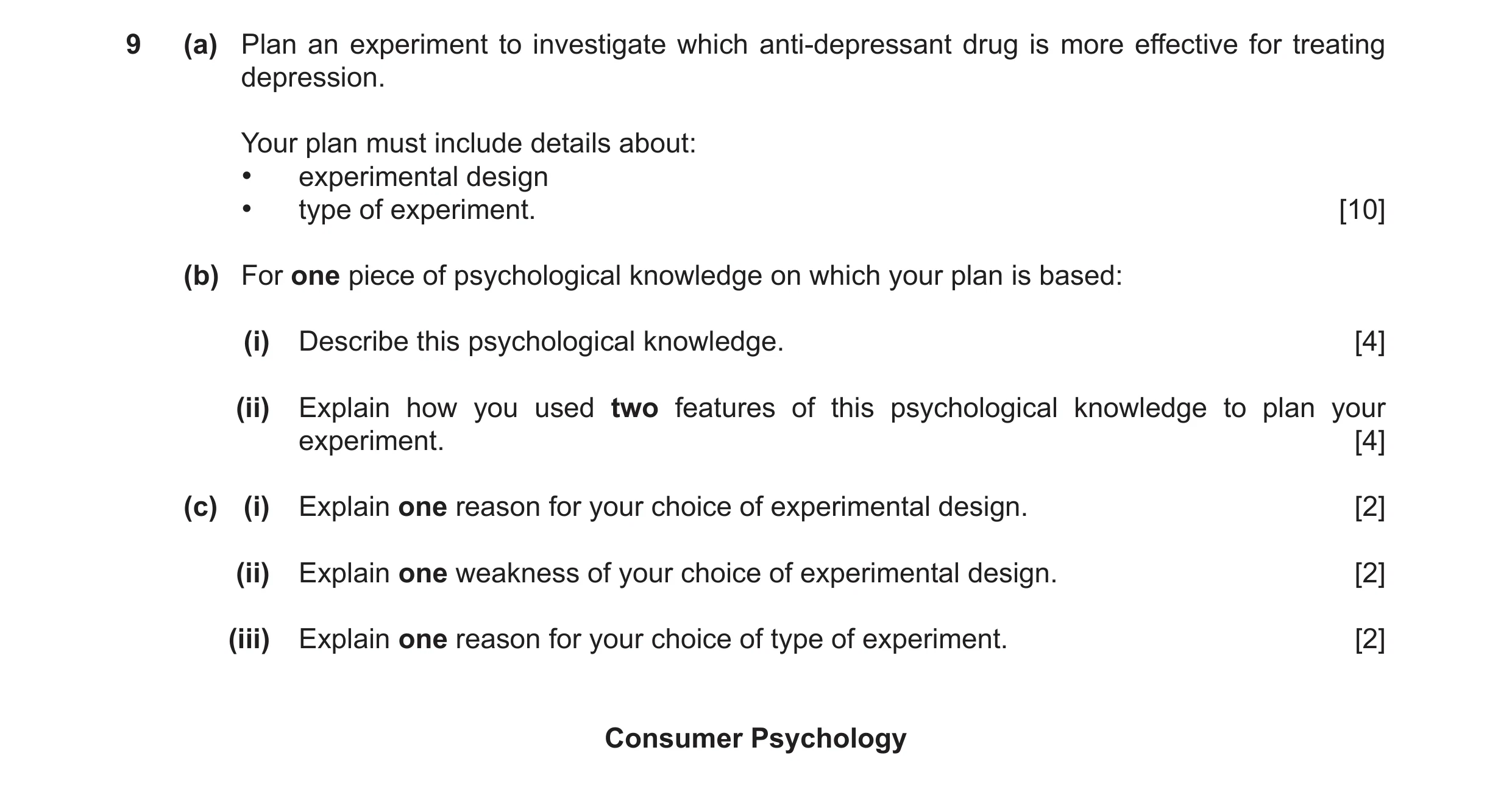 5 / 9
5 / 9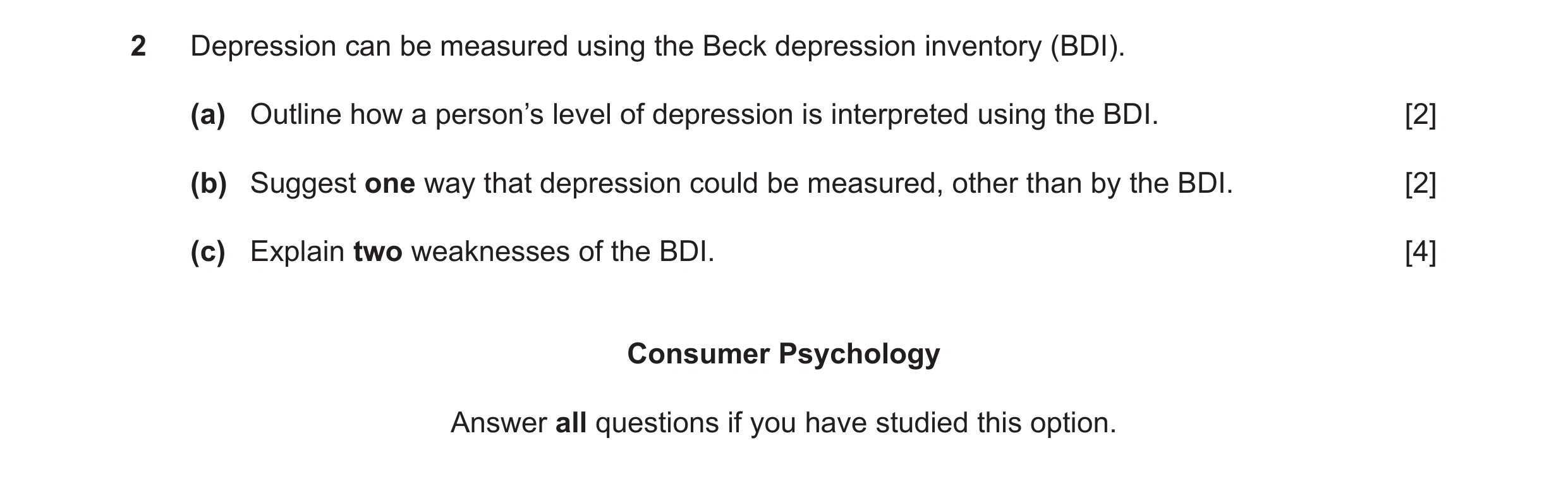
![Question 18: From the key study by Oruč et al. (1997) on mood (affective) disorders: (a) (i) Outline what is meant by a clinical interview. [2] (ii) Ou…](https://img.pastlit.com/crops/951ad258-22d0-4a4f-a741-9291c20187c9/q1.webp)
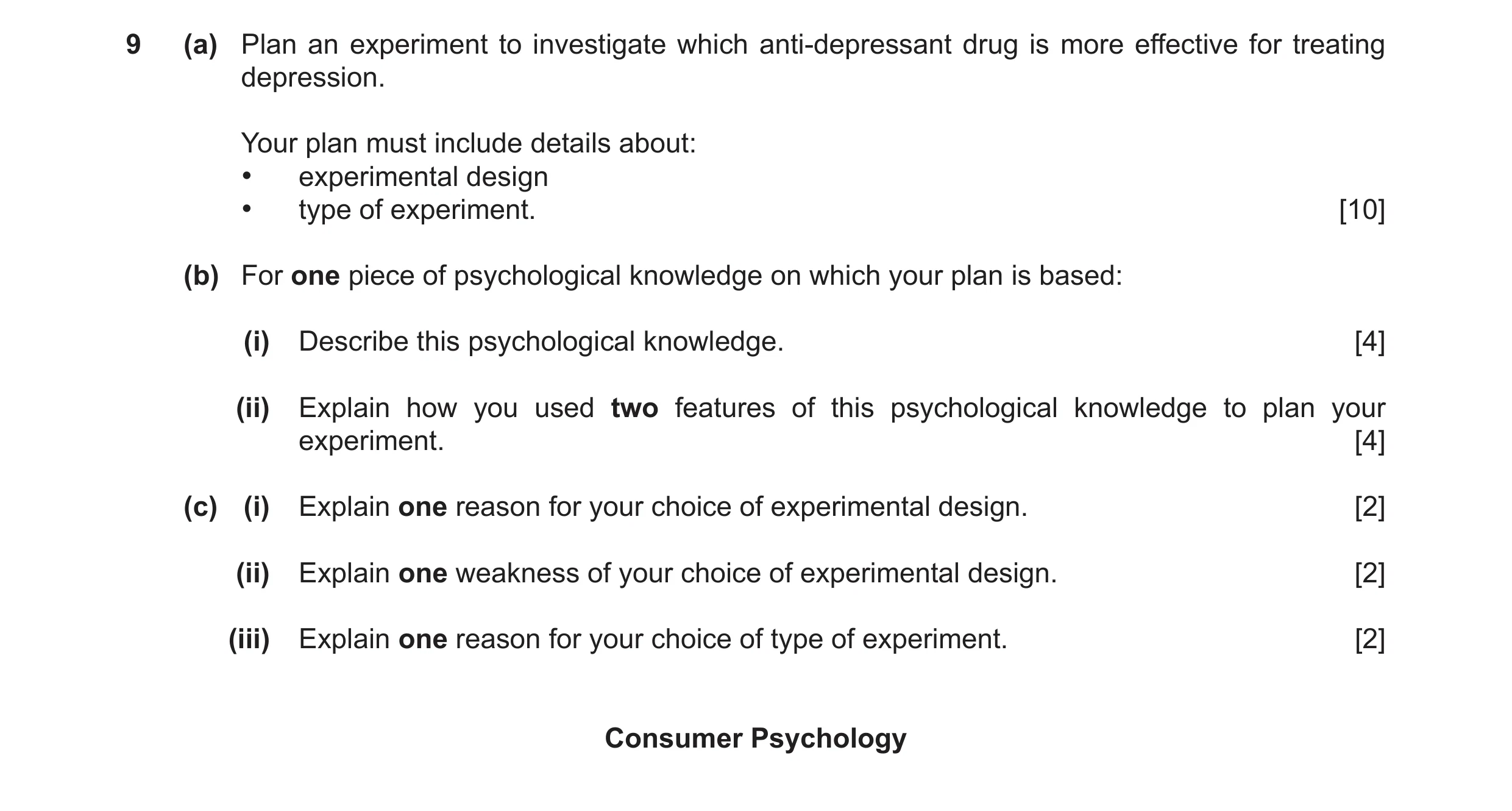 6 / 9
6 / 9![Question 20: From the key study by Oruč et al. (1997) on mood (affective) disorders: (a) Outline the sample of participants used in this study. [4] (b)…](https://img.pastlit.com/crops/498fd2b9-779d-498b-91aa-540a4ef65650/q1.webp)
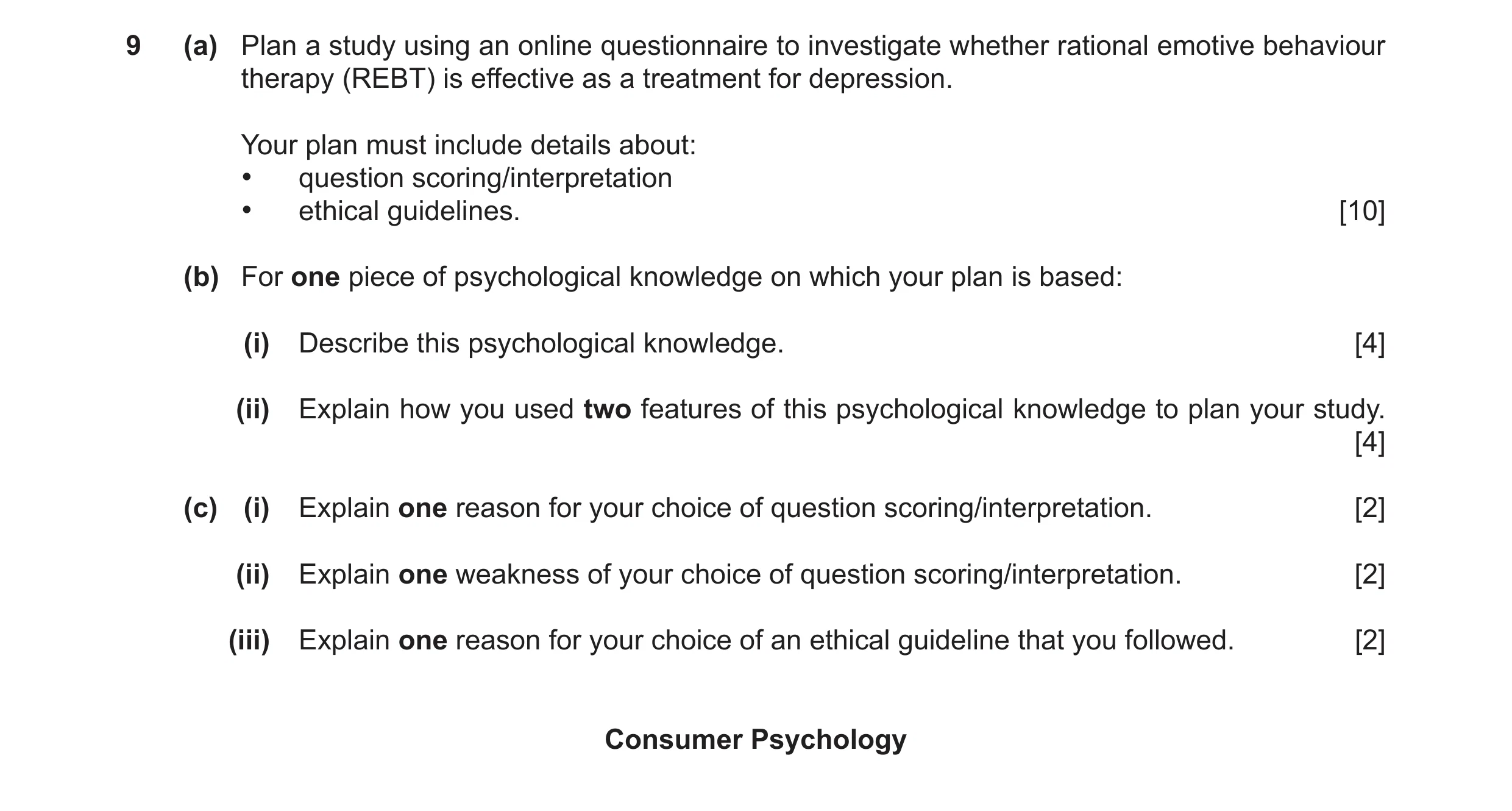
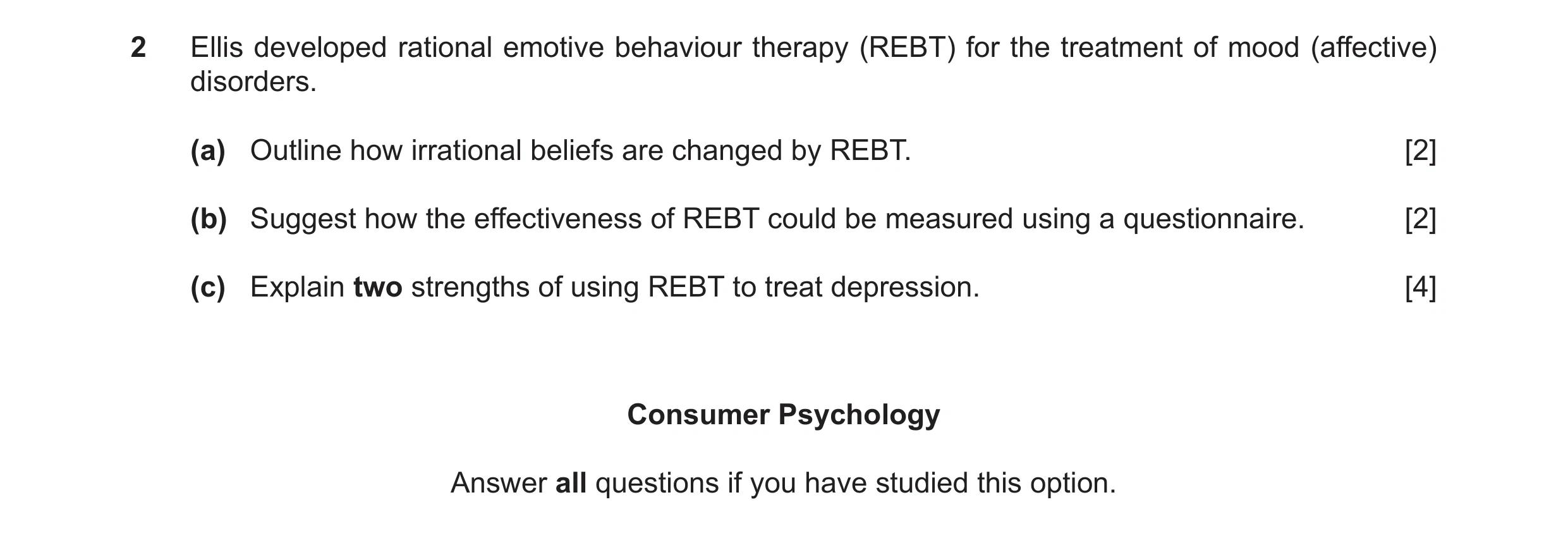 7 / 9
7 / 9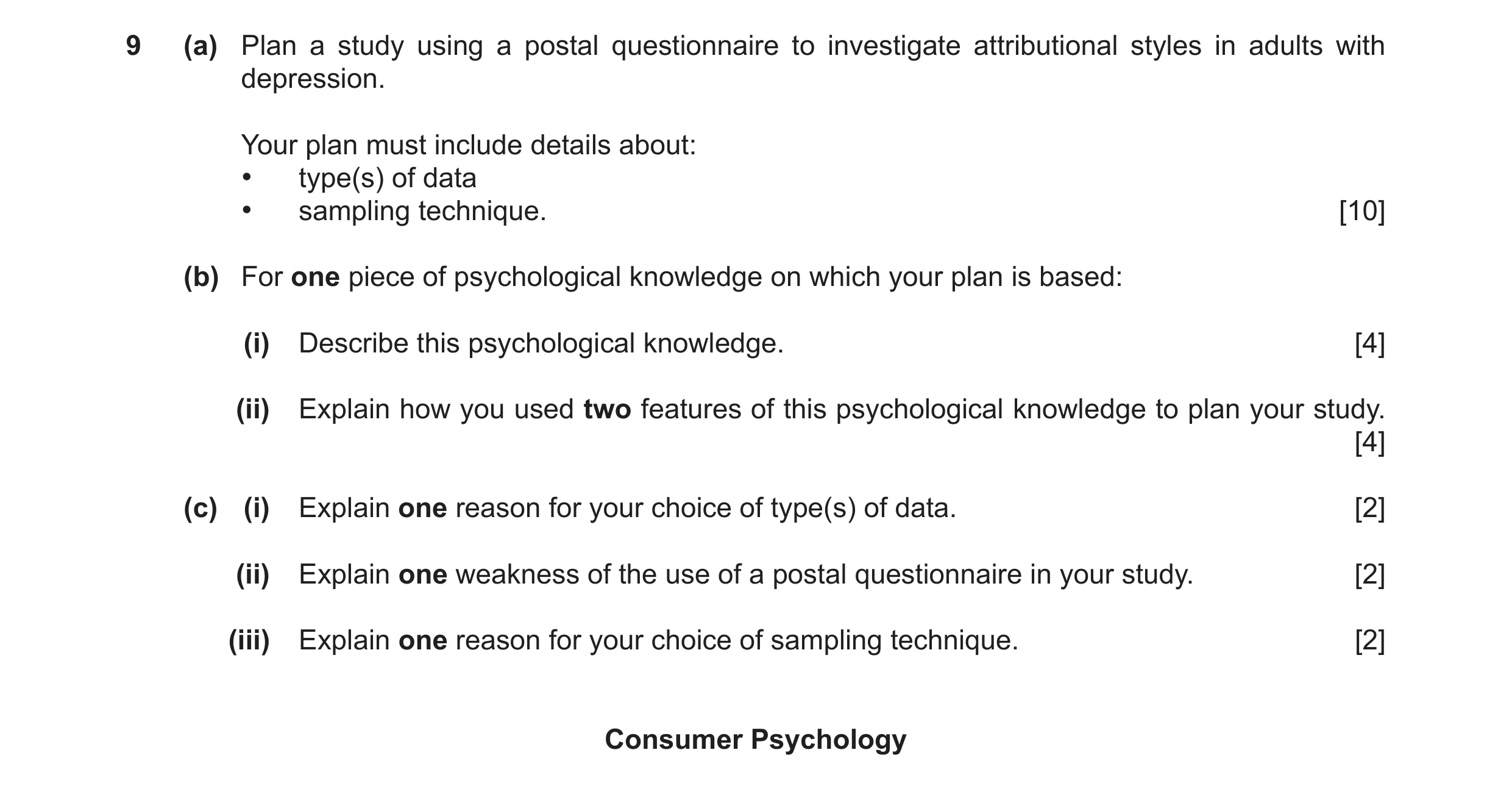
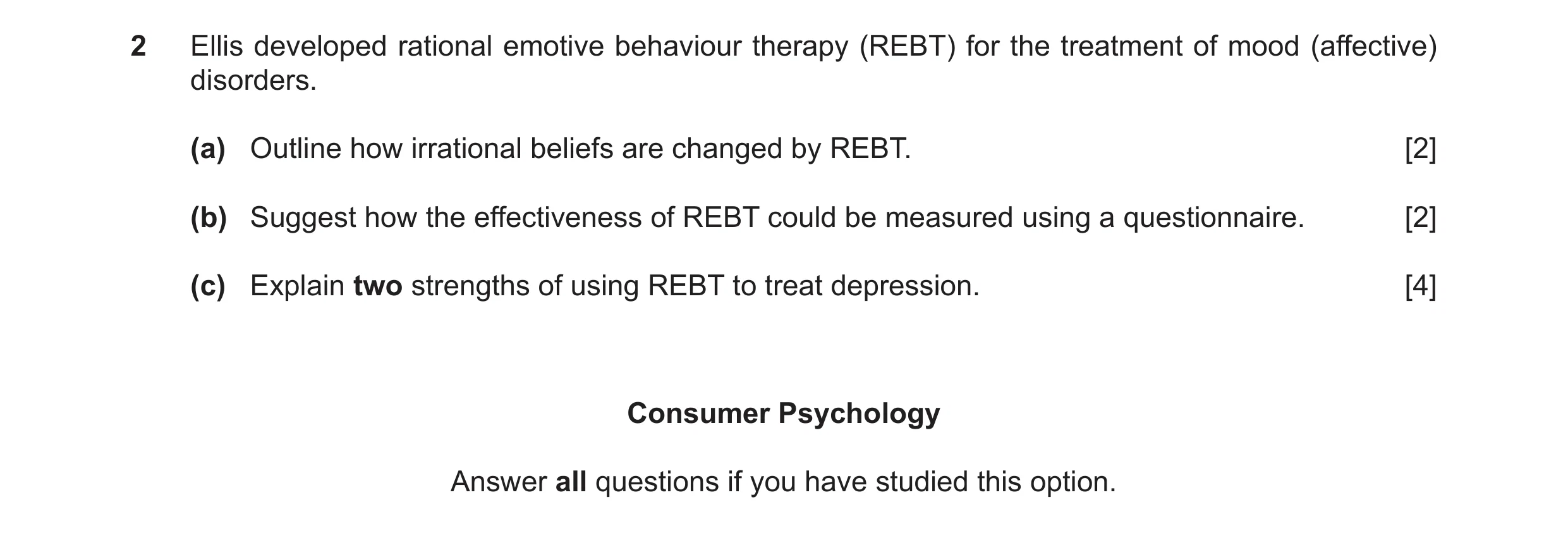 8 / 9
8 / 9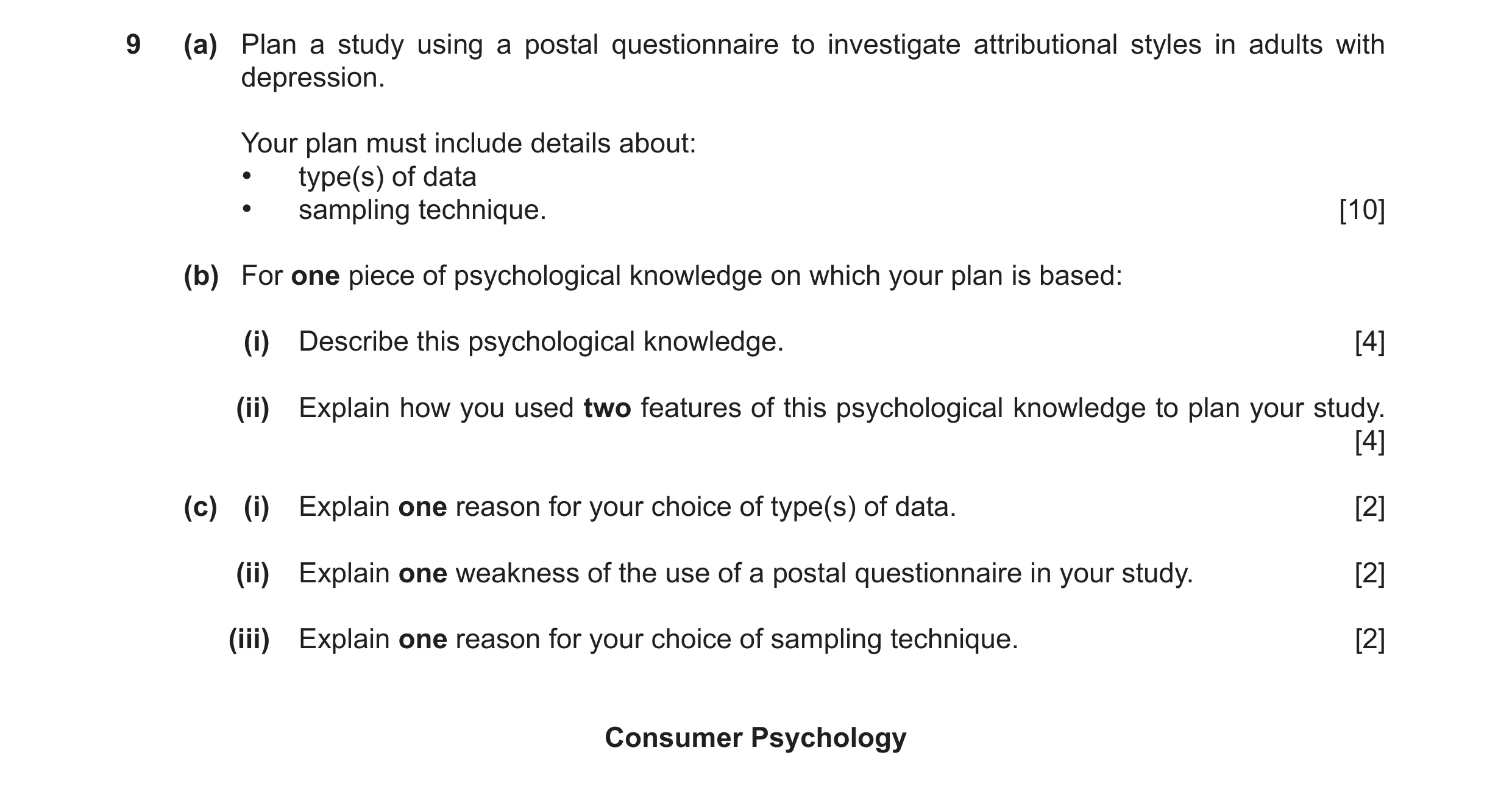 9 / 9
9 / 9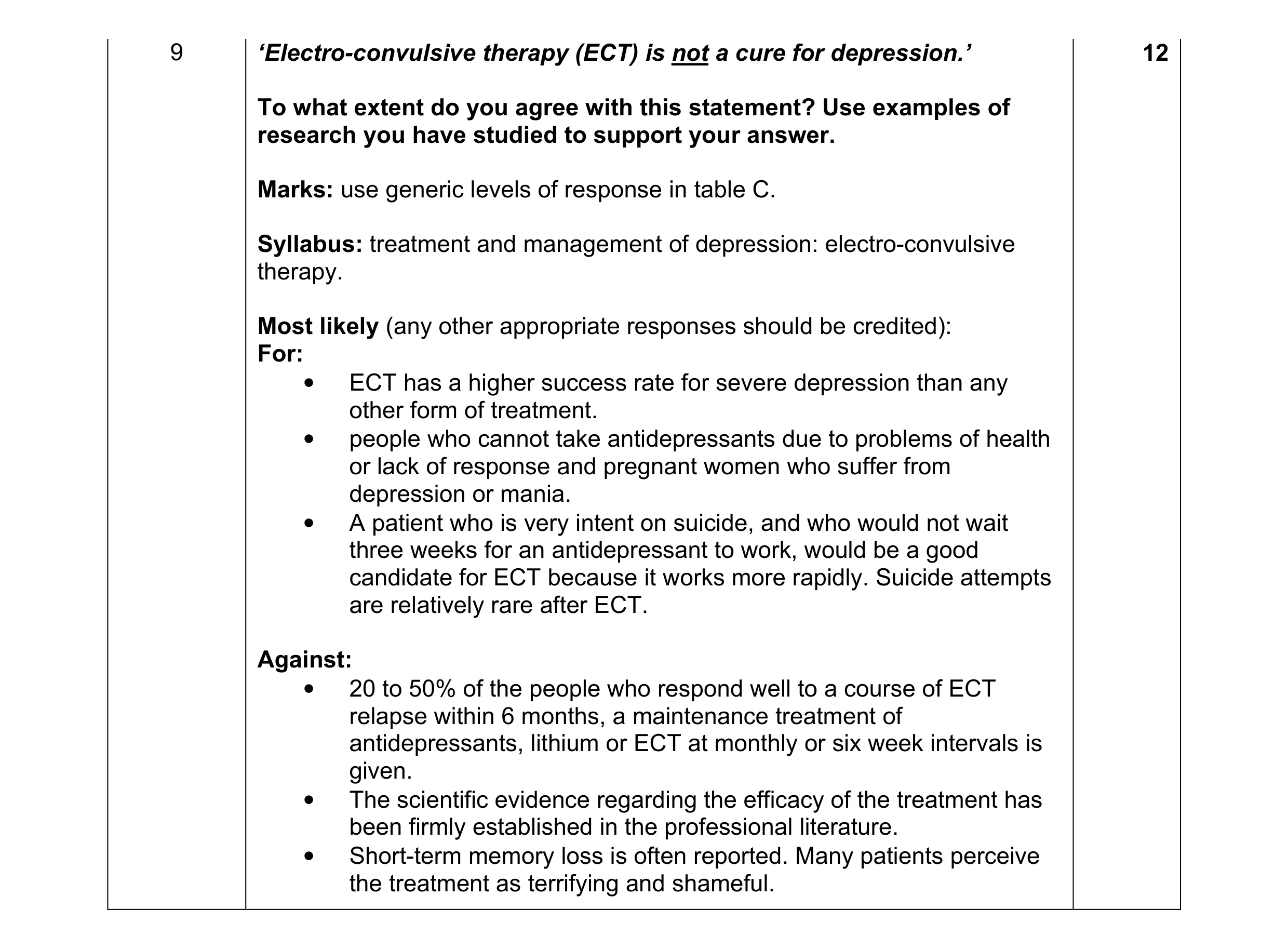 12
12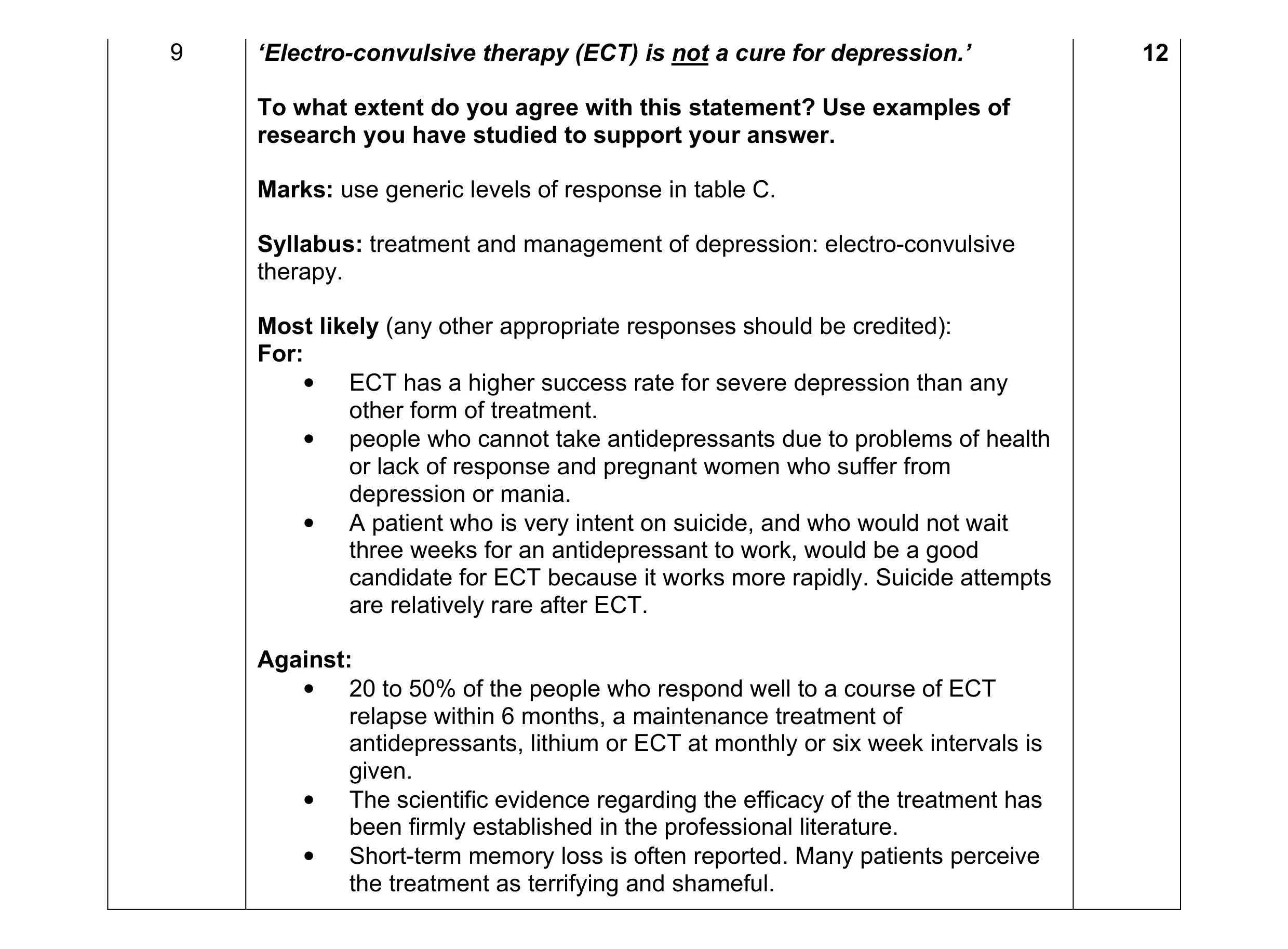 12
12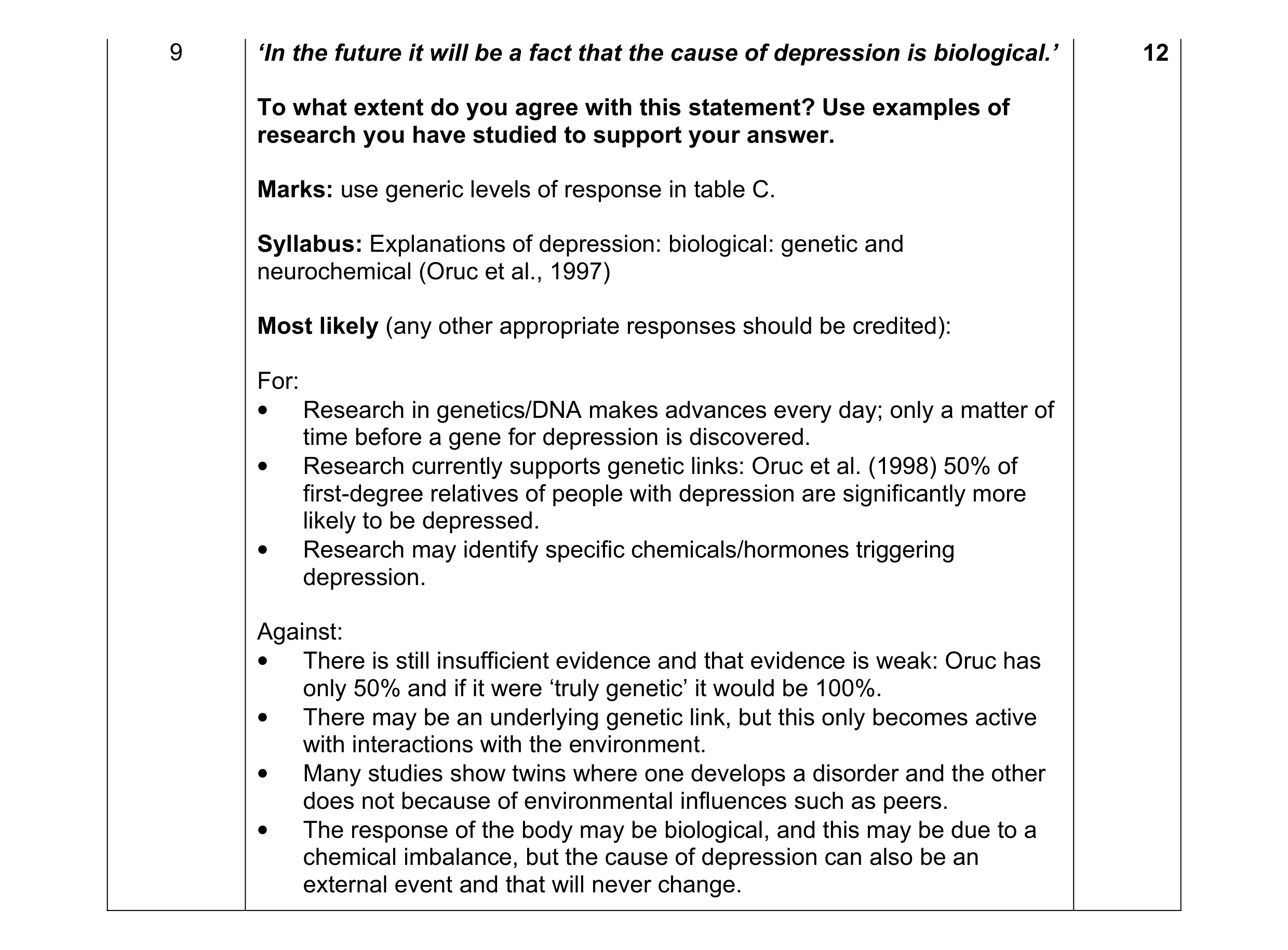 12
12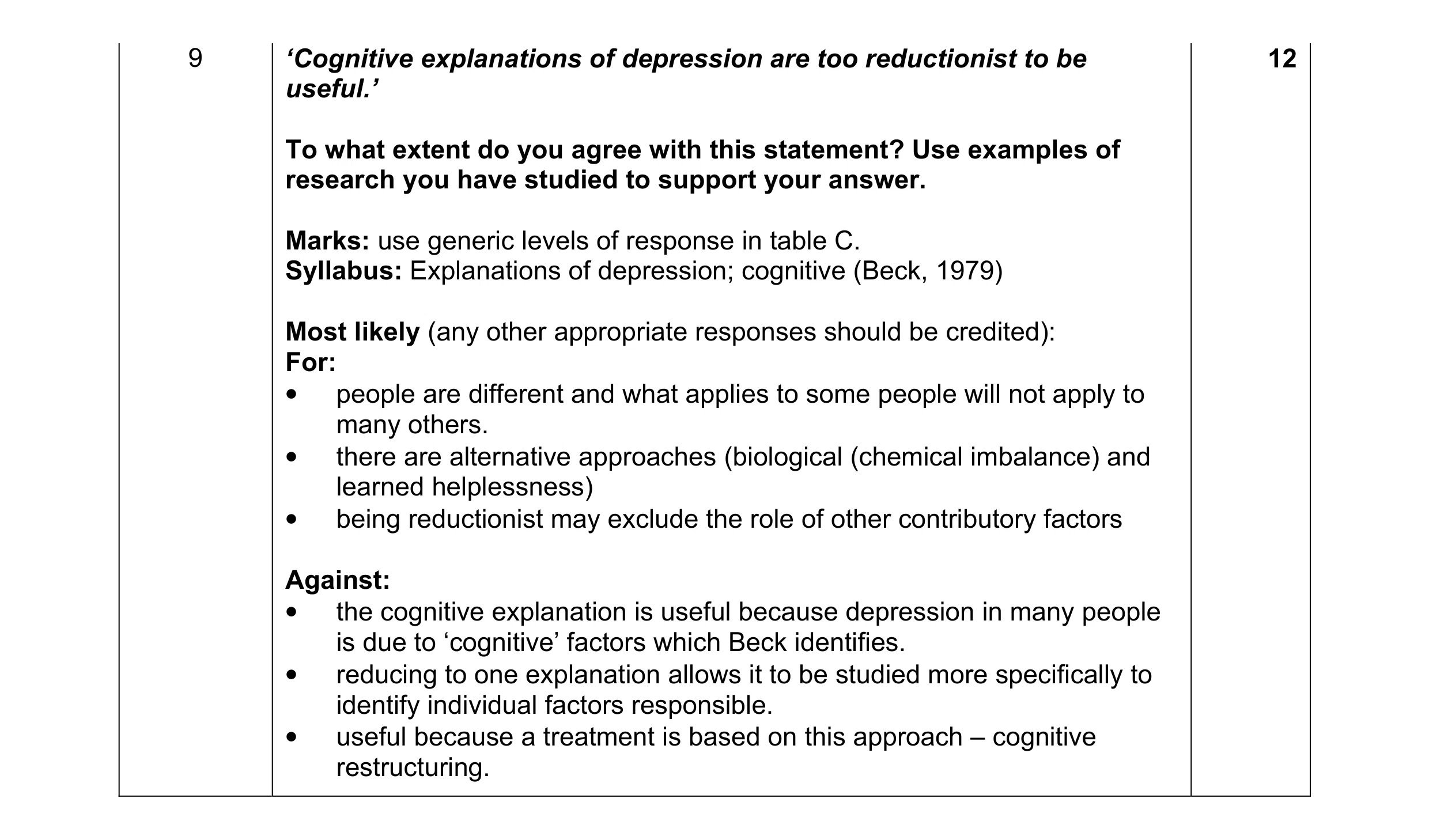 12
12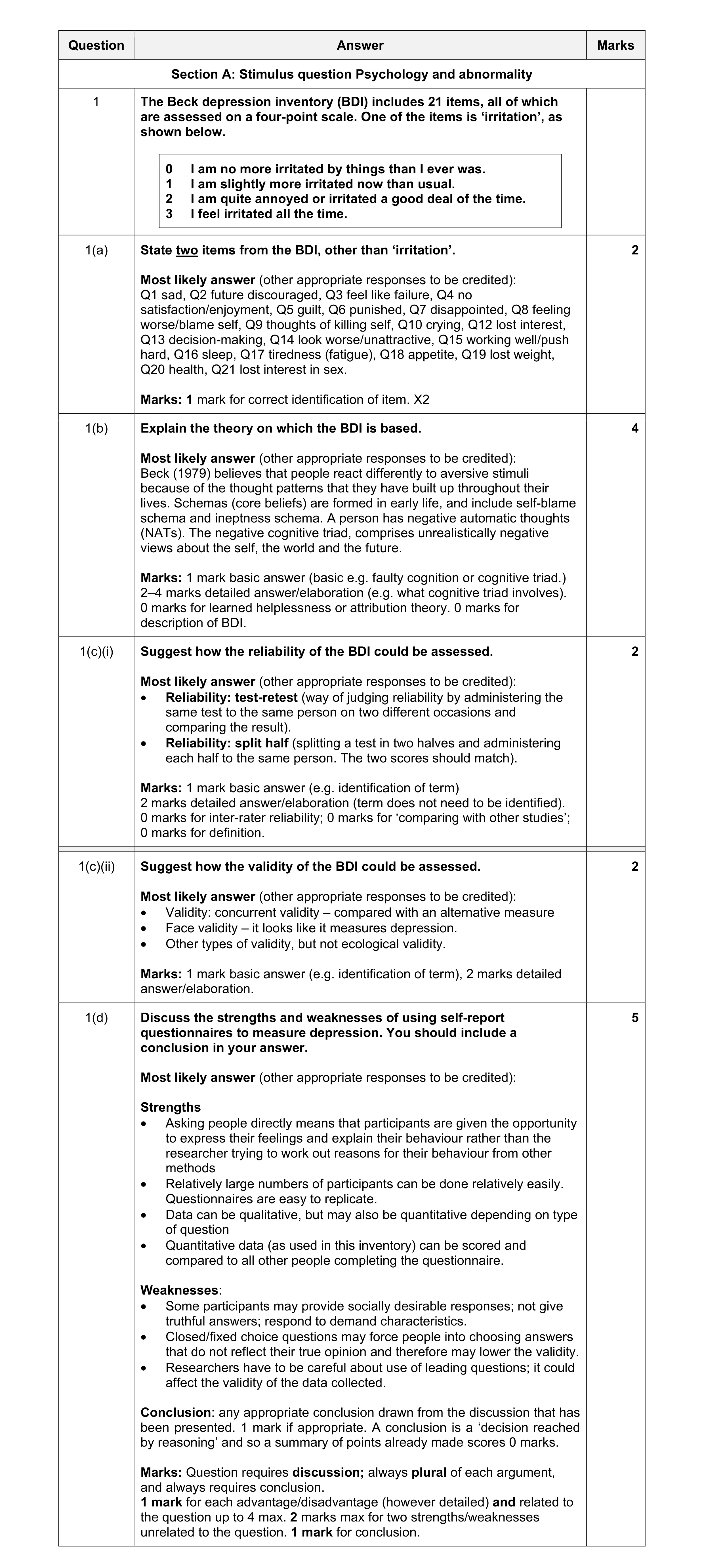 15
15 18
18 18
18 15
15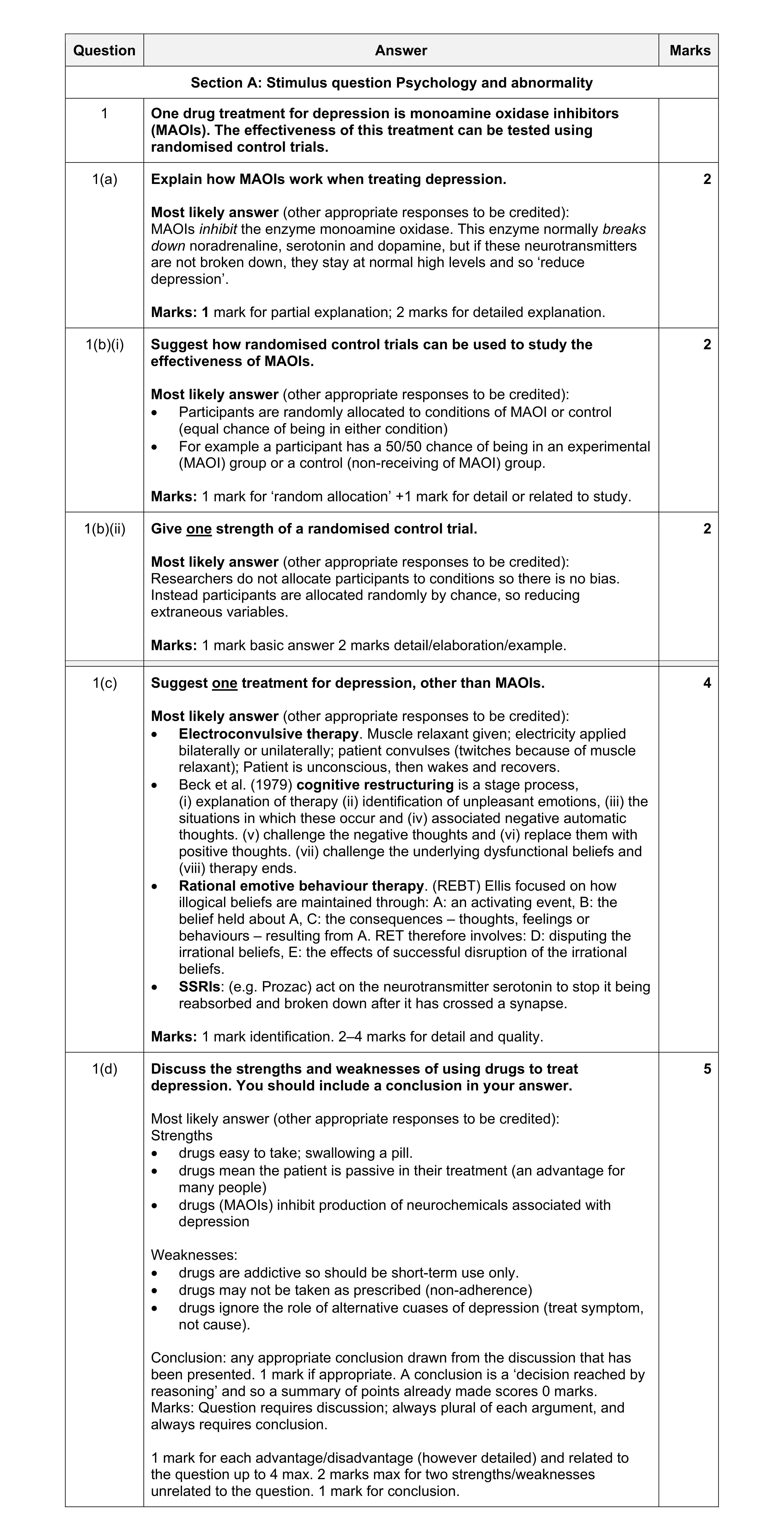 15
15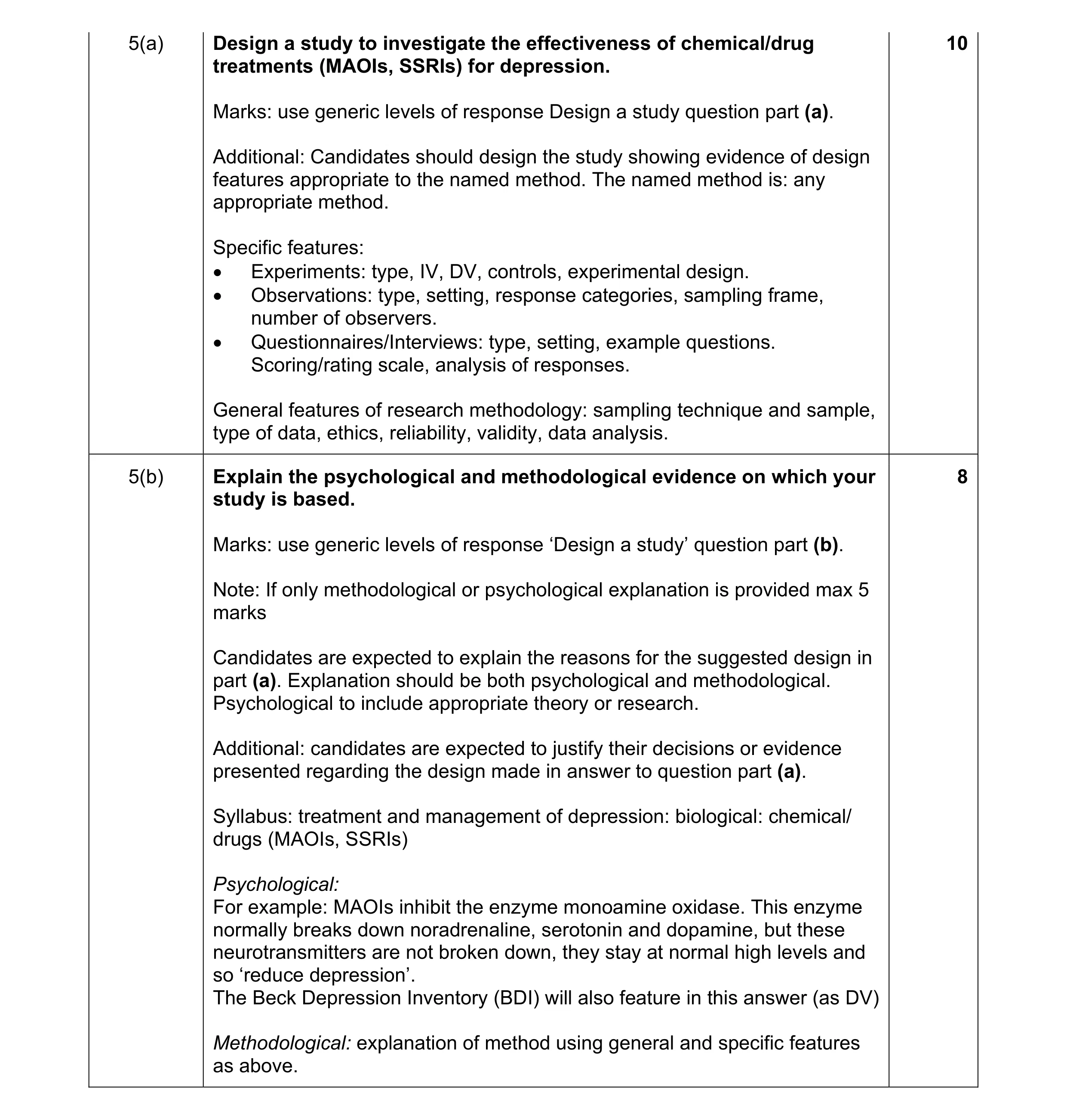 18
18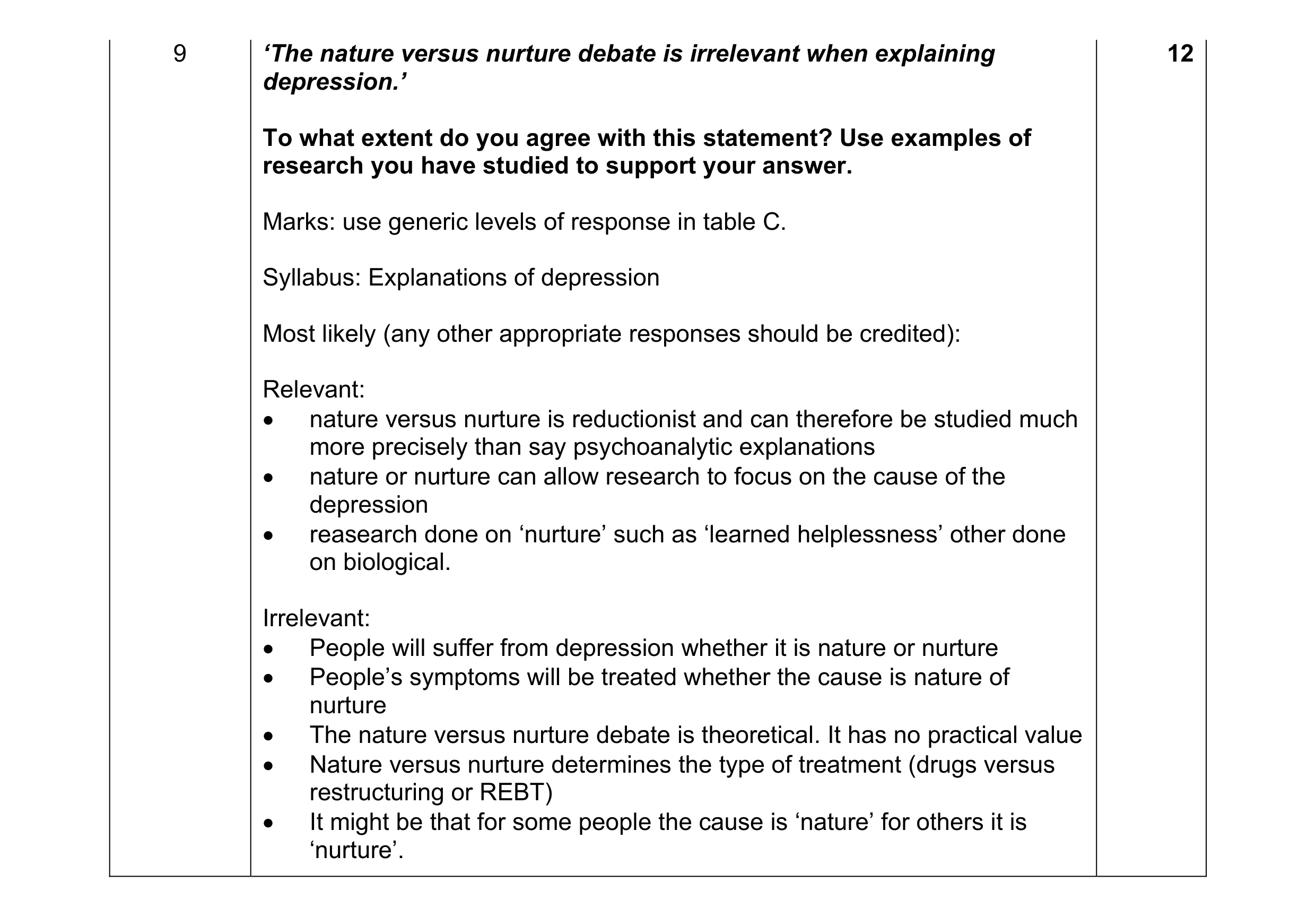 12
12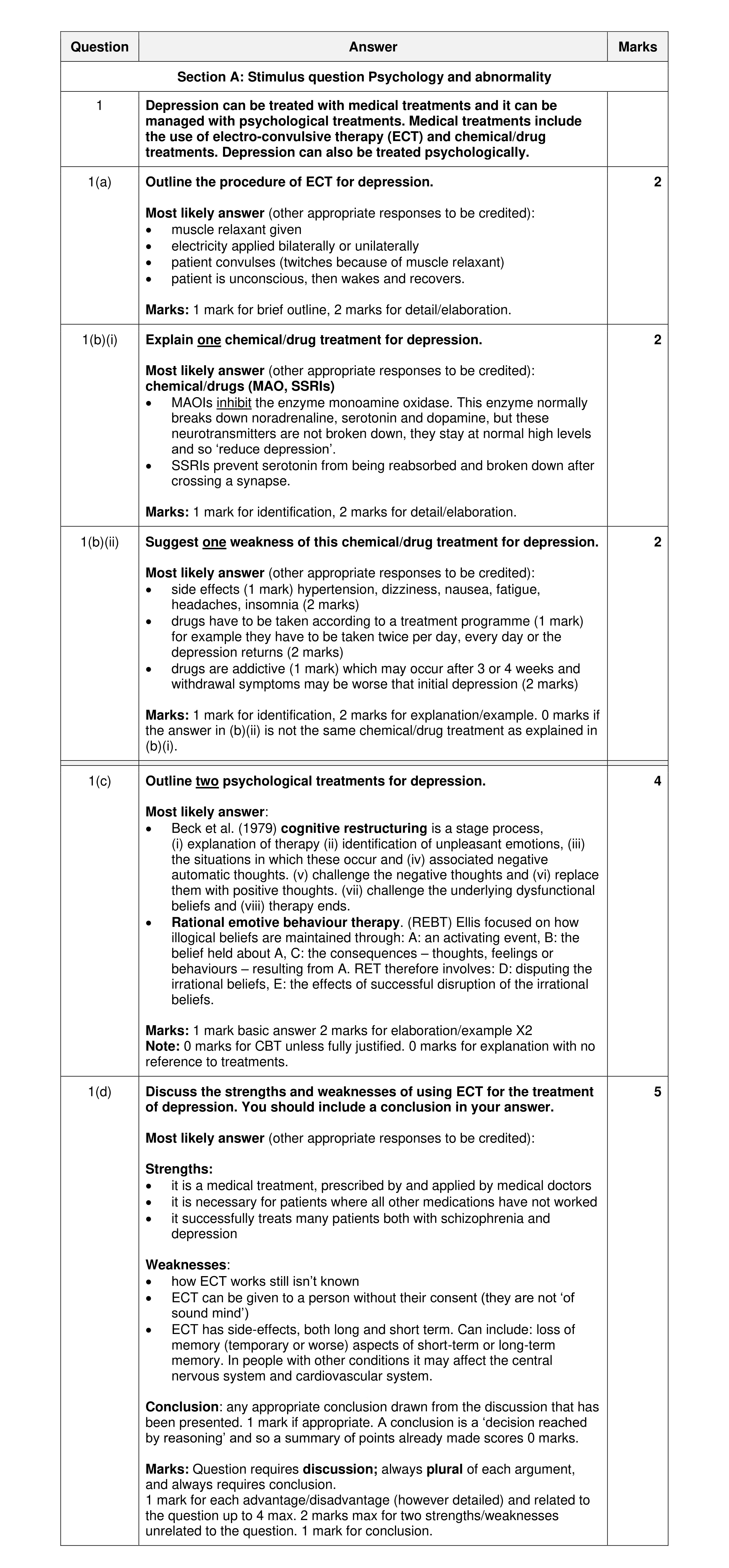 15
15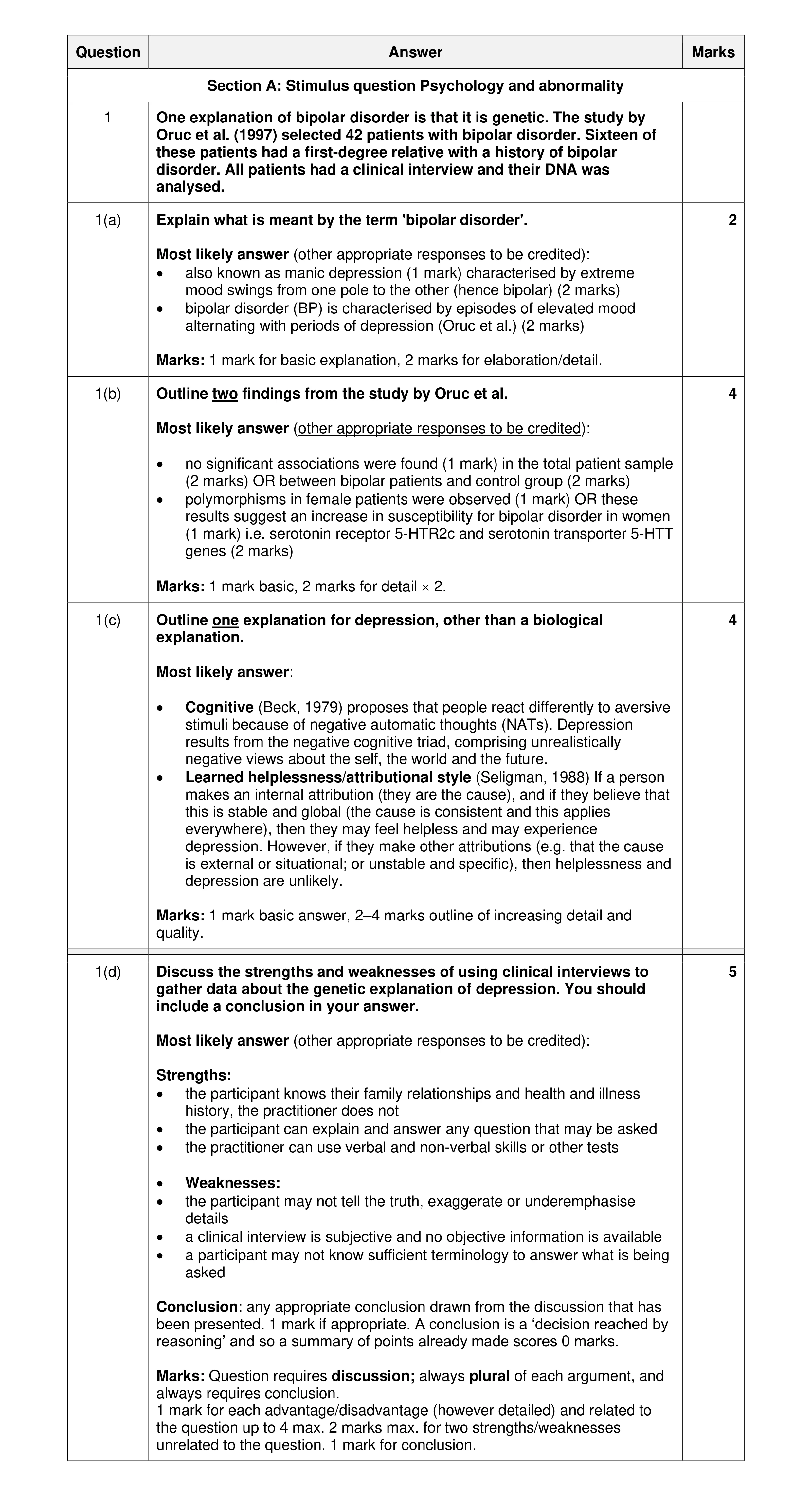 15
15 15
15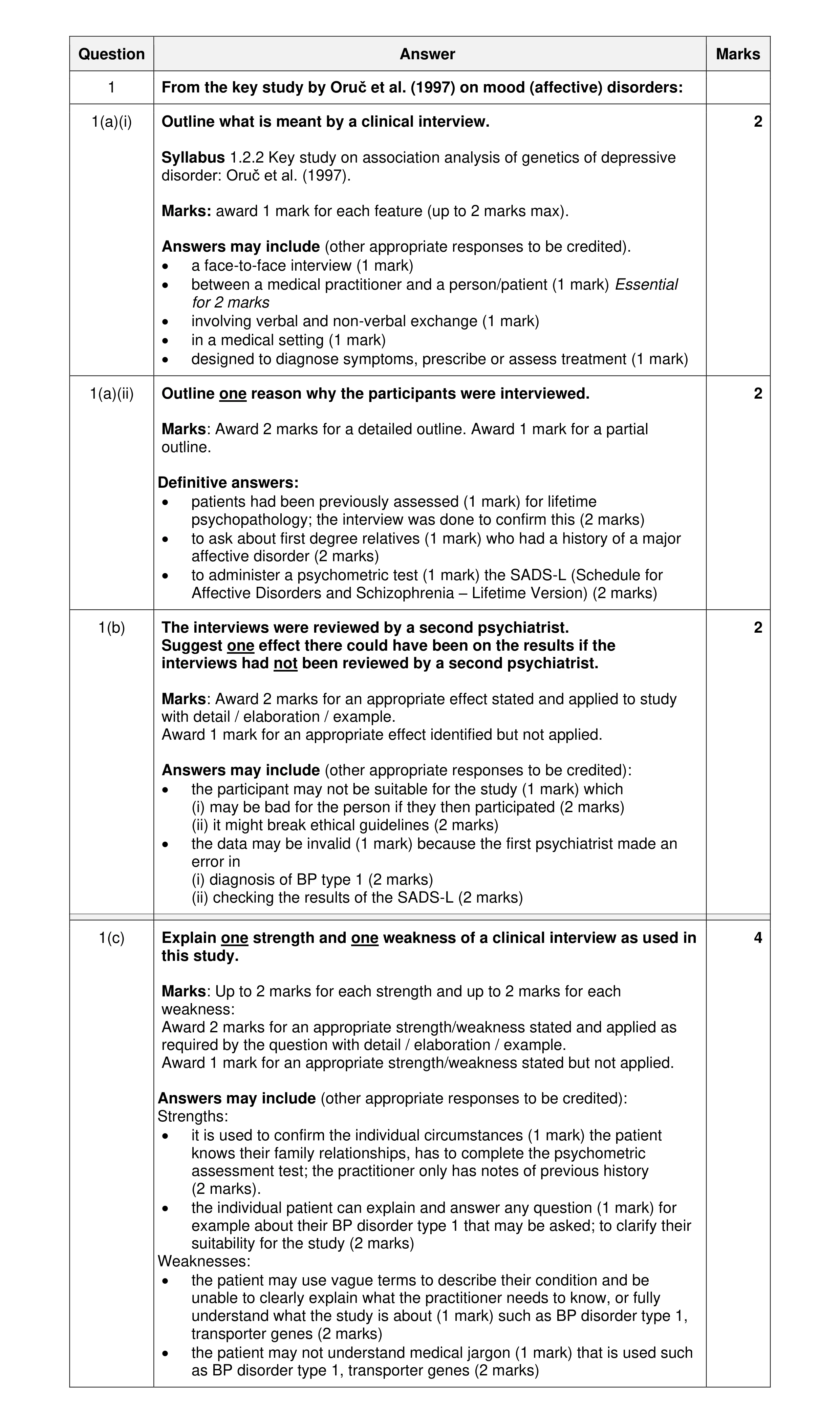 10
10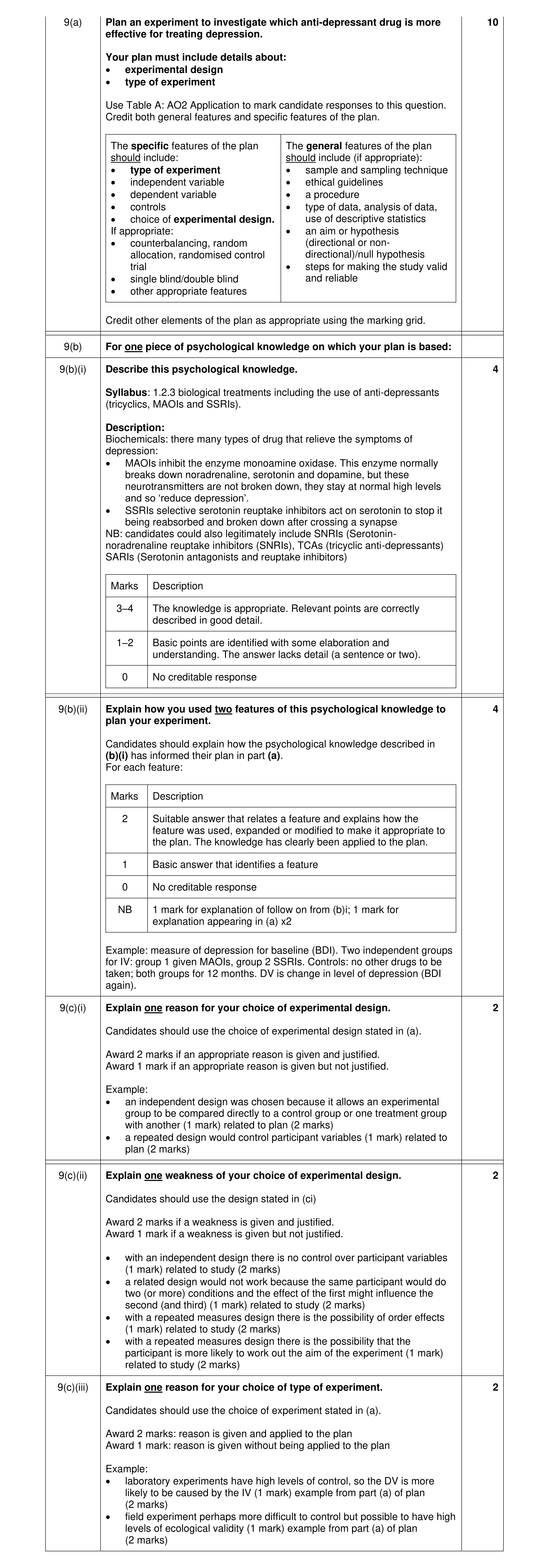 24
24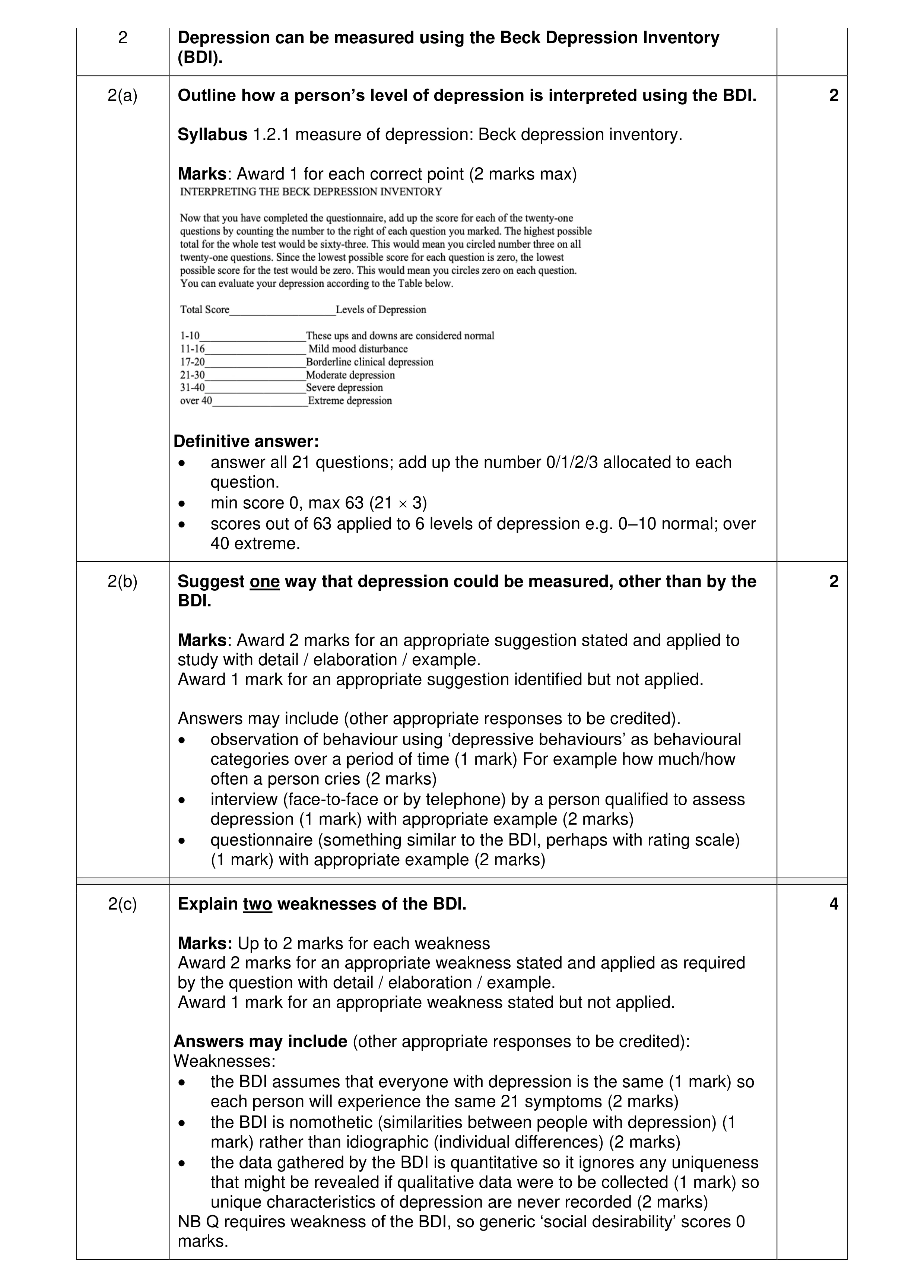 8
8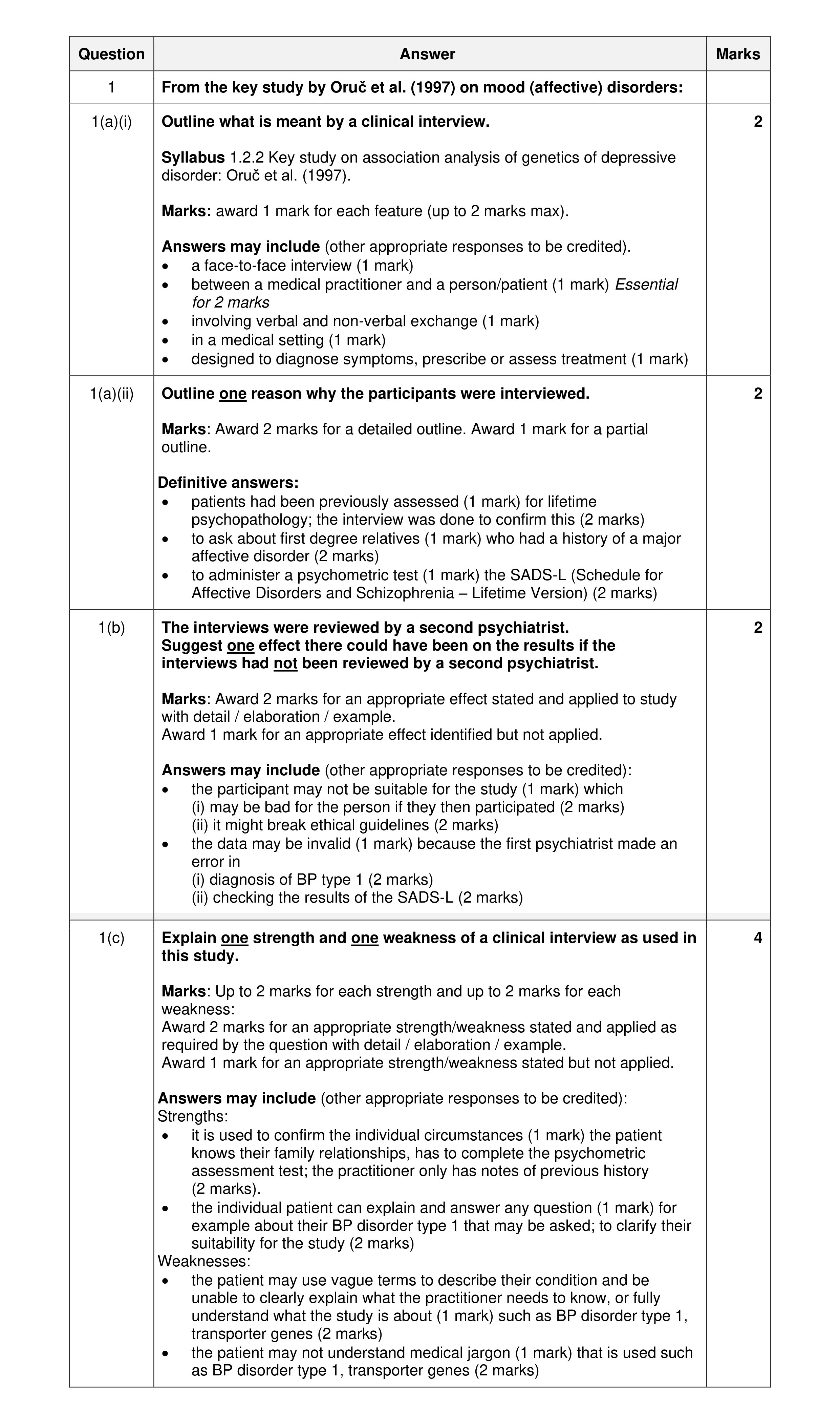 10
10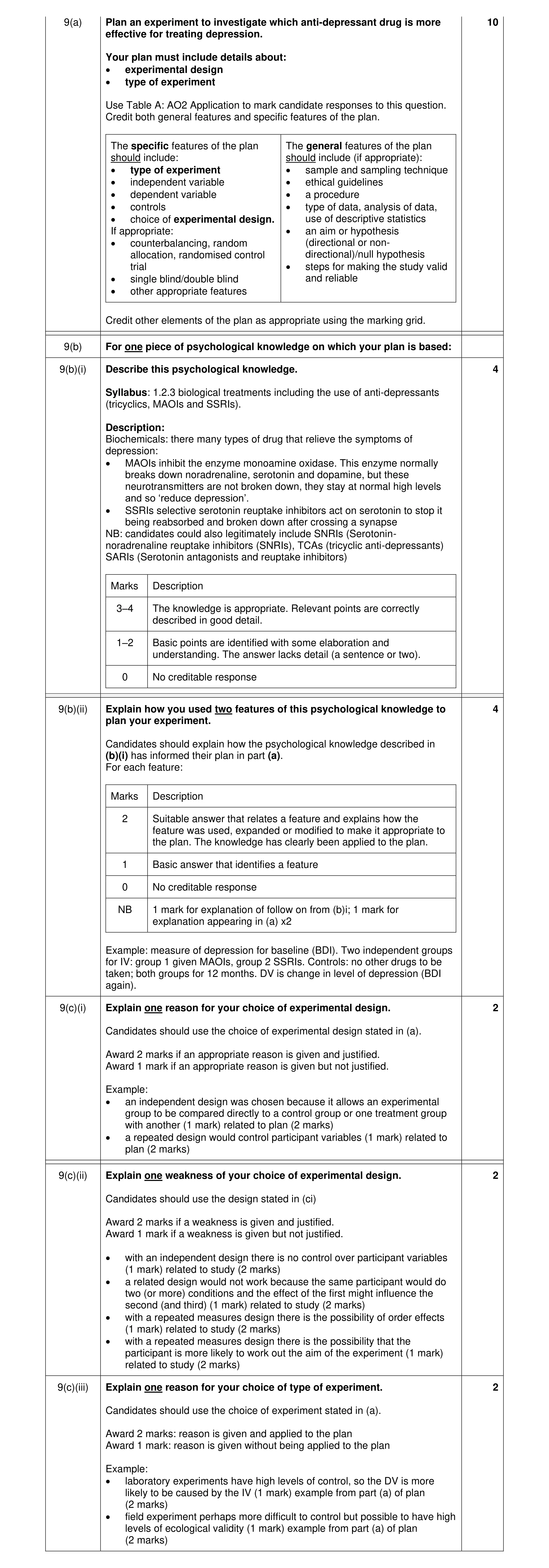 24
24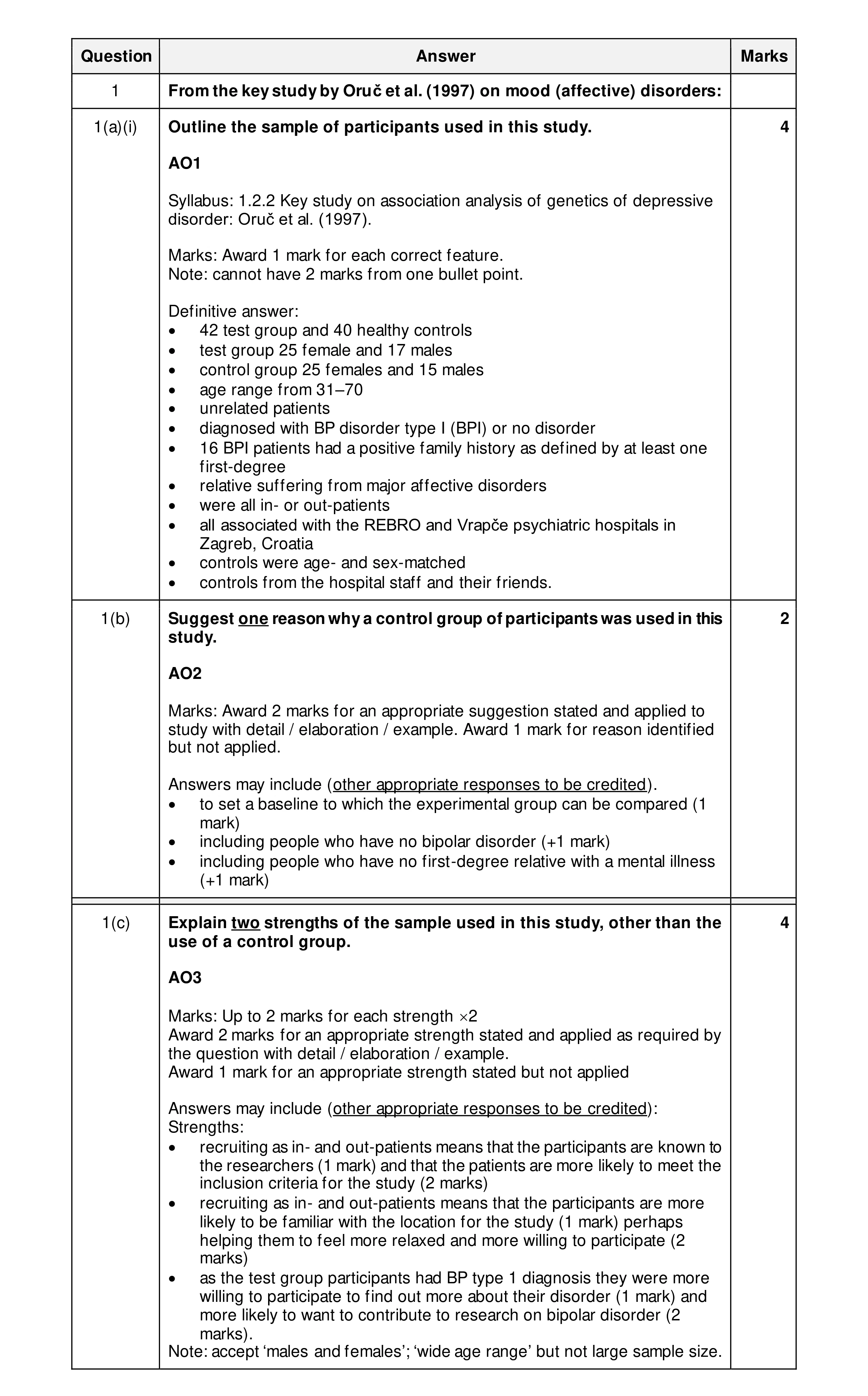 10
10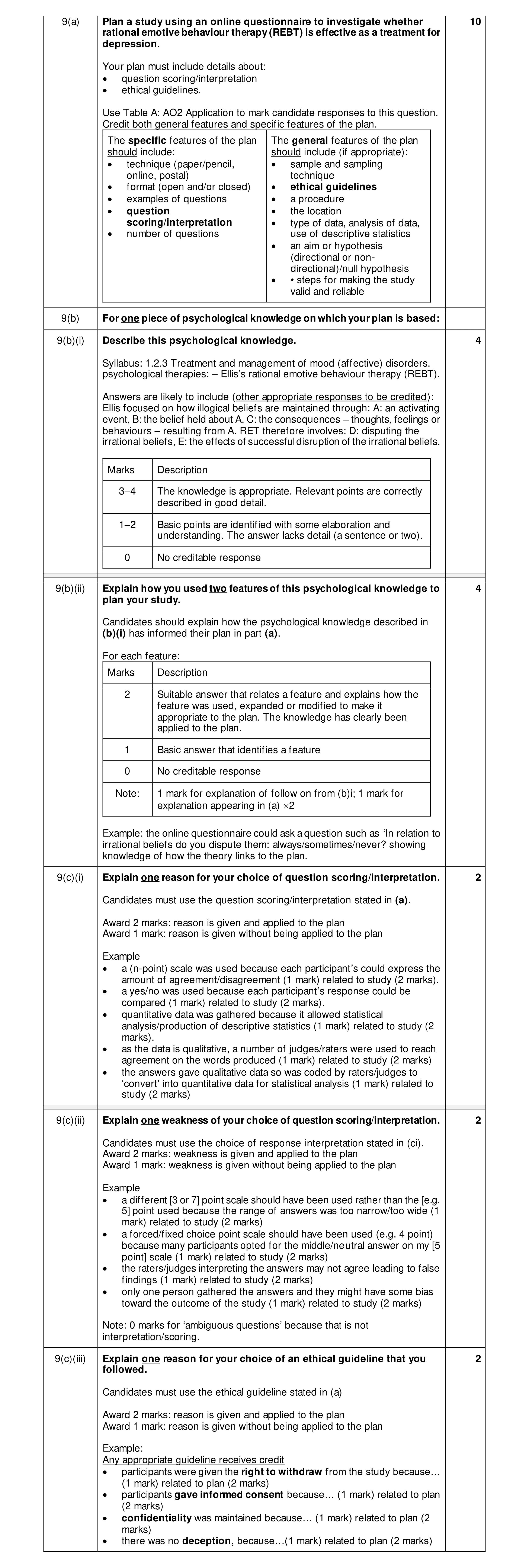 24
24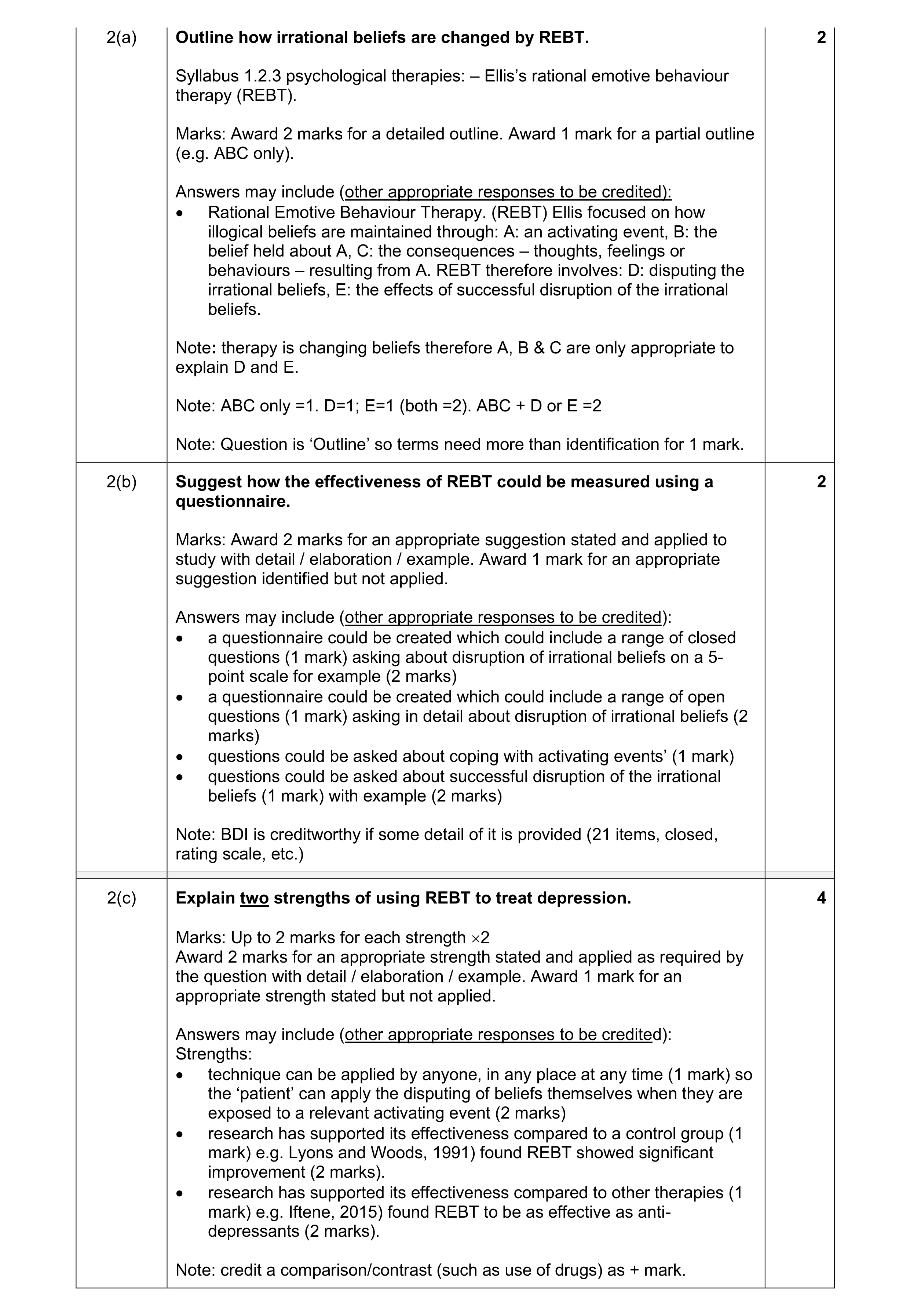 8
8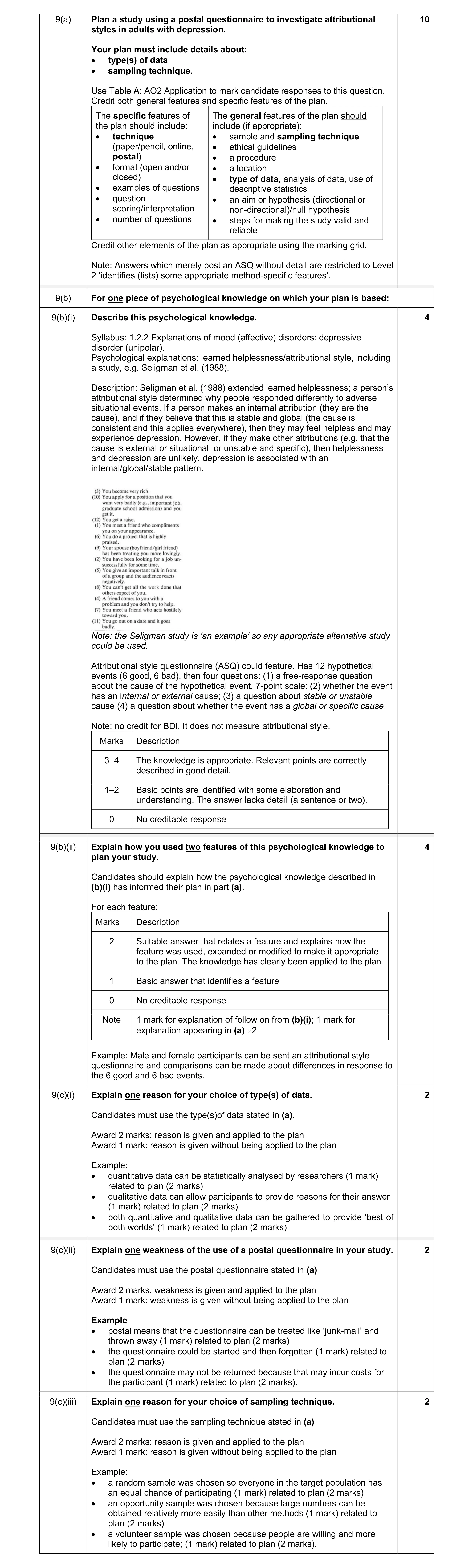 24
24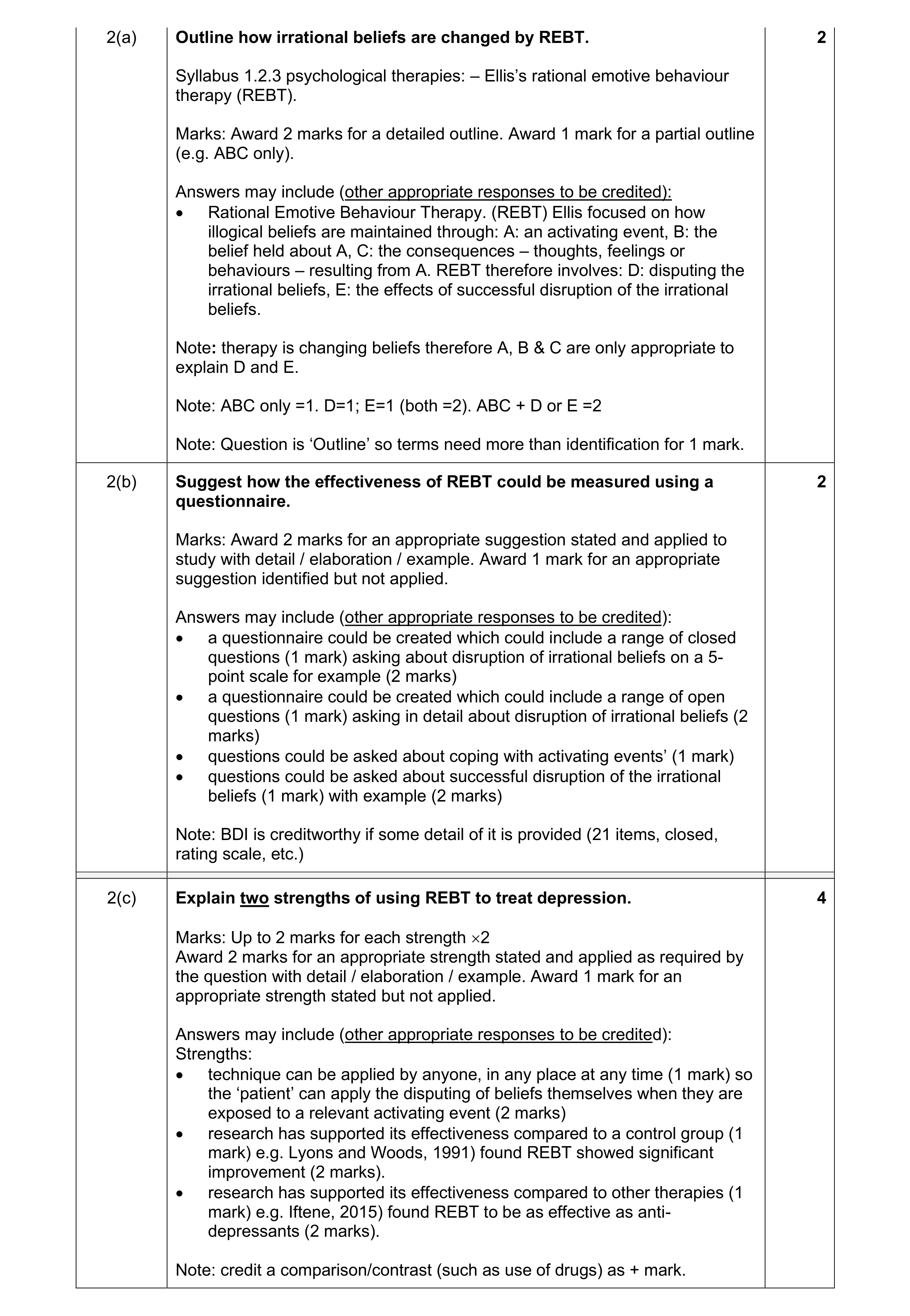 8
8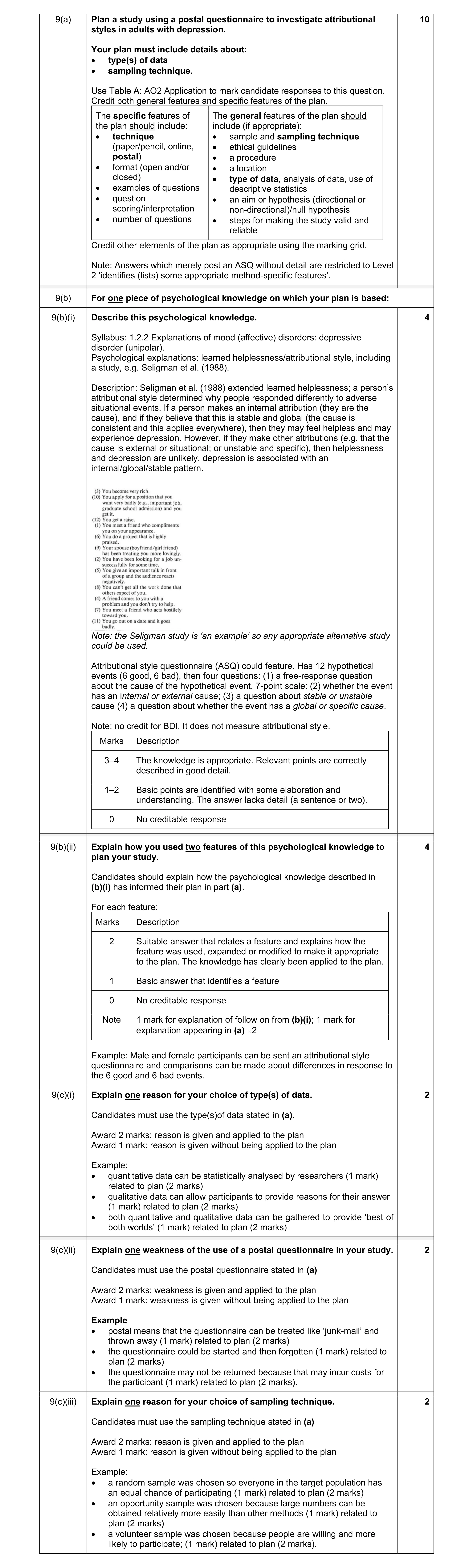 24
24