Questions as text
Q1 · Design a study to assess the effectiveness of virtual reality as a way to measure… 9990/42 Feb/March 2018
5 (a) Design a study to assess the effectiveness of virtual reality as a way to measure symptoms of schizophrenia. [10] (b) Explain the psychological and methodological evidence on which your study is based. [8] Psychology and consumer behaviour
18 marks
Mark scheme: 5(a) Design a study to assess the effectiveness of virtual reality as a way to 10 measure symptoms of schizophrenia. Marks: use generic levels of response ‘Design a study’ question part (a). Additional: Candidates should design the study showing evidence of design features appropriate to the named method. The named method is: any appropriate method, but must use virtual reality. Typical features: • Experiments: type, IV, DV, controls, experimental design. • Observations: type, setting, response categories, sampling frame, number of observers. • Questionnaires/Interviews: type, setting, example questions. Scoring/rating scale, analysis of responses. Typical features of research methodology: sampling technique and sample, type of data, ethics, reliability, validity, data analysis. 5(b) Explain the psychological and methodological evidence on which your 8 study is based. Marks: use generic levels of response ‘Design a study’ question part (b). Note: If only methodological or psychological explanation is provided max 5 marks Candidates are expected to explain the reasons for the suggested design in part (a). Explanation should be both psychological and methodological. Psychological to include appropriate theory or research. Additional: candidates are expected to justify their decisions or evidence presented regarding the design made in answer to question part (a). Syllabus: Characteristics of schizophrenia spectrum and psychotic disorders symptom assessment using virtual reality (Freeman, 2008) Psychological: Quote from study: The third use of VR for psychosis would be learning to cope with symptoms as they occur. A variety of coping strategies could be tried out for learning how to remain engaged in a social situation even when symptoms occur. Clinical studies of these techniques in psychosis are yet to be carried out. VR has, however, been used in rehabilitation interventions for a range of problems. Methodological: explanation of method using typical features as above.
This question in 9990/42 Feb/March 2018
Q2 · ‘A token economy used for patients with schizophrenia in hospitals only makes them behave… 9990/42 Feb/March 2018
9 ‘A token economy used for patients with schizophrenia in hospitals only makes them behave better for the staff.’ To what extent do you agree with this statement? Use examples of research you have studied to support your answer. [12] Psychology and consumer behaviour
12 marks
Mark scheme: 9 ‘A token economy used for patients with schizophrenia in hospitals 12 only makes them behave better for the staff.’ To what extent do you agree with this statement? Use examples of research you have studied to support your answer. Marks: use generic levels of response in table C. Syllabus: treatment and management of schizophrenia and delusional disorder: token economy (Paul and Lentz, 1977) Most likely (any other appropriate responses should be credited): For: • A consistent, and for patients, easy-to-follow technique • Based on positive reinforcement (strategy used in everyday life) • Based on behaviourist principles and approach that can be generalised. • It helps patients behave in appropriate ways in a care (and other) setting. Against: • Token economy isn’t a treatment. It will not cure schizophrenia. • It is reductionist: behaviourist principles that are not humanist.
This question in 9990/42 Feb/March 2018
Q3 · People with symptoms of schizophrenia are often diagnosed through an interview with their… 9990/42 Oct/Nov 2018
1 People with symptoms of schizophrenia are often diagnosed through an interview with their doctor. Freeman (2008) says virtual reality (VR) is useful for symptom assessment and the treatment of psychotic disorders. Freeman also says this technology has many other applications. (a) Explain the symptoms of schizophrenia which are targeted by virtual reality. [2] (b) Suggest two uses of virtual reality in abnormal psychology, other than the application to schizophrenia. [4] (c) Give two differences between the use of virtual reality for symptom assessment of schizophrenia and an interview with a doctor. [4] (d) Discuss the strengths and weaknesses of using virtual reality to treat schizophrenia. You should include a conclusion in your answer. [5] Psychology and consumer behaviour
15 marks
Mark scheme: Question Answer Marks Section A: Stimulus question Psychology and abnormality 1 People with symptoms of schizophrenia are often diagnosed through an interview with their doctor. Freeman (2008) says virtual reality (VR) is useful for symptom assessment and the treatment of psychotic disorders. Freeman also says this technology has many other applications. 1(a) Explain the symptoms of schizophrenia which are targeted by virtual 2 reality. Marks: 1 mark for basic answer e.g. identification. 1 mark for elaboration/ example. Most likely answer (other appropriate responses to be credited): • Misinterpretation of other peoples’ behaviour is a key feature of persecutory ideation. The occurrence and intensity of hallucinations is affected by the social context. • Negative symptoms such as anhedonia, asociality, and blunted affect reflect difficulties in social interactions. • Withdrawal and avoidance of other people is frequent in schizophrenia, leading to isolation and rumination. • The use of virtual reality (VR) – interactive immersive computer environments – allows one of the key variables in understanding psychosis, social environments, to be controlled. 1(b) Suggest two uses of virtual reality in abnormal psychology, other than 4 the application to schizophrenia. Marks: 1 mark basic answer. 2 marks detailed answer/elaboration ×2 Note: candidates can make their own suggestions and answers must relate to VR and to abnormal psychology. Most likely answer (other appropriate responses to be credited): From the Freeman study: VR is used widely in many areas, for instance, • Perhaps the most striking application of VR to psychiatric problems has been for the treatment of height phobia. For example, Emmelkamp et al. 33 patients with acrophobia to 3 sessions of exposure to heights in vivo or in VR. Both forms of exposure were equally efficacious. Even though the patients knew the VR heights were not real, anxious responses were still triggered. The patients’ responses to real or VR environments were equivalent. • Researchers have also shown that virtual heights can be presented equally effectively with a Head-Mounted Display or a Cave Automatic Virtual Environment 7 system in which images are projected into a room and the user wears stereoscopic shutter glasses. • VR has also been applied to the treatment of other anxiety conditions such as post-traumatic stress disorder (PTSD) and flying phobia. 1(c) Give two differences between the use of virtual reality for symptom 4 assessment of schizophrenia and an interview with a doctor. Marks: 1 marks basic answer 2 marks elaboration ×2 Most likely answer (other appropriate responses to be credited): • Symptom assessment is usually carried out with the practitioner/doctor and patient sitting in a (bare) clinic room talking, with retrospective recall of the past week or month. In contrast, VR can provide a standardised assessment of actual symptom occurrence. • To date, VR has only been used for the experimental investigation of persecutory ideation. Clinical assessment is used regularly for every disorder. • Questionnaire assessments of paranoia cannot rule out paranoid thoughts that are grounded in reality. Even interview methods often cannot establish the truth of the claims underlying a suspicious thought. However, if a neutral social situation is presented using VR, any paranoid thoughts that occur are known to be unfounded. 1(d) Discuss the strengths and weaknesses of using virtual reality to treat 5 schizophrenia. You should include a conclusion in your answer. Marks: Question requires discussion; always plural of each argument, and always requires conclusion. 1 mark for each advantage/disadvantage (however detailed) and related to the question up to 4 max. 1 mark for two strengths/weaknesses unrelated to the question. 1 mark for conclusion. Most likely answer (other appropriate responses to be credited): Strengths: • controls the environment allowing a range of situations and settings to be investigated • ensures patients with psychosis are not making up situations and symptoms • treatment can be conducted in a safe environment for both patient (and public) • has many uses. Freeman lists 7 uses: symptom assessment, identification of symptom markers, establishment of predictive factors, tests of putative causal factors, investigation of the differential prediction of symptoms, determination of toxic elements in the environment, and development of treatment. Weaknesses: • may have side effects such as simulator sickness – dizziness, nausea, headache and eyestrain • VR cannot establish truth of claims underlying suspicious thought (but neither can any method) • VR is only as good as the programmers ability to write an appropriate programme; • a programme may only apply generally and not be tailor-made for the needs of specific individuals. Conclusion: any appropriate conclusion drawn from the discussion that has been presented. 1 mark if appropriate. A conclusion is a ‘decision reached by reasoning’ and so a summary of points already made scores 0 marks.
This question in 9990/42 Oct/Nov 2018
Q4 · Design a longitudinal study to investigate whether electro-convulsive therapy (ECT) as a… 9990/42 Oct/Nov 2018
5 (a) Design a longitudinal study to investigate whether electro-convulsive therapy (ECT) as a treatment for schizophrenia has side effects. [10] (b) Explain the psychological and methodological evidence on which your study is based. [8] Psychology and consumer behaviour
18 marks
Mark scheme: 5(a) Design a longitudinal study to investigate whether electro-convulsive 10 therapy (ECT) as a treatment for schizophrenia has side effects. Marks: use generic levels of response ‘Design a study’ question part (a). Additional: Candidates should design the study showing evidence of design features appropriate to the named method. The named method is: any appropriate method, but must be longitudinal. Typical features: • Experiments: type, IV, DV, controls, experimental design. • Observations: type, setting, response categories, sampling frame, number of observers. • Questionnaires/Interviews: type, setting, example questions. Scoring/rating scale, analysis of responses. • Typical features of research methodology: sampling technique and sample, type of data, ethics, reliability, validity, data analysis. 5(b) Explain the psychological and methodological evidence on which your 8 study is based. Marks: use generic levels of response ‘Design a study’ question part (b). Note: If only methodological or psychological explanation is provided max 5 marks. Candidates are expected to explain the reasons for the suggested design in part (a). Explanation should be both psychological and methodological. Psychological to include appropriate theory or research. Additional: candidates are expected to justify their decisions or evidence presented regarding the design made in answer to question part (a). Syllabus: treatment and management of schizophrenia and delusional disorder: electro-convulsive therapy. Psychological: ECT: possible side effects: 20% to 50% of the people who respond well to a course of ECT relapse within 6 months; Short-term memory loss is often reported. Many patients perceive the treatment as terrifying and shameful. Immediately after treatment the patient is often confused (and the confusion may not be temporary) Methodological: explanation of method using typical features as above.
This question in 9990/42 Oct/Nov 2018
Q5 · ‘A case study of a person with schizophrenia will reveal more about the disorder than any… 9990/42 Feb/March 2019
9 ‘A case study of a person with schizophrenia will reveal more about the disorder than any other method.’ To what extent do you agree with this statement? Use examples of research you have studied to support your answer. [12] Psychology and consumer behaviour
12 marks
Mark scheme: 9 ‘A case study of a person with schizophrenia will reveal more about 12 the disorder than any other method.’ To what extent do you agree with this statement? Use examples of research you have studied to support your answer. Marks: use generic levels of response in table C. Syllabus: definitions, types, examples and case studies of schizophrenia and psychotic disorders Most likely (any other appropriate responses should be credited): For: • A case study allows a focus on an individual in depth, perhaps over time and using a range of different methods. • Far more can be known about the specific problems, and how it affects the life of that person. • A range of tests, techniques and methods can be used as appropriate. Against: • It is a study of one person whose problems might be unique • Generalising to others from one person is restricted; everyone’s problems might be different. • What is needed is to find what those with the disorder have in common and this cannot be done with a case study.
This question in 9990/42 Feb/March 2019
Q6 · Design a study to investigate the long-term effectiveness of antipsychotic drugs in… 9990/41 May/June 2019
5 (a) Design a study to investigate the long-term effectiveness of antipsychotic drugs in patients with schizophrenia. [10] (b) Explain the psychological and methodological evidence on which your study is based. [8] Psychology and consumer behaviour
18 marks
Mark scheme: 5(a) Design a study to investigate the long-term effectiveness of 10 antipsychotic drugs in patients with schizophrenia. Marks: use generic levels of response, ‘Design a study’ question part (a). Additional: Candidates should design the study showing evidence of design features appropriate to the named method. The named method is: any appropriate method. Specific features: • Experiments: type, IV, DV, controls, experimental design. • Observations: type, setting, response categories, sampling frame, number of observers. • Questionnaires / Interviews: type, setting, example questions. Scoring / rating scale, analysis of responses. • General features of research methodology: sampling technique & sample, type of data, ethics, reliability, validity, data analysis. 5(b) Explain the psychological and methodological evidence on which your 8 study is based. Marks: use generic levels of response, ‘Design a study’ question part (b). Note: If only methodological or psychological explanation is provided max. 5 marks Candidates are expected to explain the reasons for the suggested design in part (a). Explanation should be both psychological and methodological. Psychological to include appropriate theory or research. Additional: candidates are expected to justify their decisions or evidence presented regarding the design made in answer to question part (a). Syllabus: biochemical (antipsychotics and atypical antipsychotics) Psychological: First generation antipsychotics work as ‘chemical cosh’ (e.g. chlorpromazine). Second generation = atypical anti-psychotics worked by blocking dopamine receptors and fewer side effects. Third generation (e.g. Aripiprazole). Methodological: explanation of method using general and specific features as above. Note: 2 marks max. if psychological knowledge is not related to answer.
This question in 9990/41 May/June 2019
Q7 · Design a study to investigate the long-term effectiveness of antipsychotic drugs in… 9990/43 May/June 2019
5 (a) Design a study to investigate the long-term effectiveness of antipsychotic drugs in patients with schizophrenia. [10] (b) Explain the psychological and methodological evidence on which your study is based. [8] Psychology and consumer behaviour
18 marks
Mark scheme: 5(a) Design a study to investigate the long-term effectiveness of 10 antipsychotic drugs in patients with schizophrenia. Marks: use generic levels of response, ‘Design a study’ question part (a). Additional: Candidates should design the study showing evidence of design features appropriate to the named method. The named method is: any appropriate method. Specific features: • Experiments: type, IV, DV, controls, experimental design. • Observations: type, setting, response categories, sampling frame, number of observers. • Questionnaires / Interviews: type, setting, example questions. Scoring / rating scale, analysis of responses. • General features of research methodology: sampling technique & sample, type of data, ethics, reliability, validity, data analysis. 5(b) Explain the psychological and methodological evidence on which your 8 study is based. Marks: use generic levels of response, ‘Design a study’ question part (b). Note: If only methodological or psychological explanation is provided max. 5 marks Candidates are expected to explain the reasons for the suggested design in part (a). Explanation should be both psychological and methodological. Psychological to include appropriate theory or research. Additional: candidates are expected to justify their decisions or evidence presented regarding the design made in answer to question part (a). Syllabus: biochemical (antipsychotics and atypical antipsychotics) Psychological: First generation antipsychotics work as ‘chemical cosh’ (e.g. chlorpromazine). Second generation = atypical anti-psychotics worked by blocking dopamine receptors and fewer side effects. Third generation (e.g. Aripiprazole). Methodological: explanation of method using general and specific features as above. Note: 2 marks max. if psychological knowledge is not related to answer.
This question in 9990/43 May/June 2019
Q8 · ‘Cognitive explanations of schizophrenia ignore the effects of nature.’ To what extent do… 9990/42 Feb/March 2020
9 ‘Cognitive explanations of schizophrenia ignore the effects of nature.’ To what extent do you agree with this statement? Use examples of research you have studied to support your answer. [12] Psychology and consumer behaviour
12 marks
Mark scheme: 9 ‘Cognitive explanations of schizophrenia ignore the effects of nature.’ 12 To what extent do you agree with this statement? Use examples of research you have studied to support your answer. Marks: use generic levels of response in table C. Syllabus: explanations of schizophrenia and delusional disorder: cognitive (Frith, 1992); A2 issue of reductionism. Most likely (any other appropriate responses should be credited): For: • People are different and what applies to some people will not apply to many others • There are alternative approaches: genetic, biochemical and cognitive • Being reductionist may exclude the role of other contributory factors Against: • The cognitive explanation is useful because schizophrenia in many people is due to ‘cognitive’ factors • Reducing to one explanation allows it to be studied more specifically to identify individual factors responsible. • Useful because a treatment is based on this approach – cognitive behaviour therapy.
This question in 9990/42 Feb/March 2020
Q9 · Newspaper headline: Treatment for schizophrenia is successful 9990/41 May/June 2020
1 Newspaper headline: Treatment for schizophrenia is successful. Sensky et al. (2000) conducted a longitudinal study and found that cognitive-behavioural therapy was effective. It treated both negative and positive symptoms in patients that were resistant to drug treatments for schizophrenia. (a) Explain what is meant by the term ‘baseline’ when gathering data. [2] (b) Suggest two weaknesses of the longitudinal method in the study by Sensky et al. (2000). [4] (c) A randomised controlled design was used by Sensky et al. (i) Identify the two therapies that this design compared. [2] (ii) Suggest why a randomised controlled design was used. [2] (d) Discuss the strengths and weaknesses of cognitive-behavioural therapy as an alternative to drug treatments for schizophrenia. You should include a conclusion in your answer. [5] Psychology and consumer behaviour
15 marks
Mark scheme: Question Answer Marks Section A: Stimulus question Psychology and abnormality 1 Newspaper headline: Treatment for schizophrenia is successful. Sensky et al. (2000) conducted a longitudinal study and found that cognitive-behavioural therapy was effective. It treated both negative and positive symptoms in patients that were resistant to drug treatments for schizophrenia. 1(a) Explain what is meant by the term ‘baseline’ when gathering data. 2 Most likely answer (other appropriate responses to be credited): Gathering baseline data at the outset of a programme allows a comparison with data gathered afterward, allowing changes to be tracked to determine whether any intervention has been effective. Marks: 1 mark basic answer (simple description), 2 marks detailed answer/elaboration. 1(b) Suggest two weaknesses of the longitudinal method in the study by 4 Sensky et al. (2000). Most likely answer (other appropriate responses to be credited): • Participants may drop out over the 9 months of therapy and 9 months of follow-up • Over time, participants may not follow the treatment programme exactly; may take other medications; may develop other symptoms and/or illnesses. Marks: 1 mark generic weakness, 2 marks weakness related to this study ×2 1(c) A randomised controlled design was used by Sensky et al. 1(c)(i) Identify the two therapies that this design compared. 2 Most likely answer (other appropriate responses to be credited): • ‘manualized cognitive behavioural therapy developed particularly for schizophrenia with that of a nonspecific befriending control intervention.’ Marks: 1 mark for each correctly identified therapy. 1(c)(ii) Suggest why a randomised controlled design was used. 2 Most likely answer (other appropriate responses to be credited): • Researchers do not allocate participants to conditions so there is no bias. Instead participants are allocated randomly, by chance, so reducing extraneous variables. Use of control group etc. Marks: 1 mark basic answer (identification), 2 marks detailed answer/elaboration 1(d) Discuss the strengths and weaknesses of cognitive-behavioural 5 therapy as an alternative to drug treatments for schizophrenia. You should include a conclusion in your answer. Most likely answer (other appropriate responses to be credited): Strengths: • no drugs are taken • the patient does not become addicted to drugs • the patient plays a more active role in their own treatment • a therapist is there to guide the patient through the treatment Weaknesses: • more effort is needed by the patient; it isn’t passive as is taking a drug • the cause of schizophrenia may be biochemical and so a drug treatment may be best • a therapist is needed, which costs more and consumes more time than does swallowing a pill Conclusion: any appropriate conclusion drawn from the discussion that has been presented. 1 mark if appropriate. A conclusion is a ‘decision reached by reasoning’ and so a summary of points already made scores 0 marks. Marks: Question requires discussion; always plural of each argument, and always requires conclusion. 1 mark for each advantage/disadvantage (however detailed) and related to the question up to 4 max. 2 marks max for two strengths/weaknesses unrelated to the question. 1 mark for conclusion.
This question in 9990/41 May/June 2020
Q10 · ‘Symptom assessment of schizophrenia using virtual reality will one day remove the need… 9990/41 May/June 2020
9 ‘Symptom assessment of schizophrenia using virtual reality will one day remove the need for a doctor.’ To what extent do you agree with this statement? Use examples of research you have studied to support your answer. [12] Psychology and consumer behaviour
12 marks
Mark scheme: 9 ‘Symptom assessment of schizophrenia using virtual reality will one 12 day remove the need for a doctor.’ To what extent do you agree with this statement? Use examples of research you have studied to support your answer. Marks: use generic levels of response in table C. Syllabus: Characteristics of schizophrenia: symptom assessment using virtual reality Most likely (any other appropriate responses should be credited): No doctor: • patients sometimes prefer to give more personal details to a computer (e.g. Robinson and West) • patients can interact with a computer/VR in a situation and show how they would actually behave rather than try to describe it to a doctor ‘The practitioner has no idea of how the patient actually behaves in the real world (or whether they are telling the truth)’ • patients can be dishonest to a doctor, but may be honest as the VR situation demands • in the future computers/VR may be able to interpret symptoms and diagnose also. Doctor: • the doctor will always need to interpret behaviour and diagnose • the doctor will always need to prescribe appropriate medication (if deemed most suitable) • the doctor has experience and that can never be programmed into a computer • the doctor can ask questions as they arise; a computer/VR cannot ‘interact’
This question in 9990/41 May/June 2020
Q11 · Newspaper headline: Treatment for schizophrenia is successful 9990/43 May/June 2020
1 Newspaper headline: Treatment for schizophrenia is successful. Sensky et al. (2000) conducted a longitudinal study and found that cognitive-behavioural therapy was effective. It treated both negative and positive symptoms in patients that were resistant to drug treatments for schizophrenia. (a) Explain what is meant by the term ‘baseline’ when gathering data. [2] (b) Suggest two weaknesses of the longitudinal method in the study by Sensky et al. (2000). [4] (c) A randomised controlled design was used by Sensky et al. (i) Identify the two therapies that this design compared. [2] (ii) Suggest why a randomised controlled design was used. [2] (d) Discuss the strengths and weaknesses of cognitive-behavioural therapy as an alternative to drug treatments for schizophrenia. You should include a conclusion in your answer. [5] Psychology and consumer behaviour
15 marks
Mark scheme: Question Answer Marks Section A: Stimulus question Psychology and abnormality 1 Newspaper headline: Treatment for schizophrenia is successful. Sensky et al. (2000) conducted a longitudinal study and found that cognitive-behavioural therapy was effective. It treated both negative and positive symptoms in patients that were resistant to drug treatments for schizophrenia. 1(a) Explain what is meant by the term ‘baseline’ when gathering data. 2 Most likely answer (other appropriate responses to be credited): Gathering baseline data at the outset of a programme allows a comparison with data gathered afterward, allowing changes to be tracked to determine whether any intervention has been effective. Marks: 1 mark basic answer (simple description), 2 marks detailed answer/elaboration. 1(b) Suggest two weaknesses of the longitudinal method in the study by 4 Sensky et al. (2000). Most likely answer (other appropriate responses to be credited): • Participants may drop out over the 9 months of therapy and 9 months of follow-up • Over time, participants may not follow the treatment programme exactly; may take other medications; may develop other symptoms and/or illnesses. Marks: 1 mark generic weakness, 2 marks weakness related to this study ×2 1(c) A randomised controlled design was used by Sensky et al. 1(c)(i) Identify the two therapies that this design compared. 2 Most likely answer (other appropriate responses to be credited): • ‘manualized cognitive behavioural therapy developed particularly for schizophrenia with that of a nonspecific befriending control intervention.’ Marks: 1 mark for each correctly identified therapy. 1(c)(ii) Suggest why a randomised controlled design was used. 2 Most likely answer (other appropriate responses to be credited): • Researchers do not allocate participants to conditions so there is no bias. Instead participants are allocated randomly, by chance, so reducing extraneous variables. Use of control group etc. Marks: 1 mark basic answer (identification), 2 marks detailed answer/elaboration 1(d) Discuss the strengths and weaknesses of cognitive-behavioural 5 therapy as an alternative to drug treatments for schizophrenia. You should include a conclusion in your answer. Most likely answer (other appropriate responses to be credited): Strengths: • no drugs are taken • the patient does not become addicted to drugs • the patient plays a more active role in their own treatment • a therapist is there to guide the patient through the treatment Weaknesses: • more effort is needed by the patient; it isn’t passive as is taking a drug • the cause of schizophrenia may be biochemical and so a drug treatment may be best • a therapist is needed, which costs more and consumes more time than does swallowing a pill Conclusion: any appropriate conclusion drawn from the discussion that has been presented. 1 mark if appropriate. A conclusion is a ‘decision reached by reasoning’ and so a summary of points already made scores 0 marks. Marks: Question requires discussion; always plural of each argument, and always requires conclusion. 1 mark for each advantage/disadvantage (however detailed) and related to the question up to 4 max. 2 marks max for two strengths/weaknesses unrelated to the question. 1 mark for conclusion.
This question in 9990/43 May/June 2020
Q12 · ‘Symptom assessment of schizophrenia using virtual reality will one day remove the need… 9990/43 May/June 2020
9 ‘Symptom assessment of schizophrenia using virtual reality will one day remove the need for a doctor.’ To what extent do you agree with this statement? Use examples of research you have studied to support your answer. [12] Psychology and consumer behaviour
12 marks
Mark scheme: 9 ‘Symptom assessment of schizophrenia using virtual reality will one 12 day remove the need for a doctor.’ To what extent do you agree with this statement? Use examples of research you have studied to support your answer. Marks: use generic levels of response in table C. Syllabus: Characteristics of schizophrenia: symptom assessment using virtual reality Most likely (any other appropriate responses should be credited): No doctor: • patients sometimes prefer to give more personal details to a computer (e.g. Robinson and West) • patients can interact with a computer/VR in a situation and show how they would actually behave rather than try to describe it to a doctor ‘The practitioner has no idea of how the patient actually behaves in the real world (or whether they are telling the truth)’ • patients can be dishonest to a doctor, but may be honest as the VR situation demands • in the future computers/VR may be able to interpret symptoms and diagnose also. Doctor: • the doctor will always need to interpret behaviour and diagnose • the doctor will always need to prescribe appropriate medication (if deemed most suitable) • the doctor has experience and that can never be programmed into a computer • the doctor can ask questions as they arise; a computer/VR cannot ‘interact’
This question in 9990/43 May/June 2020
Q13 · Design a longitudinal study to investigate whether cognitive-behavioural therapy (CBT)… 9990/41 May/June 2021
5 (a) Design a longitudinal study to investigate whether cognitive-behavioural therapy (CBT) manages schizophrenia effectively. [10] (b) Explain the psychological and methodological evidence on which your study is based. [8] Psychology and consumer behaviour
18 marks
Mark scheme: 5(a) Design a longitudinal study to investigate whether cognitive- 10 behavioural therapy (CBT) manages schizophrenia effectively. Marks: use generic levels of response Design a study question part (a). Additional: Candidates should design the study showing evidence of design features appropriate to the named method. The named method: longitudinal study. Any method can be used, provided that the data gathered is over a period of time. Typical features: • Experiments: type, IV, DV, controls, experimental design. • Observations: type, setting, response categories, sampling frame, number of observers. • Questionnaires/Interviews: type, setting, example questions. Scoring/rating scale, analysis of responses. General features of research methodology: sampling technique & sample, type of data, ethics, reliability, validity, data analysis. 5(b) Explain the psychological and methodological evidence on which your 8 study is based. Candidates are expected to explain the reasons for the suggested design in part (a). Explanation should be both psychological and methodological. Psychological to include appropriate theory or research. Marks: use generic levels of response ‘Design a study’ question part (b). ‘Psychological’ = 4 marks; ‘methodological’ = 4 marks If only methodological or psychological explanation is provided max 5 marks If ‘psychological’ described and not related to part (a) max 2 marks. Syllabus: cognitive-behavioural therapy (Sensky et al., 2000) Psychological: Sensky et al. (2000) used cognitive-behavioural therapy (CBT) to treat schizophrenia in patients already taking medication. After CBT sessions patients showed improvement. At the 9-month follow-up evaluation they continued to improve. It was concluded that CBT is effective. Note 0 marks for candidates who merely replicate this study. Methodological: explanation of method using general and specific features as above.
This question in 9990/41 May/June 2021
Q14 · Three comments about electro-convulsive therapy (ECT): ‘It was the best thing that my… 9990/42 May/June 2021
1 Three comments about electro-convulsive therapy (ECT): ‘It was the best thing that my wife could have had at that time; a good decision by the doctors after drugs had failed.’ ‘It was a positive experience; worked well for my schizophrenia.’ ‘I was able to go home after five months of inpatient stay as a result of ECT, after years of unsuccessful psychological treatment.’ (a) Outline the procedure of electro-convulsive therapy (ECT). [2] (b) (i) Outline one biochemical treatment for schizophrenia. [2] (ii) Give one advantage of this biochemical treatment for schizophrenia. [2] (c) Outline two psychological treatments for schizophrenia. [4] (d) Discuss the strengths and weaknesses of ECT as a treatment for schizophrenia. You should include a conclusion in your answer. [5] Psychology and consumer behaviour
15 marks
Mark scheme: Question Answer Marks Section A: Stimulus question Psychology and abnormality 1 Three comments about electro-convulsive therapy (ECT): ‘It was the best thing that my wife could have had at that time; a good decision by the doctors after drugs had failed.’ ‘It was a positive experience; worked well for my schizophrenia.’ ‘I was able to go home after five months of inpatient stay as a result of ECT, after years of unsuccessful psychological treatment.’ 1(a) Outline the procedure of electro-convulsive therapy (ECT). 2 Most likely answer (other appropriate responses to be credited): • Muscle relaxant given • Electricity applied bilaterally or unilaterally • Patient convulses/has seizures (twitches because of muscle relaxant) • Patient is unconscious, then wakes and recovers. • Applied once or twice a week for several weeks. Marks: 1 mark for each correct point to 2 max. 1(b)(i) Outline one biochemical treatment for schizophrenia. [2] 2 Most likely answer Biochemical: the giving of drugs/prescribed medication. Drugs such as: • antipsychotics/neuroleptics e.g. chlorpromazine • atypical antipsychotics block dopamine receptors • ‘third generation’ e.g. aripiprazole Marks: 1 mark basic answer (‘giving drugs/identified brand name/identified type’ all 1 mark, but two identifications does not = 2 marks) 2 marks detailed answer/elaboration/example (how these drugs work or ‘generations’). NB: also credit side effects, such as TDK as elaboration. 1(b)(ii) Give one advantage of this biochemical treatment for schizophrenia. 2 • Drugs are effective. They work, they reduce symptoms of schizophrenia. • Use of drugs can help to restore the ‘chemical balance’ • Drugs can be given on a fixed schedule (by the patient or by therapist) • Drugs require very little effort by the patient (are ‘quick’ and ‘easy’, they just swallow a pill) unlike non-chemical therapies • Drugs are cost effective (0 mark) but if explained e.g. ‘compared to ECT, or CBT’ (2 marks) Marks: 1 mark basic answer (basic advantage), 2 marks detail/elaboration/ example Note: if identify ‘time and cost’ = 0 marks, but if explained, then 2 marks. 1(c) Outline two psychological treatments for schizophrenia. 4 Most likely answer • token economy (Paul and Lentz, 1977) use of operant conditioning (desirable behaviours positively reinforced) using a token. Behaviours such as self-care, attending therapy and engaging socially. Tokens later exchanged for clothing, TV use, sweets and cigarettes. • cognitive-behavioural therapy (Sensky et al., 2000) compared CBT group with control, randomly allocated. 90 patients aged 16–60 received average of 19 sessions. CBT = engaging with patient, discussing disorder, symptoms and challenged beliefs about voices. Marks: 1 mark basic answer (CBT is a ‘talking therapy’), 2 marks detail/ elaboration/example ×2 1(d) Discuss the strengths and weaknesses of ECT as a treatment for 5 schizophrenia. You should include a conclusion in your answer. Marks: 1 mark for each strength/weakness (however basic/detailed) which is related/linked to the question (max 4 marks). 1 mark for conclusion. Conclusion: any appropriate conclusion drawn from the discussion that has been presented. 1 mark if appropriate. A conclusion is a ‘decision reached by reasoning’ and so a summary of points already made scores 0 marks. Most likely answer (other appropriate responses to be credited): Strengths: • It is a medical treatment, prescribed by and applied by medical doctors • It is necessary for patients where all other medications have not worked • It successfully treats many patients both with schizophrenia and depression Weaknesses: • How ECT works still isn’t known • ECT can be given to a person to treat schizophrenia without their consent in some countries (person is not ‘of sound mind’) • ECT has side-effects, both long and short term: loss of memory (temporary or worse), aspects of short-term or long-term memory. In people with other conditions it may affect the central nervous system and cardiovascular system. Note: do not credit ethics. This is not a study where ethics applies. It is real life, where ECT can be given without consent (‘not of sound mind’ etc.)
This question in 9990/42 May/June 2021
Q15 · ‘If there is any doubt about making a correct diagnosis, a medical practitioner should… 9990/42 May/June 2021
11 ‘If there is any doubt about making a correct diagnosis, a medical practitioner should always decide that an ill person is healthy.’ To what extent do you agree with this statement? Use examples of research you have studied to support your answer. [12] Psychology and organisations
12 marks
Mark scheme: 11 ‘If there is any doubt about making a correct diagnosis, a medical 12 practitioner should always decide that an ill person is healthy.’ To what extent do you agree with this statement? Use examples of research you have studied to support your answer. Marks: use generic levels of response in table C. Syllabus: practitioner diagnosis: type I and type II errors Most likely (any other appropriate responses should be credited): Note: lots of debate about type 1 and type 2 errors and which is which, hence not included in question. Whichever way round a candidate has them, credit should be received. For: • It is better to be ‘safe than sorry’ • More tests can confirm whether the person is ill or not • If diagnosed as ill the healthy person may take medication (but won’t do any harm) • Being safe prevents a wrong diagnosis, which can be bad for the patient and bad for the practitioner. Against: • This is an error and errors should not be made. Medical practitioners should get it right. • Assuming illness means the person might be treated for no reason, which could be costly. • If a practitioner gets it wrong the patient might die or sue the practitioner for negligence.
This question in 9990/42 May/June 2021
Q16 · Design a longitudinal study to investigate whether cognitive-behavioural therapy (CBT)… 9990/43 May/June 2021
5 (a) Design a longitudinal study to investigate whether cognitive-behavioural therapy (CBT) manages schizophrenia effectively. [10] (b) Explain the psychological and methodological evidence on which your study is based. [8] Psychology and consumer behaviour
18 marks
Mark scheme: 5(a) Design a longitudinal study to investigate whether cognitive- 10 behavioural therapy (CBT) manages schizophrenia effectively. Marks: use generic levels of response Design a study question part (a). Additional: Candidates should design the study showing evidence of design features appropriate to the named method. The named method: longitudinal study. Any method can be used, provided that the data gathered is over a period of time. Typical features: • Experiments: type, IV, DV, controls, experimental design. • Observations: type, setting, response categories, sampling frame, number of observers. • Questionnaires/Interviews: type, setting, example questions. Scoring/rating scale, analysis of responses. General features of research methodology: sampling technique & sample, type of data, ethics, reliability, validity, data analysis. 5(b) Explain the psychological and methodological evidence on which your 8 study is based. Candidates are expected to explain the reasons for the suggested design in part (a). Explanation should be both psychological and methodological. Psychological to include appropriate theory or research. Marks: use generic levels of response ‘Design a study’ question part (b). ‘Psychological’ = 4 marks; ‘methodological’ = 4 marks If only methodological or psychological explanation is provided max 5 marks If ‘psychological’ described and not related to part (a) max 2 marks. Syllabus: cognitive-behavioural therapy (Sensky et al., 2000) Psychological: Sensky et al. (2000) used cognitive-behavioural therapy (CBT) to treat schizophrenia in patients already taking medication. After CBT sessions patients showed improvement. At the 9-month follow-up evaluation they continued to improve. It was concluded that CBT is effective. Note 0 marks for candidates who merely replicate this study. Methodological: explanation of method using general and specific features as above.
This question in 9990/43 May/June 2021
Q17 · Schizophrenia can be treated with medical techniques and it can be managed with… 9990/42 May/June 2022
1 Schizophrenia can be treated with medical techniques and it can be managed with psychological techniques. Medical treatments include the use of electro-convulsive therapy (ECT) and drugs such as antipsychotics and atypical antipsychotics. Schizophrenia can be managed psychologically using token economy and cognitive-behavioural therapy (CBT). (a) Suggest one difference between medical and psychological techniques for treating and managing schizophrenia. [2] (b) Explain two differences between antipsychotic drugs and atypical antipsychotic drugs. [4] (c) Explain how ECT is used to treat schizophrenia. [4] (d) Discuss the strengths and weaknesses of psychological techniques to manage schizophrenia. You should include a conclusion in your answer. [5] Psychology and consumer behaviour
15 marks
Mark scheme: Question Answer Marks Section A 1 Schizophrenia can be treated with medical techniques and it can be managed with psychological techniques. Medical treatments include the use of electro-convulsive therapy (ECT) and drugs such as antipsychotics and atypical antipsychotics. Schizophrenia can be managed psychologically using token economy and cognitive- behavioural therapy (CBT). 1(a) Suggest one difference between medical and psychological 2 techniques for treating and managing schizophrenia. Most likely answer (other appropriate responses to be credited): medical requires therapist to prescribe drug/treatment; psychological does not need prescription. Psychologist cannot prescribe drugs/ECT patient is passive with medical techniques; patient is active with psychological medical changes physiology; psychological changes thinking/behaviour Marks: 1 mark for each side of term. Note: Medical techniques can include ECT and psychological can include token economy and CBT. 1(b) Explain two differences between antipsychotic drugs and atypical 4 antipsychotic drugs. Most likely answer (other appropriate responses to be credited): antipsychotics (first generation, 1950s), atypical antipsychotics (second generation, 1990s) antipsychotics (typical side effects more likely: ExtraPyramidal Symptoms (EPS) and tardive dyskinesia (TD: abnormal facial, tongue and mouth movements). EPS includes: dyskinesia: (chewing movements); dystonia: (muscle rigidity); akathisia (inability to keep still) atypical antipsychotics (atypical because side effects less likely, such as EPS and TD, but weight gain, heart disease and diabetes more likely) typical: block neurotransmitters (dopamine and serotonin); atypical block but for shorter time (so fewer side effects) Marks: 1 mark for each side of term 2. Antipsychotics more side effects, Atypical antipsychotics fewer side effects = 2 marks because both types are named correctly. No mark if they are not. Note: 0 marks for ‘more effective’ no evidence to suggest this is the case. 0 marks for descriptions. 1(c) Explain how ECT is used to treat schizophrenia. 4 Most likely answer: muscle relaxant given electricity applied bilaterally or unilaterally patient convulses (twitches because of muscle relaxant) patient is unconscious, then wakes and recovers. Marks: 1 mark for each different (correct) point of how it is used to treat schizophrenia. Note: side effects etc. are irrelevant. 1(d) Discuss the strengths and weaknesses of psychological techniques to 5 manage schizophrenia. You should include a conclusion in your answer. Most likely answer (other appropriate responses to be credited): Strengths: person has to be active in treatment, rather than passive treatments aim to ease the symptoms; learn to cope treatments such as CBT can be applied anywhere no drugs are involved which cause side effects and are addictive Weaknesses: some people prefer to be passive drugs, such as swallowing a pill is easy drugs inhibit production of neurochemicals associated with schizophrenia CBT still needs a therapist to supervise more costly and time-consuming than giving drug Conclusion: any appropriate conclusion drawn from the discussion that has been presented. 1 mark if appropriate. A conclusion is a ‘decision reached by reasoning’ and so a summary of points already made scores 0 marks. Marks: Question requires discussion; always plural of each argument, and always requires conclusion. 1 mark for each strength/weakness (however detailed) and related to the question up to 4 max. 2 marks max for two strengths/weaknesses unrelated to the question. 1 mark for conclusion.
This question in 9990/42 May/June 2022
Q18 · Design a longitudinal study using observation to investigate whether a token economy… 9990/41 Oct/Nov 2022
5 (a) Design a longitudinal study using observation to investigate whether a token economy effectively manages schizophrenia. [10] (b) Explain the psychological and methodological evidence on which your study is based. [8] Psychology and consumer behaviour
18 marks
Mark scheme: 5(a) Design a longitudinal study using observation to investigate whether a 10 token economy effectively manages schizophrenia. Marks: use generic levels of response Design a study question part (a). Additional: Candidates should design the study showing evidence of design features appropriate to the named method. The named method is observation. Specific features: Observations: type, setting, response categories, sampling frame, number of observers. General features of research methodology: sampling technique and sample, type of data, ethics, reliability, validity, data analysis. 5(b) Explain the psychological and methodological evidence on which your 8 study is based. Marks: use generic levels of response ‘Design a study’ question part (b). Note: If only methodological or psychological explanation is provided max 5 marks. Candidates are expected to explain the reasons for the suggested design in part (a). Explanation should be both psychological and methodological. Psychological to include appropriate theory or research. Additional: candidates are expected to justify their decisions or evidence presented regarding the design made in answer to question part (a). Syllabus: token economy (Paul and Lentz, 1977). Psychological: token economy is the use of positive reinforcement whereby tokens given for correct or appropriate behaviour can be exchanged for something desirable. Paul and Lentz (1977) used this to help people with schizophrenia. Methodological: explanation of method using general and specific features as above.
This question in 9990/41 Oct/Nov 2022
Q19 · ‘In the future a genetic explanation of schizophrenia will be the only explanation… 9990/41 Oct/Nov 2022
9 ‘In the future a genetic explanation of schizophrenia will be the only explanation needed.’ To what extent do you agree with this statement? Use examples of research you have studied to support your answer. [12] Psychology and consumer behaviour
12 marks
Mark scheme: 9 ‘In the future a genetic explanation of schizophrenia will be the only 12 explanation needed’. To what extent do you agree with this statement? Use examples of research you have studied to support your answer. Marks: use generic levels of response in table C. Syllabus: genetic (Gottesman and Shields, 1972). Most likely (any other appropriate responses should be credited): Only one needed: • Genetic explanations are reductionist and can therefore be studied much more precisely than say psychodynamic explanations • Genetic findings can be replicated and generalised to everyone if a specific gene for phobias is identified • Genetic explanations provide an underlying cause for how it is possible for phobias to arise at all (an ultimate i.e. evolutionary explanation) whereas others can only provide an explanation of a specific phobia in a specific individual Not only one needed: • Other explanations are also ‘scientific’; behavioural explanations are based on observable behaviour • Just because an explanation is based on science it does not mean that it is correct. The psychodynamic explanation has no science, yet it may be correct • Explanations should take a more holist view, rather than reducing the explanation to one factor
This question in 9990/41 Oct/Nov 2022
Q20 · Design a longitudinal study using observation to investigate whether a token economy… 9990/43 Oct/Nov 2022
5 (a) Design a longitudinal study using observation to investigate whether a token economy effectively manages schizophrenia. [10] (b) Explain the psychological and methodological evidence on which your study is based. [8] Psychology and consumer behaviour
18 marks
Mark scheme: 5(a) Design a longitudinal study using observation to investigate whether a 10 token economy effectively manages schizophrenia. Marks: use generic levels of response Design a study question part (a). Additional: Candidates should design the study showing evidence of design features appropriate to the named method. The named method is observation. Specific features: Observations: type, setting, response categories, sampling frame, number of observers. General features of research methodology: sampling technique and sample, type of data, ethics, reliability, validity, data analysis. 5(b) Explain the psychological and methodological evidence on which your 8 study is based. Marks: use generic levels of response ‘Design a study’ question part (b). Note: If only methodological or psychological explanation is provided max 5 marks. Candidates are expected to explain the reasons for the suggested design in part (a). Explanation should be both psychological and methodological. Psychological to include appropriate theory or research. Additional: candidates are expected to justify their decisions or evidence presented regarding the design made in answer to question part (a). Syllabus: token economy (Paul and Lentz, 1977). Psychological: token economy is the use of positive reinforcement whereby tokens given for correct or appropriate behaviour can be exchanged for something desirable. Paul and Lentz (1977) used this to help people with schizophrenia. Methodological: explanation of method using general and specific features as above.
This question in 9990/43 Oct/Nov 2022
Q21 · ‘In the future a genetic explanation of schizophrenia will be the only explanation… 9990/43 Oct/Nov 2022
9 ‘In the future a genetic explanation of schizophrenia will be the only explanation needed.’ To what extent do you agree with this statement? Use examples of research you have studied to support your answer. [12] Psychology and consumer behaviour
12 marks
Mark scheme: 9 ‘In the future a genetic explanation of schizophrenia will be the only 12 explanation needed’. To what extent do you agree with this statement? Use examples of research you have studied to support your answer. Marks: use generic levels of response in table C. Syllabus: genetic (Gottesman and Shields, 1972). Most likely (any other appropriate responses should be credited): Only one needed: • Genetic explanations are reductionist and can therefore be studied much more precisely than say psychodynamic explanations • Genetic findings can be replicated and generalised to everyone if a specific gene for phobias is identified • Genetic explanations provide an underlying cause for how it is possible for phobias to arise at all (an ultimate i.e. evolutionary explanation) whereas others can only provide an explanation of a specific phobia in a specific individual Not only one needed: • Other explanations are also ‘scientific’; behavioural explanations are based on observable behaviour • Just because an explanation is based on science it does not mean that it is correct. The psychodynamic explanation has no science, yet it may be correct • Explanations should take a more holist view, rather than reducing the explanation to one factor
This question in 9990/43 Oct/Nov 2022
Q22 · ‘Biochemical techniques, such as the use of drugs, can treat all patients with… 9990/41 May/June 2023
9 ‘Biochemical techniques, such as the use of drugs, can treat all patients with schizophrenia effectively.’ To what extent do you agree with this statement? Use examples of research you have studied to support your answer. [12] Psychology and consumer behaviour
12 marks
Mark scheme: 9 ‘Biochemical techniques, such as the use of drugs, can treat all patients 12 with schizophrenia effectively.’ To what extent do you agree with this statement? Use examples of research you have studied to support your answer. Marks: use generic levels of response in table C. Syllabus: biochemical (antipsychotics and atypical antipsychotics) and also electro-convulsive therapy, token economy (Paul and Lentz, 1977) and cognitive-behavioural therapy (Sensky et al., 2000) Most likely (any other appropriate responses should be credited): Agree drugs easy to take; swallowing a pill; drugs such as anti-psychotics and atypical anti-psychotics drugs mean the patient is passive in their treatment (and advantage for many people) drugs have been shown to be effective in many studies and the ‘third generation drugs’ such as aripiprazole have fewer side effects Disagree drugs are addictive so should be short-term use only drugs may not be taken as prescribed (non-adherence) because of the side effects such as tardive dyskinesia drugs ignore the role of alternative explanations of schizophrenia (treat symptom, not cause) alternatives such as the cognitive approach (e.g. Frith)
This question in 9990/41 May/June 2023
Q23 · Paul and Lentz (1977) conducted a study with 84 patients with schizophrenia, allocating… 9990/42 May/June 2023
1 Paul and Lentz (1977) conducted a study with 84 patients with schizophrenia, allocating each patient to one of three types of treatment, including token economy. After more than four years, the effectiveness of each treatment was compared. Alternatively, schizophrenia can be treated using biochemical techniques. (a) Outline how operant conditioning explains token economy. [2] (b) Outline the findings about the effectiveness of token economy from this study. [4] (c) Suggest two reasons why an independent measures design was a better choice for this study than any other experimental design. [4] (d) Discuss the strengths and weaknesses of using biochemical techniques to treat schizophrenia. You should include a conclusion in your answer. [5] Psychology and consumer behaviour
15 marks
Mark scheme: Question Answer Marks Section A: Stimulus question Psychology and abnormality 1 Paul and Lentz (1977) conducted a study with 84 schizophrenic patients allocating each to one of three types of treatment, including token economy. After more than 4 years the effectiveness of each treatment was compared. Alternatively, schizophrenia can be treated using biochemical techniques. 1(a) Outline how operant conditioning explains token economy. 2 Most likely answer (other appropriate responses to be credited): giving a token is positive reinforcement (1 mark) and so desirable patient behaviour is likely to be repeated (2 marks) Behavioural approach and behaviourists believe that all behaviour is learned (1 mark). This means that appropriate behaviour for patients is learned through token economy (2 marks) Note: Any relevant comment about operant conditioning (1 mark) relevant to token economy and schizophrenia / Paul and Lentz (+1 mark) Note: answers outlining classical conditioning receive no marks. Marks: 1 mark for identification; 2 marks for elaboration/example 1(b) Outline the findings about the effectiveness of token economy from this 4 study. Most likely answer (other appropriate responses to be credited): effective: a reduction in positive symptoms effective: reduction in negative symptoms effective: reduction in catatonic behaviour effective: 97% were able to live independently for 1.5–5 years (compared to milieu or hospital therapy) effective in withdrawal / social behaviour effective in interacting with others less effective: in reducing hallucinations and delusional thinking Note: Question states ‘findings’ (plural) so two (or more) findings are required. Marks: 1 mark basic answer +1 (or +2) marks for elaboration or example OR 1 mark for each different (specific) finding (4 max) OR can be 3 marks + 1 mark Note: 0 marks for general ‘was highly effective’ (OWTTE) Note: two ‘general findings’ = 1 mark e.g. ‘displaying normal behaviour’ and ‘highly effective’. 1(c) Suggest two reasons why an independent measures design was a better 4 choice for this study than any other experimental design. Most likely answer: if patients used a different design, i.e. repeated measures (participants do all treatments) the study would not be valid as it would not be known which technique was the most effective. if two designs were used there could be cross-over effects where one treatment might interfere with the other. Marks: 1 mark basic reason plus 1 mark for elaboration/example 2 1(d) Discuss the strengths and weaknesses of using biochemical techniques 5 to treat schizophrenia. You should include a conclusion in your answer. Strengths drugs (such as anti-psychotics and atypical anti-psychotics) are easy to take; swallowing a pill drugs mean the patient is passive in their treatment (an advantage for many people) drugs have been shown to be effective in many studies Weaknesses drugs are addictive so should be short-term use only drugs may not be taken as prescribed (non-adherence) drugs ignore the role of alternative explanations of schizophrenia (treat symptom, not cause) Conclusion: any appropriate conclusion drawn from the discussion that has been presented. 1 mark if appropriate. A conclusion is a ‘decision reached by reasoning’ and so a summary of points already made scores 0 marks. Marks: Question requires discussion; always plural of each argument, and always requires conclusion. 1 mark for each advantage/disadvantage (however detailed) and related to the question up to 4 max. 2 marks max for two strengths/weaknesses unrelated to the question. 1 mark for conclusion.
This question in 9990/42 May/June 2023
Q24 · Design a study using observation to investigate the frequency of the characteristics of… 9990/42 May/June 2023
5 (a) Design a study using observation to investigate the frequency of the characteristics of schizophrenia spectrum and psychotic disorders. [10] (b) Explain the psychological and methodological evidence on which your study is based. [8] Psychology and consumer behaviour
18 marks
Mark scheme: 5(a) Design a study using observation to investigate the frequency of the 10 characteristics of schizophrenia spectrum and psychotic disorders. Marks: use generic levels of response Design a study question part (a). Additional: Candidates should design the study showing evidence of design features appropriate to the named method. The named method is: observation. Specific features: Observations: type, setting, response categories, sampling, number of observers. General features of research methodology: sampling technique and sample, type of data, ethics, reliability, validity, data analysis. 5(b) Explain the psychological and methodological evidence on which your 8 study is based. Marks: use generic levels of response ‘Design a study’ question part (b). Note: If only methodological or psychological explanation is provided max 5 marks Candidates are expected to explain the reasons for the suggested design in part (a). Explanation should be both psychological and methodological. Psychological to include appropriate theory or research. Additional: candidates are expected to justify their decisions or evidence presented regarding the design made in answer to question part (a). Syllabus: Characteristics of schizophrenia spectrum and psychotic disorders Psychological: Most likely: hallucinations, disorganised thoughts, (observation of associated behaviours) catatonic behaviour, negative symptoms (loss of normal functioning such as loss of speech, lack of typical facial expressions. Crucial is duration and severity of these symptoms Methodological: explanation of method using general and specific features as above.
This question in 9990/42 May/June 2023
Q25 · ‘Biochemical techniques, such as the use of drugs, can treat all patients with… 9990/43 May/June 2023
9 ‘Biochemical techniques, such as the use of drugs, can treat all patients with schizophrenia effectively.’ To what extent do you agree with this statement? Use examples of research you have studied to support your answer. [12] Psychology and consumer behaviour
12 marks
Mark scheme: 9 ‘Biochemical techniques, such as the use of drugs, can treat all patients 12 with schizophrenia effectively.’ To what extent do you agree with this statement? Use examples of research you have studied to support your answer. Marks: use generic levels of response in table C. Syllabus: biochemical (antipsychotics and atypical antipsychotics) and also electro-convulsive therapy, token economy (Paul and Lentz, 1977) and cognitive-behavioural therapy (Sensky et al., 2000) Most likely (any other appropriate responses should be credited): Agree drugs easy to take; swallowing a pill; drugs such as anti-psychotics and atypical anti-psychotics drugs mean the patient is passive in their treatment (and advantage for many people) drugs have been shown to be effective in many studies and the ‘third generation drugs’ such as aripiprazole have fewer side effects Disagree drugs are addictive so should be short-term use only drugs may not be taken as prescribed (non-adherence) because of the side effects such as tardive dyskinesia drugs ignore the role of alternative explanations of schizophrenia (treat symptom, not cause) alternatives such as the cognitive approach (e.g. Frith)
This question in 9990/43 May/June 2023
Q26 · ‘Disclosure of information to a computer will one day remove the need for diagnosis by a… 9990/42 Oct/Nov 2023
11 ‘Disclosure of information to a computer will one day remove the need for diagnosis by a doctor.’ To what extent do you agree with this statement? Use examples of research you have studied to support your answer. [12] Psychology and organisations
12 marks
Mark scheme: 11 ‘Disclosure of information to a computer will one day remove the need 12 for diagnosis by a doctor.’ To what extent do you agree with this statement? Use examples of research you have studied to support your answer. Marks: use generic levels of response in table C. Syllabus: patient and practitioner diagnosis & style: disclosure of information (Robinson and West, 1992). Most likely (any other appropriate responses should be credited): Agree (computer good): • a computer may be good at diagnosing simple or common illnesses • people may prefer to give symptoms to a computer because the computer will not judge them • people may prefer a computer for embarrassing problems/illnesses • Using a computer is simple, quick and does not take the time of a busy practitioner. Disagree (doctor better): • doctors may have experience to deal with ambiguous symptoms / rare illnesses • people may prefer to give symptoms to a computer but they would wish a practitioner to make the diagnosis • people may prefer to give symptoms to a computer but they may not trust the treatment programme prescribed by a computer
This question in 9990/42 Oct/Nov 2023
Q27 · The key study by Freeman et al 9990/41 May/June 2024
1 The key study by Freeman et al. (2003), using virtual reality to investigate persecutory ideation, included a number of self-reports such as the VR-Paranoia questionnaire. (a) (i) Give two examples of items (questions) included in the VR-Paranoia questionnaire. [2] (ii) State two features of the scale used by participants to answer the VR-Paranoia questions. [2] (b) Suggest one weakness of the type of data gathered by the VR-Paranoia questionnaire. [2] (c) Explain two strengths of using virtual reality to treat schizophrenia. [4]
10 marks
Mark scheme: Question Answer Marks 1 The key study by Freeman et al. (2003), using virtual reality to investigate persecutory ideation, included a number of self-reports such as the VR-Paranoia questionnaire. 1(a)(i) Give two examples of items (questions) included 2 in the VR-Paranoia questionnaire. Syllabus 1.1.1 Key study using virtual reality to investigate persecutory ideation: Freeman et al. (2003). 1 mark for each correct answer NOTE: Any item from the items listed in the study list, e.g. ‘they were hostile towards me’, ‘they were watching me’ (does not need to be word for word for credit). 1(a)(ii) State two features of the scale used by participants to answer the VR- 2 Paranoia questions. 2 marks for two of the listed features. 1 mark for one feature. Definitive answer: (Ratings on a) 4-point scale Likert scale (opposite meanings) 0–3 do not agree / agree a little / agree moderately / totally agree 15 questionnaire items 1(b) Suggest one weakness of the type of data gathered by the VR-Paranoia 2 questionnaire. Award 2 marks for an appropriate suggestion stated and applied to study with detail / elaboration / example. Award 1 mark for an appropriate suggestion identified but not applied. Answers may include: The quantitative data does not help to understand the reasons why a participant gives a particular answer (1) such as ‘why they were laughing at me’ (2). The experience of the participant is reduced to a single number (1) and so does not help to understand the reasons why a participant gives a particular answer such as ‘why they were laughing at me’ (2). Other appropriate responses to be credited. 1(c) Explain two strengths of using virtual reality to treat schizophrenia. 4 Up to 2 marks for each strength 2. Award 2 marks for an appropriate strength stated and applied as required by the question with detail / elaboration / example. Award 1 mark for an appropriate strength/ stated but not applied. Answers may include: VR controls the environment (1) allowing a range of situations and settings to be investigated with schizophrenic patients (2). It ensures valid data (1) that patients with psychosis are not making up situations and symptoms (2). Treatment can be conducted in a safe environment (1 mark) for both the patient (and public) (2 marks) Other appropriate responses to be credited.
This question in 9990/41 May/June 2024
Q28 · There can be problems with using electro-convulsive therapy (ECT) as a treatment for… 9990/41 May/June 2024
9 There can be problems with using electro-convulsive therapy (ECT) as a treatment for schizophrenia, for example side effects. (a) Plan an experiment with a longitudinal design to investigate whether there are problems with ECT as a treatment for schizophrenia. Your plan must include details about: • controls • a directional or non-directional hypothesis. [10] (b) For one piece of psychological knowledge on which your plan is based: (i) Describe this psychological knowledge. [4] (ii) Explain how you used two features of this psychological knowledge to plan your experiment. [4] (c) (i) Explain one reason for your choice of controls. [2] (ii) Explain one weakness of the use of a longitudinal design in your study. [2] (iii) Explain one reason for your choice of directional or non-directional hypothesis. [2] Consumer Psychology
24 marks
Mark scheme: 9(a) Plan an experiment with a longitudinal design to investigate whether 10 there are problems with ECT as a treatment for schizophrenia. Your plan must include details about: • controls • a directional or non-directional hypothesis. Use Table A: AO2 Application to mark candidate responses to this question. Credit both general features and specific features of the plan. The specific features of the plan The general features of the plan should include: should include (if appropriate): type of experiment sample and sampling technique independent variable ethical guidelines dependent variable a procedure controls type of data, analysis of data, choice of experimental design. use of descriptive statistics If appropriate: an aim or hypothesis counterbalancing, random (directional or non- allocation (RCT) directional)/null hypothesis single blind/double blind steps for making the study valid other appropriate features and reliable Credit other elements of the plan as appropriate using the marking grid. 9(b) For one piece of psychological knowledge on which your plan is based: 9(b)(i) Describe this psychological knowledge. 4 Syllabus: 1.1.3 Treatment and management of schizophrenia – electro- convulsive therapy. Description: 1. Muscle relaxant given; electricity applied bilaterally or unilaterally; patient convulses (twitches because of muscle relaxant); patient is unconscious, then wakes and recovers. 2. Possible side effects: 20% to 50% of the people who respond well to a course of ECT relapse within 6 months; Short-term memory loss is often reported. Many patients perceive the treatment as terrifying and shameful. Immediately after treatment the patient is often confused (and the confusion may not be temporary). Marks Description 3-4 The knowledge is appropriate. Relevant points are correctly described in good detail. 1-2 Basic points are identified with some elaboration and understanding. The answer lacks detail (a sentence or two). 0 No creditable response. 9(b)(ii) Explain how you used two features of this psychological knowledge to 4 plan your experiment. Candidates should explain how the psychological knowledge described in (b)(i) has informed their plan in part (a). For each feature: Marks Description 2 Suitable answer that identifies a feature and explains how the feature was used, expanded or modified to make it appropriate to the plan. The knowledge has clearly been applied to the plan. 1 Basic answer that identifies a feature. 0 No creditable response. Example: IV group with ECT and group without. Control: both groups with no other medication or treatment. Design: independent. Hypothesis directional: ECT more problems than not. ‘Problems’ could be side effects i.e. the DV. 9(c)(i) Explain one reason for your choice of controls. 2 Candidates should use the controls stated in (a). Award 2 marks if an appropriate reason is given and justified. Award 1 mark if an appropriate reason is given but not justified. Example: makes it more likely the study is valid; it is more likely that the DV has been caused by the IV (1) related to plan (2) participant variables are controlled such as being matched (1) related to plan (2) 9(c)(ii) Explain one weakness of the use of a longitudinal design in your study. 2 Candidates should use the longitudinal study stated in (a). Marks Description 2 Weakness is given and applied to the plan. 1 Weakness is given without being applied to the plan. 0 No creditable response. Example participant attrition: participants may drop out (1) related to plan (2) once started the design cannot be changed (1) related to plan (2) 9(c)(iii) Explain one reason for your choice of directional or non-directional 2 hypothesis. Candidates should use the directional/non-directional hypothesis stated in (a). Award 2 marks if an appropriate reason is given and justified. Award 1 mark if an appropriate reason is given but not justified. Award 0 marks if it is not a directional or non-directional hypothesis or it does apply to the plan. Example: A directional hypothesis was chosen because it was predicted that X would score more/be better/etc. than Y (1) reason related to plan (2). a non-directional hypothesis was chosen because it was predicted that there would be a difference between X and Y (1) X reason related to study (2).
This question in 9990/41 May/June 2024
Q29 · The key study by Freeman et al 9990/43 May/June 2024
1 The key study by Freeman et al. (2003), using virtual reality to investigate persecutory ideation, included a number of self-reports such as the VR-Paranoia questionnaire. (a) (i) Give two examples of items (questions) included in the VR-Paranoia questionnaire. [2] (ii) State two features of the scale used by participants to answer the VR-Paranoia questions. [2] (b) Suggest one weakness of the type of data gathered by the VR-Paranoia questionnaire. [2] (c) Explain two strengths of using virtual reality to treat schizophrenia. [4]
10 marks
Mark scheme: Question Answer Marks 1 The key study by Freeman et al. (2003), using virtual reality to investigate persecutory ideation, included a number of self-reports such as the VR-Paranoia questionnaire. 1(a)(i) Give two examples of items (questions) included 2 in the VR-Paranoia questionnaire. Syllabus 1.1.1 Key study using virtual reality to investigate persecutory ideation: Freeman et al. (2003). 1 mark for each correct answer NOTE: Any item from the items listed in the study list, e.g. ‘they were hostile towards me’, ‘they were watching me’ (does not need to be word for word for credit). 1(a)(ii) State two features of the scale used by participants to answer the VR- 2 Paranoia questions. 2 marks for two of the listed features. 1 mark for one feature. Definitive answer: (Ratings on a) 4-point scale Likert scale (opposite meanings) 0–3 do not agree / agree a little / agree moderately / totally agree 15 questionnaire items 1(b) Suggest one weakness of the type of data gathered by the VR-Paranoia 2 questionnaire. Award 2 marks for an appropriate suggestion stated and applied to study with detail / elaboration / example. Award 1 mark for an appropriate suggestion identified but not applied. Answers may include: The quantitative data does not help to understand the reasons why a participant gives a particular answer (1) such as ‘why they were laughing at me’ (2). The experience of the participant is reduced to a single number (1) and so does not help to understand the reasons why a participant gives a particular answer such as ‘why they were laughing at me’ (2). Other appropriate responses to be credited. 1(c) Explain two strengths of using virtual reality to treat schizophrenia. 4 Up to 2 marks for each strength 2. Award 2 marks for an appropriate strength stated and applied as required by the question with detail / elaboration / example. Award 1 mark for an appropriate strength/ stated but not applied. Answers may include: VR controls the environment (1) allowing a range of situations and settings to be investigated with schizophrenic patients (2). It ensures valid data (1) that patients with psychosis are not making up situations and symptoms (2). Treatment can be conducted in a safe environment (1 mark) for both the patient (and public) (2 marks) Other appropriate responses to be credited.
This question in 9990/43 May/June 2024
Q30 · There can be problems with using electro-convulsive therapy (ECT) as a treatment for… 9990/43 May/June 2024
9 There can be problems with using electro-convulsive therapy (ECT) as a treatment for schizophrenia, for example side effects. (a) Plan an experiment with a longitudinal design to investigate whether there are problems with ECT as a treatment for schizophrenia. Your plan must include details about: • controls • a directional or non-directional hypothesis. [10] (b) For one piece of psychological knowledge on which your plan is based: (i) Describe this psychological knowledge. [4] (ii) Explain how you used two features of this psychological knowledge to plan your experiment. [4] (c) (i) Explain one reason for your choice of controls. [2] (ii) Explain one weakness of the use of a longitudinal design in your study. [2] (iii) Explain one reason for your choice of directional or non-directional hypothesis. [2] Consumer Psychology
24 marks
Mark scheme: 9(a) Plan an experiment with a longitudinal design to investigate whether 10 there are problems with ECT as a treatment for schizophrenia. Your plan must include details about: • controls • a directional or non-directional hypothesis. Use Table A: AO2 Application to mark candidate responses to this question. Credit both general features and specific features of the plan. The specific features of the plan The general features of the plan should include: should include (if appropriate): type of experiment sample and sampling technique independent variable ethical guidelines dependent variable a procedure controls type of data, analysis of data, choice of experimental design. use of descriptive statistics If appropriate: an aim or hypothesis counterbalancing, random (directional or non- allocation (RCT) directional)/null hypothesis single blind/double blind steps for making the study valid other appropriate features and reliable Credit other elements of the plan as appropriate using the marking grid. 9(b) For one piece of psychological knowledge on which your plan is based: 9(b)(i) Describe this psychological knowledge. 4 Syllabus: 1.1.3 Treatment and management of schizophrenia – electro- convulsive therapy. Description: 1. Muscle relaxant given; electricity applied bilaterally or unilaterally; patient convulses (twitches because of muscle relaxant); patient is unconscious, then wakes and recovers. 2. Possible side effects: 20% to 50% of the people who respond well to a course of ECT relapse within 6 months; Short-term memory loss is often reported. Many patients perceive the treatment as terrifying and shameful. Immediately after treatment the patient is often confused (and the confusion may not be temporary). Marks Description 3-4 The knowledge is appropriate. Relevant points are correctly described in good detail. 1-2 Basic points are identified with some elaboration and understanding. The answer lacks detail (a sentence or two). 0 No creditable response. 9(b)(ii) Explain how you used two features of this psychological knowledge to 4 plan your experiment. Candidates should explain how the psychological knowledge described in (b)(i) has informed their plan in part (a). For each feature: Marks Description 2 Suitable answer that identifies a feature and explains how the feature was used, expanded or modified to make it appropriate to the plan. The knowledge has clearly been applied to the plan. 1 Basic answer that identifies a feature. 0 No creditable response. Example: IV group with ECT and group without. Control: both groups with no other medication or treatment. Design: independent. Hypothesis directional: ECT more problems than not. ‘Problems’ could be side effects i.e. the DV. 9(c)(i) Explain one reason for your choice of controls. 2 Candidates should use the controls stated in (a). Award 2 marks if an appropriate reason is given and justified. Award 1 mark if an appropriate reason is given but not justified. Example: makes it more likely the study is valid; it is more likely that the DV has been caused by the IV (1) related to plan (2) participant variables are controlled such as being matched (1) related to plan (2) 9(c)(ii) Explain one weakness of the use of a longitudinal design in your study. 2 Candidates should use the longitudinal study stated in (a). Marks Description 2 Weakness is given and applied to the plan. 1 Weakness is given without being applied to the plan. 0 No creditable response. Example participant attrition: participants may drop out (1) related to plan (2) once started the design cannot be changed (1) related to plan (2) 9(c)(iii) Explain one reason for your choice of directional or non-directional 2 hypothesis. Candidates should use the directional/non-directional hypothesis stated in (a). Award 2 marks if an appropriate reason is given and justified. Award 1 mark if an appropriate reason is given but not justified. Award 0 marks if it is not a directional or non-directional hypothesis or it does apply to the plan. Example: A directional hypothesis was chosen because it was predicted that X would score more/be better/etc. than Y (1) reason related to plan (2). a non-directional hypothesis was chosen because it was predicted that there would be a difference between X and Y (1) X reason related to study (2).
This question in 9990/43 May/June 2024
Q31 · In the key study by Freeman et al 9990/42 May/June 2025
1 In the key study by Freeman et al. (2003) using virtual reality (VR) to investigate persecutory ideation, comments were made by the participants about the avatars. (a) Give one positive and one negative comment made by the participants about the avatars. [4] (b) Suggest how the comments about avatars could be analysed. [2] (c) Explain one strength and one weakness of collecting qualitative data in this study. [4]
10 marks
Mark scheme: Question Answer Marks 1 In the key study by Freeman (2003) using virtual reality (VR) to investigate persecutory ideation, comments were made by the participants about the avatars. 1(a) Give one positive and one negative comment made by the participants 4 about the avatars. Syllabus: 1.1.1 Key study using virtual reality to investigate persecutory ideation: Freeman et al. (2003). Marks: Award 2 marks for each appropriate answer (exact words or very close to). 1 mark partial answer (‘half’ an answer such as ‘They were ignorant’ missing ‘an unfriendly’) Definitive answers: Note: 1 mark for ‘they (looked/seemed/were/appeared) friendly’ Note: do not credit ‘opposites’. e.g. they looked friendly (is 1 mark) but they looked unfriendly (=0 not 2) 1(b) Suggest how the comments about avatars could be analysed. 2 Marks: Award 2 marks for an appropriate suggestion stated and applied to study with detail / elaboration / example. Award 1 mark for an appropriate suggestion identified but not applied. Answers may include (other appropriate responses to be credited). • content analysis (transforming qualitative data into quantitative data (1 mark) so the number of each type of positive and negative comment can be categorized (2 marks) • categories could be decided by a panel of judges (1 mark) and then each comment made about the avatar by a participant allocated to a category (2 marks) • the number of times the same comment about an avatar was made could be tallied (1 mark) and descriptive statistics applied to this data (2 marks) • could count the number of specific words (1 mark) such as ‘friendly’ (2 marks) Note: 0 marks for ‘positive and negative’ with no elaboration or example. 1(c) Explain one strength and one weakness of collecting qualitative data to 4 investigate schizophrenia using avatars in VR. Marks: Up to 2 marks for each strength and up to 2 marks for each weakness: Award 2 marks for an appropriate strength/weakness stated and applied as required by the question with detail / elaboration / example. Award 1 mark for an appropriate strength/weakness stated but not applied. Answers may include (other appropriate responses to be credited): Strengths: • allows participants to express their view not just give a number (1 mark) such as when making comments about avatars such as ‘I smiled and chuckled’ (2 marks) • provides a wide range of views from participants that researchers may not have thought about (1 mark) such as the range shown in Table 2. (2 marks) Weaknesses: • qualitative data does not allow for comparisons to be made easily with other participants (1 mark) so when positive or negative comments are made about avatars these cannot be easily compared (2 marks) • qualitative data might need judges to assess words for meaning (1 mark) because without this, conclusions about the use of avatars might be ambiguous (2 marks)
This question in 9990/42 May/June 2025
Q32 · Outline one case study of schizophrenia 9990/41 Oct/Nov 2025
2 (a) Outline one case study of schizophrenia. [2] (b) Suggest why the data gathered from a person with schizophrenia might not be reliable. [2] (c) Explain two strengths of using case studies to collect data on schizophrenia. [4] Consumer Psychology Answer all questions if you have studied this option.
8 marks
Mark scheme: 2(a) Outline one case study of schizophrenia. 2 Syllabus 1.1.1 diagnostic criteria (ICD-11) of schizophrenia, including symptoms (positive and negative). A case study of schizophrenia. Marks: Award 2 marks for a detailed outline. Award 1 mark for a partial outline. Answers may include (other appropriate responses to be credited). Three case studies by Aneja (2018) Case 1: A 14-year-old boy, educated up to class 6, belonging to a family of middle socioeconomic status and residing in an urban area was brought with complaints of academic decline since 3 years and hearing voices for the past 2 years. Father was aggressive. Mother and child lived with grandparents. Child aggressive/violent outbursts. Early onset schizophrenia Case 2: An 11-year-old boy, educated up to class 3, belonging to a rural family of lower socioeconomic status was brought with complaints of academic decline since 2 years, repetition of acts, irritability since a year, and adoption of abnormal postures since 6 months. Case 3: A 7-year-old girl, student of second class, belonging to a high socioeconomic status family living in an urban locality was brought with complaints of academic decline, irritability, and abnormal behaviour for the past 9 months. NB: any case study can be included; beware of anecdotal examples. 2(b) Suggest why the data gathered from a person with schizophrenia might 2 not be reliable. Marks: Award 2 marks for an appropriate suggestion and applied to question with detail/elaboration/example. Award 1 mark for an appropriate suggestion identified but not applied. Answers may include (other appropriate responses to be credited): • the person may not be consistent in responses (1 mark) • the person may not be able to remember what was said on previous occasions (1 mark) • the person may be taking regular medication which may mask what they really think or feel (1 mark) • the person may report new things ‘voices in their head’ are telling them (1 mark) • (+ 1 mark) and so any data gathered would not be reliable/ with appropriate example NB: ‘consistency’ needs to be included for 2 marks. 2(c) Explain two strengths of using case studies to collect data on 4 schizophrenia. Marks: up to 2 marks for each strength. Award 2 marks for an appropriate strength stated and applied as required by the question with detail/elaboration/example. Award 1 mark for an appropriate strength stated but not applied. Answers may include (other appropriate responses to be credited): Strengths: • a case study can be used as a pilot study (1 mark) • a participant is studied as part of their everyday life (1 mark), • a single participant can be studied in depth/detail (1 mark) • a participant may present a unique set of symptoms (1 mark) • strengths applied to individual candidate example (+1 mark)
This question in 9990/41 Oct/Nov 2025
Q33 · Outline one case study of schizophrenia 9990/43 Oct/Nov 2025
2 (a) Outline one case study of schizophrenia. [2] (b) Suggest why the data gathered from a person with schizophrenia might not be reliable. [2] (c) Explain two strengths of using case studies to collect data on schizophrenia. [4] Consumer Psychology Answer all questions if you have studied this option.
8 marks
Mark scheme: 2(a) Outline one case study of schizophrenia. 2 Syllabus 1.1.1 diagnostic criteria (ICD-11) of schizophrenia, including symptoms (positive and negative). A case study of schizophrenia. Marks: Award 2 marks for a detailed outline. Award 1 mark for a partial outline. Answers may include (other appropriate responses to be credited). Three case studies by Aneja (2018) Case 1: A 14-year-old boy, educated up to class 6, belonging to a family of middle socioeconomic status and residing in an urban area was brought with complaints of academic decline since 3 years and hearing voices for the past 2 years. Father was aggressive. Mother and child lived with grandparents. Child aggressive/violent outbursts. Early onset schizophrenia Case 2: An 11-year-old boy, educated up to class 3, belonging to a rural family of lower socioeconomic status was brought with complaints of academic decline since 2 years, repetition of acts, irritability since a year, and adoption of abnormal postures since 6 months. Case 3: A 7-year-old girl, student of second class, belonging to a high socioeconomic status family living in an urban locality was brought with complaints of academic decline, irritability, and abnormal behaviour for the past 9 months. NB: any case study can be included; beware of anecdotal examples. 2(b) Suggest why the data gathered from a person with schizophrenia might 2 not be reliable. Marks: Award 2 marks for an appropriate suggestion and applied to question with detail/elaboration/example. Award 1 mark for an appropriate suggestion identified but not applied. Answers may include (other appropriate responses to be credited): • the person may not be consistent in responses (1 mark) • the person may not be able to remember what was said on previous occasions (1 mark) • the person may be taking regular medication which may mask what they really think or feel (1 mark) • the person may report new things ‘voices in their head’ are telling them (1 mark) • (+ 1 mark) and so any data gathered would not be reliable/ with appropriate example NB: ‘consistency’ needs to be included for 2 marks. 2(c) Explain two strengths of using case studies to collect data on 4 schizophrenia. Marks: up to 2 marks for each strength. Award 2 marks for an appropriate strength stated and applied as required by the question with detail/elaboration/example. Award 1 mark for an appropriate strength stated but not applied. Answers may include (other appropriate responses to be credited): Strengths: • a case study can be used as a pilot study (1 mark) • a participant is studied as part of their everyday life (1 mark), • a single participant can be studied in depth/detail (1 mark) • a participant may present a unique set of symptoms (1 mark) • strengths applied to individual candidate example (+1 mark)
This question in 9990/43 Oct/Nov 2025
![Question 1: (a) Design a study to assess the effectiveness of virtual reality as a way to measure symptoms of schizophrenia. [10] (b) Explain the psych…](https://img.pastlit.com/crops/9f246b7f-14d0-404b-aaaa-a354d3727fcc/q5.webp)
 1 / 9
1 / 9![Question 6: (a) Design a study to investigate the long-term effectiveness of antipsychotic drugs in patients with schizophrenia. [10] (b) Explain the p…](https://img.pastlit.com/crops/f9b6a5e0-2427-4847-bc06-fbd234589a89/q5.webp)
![Question 7: (a) Design a study to investigate the long-term effectiveness of antipsychotic drugs in patients with schizophrenia. [10] (b) Explain the p…](https://img.pastlit.com/crops/c27db48c-c88b-4b68-b038-e63b61cec74d/q5.webp)
 2 / 9
2 / 9
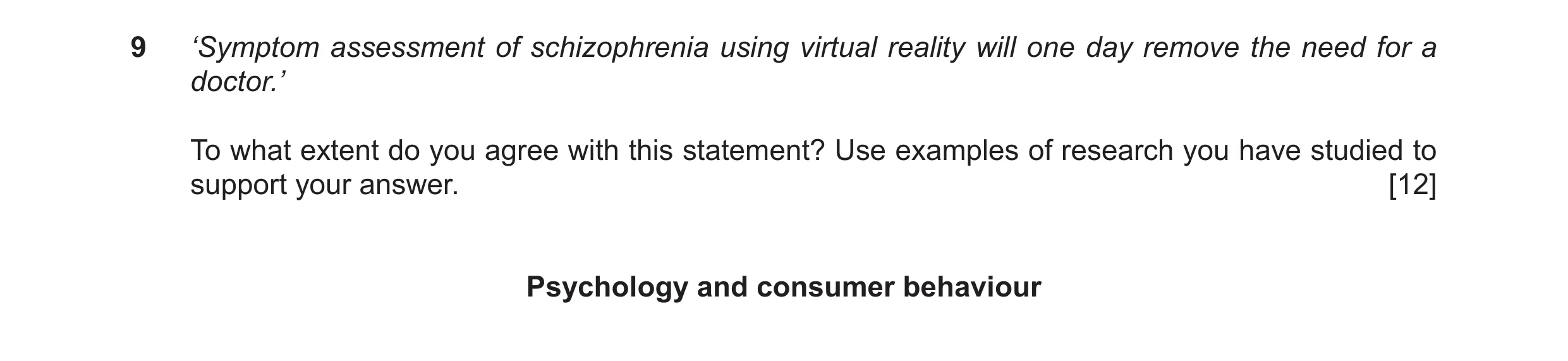
![Question 13: (a) Design a longitudinal study to investigate whether cognitive-behavioural therapy (CBT) manages schizophrenia effectively. [10] (b) Expl…](https://img.pastlit.com/crops/13d49164-bba5-409b-ab41-a91668f76458/q5.webp) 3 / 9
3 / 9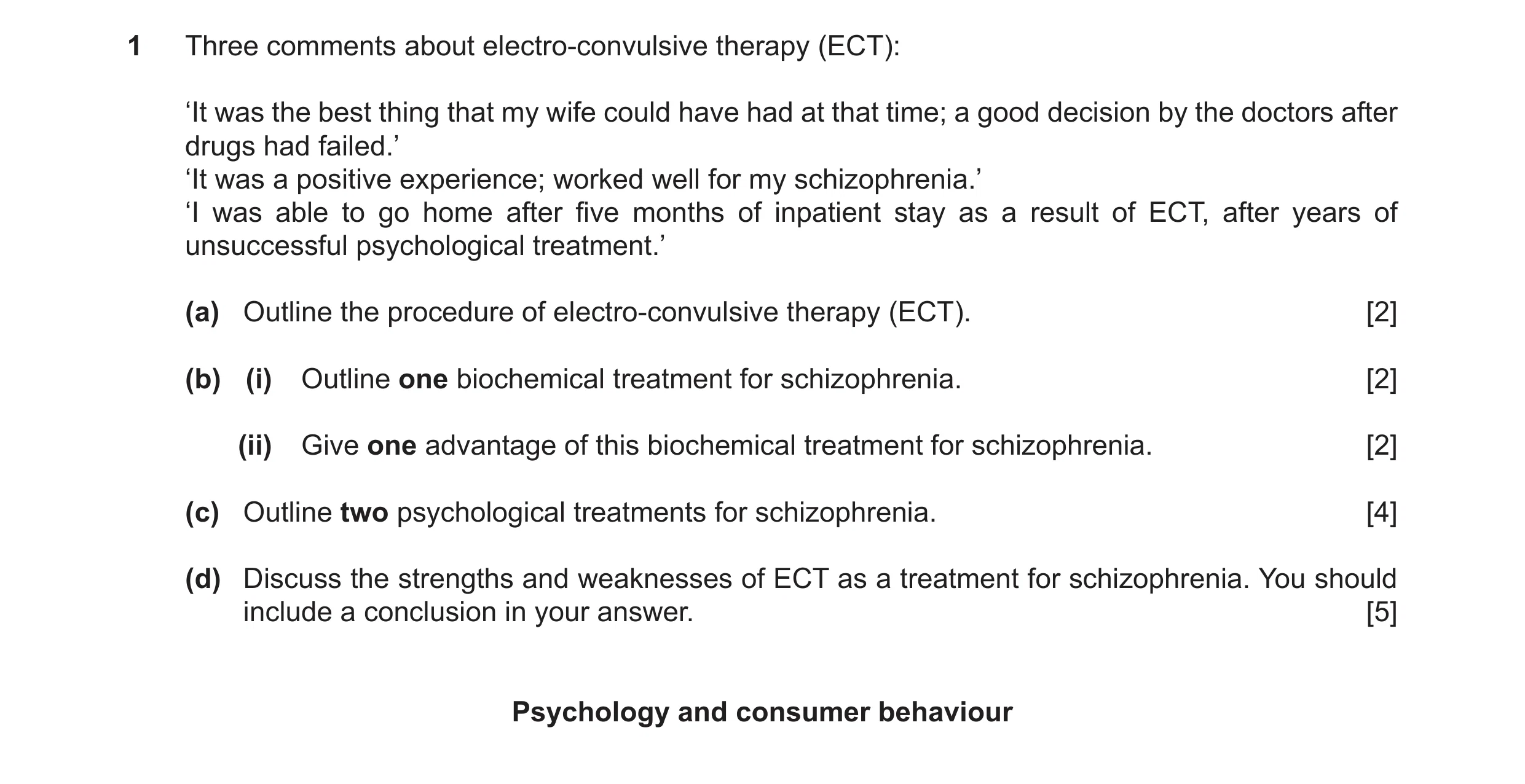
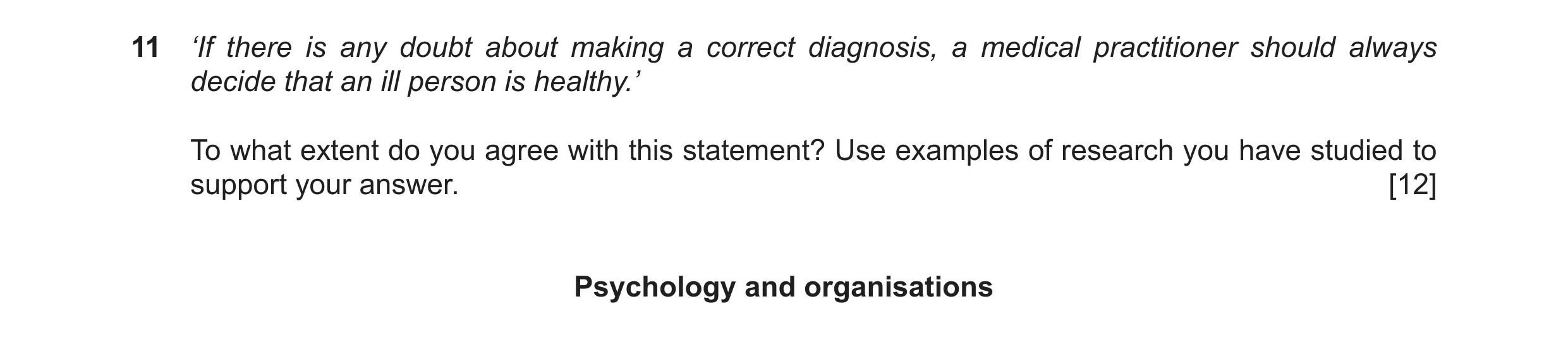
![Question 16: (a) Design a longitudinal study to investigate whether cognitive-behavioural therapy (CBT) manages schizophrenia effectively. [10] (b) Expl…](https://img.pastlit.com/crops/e457aede-d68a-4294-bc12-a7d2ee3fa23e/q5.webp) 4 / 9
4 / 9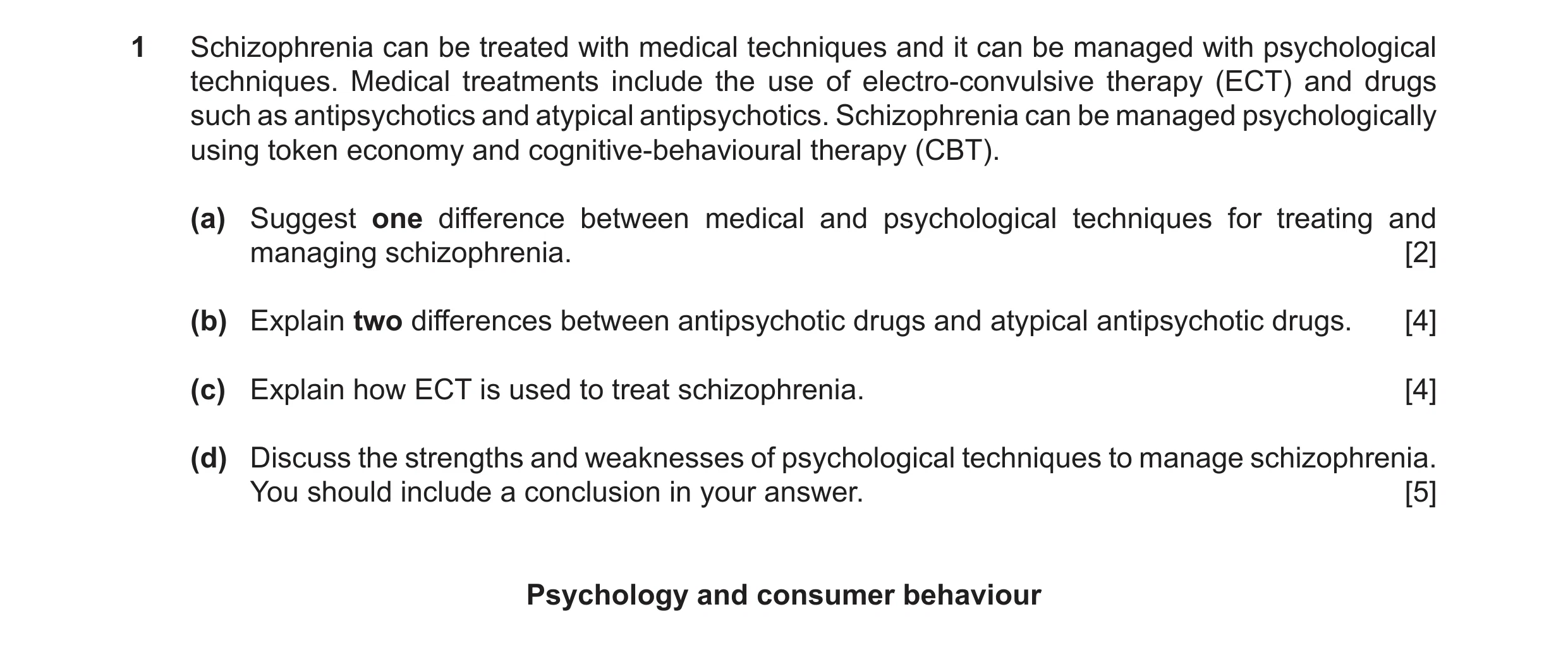
![Question 18: (a) Design a longitudinal study using observation to investigate whether a token economy effectively manages schizophrenia. [10] (b) Explai…](https://img.pastlit.com/crops/8bec0524-407a-4634-b957-0fb32ac3506c/q5.webp)
![Question 20: (a) Design a longitudinal study using observation to investigate whether a token economy effectively manages schizophrenia. [10] (b) Explai…](https://img.pastlit.com/crops/e202994b-f274-4649-a57c-37ee19a56d80/q5.webp)
 5 / 9
5 / 9
 6 / 9
6 / 9
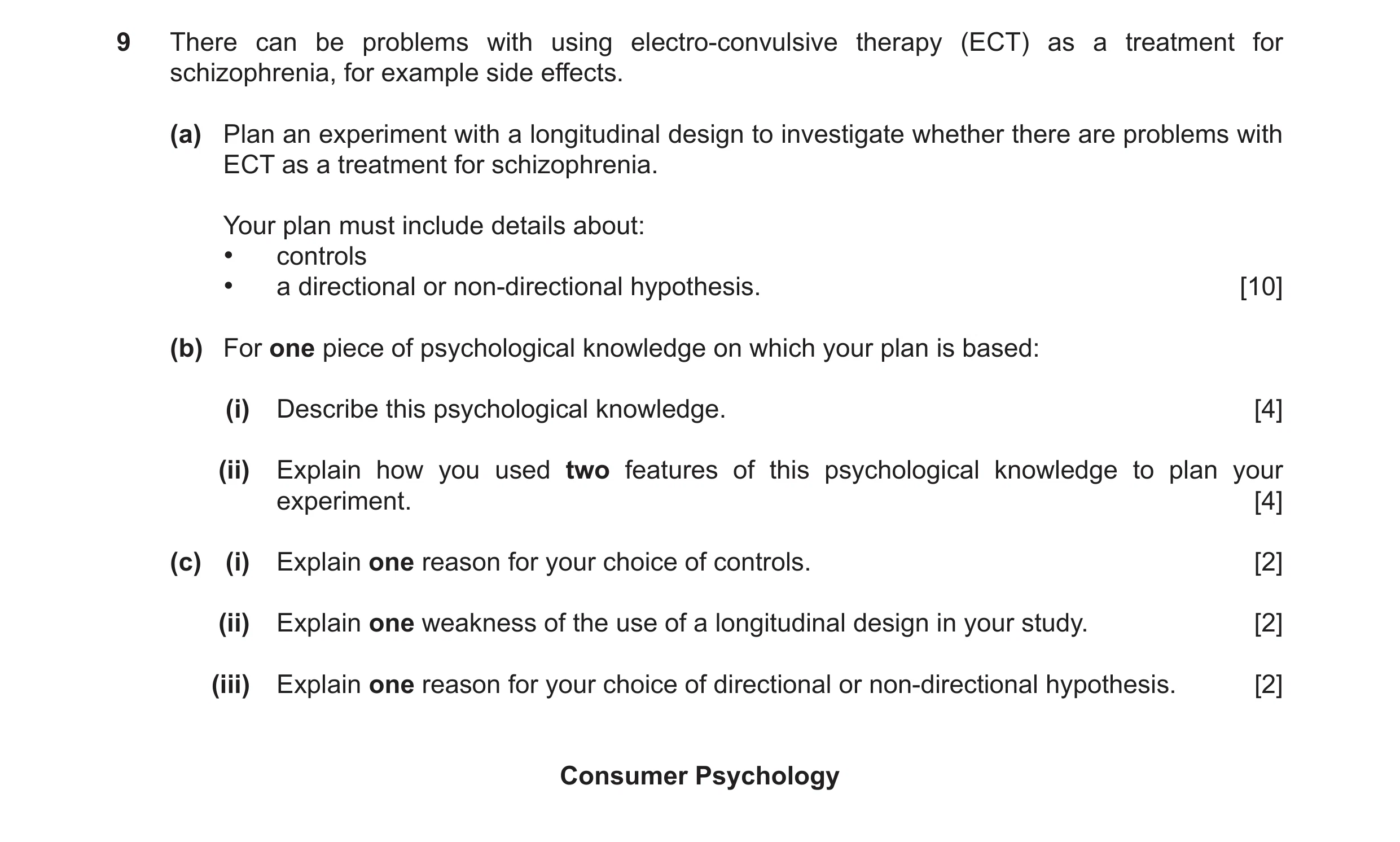
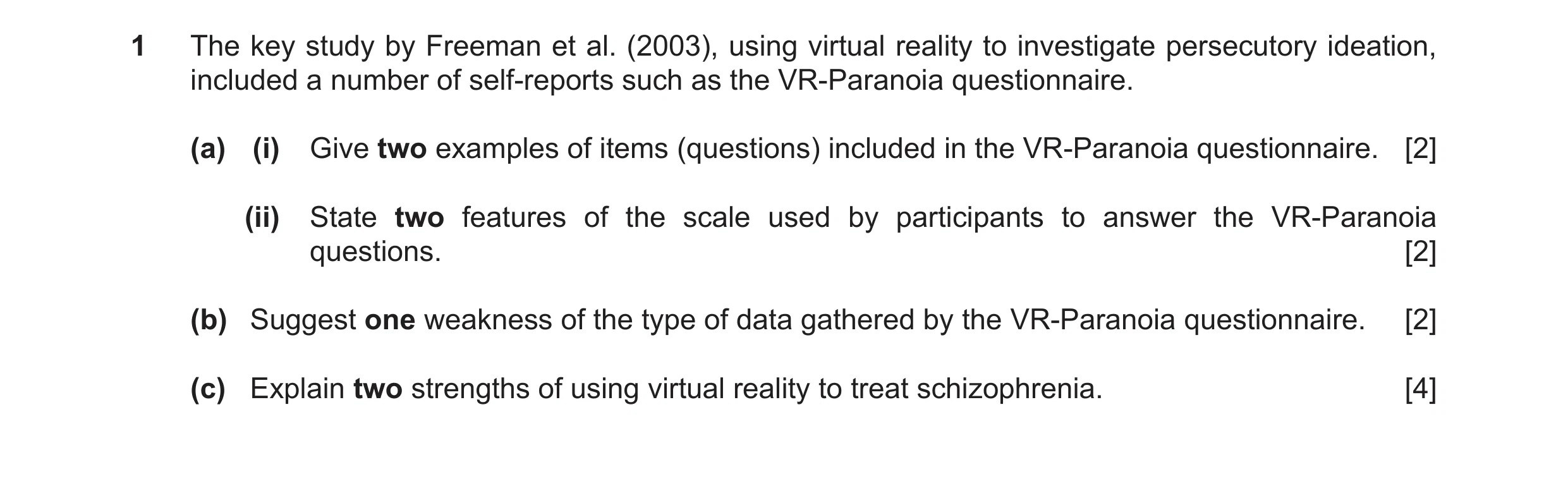 7 / 9
7 / 9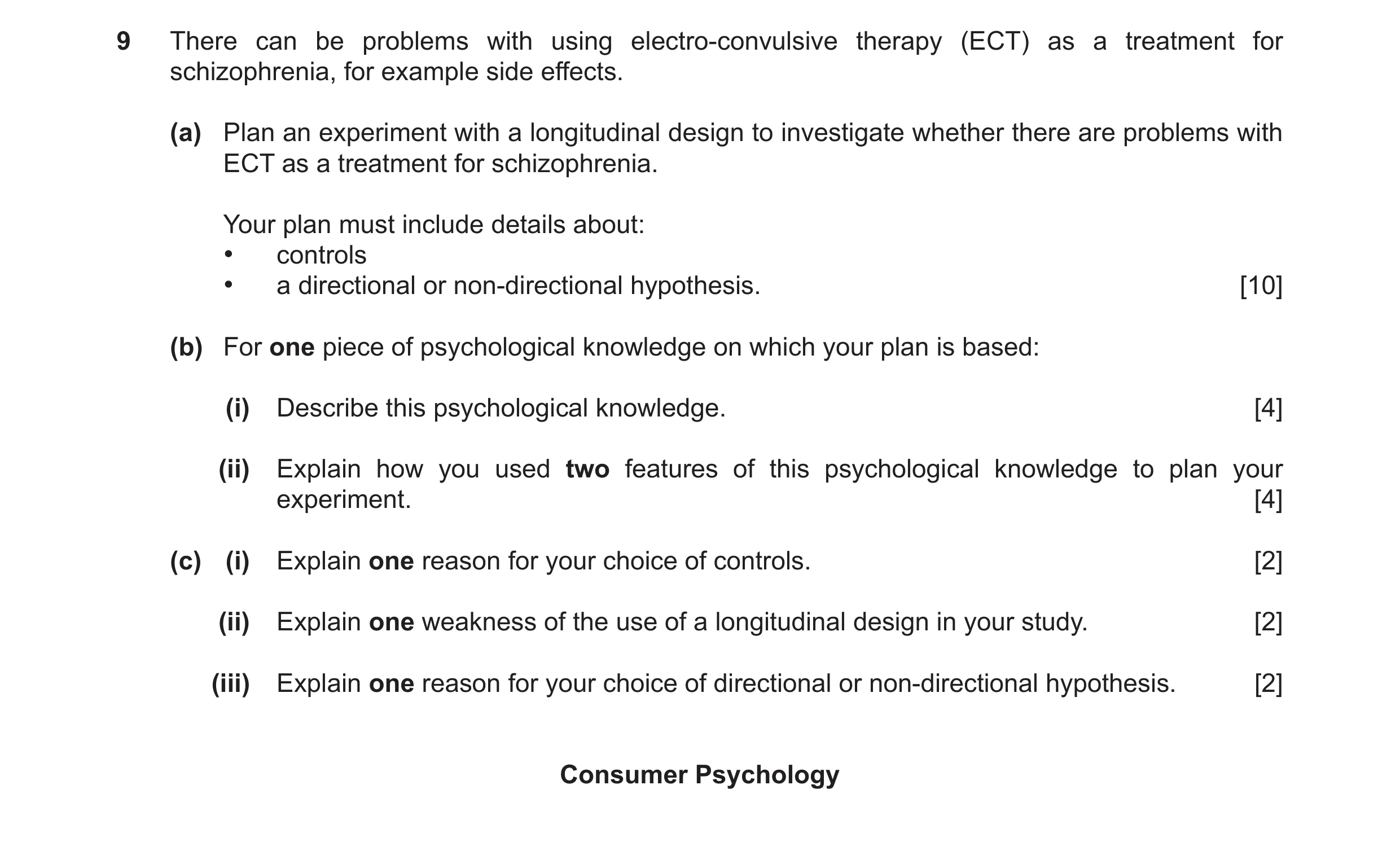
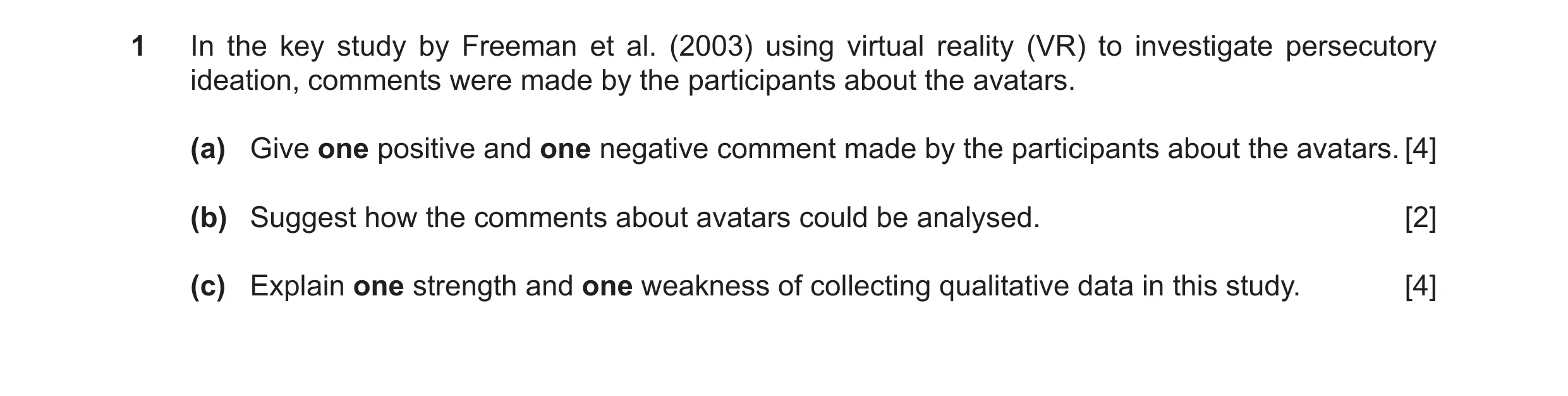
![Question 32: (a) Outline one case study of schizophrenia. [2] (b) Suggest why the data gathered from a person with schizophrenia might not be reliable. …](https://img.pastlit.com/crops/e3cfb09b-8ac0-4758-9aae-063f7dc507b4/q2.webp) 8 / 9
8 / 9![Question 33: (a) Outline one case study of schizophrenia. [2] (b) Suggest why the data gathered from a person with schizophrenia might not be reliable. …](https://img.pastlit.com/crops/1c762dad-dc75-48a8-b63b-ccf98441d2e5/q2.webp) 9 / 9
9 / 9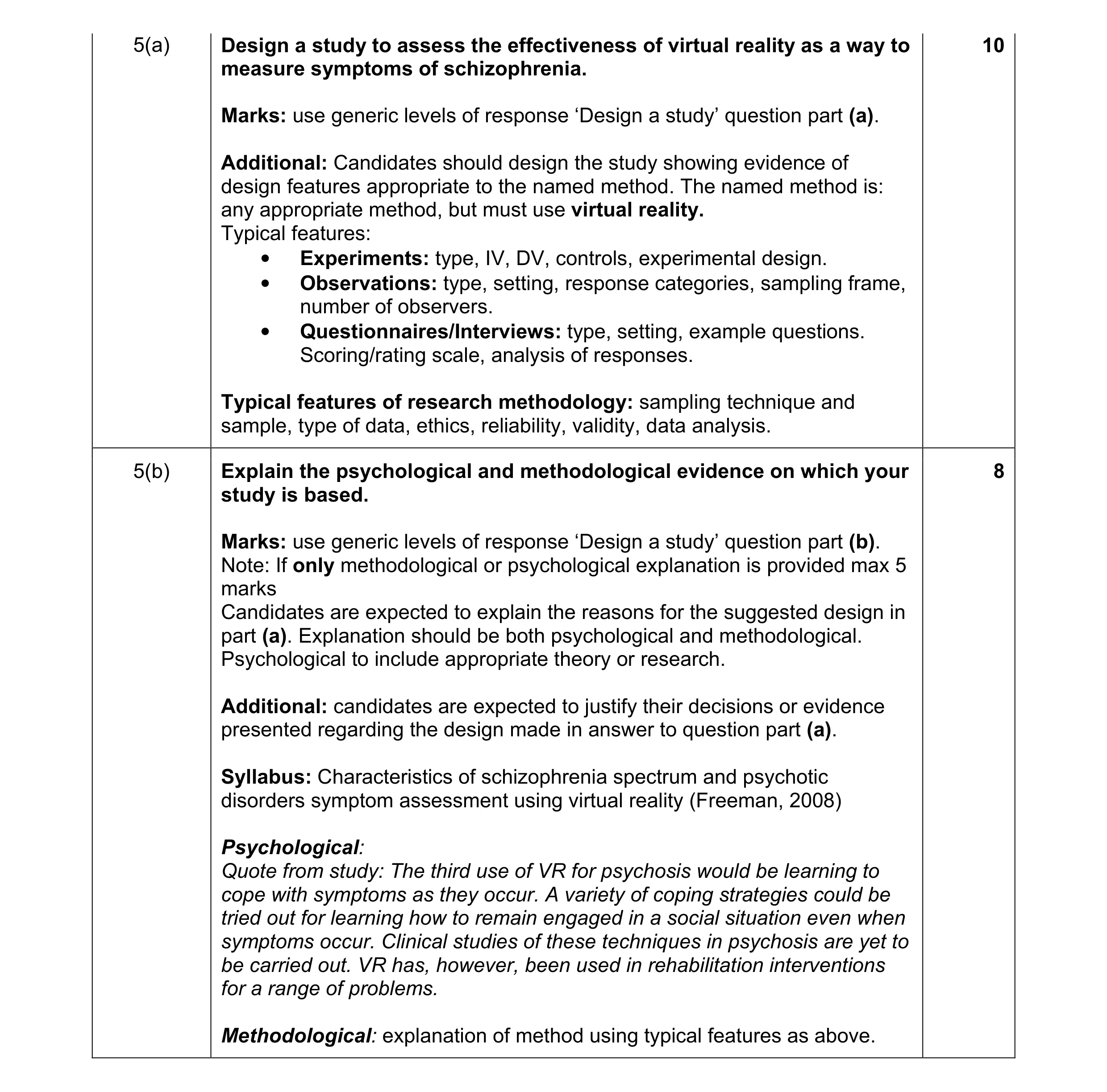 18
18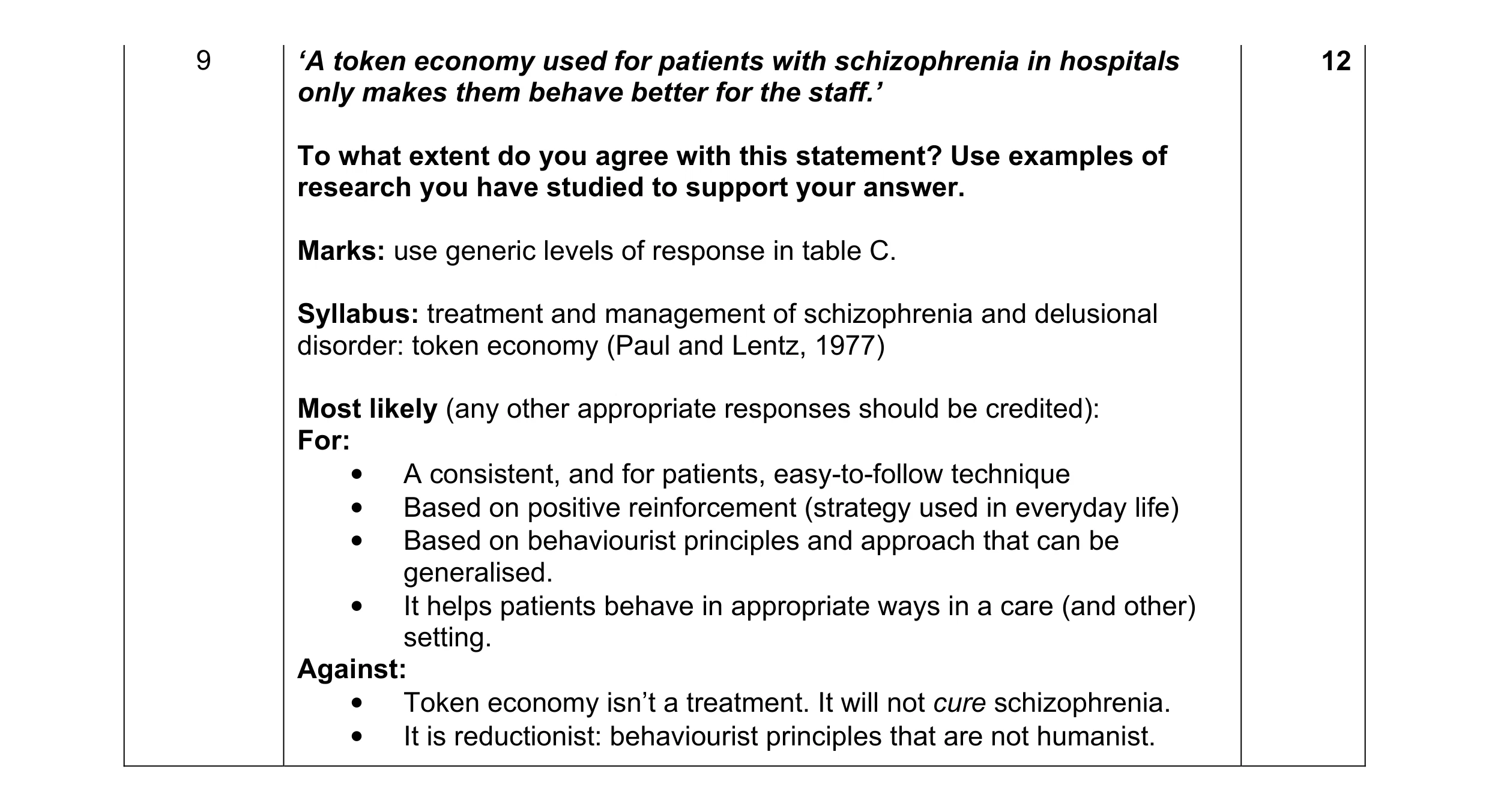 12
12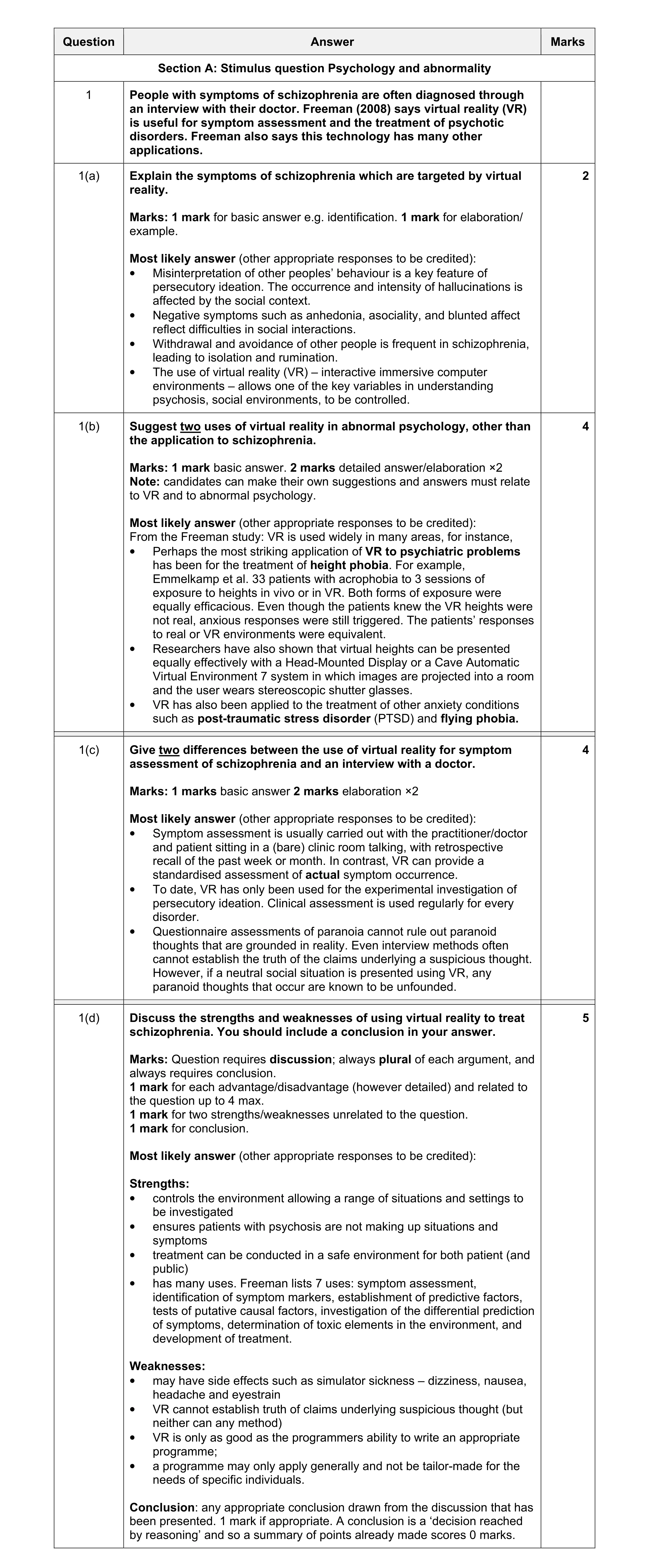 15
15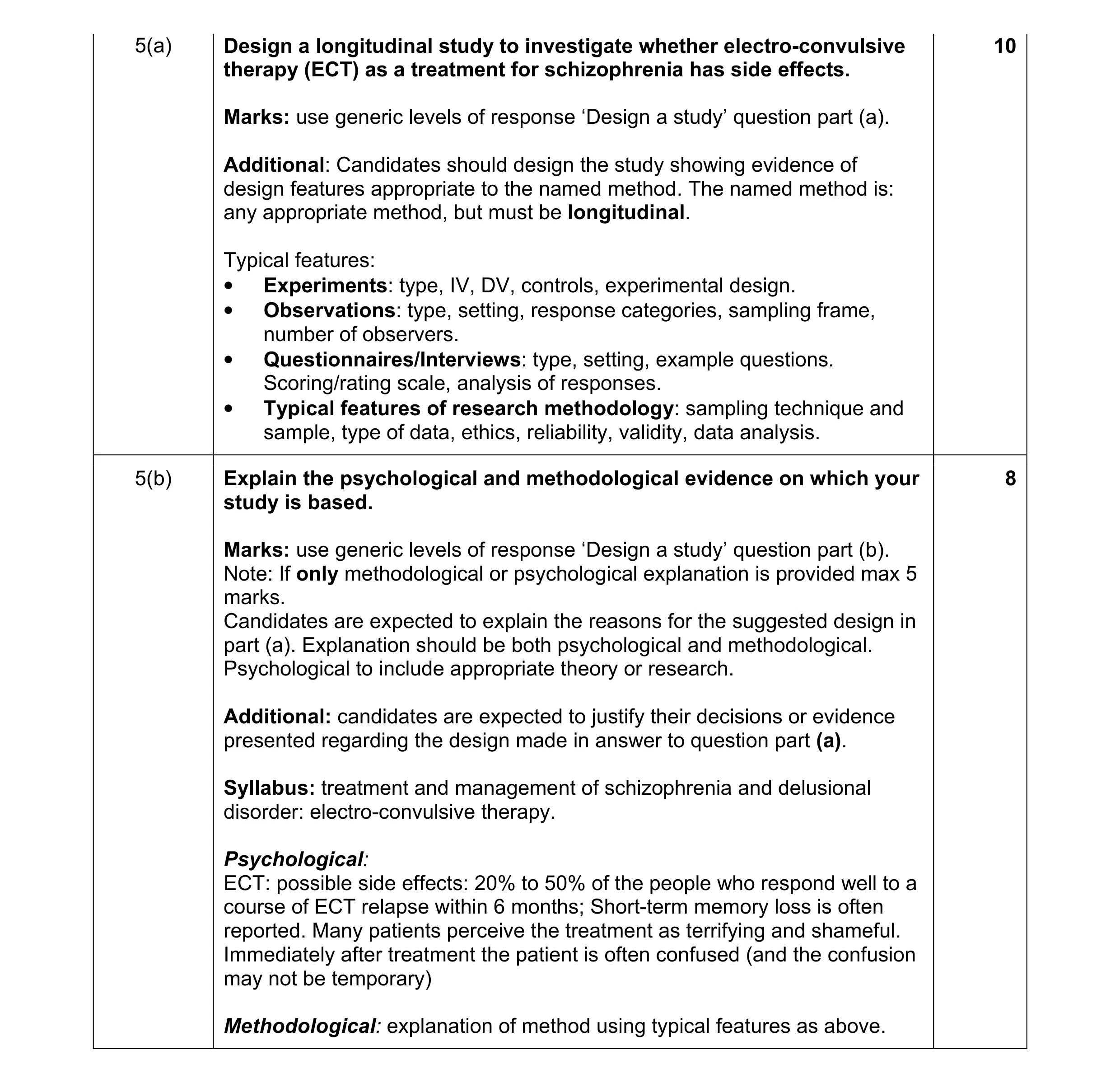 18
18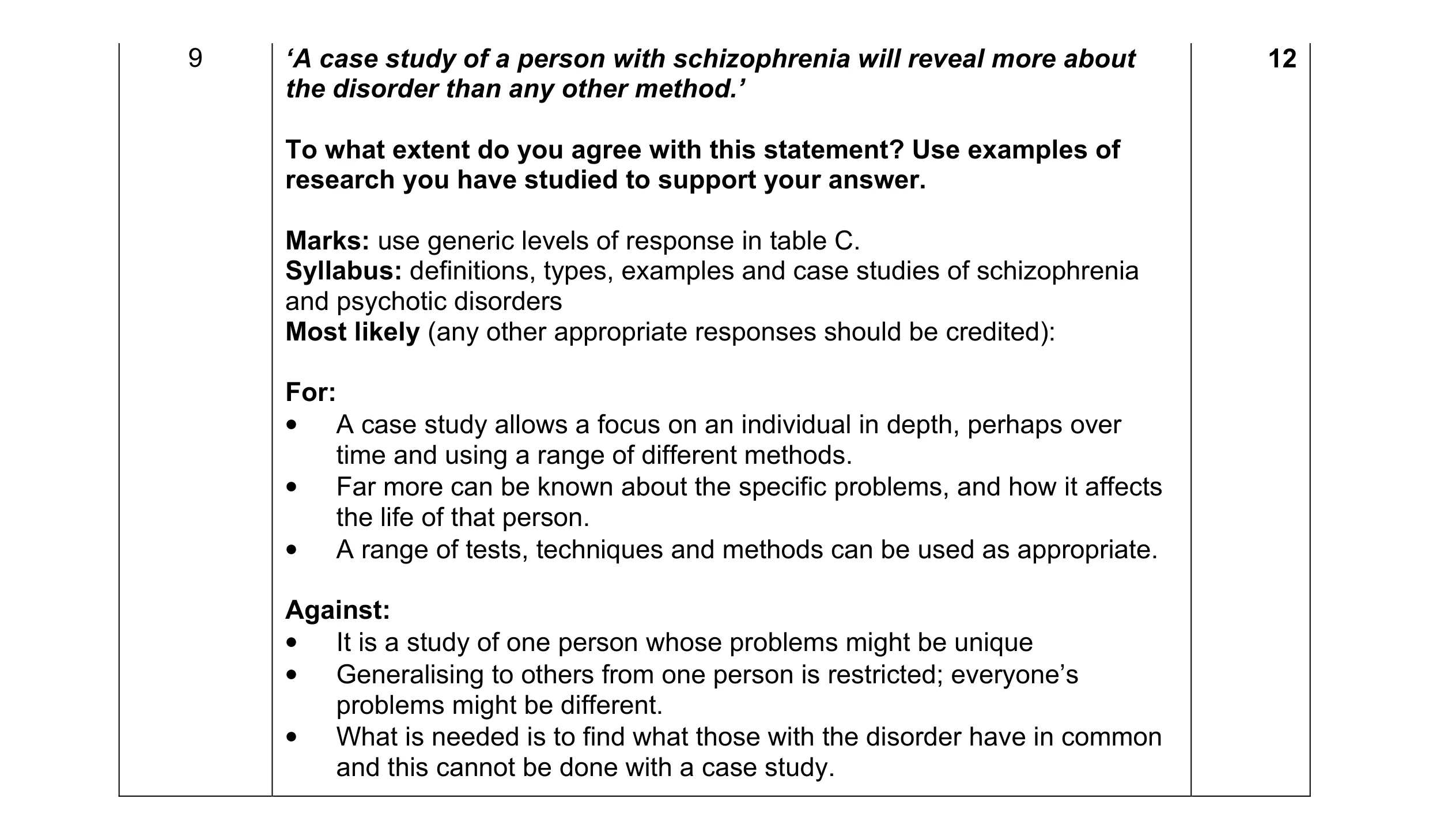 12
12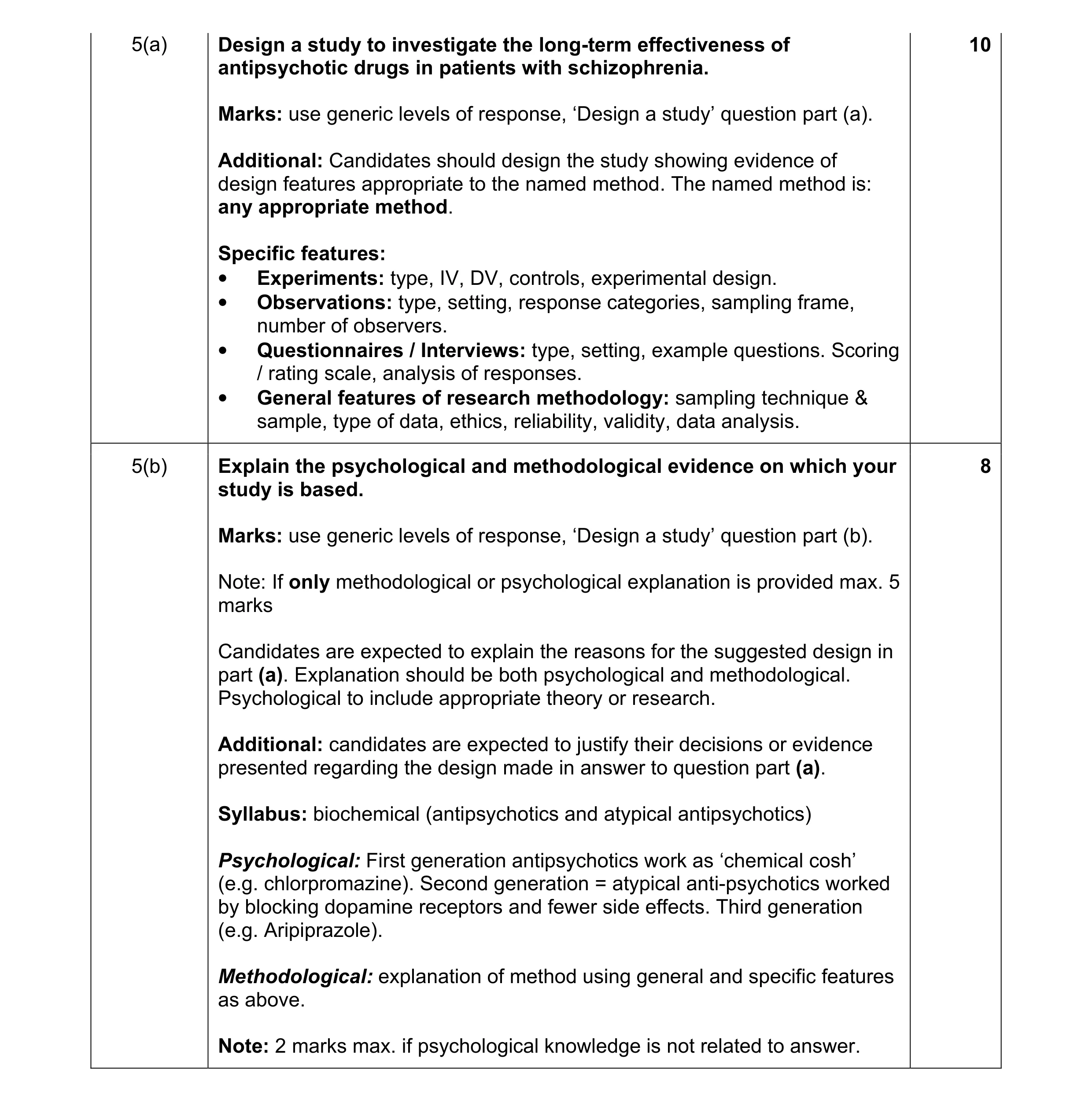 18
18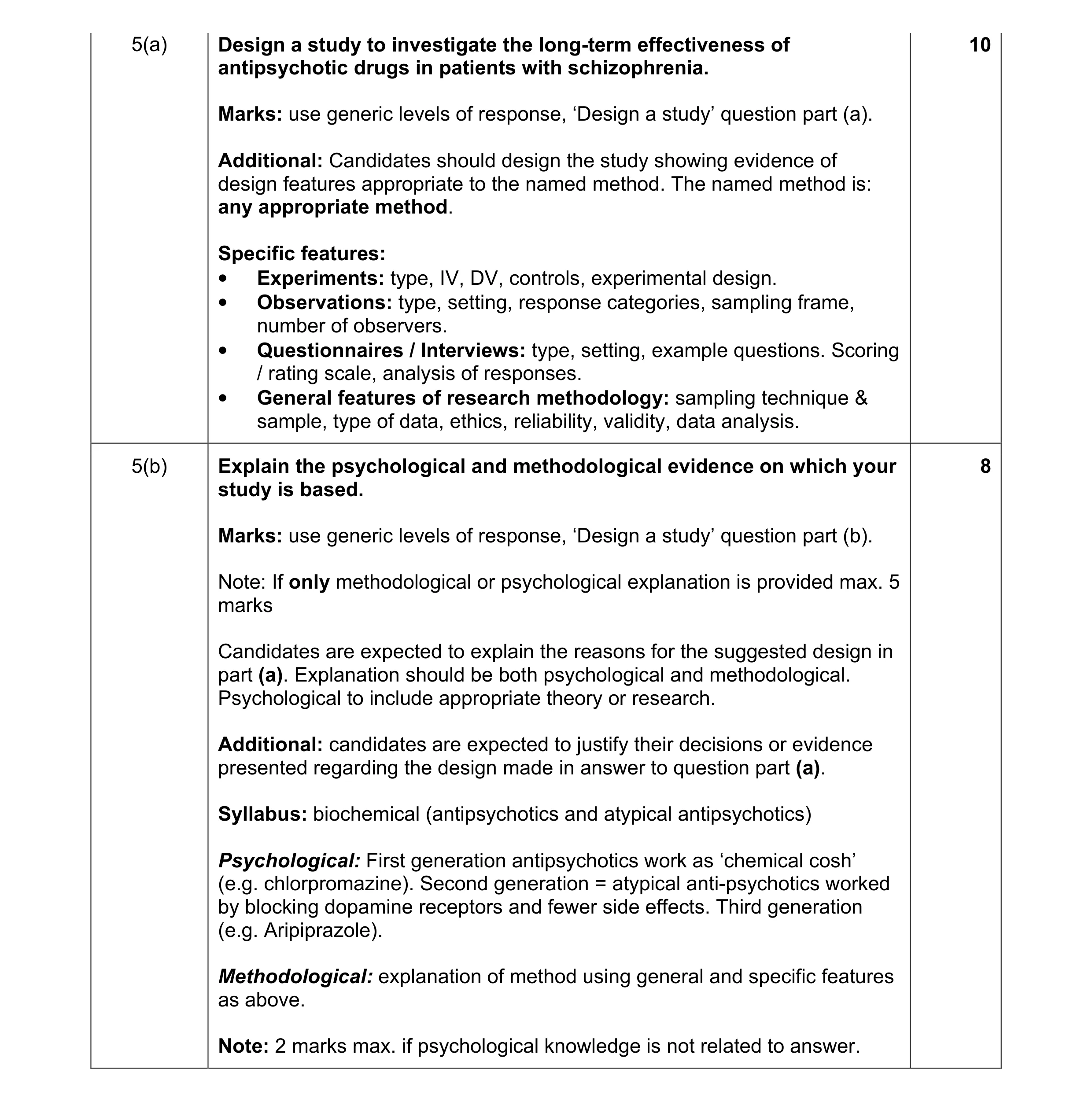 18
18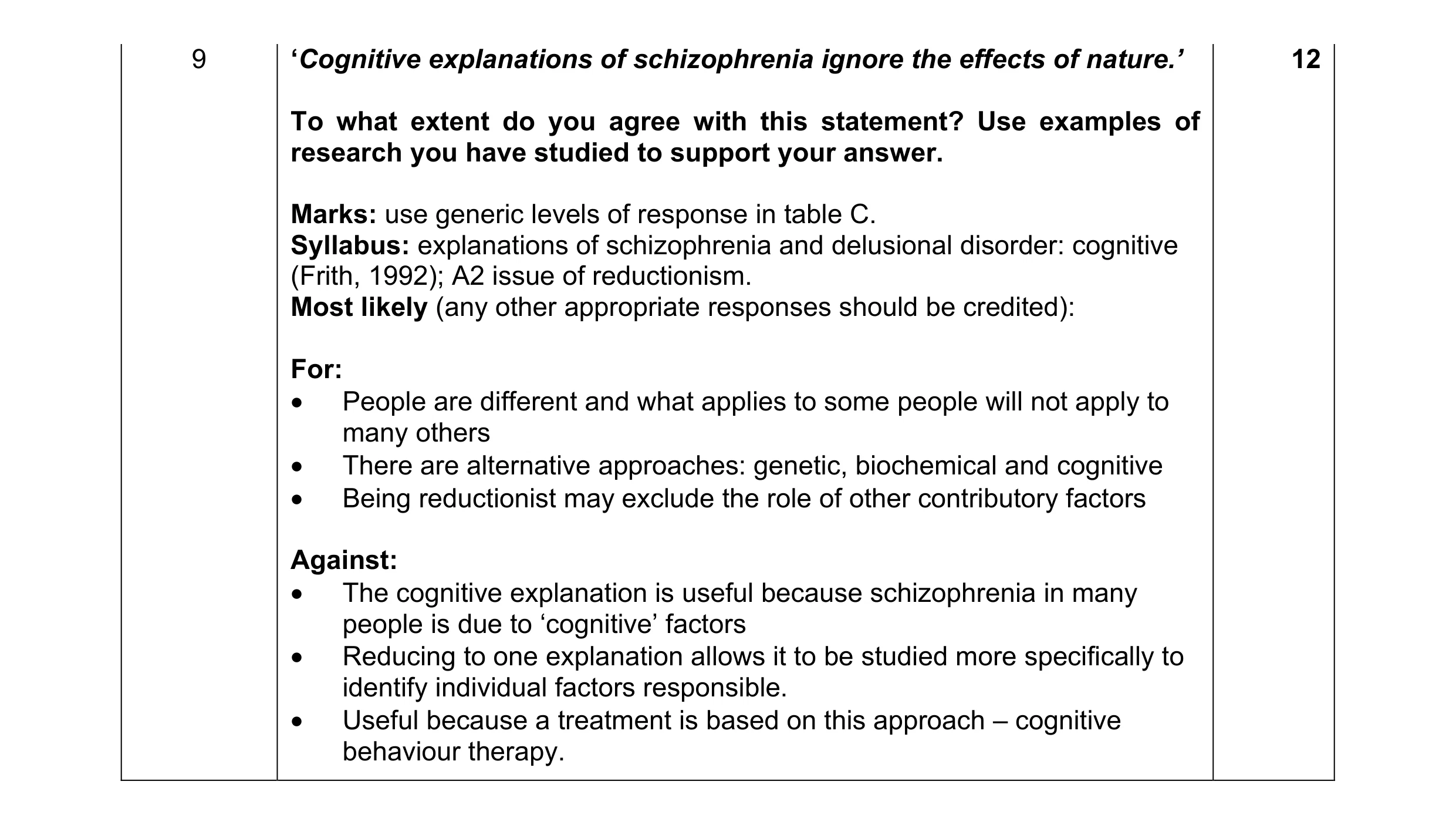 12
12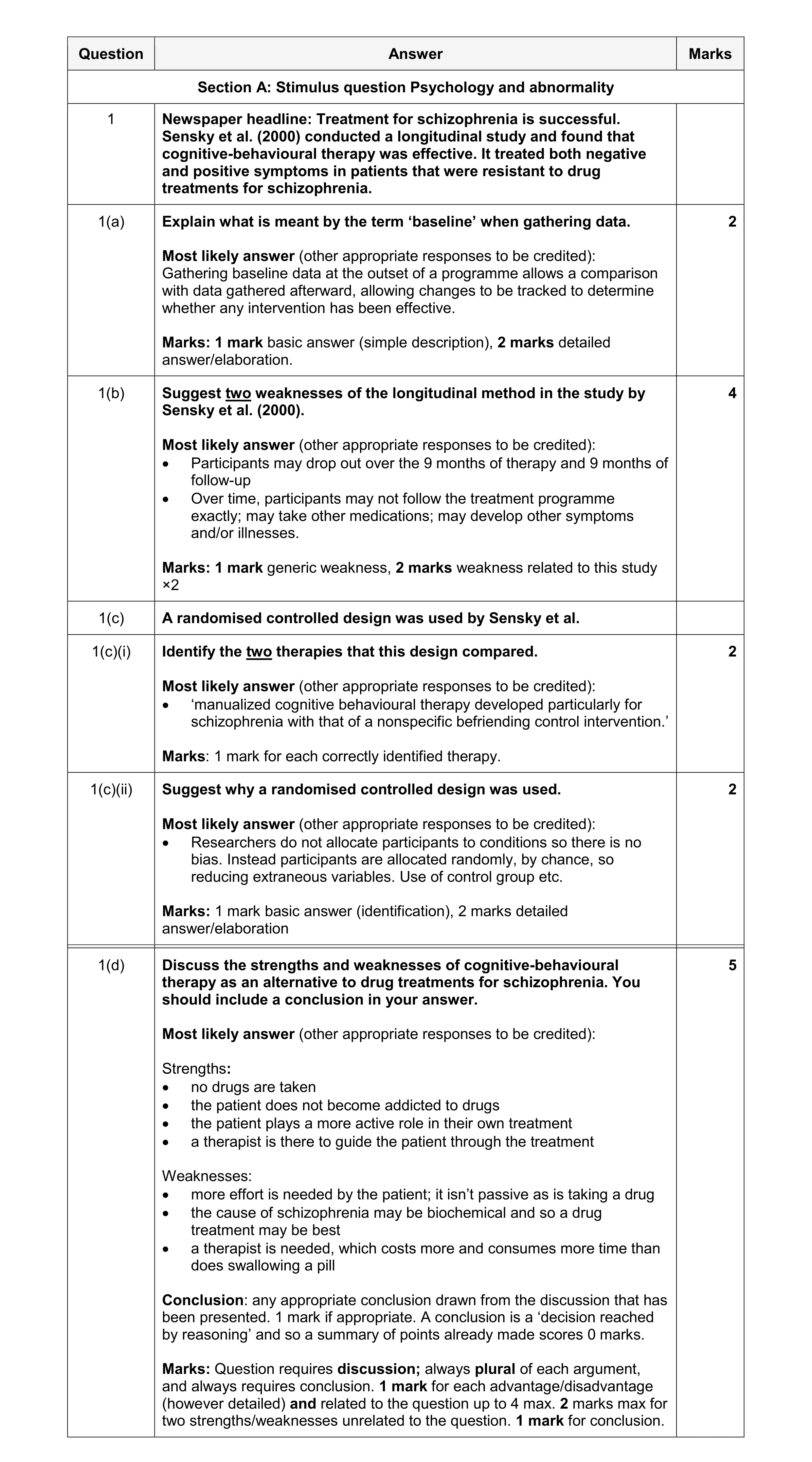 15
15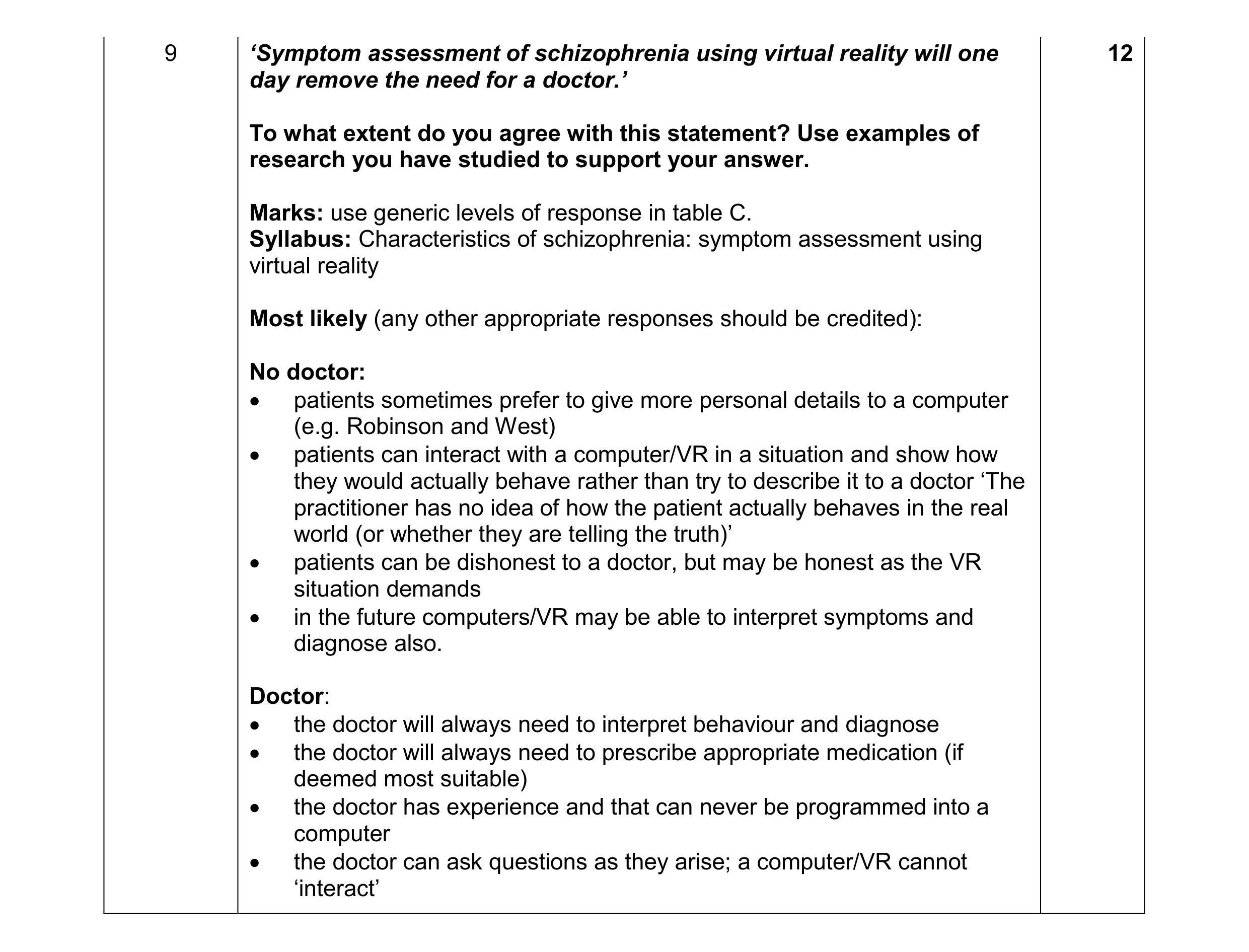 12
12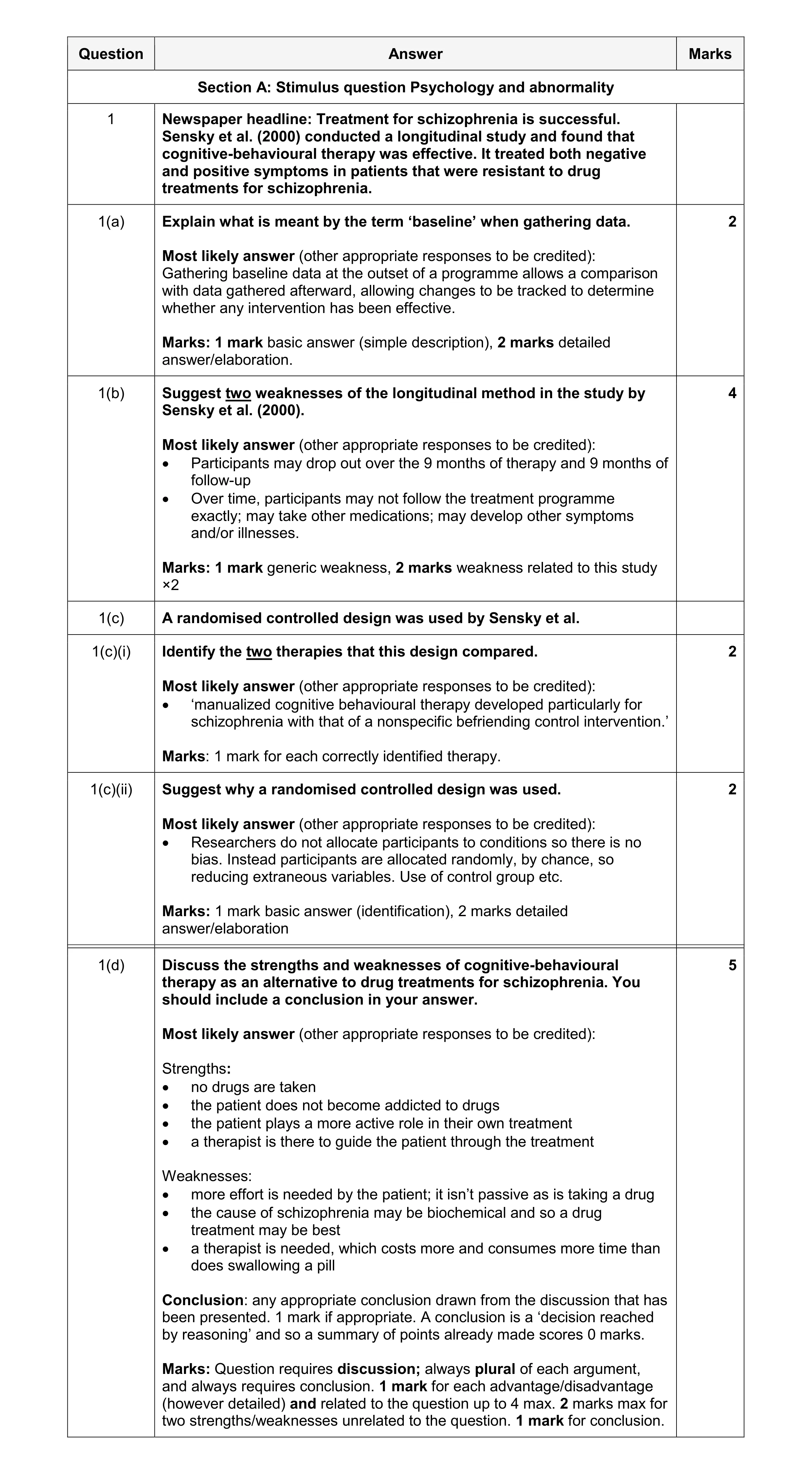 15
15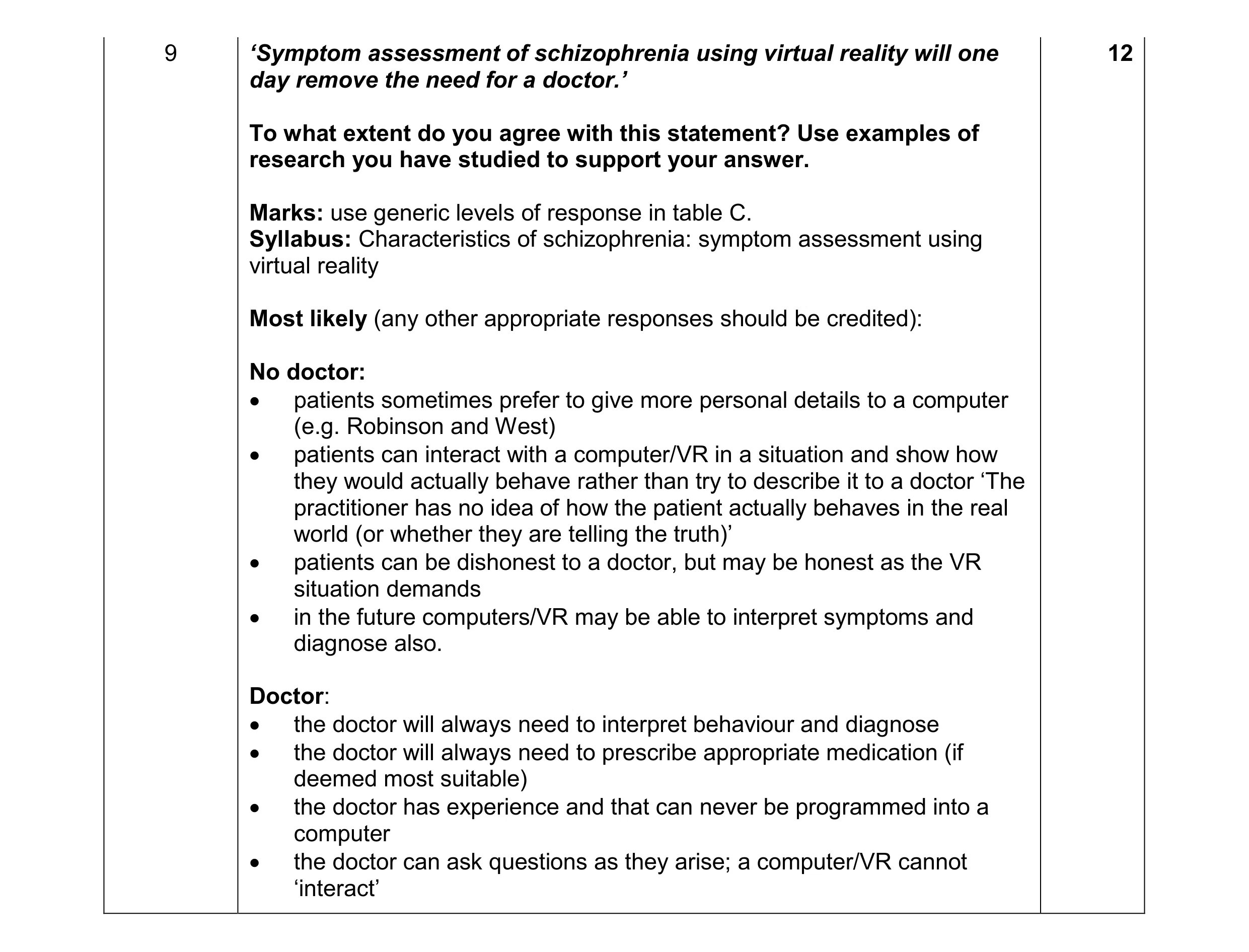 12
12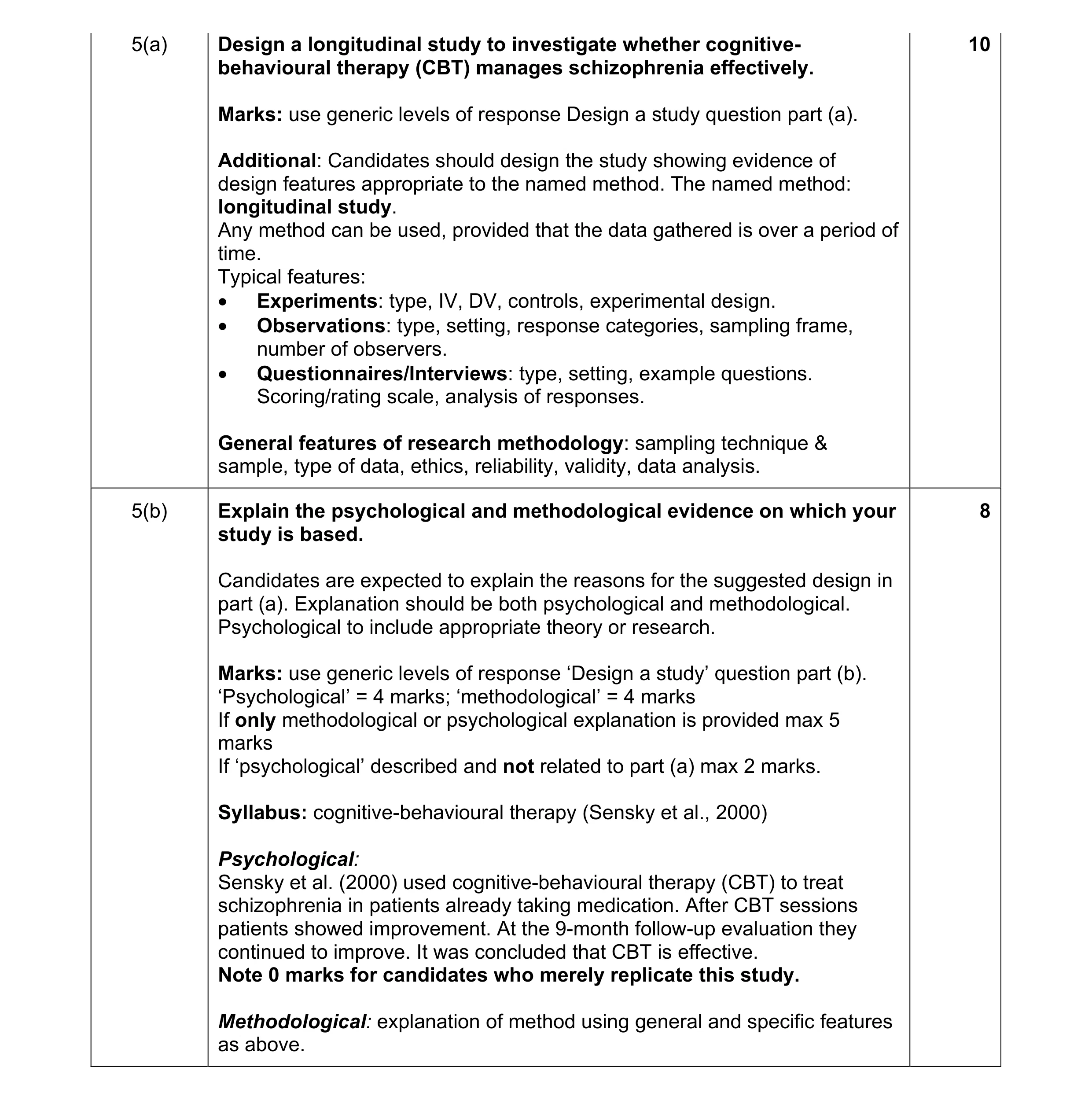 18
18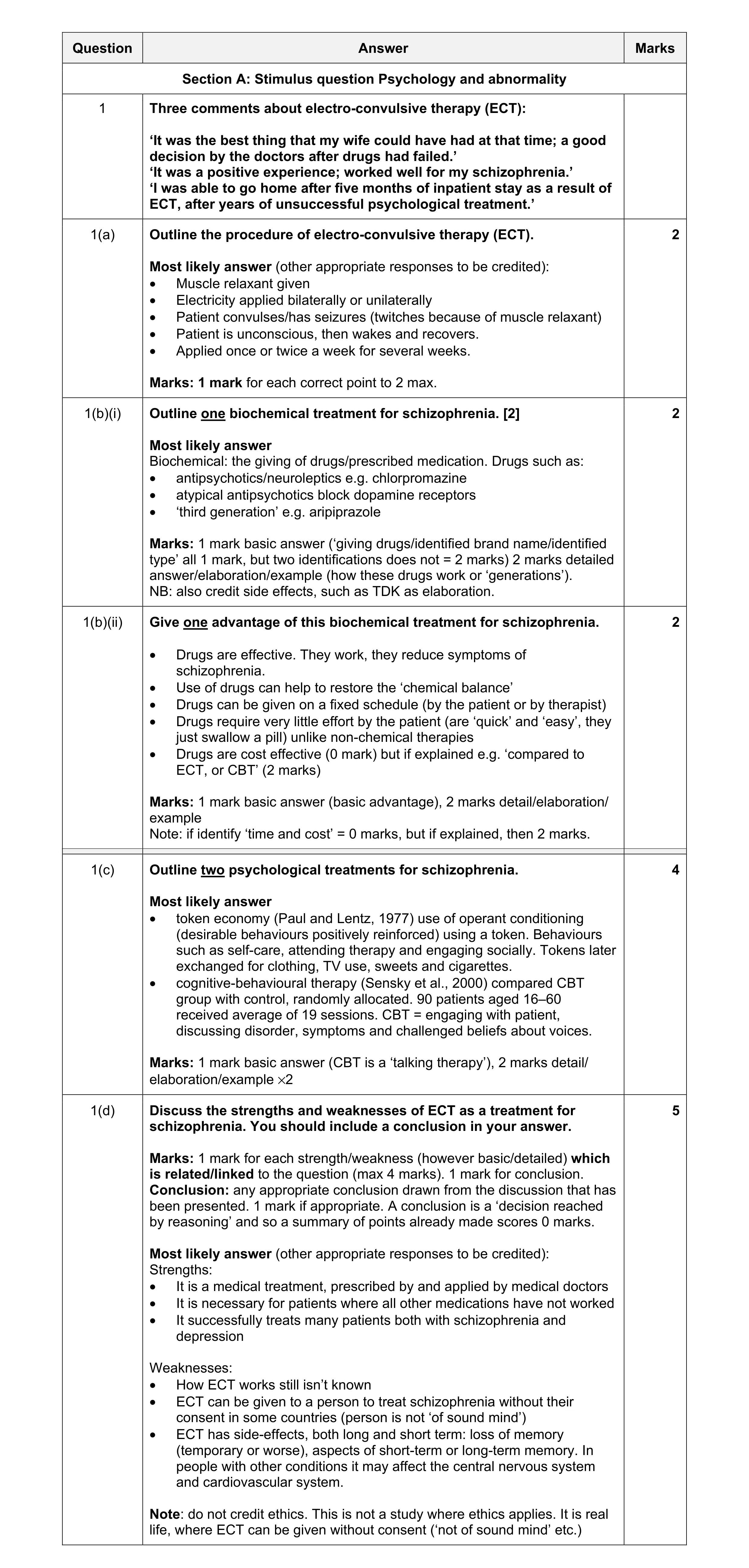 15
15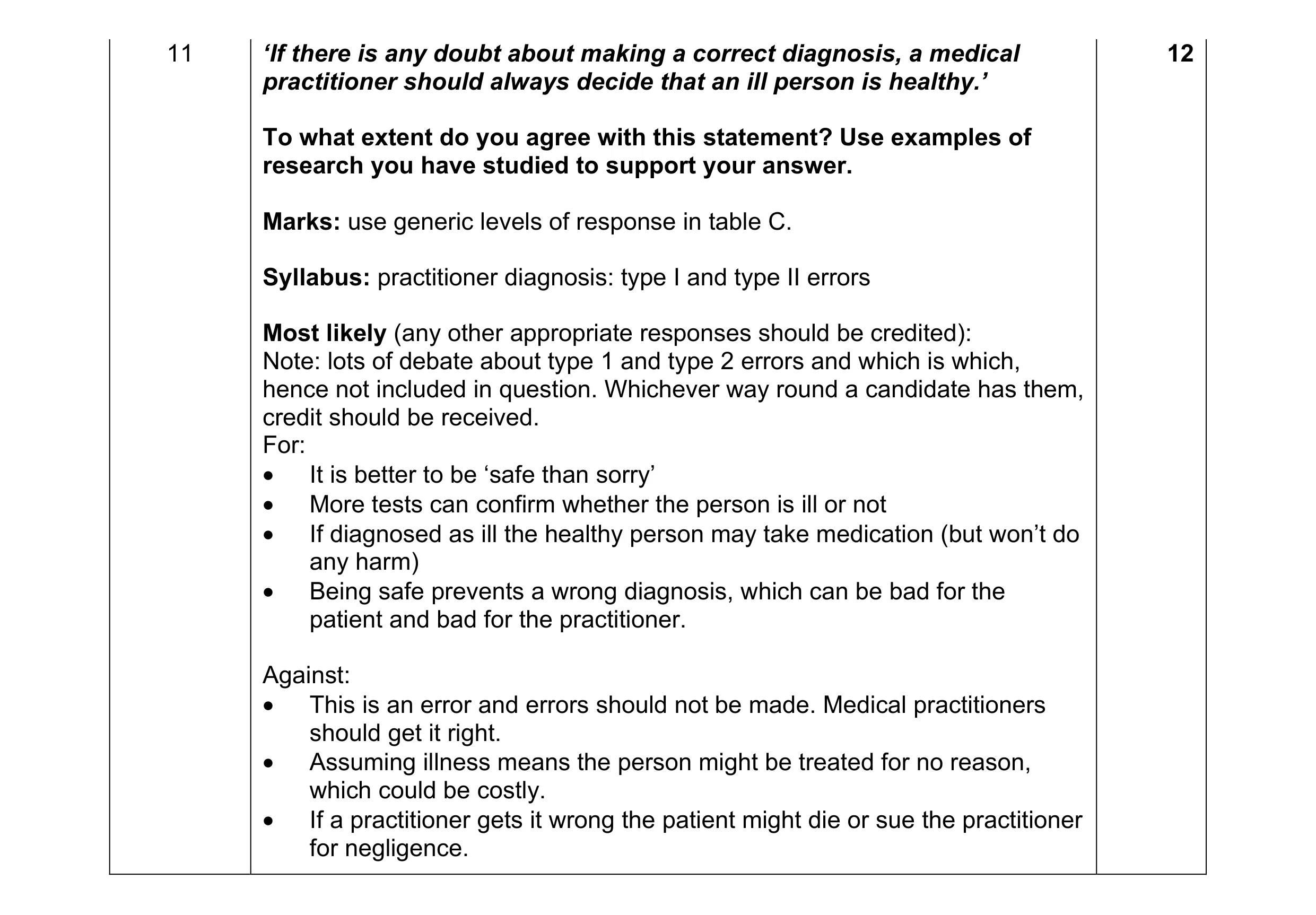 12
12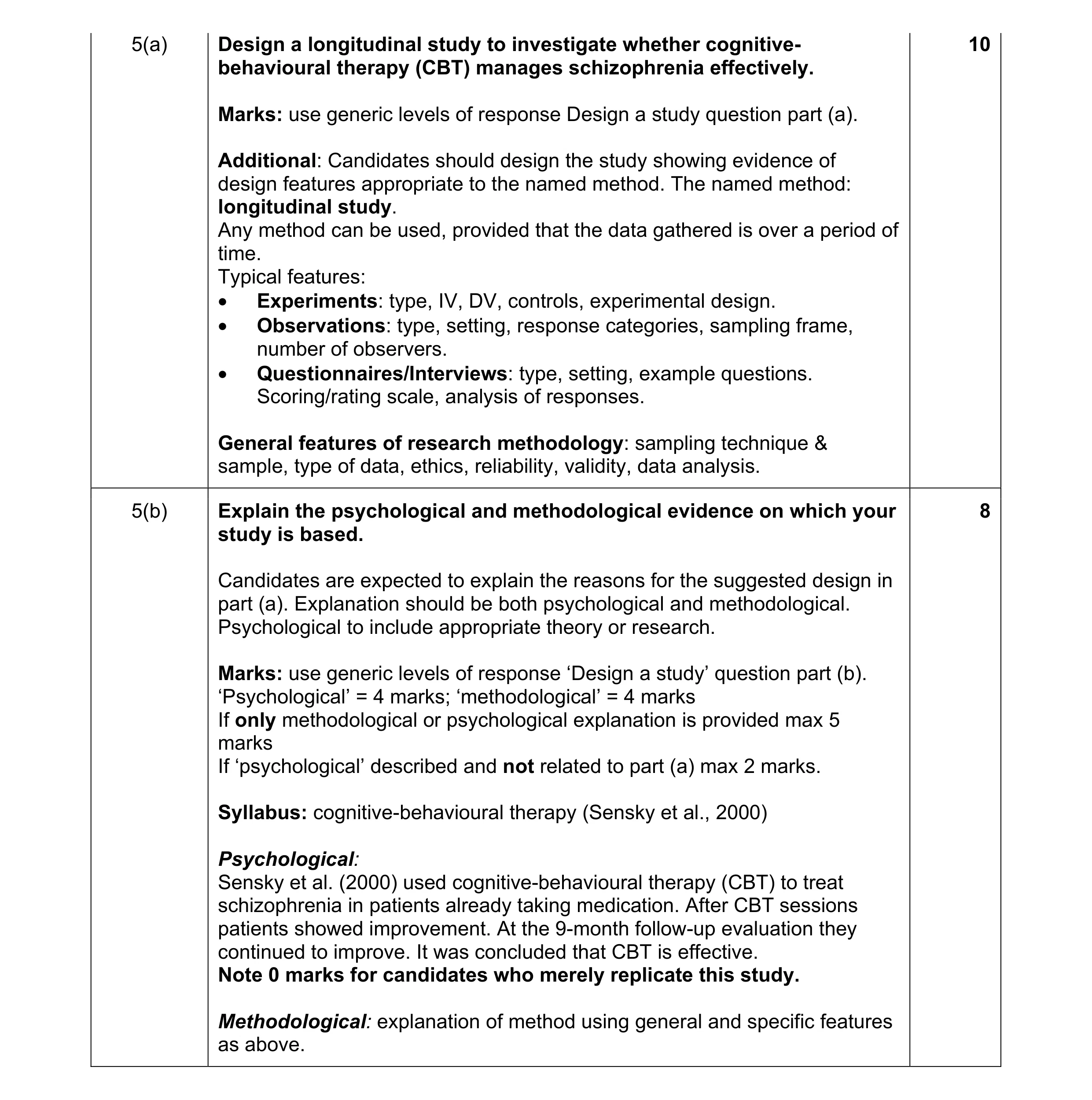 18
18 15
15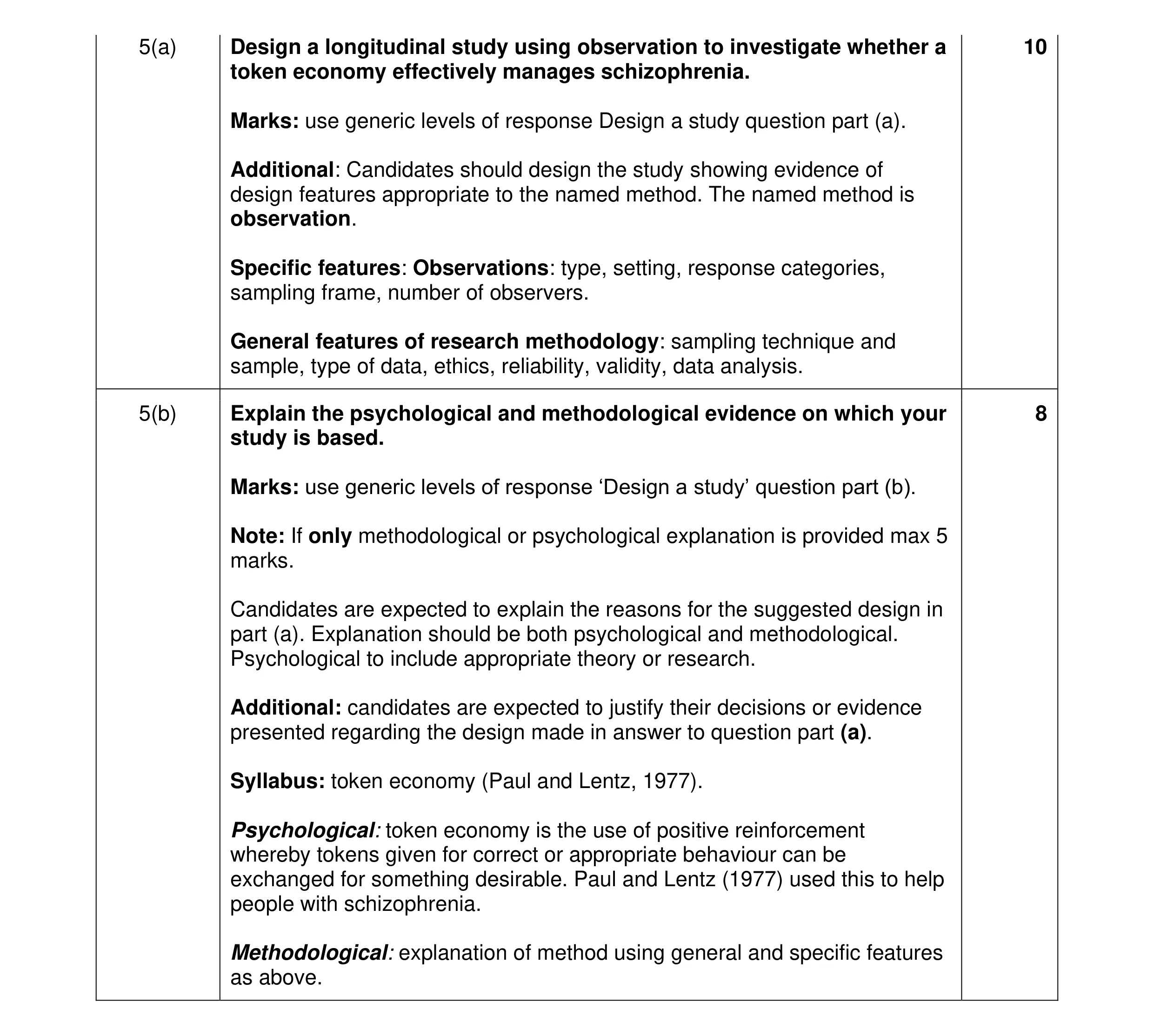 18
18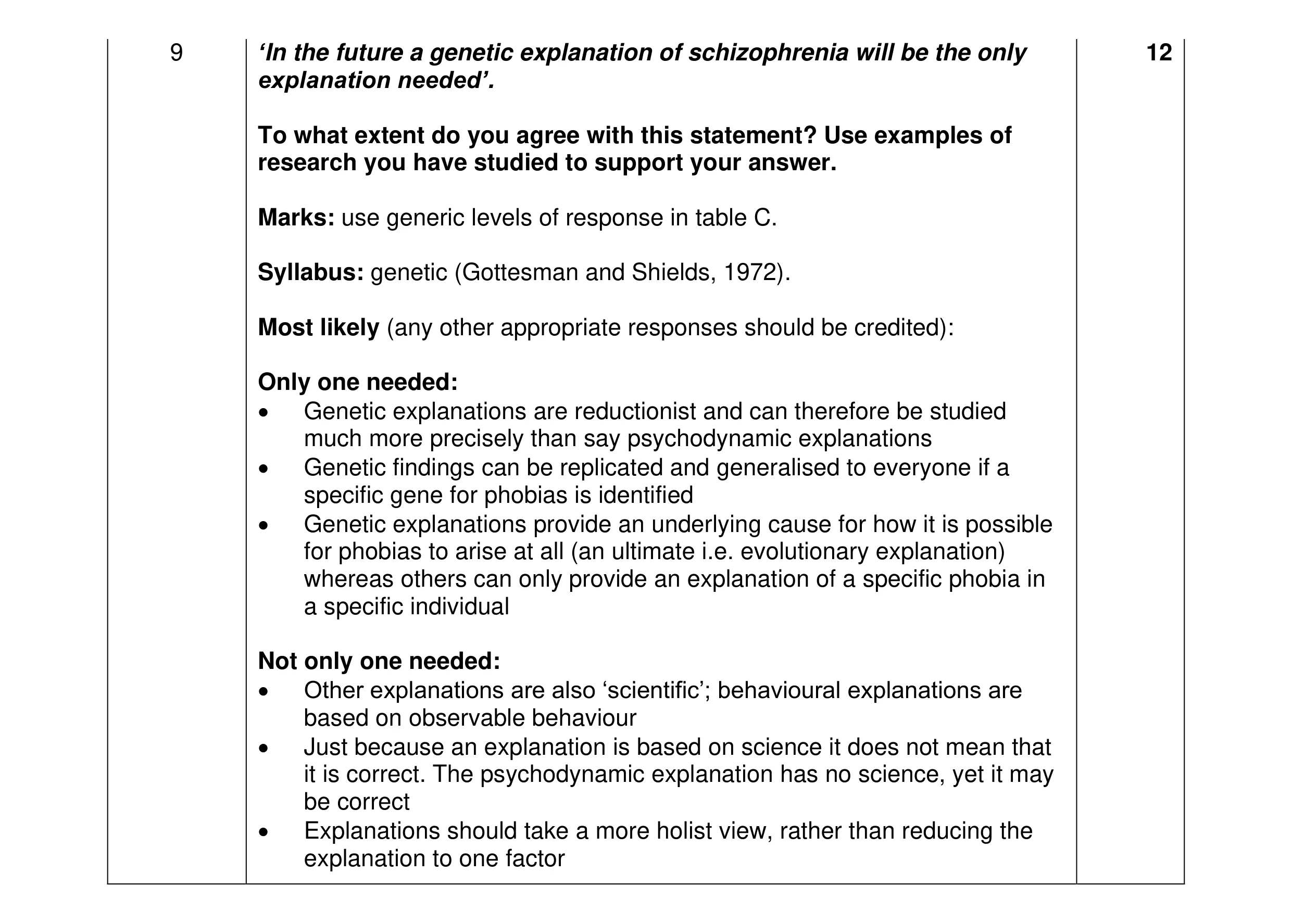 12
12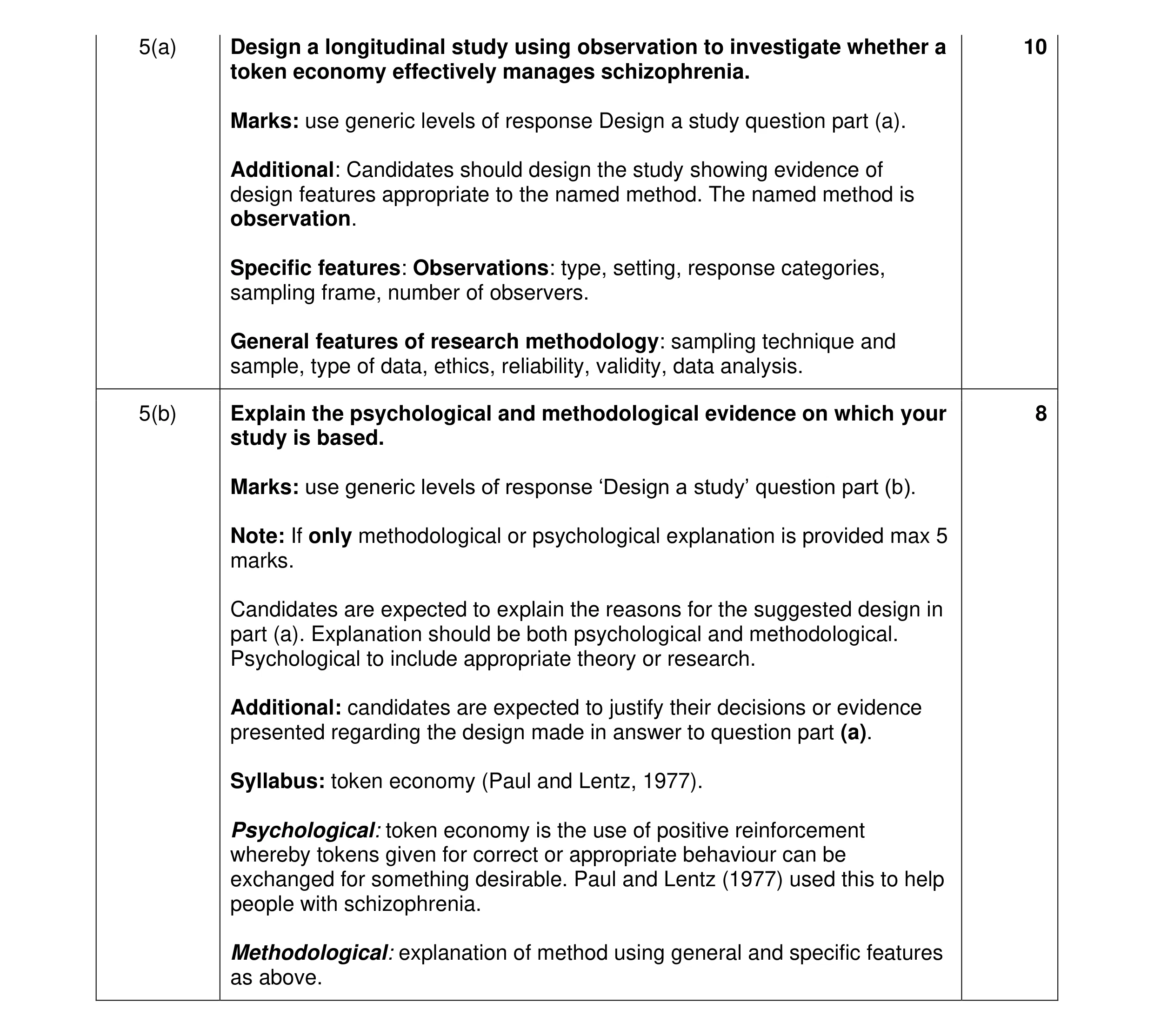 18
18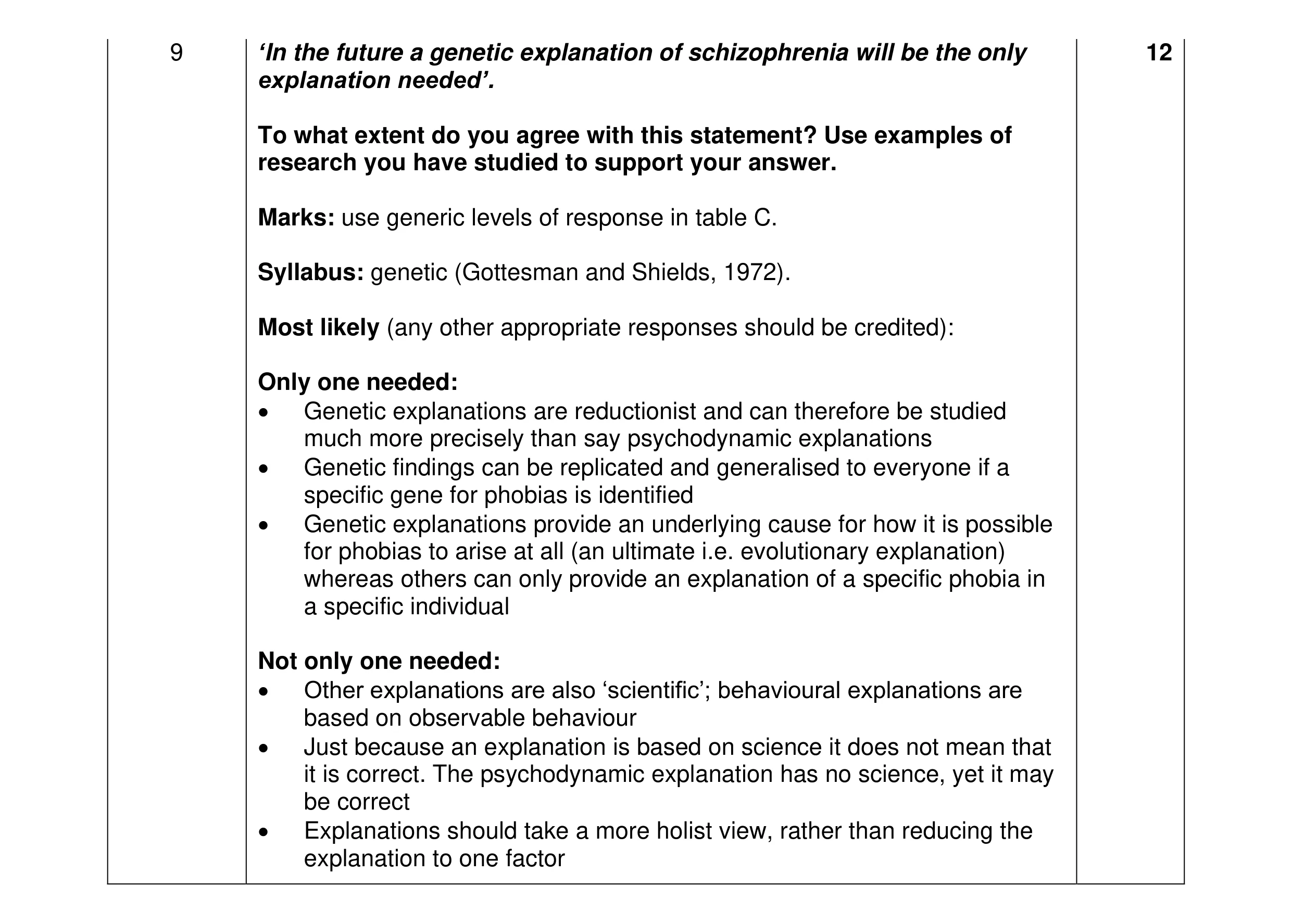 12
12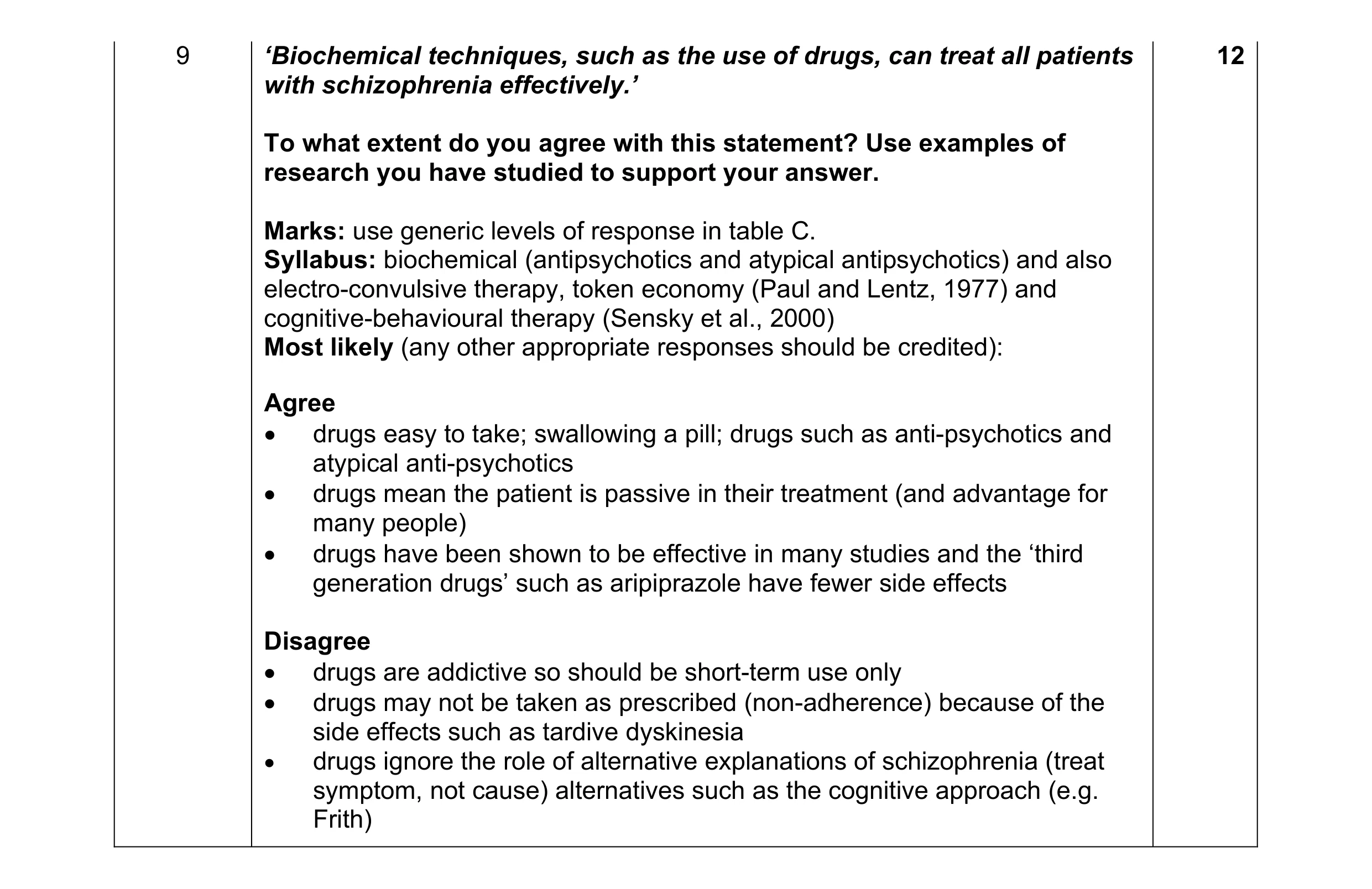 12
12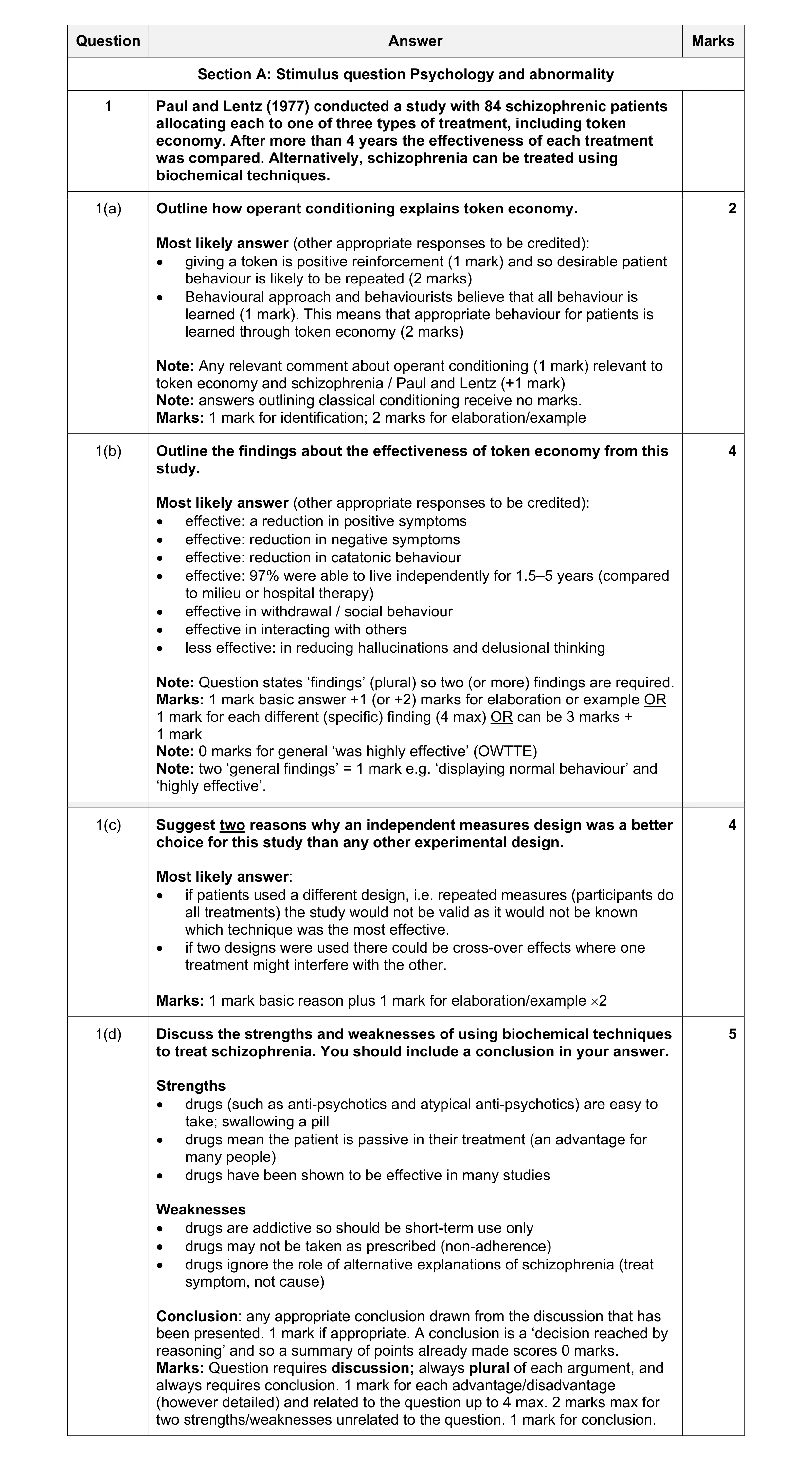 15
15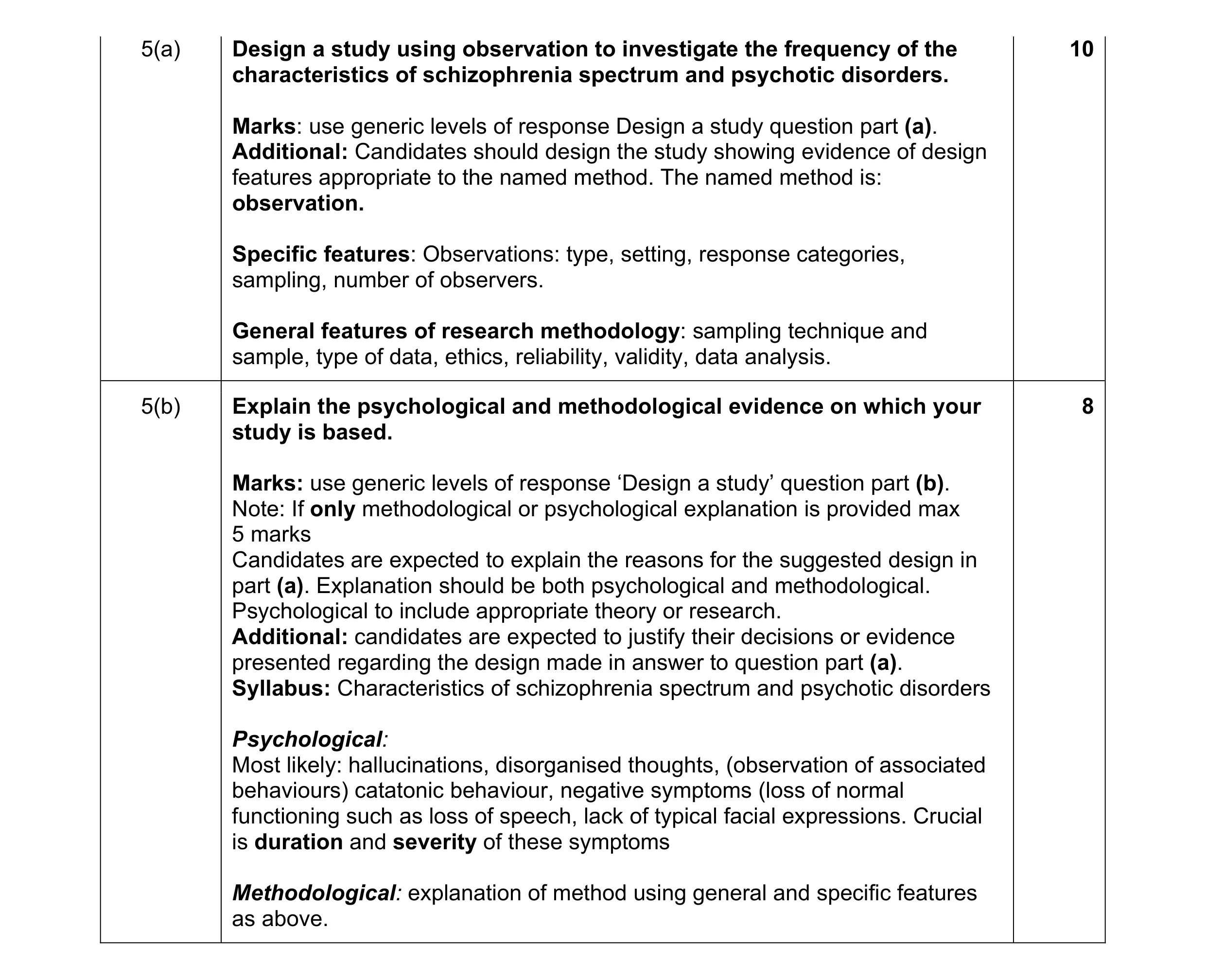 18
18 12
12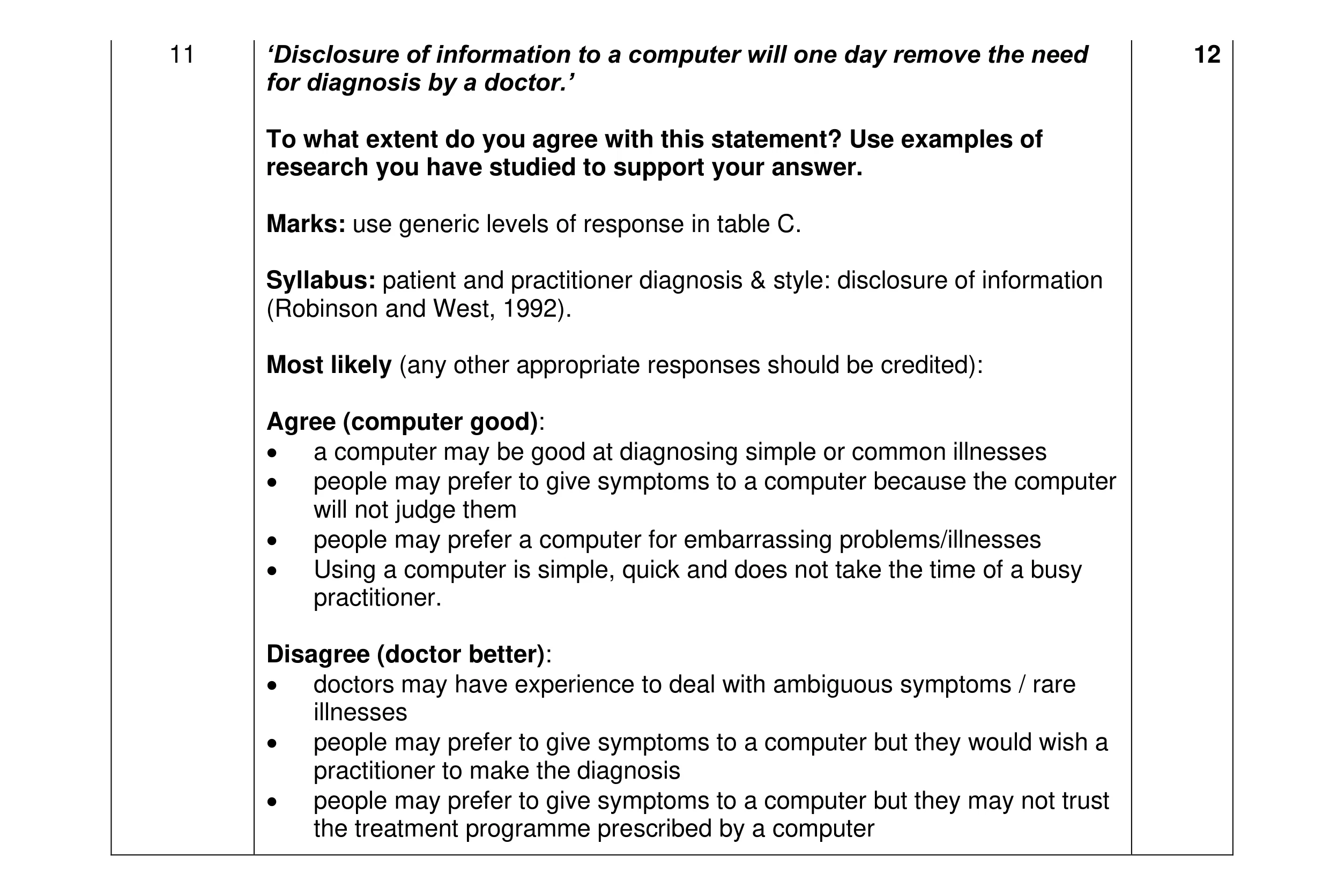 12
12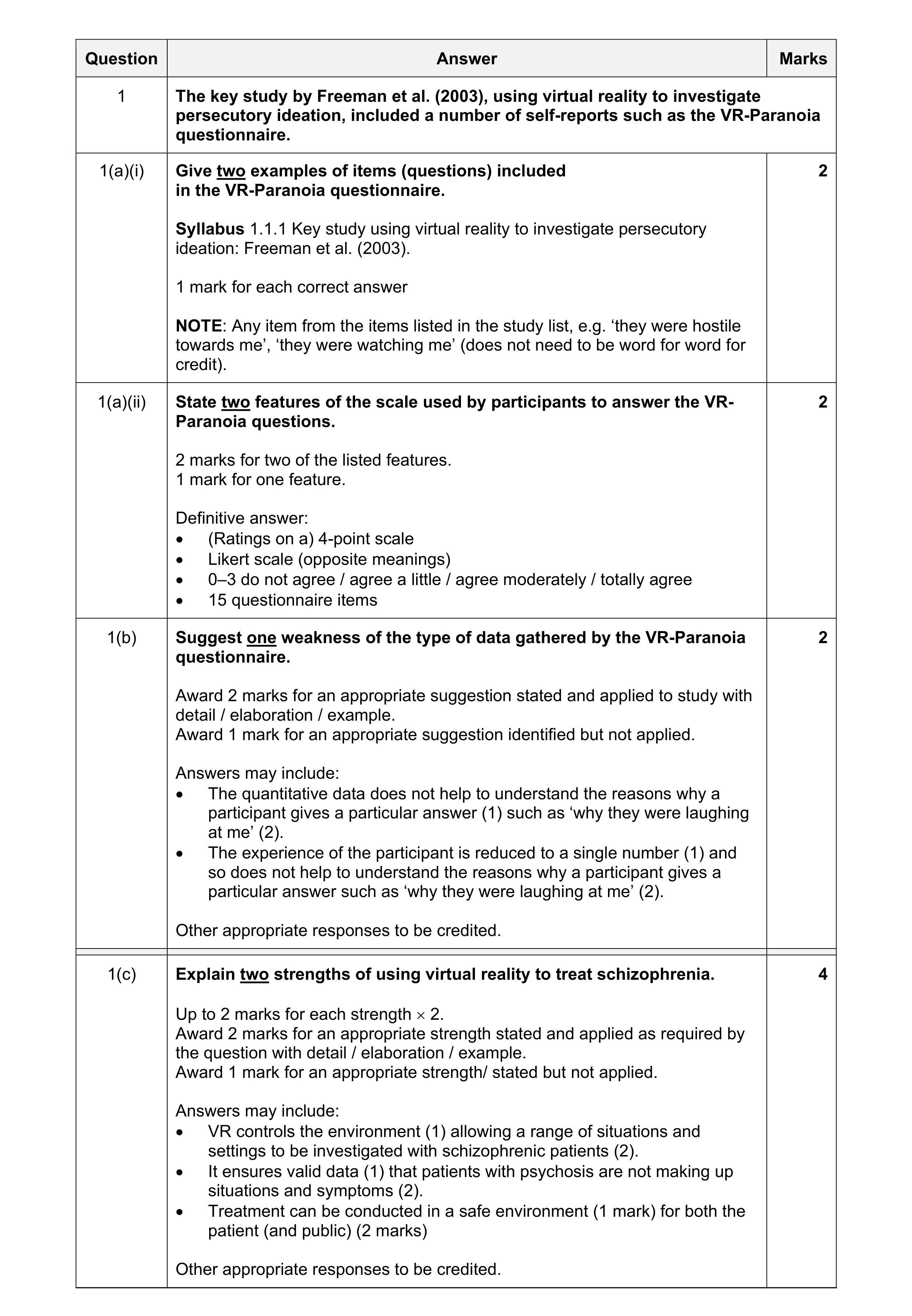 10
10 24
24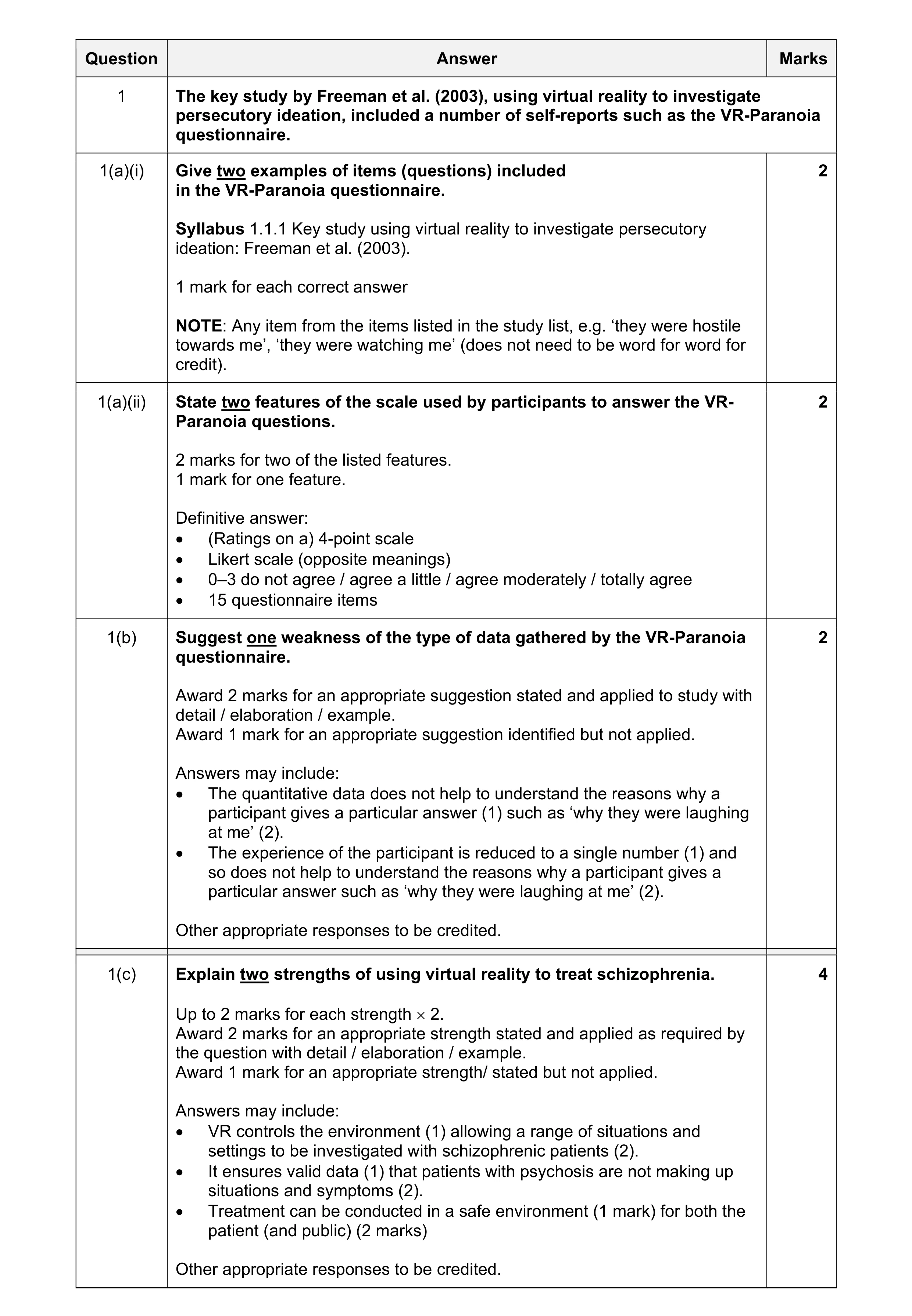 10
10 24
24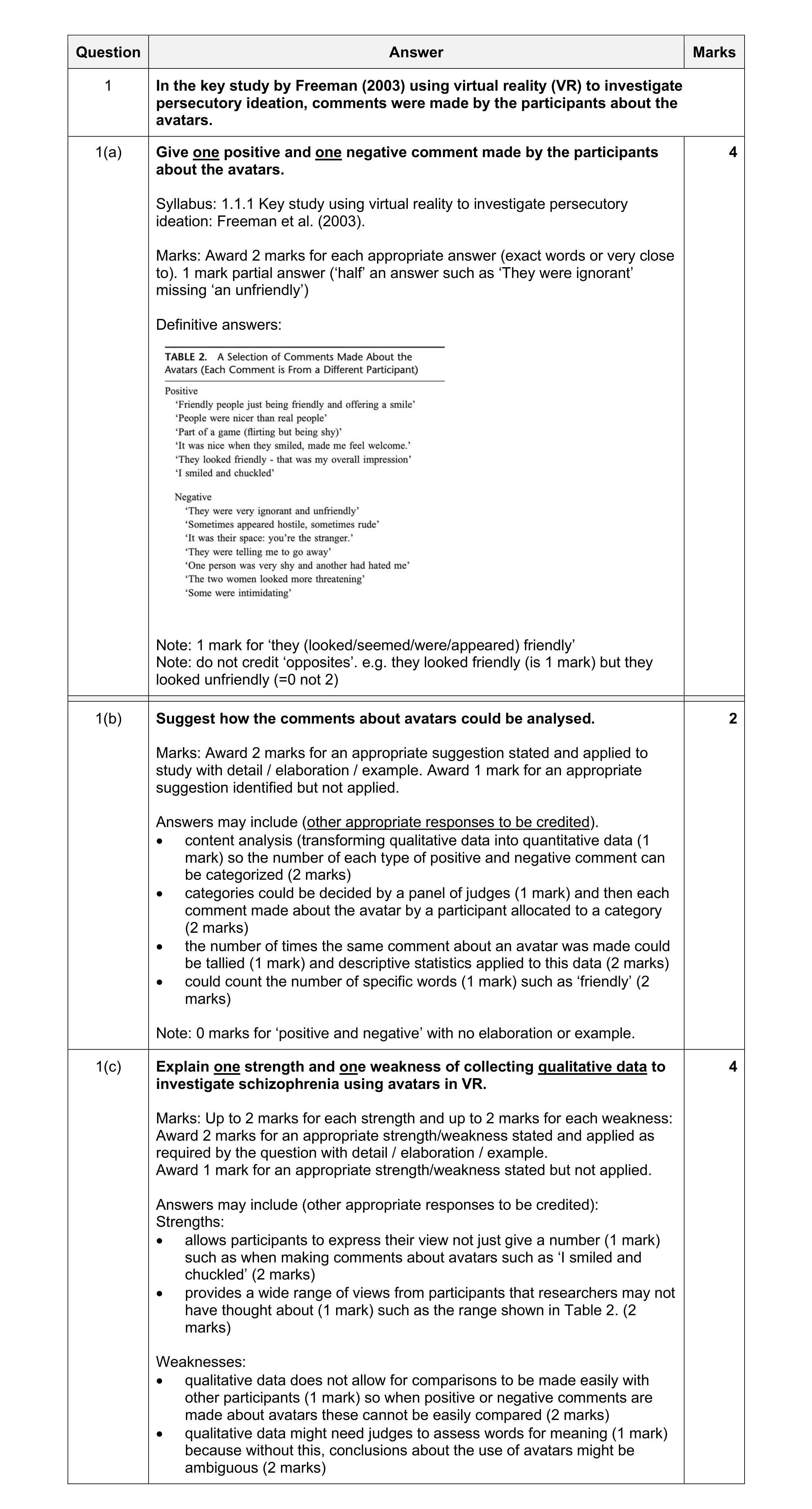 10
10 8
8 8
8