Questions as text
Q1 · Explain what is meant by ‘electro-convulsive therapy’ (ECT) as a treatment for… 9990/32 May/June 2018
1 (a) Explain what is meant by ‘electro-convulsive therapy’ (ECT) as a treatment for schizophrenia. [2] (b) The study by Freeman (2008) used virtual reality to assess symptoms of schizophrenia. Describe the procedure of this study. [4] (c) Discuss the reliability of this procedure. [6]
12 marks
Mark scheme: Question Answer Marks 1(a) Explain what is meant by ‘electro-convulsive therapy’ (ECT) as a 2 treatment for schizophrenia. Award 1 mark for a basic explanation of the term/concept. Award 2 marks for a detailed explanation of the term/concept. For example: A person receives a brief amount of electricity to the brain to induce a seizure. Patient is anesthetised and given a sedative. Electrical current is passed through the head for no longer than a second via electrodes attached to the skull. The seizure will last for up to one minute. Can be bilateral – across both brain hemispheres or unilateral – across the non-dominant hemisphere. Other appropriate responses should also be credited. 1(b) The study by Freeman (2008) used virtual reality to assess symptoms of 4 schizophrenia. Describe the procedure of this study. Award 1–2 marks for a basic answer with some understanding of the topic area. Award 3–4 marks for a detailed answer with clear understanding of the topic area. In the author’s initial work with students, a library scene was used but subsequently a 5-minute ride on a London underground train between 2 stations has been developed consistent with continuum views of paranoia, it has been shown that approximately one-third of the general population have persecutory thoughts about the computer characters. Validating the methodology, those higher in trait paranoia experience higher levels of persecutory ideation in VR. In a study of 200 nonclinical members of the general population. Other appropriate responses should also be credited. 1(c) Discuss the reliability of this procedure. 6 Discussion points could include: • Some participants may show demand characteristics and others may not. • Use of a computer generated environment increased reliability e.g. all participants were on exactly the same 4 min journey on the same 4 min train ride. • The avatars responded differently to the participant depending on how the participant acted in the VR simulation e.g. if the participant looked at one of the avatars the avatar would smile at them. This means each participant had a different experience of engaging with the avatars which lowers the reliability. • Some participants may respond more to the fact this isn’t their natural environment due to the type of schizophrenia they have, whereas others may not be affected by it at all. This shows how the scenario could impact on the participants in a different way and lower reliability. Mark according to the levels of response criteria below: Level 3 (5–6 marks) • Candidates will show a clear understanding of the question and will discuss at least two points regarding reliability. • Candidates will provide a good explanation with clear detail. Level 2 (3–4 marks) • Candidates will show an understanding of the question and will discuss one point about reliability in detail or two or more in less detail. • Candidates will provide a good explanation. Level 1 (1–2 marks) • Candidates will show a basic understanding of the question and will attempt a discussion. • Candidates will provide a limited explanation. Level 0 (0 marks) No response worthy of credit. Other appropriate responses should also be credited.
This question in 9990/32 May/June 2018
Q2 · Explain what is meant by ‘schizophrenia’ 9990/31 Oct/Nov 2019
1 (a) Explain what is meant by ‘schizophrenia’. [2] (b) Describe the genetic explanation of schizophrenia, as outlined by Gottesman and Shields (1972). [4] (c) Explain one similarity and one difference between cognitive and genetic explanations of schizophrenia. [6]
12 marks
Mark scheme: Question Answer Marks 1(a) Explain what is meant by ‘schizophrenia’. 2 Award 1 mark for a basic explanation of the term/concept. Award 2 marks for a detailed explanation of the term/concept. For example: Schizophrenia is a mental health disorder that involves positive and negative symptoms (1). Positive symptoms include things such as hallucinations and delusions (1). Negative symptoms might include speech poverty and flattening of mood (1). It is a break from reality where the person experiences symptoms such as hallucinations and delusions (1). Hallucinations are a positive symptom of schizophrenia (1). Types of schizophrenia are no longer on the syllabus, but can be credited, only up to a maximum of 1 mark if this is all that is given (e.g. simple, paranoid, catatonia, delusional disorder, etc.) Other appropriate responses should also be credited. 1(b) Describe the genetic explanation of schizophrenia, as outlined by 4 Gottesman and Shields (1972). Award 1–2 marks for a basic answer with some understanding of the topic area. Award 3–4 marks for a detailed answer with clear understanding of the topic area. For example: Schizophrenia appears to have a genetic cause as shown by Gottesman and Shields in their review of studies of adoption, siblings and twins with schizophrenia (1). All adoption studies found an increased incidence of schizophrenia in adopted children with a schizophrenic biological parent (1). Biological siblings of children with schizophrenia showed a much higher percentage of schizophrenia (1). All twin studies found a higher concordance rate for schizophrenia in monozygotic (MZ) than dizygotic (DZ) twins (1). In Gottesman and Shield’s own study the rate was 58% for identical twins, and 12% for non-identical twins (1). There is a heavy genetic input into the onset of schizophrenia (1). Other appropriate responses should also be credited. 1(c) Explain one similarity and one difference between cognitive and genetic 6 explanations of schizophrenia. Comparison will be for the cognitive explanation as outlined by Frith (1992) and the genetic explanation as outlined by Gottesman and Shields (1972). Similarities Both Gottesman and Frith believe that there is a biological basis for schizophrenia. Gottesman focusses on genetics and Frith also believes that genetics plays a part in the development of schizophrenia. Gottesman found a high concordance rate between MZ twins. Frith suggests that brain structure and biochemical processes also influence the development of the disorder. This shows that both explanations suggest a biological basis for the disorder. Both suggest nature is important in the development of schizophrenia – Gottesman suggests schizophrenia has a strong genetic cause and Frith suggests that schizophrenia cognitive difficulties are linked to genetics, brain structure and biochemical processes. Offer an individual explanation of schizophrenia. Gottesman suggests that one’s individual genetic make-up causes schizophrenia and not environmental factors. Frith suggests it is the person’s individual faulty mental processing (likely caused by biological factors) that lead to the development of the disorder and not environmental or social factors. Both explanations are backed up by experiments. Gottesman and Shields did many studies on twins and families to prove the genetic explanation of schizophrenia. Frith did a lab study where schizophrenic participants were unable to identify whether items that had been read aloud were done by a computer, the experimenter or themselves which shows the attention difficulties patients with schizophrenia have. Differences Frith also brings in a cognitive explanation of why the symptoms occur which is not done by Gottesman and Shields. Gottesman and Shields focus on the genetic cause of the disorder. Frith adds to this explanation by explaining the symptoms of the disorder due to faulty mental processing. Genetic explanation is more reductionist than the cognitive explanation. Gottesman and Shields just focus on the genetic cause of the disorder and do not consider other biological processes or cognitive explanations. Frith considers both biological causes and how these could lead to cognitive deficits such as faulty mental processing. 1(c) Mark according to the levels of response criteria below: Level 3 (5–6 marks) • Candidates will show a clear understanding of the question and will include one similarity and one difference. • Candidates will provide a good explanation with clear detail. Level 2 (3–4 marks) • Candidates will show an understanding of the question and will include one appropriate similarity in detail or one appropriate difference in detail. OR one similarity and one difference in less detail. • Candidates will provide a good explanation. Level 1 (1–2 marks) • Candidates will show a basic understanding of the question and will attempt a similarity and/or difference. This could include both but just as an attempt. • Candidates will provide a limited explanation. Level 0 (0 marks) No response worthy of credit. Other appropriate responses should also be credited.
This question in 9990/31 Oct/Nov 2019
Q3 · Explain what is meant by ‘schizophrenia’ 9990/32 Oct/Nov 2019
1 (a) Explain what is meant by ‘schizophrenia’. [2] (b) Describe the genetic explanation of schizophrenia, as outlined by Gottesman and Shields (1972). [4] (c) Explain one similarity and one difference between cognitive and genetic explanations of schizophrenia. [6]
12 marks
Mark scheme: Question Answer Marks 1(a) Explain what is meant by ‘schizophrenia’. 2 Award 1 mark for a basic explanation of the term/concept. Award 2 marks for a detailed explanation of the term/concept. For example: Schizophrenia is a mental health disorder that involves positive and negative symptoms (1). Positive symptoms include things such as hallucinations and delusions (1). Negative symptoms might include speech poverty and flattening of mood (1). It is a break from reality where the person experiences symptoms such as hallucinations and delusions (1). Hallucinations are a positive symptom of schizophrenia (1). Types of schizophrenia are no longer on the syllabus, but can be credited, only up to a maximum of 1 mark if this is all that is given (e.g. simple, paranoid, catatonia, delusional disorder, etc.) Other appropriate responses should also be credited. 1(b) Describe the genetic explanation of schizophrenia, as outlined by 4 Gottesman and Shields (1972). Award 1–2 marks for a basic answer with some understanding of the topic area. Award 3–4 marks for a detailed answer with clear understanding of the topic area. For example: Schizophrenia appears to have a genetic cause as shown by Gottesman and Shields in their review of studies of adoption, siblings and twins with schizophrenia (1). All adoption studies found an increased incidence of schizophrenia in adopted children with a schizophrenic biological parent (1). Biological siblings of children with schizophrenia showed a much higher percentage of schizophrenia (1). All twin studies found a higher concordance rate for schizophrenia in monozygotic (MZ) than dizygotic (DZ) twins (1). In Gottesman and Shield’s own study the rate was 58% for identical twins, and 12% for non-identical twins (1). There is a heavy genetic input into the onset of schizophrenia (1). Other appropriate responses should also be credited. 1(c) Explain one similarity and one difference between cognitive and genetic 6 explanations of schizophrenia. Comparison will be for the cognitive explanation as outlined by Frith (1992) and the genetic explanation as outlined by Gottesman and Shields (1972). Similarities Both Gottesman and Frith believe that there is a biological basis for schizophrenia. Gottesman focusses on genetics and Frith also believes that genetics plays a part in the development of schizophrenia. Gottesman found a high concordance rate between MZ twins. Frith suggests that brain structure and biochemical processes also influence the development of the disorder. This shows that both explanations suggest a biological basis for the disorder. Both suggest nature is important in the development of schizophrenia – Gottesman suggests schizophrenia has a strong genetic cause and Frith suggests that schizophrenia cognitive difficulties are linked to genetics, brain structure and biochemical processes. Offer an individual explanation of schizophrenia. Gottesman suggests that one’s individual genetic make-up causes schizophrenia and not environmental factors. Frith suggests it is the person’s individual faulty mental processing (likely caused by biological factors) that lead to the development of the disorder and not environmental or social factors. Both explanations are backed up by experiments. Gottesman and Shields did many studies on twins and families to prove the genetic explanation of schizophrenia. Frith did a lab study where schizophrenic participants were unable to identify whether items that had been read aloud were done by a computer, the experimenter or themselves which shows the attention difficulties patients with schizophrenia have. Differences Frith also brings in a cognitive explanation of why the symptoms occur which is not done by Gottesman and Shields. Gottesman and Shields focus on the genetic cause of the disorder. Frith adds to this explanation by explaining the symptoms of the disorder due to faulty mental processing. Genetic explanation is more reductionist than the cognitive explanation. Gottesman and Shields just focus on the genetic cause of the disorder and do not consider other biological processes or cognitive explanations. Frith considers both biological causes and how these could lead to cognitive deficits such as faulty mental processing. 1(c) Mark according to the levels of response criteria below: Level 3 (5–6 marks) • Candidates will show a clear understanding of the question and will include one similarity and one difference. • Candidates will provide a good explanation with clear detail. Level 2 (3–4 marks) • Candidates will show an understanding of the question and will include one appropriate similarity in detail or one appropriate difference in detail. OR one similarity and one difference in less detail. • Candidates will provide a good explanation. Level 1 (1–2 marks) • Candidates will show a basic understanding of the question and will attempt a similarity and/or difference. This could include both but just as an attempt. • Candidates will provide a limited explanation. Level 0 (0 marks) No response worthy of credit. Other appropriate responses should also be credited.
This question in 9990/32 Oct/Nov 2019
Q4 · Explain what is meant by ‘schizophrenia’ 9990/33 Oct/Nov 2019
1 (a) Explain what is meant by ‘schizophrenia’. [2] (b) Describe the genetic explanation of schizophrenia, as outlined by Gottesman and Shields (1972). [4] (c) Explain one similarity and one difference between cognitive and genetic explanations of schizophrenia. [6]
12 marks
Mark scheme: Question Answer Marks 1(a) Explain what is meant by ‘schizophrenia’. 2 Award 1 mark for a basic explanation of the term/concept. Award 2 marks for a detailed explanation of the term/concept. For example: Schizophrenia is a mental health disorder that involves positive and negative symptoms (1). Positive symptoms include things such as hallucinations and delusions (1). Negative symptoms might include speech poverty and flattening of mood (1). It is a break from reality where the person experiences symptoms such as hallucinations and delusions (1). Hallucinations are a positive symptom of schizophrenia (1). Types of schizophrenia are no longer on the syllabus, but can be credited, only up to a maximum of 1 mark if this is all that is given (e.g. simple, paranoid, catatonia, delusional disorder, etc.) Other appropriate responses should also be credited. 1(b) Describe the genetic explanation of schizophrenia, as outlined by 4 Gottesman and Shields (1972). Award 1–2 marks for a basic answer with some understanding of the topic area. Award 3–4 marks for a detailed answer with clear understanding of the topic area. For example: Schizophrenia appears to have a genetic cause as shown by Gottesman and Shields in their review of studies of adoption, siblings and twins with schizophrenia (1). All adoption studies found an increased incidence of schizophrenia in adopted children with a schizophrenic biological parent (1). Biological siblings of children with schizophrenia showed a much higher percentage of schizophrenia (1). All twin studies found a higher concordance rate for schizophrenia in monozygotic (MZ) than dizygotic (DZ) twins (1). In Gottesman and Shield’s own study the rate was 58% for identical twins, and 12% for non-identical twins (1). There is a heavy genetic input into the onset of schizophrenia (1). Other appropriate responses should also be credited. 1(c) Explain one similarity and one difference between cognitive and genetic 6 explanations of schizophrenia. Comparison will be for the cognitive explanation as outlined by Frith (1992) and the genetic explanation as outlined by Gottesman and Shields (1972). Similarities Both Gottesman and Frith believe that there is a biological basis for schizophrenia. Gottesman focusses on genetics and Frith also believes that genetics plays a part in the development of schizophrenia. Gottesman found a high concordance rate between MZ twins. Frith suggests that brain structure and biochemical processes also influence the development of the disorder. This shows that both explanations suggest a biological basis for the disorder. Both suggest nature is important in the development of schizophrenia – Gottesman suggests schizophrenia has a strong genetic cause and Frith suggests that schizophrenia cognitive difficulties are linked to genetics, brain structure and biochemical processes. Offer an individual explanation of schizophrenia. Gottesman suggests that one’s individual genetic make-up causes schizophrenia and not environmental factors. Frith suggests it is the person’s individual faulty mental processing (likely caused by biological factors) that lead to the development of the disorder and not environmental or social factors. Both explanations are backed up by experiments. Gottesman and Shields did many studies on twins and families to prove the genetic explanation of schizophrenia. Frith did a lab study where schizophrenic participants were unable to identify whether items that had been read aloud were done by a computer, the experimenter or themselves which shows the attention difficulties patients with schizophrenia have. Differences Frith also brings in a cognitive explanation of why the symptoms occur which is not done by Gottesman and Shields. Gottesman and Shields focus on the genetic cause of the disorder. Frith adds to this explanation by explaining the symptoms of the disorder due to faulty mental processing. Genetic explanation is more reductionist than the cognitive explanation. Gottesman and Shields just focus on the genetic cause of the disorder and do not consider other biological processes or cognitive explanations. Frith considers both biological causes and how these could lead to cognitive deficits such as faulty mental processing. 1(c) Mark according to the levels of response criteria below: Level 3 (5–6 marks) • Candidates will show a clear understanding of the question and will include one similarity and one difference. • Candidates will provide a good explanation with clear detail. Level 2 (3–4 marks) • Candidates will show an understanding of the question and will include one appropriate similarity in detail or one appropriate difference in detail. OR one similarity and one difference in less detail. • Candidates will provide a good explanation. Level 1 (1–2 marks) • Candidates will show a basic understanding of the question and will attempt a similarity and/or difference. This could include both but just as an attempt. • Candidates will provide a limited explanation. Level 0 (0 marks) No response worthy of credit. Other appropriate responses should also be credited.
This question in 9990/33 Oct/Nov 2019
Q5 · Describe explanations of schizophrenia and delusional disorder 9990/31 Oct/Nov 2020
2 (a) Describe explanations of schizophrenia and delusional disorder. [8] (b) Evaluate explanations of schizophrenia and delusional disorder, including a discussion of the individual versus situational debate. [10] Psychology and consumer behaviour Answer all questions.
18 marks
Mark scheme: 2(a) Describe explanations of schizophrenia and delusional disorder. Explanations of schizophrenia and delusional disorder, including the following: • genetic (Gottesman and Shields, 1972) • biochemical (dopamine hypothesis) • cognitive (Frith, 1992) Genetic (Gottesman and Shields, 1972) Schizophrenia appears to have a genetic cause as shown by Gottesman and Shields in their review article of studies of adoption, siblings and twins with schizophrenia. All adoption studies found an increased incidence of schizophrenia in adopted children with a schizophrenic biological parent. Biological siblings of children with schizophrenia showed a much higher percentage of schizophrenia. All twin studies found a higher concordance rate for schizophrenia in monozygotic (MZ) than dizygotic (DZ) twins. In Gottesman and Shield’s own study the rate was 58% for identical twins, and 12% for non-identical twins. Conclusion – there is obviously a heavy genetic input into the onset of schizophrenia. Biochemical (dopamine hypothesis) The dopamine hypothesis of schizophrenia states that symptoms may be caused by an excess of dopamine in the mid-brain and a reduction in dopamine in the prefrontal cortex. The dopamine hypothesis of schizophrenia suggests that a high level of activity of dopamine D2 receptor neurotransmission in subcortical and limbic brain regions contributes to positive symptoms of schizophrenia, whereas negative and cognitive symptoms of the disorder can be attributed to heightened activity of dopamine D1 receptor neurotransmission in the prefrontal cortex. Cognitive (Frith, 1992) The symptoms of schizophrenia are due to faulty thinking processes. The patient fails to recognise through a central monitoring system that the thoughts they are having are self-created (such as our inner voice) and instead believe these are caused by external factors. The delusions may be a way of explaining the hallucinations. There may be a cognitive impairment of patients with schizophrenia which could explain some of the symptoms such as speech poverty and disorganised thoughts. The patients may also have a less developed theory of mind and find it difficult to understand the actions of others and so may develop delusions as a way of understanding other people’s behaviours. Mark according to the levels of response descriptors in Table A. Other appropriate responses should also be credited. Question Answer Marks 2(b) Evaluate explanations of schizophrenia and delusional disorder, including a discussion of the individual versus situational debate. A range of issues could be used for evaluation here. These include: • Named issue – individual versus situational debate – all explanations listed appear to give an individual explanation although it could be argued that because concordance rate of SZ in MZ twins is not 100% an environmental component must be involved. Similarly, the cognitive explanation could involve situational explanations in that type self-talk and could be influenced by upbringing and culture. • Reductionism • Nature versus nurture • Comparisons of different explanations • Application of psychology to everyday life (with reference to explanations) • Deterministic nature of the explanations • Evidence to support the explanations Mark according to the levels of response descriptors in Table B. Other appropriate responses should also be credited. 10
This question in 9990/31 Oct/Nov 2020
Q6 · Outline two characteristics of schizophrenia 9990/32 Oct/Nov 2020
1 (a) Outline two characteristics of schizophrenia. [2] (b) Describe token economy (Paul and Lentz, 1977) as a treatment for schizophrenia and delusional disorder. [4] (c) Discuss the ethics of using token economies as a treatment for schizophrenia and delusional disorder. [6]
12 marks
Mark scheme: 1(a) Outline two characteristics of schizophrenia. Award 1 mark for each characteristic For example: Positive symptoms – delusions, hallucinations, disorganised speech. Negative symptoms – flattened affect, avolition, poverty of speech, and social withdrawal. Other appropriate responses should also be credited. 1(b) Describe token economy (Paul and Lentz, 1977) as a treatment for schizophrenia and delusional disorder. Award 1–2 marks for a basic answer with some understanding of the topic area. Award 3–4 marks for a detailed answer with clear understanding of the topic area. For example: Based around operant conditioning (1). Patients with schizophrenia (usually in institutional care) are rewarded with tokens for instances of desirable behaviours (1) such as making beds, taking medication, self-care, engaging socially, and attending therapy sessions (1). The tokens can be exchanged for luxury items such as cigarettes, TV use, sweets, or clothing (1). In some instances, tokens can be removed for behaviours considered undesirable like angry outbursts (1). Other appropriate responses should also be credited. 4 Question Answer Marks 1(c) Discuss the ethics of using token economies as a treatment for schizophrenia and delusional disorder. Likely ethical issues will be: • Use of vulnerable patients who may not be capable of giving informed consent; • Inability to withdraw from the scheme without loss of privileges; • Psychological harm as patient may feel that they are being judged adversely for merely suffering with an abnormality over which they have little control; • Briefing as patients can be made fully aware of why they are engaging in the program and how it will help them; • No deception is being used; Mark according to the levels of response criteria below: Level 3 (5–6 marks) • Candidates will show a clear understanding of the question and will discuss at least 2 appropriate ethical issues (positive or negative); • Candidates will provide a good explanation with clear detail; Level 2 (3–4 marks) • Candidates will show an understanding of the question and will explain appropriate ethical issues (at least 2) in less detail; • Candidates will provide a good explanation; Level 1 (1–2 marks) • Candidates will show a basic understanding of the question and will attempt to explain ethical issues. There could be a brief explanation of one ethical issue; • Candidates will provide a limited explanation; Level 0 (0 marks) No response worthy of credit. Other appropriate responses should also be credited. 6
This question in 9990/32 Oct/Nov 2020
Q7 · Describe explanations of schizophrenia and delusional disorder 9990/33 Oct/Nov 2020
2 (a) Describe explanations of schizophrenia and delusional disorder. [8] (b) Evaluate explanations of schizophrenia and delusional disorder, including a discussion of the individual versus situational debate. [10] Psychology and consumer behaviour Answer all questions.
18 marks
Mark scheme: 2(a) Describe explanations of schizophrenia and delusional disorder. Explanations of schizophrenia and delusional disorder, including the following: • genetic (Gottesman and Shields, 1972) • biochemical (dopamine hypothesis) • cognitive (Frith, 1992) Genetic (Gottesman and Shields, 1972) Schizophrenia appears to have a genetic cause as shown by Gottesman and Shields in their review article of studies of adoption, siblings and twins with schizophrenia. All adoption studies found an increased incidence of schizophrenia in adopted children with a schizophrenic biological parent. Biological siblings of children with schizophrenia showed a much higher percentage of schizophrenia. All twin studies found a higher concordance rate for schizophrenia in monozygotic (MZ) than dizygotic (DZ) twins. In Gottesman and Shield’s own study the rate was 58% for identical twins, and 12% for non-identical twins. Conclusion – there is obviously a heavy genetic input into the onset of schizophrenia. Biochemical (dopamine hypothesis) The dopamine hypothesis of schizophrenia states that symptoms may be caused by an excess of dopamine in the mid-brain and a reduction in dopamine in the prefrontal cortex. The dopamine hypothesis of schizophrenia suggests that a high level of activity of dopamine D2 receptor neurotransmission in subcortical and limbic brain regions contributes to positive symptoms of schizophrenia, whereas negative and cognitive symptoms of the disorder can be attributed to heightened activity of dopamine D1 receptor neurotransmission in the prefrontal cortex. Cognitive (Frith, 1992) The symptoms of schizophrenia are due to faulty thinking processes. The patient fails to recognise through a central monitoring system that the thoughts they are having are self-created (such as our inner voice) and instead believe these are caused by external factors. The delusions may be a way of explaining the hallucinations. There may be a cognitive impairment of patients with schizophrenia which could explain some of the symptoms such as speech poverty and disorganised thoughts. The patients may also have a less developed theory of mind and find it difficult to understand the actions of others and so may develop delusions as a way of understanding other people’s behaviours. Mark according to the levels of response descriptors in Table A. Other appropriate responses should also be credited. Question Answer Marks 2(b) Evaluate explanations of schizophrenia and delusional disorder, including a discussion of the individual versus situational debate. A range of issues could be used for evaluation here. These include: • Named issue – individual versus situational debate – all explanations listed appear to give an individual explanation although it could be argued that because concordance rate of SZ in MZ twins is not 100% an environmental component must be involved. Similarly, the cognitive explanation could involve situational explanations in that type self-talk and could be influenced by upbringing and culture. • Reductionism • Nature versus nurture • Comparisons of different explanations • Application of psychology to everyday life (with reference to explanations) • Deterministic nature of the explanations • Evidence to support the explanations Mark according to the levels of response descriptors in Table B. Other appropriate responses should also be credited. 10
This question in 9990/33 Oct/Nov 2020
Q8 · Outline one cognitive explanation of schizophrenia and delusional disorder 9990/31 Oct/Nov 2021
1 (a) Outline one cognitive explanation of schizophrenia and delusional disorder. [2] (b) Describe the procedure in the study by Sensky et al. (2000) of cognitive-behavioural therapy (CBT) for schizophrenia. [4] (c) Explain one similarity and one difference between CBT and biochemical treatments for schizophrenia/delusional disorder. [6]
12 marks
Mark scheme: Question Answer Marks 1(a) Outline one cognitive explanation of schizophrenia and delusional 2 disorder. Award 1 mark for a basic explanation of the term/concept. Award 2 marks for a detailed explanation of the term/concept. For example: Frith describes schizophrenia as an ‘abnormality of self-monitoring’ as patients fail to recognise that the hallucination of hearing voices is actually the schizophrenic’s own inner voice but they believe it to be someone else’s. (2) The delusions (inner speech) may not be recognised as being self-generated. (1) Other appropriate responses should also be credited. 1(b) Describe the procedure in the study by Sensky et al. (2000) of cognitive- 4 behavioural therapy (CBT) for schizophrenia. Award 1–2 marks for a basic answer with some understanding of the topic area. Award 3–4 marks for a detailed answer with clear understanding of the topic area. For example: Participants were referred by clinicians and eligibility confirmed by researchers using clinical interview. (1) 90 patients, 16-60 from 5 different venues – 2 West London, 1 Durham, 1 Cleveland, 1 Newcastle. CBT 46, Befriending 44. 67% CBT male, 50% male in befriending (2 marks max.) Patients were randomly assigned to a treatment and further assessments carried out approximately 9 months later, after intervention had completed and again at 9-month follow-up. (2) Antipsychotic medications were maintained. (1) Patients received individual treatment of CBT or befriending (this intervention was designed to give similar amount of therapist contact as CBT with an aim to be empathic and nondirective, focusing on neutral topics) (2) Done by experienced psychiatric nurses with each patient receiving at least 45 minutes of therapy per week. (1) After approximately 2 months, session frequency could be reduced, with the aim of completing therapy within 9 months. (1) Interviews were audiotaped. (1) Assessors were blind to patient’s assigned group. (1) The Comprehensive Psychiatric Rating Scale (CPRS), Montgomery-Asberg Depression Rating Scale and the Scale for Assessment of Negative Symptoms (SANS) were all used to measure outcomes together with patients completing a 10-item questionnaire to elicit their satisfaction. (2 marks max for assessments given) 1(c) Explain one similarity and one difference between CBT and biochemical 6 treatments for schizophrenia/delusional disorder. Likely similarities will be • Both have good evidence for success e.g. Lindstrom et al, 1999 drug trials and Sensky • Both require intervention from a therapist so adding to time, expense and commitment Likely differences will be • CBT based on cognitive approach, biochemical on biological approach • CBT is more active. Drug therapy is passive treatment. • CBT not suited for patients who find it difficult to engage in therapy (lack of motivation, intellect etc.) • Drug therapy has side effects Mark according to the levels of response criteria below: Level 3 (5–6 marks) • Candidates will show a clear understanding of the question and will explain an appropriate similarity and an appropriate difference. • Candidates will provide a good explanation with clear detail. Level 2 (3–4 marks) • Candidates will show an understanding of the question and will explain an appropriate similarity/difference in detail or both a similarity and a difference in less detail. • Candidates will provide a good explanation. Level 1 (1–2 marks) • Candidates will show a basic understanding of the question and will attempt a similarity and/or difference. This could include both but just as an attempt. • Candidates will provide a limited explanation. Level 0 (0 marks) No response worthy of credit. Other appropriate responses should also be credited.
This question in 9990/31 Oct/Nov 2021
Q9 · Describe characteristics and assessment of schizophrenia spectrum and psychotic disorders 9990/32 Oct/Nov 2021
2 (a) Describe characteristics and assessment of schizophrenia spectrum and psychotic disorders. [8] (b) Evaluate characteristics and assessment of schizophrenia spectrum and psychotic disorders, including a discussion of validity. [10] Psychology and consumer behaviour Answer all questions.
18 marks
Mark scheme: 2(a) Describe characteristics and assessment of schizophrenia spectrum 8 and psychotic disorders. Including the following: • Definitions, examples and case studies of schizophrenia and psychotic disorders • Schizophrenia and delusional disorder • Symptom assessment using virtual reality (Freeman, 2008) Definitions, examples and case studies DSM-V defines schizophrenic spectrum and psychotic disorders as sharing one or more of the following: Positive symptoms include – beliefs not based in reality / delusions – hallucinations – sensory experiences of things that do not exist – disorganised thoughts/speech – catatonic behaviour – Negative symptoms such as – loss of speech (alogia) – loss of motivation (avolition) – diminished facial/emotion expression – social/emotional withdrawal Examples – these could include substance or medication-induced psychotic disorder, schizotypical (personality) disorder, schizoaffective disorder, and catatonia associated with another mental disorder or condition. DSM-V – two (or more) symptoms for at least one month. At least one of the symptoms must be delusions, hallucinations or disorganised thoughts/ speech. Case studies could include individuals who have been studied in detail. Schizophrenia and delusional disorder Schizophrenia is diagnosed when individual shows at least two of the following: delusions, hallucinations disorganised speech, disorganised or catatonic behaviour, and flattened affect for at least one month. The individual must show occupational or social functioning that has declined and these symptoms cannot be explained by another medical factor. Delusional disorder is characterised by persistent delusions but whose other behaviours are ‘normal’. There is an absence of the other psychotic symptoms of schizophrenia such as hallucinations, disorganised speech or negative symptoms. Some types of delusional disorder are grandiose (belief that they have a (non-existent) unrecognised high status or great skill), persecutory (being conspired against or pursued by those intending to harm), and erotomaniac (belief someone is in love with them). To receive a diagnosis of delusional disorder symptoms must have been experienced for at least one month and be unrelated to physiological effects of substance use. 2(a) Symptom assessment using VR (Freeman, 2008) Prior to study, participants completed measures on intellectual functioning (Wechsler Abbreviated Scale of Intelligence) and trait paranoia (Green et al. Paranoid Thoughts Scale (GPTS) Part B) followed by numerous measures on factors in cognitive model of paranoia. Simulator-sickness questionnaire was given before and after the simulation. Virtual reality environment was a 4 min journey on a London underground train populated by computer generated ‘neutral’ avatars/characters. The avatars breathed and also looked in a variety of directions. There was background tube noise and low- level snippets of conversation. State social paranoia scale was given after the simulation ended as well as qualitative data collected about the participant’s experiences. 200 nonclinical members of the general population were used who made comments ranging from positive to neutral to paranoid ‘Lady sitting down laughed at me when I walked past’. This shows an unambiguous demonstration of paranoid thinking in the general public. Mark according to the levels of response descriptors in Table A. Other appropriate responses should also be credited. 2(b) Evaluate characteristics and assessment of schizophrenia spectrum 10 and psychotic disorders, including a discussion of validity. A range of issues could be used for evaluation here. These include: • Named issue – validity of definitions/diagnosis – schizophrenia spectrum and psychotic disorders include a variety of different symptoms and no one key symptom is needed for diagnosis. DSM-V and ICD-10 do not ask for the same criteria or longevity of symptoms. Two individuals with very different symptoms could both be diagnosed as schizophrenic. The reliance on self-report measures of a psychotic individual (by definition) may be invalid within a psychotic state. Co- morbidity could also call validity into question in terms of symptom overlap with another condition such as depression. Validity of case studies – this is good because they are in detail and often take place over a long period of time. The validity could be low as not generalisable and the data might be subjective. Validity of Freeman study – Good as a number of measures of were taken to assess level of paranoid thinking, social and cognitive traits and emotional distress to compare the results on the virtual reality to. Also good as rather than just interviewing a patient about their symptoms the practitioner can witness the patient in a lifelike environment. However, the ecological validity of the study is not good as it is a simulated environment. On the other hand, it does give some insight into the behaviour of a schizophrenic patient in a much more realistic setting than just asking the patient to describe their symptoms since the practitioner last had an appointment with them. • Reliability • Usefulness • Reductionist • Co-morbidity • Gender bias • Cultural bias Mark according to the levels of response descriptors in Table B. Other appropriate responses should also be credited. Psychology and consumer behaviour
This question in 9990/32 Oct/Nov 2021
Q10 · Outline one cognitive explanation of schizophrenia and delusional disorder 9990/33 Oct/Nov 2021
1 (a) Outline one cognitive explanation of schizophrenia and delusional disorder. [2] (b) Describe the procedure in the study by Sensky et al. (2000) of cognitive-behavioural therapy (CBT) for schizophrenia. [4] (c) Explain one similarity and one difference between CBT and biochemical treatments for schizophrenia/delusional disorder. [6]
12 marks
Mark scheme: Question Answer Marks 1(a) Outline one cognitive explanation of schizophrenia and delusional 2 disorder. Award 1 mark for a basic explanation of the term/concept. Award 2 marks for a detailed explanation of the term/concept. For example: Frith describes schizophrenia as an ‘abnormality of self-monitoring’ as patients fail to recognise that the hallucination of hearing voices is actually the schizophrenic’s own inner voice but they believe it to be someone else’s. (2) The delusions (inner speech) may not be recognised as being self-generated. (1) Other appropriate responses should also be credited. 1(b) Describe the procedure in the study by Sensky et al. (2000) of cognitive- 4 behavioural therapy (CBT) for schizophrenia. Award 1–2 marks for a basic answer with some understanding of the topic area. Award 3–4 marks for a detailed answer with clear understanding of the topic area. For example: Participants were referred by clinicians and eligibility confirmed by researchers using clinical interview. (1) 90 patients, 16-60 from 5 different venues – 2 West London, 1 Durham, 1 Cleveland, 1 Newcastle. CBT 46, Befriending 44. 67% CBT male, 50% male in befriending (2 marks max.) Patients were randomly assigned to a treatment and further assessments carried out approximately 9 months later, after intervention had completed and again at 9-month follow-up. (2) Antipsychotic medications were maintained. (1) Patients received individual treatment of CBT or befriending (this intervention was designed to give similar amount of therapist contact as CBT with an aim to be empathic and nondirective, focusing on neutral topics) (2) Done by experienced psychiatric nurses with each patient receiving at least 45 minutes of therapy per week. (1) After approximately 2 months, session frequency could be reduced, with the aim of completing therapy within 9 months. (1) Interviews were audiotaped. (1) Assessors were blind to patient’s assigned group. (1) The Comprehensive Psychiatric Rating Scale (CPRS), Montgomery-Asberg Depression Rating Scale and the Scale for Assessment of Negative Symptoms (SANS) were all used to measure outcomes together with patients completing a 10-item questionnaire to elicit their satisfaction. (2 marks max for assessments given) 1(c) Explain one similarity and one difference between CBT and biochemical 6 treatments for schizophrenia/delusional disorder. Likely similarities will be • Both have good evidence for success e.g. Lindstrom et al, 1999 drug trials and Sensky • Both require intervention from a therapist so adding to time, expense and commitment Likely differences will be • CBT based on cognitive approach, biochemical on biological approach • CBT is more active. Drug therapy is passive treatment. • CBT not suited for patients who find it difficult to engage in therapy (lack of motivation, intellect etc.) • Drug therapy has side effects Mark according to the levels of response criteria below: Level 3 (5–6 marks) • Candidates will show a clear understanding of the question and will explain an appropriate similarity and an appropriate difference. • Candidates will provide a good explanation with clear detail. Level 2 (3–4 marks) • Candidates will show an understanding of the question and will explain an appropriate similarity/difference in detail or both a similarity and a difference in less detail. • Candidates will provide a good explanation. Level 1 (1–2 marks) • Candidates will show a basic understanding of the question and will attempt a similarity and/or difference. This could include both but just as an attempt. • Candidates will provide a limited explanation. Level 0 (0 marks) No response worthy of credit. Other appropriate responses should also be credited.
This question in 9990/33 Oct/Nov 2021
Q11 · Outline one way that Freeman (2008) used virtual reality to assess the symptoms of… 9990/32 Feb/March 2022
1 (a) Outline one way that Freeman (2008) used virtual reality to assess the symptoms of schizophrenia. [2] (b) Describe the study by Sensky (2000) that used cognitive-behavioural therapy (CBT) as a treatment for schizophrenia. [4] (c) Explain two strengths of the study by Sensky. [6]
12 marks
Mark scheme: 1(a) Outline one way that Freeman (2008) used virtual reality to assess the symptoms of schizophrenia. Award 1 mark for a basic outline of the term/concept. Award 2 marks for a detailed outline of the term/concept. A library scene / 5-minute train ride on the London underground between two stations was used as the setting for the virtual reality. (1) During the virtual reality the clinician noted down the comments made by the patient (1) and whether these were positive, neutral or paranoid. (1) Other appropriate responses should also be credited. 1(b) Describe the study by Sensky (2000) that used cognitive-behavioural therapy (CBT) as a treatment for schizophrenia. Award 1–2 marks for a basic answer with some understanding of the topic area. Award 3–4 marks for a detailed answer with clear understanding of the topic area. Study – 90 patients (1) in a randomised controlled design were given either cognitive-behaviour therapy or befriending sessions. (1) Patients were assessed by blind raters at baseline, after treatment (up to 9 months) and at a follow-up evaluation. (1) Patients received an average of 19 treatment sessions over 9 months (1) There were no significant differences between the two groups after treatment. (1) The patients who had received cognitive-behaviour therapy showed greater improvement on all measures at the 9-month follow up compared to the befriending patients. (1) Other appropriate responses should also be credited. 4 Question Answer Marks 1(c) Explain two strengths of the study by Sensky. Likely strengths include – • Generalisability (90 patients aged 16-60 from four different cities in the UK) • Practical application as those receiving CBT improved the most at the follow-up assessment. • Good validity as a follow-up assessment done after 9 months to assess the longer term effectiveness of both treatments. • Good validity as it was a randomised control trial and the participants did not choose which treatment group to be in. • Good reliability as the patients were assessed by an experienced clinician who was blind to which treatment the patient had received. • Good ethics as the patients improved and also informed consent was obtained from them at the start of the study. • Quantitative data was collected using three rating scales. This enabled statistical comparisons to be made between the CBT and befriending groups. • Good validity as three measures were taken to assess improvements (Comprehensive Psychiatric Rating Scale, the Scale for Assessment of Negative Symptoms and a depression rating scale) Mark according to the levels of response criteria below: Level 3 (5–6 marks) • Candidates will show a clear understanding of the question and will explain two strengths. • Candidates will provide a good explanation with clear detail. Level 2 (3–4 marks) • Candidates will show an understanding of the question and will explain one appropriate strength in detail or two appropriate strengths in less detail. Level 1 (1–2 marks) • Candidates will show a basic understanding of the question and will attempt an explanation of a strength. They could include two strengths, both but just as an attempt. • Candidates will provide a limited explanation. Level 0 (0 marks) No response worthy of credit. Other appropriate responses should also be credited. 6
This question in 9990/32 Feb/March 2022
Q12 · Describe treatments and management of schizophrenia and delusional disorder (biochemical… 9990/32 Oct/Nov 2022
2 (a) Describe treatments and management of schizophrenia and delusional disorder (biochemical, ECT, token economy, CBT). [8] (b) Evaluate treatments and management of schizophrenia and delusional disorder (biochemical, ECT, token economy, CBT), including a discussion of ethics. [10] Psychology and consumer behaviour Answer all questions.
18 marks
Mark scheme: 2(a) Describe treatments and management of schizophrenia and delusional 8 disorder (biochemical, ECT, token economy, CBT). Treatment and management of schizophrenia and delusional disorder, including the following: • biochemical (antipsychotics and atypical antipsychotics) • electro-convulsive therapy • token economy (Paul and Lentz, 1977) • cognitive-behavioural therapy (Sensky, 2000) Biochemical (antipsychotics and atypical antipsychotics) Chlorpromazine and other antipsychotics block dopamine and serotonin receptors in the (cortical and limbic regions) brain. Reduces agitation and hostility in the patient. After 2+ weeks reduces positive symptoms. Electro-convulsive therapy A general anaesthetic and a drug that relaxes muscles is given. Electrodes are placed on the scalp and a finely controlled electric current through those electrodes for a very short time. This will cause a brief seizure in the brain. The seizure is what treats the symptoms. Can be performed unilaterally or bilaterally. Often 12 weeks of treatment done 2x per week. One theory is affects post-synaptic responses to CNS transmitters. Often used effectively for acute episodes of psychosis and for catatonic symptoms. Token economy (Paul and Lentz, 1977) Aim was to investigate the effectiveness of operant conditioning by reinforcing appropriate behaviour with schizophrenic patient. Set up token economy system in hospital ward. 84 patients given tokens as reward when behaved appropriately. Could be exchanged for luxury items. Study lasted around 4.5 years. Independent measures design where half of patients received milieu therapy (therapeutic community), traditional hospital treatment and token economy. Behaviour monitored through observations, interviews and standardised questionnaires. Results – positive and negative symptoms were significantly reduced 11% of patients needed drug treatment, compared to 100% of the control group. Being able to live independently – 97% token economy group, 71% milieu therapy and 46% traditional hospital treatment group. Conclusion – operant conditioning is an effective means of treating people with chronic schizophrenia. Cognitive-behavioural therapy (Sensky, 2000) To compare cognitive behavioural therapy (CBT) with non-specific befriending interventions for patients with schizophrenia. A randomised controlled design: • Patients were allocated to one of two groups: a cognitive behavioural therapy group and a non-specific befriending control group • 90 patients. 57 from clinics in Newcastle, Cleveland and Durham and 33 from London. They had diagnoses of schizophrenia that had not responded to medication. Aged 16–60 years • Patients were allocated to one of two groups • Both interventions were delivered by two experienced nurses who received regular supervision 2(a) • Patients were assessed by blind raters at baseline after treatment (lasting up to 9 months) at a 9-month follow-up evaluation • Assessed on measures including the Comprehensive Psychiatric Rating Scale, the Scale for Assessment of Negative Symptoms, plus a depression rating scale • Patients continued to receive routine care throughout the study. The patients received a mean of 19 individual treatment sessions over 9 months Both interventions resulted in significant reductions in positive and negative symptoms and depression. After treatment there was no significant difference between the two groups. At the nine-month follow-up evaluation, patients who had received cognitive therapy showed greater improvements on all measures. They had improved, while the befriending group had lost some of the benefits. Mark according to the levels of response descriptors in Table A. Other appropriate responses should also be credited. 2(b) Evaluate treatments and management of schizophrenia and delusional 10 disorder (biochemical, ECT, token economy, CBT), including a discussion of ethics. A range of issues could be used for evaluation here. These include: • Named issue – Ethics: Some treatments can be forced on a patient with schizophrenia such as biochemical and ECT if they are committed to a hospital. You cannot force anyone to participate in cognitive and behavioural treatments so they could be considered more ethical. Difficult to be sure that a psychotic individual has given fully informed consent to any treatment. Potential risk of physical harm from treatment with ECT and (to a lesser extent) drug therapies. However, ethical issues of consent and withdrawal could be balanced against benefit to the individual in helping manage their symptoms. • Determinism • Nature versus nurture • Appropriateness • Usefulness/effectiveness • Reductionism • Cost • Psychological approaches • Evaluation of studies on effectiveness Mark according to the levels of response descriptors in Table B. Other appropriate responses should also be credited. Psychology and consumer behaviour
This question in 9990/32 Oct/Nov 2022
Q13 · Outline one genetic explanation of schizophrenia and delusional disorder 9990/32 Feb/March 2023
1 (a) Outline one genetic explanation of schizophrenia and delusional disorder. [2] (b) Describe the study by Freeman (2008) on symptom assessment of schizophrenia using virtual reality. [4] (c) Explain one strength and one weakness of the study by Freeman. [6]
12 marks
Mark scheme: Question Answer Marks 1(a) Outline one genetic explanation of schizophrenia and delusional 2 disorder. Award 1 mark for a basic outline of the term/concept. Award 2 marks for a detailed outline of the term/concept. A genetic explanation of schizophrenia and delusional disorder is that the person with disorder has inherited it from their biological parent. (1) Gottesman and Shields found a higher concordance rate for MZ twins (over 50%) compared to DZ twins (around 9%). (1) As MZ twins share 100% of their genetic make-up this finding suggests a strong genetic cause for schizophrenia / delusional disorder. (1) Other appropriate responses should also be credited. 1(b) Describe the study by Freeman (2008) on symptom assessment of 4 schizophrenia using virtual reality. Award 1–2 marks for a basic answer with some understanding of the topic area. Award 3–4 marks for a detailed answer with clear understanding of the topic area. For example Prior to the study, patients completed a paranoia scale (1). Virtual reality environment was a 4-minute journey on a London underground train with computer-generated neutral avatars. (1) Comments were made by nonclinical members of the general population that ranged from positive to negative. (1) Those who scored highly on the paranoia scale showed higher levels of persecutory ideation. (1) Other appropriate responses should also be credited. 1(c) Explain one strength and one weakness of the study by Freeman. 6 Likely strengths include – • Reliable as used a standardised procedure. • Helps to establish a reliable method for symptom assessment that is less subjective than traditional methods (i.e. clinical interviews) • Good generalisability as trialled on a large sample (200) • Can make comparisons between paranoia levels before and after the assessment as quantitative data was collected. • Collected both quantitative and qualitative data so an in-depth assessment tool (more valid) • Ability to use virtual reality to mimic a range of environments when it would not be practical/safe/ethical to put people in these environments Likely weaknesses include – • Poor ecological validity as the patient knows the avatars are not real and could respond differently to how they would respond in everyday life. • Poor generalisability as the sample was from a non-clinical population so might not apply to a clinical population. • Problems with social desirability / demand characteristics as the participants are completing self-report measures. Mark according to the levels of response criteria below: Level 3 (5–6 marks) • Candidates will show a clear understanding of the question and will explain one strength and one weakness. • Candidates will provide a good explanation with clear detail. Level 2 (3–4 marks) • Candidates will show an understanding of the question and will explain one appropriate weakness in detail or one appropriate strength in detail. OR one weakness and one strength in less detail. Level 1 (1–2 marks) • Candidates will show a basic understanding of the question and will attempt an explanation of either a strength or a weakness. They could include both but just as an attempt. • Candidates will provide a limited explanation. Level 0 (0 marks) No response worthy of credit. Other appropriate responses should also be credited
This question in 9990/32 Feb/March 2023
Q14 · Describe explanations of schizophrenia and delusional disorder 9990/32 Oct/Nov 2023
2 (a) Describe explanations of schizophrenia and delusional disorder. [8] (b) Evaluate explanations of schizophrenia and delusional disorder, including a discussion of nature versus nurture. [10] Psychology and consumer behaviour Answer all questions.
18 marks
Mark scheme: 2(a) Describe explanations of schizophrenia and delusional 8 disorder. Explanations of schizophrenia and delusional disorder, including the following: • genetic (Gottesman and Shields, 1972) • biochemical (dopamine hypothesis) • cognitive (Frith, 1992) Genetic (Gottesman and Shields, 1972) Schizophrenia appears to have a genetic cause as shown by Gottesman and Shields in their review article of studies of adoption, siblings and twins with schizophrenia. All adoption studies found an increased incidence of schizophrenia in adopted children with a schizophrenic biological parent. Biological siblings of children with schizophrenia showed a much higher percentage of schizophrenia. All twin studies found a higher concordance rate for schizophrenia in monozygotic (MZ) than dizygotic (DZ) twins. In Gottesman and Shield’s own study the rate was 58% for identical twins, and 12% for non-identical twins. Conclusion – There is obviously a heavy genetic input into the onset of schizophrenia. Biochemical (dopamine hypothesis) The dopamine hypothesis of schizophrenia states that symptoms may be caused by an excess of dopamine in the mid-brain and a reduction in dopamine in the prefrontal cortex. The dopamine hypothesis of schizophrenia suggests that a high level of activity of dopamine D2 receptor neurotransmission in subcortical and limbic brain regions contributes to positive symptoms of schizophrenia, whereas negative and cognitive symptoms of the disorder can be attributed to heightened activity of dopamine D1 receptor neurotransmission in the prefrontal cortex. 2(a) Cognitive (Frith, 1992) The symptoms of schizophrenia are due to faulty thinking processes. The patient fails to recognise through a central monitoring system that they thoughts they are having are self-created (such as our inner voice) and instead believe these are cause by external factors. The delusions may be a way of explaining the hallucinations. There may be a cognitive impairment of patients with schizophrenia which could explain some of the symptoms such as speech poverty and disorganised thoughts. The patients may also have a less developed theory of mind and find it difficult to understand the actions of others and so may develop delusions as a way of understanding other people’s behaviours. Mark according to the levels of response descriptors in Table A. Other appropriate responses should also be credited. 2(b) Evaluate explanations of schizophrenia and delusional 10 disorder, including a discussion of nature versus nurture. A range of issues could be used for evaluation here. These include: • Named issue – nature versus nurture – The biological explanation (and the Gottesman and Shields study) support the nature side of the debate as schizophrenia is inherited. The biochemical explanation is also supporting nature as the excess of dopamine could be caused by genetic factors. It could, however, also be said to support nurture as it may be the overload of experiences that the schizophrenic person is having that lead to the excess of dopamine. The cognitive explanation can be seen to supports the nurture side of the debate as the cognitions the person is experiencing are due to experiences. However, Frith/cognitive does not deny the importance of dopamine and the role of biochemical processes in the cognitive experiences of the schizophrenic patient. • Individual versus situational • Reductionism • Application of psychology to everyday life (with reference to explanations • Deterministic nature of the explanations • Evidence to support the explanations Mark according to the levels of response descriptors in Table B. Other appropriate responses should also be credited. Psychology and consumer behaviour
This question in 9990/32 Oct/Nov 2023
Q15 · Prisha is hearing voices that seem real to her but no one else in her family can hear them 9990/32 Feb/March 2024
1 Prisha is hearing voices that seem real to her but no one else in her family can hear them. She tells her doctor about the voices and that her identical twin sister was diagnosed with schizophrenia three years ago. Prisha’s doctor diagnoses her with schizophrenia. Outline two explanations for Prisha’s diagnosis, based on what she told her doctor. [4]
4 marks
Mark scheme: Question Answer Marks Guidance 1 Prisha is hearing voices that seem real to her but no one else in her 4 % not required for full marks. family can hear them. If no % then need to mention that She tells her doctor about the voices and that her identical twin sister concordance is higher between identical was diagnosed with schizophrenia three years ago. Prisha’s doctor compared to non-identical. diagnoses her with schizophrenia. Can allow biochemical linked to hearing Outline two explanations for Prisha’s diagnosis, based on what she told voices. her doctor. For each characteristic: Award 2 marks for a detailed explanation of schizophrenia linked to Prisha. Award 1 mark for a basic explanation of schizophrenia linked to Prisha. Likely explanations Genetic (Gottesman and Shields) Cognitive (Firth) Example: Prisha may have been diagnosed with schizophrenia because it is genetic and Prisha’s twin sister was diagnosed three years ago. (1) Gottesman and Shields found that there was a concordance rate of approximately 50% between identical twins. (1) OR Research has found there was a higher concordance rate for identical twins compared to non-identical twins. (1) Prisha may have schizophrenia due to an inability to recognise her own internal voice and instead interprets this as an external voice. (1) Frith describes this as an inability to self-monitor internal thoughts. (1) Other appropriate responses should also be credited.
This question in 9990/32 Feb/March 2024
Q16 · Describe electro-convulsive therapy (ECT) and cognitive-behavioural therapy (CBT) for the… 9990/32 May/June 2024
4 (a) Describe electro-convulsive therapy (ECT) and cognitive-behavioural therapy (CBT) for the treatment and management of schizophrenia. [6] (b) Evaluate ECT and CBT for the treatment and management of schizophrenia, including a discussion about the idiographic versus nomothetic approach. Evaluation in your answer can include strengths, weaknesses and a discussion of issues and debates. [10]
16 marks
Mark scheme: 4(a) Describe electro-convulsive therapy (ECT) and cognitive-behavioural therapy (CBT) for the treatment and management of schizophrenia. Use Table A: AO1 Knowledge and understanding to mark candidate responses to this question. Candidates must discuss both electro-convulsive and cognitive behavioural therapy for schizophrenia, but they do not need to use the Sensky example in the syllabus. Electro-convulsive therapy (ECT) A general anaesthetic and a drug that relaxes muscles is given. Electrodes are places on the scalp and a finely controlled electric current through those electrodes for a very short time. This will cause a brief seizure in the brain. Can be performed unilaterally or bilaterally. Targets positive symptoms/for severe cases of SZ. Effects of ECT (if covered in response) Effects post synaptic response to central nervous system transmitters. Used during acute episodes of psychosis = ECT may/does increase the release of neurotransmitters such as serotonin, dopamine, and norepinephrine. ECT activates the dopamine system at various levels, including hormone release, neurotransmission, and receptor binding. Cognitive-behavioural therapy Talking therapy that involves cognitive restructuring. Therapist and patient discuss the goals of the therapy which are problem-focused (often 5–20 weeks). For schizophrenia this could involve reducing delusions, ignoring hallucinations and/or coping strategies. Will discuss issues (e.g. delusional thoughts) with therapist and set homework to challenge thoughts during the week. For example, if the patient has a delusion that they are being followed by spies the therapist could acknowledge that is possible but question why spies would be interested in the patient and suggest who else it might be (e.g. friends out for a walk). As therapy 6 Award up to 4 marks where the response has described only part of the question even if the response otherwise meets the criteria for Level 3. For full marks for ECT need to refer to seizure. For full marks for CBT needs to refer to how it will reduce symptom of SZ. ECT No credit for side effects CBT – Does not treat causes of SZ or past trauma. Sensky – need a brief outline of CBT treatment for full credit. Question Answer Marks Guidance 4(a) progresses the patient learns how to challenge their thoughts and becomes aware of improvements in symptoms. e.g. Sensky, 2000 To compare cognitive behavioural therapy (CBT) with non-specific befriending interventions for patients with schizophrenia. A randomized controlled design. Patients were allocated to one of two groups: a cognitive behavioural therapy group and a non-specific befriending control group. CBT is talk therapy. The therapist and patient work to replace negative thoughts and behaviours with more accurate and functional ones. This could involve the therapist challenging the patient’s delusions and suggesting alternative explanations for their experience. During CBT the patient learns to: Check the credibility of thoughts and perceptions. Ignore or tolerate unreal voices they may hear. Manage their response to other symptoms related to schizophrenia. 90 patients. 57 from clinics in Newcastle, Cleveland and Durham and 33 from London. They had diagnoses of schizophrenia that had not responded to medication. Aged 16–60 years. Both interventions were delivered by two experienced nurses who received regular supervision. Patients were assessed by blind raters – at baseline. – after treatment (lasting up to 9 months). – at a 9-month follow-up evaluation. Assessed on measures including the Comprehensive Psychiatric Rating Scale, the Scale for Assessment of Negative Symptoms, plus a depression rating scale. Question Answer Marks Guidance 4(a) Patients continued to receive routine care throughout the study. The patients received a mean of 19 individual treatment sessions over 9 months. Results – both groups showed reduction in symptoms immediately following treatment. 9 month follow up CBT group were still showing reduction in positive/negative symptoms whereas befriending group had levelled off. Other appropriate responses should also be credited. Question Answer Marks Guidance 4(b) Evaluate ECT and CBT for the treatment and management of schizophrenia, including a discussion about the idiographic versus nomothetic approach. Evaluation in your answer can include strengths, weaknesses and a discussion of issues and debates. Use Table B: AO3 Analysis and evaluation to mark candidate responses to this question. A range of issues could be used for evaluation here. These include: Named issue – idiographic versus nomothetic approach ECT follows a nomothetic approach as the general law is that all patients will experience a seizure and this will lead to an improvement in symptoms. However, it does have an idiographic element to it as it is recognised that it may not work for all patients, time between treatments varies, side effects vary, etc. Cognitive- behavioural therapy is somewhat nomothetic as it has a general law that the therapy is beneficial due to a therapeutic relationship developing between patient and therapist and the therapist helps the patient restructure their cognitions with a focus on goals and problem-solving. However, it is also idiographic as the goals/problems/cognitions will be unique for every patient. Experiments For example, Sensky’s study was an experimental design with lots of controls (e.g. length of treatment, blind raters, etc.). Good ecological validity. Random allocation to conditions. Longitudinal studies Strengths: Shows change in behaviour over time – Sensky investigated change in symptoms over a 9-month period. Often in-depth as time to collect a lot of data. Holistic – develop a thorough understanding of the participant(s) in the study. No recall bias as the participant doesn’t have to remember past events. 10 Question Answer Marks Guidance 4(b) Weaknesses: Time-consuming/attrition. In some longitudinal research participants drop out of the study due to loss of contact, unwillingness to continue, etc. Researcher can develop a close bond with the participant and can be less objective in interpretation of data. Generalisations from findings Sensky’s study was done on 90 patients. 57 from clinics in Newcastle, Cleveland and Durham and 33 from London. They had diagnoses of schizophrenia that had not responded to medication. Aged 16–60 years. Good generalisability of findings. Can discuss issues with not generalisable to patients who have responded well to medication but might still benefit from CBT. Ethics with SZ some treatments can be forced on a patient such as ECT if they are committed to a hospital. You cannot force anyone to participate in cognitive treatments so they could be considered more ethical. Difficult to be sure that a psychotic individual has given fully informed consent to any treatment. Potential risk of physical harm from treatment with ECT. However, ethical issues of consent and withdrawal could be balanced against benefit to the individual in helping manage their symptoms. Additional issues/debates candidates may include: Determinism versus free-will Quantitative data Subjective data Cost and time Appropriateness Effectiveness Other appropriate responses should also be credited.
This question in 9990/32 May/June 2024
Q17 · Outline the reductionism side of the reductionism versus holism debate 9990/31 Oct/Nov 2024
2 (a) Outline the reductionism side of the reductionism versus holism debate. [2] (b) Explain how the biochemical explanation of schizophrenia is reductionist. [2]
4 marks
Mark scheme: 2(a) Outline the reductionism side of the reductionism versus holism debate. 2 Award 2 marks for an outline of the term/concept. Award 1 mark for a basic outline of the term/concept. Example: The extent to which complex processes/phenomena/ideas can be put in simple terms/basic units (2) or explaining psychological phenomena by breaking it down into smaller component parts (2) Examples of 1 mark answers could include: • Lowest/most basic level of explanation • Simple/basic way to describe something • Ignoring other, more complex explanations Other appropriate responses should also be credited. 2(b) Explain how the biochemical explanation of schizophrenia is reductionist. 2 1 mark = biochemical explanation Award 2 marks for an explanation in context. 1 mark = how is it reductionist Award 1 mark for a basic outline/identification. Ignores environmental/cognitive/ Example: psychological factors = 0 A biochemical explanation of schizophrenia suggests it is caused by imbalance of dopamine in various parts of the brain (1) A chemical, like dopamine, is a single element and its actions are basic as they do not involve other processes such as cognition or family influences. (1) Other appropriate responses should also be credited.
This question in 9990/31 Oct/Nov 2024
Q18 · Manjit has been diagnosed with schizophrenia 9990/32 Oct/Nov 2024
1 Manjit has been diagnosed with schizophrenia. Her psychiatrist thinks all mental disorders have a biological cause. Suggest how the psychiatrist could help Manjit to understand a biological cause of schizophrenia. [4]
4 marks
Mark scheme: Question Answer Marks Guidance 1 Manjit has been diagnosed with schizophrenia. Her psychiatrist thinks 4 Candidates can focus on genetic and/or that all mental disorders have a biological cause. biochemical explanations. Suggest how the psychiatrist could help Manjit to understand a Can credit more than one biological cause. biological cause of her schizophrenia. Genetic (1) Award 3–4 marks for a detailed answer with clear understanding of a biological Imbalance of dopamine or too high explanation of Manjit’s schizophrenia. dopamine (1) Award 1–2 marks for a basic answer with some understanding of a biological explanation of Manjit’s schizophrenia. Too little dopamine can be creditworthy if linked to prefrontal cortex. Biochemical (dopamine hypothesis) The dopamine hypothesis of schizophrenia states that symptoms may be caused by an excess of dopamine in the mid-brain and a reduction of dopamine in the prefrontal cortex. The dopamine hypothesis of schizophrenia suggests that a high level of activity of dopamine D2 receptor neurotransmission in subcortical and limbic brain regions contributes to positive symptoms of schizophrenia, whereas negative and cognitive symptoms of the disorder can be attributed to heightened activity of dopamine D1 receptor neurotransmission in the prefrontal cortex. Genetic Schizophrenia appears to have a genetic cause as shown by Gottesman and Shields in their review article of studies of adoption, siblings and twins with schizophrenia. All adoption studies found an increased incidence of schizophrenia in adopted children with a schizophrenic biological parent. Biological siblings of children with schizophrenia showed a much higher percentage of schizophrenia. All twin studies found a higher concordance rate for schizophrenia in monozygotic (MZ) than dizygotic (DZ) twins. In Gottesman and Shield’s own study the rate was 58% for identical twins, and 12% for non-identical twins. Conclusion - There is a heavy genetic input into the onset of schizophrenia. 1 Example: Research shows a number of biological causes/explanations for schizophrenia. These include both biochemical and genetic explanations (1) Schizophrenia has a genetic component so you may have inherited genes that predispose you to the condition. (1) It is also probable that you have excess of a neurotransmitter called dopamine in the mid-brain and a reduction in the prefrontal cortex. (1) These levels of dopamine may be causing both your positive and negative symptoms. (1) One reason for believing that dopamine is involved is that treating with anti-psychotics that regulate dopamine makes most patients feel better and reduces their symptoms, helping them to live a more normal life (1) Other appropriate responses should also be credited.
This question in 9990/32 Oct/Nov 2024
Q19 · Outline the idiographic versus nomothetic debate 9990/32 Oct/Nov 2024
2 (a) Outline the idiographic versus nomothetic debate. [2] (b) Explain one strength of using an idiographic approach to diagnosing schizophrenia. [2]
4 marks
Mark scheme: 2(a) Outline the idiographic versus nomothetic debate. 2 Idiographic collects qualitative data(1) and nomothetic collects quantitative data.(1) Award 2 marks for an outline of the term/concept in context. Award 1 mark for a basic outline of the term/concept. Idiographic tends to do case studies. (1) Nomothetic does lab studies/controlled Example: studies. (1) The extent to which psychology seeks to capture the uniqueness of an individual and their subjective experience (idiographic) or establishes Can award 1 mark for two poorly outlined generalisations/laws that apply to all people (nomothetic). (2) definitions. OR An idiographic approach focuses on individual unique experiences often using qualitative data. (1) A nomothetic approach aims to establish laws that apply universally using psychometrics and quantitative data. (1) Other appropriate responses should also be credited. 2(b) Explain one strength of using an idiographic approach to diagnosing 2 For full marks it needs to refer to schizophrenia. something about schizophrenia specifically (e.g. symptoms) Award 2 marks for an explanation of a strength in context. Award 1 mark for a basic outline/identification of strength. If candidate refers to strength of treatment, only creditworthy if links to diagnosis first. Strengths might include: • People are unique and quantitative measures cannot capture the full experience of a complex condition like schizophrenia. • Diagnosis of schizophrenia is not a simple matter of quantities of a series of symptoms and needs to look at the subjective experience of the individual. • Idiographic techniques such as unstructured interviews can give insight into the experiences of the individual patient, giving greater insight. • Descriptions given of specific delusions or the way positive or negative characteristics have impacted their lives allows the practitioner to diagnose better. Example: One strength of an idiographic approach is that the practitioner can use an unstructured interview (1) with the patient in order to ascertain the quality of their experience with delusions/hallucinations or other symptoms, potentially arriving at a clearer diagnosis of schizophrenia. (1) Other appropriate responses should also be credited.
This question in 9990/32 Oct/Nov 2024
Q20 · Outline the reductionism side of the reductionism versus holism debate 9990/33 Oct/Nov 2024
2 (a) Outline the reductionism side of the reductionism versus holism debate. [2] (b) Explain how the biochemical explanation of schizophrenia is reductionist. [2]
4 marks
Mark scheme: 2(a) Outline the reductionism side of the reductionism versus holism debate. 2 Award 2 marks for an outline of the term/concept. Award 1 mark for a basic outline of the term/concept. Example: The extent to which complex processes/phenomena/ideas can be put in simple terms/basic units (2) or explaining psychological phenomena by breaking it down into smaller component parts (2) Examples of 1 mark answers could include: • Lowest/most basic level of explanation • Simple/basic way to describe something • Ignoring other, more complex explanations Other appropriate responses should also be credited. 2(b) Explain how the biochemical explanation of schizophrenia is reductionist. 2 1 mark = biochemical explanation Award 2 marks for an explanation in context. 1 mark = how is it reductionist Award 1 mark for a basic outline/identification. Ignores environmental/cognitive/ Example: psychological factors = 0 A biochemical explanation of schizophrenia suggests it is caused by imbalance of dopamine in various parts of the brain (1) A chemical, like dopamine, is a single element and its actions are basic as they do not involve other processes such as cognition or family influences. (1) Other appropriate responses should also be credited.
This question in 9990/33 Oct/Nov 2024
Q21 · Describe the biochemical (dopamine hypothesis) explanation and the psychological… 9990/32 Feb/March 2025
4 (a) Describe the biochemical (dopamine hypothesis) explanation and the psychological (cognitive) explanation of schizophrenia. [6] (b) Evaluate the biochemical (dopamine hypothesis) explanation and the psychological (cognitive) explanation of schizophrenia, including a discussion about reductionism versus holism. Evaluation in your answer can include strengths, weaknesses and a discussion of issues and debates. [10]
16 marks
Mark scheme: 4(a) Describe the biochemical (dopamine hypothesis) explanation and the 6 Award up to 4 marks where the psychological (cognitive) explanation of schizophrenia. response has described only part of the question even if the Use Table A: AO1 Knowledge and understanding to mark candidate responses to this response otherwise meets the question. criteria for level 3 Candidates must discuss both the dopamine hypothesis and the cognitive explanation of schizophrenia. They can include examples of studies. L3 – needs to explain SZ – such as linking explanation to one or Biochemical (dopamine hypothesis) The dopamine hypothesis of schizophrenia more symptoms states that symptoms may be caused by an excess of dopamine in the mid-brain and a reduction in dopamine in the prefrontal cortex. The dopamine hypothesis of schizophrenia suggests that a high level of activity of dopamine D2 receptor neurotransmission in subcortical and limbic brain regions contributes to positive symptoms of schizophrenia (also striatum and cortex). Excessive dopamine in Broca’s is associated with hallucinations. Negative and cognitive symptoms (flattened affect) of the disorder can be attributed to decreased dopamine activity in prefrontal cortex. Cognitive (Frith, 1992) The symptoms of schizophrenia are due to faulty thinking processes. The patient fails to recognise through a central monitoring system that they thoughts they are having are self-created (such as our inner voice) and instead believe these are cause by external factors. The delusions may be a way of explaining the hallucinations. There may be a cognitive impairment of patients with schizophrenia which could explain some of the symptoms such as speech poverty and disorganised thoughts. The patients may also have a less developed theory of mind and find it difficult to understand the actions of others and so may develop delusions as a way of understanding other people’s behaviours. Frith does acknowledge biological factors such as genes, biological processes and brain structure. However, as no single gene, biological process or brain structure accepted as cause feels better to focus on cognitive/faulty mental processes. Tested with patients by asking them whether the items read out loud were done by themselves, an experimenter or computer. Patients with incoherent speech performed the worst. 4(a) Delusions – as a way of explaining hallucination (e.g. alien control, thought insertion). Avolition/lack of speech/social withdrawal– difficult to make decisions about how to act/what to do without a prompt from someone else as can’t monitor own mental status or those of others. Can’t start a conversation but can contribute to one. Other appropriate responses should also be credited. 4(b) Evaluate the biochemical (dopamine hypothesis) explanation and the 10 Can credit practical application psychological (cognitive) explanation of schizophrenia, including a discussion of usefulness/treatment/ about reductionism versus holism. application everyday with an outline of antipsychotics and Evaluation in your answer can include strengths, weaknesses and a discussion of CBT. issues and debates. However don’t credit the ethics Use Table B: AO3 Analysis and evaluation to mark candidate responses to this of the treatments unless clearly question. presented as a counter point to usefulness. A range of issues could be used for evaluation here. These include: • Named issue – Reductionism versus holism - The biochemical/dopamine explanation is more reductionist as it explains schizophrenia in terms of one cause (dopamine) without taking into account other explanations. The cognitive explanation is less reductionist (more holistic) as it considers the cognitive experiences of the patient but also considers that these cognitive distortions could be due to biological/genetic causes. • Nature versus nurture –The biochemical explanation supports nature as the excess of dopamine could be caused by genetic factors. It could, however, also be said to support nurture as it may be the overload of experiences that the schizophrenic person is having that lead to the excess of dopamine. The cognitive explanation can be seen to support the nurture side of the debate as the cognitions the person is experiencing are due to experiences. However, Frith/cognitive does not deny the importance of dopamine and the role of biochemical processes in the cognitive experiences of the schizophrenic patient • Individual and situational explanations – Both explanations can be seen to give an individual explanation as dopamine levels are unique to each person and could be caused by genetics. Cognitive could be considered individual as self-talk and an underdeveloped theory of mind are unique to each individual. However, dopamine can be affected by the situation – such as having a schizophrenogenic mum, child abuse, etc. which can lead to someone becoming vulnerable to developing schizophrenia which leads to imbalance of dopamine. Similarly, the cognitive explanation could involve situational explanations in that type of self-talk could be influenced by upbringing and culture. 4(b) • Determinism versus free will – Biochemical explanation is deterministic as it suggests the biochemical cause (dopamine imbalance) of schizophrenia is out of the control of the person. Cognitive can be seen as deterministic as Frith’s theory is that the abnormal self-talk occurs due to biochemical imbalances over which the person has no control. In his study the patients have to decide if items are read out by themselves or the experimenter or a computer. Patients with incoherent speech performed the worst at the task. The patient doesn’t use their free will to create the voices instead these have a biochemical cause. However, there is an element of free will as schizophrenic patients can be helped to bring their self-talk under control and also to recognize disordered/delusional thinking patterns. • Idiographic versus nomothetic – Both explanations are nomothetic. Both give explanations that can be generalized to anyone with schizophrenia. The generalised theories are that the dopamine imbalance leads to the schizophrenia symptoms (e.g. over production of dopamine in Broca’s area could explain hallucinations). Cognitive is also a generalised theory that biological factors contribute to the development of schizophrenia. Due to this, patients fail to recognise their own internal voice and attribute it to an external cause. Other issues could include: • Application to everyday life • Cultural differences Other appropriate responses should also be credited. Section B: Consumer Psychology
This question in 9990/32 Feb/March 2025
Question 22 9990/31 May/June 2025
1 Mahmoud has schizophrenia. His doctor suggests cognitive-behavioural therapy (CBT) to help manage Mahmoud’s positive symptoms. Suggest how CBT could be used to help Mahmoud manage his positive symptoms of schizophrenia. [4]
4 marks
Mark scheme: Section A: Clinical Psychology Question Answer Marks Guidance 1 Mahmoud has schizophrenia. His doctor suggests 4 For full marks, candidate needs to suggest how CBT will cognitive-behavioural therapy (CBT) to help manage manage at least one of Mahmoud’s positive symptoms Mahmoud’s positive symptoms. (specifically identified e.g. Hallucination, delusions). Suggest how CBT could be used to help Mahmoud manage his positive symptoms of schizophrenia. 1 mark – challenging irrational Award 3–4 marks for a detailed answer with clear thoughts/hallucinations/delusions/etc. understanding of CBT linked to help Mahmoud’s manage his 1 mark for example of this. positive symptoms. Award 1–2 marks for a basic answer with some Needs to state ‘psychoeducation’ plus brief definition for 1 understanding of CBT linked to help Mahmoud’s manage his (Do not credit if just identified or outlined – must do both) (positive) symptoms. Sensky found that CBT group compared to befriending Positive symptoms include group showed equivalent reduction in positive and negative Hallucinations symptoms at the end of treatment but 9 months later the Delusions improvement remained with CBT group but not befriending. Disorganised thinking Abnormal motor behaviour 1 mark – research has found that CBT is more effective (in reducing positive symptoms) than befriending in long term (9 Likely content month follow-up) • Initial session – therapeutic alliance/trusting relationship built with therapist. No credit to Socratic questioning • Psychoeducation – educating the person/family about the nature of their symptoms and how they are not real. Do not credit finding the cause of the schizophrenia or • Cognitive restructuring – discuss what thoughts the talking about the past/childhood as part of the treatment. person is having (such as delusion or hallucination), recognising the effects of thoughts on behaviour/mood, suggestion of alternative thoughts (e.g. replacing delusion with more rational thought, recognising the hallucination is not real). • Relaxation techniques to cope with anxiety brought on by positive symptoms • Homework – keeping a diary of positive symptoms/thoughts. Practising the alternative thoughts in between sessions. 1 For full marks, response must suggest how CBT will manage/reduce positive symptoms of schizophrenia. For example: CBT could help Mahmoud to manage the positive symptom of a delusion. He could discuss with the counsellor what his delusion currently is and why he thinks this way. (1) In between sessions Mahmoud could keep a diary of when he thinks about the delusion and how this makes him feel and/or behave and discuss this with the counsellor in his next session. (1) The counsellor will help him to think of alternative explanations for his delusion. The counsellor could suggest alternative thoughts that are more realistic than Mahmoud’s delusion. (1) This will help Mahmoud as he could think about these alternative thoughts when he is feeling anxious about his delusion or wanting to act on his delusion (1) and this would help him to feel better and/or engage less with his delusion and engage more in social activities. (1) Other appropriate responses should also be credited.
This question in 9990/31 May/June 2025
Q23 · Suggest why a doctor might make a false positive diagnosis 9990/31 May/June 2025
9 Suggest why a doctor might make a false positive diagnosis. [4]
4 marks
Mark scheme: 9 Suggest why a doctor might make a false positive 4 Can be 1 or more suggestions diagnosis. False positive – where the doctor diagnoses the patient as Award 3–4 marks for a detailed answer with clear being unwell when in fact they are healthy= 1 mark understanding of why a doctor might make a false positive diagnosis. For full marks must define OR make it clear in the response Award 1–2 marks for a basic answer with some they understand the doctor is judging the person to be understanding of why a doctor might make a false positive unwell when they are not. diagnosis. Reference to Munchausen/malingering is creditworthy if they Likely content suggest what the false information is that is being given Robinson and West study – showed that gathering (rather than why). information from a patient via a computer was as effective as face-to-face consultation. Therefore, a face-to-face consultation could lead to a false positive diagnosis. Lack of training of the doctor on up-to-date symptoms of conditions. Lack of specialised doctors at the surgery for certain conditions. Patient refuses to have tests. Doctor uses a lot of medical terminology in the questioning of the patient so they do not understand what they are being asked about and disclose incorrect information. Ask closed questions so the patient is not speaking fully about symptoms. 9 Example: The doctor may make a false positive diagnosis (where they diagnose the patient as having an illness when in fact they are healthy) (1) due to the doctor lacking training in the up- to-date symptoms of the condition and so believes the patient has a condition which they do not. (1) The doctor might also advise the patient to go for additional tests to confirm a diagnosis and treatment plan, and the patient does not have this test. (1) Therefore, the patient is following a treatment plan for a condition that they do not have but the doctor is unaware due to lack of medical test. (1) Other appropriate responses should also be credited
This question in 9990/31 May/June 2025
Question 24 9990/33 May/June 2025
1 Mahmoud has schizophrenia. His doctor suggests cognitive-behavioural therapy (CBT) to help manage Mahmoud’s positive symptoms. Suggest how CBT could be used to help Mahmoud manage his positive symptoms of schizophrenia. [4]
4 marks
Mark scheme: Section A: Clinical Psychology Question Answer Marks Guidance 1 Mahmoud has schizophrenia. His doctor suggests 4 For full marks, candidate needs to suggest how CBT will cognitive-behavioural therapy (CBT) to help manage manage at least one of Mahmoud’s positive symptoms Mahmoud’s positive symptoms. (specifically identified e.g. Hallucination, delusions). Suggest how CBT could be used to help Mahmoud manage his positive symptoms of schizophrenia. 1 mark – challenging irrational Award 3–4 marks for a detailed answer with clear thoughts/hallucinations/delusions/etc. understanding of CBT linked to help Mahmoud’s manage his 1 mark for example of this. positive symptoms. Award 1–2 marks for a basic answer with some Needs to state ‘psychoeducation’ plus brief definition for 1 understanding of CBT linked to help Mahmoud’s manage his (Do not credit if just identified or outlined – must do both) (positive) symptoms. Sensky found that CBT group compared to befriending Positive symptoms include group showed equivalent reduction in positive and negative Hallucinations symptoms at the end of treatment but 9 months later the Delusions improvement remained with CBT group but not befriending. Disorganised thinking Abnormal motor behaviour 1 mark – research has found that CBT is more effective (in reducing positive symptoms) than befriending in long term (9 Likely content month follow-up) • Initial session – therapeutic alliance/trusting relationship built with therapist. No credit to Socratic questioning • Psychoeducation – educating the person/family about the nature of their symptoms and how they are not real. Do not credit finding the cause of the schizophrenia or • Cognitive restructuring – discuss what thoughts the talking about the past/childhood as part of the treatment. person is having (such as delusion or hallucination), recognising the effects of thoughts on behaviour/mood, suggestion of alternative thoughts (e.g. replacing delusion with more rational thought, recognising the hallucination is not real). • Relaxation techniques to cope with anxiety brought on by positive symptoms • Homework – keeping a diary of positive symptoms/thoughts. Practising the alternative thoughts in between sessions. 1 For full marks, response must suggest how CBT will manage/reduce positive symptoms of schizophrenia. For example: CBT could help Mahmoud to manage the positive symptom of a delusion. He could discuss with the counsellor what his delusion currently is and why he thinks this way. (1) In between sessions Mahmoud could keep a diary of when he thinks about the delusion and how this makes him feel and/or behave and discuss this with the counsellor in his next session. (1) The counsellor will help him to think of alternative explanations for his delusion. The counsellor could suggest alternative thoughts that are more realistic than Mahmoud’s delusion. (1) This will help Mahmoud as he could think about these alternative thoughts when he is feeling anxious about his delusion or wanting to act on his delusion (1) and this would help him to feel better and/or engage less with his delusion and engage more in social activities. (1) Other appropriate responses should also be credited.
This question in 9990/33 May/June 2025
Q25 · Suggest why a doctor might make a false positive diagnosis 9990/33 May/June 2025
9 Suggest why a doctor might make a false positive diagnosis. [4]
4 marks
Mark scheme: 9 Suggest why a doctor might make a false positive 4 Can be 1 or more suggestions diagnosis. False positive – where the doctor diagnoses the patient as Award 3–4 marks for a detailed answer with clear being unwell when in fact they are healthy= 1 mark understanding of why a doctor might make a false positive diagnosis. For full marks must define OR make it clear in the response Award 1–2 marks for a basic answer with some they understand the doctor is judging the person to be understanding of why a doctor might make a false positive unwell when they are not. diagnosis. Reference to Munchausen/malingering is creditworthy if they Likely content suggest what the false information is that is being given Robinson and West study – showed that gathering (rather than why). information from a patient via a computer was as effective as face-to-face consultation. Therefore, a face-to-face consultation could lead to a false positive diagnosis. Lack of training of the doctor on up-to-date symptoms of conditions. Lack of specialised doctors at the surgery for certain conditions. Patient refuses to have tests. Doctor uses a lot of medical terminology in the questioning of the patient so they do not understand what they are being asked about and disclose incorrect information. Ask closed questions so the patient is not speaking fully about symptoms. 9 Example: The doctor may make a false positive diagnosis (where they diagnose the patient as having an illness when in fact they are healthy) (1) due to the doctor lacking training in the up- to-date symptoms of the condition and so believes the patient has a condition which they do not. (1) The doctor might also advise the patient to go for additional tests to confirm a diagnosis and treatment plan, and the patient does not have this test. (1) Therefore, the patient is following a treatment plan for a condition that they do not have but the doctor is unaware due to lack of medical test. (1) Other appropriate responses should also be credited
This question in 9990/33 May/June 2025
Question 26 9990/32 Oct/Nov 2025
3 Blake has schizophrenia. His psychiatrist suggests treating him with atypical antipsychotics rather than typical antipsychotics. (a) Suggest two reasons why atypical antipsychotics could be a suitable treatment for Blake. [4] (b) Explain one weakness of using antipsychotics to treat schizophrenia. [2]
6 marks
Mark scheme: 3(a) Blake has schizophrenia. His psychiatrist suggests treating him with atypical 4 Both block dopamine antipsychotics rather than typical antipsychotics. receptors but atypical blocks them for a shorter period of Suggest two reasons why atypical antipsychotics could be a suitable treatment for time which leads to less side Blake. effects. For each reason: Must state why suggestion 1 mark for identifying the reason. makes atypical a better 1 mark for detail. choice compared to typical. Likely answers: • Atypical antipsychotics treat both positive and negative symptoms • Fewer/less severe side-effects • More effective than typicals Answers could also be in terms of antipsychotics in general • Evidence of effectiveness. • Controlling positive and/or negative symptoms will make Blake more ready to accept other types of therapy such as CBT Examples: If Blake’s psychiatrist prescribed typical antipsychotics, Blake is more likely to experience severe side-effects such as tardive dyskinesia/movement disorder (1), where he would have sudden jerky movements in his face and body (1). Such side effects may cause him to stop taking his medication (1). This is less likely to occur with atypical antipsychotics as side effects are less severe (1) meaning Blake would continue to receive the treatment he needs. Atypical antipsychotics will tend to treat both positive and negative symptoms of schizophrenia (1). If Blake has found the negative symptoms of flattened affect and lack of motivation (1) particularly problematic, the atypical antipsychotics are more likely to treat these and so help Blake to feel better (1). Other appropriate responses should also be credited. 3(b) Explain one weakness of using antipsychotics to treat schizophrenia. 2 Simply stating that it will lead to relapse with no explanation 1 mark for identifying the weakness. = 0. 1 mark for explanation/example of the weakness. Likely weaknesses: • Patient may forget to take them, especially if feeling ‘well’ causing relapse • Passive treatment • Range of side effects, some of which can be at least debilitating, others very serious. • Chemical cosh • Can develop tolerance leading to breakthrough symptoms / positive symptoms most likely to breakthrough. Negative symptoms can but return more slowly. Example: One weakness of using antipsychotics to treat schizophrenia is that it is a passive treatment (1). The patient is not really engaged in making themselves better but simply taking a pill (1). This means that they could be seen as less invested in their own recovery (1). Other appropriate responses should also be credited.
This question in 9990/32 Oct/Nov 2025
![Question 1: (a) Explain what is meant by ‘electro-convulsive therapy’ (ECT) as a treatment for schizophrenia. [2] (b) The study by Freeman (2008) used …](https://img.pastlit.com/crops/705a3e9e-198f-4515-838b-6245e8cf46df/q1.webp)
![Question 2: (a) Explain what is meant by ‘schizophrenia’. [2] (b) Describe the genetic explanation of schizophrenia, as outlined by Gottesman and Shiel…](https://img.pastlit.com/crops/1bc7412b-5971-4418-ba9c-ca2ebf58cd56/q1.webp)
![Question 3: (a) Explain what is meant by ‘schizophrenia’. [2] (b) Describe the genetic explanation of schizophrenia, as outlined by Gottesman and Shiel…](https://img.pastlit.com/crops/f06d084c-dc4a-4a2b-a19f-83c4e6d34f37/q1.webp)
![Question 4: (a) Explain what is meant by ‘schizophrenia’. [2] (b) Describe the genetic explanation of schizophrenia, as outlined by Gottesman and Shiel…](https://img.pastlit.com/crops/aba1a7ed-7ac2-4fc3-8e0b-e6dde8e1bedd/q1.webp)
![Question 5: (a) Describe explanations of schizophrenia and delusional disorder. [8] (b) Evaluate explanations of schizophrenia and delusional disorder,…](https://img.pastlit.com/crops/bff6ef9b-ac44-4ea0-9f85-9d4854e7ca38/q2.webp) 1 / 5
1 / 5![Question 6: (a) Outline two characteristics of schizophrenia. [2] (b) Describe token economy (Paul and Lentz, 1977) as a treatment for schizophrenia an…](https://img.pastlit.com/crops/8e52a706-bc74-4931-bd72-032a06f9d58c/q1.webp)
![Question 7: (a) Describe explanations of schizophrenia and delusional disorder. [8] (b) Evaluate explanations of schizophrenia and delusional disorder,…](https://img.pastlit.com/crops/b59fd7b2-138f-475b-b96f-77dbf50cba87/q2.webp)
![Question 8: (a) Outline one cognitive explanation of schizophrenia and delusional disorder. [2] (b) Describe the procedure in the study by Sensky et al…](https://img.pastlit.com/crops/a6cb62e1-f7bc-4d38-bca3-01aae3268654/q1.webp)
![Question 9: (a) Describe characteristics and assessment of schizophrenia spectrum and psychotic disorders. [8] (b) Evaluate characteristics and assessm…](https://img.pastlit.com/crops/0bba3915-f998-4157-aa3f-6c02e605fdde/q2.webp)
![Question 10: (a) Outline one cognitive explanation of schizophrenia and delusional disorder. [2] (b) Describe the procedure in the study by Sensky et al…](https://img.pastlit.com/crops/a234d26d-5e12-4ea2-b903-12fa652f0d6d/q1.webp) 2 / 5
2 / 5![Question 11: (a) Outline one way that Freeman (2008) used virtual reality to assess the symptoms of schizophrenia. [2] (b) Describe the study by Sensky …](https://img.pastlit.com/crops/e46975dd-1463-4eae-b66d-32ce4279c892/q1.webp)
![Question 12: (a) Describe treatments and management of schizophrenia and delusional disorder (biochemical, ECT, token economy, CBT). [8] (b) Evaluate tr…](https://img.pastlit.com/crops/5283092b-f364-4eb1-9c08-b0edf44b0d4c/q2.webp)
![Question 13: (a) Outline one genetic explanation of schizophrenia and delusional disorder. [2] (b) Describe the study by Freeman (2008) on symptom asses…](https://img.pastlit.com/crops/352dc226-4a7a-4b90-b25d-09745d482631/q1.webp)
![Question 14: (a) Describe explanations of schizophrenia and delusional disorder. [8] (b) Evaluate explanations of schizophrenia and delusional disorder,…](https://img.pastlit.com/crops/67c97c59-fe86-41c0-b8f7-5bf6b458ce84/q2.webp)
 3 / 5
3 / 5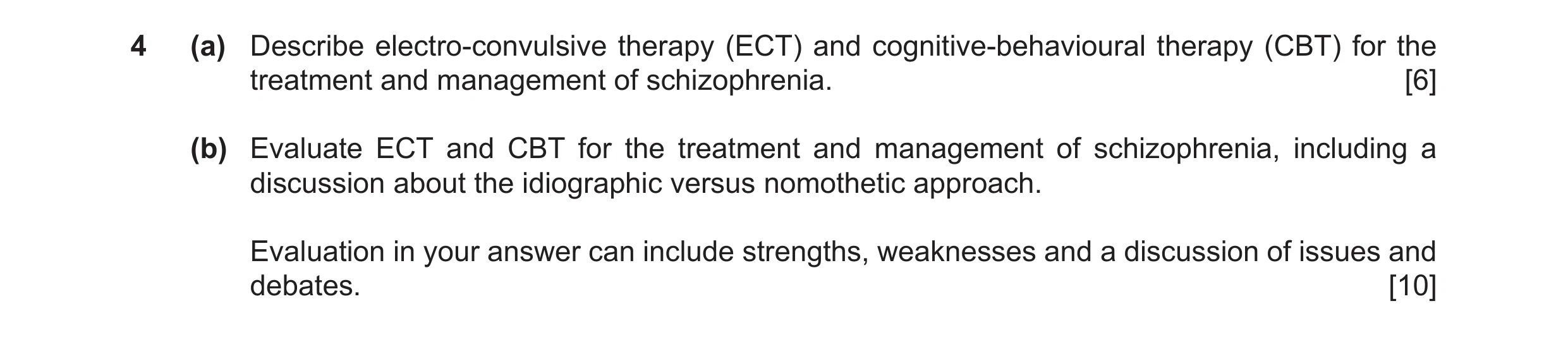
![Question 17: (a) Outline the reductionism side of the reductionism versus holism debate. [2] (b) Explain how the biochemical explanation of schizophreni…](https://img.pastlit.com/crops/db9a5a92-c176-42b8-aac7-4534476124eb/q2.webp)

![Question 19: (a) Outline the idiographic versus nomothetic debate. [2] (b) Explain one strength of using an idiographic approach to diagnosing schizophr…](https://img.pastlit.com/crops/b8366ef4-e3f7-4cd7-aeea-7a2d2c81d04e/q2.webp)
![Question 20: (a) Outline the reductionism side of the reductionism versus holism debate. [2] (b) Explain how the biochemical explanation of schizophreni…](https://img.pastlit.com/crops/f18b9c25-5711-42ba-89a5-71d306fd858c/q2.webp)
![Question 21: (a) Describe the biochemical (dopamine hypothesis) explanation and the psychological (cognitive) explanation of schizophrenia. [6] (b) Eval…](https://img.pastlit.com/crops/fd272d35-be54-4559-950f-83ab5103f98c/q4.webp)
 4 / 5
4 / 5![Question 23: Suggest why a doctor might make a false positive diagnosis. [4]](https://img.pastlit.com/crops/0936810b-6075-4b2b-b0c6-c5e08199a719/q9.webp)

![Question 25: Suggest why a doctor might make a false positive diagnosis. [4]](https://img.pastlit.com/crops/3243291a-af55-484c-b515-1f970209370f/q9.webp)
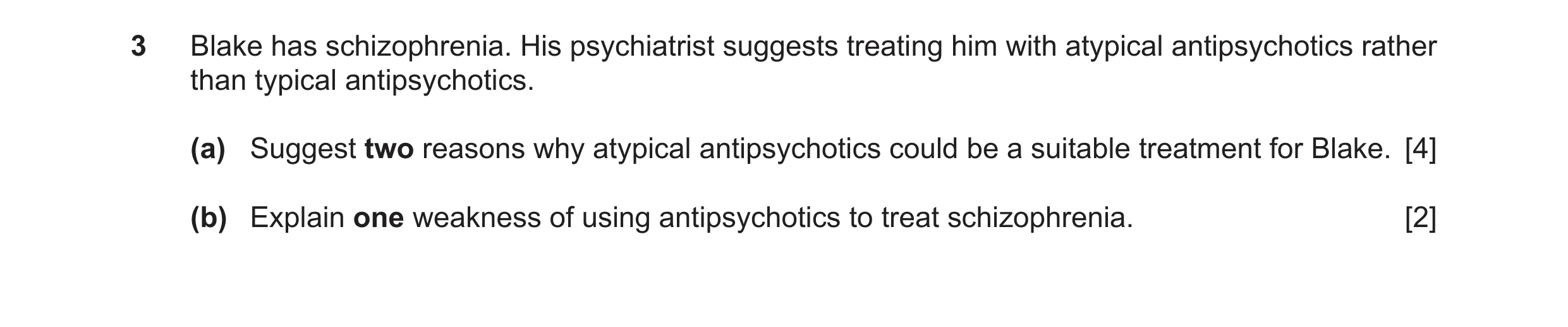 5 / 5
5 / 5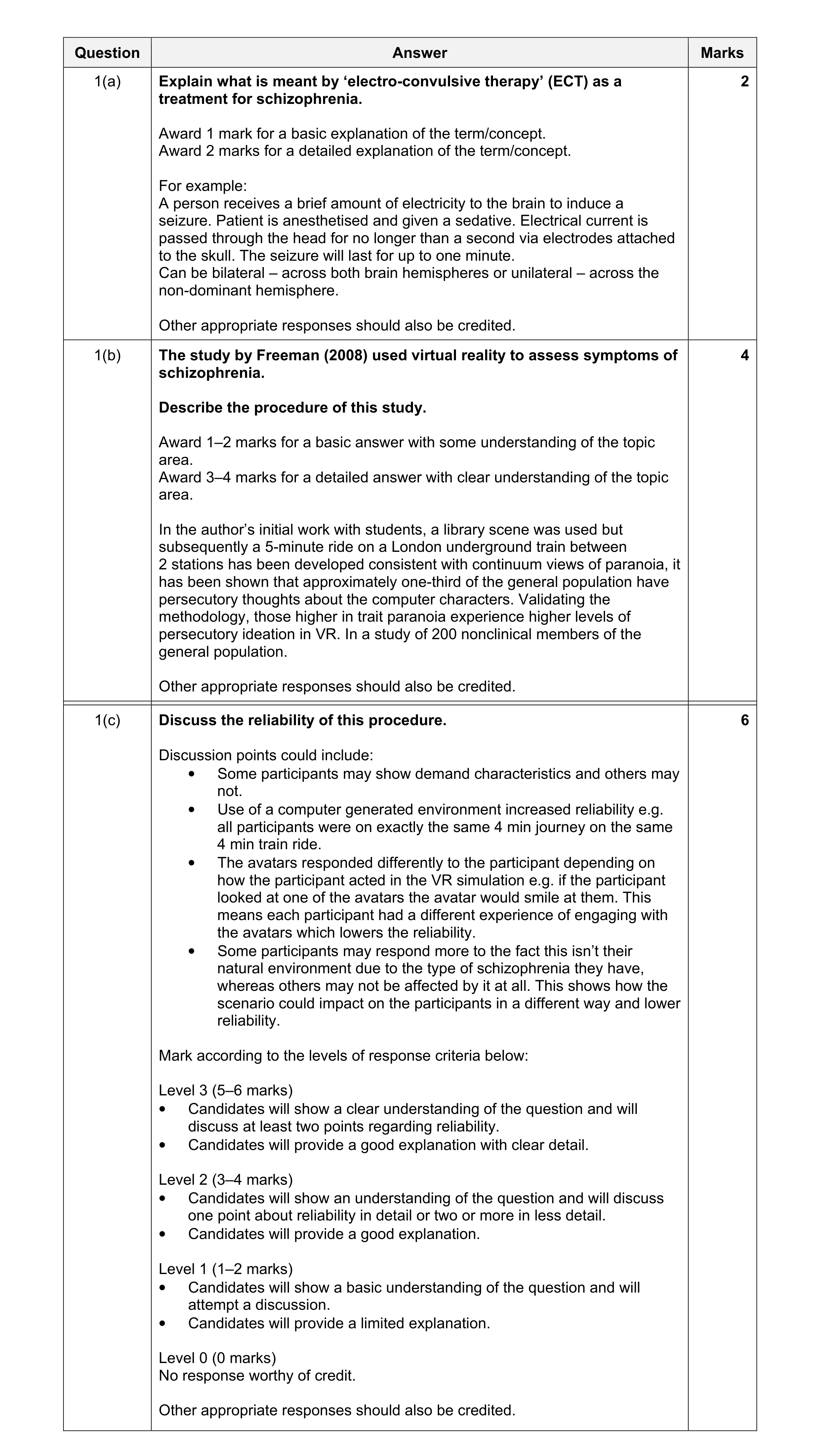 12
12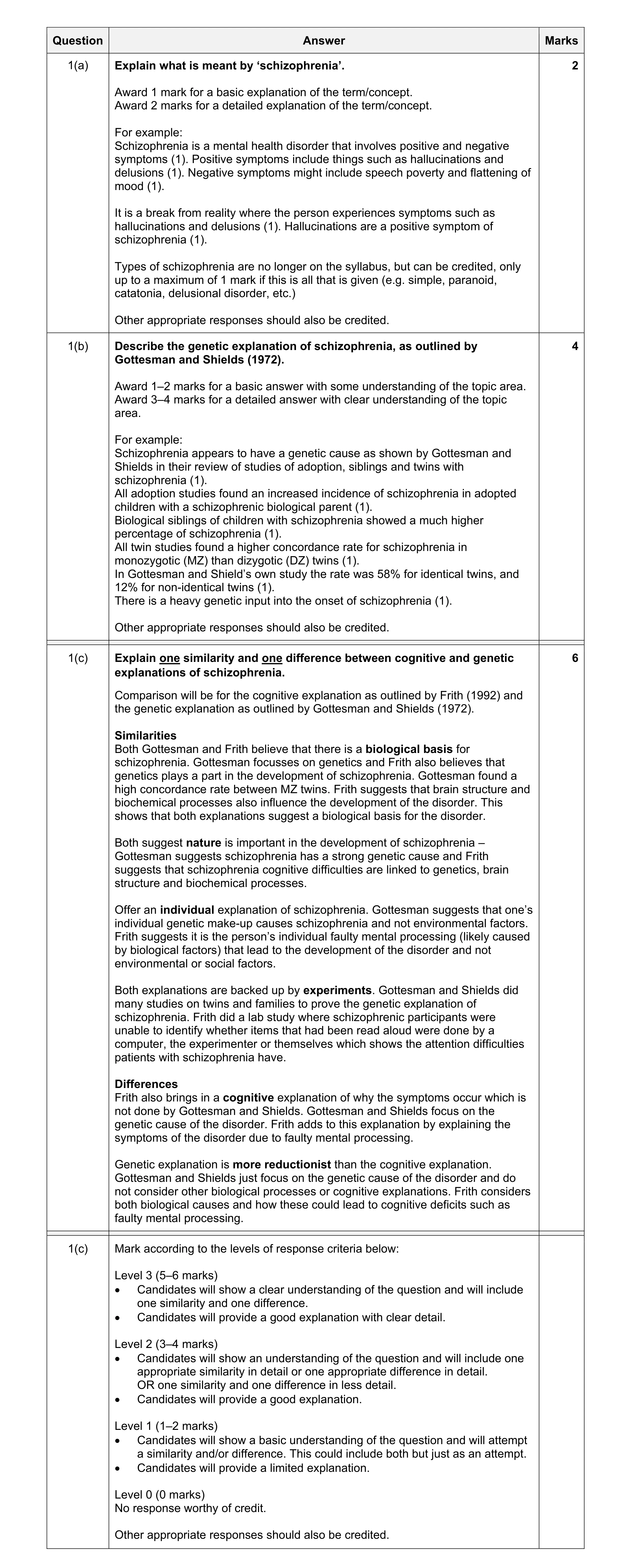 12
12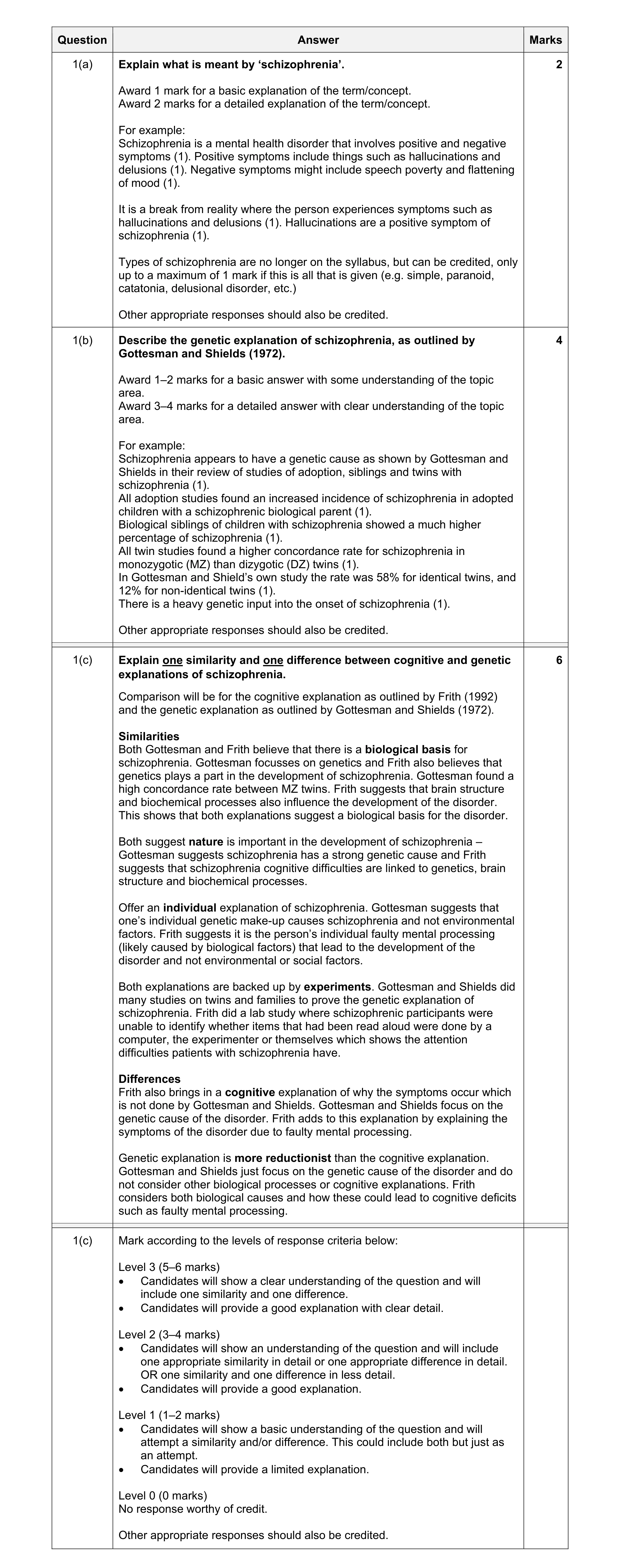 12
12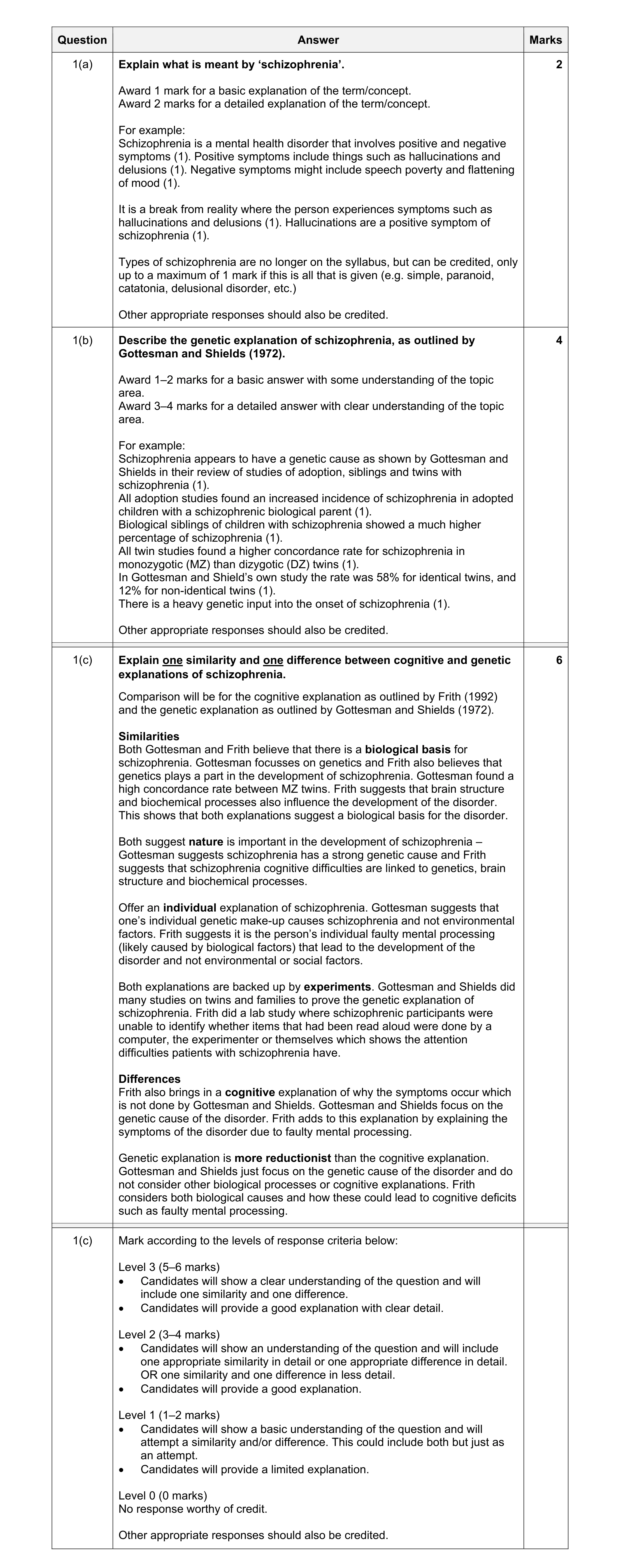 12
12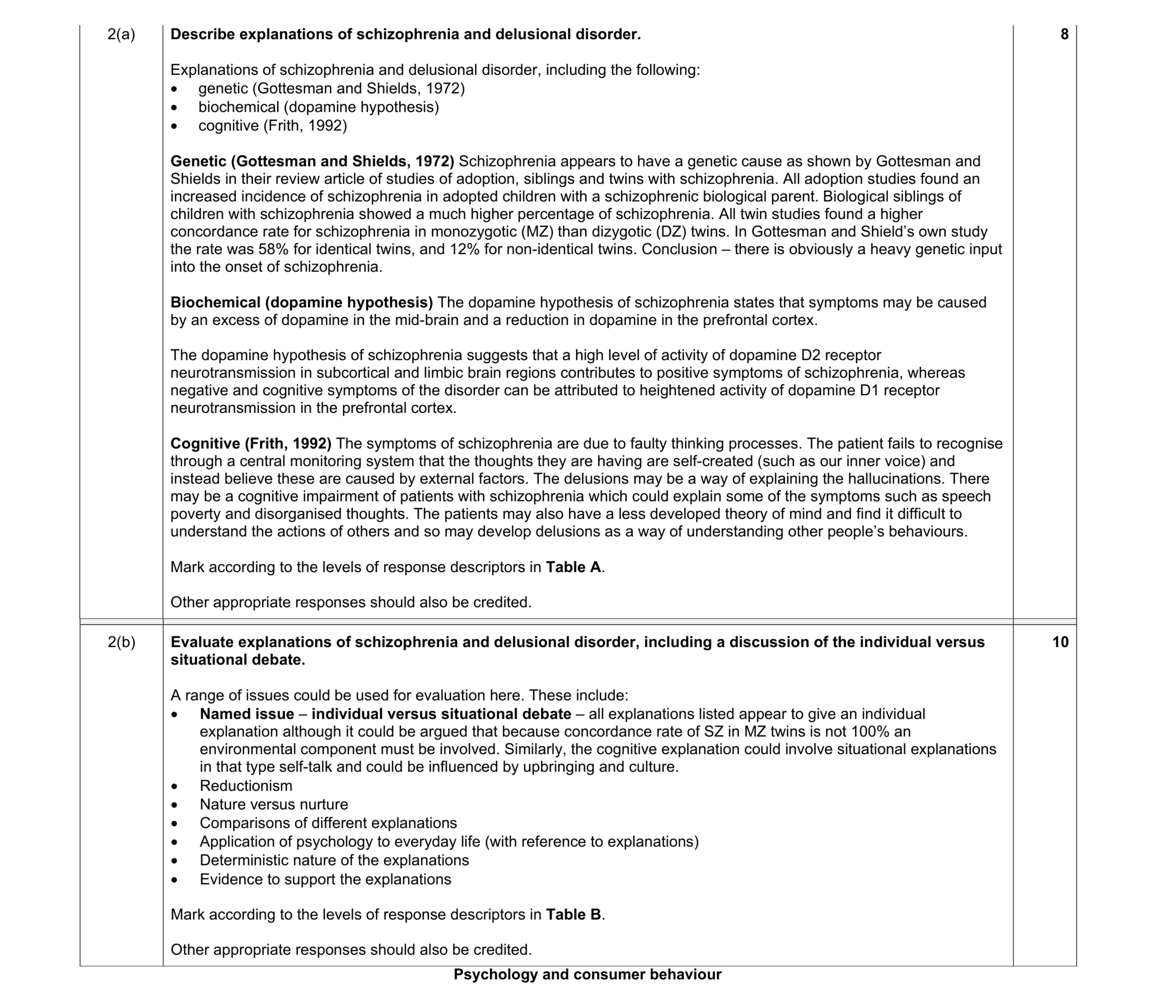 18
18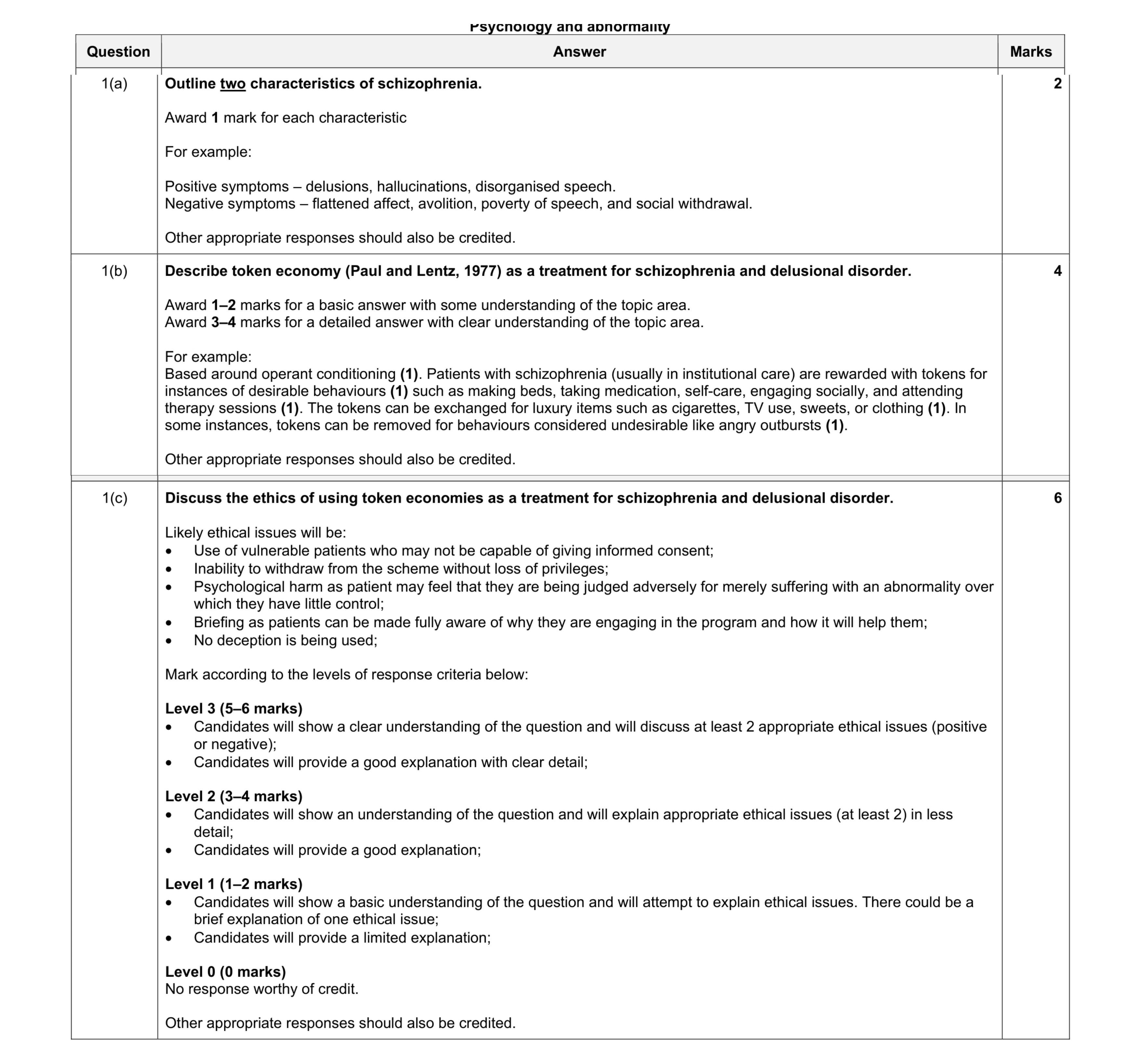 12
12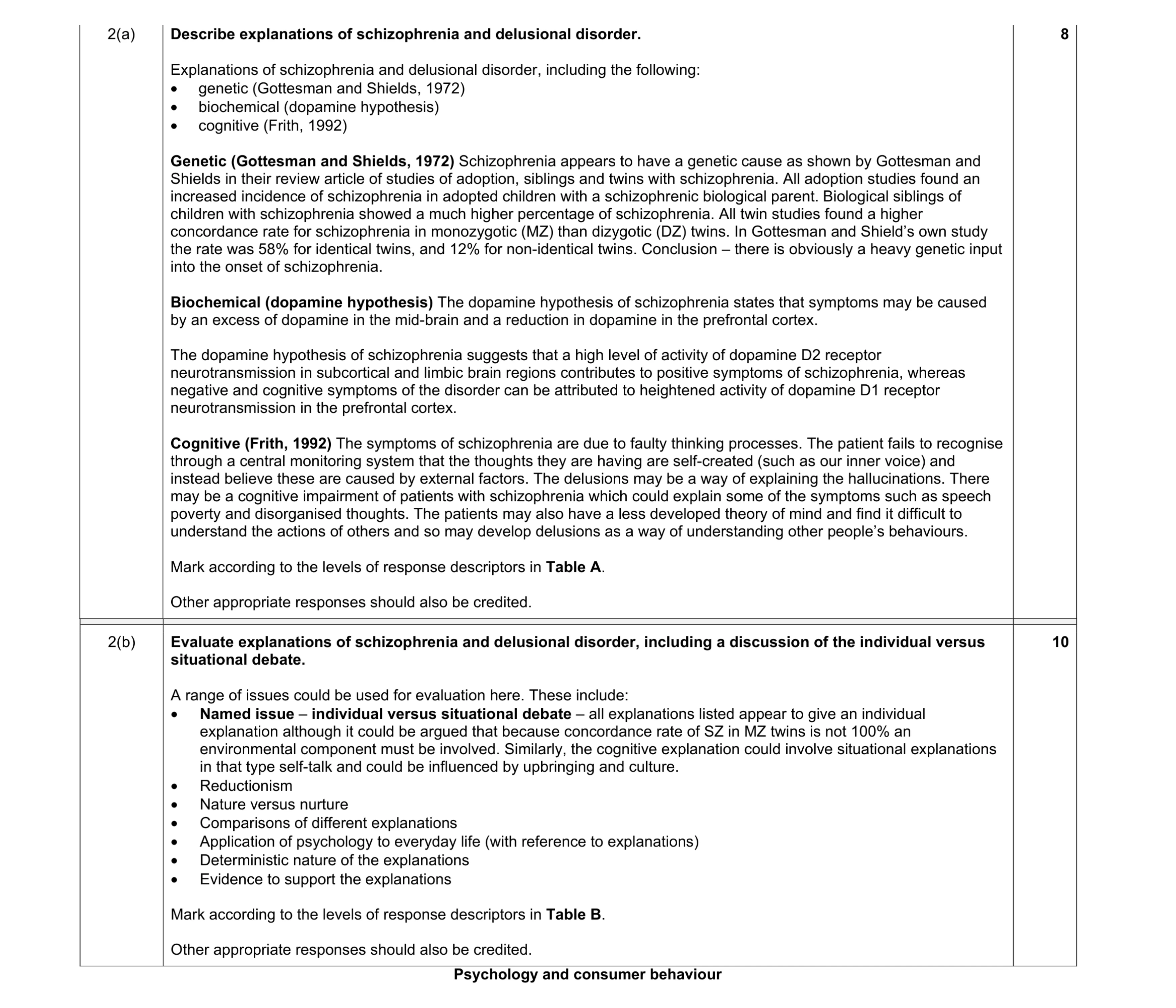 18
18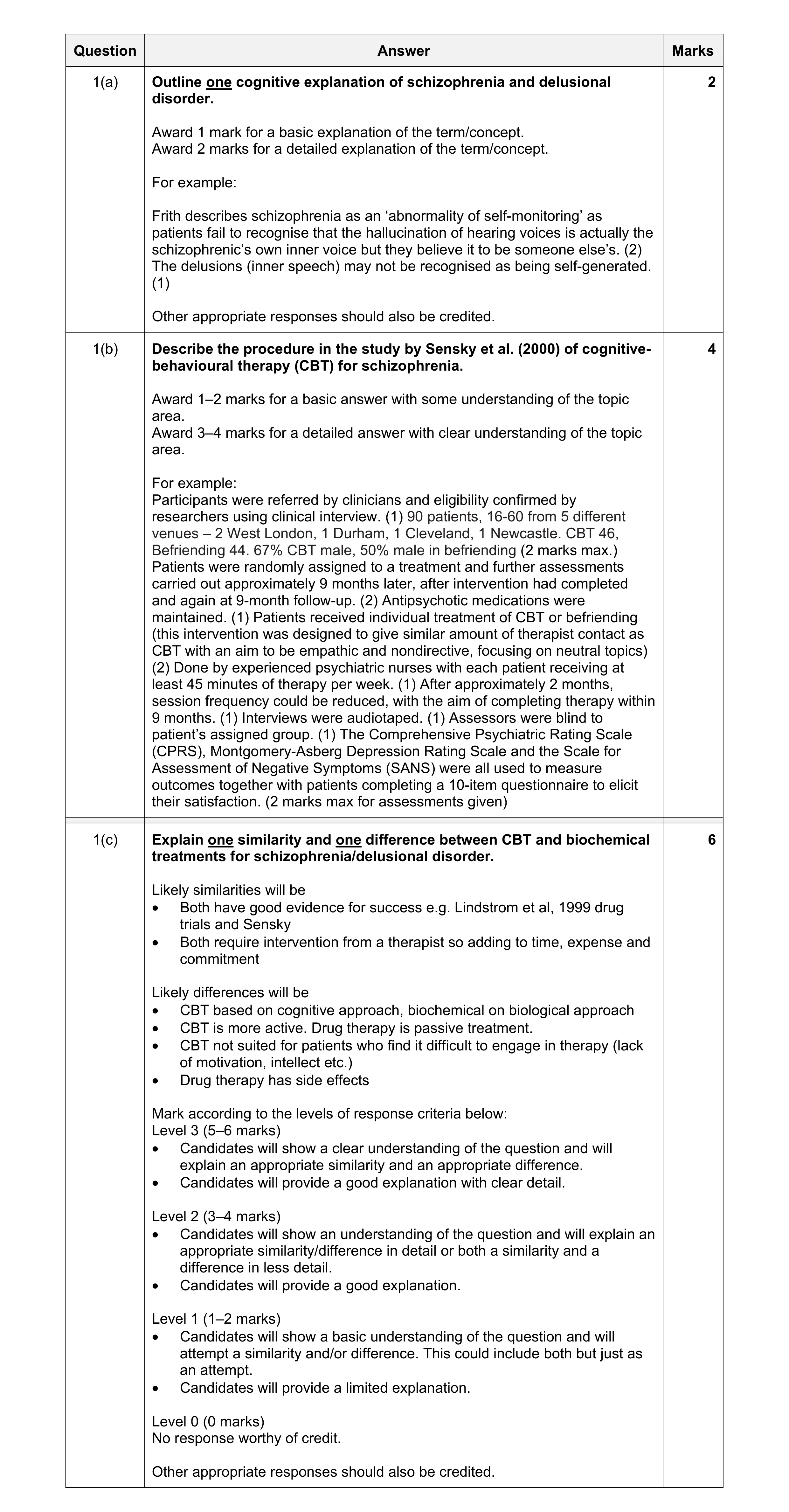 12
12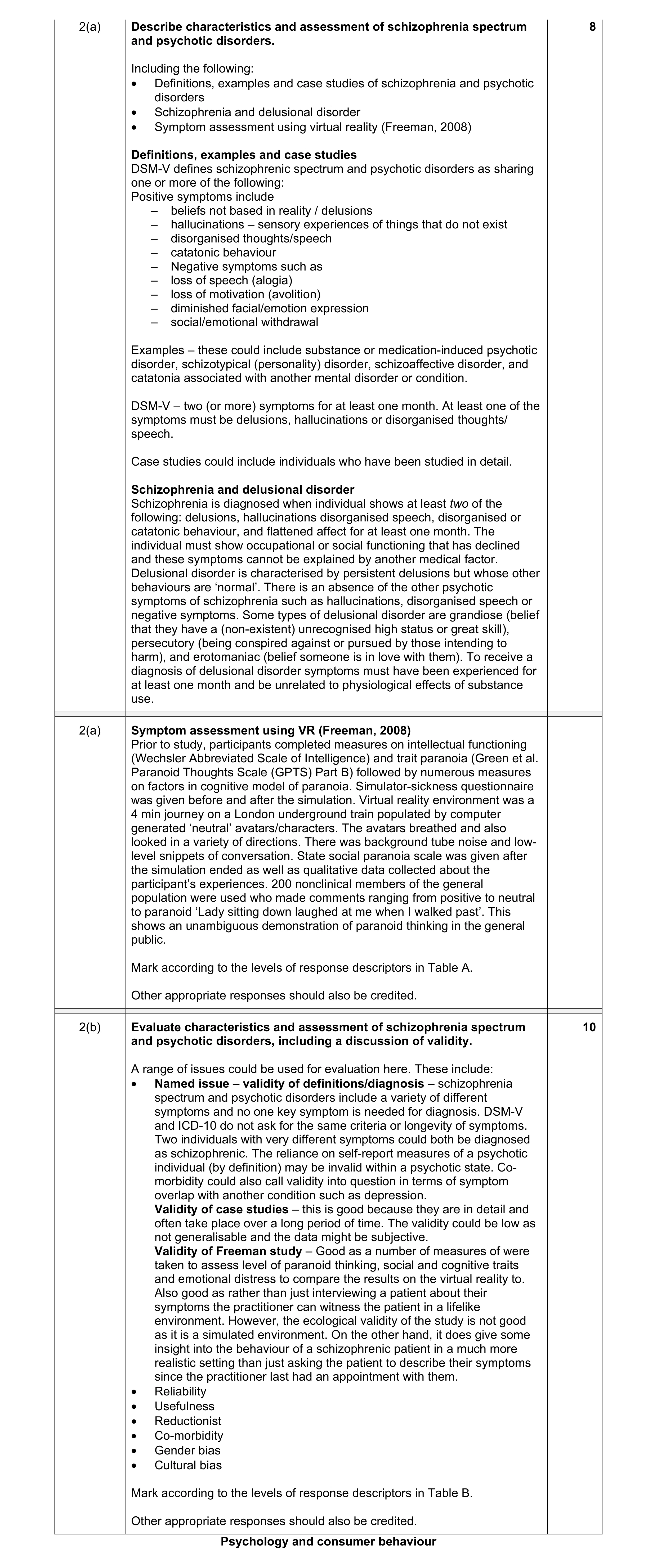 18
18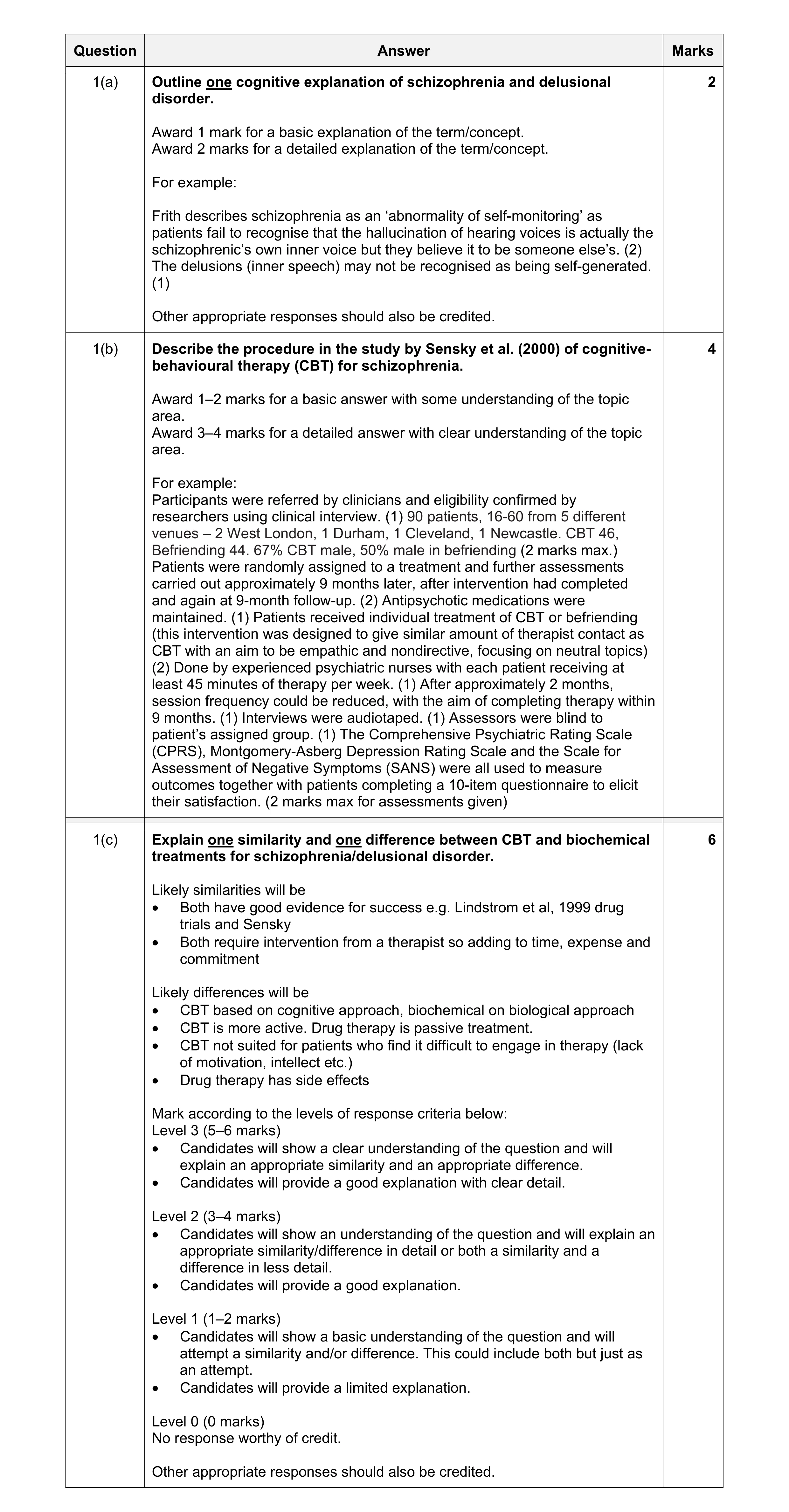 12
12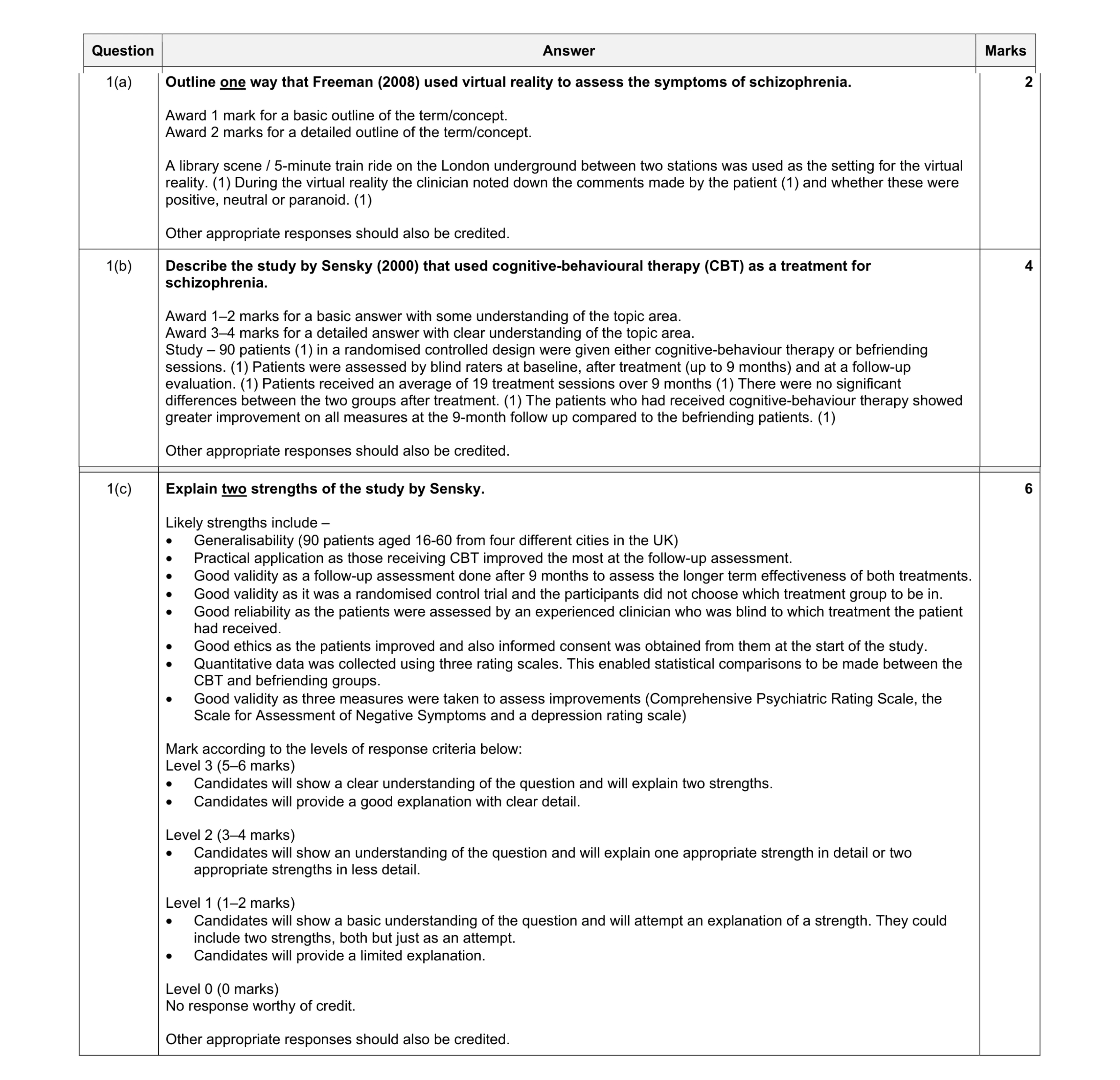 12
12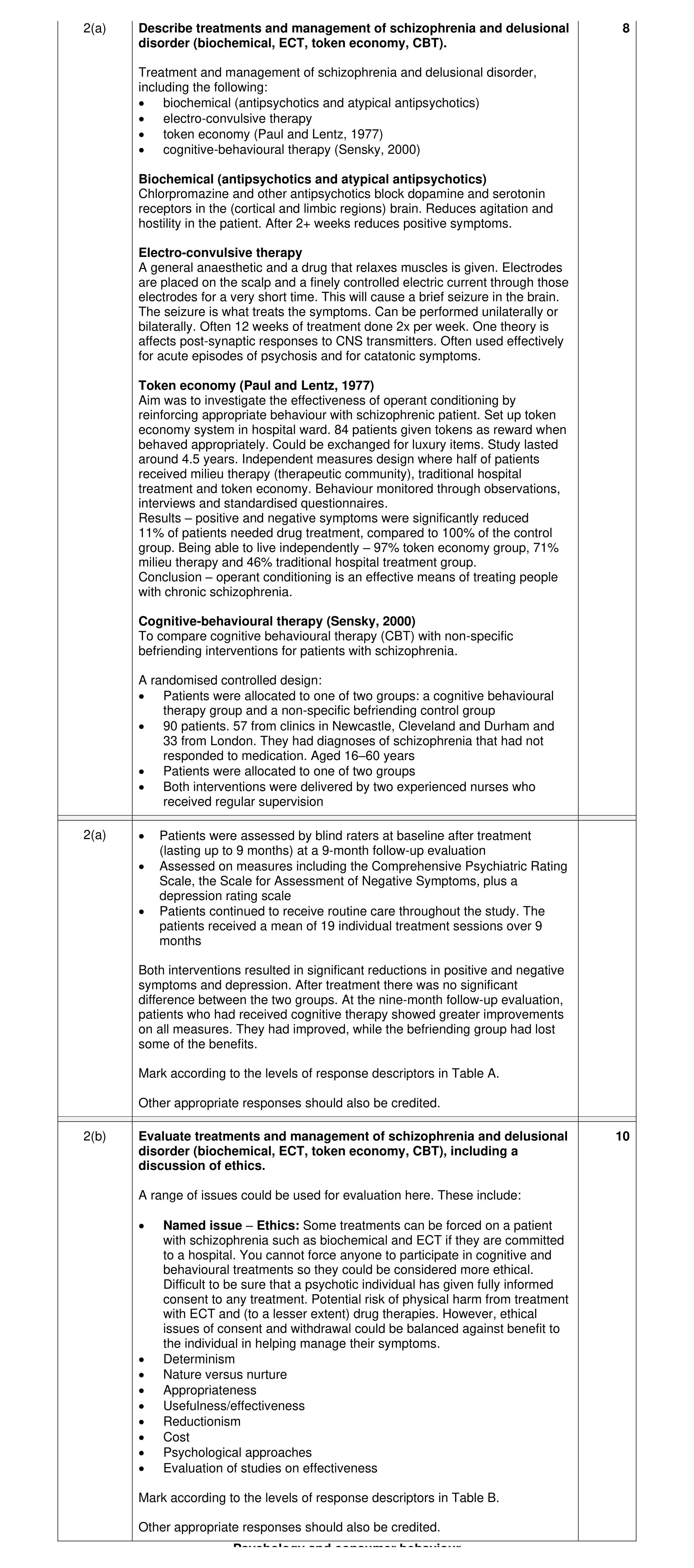 18
18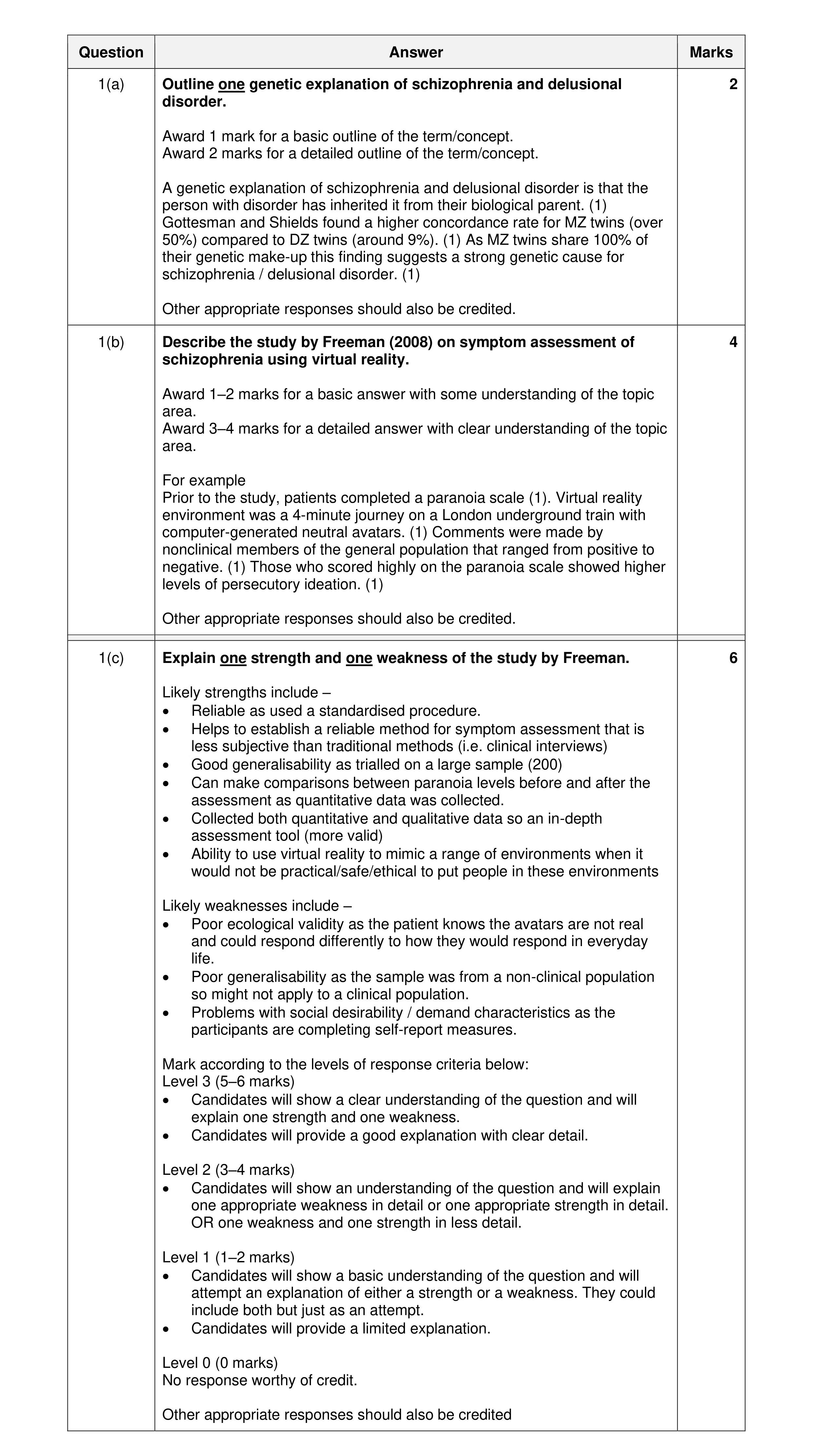 12
12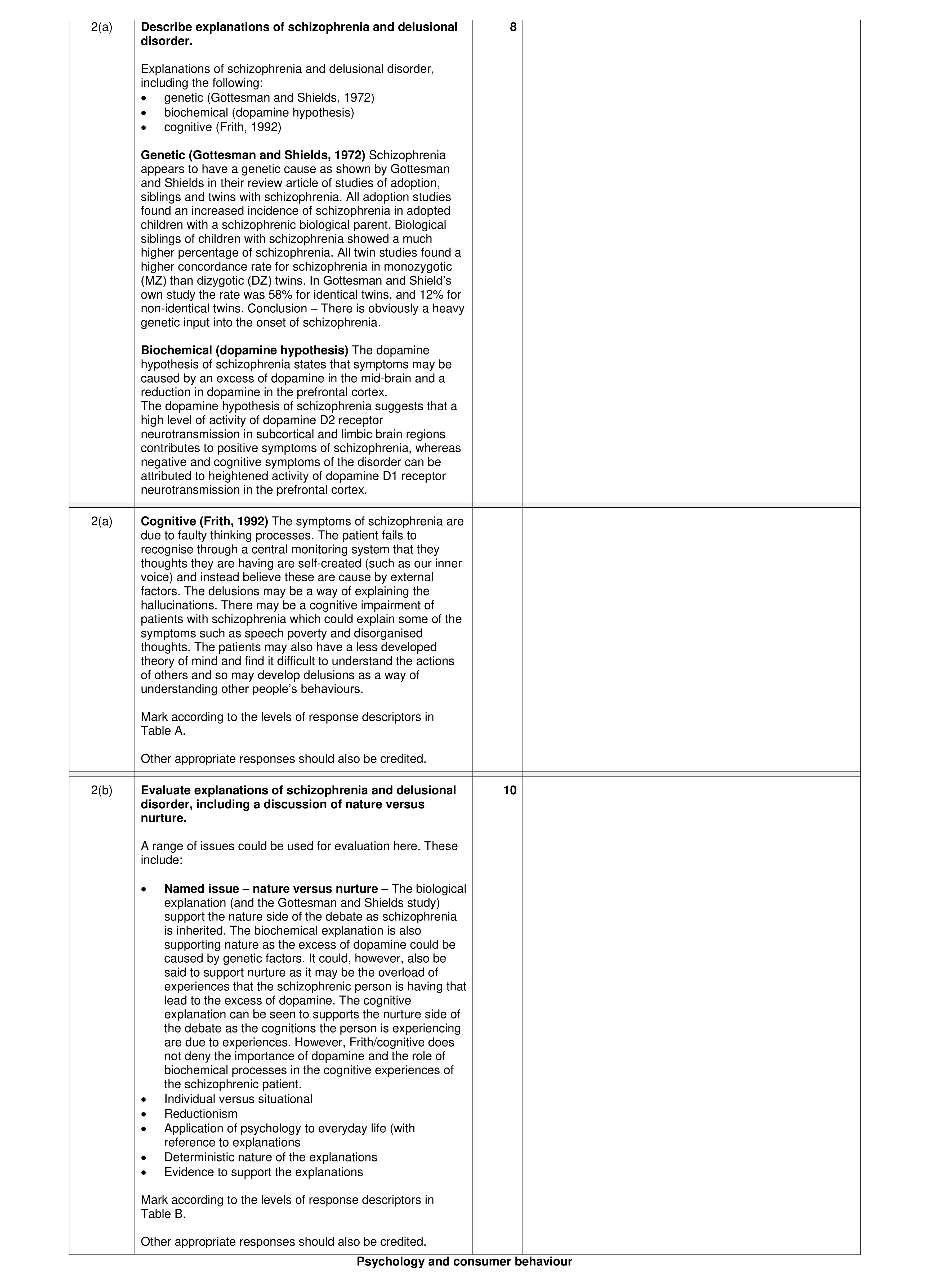 18
18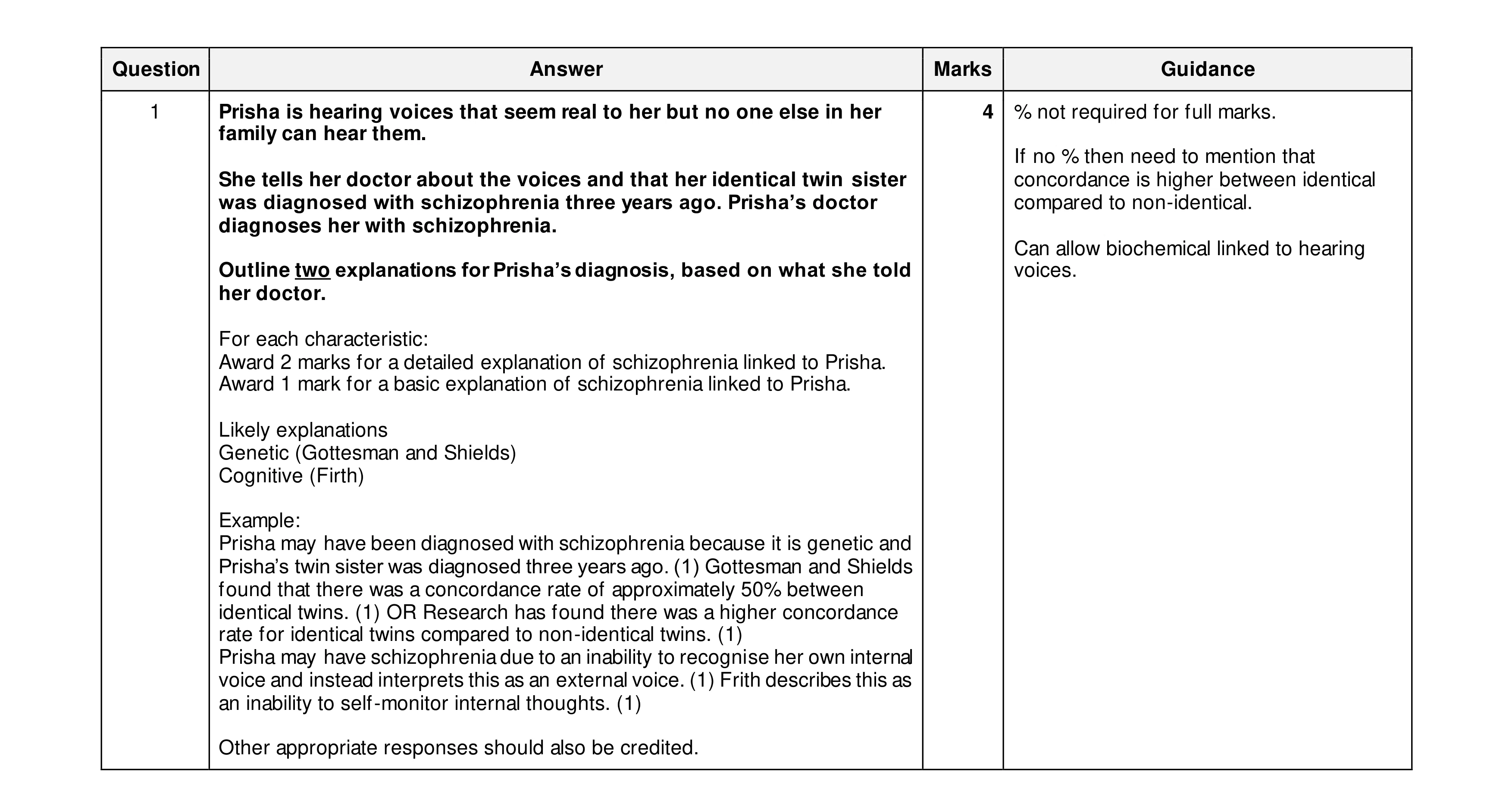 4
4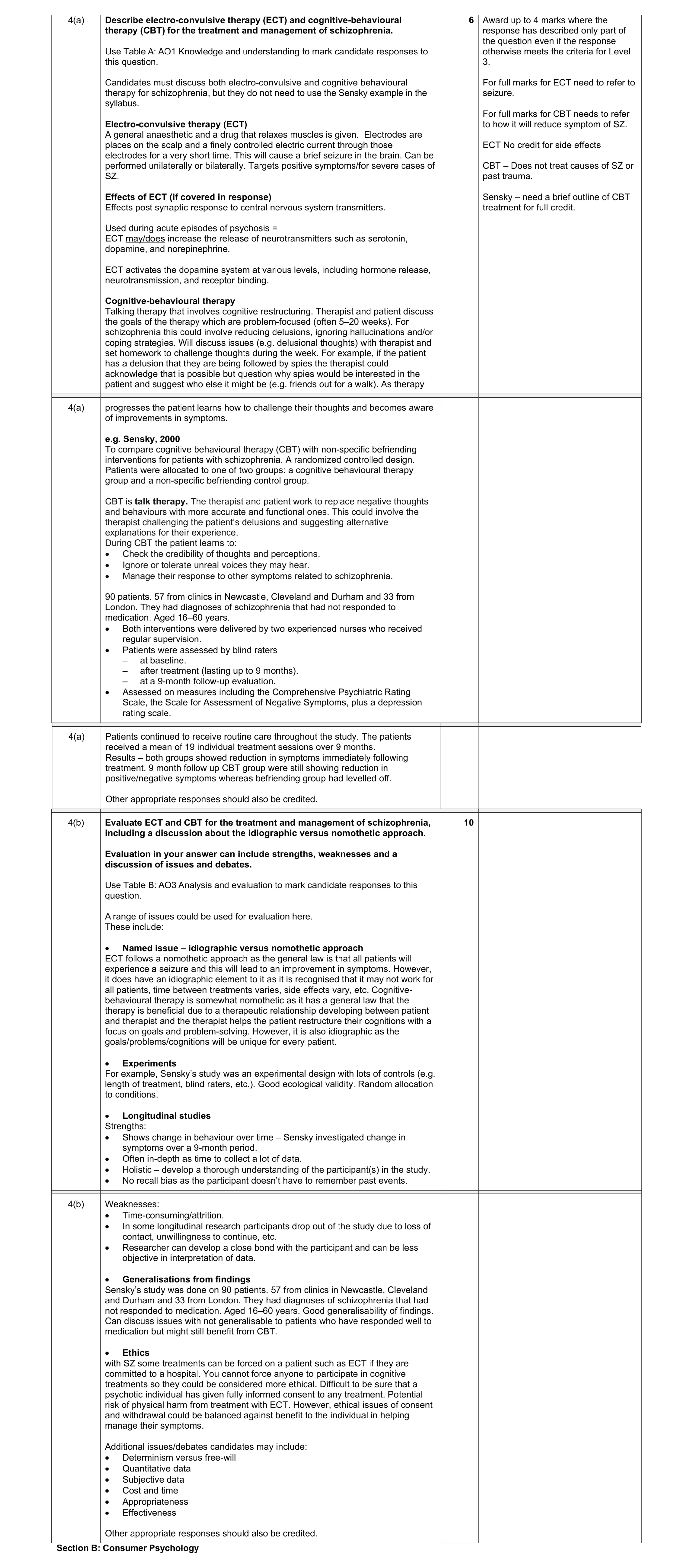 16
16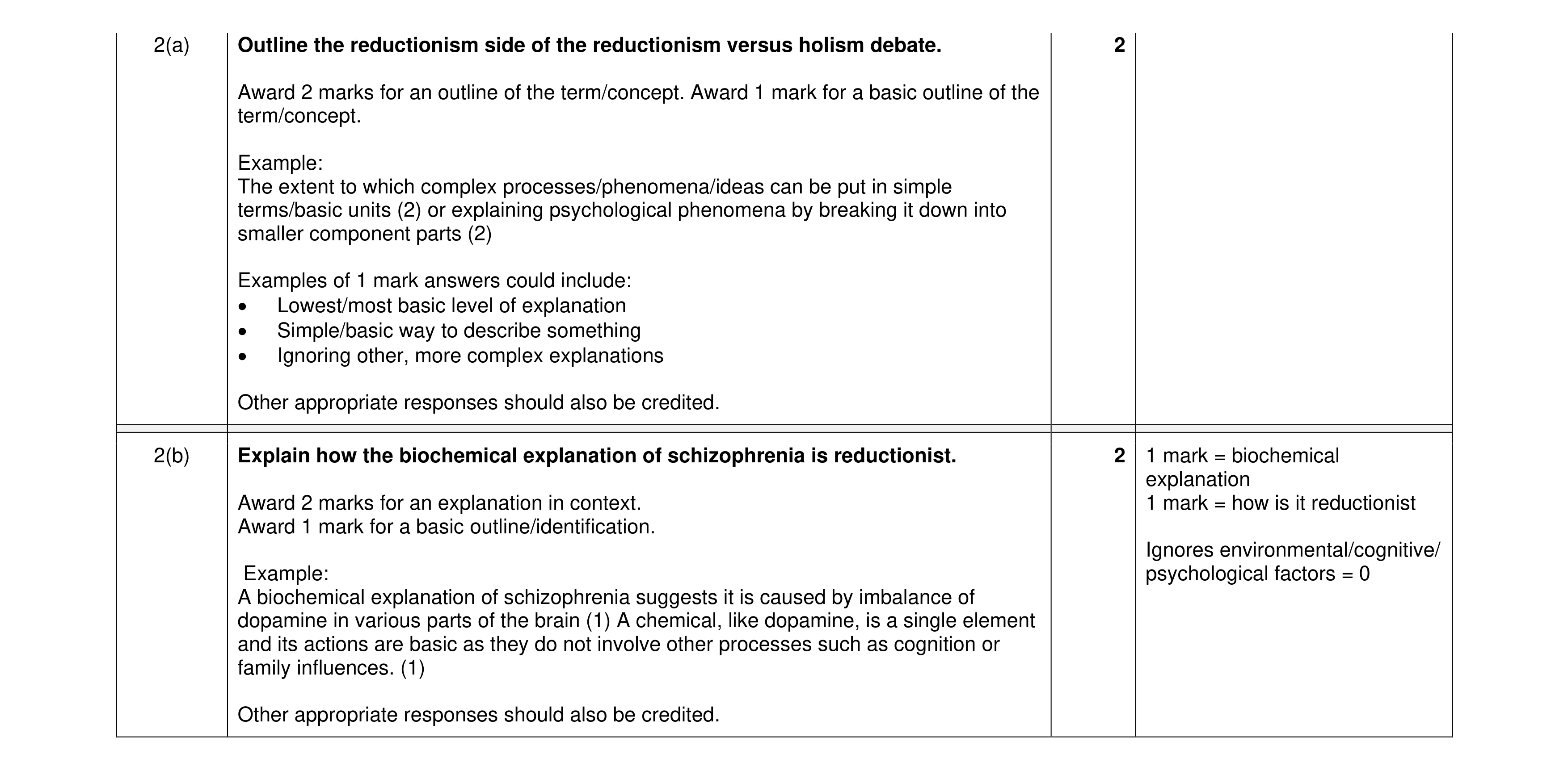 4
4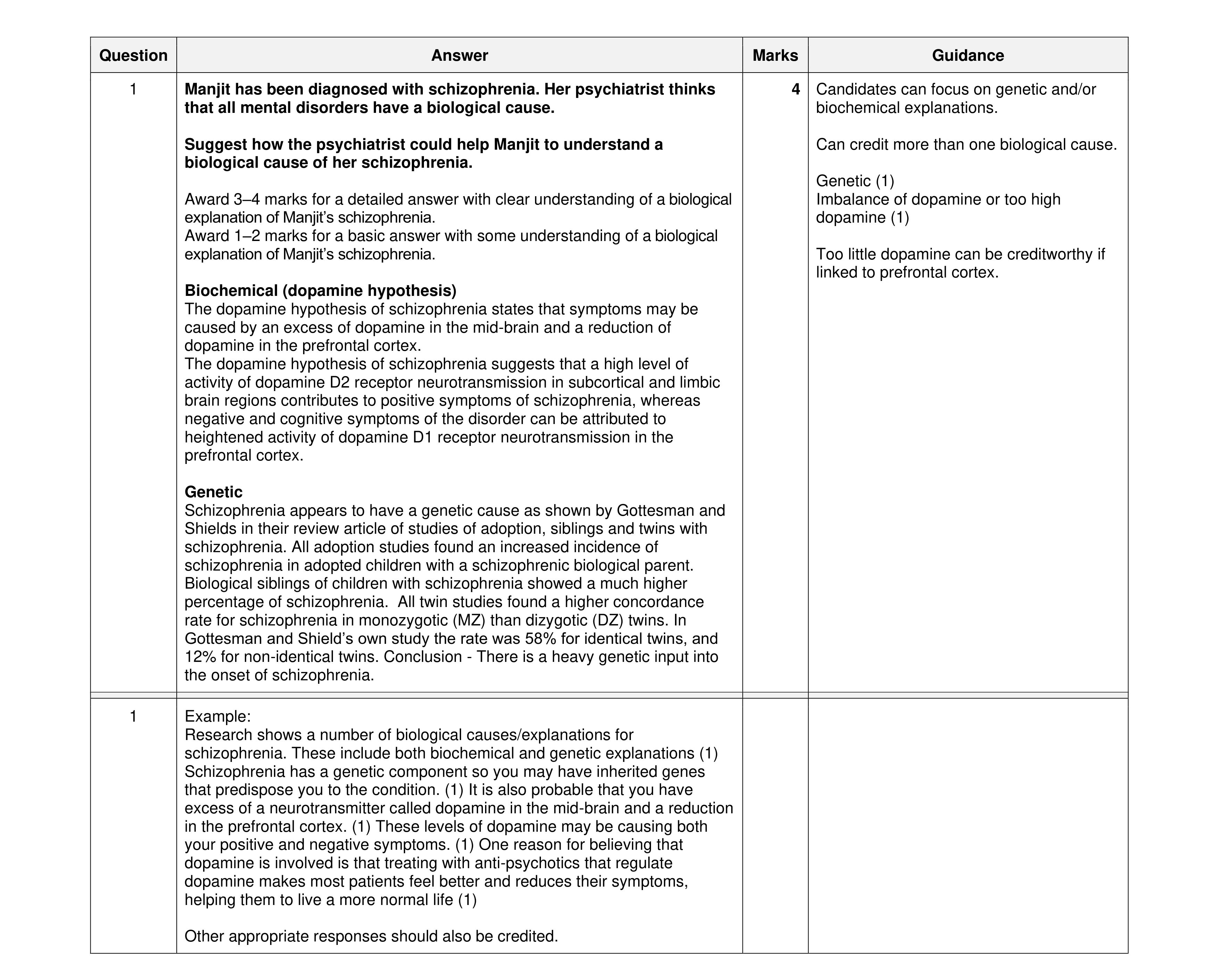 4
4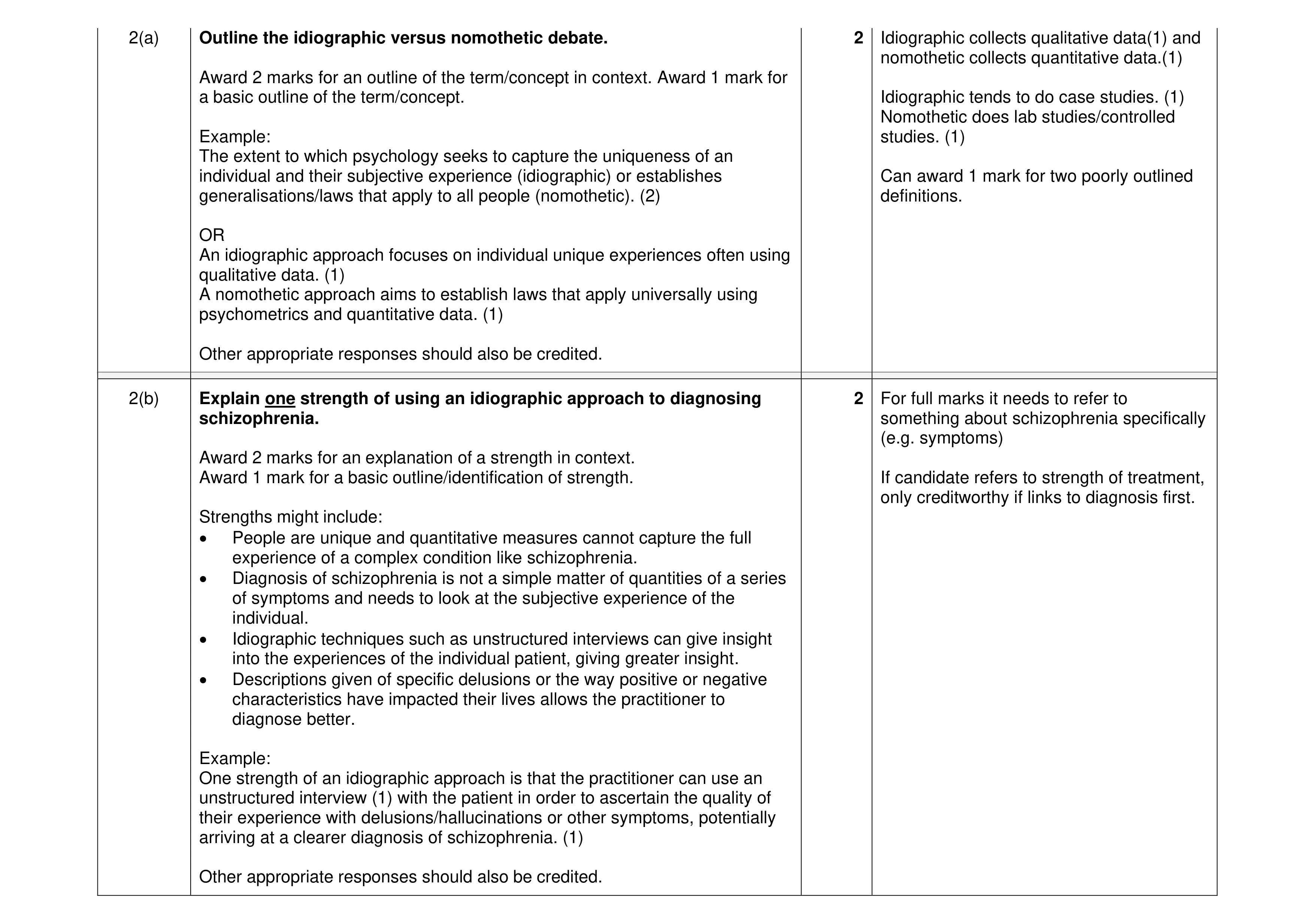 4
4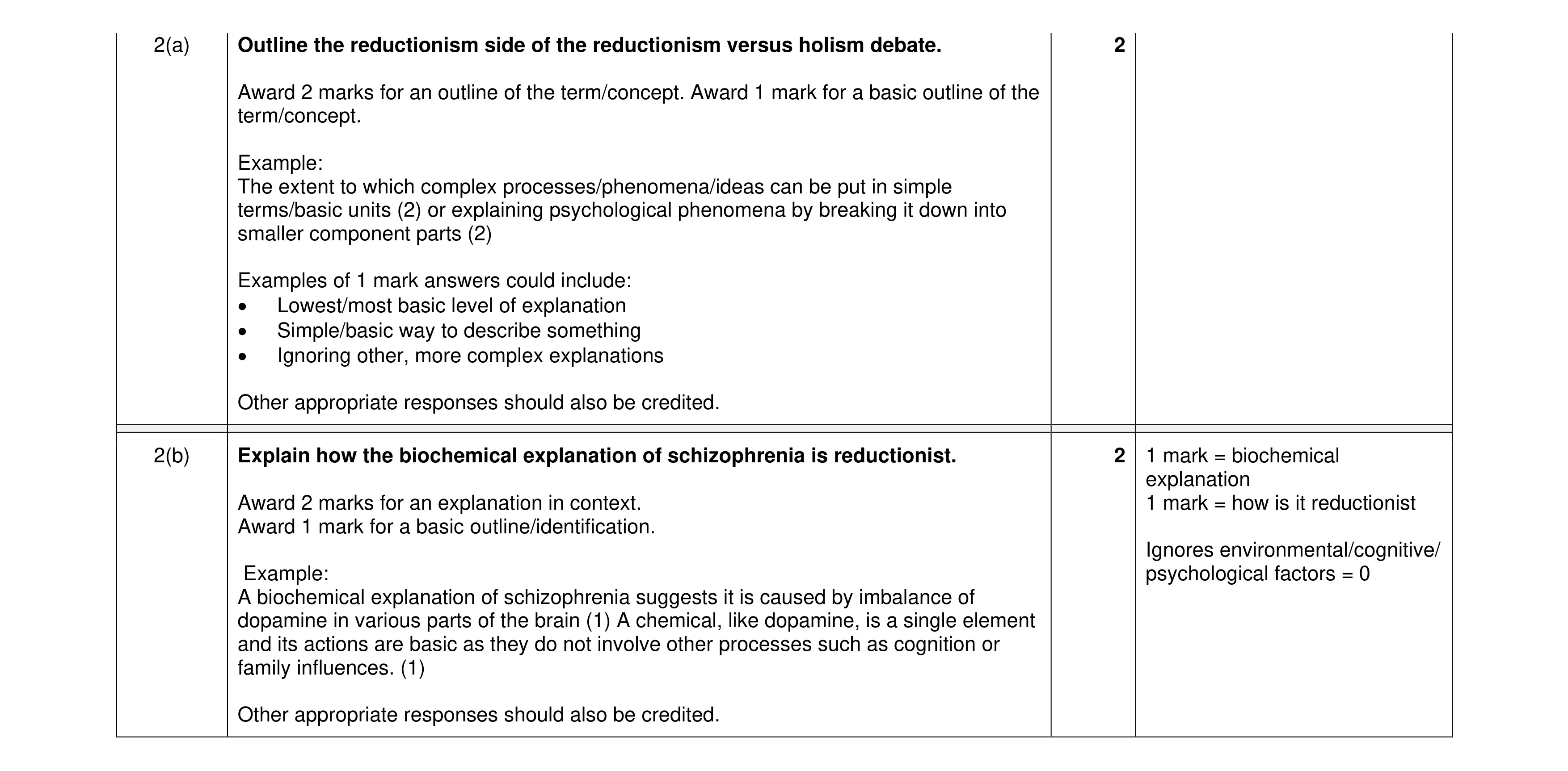 4
4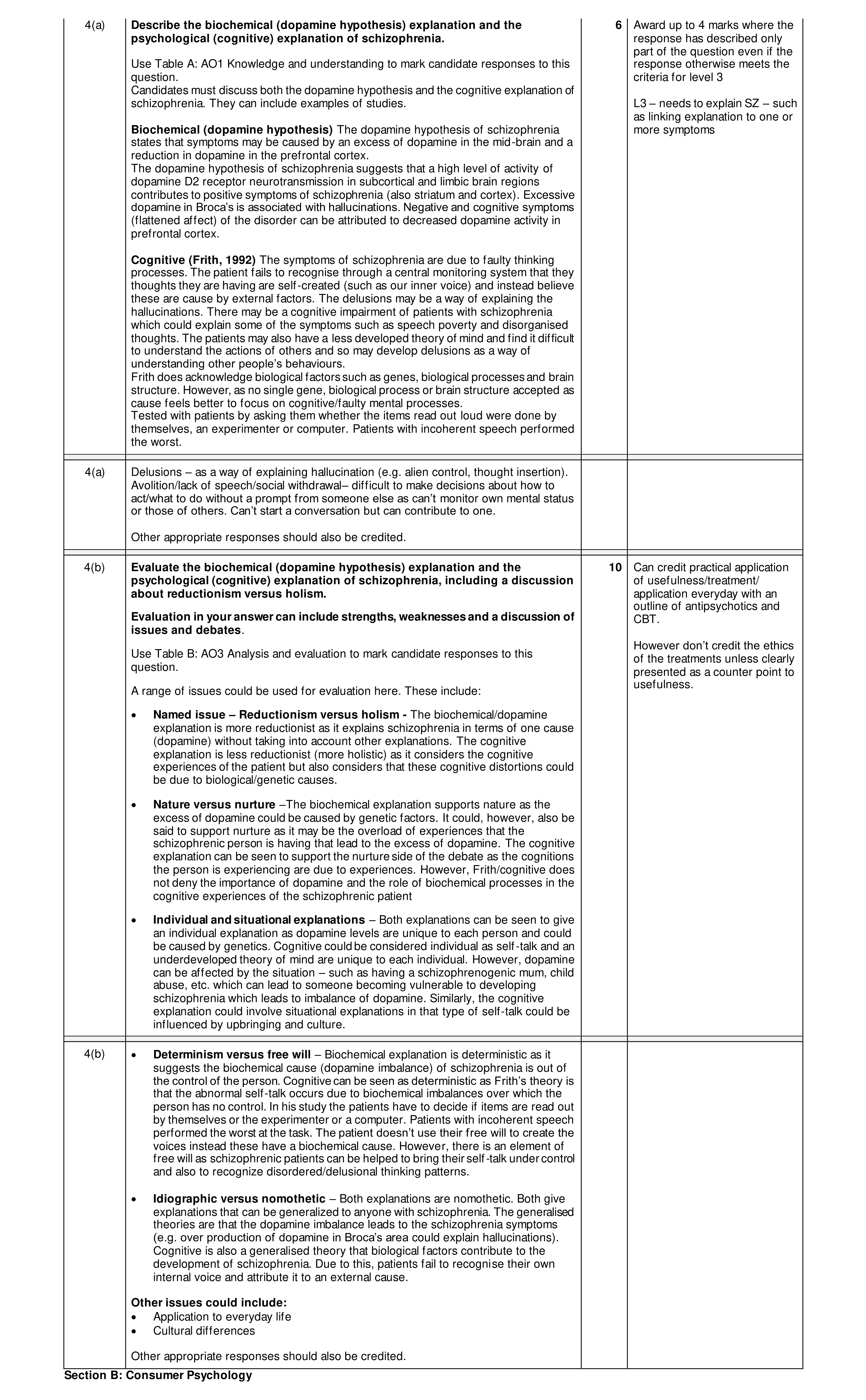 16
16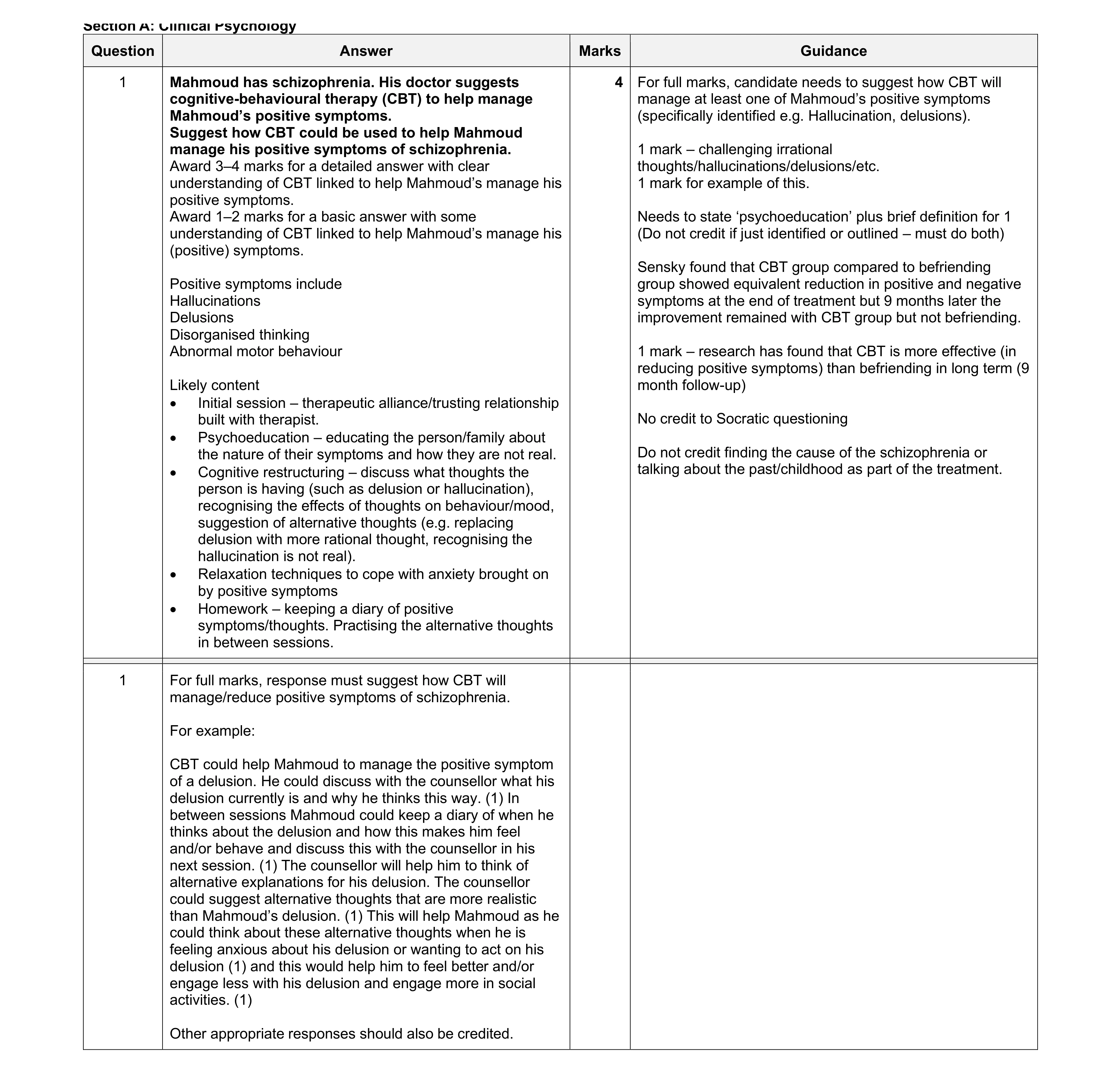 4
4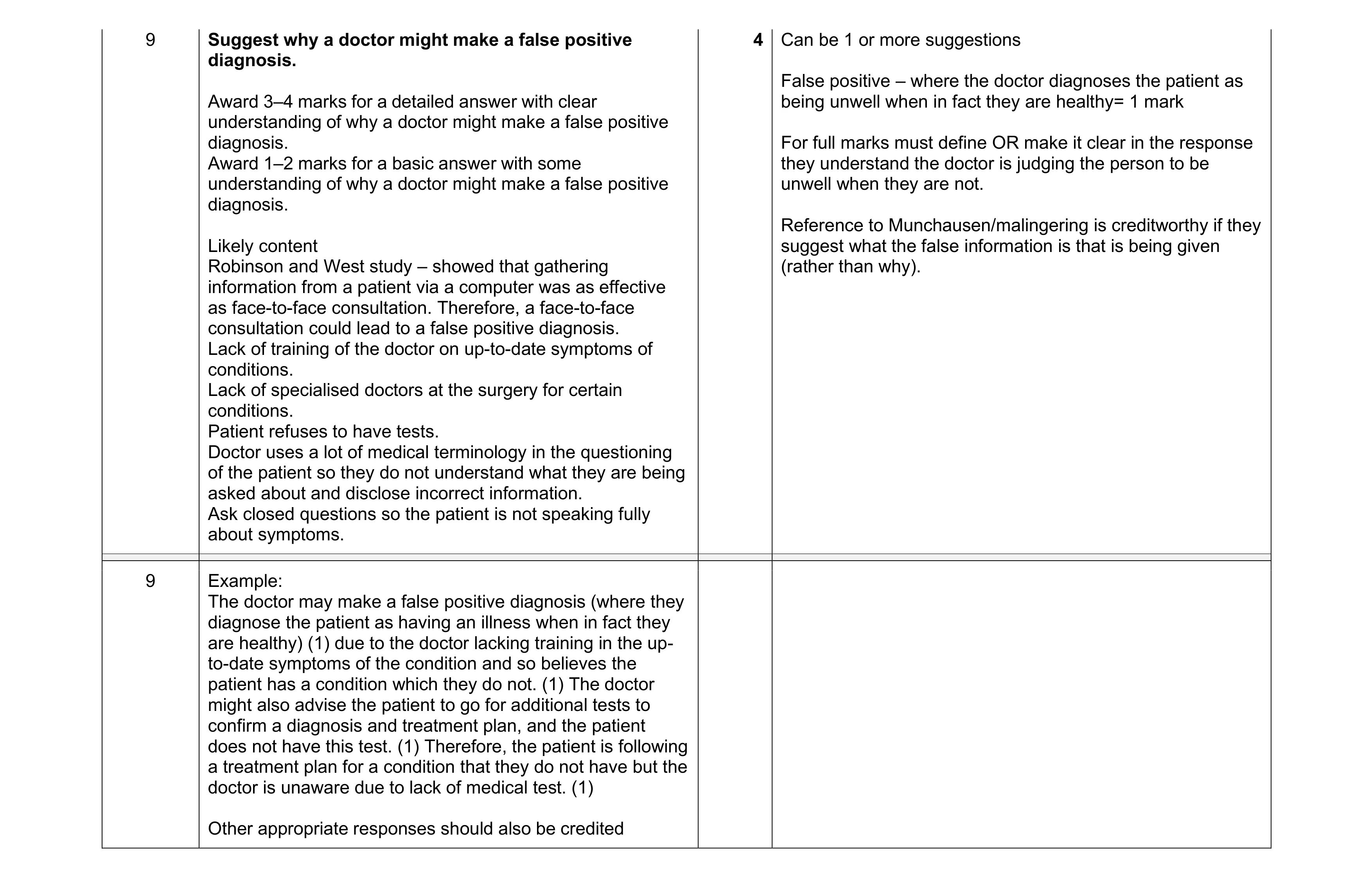 4
4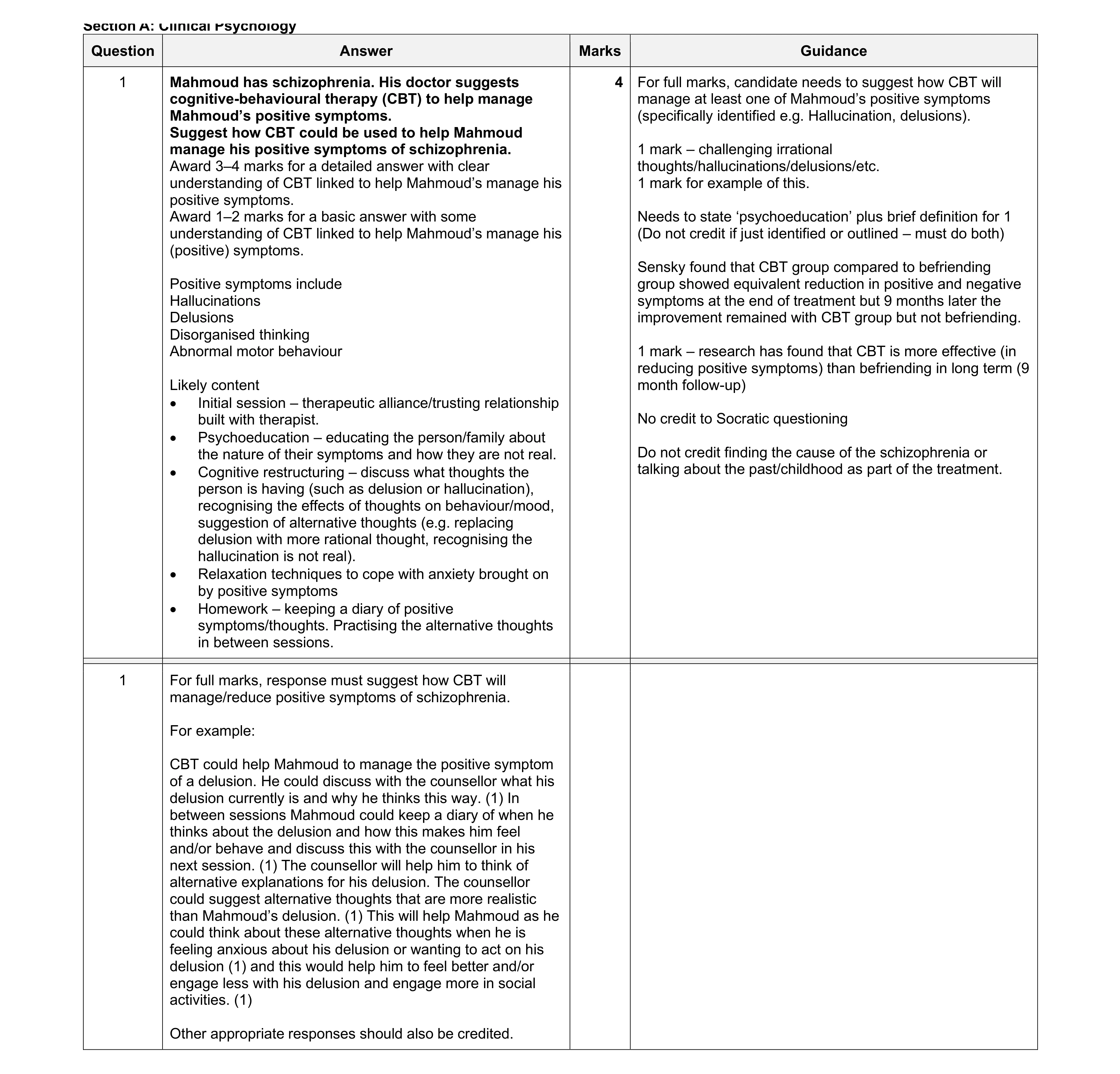 4
4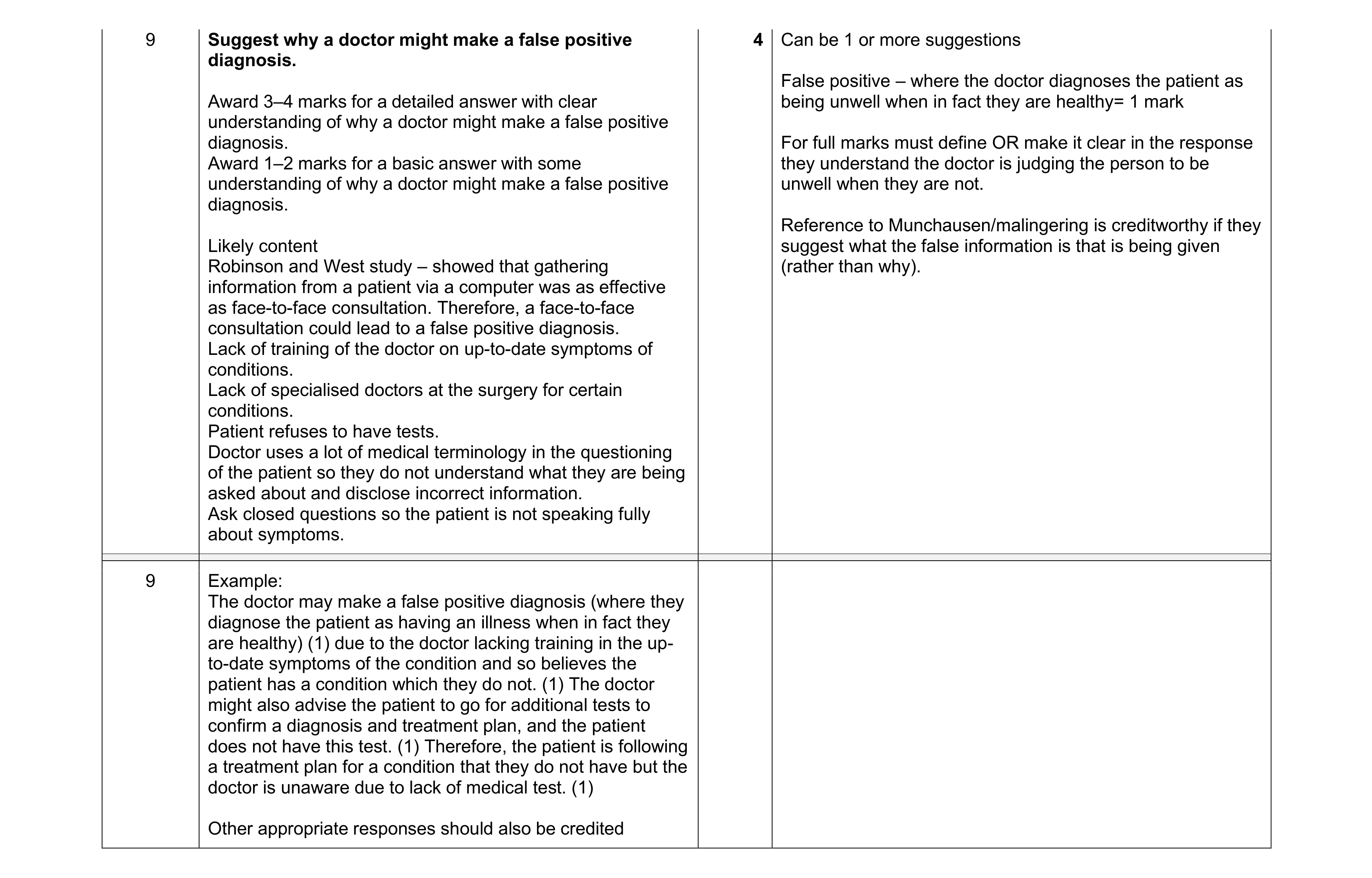 4
4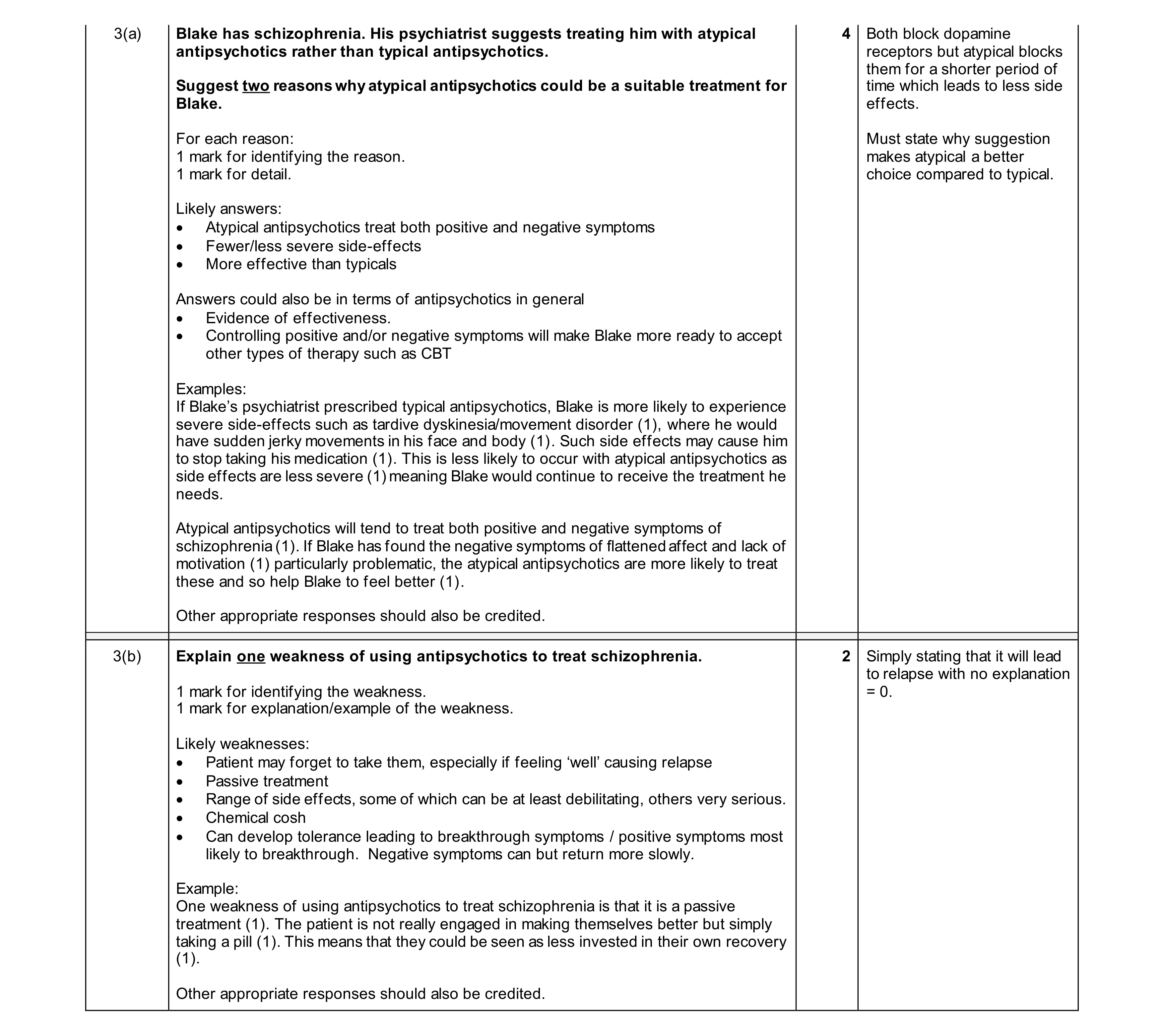 6
6