Questions as text
Q1 · The Gilded Age and Progressive Era, 1870s to 1920 (a) Explain why Progressives wanted to… 9489/21 May/June 2021
5 The Gilded Age and Progressive Era, 1870s to 1920 (a) Explain why Progressives wanted to amend the Constitution in the years before 1920. [10] (b) ‘The consequences of urbanisation in the late nineteenth century were dealt with effectively.’ How far do you agree with this view? [20]
30 marks
Mark scheme: 5(a) Explain why Progressives wanted to amend the Constitution in the years 10 before 1920. There are 4 amendments to the Constitution which took place during the Progressive Era: • The 16th Amendment introduced a system of income tax based on what individuals earned. This replaced the system of apportionment which calculated tax based on state populations. • The 17th Amendment allowed for direct elections of US senators. This allowed people to have a more immediate say on who their representatives were. • The 18th Amendment prohibited the sale of intoxicating liquors. • The 19th Amendment allowed for women’s suffrage. These four amendments allow for discussion of the various policy positions of the Progressive movement in the early twentieth century. The 16th amendment was aimed at equalising the tax system as farmers in rural states often struggled to pay their share of tax when it was calculated by apportionment. The 17th amendment offers the chance to discuss the commitment by many Progressives both at state and federal level to making democratic decisions more accessible to the ‘common man’. In addition, the 18th amendment highlights the close relationship which had existed between Progressives and the temperance movement, whilst women’s suffrage could be used to discuss both the social and political aims of Progressive thinkers. Accept any other valid responses. 5(b) ‘The consequences of urbanisation in the late nineteenth century were 20 dealt with effectively.’ How far do you agree with this view? Candidates are likely to focus on the problems caused by increased urbanisation, including: • The most prevalent social problem was the development of slums and ghettos. A slum is an urban area of poverty and deprivation, while a ghetto is an ethnically distinct area, such as Chinatown or Little Italy, which is not wholly poor. Slums and ghettos were caused mainly by the rapid growth of population, especially immigrants from Europe. New York City grew from 1.2 million in 1860 to 3.4 million in 1900. • Tenement buildings were devised to house the increased population, but they soon became overcrowded. Sanitation was inadequate; the water closet was not developed for mass production until the 1870s. Diseases that were common in such areas were rife, including cholera and typhus. • Sweat shops provided the main form of employment for many, especially immigrant women. These were dangerous and working hours were long as there was little legislation. • The city government usually did little to address the problems of the slums due to corruption. Their governance was often in the hands of city bosses such as Boss Tweed in New York. They tended to exploit the ‘huddled masses’ that moved to their cities rather than introduce relevant social reforms. Candidates might discuss these problems in relation to any of the large, industrialised cities of the North, for example, New York, Chicago and Detroit. Attempts to deal with these problems: • During the second half of the nineteenth century, campaigns for shorter working days became more organised. During the 1870s, eight hours became a central demand, especially among labour organisers, with a network of Eight-Hour Leagues which held rallies and parades. A hundred thousand workers in New York City struck and won the eight- hour day in 1872, mostly for building trades workers. In Chicago, Albert Parsons became recording secretary of the Chicago Eight-Hour League in 1878 and was appointed a member of a national eight-hour committee in 1880. • By the 1890s, however, the Progressive movement was starting to develop, intent on urban social reform. A leading example was Hazen Pingree, four-time mayor of Detroit, who set about improving the city’s infrastructure. • In 1890, Jacob Riis, a Danish immigrant, published a book on slum conditions in New York entitled How The Other Half Lives, an early form of muckraking journalism which further helped the development of Progressivism in the early twentieth century. • Progressives could get the support of the urban poor over campaigns against criminally corrupt administrations but crackdowns on Sunday drinking or the distribution of jobs and favours by ward bosses gained limited support amongst the foreign-born masses of the cities. Accept any other valid responses.
This question in 9489/21 May/June 2021
Q2 · The Industrial Revolution in Britain, 1750–1850 (a) Explain why the Industrial Revolution… 9489/22 May/June 2021
2 The Industrial Revolution in Britain, 1750–1850 (a) Explain why the Industrial Revolution had an impact on the lower classes. [10] (b) To what extent did the growth of international markets contribute to industrialisation in Britain? [20]
30 marks
Mark scheme: 2(a) Explain why the Industrial Revolution had an impact on the lower 10 classes. • The Industrial Revolution provided opportunities for regular employment, especially for unskilled labour. • The changes in transport caused by industrialisation meant that food supplies could be more easily transported, reducing the periodic fear of shortages greatly. • Due to increased mechanisation, skilled workers often found their livelihoods undermined. • The slowly developing, but limited, oversight of industrial working conditions by the government meant that these conditions remained unhealthy and dangerous throughout this period. • Industrialisation created a new, large industrial labour force and this, in turn, produced a growing politicisation (e.g., Chartism). • Housing and health – overcrowding led to disease and high mortality rates including epidemics of typhoid and cholera. Accept any other valid responses. 2(b) To what extent did the growth of international markets contribute to 20 industrialisation in Britain? Britain’s overseas colonies provided both opportunities for extensive trade in raw materials produced in the colonies and a market for British manufactured goods. The profits made stimulated further demand and allowed for more investment in industrial enterprises. The domestic market was not big enough to generate the wealth that large-scale industrialisation needed. This overseas investment helped create a sophisticated banking and capital raising system which provided the funds that industrial entrepreneurs needed to develop their business. In 1833, when Britain abolished slavery, the compensation paid to slave owners is approximately equivalent to £16 billion in present-day money, and approximately half is believed to have remained in Britain. This undoubtedly boosted railway development (estimated to cost £40 000 per mile laid), resulting in increased investment in the iron, steel, and coal industries. Sir John Gladstone, the father of future Prime Minister William Gladstone, was compensated for his slaves with the equivalent of £83 million in today’s money and became a large investor in the developing railways. The view can be challenged. The Agricultural Revolution provided the food needed by industry to feed the workforce. This resulted in dietary improvements, which aided in population growth. Internal demand grew in response to the rapid growth of the population. The British government’s support for free trade and laissez-faire capitalism created an environment that promoted entrepreneurship. Transport developments, such as railways (by 1850, over 6000 miles of track had been laid), aided industrialisation by allowing bulk transportation of raw materials and manufactured goods. The extensive increase in production required mechanisation and technological development. This increase resulted in rapid price drops and the creation of larger markets, resulting in rapid industrialisation. Accept any other valid responses.
This question in 9489/22 May/June 2021
Q3 · The Gilded Age and Progressive Era, 1870s to 1920 (a) Explain why there were concerns… 9489/22 May/June 2021
5 The Gilded Age and Progressive Era, 1870s to 1920 (a) Explain why there were concerns about immigration in the late nineteenth century. [10] (b) ‘Granting women the right to vote was the most significant reform of the Progressive Era.’ How far do you agree with this view? [20]
30 marks
Mark scheme: 5(a) Explain why there were concerns about immigration in the late 10 nineteenth century. • Many of the new immigrants which arrived in the United States were not WASPs. Instead they came from Catholic countries in the South and East of Europe or were Jews from Russia. Nativist groups expressed concern about the impact of new religions and cultures as a result. • As a result of the new immigration, areas of large cities (such as New York) that were predominantly populated by one ethnic group, e.g., Little Italy in New York, grew. This often led to overcrowding and rapid changes in the appearance and feel of neighborhoods, both of which elicited negative reactions. • Drunkenness and alcoholism were another social problem that resulted from mass immigration. Thus, the Anti-Saloon League was formed. • Development of Boss system and growth of political corruption. Accept any other valid responses. 5(b) ‘Granting women the right to vote was the most significant reform of 20 the Progressive Era.’ How far do you agree with this view? Candidates should include some discussion of what they consider ‘significant’ to mean within the parameters of this question. While some saw female suffrage as radical at the time, and it was undoubtedly the result of a long campaign, it could be argued that the amendment itself brought relatively little change to the US. In fact, all of the Progressive Era amendments (16–19) could be argued in this way, with the exception of the 18th Amendment, which prohibited alcohol. In addition to the constitutional changes, candidates could consider the political and social changes made by Progressive thinkers and politicians in specific states. The work of Robert M. La Folette in Wisconsin and Hiram Johnson in California show what Progressive governors with local support can accomplish. Accept any other valid responses.
This question in 9489/22 May/June 2021
Q4 · The Industrial Revolution in Britain, 1750–1850 (a) Explain why railways increased… 9489/23 May/June 2021
2 The Industrial Revolution in Britain, 1750–1850 (a) Explain why railways increased industrialisation. [10] (b) How far was the political system changed by the Industrial Revolution in the period 1800–50? [20]
30 marks
Mark scheme: 2(a) Explain why the railways increased industrialisation. 10 • Railways were vital for the speedy delivery, in bulk, of raw materials and finished products. This allowed demand to be met, reduced prices and created further demand. • Railways created the need for investment which stimulated the banking system. By 1850, 37% of total railway investment came from joint-stock banks. The increasingly sophisticated banking system offered opportunities for industry to access funds for investment in further mechanisation and technological change. • Employment was created by the railways, not just in their building but in their functioning (staff to run the trains and stations alongside workers in the workshops servicing the engines), creating further internal demand. • Food could be transported quickly to urban areas, allowing the population to continue to grow and stimulate demand for goods. The railways’ need for coal, steel and iron further stimulated these industries and led to technological innovation and organisational growth. Accept any other valid responses. 2(b) How far was the political system changed by the Industrial Revolution 20 in the period 1800‒50? Arguments to show change could be as follows. The size and wealth of the middle classes increased due to the employment opportunities created by the Industrial Revolution (e.g. managers/ lawyers/bankers/ engineers/ factory owners). This led to a growing political influence, as seen, for example, in the 1832 Representation of the People Act. It increased the total male electorate by about 50% and 43 new boroughs, mostly northern industrial and commercial towns gained representation in Parliament. The 1835 Municipal Corporations Act effectively passed control of the industrial towns and cities to the middle classes. The Tory Party, the seeming bastion of the landed interest, was twice led by Sir Robert Peel (1834–1835 and 1841–1846) the son of a Lancashire textile manufacturer. The free trade debates from the late 1830s could be argued to show that Britain’s economic policies now would be determined by the concerns of industry and commerce and not those of the land. The generally appalling working and living conditions created as a result of the Industrial Revolution led to a growing politicisation (e.g. Chartism) of the lower classes who saw political representation as the means to improve these conditions. There was some acknowledgement that government did have a role in the oversight of living and working conditions, for example the Factory Acts, 1819 and 1833 and the Public Health Act, 1848. However, it could be argued there was no change. The aristocracy adapted to the Industrial Revolution by embracing it (the Duke of Bridgewater’s canal and the Duke of Hamilton’s coalfields), thereby maintaining their political status. There is an argument that the repeal of the Corn Laws (1846) was not necessarily an example of the triumph of the middle classes but rather a move by Peel to preserve the aristocracy by abandoning these laws and thereby undermining calls for more radical political change if they had remained. The emphasis on property rights in the 1832 Reform Act tied the middle classes to the existing order, maintaining the status quo. Five out of six working men were still not enfranchised. Whilst Chartism made demands for political change none were enacted and after 1848 it ceased to be a national movement. Accept any other valid responses.
This question in 9489/23 May/June 2021
Q5 · The Industrial Revolution in Britain, 1750–1850 (a) Explain why the agricultural… 9489/21 Oct/Nov 2021
2 The Industrial Revolution in Britain, 1750–1850 (a) Explain why the agricultural revolution was a cause of the Industrial Revolution. [10] (b) To what extent did industrialisation benefit the lower classes? [20]
30 marks
Mark scheme: 2(a) Explain why the agricultural revolution was a cause of the Industrial 10 Revolution. • The move from subsistence to production for profit provided the food needed to feed a large industrial workforce. • It led to an improved diet and, in turn, a rise in population, which increased internal demand for goods produced by industry. • The agricultural revolution produced large profits, which were often invested in industry, thereby stimulating industrial development. • The success of mechanisation and the application of scientific methods in agriculture provided a template for industrial entrepreneurs. • Increased agricultural production caused transport changes (roads/canals) and this helped industrial needs. Accept any other valid responses. 2(b) To what extent did industrialisation benefit the lower classes? 20 Note: details of any changes after 1850 are not relevant to this question – the syllabus specification is 1750–1850. Arguments to show that industrialisation was a major benefit to the lower classes could take the following form. Industrialisation provided regular employment, especially for the majority unskilled workers amongst the lower classes. Because of the transportation developments that accompanied industrialisation, food was more readily available as it could be transported easily to urban centres. This effectively ended the fear of periodic food shortage which had, hitherto, been the norm. Some historians argue the lower classes’ standard of living rose during this period due to an increase in real wages. The gradual government enactments of legislation regulating working conditions did begin to provide some protection to workers in the lower classes. However, the argument for benefit can be challenged. Due to industrialisation, home industries such as weaving and spinning declined in rural areas and caused suffering and poverty for the lower classes. Thus, there was a decline in the standard of living. Several historians argue that significant improvements in the standard of living only came in the latter-half of the nineteenth century. Members of the lower classes migrated to the new urban areas, products of industrialisation, in search of employment, shattering the social cohesion of rural towns and villages. In times of low demand, workers could be laid off with no support. The living conditions in these areas were generally appalling, with poorly built and over-crowded houses with limited sanitation. Government legislation was tentative in this period, with real improvements taking place in the latter decades of the nineteenth century. Accept any other valid responses.
This question in 9489/21 Oct/Nov 2021
Q6 · The Industrial Revolution in Britain, 1750–1850 (a) Explain why industrialisation caused… 9489/22 Oct/Nov 2021
2 The Industrial Revolution in Britain, 1750–1850 (a) Explain why industrialisation caused urbanisation. [10] (b) ‘By 1850, industrialisation had made little impact on the political system.’ How valid is this view? [20]
30 marks
Mark scheme: 2(a) Explain why industrialisation caused urbanisation. 10 • Subsistence farming of the rural economy was ended by the use of new farming methods (for example, mechanisation). This made the feeding of a large urban population possible. • Changing methods of production created a huge demand for labour where whole families could be employed. • Transport changes meant that people and goods could be moved with growing ease to urban centres. • Transport changes, such as railway development, led to the creation of new urban centres needed to service them (for example, Crewe and Swindon). • Ports grew because the increase in production resulted in a growth of trade. Accept any other valid responses. 2(b) ‘By 1850, industrialisation had made little impact on the political 20 system.’ How valid is this view? Arguments to support the statement could be as follows. Through its emphasis on property rights, the Representation of the People Act 1832 tied the middle class to the established authority and so maintained the status quo. In Queen Victoria’s first parliament, Lord John Russell set out the finality of the 1832 Act in terms of changes to the representative system. Chartism developed as a result of the 1832 Act failing to provide the lower classes with the political voice and access to the franchise which would provide the means to improve their working and living conditions. The Chartist made numerous demands to change the political system, but none were enacted. After 1848, it had ceased to be a national movement. Peel’s repeal of the Corn Laws (1846) can be seen as a move to preserve the landed interest by compromising to prevent demands for more radical change which would have ended its dominance. The aristocracy maintained their position within the system by adapting to industrialisation. For example, the Duke of Bridgewater’s investment in transport developments, such as canals. The Duke of Hamilton took an active part in industrialisation through his extensive ownership of coal mines. With the exception of Peel, high political offices were the preserve of the aristocracy even after the 1832 Act. The view can be challenged. Industrialisation did appear to have changed the political system at the highest level. Sir Robert Peel was the first Prime Minister (1834‒45 and 1841‒46) who, as the son of a prominent factory owner, came from an industrial business background. Through the employment and business opportunities it created, industrialisation increased the size and wealth of the middle class. This led to an acceptance that this change needed to be reflected in politics. The Reform Act 1832 saw abolitions of ‘Rotten’ and ‘Pocket’ boroughs and the creation of 43 new boroughs, mostly in in northern industrial and commercial towns, which improved representation in Parliament. This indicates a weakening of the dominance of the rural and landed interest. The repeal of the Corn Laws could be seen as a sign that industrial and commercial, not landed, interests would dictate future economic policy. The poor working and living conditions created by industrialisation led to a growing politicisation of the lower classes. They saw political representation as the way to bring about improvements in their conditions. There was a slowly developing acceptance that government should be more active, for example, The Factory Acts of 1819 and 1833. Accept any other valid responses.
This question in 9489/22 Oct/Nov 2021
Q7 · The Gilded Age and Progressive Era, 1870s to 1920 (a) Explain why the term ‘robber… 9489/22 Oct/Nov 2021
5 The Gilded Age and Progressive Era, 1870s to 1920 (a) Explain why the term ‘robber barons’ was used to describe some late nineteenth-century industrialists. [10] (b) ‘The Progressive Movement was successful in achieving its aims.’ How far do you agree with this view? [20]
30 marks
Mark scheme: 5(a) Explain why the term ‘robber barons’ was used to describe some late 10 nineteenth-century industrialists. Well known industrialists of the era who were called robber barons included Andrew Carnegie (steel), Jay Gould (railroads), J P Morgan (finance), J D Rockefeller (oil) and Cornelius Vanderbilt (railroads), though there were others. Reasons why they were given this title included: • The belief that they had gained their great wealth and power by using methods which were illegal, immoral and unjust, for example, bribery, share dealings and manipulation. • The belief that these men and their methods were a major cause of the growing inequalities of the Gilded Age, as they exploited the efforts of the workers. • The power of the image of robber barons was used by those keen to criticise the very wealthy few, for example, by liberal journalists and historians. Accept any other valid responses. 5(b) ‘The Progressive Movement was successful in achieving its aims.’ How 20 far do you agree with this view? • The Progressive Movement was a broad-based series of groups and individuals who wanted to reform the worst aspects of modern life to uphold the best features of US life. The three Presidents of this era, two Republican, Theodore Roosevelt and Robert Taft, and one Democrat, Woodrow Wilson, can all be labelled as Progressives. Their reforms were political (to give the people more power), economic (to regulate and control the worst elements of US capitalism) and moral (Prohibition). • In arguing that the Progressive Movement was successful, they achieved the passage of political reforms such as direct elections for US Senators, party primaries, referenda and initiatives and votes for women. Also, they improved regulation of business, especially big business via trust-busting laws and policies, food and drugs laws and railroad fares; government financial policies through the Federal Reserve Board, federal income tax. There was increased investment in conservation with the growth of national parks, especially under Theodore Roosevelt. • In arguing that the Progressive Movement was less successful, many reforms, particularly political and regulatory, had a limited impact. Prohibition was passed in 1919, but its implementation caused more problems, such as crime. It has also been argued that there was neglect of the African American society, especially during the presidency of Woodrow Wilson, who was a Southern Democrat. Candidates may discuss the more pronounced successes of Progressive ideas in states which were led by Progressive governors, for example, Robert M La Folette in Wisconsin and Hiram Johnson in California. Accept any other valid responses.
This question in 9489/22 Oct/Nov 2021
Q8 · The Industrial Revolution in Britain, 1750–1850 (a) Explain why canals were important to… 9489/23 Oct/Nov 2021
2 The Industrial Revolution in Britain, 1750–1850 (a) Explain why canals were important to the development of the Industrial Revolution. [10] (b) After 1800, how far did governments use repression to respond to the demands for change caused by industrialisation? [20]
30 marks
Mark scheme: 2(a) Explain why canals were important to the development of the Industrial 10 Revolution. • Canals were the first step towards an effective means of transporting goods produced in bulk by factories. This led to the development of many canals in the industrial areas of the north-west, north-east and midlands, the powerhouses of the Industrial Revolution. • This created links between more distant places and so brought about internal demand. They could be linked to seaports which greatly aided the export of finished goods and the import of raw materials, further stimulating factory production. • Building canals created employment which meant that wages could be spent on factory goods. The need for investment to build canals helped to stimulate the banking system, and this allowed additional sources of finance to be opened to industrial entrepreneurs for mechanisation and technological innovation. • Through the transportation of coal in bulk the canals helped to satisfy the energy needs of factories. • Coal, the driving force of the Industrial Revolution, was inextricably linked to the development of canals. More than half of the Navigation Acts between 1758 and 1802 were set up by canal companies for concerns whose main aim was the transport of coal. Accept any other valid responses. 2(b) After 1800, how far did governments use repression to respond to the 20 demands for change caused by industrialisation? Arguments to support the view that repression was the main method used by governments could take the following form. Governments were fearful, generally, that demands for change were the prelude to disorder and so needed a firm hand. The onset of the French Revolution (1789) and war with France (1793‒1802 and 1803–15) raised real fear that Britain would face revolution, and calls for change, political or economic were met with repression. The Combination Acts (1799) made strike action illegal and punishable by imprisonment. Parliament made ‘machine breaking’, as carried out by the Luddites, a capital crime with the Frame Breaking Act of 1812. A number of Luddites were either executed or transported. Unions were seen as a threat. The transportation of the Tolpuddle Martyrs (1834) to Australia was to discourage workers from joining trade unions. Repression was not just legal in form. A meeting at St. Peter’s Field in Manchester in 1819 calling for reform was broken up with a cavalry charge, killing eleven. Whilst the war with Napoleon’s France was ended the accompanying economic downturn and social distress raised even more fear of revolutionary activity. Troops were deployed to deal with Chartist agitation. However, other methods were employed. The Combination Acts were repealed in 1824 and a new Act was passed in 1825. A shift in thinking occurred that trade unions could not be ignored, to do so might create more radical responses. When Chartist violence occurred in Newport (1839) the leaders were sentenced to be hanged, drawn and quartered but this was commuted to transportation. The government realising such a barbaric punishment would only cause further antagonism, which might not be contained. Governments were more willing to concede to demands for reform from the middle classes than the lower classes because in so doing the existing order was preserved. This can be seen in the 1832 Reform Act which did grant more middle-class parliamentary representation, but through its emphasis on property rights detached the middle classes from the lower classes. The repeal of the Corn Laws (1846) can be seen, also, in this light. By repealing the laws it ended potentially more radical demand for change and so preserved the status of the aristocracy. Demands for change sometimes were acceded to by government because there was a growing acceptance that in the circumstances created by industrialisation government should take a more active role (e.g., Public Health Act 1848. Five Factory Acts were passed between 1819 and 1950) Accept any other valid responses.
This question in 9489/23 Oct/Nov 2021
Q9 · The Industrial Revolution in Britain, 1750–1850 (a) Explain why Chartism emerged in 1838 9489/22 Feb/March 2022
2 The Industrial Revolution in Britain, 1750–1850 (a) Explain why Chartism emerged in 1838. [10] (b) ‘Industrialisation did not benefit the lower classes.’ How valid is this view? [20]
30 marks
Mark scheme: 2(a) Explain why Chartism emerged in 1838. 10 Indicative content • The Industrial Revolution had resulted in profound changes to working and living conditions for the lower classes. To get improvements in these conditions the lower classes needed to have Parliament take up their cause. They had to influence the political process. • The Great Reform Act of 1832 seemed to offer hope to the lower classes as it showed what a well organised campaign (demonstrations, meetings, pamphlets, and newspapers), with the support of large numbers, could achieve. However, the reformed Parliament acted no differently to previous Parliaments and so the concerns of the lower classes were ignored. • Trade Unionism did not offer a solution because the government, be it Whig or Tory, saw unions as threat to the social order, and acted harshly, e.g. the Tolpuddle Martyrs (1834). Also, membership of unions was low, the Grand National Consolidated Trade Union (GNCTU) only had 16000 members and during a decline in trade (as in 1836) membership of unions fell. • The Municipal Corporations Act (1835) further excluded the lower classes from the political process. The votes for town councils was extended to all ratepayers, but to pay rates you needed to own property and few members of the lower classes did so. • The Anti-Poor Law campaign (1837–38) was formed to reform the New Poor Law Amendment Act (1834). This law showed how much control Parliament had over the daily lives of working people and how little control they had over their own lives. A vote on the repeal of the New Poor Law was defeated 309 votes to 17 votes. Thus, seeking to influence Parliament would not work, change would only come once working people entered Parliament. Accept any other valid responses. 2(b) ‘Industrialisation did not benefit the lower classes.’ How valid is this 20 view? Indicative content The working conditions of the lower classes were often unhealthy and dangerous. Whilst there had been several attempts to improve working conditions these had been limited to textile factories and the mines and had focused on women and children. The restriction on working hours and places of work of these groups meant that wages were impacted. This, in turn, put greater pressure on adult male workers to work longer shifts. There had been no coordinated planning of urban settlements, which grew around the factories and mines produced by industrialisation. This meant that housing, often, was poorly designed and constructed, leading to over-crowded living conditions. This facilitated the spread of infectious diseases. The poor sanitary conditions, which were a feature of these industrial centres, were a breeding ground for such diseases. Attempts at public health reform, such as in 1848, were limited in effectiveness as the legislation was permissive rather than mandatory – authorities were given powers which they ‘may’ adopt, but which they did not ‘need’ to. Attempts at reforming the political system by the lower classes to address these issues were rejected and opposed by all governments. However, the view can be challenged. The weekly wage provided by industrialisation was a definite improvement on the erratic income in agriculture. Factory work was regular. There is a case to be made for seeing a rise in real wages in this period. The substantial population increase would indicate that the standard of living was improving. Whilst legislation to improve working conditions had been limited, it had established the principle that government did have a role in regulating industrial working conditions. Also, it was established that some form of education should be accessed by children of the lower classes. Accept any other valid responses.
This question in 9489/22 Feb/March 2022
Q10 · The Industrial Revolution in Britain, 1750–1850 (a) Explain why access to international… 9489/23 May/June 2022
2 The Industrial Revolution in Britain, 1750–1850 (a) Explain why access to international markets helped to increase the development of industry after 1780. [10] (b) To what extent did working conditions improve for the lower classes after 1800? [20]
30 marks
Mark scheme: 2(a) Explain why access to international markets helped to increase the 10 development of industry after 1780. Indicative content It provided access to important raw materials, such as cotton, which drove the development of the cotton textile industry. Access to large overseas markets was available. By 1801 exports were about 16% of national income. As most of these exports were manufactured goods this meant that such exports were a much higher portion of manufacturing output. It has been calculated that net exports were about 45% of manufacturing, mining, and building. The slave trade provided large amounts of investment capital for industrialisation – rail and steel industries. The profits gained by industries through access to international markets allowed them to invest in their own and other industries. This led to expansion and continued industrial growth. Accept any other valid responses. 2(b) To what extent did working conditions improve for the lower classes 20 after 1800? Indicative content A series of acts relating to the regulation of industry were passed by governments in 1819, 1833, 1842 and 1844. Thus, in the 1819 Act, children under-nine were not to be employed and the age group 9-16 was to work no more than 12 hours. The 1833 Act sought to improve on this when it stated that 9 to12-year-old should work no more than 48 hours per week, and 9 to13-year-old could only work if they had two hours of education per day. A Factory Inspectorate was to be established to carry out inspections, with the right to demand entry and to act as a magistrate. The 1844 Act forbade women and children from cleaning moving machinery in an attempt to improve factory safety. The 1842 Mines Act forbade women and girls of any 2(b) age from working underground and established the minimum age for boys underground as 10. However, the extent of improvement can be questioned. The reforms were limited. The 1819 Act was concerned with textile mills and factories not with industry as a whole. The Act of 1833 did not provide for a ‘ten-hour day’, which was what most factory reformers wanted. In addition, the focus was on women and children. Thus, 9 to 13-year-olds could not work for more than eight hours without a lunch break. This resulted in the use of two shifts of children, causing adults to have to work a 15-hour day. Whilst education was to be provided it was paid through a deduction of a penny-in-the-shilling from children’s wages. This, along with the reduction in hours, resulted, often, in a worsening of conditions for the lower-classes, and put more pressure on adult workers. Although there was some improvement in working conditions after 1800, it was limited and not without negative consequences for the lower classes. Accept any other valid responses.
This question in 9489/23 May/June 2022
Q11 · The Gilded Age and Progressive Era, 1870s to 1920 (a) Explain why the Progressive… 9489/23 May/June 2022
5 The Gilded Age and Progressive Era, 1870s to 1920 (a) Explain why the Progressive Movement was successful in amending the Constitution. [10] (b) ‘The rise of organised labour was the most significant consequence of rapid economic growth in the late nineteenth century.’ How far do you agree? [20]
30 marks
Mark scheme: 5(a) Explain why the Progressive Movement was successful in amending 10 the Constitution. Indicative content The four amendments were: a federal income tax; direct election of US Senators; prohibition; votes for women. These amendments implemented reforms long proposed by Progressives – even prohibition, it can be argued. The number of amendments achieved in such a short time was unusual, and a sign of the movement’s strength. The complex process of amending the US constitution required a broad base of support, led by Progressives, and Progressive movement was at its peak of influence in the 1910s, whether under the Republicans, i.e. Taft, or Democrats, i.e. Wilson. Two amendments occurred only because of the wartime context: the eighteenth, prohibition and nineteenth, votes for women. Accept any other valid responses. 5(b) ‘The rise of organised labour was the most significant consequence of 20 rapid economic growth in the late nineteenth century.’ How far do you agree? Indicative content Possible discussions around organised labour: Urban Unions – With the rapid expansion of cities and industrialisation in Northern cities many workers found themselves working in very poor conditions. Unions such as the Knights of Labor formed to help workers have a collective voice; they also allowed black and female workers to join. They argued for an eight-hour working day rather than the long shifts which some workers were being forced into. They also ran campaigns to end child labour as this led to many injuries and deaths amongst children working in factories. Other unions such as The American Federation of Labor founded in 1886 mainly supported skilled people in craft unions. Farming associations - The main farming associations of the time were the Granger Movement in the early 1870s, the Greenback Movement a few years later and the Populist movement of the 1890s. The centre of these movements was the Mid-west. These associations were formed to represent farmers’ concerns over a range of issues: Volatile prices were a serious problem: the prices of farm produce could vary greatly from year to year meaning that farmers had to borrow to buy materials and equipment before receiving income from sales. Thus, they were opposed to the power of commercial banks and of railroad companies, which farmers believed overcharged. Therefore, they aimed to regulate the railroads – with some success. The deflationary policy associated with the withdrawal of the US paper currency, the greenback dollar, and the refusal to expand silver-based money, i.e. bimetallism also caused problems. Possible discussions of other impacts of rapid industrialisation: Immigration – Between 1865 and 1900, some 13 million people emigrated to America, mostly from Europe. By 1900, one third of Americans were immigrants or children of immigrants. In some major cities the figures reached 70%. The peak was reached in the 1880s, a decade when the economy boomed. Candidates might discuss the impact of this immigration on cultural and economic conditions within cities and link it to the idea of economic prosperity waiting for immigrants arriving in the United States. Living conditions – Candidates may discuss the impact of rapid industrialisation on living conditions in major cities such as New York, Chicago or Pittsburgh. The impact of growing cities saw problems involving housing supply, sanitation and ill health. This was a major impact of rapid industrialisation and can of course be linked to other factors. 5(b) Development of Trusts and associated unfair practices – links to corruption in government Rise of Robber Barons domination of production and use of extreme measures to control labour and frustrate rise of organised labour Accept any other valid responses.
This question in 9489/23 May/June 2022
Q12 · The Industrial Revolution in Britain, 1750–1850 (a) Explain why governments started to… 9489/22 Oct/Nov 2022
2 The Industrial Revolution in Britain, 1750–1850 (a) Explain why governments started to regulate working conditions. [10] (b) How far did mechanisation lead to the Industrial Revolution? [20]
30 marks
Mark scheme: 2(a) Explain why governments started to regulate working conditions. 10 Indicative content • Humanitarianism – inspired by Christian beliefs many MPs (Whig/Tory/Radical) saw it as their Christian duty to aid the weaker members of society. For example, the Cotton Mills and Factories Act (1819) sought to regulate the hours and conditions of work of children in the cotton industry. • Utilitarianism – based on the ideas of Jeremy Bentham, who believed it was the government’s role to promote ‘the greatest happiness of the greatest number’. To do this it had to protect the weak, the vulnerable and the poor. Stress was placed on the thorough investigation of an issue, precise laws, and their effective enforcement. Hence the Factory Acts of 1833 and 1844. • Moral zeal – members serving on the commissions investigating coalmines were shocked to find that women worked underground, stripped to the waist, alongside men. The 1842 Mines Act was as much about maintaining ‘moral standards’ as improving working conditions. • Gradual acceptance – the changes wrought by industrialisation needed government to adopt a more interventionist role and legislating on working conditions was one such area the government had to act upon, as well as regulating key industries such as railways and banks (Railway Regulation Act, 1840 and 1844 and Bank Charter Act 1844). Accept any other valid responses. 2(b) How far did mechanisation lead to the Industrial Revolution? 20 Indicative content The extensive increase in production, a ‘revolution’, would, probably, not have taken place without its use. Therefore, there is a case to be made for its central role in the Industrial Revolution. For example, seed drills, flying shuttles and steam engines were all vital for the growth in production. The use of mechanisation led, also, to a significant drop in the price of goods. This then helped in the creation of a mass market. Mechanisation’s use led to the need for a large labour force which, in turn, stimulated the development of urbanisation. The need to supply raw materials in bulk to feed this increased mechanised production and then move the goods produced by the machines, led to developments in transport, such as canals and railways. The increasing import and export of goods produced a growth in ports and international trade. The primary role, however, of mechanisation can be questioned. The changes in agriculture meant that there was a plentiful supply of food to feed the growing population. This ensured that labour force was available, and its existence, and continued growth, maintained and increased the demand for manufactured goods. The development of international markets meant that demand would not be limited to the domestic market. The availability of energy sources, initially water and then coal, meant that there was the power required to drive mechanised systems. The government’s laissez- faire approach encouraged innovation and investment. Accept any other valid responses.
This question in 9489/22 Oct/Nov 2022
Q13 · The Gilded Age and Progressive Era, 1870s to 1920 (a) Explain why political machines and… 9489/22 Oct/Nov 2022
5 The Gilded Age and Progressive Era, 1870s to 1920 (a) Explain why political machines and party bosses in the big cities were criticised by Progressives. [10] (b) To what extent did the rapid economic growth in the late nineteenth century benefit Americans? [20]
30 marks
Mark scheme: 5(a) Explain why political machines and party bosses in the big cities were 10 criticised by Progressives. Indicative content • One of the best known party machines was Boss Tweed’s organisation known as Tammany Hall, after the headquarters of a charity, St. Tammany. Tammany Hall politics meant the control of city government by a small group of individuals who conspired to their own material benefit by gaining control of key departments and the money they spent. • It also meant control of local elections as Tammany Hall politicians controlled the registration of electors and the conduct of elections. Thus, they could be sure that grateful voters would elect their friends, knowing that they would issue contracts which benefited both Tammany members, also known as the Tweed Ring, as well as their voters. • Party machines, and the Bosses that went with them, were unpopular with progressive reformers in particular because they abused both the electoral process and the conduct of city government mainly in their own self-interest. • However, there were other reasons that people disliked these machines – one of which was their support of immigrant groups. Tammany Hall defended Irish Catholics against State Militiamen when an Orange march was proposed in the city. They also included other European immigrant populations over time, embracing Germans, Jews, Italians, Poles, and others as they arrived, and later recruiting members of those groups to run for office. Although progressive-minded reformers saw this as using an ‘uneducated’ population; nativist groups also disliked some activities of the party machines. Accept any other valid responses. 5(b) To what extent did the rapid economic growth in the late nineteenth 20 century benefit Americans? Indicative content Candidates will consider the benefits and problems caused by rapid economic growth. This discussion can be had by considering different groups of Americans and what the impact was on each group. Possible discussion of the benefits of rapid industrialisation: • Candidates may argue that one positive of rapid industrialisation was the increased organisation of workers – for example, American Federation of Labour, 1881. Various examples can be found of labour unrest resulting in conflict with the authorities but also some change in practices, i.e. Molly Maguires in Pennsylvania, 1874, Haymarket Affair, Chicago, 1886. • Candidates may also argue that the increased employment opportunities brought by rapid industrialisation ultimately benefited millions of workers including those arriving from overseas. The growth of the economy which was tied up with the Second Industrial Revolution made the United States rich and benefited all her citizens. Possible discussion of problems caused by rapid industrialisation: • Rapid industrialisation meant rapid urbanisation as more workers were needed to work the machines. Many of these workers were immigrants, from Europe mainly and from Asia. Many of the industrial cities lacked the facilities and infrastructure necessary to provide for the ‘huddled masses’ crowded around the factories. • Cities such as New York and Chicago grew rapidly. In the thirty years from 1870 to 1900, Chicago grew from 300 000 to 1.7 million. Growth on this scale put immense pressure on conditions in the city. Workers crowded into tenements close to their workplace, which lacked running water and thus were insanitary. Drunken and disorderly conduct counted for half of the 60 000 arrests in New York in 1889. • Economic depressions, for example, 1873 and 1893, did not help matters. These factors led to social instability if not effectively managed. ‘Social instability’ is best illustrated by strikes and demonstrations against living and working conditions, for example, long working hours. Accept any other valid responses.
This question in 9489/22 Oct/Nov 2022
Q14 · The Industrial Revolution in Britain, 1750–1850 (a) Explain why the Industrial Revolution… 9489/23 Oct/Nov 2022
2 The Industrial Revolution in Britain, 1750–1850 (a) Explain why the Industrial Revolution led to the development of the middle classes. [10] (b) How far were governments opposed to demands for change that were caused by industrialisation? [20]
30 marks
Mark scheme: 2(a) Explain why the Industrial Revolution led to the development of the 10 middle classes. Indicative content • Employment opportunities led to an expansion in numbers and wealth, as the Industrial Revolution created the growing need for industrialists, investors, bankers, merchants, lawyers, engineers, and factory managers • Greater wealth meant the middle classes had better food and living conditions. This led to fewer deaths and longer living. This meant the population of the middle classes grew • Increased wealth meant that they could afford greater educational opportunities for their children – private education and attendance at university. This further cemented their place in the professions, business, and politics • The Industrial Revolution enhanced the status of the middle classes. Thus, Sir Robert Peel the son of a factory owner was a dominant figure in national politics for over twenty years • Increasing wealth led to pressure for political representation and the result was The Great Reform Act of 1832 which gave much more political influence to the Middle Class Accept any other valid responses. 2(b) How far were governments opposed to the demands for change that 20 were caused by industrialisation? Indicative content A consequence of growing industrialisation was that workers began to combine in an attempt to protect their interests. The Combination Acts of 1799 and 1800 made such combinations (unions) illegal and forbade collective bargaining. Although repealed in 1824, governments still took a firm stance against worker seeking to improve their conditions. In 1825, following the outbreak of a series of strikes, a Combination Act was introduced which imposed limits on workers’ right to strike. In March 1834, the Tolpuddle Martyrs were transported for making an illegal oath when joining a trade union. This was prompted by the government’s alarm at the creation of the Grand National Consolidated Trade Union (GNCTU). The government was determined to prevent the growth of trade unionism. It was seen as a hindrance to the operation of free trade and could lead to demands for political change by the lower classes. The demands of the Chartists were opposed in Parliament, with heavy votes against the two petitions presented in 1839 and 1842. In 1848, Parliament simply refused to receive a third Chartist petition. Also, troops and the newly developing police forces were employed to intimidate the Chartists. However, the extent of opposition can be questioned. Governments were more willing to accede to demands for change from the middle classes. Thus, some political influence was granted to the middle classes through the Reform Act of 1832 and the Municipal Corporations Act of 1835. It was felt that this would detach the middle classes from the lower classes, and they would not combine to present a more potent threat to the existing system. The repeal of the Corn Laws in 1846 was a further reform which helped to attach the middle classes to the existing order, as it reflected their preferences and priorities. Governments were willing to act, albeit in a limited way, on the working conditions of the lower classes, influenced by Humanitarian and Utilitarian ideas. This led to Factory Acts in 1819, 1833, and 1844, and the Mines Act of 1842. There was, also, a gradual recognition that health issues needed to be addressed, as in the Public Health Act of 1848. Accept any other valid responses.
This question in 9489/23 Oct/Nov 2022
Q15 · The Gilded Age and Progressive Era, 1870s to 1920 (a) Explain why some leading… 9489/23 Oct/Nov 2022
5 The Gilded Age and Progressive Era, 1870s to 1920 (a) Explain why some leading businessmen of the late nineteenth century were known as robber barons. [10] (b) How successful were attempts to limit the power of party bosses in this period? [20]
30 marks
Mark scheme: 5(a) Explain why some leading businessmen of the late nineteenth century 10 were known as robber barons. Indicative content Well known industrialists of the era who were called robber barons included Andrew Carnegie [steel], Jay Gould [railroads], J P Morgan [finance], J D Rockefeller [oil] and Cornelius Vanderbilt [railroads], though there were others. They were commonly known as robber barons because: • There was a belief that they had gained their great wealth and power by using methods which were illegal or immoral, e.g. bribery, share dealings and manipulation, and were unjust • The belief that these men and their methods were a major cause of the growing inequalities of the Gilded Age, as they exploited the efforts of the workers i.e. they were akin to the feudal overlords of the past in the way that they treated and controlled ordinary workers • The power of the image of robber barons was used by those keen to criticise the very wealthy few, e.g. by liberal journalists and progressive reformers Accept any other valid responses. 5(b) How successful were attempts to limit the power of party bosses in 20 this period? Indicative content By 1890 virtually every sizable city had a political boss or was in the process of developing one. The most notorious political boss of the age was Boss Tweed of New York's Tammany Hall. For twelve years, Tweed ruled New York. He gave generously to the poor and authorised the handouts of Christmas turkeys and winter coal to prospective supporters. In the process he fleeced the public out of millions of taxpayers’ money, which went into the coffers of Tweed and his associates. They were difficult to deal with as they retained the support of the poor people who vastly outnumbered the rest. Possible discussion around limiting the power of Party Bosses: • Party bosses were not completely unaccountable as was seen with Tweed above who went to jail for his actions and the foundation of a professional civil service in the late 19th century went some way to improving corruption in some cities. One example of progressive reform was the rise of the city manager system, in which paid, professional engineers ran the day-to-day affairs of city governments under guidelines established by elected city councils • Progressives repeatedly warned that illegal voting was corrupting the political system. It especially identified big-city bosses, working with saloon keepers and precinct workers, as the culprits in stuffing the ballot box. The solution to purifying the vote included prohibition, voter registration requirements and literacy tests • Progressive journalists and politicians often started their careers by campaigning against party bosses and this did go some way to limiting their power. In the North, Progressives argued that the average citizen should have more control over his government. The Oregon System of ‘Initiative, Referendum, and Recall’ was exported to many states Possible discussion around lack of success: • It was difficult to unpick the system – To the urban poor the boss ran a kind of welfare state. For example, he helped the unemployed find jobs and he provided free coal and baskets of food to tide a widow over an emergency. Bosses often began as saloonkeepers, because the saloon was a natural meeting place in poorer neighbourhoods in the days before Prohibition. To maintain power, a boss had to keep his constituents happy. Most political bosses appealed to the newest, most desperate part of the growing population, the immigrants. Individuals who were leaders in local neighbourhoods were sometimes rewarded city jobs in return for the loyalty of their constituents 5(b) • It is clear that the model of machine politics survived in many cities into the twentieth century, despite efforts, local and national, to limit the negative aspects of the spoils system, i.e. ‘jobs – and contracts – for the boys’. Specifically, Tammany Hall remained a power in the life of New York City way beyond the years of Boss tweed’s dominance. This shows that it was difficult for reformers to make any real change Accept any other valid responses.
This question in 9489/23 Oct/Nov 2022
Q16 · The Industrial Revolution in Britain, 1750–1850 (a) Explain why the development of steam… 9489/21 May/June 2023
1 The Industrial Revolution in Britain, 1750–1850 (a) Explain why the development of steam power was important to the Industrial Revolution. [10] (b) ‘All social classes benefited from the Industrial Revolution.’ How far do you agree? [20]
30 marks
Mark scheme: Question Answer Marks 1(a) Explain why the development of steam power was important to the 10 Industrial Revolution. Indicative content It led to the development of the factory system as steam powered engines were not suited to the domestic system. Steam power allowed for the use of more unskilled, and cheaper, labour. It made the mass production of goods possible. This led to price drops and the creation of consumer demand, e.g. textiles. Steam power provided a stimulus to coal production and the development of metallurgy. It revolutionised transport – the railway engine. This stimulated the movement of raw materials and manufactured goods. Accept any other valid responses. 1(b) ‘All social classes benefited from the Industrial Revolution.’ How far do 20 you agree? Indicative content The three social groups to consider are the aristocracy, the middle class, and the working class. For the aristocracy, the Industrial Revolution did lead to a gradual lessening of their influence. For example, the growing demand for free trade and the repeal of the Corn Laws (1846) showed that the concerns of industry and commerce were now overtaking those of the landed interests in Britain. However, the aristocracy, in some cases, did embrace the Industrial revolution, for example the Duke of Bridgewater’s canal and the Duke of Hamilton’s coalfields. For the middle classes it can be argued that of all the three groups the middle class most definitely did achieve real benefits. Employment was created by the Industrial revolution in the form of industrialists, bankers, merchants, engineers, lawyers, and factory managers. This raised their numbers and their wealth. As industry and commerce began to supersede agriculture as the economy’s dominant force, so the middle class demanded and won greater influence over government policy (Reform Act of 1832 and Municipal Corporations Act of 1835). This increase in status is seen in Sir Robert Peel, son of a northern industrialist, who was a powerful figure in British politics for over 20 years. However, the aristocracy continued to dominate public life; in the 30 years following the Reform Act, apart from Peel, most cabinet members and Prime Ministers were aristocrats. For the working class the Industrial Revolution did provide employment opportunities in the factories, mills and mines which were a bit more secure than the seasonal nature of work in pre-industrial times. Developments in agriculture and transportation allowed food to be supplied in bulk to the growing urban centres. Thus, famine, it might be said, was a thing of the past in industrialised Britain. However, the IR did have a damaging impact on home industries, such as spinning and weaving. The living conditions in the new urban centres, where the working class went seeking employment, were appalling. The lack of effective government regulation created overcrowding in housing and unsanitary conditions in the streets, which led to the rapid spread of disease. When a downturn in trade happened, unemployment followed for the working class, and there was no social welfare net to catch them only the resentful embrace of the workhouse. Therefore, it might be argued that of all the groups the position of the working class was not much different from pre- industrial times. Accept any other valid responses.
This question in 9489/21 May/June 2023
Q17 · The Industrial Revolution in Britain, 1750–1850 (a) Explain why living conditions in… 9489/22 May/June 2023
1 The Industrial Revolution in Britain, 1750–1850 (a) Explain why living conditions in cities and towns were bad for the lower classes as a result of industrialisation. [10] (b) ‘Chartism emerged in 1838 because trade unions were weak.’ How far do you agree? [20]
30 marks
Mark scheme: Question Answer Marks 1(a) Explain why living conditions in cities and towns were bad for the 10 lower classes as a result of industrialisation. Indicative content Urbanisation was rapid and unplanned. The prevailing attitude of laissez-faire meant government did not see it as their job to regulate on such things as housing, sewage, and water supply. This only began to change, slowly. Urban centres grew because people were attracted to them for work in the factories, mills, and mines. This led to over-crowding in low quality housing and insanitary conditions. Cities and towns became breeding grounds for diseases such as cholera, typhus, and TB. Pollution from the surrounding industries added to the unhealthy atmosphere of cities and towns. Many amongst the middle and upper classes felt that the lower classes themselves were to blame for the conditions they lived in. The cost of any changes to living conditions would be met by ratepayers, the middle and upper classes. This hindered the efficacy of attempts at improving conditions. The Public Health Act (1848) was ‘permissive legislation’ – local authorities may adopt its provisions, but they did not need to (‘compulsive legislation’). Accept any other valid responses. 1(b) ‘Chartism emerged in 1838 because trade unions were weak.’ How far 20 do you agree? Indicative content Arguments to support this view could be as follows. The Industrial Revolution had resulted in profound changes to working and living conditions for the lower classes. To get improvements in these conditions the lower classes needed parliament to take up their case. They had to influence the political process. Trade unions, however, did not offer a way to influence the political classes. Government, be it Whig or Tory, saw unions as a potential threat to the social order and acted harshly, e.g. the Combination Acts (1799 and 1800) and the Tolpuddle Martyrs (1834). Membership of trade unions, also, was low – the Grand National Consolidated Trade Union (GNCTU) only had 10 000 members. In times of declining trade, as in 1836, membership of trade unions fell. The Combination Acts were repealed (1824) but trade unions were still subject to restraints which made them ineffective as a means to influence the political process. However, there were other factors which led to the emergence of Chartism in 1838. The Great Reform Act of 1832 seemed to offer hope to the lower classes as it showed what a well organised campaign (demonstrations, meetings, pamphlets, and newspapers) with the support of large numbers could achieve. The reformed parliament, however, acted no differently to previous parliaments and ignored the concerns of the lower classes. The Municipal Corporations Act of 1835 further excluded the lower classes from the political process. The vote for town councils was extended to all ratepayers, but to pay rates you needed to own property, and few members of the lower classes did so. Therefore, they were unable to influence their lives in their own localities. This lack of control was seen, also, in regard to the New Poor Law Amendment Act (1834). This law showed how much control parliament had over the daily lives of the lower classes, and how little control the lower classes had over their own lives. A vote on the repeal of the law was defeated 309 votes to 17 votes. Therefore, seeking to influence parliament would not work, change would only come once the lower classes entered parliament. Accept any other valid responses.
This question in 9489/22 May/June 2023
Q18 · The Industrial Revolution in Britain, 1750–1850 (a) Explain why changes in agriculture… 9489/23 May/June 2023
1 The Industrial Revolution in Britain, 1750–1850 (a) Explain why changes in agriculture were important for industrialisation. [10] (b) ‘The Public Health Act of 1848 was passed because of fear of cholera.’ How far do you agree? [20]
30 marks
Mark scheme: Question Answer Marks 1(a) Explain why changes in agriculture were important for 10 industrialisation. Indicative content They provided the food to feed an industrial workforce. Thus, a significant proportion of the population was able to move to cities and towns to provide the required labour. Mechanisation and the application of scientific methods seen to work in agriculture were adopted by industry. Profits produced by increased agricultural output could be used to invest in technological developments (steam engines) and industries. The move from subsistence farming to production for profit meant there was a need to transport goods efficiently and cheaply. Hence the developments in roads, canals, and railways, which increased further the demand for labour, coal, steel, and iron. Accept any other valid responses. 1(b) ‘The Public Health Act of 1848 was passed because of fear of cholera.’ 20 How far do you agree? Indicative content Arguments could be as follows. Fear of cholera was well established, as in 1832 the Cholera Act had been passed. It gave local boards of health powers to raise rates for the purpose of putting down the disease. The cholera outbreak of 1848 (the third cholera pandemic, 1846–1860) no doubt further focused the government’s thoughts and actions in passing the 1848 Public Health Act. This fear, therefore, made parliament more receptive to calls for legislation on public health. As a water-borne disease cholera was as likely to strike down the well off as the poor. The outbreak claimed 52 000 lives in England and Wales. However, other factors influenced government thinking and actions. Legislation since the 1830s would seem to show government being more proactive regarding working, social and health conditions. For example, the Factory Act of 1833 created an inspectorate, stopped child labour for under- 9s and limited the hours for 9–13-year-old. The 1840s saw the Mines Act (1842), a further Factory Act (1844) and another in 1847. This would seem to suggest that there was an acceptance by government that it did have a role in responding to issues raised by industrialisation. This appears to be borne out in its response to Chadwick’s ‘The Sanitary Conditions of the Labouring Population of Great Britain.’ (1842) A Royal Commission on the Health of Towns was set up and its two reports, 1844 and 1845, confirmed Chadwick’s findings and established the link between dirt, overcrowding and disease. The founding of Health of Towns Associations in 1844, prompted by Chadwick’s findings, with branches in major industrial centres such as Liverpool and Manchester would suggest government, also, responding to the pressure of public opinion. Self-interest was present in the fact Chadwick had advocated that spending on improved sanitation would improve health and so reduce the money spent on the families of those who died from infectious diseases. Fewer would be claiming poor relief, whose costs had risen due to industrialisation and urbanisation. Economic considerations, therefore, lay behind government action. Also, it was in the interests of government to appease those who paid these costs. Hence the ‘permissive’ rather than ‘compulsive’ nature of the 1848 Act – it gave local authorities powers which they may adopt, but which they did not need to adopt. Accept any other valid responses.
This question in 9489/23 May/June 2023
Q19 · The Industrial Revolution in Britain, 1750–1850 (a) Explain why the slave trade was… 9489/22 Oct/Nov 2023
1 The Industrial Revolution in Britain, 1750–1850 (a) Explain why the slave trade was important to the growth of industry. [10] (b) ‘The middle classes benefited the most from industrialisation.’ How far do you agree? [20]
30 marks
Mark scheme: Question Answer Marks 1(a) Explain why the slave trade was important to the growth of industry. 10 Indicative content • Stimulated British manufacturing and industry through demands for goods, e.g. plantation utensils and clothing for slaves and estates. • British manufacturers benefited by supplying factory made goods in exchange for slaves in Africa. • Places like Manchester became an important textile centre as it made cloth from cheap slave picked cotton. This allowed it to export its goods throughout the world. • Profits made in the slave trade provided money for investment in British industry and fostered innovation and technological development. • Banking and insurance companies offered services to slave merchants to expand and made cities such as London very wealthy. The experience, and funds, gained from these services provided the means for investment in industry. Accept any other valid responses. 1(b) ‘The middle classes benefited the most from industrialisation.’ How far 20 do you agree? Indicative content Arguments to show that the middle classes did benefit the most could be as follows. Industrialisation created employment opportunities in the form of industrialists, investors, bankers, merchants, lawyers, engineers, and factory managers. This led to an expansion in numbers and wealth. The greater wealth provided better food and living conditions. This led to fewer deaths and longer living. The increase in personal wealth and more prominent role in the creation of the nation’s wealth ensured that the previously unchallenged economic supremacy of the landed aristocracy came under threat. The nation’s economic polices came to reflect the preferences and priorities of the middle classes (repeal of the Corn Laws, 1846). This increased role in the economy led to demands, which were successful, for greater influence over government policy (Reform Act, 1832 and Municipal Corporations Act, 1835). Industrialisation led to the status of the middle classes being enhanced. Sir Robert Peel the son of a northern industrialist, was a dominant figure in national politics for over 20 years. This view can be challenged. Working people benefited from more secure employment and were not so prone to the seasonal or periodic unemployment as in an agrarian economy. Hence the migration from rural to urban areas, in 1760 16% lived in urban areas but by 1840 it was 54% and continued to rise. However, the working and living conditions in these urban centres were poor. When unemployment occurred, there was no social safety net. Attempts were made to improve working conditions, but they dealt much more with women and children rather than adult male workers. They often led to cuts in family income and longer hours for adult males. Unlike the middle classes, working people received no political recognition (e. g. failure of Chartism). It could be argued that the position of working people was not much better than in pre- industrial times. Despite the Reform Act of 1832 the aristocracy continued to dominate public life. In the following 30 years, except for Peel, most cabinet members and Prime Ministers were members of the aristocracy. Also, few industrialists entered parliament as they were too busy running their businesses, whilst landowners left the running of their estates to their agents and so had the leisure to enter public life. Accept any other valid responses.
This question in 9489/22 Oct/Nov 2023
Q20 · The Industrial Revolution in Britain, 1750–1850 (a) Explain why there was opposition to… 9489/23 Oct/Nov 2023
1 The Industrial Revolution in Britain, 1750–1850 (a) Explain why there was opposition to the demands for social reform which were caused by the Industrial Revolution. [10] (b) ‘The laissez-faire approach to economic affairs caused the Industrial Revolution.’ How far do you agree? [20]
30 marks
Mark scheme: Question Answer Marks 1(a) Explain why there was opposition to the demands for social reform, 10 caused by the Industrial Revolution. Indicative content • The French Revolution (1789) and war with France (1793–1802 and 1803–1815) raised real fears that demands for such reform were the prelude to violent revolution. • The House of Lords and House of Commons were dominated by landowners, businessmen and professionals. They had no understanding of the lives of the lower classes and so did not support demands for social reform. • To meet the demands for change to living conditions would be expensive (improved housing/sewage pipes). The cost would be borne by the middle classes and the wealthy, who dominated parliament and local government. • To meet the demands for improved working conditions would impact upon the profitability of industry. • It was believed Britain had achieved industrialisation because government had not interfered in business. Any government regulation to meet the demands for social reform caused by industrialisation was a threat to this industrial success. Accept any other valid responses. 1(b) ‘The laissez faire approach to economic affairs caused the Industrial 20 Revolution.’ How far do you agree? Indicative content Laissez faire means ‘Leave alone.’ Arguments to support the role of laissez faire could be as follows. The laissez faire approach acted as an incentive to invest. The lack of interference meant that many people with money were prepared to invest in projects (e.g. via purchase of shares) which offered the prospect of a healthy return. As a result, factories were established by their owners, not government fiat, as their owners were able to benefit from cheap labour, largely unprotected by government legislation. The laissez faire approach, therefore, encouraged entrepreneurship and technological innovation. However, this view can be challenged. It was the development in agriculture which raised food production and so was able to sustain a growing population. This population both increased the demand for manufactured goods and provided the labour force which could meet this demand. Developments in transport proved essential to move, in bulk, food, raw materials, and finished goods. This lowered costs which led to increased profits. Inventions and technological advances helped to create a vast increase in the output of coal, iron, food, and manufactured goods. It could be argued that the compensation government provided to former slave owners after the ending of slavery in 1833 produced a reservoir of funds which were used for industrialisation (e.g., the railways). Accept any other valid responses.
This question in 9489/23 Oct/Nov 2023
Q21 · The Gilded Age and Progressive Era, 1870s to 1920 (a) Explain why there was concern about… 9489/22 Feb/March 2024
6 The Gilded Age and Progressive Era, 1870s to 1920 (a) Explain why there was concern about the growth of trusts in the late nineteenth century. [10] (b) ‘The Progressive Movement failed to improve the lives of ordinary Americans.’ How far do you agree? [20] Section C: International option International history, 1870–1945
30 marks
Mark scheme: 6(a) Explain why there was concern about the growth of trusts in the late 10 nineteenth century. Indicative content Trusts became the focus of concern for various groups which argued that: • Private greed came before public good. • The ‘small man’ suffered from higher prices and/or restricted supply. • This applied to farmers, in particular, as they paid higher railroad prices when oil companies were given reduced rates. • Their practices ran counter to American values of individualism and the free market economy. • Their practices were well publicised by several ‘muckraking’ journalists, especially Henry Demarest Lloyd in the 1880s and Ida Tarbell. Accept any other valid responses. 6(b) ‘The Progressive movement failed to improve the lives of ordinary 20 Americans.’ How far do you agree? Indicative content Possible discussion of limits of Progressivism might include the idea that in arguing that the Progressive Movement was less successful, there was limited impact of many reforms, especially political and regulatory. While Prohibition was passed in 1919, its implementation caused more problems such as crime. It has also been argued that there was neglect of the African American society, especially during the presidency of Woodrow Wilson, who was a Southern Democrat. Candidates might also point to the limited impact on workers’ rights and organised labour before 1920 as well unsuccessful attempts to improve living conditions in cities. Possible discussion of achievements of Progressivism might include the idea that Progressive politicians achieved the passage of political reforms, e.g. the amendments which allowed for the direct elections of US Senators; party primaries; referenda and initiatives; votes for women. They also improved regulation of business, especially big business via trust-busting laws and policies, food and drugs laws, railroad fares. Progressives also improved Government financial policies via the Federal Reserve Board, federal income tax. They also increased investment in conservation with the growth of national parks, especially under Theodore Roosevelt. Accept any other valid responses.
This question in 9489/22 Feb/March 2024
Q22 · The Gilded Age and Progressive Era, 1870s to 1920 (a) Explain why electric power was… 9489/21 May/June 2024
6 The Gilded Age and Progressive Era, 1870s to 1920 (a) Explain why electric power was important to rapid industrialisation in this period. [10] (b) How significant a consequence of industrialisation after 1870 was the rise of organised labour? [20] Section C: International option International history, 1870–1945
30 marks
Mark scheme: 6(a) Explain why electric power was important to rapid industrialisation in 10 this period. Indicative content Edison’s Pearl Street Station was the first commercial power plant in the United States. It was fired by coal and started generating electricity on September 4, 1882, serving an initial load of 400 lamps at 82 customers. By 1884, Pearl Street Station was serving 508 customers with 10 164 lamps. The use of electricity soon spread to industry. The world's first large– scale central generating station opened at Niagara Falls in 1895, with some of its output transmitted twenty miles away to Buffalo. At first, most of the current from the Niagara generators was used locally. The production of aluminium and Edward Acheson's newly discovered abrasive "Carborundum" both required tremendous amounts of electricity. But some was transmitted to Buffalo, where it was used for lighting and for street cars which aided urban industrialisation. Electricity allowed for workers to operate throughout the night Electricity transformed the transportation of goods across the country. Accept any other valid responses. 6(b) How significant a consequence of industrialisation after 1870 was the 20 rise of organised labour? Indicative content Possible discussions around organised labour might include how, with the rapid expansion of cities and industrialisation in Northern cities, many workers found themselves working in very poor conditions. Unions such as the Knights of Labor formed to help workers have a collective voice; they also allowed black and female workers to join. They argued for an eight–hour working day rather than the long shifts which some workers were being forced into. They also ran campaigns to end child labour as this led to many injuries and deaths amongst children working in factories. Other unions such as The American Federation of Labor founded in 1886 mainly supported skilled people in craft unions. Consideration may also be given to Farming associations. The main farming associations of the time were the Granger Movement in the early 1870s, the Greenback Movement a few years later and the Populist movement of the 1890s. These associations were formed to represent farmers’ concerns over a range of issues: volatile prices were a serious problem: the prices of farm produce could vary greatly from year to year meaning that farmers had to borrow to buy materials and equipment before receiving income from sales. Thus, they were opposed to the power of commercial banks and of railroad companies, which farmers believed overcharged. Therefore, they aimed to regulate the railroads – with some success. The deflationary policy associated with the withdrawal of the US paper currency, the greenback dollar, and the refusal to expand silver–based money, i.e. bimetallism also caused problems. Possible discussions of other impacts of rapid industrialisation might involve Immigration. Between 1865 and 1900, some 13 million people emigrated to America, mostly from Europe. By 1900, one third of Americans were immigrants or children of immigrants. In some major cities the figures reached 70%. The peak was reached in the 1880s, a decade when the economy boomed. Candidates might discuss the impact of this immigration on cultural and economic conditions within cities and link it to the idea of economic prosperity waiting for immigrants arriving in the United States. Living conditions might also be discussed, including the impact of rapid industrialisation on living conditions in major cities such as New York, Chicago, or Pittsburgh. The impact of growing cities saw problems involving housing supply, sanitation, and ill health. This was a major impact of rapid industrialisation and can of course be linked to other factors. Some may also consider the political impact, such as the rise of the Boss system. Accept any other valid responses.
This question in 9489/21 May/June 2024
Q23 · The Gilded Age and Progressive Era, 1870s to 1920 (a) Explain why Progressive presidents… 9489/22 Oct/Nov 2024
6 The Gilded Age and Progressive Era, 1870s to 1920 (a) Explain why Progressive presidents reformed the Constitution in the years leading up to 1920. [10] (b) ‘The most significant consequences of immigration in the period 1870–1920 were economic in nature.’ How far do you agree? [20] Section C: International option International history, 1870–1945
30 marks
Mark scheme: 6(a) Explain why Progressive presidents reformed the constitution in the 10 years leading up to 1920. Indicative content There were 4 amendments to the Constitution which took place during the Progressive Era: • The 16th Amendment introduced a system of income tax based on what individuals earned and replaced the system of apportionment which calculated tax based on state populations. • The 17th Amendment allowed for direct elections of US senators this allowed people to have a more immediate say on who their representatives were. • The 18th Amendment prohibited the sale of intoxicating liquors. • The 19th Amendment allowed for women’s suffrage. These four amendments give candidates chance to discuss the various policy positions of the Progressive movement in the early 20th century: • The 16th amendment was aimed at equalising the tax system as farmers in rural states often struggled to pay their share of tax when it was calculated by apportionment. • The 17th amendment offers the chance to discuss the commitment by many Progressives both at state and federal level to making democratic decisions more accessible to the ‘common man’. • The 18th amendment highlights the close relationship which had existed between Progressives and the temperance movement; whilst women’s suffrage could be used to discuss both the social and political aims of Progressive thinkers. Accept any other valid responses. 6(b) ‘The most significant consequences of immigration in the period 1870– 20 1920 were economic in nature.’ How far do you agree? Indicative content Possible areas for discussion about economic consequences might include how there were economic benefits including both a plentiful supply of labour and growing markets for many goods and services. The influx of migrants brought new skills and new ideas which led to some of the new inventions which encouraged industrial growth. However, there was also a downward pressure on wages and thus living standards of the urban working class. These pressures also weakened the position of labour unions and were used by business leaders and party bosses to manipulate labour markets. Possible areas for discussion about other consequences might include social problems such as overcrowded slum areas of many cities, especially in the industrial northeast. This led to high mortality rates. The overcrowded slums inhabited by immigrants of different religions and different nationalities led to racial tensions and conflicts, e.g., the gangs of New York. Another social problem resulting from mass immigration was that of drunkenness and alcoholism. Thus, the Anti-Saloon League was formed. There were more opportunities for second and third generations of immigrant families to gain more skilled employment and social status or to move to other regions of the USA. Accept any other valid responses.
This question in 9489/22 Oct/Nov 2024
Q24 · The Industrial Revolution in Britain, 1750–1850 (a) Explain why trade unions were able to… 9489/22 Feb/March 2025
2 The Industrial Revolution in Britain, 1750–1850 (a) Explain why trade unions were able to survive in this period. [10] (b) How far was the Public Health Act of 1848 passed for economic reasons? [20]
30 marks
Mark scheme: 2(a) Explain why trade unions were able to survive in this period. 10 Indicative content • Trade unions, or ‘combinations’ as they were called, were formally banned in the period 1799–1824. However, by claiming they were sickness and benefit insurance clubs they continued to survive. • In periods of good trade and, thereby, labour scarcity they sought to pressurise the employers into diverting some of their profits to their members’ pockets. Therefore, trade unions had a role. • The Combination Acts were repealed, 1824–25. It was felt that the trade unions’ continued illegality only encouraged working men to form such organisations. • There was an economic argument for their existence. Wages would find their natural level in a competitive market. Trade unions would not be able to raise them above this level. They could, however, fulfil the useful role of persuading reluctant employers to increase wages to the ‘proper’ market level. • More liberal-minded politicians saw trade unions as a reflection of a free society and, as such, needed to exist. Accept any other valid responses. 2(b) How far was the Public Health Act of 1848 passed for economic 20 reasons? Indicative content Arguments in favour of this view could be as follows. Chadwick had stated that spending on improved sanitation would improve health and so reduce the money spent on the families of those who died from infectious diseases. Fewer would be claiming poor relief, whose costs had risen due to industrialisation and urbanisation. Economic considerations, therefore, lay behind government action. Also, it was in the interests of government to appease those who paid these costs. Hence the ‘permissive’ rather than ‘compulsive’ nature of the 1848 Act – it gave local authorities powers which they may adopt, but which they did not need to adopt. The view, however, can be challenged. Legislation since the 1830s would seem to show government being more proactive regarding working, social and health conditions. This would seem to suggest that there was an acceptance by government that it did have a role in responding to issues raised by industrialisation. In addition, the fear of cholera was well established, as in 1832 the Cholera Act had been passed. It gave local boards of health powers to raise rates for the purpose of putting down the disease. The cholera outbreak of 1848 (the third cholera pandemic, 1846–1860) no doubt further focused the government’s thoughts and actions in passing the 1848 Public Health Act. This fear, therefore, made parliament more receptive to calls for legislation on public health. As a water-borne disease cholera was as likely to strike down the well off as the poor. The outbreak claimed 52000 lives in England and Wales. The founding of Health of Towns Associations in 1844, prompted by Chadwick’s findings, with branches in major industrial centres such as Liverpool and Manchester would suggest government, also, responding to the pressure of public opinion. Accept any other valid responses.
This question in 9489/22 Feb/March 2025
Q25 · The Gilded Age and Progressive Era, 1870s to 1920 (a) Explain why living conditions in… 9489/22 Feb/March 2025
5 The Gilded Age and Progressive Era, 1870s to 1920 (a) Explain why living conditions in cities were poor. [10] (b) How far do you agree that attempts to regulate private corporations and trusts were ineffective? [20]
30 marks
Mark scheme: 5(a) Explain why living conditions in cities were poor. 10 Indicative content: • The rapid speed of growth of cities led to poor housing with inadequate facilities. Demand for housing outstripped supply so there was overcrowding and all the associated problems of inadequate water supplies, sewage disposal, ventilation. • Local government was inadequate. It was unable to cope with the demands of urban growth on the scale it occurred. • The ‘boss system’ which developed as a result of rapid growth with a large volume of immigrants (from other parts of US and from abroad) added to the problem. Bosses controlled the political system and worked with industrial leaders and landlords to control every aspect of the city. Corruption was rife as the bosses acted in the interests of themselves and others with political and economic power. • New immigrants were especially vulnerable as often their English was poor and they had to rely on the bosses for employment and accommodation. The accommodation was unhealthy and their low pay meant they had no choice but to accept it. Accept any other valid responses. 5(b) How far do you agree that attempts to regulate private corporations and 20 trusts were ineffective? Indicative content The Federal government had limited constitutional powers to control business as this was a state matter. The Sherman Anti-Trust Act was largely unenforced because state governments were dominated by business interests. There was a lack of controls over those businesses which ran across several states as no individual state was responsible, but the federal government did not have the means to regulate them. Trusts were set up to circumvent state legislation which attempted to limit the scope of businesses. When laws were passed against trusts, holding companies were formed to circumvent regulations e.g. Rockefeller/oil. On the other hand, there were successes. Big business had to invent new ways of controlling/maintaining its assets to avoid regulations. Theodore Roosevelt introduced legislation in his Square Deal: state and federal governments took on new regulatory powers, for example, the Expediting Act of 1903, and the Elkins Act 1903. A Department of Commerce and Labor was also set up in 1903 to regulate business and enforce economic regulations. The Hepburn Act of 1906 strengthened the Interstate Commerce Commission; prior to that, the commission had minimal resources to carry out its duties. Under the Immunity of Witnesses Act (1906) corporate officials could no longer make a plea of immunity to avoid testifying in cases which dealt with the illegal activities of their corporations. Laws were passed to protect workers – working hours and child labour. There was opposition in Congress to some of Roosevelt’s more far-reaching ideas, but he did make some progress with his Square Deal. Accept any other valid responses.
This question in 9489/22 Feb/March 2025
Q26 · The Industrial Revolution in Britain, 1750–1850 (a) Explain why agricultural output had… 9489/22 May/June 2025
2 The Industrial Revolution in Britain, 1750–1850 (a) Explain why agricultural output had increased by 1800. [10] (b) ‘The political impact of the Industrial Revolution on Britain in this period was huge.’ How far do you agree? [20]
30 marks
Mark scheme: 2(a) Explain why agricultural output had increased by 1800. 10 Indicative content • A rise in population led to an increase in demand which impacted agricultural processes. • Agricultural techniques changed – seed drills, more careful livestock breeding and use of fertilisers. • Enclosures enabled more efficient farming, more land was available for food production and less labour was used. The latter lowered costs and allowed for continued innovation. • The increasing profits from food production led to greater investment in agriculture and further increases in production. Accept any other valid responses. 2(b) ‘The political impact of the Industrial Revolution on Britain in this period 20 was huge.’ How far do you agree? Indicative content Arguments to support this view might include how the Industrial Revolution led to the rise of a dynamic middle class which, after it had gained economic muscle, went on to demand political power and direction of policy (Reform Act, 1832 and Repeal of the Corn Laws, 1846). Sir Robert Peel, son of a northern industrialist, was Prime Minister on two occasions. The survival of trade unions, the creation of cooperative societies and the Chartist agitation did show a politicisation of the lower classes brought about by the Industrial Revolution. By 1850 there was a growing acceptance that governments did have a duty to interfere in areas, hitherto, thought to be beyond their remit, e. g working and living conditions (Factory Acts/Public Health Act). However, this can be challenged. Whilst Peel might be the son of an industrialist Prime Ministers in this period were aristocrats with landed wealth. There was some extension of the franchise to the new industrial towns, but it was limited. Middle class businessmen might have control over local affairs, but they showed no inclination, yet, to enter the national stage via parliament. Unlike the aristocracy they could not afford an estate manager to manage their interests whilst they sat as MPs and government ministers. The lower classes did not have the vote and this was something which both the aristocracy and the middle classes, for the most part, wished to maintain. Trade unions did survive in this period, but their membership was limited and they were hidebound by government legislation, be it Whig or Tory. Accept any other valid responses.
This question in 9489/22 May/June 2025
Q27 · The Industrial Revolution in Britain, 1750–1850 (a) Explain why the factory system was… 9489/23 May/June 2025
2 The Industrial Revolution in Britain, 1750–1850 (a) Explain why the factory system was important in the development of the Industrial Revolution in Britain. [10] (b) ‘The Swing Riots were a response to economic hardship.’ How far do you agree? [20]
30 marks
Mark scheme: 2(a) Explain why the factory system was important in the development of the 10 Industrial Revolution in Britain. Indicative content • It allowed for economies of scale in mass-produced goods which lowered the cost of production leading to lower prices and an increase in demand for manufactured goods. • Factories needed a labour force which encouraged migration, creating urbanisation, further fuelling demand. • Factories needed increasing amounts of raw materials (cotton/coal), which created a growth in trade, both international and internal. • Goods and raw materials needed to be transported which led to developments in transport – roads, canals, railways and steam ships. • To meet these changes prompted by the factory system other industries developed – coal, iron and steel. Accept any other valid responses. 2(b) ‘The Swing Riots were a response to economic hardship.’ How far do 20 you agree? Indicative content Arguments to support might take the following form. There was a long period of economic depression in the south and east of England following the end of the Napoleonic Wars in 1815. This led landowners and tenants to cut costs (i.e., wages). The continued rise in population outstripped that of available job opportunities. Therefore, rural poverty had increased in these regions. Wages for agricultural workers in these areas tended to be lower than in the northwest of England. In part, this was due to the differing job opportunities. Agriculture in the north required more constant, if less intense, labour. Factories, docks and building works created further job opportunities. The harvests of 1828 and 1829 were particularly poor, causing food prices to rise. The desire to attain a minimum living wage was a further spur to the agricultural workers’ actions. The primacy of economic hardship can be questioned. It was a protest against agricultural mechanisation, such as threshing machines, which threatened the livelihood of agricultural workers. One machine could do the work of several unskilled men. Growing mechanisation had led to a change in the status of agricultural workers. Instead of, as in the 1780s, receiving wages in a salary for the year, it became a monthly payment and then the contracts became weekly. Thus, the working lives of the agricultural workers became precarious. The desire for a return to a more traditional form of labour relations can be seen in the targets chosen by the Swing rioters. For example: the burning of hay ricks of farmers who paid wages below the local odds; Poor Law Overseers who were overzealous in carrying out their duties would receive threatening letters or be burnt in effigy. It could be argued, therefore, that the Swing riots showed that paternalism, which had informed pre-industrial Britain and which many in government saw as the glue binding the country together, had broken down. This was because agriculture, like manufacturing, experienced changes created by increased mechanisation. Accept any other valid responses.
This question in 9489/23 May/June 2025
Q28 · The Gilded Age and Progressive Era, 1870s–1920 (a) Explain why Thomas Edison and… 9489/23 May/June 2025
5 The Gilded Age and Progressive Era, 1870s–1920 (a) Explain why Thomas Edison and Alexander Graham Bell were able to become successful businessmen. [10] (b) To what extent do you agree that the ‘boss’ system was responsible for poor living conditions in cities in the late nineteenth century? [20]
30 marks
Mark scheme: 5(a) Explain why Thomas Edison and Alexander Graham Bell were able to 10 become successful businessmen. Indicative content • In both cases they were both inventors and entrepreneurs; the combination of these two characteristics was key. • Both inventors made use of new power source, electricity. • Their inventions, such as the light bulb and telephone, were useful in a range of contexts. • Both men were entrepreneurial. They did not simply invent new devices; they developed their inventions to be commercially viable and engaged in large-scale production. In addition, Bell had a near monopoly on telephones and made use of the holding company system to expand his telephone system nation-wide. • Both made use of the Patent Acts so that others could not copy their ideas without paying. Bell bought patents in the technology needed to expand the telephone system. • Edison continued to develop ideas, making further research possible by setting up a research laboratory to work on inventions. Accept any other valid responses. 5(b) To what extent do you agree that the ‘boss’ system was responsible for 20 poor living conditions in cities in the late nineteenth century. Indicative content The local government system in late-nineteenth-century cities meant that it was possible for an individual to have enormous power. The systems were adequate for small towns, but not the rapidly expanding industrial cities of the era. Consequently, an alternative system developed, organised by city leaders, to address the problems and needs associated, for example, with jobs, housing, and the need for land for industrial and transport development. This system was rife with corruption at every level. The city bosses, for example Tweed in New York, controlled local officials using paid agents. Through them, the bosses controlled every aspect of the cities. Given that they pocketed tax money at city and state level that was intended for improvements, they were ultimately responsible for all aspects of the city infrastructure, including living conditions. Where these conditions were poor, they must, therefore, be held responsible. The bosses controlled both jobs and housing for rural and foreign immigrants in the cities. Jobs and housing were interdependent, so the poor had no means of bettering their living conditions. Failure to clean the streets of the many health hazards or to ensure uncontaminated water supplies can also be blamed on the ‘bosses’. On the other hand, the poor conditions were simply a result of the fast rate of growth. For example, Chicago grew from 300 000 to 1.5 million inhabitants between 1870 and 1900. It was not possible to accommodate this degree of population expansion in good quality housing. The fault also lay with the failure to adapt the local government system which had worked for small towns but was not adequate for rapidly growing cities. New transport systems such as railroads meant the richer inhabitants moved to suburbs while the poor were concentrated near places of work in the centres, with high population density in ill-ventilated and insanitary tenements. The rich, therefore, had no vested interest in financing improvements. Contagious diseases were rife and easily spread at a time when methods of prevention were not well-understood and it was impossible for the poor to avoid infection. Landlords were intent on maximising profits, and hence did not make the necessary sanitary provision, with poor or non-existent running water, sewage disposal, and fire safety. Accept any other valid responses.
This question in 9489/23 May/June 2025
Q29 · The Industrial Revolution in Britain, 1750–1850 (a) Explain why the factory system… 9489/21 Oct/Nov 2025
2 The Industrial Revolution in Britain, 1750–1850 (a) Explain why the factory system developed. [10] (b) ‘By 1850 industrialisation had undermined aristocratic influence.’ How far do you agree? [20]
30 marks
Mark scheme: 2(a) Explain why the factory system developed. 10 Indicative content • Availability of a large supply of cheap and unskilled labour. • Growth of entrepreneurship and easy access to capital, encouraged by governments’ laissez-faire outlook. • Growth of technological developments (steam power). • Growth in demand for manufactured goods (rising population) and availability of raw materials (e.g. internally, coal and externally, cotton). • Concentration of production processes in one place was cheaper and more efficient than continuing with the farming out system, particularly textiles. Accept any other valid responses. 2(b) ‘By 1850 industrialisation had undermined aristocratic influence.’ How 20 far do you agree? Indicative content Arguments to support the view might be as follows. Aristocratic economic power lay in the ownership of land, but industrialisation meant that this power now resided in the ownership of factories and machines. The interests of the industrial middle classes seemed to be dominating the national debate – the Corn Laws, which favoured the aristocratic landed interest, were repealed in 1846 in favour of free trade. The 1832 Reform Act, in part a response to the growth of industrial towns and cities, gave the middle class a voice in parliament. For the first time Manchester, Leeds and Birmingham, major industrial centres, received their own representation. The Municipal Corporation Act, 1835, allowed for the dominance of local government by the industrial middle class. At a national level, Sir Robert Peel, son of a northern industrialist, served twice as Prime Minister (PM) (1834–35 and 1841–46). This view can be challenged. Aristocrats embraced industrialisation from the outset – the Duke of Bridgewater and his canal building. The coalfields of northeast England and Welsh valleys had aristocratic owners. Whilst Peel might have been PM on two occasions, he was an exception. PMs were invariably aristocrats. The PM in 1850 was Lord John Russell, the third son of the Duke of Bedford. Whilst the middle classes had the vote, they did not return a significantly larger number of middle-class MPs. Of those elected in December 1832 between 70–80 per cent represented landed interests. Also, the number of county seats increased from 80 to 144 in England and from 12 to 15 in Wales. Lord John Russell earned the nickname ‘Finality Jack’ when he stated that the 1832 Reform Act was a final measure. By 1850 Britain was industrialised but the aristocratic influence still dominated. Accept any other valid responses.
This question in 9489/21 Oct/Nov 2025
Q30 · The Gilded Age and Progressive Era, 1870s–1920 (a) Explain why late-nineteenth-century… 9489/21 Oct/Nov 2025
5 The Gilded Age and Progressive Era, 1870s–1920 (a) Explain why late-nineteenth-century cities were unhealthy and unsafe. [10] (b) How far do you agree with the view that trusts and corporations were beneficial to the USA? [20]
30 marks
Mark scheme: 5(a) Explain why late-nineteenth-century cities were unhealthy and unsafe. 10 Indicative content • The cities were unhealthy and unsafe because they grew so fast and there were inadequate regulation and lack of enforcement of preventative measures. • City governments did not have the capacity to cope with the rate of growth in industrial towns. They could not provide the water and sanitation needed for such a vast influx of people. In addition, the corruption associated with the boss system meant that there was no mechanism for enforcing building regulations, rules about overcrowding and so on. • Most of the incomers were poor and those from abroad were often vulnerable because they did not understand English. • At the same time, transport infrastructures improved so that middle class urbanites moved out of the city centres. They were consequently less impacted by the unhealthy, unsafe environments and were, therefore, less inclined to lobby for improvements. Accept any other valid responses. 5(b) How far do you agree with the view that trusts and corporations were 20 beneficial to the USA? Indicative content Trusts and corporations helped the US to become a leading economic power, with fast growth and great wealth. These institutions allowed the development of the railroad system, and industries such as oil and steel. The exploitation of natural resources benefited the economy as a whole and the improved transport network led to further economic growth. Consumers could be protected from fluctuations in prices and large numbers were employed by these organisations. However, while the trusts and corporations benefited the economy, they had a detrimental effect on individuals. These monopolistic super-companies depended on low taxation which meant that government had less money. They could fix prices and lack of competition meant little choice or incentive for innovation. They often employed people on low wages and in poor conditions. Accept any other valid responses.
This question in 9489/21 Oct/Nov 2025
Q31 · The Industrial Revolution in Britain, 1750–1850 (a) Explain why capitalism was important… 9489/22 Oct/Nov 2025
2 The Industrial Revolution in Britain, 1750–1850 (a) Explain why capitalism was important for the development of the Industrial Revolution in Britain. [10] (b) ‘Governments responded positively to demands for change caused by industrialisation.’ How far do you agree? [20]
30 marks
Mark scheme: 2(a) Explain why capitalism was important for the development of the 10 Industrial Revolution in Britain. Indicative content • Encouraging and developing a sophisticated banking and investing system for raising capital for factory and transport developments (cornerstones of industrialisation). • Profits from agriculture and the slave trade were invested in industrial development. • Risk could be shared and profits reinvested, with dividends generating wealth for future investment • The development of railways was not possible without capitalism. On average one mile of railway cost £40000, governments did not have the funds to meet this demand. • created jobs in factories encouraging urbanisation Accept any other valid responses. 2(b) ‘Governments responded positively to demands for change caused by 20 industrialisation.’ How far do you agree? Indicative content Arguments to support this view could be as follows. The Combination Acts were repealed in 1824 because there was a view that such acts only encouraged workers to combine in unions. In addition, it was felt, by more liberal-minded politicians that unions were a necessary part of a free society. Governments were more willing to concede to demands for reform from the middle classes than the lower classes because in so doing the existing order was preserved. This can be seen in the 1832 Reform Act which did grant more middle-class parliamentary representation, but through its emphasis on property rights detached the middle classes from the lower classes. The repeal of the Corn Laws (1846) can be seen, also, in this light. By repealing the laws, it ended potentially more radical demand for change and so preserved the status of the aristocracy. Demands for change sometimes were acceded to by government because there was a growing acceptance that in the circumstances created by industrialisation government should take a more active role (e.g., Public Health Act 1848). Arguments to challenge the view might consider how Governments ignored the calls for social assistance from mill workers to help with economic hardships caused by increased mechanisation but sent troops to deal with the following actions of the Luddites. In 1825, following the outbreak of a series of strikes, a Combination Act was introduced which imposed limits on workers’ right to strike. In March 1834, the Tolpuddle Martyrs were transported for making an illegal oath when joining a trade union. This was prompted by the government’s alarm at the creation of the Grand National Consolidated Trade Union (GNCTU). The demands of the Chartists were opposed in Parliament, with heavy votes against the two petitions presented in 1839 and 1842. In 1848, Parliament simply refused to receive a third Chartist petition. Also, troops and the newly developing police forces were employed to intimidate the Chartists. Accept any other valid responses.
This question in 9489/22 Oct/Nov 2025
Q32 · The Gilded Age and Progressive Era, 1870s–1920 (a) Explain why new immigrants from… 9489/23 Oct/Nov 2025
5 The Gilded Age and Progressive Era, 1870s–1920 (a) Explain why new immigrants from Southern and Eastern Europe were often exploited. [10] (b) ‘Prohibition was introduced because the government was no longer reliant on liquor tax.’ How far do you agree? [20]
30 marks
Mark scheme: 5(a) Explain why new immigrants from Southern and Eastern Europe were 10 often exploited. Indicative content • Most new immigrants did not speak English. This meant that they were easily exploited by unscrupulous bosses who promised them accommodation and employment in a country in which they could not easily access these necessities. • Most did not have work skills needed for higher level jobs in the industrial cities, so had to rely on being found work. • The boss system that prevailed in industrial cities made them dependent by tying them to housing and employment while making money for the bosses. • Wages were kept low as there was no scope for unionisation, so it was easy to sack an entire workforce and replace them with cheaper immigrant labour. • Even if wages were low, they were still better than where they came from. • Lack of regulation from the Government (laissez faire approach) Accept any other valid responses. 5(b) ‘Prohibition was introduced because the government was no longer 20 reliant on liquor tax.’ How far do you agree? Indicative content Until the adoption of the Sixteenth Amendment in 1913 federal government was reliant on Liquor Tax for 30–40% of its funds. These taxes had been introduced during the Civil War and never lapsed. Federal government expenditure was increasing significantly during the Progressive Era in a way not envisaged by the founding fathers. Since the Supreme Court had ruled that income tax was constitutionally illegal, liquor tax remained an important part of federal income. Once the Sixteenth Amendment was passed, the federal government was no longer so reliant on liquor tax. However, there were other reasons for the introduction of Prohibition. Prohibition was closely linked with other Progressive aims: alcohol was viewed by the Temperance Movement as the underlying source of a long list of social ills and found common cause with Progressives trying to ameliorate the living conditions of immigrants crowded into squalid slums, protect the rights of young children working in mills and factories, improve public education, and secure women's rights. If rectifying these social ills was an aim, then prohibition was part of this. There were potential benefits associated with prohibition: improvements in public health and economic productivity would benefit employers. By the time of the Eighteenth Amendment, there were other reasons arising from the First World War. Since many American brewers were of German origin, and Germany was the enemy, prohibition could be associated with American patriotism. Note: do not accept tariffs as providing an alternative source of income as Wilson lowered tariffs in 1913. Accept any other valid responses.
This question in 9489/23 Oct/Nov 2025

![Question 2: The Industrial Revolution in Britain, 1750–1850 (a) Explain why the Industrial Revolution had an impact on the lower classes. [10] (b) To w…](https://img.pastlit.com/crops/6c7ef1dc-7c08-460e-b4bd-4c71c646eae8/q2.webp)

![Question 4: The Industrial Revolution in Britain, 1750–1850 (a) Explain why railways increased industrialisation. [10] (b) How far was the political sy…](https://img.pastlit.com/crops/a2dd7a46-f840-4e99-a1a1-4c55cac6aff6/q2.webp)
![Question 5: The Industrial Revolution in Britain, 1750–1850 (a) Explain why the agricultural revolution was a cause of the Industrial Revolution. [10] …](https://img.pastlit.com/crops/63a88974-9d8b-4fde-90de-0e3bfda623dc/q2.webp)
![Question 6: The Industrial Revolution in Britain, 1750–1850 (a) Explain why industrialisation caused urbanisation. [10] (b) ‘By 1850, industrialisation…](https://img.pastlit.com/crops/7b934edf-2381-45da-a7bc-e9de705ac1d2/q2.webp) 1 / 6
1 / 6
![Question 8: The Industrial Revolution in Britain, 1750–1850 (a) Explain why canals were important to the development of the Industrial Revolution. [10]…](https://img.pastlit.com/crops/3be512a5-fff3-4f44-ae8e-2b50e93415e8/q2.webp)
![Question 9: The Industrial Revolution in Britain, 1750–1850 (a) Explain why Chartism emerged in 1838. [10] (b) ‘Industrialisation did not benefit the l…](https://img.pastlit.com/crops/3a108354-9e63-4dda-aa25-3f4e84d6528d/q2.webp)

![Question 12: The Industrial Revolution in Britain, 1750–1850 (a) Explain why governments started to regulate working conditions. [10] (b) How far did me…](https://img.pastlit.com/crops/124b0c92-4203-4199-9793-a06889ebec9c/q2.webp) 2 / 6
2 / 6


![Question 18: The Industrial Revolution in Britain, 1750–1850 (a) Explain why changes in agriculture were important for industrialisation. [10] (b) ‘The …](https://img.pastlit.com/crops/890a2614-fc34-4d5c-8514-677039bca9fe/q1.webp) 3 / 6
3 / 6![Question 19: The Industrial Revolution in Britain, 1750–1850 (a) Explain why the slave trade was important to the growth of industry. [10] (b) ‘The midd…](https://img.pastlit.com/crops/1c0289c9-3e5f-4d38-a85a-0247ebc67c41/q1.webp)
 4 / 6
4 / 6
![Question 24: The Industrial Revolution in Britain, 1750–1850 (a) Explain why trade unions were able to survive in this period. [10] (b) How far was the …](https://img.pastlit.com/crops/e770a01d-6907-4b7f-a733-2f53128fb283/q2.webp)
![Question 25: The Gilded Age and Progressive Era, 1870s to 1920 (a) Explain why living conditions in cities were poor. [10] (b) How far do you agree that…](https://img.pastlit.com/crops/e770a01d-6907-4b7f-a733-2f53128fb283/q5.webp)
![Question 26: The Industrial Revolution in Britain, 1750–1850 (a) Explain why agricultural output had increased by 1800. [10] (b) ‘The political impact o…](https://img.pastlit.com/crops/f0ed21d0-0f48-4734-a6b3-a4cb32722fc7/q2.webp)
 5 / 6
5 / 6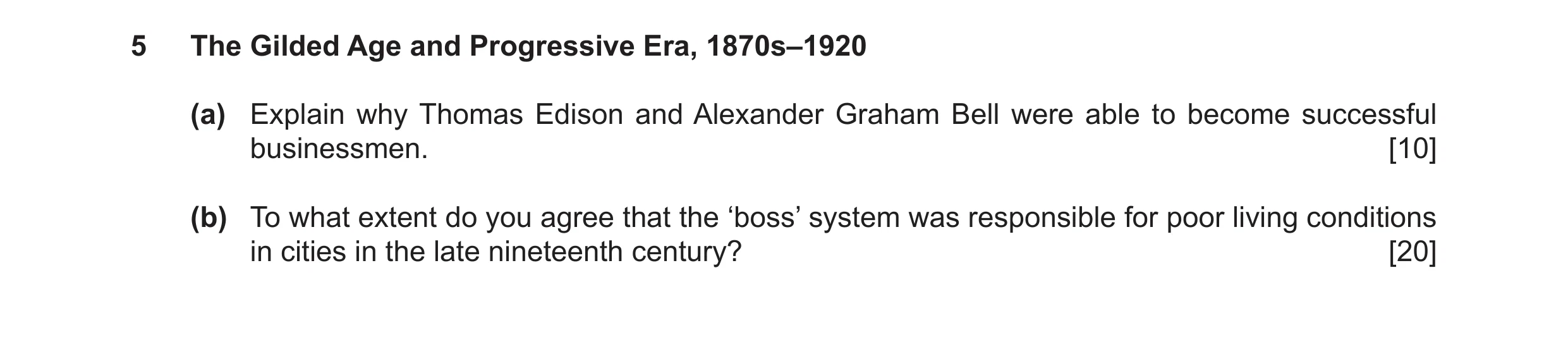
![Question 29: The Industrial Revolution in Britain, 1750–1850 (a) Explain why the factory system developed. [10] (b) ‘By 1850 industrialisation had under…](https://img.pastlit.com/crops/d36e5e01-5f31-44db-8a06-5ba1e1926efd/q2.webp)
![Question 30: The Gilded Age and Progressive Era, 1870s–1920 (a) Explain why late-nineteenth-century cities were unhealthy and unsafe. [10] (b) How far d…](https://img.pastlit.com/crops/d36e5e01-5f31-44db-8a06-5ba1e1926efd/q5.webp)

![Question 32: The Gilded Age and Progressive Era, 1870s–1920 (a) Explain why new immigrants from Southern and Eastern Europe were often exploited. [10] (…](https://img.pastlit.com/crops/2b5bfc49-c8bb-4041-b0c0-cf9d22e3808b/q5.webp) 6 / 6
6 / 6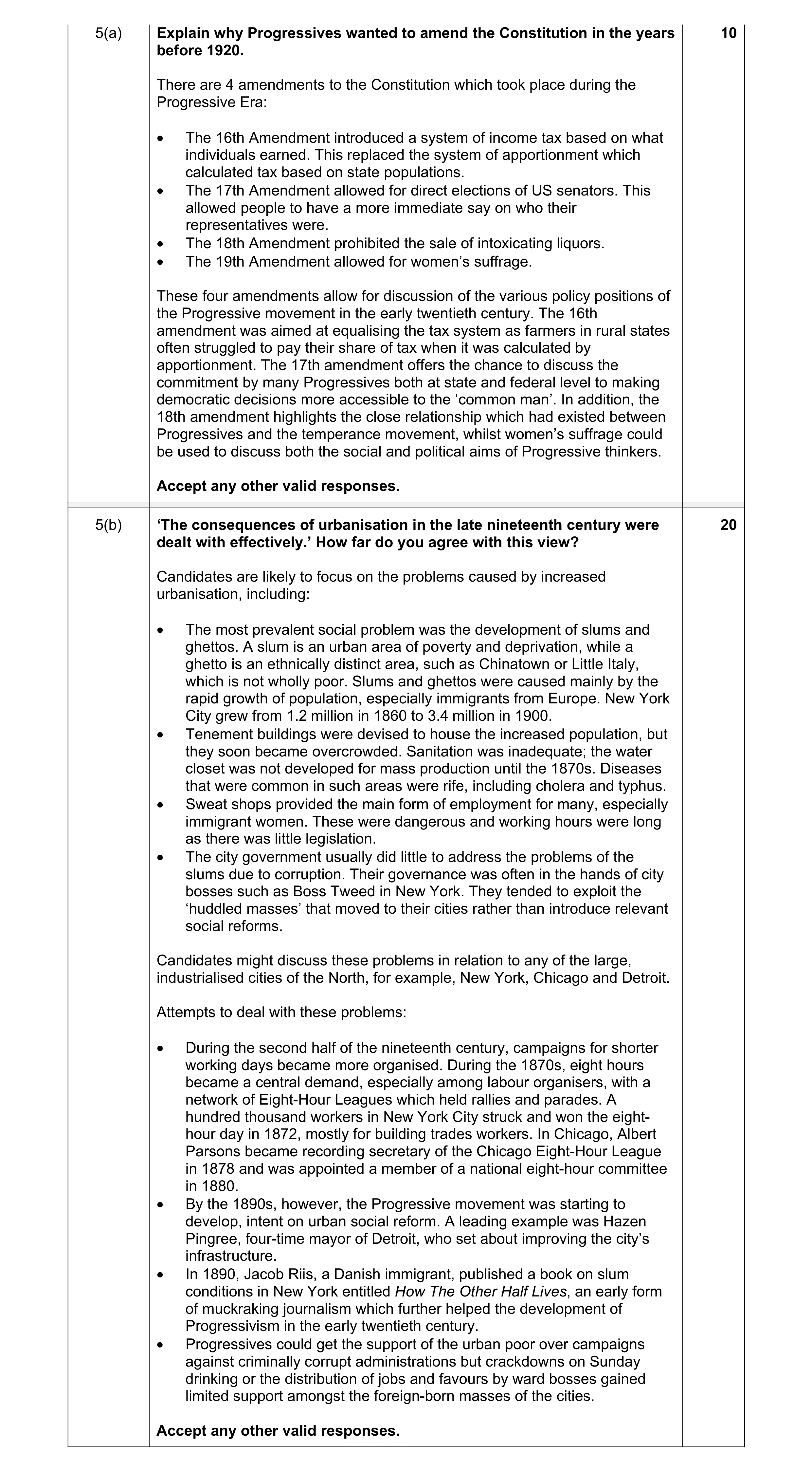 30
30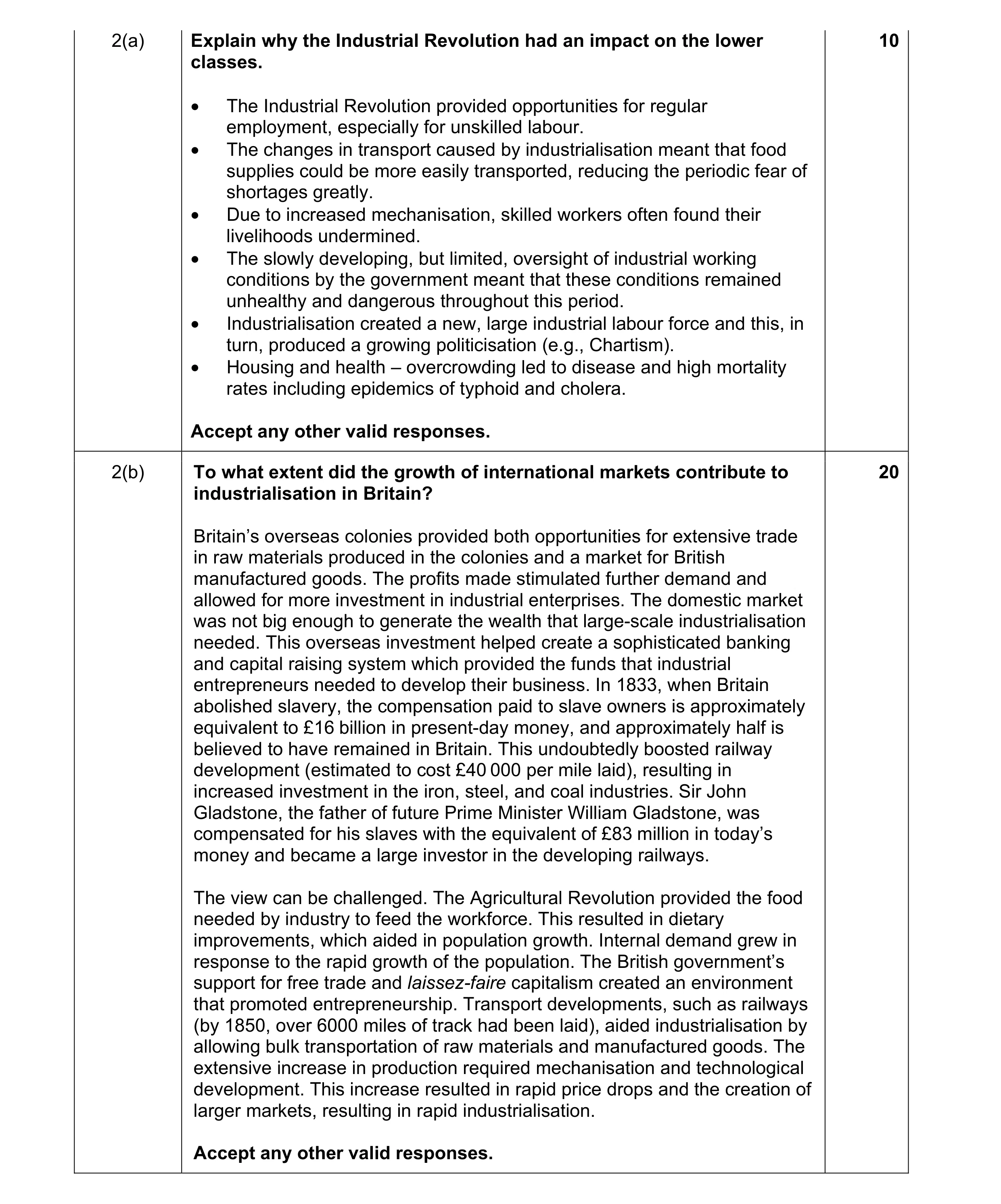 30
30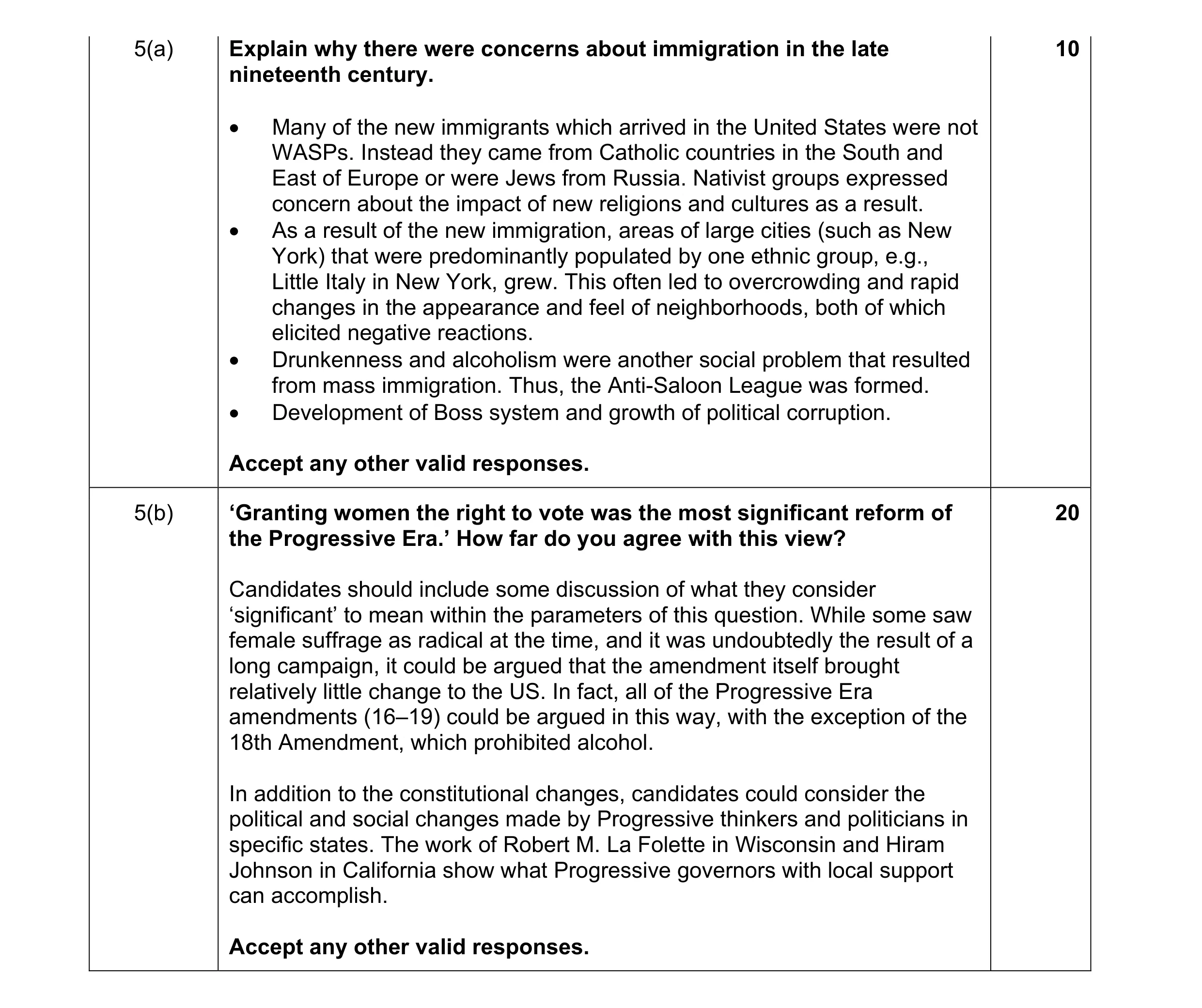 30
30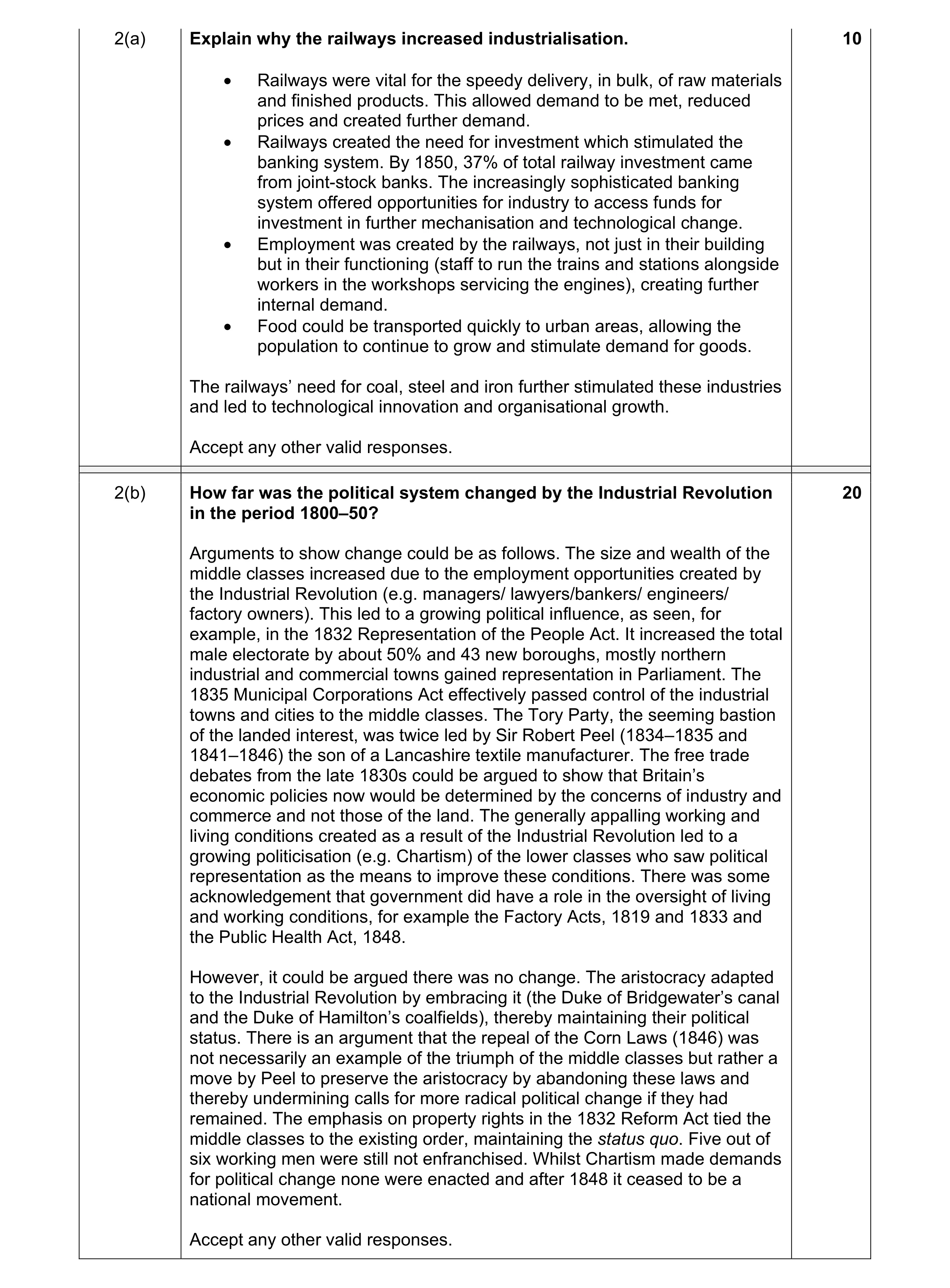 30
30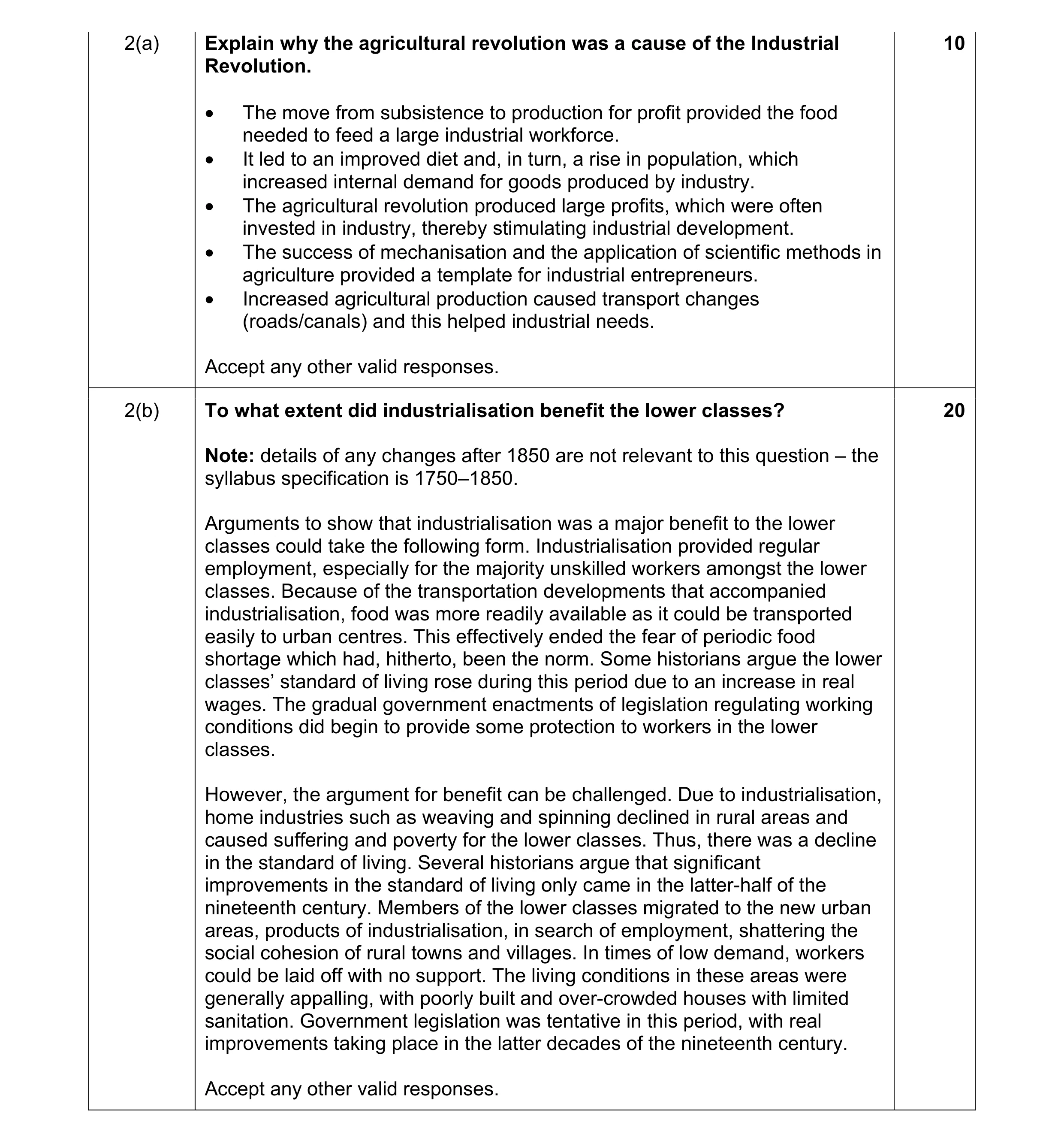 30
30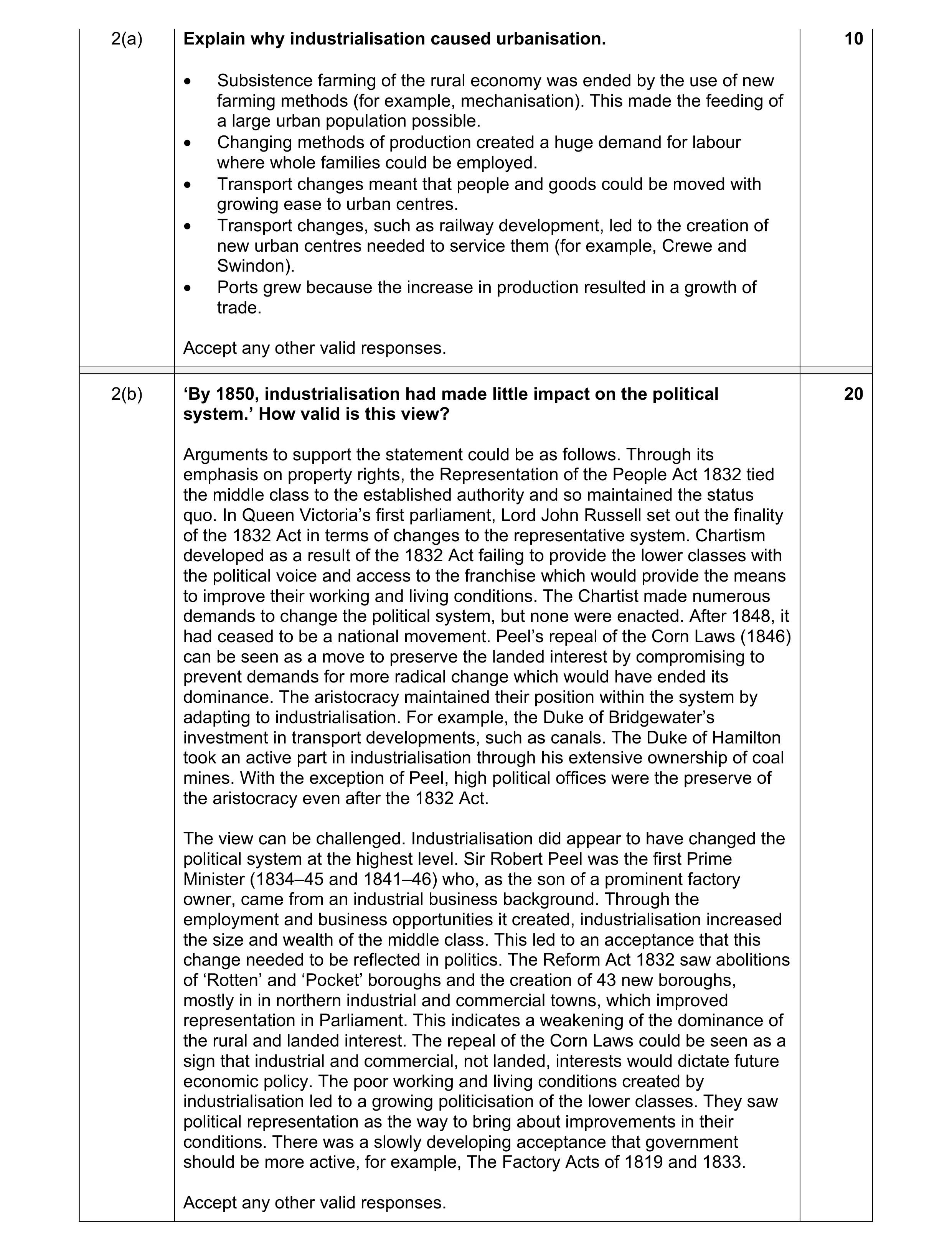 30
30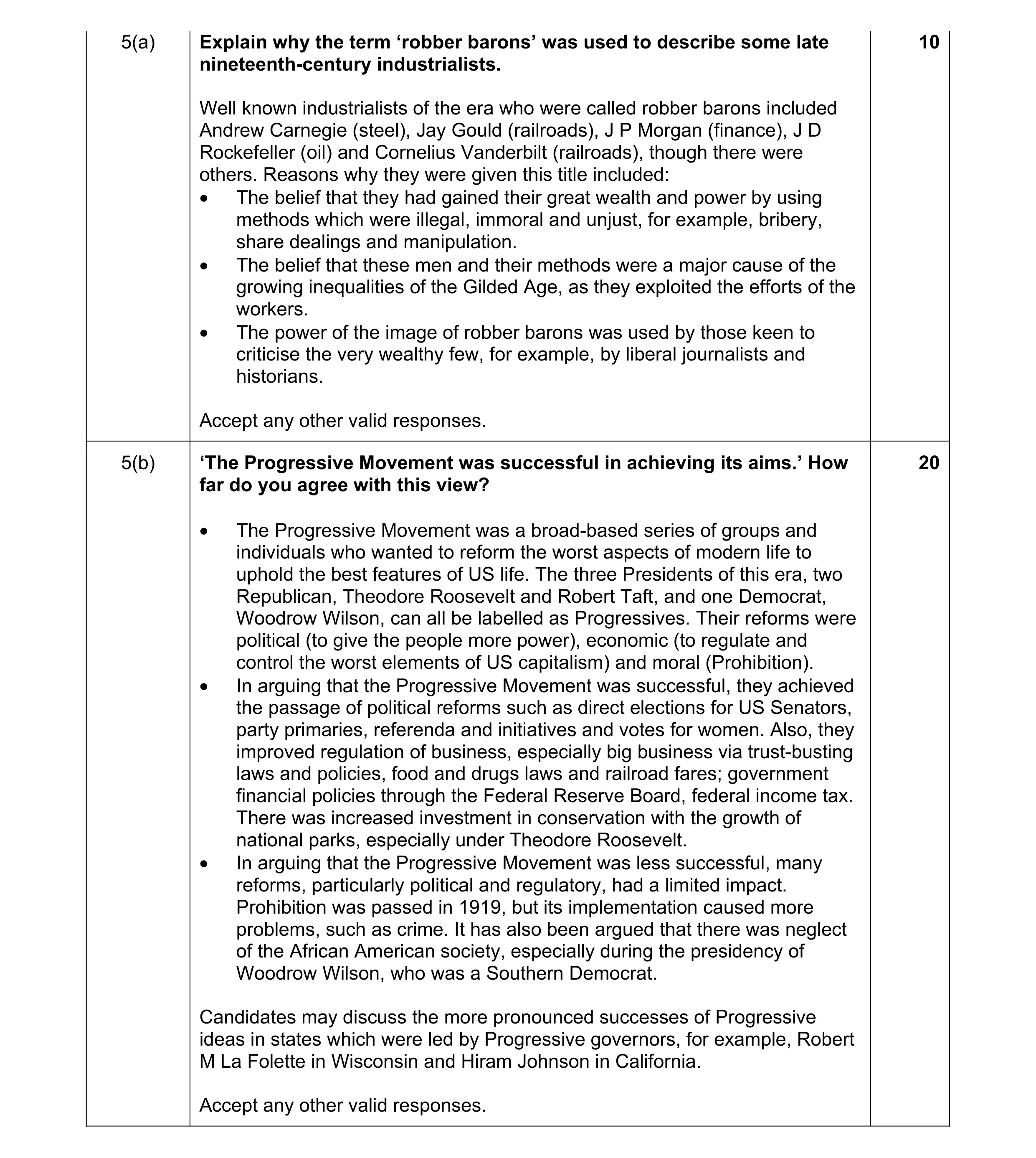 30
30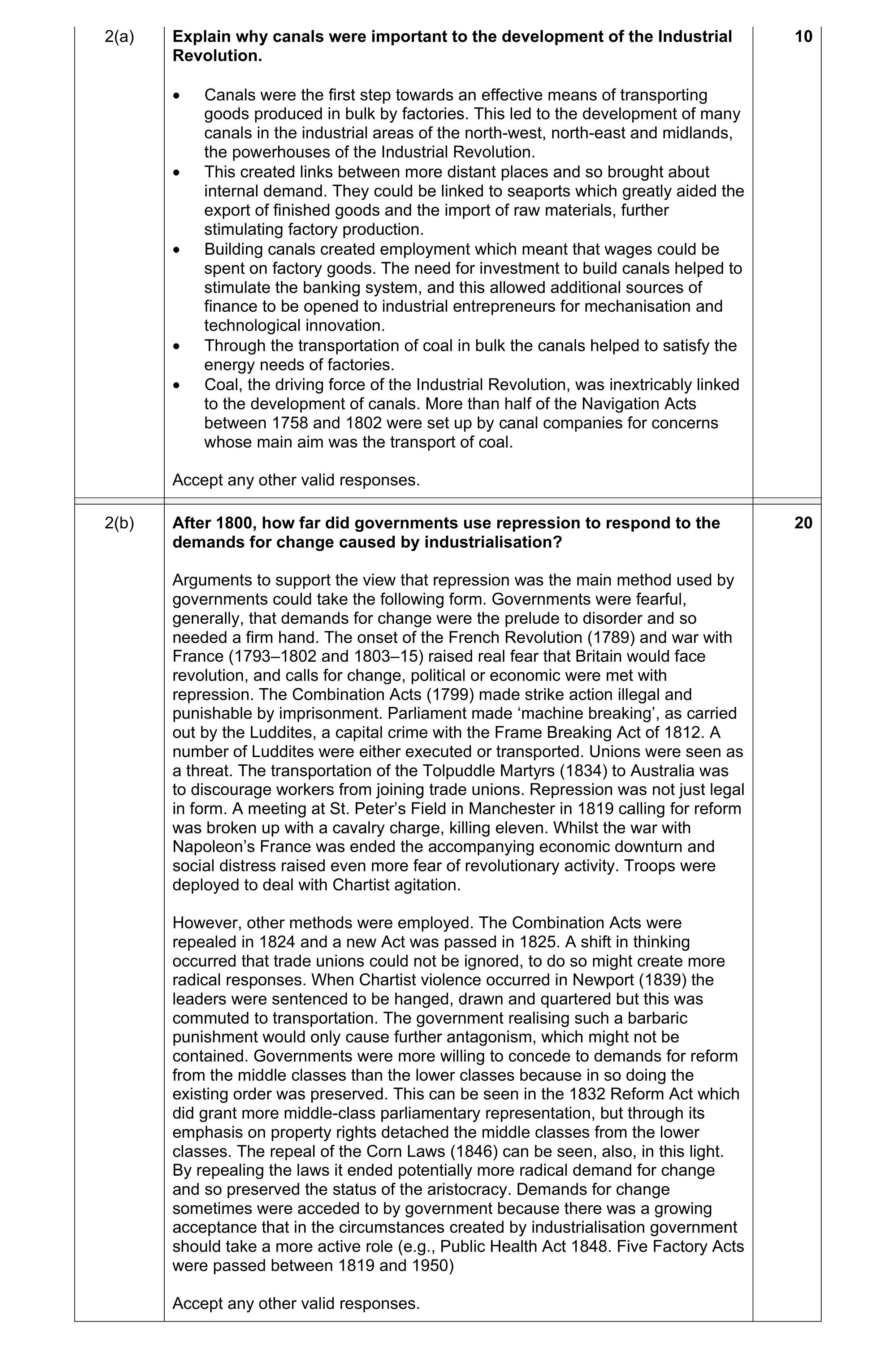 30
30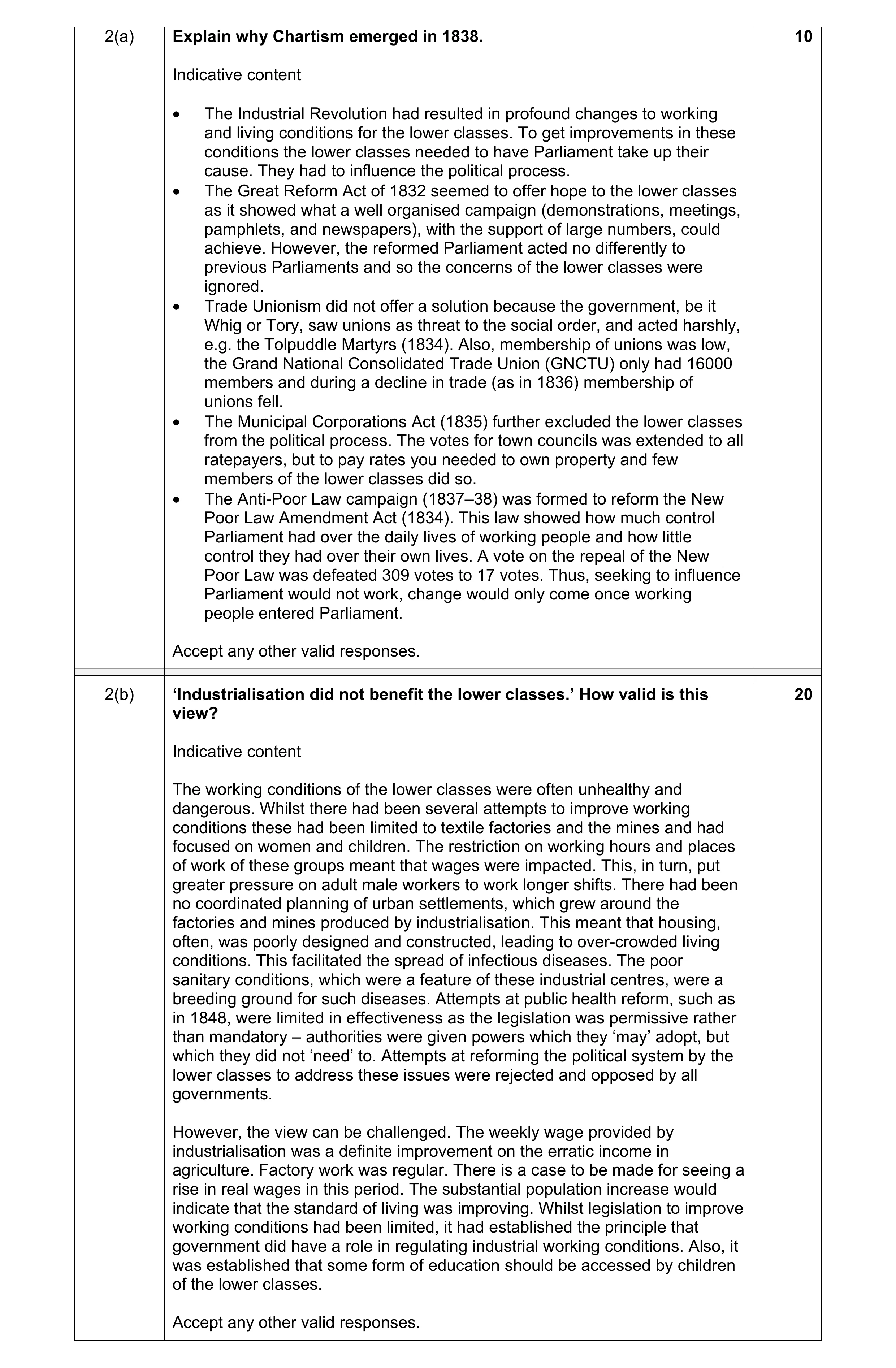 30
30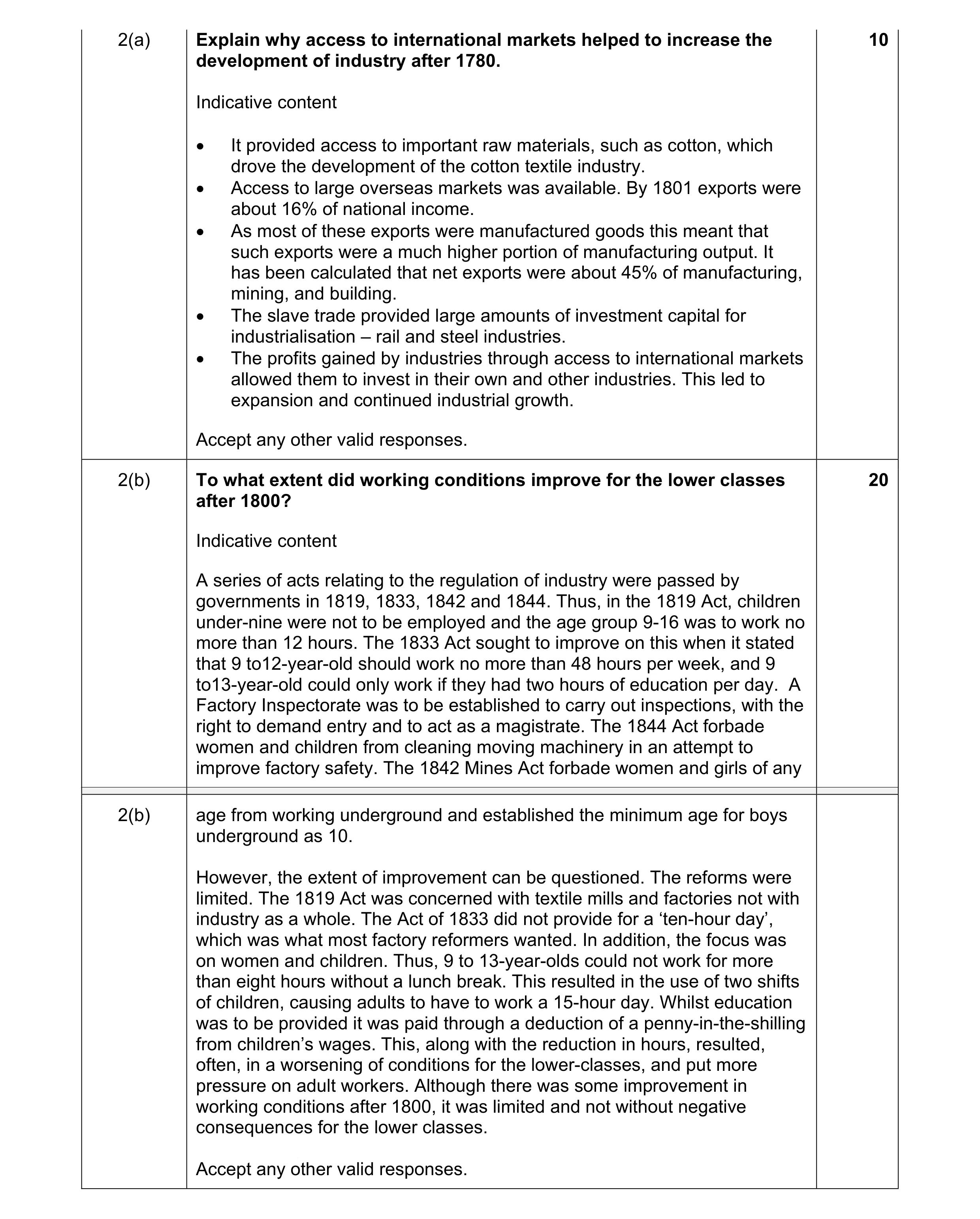 30
30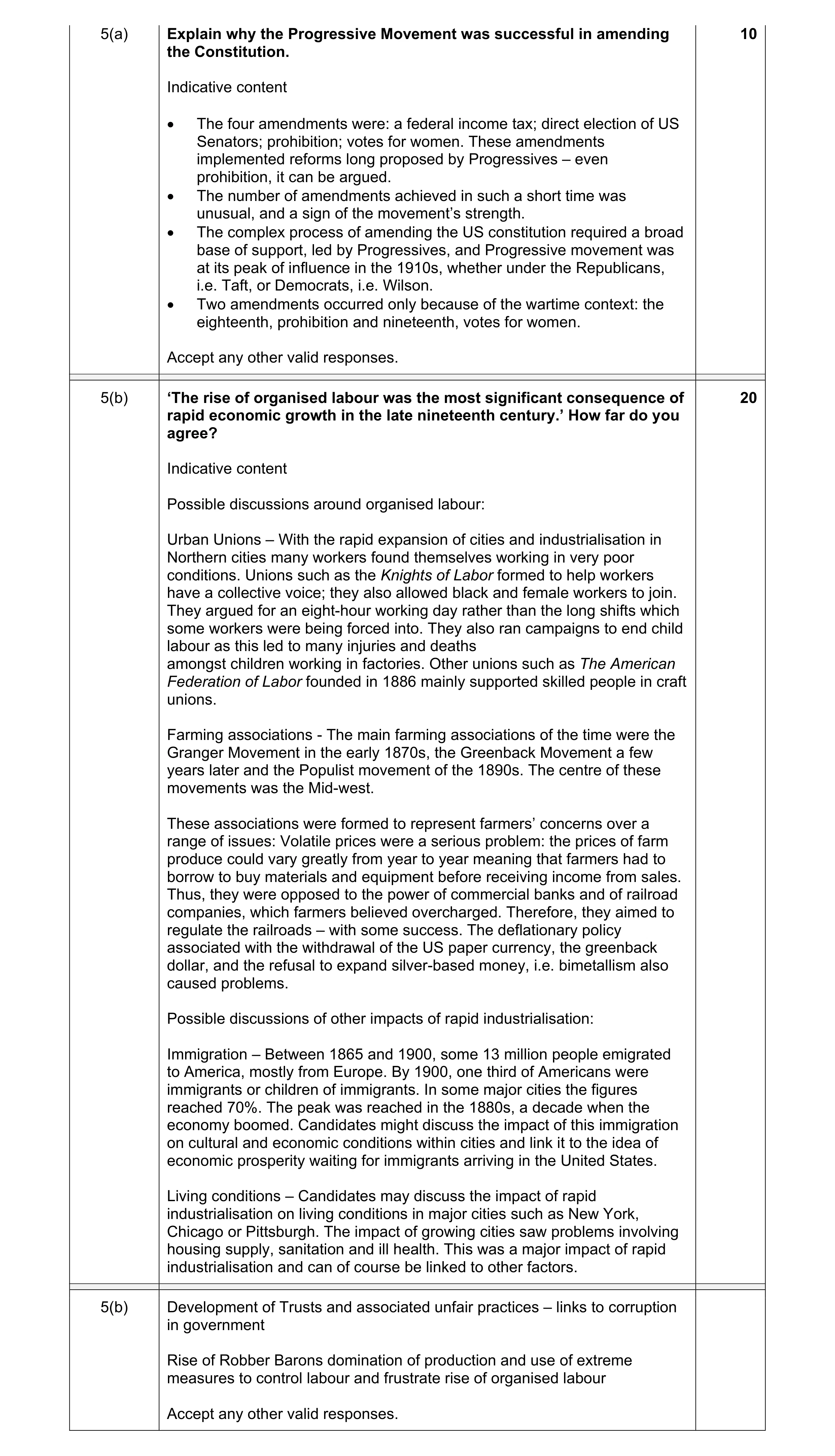 30
30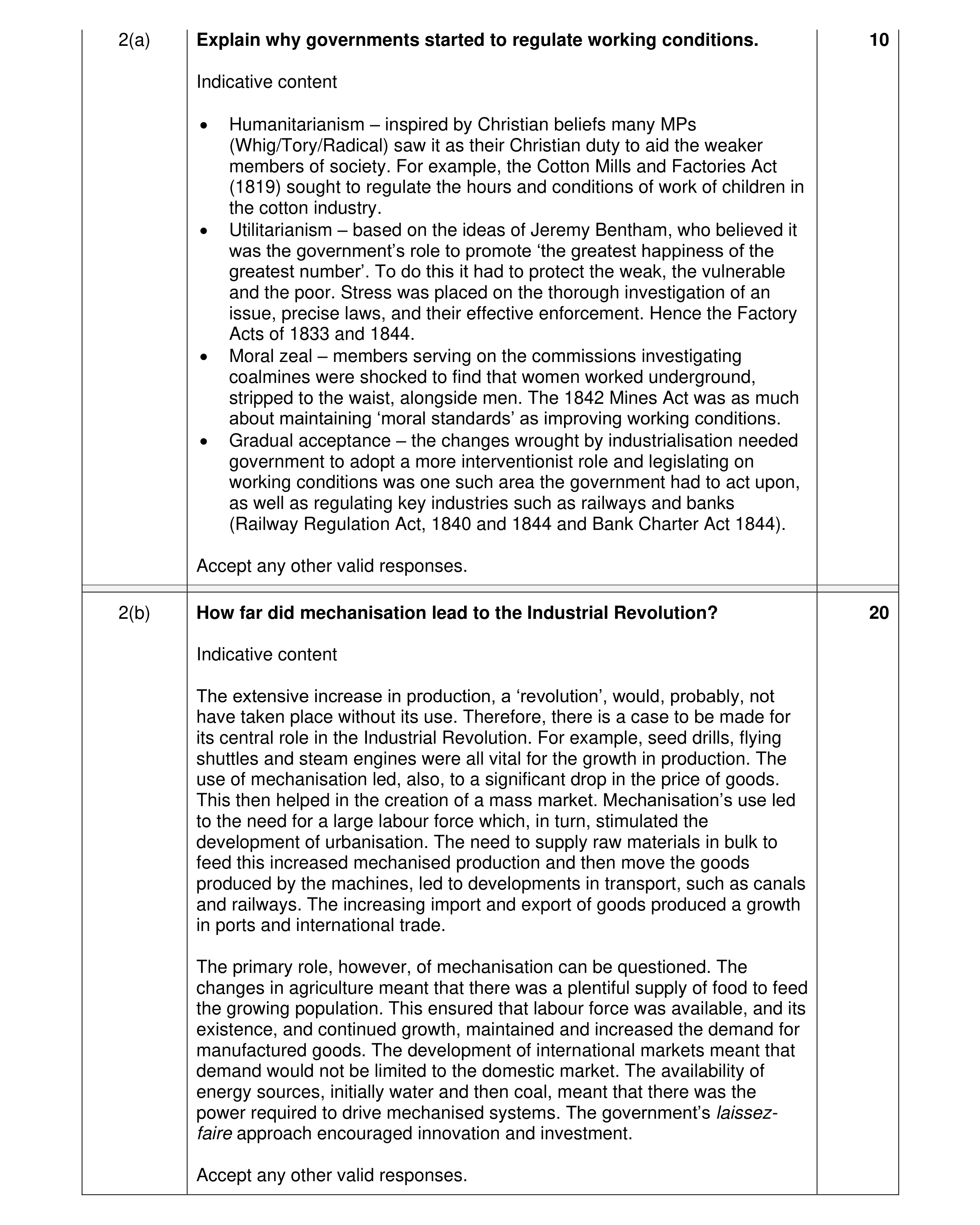 30
30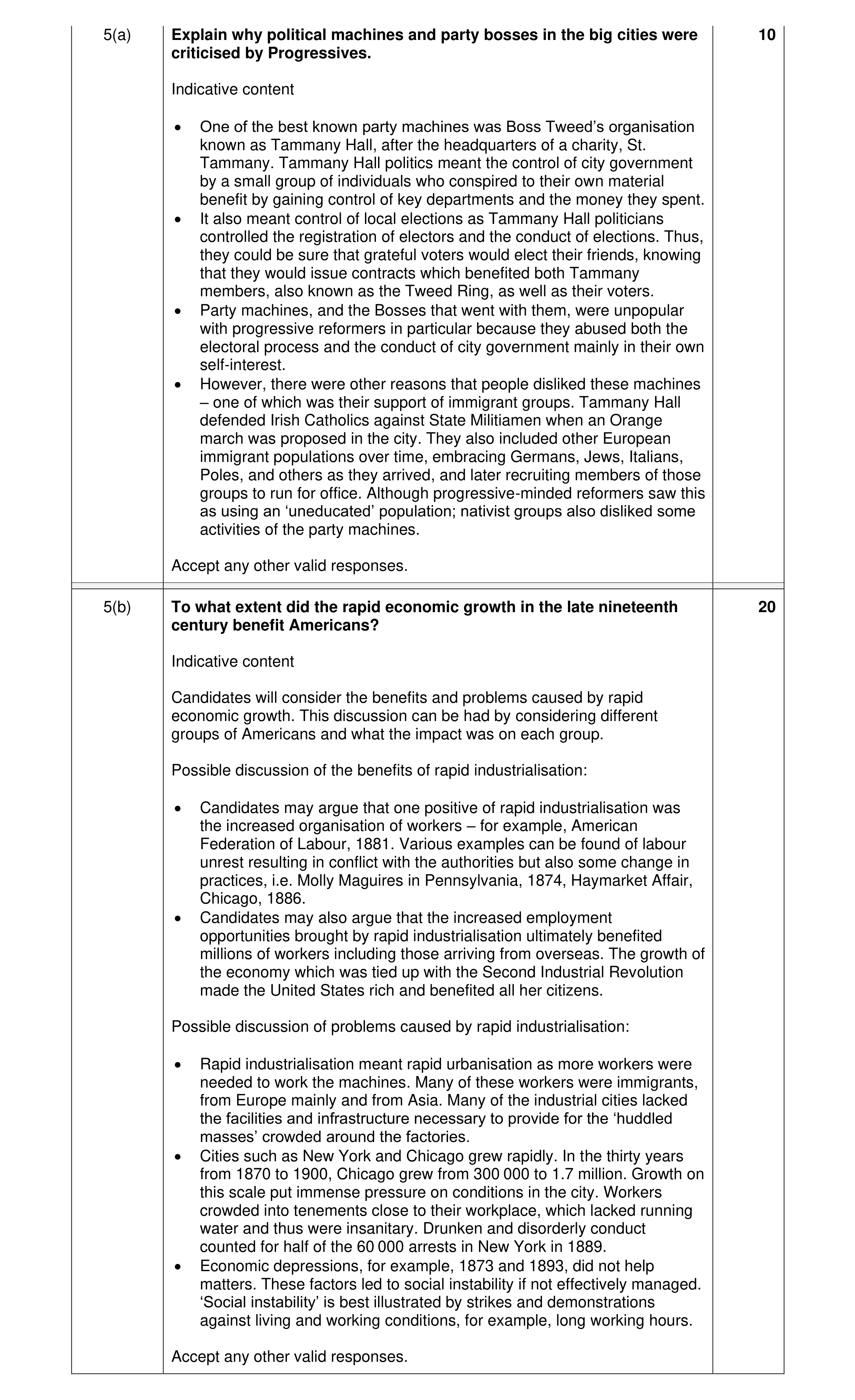 30
30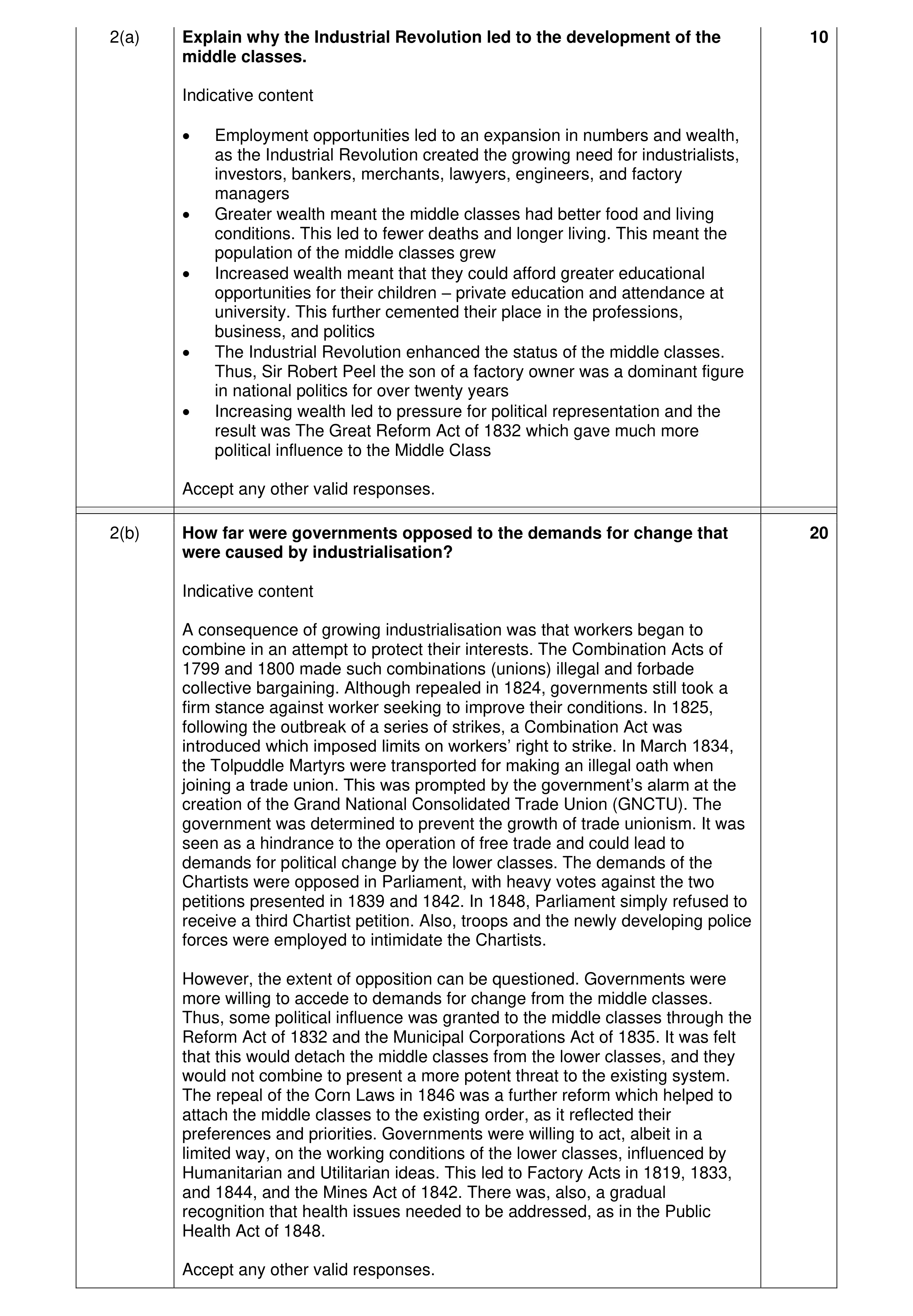 30
30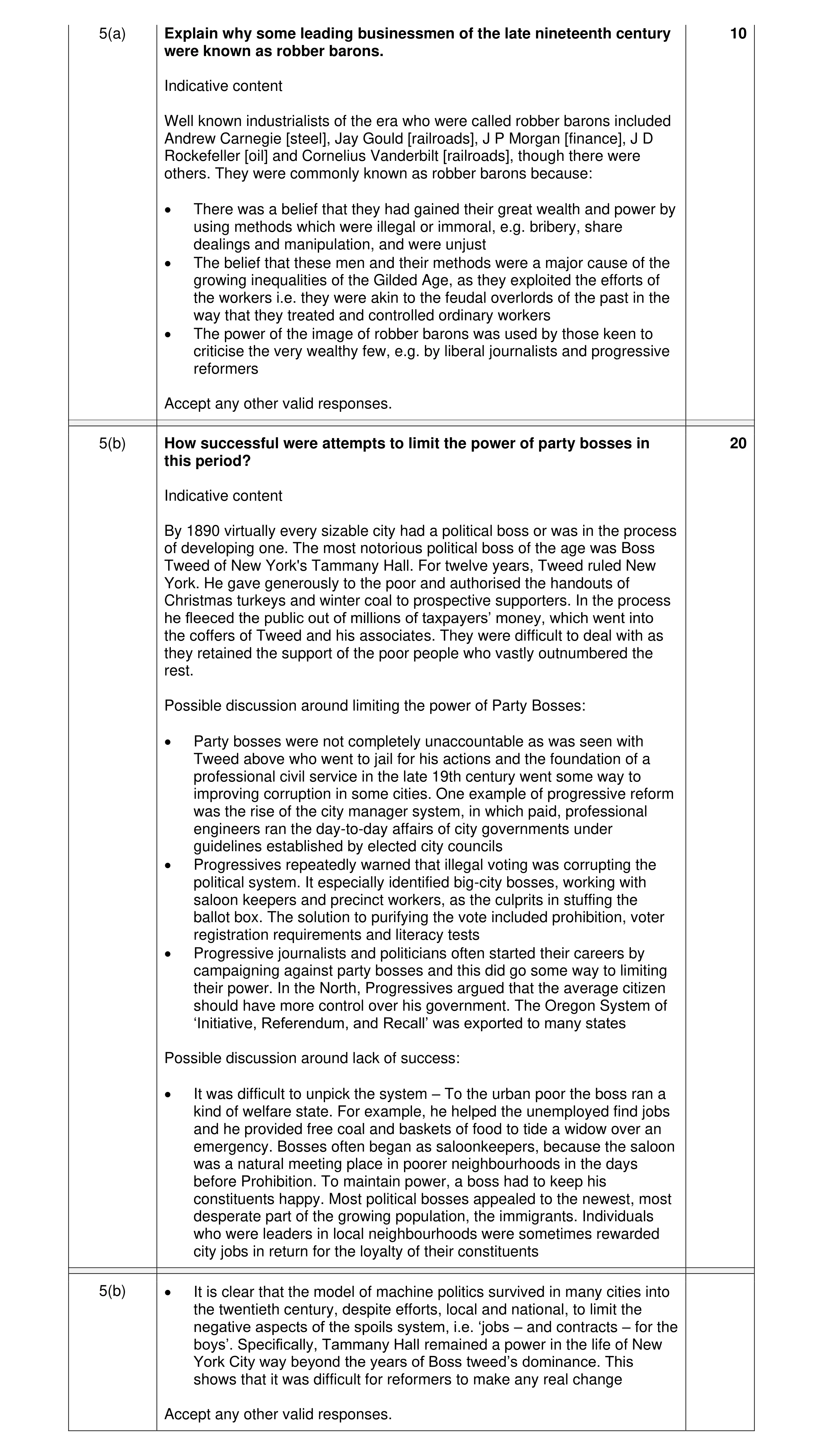 30
30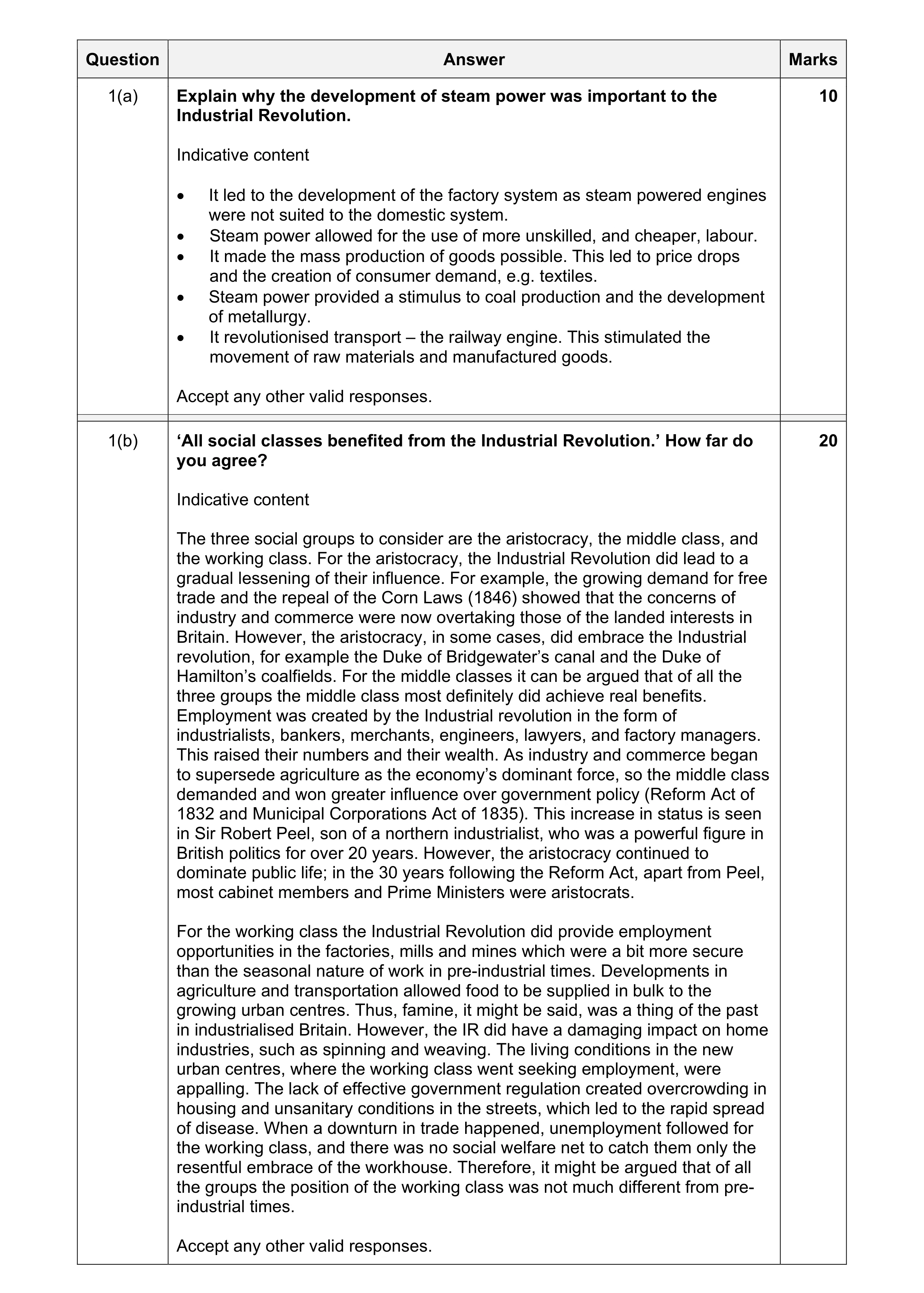 30
30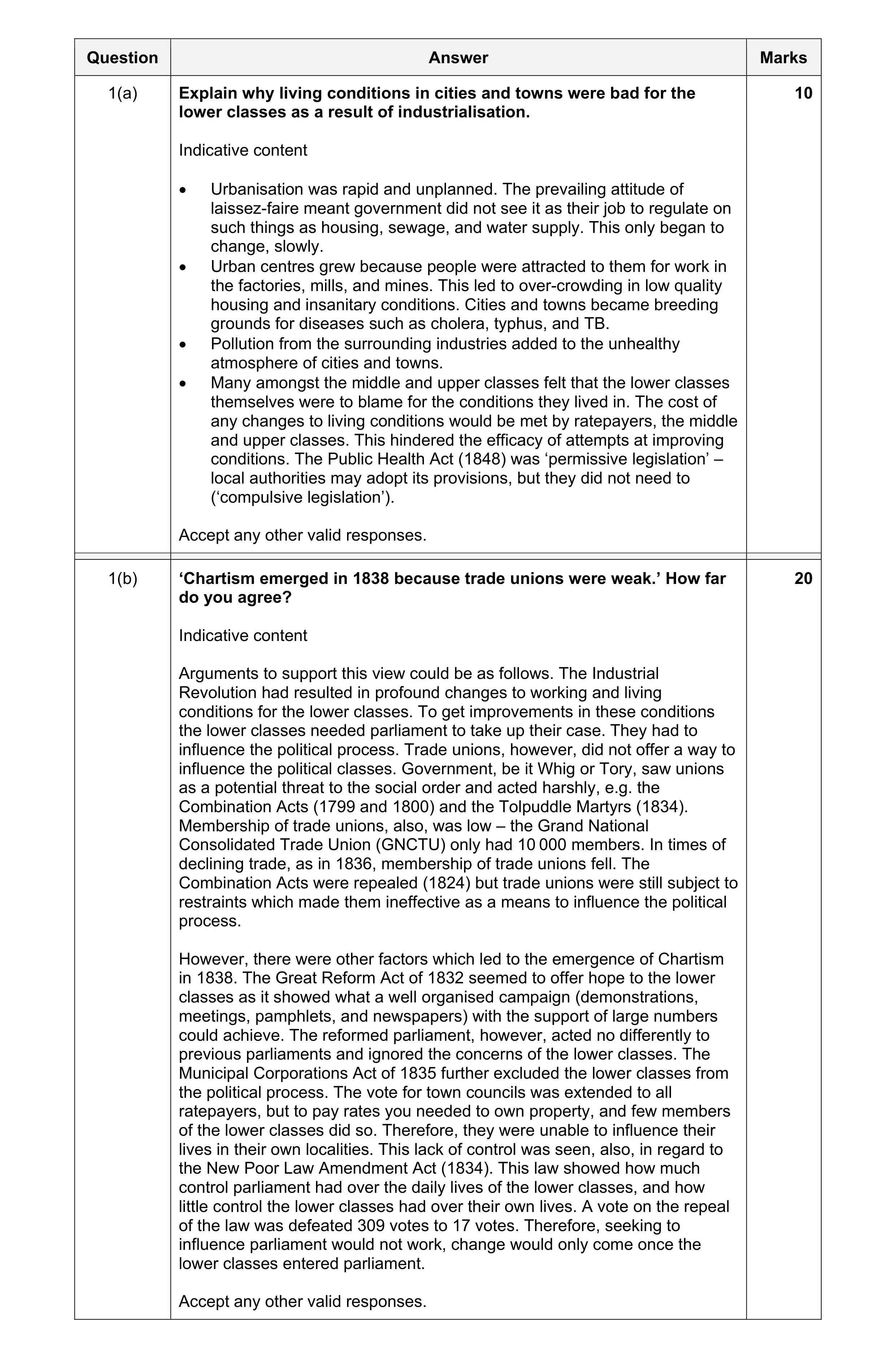 30
30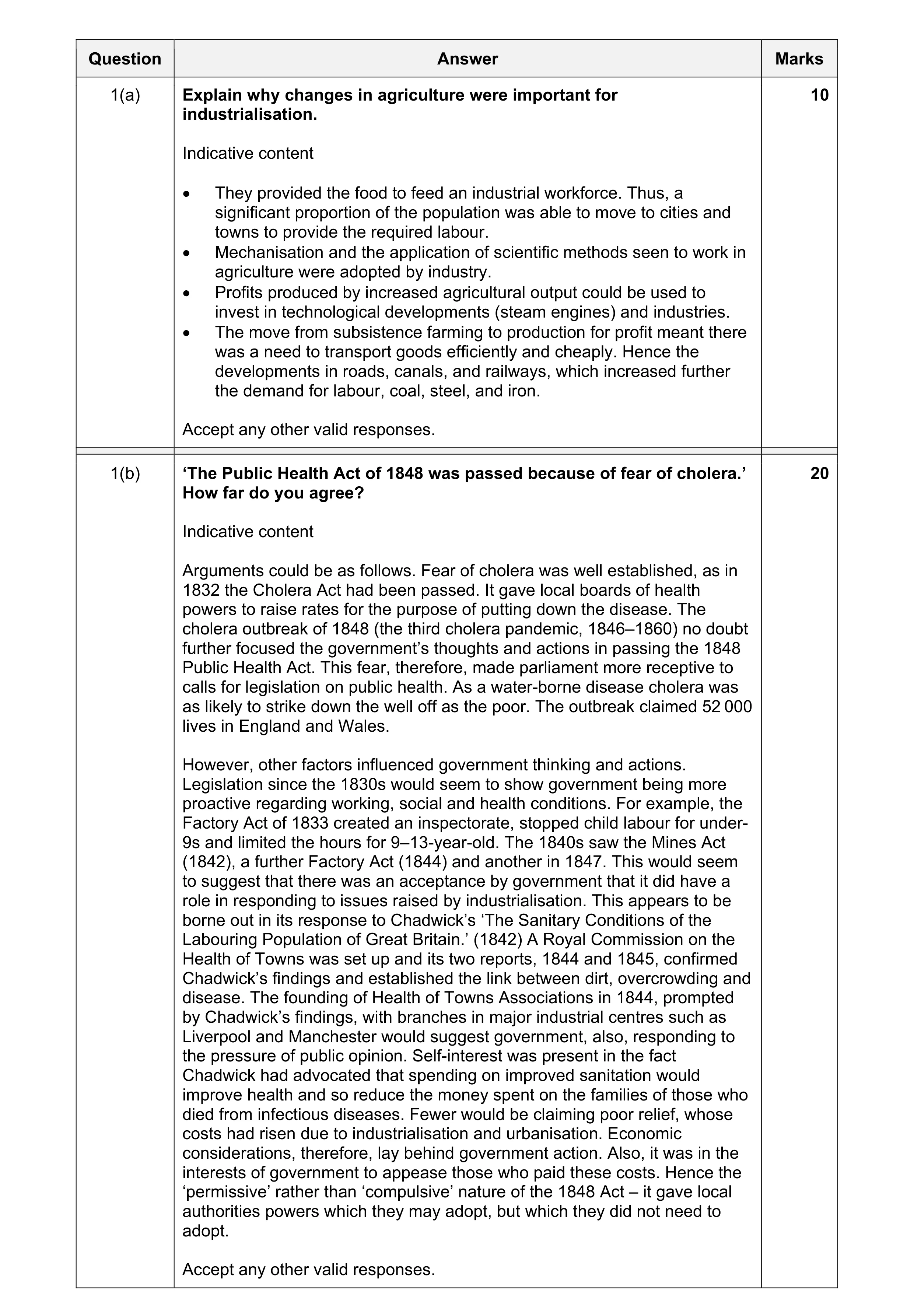 30
30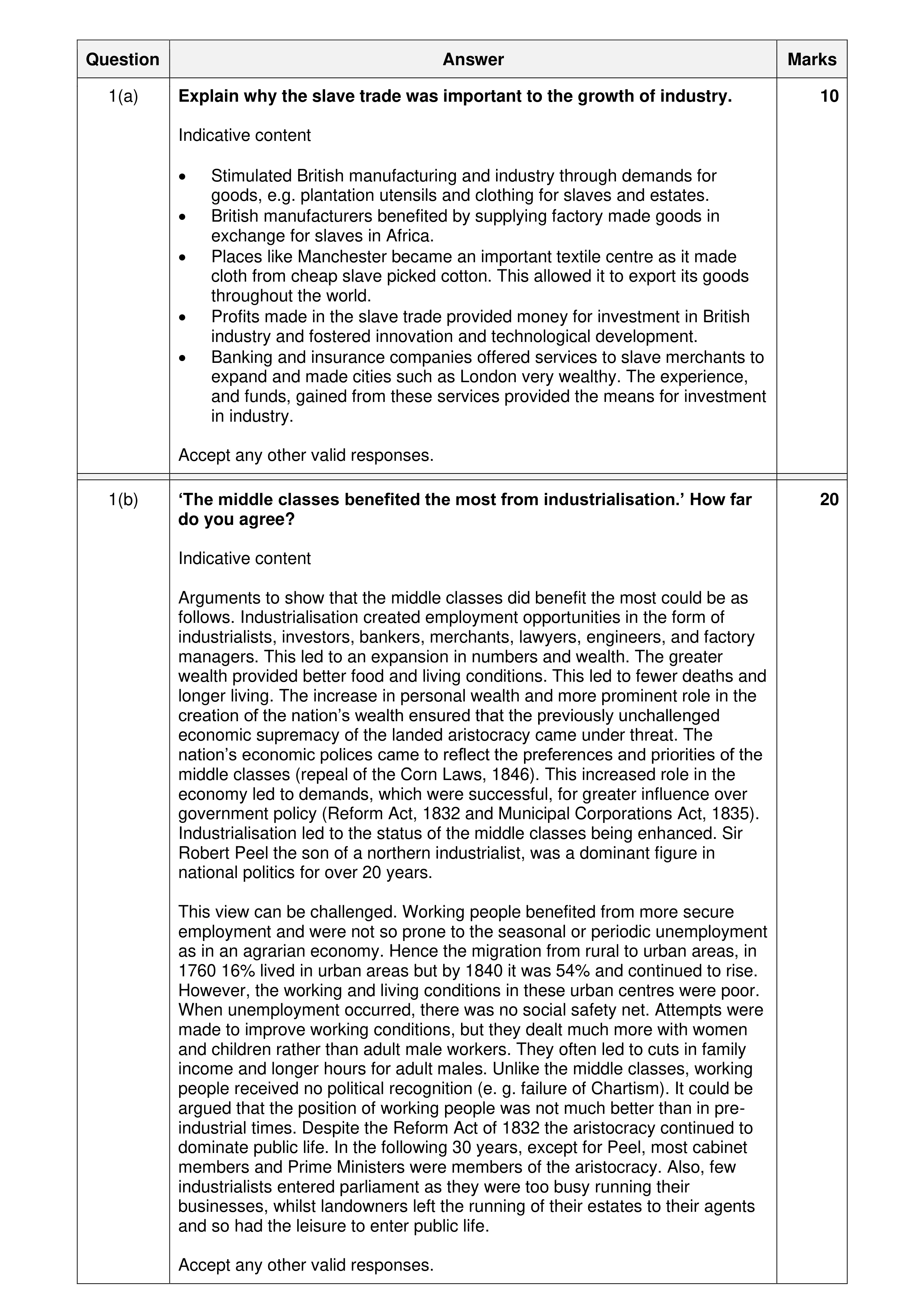 30
30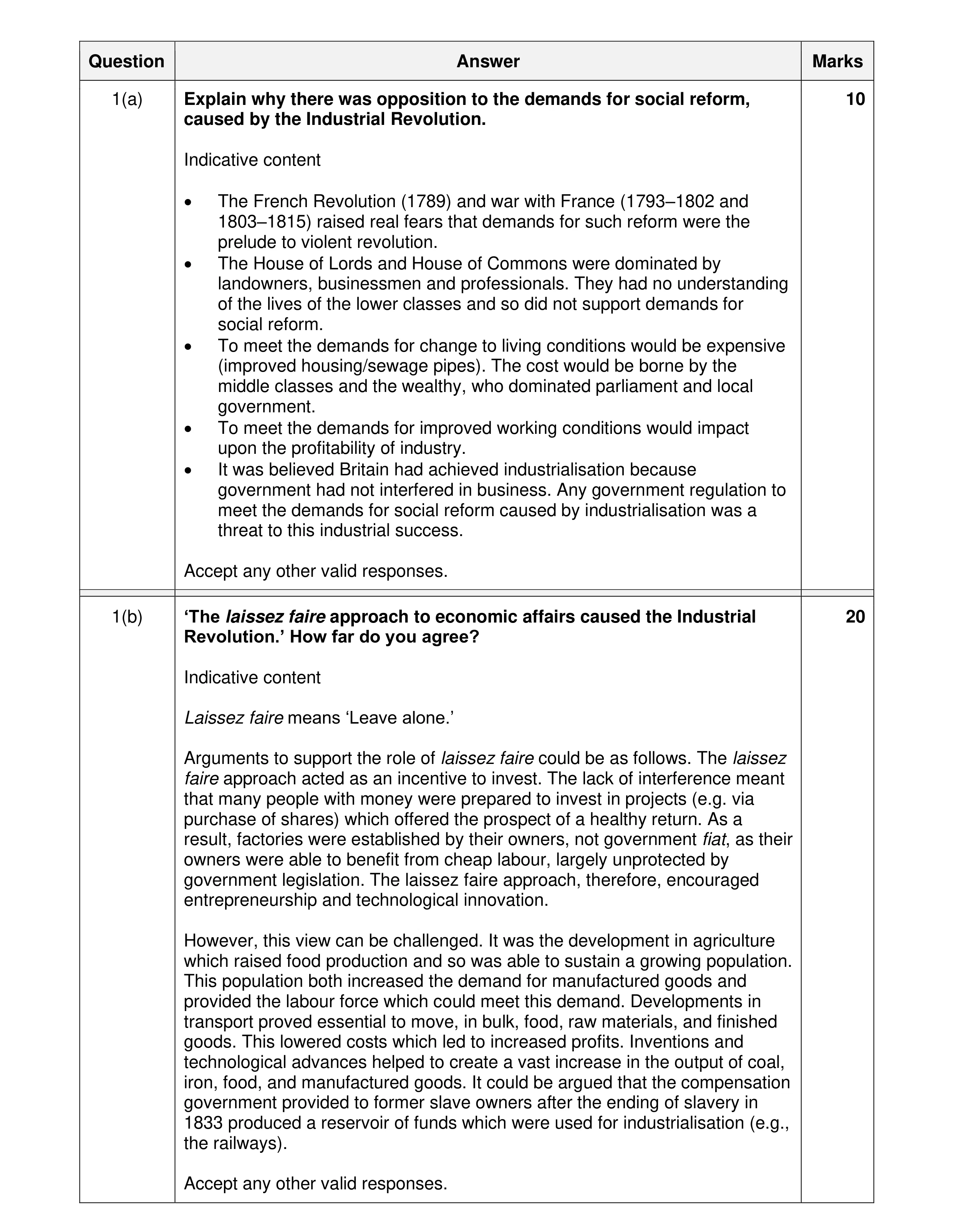 30
30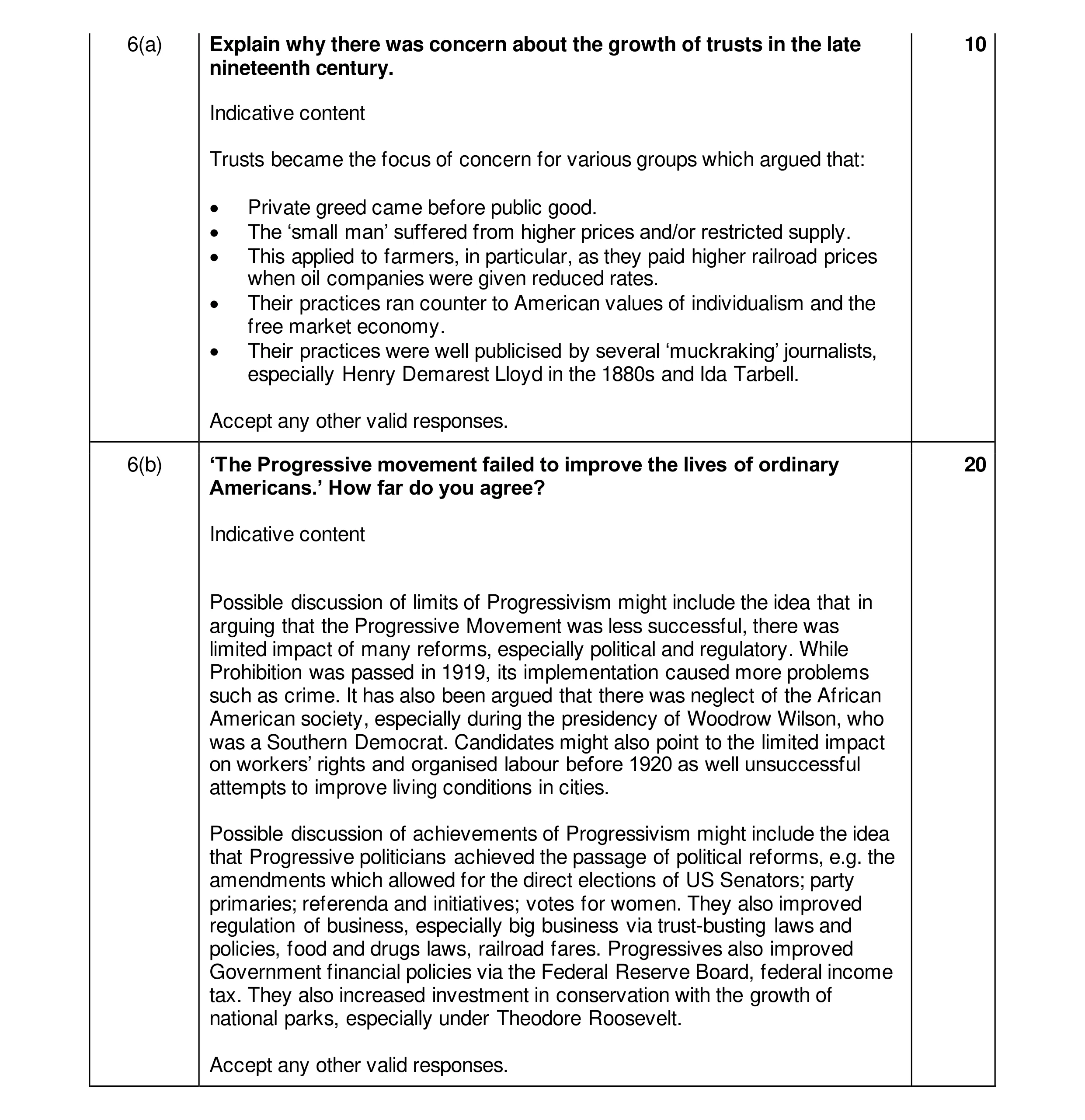 30
30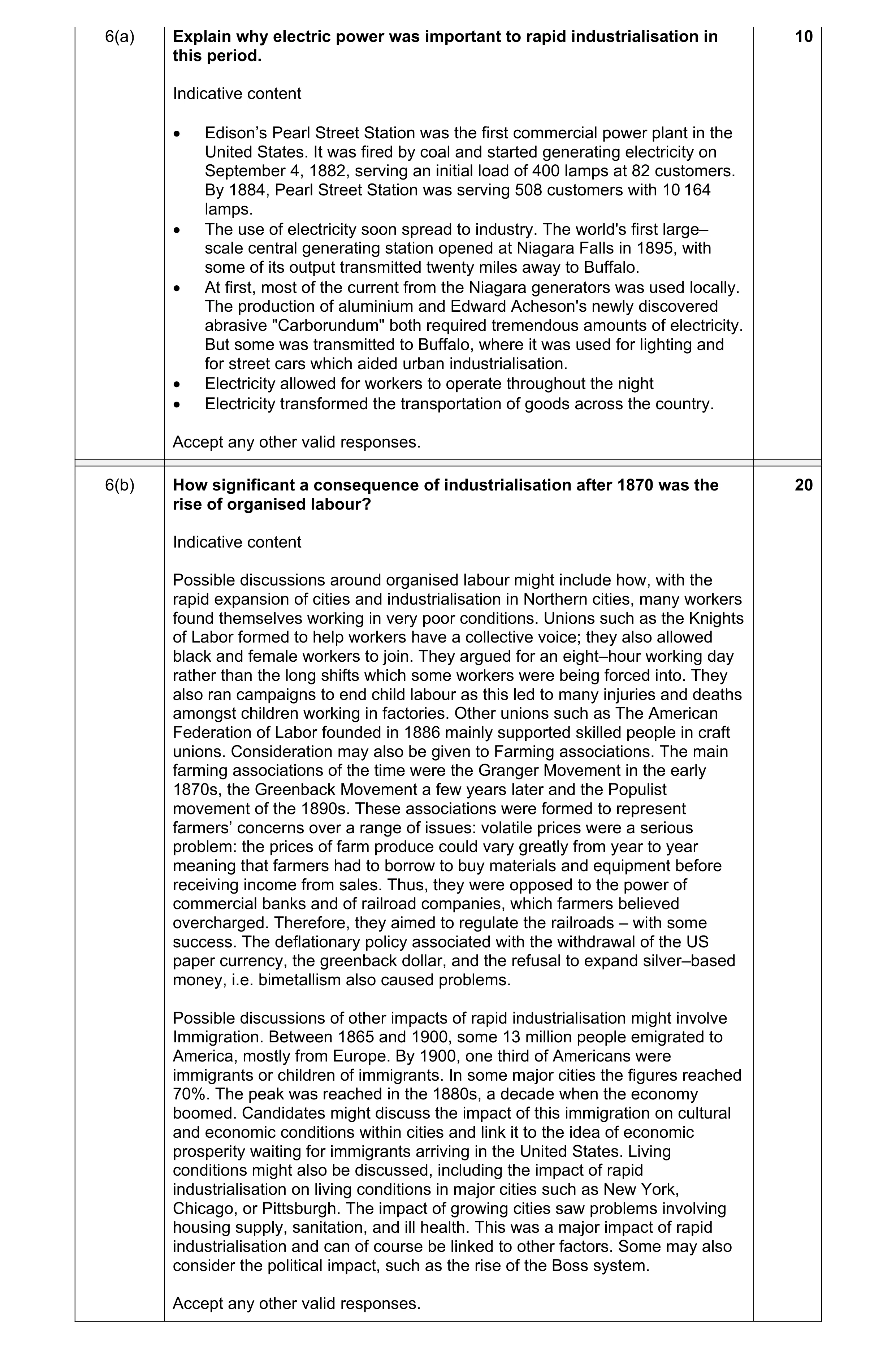 30
30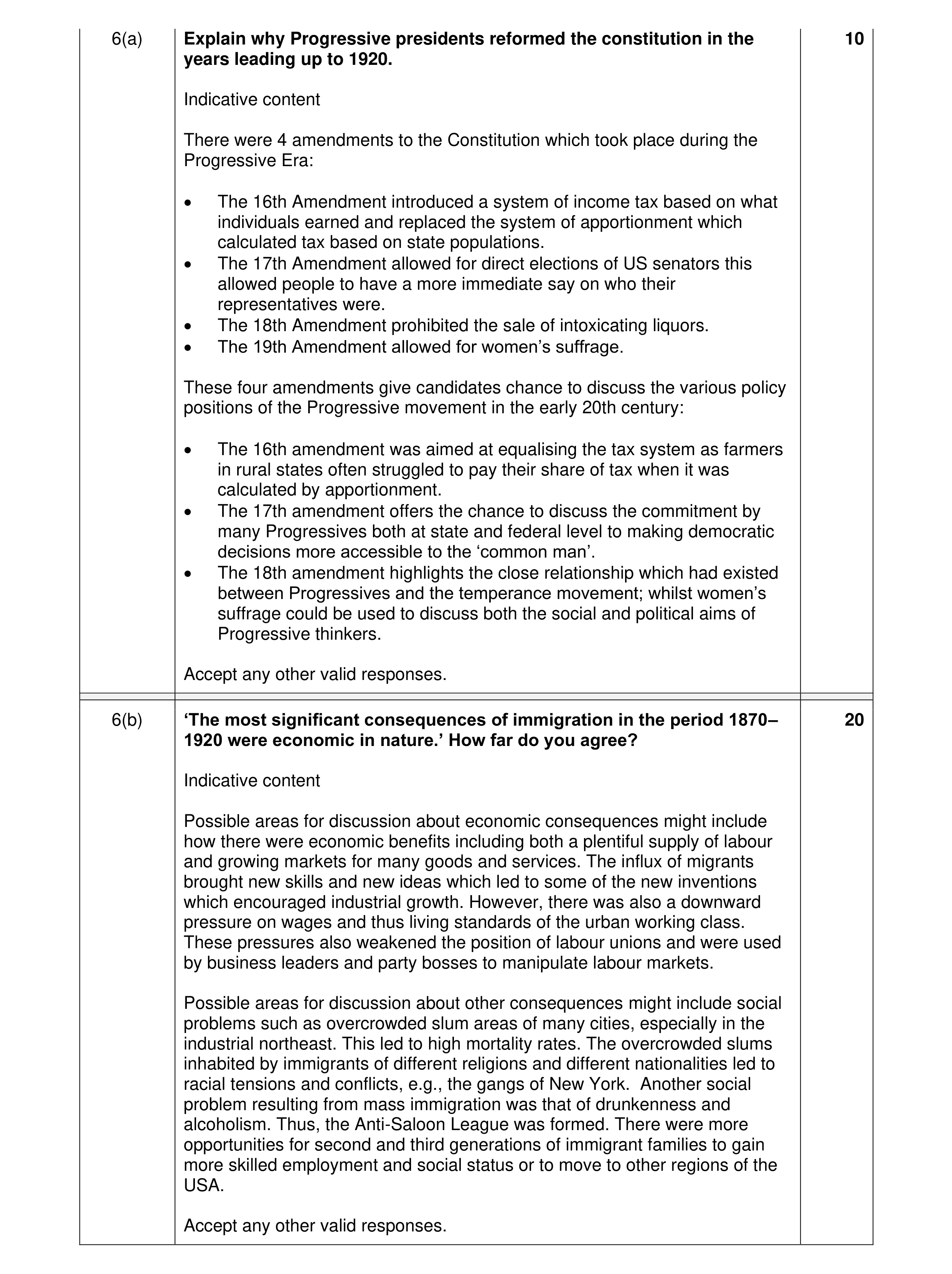 30
30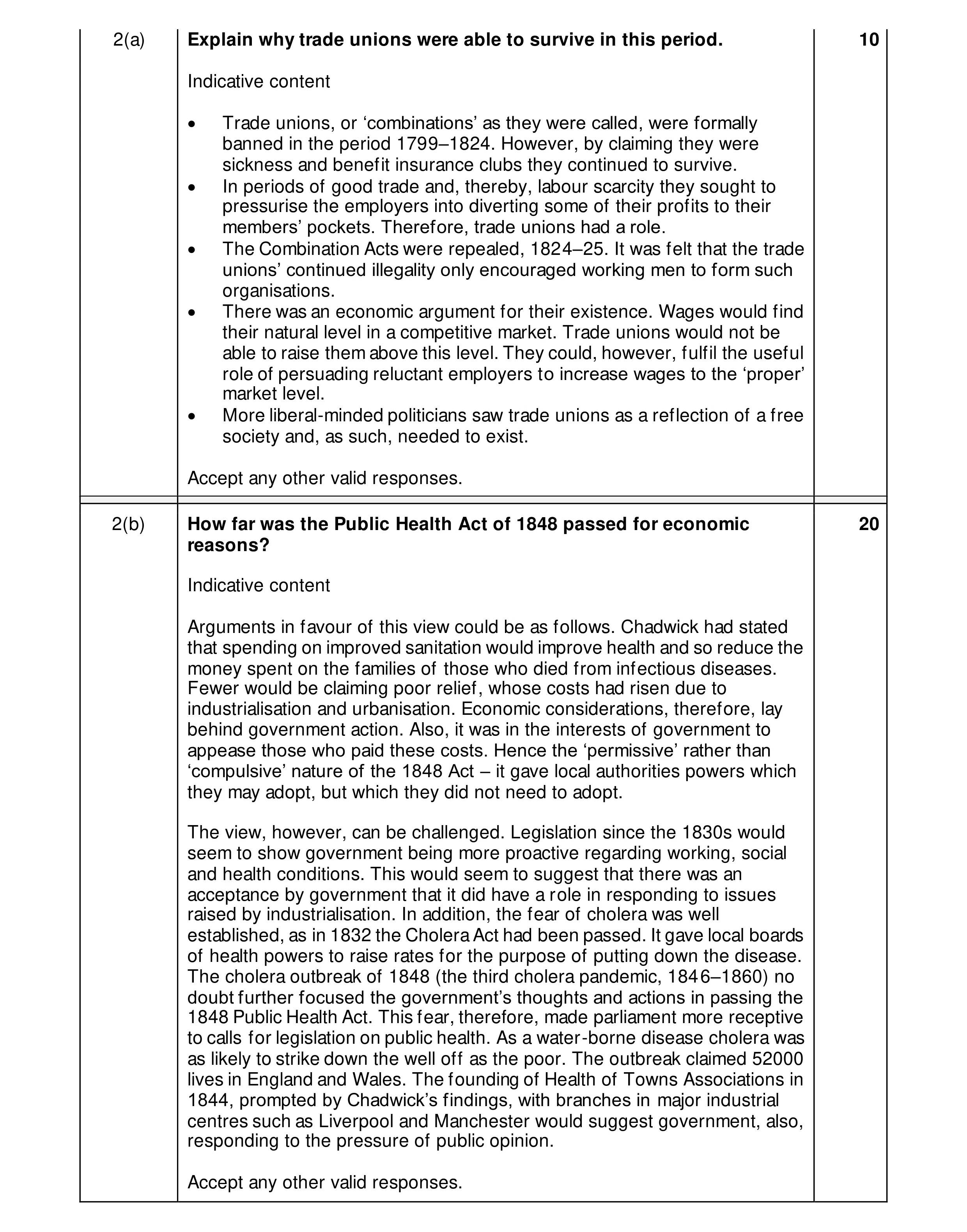 30
30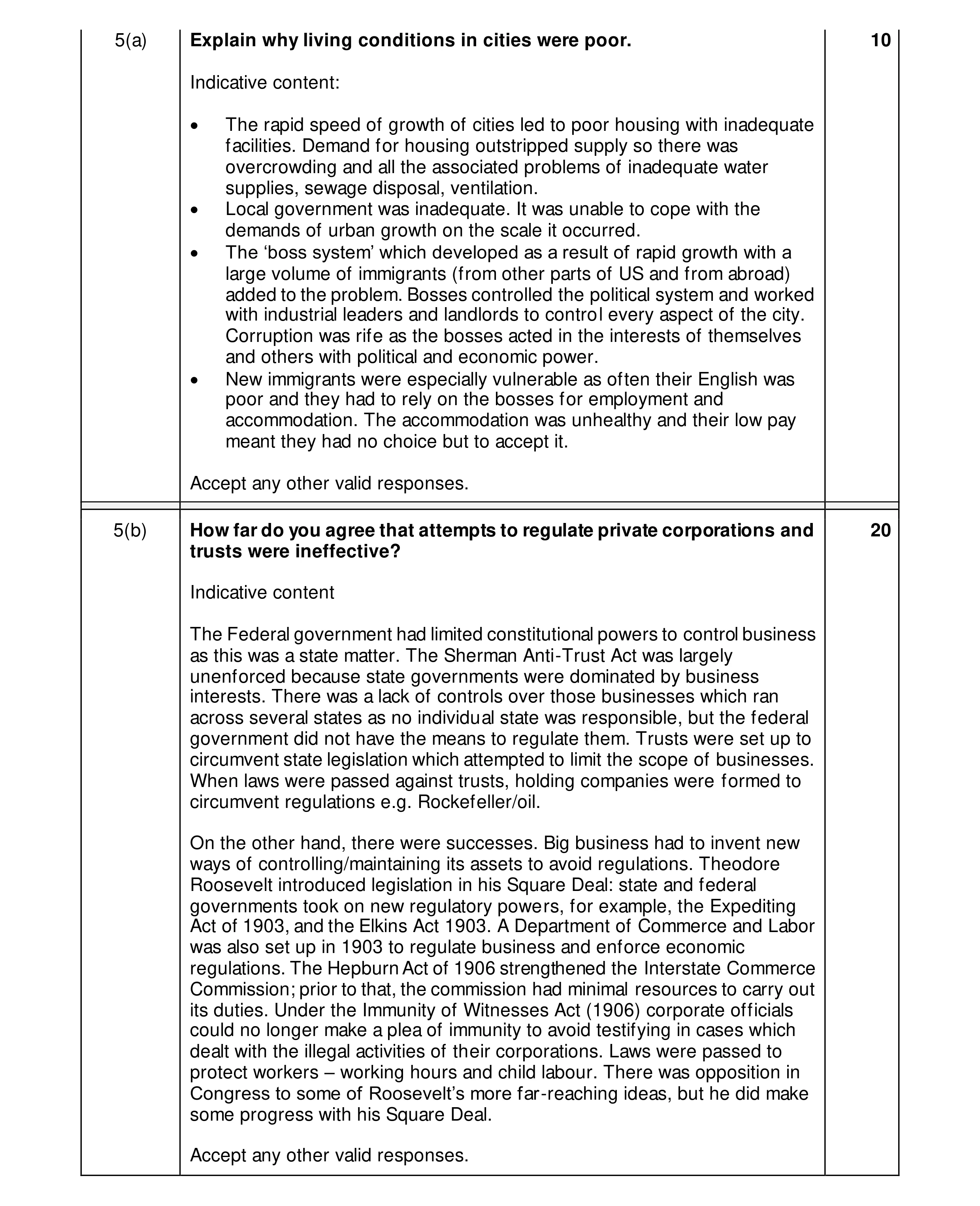 30
30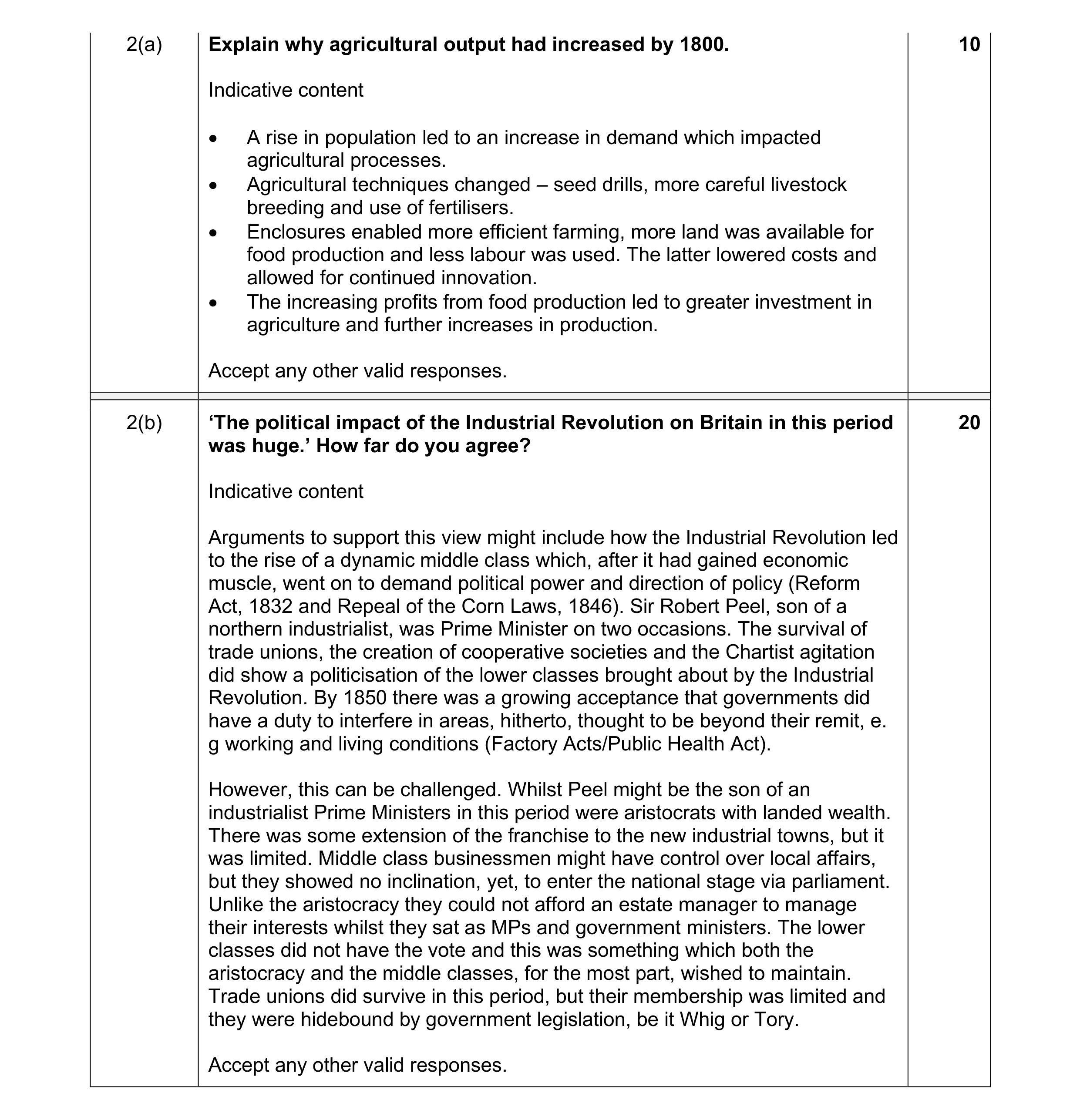 30
30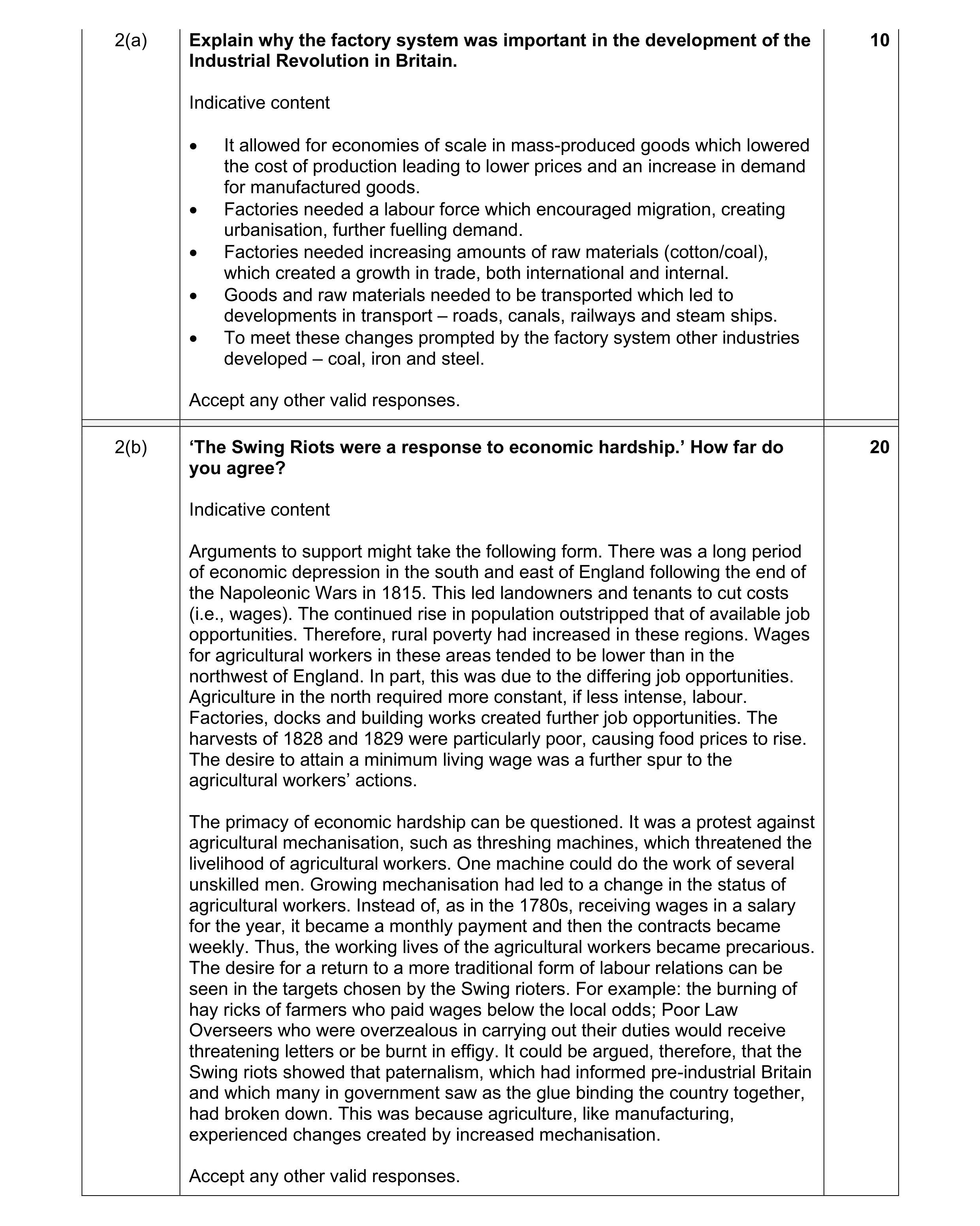 30
30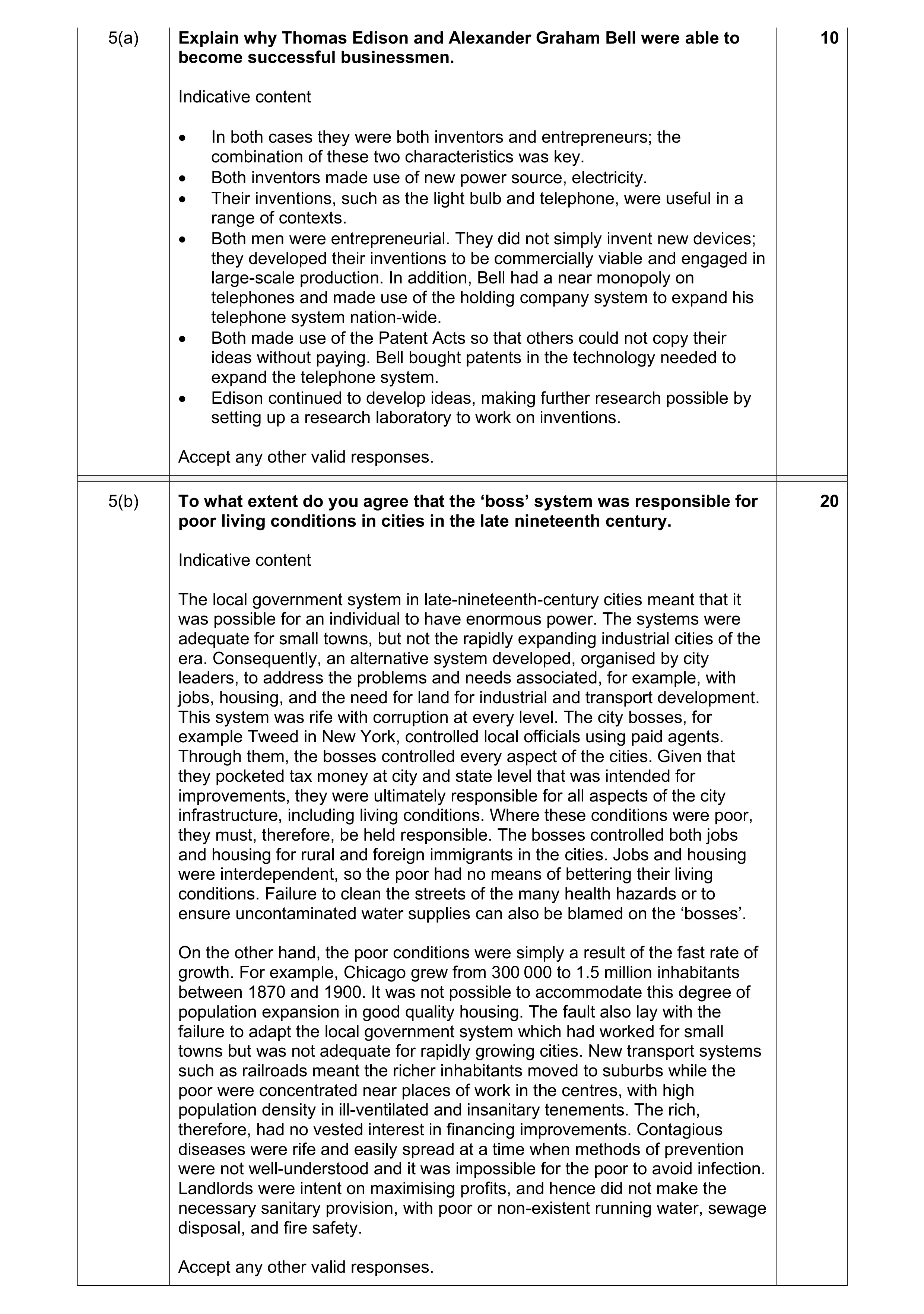 30
30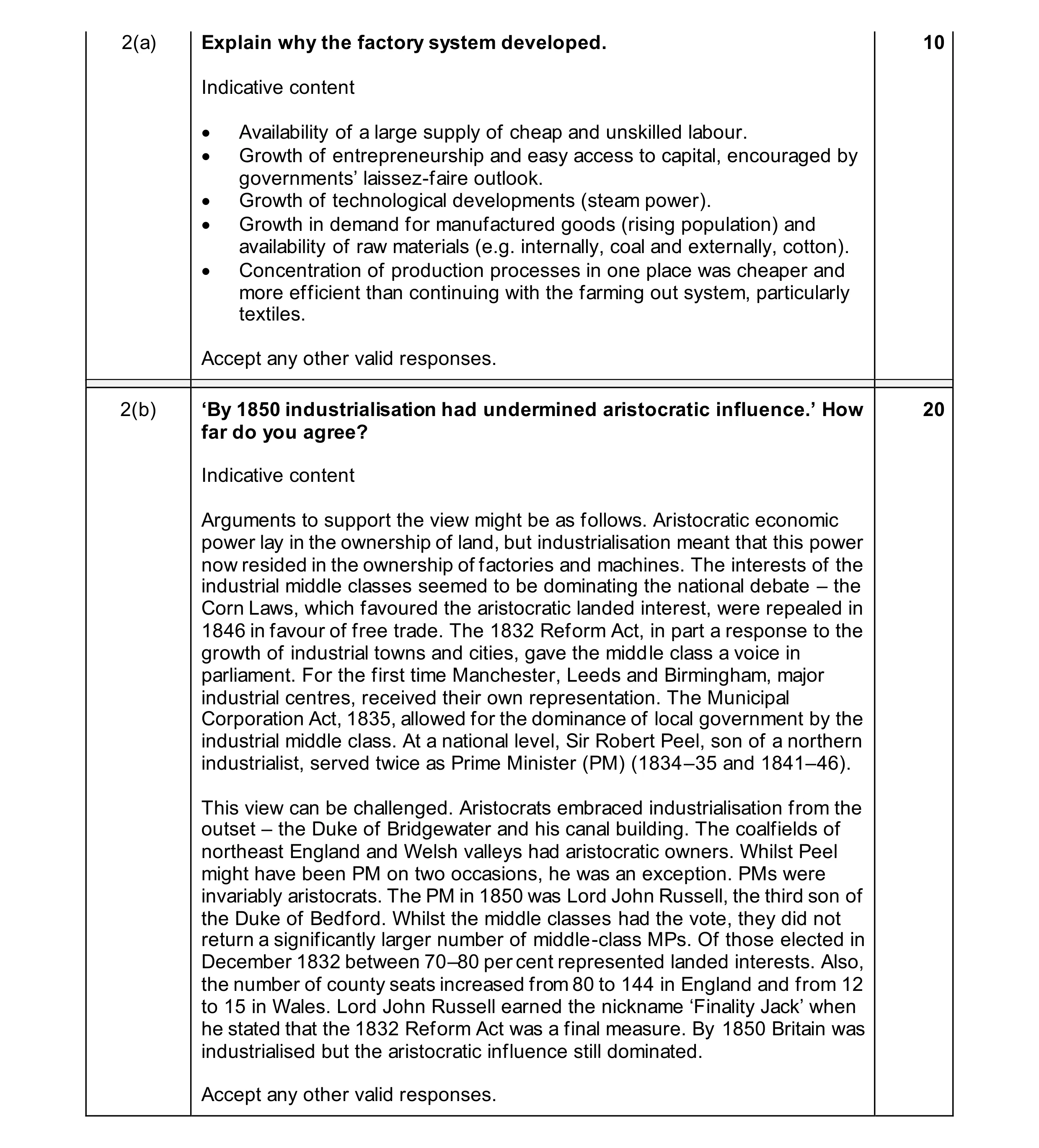 30
30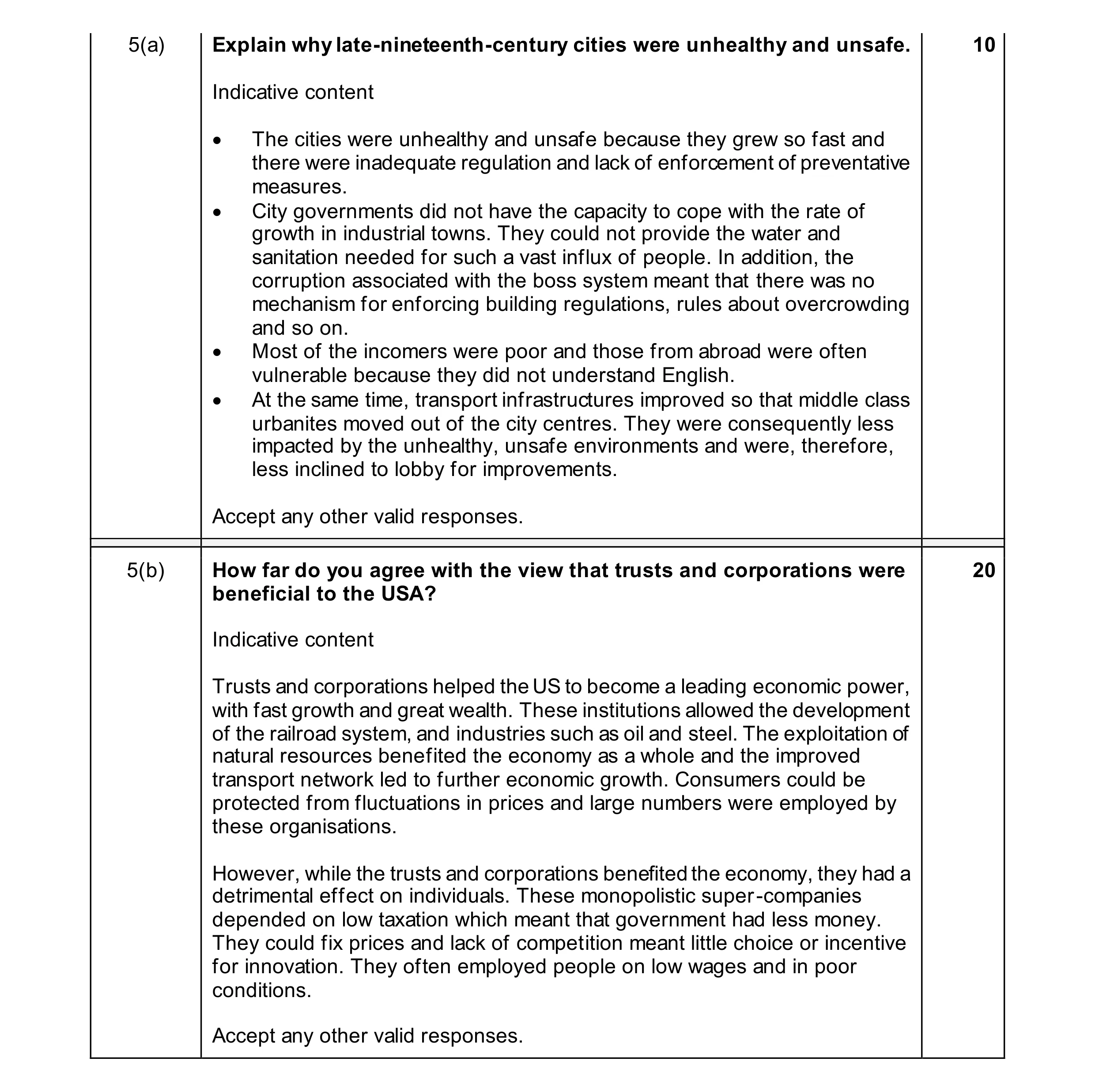 30
30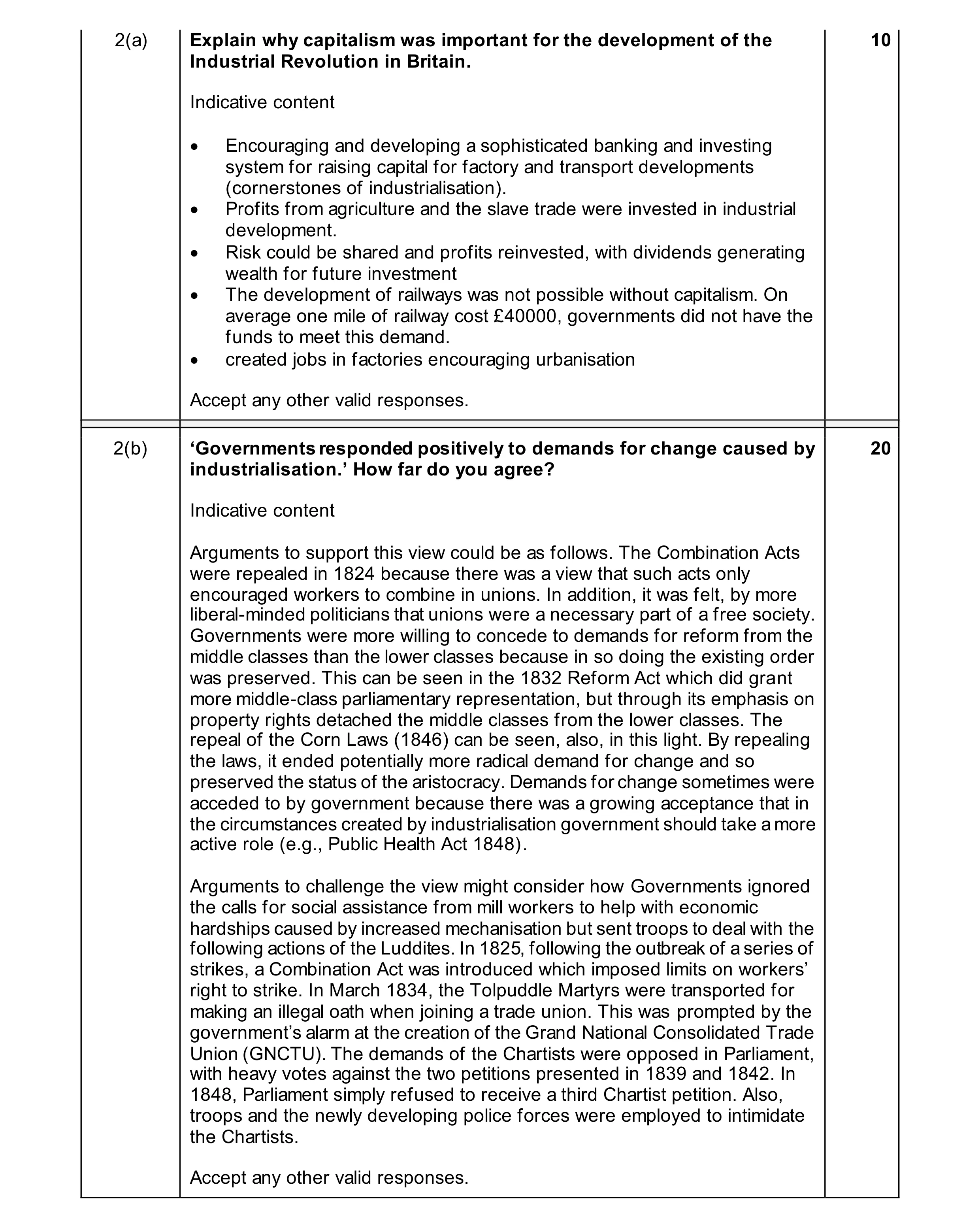 30
30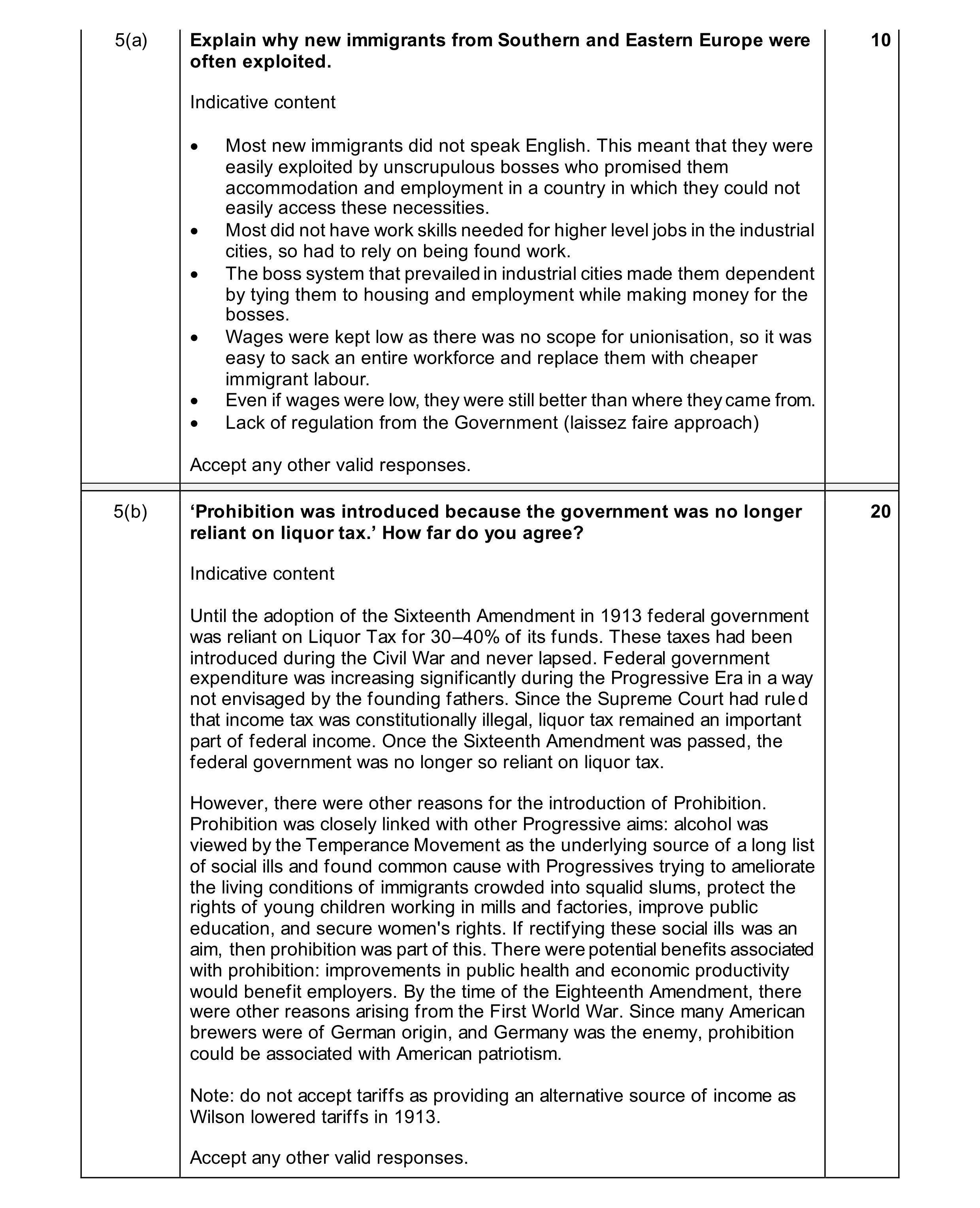 30
30