Questions as text
Q1 · ‘During the 1960s and 1970s it was clear that post-war economic doctrines were failing.’… 9489/42 Feb/March 2021
6 ‘During the 1960s and 1970s it was clear that post-war economic doctrines were failing.’ Discuss this view. [30]
30 marks
Mark scheme: 6 ‘During the1960s and 1970s it was clear that post-war economic 30 doctrines were failing.’ Discuss this view Challenge to post war assumptions as growth slowed and impact of external events. Post-war economic thinking was heavily influenced by the apparent failures of unregulated capitalism in the Great Crash and the rise of federal responsibility and control which grew during the Second World War. After 1945 the US could not return to isolationism and had to accept its global position. Through to the 1960s and 1970s, it was taken for granted that the Federal government would play a large part in the domestic economy and would manage business cycles, aim to maintain full employment, regulate private firms and the financial sector and produce various public goods such as the expansion of the interstate highways. To do this required relatively high levels of taxation and there was limited progress towards tax cuts through the period. This adapted Keynesianism was accompanied by high levels of defence spending putting the state as a major driver of economic activity. Federal and state spending and subsidies cushioned free enterprise against market forces. The US allied this macroeconomic management with moves for free trade, but international capital movements were restricted. There were critics of this mixed economy who looked back to neo liberal economic theory and when the US economy faltered from steady if unimpressive growth rates in the 1970s there were calls for deregulation and reduction of subsidies and welfare and tax cuts to stimulate enterprise together with an extension of free trade. Laissez faire ideas were reintroduced on the grounds that government efforts to manage the business cycle were futile and excessive levels of taxation and regulation were destroying the vitality of market economies. Trade negotiations were now expanded to dismantle ‘nontariff barriers’ that included domestic legislation that had the unintended consequence of discriminating against foreign products. Developing nations were told to scrap their planning processes, to privatise state-owned enterprises, and to end subsidies that made food, transportation, and housing more available for the poor. The assault on post-war economic doctrines that still determined much thinking in the 1960s and 70s was considerable, but the debate is whether it was justified. Defenders have argued that the balance between the public and private sectors was beneficially maintained and that the oil crisis was beyond the control of governments and the recession was not a result of ill- judged doctrine but of changes in the world context. It is also pointed out that the critics could not prevent continuing high levels of government spending which were part of US commitment to world power status, not Keynesianism. Also, the consumer-based prosperity that continued into the 1960s did ensure a degree of social stability that was lost by neo-liberal economic policy which resulted in greater social inequality. Critics pointed to the sluggish growth rates and the over dependence on the state and the benefits of greater enterprise with the expansion of technology and the freer financial markets.
This question in 9489/42 Feb/March 2021
Q2 · Assess the impact of the growth of consumerism on the US economy in the later 1940s and… 9489/41 May/June 2021
5 Assess the impact of the growth of consumerism on the US economy in the later 1940s and 1950s. [30]
30 marks
Mark scheme: 5 Assess the impact of the growth of consumerism on the US economy 30 in the later 1940s and 1950s. Consumerism encouraged growth of home market, advertising, and services. It encouraged a more diverse home market and affected the balance of trade. However, impact might be compared with larger scale economic factors and impact of military spending and export industries. Consumer industries based on the home were boosted by the expansion of credit – the first credit card arrived in 1950. With the post-war prosperity and full employment together with pent-up demand for domestic goods after the war, there was money available, and the home market expanded. This was accompanied by a growth in population and the expansion of suburbs. There was a rise in social and economic confidence, which helped to fuel the home market, as well as technological developments which brought about a wider range of consumer goods. Investment was available and the consumer boom was helped by the growth of advertising. Consumerism effects could be seen in terms of increased employment in consumer industries and the cascading effect of spending as goods were no longer expected to last for years, but consumers who were happy in the post-war euphoria were eager to buy the latest products. As a result of the allied expansion of the tertiary sector – retail, advertising, credit, and entertainment – the effect on services could be considered. The impact of this factor could be set against strong US overseas trade and the dollar’s position as a reserve currency. Unlike domestic demand, this was directly influenced by US loans and grants such as Marshall Aid. The impact of defence spending as a stimulus for economic growth could be considered, especially with the Korean War and the arms race, as well as the development of the infrastructure, such as roads. The question asks for answers to assess the impact, allowing for comparisons with other developments such as government spending, technology, infrastructure, and overseas trade, as well as a discussion about whether consumerism was more of a consequence than a cause of economic growth.
This question in 9489/41 May/June 2021
Q3 · ‘Reaganomics did more harm than good to the US economy.’ Discuss this view 9489/41 May/June 2021
7 ‘Reaganomics did more harm than good to the US economy.’ Discuss this view. [30]
30 marks
Mark scheme: 7 ‘Reaganomics did more harm than good to the US economy.’ Discuss 30 this view. On one hand, business confidence grew and enterprise was encouraged. On the other hand, wealth inequality restricted home demand. In theory, Reaganomics was characterised by lower marginal tax rates, including a reduction in federal economic and financial regulation, cuts in government spending, and anti-inflationary monetary policy. It was inspired by supply- side free market economic theory and a desire to avoid the stagflation and general economic decline that had been blamed on Keynesian policies since the early-1970s oil price rises. Claims that the policies were ineffective or actively harmful might consider the effects on welfare benefits and the lack of economic balance when policies aided certain sectors, such as those involved in military technology and defence production, which increased, and those more dependent on general domestic demand, which decreased. The deregulation of finance was also controversial and caused the savings and loans crisis in 1989. It was argued that the gap between the rich and poor increased and the society of the US became more divided. Arguments which stress ‘good’ might point to the effects of the 25% reduction in tax rates in 1981 and the impact on economic recovery. By the end of 1984, GDP increased by 11% and GNP also increased. The fears of inflation did not materialise because of control of the money supply and there was greater economic growth. Supporters pointed to the growth in business confidence and the expansion of the private sector; detractors noted that government spending did not lead to the promised balanced budgets but shifted towards defence spending at the expense of welfare. There were also criticisms that overall wealth increases did not percolate through US society.
This question in 9489/41 May/June 2021
Q4 · Evaluate the effectiveness of the economic policies of the US federal government in the… 9489/42 May/June 2021
5 Evaluate the effectiveness of the economic policies of the US federal government in the late 1940s and 1950s. [30]
30 marks
Mark scheme: 5 Evaluate the effectiveness of the economic policies of the US federal 30 government in the late-1940s and 1950s. The economic growth of the late 1940s and 1950s was remarkable, with family income rising by over 30% and low unemployment rates, developments in infrastructure including technology, and urban growth. The key elements of Eisenhower’s policy included a balanced budget and a maintained balance between the freedom of private enterprise and state intervention to improve infrastructure, such as the interstate highway system. Defence spending provided an economic stimulus. The growth of free trade with the GATT talks and the subsequent tariff reductions promoted exports. However, the prosperity also heavily depended on factors outside the government’s control with the maintenance of cheap oil, the growth of technology in the electronics and automobile industries, the innovation of the private sector, and the sustained capital investment of the period. This could be linked to the encouragement of business confidence by federal policies, which were business friendly and aimed at maintaining foreign and domestic stability. One of the biggest economic surges came in 1950, but was not directly the result of Truman’s economic policies. Truman had maintained high levels of government spending, such as the GI Bill, and did little to cut taxes to stimulate demand or encourage industry. However, a sudden burst of consumer spending perhaps triggered by fears and uncertainty of the situation in Korea and a upsurge in the housing market led to the so called ‘Truman boom’. A feature of government policy during this period was high levels of taxation, subsidies, and spending, particularly on the ‘military industrial complex’. Conservatives argue that this restricted enterprise, but an alternative argument is that it maintained social stability and consumer and investor confidence. There were modest growth rates of 2.4% on average after 1952 (lower than the 4% of the later 1940s), but unemployment remained low as did inflation. The national debt fell, which gave confidence in sound finance despite Eisenhower rejecting tax cuts. The planned increase in welfare provision was sacrificed for spending in heavy defence so the increase in purchasing power was less widespread than it might have been. Critics on the left might point to inequalities of wealth and lack of investment in the economy as opposed to military technology and roads. Critics on the right might point to a failure to dismantle the high levels of regulation, government control and the failure to stimulate the private sector with tax cuts. However, there were only three period of recession between 1947– 1963 and there were some key indicators of economic success.
This question in 9489/42 May/June 2021
Q5 · ‘The main cause of the General Strike was that traditional industries were in decline.’… 9489/43 May/June 2021
4 ‘The main cause of the General Strike was that traditional industries were in decline.’ Assess this view. [30]
30 marks
Mark scheme: 4 ‘The main cause of the General Strike was that traditional industries 30 were in decline.’ Assess this view. The roots of the General Strike lay in the structural problems of the coal industry, but there were political considerations in the way that the government saw the strike as a challenge to constitutional government. Encouraged by cabinet ministers such as Churchill, Baldwin failed to take steps to prevent a strike. He could have exerted more pressure on the owners to compromise or show a greater willingness to talk to the TUC. Instead, he gave the impression that the government wanted a fight with the unions, by the Emergency Powers Act 1921, to declare a state of emergency and abruptly ending talks with the TUC leaders. Another cause of the General Strike was that the miners were the most militant and unified of all work forces, which stemmed from the fact they worked in appalling and dangerous conditions and relied on each other for safety. The Miners’ Federation had a history of militancy and represented workers who felt a high degree of bitterness and resentment, stemming from generations of dangerous working conditions, low wages, and poor investment management from the private owners. Another cause of the general strike was that Britain’s economy suffered a decline and severe unemployment in its traditional ‘staple industries’ in the period after the First World War, caused by the declining export market in these industries. The response of factory owners was to reduce wages, which in turn caused industrial disruption. The coal industry was regarded as the ‘battleground’ of industrial conflict and it was problems in coal which were the root cause of the General Strike. The industry was one of the most adversely affected because of the conditions of world trade – exports had diminished, there was competition from gas, electricity and oil and also the German and Polish coalfields, which had introduced a greater degree of mechanisation. In contrast, only 20% of British coal was cut mechanically by 1925.
This question in 9489/43 May/June 2021
Q6 · Analyse the reasons for the development of a distinct youth culture in the late 1940s and… 9489/43 May/June 2021
5 Analyse the reasons for the development of a distinct youth culture in the late 1940s and 1950s. [30]
30 marks
Mark scheme: 5 Analyse the reasons for the development of a distinct youth culture in 30 the US in the late – 1940s and 1950s. The explanations might weigh economic factors – greater prosperity and spending power of youth; social factors – greater independence in urban areas; the impact of war in reducing traditional social controls. Though the concept of a distinct youth culture developed in the 1920s, it was discouraged in the Depression years and during the Second World War and emerged more strongly in the 1940s and 1950s when the concept of ‘teenager’ emerged. Young people turned to music which was not enjoyed by their elders so much as such rock and roll and there were specific movies and TV programmes to appeal to them. Their clothing and use of language developed in a different way to that of their elders and in a broader sense a distinct youth outlook developed and was recognised more than just being rebellious or ‘naughty’ behaviour. From cultural change, such as the popularity of rock and roll, different attitudes to race and segregation developed. Explanations have been linked to economic and social change. The growth of consumerism led to advertising targeting a growing market as post war baby boomers grew up. The wider availability of TV and means of reproducing music also led to industries seeing the potential of a teenage market. The end of the harsher years of depression and the mood of serious national service led to a relaxation in social life and culture which Young people favoured the development of freer youth. The era of cheap fuel and accessible transport allowed greater physical mobility for young people. Traditional family disciplines had been eroded by war with fathers absent and the changes brought by war – with movements of workers and greater prosperity had an impact on young people. Young people were influenced by the post war demands for change as in the growth of the civil rights movement and by general trends towards more social and sexual freedom and challenge. They also found iconic cultural figures to represent their feelings.
This question in 9489/43 May/June 2021
Q7 · Evaluate the effectiveness of the economic policies of the Reagan administration in the… 9489/42 Feb/March 2022
7 Evaluate the effectiveness of the economic policies of the Reagan administration in the 1980s. [30]
30 marks
Mark scheme: 7 Evaluate the effectiveness of the economic policies of the Reagan 30 administration in the 1980s. For Reagan’s supporters his economic policies were highly effective. Millions had good jobs, many of which went to African Americans and to women. People were able to keep more of the money for which they worked for and gained more independence and control of their own lives. Families could reliably plan a budget and pay their bills without the concerns about inflation. Businesses and individual entrepreneurs were freed from government regulations every time they wanted to expand. There was a shift towards individualism, enterprise, and away from ‘big government’. However, the alternative view was that the policies had a much more negative effect by both increasing income inequality and failing to ensure that greater corporate and business profits found their way through US society. Supply Side economics did not always deliver the investment and the trickle-down prosperity that its theoretical supporters claimed. There were many groups who faced social hardships by welfare cuts and who could not take advantage of the so-called free enterprise culture. They also suffered from harsh monetarism. It could be argued that the economic policies were ineffective in creating prosperity in the early and late 80s, and that many of the elements which seemed to bring more prosperity in the middle years, can be explained by factors other than government policy. It could be argued that inflation was reduced though largely as a result of monetary policy. Reagan shifted spending towards defence from domestic expenditure, tripling federal debt. There were both winners and losers as a result. Income Tax cuts were substantial, especially at the higher end and many were taken out of tax, but this was balanced by increases in payroll taxes and excise taxes. Corporate tax was reduced, but not drastically, and its social and economic impact was not clear because of the complexity of tax law. Military spending grew by 11% per annum, and overall federal spending continued to grow but not as rapidly as before. There were no cuts to Medicare or social security, and scope for cuts in other spheres like education were limited. There was also no bonfire of regulations. In 1981, Reagan eliminated the Nixon-era price controls on domestic oil and gas. Cable TV, long-distance telephone service, interstate bus service, and ocean shipping regulations were eased. He also eased bank regulations, which helped create the Savings and Loan Crisis in 1989. Reagan increased the number of items that were subject to trade tariffs from 12% in 1980 to 23% in 1988. He did little to reduce other regulations affecting health, safety, and the environment. The gap between rhetoric and actual policy makes it difficult to evaluate the effectiveness, and much will depend on considering what the real aims were. Ideological objectives of moving away from a culture of state support and encouraging an enterprise outlook might have been achieved more than long term prosperity, or even in practice a reduction in overall spending and taxation.
This question in 9489/42 Feb/March 2022
Q8 · Assess the reasons for increased social mobility in the 1940s and 1950s 9489/41 May/June 2022
5 Assess the reasons for increased social mobility in the 1940s and 1950s. [30]
30 marks
Mark scheme: 5 Assess the reasons for increased social mobility in the 1940s and 30 1950s Explanations may centre on economic expansion during the war and in the post war period and the long-term movement away from mass production and agriculture to a more diversified economy with more opportunities in the service industry and consumer products. There were more employment opportunities – though not uniformly through society or regions. The growth in suburbs and the availability of cheap motor transport and the general hopes of the post war world bolstered by a belief in capitalism and ‘The American Dream’ led to a desire for improvement and mobility. Underlying this was an expansion in education for the poor and for women though less marked in terms of college. There was greater demand for skilled work and white-collar work and more encouragement for progress by large scale corporations offering a structure for promotions and improvements. Incentives to work hard were provided by greater consumer spending and a culture which stressed the rewards open to self- improvement. Underpinning this were significant initiatives from the US state in the form of post-war programs for veterans, of whom there were more than 10 million. These programs were instrumental in creating post-industrial America, by promoting a class of suburban professionals. There were three programs that were critical: The GI Bill, which allowed veterans to go to college after the war, becoming professionals frequently several notches above their parents. It provided federally guaranteed mortgages to veterans, allowing low and no down payment mortgages and low interest rates to graduates of publicly funded universities. The federally funded Interstate Highway System, which made access to land close to, but outside of cities easier, enabling both the dispersal of populations on inexpensive land (which made single-family houses possible) and, later, the dispersal of business to the suburbs. Corporations provided long-term employment to the middle class. It was not unusual to spend your entire life working for one. Working for a corporation, you received yearly pay increases, either as a union or non- union worker. The middle class had both job security and rising income, along with retirement and other benefits. Thus, economic expansion, a culture of individual improvement, key federal measures, greater education, and greater expectation and the emergence of civil rights groups might be considered and weighed.
This question in 9489/41 May/June 2022
Q9 · ‘Stagflation was the most serious economic problem faced by US governments in the 1960s… 9489/41 May/June 2022
6 ‘Stagflation was the most serious economic problem faced by US governments in the 1960s and 1970s.’ Discuss this view. [30]
30 marks
Mark scheme: 6 ‘Stagflation was the most serious economic problem faced by US 30 governments in the 1960s and 1970s.’ Discuss this view. In 1964, inflation was 1 percent and unemployment was 5 percent. Ten years later, inflation would be over 12 percent and unemployment was above 7 percent. By the summer of 1980, inflation was near 14.5 percent, and unemployment was over 7.5 percent. Inflation resulted from federal monetary and economic policy and also from external factors such as the big rise in oil prices. It accompanied longer term factors so rising prices were part of a fall in employment, internal and external demand, and a slowing of economic growth – hence stagflation. Interest rates rose after1965 and spiked sharply higher still in the late 1970s, business investment slowed, productivity faltered, and the nation’s trade balance with the rest of the world worsened. And inflation was seen as the primary cause of widespread problems but the state’s response to inflation could also be seen as important. Attempts at price and wage control in the early 1970s and a failure to control money supply and public spending were seen by critics as adding to the problem. However, the long period of prosperity was coming to an end by 1973 with greater foreign competition, a loss of demand for traditional products especially steel, the oil crisis undermining the low-cost energy which had fuelled the economy and problems with productivity and a stock crisis. High levels of spending. Some failure of economic growth to reduce income inequality and the breakdown of the Bretton Woods system have to be seen as factors. It could be seen that stagflation was a result of long-term structural weaknesses and unsustainable policies rather than a standalone problem.
This question in 9489/41 May/June 2022
Q10 · Analyse the problems facing the traditional industries in Britain in the inter-war period 9489/41 Oct/Nov 2022
4 Analyse the problems facing the traditional industries in Britain in the inter-war period. [30]
30 marks
Mark scheme: 4 Analyse the problems facing the traditional industries in Britain in the 30 inter-war period. Indicative content The discussion here could be about the inherent problems of the industries themselves and the problems brought about by the changing context. In terms of outdated technology and working practice and poor relations between management and workers, the industries – coal, iron and steel, engineering, shipbuilding, textiles – had shown themselves to be behind the times even before the First World War. They were heavily dependent on exports and had been facing foreign competition from countries who had industrialised more recently and had access to more modern technology. Industrial strife had been a problem in some areas, especially coal before 1914 and this resurfaced after the war, bringing about a major crisis in 1926. There were issues with competitiveness and productivity and a failure to be able to diversify that were inherent in the industries and a consequence of management, which looked for tariff protection rather more than internal restructuring to maintain a position which had been boosted by wartime expansion. The war had reversed trends in the staple industries and led to an expansion of production and jobs but not to developments in technology or managerial innovation. Cushioned by government contracts and boosted by a lack of competition with rivals in Germany, industries produced more and more with a boosted labour force using old fashioned methods. Despite a brief post war boom, the downturn which began in 1920 persisted and then intensified after 1929. A rationalisation and restructuring did not occur until the 1930s and problems of over production and outdated plant were not addressed in the 1920s. However, major problems came with the changes in the post-war period. The war had disrupted international trade and the changes in Europe and ongoing problems with the markets in Germany and Russia disrupted and with high US tariffs and the creation of smaller states in Eastern Europe. Export industries were hard hit by this unfavourable context and by currency dislocations. Also, the decision to return to Gold which recognised the primacy of financial interests made exports more expensive. Foreign competition, too, was disruptive for example cheaper Polish coal. Depressed by 1929, the traditional industries then faced a major economic turndown which intensified world trends of falling demand, low agricultural prices and trade restrictions. Falling back on internal demand within the closed economic system of the Empire was helpful for some industries like construction, motor vehicles, services and elements of the chemical and light engineering sectors but not for traditional heavy industries.
This question in 9489/41 Oct/Nov 2022
Q11 · Assess the impact of full employment on the economy in the late 1940s and 1950s 9489/43 Oct/Nov 2022
5 Assess the impact of full employment on the economy in the late 1940s and 1950s. [30]
30 marks
Mark scheme: 5 Assess the impact of full employment on the economy in the late 30 1940s and 1950s. Indicative content The impact of Full Employment on all aspects of the economy, consumerism, production should be covered. Driven by growing consumer demand, as well as the continuing expansion of military spending as the Cold War ramped up, the United States reached new heights of prosperity in the years after World War II. Gross national product (GNP), which measured all goods and services produced, grew to $300 billion by 1950, compared to just $200 billion in 1940. By 1960, it had topped $500 billion, firmly establishing the United States as the richest and most powerful nation in the world. The Full Employment legislation of 1946 committed the Federal Government to taking measures to prevent the large- scale unemployment of the Depression years and though it achieved this without large scale inflation until the 1970s this was in the context of industrial growth brought about by high levels of military spending and production to meet the pent-up demand of consumers after the war years had meant large amounts of accumulated saving. Full employment helped to develop the consumer society of the 1950s, with increasing numbers of Americans becoming able to purchase cars, televisions, refrigerators, washing machines etc. The growing use of cars in turn helped to drive demand for service industries and contributed to the growth in employment in these areas of the economy. The increase in car use led to a growing number of motels, fast-food outlets and shopping malls. The consumer society helped to make the economy more dependent on service industries. Demand for consumer products in turn led to increasing levels of production. There were 7.9 million cars produced in 1955 alone. The construction boom saw 13 million new homes built between 1948 and 1958, mostly in suburbs. The discussion here is between a view that it was market and consumer led factors arising from full employment which promoted growth or whether the growth, encouraged by other factors such as government policy, public spending and the accumulated demand led to full employment.
This question in 9489/43 Oct/Nov 2022
Q12 · ‘Full employment was largely the result of the economic policies of the federal… 9489/42 Feb/March 2023
5 ‘Full employment was largely the result of the economic policies of the federal government in the late 1940s and 1950s.’ Evaluate this view. [30]
30 marks
Mark scheme: 5 ‘Full employment was largely the result of the economic policies of the 30 federal government in the late 1940s and 1950s.’ Evaluate this view. The discussion here is about the relative importance of policies as opposed to developments in world trade, the social changes that prompted consumerism and policies not primarily directed towards the economy such as defence spending which nevertheless had an economic impact. Economic Committee in Congress. The massive state controls were dismantled in 1944, government spending at all levels accounted for 55% of gross domestic product (GDP). By 1947, government spending had dropped 75% in real terms, or from 55% of GDP to just over 16% of GDP. Over roughly the same period, federal tax revenues fell by only around 11%. Between mid-1945 and mid-1947, over 20 million people were released from the armed forces and related employment, but nonmilitary-related civilian employment rose by 16 million. This was described by President Truman as the ‘swiftest and most gigantic change-over that any nation has made from war to peace’. Measures such as the GI Bill which took veterans out of the workforce and into subsidised college places are often given as an example of government policy helping employment. Although the GI Bill surely had a positive effect in the 1950s on the educational level of U.S. workers, the bill played a very minor role in keeping the immediate post-war unemployment rate low. At its height, in the fall of 1946, the bill only took about 8 percent of former GIs to college campuses and out of the workforce. There was no extensive federal programme but the ending of controls, relatively low taxes compared with wartime and stimulus from Cold War military programmes and the higher levels of spending in the Korean War and the subsequent arms race by the military-industrial establishment and federal infrastructure schemes such as road building contributed to significantly lower unemployment rates. However, it was probably the pent- up demand from wartime rationing and high levels of personal saving together with the rapid conversion of private business to peacetime needs that best explains this. It could be argued that government policies encouraged this by maintaining a safety net of New Deal social policies but creating business friendly tax environments. The wage differentials between white skilled workers and those working in services and women and minorities who filled lower positions with lower incomes had an economic impact. Technology in the sense of more cars and household appliances fuelled a consumer-based boom which helped sustain employment by buoyant internal demand.
This question in 9489/42 Feb/March 2023
Q13 · ‘The US economy depended on domestic consumers to drive its growth in the late 1940s and… 9489/41 May/June 2023
5 ‘The US economy depended on domestic consumers to drive its growth in the late 1940s and 1950s.’ Evaluate this view. [30]
30 marks
Mark scheme: 5 ‘The US economy depended on domestic consumers to drive its 30 growth in the late 1940s and 1950s.’ Evaluate this view. Different views could be taken on the extent of dependence. On one hand there was a reliance on mass produced consumer goods, automobiles and household products. On the other hand, traditional heavy industry in the military-industrial complex and in urban growth, investment, he availability of capital, and domestic policy played a part and there was foreign trade, Consumerism encouraged growth of home market, advertising, and services. It encouraged a more diverse home market and affected the balance of trade. However, impact might be compared with larger scale economic factors and impact of military spending and export industries. Consumer industries based on the home were boosted by the expansion of credit – the first credit card arrived in 1950. With the post-war prosperity and full employment, together with pent-up demand for domestic goods after the war, there was money available, and the home market expanded. This was accompanied by a growth in population and the expansion of suburbs. There was increasing confidence both socially and economically which helped to fuel the home market and there were also technological developments which brought about a wider range of consumer goods. Investment was available and the consumer boom was helped by the growth of advertising. The effects of consumerism might be seen in terms of the expansion of employment in the consumer industries and the knock-on effect of spending as goods were no longer expected to last for years but consumers, happy in the post-war euphoria, were eager to buy the latest products. The effect on services could be considered as there was an allied expansion of the tertiary sector – retail, advertising, credit, entertainment. The impact of this factor could be set against strong US overseas trade and the dollar’s position as a reserve currency. This, unlike domestic demand, was directly influenced by US loans and grants such as Marshall Aid. The impact of defence spending as a stimulus for economic growth might be considered, especially with the Korean War and the arms race and there was also the development of the infrastructure – roads, for instance. The question asks for answers to assess the impact so there is scope for comparison with other developments: government spending, technology, infrastructure and overseas trade and there could be a discussion about whether consumerism was more of a consequence than a cause of economic growth.
This question in 9489/41 May/June 2023
Q14 · ‘Urbanisation was the most significant factor in bringing about social change by the end… 9489/42 May/June 2023
5 ‘Urbanisation was the most significant factor in bringing about social change by the end of the 1950s.’ Discuss. [30]
30 marks
Mark scheme: 5 ‘Urbanisation was the most significant factor in bringing about social 30 change by the end of the 1950s.’ Discuss. Indicative content The later 1940s and 1950s saw considerable social change. American society in 1945 had been rooted deeply in the past. A third of Americans lived in poverty; in rural areas half of the farms had no electricity. Road communications were often limited and many communities were cut off. A third of American homes had no running water. Though there had been some movement north in the war, most black Americans lived in the South under legal discrimination. There was limited indication of modern consumerism in many areas and urban centres and urban culture were separated from the bulk of the country. Urban growth played an important role in social change, expanding suburbs, encouraging migration from the countryside, leading to a greater racial mix outside the South, promoting consumerism. However, many of the social changes were linked to other factors – the social impact of the war; the changes in education; the growing demands for civil rights and greater equality; the development of a youth culture. Some resulted from urban growth but not all. Urbanisation and social change must be the focus of the question and answers could consider the greater social opportunities offered by urban growth, cultural developments, job opportunities, greater contact with different people, often higher wages and a more extended outlook than was possible in small town or rural USA. As well as that, there were housing problems, the retreat to the suburbs, decaying inner city areas, crime, racial tensions, pollution and challenges to existing attitudes which could be seen as undermining stability. Alternative elements which some might see as more significant might include greater awareness among ethnic minorities of social rights and inequalities; the changes in the role of women; the development of youth culture; changes in mass communication – but alternatives should be compared with the key element in the question to assess significance.
This question in 9489/42 May/June 2023
Q15 · Evaluate the effects of the oil crises of 1973 and 1979 on the US economy 9489/42 May/June 2023
6 Evaluate the effects of the oil crises of 1973 and 1979 on the US economy. [30]
30 marks
Mark scheme: 6 Evaluate the effects of the oil crises of 1973 and 1979 on the US 30 economy. Indicative content There were obvious negative effects – rising prices, shortages, consumer issues and issues to do with US industrial production. However, there were also some positives which could be discussed even if the effects were not long lasting. In the immediate period after the embargo was announced, the price of oil rose from $3 per barrel to $12. This had a major impact because of the reliance of the US economy for decades on fossil fuel. Internal trade and travel depended on cheap and abundant fuel. The US faced price rises and fuel shortages, causing inflationary pressures and putting the day-to- day operation of the economy at risk. The authorities called for measures to conserve energy, asking gas stations to close on Sundays and homeowners to reduce energy usage. In addition to causing major problems in the lives of consumers, the energy crisis was a huge blow to the American motor manufacturing industry, which had for decades made increasingly large and inefficient cars which would now be challenged by Japanese manufacturers producing smaller and more fuel-efficient models. Usually seen as negative, the crisis also had a more positive effect economically. Efforts were made to develop oil production in the US. There were also moves to reduce dependence on fossil fuels and find alternative sources of power, including renewable energy sources such as solar or wind power, as well as nuclear power. However, these were not developed much in the long term because after oil prices collapsed in the mid-1980s and prices dropped to more moderate levels, domestic oil production fell once more, while progress toward energy efficiency slowed and foreign imports increased.
This question in 9489/42 May/June 2023
Q16 · ‘Economic policy in the 1980s had only a limited effect on living standards.’ Discuss 9489/41 Oct/Nov 2023
7 ‘Economic policy in the 1980s had only a limited effect on living standards.’ Discuss. [30]
30 marks
Mark scheme: 7 ‘Economic policy in the 1980s had only a limited effect on living 30 standards.’ Discuss. The theory of Reagan’s Trickle-Down economics was that the problems of the US by 1979 – stagnant growth, unemployment and inflation needed to be met by reducing the role of government and encouraging enterprise by greater consumer spending, investment and free enterprise. Supply Side economics have been controversial. Reagan cut corporate taxes from 48 to 34% and higher income taxation from 70 to 28%. However, it was harder to implement the complementary policy of reduction of spending as foreign policy depended on high levels of defence spending and it was too risky to slash social security. The initial effects of government policy was recession as high interest meant a rise in demand for the dollar and higher prices for exports. However, supporters claimed that the Dow Jones industrial average rose 14 times and employment grew, with 40 million jobs added to the economy, The 1980s were a time of investor and consumer confidence even if debt rose rapidly. Whether the economic growth derived from trickle down policy has been debated. Critics have claimed that less than 10% pf job creation derived from the tax cuts. Companies did not do much to meet inequalities of reward and often used wealth for stock buybacks for the benefit of shareholders. It has been argued that relief for lower income workers would have had more impact on living standards. Though the standard of living rose, its growth was no faster than during 1950–1980. Income inequality increased. The rate of poverty at the end of Reagan's term was the same as in 1980. There was an increase in inequality. Changes in tax policy helped increase inequality more than poverty, but regional pockets of hardship remained and there was a big distinction between groups in service industries which benefited from economic growth and groups in depressed areas and many ethnic minorities did not experience improvement in living standards. Broad social and economic factors were acting to exacerbate income differences and making it harder for families to stay out of poverty. The changes of the 1980s tended to increase their effect.
This question in 9489/41 Oct/Nov 2023
Q17 · Analyse why women experienced social and economic inequality in the late 1940s and 1950s 9489/43 Oct/Nov 2023
5 Analyse why women experienced social and economic inequality in the late 1940s and 1950s. [30]
30 marks
Mark scheme: 5 Analyse why women experienced social and economic inequality in the 30 late 1940s and 1950s. Reasons for inequality may include economic factors. As post war prosperity involved far more jobs than had been the case in the Depression years and there was a widespread feeling that men should have priority and that competitiveness in the economy depended on low-cost labour costs which meant lower wages for women. The growth of suburbs and consumerism also tended to encourage attitudes that reinforced social and economic inequality with more emphasis on the home and women’s role in bringing up children while husbands had further to commute to work and an extended working day. Political factors were also likely to encourage inequality because there was little appetite in either party for legislation for social and economic equality and feminists found it difficult at national and local level to find political representation. Cold War conservatism also equated demands for social and economic equality with subversion. Social attitudes with the return to normalcy after the war was also often associated with an end to the opportunities that the war had given women. The growth of suburbs and the portrayal of women in advertising and in media and films also tended to reinforce social stereotypes. Racial attitudes also meant that women of colour and ethnic minority women suffered from assumptions about the place of women in society. Male domination culture was often strong within Black, Asian and Latin-American communities as well as in many white groups.
This question in 9489/43 Oct/Nov 2023
Q18 · Evaluate the reasons why post-war economic doctrines lost influence in the 1960s and 1970s 9489/42 May/June 2024
6 Evaluate the reasons why post-war economic doctrines lost influence in the 1960s and 1970s. [30]
30 marks
Mark scheme: 6 Evaluate the reasons why post-war economic doctrines lost influence in 30 the 1960s and 1970s. In the 1960s forces emerged that by the mid-80s would end the ascendency of Keynes's ideas. These can be divided into practical and intellectual dimensions; they are interrelated. The failure of what was at the time perceived to be Keynesian economics to halt the stagflation of the 1970s lent credibility both to academic and popular attacks on Keynes's ideas. Some even argued that the poor economic performance was due to Keynesian economics. Economic historians have labelled the period from about 1951 - 1973 as the Age of Keynes and its benefits were claimed to be relatively high average global growth, low unemployment, reduction of inequality, lowering of public debt and very low incidence of financial crises. However, when the US economy faced higher foreign competition, rising prices and issues of productivity, more credence was given to critical classical economic theorists and especially to monetarism. Keynesian economics and a belief in the needs for government intervention to maintain full employment was rooted in the experienced of the 1930s with uncontrolled capitalism being seen as to blame for hardship. Greater government control had been more acceptable in the 1930s and in the war years so the development of the Bretton Woods system and the belief that communism had to be avoided by promoting development and growth both internally and externally was a natural development. Classical free market economic theory seemed rooted in the past. However, the development of economic theories which challenged controls and attempts to manage economies had developed through the work of Hayek and especially Friedman. When both inflation and stagnation set in in the 1970s, views that the high prices brought about by the Oil Crisis of 1973 were intensified by high levels of spending became more acceptable. Some analysts link this to a new generation who had not experienced greater economic freedom rejecting the economic controls by the established authorities which had not brought about a sustained prosperity. The US no longer had a favourable trade balance and from 1968 there was a move away from the financial regulation of the Bretton Wood era in the hope that greater freedom would make use of US strengths and overcome ‘stagflation’. So, explanations could balance the intellectual changes in economic thinking, changed economic context with fear of inflation and stagnation and a change in attitude towards regulation and control by a new generation.
This question in 9489/42 May/June 2024
Q19 · ‘Eisenhower’s election victories are best explained by economic prosperity.’ Discuss this… 9489/43 May/June 2024
5 ‘Eisenhower’s election victories are best explained by economic prosperity.’ Discuss this view. [30]
30 marks
Mark scheme: 5 ‘Eisenhower’s election victories are best explained by economic 30 prosperity.’ Discuss this view. The perceived economic prosperity based on consumerism, bolstered by the expansion of transport, visible in the growth of suburbs and better-equipped homes can be seen as a cause of the Republican victories. Other factors could be the reassuring presence of Ike; the ongoing impact of the Cold War; limitations in the Democrat campaigns and candidates and the willingness of the Eisenhower administration to go beyond rigid conservatism and accept a degree of change and maintain the Keynesian consensus and social policies. In 1952 it could be argued that economic prosperity was not such a significant factor as in 1956 when there was talk of ‘Eisenhower prosperity’ and when economic growth and obvious signs of consumer spending and suburban development following the end of the Korean War had expanded middle class confidence and worded fears that Republican rule would mean a return to hardship. In 1952 effective campaigning (‘I like Ike’ and a vigorous election tour was important. Though Stevenson was an impressive candidate he lacked the popular appeal of the genial ‘middle America’ Ike. The Democrat decision to choose him again in 1956 was a mistake but an important factor in raising Ike’s popular vote from 55 to 58% was the danger abroad following Suez and the Hungarian invasion and the president was a safe pair of hands for many Americans. As Republican congressional performance was much weaker than Eisenhower’s gain, his personal appeal might be seen as more important than the economic context. His moderation in not dismantling the welfare reforms or interventionist economic policy and his disavowal of McCarthy suggested a moderate conservatism which was popular, especially when Republican free-market rhetoric seemed to be justified by economic growth.
This question in 9489/43 May/June 2024
Q20 · Assess the importance of economic prosperity in the development of a distinct youth… 9489/41 Oct/Nov 2024
5 Assess the importance of economic prosperity in the development of a distinct youth culture during the late 1940s and 1950s. [30]
30 marks
Mark scheme: 5 Assess the importance of economic prosperity in the development of a 30 distinct youth culture during the late 1940s and 1950s. Social divisions between teenagers who saw themselves as a distinct cultural group and the parents who had lived through a world war led to conflicts about fashions, music, sexual behaviour. Explanations could centre on the impact of the changes in family life during the war; on consumerism and the promotion of ‘youth’ as a market for consumer products; changes in education and in political awareness Possible explanations might lie in the greater prosperity and optimism of the post war years as Americans did not face the problems of Depression and the disciplines of war. Baby Boomers often gained freedom from having working parents exploiting 50s prosperity. TV gave access to different cultures and lifestyles and the US became less parochial. Greater urbanisation offered more opportunities for youngsters. The greater mobility offered by more cars, better roads and cheap fuel made the automobile a means of meeting more people and developing group identity. The role of consumerism in producing youth products and advertising may be linked to music as a major actor in social change with Rock and Roll. Teen magazines encouraged distinctive fashions and youth language. Movies too were tailored to young people and iconic figures such as James Dean and Marlon Brando influenced youth culture. Politically the rise of Civil Rights movements encouraged students and gave weight to the activities and opinions of younger people. Discussion could focus on how far change resulted from external factors – prosperity – the impact of Cold War fears – more urban growth, technology and factors more to do with culture itself such as youth icons, music and literature.
This question in 9489/41 Oct/Nov 2024
Q21 · Assess the social impact of federal economic policies in the 1980s 9489/41 Oct/Nov 2024
7 Assess the social impact of federal economic policies in the 1980s. [30]
30 marks
Mark scheme: 7 Assess the social impact of federal economic policies in the 1980s. 30 This is about how far ‘Reagonomics’ actually achieved the ‘trickle down’ and promoted enterprise and social mobility and how far financial measures affected US society. The negative view is that trickle down economic theory was illusory and what tax cuts brought was a considerable increase in social inequality with the 80 000 richest Americans going from owning 1.3% of wealth to 7% in the 1980s without average Americans seeing benefits. The critics point to an increasing gap between the ‘haves and the have nots’ leading to despair among disadvantaged groups. The tax cuts did give 10% more disposable income to middle America but not enough to make an appreciable difference to lifestyle or social mobility. Savings actually declined as pressures for consumption increased. The poor performance of manufacturing industry led to sectional inequalities. More money in wage packets was probably not the cause of rising female employment, one of the changes in the 1980s. The shift to a business-friendly environment led to a decline in union power and influence and there was possibly a ‘hollowing out of the middle class’. The lack of investment in public services fell disproportionately on poorer Americans. Defenders point to a recovery from the problems of the 1970s with greater incentives for innovation and opportunities in growth sectors and the investments made possible by allowing more income to be taken from government to people and a new culture of enterprise and business confidence with less dependence on the state. Statistics show an increase in household debt, little fall in unemployment, a considerable increase in incomed differentials and limited rise in wages. Unemployment and poverty was also not equally spreads in US society with poorly educated African Americans having a 28% unemployment rate compared to the average of around 8%. There was also regional diversity where manufacturing and export industries did not enjoy the boom in services and defence spending.
This question in 9489/41 Oct/Nov 2024
Q22 · Assess the extent to which a North-South divide existed in British society in the years… 9489/42 Oct/Nov 2024
4 Assess the extent to which a North-South divide existed in British society in the years 1919–39. [30]
30 marks
Mark scheme: 4 Assess the extent to which a North–South divide existed in British 30 society in the years 1919–39. The evidence for the existence of a North-South divide, where the latter enjoyed a more comfortable standard of living, can be found in patterns of consumer consumption. For instance, car ownership and the use of electricity were more common in the south-east than north-west. Diet and levels of health also varied across the country, with infant mortality rates and life expectancy being notably different according to wealth. Regional variations in living standards, most clearly expressed in the North- South divide, were clearly linked to the developments of the economy. The old areas of heavy, traditional industries, such as shipbuilding, iron, steel and coal were largely based in the North. Areas such as Clydeside, the North-East, Lancashire and Yorkshire were key areas dominated by traditional industries. These industries were however suffering from a lack of investment, foreign competition and poor industrial relations. Reliant on export markets, World War I had seen the loss of such markets to foreign rivals who benefitted from more up to date machinery. Heavily unionised, industries such as coal saw great tension from between employers and employees, leading to the 1921 strike and the General Strike of 1926. The slump in world trade resulting from the Great Depression further harmed these sectors of the economy. However, outside of these areas, in London and the south-east, or the West Midlands, new industries such as car production and light industry connected to consumer products and electronics dominated. Much less heavily unionised and less affected by the problems afflicting the staple industries, these parts of the country did much better even during the so-called ‘Hungry Thirties.’ In the 1930s, unemployment rates were significantly different and much worse in the industrial north. 85% of all long-term unemployed were located in the north of England, South Wales and Scotland. Furthermore, given that there was no national system of healthcare and that the means test was administered locally and with different degrees of zeal, then the existence of these regional differences is apparent.
This question in 9489/42 Oct/Nov 2024
Q23 · ‘The oil crises were the most important reason for economic deterioration in the 1970s.’… 9489/42 May/June 2025
6 ‘The oil crises were the most important reason for economic deterioration in the 1970s.’ Assess this view. [30]
30 marks
Mark scheme: 6 ‘The oil crises were the most important reason for economic 30 deterioration in the 1970s’ Assess this view. OPEC imposed an embargo against the United States in response to the Yom Kippur War in 1973. The move precipitated a 400% increase in price; the auto industry was crucial to the economy, so the increased price of a critical input had severe consequences for the nation’s economic health. responses could set this and the subsequent oil crisis against the general context of the early 1970s. The post-World War II economic boom began to wane, due to increased international competition, the expense of the Vietnam War, and the decline of manufacturing jobs. Unemployment rates rose, while a combination of price increases and wage stagnation led to a period of stagflation. Beyond the oil crisis, rising energy costs were only one manifestation of the great inflation that ripped through the economies of the West during the 1970s. Prices rose for several reasons: expansion of government spending on social programs and the war in Vietnam; low interest rates established by the Federal Reserve Board, which encouraged more borrowing by businesses; rising energy costs; and, in 1971, the end of the Bretton Woods monetary system linking the value of the U.S. dollar to the value of gold. The result was skyrocketing consumer prices that outpaced wage increases for workers. Nixon responded by applying artificial wage and price controls to the economy in 1971. They began to produce shortages until, when they were lifted after 90 days, prices skyrocketed again. Attempts to control prices through interest rates had brought about recession by 1979, The situation was worsened by another oil crisis from 1978–9 as Iran cut off oil exports was a second major panic that tripled the price of gasoline at the pump (to more than $1.00 per gallon, which, adjusted for inflation, was the highest gas price U.S. consumers had ever paid). The price per barrel more than doubled from $15 per barrel to $39 per barrel by mid-1979. The oil crisis fueled a new round of inflation because railroads and airlines were hit. Longer term factors had already weakened the US economy and responses could balance the relative impact of the short-term oil price hikes.
This question in 9489/42 May/June 2025
Q24 · Assess the reasons for the change in living standards in Britain in the 1920s and 1930s 9489/42 Oct/Nov 2025
4 Assess the reasons for the change in living standards in Britain in the 1920s and 1930s. [30]
30 marks
Mark scheme: 4 Assess the reasons for the change in living standards in Britain in the 30 1920s and 1930s. For most people living in Britain living standards improved between the wars, largely because prices, especially for food, fell faster than wages: the real cost of living fell by more than a third between 1920 and 1938. A study in 1936 concluded that the average diet was better than before 1914. However, such averages masked a large variation in nutritional standards between different classes. During World War II, the poor diets of many working-class children were highlighted when they were evacuated to suburbs or to the countryside. Healthcare improved between the wars. By 1922, infant mortality had halved from 1900 levels: tuberculosis and typhoid killed far fewer people than before the war, thanks to advances in medicine and sanitation; more people survived to the age of 65, although poor geriatric care meant that life expectancy beyond this age was no higher than in the 19th century. Large variations remained between different regions. Regional variations in quality of life were linked to the fortunes of major employers in each area. Parts of the country heavily reliant on traditional industries, such as shipbuilding or coal, steel and textile production, fared less well than those with a larger service sector or where newer industries, such as chemicals, electrical engineering or car production, took off. Clydeside, Northumberland, Durham, Lancashire and South Wales were key areas of traditional industry, while London and the West Midlands did much better, even during the ‘hungry’ 1930s. The Great Depression led to mass unemployment, poverty and declining living standards for many. Regional variations in wealth and employment were reflected in patterns of consumption – examples such as car ownership and electricity supply exemplify this. Various Housing Acts in inter-war period saw the building of four million new homes in the inter-war period. Millions of people now had access to bathrooms, toilets, hot running water, gardens etc. However, building on this scale was still not sufficient and large numbers still lived in slums which would not be cleared until during or well after the Second World War. A conclusion might be that there was a great deal of improvement seen in different aspects of living conditions, but that improvements were highly dependent on regional variations. Reasons for changes in living standards might relate to government policy, external economic factors or the impact of the First World War.
This question in 9489/42 Oct/Nov 2025
Q25 · Assess how far US living standards changed in the 1980s and early 1990s 9489/42 Oct/Nov 2025
7 Assess how far US living standards changed in the 1980s and early 1990s. [30]
30 marks
Mark scheme: 7 Assess how far living standards changed in the 1980s and early 1990s 30 After the recessions of 1980 and 1981–82, family income in the United States expanded through most of the 1980s. The decade brought gains in living standards to most families, but these gains were not distributed evenly; the rich grew richer, but the poor grew poorer. Families with limited access to the labour market--the young, the unemployed, the less educated--were left behind in the earnings-driven income growth of the 1980s. The 1980s and 1990s saw considerable change and there was evidence of rising living standards in terms of consumer spending credit and policies which helped higher earners. However, there was also an increase in income inequality so the extent to which standards improved as a whole can be debated. Tax reforms in the Reagan era disproportionately benefited the better off while many on lower incomes experienced wage stagnation, particularly as union power declined. Compared with earlier decades economic mobility was less marked. However, the change in consumerism did see major change with more consumption influenced by credit and advertising and more advanced technology. The widespread growth of home electronics and computing changed the way of life for many. Standards of living in terms of the consumption of consumer products, better cars, more holidays, a bigger range of food were changed by an interest in credit and borrowing. The greater use of credit cards changed expectations about having to wait for higher standards of living. It also increased consumer debt. The fall in interest rates and the costs of borrowing by the later 80s boosted spending. However the sustained increase depended on the sector of the economy in which people worked. The US was facing the impact of globalisation with cheap outsourcing and foreign competition hitting jobs. The gap between services and manufacturing widened. Technology offered a range of new jobs but also led to job losses so had both positive and negative effects on living standards. The gap between high skilled urban workers and traditional rural areas widened. But even in developing urban areas the rising cost of housing affected living standards. Often rising living standards required families to have both parents working so material gains might be tempered by more stress and less quality of life.
This question in 9489/42 Oct/Nov 2025
![Question 1: ‘During the 1960s and 1970s it was clear that post-war economic doctrines were failing.’ Discuss this view. [30]](https://img.pastlit.com/crops/690a1aac-b0de-4fa4-b419-a9759e3a4de2/q6.webp)
![Question 2: Assess the impact of the growth of consumerism on the US economy in the later 1940s and 1950s. [30]](https://img.pastlit.com/crops/203deb20-462a-4127-9091-d9dc60db5f9d/q5.webp)
![Question 3: ‘Reaganomics did more harm than good to the US economy.’ Discuss this view. [30]](https://img.pastlit.com/crops/203deb20-462a-4127-9091-d9dc60db5f9d/q7.webp)
![Question 4: Evaluate the effectiveness of the economic policies of the US federal government in the late 1940s and 1950s. [30]](https://img.pastlit.com/crops/27cc7add-1fda-4183-8878-9d8ed6399411/q5.webp)
![Question 5: ‘The main cause of the General Strike was that traditional industries were in decline.’ Assess this view. [30]](https://img.pastlit.com/crops/5d5af204-39ae-45b1-9d8b-46c00cdfcfb3/q4.webp)
![Question 6: Analyse the reasons for the development of a distinct youth culture in the late 1940s and 1950s. [30]](https://img.pastlit.com/crops/5d5af204-39ae-45b1-9d8b-46c00cdfcfb3/q5.webp)
![Question 7: Evaluate the effectiveness of the economic policies of the Reagan administration in the 1980s. [30]](https://img.pastlit.com/crops/be090d48-a06b-44e5-98ea-9f1307ae03ef/q7.webp)
![Question 8: Assess the reasons for increased social mobility in the 1940s and 1950s. [30]](https://img.pastlit.com/crops/5ab749f5-d062-439b-ae8c-a7c3ab0f037b/q5.webp)
![Question 9: ‘Stagflation was the most serious economic problem faced by US governments in the 1960s and 1970s.’ Discuss this view. [30]](https://img.pastlit.com/crops/5ab749f5-d062-439b-ae8c-a7c3ab0f037b/q6.webp) 1 / 3
1 / 3![Question 10: Analyse the problems facing the traditional industries in Britain in the inter-war period. [30]](https://img.pastlit.com/crops/6896396d-c9b6-433c-9be9-14eb5c1f5d67/q4.webp)
![Question 11: Assess the impact of full employment on the economy in the late 1940s and 1950s. [30]](https://img.pastlit.com/crops/a500d44d-e3ce-4f25-93a1-742c1f8fd87e/q5.webp)

![Question 13: ‘The US economy depended on domestic consumers to drive its growth in the late 1940s and 1950s.’ Evaluate this view. [30]](https://img.pastlit.com/crops/9a41763f-5b61-48aa-a1cb-0d4e0ed785e3/q5.webp)
![Question 14: ‘Urbanisation was the most significant factor in bringing about social change by the end of the 1950s.’ Discuss. [30]](https://img.pastlit.com/crops/66176dc8-16e1-4d06-bfa4-2ebf96d480df/q5.webp)
![Question 15: Evaluate the effects of the oil crises of 1973 and 1979 on the US economy. [30]](https://img.pastlit.com/crops/66176dc8-16e1-4d06-bfa4-2ebf96d480df/q6.webp)
![Question 16: ‘Economic policy in the 1980s had only a limited effect on living standards.’ Discuss. [30]](https://img.pastlit.com/crops/6da671e8-2410-43a3-8f1f-6836c69bfcb4/q7.webp)
![Question 17: Analyse why women experienced social and economic inequality in the late 1940s and 1950s. [30]](https://img.pastlit.com/crops/6772bdf6-831b-4612-a297-7bbabd20e2d7/q5.webp)
![Question 18: Evaluate the reasons why post-war economic doctrines lost influence in the 1960s and 1970s. [30]](https://img.pastlit.com/crops/38a691fa-fa16-49dd-a73b-2ee6792db946/q6.webp)
![Question 19: ‘Eisenhower’s election victories are best explained by economic prosperity.’ Discuss this view. [30]](https://img.pastlit.com/crops/a8c236e1-df78-4ef5-bbbf-2cd9a3f1ada5/q5.webp) 2 / 3
2 / 3![Question 20: Assess the importance of economic prosperity in the development of a distinct youth culture during the late 1940s and 1950s. [30]](https://img.pastlit.com/crops/f6187812-7f6c-4e66-b74a-7a4ca993a0a4/q5.webp)
![Question 21: Assess the social impact of federal economic policies in the 1980s. [30]](https://img.pastlit.com/crops/f6187812-7f6c-4e66-b74a-7a4ca993a0a4/q7.webp)
![Question 22: Assess the extent to which a North-South divide existed in British society in the years 1919–39. [30]](https://img.pastlit.com/crops/24db16d7-863b-4f30-ad97-efe5236f743c/q4.webp)
![Question 23: ‘The oil crises were the most important reason for economic deterioration in the 1970s.’ Assess this view. [30]](https://img.pastlit.com/crops/78846cd6-e6fa-4e18-8e27-47abbb61a53f/q6.webp)
![Question 24: Assess the reasons for the change in living standards in Britain in the 1920s and 1930s. [30]](https://img.pastlit.com/crops/d9a1dfa7-e72d-45e1-894d-c697206f166c/q4.webp)
![Question 25: Assess how far US living standards changed in the 1980s and early 1990s. [30]](https://img.pastlit.com/crops/d9a1dfa7-e72d-45e1-894d-c697206f166c/q7.webp) 3 / 3
3 / 3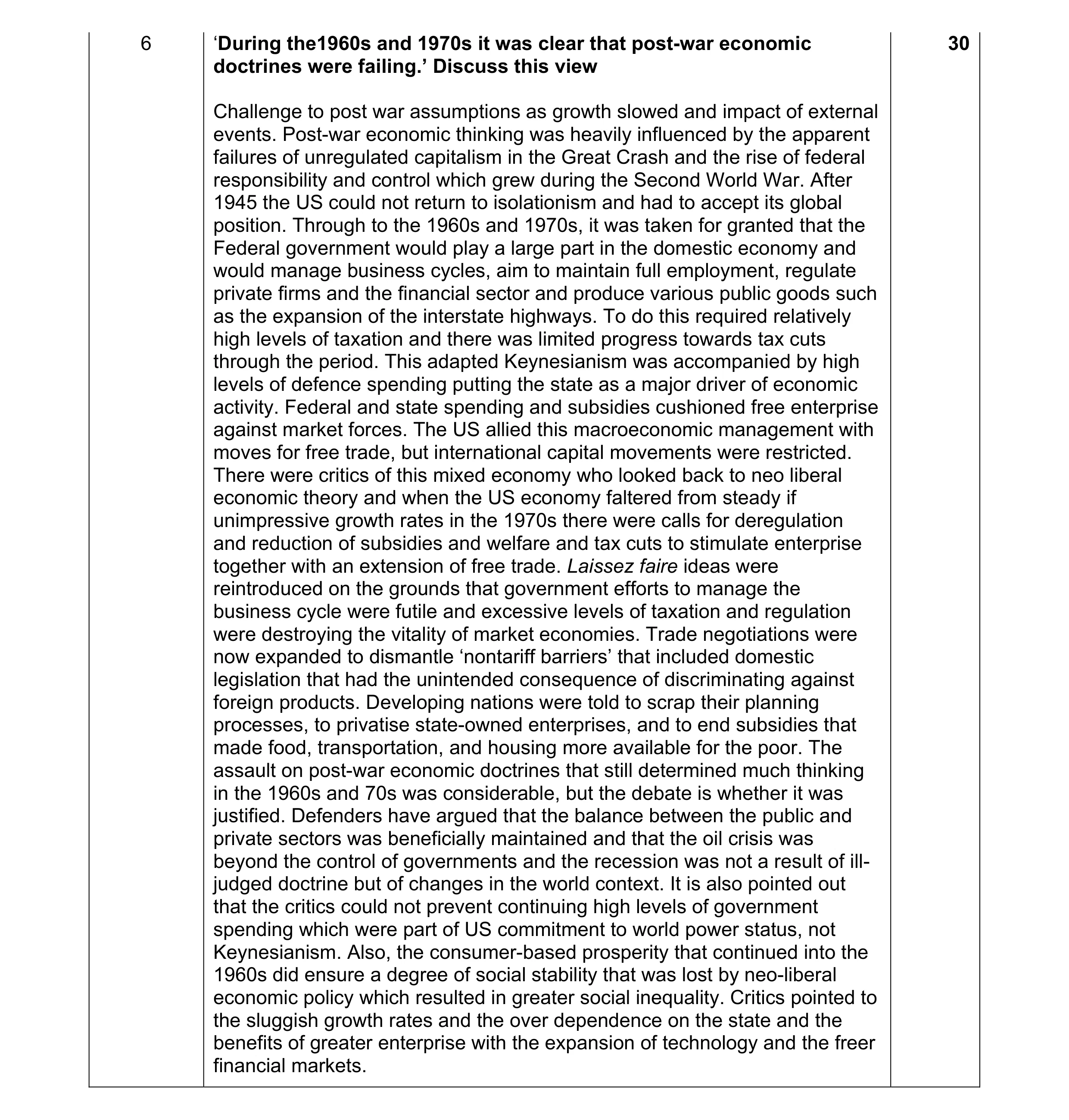 30
30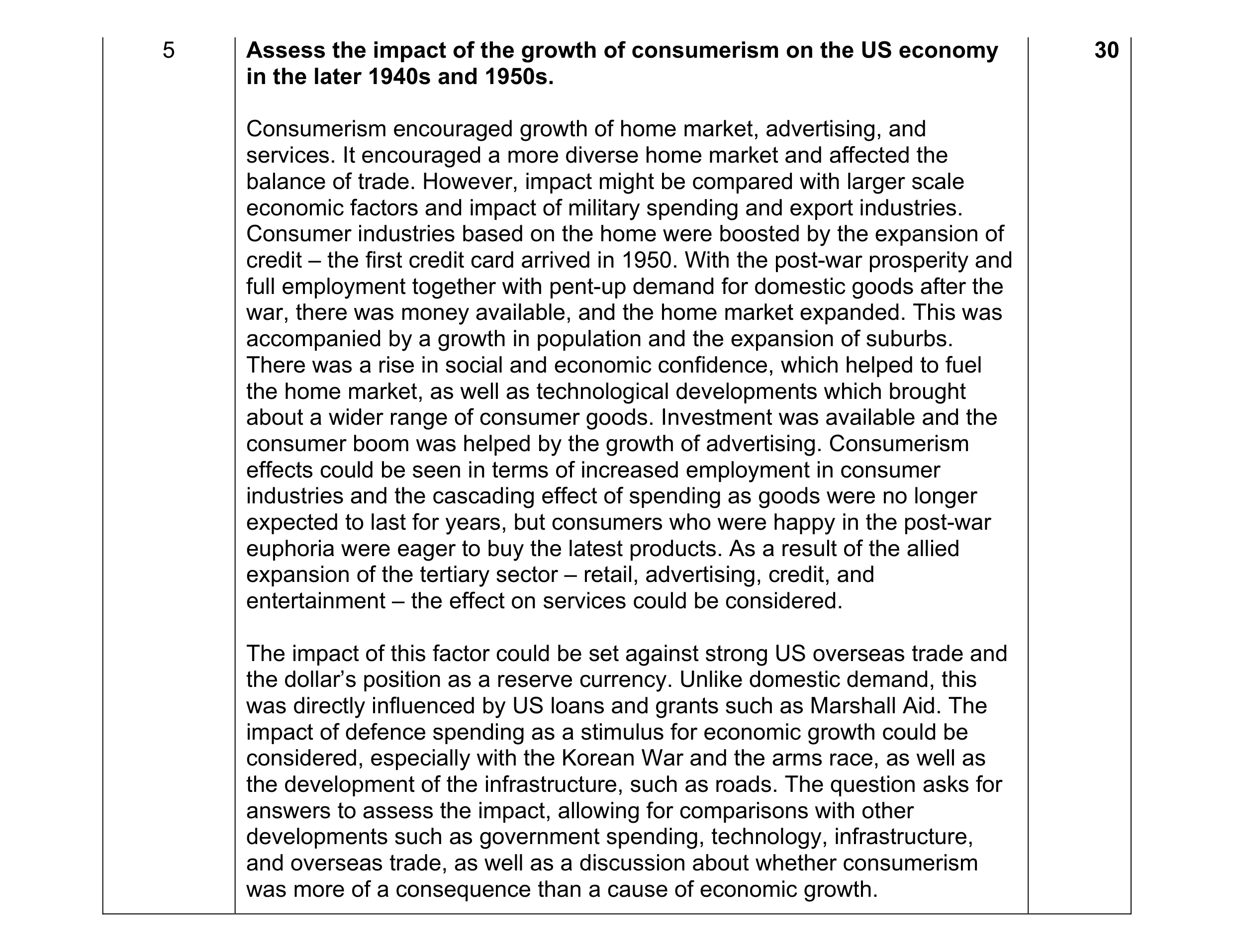 30
30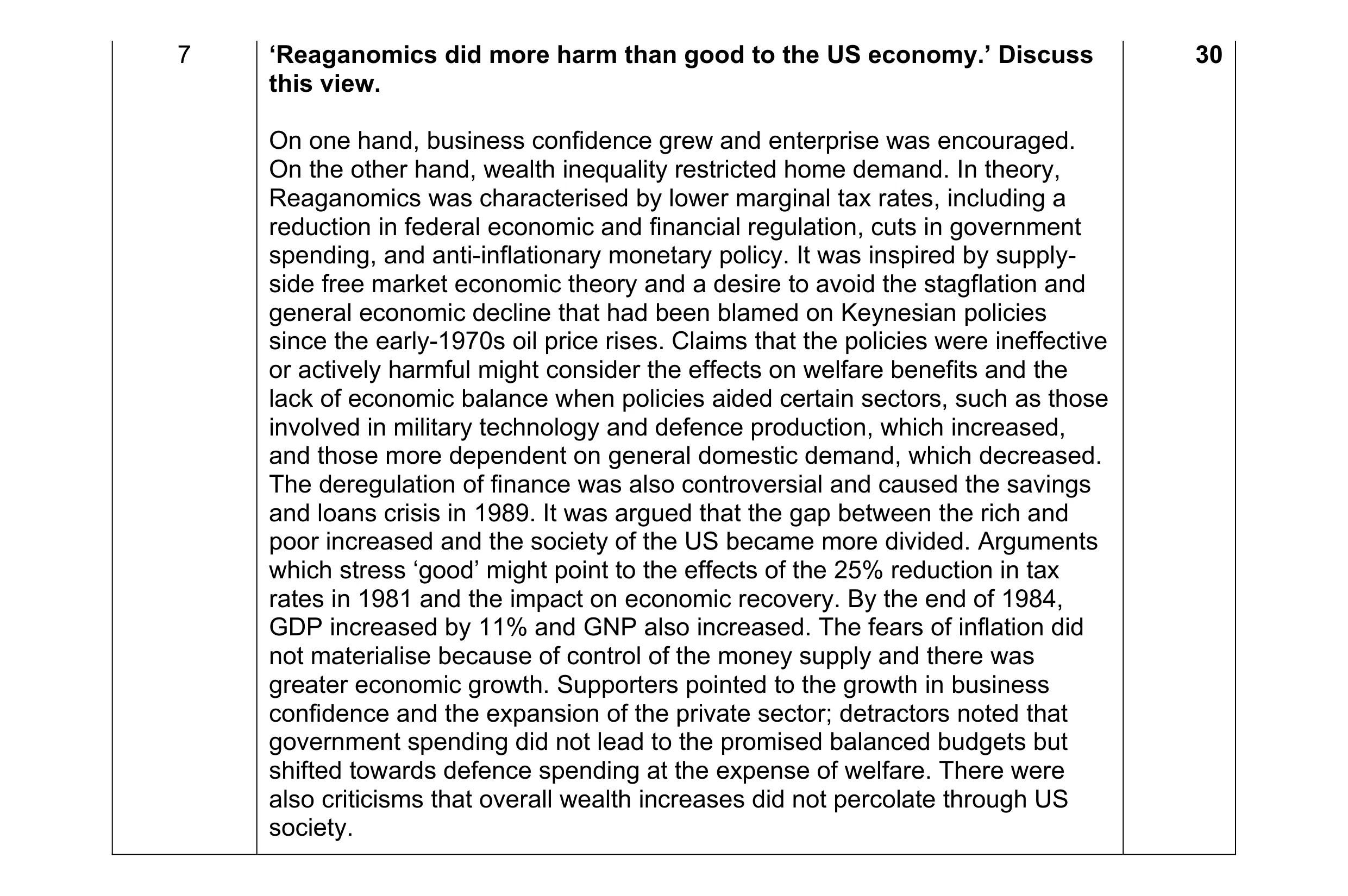 30
30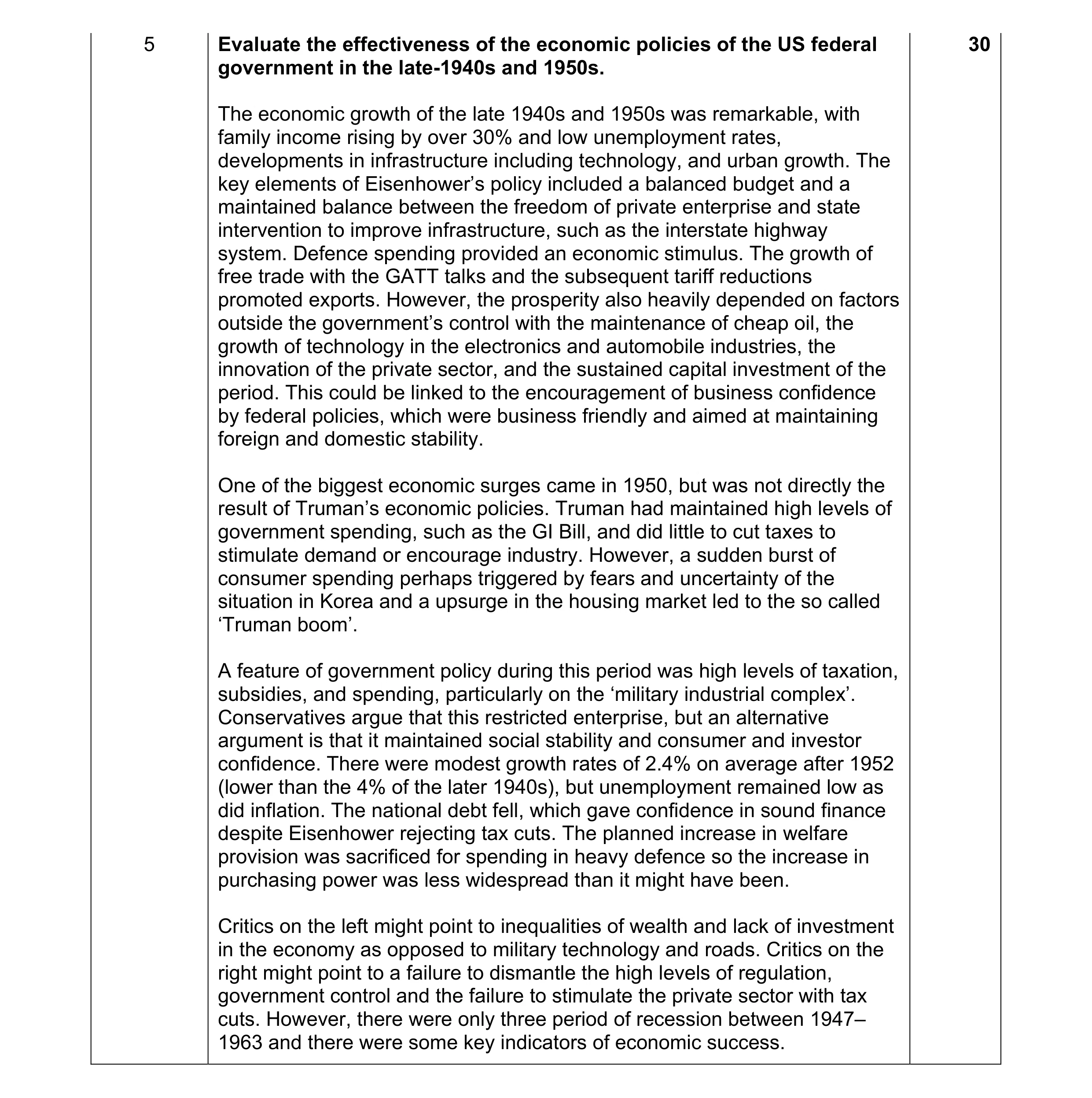 30
30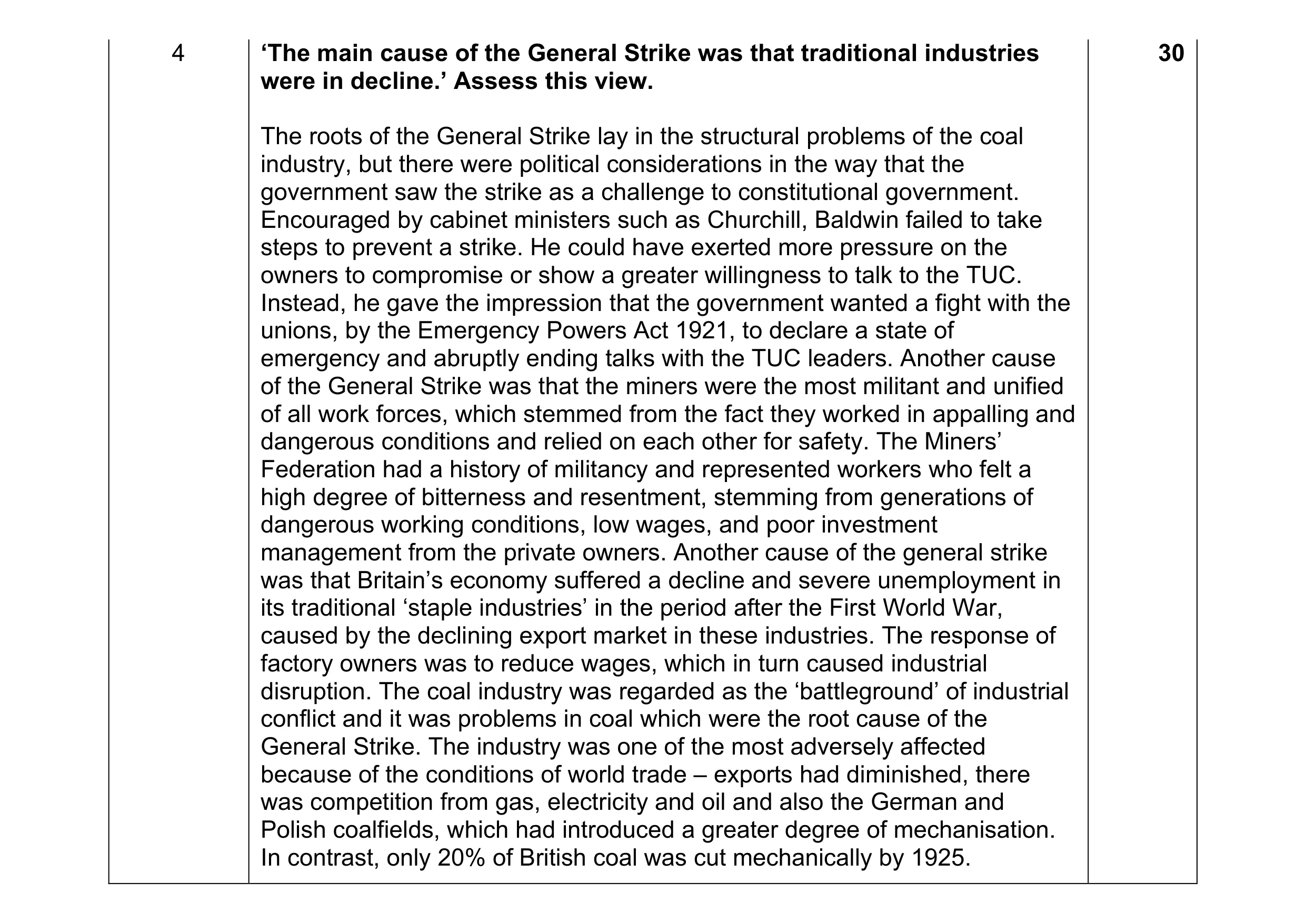 30
30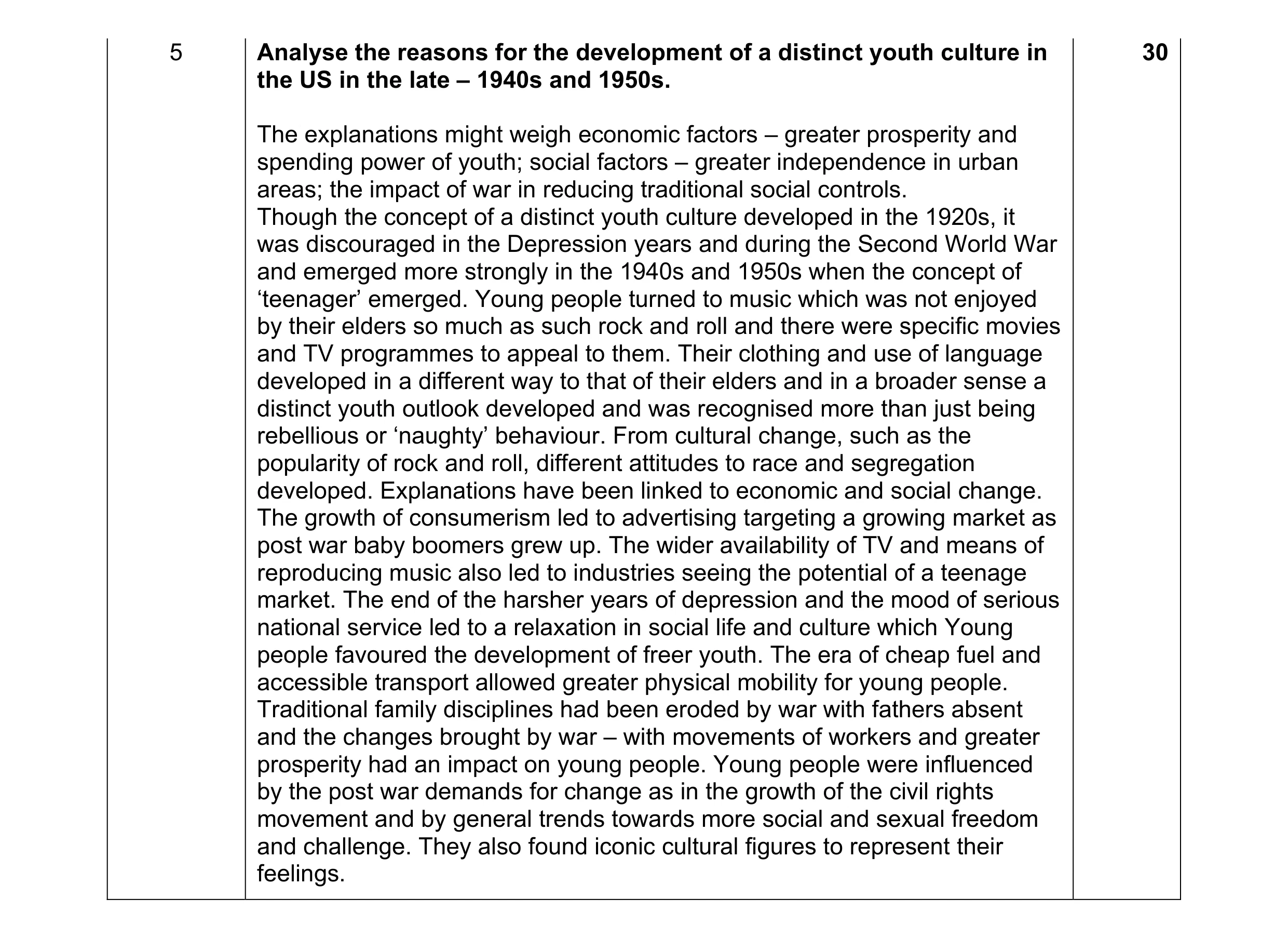 30
30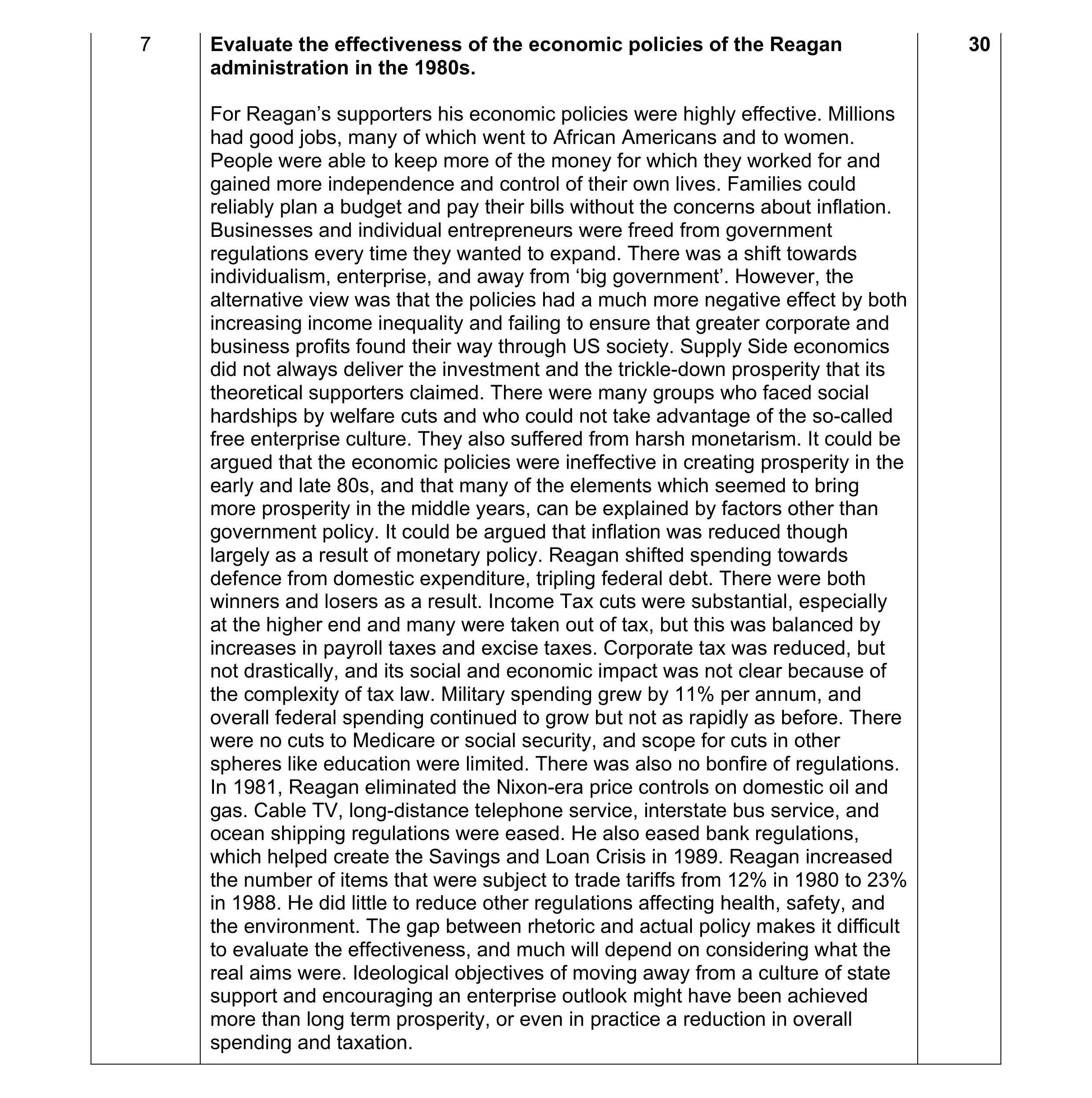 30
30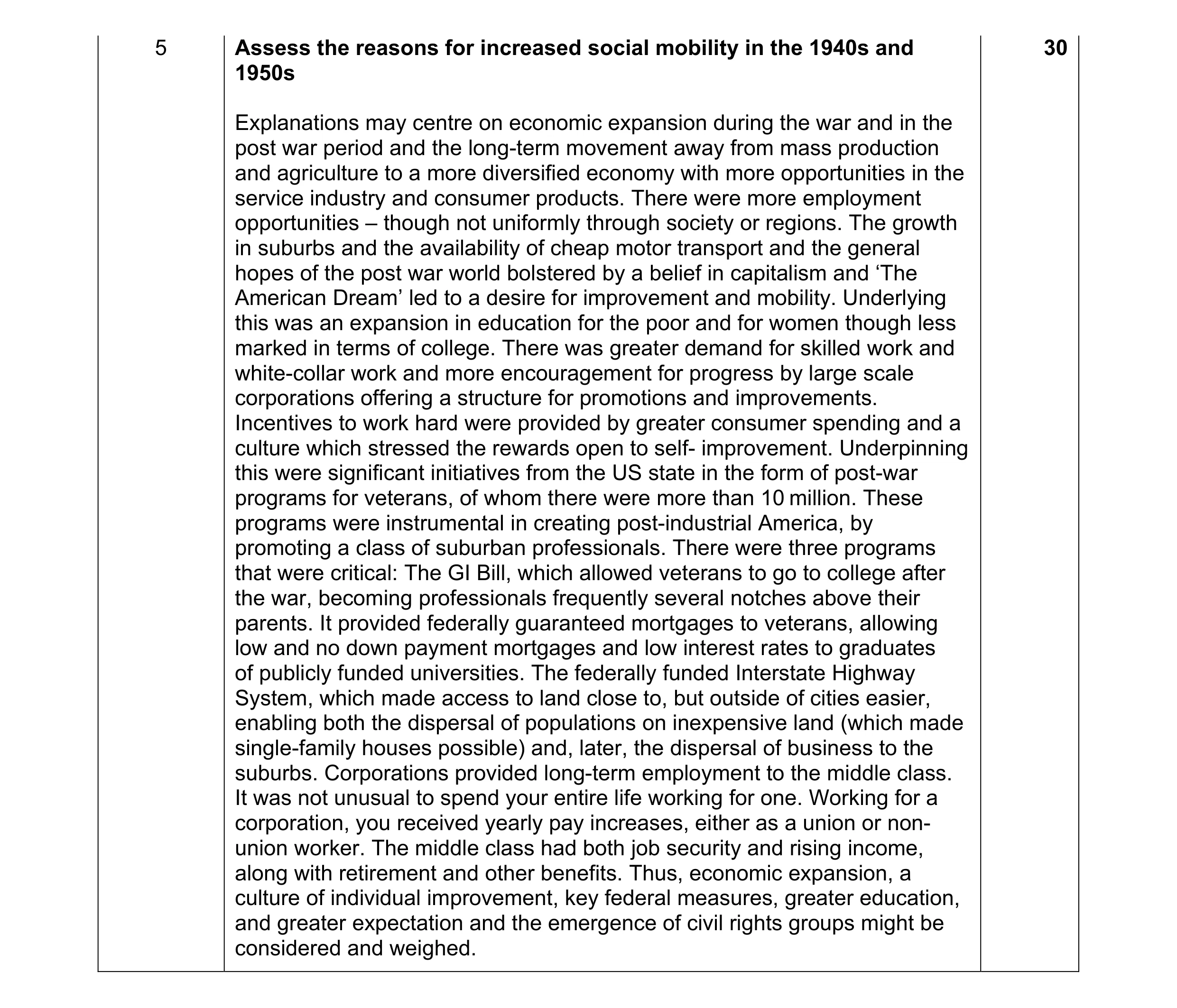 30
30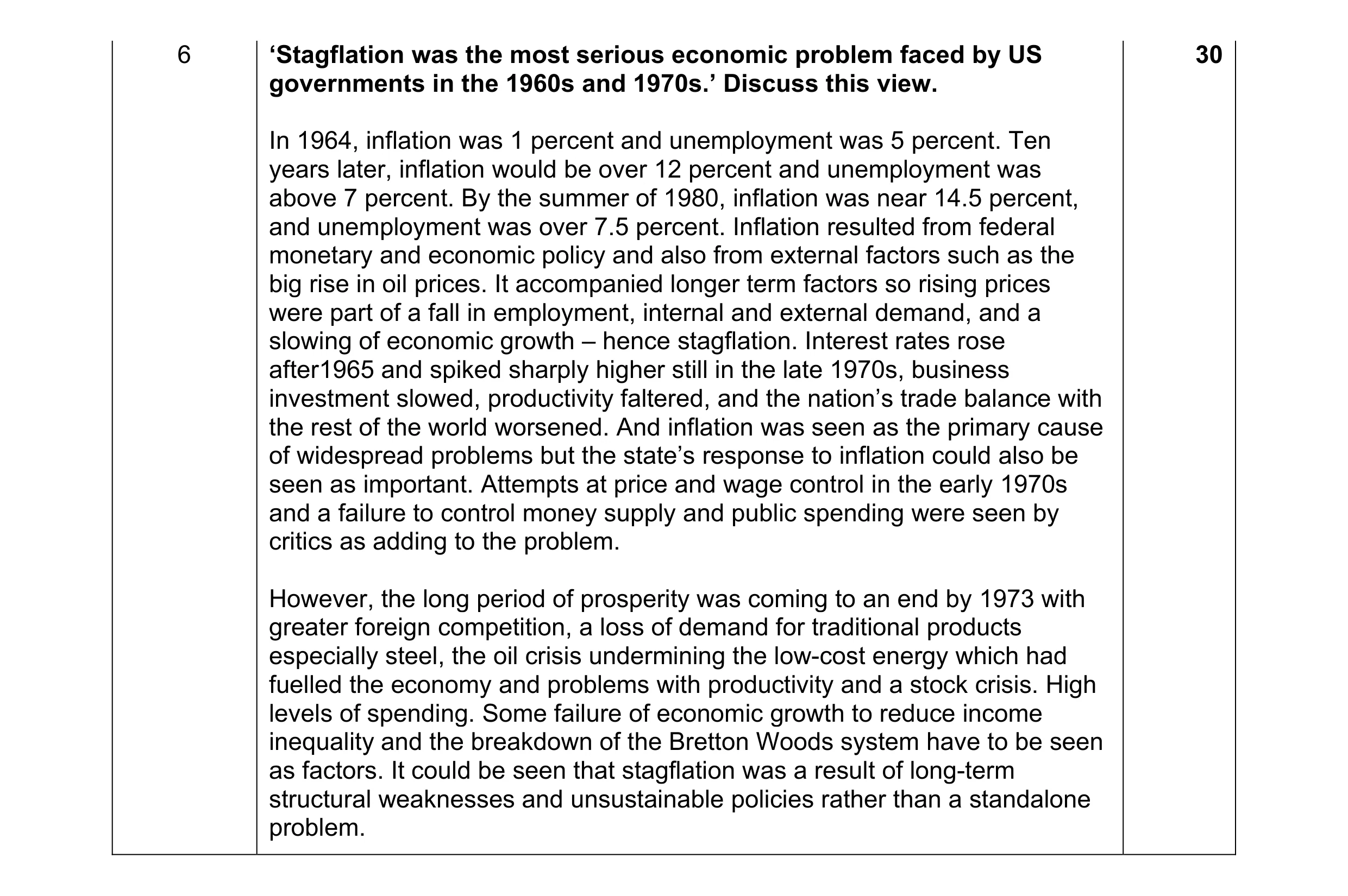 30
30 30
30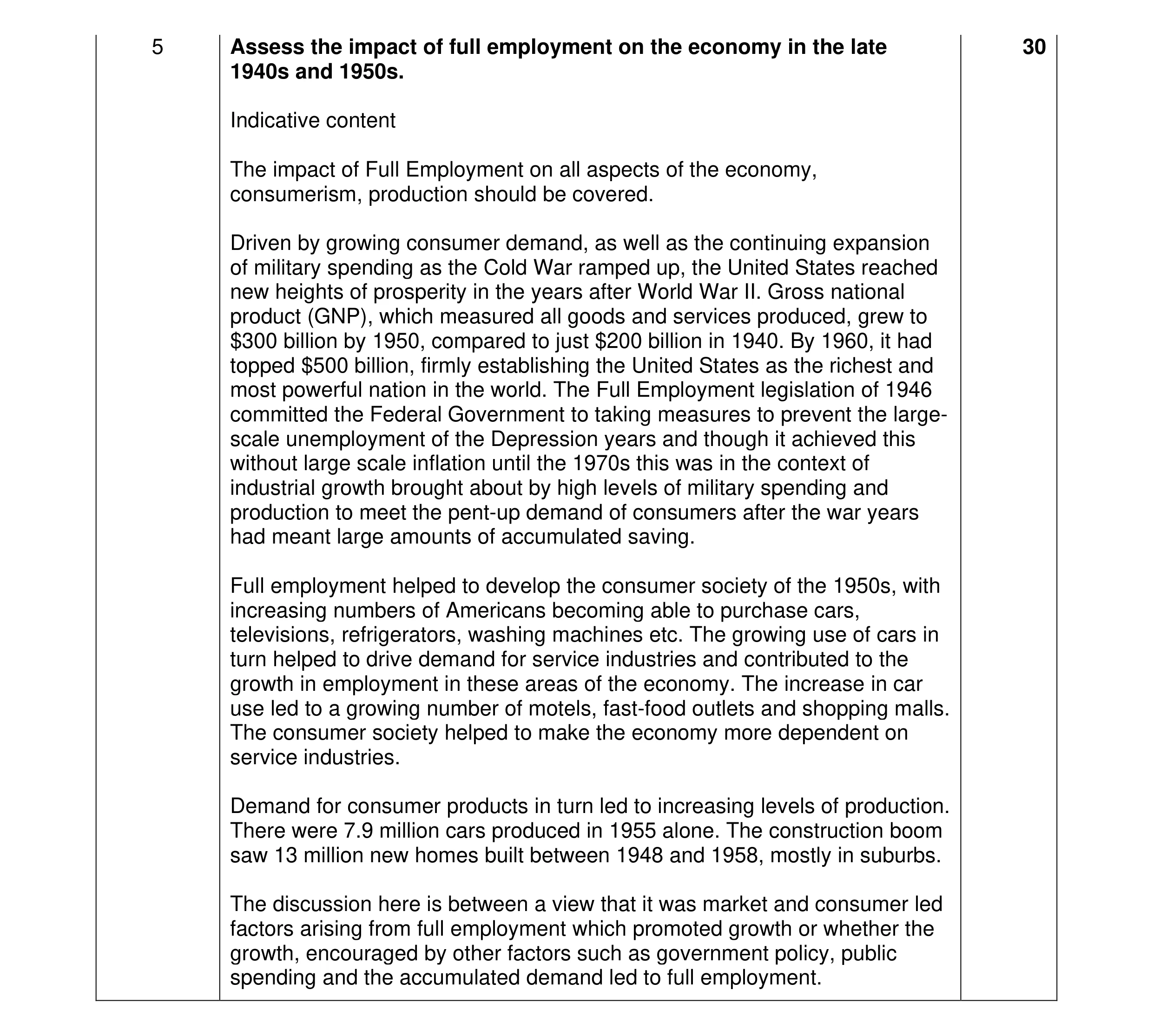 30
30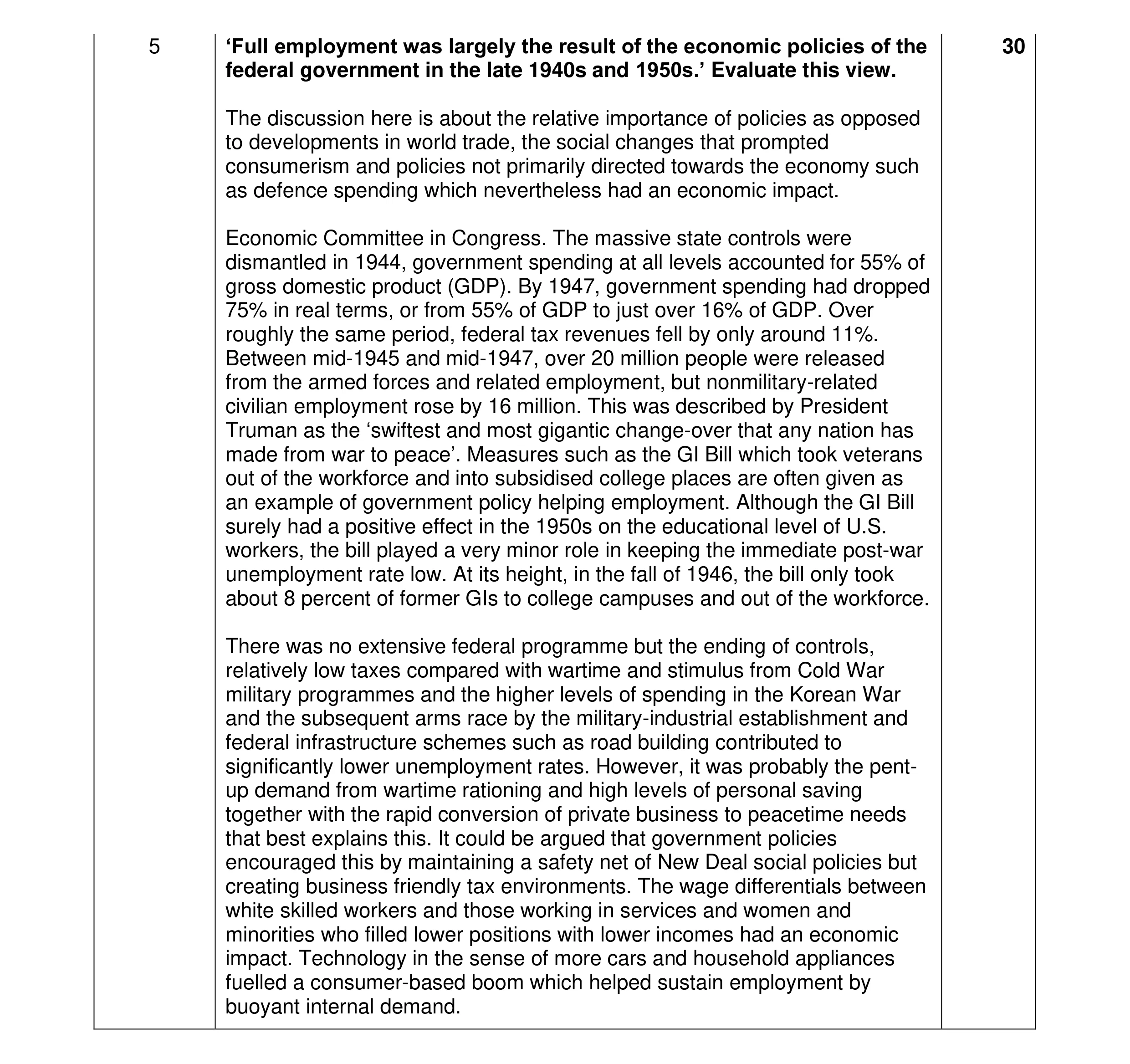 30
30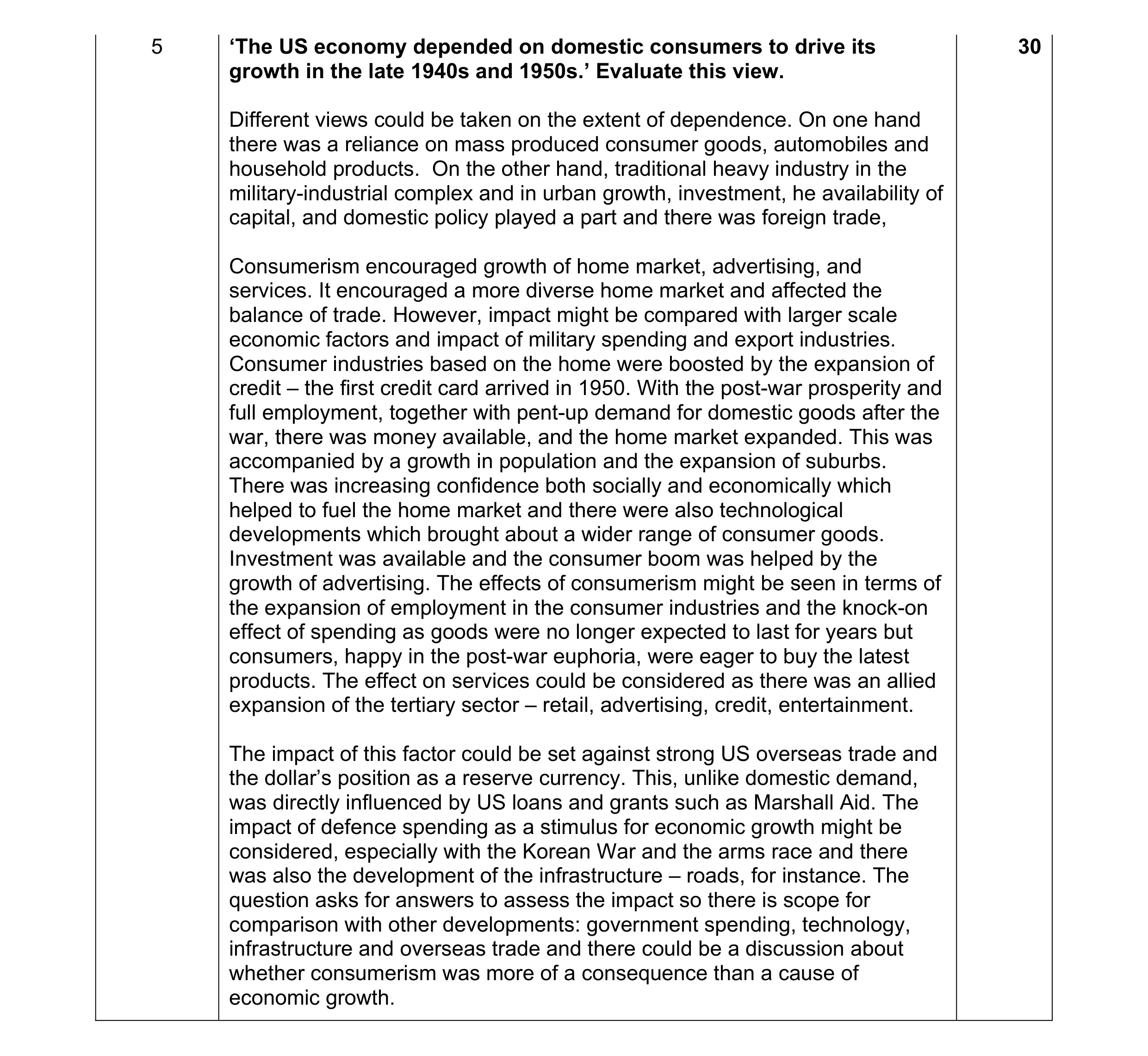 30
30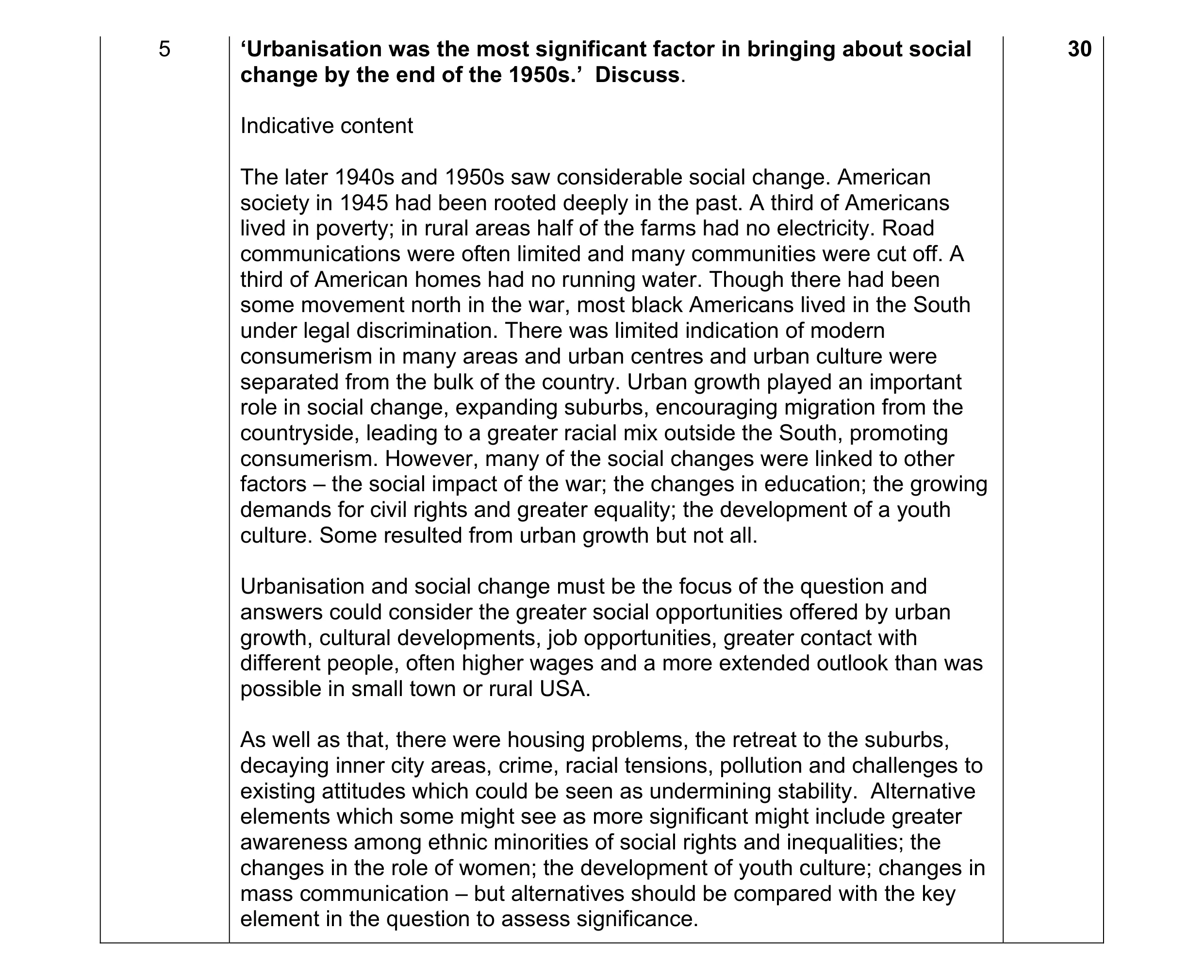 30
30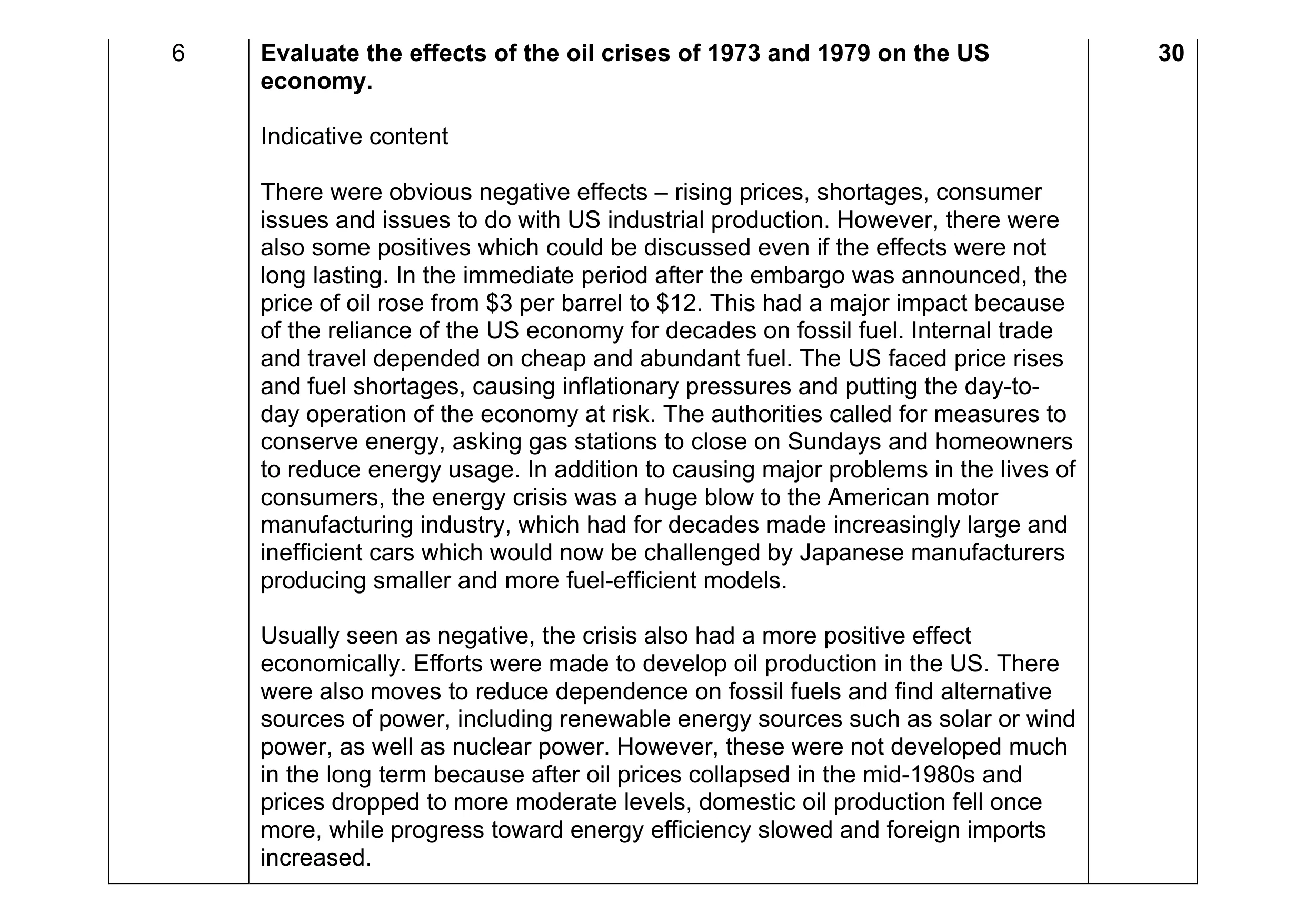 30
30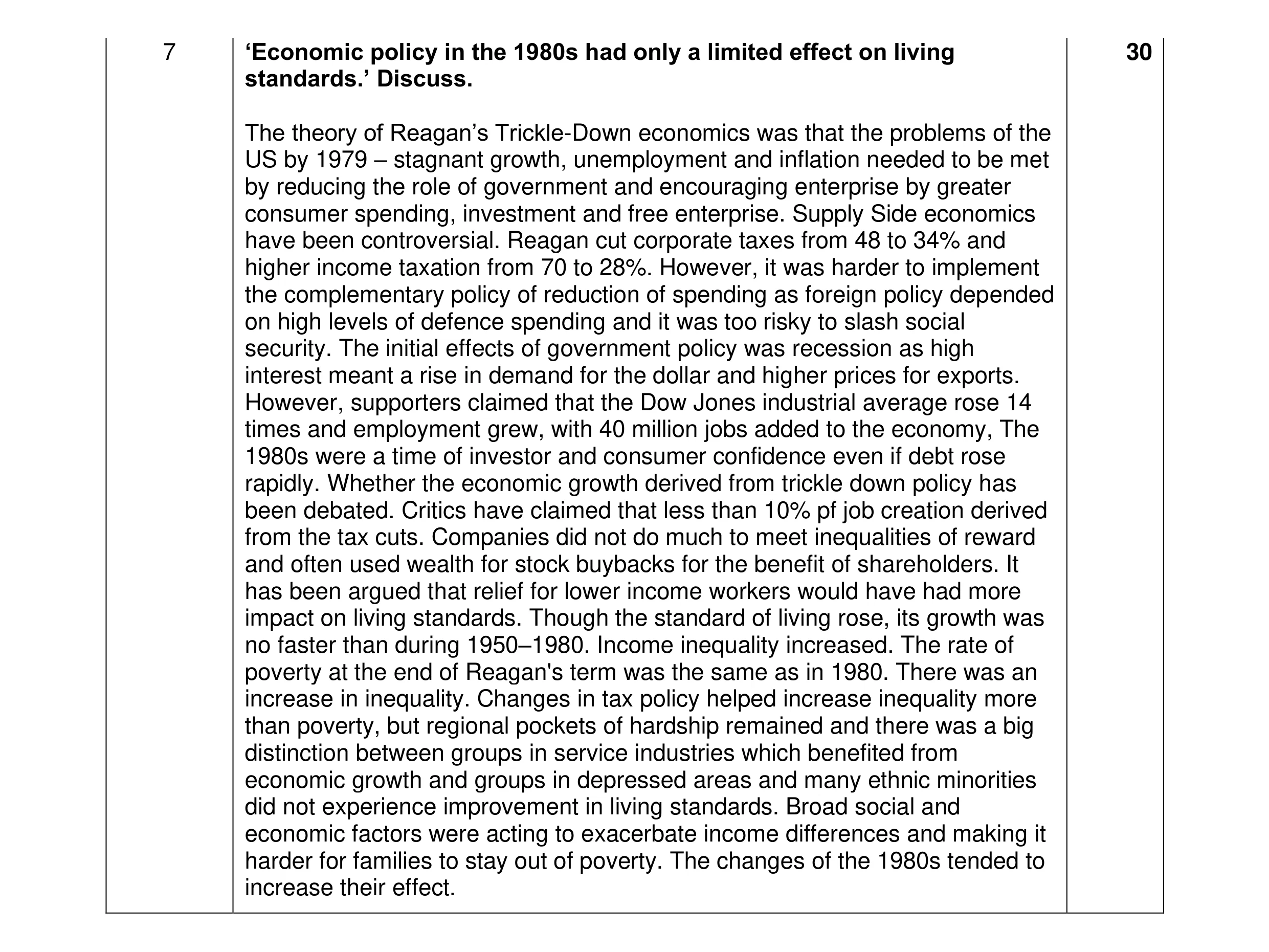 30
30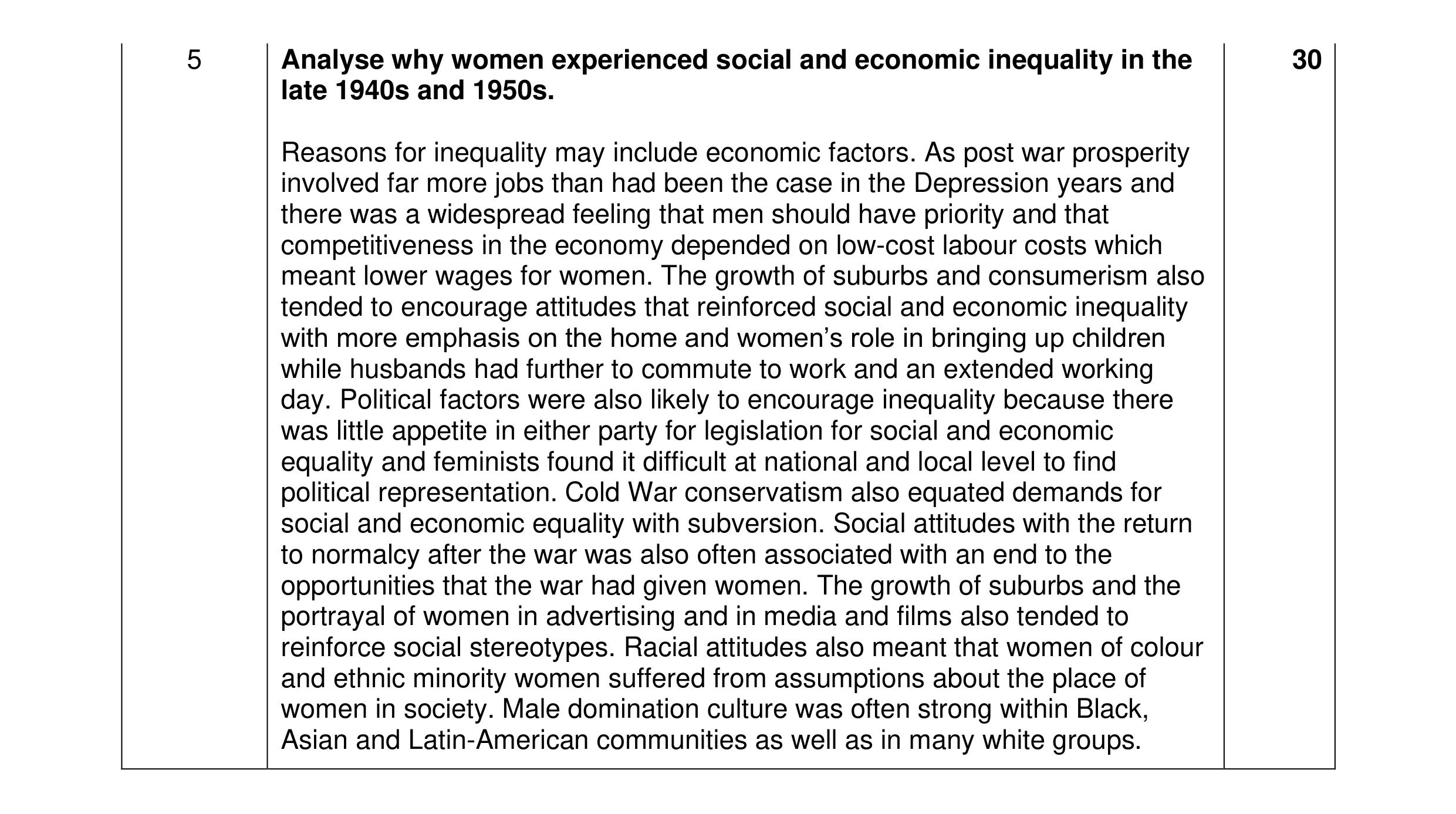 30
30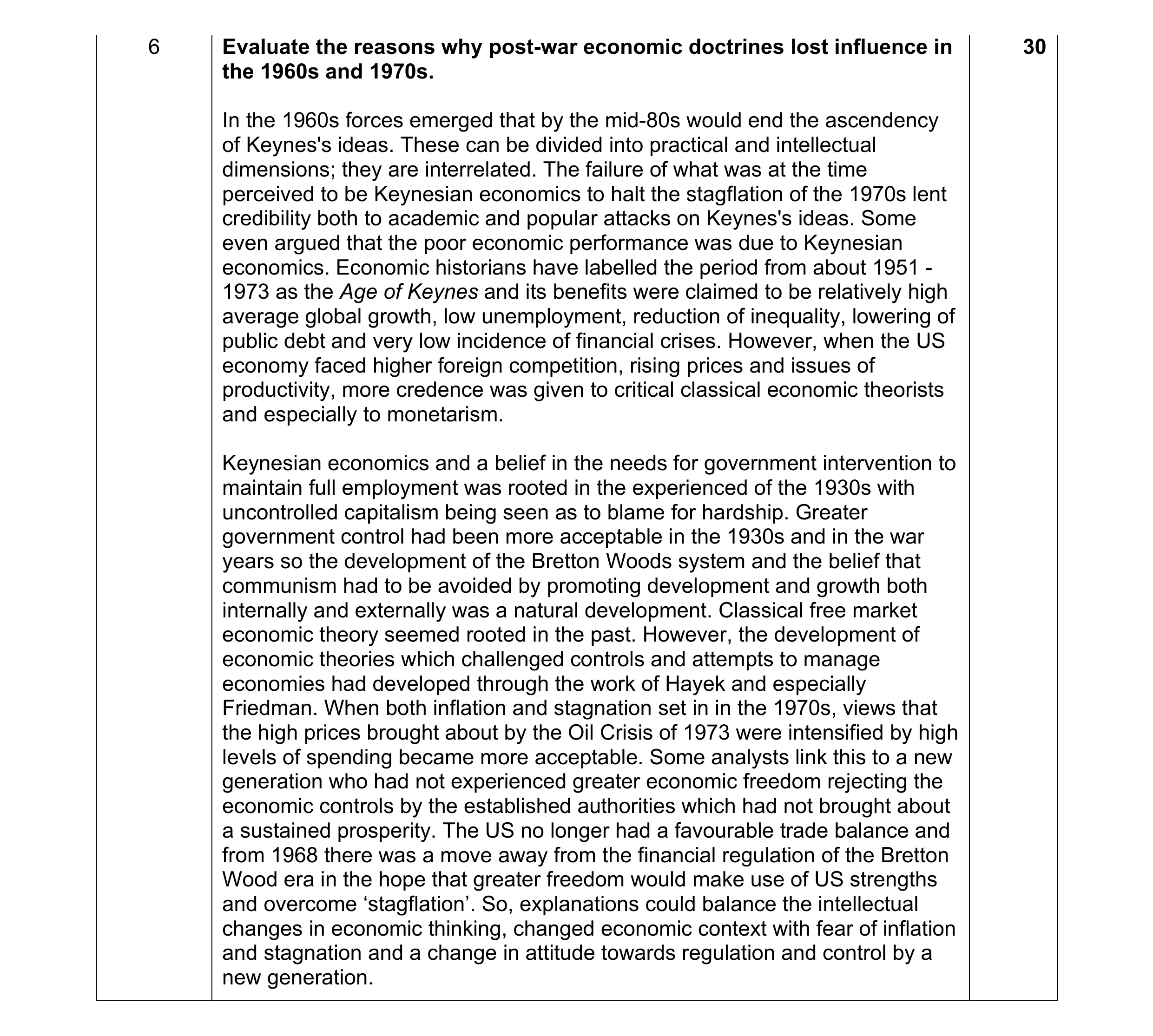 30
30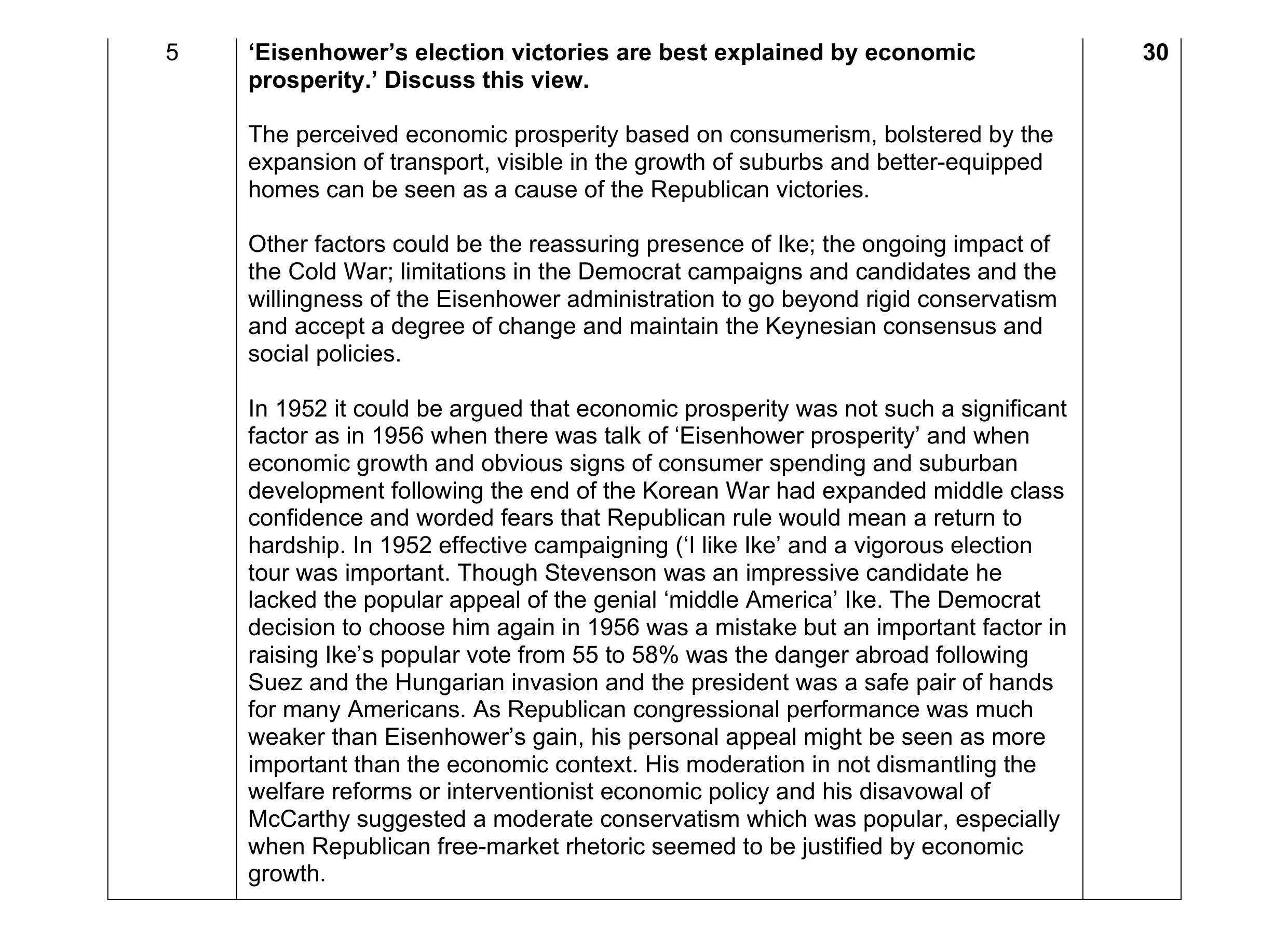 30
30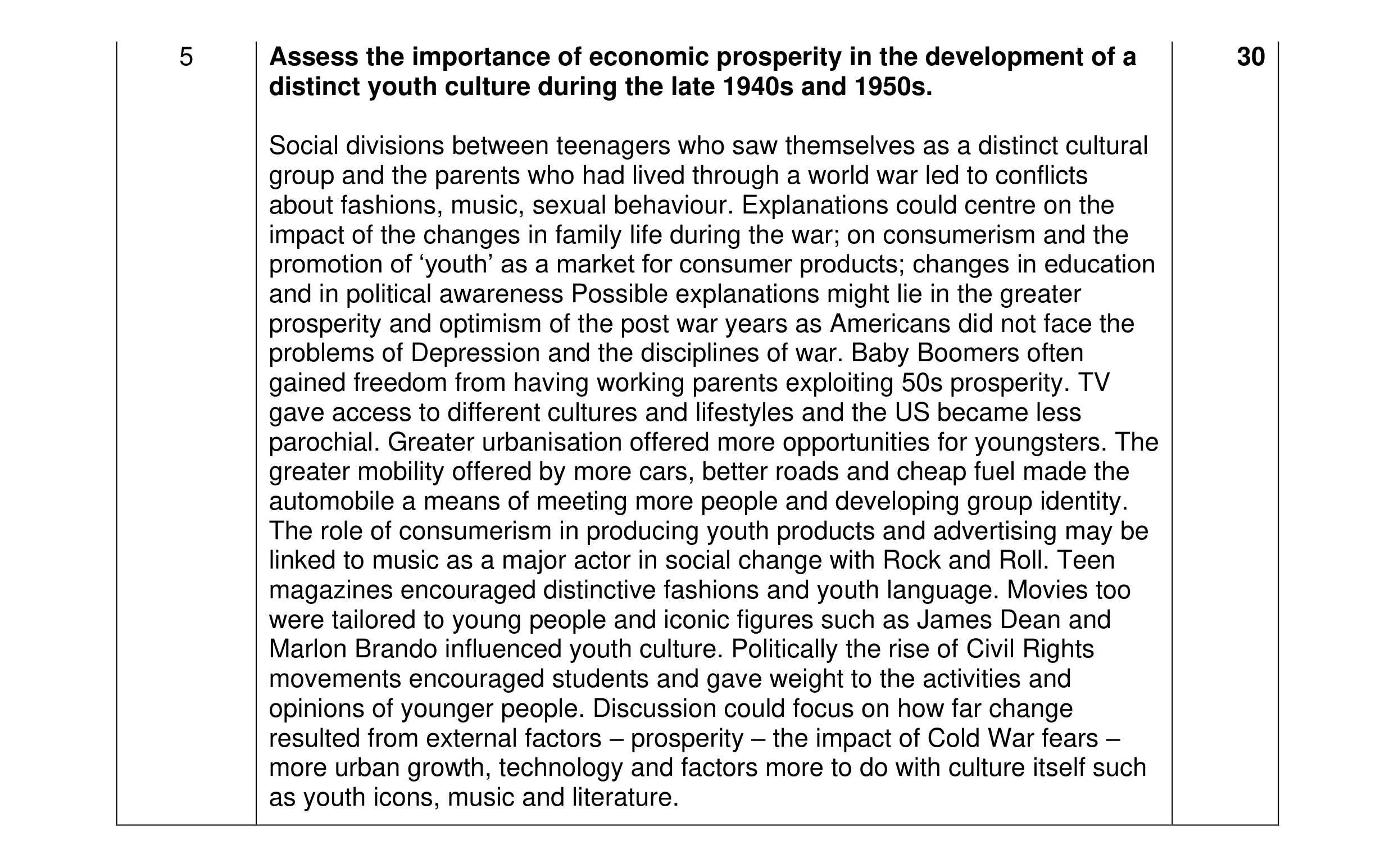 30
30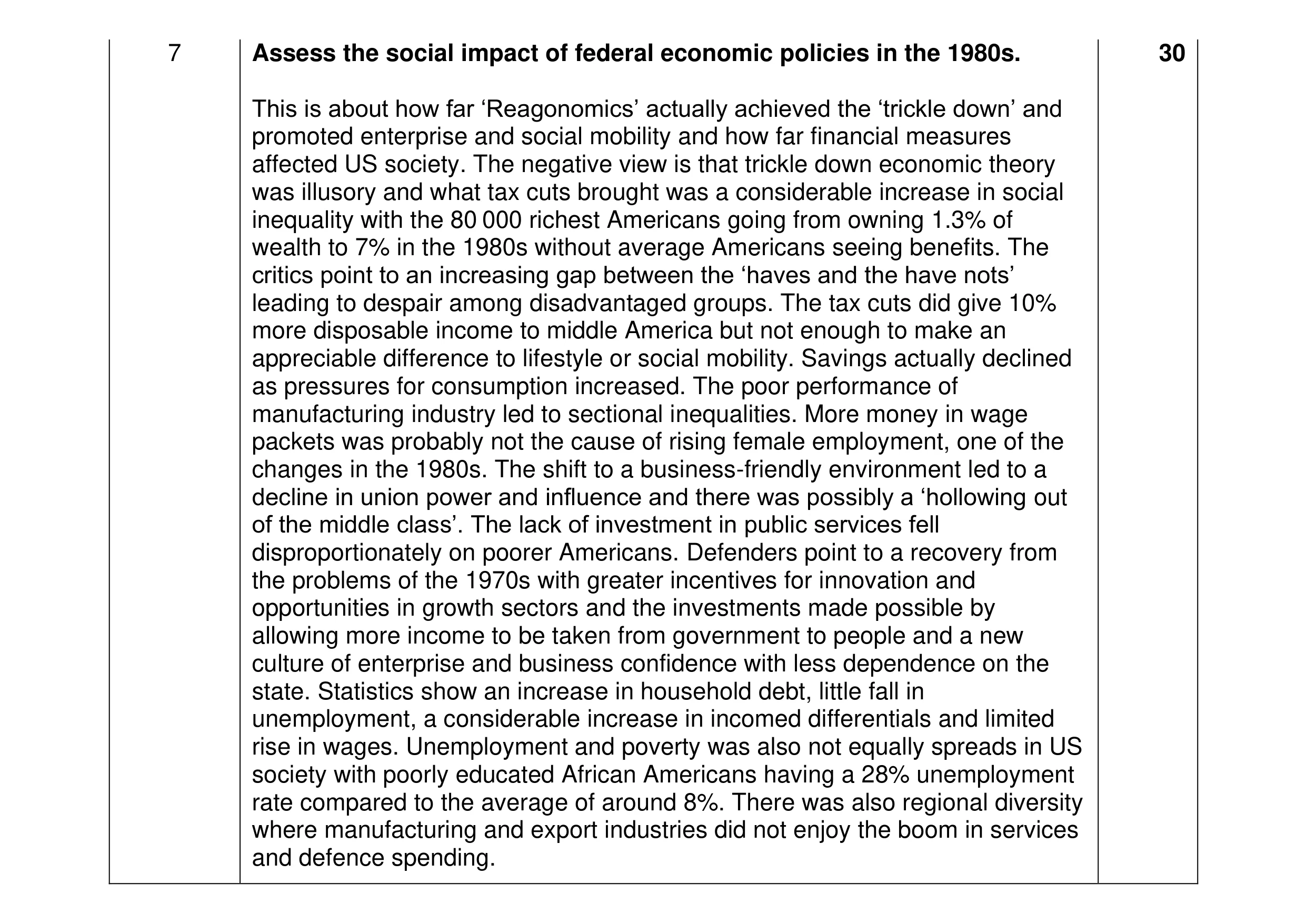 30
30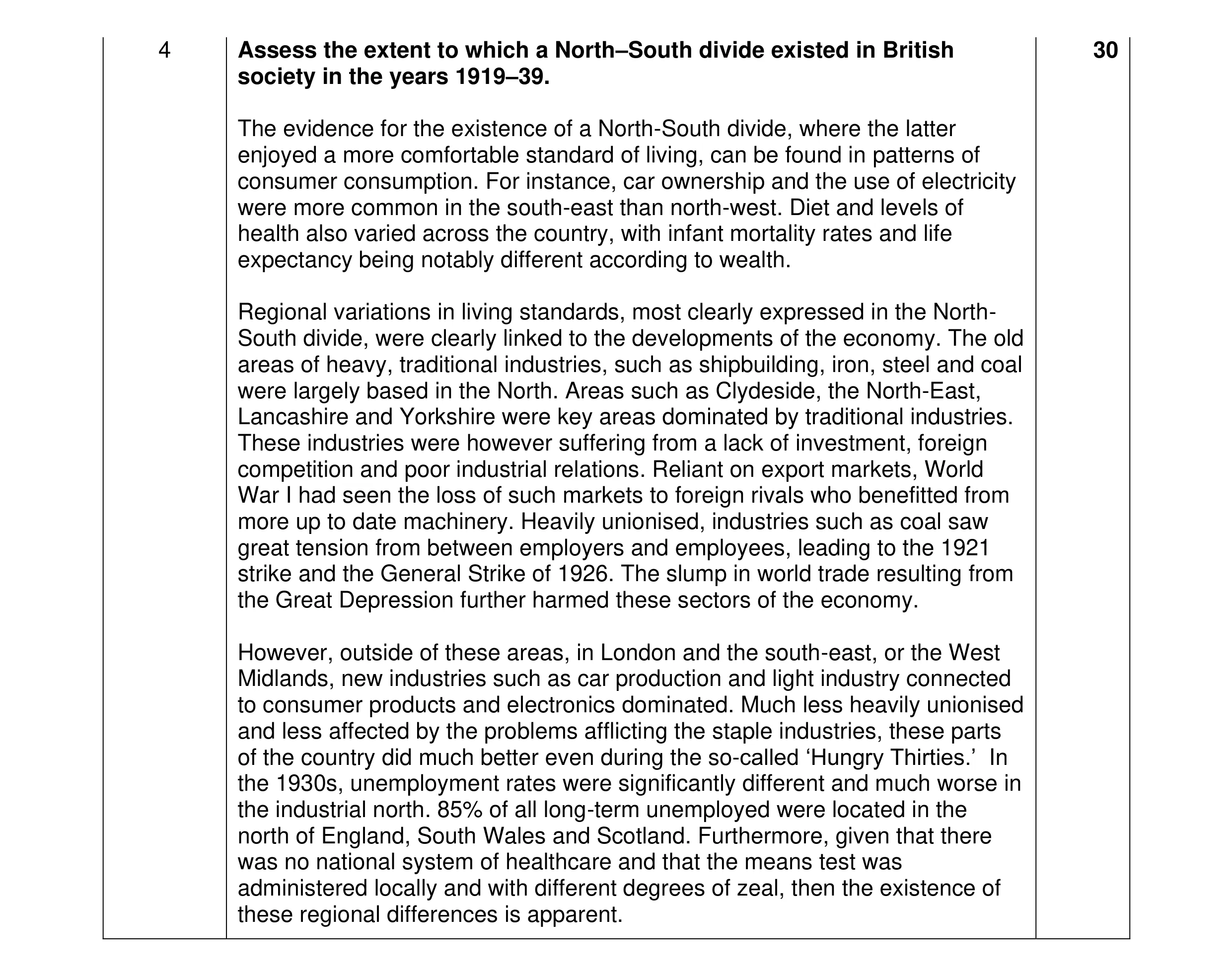 30
30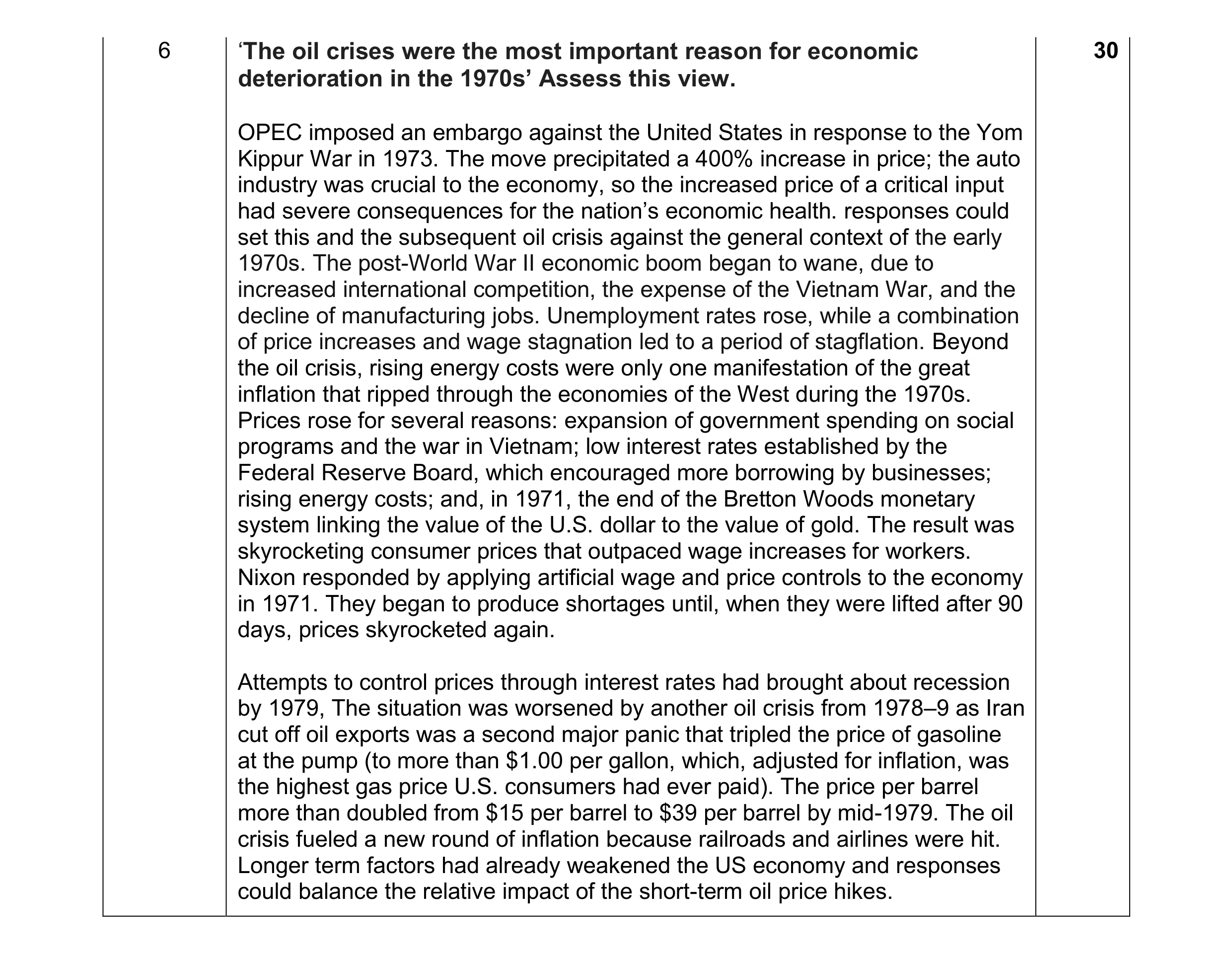 30
30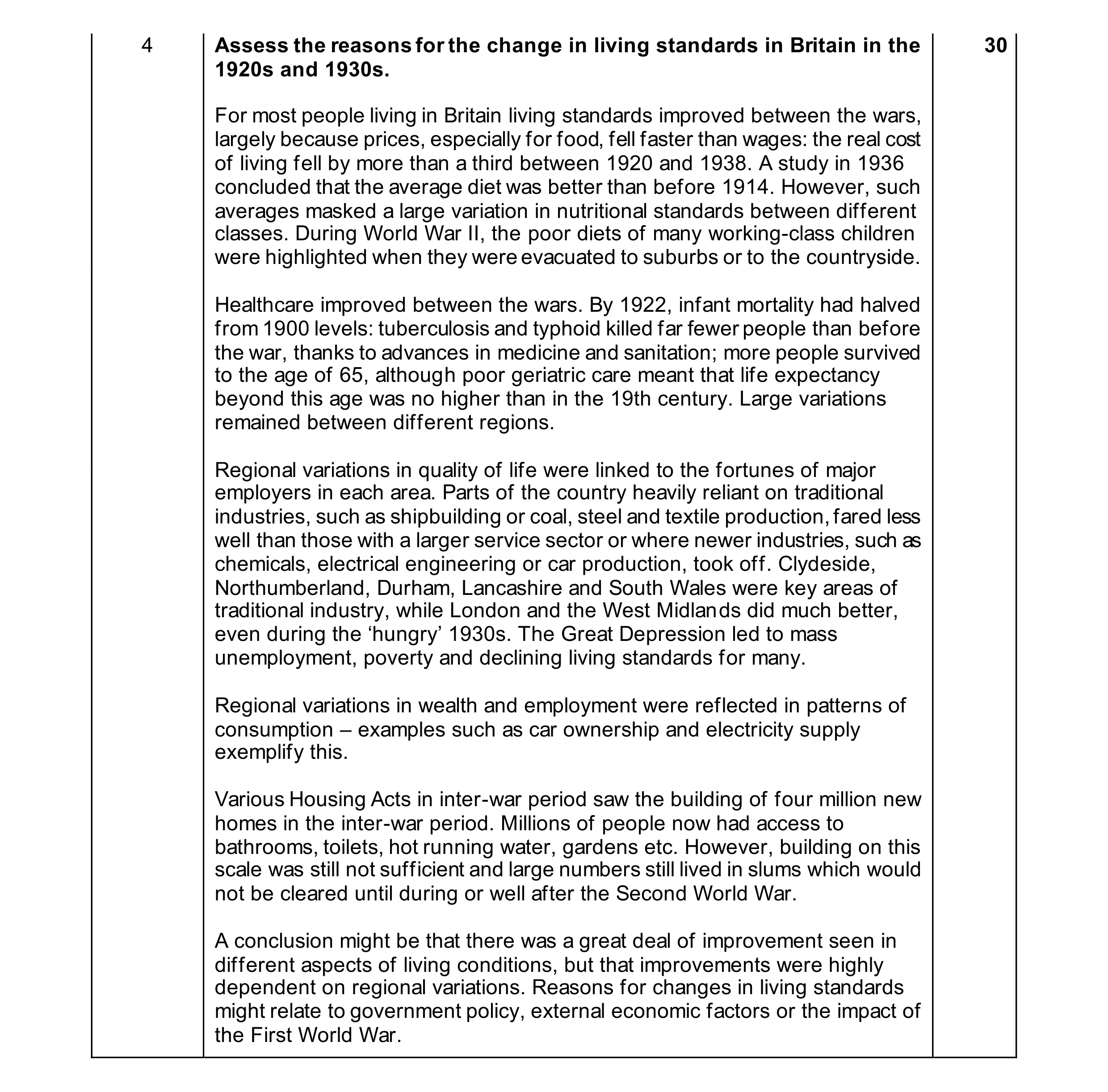 30
30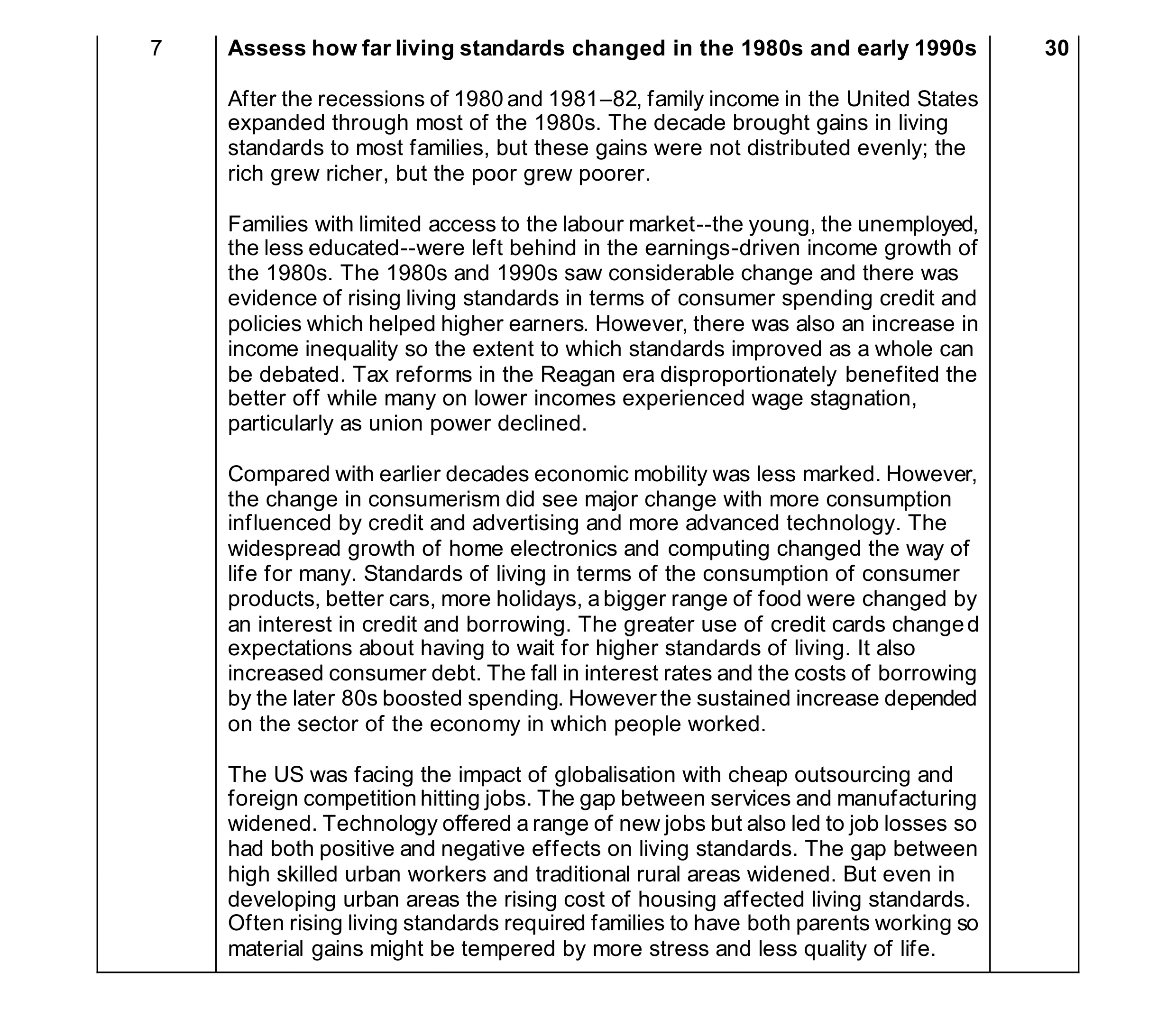 30
30