Questions as text
Q1 · Outline one type of job absenteeism 9990/32 May/June 2018
7 (a) Outline one type of job absenteeism. [2] (b) Describe the Minnesota satisfaction questionnaire (Weiss et al., 1967). [4] (c) Explain one similarity and one difference between the Minnesota satisfaction questionnaire and one other questionnaire used to measure job satisfaction. [6]
12 marks
Mark scheme: 7(a) Outline one type of job absenteeism. 2 Award 1 mark for a basic outline of the term/concept. Award 2 marks for a detailed outline of the term/concept. For example: Career enhancing absences – to further task and career related goals (e.g. interviews at other companies, making links with other companies or training for a qualification to enhance career). Medical – where there is a medical issue that the employee needs to take time off for such as an illness, doctor’s or hospital appointment. Normative absences – Pattern of absences would occur rather than being random. Likely to be using personal days. Calculative absences – taking as many excused and non-excused absences as they can ‘get away with’ (without modifying the implicit social contract between employee and employer) Also allow the following – Voluntary absenteeism refers to instances where the worker has chosen to take the time off – an extra day at the weekend or an appointment or interview. OR Involuntary absenteeism refers to when the worker does not chose to be absent but something unexpected occurs such as illness, family demands, etc. Other appropriate responses should also be credited. 7(b) Describe the Minnesota satisfaction questionnaire (Weiss et al., 1967). 4 Award 1–2 marks for a basic answer with some understanding of the topic area. Award 3–4 marks for a detailed answer with clear understanding of the topic area. For example: There is both a short and a long version of this questionnaire. The long version has 100 items and the short version has 20 and both measure job satisfaction. Areas covered include supervisors, security, independence, task variety, responsibility, promotion, etc. The worker has to rate how much he or she agrees with the statement on a 5-point scale from ‘very dissatisfied’ to ‘very satisfied’ (later version goes from not satisfied to extremely satisfied). An example of one of the statements is ‘This is how satisfied I feel with the responsibility of my job.’ Other appropriate responses should also be credited. 7(c) Explain one similarity and one difference between the Minnesota 6 satisfaction questionnaire and one other questionnaire used to measure job satisfaction. Likely similarities and differences will be to other questionnaires including the job descriptive index and the quality of working life (QWL) questionnaire. Similarity/differences could include: • Types of data collected by each questionnaire (qualitative vs quantitative data and/or likert scales vs yes or no responses) JDI is both qualitative and quantitative and Minnesota is just quanti with likert scales. QWL is quantitative as it also uses 1–5 scale • Ethics of questionnaire • Social desirability • Cultural bias • Appropriateness of questionnaire • Ease of use of questionnaire • Number of dimensions – Minnesota = 20, QWL = 8, JDI = 5 Any other appropriate similarity and/or difference. Mark according to the levels of response criteria below: Level 3 (5–6 marks) • Candidates will show a clear understanding of the question and will include one similarity and one difference. • Candidates will provide a good explanation with clear detail. Level 2 (3–4 marks) • Candidates will show an understanding of the question and will include one appropriate similarity in detail or one appropriate difference in detail. OR one similarity and one difference in less detail. • Candidates will provide a good explanation. Level 1 (1–2 marks) • Candidates will show a basic understanding of the question and will attempt a similarity and/or difference. This could include both but just as an attempt. • Candidates will provide a limited explanation. Level 0 (0 marks) No response worthy of credit. Other appropriate responses should also be credited.
This question in 9990/32 May/June 2018
Q2 · Explain what is meant by ‘groupthink’ 9990/31 Oct/Nov 2018
7 (a) Explain what is meant by ‘groupthink’. [2] (b) Describe strategies to avoid groupthink. [4] (c) Discuss the applications of these strategies to everyday life in organisations. [6]
12 marks
Mark scheme: 7(a) Explain what is meant by ‘groupthink’. 2 Award 1 mark for a basic explanation of the term/concept. Award 2 marks for a detailed explanation of the term/concept. For example: The practice of thinking or making decisions as a group, resulting typically in unchallenged, poor-quality decision-making. Frequently occurs with long established groups. Other appropriate responses should also be credited. 7(b) Describe strategies to avoid ‘groupthink’. 4 Award 1–2 marks for a basic answer with some understanding of the topic area. Award 3–4 marks for a detailed answer with clear understanding of the topic area. For example: Could come up with strategies linked to Janis’ 8 symptoms of groupthink. E.g. Illusions of invulnerability – Have one member of the team appointed as the dissenter in a meeting whose job it is to point out any failings of the group or get an outside observer in to do the same thing. Other ideas could include: reframe disagreement as a necessary, helpful characteristic of great teams. Foster open discussion and encourage your team members to always contribute their thoughts, ideas, and opinions. Establish group norms that indicate conflict and speaking one’s mind is expected. Avoid quickly criticising other ideas and insulting other team members. Avoid being too directive and do not come off as close-minded. Encourage the group to get to the heart of the problem and make the best decision possible. Confront others with an encouraging spirit and eye toward effective collaboration. Contribute your thoughts and ideas to your group In addition • Promote open enquiry. • Admit shortcomings. • Hold second-chance meetings. Candidates must describe at least two strategies to achieve full marks. They could describe two in some detail or three in less depth (or even four) Other appropriate responses should also be credited. 7(c) Discuss the applications of these strategies to everyday life in 6 organisations. Discussion points could include • Cultural bias – some of the strategies might work better in individualistic rather than collectivist cultures. • Difficulties in implementing – who will make/suggest these changes • Training may be required • It should bring about better decision making and therefore increased profits for the company (or any other benefit to the company – more motivated workers, etc. Mark according to the levels of response criteria below: Level 3 (5–6 marks) • Candidates will show a clear understanding of the question and will discuss at least two points regarding application. • Candidates will provide a good explanation with clear detail. Level 2 (3–4 marks) • Candidates will show an understanding of the question and will discuss one point about application in detail or two or more in less detail. • Candidates will provide a good explanation. Level 1 (1–2 marks) • Candidates will show a basic understanding of the question and will attempt a discussion. • Candidates will provide a limited explanation. Level 0 (0 marks) • No response worthy of credit. Other appropriate responses should also be credited.
This question in 9990/31 Oct/Nov 2018
Q3 · Explain what is meant by a ‘continental rota’ in shiftwork 9990/32 Oct/Nov 2020
7 (a) Explain what is meant by a ‘continental rota’ in shiftwork. [2] (b) Outline two types of bullying at work from the study by Einarsen (1999). [4] (c) Explain two weaknesses of the study by Einarsen (1999). [6]
12 marks
Mark scheme: 7(a) Explain what is meant by a ‘continental rota’ in shiftwork. Award 1 mark for a basic explanation of the term/concept Award 2 marks for a detailed explanation of the term/concept For example: A type of rapid rotation shift which is more complex than metropolitan rotas (1). It involves: Week 1 – 2 day shift, 3 twilight (swing) shifts, 2 night shifts; Week 2 – 2 days off, 3 day shifts, 2 twilight shifts; Week 3 – 2 night shifts, 3 days off, 2 day shifts; Week 4 – 2 twilight shifts, 3 night shifts, 2 days off (2); The cycle then repeats. Other appropriate responses should also be credited. 7(b) Outline two types of bullying at work from the study by Einarsen (1999). For each type: Award 1 mark for a basic answer (e.g. just naming) Award 2 marks for a detailed answer For example: • Work related bulling (e.g. changing work tasks or making tasks difficult to perform); • Social isolation; • Personal attacks or attacks on private life (e.g. by ridicule, insulting remarks or gossip); • Verbal threats (e.g. criticised, yelled at or humiliated in public); • Physical violence (or threats of such violence); Other appropriate responses should also be credited. 4 Question Answer Marks 7(c) Explain two weaknesses of the study by Einarsen (1999). Likely weaknesses include: • Reliance on self-reports, which are prone to demand characteristics; • Although comprehensive, it is not offering solutions to the problem of workplace bullying; • Lack of qualitative data reported from the studies; • Possible ethical issues in the gathering of the data in the original studies (participant distress); • Review article so data is second hand; Mark according to the levels of response criteria below: Level 3 (5–6 marks) • Candidates will show a clear understanding of the question and will discuss two weaknesses; • Candidates will provide a good explanation with clear detail; Level 2 (3–4 marks) • Candidates will show an understanding of the question and will discuss one appropriate weakness in detail or two appropriate weaknesses in less detail; Level 1 (1–2 marks) • Candidates will show a basic understanding of the question and will attempt a discussion of a weakness; • Candidates will provide a limited explanation; Level 0 (0 marks) No response worthy of credit. Other appropriate responses should also be credited. 6
This question in 9990/32 Oct/Nov 2020
Q4 · Describe what psychologists have discovered about group decision-making in organisations 9990/32 Oct/Nov 2020
8 (a) Describe what psychologists have discovered about group decision-making in organisations. [8] (b) Evaluate what psychologists have discovered about group decision-making in organisations, including a discussion of generalisations. [10]
18 marks
Mark scheme: 8(a) Describe what psychologists have discovered about group decision-making in organisations. Decision-making including the following: • The decision-making process (Wedley and Field, 1984); • Groupthink (Janis, 1971) and strategies to avoid groupthink; • Cognitive limitations and errors (Forsyth, 2006); Decision-making process Wedley and Field (1984) look at the pre-planning stage of decision-making and the decisions taken before beginning to offer a solution. These include thinking of the type of leadership needed, whether others should be involved, how information is to be gathered, who to contact and how to generate alternatives. All of these are important things to be considered. The researchers suggest that once the decision-making process has begun it is difficult to stop and may lead to poor decisions being taken. They suggest more flexibility and this is achieved by pre-planning the decision-making process. Groupthink Groupthink is a psychological phenomenon occurring within a group of people in which the desire for harmony in the group and lack of critical evaluation results in an irrational or dysfunctional decision-making outcome. This is because the group creates a situation in which a decision happens which individuals within the group would not have made. A famous example is Bay of Pigs. There are 8 symptoms of groupthink – illusion of invulnerability (the group is strong so misses seeing the bad decisions), illusion of morality (we’re the ‘good guys’), shared negative stereotypes, collective rationalisations (members dismiss negative information against their decision rapidly), self-censorship (we don’t criticise each other), illusion of unanimity (the group believe the decision was a consensus), direct conformity pressure, and ‘mindguards’ (regulators). There are a number of ways to avoid groupthink including promotion of open enquiry, use subgroups (set the same decision-making task to subsets of the whole group), admit mistakes (so individuals will feel free to be critical), and hold second-chance meetings (allowing time for the individuals to digest the decision then revisit at a second meeting). Cognitive limitations and errors Cognitive limitations and errors can be made by groups prior to meetings, during meetings, and after meetings when groups make decisions. People need to think about ideas alone and/or as part of a group. There are 3 types of error or ‘sins’ made during group decisions – sins of commission (involving misusing information), sins of omission (involving overlooking information), and sins of imprecision (involving inappropriate heuristics). Confirmation bias can also cause errors in group thinking (seeking information that confirms rather than contradicts beliefs). Mark according to the levels of response descriptors in Table A. Other appropriate responses should also be credited. Question Answer Marks 8(b) Evaluate what psychologists have discovered about group decision-making in organisations, including a discussion of generalisations. A range of issues could be used for evaluation here. These include: • Named issue – generalisations – Wedley and Field offer suggestions for how to improve decision-making but these cannot apply in all situations. Decisions can be short-/long-term, have implications for everybody/only one person, and be important/trivial. It doesn’t make sense to treat all decisions in exactly the same way. The concept of groupthink may not apply in all cultures or all types of organisations, limiting the utility of the concept; • Reductionism; • Ecological Validity; • Individual/situational; • Methods; • Practical Applications; Mark according to the levels of response descriptors in Table B. Other appropriate responses should also be credited. 10
This question in 9990/32 Oct/Nov 2020
Q5 · Describe what psychologists have discovered about group development and roles in… 9990/31 Oct/Nov 2021
8 (a) Describe what psychologists have discovered about group development and roles in organisations. [8] (b) Evaluate what psychologists have discovered about group development and roles in organisations, including a discussion of practical applications. [10]
18 marks
Mark scheme: 8(a) Describe what psychologists have discovered about group development 8 and roles in organisations. Group development and roles in organisations, including the following: • group development (Tuckman, 1965) • team roles (Belbin, 1981) • measuring team roles: Belbin team inventory Group development (Tuckman, 1965) Tuckman and Jensen noted five stages – forming, storming, norming, performing and adjourning which are creditworthy. Tuckman also proposed a four stage development procedure for a group – orientation to the task, intra-group conflict, development of group cohesion and functional role-relatedness (group begins to tackle the task at hand). Team roles (Belbin, 1981) Belbin identifies nine roles within a team divided into 3 categories– Cerebral (thought related) plant (creative problem solvers), specialist (skill and knowledge specialists), monitor evaluator (strategic thinkers), Action related roles shaper (risk takers and thrive on pressure), implementer (turn ideas into practical action), teamworker (work together and avoid friction within team), People related roles resource investigator (explore opportunities for the team), coordinator (good chairperson for the team), and completer finisher (good at finding errors and finishing projects on time). Measuring team roles: Belbin team inventory These reports identify which of the nine key clusters of behaviour (or Team Roles) crucial to the success of a team or project individuals prefer, and pinpoint strengths and weaknesses. The starting point is the Belbin Individual Report which identifies which combination of the nine Team Roles an individual exhibits. To enhance the value of the Individual Reports, other people are invited to share their observations too (we call these Observer Assessments) via a quick five- minute online questionnaire. The Inventory assesses how an individual behaves in a team environment. The assessment includes 360-degree feedback from observers as well as the individual's own evaluation of their behaviour, and contrasts how they see their behaviour with how their colleagues do. The Belbin Inventory scores people on how strongly they express behavioural traits from nine different Team Roles. A person may and often does exhibit strong tendencies towards multiple roles. Mark according to the levels of response descriptors in Table A. Other appropriate responses should also be credited. 8(b) Evaluate what psychologists have discovered about group development 10 and roles in organisations, including a discussion of practical applications. A range of issues could be used for evaluation here. These include: • Named issue – Practical applications – Tuckman’s theory is useful to organisations as they can be aware of the stages of group development. Groups can be given time to go through the ‘forming’ and ‘storming’ stages before given tasks to complete once they reach the ‘norming’ stage. However, it could be difficult to identify which stage the group is at and an outside expert might need to be brought in. The Belbin team inventory also has practical applications as it can be used to identify the best role for an individual worker within an organisation. Companies could use this at the interview stage to determine the best candidate for the role that they need (based on Belbin’s team role theory). Belbin’s team role theory might be less useful to smaller companies that do not have the capacity for all of the roles outlined. However, Belbin has adjusted the theory to suit smaller companies and suggests at a minimum a company should have one coordinator, one implementer and one plant. • Reductionism (vs holism) • evaluation of the Belbin team inventory • Individual versus situational debate • Determinism versus freewill Mark according to the levels of response descriptors in Table B. Other appropriate responses should also be credited.
This question in 9990/31 Oct/Nov 2021
Q6 · Describe what psychologists have discovered about group conflict in organisations 9990/32 Oct/Nov 2021
8 (a) Describe what psychologists have discovered about group conflict in organisations. [8] (b) Evaluate what psychologists have discovered about group conflict in organisations, including a discussion of individual and situational explanations. [10]
18 marks
Mark scheme: 8(a) Describe what psychologists have discovered about group conflict in 8 organisations. Including: • Levels and causes of group conflict: organisational to interpersonal • Positive and negative effects of conflict • Managing group conflict (Thomas, 1976) Levels and causes of group conflict: organisational to interpersonal Causes of group conflict could be on one (or more) of 3 levels: Intra-group conflict – people in the same group are in conflict Inter-group conflict – conflict between two groups in an organisation Inter-individual conflict – conflict between two or more individuals Organisational factors in group conflict These could be due to status differences leading to friction. Differences of opinion about the best way to a good outcome. It could be due to lack of resources (money, space, supplies or staff). If groups form a chain for task completion there can be many ways in which things can go wrong leading to conflict. Interpersonal factors in group conflict These include personal characteristics of two employees clashing leading to lack of cooperation. Certain individuals are unable to work together. If conflict is between two heads of different departments then this can escalate and result in conflict between the departments themselves. Positive and negative effects of conflict Negative effects are more obvious and can include reduction in group cohesion, communication inhibited, lack of trust between workers, and constant ‘bickering’ reducing productivity. Conflict can have a significant negative effect on the physical and psychological health of the people involved, increasing absenteeism and turnover and reducing staff satisfaction. Positive effects can include group members rethinking what they are doing leading to an improvement in creativity and innovation. The ‘storming’ of groups is a necessary process in group formation. Conflict can lead to significant change and development, particularly in small organisations. Groupthink is less likely to exist. Workers become less complacent about their work, leading to group consultation to resolve conflict so workforce is listened to and this can improve productivity and workers feel that they matter. Healthy competition (from conflict) can lead to increased productivity. 8(a) Managing group conflict (Thomas, 1976) Thomas suggests 5 strategies to manage group conflict: 1 Competition – Once someone wins and someone loses, conflict ceases. 2 Accommodation – One person needs to make a sacrifice to reduce conflict. 3 Compromise – Each group or individual under conflict must give up something to reduce conflict. Both sides need to agree on this. 4 Collaboration – the group works together to reduce conflict. 1 Avoidance – This is a ‘cooling off’ period and is not a permanent solution. Conflict is suppressed by withdrawal, for example. Thomas further suggests than creating a superordinate goal – a goal that both conflicting sides have to work on together to achieve – will reduce conflict. It is not collaboration as such as the goal is not to reduce conflict but to focus elsewhere. Mark according to the levels of response descriptors in Table A. Other appropriate responses should also be credited. 8(b) Evaluate what psychologists have discovered about group conflict in 10 organisations, including a discussion of individual and situational explanations. A range of issues could be used for evaluation here. These include: • Named issue – individual and situational factors – In levels and causes of conflict some factors are more situational than others. The organisational causes are more environmental than interpersonal (perhaps combinations of personalities). Positive (and negative) effects of conflict are likely to be very situationally dependent on type of organisation, hierarchy, size, how institutional they are, head office rules and regulations. Most of Thomas’s suggestions to deal with conflict can only be implemented by managers rather than something that individuals themselves can do. Identification of individual factors would allow managers to put specific personality types together to achieve harmony (or conflict if desired) or could identify those in need of conflict resolution; Situational factor identification could lead to changes in work environment, practices, management style (but may not avoid clashes due to dispositional factors) • Practical applications • Determinism • Reductionism • Generalisations including cultural bias Mark according to the levels of response descriptors in Table B. Other appropriate responses should also be credited.
This question in 9990/32 Oct/Nov 2021
Q7 · Describe what psychologists have discovered about group development and roles in… 9990/33 Oct/Nov 2021
8 (a) Describe what psychologists have discovered about group development and roles in organisations. [8] (b) Evaluate what psychologists have discovered about group development and roles in organisations, including a discussion of practical applications. [10]
18 marks
Mark scheme: 8(a) Describe what psychologists have discovered about group development 8 and roles in organisations. Group development and roles in organisations, including the following: • group development (Tuckman, 1965) • team roles (Belbin, 1981) • measuring team roles: Belbin team inventory Group development (Tuckman, 1965) Tuckman and Jensen noted five stages – forming, storming, norming, performing and adjourning which are creditworthy. Tuckman also proposed a four stage development procedure for a group – orientation to the task, intra-group conflict, development of group cohesion and functional role-relatedness (group begins to tackle the task at hand). Team roles (Belbin, 1981) Belbin identifies nine roles within a team divided into 3 categories– Cerebral (thought related) plant (creative problem solvers), specialist (skill and knowledge specialists), monitor evaluator (strategic thinkers), Action related roles shaper (risk takers and thrive on pressure), implementer (turn ideas into practical action), teamworker (work together and avoid friction within team), People related roles resource investigator (explore opportunities for the team), coordinator (good chairperson for the team), and completer finisher (good at finding errors and finishing projects on time). Measuring team roles: Belbin team inventory These reports identify which of the nine key clusters of behaviour (or Team Roles) crucial to the success of a team or project individuals prefer, and pinpoint strengths and weaknesses. The starting point is the Belbin Individual Report which identifies which combination of the nine Team Roles an individual exhibits. To enhance the value of the Individual Reports, other people are invited to share their observations too (we call these Observer Assessments) via a quick five- minute online questionnaire. The Inventory assesses how an individual behaves in a team environment. The assessment includes 360-degree feedback from observers as well as the individual's own evaluation of their behaviour, and contrasts how they see their behaviour with how their colleagues do. The Belbin Inventory scores people on how strongly they express behavioural traits from nine different Team Roles. A person may and often does exhibit strong tendencies towards multiple roles. Mark according to the levels of response descriptors in Table A. Other appropriate responses should also be credited. 8(b) Evaluate what psychologists have discovered about group development 10 and roles in organisations, including a discussion of practical applications. A range of issues could be used for evaluation here. These include: • Named issue – Practical applications – Tuckman’s theory is useful to organisations as they can be aware of the stages of group development. Groups can be given time to go through the ‘forming’ and ‘storming’ stages before given tasks to complete once they reach the ‘norming’ stage. However, it could be difficult to identify which stage the group is at and an outside expert might need to be brought in. The Belbin team inventory also has practical applications as it can be used to identify the best role for an individual worker within an organisation. Companies could use this at the interview stage to determine the best candidate for the role that they need (based on Belbin’s team role theory). Belbin’s team role theory might be less useful to smaller companies that do not have the capacity for all of the roles outlined. However, Belbin has adjusted the theory to suit smaller companies and suggests at a minimum a company should have one coordinator, one implementer and one plant. • Reductionism (vs holism) • evaluation of the Belbin team inventory • Individual versus situational debate • Determinism versus freewill Mark according to the levels of response descriptors in Table B. Other appropriate responses should also be credited.
This question in 9990/33 Oct/Nov 2021
Q8 · Identify two team roles as proposed by Belbin (1981) 9990/32 Feb/March 2022
7 (a) Identify two team roles as proposed by Belbin (1981). [2] (b) Describe the theory of group development (Tuckman, 1965). [4] (c) Explain one strength and one weakness of the theory of group development. [6]
12 marks
Mark scheme: 7(a) Identify two team roles as proposed by Belbin (1981). Award 1 mark for each team role identified. For example: Cerebral (thought related) Plant (creative problem solvers) Specialist (skill and knowledge specialists) Monitor evaluator (strategic thinkers) Action related roles Shaper (risk takers and thrive on pressure), Implementer (turn ideas into practical action), Teamworker (work together and avoid friction within team), People related roles Resource investigator (explore opportunities for the team) Coordinator (good chairperson for the team) Completer finisher (good at finding errors and finishing projects on time). Can receive credit for identifying the name of the role or describing it for 1 mark per role. Other appropriate responses should also be credited. Question Answer Marks 7(b) Describe the theory of group development (Tuckman, 1965). Award 1–2 marks for a basic answer with some understanding of the topic area. Award 3–4 marks for a detailed answer with clear understanding of the topic area. For example: Five stages – forming, storming, norming, performing and adjourning. (2 marks) Forming – the group/ground rules are established. (1) Storming – conflict occurs as the group members establish their place in the group. Conflict may occur between the leader and the other group members. (1) Norming – the members begin to feel a part of the group/team and each person’s role within the team is clear. (1) Performing – the group has a clear vision and purpose and there is a focus on shared goal achievement. (1) Adjourning – the group disbands due to the completion of a project or it could be where an existing group reviews their progress over the past year / 6 months, The group recognised how much they have achieved and each person’s contribution to the shared tasks. (1) Tuckman also proposed a four stage development procedure for a group – orientation to the task, intra-group conflict, development of group cohesion and functional role-relatedness (group begins to tackle the task at hand). (2) Other appropriate responses should also be credited. 4 Question Answer Marks 7(c) Explain one strength and one weakness of the theory of group development. Likely strengths include – • Practical applications to organisations. Help managers and staff to know that this is how groups/teams form and the stages are a normal part of group development. This could be important during the conflict stage as this might be uncomfortable for employees to experience. There are also leadership strategies that can be used to facilitate groups at each stage of development (e.g. coaching, co-ordinating, empowering and supporting) • A somewhat holistic theory of group development – this theory considers the five stages of group development and highlights that groups develop over time. • Generalisability – applies to all groups in all organisations and has been applied to many different kinds of groups be it in a factory or an office. Likely weaknesses include – • Originally developed to describe the stages that small groups pass through and might not be applicable to larger groups in organisations. • Somewhat reductionist as it does not consider the various roles that might need to be occupied within the group which was later identified by Belbin. • Temporal validity – this theory was created in 1965 when the vast majority of groups would have met face-to-face. Many groups work remotely and use the internet to interact with each other and work on group goals. • No guidance given for the timescale for each stage of group development. Mark according to the levels of response criteria below: Level 3 (5–6 marks) • Candidates will show a clear understanding of the question and will explain one strength and one weakness. • Candidates will provide a good explanation with clear detail. 6 Question Answer Marks 7(c) Level 2 (3–4 marks) • Candidates will show an understanding of the question and will explain one appropriate weakness in detail or one appropriate strength in detail. OR one weakness and one strength in less detail. Level 1 (1–2 marks) • Candidates will show a basic understanding of the question and will attempt an explanation of either a strength or a weakness. They could include both but just as an attempt. • Candidates will provide a limited explanation. Level 0 (0 marks) No response worthy of credit. Other appropriate responses should also be credited
This question in 9990/32 Feb/March 2022
Q9 · Describe what psychologists have discovered about group decision-making in organisations… 9990/31 Oct/Nov 2022
8 (a) Describe what psychologists have discovered about group decision-making in organisations (the decision-making process, groupthink, cognitive limitations and errors). [8] (b) Evaluate what psychologists have discovered about group decision-making in organisations (the decision-making process, groupthink, cognitive limitations and errors), including a discussion of practical applications. [10]
18 marks
Mark scheme: 8(a) Describe what psychologists have discovered about group decision- 8 making in organisations (the decision-making process, groupthink, cognitive limitations and errors). Group decision-making, including the following: • the decision-making process (Wedley and Field, 1984) • groupthink (Janis, 1971) and strategies to avoid groupthink • cognitive limitations and errors (Forsyth, 2006) Decision-making process Wedley and Field (1984) look at the pre-planning stage of decision-making and the decisions taken before beginning to offer a solution. These include thinking of the type of leadership needed, whether others should be involved, how information is to be gathered, who to contact and how to generate alternatives. All of these are important things to be considered. The researchers suggest that once the decision-making process has begun it is difficult to stop and may lead to poor decisions being taken. They suggest more flexibility and this is achieved by pre-planning the decision-making process. Groupthink Groupthink is a psychological phenomenon occurring within a group of people in which the desire for harmony in the group and lack of critical evaluation results in an irrational or dysfunctional decision-making outcome. This is because the group creates a situation in which a decision happens which individuals within the group would not have made. A famous example is Bay of Pigs. There are 8 symptoms of groupthink – illusion of invulnerability (the group is so strong so misses seeing the bad decisions), illusion of morality (we’re the ‘good guys’), shared negative stereotypes, collective rationalisations (members dismiss negative information against their decision rapidly), self- censorship (we don’t criticise each other), illusion of unanimity (the group believe the decision was a consensus), direct conformity pressure, and ‘mind guards’ (regulators). There are a number of ways to avoid groupthink including promotion of open enquiry, use subgroups (set the same decision-making task to subsets of the whole group), admit mistakes (so individuals will feel free to be critical), and hold second-chance meetings (allowing time for the individuals to digest the decision then revisit at a second meeting). Cognitive limitations and errors Cognitive limitations and errors can be made by groups prior to meetings, during meetings, and after meetings when groups make decisions. People need to think about ideas alone and/or as part of a group. There are 3 types of error or ‘sins’ made during group decisions – sins of commission (involving misusing information), sins of omission (involving overlooking information), and sins of imprecision (involving inappropriate heuristics). Confirmation bias can also cause errors in group thinking (seeking information that confirms rather than contradicts beliefs). Mark according to the levels of response descriptors in Table A. Other appropriate responses should also be credited. 8(b) Evaluate what psychologists have discovered about decision-making 10 in organisations (the decision-making process, groupthink, cognitive limitations and errors), including a discussion of practical applications. A range of issues could be used for evaluation here. These include: • Named issue – practical applications. Wedley and Field are coming up with solutions to help facilitate decision-making as is the section on groupthink with the suggestions to avoid it, which are very practical and easy to achieve. The cognitive errors allow us to think of ways to reduce them without necessarily specifically citing methods for doing this. • Generalisations • Reductionism • Ecological Validity • Individual/situational • Methods Mark according to the levels of response descriptors in Table B.
This question in 9990/31 Oct/Nov 2022
Q10 · Describe what psychologists have discovered about group decision-making in organisations… 9990/33 Oct/Nov 2022
8 (a) Describe what psychologists have discovered about group decision-making in organisations (the decision-making process, groupthink, cognitive limitations and errors). [8] (b) Evaluate what psychologists have discovered about group decision-making in organisations (the decision-making process, groupthink, cognitive limitations and errors), including a discussion of practical applications. [10]
18 marks
Mark scheme: 8(a) Describe what psychologists have discovered about group decision- 8 making in organisations (the decision-making process, groupthink, cognitive limitations and errors). Group decision-making, including the following: • the decision-making process (Wedley and Field, 1984) • groupthink (Janis, 1971) and strategies to avoid groupthink • cognitive limitations and errors (Forsyth, 2006) Decision-making process Wedley and Field (1984) look at the pre-planning stage of decision-making and the decisions taken before beginning to offer a solution. These include thinking of the type of leadership needed, whether others should be involved, how information is to be gathered, who to contact and how to generate alternatives. All of these are important things to be considered. The researchers suggest that once the decision-making process has begun it is difficult to stop and may lead to poor decisions being taken. They suggest more flexibility and this is achieved by pre-planning the decision-making process. Groupthink Groupthink is a psychological phenomenon occurring within a group of people in which the desire for harmony in the group and lack of critical evaluation results in an irrational or dysfunctional decision-making outcome. This is because the group creates a situation in which a decision happens which individuals within the group would not have made. A famous example is Bay of Pigs. There are 8 symptoms of groupthink – illusion of invulnerability (the group is so strong so misses seeing the bad decisions), illusion of morality (we’re the ‘good guys’), shared negative stereotypes, collective rationalisations (members dismiss negative information against their decision rapidly), self- censorship (we don’t criticise each other), illusion of unanimity (the group believe the decision was a consensus), direct conformity pressure, and ‘mind guards’ (regulators). There are a number of ways to avoid groupthink including promotion of open enquiry, use subgroups (set the same decision-making task to subsets of the whole group), admit mistakes (so individuals will feel free to be critical), and hold second-chance meetings (allowing time for the individuals to digest the decision then revisit at a second meeting). Cognitive limitations and errors Cognitive limitations and errors can be made by groups prior to meetings, during meetings, and after meetings when groups make decisions. People need to think about ideas alone and/or as part of a group. There are 3 types of error or ‘sins’ made during group decisions – sins of commission (involving misusing information), sins of omission (involving overlooking information), and sins of imprecision (involving inappropriate heuristics). Confirmation bias can also cause errors in group thinking (seeking information that confirms rather than contradicts beliefs). Mark according to the levels of response descriptors in Table A. Other appropriate responses should also be credited. 8(b) Evaluate what psychologists have discovered about decision-making 10 in organisations (the decision-making process, groupthink, cognitive limitations and errors), including a discussion of practical applications. A range of issues could be used for evaluation here. These include: • Named issue – practical applications. Wedley and Field are coming up with solutions to help facilitate decision-making as is the section on groupthink with the suggestions to avoid it, which are very practical and easy to achieve. The cognitive errors allow us to think of ways to reduce them without necessarily specifically citing methods for doing this. • Generalisations • Reductionism • Ecological Validity • Individual/situational • Methods Mark according to the levels of response descriptors in Table B.
This question in 9990/33 Oct/Nov 2022
Q11 · Janis (1971) suggested strategies to avoid groupthink 9990/32 Feb/March 2023
7 (a) Janis (1971) suggested strategies to avoid groupthink. Outline one of these strategies. [2] (b) Describe two strategies to manage group conflict in organisations (Thomas, 1976). [4] (c) Explain two problems psychologists may have when investigating group conflict. [6]
12 marks
Mark scheme: 7(a) Janis (1971) suggested strategies to avoid groupthink. 2 Outline one of these strategies. Award 1 mark for a basic outline of the term/concept. Award 2 marks for a detailed outline of the term/concept. For example The group should invite an outside expert into the meeting. (1) This expert should be encouraged to challenge the view of the group to reduce ‘groupthink’. (1) OR One person in the group should be assigned the role of devil’s advocate. (1) This person will challenge the views of those who support the majority decision. (1) The other seven include – 1 Role of critical evaluator should be assigned to each member. 2 Key members of a hierarchy of an organisation tell the group members that they should adopt an impartial position instead of stating preferences at the beginning. 3 Routinely set up outside policy-planning and evaluation groups to work on the same policy question under a different leader. 4 Leader of the group should require each member to discuss the group’s decisions with associates in his own section. 5 Divide into two or more sub-groups under a different chairman and then come back together to the main team. 6 After a decision is reached all group members should be invited to a new meeting where they are encouraged to discuss all the potential problems with this decision. 7 When the decision involves a rival organisation the group should devote time to discuss all of the warning signals from their rivals. Other appropriate responses should also be credited. 7(b) Describe two strategies to manage group conflict in organisations 4 (Thomas, 1976). Award 1–2 marks for a basic answer with some understanding of the topic area. Award 3–4 marks for a detailed answer with clear understanding of the topic area. For example, any two from: Thomas suggests 5 strategies to manage group conflict: 1 Competition (1) – Once someone wins and someone loses, conflict ceases. (1) 2 Accommodation (1) – One person needs to make a sacrifice to reduce conflict. (1) 3 Compromise (1) – Each group or individual under conflict must give up something to reduce conflict. Both sides need to agree on this. (1) 4 Collaboration (1) – the group works together to reduce conflict. (1) 5 Avoidance (1) – This is a ‘cooling off’ period and is not a permanent solution. Conflict is suppressed by withdrawal, for example. (1) Thomas further suggests than creating a superordinate goal – a goal that both conflicting sides have to work on together to achieve – will reduce conflict. (1) It is not collaboration as such as the goal is not to reduce conflict but to focus elsewhere.(1) Other appropriate responses should also be credited. 7(c) Explain two problems psychologists may have when investigating 6 group conflict. Problems could include: • Difficult to get workers/employers to discuss conflict openly so could lower validity of findings. • Difficultly of access to a variety of companies so could lower the generalisability of the research. • Time consuming and expensive to get a large sample group • Cannot be measured in an objective manner as the definition of what is ‘conflict’ is open to interpretation by both the participant and the researcher. In addition there are different interpretations of what is meant by the ‘management of conflict’ – one employee may feel the conflict was managed well and a different employee might feel it was managed badly. This could lower the validity of the findings of research. • Cultural bias – some cultures and therefore the companies within these cultures may engage in more verbal arguments that are not viewed as conflict within that culture. However, in some cultures it might not be socially acceptable to engage in verbal conflict. If a psychologist was investigating a multi-national company, employees in different parts of the world could have a different interpretation of the types of questions asks. Mark according to the levels of response criteria below: Level 3 (5–6 marks) • Candidates will show a clear understanding of the question and will explain two problems. • Candidates will provide a good explanation with clear detail. Level 2 (3–4 marks) • Candidates will show an understanding of the question and will explain one problem in detail or two in less detail. • Candidates will provide a good explanation. Level 1 (1–2 marks) • Candidates will show a basic understanding of the question and will attempt an explanation of a problem. • Candidates will provide a limited explanation. Level 0 (0 marks) No response worthy of credit. Other appropriate responses should also be credited.
This question in 9990/32 Feb/March 2023
Q12 · Feba is a manager in an IT company 9990/31 May/June 2024
13 Feba is a manager in an IT company. She has decided to monitor her employees while they work from home to improve their productivity on their tasks. (a) Suggest one way that Feba could monitor the productivity of her employees while they work at home. [2] (b) Explain why the way you have given in part (a) would improve productivity on tasks. [2]
4 marks
Mark scheme: 13(a) Feba is a manager in an IT company. She has decided to monitor her employees while they work from home to improve their productivity on their tasks. Suggest one way that Feba could monitor the productivity of her employees while they work at home. Award 2 marks for an outline of monitoring employees’ productivity. Award 1 mark for a basic outline/identification of monitoring employees’ productivity. Syllabus content: Performance monitoring of employee productivity (exemplified by the following key study). Key study looking at concentration levels when being monitored: Claypoole and Szalma (2019), focus on experiment 1, specifics of methodology for experiment 2 will not be needed. Likely suggestions: Webcam Video recorder Electronic performance monitoring Counting/monitoring mouse clicks/movements Example: Feba could set up a webcam on the employee's home computer. (1) This will monitor productivity as Feba will be able to see when her employees are working and how long it takes them to submit a task. (1) Other appropriate responses should also be credited. 2 1 mark – specific idea (not just identification) 1 mark – how it will monitor productivity Question Answer Marks Guidance 13(b) Explain why the way you have given in part (a) would improve productivity on tasks. Award 2 marks for an explanation of why the application would improve productivity. Award 1 mark for a basic outline/identification of why the application would improve productivity. Example: The findings by Claypoole and Szalma were that sustained attention improved in the participants when they were being monitored by the webcam compared to the control group that wasn’t being monitored. (1) Feba monitoring her employees using a webcam should find that productivity on tasks increases while she is monitoring them as they will feel pressured to work while being watched. (1) Other appropriate responses should also be credited. 2 Hawthorne effect is creditworthy if relevant to the way suggested in part (a).
This question in 9990/31 May/June 2024
Q13 · Outline what is meant by ‘holism’, including an example from Thomas-Kilmann’s five… 9990/31 May/June 2024
14 (a) Outline what is meant by ‘holism’, including an example from Thomas-Kilmann’s five conflict- handling modes. [2] (b) Explain one weakness of holism, using an example from Thomas-Kilmann’s five conflict- handling modes. [2]
4 marks
Mark scheme: 14(a) Outline what is meant by ‘holism’, including an example from Thomas-Kilmann’s five conflict-handling modes. Award 2 marks for an outline of the term/concept in context. Award 1 mark for a basic outline of the term/concept. Example: Behaviour can be explained by looking at all the components that make it up OR take a big picture view of behaviour. (1) Thomas-Kilmann's five conflict model can be considered to be holistic as it suggests that conflict is made up of many components – the individual employees involved, the situation where conflict has arisen and the best strategy to resolve this conflict (1). Thomas-Kilmann offers five strategies (e.g. competition and compromise) and suggest that each conflict will require a different approach. (1) Other appropriate responses should also be credited. 2 Context = Thomas-Kilmann's five conflict handling modes. No credit for stating the theory has five modes and is therefore a complex way of handling conflict as re-stating what is in the Q. Competition, Collaboration, Compromise, Avoidance, Accomodation. Question Answer Marks Guidance 14(b) Explain one weakness of holism, using an example from Thomas-Kilmann’s five conflict-handling modes. Award 2 marks for a detailed explanation of a weakness in context. Award 1 mark for a basic explanation of a weakness. Likely weaknesses: Difficult to identify a single cause of the conflict. Difficult to train managers/employees to resolve conflict as there are so many different ways of resolving it. Hard to know if the conflict has been resolved for everyone involved. Example: One weakness of holism is that it is difficult to establish a single cause of the behaviour/conflict. (1) Employees could appear to be using the avoiding conflict handling mode, but it will be difficult for the manager to determine if this is true for all involved or the is the only cause of the conflict. Other appropriate responses should also be credited. 2 1 mark for outline of weakness (either generic or specific to T-K and holism). 1 mark for example from T-K.
This question in 9990/31 May/June 2024
Q14 · Feba is a manager in an IT company 9990/33 May/June 2024
13 Feba is a manager in an IT company. She has decided to monitor her employees while they work from home to improve their productivity on their tasks. (a) Suggest one way that Feba could monitor the productivity of her employees while they work at home. [2] (b) Explain why the way you have given in part (a) would improve productivity on tasks. [2]
4 marks
Mark scheme: 13(a) Feba is a manager in an IT company. She has decided to monitor her employees while they work from home to improve their productivity on their tasks. Suggest one way that Feba could monitor the productivity of her employees while they work at home. Award 2 marks for an outline of monitoring employees’ productivity. Award 1 mark for a basic outline/identification of monitoring employees’ productivity. Syllabus content: Performance monitoring of employee productivity (exemplified by the following key study). Key study looking at concentration levels when being monitored: Claypoole and Szalma (2019), focus on experiment 1, specifics of methodology for experiment 2 will not be needed. Likely suggestions: Webcam Video recorder Electronic performance monitoring Counting/monitoring mouse clicks/movements Example: Feba could set up a webcam on the employee's home computer. (1) This will monitor productivity as Feba will be able to see when her employees are working and how long it takes them to submit a task. (1) Other appropriate responses should also be credited. 2 1 mark – specific idea (not just identification) 1 mark – how it will monitor productivity Question Answer Marks Guidance 13(b) Explain why the way you have given in part (a) would improve productivity on tasks. Award 2 marks for an explanation of why the application would improve productivity. Award 1 mark for a basic outline/identification of why the application would improve productivity. Example: The findings by Claypoole and Szalma were that sustained attention improved in the participants when they were being monitored by the webcam compared to the control group that wasn’t being monitored. (1) Feba monitoring her employees using a webcam should find that productivity on tasks increases while she is monitoring them as they will feel pressured to work while being watched. (1) Other appropriate responses should also be credited. 2 Hawthorne effect is creditworthy if relevant to the way suggested in part (a).
This question in 9990/33 May/June 2024
Q15 · Outline what is meant by ‘holism’, including an example from Thomas-Kilmann’s five… 9990/33 May/June 2024
14 (a) Outline what is meant by ‘holism’, including an example from Thomas-Kilmann’s five conflict- handling modes. [2] (b) Explain one weakness of holism, using an example from Thomas-Kilmann’s five conflict- handling modes. [2]
4 marks
Mark scheme: 14(a) Outline what is meant by ‘holism’, including an example from Thomas-Kilmann’s five conflict-handling modes. Award 2 marks for an outline of the term/concept in context. Award 1 mark for a basic outline of the term/concept. Example: Behaviour can be explained by looking at all the components that make it up OR take a big picture view of behaviour. (1) Thomas-Kilmann's five conflict model can be considered to be holistic as it suggests that conflict is made up of many components – the individual employees involved, the situation where conflict has arisen and the best strategy to resolve this conflict (1). Thomas-Kilmann offers five strategies (e.g. competition and compromise) and suggest that each conflict will require a different approach. (1) Other appropriate responses should also be credited. 2 Context = Thomas-Kilmann's five conflict handling modes. No credit for stating the theory has five modes and is therefore a complex way of handling conflict as re-stating what is in the Q. Competition, Collaboration, Compromise, Avoidance, Accomodation. Question Answer Marks Guidance 14(b) Explain one weakness of holism, using an example from Thomas-Kilmann’s five conflict-handling modes. Award 2 marks for a detailed explanation of a weakness in context. Award 1 mark for a basic explanation of a weakness. Likely weaknesses: Difficult to identify a single cause of the conflict. Difficult to train managers/employees to resolve conflict as there are so many different ways of resolving it. Hard to know if the conflict has been resolved for everyone involved. Example: One weakness of holism is that it is difficult to establish a single cause of the behaviour/conflict. (1) Employees could appear to be using the avoiding conflict handling mode, but it will be difficult for the manager to determine if this is true for all involved or the is the only cause of the conflict. Other appropriate responses should also be credited. 2 1 mark for outline of weakness (either generic or specific to T-K and holism). 1 mark for example from T-K.
This question in 9990/33 May/June 2024
Q16 · Koffi is the manager of an important project 9990/31 Oct/Nov 2024
13 Koffi is the manager of an important project. The project is demanding and the team members have never worked together. Koffi knows about Forsyth’s cognitive limitations and errors. Suggest two cognitive limitations/errors that could cause problems for the team members. [4]
4 marks
Mark scheme: 13 Koffi is the manager of an important project. The project is demanding and the team members have never worked together. Koffi knows about Forsyth’s cognitive limitations and errors. 13 Suggest two cognitive limitations/errors that could cause problems for the team 4 Context = demanding or members. important project, team have not worked together before. Award 2 marks for an outline of a cognitive limitation or error in context Award 1 mark for a basic outline/identification of a cognitive limitation or error. Sins of commission Sunk cost bias- money/time has Syllabus content: been invested so team Group development and decision-making: faulty decision-making, explanations and members feel committed to strategies to avoid it: Forsyth’s cognitive limitations and errors including types and plan. subtypes. Extra – evidentiary bias – Team Cognitive limitations and errors can be made by groups prior to meetings, during uses info told to ignore. meetings, and after meetings when groups make decisions. People need to think about ideas alone and/or as part of a group. There are 3 types of error or ‘sins’ made during Hindsight bias – Overestimating group decisions – importance of previous/past • sins of commission (involving misusing information), knowledge/experience. • sins of omission (involving overlooking information), • sins of imprecision (involving inappropriate heuristics). Belief perseverance – Using info in decision making that has Confirmation bias can also cause errors in group thinking (seeking information that already been shown to be confirms rather than contradicts beliefs). wrong/inaccurate. Example: Sins of omission – Koffi’s team could make a sin of omission. (1) For example, the team could ignore one of Base rate bias – unintentionally the features of the project that need to be considered as some are going to quickly to get ignoring relevant info. the important project finished. (1) Fundamental attribution error – decision made due to team’s inaccurate assessment of individual’s behaviour. 13 Koffi’s team could use confirmation bias (1). For example, when they check if they have Sins of imprecision – completed the necessary steps so far, they rely on opinions within the team who have Availability heuristic – over only just started working together, rather than asking an external observer to check reliance on info that is easily objectively. (1) available. Conjunctive bias (not Koffi’s team could make a sin of imprecision. (1) For example, when trying to decide on considering relationships before a timescale for various parts of the project, they make a miscalculation as the project is events) demanding and this is not checked (1) Representative heuristic – Team relies too much on decision- Other appropriate responses should also be credited. making factors that seem meaningful but are misleading.
This question in 9990/31 Oct/Nov 2024
Q17 · Outline what is meant by social loafing at work 9990/31 Oct/Nov 2024
14 (a) Outline what is meant by social loafing at work. [2] (b) Explain one practical application that could reduce social loafing at work. [2]
4 marks
Mark scheme: 14(a) Outline what is meant by social loafing at work. 2 Award 2 marks for an outline of the term/concept. Award 1 mark for a basic outline of the term/concept. Syllabus content: • group performance across cultures focusing on social loafing in individualistic and collectivist culture, including a study, e.g., Earley (1993). Example: Social loafing is a phenomenon that occurs when individuals reduce their effort to perform as part of a group (1) compared to how they perform alone. (1) Other appropriate responses should also be credited. 14(b) Explain one practical application that could reduce social loafing at work. 2 ‘Teamwork’ on its own = 0 Award 2 marks for a suggestion that could reduce social loafing at work. Award 1 mark for a basic explanation that could reduce social loafing. Examples: The manager of the group could introduce a team bonus (e.g., money, social event reward) if the whole group delivers a high-quality product/completes the task on time. (1) This should instil a degree of team belonging within the group, making individuals want to all perform well. (1) If teams are kept deliberately small (an absolute minimum of people) then each person will have to put in a lot of effort/work. (1) This would mean individuals will be less likely to socially loaf. (1) Other appropriate responses should also be credited.
This question in 9990/31 Oct/Nov 2024
Q18 · Describe what psychologists have discovered about group development and decision‑making… 9990/32 Oct/Nov 2024
16 (a) Describe what psychologists have discovered about group development and decision‑making: • stages of group development, and • Belbin’s nine team roles. [6] (b) Evaluate what psychologists have discovered about group development and decision‑making: • stages of group development, and • Belbin’s nine team roles, including a discussion about application to everyday life. Evaluation in your answer can include strengths, weaknesses and a discussion of issues and debates. [10]
16 marks
Mark scheme: 16(a) Describe what psychologists have discovered about group development 6 Award up to 4 marks where the response and decision-making: has described only part of the question • stages of group development, and even if the response otherwise meets the • Belbin’s nine team roles. criteria for Level 3. Use Table A: AO1 Knowledge and understanding to mark candidate responses to this question. Candidates must discuss both stages of group development and Belbin’s nine team roles but they need not refer to the study by Tuckman and Jensen named in the syllabus. Group development Tuckman and Jensen noted five stages – forming, storming, norming, performing and adjourning Tuckman also proposed a four-stage development procedure for a group – orientation to the task, intra-group conflict, development of group cohesion and functional role-relatedness (group begins to tackle the task at hand). Stages – Forming – the group/ground rules are established; other group members are strangers. Storming – conflict occurs as the group members establish their place in the group. Conflict may occur between the leader and the other group members. Norming – the members begin to feel a part of the group/team and each person’s role within the team is clear. Performing – the group has a clear vision and purpose and there is a focus on shared goal achievement. Adjourning – the group disbands due to the completion of a project or it could be where an existing group reviews their progress over the past year/6 months. The group recognises how much they have achieved and each person’s contribution to the shared tasks. 16(a) Team roles (Belbin, 1981) Belbin identifies nine roles within a team – plant (creative problem solvers), specialist (skill and knowledge specialists), monitor evaluator (strategic thinkers), shaper (risk takers and thrive on pressure), implementer (turn ideas into practical action), team worker (work together and avoid friction within team), resource investigator (explore opportunities for the team), coordinator (good chairperson for the team), and completer finisher (good at finding errors and finishing projects on time). Other appropriate responses should also be credited 16(b) Evaluate what psychologists have discovered about group development 10 and decision-making: • stages of group development, and • Belbin’s nine team roles, including a discussion about application to everyday life. Evaluation in your answer can include strengths, weaknesses and a discussion of issues and debates. Use Table B: AO3 Analysis and evaluation to mark candidate responses to this question. A range of issues could be used for evaluation. These include: • Named issue – Application to everyday life – With stages of development, these help managers and staff to know that this is how groups/teams form and the stages are a normal part of group development. This could be important during the conflict stage as this might be uncomfortable for employees to experience. There are also leadership strategies that can be used to facilitate groups at each stage of development (e.g., coaching, coordinating, empowering and supporting) Could be seen as useful to recognise the theories in action, 16(b) however, these are not ideas resulting from actual research with organisations so some of the practical applications may be more difficult than others. Tuckman and Jensen refer frequently to lack of empirical evidence for stages of group development and how more needs to be done. • Generalisations. Both stages of group development and Belbin’s roles can be applied to all groups in all organisations and has been applied to many different kinds of groups, be it in a factory or an office. However, the theories were developed when groups were almost always meeting face to face. A different dynamic / set of stages / set of roles could apply to remote workers. With Belbin’s team roles, not all organisations or teams within organisations have nine team members, it does not state if all nine are required for the team to be effective. Tuckman’s stages originally developed to describe the stages that small groups pass through and might not be applicable to larger groups in organisations. No indication given of how long a group should stay at each of Tuckman’s stages in order to reach an appropriate decision or action. • Individual and situational explanations – Tuckman and Belbin seem to suggest situational as the teams develop within an organisation but could argue as well that each team role is individual depending on the personal preference of the individual. The stages of group development are due to the group and not the individual (or could argue a persuasive individual could have a large effect on the stage that the group is at or remains at). • Reductionism versus holism – Tuckman’s theory is somewhat holistic as it considers five/four stages of group development (rather than just one or two) and suggests that it takes time for a group to interact and develop in order to be effective. However, it is assuming that all groups develop in this way and are all the same. Groups may form very quickly in an organisation and achieve a task (e.g., if there is a complaint in the organisation) without going through this process. 16(b) • Idiographic versus nomothetic – Both stages of development and Belbin’s team roles are nomothetic as they establish a set of rules/laws that are adopted by all organisations. In addition, candidates may bring other aspects into their evaluation such as: • Determinism • Temporal validity
This question in 9990/32 Oct/Nov 2024
Q19 · Koffi is the manager of an important project 9990/33 Oct/Nov 2024
13 Koffi is the manager of an important project. The project is demanding and the team members have never worked together. Koffi knows about Forsyth’s cognitive limitations and errors. Suggest two cognitive limitations/errors that could cause problems for the team members. [4]
4 marks
Mark scheme: 13 Koffi is the manager of an important project. The project is demanding and the team members have never worked together. Koffi knows about Forsyth’s cognitive limitations and errors. 13 Suggest two cognitive limitations/errors that could cause problems for the team 4 Context = demanding or members. important project, team have not worked together before. Award 2 marks for an outline of a cognitive limitation or error in context Award 1 mark for a basic outline/identification of a cognitive limitation or error. Sins of commission Sunk cost bias- money/time has Syllabus content: been invested so team Group development and decision-making: faulty decision-making, explanations and members feel committed to strategies to avoid it: Forsyth’s cognitive limitations and errors including types and plan. subtypes. Extra – evidentiary bias – Team Cognitive limitations and errors can be made by groups prior to meetings, during uses info told to ignore. meetings, and after meetings when groups make decisions. People need to think about ideas alone and/or as part of a group. There are 3 types of error or ‘sins’ made during Hindsight bias – Overestimating group decisions – importance of previous/past • sins of commission (involving misusing information), knowledge/experience. • sins of omission (involving overlooking information), • sins of imprecision (involving inappropriate heuristics). Belief perseverance – Using info in decision making that has Confirmation bias can also cause errors in group thinking (seeking information that already been shown to be confirms rather than contradicts beliefs). wrong/inaccurate. Example: Sins of omission – Koffi’s team could make a sin of omission. (1) For example, the team could ignore one of Base rate bias – unintentionally the features of the project that need to be considered as some are going to quickly to get ignoring relevant info. the important project finished. (1) Fundamental attribution error – decision made due to team’s inaccurate assessment of individual’s behaviour. 13 Koffi’s team could use confirmation bias (1). For example, when they check if they have Sins of imprecision – completed the necessary steps so far, they rely on opinions within the team who have Availability heuristic – over only just started working together, rather than asking an external observer to check reliance on info that is easily objectively. (1) available. Conjunctive bias (not Koffi’s team could make a sin of imprecision. (1) For example, when trying to decide on considering relationships before a timescale for various parts of the project, they make a miscalculation as the project is events) demanding and this is not checked (1) Representative heuristic – Team relies too much on decision- Other appropriate responses should also be credited. making factors that seem meaningful but are misleading.
This question in 9990/33 Oct/Nov 2024
Q20 · Outline what is meant by social loafing at work 9990/33 Oct/Nov 2024
14 (a) Outline what is meant by social loafing at work. [2] (b) Explain one practical application that could reduce social loafing at work. [2]
4 marks
Mark scheme: 14(a) Outline what is meant by social loafing at work. 2 Award 2 marks for an outline of the term/concept. Award 1 mark for a basic outline of the term/concept. Syllabus content: • group performance across cultures focusing on social loafing in individualistic and collectivist culture, including a study, e.g., Earley (1993). Example: Social loafing is a phenomenon that occurs when individuals reduce their effort to perform as part of a group (1) compared to how they perform alone. (1) Other appropriate responses should also be credited. 14(b) Explain one practical application that could reduce social loafing at work. 2 ‘Teamwork’ on its own = 0 Award 2 marks for a suggestion that could reduce social loafing at work. Award 1 mark for a basic explanation that could reduce social loafing. Examples: The manager of the group could introduce a team bonus (e.g., money, social event reward) if the whole group delivers a high-quality product/completes the task on time. (1) This should instil a degree of team belonging within the group, making individuals want to all perform well. (1) If teams are kept deliberately small (an absolute minimum of people) then each person will have to put in a lot of effort/work. (1) This would mean individuals will be less likely to socially loaf. (1) Other appropriate responses should also be credited.
This question in 9990/33 Oct/Nov 2024
Q21 · Workers on the production line of a car factory are in conflict about the time of lunch… 9990/32 Feb/March 2025
15 Workers on the production line of a car factory are in conflict about the time of lunch breaks. All workers want to have lunch at 12 pm but the workers cannot all go at once. The manager decides to use Thomas-Kilmann’s conflict-handling modes to reduce this conflict. (a) Suggest how the manager could use two of Thomas-Kilmann’s conflict-handling modes to reduce this conflict about lunch breaks. Your answer must be ethical. [4] (b) For one of the modes to reduce conflict that you have suggested in part (a): Explain one weakness of this mode to reduce conflict. [2]
6 marks
Mark scheme: 15 Workers on the production line of a car factory are in conflict about the time of P 406 lunch breaks. All workers want to have lunch at 12pm but the workers cannot all go at once. The manager decides to use Thomas-Kilmann’s conflict-handling modes to reduce this conflict. 15(a) Suggest how the manager could use two of Thomas-Kilmann’s conflict-handling 4 Avoidance is not appropriate. modes to reduce this conflict about lunch breaks. Your answer must be ethical. Avoiding each other won’t make any difference as they will all Award 2 marks for each suggestion using one of Thomas-Kilmann’s conflict handling need to have a lunch break. modes to reduce conflict about lunch breaks. Award 1 mark for an outline of a suggestion using one of Thomas-Kilmann’s conflict No marks for unethical handling modes to reduce conflict about lunch breaks. suggestions. Suggestions may include: No marks for a suggestion that Competition – Management tells the workers that whoever works the fastest, has the means no one gets lunch at highest output, etc. will be allowed to take their lunch at 12pm. Whoever is the slowest, 12pm as this won’t reduce this lowest output will have their lunch last. conflict. Accommodation – Individuals will need to make a sacrifice (while others don’t) Management asks the workers if some of them are willing to take their lunch break later. Some of the workers will always get their lunch at 12pm and others will have their lunch later. Compromise – The workers on the production line agree a schedule of lunch breaks so that each worker is able to take their lunch at 12pm some of the time. Collaboration – employees should work together to come up with a solution. Employees agree to rotate when everyone takes their lunch Example: One mode that the management could use would be competition. This is where the workers are in competition with each other and whoever ‘wins’ will be allowed to take their lunch at 12pm. (1) Management could say that the workers who have the highest output in the morning will be allowed to take their lunch at 12pm. (1) Another mode that management could use would be compromise. This is where the workers all would agree that each of them can have their lunch break at 12pm on some days.(1) Management could set up a timetable so that the lunch break at 12pm is equally divided amongst all of the workers on the production line. (1) Other appropriate responses should also be credited. 15(b) For one of the modes to reduce conflict that you have suggested in part (a): 2 If part (a) achieved 0 as it did Explain one weakness of this mode to reduce conflict. not resolve problem (e.g. no one can take their lunch at 12pm) no Award 2 marks for an explanation of the weakness. credit in part (b) where the Award 1 mark for an outline of the weakness. response states that it did not work. Weaknesses may include: Competition – quality of work may be poor if workers are trying to go too quickly. Production may be slower in the afternoon as there is no reward for working quickly once you have had your lunch break. Accommodation – the workers who have the later lunch may dislike the workers who get their lunch break at 12pm and this could mean the conflict continues due to this. If no one volunteers to have a later lunch break, difficult for management to decide who should be allowed to have their break at 12pm. Compromise – Someone will have to take responsibility for making sure that the 12pm lunch break is fairly allocated to all of the workers. This will be time-consuming and may be difficult to monitor. Collaboration – May be difficult to have everyone contribute ideas for the solution. Charismatic/confident staff may have their ideas Example: One weakness of using competition to reduce the conflict about the time of the lunch break is that the quality of work in the morning may be poor (1) as the workers are working too quickly in order to ‘win’ the 12pm lunch break time. (1) Other appropriate responses should also be credited.
This question in 9990/32 Feb/March 2025
Q22 · Tricia and Margot are in a team working on a leaflet for a company 9990/31 May/June 2025
15 Tricia and Margot are in a team working on a leaflet for a company. Tricia will design the leaflet. Margot will check the leaflet for any errors before it is published. (a) (i) Suggest which one of Belbin’s team roles is most appropriate for Margot, who checks the leaflet. Justify your answer. [2] (ii) Suggest which one of Belbin’s team roles is most appropriate for Tricia, who designs the leaflet. Justify your answer. Do not use the team role you suggested in part (a)(i) in your answer. [2] (b) Explain one problem with Belbin’s nine team roles. [2]
6 marks
Mark scheme: 15(a)(i) Suggest which one of Belbin’s team roles is most 2 Link to outline of Belbin’s team roles appropriate for Margot, who checks the leaflet. Justify Belbin Team Roles/Belbin your answer. No credit to over-arching roles of action, people or thought. Award 2 marks for a suggestion of one of Belbin’s team roles 1 = identification that is most appropriate for Margot, who checks the leaflet. 1 = link to stem (Margot checking for errors) Award 1 mark for a basic suggestion of one of Belbin’s team roles that is most appropriate for Margot, who checks the leaflet. Suggestions may include: (2 mark answers) Completer finisher – very good at checking final work for errors. Margot will make sure the final newspaper advert does not have any spelling/grammatical errors before it is published. Specialist – Margot may specialise in proof reading and checking written material for errors. They would make sure the final leaflet does not have any spelling/grammatical errors. Monitor-evaluator – evaluating and analysing ideas others propose. Objective, strategic and discerning, logical eye, impartial judgements. Margot is evaluating and analysing the leaflet produced by Tricia and will make accurate and impartial judgements when doing the proof-reading. Other appropriate responses should also be credited. 15(a)(ii) Suggest which one of Belbin’s team roles is most 2 1 = identification appropriate for Tricia, who designs the leaflet. Justify 1 = link to stem (Tricia designing leaflet) your answer. No credit to over-arching roles of action, people or thought. Do not use the team role you suggested in part (a)(i) in your answer. No credit for resource investigator as building contacts with others – needs to be about bringing back ideas or getting Award 2 marks for a suggestion of one of Belbin’s team roles outside help to design the leaflet. that is most appropriate for Tricia, who designs the leaflet. Award 1 mark for a basic suggestion of one of Belbin’s team If specialist given in part (a)(i) do not credit in part (a)(ii) roles that is most appropriate for Tricia, who designs the leaflet. Suggestions may include: (2 mark answers) Resource investigator – they are inquisitive and bring back ideas to the team – useful for designing a leaflet as they will seek out new ideas for the design and content of the leaflet. Plant – Highly creative and solves problems in innovative ways – useful for designing a leaflet as they may be able to come up with new design features that make the leaflet more likely to be read by the customers/increase customer engagement with the company. Specialist – They have in-depth knowledge so could be someone who specialises in design and designing leaflets in particular so have in-depth knowledge of how to design of leaflets. Implementer – puts ideas into action – turn the teams’ ideas into practical action/concepts into practical action and plans. Tricia will get ideas from others and use these when designing the leaflet. Other appropriate responses should also be credited. 15(b) Explain one problem with Belbin’s nine team roles. 2 Needs to clearly link to Belbin’s team roles (e.g. with an example) for full marks. Award 2 marks for an explanation of one problem with Belbin’s nine team roles. Award 1 mark for a basic explanation of one problem with Belbin’s nine team roles. Problems may include: • Less useful to smaller organisations that have fewer than 9 employees or consist of employees who are unable to occupy all the roles identified. For example, some organisations might have mainly employees who are cerebral because of the nature of the work that they do (e.g. computer programming) and there might be far fewer employees to occupy the action and people roles. • Assumes that employees can only occupy one (or just one category) role and organisations could ignore the fact that they have employees who could be both thought and action oriented. Employees may also excel at different roles at different times depending on their level of motivation, alertness, degree of conflict within the organisation, etc. • Just because someone is identified as one of the roles doesn’t necessarily mean they will have the specific skills necessary to design or proofread a leaflet. • A manager may not know her team well enough to identify who fits into each of Belbin’s roles. Also allow weaknesses of the Belbin team inventory linked to the theory. For example, if the inventory is inaccurate, unreliable or invalid then employees could be assigned to inappropriate roles within the organisation. Can be affected by social desirability 15(b) Example: One problem with Belbin’s nine team roles is that the manager may think they have assigned the appropriate employee to a role as they fit the criteria for one of the nine roles. However, this doesn’t mean they will have the specific skills necessary for the job. (1) For example, someone who is a ‘plant’ might be very creative in designing artwork for the leaflet but doesn’t have the skills needed to design the entire leaflet. (1) Other appropriate responses should also be credited.
This question in 9990/31 May/June 2025
Q23 · Tricia and Margot are in a team working on a leaflet for a company 9990/33 May/June 2025
15 Tricia and Margot are in a team working on a leaflet for a company. Tricia will design the leaflet. Margot will check the leaflet for any errors before it is published. (a) (i) Suggest which one of Belbin’s team roles is most appropriate for Margot, who checks the leaflet. Justify your answer. [2] (ii) Suggest which one of Belbin’s team roles is most appropriate for Tricia, who designs the leaflet. Justify your answer. Do not use the team role you suggested in part (a)(i) in your answer. [2] (b) Explain one problem with Belbin’s nine team roles. [2]
6 marks
Mark scheme: 15(a)(i) Suggest which one of Belbin’s team roles is most 2 Link to outline of Belbin’s team roles appropriate for Margot, who checks the leaflet. Justify Belbin Team Roles/Belbin your answer. No credit to over-arching roles of action, people or thought. Award 2 marks for a suggestion of one of Belbin’s team roles 1 = identification that is most appropriate for Margot, who checks the leaflet. 1 = link to stem (Margot checking for errors) Award 1 mark for a basic suggestion of one of Belbin’s team roles that is most appropriate for Margot, who checks the leaflet. Suggestions may include: (2 mark answers) Completer finisher – very good at checking final work for errors. Margot will make sure the final newspaper advert does not have any spelling/grammatical errors before it is published. Specialist – Margot may specialise in proof reading and checking written material for errors. They would make sure the final leaflet does not have any spelling/grammatical errors. Monitor-evaluator – evaluating and analysing ideas others propose. Objective, strategic and discerning, logical eye, impartial judgements. Margot is evaluating and analysing the leaflet produced by Tricia and will make accurate and impartial judgements when doing the proof-reading. Other appropriate responses should also be credited. 15(a)(ii) Suggest which one of Belbin’s team roles is most 2 1 = identification appropriate for Tricia, who designs the leaflet. Justify 1 = link to stem (Tricia designing leaflet) your answer. No credit to over-arching roles of action, people or thought. Do not use the team role you suggested in part (a)(i) in your answer. No credit for resource investigator as building contacts with others – needs to be about bringing back ideas or getting Award 2 marks for a suggestion of one of Belbin’s team roles outside help to design the leaflet. that is most appropriate for Tricia, who designs the leaflet. Award 1 mark for a basic suggestion of one of Belbin’s team If specialist given in part (a)(i) do not credit in part (a)(ii) roles that is most appropriate for Tricia, who designs the leaflet. Suggestions may include: (2 mark answers) Resource investigator – they are inquisitive and bring back ideas to the team – useful for designing a leaflet as they will seek out new ideas for the design and content of the leaflet. Plant – Highly creative and solves problems in innovative ways – useful for designing a leaflet as they may be able to come up with new design features that make the leaflet more likely to be read by the customers/increase customer engagement with the company. Specialist – They have in-depth knowledge so could be someone who specialises in design and designing leaflets in particular so have in-depth knowledge of how to design of leaflets. Implementer – puts ideas into action – turn the teams’ ideas into practical action/concepts into practical action and plans. Tricia will get ideas from others and use these when designing the leaflet. Other appropriate responses should also be credited. 15(b) Explain one problem with Belbin’s nine team roles. 2 Needs to clearly link to Belbin’s team roles (e.g. with an example) for full marks. Award 2 marks for an explanation of one problem with Belbin’s nine team roles. Award 1 mark for a basic explanation of one problem with Belbin’s nine team roles. Problems may include: • Less useful to smaller organisations that have fewer than 9 employees or consist of employees who are unable to occupy all the roles identified. For example, some organisations might have mainly employees who are cerebral because of the nature of the work that they do (e.g. computer programming) and there might be far fewer employees to occupy the action and people roles. • Assumes that employees can only occupy one (or just one category) role and organisations could ignore the fact that they have employees who could be both thought and action oriented. Employees may also excel at different roles at different times depending on their level of motivation, alertness, degree of conflict within the organisation, etc. • Just because someone is identified as one of the roles doesn’t necessarily mean they will have the specific skills necessary to design or proofread a leaflet. • A manager may not know her team well enough to identify who fits into each of Belbin’s roles. Also allow weaknesses of the Belbin team inventory linked to the theory. For example, if the inventory is inaccurate, unreliable or invalid then employees could be assigned to inappropriate roles within the organisation. Can be affected by social desirability 15(b) Example: One problem with Belbin’s nine team roles is that the manager may think they have assigned the appropriate employee to a role as they fit the criteria for one of the nine roles. However, this doesn’t mean they will have the specific skills necessary for the job. (1) For example, someone who is a ‘plant’ might be very creative in designing artwork for the leaflet but doesn’t have the skills needed to design the entire leaflet. (1) Other appropriate responses should also be credited.
This question in 9990/33 May/June 2025
Q24 · Celeste is a member of a newly formed school council 9990/31 Oct/Nov 2025
13 Celeste is a member of a newly formed school council. This is a group of student representatives who make decisions, such as what should be on the school menu and whether to have recycling bins or a new drinks machine. Suggest the stages of group development that the school council could go through as they make decisions. [4]
4 marks
Mark scheme: 13 Celeste is a member of the newly formed school council. This is a group of student 4 For full marks must outline 3 representative who make decisions, such as what should be on the school menu and stages (in context) whether to have recycling bins or a new drinks machine. Max 3 if not in context. Suggest the stages of group development that the school council could go through as Context = school council, they make decisions. students, menu, drinks machine, Award 3–4 marks for a detailed answer with clear understanding of group development stages in context 1 mark Award 1–2 marks for a basic answer with some understanding of group development stages identify 3 stages 2 marks Annotate with ticks to show where marks awarded identify 2 stages and 1 clear and context or 2 a bit vague Syllabus content: (no context) Group development and decision-making: stages of group development 3 marks identify 2 stages and 2 clear Likely context: and context (may identify 3rd • Forming stage and outline is a bit • Storming vague/no context • Norming 4 marks • Performing identify 3+ stages and 3 clear • Adjourning and context Responses may refer to all of the stages of group development above or fewer but in more depth and detail. Example: The school council is new and the first stage is forming (1) when the student members establish some group rules such as how they will conduct the meetings (1). As they do not know each other well the relationships between members are formal (1). Celeste and the other members now start to talk more and they could become argumentative as they resist control by a leader (1). This is the storming stage and is vital in group development (1). 13 Once the student representatives feel part of the team after a few meetings they are norming (1). Each viewpoint of different members is accepted (1). In the next stage the school council is performing (1) where they work in a trusting atmosphere, perhaps dividing up the roles and trusting say Celeste to liaise with a finance officer while another person gains further student views (1). The school council is only elected for a year so toward the end of their tenure they are adjourning (1) where they assess the success of the council and make further recommendations for the new council starting next academic year (1). This may include things like reappointing certain key members like Celeste or a more efficient way to allocate funding fairly (1). Other appropriate responses should also be credited.
This question in 9990/31 Oct/Nov 2025
Q25 · Describe the study by Claypoole and Szalma (2019) on concentration levels when being… 9990/32 Oct/Nov 2025
16 (a) Describe the study by Claypoole and Szalma (2019) on concentration levels when being monitored using Electronic Performance Monitoring (EPM). [6] (b) Evaluate the study by Claypoole and Szalma (2019), including a discussion of controls. Evaluation in your answer can include strengths, weaknesses and a discussion of issues and debates. [10]
16 marks
Mark scheme: 16(a) Describe the study by Claypoole and Szalma (2019) on concentration levels when 6 Sample – max 2 being monitored using Electronic Performance Monitoring (EPM). IV – max 1 mark 1 mark monitored and control Use Table A: AO1 Knowledge and understanding to mark candidate responses to this group question. DV – max 2 marks This was measured as proportion of correctly Syllabus content detected critical signals, false Individual and group performance alarms (mistakes) and • Performance monitoring of employee productivity (exemplified by the following key response time. study). Key study looking at concentration levels when being monitored: Claypoole and Szalma Procedure – max 3 marks (2019), focus on experiment 1, specifics of methodology for experiment 2 will not be • how being monitored. needed. • task description • demographics Sample – questionnaire A sample of 106 student participants (65f, 41m) with a mean age of 20.57 from a university • timing of task in the USA volunteered to take part in this laboratory experiment. Participants gave their informed consent to take parts, their details were anonymised, they received credits for Result(s) – max 2 marks participation. For full marks must cover IV/DV and procedure – - Sample There were two conditions of the IV of monitoring: electronic presence and the control - IV or DV group. The control group contained no form of performance monitoring. In the electronic - Procedure detail presence condition, participants were monitored by a webcam placed on top of the - One result computer screen (‘to monitor performance and engagement while they completed the task’) and video recorder placed 1 metre behind participants, which they were told would record their performance for later evaluation. No participants chose to withdraw from the study after receiving this information. 16(a) After being randomly assigned to a condition of the experiment, participants completed a short demographics questionnaire. The participants had to complete a sustained attention task in which they had to press the space bar in response to a critical signal appearing on the computer screen over a period of 24 minutes. The critical signal was defined as any two-digit number resulting in a difference of 1 or 0. The critical signals were programmed to appear randomly five times within each 6-minute block of the task. The dependent variable being measured was the performance on the sustained attention test. This was measured as proportion of correctly detected critical signals, false alarms (mistakes) and response time. Results and conclusions As expected, it was found that vigilance decreased over the course of the 24-minute experiment as fewer correct detections of the critical signal were found toward the end of the task. The number of false alarms decreased over time and the median response time increased over time in both conditions, supporting the findings of previous research into sustained attention. Participants in the experimental condition of EPM were found to have a greater proportion of correct detection of the critical signal (mean = 0.69) compared to those in the control condition who completed the task without monitoring (mean = 0.60). The proportion of false alarms was also recorded and those in the EPM condition made fewer false alarms than those in the control group. Finally, median response times were shown to be faster in the EPM condition (767 ms) than in the control condition (802 ms). The researchers concluded that electronic monitoring can produce effects that are similar to the social presence of a human, in other words, vigilance task performance was facilitated. Other appropriate responses should also be credited. 16(b) Evaluate the study by Claypoole and Szalma (2019), including a discussion of 10 For each evaluation controls. point/issue/strength/weakness /paragraph assess each and Use Table B: AO3 Analysis and evaluation to mark candidate responses to this question. record level on left hand side. A range of issues could be used for evaluation including: Use AN for analysis and • Named issue – controls – A control group was used in this study who act as a CONT for specific detail. comparison that had not been monitored. Many controls were present in experiment 1 including the random appearance of the critical signals, standardised procedures, Overall level awarded positioning of equipment (1 metre away of camera), timings (24 minutes with 6 critical underneath the candidate’s signals) all increase the reliability of the study. response as follows – ‘best fit’ from individual points e.g. if all • Application to everyday life – Most existing research has indicated that EPM is L2 award L2 regardless of useful for monitoring basic, clerical work. However, the focus of the study was how many, e.g. 6 L2 = 4 vigilance, meaning EPM can be used for critical tasks requiring extended focus to marks. enhance performance and reduce the likelihood of errors. Some of this theory has already been applied through the development of on-board driver monitoring systems If 1 L4 and 2 L3 award L4 (but that check the safety and performance of long-distance drivers. give 7 rather than 8 marks). • Cultural differences – Study carried out in USA. Would results be markedly different If only 2 points but different in different cultures? levels not usually sufficient for the higher level overall, • Determinism versus free-will – Theory does suggest that participants do have e.g. 1 L1 and 1 L2 = L1 (2 reaction to being monitored and this is supported in the results of this study, marks). suggesting that improvement in performance is as a result of monitoring. This e.g. 1 L2 and 1 L3 = L2 (4 marks). predictable behaviour can be helpful in further applications. • Idiographic versus nomothetic – the research is nomothetic as it is using a large number of participants (106). However, the results may not be generalisable as the sample were all students. Nevertheless, the establishing of a general law that participants do perform better when being monitored can be used and help predict future behaviour. 16(b) • Quantitative and qualitative data – Only quantitative data collected such as proportion of correct detections of critical signal, proportion of false alarms and response times. Quantitative data lends itself well to comparison (as in this case between experimental and control group). Lack of qualitative data may limit findings as participants own views on taking part in the study are not gathered. In addition, candidates may also use the following issues: • Ecological validity • Generalisations from findings • Reliability • Lab experiments • Independent measures design Other appropriate responses should also be credited.
This question in 9990/32 Oct/Nov 2025
Q26 · Celeste is a member of a newly formed school council 9990/33 Oct/Nov 2025
13 Celeste is a member of a newly formed school council. This is a group of student representatives who make decisions, such as what should be on the school menu and whether to have recycling bins or a new drinks machine. Suggest the stages of group development that the school council could go through as they make decisions. [4]
4 marks
Mark scheme: 13 Celeste is a member of the newly formed school council. This is a group of student 4 For full marks must outline 3 representative who make decisions, such as what should be on the school menu and stages (in context) whether to have recycling bins or a new drinks machine. Max 3 if not in context. Suggest the stages of group development that the school council could go through as Context = school council, they make decisions. students, menu, drinks machine, Award 3–4 marks for a detailed answer with clear understanding of group development stages in context 1 mark Award 1–2 marks for a basic answer with some understanding of group development stages identify 3 stages 2 marks Annotate with ticks to show where marks awarded identify 2 stages and 1 clear and context or 2 a bit vague Syllabus content: (no context) Group development and decision-making: stages of group development 3 marks identify 2 stages and 2 clear Likely context: and context (may identify 3rd • Forming stage and outline is a bit • Storming vague/no context • Norming 4 marks • Performing identify 3+ stages and 3 clear • Adjourning and context Responses may refer to all of the stages of group development above or fewer but in more depth and detail. Example: The school council is new and the first stage is forming (1) when the student members establish some group rules such as how they will conduct the meetings (1). As they do not know each other well the relationships between members are formal (1). Celeste and the other members now start to talk more and they could become argumentative as they resist control by a leader (1). This is the storming stage and is vital in group development (1). 13 Once the student representatives feel part of the team after a few meetings they are norming (1). Each viewpoint of different members is accepted (1). In the next stage the school council is performing (1) where they work in a trusting atmosphere, perhaps dividing up the roles and trusting say Celeste to liaise with a finance officer while another person gains further student views (1). The school council is only elected for a year so toward the end of their tenure they are adjourning (1) where they assess the success of the council and make further recommendations for the new council starting next academic year (1). This may include things like reappointing certain key members like Celeste or a more efficient way to allocate funding fairly (1). Other appropriate responses should also be credited.
This question in 9990/33 Oct/Nov 2025
![Question 1: (a) Outline one type of job absenteeism. [2] (b) Describe the Minnesota satisfaction questionnaire (Weiss et al., 1967). [4] (c) Explain on…](https://img.pastlit.com/crops/705a3e9e-198f-4515-838b-6245e8cf46df/q7.webp)
![Question 2: (a) Explain what is meant by ‘groupthink’. [2] (b) Describe strategies to avoid groupthink. [4] (c) Discuss the applications of these strat…](https://img.pastlit.com/crops/62730e4c-5a1b-4b06-9ee3-d43b07cd82dc/q7.webp)
![Question 3: (a) Explain what is meant by a ‘continental rota’ in shiftwork. [2] (b) Outline two types of bullying at work from the study by Einarsen (1…](https://img.pastlit.com/crops/8e52a706-bc74-4931-bd72-032a06f9d58c/q7.webp)
![Question 4: (a) Describe what psychologists have discovered about group decision-making in organisations. [8] (b) Evaluate what psychologists have disc…](https://img.pastlit.com/crops/8e52a706-bc74-4931-bd72-032a06f9d58c/q8.webp)
![Question 5: (a) Describe what psychologists have discovered about group development and roles in organisations. [8] (b) Evaluate what psychologists hav…](https://img.pastlit.com/crops/a6cb62e1-f7bc-4d38-bca3-01aae3268654/q8.webp)
![Question 6: (a) Describe what psychologists have discovered about group conflict in organisations. [8] (b) Evaluate what psychologists have discovered …](https://img.pastlit.com/crops/0bba3915-f998-4157-aa3f-6c02e605fdde/q8.webp)
![Question 7: (a) Describe what psychologists have discovered about group development and roles in organisations. [8] (b) Evaluate what psychologists hav…](https://img.pastlit.com/crops/a234d26d-5e12-4ea2-b903-12fa652f0d6d/q8.webp) 1 / 5
1 / 5![Question 8: (a) Identify two team roles as proposed by Belbin (1981). [2] (b) Describe the theory of group development (Tuckman, 1965). [4] (c) Explain…](https://img.pastlit.com/crops/e46975dd-1463-4eae-b66d-32ce4279c892/q7.webp)


![Question 11: (a) Janis (1971) suggested strategies to avoid groupthink. Outline one of these strategies. [2] (b) Describe two strategies to manage group…](https://img.pastlit.com/crops/352dc226-4a7a-4b90-b25d-09745d482631/q7.webp)
![Question 13: (a) Outline what is meant by ‘holism’, including an example from Thomas-Kilmann’s five conflict- handling modes. [2] (b) Explain one weakne…](https://img.pastlit.com/crops/da4e28f5-6bc7-4dd1-acc8-579a4cf852f3/q14.webp) 2 / 5
2 / 5
![Question 15: (a) Outline what is meant by ‘holism’, including an example from Thomas-Kilmann’s five conflict- handling modes. [2] (b) Explain one weakne…](https://img.pastlit.com/crops/d851c39d-19cf-40d1-8c47-6b2ea1e43cb7/q14.webp)

![Question 17: (a) Outline what is meant by social loafing at work. [2] (b) Explain one practical application that could reduce social loafing at work. [2]](https://img.pastlit.com/crops/db9a5a92-c176-42b8-aac7-4534476124eb/q14.webp)
 3 / 5
3 / 5![Question 20: (a) Outline what is meant by social loafing at work. [2] (b) Explain one practical application that could reduce social loafing at work. [2]](https://img.pastlit.com/crops/f18b9c25-5711-42ba-89a5-71d306fd858c/q14.webp)
 4 / 5
4 / 5
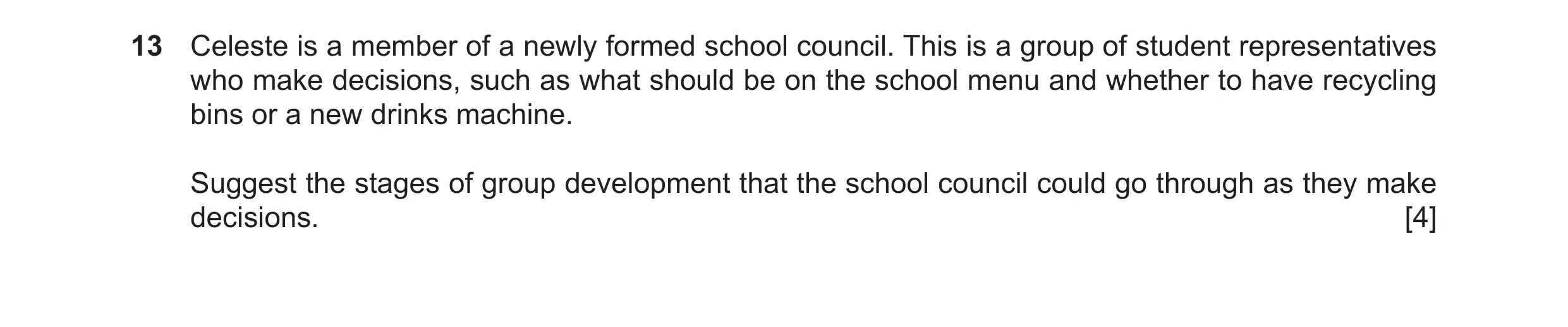 5 / 5
5 / 5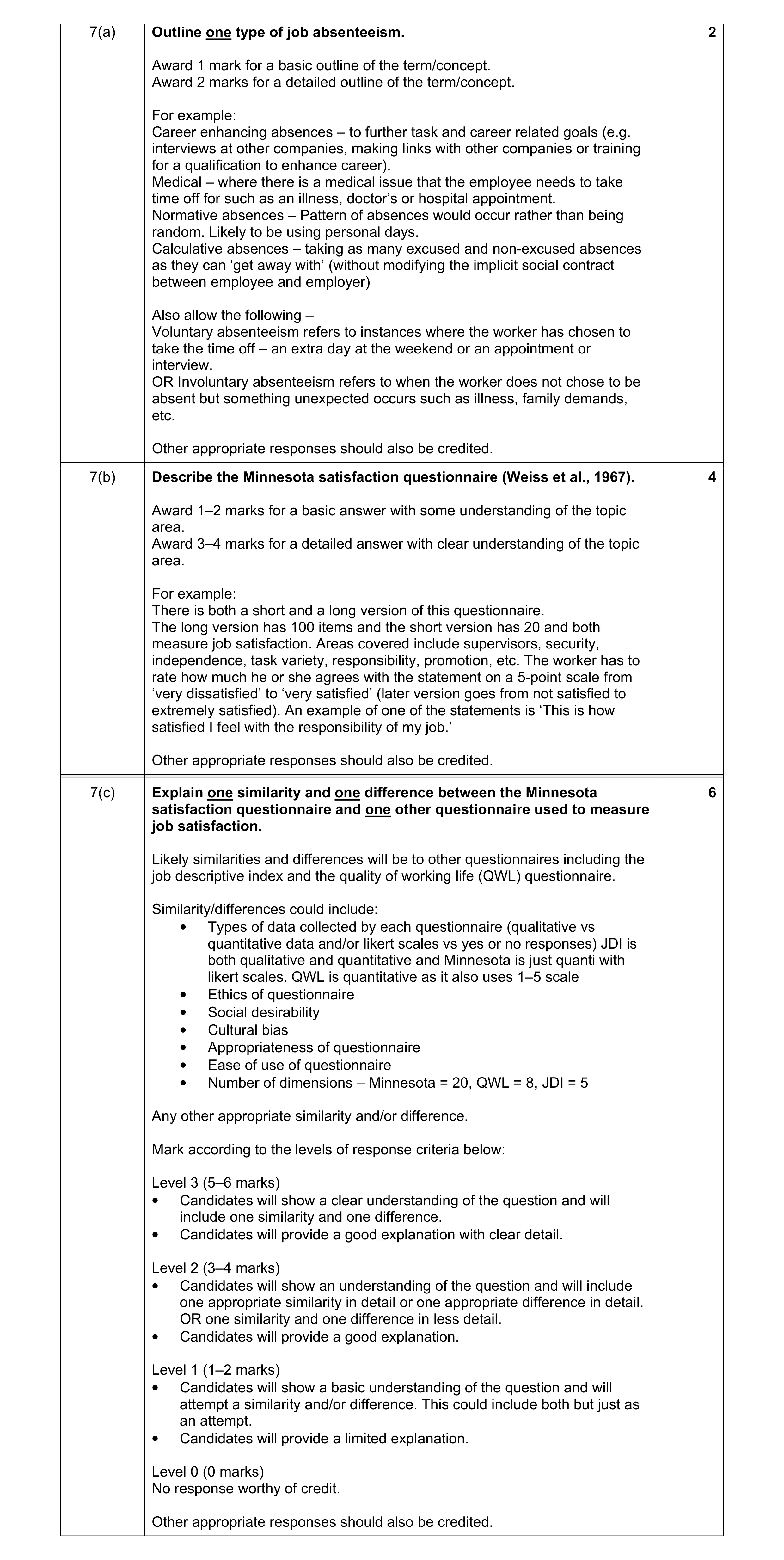 12
12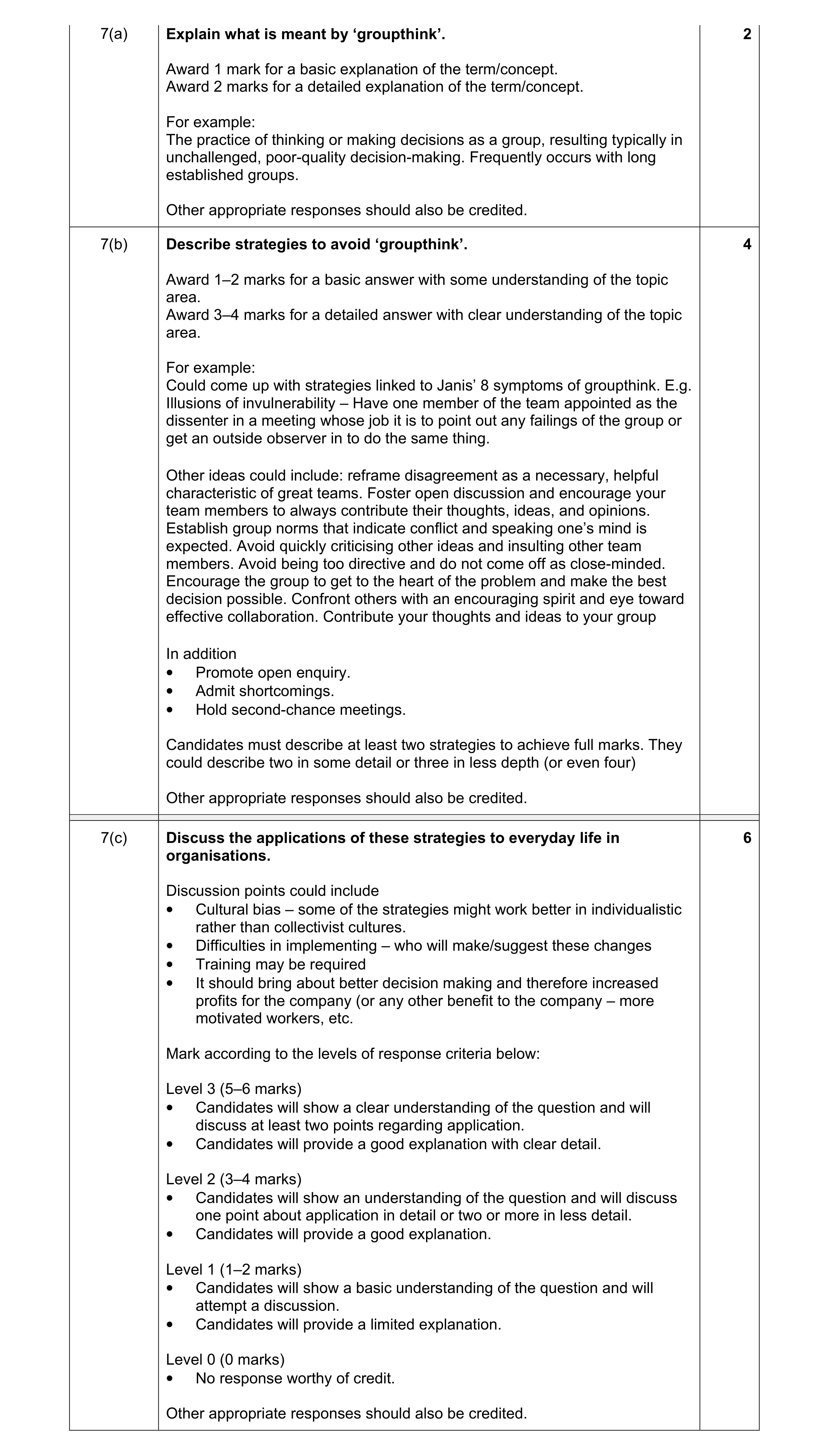 12
12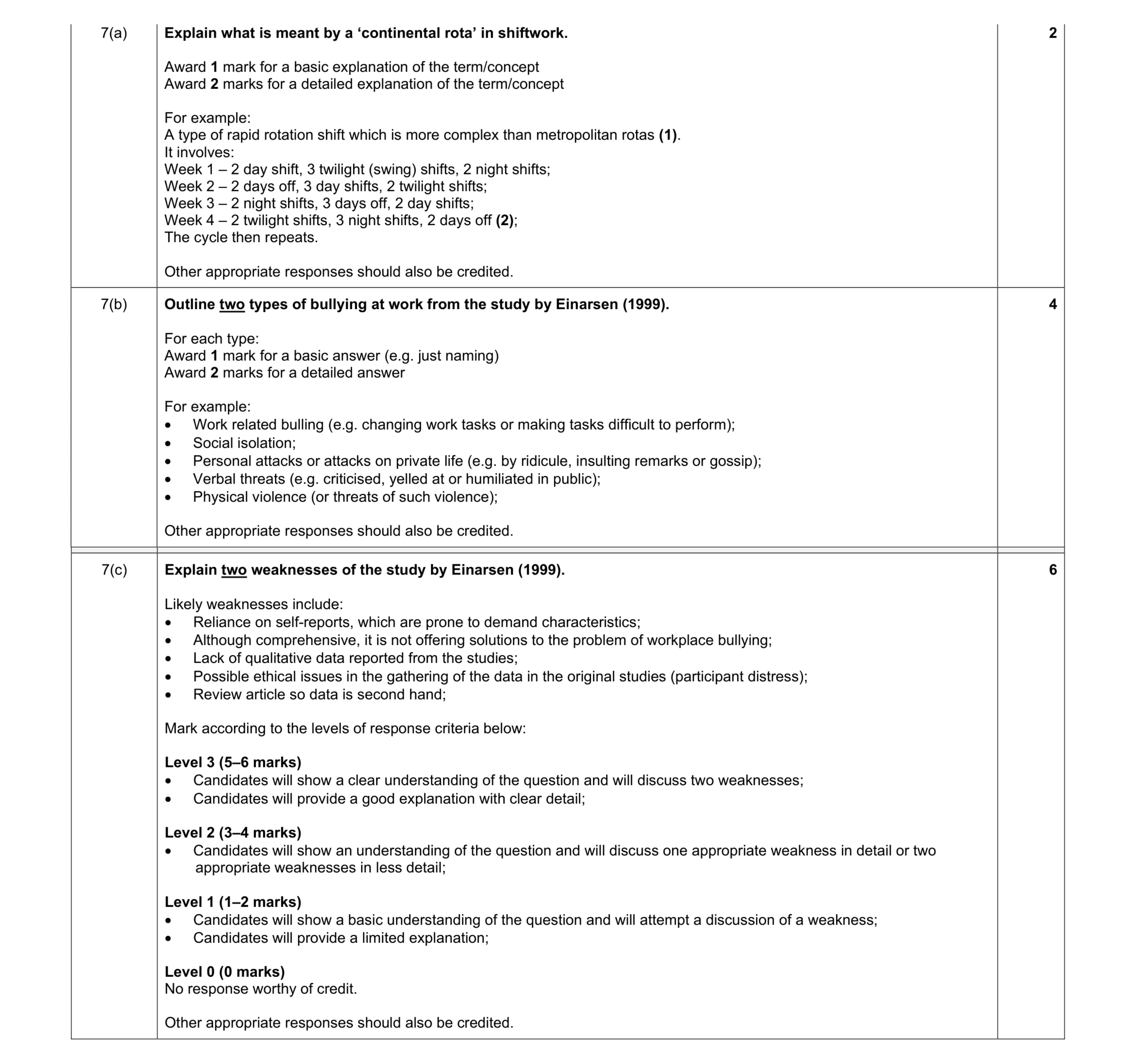 12
12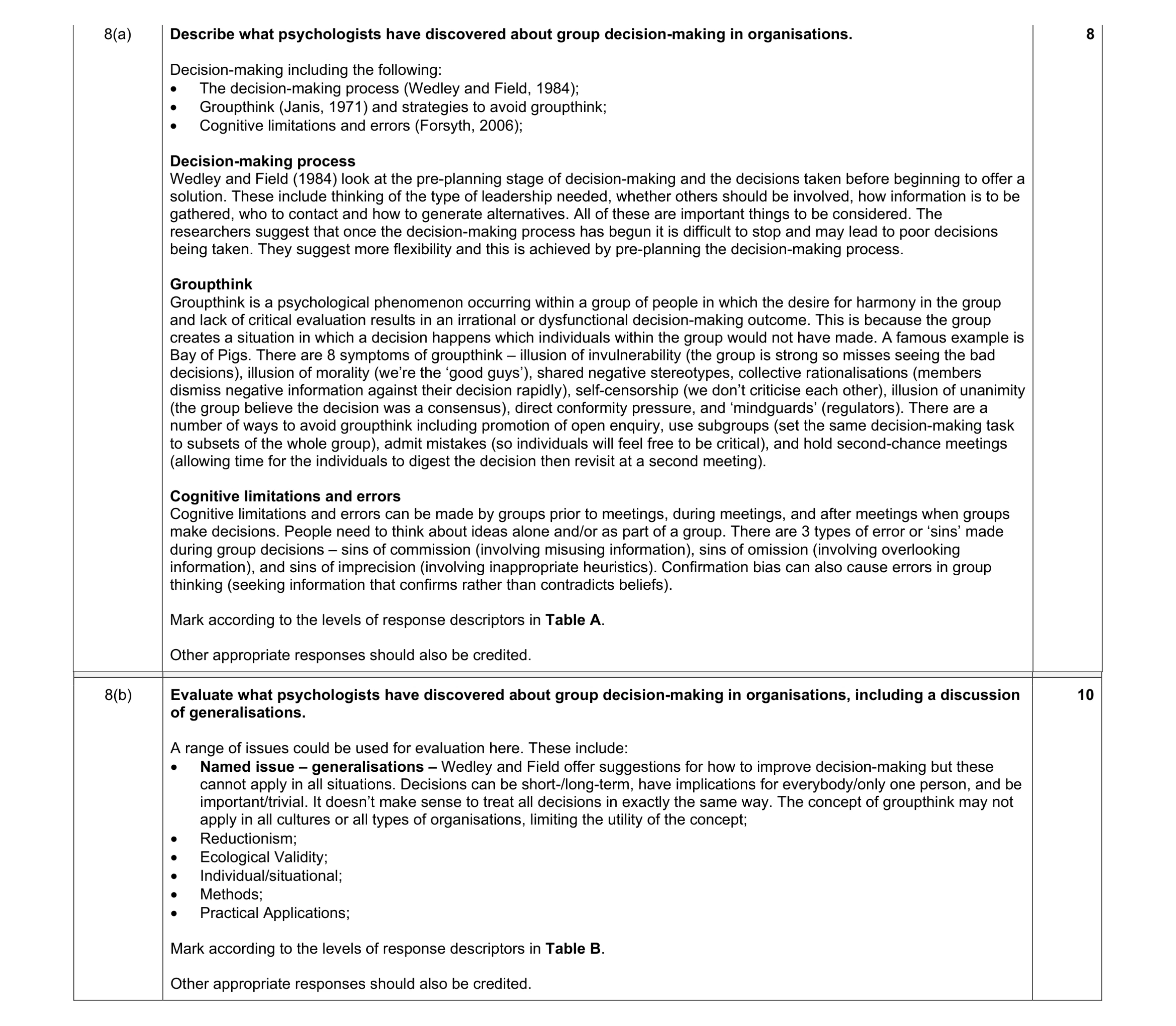 18
18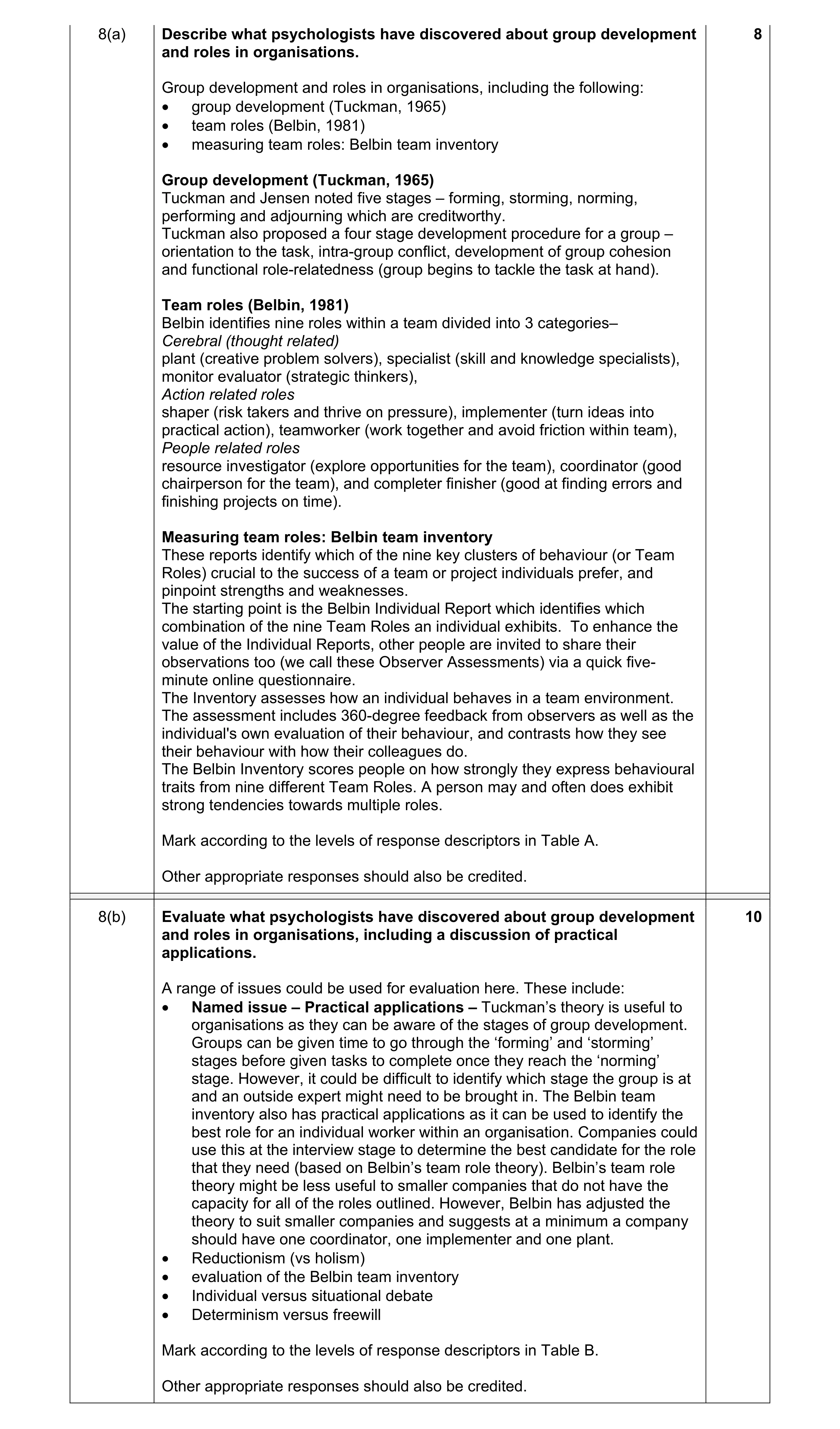 18
18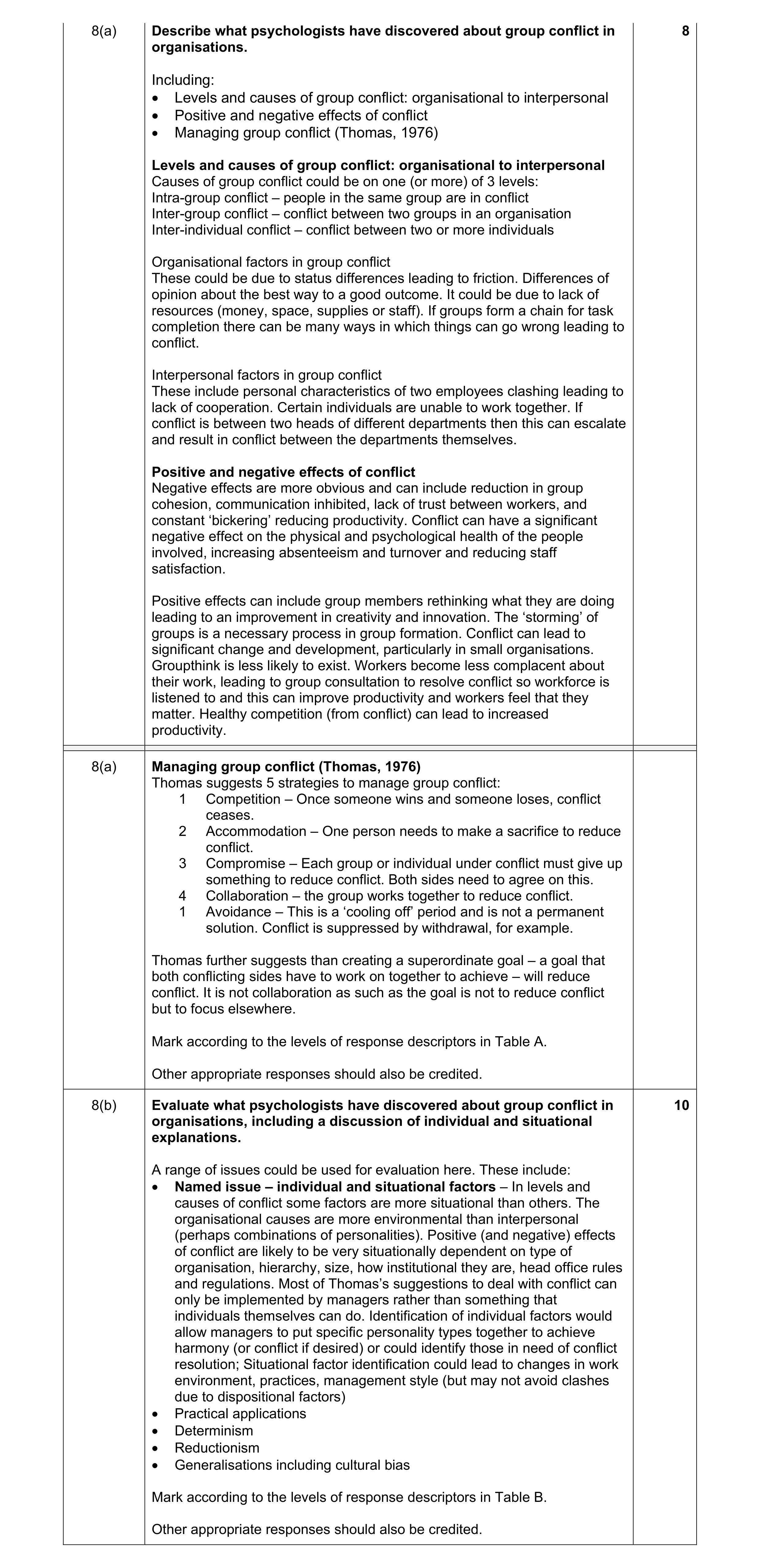 18
18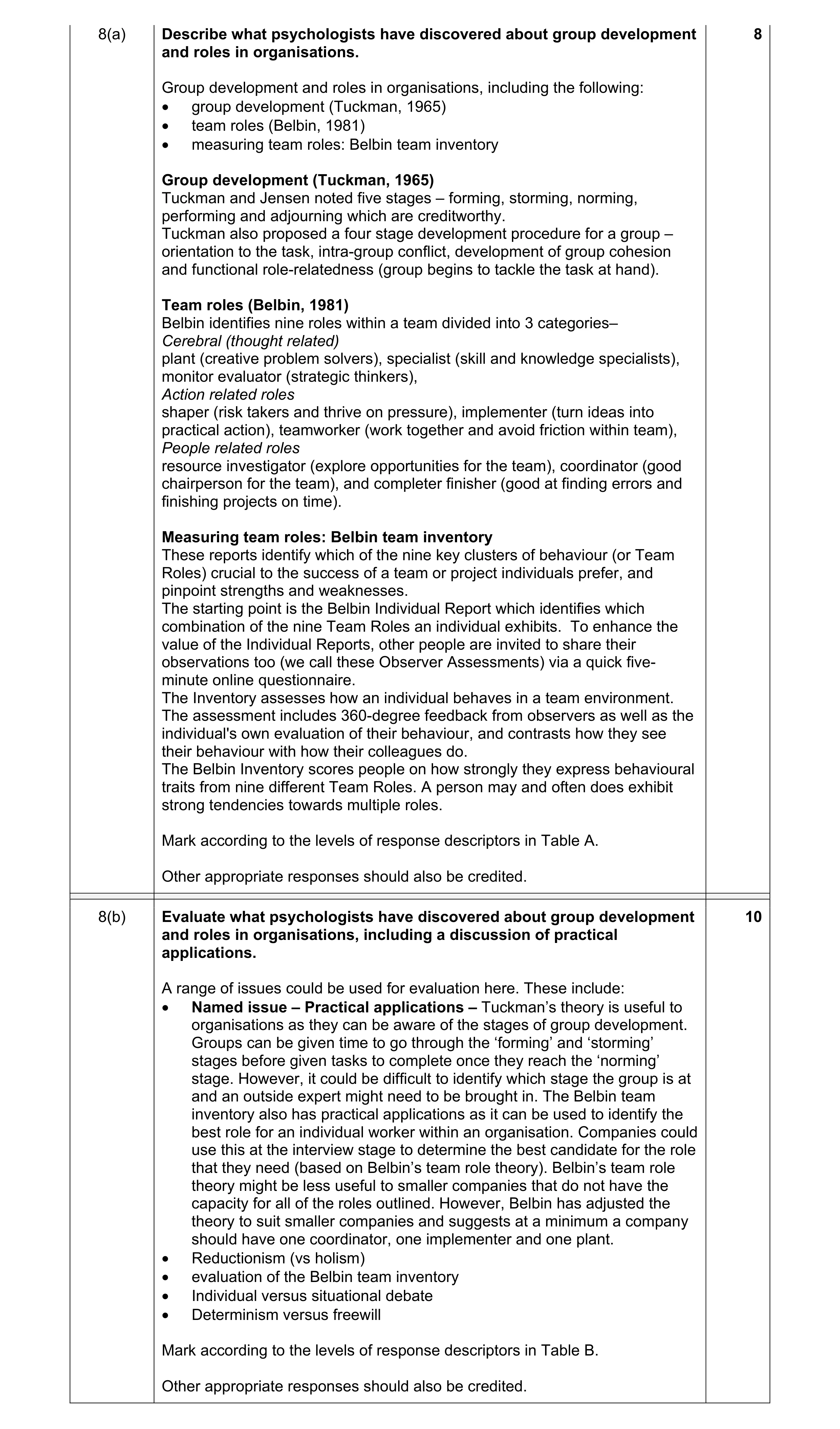 18
18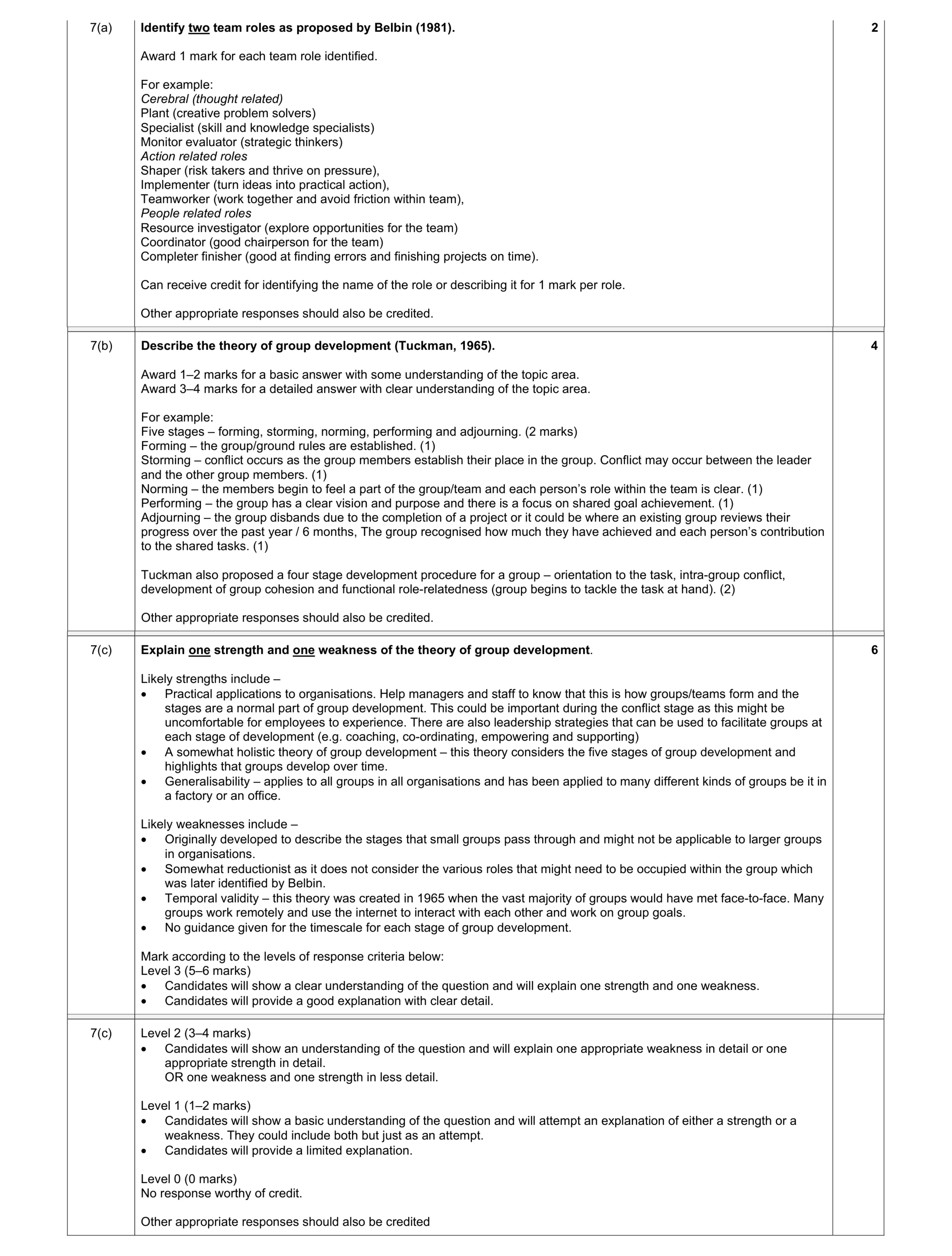 12
12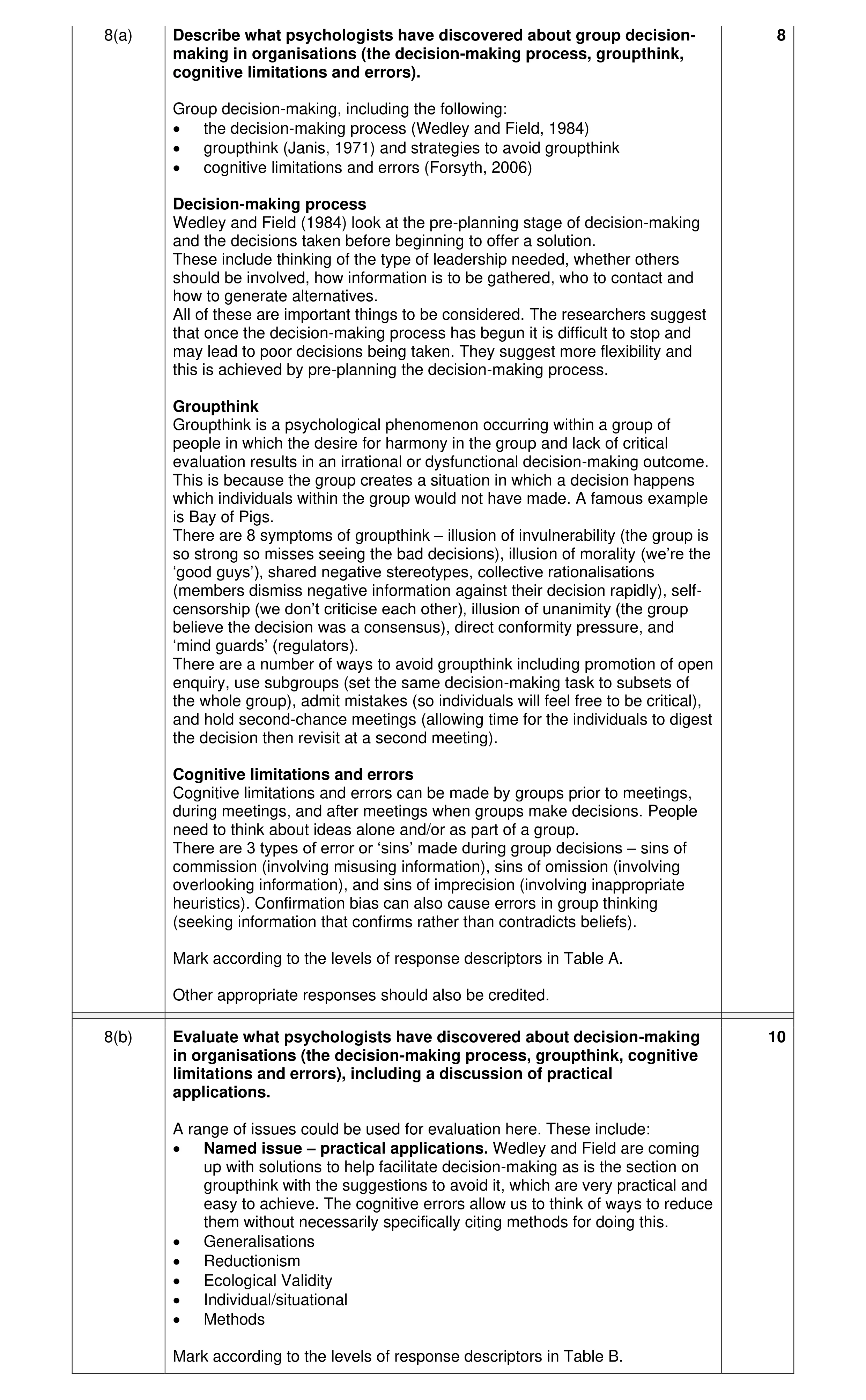 18
18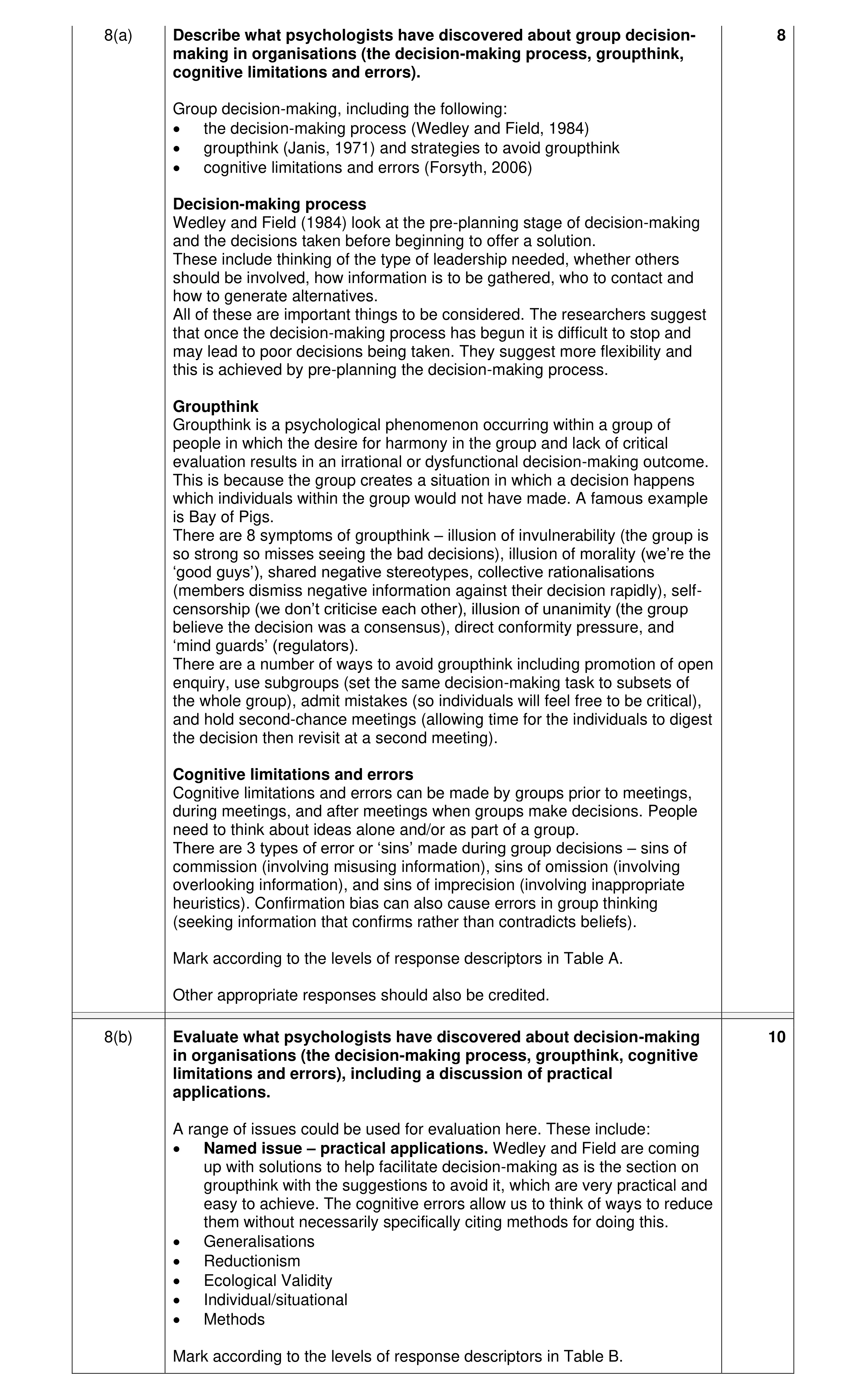 18
18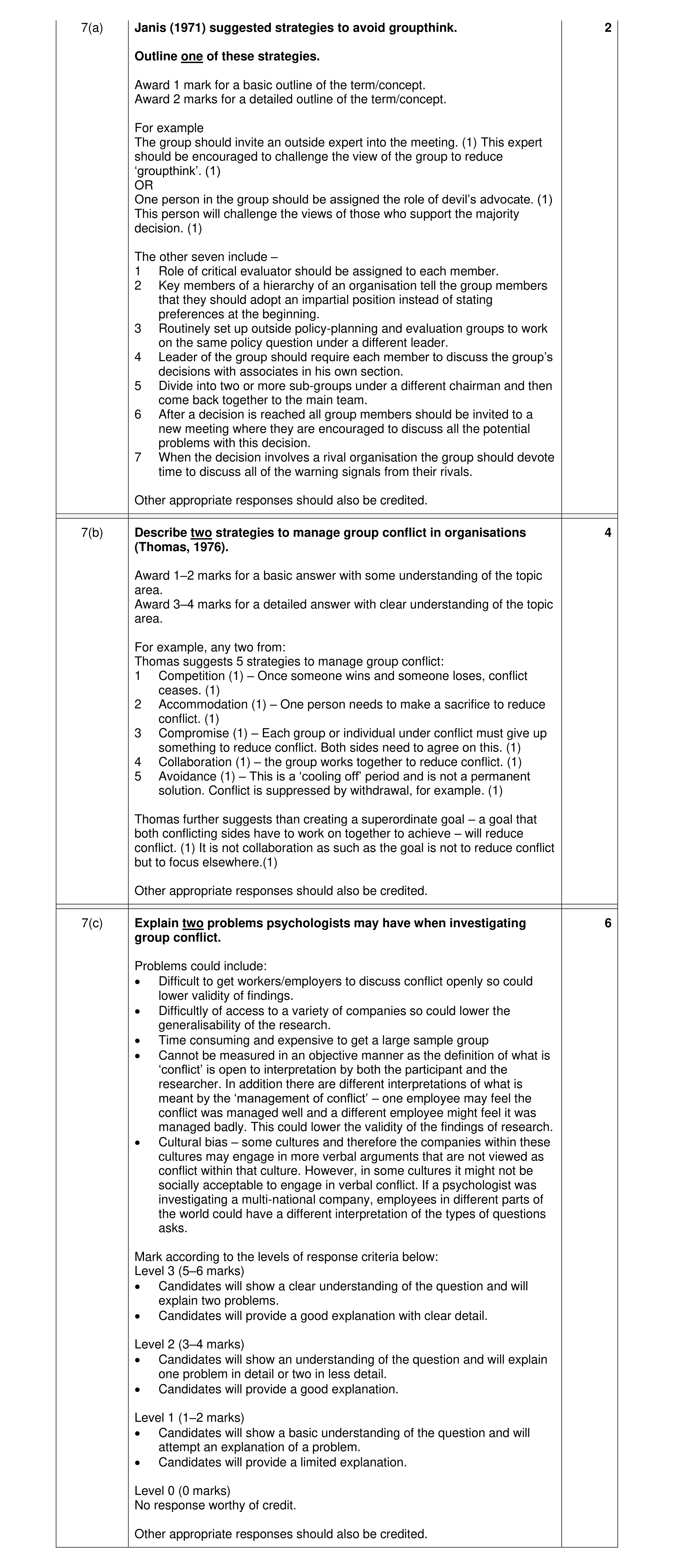 12
12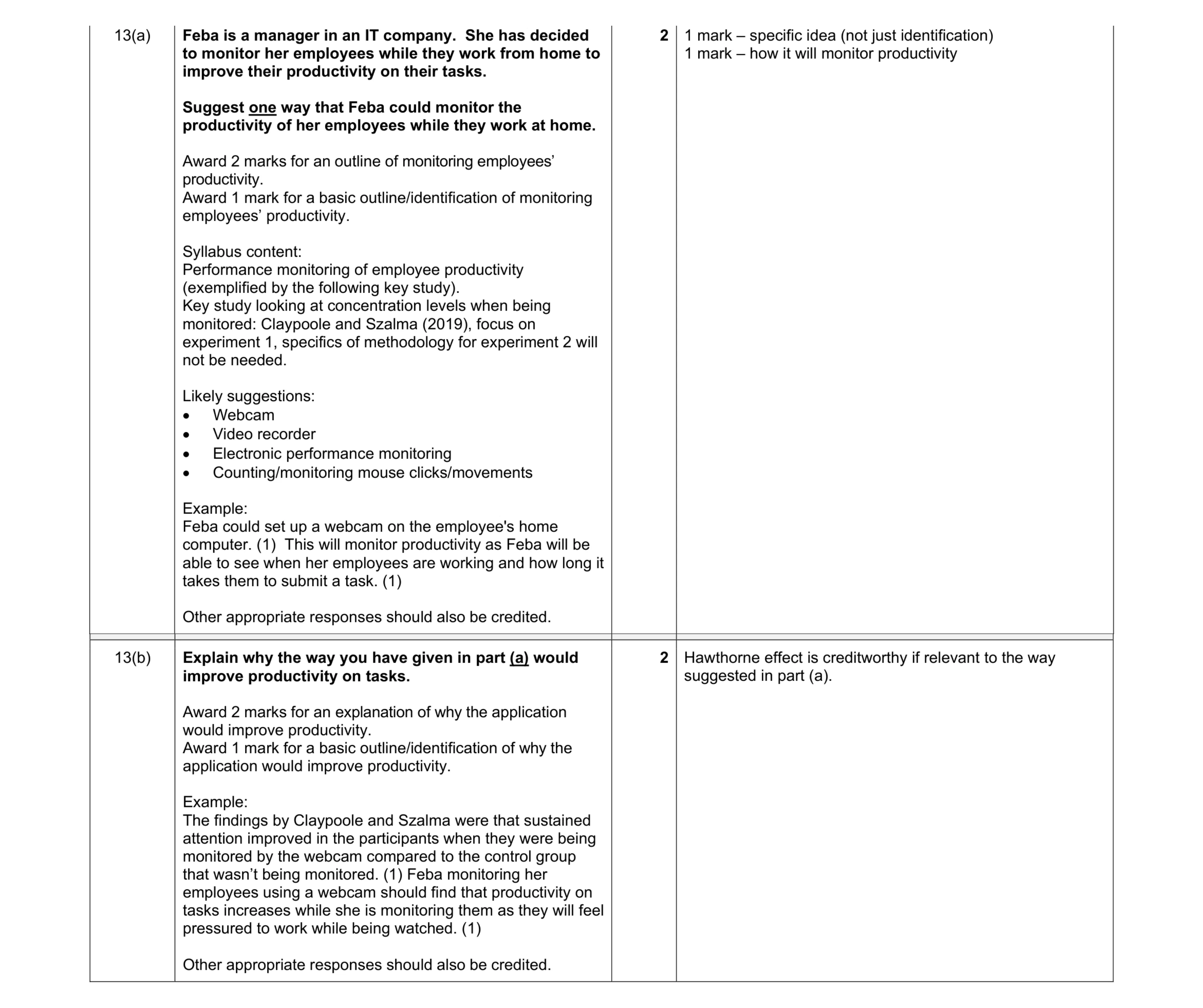 4
4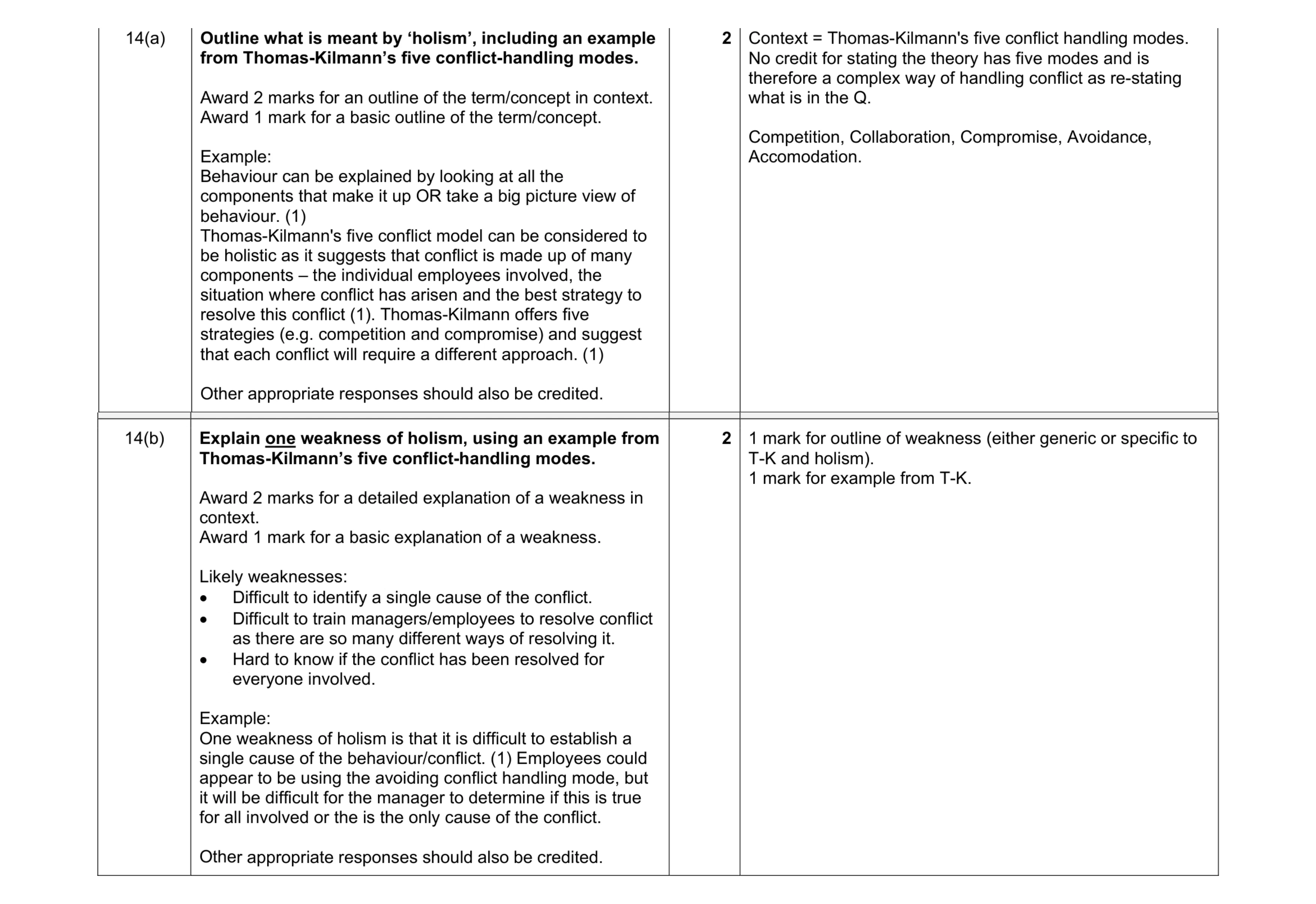 4
4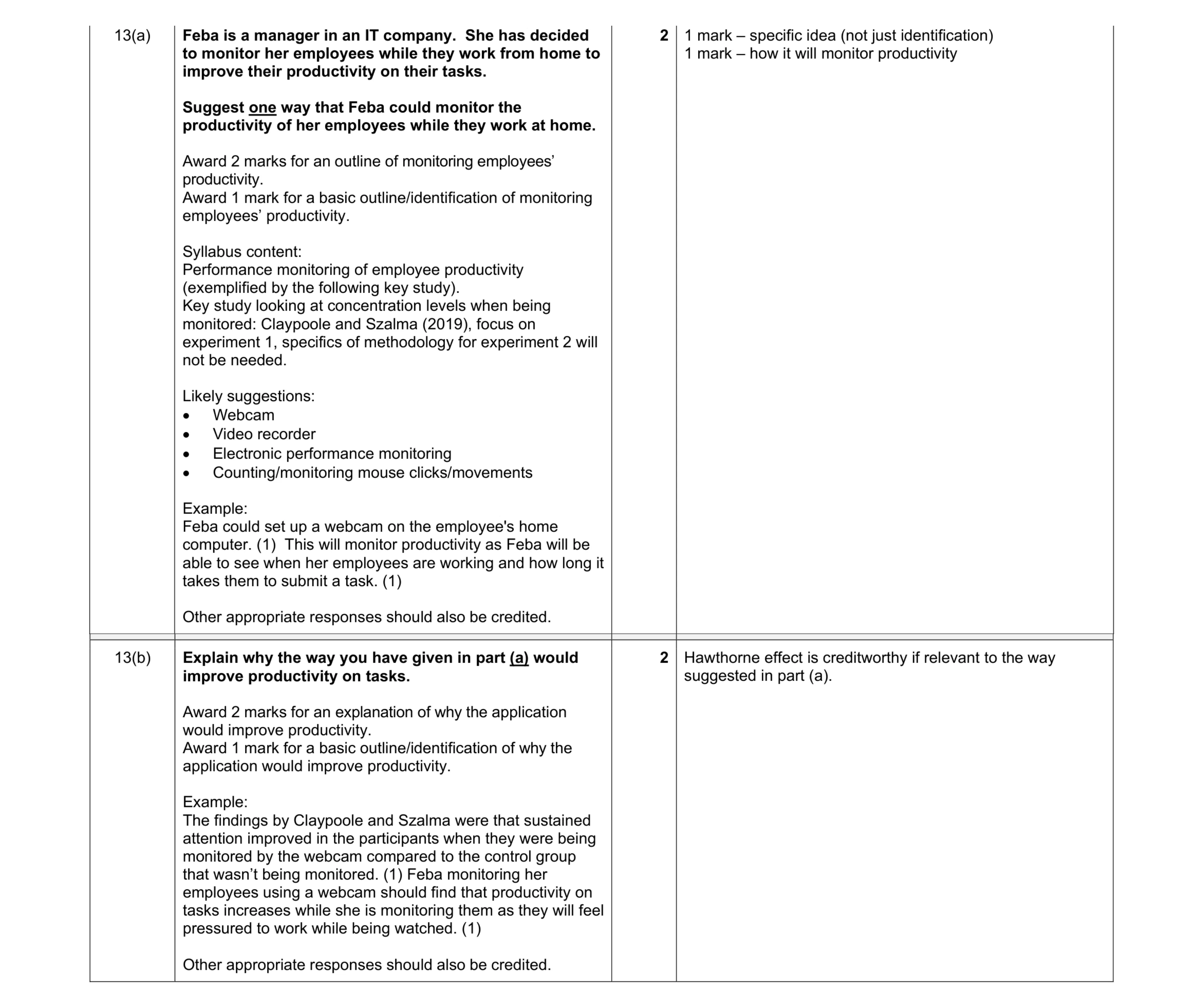 4
4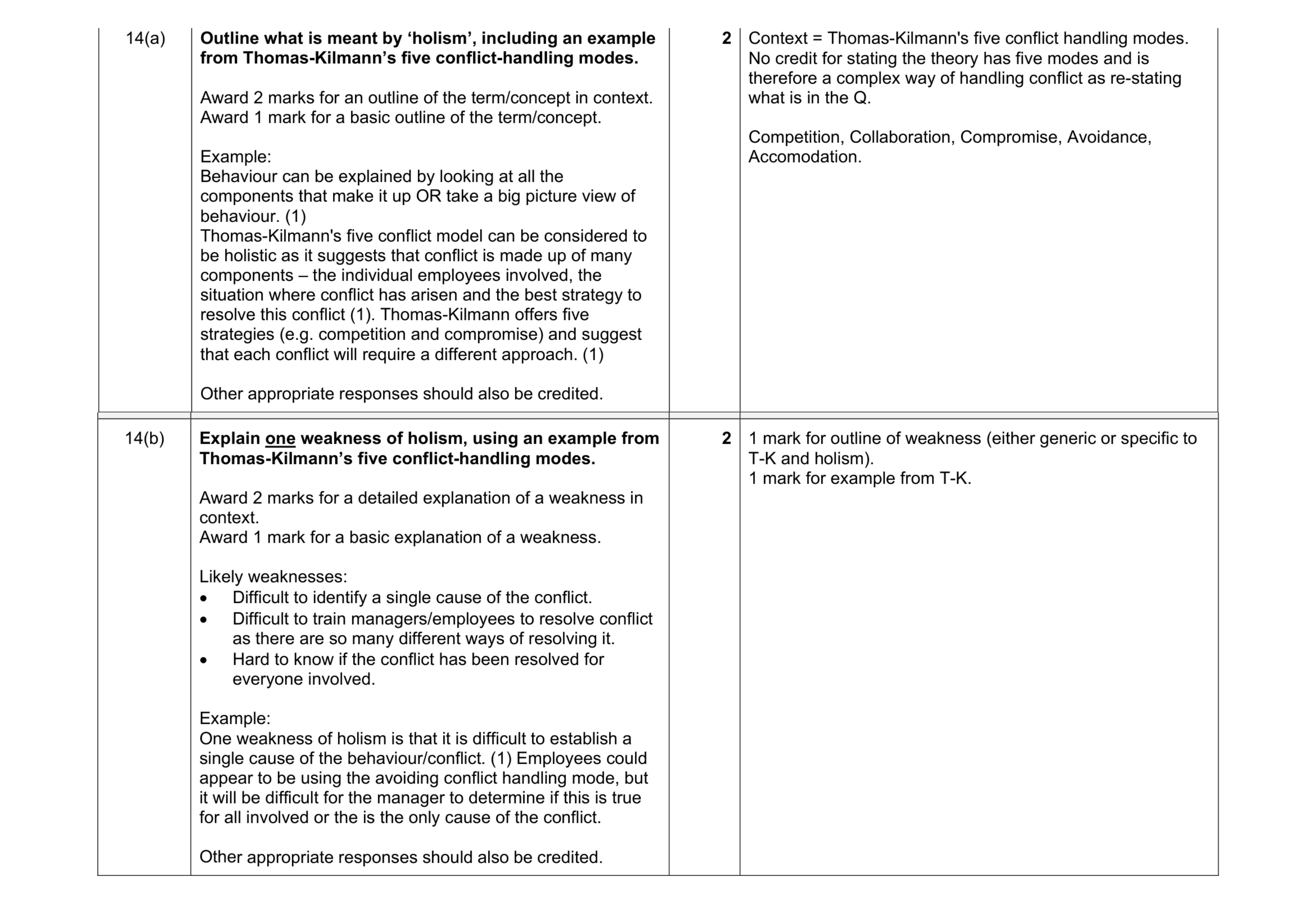 4
4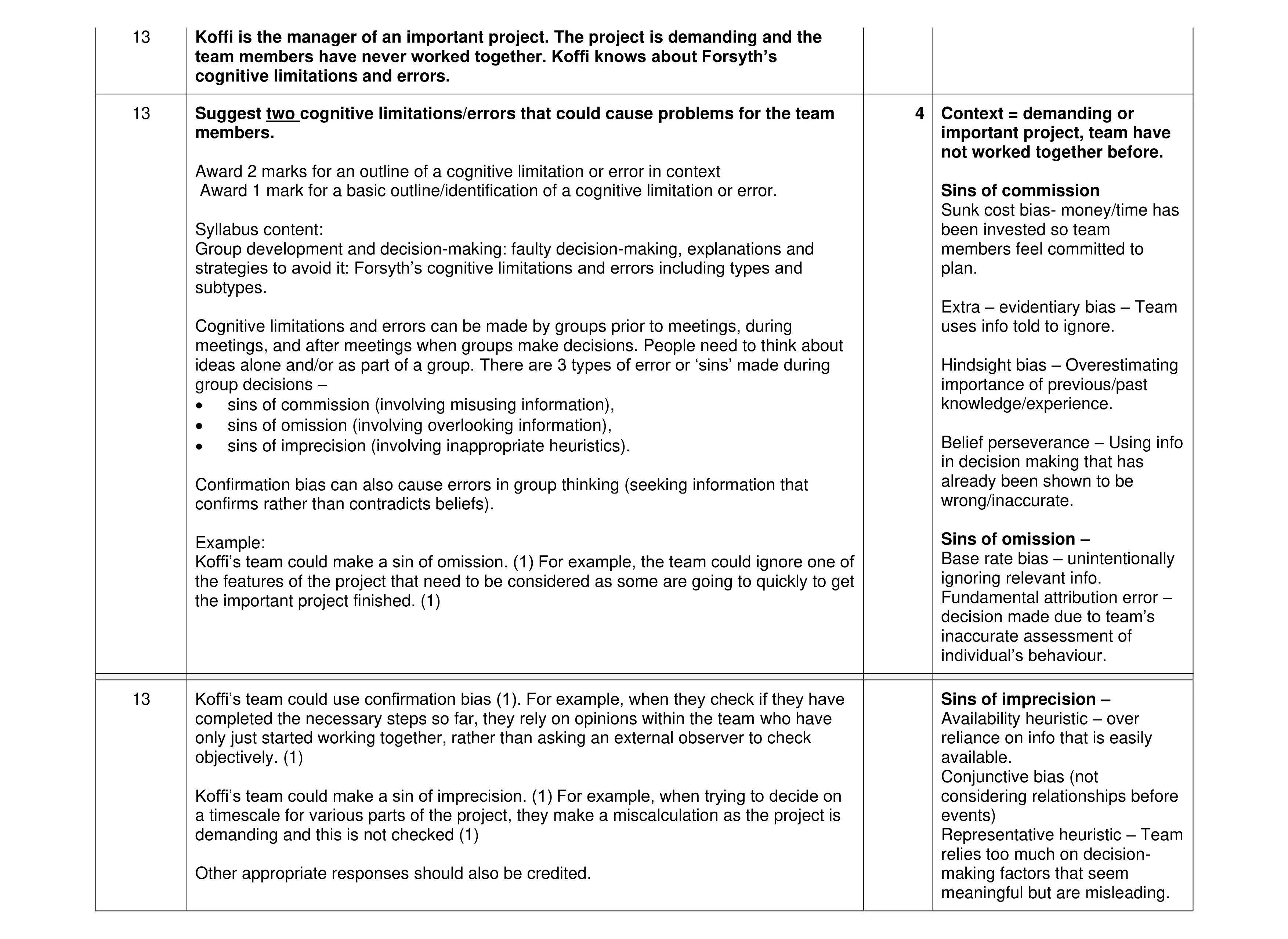 4
4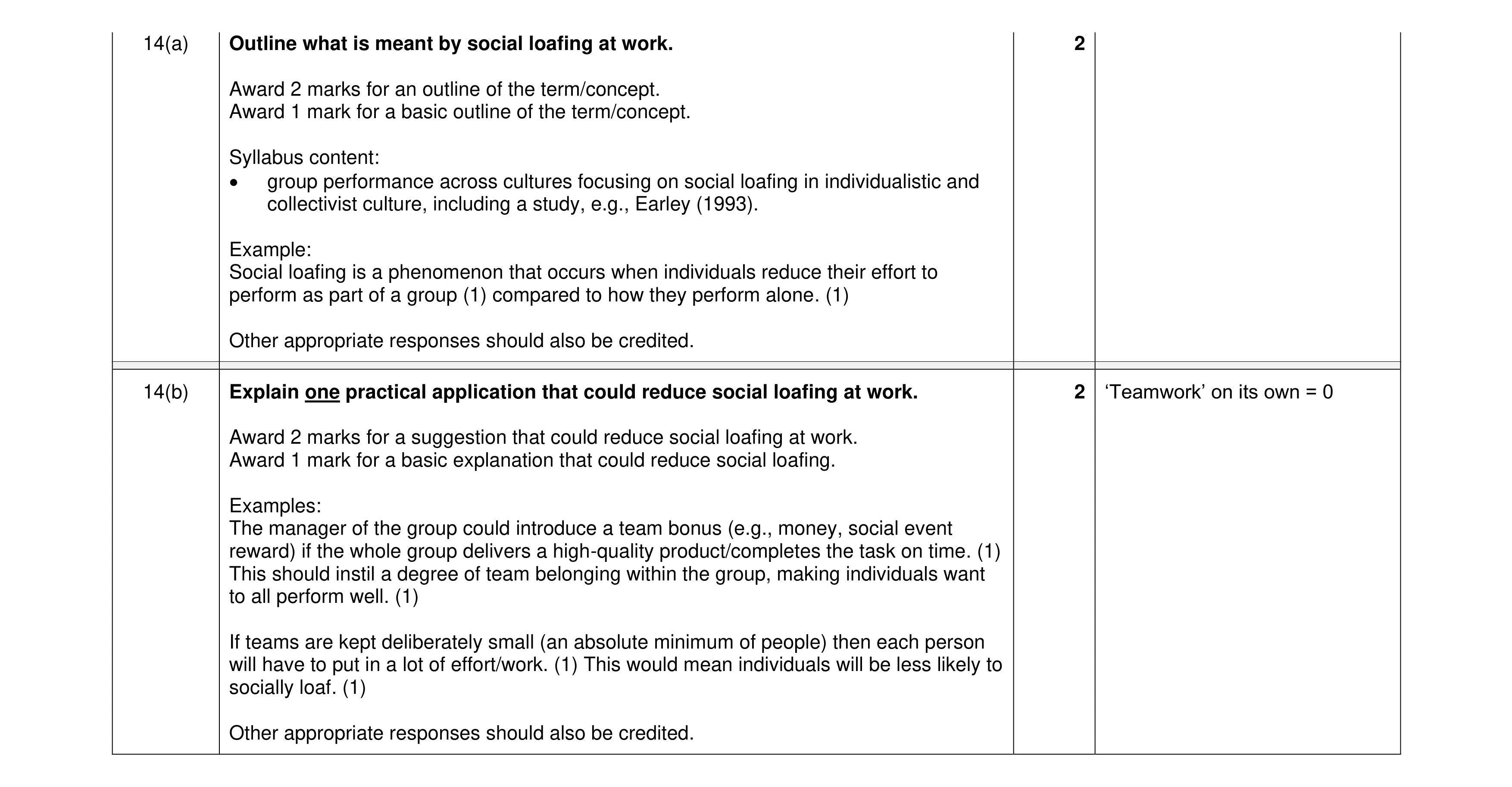 4
4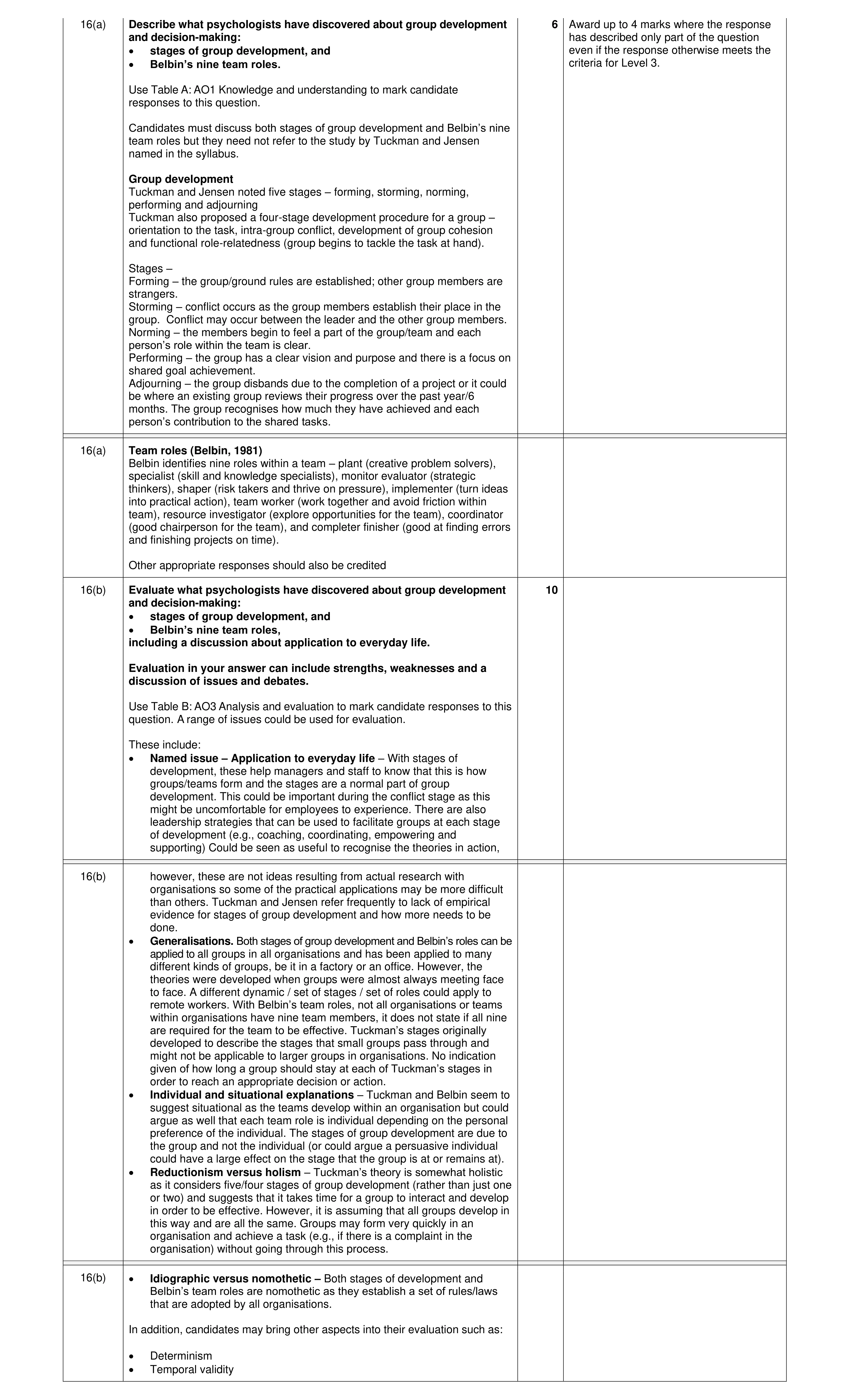 16
16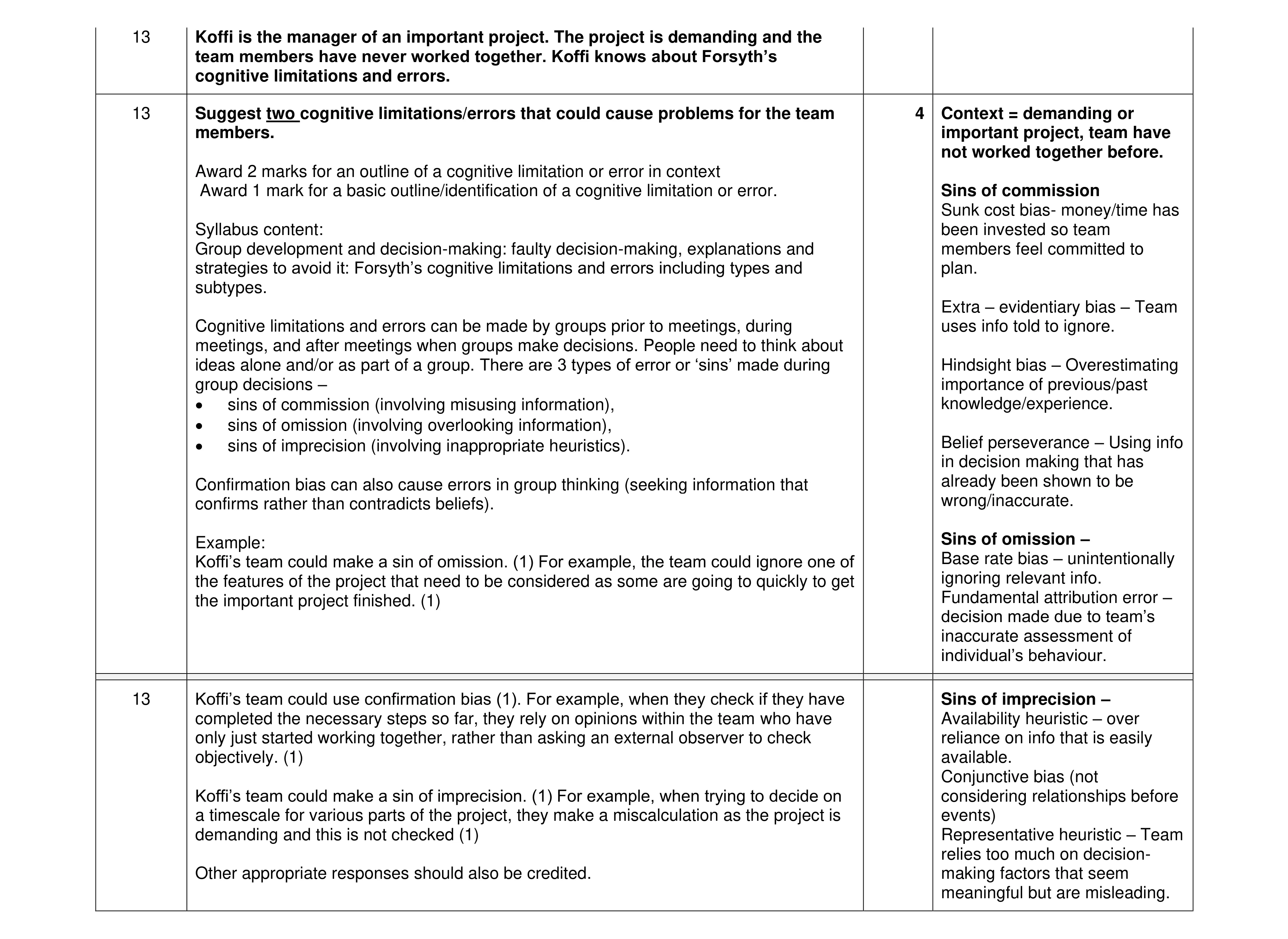 4
4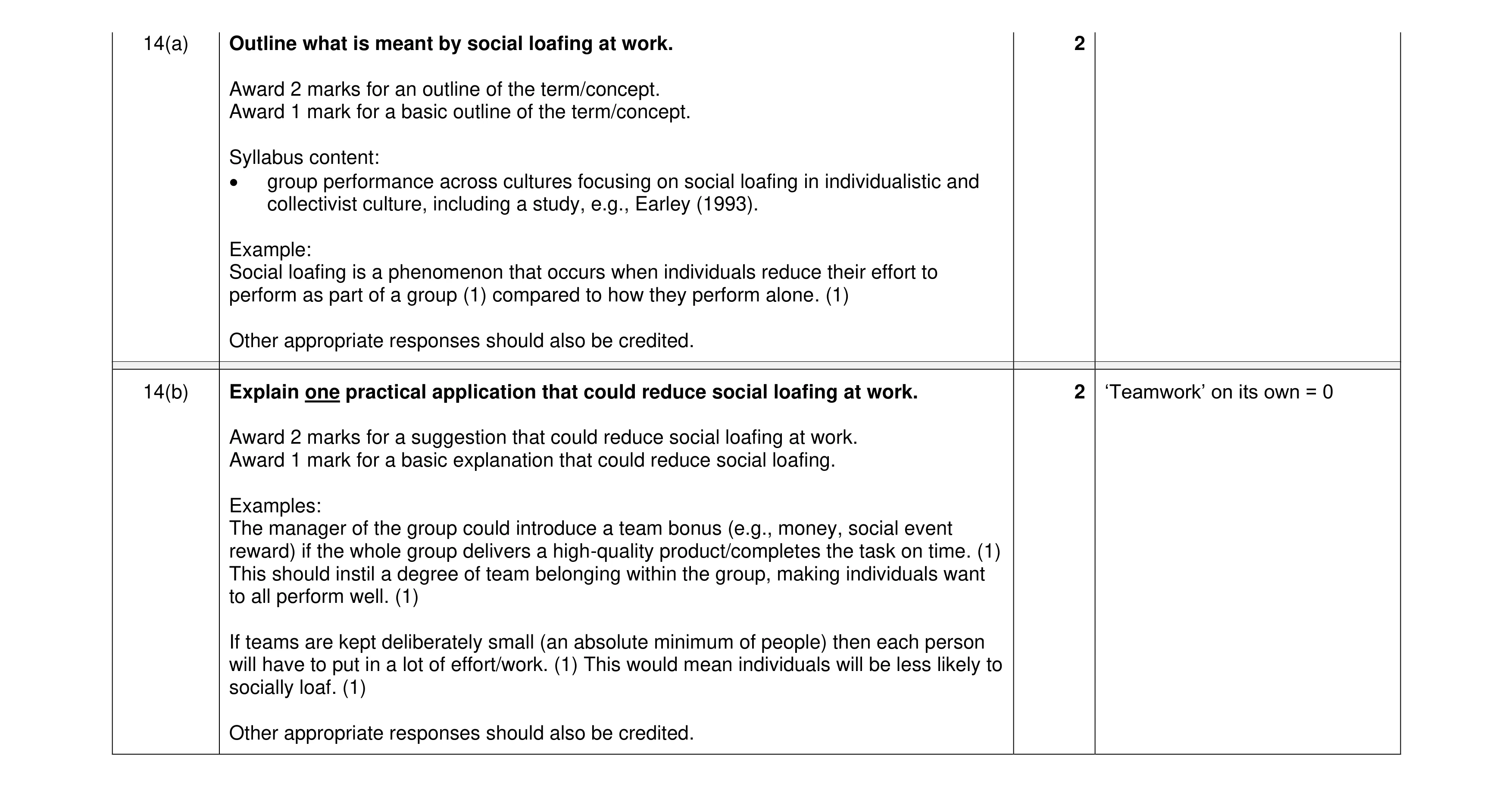 4
4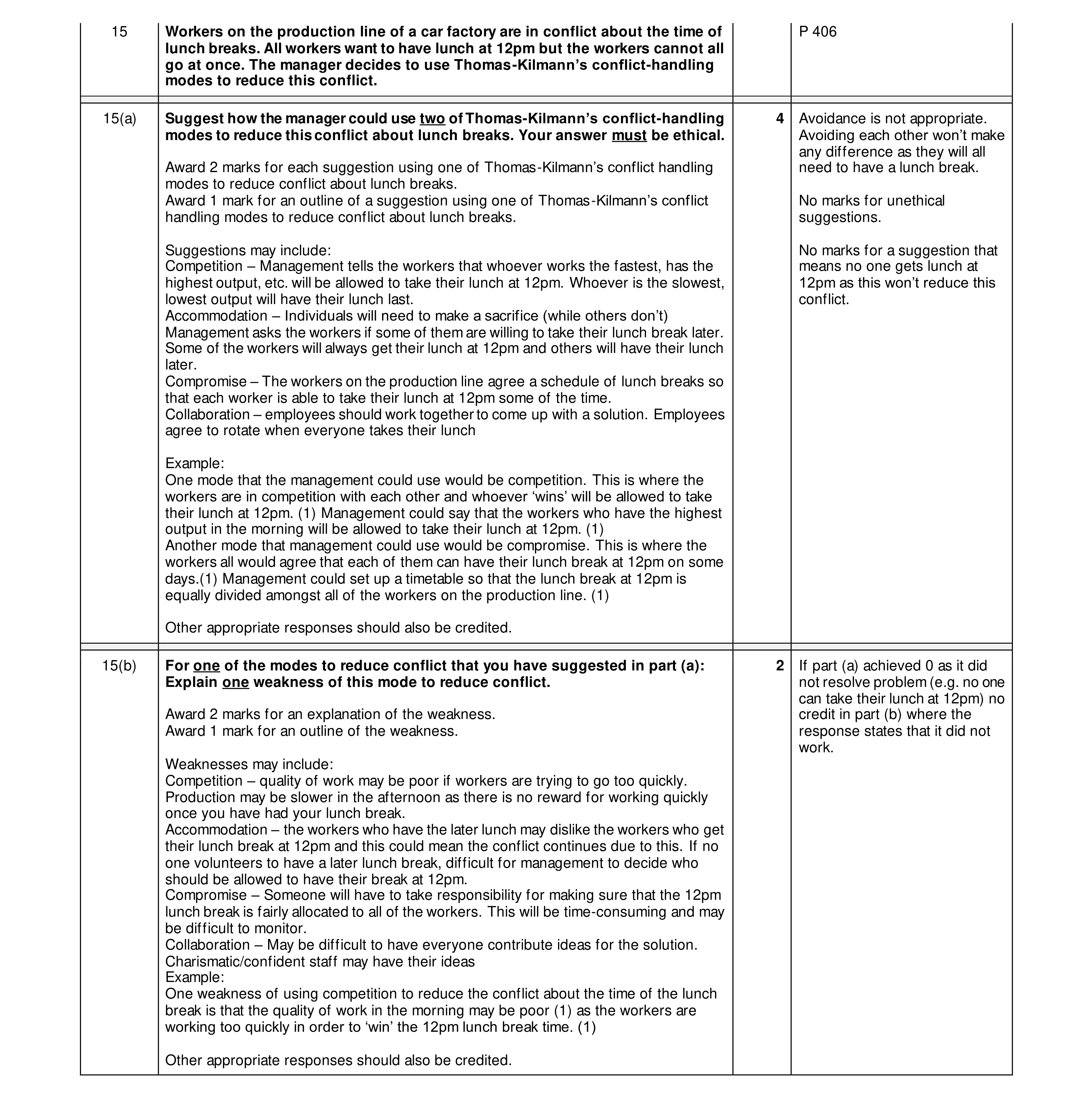 6
6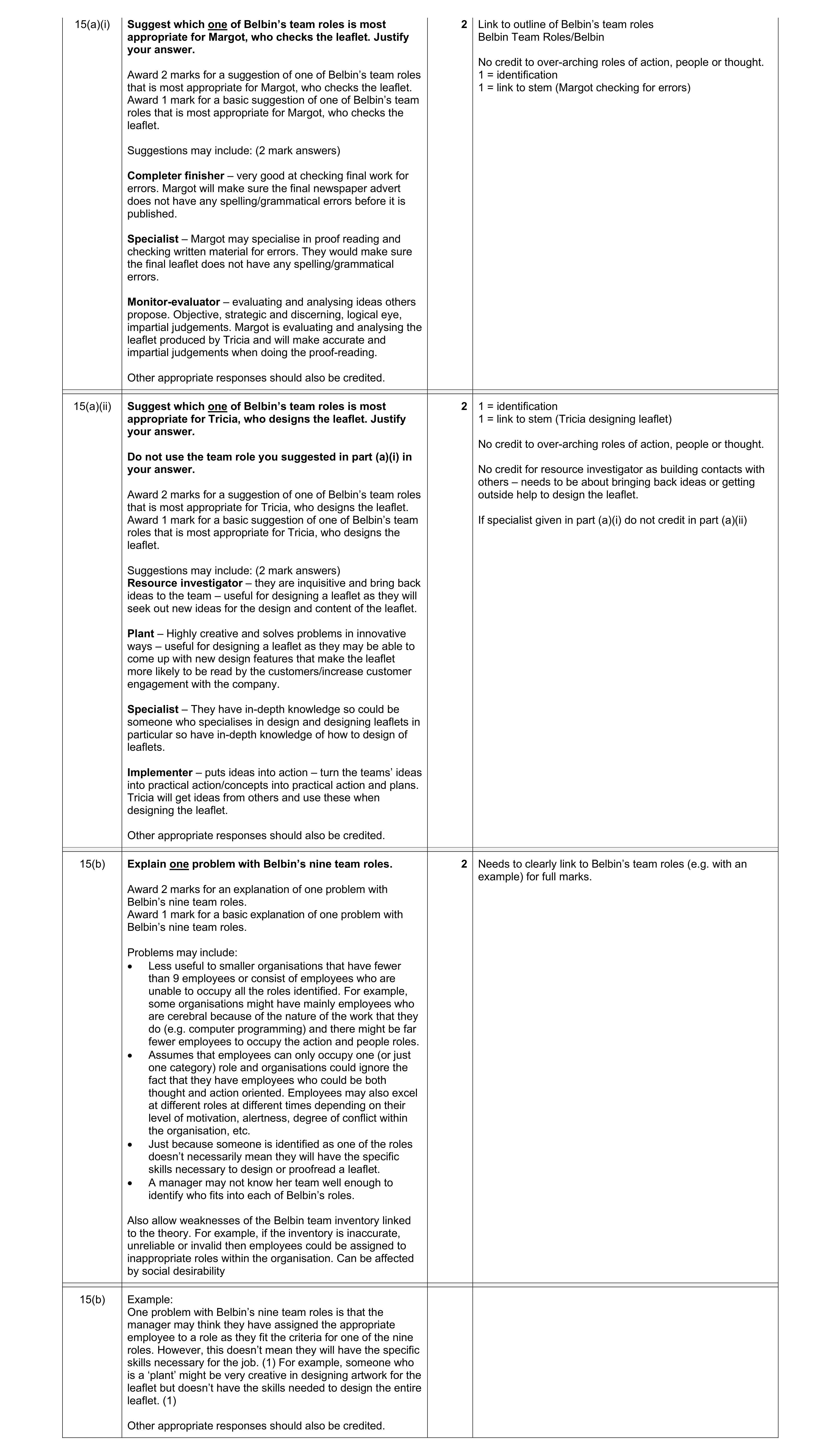 6
6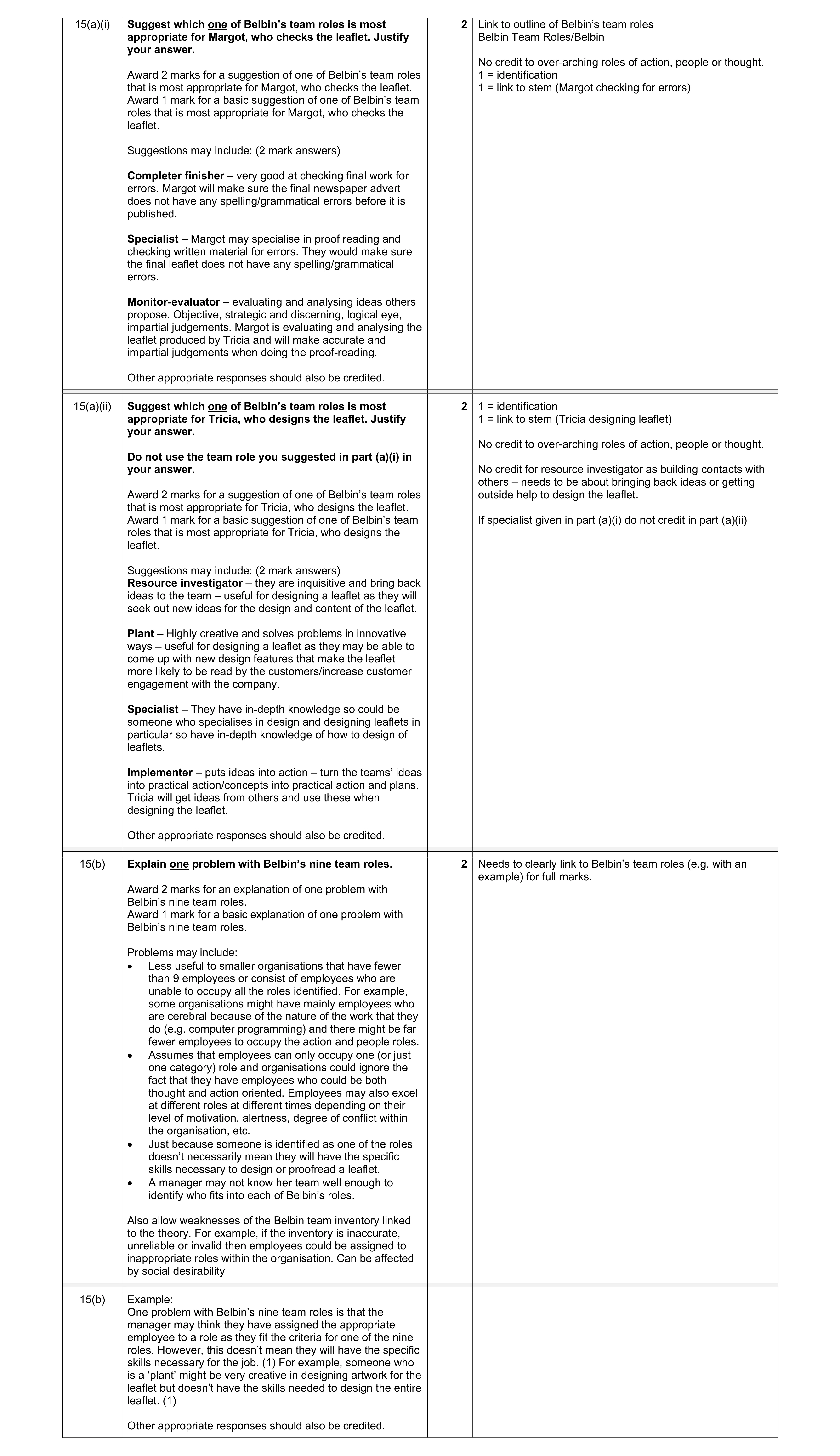 6
6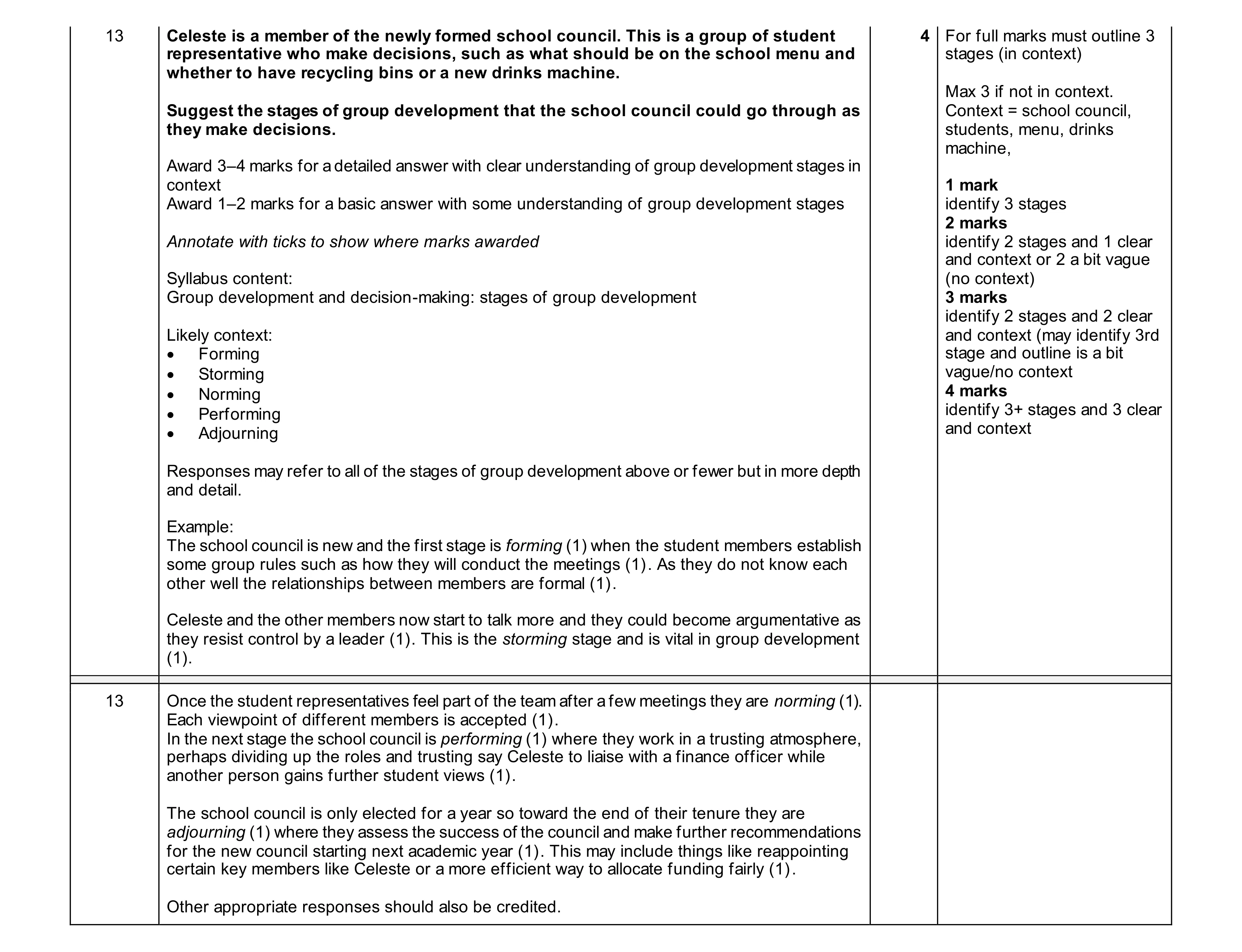 4
4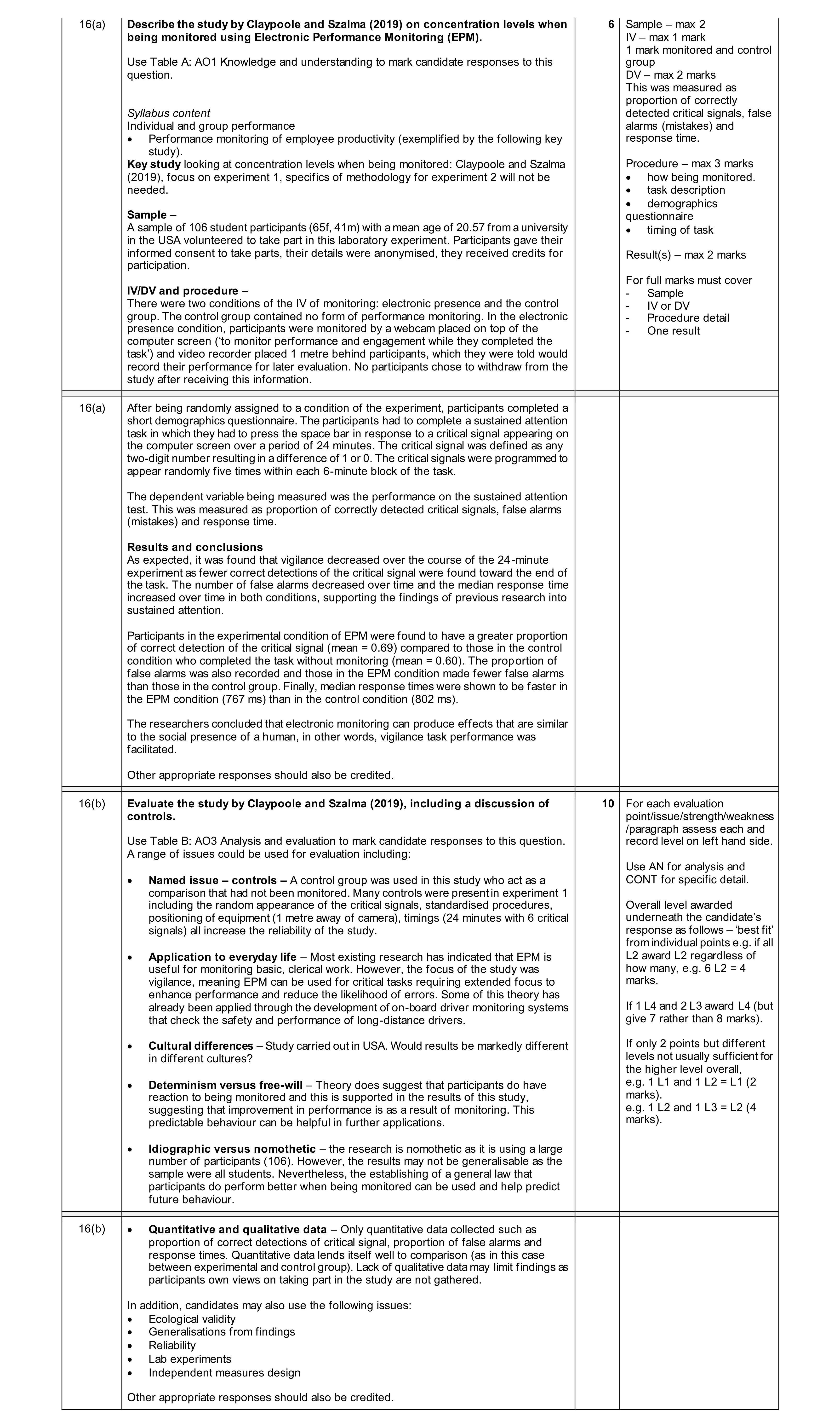 16
16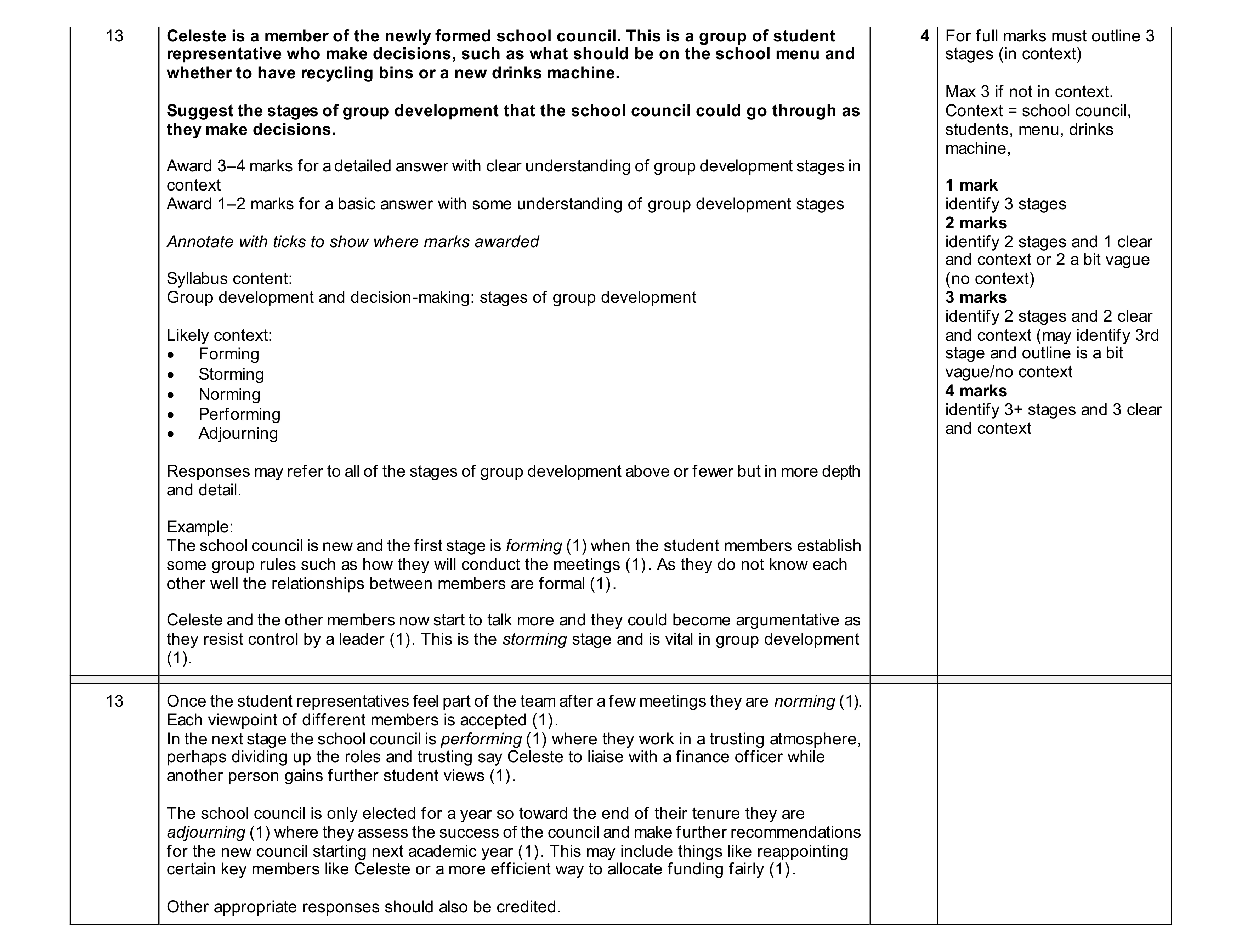 4
4