Questions as text
Q1 · Describe explanations of obsessive-compulsive disorder (OCD) 9990/32 Feb/March 2018
2 (a) Describe explanations of obsessive-compulsive disorder (OCD). [8] (b) Evaluate explanations of obsessive-compulsive disorder (OCD), including a discussion of nature versus nurture. [10] Psychology and consumer behaviour Answer all questions.
18 marks
Mark scheme: 2(a) Describe explanations of obsessive-compulsive disorder (OCD). 8 Explanations of obsessive-compulsive disorder, including the following: • biomedical (genetic, biochemical and neurological) • cognitive and behavioural • psychodynamic Biomedical Genetic – Genes (such as PTPRD, SLITRK3 and DRd4) have been found to have a possible role in OCD type symptoms. Biochemical – Oxytocin dysfunction – increase worries and fear of certain situations/stimuli with the belief that survival could be threatened. Neurological – abnormalities of brain structure and function. Basal ganglia implicated in being related to obsessive-thinking. Also orbitofrontal cortex and anterior cingulate gyrus (used to check warning messages about threatening stimuli). Possibly basal ganglia no longer receiving these messages. Candidates may also refer to striatum, thalamus and the caudate nucleus). A malfunction in these areas may lead the OCD patient to continue to receive messages to do ‘survival’ type activities (such as hand- washing) even when this has already been done by the person. Cognitive and behavioural (Cognitive) This explanation is linked to obsessive thinking. These thoughts lead to increased levels of stress and anxiety for the person. The reasoning behind the thoughts is fault (e.g. the toilet is covered in harmful germs that could kill). Stressful situations can make these thoughts worse. (Behavioural) – This leads to compulsive behaviour which reduces the obsessive thoughts for a time and acts as the negative reinforcer of the behaviour (as something unpleasant is removed). Cognitive and behavioural can be described separately or together. Psychodynamic Arise from the anal stage of psychosexual development. There may have been difficulties between the child and parent at this stage when the child defecated or urinated. Children may become either anally expulsive or anally retentive and the individual may become fixated at this stage. Compulsive cleaning or other rituals may help to soothe the early childhood trauma. Could also be the id and the superego in conflict with each other. The obsessive cleaning could act as an ego defence mechanism to deal with this conflict. Credit examples of the explanations. Mark according to the levels of response descriptors in Table A. Other appropriate responses should also be credited. 2(b) Evaluate explanations of obsessive-compulsive disorder (OCD), 10 including a discussion of nature versus nurture. A range of issues could be used for evaluation here. These include: • Named issue – nature versus nurture debate with reference to the various explanations of obsessive-compulsive disorder. For example, the biomedical explanation would suggest that OCD is due to nature as it suggests that OCD has a genetic cause and some researchers have identified the specific gene that could be responsible for OCD. On the other hand, psychodynamic is more on the nurture side of the debate as the process of developing OCD may have arisen out of childhood conflict between a parent and child. • comparisons of different explanations • usefulness (effectiveness) of different explanations – could relate these to therapies that have developed from the explanations. • reductionist nature of the explanation. Biomedical is the most reductionist and the psychodynamic the least. Can argue any of them are not full explanations. • deterministic nature of the explanation – all could be argued to be deterministic to an extent with biomedical the most deterministic. • Scientific nature of explanation (or not). Biomedical is the most scientific. Mark according to the levels of response descriptors in Table B. Other appropriate responses should also be credited. Psychology and consumer behaviour
This question in 9990/32 Feb/March 2018
Q2 · Explain what is meant by ‘hoarding’ disorder 9990/31 May/June 2019
1 (a) Explain what is meant by ‘hoarding’ disorder. [2] (b) Describe the Maudsley Obsessive-Compulsive Inventory (MOCI). [4] (c) Explain one similarity and one difference between the Maudsley Obsessive-Compulsive Inventory (MOCI) and the Yale-Brown Obsessive-Compulsive Scale (Y-BOCS). [6]
12 marks
Mark scheme: Question Answer Marks 1(a) Explain what is meant by ‘hoarding’ disorder. 2 Award 1 mark for a basic explanation of the term/concept. Award 2 marks for a detailed explanation of the term/concept. For example: Hoarding disorder is a persistent difficulty discarding or parting with possessions, such as clothing/newspapers, because of a perceived need to save them. (2) A person with hoarding disorder experiences distress at the thought of getting rid of the items, whether useful or not. (2) Other appropriate responses should also be credited. 1(b) Describe the Maudsley Obsessive-Compulsive Inventory (MOCI). 4 Award 1–2 marks for a basic answer with some understanding of the topic area. Award 3–4 marks for a detailed answer with clear understanding of the topic area. For example: 30 item questionnaire with true/false responses. 4 sub-scales: Major/minor subscales • Checking compulsions – major (9 items) • Washing/cleaning compulsions – major (11) • Slowness – minor (7) • Doubting – minor (7) Four items are included in two subscales Takes five minutes to complete and produces a score of 0–30. The higher the score the more obsessive-compulsive the person is. Examples of items – • I frequently have to check things (e.g. gas or water taps, doors, etc.) several times. (Checking) • I am not unduly concerned about germs and diseases. (Washing/Cleaning) (reverse scored) • I am often late because I can't seem to get through everything on time. (Slowness) • I have a very strict conscience. (Doubting) Other appropriate responses should also be credited. 1(c) Explain one similarity and one difference between the Maudsley 6 Obsessive-Compulsive Inventory (MOCI) and the Yale-Brown Obsessive-Compulsive Scale (Y-BOCS). Similarities could include- • Both do a quantitative measure • Both a useful diagnostic tool (or useful to use during therapy to assess symptoms) • Both have good levels of concurrent validity • Offer good test re-test reliability • Subjective tests as it requires the patient with OCD to give honest and accurate responses Differences could include – • The Y-BOCS takes longer (about 30 minutes) as opposed to the 5 minutes for the Maudsley. • Scores range from 0–30 Maudsley and 0–40 (Y-BOCS). • Y-BOCS is semi-structured interview plus the questionnaire whereas Maudsley is a questionnaire • Y-BOCS collects qualitative as well as quantitative measures whereas Maudsley is just quantitative. • Y-BOCS has a children’s version and the Maudsley does not (although can be used with children) Mark according to the levels of response criteria below: Level 3 (5–6 marks) • Candidates will show a clear understanding of the question and will include one similarity and one difference. • Candidates will provide a good explanation with clear detail. Level 2 (3–4 marks) • Candidates will show an understanding of the question and will include one appropriate similarity in detail or one appropriate difference in detail. OR one similarity and one difference in less detail. • Candidates will provide a good explanation. Level 1 (1–2 marks) • Candidates will show a basic understanding of the question and will attempt a similarity and/or difference. This could include both but just as an attempt. • Candidates will provide a limited explanation. Level 0 (0 marks) • No response worthy of credit. Other appropriate responses should also be credited
This question in 9990/31 May/June 2019
Q3 · Explain what is meant by ‘hoarding’ disorder 9990/33 May/June 2019
1 (a) Explain what is meant by ‘hoarding’ disorder. [2] (b) Describe the Maudsley Obsessive-Compulsive Inventory (MOCI). [4] (c) Explain one similarity and one difference between the Maudsley Obsessive-Compulsive Inventory (MOCI) and the Yale-Brown Obsessive-Compulsive Scale (Y-BOCS). [6]
12 marks
Mark scheme: Question Answer Marks 1(a) Explain what is meant by ‘hoarding’ disorder. 2 Award 1 mark for a basic explanation of the term/concept. Award 2 marks for a detailed explanation of the term/concept. For example: Hoarding disorder is a persistent difficulty discarding or parting with possessions, such as clothing/newspapers, because of a perceived need to save them. (2) A person with hoarding disorder experiences distress at the thought of getting rid of the items, whether useful or not. (2) Other appropriate responses should also be credited. 1(b) Describe the Maudsley Obsessive-Compulsive Inventory (MOCI). 4 Award 1–2 marks for a basic answer with some understanding of the topic area. Award 3–4 marks for a detailed answer with clear understanding of the topic area. For example: 30 item questionnaire with true/false responses. 4 sub-scales: Major/minor subscales • Checking compulsions – major (9 items) • Washing/cleaning compulsions – major (11) • Slowness – minor (7) • Doubting – minor (7) Four items are included in two subscales Takes five minutes to complete and produces a score of 0–30. The higher the score the more obsessive-compulsive the person is. Examples of items – • I frequently have to check things (e.g. gas or water taps, doors, etc.) several times. (Checking) • I am not unduly concerned about germs and diseases. (Washing/Cleaning) (reverse scored) • I am often late because I can't seem to get through everything on time. (Slowness) • I have a very strict conscience. (Doubting) Other appropriate responses should also be credited. 1(c) Explain one similarity and one difference between the Maudsley 6 Obsessive-Compulsive Inventory (MOCI) and the Yale-Brown Obsessive-Compulsive Scale (Y-BOCS). Similarities could include- • Both do a quantitative measure • Both a useful diagnostic tool (or useful to use during therapy to assess symptoms) • Both have good levels of concurrent validity • Offer good test re-test reliability • Subjective tests as it requires the patient with OCD to give honest and accurate responses Differences could include – • The Y-BOCS takes longer (about 30 minutes) as opposed to the 5 minutes for the Maudsley. • Scores range from 0–30 Maudsley and 0–40 (Y-BOCS). • Y-BOCS is semi-structured interview plus the questionnaire whereas Maudsley is a questionnaire • Y-BOCS collects qualitative as well as quantitative measures whereas Maudsley is just quantitative. • Y-BOCS has a children’s version and the Maudsley does not (although can be used with children) Mark according to the levels of response criteria below: Level 3 (5–6 marks) • Candidates will show a clear understanding of the question and will include one similarity and one difference. • Candidates will provide a good explanation with clear detail. Level 2 (3–4 marks) • Candidates will show an understanding of the question and will include one appropriate similarity in detail or one appropriate difference in detail. OR one similarity and one difference in less detail. • Candidates will provide a good explanation. Level 1 (1–2 marks) • Candidates will show a basic understanding of the question and will attempt a similarity and/or difference. This could include both but just as an attempt. • Candidates will provide a limited explanation. Level 0 (0 marks) • No response worthy of credit. Other appropriate responses should also be credited
This question in 9990/33 May/June 2019
Q4 · Explain how SSRIs treat obsessive-compulsive disorder (OCD) 9990/33 May/June 2020
1 (a) Explain how SSRIs treat obsessive-compulsive disorder (OCD). [2] (b) Lehmkuhl et al. (2008) treated a boy called Jason who had OCD. Describe how exposure and response prevention treatment was used to reduce Jason’s symptoms. [4] (c) Discuss the validity of the study by Lehmkuhl et al. [6]
12 marks
Mark scheme: Question Answer Marks 1(a) Explain how SSRIs treat obsessive-compulsive disorder (OCD). 2 Award 1 mark for a basic explanation of the term/concept. Award 2 marks for a detailed explanation of the term/concept. For example: Selective serotonin reuptake inhibitors. These can help improve OCD symptoms by increasing the levels of a chemical called serotonin in the brain (1). This seems to then cause a lessening of anxiety experienced by the patient and therefore they do not need to engage in the OCD behaviours (such as hand washing) in order to relieve their anxiety (1). Other appropriate responses should also be credited. 1(b) Lehmkuhl et al. (2008) treated a boy called Jason who had OCD. 4 Describe how exposure and response prevention treatment was used to reduce Jason’s symptoms. Award 1–2 marks for a basic answer with some understanding of the topic area. Award 3–4 marks for a detailed answer with clear understanding of the topic area. For example: Exposure – getting Jason to touch objects he has difficulties with (1) such as elevator buttons, door handles, etc. (1) Response prevention – reducing the anxious response to the objects by using coping statements (1). Jason does have high anxiety responses, but he learns as therapy progresses that these reduce quickly within a few minutes (1). Other appropriate responses should also be credited. 1(c) Discuss the validity of the study by Lehmkuhl et al. 6 Discussion points could include: • + The study has good validity as it is a longitudinal/detailed study so provides a lot of information about the treatment and recovery of the patient. • + Shows that exposure and response prevention is a good therapy technique that can be adapted to suit the individual needs of a patient. Good validity • + Provides supporting evidence that the treatment is valid. • + Has both qualitative and quantitative data which increases validity. Qualitative gives detailed information and comparisons can be made before and after treatment to assess the effectiveness of therapy, which increases the validity of the study and shows that it was the treatment that improved Jason’s symptoms and not something else. • +/- There can be communication problems with children (lower validity) but as mentioned above this was taken into account with Jason and the therapy was adjusted (increases validity). • - But poor generalisability and therefore lower validity due to it being one participant so cannot be generalised to patients without autism/ASD or older/younger participants. Jason had not had OCD for very long compared to adults with the condition. This may mean we cannot generalise that a similar therapy could work with autistic adults but it does highlight if therapy is brought in early on in the condition, significant improvements can be made. • +/- Could have lower validity as Jason may have responded to demand characteristics/social desirability and said that he felt better than he really did. He could have done this due to the close relationship he built with the therapist. It is possible Jason didn’t think of himself as a ‘participant’ and more as a ‘patient’ and responded in a natural way to the therapy (good ecological validity) Mark according to the levels of response criteria below: Level 3 (5–6 marks) • Candidates will show a clear understanding of the question and will discuss at least two points regarding validity. • Candidates will provide a good explanation with clear detail. Level 2 (3–4 marks) • Candidates will show an understanding of the question and will discuss one point about validity in detail or two or more in less detail. • Candidates will provide a good explanation. Level 1 (1–2 marks) • Candidates will show a basic understanding of the question and will attempt a discussion. • Candidates will provide a limited explanation. Level 0 (0 marks) No response worthy of credit. Other appropriate responses should also be credited.
This question in 9990/33 May/June 2020
Q5 · Describe explanations of obsessive-compulsive disorder (OCD) 9990/32 Oct/Nov 2020
2 (a) Describe explanations of obsessive-compulsive disorder (OCD). [8] (b) Evaluate explanations of obsessive-compulsive disorder (OCD), including a discussion of determinism. [10] Psychology and consumer behaviour Answer all questions.
18 marks
Mark scheme: 2(a) Describe explanations of obsessive-compulsive disorder (OCD). Explanations of obsessive-compulsive disorder, including the following: • biomedical (genetic, biochemical and neurological); • cognitive and behavioural; • psychodynamic; Biomedical – Genetic – Genes such as PTPRD, SLITRK3 (both, and DRd4 (related to uptake of dopamine) have been found to have a possible role in OCD type symptoms; Biochemical – Oxytocin dysfunction – increase in worries and fear of certain situations/stimuli with the belief that survival could be threatened; Neurological – abnormalities of brain structure and function. Basal ganglia implicated in being related to obsessive-thinking. Also orbitofrontal cortex and anterior cingulate gyrus (used to check warning messages about threatening stimuli). Possibly basal ganglia no longer receiving these messages. Candidates may also refer to striatum, thalamus and the caudate nucleus. A malfunction in these areas may lead the OCD patient to continue to receive messages to do ‘survival’ type activities (such as hand-washing) even when this has already been done by the person. Cognitive and behavioural – (Cognitive) This explanation is linked to obsessive thinking. These thoughts lead to increased levels of stress and anxiety for the person. The reasoning behind the thoughts is faulty (e.g. the toilet is covered in harmful germs that could kill). Stressful situations can make these thoughts worse. (Behavioural) – This leads to compulsive behaviour which reduces the obsessive thoughts for a time and acts as the negative reinforcer of the behaviour (as something unpleasant is removed). Cognitive and behavioural can be described separately or together. Psychodynamic – Arise from the anal stage of psychosexual development. There may have been difficulties between the child and parent at this stage when the child defecated or urinated. Children may become either anally expulsive or anally retentive and the individual may become fixated at this stage. Compulsive cleaning or other rituals may help to soothe the early childhood trauma. Could also be the id and the superego in conflict with each other. The obsessive cleaning could act as an ego defence mechanism to deal with this conflict. Credit examples of the explanations. Mark according to the levels of response descriptors in Table A. Other appropriate responses should also be credited. Question Answer Marks 2(b) Evaluate explanations of obsessive-compulsive disorder (OCD), including a discussion of determinism. A range of issues could be used for evaluation here. These include: • Named issue – determinism – to an extent all explanations of OCD could be argued to be deterministic. With biomedical explanation we have no free will over our genetics. Similarly, we cannot exert free will within a psychodynamic explanation. Cognitive/behavioural could be seen as less deterministic as we can change our thinking to an extent. Different types of determinism – biological, environmental and psychic; • Nature/nurture; • Comparison of different explanations; • Usefulness (effectiveness) of different explanations; • Reductionist nature of the explanation; • Scientific nature of explanation (or not); Mark according to the levels of response descriptors in Table B. Other appropriate responses should also be credited. 10
This question in 9990/32 Oct/Nov 2020
Q6 · Outline two common obsessions in obsessive-compulsive disorder (OCD) 9990/32 Feb/March 2021
1 (a) Outline two common obsessions in obsessive-compulsive disorder (OCD). [2] (b) Describe the study by Lovell et al. (2006) on a cognitive treatment for OCD. [4] (c) Explain one strength and one weakness of the study by Lovell et al. [6]
12 marks
Mark scheme: Question Answer Marks 1(a) Outline two common obsessions in obsessive-compulsive disorder 2 (OCD). Award 1 mark for a basic explanation of the term/concept. – one obsession Award 2 marks for a detailed explanation of the term/concept. – two obsessions For example, • Fear of infection or illness • Need for order/symmetry • Fear of losing control • Fear of harming others/self • Fear of forgetting something important • Fixation on certain numbers 1(b) Describe the study by Lovell et al. (2006) on a cognitive treatment for 4 OCD. Award 1–2 marks for a basic answer with some understanding of the topic area. Award 3–4 marks for a detailed answer with clear understanding of the topic area. Study – Comparing telephone versus face to face treatment of CBT for OCD. 72 out-patients took part. 10 one hour weekly sessions of exposure and response prevention therapy were given to face to face treatment group and 2 face to face meetings (session 1 and session 10) and 8 30 minute telephone sessions given to telephone treatment group. 3 inventories given during therapy (Yale-Brown, Beck and client satisfaction). No significant differences found at six months. Concluded both face to face and telephone treatment are equally as effective in treating OCD. Other appropriate responses should also be credited. 1(c) Explain one strength and one weakness of the study by Lovell et al. 6 Likely strengths include – • Fairly good size sample (72) and two hospitals used, good age range 16–65 • Random allocation to treatment groups • 2 different questionnaires (Y-BOCs and Beck depression inventory) given to check symptoms which gives more detail about the patients’ symptoms pre and post treatment. • Strengths of quantitative data (can make comparisons between treatment groups, statistical analysis of results) • Ethical – not directly mentioned in the original paper but was approved by an ethics committee. Credit reference to consent. • Follow-up done at 6 months to check longer term effectiveness of treatment. • Useful as shows the shorter telephone interviews just as effective as the longer face to face sessions. Likely weaknesses include – • Generalisability (just OCD from two different hospitals in Manchester, UK) • Weaknesses of quantitative data (lacks detail) • There could be individual differences between the two treatments groups which led to the differences in the results. (independent measures design was used) • There wasn’t a no treatment group/control group. • Social desirability of responses to Y-BOCs, Beck depression inventory and patient satisfaction questionnaire. • Do not know very long term effects of treatment (beyond 6 months) Mark according to the levels of response criteria below: Level 3 (5–6 marks) • Candidates will show a clear understanding of the question and will explain one strength and one weakness. • Candidates will provide a good explanation with clear detail. Level 2 (3–4 marks) • Candidates will show an understanding of the question and will explain one appropriate weakness in detail or one appropriate strength in detail. OR one weakness and one strength in less detail. Level 1 (1–2 marks) • Candidates will show a basic understanding of the question and will attempt an explanation of either a strength or a weakness. They could include both but just as an attempt. • Candidates will provide a limited explanation. Level 0 (0 marks) No response worthy of credit. Other appropriate responses should also be credited.
This question in 9990/32 Feb/March 2021
Q7 · Describe explanations of obsessive-compulsive disorder (OCD) 9990/32 Feb/March 2022
2 (a) Describe explanations of obsessive-compulsive disorder (OCD). [8] (b) Evaluate explanations of obsessive-compulsive disorder (OCD), including a discussion of reductionism versus holism. [10] Psychology and consumer behaviour Answer all questions.
18 marks
Mark scheme: 2(a) Describe explanations of obsessive-compulsive disorder (OCD). Explanations of obsessive-compulsive disorder, including the following: • biomedical (genetic, biochemical and neurological) • cognitive and behavioural • psychodynamic Biomedical – Genetic – Genes such as PTPRD, SLITRK3 and DRD4 (related to uptake of dopamine) have been found to have a possible role in OCD type symptoms. Biochemical – Oxytocin dysfunction – increase worries and fear of certain situations/stimuli with the belief that survival could be threatened. Neurological – abnormalities of brain structure and function. Basal ganglia implicated in being related to obsessive-thinking. Also orbitofrontal cortex and anterior cingulate gyrus (used to check warning messages about threatening stimuli). Possibly basal ganglia no longer receiving these messages. Candidates may also refer to striatum, thalamus and the caudate nucleus. A malfunction in these areas may lead the OCD patient to continue to receive messages to do ‘survival’ type activities (such as hand-washing) even when this has already been done by the person. Cognitive and behavioural – (Cognitive) This explanation is linked to obsessive thinking. These thoughts lead to increased levels of stress and anxiety for the person. The reasoning behind the thoughts is faulty (e.g. the toilet is covered in harmful germs that could kill). Stressful situations can make these thoughts worse. (Behavioural) – This leads to compulsive behaviour which reduces the obsessive thoughts for a time and acts as the negative reinforcer of the behaviour (as something unpleasant is removed). Cognitive and behavioural can be described separately or together. Psychodynamic – Arise from the anal stage of psychosexual development. There may have been difficulties between the child and parent at this stage when the child defecated or urinated. Children may become either anally expulsive or anally retentive and the individual may become fixated at this stage. Obsessive thoughts come from the id which disturb the ego that lead to compulsive cleaning or other rituals may help to soothe the early childhood trauma. Could also be the id and the superego in conflict with each other. The obsessive cleaning could act as an ego defence mechanism to deal with this conflict. Credit examples of the explanations. Mark according to the levels of response descriptors in Table A. Other appropriate responses should also be credited. Question Answer Marks 2(b) Evaluate explanations of obsessive-compulsive disorder (OCD), including a discussion of reductionism versus holism. A range of issues could be used for evaluation here. These include: • Named issue – Reductionism versus holism. Biomedical is the most reductionist (as genetic, biochemical and neurological explanations are given for OCD), cognitive is somewhat reductionist/more holistic (both cognitions and behavioural explanations are given) and the psychodynamic is more holistic (the unconscious, personality, psycho- sexual stages of development, experiences during potty training are considered in the explanation). Can argue any of them are not full explanations. • Nature/nurture • Comparison of different explanations • Usefulness (effectiveness) of different explanations • Deterministic nature of the explanation • Scientific nature of explanation (or not) Mark according to the levels of response descriptors in Table B. Other appropriate responses should also be credited. 10
This question in 9990/32 Feb/March 2022
Q8 · Describe characteristics of obsessive-compulsive and related disorders (types, examples/… 9990/31 Oct/Nov 2022
2 (a) Describe characteristics of obsessive-compulsive and related disorders (types, examples/ case studies, measures). [8] (b) Evaluate characteristics of obsessive-compulsive and related disorders (types, examples/ case studies, measures), including a discussion of qualitative and quantitative data. [10] Psychology and consumer behaviour Answer all questions.
18 marks
Mark scheme: 2(a) Describe characteristics of obsessive-compulsive and related 8 disorders (types, examples/case studies, measures). Characteristics of obsessive-compulsive and related disorders, including the following: • Types of and common obsessions, common compulsions, hoarding disorder and body dysmorphic disorder • Examples and case studies (‘Charles’ by Rappaport, 1989) • Measures: Maudsley Obsessive-Compulsive Inventory (MOCI), Yale- Brown Obsessive-Compulsive Scale (Y-BOCS) Types of and common obsessions, common compulsions, hoarding disorder and body dysmorphic disorder could include: OCD can affect up to 5% of the population. An individual with OCD is likely to suffer with obsessions and compulsions (although they may not experience both). Obsessions are thoughts (cognitive) that are persistent, worrying, intrusive and disturbing. Common examples include: • fear of illness or infection • fear of accidentally injuring oneself or others • strong desire for order and symmetry • fear of deliberately harming oneself • imagining fire breaking out in any building they enter • worrying that a family member come to harm Compulsions are behaviours that are repetitive and give temporary relief to the anxiety/obsessions. Engaging in these compulsions is a means of supressing obsessions. Behaviours are excessive and are not a realistic way to relieve the source of anxiety. Common examples include: • frequent and excessive handwashing • ordering objects in some way e.g. cans in a cupboard with labels aligned or ornaments in precise positions • checking repeatedly e.g. checking front door is locked 20 times before leaving home • Ritualistically sequenced behaviour e.g. switching off lights and locking doors in a precise sequence with any irregularity or breach of concentration causing need for sequence to start again • Repetitive counting (can be up to a specific designated number) or repeating word or phrase over and over again • Repetitive tapping 2(a) Hoarding disorder is characterised by difficulty in disposing of possessions. This can result in collecting so many items that their homes are unhygienic and unsafe. Hoarders may collect clothes, magazines, household supplies, photographs and newspapers. Hoarders cannot part with items without this leading to great distress and anxiety regardless of the utility or value of the items concerned. Hoarders may hoard because they think someone will come to harm if something is thrown away or because they fear that they will need an item in the future or because they believe items have an emotional significance. Body dysmorphic disorder (BDD) is characterised by obsessive thoughts about perceived flaws in physical appearance. These faults may be slight and not noticed by others and are often on the skin of the face. Anxiety about these perceived flaws (obsessions) leads to compulsive repetitive behaviours such as frequent mirror-checking or grooming (hair-washing, shaving, or constant comparisons with others) that may occupy several hours per day. Examples and case studies (‘Charles’ by Rappaport, 1989): • Charles washes excessively (compulsion) • Elaborate ritual that takes many hours • Obsession with germs • Drug trial with tricyclic antidepressants Measures: Maudsley Obsessive-Compulsive Inventory (MOCI), Yale- Brown Obsessive-Compulsive Scale (Y-BOCS). MOCI is a psychometric test designed to assess OCD. It is a quick assessment tool for clinicians, rather than a formal diagnostic tool. MOCI is a self-report questionnaire using a forced choice ‘yes’ or ‘no’ format. There are 30 items leading to a total score between 0 and 30. The 30 items are divided into 4 sub-scales: • Checking (9 items) e.g. ‘I frequently have to check things (gas or water taps, doors, etc.) several times’ • Cleaning/washing (11 items), e.g. ‘I am not unduly concerned about germs and diseases’ • Slowness (7 items) e.g. ‘I do not take a long time to dress in the morning’ • Doubting (7 items) e.g. ‘Even when I do something very carefully, I often feel that it is not quite right’ Y-BOCS is used to measure the nature and severity of symptoms. It involves a semi-structured interview, taking about 30 minutes and involves a checklist of different obsessions and compulsions, with a 10-item severity scale. Obsessive categories include religious, contamination and aggressive. Compulsion categories include counting, hoarding and washing. Individuals can rate the time they spend on obsessions, how hard they are to resist and how much distress they cause. Scores range from 0 (no symptoms) to 40 (severe symptoms). Mark according to the levels of response descriptors in Table A. Other appropriate responses should also be credited. 2(b) Evaluate characteristics of obsessive-compulsive and related 10 disorders (types, examples/case studies, measures) including a discussion of qualitative and quantitative data. A range of issues could be used for evaluation here. These include: • Named issue – qualitative and quantitative data. The diagnosis of OCD and related disorders is likely to be collected qualitatively but use some quantitative measures in diagnosis (a certain number of symptoms present for a specific length of time), case study by Rappaport gathers mostly qualitative data, MOCI and Y-BOCS both gather quantitative data with Y-BOCS having the option for qualitative data too. – The strengths of quantitative data are the weaknesses of qualitative data. Quantitative data can be easily used to analyse for comparison e.g. use of Y-BOCs with Charles before and after treatment – Weaknesses of quantitative data include the potential lack of validity e.g. in MOCI patient is unable to describe in own words or pick an option other than yes or no (forced choice) so can limit validity – Qualitative data is often more comprehensive (allows individuals to describe their feelings about compulsions in detail in Y-BOCS) however it will not always be helpful to use as a comparison tool • Case studies • Psychometric tests / reliability and validity of measures • Practical applications • Psychometric tests • Cultural bias • Generalisability • Reductionism Mark according to the levels of response descriptors in Table B. Other appropriate responses should also be credited. Psychology and consumer behaviour
This question in 9990/31 Oct/Nov 2022
Q9 · Describe characteristics of obsessive-compulsive and related disorders (types, examples/… 9990/33 Oct/Nov 2022
2 (a) Describe characteristics of obsessive-compulsive and related disorders (types, examples/ case studies, measures). [8] (b) Evaluate characteristics of obsessive-compulsive and related disorders (types, examples/ case studies, measures), including a discussion of qualitative and quantitative data. [10] Psychology and consumer behaviour Answer all questions.
18 marks
Mark scheme: 2(a) Describe characteristics of obsessive-compulsive and related 8 disorders (types, examples/case studies, measures). Characteristics of obsessive-compulsive and related disorders, including the following: • Types of and common obsessions, common compulsions, hoarding disorder and body dysmorphic disorder • Examples and case studies (‘Charles’ by Rappaport, 1989) • Measures: Maudsley Obsessive-Compulsive Inventory (MOCI), Yale- Brown Obsessive-Compulsive Scale (Y-BOCS) Types of and common obsessions, common compulsions, hoarding disorder and body dysmorphic disorder could include: OCD can affect up to 5% of the population. An individual with OCD is likely to suffer with obsessions and compulsions (although they may not experience both). Obsessions are thoughts (cognitive) that are persistent, worrying, intrusive and disturbing. Common examples include: • fear of illness or infection • fear of accidentally injuring oneself or others • strong desire for order and symmetry • fear of deliberately harming oneself • imagining fire breaking out in any building they enter • worrying that a family member come to harm Compulsions are behaviours that are repetitive and give temporary relief to the anxiety/obsessions. Engaging in these compulsions is a means of supressing obsessions. Behaviours are excessive and are not a realistic way to relieve the source of anxiety. Common examples include: • frequent and excessive handwashing • ordering objects in some way e.g. cans in a cupboard with labels aligned or ornaments in precise positions • checking repeatedly e.g. checking front door is locked 20 times before leaving home • Ritualistically sequenced behaviour e.g. switching off lights and locking doors in a precise sequence with any irregularity or breach of concentration causing need for sequence to start again • Repetitive counting (can be up to a specific designated number) or repeating word or phrase over and over again • Repetitive tapping 2(a) Hoarding disorder is characterised by difficulty in disposing of possessions. This can result in collecting so many items that their homes are unhygienic and unsafe. Hoarders may collect clothes, magazines, household supplies, photographs and newspapers. Hoarders cannot part with items without this leading to great distress and anxiety regardless of the utility or value of the items concerned. Hoarders may hoard because they think someone will come to harm if something is thrown away or because they fear that they will need an item in the future or because they believe items have an emotional significance. Body dysmorphic disorder (BDD) is characterised by obsessive thoughts about perceived flaws in physical appearance. These faults may be slight and not noticed by others and are often on the skin of the face. Anxiety about these perceived flaws (obsessions) leads to compulsive repetitive behaviours such as frequent mirror-checking or grooming (hair-washing, shaving, or constant comparisons with others) that may occupy several hours per day. Examples and case studies (‘Charles’ by Rappaport, 1989): • Charles washes excessively (compulsion) • Elaborate ritual that takes many hours • Obsession with germs • Drug trial with tricyclic antidepressants Measures: Maudsley Obsessive-Compulsive Inventory (MOCI), Yale- Brown Obsessive-Compulsive Scale (Y-BOCS). MOCI is a psychometric test designed to assess OCD. It is a quick assessment tool for clinicians, rather than a formal diagnostic tool. MOCI is a self-report questionnaire using a forced choice ‘yes’ or ‘no’ format. There are 30 items leading to a total score between 0 and 30. The 30 items are divided into 4 sub-scales: • Checking (9 items) e.g. ‘I frequently have to check things (gas or water taps, doors, etc.) several times’ • Cleaning/washing (11 items), e.g. ‘I am not unduly concerned about germs and diseases’ • Slowness (7 items) e.g. ‘I do not take a long time to dress in the morning’ • Doubting (7 items) e.g. ‘Even when I do something very carefully, I often feel that it is not quite right’ Y-BOCS is used to measure the nature and severity of symptoms. It involves a semi-structured interview, taking about 30 minutes and involves a checklist of different obsessions and compulsions, with a 10-item severity scale. Obsessive categories include religious, contamination and aggressive. Compulsion categories include counting, hoarding and washing. Individuals can rate the time they spend on obsessions, how hard they are to resist and how much distress they cause. Scores range from 0 (no symptoms) to 40 (severe symptoms). Mark according to the levels of response descriptors in Table A. Other appropriate responses should also be credited. 2(b) Evaluate characteristics of obsessive-compulsive and related 10 disorders (types, examples/case studies, measures) including a discussion of qualitative and quantitative data. A range of issues could be used for evaluation here. These include: • Named issue – qualitative and quantitative data. The diagnosis of OCD and related disorders is likely to be collected qualitatively but use some quantitative measures in diagnosis (a certain number of symptoms present for a specific length of time), case study by Rappaport gathers mostly qualitative data, MOCI and Y-BOCS both gather quantitative data with Y-BOCS having the option for qualitative data too. – The strengths of quantitative data are the weaknesses of qualitative data. Quantitative data can be easily used to analyse for comparison e.g. use of Y-BOCs with Charles before and after treatment – Weaknesses of quantitative data include the potential lack of validity e.g. in MOCI patient is unable to describe in own words or pick an option other than yes or no (forced choice) so can limit validity – Qualitative data is often more comprehensive (allows individuals to describe their feelings about compulsions in detail in Y-BOCS) however it will not always be helpful to use as a comparison tool • Case studies • Psychometric tests / reliability and validity of measures • Practical applications • Psychometric tests • Cultural bias • Generalisability • Reductionism Mark according to the levels of response descriptors in Table B. Other appropriate responses should also be credited. Psychology and consumer behaviour
This question in 9990/33 Oct/Nov 2022
Q10 · Outline two common compulsions of body dysmorphic disorder (BDD) 9990/31 Oct/Nov 2023
1 (a) Outline two common compulsions of body dysmorphic disorder (BDD). [2] (b) Describe the psychodynamic explanation for obsessive-compulsive disorder (OCD). [4] (c) Explain one similarity and one difference between the psychodynamic explanation for OCD and genetic explanations for OCD. [6]
12 marks
Mark scheme: Question Answer Marks Guidance 1(a) Outline two common compulsions of body dysmorphic 2 Credit 2 types of camouflaging or grooming behaviour disorder (BDD). Skin picking, Award 1 mark for a basic outline of the term/concept – No credit to focus on body weight/weight loss, checking one compulsion body smell and applying deodorant, constant face washing. Award 2 marks for a detailed outline of the term/concept – two compulsions For example, • Camouflaging (with clothing, make-up, posture) • Mirror checking • Excessive grooming (shaving, tooth-brushing, hair- washing) • Comparing appearance to other people’s • Seeking cosmetic surgery Other appropriate responses should also be credited. 1(b) Describe the psychodynamic explanation for obsessive- 4 Adler’s explanation for OCD is also creditworthy – due to compulsive disorder (OCD). feelings of inferiority that drives individuals to achieve personal goals. Award 1–2 marks for a basic answer with some Must refer to anal phase (or outline it) and that the person understanding of the topic area. becomes stuck in this phase. Award 3–4 marks for a detailed answer with clear understanding of the topic area. OCD arises from the anal stage of psychosexual development. (1) There may have been difficulties between the child and parent at this stage when the child defecated or urinated (1). Children may become either anally expulsive or anally retentive and the individual may become fixated at this stage (1). Compulsive cleaning or other rituals may help to soothe the early childhood trauma (1). Could also be the id and the superego in conflict with each other.(1) The obsessive cleaning could act as an ego defence mechanism to deal with this conflict (1). Other appropriate responses should also be credited. 1(c) Explain one similarity and one difference between the 6 If more than one similarity/difference given, credit the best psychodynamic explanation for OCD and genetic similarity/difference. explanations for OCD. Likely similarities include: • Deterministic – In neither case does the individual have any control of their OCD. Genes not under personal control and neither are psychosexual stages. Both highly deterministic (hard determinism) • Influence of parents – Heritability of genes in genetic explanations and psychosexual stages influenced by upbringing, particularly in fixation due to punishment or shame. • Treatments/therapies – Psychoanalytic therapy (psychoanalysis) could be used from the psychodynamic explanation. Gene therapy is a potential treatment from genetic explanations. • Reductionist – explanation is at basic level (although less so for psychodynamic). Fails to take into account other factors influencing. Likely differences include: • Treatments – gene therapy not possible at this time but psychoanalysis is used for OCD and has some success • Types of determinism – biological (for genetic) and psychic (for psychodynamic) • Objective versus subjective – Gathering of evidence for genetic will be objective but for psychodynamic will be subjective and depend on interpretation • Nature vs nurture – genetic explanation purely nature but psychodynamic more nurture (though has elements of nature in the id). 1(c) Mark according to the levels of response criteria below: Level 3 (5–6 marks) • Candidates will show a clear understanding of the question and will explain one similarity and one difference • Candidates will provide a good explanation with clear detail. Level 2 (3–4 marks) • Candidates will show an understanding of the question and will explain one appropriate similarity (or difference) in detail OR one similarity and one difference in less detail. Level 1 (1–2 marks) • Candidates will show a basic understanding of the question and will attempt an explanation of a similarity (or difference). They could include both a similarity and a difference but just as an attempt. • Candidates will provide a limited explanation. Level 0 (0 marks) No response worthy of credit. Other appropriate responses should also be credited.
This question in 9990/31 Oct/Nov 2023
Q11 · Outline two common compulsions of body dysmorphic disorder (BDD) 9990/33 Oct/Nov 2023
1 (a) Outline two common compulsions of body dysmorphic disorder (BDD). [2] (b) Describe the psychodynamic explanation for obsessive-compulsive disorder (OCD). [4] (c) Explain one similarity and one difference between the psychodynamic explanation for OCD and genetic explanations for OCD. [6]
12 marks
Mark scheme: Question Answer Marks Guidance 1(a) Outline two common compulsions of body dysmorphic 2 Credit 2 types of camouflaging or grooming behaviour disorder (BDD). Skin picking, Award 1 mark for a basic outline of the term/concept – No credit to focus on body weight/weight loss, checking one compulsion body smell and applying deodorant, constant face washing. Award 2 marks for a detailed outline of the term/concept – two compulsions For example, • Camouflaging (with clothing, make-up, posture) • Mirror checking • Excessive grooming (shaving, tooth-brushing, hair- washing) • Comparing appearance to other people’s • Seeking cosmetic surgery Other appropriate responses should also be credited. 1(b) Describe the psychodynamic explanation for obsessive- 4 Adler’s explanation for OCD is also creditworthy – due to compulsive disorder (OCD). feelings of inferiority that drives individuals to achieve personal goals. Award 1–2 marks for a basic answer with some Must refer to anal phase (or outline it) and that the person understanding of the topic area. becomes stuck in this phase. Award 3–4 marks for a detailed answer with clear understanding of the topic area. OCD arises from the anal stage of psychosexual development. (1) There may have been difficulties between the child and parent at this stage when the child defecated or urinated (1). Children may become either anally expulsive or anally retentive and the individual may become fixated at this stage (1). Compulsive cleaning or other rituals may help to soothe the early childhood trauma (1). Could also be the id and the superego in conflict with each other.(1) The obsessive cleaning could act as an ego defence mechanism to deal with this conflict (1). Other appropriate responses should also be credited. 1(c) Explain one similarity and one difference between the 6 If more than one similarity/difference given, credit the best psychodynamic explanation for OCD and genetic similarity/difference. explanations for OCD. Likely similarities include: • Deterministic – In neither case does the individual have any control of their OCD. Genes not under personal control and neither are psychosexual stages. Both highly deterministic (hard determinism) • Influence of parents – Heritability of genes in genetic explanations and psychosexual stages influenced by upbringing, particularly in fixation due to punishment or shame. • Treatments/therapies – Psychoanalytic therapy (psychoanalysis) could be used from the psychodynamic explanation. Gene therapy is a potential treatment from genetic explanations. • Reductionist – explanation is at basic level (although less so for psychodynamic). Fails to take into account other factors influencing. Likely differences include: • Treatments – gene therapy not possible at this time but psychoanalysis is used for OCD and has some success • Types of determinism – biological (for genetic) and psychic (for psychodynamic) • Objective versus subjective – Gathering of evidence for genetic will be objective but for psychodynamic will be subjective and depend on interpretation • Nature vs nurture – genetic explanation purely nature but psychodynamic more nurture (though has elements of nature in the id). 1(c) Mark according to the levels of response criteria below: Level 3 (5–6 marks) • Candidates will show a clear understanding of the question and will explain one similarity and one difference • Candidates will provide a good explanation with clear detail. Level 2 (3–4 marks) • Candidates will show an understanding of the question and will explain one appropriate similarity (or difference) in detail OR one similarity and one difference in less detail. Level 1 (1–2 marks) • Candidates will show a basic understanding of the question and will attempt an explanation of a similarity (or difference). They could include both a similarity and a difference but just as an attempt. • Candidates will provide a limited explanation. Level 0 (0 marks) No response worthy of credit. Other appropriate responses should also be credited.
This question in 9990/33 Oct/Nov 2023
Q12 · Outline what is meant by a situational explanation of obsessive-compulsive disorder… 9990/32 Feb/March 2024
2 (a) Outline what is meant by a situational explanation of obsessive-compulsive disorder (OCD), including an example from the behavioural explanation of OCD. [2] (b) Explain one weakness of the situational explanation of OCD, including an example from the behavioural explanation of OCD. [2]
4 marks
Mark scheme: 2(a) Outline what is meant by a situational explanation of obsessive- 2 Context = explanation of obsessive- compulsive disorder (OCD), including an example from the behavioural compulsive disorder explanation of OCD. Allow 1 mark for behavioural explanation of Award 1 mark for an outline of the term/concept. OCD if doesn’t mention environment. Award 1 mark for an example. Example: Situational explanation is the view that behaviour is caused by the environment the person is in.(1) AND For example, the person with OCD learns that by washing their hands this provides temporary relief (negative reinforcement) from anxiety and so repeats this behaviour. (1) Other appropriate responses should also be credited. 2(b) Explain one weakness of the situational explanation of OCD, including an 2 Context = behavioural explanation of example from the behavioural explanation of OCD. obsessive-compulsive disorder Award 2 marks for a detailed explanation of the weakness in context. Award 1 mark for a basic outline/identification of weakness. Problems might include: • Deterministic explanation – suggests that there is no free-will in the development of the obsessive-compulsive disorder as it has developed from situational factors outside of the control of the individual. • Reductionist explanation – suggests obsessive-compulsive disorder is caused by psychological factors (e.g. negative reinforcement) and ignores other possible causes such as biochemical, genetic or individual causes. • Difficult to determine if it is the situational factor that is the only cause of obsessive-compulsive disorder. • Poor practical applications – as the explanation is based on situational factors and it is not possible for the patient with obsessive-compulsive disorder or a therapist to prevent the situational factor from occurring. • Individual differences – not everyone who has a negative thought/anxiety about their environment (e.g. dirty surfaces) and then engages in cleaning will develop OCD even though they have experienced negative reinforcement. Example: One weakness of the situational explanation is that it is difficult to determine if the situational factor is the only cause of OCD.(1) For example, some people develop OCD due to genetic and/or biochemical causes rather than just the experience of doing the compulsion (interacting with their environment/ situation) and then experiencing negative reinforcement. Other appropriate responses should also be credited.
This question in 9990/32 Feb/March 2024
Q13 · Mary has obsessive-compulsive disorder (OCD) 9990/32 Feb/March 2024
3 Mary has obsessive-compulsive disorder (OCD). She worries that something bad will happen if she does not check her front door is locked 20 times every night. Mary needs help with her symptoms. (a) Suggest how exposure and response prevention (ERP) can reduce: • Mary’s obsession • Mary’s compulsion. [4] (b) Explain one weakness of using ERP to help Mary. [2]
6 marks
Mark scheme: 3(a) Mary has obsessive-compulsive disorder (OCD). She worries that 4 Can do more on obsession or compulsion something bad will happen if she does not check her front door is locked e.g. 3 + 1 or 2 + 2 20 times every night. Mary needs help with her symptoms. For information – not creditworthy on it’s Suggest how exposure and response prevention (ERP) can reduce: own. • Mary’s obsession • Mary’s compulsion. Exposure and response prevention involves – Award 3–4 marks for a detailed answer with clear understanding of ERP linked Introductory session(s) where to helping Mary with both her obsession and her compulsion. obsessions/compulsions are identified. Award 1–2 marks for a basic answer with some understanding of ERP with an Treatment sessions where clients are given attempt to link to helping Mary with her obsession/compulsion. task(s) to do each week where they gradually stop doing their compulsion so Example: that they will learn that the outcome that Mary would begin ERP by explaining her obsession with something bad they fear will not happen. Overtime the happening and her compulsion that she needs to lock her front door 20 times. exposure will be increased until eventually (1) During therapy, Mary would gradually lock her door fewer times each the client experiences little to no obsessions evening until eventually she would leave her door unlocked. (1) Mary would and anxiety over not completing their experience anxiety and an increase in her obsession that something bad would compulsion. happen. (1) But this would reduce as nothing bad would happen to her and eventually Mary should no longer need to lock her front door 20 times and her Can allow reference to CBT as used in obsession would reduce as the thing she feared did not happen. (1) Lehmkuhl et al. Other appropriate responses should also be credited. 3(b) Explain one weakness of using ERP to help Mary. 2 Award 2 marks for a detailed explanation of a weakness of ERP for Mary. Award 1 mark for a basic explanation of a weakness of ERP for Mary. One weakness from: • The treatment will be very stressful for Mary. • The underlying cause of her OCD is not being treated. • Time (6–12 sessions)/cost Example: The treatment will be very stressful for Mary. (1) It may be difficult for her to do the therapy as her anxiety about something bad happen if she doesn’t lock her front door 20 times will worsen to begin with. (1) Other appropriate responses should also be credited.
This question in 9990/32 Feb/March 2024
Q14 · Sarah is always thinking about germs 9990/31 May/June 2024
1 Sarah is always thinking about germs. At work she eats lunch alone as she believes this will protect her colleagues. She always washes her hands for 15 minutes in very hot water. She feels better after this, but after 45 minutes she wants to wash again. When Sarah gets home, she washes her clothing, shoes and coat. One day, when Sarah had sat next to a colleague, she could not sleep that night as she was convinced that he would get ill. Explain how Sarah meets the diagnostic criteria for obsessive-compulsive disorder (OCD). [4]
4 marks
This question in 9990/31 May/June 2024
Q15 · Sarah is always thinking about germs 9990/33 May/June 2024
1 Sarah is always thinking about germs. At work she eats lunch alone as she believes this will protect her colleagues. She always washes her hands for 15 minutes in very hot water. She feels better after this, but after 45 minutes she wants to wash again. When Sarah gets home, she washes her clothing, shoes and coat. One day, when Sarah had sat next to a colleague, she could not sleep that night as she was convinced that he would get ill. Explain how Sarah meets the diagnostic criteria for obsessive-compulsive disorder (OCD). [4]
4 marks
This question in 9990/33 May/June 2024
Q16 · Describe the study by Lovell et al 9990/31 Oct/Nov 2024
4 (a) Describe the study by Lovell et al. (2006) on treatment of obsessive-compulsive disorder (OCD) using telephone administered cognitive-behavioural therapy (CBT). [6] (b) Evaluate the study by Lovell et al., including a discussion of reliability. Evaluation in your answer can include strengths, weaknesses and a discussion of issues and debates. [10]
16 marks
Mark scheme: 4(a) Describe the study by Lovell et al. (2006) on treatment of obsessive-compulsive 6 For full marks – Some disorder (OCD) using telephone administered cognitive-behavioural therapy information on participants (e.g. (CBT). number of Ps, where from), IV, DV (one of the measures), Use Table A: AO1 Knowledge and understanding to mark candidate responses to this Result. question. Max 2 for participants Max 2 for measures (DV) Aim: to compare outcomes of those with OCD treated with CBT (expose and response Max 2 for procedure. prevention) face-to-face with those receiving the same therapy via telephone. Accept an outline of CBT not Design: 72 out-patients with OCD from two hospitals in UK. 16 – 65 years. Scored at ERP least 16 on Y-BOCs. Randomised controlled trial (independent groups). Both groups Abstract – Objectives To received 10 weekly sessions either via telephone (30-minute appointments) or face-to- compare the effectiveness of face (60 minutes). The telephone group received 2 face-to-face sessions of one hour at cognitive behaviour therapy the beginning and end. delivered by telephone with the Measures: Assessed on Yale Brown obsessive compulsive disorder scale, Beck same therapy given face to face depression inventory, and client satisfaction questionnaire. Prior to treatment, all in the treatment of obsessive assessed twice four weeks apart. Post treatment – one, three and six month follow up. compulsive disorder. Results: Both groups’ scores very similarly in Yale Brown obsessive compulsive Design Randomised controlled disorder scale, showing a reduction in their symptoms of OCD during the treatment and non-inferiority trial. up to 6 months later. Both groups reported high satisfaction. Setting Two psychology Average Y-BOCS pre-treatment = 25. No significant difference between mean scores of outpatient departments in the Y-BOCS and BDI between two groups prior to treatment. United Kingdom. 77% drop in YBOCs (clinically significant) for telephone and 67% face-to-face. 72% Participants 72 patients with reduction across the two groups. obsessive compulsive disorder. Intervention 10 weekly For example: sessions of exposure therapy Comparing telephone versus face-to-face treatment of CBT for OCD. 72 out-patients and response prevention took part. 10 one-hour weekly sessions of exposure and response prevention therapy delivered by telephone or face were given to face to face treatment group and 2 face to face meetings (session 1 and to face. session 10) and 8 30-minute telephone sessions given to telephone treatment group. 3 Main outcome measures Yale inventories given during therapy (Yale-Brown, Beck and client satisfaction). No Brown obsessive compulsive significant differences found at six months. Concluded both face to face and telephone disorder scale, Beck depression treatment are equally as effective in treating OCD. inventory, and client satisfaction questionnaire. Other appropriate responses should also be credited. 4(a) Results Difference in the Yale Brown obsessive compulsive disorder checklist score between the two treatments at six months was −0.55 (95% confidence interval −4.26 to 3.15). Patient satisfaction was high for both forms of treatment. Conclusion The clinical outcome of cognitive behaviour therapy delivered by telephone was equivalent to treatment delivered face to face and similar levels of satisfaction were reported. 4(b) Evaluate the study by Lovell et al., including a discussion of reliability. 10 Use Table B: AO3 Analysis and evaluation to mark candidate responses to this question. A range of issues could be used for evaluation here. These include: • Named issue – Reliability • Used both Y-BOCs and Beck depression inventory consistently as well as satisfaction survey to repeatedly assess patients at various times – consistent measures • Same therapy used whether by phone or face-to-face • Same therapist used for both phone or face-to-face within each hospital • Quantitative data (can make comparisons between treatment groups, statistical analysis of results) • Follow-up done at 6 months to check longer term effectiveness of treatment. • Useful as shows the shorter telephone interviews just as effective as the longer face to face sessions. Individual and Situational The situation of being in either treatment group is shown to not affect the outcome for the patient. However, there will be significant individual differences. Although the treatment was successful on the whole, the efficacy of CBT depends upon the relationship between the patient and the practitioner as well as the motivation of the patient. It may be that less motivated patients will find it easier to engage in therapy either via telephone (will not need to leave their home) or face-to-face (perceived greater attention from the clinician) Cultural differences Study took part in the UK where CBT is quite a widely used treatment for disorders. Western-based and thus individualistic society. In a more collectivist culture, CBT – with it’s focus on individual thoughts – will be less commonly used and perhaps not so accepted as a treatment. 4(b) There may be greater (or lesser) stigma attached to a mental illness like OCD in other cultures, leading to potential different willingness to engage in therapy via telephone or face-to-face. In more remote communities, access to this type of therapy face-to-face may make use of telephone therapy far more helpful to individual. Telephone therapy also cheaper and this may affect uptake in countries where healthcare is not universal. Other possible issues/debates: Determinism vs Free will Reductionism vs holism Quantitative data Psychometrics Nomothetic vs idiographic Other appropriate responses should also be credited.
This question in 9990/31 Oct/Nov 2024
Q17 · Leo’s parents are worried about his recent behaviour 9990/32 Oct/Nov 2024
3 Leo’s parents are worried about his recent behaviour. His mother thinks that he may have obsessive‑compulsive disorder (OCD). Leo’s father says ‘I do not agree. Leo has not been washing his hands all the time.’ (a) Suggest two reasons why Leo’s mother may think he has OCD. [4] (b) Explain one reason why an interview with Leo may not help to diagnose him with OCD. [2]
6 marks
Mark scheme: 3(a) Leo’s parents are worried about his recent behaviour. His mother thinks 4 For full marks they must include reference that he may have obsessive-compulsive disorder (OCD). Leo’s father to says ‘I do not agree. Leo has not been washing his hands all the time.’ • Obsessions • Other compulsions Suggest two reasons why Leo’s mother may think he has OCD. • Refer to Leo For each suggestion: No credit for washing hands in secret. Award 2 marks for an outline of the suggestion linked to the context. Award 1 mark for a basic outline/identification of each of the suggestions. Can credit any explanation of OCD that Leo’s mum might think could have led to Diagnostic criteria from ICD-11: him developing OCD such as • Persistent obsessions or compulsions, or most commonly both psychodynamic, behaviourist, genetic. • Obsessions and repetitive and persistent thoughts, images or impulses To obtain full credit would need to then link that are intrusive, unwanted and associated with anxiety to obsession and compulsion that Leo • Individual attempts to ignore or suppress obsessions or to neutralise would show. them by performing compulsions • Compulsions are repetitive behaviours, including repetitive mental acts that the individual feels driven to perform in response to an obsession, according to rigid rules, or to achieve a sense of ‘completeness’ • In order to be diagnosed, obsessions and compulsions must be time consuming (e.g., taking more than an hour per day) or result in significant distress or significant impairment in functioning (including personal, family, social, occupational or educational). Obsessions can include images (e.g., violent scenes), impulses/urges (e.g., to stab someone) as well as persistent thoughts (e.g., of contamination). Compulsions can include checking, ordering objects, mentally repeating specific phrases, reviewing a memory, mentally counting objects as well as repetitive washing. 3(a) Example: OCD includes obsessions and compulsions (usually both). Leo may have told his mother that he is having obsessions. For example, he could be experiencing fear that his parents will come to harm (1). In order to deal with the anxiety Leo is experiencing he is performing a compulsion. For example, he could be repeatedly count to 20 in his head. He may need to do this multiple times (1). Leo is spending all of his time at home in his room isolated from the rest of his family and rarely seeing friends so is showing distress (1). Leo’s obsessions and compulsions are time-consuming (up to two hours per day, for example) (1). Although repeatedly washing hands is one example of a compulsion it is not the only one (1) Other appropriate responses should also be credited. 3(b) Explain one reason why an interview with Leo may not help to diagnose 2 Must refer to interview technique and at him with OCD. least one characteristic of OCD Award 2 marks for an explanation of why an interview with Leo may not necessarily be helpful in diagnosing him with OCD. Award 1 mark for a basic explanation of why an interview with Leo may not necessarily be helpful in diagnosing him with OCD. One reason from: • Leo may feel ashamed of/embarrassed about his OCD and disclose little about what he is experiencing so that the clinician will not be aware of whether or not he fits the criteria for OCD. • Leo may find it difficult to articulate how he feels, particularly if he is young, leading to difficulties with diagnosis. • Clinician needs to be sensitive with his or her questioning giving plenty of opportunities for Leo to explain the effect his obsessions and compulsions are having on his life. • The setting may not be conducive to disclosure. If Leo’s parent(s) want to be there then this may lead to Leo down-playing his symptoms. • Although Leo may be distressed by what he is experiencing, he may believe that his repeated intrusive thoughts are ‘normal’ so will not share them. Example: The interview technique employed by Leo’s clinician may include a number of open-ended questions. Leo may find it difficult to articulate how he feels (1) When Leo tries to talk about his dark thoughts and repetitive behaviours, he may find it can be hard to put into words. This failure to disclose could lead to a lack of diagnosis as the various criteria for OCD have not been captured. (1) Other appropriate responses should also be credited.
This question in 9990/32 Oct/Nov 2024
Q18 · Describe the study by Lovell et al 9990/33 Oct/Nov 2024
4 (a) Describe the study by Lovell et al. (2006) on treatment of obsessive-compulsive disorder (OCD) using telephone administered cognitive-behavioural therapy (CBT). [6] (b) Evaluate the study by Lovell et al., including a discussion of reliability. Evaluation in your answer can include strengths, weaknesses and a discussion of issues and debates. [10]
16 marks
Mark scheme: 4(a) Describe the study by Lovell et al. (2006) on treatment of obsessive-compulsive 6 For full marks – Some disorder (OCD) using telephone administered cognitive-behavioural therapy information on participants (e.g. (CBT). number of Ps, where from), IV, DV (one of the measures), Use Table A: AO1 Knowledge and understanding to mark candidate responses to this Result. question. Max 2 for participants Max 2 for measures (DV) Aim: to compare outcomes of those with OCD treated with CBT (expose and response Max 2 for procedure. prevention) face-to-face with those receiving the same therapy via telephone. Accept an outline of CBT not Design: 72 out-patients with OCD from two hospitals in UK. 16 – 65 years. Scored at ERP least 16 on Y-BOCs. Randomised controlled trial (independent groups). Both groups Abstract – Objectives To received 10 weekly sessions either via telephone (30-minute appointments) or face-to- compare the effectiveness of face (60 minutes). The telephone group received 2 face-to-face sessions of one hour at cognitive behaviour therapy the beginning and end. delivered by telephone with the Measures: Assessed on Yale Brown obsessive compulsive disorder scale, Beck same therapy given face to face depression inventory, and client satisfaction questionnaire. Prior to treatment, all in the treatment of obsessive assessed twice four weeks apart. Post treatment – one, three and six month follow up. compulsive disorder. Results: Both groups’ scores very similarly in Yale Brown obsessive compulsive Design Randomised controlled disorder scale, showing a reduction in their symptoms of OCD during the treatment and non-inferiority trial. up to 6 months later. Both groups reported high satisfaction. Setting Two psychology Average Y-BOCS pre-treatment = 25. No significant difference between mean scores of outpatient departments in the Y-BOCS and BDI between two groups prior to treatment. United Kingdom. 77% drop in YBOCs (clinically significant) for telephone and 67% face-to-face. 72% Participants 72 patients with reduction across the two groups. obsessive compulsive disorder. Intervention 10 weekly For example: sessions of exposure therapy Comparing telephone versus face-to-face treatment of CBT for OCD. 72 out-patients and response prevention took part. 10 one-hour weekly sessions of exposure and response prevention therapy delivered by telephone or face were given to face to face treatment group and 2 face to face meetings (session 1 and to face. session 10) and 8 30-minute telephone sessions given to telephone treatment group. 3 Main outcome measures Yale inventories given during therapy (Yale-Brown, Beck and client satisfaction). No Brown obsessive compulsive significant differences found at six months. Concluded both face to face and telephone disorder scale, Beck depression treatment are equally as effective in treating OCD. inventory, and client satisfaction questionnaire. Other appropriate responses should also be credited. 4(a) Results Difference in the Yale Brown obsessive compulsive disorder checklist score between the two treatments at six months was −0.55 (95% confidence interval −4.26 to 3.15). Patient satisfaction was high for both forms of treatment. Conclusion The clinical outcome of cognitive behaviour therapy delivered by telephone was equivalent to treatment delivered face to face and similar levels of satisfaction were reported. 4(b) Evaluate the study by Lovell et al., including a discussion of reliability. 10 Use Table B: AO3 Analysis and evaluation to mark candidate responses to this question. A range of issues could be used for evaluation here. These include: • Named issue – Reliability • Used both Y-BOCs and Beck depression inventory consistently as well as satisfaction survey to repeatedly assess patients at various times – consistent measures • Same therapy used whether by phone or face-to-face • Same therapist used for both phone or face-to-face within each hospital • Quantitative data (can make comparisons between treatment groups, statistical analysis of results) • Follow-up done at 6 months to check longer term effectiveness of treatment. • Useful as shows the shorter telephone interviews just as effective as the longer face to face sessions. Individual and Situational The situation of being in either treatment group is shown to not affect the outcome for the patient. However, there will be significant individual differences. Although the treatment was successful on the whole, the efficacy of CBT depends upon the relationship between the patient and the practitioner as well as the motivation of the patient. It may be that less motivated patients will find it easier to engage in therapy either via telephone (will not need to leave their home) or face-to-face (perceived greater attention from the clinician) Cultural differences Study took part in the UK where CBT is quite a widely used treatment for disorders. Western-based and thus individualistic society. In a more collectivist culture, CBT – with it’s focus on individual thoughts – will be less commonly used and perhaps not so accepted as a treatment. 4(b) There may be greater (or lesser) stigma attached to a mental illness like OCD in other cultures, leading to potential different willingness to engage in therapy via telephone or face-to-face. In more remote communities, access to this type of therapy face-to-face may make use of telephone therapy far more helpful to individual. Telephone therapy also cheaper and this may affect uptake in countries where healthcare is not universal. Other possible issues/debates: Determinism vs Free will Reductionism vs holism Quantitative data Psychometrics Nomothetic vs idiographic Other appropriate responses should also be credited.
This question in 9990/33 Oct/Nov 2024
Q19 · Rahul has obsessive-compulsive disorder (OCD) and constantly worries about his family’s… 9990/32 Feb/March 2025
1 Rahul has obsessive-compulsive disorder (OCD) and constantly worries about his family’s safety. To reduce these worries, he arranges his books by colour, newspapers in date order and food in his kitchen cupboards alphabetically. If any of the items are placed out of sequence, Rahul becomes very anxious and immediately puts them back in order. Suggest how cognitive-behavioural therapy (CBT) could treat Rahul’s OCD. [4]
4 marks
Mark scheme: Question Answer Marks Guidance 1 Rahul has obsessive-compulsive disorder (OCD) and constantly worries about his 4 For full marks, candidate needs family’s safety. To reduce these worries, he arranges his books by colour, to suggest how CBT will treat newspapers in date order and food in his kitchen cupboards alphabetically. If any Rahul’s OCD – such as of the items are placed out of sequence, Rahul becomes very anxious and 1 Realising his family’s safety immediately puts them back in order. is not affected by organising his house. Rahul will be Suggest how cognitive-behavioural therapy (CBT) could treat Rahul’s OCD. able to stop organising. 2 Can learn relaxation Possible content – techniques to cope with Up to 2 marks for: anxiety/worry – as this • Using YBOCs to assess before, during and after treatment reduces his worry about • Explaining OCD e.g. how common it is. Links between irrational/intrusive thoughts, family’s safety and will be compulsions and anxiety. able to organise items less • Homework of thoughts/compulsions/ feelings frequently and/or spend less time doing it. For example 3 Help Rahul make a plan for the future if he starts to A counsellor would start the CBT with Rahul by explaining OCD so that Rahul become worried about his understands the connection between his thoughts about his family (‘My family is in family’s safety and/or then danger’) and arranging his possessions in order. (1) Rahul will be given homework wants to organise his between sessions where he will write down his thoughts/worries about his family’s possessions. Rahul can safety, behaviours (arranging books by colour, newspapers in date order and food then do the relaxation alphabetically) and his feelings (worry/anxiety). (1) Rahul and the counsellor will review techniques and/or stop the homework and the counsellor will help him to restructure his thinking about his organising and practice family’s safety. (1) For example, Rahul could replace the thought of ‘Something bad will saying/thinking the happen to my family, unless I keep my food in alphabetical order’ with ‘My family are alternative thoughts. safe. (1) Putting food into alphabetic order does not affect my family’s safety’ which will help Rahul to stop/reduce his compulsive behaviour. (1) Allow exposure and response prevention (ERP). as used in Other appropriate responses should also be credited. Lovell and Lehmkuhl (12 year old boy, Jason, with ASD) 1 Exposed to stimuli that trigger obsessions/helped to refrain from obsessive behaviour. Can allow resisting obsessive behaviour/exposure to objects associated with obsessive behaviour No credit for finding the cause of the OCD or talking about the past/childhood. If no direct reference to Rahul’s symptoms cap at 2
This question in 9990/32 Feb/March 2025
Q20 · For the treatment and management of obsessive-compulsive disorder (OCD): Describe SSRIs… 9990/31 May/June 2025
4 (a) For the treatment and management of obsessive-compulsive disorder (OCD): Describe SSRIs and exposure and response prevention (ERP). [6] (b) For the treatment and management of obsessive-compulsive disorder (OCD): Evaluate SSRIs and exposure and response prevention (ERP), including a discussion about the use of children in research. Evaluation in your answer can include strengths, weaknesses and a discussion of issues and debates. [10]
16 marks
Mark scheme: 4(a) For the treatment and management of obsessive- 6 Award up to 4 marks where the response has described compulsive disorder (OCD): only part of the question even if the response otherwise meets the criteria for level 3. Describe SSRIs and exposure and response prevention (ERP). L3 – need to describe how SSRIs/ERP leads to reduction in symptoms of OCD. Use Table A: AO1 Knowledge and understanding to mark For SSRIs this could be through reference to the results of a candidate responses to this question. study or lessening of anxiety due to increase in serotonin. Candidates must discuss both the use of SSRI’s and For ERP could refer to results of the study or how it can lead exposure and response prevention (ERP) They can include to reduction in symptoms. examples of studies. For SSRIs SSRIs Can refer to the study by Rapoport on Charles (14-year-old The main medications prescribed are selective serotonin boy) – extensive washing rituals – given clomipramine which reuptake inhibitors (SSRIs). These can help improve OCD led to relief of symptoms (could pour honey onto hands) but symptoms by increasing the levels of a chemical called tolerance developed after 1 year and he relapsed. serotonin in the brain. The medication blocks the re-uptake of serotonin and increases serotonin receptors. A higher Lovell et al. – looked at CBT either face-to-face or on the dosage is given of SSRIs than would be given to someone telephone and used ERP with patients. Both were effective. with depression. This seems to then cause a lessening of Treatment considered to be clinically relevant if YBOCs pre- anxiety experienced by the patient and therefore they do not treatment score drops 2 standard deviations or more post- need to engage in the OCD behaviours in order to relieve treatment. This happened for 72% of all patients – 77% their anxiety (such as hand washing). telephone + 67% face-to-face. Both groups had high patient Soomro et al. did a meta-analysis of 17 studies (3097 satisfaction scores. participants) and found SSRIs more effective than placebo and led to reduction in Y-BOCs score. 4(a) Exposure response prevention (ERP) Discuss with therapist the nature of the symptoms – what are the obsession(s) and what compulsive behaviour does this then lead to. Identify situations that the patient will have obsessions about that can increase in severity. The patient will then do the behaviour either in the session or between sessions as homework. They can use coping statements to help them while they feel the heightened anxiety. The patient will learn as they experience each situation that the anxiety does eventually reduce and over time they will stop having the anxiety in these situations. Full credit can be given to an example. Example study – Lehmkuhl et al., 2008 Case study with a 12-year-old boy called Jason who had both autism and OCD. 10 50-minute sessions of CBT over 16 weeks. Used exposure response prevention, for example: Exposure – getting Jason to touch objects he has difficulties with such as elevator buttons, door handles, etc. Response prevention – reducing the anxious response to the objects by using coping statements. Jason does have high anxiety responses, but he learns as therapy progresses that these reduce quickly within a few minutes. After therapy score on Y-BOCS dropped from 18 to 3. Other appropriate responses should also be credited. 4(b) For the treatment and management of obsessive- 10 Allow examples from Rapoport’s study. compulsive disorder (OCD): Ethics – children: Evaluate SSRIs and exposure and response prevention Do not credit that have to get consent from child (as parent (ERP), including a discussion about the use of children has given consent) or that ERP is harmful – unless in research. comparing it to the effectiveness of this treatment to reduce child’s OCD symptoms. Evaluation in your answer can include strengths, Allow issues with doing research on SSRIs with children as weaknesses and a discussion of issues and debates. they are more likely to cause physical harm to children than adults. Use Table B: AO3 Analysis and evaluation to mark candidate responses to this question. A range of issues could be used for evaluation here. These include: • Named issue – Use of children – Lehmkuhl used a 12-year-old boy (reference to any appropriate study using a child/group of children is creditworthy). Strengths can include – can help a patient early in their experience of OCD so can quickly tackle symptoms before becoming imbedded patterns, consent obtained from parents and also the treatment can be explained to the child if they are old enough to understand. Weaknesses can include – unlikely to be able to do ERP with young children as it may be too upsetting for them and would lack understanding that their anxiety would reduce, side effects from medication would have to be closely monitored/may not be appropriate with children, children may find it difficult to explain what they are thinking or use coping statements effectively. 4(b) • Also credit if the response evaluates a study that does not use children as the participants and the response will suggest why it would be difficult to use children in the study (weaknesses of using children in psychological research) and why it would be possible/beneficial to use children in this research (strengths of using children in psychological research). • Cultural differences – SSRI’s are used cross culturally and these have the same effects on the individual regardless of culture. Therapy such as ERP may be seen as being more of a Western treatment of OCD. Patients in some cultures may have difficulty with access to this therapy or there may be stigma around sharing their obsessions/compulsions with a stranger. • Individual and situational explanations – ERP can be seen as a situational explanation of the treatment and management of OCD as the patient is experiencing the situations around their obsessions in order to unlearn their anxious response. Can also be seen as individual explanation of the treatment and management of OCD as each patient’s obsessions/compulsions will be individual to them and therefore the treatment needs to be tailored to this. SSRIs can be seen as individual as the type of SSRI given and the dosage will be tailored to the response of each patient. This will depend on how well the symptoms of OCD are managed as well as side effects experienced. 4(b) • Case studies – Any example of a case study can be used. Strengths include – in-depth data received, often longitudinal so can track improvement in symptoms. Weaknesses include – lack of generalisability from findings as either 1 participant or a small group of participants, researcher/therapist may become very involved with the patient during the course of therapy so results may become biased. • Reliability – Can discuss the reliability of treatment (each patient receiving a similar treatment) or the reliability of the research. SSRIs have a specific treatment schedule where the patient often starts on a low dosage and increases over a set period of time which makes it reliable. There is a suggested outline of how to carry out ERP so every patient should experience this which also makes this therapy reliable. However, patients will have a different response to both treatments and therefore the recommended schedule may have to be adjusted. Reliability of research may include a discussion of controls used, selection criteria, data collection methods, etc. Other issues could include: • Determinism versus free-will • Validity • Ethics (do not credit that ERP is harmful but can credit side-effects/withdrawal symptoms when stopping either as part of ethics or on its own for SSRIs which have them and ERP doesn’t; SSRIs are non-addictive). Other appropriate responses should also be credited.
This question in 9990/31 May/June 2025
Q21 · For the treatment and management of obsessive-compulsive disorder (OCD): Describe SSRIs… 9990/33 May/June 2025
4 (a) For the treatment and management of obsessive-compulsive disorder (OCD): Describe SSRIs and exposure and response prevention (ERP). [6] (b) For the treatment and management of obsessive-compulsive disorder (OCD): Evaluate SSRIs and exposure and response prevention (ERP), including a discussion about the use of children in research. Evaluation in your answer can include strengths, weaknesses and a discussion of issues and debates. [10]
16 marks
Mark scheme: 4(a) For the treatment and management of obsessive- 6 Award up to 4 marks where the response has described compulsive disorder (OCD): only part of the question even if the response otherwise meets the criteria for level 3. Describe SSRIs and exposure and response prevention (ERP). L3 – need to describe how SSRIs/ERP leads to reduction in symptoms of OCD. Use Table A: AO1 Knowledge and understanding to mark For SSRIs this could be through reference to the results of a candidate responses to this question. study or lessening of anxiety due to increase in serotonin. Candidates must discuss both the use of SSRI’s and For ERP could refer to results of the study or how it can lead exposure and response prevention (ERP) They can include to reduction in symptoms. examples of studies. For SSRIs SSRIs Can refer to the study by Rapoport on Charles (14-year-old The main medications prescribed are selective serotonin boy) – extensive washing rituals – given clomipramine which reuptake inhibitors (SSRIs). These can help improve OCD led to relief of symptoms (could pour honey onto hands) but symptoms by increasing the levels of a chemical called tolerance developed after 1 year and he relapsed. serotonin in the brain. The medication blocks the re-uptake of serotonin and increases serotonin receptors. A higher Lovell et al. – looked at CBT either face-to-face or on the dosage is given of SSRIs than would be given to someone telephone and used ERP with patients. Both were effective. with depression. This seems to then cause a lessening of Treatment considered to be clinically relevant if YBOCs pre- anxiety experienced by the patient and therefore they do not treatment score drops 2 standard deviations or more post- need to engage in the OCD behaviours in order to relieve treatment. This happened for 72% of all patients – 77% their anxiety (such as hand washing). telephone + 67% face-to-face. Both groups had high patient Soomro et al. did a meta-analysis of 17 studies (3097 satisfaction scores. participants) and found SSRIs more effective than placebo and led to reduction in Y-BOCs score. 4(a) Exposure response prevention (ERP) Discuss with therapist the nature of the symptoms – what are the obsession(s) and what compulsive behaviour does this then lead to. Identify situations that the patient will have obsessions about that can increase in severity. The patient will then do the behaviour either in the session or between sessions as homework. They can use coping statements to help them while they feel the heightened anxiety. The patient will learn as they experience each situation that the anxiety does eventually reduce and over time they will stop having the anxiety in these situations. Full credit can be given to an example. Example study – Lehmkuhl et al., 2008 Case study with a 12-year-old boy called Jason who had both autism and OCD. 10 50-minute sessions of CBT over 16 weeks. Used exposure response prevention, for example: Exposure – getting Jason to touch objects he has difficulties with such as elevator buttons, door handles, etc. Response prevention – reducing the anxious response to the objects by using coping statements. Jason does have high anxiety responses, but he learns as therapy progresses that these reduce quickly within a few minutes. After therapy score on Y-BOCS dropped from 18 to 3. Other appropriate responses should also be credited. 4(b) For the treatment and management of obsessive- 10 Allow examples from Rapoport’s study. compulsive disorder (OCD): Ethics – children: Evaluate SSRIs and exposure and response prevention Do not credit that have to get consent from child (as parent (ERP), including a discussion about the use of children has given consent) or that ERP is harmful – unless in research. comparing it to the effectiveness of this treatment to reduce child’s OCD symptoms. Evaluation in your answer can include strengths, Allow issues with doing research on SSRIs with children as weaknesses and a discussion of issues and debates. they are more likely to cause physical harm to children than adults. Use Table B: AO3 Analysis and evaluation to mark candidate responses to this question. A range of issues could be used for evaluation here. These include: • Named issue – Use of children – Lehmkuhl used a 12-year-old boy (reference to any appropriate study using a child/group of children is creditworthy). Strengths can include – can help a patient early in their experience of OCD so can quickly tackle symptoms before becoming imbedded patterns, consent obtained from parents and also the treatment can be explained to the child if they are old enough to understand. Weaknesses can include – unlikely to be able to do ERP with young children as it may be too upsetting for them and would lack understanding that their anxiety would reduce, side effects from medication would have to be closely monitored/may not be appropriate with children, children may find it difficult to explain what they are thinking or use coping statements effectively. 4(b) • Also credit if the response evaluates a study that does not use children as the participants and the response will suggest why it would be difficult to use children in the study (weaknesses of using children in psychological research) and why it would be possible/beneficial to use children in this research (strengths of using children in psychological research). • Cultural differences – SSRI’s are used cross culturally and these have the same effects on the individual regardless of culture. Therapy such as ERP may be seen as being more of a Western treatment of OCD. Patients in some cultures may have difficulty with access to this therapy or there may be stigma around sharing their obsessions/compulsions with a stranger. • Individual and situational explanations – ERP can be seen as a situational explanation of the treatment and management of OCD as the patient is experiencing the situations around their obsessions in order to unlearn their anxious response. Can also be seen as individual explanation of the treatment and management of OCD as each patient’s obsessions/compulsions will be individual to them and therefore the treatment needs to be tailored to this. SSRIs can be seen as individual as the type of SSRI given and the dosage will be tailored to the response of each patient. This will depend on how well the symptoms of OCD are managed as well as side effects experienced. 4(b) • Case studies – Any example of a case study can be used. Strengths include – in-depth data received, often longitudinal so can track improvement in symptoms. Weaknesses include – lack of generalisability from findings as either 1 participant or a small group of participants, researcher/therapist may become very involved with the patient during the course of therapy so results may become biased. • Reliability – Can discuss the reliability of treatment (each patient receiving a similar treatment) or the reliability of the research. SSRIs have a specific treatment schedule where the patient often starts on a low dosage and increases over a set period of time which makes it reliable. There is a suggested outline of how to carry out ERP so every patient should experience this which also makes this therapy reliable. However, patients will have a different response to both treatments and therefore the recommended schedule may have to be adjusted. Reliability of research may include a discussion of controls used, selection criteria, data collection methods, etc. Other issues could include: • Determinism versus free-will • Validity • Ethics (do not credit that ERP is harmful but can credit side-effects/withdrawal symptoms when stopping either as part of ethics or on its own for SSRIs which have them and ERP doesn’t; SSRIs are non-addictive). Other appropriate responses should also be credited.
This question in 9990/33 May/June 2025
Q22 · Hugh has obsessive‑compulsive disorder (OCD) 9990/31 Oct/Nov 2025
1 Hugh has obsessive‑compulsive disorder (OCD). Hugh’s childhood was difficult. His mother had an obsession with germs, insisting on excessive cleanliness. Suggest two different explanations of why Hugh has OCD. [4]
4 marks
Mark scheme: Question Answer Marks Guidance 1 Hugh has obsessive-compulsive disorder (OCD). Hugh’s childhood was difficult. His 4 Biochemical explanation is mother had an obsession about germs, insisting on excessive cleanliness. creditworthy= high levels of dopamine and low levels of Suggest two different explanations of why Hugh has OCD. serotonin. Mixed evidence on oxytocin. Can credit oxytocin Syllabus reference: dysfunction can lead to Explanations of OCD feelings of distrust and fear of • biological explanations: biochemical, genetic. stimuli that might pose a • psychological explanations: cognitive (thinking error), behavioural (operant conditioning), threat. psychodynamic Cognitive = faulty thinking For each suggestion about level of threat in 1 mark – named/outlined explanation environment / regarding 1 mark – detail/context of explanation certain objects/situations. Annotate with ticks to show where marks awarded. Dopamine deficiency not creditworthy Examples: Behavioural (operant conditioning) When he was a child, Hugh was rewarded for his clean behaviour by his mother, perhaps through praise (1). This reinforced a compulsion to clean (1), both positively by feeling he is clean and negatively because the obsession with germs is being relieved, albeit briefly (1). Psychodynamic During the anal stage, tension arose between Hugh and his mother (parents) wishing to control his urination and defecation (1). To regain control Hugh may have either become anally retentive because of fear of the responses his parents would have (1). Hugh would have been fixated at the anal stage leading to compulsive cleaning to deal with this earlier childhood trauma (1). 1 Genetic Hugh could have inherited OCD from his mother (1). High concordance rates between family members for OCD including Monzani et al. (2014) concordance rate for MZ 52% and DZ 21% (1), Lewis (1936) found 37% of OCD patients had parents with OCD and 21% siblings with OCD (1), pointing to evidence for the heritability of OCD. In addition, a number of genes such as PTPRD and SLITRK3 have been linked to OCD symptoms (1). Other appropriate responses should also be credited.
This question in 9990/31 Oct/Nov 2025
Q23 · Hugh has obsessive‑compulsive disorder (OCD) 9990/33 Oct/Nov 2025
1 Hugh has obsessive‑compulsive disorder (OCD). Hugh’s childhood was difficult. His mother had an obsession with germs, insisting on excessive cleanliness. Suggest two different explanations of why Hugh has OCD. [4]
4 marks
Mark scheme: Question Answer Marks Guidance 1 Hugh has obsessive-compulsive disorder (OCD). Hugh’s childhood was difficult. His 4 Biochemical explanation is mother had an obsession about germs, insisting on excessive cleanliness. creditworthy= high levels of dopamine and low levels of Suggest two different explanations of why Hugh has OCD. serotonin. Mixed evidence on oxytocin. Can credit oxytocin Syllabus reference: dysfunction can lead to Explanations of OCD feelings of distrust and fear of • biological explanations: biochemical, genetic. stimuli that might pose a • psychological explanations: cognitive (thinking error), behavioural (operant conditioning), threat. psychodynamic Cognitive = faulty thinking For each suggestion about level of threat in 1 mark – named/outlined explanation environment / regarding 1 mark – detail/context of explanation certain objects/situations. Annotate with ticks to show where marks awarded. Dopamine deficiency not creditworthy Examples: Behavioural (operant conditioning) When he was a child, Hugh was rewarded for his clean behaviour by his mother, perhaps through praise (1). This reinforced a compulsion to clean (1), both positively by feeling he is clean and negatively because the obsession with germs is being relieved, albeit briefly (1). Psychodynamic During the anal stage, tension arose between Hugh and his mother (parents) wishing to control his urination and defecation (1). To regain control Hugh may have either become anally retentive because of fear of the responses his parents would have (1). Hugh would have been fixated at the anal stage leading to compulsive cleaning to deal with this earlier childhood trauma (1). 1 Genetic Hugh could have inherited OCD from his mother (1). High concordance rates between family members for OCD including Monzani et al. (2014) concordance rate for MZ 52% and DZ 21% (1), Lewis (1936) found 37% of OCD patients had parents with OCD and 21% siblings with OCD (1), pointing to evidence for the heritability of OCD. In addition, a number of genes such as PTPRD and SLITRK3 have been linked to OCD symptoms (1). Other appropriate responses should also be credited.
This question in 9990/33 Oct/Nov 2025
![Question 1: (a) Describe explanations of obsessive-compulsive disorder (OCD). [8] (b) Evaluate explanations of obsessive-compulsive disorder (OCD), inc…](https://img.pastlit.com/crops/ba3d9c64-bd76-453a-8df5-a53f7b912b01/q2.webp)
![Question 2: (a) Explain what is meant by ‘hoarding’ disorder. [2] (b) Describe the Maudsley Obsessive-Compulsive Inventory (MOCI). [4] (c) Explain one …](https://img.pastlit.com/crops/9953a42d-3ac9-460d-99ab-27c587b21805/q1.webp)
![Question 3: (a) Explain what is meant by ‘hoarding’ disorder. [2] (b) Describe the Maudsley Obsessive-Compulsive Inventory (MOCI). [4] (c) Explain one …](https://img.pastlit.com/crops/398a879f-5e82-437b-a0a2-9db66df21eed/q1.webp)
![Question 4: (a) Explain how SSRIs treat obsessive-compulsive disorder (OCD). [2] (b) Lehmkuhl et al. (2008) treated a boy called Jason who had OCD. Des…](https://img.pastlit.com/crops/7671860a-c1d7-4671-9abd-a9de315310b5/q1.webp)
![Question 5: (a) Describe explanations of obsessive-compulsive disorder (OCD). [8] (b) Evaluate explanations of obsessive-compulsive disorder (OCD), inc…](https://img.pastlit.com/crops/8e52a706-bc74-4931-bd72-032a06f9d58c/q2.webp) 1 / 5
1 / 5![Question 6: (a) Outline two common obsessions in obsessive-compulsive disorder (OCD). [2] (b) Describe the study by Lovell et al. (2006) on a cognitive…](https://img.pastlit.com/crops/9cb3996e-22c0-4c6f-8e9c-9c299ef2d5dd/q1.webp)
![Question 7: (a) Describe explanations of obsessive-compulsive disorder (OCD). [8] (b) Evaluate explanations of obsessive-compulsive disorder (OCD), inc…](https://img.pastlit.com/crops/e46975dd-1463-4eae-b66d-32ce4279c892/q2.webp)
![Question 8: (a) Describe characteristics of obsessive-compulsive and related disorders (types, examples/ case studies, measures). [8] (b) Evaluate char…](https://img.pastlit.com/crops/c62f3b93-f141-494b-9080-3da23bd5b9db/q2.webp)
![Question 9: (a) Describe characteristics of obsessive-compulsive and related disorders (types, examples/ case studies, measures). [8] (b) Evaluate char…](https://img.pastlit.com/crops/6f9025c3-9ce9-42a2-9dc7-0b143ff202e6/q2.webp)
![Question 10: (a) Outline two common compulsions of body dysmorphic disorder (BDD). [2] (b) Describe the psychodynamic explanation for obsessive-compulsi…](https://img.pastlit.com/crops/20d2edb4-804e-4a56-9f2c-f3265321c37c/q1.webp) 2 / 5
2 / 5![Question 11: (a) Outline two common compulsions of body dysmorphic disorder (BDD). [2] (b) Describe the psychodynamic explanation for obsessive-compulsi…](https://img.pastlit.com/crops/13012a5c-542b-44d3-ba37-20bbfdb80e5d/q1.webp)

 3 / 5
3 / 5

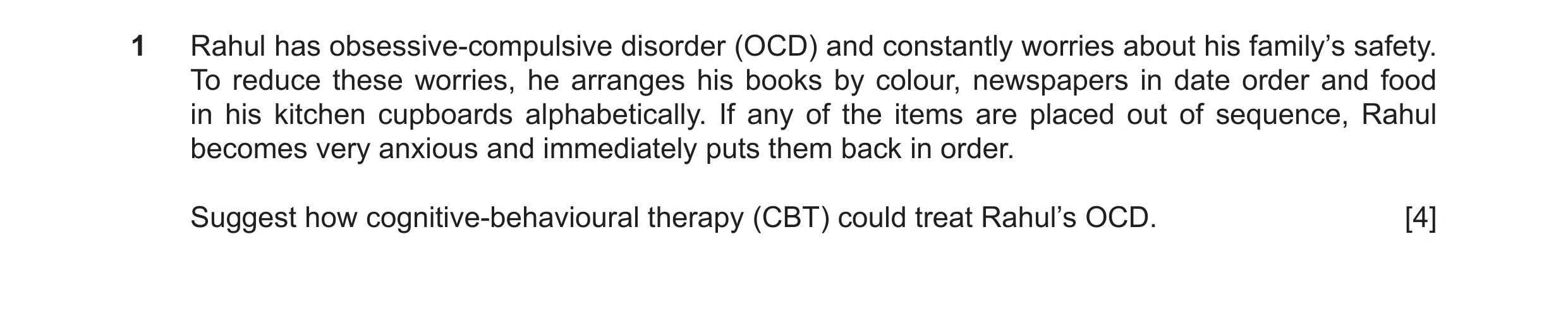
![Question 20: (a) For the treatment and management of obsessive-compulsive disorder (OCD): Describe SSRIs and exposure and response prevention (ERP). [6]…](https://img.pastlit.com/crops/0936810b-6075-4b2b-b0c6-c5e08199a719/q4.webp) 4 / 5
4 / 5![Question 21: (a) For the treatment and management of obsessive-compulsive disorder (OCD): Describe SSRIs and exposure and response prevention (ERP). [6]…](https://img.pastlit.com/crops/3243291a-af55-484c-b515-1f970209370f/q4.webp)

 5 / 5
5 / 5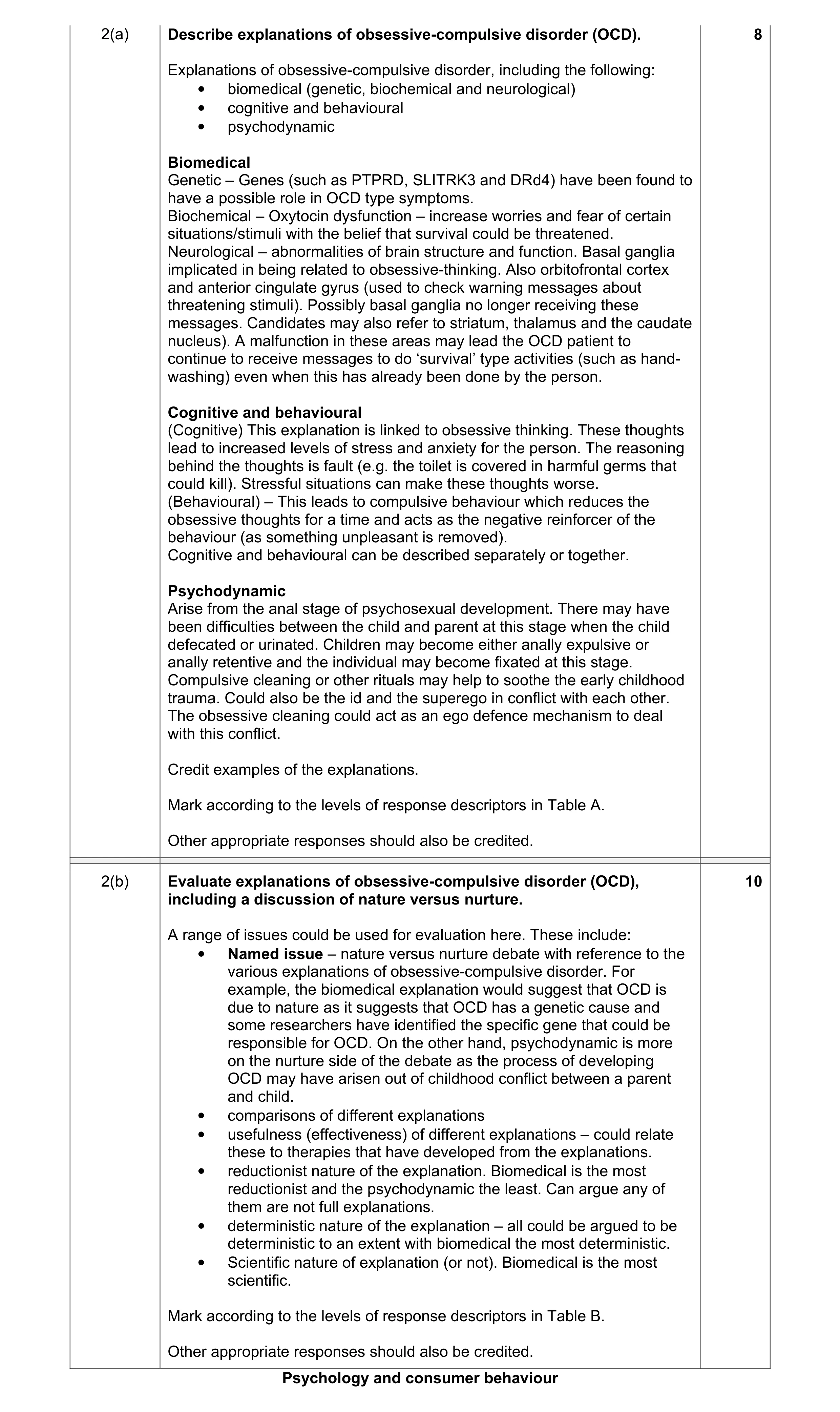 18
18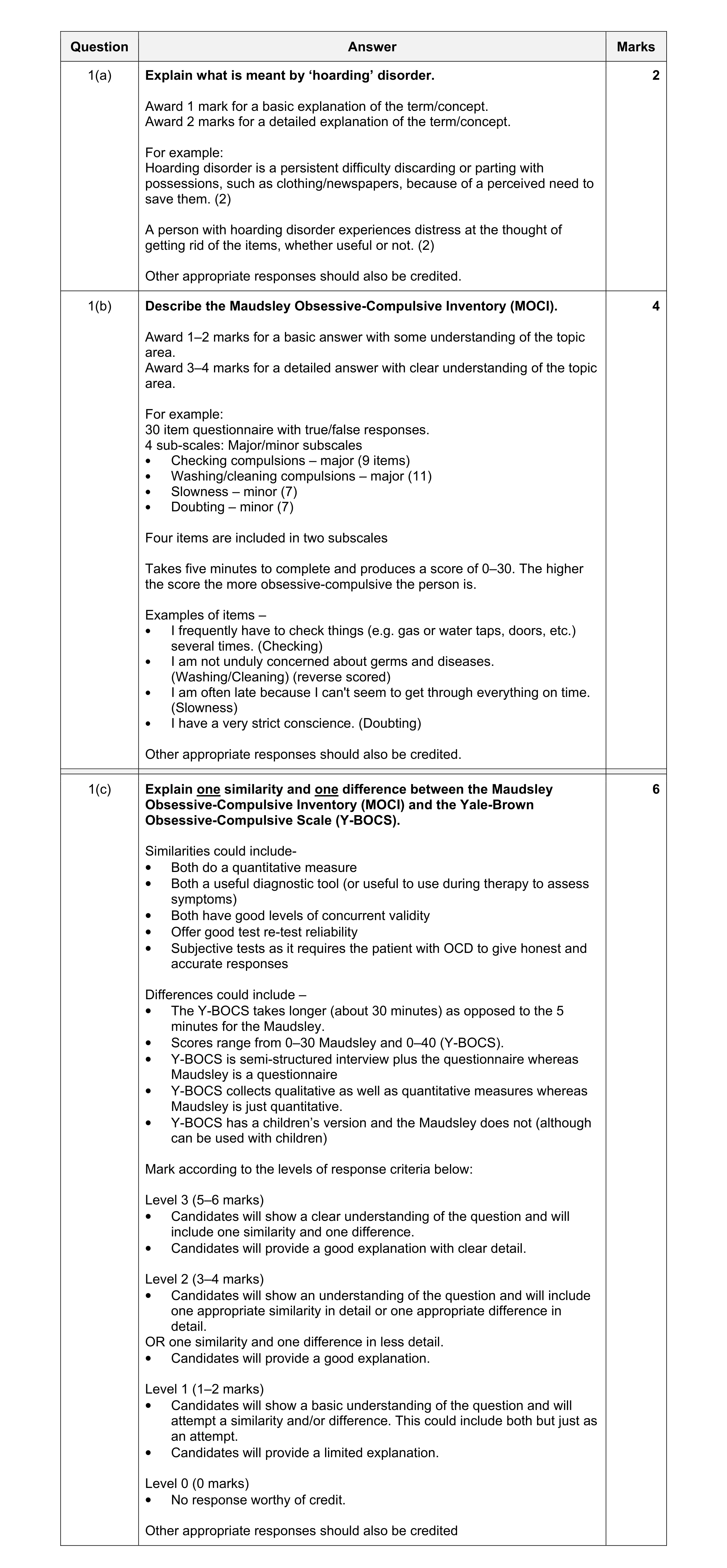 12
12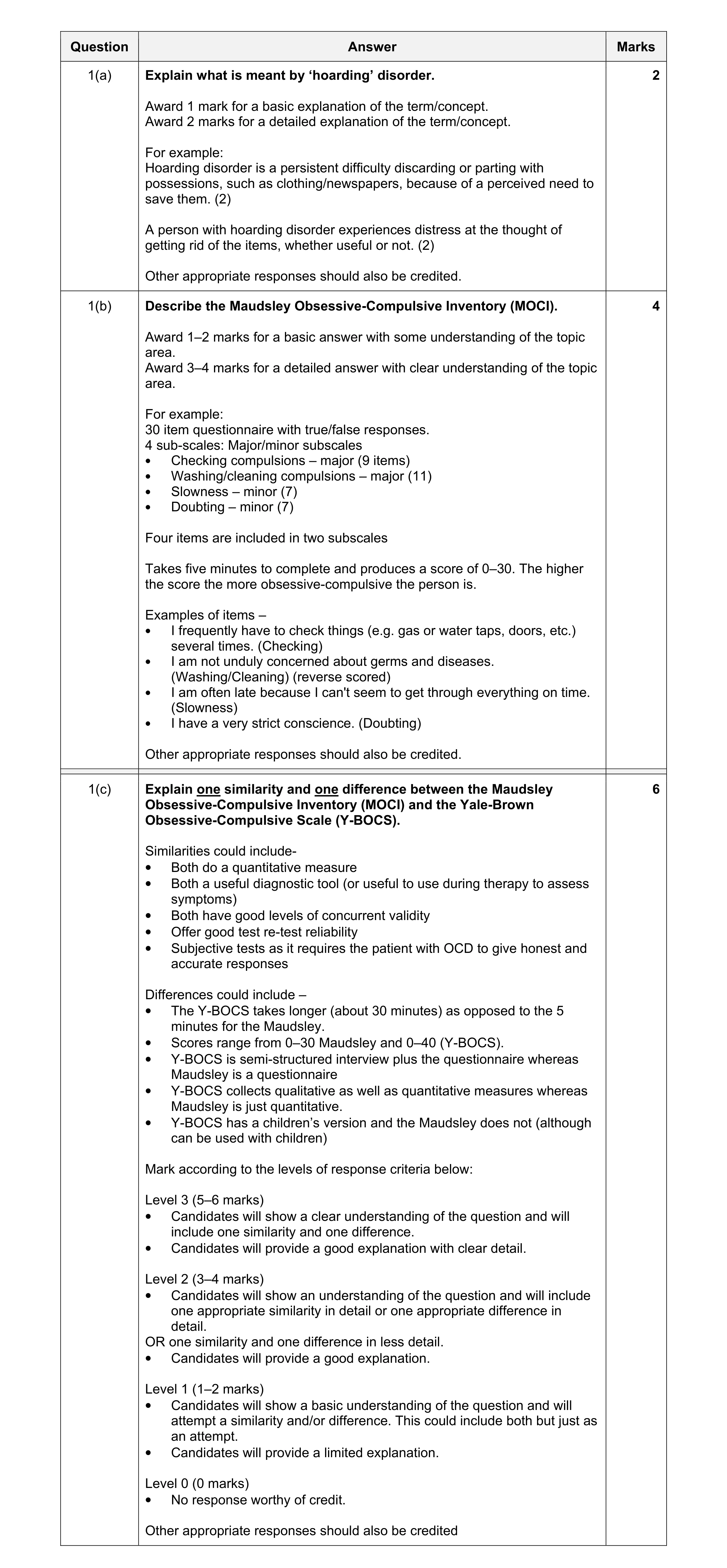 12
12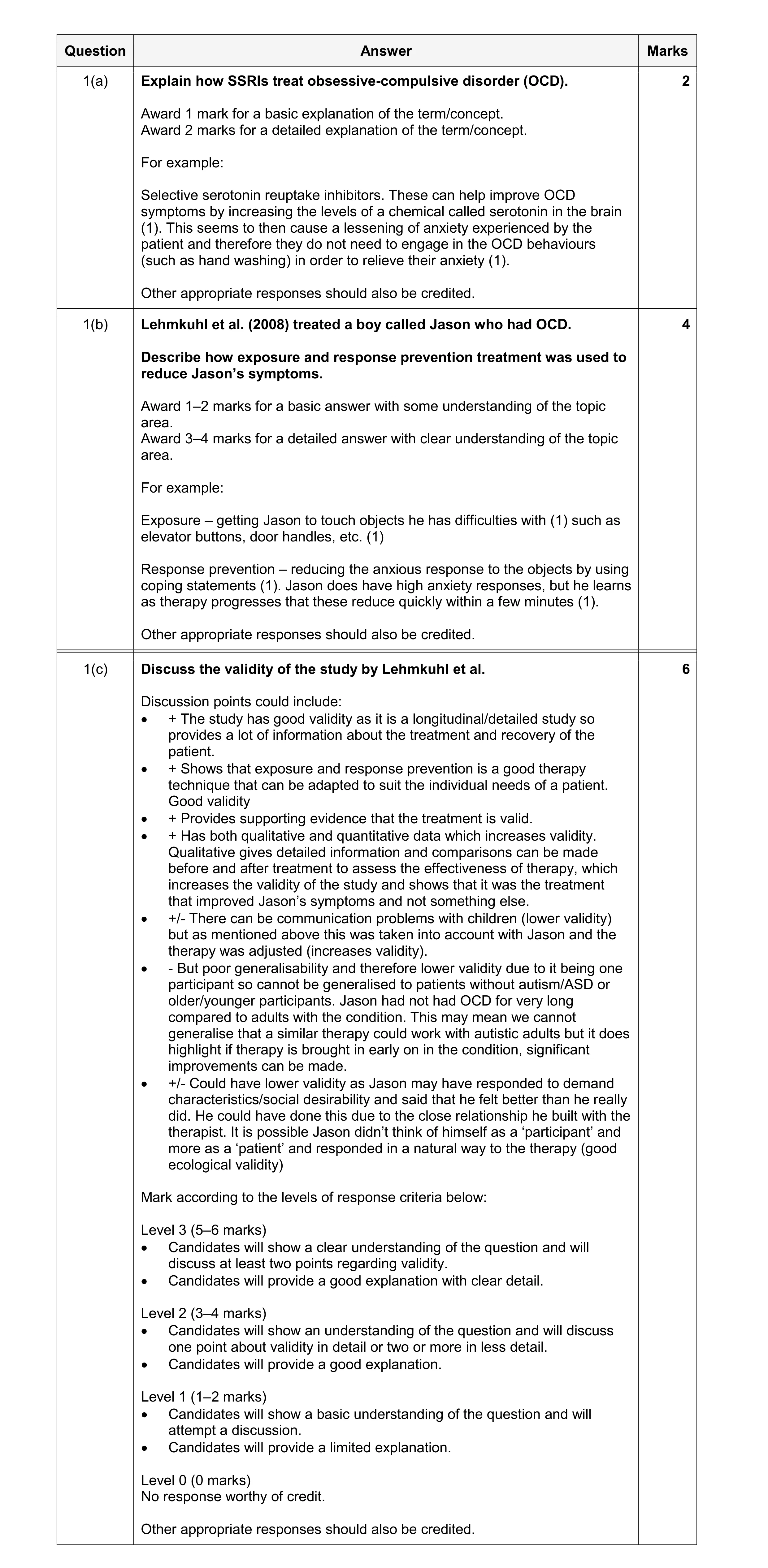 12
12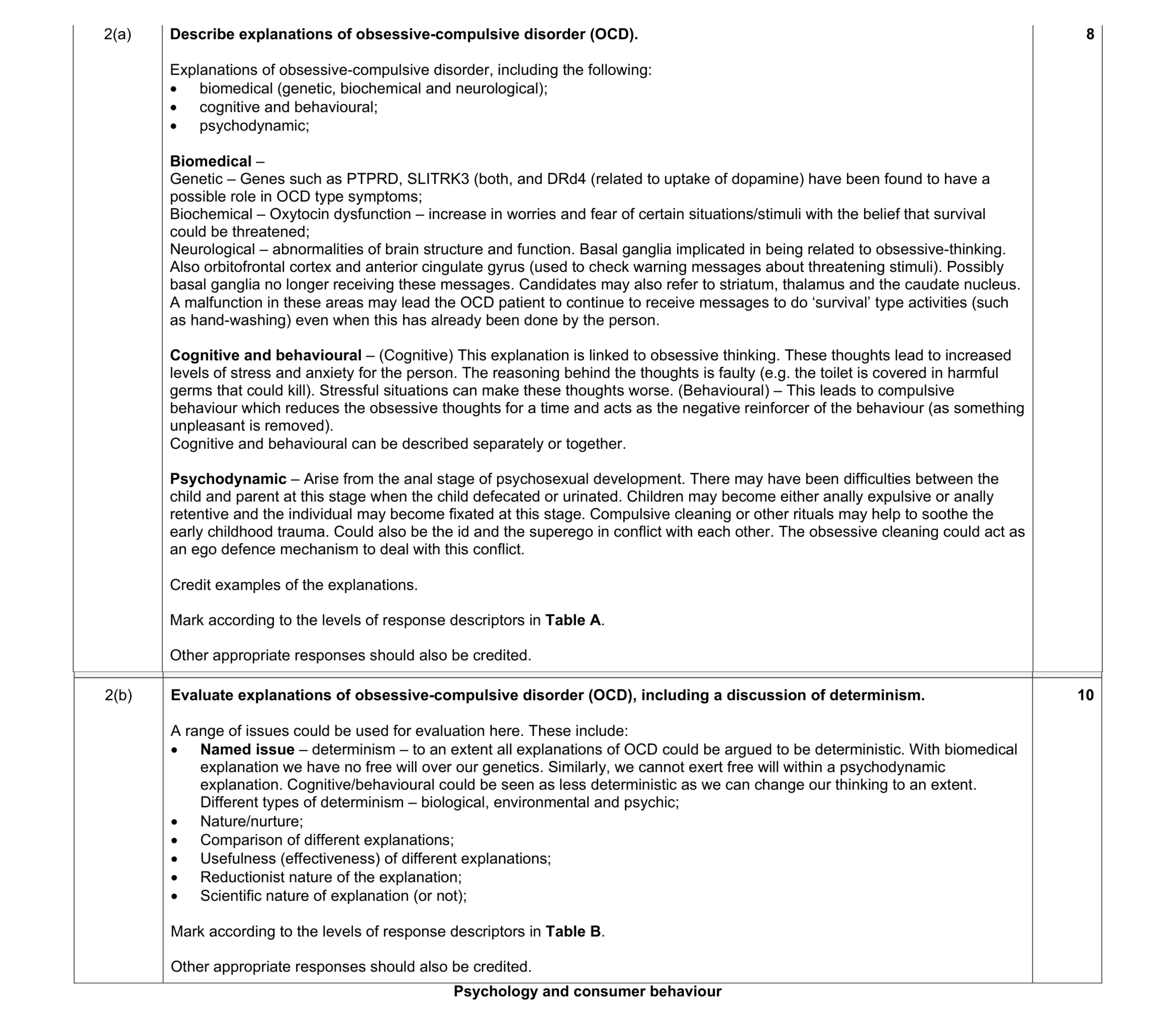 18
18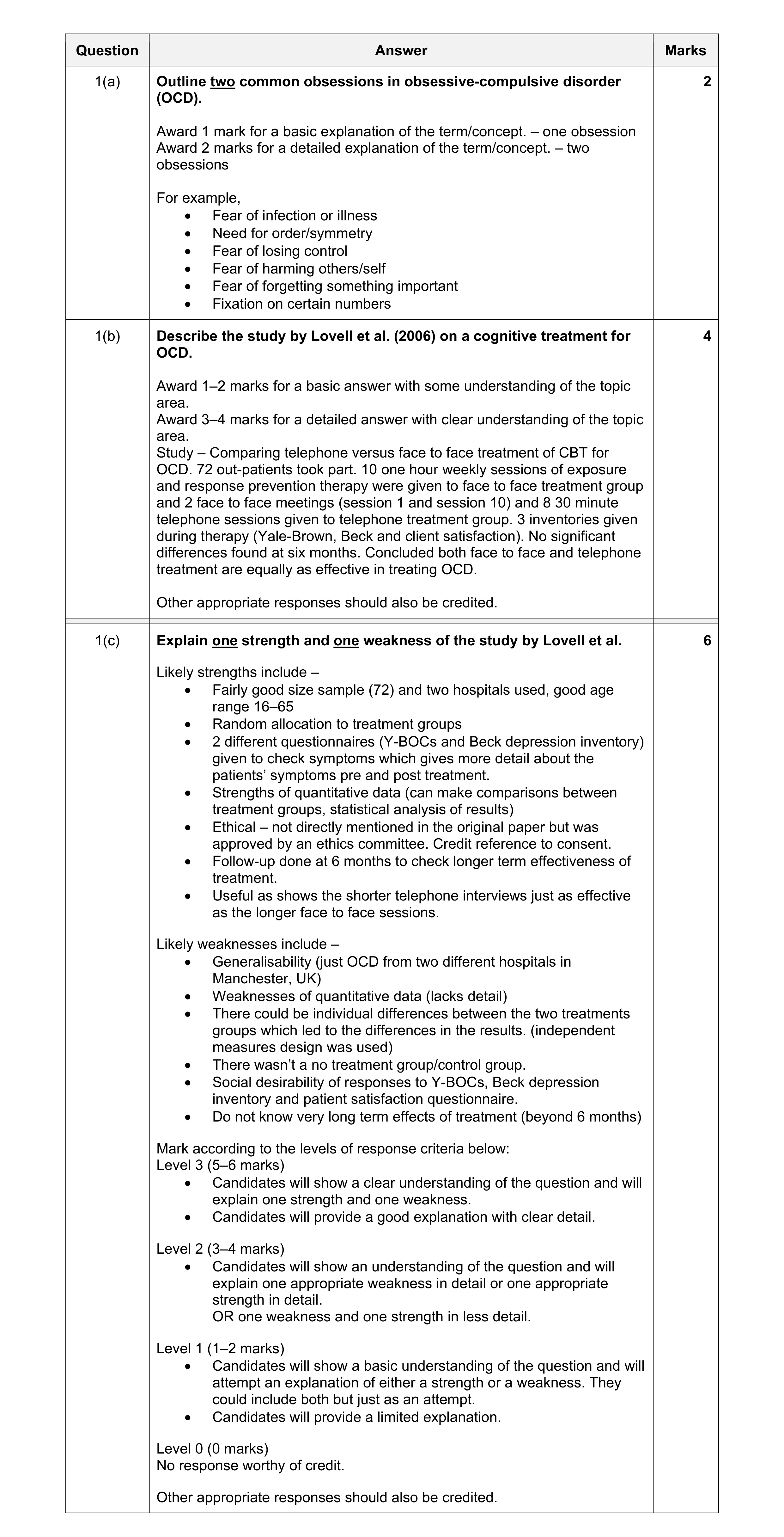 12
12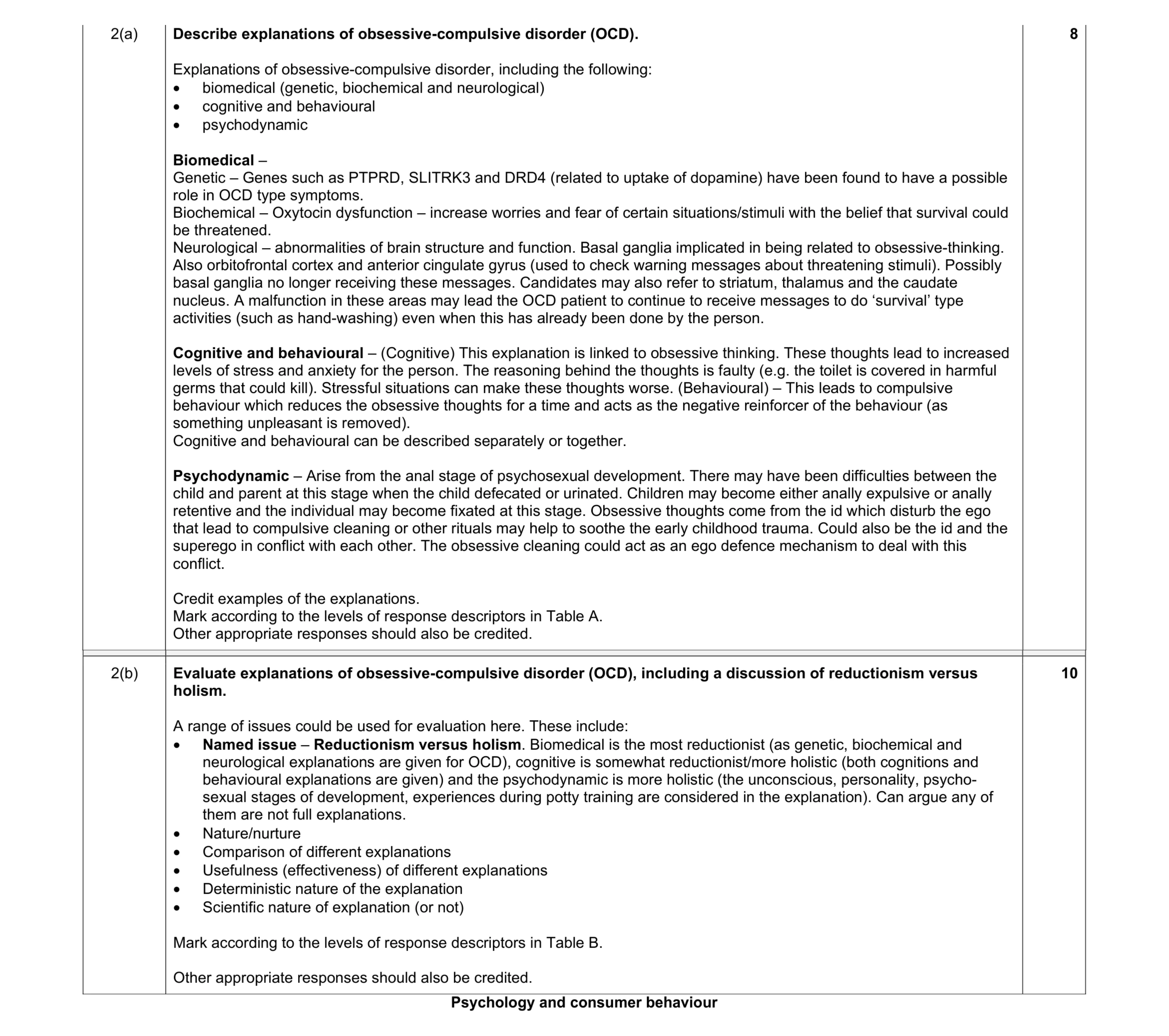 18
18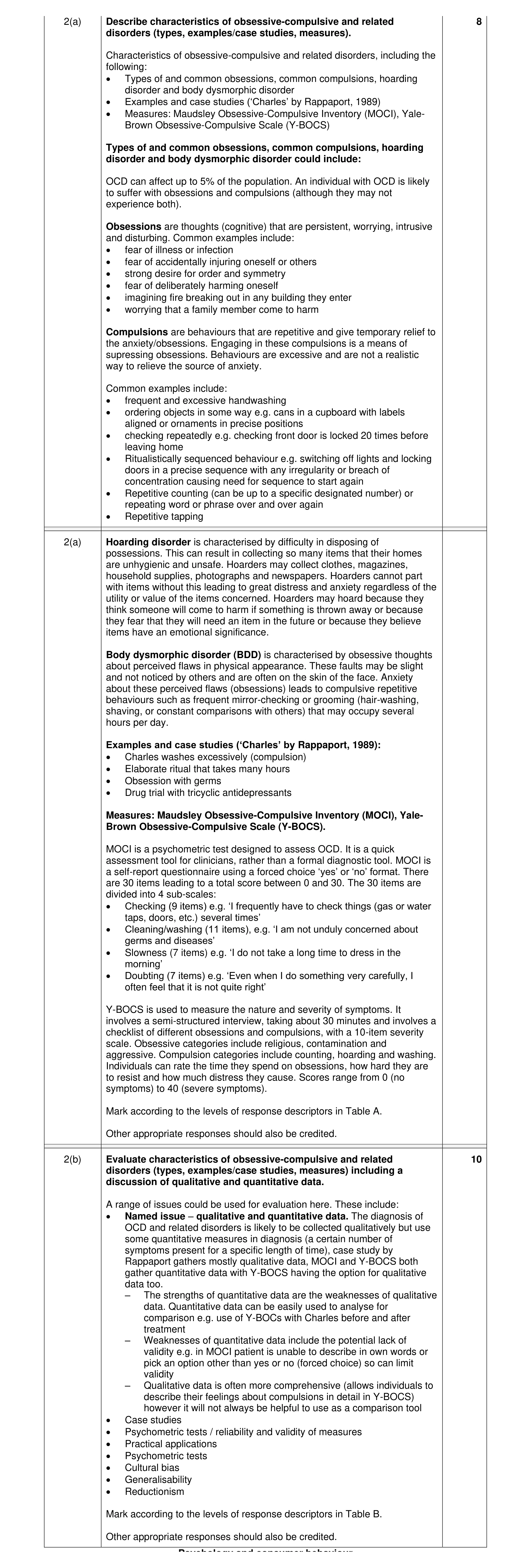 18
18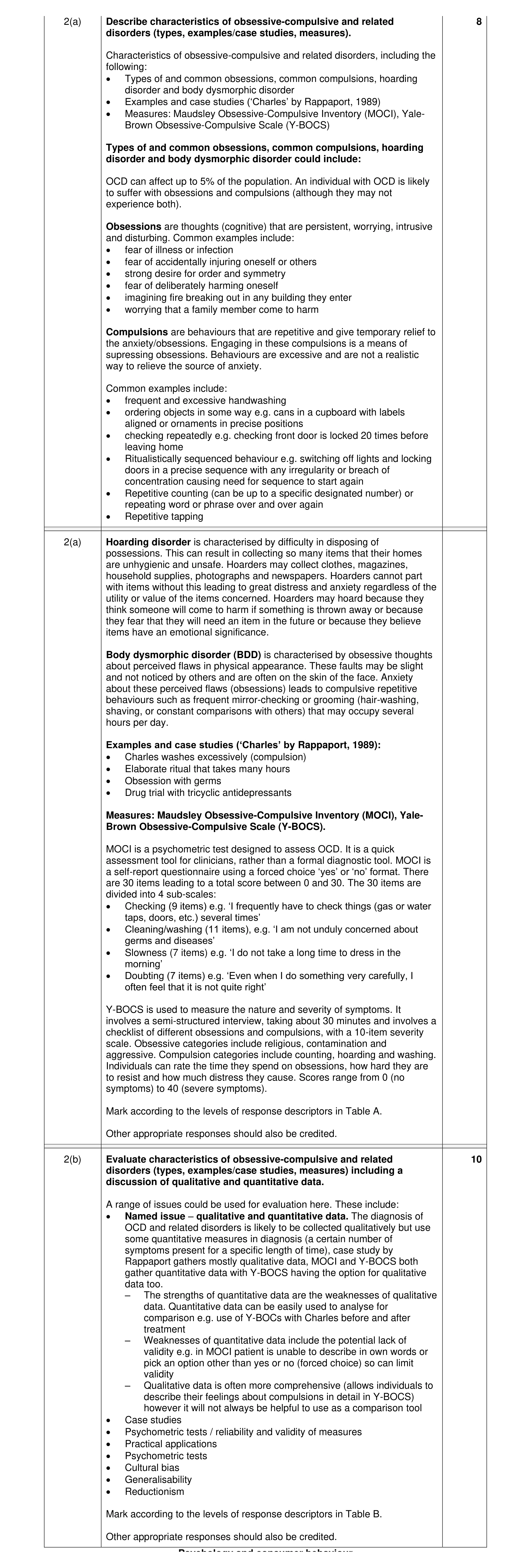 18
18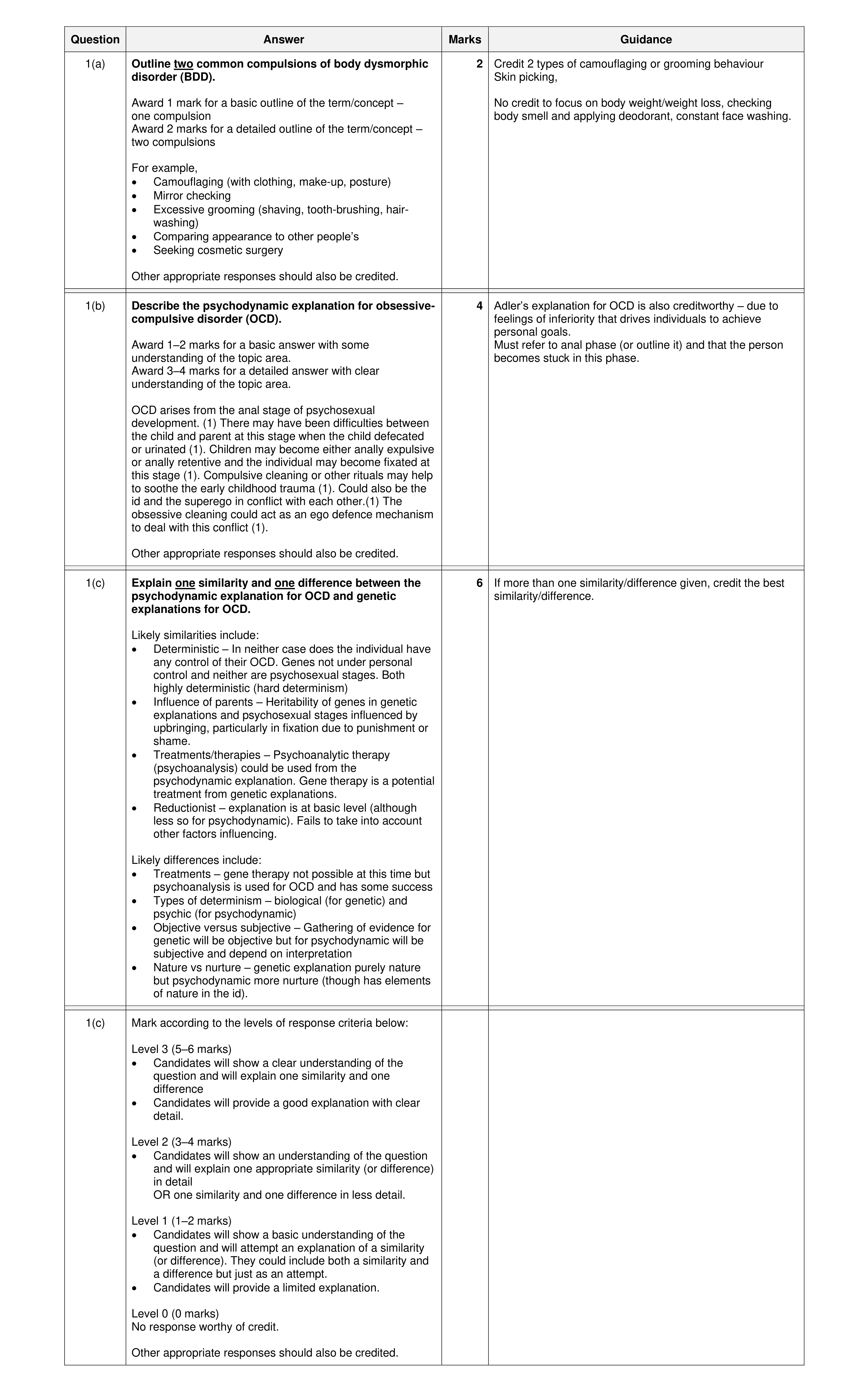 12
12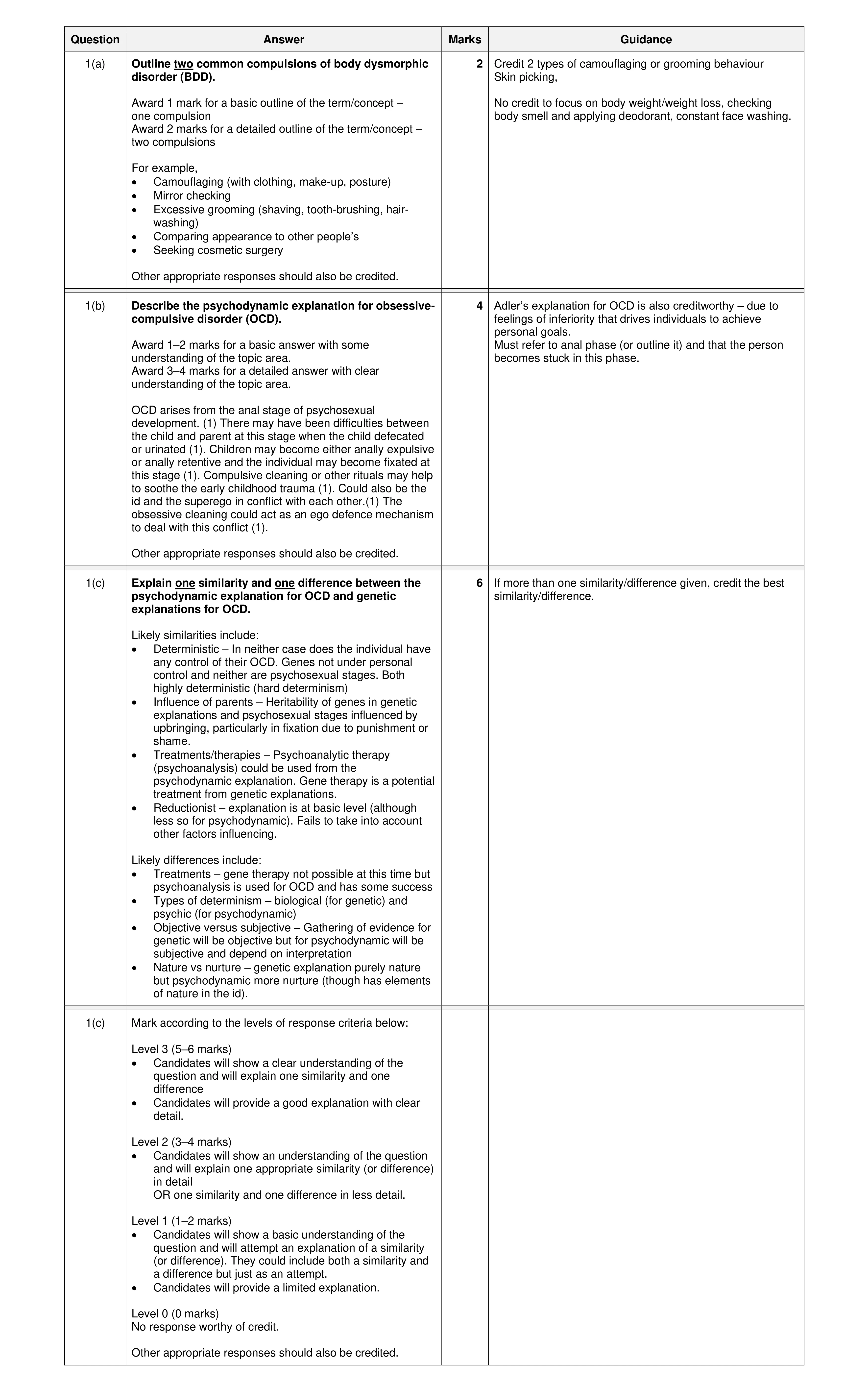 12
12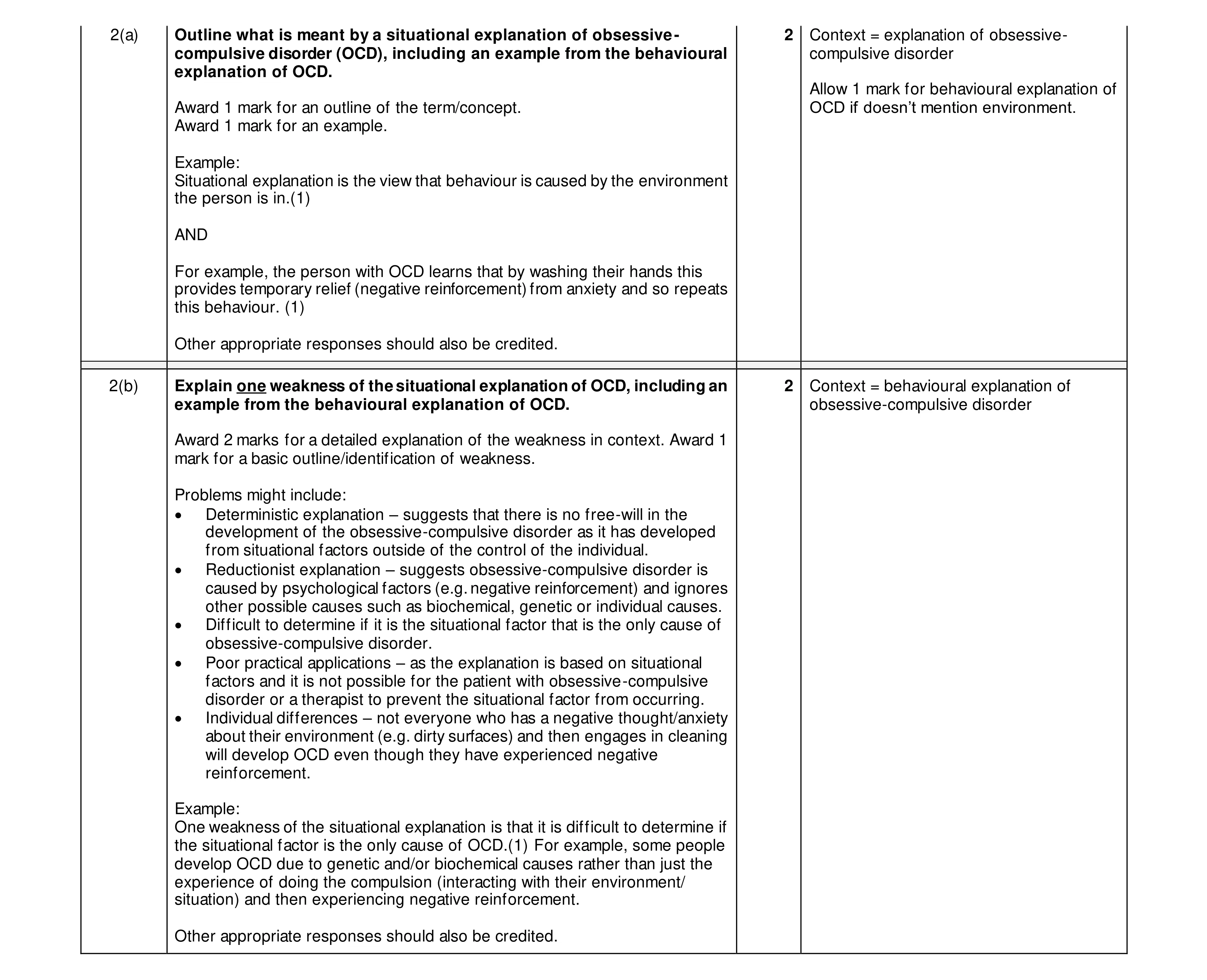 4
4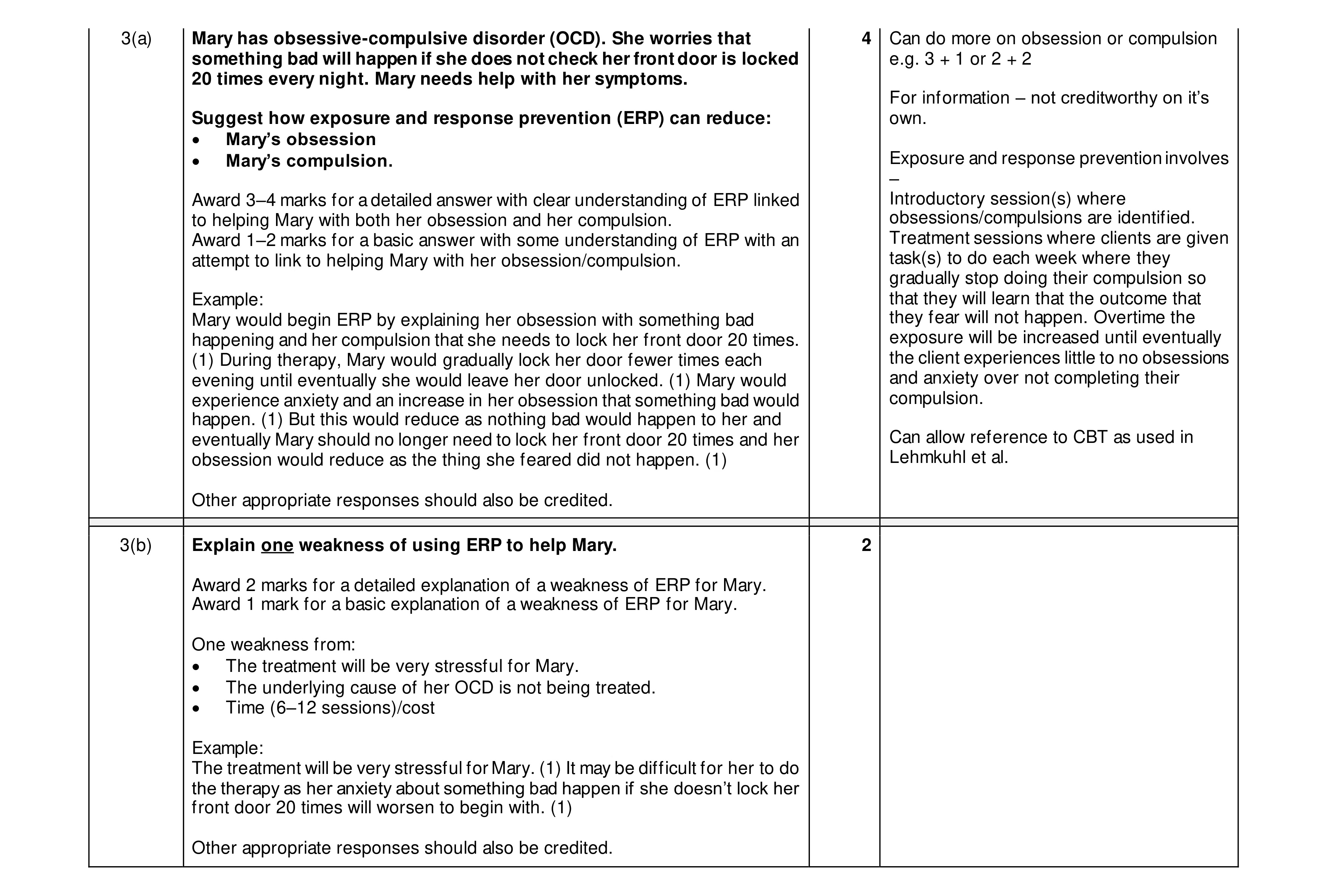 6
6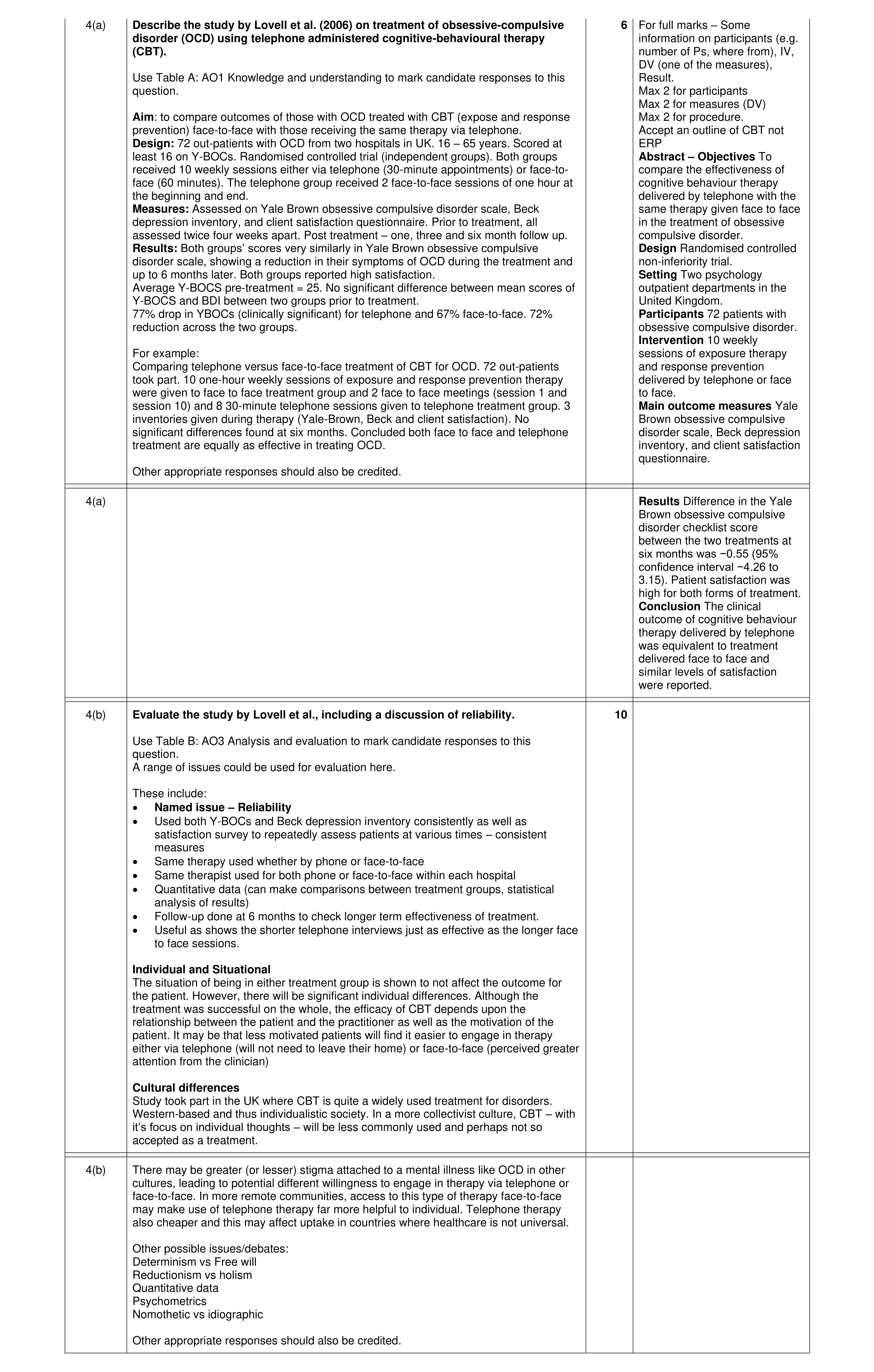 16
16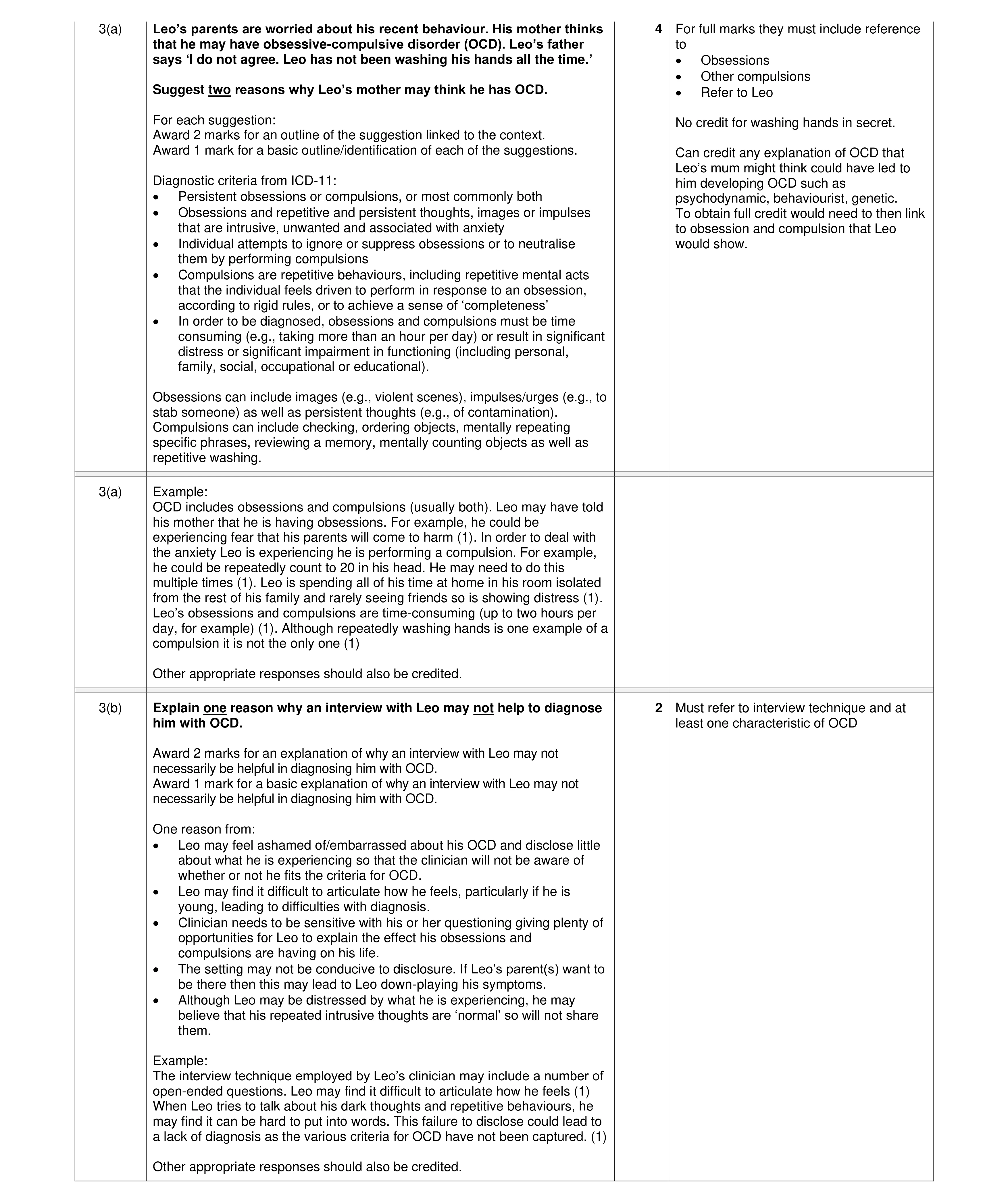 6
6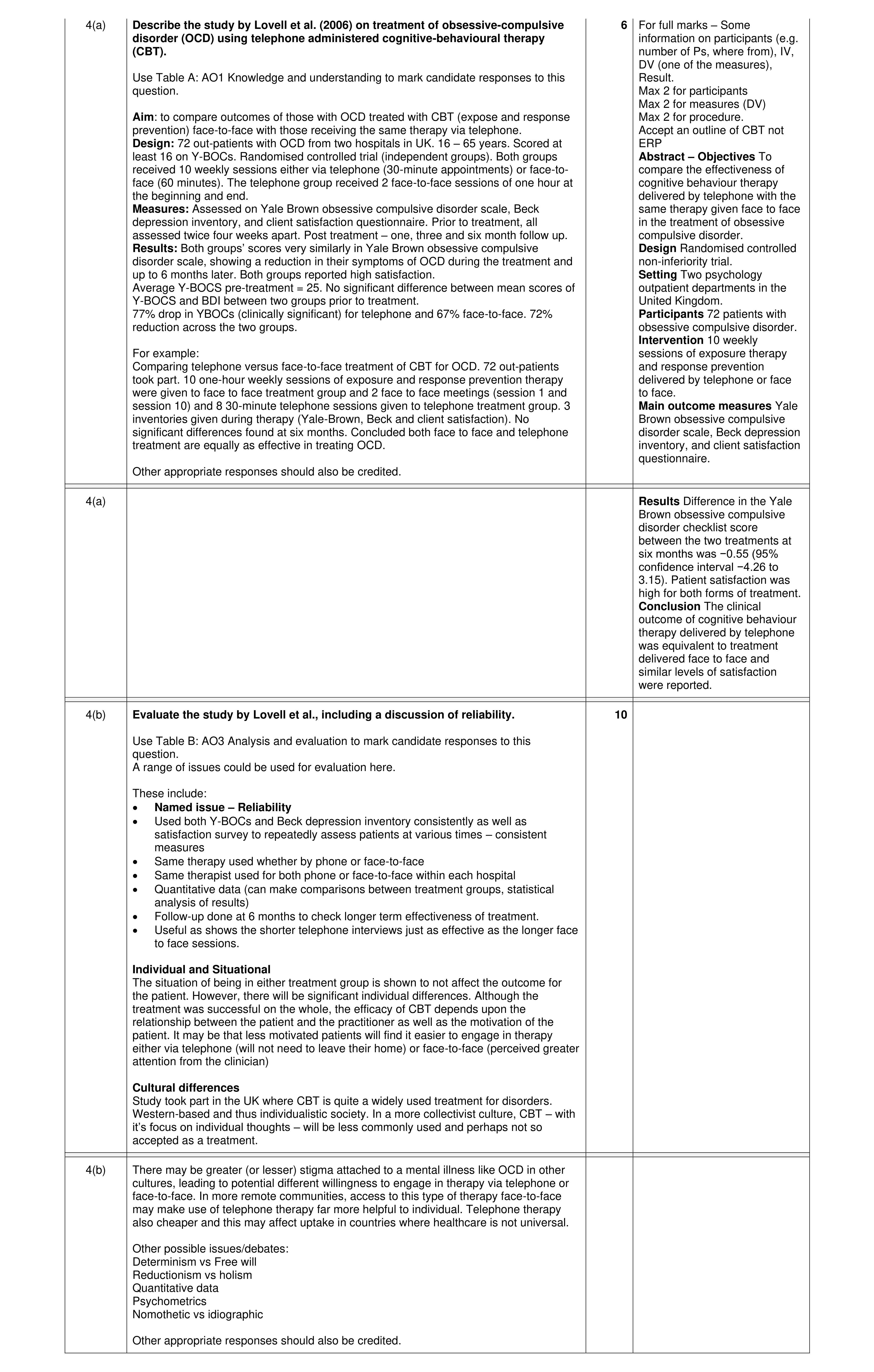 16
16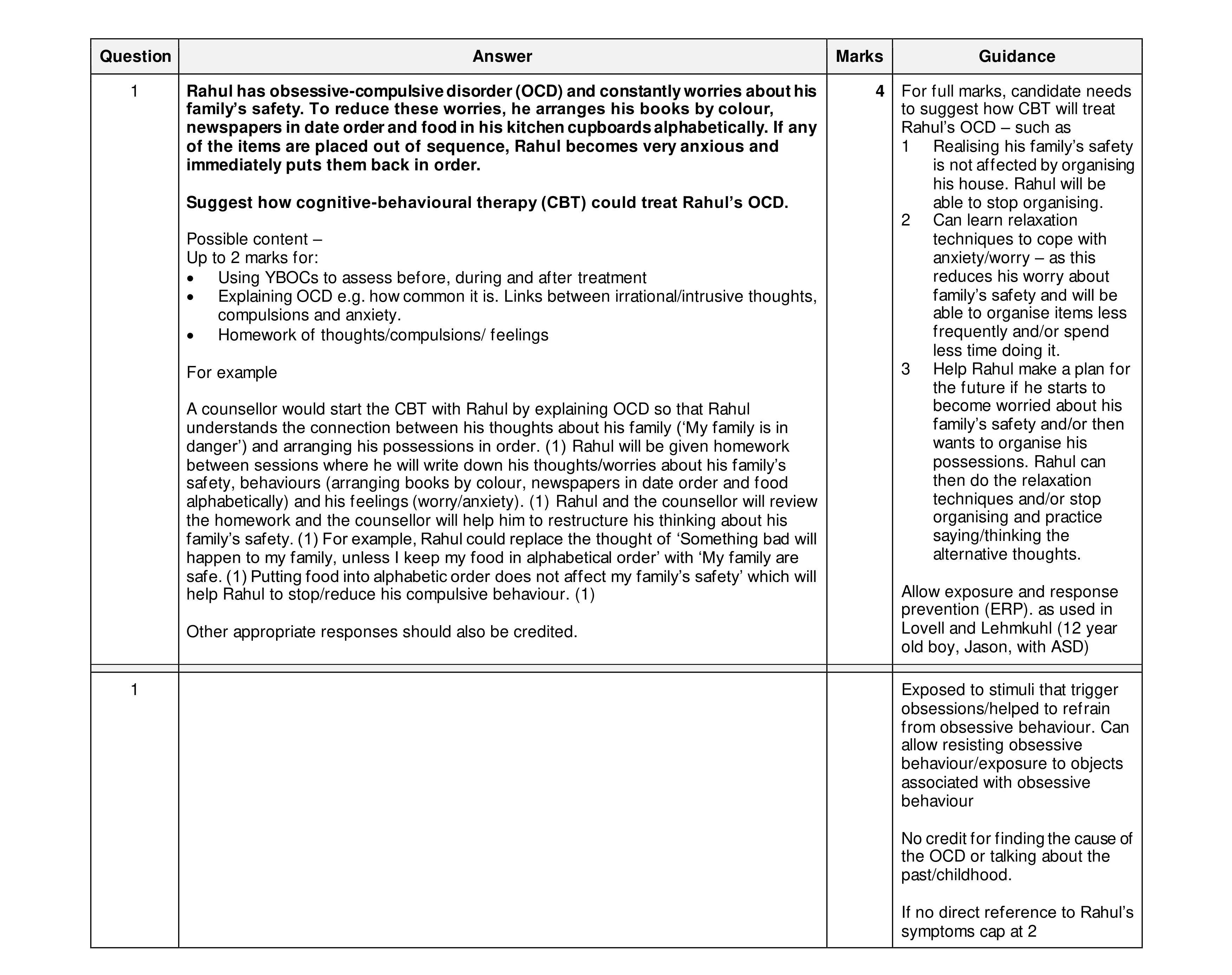 4
4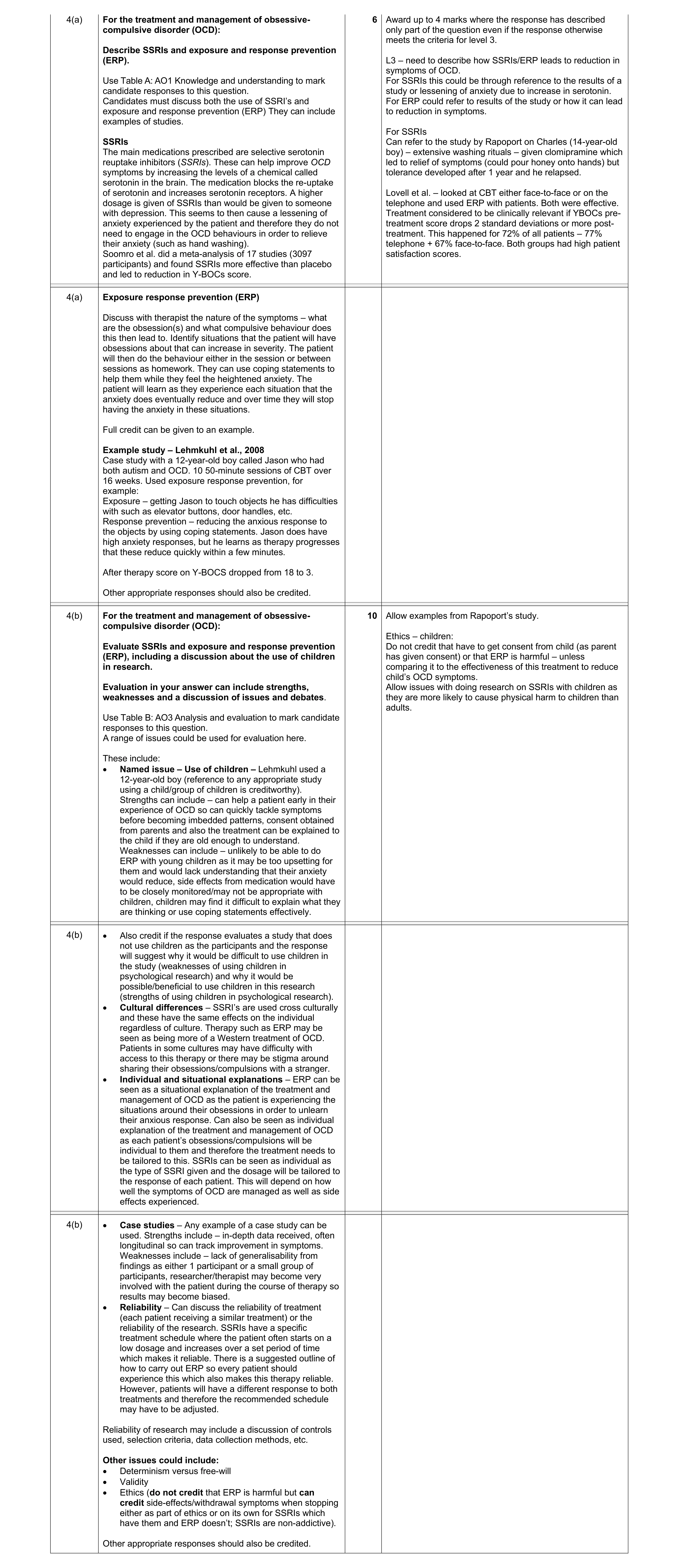 16
16 16
16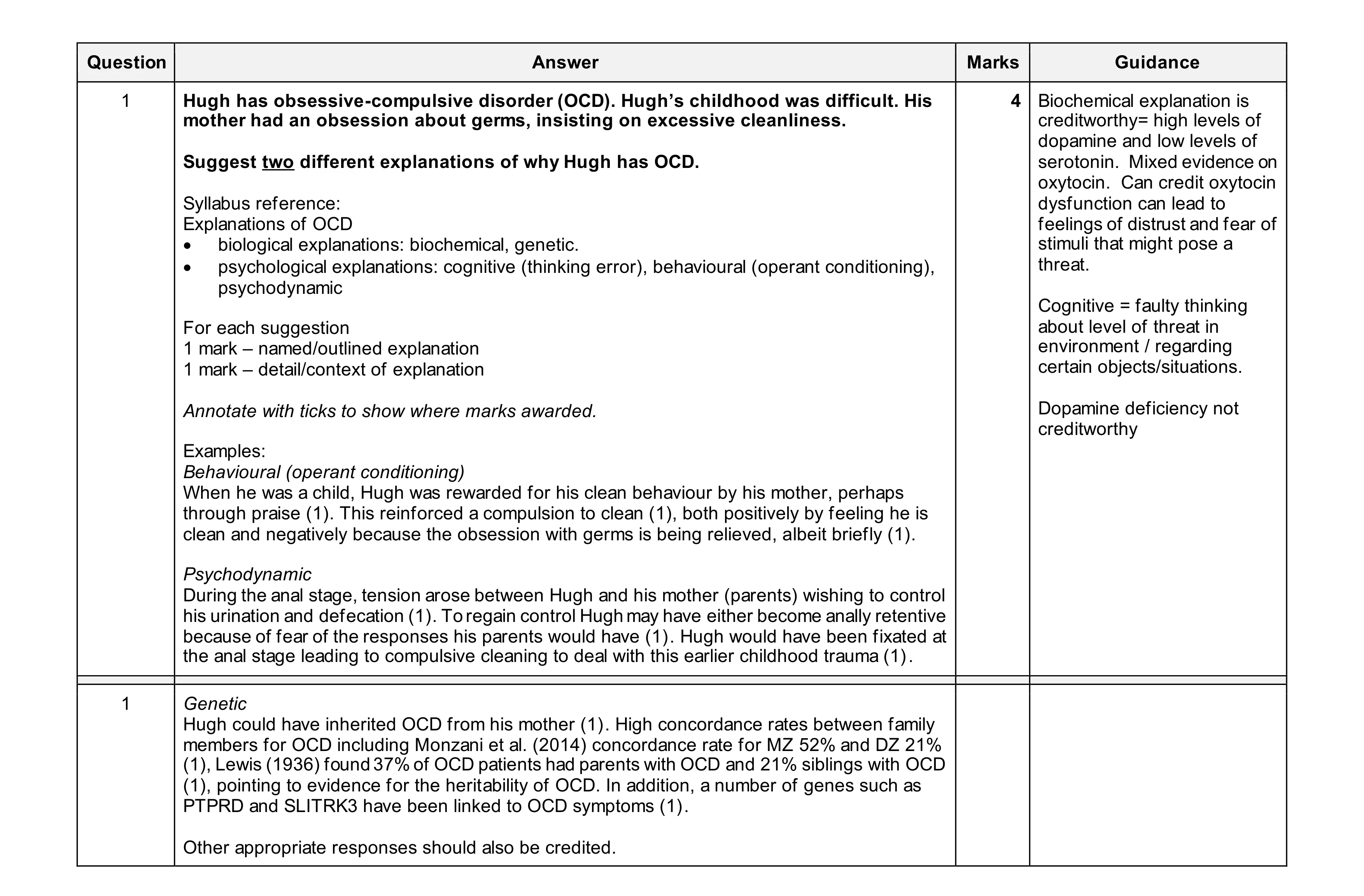 4
4 4
4