Questions as text
Q1 · Assess the reasons for the opposition to the Civil Rights movement in the Southern states… 9489/42 Feb/March 2021
5 Assess the reasons for the opposition to the Civil Rights movement in the Southern states in the 1950s. [30]
30 marks
Mark scheme: 5 Assess the reasons for the opposition to the Civil Rights movement in 30 the Southern states of the US in the 1950s. Factors might include resentment at changes emanating from North and from protests in the South; concerns about social and economic status. Historic traditions should be considered. White supremacy had a long history since the failure of Reconstruction in the 1870s and the gradual establishment of Jim Crow laws and restrictions on voting and political activity. The discrimination and racial control had had the backing of the Supreme Court and there had been little support for comprehensive civil rights legislation from either Congress or the Executive. White juries in the South were unwilling to convict for acts of violence against African Americans and while organisations ranging from the clandestine to the more overt acted against change in the years after the Second World War. Governors like Wallace and Faubus won popularity by opposing desegregation. Civil Rights activists found the South a dangerous place and Southern Senators and Congressmen were a powerful lobby against change. Reasons for this sustained opposition might be seen in terms of a reaction against developments which threatened change – the more active Civil Rights in the 1950s and the successes of the NAACP in mounting legal challenges against segregation; the pressure on governments to demonstrate during the Cold War that international criticisms of its own policy towards civil rights was flawed and the support of white liberals for moderate change. At root a minority of Southerners adopted a militant resistance to any change on the grounds that it threatened racial control. The deep-rooted view that without this control African Americans would be an economic, social and sexual threat went back to the 1860s or beyond. Years of unpunished violence, lynching and political discrimination in the form of ‘grandfather clauses’ which prevented black voting and the cooperation of courts, police and local government in abuse meant that there were high expectations that all change could be resisted successfully. The pace of change in post-war America left many feeling insecure about traditional ways of life especially in rural areas and small towns in the South so that opposition to civil rights was a form of opposition to modernisation. The feeling that Northern influence was impinging on the South was an important motive for opposition. Fears that without social control African Americans might be competitors remained strong and were exploited by racist leaders. However, opposition could take other forms than militant action, violence and political opposition to change. A generalised concern that social norms were being eroded and a lack of willingness to oppose white opposition in the form of Citizens organisations or the Klan activities might be explained by social conservatism – dislike of old certainties such as segregation, the subservience of African Americans and the patronising use of first names or nicknames for local blacks. There was a distinction too between those who were opposed to all change and those who opposed civil rights movements being imported from the North and trying to drive the pace of reform too quickly.
This question in 9489/42 Feb/March 2021
Q2 · Evaluate the effectiveness of Affirmative Action policies in the 1980s 9489/42 Feb/March 2021
7 Evaluate the effectiveness of Affirmative Action policies in the 1980s. [30]
30 marks
Mark scheme: 7 Evaluate the effectiveness of Affirmative Action policies in the 1980s. 30 Affirmative action produced some key legal changes that offered greater opportunity for minorities and seemed to go some way to meeting criticisms that civil rights progress had been limited to political change and had done little to meet economic and social inequality. In 1980 the Supreme Court accept that reasonable quotas were legal and that a federal law reserving 15% of public works to be reserved for qualified minority contractors. The opportunities for minorities were helped by Connecticut v Teal (1982) a Supreme Court decision making employers liable for race discrimination if selection procedures affected the opportunities of minorities disproportionally. Additionally, with deferral laws and the backing of the Supreme Court it could be argued that there was progress. There was an increase in the percentage of white-collar jobs held by African American men and women by the 1990s and a rise in physicians from 2.2 to 4.5% African American higher education professors doubled in the 1990s, attorneys rose 6 times and engineers 4 times. Therefore, Affirmative Action seemed to have had an effect on employment opportunities and its legality had been established. However, though there had been increases, the considerable inequality of representation of minorities in top positions and the professions remained. However, its success in being generally politically and socially accepted was less marked as Reagan actively opposed quotas and the Justice Department backed legal cases which challenged the principle of positive discrimination. By 1984 the Equal Employment Opportunity Commission was filing 60% fewer cases than it had in 1980 because of cuts in funding and political opposition. There was too a turn in the legal tide with the Wygant v Jackson Board of Education 1986 overturning the legality of a policy of a school board in laying off white teachers before non-white teachers to defend the employment of minorities.
This question in 9489/42 Feb/March 2021
Q3 · ‘The Black Power movement achieved little for African Americans in the 1960s and 1970s.’… 9489/41 May/June 2021
6 ‘The Black Power movement achieved little for African Americans in the 1960s and 1970s.’ Evaluate this claim. [30]
30 marks
Mark scheme: 6 ‘The Black Power movement achieved little for African Americans in 30 the 1960s and 1970s.’ Evaluate this claim. On one hand, it was claimed that the Black Power movement had lost crucial white support, which was a key factor in the Civil Rights Movement’s success. On the other hand, it encouraged greater self-awareness and a determination not to accept changes on the white establishment’s terms. The term ‘Black Power’ initially became popular from the mid-1960s, and its central concept can be defined as African American self-reliance, pride, and the right to self-defence against prevailing racism and violence. It stood against assimilation and reflected a long-standing tradition in the civil rights movement, which was revitalised in the 1950s and 1960s by the emergence of independent African states. Malcolm X, who achieved influence as part of the Nation of Islam movement in the 1950s until breaking away in 1964, was its most influential thinker. His Organization for African American Unity saw African Americans as members of a wider African political and cultural community, emphasising the importance of ending oppression both globally and within the US. Through the influence of SNCC activist Stokely Carmichael, who used the term ‘Black Power’ in 1966, and the Black Panther movement of Bobby Seal and Huey Newton, these ideas became prominent in the mainstream civil rights movement. After 1964, the radicalism and movement away from non-violence integration-based ideals reflected a frustration with the limitations of constitutional and political change. The Black Panthers combined social concerns with self-defence and carrying of weapons from their base in California. They were perceived as threatening and subversive, provoking a determined response from the authorities, changing the dynamic of the civil rights movement and eroding support from the white liberals who admired King and the struggles of the 1950s and 1960s. For more radical African Americans, King had simply reinforced the image of African American suffering. The discussion may include whether the rise in radicalism has prompted the US authorities to be more willing to meet moderate demands to avoid a crisis. There is also a view that the Black Power movement provided the impetus for reform in a variety of areas other than political change, such as the 1972 National Black Political Convention, which discussed progress in social and economic issues and helped to clarify and inform a variety of demands for change. As a result, defenders point to a growth in political awareness and encouragement for African Americans to push for reform. It could be argued that developments, such as Affirmative Action, black feminism, and social justice movements emerged from the more radical direction taken by the Black Power movement. Also, there are arguments for its impact on African American pride and cultural development – as reflected by the celebration of a distinct style of music, writing, art, language, and even cooking – paving the way for multiculturalism. On the other hand, radicalism was thought to have harmed the Civil Rights movement by denigrating the achievements since the 1950s, alienating support, and potentially led to isolation of African Americans. The established leaders, such as Wilkins of the NAACP, saw it was a mirror image of white racism and allowed political leaders to see reform as surrender to extremism.
This question in 9489/41 May/June 2021
Q4 · Evaluate the reasons why gender inequality continued to be a cause of concern in the 1980s 9489/43 May/June 2021
7 Evaluate the reasons why gender inequality continued to be a cause of concern in the 1980s. [30]
30 marks
Mark scheme: 7 Assess the reasons why gender inequality continued to be a cause of 30 concern in the 1980s. Factors might include the new wave feminism; limitations of progress; the context of social change in other areas. The failure to secure an Equal Rights Amendment and a conservative backlash against feminism meant that the large number of women who were participants in some form of women’s organisations by the late 1970s still had concerns despite the progress made. The progress in education did not mean an end to older attitudes and there were relatively few women in science and engineering courses which remained dominated by men. Fewer than 8% of engineers were women in 1990. Most women studied traditional ‘female subjects’ and went on to work in traditional ‘female occupations’, despite the changes brought about in the Second World War. Despite the achievement of political rights, there were limited numbers of women in the 1980s in decision-making positions either in a political context or in influential areas of economic life. The Equal Pay Act had been passed in 1963, but women were paid on average 32% less than men. There were indications of change with the first woman Supreme Court Justice in 1981, the first major diplomatic post going to a woman – Jeanne Fitzpatrick being ambassador to the UN and the first vice presidential candidate, Geraldine Ferraro in 1984 – but the isolated nature of these ‘landmarks’ drew attention to the general lack of progress. There were only two women senators by 1990. Wholesale changes in women holding government posts, having key roles in local and national government, or having equal pay had not come about by the end of the 1980s. Progress in attitudes by men had been made with the casual sexism of the 1950s and 1960s, giving way to more respect and more men being part of family life, but this was not universally established in the 1980s and there were considerable differences depending on region and social class. All this was a cause of concern, not only because of the situation itself, but because of the publicity and support for previous change and the development of new wave feminism, so achievements led to the desire for even more equality and set a precedent to demand changes. There could be a discussion about what were the most significant reasons for discontent and whether it was the disappointing results of change or the greater awareness of the need for change that was more significant.
This question in 9489/43 May/June 2021
Q5 · ‘The Stonewall Riots of 1969 were a turning point for Gay Rights.’ Discuss this view 9489/42 Oct/Nov 2021
6 ‘The Stonewall Riots of 1969 were a turning point for Gay Rights.’ Discuss this view. [30]
30 marks
Mark scheme: 6 ‘The Stonewall Riots of 1969 were a turning point for Gay Rights.’ 30 Discuss this view. The Stonewall riots took place in Greenwich village in New York in June 1969. The term describes clashes between police and gay men and women using the bar following a police raid. The disturbances continued over several nights and attracted a considerable amount of publicity. Police raids were common but this particular one brought about accusations of brutality and harassment and aroused a lot of sympathy in the US and widespread press coverage. The new element was the resistance to police actions. There had been the development of gay organisations such as the Mattachine Society in Los Angeles in 1950 and the lesbian Daughters of Bilitis in San Francisco in 1956 but in terms of influencing opinion or resisting intimidation these groups had had limited impact. The Stonewall Riots attracted far more publicity and led to a much more widespread organisation called the Gay Liberation Front and then the Gay Activists Alliance which had a specific strategy to establish and protect gay rights. The greater activism was shown by the first Gay Pride marches in major cities, New York, Chicago and San Francisco. It has been argued that the 1970s saw an improvement in the rights and confidence of the gay community as a result of Stonewall. However, legal restrictions and hostility did persist and same sex marriage was not legal in all states until 2015. There might be a discussion about whether the earlier campaigners and those who stood against homophobia in the McCarthy era were more of a turning point or alternatively whether the AIDS epidemic did more to develop solidarity and sympathy. However, for many Stonewall was on a level with other key turning points in civil rights.
This question in 9489/42 Oct/Nov 2021
Q6 · ‘Eisenhower’s domestic policies failed to improve the lives of most Americans.’ Discuss… 9489/42 Feb/March 2022
5 ‘Eisenhower’s domestic policies failed to improve the lives of most Americans.’ Discuss this view. [30]
30 marks
Mark scheme: 5 ‘Eisenhower’s domestic policies failed to improve the lives of most 30 Americans.’ Discuss this view. The Eisenhower years saw considerable growth of prosperity for some Americans, with more consumer spending, suburban development, full employment and business confidence. For other groups there was uneven progress in civil rights and pressure to conform in the face of Cold War anxieties. Ike’s form of Republicanism did not jettison government economic intervention, or commitment to full employment in pursuit of uncontrolled free enterprise. The Department of Health, Education and Welfare were created and there was low-income housing, an increase in minimum wage and more social security. There were also public works which boosted employment like the Interstate Highway programme of 1956 building 41 000 miles of roads. These contributed to pollution and urban deterioration though. Ike vetoed Democrat Congressional spending however public expenditure still rose through the period of his presidency. The defence programmes played a major role here but Ike himself became concerned with the growth of the ‘military industrial complex’ and the power of large corporations. Despite turndowns 1953–54; 1957–58 and 1960 business confidence, consumer demand, and deferral spending maintained economic growth, while high levels of unemployment and low costs kept inflation controlled. Despite a 45% rise in personal income, inequalities continued with 1 in 5 Americans living in poverty by the end of Ike’s terms in office. African American migrants to Northern cities and many in rural America hit by more mechanised farming, did not share in the prosperity. The administration did not target poverty, and the culture of the US equated it with failure to grasp opportunities. The first years of the presidency saw a failure to restrain McCarthy and the ongoing anti-Communist rhetoric, but Eisenhower played a part in reducing this after 1954. Ike too was concerned about radicalism and was reluctant to promote Civil Rights but, though not endorsing the Brown decision, he did not shirk from sending in federal troops to Little Rock. In general, progress remained slow in desegregation, but Eisenhower did set a precedent for using federal power to enforce Federal law in the South, for the first time since Reconstruction. This encouraged the Civil Rights movement to continue to act within the law. However, when public schools were closed in Alabama to prevent integration, Ike did not take action. Only 6% of African Americans attended desegregated schools in 1963. A Civil Rights Act of 1957 tried to address the restriction on voting, but there was limited progress and a later attempt in 1960 had only modest effects.
This question in 9489/42 Feb/March 2022
Q7 · Assess the reasons for the growth of the Black Power movement 9489/42 Feb/March 2022
6 Assess the reasons for the growth of the Black Power movement. [30]
30 marks
Mark scheme: 6 Assess the reasons for the growth of the Black Power movement. 30 The Black Power movement was a more militant ideology which urged a separation from white America, rather than integration, and was less concerned with non-violent means to achieve political goals. It has its origins in movements more concerned with African American cultural roots and self- reliance. Richard Wright’s book of 1954 ‘Black Power’, linked struggles in the USA with the contemporary struggles for African independence and opposition to colonialism. Black Power owes a lot to influential figures like Elijah Mohammed who pursued these ideas, and to radicals like Malcolm X, Stokely Carmichael, and Huey Newton. The context in the US was a movement among urban black Americans in Northern cities with a different experience from the more rural Southern states, and the strong religious influences of the Baptist churches. When it was clear that Congress could block or weaken legislation proposed by the NAACP, and that the prosperity of the 1950s was not percolating through all of US society, the acceptance of suffering at the hands of white authority, and the attempt at alliance with white liberals, and the hopes from legal means and processes followed by the NAACP, all came under challenge. New radicalism was also fuelled by the international context of decolonization and the inability of white colonizers to maintain control in Africa and Asia, the gap between concerns about freedom and democracy threatened by communism, and the lack of freedom and democracy at home. Support from younger Americans was important with the SNCC and CORE moving away from traditional Civil Rights outlooks. Disappointment with the Civil Rights progress and greater concern for social and economic change led to the formation of the Black Panthers. The hostility of police and the threat from white resistance drove some African Americans to take up arms. There could be a discussion between the relative importance of key individuals and the developments both within the US and in the wider world.
This question in 9489/42 Feb/March 2022
Q8 · Assess the reasons for Eisenhower’s electoral successes in the 1950s 9489/42 May/June 2022
5 Assess the reasons for Eisenhower’s electoral successes in the 1950s. [30]
30 marks
Mark scheme: 5 Assess the reasons for Eisenhower’s electoral successes in the 1950s. 30 Eisenhower had a strong military reputation and had not committed himself to either party before 1952 so could be seen as somehow above politics. Stevenson, though urbane and experienced, lacked popular appeal in 1952. Eisenhower inspired confidence with his plain talk, reassuring smiles, and heroic image. He kept a demanding schedule, traveling to forty-five states and speaking to large crowds from his campaign train. The slogan "I like Ike" quickly became part of the political language of America. Eisenhower also got his message to the American people through 30-second television advertisements, the first time TV commercials played a major role in a presidential election. Yet it was not just Ike's personal charm that mattered, his campaign used a clever strategy of ignoring Stevenson—Eisenhower never mentioned his opponent by name—and attacking Truman. And Eisenhower had a formula for victory—K1C2 (Korea, Communism, and corruption). The stalemated war in Korea, corruption in the Truman administration, and Communist subversion were the issues that Republicans emphasised throughout the campaign. In the context of fears of Communism this was effective. By choosing Nixon as a running mate Ike offered a combination of statesmanlike non-partisanship and political experience. Ike was careful not to let his dislike of McCarthy, then popular and influential, show. Eisenhower’s offer to go to Korea to end the war was also popular. In the event Ike won 55% of the popular vote and secured an overwhelming victory making inroads into the South. In 1956 Ike was associated with prosperity. Again Nixon was popular with the Republicans. Again Stevenson was an ineffective opponent who struggled to find issues. Eisenhower played on Stevenson’s supposed pro Soviet sympathies in supporting a nuclear test ban. Two foreign policy issues helped the President – Suez in which he stood aloof from unpopular British actions and the Hungarian revolt which gave rise to anti-Soviet feelings which played to his advantage. He increased his share of the popular vote and built on support in the South, even attracting black voters. A discussion could be sustained over the relative importance of his personal appeal and favourable political circumstances.
This question in 9489/42 May/June 2022
Q9 · Evaluate the impact of the American Indian Movement 9489/42 May/June 2022
6 Evaluate the impact of the American Indian Movement. [30]
30 marks
Mark scheme: 6 Evaluate the impact of the American Indian Movement. 30 Candidates might offer some insight into the aims of AIM in order to reach a judgement about impact. Any reference to the 20 Points might be helpful. The American Indian Movement could be seen as significant in bringing some of the aims and strategies of the Civil Rights Movement to bear on the discontents of Native Americans. It originated in Minnesota in 1968 led by community activists George Mitchell, Dennis Banks, and Clyde Bellecourt to aim to draw attention to discrimination and the poor quality of life among Native American communities. The response to high unemployment, slum housing, racism was common to other civil rights movement. But there was also protest about broken treaty rights and lost tribal land which gave another dimension. The attempt to develop knowledge and consciousness of the Native Americans by the K-12 Heart of the Earth Survival School in 1971 could be seen as significant in developing the movement. There was also the Broken Treaties March on Washington in 1972 ending in an occupation of the Bureau of Indian Affairs. Another element of significance was the hostility of the authorities fearing a parallel with the radicalism of Black Power. In 1973 the Movement under Russell Means took over the community of Wounded Knee which led to a 71-day siege by FBI agents, 2 deaths and 1200 arrests. Significant in arousing sympathy – the trials led to acquittals, the occupation marked the high point and the movement, harassed by the authorities, and internally divided declined in the 1980s. There might be comment about the extent to which AIM managed to draw attention to the plight of Native Americans without achieving great changes by the end of the 1970s.
This question in 9489/42 May/June 2022
Q10 · Evaluate the reasons for the rise of the religious right in the 1980s and early 1990s 9489/42 May/June 2022
7 Evaluate the reasons for the rise of the religious right in the 1980s and early 1990s. [30]
30 marks
Mark scheme: 7 Evaluate the reasons for the rise of the religious right in the 1980s and 30 early 90s. Though having roots in religious conservatism before the late 1970s the term refers to a loose network of religious groups and organisations emphasising family values, supporting supply side economics and anti- Communist foreign policy. They saw moral and religious decline and opposed materialistic trends in US life. The movement was loose enough to attract people from different religious backgrounds often with fundamentalist views at odds with their official protestant institutions. The movement was a reaction against social and cultural developments and changes in the law and politics. Roots lie in the Fundamentalist opposition to modernism, conservative distrust of the New Deal and the impact of the Cold War and fear of political movements advocating civil rights and social change. Inspiration came from charismatic evangelism. Also influential was a swing of conservatism from Democrats to Republicans. In the so-called Sunbelt there were considerable changes of population growth and destabilising social change as Americans emigrated from dense, industrialised urban centres in the North and Northeast to the South and Southwest. The federal government’s post–Second World War subsidisation of homeownership and the decentralisation of urban areas helped fuel the rise of the major urban areas such as Los Angeles, Phoenix, Houston, Dallas, Atlanta, and Raleigh–Durham. Further, complex patterns of de- and re- segregation facilitated by African American migration to Northern Just as racial tensions peaked in the 1960s and populations shifted from cities and the country to the suburbs, changes in the manufacturing and service sectors of the economy dramatically altered the ways Americans worked. These shifts led to changing roles for minorities and women in a labour force once dominated by white males. As a consequence of these demographic changes, domestic social concerns displaced previous worries about foreign communism. New issues concerning women’s roles in the domestic sphere and the labour force made many Americans uneasy. Further concerns raised by the sexual revolution, the widespread availability of birth control, and countercultural movements of the 1960s seemed to undermine the very nature of the American family. Roe v Wade raised worries about abortions. Carter despite his Baptist background disappointed hopes for a moral reawakening. 7 The rise of federally unregulated cable and satellite television technologies created incentives for religious broadcasters to develop innovative uses of electronic and broadcast media. By the 1970s journalists and scholars had dubbed this new religious programming the ‘electronic church’ and its pioneering media personalities ‘televangelists’. Modern marketing techniques helped religious pressure groups who were exercised about legal changes and a general swing to the right with Reagan and concern about economic problems and Cold War issues encouraged pressure groups. Explanations might balance and prioritise contextual factors such as social and economic change with the influence of key individuals and groups.
This question in 9489/42 May/June 2022
Q11 · Assess the impact of multiculturalism in the United States in the 1980s and early 1990s 9489/43 May/June 2022
7 Assess the impact of multiculturalism in the United States in the 1980s and early 1990s. [30]
30 marks
Mark scheme: 7 Assess the impact of multiculturalism in the United States in the 1980s 30 and early 1990s. In 1900 the US had 87% of its population as white but by the 1990s non- Hispanic whites made up 75%. In 1900 most non-whites were Southern blacks but by the 1990s there was much greater racial diversity with Hispanics and Asians and a growth in Native American population. Predictions for the mid-21st Century were that Hispanics would be roughly 25% and Blacks, Asians and Native Americans 25%. But in the 1990s, the term ‘minority’ usually refers to four major racial and ethnic groups: African Americans, American Indians and Alaska Natives, Asians and Pacific Islanders, and Hispanics. The issue is how far multiculturalism had an impact in changing US society or whether this was essentially a white culture with limited acceptance of different alternative ethnic cultures and lifestyles, One impact was the greater socio-economic diversity with the number of minorities in the highest income brackets doubling in the 80s and 90, for example, yet minorities still account for a disproportionate share of the poor. In terms of political representation more minority politicians were elected to public office. More minorities gained graduate and professional degrees, yet a disproportionately large percentage failed to high school. The image of minorities did not always represent progress, they were often seen as dangerous and criminal and forming a much larger proportion of the population than was the reality. In 1997 blacks were 10–15% of the population but widely believed to be 30%. Though Hispanics made up 9% of the US they were commonly believed to make up 20%. There was often not enough knowledge of different cultures to facilitate developed multiculturalism partly because of the very uneven ethnic spread with Maine, New Hampshire, Vermont and West Virginia having only a non-white population of less than 5%. Some areas had a 50% non-white population. The limited media presence of minorities in the mainstream TV and cinema did not help. However, minorities have also become more diverse socioeconomically. The growth of the African American, Hispanic, Asian, and American Indian populations did change the racial and ethnic makeup of the country’s schools, workplaces, and communities. Many businesses targeted their products to specific minorities as an expanding market. Aspects of black, Hispanic, Asian, and Native American culture–including art, food, music, and styles of dress–were adopted throughout American society. Opinion polls showed that many white Americans believed that racial discrimination was uncommon. Yet there was continued discrimination against racial and ethnic minorities in employment, housing, criminal arrests and prosecutions. Prison populations contained a disproportionate number from ethnic minorities. In the 1990s, there were racial riots in Los Angeles, the burning of African American churches in the South, and attacks on individuals. However, there was far less ethnic violence in the US than in many countries with minorities. Problems persisted into the new century, but the racial violence of the post-war years lessened and there were more indications of multiculturalism. Just how far the impact of multiculturalism could be seen as transforming US society can be debated.
This question in 9489/43 May/June 2022
Q12 · ‘Individual Civil Rights leaders were more effective than Civil Rights organisations in… 9489/41 Oct/Nov 2022
5 ‘Individual Civil Rights leaders were more effective than Civil Rights organisations in promoting progress for African Americans in the 1950s.’ Assess this view. [30]
30 marks
Mark scheme: 5 ‘Individual Civil Rights leaders were more important in promoting 30 progress for African Americans in the 1950s than Civil Rights organisations.’ Assess this view. Indicative content As the oldest and most recognised civil rights organisation in the United States, the NAACP work locally and nationally "to ensure the political, educational, social, and economic equality for all, and to eliminate racial hatred and racial discrimination. During the civil rights movement, the NAACP helped to integrate public schools in the South through the Brown v. Board of Education court case. Local chapter secretary of the NAACP, Rosa Parks, refused to give up her seat on a segregated bus in Montgomery, Alabama. Her actions set the stage for the Montgomery Bus Boycott. However, the local NAACP had been planning a challenge before Rosa Parks precipitated it, but the subsequent campaign was a result of strong local organisation. The boycott became a springboard for the efforts of organisations such as the NAACP, Southern Christian Leadership Conference (SCLC), and the Urban League to develop a national civil rights movement. CORE was established by James Farmer Jr., George Jouser, James R. Robinson, Bernice Fisher, Homer Jack, and Joe Guinn in 1942. None achieved their fame of better-known individuals like King. The organisation was founded in Chicago and membership was open to ‘anyone who believes that all people are created equal’. The organisation applied the principles of nonviolence as a key strategy. The organisation developed and participated in national campaigns of the civil rights movement such as the March on Washington and Freedom Rides. The SCLC was established in 1957 following the success of the Montgomery Bus Boycott. Unlike the NAACP and SNCC, SCLC did not recruit individual members but worked with local organisations and churches to build its membership. The SCLC sponsored programs such as Crusade for Citizenship, citizenship schools as established by Septima Clark, and voter-registration drives. It was associated with Martin Luther King. Agreeing with the statement might involve looking at the significance of individual leaders on both a national and local level and the obvious focus is King for the development of the non-violence strategy, the moral strength derived from his Baptist ministry and the links with white progressives and the publicity gained from marches and the organisation of the bus boycott. Disagreement might be based on the solid work done by the organisations both nationally and locally, especially perhaps the NAACP and the importance of the organisations in raising awareness of issues and in mobilising African Americans behind the Bus Boycott and in support of educational desegregation.
This question in 9489/41 Oct/Nov 2022
Q13 · Assess the effectiveness of the response by US authorities to the AIDS epidemic 9489/41 Oct/Nov 2022
7 Assess the effectiveness of the response by US authorities to the AIDS epidemic. [30]
30 marks
Mark scheme: 7 Assess the effectiveness of the response by US authorities to the AIDS 30 epidemic. Indicative content AIDS was widely seen as an epidemic by 1979, but limited federal action was taken. Federal health spending was cut, and Reagan and the Republicans’ supporters were unsympathetic to ‘a gay plague’. It was largely due to activist pressure groups that AIDs was seen as a disability eligible for Medicaid. There was more success in getting local government support for AIDS sufferers e.g. at San Francisco. Not until the end of 1985 did the federal Government take a more active role when Reagan acknowledged the scale of the problem and a coordinated federal response began to relieve the pressure on cities. There was a special commission – the Watkins Commission on the issue and in 1987 the Department of Health launched a campaign of information to help with control and prevention. There was cooperation between States and the federal government to notify outbreaks. When a new drug ATZ became available Congress allocated $30m to help states acquire it and offer treatment to help poorer sufferers. Though seemingly progressive, the official response was hampered by the Helms Amendment of 1988 requiring all federally funded programmes to recommend abstinence and impeded information by restricting any approval of homosexual behaviour. Under George H. W. Bush HIV/AIDS activism led to discrimination against HIV-positive citizens becoming illegal. The passage of the Ryan White Comprehensive AIDS Resources Emergency (CARE) Act in 1990 saw new agencies, organisations and funding structures that allowed localities to provide health care and prescription drugs, as well as transportation, case management and other supportive services, to needy HIV patients. AIDS patients gained protection under the 1990 Americans with Disabilities Act (ADA), the Housing Opportunities for People with AIDS Act became a critical programme for those with HIV/AIDS and helped demonstrate the power of housing programmes to improve their health Clinton created the role of National AIDS Policy Coordinator. From 1995 to 2001 yearly increases of between 9.7 and 15.5 per cent in federal spending on HIV/AIDS, for a total increase of 73 per cent, or $4.87 billion. Although a vaccine has proved elusive, Clinton initiatives helped make it a major focus of scientific effort. So, it could be argued that conservative hostility meant support was initially limited and even when the authorities addressed the problem it still impeded progress. There could be a discussion about the relative importance of the impact of pressure groups and campaigns. State and city authorities and the Federal government
This question in 9489/41 Oct/Nov 2022
Q14 · ‘The 1950s were a period of limited change for women.’ Discuss this view 9489/42 Oct/Nov 2022
5 ‘The 1950s were a period of limited change for women.’ Discuss this view. [30]
30 marks
Mark scheme: 5 ‘The 1950s were a period of limited change for women.’ Evaluate this 30 view. Indicative content The growth of suburbs and the post war pressure for priority in work to go to men returning from war led to a retreat from some of the war time changes. The focus of suburban culture was the family and women were often seen as homemakers and child-rearers first and foremost. The upside was a life style which offered more leisure with frozen food, supermarkets to cut shopping time, more domestic appliances and cheap fuel for more and more cars. The downside was a feeling of restriction and side-lining. The bored and unsatisfied housewife was written about a lot and it seemed that progress had been lost. However, there was a gap between image and reality. Twice as many women worked in 1960 as in 1940 and there was a growth in married women working from 15% to 30%. The proportion of black women working was higher than white. Also, many women had activities outside the home as volunteers and active members of all sorts of organisations. They were represented in all the professions if not equally. Though pressured by mass culture (advertising, consumerism TV and cinema) to accept stereotype gender roles as housewives or pin ups, many women reacted against this and took an active part in protest and in subverting the sexist image. In some cases individual resentments formed the basis of later feminist movements in the 1960s. Others offered models of academic or artistic attainment. Educational opportunities for women continued to be offered even if qualifications did not lead to higher level job opportunities. The Kinsey Report (1953) revealed that women did have an active interest in sex that was shocking to many. Others played a vital role in grassroots political organisations such as Rosa Parks. The discussion might be where conformism and suburbia pushed women back or whether there were important developments under the surface which led to later demands for greater equality. It would be possible to make a distinction between affluent white suburban life and less affluent rural areas and the experience of black, Hispanic and Native American women.
This question in 9489/42 Oct/Nov 2022
Q15 · Assess the significance of the 1964 Civil Rights Act for African Americans 9489/43 Oct/Nov 2022
6 Assess the significance of the 1964 Civil Rights Act for African Americans. [30]
30 marks
Mark scheme: 6 Assess the significance of the 1964 Civil Rights Act for African 30 Americans. Indicative content The Civil Rights Act of 1964 ended segregation in public places and made employment discrimination illegal. Johnson saw the 1964 act as doing more for Civil Rights than anything in the previous hundred years and Southern resistance was broken down in the backlash from Kennedy’s assassination and in the teeth of Southern Democrat opposition. King spoke of a ‘second emancipation’ The Act banned segregation in all places of public accommodation – courthouses, parks, restaurants, theatres, sports grounds, hotels. It also barred employment discrimination and set up an Equal Employment Opportunity Commission. Federal funding for any programme which involved discrimination was prohibited. The Office of Education was to assist with school desegregation. Unequal application of voting requirements was forbidden – something strengthened in a separate act of 1965. Subsequent legislation in 1968 banned discrimination in the sale, renting or financing of property. The Act met many of the demands of Civil Rights campaign in the ending of legal discrimination and fulfilled Kennedy’s plan. It showed African Americans that the resistance of white Southern Democrats could be broken down and it was the most significant advance in legal changes since the Reconstruction period. However, racial tensions did not disappear overnight, and Johnson was disappointed by the Watts riots and the wave of unrest. Political radicalism, too, did not end with the growth of Black Power. The hostility of local police authorities and the big gap between white and black prison numbers continued, Economic inequality and discrimination in employment and representation in the media and professions continued to be issues for concern. The disproportionate losses of black GIs in Vietnam highlighted ongoing inequality and the gap between ending legal segregation and achieving proportionate representation of black Americans in public office, professions and higher earning jobs and positions of power and status remained. So, the Act in terms of what went before could be seen as one of huge significance and it could be seen as laying the basis for change. However, there is a debate about the degree of social and economic change that the legislation brought about and how far it resolved racial issues.
This question in 9489/43 Oct/Nov 2022
Q16 · Assess the political importance of the Rainbow Coalition in the 1980s 9489/43 Oct/Nov 2022
7 Assess the political importance of the Rainbow Coalition in the 1980s. [30]
30 marks
Mark scheme: 7 Assess the political importance of the Rainbow Coalition in the 1980s 30 Indicative content Traditional black leadership seemed to have been ineffective in defending the interests of many poor black and Hispanic Americans and Reagan’s policies seemed to be opening up a gap between rich and poor generally. It was this that prompted Jackson to launch the Rainbow Coalition – the ‘coalition of the rejected’ to link ethic groups with poorer whites and radical movements calling for gender equality. The limited response of the Democrats towards social and economic equality was the target and though initially Jackson did not put himself forward as a candidate, he was urged to stand by his followers and made this official in 1983. The Rainbow Coalition challenged the Democrats to offer a firmer alterative to Reagan but was seen as unrealistic and a safe choice was Walter Mondale who seemed to stand a chance of being elected as opposed to getting protest votes and alienating moderates. This view as shared by leading black Democrats. But Jackson won 3 million votes in the Primaries and spoke directly to many disadvantaged voters. Jackson needed the organisation of radical black movements like the Nation of Islam but that reduced real chance of success and he was involved in anti-Semitic slurs which discredited him and led to Mondale’s endorsement his popularity remained significant. By 1988 the Rainbow coalition had become much less radical and controversial and more in the mainstream of Civil Rights campaigns and of Democratic policies, opposing intervention in the Iran Iraq war, showing concern over drugs and Palestinian violence. However, he still spoke out for greater economic equality and still got considerable mass support from poorer voters. But by 1988 he had more links with mainstream Democrats. While not winning the nomination, Jackson did create a new coalition of interests in the Democratic party and did offer a voice to those for whom the prosperity of the Reagan era did not touch and who were disappointed with the results of Civil Rights movements which had focused more on political than social and economic equality. Left wing critics saw the Coalition as opportunist and blamed Jackson for selling out to the mainstream. More sympathetic studies found it offered a new momentum in politics and linked social and economic discontent to a political solution rather than more violent and revolutionary alternatives, having a major impact on the Democrats in the long term and helping to promote change.
This question in 9489/43 Oct/Nov 2022
Q17 · ‘The impact of Affirmative Action was limited in the 1960s and 1970s.’ Discuss this view 9489/42 Feb/March 2023
6 ‘The impact of Affirmative Action was limited in the 1960s and 1970s.’ Discuss this view. [30]
30 marks
Mark scheme: 6 ‘The impact of Affirmative Action was limited in the 1960s and 1970s.’ 30 Discuss this view. In 1961 Kennedy ordered affirmative action in appointments by federal contractors and created the Committee on Equal Employment Opportunity. Johnson established the Office of Federal Contract Compliance to enforce this and in 1967 extended it to women. Nixon authorised goals and timetables to correct underutilization of minorities and women. There was some reaction to the principle of affirmative action in education by the Bekke Supreme Court ruling of 1978 but in 1979 there was an order for affirmative action to support women in business in a National Women’s Business Enterprise Policy. Statistical evidence showed that between 1974 and 1980 federal contractors) added Black and female officials and managers at twice the rate of businesses not bound by affirmative action legislation. There were also examples of large companies (e.g., AT&T, IBM, Sears Roebuck) increasing minority employment as a result of adopting affirmative action policies. The problem in assessing the impact is that in absolute terms by the end of the 1970s there was still considerable inequality. Women continued to earn less. Black people continued to have twice the unemployment rate of White people, half the average family income, and half the proportion who attend four years or more of college. But without affirmative action, it could have been worse, It has been suggested that Affirmative Action was unpopular, that it led to lower self-esteem among women and Black Americans, and it led to promotion of underqualified people, but there is no real rustication for these claims and the policy was pursued by both parties and opinion polls showed quite high levels of approval for the principle. Its achievement could be seen in a desire to recognize and remedy a long period of discrimination even though on its own it could not create a new society, especially in the short term.
This question in 9489/42 Feb/March 2023
Q18 · Assess the impact of the growth of feminism in the 1960s and 1970s 9489/41 May/June 2023
6 Assess the impact of the growth of feminism in the 1960s and 1970s. [30]
30 marks
Mark scheme: 6 Assess the impact of the growth of feminism in the 1960s and 1970s. 30 What is sometimes called second wave feminism could be seen to have been inspired by Civil Rights actions and the Civil Rights Act of 1964 which prohibited gender discrimination. Women had played an important role in Civil Rights campaigns but did not always see fellow campaigners as anxious about women’s rights. This linked with another element – the role of individual campaigners like Casey Haden and Mary King, and an appreciation of the importance of organisations as in the creation of NOW. Also significant was the growth of a distinct feminist ideology and the role of Betty Friedan and the highly influential Feminine Mystique which challenged post war assumptions about the role of women and unusually for a polemical work became a best seller. The campaign for an Equal Rights Amendment offered a distinct goal for feminism and the disappointment that after passing congress it failed to be ratified could be seen as a driving force. Other factors to consider could be the social changes resulting from the Pill, first approved in 1960 and being used by six million women within five years. That some states made this illegal was a spur to radicalism while control of family size was a way forward for many women to diversify activities and take up feminist causes. The publicity given to radical actions such as the 1968 protests against the Miss America beauty pageant may have raised awareness, but a more important long-term development was the growth of women’s education in the period. In terms of impact, responses might assess the relative importance of self-awareness, the extent of organisation – with 14 000 women attending the National Women’s Conference in 1977 and 35 states ratifying the EAR after a national campaign. Time magazine in 1975 saw women arriving like a new immigrant wave, as police, in the judiciary, in the armed forces, in traditional male occupations, in journalism and in higher roles in business. It saw an erosion of traditional attitudes and a new relationship between the sexes and above all a new confidence. Whether this was a direct result of feminism or of other social factors such as more education, relative prosperity, broader interest in civil rights and equality, new technology, better communications or ore urbanization might be debated and the actual extent of the impact in terms of equal access to higher paid positions, any radical change in male attitudes, and whether this was as true for minorities as for white women.
This question in 9489/41 May/June 2023
Q19 · ‘Affirmative Action in the 1980s was much more than just a political slogan.’ Assess this… 9489/41 May/June 2023
7 ‘Affirmative Action in the 1980s was much more than just a political slogan.’ Assess this view. [30]
30 marks
Mark scheme: 7 ‘Affirmative Action in the 1980s was much more than just a political 30 slogan.’ Assess this view. The US Commission on Civil Rights stated clearly in 1981 that Affirmative Action was a major way to make social progress and produced detailed reports on the need for positive discrimination. Though there were challenges and criticisms and hostility from conservatives, public belief in the need for Affirmative Action remained constant. In a 1987 poll, 87% of black Americans approved and 55% of Whites. So, in terms of belief in the policy and its importance, it was more than a political slogan and there was a view that it did achieve results. One of the more encouraging statistics was that affirmative action to end racial segregation in education – a key element for the long-term future of the US was that in 1968 64% of black students attended schools where over 90% of students were black, whereas in 1988 this had fallen to 32%. The requirements for affirmative action in education and in employment did result in some change - particularly in the case of federal contractors and in public office there was more diversity. However, the shifts in public awareness and in expectations that minorities and women might aspire to better education and more higher-level employment were probably greater than actual change. Though critics alleged that there had been reverse discrimination and that unsuitable candidates had been given college places and higher-level posts – in a way arguing that it was more than a political slogan and had negative effects – the evidence suggests limited impact. Even forty years later 53% of students were in schools where 75% of their fellows were white or black. Executive posts and higher paid jobs were predominantly held by white men. Even by the next century under 20% of board posts were held by women and wage rates remained startlingly unequal. A study of 1989 suggested that without sanctions or precise quotas Affirmative Action was ineffective. For women opportunities were greater in larger companies with HR departments alert to the need or compliance; but compliance reviews did not have any great consequences. Where women gained more opportunities were in white collar work in larger firms, but overall gains were limited and some of the changes might have occurred without Affirmative Action which was hard to enforce and coming under critical disapproval. Social pressures such as opposition to minorities coming into ‘white’ areas played a role in undermining efforts. The impact of Affirmative Action was more marked in supporting African and Native Americans than Asian or Hispanic Americans, while women could not achieve the Equal Rights Amendment or overcome ingrained restrictions even when there appeared to be more progress.
This question in 9489/41 May/June 2023
Q20 · Assess the consequences in the 1980s of the rise of the religious right 9489/42 May/June 2023
7 Assess the consequences in the 1980s of the rise of the religious right. [30]
30 marks
Mark scheme: 7 Assess the consequences in the 1980s of the rise of the religious right. 30 Indicative content The Christian Right had its origins in post-war fears of Communism and social change. Civil rights conflicts, Vietnam protests, the alternative youth culture, the women's liberation movement, the sexual revolution seemed to threaten traditional values. Supreme Court judgements such as Roe v Wade suggested that Christian fundamentalism needed political representation, The movement was led by some key figures – Jerry Falwell, Pat Robertson. Originating with protestant fundamentalism, the wider ‘Christian Right’ attracted social conservative from other denominations. The world view of moral absolutes, the role of government to promote virtue, not interfere in economic activity had political implications. It led many to articulate opposition to government regulation and the toleration of dissent or unwelcome changes such as the Equal Rights Amendment. The political consequences may be seen in terms of the backing given to Reagan’s campaign and opposition to the relatively liberal agendas of the Democrats in the 1980s even when they adapted their economic policies to a less interventionist approach. In social terms the religious right were influential in provoking opposition to rising divorce and the supposed threat to family values, to the rise of gay rights movements and opposition to abortion and Roe v Wade and to feminism. The consequences could be seen in terms of a revival of puritan attitudes and a growing reaction in the south-east and south central ‘Bible Belt’. The rise in church attendance and the increased influence of religion in politics could be a major consequence as could the rise of influential figures like Phyllis Schlaffy and a gulf between urban and rural USA and a generational gulf and a ‘culture war’ between reactionary and modernising elements which polarised the US.
This question in 9489/42 May/June 2023
Q21 · Assess the impact of federal institutions on civil rights in the late 1940s and 1950s 9489/43 May/June 2023
5 Assess the impact of federal institutions on civil rights in the late 1940s and 1950s. [30]
30 marks
Mark scheme: 5 Assess the impact of the federal institutions on civil rights in the late 30 1940s and 1950s. Answers could weigh the relative importance of executive appointments and actions, Supreme Court decisions and some legislative action against grass roots organisation and activism. Eisenhower appointed a progressive Attorney General and Earl Warren to the Supreme Court in 1953, He carried on some promotion of equality, desegregating Washington and integrating the military, though was not a highly active or enthusiastic reformer. The most notable contribution of the Supreme Court was the decision in Brown v. Board of Education and Eisenhower was not afraid to use federal forces to enforce the decision, though desegregated education made slow progress. The dominance of the Southern Democrats made Congress less able or willing to pursue civil rights but the Civil Rights Act of 1957 was passed. The counter arguments might well focus on lack of real progress with restrictions on voting continuing and only five black congressmen until the 1960s. Comparison with the greater progress of the 1960s could be made, but the focus of the question is on the 1950s. Despite the obstacles in Congress, the limited support from the presidents and ongoing opposition in the south, the nonviolent civil rights movement did succeed in moving public opinion. Support for the passage of civil rights legislation grew in Congress during the mid-1950s; due in large measure to developments in the country events, particularly the Brown v. Board of Education decision and the public reaction to the attempt to enforce it, with the results of a federal institution’s decision being displayed on TV not just in the US but the world, and the rise of effective Civil Rights protest movements. Answers could look at the effects of federal policies and decisions on that development, but the focus of the question is on federal institutions – the presidency, congress and the Supreme Court.
This question in 9489/43 May/June 2023
Q22 · Assess the importance of the Stonewall Riots for the gay rights movement 9489/43 May/June 2023
6 Assess the importance of the Stonewall Riots for the gay rights movement. [30]
30 marks
Mark scheme: 6 Assess the importance of the Stonewall Riots for the gay rights 30 movement. The Stonewall Riots of 1969 became a symbol of resistance to discrimination and had wide-ranging consequences. It could be argued that older groups had begun the struggle, but Stonewall acted as a catalyst. There could be a debate about whether the overall context of greater awareness of civil rights and victories in other fields were of more significance than a dramatic and well-publicised confrontation. On 28 June 1969 the New York police raided the Stonewell Inn and arrested 13 people for not wearing gender appropriate clothing in public and supposed violation of liquor laws. The raid was conducted with some violence but there was a reaction and an angry crows forced the police to barricade themselves in the bar and call for help. A week of unrest followed in the neighbouring area of Christopher Square. The unusual reaction by gay people who were more likely to avoid confrontations was possibly influenced by civil rights actions and the protests have been seen as equivalent to the Rosa Parks protest. In the 1960s homosexuals were seen as outlaws, suffered legal discrimination, lived secret lives, were seen as suffering from illness or were viewed as criminals. They were barred from work in the federal government and the military and often suffered from employment discrimination. The laws in New York were particularly illiberal with thousands of yearly arrests. The significance of the riots was that the situation was seen as akin to the discrimination against ethnic minorities and women and that so many people were confident to openly protest and to represent gay rights as part of a civil rights protest. It led to the first gay rights marches – initially on a relatively small scale and then larger in the following year. It led to the Gay Liberation Front – modelled on protests about Vietnam – an alliance of previous groups but a step forward in terms of organisation. Gay Rights was established as a key element in the struggle for other civil rights and liberties, leading to a wave of new activist groups like the Gay Activists Alliance (GAA) and the radical lesbian group Lavender Menace. The movement went beyond the US, and there was a GLF in London and the movement became a global one. It has been argued that Stonewell did not start demands or organisations for gay rights but invigorated them and gave impetus and confidence. The much larger numbers which took part in the Christopher Street Memorial Day in 1970 announcing their sexuality openly and with pride was a direct consequence of Stonewall. The changes after 1970 were quite rapid. Federal exclusions on gays and lesbians were lifted, long-held beliefs that homosexuals needed medical treatment declined. Harvey Milk became one of the first openly gay elected officials in the US, in 1977 in San Francisco. Two years later, about 100 000 people took part in a national march on Washington – the biggest gathering of gay people in history. Many of the state anti-sodomy laws were repealed in the 1980s, and the majority of Americans came to accept same sex relationships. There were other factors than Stonewall which influenced these changes, but it could be argued that Stonewall was a key turning point and the area has been designated a national monument.
This question in 9489/43 May/June 2023
Q23 · Analyse how far Eisenhower’s domestic policies met the needs of the American people 9489/41 Oct/Nov 2023
5 Analyse how far Eisenhower’s domestic policies met the needs of the American people. [30]
30 marks
Mark scheme: 5 Analyse how far Eisenhower’s domestic policies met the needs of the 30 American people. Much will depend on what groups are considered and what responses take to be their needs. It could be considered that by encouraging liberal capitalism and improving infrastructure such as highways and by being enterprise friendly with generally low taxes Eisenhower met the needs pf a stable and prosperous suburban white America. More critical views might point to enduring inequalities and limited support for civil rights despite a few areas of progress. He pursued a policy sometimes called Modern Republicanism. The modern aspects helped Americans who had benefited from the New Deal and the Fair Deal by not returning to the pre-Roosevelt era and maintaining social security. He set up a new Department of Health, Education and Welfare, extended social security to the self-employed and increased the minimum wage. The economic growth of the 1950s helped prosperity and the Federal Aid Highway Act was a considerable public works scheme creating 40 000 miles of interstate highways. Combined with a high level of federal military spending, federal policy created jobs and expanded infrastructure to help economic growth, Eisenhower did not institute tax cuts before the budget was balanced despite conservative pressure. The confidence of the Eisenhower era was reflected in population growth, urban and suburban developments, consumerism and industrial and technological growth. How much was a result of Eisenhower’s domestic policies can be argued but he did not retreat from federal expenditure and maintained social security and his administration saw a growth in unionised labour. Critics point out the regional variations and the persistent inequality and it could be argued that key groups did not benefit – African Americans remained economically disadvantaged and the continuation of termination policies towards Native Americans ending their special status and attempting to integrate them led to hardship. There was little done for female equality and the administration was socially conservative. Caution characterised Eisenhower’s policy towards the ongoing influence of McCarthy but he resisted investigation into White House Staff and supported opposition to campaigns against the army. Reluctant to stand up to the Red Scare too openly, Eisenhower worked against it behind the scenes to the benefit of groups in the US vulnerable to attacks. The government was hostile to immigration and in, 1954, Eisenhower launched Operation Wetback in response to increasing illegal immigration to the United States. As many as three million illegal immigrants had crossed into the U.S. Eisenhower opposed this movement, believing that it lowered the wages of U.S. workers. The Immigration and Naturalization Service sent about 80 000 immigrants back to Mexico. On Civil Rights, Eisenhower’s instincts were conservative but he saw it as his duty to back the Brown judgements and sent troops to Little Rock in 1957 in a well-publicised act of enforcement. Relatively limited action was taken to ensure that desegregation was put into practice, however. There was new Civil Rights legislation in 1957 and 1960 which established a permanent civil rights office inside the Justice Department and a Civil Rights Commission to hear testimony about voting rights abuses. Although both acts were much weaker than subsequent civil rights legislation, they constituted the first significant civil rights acts since 1875. African Americans got some support but major inequalities and key issues about voting were not tackled.
This question in 9489/41 Oct/Nov 2023
Q24 · ‘White opposition to the civil rights movement was caused mainly by economic concerns.’… 9489/42 Oct/Nov 2023
5 ‘White opposition to the civil rights movement was caused mainly by economic concerns.’ Evaluate this claim. [30]
30 marks
Mark scheme: 5 ‘White opposition to the civil rights movement was caused mainly by 30 economic concerns.’ Evaluate this claim. White opposition varied from individual or improvised group actions such as seen in the Cicero riots of 1951 to try to maintain white only areas to more organised activity such as the Ku Klux Klan or the more apparently respectable White Citizens Councils which emerged from opposition to the Brown judgement in 1954, but which contained violent elements and joined with rabid anti-Communist groups like the John Birch society. Opposition encompassed actions by officials – notably police chiefs, elected representatives and senators especially in the South to presidential candidates. Motives varied from visceral racism to political concerns that civil rights was linked to political change and a belief that the so-called American way of life was under threat. Answers could differentiate between different types of opposition and attempt to prioritise motives and need to go beyond descriptions of opposition to an analysis of the motives. Arguments in support of this claim could focus on the perceived threat of empowered racial groups to wages and skilled white economic status and also by the resentment engendered among whites suffering from economic difficulties which was transferred to opposition to civil rights. However other factors could be seen as more or equally important though the question requires a focus on the key element in the question and other motivations should be compared with economic concerns. These might include historical white racial domination and an acquiescence of authorities in violent suppression of demands for civil rights. Cultural and emotional factors independent of real economic concerns could be examined as well as the political clout of individuals and groups opposing civil rights in the context of fear of radicalism at a time of change and in a Cold War situation.
This question in 9489/42 Oct/Nov 2023
Q25 · Assess the political impact of the mass media in the 1960s and 1970s 9489/42 Oct/Nov 2023
6 Assess the political impact of the mass media in the 1960s and 1970s. [30]
30 marks
Mark scheme: 6 Assess the political impact of the mass media in the 1960s and 1970s. 30 Many will focus on the greater accessibility of television and its impact on the way that politics was conducted and the appeal of political leaders with a key example being the confrontations between Kennedy and Nixon. The reporting of news had a significant impact on the electorate and the immediacy of the reporting, for example, on the war in Vietnam or the Cuban Missile crisis meant that public opinion had more impact on foreign policy decisions. Television became more immediate as more Americans had colour and the impact and popularity of TV journalists and presented such as Walter Cronkite grew. Some may consider the implications of developments in the media that were not on the face of it political but had political implications. The rise of the counterculture and its music played on radio which had more diversity in the 1970s. But also, the use of the media by social and religious conservatives. Christian broadcasting made use of developments in television spreading messages hitherto confined to Southern states. AM radio stations or ultrahigh frequency (UHF) television channels were bought by Christian groups and conservatives gained new outlets. The Washington Times was bought by conservative Rev. Sun Myung Moon. After 1978 conservatives would become increasingly influential in American politics, significantly contributing to the victory of Reagan in 1980 and the swing to more conservative policies. However, it could be argued that the impact can be overstated with traditional politics and long-term concerns rather than immediate reactions to events remaining important. The role of the media and public opinion in political decisions in Vietnam has been challenged and was often used by military and political leaders as a cover for their own failures. The question does not invite a sustained consideration of other factors independent of the main issue in the question, but it would be legitimate to examine other influences compared with the media.
This question in 9489/42 Oct/Nov 2023
Q26 · Assess the reasons for continuing Affirmative Action policies in the 1980s 9489/42 Oct/Nov 2023
7 Assess the reasons for continuing Affirmative Action policies in the 1980s. [30]
30 marks
Mark scheme: 7 Assess the reasons for continuing Affirmative Action policies in the 30 1980s. Elements of the judiciary and the Presidency were hostile to Affirmative Action, but despite this, the policies were sustained in the 1980s. The Civil Rights Commission in 1981 set out the rationale for continuing with Affirmative Action on the basis of the progress made towards reducing prejudice but arguing that racism and sexism continued to be problematic and that there were on going discriminatory attitudes. The persistent lobbying by Civil Rights groups such as the NAACP helped to protect policies which were coming under greater threat. There was more awareness of discrimination and social changes had made discrimination less acceptable but there was also a reaction to positive discrimination. Reagan was particularly known for his opposition to Affirmative Action programs. He reduced funding for the Equal Employment Opportunity Commission and took up the idea of ‘reverse discrimination’. However, the courts reaffirmed Affirmative Action policies such as quotas. In 1986, the Supreme Court ruled that courts could order race-based quotas to fight discrimination in worker unions. Other Supreme Court decisions weakened Affirmative Action, but the principle behind it survived and there was congressional opposition to its removal. There could be a debate between motivations which sprang from genuine concern for greater equality in the light of more awareness of discrimination and disparity and the political imperatives required to engage with a larger and more diverse ethnic electorate and the persuasiveness of the advocates of Affirmative Action. In some cases, Affirmative Action was strengthened because of the danger that legal decisions might undermine the very principles which underlay it. Affirmative Action had come under legal challenge in the Bakke case of 1978 but its continuance in an era of more conservative policy was made possible by some key Supreme Court judgements, Fullilove v Klutznick in 1980 protected a federal law which reserved federal law requiring that 15% of funds for public works be set aside for qualified minority contractors. Arguing that it did not violate the equal rights of non-minority contractors, which had been the basis of the Bakke decision. In some instances, Affirmative Action decisions were not being enforced and were strengthened. In 1987 Alabama was ordered by the Supreme Court to implement specific racial quotas to ensure that for every white policeman hired a minority appointment would be made and that a specific aim of 25% of minority officers in senior position should be achieved as the state had not implemented a 1979 Federal court ruling against discrimination. In education, the decision of institutions to maintain the policy in the face of judicial and executive, admissions and diversity officials, for example at the University of California, Berkeley, the University of Texas at Austin, and the University of Wisconsin-Madison, though its implementation remained uneven.
This question in 9489/42 Oct/Nov 2023
Q27 · Analyse the effectiveness of the NAACP in promoting civil rights in the late 1940s and… 9489/42 May/June 2024
5 Analyse the effectiveness of the NAACP in promoting civil rights in the late 1940s and 1950s. [30]
30 marks
Mark scheme: 5 Assess the effectiveness of the NAACP in promoting civil rights in the 30 late 1940s and 1950s. By 1946 the NAACP had 600 000 members and had been active in the wartime period to promote the idea of a victory for democracy abroad and at home by linking Nazism with Jim Crow laws. Leading figures such as Walter White had been influential in promoting the interests of black servicemen and the NAACP had continued its legal work. The case of Morgan v Virginia was taken to the Supreme Court in 1946 when Irene Morgan refused to give up her bus seat to white passengers. The NAACP lawyers got a supreme court ruling that Virginia segregation statutes should not apply to interstate travel. The NAACP expanded its work with young people with a large youth conference in 1946. It scored a success when Truman addressed its annual convention in 1947 supporting anti lynching laws and ending segregation in the military. DuBois petitioned the UN in 1947 for rights for African Americans. In 1948 the NAACP backed a key case Shelley v Kramer which resulted in a Supreme Court decision that private restrictive covenants enforcing segregation could not be enforced by federal courts. It could be argued that the Truman Executive orders of 1948 barring discrimination in civilian agencies of the federal government and the armed forces were a success for the NAACP. The NAACP’s Legal Defence Fund pursued cases aimed to end discrimination in the University of Texas Law School and in dining cars on interstate trains and the National Emergency Rights Committee organised a large-scale lobby of Congress in 1950 in support of a Fair Employment practices bill. The thrust of the NAACP remained directed towards legal change and peaceful lobbying and publicity. Thurgood Marshall was a leading figure and a key case was Brown v Board of Education which was essentially a continuation of the type of activism of the 1940s but gained a far greater coverage. Eisenhower was compelled to act because of the national and international publicity and state sponsored segregation of public elementary schools was made unconstitutional by a Supreme Court decision. A new departure was the Montgomery Bus Boycott December 1955 with local NAACP activists Edgar Nixon and Rosa Parks challenging segregation and the NAACP organising a bus boycott lasting 381 days and which utilised economic pressure. Legal action was taken in the case of Bryan v Austin when black teachers in South Carolina were dismissed for not taking an anti- NAACP oath. The NAACP challenged a ban by Alabama which led to a favourable Supreme Court ruling in 1957. There was a new stress on more direct action and mass mobilisation by the SCLC formed in 1957 and some tension arose about how far to take more dramatic action with traditional NAACP leaders like Roy Wilkins more committed to the aim of using the courts and lobbying for legislation. Both had produced results, but the practical effects were seen as disappointing by more ambitious activists by the later 1950s. Despite court rulings, segregation continued, there was still violence against activists and the economic inequalities between black and white continued. The Civil Rights Act of 1957 was limited and key issues such as discrimination over voting rights remained.
This question in 9489/42 May/June 2024
Q28 · ‘Too little, too late.’ Evaluate this view of the response of the US authorities to the… 9489/42 May/June 2024
7 ‘Too little, too late.’ Evaluate this view of the response of the US authorities to the outbreak of the AIDS epidemic. [30]
30 marks
Mark scheme: 7 ‘Too little, too late.’ Evaluate this view of the response of the US 30 authorities to the outbreak of the AIDS epidemic. The debate might be between the relative reluctance of political leadership to recognise the implications of AIDS and to fear condoning sexual activity inimical to middle America and the more active stance taken by some medical authorities and some local authorities to deal with what they saw as a major public health issue. Criticisms that response to AIDS was slow and ineffective have centred on the reluctance of blood supply authorities to accept initial evidence that the virus could be transmitted through transfusions. This led to the spread of AIDs. There was also reluctance to accept that AIDS was appearing in children born to mothers who had been infected and the findings of paediatrics expert Dr Rubinstein were dismissed by the medical establishment. The response of city authorities was varied, with New York’s Mayor Koch refusing to meet the gay community and with city health officials not recommending preventative measures. The Reagan administration did not do enough to promote effective measures or to take a lead in public education because of concern about costs and prejudice against the LTGB community and addicts. The National Institute of Health was unresponsive to pleas from some concerned medical bodies to release funds for research and public health campaigns. The proportionately higher number of people in the US who had died between 1980–2014 (636 000) compared with the UK (21 000) or Germany (27 000) might support the view, as would the slowness of public health officials to recognise the scale of the problem among intravenous drug users and provide needle exchanges as was done more in Europe. However, the CDC was quite quick to identify the disease and to urge action. In San Francisco by 1985 there were prevention measures such as closing bath houses and sex clubs and funding education programmes. There was the first national Aid Prevention Programme by 1985; Reagan eventually recognized the problem and there was a $190 million programme aimed at prevention. The Surgeon General wrote to all US households about the dangers. Much depends on whether from the first awareness of the disease in 1981 to the nationwide measures is seen as ‘too late’ and whether the programmes were ‘too little’ and how that is measured. Blood transfusion services did not get full data in the initial stages of the epidemic and there was evidence of local authorities, for example in Atlanta, taking early initiatives. The high mortality rate has been linked to exceptionally wide drug use and concentrations of the gay community in San Francisco and New York which did not have parallels with other nations which suffered less severely.
This question in 9489/42 May/June 2024
Q29 · Assess how far there was greater acceptance of gay rights in the 1960s and 1970s 9489/43 May/June 2024
6 Assess how far there was greater acceptance of gay rights in the 1960s and 1970s. [30]
30 marks
Mark scheme: 6 Assess how far there was greater acceptance of gay rights in the 1960s 30 and 1970s. The issue is whether changes in some aspects of the law together with the impact of activists and gay rights groups, particularly after Stonewall, made substantial inroads into what were often hostile traditional attitudes. The period saw more open discussion about the issue and with the growth of demands for other civil rights, there was more pressure for acceptance of gay rights. Illinois took the lead in repealing sodomy laws in 1961 and activist groups claimed success in operating newspapers and periodicals aimed at the LGBTQ+ community. It could be argued that advances were limited and many attitudes remained unchanged despite some changes for much of the period and that greater awareness and acceptance came with the Stonewall riots. It has been argued that debates about sexuality took on a different character after 1970 when New Yorkers marched in solidarity on the first anniversary of the Riots. The movement for greater gay rights expanded considerably in the 1970s and second wave feminism brought greater discussion and acceptance of same sex female relationships. Evidence of change might focus on some advances such as the election of Harvey Milk as the first openly gay person to gain public office in California in 1978 and the 100 000 people who marched to support gay rights in Washington in 1979, but assessing general attitudes in different states and communities may be more problematic. A 1984 study found that positive attitudes towards same sex relationships were far more common among white, female, non-religious, well-educated and politically liberal Americans. The open discrimination even in sophisticated urban areas like New York in the 1960s where bars were not allowed to serve gay customers did change.
This question in 9489/43 May/June 2024
Q30 · ‘The response of federal institutions to demands for greater civil rights in the 1950s… 9489/42 Oct/Nov 2024
5 ‘The response of federal institutions to demands for greater civil rights in the 1950s was limited.’ Discuss this view. [30]
30 marks
Mark scheme: 5 ‘The response of federal institutions to demands for greater civil rights 30 in the 1950s was limited.’ Discuss this view. The decisions of the Supreme Court, especially Brown, and the actions of Eisenhower in enforcing them together with some progress to Civil Rights legislation might be seen as more than limited, but there are well-established critiques of the practical effects of decisions, the resistance of state authorities to change and the reluctance of the federal government to tackle voting rights and to engage directly with segregation. Demands in the 1950s often centred on the creation of legislation for greater equality and that Supreme Court judgments should recognise the unconstitutional nature of segregation and discrimination. Federal institutions varied in their response. The Supreme Court offered landmark decisions like Brown, but the issue was whether the Executive would be able to enforce the decisions and whether Congress and the Presidents would put through a general Civil Rights Bill which would cover a mass of issues about discrimination. There were considerable political difficulties in doing this given the opposition of Southern Democrats, issues of states’ rights and conservative sentiment in the Republicans. Though civil rights abuses injured the reputation of the US, the Cold War context inhibited major change. The 1957 Civil Rights Act was a response to demands and agitation such as the Montgomery Bus Boycott and the events of Little Rock but saw the key as constitutional rights. There was a national civil rights commission established and the Federal Justice Department offered to support black Americans if they went to court to claim voting rights against discriminatory local legislation which restricted voter registration. However, it had very little impact in practice on the key issue of black Americans being restricted in their right to vote. It could be argued that a message had been sent about intentions but, in practice, the effects on the ground were limited as was shown by the increasing tempo of direct action taken by civil rights groups. Concerted opposition by state and local authorities and citizens councils and a less than committed approach by the executive could be seen to have yielded limited results or, alternatively, the very fact of key Supreme Court decisions and a federal commitment to civil rights could be seen as more positive. Federal troops were sent to Little Rock and the Brown decision did establish a legal ruling on discrimination, but it was harder to enforce the decisions.
This question in 9489/42 Oct/Nov 2024
Q31 · Evaluate the reasons why gender equality was a divisive issue in the 1980s 9489/42 Oct/Nov 2024
7 Evaluate the reasons why gender equality was a divisive issue in the 1980s. [30]
30 marks
Mark scheme: 7 Evaluate the reasons why gender equality was a divisive issue in the 30 1980s Responses might consider conservative opposition to the progress made and to continuing agitation for gender equality and also divisions within supporters of change. In the context of a move to the right with Reagan and pressure from a politically ambitious, well-funded and vocal ‘silent majority’ gender equality came to be part of wider divisions in US society. There could be a debate about whether contention arose from the sense of change being too rapid, whether it came from divisions among women or was a result of contextual factors such as the resurgence of conservatism. The failure of the ERA was followed in the 1980s by a gradual decline in organized, activity by masses of women in the United States. Moreover, there was a growing national sense that the core goals of the women’s rights movement had been achieved. NOW continued to work for women’s rights— to defend abortion and laws, to promote full equality in the military, and to secure greater federal funding for childcare and for programs to prevent violence against women. But despite NOW’s growth, both in budget and in membership, its activism became fragmented and fraught with dissension. Feminists argued among themselves and against their colleagues over such questions as whether male professors involved in relationships with female students were guilty of sexual harassment. They also debated the validity of women’s studies as an academic major. The role of women in the military became a point of contention and many protested that mothers in the military should not be sent off to war. A movement that was once defined by its radicalism had become more conservative. The divide over abortion continued to alienate many women, such as the Feminists for Life, disagreed with the mainstream movement’s position on abortion. The abortion issue generally was a major cause of division. Eventually, a backlash cast doubt on many of the social and economic achievements fostered by the women’s rights movement. Faced with increasing numbers of single mothers and older divorced women living in poverty many Americans began to wonder whether no-fault divorce and the end of most alimony had, in fact, served women’s best interests. With a growing number of young children spending their early years in institutional day care, debates erupted over whether women were abdicating their maternal responsibilities and whether federal policies that gave tax breaks to working mothers were encouraging a further deterioration of the family unit. Feminists were further targeted as the primary culprits behind the many by-products of the sexual revolution, from the increased rate of teen pregnancy to the spread of AIDS.
This question in 9489/42 Oct/Nov 2024
Q32 · Evaluate how successful the Civil Rights movement was in the 1950s 9489/42 Feb/March 2025
5 Evaluate how successful the Civil Rights movement was in the 1950s. [30]
30 marks
Mark scheme: 5 Evaluate how successful the Civil Rights Movement was in the 1950s. 30 The possible discussion here is the increasing profile of organisations like the NAACP, the steady work of legal cases brought and the influence of local activists obviously brought publicity and the intervention of the federal government in the most famous of the civil rights actions – Brown v Board of Education. However, the counter view is that segregation continued and the practical results of campaigns were often disappointing. There may be arguments that this was counterbalanced by the preparation made for future change. In one view the achievements of the movement in the 1950s were to establish non-violent opposition which could attract a range of support and gain respect and valuable publicity for change. The support of NAACP for vital legal cases like Brown led to important legal changes. The work of local organisations led to well publicised campaigns like the Montgomery Bus Boycott which were effective in getting the law changed. The emergence of new organisations like the SCLC in 1957 were significant in organising support and increasing not only the confidence of African Americans but raising civil rights issues. The achievements of individuals in standing up for their rights resulted in greater publicity for the cause and also led to federal actions like the use of f ederal troops at Little Rock. The Civil Rights Act of 1957 could be used to support this view of gradual achievement. On the other hand, the resistance generated was so considerable that the achievements were limited. Despite legal rulings discrimination and repression remained and voter registration was low. Eisenhower was reluctant to force the pace of change despite the efforts of the movement and economic inequality remained significant.
This question in 9489/42 Feb/March 2025
Q33 · ‘The New Right in the 1980s was mainly motivated by a desire to reverse social change… 9489/42 Feb/March 2025
7 ‘The New Right in the 1980s was mainly motivated by a desire to reverse social change since the 1960s.’ Discuss this view. [30]
30 marks
Mark scheme: 7 ‘The New Right in the 1980s was mainly motivated by a desire to reverse 30 social change since the 1960s.’ Discuss this view. A hostile view was that middle America and the ‘sun belt’ was concerned about changes in sexual morality, the apparent ‘drugs crisis’, civil rights, feminism, irreligion and family breakdowns. The support of religious groups might seem that this was a movement for moral regeneration in the face of perceived and uncontrollable social change. The counter view is that this was more than a protest but a determination to assert a clear political ideology and to reset economic thinking and to rebalance the roles of the state and the individual. The New Right was a reaction against what they saw as restrictions on traditional Christian belief such as Supreme Court rulings against teacher led Prayers in public schools. Relaxation of pornography and obscenity laws in some states and the rise of counterculture seemed to be spreading immorality. Some of the new Right were concerned about feminism like the Concerned Women of America and how it might impact family life. This as linked with the reaction against abortion and Roe v Wade with figures like Jerry Falwell’s Moral Majority linking pro-life campaigns with American patriotism. Political Action Committees linked these social concerns with political lobbying. Some groups associated economic change with religion such as the Heritage Foundation. Free market economics had a basis in religion and morality and ‘big government’ seemed to threaten a whole way of life and independence. The distinction between reaction against change and new ideas was often blurred. Economic new Right theory was partly a reaction against the New Deal and partly a moral crusade. Supply-side economics claimed lower personal and corporate tax rates would encourage greater private investment and production. Supply-siders promised the resulting wealth would reach “trickle down” to lower-income groups through job creation and higher wages. This was more than a reaction to change and proposed a revolutionary change that would affect matters such as personal responsibility and the balance between the state and the individual.
This question in 9489/42 Feb/March 2025
Q34 · ‘Progress towards greater civil rights in the 1950s was mainly brought about by federal… 9489/41 May/June 2025
5 ‘Progress towards greater civil rights in the 1950s was mainly brought about by federal institutions.’ Evaluate this view. [30]
30 marks
Mark scheme: 5 ‘Progress towards greater civil rights in the 1950s was mainly brought 30 about by federal institutions.’ Evaluate this view. The discussion will be between key Supreme Court decisions, like Brown and the actions taken by Eisenhower to enforce and the actions of organisations like the NAACP in promoting awareness and taking legal actions. Limitations of both could be considered. The landmark Supreme Court decision of Brown v Board of Education was a significant step in the theoretical ending of segregated schools. However, it was difficult to put into practice given the opposition in the South. Eisenhower’s deployment of federal troops was another significant step in federal institutions taking a role in ending segregation, though there were severe limitations in the overall achievement of civil rights. Concern about violence and ongoing restrictions on Black voting – only 20% or so of African Americans were actually registered led to Eisenhower proposing Civil Rights legislation and the act of 1957 was the first since Reconstruction. The Act proposed significant changes and in September 1957, President Eisenhower signed into law the Civil Rights Act of 1957. Originally proposed by Attorney General Herbert Brownell, influential southern congressman whittled down the bill's initial scope, but it still included a number of important provisions for the protection of voting rights. It established the Civil Rights Division in the Justice Department and empowered federal officials to prosecute individuals that conspired to deny or abridge another citizen's right to vote. It also created a six-member US Civil Rights Commission charged with investigating allegations of voter infringement. But, perhaps most importantly, the Civil Rights Act of 1957 signalled a growing federal commitment to the cause of civil rights. Again, practical outcomes were limited by southern resistance and the Bill’s passage through congress showed the power of influential opponents to frustrate federal measures. The alternative explanation might consider the influence of civil rights campaigners in publicising abuses that led to subsequent actions and to pressuring federal action. The ongoing activities of the NAACP and the heroism of individuals like Rosa Parks which led to the Bus Boycott in Montgomery, Alabama which showed the power of protest and direct action could be considered. The growth in organisation and activity by Civil Rights groups in the 1950s gained publicity both nationally and internationally, At the same time, the Leadership Conference on Civil Rights led a successful drive for passage of the Civil Rights Act of 1957 and continued to press for even stronger legislation.
This question in 9489/41 May/June 2025
Q35 · Analyse the reasons for the increased concerns about drug abuse in the 1980s and 1990s 9489/41 May/June 2025
7 Analyse the reasons for the increased concerns about drug abuse in the 1980s and 1990s. [30]
30 marks
Mark scheme: 7 Analyse the reasons for the increased concerns about drug abuse in the 30 1980s and 1990s Though levels of drug abuse actually fell, there was a very developed campaign and almost a panic about drug abuse. It has been argued that this amounted to a ‘crusade’ by the US right to focus attention away from other issues such as inequality and discrimination and to bolster a ‘law and order agenda’ though defenders of ‘the war on drugs’ pointed to concerns such as the death of young athletes in June 1986, Len Bias and Don Rogers, which seems to suggest that drug use was not merely a problem in deprived areas. The role of the media could be considered crucial, but some may see the drug issue as being part of a conservative reaction linked to the election of Reagan in 1980. The emergence of drug testing as a major issue, the cessation of the marijuana decriminalization movement (and the re-criminalisation of small- quantity marijuana possession in two states), the ‘just say no’ campaign, the emergence of scores of antidrug organisations, might be seen as an aspect of the growth of conservative concerns about social change. This was seen in the 1986 Congressional election campaigns and also in Bush’s stress on family values in the early 1990s. It might even be seen as a result of the reaction against loss in Vietnam, and revelations about drug used in the military. High profile spokespersons and organisations might also be mentioned, for example Nancy Reagan and evangelists.
This question in 9489/41 May/June 2025
Q36 · ‘Improvements in transport and communications were the greatest achievement of… 9489/42 May/June 2025
5 ‘Improvements in transport and communications were the greatest achievement of Eisenhower’s domestic policy.’ Discuss this view. [30]
30 marks
Mark scheme: 5 Improvements in transport and communications were the greatest 30 achievement of Eisenhower’s domestic policy.’ Discuss this view. For the purposes of this question, transport and communications should be treated as linked – Eisenhower’s policies on transport improved communications. There is no necessity for responses to deal with policies relating directly to communications. Eisenhower’s administration undertook major infrastructure projects in transport. There was a joint project with Canada to build the St Lawrence Seaway, but the major element was the Interstate Highway programme. Beginning in 1956, this saw the building of 41 000 miles of roads. It was a major stimulus to a growing economy and an indication that the Republican administration had not abandoned large scale public works development. It had a knock-on effect on the development of road haulage and car use and facilitated out of town developments. It was a key part of the economic growth of the 1950s but it did have it downsides. It encouraged a dependence on cheap fuel and had an impact on traditional city centres as homes and businesses moved out. It did have valuable effects on internal communication, but more and more people were dependent on longer journeys. From a modern perspective there were heavy environmental costs. Alternative achievements might be seen in more direct benefits to the people of the US in expanding social security. A new Department of Health Education and Welfare was created. There was government support for low-income housing and also an increase in the minimum wage which showed some continuity with previous social spending. On the whole though the aim for balanced budgets did prevent wider social spending. There is also the support for Civil Rights, however circumscribed, shown in the use of federal troops in support of desegregation and the 1957 Civil Rights Act. In general, though the president probably showed more wholehearted support of road construction which had a wider consensus of support.
This question in 9489/42 May/June 2025
Q37 · Evaluate the impact of the Rainbow Coalition on US politics in the years 1984 to 1992 9489/42 May/June 2025
7 Evaluate the impact of the Rainbow Coalition on US politics in the years 1984 to 1992. [30]
30 marks
Mark scheme: 7 Evaluate the impact of the Rainbow Coalition on US politics in the years 30 1984 to 1992. Though there was an earlier Rainbow Coalition, the name in the 1980s derived from 1983 with Jesse Jackson claiming to be fighting for the rights of different elements – African Americans whites, Latino Americans, Native Americans, Asians, women and the LGBTQ community. This was a significant move towards more diverse politics and Jackson was only the second Black presidential candidate. Jackson had his roots in the Civil Rights movement as an aide to King. He left the movement in 1971 but took its struggle to a different level by standing for the Democratic nomination but relying on white candidates to support the cause. Support by registered Democrats reached 7 million in 1988. What could be seen as significant was the hope for a Black presidential candidate after the election of a Black mayor of Chicago, Harold Washington in 1983. The rhetoric used in 1983 was of a moral revival and greater consideration to the poor and dispossessed. The terminology harked back to the 1960s with Fred Hampton’s attempts to unite different ethnic political groups but the tone was nonviolent and aimed at working through the Democratic party. The Rainbow Coalition was an extension of King’s work and a reaction against the Reagan era. Following Mondale’s failure in 1984 Jackson helped to establish a body of Democrat progressive opinion and actually won seven primaries though failed to gain the nomination for 1988. One view is that he was significant even after this failure, merging his National Rainbow Coalition with PUSH to form the Rainbow/PUSH Coalition in the 1990s. He encouraged Black voter registration and political engagement in his two presidential campaigns paved the way for a new generation of Black leaders and formed a vital part of the modern Democratic Party. Less favourable views see a campaign marred by antisemitism and unlikely to achieve success, putting back the Democratic electoral chances and feeding fears of radical social policies being linked to the cause of civil rights. Critics saw rhetoric and personal ambition rather than genuinely achievable goals and a betrayal of the original Rainbow Coalition.
This question in 9489/42 May/June 2025
Q38 · Evaluate the reasons for opposition to the counter-culture movement in the 1960s and 1970s 9489/42 Oct/Nov 2025
6 Evaluate the reasons for opposition to the counter-culture movement in the 1960s and 1970s. [30]
30 marks
Mark scheme: 6 Evaluate the reasons for opposition to the counter-culture movement in 30 the 1960s and 1970s. The counter-culture movement opposed the values of the Western establishment in the 1960s and 1970s. It was predominantly a youth movement and its protests were non-violent. Objects of protest included racial discrimination, poverty, environmental damage and discrimination against minority groups. It offered an alternative way of life and value system. The variety of elements in the movement helps to explain the nature of the opposition. This might be explained by the association of counter culture with freer sexual attitudes which clashed with religious and moral beliefs; a challenge to the consumerism which seemed to have benefited so much of suburban America; its association with civil rights campaigns which alienated believers in segregation and racial superiority; its appeal to youth which offended traditional family disciplines and its link with opposition to Vietnam which seemed to indicate anti-Americanism. Explanations could look at the nature of the movement and how those who believed in traditional values were being challenged by it or they might focus on the wider context of change in the period which alienated many of more conservative views and led them to react against the counterculture. Thus, the way that the Vietnam war divided the USA and the developments in the Civil Rights movement could be seen as creating a threatened ‘silent majority’ that was worried about the loss of the unity of the war years and also in beliefs about race. The development of a youth culture after the greater conformity of the 40s and 50s with greater social and sexual freedoms was concerning and the challenge to the suburban culture of the1950s seemed to undermine the real gains felt by middle America after the hardships of depression and war. Explanations which focus more on the counterculture itself might show how the way that fashion, appearance, music and lifestyles were a challenge to norms – hippy culture, communes, rock music, drugs – long hair being a symbol of rejection of authority and sexual identity for instance.
This question in 9489/42 Oct/Nov 2025
![Question 1: Assess the reasons for the opposition to the Civil Rights movement in the Southern states in the 1950s. [30]](https://img.pastlit.com/crops/690a1aac-b0de-4fa4-b419-a9759e3a4de2/q5.webp)
![Question 2: Evaluate the effectiveness of Affirmative Action policies in the 1980s. [30]](https://img.pastlit.com/crops/690a1aac-b0de-4fa4-b419-a9759e3a4de2/q7.webp)
![Question 3: ‘The Black Power movement achieved little for African Americans in the 1960s and 1970s.’ Evaluate this claim. [30]](https://img.pastlit.com/crops/203deb20-462a-4127-9091-d9dc60db5f9d/q6.webp)
![Question 4: Evaluate the reasons why gender inequality continued to be a cause of concern in the 1980s. [30]](https://img.pastlit.com/crops/5d5af204-39ae-45b1-9d8b-46c00cdfcfb3/q7.webp)
![Question 5: ‘The Stonewall Riots of 1969 were a turning point for Gay Rights.’ Discuss this view. [30]](https://img.pastlit.com/crops/bfbb7893-c3b7-4f70-a15a-90bd55fd5fe6/q6.webp)
![Question 6: ‘Eisenhower’s domestic policies failed to improve the lives of most Americans.’ Discuss this view. [30]](https://img.pastlit.com/crops/be090d48-a06b-44e5-98ea-9f1307ae03ef/q5.webp)
![Question 7: Assess the reasons for the growth of the Black Power movement. [30]](https://img.pastlit.com/crops/be090d48-a06b-44e5-98ea-9f1307ae03ef/q6.webp)
![Question 8: Assess the reasons for Eisenhower’s electoral successes in the 1950s. [30]](https://img.pastlit.com/crops/d124fec5-2c17-4aa0-8666-d9907ad91717/q5.webp)
![Question 9: Evaluate the impact of the American Indian Movement. [30]](https://img.pastlit.com/crops/d124fec5-2c17-4aa0-8666-d9907ad91717/q6.webp)
![Question 10: Evaluate the reasons for the rise of the religious right in the 1980s and early 1990s. [30]](https://img.pastlit.com/crops/d124fec5-2c17-4aa0-8666-d9907ad91717/q7.webp) 1 / 4
1 / 4![Question 11: Assess the impact of multiculturalism in the United States in the 1980s and early 1990s. [30]](https://img.pastlit.com/crops/d7fe6fa7-c02a-4c14-898f-c9b58ddad0da/q7.webp)

![Question 13: Assess the effectiveness of the response by US authorities to the AIDS epidemic. [30]](https://img.pastlit.com/crops/6896396d-c9b6-433c-9be9-14eb5c1f5d67/q7.webp)
![Question 14: ‘The 1950s were a period of limited change for women.’ Discuss this view. [30]](https://img.pastlit.com/crops/3fd09b96-2dd6-4af5-a596-eb657beec32d/q5.webp)
![Question 15: Assess the significance of the 1964 Civil Rights Act for African Americans. [30]](https://img.pastlit.com/crops/a500d44d-e3ce-4f25-93a1-742c1f8fd87e/q6.webp)
![Question 16: Assess the political importance of the Rainbow Coalition in the 1980s. [30]](https://img.pastlit.com/crops/a500d44d-e3ce-4f25-93a1-742c1f8fd87e/q7.webp)
![Question 17: ‘The impact of Affirmative Action was limited in the 1960s and 1970s.’ Discuss this view. [30]](https://img.pastlit.com/crops/8468a86d-d25c-44c2-bbba-0d92c802c57e/q6.webp)
![Question 18: Assess the impact of the growth of feminism in the 1960s and 1970s. [30]](https://img.pastlit.com/crops/9a41763f-5b61-48aa-a1cb-0d4e0ed785e3/q6.webp)
![Question 19: ‘Affirmative Action in the 1980s was much more than just a political slogan.’ Assess this view. [30]](https://img.pastlit.com/crops/9a41763f-5b61-48aa-a1cb-0d4e0ed785e3/q7.webp)
![Question 20: Assess the consequences in the 1980s of the rise of the religious right. [30]](https://img.pastlit.com/crops/66176dc8-16e1-4d06-bfa4-2ebf96d480df/q7.webp)
![Question 21: Assess the impact of federal institutions on civil rights in the late 1940s and 1950s. [30]](https://img.pastlit.com/crops/68c70623-55be-4a25-b929-2242be7ea5e3/q5.webp) 2 / 4
2 / 4![Question 22: Assess the importance of the Stonewall Riots for the gay rights movement. [30]](https://img.pastlit.com/crops/68c70623-55be-4a25-b929-2242be7ea5e3/q6.webp)
![Question 23: Analyse how far Eisenhower’s domestic policies met the needs of the American people. [30]](https://img.pastlit.com/crops/6da671e8-2410-43a3-8f1f-6836c69bfcb4/q5.webp)
![Question 24: ‘White opposition to the civil rights movement was caused mainly by economic concerns.’ Evaluate this claim. [30]](https://img.pastlit.com/crops/67914094-ddff-4842-9dee-6c65146669e9/q5.webp)
![Question 25: Assess the political impact of the mass media in the 1960s and 1970s. [30]](https://img.pastlit.com/crops/67914094-ddff-4842-9dee-6c65146669e9/q6.webp)
![Question 26: Assess the reasons for continuing Affirmative Action policies in the 1980s. [30]](https://img.pastlit.com/crops/67914094-ddff-4842-9dee-6c65146669e9/q7.webp)
![Question 27: Analyse the effectiveness of the NAACP in promoting civil rights in the late 1940s and 1950s. [30]](https://img.pastlit.com/crops/38a691fa-fa16-49dd-a73b-2ee6792db946/q5.webp)
![Question 28: ‘Too little, too late.’ Evaluate this view of the response of the US authorities to the outbreak of the AIDS epidemic. [30]](https://img.pastlit.com/crops/38a691fa-fa16-49dd-a73b-2ee6792db946/q7.webp)
![Question 29: Assess how far there was greater acceptance of gay rights in the 1960s and 1970s. [30]](https://img.pastlit.com/crops/a8c236e1-df78-4ef5-bbbf-2cd9a3f1ada5/q6.webp)
![Question 30: ‘The response of federal institutions to demands for greater civil rights in the 1950s was limited.’ Discuss this view. [30]](https://img.pastlit.com/crops/24db16d7-863b-4f30-ad97-efe5236f743c/q5.webp)
![Question 31: Evaluate the reasons why gender equality was a divisive issue in the 1980s. [30]](https://img.pastlit.com/crops/24db16d7-863b-4f30-ad97-efe5236f743c/q7.webp) 3 / 4
3 / 4![Question 32: Evaluate how successful the Civil Rights movement was in the 1950s. [30]](https://img.pastlit.com/crops/2d10de0b-5538-4ca9-b600-156e50272442/q5.webp)
![Question 33: ‘The New Right in the 1980s was mainly motivated by a desire to reverse social change since the 1960s.’ Discuss this view. [30]](https://img.pastlit.com/crops/2d10de0b-5538-4ca9-b600-156e50272442/q7.webp)
![Question 34: ‘Progress towards greater civil rights in the 1950s was mainly brought about by federal institutions.’ Evaluate this view. [30]](https://img.pastlit.com/crops/82423ed5-7ec0-4cb3-989f-048cb933ad49/q5.webp)
![Question 35: Analyse the reasons for the increased concerns about drug abuse in the 1980s and 1990s. [30]](https://img.pastlit.com/crops/82423ed5-7ec0-4cb3-989f-048cb933ad49/q7.webp)
![Question 36: ‘Improvements in transport and communications were the greatest achievement of Eisenhower’s domestic policy.’ Discuss this view. [30]](https://img.pastlit.com/crops/78846cd6-e6fa-4e18-8e27-47abbb61a53f/q5.webp)
![Question 37: Evaluate the impact of the Rainbow Coalition on US politics in the years 1984 to 1992. [30]](https://img.pastlit.com/crops/78846cd6-e6fa-4e18-8e27-47abbb61a53f/q7.webp)
![Question 38: Evaluate the reasons for opposition to the counter-culture movement in the 1960s and 1970s. [30]](https://img.pastlit.com/crops/d9a1dfa7-e72d-45e1-894d-c697206f166c/q6.webp) 4 / 4
4 / 4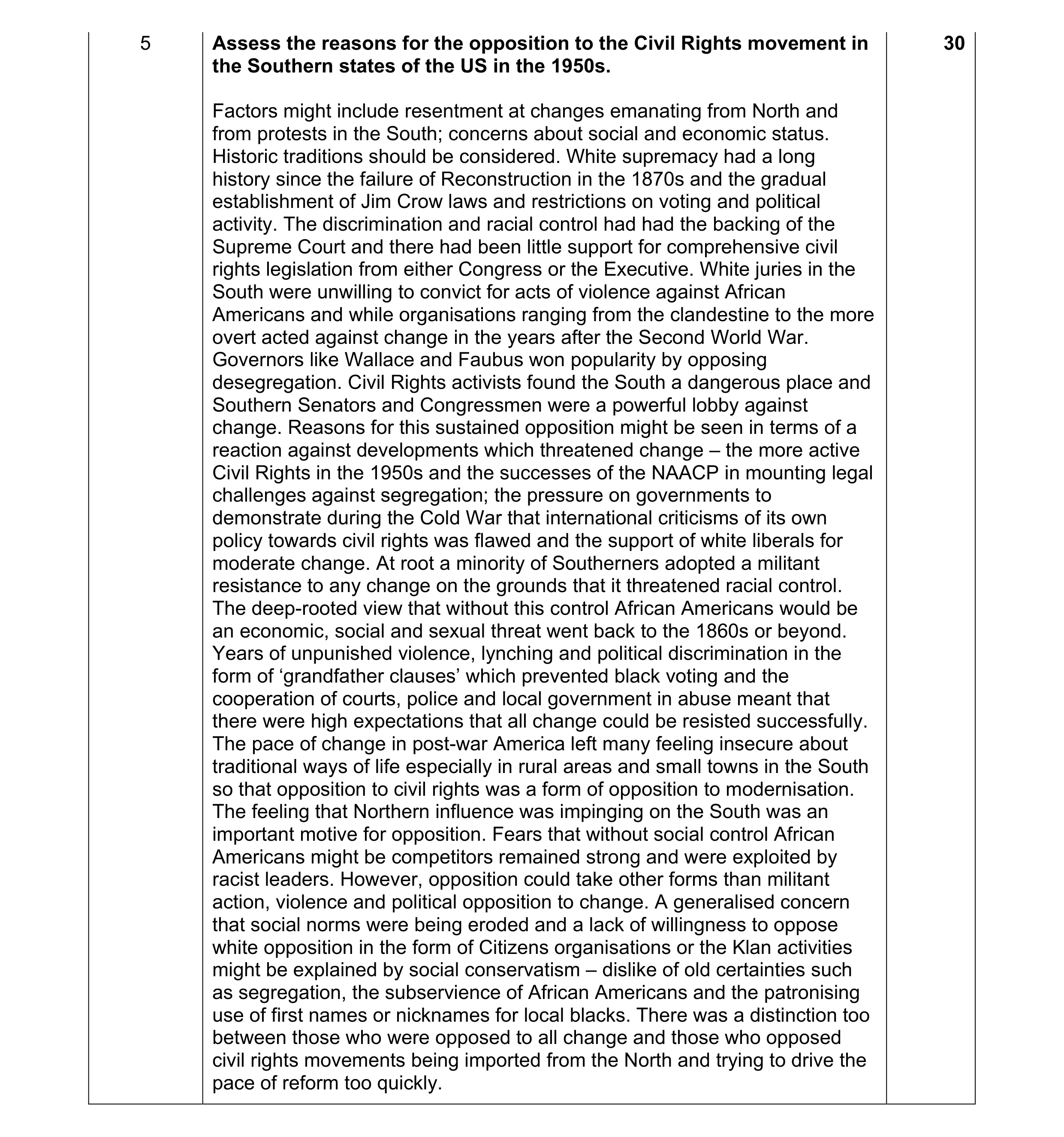 30
30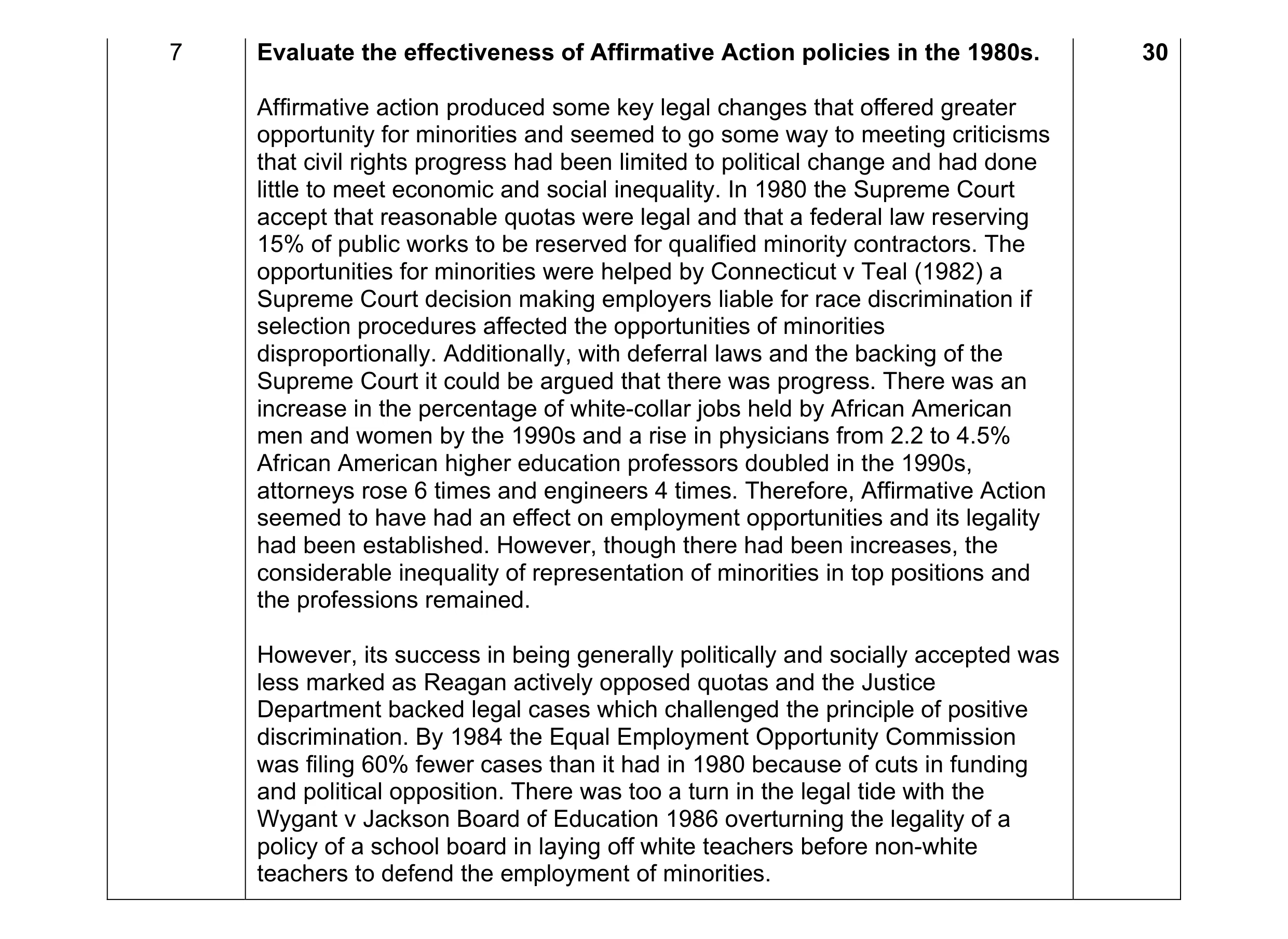 30
30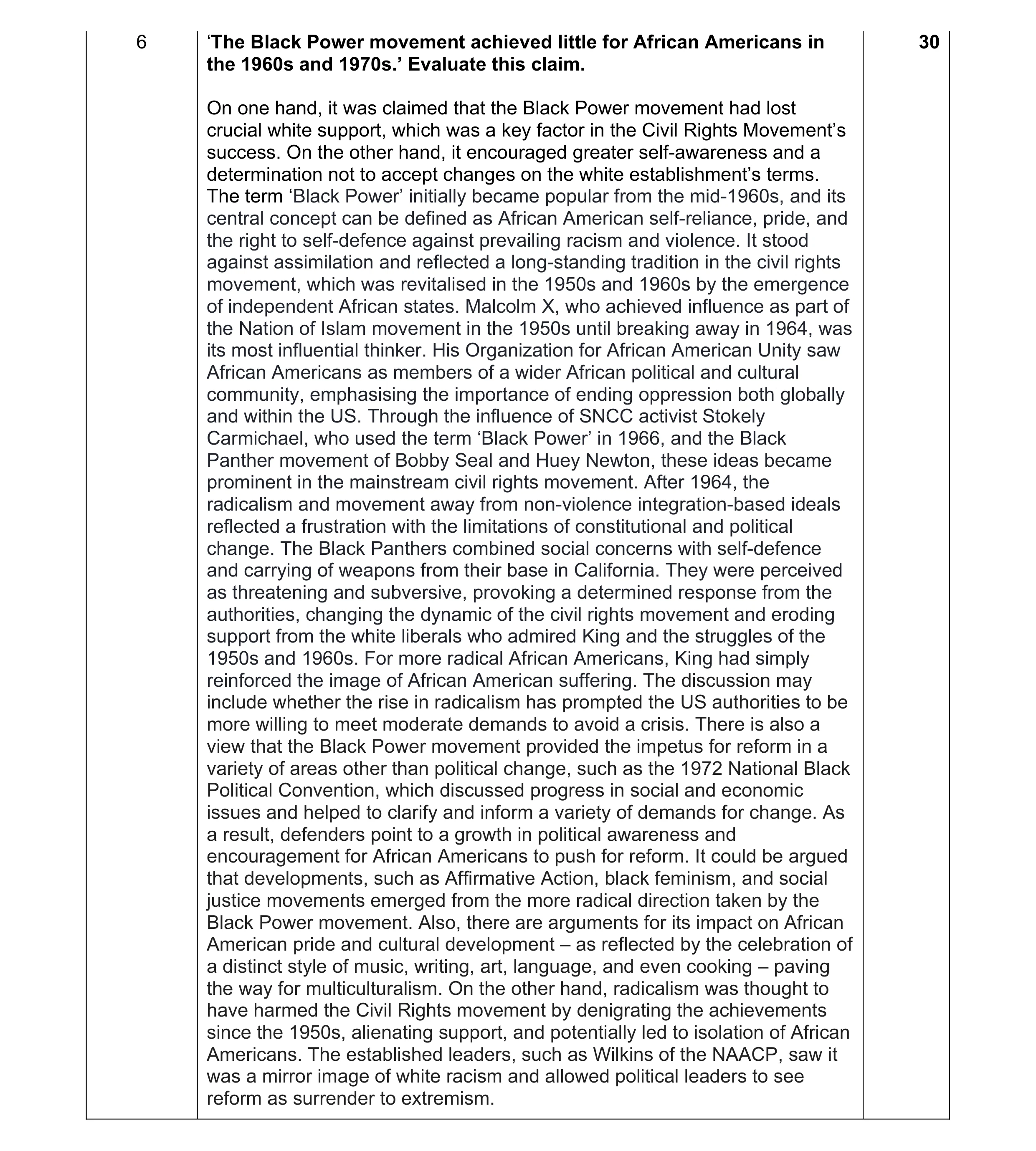 30
30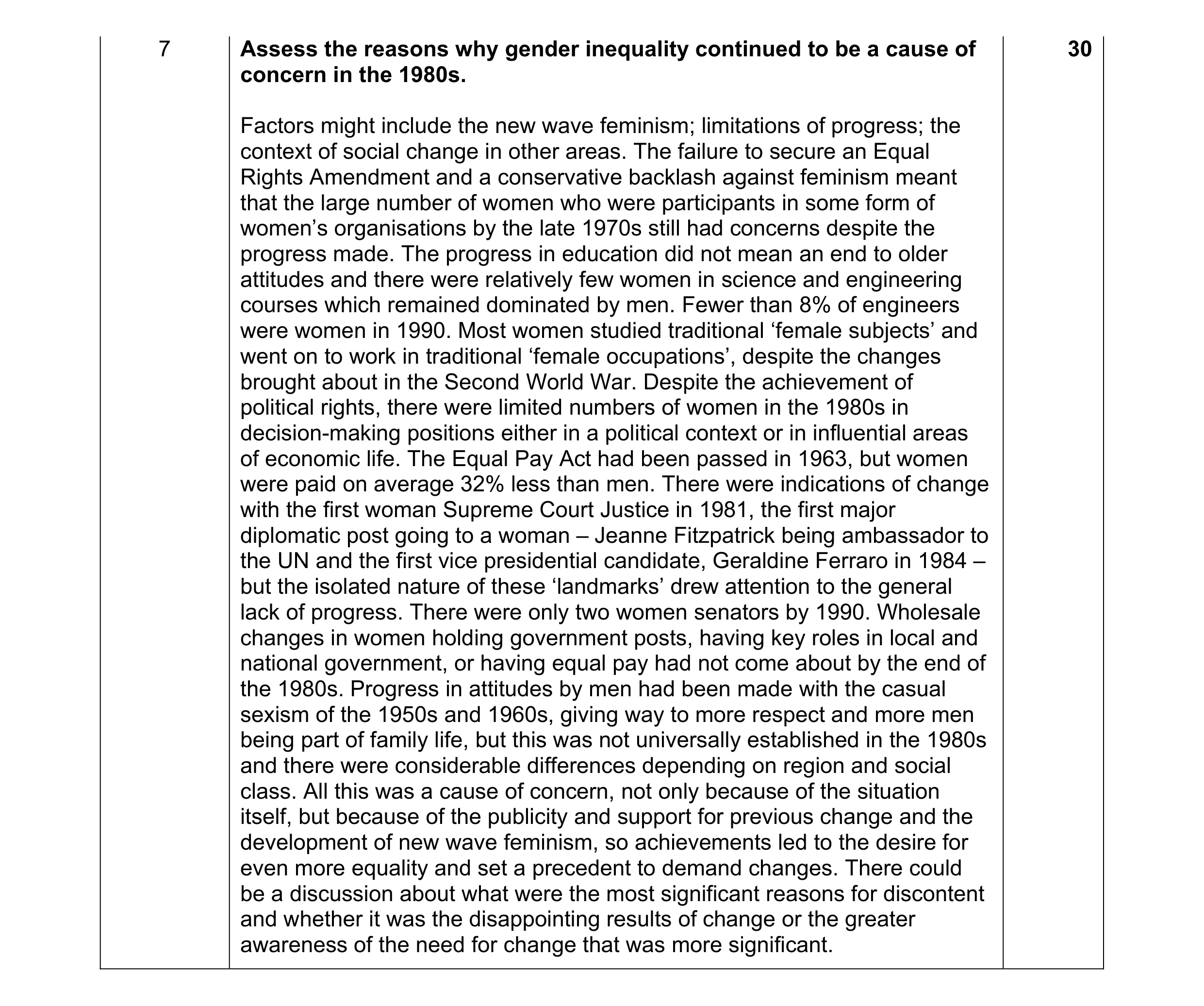 30
30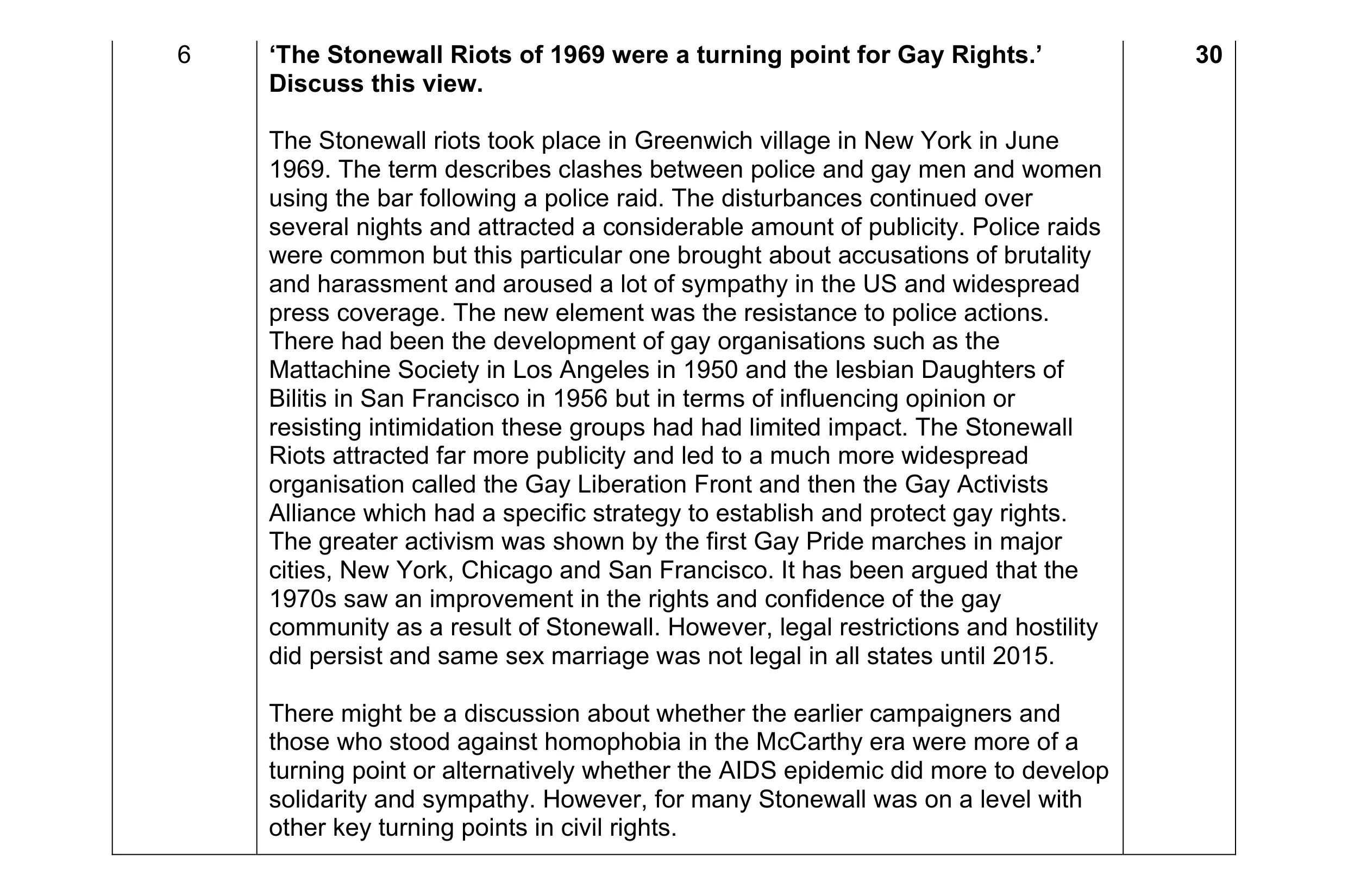 30
30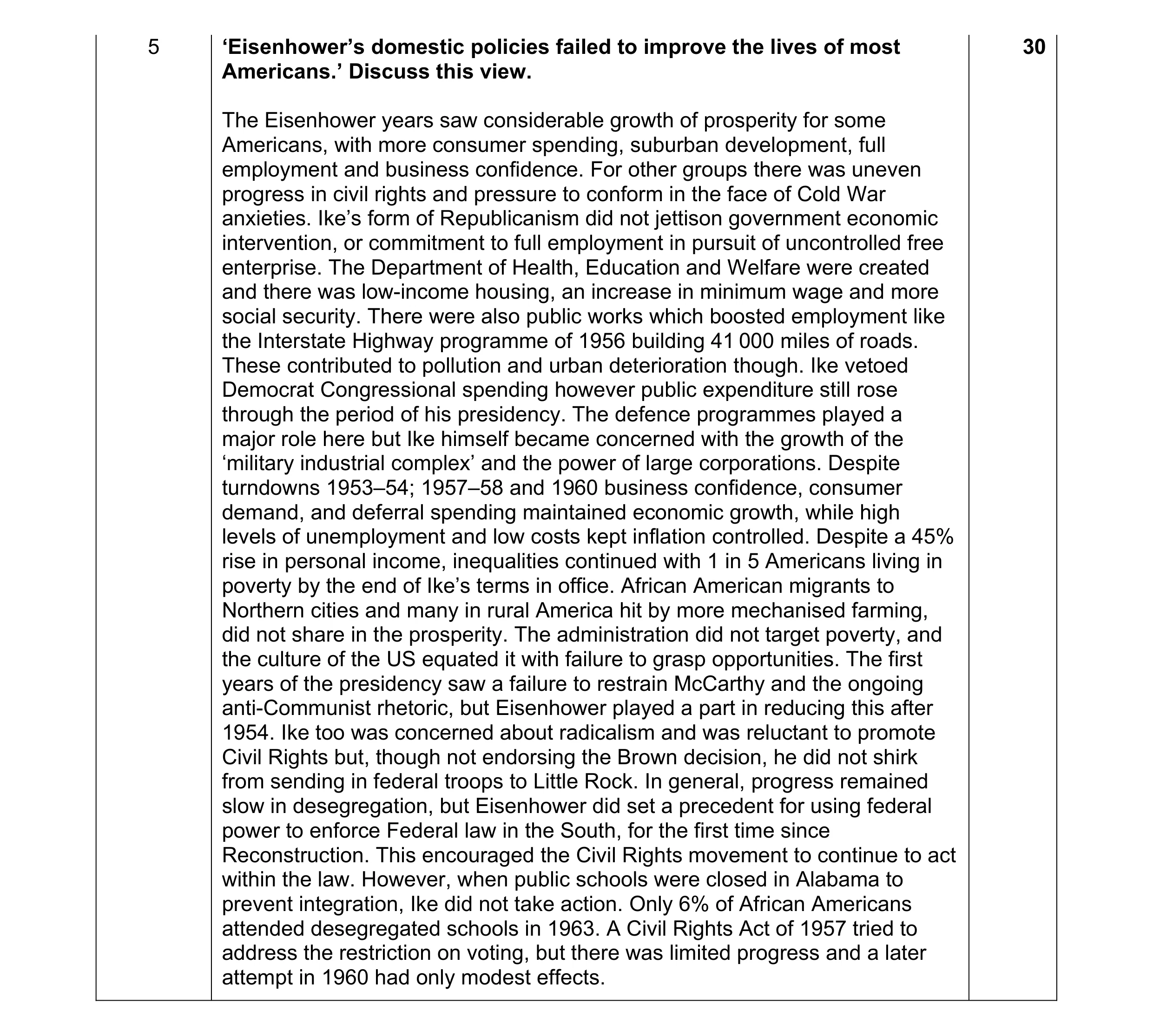 30
30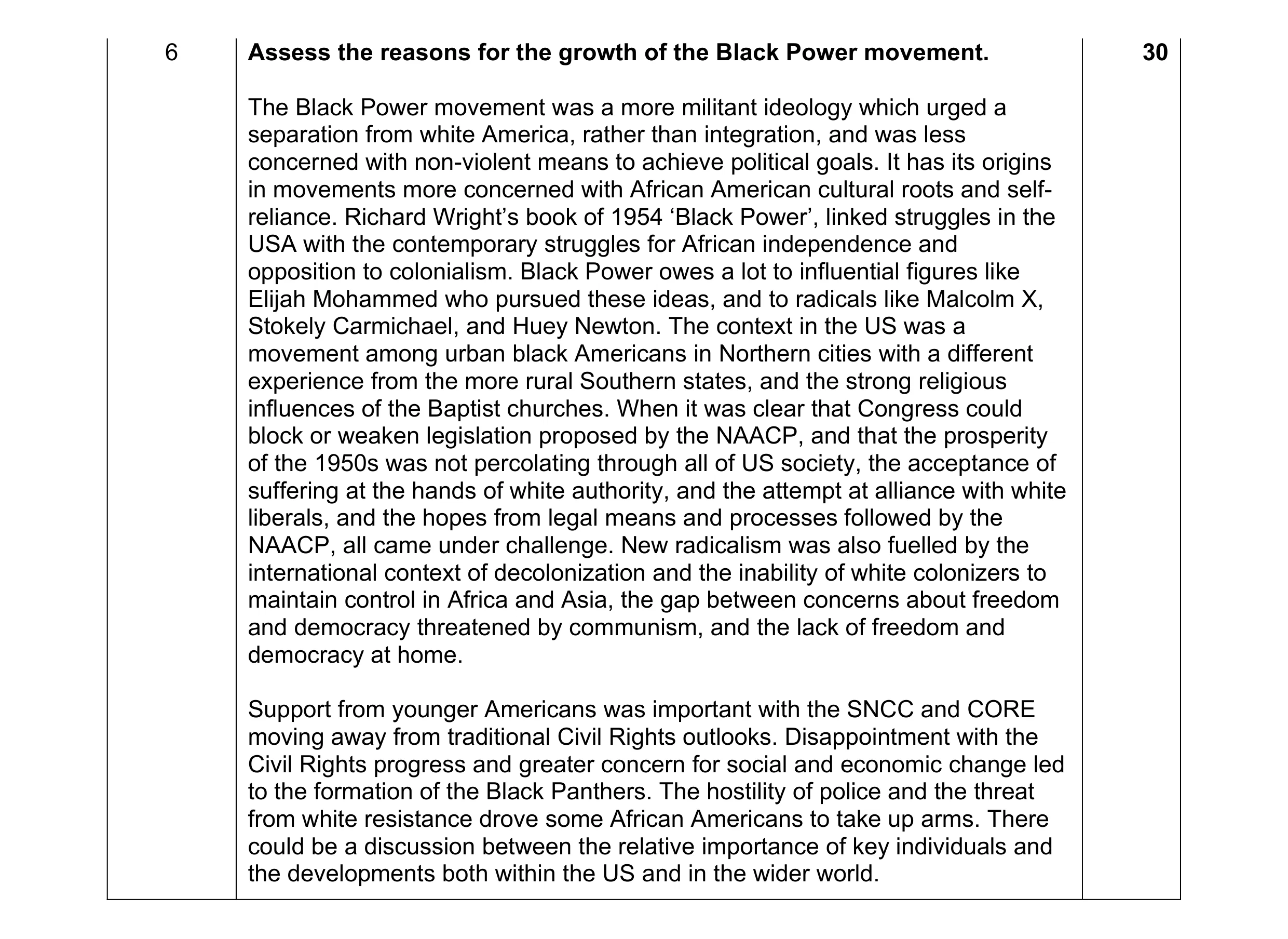 30
30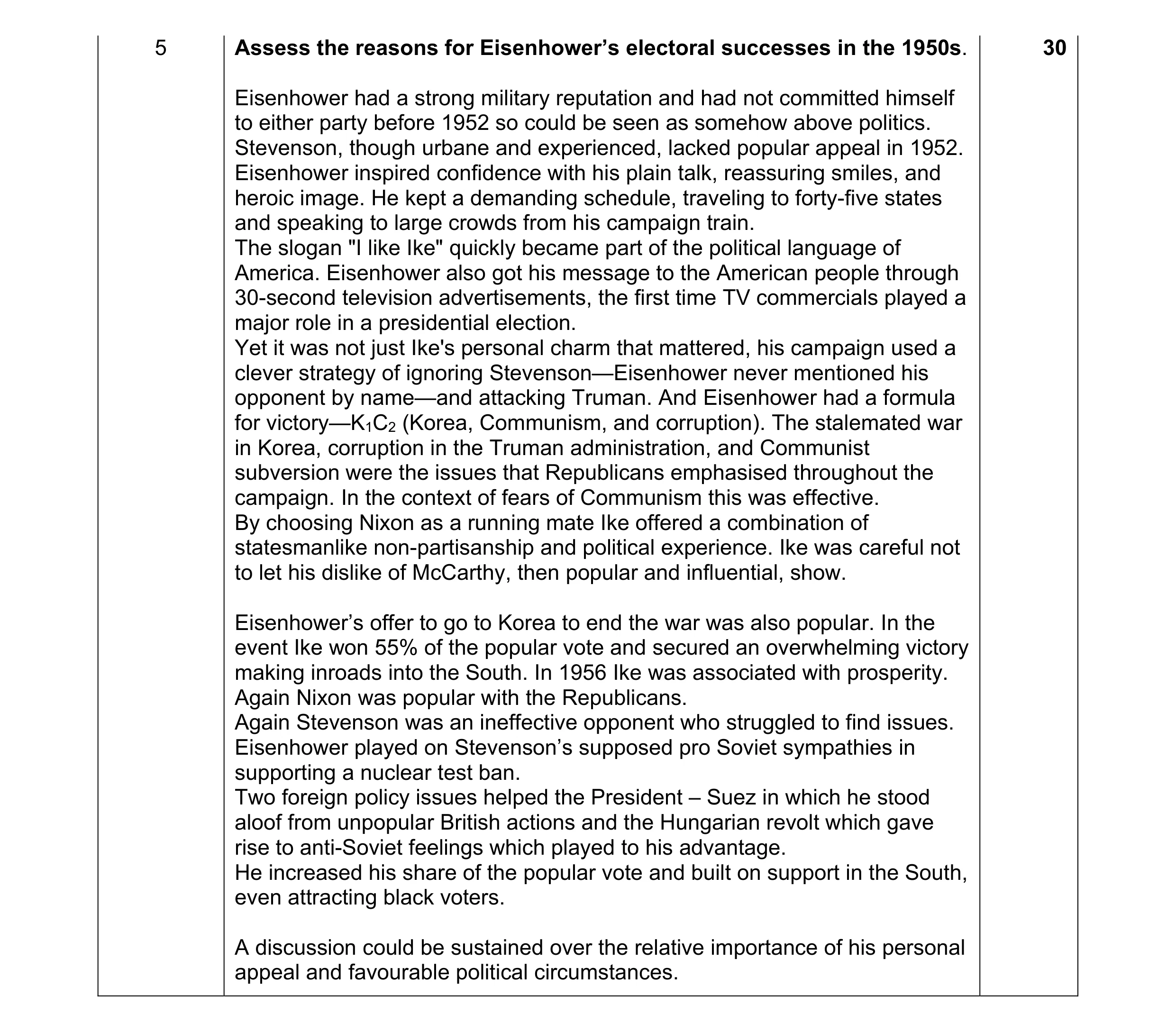 30
30 30
30 30
30 30
30 30
30 30
30 30
30 30
30 30
30 30
30 30
30 30
30 30
30 30
30 30
30 30
30 30
30 30
30 30
30 30
30 30
30 30
30 30
30 30
30 30
30 30
30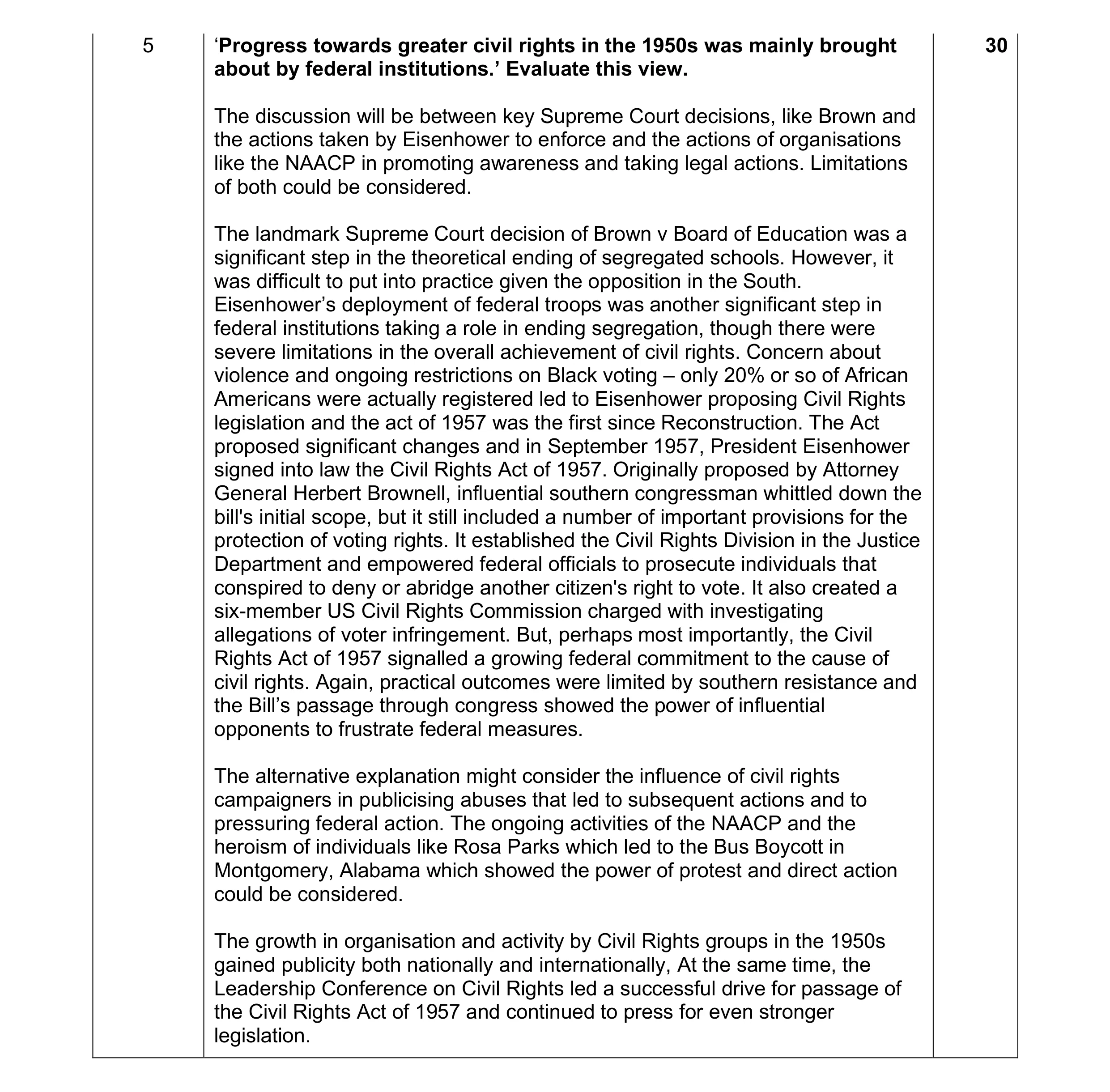 30
30 30
30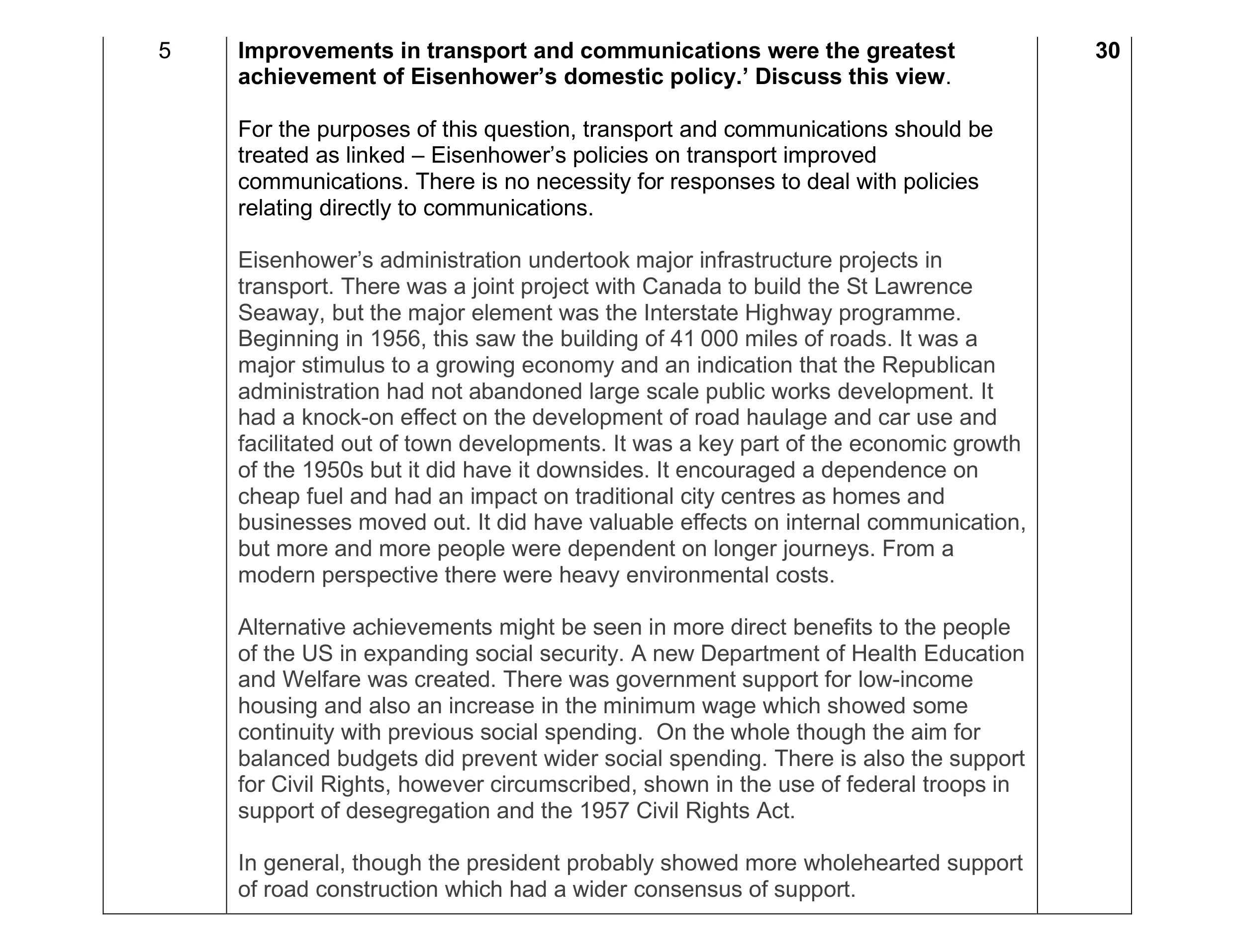 30
30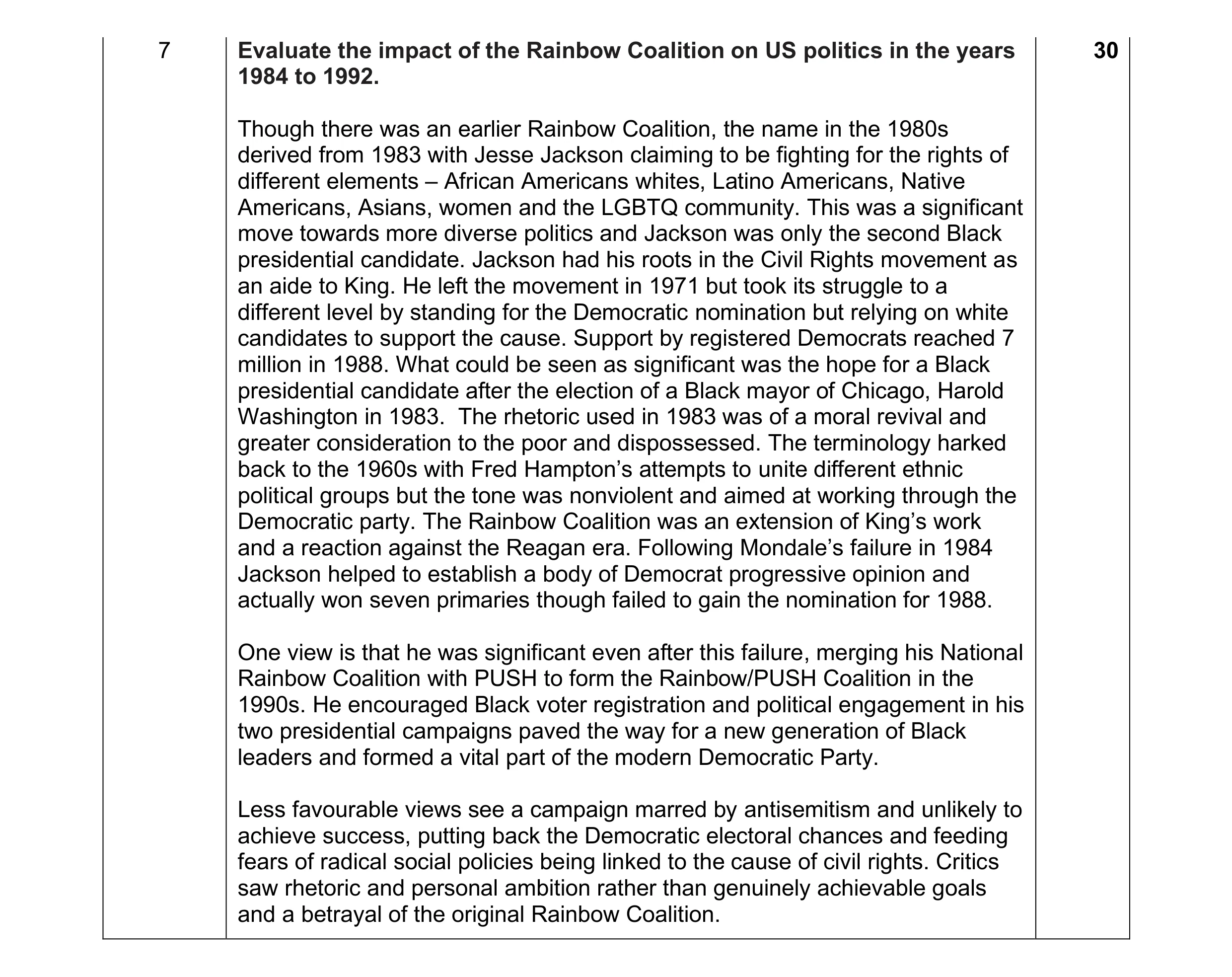 30
30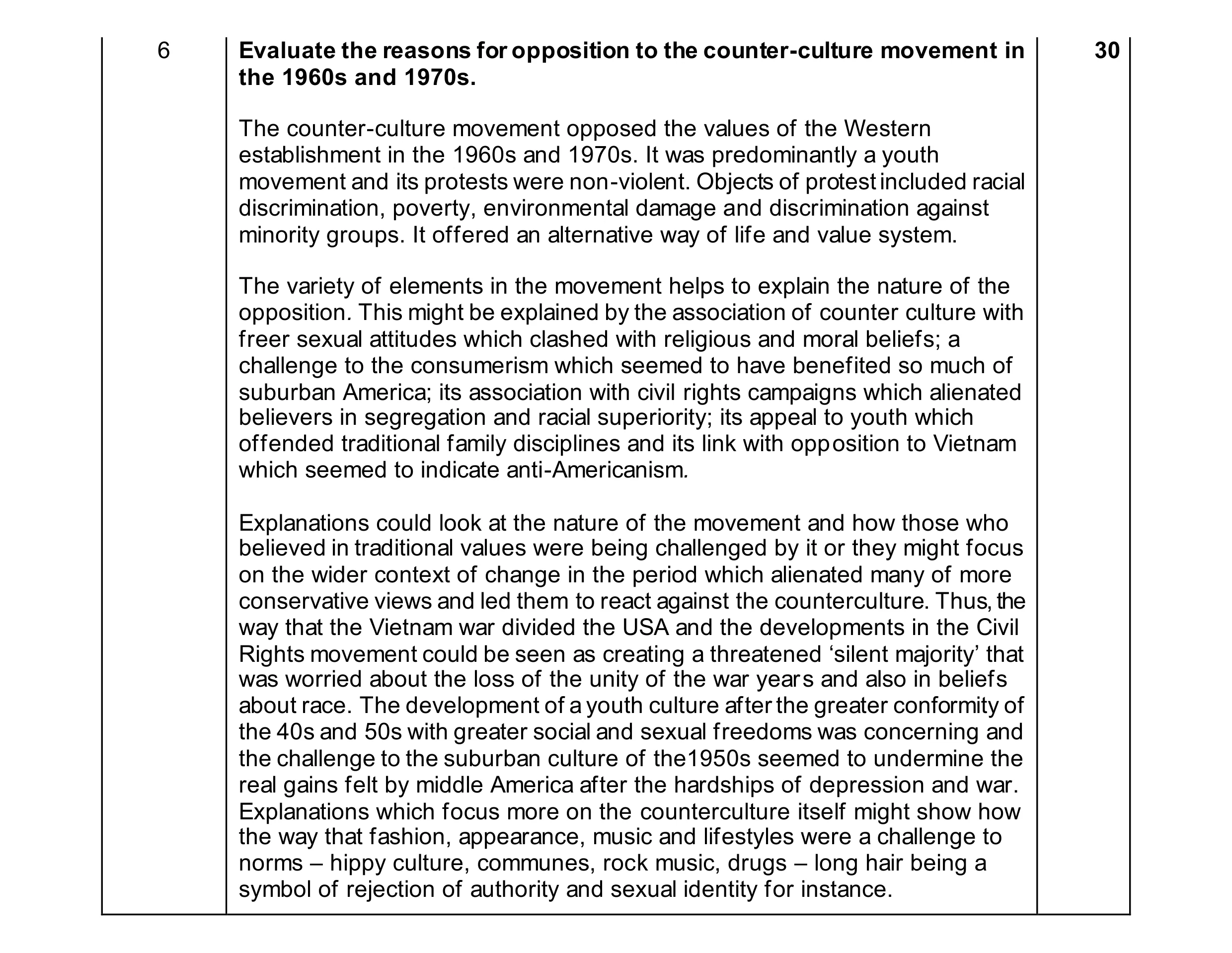 30
30