Questions as text
Q1 · The Russian Revolution, 1894–1921 (a) Explain why the New Economic Policy was introduced… 9489/21 May/June 2021
3 The Russian Revolution, 1894–1921 (a) Explain why the New Economic Policy was introduced in 1921. [10] (b) ‘Failure to achieve peace caused the fall of the Provisional Government in October 1917.’ How far do you agree with this view? [20]
30 marks
Mark scheme: 3(a) Explain why the New Economic Policy was introduced in 1921. 10 • The previous policy of War Communism (WC) had helped the Bolsheviks win the Russian Civil War, but it had devastated the economy and led to famine. A change was needed if they were to consolidate their victory. • The hardships produced by WC led to risings against the Bolsheviks, 1920–1921. For example, the hitherto staunchly loyal sailors at the Kronstadt Naval Base rose in revolt. Lenin realised a new policy was needed if the Bolsheviks were to maintain their power. • The New Economic Policy (NEP) was introduced to provide an incentive to the peasants to produce food. They could keep some of their grain to sell at a profit. WC had forced them to hand over their produce. As a result, they either produced the bare minimum, hoarded it, or destroyed it. • Lenin was a realist, as he found that the Party had not been able to structure Russia’s economy along purely ideological lines since 1917. He saw the NEP as a temporary concession to capitalism to meet a specific set of circumstances. That is why large-scale industry, banking and foreign trade remained under Party control (‘the commanding heights of the economy’), as had been the case under WC. Accept any other valid responses. 3(b) ‘Failure to achieve peace caused the fall of the Provisional Government 20 in October 1917.’ How far do you agree with this view? Arguments to support the statement could be as follows. The decision of the Provisional Government (PG) to remain in the First World War and not pursue peace proved to be very unpopular, as military setbacks created discontent. Food supplies were disrupted because Russia was not at peace, and this added to discontent and further eroded support for the PG. The PG seemed to be repeating the errors of the Tsar’s regime. Troops deserted in growing numbers which made them susceptible to increasingly radical ideas. The Bolsheviks’ cry of ‘peace’ highlighted the PG’s failing and undermined support for their continued rule. The continuation of the war meant the further advance of German troops into Russian territory. By August 1917, this posed a serious threat to Petrograd and it brought about the Kornilov Affair. The PG’s handling of it illustrated the weakness of the PG. The lack of peace meant that the PG was not able to respond to popular demands for land reform and this led to loss of support amongst the peasantry, the largest group in Russian society, for the PG. The view, however, can be challenged. Opponents such as the Bolsheviks had a politically astute and determined leadership in the form of Lenin and Trotsky. They employed clever politics, for example, the slogan of ‘Peace, Bread and Land’ proved easy for people to understand as it responded to popular grievances. While not particularly Marxist, it gave the millions of Russians who were suffering something to rally around while offering hope for improvement. In response to the Kornilov Affair, Lenin’s forging of an alliance between the Bolsheviks and the Soviets offered a telling contrast with the uncertainty of the PG, increasing Bolshevik support and eroding PG support. The position of the PG was effectively paralysed from the outset by the dual power, based on Order Number 1, it had to share with the Petrograd Soviet. In addition, the PG was not a uniform body made up as it was of a coalition of almost every political party in Russia. It could not speak with one voice, unlike the Bolsheviks. The lack of peace showed that the PG was ineffective and this only served to highlight the attraction of opponents such as the Bolsheviks. Therefore, the PG fell in October 1917. Accept any other valid responses.
This question in 9489/21 May/June 2021
Q2 · China and Japan, 1912–45 (a) Explain why Japan attacked Pearl Harbor in December 1941 9489/21 May/June 2021
9 China and Japan, 1912–45 (a) Explain why Japan attacked Pearl Harbor in December 1941. [10] (b) ‘The most important outcome of the Long March was the emergence of Mao Zedong as leader of the Chinese Communist Party.’ How far do you agree? [20]
30 marks
Mark scheme: 9(a) Explain why Japan attacked Pearl Harbor in December 1941. 10 Answers should focus on Japanese plans for expansion of influence in the Far East and the effects of the European War. • The Greater East Asia Co-prosperity Zone plans – a self-sufficient bloc of Asian countries under Japan’s leadership and free from the rule of Western powers. • Japan’s economic difficulties in 1930s. • Rise of militarism; public support for aggressive expansionism • European Powers were involved in a European War, so they were less able to defend East Asian territories. The Nazi-Soviet pact of August 1939 meant Japan would receive no help from Germany if she struck north against USSR. Also, the resources in the south were more numerous than those in the Soviet Far East. In April 1941, Japan and USSR signed a five-year neutrality pact which meant Japan’s northern flank was secured. • Only US Pacific Fleet could seriously impede Japanese plans. FDR had moved the Pacific fleet to Hawaii in mid-1940. • Steady increase of US-Japanese antagonism – from 1938 USA adopted a series of increasingly restrictive trade policies against Japan. The oil embargo of August 1941 was particularly severe as more than 80% of Japan’s oil came from USA at the time. Accept any other valid responses. 9(b) ‘The most important outcome of the Long March was the emergence of 20 Mao Zedong as leader of the Chinese Communist Party.’ How far do you agree? This essay is not about the Long March as such; it requires a consideration of Mao’s position before, during, and after the Long March as well as other outcomes of the Long March. Key issues in Mao’s rise Mao’s position had been weakened in 1933, as Zhou Enlai, Otto Braun and Bo Gu became the CCP decision makers. This raises the question, how central was Mao’s role in leading resistance to the 5th encirclement campaign which began against Jiangxi Soviet in September 1933? In July 1934, Mao had been briefly placed under house arrest and replaced by Zhou Enlai, as leader of the military commission. The Long March began in October 1934, and it was Zhou, not Mao, who was consulted about abandoning Jiangxi. The Long March, however, sealed the personal prestige of Mao, for example, the Zunyi Conference (1935) where Mao won the power struggle with Bo Gu, the 28 Bolsheviks and Otto Braun, taking control of the military command and became the undisputed leader of the CCP. The influence of the Comintern in CCP affairs was reduced significantly. The establishment of the Yan’an Soviet was a result of the Long March, and this haven allowed for the growth of Mao’s control of policy. In 1941, the Rectification Movement was initiated allowing Mao to purge party members over the next three years. Other outcomes The Long March ensured the basic survival of the CCP, which had almost been destroyed by the encirclement campaigns. Its consolidation of a base in a relatively inaccessible area of China allowed the CCP to develop its strength and become a viable alternative to the KMT. The Long March and survival of the CCP, also, provided a heroic narrative and won the CCP admiration and support, especially amongst peasants. The new base, also, put the CCP in a better position to directly oppose the incursions of the Japanese thereby strengthening their popular support. Accept any other valid responses.
This question in 9489/21 May/June 2021
Q3 · The Russian Revolution, 1894–1921 (a) Explain why the Provisional Government kept Russia… 9489/22 May/June 2021
3 The Russian Revolution, 1894–1921 (a) Explain why the Provisional Government kept Russia in the First World War. [10] (b) ‘Trotsky was key to the Bolsheviks winning the Russian Civil War.’ How valid is this view? [20]
30 marks
Mark scheme: 3(a) Explain why the Provisional Government kept Russia in the First World 10 War. • It reflected notions of honour. A sense of commitment was felt towards the western allies by Kerensky and others in the government. In the summer of 1914, France had met their obligation to support Russia. • Kerensky’s personal ambition. As Minister for War, he would gain prestige from any military victory. • It was a matter of political calculation. The Provisional Government (PG) was aware that if they sought terms with Germany, a high price would be demanded by the Germans. Many people would consider this as betrayal of all those who had fought and died. As a result, the PG’s authority would be undermined. • It reflected a practical need. The PG had to keep Russia in the war to receive supplies and war-credits from the Western allies. The PG was reliant on this aid, as the Tsarist regime had left Russia effectively bankrupt. Accept any other valid responses. 3(b) ‘Trotsky was key to the Bolsheviks winning the Russian Civil War.’ 20 How valid is this view? The following are some possible arguments in support of the viewpoint. Trotsky created the Red Army, which defeated the Bolsheviks’ opponents and won the civil war. Trotsky was the one who forced conscription in the Bolsheviks controlled areas and attached political commissars to the Red Army to report on its political conformity to Bolshevik ideology. Trotsky was able to travel vast distances to supervise his newly formed fighting force because of the use of a specially armoured train at his HQ. He used the military expertise of ex-Tsarist officers, for example Tukhachevsky, rather than have them executed as class enemies. Military discipline was severe with execution for desertion or disloyalty. He ended the practice of electing officers and having soldiers’ committees. The result was a disciplined and well-organised fighting force of 3 million. Trotsky successfully employed a simple and direct strategy. Internal lines of communication were to be defended, opponents’ ability to concentrate large forces in one area was to be thwarted, and their supplies were to be disrupted. This assessment can be challenged. Lenin’s application of the War Communism policy ensured the Bolshevik forces were fed and supplied. The divisions amongst their opponents (e.g., anarchists hated monarchists) meant that they could never successfully combine against the Bolsheviks. The Bolsheviks controlled most of the railway network, which allowed them to move troops and equipment to where it was needed. Their control of Russia’s industrial centres allowed them to access munitions and resources denied to their opponents. The resulting reliance on foreign aid and support by their opponents meant that the Bolsheviks, despite their commitment to the international proletarian revolution, were able to portray themselves as Russian nationalists defending the Motherland, like Alexander Nevsky and Kutuzov. This made them appear to many Russians as the lesser of two evils. Accept any other valid responses.
This question in 9489/22 May/June 2021
Q4 · The Russian Revolution, 1894–1921 (a) Explain why the Bolshevik government used terror 9489/23 May/June 2021
3 The Russian Revolution, 1894–1921 (a) Explain why the Bolshevik government used terror. [10] (b) ‘Between 1906–14 the Tsarist regime had overcome the opposition to it.’ How far do you agree with this statement? [20]
30 marks
Mark scheme: 3(a) Explain why the Bolshevik government used terror. 10 • The scale of the problems they faced after the October Revolution and the need to win a civil war led to the adoption of extreme methods. • As students of history they saw how the ‘Terror’ of the French Revolution was a product of similar circumstances and had preserved the Revolution. • They saw Marxism as a political creed which was superior to all other ideologies and so repression was an unavoidable aspect of its outlook. • Lenin did not know how to act in any other way as even prior to 1917 he believed coercion was necessary for transforming capitalism to socialism. The Cheka, chief instrument of the terror, was created in December 1917. • In the summer of 1918, there was an assassination attempt made on Lenin which failed and the Petrograd Cheka’s chairman was murdered. The result was that the greater part of Russia experienced the ‘Red Terror’. Accept any other valid responses. 3(b) ‘Between 1906‒14 the Tsarist regime had overcome the opposition to 20 it.’ How far do you agree with this statement? The aristocracy, an important political and social group that had the means to offer effective opposition, saw their status (land-holding/military command/public office) as dependent upon the regime. This made them its firm supporters. The Russian middle class was limited in size compared with Western Europe’s and so did not have the means to mount effective opposition. The creation of the Duma offered an outlet for their voice to be heard but the regime’s ability to dismiss it at will meant it could never offer serious opposition. The middle classes had found their association with the lower classes in the 1905 Revolution disconcerting, as the middle classes wanted to reform the regime not overthrow it. The consequences of Emancipation did create dissatisfaction amongst the peasantry, but they linked this to their landlords rather than the Tsar. The growing urban proletariat were susceptible to political agitators due to their appalling living and working conditions. However, such agitation was monitored carefully by the Tsar’s secret police, the Okhrana. Revolutionaries were either in prison or in exile. Lenin did not return to Russia until 1917. In addition, these revolutionaries were divided, Bolsheviks, Mensheviks and Social Revolutionaries. The view can, however, be challenged. Despite Stolypin’s policy of reform and repression peasant discontent remained and resulted in an almost constant breakdown in order in the countryside as land was seized. The preamble to the Fundamental Laws might claim that Russia was ‘one and indivisible’ but the resentment felt by Russia’s minorities remained. The Finnish provinces were in a virtual state of war up to 1914. The lack of any effort by the regime to address the working and living conditions of the workers led to a growth in unions. By 1914 the Bolsheviks had gained control of the biggest trade unions in Moscow and St. Petersburg. The killing of strikers in the Lena Goldfields intensified worker opposition and discontent. In 1912 Pravda was set up and 40 000 copies were bought daily by workers, and no doubt read by many more. Between 1912 and 1914 3 million workers were involved in 9000 strikes. In July 1914 there was a general strike in St. Petersburg with street fighting and barricades. All this suggests opposition in this period was not limited. Therefore, it is legitimate to ask if war had not broken out in the summer of 1914 bringing with it a patriotic fervour would the regime have faced an overwhelming opposition to its position? Accept any other valid responses.
This question in 9489/23 May/June 2021
Q5 · The Russian Revolution, 1894–1921 (a) Explain why the Tsarist regime was able to survive… 9489/21 Oct/Nov 2021
3 The Russian Revolution, 1894–1921 (a) Explain why the Tsarist regime was able to survive the 1905 Revolution. [10] (b) ‘The main cause of the Bolshevik victory in the Russian Civil War was the disunity of their enemies.’ How far do you agree? [20]
30 marks
Mark scheme: 3(a) Explain why the Tsarist regime was able to survive the 1905 Revolution. 10 • The army remained loyal to the regime. It was the loss of army support in February 1917 which led to its fall. • In 1905, its opponents were disorganised because their diversity led to a lack of unity. Middle class liberals were appalled by the radical demands of workers. This made them willing to accept the regime’s apparent desire to accept change. They wanted to reform, not overthrow, the regime. • The protests were not concentrated as they were geographically scattered which lessened their impact. • The regime used a combination of brutal repression and seeming concessions (for example, the October Manifesto). • Accept explanations for changes made in the year following 1905 (for example, the Stolypin reforms) – the question does not restrict this to the immediate aftermath of the revolution. Accept any other valid responses. 3(b) ‘The main cause of the Bolshevik victory in the Russian Civil War was 20 the disunity of their enemies.’ How far do you agree? Arguments to support the view could be as follows. Their opponents were a very loose alliance of disparate groups such as Mensheviks, Nationalists, Anarchist, Monarchists, the Czech Legion. This meant that, unlike the Bolsheviks, they had no unified outlook. The Anarchists were never going to work cooperatively with the Monarchists. The lack of unity meant that the Bolshevik’s opponents could not offer a viable alternative, only a feigned return to the past, which most Russians did not want. Furthermore, because of the lack of unity, military cooperation was sporadic at best while the Bolsheviks acted under a unified command. This view can be challenged. The policy of War Communism (WC) ensured the Red Army was fed and supplied. Geographic factors favoured the Bolsheviks because their opponents were widely scattered which limited any attempt to bring concentrated pressure on the Red Army. The Bolsheviks controlled the two administrative centres of Russia, Petrograd and Moscow, along with most of the railway network. The Bolsheviks were able to portray themselves as Russian nationalists defending Mother Russia because their opponents relied on foreign aid and supplies. This fed into a well-established narrative of heroic resistance to the invader, such as that by Alexander Nevsky and Kutuzov. The Bolshevik leadership was superior with Lenin being ruthless in the application of WC. Trotsky applied a strict control over the Red Army, which resulted in the creation of a disciplined, efficient and tough force of approximately three million. Accept any other valid responses.
This question in 9489/21 Oct/Nov 2021
Q6 · The Russian Revolution, 1894–1921 (a) Explain why Tsar Nicholas II issued the October… 9489/22 Oct/Nov 2021
3 The Russian Revolution, 1894–1921 (a) Explain why Tsar Nicholas II issued the October Manifesto. [10] (b) To what extent was War Communism a failure? [20]
30 marks
Mark scheme: 3(a) Explain why Tsar Nicholas II issued the October Manifesto. 10 • He was susceptible to pressure, which his advisers applied. The aristocratic advisers feared the regime would collapse, along with their status, if the Tsar did not sign. • In September 1905, the Treaty of Portsmouth ended the Russo-Japanese War. It was feared that the defeated returning troops would join the Revolution. Therefore, signing the Manifesto would prevent the potential loss of army support. • Nicholas II believed it was only a temporary concession and would not undermine his autocratic rule. • Witte persuaded him that in signing the October Manifesto would isolate the more radical left because the concessions would gain the support of the Liberals for the regime. This would create disunity amongst the protestors and prevent revolution. Accept any other valid responses. 3(b) To what extent was War Communism a failure? 20 Arguments to support the statement could be as follows. The failure of War Communism (WC) is evidenced by the fact that it was replaced by the New Economic Policy (NEP) in 1921. This showed that the Party could not restructure Russia’s economy on ideological lines. The WC policy of grain requisition was seen as effectively one of theft. This alienated peasant support and led to a decline in production because there was no incentive to produce a surplus when no profit was allowed to be made. Famine was created which led to widespread anti-Bolshevik uprisings in 1920‒21. Because one such uprising occurred among the previously staunchly loyal sailors of the Kronstadt Naval Base, Lenin decided to abolish WC and introduce the NEP. If these sailors could rebel because they thought WC was too severe, it posed a serious threat to Party control. WC eliminated money as a form of exchange and replaced it with bartering. This resulted in inflation, and the Party were unable to raise revenue because most taxes had been abolished. Due to the decline in food production under WC, workers in cities saw moving to the countryside to grow their own food as their only hope to avoid starvation. The number of people working dropped by 50%, and by 1920, the average worker’s productivity rate had dropped to 44%, lower than in 1913. The view can be challenged. WC ensured that the Red Army was fed and supplied to be victorious in the civil war. This victory ensured that the Bolsheviks remained in control and could shape Russia in the image they wanted. WC established the principle of nationalisation and centralised control. Under NEP, the Party still controlled what Lenin called ‘the commanding heights of the economy’ (large-scale industry, banking and foreign trade) and it was not lost until the late 20th century. The fact that the NEP was met with widespread opposition within the Party suggests that there was a widespread belief that WC had successfully established the template for how a communist economy should be organised. Lenin was clear that the NEP was only ever to be a temporary policy. Accept any other valid responses.
This question in 9489/22 Oct/Nov 2021
Q7 · The Russian Revolution, 1894–1921 (a) Explain why the Russian Orthodox Church was… 9489/22 Feb/March 2023
3 The Russian Revolution, 1894–1921 (a) Explain why the Russian Orthodox Church was important in maintaining the Tsar’s rule. [10] (b) To what extent was Bolshevik success in the Russian Civil War caused by War Communism? [20]
30 marks
Mark scheme: 3(a) Explain why the Russian Orthodox Church was important in 10 maintaining the Tsar’s rule. Indicative content • Since the fifteenth century it had been free of any outside authority. This detachment from foreign influence gave it an essentially Russian character, which was conservative, opposed to political change, and committed to the preservation of the Tsar’s rule. • The Tsar was head of the Church, and this gave his rule a semi-divine aspect. • The Church emphasised that God had appointed the Tsar. Any challenge to the Tsar’s authority was an insult to God. • Amongst an overwhelmingly peasant population the Church was very influential. Therefore, the message of obedience to the Tsar was conveyed regularly. • Most of the population was illiterate and relied on what the Church told them. Accept any other valid responses. 3(b) To what extent was Bolshevik success in the Russian Civil War caused 20 by War Communism? Indicative content Arguments to support it playing a pivotal role in the Bolshevik victory could be as follows. War Communism did ensure that the Red Army was fed and supplied throughout the civil war. The imposition of War Communism by the Bolsheviks meant that they had full control over the economy; within two years of the Decree of Nationalisation (1918) practically all major industrial enterprises in Russia were under central government control. This allowed the Bolsheviks to give priority to military needs which meant that the Red Army had the means to achieve victory in the civil war. War Communism provided an ideological fillip to many Bolsheviks during the civil war as the policy represented true revolutionary communism. They knew what they were fighting for, but their opponents were not united by a common policy. The importance of War Communism in achieving victory can be challenged. By 1921 War Communism seemed to threaten Bolshevik success in the civil war as the forced grain requisitions had led to a decline in production. This produced famine which led to wide-spread anti-Bolshevik uprisings, 1920– 21. The Kronstadt uprising was particularly threatening as the sailors at the naval base had, hitherto, been staunch in their loyalty to the Bolsheviks. Other factors were important for Bolshevik victory. Lenin provided clear political leadership whilst Trotsky proved to be a most effective military commander. The Bolsheviks used terror and intimidation to achieve victory. For example, the threat of retribution against the families of ex-tsarist officers now in the Red Army should they fail to perform their duty. The Bolsheviks controlled the main cities and the railway network which meant they could access military supplies and transport them, and troops, to wherever they were needed. Their opponents had differing aims and so could not form a united front. The active support of foreign powers for their opponents allowed the Bolsheviks to present themselves successfully as Russian patriots resisting the foreign invader, just as Alexander Nevsky and Kutuzov had done. Accept any other valid responses.
This question in 9489/22 Feb/March 2023
Q8 · The Russian Revolution, 1894–1921 (a) Explain why the Russian Civil War broke out in 1918 9489/21 May/June 2023
3 The Russian Revolution, 1894–1921 (a) Explain why the Russian Civil War broke out in 1918. [10] (b) How far was the February Revolution of 1917 caused by the Tsar’s lack of commitment to reform? [20]
30 marks
Mark scheme: 3(a) Explain why the Russian Civil War broke out in 1918. 10 Indicative content After the October Revolution of 1917 many groups had formed to oppose the Bolsheviks (monarchists/militarists), collectively referred to as The Whites. The treaty of Brest-Litovsk was seen by many as a clear sign that the Bolsheviks were weak and unfit to govern Russia. Russian nationalist minorities (e.g. Ukrainians/Georgians) fought to establish their independence from Russia. The Bolshevik’s crushing of the Constituent Assembly in January 1918, and subsequent outlawing of all other parties, showed that the Bolsheviks were not prepared to share power. This claim to absolute authority was unacceptable to many. Some claim that Lenin wanted war an all socialist coalition would have made counter revolution inconceivable as the coalition would have rested on the only legitimate authority in Russia, the Constituent Assembly. Some Bolsheviks would have accepted a socialist coalition, but Lenin was not one of them and rejected this course. A worldwide revolution was coming, and compromise would undermine its chances of success. Accept any other valid responses. 3(b) How far was the February Revolution of 1917 caused by the Tsar’s lack 20 of commitment to reform? Indicative content Arguments to support the Tsar’s lack of commitment to reform in causing the February Revolution of 1917 might be as follows. Nicholas II was committed to autocracy from the outset of his reign. It is true he did seem to temper this commitment in 1905 with the October Manifesto. However, these reforms were undermined in April 1906 when the Fundamental Laws were passed. The Tsar reserved the right to rule independent of the Duma when it was not in session and to close it at any point. The Tsar could change, also, the electoral system. Such actions alienated liberal support as they displayed a contemptuous attitude to the Duma. Therefore, reforming the political system could not be done by the Tsar. Therefore, in February 1917 a different system to Tsarism was adopted. However, other factors played a significant part in causing the February Revolution in 1917. The Tsar’s decision, in 1915, to take personal command at the front had proven to be disastrous. He became associated with every military setback. The only way to change the situation lay in removing the one in charge of the war’s conduct. The loyalty of the army which had sustained the Tsar in 1905 was no more by February 1917. Most soldiers wanted to go home, disillusioned with how they had been led. News of land seizures in the countryside added further fuel to this wish. This loss of support meant the Tsar’s government could no longer control Petrograd once the riots and strikes became critical. The Tsar’s absence from the centre of government led to the Tsarina and Rasputin adopting more prominent roles. Rumours of their relationship and their influence on policies undermined further Nicholas II’s position by February 1917. The war caused food shortages and inflation which led to a rising tide of anger and discontent. This culminated in the Women’s Day march (February 23) and city-wide strikes in Petrograd (February 25). On February 27, 1917, the reformed Petrograd Soviet met and the following day the Tsar was prevented from returning to Petrograd to try and personally calm the situation. On March 2nd. 1917 Nicholas II abdicated in favour of his brother Michael. Accept any other valid responses.
This question in 9489/21 May/June 2023
Q9 · The Russian Revolution, 1894–1921 (a) Explain why the Tsar lost support between 1914 and… 9489/22 May/June 2023
3 The Russian Revolution, 1894–1921 (a) Explain why the Tsar lost support between 1914 and 1917. [10] (b) ‘Agreeing to the Treaty of Brest–Litovsk was a misjudgement by the Bolsheviks.’ How far do you agree? [20]
30 marks
Mark scheme: 3(a) Explain why the Tsar lost support between 1914 and 1917. 10 Indicative content From the outset of the war Russia suffered military setbacks, at times on a catastrophic scale (Tannenberg and the Masurian Lakes). The Tsar’s decision in 1915 to take personal command meant that he would be blamed personally for all defeats. His presence at the front threw attention on his wife who was resented for being German and having a close relationship with Rasputin, which was regarded as unseemly, and the lurid rumours only weakened support further or the Tsar. Russia’s economy was incapable of dealing with the demands put upon it by the war. There was high inflation and food shortages, which combined with the bad news from the front further eroded support for the Tsar. The combination of military setbacks and domestic disharmony led the military to demand the Tsar’s abdication. Accept any other valid responses. 3(b) ‘Agreeing to the Treaty of Brest-Litovsk was a misjudgement by the 20 Bolsheviks.’ How far do you agree? Indicative content Arguments to support the view might consider how the terms of the treaty were punitive for Russia. Her hegemony over the Baltic states was ceded to Germany and they were to become German vassal states under German princelings. In about one third of European Russia, stretching from the Baltic to the Black Sea and including Ukraine (her major grain source) was ceded to Germany or her allies. Russia lost 34% of its population, 54% of its industrial land, 89% of its coalfields and 26% of its railways. In addition, she had to pay a fine of 300m gold marks. Many amongst the Bolshevik leadership were appalled at the terms and Lenin only got his way by a majority of one in a crucial committee division. Whilst the treaty ended the war with Germany it did not mean the end of conflict for the Bolsheviks. The Allied Powers saw the Bolsheviks’ actions as a betrayal of their cause, and this led them to think about military intervention in Russia. Russian nationalists were furious and joined forces to fight the Bolsheviks. Whilst Trotsky might blame ‘petty-bourgeois compromisers’ for the treaty others did not and put the blame on the Bolsheviks. However, there is a case to be made that the acceptance of the treaty was not a misjudgement but served the Bolsheviks’ purpose. Lenin knew that the Russian people were exhausted by the war and wanted peace. This was why ‘Peace’ had been at the forefront of his ‘Peace, Land and Bread.’ Russia was exhausted militarily, and this made it impossible to fight on successfully, it would be futile to do so. Both the Tsar and the Provisional government had been overthrown for continuing to pursue the war and Lenin could not risk this as the Bolsheviks grip on power was quite limited at this stage anyway. The Bolsheviks were international revolutionaries with a limited loyalty to Russia. They believed History was on their side as a great proletarian revolution was about to sweep across Europe. Their first concern was spreading the proletarian revolution. Conflict between nations would be replaced by class conflict. Lenin judged correctly the situation facing the Bolsheviks. If Germany won the war, it would retain the Russian territory it now held, but if she lost then Russia might be able to regain its lost lands. The first outcome meant that the Bolsheviks had not made Russia worse off and the second would mean they had made Russia better off, but even if this did not happen it was still better for the Bolsheviks to use peace to consolidate their hold on power so any possible outcome would be helpful to the Bolsheviks. Accept any other valid responses.
This question in 9489/22 May/June 2023
Q10 · The Russian Revolution, 1894–1921 (a) Explain why control of Petrograd and Moscow was… 9489/23 May/June 2023
3 The Russian Revolution, 1894–1921 (a) Explain why control of Petrograd and Moscow was important for Bolshevik victory in the Russian Civil War. [10] (b) To what extent was the Russian economy modernised in the period from 1894 to 1914? [20]
30 marks
Mark scheme: 3(a) Explain why control of Petrograd and Moscow was important for 10 Bolshevik victory in the Russian Civil War. Indicative content Geography – the Bolsheviks controlled the key central areas of Russia between Petrograd and Moscow. This gave them several advantages. Railways – Most of Russia’s railways were in this area. Communication between the various battlefronts was made easier. Troops and supplies could be moved quickly when needed and so prevent a White breakthrough. Their enemies lacked this advantage, which made it difficult to maintain effective control. Population – The large populations of the major cities provided fresh recruits for the Red Army. Industry – Much of Russia’s industry and raw materials was in this area. This meant the Red Army was able to receive supplies of weapons and ammunition when they were needed. Accept any other valid responses. 3(b) To what extent was the Russian economy modernised in the period 20 from 1894 to 1914? Indicative content It can be argued that there was a constant increase in both agricultural and industrial output. On average agricultural output rose by 2% per year and a near 8% growth in industrial output between 1890 and 1900, and it stood at some 6% until war broke out in 1914. Extensive railway building, such as the Trans-Siberian railway, provided a stimulus to coal, iron and steel production. The period saw whole new industries such as oil and arms be created. There was the development of a national banking system and with large foreign investments, particularly French, capitalism did evolve rapidly. The years 1892-1903 became known as the ‘Great Spurt.’ There was some growth, also, in consumer industries. In agriculture it seemed that Stolypin’s reforms were starting to break down peasant conservatism and move away from a subsistence economy. The extent of modernisation, however, can be questioned. A stubborn resistance to change remained in rural areas, with little mechanisation present. At 2% growth agricultural development was limited and famine still existed, for example in 1898 and 1901. The First World War showed that Russia’s economic development had been tentative as the economy was unable to meet the demands placed upon it. There was a lack of flexibility to cope with rapid expansion. Between 1900 and 1906 industrial production fell to 1.4% In the period 1894 to 1913 Russia’s national income increased by 50%, but this was the lowest of all the Great Powers. There was some success in economic modernisation but by 1914 there was still far more to do. Accept any other valid responses.
This question in 9489/23 May/June 2023
Q11 · China and Japan, 1912–45 (a) Explain why democratic government failed in Japan in the… 9489/22 Oct/Nov 2023
9 China and Japan, 1912–45 (a) Explain why democratic government failed in Japan in the 1930s. [10] (b) How important was the Rectification Campaign in establishing Mao Zedong’s control over the Chinese Communist Party? [20]
30 marks
Mark scheme: 9(a) Explain why democratic government failed in Japan in the 1930s. 10 • Limited experience of democratic rule • Failure to deal effectively with the effects of the Great Depression which undermined support for democratic government. • There were accusations of significant corruption in the governments of the early 1930s. • Rise of extreme nationalist groups like the Cherry Blossom Society. • Role of the army especially in the seizure of Manchuria which was done without any consultation with the government and simply accepted as a fait accompli. Accept any other valid responses. 9(b) How important was the Rectification Campaign in establishing Mao 20 Zedong’s control over the Chinese Communist Party? Indicative content Candidates may consider Mao’s position in 1941. Mao established himself as a significant leader by successfully managing the Long March and leading the setting up of the Ya’nan Soviet. The collaboration with Chiang consolidated his position as it increased his prestige amongst the peasant masses who he was now mobilising for the struggle against Japan. However, there was strong Soviet faction within the leadership hierarchy centred around Mao’s most powerful rival, Wang Ming. A popular and respected Politburo member, Wang differed from Mao on questions of tactics and ideology. Along with the other ’28 Bolsheviks’, Wang Ming advocated a Soviet-style proletarian revolution, driven by the urban working class. He criticised Mao’s theory of peasant- driven revolution as deviationist. This group had the backing of Stalin and the Soviet leadership. Discussion of the effects of the Rectification Campaign may include how, on the surface, the purpose of rectification was to educate the masses and purify CCP ideology. It began as a series of reflective study sessions, where individual party members studied the writings of Mao Zedong and engaged in reflection and criticism of their own attitudes. In reality, Rectification was a campaign to identify, marginalise, intimidate, and remove party members opposed to Mao’s leadership and policies. Through this process, Mao was able to establish himself as the undisputed leader and figurehead of the CCP. Rectification cemented the party’s ideological direction for years to come. Mao’s own theories became the official ideology of the CCP. Though on the surface a political and intellectual movement, Rectification utilised terror tactics and produced violent outcomes. Though estimates vary, the purges carried out during Rectification caused as many as 10 000 deaths. Understanding Rectification is pivotal to understanding the development of the CCP and the leadership of Mao Zedong. It also provides a counterbalance to communist propaganda about the Yan’an Soviet, which is depicted as a period of optimism, cooperation, and unity. Accept any other valid responses.
This question in 9489/22 Oct/Nov 2023
Q12 · The Russian Revolution, 1894–1921 (a) Explain why there was opposition to the… 9489/23 Oct/Nov 2023
3 The Russian Revolution, 1894–1921 (a) Explain why there was opposition to the introduction of the New Economic Policy. [10] (b) ‘Disunity amongst its critics kept the Tsarist regime secure in the period 1906–14.’ How far do you agree? [20]
30 marks
Mark scheme: 3(a) Explain why there was opposition to the introduction of the New 10 Economic Policy. Indicative content The New Economic Policy (NEP) was a more market-oriented economic policy which allowed private individuals to own small-scale enterprises. It was introduced in 1921 to replace, temporarily, War Communism. • It was antithetical to the revolutionary theory which lay behind War Communism, which the Bolsheviks had acted upon since October 1917. Therefore, the NEP was ideologically flawed. • War Communism had contributed greatly to the Bolsheviks maintaining control. The NEP was untested. • Whilst Lenin stressed the temporary nature of the NEP some saw it as the start of a backing away, or retreat, from socialism which would only gather apace – private ownership of businesses would mean the reappearance of the rich. • The great dislike of War Communism amongst the peasantry was seen by some as a price worth paying to achieve the transition to socialism. This was particularly felt amongst young Bolsheviks. Accept any other valid responses. 3(b) ‘Disunity amongst its critics kept the Tsarist regime secure in the period 20 1906 to 1914.’ How far do you agree? Indicative content Arguments to support this view might be as follows. Until the issuing of the October Manifesto in 1905 political parties were illegal. This meant there was no history of cross-party cooperation, and this led to these parties being highly suspicious and intolerant of one another. The liberal critics of the Tsar had been appalled at what they had seen in the Revolution of 1905 and were willing to try and make the system work, especially after the October Manifesto and the establishing of the Duma. However, groups like the Bolsheviks and Mensheviks wanted to end Tsarism. Thus, cooperation and collective action were impossible to organise or sustain. This was compounded by the fact that there were often divisions within groups. For example, The Social Revolutionaries saw after its first congress in 1906 a split between the left wing, who said its party programme ignored the industrial proletariat, and the right, who believed the policy of giving the land to those who worked it was unworkable in current Russian conditions. Thus, they were more a collection of radical groups than a genuinely coordinated party. By 1912 the Mensheviks and Bolsheviks had become two distinct and opposed Marxist parties. However, several other factors were as important, if not more so, for maintaining the security of the regime in this period. The Russian Orthodox Church taught acceptance of, and obedience to, the Tsar amongst the peasantry, the largest group in Russian society. The Tsar was God’s appointee, so to question his authority was to question God. The reforms of Stolypin had helped, partially, to further bring aboard the conservative peasantry. There was an increase in agricultural output and some industrial growth. The army remained loyal to the regime throughout this period; indeed, it was this loyalty which had saved the regime during the Revolution of 1905. In addition, the secret police, the Okhrana, proved effective in infiltrating various groups. The tercentenary celebrations for the Romanovs in 1913 displayed the general inbuilt loyalty for the regime. It can be argued it was only the regime’s mishandling of the war after 1914 which proved fatal to its security. Accept any other valid responses.
This question in 9489/23 Oct/Nov 2023
Q13 · The Russian Revolution, 1894–1921 (a) Explain why the Kronstadt rebellion of 1921 happened 9489/22 Feb/March 2024
3 The Russian Revolution, 1894–1921 (a) Explain why the Kronstadt rebellion of 1921 happened. [10] (b) ‘The opposition to the Tsarist regime in the period from 1906 to 1914 was not a serious threat.’ How far do you agree? [20]
30 marks
Mark scheme: 3(a) Explain why the Kronstadt rebellion of 1921 happened. 10 Indicative content • Context – There was a general disillusionment with the dictatorial way in which power was being exercised by the Bolshevik regime. • Policies – War Communism had caused widespread suffering and famine. Many of the Kronstadt sailors were from the countryside and were shocked by what they saw when they went home on leave. • Nature – In the view of O. Figes the sailors at Kronstadt were as much Anarchists as Bolsheviks. Whilst they had fought in defence of Petrograd for the Bolsheviks in October 1919 it was to defeat the Whites, whom they saw as the greater evil. Once the Civil War was over, they turned against the Bolsheviks. The self-indulgent behaviour of the new Chief Commander of the Baltic Fleet and his wife led half of the Kronstadt Bolsheviks to tear up their party cards in the second half of 1920. • Influences – The sailors took a lead from the emergence of opposition within the Bolshevik party itself to the direction it had taken. Prominent Bolsheviks Shliapnikov and Kollontai led a workers’ opposition against the party’s excesses. In early 1921 workers in Petrograd had gone on strike in protest at the conditions created by War Communism Accept any other valid responses. 3(b) ‘The opposition to the Tsarist regime in the period from 1906 to 1914 20 was not a serious threat.’ How far do you agree? Indicative content Arguments to support the view could be as follows. It was not until the issuing of the October Manifesto in 1905 that political parties became legal. This meant there was no history of cross-party cooperation, and this led to these parties being highly suspicious and intolerant of one another. The liberal critics of the Tsar had been appalled at what they had seen in the Revolution of 1905 and were willing to try and make the system work, especially after the October Manifesto and the establishing of the Duma. However, groups like the Bolsheviks and Mensheviks wanted to end Tsarism. Thus, cooperation and collective action were impossible to organise or sustain. This was compounded by the fact that there were often divisions within groups. For example, The Social Revolutionaries saw after its first congress in 1906 a split between the left wing, who said its party programme ignored the industrial proletariat, and the right, who believed the policy of giving the land to those who worked it was unworkable in current Russian conditions. Thus, they were more a collection of radical groups than a genuinely coordinated party. By 1912 the Mensheviks and Bolsheviks had become two distinct and opposed Marxist parties. Whilst strikes became more frequent, for many industrial workers the main concern was improved working and living conditions, not regime change. Moreover, the Orthodox Church reinforced loyalty to the regime from the pulpit. The secret police, Okhrana, were effective in infiltrating opposition group and the only group which could seriously threaten the regime, the army, remained loyal throughout this period. However, this view can be challenged. Whilst the Okhrana was effective, the fact it was widely employed suggests that opposition was widespread and taken seriously by the regime. The regime’s dominance and manipulation of the Duma created a growing questioning of the Tsarist regime’s legitimacy. Whilst the tercentenary celebrations for the Romanovs in 1913 showed the inbuilt loyalty to the regime it could be argued that this was only surface deep. The terrible working and living conditions faced by industrial workers were not properly addressed by the regime. This fostered disillusionment with the regime and provided opportunities for extreme groups to spread their ideas and create discontent. In the summer of 1914 barricades were erected in St. Petersburg. It could be argued that that the outbreak of war in 1914 provided a temporary reprieve for the Tsarist regime from growing opposition to its existence. Accept any other valid responses.
This question in 9489/22 Feb/March 2024
Q14 · The Russian Revolution, 1894–1921 (a) Explain why Stolypin introduced his agricultural… 9489/21 May/June 2024
3 The Russian Revolution, 1894–1921 (a) Explain why Stolypin introduced his agricultural reforms. [10] (b) ‘Control over Petrograd and Moscow was the most important reason for the Bolsheviks’ victory in the Russian Civil War.’ How far do you agree? [20]
30 marks
Mark scheme: 3(a) Explain why Stolypin introduced his agricultural reforms. 10 Indicative content Stolypin was a loyalist and, as such, he considered that reform was a way to lessen opposition to the Tsarist regime. The Revolution of 1905 had shown up the system’s fragility. His aim was twofold – promote economic modernisation and ensure social stability. Therefore, he sought to break up the commune and replace it with a new class of prosperous peasants. This would decapitate the peasantry as a revolutionary force. The increase in resources for the Peasant Land Bank was to aid peasants in borrowing money to buy extra land. The resettlement programme, underpinned by government aid, was to get peasants to move from overcrowded regions to the empty spaces of Siberia and Central Asia and bring them into productive agricultural use. This was vital as the late nineteenth century saw a marked increase in population and the nation’s rapidly growing numbers needed to be fed. Accept any other valid responses. 3(b) ‘Control over Petrograd and Moscow was the most important reason for 20 the Bolsheviks’ victory in the Russian Civil War.’ How far do you agree? Indicative content Arguments to show the central role control of these areas played in the Bolshevik victory in the Russian Civil War could be as follows. The Bolshevik’s controlled the heartlands of Russia. These possessed a rail network which the Bolsheviks effectively used to communicate between the various battlefronts. Thus, coordination was made easier. Troops and supplies could be moved quickly when needed and so prevent a White breakthrough. Their enemies were trying to attack from different peripheral areas of Russia and had longer supply routes and difficulties with transport. The large populations of the major cities provided fresh recruits for the Red Army. Much of Russia’s industry and raw materials were in this area. This meant the Red Army was able to receive supplies of weapons and ammunition when they were needed. However, other factors played an equally important part, if not more so. The Whites were divided, Anarchists and Monarchists were never going to cooperate. The intervention by the Allies on the side of the Whites allowed the Bolsheviks to portray themselves as Russian heroes fighting off foreign invasion, as had Alexander Nevsky and Kutuzov in earlier periods. The Bolshevik party and its leadership displayed utter ruthlessness (e.g. War Communism saw the forced requisitioning of food, despite creating famine/ the use of terror against enemies known or suspected). Trotsky proved himself very capable in his role as Commissar for War, willing to exploit the skills and experience of former Tsarist officers by holding their families as hostages against the threat of disloyalty. The peasants had little preference for the Bolsheviks over their enemies as both were equally brutal. However, land in areas captured by the Whites was returned to former landlords whilst the Bolsheviks, for now, supported the sweeping land reforms which had occurred since 1917. Therefore, although reluctant to fight for the Bolsheviks peasant communities would not oppose them. This was even more the case amongst the non–Russian communities who feared the Great Russia aspirations of many White leaders. Accept any other valid responses.
This question in 9489/21 May/June 2024
Q15 · The Russian Revolution, 1894–1921 (a) Explain why Tsar Nicholas II continued the policy… 9489/22 May/June 2024
3 The Russian Revolution, 1894–1921 (a) Explain why Tsar Nicholas II continued the policy of Russification. [10] (b) ‘The Bolsheviks were still in power by 1921 because of their use of terror.’ How far do you agree? [20]
30 marks
Mark scheme: 3(a) Explain why Tsar Nicholas II continued the policy of Russification. 10 Indicative content He saw himself as an autocrat, like his father. Therefore, he wished to continue his father’s policies. Nicholas II sought through Russification to assimilate non-Russians into the Russian cultural and political system. There was a fear that Russians were losing their demographic domination because of the Empire’s territorial expansion into Asia. The census of 1897 showed that Russians accounted for only 44 per cent of the Empire’s population and were one of the slowest growing ethnic groups. He saw it as a religious duty – Russification promoted the Orthodox cause over other religious denominations. Anti-Semitism, also, informed the execution of the Russification policy. Judaism was seen as a challenge because it appeared so non-Russian. Accept any other valid responses. 3(b) ‘The Bolsheviks were still in power by 1921 because of their use of 20 terror.’ How far do you agree? Indicative content Arguments to support the central importance of terror in maintaining the Bolsheviks’ hold on power could take the following form. It was a useful tool in not only suppressing opponents of Bolshevik rule, but also acted to police and discipline party members. This meant that the party leadership, policies, and actions would not face internal dissent. The murder of the Tsar and the royal family in August 1918 ensured the Romanovs could not act as a rallying point for opponents of the Bolsheviks. Whilst there might be complaints about abandoning ‘socialist legality’ no attempts were made to restrict the power of the Cheka. The fact that the Cheka was created in December 1917 suggests the Bolsheviks, from the outset, accepted the necessity of terror as a means of maintaining political control. It could be argued that the situation faced by the Bolsheviks between 1917 and 1921 was so hazardous – civil war, foreign intervention, famine, and imminent economic collapse all threatened to destroy the existence of the Bolshevik party and its government – that most party members accepted the necessity of terror. This view can be challenged. Victory in the Russian Civil War meant there was no opponent who had the military ability to threaten Bolshevik party rule in Russia. Trotsky had played a prominent role in this victory as Commissar for War. Therefore, his actions kept the Bolsheviks in power. The role of Lenin needs to be noted in ensuring the Bolsheviks were still in power by 1921 (overturning the results of a democratic election, because it did not favour the Bolsheviks – accepting the opprobrium which followed the treaty of Brest- Litovsk because it ended Russia’s role in the First World War – the initiation of the New Economic Policy because War Communism was producing a growing backlash against the Bolsheviks). It should be noted, also, that throughout Russia after the October Revolution in 1917 there were idealists who believed sincerely in the Bolsheviks’ mission to create a new proletarian world. Accept any other valid responses.
This question in 9489/22 May/June 2024
Q16 · The Russian Revolution, 1894–1921 (a) Explain why there was opposition in Russia to the… 9489/21 Oct/Nov 2024
3 The Russian Revolution, 1894–1921 (a) Explain why there was opposition in Russia to the Treaty of Brest–Litovsk. [10] (b) ‘The repression of opposition was the reason the Tsar maintained his power, 1894–1914.’ How far do you agree? [20]
30 marks
Mark scheme: 3(a) Explain why there was opposition in Russia to the Treaty of Brest– 10 Litovsk. Indicative content • The terms of the treaty were seen as purely punitive for Russia – about one-third of European Russia was lost, 34 percent of its population, 64 percent of its industrial land and 26 percent of its railways. • The losses and sacrifices the Russian people endured in the First World War were rendered worthless by the treaty. This created resentment. • There was widespread opposition to the Bolsheviks. The treaty was a further reason to oppose their policies. • The treaty showed the Bolsheviks were pursuing an ideological agenda rather than considering the national interest of Russia. Therefore, the treaty was not in Russia’s best interest. Accept any other valid responses. 3(b) ‘The repression of opposition was the reason the Tsar maintained his 20 power, 1894–1914.’ How far do you agree? Indicative content Arguments in support of the significance of repression in maintaining the Tsarist regime in this period could be as follows. The secret police, the Okhrana, proved effective in infiltrating various groups which meant that any threat they posed was overcome. Many opposition leaders were either in prison or in exile. Stolypin balanced economic incentives with summary justice – ‘Stolypin’s neckties’ – to safeguard the Tsar’s position. The events of Bloody Sunday, 1905, and the breaking of the strike in the Lena goldfields, 1912, showed the violence the Tsar’s regime was capable of when it felt threatened. The policy of Russification promoted Russian jingoism which would not tolerate the wishes of the nationalities within the Empire. Whilst the October Manifesto did seem to offer a liberalisation of the Tsarist regime the reality was far from liberal – the Duma was manipulated and frequently dismissed to ensure dissenting voices were not heard. However, this view can be challenged. The Orthodox Church preached loyalty to the regime from the pulpit, and in a peasant society like Russia this was a powerful tool for controlling the population. The Tsar was God’s appointee, so to question his authority was to question God. Opposition to the Tsar was divided. Political parties were not legal until 1905 so they had no history of cross-party cooperation and were often internally divided. Middle class liberals had been appalled by the actions and demands of the more radical groups during the 1905 Revolution and so accepted the limited concessions the Tsar offered. Stolypin’s agricultural reforms did have some success and so helped to maintain the Tsar’s power. Throughout the period the army remained loyal; this had been crucial in ensuring the Tsar survived the 1905 Revolution. Therefore, there was no organisation which could overthrow the regime. When the Tsar lost the army’s support in February 1917, he lost his hold on power. Accept any other valid responses.
This question in 9489/21 Oct/Nov 2024
Q17 · The Russian Revolution, 1894–1921 (a) Explain why the Bolsheviks were able to establish… 9489/22 Oct/Nov 2024
3 The Russian Revolution, 1894–1921 (a) Explain why the Bolsheviks were able to establish one-party rule by 1921. [10] (b) To what extent were Witte’s economic reforms successful? [20]
30 marks
Mark scheme: 3(a) Explain why the Bolsheviks were able to establish one-party rule by 10 1921. Indicative content • Single-minded – the establishing of one-party rule had been pursued from the outset. After meeting for some 13 hours on 5–6 January 1918 the Constituent Assembly was dissolved. As Lenin told Trotsky this was the ‘complete and public liquidation of formal democracy in the name of revolutionary dictatorship.’ This single-minded outlook meant Lenin would change ideological tack – ending War Communism and introducing the New Economic Policy – for the greater priority of maintaining one-party rule. • Internal control – the power of the party leadership was increased with two new committees being created, the Politburo and Orgburo. Decisions went from the top downwards. In 1921 at the Tenth Party Conference Lenin introduced ‘On Unity’ which outlawed factionalism and all other political parties, other than the Bolsheviks. • Terror – the Cheka had been set up in December 1917 to root out counter-revolution. It brought fear and terror to the Bolshevik party opponents. It acted, also, as a useful tool to check on party loyalty and keep members compliant. • Russian Civil War – victory meant that the Bolsheviks faced no political rivals to challenge their authority. The Tsar and his family had been murdered and the Whites defeated. The need for victory had created a readiness for the Bolshevik party to resort to coercion, rule by fiat, centralised administration, and the dispensing of summary justice. Therefore, one-part rule faced no challenges • Effective use of propaganda- Bolsheviks controlled the press and used it to win support. • Lenin was prepared to change his policy – when War Communism became increasingly unpopular as the Civil War came to an end he introduced the New Economic Policy giving producers greater freedom. Accept any other valid responses. 3(b) To what extent were Witte’s economic reforms successful? 20 Indicative content Arguments to support the view that Witte’s reforms were successful could be as follows. As Minister of Finance from 1892 to 1903 he presided over extensive industrialisation. He did this by inviting large numbers of foreign experts and workers to advise on industrial planning and techniques. He negotiated large loans and investments from abroad, particularly France, whilst simultaneously imposing heavy taxes and high interest rates at home. Much of this foreign capital was invested directly in railways – in 1891 there were some 20 000 miles of track, by 1900 it was over 33 000 miles. His belief that major transport improvements would be beneficial to industry seems to have been borne out. The production of coal, pig iron and oil stood at 5.9, 0.89 and 3.9 million tons, respectively in 1890, but by 1900 was 16.1, 2.66 and 10.2 million tons respectively. Import tariffs on foreign goods helped to protect nascent Russian industries. However, the extent of this success can be challenged. Russia became too dependent on foreign loans and investment. The economy was unbalanced as Witte gave priority to heavy industry but neglected such vital areas as light engineering and paid no attention to the sector of the economy which dominated Russian life, agriculture. The figures for increased production look less impressive when it is noted that Russia was experiencing a massive growth in population. Therefore, production per head of population was less striking than the aggregate figures. Industrial growth under Witte led to a very rapid growth of the population in towns and cities. This had not been organised or supervised. The result was overcrowding. Whilst the economy boomed urban workers were willing to accept the conditions because of the higher wages. However, when boom turned to recession widespread unemployment was created. The regular presence of thousands of embittered workers on the streets of St Petersburg and Moscow played a significant part in the growth of social unrest in Russia. In the long run the failure of Wittes reforms was seen in the collapse of the economy and the failings of the railway network in the early years of the war from 1914 onward. Accept any other valid responses.
This question in 9489/22 Oct/Nov 2024
Q18 · The Russian Revolution, 1894–1921 (a) Explain why the Tsarist regime had become unpopular… 9489/23 Oct/Nov 2024
3 The Russian Revolution, 1894–1921 (a) Explain why the Tsarist regime had become unpopular by 1905. [10] (b) ‘By 1921 Bolshevik rule over Russia was firmly established.’ How far do you agree? [20]
30 marks
Mark scheme: 3(a) Explain why the Tsarist regime had become unpopular by 1905. 10 Indicative content • The abolition of serfdom had left major issues in the countryside of debt and landownership which the regime appeared not to be tackling. • The famine of 1901–2 caused growing unrest in the countryside • The increase in industry under Witte had led to an increase in population in these industrial centres which created appalling living and working conditions. This proved fertile ground for agitators’ anti-Tsarist ideas to grow. • Russification policies led to the growth of discontent amongst the nationalities of the non-Russian population. These groups made up nearly half of the country’s population. • The Tsar continued to rule, like his predecessors, as an autocrat. The lack of any outlet for dissenting views and redress of grievances alienated many amongst the growing middle class. • The outbreak of the Russo Japanese War in 1904 and initial failing caused increasing dissatisfaction in 1905. • The regime’s violent response to the peaceful march in January 1905 towards the Winter Palace to present a petition to the Tsar provoked such outrage that it led, almost, to the toppling of the regime. Accept any other valid responses. 3(b) ‘By 1921 Bolshevik rule over Russia was firmly established.’ How far do 20 you agree? Indicative content Arguments to support the view that Bolshevik rule had been firmly established in Russia by 1921 might be as follows. The establishing of one-party rule had been an objective from the outset for the Bolshevik leadership. After meeting for some 13 hours on 5–6 January 1918 the Constituent Assembly was dissolved. As Lenin told Trotsky this was the ‘complete and public liquidation of formal democracy in the name of revolutionary dictatorship.’ The Cheka had been set up in December 1917 to root out counter-revolution. It brought fear and terror to the Bolshevik party opponents. It acted, also, as a useful tool to check on party loyalty and keep members compliant. Victory in the Russian Civil War meant that the Bolsheviks faced no political rivals to challenge their authority. The Tsar and his family had been murdered and the Whites defeated. The need for victory had created a readiness for the Bolshevik party to resort to coercion, rule by fiat, centralised administration and the dispensing of summary justice. In 1921 at the Tenth Party Conference Lenin introduced ‘On Unity’ which outlawed factionalism and all other political parties, other than the Bolsheviks. Therefore, Bolshevik rule was firmly established. This view, however, can be challenged. The continued use of the Cheka suggests that the Bolshevik rule was not firmly established, or, at least, that was what the Bolshevik leadership felt. The year 1921 was to see a severe challenge to Bolshevik party rule in the form of the Kronstadt rebellion by sailors from the naval base. Up to this point they had been seen as solid supporters of the Bolshevik party. The Kronstadt rebellion was crushed, but it did shock deeply the party leadership and was a significant factor in the introducing of the more capitalist-friendly New Economic Policy and the ending of the more-ideologically based War Communism. The fact that the Tenth Party Congress banned factionalism in the party would suggest that there were still divisions within the party, which threatened Bolshevik rule. There was still sporadic anti-Bolshevik violence, ending with the collapse of the White Army at Yakutia (Russian Far East, along the Arctic Ocean) in June 1923. Accept any other valid responses.
This question in 9489/23 Oct/Nov 2024
Q19 · The Russian Revolution, 1894–1921 (a) Explain why Stolypin was unpopular 9489/22 Feb/March 2025
3 The Russian Revolution, 1894–1921 (a) Explain why Stolypin was unpopular. [10] (b) ‘The Russian Civil War was caused by Lenin’s dissolution of the Constituent Assembly in January 1918.’ How far do you agree? [20]
30 marks
Mark scheme: 3(a) Explain why Stolypin was unpopular. 10 Indicative content • There was a lot of compulsion in in his land reforms which made him unpopular with large sections of a conservative peasantry. • His use of repression – ‘Stolypin’s neckties.’ • His Russification policy was hated in the areas it was applied, e. g. Poland, because its jingoism was an insult to the feelings of the minorities. • He failed to make full use of the Dumas and the lack of progress towards a constitutional monarchy was disliked by liberals. Accept any other valid responses. 3(b) ‘The Russian Civil War was caused by Lenin’s dissolution of the 20 Constituent Assembly in January 1918.’ How far do you agree? Indicative content Arguments in support of this view might be as follows. Even before the Revolution of 1905, the wish for a democratically elected Constituent Assembly (CA) to create a Russian constitution had been one of the main demands of all Russian revolutionary parties. This aim continued unabated after 1905. Therefore, the dissolution of the CA in January 1918 was disliked greatly by the various political groups who saw the Bolsheviks as a clear threat to a democratic Russia guided by a constitution created by the CA. There was a sense of outrage that the Bolsheviks under Lenin had taken it upon themselves to change Russia’s form of government. The dissolution of the Constituent Assembly showed the Bolsheviks were not democratic in outlook and this authoritarianism seemed a return to Tsarist autocracy. This had been ended in February 1917, so why not the Bolsheviks’ autocracy in 1918? This view can be challenged. The Civil War was a direct product of Lenin’s decisions. If he had been willing to form an all-socialist coalition then counter- revolution would have been inconceivable because such a coalition would have rested on the only legitimate authority in Russia, the Constituent Assembly. Such a coalition was acceptable to some Bolsheviks, but Lenin was not one of them. He saw October 1917 as the beginning of, at the very least, a European-wide revolution, if not a world revolution. Therefore, to Lenin any compromise was seen as undermining the chance of success of this revolution. History was on the side of the Bolshevik Party and if victory in a civil war solidified Bolshevik power thereby achieving this revolution, then it was a price worth paying. There was opposition to the Bolsheviks from the start (Monarchists/Militarists). Nationalism was an important factor in the Russian Civil War’s creation. Nationalist minorities (Georgians/Ukrainians) fought to establish their independence from Russia. Accept any other valid responses.
This question in 9489/22 Feb/March 2025
Q20 · The Russian Revolution, 1894–1921 (a) Explain why division amongst their enemies led to… 9489/21 Oct/Nov 2025
3 The Russian Revolution, 1894–1921 (a) Explain why division amongst their enemies led to Bolshevik success in the Russian Civil War. [10] (b) To what extent were Stolypin’s land reforms a success? [20]
30 marks
Mark scheme: 3(a) Explain why division amongst their enemies led to Bolshevik success in 10 the Russian Civil War. Indicative content • These divisions meant the Bolsheviks never faced a coordinated opposition. • Groups such as Monarchists and Anarchists would never be able to unite because their views were antithetical to one another. This meant the Bolsheviks were one enemy amongst many rather than the enemy. • The divisions meant the Bolsheviks’ enemies had no unifying ideology. The Bolsheviks knew what they were fighting for and were motivated. • With their enemies having several different leaders pursuing, often, conflicting agendas the Bolsheviks had the advantage of clear political and military direction from Lenin and Trotsky respectively. • The lack of unity meant that the Bolsheviks’ enemies could never offer a viable alternative. Accept any other valid responses. 3(b) To what extent were Stolypin’s land reforms a success? 20 Indicative content Arguments supporting the view that his land reforms were successful could be as follows. Stolypin aimed to modernise Russia and make it more competitive with European powers. In addition, he hoped that the land reforms would increase support for the Tsarist regime and reduce the threat from the Social Revolutionaries. Increasing the number of peasant landowners would produce a more invested peasantry. He did talk to the peasants and really aimed to create a prosperous peasantry and clear up the mess left by the abolition of serfdom. As a result, agricultural output did increase by a third and peasant land ownership rose by 30 per cent. His relationship with the Octobrists in the Duma allowed Stolypin to pursue his land reforms with little obstruction from Duma deputies. The tercentenary celebrations of 1913 for the Romanovs and the outpouring of patriotism in 1914 seem to show that Stolypin had succeeded in securing support for the Tsar. This view can be questioned. Even in advanced economies land reforms take time to work. Stolypin claimed that Russia, because of its backward state, needed twenty years for his ‘wager on the strong’ to show dividends for the regime. However, his assassination in 1911 only gave him five years and the war in 1914 only gave Russia eight years. It might be argued that even without these events his land reforms would not have succeeded. Russian peasants were deeply conservative which made them slow to respond to innovations. In 1914 the strip system prevailed and only ten percent of land was consolidated into farms. Peasants were reluctant to leave the security of the commune for the uncertainty of individual farming. Accept any other valid responses.
This question in 9489/21 Oct/Nov 2025
Q21 · The Russian Revolution, 1894–1921 (a) Explain why the Kronstadt rebellion threatened… 9489/23 Oct/Nov 2025
3 The Russian Revolution, 1894–1921 (a) Explain why the Kronstadt rebellion threatened Bolshevik power. [10] (b) How far was Kerensky responsible for the collapse of the Provisional Government? [20]
30 marks
Mark scheme: 3(a) Explain why the Kronstadt rebellion threatened Bolshevik power. 10 Indicative content • The sailors had been seen as staunch supporters since October 1917. Their rebellion raised questions about the Bolsheviks’ ability to survive. • The rebellion was a threat to party control as it was an open challenge to the direction taken by the party leadership. • The rebellion appeared to show the party divided. The sailors had taken a lead from the emergence of opposition within the Bolshevik Party (e. g., Shliapnikov and Kollontai). • As part of a general disillusionment with the Bolshevik regime (War Communism/authoritarianism as the norm) it could not be dismissed as an isolated incident. Accept any other valid responses. 3(b) How far was Kerensky responsible for the collapse of the Provisional 20 Government? Indicative content Arguments which assign primacy to Kerensky for the collapse of the Provisional Government might be as follows. Kerensky bears personal responsibility for several reasons. Many of the decisions he took, e.g., over Kornilov’s mutiny and arming of the Soviets, were in retrospect unwise. He failed to understand the crisis at the front or within the army. His grasp of what was happening in the countryside with the peasant seizure of land was limited and he just did not have the knowledge, with his background, to offer any suggestions of how to deal with it. His feeling of commitment towards Russia’s allies, the French in particular, was not shared by most of the Russian people. Someone with liberal ideas and ideals was not suited to dealing with Russia’s problems in 1917. Liberal ideas had little popular resonance. Challenges to this view can be made. Kerensky was pledged to moving towards utilising democratic methods, but it was a country where they had no experience of such ideas. The existence of the Petrograd Soviet undermined the validity of his regime. Facing the massive problems that it did, perhaps only dictatorial methods could stand any chance of solving Russia’s dilemmas. Kerensky had limited powers and inherited a failed state, so he should not really be blamed for its collapse. There was no loyalty felt by institutions such as the army or the Church towards him or his government. The Left had solutions to Russia’s problems which appealed, and he lacked the means to counteract them. Therefore, it could be argued that the legacy of the regime which he was temporarily in charge of was such that no one could manage it. Accept any other valid responses.
This question in 9489/23 Oct/Nov 2025
![Question 1: The Russian Revolution, 1894–1921 (a) Explain why the New Economic Policy was introduced in 1921. [10] (b) ‘Failure to achieve peace caused…](https://img.pastlit.com/crops/13d46c47-39fa-4683-9180-45eba3203b62/q3.webp)
![Question 2: China and Japan, 1912–45 (a) Explain why Japan attacked Pearl Harbor in December 1941. [10] (b) ‘The most important outcome of the Long Mar…](https://img.pastlit.com/crops/13d46c47-39fa-4683-9180-45eba3203b62/q9.webp)
![Question 3: The Russian Revolution, 1894–1921 (a) Explain why the Provisional Government kept Russia in the First World War. [10] (b) ‘Trotsky was key …](https://img.pastlit.com/crops/6c7ef1dc-7c08-460e-b4bd-4c71c646eae8/q3.webp)
![Question 4: The Russian Revolution, 1894–1921 (a) Explain why the Bolshevik government used terror. [10] (b) ‘Between 1906–14 the Tsarist regime had ov…](https://img.pastlit.com/crops/a2dd7a46-f840-4e99-a1a1-4c55cac6aff6/q3.webp)
![Question 5: The Russian Revolution, 1894–1921 (a) Explain why the Tsarist regime was able to survive the 1905 Revolution. [10] (b) ‘The main cause of t…](https://img.pastlit.com/crops/63a88974-9d8b-4fde-90de-0e3bfda623dc/q3.webp)
![Question 6: The Russian Revolution, 1894–1921 (a) Explain why Tsar Nicholas II issued the October Manifesto. [10] (b) To what extent was War Communism …](https://img.pastlit.com/crops/7b934edf-2381-45da-a7bc-e9de705ac1d2/q3.webp)
![Question 7: The Russian Revolution, 1894–1921 (a) Explain why the Russian Orthodox Church was important in maintaining the Tsar’s rule. [10] (b) To wha…](https://img.pastlit.com/crops/1e81c614-eec2-4b3f-926b-ab8f6c37216e/q3.webp) 1 / 3
1 / 3![Question 8: The Russian Revolution, 1894–1921 (a) Explain why the Russian Civil War broke out in 1918. [10] (b) How far was the February Revolution of …](https://img.pastlit.com/crops/918b9df9-a753-48e6-b28a-da3c8235de60/q3.webp)
![Question 9: The Russian Revolution, 1894–1921 (a) Explain why the Tsar lost support between 1914 and 1917. [10] (b) ‘Agreeing to the Treaty of Brest–Li…](https://img.pastlit.com/crops/dce248f2-057e-4c78-b534-71f14c735ad1/q3.webp)

![Question 11: China and Japan, 1912–45 (a) Explain why democratic government failed in Japan in the 1930s. [10] (b) How important was the Rectification C…](https://img.pastlit.com/crops/1c0289c9-3e5f-4d38-a85a-0247ebc67c41/q9.webp)
![Question 12: The Russian Revolution, 1894–1921 (a) Explain why there was opposition to the introduction of the New Economic Policy. [10] (b) ‘Disunity a…](https://img.pastlit.com/crops/4e9a4013-918d-4de7-8097-ec79c6b04326/q3.webp)
![Question 13: The Russian Revolution, 1894–1921 (a) Explain why the Kronstadt rebellion of 1921 happened. [10] (b) ‘The opposition to the Tsarist regime …](https://img.pastlit.com/crops/fe40b30a-a626-4555-9a8e-9c296cf5d55d/q3.webp)
![Question 14: The Russian Revolution, 1894–1921 (a) Explain why Stolypin introduced his agricultural reforms. [10] (b) ‘Control over Petrograd and Moscow…](https://img.pastlit.com/crops/1e9768d7-c225-4abe-a9c2-55fadd798beb/q3.webp) 2 / 3
2 / 3![Question 15: The Russian Revolution, 1894–1921 (a) Explain why Tsar Nicholas II continued the policy of Russification. [10] (b) ‘The Bolsheviks were sti…](https://img.pastlit.com/crops/d307473b-eb3d-42cb-b640-1158fb25930c/q3.webp)
![Question 16: The Russian Revolution, 1894–1921 (a) Explain why there was opposition in Russia to the Treaty of Brest–Litovsk. [10] (b) ‘The repression o…](https://img.pastlit.com/crops/5a216cca-6ede-4d0a-8b84-12a4d3c58783/q3.webp)
![Question 17: The Russian Revolution, 1894–1921 (a) Explain why the Bolsheviks were able to establish one-party rule by 1921. [10] (b) To what extent wer…](https://img.pastlit.com/crops/3cd171d1-0ecf-44fa-ae60-c8f47acabfd0/q3.webp)
![Question 18: The Russian Revolution, 1894–1921 (a) Explain why the Tsarist regime had become unpopular by 1905. [10] (b) ‘By 1921 Bolshevik rule over Ru…](https://img.pastlit.com/crops/6f253293-5518-447c-bfd7-2df728a3c945/q3.webp)
![Question 19: The Russian Revolution, 1894–1921 (a) Explain why Stolypin was unpopular. [10] (b) ‘The Russian Civil War was caused by Lenin’s dissolution…](https://img.pastlit.com/crops/e770a01d-6907-4b7f-a733-2f53128fb283/q3.webp)
![Question 20: The Russian Revolution, 1894–1921 (a) Explain why division amongst their enemies led to Bolshevik success in the Russian Civil War. [10] (b…](https://img.pastlit.com/crops/d36e5e01-5f31-44db-8a06-5ba1e1926efd/q3.webp)
![Question 21: The Russian Revolution, 1894–1921 (a) Explain why the Kronstadt rebellion threatened Bolshevik power. [10] (b) How far was Kerensky respons…](https://img.pastlit.com/crops/2b5bfc49-c8bb-4041-b0c0-cf9d22e3808b/q3.webp) 3 / 3
3 / 3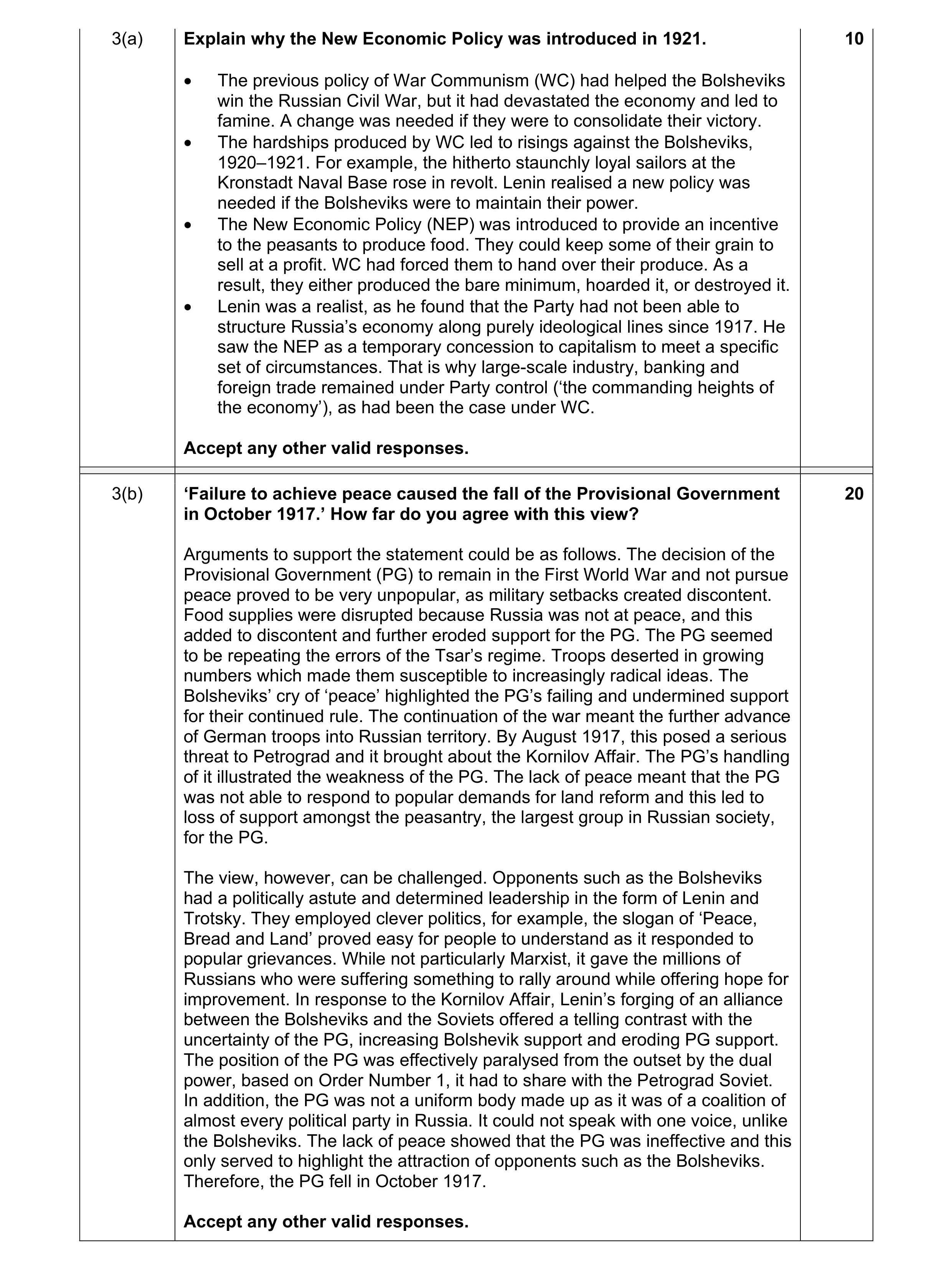 30
30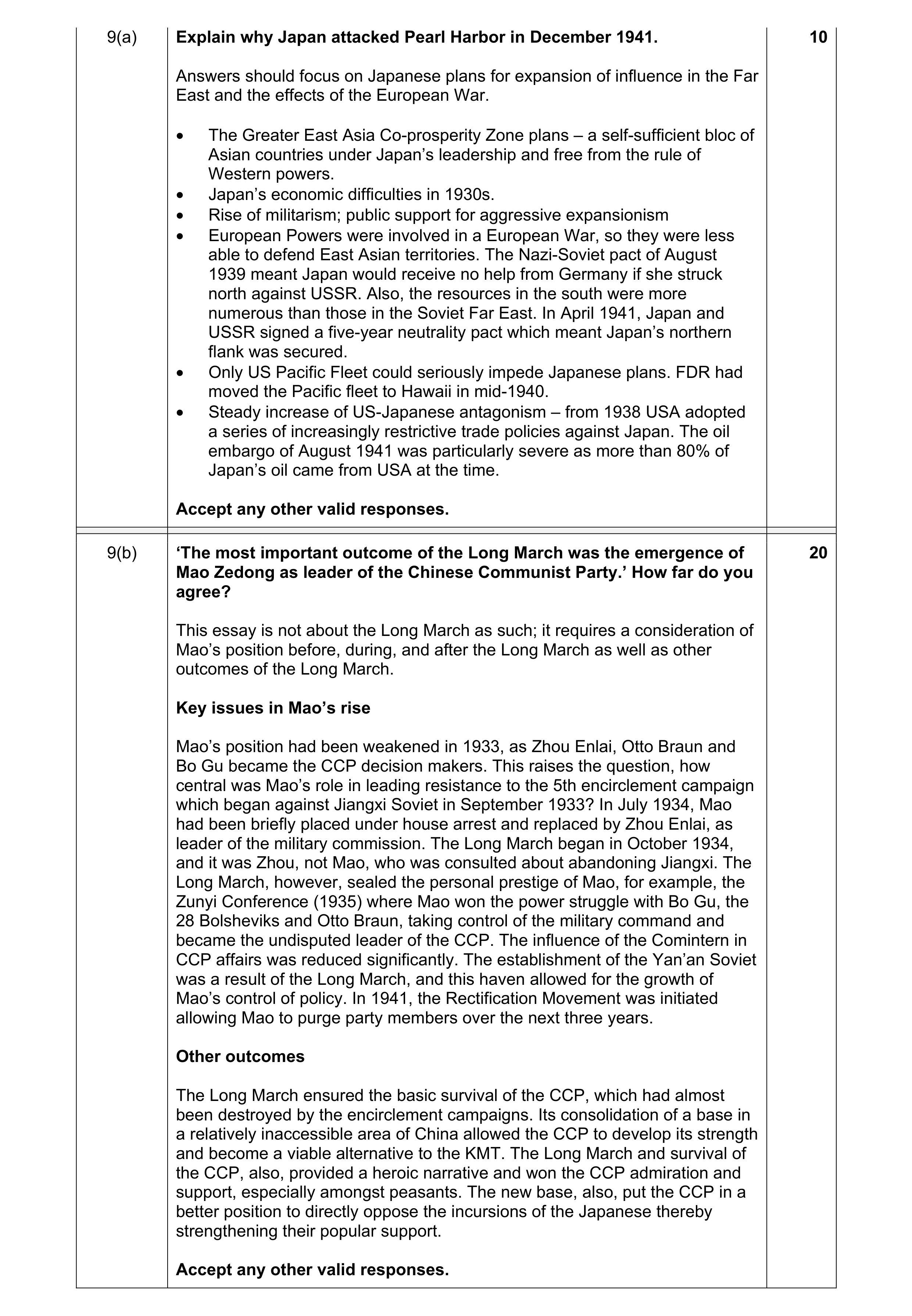 30
30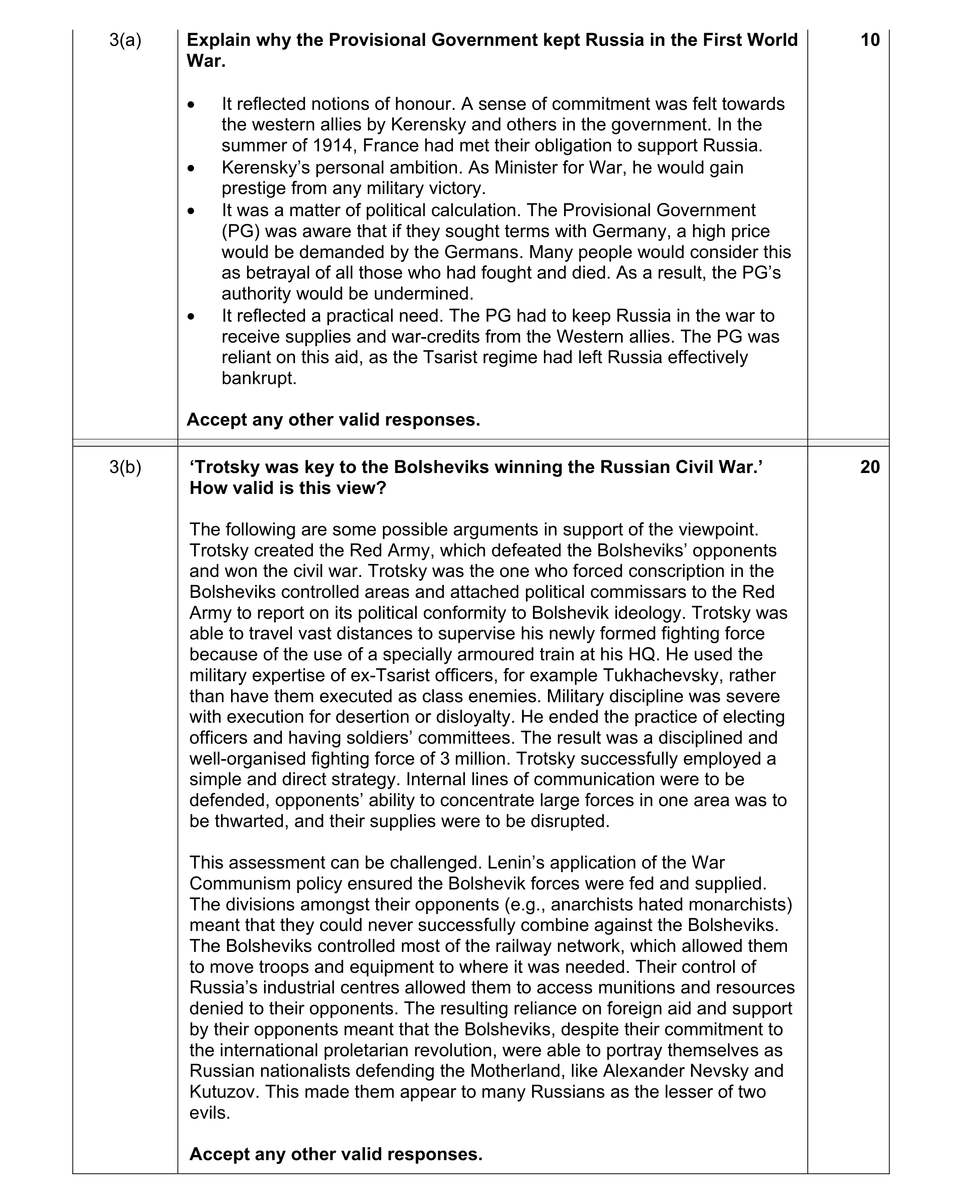 30
30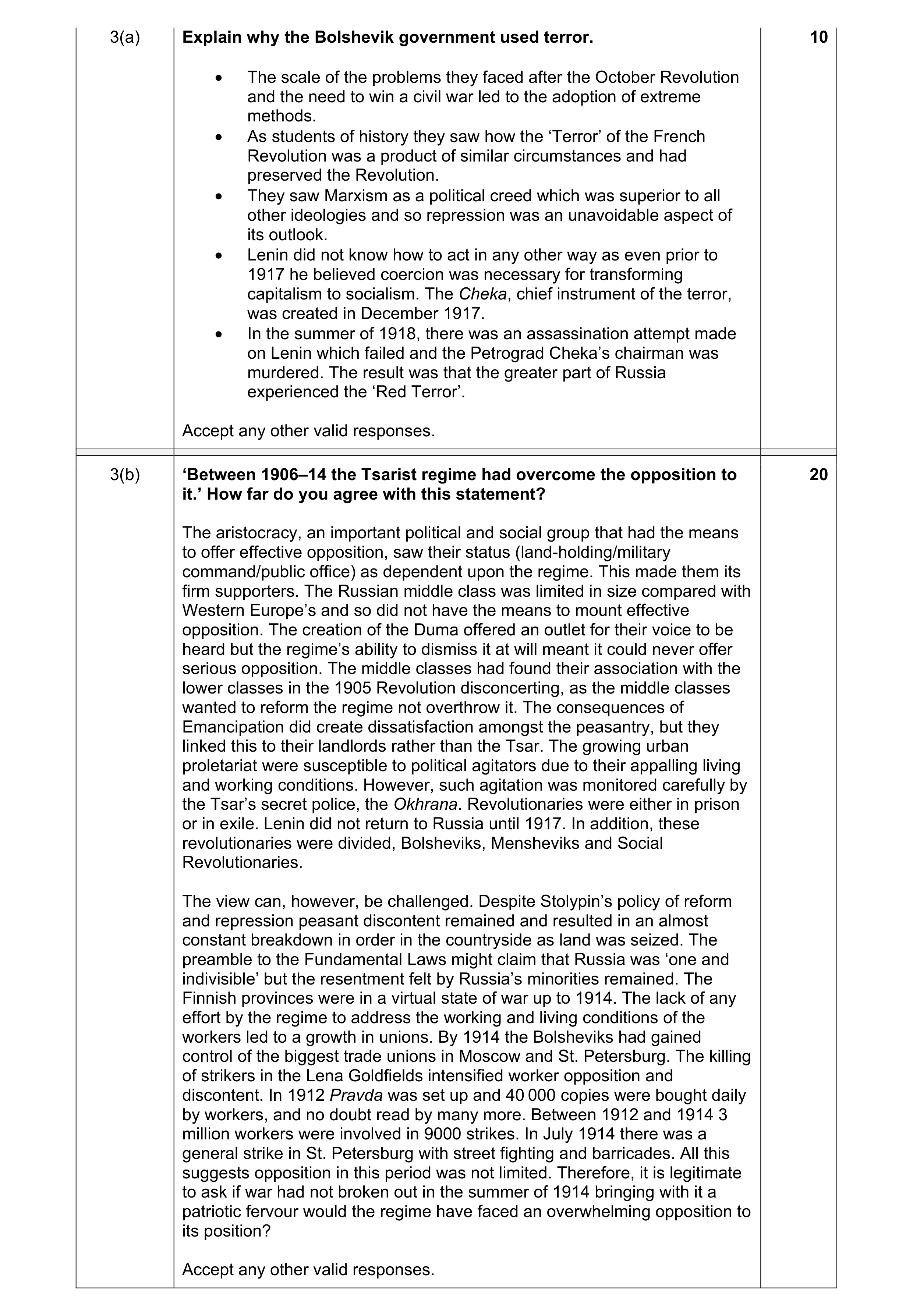 30
30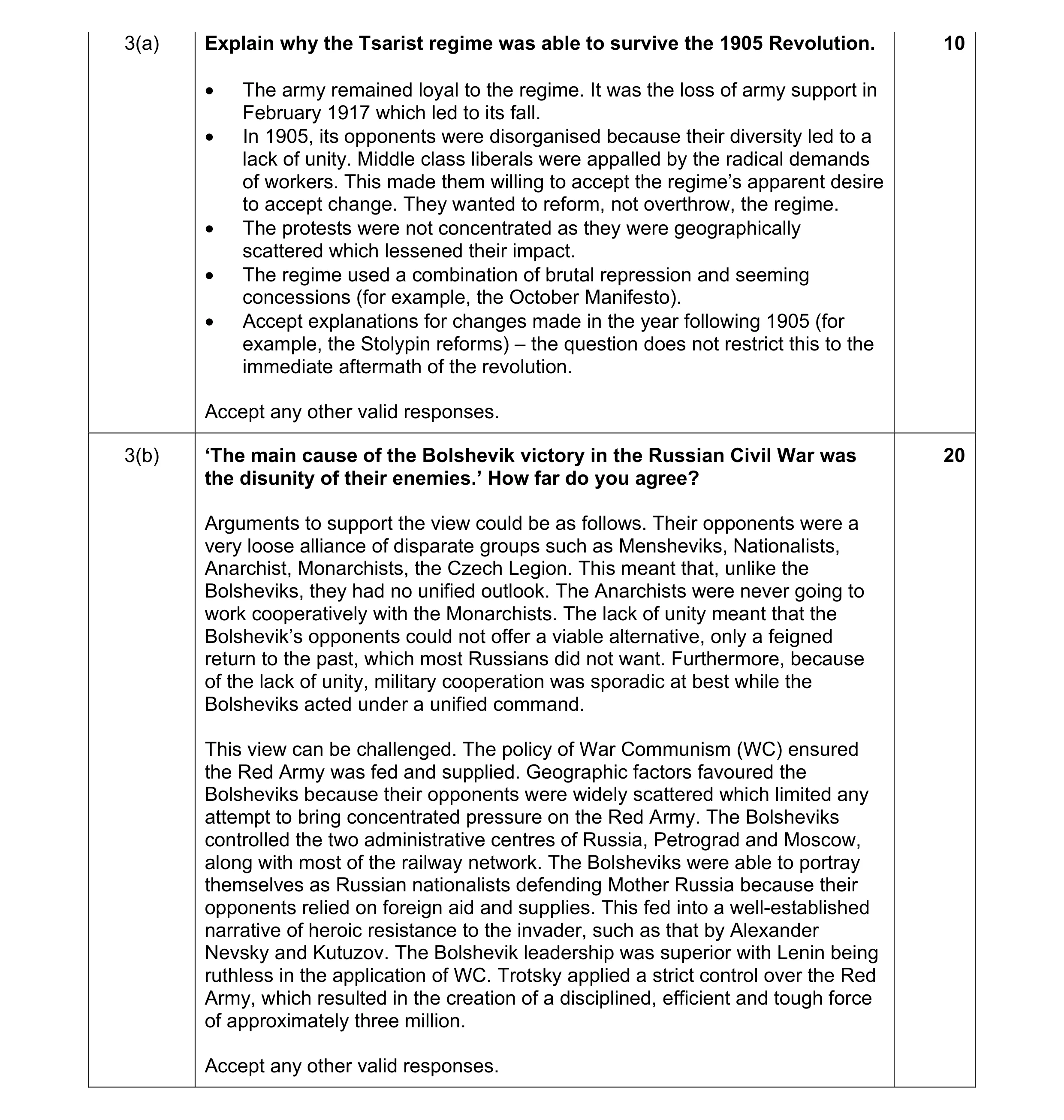 30
30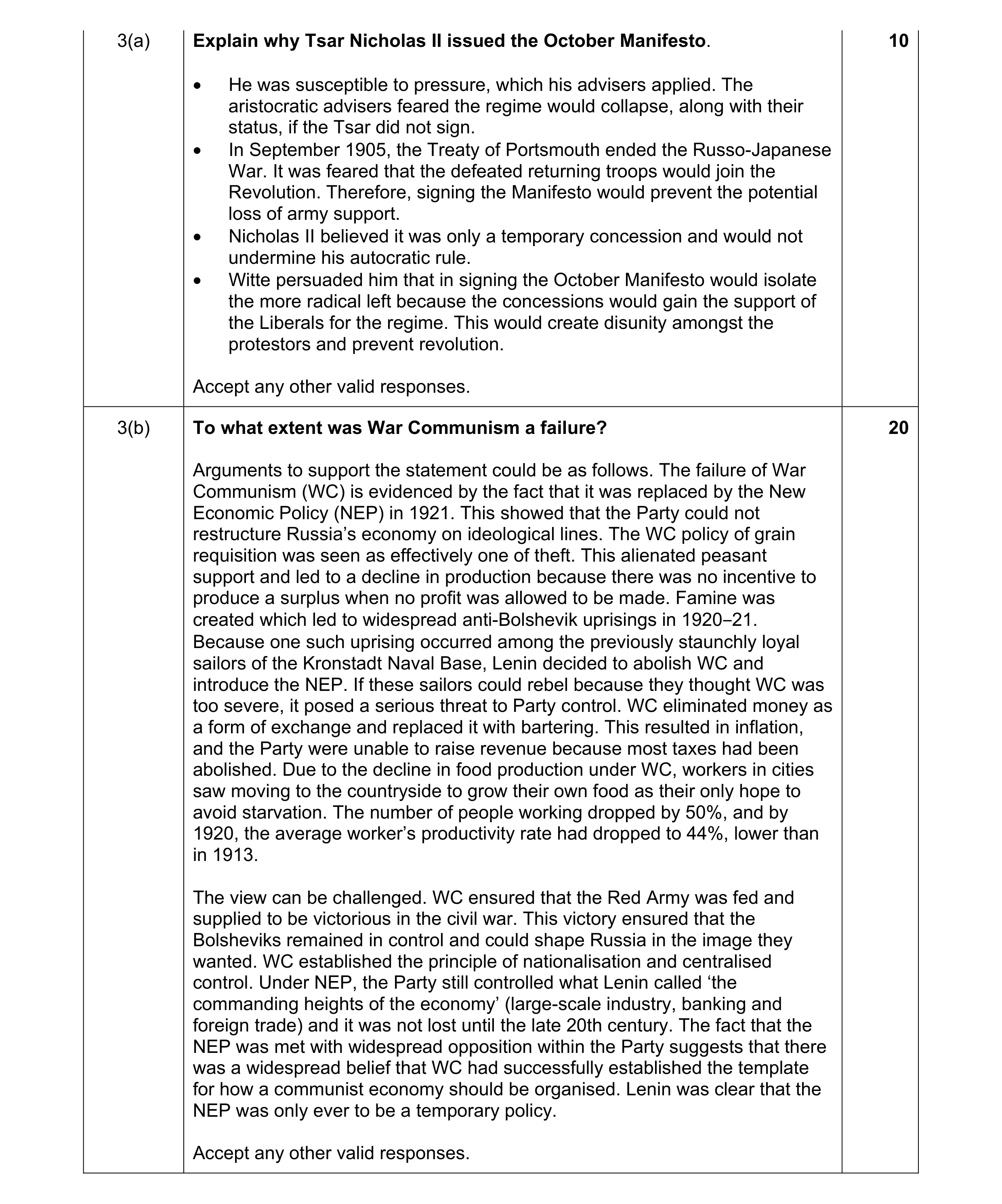 30
30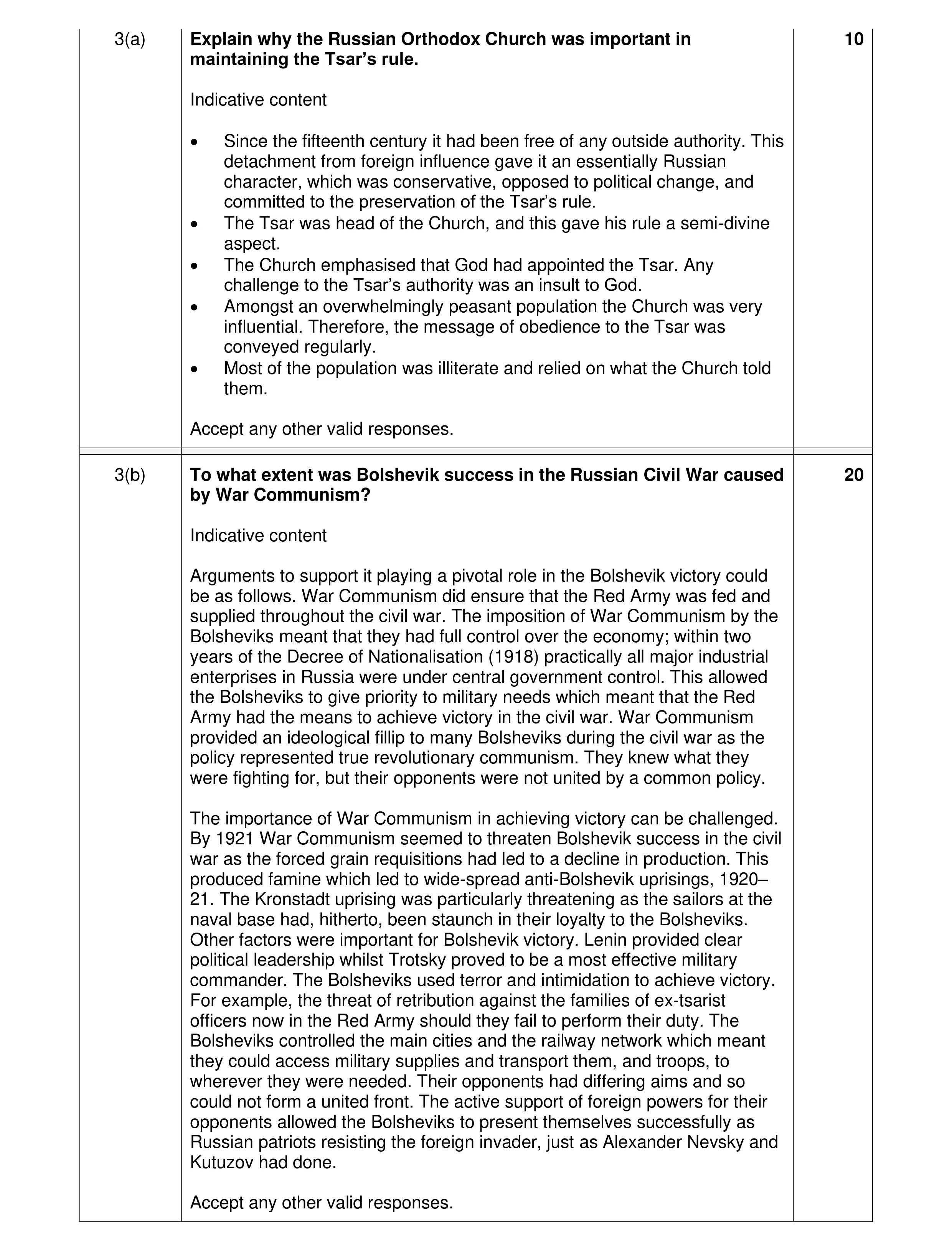 30
30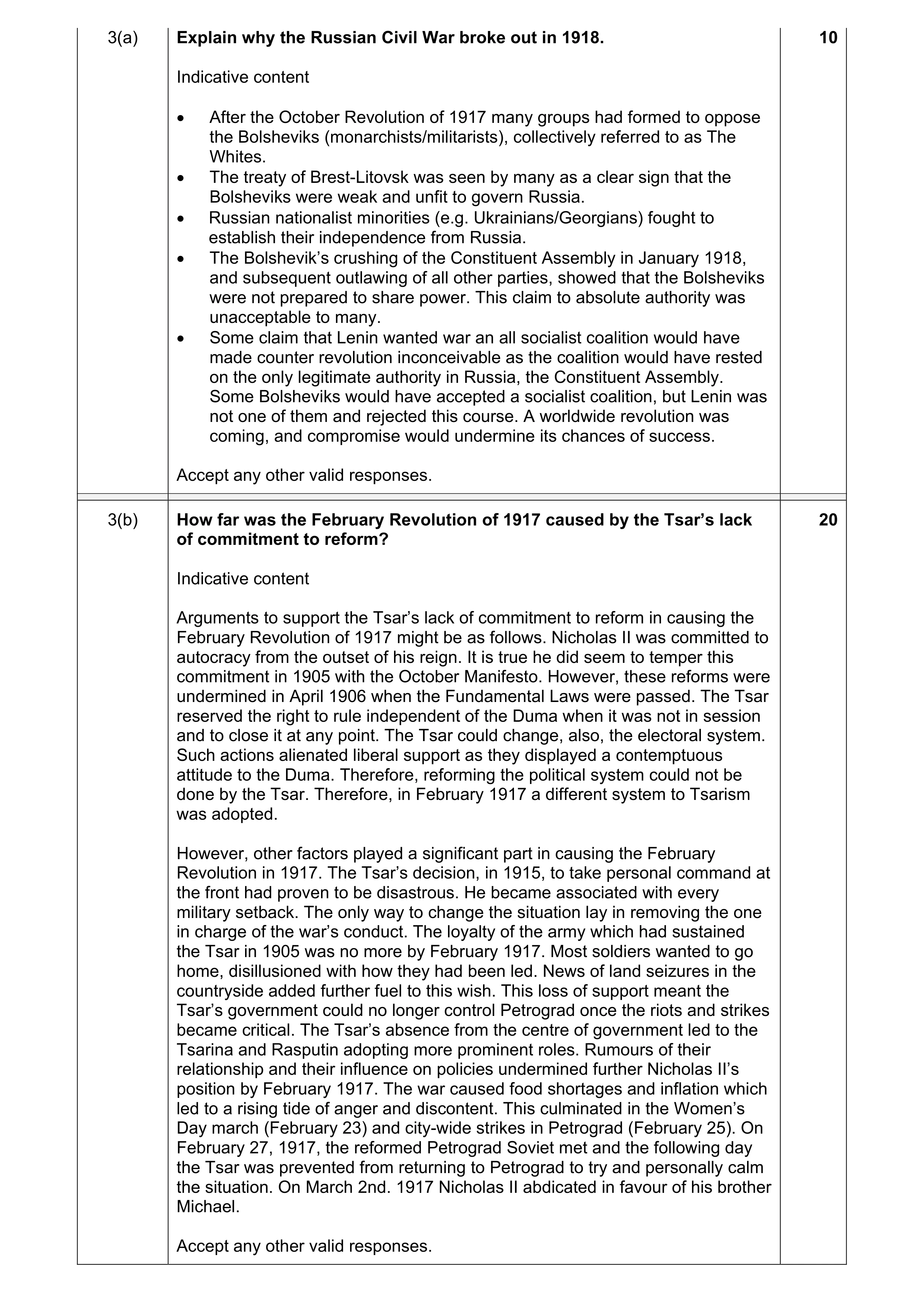 30
30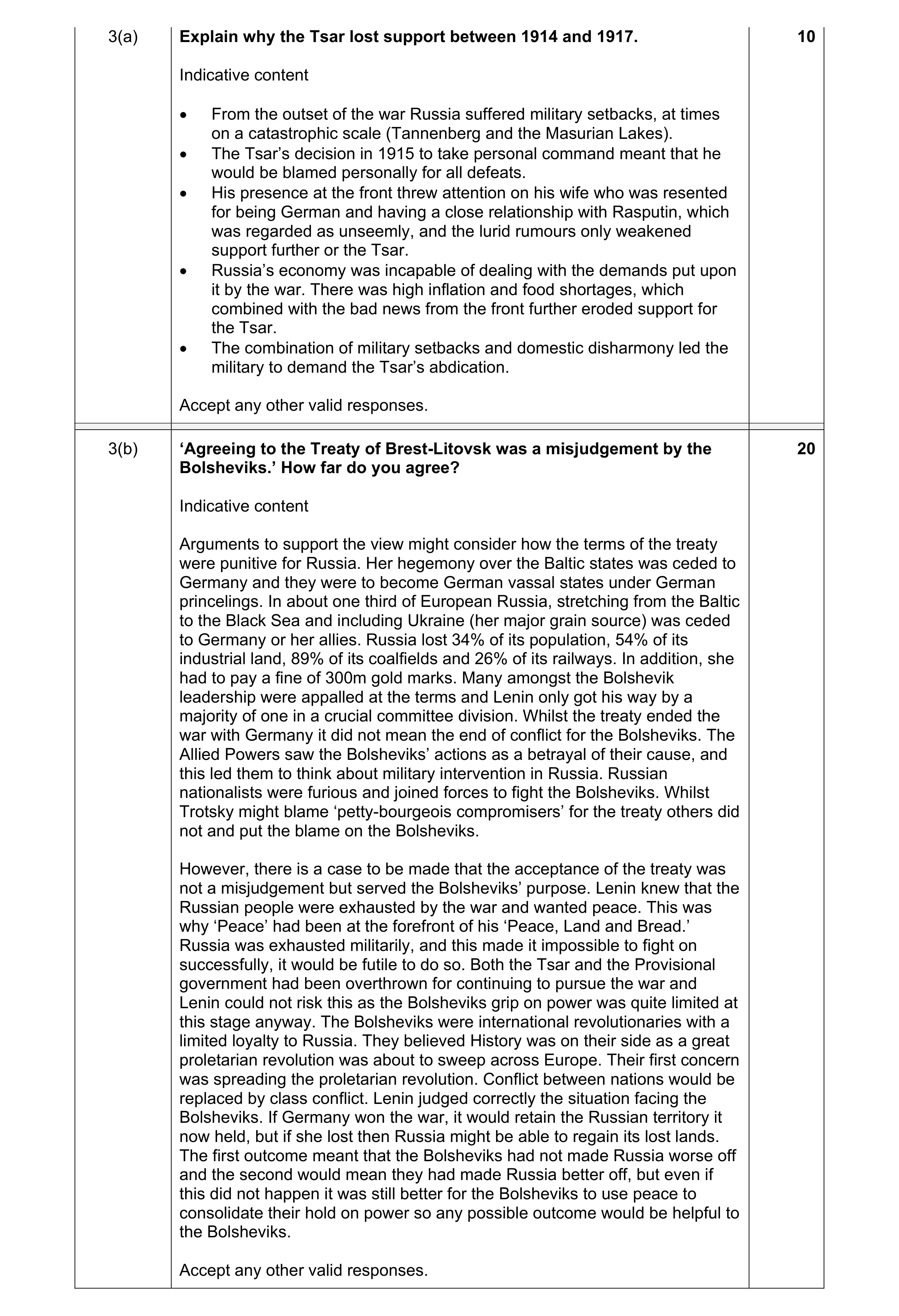 30
30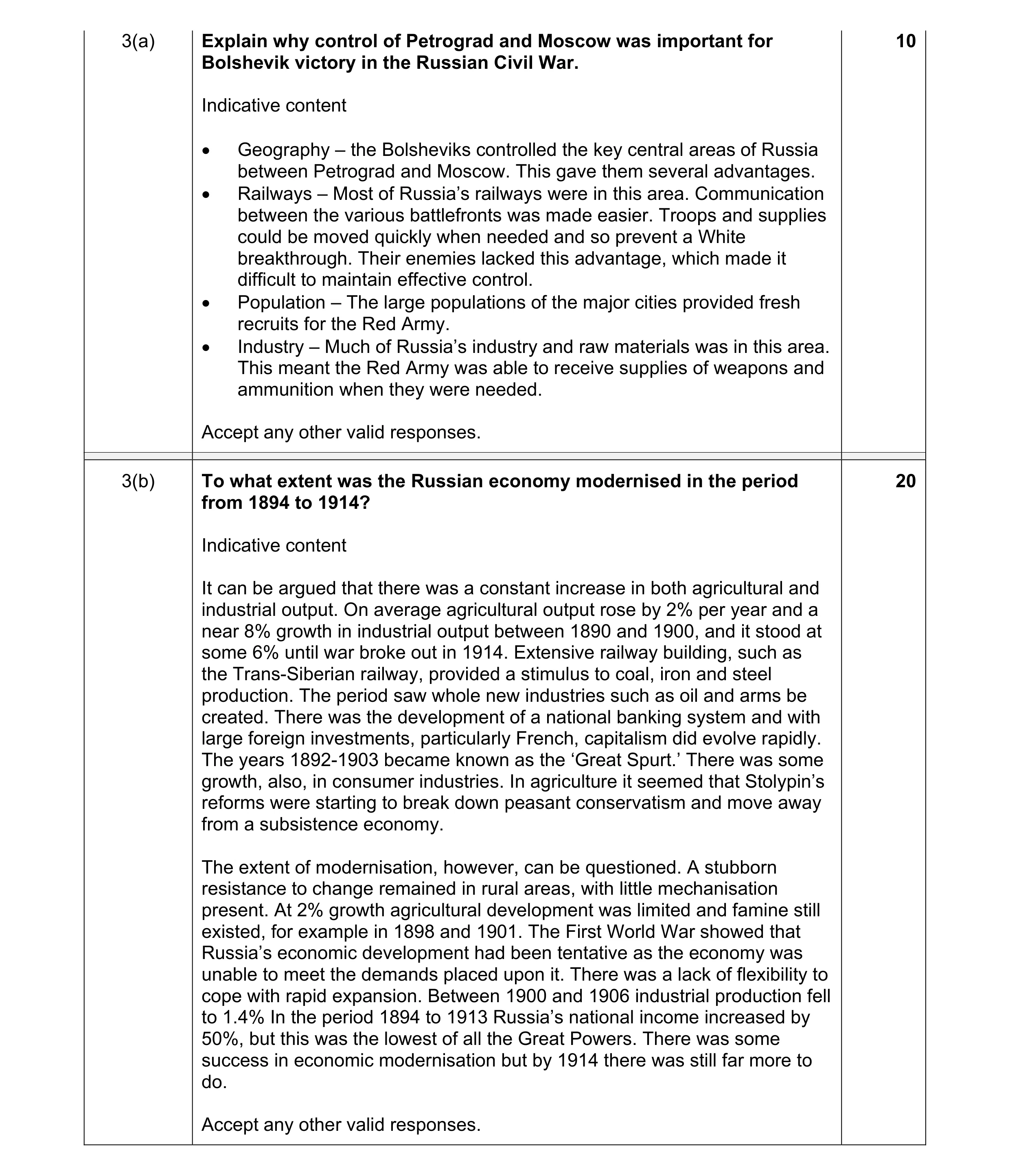 30
30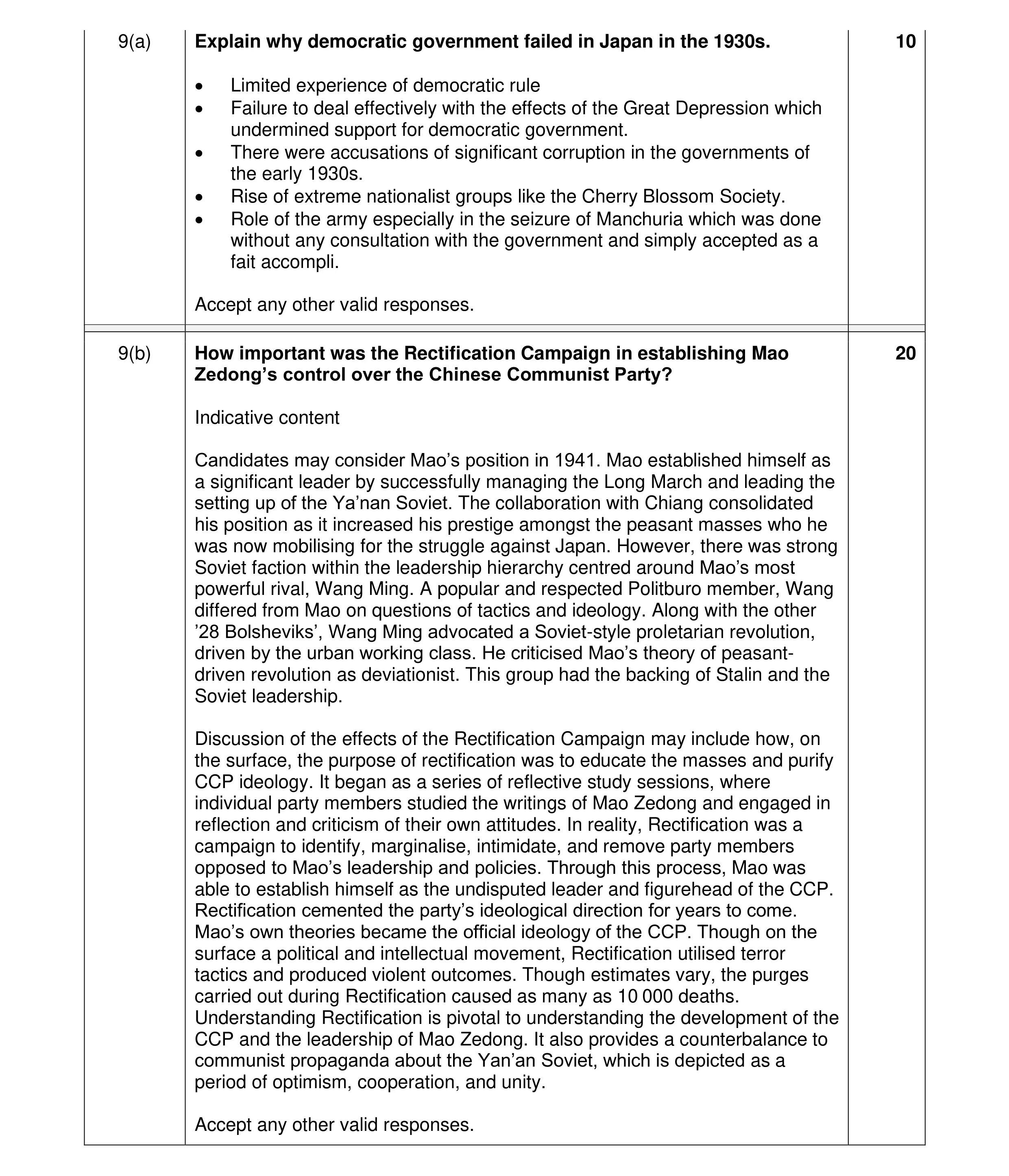 30
30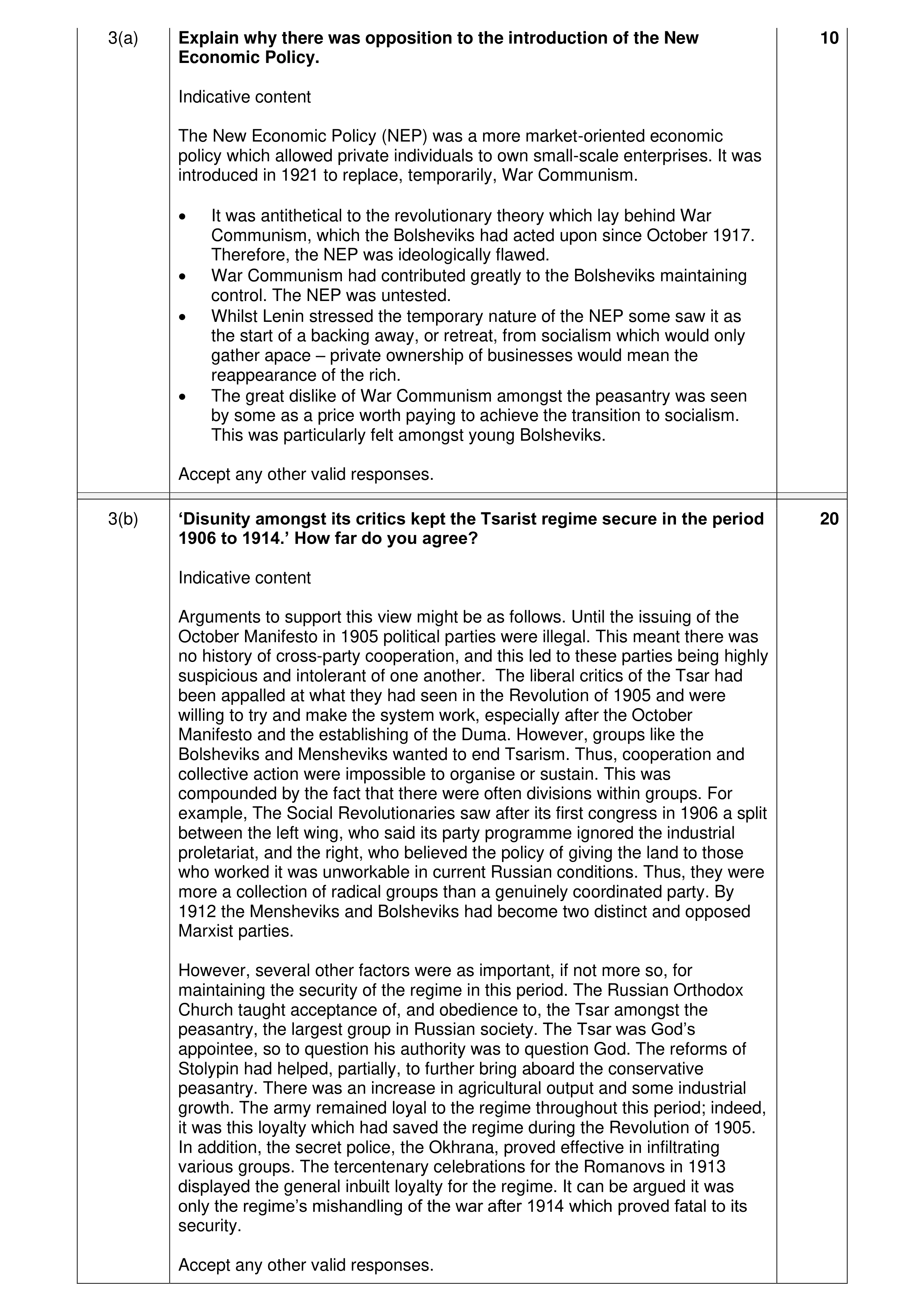 30
30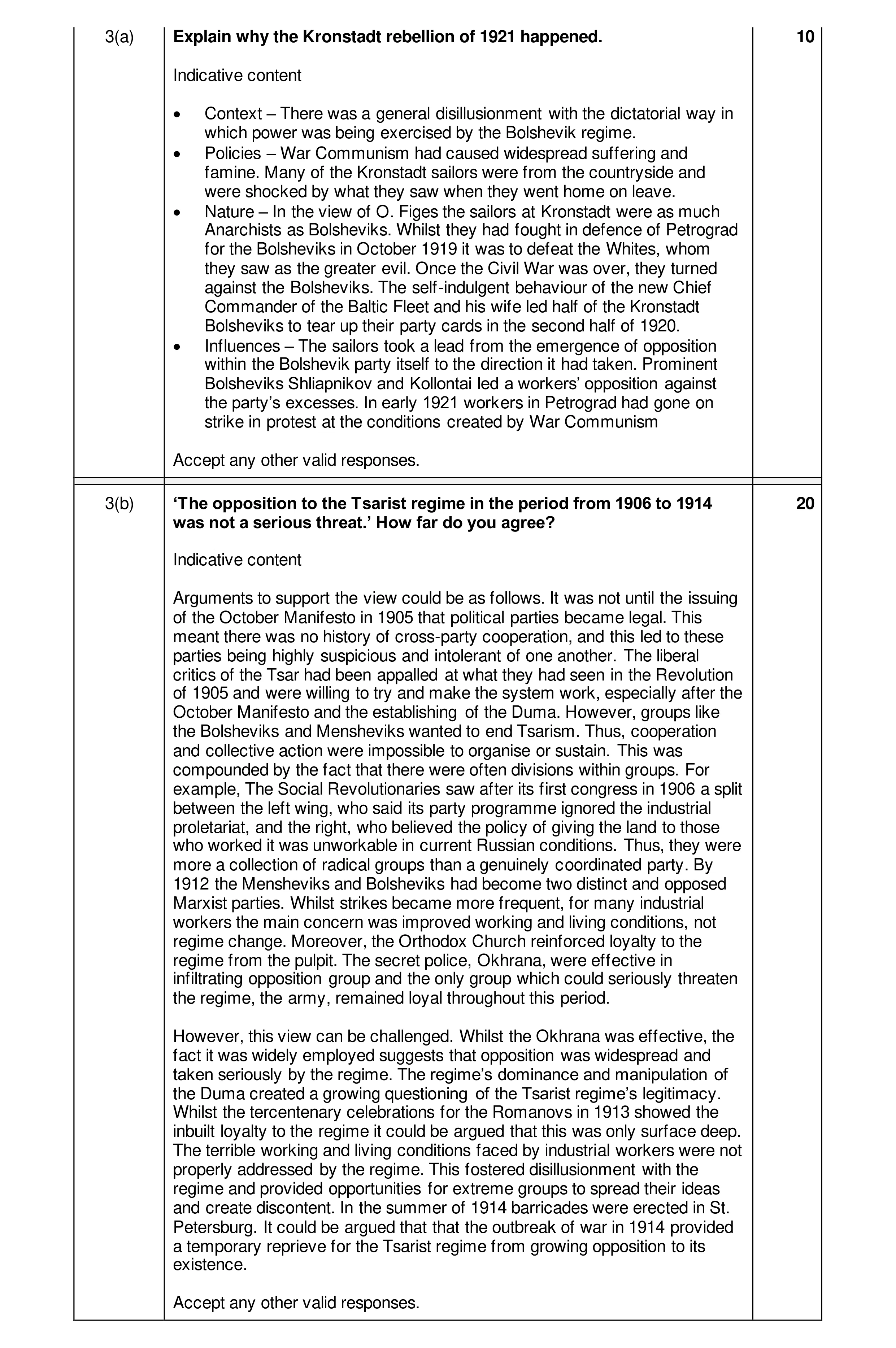 30
30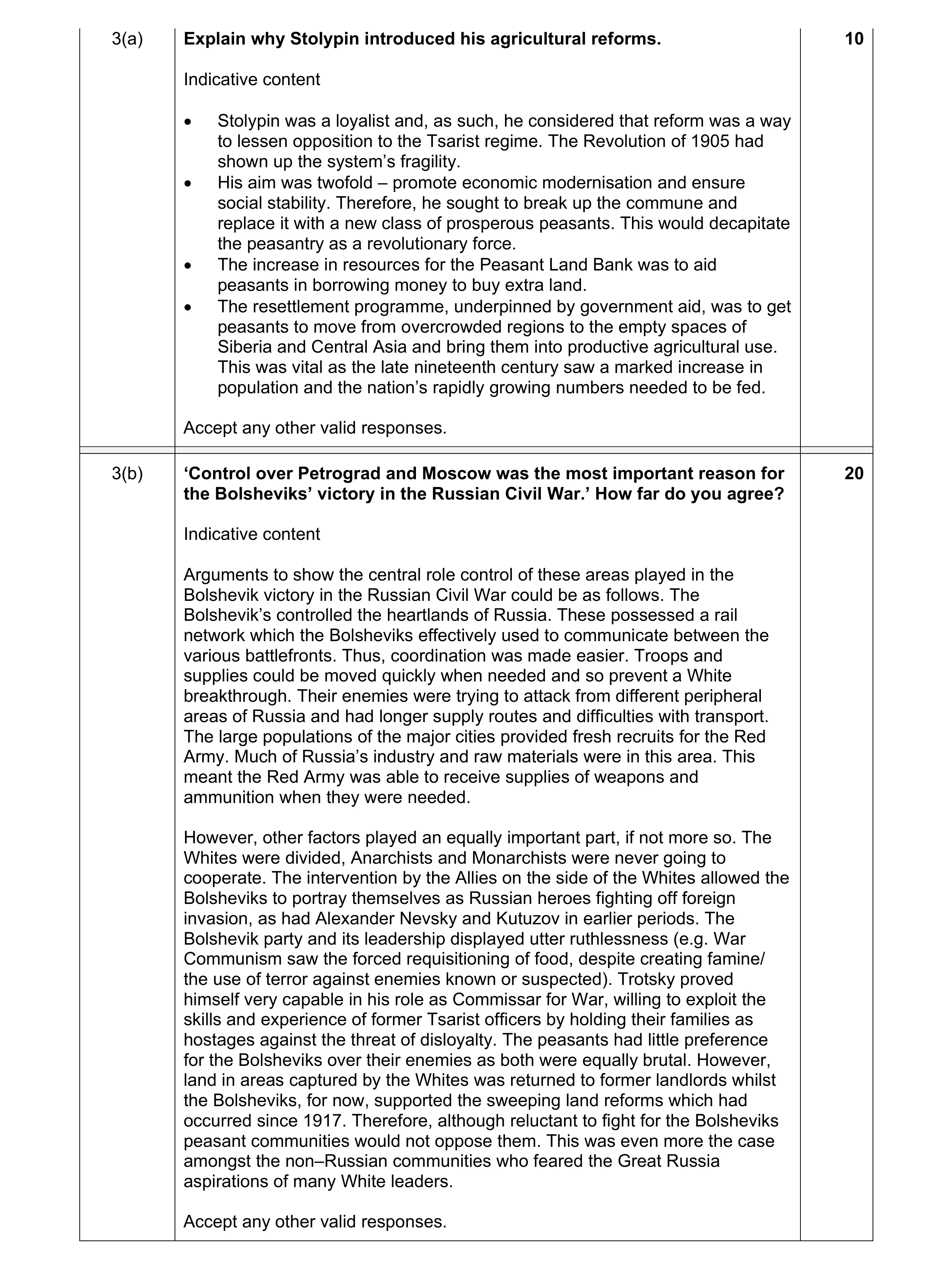 30
30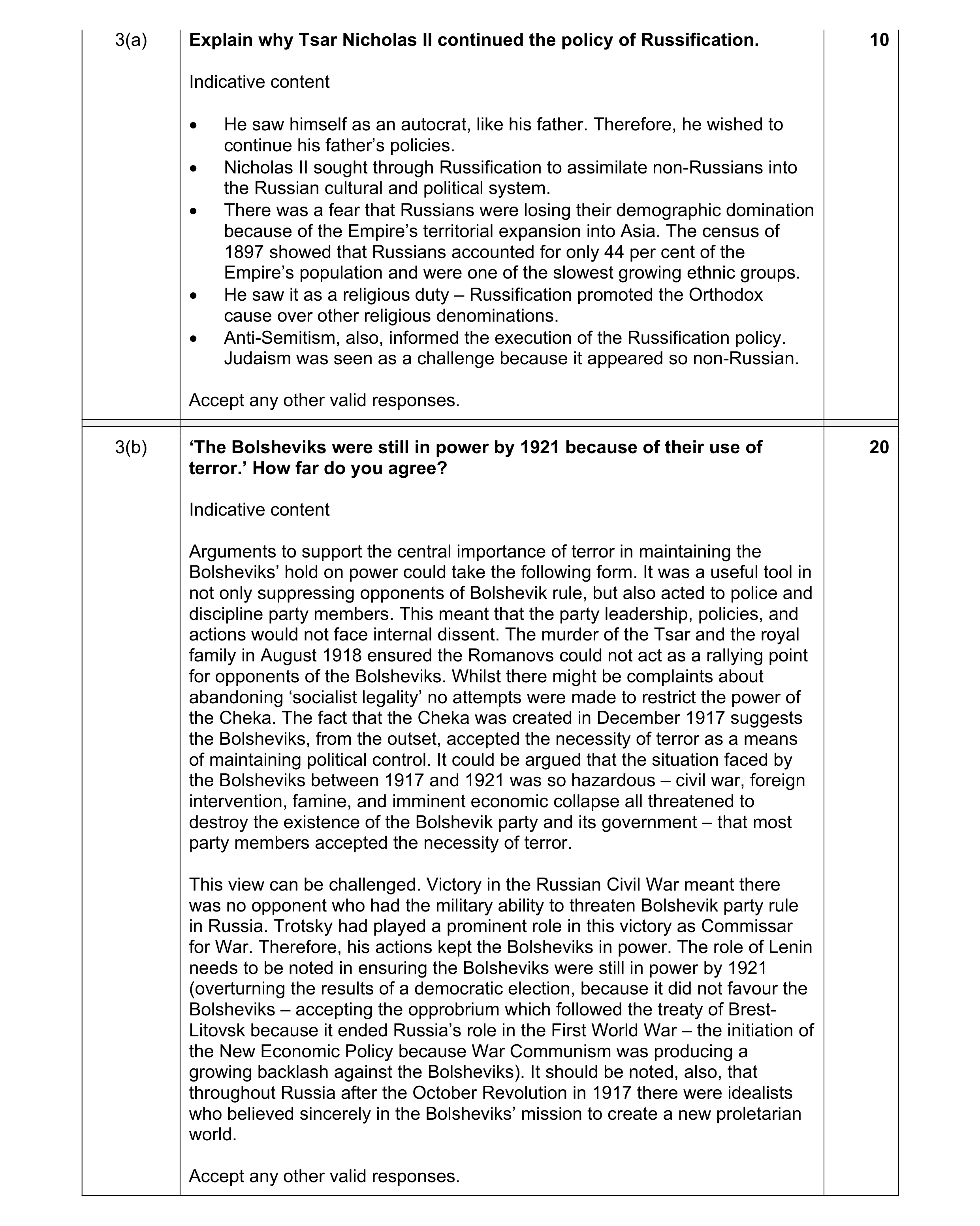 30
30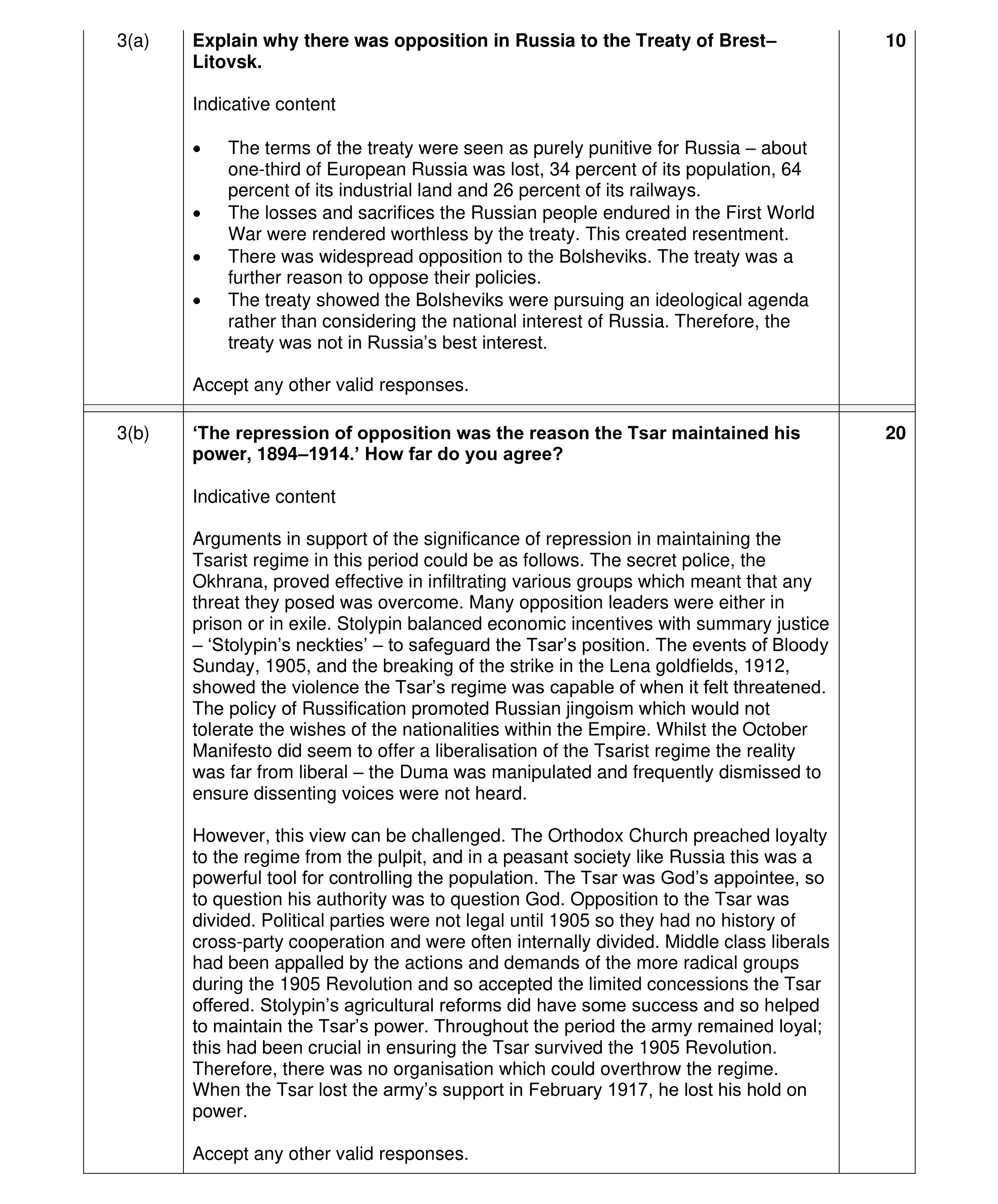 30
30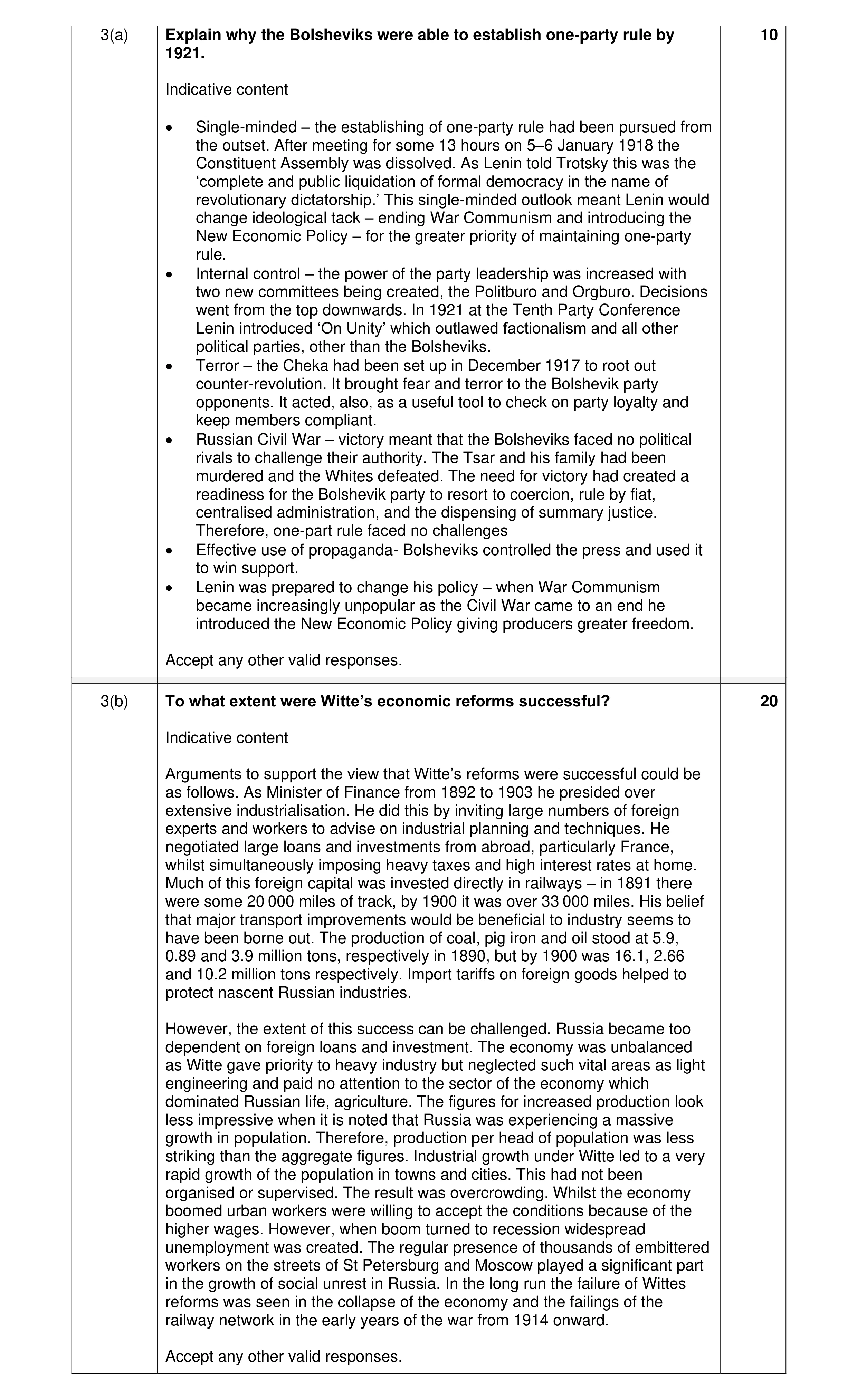 30
30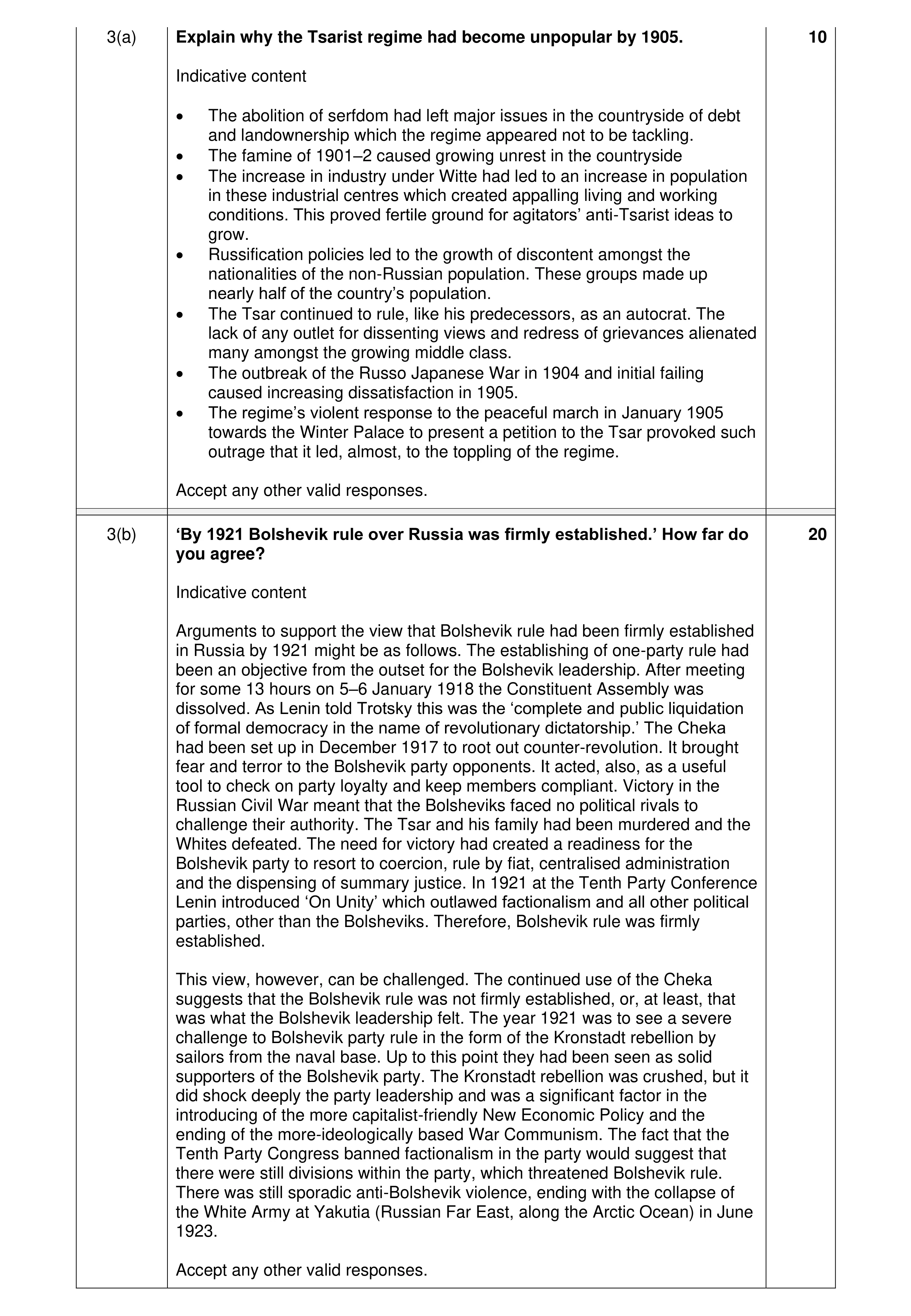 30
30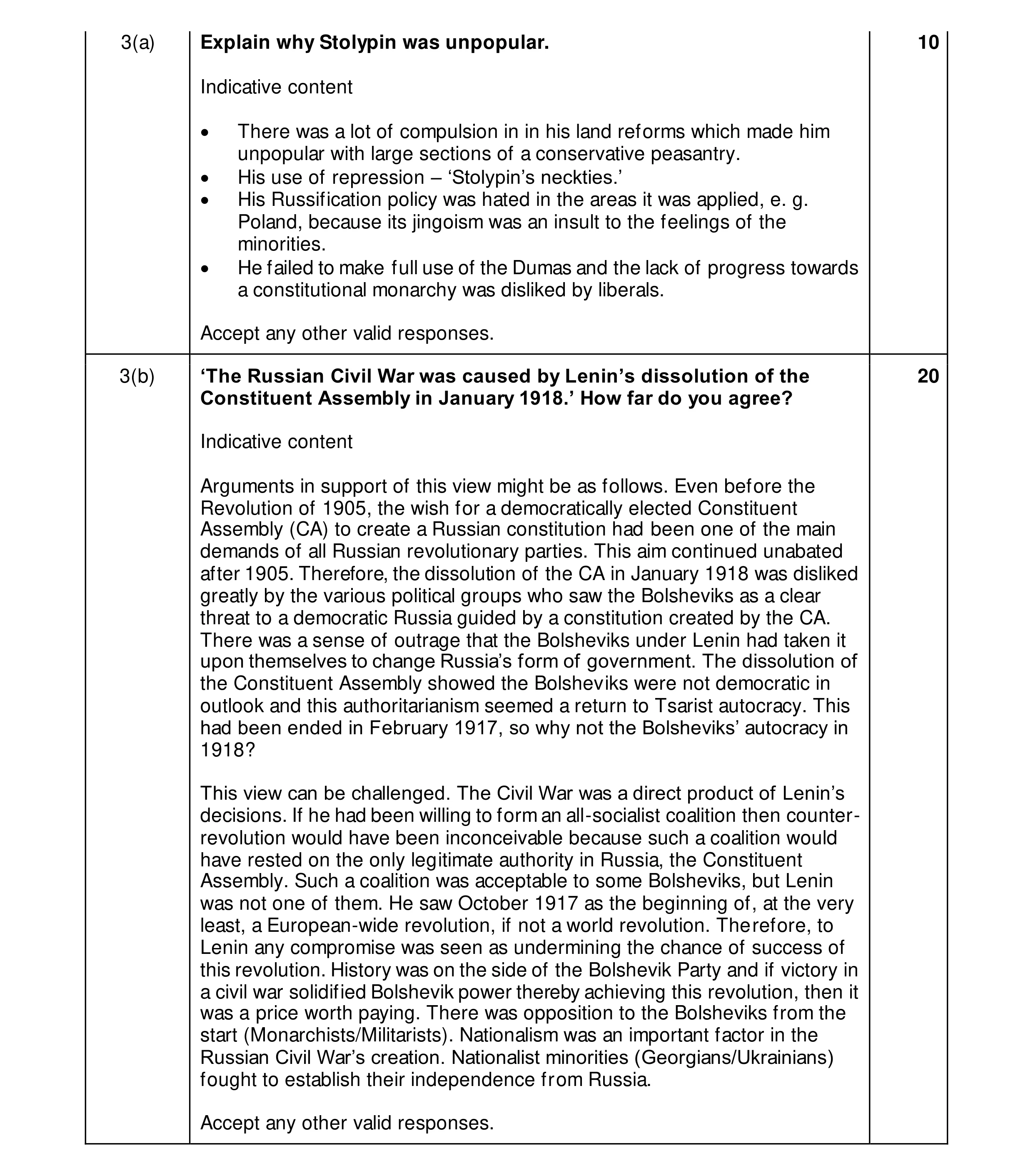 30
30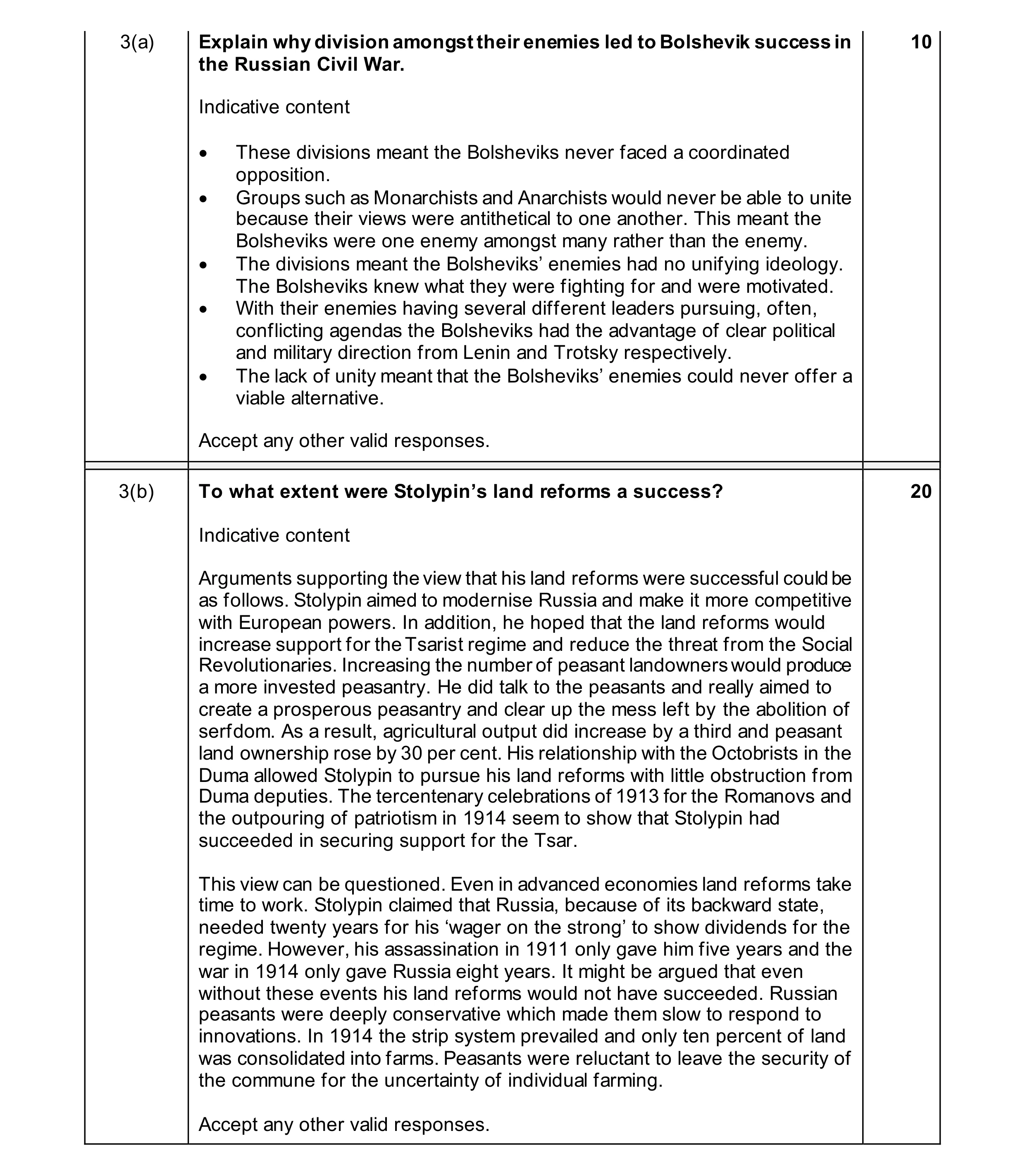 30
30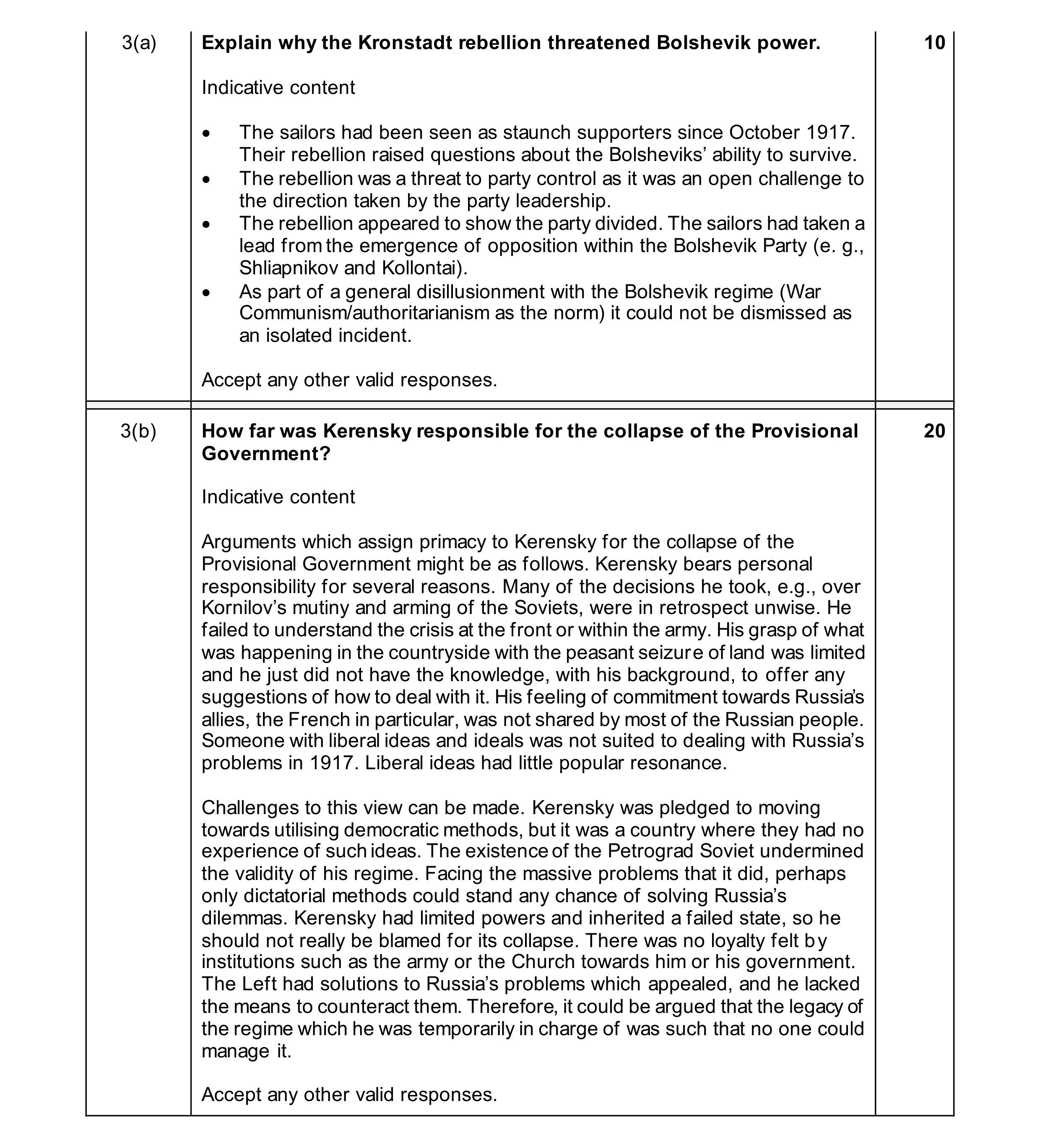 30
30