Questions as text
Q1 · Abu Dhabi is a rapidly developing economy 0455/22 Feb/March 2017
5 Abu Dhabi is a rapidly developing economy. It is building three new museums in its new cultural district, which may attract more tourists and help its balance of payments. The museums will include some very highly priced works of art. (a) Define ‘balance of payments’. [2] (b) Explain two characteristics of a rapidly developing economy. [4] (c) Analyse how an increase in tourism can increase a country’s inflation rate. [6] (d) Discuss whether the rich always save more than the poor. [8]
20 marks
Mark scheme: 5(a) Define ‘balance of payments’. Record of economic transactions (1) with other countries (1). Includes current account, capital account and financial account (2). Exports – imports (1). 2 5(b) Explain two characteristics of a rapidly developing economy. 1 mark each for each of two characteristics e.g.: • high increase in real GDP per head • significant improvements in healthcare • significant improvements in education • high proportion of workers employed in the tertiary sector • low rates of population growth • high spending on luxury products • encouragement of MNCs to set up • more use of advanced technology 1 mark each for each of two explanations: • a high increase in real GDP per head will increase living standards/be caused by e.g. higher investment • significant improvements in healthcare will increase life expectancy/be caused by e.g. higher spending on hospitals • significant improvements in education will raise workers’ skills/be caused by increased spending on universities • as countries develop, workers tend to move from the primary and secondary sectors to the tertiary sector • as countries develop, the birth rate tends to fall faster than the death rate • as countries develop, people may be able to spend on more than necessities • the attraction of MNCs may reduce unemployment • advances in technology due to more research and development and investment/will raise productivity. 4 May be able to establish high population growth, if argued that death rate will fall before fall in birth rate. Question Answer Marks Guidance 5(c) Analyse how an increase in tourism can increase a country’s inflation rate. An increase in tourism will increase demand for a range of products (1) higher demand may encourage firms to raise prices (1) leading to demand-pull inflation (1) especially if economy operating close to full employment (1). An increase in tourism may increase the money supply (1) leading to monetary/demand-pull inflation (1). An increase in tourism may increase demand for workers (1) to work in the tourist and related industries (1) this could raise wages (1) causing cost-push inflation (1). An increase in tourism will increase demand for the currency (1) this may cause a rise in the exchange rate (1) if demand for exports is inelastic (1) export revenue could rise (1) increasing total (aggregate) demand (1). 6 Do not expect but reward idea of a multiplier effect. 5(d) Discuss whether the rich always save more than the poor. Up to 5 marks for why they might: Rich have more income (1) greater ability to save (1) can purchase the products they want (1) and have money left to save (1). Rich may be able to save more and as a result may be paid a higher rate of interest (1) receive a higher reward from saving (1). Up to 5 marks for why they might not: Poor may have to save up to purchase products which the rich can buy from current income (1) e.g. a television (1). Poor may be less confident (1) may be anxious to save to cover e.g. health costs (1) may be concerned not to get into debt (1). Poor/unskilled may be concerned that they will lose their jobs (1) during an economic downturn may be the first to lose their jobs (1). 8 May approach the question from the perspective of whether the poor always save less than the rich.
This question in 0455/22 Feb/March 2017
Q2 · More people are becoming billionaires at the same time that other people are living in… 0455/22 May/June 2017
4 More people are becoming billionaires at the same time that other people are living in poverty. While some people enjoy luxuries others lack even basic essentials. To enable more people to achieve a minimum living standard some economists support the redistribution of income. (a) What is meant by ‘redistribution of income’? [2] (b) Explain two reasons why the rich spend more in total than the poor. [4] (c) Analyse why the elimination of absolute poverty would not solve the economic problem. [6] (d) Discuss whether Gross Domestic Product (GDP) per head is the best measure of comparative living standards. [8]
20 marks
Mark scheme: 4(a) What is meant by ‘redistribution of income’? Taking income from one group e.g. from the rich (1) and giving it to another e.g. to the poor (1). Creating greater equality/reducing inequality/reducing gap between rich and poor (1). May be achieved by using progressive taxation/state benefits (1). 2 equally’. 4(b) Explain two reasons why the rich spend more in total than the poor. • greater income (1) means the rich have more purchasing power (1) • greater wealth/savings (1) which generates income to spend/ e.g. interest, dividends, capital gains (1) • greater ability to borrow (1) because banks are more willing to lend to the rich/the rich have more collateral (1) • more confidence (1) because the rich may expect that their purchasing power will continue to be high (1) 4 Vice versa is acceptable. 1 mark each for each of two reasons identified (×2) 1 mark each for each of two explanations given (×2) Maximum of 2 marks for a list- like approach. 4(c) Analyse why the elimination of absolute poverty would not solve the economic problem. • Absolute poverty is lack of access to basic necessities (1) example e.g. food/living below a certain income level e.g. $1.25 (1) • The economic problem is unlimited wants (1) exceeding finite resources/scarce resources/scarcity (1) • Even if everyone had access to basic necessities, people would still want more products (1) e.g. better quality food (1) there would not be enough resources to meet people’s increasing wants (1) relative poverty will still exist/rich will still be able to spend more than the poor (1) • Over time what is considered to be absolute poverty is likely to change (1) 6 Question Answer Marks Guidance 4(d) Discuss whether GDP per head is the best measure of comparative living standards. Up to 5 marks for why it may be: • Income / output is an important influence on living standards (1) income influences the quantity and quality of goods and services people can consume (1) the healthcare and education they can enjoy (1) • Higher GDP per head can increase tax revenue (1) which can be spent on items e.g. education which can increase living standards (1) • GDP per head takes into account the size of the population / it is an average (1) it is GDP divided by population (1) a rise in GDP matched by a rise in population would not mean that people are better off (1) • GDP per head is measured by all countries and so comparisons can be made (1) relatively easy to calculate / understand (1) Up to 5 marks for why it may not be: • There are wider/more accurate measures of living standards (1) e.g. HDI (1) which takes into account education/literacy (1) and health/life expectancy (1) • GDP per head is an average (1) it does not take into account distribution of income (1) GDP per head may be high but some people may be poor (1) • GDP per head does not take into account leisure time (1) GDP per head may be high but if people are working long hours the quality of their lives may be low (1) • Increases in output may increase pollution (1) e.g. lower air quality may reduce living standards (1) • GDP per head may not fully reflect the quality of products produced (1) which may increase even if GDP per head does not change (1) • GDP per head may not fully reflect the quantity of goods produced (1) due to the existence of the informal economy (1) • GDP per head does not include safe drinking water (1) which has a significant influence on health (1) 8 A response may develop a mixture of relevant points to achieve up to 5 marks on either side. Maximum of 2 marks on each side of the discussion for a list- like approach. Reward but do not expect reference to the Multi- Dimensional Poverty Index/Genuine Progress Indicator/real income/etc.
This question in 0455/22 May/June 2017
Q3 · Despite encouragement from central banks, in 2015 some commercial banks were still… 0455/21 Oct/Nov 2017
7 Despite encouragement from central banks, in 2015 some commercial banks were still reluctant to lend, especially to the poor. Attracting more lenders and borrowers would have allowed commercial banks to expand and employ more workers. A rise in employment would make more use of a country’s labour force. Over time, the size of a country’s labour force is likely to change. (a) Identify two ways in which the expenditure patterns of the poor and the rich are different. [2] (b) Explain two reasons why a commercial bank may prefer to lend to the rich rather than to the poor. [4] (c) Analyse the effects that an increase in the labour force will have on an economy. [6] (d) Discuss whether providing loans to the poor will reduce poverty. [8]
20 marks
Mark scheme: 7(a) Identify two ways in which the expenditure patterns of the poor and 2 the rich are different. The rich spend more / the poor spend less (1). Poor spend a higher proportion on basic necessities / needs e.g. food (1) rich spend a higher proportion on luxuries / wants (1). Poor spend a higher proportion (1) of their income than the rich (1) or the reverse argument. 7(b) Explain two reasons why a commercial bank may prefer to lend to the 4 rich rather than to the poor. 1 mark each for each of two reasons identified: • greater expectation that they will repay • greater collateral • rich may borrow more / more profitable • it takes a longer time for the poor to repay loans. 1 mark each for each of two explanations of the reasons: • rich will have more income/wealth to repay • rich will have more assets to sell if necessary • more interest can be earned from lending large sums • the poor have less income with which to repay. 7(c) Analyse the effects that an increase in the labour force will have on an 6 economy. An increase in the labour force will increase the quantity of resources (1) increase productive potential (1) enable more products to be produced (1) raise economic growth (1). An increase in the labour force may reduce inflation pressure (1) enable supply to increase to match higher demand (1). An increase in the labour force may increase total wages paid (1) increasing total spending/demand (1) causing demand-pull inflation (1). An increase in the labour force available may reduce wages (1) reducing cost-push inflation (1). An increase in the labour force may increase employment (1) if the number of jobs available increases (1) increasing income tax revenue for the government (1). If not employed, will increase unemployment rate (1) higher spending on benefits (1). 7(d) Discuss whether providing loans to the poor will reduce poverty. 8 Up to 5 marks for why it might: Loans will enable the poor to buy more basic necessities (1) e.g. housing, food, clothing (1) reduces absolute poverty (1). Loans will enable the poor to spend more on education/training (1) increase their skills (1) increase the chances of them gaining a job (1) increase wage rate (1) increase education of children (1) reduce poverty in the future (1). Loans will enable the poor to set up small businesses (1) become entrepreneurs (1) receive income/profit (1) may employ other previously poor people (1) reduce unemployment (1). Loans may enable the poor to spend more on healthcare (1) raising living standards (1). Up to 5 marks for why it might not: Loans may be spent on items that do not increase earning potential (1) e.g. cigarettes (1). The poor may get into debt / may be unable to repay the loan (1) lose their collateral/home (1). Paying interest (1) may reduce the ability to buy basic necessities (1) high interest rates (1) may be charged to the poor (1). Loans may not be large enough (1) to pay for e.g. education/training (1). Loans may not be a long-term solution to poverty (1) only improving living standards in the short-term.
This question in 0455/21 Oct/Nov 2017
Q4 · Rich people in some countries are now working for more hours on average than poor people 0455/22 Oct/Nov 2017
3 Rich people in some countries are now working for more hours on average than poor people. One reason for this is thought to be that well-paid jobs provide more job satisfaction. Gaining enjoyment from work can lead to high labour productivity. (a) What is a possible opportunity cost of working? [2] (b) Explain two reasons why older workers tend to earn more than younger workers. [4] (c) Analyse, using a production possibility curve diagram, how an increase in labour productivity will affect an economy. [6] (d) Discuss whether the rich in one country will save more than the rich in another country. [8]
20 marks
Mark scheme: 3(a) What is a possible opportunity cost of working? Opportunity cost is the (next) best alternative forgone (1). Opportunity cost is leisure / education / retirement / raising a family (1). 2 3(b) Explain two reasons why older workers tend to earn more than young workers. 1 mark each for each of two reasons identified: An older worker (or vice versa): • may have gained more qualifications • may have received more training • may have gained experience • may have been promoted • length of service. 1 mark each for each of two explanations given: • a more qualified worker can apply for a better paid job • a better trained worker will have more choice of occupation • more experience is likely to increase productivity/skills • over time a worker may become better at doing the job • in some jobs there are regular increases in pay. 4 Some candidates may answer from the perspective of younger workers earning less than older workers. Question Answer Marks Guidance 3(c) Analyse, using a production possibility curve diagram, how an increase in labour productivity will affect an economy. Up to 4 marks for the diagram: Axes correctly labelled (1). Original production possibility curve / straight downward sloping line drawn to the axes (1). New PPC (1). Indication of shift to the right – arrow or labelling (1). Up to 2 marks for written explanation: An increase in labour productivity increases the quality of labour (1) increases output per worker hour / efficiency (1) increases productive potential / cause economic growth (1). 6 O e.g. capital goods e.g. consumer goods B B A A Question Answer Marks Guidance 3(d) Discuss whether the rich in one country will save more than the rich in another country. Up to 5 marks for why they might: The rich in one country may save more if they have more income than the rich in another country (1) people tend to save more as income rises (1) greater ability to save (1). The interest rate may be higher in the country (1) greater financial return from saving / save more / spend less (1). There may be more tax incentives in the country to encourage saving (1) i.e. interest rates earned not taxed or taxed at a lower rate (1). There may be a greater fear of a recession (1) rich expecting their income to be lower in the future / risk of losing their jobs (1). Up to 5 marks for why they might not: The rich in the country may be more optimistic about the future / may have greater job security (1) which will encourage them to spend a higher proportion of their income (1). There may be more of a culture of saving in another country (1). There may be more / greater range of financial institutions in another country (1) encouraging more saving there (1). The total number of the rich may be higher in another country (1) so even if, on average, the rich save more in the country, total saving may be higher in another country (1). There may be higher inflation / greater expectation of higher inflation in the future (1) encouraging higher spending now (1). 8
This question in 0455/22 Oct/Nov 2017
Q5 · Crisis in the ice cream market Vanilla is used in the production of soft drinks, cakes… 0455/22 May/June 2018
1 Crisis in the ice cream market Vanilla is used in the production of soft drinks, cakes and perfumes. Its main use, however, is in the production of ice cream. Fig. 1 shows the different costs of making ice cream for one firm. Fig. 1 The costs of producing ice cream for one firm raw materials including vanilla other wages insurance security lighting rent Madagascar is the world’s largest supplier of vanilla followed by Mexico and Tahiti. At the start of 2016, economists expected the price of ice cream to increase as the price of vanilla had risen by 130% in 2015. This was largely because of the poor harvests in Madagascar which reduced the output of vanilla in 2015. Ice cream is seen as a luxury product in most countries. It has a range of substitutes and this is one reason why producers do not always pass on higher costs to consumers. In 2015, there were a number of other changes in the production of ice cream including a rise in the productivity of the workers. As well as vanilla, Madagascar produces a number of other primary products including coffee and sugar. Nearly 80% of the country’s labour force is employed in the primary sector. The country has a relatively low Gross Domestic Product (GDP) per head and a relatively low Human Development Index (HDI) value as shown in Table 1. This limits the amount that people in Madagascar save. Table 1 GDP per head and HDI in selected countries in 2015 Country GDP per head (US$) HDI Argentina 22 400 0.836 Bangladesh 3 600 0.570 Cuba 10 200 0.769 Egypt 11 500 0.690 Ghana 4 300 0.579 Madagascar 1 500 0.510 Half of Madagascar’s population live in poverty. The government is trying to reduce poverty by introducing a programme of cash benefits. It is hoped that one effect of this will be to increase school enrolment and attendance of the children of poor families. To increase economic growth, the government has sold off a number of state-owned enterprises and is moving the economy towards a market system. (a) Identify two fixed costs of production in Fig. 1. [2] (b) Explain, using information from the extract, two reasons why a rise in the price of vanilla might not cause an increase in the price of ice cream. [4] (c) Analyse, using a demand and supply diagram, the effect of an increase in income on the market for ice cream. [5] (d) Analyse the extent to which the relationship shown in Table 1 between countries’ GDP per head and their HDI value is the expected one. [4] (e) Discuss whether or not a government should encourage people to save more. [5] (f) Explain, using information from the extract, how cash benefits given to the poor can reduce poverty. [4] (g) Discuss whether or not a market system benefits consumers. [6]
30 marks
Mark scheme: 1(a) Identify two fixed costs of production in Fig.1. One mark each for any 2 from: insurance, security, rent, lighting and wages. 2 are given, consider only the first three. 1(b) Explain, using information from the extract, two reasons why a rise in the price of vanilla might not cause an increase in the price of ice cream. Ice cream is a luxury product (1) likely to have elastic demand / producers will be concerned that a rise in price could cause a fall in revenue/profit/demand (1). Ice cream has substitutes (1) likely to have elastic demand / producers will be concerned that a rise in price could cause a fall in revenue / loss of customers / loss of demand (1). Rise in productivity of workers (1) fall in labour costs / lower costs may offset a rise in the price of vanilla (1). Fall in another cost identified in the pie chart (1) may offset a rise in the price of vanilla (1), 4 Question Answer Marks Guidance 1(c) Analyse, using a demand and supply diagram, the effect of an increase in income on the market for ice cream. Up to 4 marks for a diagram: • axes correctly labelled – price and quantity or P and Q (1) • demand and supply curves correctly labelled, S (1) • demand curve D1 shifted to the right D2 (1) • correct equilibriums identified either by lines drawn to both axes or equilibrium prices clearly identified e.g. E1 and E2 (1) 1 mark for written analysis: • an increase in income increases purchasing power (1) • people buy more ice cream when they have more money/income (1) • demand will increase as ice cream is a luxury good • price will rise 5 price of ice cream quantity of ice cream O P2 D1 D1 P1 Q1 Q2 D2 D2 S S Question Answer Marks Guidance 1(d) Analyse the extent to which the relationship shown in Table 1 between countries’ GDP per head and their HDI value is the expected one. Generally, in the same order / positively related / countries with highest GDP per head have the highest HDI (1) countries with high incomes generally spend more on education and healthcare (1) supporting evidence e.g. Argentina has highest GDP per head and highest HDI (1). Egypt higher in terms of GDP per head but lower in terms of HDI than Cuba (1). Cuba may have a high life expectancy (1) indicating good healthcare (1). Cuba may have a high number of mean and expected years of schooling (1) indicating a strong education system / more educated population (1). 4 Reward 1 mark for a supported conclusion that it is generally the expected relationship. Marks may be gained in relation to Cuba by mentioning Egypt may have less good healthcare and education. 1(e) Discuss whether or not a government should encourage people to save more. Up to 3 marks for why it should: More savings can fund investment / enable people to set up a business (1) higher investment can increase economic growth (1) higher economic growth can increase living standards (1). A government may make use of money in government-run saving schemes (1) e.g. to fund infrastructure projects (1). More savings can reduce consumer spending (1) which will lower total (aggregate) demand (1) which can reduce inflation (1). More savings can reduce demand for imports (1) improve the current account position (1). More savings can help people cope with emergencies / increase wealth / for future use (1) prepare for retirement (1) in case of unemployment (1) spend on education (1) reduce need for government expenditure e.g. pensions/education (1) enabling the government to spend on other named area (1). Up to 3 marks for why it should not: More saving may reduce output / cause recession (1) increase unemployment (1) cause deflation (1). More saving will increase deposits at banks (1) this may encourage them to lend to un- creditworthy customers (1) causing banks to collapse (1). 5 Accept response from the perspective of why it should not, by discussing why it would be better for the government to encourage spending, Reward change in consumer spending and total demand in either why it should, or why it should not, but not in both. Question Answer Marks Guidance 1(f) Explain, using information from the extract, how cash benefits given to the poor can reduce poverty. May enable them to send their children to school for longer (1) this may increase their children’s skills (1) qualifications (1) increase their job opportunities / start a business (1) increase their earning potential / living standards (1) enable them to purchase more goods and services (1) including basic necessities (1). 4 Maximum of 1 mark for a way cash benefits may reduce poverty, if not linked to education. Reward but do not expect reference to an implied multiplier effect resulting from the higher spending creating more jobs. 1(g) Discuss whether or not a market system benefits consumers. Up to 4 marks for why it might: In theory there will be consumer sovereignty (1) with firms being responsive to consumer demand (1). The price mechanism allocates resources automatically / profit motive provides an incentive to respond to consumer demand (1) avoiding delays in responding to changes in demand (1). There may be a high level of competition (1) keeping price low (1) increasing efficiency (1) keeping quality high (1) providing choice (1). Up to 4 marks for why it might not: Those with low incomes will lack purchasing power (1) the market will not produce what they want (1). Monopolies may develop (1) driving up price (1) reducing quality (1). Consumers may not always be fully informed (1) e.g. cigarettes (harmful / demerit goods) may be overconsumed (1) e.g. healthcare (beneficial / merit goods) under consumed (1) there may be external costs (1) market failure may occur (1). Some consumers may find too much choice confusing (1) advertising can distort consumer choice (1). 6 Reward but do not expect reference to public goods.
This question in 0455/22 May/June 2018
Q6 · India: a growing success In 2016, the Indian economy grew by 7.5% 0455/22 Feb/March 2019
1 India: a growing success In 2016, the Indian economy grew by 7.5%. This made it the world’s fastest growing large economy. In contrast, the Chinese economy grew by 6.8%. India had some other macroeconomic successes. Its price level rose by less in 2016 than it had in any year since 2004. The price of oil fell in 2016 and India is a large importer of oil. The government’s use of monetary policy helped to keep down rises in the general price level. India’s manufacturing sector grew rapidly in 2016. One industry that performed particularly well was the vehicle industry. India was the world’s sixth largest producer of vehicles, employing 26 million workers. India was the world’s largest producer of tractors. In 2015, the price of tractors was increased. This led to a short-term fall in demand but a rise in revenue. The growth of the vehicle industry has enabled firms in the industry to employ more specialised workers and made it easier for these larger firms to borrow from banks. It is expected that the industry will be able to recruit extra workers in the future because India’s labour force is growing. In 2014, India’s labour force was 500m and this grew by 4% between 2014 and 2016. The economic growth rate and the population growth rate in recent years are shown in Fig. 1.1. The rate of economic growth and its stability affect households’ decisions on how much they spend and save. 12 10 8 6 4 2 0 2010 2011 2012 2013 2014 2015 2016 Economic growth rate (%) Population growth rate (%) Fig. 1.1 India’s economic growth rate and population growth rate 2010–2016 The rising optimism about the performance of India’s economy has increased total demand in the economy. However, the Reserve Bank of India, the country’s central bank, has been relatively successful at keeping the inflation rate close to the government’s target which in 2016 was 4%. One influence on the country’s future macroeconomic performance will be changes in its population. India is set to have one of the world’s youngest populations by 2020, with an average age of only 29. (a) Identify, using information from the extract, two reasons why India’s inflation rate fell in 2016. [2] (b) Explain, using information from the extract, whether demand for Indian tractors was price-elastic or price-inelastic in 2015. [2] (c) Explain two internal economies of scale referred to in the extract. [4] (d) Calculate, using information from the extract, the percentage of India’s labour force that was employed in the vehicle industry in 2016. [2] (e) Analyse, using Fig. 1.1, what happened to India’s output and population over the period shown. [5] (f) Discuss whether or not a government should aim for a low rate of inflation. [5] (g) Explain, using information from the extract, two reasons why consumer expenditure may increase in India in the future. [4] (h) Discuss whether or not having a young population is a benefit to an economy. [6]
30 marks
Mark scheme: Question Answer Marks 1(a) Identify, using information from the extract, two reasons why India’s 2 inflation rate fell in 2016. Fall in oil prices (1). Monetary policy (1). 1(b) Explain, using information from the extract, whether demand for Indian 2 tractors was price-elastic or price-inelastic in 2015. Inelastic (1) price and revenue moved in the same direction (1). 1(c) Explain two internal economies of scale referred to in the extract. 4 • managerial/labour economies (1) employing specialised workers (1) • financial economies (1) easier to borrow from banks / lower borrowing costs (1). 1(d) Calculate, using information from the extract, the percentage of India’s 2 labour force that was employed in the vehicle industry in 2016. 5% (2). Correct working: (26m / 500m + 20m) × 100 / 520m (size of labour force) / 5.2% (percentage in 2014) (1). 1(e) Analyse, using Fig.1, the relationship between India’s economic 5 growth rate and population growth rate over the period shown. Output rose over the period / economic growth rate was positive over the period (1). Economic growth rate fell over the whole period (1). Economic growth rate fell from 2010 to 2012 (1). Economic growth rate rose from 2012 to 2016 (1). Economic growth rate is highest in 2010 (1). Population rose over the period (1). Population growth rate fell over the period / was on a downward trend (1). Population growth rate was relatively stable (1). Population growth rate is highest in 2010 (1). Economic growth rate was higher than population growth rate (1) every year (1). Economic growth fluctuated more than population growth rate (1). The data suggests that GDP per head / living standards would have risen over the period (1). 1(f) Discuss whether or not a government should aim for a low rate of 5 inflation. Up to 3 marks for why it should: A low rate of inflation may result in increased international competitiveness (1) improving the current account position (1). It may create certainty/stability (1) encouraging firms to invest (1) increasing output (1) increasing employment / lowering unemployment (1). It will not cause a random redistribution of income (1) protecting savers (1). It may raise profit (1) if demand-pull (1) encourage firms to expand (1) increasing employment (1). It stops purchasing power being eroded by too much (1). Up to 3 marks for why it should not: It may involve policy measures such as e.g. higher income tax (1) which reduce total (aggregate) demand (1) and so cause unemployment (1). Inflation can reduce debts (1) keeping firms in business (1) stopping households getting into difficulty (1). Employment may be protected (1) wages can be raised by less than inflation (1) enabling firms in difficulty to continue in production (1). A government may have other policy objectives (1). There is a risk that this could lead to deflation (1) have adverse macroeconomic effects / lose benefits of low rate of demand-pull inflation (1). 1(g) Explain, using information from the extract, two reasons why 4 consumer expenditure may increase in India in the future. The economy is growing / there is a rise in GDP per head (1) more income increases people’s ability to spend (1). There is growing optimism (1) which is likely to increase people’s willingness to spend as they may expect incomes/employment to be high in the future (1). The population is increasing (1) more people to buy goods and services (1). The labour force is increasing (1) more people with incomes to spend (1). The population is due to be relatively young (1) the young may spend a relatively high proportion of their income (1). Low/stable inflation (1) may enable interest rates to be low (1). 1(h) Discuss whether or not having a young population is a benefit to an 6 economy. Up to 4 marks for why it might: They may increase the size of the labour force (1) increase productive capacity / potential output (1). They may be more geographically mobile (1) allowing firms to fill vacancies (1). They may have up to date skills (1) may be fitter / physically stronger (1) raise productivity (1). A ready supply of young workers may attract MNCs (1) increase output (1). Up to 4 marks for why it might not: If a high proportion are aged below school leaving age (1) there will be a high dependency ratio (1) placing a burden on workers (1). There may be a need for more schools (1) resources could have been used for other purposes (1) opportunity cost (1). Young workers may be less experienced (1) less productive/skilled (1) may need more training (1) may emigrate (1). There may be a fall in parents working for a while (1) reduce output (1).
This question in 0455/22 Feb/March 2019
Q7 · After the UK’s decision to leave the European Union (EU) in June 2016, the value of the… 0455/23 May/June 2019
4 After the UK’s decision to leave the European Union (EU) in June 2016, the value of the British currency, the pound (£), depreciated. However, in August 2016, despite the fall in the value of the £, the Bank of England reduced interest rates from 0.5% to 0.25%. This was to encourage further spending and borrowing to avoid a lower economic growth rate. (a) Identify two motives for consumer spending. [2] (b) Explain two benefits a firm can gain by borrowing. [4] (c) Analyse two consequences of a depreciating foreign exchange rate. [6] (d) Discuss whether or not a fall in interest rates will benefit an economy. [8]
20 marks
Mark scheme: 4(a) Identify two motives for consumer spending. • to satisfy needs e.g food, shelter • to satisfy wants e.g. luxury goods • fear of future price rises • to gain satisfaction from that consumption 2 4(b) Explain two benefits a firm can gain by borrowing. • it can pay running costs / unexpected expenses (1) to enable the firm to stay in business (1) • it can invest/purchase capital (1) to lower costs/improve efficiency (1) to increase profits (1) • it can improve products/add new products (1) by spending on R&D (1) • it can spend on advertising (1) to increase demand/market share (1) • in a recession, it can help to cover its costs (1) in order to stay in business, e.g. paying wages, covering debts (1) 4 4(c) Analyse two consequences of a depreciating foreign exchange rate. • price of exports decreases (1) quantity of exports demanded increases (1) value of exports increases (1) net exports increase (1) • price of imports increases (1) quantity demanded for imports decreases (1) value of imports decreases (1) • current account deficit decreases / surplus increases (1) total (aggregate) demand increases (1) inflation increases (1) • price of imported raw materials / semi-finished goods increases (1) cost of production increases (1) price level increases / inflation (1) • discourages savers from overseas (1) who fear losing money (1) 6 Maximum of 4 marks if only one consequence analysed. Question Answer Marks Guidance 4(d) Discuss whether or not a fall in interest rates will benefit an economy. Up to 5 marks for why it might: Cost of borrowing decreases / borrowing increases (1) may cause increase in consumption (1) investment (1) decrease in savings (1) total (aggregate) demand increases (1) economic growth (1) reduces unemployment (1). May increase spending on research and development (1) increase productivity (1) increase potential growth (1). Value of currency will fall (1) decrease price of exports (1) increase price of imports (1) net exports increases (1). Up to 5 marks for why it might not: May cause inflation (1) due to increased levels of borrowing / consumption / demand (1) Returns from savings decreases (1) those who rely on savings will suffer (1) e.g. pensioners (1). Value of currency will fall, increasing price of imports (1) decreases choice / reduce purchasing power (1) decrease standards of living (1) cost-push inflation (1). Could result in firms/individuals borrowing who would not be able to repay if the interest rate rises (1) unsustainable economic growth (1). 8
This question in 0455/23 May/June 2019
Q8 · Some economists have claimed that the 21st century will be the ‘African century’ because… 0455/23 May/June 2019
7 Some economists have claimed that the 21st century will be the ‘African century’ because of the growth in their working-age population. Forecasts show that by 2030, Africa’s contribution to the increase in the global labour force will exceed that from the rest of the world. This will affect incomes, saving, and economic policies in African countries. (a) Define labour. [2] (b) Explain two motives for saving. [4] (c) Analyse the reasons for countries having different population growth rates. [6] (d) Discuss whether or not a rise in the working-age population, as a percentage of the total population, will be beneficial to a country. [8]
20 marks
Mark scheme: 7(a) Define labour. The human factor of production (1) mental and physical effort (1) required for production (1). 2 7(b) Explain two motives for saving. • to gain interest (1) as a form of income / as a return on saving (1) • for the future (1) e.g. for unexpected events, save for pensions (1) • to purchase expensive items (1) e.g. cars, houses, furniture / items which can’t be bought immediately (1) • for children’s education (1) to improve social mobility (1) 4 7(c) Analyse the reasons for countries having different population growth rates. Different birth rates (1) due to different levels of income (1) different levels of education (1) different awareness of contraception / family planning (1) Different death rates (1) because of different healthcare standards prevalance of diseases (1) different availability of hospitals/doctors (1). Different levels of immigration / emigration (1) better standards of living/job opportunities to attract more immigrants/prevent emigrants (1). Different levels of female labour force participation rates (1) more female labour force participation, lower birth rates (1). Different government regulations / incentives / disincentives (1) e.g. one-child policy reducing population growth rates/tax breaks or allowances for couples with children (1). Different cultural/spiritual reasons (1) example (1) 6 Question Answer Marks Guidance 7(d) Discuss whether or not a rise in the working-age population, as a percentage of the total population, will be beneficial to a country. Up to 5 marks why it might be: Increase in working age population will increase the size of labour force / supply of labour (1) increasing incomes (1) consumption (1) and increasing output / economic growth (1). Cost of labour may decrease (1) overall cost of production decreases (1) attracting foreign investments / MNCs (1) increasing aggregate demand (1) The working age population may spend more than other age groups (1). It will reduce the dependency ratio (1) reducing pressures on government spending (1). Up to 5 marks why it might not be: If birth rates are low, population might soon be ageing (1) leading to unsustainable growth (1) decreasing future output (1). If no jobs are available, unemployment will increase (1) example of problems associated with unemployment (1). Working-age people may be unskilled / have skills in the wrong areas (1) slows economic growth (1). More people working may cause increased external costs (1) e.g. pollution, congestion (1). 8
This question in 0455/23 May/June 2019
Q9 · Angola is an African country without a stock exchange 0455/23 Oct/Nov 2019
5 Angola is an African country without a stock exchange. In contrast, South Africa has the most active stock exchange in Africa. Firms in South Africa are also much larger than firms in Angola and South African firms undertake more borrowing from commercial banks. Both countries do, however, have a low saving rate which could be increased if the rate of interest was raised. (a) Define saving. [2] (b) Explain two benefits a country can gain from having a stock exchange. [4] (c) Analyse how firms may be affected by a rise in the rate of interest. [6] (d) Discuss whether or not an economy will benefit from its firms getting larger. [8]
20 marks
Mark scheme: 5(a) Define saving. • Income (1) not spent / minus spending (1). • Putting money in the bank (1) for future use (1). 2 5(b) Explain two benefits a country can gain from having a stock exchange. • Provides a market for the sale of shares and bonds (1) encourages saving and investment (1). • Makes it easier for firms to grow / source of finance for firms (1) makes people more willing to buy shares / facilitates mergers (1). • Government able to raise funding through bonds (1) to support expenditure in economy (1). • May encourage MNCs to set up in the country (1) which can increase economic growth / exports / employment (1). • May encourage the setting up of other financial institutions (1) creating high- skilled/well-paid jobs (1). 4 5(c) Analyse how firms may be affected by a rise in the rate of interest. • It will increase the cost of borrowing (1) this may discourage firms from investing (1) reducing their growth (1) may put up their prices (1). • Firms may decide to save more (1) as the return will increase (1) the opportunity cost of investment will rise (1). • It may increase the cost of past loans (1) reducing firms’ profits (1). • Demand for consumer goods may fall (1) as consumers will be discouraged from borrowing (1) be encouraged to save (1) so lower demand will reduce firms’ revenue (1). 6 Question Answer Marks Guidance 5(d) Discuss whether or not an economy will benefit from its firms getting larger. Up to 5 marks for why it might: • To produce more (1) more workers may be employed (1) which may reduce unemployment (1). • Larger firms may be more price competitive/produce at lower average cost (1) due to economies of scale (1) example (1) this may increase output (1) causing economic growth (1) lower prices (1) it may also increase exports (1) improving the current account position (1). Up to 5 marks for why it might not: • More imported raw materials/capital goods may be purchased (1) worsening the current account position (1). • Larger firms may have more market power (1) may be less efficient (1) may experience diseconomies of scale (1) example (1) average costs may rise (1) cause cost-push inflation (1) reducing exports (1) worsening the current account position (1). 8
This question in 0455/23 Oct/Nov 2019
Q10 · Among the reasons for Malaysia’s continued economic growth are rises in consumer spending… 0455/21 Oct/Nov 2020
3 Among the reasons for Malaysia’s continued economic growth are rises in consumer spending and the country’s ability to adapt to changes in global demand. For example, when the price of natural rubber fell, most rubber plantations changed to palm oil production. The government has tried to promote the growth of different sectors, including the primary sector. (a) State two sectors, other than the primary sector, in an economy. [2] (b) Explain two possible reasons for a fall in the price of a product such as natural rubber. [4] (c) Analyse the influences on spending. [6] (d) Discuss whether or not the growth of the primary sector is beneficial to a country. [8]
20 marks
Mark scheme: 3(a) State two sectors, other than the primary sector, in an economy. Secondary sector (1) Tertiary sector (1) 2 Reward but do not expect the quaternary sector. 3(b) Explain two possible reasons for a fall in the price of a product such as natural rubber. Logical explanation which might include: Decrease in demand for natural rubber (1) emergence of substitutes (1) decrease in future expected price or any other relevant examples (1). Increase in supply of natural rubber (1) due to increase in number of producers / good yield / relevant example (1). 4 3(c) Analyse the influences on spending. Coherent analysis which might include: Income (1) higher income increases the ability to spend / increases purchasing power (1). The rate of interest (1) a change in the rate of interest influences the proportion of income that is spent and saved (1) and affects borrowing (1). Confidence (1) people spend more when they are optimistic (1) about future income / job security (1). Wealth (1) people can spend some of their wealth (1) e.g. sell shares (1) use it as collateral to borrow (1). Inflation (1) spending may fall if prices rise more than money wages (1) spending may rise as people seek to buy products before they increase in price even further (1). Expansionary fiscal / monetary policy may increase spending (1). 6 Question Answer Marks Guidance 3(d) Discuss whether or not the growth of the primary sector is beneficial to a country. In assessing each answer, use the table opposite. Why it is beneficial: • can increase total output of the economy, increasing economic growth • can provide employment opportunities that are accessible to all / requires low skill / requires low technology • could increase standards of living in rural areas • provide raw materials for secondary sector • could ensure that country has food security, reduce imports of necessities, if prices of primary sector products are high e.g. high oil price which this could bring huge export revenue to the country. This could reduce current account deficit. Why it is not beneficial: • productivity may be low in the primary sector, very low value added • may be low wages and poor working conditions • overdependence on primary sector may restrict growth of secondary and tertiary sectors • some primary industries may be disrupted by weather conditions and natural disasters • supply and demand are inelastic so there may be considerable price fluctuations • natural resources e.g. copper may be depleted. 8 Level Descriptors Mark 3 A reasoned discussion which accurately examines both sides of the economic argument, making use of economic information and clear and logical analysis to evaluate economic issues and situations. One side of the argument may have more depth than the other, but overall both sides of the argument are considered and developed. There is thoughtful evaluation of economic concepts, terminology, information and/or data appropriate to the question. The discussion may also point out the possible uncertainties of alternative decisions and outcomes. 6–8 2 A reasoned discussion which makes use of economic information and clear analysis to evaluate economic issues and situations. The answer may lack some depth and development or may be one-sided. There is relevant use of economic concepts, terminology, information and data appropriate to the question. 3–5 1 There is a simple attempt at using economic definitions and terminology. Some reference may be made to economic theory, with occasional understanding. 1–2 0 A mark of zero should be awarded for no creditable content. 0 Question Answer Marks Guidance 3(d) Example of an L1 answer: Growth of the primary sector may benefit an economy because it uses renewable and non-renewable resources. It provides the raw materials needed by other sectors. Consumers’ demands cannot be fulfilled without the primary sector as it is needed to produce all goods and services. It may not be as beneficial as other sectors as wages are lower and natural resources may eventually become depleted. Principal Examiner comment: A few relevant identifications.
This question in 0455/21 Oct/Nov 2020
Q11 · In the Netherlands in 2018, there were 1.3 bicycles per person and the world’s largest… 0455/22 Feb/March 2021
3 In the Netherlands in 2018, there were 1.3 bicycles per person and the world’s largest underground bicycle parking area was built in the capital city. Land is scarce in city centres, where most cycling takes place. Demand for bikes in the Netherlands is price-inelastic. Only a few people in the Netherlands borrow money to buy bikes. The government encourages cycling by spending on both bike parking areas and leisure cycle parks. (a) Identify one difference between land and labour. [2] (b) Explain two reasons why demand for a product may be price-inelastic. [4] (c) Analyse why households in one country may borrow more than households in another country. [6] (d) Discuss whether or not a government should encourage more people to cycle. [8]
20 marks
Mark scheme: 3(a) Identify one difference between land and labour. Land is a natural resource (1) labour is a human resource / people (1). Reward for land is rent (1) reward for labour is wages (1). Land is likely to be more geographically immobile than labour (2). Land may be more occupationally mobile than labour (2). Land may be in more fixed supply / scarcer than labour (2). Accept raw materials for natural resource, 3(b) Explain two reasons why demand for a product may be price-inelastic. Logical explanation which might include: Lack of close substitutes (1) not able to switch to other products if the price of the product rises (1). A necessity (1) difficult to do without (1). Takes up a small part of income (1) change in price will not be significant (1). Addictive (1) people find it difficult to stop consuming it (1). New trend (1) brand loyalty being enforced by advertising (1). Time / short period of time (1) may take time to find an alternative (1). 4 One mark each for each of two reasons identified and one mark each for each of two explanations. Question Answer Marks Guidance 3(c) Analyse why households in one country may borrow more than households in another country. Coherent analysis which might include: A lower interest rate (1) reduces the cost of borrowing (1). Financial institutions may have more funds available to lend in one country (1) making it easier to borrow (1). Households / financial institutions may be more confident that they can repay (1) employment / income may be rising in one country (1). Borrowing may be more socially acceptable in one country (1) people may not mind getting into debt (1). Younger households (1) may be less worried about debt (1). Rise in unemployment / fall in GDP / recession in one country / lower income (1) may result in borrowing to buy basic necessities (1). Inflation (1) borrowers will gain if the rate is higher than the rate of interest (1). 6 Accept an approach that analyses why households in the other country borrow less. A maximum of 3 marks for a list-like approach. This might be in the form of e.g. lower, interest rate, more confidence and more culturally acceptable to borrow. Or In the form of e.g. difference in interest rates, differences in confidence, differences in cultural acceptability of borrowing. Question Answer Marks Guidance 3(d) Discuss whether or not a government should encourage more people to cycle. In assessing each answer, use the table opposite. Why it should: • reduce external costs • improve the environment • improve people’s health • reduce traffic congestion • may reduce need to import petrol Why it should not: • may involve costs e.g. building cycle paths • may result in unemployment in car industry • may lead to more imports of bicycles • market forces will result in the most efficient allocation of resources Example of an L3 answer External benefits are benefits enjoyed by the third party who are neither involved in production or consumption of goods and services. The private benefit of cycling, enjoyed by cyclists, is their fitness will increase. But government can enjoy a more healthy labour force which means it can result in better quality of goods and services, which can be exported to increase export revenue. Moreover, cycling increases fitness, which could also mean that the government will not have to spend more on healthcare. This finance can be used somewhere else, like infrastructure. Lastly, increased cycling would mean that pollution levels will decrease, which not only promotes sustainability, but also reduces external costs such as traffic and noise. 8 Level Description Marks 3 A reasoned discussion which accurately examines both sides of the economic argument, making use of economic information and clear and logical analysis to evaluate economic issues and situations. One side of the argument may have more depth than the other, but overall both sides of the argument are considered and developed. There is thoughtful evaluation of economic concepts, terminology, information and/or data appropriate to the question. The discussion may also point out the possible uncertainties of alternative decisions and outcomes. 6–8 2 A reasoned discussion which makes use of economic information and clear analysis to evaluate economic issues and situations. The answer may lack some depth and development may be one-sided. There is relevant use of economic concepts, terminology, information and data appropriate to the question. 3–5 Question Answer Marks Guidance 3(d) However. If cycling is promoted, the government will have to build cycling parks and parking, increasing the costs and opportunity cost as same money could be used for retraining and reskilling. In addition, if the land is used for cycling parks, opportunity cost will be high as land is scarce, and it could be used for housing. Finally, since cycles are 2-wheelers, they are less safe than cars. So, chances of accidents rises. This means the government will have to spend more on healthcare, which can reduce a budget surplus. Less cars may be bought and lower car production could increase unemployment. Example of an L2 answer If people in Netherlands buy cycles to commute, external costs such as pollution will be lower which means people will fall less ill and less money will be needed for healthcare. Lower pollution in a country means that tourists might also be attracted. If more people bought cycles in a country like Netherlands there will be less congestion on roads which might improve productivity. However, if the government does encourage cycling, it means that they will also have to spend building leisure parks and bike paths across the country which might outweigh costs such as pollution. Sale of low-priced cycles means that the government might also generate less indirect tax e.g. VAT, decreasing the surplus of the government. Example of an L1 answer They should as cars are polluting the world. If people are riding bikes it is good for their health and there will be fewer accidents and they will lose weight. But the government will have to build cycle parks and this will cost money. Level Description Marks 1 There is a simple attempt at using economic definitions and terminology. Some reference may be made to economic theory, with occasional understanding. 1–2 0 A mark of zero should be awarded for no creditable content. 0
This question in 0455/22 Feb/March 2021
Q12 · The Canadian government has introduced a number of policy measures designed to encourage… 0455/21 May/June 2021
4 The Canadian government has introduced a number of policy measures designed to encourage more women to enter the labour force. Canada’s labour force has reduced as its population has aged. The number of workers and their output are influenced by changes in the country’s foreign exchange rate and consumer expenditure. In 2018, the Canadian dollar fell in value while Canadian consumer expenditure increased. (a) Define the labour force. [2] (b) Explain two causes of an ageing population. [4] (c) Analyse how a fall in the value of a country’s foreign exchange rate could reduce a deficit on the current account of its balance of payments. [6] (d) Discuss whether or not an economy will benefit from an increase in consumer expenditure. [8]
20 marks
Mark scheme: 4(a) Define the labour force. • Those who are economically active (2). • Those willing (1) and able to (work) (1). • The employed (1) and the unemployed (1). 2 4(b) Explain two causes of an ageing population. Logical explanation which might include: • A fall in the death rate / increase in life expectancy (1) resulting from better healthcare / better nutrition / higher income / better lifestyles (1). • A fall in the birth rate (1) resulting from higher cost of raising children / fall in child benefit / increase in women working / increase in use of family planning / fall in infant mortality / reduction in need for children to support parents due to provision of state pensions or healthcare (1). • Rise in net emigration of mainly young-aged people (1) resulting from higher incomes abroad / increase in job opportunities abroad (1). 4 One mark each for each of two causes identified and one mark each for each of two explanations. Question Answer Marks Guidance 4(c) Analyse how a fall in the value of a country’s foreign exchange rate could reduce a deficit on the current account of its balance of payments. Coherent analysis which might include: • Foreign exchange rate is the price / value of one currency in terms of another currency or currencies (1) a fall in the value of a foreign exchange rate means that the domestic currency buys less foreign currency / depreciates (1). • A fall will reduce price of exports (1) raise demand for exports (1) increase export revenue (1) money flows into country which will reduce Balance of Payments deficit (1) if demand is elastic (1). • Increase price of imports (1) reduce demand for imports (1) reduce import expenditure (1) reduces the money flows out of the country which reduces the Balance of Payments deficit (1) if demand is elastic (1). 6 Question Answer Marks Guidance 4(d) Discuss whether or not an economy will benefit from an increase in consumer expenditure. In assessing each answer, use the table opposite. Why it might: • may increase total (aggregate) demand which may encourage firms to expand • cause economic growth • reducing cyclical unemployment • raise tax revenue enabling the government to spend more on education and healthcare • eliminate / reduce deflation • raise inflation to the inflation target rate Why it might not: • may cause demand-pull inflation especially if economy is at full capacity • may increase spending on imports • may divert exports to the home market • may cause a deficit on the current account of the balance of payments • may reduce long run economic growth as resources may be diverted away from producing capital goods • may increase the consumption of demerit goods 8 Level Description Marks 3 A reasoned discussion which accurately examines both sides of the economic argument, making use of economic information and clear and logical analysis to evaluate economic issues and situations. One side of the argument may have more depth than the other, but overall both sides of the argument are considered and developed. There is thoughtful evaluation of economic concepts, terminology, information and/or data appropriate to the question. The discussion may also point out the possible uncertainties of alternative decisions and outcomes. 6–8 2 A reasoned discussion which makes use of economic information and clear analysis to evaluate economic issues and situations. The answer may lack some depth and development may be one- sided. There is relevant use of economic concepts, terminology, information and data appropriate to the question. 3–5 Question Answer Marks Guidance 4(d) Level Description Marks 1 There is a simple attempt at using economic definitions and terminology. Some reference may be made to economic theory, with occasional understanding. 1–2 0 A mark of zero should be awarded for no creditable content. 0
This question in 0455/21 May/June 2021
Q13 · The demand for smartphones has become more price-inelastic as the range of functions… 0455/23 May/June 2021
5 The demand for smartphones has become more price-inelastic as the range of functions available has increased. In low-income countries, smartphones are an important tool for economic development. This is because they provide access to education and banking services which were once not available in rural areas. Smartphones have made it easier for people to borrow and save their money. (a) Define economic development. [2] (b) Explain two reasons why children in rural areas may receive less education than those in cities. [4] (c) Analyse the advantages of selling a product which is price-inelastic in demand. [6] (d) Discuss whether or not an increase in the level of savings is beneficial for an economy. [8]
20 marks
Mark scheme: 5(a) Define economic development. When there is an increase in standards of living of the people of a country / quality of life / economic welfare (2). Increase in income per head / average income/GDP per head / education / healthcare / HDI (1). The process by which low-income economies become high-income economies (1). Movement from primary towards the secondary and tertiary sectors (1). Question Answer Mark Guidance 5(b) Explain two reasons why children in rural areas may receive less education than those in cities. Logical explanation which might include: Low income (1) cannot afford to go to school (1). Poor infrastructure (1) cannot get to school / no schools (1). Have to work on the family farm (1) no time to go to school (1). Parental attitude (1) they do not see benefit of education (1). Low tax revenue in rural areas (1) government spending on schools lower (1). Difficult to recruit teachers (1) poor housing / long distance to travel / low wages (1) Lack of schools (1) difficult to get materials to build schools / may be insufficient children (1). Parents have not been educated (1) don’t see the value in (paying for) education (1) 4 One mark for each cause identified and one mark for each explanation. Question Answer Mark Guidance 5(c) Analyse the advantages of selling a product which is price- inelastic in demand. Coherent analysis which might include: Price-inelastic demand means when price increases, quantity demanded falls by a less than proportionate amount or vice versa (1). Relevant example (1). When demand is price-inelastic, price and revenue move in the same direction (1). PED of less than one (1) may indicate lack of competition / substitutes (1) necessities often have inelastic demand (1) Firms can increase prices (1) total revenue increases (1) may increase in profits (1) if revenue rises faster than cost (1). Less market volatility (1) stability of income/revenue (1) making it easier to plan (1). 6 Award up to 2 marks for a diagram that shows price rising and total revenue rising, but do not reward twice. Question Answer Mark Guidance 5(d) Discuss whether or not an increase in the level of savings is beneficial for an economy. In assessing each answer, use the table opposite. Why an increase in the level of savings may be beneficial: • increase in savings could provide more funds for firms to borrow to invest • could lead to more future expenditure for consumers on things such as education • increase in firms’ productivity due to higher investments • increase in future standards of living / income for consumers • savings for old age / rainy day for consumers • may reduce the need to borrow and so reduce the risk of debt • may reduce inflation • may reduce spending on imports and so improve the current account of the balance of payments Why increase in the level of savings may not be beneficial: • increase in savings will lead to lower spending by consumers, lower total demand and lower economic growth now • lower expenditure on goods and services by consumers which leads to less profits for firms and less government tax revenue • increase in savings may reduce the incentive for firms to invest • increase in savings may be a sign of lower confidence in the economy • may reduce total demand an increase unemployment 8 Level Description Marks 3 A reasoned discussion which accurately examines both sides of the economic argument, making use of economic information and clear and logical analysis to evaluate economic issues and situations. One side of the argument may have more depth than the other, but overall both sides of the argument are considered and developed. There is thoughtful evaluation of economic concepts, terminology, information and/or data appropriate to the question. The discussion may also point out the possible uncertainties of alternative decisions and outcomes. 6–8 2 A reasoned discussion which makes use of economic information and clear analysis to evaluate economic issues and situations. The answer may lack some depth and development may be one- sided. There is relevant use of economic concepts, terminology, information and data appropriate to the question. 3–5 Question Answer Mark Guidance 5(d) Level Description Marks 1 There is a simple attempt at using economic definitions and terminology. Some reference may be made to economic theory, with occasional understanding. 1–2 0 A mark of zero should be awarded for no creditable content. 0
This question in 0455/23 May/June 2021
Q14 · In Tunisia, resource allocation decisions are made by both the public sector and private… 0455/22 Oct/Nov 2021
4 In Tunisia, resource allocation decisions are made by both the public sector and private sector. Tunisia’s GDP increased from 2014 to 2018 but its households saved less. Income levels can be affected by changes in trade union activity and the foreign exchange rate. From 2014 to 2018, Tunisia experienced a number of strikes organised by its largest trade union, the Tunisian General Labour Union. There was also a significant fall in its foreign exchange rate. (a) Identify two of the three resource allocation decisions. [2] (b) Explain two reasons why households may save less even though their income has increased. [4] (c) Analyse how a trade union may benefit its members. [6] (d) Discuss whether or not a fall in its foreign exchange rate will improve a country’s macroeconomic performance. [8]
20 marks
Mark scheme: 4(a) Identify two of the three resource allocation decisions. Two from: • what to produce • how to produce • who to produce for 2 Question Answer Marks Guidance 4(b) Explain two reasons why households may save less even though their income has increased. Logical explanation which might include: Fall in the rate of interest (1) which would reduce the return from saving / spend/borrow rather than save (1). Inflation (1) spend more now before prices rise further / may reduce the real rate of interest (1). Increase in confidence about the future (1) less motive to save for hard times / less concerned will experience unemployment or fall in income (1). Fall in range, number or reliability of financial institutions (1) which would reduce the safe places to save (1). Greater consumption opportunities / spend more / higher living standards (1) with the introduction of new products / lower prices / may be able to afford private education / healthcare (1). Increase in taxes (1) reducing disposable income (1). Rise in family size (1) increasing household expenses (1). Rise in debt (1) may reduce ability of households to e.g. to put money into a savings account (1). Change in social attitudes (1) due to e.g. change in age of households (1). 4 One mark each for each of two reasons identified and one mark each for each of two explanations. Question Answer Marks Guidance 4(c) Analyse how a trade union may benefit its members. Coherent analysis which might include: A trade union may negotiate with employers (1) to raise wages (1) improve working conditions (1) example (1) increase fringe benefits (1) example (1) through collective bargaining (1) and sometimes industrial action / strikes (1). A trade union may settle disputes between the employer and the workers (1) e.g. over changes in working practices (1) protect workers’ rights (1). A trade union may seek to protect the employment of its members (1) in some cases negotiate favourable redundancy terms (1). A trade union may negotiate / put pressure on the government (1) to e.g. raise a national minimum wage or reduce the retirement age (1). In some countries, trade unions provide benefits and services to members (1) e.g. training services (1). 6 Question Answer Marks Guidance 4(d) Discuss whether or not a fall in its foreign exchange rate will improve a country’s macroeconomic performance. In assessing each answer, use the table opposite. Why it might: • export prices will fall and import prices will rise • demand for exports may rise and demand for imports may fall • domestic output will increase, economic growth may rise • more workers may be employed, reducing unemployment • a deficit on the current account of the balance of payments may be reduced or a surplus increased • may encourage foreign investment if it is thought assets can be bought more cheaply. Why it might not: • rise in price of imported capital goods and raw materials may increase costs of production, causing cost-push inflation • higher total (aggregate) demand may cause demand-pull inflation, especially if the economy is working close to full capacity • demand for exports and imports may be price inelastic, causing export revenue to fall and import expenditure to rise – in such a case may benefit more from a rise in the exchange rate • trade restrictions imposed by other countries may prevent the country from exporting more products • may discourage foreign investment due to a lack of confidence in the country’s future economic prospects. 8 Level Description Marks 3 A reasoned discussion which accurately examines both sides of the economic argument, making use of economic information and clear and logical analysis to evaluate economic issues and situations. One side of the argument may have more depth than the other, but overall, both sides of the argument are considered and developed. There is thoughtful evaluation of economic concepts, terminology, information and/or data appropriate to the question. The discussion may also point out the possible uncertainties of alternative decisions and outcomes. 6–8 2 A reasoned discussion which makes use of economic information and clear analysis to evaluate economic issues and situations. The answer may lack some depth and development may be one-sided. There is relevant use of economic concepts, terminology, information and data appropriate to the question. 3–5 1 There is a simple attempt at u sing economic definitions and terminology. Some reference may be made to economic theory, with occasional understanding. 1–2 Question Answer Marks Guidance 4(d) Level Description Marks 0 A mark of zero should be awarded for no creditable content. 0
This question in 0455/22 Oct/Nov 2021
Q15 · New Zealand is a small country with a population of 5 million 0455/22 Feb/March 2022
3 New Zealand is a small country with a population of 5 million. Most New Zealand firms are relatively small and most do not experience diseconomies of scale. In 1894, New Zealand was the first country to introduce a national minimum wage. New Zealand experienced a rise in income per head every year between 2010 and 2019. During this period, 6% of New Zealand’s households experienced absolute poverty. (a) Define diseconomies of scale. [2] (b) Explain two reasons why a high-income household may borrow more than a low-income household. [4] (c) Analyse, using a diagram, the effect of an increase in output on average fixed cost (AFC) and total fixed cost (TFC). [6] (d) Discuss whether or not the introduction of a national minimum wage will reduce poverty. [8]
20 marks
Mark scheme: 3(a) Define diseconomies of scale. Higher average costs of production (1) as a result of a larger scale of production / growing too large / internal diseconomies of scale affect a firm whereas external diseconomies of scale affect an industry (1). 2 3(b) Explain two reasons why a high-income household may borrow more than a low-income household. Logical explanation which might include: Banks may be more willing to lend to them (1) more confident of being repaid (1). Banks may charge a low interest rate (1) as a high-income household may borrow a larger amount (1). High-income households may be more confident of being able to repay the loan / able to repay the loan quickly (1) may expect income to rise / have greater job security (1). High-income households may have significant wealth / assets (1) able to offer collateral (1). High-income households may borrow for a big-ticket items/luxuries (1) e.g. to buy an expensive house, expensive car, to pay for children’s education / to increase/maintain status / living standards (1). 4 One mark for each of two reasons identified and one mark for each explanation. Note: the focus here is on households not firms. Nothing for just high-income households spend more. Question Answer Marks Guidance 3(c) Analyse, using a diagram, the effect of an increase in output on average fixed cost (AFC) and total fixed cost (TFC). Up to 4 marks for the diagram: Axes correctly labelled: costs and output (1) TFC horizontal line (1). AFC downward sloping (1). Curves correctly labelled: TFC / FC and AFC (1). Up to 2 marks for coherent written analysis which might include: A higher output will have no effect on total fixed cost / fixed costs do not change with output in the short run / fixed costs have to be paid even when output is zero (1). Average fixed cost will fall with output / as the same cost figure is divided by a higher output / AFC is TFC divided by output (1). 6 Do not reward a demand/supply/demand and supply or PPC diagram. Question Answer Marks Guidance 3(d) Discuss whether or not the introduction of a national minimum wage will reduce poverty. In assessing each answer, use the table opposite. Why it might: • low-paid workers may be better paid • higher income may enable people to buy basic necessities • reduce absolute poverty • pay gap between high-income and low-income workers may be reduced, lower relative poverty • higher pay may increase spending, creating more jobs and income • higher tax revenue may enable the government to spend more on reducing poverty • higher wages may increase productivity which could encourage firms to hire more workers. Why it might not: • may be set below current low pay and so have no effect • may result in some workers losing their jobs • unemployed will have lower income • may discourage MNCs operating in the country • does not help people who are poor because of age, unemployment or sickness • may result in inflation, leaving purchasing power/real wages unchanged. 8 Level Description Marks 3 A reasoned discussion which accurately examines both sides of the economic argument, making use of economic information and clear and logical analysis to evaluate economic issues and situations. One side of the argument may have more depth than the other, but overall both sides of the argument are considered and developed. There is thoughtful evaluation of economic concepts, terminology, information and/or data appropriate to the question. The discussion may also point out the possible uncertainties of alternative decisions and outcomes. 6–8 Question Answer Marks Guidance 3(d) Level Description Marks 2 A reasoned discussion which makes use of economic information and clear analysis to evaluate economic issues and situations. The answer may lack some depth and development may be one-sided. There is relevant use of economic concepts, terminology, information and data appropriate to the question. 3–5 1 There is a simple attempt at using economic definitions and terminology. Some reference may be made to economic theory, with occasional understanding. 1–2 0 A mark of zero should be awarded for no creditable content. 0
This question in 0455/22 Feb/March 2022
Q16 · Botswana’s net migration varies 0455/22 Feb/March 2022
4 Botswana’s net migration varies. In 2019, Botswana had net immigration. Since 2010, its unemployment rate has averaged 18%. Between 2010 and 2019, the number of women in the labour force increased from 380 000 to 490 000. Although Botswana is one of Africa’s richer countries, its households do not save much of their income. (a) Identify two reasons why immigration may increase. [2] (b) Explain two consequences of unemployment. [4] (c) Analyse why more women may join a country’s labour force. [6] (d) Discuss whether or not a government should encourage an increase in saving. [8]
20 marks
Mark scheme: 4(a) Identify two reasons why immigration may increase. Two from: • higher income / better living standards (in the country) / lower income abroad • more job opportunities (in the country) / fewer job opportunities abroad • better working conditions (in the country) / worse working conditions abroad • better education (in the country) / worse education abroad • better healthcare (in the country) / worse health care abroad • lower cost of living / higher cost of living abroad • lower taxes / higher taxes abroad • lower immigration controls • wars / famine / political unrest / natural disasters abroad. 2 Accept e.g. higher income on its own. If mention e.g. lower income must link to other countries /abroad. Question Answer Marks Guidance 4(b) Explain two consequences of unemployment. Logical explanation which might include: Lower output / lower GDP / lower economic growth / producing below full capacity (1) inefficient use of resources / unused resources / lower exports (1). Lower income / lower wages / lower GDP per head (1) causing a rise in poverty / reduction in ability to buy basic necessities / fall in living standards / lower development (1). Lower total (aggregate) demand (1) lower inflation / deflation (1). Lower tax revenue (1) from (direct and indirect taxes) due to lower income / reduction in government spending (1). Increased government spending on unemployment benefits (1) opportunity cost / spending less on e.g. healthcare (1). Reduction in household spending on education / healthcare (1) reduce living standards / life expectancy (1). Unemployed workers may lose skills / become out of date with new technology (1) make it more difficult to gain employment (1). Unemployed workers may experience depression / low self-worth (1) worsen health (1). Possibility of a rise in crime (1) government may have to spend more on reducing crime / crime lowers people’s quality of life (1). 4 One mark for each of two consequences identified and one mark for each explanation. Question Answer Marks Guidance 4(c) Analyse why more women may join a country’s labour force. Coherent analysis which might include: Rise in pay (1) better job opportunities (1) due to a fall in discrimination (1) change in social attitudes (1). Improvements in education for girls (1) more female graduates / higher literacy (1) higher productivity / skills (1) higher demand for women workers (1). Rise in tertiary sector employment (1) higher proportion of women employed in the tertiary sector (1). Fall in birth rate (1) reduction in dependents / dependency ratio (1) rise in availability of childcare (1) making it easier to combine work and parenthood (1). Increase in population size (1) more women available to seek work (1). Reduction in male workers (1) due to e.g. emigration of male workers (1). Rise in part-time employment / increase in holidays / rise in flexible hours / increase in opportunity to work from home (1) allowing women to combine work with bringing up a family (1). More women may need / want to support their families financially (1) due to e.g. rise in cost of living / male workers losing their jobs / increase in divorce 1). May be government measures to encourage women to join the labour force (1). Rise in job security (1) improvement in working conditions / fringe benefits (1). 6 Question Answer Marks Guidance 4(d) Discuss whether or not a government should encourage an increase in saving. In assessing each answer, use the table opposite. Why it should: • will reduce spending which can reduce demand-pull inflation • lower spending may reduce imports, improving the current account balance • will provide finance for investment • will provide a ‘safety net’ for households and firms • may be used to finance children’s education and/or family’s healthcare • may provide income when retired. Why it should not: • may result in a recession • will reduce total demand which can decrease economic growth • may cause (cyclical) unemployment • incomes may be too low for people to be able to save • may reduce tax revenue from indirect taxes. 8 Level Description Marks 3 A reasoned discussion which accurately examines both sides of the economic argument, making use of economic information and clear and logical analysis to evaluate economic issues and situations. One side of the argument may have more depth than the other, but overall both sides of the argument are considered and developed. There is thoughtful evaluation of economic concepts, terminology, information and/or data appropriate to the question. The discussion may also point out the possible uncertainties of alternative decisions and outcomes. 6–8 Question Answer Marks Guidance 4(d) Level Description Marks 2 A reasoned discussion which makes use of economic information and clear analysis to evaluate economic issues and situations. The answer may lack some depth and development may be one-sided. There is relevant use of economic concepts, terminology, information and data appropriate to the question. 3–5 1 There is a simple attempt at using economic definitions and terminology. Some reference may be made to economic theory, with occasional understanding. 1–2 0 A mark of zero should be awarded for no creditable content. 0
This question in 0455/22 Feb/March 2022
Q17 · Trade union membership is much higher in Sweden than in most countries 0455/21 May/June 2022
3 Trade union membership is much higher in Sweden than in most countries. In 2019, 70% of Swedish workers were members of a trade union. More than 85% of Swedish workers are employed in the tertiary sector, compared with only 2% in the primary sector. Swedish workers spend their incomes on a variety of products some of which, e.g. sweets, are demerit goods. Sweden has the 7th highest per head consumption of sweets in the world. (a) Identify two influences on what products a person buys. [2] (b) Explain two ways a government could decrease the consumption of demerit goods. [4] (c) Analyse why workers may join a trade union. [6] (d) Discuss whether or not tertiary sector workers are paid more than primary sector workers. [8]
20 marks
Mark scheme: 3(a) Identify two influences on what products a person buys. Two from e.g.: Price (1) income (1) tastes / habit / culture (1) advertising (1) availability (1) social media / influencers (1) quality (1) government regulations/ laws (1) age (1). 3(b) Explain two ways a government could decrease the consumption of demerit goods. Logical explanation which might include: Impose an (indirect) tax / tariff on goods (1) raise the price (1). Provide information (1) about harmful effects (1). Ban / regulate (1) to stop or reduce the availability of the product (1). Set minimum price above market price (1) raise prices (1). Import quota (1) restricts availability for purchase (1). 4 One mark for each of two ways identified and one mark for each explanation. Question Answer Marks Guidance 3(c) Analyse why workers may join a trade union. Coherent analysis which might include: Understanding of role of trade union (1) to gain greater bargaining power (1) through industrial action (1) to negotiate with employers (1) for higher wages (1) better working conditions / health & safety (1) fringe benefits (1). To represent them (1) in disputes with employers (1) e.g., to protect their rights (1) against unfair dismissal / discrimination (1) increase job security (1) compensation for work injuries (1). To gain greater influence on the government (1) to e.g., increase a national minimum wage (1) increase job opportunities (1). Unions may provide services to members (1) training courses (1) improving health and safety (1) benefits e.g. discounts at gyms (1) financial and legal advice (1). 6 Award no marks for examples of industrial action Question Answer Marks Guidance 3(d) Discuss whether or not tertiary sector workers are paid more than primary sector workers. In assessing each answer, use the table opposite. Why they might be: may be more skilled / qualified may be more productive tertiary products may have higher value added tertiary products may have higher demand, so industries may have greater ability to pay higher wages. Why they might not be: may be less likely to belong to a trade union some workers may be in lower paid jobs e.g., cleaners some tertiary sector firms / occupations may be declining some may be less experienced some may not be in promoted posts primary sector products may have higher value added e.g., oil primary sector workers in a developed country may be paid more than tertiary workers in an undeveloped country. primary jobs may be more dangerous e.g., mining 8 Level Description Marks 3 A reasoned discussion which accurately examines both sides of the economic argument, making use of economic information and clear and logical analysis to evaluate economic issues and situations. One side of the argument may have more depth than the other, but overall, both sides of the argument are considered and developed. There is thoughtful evaluation of economic concepts, terminology, information and / or data appropriate to the question. The discussion may also point out the possible uncertainties of alternative decisions and outcomes. 68 Question Answer Marks Guidance 3(d) Level Description Marks 2 A reasoned discussion which makes use of economic information and clear analysis to evaluate economic issues and situations. The answer may lack some depth and development may be one- sided. There is relevant use of economic concepts, terminology, information and data appropriate to the question. 35 1 There is a simple attempt at using economic definitions and terminology. Some reference may be made to economic theory, with occasional understanding. 12 0 A mark of zero should be awarded for no creditable content. 0 Note: accept approach that discusses why primary sector workers may be better paid. Define privatisation. Privatisation is the sale of state-owned / public sector firms / public sector assets (1) to the private sector / investors / individuals (1). 2 Award 1 mark for an understanding of the private sector Accept change / movement / turned from public to private sector
This question in 0455/21 May/June 2022
Q18 · Nicaragua experienced a 4% decrease in GDP in 2019, although household spending rose 0455/22 May/June 2022
5 Nicaragua experienced a 4% decrease in GDP in 2019, although household spending rose. One Nicaraguan product that increased in supply was bananas, which are a merit good. The Nicaraguan government encouraged its banana farmers and its other producers to increase their output. Increases in output can affect a firm’s average costs of production. (a) Define supply. [2] (b) Explain two ways a government could increase the consumption of merit goods. [4] (c) Analyse how the level and pattern of household spending may change when GDP decreases. [6] (d) Discuss whether or not a firm will benefit from an increase in its output. [8]
20 marks
Mark scheme: 5(a) Define supply. Willingness to sell a product (1) and ability to sell a product (1). Supply at a given price / in a given time period (1). 2 Allow one mark in total for amount produced or amount sold. Need idea of selling / making available to consumers for full two marks. 5(b) Explain two ways a government could increase the consumption of merit goods. Logical explanation which might include: Provide information/education (1) about the benefits of merit goods / consumers may be unaware of full benefits (1). Provide merit goods free / direct provision (1) e.g. education and healthcare / nationalise industries producing merit goods (1). Subsidise the production of merit goods (1) to lower prices (1). Subsidise the consumption of merit goods (1) by e.g. providing vouchers (1). Set a maximum price / price ceiling (1) to make merit goods more affordable / to lower price (1), Pass laws / introduce regulation (1) to make consumption of merit goods compulsory (1). Remove / cut indirect taxes on merit goods (1) to make them more affordable / to lower price (1). 4 One mark for each of two ways identified and one mark for each explanation. Can accept lower price as a development of a subsidy for a mark and lower price as another mark if given as a development of indirect taxes or maximum price. Question Answer Marks Guidance 5(c) Analyse how the level and pattern of household spending may change when GDP decreases. Coherent analysis which might include: Spending may decrease (1) as households may have less income (1) less able to buy goods and services / lower purchasing power (1). Lower GDP may reduce confidence / create greater uncertainty (1) encouraging people to save more (1). May borrow less (1) may be concerned cannot repay (1). May expect prices to fall further (1) delay purchases (1). Spending may not decrease if households think the decrease is temporary (1) may borrow (1) as interest rates may be lower (1) may use past saving to finance spending (1). May spend a higher proportion on basic necessities (1) less on luxuries/wants (1). May spend a higher proportion of income (1) as saving may fall by more than spending (1). Households may spend less on imports (1) imports may be higher in price / lower in quality (1). GDP may decrease but GDP per head may rise (1) if population falls by more than GDP (1). 6 Reward but do not expect: reference to inferior and normal goods. dissaving. Nominal GDP may fall but real GDP may rise if there is deflation Question Answer Marks Guidance 5(d) Discuss whether or not a firm will benefit from an increase in its output. In assessing each answer, use the table opposite. Why it might: may increase average revenue, if higher output is result of higher demand profits may rise if average revenue raises more than average cost may be able to make greater use of spare capacity higher output may increase a firm’s market power greater advantage may be taken of technical, marketing managerial, labour and risk bearing economies of scale. Why it might not: average revenue may fall, higher output may reduce price not all of the higher output may be sold / may be a lack of demand diseconomies of scale may be experienced managerial / communication problems may occur / labour relations may decline growth achieved by vertical merger may lead to problems of co-ordination. 8 Level Description Marks 3 A reasoned discussion which accurately examines both sides of the economic argument, making use of economic information and clear and logical analysis to evaluate economic issues and situations. One side of the argument may have more depth than the other, but overall, both sides of the argument are considered and developed. There is thoughtful evaluation of economic concepts, terminology, information and/or data appropriate to the question. The discussion may also point out the possible uncertainties of alternative decisions and outcomes. 68 Question Answer Marks Guidance 5(d) 2 A reasoned discussion which makes use of economic information and clear analysis to evaluate economic issues and situations. The answer may lack some depth and development may be one-sided. There is relevant use of economic concepts, terminology, information and data appropriate to the question. 35 1 There is a simple attempt at using economic definitions and terminology. Some reference may be made to economic theory, with occasional understanding. 12 0 A mark of zero should be awarded for no creditable content. 0
This question in 0455/22 May/June 2022
Q19 · Jordan has a fixed foreign exchange rate with the US dollar 0455/21 Oct/Nov 2022
3 Jordan has a fixed foreign exchange rate with the US dollar. The monetary policy of Jordan, therefore, follows the monetary policy of the US very closely. Due to low confidence in the global economy in 2019, central banks around the world, including Jordan and the US, cut interest rates to stimulate growth. However, this may have conflicted with the macroeconomic aim of low inflation. (a) Define inflation. [2] (b) Explain the effects of low confidence on both spending and borrowing. [4] (c) Analyse how a cut in interest rates might create conflicts between macroeconomic aims. [6] (d) Discuss whether or not a country will benefit from having a fixed foreign exchange rate system. [8]
20 marks
Mark scheme: 3(a) Define inflation. 2 Increase (1) in price level (1) over time / persistent (1) Rise in price (1) 3(b) Explain the effects of low confidence on both spending and borrowing. 4 Maximum 2 marks for spending and maximum 2 marks for borrowing Logical explanation which might include: Low confidence will reduce spending (1) as consumers will save instead (1) e.g. lack of job security / risk of firms failing / asset prices falling (1). Falling confidence will reduce borrowing (1) risk of borrowing and investing is too high (1). 3(c) Analyse how a cut in interest rates could create conflicts between 6 Maximum 4 marks if only 1 conflict analysed macroeconomic aims. Also accept conflict between economic Coherent analysis which might include: growth and redistribution of income i.e. Cut Cut in interest rates could lead to conflicts between full employment versus in interest rates could lead to conflicts stable prices (1) because cut in interest rates lead to increase borrowing (1) between economic growth and redistribution decreased savings (1) and increased spending (1) this will lead to an of income (1) because a cut in interest rates increase in demand-pull (1) inflation (1). could lead to more spending and investment Cut in interest rates could lead to conflicts between economic growth versus (1) leading to more economic growth (1) balance of payments stability (1) because if people may also buy more and higher incomes for entrepreneurs (1) imports (1) and therefore current account deficit will increase / current but savers could get lower returns from account surplus will decrease (1). savings (1) profits may rise more than Cut in interest rates could lead to conflicts between full employment versus wages (1) leading to an increase in balance of payments stability (1) because a cut in interest rates could lead inequality (1). to more investments (1) more firms starting up (1) increasing demand for workers (1) increased wages (1) which would lead to increase in spending (1) including imports (1) which will increase current account deficit / decrease current account surplus (1). 3(d) Discuss whether or not a country will benefit from having a fixed 8 Level Description Marks foreign exchange rate system. 3 A reasoned 6–8 In assessing each answer, use the table opposite. discussion which accurately examines Why it might be an advantage both sides of the • Certainty - with a fixed exchange rate, firms will always know the economic argument, exchange rate and this makes trade and investment less risky. making use of • Absence of speculation - with a fixed exchange rate, there will be no economic speculation if people believe that the rate will stay fixed with no information and revaluation or devaluation. clear and logical • Constraint on government policy - if the exchange rate is fixed, then the analysis to evaluate government may be unable to pursue extreme or irresponsible macro- economic issues economic policies as these would cause a run on the foreign exchange and situations. One reserves and this would be unsustainable in the medium-term. side of the argument • Keep inflation low. Firms have an incentive to keep cutting costs to may have more remain competitive. Governments who allow their exchange rate to depth than the other, depreciate may cause inflationary pressures to occur. Depreciation can but overall both cause inflation because total demand increases, import prices increase sides of the and firms have less incentive to cut costs. argument are • Maintain competitiveness - a fixed exchange rate can ensure that considered and exports remain price competitive. A rapid appreciation in a floating developed. There is exchange rate system will badly affect manufacturing firms who export; thoughtful evaluation this may also cause a worsening of the current account. of economic concepts, Why it might be a disadvantage terminology, • The economy may be unable to respond to shocks - a fixed exchange information and/or rate means that there may be no mechanism for the government to data appropriate to respond rapidly to balance of payments crises. the question. The • Problems with reserves - fixed exchange rate systems require large discussion may also foreign exchange reserves and there can be international liquidity point out the problems as a result. possible uncertainties of alternative decisions and outcomes. 3(d) • Speculation – if foreign exchange markets believe that there may be a Level Description Marks revaluation or devaluation, then there may be a run of speculation. 2 A reasoned 3–5 Fighting this may cost the government significantly in terms of their discussion which foreign exchange reserves. makes use of • Policy conflicts - the fixed exchange rate may not be compatible with economic other economic targets for growth, inflation and unemployment and this information and may cause conflicts of policies. This is especially true if the exchange clear analysis to rate is fixed at a level that is either too high or too low. evaluate economic issues and situations. The answer may lack some depth and development may be one-sided. There is relevant use of economic concepts, terminology, information and data appropriate to the question. 1 There is a simple 1–2 attempt at using economic definitions and terminology. Some reference may be made to economic theory, with occasional understanding. 0 A mark of zero 0 should be awarded for no creditable content.
This question in 0455/21 Oct/Nov 2022
Q20 · In Greece, rich households spend more than the average household 0455/21 May/June 2023
5 In Greece, rich households spend more than the average household. The amount of spending in an economy influences whether its production point is on or inside its production possibility curve (PPC). In 2020, household spending in Greece fell. This affected some firms’ plans to merge. It also increased unemployment. More than half of those unemployed in Greece had been unemployed for more than a year. (a) Identify two reasons why rich households spend more than the average household. [2] (b) Explain the significance of a production point inside a PPC and a production point on its PPC. [4] (c) Analyse why someone who has been unemployed for more than a year may not get another job. [6] (d) Discuss whether or not a government should encourage firms to merge. [8]
20 marks
Mark scheme: 5(a) Identify two reasons why rich households spend more than the average household. Two from: higher incomes find it easier to borrow more confidence more savings / more wealth high cost of luxury goods and services maintaining / showing status rich households may choose to have large families 2 If more than two reasons are given, consider the first three. 5(b) Explain the significance of a production point inside a PPC and a production point on its PPC. Logical explanation which might include: A point inside a PPC means output is lower than potentially achievable (1) there are unemployed resources / there is inefficient use of resources (1). A point on a PPC means output is at its maximum (1) all resources are employed / full employment / there is efficient use of resources (1). A production point shows a combination of goods produced (1) example e.g. X capital goods and Y consumer goods (1). 4 One mark each for each of two significances identified and one mark each for each of two explanations. Question Answer Marks Guidance 5(c) Analyse why someone who has been unemployed for more than a year may not get another job. Coherent analysis which might include: May lose skills (1) qualifications may become out of date (1) may experience ill-health (1) lack of recent job experience (1) high cost of retraining (1) may become less attractive to employers (1). Skills may be outdated (1) industry in decline (1) will need retraining (1). Economy could be in recession (1) with high number of people unemployed and few vacancies (1). May lose confidence / become discouraged / depressed (1) put less effort into finding another job (1). Unemployed workers may be occupationally immobile (1) geographically immobile (1). Unemployment/welfare benefits may be high (1) may be above low wages / maybe sufficient to live on (1). May face discrimination (1) on grounds of e.g. age (1). May retire (1) and leave the labour force (1). 6 Question Answer Marks Guidance 5(d) Discuss whether or not a government should encourage firms to merge. In assessing each answer, use the table opposite. Why it should: may result in economies of scale lower average costs of production lower prices for consumers raise quality of products increase international competitiveness and improve current account improved performance may increase profits and corporation tax Why it should not: may result in diseconomies of scale may increase monopoly power / reduce competition raise prices may reduce innovation rationalisation may result in some workers losing their jobs should be left to market forces to decide. 8 Level Description Marks 3 A reasoned discussion which accurately examines both sides of the economic argument, making use of economic information and clear and logical analysis to evaluate economic issues and situations. One side of the argument may have more depth than the other, but overall, both sided of the argument are considered and developed. There is thoughtful evaluation of economic concepts, terminology, information and/or data appropriate to the question. The discussion may also point out the possible uncertainties of alternative decisions and outcomes. 6–8 2 A reasoned discussion which makes use of economic information and clear analysis to evaluate economic issues and situations. The answer may lack some depth and development may be one-sided. There is relevant use of economic concepts, terminology, information and data appropriate to the question. 3–5 1 There is a simple attempt at using economic definitions and terminology. Some reference may be made to economic theory, with occasional understanding. 1–2 0 A mark of zero should be awarded for no creditable content. 0
This question in 0455/21 May/June 2023
Q21 · Luxembourg is a country with a high level of economic development 0455/23 Oct/Nov 2024
2 Luxembourg is a country with a high level of economic development. Its government intervenes in an attempt to overcome some of the disadvantages which might exist in a market economic system. Some of the country’s firms operate in competitive markets but some are monopolies. Households in the country save a high proportion of their income. Immigration is the main cause of the country’s growth in population. (a) Identify two influences on the proportion of income saved by households. [2] (b) Explain two characteristics of monopoly. [4] (c) Analyse the causes of migration between countries. [6] (d) Discuss whether or not government intervention can overcome the disadvantages of a market economic system. [8]
20 marks
Mark scheme: 2(a) Identify two influences on the proportion of income 2 These are the most common influences. Give credit for other saved by households. relevant influences. Two from: Accept any two from the first three responses. • rate of interest • level of (disposable) income / earnings / wealth / taxation • confidence / economic outlook • advertising / availability of saving schemes • strength of financial institutions • age of / number of dependents in household • social convention / culture • cost of living / spend on basic necessities / inflation. 2(b) Explain two characteristics of monopoly. 4 One mark each for each of two characteristics identified and one mark for each of two explanations. Logical explanation which might include: • only firm (1) dominant market share / no effective competition / substitutes / controls the market (1) • high barriers to entry (1) difficult for new firms to enter industry (1) • price maker (1) able to set the price / demand is inelastic / only choice for consumers (1) • can control supply (1) causing higher prices / makes high profits (1) • unique product (1) result of profits reinvested in R&D (1) • large size (1) benefits from economies of scale / low average costs (1). 2(c) Analyse the causes of migration between countries. 6 Note: apply a limit of three marks for simply identifying causes with no analysis given. Coherent analysis which might include: Pull factors: • people may move to gain higher income / move to high- income countries / countries with higher wages (1) move to countries with more job opportunities / lower unemployment (1) people move to increase goods and services they can consume / higher standard of living (1) • people may move to gain better healthcare (1) to increase life expectancy / quality of life (1) • people may move to gain better education / attend university (1) to increase their children’s chance of gaining employment (1) and high pay (1) • may have family members in another country (1) example of why move to be with family members (1). Push factors: • people may move to countries to escape conflict / high crime / high corruption (1) racial and religious intolerance (1) famine (1) pollution (1) climate change / better environment (1) escape poverty (1) high taxes (1) to increase safety (1). 2(d) Discuss whether or not government intervention can 8 Level Description Marks overcome the disadvantages of a market economic system. 3 A reasoned discussion which accurately 6–8 examines both sides of the economic In assessing each answer, use the table opposite. argument, making use of economic information and clear and logical analysis Why it might: governments to evaluate economic issues and situations. One side of the argument may • provide merit goods which may be under-consumed have more depth than the other, but • restrict demerit goods which may be over-consumed overall both sides of the argument are • provide public goods which would not be supplied by considered and developed. There is the private sector thoughtful evaluation of economic • may provide products or benefits for those with low concepts, terminology, information and/or purchasing power data appropriate to the question. The • may regulate monopolies / prevent mergers discussion may also point out the • may address external costs such as pollution possible uncertainties of alternative • set price ceiling to keep prices low decisions and outcomes. • set minimum wages to reduce exploitation of workers. 2 A reasoned discussion which makes use 3–5 Why it might not of economic information and clear analysis to evaluate economic issues and • may be government failure situations. The answer may lack some • government may lack accurate information depth and development may be one- • may take time to make decisions / bureaucratic sided. There is relevant use of economic • may reduce incentives concepts, terminology, information and • may be corruption. data appropriate to the question. 1 There is a simple attempt at using 1–2 economic definitions and terminology. Some reference may be made to economic theory, with occasional understanding. 0 A mark of zero should be awarded for no 0 creditable content.
This question in 0455/23 Oct/Nov 2024
Q22 · Calculate Romania’s current account deficit on its balance of payments in $s 0455/22 Feb/March 2025
1 (a) Calculate Romania’s current account deficit on its balance of payments in $s. [1] (b) Identify two reasons why Romania’s population fell between 1990 and 2022. [2] (c) Explain why immigration into Romania may increase in the future. [2] (d) Explain two reasons why household spending has increased in Romania. [4] (e) Draw a demand and supply diagram to show the effect of setting a maximum price on electricity. [4] (f) Analyse the relationship between GDP per head and average spending on food as a percentage of total household spending. [5] (g) Discuss whether or not foreign MNCs reduce poverty in their host countries. [6] (h) Discuss whether or not a higher proportion of women is likely to enter Romania’s labour force in the future. [6]
30 marks
Mark scheme: Question Answer Marks Guidance 1(a) Calculate Romania’s current account deficit on its balance of 1 Accept 27bn without $. payments in $s. $27 000 000 000. $27 10⁹ $27bn (1). $2.7 10 to the power 10. 1(b) Identify two reasons why Romania’s population fell between 1990 2 and 2022. Fall in birth rate (1) emigration / net emigration / people leaving the country (1). 1(c) Explain why immigration into Romania may increase in the future. 2 1 mark for identification of high economic growth rate, and 1 mark for explanation. High economic growth rate / economic growth (1) higher wages / higher income / more chance of employment / more job opportunities / higher living standards (1). 1(d) Explain two reasons why household spending has increased in 4 Romania. Logical explanation which might include: • Romanians have become wealthier (1) more money to spend / greater purchasing power / higher income / higher GDP per head / can sell assets to get money to spend / more able to borrow / greater confidence (1). • More confident about the future / increased optimism (1) about future job prospects / higher earning / job security / may encourage more borrowing / less saving (1). • Low interest rates (1) encourage borrowing / reduce cost of borrowing / discourage saving (1). • High rate of inflation (1) spending more to maintain living standards (1). 1(e) Draw a demand and supply diagram to show the effect of setting a 4 maximum price on electricity. Coherent analysis which might include: D&S diagram: Axes correctly labelled – price and quantity or p and q (1). Demand and supply curves correctly labelled (1). Maximum price set below the equilibrium price – labelled as max price, P1, PX or any other P. (1). Quantity demanded and quantity supplied at the maximum price identified (1). 1(f) Analyse the relationship between GDP per head and average 5 Responses do not have to be in the format spending on food as a percentage of total household spending. suggested but they should address the expected/normal relationship, offer supporting Relationship (up to 2 marks): evidence of that, highlight any exceptions to Generally, an inverse relationship / negative relationship (1) the higher that, and analyse the overall data. the GDP per head, the lower the average household spending on food as a % of household spending (1). Supporting evidence (up to 2 marks): E.g. the five countries with the lowest GDP per head had the highest % Supporting evidence should involve average household spending on food (1). Ethiopia had the lowest GDP interpretation, not just description but note: per head and the highest average household spending on food as a % of A mark can be given for an implied comparison total spending (1) Cambodia had the second lowest GDP per head and e.g. the second highest spending on food as a % of total spending (1) Egypt after stating that there is a negative relationship had the third lowest GDP per head and the third highest spending on (1): food as a % of total spending (1). e.g. Belgium had a GDP per head of $52 100 and only spent 13% of their total spending on food whereas Romania had a GDP per head of Analysis of relationship (up to 2 marks): $15 000 and spent 26% of their spending on As households get richer, they can afford to spend more in total on food / food (1), higher quality food (1) but can afford to buy more of other items / buy more luxury items / spend less on necessities (1). Rewarding GDP per head (income) but not just GDP. Exception (up to 2 marks): Norway / USA (1) Norway had a higher GDP per head but also a higher % of household spending on food (1). Analysis of exception (up to 1 mark): Food may be more expensive in Norway / Norwegians may have a different diet / buy a higher proportion of high quality food (1). 1(g) Discuss whether or not foreign MNCs reduce poverty in their host 6 Apply this example to all questions with the countries. command word DISCUSS (1g, 1h, 2d, 3d, 4d and 5d) Award up to 4 marks for logical reasons why they might, which may include: Each point may be credited only once, on either • they may increase employment / reduce unemployment (1) which side of an argument, but separate development may increase incomes / increase wages (1) cause economic growth / as to how/why the outcome may differ is raise GDP (1) enabling people to buy more basic necessities / raise rewarded. purchasing power (1). • may train workers (1) increase skills (1). Generic example Mark • they may have lower costs of production / more efficient (1) use more advanced technology (1) may take advantage of economies of Tax revenue may decrease… 1 scale (1) able to charge lower prices (1). • they may pay tax / less may be spent on unemployment benefit (1) ...because of reason e.g. incomes 1 some of this could be spent on e.g. education / healthcare / training may be lower. unemployed (1) income could be redistributed (1). Tax revenue may increase because 0 Award up to 4 marks for logical reasons why it might not, which may incomes may be higher i.e. reverse include: of a previous argument. • they may replace domestic firms / drive domestic firms out of business (1) may employ workers from their own countries (1) Tax revenue may increase because 1 leaving employment / unemployment unchanged (1). of a different reason i.e. not the • they may use capital-intensive methods (1) reducing demand for reverse of a previous argument e.g. unskilled workers (1). government spending on subsidies • they may use up non-renewable resources (1) reducing incomes in may stimulate the economy more the future / raising prices (1). than spending on education. • they may send profits back home (1) making them unavailable for re- investment in the host country (1). Extract from the source material: • may increase relative poverty / not reduce relative poverty (1) may More MNCs may affect poverty because of the widen gap in pay between e.g. skilled and unskilled workers (1). possible effects on unemployment and prices. • may become a monopoly (1) charge high prices (1). 1(h) Discuss whether or not a higher proportion of women is likely to 6 Extract from the source material: enter Romania’s labour force in the future. There is a range of influences on whether women enter the labour force. These include Award up to 4 marks for logical reasons why it might, which may include: social attitudes, female education and whether • there may be an increase in childcare facilities (1) making it easier childcare facilities and part-time work are for women who are parents to work (1) available. • more part-time work / more job opportunities for women / shortage of No marks for just reproducing these words. labour / higher demand for labour (1) lower birth rate (1) which may Interpretation needed e.g. more part-time work. enable women to combine work and child rearing (1) • increase in female education / qualifications / training (1) which may Many of the influences can be given either way increase skills / productivity (1) which may increase wages (1). but only reward identification of the influence • increase in healthcare / family planning (1) reduce size of families (1) once e.g., one mark for there may be increase • may seek to reduce poverty / improve living standards (1) by earning in childcare facilities or a decrease in childcare facilities. an income (1). Award up to 4 marks for logical reasons why it might not, which may include: • discrimination may occur (1) in terms of jobs available / wages (1). • negative social attitudes may continue (1) e.g. other workers may make the working environment uncomfortable for women (1). • women may emigrate (1) leaving the labour force (1) • working hours may increase (1) making it more difficult for women to combine work and home life (1). • An increase in income / higher household income (1) may enable women to work fewer hours / reduce need to work (1).
This question in 0455/22 Feb/March 2025
Q23 · In 2023, the Chinese Government said that it would aim for an economic growth rate of 5%… 0455/22 May/June 2025
5 In 2023, the Chinese Government said that it would aim for an economic growth rate of 5% and a steady increase in both exports and imports. It was expected that higher output would be caused mainly by an increase in household spending, although this could also result in inflation. Another aim of the Chinese Government was to keep the unemployment rate at around 5.5%. China has an ageing population and an ageing labour force. (a) Identify two influences on household spending. [2] (b) Explain two advantages of employing older workers. [4] (c) Analyse how an increase in household spending could cause inflation. [6] (d) Discuss whether or not a government should aim for an increase in imports. [8]
20 marks
Mark scheme: 5(a) Identify two influences on household spending. 2 If more than two influences given, consider the first three. Two from: • income • interest rate • taxation • confidence • inflation rate / cost of living / prices / price • wealth • age • size of household • culture • advertising • quality • tastes 5(b) Explain two advantages of employing older workers. 4 One mark each for each of two advantages identified and one mark each for each of two explanations. Logical explanation which might include: If more than two advantages given, consider the first three. • May be more experienced (1) may have high productivity / high efficiency / high skills (1). There is an element of mix and match here with some • May make few mistakes (1) produce high quality explanations being linked with different identifications but do products (1). not reward the same point twice. • May be reliable / easy to manage (1) punctual / carry out duties carefully (1). Award increase in incomes rather than increase in wages. • May need little training / may have received more training (1) keep firms’ costs low (1). • May be less likely to take maternity / paternity leave (1) less disruption to output / lower costs (1). • May train young workers (1) pass on experience (1). • May be less likely to leave job (1) in search of a better paid job (1). • May keep older people healthy (1) lowering healthcare costs / increasing life expectancy (1). • May increase the incomes of older people (1) reducing poverty (1). • May increase the size of the labour force (1) encourage more older workers to seek employment / increase productive potential (1). • Make older people more financially independent (1)reduce financial burden on family / government (1). • May be prepared to work fewer hours (1) make firms more flexible (1). • May be prepared to work for relatively low wages (1) in order to e.g. stay active (1). • May relate better to older customers (1) a growing market in most countries (1). 5(c Analyse how an increase in household spending could 6 Formula AD = C + I + G + (X – M) can be taken as cause inflation. recognition that C is a component on total demand. Coherent analysis which might include: Higher total (aggregate) demand and prices being pushed up can be shown on a diagram – one mark each. Household spending / consumer expenditure / consumption is a component of total demand (1) An increase in Reward but do not expect reference to the multiplier effect. household spending would increase total demand (1). Total demand could exceed total supply (1) higher demand may encourage firms to raise prices (1) resulting in demand- pull inflation (1). An increase in household spending could encourage firms to invest / increase investment (1) increase their output (1) they may hire more workers (1) this may drive up wages (1) increase demand for raw materials / capital goods (1) raise price of raw materials / capital goods (1) increase costs of production (1) cause cost-push inflation (1) cause a wage price spiral (1). 5(d) Discuss whether or not a government should aim for an 8 Level Description Marks increase in imports. 3 A reasoned discussion which accurately 6–8 In assessing each answer, use the table opposite. examines both sides of the economic Why it should: argument, making use of economic • may save scarce resources information and clear and logical • may reduce shortages in the home market analysis to evaluate economic issues • may lower the exchange rate and situations. One side of the argument • may increase choice and quality of products in the may have more depth than the other, but home market overall both sided of the argument are • may import technology considered and developed. There is • may reduce firms’ costs by importing low price raw thoughtful evaluation of economic materials and capital goods concepts, terminology, information • may increase competition, making domestic firms more and/or data appropriate to the question. efficient The discussion may also point out the • may increase revenue from import tariffs possible uncertainties of alternative • may enable a country to consume more than it decisions and outcomes. produces in the short term • may increase incomes abroad raising demand for this 2 A reasoned discussion which makes use 3–5 of economic information and clear country’s exports. analysis to evaluate economic issues Why it should not: and situations. The answer may lack • may worsen the current account balance some depth and development may be one-sided. There is relevant use of • may cause some domestic firms to go out of business economic concepts, terminology, • may reduce exchange rate information and data appropriate to the • may reduce employment question. • may lower incomes / GDP per head • may lower living standards in the long term • will not want to import demerit goods. 5(d) Level Description Marks 1 There is a simple attempt at using 1–2 economic definitions and terminology. Some reference may be made to economic theory, with occasional understanding. 0 A mark of zero should be awarded for no 0 creditable content.
This question in 0455/22 May/June 2025
Q24 · Calculate foreign workers as a percentage of Japan’s labour force in 2022 0455/22 Oct/Nov 2025
1 (a) Calculate foreign workers as a percentage of Japan’s labour force in 2022. [1] (b) Identify two reasons why Japan has a high average age of population. [2] (c) Explain why some young Japanese people emigrate. [2] (d) Explain two ways Japan could attract more foreign workers. [4] (e) Draw a demand and supply diagram to show the effect of a decrease in population on the market for furniture. [4] (f) Analyse the relationship between global GDP per head and global air passenger numbers. [5] (g) Discuss whether or not a high savings rate is likely to benefit Japan. [6] (h) Discuss whether or not labour mobility in Japan is likely to increase in the future. [6]
30 marks
Mark scheme: Question Answer Marks Guidance 1(a) Calculate foreign workers as a percentage of Japan’s 1 Accept 2.5 without %. labour force in 2022. 2.5% (1). 1(b) Identify two reasons why Japan has a high average age 2 If more than two reasons are given, consider the first three. of population. Low birth rate (1) high life expectancy (1) good healthcare (1) young adults moving abroad (1). 1(c) Explain why some young Japanese people emigrate. 2 One mark for identification and one mark for explanation. To gain high wages (1) enjoy a better living standard / able to purchase more goods and services (1). 1(d) Explain two ways Japan could attract more foreign 4 One mark each for two ways identified and one mark each workers. for two explanations. Logical explanation which might include: If more than two ways are given, consider the first three. Only the 3 listed identifications can be credited, and • remove the Japanese language test (1) more foreigners explanation marks can only be awarded if applied to a valid would be able to work in the country (1) identification. • allow foreign workers to bring their families with them (1) foreign workers are more likely to settle in the country if they are not separated from their families (1) • allow unskilled workers to stay for more than five years (1) if gain high wages / enjoy living in the country would not want to leave / attract workers who want to live permanently in the country / give workers the opportunity to stay permanently / increase international mobility of labour (1). 1(e) Draw a demand and supply diagram to show the effect 4 of a decrease in population on the market for furniture. Coherent analysis which might include the following. D&S diagram: Axes correctly labelled – price and quantity or p and q (1). Original demand and supply curves correctly labelled (1). New demand curve shifted to the left (1). OR New supply curve shifted to the left (1). OR New demand curve shifted to the left AND new supply curve shifted to the left. Equilibriums – shown by lines P1 and Q1 and P2 and Q2 or equilibrium points marked as E1 and E2 (1). 1(f) Analyse the relationship between global GDP per head 5 Responses do not have to be in the format suggested but and global air passenger numbers. they should address the expected / normal relationship, offer supporting evidence of that, highlight any exceptions to that, Coherent analysis which might include the following. and analyse the overall data. Expected relationship: Supporting evidence should involve interpretation, not just Generally, a positive relationship (1) the higher the global description. GDP head, the higher the air passenger numbers (1). Supporting evidence: 2016–2019 GDP per head rose and air passenger numbers increased (1). Analysis of expected relationship: Higher GDP per head increases purchasing power / ability to pay for air travel (1) as people get richer, they travel more for leisure and business (1). Exception: 2021 (1) GDP per head rose but air passenger numbers decreased (1). Analysis of exception: May have been a time delay in people gaining confidence in flying after COVID-19 pandemic / other influences on demand e.g. air fares (1). 1(g) Discuss whether or not a high savings rate is likely to 6 Reference to AD / total demand falling can be credited on benefit Japan. either side of the argument, but only once. Award up to 4 marks for logical reasons why it might, which Apply this example to all questions with the command may include: word DISCUSS (1g, 1h, 2d, 3d, 4d and 5d) • may keep inflation low (1) as spending will not be high (1) reduce (total) demand (1) reduce demand-pull Each point may be credited only once, on either side of an inflation (1) argument, but separate development as to how / why the • may reduce imports (1) improve the current account of outcome may differ is rewarded. the balance of payments (1) • provide finance for investment (1) firms able to borrow Generic example mark from banks (1) • may enable households to finance future expenditure Tax revenue may decrease… 1 (1) on e.g. healthcare / education / provide for retirement / provide support for individuals in difficult ...because of reason e.g. incomes may be lower. 1 times (1) • may enable government to cut benefits, e.g. pensions Tax revenue may increase because incomes 0 (1) spend money saved on other priorities, e.g. may be higher i.e. reverse of a previous healthcare (1). argument. Award up to 4 marks for logical reasons why it might not, Tax revenue may increase because of a different 1 which may include: reason i.e. not the reverse of a previous argument e.g. government spending on subsidies • may lower total demand (1) reduce GDP (1) increase may stimulate the economy more than spending unemployment (1) cyclical unemployment (1) could on education. cause a recession (1) • may reduce investment as demand is low (1) reduce improvements in technology (1) • Less indirect tax raised (1) may lead to reduced government spending (1). 1(h) Discuss whether or not labour mobility in Japan is likely 6 Reference to occupational and geographical mobility can be to increase in the future. credited on either side of the argument, but only once. Award up to 4 marks for logical reasons why it might, which Reference to falling house prices or improved transport must may include: be linked to improved mobility for credit and vice versa. • Improvements in education and training (1) could increase skills / qualifications (1) increase occupational mobility (1) • Improvements in transport / subsidised travel (1) could enable people to move to different areas (1) raise geographical mobility (1). Award up to 4 marks for logical reasons why it might not, which may include: • Ageing population (1) may have out-of-date skills (1) more difficult to change jobs (1) reduce occupational mobility (1) may be more reluctant to move to a different area (1) reason (1) reduce geographical mobility (1) • House prices may rise (1) making it difficult to move from areas with low house prices to areas with high prices (1).
This question in 0455/22 Oct/Nov 2025
 1 / 10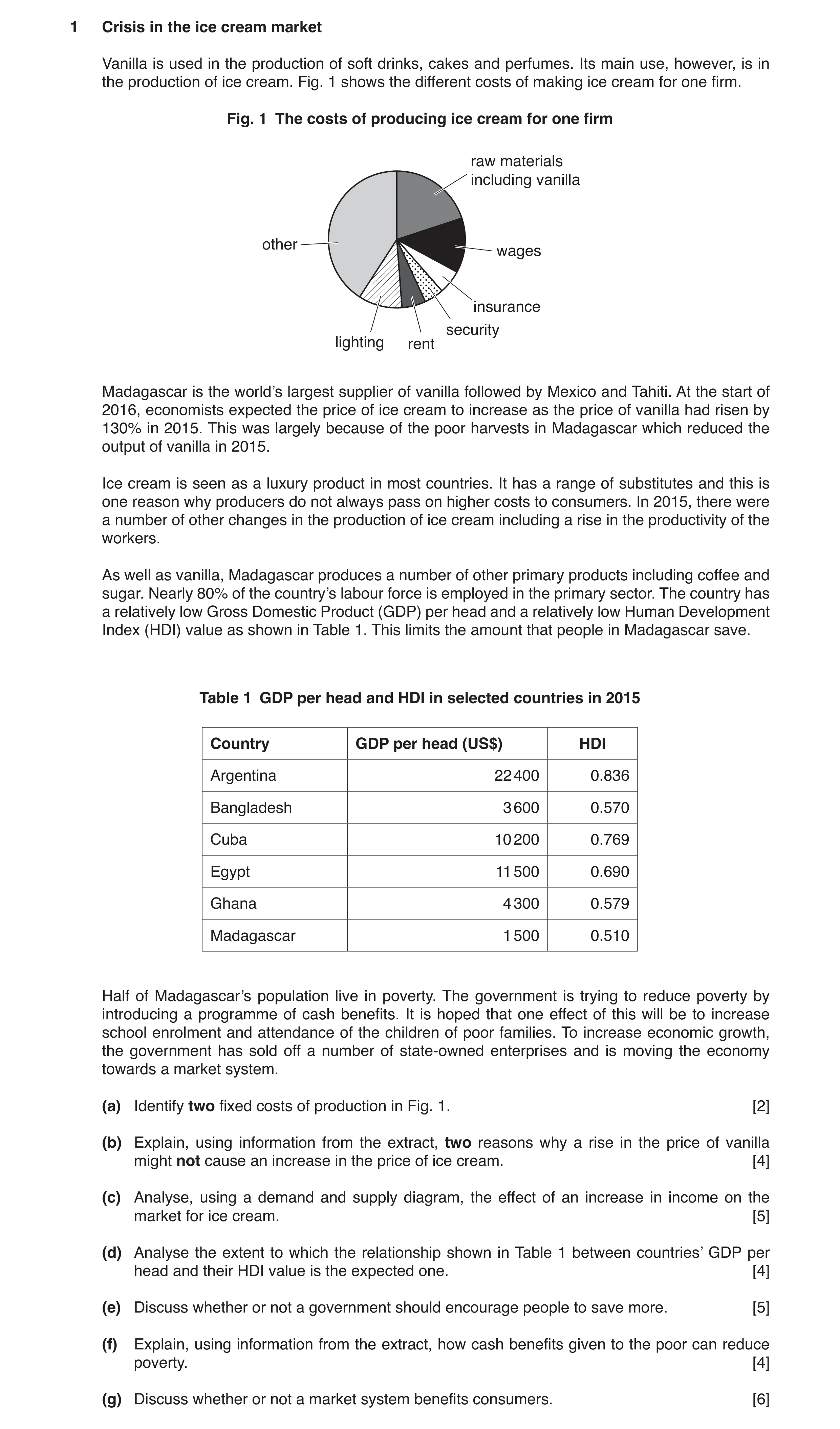
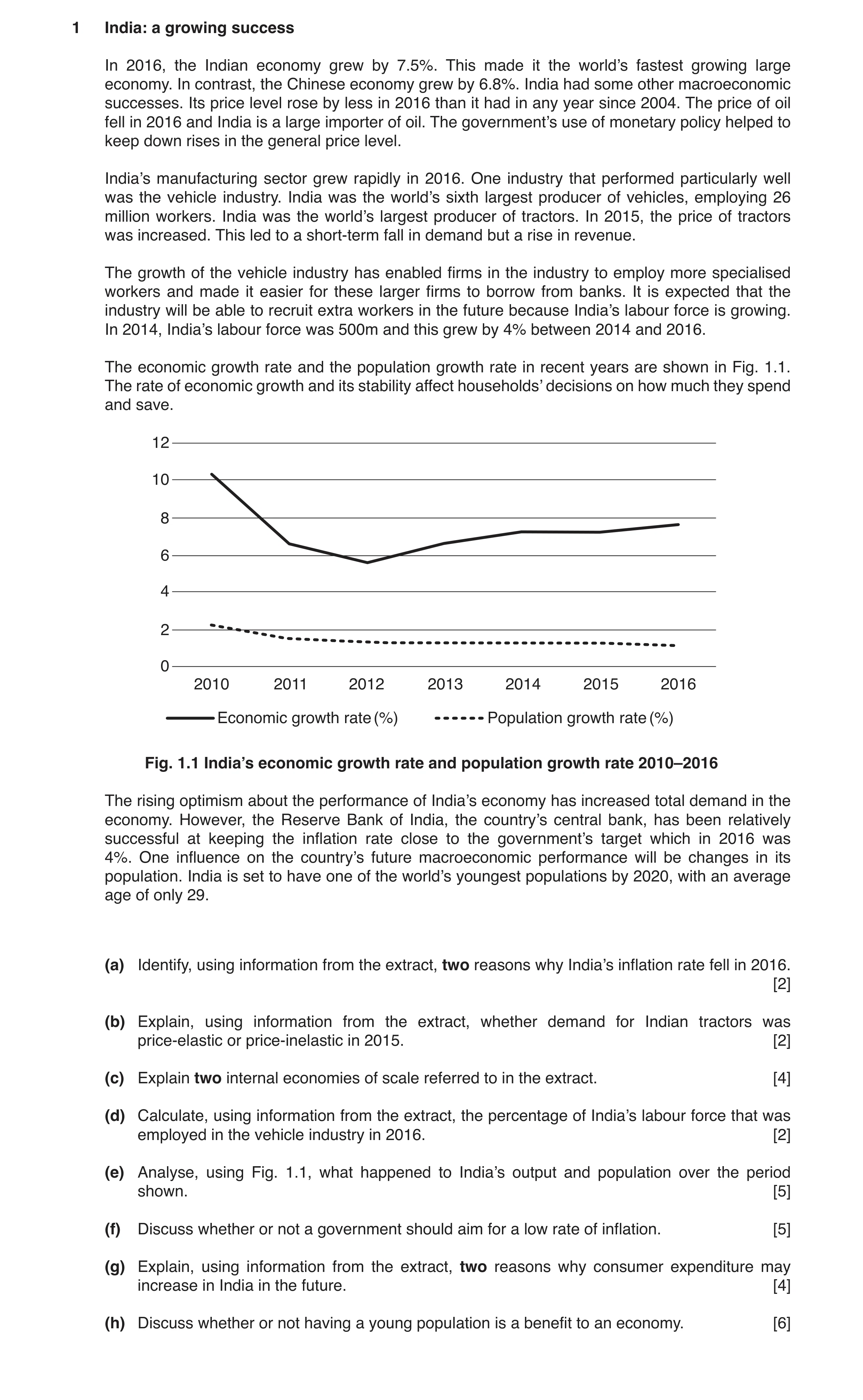
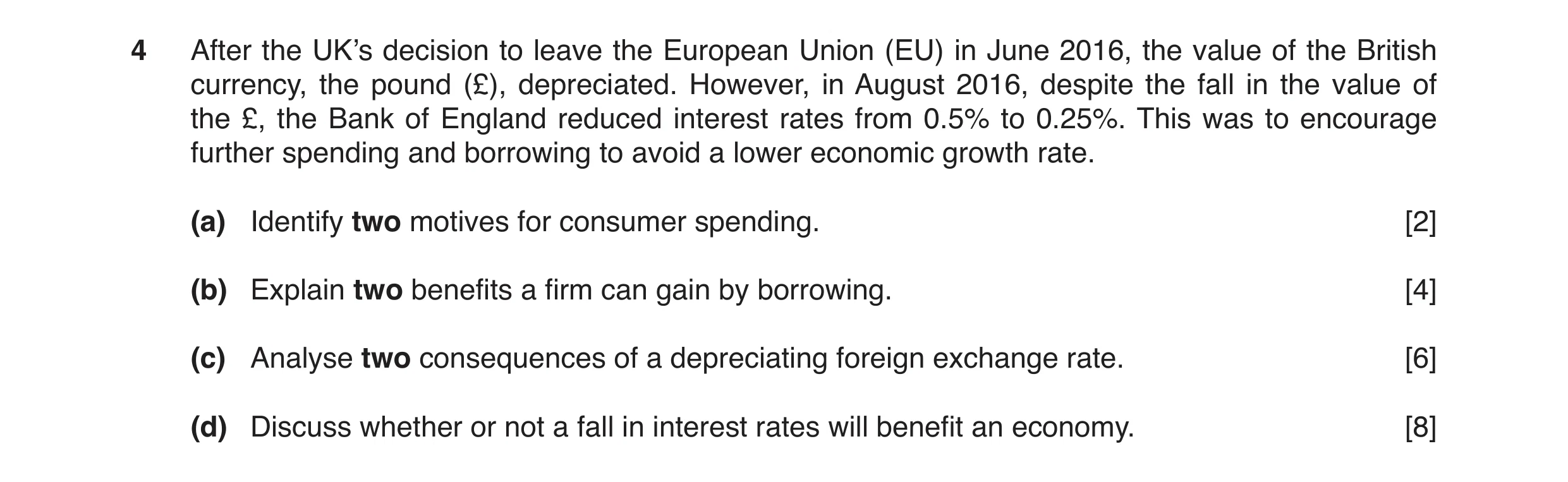
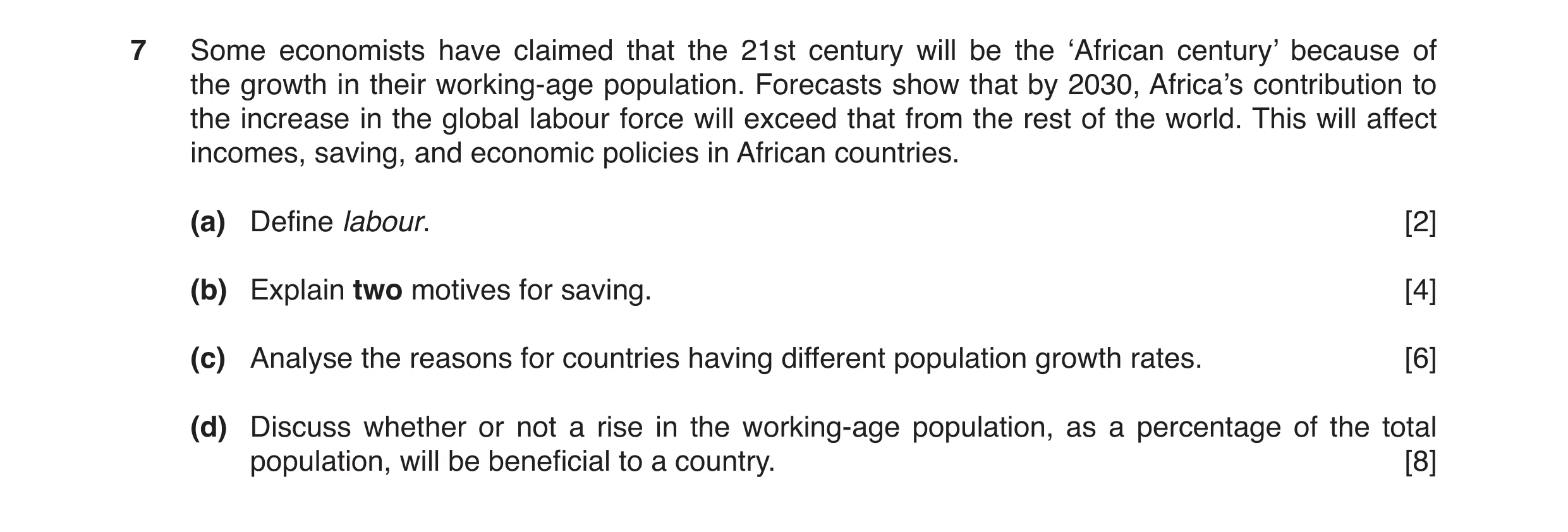 4 / 10
 5 / 10
 6 / 10
 7 / 10
 8 / 10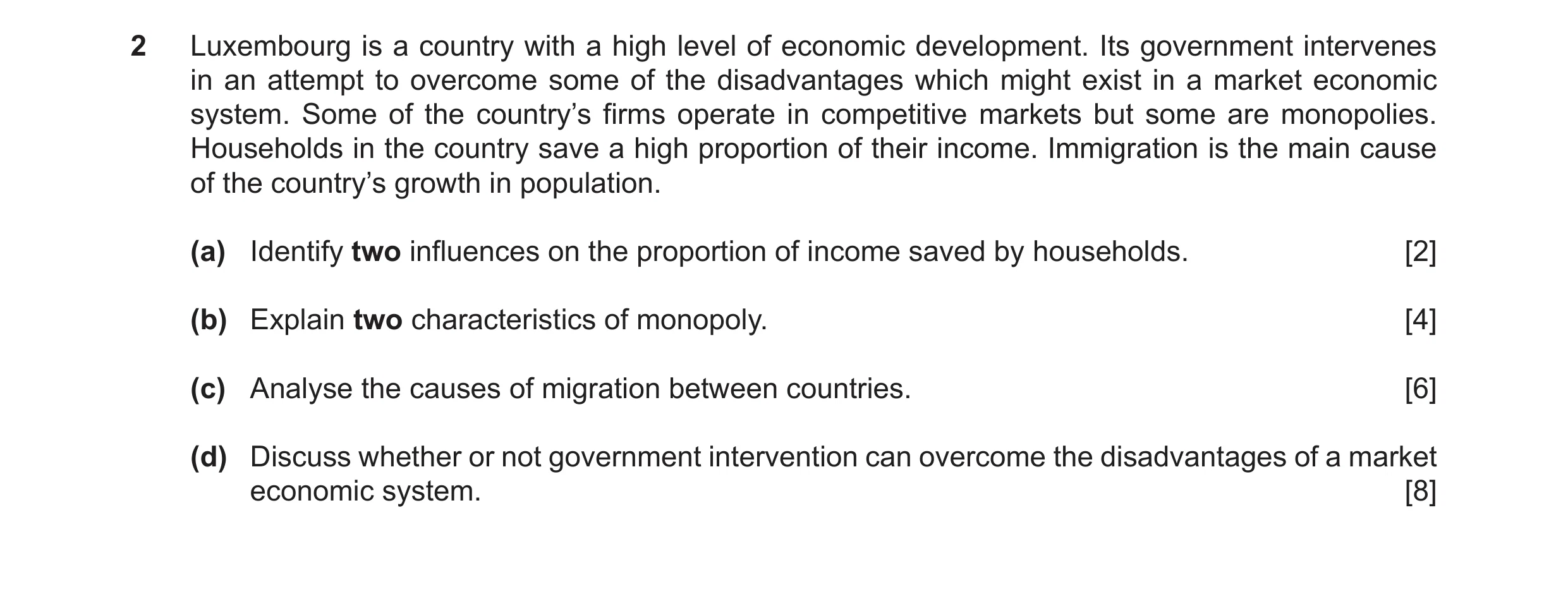
![Question 22: (a) Calculate Romania’s current account deficit on its balance of payments in $s. [1] (b) Identify two reasons why Romania’s population fel…](https://img.pastlit.com/crops/c00dd8c3-df8a-45c1-8b40-cb09b15b7421/q1.webp)
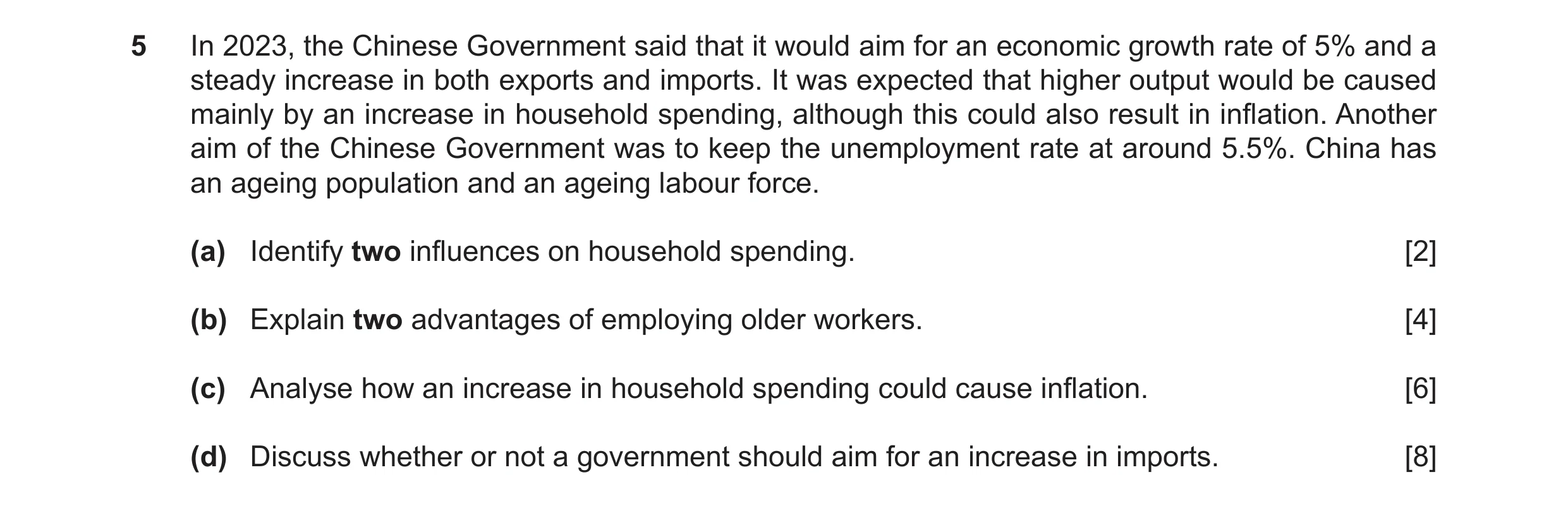 9 / 10
![Question 24: (a) Calculate foreign workers as a percentage of Japan’s labour force in 2022. [1] (b) Identify two reasons why Japan has a high average ag…](https://img.pastlit.com/crops/3b8dcead-b6d7-428b-80a7-5ffdb0605bbf/q1.webp) 10 / 10
10 / 10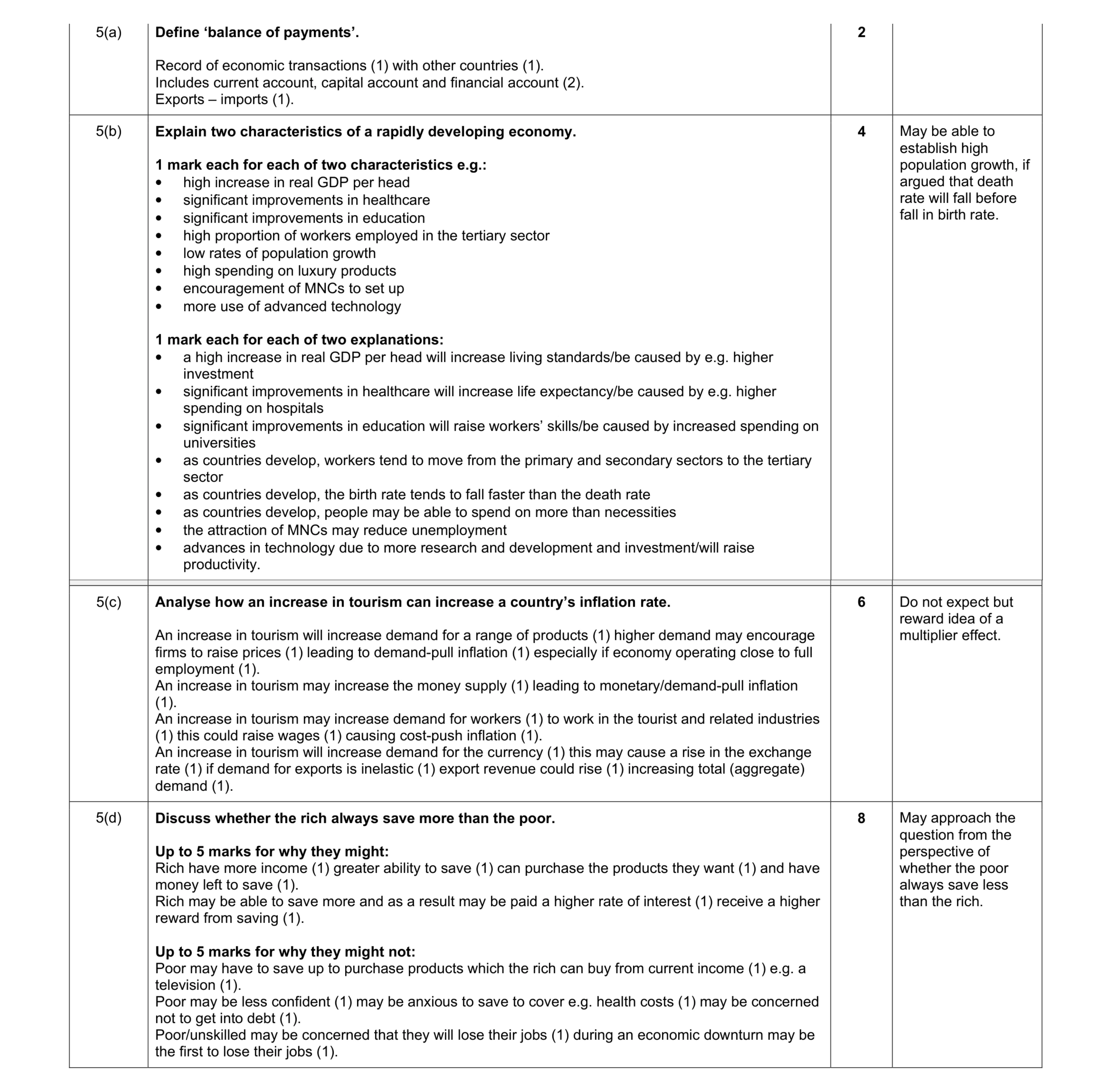 20
20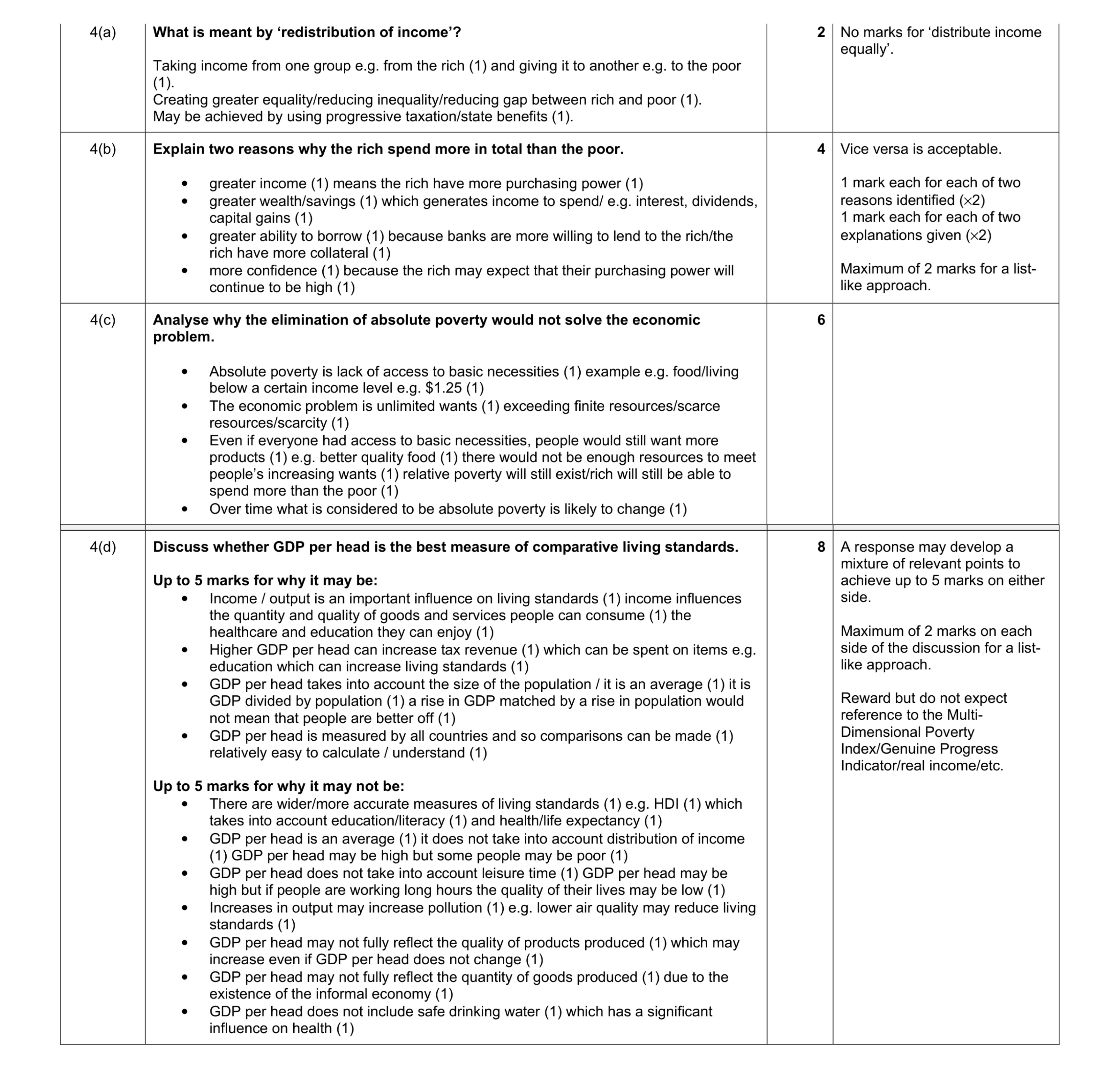 20
20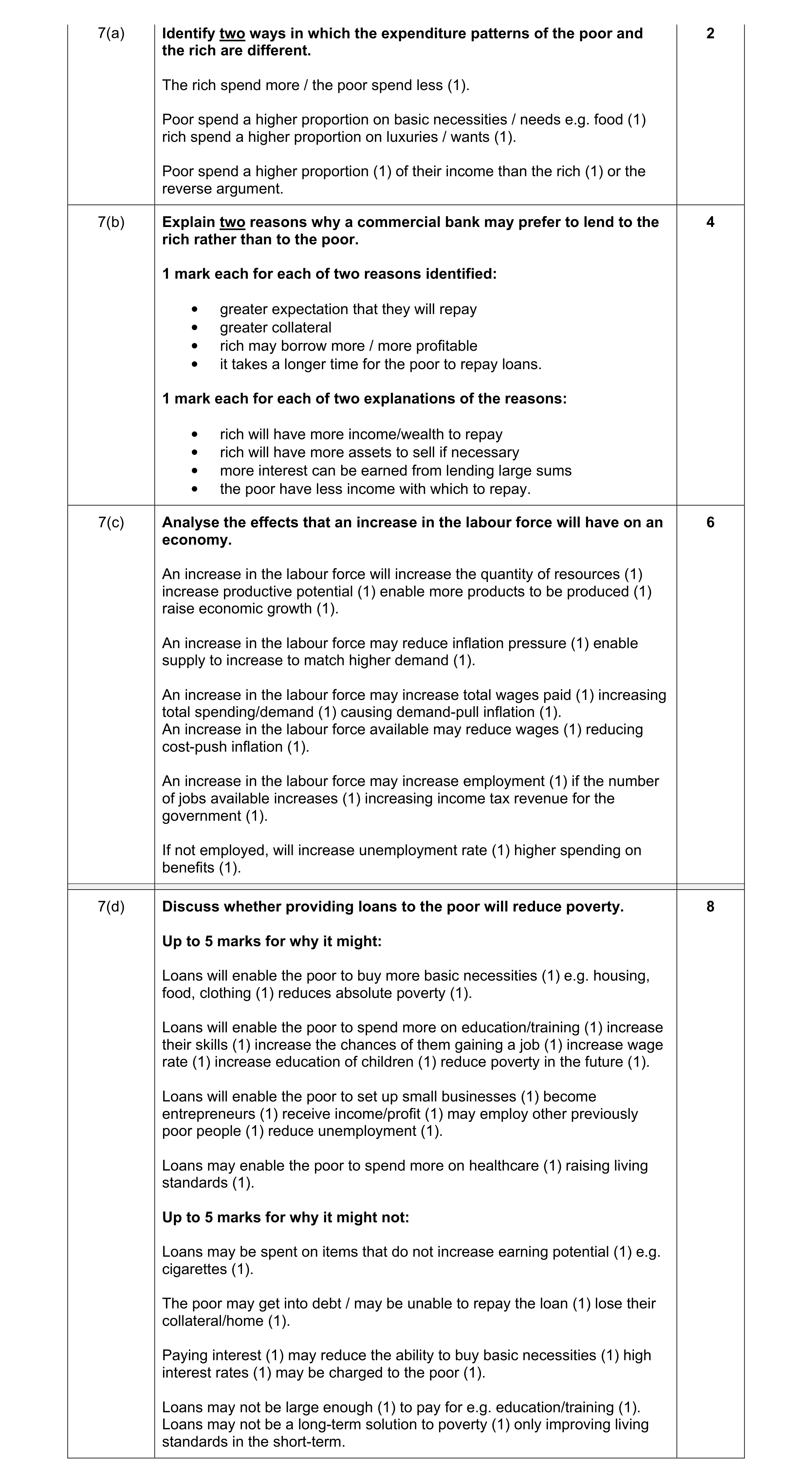 20
20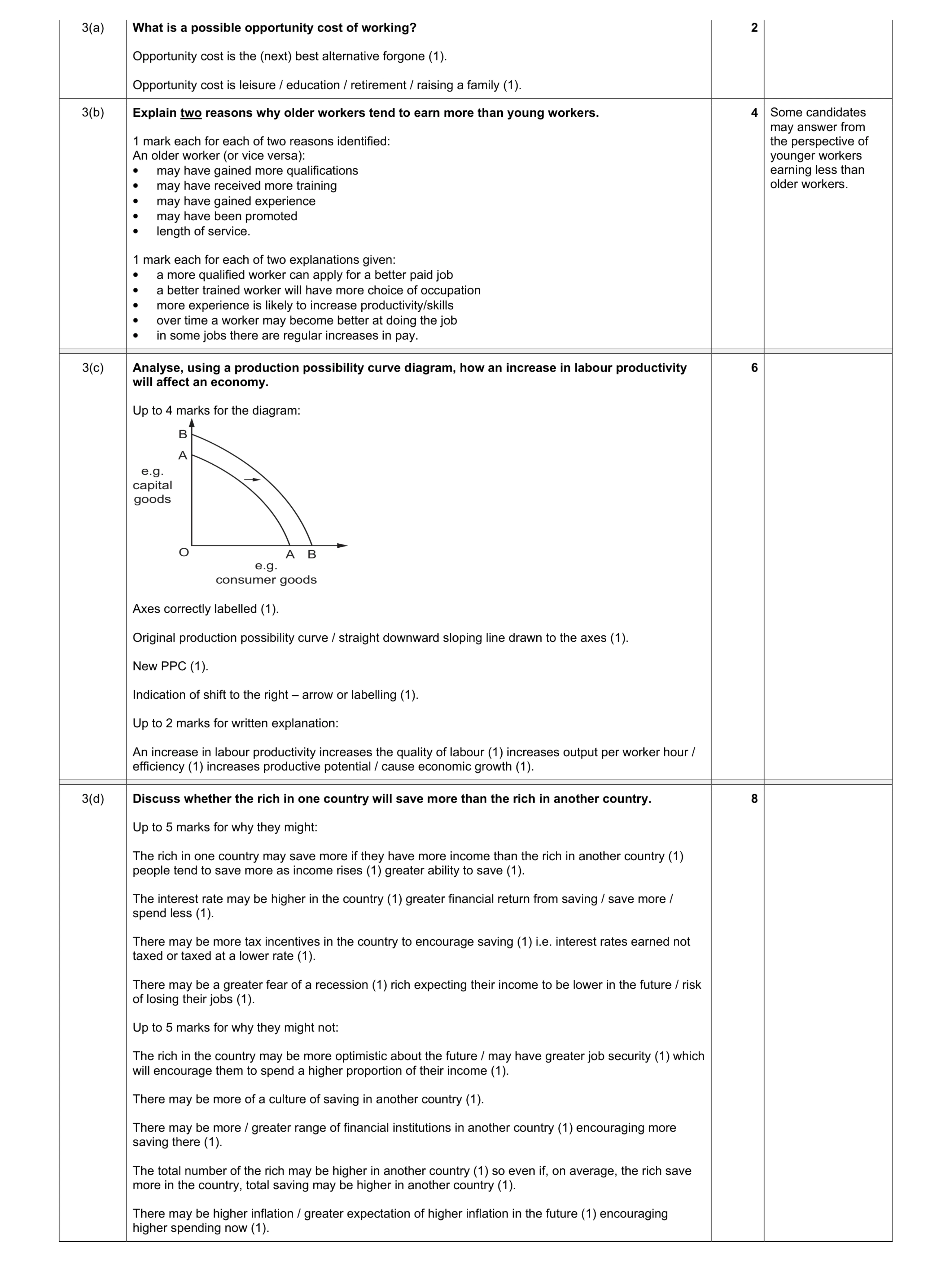 20
20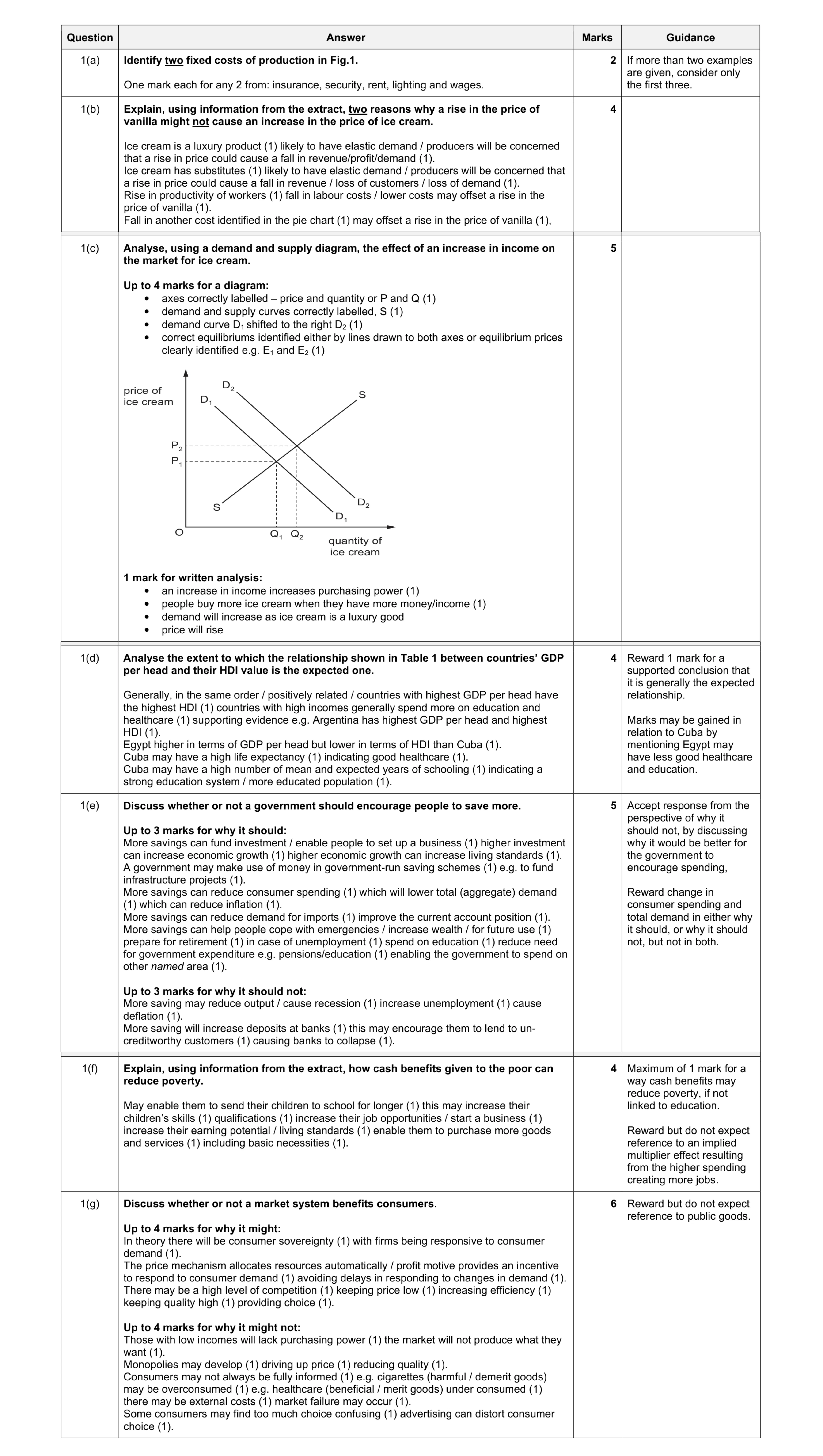 30
30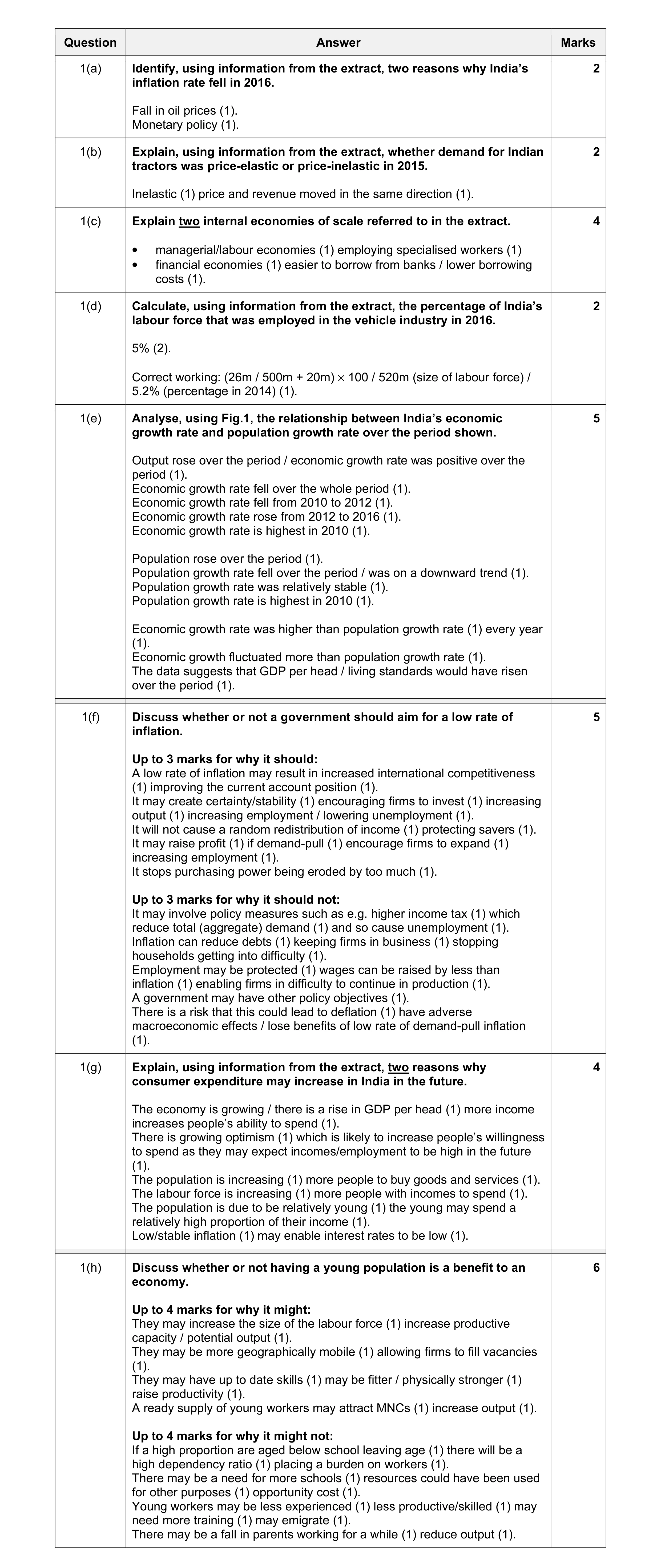 30
30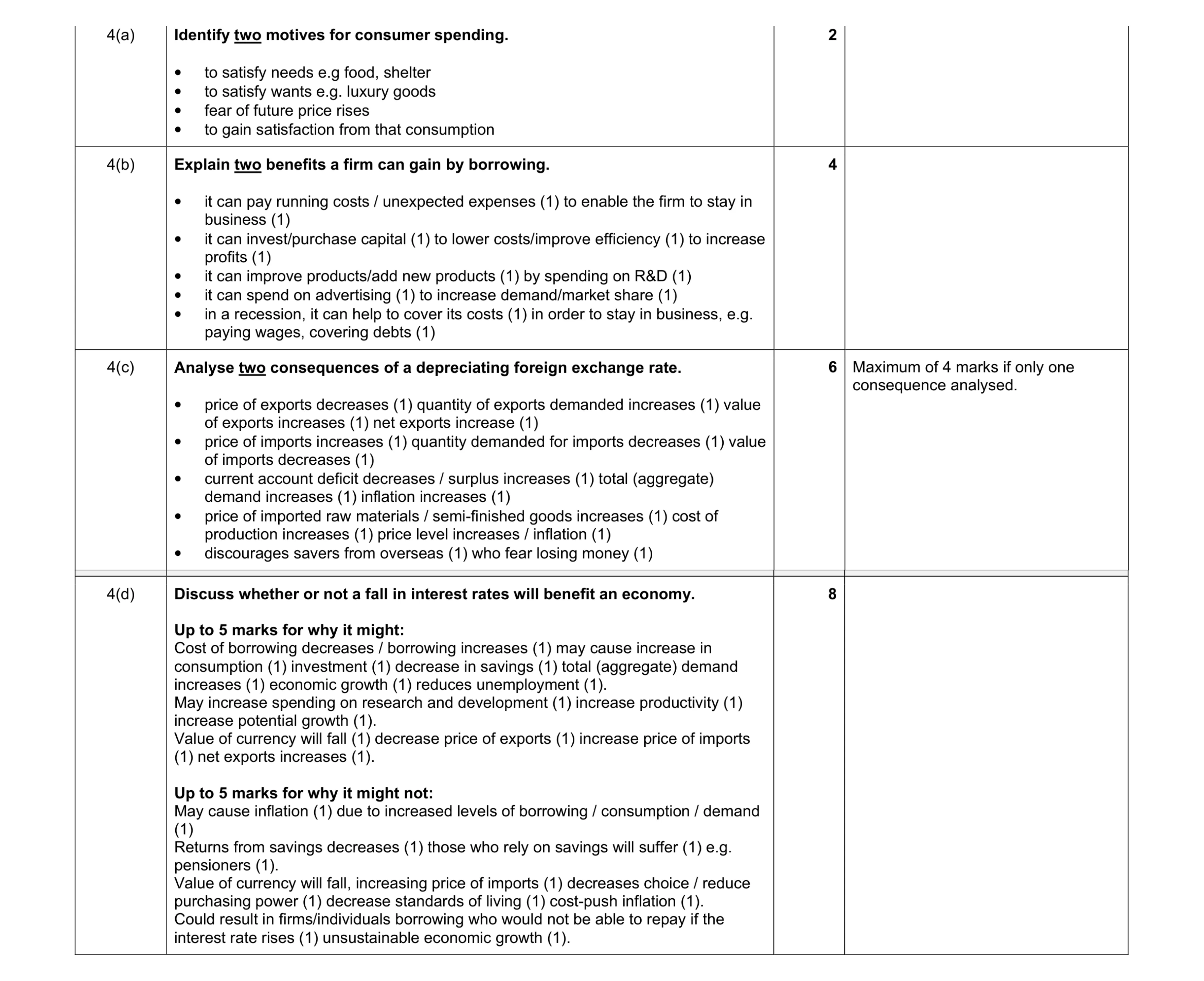 20
20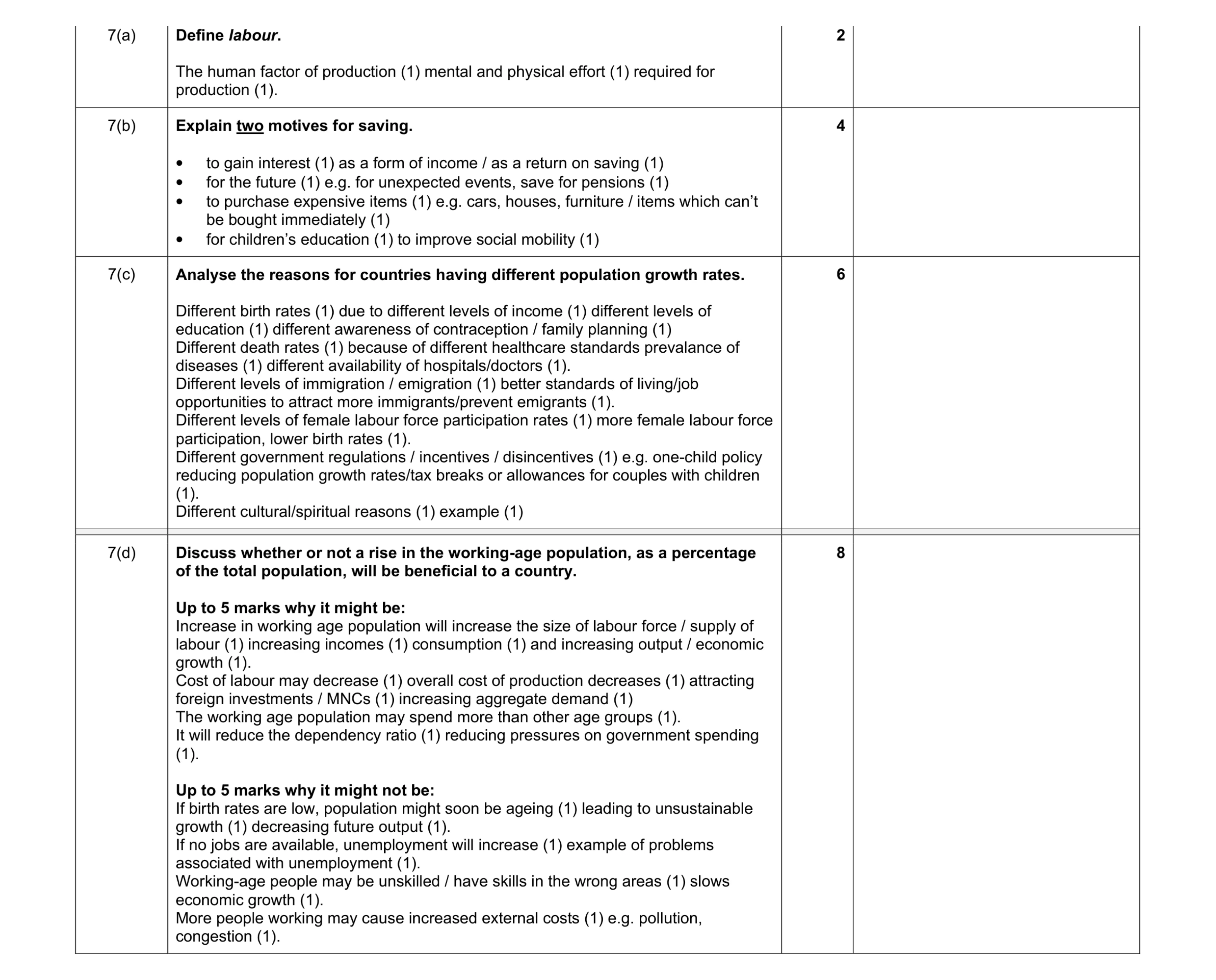 20
20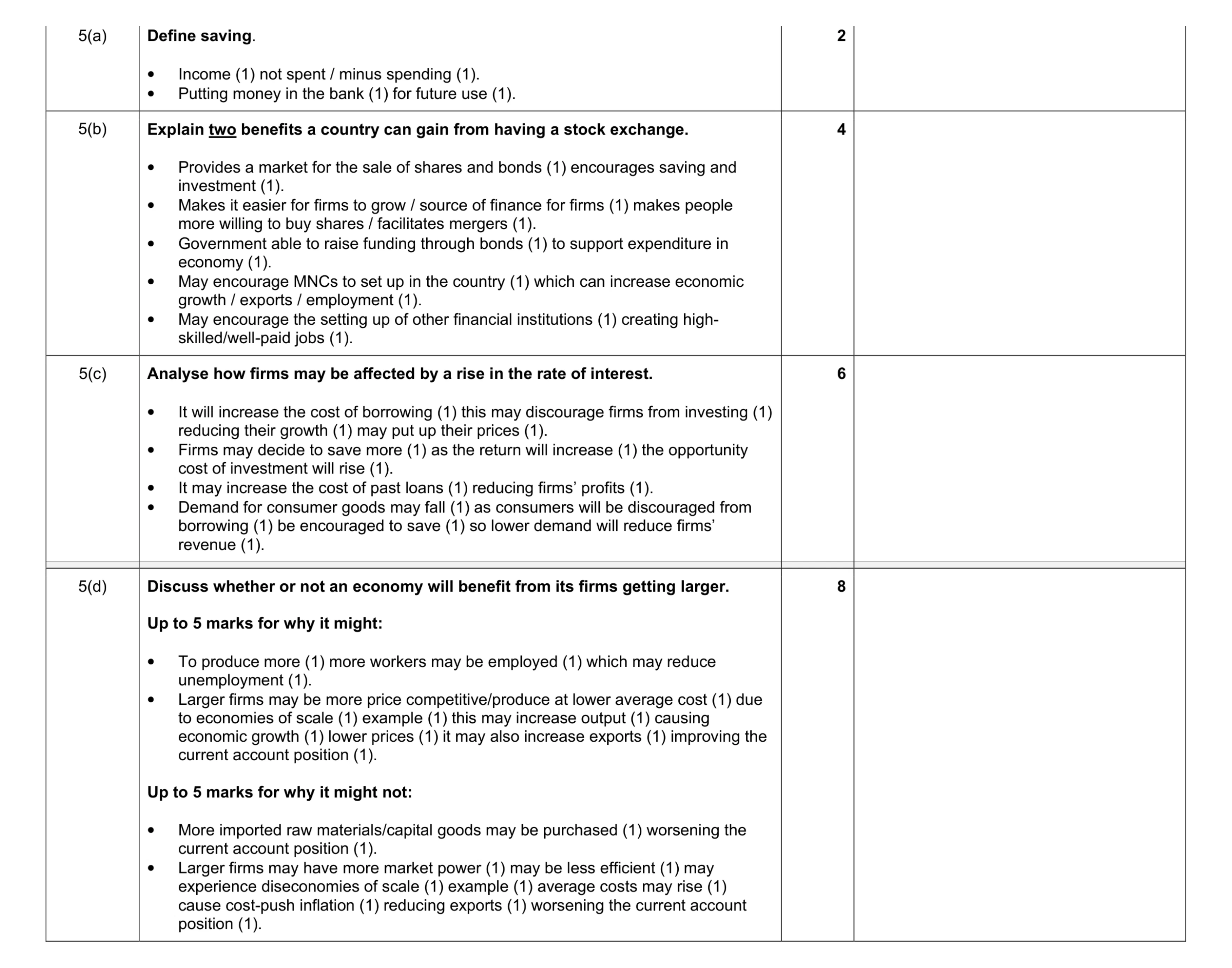 20
20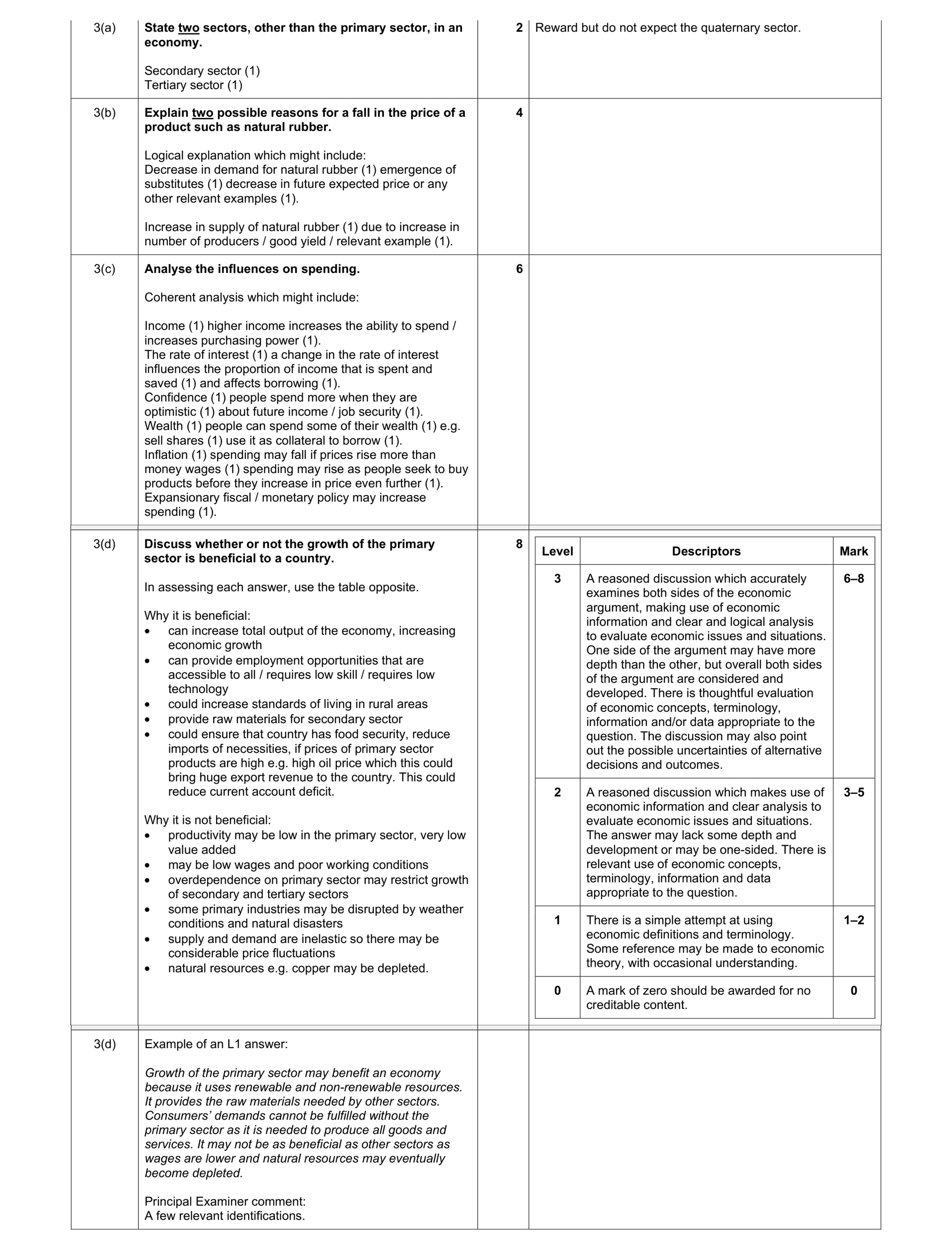 20
20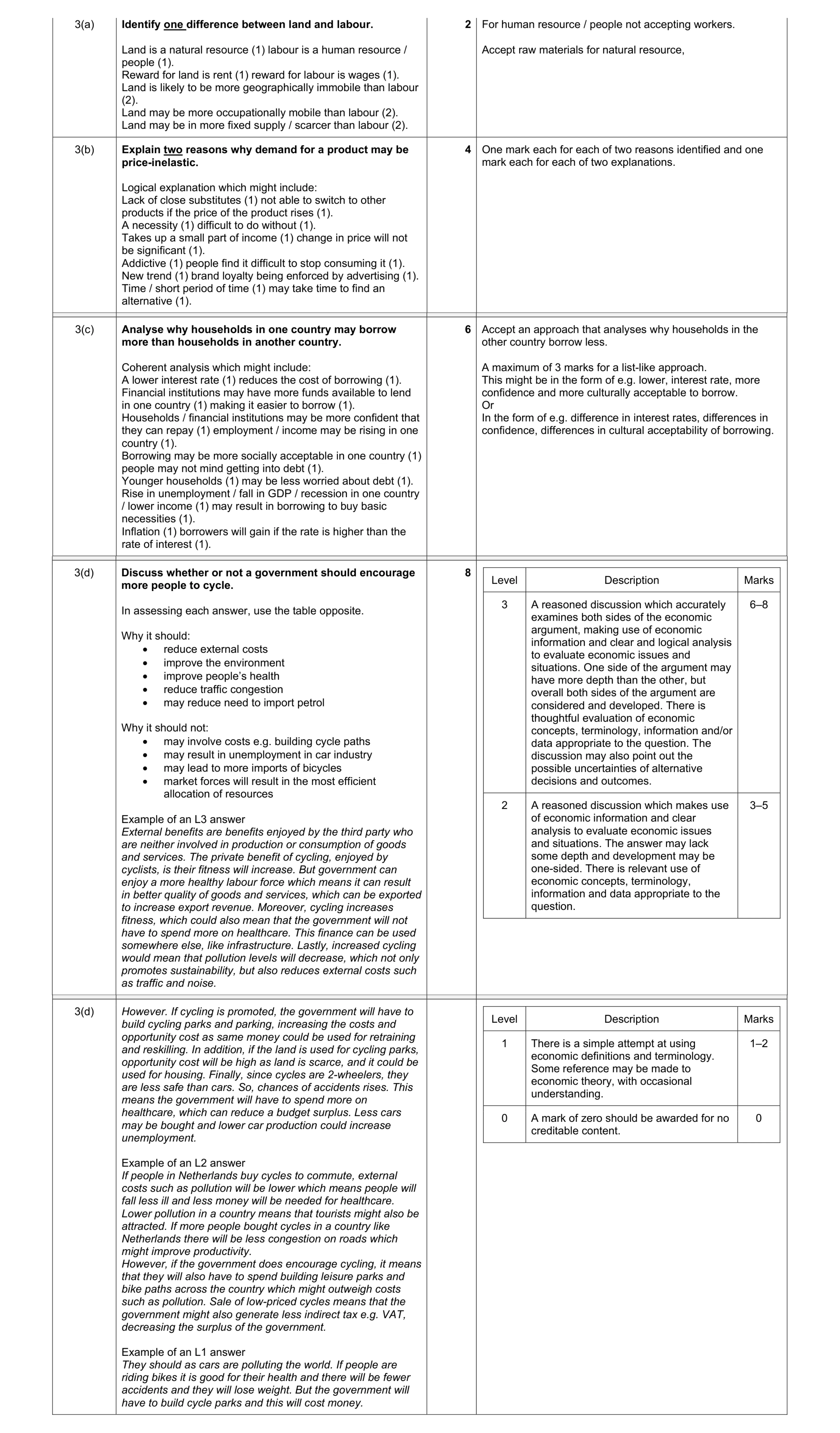 20
20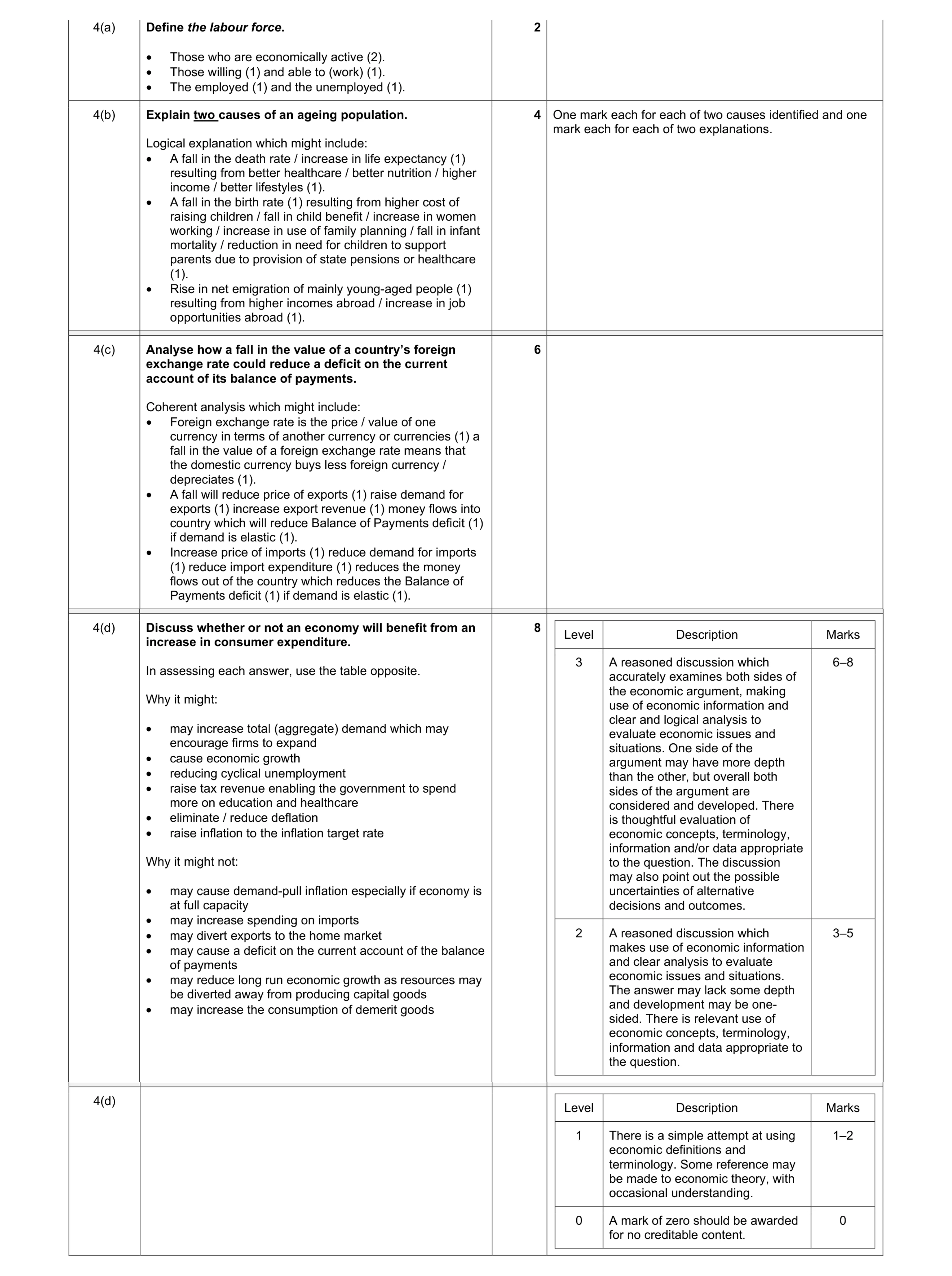 20
20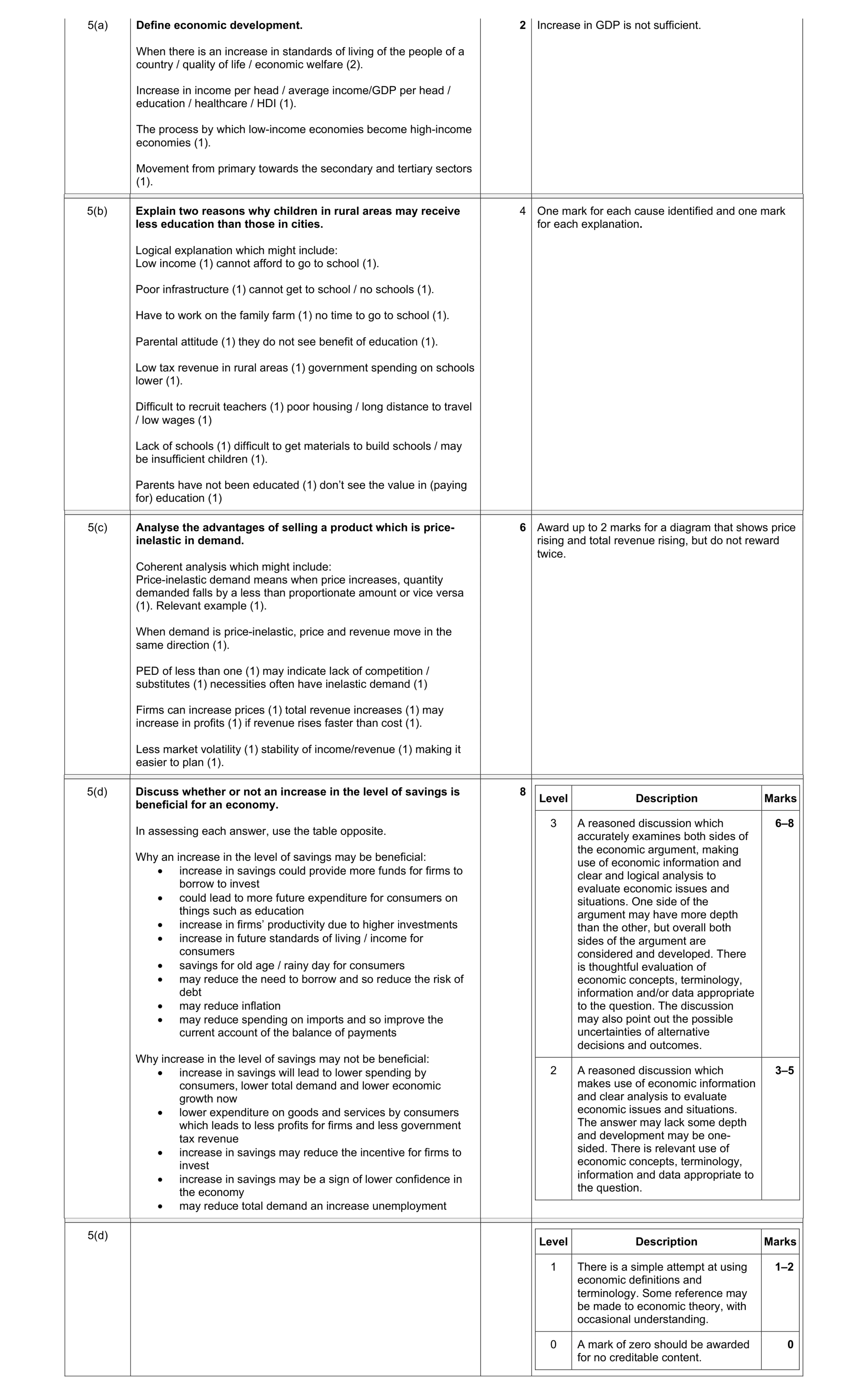 20
20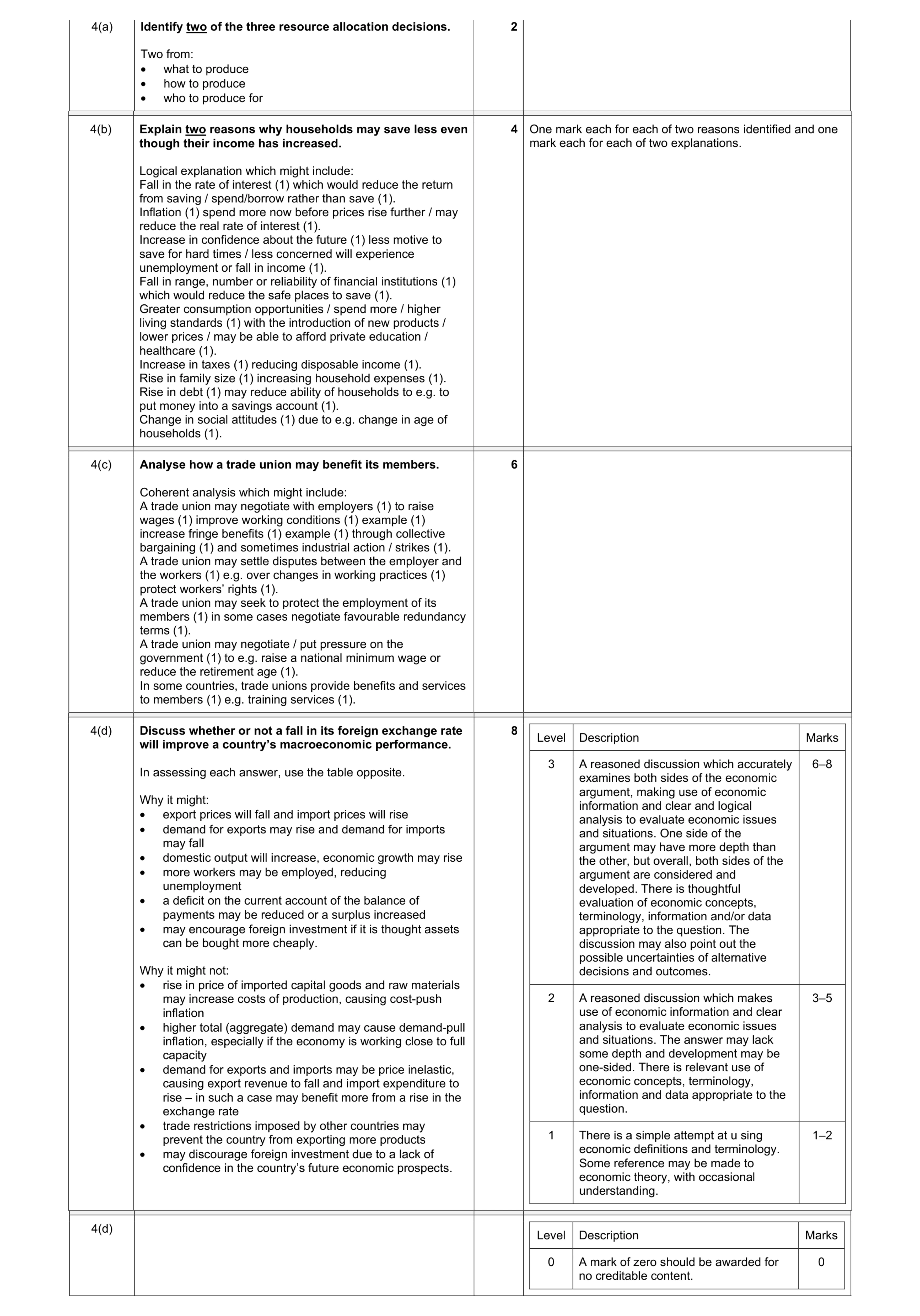 20
20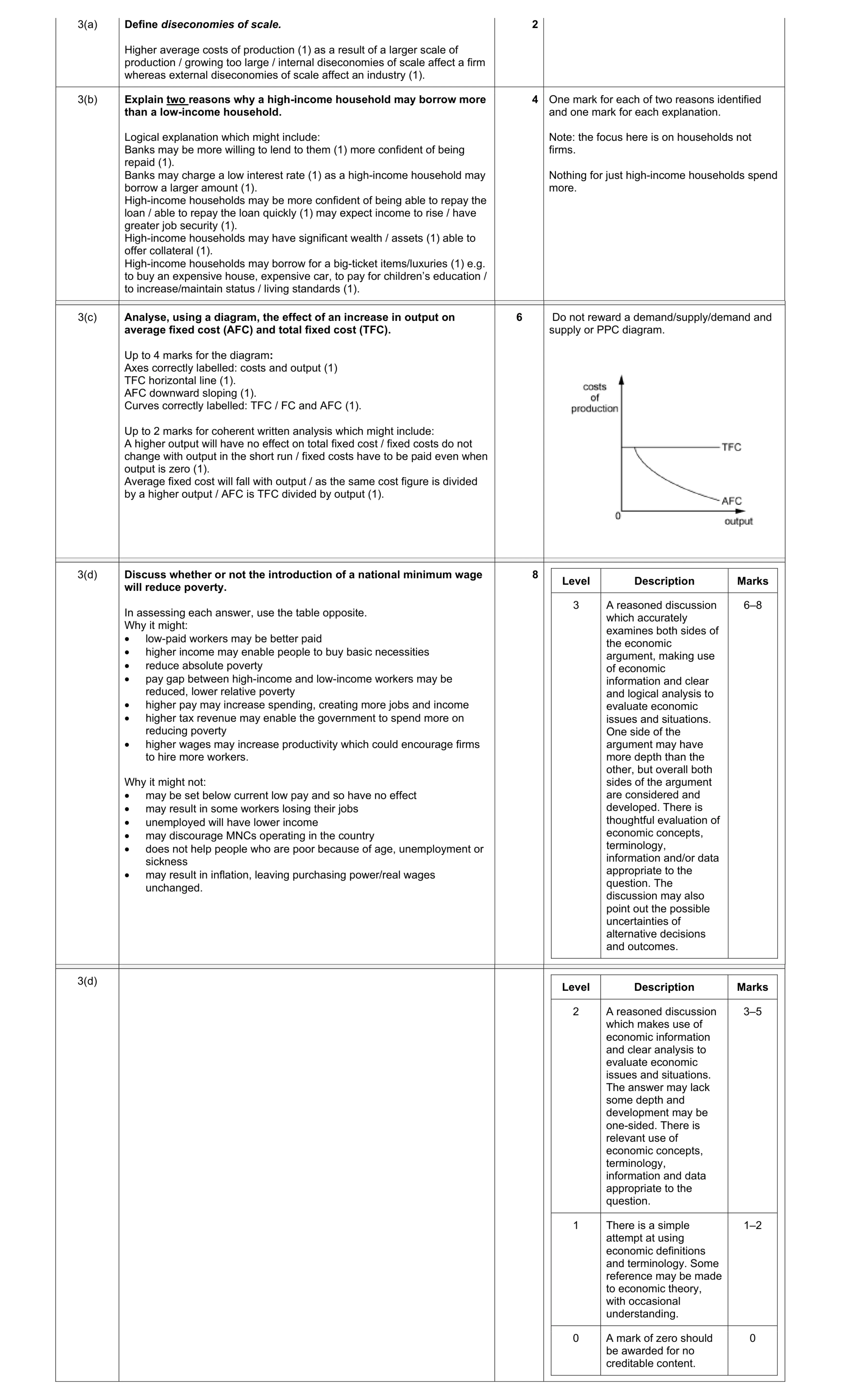 20
20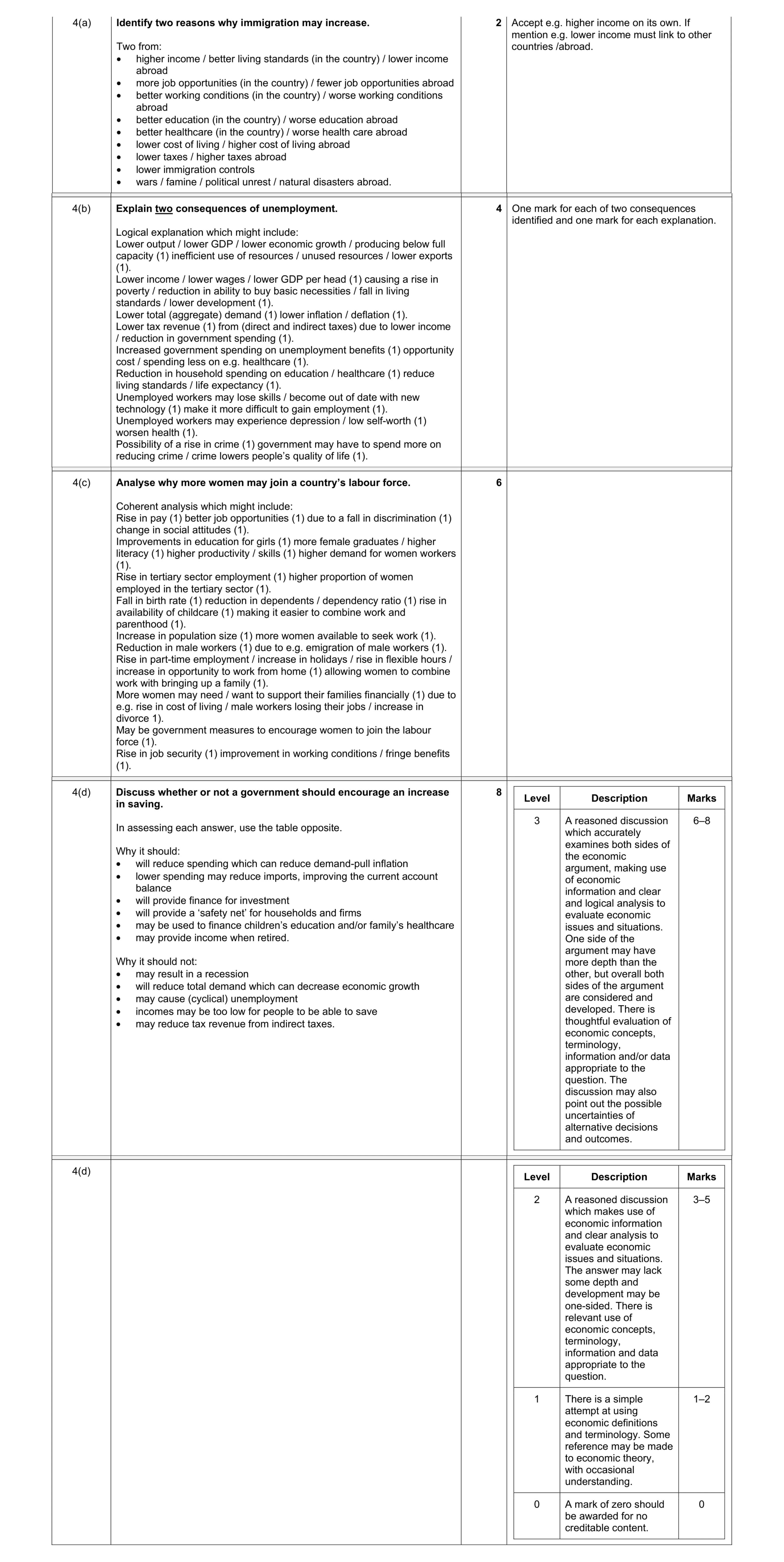 20
20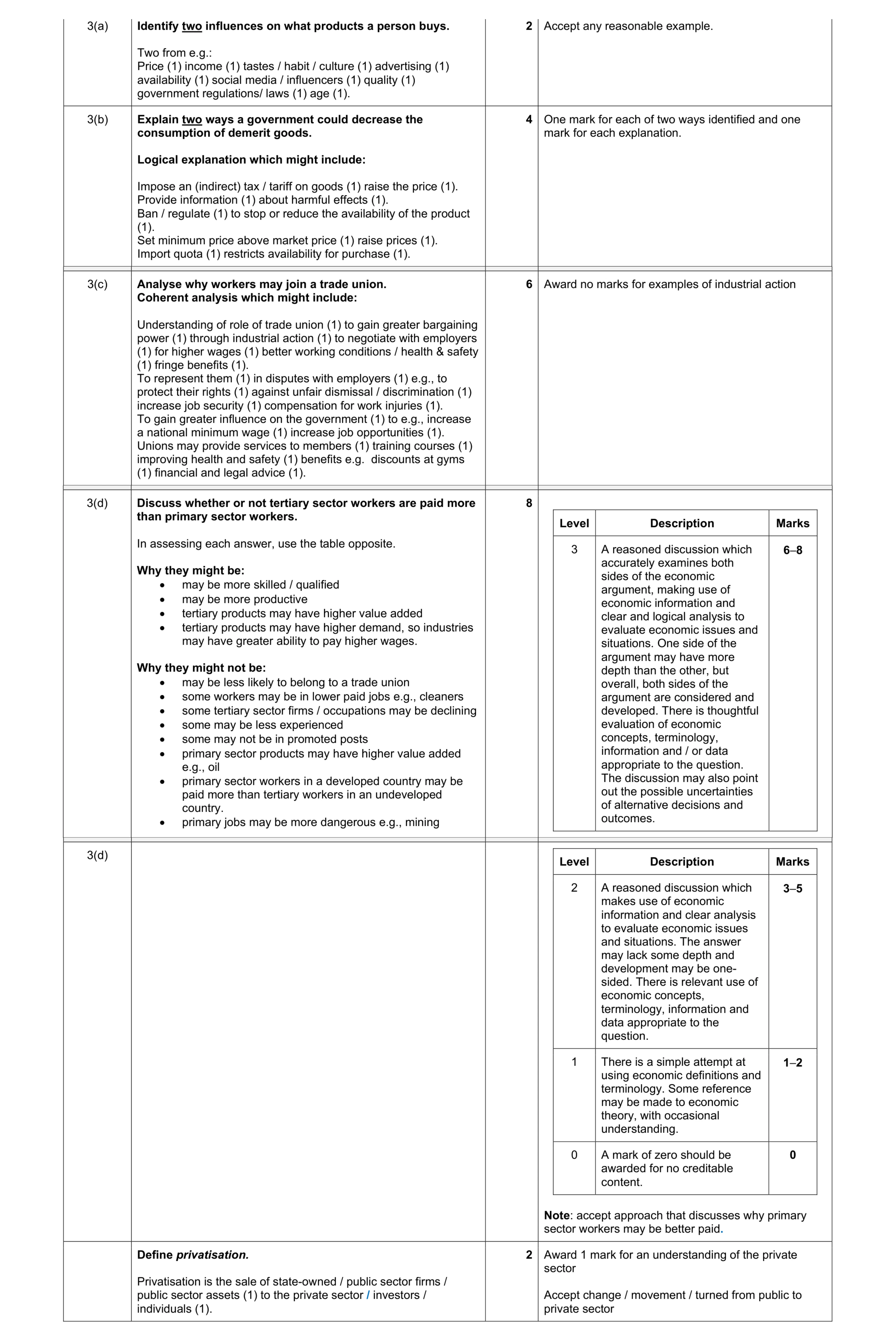 20
20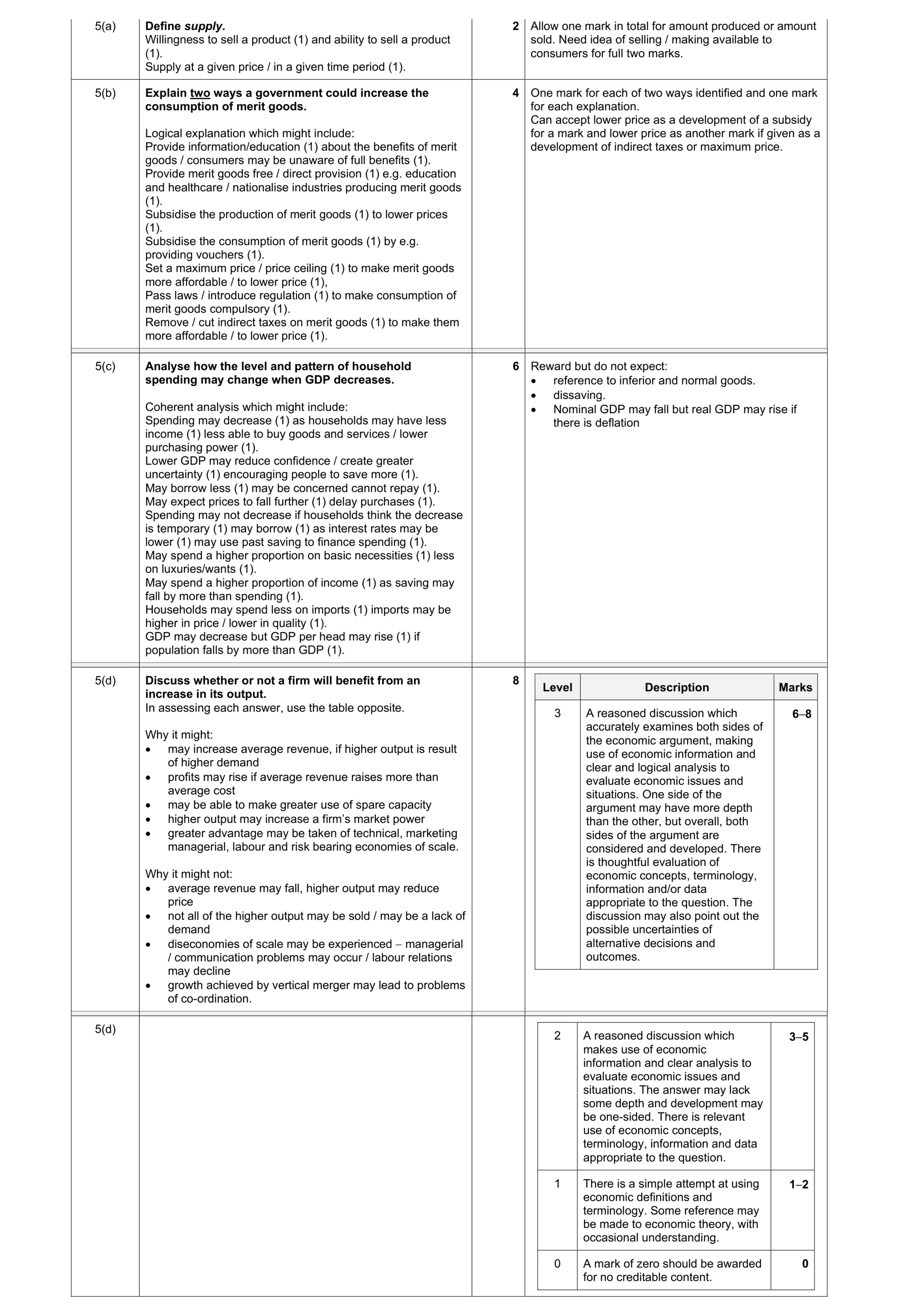 20
20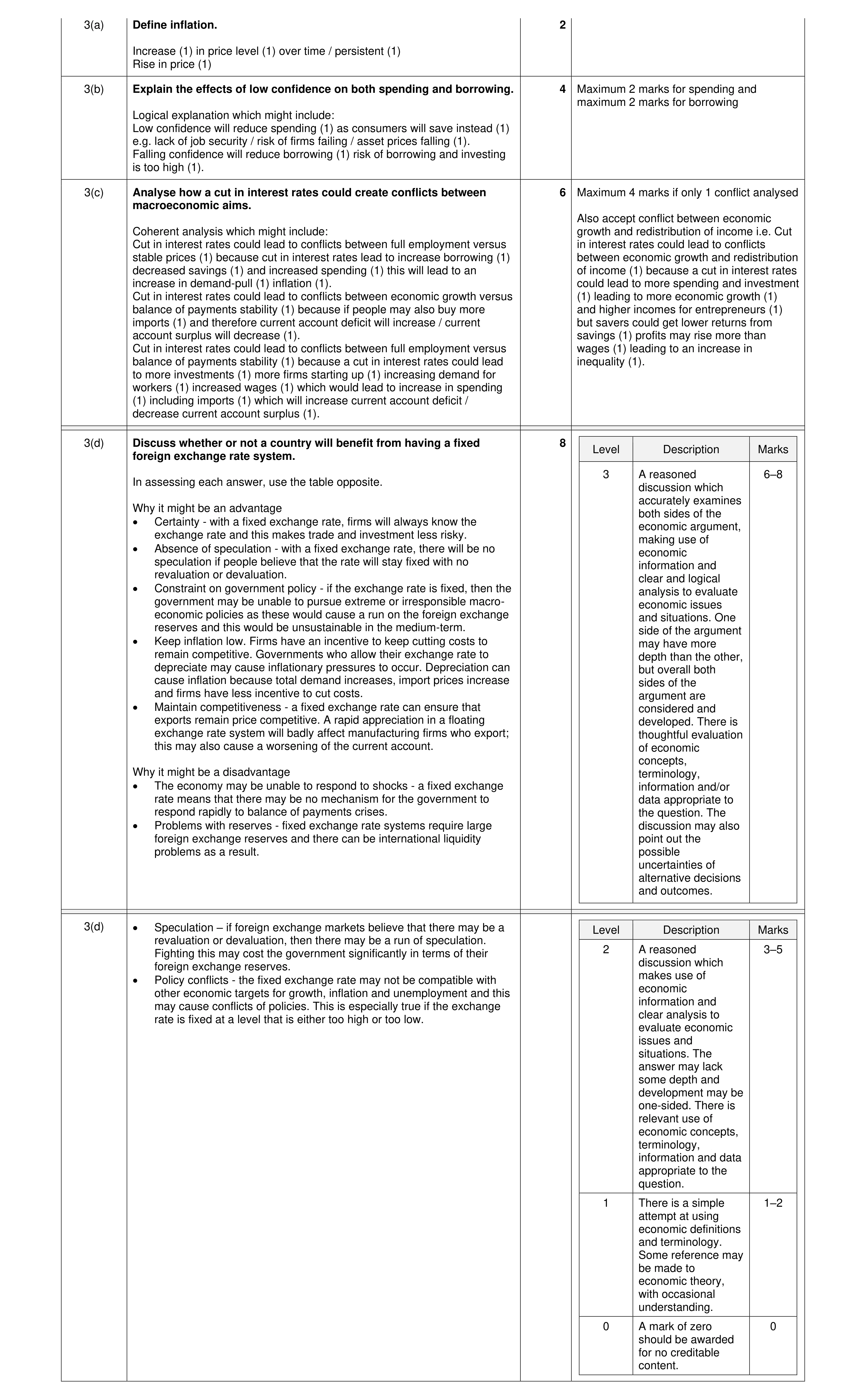 20
20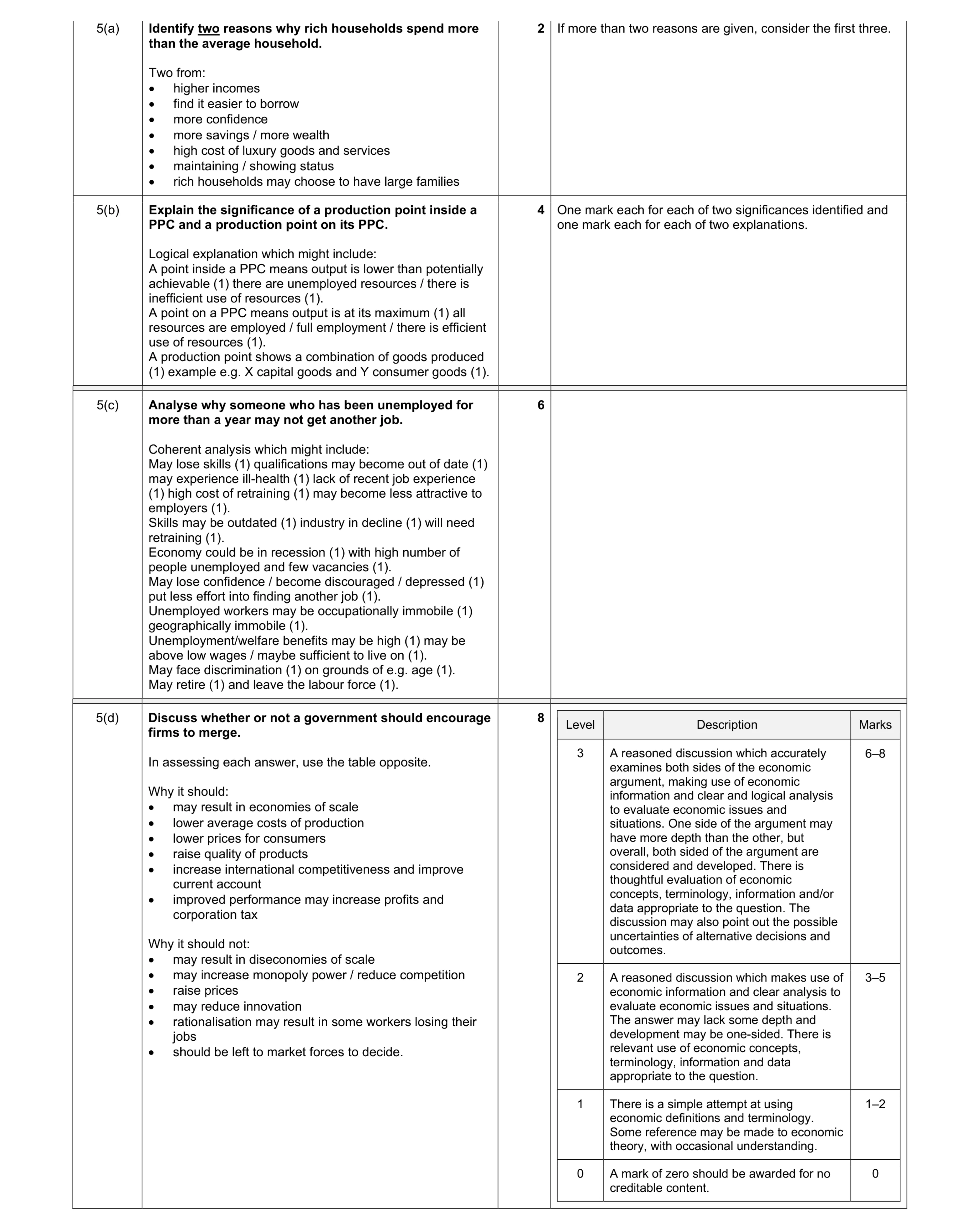 20
20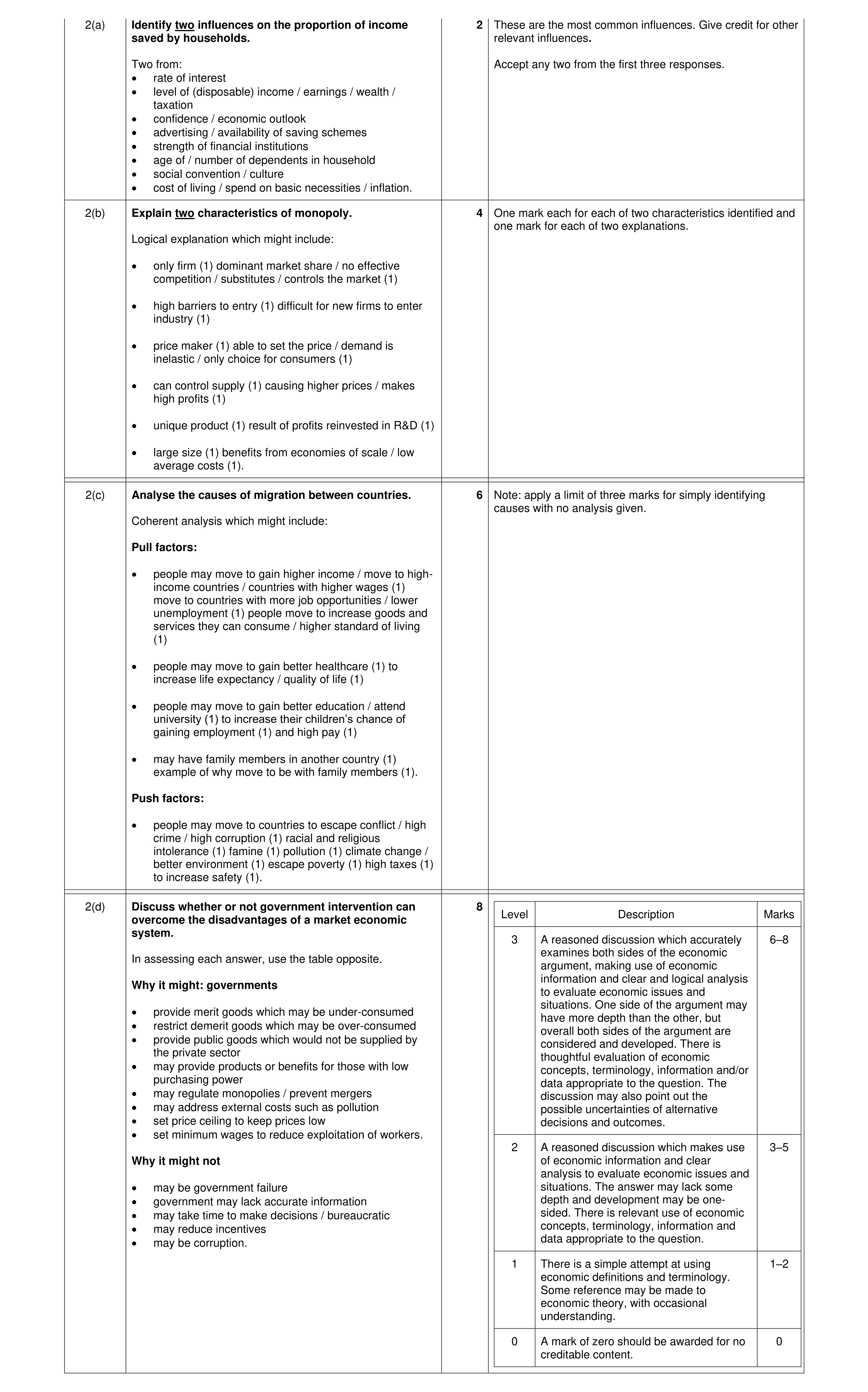 20
20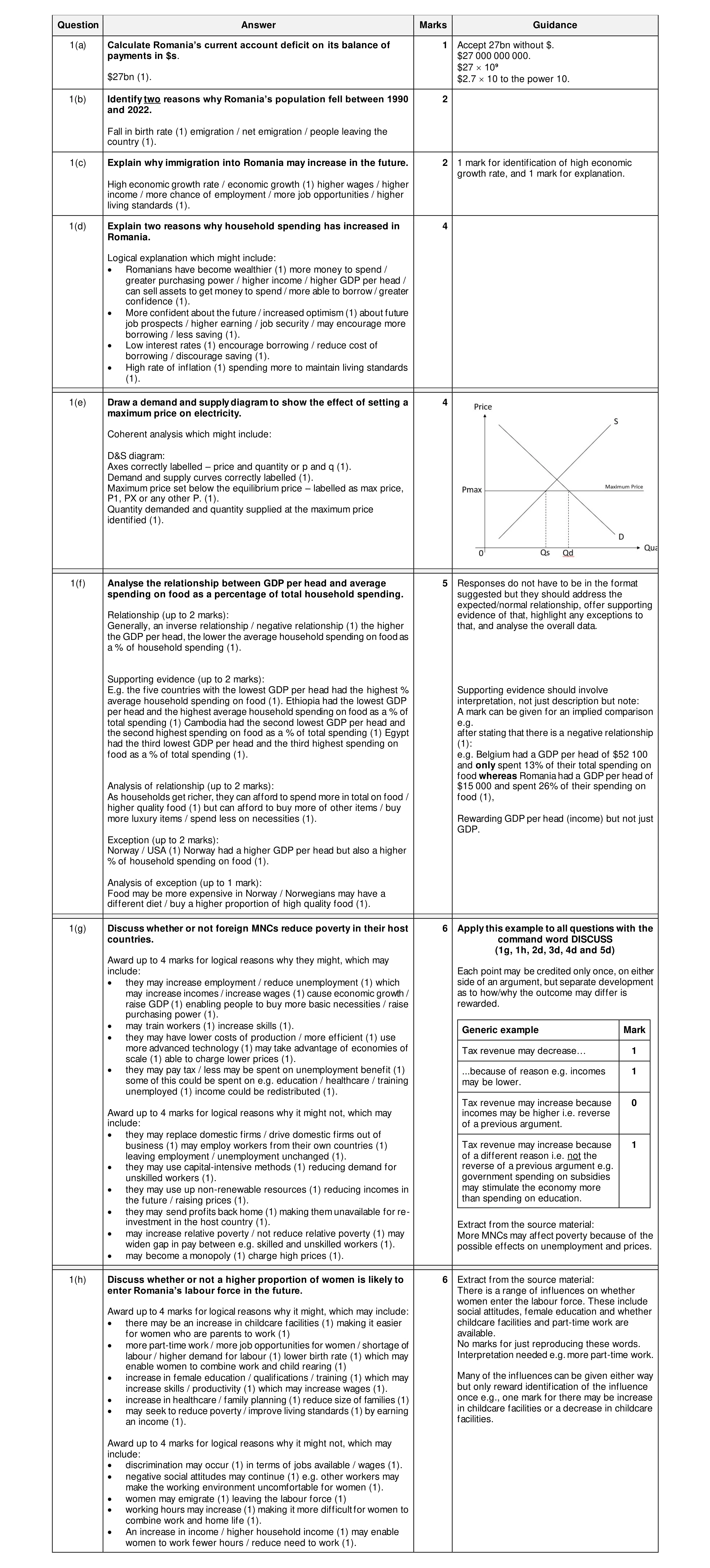 30
30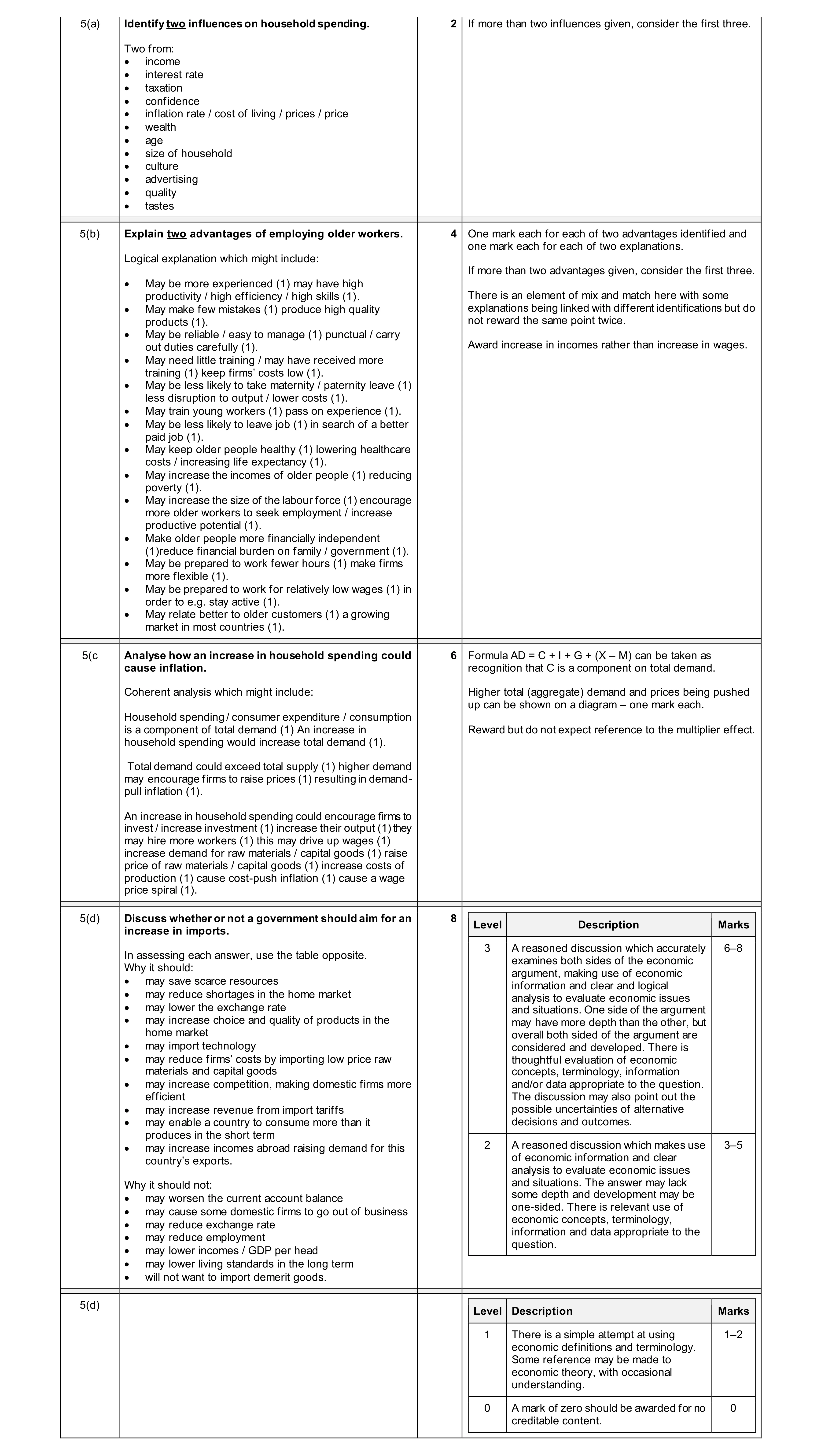 20
20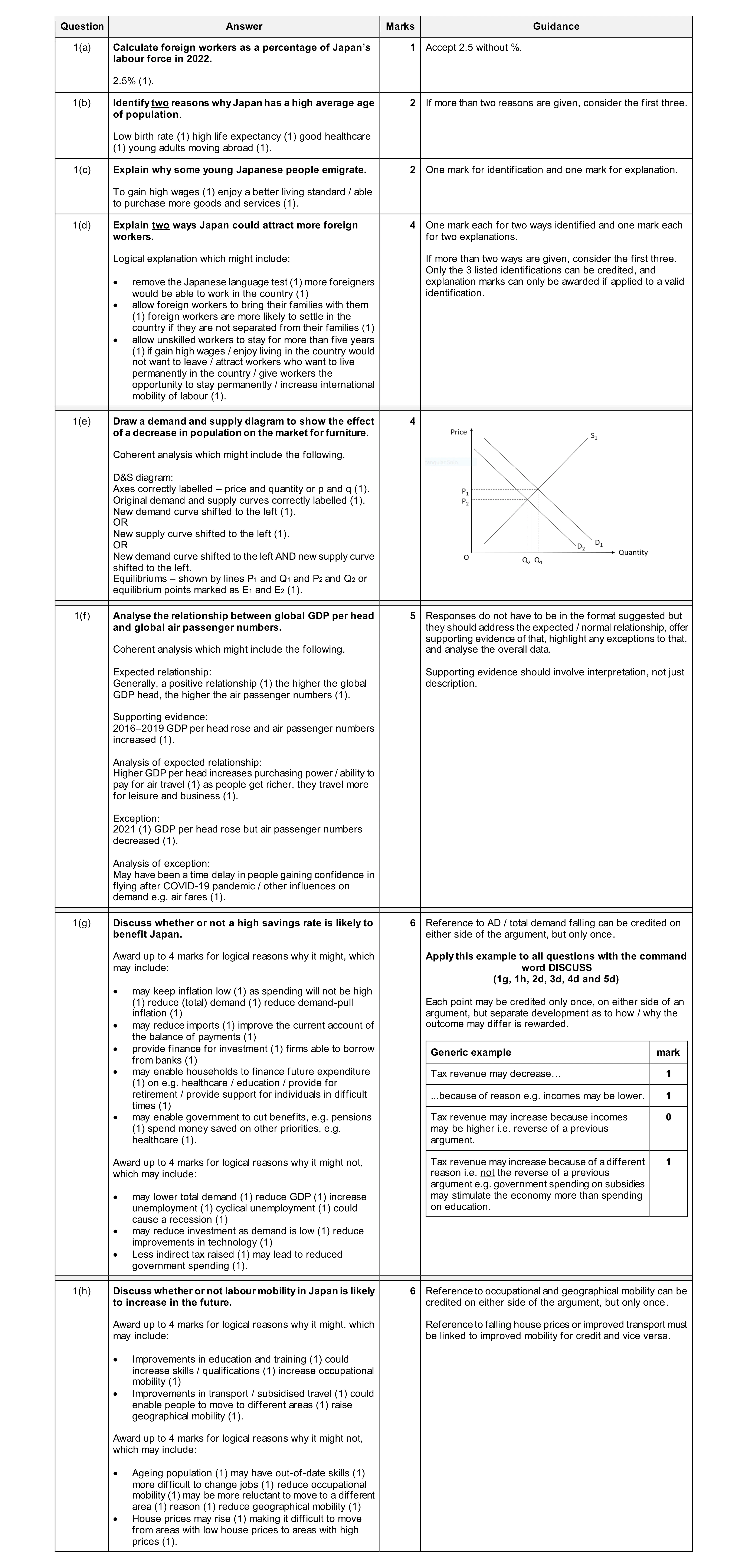 30
30