Questions as text
Q1 · Traditional management theory challenged For many years, Henry Mintzberg’s ten managerial… 9990/42 May/June 2018
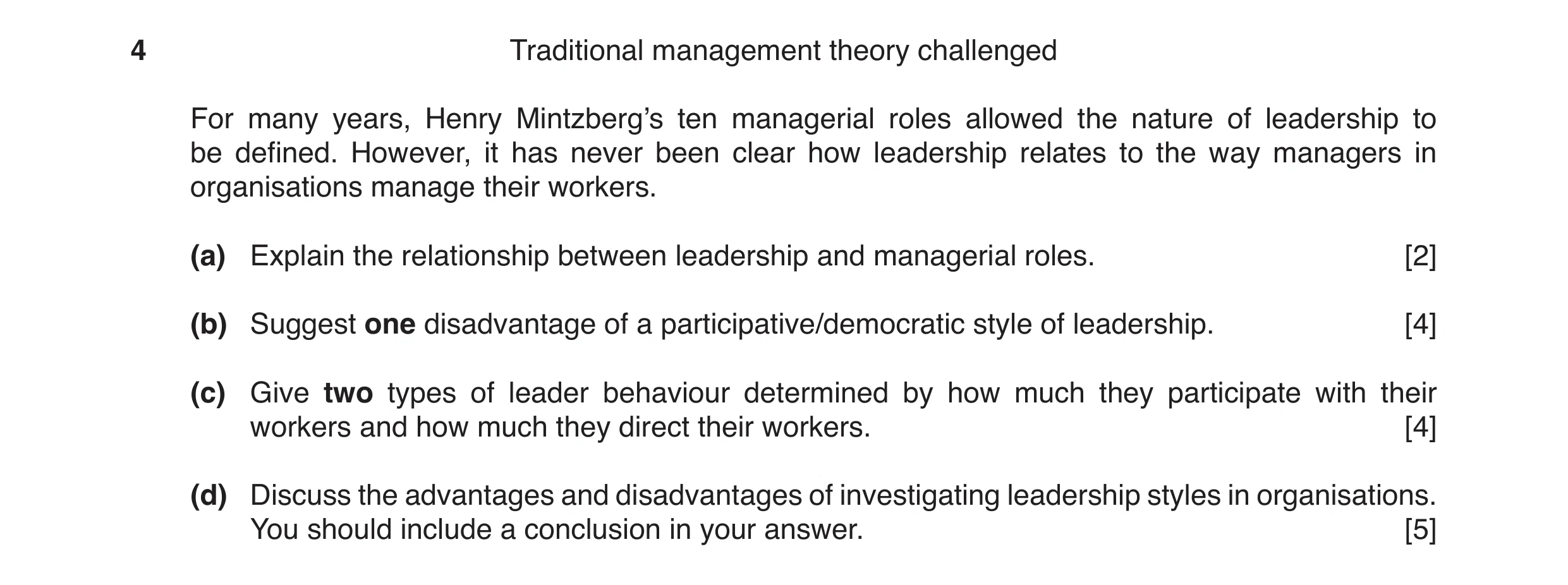
4 Traditional management theory challenged For many years, Henry Mintzberg’s ten managerial roles allowed the nature of leadership to be defined. However, it has never been clear how leadership relates to the way managers in organisations manage their workers. (a) Explain the relationship between leadership and managerial roles. [2] (b) Suggest one disadvantage of a participative/democratic style of leadership. [4] (c) Give two types of leader behaviour determined by how much they participate with their workers and how much they direct their workers. [4] (d) Discuss the advantages and disadvantages of investigating leadership styles in organisations. You should include a conclusion in your answer. [5]
15 marks
Mark scheme: 4(a) Explain the relationship between leadership and managerial roles. 2 Marks: 1 mark for basic answer e.g. identification, 1 mark for elaboration/example. Most likely answer (other appropriate responses to be credited): Quote from Muczyk and Reimann ‘Mintzberg identified ten managerial roles: (1) figurehead, (2) leader, (3) liaison, (4) monitor, (5) disseminator, (6) spokesman, (7) entrepreneur, (8) disturbance handler, (9) resource allocator, and (10) negotiator. Leadership, as we use the term in this article, concerns the leader role as Mintzberg defined it. This role describes the relationship between the manager and subordinates that results in the satisfactory execution of subordinates' assignments and, thereby, the attainment of the important goals of the organizational unit for which the leader is responsible. What's more, we agree with Mintzberg's contention that providing leadership is the most important of the ten managerial roles.’ 4(b) Suggest one disadvantage of a participative/democratic style of 4 leadership. Marks: 1 mark basic answer, 2–4 marks determined by quality of answer/ elaboration (e.g. aspects of indicative content) Most likely answer (other appropriate responses to be credited): • many managers have been forced to face the harsh reality that participative management simply may not work in some situations. • leadership is a two-way street, so a democratic style will be effective only if followers are both willing and able to participate actively in the decision-making process. If they are not, the leader cannot be democratic without also being ‘directive’ and following up very closely to see that directives are being carried out properly. • Sometimes decisions need to be made very quickly and the democratic style takes too long for a decision to be made. • Sometimes decisions about pay and redundancies for example need to be made, which would not happen with a democratic style. 4(c) Give two types of leader behaviour determined by how much they 4 participate with their workers and how much they direct their workers. Marks: 1 mark basic answer (e.g. identification of style), 2 marks description of type (e.g. Directive autocrat: low participation and high leader direction), × 2 Most likely answer (other appropriate responses to be credited): Muczyk and Reimann (1987) outline the following two types: (1) the directive autocrat, (2) the permissive autocrat, (3) the directive democrat, and (4) the permissive democrat. 4(d) Discuss the advantages and disadvantages of determining leadership 5 styles in organisations. You should include a conclusion in your answer. Marks: Question requires discussion; always plural of each argument, and always requires conclusion. 1 mark for each advantage/disadvantage up to 4 max. 1 mark for conclusion. Most likely answer (other appropriate responses to be credited): Answers could focus on style as applied in an organisation OR could focus on measures used to determine styles. Advantage: • if a leadership style is known then workers know how to behave/ how to follow the leader. • Known styles may lead to more effective decisions being made by management teams (groupthink) • If a Board of directors thinks style ‘x’ is best they are likely to appoint a leader who has style ‘x’ • Psychometric measures can be used to determine styles Disadvantage: • The measure to determine styles may be faulty/inappropriate/may not measure adequately. • Knowing a style may not be a style suited to the efficient running of that organisation. • Styles may be too rigid; situational leaders, for example, adapt to any given situation. Conclusion: any appropriate conclusion drawn from the discussion that has been presented.
This question in 9990/42 May/June 2018
Q2 · ‘The situation is irrelevant; all that any leader needs to succeed is individual… 9990/42 May/June 2018
12 ‘The situation is irrelevant; all that any leader needs to succeed is individual charisma.’ To what extent do you agree with this statement? Use examples of research you have studied to support your answer. [12]
12 marks
Mark scheme: 12 ‘The situation is irrelevant; all any leader needs to succeed is 12 individual charisma.’ To what extent do you agree with this statement? Use examples of research you have studied to support your answer. Marks: use generic levels of response in table C. Syllabus: traditional and modern theories of leadership: universalist and behavioural theories. Most likely (any other appropriate responses should be credited): For: • this theory believes that great leaders are born rather than made because they possess the characteristics and qualities that make them great. • Wood proposed the ‘great-man/woman’ theory, and charismatic or transformational leaders also come into this category. • Charismatic people have achieved phenomenal things, even when they are terrible. Against: • There are theories of situational leadership (e.g. Hersey and Blanchard) • There are theories of Adaptive leadership (to the situation) e.g. Heifetz (1997) but a great leader could adapt. • Successful leadership shows a relationship between leaders and followers.
This question in 9990/42 May/June 2018
Q3 · The Leadership Practices Inventory (LPI) assesses the extent to which leaders use the… 9990/41 Oct/Nov 2018
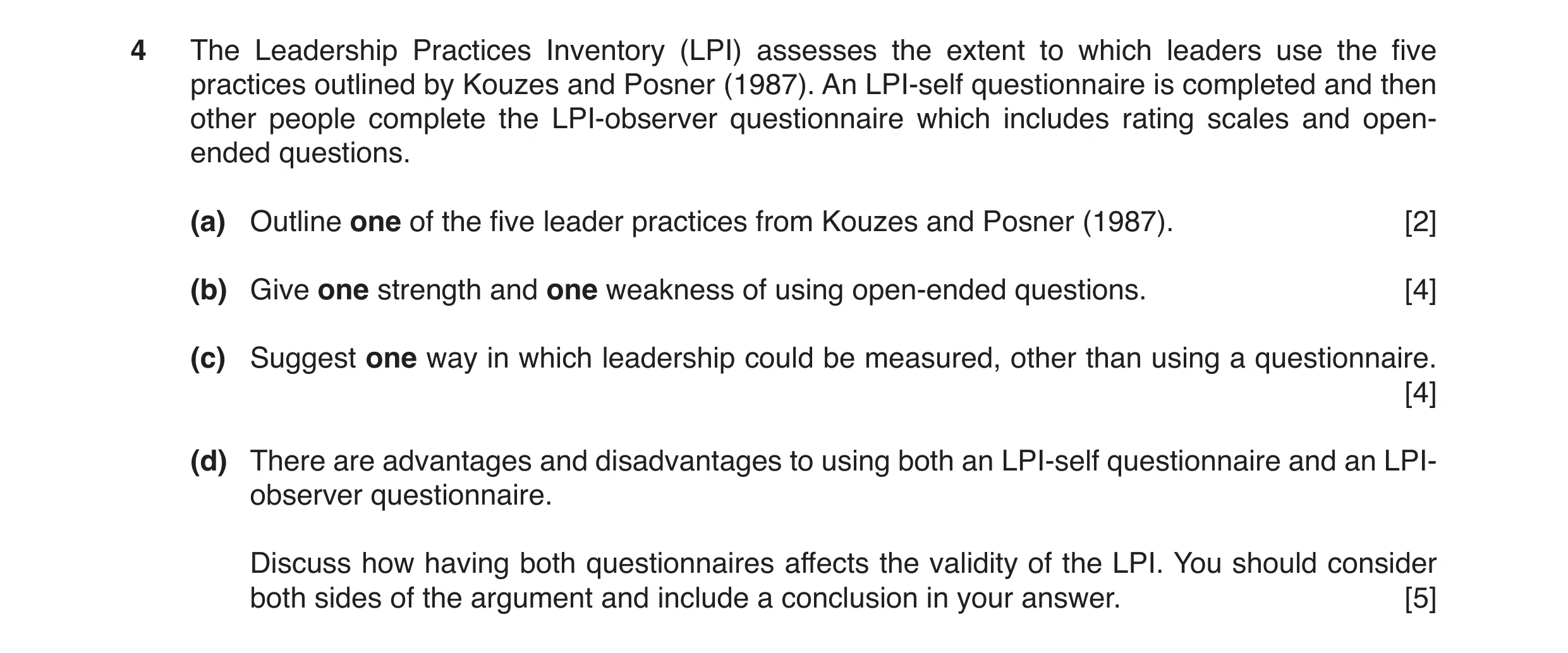
4 The Leadership Practices Inventory (LPI) assesses the extent to which leaders use the five practices outlined by Kouzes and Posner (1987). An LPI-self questionnaire is completed and then other people complete the LPI-observer questionnaire which includes rating scales and open- ended questions. (a) Outline one of the five leader practices from Kouzes and Posner (1987). [2] (b) Give one strength and one weakness of using open-ended questions. [4] (c) Suggest one way in which leadership could be measured, other than using a questionnaire. [4] (d) There are advantages and disadvantages to using both an LPI-self questionnaire and an LPI- observer questionnaire. Discuss how having both questionnaires affects the validity of the LPI. You should consider both sides of the argument and include a conclusion in your answer. [5]
15 marks
Mark scheme: 4(a) Outline one of the five leader practices from Kouzes and Posner 2 (1987). Marks: 1 mark for basic answer e.g. identification. 1 mark for elaboration/example. Most likely answer (other appropriate responses to be credited): • model the way leaders establish principles, create standards of excellence and then set an example for others to follow. • inspire a shared vision leaders believe that they can make a difference, see the future, and enlist others in their dreams. • challenge the process leaders seek change, look for innovative ways to improve things in an organisation. • enable others to act leaders foster collaboration and build teams. They actively involve others. They strengthen others, making each person feel needed and a part of a team. • encourage the heart to keep hope and determination alive, leaders recognise the contribution that each individual makes. Rewards are shared. 4(b) Give one strength and one weakness of using open-ended questions. 4 Marks: 1 mark basic answer. 2 marks elaboration × 2 Most likely answer (other appropriate responses to be credited): Strengths: • They allow people to express an opinion; to say what they think often without restriction. • The allow a person to explain what they mean; to go beyond a number Weaknesses: • Open-ended answers may be may be difficult to interpret by the researcher; • may be difficult for the person to express clearly what they mean. • it may be difficult to categorise and compare different answers; • researchers may categorise answers incorrectly. 4(c) Suggest one way in which leadership could be measured, other than 4 using a questionnaire. Marks: 1 mark basic answer. 2 marks elaboration × 2 Most likely answer (other appropriate responses to be credited): • Measured by observation, either by other leaders/managers or even by workers. • Measured by interviews conducted on workers/followers, for example. • Measured by increases in productivity; • by increased participation in work-related activities; • by lower absenteeism rates – workers are happy. 4(d) There are advantages and disadvantages to using both an LPI-self 5 questionnaire and an LPI-observer questionnaire. Discuss how having both questionnaires affects the validity of the LPI. You should consider both sides of the argument and include a conclusion in your answer. Marks: Question requires discussion; always plural of each argument, and always requires conclusion. 1 mark for each advantage/disadvantage (however detailed) and related to the question up to 4 max. 1 mark for two strengths/weaknesses unrelated to the question. 1 mark for conclusion. Most likely answer (other appropriate responses to be credited): Advantages: • Together the two measures can support/confirm each other; both look at a much wider range of aspects of the work of the leader. • an LPI-self allows the individual to rate themselves because they know what they do. • Having an LPI-observer questionnaire allows others to judge the worth of that leader. Together this is a much more thorough and when compared the validity can be assessed. Disadvantages: • Individually the LPI-self may be biased; the LPI-Observer may also be biased. • the LPI-self may rate themselves higher than they really are; • judgements by observers may be flawed: others may inflate or deflate scores for a variety of reasons. Conclusion: any appropriate conclusion drawn from the discussion that has been presented. 1 mark if appropriate. A conclusion is a ‘decision reached by reasoning’ and so a summary of points already made scores 0 marks.
This question in 9990/41 Oct/Nov 2018
Q4 · ‘Different types of followers do not exist 9990/41 Oct/Nov 2018
12 ‘Different types of followers do not exist. Workers either follow a leader or they do not.’ To what extent do you agree with this statement? Use examples of research you have studied to support your answer. [12]
12 marks
Mark scheme: 12 ‘Different types of followers do not exist. Workers either follow a 12 leader or they do not.’ To what extent do you agree with this statement? Use examples of research you have studied to support your answer. Marks: use generic levels of response in table C. Syllabus: leaders and followers: followership: qualities of and types (Kelley, 1988) Most likely (any other appropriate responses should be credited): Different types: • Kelley (1988) describes four main qualities of effective followers: self- management, commitment, competence and courage. • Kelley (1988) suggests two dimensions: whether or not the follower is a critical thinker and whether the follower is active or passive. This leads to five types of followership: the sheep, the yes people, the pragmatics, the alienated and the star followers. • Riggio et al. (2008) argue that there are effective followers (enthusiastic, intelligent, ambitious and self-reliant) and therefore there are also ‘ineffective’ followers. • i.e. Kelley and others believe that there are different types of follower. Not different types: • There may be different types of follower in theory, but it is questionable whether these types of follower are evident in the workplace. • It is often argued that there are leaders, but ‘followers’ are merely the workers who follow orders in order to keep their jobs. The ‘us’ and ‘them’; management and workers. • it is argued that types of followers only apply in a limited number of organisations; organisations which value worker input and contribution to the organisation; organisations where workers can progress to be managers and leaders.
This question in 9990/41 Oct/Nov 2018
Q5 · Design a study to investigate to what extent the manager of a clothes factory… 9990/41 Oct/Nov 2019
8 (a) Design a study to investigate to what extent the manager of a clothes factory demonstrates ‘levels of leadership’. [10] (b) Explain the psychological and methodological evidence on which your study is based. [8] Section C You must answer one question from this section. Psychology and abnormality
18 marks
Mark scheme: 8(a) Design a study to investigate to what extent the manager of a clothes 10 factory demonstrates ‘levels of leadership’. Marks: use generic levels of response Design a study question part (a). Additional: Candidates should design the study showing evidence of design features appropriate to the named method. The named method: any appropriate method. Typical features: • Experiments: type, IV, DV, controls, experimental design • Observations: type, setting, response categories, sampling frame, number of observers • Questionnaires/Interviews: type, setting, example questions. Scoring/rating scale, analysis of responses General features of research methodology: sampling technique and sample, type of data, ethics, reliability, validity, data analysis. 8(b) Explain the psychological and methodological evidence on which your 8 study is based. Marks: use generic levels of response ‘Design a study’ question part (b). Note: If only methodological or psychological explanation is provided max 5 marks Candidates are expected to explain the reasons for the suggested design in part (a). Explanation should be both psychological and methodological. Psychological to include appropriate theory or research. Additional: candidates are expected to justify their decisions or evidence presented regarding the design made in answer to question part (a). Syllabus: three levels of leadership (Scouller, 2011) Psychological: Scouller (2011) outlines three levels of leadership: public, private (outer, behavioural levels) and are what a leader must do with people. Personal (an inner level) is what a leader should do to grow. Methodological: explanation of method using general and specific features as above. Section C: Evaluation Question
This question in 9990/41 Oct/Nov 2019
Q6 · Design a study to investigate to what extent the manager of a clothes factory… 9990/42 Oct/Nov 2019
8 (a) Design a study to investigate to what extent the manager of a clothes factory demonstrates ‘levels of leadership’. [10] (b) Explain the psychological and methodological evidence on which your study is based. [8] Section C You must answer one question from this section. Psychology and abnormality
18 marks
Mark scheme: 8(a) Design a study to investigate to what extent the manager of a clothes 10 factory demonstrates ‘levels of leadership’. Marks: use generic levels of response Design a study question part (a). Additional: Candidates should design the study showing evidence of design features appropriate to the named method. The named method: any appropriate method. Typical features: • Experiments: type, IV, DV, controls, experimental design • Observations: type, setting, response categories, sampling frame, number of observers • Questionnaires/Interviews: type, setting, example questions. Scoring/rating scale, analysis of responses General features of research methodology: sampling technique and sample, type of data, ethics, reliability, validity, data analysis. 8(b) Explain the psychological and methodological evidence on which your 8 study is based. Marks: use generic levels of response ‘Design a study’ question part (b). Note: If only methodological or psychological explanation is provided max 5 marks Candidates are expected to explain the reasons for the suggested design in part (a). Explanation should be both psychological and methodological. Psychological to include appropriate theory or research. Additional: candidates are expected to justify their decisions or evidence presented regarding the design made in answer to question part (a). Syllabus: three levels of leadership (Scouller, 2011) Psychological: Scouller (2011) outlines three levels of leadership: public, private (outer, behavioural levels) and are what a leader must do with people. Personal (an inner level) is what a leader should do to grow. Methodological: explanation of method using general and specific features as above. Section C: Evaluation Question
This question in 9990/42 Oct/Nov 2019
Q7 · Design a study to investigate to what extent the manager of a clothes factory… 9990/43 Oct/Nov 2019
8 (a) Design a study to investigate to what extent the manager of a clothes factory demonstrates ‘levels of leadership’. [10] (b) Explain the psychological and methodological evidence on which your study is based. [8] Section C You must answer one question from this section. Psychology and abnormality
18 marks
Mark scheme: 8(a) Design a study to investigate to what extent the manager of a clothes 10 factory demonstrates ‘levels of leadership’. Marks: use generic levels of response Design a study question part (a). Additional: Candidates should design the study showing evidence of design features appropriate to the named method. The named method: any appropriate method. Typical features: • Experiments: type, IV, DV, controls, experimental design • Observations: type, setting, response categories, sampling frame, number of observers • Questionnaires/Interviews: type, setting, example questions. Scoring/rating scale, analysis of responses General features of research methodology: sampling technique and sample, type of data, ethics, reliability, validity, data analysis. 8(b) Explain the psychological and methodological evidence on which your 8 study is based. Marks: use generic levels of response ‘Design a study’ question part (b). Note: If only methodological or psychological explanation is provided max 5 marks Candidates are expected to explain the reasons for the suggested design in part (a). Explanation should be both psychological and methodological. Psychological to include appropriate theory or research. Additional: candidates are expected to justify their decisions or evidence presented regarding the design made in answer to question part (a). Syllabus: three levels of leadership (Scouller, 2011) Psychological: Scouller (2011) outlines three levels of leadership: public, private (outer, behavioural levels) and are what a leader must do with people. Personal (an inner level) is what a leader should do to grow. Methodological: explanation of method using general and specific features as above. Section C: Evaluation Question
This question in 9990/43 Oct/Nov 2019
Q8 · Wedley and Field (1984) proposed that the decision-making process of any group can be… 9990/41 May/June 2020
4 Wedley and Field (1984) proposed that the decision-making process of any group can be improved using a pre-decision support system. Their model of the pre-decision process begins with the manager answering situational questions. Examples of these questions and how they could be answered appear in Table 4.1. Table 4.1 Question number Questions Your answers 1 Is quality required? Yes No 2 Have you sufficient information? Yes No 3 Is the problem structured? Yes No 4 Is acceptance important? Yes No 5 Would your autocratic decision be accepted? Yes No (a) Explain what is meant by the term ‘pre-decision support system’. [2] (b) (i) Identify the type of questions used to gather the data in Table 4.1. [1] (ii) Identify the type of data gathered in Table 4.1. [1] (iii) Suggest one disadvantage of this type of data, using an example from Table 4.1. [2] (c) Suggest two ways in which any decision support system can improve managerial effectiveness. [4] (d) Discuss the advantages and disadvantages of gathering data from managers and workers about decision-making in their organisation. You should include a conclusion in your answer. [5]
15 marks
Mark scheme: 4 Wedley and Field (1984) proposed that the decision-making process of any group can be improved using a pre-decision support system. Their model of the pre-decision process begins with the manager answering situational questions. Examples of these questions and how they could be answered appear in Table 4.1. Question Questions Your number answers 1 Is quality required? Yes No 2 Have you sufficient information? Yes No 3 Is the problem structured? Yes No 4 Is acceptance important? Yes No 5 Would your autocratic decision be accepted? Yes No 4(a) Explain what is meant by the term ‘pre-decision support system’. 2 Most likely answer (other appropriate responses to be credited): A decision support system (DSS) is a computerised information system used to support decision-making in an organisation or a business. A DSS lets users sift through and analyse massive reams of data and compile information that can be used to solve problems and make better decisions. For Wedley and Field, DSSs deal with less structured situations in which greater management judgement is required. Marks: 1 mark for basic answer. 1 mark for elaboration/example. 4(b)(i) Identify the type of questions used to gather the data in Table 4.1. 1 Answer (other appropriate responses to be credited): • Closed (ended) questions. Marks: 1 mark for correct identification. 4(b)(ii) Identify the type of data gathered in Table 4.1. 1 Answer (other appropriate responses to be credited): • quantitative data (number of yes or no answers) • categorical data (frequencies). • nominal data. Marks: 1 mark for correct identification. 4(c) Suggest two ways in which a decision support system can improve 4 managerial effectiveness. Most likely answer (other appropriate responses to be credited): Quote from study: ‘DSS improve managerial effectiveness by: • Improving personal efficiency by allowing a manager to perform a task in a different way that uses less time or less effort • Expediting problem solving by providing faster turnaround, never insights, better consistency and greater accuracy • Facilitating interpersonal communication both with specific individuals and across organisational boundaries • Fostering learning or training • Improving overall control’ Marks: 1 mark basic answer, 2 marks detailed answer/elaboration/example × 2. Equity theory scores no marks. 4(d) Discuss the advantages and disadvantages of gathering data from 5 managers and workers about decision-making in their organisation. You should include a conclusion in your answer. Most likely answer (other appropriate responses to be credited): Advantage: • Workers want to please management and show organisational commitment (e.g. Mowday et al.) • Workers want to impress to show that they are good, efficient workers • Managers want to gather data from their own workers, whom they may know well Disadvantage: • Workers want to go against management showing no organisational commitment (e.g. sabotage) • Workers want to impress to show that they are good, efficient workers and may not tell the truth • Workers may respond to demand characteristics (e.g. Hawthorne effect) • Managers may have a hidden agenda • Managers may know workers and may not report what workers accurately Conclusion: any appropriate conclusion drawn from the discussion that has been presented. 1 mark if appropriate. A conclusion is a ‘decision reached by reasoning’ and so a summary of points already made scores 0 marks. Marks: Question requires discussion; always plural of each argument, and always requires conclusion. 1 mark for each advantage/disadvantage (however detailed) and related to the question up to 4 max. 2 marks max for two strengths/weaknesses unrelated to the question. 1 mark for conclusion.
This question in 9990/41 May/June 2020
Q9 · Design a study using observations to investigate which followership type is the most… 9990/41 May/June 2020
8 (a) Design a study using observations to investigate which followership type is the most common in an organisation producing toys. [10] (b) Explain the psychological and methodological evidence on which your study is based. [8] Section C You must answer one question from this section. Psychology and abnormality
18 marks
Mark scheme: 8(a) Design a study using observations to investigate which followership 10 type is the most common in an organisation producing toys. Marks: use generic levels of response Design a study question part (a). Additional: Candidates should design the study showing evidence of design features appropriate to the named method. The named method is: observation. Specific features: Observations: type, setting, response categories, sampling frame, number of observers. General features of research methodology: sampling technique & sample, type of data, ethics, reliability, validity, data analysis. 8(b) Explain the psychological and methodological evidence on which your 8 study is based. Marks: use generic levels of response ‘Design a study’ question part (b). NB If only methodological or psychological explanation is provided max 5 marks Candidates are expected to explain the reasons for the suggested design in part (a). Explanation should be both psychological and methodological. Psychological to include appropriate theory or research. Additional: candidates are expected to justify their decisions or evidence presented regarding the design made in answer to question part (a). Syllabus: leaders and followers: followership: qualities of and types (Kelley, 1988) Psychological: Kelley (1988) outlines five styles: • Conformist followers (‘the yes people’) allow leaders to think and act and are positive and on the leader’s side. • Alienated followers: predominantly negative; think for themselves but do not contribute to direction of the organisation. • Passive followers (‘the sheep’) passive thinking and engagement; motivated by their leader rather than themselves. • Pragmatist followers minimal level of independent thinking and engagement; change to suit the situation • Exemplary (‘star’) followers think for themselves, have positive energy, and are actively engaged. NB 2 marks max if psychological knowledge is not related to answer. Methodological: explanation of method using general and specific features as above.
This question in 9990/41 May/June 2020
Q10 · Wedley and Field (1984) proposed that the decision-making process of any group can be… 9990/43 May/June 2020
4 Wedley and Field (1984) proposed that the decision-making process of any group can be improved using a pre-decision support system. Their model of the pre-decision process begins with the manager answering situational questions. Examples of these questions and how they could be answered appear in Table 4.1. Table 4.1 Question number Questions Your answers 1 Is quality required? Yes No 2 Have you sufficient information? Yes No 3 Is the problem structured? Yes No 4 Is acceptance important? Yes No 5 Would your autocratic decision be accepted? Yes No (a) Explain what is meant by the term ‘pre-decision support system’. [2] (b) (i) Identify the type of questions used to gather the data in Table 4.1. [1] (ii) Identify the type of data gathered in Table 4.1. [1] (iii) Suggest one disadvantage of this type of data, using an example from Table 4.1. [2] (c) Suggest two ways in which any decision support system can improve managerial effectiveness. [4] (d) Discuss the advantages and disadvantages of gathering data from managers and workers about decision-making in their organisation. You should include a conclusion in your answer. [5]
15 marks
Mark scheme: 4 Wedley and Field (1984) proposed that the decision-making process of any group can be improved using a pre-decision support system. Their model of the pre-decision process begins with the manager answering situational questions. Examples of these questions and how they could be answered appear in Table 4.1. Question Questions Your number answers 1 Is quality required? Yes No 2 Have you sufficient information? Yes No 3 Is the problem structured? Yes No 4 Is acceptance important? Yes No 5 Would your autocratic decision be accepted? Yes No 4(a) Explain what is meant by the term ‘pre-decision support system’. 2 Most likely answer (other appropriate responses to be credited): A decision support system (DSS) is a computerised information system used to support decision-making in an organisation or a business. A DSS lets users sift through and analyse massive reams of data and compile information that can be used to solve problems and make better decisions. For Wedley and Field, DSSs deal with less structured situations in which greater management judgement is required. Marks: 1 mark for basic answer. 1 mark for elaboration/example. 4(b)(i) Identify the type of questions used to gather the data in Table 4.1. 1 Answer (other appropriate responses to be credited): • Closed (ended) questions. Marks: 1 mark for correct identification. 4(b)(ii) Identify the type of data gathered in Table 4.1. 1 Answer (other appropriate responses to be credited): • quantitative data (number of yes or no answers) • categorical data (frequencies). • nominal data. Marks: 1 mark for correct identification. 4(c) Suggest two ways in which a decision support system can improve 4 managerial effectiveness. Most likely answer (other appropriate responses to be credited): Quote from study: ‘DSS improve managerial effectiveness by: • Improving personal efficiency by allowing a manager to perform a task in a different way that uses less time or less effort • Expediting problem solving by providing faster turnaround, never insights, better consistency and greater accuracy • Facilitating interpersonal communication both with specific individuals and across organisational boundaries • Fostering learning or training • Improving overall control’ Marks: 1 mark basic answer, 2 marks detailed answer/elaboration/example × 2. Equity theory scores no marks. 4(d) Discuss the advantages and disadvantages of gathering data from 5 managers and workers about decision-making in their organisation. You should include a conclusion in your answer. Most likely answer (other appropriate responses to be credited): Advantage: • Workers want to please management and show organisational commitment (e.g. Mowday et al.) • Workers want to impress to show that they are good, efficient workers • Managers want to gather data from their own workers, whom they may know well Disadvantage: • Workers want to go against management showing no organisational commitment (e.g. sabotage) • Workers want to impress to show that they are good, efficient workers and may not tell the truth • Workers may respond to demand characteristics (e.g. Hawthorne effect) • Managers may have a hidden agenda • Managers may know workers and may not report what workers accurately Conclusion: any appropriate conclusion drawn from the discussion that has been presented. 1 mark if appropriate. A conclusion is a ‘decision reached by reasoning’ and so a summary of points already made scores 0 marks. Marks: Question requires discussion; always plural of each argument, and always requires conclusion. 1 mark for each advantage/disadvantage (however detailed) and related to the question up to 4 max. 2 marks max for two strengths/weaknesses unrelated to the question. 1 mark for conclusion.
This question in 9990/43 May/June 2020
Q11 · Design a study using observations to investigate which followership type is the most… 9990/43 May/June 2020
8 (a) Design a study using observations to investigate which followership type is the most common in an organisation producing toys. [10] (b) Explain the psychological and methodological evidence on which your study is based. [8] Section C You must answer one question from this section. Psychology and abnormality
18 marks
Mark scheme: 8(a) Design a study using observations to investigate which followership 10 type is the most common in an organisation producing toys. Marks: use generic levels of response Design a study question part (a). Additional: Candidates should design the study showing evidence of design features appropriate to the named method. The named method is: observation. Specific features: Observations: type, setting, response categories, sampling frame, number of observers. General features of research methodology: sampling technique & sample, type of data, ethics, reliability, validity, data analysis. 8(b) Explain the psychological and methodological evidence on which your 8 study is based. Marks: use generic levels of response ‘Design a study’ question part (b). NB If only methodological or psychological explanation is provided max 5 marks Candidates are expected to explain the reasons for the suggested design in part (a). Explanation should be both psychological and methodological. Psychological to include appropriate theory or research. Additional: candidates are expected to justify their decisions or evidence presented regarding the design made in answer to question part (a). Syllabus: leaders and followers: followership: qualities of and types (Kelley, 1988) Psychological: Kelley (1988) outlines five styles: • Conformist followers (‘the yes people’) allow leaders to think and act and are positive and on the leader’s side. • Alienated followers: predominantly negative; think for themselves but do not contribute to direction of the organisation. • Passive followers (‘the sheep’) passive thinking and engagement; motivated by their leader rather than themselves. • Pragmatist followers minimal level of independent thinking and engagement; change to suit the situation • Exemplary (‘star’) followers think for themselves, have positive energy, and are actively engaged. NB 2 marks max if psychological knowledge is not related to answer. Methodological: explanation of method using general and specific features as above.
This question in 9990/43 May/June 2020
Q12 · Heifetz (1997) proposes a ‘modern’ theory of adaptive leadership, and suggests that… 9990/42 May/June 2021
4 Heifetz (1997) proposes a ‘modern’ theory of adaptive leadership, and suggests that ‘getting on the balcony’ to see the whole organisation is more effective than seeing a specific part of one work process. Fig. 4.1 ‘getting on the balcony’ (a) Explain one principle from adaptive leadership, other than ‘getting on the balcony’. [2] (b) (i) Explain what is meant by the reductionism versus holism debate. [2] (ii) Suggest how adaptive leadership shows holism rather than reductionism. [2] (c) Suggest two ways in which adaptive leadership differs from ‘traditional’ leadership. [4] (d) Discuss the advantages and disadvantages of adaptive leadership. You should include a conclusion in your answer. [5]
15 marks
Mark scheme: 4 Heifetz (1997) proposes a ‘modern’ theory of adaptive leadership, and suggests that ‘getting on the balcony’ to see the whole organisation is more effective than seeing a specific part of one work process. Fig. 4.1 ‘getting on the balcony’ 4(a) Explain one principle from adaptive leadership, other than ‘getting on 2 the balcony’. Definitive answer: Adaptive leadership is the practice of mobilising people to tackle tough challenges and thrive. It is about organisational change. The six principles are: • Successful adaptation builds on the past • Adaptive leadership is specifically about change that enables the capacity to thrive • Adaptation occurs through experimentation • Adaptation relies on diversity • New adaptations significantly displace, reregulate, and rearrange. • Adaptation takes time In addition, an alternative five can be credited: • Identify the challenge • Regulate distress • Maintain disciplined action • Give work back to employees • Protect leadership voices from below Marks: 1 mark basic answer (identification of one of above), 2 marks detailed answer/elaboration/example. 4(b)(i) Explain what is meant by the reductionism versus holism debate. 2 Most likely answer (other appropriate responses to be credited): Reductionism: explaining complex psychological phenomena by reducing them to component parts. Holism: taking into account all the components; the whole is greater than the sum of the parts. Marks: 1 marks for reductionism (basic) and 1 mark for holism (basic). 4(b)(ii) Suggest how adaptive leadership shows holism rather than 2 reductionism. Most likely answer (other appropriate responses to be credited): Being holist is ‘taking time on the balcony’. Quote: ‘Heifetz highlights the importance of spending time on the balcony as well as on the dance floor. This is about getting perspective: who is dancing with whom, what are the patterns to the dance. It is about learning from a broader, birds‐eye perspective. In complex adaptive challenges we easily get caught up in frenetic activity on the dance floor, lose critical perspective and miss things. Often the more pressing and complex a situation the less likely we are to take time out on the balcony, concentrating rather on feverish activity to try to change things. Yet the more complex a problem, the more critical is balcony time.’ Marks: 1 mark basic answer (considering how all the parts work together), 2 marks detailed answer/elaboration/example (getting on the balcony to ‘see the whole’) 4(c) Suggest two ways in which adaptive leadership differs from 4 'traditional' leadership. Note: ‘Traditional’ leadership includes universalist and behavioural theories Most likely answer (other appropriate responses to be credited): • Traditional: authority figure giving orders. Adaptive: helping workers to change and adapt. • Traditional: maintains traditions. Adaptive: removes traditions. Emphasis is on change. • Traditional: uses skills workers already have. Adaptive: workers learn new skills to adapt. • Traditional: uses long-established solutions to problems. Adaptive: tries new solutions • Traditional: useful in times of certainty. Adaptive: useful in times of uncertainty Marks: 1–2 marks for each answer ×2. Answer must have both sides to score both marks. ‘If adaptive is given correctly (1 mark) then ‘traditional is different’ scores 0 marks because there is nothing to say how it is different. 4(d) Discuss the advantages and disadvantages of adaptive leadership. 5 You should include a conclusion in your answer. Marks: 1 mark for each advantage/disadvantage (however basic/detailed) which is related/linked to the question (max 4 marks). 1 mark for conclusion. Conclusion: any appropriate conclusion drawn from the discussion that has been presented. 1 mark if appropriate. A conclusion is a ‘decision reached by reasoning’ and so a summary of points already made scores 0 marks. Most likely answer (other appropriate responses to be credited): Advantages • Adaptive leadership is about adapting to changing economic conditions and if the leader can do this, the organisation survives and thrives. If it does not adapt it may ‘go out of business’. • Adaptive leadership involves considering the future rather than ‘the here and now’. • Adaptive leadership involves both reductionist and holist viewpoints • Adaptive leadership involves everyone – workers need to change in the same direction as the organisation Disadvantages • Workers may not be able to change/adapt; they may not have the skills required for the change and become redundant • Workers may experience distress. It can’t be avoided (but it can be managed) • The leader must be adaptive. If not, then the organisation may not survive. How it is known whether a leader is adaptive or not; possesses the relevant skills and abilities.
This question in 9990/42 May/June 2021
Q13 · Design a study to investigate which of Muczyk and Reimann's styles of leader behaviour is… 9990/42 Oct/Nov 2021
8 (a) Design a study to investigate which of Muczyk and Reimann's styles of leader behaviour is shown by the person in charge of a school or college. [10] (b) Explain the psychological and methodological evidence on which your study is based. [8] Section C You must answer one question from this section. Psychology and abnormality
18 marks
Mark scheme: 8(a) Design a study to investigate which of Muczyk and Reimann’s styles of 10 leader behaviour is shown by the person in charge of a school or college. Marks: use generic levels of response Design a study question part (a). Additional: Candidates should design the study showing evidence of design features appropriate to the named method. The named method: any appropriate method. Specific features: • Experiments: type, IV, DV, controls, experimental design. • Observations: type, setting, response categories, sampling frame, number of observers. • Questionnaires/Interviews: type, setting, example questions. Scoring/rating scale, analysis of responses. General features of research methodology: sampling technique and sample, type of data, ethics, reliability, validity, data analysis. 8(b) Explain the psychological and methodological evidence on which your 8 study is based. Marks: use generic levels of response ‘Design a study’ question part (b). NB If only methodological or psychological explanation is provided max 5 marks Candidates are expected to explain the reasons for the suggested design in part (a). Explanation should be both psychological and methodological. Psychological to include appropriate theory or research. Additional: candidates are expected to justify their decisions or evidence presented regarding the design made in answer to question part (a). Syllabus: styles of leader behaviour (Muczyk and Reimann, 1987) Psychological: Muczyk and Reimann believe that leaders can differ according to ‘degree of participation in decision-making’ and amount of leader direction/execution of a decision. These two produce four styles: directive autocrat, directive democrat, permissive autocrat and permissive democrat. Methodological: explanation of method using general and specific features as above.
This question in 9990/42 Oct/Nov 2021
Q14 · ‘Adaptive leaders should not spend time ‘on the balcony’, thinking about the organisation… 9990/42 Oct/Nov 2021
12 ‘Adaptive leaders should not spend time ‘on the balcony’, thinking about the organisation as a whole; they should spend time on the factory floor with the workers.’ To what extent do you agree with this statement? Use examples of research you have studied to support your answer. [12]
12 marks
Mark scheme: 12 ‘Adaptive leaders should not spend time 'on the balcony', thinking about 12 the organisation as a whole; they should spend time on the factory floor with the workers.’ To what extent do you agree with this statement? Use examples of research you have studied to support your answer. Marks: use generic levels of response in table C. Syllabus: adaptive leadership (Heifetz, 1997) Most likely (any other appropriate responses should be credited): No balcony: • Leaders should be concerned with the immediate production and so be on the factory floor. • Leaders should be concerned with their workers – developing individuals to be followers • Leaders should follow the traditional organisational model, not be ‘blue- sky’ thinking Yes balcony: • Adaptive leadership is about adapting to changing economic conditions and if the leader can do this, the organisation survives and thrives. If it does not adapt it may ‘go out of business’. Being ‘on the balcony’ is taking the overview. • Being on the balcony is being holist rather than reductionist. The whole is greater than the sum of the parts.
This question in 9990/42 Oct/Nov 2021
Q15 · Design a study using a questionnaire to investigate the effectiveness of adaptive… 9990/42 Feb/March 2022
8 (a) Design a study using a questionnaire to investigate the effectiveness of adaptive leadership to manage employees’ experiences during organisational change within a company. [10] (b) Explain the psychological and methodological evidence on which your study is based. [8] Section C You must answer one question from this section. Psychology and abnormality
18 marks
Mark scheme: 8(a) Design a study using a questionnaire to investigate the effectiveness of 10 adaptive leadership to manage employees’ experiences during organisational change within a company. Marks: use generic levels of response ‘Design a study’ question part (a). Additional: Candidates should design the study showing evidence of design features appropriate to the named method. The named method is: questionnaire. Specific features: Questionnaires/Interviews: type, setting, example questions. Scoring/rating scale, analysis of responses. General features of research methodology: sampling technique and sample, type of data, ethics, reliability, validity, data analysis. 8(b) Explain the psychological and methodological evidence on which your 8 study is based. Marks: use generic levels of response ‘Design a study’ question part (b). NB If only methodological or psychological explanation is provided max 5 marks Candidates are expected to explain the reasons for the suggested design in part (a). Explanation should be both psychological and methodological. Psychological to include appropriate theory or research. Additional: candidates are expected to justify their decisions or evidence presented regarding the design made in answer to question part (a). Syllabus: adaptive leadership (Heifetz, 1997) Psychological: Adaptive leadership is the practice of mobilizing people to tackle tough challenges and thrive. This includes six components and these are: • Get on the balcony • Identify your adaptive challenge • Regulate distress • Maintain disciplined action • Give work back to the employees • Protect leadership voices from below. Methodological: explanation of method using general and specific features as above.
This question in 9990/42 Feb/March 2022
Q16 · ‘Situational leadership is no longer relevant 9990/42 Feb/March 2022
12 ‘Situational leadership is no longer relevant. Only individual styles of leader behaviour are relevant to modern organisations.’ To what extent do you agree with this statement? Use examples of research you have studied to support your answer. [12]
12 marks
Mark scheme: 12 ‘Situational leadership is no longer relevant. Only individual styles of 12 leader behaviour are relevant to modern organisations.’ To what extent do you agree with this statement? Use examples of research you have studied to support your answer. Marks: use generic levels of response in table C. Syllabus: leadership style: many sub-topics are relevant. Most likely (any other appropriate responses should be credited): Out of date: • Many ‘modern theories’ propose styles of leader behaviour (Muczyk and Reimann, 1987) • Modern theories focus on individual features and so employ appropriate individuals • Other modern theories focus on individual ‘Three levels’ (Scouller, 2011) Are not: • Many different styles, no one theory is the ‘best’ • Leadership will always be needed, and ‘the situation’ will always be a factor • Rather than one or the other, individual and situational factors can interact • Modern theories focus on adapting to changing situations e.g. adaptive leadership (Heifetz, 1997)
This question in 9990/42 Feb/March 2022
Q17 · The success of a leader could be due to how well followers can follow them 9990/42 Oct/Nov 2022
4 The success of a leader could be due to how well followers can follow them. Kelley (1988) described the different qualities and types of followers and within this description he included a diagram. Fig. 4.1 is based on this diagram. Alienated Effective followers followers (alienated) (stars) Pragmatist followers (survivors) (sheep) (yes people) Passive Conformist followers followers Fig. 4.1 (a) Explain what is meant by ‘followership’. [2] (b) Explain two qualities of effective followers from Kelley (1988). [4] (c) Give two differences between alienated followers (alienated) and conformist followers (yes people). [4] (d) Discuss whether Kelley’s types of followers can be applied to all organisations. You should consider both sides of the argument and include a conclusion. [5]
15 marks
Mark scheme: 4 The success of a leader could be due to how well followers can follow them. Kelley (1988) described the different qualities and types of followers and within this description he included a diagram. Fig. 4.1 is based on this diagram. 4(a) Explain what is meant by 'followership’. 2 Most likely answer (other appropriate responses to be credited): The intentional practice on the part of the subordinate to enhance the synergetic interchange between leader and follower. Marks: 1 mark basic answer (‘people who follow’), 2 marks detailed answer/ elaboration/example. 4(b) Explain two qualities of effective followers from Kelley (1988). 4 Most likely answer: • Self management: think critically, in control of one’s actions, work independently • Commitment: commitment to goal, organisation • Competence: possession of high level of skills and attributes • Courage: effective followers hold their beliefs: they are loyal and honest. Stand up to leaders. Marks: 1 mark basic answer (identification of one of above), 2 marks detailed answer/elaboration/example. ×2 Note: these qualities are different from types of followers (see Fig. 4.1) 4(c) Give two differences between alienated followers (alienated) and 4 conformist followers (yes people). Most likely answer (other appropriate responses to be credited): Yes people (conformist) Alienated active behaviour passive behaviour dependent thinking independent, critical thinking committed not committed to the organisation do not question leader alienated always question defend leader challenge leader avoid conflict create conflict Marks: 1 mark for basic difference (e.g. yes = active; alienated = passive) and 1 mark elaboration of difference (e.g. description of what terms mean) x2 Note: description of one then the other max 2 marks. 4(d) Discuss whether Kelley's types of followers can be applied to all 5 organisations. You should consider both sides of the argument and include a conclusion. Most likely answer (other appropriate responses to be credited): Can apply • most organisations have leaders and followers • the qualities followers possess apply to followers in all organisations • the types of followers apply to all organisations Cannot apply • all organisations are different; what works in one may not work in another • leaders are different and so follower behaviour will also be different • Kelley’s model may be wrong; it needs to be tested in a wide range of organisations Conclusion: any appropriate conclusion drawn from the discussion that has been presented. 1 mark if appropriate. A conclusion is a ‘decision reached by reasoning’ and so a summary of points already made scores 0 marks. Marks: Question requires discussion; always plural of each argument, and always requires conclusion. 1 mark for each strength/weakness (however detailed) and related to the question up to 4 max. 2 marks max for two strengths/weaknesses unrelated to the question. 1 mark for conclusion.
This question in 9990/42 Oct/Nov 2022
Q18 · ‘Having both LPI-Self and LPI-Observer questionnaires in the Leadership Practices… 9990/42 Oct/Nov 2022
12 ‘Having both LPI-Self and LPI-Observer questionnaires in the Leadership Practices Inventory (LPI) is of no practical value.’ To what extent do you agree with this statement? Use examples of research you have studied to support your answer. [12]
12 marks
Mark scheme: 12 ‘Having both LPI-Self and LPI-Observer questionnaires in the 12 Leadership Practices Inventory (LPI) is of no practical value.’ To what extent do you agree with this statement? Use examples of research you have studied to support your answer. Marks: use generic levels of response in table C. Syllabus: measuring leadership: Leadership Practices Inventory (Kouzes and Posner, 1987) Most likely (any other appropriate responses should be credited): Value: • not just one rater, but two • having an observer (manager) rating may reveal strengths and weaknesses not known to the self-rater • having self-rating may reveal strengths and weaknesses not known to the observer (manager) • the two can be compared for reliability. Also validity can be applied. No value: • leaders will lead and ratings can simply be ignored • ‘self’ may not be honest; ‘observer’ may not be honest • if an observer is rater, then it can lead to interpersonal conflict (if ratings are bad) • ratings of leaders may be irrelevant; adaptive leadership and situational leadership are more important.
This question in 9990/42 Oct/Nov 2022
Q19 · Design a study to investigate the extent to which the manager in a clothes factory… 9990/42 Feb/March 2023
8 (a) Design a study to investigate the extent to which the manager in a clothes factory demonstrates ‘adaptive leadership’. [10] (b) Explain the psychological and methodological evidence on which your study is based. [8] Section C You must answer one question from this section. Psychology and abnormality
18 marks
Mark scheme: 8(a) Design a study to investigate the extent to which the manager in a 10 clothes factory demonstrates ‘adaptive leadership’. Marks: use generic levels of response Design a study question part (a). Additional: Candidates should design the study showing evidence of design features appropriate to the named method. The named method is: any appropriate method. Specific features: • Experiments: type, IV, DV, controls, experimental design. • Observations: type, setting, response categories, sampling frame, number of observers. • Questionnaires/Interviews: type, setting, example questions. Scoring/rating scale, analysis of responses. General features of research methodology: sampling technique and sample, type of data, ethics, reliability, validity, data analysis. 8(b) Explain the psychological and methodological evidence on which your 8 study is based. Marks: use generic levels of response ‘Design a study’ question part (b). NB If only methodological or psychological explanation is provided max 5 marks Candidates are expected to explain the reasons for the suggested design in part (a). Explanation should be both psychological and methodological. Psychological to include appropriate theory or research. Additional: candidates are expected to justify their decisions or evidence presented regarding the design made in answer to question part (a). Syllabus: adaptive leadership (Heifetz, 1997) Psychological: Heifetz (1997): features of adaptation: (i) adaptation builds on the past (ii) leadership is about change (iii) adaptation occurs through experimentation (iv) adaptation relies on diversity (v) new adaptations significantly displace, reregulate, and rearrange. (vi) adaptation takes time. Methodological: explanation of method using general and specific features as above.
This question in 9990/42 Feb/March 2023
Q20 · ‘Scouller’s levels of leadership theory is reductionist, as are all leadership theories.’… 9990/42 Oct/Nov 2023
12 ‘Scouller’s levels of leadership theory is reductionist, as are all leadership theories.’ To what extent do you agree with this statement? Use examples of research you have studied to support your answer. [12]
12 marks
Mark scheme: 12 ‘Scouller’s levels of leadership theory is reductionist, as are all 12 leadership theories.’ To what extent do you agree with this statement? Use examples of research you have studied to support your answer. Marks: use generic levels of response in table C. Syllabus: three levels of leadership (Scouller, 2011); adaptive leadership (Heifetz, 1997); universalist and behavioural theories Most likely (any other appropriate responses should be credited): All reductionist: • Scouller: The model breaks leadership down into outer levels and again into public, private and personal levels • behavioural explanations break down into task-oriented behaviours and relationship-oriented behaviour • behavioural explanations break down into initiating structure and consideration Are not: • Heifetz (1997) ‘gets on the balcony’, stepping back to look at the whole picture rather than individual components. • breaking down into components is just for studying leadership. In reality leadership is holistic. • early leadership theories such as the ‘great man’ and ‘great woman’ universalist theory and the charismatic (transformational leader) were holist with one crucial feature being key.
This question in 9990/42 Oct/Nov 2023
Q21 · From the key study by Cuadrado et al 9990/41 May/June 2024
7 From the key study by Cuadrado et al. (2008) on women’s access to managerial positions: (a) (i) State the two independent variables in this experiment. [2] (ii) Outline one dependent variable in this experiment. [2] (b) Suggest one method that could be used to study women’s access to managerial positions, other than a laboratory experiment. [2] (c) Explain two weaknesses of conducting a laboratory experiment to measure women’s access to managerial positions. [4]
10 marks
Mark scheme: 7(a)(i) State the two independent variables in this experiment. 2 Syllabus: 4.2.2 Key study on leadership style and gender: Cuadrado et al. (2008) Award 2 marks for inclusion of both independent variables with detail. Award 1 mark for inclusion of one variable with detail. Award 0 marks for ‘sex’ or ‘style’. Answers to include: variable 1: the leader’s sex (male v female) (1) variable 2: the leadership style (male stereotypical v female stereotypical) (1) NOTE: 1 mark only for ‘leader’s sex’ and ‘leadership style’; else 0 marks. NOTE: extra detail could be added but is not needed for full marks: male style is autocratic & task oriented, female style is democratic, relationship oriented and individualised. 7(a)(ii) Outline one dependent variable in this experiment. 2 Award 2 marks for identification of one dependent variable plus some detail (operationalized). Award 1 mark for identification of one dependent variable. Definitive Answers: leader’s competence (score on a 7-point Likert scale, totally negative/disagree to totally positive/agree) leader’s efficacy/effectiveness (score on a 7-point Likert scale, totally negative/disagree to totally positive/agree) NOTE: allow 1 Max mark for effectiveness. evaluation (score on a 7-point Likert scale, never to always). NOTE: adjective list was not a DV. 7(b) Suggest one method that could be used to study women's access to 2 managerial positions, other than a laboratory experiment. Award 2 marks for an appropriate suggestion stated and applied to study with detail / elaboration / example. Award 1 mark for an appropriate suggestion identified but not applied. Answers may include: a field experiment (1) where workers can complete the study, narrative and questionnaires in their working environment (2) a ‘questionnaire package’ (1) where workers can complete both narrative and questionnaires by post, face-to-face with a researcher or online (2) an interview (1) where workers can complete both narrative and questionnaires face-to-face with a researcher (2) Other appropriate responses to be credited. 7(c) Explain two weaknesses of conducting a laboratory experiment to 4 measure women's access to managerial positions. Up to 2 marks for each weakness 2. Award 2 marks for an appropriate weakness stated and applied as required by the question with detail / elaboration / example. Award 1 mark for an appropriate weakness stated but not applied. Answers may include: The participant may respond to demand characteristics because they know they are participating in a study (1) about women in managerial positions (2). The study is conducted in an artificial environment (1) a laboratory at a university with students not a ‘real’ worker in a work environment (2). Ecological validity is low because the setting is a laboratory (1) and women (and men) in managerial positions could behave differently because it is not a work setting (2). Other appropriate responses to be credited.
This question in 9990/41 May/June 2024
Q22 · Muczyk and Reimann proposed four styles of leader behaviour 9990/42 May/June 2024
8 Muczyk and Reimann proposed four styles of leader behaviour. (a) Outline the ‘directive autocrat’ style of leader behaviour proposed by Muczyk and Reimann. [2] (b) Suggest one closed question that a leader could be asked to investigate whether they have a directive autocrat style of leader behaviour. [2] (c) Explain two strengths of using a structured observation to investigate the behaviour of a directive autocrat leader. [4]
8 marks
Mark scheme: 8(a) Outline the ‘directive autocrat’ style of leader behaviour proposed by 2 Muczyk and Reimann. Syllabus: 4.2.2 Muczyk and Reimann’s four styles of leader behaviour. Award 2 marks for a detailed outline. Award 1 mark for a partial outline. Definitive answer: style includes participation (low) and direction (high) (1) leader makes unilateral decisions, which will be carried out by workers, subordinate to them, and who have no involvement in the decision- making process (+1) instructs on how tasks are completed, supervises workers closely, checks progress (+1) 8(b) Suggest one closed question that a leader could be asked to investigate 2 whether they have a directive autocrat style of leader behaviour. Award 2 marks for an appropriate suggestion and applied to study with detail / elaboration / example. Award 1 mark for an appropriate suggestion identified but not applied. Answers may include: Do you make unilateral decisions without consulting workers? (1) yes/no (2) Do you supervise workers closely? (1) Always, sometimes, never (2) NOTE: open-ended questions receive no marks; 1 mark if no answer format. Other appropriate responses to be credited. 8(c) Explain two strengths of using a structured observation to investigate 4 the behaviour of a directive autocrat leader. Up to 2 marks for each strength 2. Award 2 marks for an appropriate strength stated and applied as required by the question with detail / elaboration / example. Award 1 mark for an appropriate strength stated but not applied. Answers may include: Using a structured observation behavioural categories can be defined before the study begins (1) meaning that the category for ‘supervises workers closely’ should be added (2). Using a covert observation means that the leader is unaware that their behaviour is being observed (1) and so any supervisory behaviour is genuine (2). Using a structured, covert observation means that two observers can be used to check the extent of agreement about behaviours (1) so good inter-rater reliability would confirm that a leader supervises worker behaviour at frequent intervals (2). Other appropriate responses to be credited.
This question in 9990/42 May/June 2024
Q23 · From the key study by Cuadrado et al 9990/43 May/June 2024
7 From the key study by Cuadrado et al. (2008) on women’s access to managerial positions: (a) (i) State the two independent variables in this experiment. [2] (ii) Outline one dependent variable in this experiment. [2] (b) Suggest one method that could be used to study women’s access to managerial positions, other than a laboratory experiment. [2] (c) Explain two weaknesses of conducting a laboratory experiment to measure women’s access to managerial positions. [4]
10 marks
Mark scheme: 7(a)(i) State the two independent variables in this experiment. 2 Syllabus: 4.2.2 Key study on leadership style and gender: Cuadrado et al. (2008) Award 2 marks for inclusion of both independent variables with detail. Award 1 mark for inclusion of one variable with detail. Award 0 marks for ‘sex’ or ‘style’. Answers to include: variable 1: the leader’s sex (male v female) (1) variable 2: the leadership style (male stereotypical v female stereotypical) (1) NOTE: 1 mark only for ‘leader’s sex’ and ‘leadership style’; else 0 marks. NOTE: extra detail could be added but is not needed for full marks: male style is autocratic & task oriented, female style is democratic, relationship oriented and individualised. 7(a)(ii) Outline one dependent variable in this experiment. 2 Award 2 marks for identification of one dependent variable plus some detail (operationalized). Award 1 mark for identification of one dependent variable. Definitive Answers: leader’s competence (score on a 7-point Likert scale, totally negative/disagree to totally positive/agree) leader’s efficacy/effectiveness (score on a 7-point Likert scale, totally negative/disagree to totally positive/agree) NOTE: allow 1 Max mark for effectiveness. evaluation (score on a 7-point Likert scale, never to always). NOTE: adjective list was not a DV. 7(b) Suggest one method that could be used to study women's access to 2 managerial positions, other than a laboratory experiment. Award 2 marks for an appropriate suggestion stated and applied to study with detail / elaboration / example. Award 1 mark for an appropriate suggestion identified but not applied. Answers may include: a field experiment (1) where workers can complete the study, narrative and questionnaires in their working environment (2) a ‘questionnaire package’ (1) where workers can complete both narrative and questionnaires by post, face-to-face with a researcher or online (2) an interview (1) where workers can complete both narrative and questionnaires face-to-face with a researcher (2) Other appropriate responses to be credited. 7(c) Explain two weaknesses of conducting a laboratory experiment to 4 measure women's access to managerial positions. Up to 2 marks for each weakness 2. Award 2 marks for an appropriate weakness stated and applied as required by the question with detail / elaboration / example. Award 1 mark for an appropriate weakness stated but not applied. Answers may include: The participant may respond to demand characteristics because they know they are participating in a study (1) about women in managerial positions (2). The study is conducted in an artificial environment (1) a laboratory at a university with students not a ‘real’ worker in a work environment (2). Ecological validity is low because the setting is a laboratory (1) and women (and men) in managerial positions could behave differently because it is not a work setting (2). Other appropriate responses to be credited.
This question in 9990/43 May/June 2024
Q24 · From the key study by Cuadrado et al 9990/41 Oct/Nov 2025
7 From the key study by Cuadrado et al. (2008) on women’s access to managerial positions: (a) (i) State two features of the sample of participants used in this study. [2] (ii) Outline what each participant was asked to do after reading the narrative (the description of the supervisor’s behaviour). [2] (b) Suggest why Cuadrado et al. used four different versions of the same narrative. [2] (c) Explain two strengths of using an experiment to investigate women’s access to managerial positions in this study. [4]
10 marks
Mark scheme: 7 From the key study by Cuadrado et al. (2008) on women's access to managerial positions: 7(a)(i) State two features of the sample of participants used in this study. 2 Syllabus 4.2.2 Key study on leadership style and gender: Cuadrado et al. (2008) Marks: Award 1 mark for each correct feature (max 2). Definitive answer • 136 participants • psychology students • from the Universidad Nacional de Educación a Distancia (National Open University of Spain), from the entire Spanish territory, of whom • 53% were women 47% were men • women mean age 27 years, SD = 6.6 and men mean age 29 years, SD = 6.8. 7(a)(ii) Outline what each participant was asked to do after reading the narrative 2 (the description of the supervisor’s behaviour). Marks: Award 2 marks for detail of either the first or second aspect. Award 1 mark for a partial outline. Most likely answer: quote: • participants were asked to evaluate a supervisor (1 mark) (male or female, depending on the experimental condition) of the service, who was occupying that position for a trial period (2 marks) • in the narrative, after reading the description of the supervisor’s behavior, they were asked to collaborate in the evaluation process (1 mark) by means of an anonymous questionnaire in order to facilitate making decisions about the candidates (2 marks). Alternatively (quote) • a list of 14 adjectives (7 positive and 7 negative). Participants rated the degree to which they thought these adjectives were applicable to the supervisor, using a 7-point Likert-type scale, ranging from 1 (never) to 7 (always). The positive adjectives were: competent, intelligent, loyal, honest, clever, responsible, and optimistic. The negative adjectives were: careless, forgetful, discouraging, harmful for the team, bossy, snobbish, and dishonest. • supervisor’s leadership capacity. a 7-point Likert- type scale, ranging from 1 (totally negative/totally disagree) to 7 (totally positive/totally agree). The items presented were: How would you evaluate X’s general leadership capacity? X is a competent supervisor. How would you evaluate X’s capacities and aptitudes as a supervisor? How would you evaluate X as a leader or supervisor? • Leadership effectiveness of the supervisor. A measure of 5 items with a 7-point Likert-type scale ranging from 1 (totally negative/totally disagree) to 7 (totally positive/totally agree). The items presented were: How would you evaluate X’s general achievement as a supervisor? X is an effective manager. X knows how to manage people effectively. X has sufficient capacity to be considered a successful leader. X does not perform his/her work as supervisor well enough. 7(b) Suggest why Cuadrado et al. used four different versions of the same 2 narrative. Marks: Award 2 marks for an appropriate suggestion and applied to study with detail / elaboration / example. Award 1 mark for an appropriate suggestion identified but not applied. Answers may include (other appropriate responses to be credited): • to act as a baseline/control for comparison with the IV (1 mark) about women and managerial positions (2 marks). • to mix each variable with each other to test combinations (1 mark) 2 (Male- stereotypical vs. Female-stereotypical leadership style) 2 (Male vs. Female leader) (2 marks) 7(c) Explain two strengths of using an experiment to investigate women's 4 access to managerial positions in this study. Marks: Up to 2 marks for each strength 2 Award 2 marks for an appropriate strength stated and applied as required by the question with detail / elaboration / example. Award 1 mark for an appropriate strength stated but not applied. Answers may include (other appropriate responses to be credited): Strengths: • the DV can be precisely measured (1 mark) using rating scales (7-point scale) for leadership capacity and effectiveness and gathering quantitative data (2 marks) • all situational variables can be controlled (1 mark) such as temperature, lighting, etc so focus on task being measured, the 14 adjectives, is not influenced by any other factor (2 marks) • the procedure is standardised (1 mark) all participants receive the same instructions, the narrative about the leader’s behaviour (2 marks)
This question in 9990/41 Oct/Nov 2025
Q25 · Scouller proposed three levels of leadership 9990/42 Oct/Nov 2025
8 Scouller proposed three levels of leadership. (a) Outline what is meant by a ‘private’ level of leadership. [2] (b) Suggest one closed question that a worker could be asked to investigate a leader’s private level of leadership. [2] (c) Explain two weaknesses of asking workers about their leader’s private level of leadership. [4]
8 marks
Mark scheme: 8 Scouller proposed three levels of leadership. 8(a) Outline what is meant by a 'private' level of leadership. 2 Syllabus: 4.2.2 Leadership style. Scouller’s levels of leadership including public, private and personal levels. Marks: Award 2 marks for a detailed outline. Award 1 mark for a partial outline. Answers may include (other appropriate responses to be credited): • Private – handling individuals on a one-to-one basis. Each person should be treated with respect because they have different knowledge, experience, motivation and confidence. There are 14 private leadership behaviours in two categories: • individual purpose and task, such as appraising, disciplining, setting goals • individual building and maintenance, e.g. building relationships, recognising talent. 8(b) Suggest one closed question that a worker could be asked to 2 investigate a leader's private level of leadership. Marks: Award 2 marks for an appropriate suggestion [closed question and answer options] and applied to study with detail / elaboration / example (example of private leadership) Award 1 mark for partial suggestion (e.g. closed question but no answer options) and applied. Answers may include (other appropriate responses to be credited): • on a scale of 1–5 (1 = low) ‘How good is your leader at building relationships? (or whatever feature (see list above) • ‘Is your leader good at recognising talent?’ Yes/No 8(c) Explain two weaknesses of asking workers about their leader's private 4 level of leadership. Marks: Up to 2 marks for each weakness. Award 2 marks for an appropriate weakness stated and applied as required by the question with detail / elaboration / example. Award 1 mark for an appropriate weakness stated but not applied. Answers may include (other appropriate responses to be credited): • the worker may not tell the truth, exaggerate or underemphasise details (1 mark) which may lead the researcher to make inaccurate conclusions about the leader’s behaviour (2 marks) • the worker may be afraid that if they tell the truth they may lose their job (1 mark) and so what is said about the leader may be false (2 marks) • the worker may be a close follower (conformist follower) and support all the leaders decisions, or may be an alienated follower and not support the leader (1 mark) as a result data gathered may be flawed in judging the leader and their behaviour (2 marks)
This question in 9990/42 Oct/Nov 2025
Q26 · From the key study by Cuadrado et al 9990/43 Oct/Nov 2025
7 From the key study by Cuadrado et al. (2008) on women’s access to managerial positions: (a) (i) State two features of the sample of participants used in this study. [2] (ii) Outline what each participant was asked to do after reading the narrative (the description of the supervisor’s behaviour). [2] (b) Suggest why Cuadrado et al. used four different versions of the same narrative. [2] (c) Explain two strengths of using an experiment to investigate women’s access to managerial positions in this study. [4]
10 marks
Mark scheme: 7 From the key study by Cuadrado et al. (2008) on women's access to managerial positions: 7(a)(i) State two features of the sample of participants used in this study. 2 Syllabus 4.2.2 Key study on leadership style and gender: Cuadrado et al. (2008) Marks: Award 1 mark for each correct feature (max 2). Definitive answer • 136 participants • psychology students • from the Universidad Nacional de Educación a Distancia (National Open University of Spain), from the entire Spanish territory, of whom • 53% were women 47% were men • women mean age 27 years, SD = 6.6 and men mean age 29 years, SD = 6.8. 7(a)(ii) Outline what each participant was asked to do after reading the narrative 2 (the description of the supervisor’s behaviour). Marks: Award 2 marks for detail of either the first or second aspect. Award 1 mark for a partial outline. Most likely answer: quote: • participants were asked to evaluate a supervisor (1 mark) (male or female, depending on the experimental condition) of the service, who was occupying that position for a trial period (2 marks) • in the narrative, after reading the description of the supervisor’s behavior, they were asked to collaborate in the evaluation process (1 mark) by means of an anonymous questionnaire in order to facilitate making decisions about the candidates (2 marks). Alternatively (quote) • a list of 14 adjectives (7 positive and 7 negative). Participants rated the degree to which they thought these adjectives were applicable to the supervisor, using a 7-point Likert-type scale, ranging from 1 (never) to 7 (always). The positive adjectives were: competent, intelligent, loyal, honest, clever, responsible, and optimistic. The negative adjectives were: careless, forgetful, discouraging, harmful for the team, bossy, snobbish, and dishonest. • supervisor’s leadership capacity. a 7-point Likert- type scale, ranging from 1 (totally negative/totally disagree) to 7 (totally positive/totally agree). The items presented were: How would you evaluate X’s general leadership capacity? X is a competent supervisor. How would you evaluate X’s capacities and aptitudes as a supervisor? How would you evaluate X as a leader or supervisor? • Leadership effectiveness of the supervisor. A measure of 5 items with a 7-point Likert-type scale ranging from 1 (totally negative/totally disagree) to 7 (totally positive/totally agree). The items presented were: How would you evaluate X’s general achievement as a supervisor? X is an effective manager. X knows how to manage people effectively. X has sufficient capacity to be considered a successful leader. X does not perform his/her work as supervisor well enough. 7(b) Suggest why Cuadrado et al. used four different versions of the same 2 narrative. Marks: Award 2 marks for an appropriate suggestion and applied to study with detail / elaboration / example. Award 1 mark for an appropriate suggestion identified but not applied. Answers may include (other appropriate responses to be credited): • to act as a baseline/control for comparison with the IV (1 mark) about women and managerial positions (2 marks). • to mix each variable with each other to test combinations (1 mark) 2 (Male- stereotypical vs. Female-stereotypical leadership style) 2 (Male vs. Female leader) (2 marks) 7(c) Explain two strengths of using an experiment to investigate women's 4 access to managerial positions in this study. Marks: Up to 2 marks for each strength 2 Award 2 marks for an appropriate strength stated and applied as required by the question with detail / elaboration / example. Award 1 mark for an appropriate strength stated but not applied. Answers may include (other appropriate responses to be credited): Strengths: • the DV can be precisely measured (1 mark) using rating scales (7-point scale) for leadership capacity and effectiveness and gathering quantitative data (2 marks) • all situational variables can be controlled (1 mark) such as temperature, lighting, etc so focus on task being measured, the 14 adjectives, is not influenced by any other factor (2 marks) • the procedure is standardised (1 mark) all participants receive the same instructions, the narrative about the leader’s behaviour (2 marks)
This question in 9990/43 Oct/Nov 2025

 1 / 8
1 / 8![Question 5: (a) Design a study to investigate to what extent the manager of a clothes factory demonstrates ‘levels of leadership’. [10] (b) Explain the…](https://img.pastlit.com/crops/178b47bf-da0e-4d15-82b8-0a5cf3e108e1/q8.webp)
![Question 6: (a) Design a study to investigate to what extent the manager of a clothes factory demonstrates ‘levels of leadership’. [10] (b) Explain the…](https://img.pastlit.com/crops/529fc217-7a95-431d-8324-507488bd5b24/q8.webp)
![Question 7: (a) Design a study to investigate to what extent the manager of a clothes factory demonstrates ‘levels of leadership’. [10] (b) Explain the…](https://img.pastlit.com/crops/9db307fb-eda0-428e-9224-e78f31d7bc5c/q8.webp) 2 / 8
2 / 8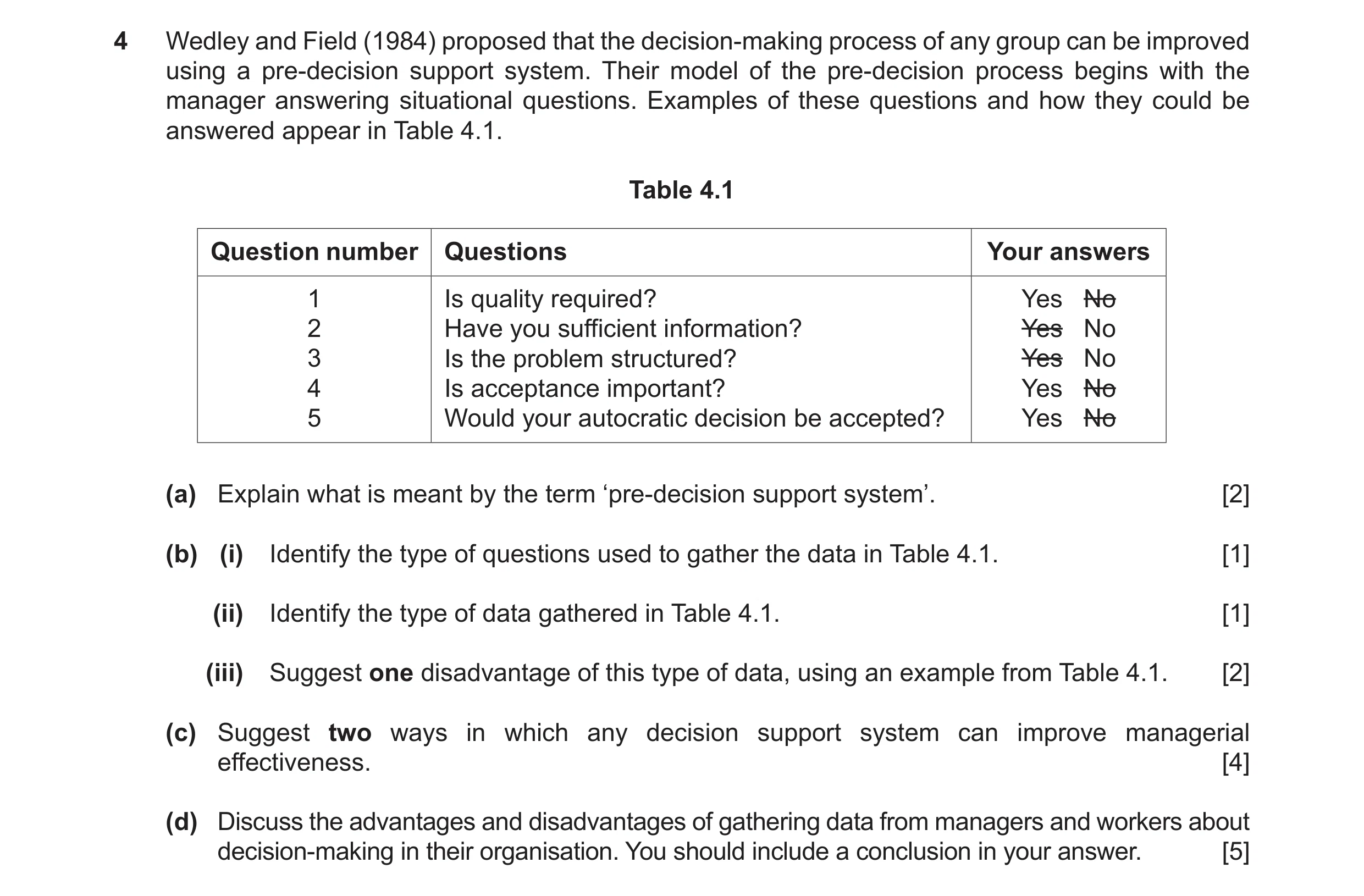
![Question 9: (a) Design a study using observations to investigate which followership type is the most common in an organisation producing toys. [10] (b)…](https://img.pastlit.com/crops/56acf742-01d1-4aed-b161-01be180ea042/q8.webp) 3 / 8
3 / 8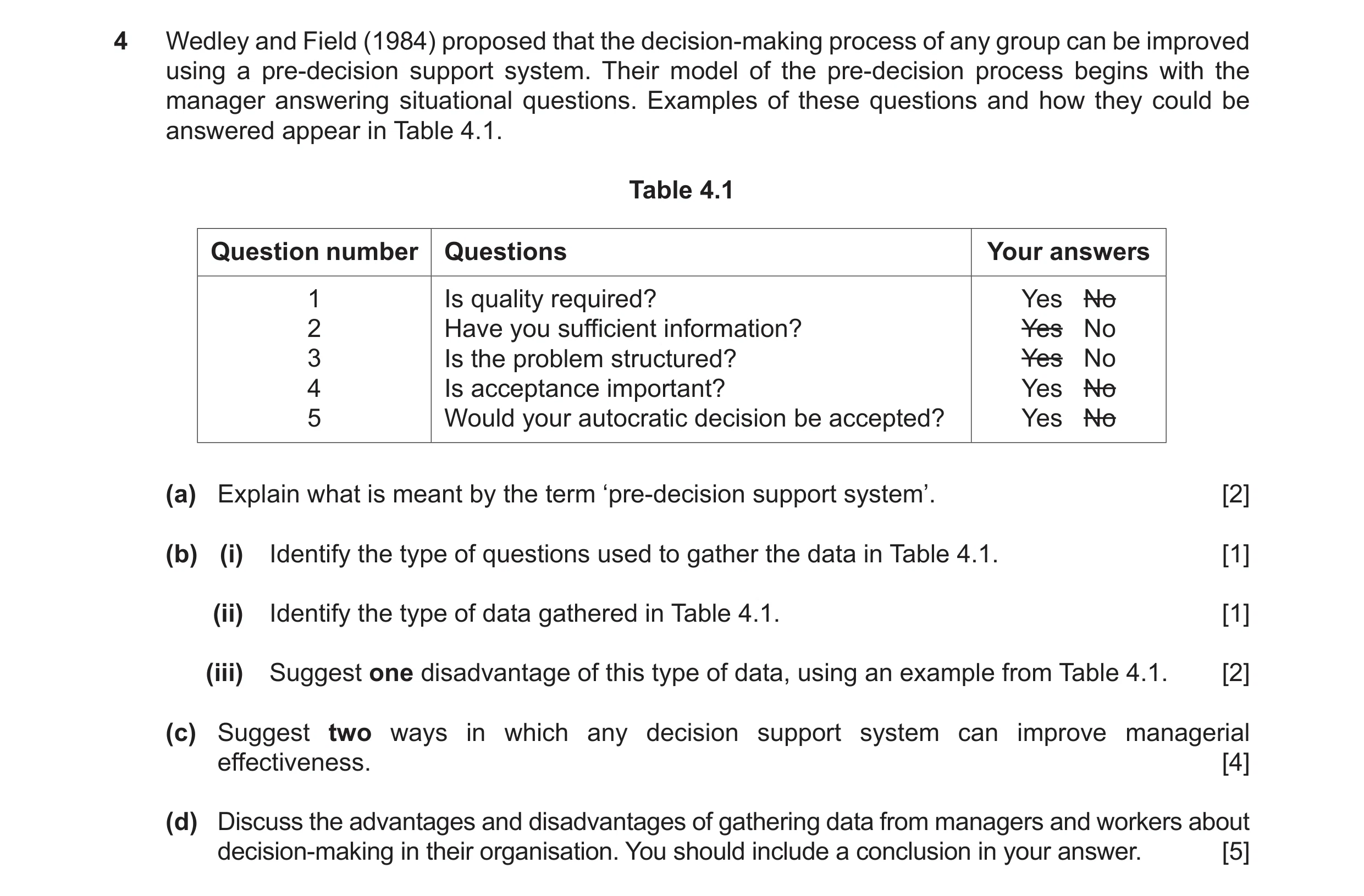
![Question 11: (a) Design a study using observations to investigate which followership type is the most common in an organisation producing toys. [10] (b)…](https://img.pastlit.com/crops/0ac81e9d-7681-4b6a-9a79-e879d454d328/q8.webp) 4 / 8
4 / 8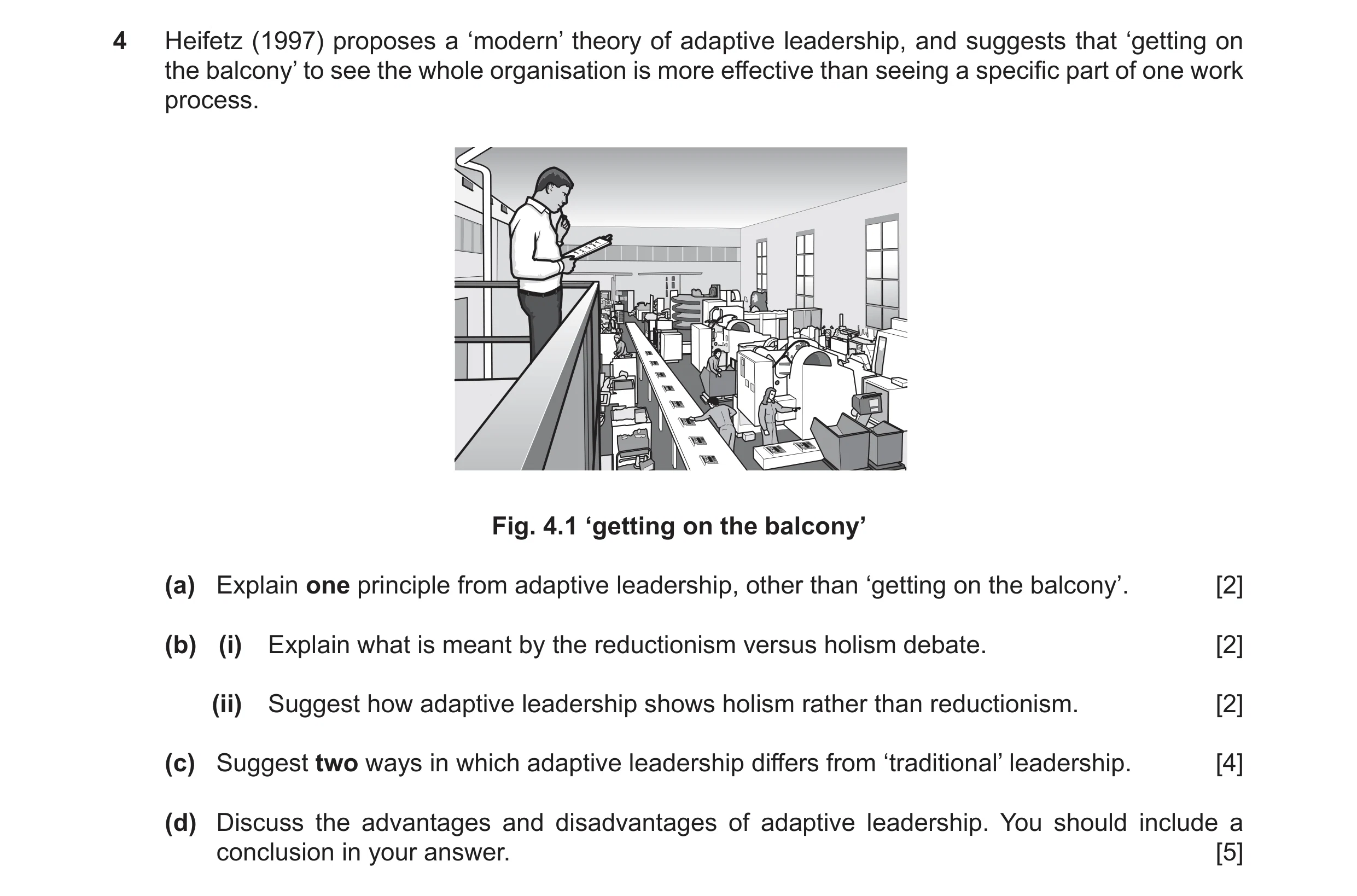
 5 / 8
5 / 8

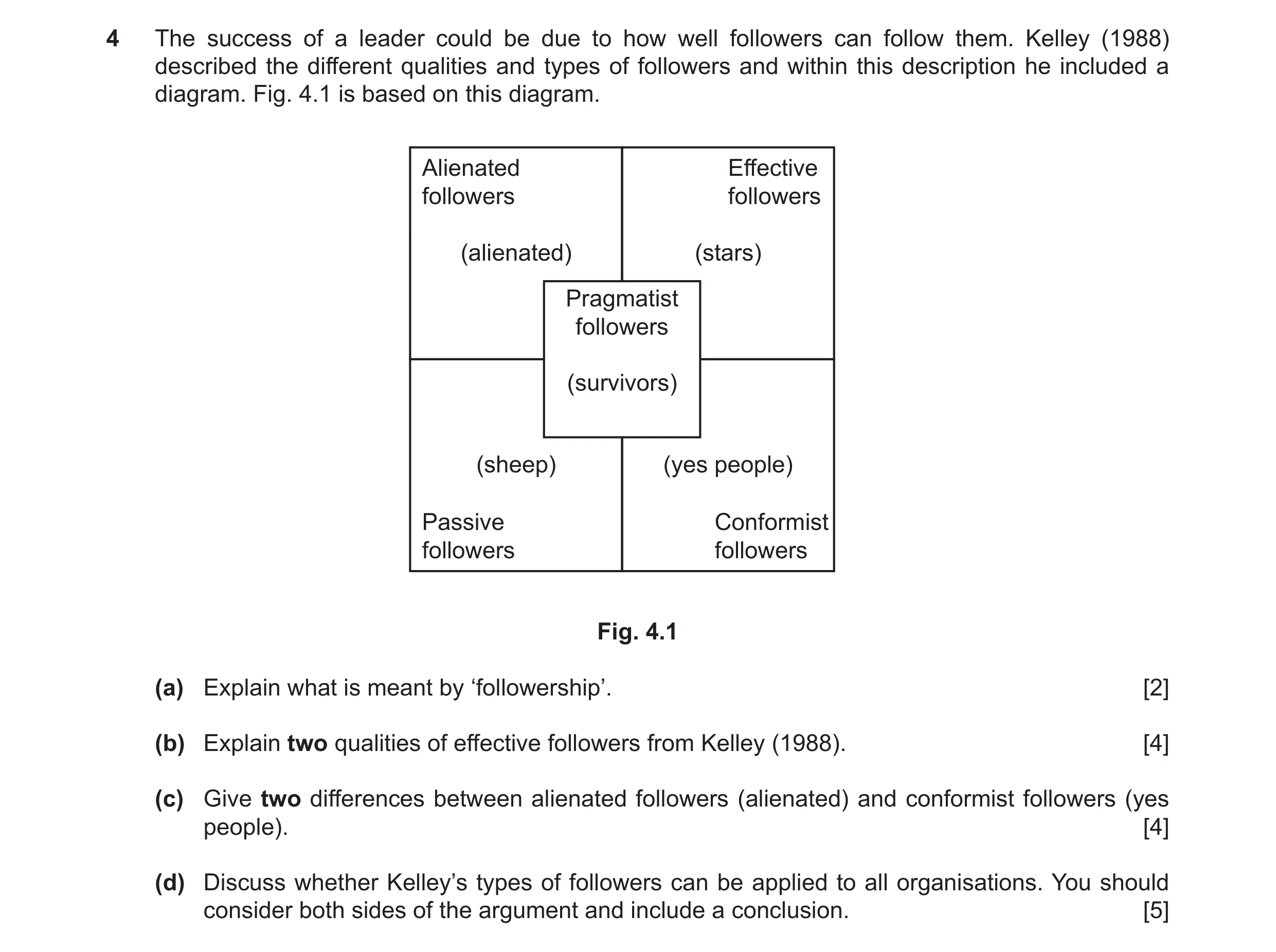 6 / 8
6 / 8
![Question 19: (a) Design a study to investigate the extent to which the manager in a clothes factory demonstrates ‘adaptive leadership’. [10] (b) Explain…](https://img.pastlit.com/crops/17576289-6c1b-4fc4-ae14-229c9023ac86/q8.webp)

 7 / 8
7 / 8
![Question 25: Scouller proposed three levels of leadership. (a) Outline what is meant by a ‘private’ level of leadership. [2] (b) Suggest one closed ques…](https://img.pastlit.com/crops/056c49d0-2699-4905-8850-b3046e31c45b/q8.webp)
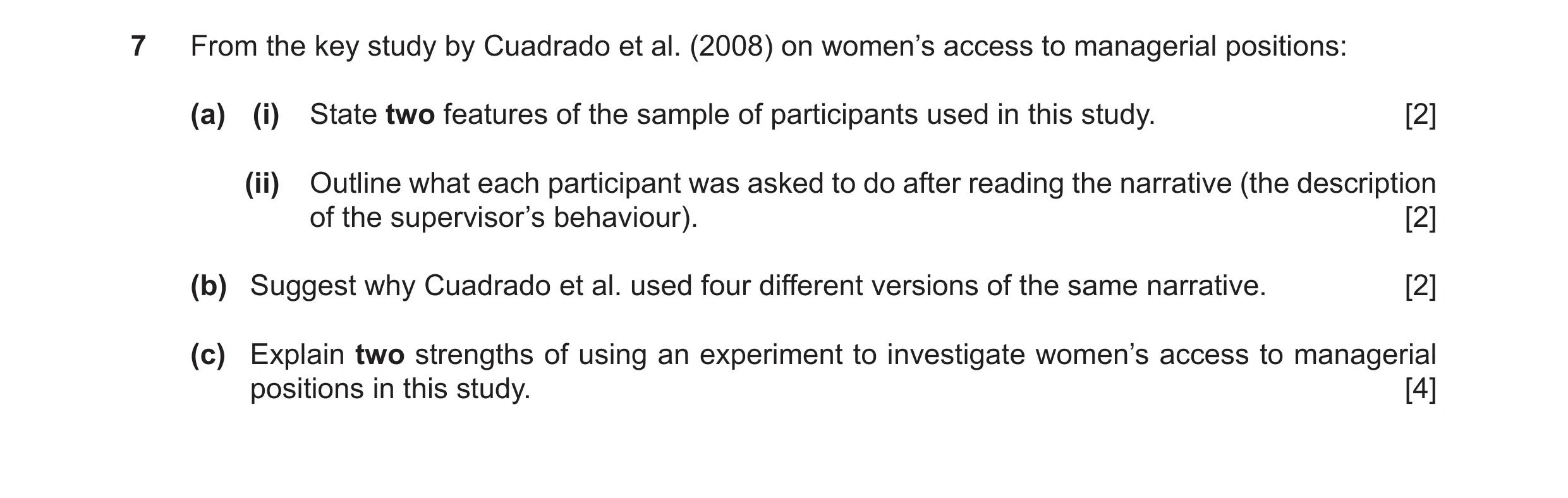 8 / 8
8 / 8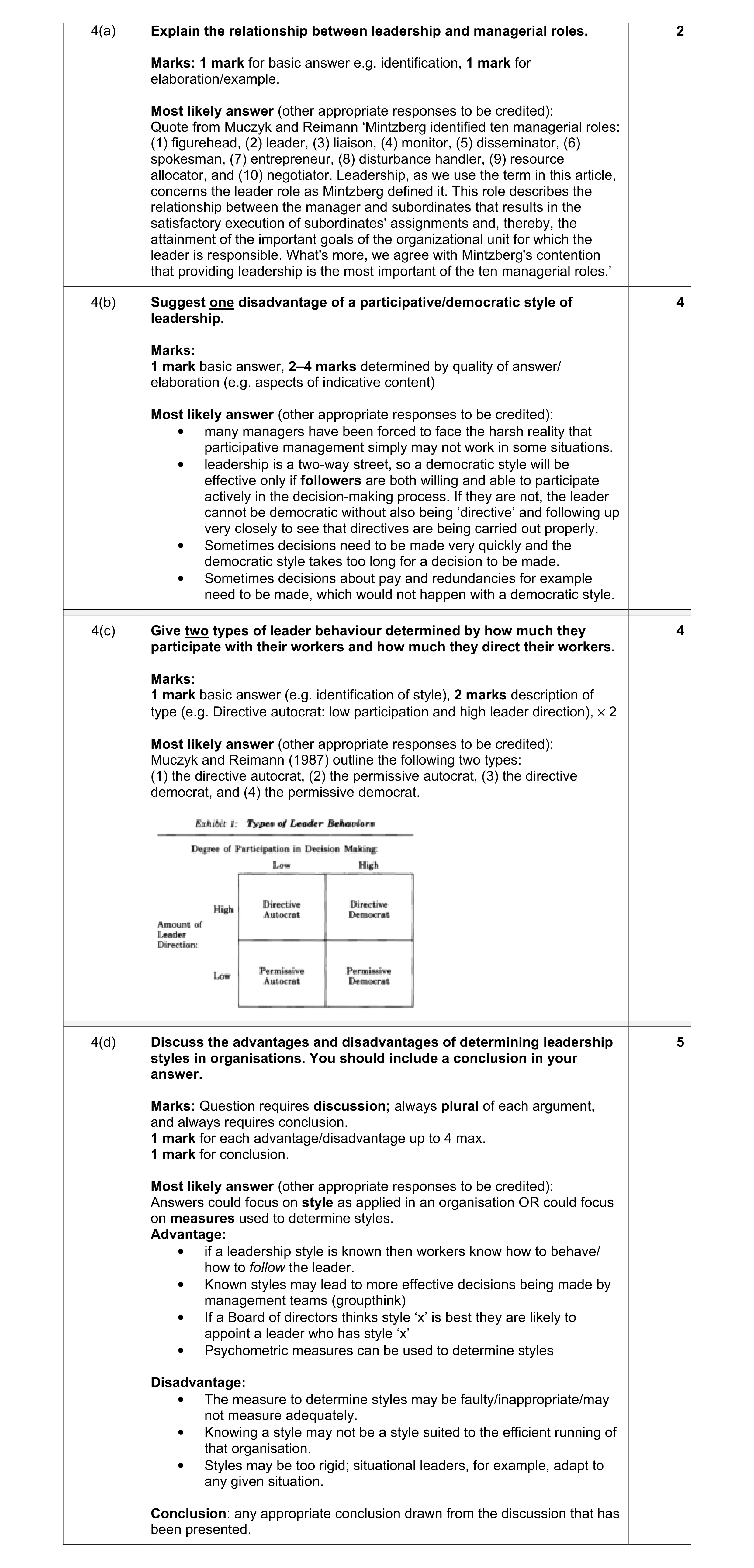 15
15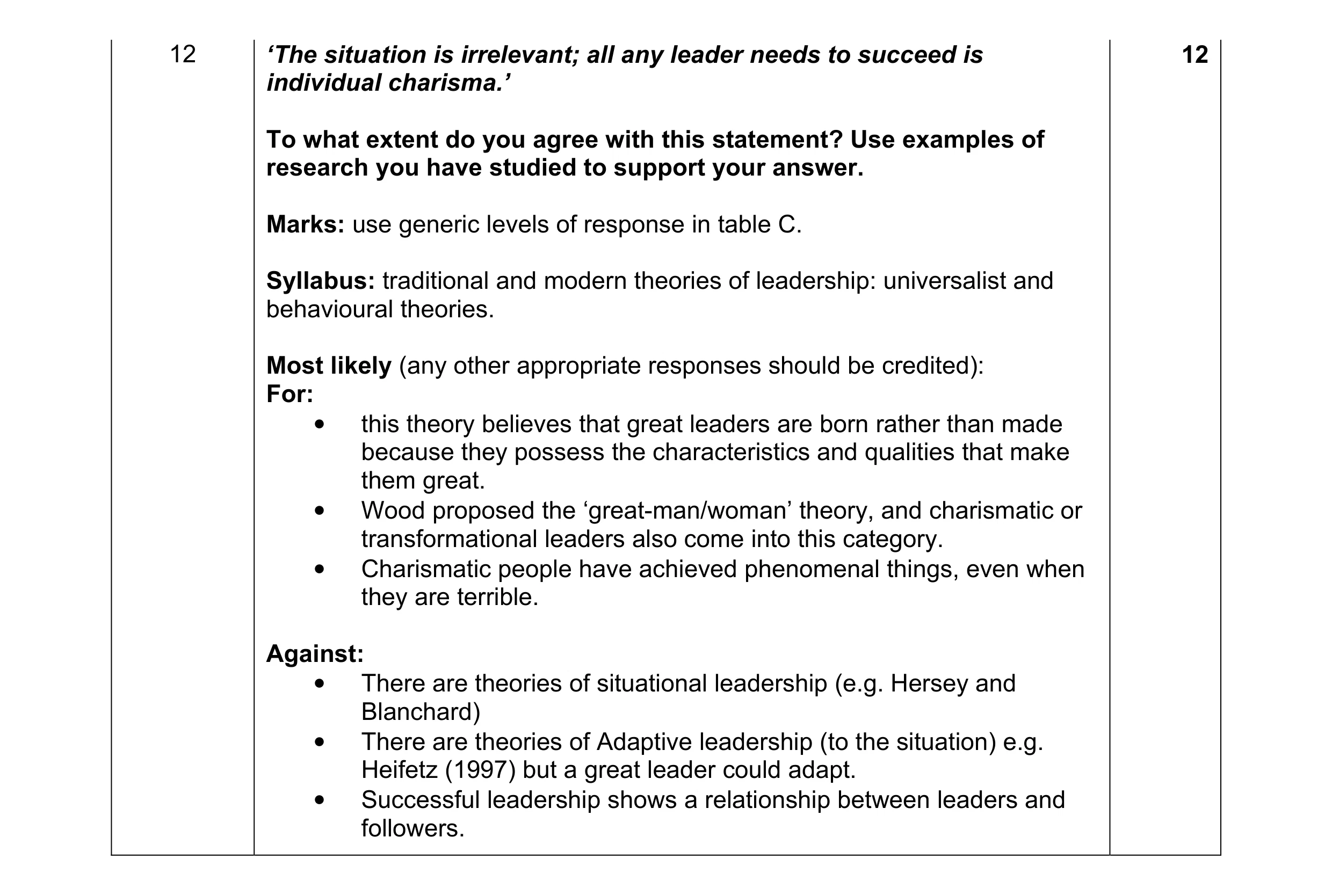 12
12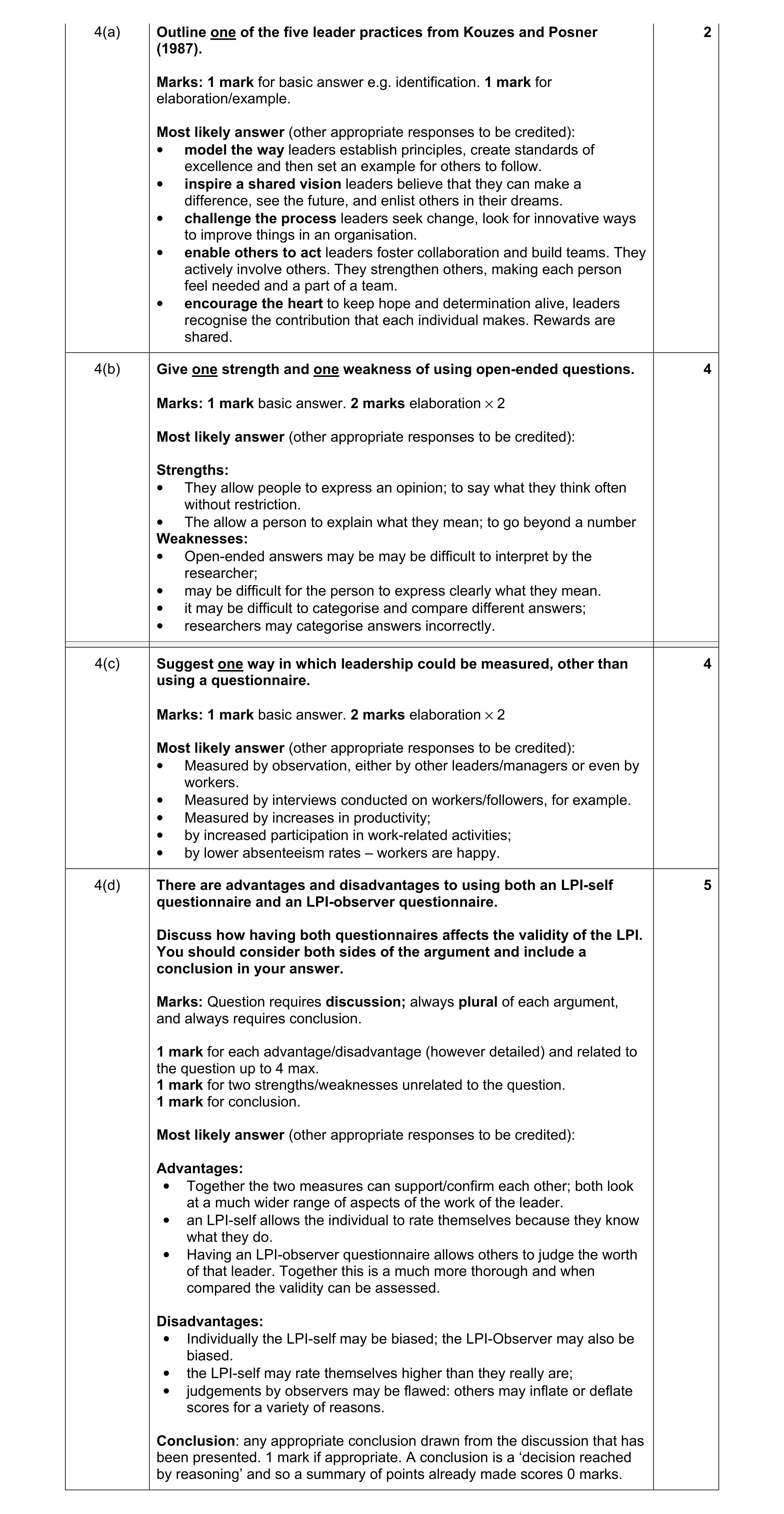 15
15 12
12 18
18 18
18 18
18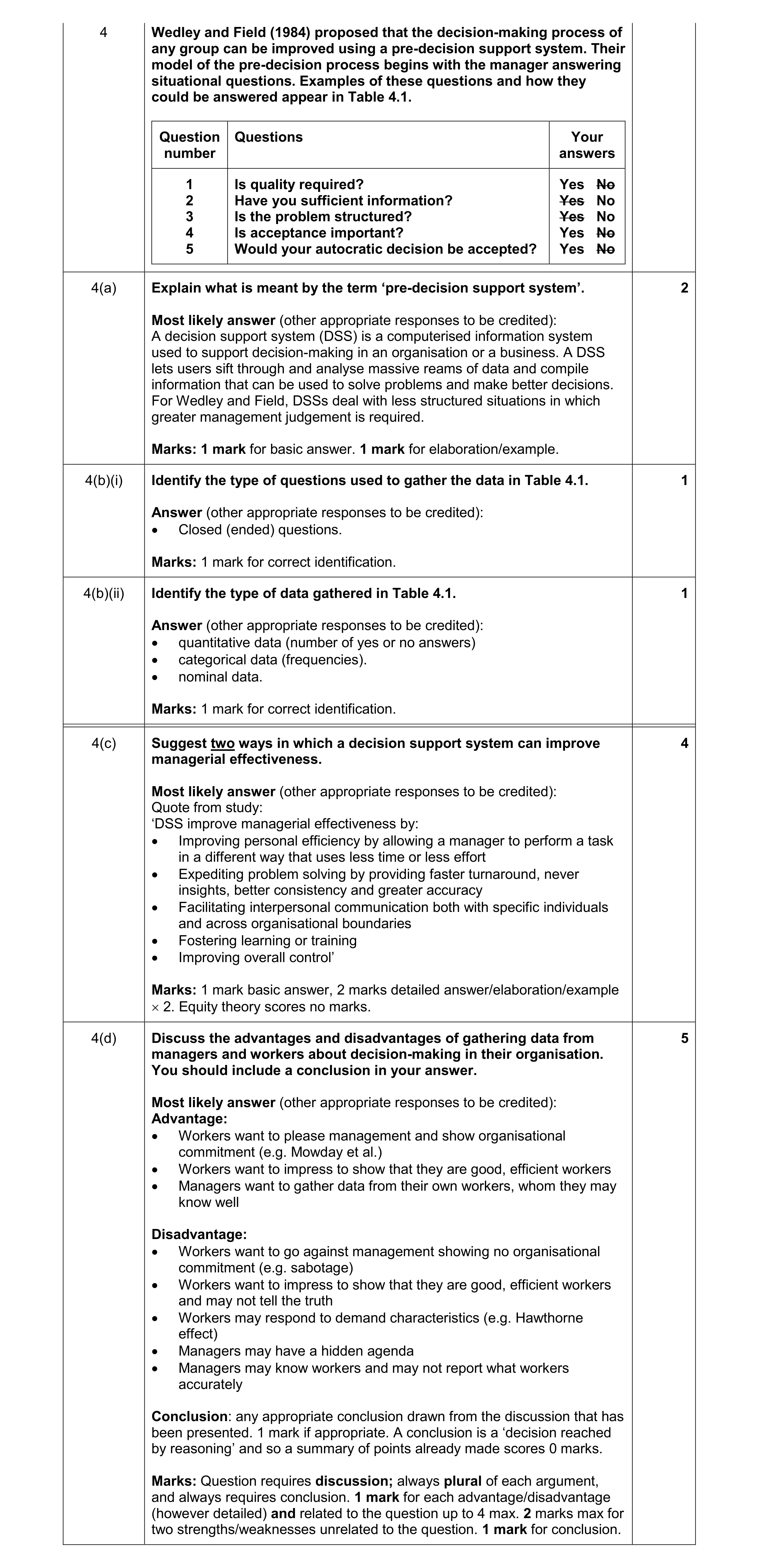 15
15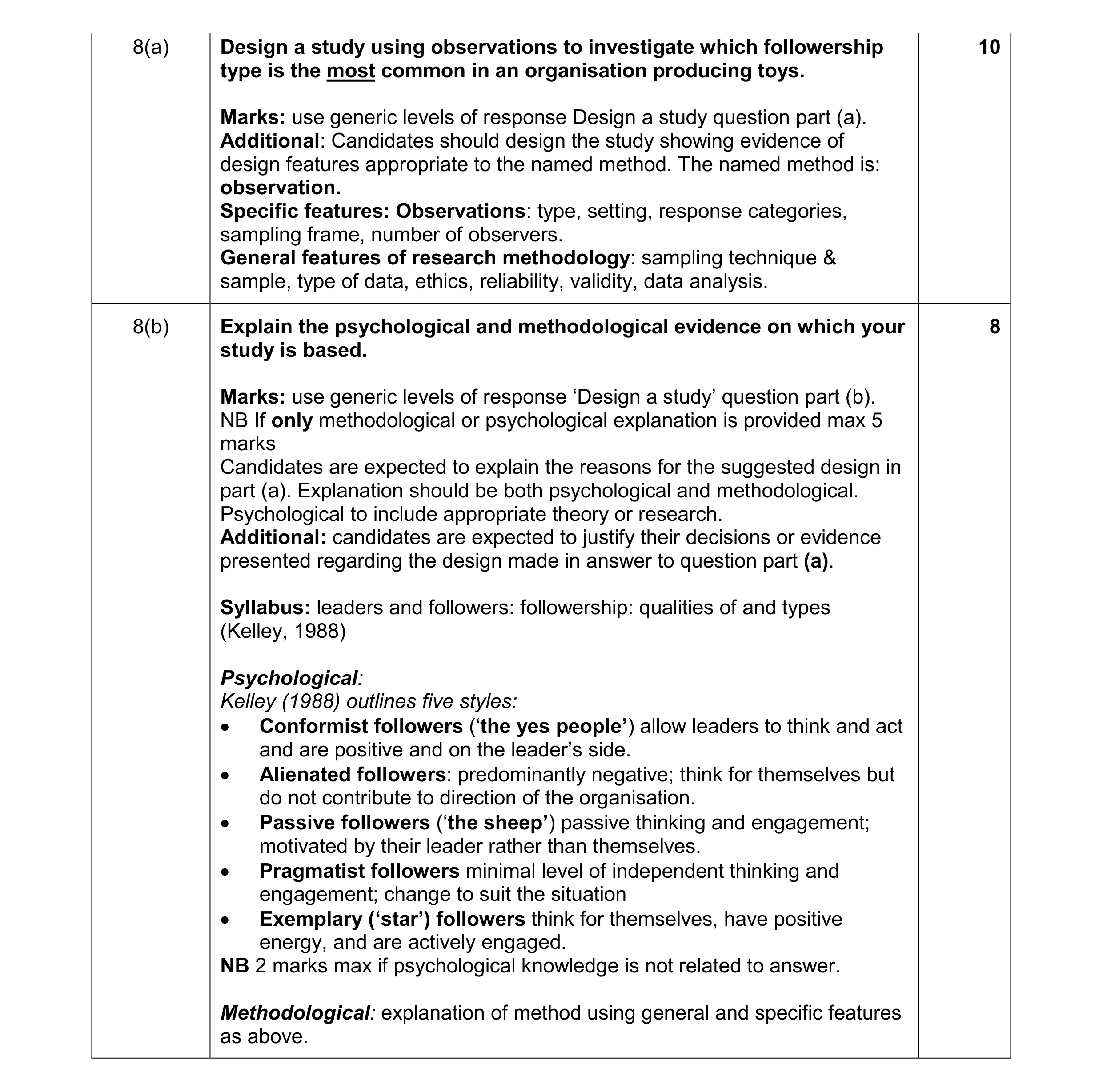 18
18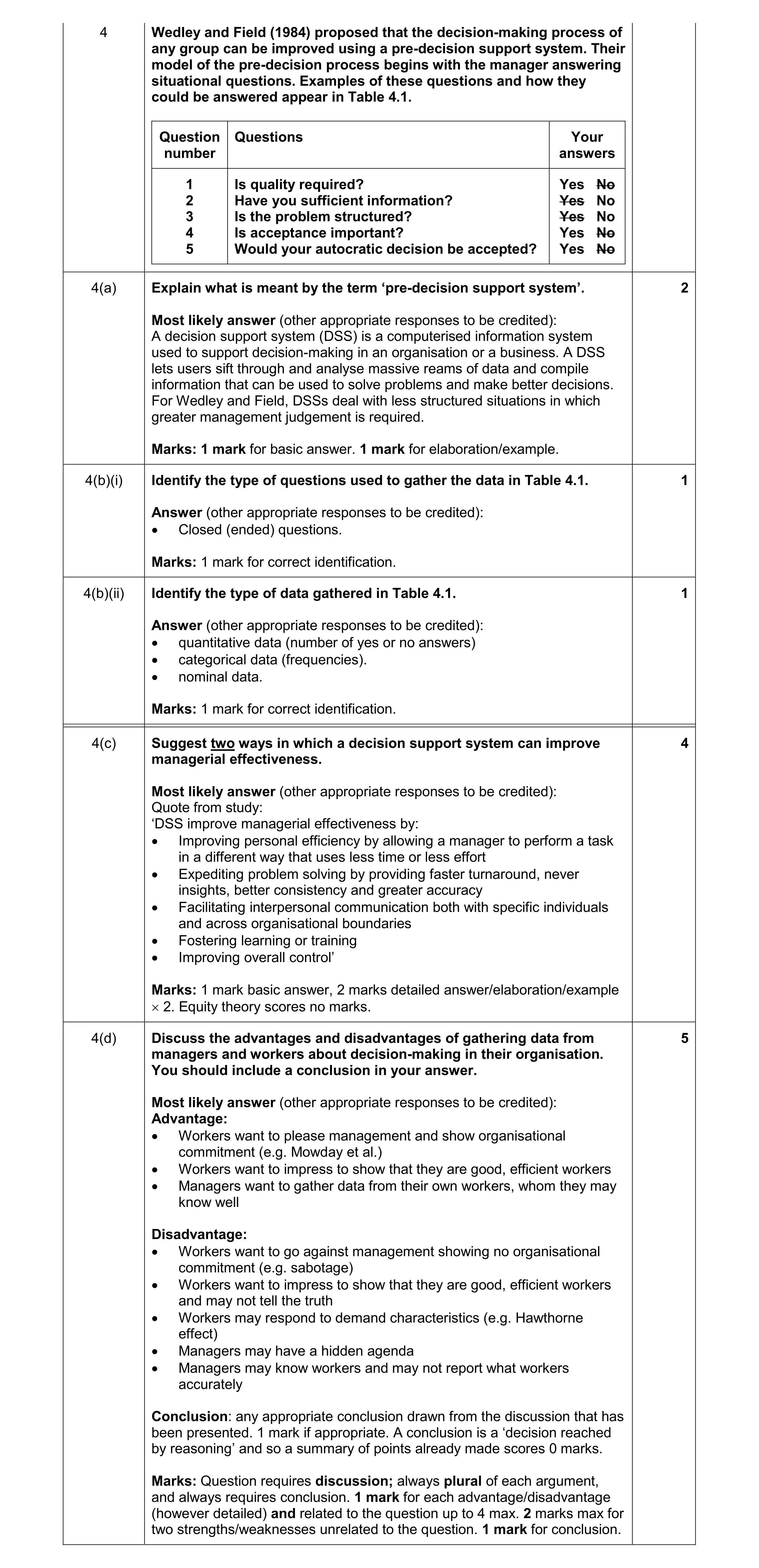 15
15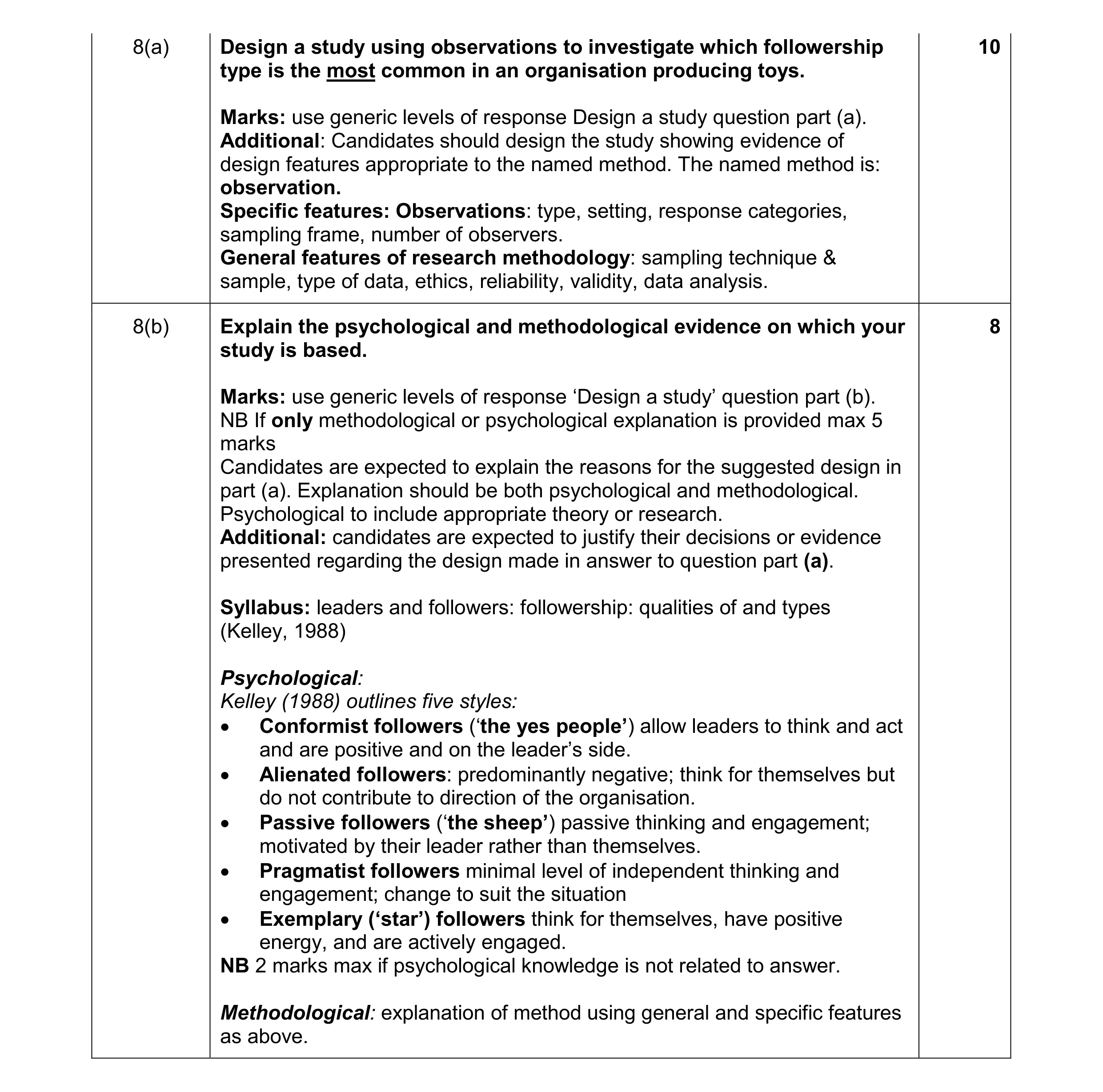 18
18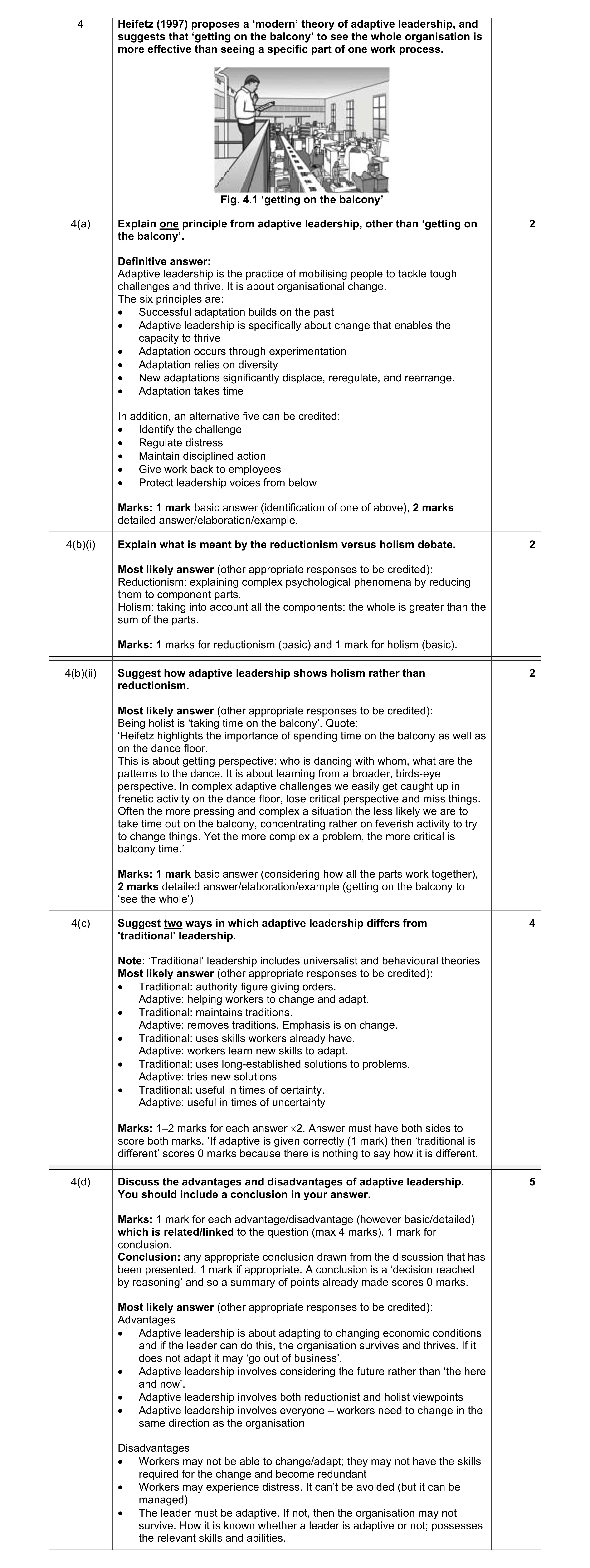 15
15 18
18 12
12 18
18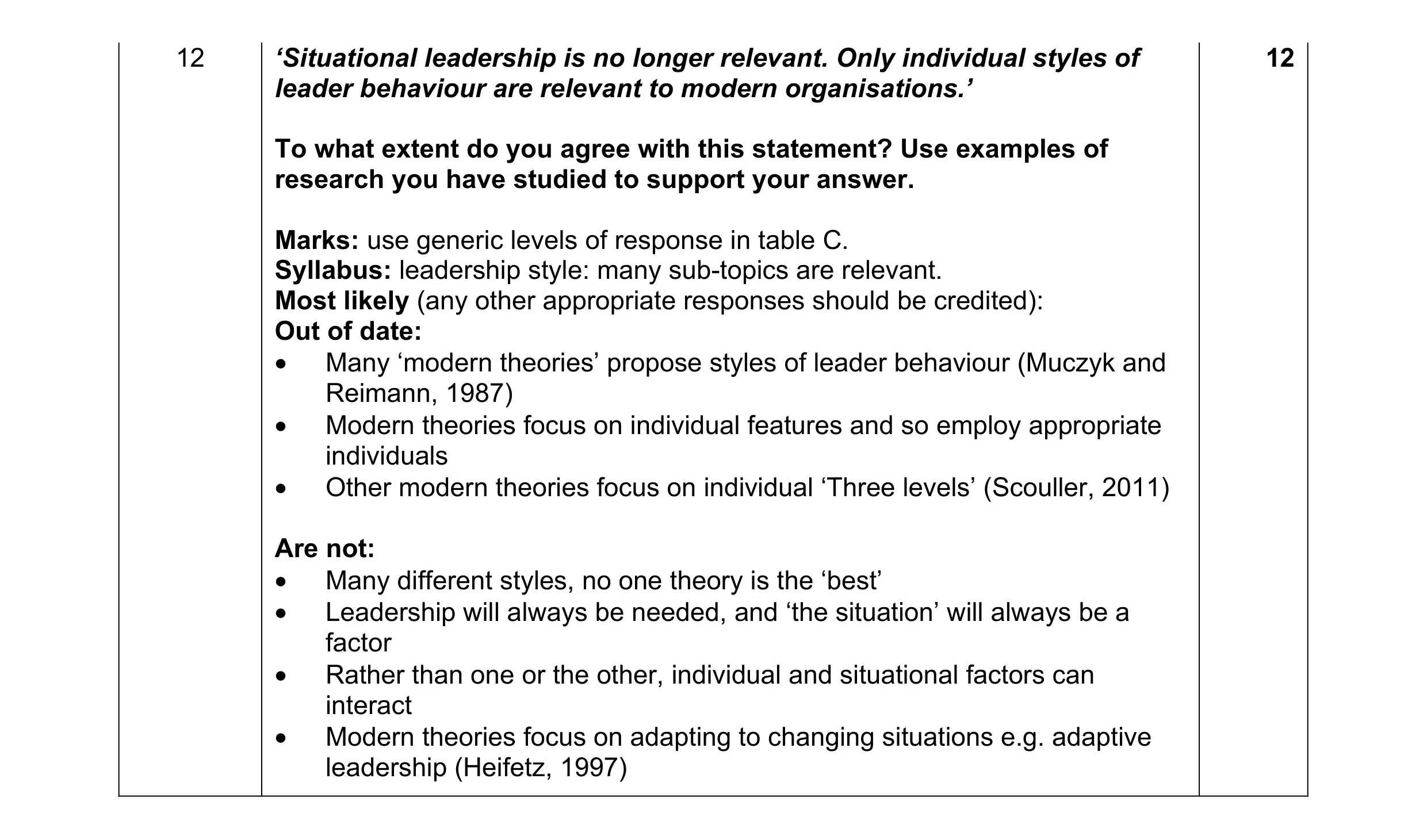 12
12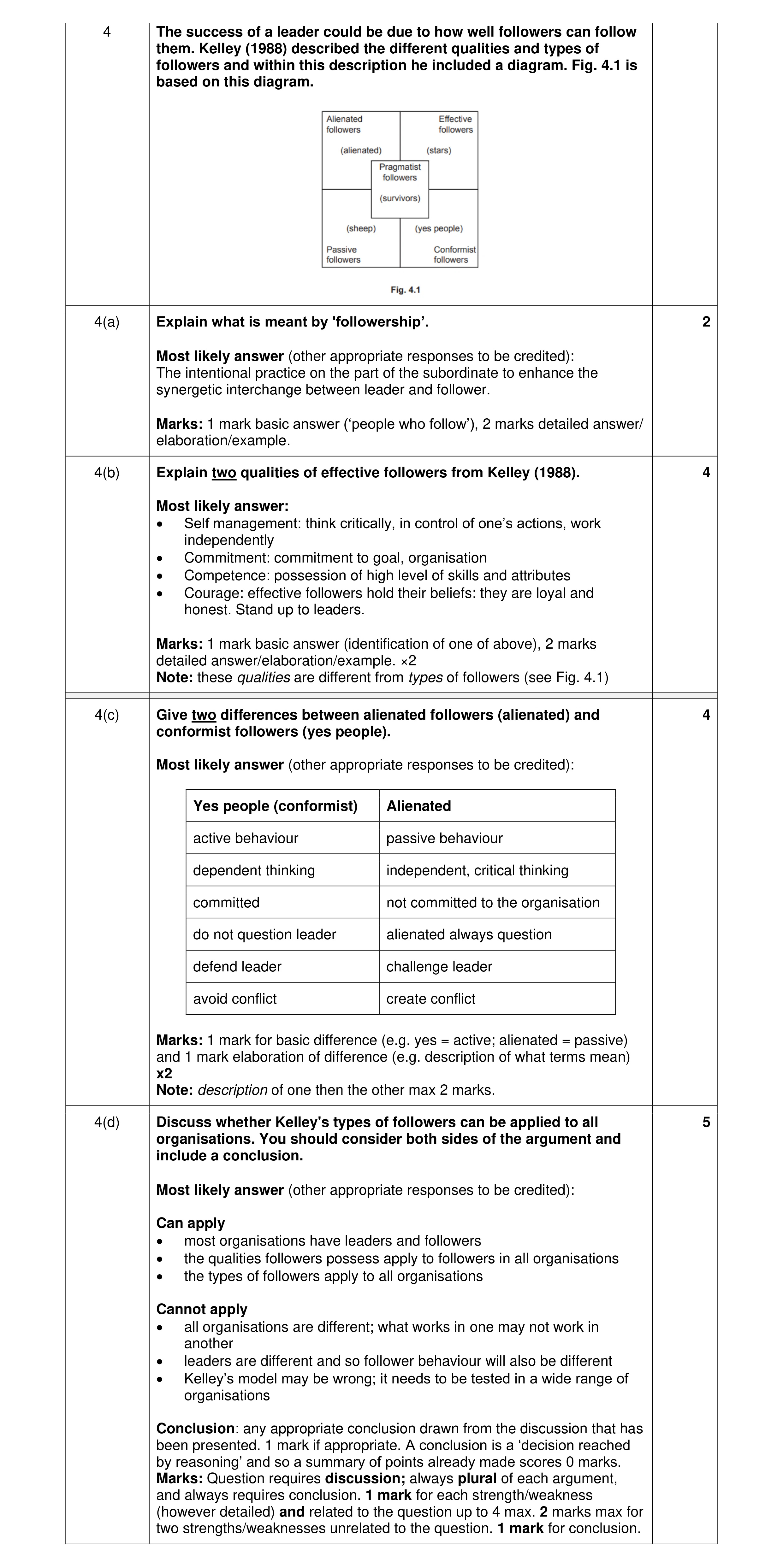 15
15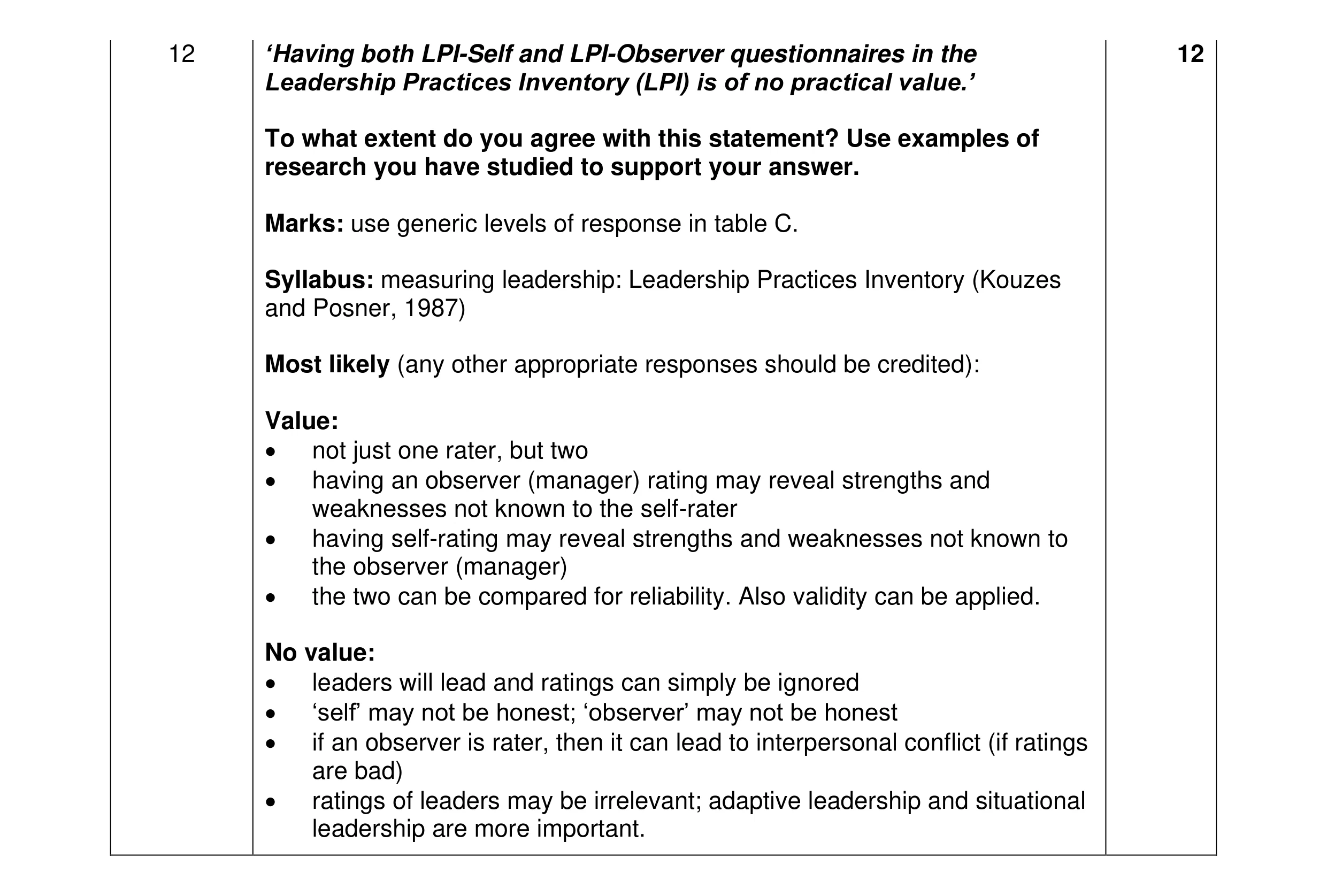 12
12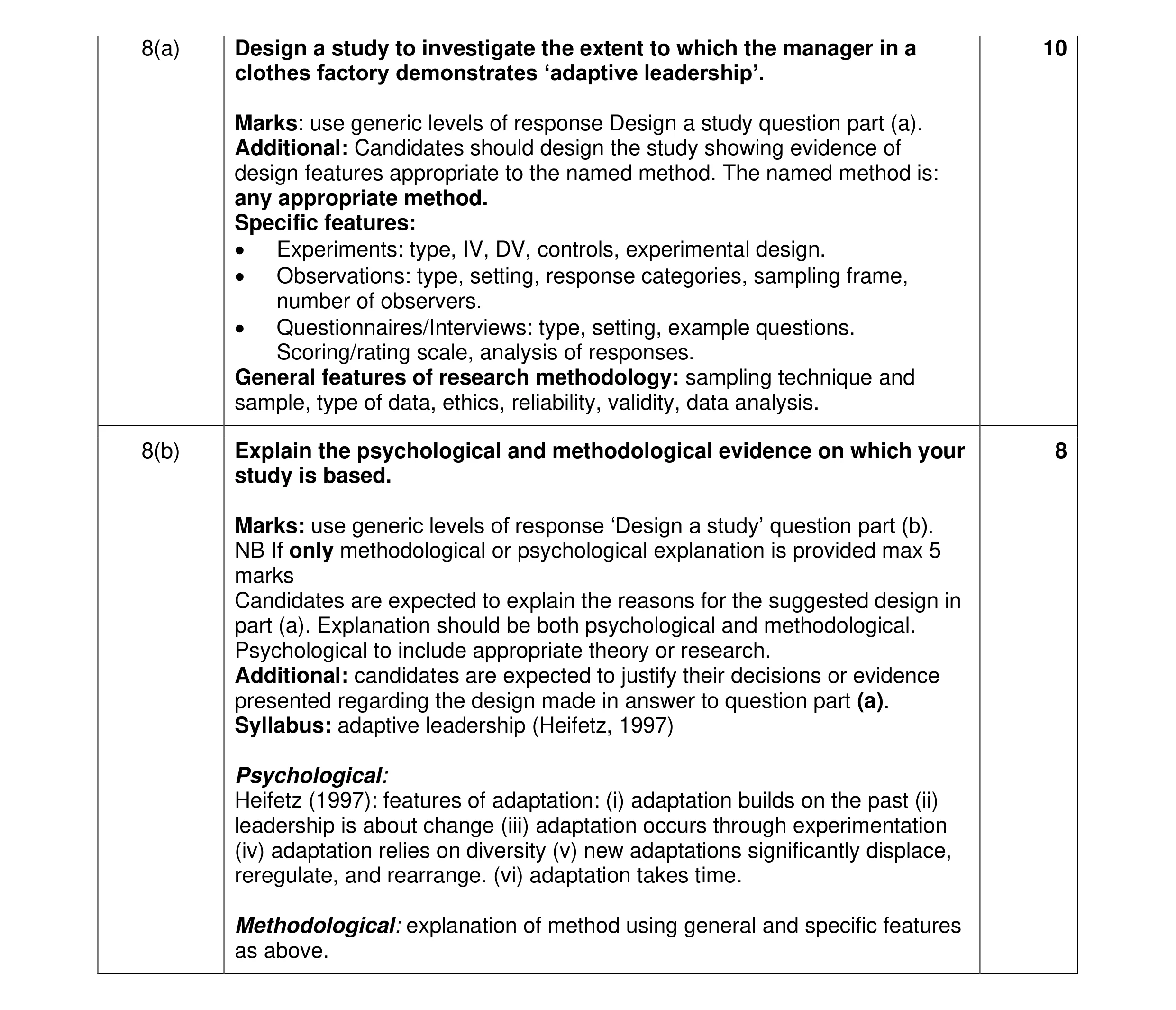 18
18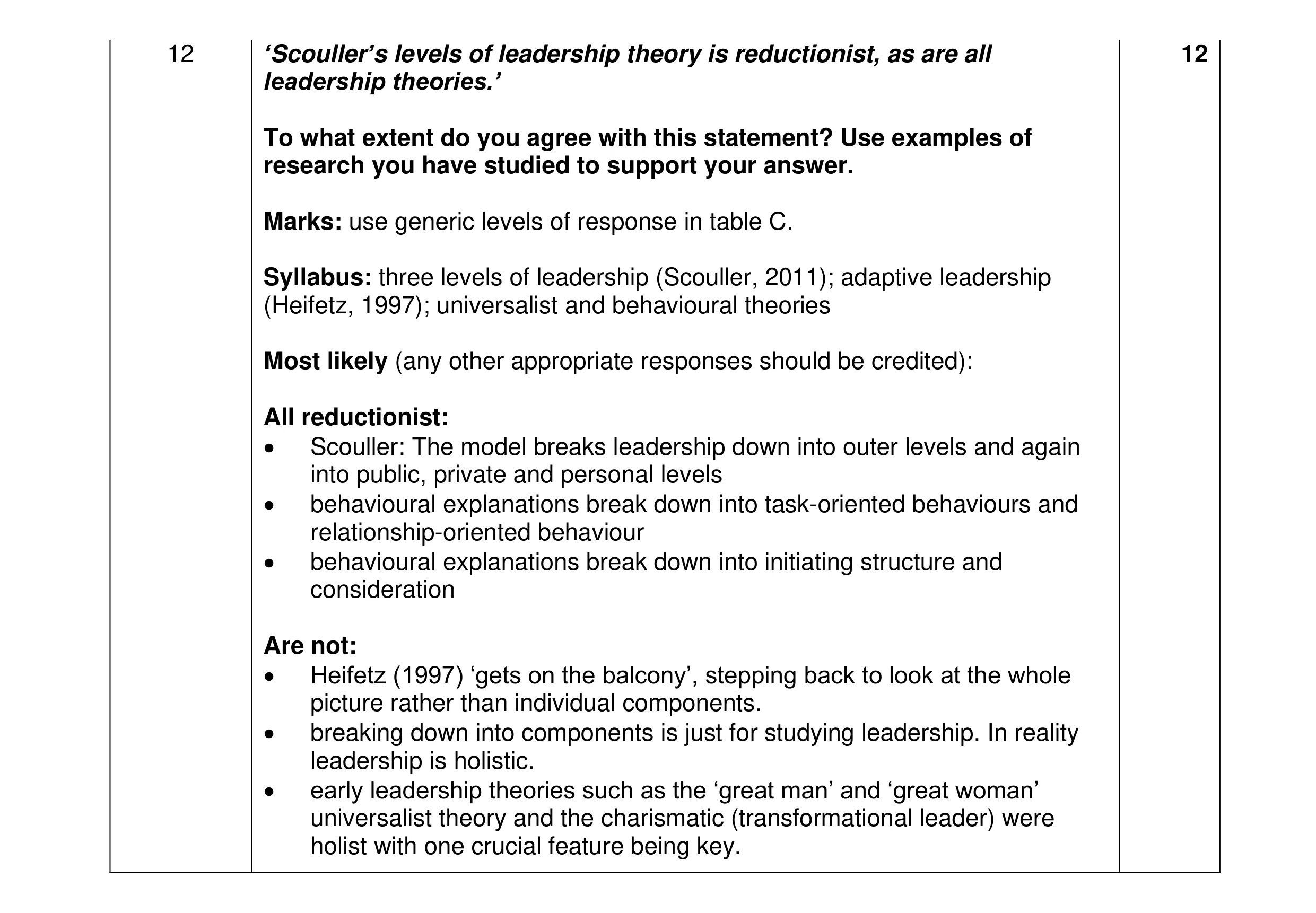 12
12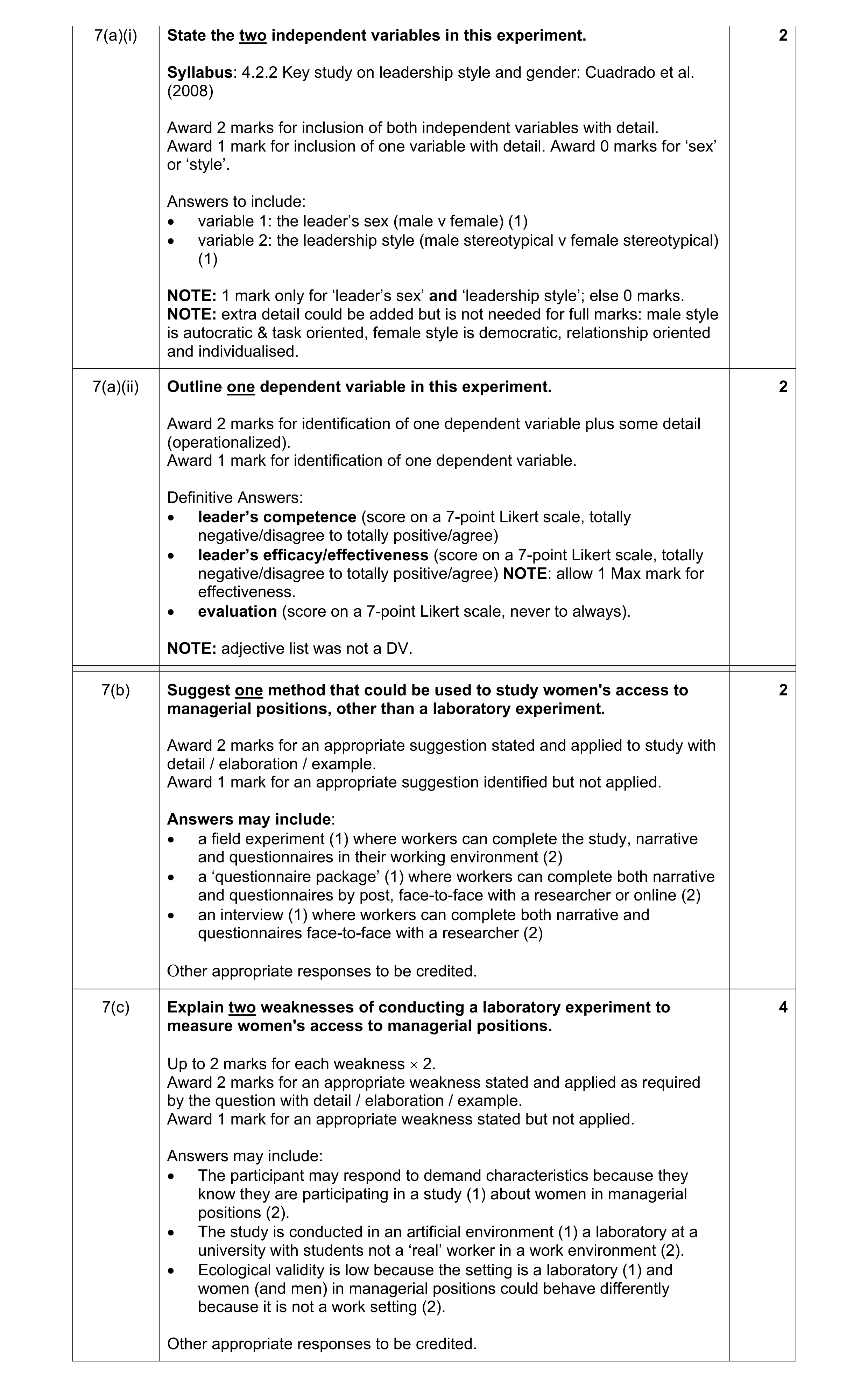 10
10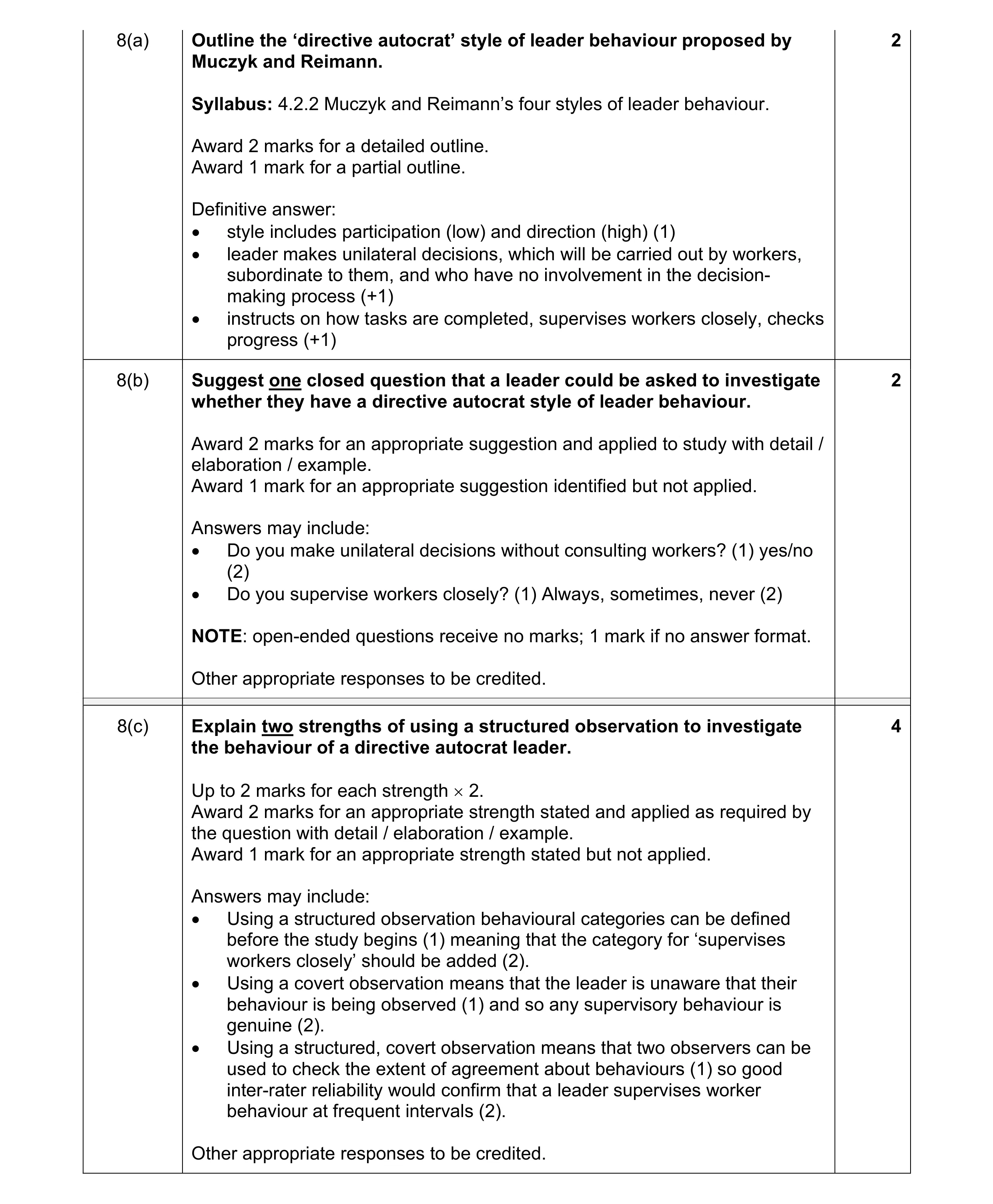 8
8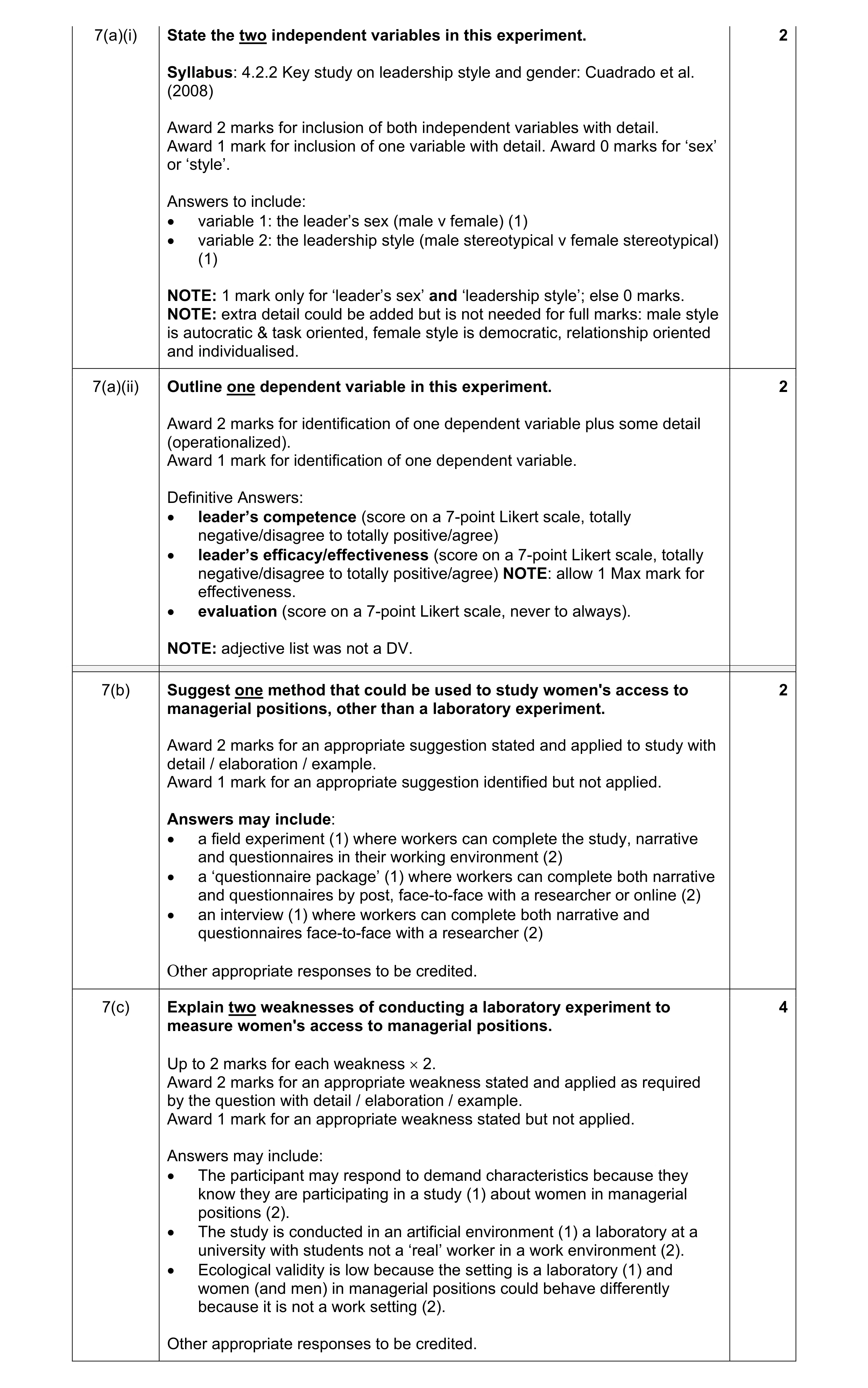 10
10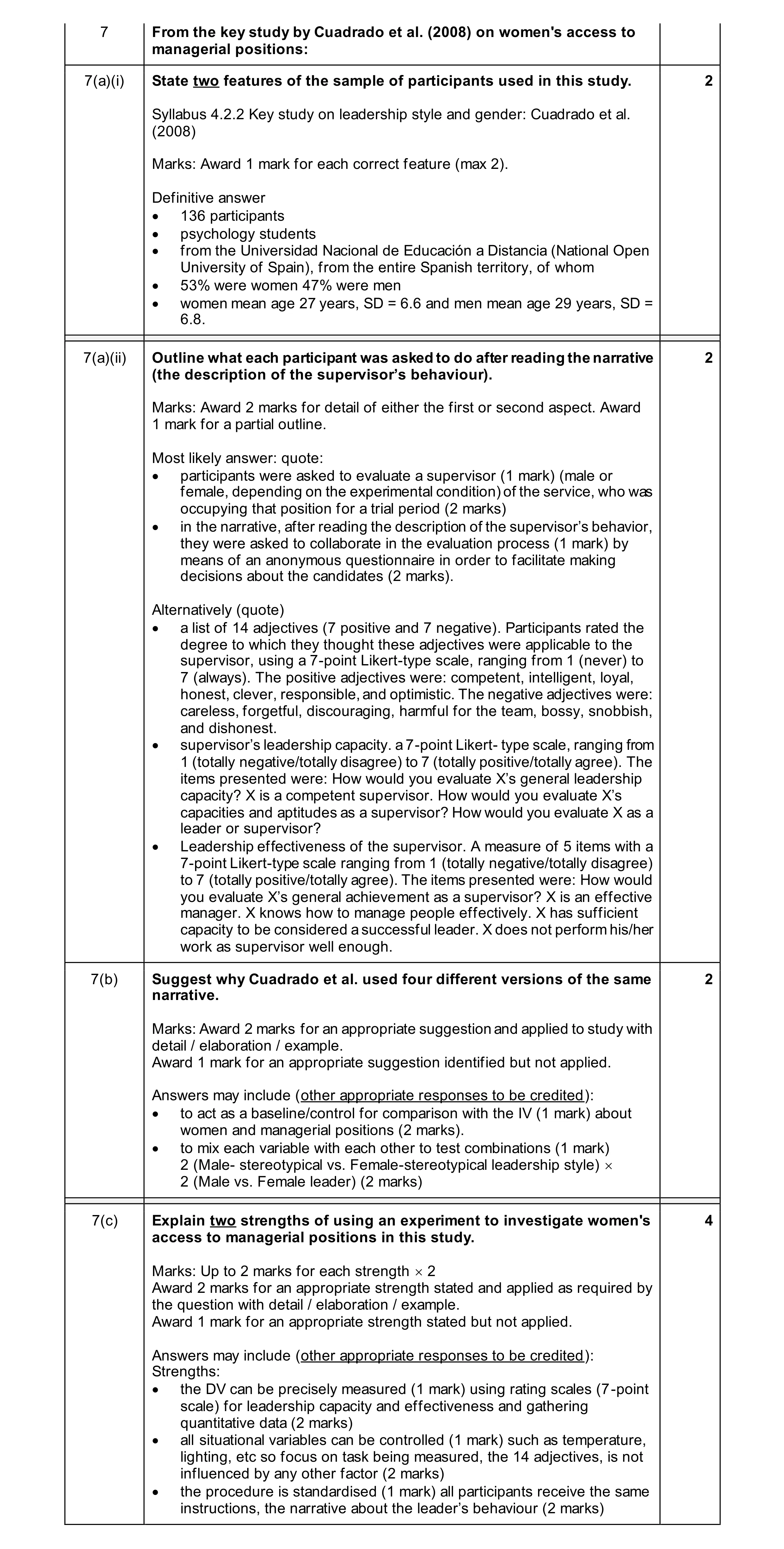 10
10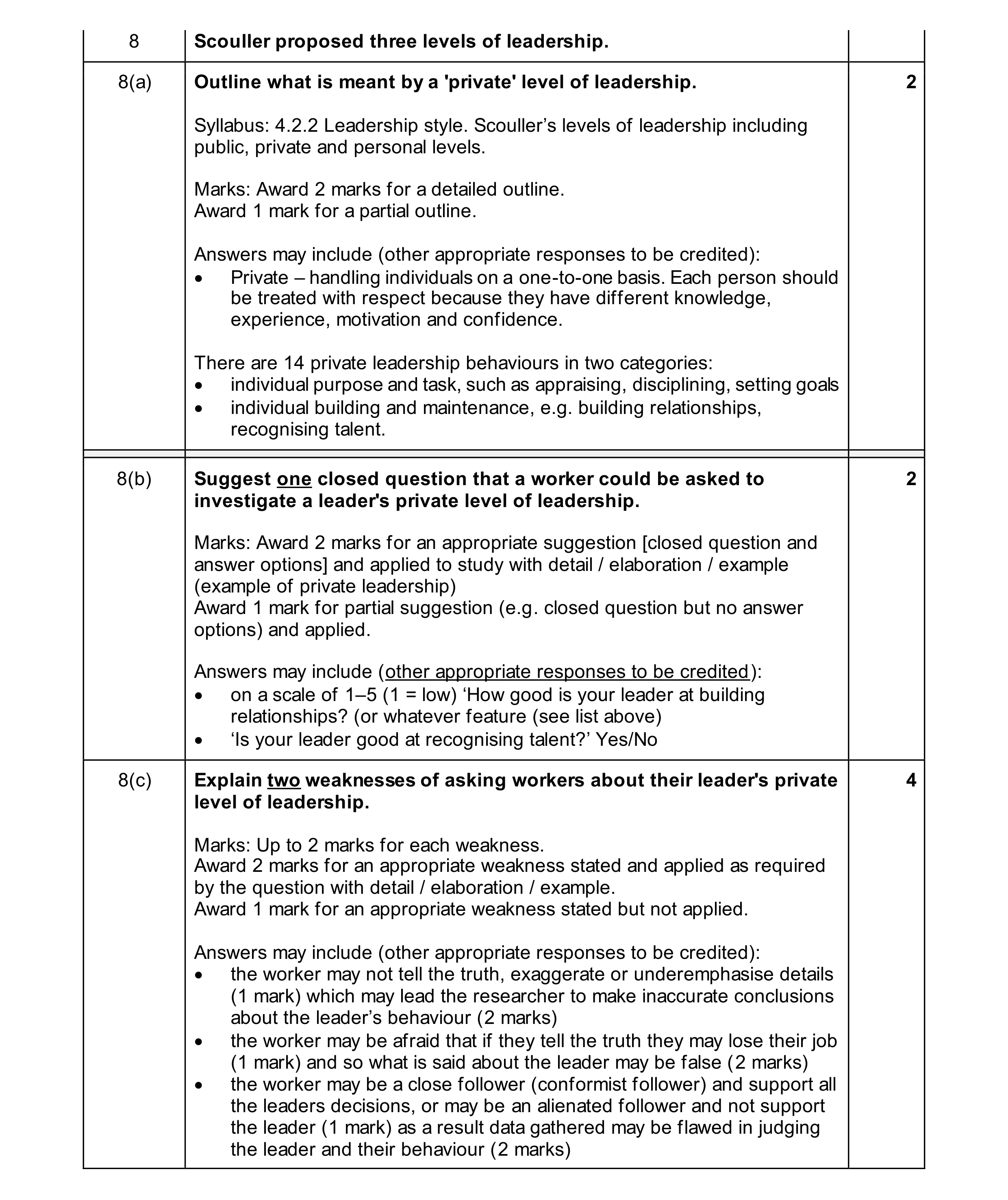 8
8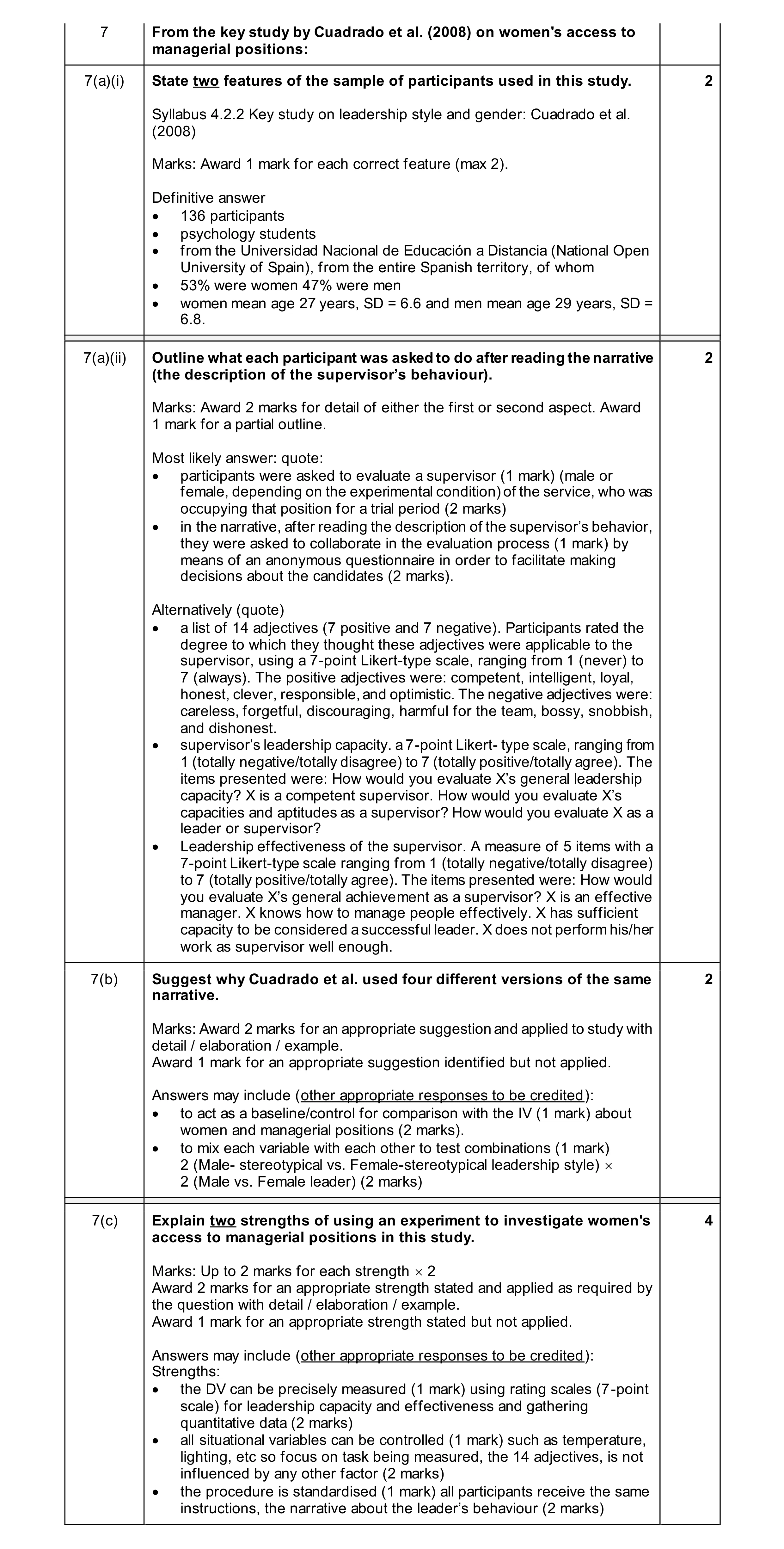 10
10