Questions as text
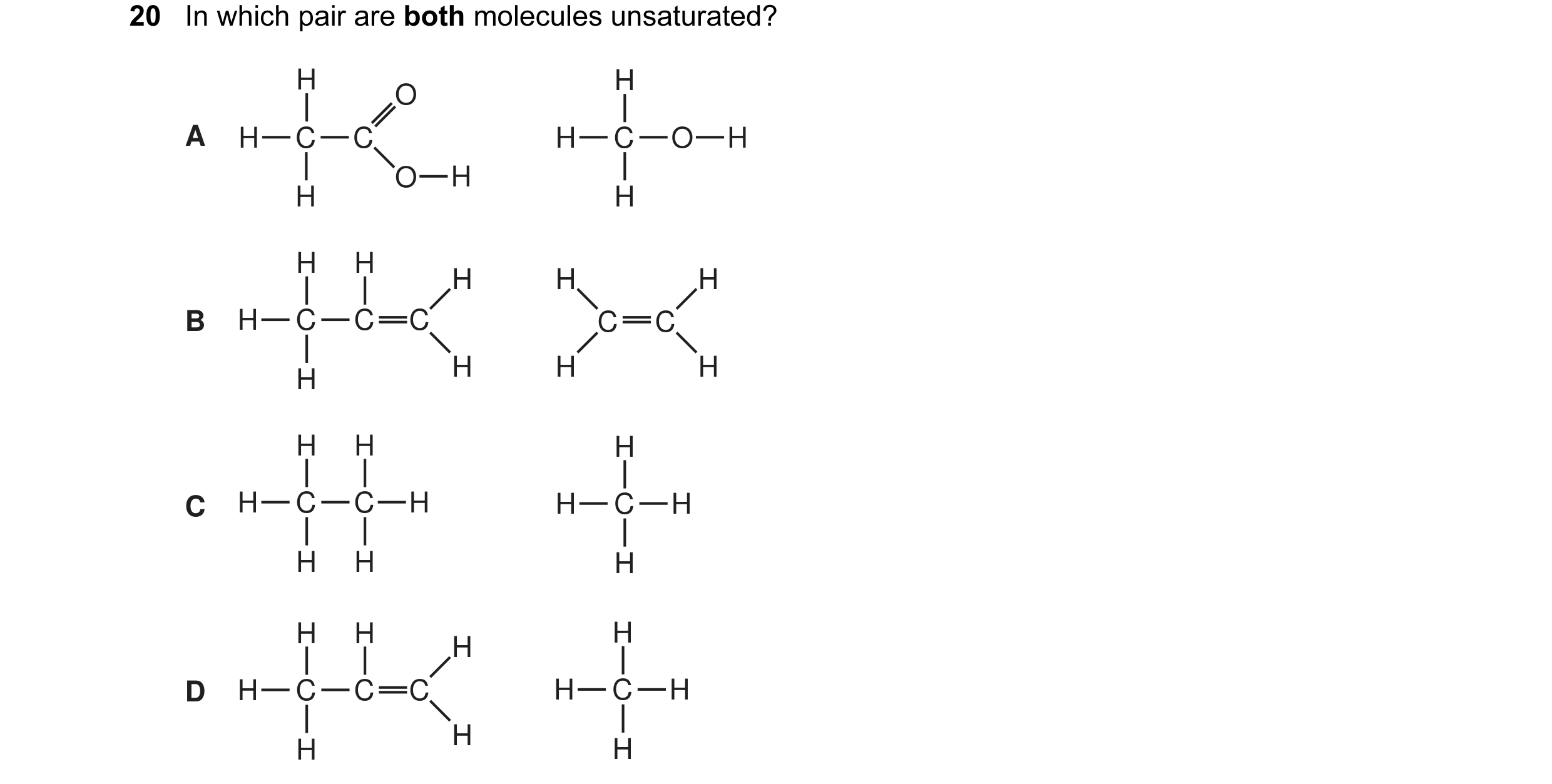
Q1 · In which pair are both molecules unsaturated? 0652/11 Oct/Nov 2006
20 In which pair are both molecules unsaturated? H H O A H C C H C O H O H H H H H H H H B H C C C C C H H H H H H H C H C C H H C H H H H H H H H D H C C C H C H H H H
1 marks
Answer: B
This question in 0652/11 Oct/Nov 2006
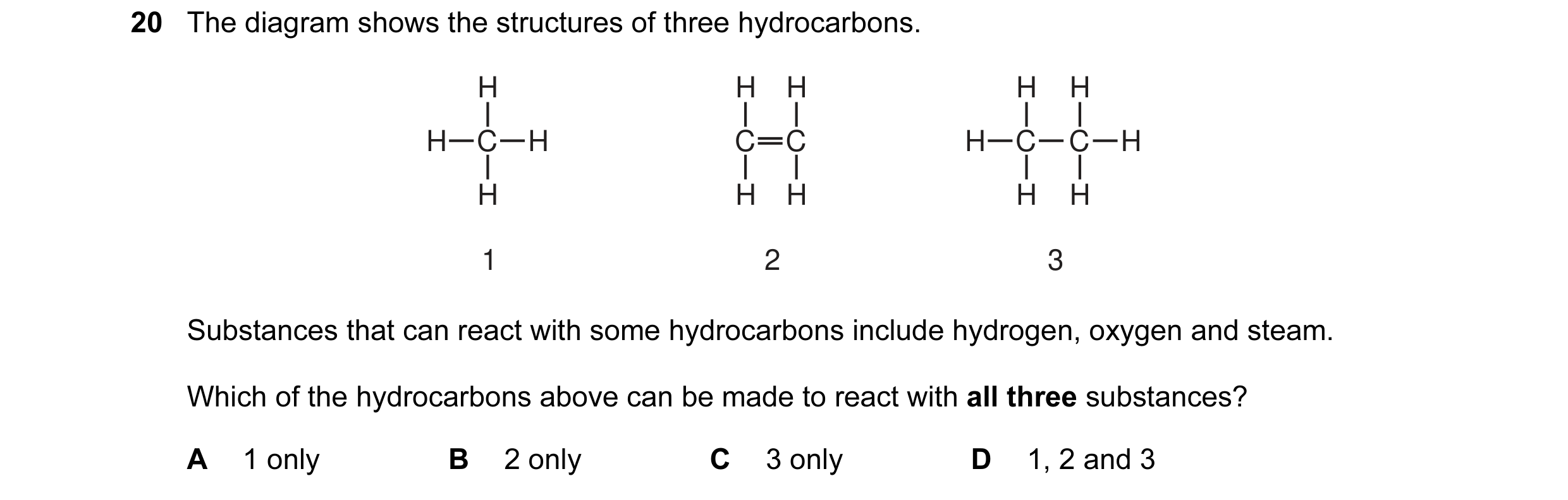
Q2 · The diagram shows the structures of three hydrocarbons 0652/11 Oct/Nov 2007
20 The diagram shows the structures of three hydrocarbons. H H H H H H C H C C H C C H H H H H H 1 2 3 Substances that can react with some hydrocarbons include hydrogen, oxygen and steam. Which of the hydrocarbons above can be made to react with all three substances? A 1 only B 2 only C 3 only D 1, 2 and 3
1 marks
Answer: B
This question in 0652/11 Oct/Nov 2007
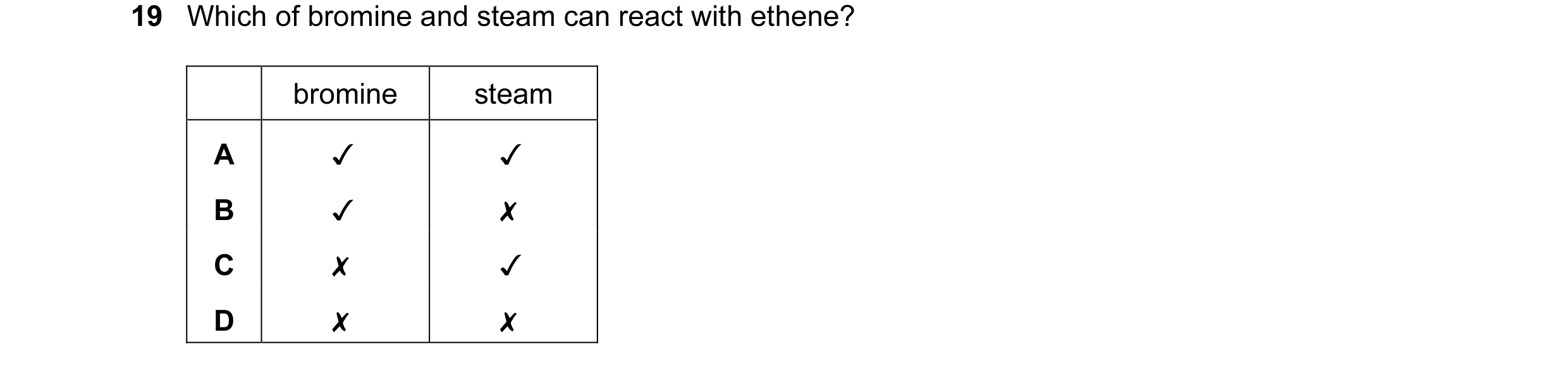
Q3 · Which of bromine and steam can react with ethene? 0652/11 Oct/Nov 2008
19 Which of bromine and steam can react with ethene?
bromine steam
v v
0 0O WwW D>
v x
x v
x x
1 marks
Answer: A
This question in 0652/11 Oct/Nov 2008
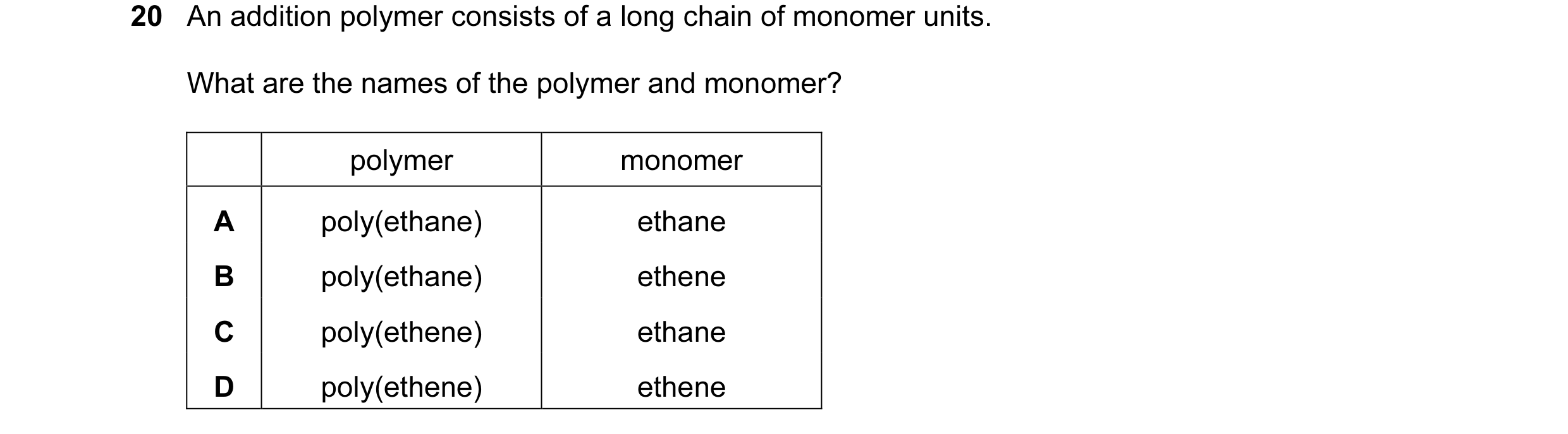
Q4 · An addition polymer consists of a long chain of monomer units 0652/11 Oct/Nov 2008
20 An addition polymer consists of a long chain of monomer units. What are the names of the polymer and monomer? polymer monomer A poly(ethane) ethane B poly(ethane) ethene C poly(ethene) ethane D poly(ethene) ethene
1 marks
Answer: D
This question in 0652/11 Oct/Nov 2008
Q5 · A substance X decolourised aqueous bromine 0652/11 Oct/Nov 2010
20 A substance X decolourised aqueous bromine. What is the name and structure of X? name structure H H A ethane H C C H H H H H B ethane C C H H H H C ethene H C C H H H H H D ethene C C H H
1 marks
Answer: D
This question in 0652/11 Oct/Nov 2010
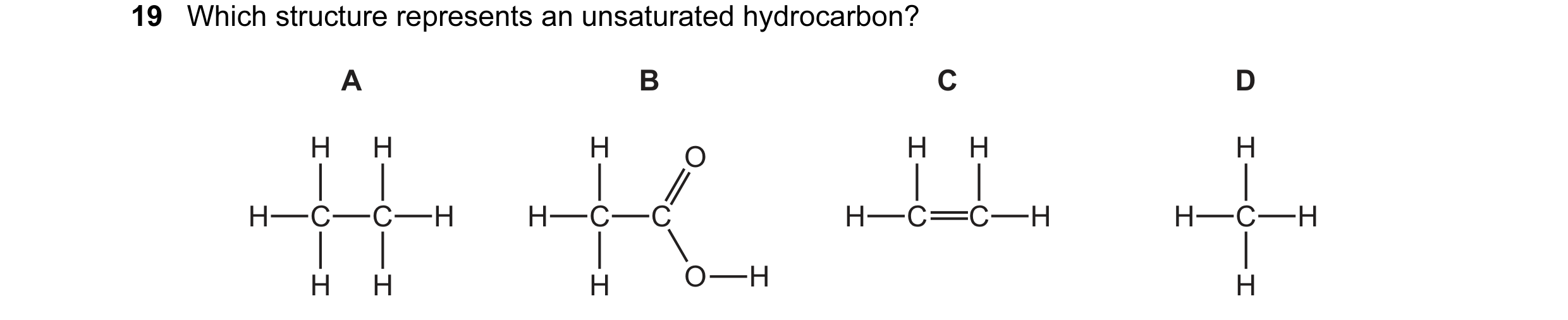
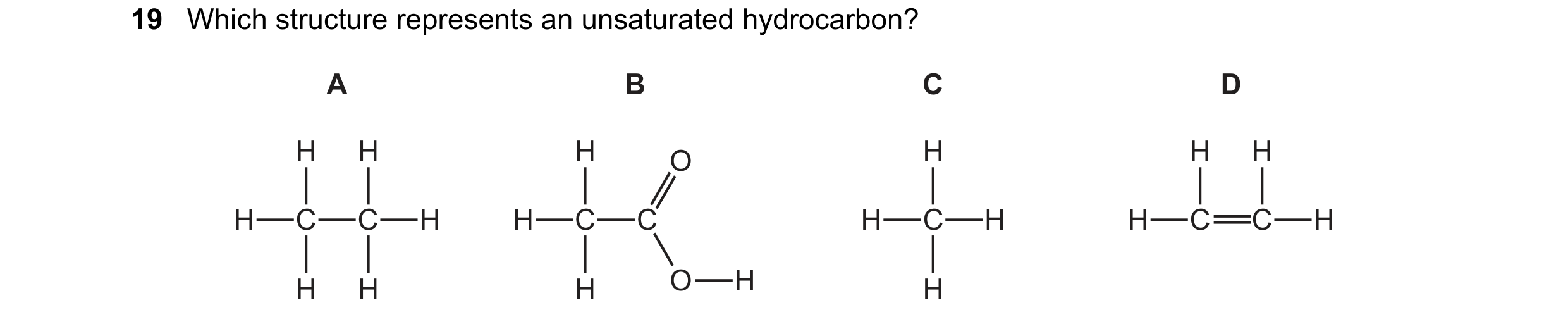
Q6 · Which structure represents an unsaturated hydrocarbon? 0652/11 Oct/Nov 2011
19 Which structure represents an unsaturated hydrocarbon? A B C D H H H O H H H H C C H H C C H C C H H C H H H H O H H
1 marks
Answer: C
This question in 0652/11 Oct/Nov 2011
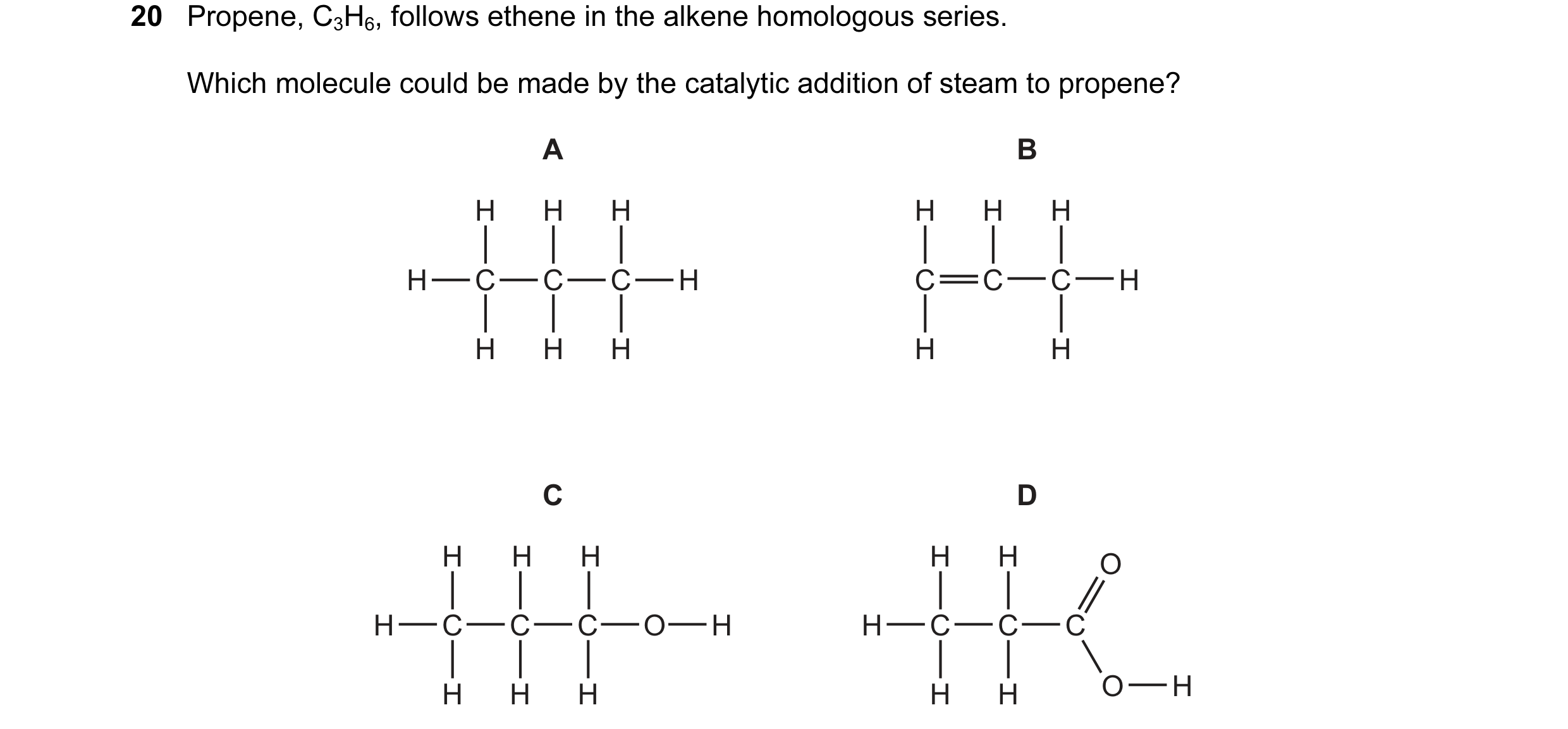
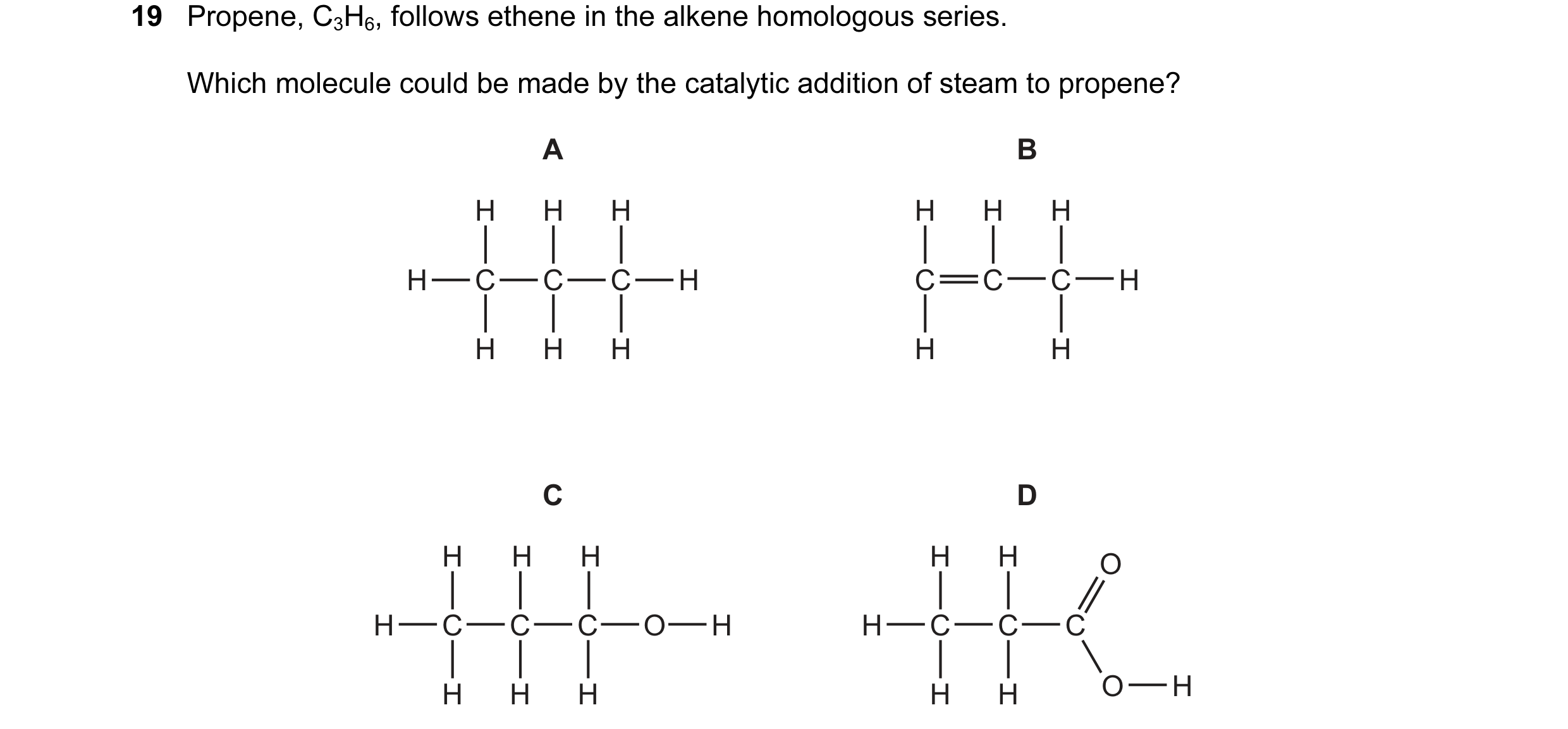
Q7 · Propene, C3H6, follows ethene in the alkene homologous series 0652/11 Oct/Nov 2011
20 Propene, C3H6, follows ethene in the alkene homologous series. Which molecule could be made by the catalytic addition of steam to propene? A B H H H H H H H C C C H C C C H H H H H H C D H H H H H O H C C C O H H C C C H H H H H O H
1 marks
Answer: C
This question in 0652/11 Oct/Nov 2011
Q8 · Which structure represents an unsaturated hydrocarbon? 0652/12 Oct/Nov 2011
18 Which structure represents an unsaturated hydrocarbon? A B C D H H H O H H H H C C H H C C H C C H H C H H H H O H H
1 marks
Answer: C
This question in 0652/12 Oct/Nov 2011
Q9 · Propene, C3H6, follows ethene in the alkene homologous series 0652/12 Oct/Nov 2011
19 Propene, C3H6, follows ethene in the alkene homologous series. Which molecule could be made by the catalytic addition of steam to propene? A B H H H H H H H C C C H C C C H H H H H H C D H H H H H O H C C C O H H C C C H H H H H O H
1 marks
Answer: C
This question in 0652/12 Oct/Nov 2011
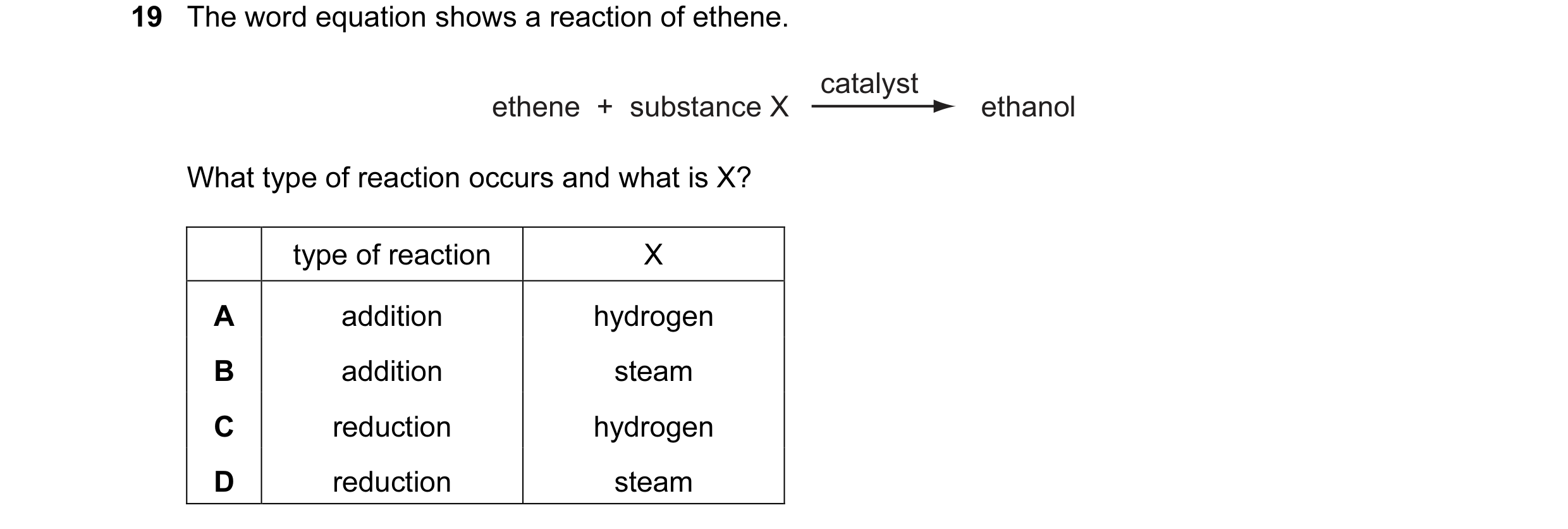
Q10 · The word equation shows a reaction of ethene 0652/11 Oct/Nov 2013
19 The word equation shows a reaction of ethene. catalyst ethene + substance X ethanol What type of reaction occurs and what is X? type of reaction X A addition hydrogen B addition steam C reduction hydrogen D reduction steam
1 marks
Answer: B
This question in 0652/11 Oct/Nov 2013
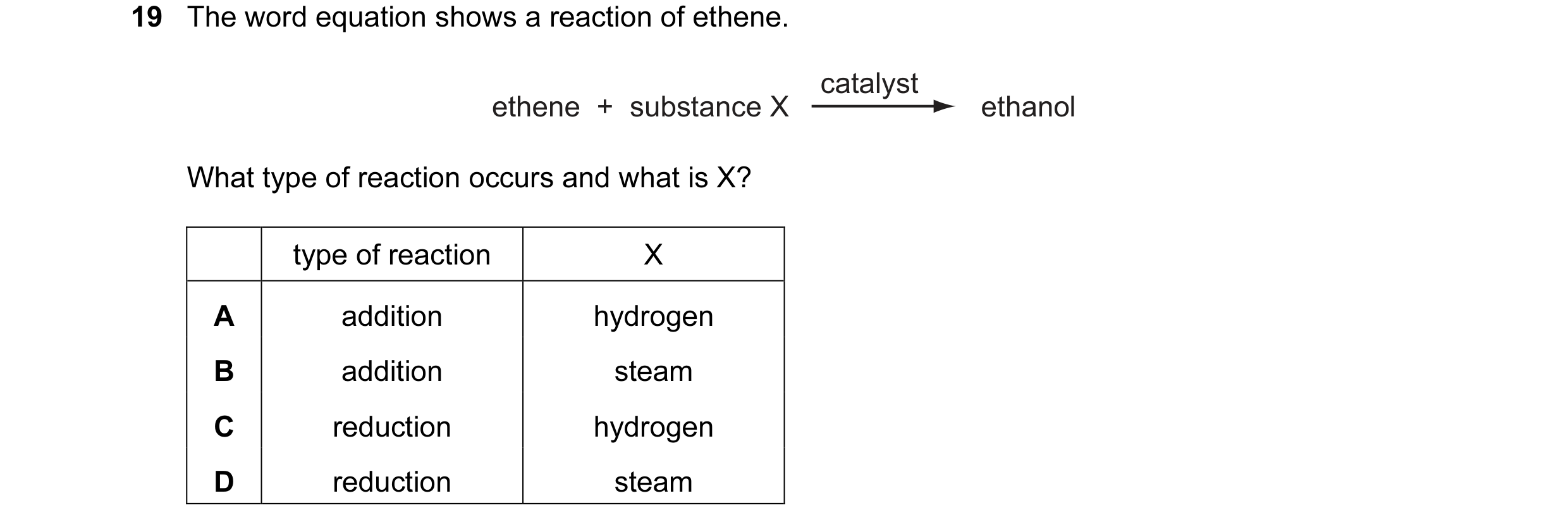
Q11 · The word equation shows a reaction of ethene 0652/12 Oct/Nov 2013
19 The word equation shows a reaction of ethene. catalyst ethene + substance X ethanol What type of reaction occurs and what is X? type of reaction X A addition hydrogen B addition steam C reduction hydrogen D reduction steam
1 marks
Answer: B
This question in 0652/12 Oct/Nov 2013
Q12 · Which statement about ethene is not correct? 0652/11 Oct/Nov 2014
19 Which statement about ethene is not correct? A It contains a double bond. B It is a hydrocarbon. C It is saturated. D It will decolourise bromine water.
1 marks
Answer: C
This question in 0652/11 Oct/Nov 2014
Q13 · Which statement about ethene is not correct? 0652/12 Oct/Nov 2014
19 Which statement about ethene is not correct? A It contains a double bond. B It is a hydrocarbon. C It is saturated. D It will decolourise bromine water.
1 marks
Answer: C
This question in 0652/12 Oct/Nov 2014
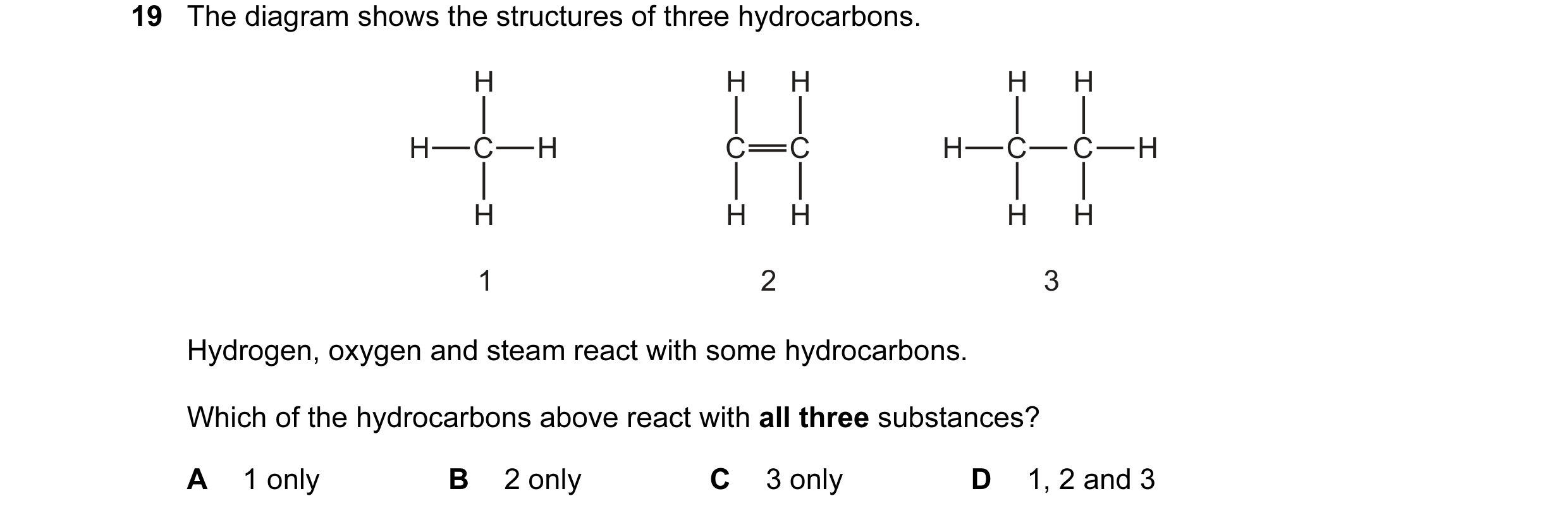
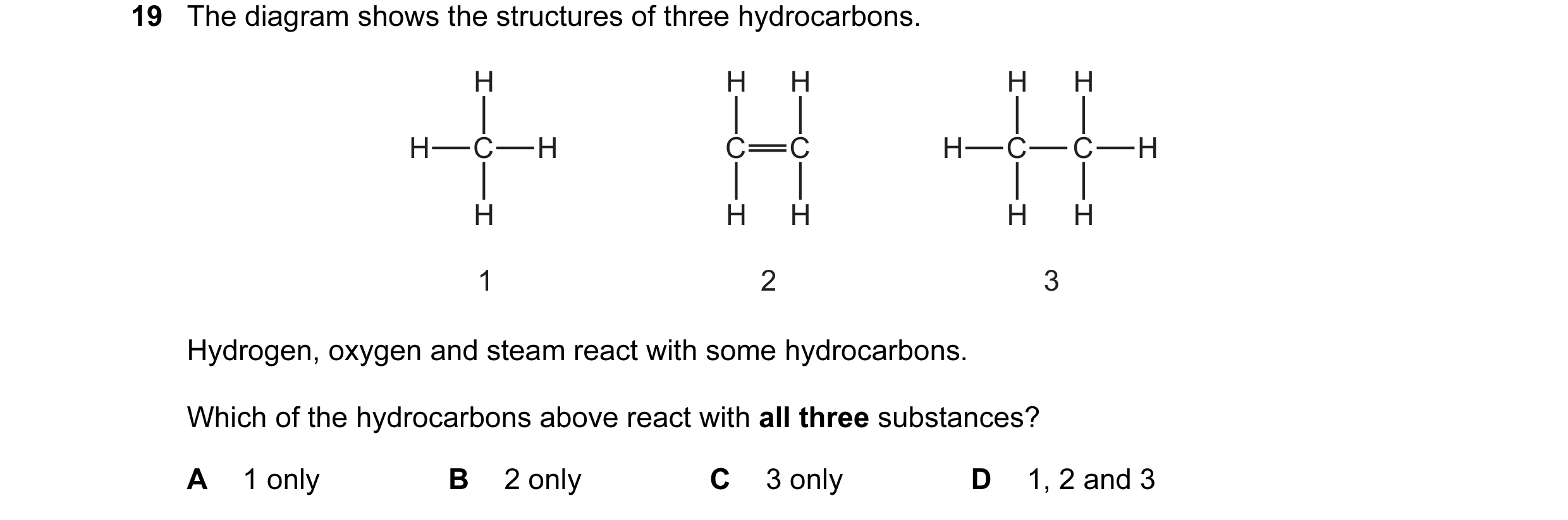
Q14 · The diagram shows the structures of three hydrocarbons 0652/11 Oct/Nov 2015
19 The diagram shows the structures of three hydrocarbons. H H H H H H C H C C H C C H H H H H H 1 2 3 Hydrogen, oxygen and steam react with some hydrocarbons. Which of the hydrocarbons above react with all three substances? A 1 only B 2 only C 3 only D 1, 2 and 3
1 marks
Answer: B
This question in 0652/11 Oct/Nov 2015
Q15 · The diagram shows the structures of three hydrocarbons 0652/12 Oct/Nov 2015
19 The diagram shows the structures of three hydrocarbons. H H H H H H C H C C H C C H H H H H H 1 2 3 Hydrogen, oxygen and steam react with some hydrocarbons. Which of the hydrocarbons above react with all three substances? A 1 only B 2 only C 3 only D 1, 2 and 3
1 marks
Answer: B
This question in 0652/12 Oct/Nov 2015
Q16 · Limonene is a colourless, unsaturated hydrocarbon found in lemons 0652/11 Oct/Nov 2017
19 Limonene is a colourless, unsaturated hydrocarbon found in lemons. Which row describes the colour change when a few drops of limonene are shaken with bromine? colour of bromine colour of bromine at the start of experiment after mixing with limonene A colourless colourless B colourless orange C orange colourless D orange orange
1 marks
Answer: C
This question in 0652/11 Oct/Nov 2017
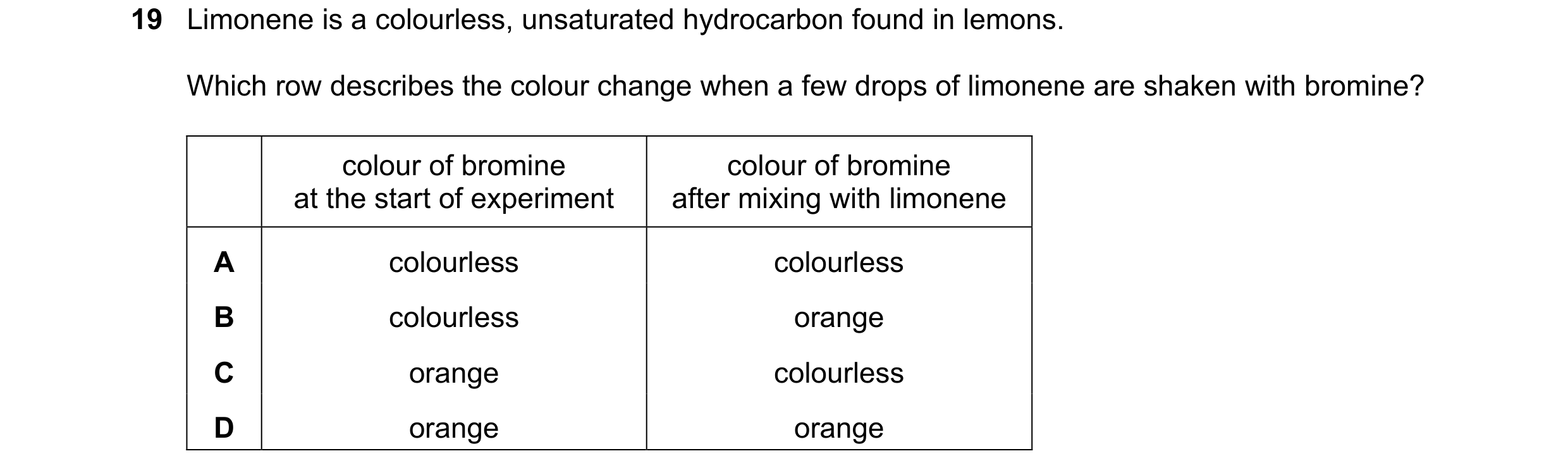
Q17 · Limonene is a colourless, unsaturated hydrocarbon found in lemons 0652/12 Oct/Nov 2017
19 Limonene is a colourless, unsaturated hydrocarbon found in lemons. Which row describes the colour change when a few drops of limonene are shaken with bromine? colour of bromine colour of bromine at the start of experiment after mixing with limonene A colourless colourless B colourless orange C orange colourless D orange orange
1 marks
Answer: C
This question in 0652/12 Oct/Nov 2017
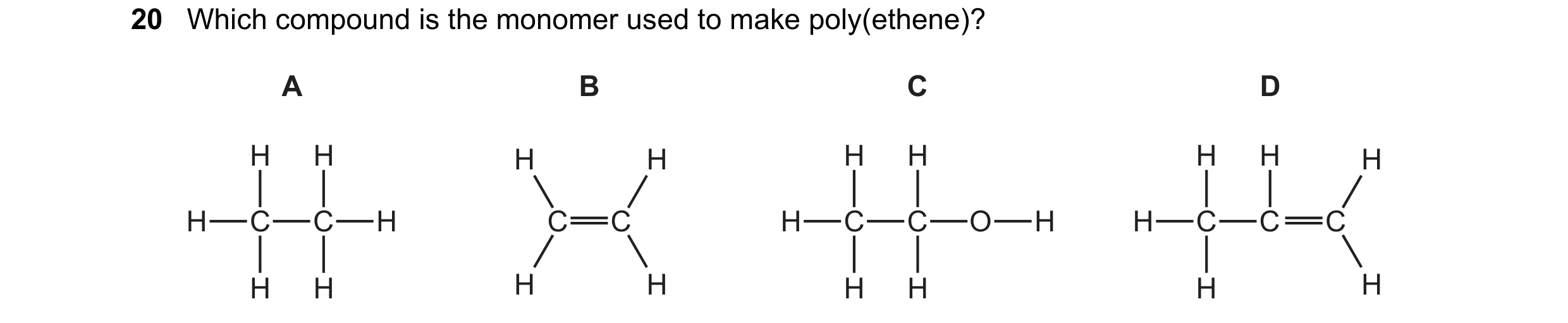
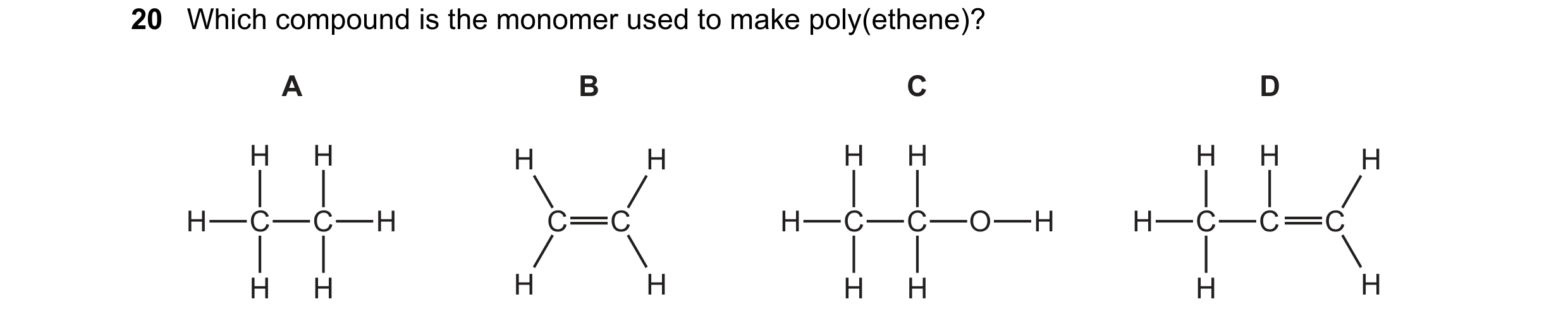
Q18 · Which compound is the monomer used to make poly(ethene)? 0652/11 Oct/Nov 2018
20 Which compound is the monomer used to make poly(ethene)? A B C D H H H H H H H H H H C C H C C H C C O H H C C C H H H H H H H H
1 marks
Answer: B
This question in 0652/11 Oct/Nov 2018
Q19 · Which compound is the monomer used to make poly(ethene)? 0652/12 Oct/Nov 2018
20 Which compound is the monomer used to make poly(ethene)? A B C D H H H H H H H H H H C C H C C H C C O H H C C C H H H H H H H H
1 marks
Answer: B
This question in 0652/12 Oct/Nov 2018
Q20 · Which structure represents an unsaturated hydrocarbon? 0652/11 Oct/Nov 2019
19 Which structure represents an unsaturated hydrocarbon? A B C D H H H O H H H H C C H H C C H C H H C C H H H H O H H
1 marks
Answer: D
This question in 0652/11 Oct/Nov 2019
Q21 · Which structure represents an unsaturated hydrocarbon? 0652/12 Oct/Nov 2019
19 Which structure represents an unsaturated hydrocarbon? A B C D H H H O H H H H C C H H C C H C H H C C H H H H O H H
1 marks
Answer: D
This question in 0652/12 Oct/Nov 2019
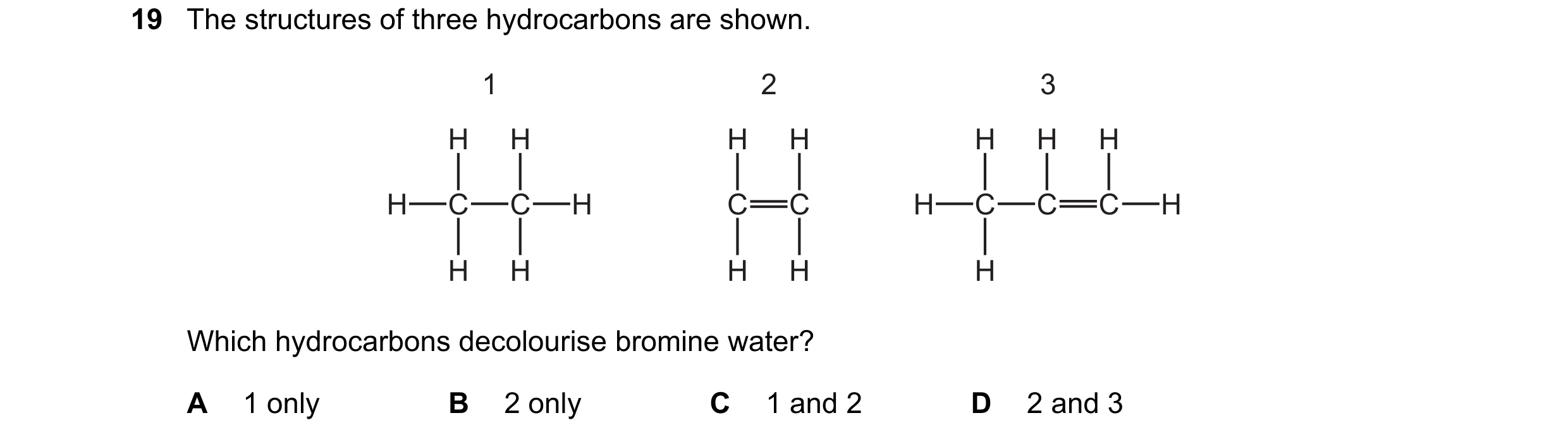
Q22 · The structures of three hydrocarbons are shown 0652/11 Oct/Nov 2020
19 The structures of three hydrocarbons are shown. 1 2 3 H H H H H H H H C C H C C H C C C H H H H H H Which hydrocarbons decolourise bromine water? A 1 only B 2 only C 1 and 2 D 2 and 3
1 marks
Answer: D
This question in 0652/11 Oct/Nov 2020
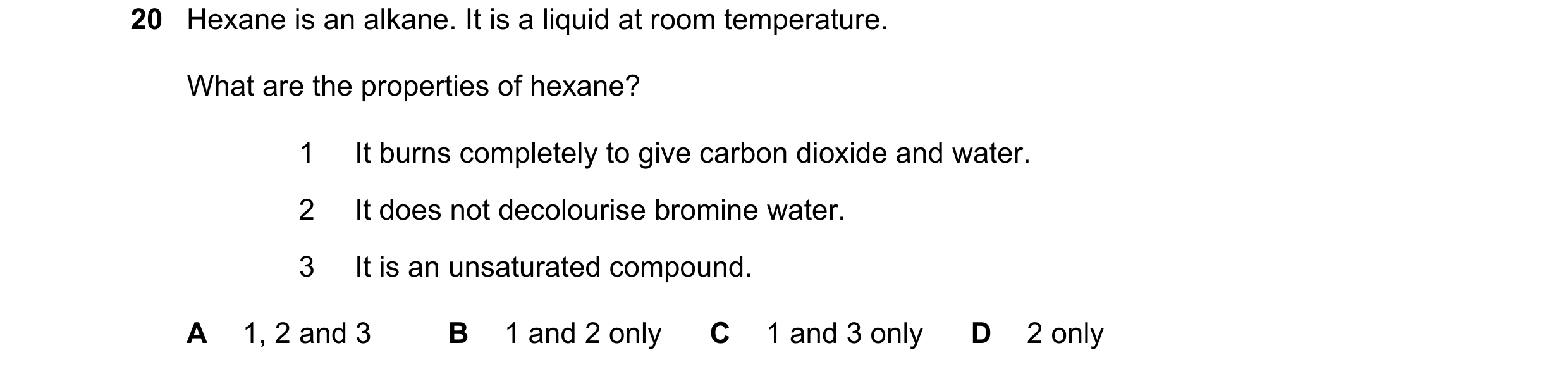
Q23 · Hexane is an alkane 0652/11 Oct/Nov 2022
20 Hexane is an alkane. It is a liquid at room temperature. What are the properties of hexane? 1 It burns completely to give carbon dioxide and water. 2 It does not decolourise bromine water. 3 It is an unsaturated compound. A 1, 2 and 3 B 1 and 2 only C 1 and 3 only D 2 only
1 marks
Answer: B
This question in 0652/11 Oct/Nov 2022
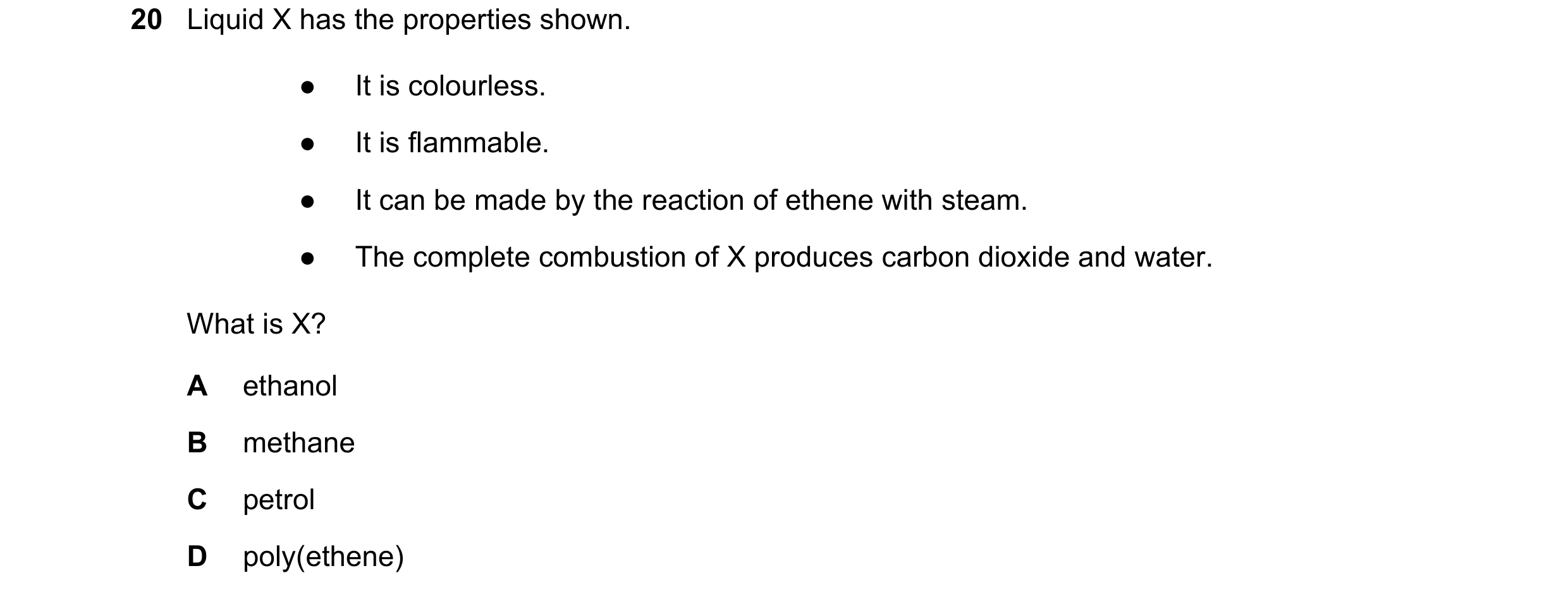
Q24 · Liquid X has the properties shown 0652/11 Oct/Nov 2023
20 Liquid X has the properties shown. ● It is colourless. ● It is flammable. ● It can be made by the reaction of ethene with steam. ● The complete combustion of X produces carbon dioxide and water. What is X? A ethanol B methane C petrol D poly(ethene)
1 marks
Answer: A
This question in 0652/11 Oct/Nov 2023
Q25 · Liquid X has the properties shown 0652/12 Oct/Nov 2023
20 Liquid X has the properties shown. ● It is colourless. ● It is flammable. ● It can be made by the reaction of ethene with steam. ● The complete combustion of X produces carbon dioxide and water. What is X? A ethanol B methane C petrol D poly(ethene)
1 marks
Answer: A
This question in 0652/12 Oct/Nov 2023
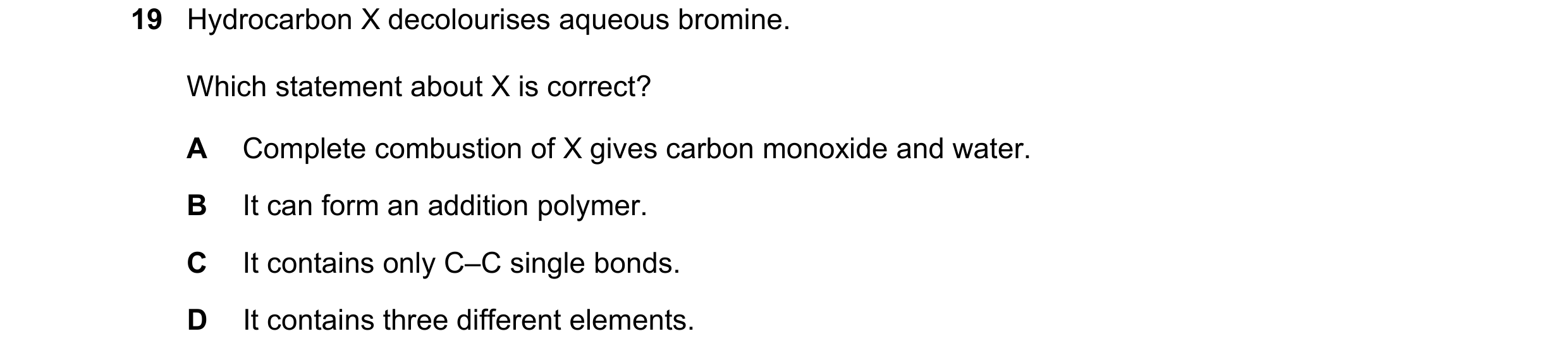
Q26 · Hydrocarbon X decolourises aqueous bromine 0652/11 Oct/Nov 2024
19 Hydrocarbon X decolourises aqueous bromine. Which statement about X is correct? A Complete combustion of X gives carbon monoxide and water. B It can form an addition polymer. C It contains only C–C single bonds. D It contains three different elements.
1 marks
Answer: B
This question in 0652/11 Oct/Nov 2024
 1 / 7
1 / 7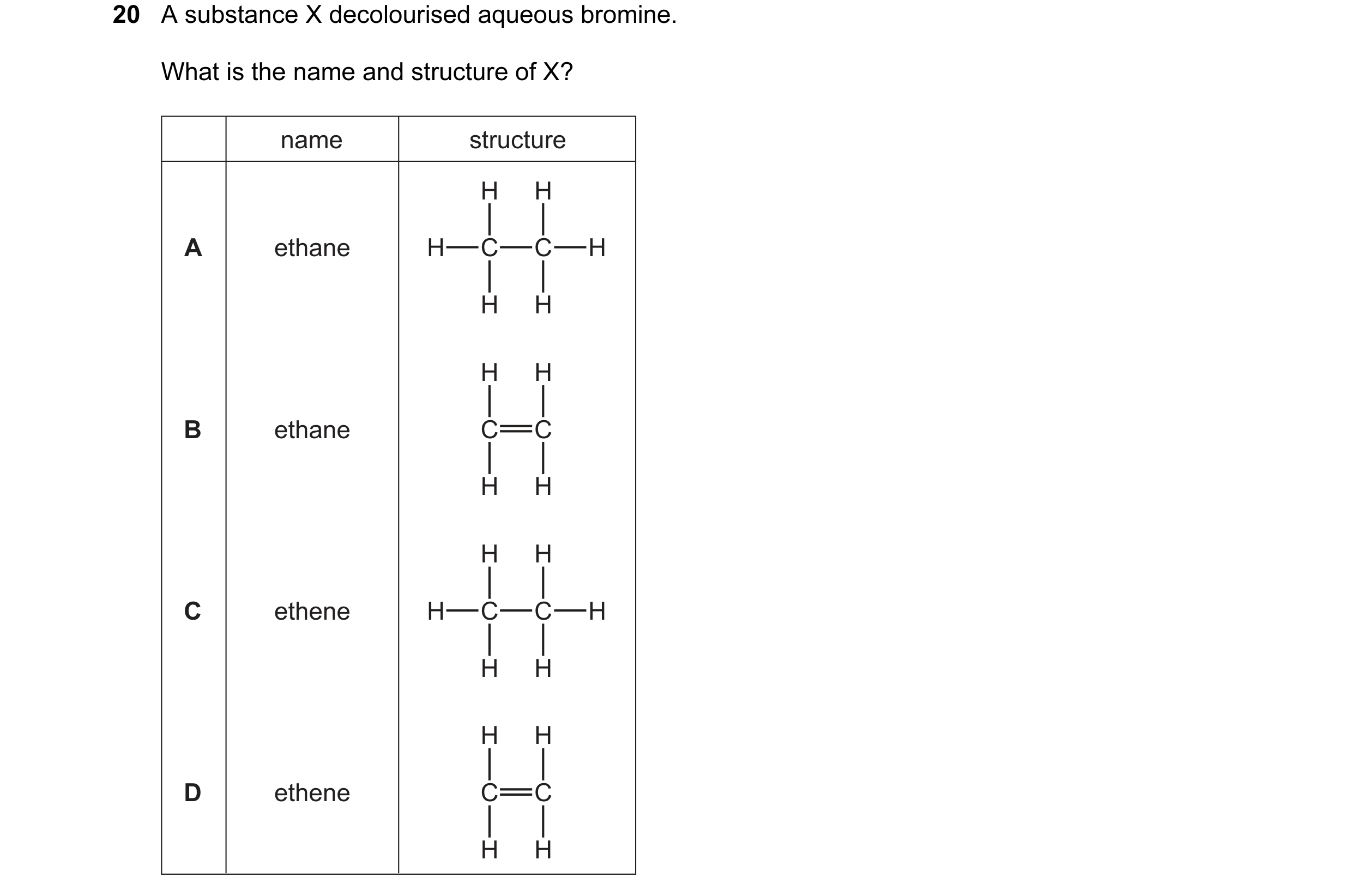
 2 / 7
2 / 7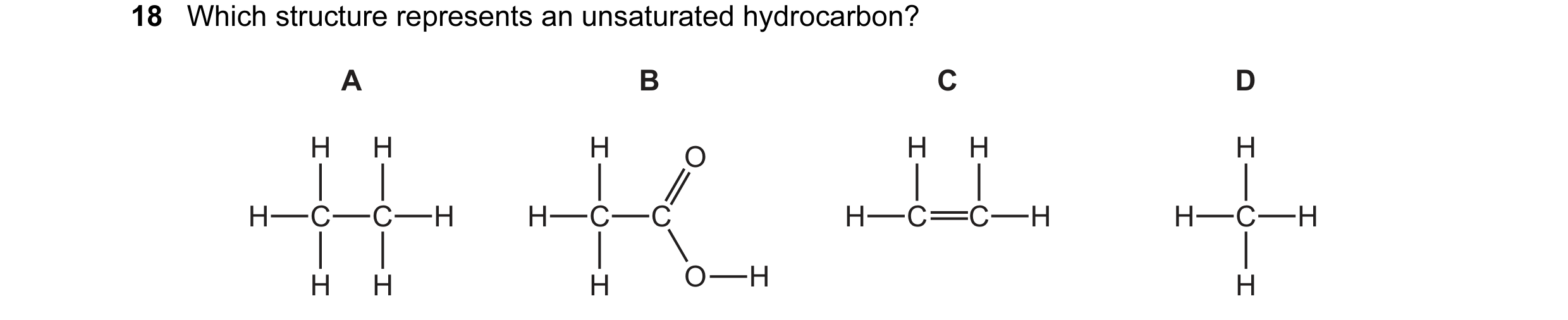
 3 / 7
3 / 7

 4 / 7
4 / 7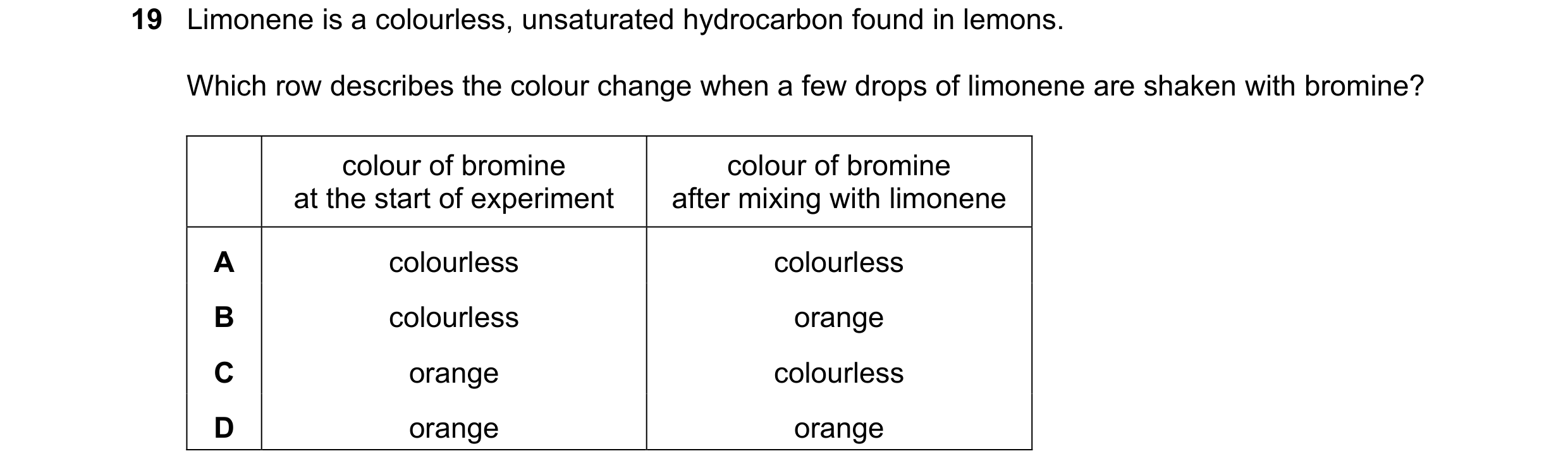
 5 / 7
5 / 7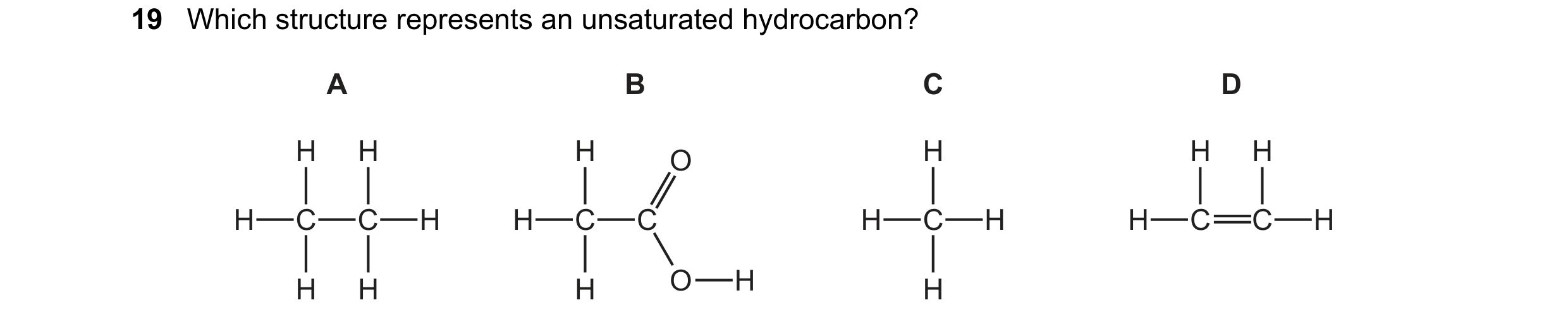
 6 / 7
6 / 7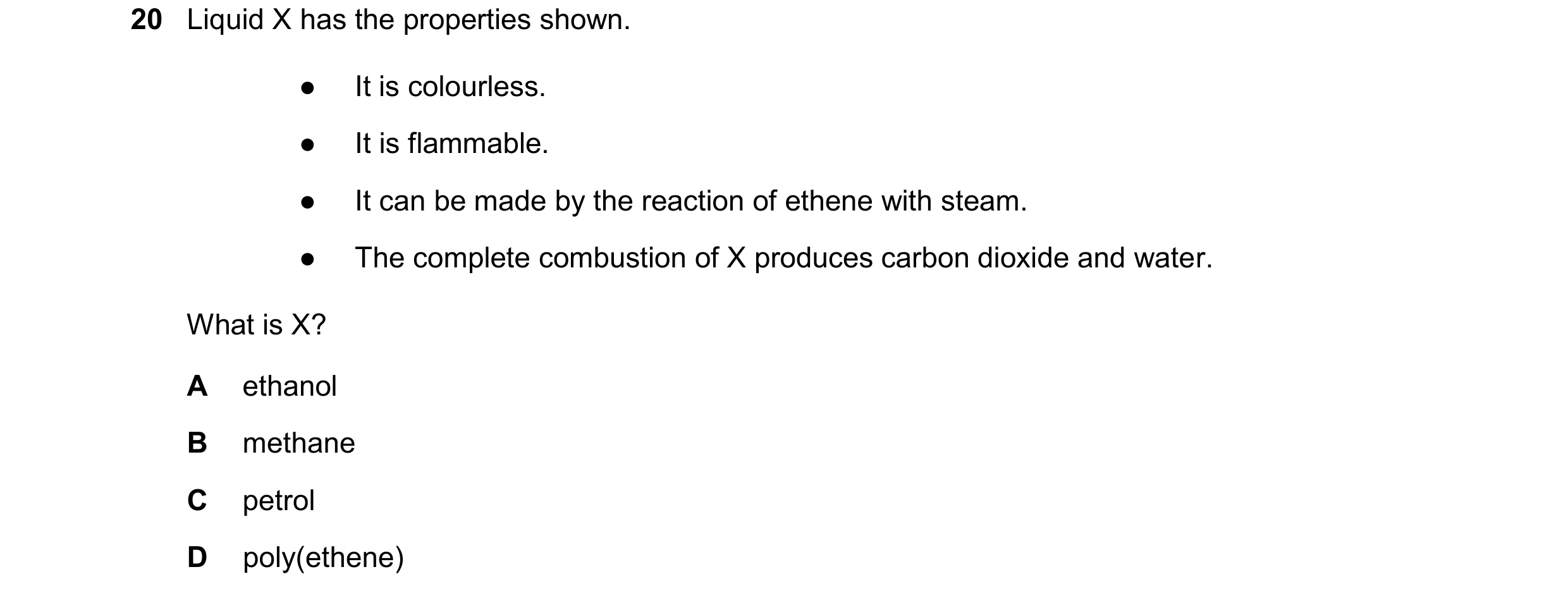
 7 / 7
7 / 7