Questions as text
Q1 · Ethanol is produced by fermentation or from ethene 0971/21 May/June 2018
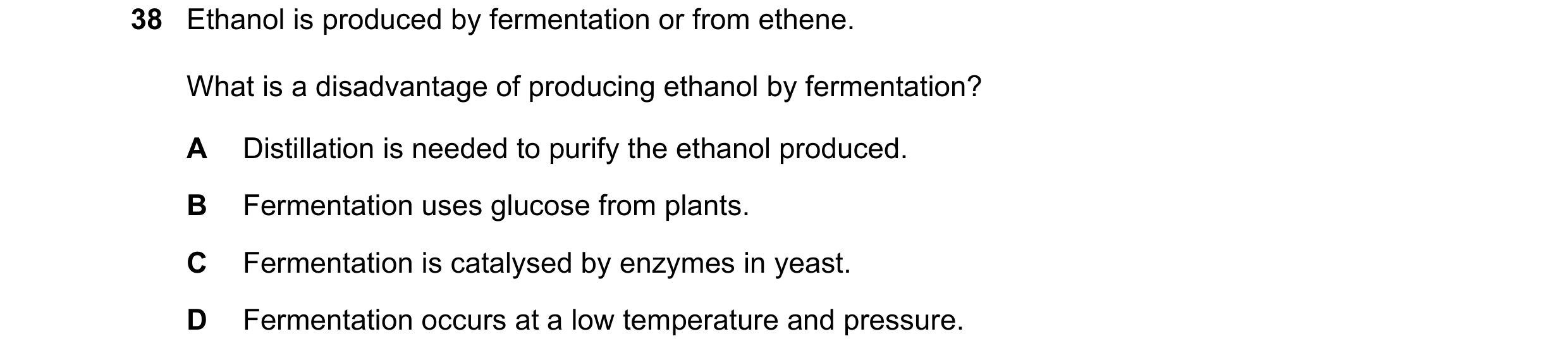
38 Ethanol is produced by fermentation or from ethene. What is a disadvantage of producing ethanol by fermentation? A Distillation is needed to purify the ethanol produced. B Fermentation uses glucose from plants. C Fermentation is catalysed by enzymes in yeast. D Fermentation occurs at a low temperature and pressure.
1 marks
Answer: A
This question in 0971/21 May/June 2018
Q2 · Ethanol can be formed by: 1 fermentation 2 reaction between steam and ethene 0971/22 Oct/Nov 2018
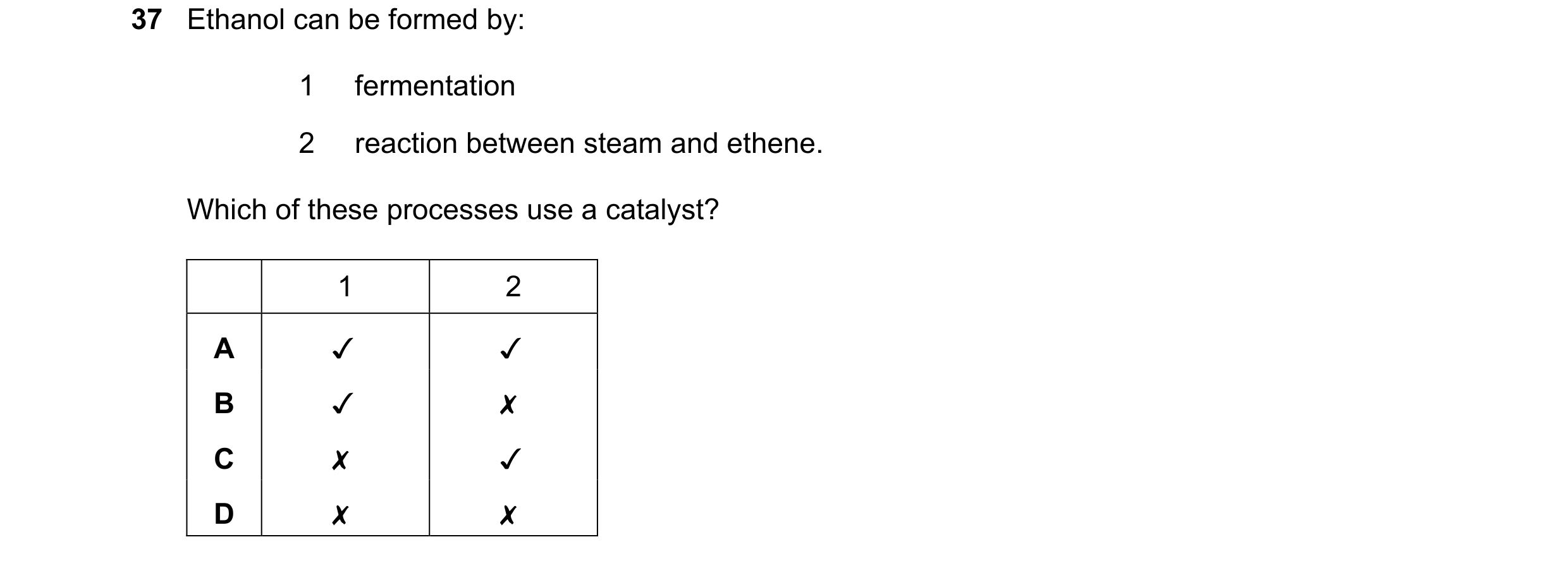
37 Ethanol can be formed by:
1 fermentation
2 reaction between steam and ethene.
Which of these processes use a catalyst?
—
0 ONO WwW >
~~ KN
~*~ QL €K NIN
1 marks
Answer: A
This question in 0971/22 Oct/Nov 2018
Q3 · Ethanol is manufactured from ethene 0971/22 Oct/Nov 2018
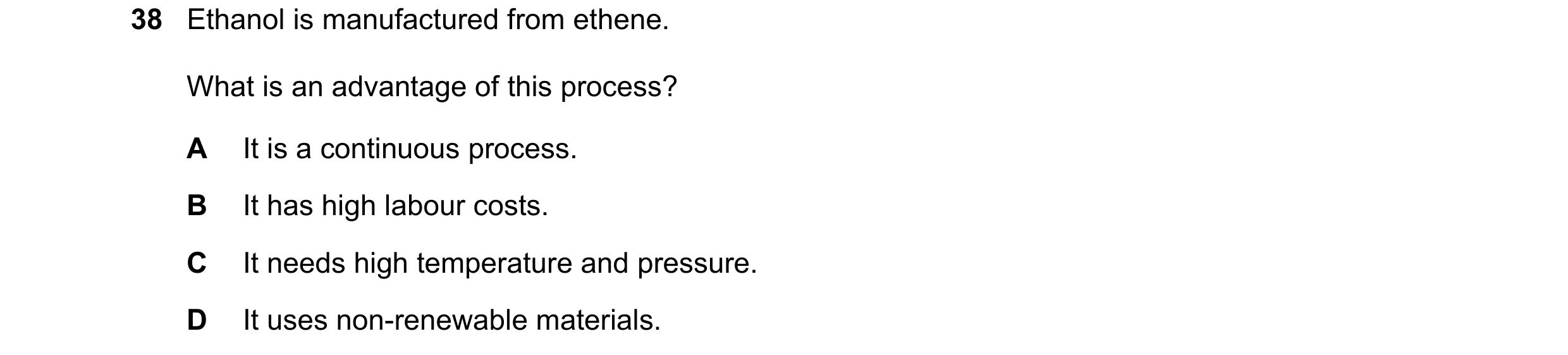
38 Ethanol is manufactured from ethene. What is an advantage of this process? A It is a continuous process. B It has high labour costs. C It needs high temperature and pressure. D It uses non-renewable materials.
1 marks
Answer: A
This question in 0971/22 Oct/Nov 2018
Q4 · Which reaction can be used to make ethanoic acid? 0971/22 Oct/Nov 2018
39 Which reaction can be used to make ethanoic acid? A oxidation of ethanol B oxidation of ethene C reduction of ethanol D reduction of ethene
1 marks
Answer: A
This question in 0971/22 Oct/Nov 2018
Q5 · Why is ethanol a member of the homologous series of alcohols but propane is not? 0971/21 May/June 2019
36 Why is ethanol a member of the homologous series of alcohols but propane is not? A Ethanol has two carbon atoms per molecule but propane has three. B Ethanol can be made from ethene but propane is obtained from petroleum. C Ethanol is a liquid but propane is a gas. D Ethanol contains the same functional group as other alcohols but propane does not.
1 marks
Answer: D
This question in 0971/21 May/June 2019
Q6 · Ethanol is produced by fermentation or by the reaction of ethene with steam 0971/22 Oct/Nov 2019
38 Ethanol is produced by fermentation or by the reaction of ethene with steam. Which row is correct? by fermentation from ethene A uses a temperature of 100 °C uses a temperature of 350 °C B needs yeast as a catalyst does not need a catalyst C very slow reaction very fast reaction D high yield of ethanol low yield of ethanol
1 marks
Answer: C
This question in 0971/22 Oct/Nov 2019
Q7 · Which row about the production of ethanol by fermentation is correct? 0971/21 May/June 2020
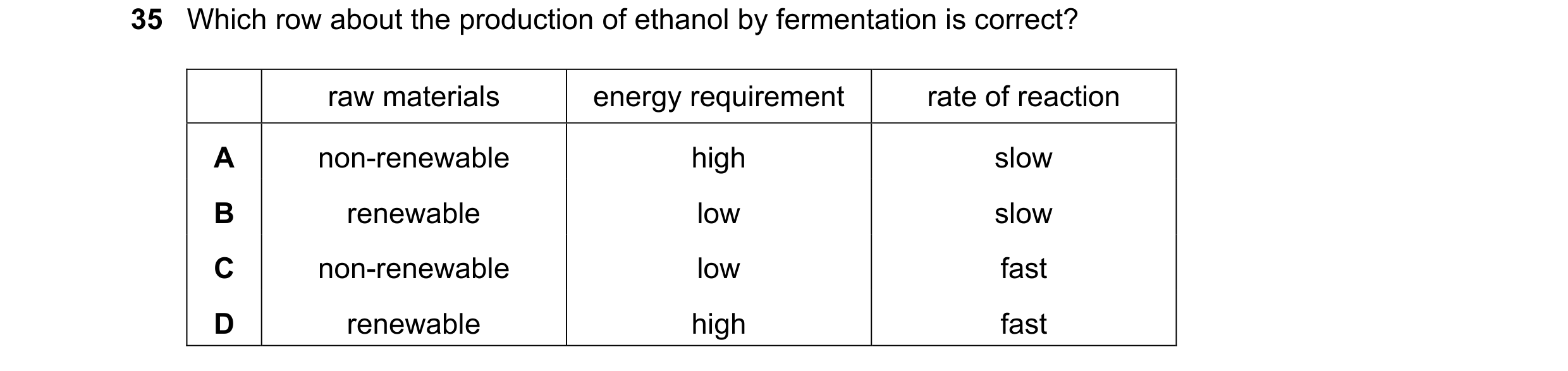
35 Which row about the production of ethanol by fermentation is correct? raw materials energy requirement rate of reaction A non-renewable high slow B renewable low slow C non-renewable low fast D renewable high fast
1 marks
Answer: B
This question in 0971/21 May/June 2020
Q8 · Ethanol is made on an industrial scale by the fermentation of sugars or by the reaction… 0971/22 May/June 2020
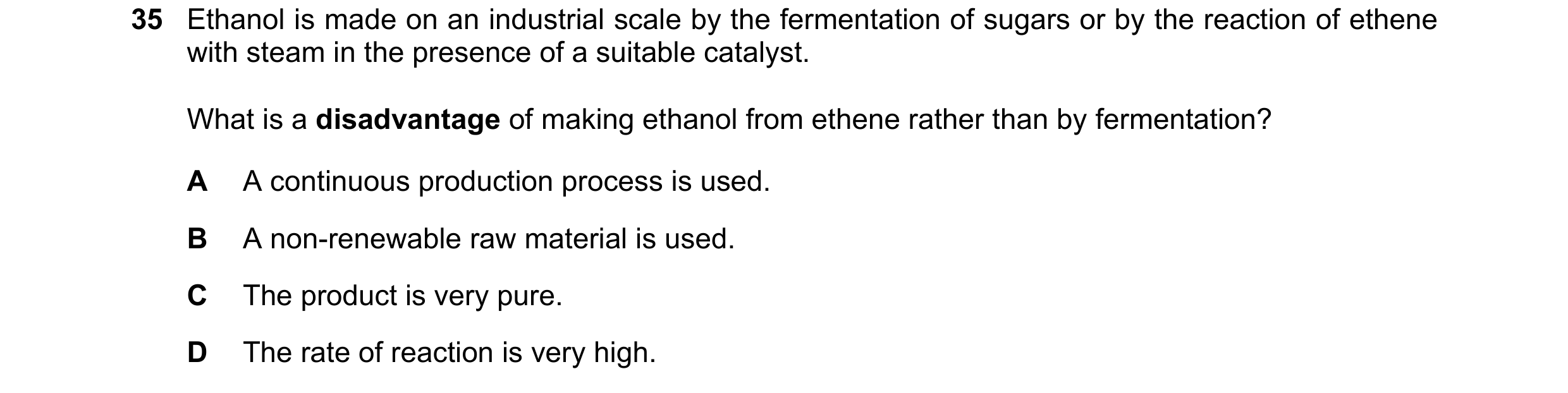
35 Ethanol is made on an industrial scale by the fermentation of sugars or by the reaction of ethene with steam in the presence of a suitable catalyst. What is a disadvantage of making ethanol from ethene rather than by fermentation? A A continuous production process is used. B A non-renewable raw material is used. C The product is very pure. D The rate of reaction is very high.
1 marks
Answer: B
This question in 0971/22 May/June 2020
Q9 · Which structure represents a molecule of ethanol? 0971/22 Oct/Nov 2020
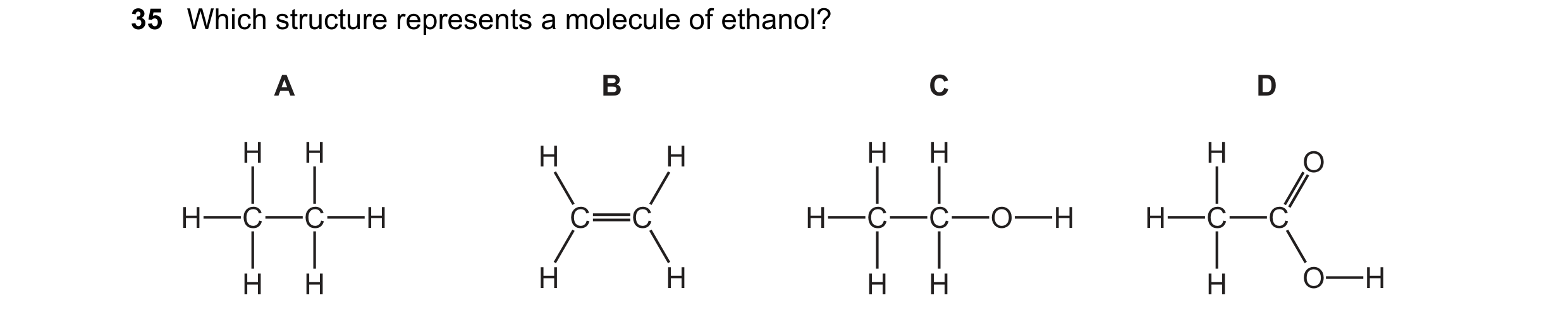
35 Which structure represents a molecule of ethanol? A B C D H H H H H H H O H C C H C C H C C O H H C C H H H H H H H O H
1 marks
Answer: C
This question in 0971/22 Oct/Nov 2020
Q10 · The flow chart shows the preparation of ethanol and some important chemistry of ethanol 0971/22 Oct/Nov 2020
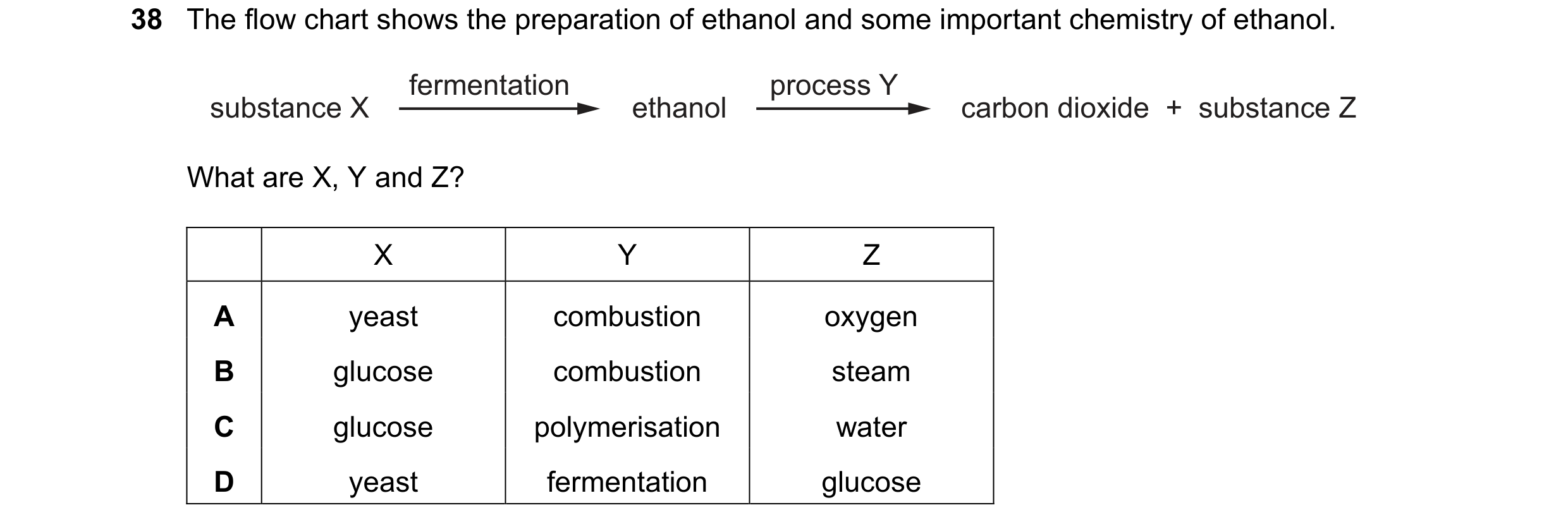
38 The flow chart shows the preparation of ethanol and some important chemistry of ethanol. fermentation process Y substance X ethanol carbon dioxide + substance Z What are X, Y and Z? X Y Z A yeast combustion oxygen B glucose combustion steam C glucose polymerisation water D yeast fermentation glucose
1 marks
Answer: B
This question in 0971/22 Oct/Nov 2020
Q11 · Compound Z contains carbon, hydrogen and oxygen 0971/21 May/June 2021
34 Compound Z contains carbon, hydrogen and oxygen. Molecules of compound Z have four hydrogen atoms and two carbon atoms. Compound Z can be made by oxidation of an alcohol. What is compound Z? A ethene B ethanol C ethanoic acid D methyl methanoate
1 marks
Answer: C
This question in 0971/21 May/June 2021
Q12 · What is an advantage of manufacturing ethanol by fermentation? 0971/21 May/June 2021
37 What is an advantage of manufacturing ethanol by fermentation? A The process is very fast. B The ethanol requires no separation. C The raw materials used are renewable. D There are no other products formed.
1 marks
Answer: C
This question in 0971/21 May/June 2021
Q13 · Which statement about ethanol is not correct? 0971/22 May/June 2021
34 Which statement about ethanol is not correct? A Ethanol can be made by fermentation. B Ethanol is oxidised to make ethanoic acid. C Ethanol reacts with oxygen exothermically, making it a good fuel. D Ethanol reacts with propanoic acid to make propyl ethanoate.
1 marks
Answer: D
This question in 0971/22 May/June 2021
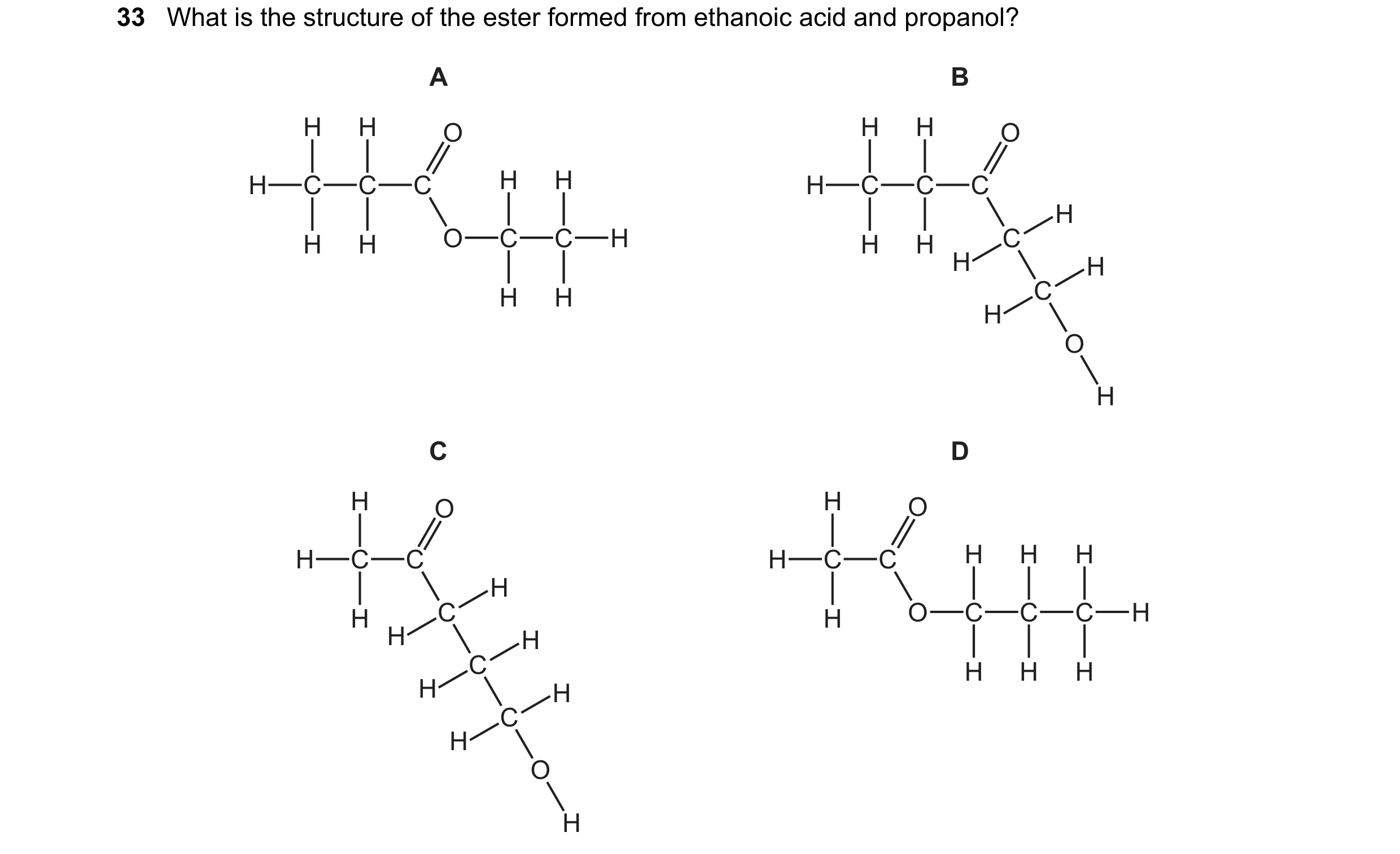
Q14 · What is the structure of the ester formed from ethanoic acid and propanol? 0971/22 Oct/Nov 2021
33 What is the structure of the ester formed from ethanoic acid and propanol? A B H H O H H O H C C C H H H C C C H H H O C C H H H C H H H H C H O H C D H O H O H C C H C C H H H H H C H O C C C H H H C H H H H H C H O H
1 marks
Answer: D
This question in 0971/22 Oct/Nov 2021
Q15 · Ethanol is manufactured by fermentation of sugars or by catalytic hydration of ethene 0971/22 Oct/Nov 2021
37 Ethanol is manufactured by fermentation of sugars or by catalytic hydration of ethene. Which row states an advantage of each method? fermentation hydration A produces purer ethanol is a batch process B produces purer ethanol is a continuous process C uses a renewable resource is a batch process D uses a renewable resource is a continuous process
1 marks
Answer: D
This question in 0971/22 Oct/Nov 2021
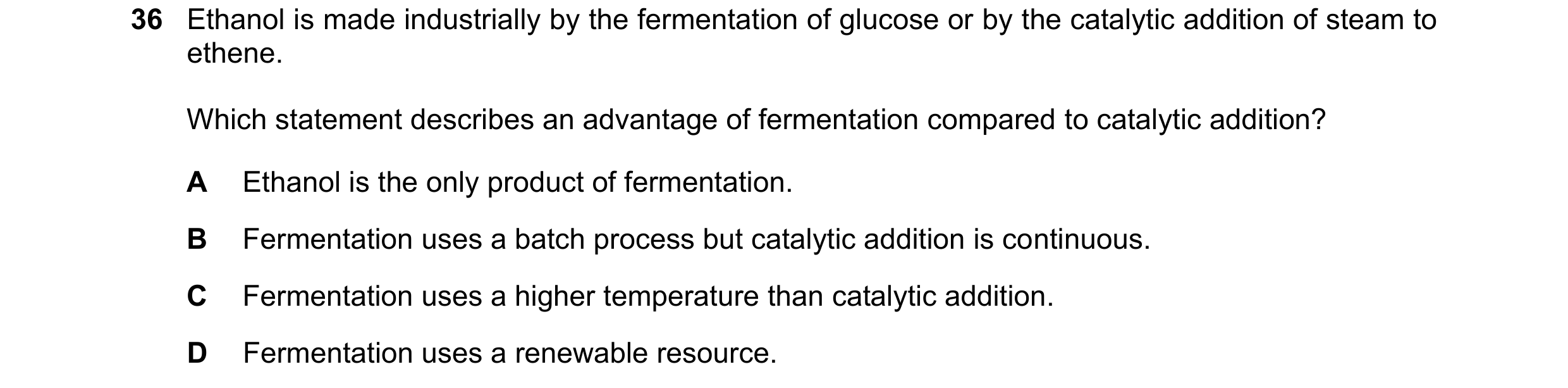
Q16 · Ethanol is made industrially by the fermentation of glucose or by the catalytic addition… 0971/21 May/June 2022
36 Ethanol is made industrially by the fermentation of glucose or by the catalytic addition of steam to ethene. Which statement describes an advantage of fermentation compared to catalytic addition? A Ethanol is the only product of fermentation. B Fermentation uses a batch process but catalytic addition is continuous. C Fermentation uses a higher temperature than catalytic addition. D Fermentation uses a renewable resource.
1 marks
Answer: D
This question in 0971/21 May/June 2022
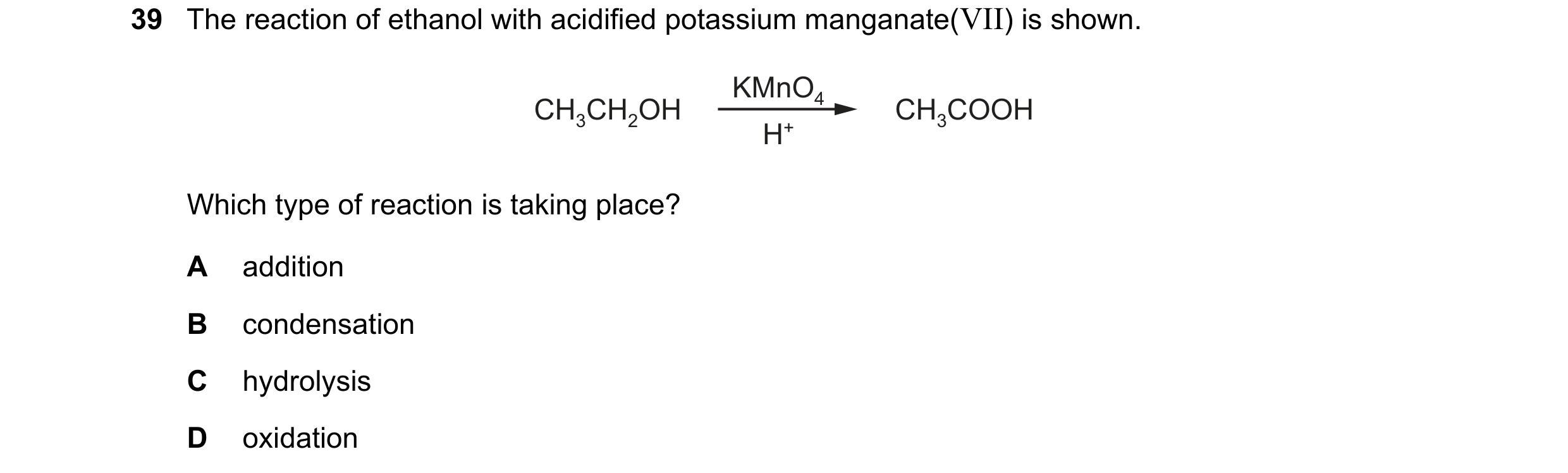
Q17 · The reaction of ethanol with acidified potassium manganate(VII) is shown 0971/21 May/June 2022
39 The reaction of ethanol with acidified potassium manganate(VII) is shown. KMnO4 CH3CH2OH CH3COOH H+ Which type of reaction is taking place? A addition B condensation C hydrolysis D oxidation
1 marks
Answer: D
This question in 0971/21 May/June 2022
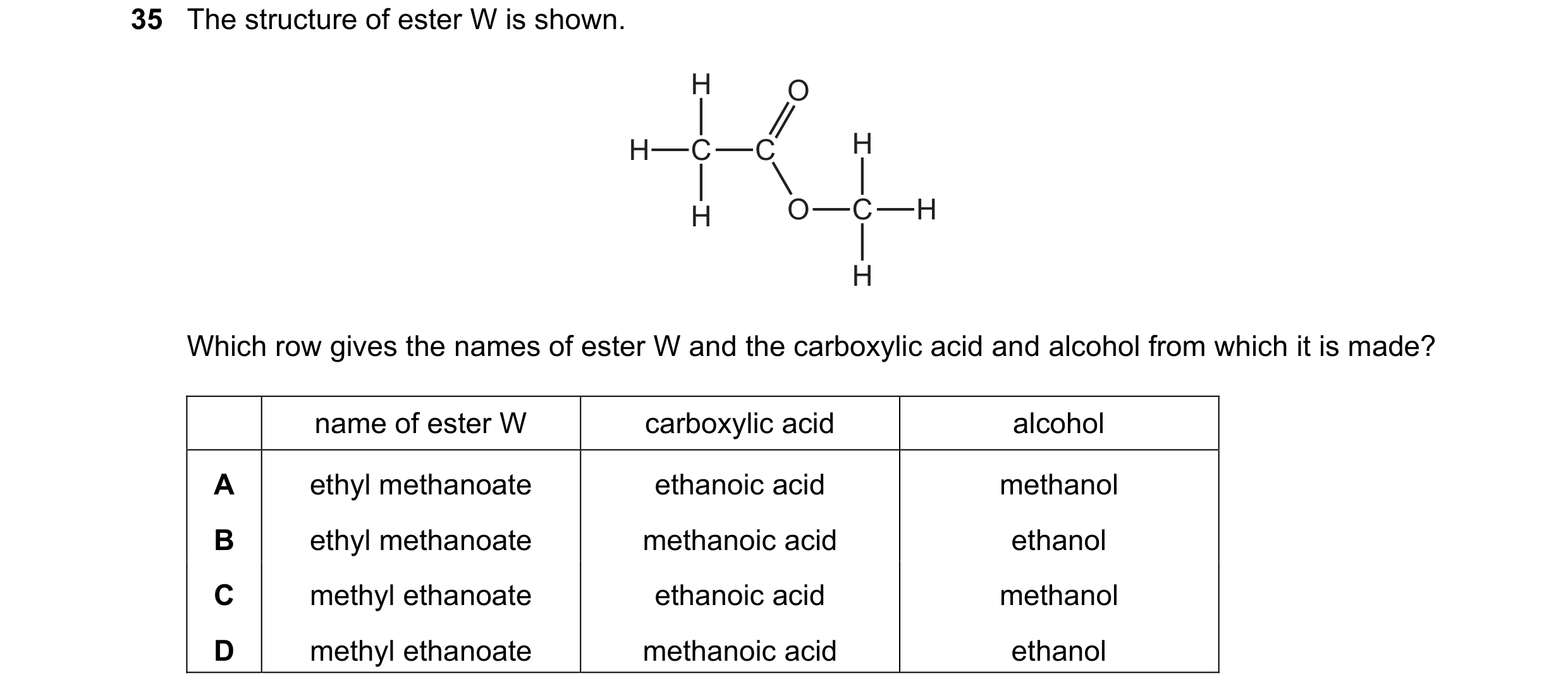
Q18 · The structure of ester W is shown 0971/22 May/June 2022
35 The structure of ester W is shown. H O H C C H H O C H H Which row gives the names of ester W and the carboxylic acid and alcohol from which it is made? name of ester W carboxylic acid alcohol A ethyl methanoate ethanoic acid methanol B ethyl methanoate methanoic acid ethanol C methyl ethanoate ethanoic acid methanol D methyl ethanoate methanoic acid ethanol
1 marks
Answer: C
This question in 0971/22 May/June 2022
Q19 · Ethene reacts with substance X to form ethanol 0971/22 May/June 2022
36 Ethene reacts with substance X to form ethanol. What is X? A ethanoic acid B glucose C hydrogen D steam
1 marks
Answer: D
This question in 0971/22 May/June 2022
Q20 · Which type of reaction occurs when ethanol is converted to ethanoic acid? 0971/22 Oct/Nov 2022
37 Which type of reaction occurs when ethanol is converted to ethanoic acid? A combustion B decomposition C neutralisation D oxidation
1 marks
Answer: D
This question in 0971/22 Oct/Nov 2022
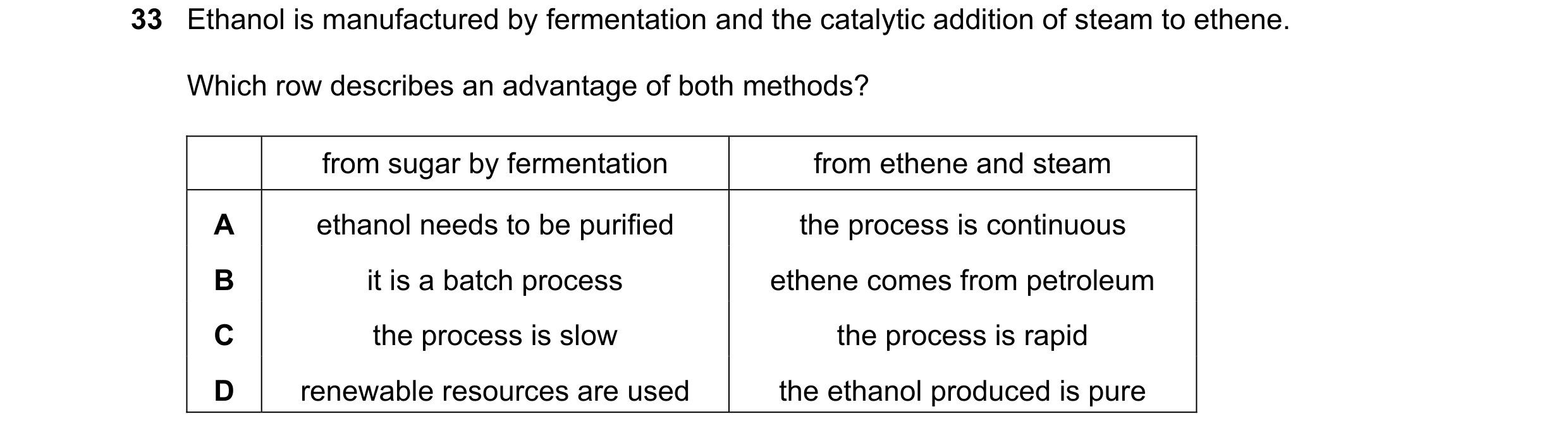
Q21 · Ethanol is manufactured by fermentation and the catalytic addition of steam to ethene 0971/22 May/June 2023
33 Ethanol is manufactured by fermentation and the catalytic addition of steam to ethene. Which row describes an advantage of both methods? from sugar by fermentation from ethene and steam A ethanol needs to be purified the process is continuous B it is a batch process ethene comes from petroleum C the process is slow the process is rapid D renewable resources are used the ethanol produced is pure
1 marks
Answer: D
This question in 0971/22 May/June 2023
Q22 · The structure of an organic compound is shown 0971/22 Oct/Nov 2023
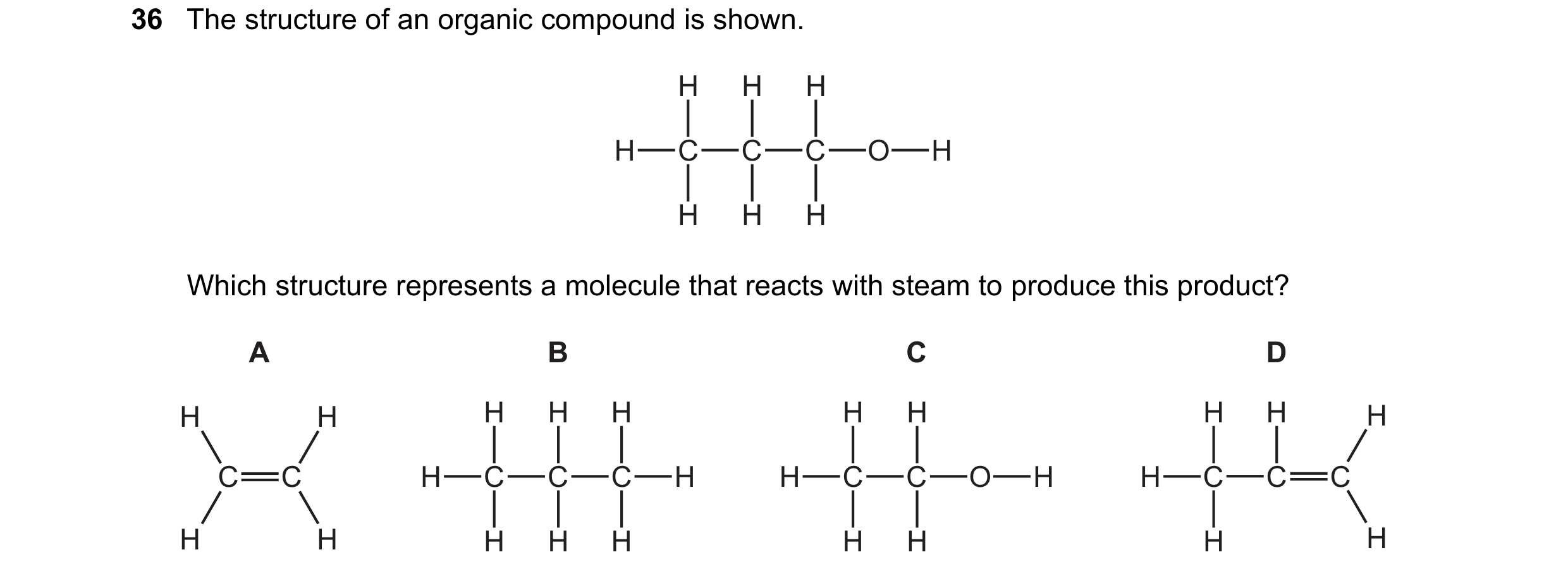
36 The structure of an organic compound is shown. H H H H C C C O H H H H Which structure represents a molecule that reacts with steam to produce this product? A B C D H H H H H H H H H H C C H C C C H H C C O H H C C C H H H H H H H H H
1 marks
Answer: D
This question in 0971/22 Oct/Nov 2023
Q23 · What is a disadvantage of producing ethanol using the catalytic addition of steam to… 0971/21 May/June 2024
36 What is a disadvantage of producing ethanol using the catalytic addition of steam to ethene? A the energy cost is low B the process is continuous C the process uses a non-renewable raw material D the ethanol is pure
1 marks
Answer: C
This question in 0971/21 May/June 2024
Q24 · The structures of two compounds used to make an ester are shown 0971/22 May/June 2024
34 The structures of two compounds used to make an ester are shown. H H O H H H C C C H C C OH H H OH H H What is the name of the ester? A ethyl propanoate B propyl ethanoate C ethyl ethanoate D propyl propanoate
1 marks
Answer: A
This question in 0971/22 May/June 2024
Q25 · Alkenes react with steam in an addition reaction 0971/22 May/June 2024
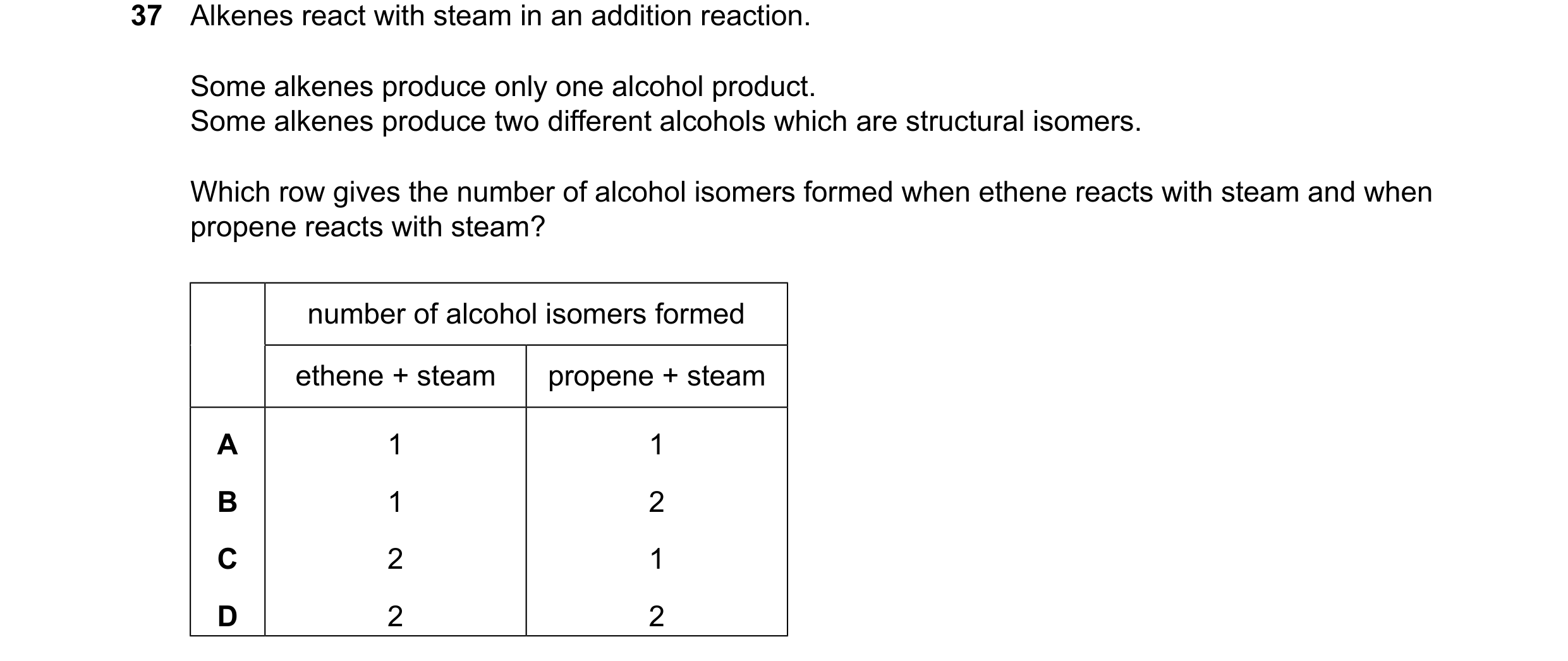
37 Alkenes react with steam in an addition reaction. Some alkenes produce only one alcohol product. Some alkenes produce two different alcohols which are structural isomers. Which row gives the number of alcohol isomers formed when ethene reacts with steam and when propene reacts with steam? number of alcohol isomers formed ethene + steam propene + steam A 1 1 B 1 2 C 2 1 D 2 2
1 marks
Answer: B
This question in 0971/22 May/June 2024
Q26 · What is an advantage of manufacturing ethanol by fermentation rather than by the addition… 0971/22 May/June 2024
38 What is an advantage of manufacturing ethanol by fermentation rather than by the addition of steam to ethene? A No gases that cause global warming are produced. B The ethanol that is produced is pure. C Fermentation is a fast process. D Fermentation uses renewable raw materials.
1 marks
Answer: D
This question in 0971/22 May/June 2024
Q27 · The table shows two methods used to make ethanol 0971/22 Oct/Nov 2024
34 The table shows two methods used to make ethanol. conditions source type of method temperature pressure of raw process catalyst / C / atm material fermentation batch 35 1 yeast sugar cane adding steam continuous 300 60 acid petroleum to ethene Which statement gives an advantage of preparing ethanol by fermentation rather than by adding steam to ethene? A Fermentation takes several days to complete. B Little energy is used in the fermentation process. C The fermentation of glucose from sugar cane produces pure ethanol. D Fermentation uses a non-renewable raw material.
1 marks
Answer: B
This question in 0971/22 Oct/Nov 2024
Q28 · What is the structural formula of butan-2-ol? 0971/22 May/June 2025
32 What is the structural formula of butan-2-ol? A CH3CH2CH2OH B CH3CH(OH)CH3 C CH3CH2CH2CH2OH D CH3CH2CH(OH)CH3
1 marks
Answer: D
This question in 0971/22 May/June 2025
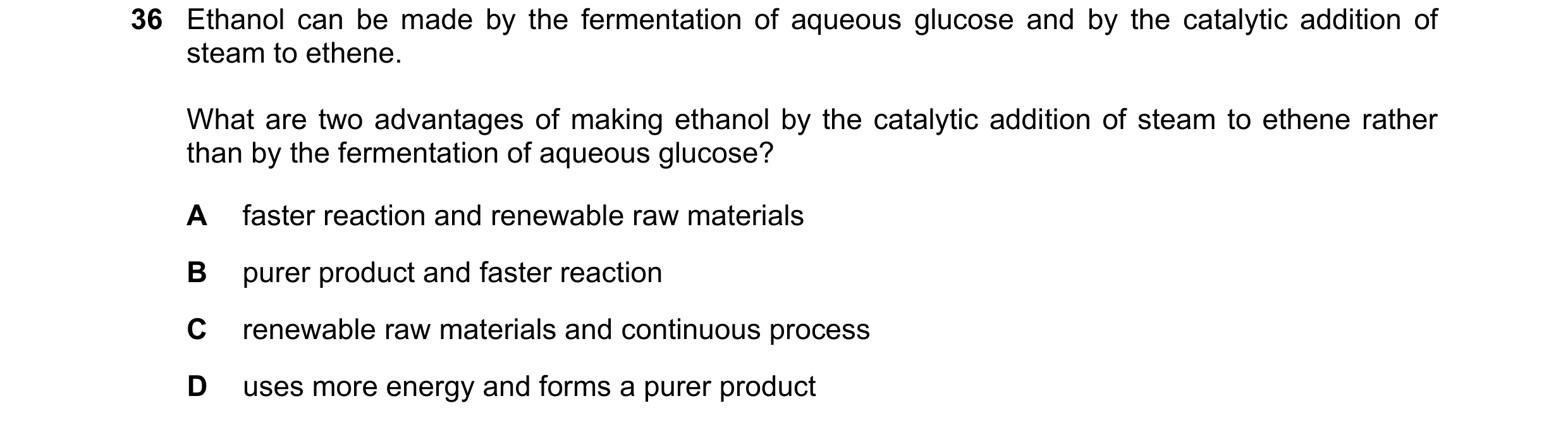
Q29 · Ethanol can be made by the fermentation of aqueous glucose and by the catalytic addition… 0971/22 May/June 2025
36 Ethanol can be made by the fermentation of aqueous glucose and by the catalytic addition of steam to ethene. What are two advantages of making ethanol by the catalytic addition of steam to ethene rather than by the fermentation of aqueous glucose? A faster reaction and renewable raw materials B purer product and faster reaction C renewable raw materials and continuous process D uses more energy and forms a purer product
1 marks
Answer: B
This question in 0971/22 May/June 2025
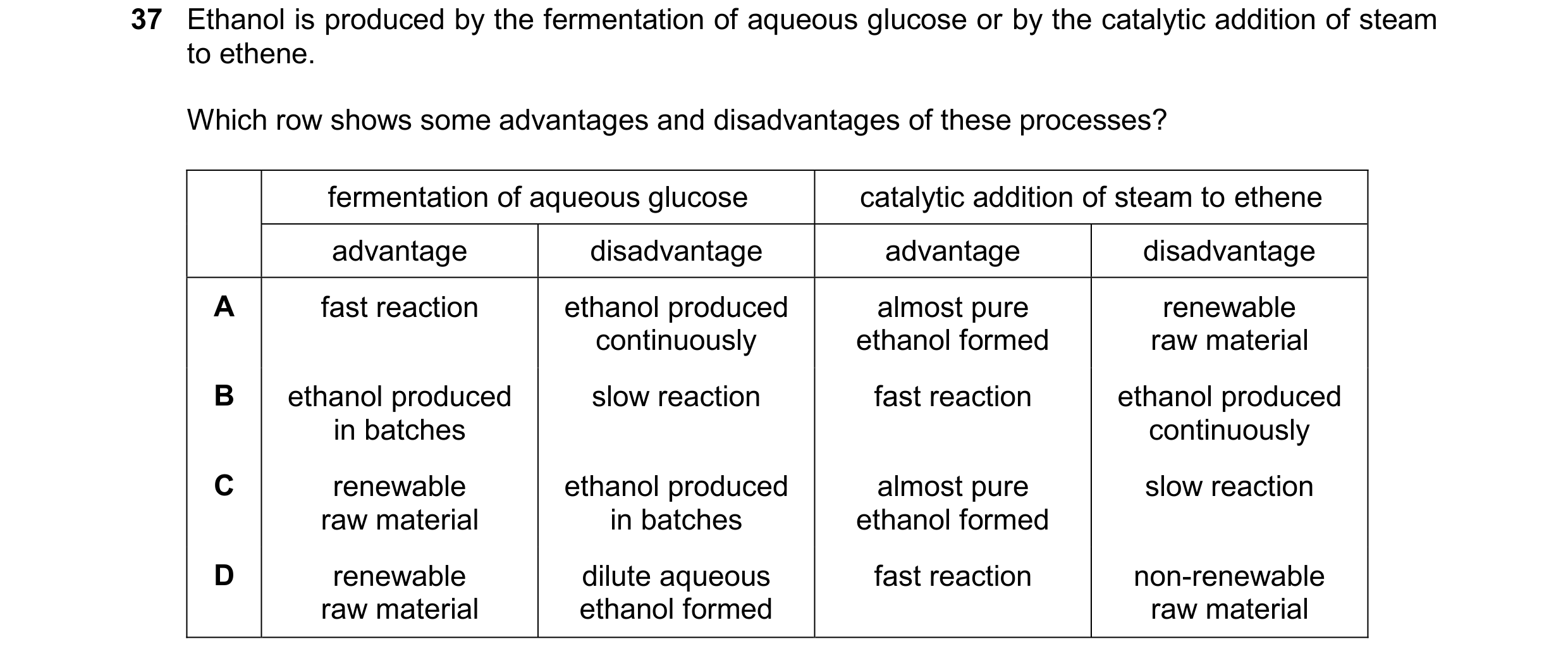
Q30 · Ethanol is produced by the fermentation of aqueous glucose or by the catalytic addition… 0971/22 Oct/Nov 2025
37 Ethanol is produced by the fermentation of aqueous glucose or by the catalytic addition of steam to ethene. Which row shows some advantages and disadvantages of these processes? fermentation of aqueous glucose catalytic addition of steam to ethene advantage disadvantage advantage disadvantage A fast reaction ethanol produced almost pure renewable continuously ethanol formed raw material B ethanol produced slow reaction fast reaction ethanol produced in batches continuously C renewable ethanol produced almost pure slow reaction raw material in batches ethanol formed D renewable dilute aqueous fast reaction non-renewable raw material ethanol formed raw material
1 marks
Answer: D
This question in 0971/22 Oct/Nov 2025

 1 / 7
1 / 7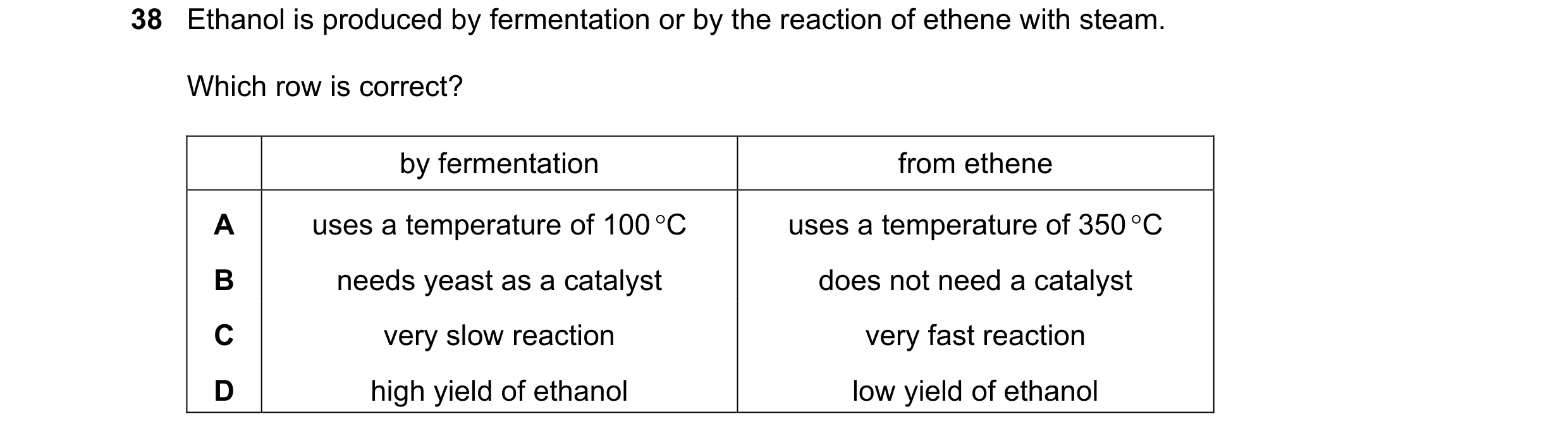
 2 / 7
2 / 7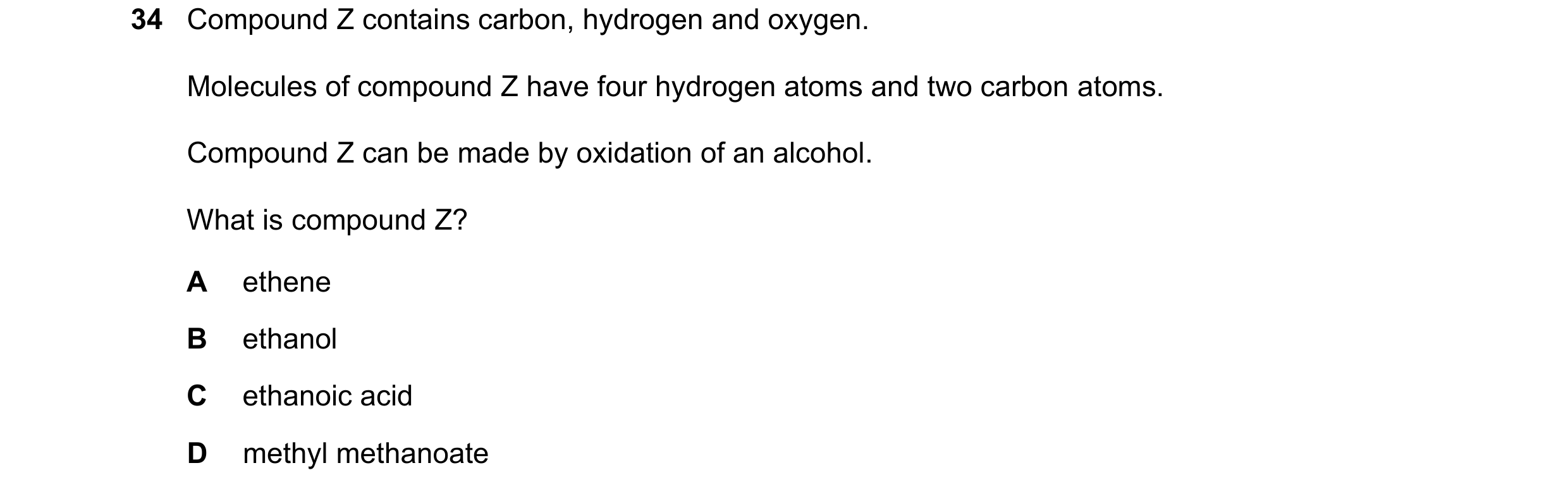


 3 / 7
3 / 7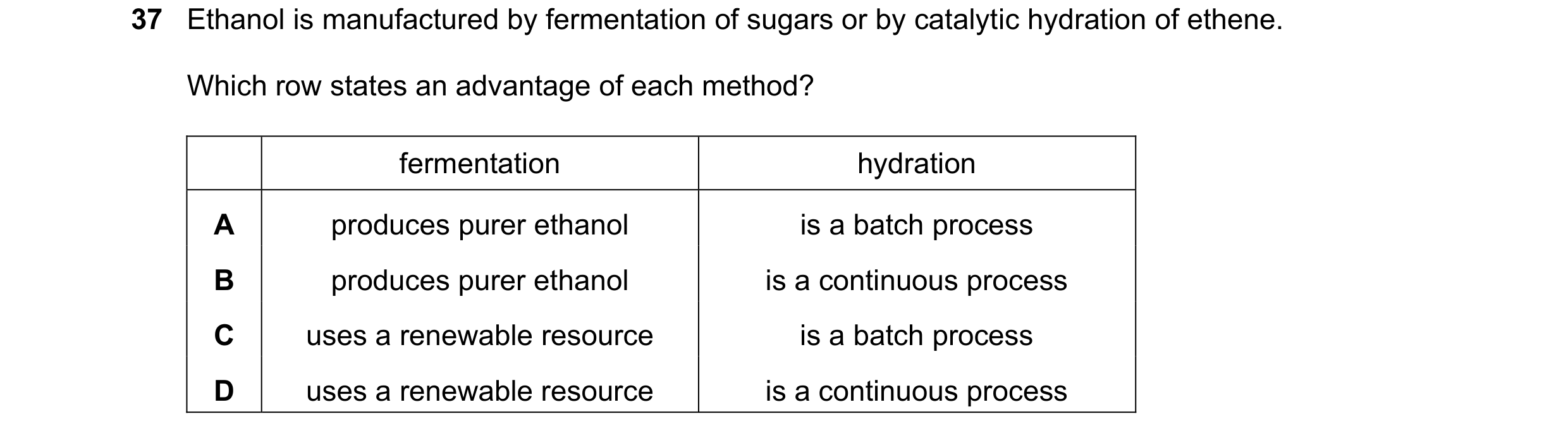
 4 / 7
4 / 7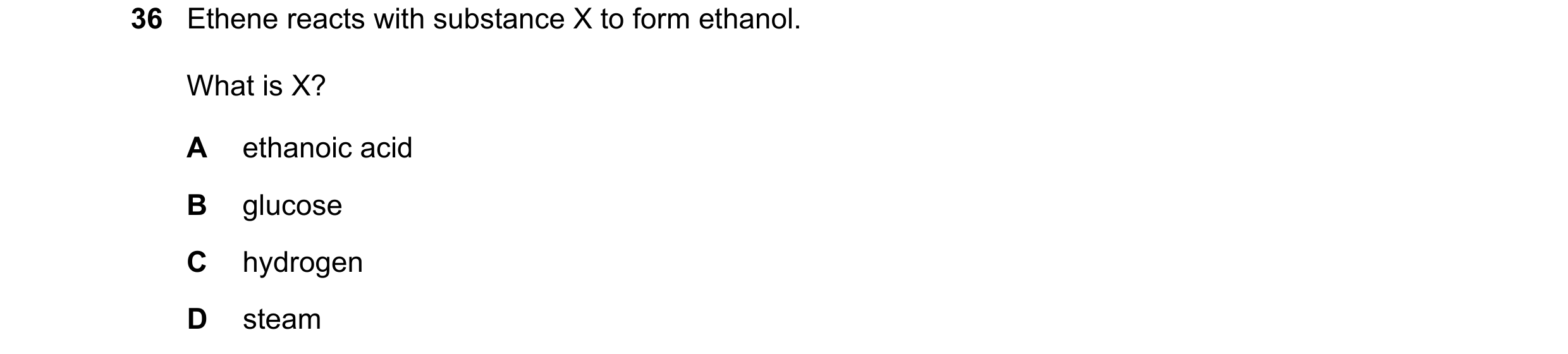

 5 / 7
5 / 7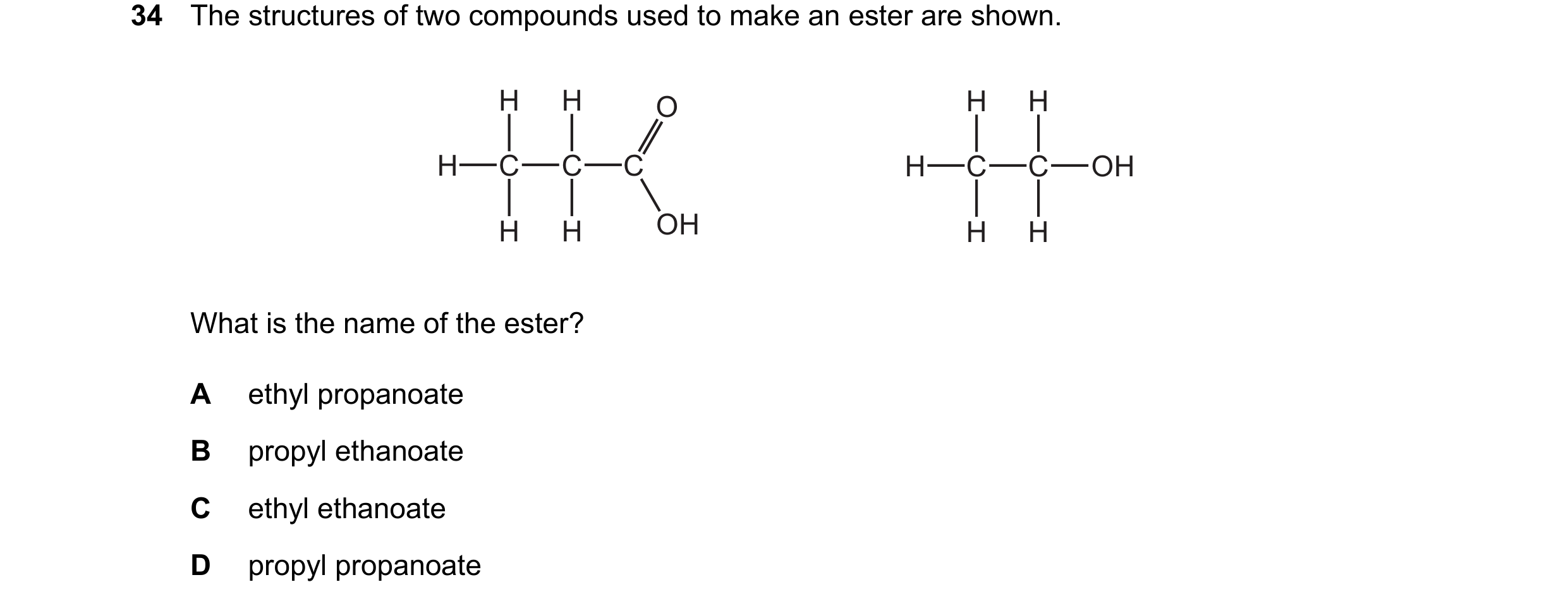
 6 / 7
6 / 7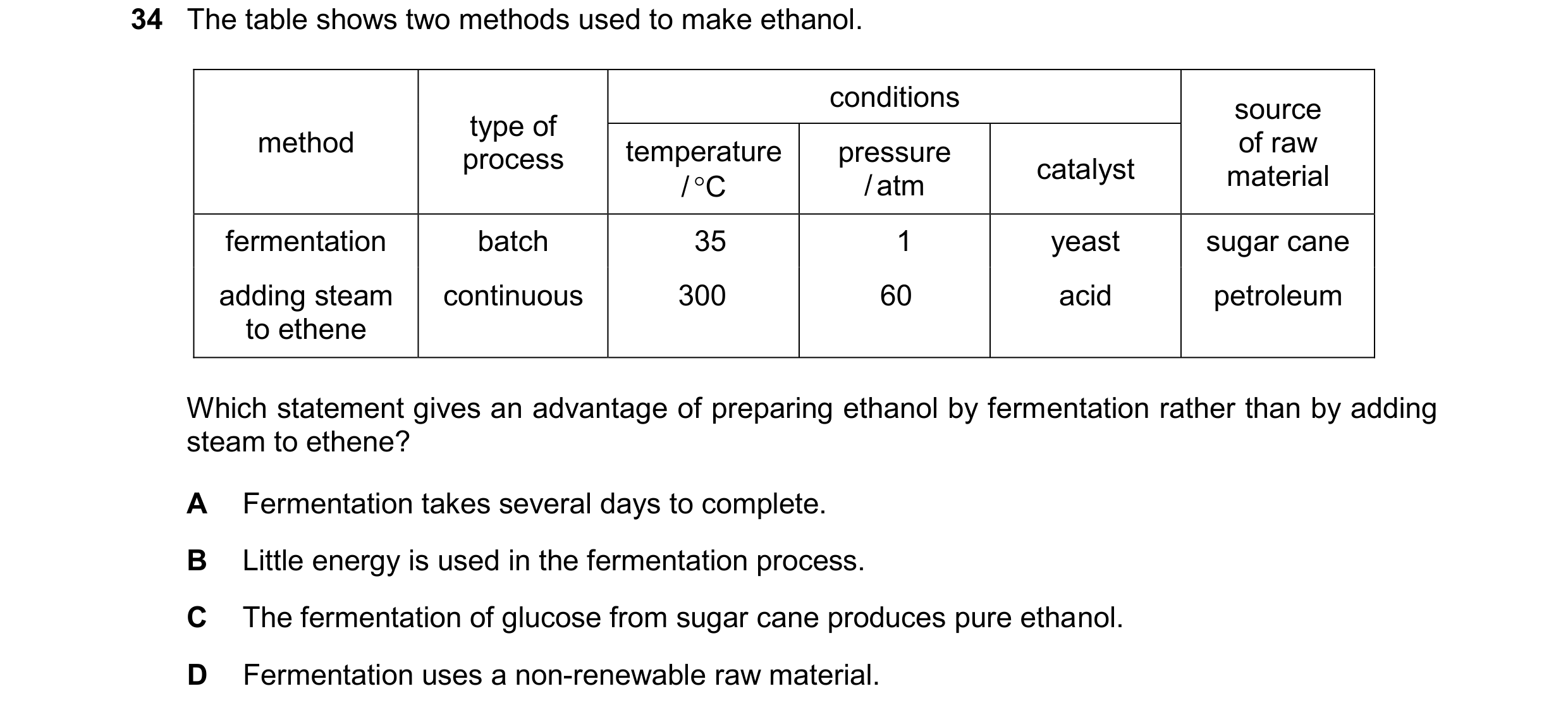

 7 / 7
7 / 7