Questions as text
Q1 · Wearable, or body-borne, computers are miniature electronic devices worn by the bearer 9626/32 Feb/March 2017
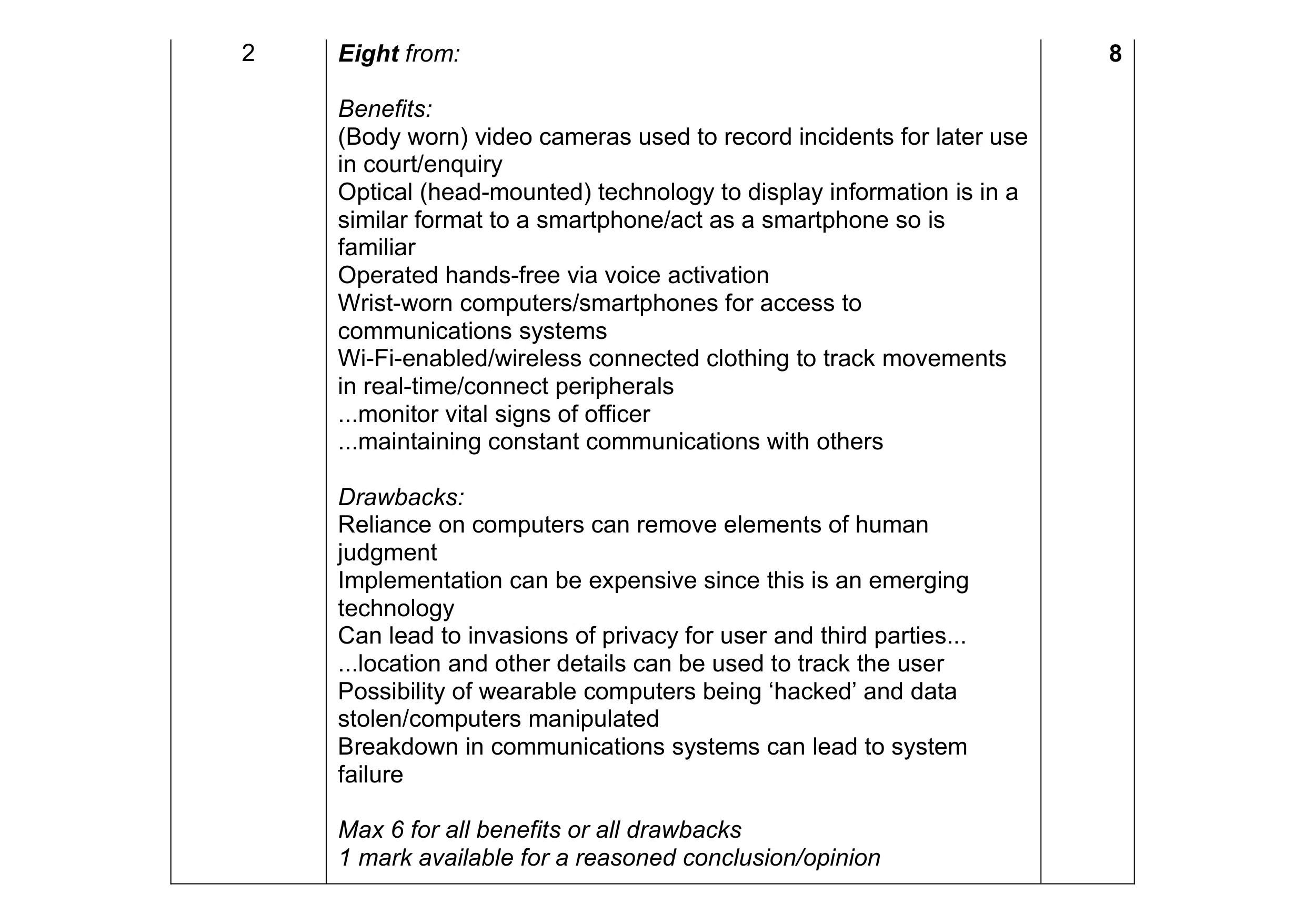
2 Wearable, or body-borne, computers are miniature electronic devices worn by the bearer. Analyse the use of wearable computers by the police. … … … … … … … … … … … … … … … … … … … … [8]
8 marks
Mark scheme: 2 Eight from: 8 Benefits: (Body worn) video cameras used to record incidents for later use in court/enquiry Optical (head-mounted) technology to display information is in a similar format to a smartphone/act as a smartphone so is familiar Operated hands-free via voice activation Wrist-worn computers/smartphones for access to communications systems Wi-Fi-enabled/wireless connected clothing to track movements in real-time/connect peripherals ...monitor vital signs of officer ...maintaining constant communications with others Drawbacks: Reliance on computers can remove elements of human judgment Implementation can be expensive since this is an emerging technology Can lead to invasions of privacy for user and third parties... ...location and other details can be used to track the user Possibility of wearable computers being ‘hacked’ and data stolen/computers manipulated Breakdown in communications systems can lead to system failure Max 6 for all benefits or all drawbacks 1 mark available for a reasoned conclusion/opinion
This question in 9626/32 Feb/March 2017
Q2 · Evaluate the use of 3D printing for manufacturing goods 9626/31 May/June 2017
7 Evaluate the use of 3D printing for manufacturing goods. … … … … … … … … … … … … … … … … … … … … … [8]
8 marks
Mark scheme: 7 Eight from: 8 Advantages Easier to customise products such as pills to users specific requirements/genetic makeup Printing can be done remotely so no need to transport the final product from factory to destination Prototypes can be produced more rapidly for testing so production is speeded up Manufacturing of product may be faster than traditional methods so product is available sooner Costs may be reduced due to reduction in tooling costs/ less need for specialist machinery No need to store excess inventory/reduced warehouse costs Can produce items/spare parts in harsh environments where traditional methods may not be feasible/possible Disadvantages Limited materials available for printing so product range is restricted/materials may not be suitable for product’s eventual use Copyright issues arise as easier for anyone to print the product Dangerous items can be more easily created e.g. Knives/guns Useless items produced and thrown away these have an environmental impact Limited size of products due to restrictions on size of printer Printing can be quite slow compared to traditional manufacturing. Max 6 for all advantages or all disadvantages. 1 mark available for a reasoned conclusion/opinion.
This question in 9626/31 May/June 2017
Q3 · Quick Response (QR) codes are used in marketing to convey information to users 9626/32 May/June 2017
6 Quick Response (QR) codes are used in marketing to convey information to users. (a) Describe how a QR code stores information. … … … … … … … … … … [4] (b) Describe the benefits to advertisers of using QR codes on their products. … … … … … … [2] (c) Describe how a QR code may put the user at risk from malicious code. … … … … … … … … … … [4]
10 marks
Mark scheme: 6(a) Four from: 4 Information stored digitally as blocks of black/white squares Small dots throughout code converted to binary numbers when scanned «error correction algorithm used for validation Variety of encoding methods available which can be mixed Three larger squares store alignment data Smaller squares store angle/size data Scanned with narrow beam of light «reflection from white areas read by light sensor/camera May take up less space on packaging. 6(b) Two from: 2 Information is instantly available to consumers Advertiser can decide the action the consumer takes when code is scanned QR codes are a proven (ISO) standard to be accessible to all Available information can be updated more easily Use of QR codes is measureable so can be analysed Reprinting of advertising material is reduced. 6(c) Four from: 4 Code may contain URL link Web link followed URL contains a Trojan that infects the device Trojan is JavaScript «which contacts servers that transmit malware to device Use cross-site scripting vulnerability on a legitimate website to insert a malicious QR code in place of code «when a web browser opens the legitimate site, the QR code references the hacker's site Malicious QR codes can allow unauthorised people to control cell/mobile phones to access messages/GPS/turn on the camera(s)/listen in on phone conversations.
This question in 9626/32 May/June 2017
Q4 · Evaluate the use of 3D printing for manufacturing goods 9626/33 May/June 2017
7 Evaluate the use of 3D printing for manufacturing goods. … … … … … … … … … … … … … … … … … … … … … [8]
8 marks
Mark scheme: 7 Eight from: 8 Advantages Easier to customise products such as pills to users specific requirements/genetic makeup Printing can be done remotely so no need to transport the final product from factory to destination Prototypes can be produced more rapidly for testing so production is speeded up Manufacturing of product may be faster than traditional methods so product is available sooner Costs may be reduced due to reduction in tooling costs/ less need for specialist machinery No need to store excess inventory/reduced warehouse costs Can produce items/spare parts in harsh environments where traditional methods may not be feasible/possible Disadvantages Limited materials available for printing so product range is restricted/materials may not be suitable for product’s eventual use Copyright issues arise as easier for anyone to print the product Dangerous items can be more easily created e.g. Knives/guns Useless items produced and thrown away these have an environmental impact Limited size of products due to restrictions on size of printer Printing can be quite slow compared to traditional manufacturing. Max 6 for all advantages or all disadvantages. 1 mark available for a reasoned conclusion/opinion.
This question in 9626/33 May/June 2017
Q5 · Virtual reality and augmented reality are technologies used in medicine 9626/32 Oct/Nov 2017
2 Virtual reality and augmented reality are technologies used in medicine. Explain the difference between virtual reality and augmented reality. … … … … … … … … … … [4]
4 marks
Mark scheme: 2 Four from: 4 Augmented reality is computer-generated supplement to real world «in real time ...reality is modified by/overlaid with artificial information ...used to e.g. project remote surgeons hands into real operation ...used to show (by means of handheld scanner) nurses/doctors Where arteries and veins are in body ...used to allow users/students to manipulate a skeletal model Which has augmented reality targets attached Virtual reality is computer-generated replacement of real world ...simulates physical presence in a real/virtual world ...used in ‘exposure therapy’ e.g. to overcome fears such as flying.
This question in 9626/32 Oct/Nov 2017
Q6 · Describe how wearable computers can enhance health care 9626/32 Feb/March 2018
7 Describe how wearable computers can enhance health care. … … … … … … … … … … … … … … … … … … … … [8]
8 marks
Mark scheme: 7 Eight from e.g.: 8 Help physicians/doctors monitor and diagnose illness/disease Data transferred directly by head up display/to retina of doctor/ anaesthetist/ surgeon during medical procedures Less time spent on reading/tracking data Wearable systems (e.g. e-skin) on patients including sensors send data direct to doctors Enhance patient-doctor interaction Patients have more access to data Doctors can monitor remotely Assist in medical procedures/surgery Access to digital images during procedures/overlay of images onto procedure Remote guidance during procedures/emergency assistance Assist/allow patients to manage and control pain Implantable systems to control diabetes/blood pressure/food intake/activity Improve employment of personal fitness regimes Fitness bands to track activity/sleep patterns Educate patients in their health Patients can monitor own health and be aware of changes/conditions and make decisions themselves.
This question in 9626/32 Feb/March 2018
Q7 · Discuss the benefits and drawbacks of the use of satellite technology in global… 9626/31 May/June 2018
5 Discuss the benefits and drawbacks of the use of satellite technology in global positioning systems (GPS). … … … … … … … … … … … … … … … … … … … … [8]
8 marks
Mark scheme: 5 This question to be marked as a Level of Response. 8 Level 3 (7–8 marks) Candidates will discuss in detail, giving both benefits and drawbacks, of the use of the use of satellite technology in global positioning systems (GPS). The information will be relevant, clear, organised and presented in a structured and coherent format. There will be a reasoned conclusion/opinion. Subject specific terminology will be used accurately and appropriately. Level 2 (4–6 marks) Candidates will explain the use, giving a benefit and drawback, of the use of satellite technology in global positioning systems (GPS). For the most part, the information will be relevant and presented in a structured and coherent format. There may be a reasoned conclusion/opinion. Subject specific terminology will be used appropriately and for the most part correctly. Level 1 (1–3 marks) Candidates will describe, with a least one benefit/ drawback, of the use of the use of satellite technology in global positioning systems (GPS). Answers may be in the form of a list. There will be little or no use of specialist terms. Level 0 (0 marks): Response with no valid content. Answers may make reference to e.g.: Benefits include: Access to satellite signals is available over most of surface of earth unlike signals from terrestrial transmitters Transmission of GPS signals is not dependent on political boundaries Satellite signals are accessible over oceans where terrestrial transmissions are difficult to receive due to the long distances from land Signals are available to anyone who wishes to use them (unless switched off by operator of satellite) Satellites are vandal-proof/ inaccessible to those who would physically attempt to disrupt their function Drawbacks include: Requires a large number (c.25 to 35) of satellites to be in orbit to provide adequate coverage of terrain Cannot easily be repaired if malfunctioning Requires at least 3, preferably 4, satellites to be visible to / received by GPS receiver to achieve reliable/accurate positioning Satellite signals are blocked by solid objects/buildings/in tunnels/trees/dense clouds/ snow storms so, in these circumstances, GPS receivers may« «fail to provide locations «may provide erroneous locations.
This question in 9626/31 May/June 2018
Q8 · Holographic imaging is an emerging technology 9626/32 May/June 2018
2 Holographic imaging is an emerging technology. Describe how holographic imaging could be used in the field of medicine. … … … … … … … … … … … … … … … … … … … … [8]
8 marks
Mark scheme: 2 Eight from e.g.: 8 X-ray holography can be used for imaging internal organs of the body No need for invasive surgery Used for living biological specimens With very high resolution without the need for sample preparation Endoscopic holography is used for producing high resolution 3D imaging With no contact/non-destructive measurements inside the natural cavities of internal organs Ophthalmology use to correct problems with lenses implanted after cataract surgery In dentistry to store dental records of tooth prints as training aids for students In otology (ear studies) to study the vibrations forces/how the inner ear bones move In orthopaedics to measure strains/forces on fixation pins/rods 3D images of biological specimens can be created from a series of 2D radiological images Using holographic stereogram techniques/conical stereogram/ multiplex hologram Holographic contour generation is useful for measurements of biomedical specimens.
This question in 9626/32 May/June 2018
Q9 · Describe how holographic optical disk storage technology uses lasers to store vast… 9626/33 May/June 2018
7 Describe how holographic optical disk storage technology uses lasers to store vast amounts of data. … … … … … … … … … … … … … … [6]
6 marks
Mark scheme: 7 Six from: 6 Green and red lasers used Light from both is sent in parallel stream/collimated There is minimal divergence Output about 1 watt Green laser reads the data from top layer of disc Data stored as holographic laser interference patterns Red laser reads reference data stored on aluminium layer at/near bottom of disc layers This is the servo information for accurately aligning the read head position over the disc A (dichroic) mirror allows the red laser light to pass while reflecting the green layer Stores c. 60 000 bits per pulse in densely packed tracks Compared to a single/one bit per pulse for current optical storage Can store 100 GB to 1 TB Phase storage systems can store more data.
This question in 9626/33 May/June 2018
Q10 · Describe how vision enhancement technology can assist visually impaired people when… 9626/33 May/June 2018
9 (a) Describe how vision enhancement technology can assist visually impaired people when walking around a shopping street. … … … … … … … … … … … … … … [6] (b) Describe two other uses of vision enhancement technology. … … … … … … [2]
8 marks
Mark scheme: 9(a) Six from: 6 Enhance shape outlines for objects to make them more apparent Enlarge signs to make the words more readable Change colours of objects to make them more visible Detect signs/objects in visual range and produce warning sounds to accompany the images User learns sounds and associates with object for future reference Infra-red light amplified to enhanced vision in poor light dark conditions. 9(b) Two from e.g.: 2 Military operations at night to spot the enemy Enhance vision when night driving e.g. taxi, truck drivers Improving age-related vision problems Detecting chemicals for forensic purposes Detecting heat loss from e.g. buildings/people.
This question in 9626/33 May/June 2018
Q11 · 3D printing is used in medicine 9626/32 Feb/March 2019
5 3D printing is used in medicine. (a) Describe two benefits of being able to produce artificial blood vessels by 3D printing. … … … … … … [2] (b) Describe how 3D printing could be used, apart from producing drugs at home, to improve the effectiveness of the manufacture of prescription drugs. … … … … … … … … … … [4] (c) Describe the drawbacks of using 3D printing at home to produce prescription drugs. … … … … … … … … … … [4]
10 marks
Mark scheme: 5(a) Two from: 2 No need to wait for real/native blood vessels to grow into implanted /repaired tissue Allows oxygen/O2 to be supplied immediately to implant which is more likely to survive/grow Vessels can be customised for the individual organ which is more likely to fit Less likely to be rejected by recipient than real blood vessels. 5(b) Four from: 4 Chemical components of the drug can be customised at molecular level to individual patient Drug can be customised to deal with patient specific issues/ethnic origin/DNA A chemical blueprint can be created so that the drug can be printed at any pharmacy/druggist/drug store ...using specific components/compounds Drug can be personalised for/targeted to a specific illness/infection. 5(c) Four from: 4 Human errors in use of blueprints/mislabelling can lead to incorrect drug being created ...incorrect dosage being used Difficult to validate/verify drug creation so, e.g. incorrect base materials may be used Difficult to regulate use of the drug/printing machines across (international) borders Difficult to regulate the supply of the drugs once blueprint is published/available to patient Bio-safety/hygiene/sanitary/cleanliness of production difficult to control at home Could be used/customised to produce illegal drugs.
This question in 9626/32 Feb/March 2019
Q12 · Discuss the impact of wearable computers in manufacturing 9626/31 May/June 2019
11 Discuss the impact of wearable computers in manufacturing. … … … … … … … … … … … … … … [6]
6 marks
Mark scheme: 11 Command word: Discuss: give important arguments for and against. 6 Often requires a conclusion, this command word requires ‘Analysis’ and ‘Evaluation’ Six from: Advantages: First person / heads up display via headsets can enhance monitoring of processes in real time from wearers point of view Can allow enhanced monitoring of employee activity via wearable devices on shop floor Can track every step of activity in manufacturing by employee activity Can allow enhanced / better manufacturing processes via wearable devices that view / transmit live data from activity Faults can be directly entered into fault database / expert system of company Can improve employee safety due to ability to remotely control machinery while on shop floor / using wearable devices Sensors can provide information about environment for working Disadvantages: Positioning of devices on body can lead to inaccuracies in the data / actions performed Wearable devices need power so have to carry heavy batteries Wearable devices need charging so have downtime. Staff may not wish to be monitored. Max. 5 if all advantages or all disadvantages.
This question in 9626/31 May/June 2019
Q13 · Analyse the use of virtual reality in healthcare 9626/31 May/June 2019
12 Analyse the use of virtual reality in healthcare. … … … … … … … … … … … … … … [6]
6 marks
Mark scheme: 12 Command word: Analyse: explain the main points or effectiveness in 6 detail, identify their characteristics, examine closely. Six from e.g.: Use for VR therapy for psychological / occupational therapy Patients can interact with harmless representations of trauma-causing stimuli to reduce fear Can be used to treat depression instead of use of drugs Patient can role play in a fantasy world to help manage the depression Can be used improve the skills of autistic patients by providing controllable, different environments Can be used to train healthcare professionals using simulations Simulations provides a safe and repeatable set of activities Can perform operations remotely reducing surgeon travel time / allowing patients access to surgeons around the world Can allow patients to experience the operation before they actually have the procedure so are reassured / less worried.
This question in 9626/31 May/June 2019
Q14 · Discuss the impact of wearable computers in manufacturing 9626/33 May/June 2019
11 Discuss the impact of wearable computers in manufacturing. … … … … … … … … … … … … … … [6]
6 marks
Mark scheme: 11 Command word: Discuss: give important arguments for and against. 6 Often requires a conclusion, this command word requires ‘Analysis’ and ‘Evaluation’ Six from: Advantages: First person / heads up display via headsets can enhance monitoring of processes in real time from wearers point of view Can allow enhanced monitoring of employee activity via wearable devices on shop floor Can track every step of activity in manufacturing by employee activity Can allow enhanced / better manufacturing processes via wearable devices that view / transmit live data from activity Faults can be directly entered into fault database / expert system of company Can improve employee safety due to ability to remotely control machinery while on shop floor / using wearable devices Sensors can provide information about environment for working Disadvantages: Positioning of devices on body can lead to inaccuracies in the data / actions performed Wearable devices need power so have to carry heavy batteries Wearable devices need charging so have downtime. Staff may not wish to be monitored. Max. 5 if all advantages or all disadvantages.
This question in 9626/33 May/June 2019
Q15 · Analyse the use of virtual reality in healthcare 9626/33 May/June 2019
12 Analyse the use of virtual reality in healthcare. … … … … … … … … … … … … … … [6]
6 marks
Mark scheme: 12 Command word: Analyse: explain the main points or effectiveness in 6 detail, identify their characteristics, examine closely. Six from e.g.: Use for VR therapy for psychological / occupational therapy Patients can interact with harmless representations of trauma-causing stimuli to reduce fear Can be used to treat depression instead of use of drugs Patient can role play in a fantasy world to help manage the depression Can be used improve the skills of autistic patients by providing controllable, different environments Can be used to train healthcare professionals using simulations Simulations provides a safe and repeatable set of activities Can perform operations remotely reducing surgeon travel time / allowing patients access to surgeons around the world Can allow patients to experience the operation before they actually have the procedure so are reassured / less worried.
This question in 9626/33 May/June 2019
Q16 · Robotic delivery systems are being used by organisations to deliver goods direct to… 9626/32 Oct/Nov 2019
7 Robotic delivery systems are being used by organisations to deliver goods direct to customers. Evaluate the use of robotics in the delivery of goods. … … … … … … … … … … … … … … … … … … … … [8]
8 marks
Mark scheme: 7 Command word: Evaluate: discuss the importance of, weigh up, the 8 advantages and disadvantages, judge the overall effectiveness, weigh up your opinions. This question to be marked as a Level of Response. Level 3 (7–8 marks) Candidates will evaluate in detail the advantages and disadvantages of the use of robotics by delivery companies The information will be relevant, clear, organised and presented in a structured and coherent format. There may be a reasoned conclusion/opinion. Subject specific terminology will be used accurately and appropriately. Level 2 (4–6 marks) Candidates will explain the advantages and disadvantages of the use of robotics by delivery companies For the most part, the information will be relevant and presented in a structured and coherent format. There may be a reasoned conclusion/opinion. Subject specific terminology will be used appropriately and for the most part correctly. Level 1 (1–3 marks) Candidates will describe at least one advantage and at least one disadvantage of the use of robotics by delivery companies Answers may be in the form of a list. There will be little or no use of specialist terms. Level 0 (0 marks): Response with no valid content. Answers may make reference to e.g.: Airborne drones do not need roads Airborne drones have direct routes to recipients Airborne drones do not need drivers Can provide ‘last mile’ delivery options/handle small orders over limited distances Can provide assistance for elderly/disabled when collecting items e.g. prescriptions/groceries Use of robotic systems for room service in hotels may not be popular with guests due to use of cameras and recording systems Requirement for GPS and cameras to enable robotic delivery system to navigate and negotiate roads/sidewalks Require PIN code/smartphone access to collect goods Airborne drones have limited carrying capacity Airborne drones have limited range Airborne drones are liable to interception with no immediate source of help/prevention by humans
This question in 9626/32 Oct/Nov 2019
Q17 · Evaluate the impact of holographic imaging on medicine 9626/32 Oct/Nov 2019
14 Evaluate the impact of holographic imaging on medicine. … … … … … … … … … … [4]
4 marks
Mark scheme: 14 Four from: 4 Advantages: You can see inside the patient without the need for surgery Can look at patient’s condition from more angles than using exploratory surgery Can see what's happening with the anatomy while carrying out a procedure Makes training more realistic – three dimensional rather than two Disadvantages: Initial cost of the machinery/software required to produce holographs Expense of training technicians/doctors to use software Greater disk storage space is needed than with X-ray images.
This question in 9626/32 Oct/Nov 2019
Q18 · Describe how 3D printing would be used when creating objects for use in space exploration 9626/32 Feb/March 2020
4 Describe how 3D printing would be used when creating objects for use in space exploration. … … … … … … … … … … … … … … [6]
6 marks
Mark scheme: 4 Six from: 6 Can create/print/manufacture ‘hard-to-build’ objects/objects with complex geometry for space vehicles/craft/satellites (e.g. rocket nozzles, antennae) …saves weight/increases strength/rigidity of objects when printed as one part Can make designs simpler as no need to take into account the cutting tools/design create cutting tools …objects can be created with less bulk, reducing launch costs Used to create/print/manufacture replacement parts to order Used to create/print/manufacture specialist tools/medical instruments when needed No need to carry a collection of spare parts/tools so saving weight/space Low volume/one off objects can be created at low cost so reducing costs of materials and manufacturing, lowering the cost of space vehicles Models of new designs for space vehicles/parts can be quickly created Can create lattice structures instead of solid. These have reduced weight Delicate items can be printed in space to avoid stress of launch Items can be created and tested as 3D objects with no joins/welds that might be unsafe/problematic in space.
This question in 9626/32 Feb/March 2020
Q19 · Describe how computer-controlled 3D printing creates objects 9626/31 May/June 2020
1 (a) Describe how computer-controlled 3D printing creates objects. … … … … … … … … … … [4] (b) Describe, with examples, how 3D printing can be used in medicine by surgeons when treating patients. … … … … … … … … … … … … … … [6]
10 marks
Mark scheme: Question Answer Marks 1(a) Four from: 4 Computer file contains (standard triangle language (STL)) instructions for creating/printing object. File is produced from CAD application/software. Software breaks object into layers. Creates (3D) solid objects from computer instructions. Object is created/produced from liquid/powder material. Process is additive/material is added to existing material/layer by layer. Material in layers of binder material and powder/liquid (by inkjet printer). Printed object is finished by removing support parts. Any oversize printing is removed and finishing is done with fine grinding/polishing. 1(b) Six from e.g.: 6 Re-creation/repair of damaged bone structures by printing customised structures for use in surgical procedures. Creation of customised surgical implants to match patient anatomy. Creation of customised surgical prostheses to aid recovery. Bioprinting of tissues for use in surgical procedures/recovery. Creation of customised anatomical models for planning surgery/surgical preparation. Creation of customised surgical tools to match patient requirements. Creation of customised jigs/frames for use in surgical theatres/operating rooms.
This question in 9626/31 May/June 2020
Q20 · Ultra-high definition television is available from video streaming services over the… 9626/31 May/June 2020
2 Ultra-high definition television is available from video streaming services over the internet. (a) Describe the features of ultra-high definition television systems that improve the viewing experience. … … … … … … … … [3] (b) Analyse how the different types of transmission media used by internet service providers affect the availability of ultra-high definition television to their customers. … … … … … … … … … … … … … … … … … … … … [8]
11 marks
Mark scheme: 2(a) Three from: 3 UHD has resolution of 4 times the number of pixels as HD/3840 × 2160 pixels (8.29 megapixels) v. 1920 × 1080 pixels (2.07 megapixels). UHD has resolution of 4K/4096 × 2160 pixels. UHD has resolution of 8K/7680 × 4320 pixels (33.18 megapixels)/16 times HD. Increased dynamic range compared to HD. Increased colour depth compared to HD. More LEDs in a given area on screen increase the resolution so there is more detail. 2(b) Eight from e.g.: 8 Internet bandwidth of c.25 megabits/sec is required. Bandwidth required for UHD is not available to all customers/from all internet providers. Satellite transmissions/signals can provide required bandwidth. Reduced number of channels will be available unless new satellites are brought into service. Wireless/mobile telephone/4G networks have restricted bandwidth so cannot provide ultra HD. Introduction of 5G will make ultra HD available but will require new phones. Copper cable networks can provide bandwidth/up to 100 Mbit/s as Cat 5 ethernet/Cat 6 1 Gbit/s. Copper telephone cabling can provide ultra HD. Distance from exchange is limited as bandwidth reduces over distance. Fibre optic cables can provide high bandwidth (10 Gbit/s). Cost of use of fibre to home/installation to home is high. Fibre to cabinet (FTC) may provide UHD to more homes. Fibre allows much longer cable runs so may reduce installation costs over long distances from exchange to home.
This question in 9626/31 May/June 2020
Q21 · Many countries use holographic images on their bank notes 9626/32 May/June 2020
2 Many countries use holographic images on their bank notes. (a) Describe how a holographic image is created. … … … … … … … … … … [4] (b) Give one reason why countries use holographic images on their bank notes. … … … [1] (c) Describe two other uses of holographic imaging. … … … … … … … … … … [4]
9 marks
Mark scheme: 2(a) Four from: 4 Use of laser lights (from different directions) to form interference patterns. Use of object beam and reference (laser) beams/coherent light with one wavelength. Object beam is passed through scene onto recording medium/high definition plate/polymer plate. Reference beam hits only recording medium. Object and reference beams create interference pattern and create image on a (photographic) plate/recording medium placed where the beams hit. Medium and beams must not move/must be stationary/thermally stable. Reference beam is used to recreate hologram from pattern on plate by diffraction. Holographic images may be copied by embossing/photographic techniques. Holographic images may be viewed in ordinary/white light. 2(b) One from: 1 Holographic images are difficult to forge. Information may be (secretly) stored in a holographic image for security/identifying the source of the image/additional data about the notes. 2(c) Max two marks per application/use: 4 For storing large/vast amounts/several terabytes of data on small/12cm optical disks … green lasers used to read data and red lasers as reference beams. Used in video/movie/video game industry to create artificial worlds/scenarios. To create 3D images into the video/movie world/scenario. Artists can use holographic images to enhance their work. Used to insert 3D images into 2D paintings. Medicine can use holographic imagery to create 3D images. Used in diagnosis/surgery to assist doctors. Shipping companies can create 3D images of package/shipments. Can assist in load distribution/packing items into containers. Used on credit cards/passports for security. Holographic logos/images used to identify brand/company. Holographic logos/images are very difficult to copy/replicate/remove.
This question in 9626/32 May/June 2020
Q22 · Robotics combined with artificial intelligence is having an impact on the human… 9626/32 May/June 2020
5 Robotics combined with artificial intelligence is having an impact on the human environment. (a) Describe what is meant by robotics. … … … … … … [2] (b) By weighing up the advantages and disadvantages, evaluate the impact on the human environment of combining artificial intelligence with robotics. … … … … … … … … … … … … … … … … … … … … [8]
10 marks
Mark scheme: 5(a) Two from: 2 Design and construction of robots. Operation of robots. (Use of) computer systems or control/sensory feedback/information processing in/by robots. 5(b) Eight from: 8 Advantages: Artificial Intelligence (AI) in robotics enables closer interaction between robotic and human. Robotics used in homes for domestic duties/cleaning reduce human work. Use of AI-robots in medicine to perform surgery so saving doctors’ salary/provide more surgeons. Use of AI-robots in medicine to perform surgery can speed up surgery/allow a greater number of surgery operations. Use of AI-robots in caring for sick/elderly humans reduces the need for carers/cost of carers. Disadvantages: Artificial Intelligence (AI) in robotics enables intrusion into/sharing of workspace of humans. Robotics used in homes for domestic duties/cleaning enquire power source/recharging at intervals leading to increased costs. Robots used in homes for domestic duties/cleaning may not be so thorough/discerning/adaptable as humans. Robots have displaced humans from jobs. Robots resembling humans in appearance and actions present more challenging interaction/threats. AI-robots consume more resources/power than simple robots. Social interaction between AI-robot and human requires safety procedures to be in evidence/present to safeguard both AI-robots and humans. Socially correct interaction needs to be in evidence/present to safeguard humans. AI needs to provide communication skills that humans can interact with. Humans may perceive robots as living entities rather than machines which may cause confusion/embarrassment/danger to humans. Some tasks are more acceptable/unacceptable if AI-robot is humanoid in shape. Development of rules/etiquette for AI-driven robots that is comfortable/acceptable to humans. Collaboration between humans and robots is possible with AI. Can provide shared control of devices/functions. Requires AI and systems for understanding social cues from humans. Social cues may be misinterpreted/misunderstood leading to distress on the part of the human. Must have at least 1 from each to gain full marks.
This question in 9626/32 May/June 2020
Q23 · By weighing up the advantages and disadvantages, evaluate the impact of tissue… 9626/32 May/June 2020
7 By weighing up the advantages and disadvantages, evaluate the impact of tissue engineering on medicine. … … … … … … … … … … … … … … … … … … … … [8]
8 marks
Mark scheme: 7 Eight from: 8 Advantages: Tissue engineering uses biological materials/cell methods to replace/improve/alter biological structures/tissues with a greater success rate in patients. Tissue engineering uses biochemical techniques to replace/improve/alter biological structures/tissues with a greater success rate in patients. Development/use of substitute materials for tissues has reduced costs. Reduces the need for biological donors e.g. use of artificial blood/skin. Reduces the recovery times for patients. Reduces the risk of tissue rejection. Can produce customised tissues/organs/cells for individual patients. Development/use of artificial organs has increased survival/recovery rates e.g. use of artificial liver/pancreas/cartilage/bone marrow. Religious objections to using donated organs/tissue can be overcome using artificial tissues. Production of artificial meat products reduces environmental impact of animal farming. Disadvantages: Can be very costly to carry out if sufficient base/original material is limited so new material must be developed. May not be sufficient base/original material available for development. Possible inclusion of hidden diseases/conditions in base tissue. Latent diseases are difficult to find with current technology. Ethical issues are difficult to resolve. Can increase the treatment time as tissue can take longer to grow/synthesise. Must have at least 1 from each to gain full marks.
This question in 9626/32 May/June 2020
Q24 · Describe how computer-controlled 3D printing creates objects 9626/33 May/June 2020
1 (a) Describe how computer-controlled 3D printing creates objects. … … … … … … … … … … [4] (b) Describe, with examples, how 3D printing can be used in medicine by surgeons when treating patients. … … … … … … … … … … … … … … [6]
10 marks
Mark scheme: Question Answer Marks 1(a) Four from: 4 Computer file contains (standard triangle language (STL)) instructions for creating/printing object. File is produced from CAD application/software. Software breaks object into layers. Creates (3D) solid objects from computer instructions. Object is created/produced from liquid/powder material. Process is additive/material is added to existing material/layer by layer. Material in layers of binder material and powder/liquid (by inkjet printer). Printed object is finished by removing support parts. Any oversize printing is removed and finishing is done with fine grinding/polishing. 1(b) Six from e.g.: 6 Re-creation/repair of damaged bone structures by printing customised structures for use in surgical procedures. Creation of customised surgical implants to match patient anatomy. Creation of customised surgical prostheses to aid recovery. Bioprinting of tissues for use in surgical procedures/recovery. Creation of customised anatomical models for planning surgery/surgical preparation. Creation of customised surgical tools to match patient requirements. Creation of customised jigs/frames for use in surgical theatres/operating rooms.
This question in 9626/33 May/June 2020
Q25 · Ultra-high definition television is available from video streaming services over the… 9626/33 May/June 2020
2 Ultra-high definition television is available from video streaming services over the internet. (a) Describe the features of ultra-high definition television systems that improve the viewing experience. … … … … … … … … [3] (b) Analyse how the different types of transmission media used by internet service providers affect the availability of ultra-high definition television to their customers. … … … … … … … … … … … … … … … … … … … … [8]
11 marks
Mark scheme: 2(a) Three from: 3 UHD has resolution of 4 times the number of pixels as HD/3840 × 2160 pixels (8.29 megapixels) v. 1920 × 1080 pixels (2.07 megapixels). UHD has resolution of 4K/4096 × 2160 pixels. UHD has resolution of 8K/7680 × 4320 pixels (33.18 megapixels)/16 times HD. Increased dynamic range compared to HD. Increased colour depth compared to HD. More LEDs in a given area on screen increase the resolution so there is more detail. 2(b) Eight from e.g.: 8 Internet bandwidth of c.25 megabits/sec is required. Bandwidth required for UHD is not available to all customers/from all internet providers. Satellite transmissions/signals can provide required bandwidth. Reduced number of channels will be available unless new satellites are brought into service. Wireless/mobile telephone/4G networks have restricted bandwidth so cannot provide ultra HD. Introduction of 5G will make ultra HD available but will require new phones. Copper cable networks can provide bandwidth/up to 100 Mbit/s as Cat 5 ethernet/Cat 6 1 Gbit/s. Copper telephone cabling can provide ultra HD. Distance from exchange is limited as bandwidth reduces over distance. Fibre optic cables can provide high bandwidth (10 Gbit/s). Cost of use of fibre to home/installation to home is high. Fibre to cabinet (FTC) may provide UHD to more homes. Fibre allows much longer cable runs so may reduce installation costs over long distances from exchange to home.
This question in 9626/33 May/June 2020
Q26 · Describe how robotics are being used in space exploration 9626/32 Oct/Nov 2020
8 Describe how robotics are being used in space exploration. … … … … … … … … … … … … … … [6]
6 marks
Mark scheme: 8 Six from e.g.: 6 Can be used to aid/augment/replace humans in space exploration Assist/used for tasks (accept examples) in hazardous conditions e.g. high radiation/extreme temperatures where humans cannot go/work Automatic/autonomous spacecraft for space exploration/research at long distances/time Automatic/autonomous spacecraft for delivery of resources to/return of materials from e.g. ISS Automatic/autonomous machines for repair of space objects/satellites Robotic arms fitted to space craft to move (large) objects Automatic/autonomous vehicles for exploration of other worlds/space objects.
This question in 9626/32 Oct/Nov 2020
Q27 · Virtual reality and augmented reality are used when training firefighters 9626/32 Feb/March 2021
2 Virtual reality and augmented reality are used when training firefighters. (a) Describe the differences between virtual reality and augmented reality. … … … … … … [2] (b) Describe the advantages of using virtual reality when training firefighters. … … … … … … … … … … … … … … [6]
8 marks
Mark scheme: 2(a) Virtual reality creates a 3D environment that excludes/does not include the 2 real world Augmented reality overlays digital elements onto a live view of the world/environment. 2(b) Six from: 6 Firefighters can be trained in a safe environment Training experience is more realistic than other methods/presentations Training uses all/more senses to experience the event/scenario Firefighter can experience a range of/more scenarios for training Firefighter can interact with others doing the same training Firefighters are more likely to retain the information/experience/gain confidence than if it was presented as presentations/notes Firefighters can access the training at any time Training can be carried out wherever they wish Training scenarios can be repeated at any time Resources are saved and are less costly.
This question in 9626/32 Feb/March 2021
Q28 · Holographic imaging is used in industrial applications 9626/32 Feb/March 2021
6 Holographic imaging is used in industrial applications. Describe, in detail, how holographic imaging could be used in each of the following scenarios: (a) an astronaut in a spacecraft … … … … … … [2] (b) a car manufacturing process … … … … … … [2] (c) a doctor in a hospital. … … … … … … [2]
6 marks
Mark scheme: 6(a) Create a heads-up display in screen/in line of sight of astronauts 2 Use of a holographic filter/screen to project data from flight instruments/targeting data into forward view of astronaut. 6(b) Two from: 2 Use of laser light to create images/holograms/highly accurate images of items during production Compare dimensions of items with required dimensions For real-time/instantaneous quality control. 6(c) Two from: 2 Create 3D images of organs/body/surgical areas Doctor can practise movement/techniques before actual surgery Anatomy training Have patient details displayed in line of sight, providing more sanitary environment than paper/screen.
This question in 9626/32 Feb/March 2021
Q29 · Computer-assisted translation (CAT) can be used by companies whose products and services… 9626/32 May/June 2021
7 Computer-assisted translation (CAT) can be used by companies whose products and services are available worldwide. (a) Describe how CAT could be used by a software company creating computer games that are available in many different countries. … … … … … … … … … … … … … … [6] (b) Describe the benefits to the company of using CAT. … … … … … … [2] (c) Describe one drawback of the company relying on CAT for translations in computer games. … … … [1]
9 marks
This question in 9626/32 May/June 2021
Q30 · Biometric payment systems can be used to pay for school meals 9626/32 May/June 2021
8 Biometric payment systems can be used to pay for school meals. Students do not need to carry or use a payment card to buy goods but can use their fingerprints at the Point-of-Sale terminal. (a) Describe three components of a biometric payment system that might be used. … … … … … … … [3] (b) Describe how the biometric payment system is used by students to pay for meals. … … … … … … … … … … … … … … [6]
9 marks
This question in 9626/32 May/June 2021
Q31 · QR codes are two-dimensional bar codes (matrix bar codes) representing information about… 9626/31 Oct/Nov 2021
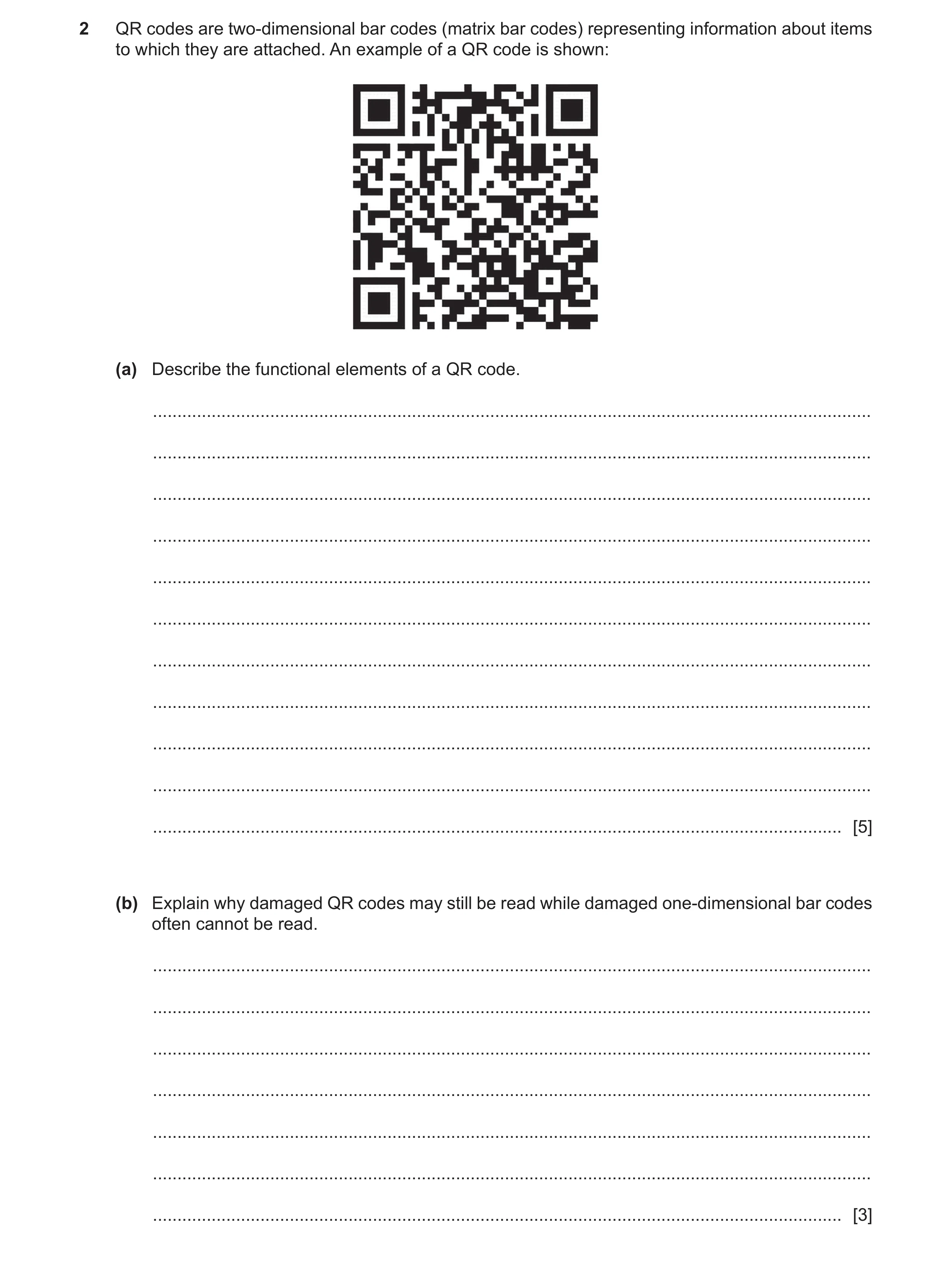
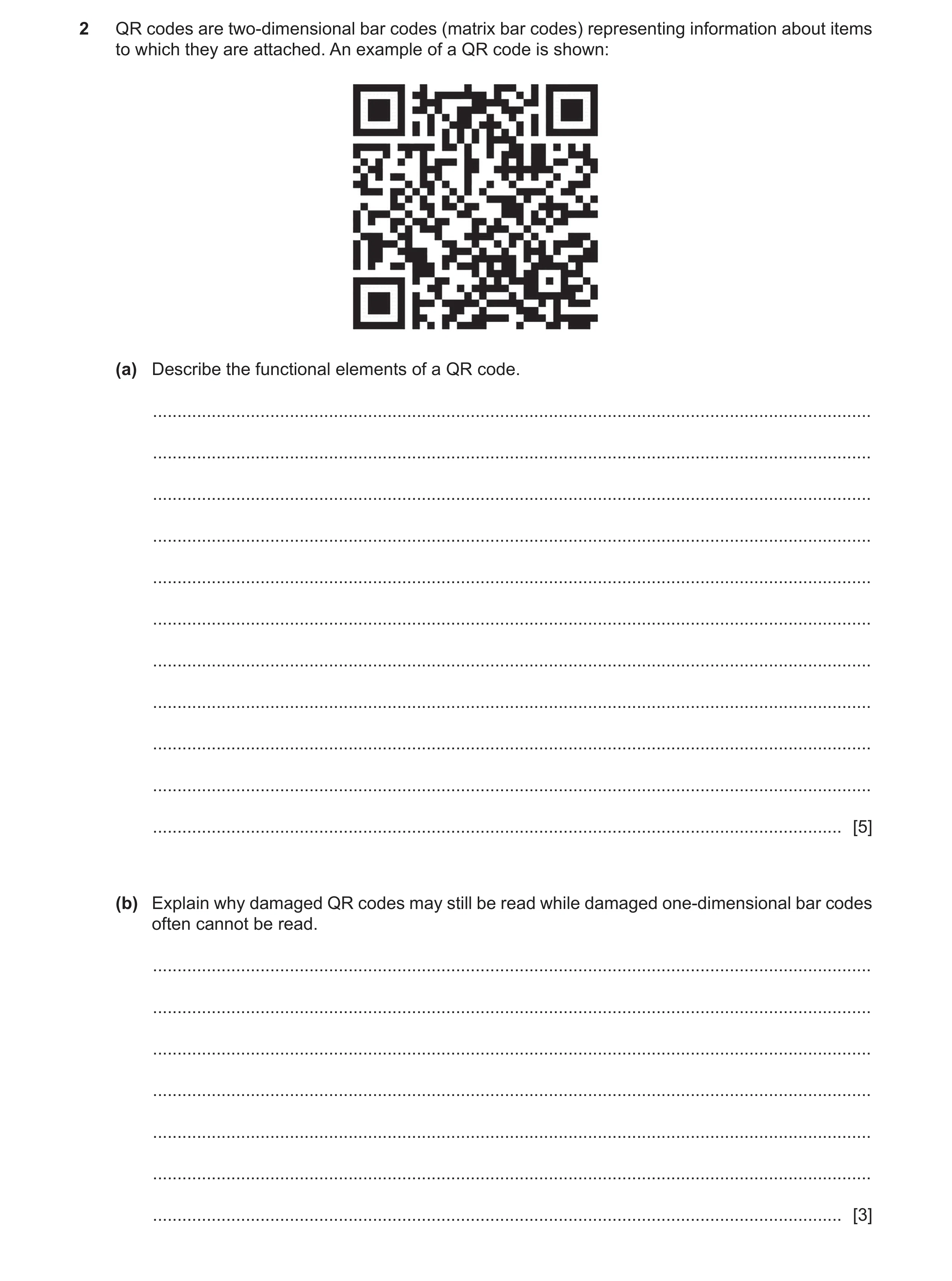
2 QR codes are two-dimensional bar codes (matrix bar codes) representing information about items to which they are attached. An example of a QR code is shown: (a) Describe the functional elements of a QR code. … … … … … … … … … … … [5] (b) Explain why damaged QR codes may still be read while damaged one-dimensional bar codes often cannot be read. … … … … … … … [3]
8 marks
Mark scheme: 2(a) Five from: 5 Positional elements consisting of three (distinct) squares at corners to enable reader to align with the QR code Small square (at fourth corner) to enable reader/processor to calibrate image for size/orientation/angle when viewed Error correction keys stored as dots in QR code Version/format information stored as dots near to positional elements to allow reader/processor to choose decoding algorithm Timing information stored as dots between positional elements to assist with calibration Dots placed throughout the QR code store information in binary form White/‘quiet’ area around code to separate code from background. 2(b) Three from: 3 Error correction is used to compensate for missing/unreadable information Information is duplicated within the QR code so if one set of data is missing/damaged other sets can be read Code blocks can be interleaved with each other so that localised damage is less likely to lose information Use of multiple error correction blocks to ensure data can be read from larger QR codes Block size is limited by design/deliberately so that errors can be corrected quickly by less complex algorithms Masking patterns are designed to break up blocks of data/placed in zigzag patterns so that reader/processor is not confused.
This question in 9626/31 Oct/Nov 2021
Q32 · Describe how augmented reality could be used by firefighters 9626/31 Oct/Nov 2021
12 Describe how augmented reality could be used by firefighters. … … … … … … … … … … … … … … [6]
6 marks
Mark scheme: 12 Six from: 6 Can be integrated/projected into firefighter masks to provide easily visible information Thermal imaging information can be viewed without the need for hand-held devices Information from sensors shown directly to firefighter/not obscured by smoke Overlays navigational information enhancing safety during firefighting/in smoke filled areas/low visibility Provides real-time information/instant updates of situation direct to firefighter Real-time/live information/tracking information can be sent back to operational headquarters/control staff Provides real-time/live positional information of other firefighters/equipment.
This question in 9626/31 Oct/Nov 2021
Q33 · A college is going to provide each student with a portable computing device 9626/32 Oct/Nov 2021
6 A college is going to provide each student with a portable computing device. These devices will be used by the students in their studies. Discuss the advantages and disadvantages to the students of using laptops instead of smartphones. … … … … … … … … … … … … … … … … … … … … [8]
8 marks
Mark scheme: 6 Eight from: 8 Advantages e.g.: Can have a physical keyboard which reduces typing errors/quicker to enter text than virtual/onscreen keyboards Have a larger storage capacity for documents/images/video Have a larger screen for viewing documents/images/videos so reduces eyestrain (May) have a CD/DVD/optical storage device built-in/no need to connect external optical device Software/applications have more features/compatible with college systems Wider range of connection ports for external devices/network connections Can be physically tethered so not easily stolen Disadvantages e.g. : Not so portable/bulkier than smartphone More easily damaged if e.g. dropped than smartphone Not so easy to set up reminders/not carried everywhere so reminders are missed Needs more frequent charging of battery/connection to external power supply as battery life is less than smartphone Does not make telephone calls Instant messaging is not so easy as with a smartphone. Must be at least 2 of each for full marks. Must be a proper discussion for full marks. Max 6 marks if bullets/list of points.
This question in 9626/32 Oct/Nov 2021
Q34 · 3D printing is a manufacturing method in which objects are made by fusing or depositing… 9626/32 Oct/Nov 2021
10 3D printing is a manufacturing method in which objects are made by fusing or depositing materials. It is used in the fields of medicine and manufacturing. Discuss the benefits and drawbacks of using 3D printing. … … … … … … … … … … … … … … … … … … … … [8]
8 marks
Mark scheme: 10 Eight from: 8 Benefits: Complex designs can be easily customised/produced without expensive machine tooling/complex production systems Prototyping can be quick/repeated/amended without the need for expensive machine redesign Production can be cheaper than manual/conventional methods after the initial cost is covered Cost effective for small run/low volume production It reduces the need to store components as they can be ‘printed’ as required/on demand Reduction in conventional manufacturing machinery/machine tooling equipment/assembly lines/manufacturing space needed Increased employment of technicians to maintain printers/reduction in manual labour employees Drawbacks: Limited size of product that can be printed Limited range of raw materials that can be used Designs/blueprints/printing instructions can be stolen and used to make items by copyright violators/competitors Difficult to distinguish between real and fake items as blueprints/instructions and raw materials are the same Loss of manufacturing/production skills. Must be at least 2 of each for full marks. Must be a proper discussion for full marks Max 6 marks if bullets/list of points.
This question in 9626/32 Oct/Nov 2021
Q35 · QR codes are two-dimensional bar codes (matrix bar codes) representing information about… 9626/33 Oct/Nov 2021
2 QR codes are two-dimensional bar codes (matrix bar codes) representing information about items to which they are attached. An example of a QR code is shown: (a) Describe the functional elements of a QR code. … … … … … … … … … … … [5] (b) Explain why damaged QR codes may still be read while damaged one-dimensional bar codes often cannot be read. … … … … … … … [3]
8 marks
Mark scheme: 2(a) Five from: 5 Positional elements consisting of three (distinct) squares at corners to enable reader to align with the QR code Small square (at fourth corner) to enable reader/processor to calibrate image for size/orientation/angle when viewed Error correction keys stored as dots in QR code Version/format information stored as dots near to positional elements to allow reader/processor to choose decoding algorithm Timing information stored as dots between positional elements to assist with calibration Dots placed throughout the QR code store information in binary form White/‘quiet’ area around code to separate code from background. 2(b) Three from: 3 Error correction is used to compensate for missing/unreadable information Information is duplicated within the QR code so if one set of data is missing/damaged other sets can be read Code blocks can be interleaved with each other so that localised damage is less likely to lose information Use of multiple error correction blocks to ensure data can be read from larger QR codes Block size is limited by design/deliberately so that errors can be corrected quickly by less complex algorithms Masking patterns are designed to break up blocks of data/placed in zigzag patterns so that reader/processor is not confused.
This question in 9626/33 Oct/Nov 2021
Q36 · Describe how augmented reality could be used by firefighters 9626/33 Oct/Nov 2021
12 Describe how augmented reality could be used by firefighters. … … … … … … … … … … … … … … [6]
6 marks
Mark scheme: 12 Six from: 6 Can be integrated/projected into firefighter masks to provide easily visible information Thermal imaging information can be viewed without the need for hand-held devices Information from sensors shown directly to firefighter/not obscured by smoke Overlays navigational information enhancing safety during firefighting/in smoke filled areas/low visibility Provides real-time information/instant updates of situation direct to firefighter Real-time/live information/tracking information can be sent back to operational headquarters/control staff Provides real-time/live positional information of other firefighters/equipment.
This question in 9626/33 Oct/Nov 2021
Q37 · Analyse the impact of the introduction of ultra-high definition (UHD) television systems… 9626/31 May/June 2023
7 Analyse the impact of the introduction of ultra-high definition (UHD) television systems on the lifestyle of individuals. … … … … … … … … … … … … … … [6]
6 marks
Mark scheme: 7 Analyse: examine in detail to show meaning, identify elements and the 6 relationship between them. One from, description of UHD: Digital TV with (approximately) four thousand /4000/eight thousand/ /8000 horizontal pixels Digital TV with four/4/sixteen/16 times the number of pixels compared to HD TV (Available native) aspect ratio of screen must include 16:9 (to avoid distortion when displaying video). Five from e.g.: Increase in enjoyment of TV/media content because images are more realistic/engaging Increase in time spent watching TV Increase in use of streaming services because these have more UHD content leading to increased use of internet Need to upgrade routers/telecommunication connections lines Enhanced gaming experience Images in computer games appear more realistic Increase costs/financial constraints/issues for access to streaming services/internet/power requirements UHD TVs are usually much larger physically than other types of devices so infringe on living space/reduction in enjoyment of home environment Increase in ‘binge-watching’ of content can affect health of individuals as a result of physical inactivity/’snacking’ while watching Results in weight increase/social isolation/poor sleep patterns Lack of UHD content can lead to feelings of disappointment/disillusionment with technology. Max 4 marks if bullets/list of points/characteristics.
This question in 9626/31 May/June 2023
Q38 · Analyse the impact of the introduction of ultra-high definition (UHD) television systems… 9626/33 May/June 2023
7 Analyse the impact of the introduction of ultra-high definition (UHD) television systems on the lifestyle of individuals. … … … … … … … … … … … … … … [6]
6 marks
Mark scheme: 7 Analyse: examine in detail to show meaning, identify elements and the 6 relationship between them. One from, description of UHD: Digital TV with (approximately) four thousand /4000/eight thousand /8000 horizontal pixels Digital TV with four/4/sixteen/16 times the number of pixels compared to HD TV (Available native) aspect ratio of screen must include 16:9 (to avoid distortion when displaying video). Five from e.g.: Increase in enjoyment of TV/media content because images are more realistic/engaging Increase in time spent watching TV Increase in use of streaming services because these have more UHD content leading to increased use of internet Need to upgrade routers/telecommunication connections lines Enhanced gaming experience Images in computer games appear more realistic Increase costs/financial constraints/issues for access to streaming services/internet/power requirements UHD TVs are usually much larger physically than other types of device so infringe on living space/reduction in enjoyment of home environment Increase in ‘binge-watching’ of content can affect health of individuals as a result of physical inactivity/’snacking’ while watching Results in weight increase/social isolation/poor sleep patterns Lack of UHD content can lead to feelings of disappointment/disillusionment with technology. Max 4 marks if bullets/list of points/characteristics.
This question in 9626/33 May/June 2023
Q39 · Discuss the benefits of the use of vision enhancement in health care 9626/31 May/June 2024
4 Discuss the benefits of the use of vision enhancement in health care. … … … … … … … … … … … … … … … … … … … … [8]
8 marks
Mark scheme: 4 Command word: Discuss: write about issue(s) or topic(s) in depth in a structured way. One from: Vision enhancement is designed to provide visually impaired persons with images of their surroundings in order to enable them to work/navigate/enjoy their surroundings Eight from, e.g.: Use of HD camera and smart glasses for vision impaired persons that project images into eyes so that focus/detail are enhanced which means that wearer is independent of others/has increased mobility Use of smart glasses with augmented reality to overlay details/highlight environmental features/change the colours of signs so that wearer is more informed of dangers/hazards/independent/safe/mobile Use of devices to improve vision/direct images to centre of retina in sufferers of macular degeneration so that images from peripheral vision/images can be seen/improved Use in macular degeneration sufferers can improve facial recognition of other people which improves communication/interactions Use of remote assistive technology/smart devices linked to certified agents/visual interpreter/support personnel that respond when visually impaired wearer taps/asks with help/assistance so wearer can avoid hazards/navigate surroundings Use of retinal implants connected to camera/glasses to directly stimulate nerves with signals to allow brain to interpret environment so wearer has some direct sense of surroundings Use of night vision goggles/glasses to enhance vision in low-light/darkness … to enable visually impaired persons to navigate surroundings/use technology/so they can work/drive at night Use by surgeons/doctors when carrying out surgery so that less invasive techniques/more precise surgery can be carried improves patient recovery rates/speed of recovery. Max 6 marks if bullets/list of points. 8
This question in 9626/31 May/June 2024
Q40 · Discuss the benefits of the use of vision enhancement in health care 9626/33 May/June 2024
4 Discuss the benefits of the use of vision enhancement in health care. … … … … … … … … … … … … … … … … … … … … [8]
8 marks
Mark scheme: 4 Command word: Discuss: write about issue(s) or topic(s) in depth in a structured way. One from: Vision enhancement is designed to provide visually impaired persons with images of their surroundings in order to enable them to work/navigate/enjoy their surroundings Eight from, e.g.: Use of HD camera and smart glasses for vision impaired persons that project images into eyes so that focus/detail are enhanced which means that wearer is independent of others/has increased mobility Use of smart glasses with augmented reality to overlay details/highlight environmental features/change the colours of signs so that wearer is more informed of dangers/hazards/independent/safe/mobile Use of devices to improve vision/direct images to centre of retina in sufferers of macular degeneration so that images from peripheral vision/images can be seen/improved Use in macular degeneration sufferers can improve facial recognition of other people which improves communication/interactions Use of remote assistive technology/smart devices linked to certified agents/visual interpreter/support personnel that respond when visually impaired wearer taps/asks with help/assistance so wearer can avoid hazards/navigate surroundings Use of retinal implants connected to camera/glasses to directly stimulate nerves with signals to allow brain to interpret environment so wearer has some direct sense of surroundings Use of night vision goggles/glasses to enhance vision in low-light/darkness … to enable visually impaired persons to navigate surroundings/use technology/so they can work/drive at night Use by surgeons/doctors when carrying out surgery so that less invasive techniques/more precise surgery can be carried improves patient recovery rates/speed of recovery. Max 6 marks if bullets/list of points. 8
This question in 9626/33 May/June 2024
Q41 · Discuss the impact of the use of artificial intelligence (AI) in health care 9626/32 Oct/Nov 2024
5 Discuss the impact of the use of artificial intelligence (AI) in health care. … … … … … … … … … … … … … … … … … … … … [8]
8 marks
Mark scheme: 5 Eight from: 8 Max one from: • Definition of artificial intelligence e.g. the ability of a computer / machine to perform those activities that are normally thought to require intelligence / ‘machines that perceive their environment and use learning and intelligence to take actions that maximize their chances of achieving defined goals’ Eight from e.g.: Positive: • Rapid diagnostics by expert systems speeds up treatment / remedy so that patient recovers faster / better chance of recovery • Used in data mining / analysis of disease / clinical trial data to find / discover patterns for research into treatments / develop new medicines • Use of AI in robots / therapeutics / social / health assistance technology improves the quality of life for senior citizens / physically challenged individuals • Reduction of errors due to human fatigue so that patient safety / quality of care is better • Used in radiology / tomography to analyse images / data so that detection of disease is better / faster / more accurate / reliable and patient care is enhanced • Used in management of patient data to analyse / find / correlate data in less time • Used to target treatment more precisely / at correct times so that patients can be treated more effectively / to increase recovery rates / probabilities • Used in virtual presence technology / robotic devices to assist in diagnosing diseases remotely so that consultants / surgeons / doctors can monitor / check / examine patients without being present • Used in chatbots to answer patient queries which reduces workload of medical personnel • Used in management of drug dosage / administration to reduce the margins of error in production / delivery / storage • Use in robot-enhanced surgery to assist surgeons to reduce invasion of patient / use in keyhole surgery / decrease recovery times / increase recovery rates • Used in detection of fraud by analysing / data mining claims for medical procedures so costs are reduced / fraudsters are identified. 5 Negative: • Costly / expensive to develop / deploy AI which reduces funds / less money available for other areas of healthcare • Requires expensive / extensive IT / specialist technical support which may reduce funds for medical personnel • AI learns / needs to learn by experience which can affect patient recovery / treatments during the process • Human experts / doctors still required to avoid the misdiagnosis / check diagnosis of unknown / new / unusual diseases because AI does not know / has not met and this can misdirect doctor / take more time • AI may proceed with incorrect procedures in new / unrecognised conditions if it meets conditions / symptoms that it has not met before and this may harm patient • Choice of AI platform / system may be difficult to make / take time and may be difficult to change / amend after implementation.
This question in 9626/32 Oct/Nov 2024
Q42 · Ultra-high definition (UHD) television systems have been developed and can be used to… 9626/33 Oct/Nov 2024
6 Ultra-high definition (UHD) television systems have been developed and can be used to watch streaming videos. (a) What is UHD television? … … … … … … [2] (b) Describe the impact of the development of UHD television systems on the environment. … … … … … … … … … … [4]
6 marks
Mark scheme: 6(a) Two from e.g.: 2 • Digital TV format with aspect ratio 16:9/widescreen • Horizontal screen resolution of c.4000 (4K UHD)/8000 (8K UHD) pixels • Increased (v. HD) dynamic range/colour space/gamut • Incorporates surround sound/22.1 audio system. 6(b) Four from e.g.: 4 • Increased carbon emissions c.f. SD screens during production • Increase in production of (potent) ‘greenhouse gases’ / nitrogen trifluoride during manufacture of flat screen / OLED / LED / LCD screens • Increase in redundant / discarded devices / TV sets / routers (as users upgrade) into landfill • Increase in pollution levels from discarded / leaching of components / chemicals from discarded devices / TVs / routers • Increase in power demand by TV set / communications systems during use • Increase in carbon emissions (up to x10 c.f. SD) during when used for streaming video in HD / UHD • Increase in environmental disturbance (e.g. more construction) to provide necessary infrastructure • Increase in bandwidth required for UHD (note for STM (rec. min bandwidth is 22 to 23 Mbit/s) so need more power / replacement fibre/routers.
This question in 9626/33 Oct/Nov 2024
Q43 · The Internet of Things (IoT) connects devices together in a network 9626/32 Feb/March 2025
9 The Internet of Things (IoT) connects devices together in a network. (a) Describe how the IoT can be used in the homes of individuals. … … … … … … … … … … [4] (b) Describe the drawbacks of using the IoT in homes. … … … … … … … … … … [4]
8 marks
Mark scheme: 9(a) One mark per bullet point to a maximum of four marks. 4 E.g.: • Use of inter-connected sensors / devices / appliances to gather data / personalise / customise home environment • Creating smart homes / automated home systems e.g. heating / cooling / lighting • Automatic re-ordering of goods / provisions / switching energy providers • Remote control of devices / home systems • Remote monitoring of security / video / door bell-mounted cameras. 9(b) One mark per bullet point to a maximum of four marks. 4 E.g.: • Devices are not always compatible / must be compatible with each other • Security (of data) / privacy issues raised by use of connected devices / unprotected devices • Voice assistants may operate / record in continuous mode / monitor every conversation / sound in the home • Conversations picked up by voice assistants may reveal personal / confidential details to third parties / supplier of assistant • Use of central control / voice assistant to monitor / control other devices collects data from around the home • Smart TVs controlled by voice commands connect to servers to parse / decode the human commands so listen to all conversations. • Increased use of energy / power (by all the devices) is environmentally unfriendly / costs more • Automatic / unwanted re-ordering by devices may result in unexpected / extra / higher costs / bills • Failure of complex systems (using IoT) can lead to loss of e.g. control over heating / lighting / valid example • Reduction in human skills as more reliant on technology.
This question in 9626/32 Feb/March 2025
Q44 · Describe what is meant by the Internet of Things (IoT) 9626/31 May/June 2025
9 (a) Describe what is meant by the Internet of Things (IoT). … … … … … … [2] (b) Describe how the IoT can be used in healthcare. … … … … … … … … … … [4]
6 marks
Mark scheme: 9(a) TWO from: 2 • Connection (of devices) with / to each other over internet / network • Devices are uniquely / individually addressable / identified on the network • Devices with processors and software • (May) contain / have sensors • Have input / output 9(b) FOUR from: 4 e.g.: • Remote monitoring of patients (RPM) / senior citizens / chronic illness (e.g. hypertension / diabetes) for capturing patient data • Sending patient data automatically to systems for analysis • Connecting wearable computing devices (e.g. smart watch, heart monitor, BP monitor) for monitoring of health / activities • Emergency notifications systems / alerting people / groups of people to an emergency situation • Connecting point-of-care / bedside / near patient testing health devices for diagnosis • Telecare systems to avoid / replace in-person consultations • Ensure patient complies with healthcare regime / takes correct medicines on time
This question in 9626/31 May/June 2025
Q45 · 3D printing is used to create objects 9626/32 May/June 2025
1 3D printing is used to create objects. (a) Describe the process of 3D printing an object. … … … … … … … … … … [4] (b) Describe how 3D printing is used to improve healthcare. … … … … … … … … … … [4]
8 marks
Mark scheme: Question Answer Marks 1(a) FOUR from: 4 • Set of instructions used to program the 3D printer / instructions created for the printer // CAD / software used to create instructions / design / model // uses computer-generated images // physical object scanned into software // software version of object • Instructions / image / (computer) model sent (to printer) • Printer prepared with (required) (raw) materials / plastics / metal powders / binding solutions e.g. titanium, nylon, concrete • Material heated to liquefy / prepare it to allow it to go through print nozzle • Thin layer of material sprayed / extruded through nozzles • Layers deposited / added in succession to build up object / printed from bottom up • Object cleaned / refined after printing to remove excess material • Material hardens / cools down / fused together • Removal of support / construction pegs 1(b) FOUR from: 4 e.g.: • Creation of external prosthesis/limbs/casts (1st) – that exactly match patient requirements/fit dimensions/bespoke (1) – reduced (long term) costs (1) • Creation of (internal) implants/bones/cranial plates/teeth/artificial blood vessels (1st) – that exactly fit patients (1) – use for training purposes (1) – do not have to wait for real organs / parts /donors (1) – to assist in regeneration / replace real / faulty ones (1) • Creation / use of instrumentation / tools / machinery (1st) – Use by surgeons / use as guides during surgery / to ensure exact location of surgery / implantation of devices (1) • Bioprinting (1st) – to assist in regeneration / replace real / faulty ones (1) • Creation of custom lenses for glasses / contact lenses (1st) – that exactly match patient requirements/fit dimensions (1) • Creation of customised medicines / drugs (1st) – to individual patients (1) • ‘On demand’ / remote creation of drugs / drug capsules
This question in 9626/32 May/June 2025
Q46 · Explain how 3D printing can have a positive impact on the environment 9626/33 May/June 2025
11 (a) Explain how 3D printing can have a positive impact on the environment. … … … … … … … … … … … … [5] (b) Explain how 3D printing can have a negative impact on the environment. … … … … … … … … [3]
8 marks
Mark scheme: 11(a) FIVE from: 5 e.g.: • Reduced / little waste of raw materials so fewer scarce resources used • Can make use of eco-friendly plastic / corn-based plastics – to reduce long-term pollution / persistence of materials • Fewer components in objects • Ability to make hollow / odd-shaped parts • Can use less energy / raw materials used in making parts • Can create scarce spare parts (1st) – so products / appliances can last longer (1) • Products can be printed / manufactured on demand / no need to make / store huge inventory • Products can be manufactured where required reducing transportation costs / fuel use 11(b) THREE from: 3 e.g.: • Can require a lot of energy to produce / print items • large carbon footprint (1st) – adds to global warming (1) • Uses plastic materials (to print) (1st) – adds to amount of durable / non-degradable / pollution by plastic in environment (1) • Plastics made from oil / fossil fuels • Increased greenhouse gases • Produces fumes with toxic by-products / airborne particles (1st) – irritating to the eyes / nose / cause injury to organs (1) – Increased (micro-)plastic in body (1)
This question in 9626/33 May/June 2025
Q47 · Autonomous transport systems are emerging technologies 9626/32 Oct/Nov 2025
1 Autonomous transport systems are emerging technologies. (a) Describe what is meant by an autonomous transport system. … … … … … … [2] (b) Describe how autonomous transport systems could be used in healthcare. … … … … … … … … … … [4]
6 marks
Mark scheme: Question Answer Marks 1(a) Two from: 2 • Unmanned / driverless vehicle / carrier • Minimal human intervention for navigating to destinations • Has integrated / interconnected technologies / software e.g. sensors • Uses / has AI • Uses GPS • Can be connected to internet / IoT / 5G telecommunications systems 1(b) Four from: 4 E.g.: Service robots / carts / unmanned vehicles used to: • Carry / deliver food / medicines to patients • Carry / deliver medical equipment to patients • Carry equipment for remote consultations • Take / carry samples (from patients / nurses / doctors) to laboratories for analysis • Transport patients • Assist accident victims / survivors of disasters / in emergencies • Automatically remove / dispose of waste materials • Used to ensure sterile environment / no contamination by people
This question in 9626/32 Oct/Nov 2025
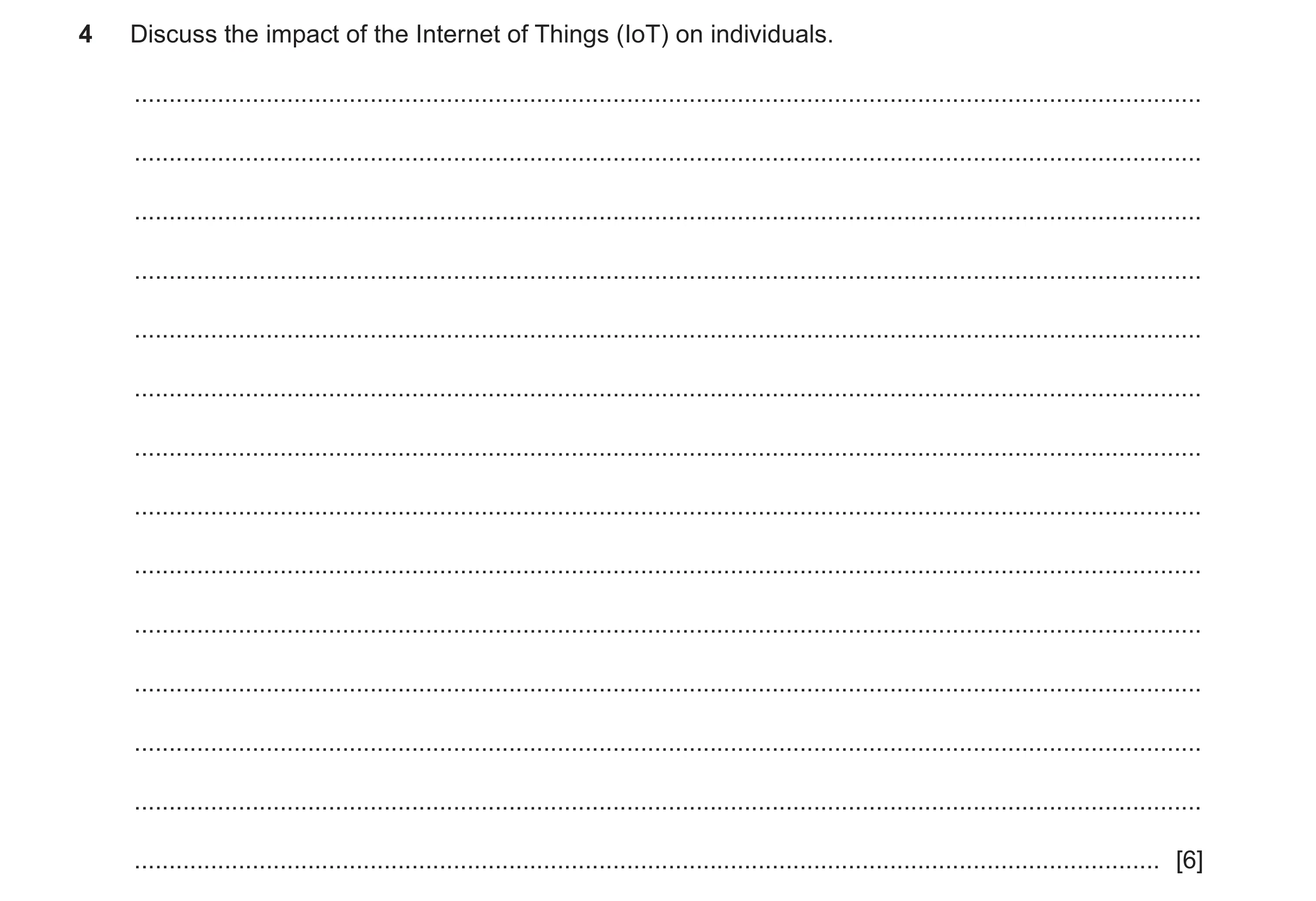
Q48 · Discuss the impact of the Internet of Things (IoT) on individuals 9626/32 Oct/Nov 2025
4 Discuss the impact of the Internet of Things (IoT) on individuals. … … … … … … … … … … … … … … [6]
6 marks
Mark scheme: 4 Six from: 6 Command word: Discuss – write about issues(s) or topic(s) in a structured way. E.g.: content areas could include: • Linking / connecting home appliances / devices together − to exchange data / information − creation of smart homes / more automation of everyday activities − enhanced security / remote monitoring • Use of wearable computing devices − e.g. smart watches / fitness trackers / heart monitors − to monitor health parameters / activities • Integration with augmented reality − e.g. smart glasses / implants − provide real-time data / information about environment / locations • Remote robotic surgery / monitoring of health by doctors / nurses − surgeon operates remotely in real-time − access to health care not available locally − increased health care leading to faster recovery • Health issues • Reliance on technology • Privacy / security issues
This question in 9626/32 Oct/Nov 2025
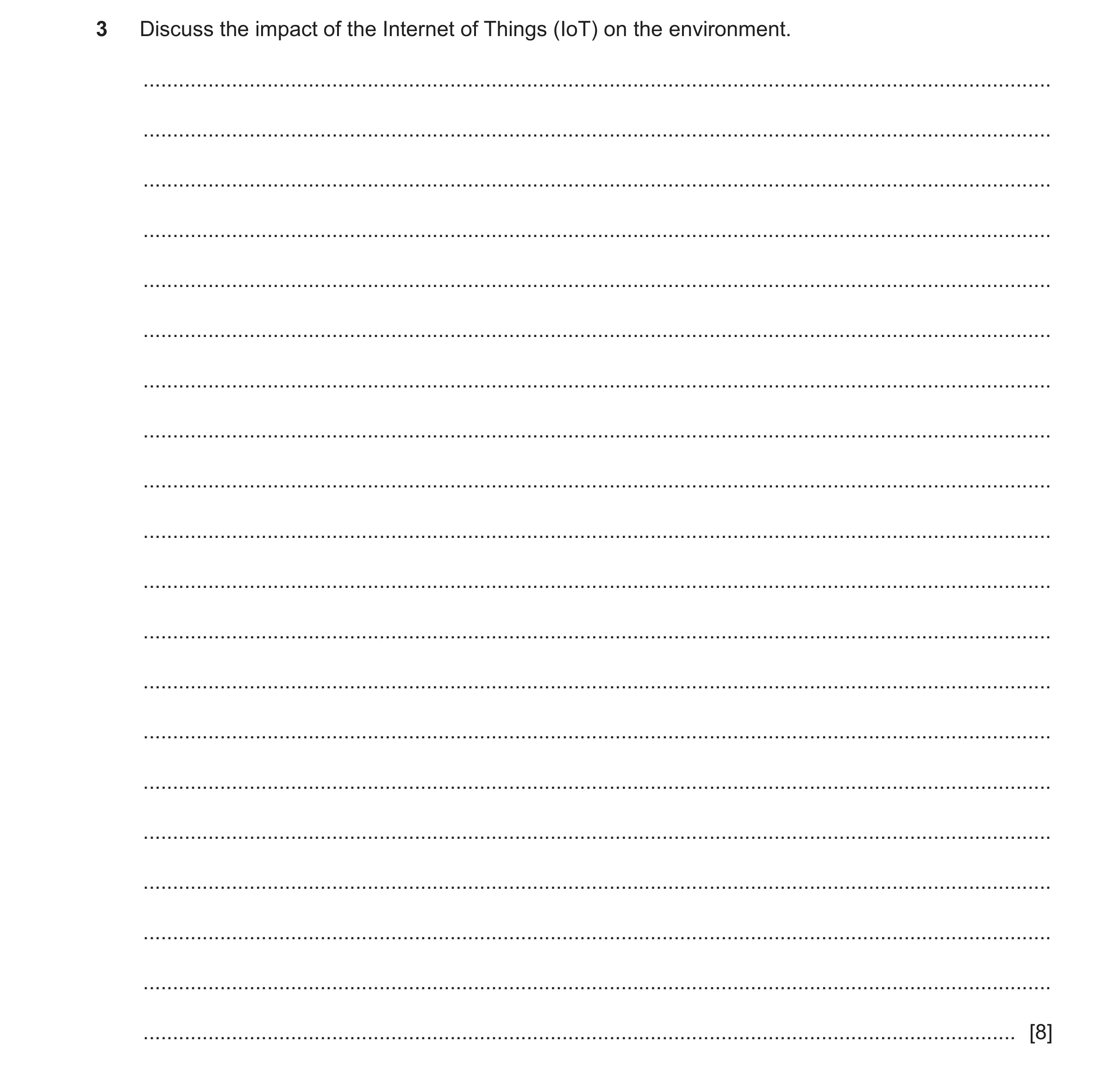
Q49 · Discuss the impact of the Internet of Things (IoT) on the environment 9626/33 Oct/Nov 2025
3 Discuss the impact of the Internet of Things (IoT) on the environment. … … … … … … … … … … … … … … … … … … … … [8]
8 marks
Mark scheme: 3 Eight from: 8 Command word: Discuss – write about issues(s) or topic(s) in a structured way. Content areas could include e.g.: • Global warming due to e.g. CO2 production • Use of smart energy meters to monitor energy use • Raise awareness of energy use / reduce energy use / reduce CO 2 production • Connecting cars / vehicles to the internet navigation services / directing them onto optimal routes • Saves car driving time fuel so less CO2 production • Protection of wildlife / monitoring species endangerment / protection using IoT devices to track wildlife / biodiversity • Devices fixed to trees / animals to monitor wildlife activities • Remote monitoring / listening devices / cameras of conservation areas to prevent e.g. hunting / poaching • Valid example e.g. monitoring inside beehives to protect bee colonies, bees responsible for pollination / food production • Listening devices on trees to monitor (illegal) logging • Automatic management / preservation of resources e.g. heat / water / light / waste • (IoT connected devices) allow more precise control over deployment / use / removal / conservation than possible by humans • Valid example e.g.: automatic re-ordering of goods by refrigerators / remote control of heating / climate control systems / ordering of e.g. fertilisers / animals by farmers / automatic milking systems / water leak sensors • Reduction in waste of resources • Increased food security • E-waste increase due to more devices • Increase in communication traffic • IoT devices are always ‘on’ / active • Increase in use of electrical power • Smart homes use more electrical power • Technology uses more energy so increased CO2 production • Heat output from devices • Increase in production of heat • Increase in battery use / more batteries produced / discarded • Add to landfill / disposal requirements / recycling
This question in 9626/33 Oct/Nov 2025
 1 / 46
 2 / 46
 3 / 46
 4 / 46
 5 / 46
 6 / 46
 7 / 46
 8 / 46
 9 / 46
 10 / 46
 11 / 46
 12 / 46
 13 / 46
 14 / 46
 15 / 46
 16 / 46
 19 / 46
 20 / 46
 21 / 46
 22 / 46
 24 / 46
 25 / 46
 26 / 46
 27 / 46
 28 / 46
 29 / 46
 30 / 46
 31 / 46
 32 / 46
 33 / 46
 34 / 46
 35 / 46
 36 / 46
 37 / 46
 38 / 46
 39 / 46
 40 / 46
 41 / 46
 42 / 46
 43 / 46
 44 / 46
 45 / 46
 46 / 46
 8
8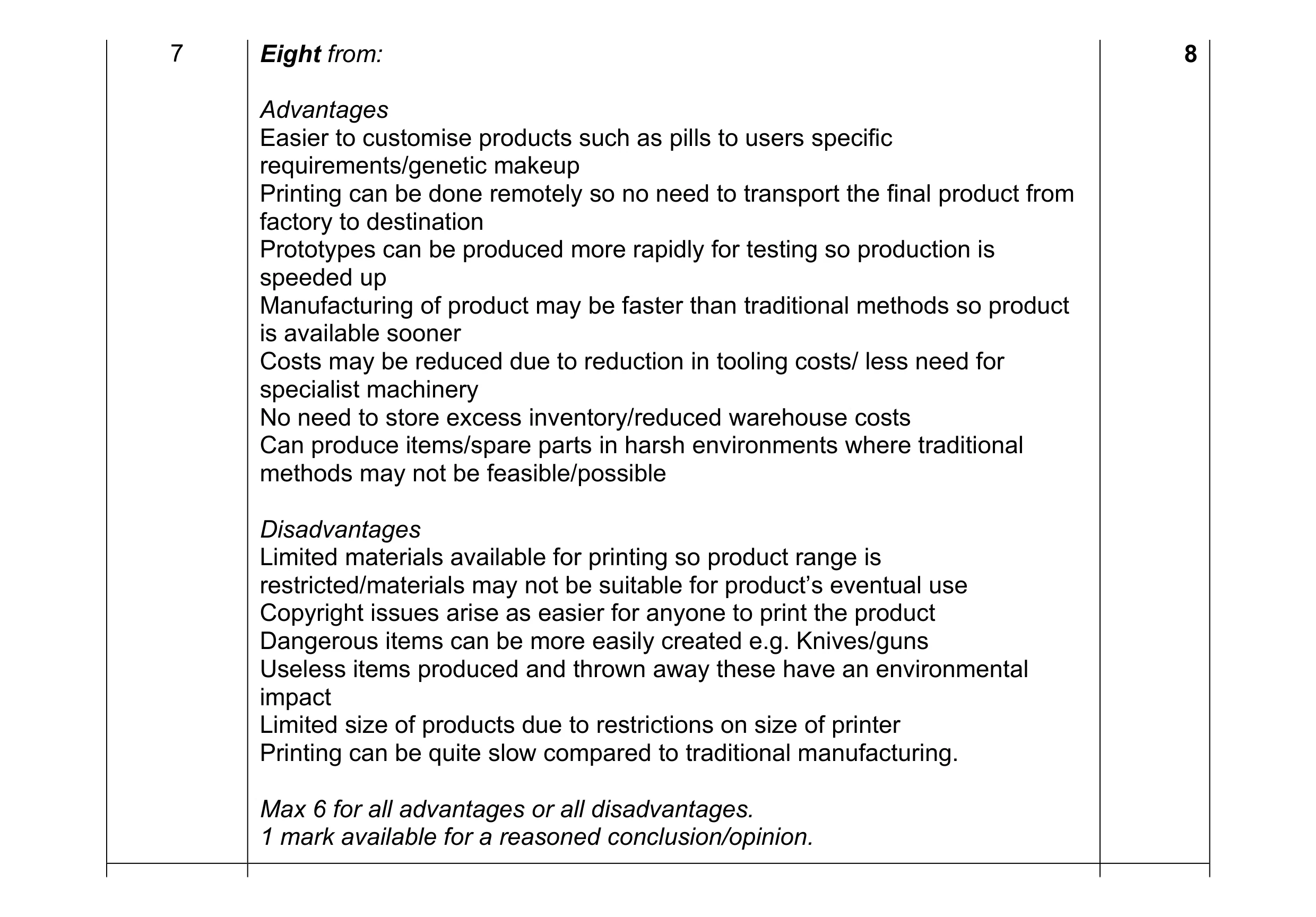 8
8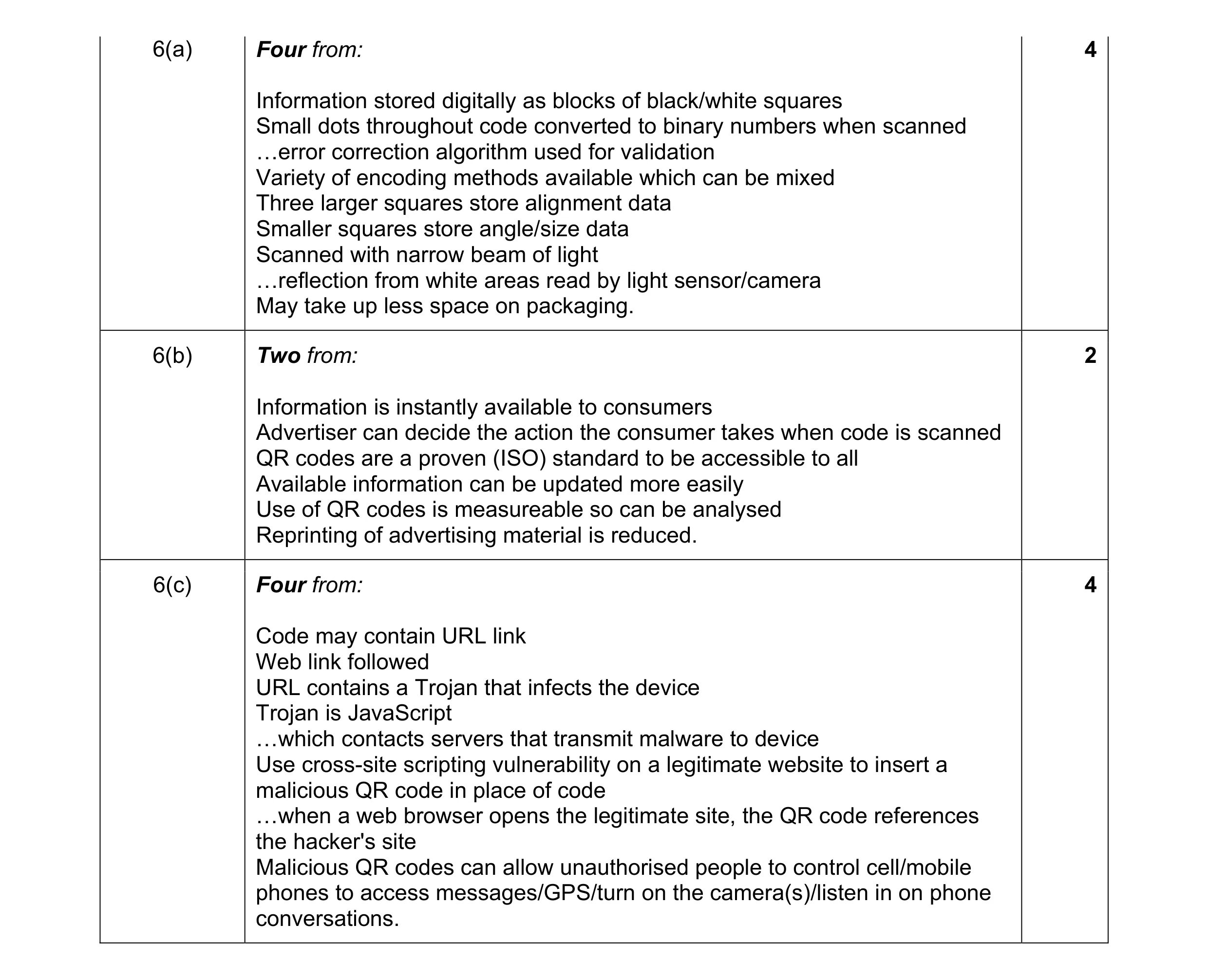 10
10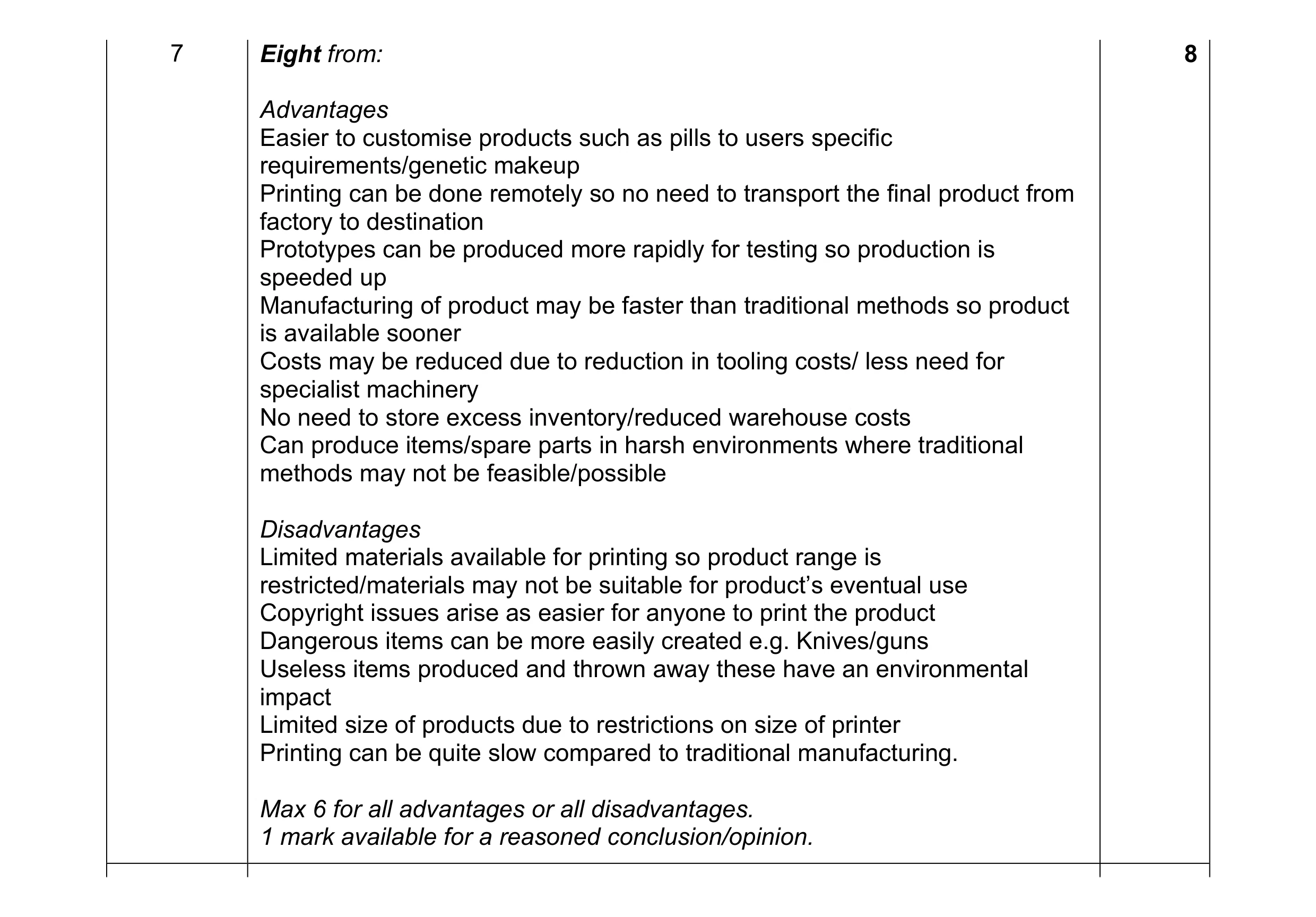 8
8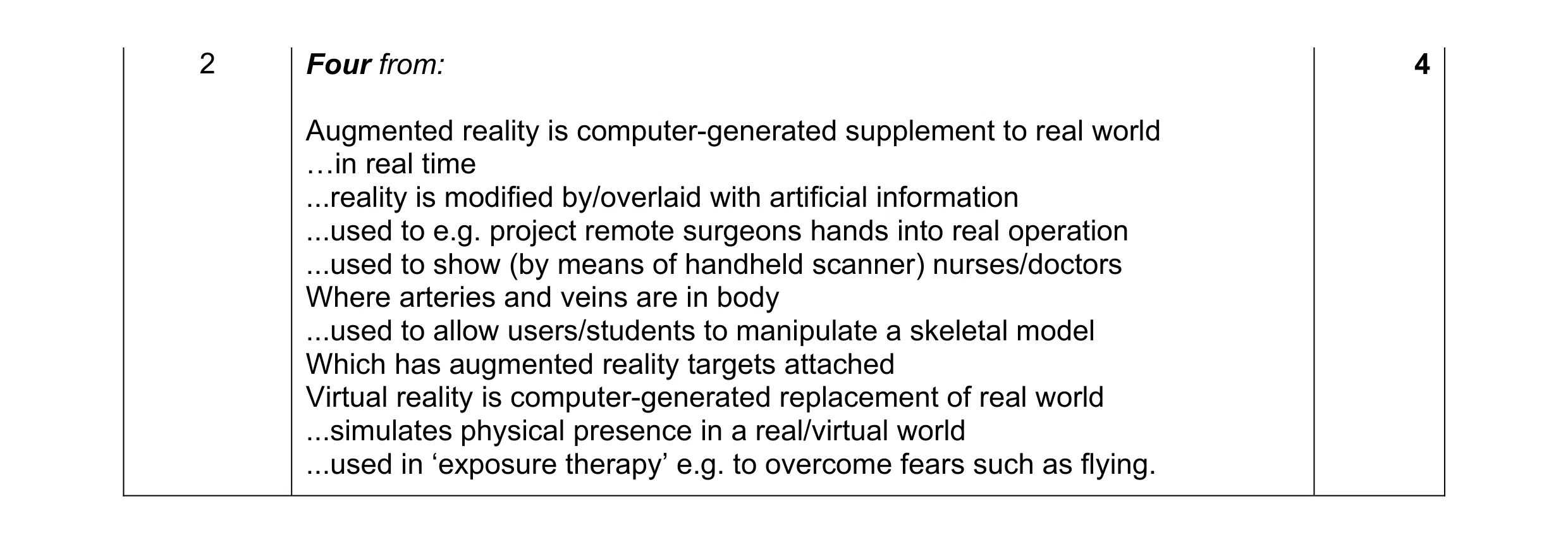 4
4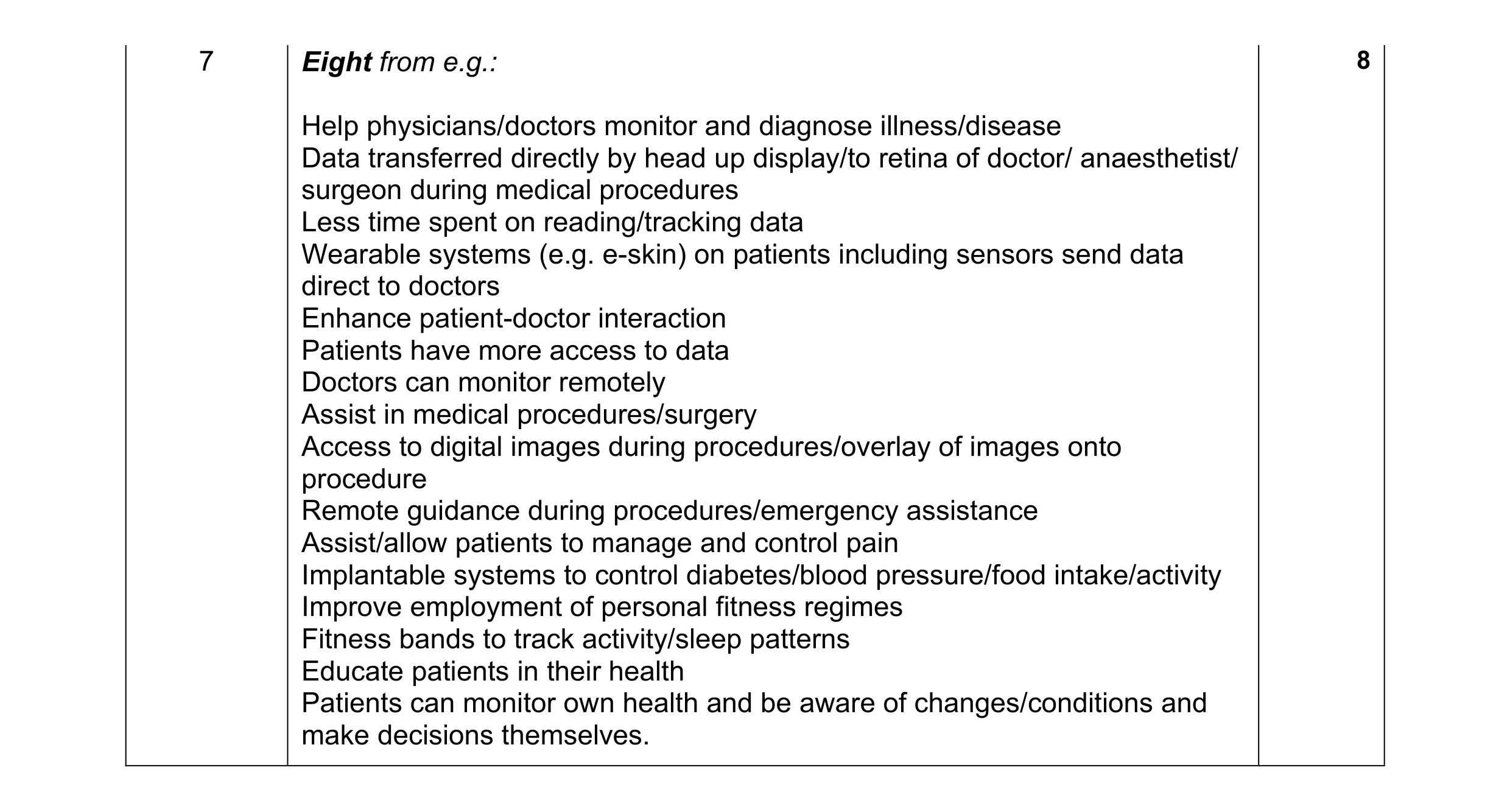 8
8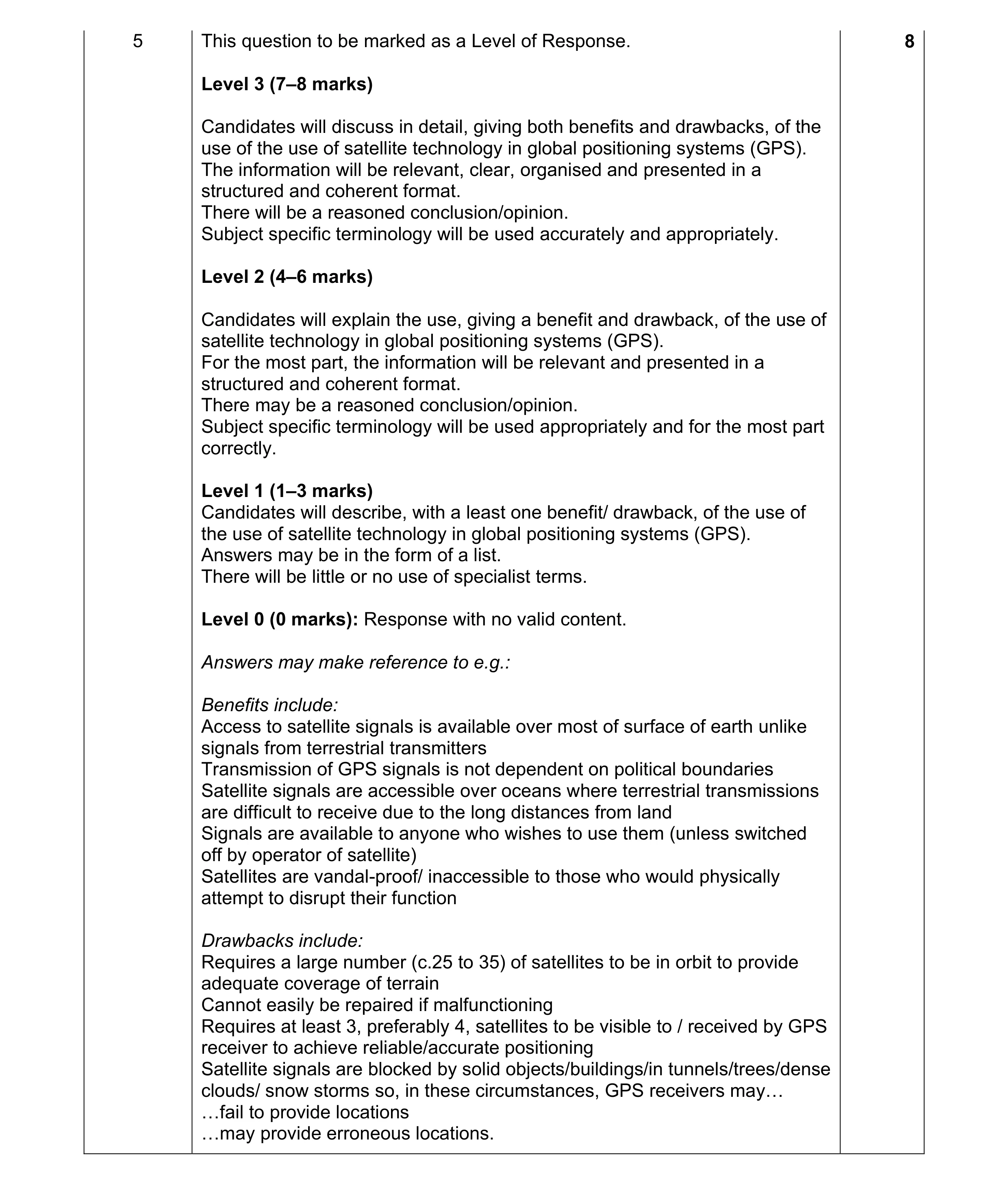 8
8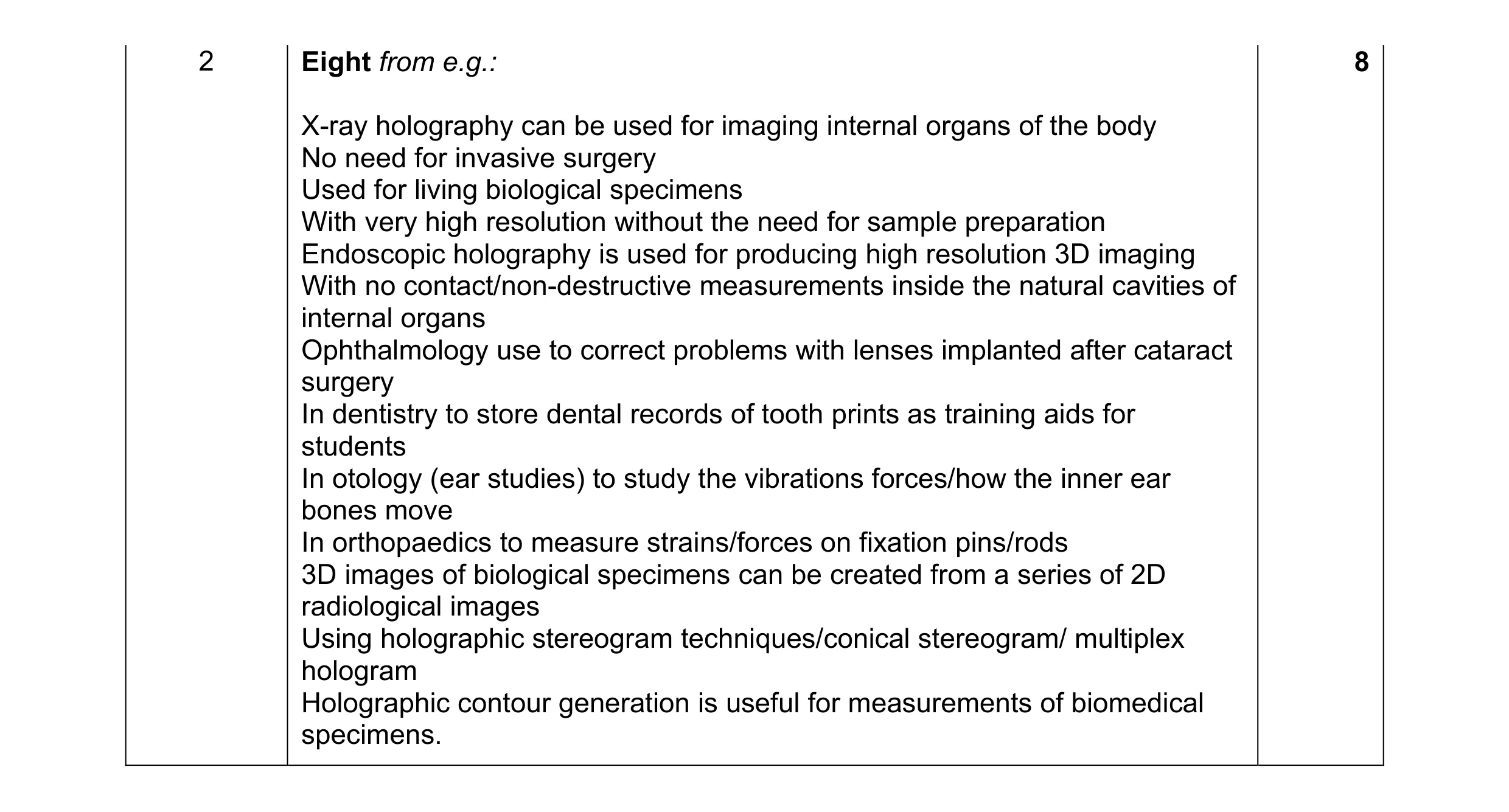 8
8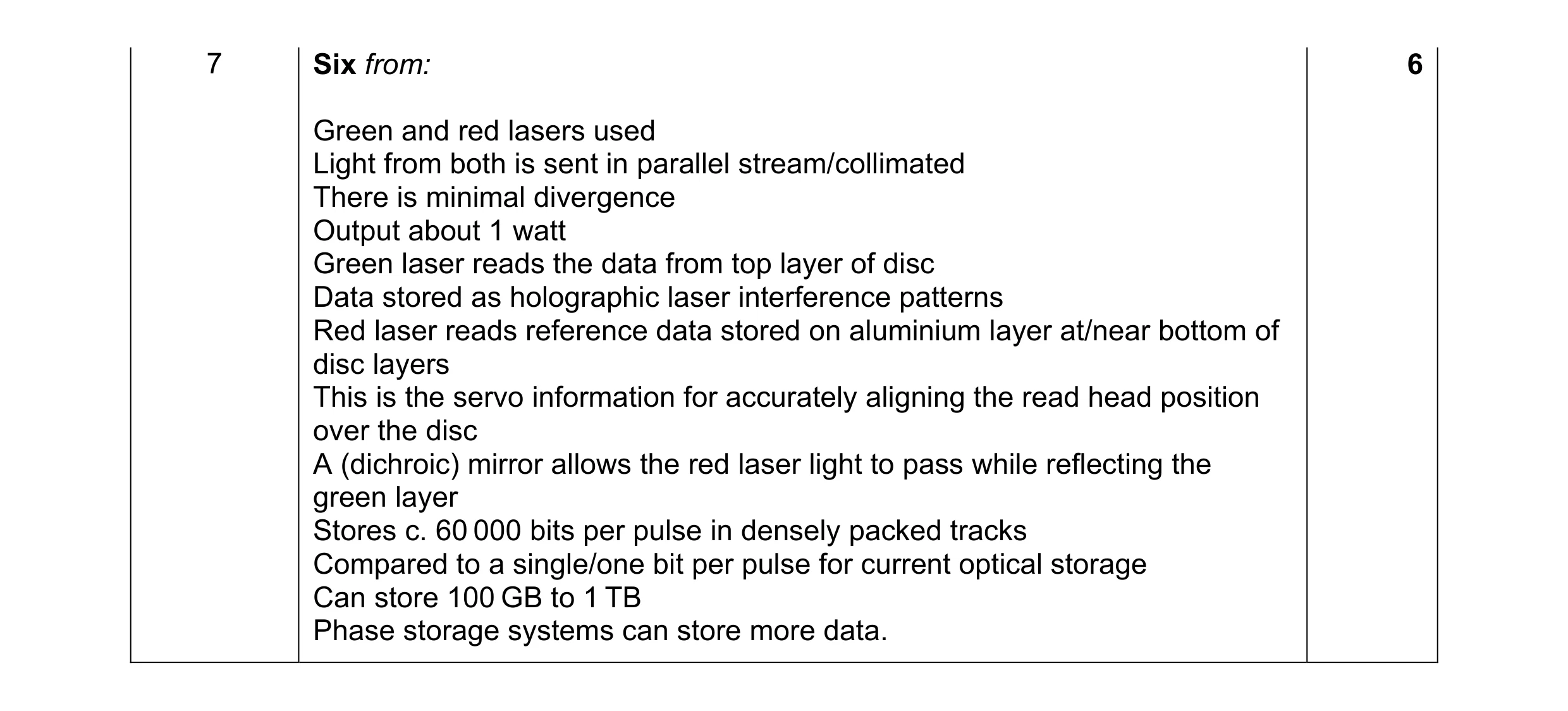 6
6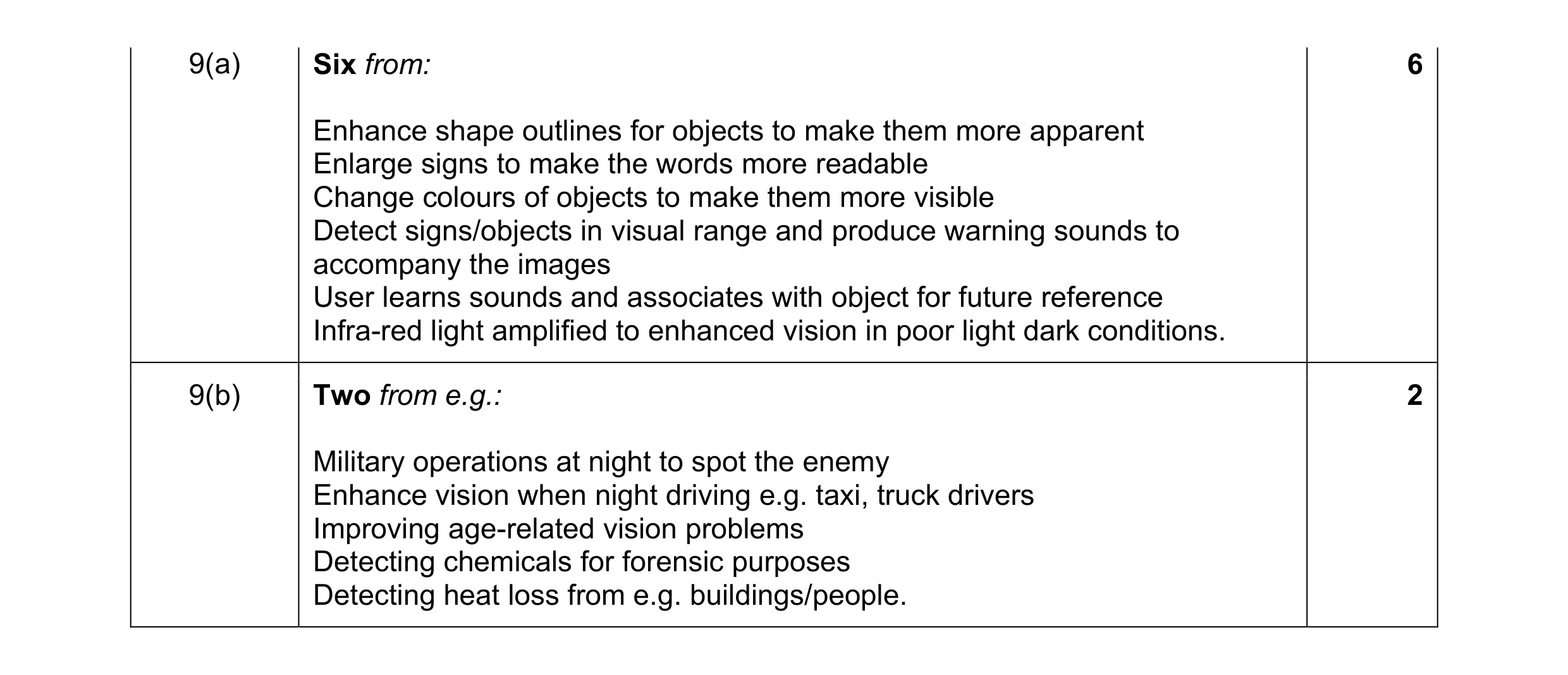 8
8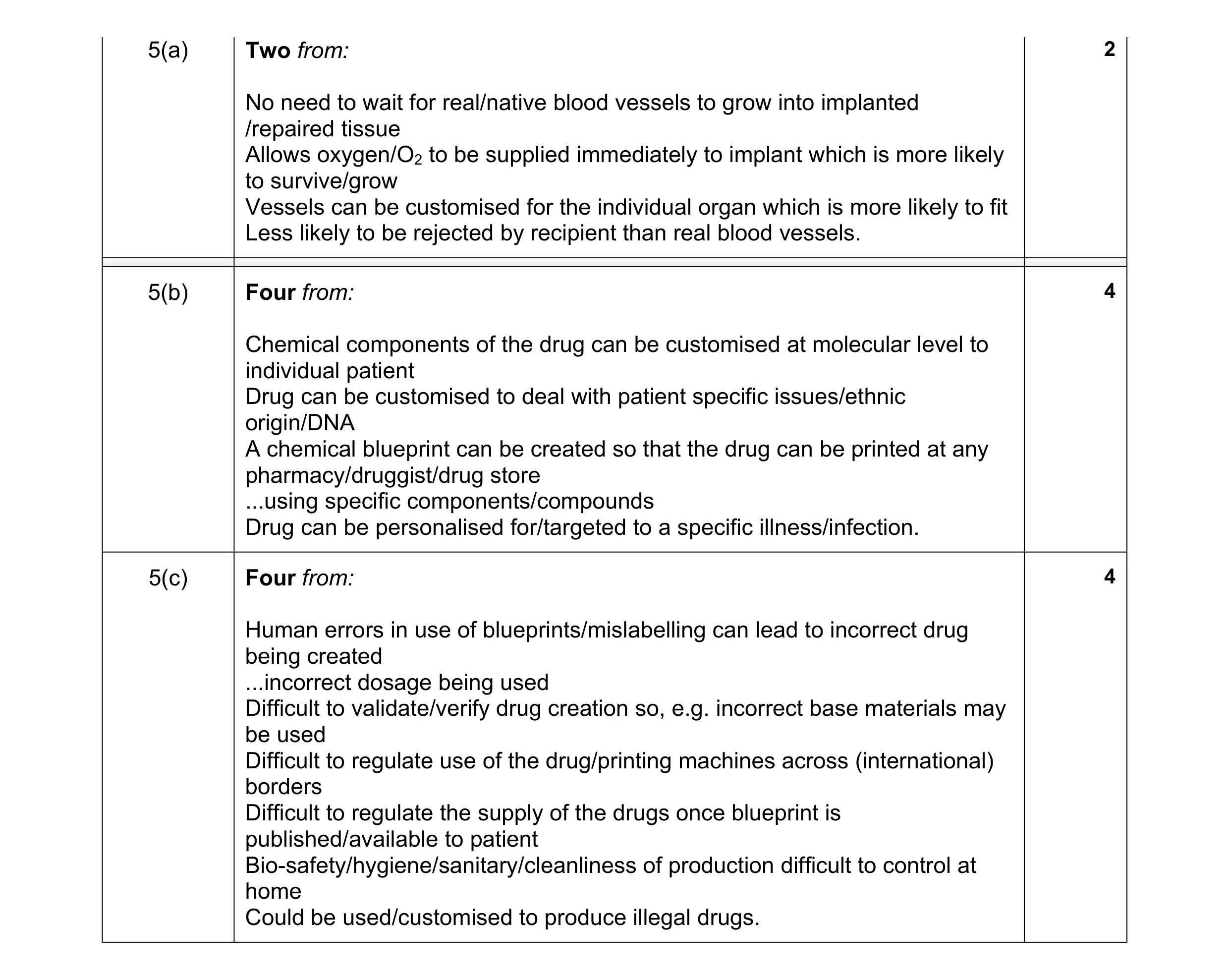 10
10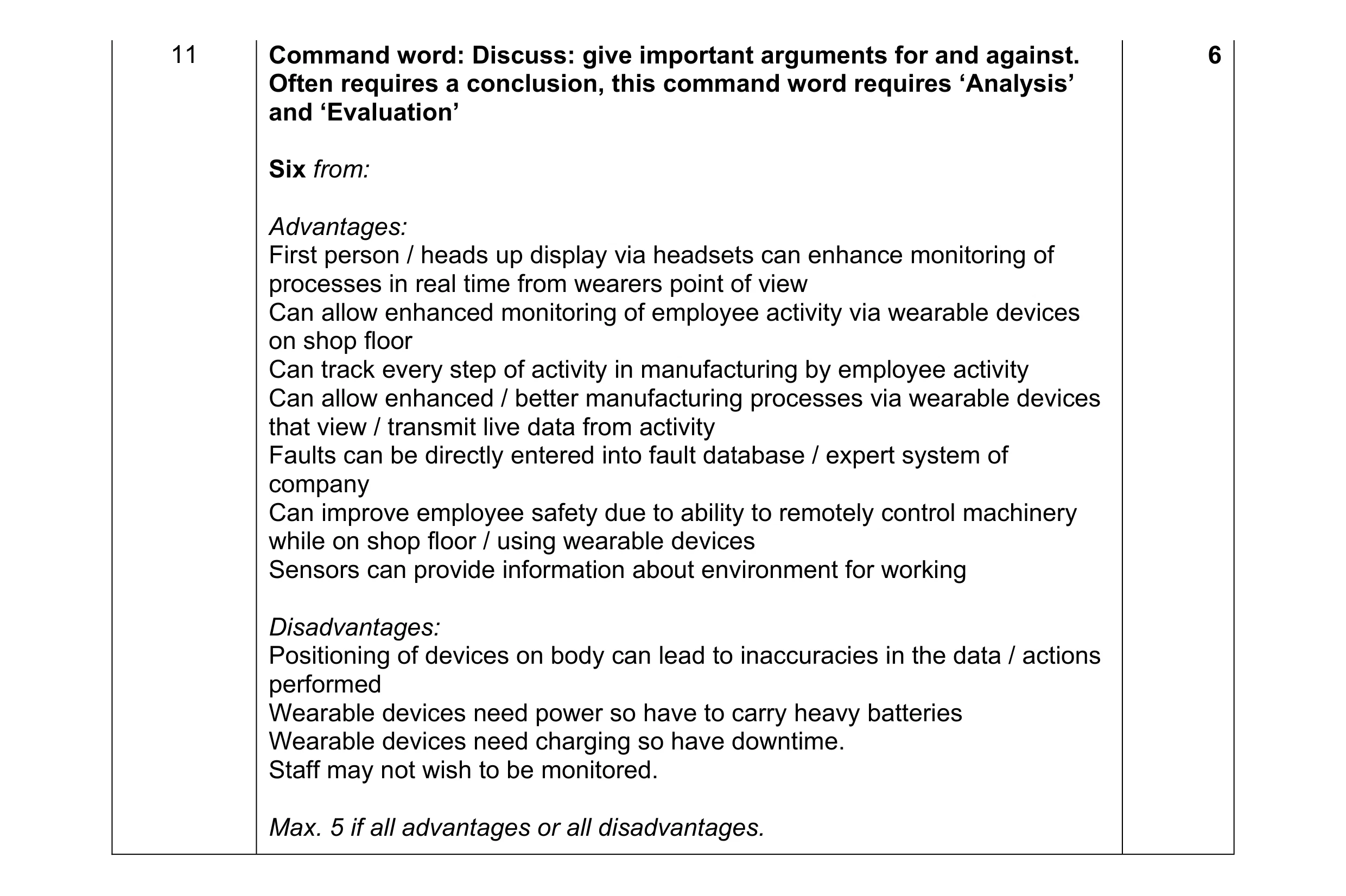 6
6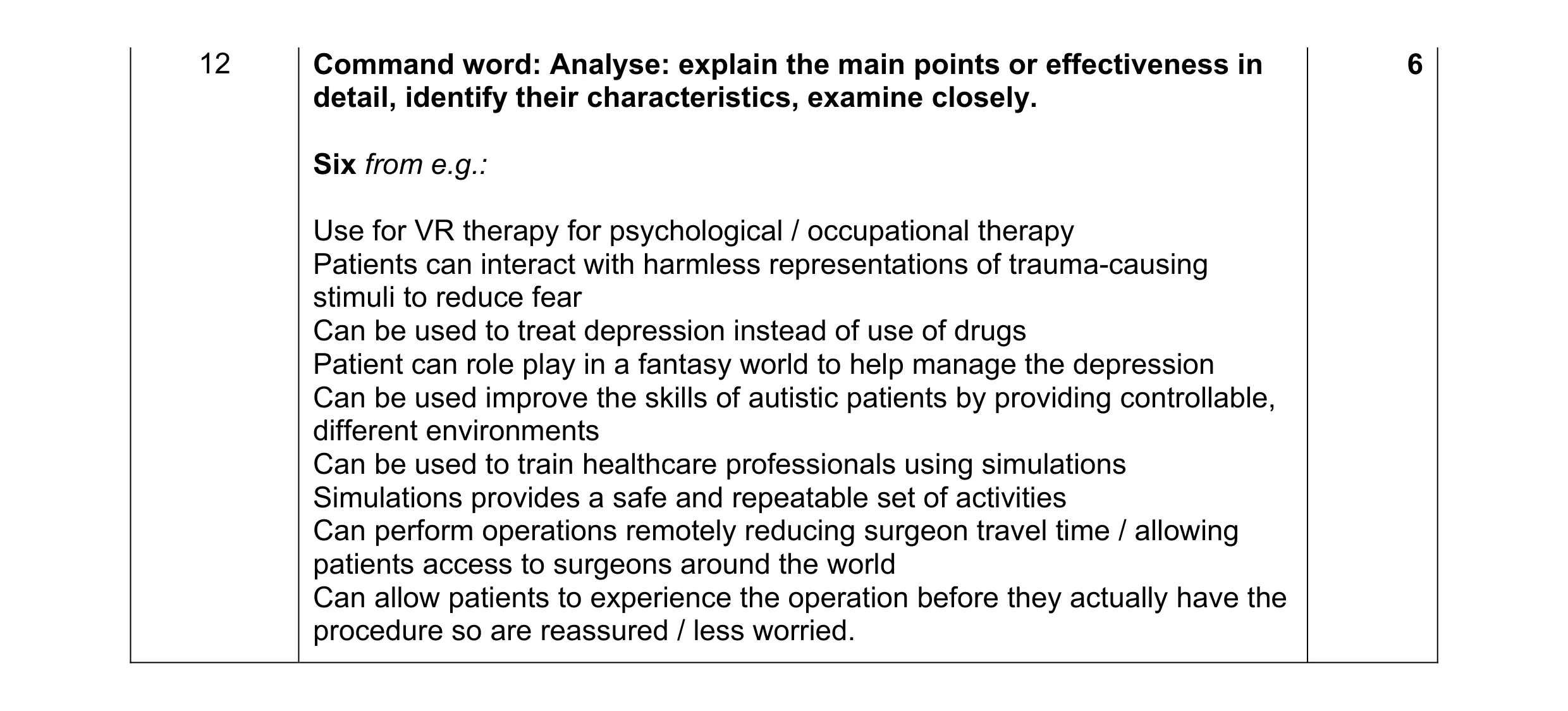 6
6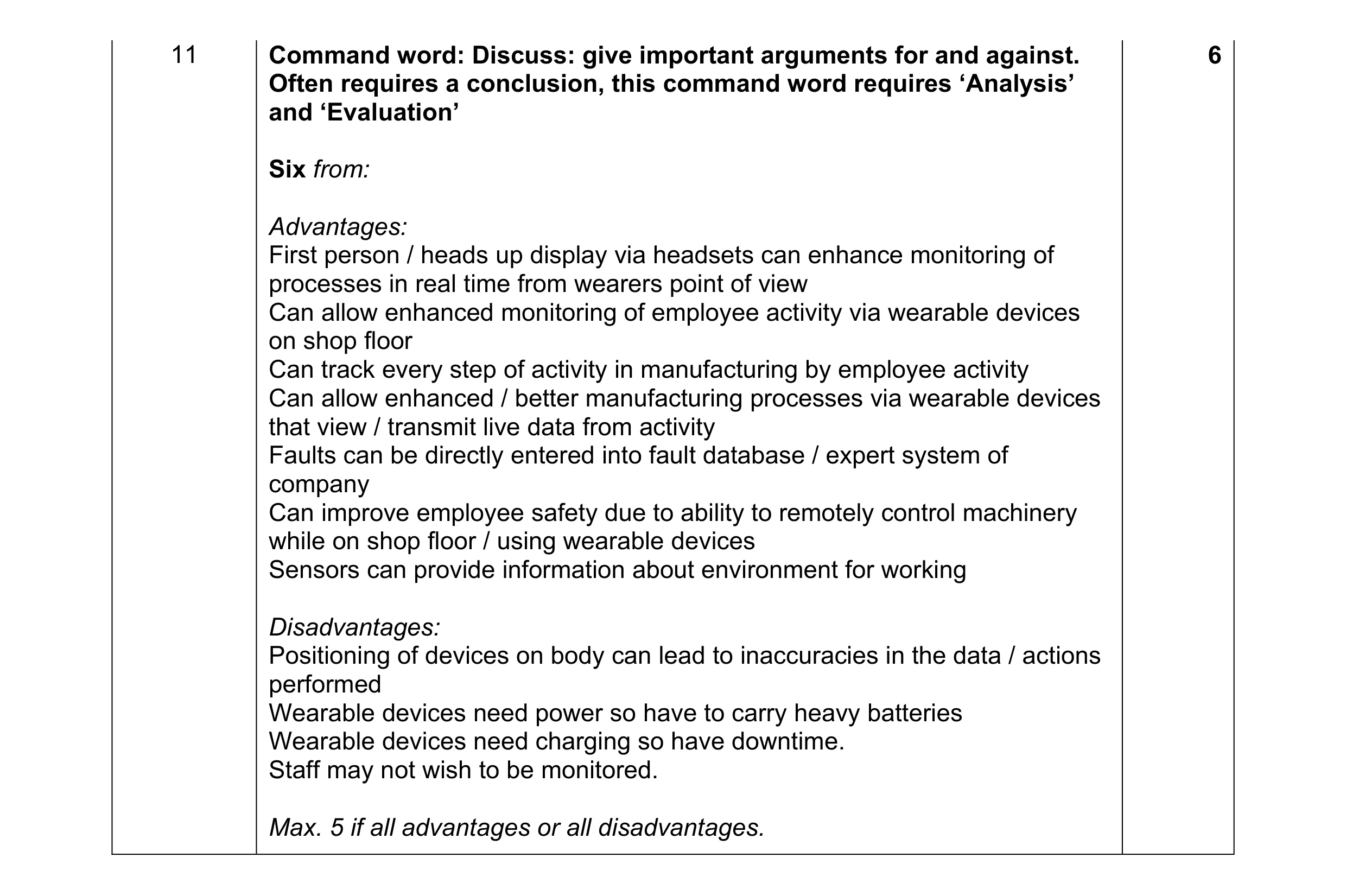 6
6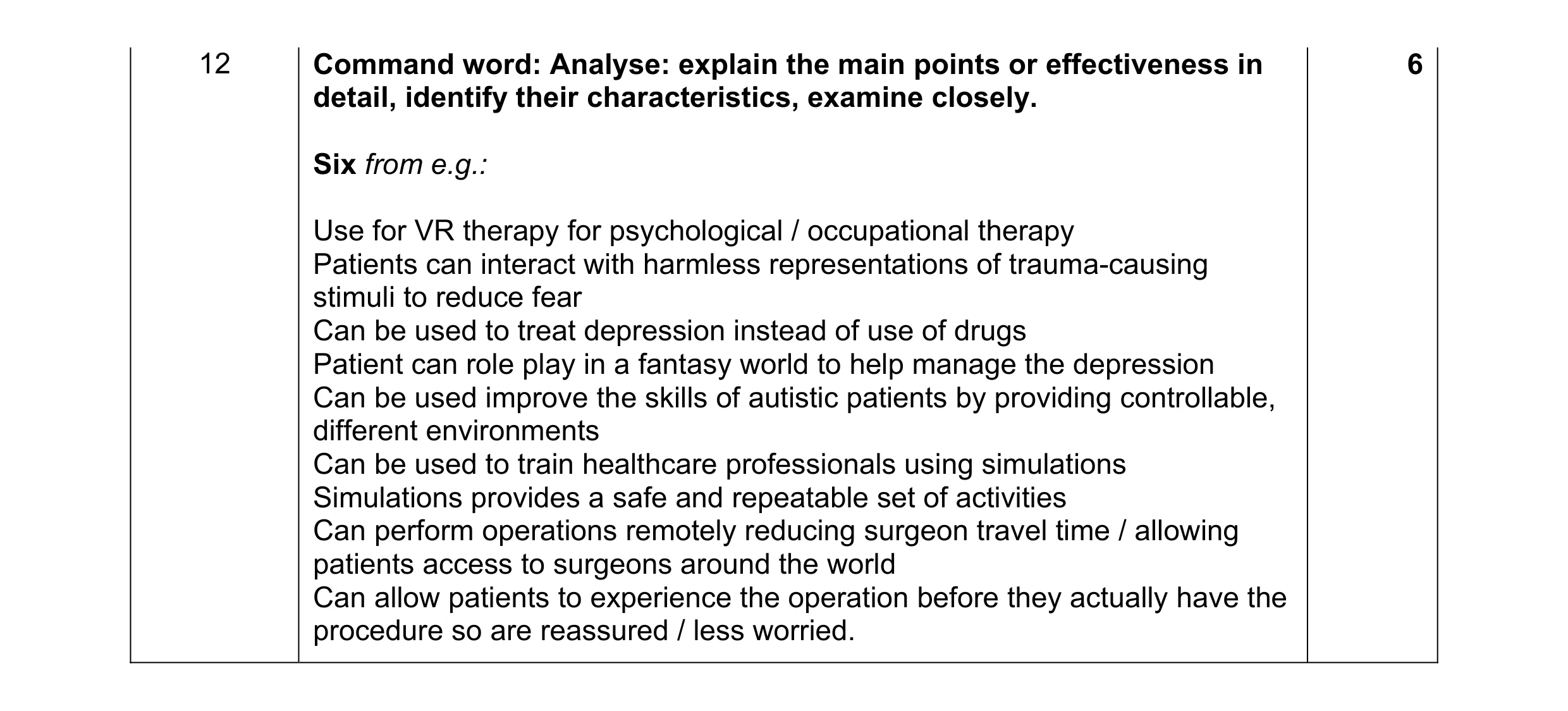 6
6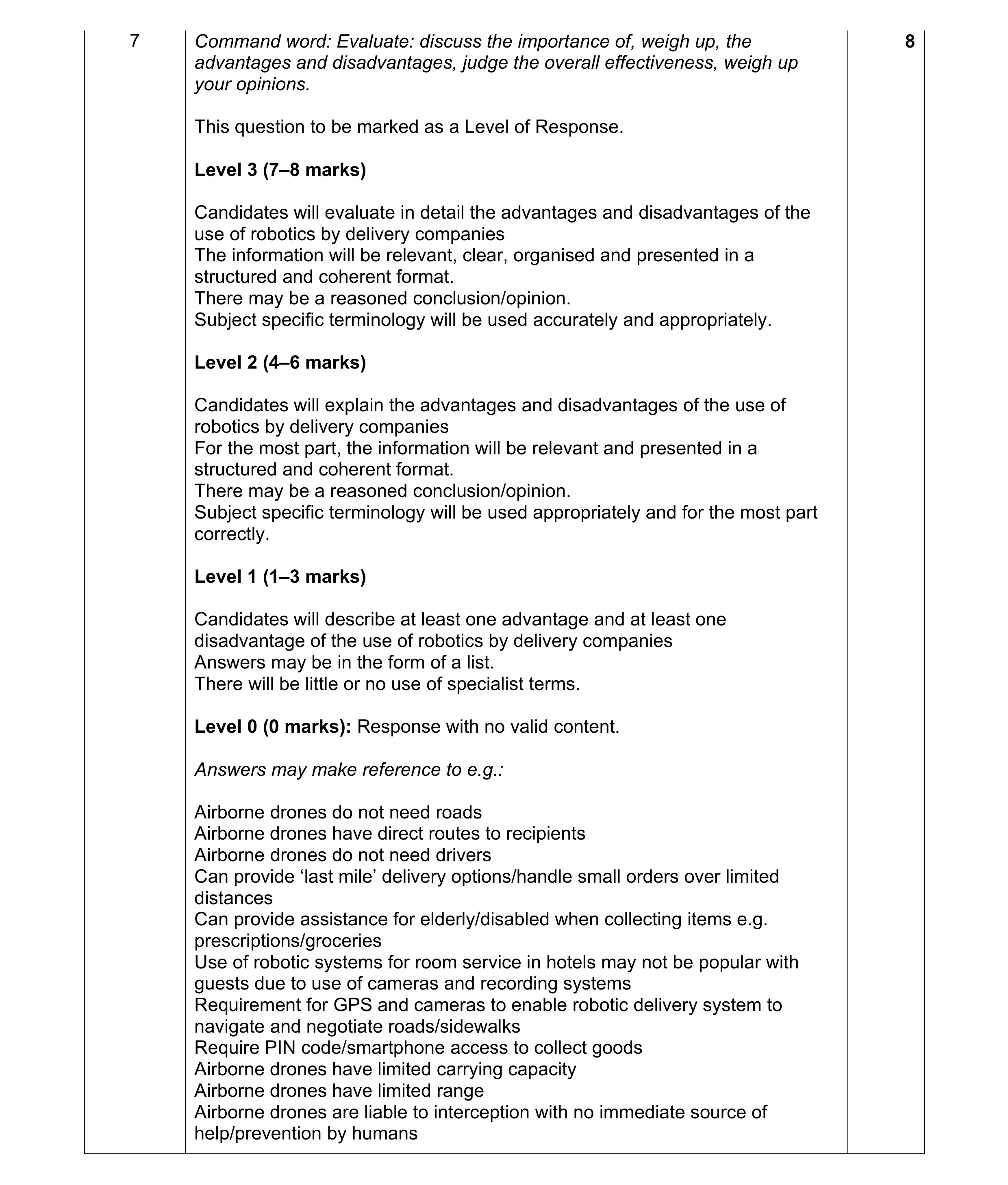 8
8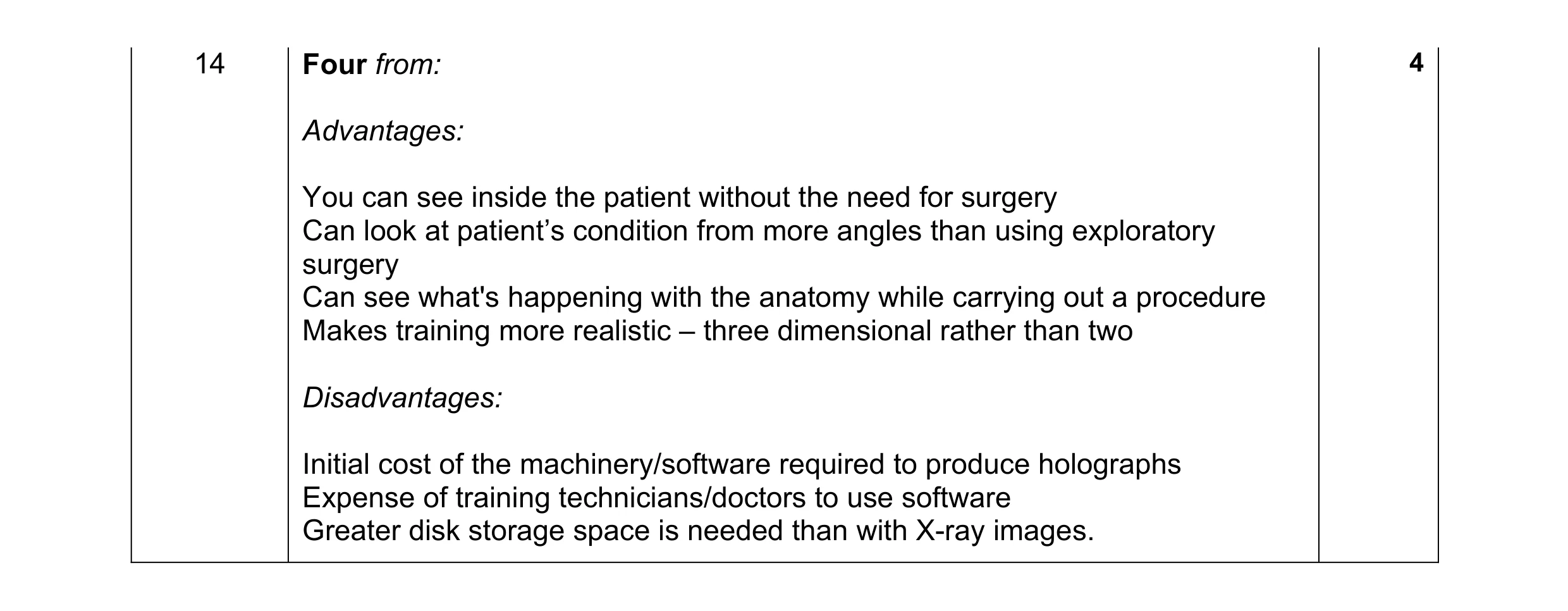 4
4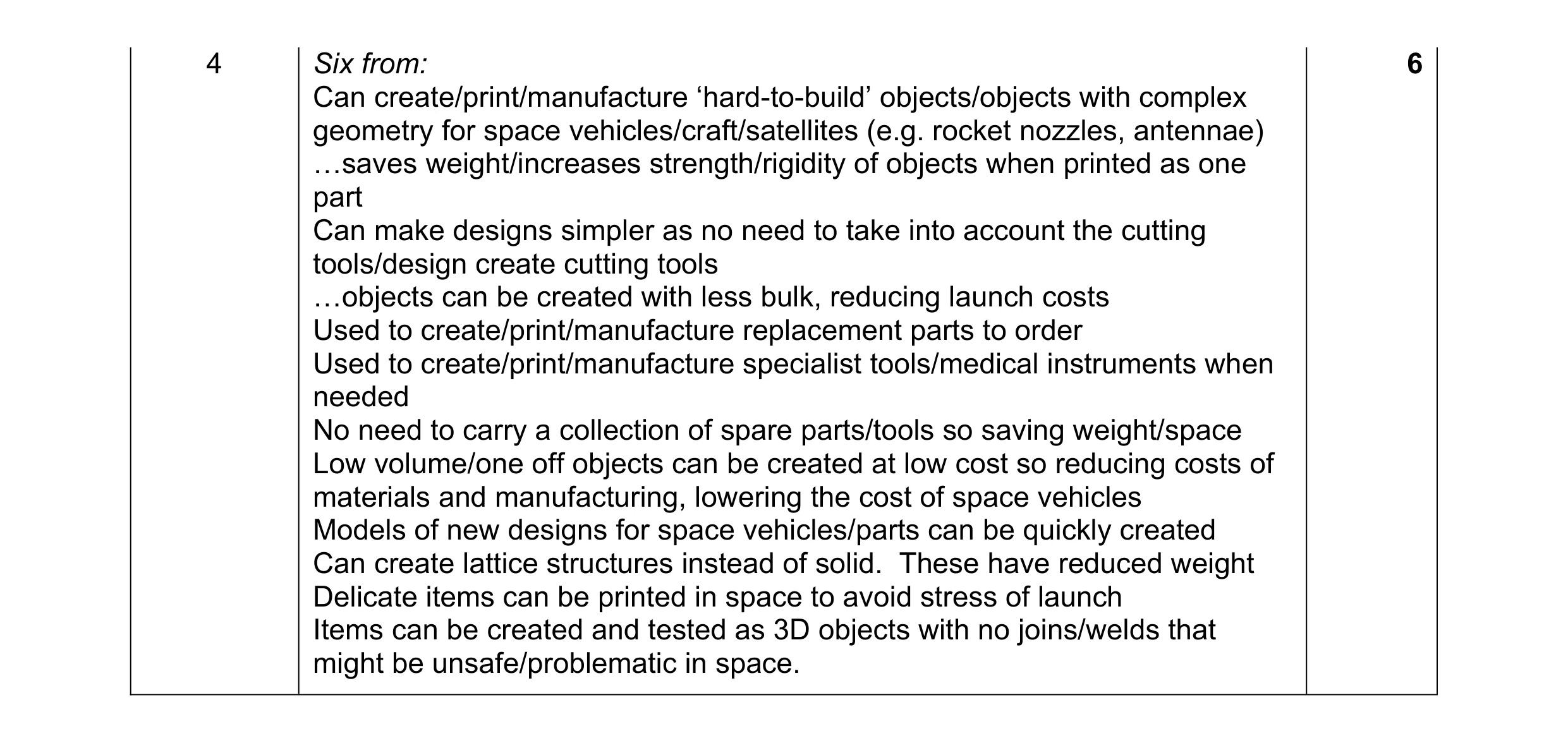 6
6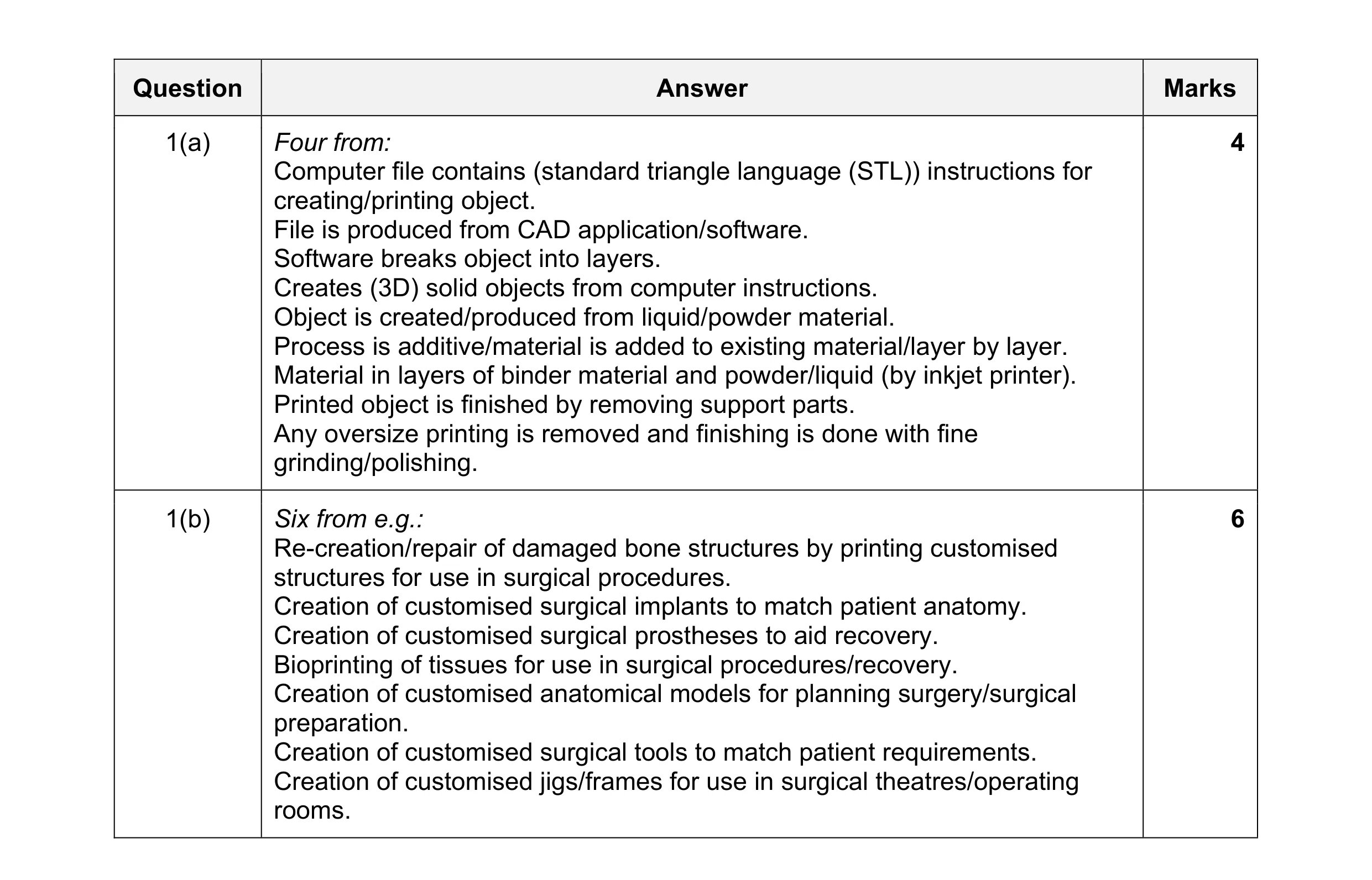 10
10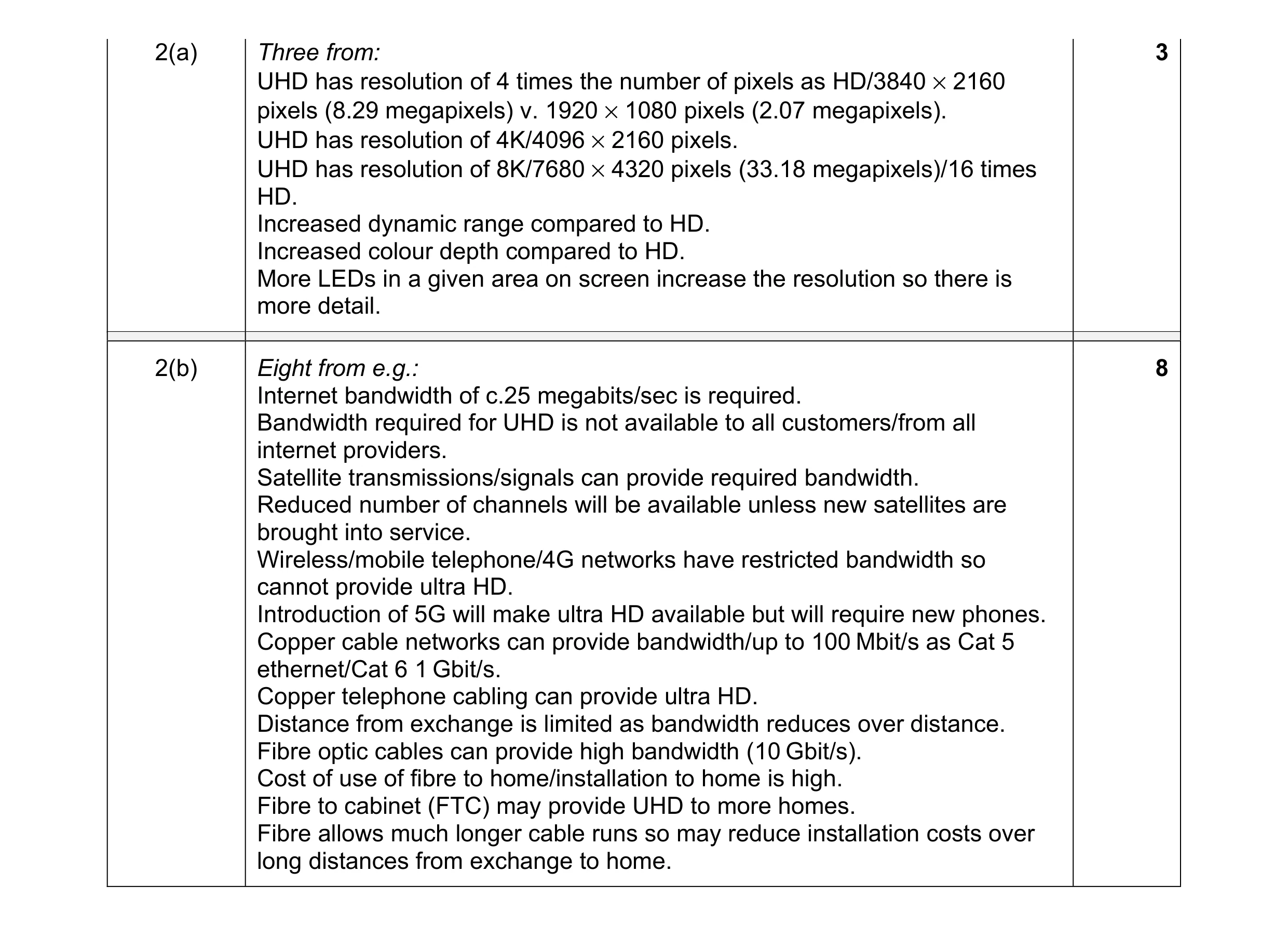 11
11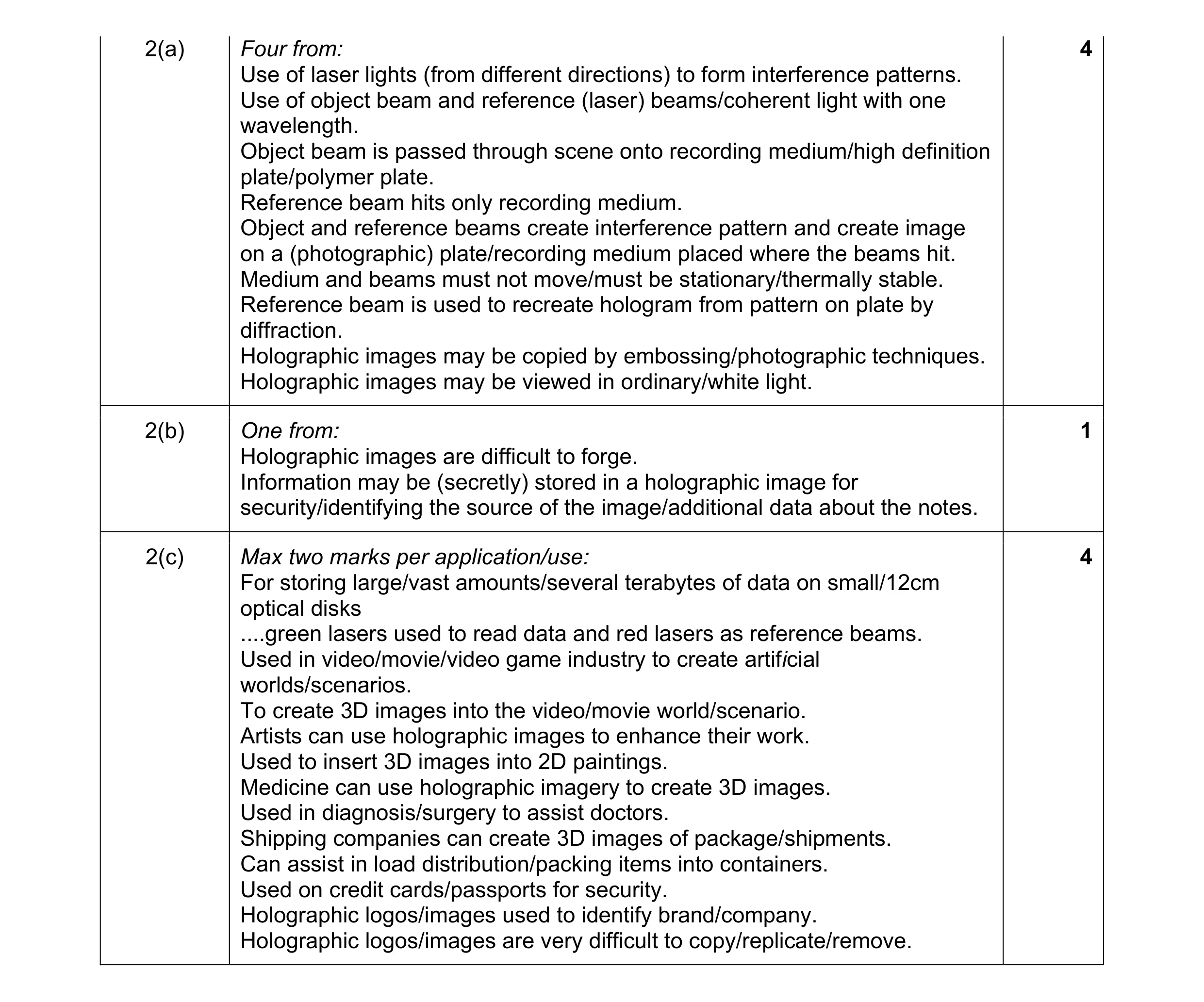 9
9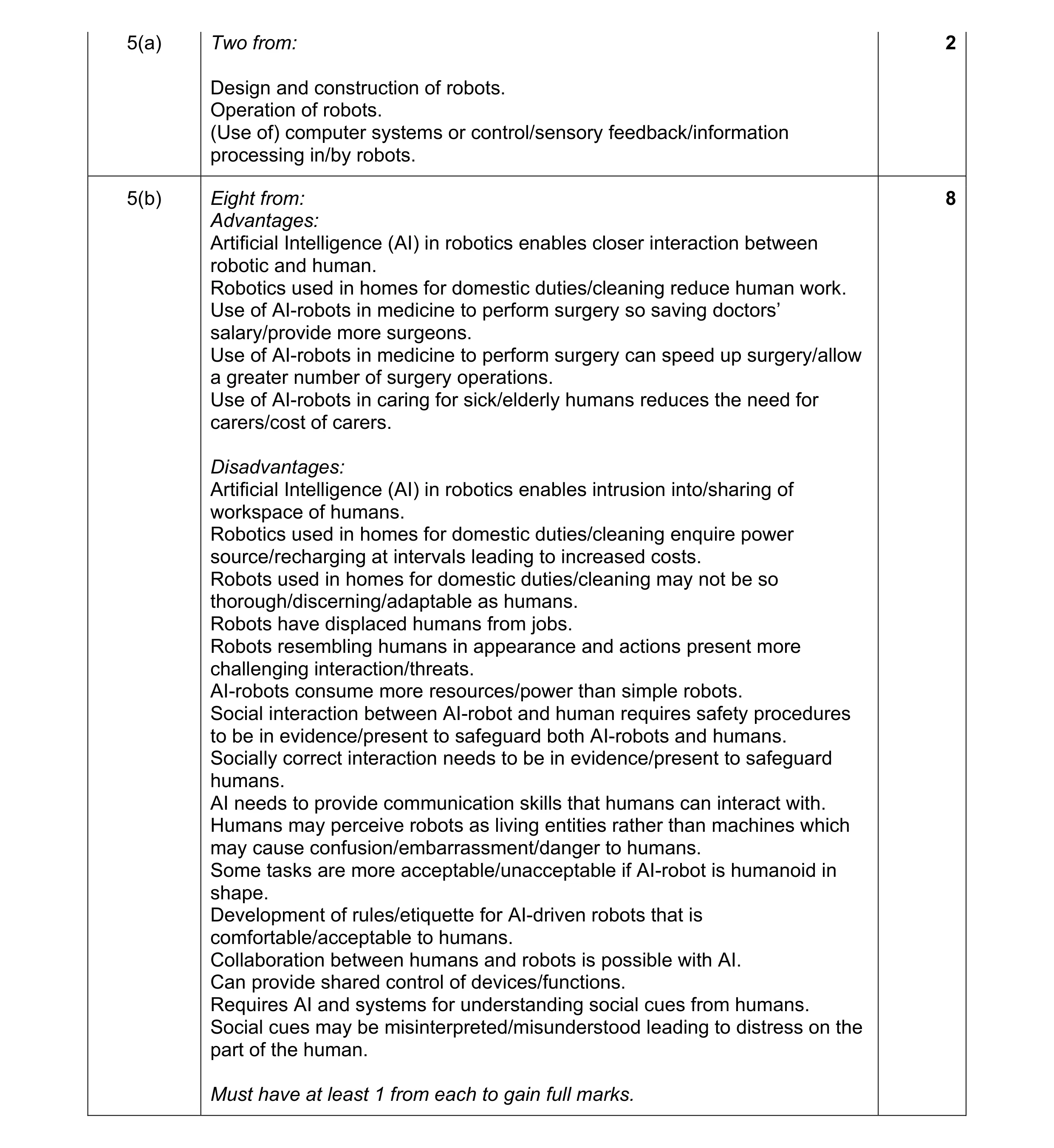 10
10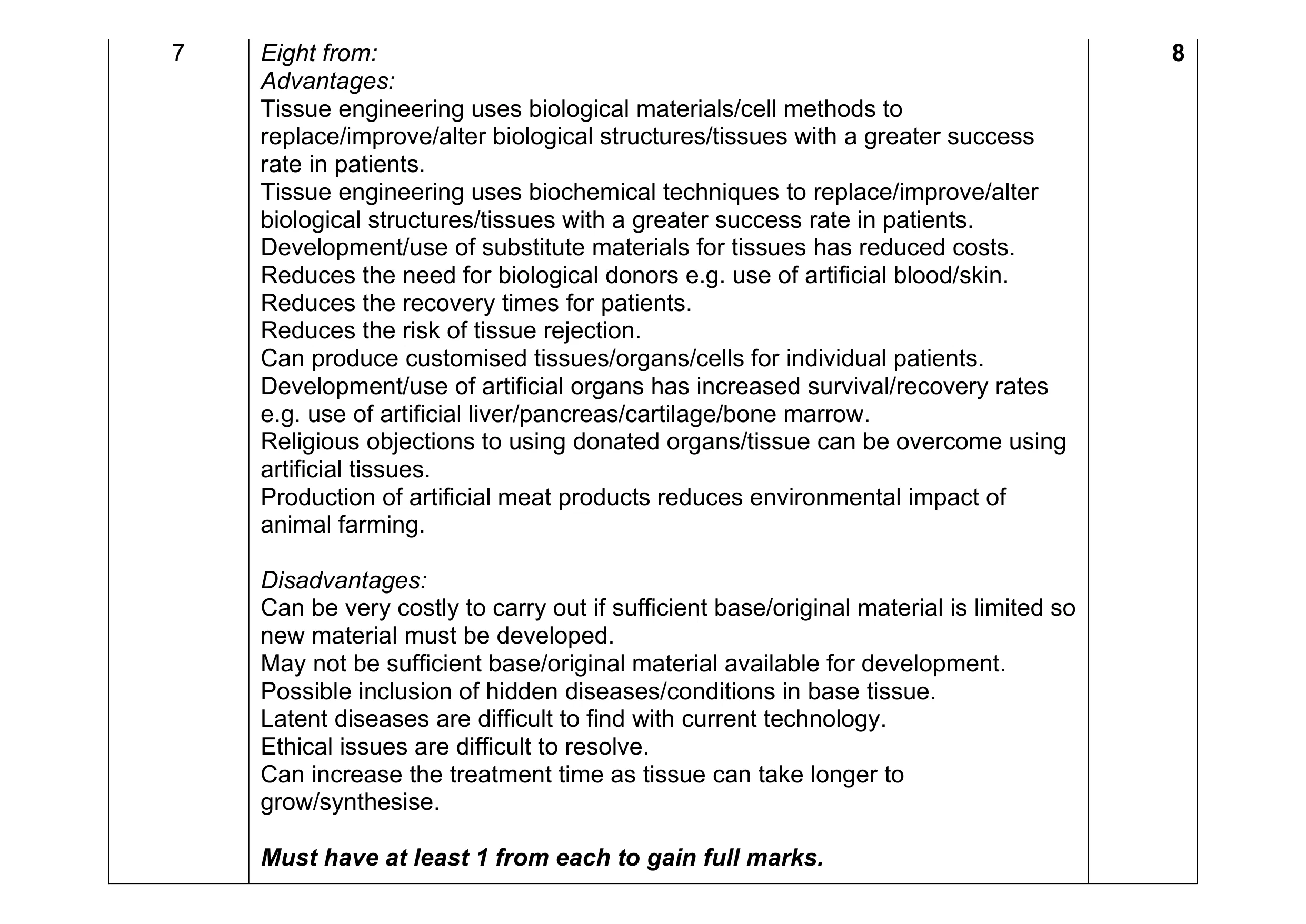 8
8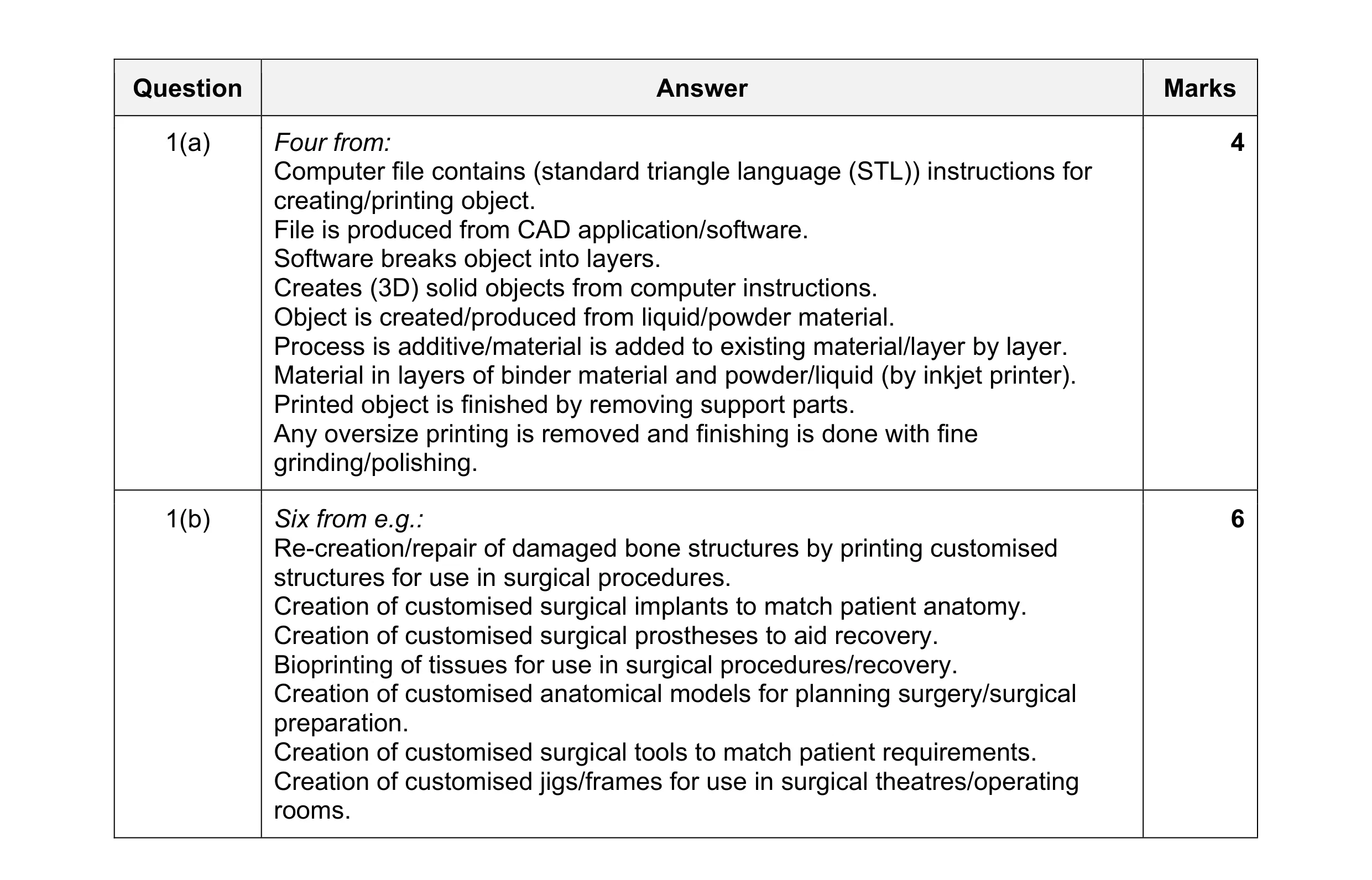 10
10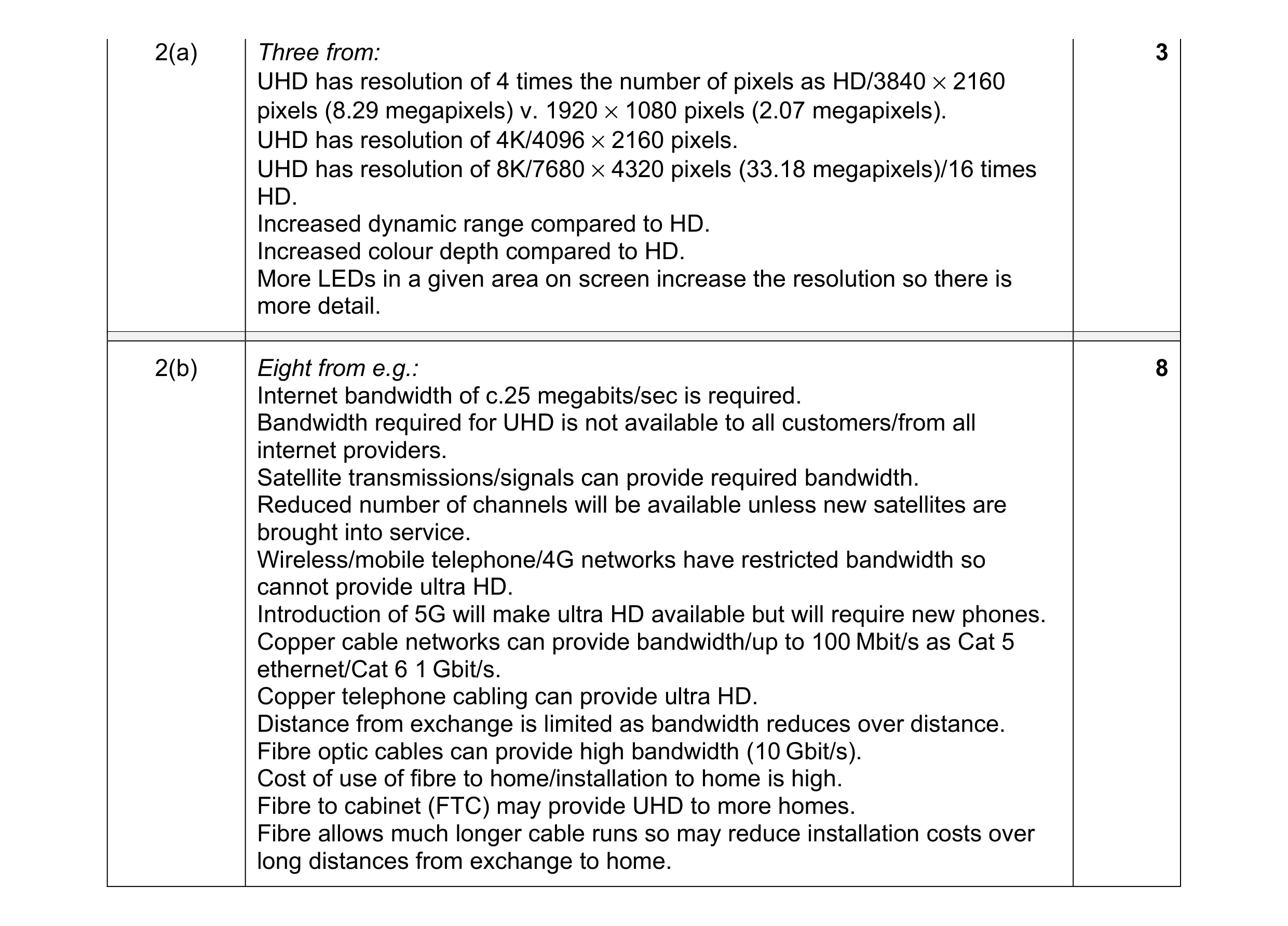 11
11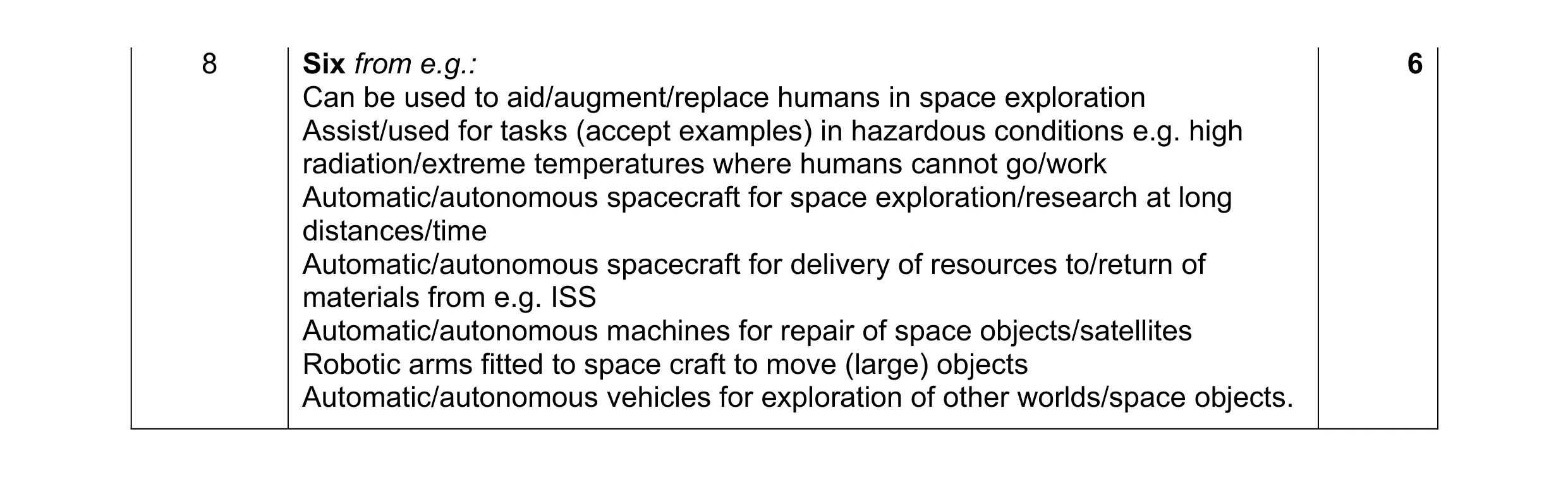 6
6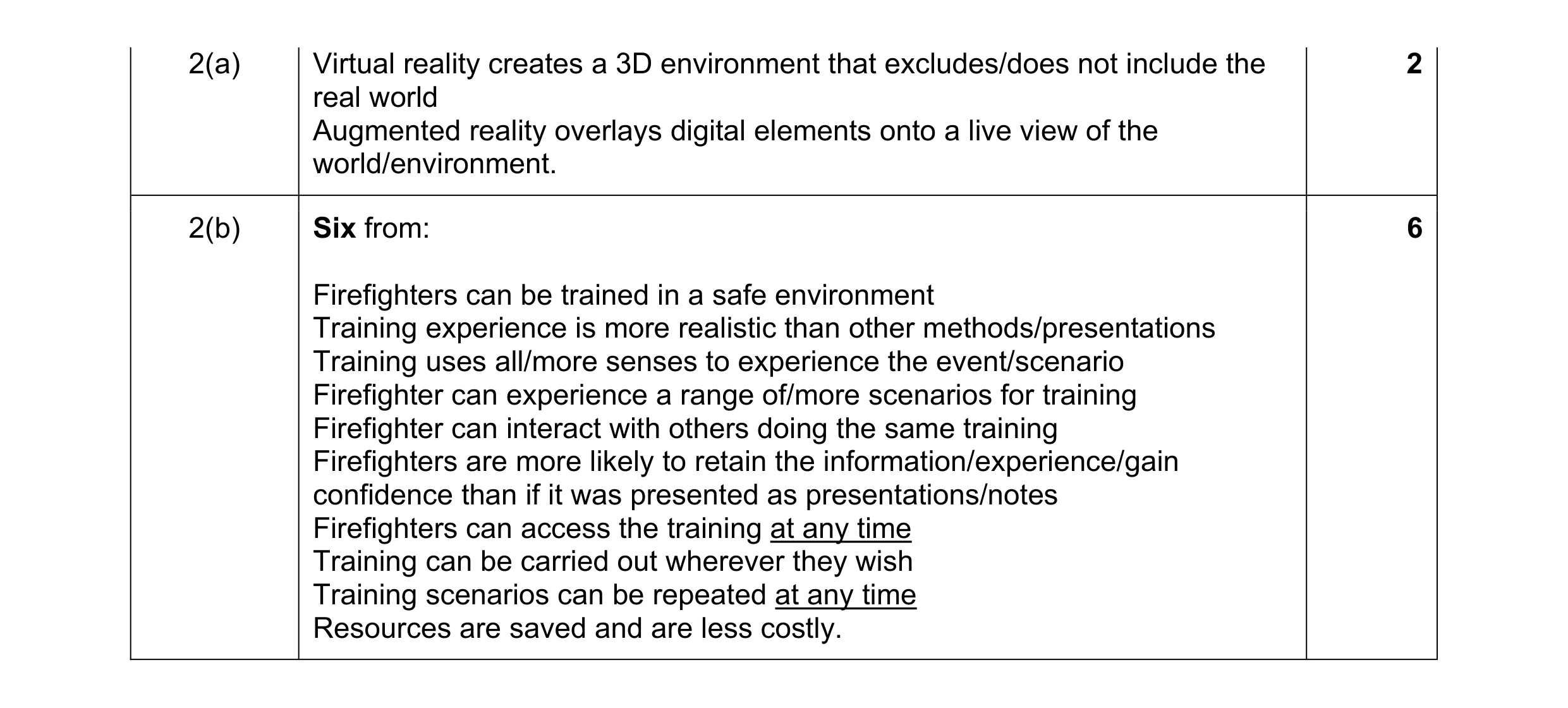 8
8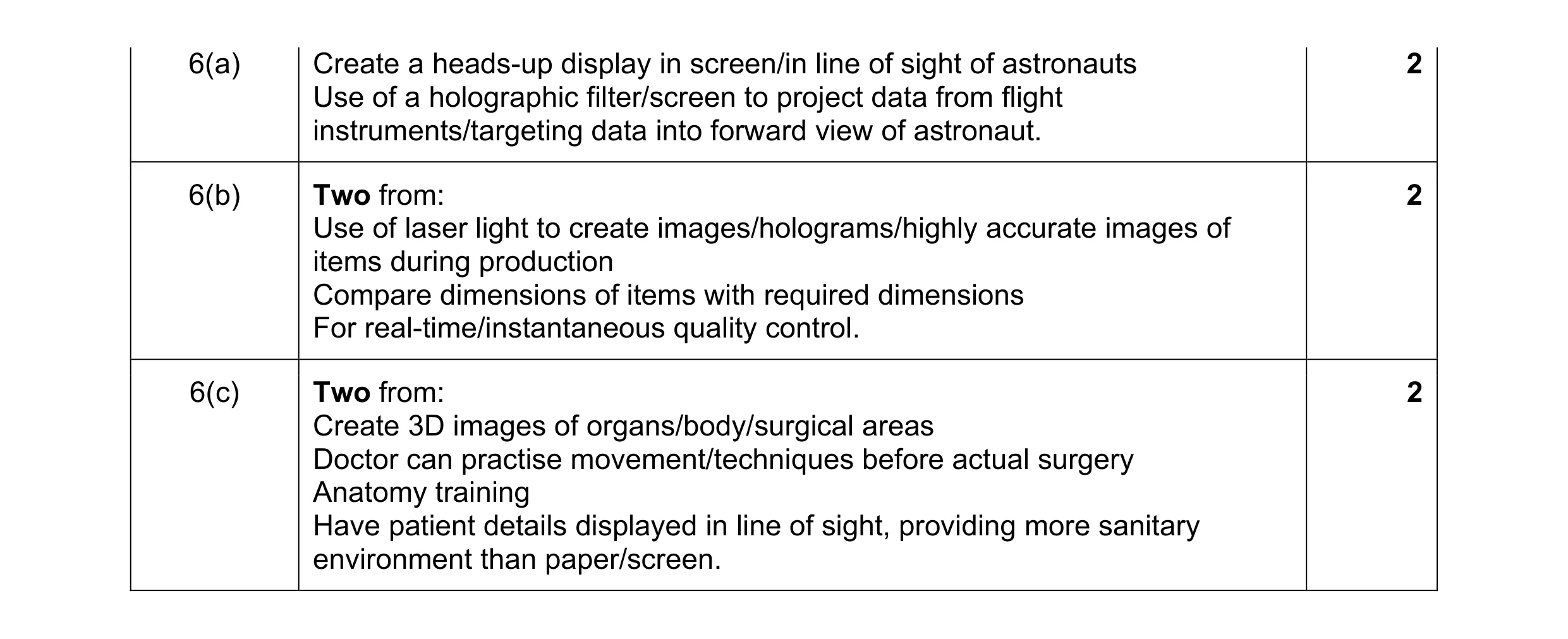 6
6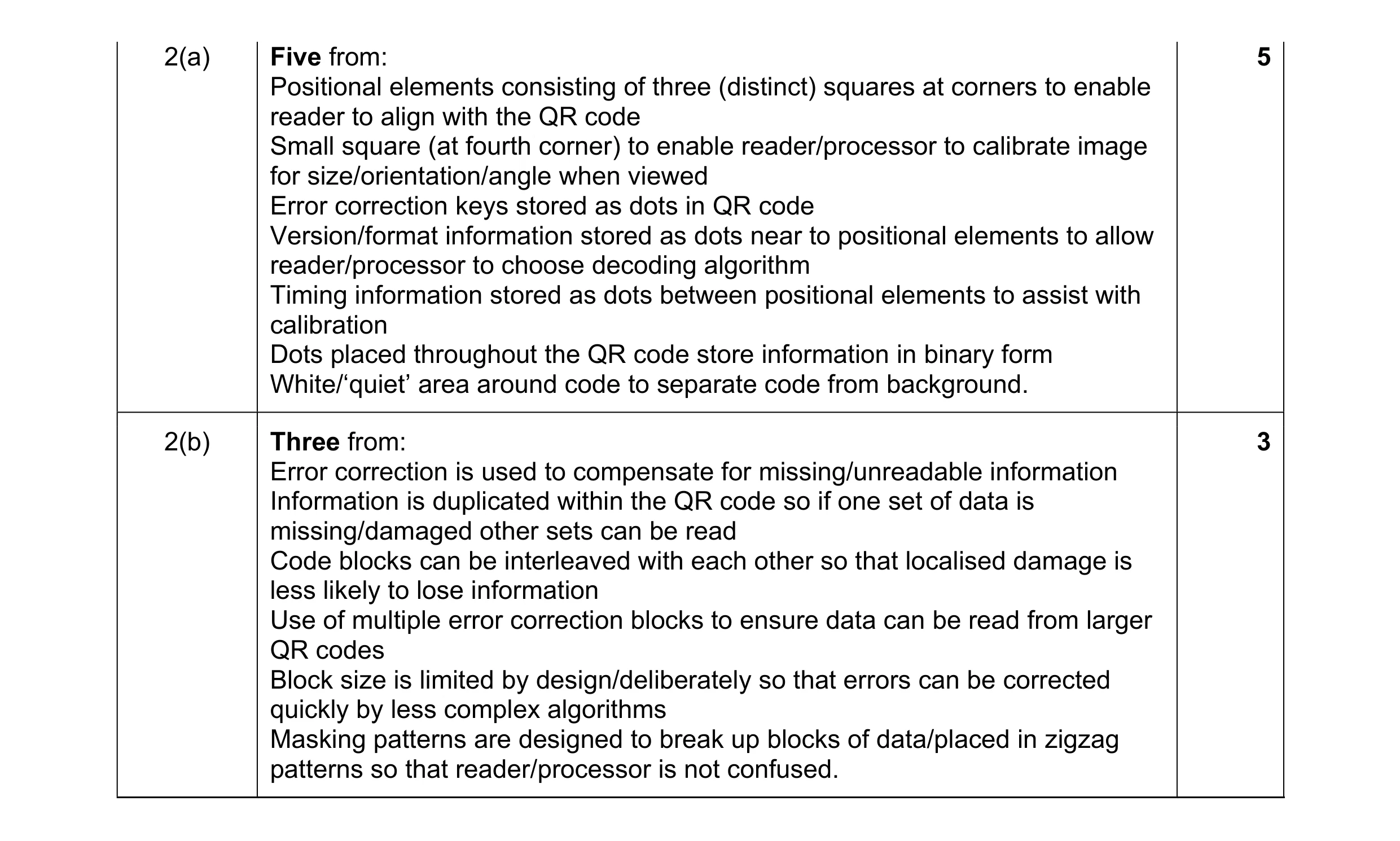 8
8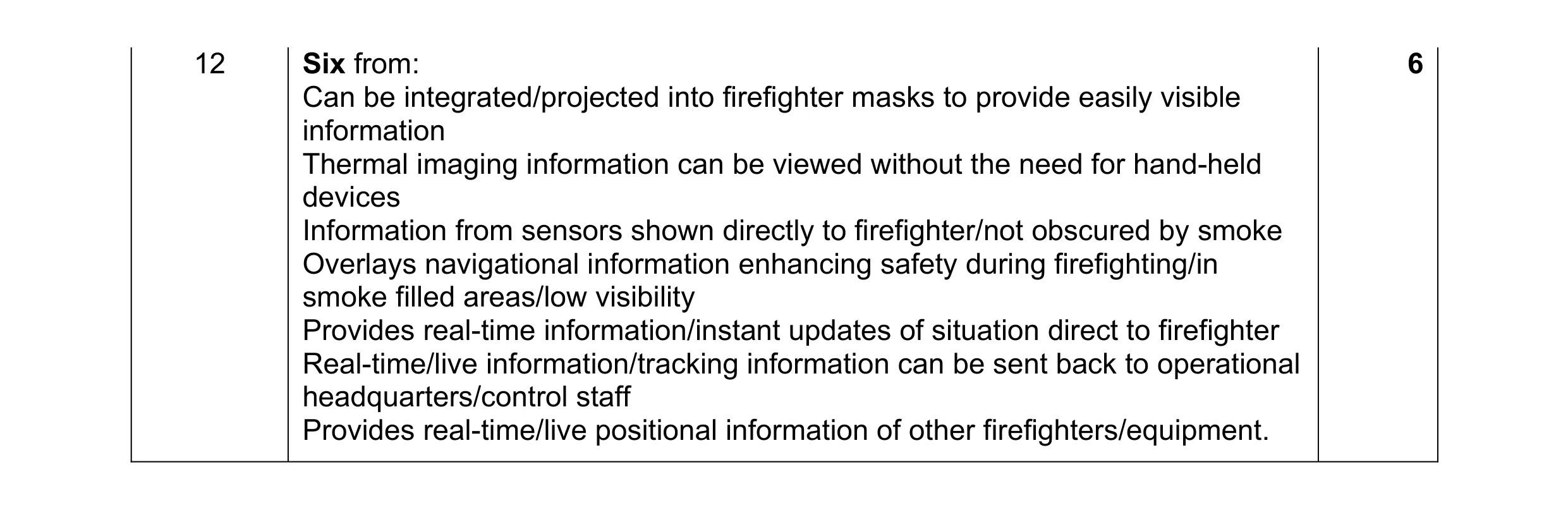 6
6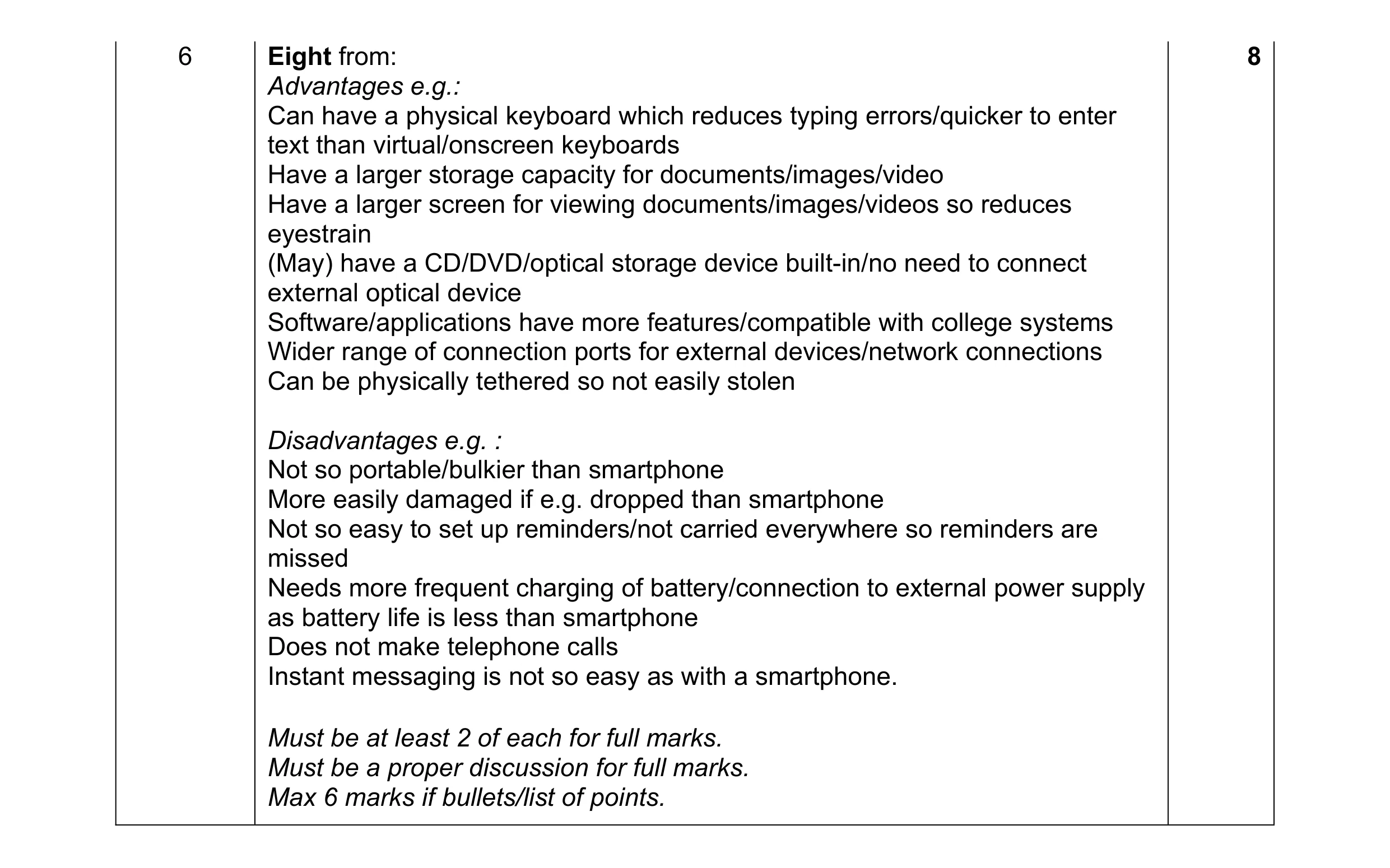 8
8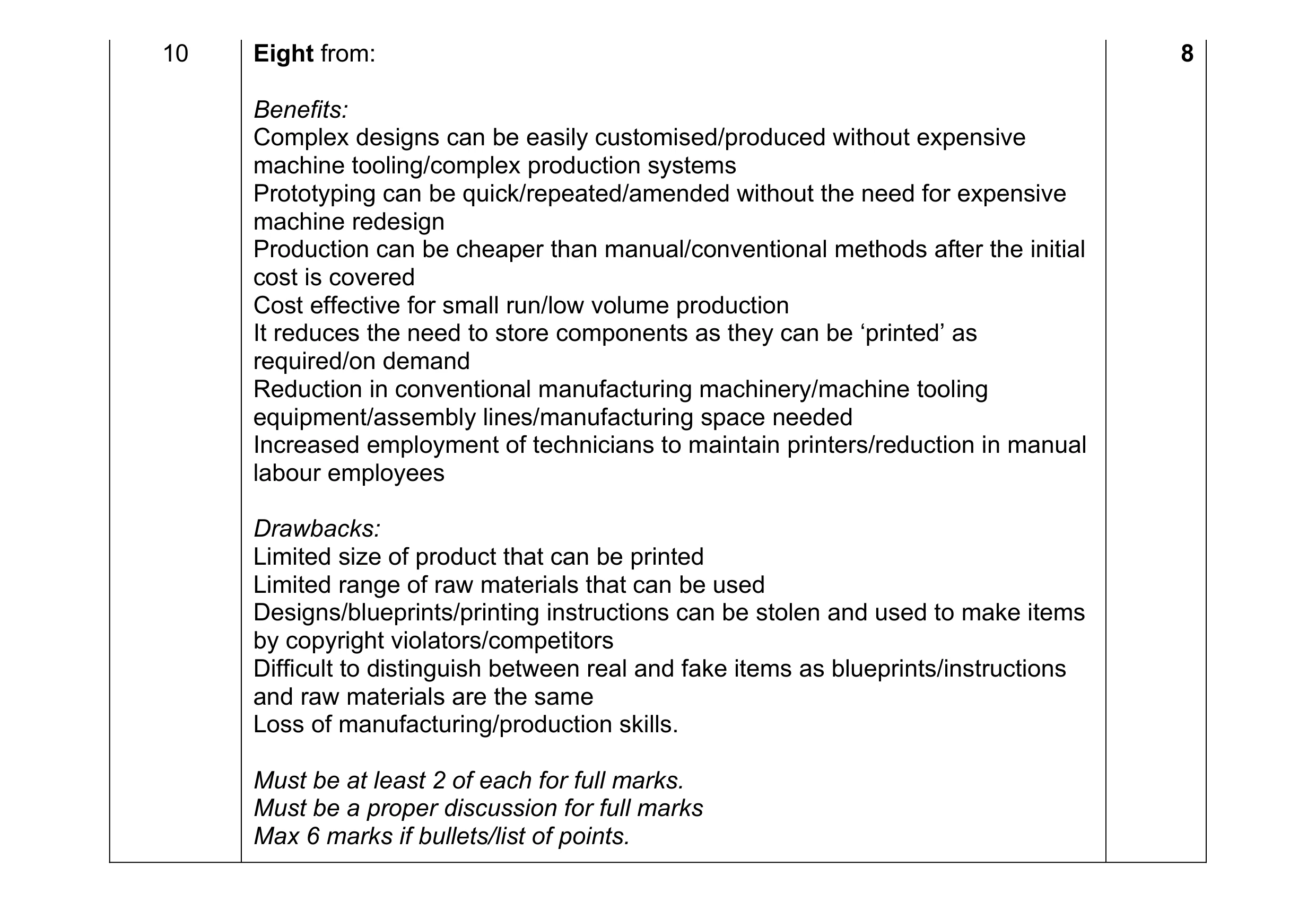 8
8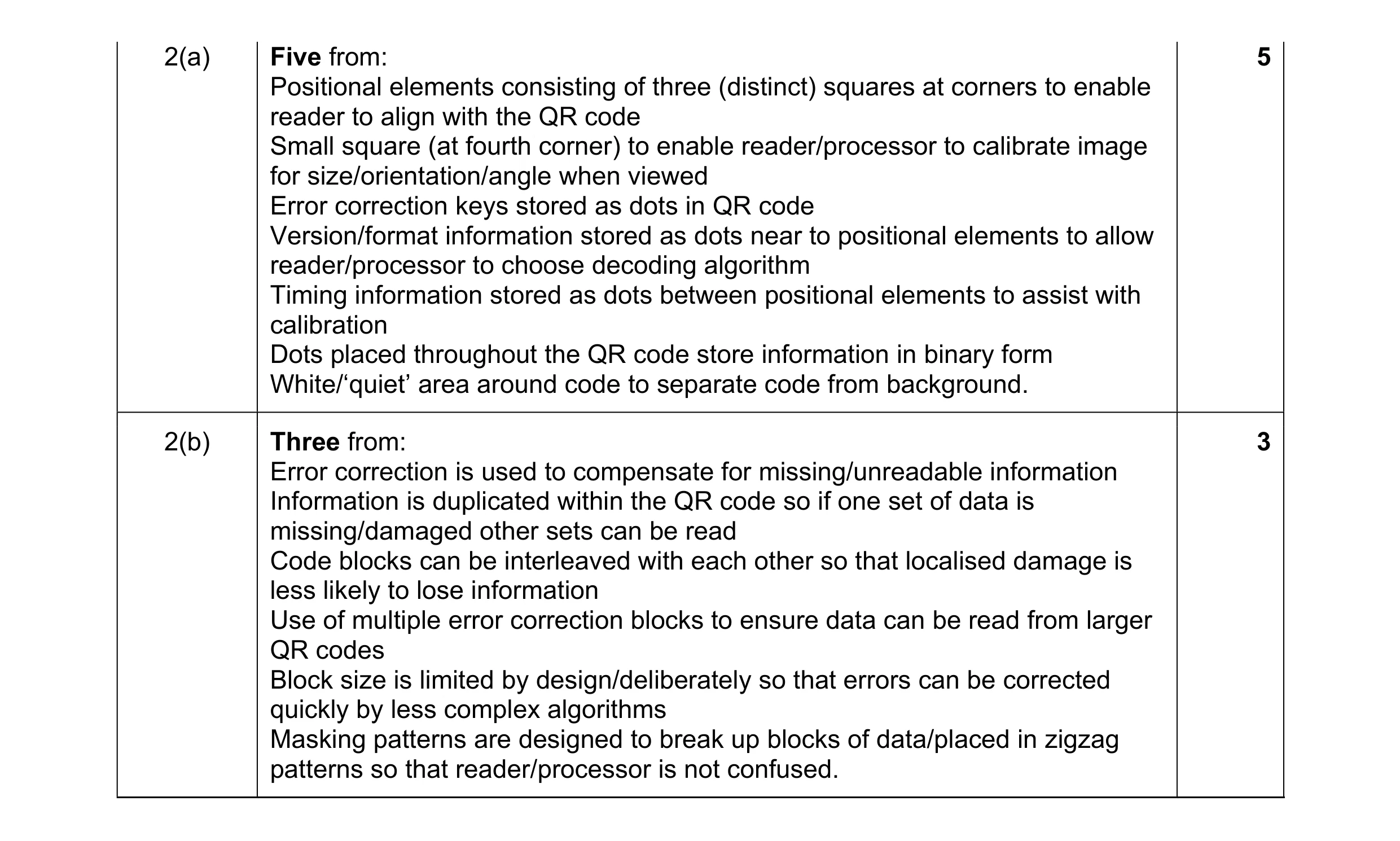 8
8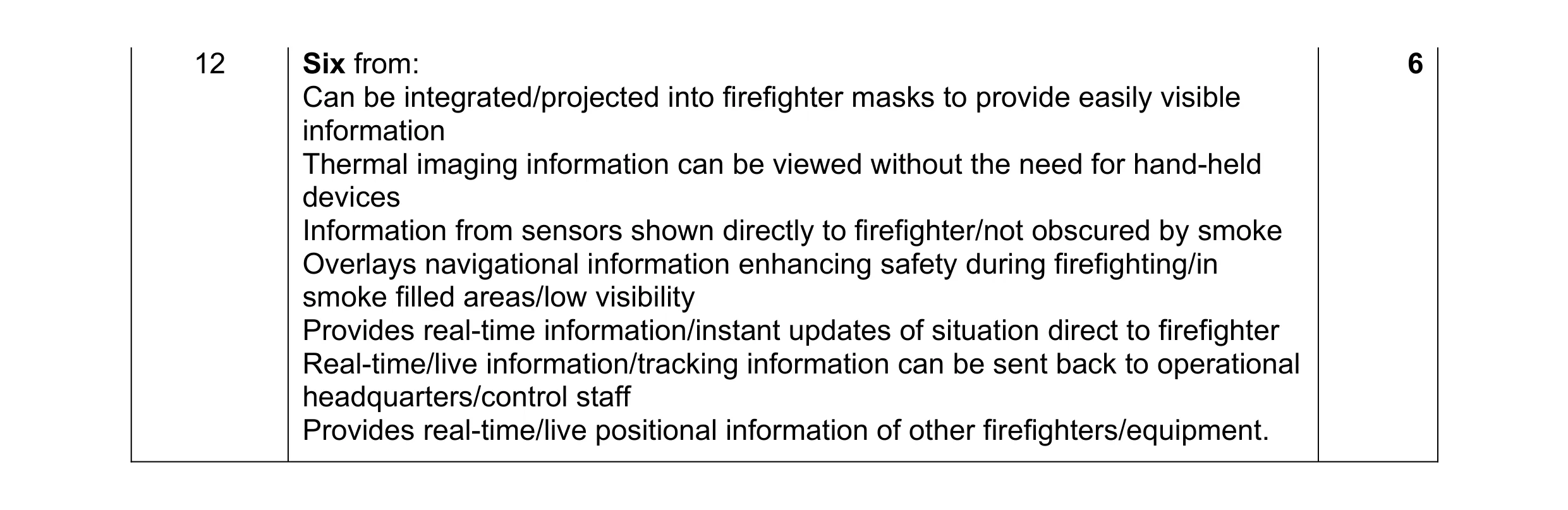 6
6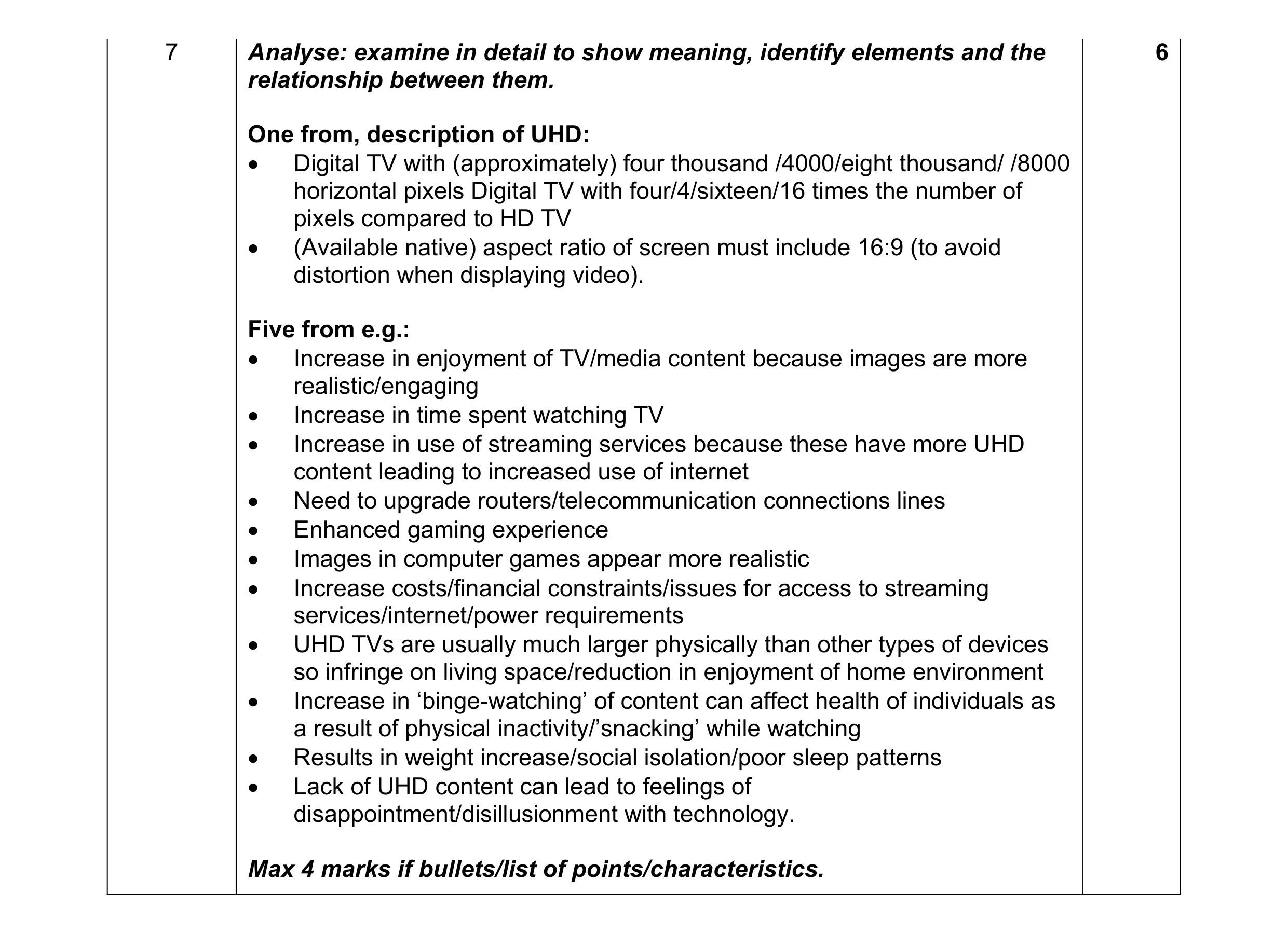 6
6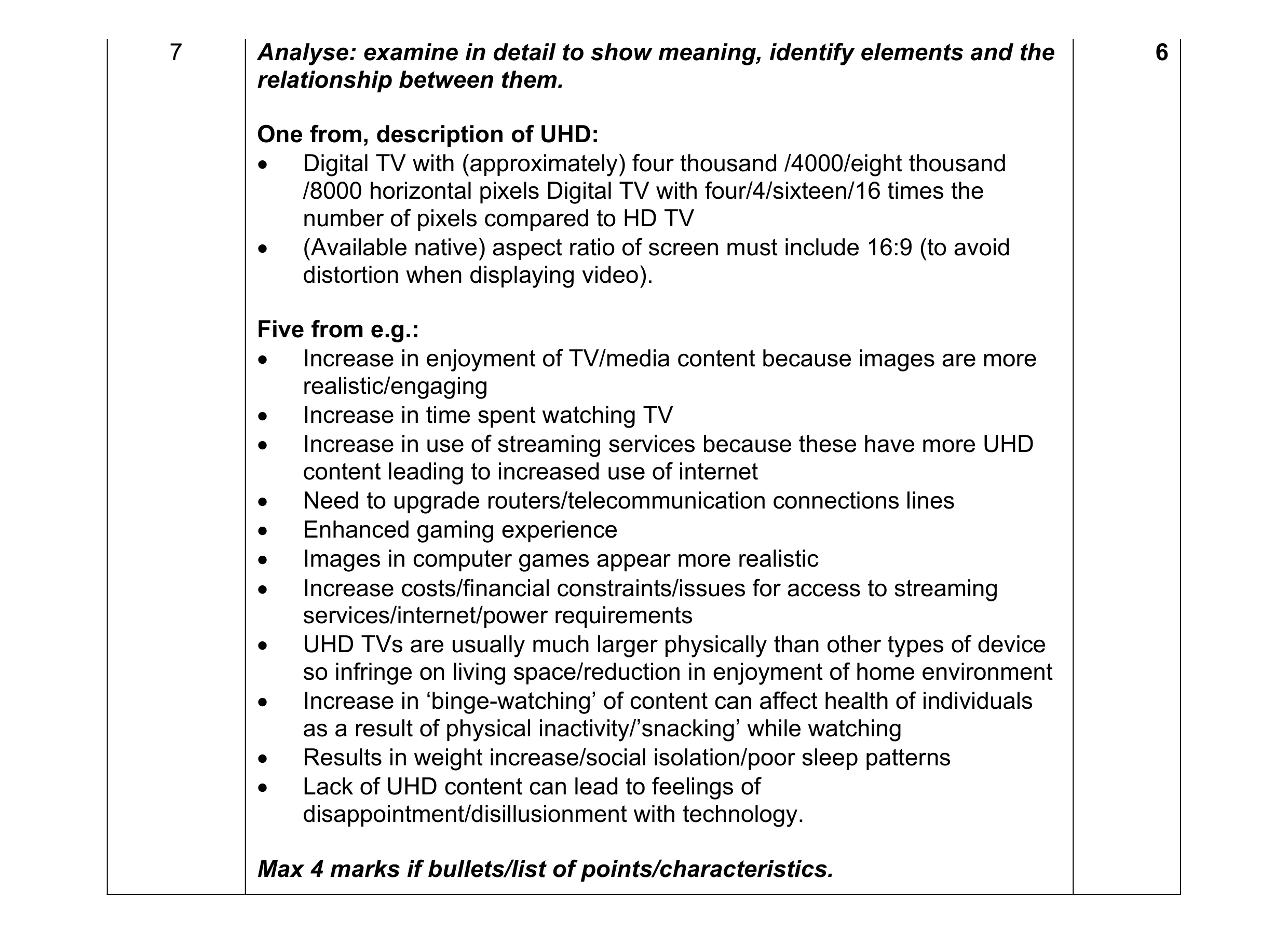 6
6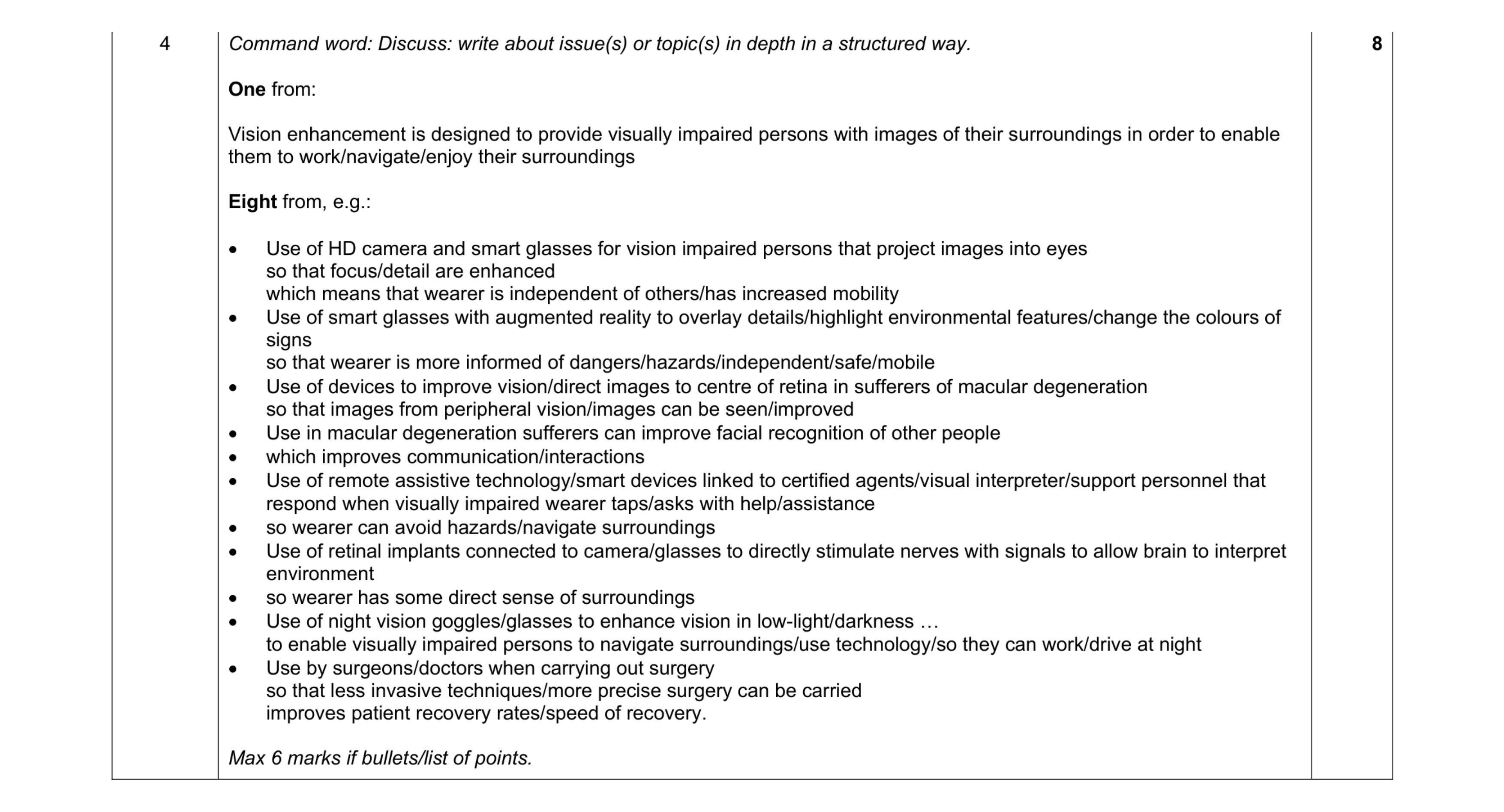 8
8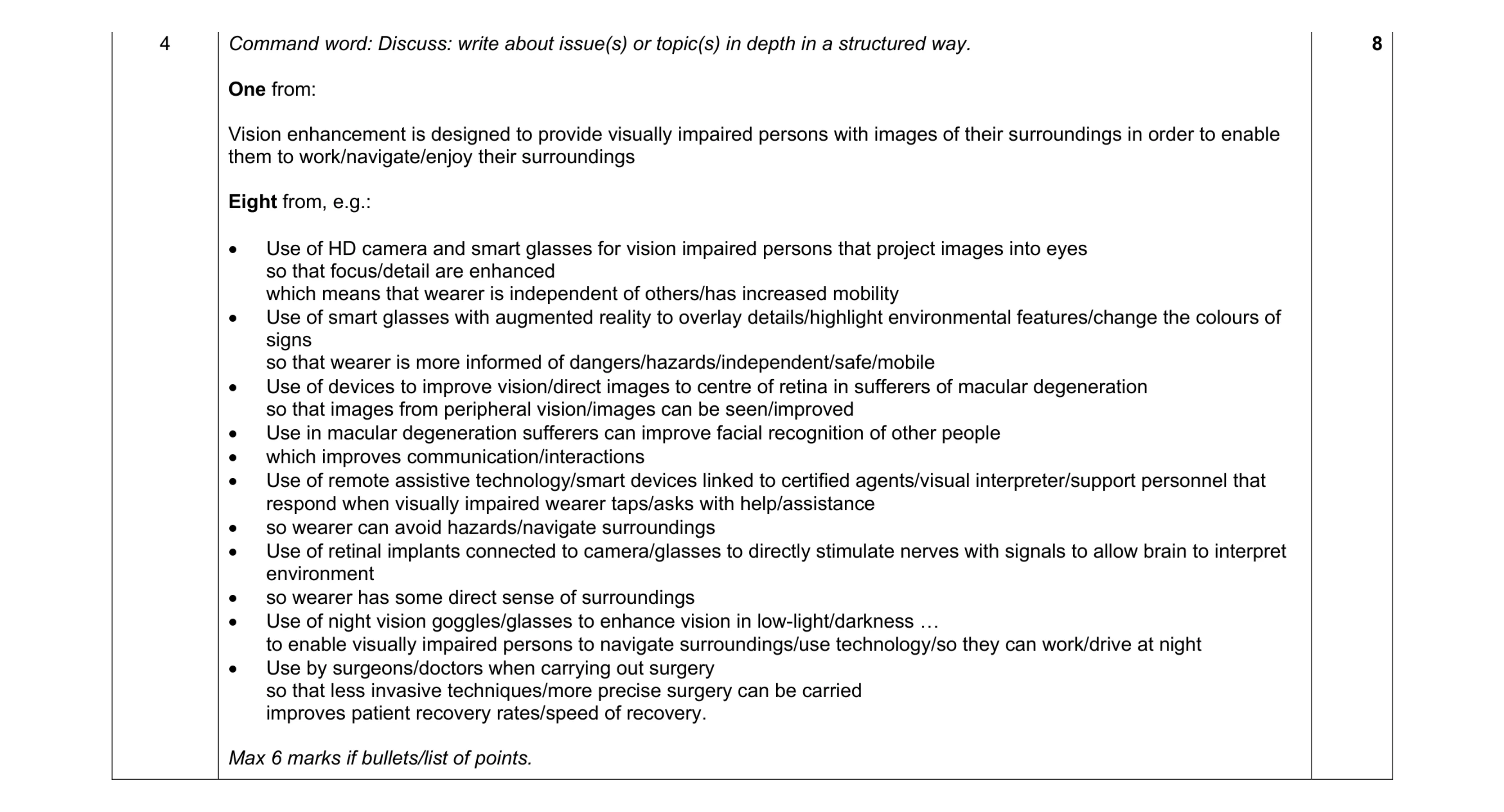 8
8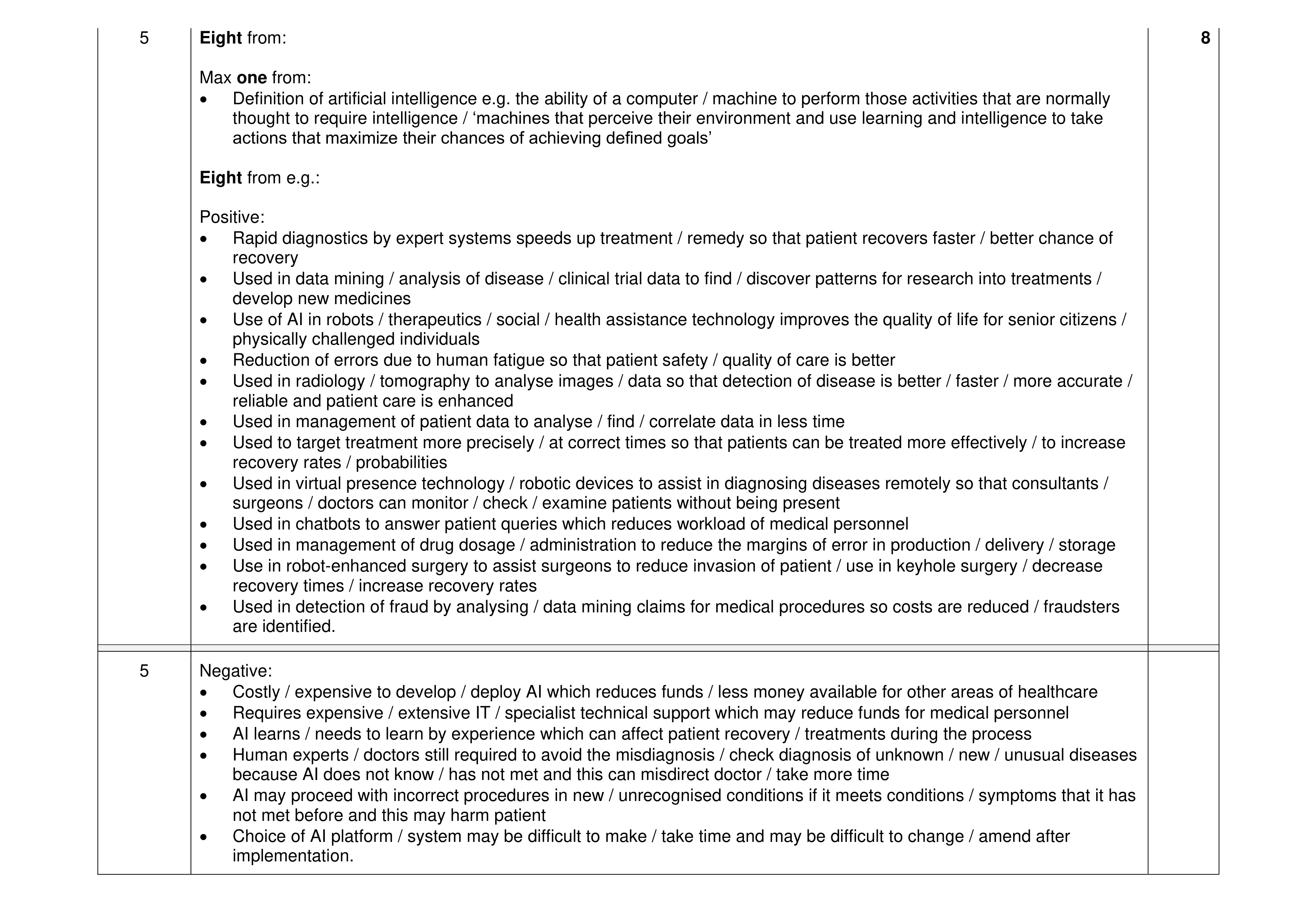 8
8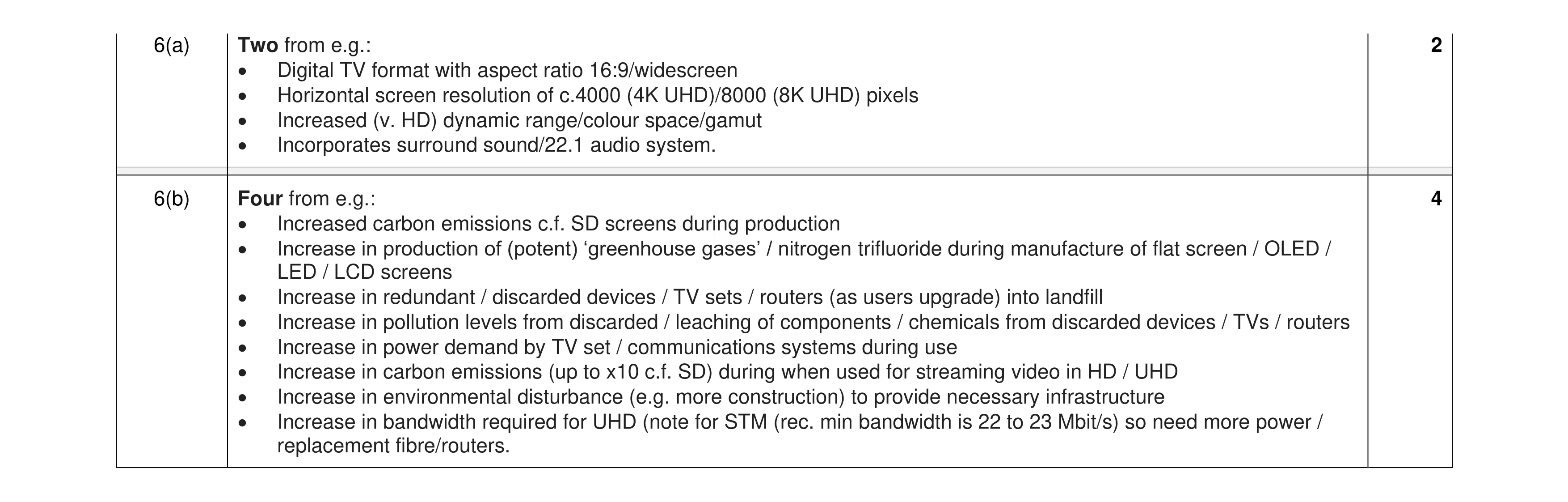 6
6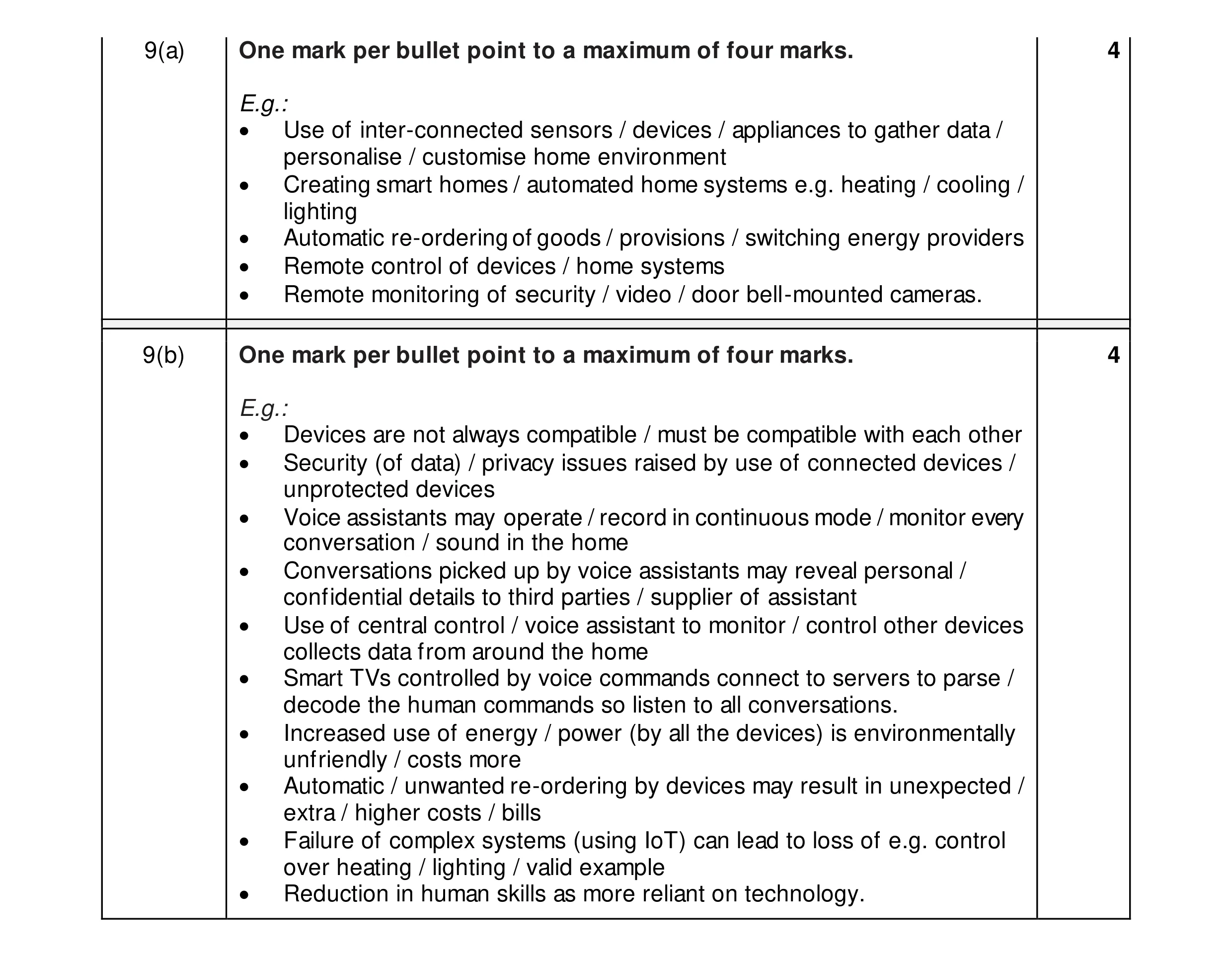 8
8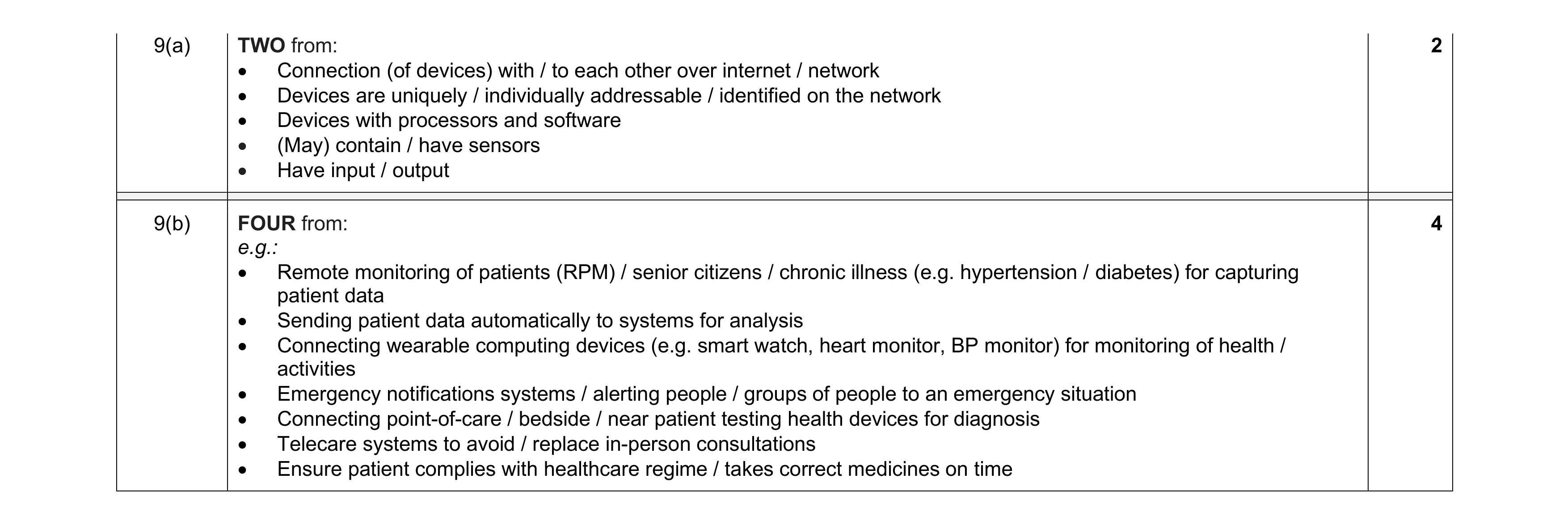 6
6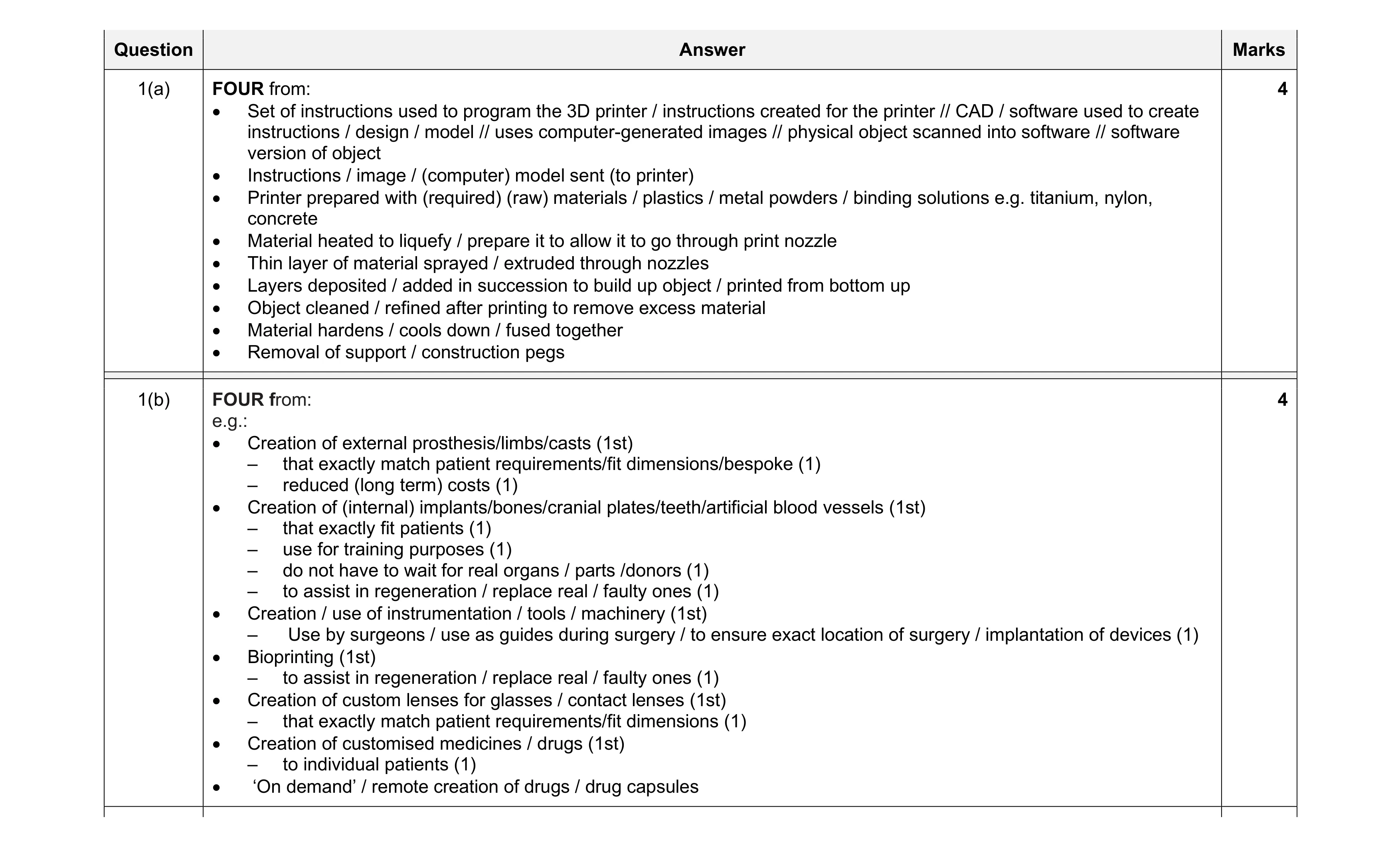 8
8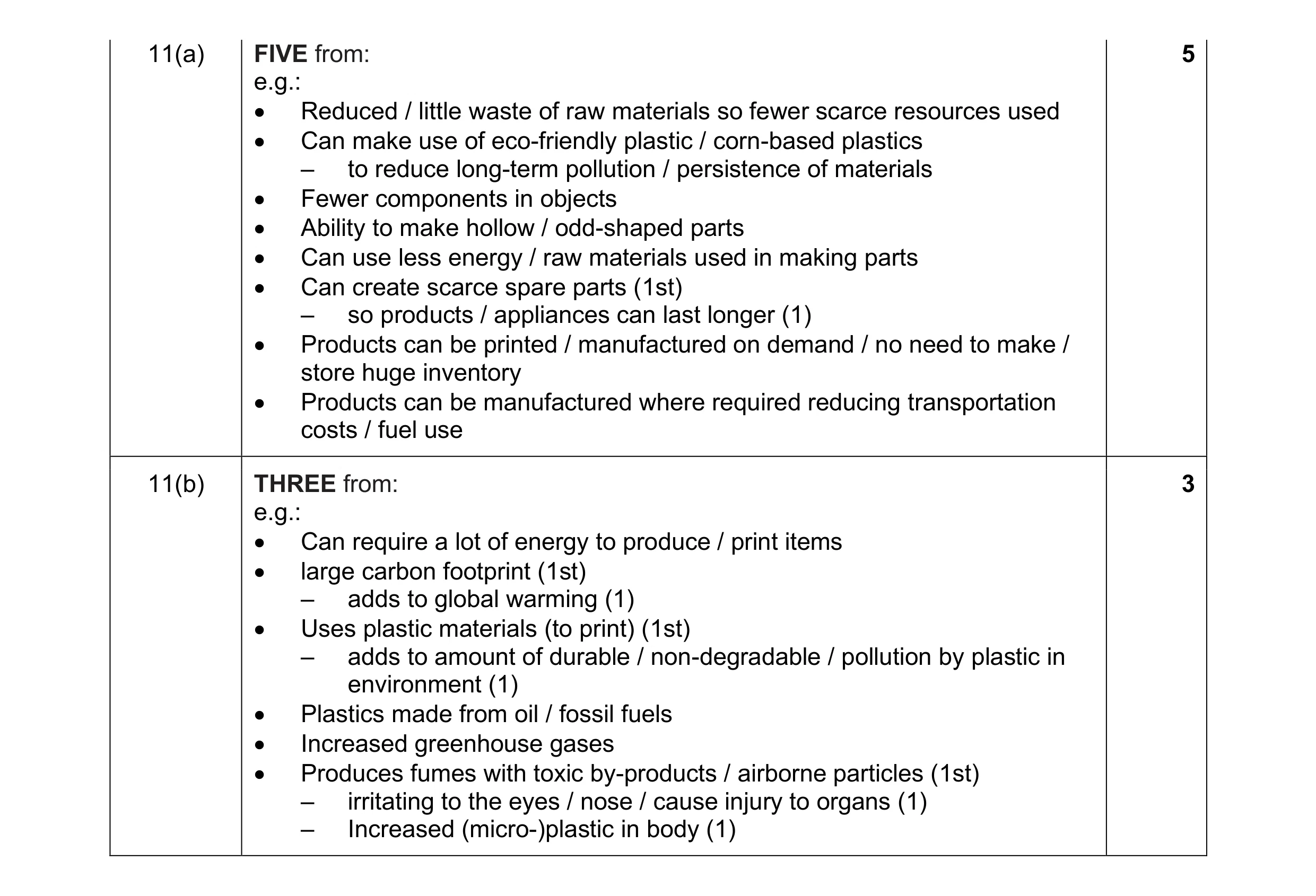 8
8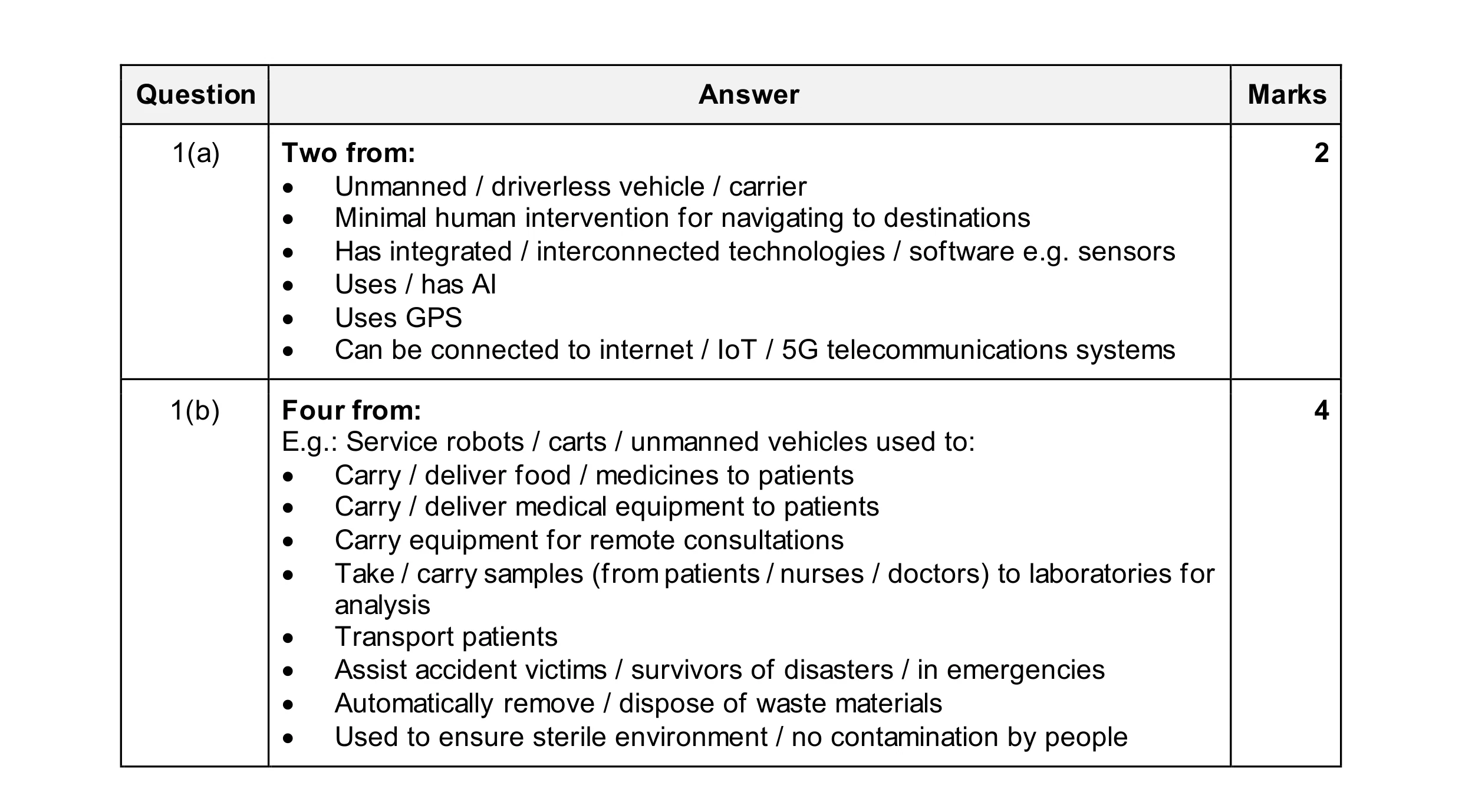 6
6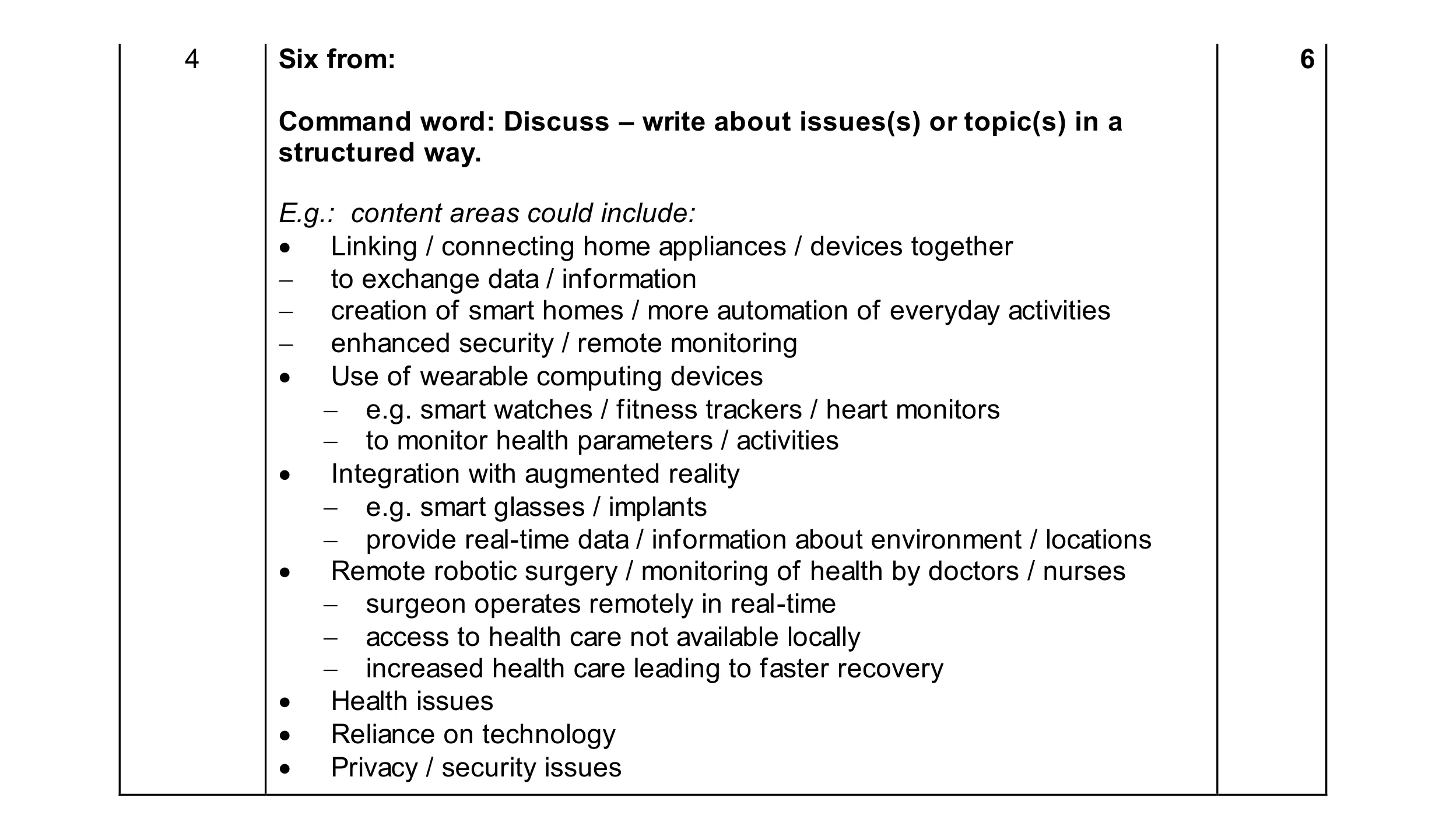 6
6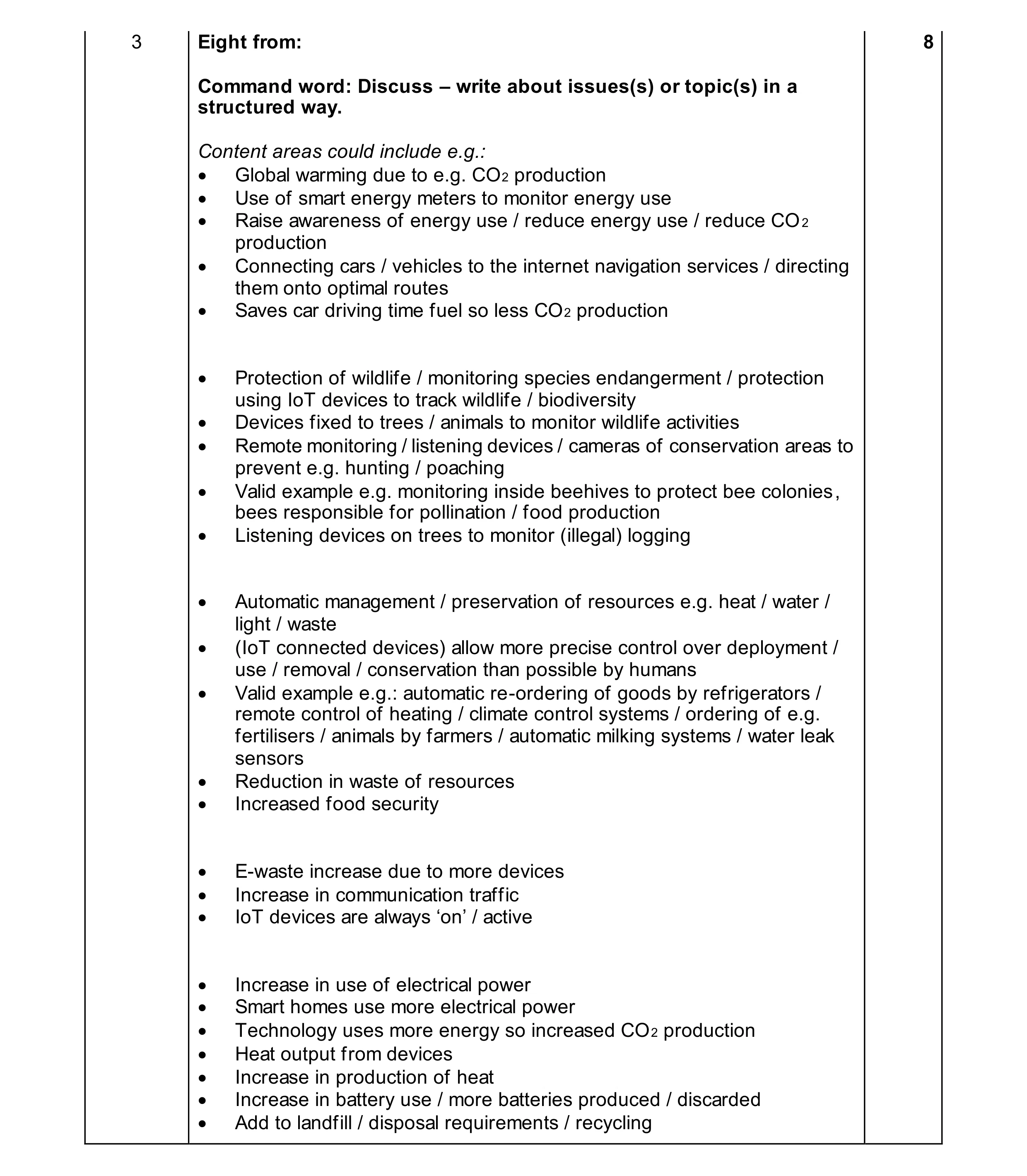 8
8