Cambridge A Level Information Technology (from 2017) 9626 — 2020 May/June Paper 3 · Variant 2

9626/32/M/J/20 · 10 questions · 90 marks · ≈101 min

The question paper and its mark scheme, free to read here and free to download. This is Cambridge’s own paper, exactly as it was sat.

Question paper16 pages
Cambridge A Level Information Technology (from 2017) 9626 2020 May/June Paper 3 · Variant 2 question paper, page 1 of 16
Page 1 of 16
Cambridge A Level Information Technology (from 2017) 9626 2020 May/June Paper 3 · Variant 2 question paper, page 2 of 16
Page 2 of 16
Cambridge A Level Information Technology (from 2017) 9626 2020 May/June Paper 3 · Variant 2 question paper, page 3 of 16
Page 3 of 16
Cambridge A Level Information Technology (from 2017) 9626 2020 May/June Paper 3 · Variant 2 question paper, page 4 of 16
Page 4 of 16
Cambridge A Level Information Technology (from 2017) 9626 2020 May/June Paper 3 · Variant 2 question paper, page 5 of 16
Page 5 of 16
Cambridge A Level Information Technology (from 2017) 9626 2020 May/June Paper 3 · Variant 2 question paper, page 6 of 16
Page 6 of 16
Cambridge A Level Information Technology (from 2017) 9626 2020 May/June Paper 3 · Variant 2 question paper, page 7 of 16
Page 7 of 16
Cambridge A Level Information Technology (from 2017) 9626 2020 May/June Paper 3 · Variant 2 question paper, page 8 of 16
Page 8 of 16
Cambridge A Level Information Technology (from 2017) 9626 2020 May/June Paper 3 · Variant 2 question paper, page 9 of 16
Page 9 of 16
Cambridge A Level Information Technology (from 2017) 9626 2020 May/June Paper 3 · Variant 2 question paper, page 10 of 16
Page 10 of 16
Cambridge A Level Information Technology (from 2017) 9626 2020 May/June Paper 3 · Variant 2 question paper, page 11 of 16
Page 11 of 16
Cambridge A Level Information Technology (from 2017) 9626 2020 May/June Paper 3 · Variant 2 question paper, page 12 of 16
Page 12 of 16
Cambridge A Level Information Technology (from 2017) 9626 2020 May/June Paper 3 · Variant 2 question paper, page 13 of 16
Page 13 of 16
Cambridge A Level Information Technology (from 2017) 9626 2020 May/June Paper 3 · Variant 2 question paper, page 14 of 16
Page 14 of 16
Cambridge A Level Information Technology (from 2017) 9626 2020 May/June Paper 3 · Variant 2 question paper, page 15 of 16
Page 15 of 16
Cambridge A Level Information Technology (from 2017) 9626 2020 May/June Paper 3 · Variant 2 question paper, page 16 of 16
Page 16 of 16

Mark scheme9 pages

Answers below. Sit the paper first if you are practising.
Mark scheme, page 1 of 9
Page 1 of 9
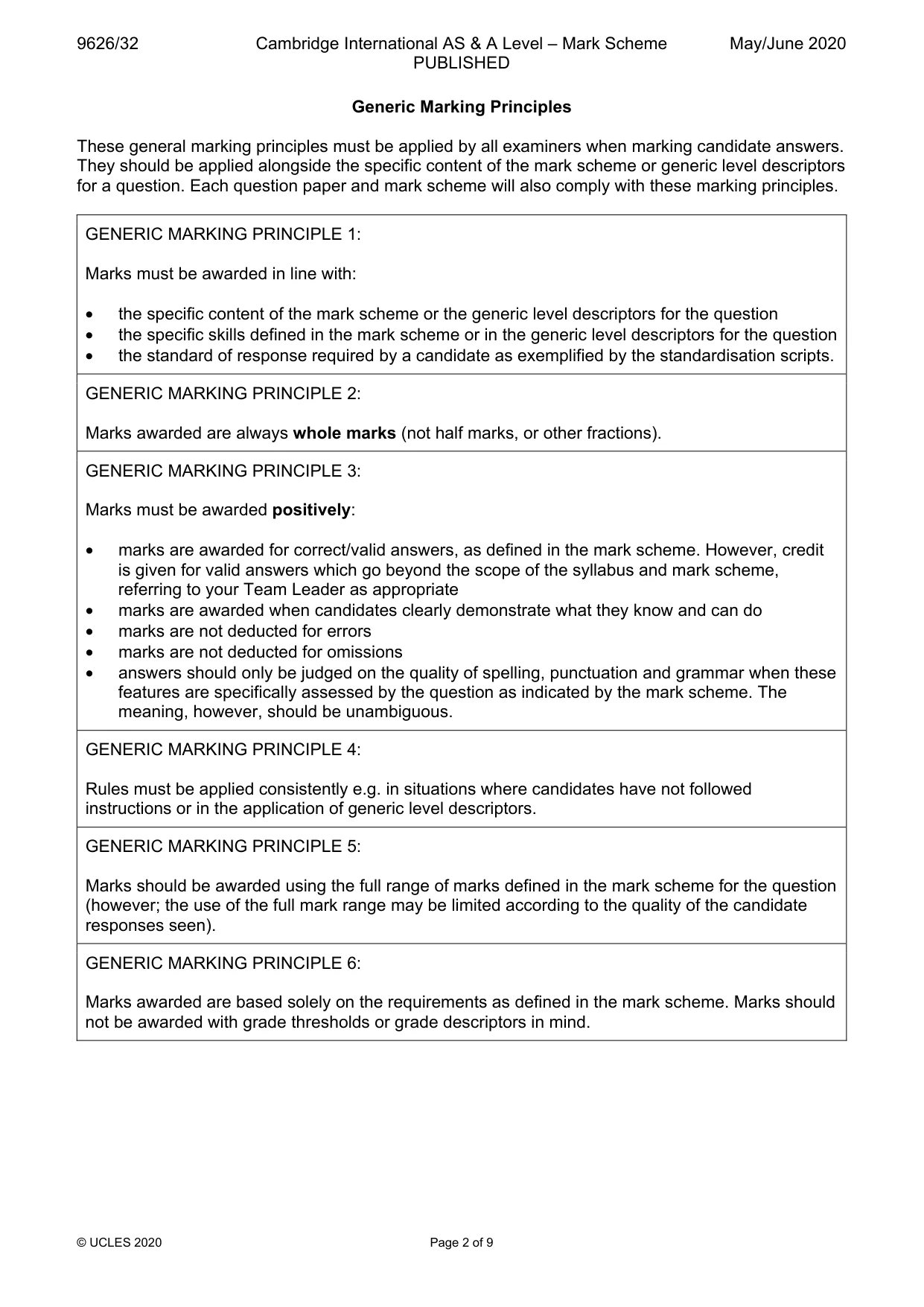
Mark scheme, page 2 of 9
Page 2 of 9
Mark scheme, page 3 of 9
Page 3 of 9
Mark scheme, page 4 of 9
Page 4 of 9
Mark scheme, page 5 of 9
Page 5 of 9
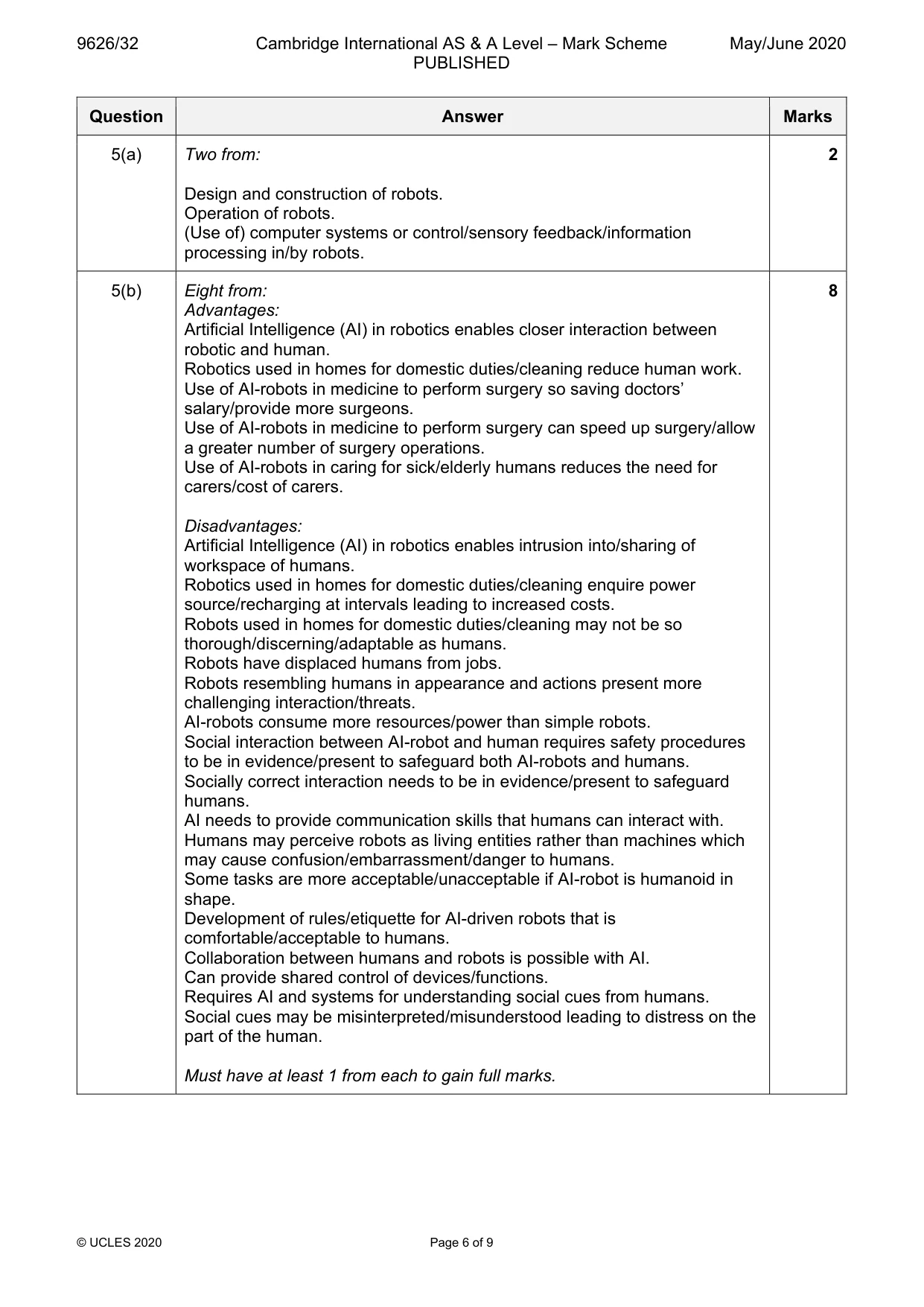
Mark scheme, page 6 of 9
Page 6 of 9
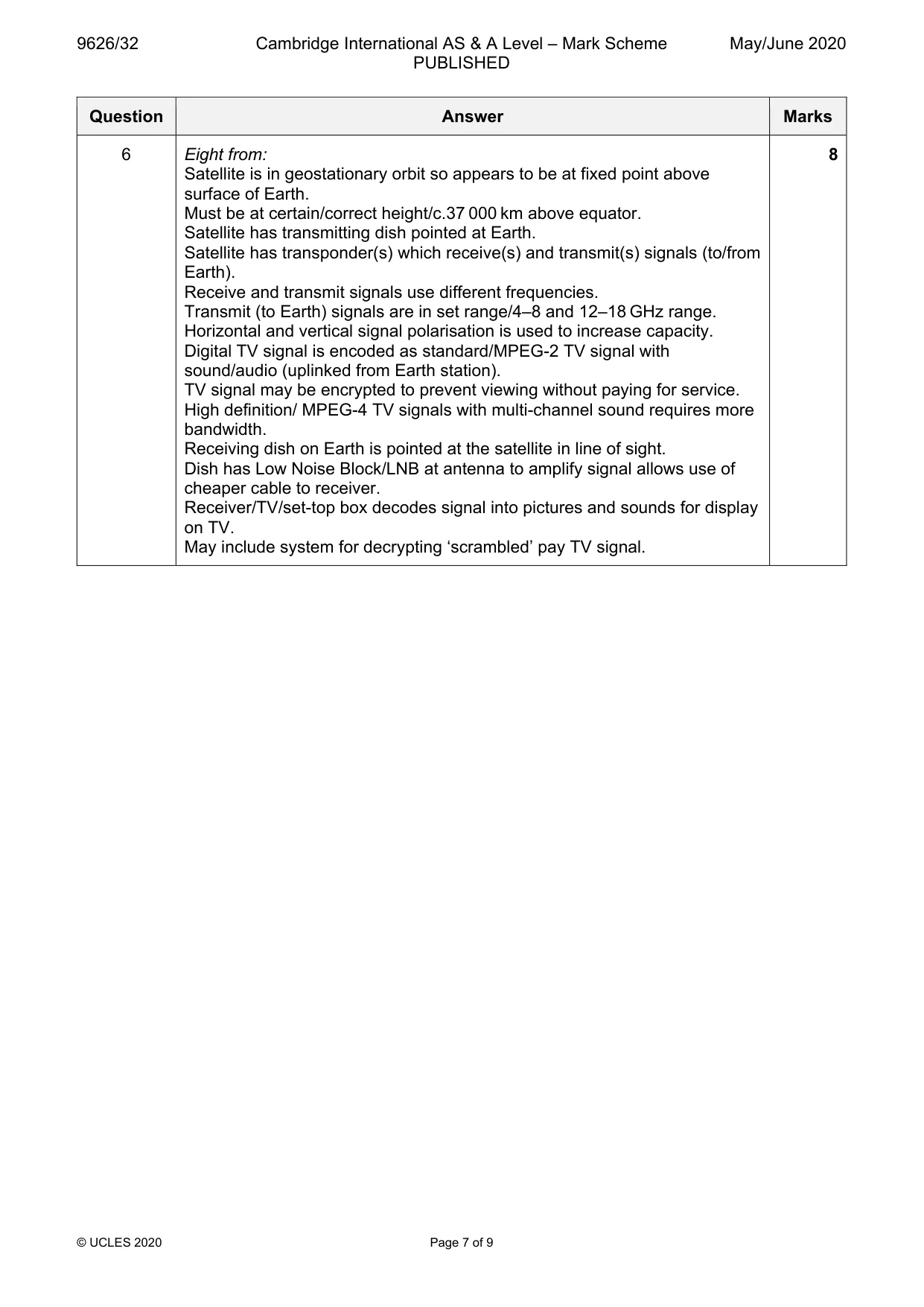
Mark scheme, page 7 of 9
Page 7 of 9
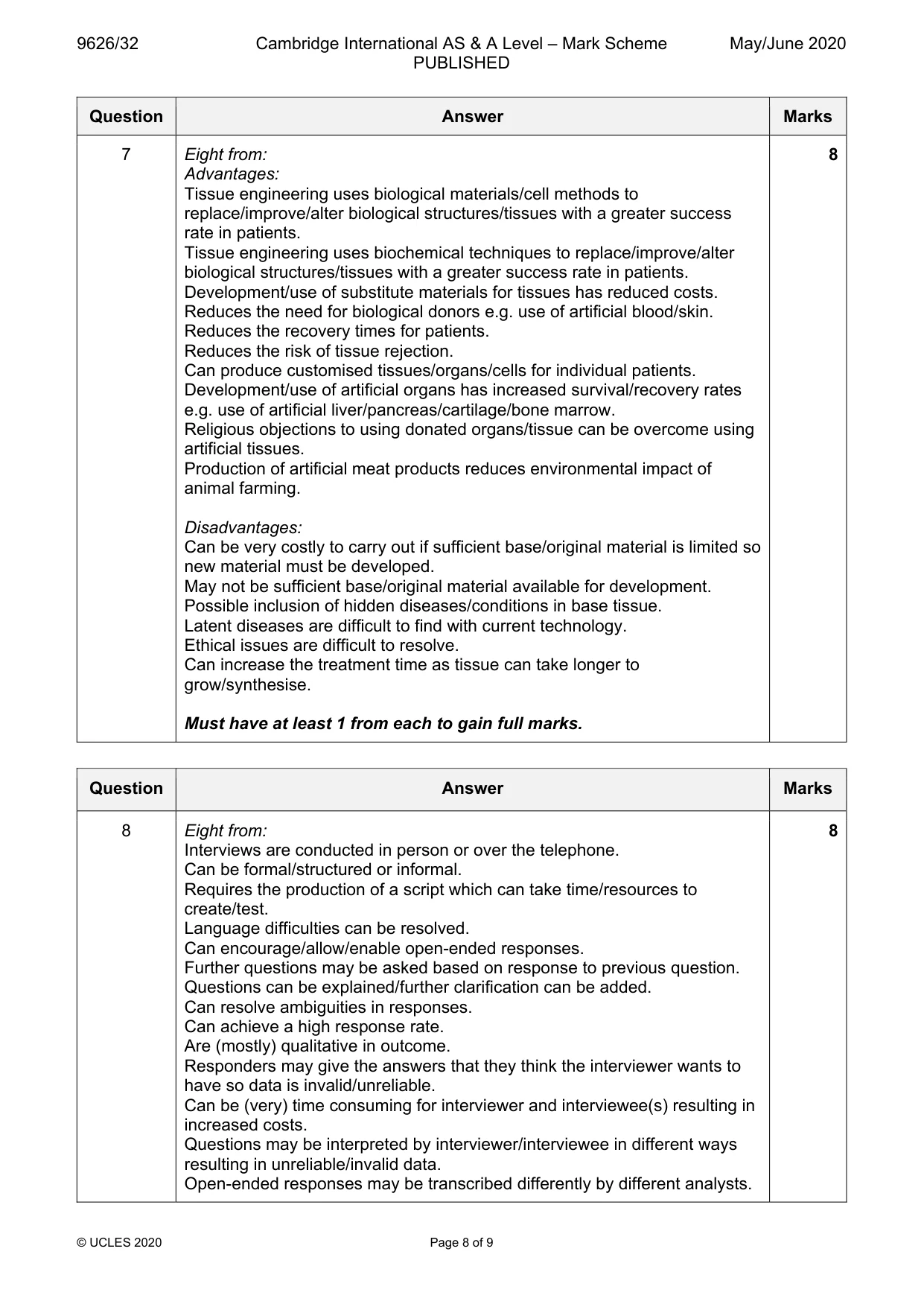
Mark scheme, page 8 of 9
Page 8 of 9
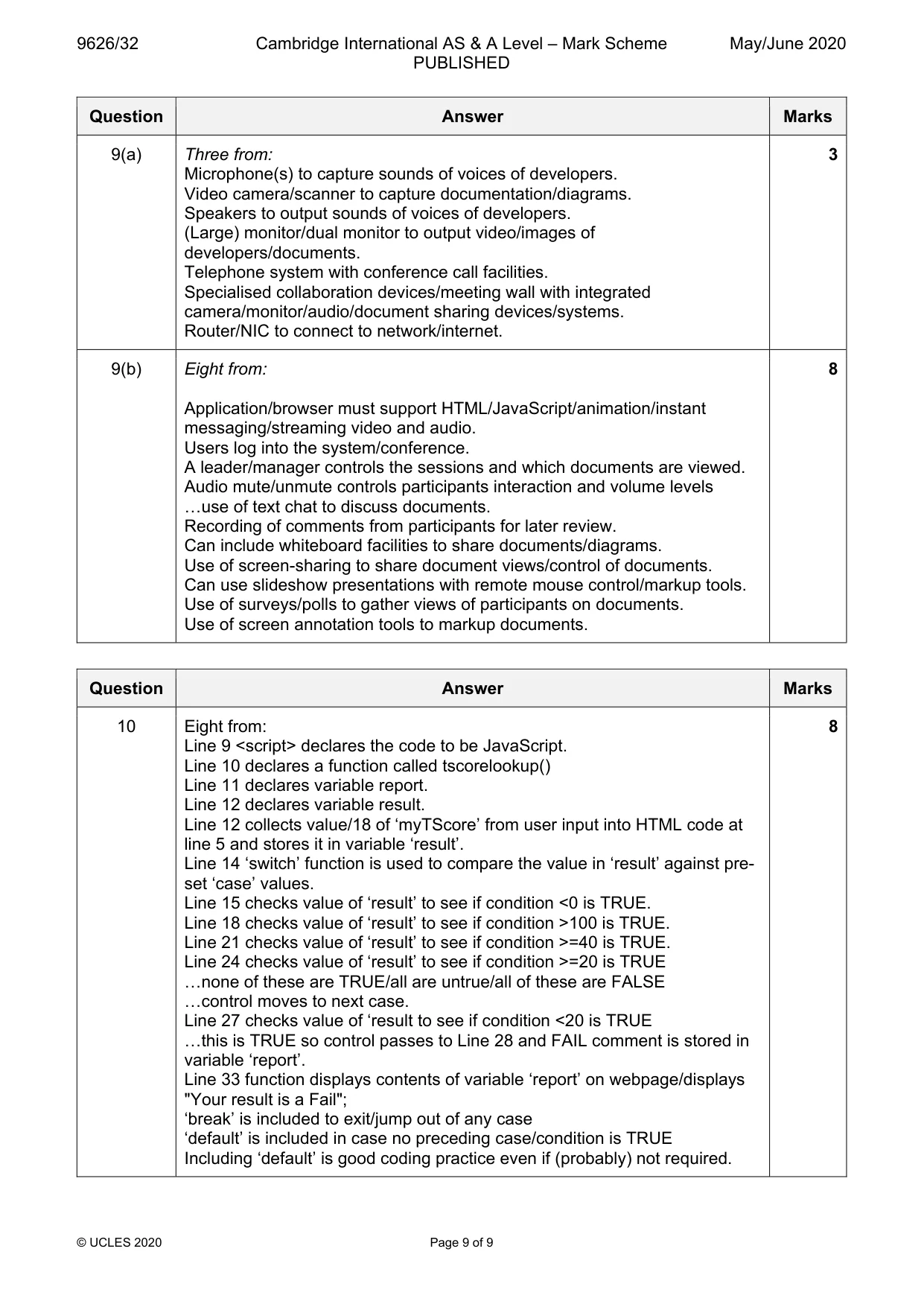
Mark scheme, page 9 of 9
Page 9 of 9

Questions as text

Q1 · A company has a local area network (LAN) that can be accessed by its staff using their…

1 A company has a local area network (LAN) that can be accessed by its staff using their desktop computers, laptops and mobile devices. The desktop computers use a wired connection but the laptops and mobile devices connect via wireless access points (WAPs). Describe the drawbacks of using WAPs to access the network. .......................................................................................................................................................... .......................................................................................................................................................... .......................................................................................................................................................... .......................................................................................................................................................... .......................................................................................................................................................... .......................................................................................................................................................... .......................................................................................................................................................... .......................................................................................................................................................... .......................................................................................................................................................... .......................................................................................................................................................... .......................................................................................................................................................... .......................................................................................................................................................... .......................................................................................................................................................... .......................................................................................................................................................... .......................................................................................................................................................... .......................................................................................................................................................... .......................................................................................................................................................... .......................................................................................................................................................... .......................................................................................................................................................... .................................................................................................................................................... [8]

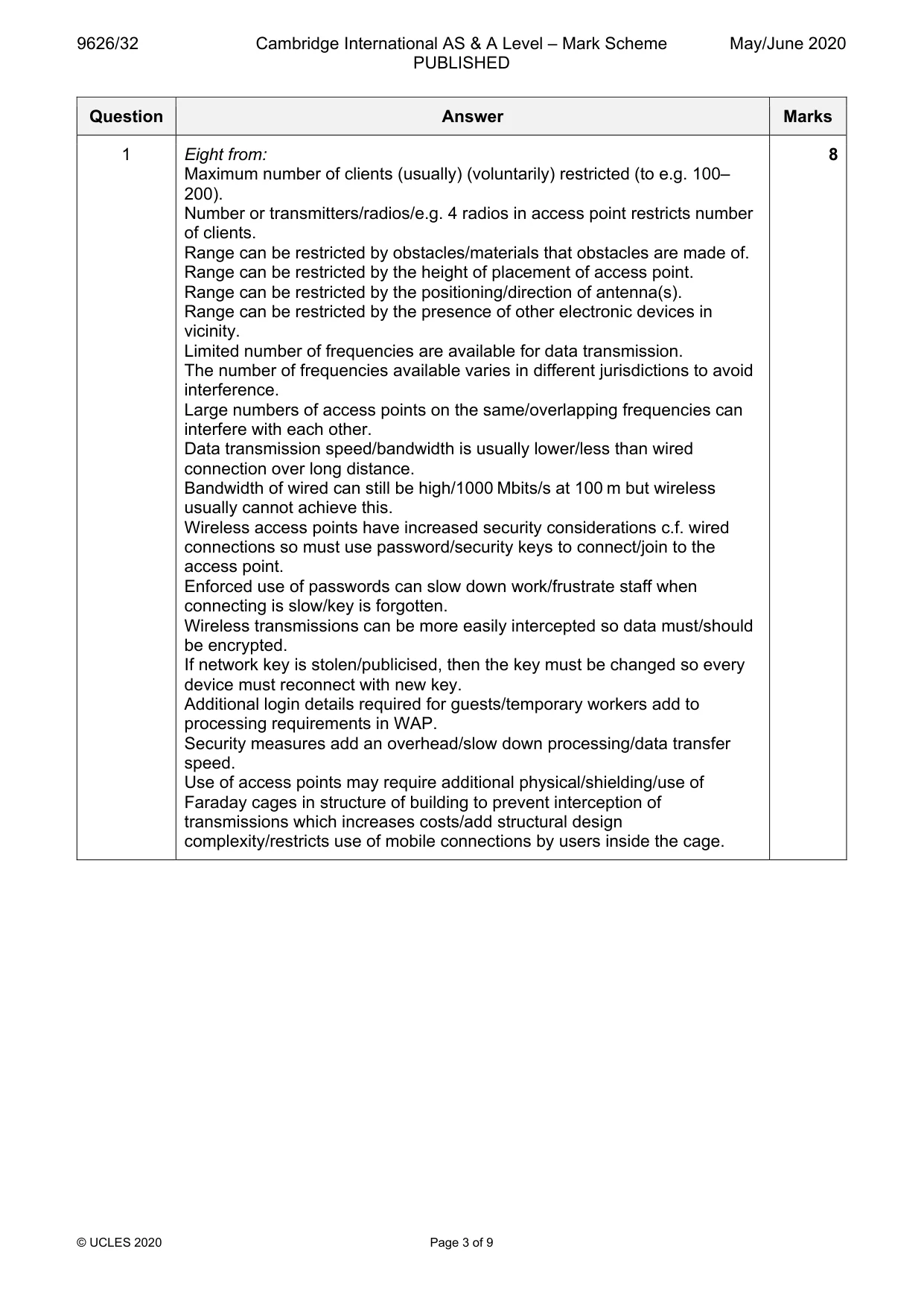
Mark scheme: Question Answer Marks 1 Eight from: 8 Maximum number of clients (usually) (voluntarily) restricted (to e.g. 100– 200). Number or transmitters/radios/e.g. 4 radios in access point restricts number of clients. Range can be restricted by obstacles/materials that obstacles are made of. Range can be restricted by the height of placement of access point. Range can be restricted by the positioning/direction of antenna(s). Range can be restricted by the presence of other electronic devices in vicinity. Limited number of frequencies are available for data transmission. The number of frequencies available varies in different jurisdictions to avoid interference. Large numbers of access points on the same/overlapping frequencies can interfere with each other. Data transmission speed/bandwidth is usually lower/less than wired connection over long distance. Bandwidth of wired can still be high/1000 Mbits/s at 100 m but wireless usually cannot achieve this. Wireless access points have increased security considerations c.f. wired connections so must use password/security keys to connect/join to the access point. Enforced use of passwords can slow down work/frustrate staff when connecting is slow/key is forgotten. Wireless transmissions can be more easily intercepted so data must/should be encrypted. If network key is stolen/publicised, then the key must be changed so every device must reconnect with new key. Additional login details required for guests/temporary workers add to processing requirements in WAP. Security measures add an overhead/slow down processing/data transfer speed. Use of access points may require additional physical/shielding/use of Faraday cages in structure of building to prevent interception of transmissions which increases costs/add structural design complexity/restricts use of mobile connections by users inside the cage.

More questions on Wireless technology

Q2 · Many countries use holographic images on their bank notes

2 Many countries use holographic images on their bank notes. (a) Describe how a holographic image is created. ................................................................................................................................................... ................................................................................................................................................... ................................................................................................................................................... ................................................................................................................................................... ................................................................................................................................................... ................................................................................................................................................... ................................................................................................................................................... ................................................................................................................................................... ................................................................................................................................................... ............................................................................................................................................. [4] (b) Give one reason why countries use holographic images on their bank notes. ................................................................................................................................................... ................................................................................................................................................... ............................................................................................................................................. [1] (c) Describe two other uses of holographic imaging. ................................................................................................................................................... ................................................................................................................................................... ................................................................................................................................................... ................................................................................................................................................... ................................................................................................................................................... ................................................................................................................................................... ................................................................................................................................................... ................................................................................................................................................... ................................................................................................................................................... ............................................................................................................................................. [4]

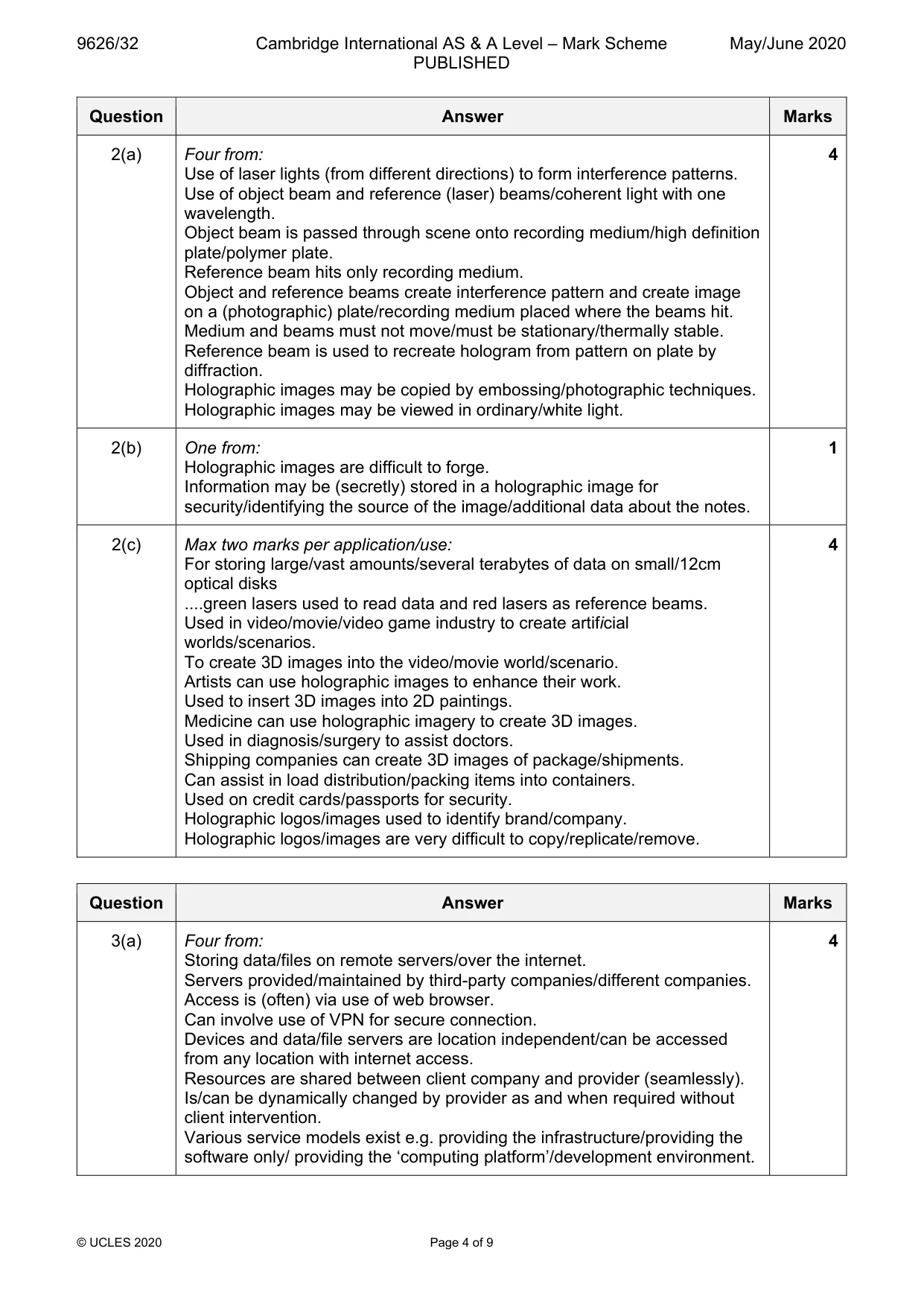
Mark scheme: 2(a) Four from: 4 Use of laser lights (from different directions) to form interference patterns. Use of object beam and reference (laser) beams/coherent light with one wavelength. Object beam is passed through scene onto recording medium/high definition plate/polymer plate. Reference beam hits only recording medium. Object and reference beams create interference pattern and create image on a (photographic) plate/recording medium placed where the beams hit. Medium and beams must not move/must be stationary/thermally stable. Reference beam is used to recreate hologram from pattern on plate by diffraction. Holographic images may be copied by embossing/photographic techniques. Holographic images may be viewed in ordinary/white light. 2(b) One from: 1 Holographic images are difficult to forge. Information may be (secretly) stored in a holographic image for security/identifying the source of the image/additional data about the notes. 2(c) Max two marks per application/use: 4 For storing large/vast amounts/several terabytes of data on small/12cm optical disks ....green lasers used to read data and red lasers as reference beams. Used in video/movie/video game industry to create artificial worlds/scenarios. To create 3D images into the video/movie world/scenario. Artists can use holographic images to enhance their work. Used to insert 3D images into 2D paintings. Medicine can use holographic imagery to create 3D images. Used in diagnosis/surgery to assist doctors. Shipping companies can create 3D images of package/shipments. Can assist in load distribution/packing items into containers. Used on credit cards/passports for security. Holographic logos/images used to identify brand/company. Holographic logos/images are very difficult to copy/replicate/remove.

More questions on New and emerging technologies

Q3 · Companies are using cloud computing in their IT infrastructure

3 Companies are using cloud computing in their IT infrastructure. (a) Describe what is meant by cloud computing. ................................................................................................................................................... ................................................................................................................................................... ................................................................................................................................................... ................................................................................................................................................... ................................................................................................................................................... ................................................................................................................................................... ................................................................................................................................................... ................................................................................................................................................... ................................................................................................................................................... ............................................................................................................................................. [4] (b) Describe the impact of cloud computing on companies. ................................................................................................................................................... ................................................................................................................................................... ................................................................................................................................................... ................................................................................................................................................... ................................................................................................................................................... ................................................................................................................................................... ................................................................................................................................................... ................................................................................................................................................... ................................................................................................................................................... ................................................................................................................................................... ................................................................................................................................................... ................................................................................................................................................... ................................................................................................................................................... ................................................................................................................................................... ................................................................................................................................................... ................................................................................................................................................... ................................................................................................................................................... ................................................................................................................................................... ................................................................................................................................................... ............................................................................................................................................. [8]

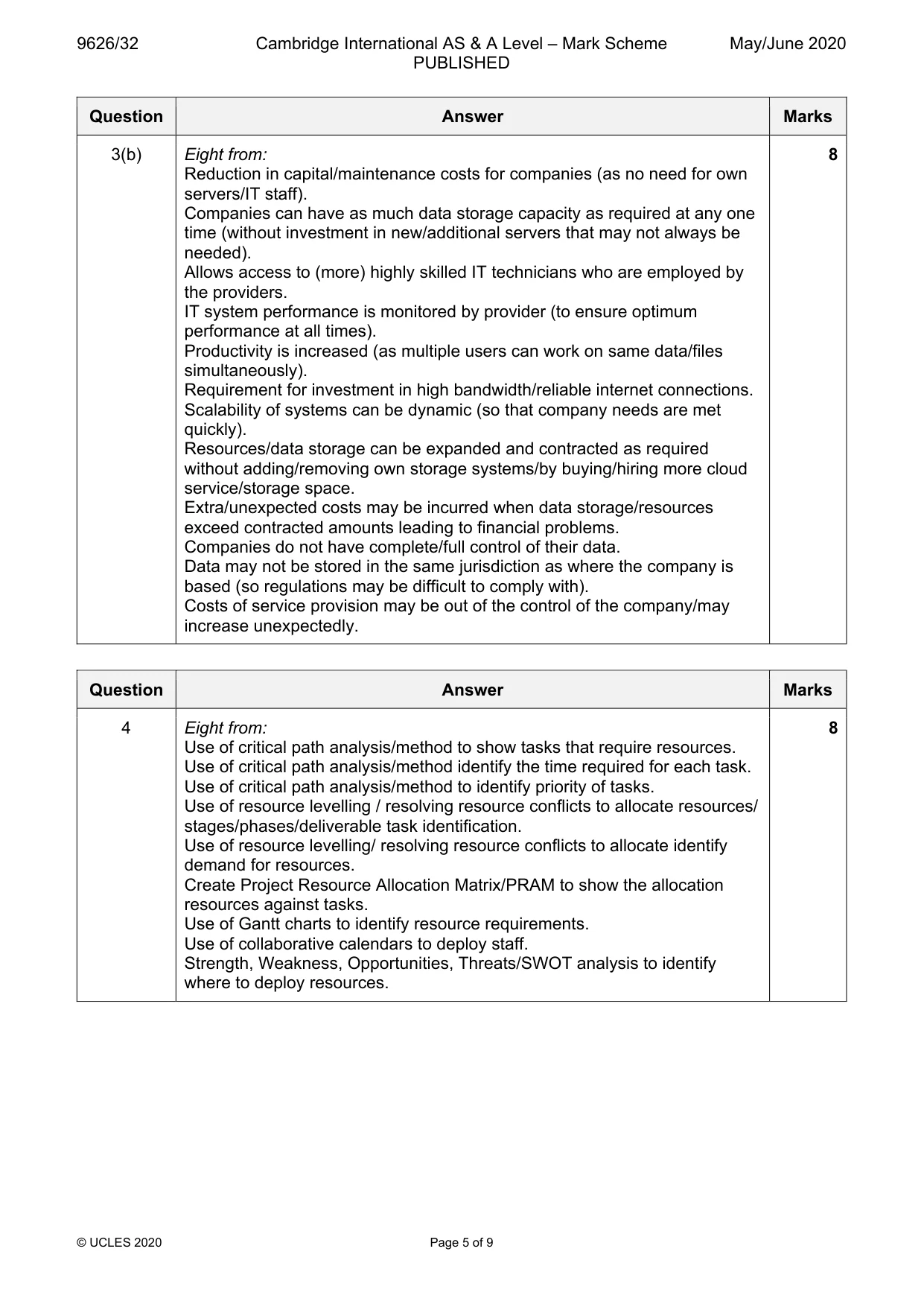
Mark scheme: 3(a) Four from: 4 Storing data/files on remote servers/over the internet. Servers provided/maintained by third-party companies/different companies. Access is (often) via use of web browser. Can involve use of VPN for secure connection. Devices and data/file servers are location independent/can be accessed from any location with internet access. Resources are shared between client company and provider (seamlessly). Is/can be dynamically changed by provider as and when required without client intervention. Various service models exist e.g. providing the infrastructure/providing the software only/ providing the ‘computing platform’/development environment. 3(b) Eight from: 8 Reduction in capital/maintenance costs for companies (as no need for own servers/IT staff). Companies can have as much data storage capacity as required at any one time (without investment in new/additional servers that may not always be needed). Allows access to (more) highly skilled IT technicians who are employed by the providers. IT system performance is monitored by provider (to ensure optimum performance at all times). Productivity is increased (as multiple users can work on same data/files simultaneously). Requirement for investment in high bandwidth/reliable internet connections. Scalability of systems can be dynamic (so that company needs are met quickly). Resources/data storage can be expanded and contracted as required without adding/removing own storage systems/by buying/hiring more cloud service/storage space. Extra/unexpected costs may be incurred when data storage/resources exceed contracted amounts leading to financial problems. Companies do not have complete/full control of their data. Data may not be stored in the same jurisdiction as where the company is based (so regulations may be difficult to comply with). Costs of service provision may be out of the control of the company/may increase unexpectedly.

More questions on Cloud computing

Q4 · Explain how project management tools can be used to help when allocating resources in a…

4 Explain how project management tools can be used to help when allocating resources in a project. .......................................................................................................................................................... .......................................................................................................................................................... .......................................................................................................................................................... .......................................................................................................................................................... .......................................................................................................................................................... .......................................................................................................................................................... .......................................................................................................................................................... .......................................................................................................................................................... .......................................................................................................................................................... .......................................................................................................................................................... .......................................................................................................................................................... .......................................................................................................................................................... .......................................................................................................................................................... .......................................................................................................................................................... .......................................................................................................................................................... .......................................................................................................................................................... .......................................................................................................................................................... .......................................................................................................................................................... .......................................................................................................................................................... .................................................................................................................................................... [8]

Mark scheme: 4 Eight from: 8 Use of critical path analysis/method to show tasks that require resources. Use of critical path analysis/method identify the time required for each task. Use of critical path analysis/method to identify priority of tasks. Use of resource levelling / resolving resource conflicts to allocate resources/ stages/phases/deliverable task identification. Use of resource levelling/ resolving resource conflicts to allocate identify demand for resources. Create Project Resource Allocation Matrix/PRAM to show the allocation resources against tasks. Use of Gantt charts to identify resource requirements. Use of collaborative calendars to deploy staff. Strength, Weakness, Opportunities, Threats/SWOT analysis to identify where to deploy resources.

More questions on Tools and techniques for project management tasks

Q5 · Robotics combined with artificial intelligence is having an impact on the human…

5 Robotics combined with artificial intelligence is having an impact on the human environment. (a) Describe what is meant by robotics. ................................................................................................................................................... ................................................................................................................................................... ................................................................................................................................................... ................................................................................................................................................... ................................................................................................................................................... ............................................................................................................................................. [2] (b) By weighing up the advantages and disadvantages, evaluate the impact on the human environment of combining artificial intelligence with robotics. ................................................................................................................................................... ................................................................................................................................................... ................................................................................................................................................... ................................................................................................................................................... ................................................................................................................................................... ................................................................................................................................................... ................................................................................................................................................... ................................................................................................................................................... ................................................................................................................................................... ................................................................................................................................................... ................................................................................................................................................... ................................................................................................................................................... ................................................................................................................................................... ................................................................................................................................................... ................................................................................................................................................... ................................................................................................................................................... ................................................................................................................................................... ................................................................................................................................................... ................................................................................................................................................... ............................................................................................................................................. [8]

Mark scheme: 5(a) Two from: 2 Design and construction of robots. Operation of robots. (Use of) computer systems or control/sensory feedback/information processing in/by robots. 5(b) Eight from: 8 Advantages: Artificial Intelligence (AI) in robotics enables closer interaction between robotic and human. Robotics used in homes for domestic duties/cleaning reduce human work. Use of AI-robots in medicine to perform surgery so saving doctors’ salary/provide more surgeons. Use of AI-robots in medicine to perform surgery can speed up surgery/allow a greater number of surgery operations. Use of AI-robots in caring for sick/elderly humans reduces the need for carers/cost of carers. Disadvantages: Artificial Intelligence (AI) in robotics enables intrusion into/sharing of workspace of humans. Robotics used in homes for domestic duties/cleaning enquire power source/recharging at intervals leading to increased costs. Robots used in homes for domestic duties/cleaning may not be so thorough/discerning/adaptable as humans. Robots have displaced humans from jobs. Robots resembling humans in appearance and actions present more challenging interaction/threats. AI-robots consume more resources/power than simple robots. Social interaction between AI-robot and human requires safety procedures to be in evidence/present to safeguard both AI-robots and humans. Socially correct interaction needs to be in evidence/present to safeguard humans. AI needs to provide communication skills that humans can interact with. Humans may perceive robots as living entities rather than machines which may cause confusion/embarrassment/danger to humans. Some tasks are more acceptable/unacceptable if AI-robot is humanoid in shape. Development of rules/etiquette for AI-driven robots that is comfortable/acceptable to humans. Collaboration between humans and robots is possible with AI. Can provide shared control of devices/functions. Requires AI and systems for understanding social cues from humans. Social cues may be misinterpreted/misunderstood leading to distress on the part of the human. Must have at least 1 from each to gain full marks.

More questions on The impact of IT

Q6 · Describe how a digital television signal is broadcast from a satellite to a receiver for…

6 Describe how a digital television signal is broadcast from a satellite to a receiver for display on a television set in a home. .......................................................................................................................................................... .......................................................................................................................................................... .......................................................................................................................................................... .......................................................................................................................................................... .......................................................................................................................................................... .......................................................................................................................................................... .......................................................................................................................................................... .......................................................................................................................................................... .......................................................................................................................................................... .......................................................................................................................................................... .......................................................................................................................................................... .......................................................................................................................................................... .......................................................................................................................................................... .......................................................................................................................................................... .......................................................................................................................................................... .......................................................................................................................................................... .......................................................................................................................................................... .......................................................................................................................................................... .......................................................................................................................................................... .................................................................................................................................................... [8]

Mark scheme: 6 Eight from: 8 Satellite is in geostationary orbit so appears to be at fixed point above surface of Earth. Must be at certain/correct height/c.37 000 km above equator. Satellite has transmitting dish pointed at Earth. Satellite has transponder(s) which receive(s) and transmit(s) signals (to/from Earth). Receive and transmit signals use different frequencies. Transmit (to Earth) signals are in set range/4–8 and 12–18 GHz range. Horizontal and vertical signal polarisation is used to increase capacity. Digital TV signal is encoded as standard/MPEG-2 TV signal with sound/audio (uplinked from Earth station). TV signal may be encrypted to prevent viewing without paying for service. High definition/ MPEG-4 TV signals with multi-channel sound requires more bandwidth. Receiving dish on Earth is pointed at the satellite in line of sight. Dish has Low Noise Block/LNB at antenna to amplify signal allows use of cheaper cable to receiver. Receiver/TV/set-top box decodes signal into pictures and sounds for display on TV. May include system for decrypting ‘scrambled’ pay TV signal.

More questions on Data transmission across networks

Q7 · By weighing up the advantages and disadvantages, evaluate the impact of tissue…

7 By weighing up the advantages and disadvantages, evaluate the impact of tissue engineering on medicine. .......................................................................................................................................................... .......................................................................................................................................................... .......................................................................................................................................................... .......................................................................................................................................................... .......................................................................................................................................................... .......................................................................................................................................................... .......................................................................................................................................................... .......................................................................................................................................................... .......................................................................................................................................................... .......................................................................................................................................................... .......................................................................................................................................................... .......................................................................................................................................................... .......................................................................................................................................................... .......................................................................................................................................................... .......................................................................................................................................................... .......................................................................................................................................................... .......................................................................................................................................................... .......................................................................................................................................................... .......................................................................................................................................................... .................................................................................................................................................... [8]

Mark scheme: 7 Eight from: 8 Advantages: Tissue engineering uses biological materials/cell methods to replace/improve/alter biological structures/tissues with a greater success rate in patients. Tissue engineering uses biochemical techniques to replace/improve/alter biological structures/tissues with a greater success rate in patients. Development/use of substitute materials for tissues has reduced costs. Reduces the need for biological donors e.g. use of artificial blood/skin. Reduces the recovery times for patients. Reduces the risk of tissue rejection. Can produce customised tissues/organs/cells for individual patients. Development/use of artificial organs has increased survival/recovery rates e.g. use of artificial liver/pancreas/cartilage/bone marrow. Religious objections to using donated organs/tissue can be overcome using artificial tissues. Production of artificial meat products reduces environmental impact of animal farming. Disadvantages: Can be very costly to carry out if sufficient base/original material is limited so new material must be developed. May not be sufficient base/original material available for development. Possible inclusion of hidden diseases/conditions in base tissue. Latent diseases are difficult to find with current technology. Ethical issues are difficult to resolve. Can increase the treatment time as tissue can take longer to grow/synthesise. Must have at least 1 from each to gain full marks.

More questions on New and emerging technologies

Q8 · A new website is being developed

8 A new website is being developed. The developer wishes to involve users in the development process. Analyse the use of interviews for researching the views of the users. .......................................................................................................................................................... .......................................................................................................................................................... .......................................................................................................................................................... .......................................................................................................................................................... .......................................................................................................................................................... .......................................................................................................................................................... .......................................................................................................................................................... .......................................................................................................................................................... .......................................................................................................................................................... .......................................................................................................................................................... .......................................................................................................................................................... .......................................................................................................................................................... .......................................................................................................................................................... .......................................................................................................................................................... .......................................................................................................................................................... .......................................................................................................................................................... .......................................................................................................................................................... .......................................................................................................................................................... .......................................................................................................................................................... .................................................................................................................................................... [8]

Mark scheme: 8 Eight from: 8 Interviews are conducted in person or over the telephone. Can be formal/structured or informal. Requires the production of a script which can take time/resources to create/test. Language difficulties can be resolved. Can encourage/allow/enable open-ended responses. Further questions may be asked based on response to previous question. Questions can be explained/further clarification can be added. Can resolve ambiguities in responses. Can achieve a high response rate. Are (mostly) qualitative in outcome. Responders may give the answers that they think the interviewer wants to have so data is invalid/unreliable. Can be (very) time consuming for interviewer and interviewee(s) resulting in increased costs. Questions may be interpreted by interviewer/interviewee in different ways resulting in unreliable/invalid data. Open-ended responses may be transcribed differently by different analysts.

More questions on Analysis

Q9 · A group of company managers are going to use a web-conference to discuss the…

9 A group of company managers are going to use a web-conference to discuss the documentation about a new product. (a) The developers already have a desktop computer system. Describe the additional computer hardware they need in order to participate in a web-conference. ................................................................................................................................................... ................................................................................................................................................... ................................................................................................................................................... ................................................................................................................................................... ................................................................................................................................................... ................................................................................................................................................... ................................................................................................................................................... ............................................................................................................................................. [3] (b) Describe, in detail, how a web-conference can be used to discuss their visual materials and documents. ................................................................................................................................................... ................................................................................................................................................... ................................................................................................................................................... ................................................................................................................................................... ................................................................................................................................................... ................................................................................................................................................... ................................................................................................................................................... ................................................................................................................................................... ................................................................................................................................................... ................................................................................................................................................... ................................................................................................................................................... ................................................................................................................................................... ................................................................................................................................................... ................................................................................................................................................... ................................................................................................................................................... ................................................................................................................................................... ................................................................................................................................................... ................................................................................................................................................... ................................................................................................................................................... ............................................................................................................................................. [8]

Mark scheme: 9(a) Three from: 3 Microphone(s) to capture sounds of voices of developers. Video camera/scanner to capture documentation/diagrams. Speakers to output sounds of voices of developers. (Large) monitor/dual monitor to output video/images of developers/documents. Telephone system with conference call facilities. Specialised collaboration devices/meeting wall with integrated camera/monitor/audio/document sharing devices/systems. Router/NIC to connect to network/internet. 9(b) Eight from: 8 Application/browser must support HTML/JavaScript/animation/instant messaging/streaming video and audio. Users log into the system/conference. A leader/manager controls the sessions and which documents are viewed. Audio mute/unmute controls participants interaction and volume levels …use of text chat to discuss documents. Recording of comments from participants for later review. Can include whiteboard facilities to share documents/diagrams. Use of screen-sharing to share document views/control of documents. Can use slideshow presentations with remote mouse control/markup tools. Use of surveys/polls to gather views of participants on documents. Use of screen annotation tools to markup documents.

More questions on Networks

Q10 · A teacher is creating a web page for his students to find out their result, Merit, Pass…

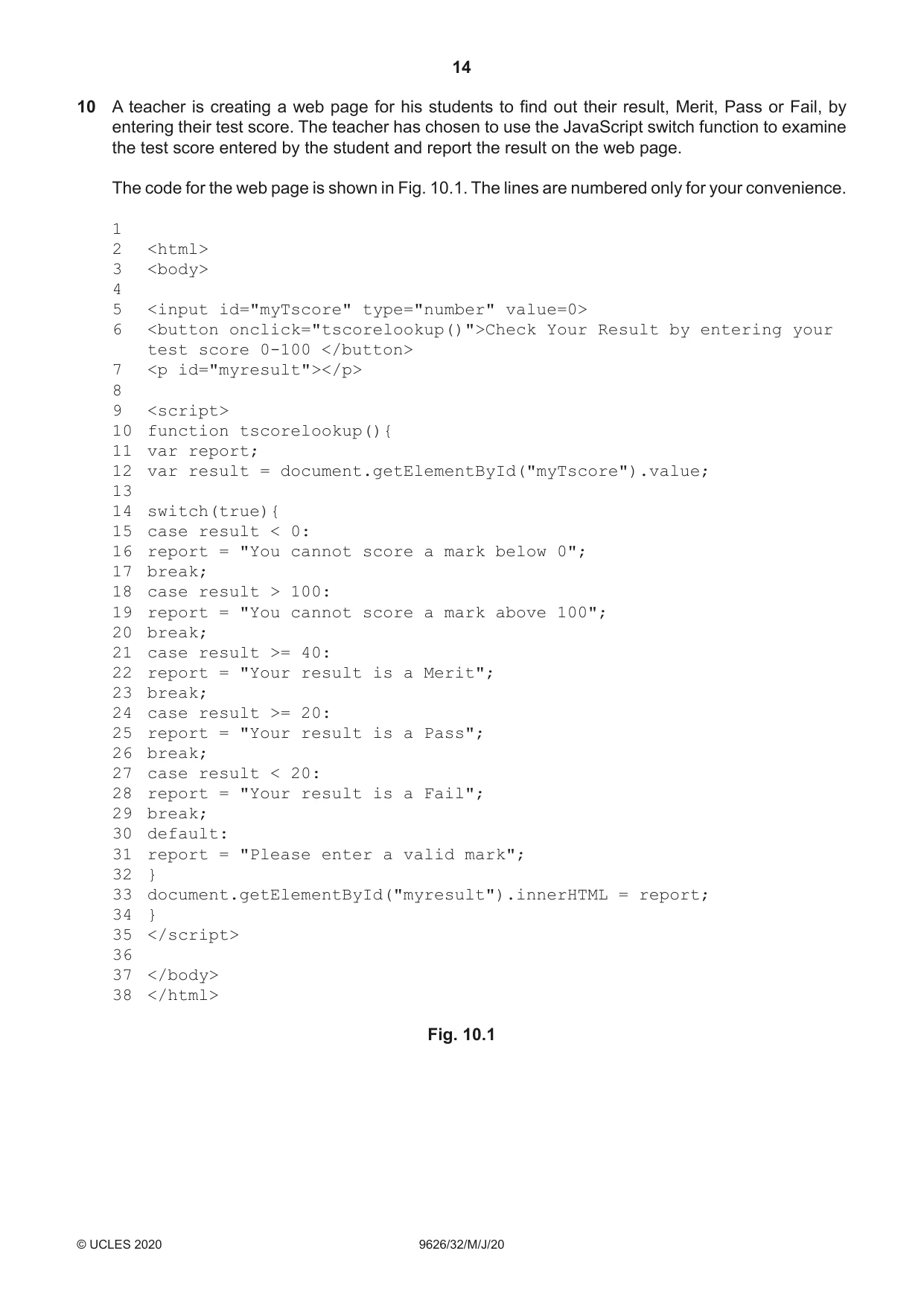
10 A teacher is creating a web page for his students to find out their result, Merit, Pass or Fail, by entering their test score. The teacher has chosen to use the JavaScript switch function to examine the test score entered by the student and report the result on the web page. The code for the web page is shown in Fig. 10.1. The lines are numbered only for your convenience. 1 2 <html> 3 <body> 4 5 <input id="myTscore" type="number" value=0> 6 <button onclick="tscorelookup()">Check Your Result by entering your test score 0-100 </button> 7 <p id="myresult"></p> 8 9 <script> 10 function tscorelookup(){ 11 var report; 12 var result = document.getElementById("myTscore").value; 13 14 switch(true){ 15 case result < 0: 16 report = "You cannot score a mark below 0"; 17 break; 18 case result > 100: 19 report = "You cannot score a mark above 100"; 20 break; 21 case result >= 40: 22 report = "Your result is a Merit"; 23 break; 24 case result >= 20: 25 report = "Your result is a Pass"; 26 break; 27 case result < 20: 28 report = "Your result is a Fail"; 29 break; 30 default: 31 report = "Please enter a valid mark"; 32 } 33 document.getElementById("myresult").innerHTML = report; 34 } 35 </script> 36 37 </body> 38 </html> Fig. 10.1 The HTML code in lines 5 to 7 collects the test score entered by the student and, when the button is clicked, makes the test score available to the JavaScript code that starts at line 9. Describe, in detail, how the JavaScript code works to handle a test score of 18. .......................................................................................................................................................... .......................................................................................................................................................... .......................................................................................................................................................... .......................................................................................................................................................... .......................................................................................................................................................... .......................................................................................................................................................... .......................................................................................................................................................... .......................................................................................................................................................... .......................................................................................................................................................... .......................................................................................................................................................... .......................................................................................................................................................... .......................................................................................................................................................... .......................................................................................................................................................... .......................................................................................................................................................... .......................................................................................................................................................... .......................................................................................................................................................... .......................................................................................................................................................... .......................................................................................................................................................... .......................................................................................................................................................... .................................................................................................................................................... [8]

Mark scheme: 10 Eight from: 8 Line 9 <script> declares the code to be JavaScript. Line 10 declares a function called tscorelookup() Line 11 declares variable report. Line 12 declares variable result. Line 12 collects value/18 of ‘myTScore’ from user input into HTML code at line 5 and stores it in variable ‘result’. Line 14 ‘switch’ function is used to compare the value in ‘result’ against pre- set ‘case’ values. Line 15 checks value of ‘result’ to see if condition <0 is TRUE. Line 18 checks value of ‘result’ to see if condition >100 is TRUE. Line 21 checks value of ‘result’ to see if condition >=40 is TRUE. Line 24 checks value of ‘result’ to see if condition >=20 is TRUE …none of these are TRUE/all are untrue/all of these are FALSE …control moves to next case. Line 27 checks value of ‘result to see if condition <20 is TRUE …this is TRUE so control passes to Line 28 and FAIL comment is stored in variable ‘report’. Line 33 function displays contents of variable ‘report’ on webpage/displays "Your result is a Fail"; ‘break’ is included to exit/jump out of any case ‘default’ is included in case no preceding case/condition is TRUE Including ‘default’ is good coding practice even if (probably) not required.

More questions on Programming for the web

What was in this paper

The subtopics covered by these 10 questions, and how many questions each got. Open one in a new tab to see every Cambridge question on it.

36 37 38 Fig. 10.1\n\n15 9626/32/M/J/20 © UCLES 2020 The HTML code in lines 5 to 7 collects the test score entered by the student and, when the button is clicked, makes the test score available to the JavaScript code that starts at line 9. Describe, in detail, how the JavaScript code works to handle a test score of 18. … … … … … … … … … … … … … … … … … … … … [8]\n\n16 9626/32/M/J/20 © UCLES 2020 Permission to reproduce items where third-party owned material protected by copyright is included has been sought and cleared where possible. Every reasonable effort has been made by the publisher (UCLES) to trace copyright holders, but if any items requiring clearance have unwittingly been included, the publisher will be pleased to make amends at the earliest possible opportunity. To avoid the issue of disclosure of answer-related information to candidates, all copyright acknowledgements are reproduced online in the Cambridge Assessment International Education Copyright Acknowledgements Booklet. This is produced for each series of examinations and is freely available to download at www.cambridgeinternational.org after the live examination series. Cambridge Assessment International Education is part of the Cambridge Assessment Group. Cambridge Assessment is the brand name of the University of Cambridge Local Examinations Syndicate (UCLES), which itself is a department of the University of Cambridge. BLANK PAGE","hasPart":[{"@type":"Question","position":"1","name":"Q1 · A company has a local area network (LAN) that can be accessed by its staff using their…","text":"1 A company has a local area network (LAN) that can be accessed by its staff using their desktop computers, laptops and mobile devices. The desktop computers use a wired connection but the laptops and mobile devices connect via wireless access points (WAPs). Describe the drawbacks of using WAPs to access the network. .......................................................................................................................................................... .......................................................................................................................................................... .......................................................................................................................................................... .......................................................................................................................................................... .......................................................................................................................................................... .......................................................................................................................................................... .......................................................................................................................................................... .......................................................................................................................................................... .......................................................................................................................................................... .......................................................................................................................................................... .......................................................................................................................................................... .......................................................................................................................................................... .......................................................................................................................................................... .......................................................................................................................................................... .......................................................................................................................................................... .......................................................................................................................................................... .......................................................................................................................................................... .......................................................................................................................................................... .......................................................................................................................................................... .................................................................................................................................................... [8]","acceptedAnswer":{"@type":"Answer","text":"Question Answer Marks 1 Eight from: 8 Maximum number of clients (usually) (voluntarily) restricted (to e.g. 100– 200). Number or transmitters/radios/e.g. 4 radios in access point restricts number of clients. Range can be restricted by obstacles/materials that obstacles are made of. Range can be restricted by the height of placement of access point. Range can be restricted by the positioning/direction of antenna(s). Range can be restricted by the presence of other electronic devices in vicinity. Limited number of frequencies are available for data transmission. The number of frequencies available varies in different jurisdictions to avoid interference. Large numbers of access points on the same/overlapping frequencies can interfere with each other. Data transmission speed/bandwidth is usually lower/less than wired connection over long distance. Bandwidth of wired can still be high/1000 Mbits/s at 100 m but wireless usually cannot achieve this. Wireless access points have increased security considerations c.f. wired connections so must use password/security keys to connect/join to the access point. Enforced use of passwords can slow down work/frustrate staff when connecting is slow/key is forgotten. Wireless transmissions can be more easily intercepted so data must/should be encrypted. If network key is stolen/publicised, then the key must be changed so every device must reconnect with new key. Additional login details required for guests/temporary workers add to processing requirements in WAP. Security measures add an overhead/slow down processing/data transfer speed. Use of access points may require additional physical/shielding/use of Faraday cages in structure of building to prevent interception of transmissions which increases costs/add structural design complexity/restricts use of mobile connections by users inside the cage."},"additionalProperty":[{"@type":"PropertyValue","name":"marks","value":8}],"about":{"@type":"Thing","name":"Wireless technology"},"educationalAlignment":{"@type":"AlignmentObject","alignmentType":"educationalSubject","educationalFramework":"Cambridge Information Technology (from 2017) 9626 syllabus","targetName":"Wireless technology"}},{"@type":"Question","position":"2","name":"Q2 · Many countries use holographic images on their bank notes","text":"2 Many countries use holographic images on their bank notes. (a) Describe how a holographic image is created. ................................................................................................................................................... ................................................................................................................................................... ................................................................................................................................................... ................................................................................................................................................... ................................................................................................................................................... ................................................................................................................................................... ................................................................................................................................................... ................................................................................................................................................... ................................................................................................................................................... ............................................................................................................................................. [4] (b) Give one reason why countries use holographic images on their bank notes. ................................................................................................................................................... ................................................................................................................................................... ............................................................................................................................................. [1] (c) Describe two other uses of holographic imaging. ................................................................................................................................................... ................................................................................................................................................... ................................................................................................................................................... ................................................................................................................................................... ................................................................................................................................................... ................................................................................................................................................... ................................................................................................................................................... ................................................................................................................................................... ................................................................................................................................................... ............................................................................................................................................. [4]","acceptedAnswer":{"@type":"Answer","text":"2(a) Four from: 4 Use of laser lights (from different directions) to form interference patterns. Use of object beam and reference (laser) beams/coherent light with one wavelength. Object beam is passed through scene onto recording medium/high definition plate/polymer plate. Reference beam hits only recording medium. Object and reference beams create interference pattern and create image on a (photographic) plate/recording medium placed where the beams hit. Medium and beams must not move/must be stationary/thermally stable. Reference beam is used to recreate hologram from pattern on plate by diffraction. Holographic images may be copied by embossing/photographic techniques. Holographic images may be viewed in ordinary/white light. 2(b) One from: 1 Holographic images are difficult to forge. Information may be (secretly) stored in a holographic image for security/identifying the source of the image/additional data about the notes. 2(c) Max two marks per application/use: 4 For storing large/vast amounts/several terabytes of data on small/12cm optical disks ....green lasers used to read data and red lasers as reference beams. Used in video/movie/video game industry to create artificial worlds/scenarios. To create 3D images into the video/movie world/scenario. Artists can use holographic images to enhance their work. Used to insert 3D images into 2D paintings. Medicine can use holographic imagery to create 3D images. Used in diagnosis/surgery to assist doctors. Shipping companies can create 3D images of package/shipments. Can assist in load distribution/packing items into containers. Used on credit cards/passports for security. Holographic logos/images used to identify brand/company. Holographic logos/images are very difficult to copy/replicate/remove."},"additionalProperty":[{"@type":"PropertyValue","name":"marks","value":9}],"about":{"@type":"Thing","name":"New and emerging technologies"},"educationalAlignment":{"@type":"AlignmentObject","alignmentType":"educationalSubject","educationalFramework":"Cambridge Information Technology (from 2017) 9626 syllabus","targetName":"New and emerging technologies"}},{"@type":"Question","position":"3","name":"Q3 · Companies are using cloud computing in their IT infrastructure","text":"3 Companies are using cloud computing in their IT infrastructure. (a) Describe what is meant by cloud computing. ................................................................................................................................................... ................................................................................................................................................... ................................................................................................................................................... ................................................................................................................................................... ................................................................................................................................................... ................................................................................................................................................... ................................................................................................................................................... ................................................................................................................................................... ................................................................................................................................................... ............................................................................................................................................. [4] (b) Describe the impact of cloud computing on companies. ................................................................................................................................................... ................................................................................................................................................... ................................................................................................................................................... ................................................................................................................................................... ................................................................................................................................................... ................................................................................................................................................... ................................................................................................................................................... ................................................................................................................................................... ................................................................................................................................................... ................................................................................................................................................... ................................................................................................................................................... ................................................................................................................................................... ................................................................................................................................................... ................................................................................................................................................... ................................................................................................................................................... ................................................................................................................................................... ................................................................................................................................................... ................................................................................................................................................... ................................................................................................................................................... ............................................................................................................................................. [8]","acceptedAnswer":{"@type":"Answer","text":"3(a) Four from: 4 Storing data/files on remote servers/over the internet. Servers provided/maintained by third-party companies/different companies. Access is (often) via use of web browser. Can involve use of VPN for secure connection. Devices and data/file servers are location independent/can be accessed from any location with internet access. Resources are shared between client company and provider (seamlessly). Is/can be dynamically changed by provider as and when required without client intervention. Various service models exist e.g. providing the infrastructure/providing the software only/ providing the ‘computing platform’/development environment. 3(b) Eight from: 8 Reduction in capital/maintenance costs for companies (as no need for own servers/IT staff). Companies can have as much data storage capacity as required at any one time (without investment in new/additional servers that may not always be needed). Allows access to (more) highly skilled IT technicians who are employed by the providers. IT system performance is monitored by provider (to ensure optimum performance at all times). Productivity is increased (as multiple users can work on same data/files simultaneously). Requirement for investment in high bandwidth/reliable internet connections. Scalability of systems can be dynamic (so that company needs are met quickly). Resources/data storage can be expanded and contracted as required without adding/removing own storage systems/by buying/hiring more cloud service/storage space. Extra/unexpected costs may be incurred when data storage/resources exceed contracted amounts leading to financial problems. Companies do not have complete/full control of their data. Data may not be stored in the same jurisdiction as where the company is based (so regulations may be difficult to comply with). Costs of service provision may be out of the control of the company/may increase unexpectedly."},"additionalProperty":[{"@type":"PropertyValue","name":"marks","value":12}],"about":{"@type":"Thing","name":"Cloud computing"},"educationalAlignment":{"@type":"AlignmentObject","alignmentType":"educationalSubject","educationalFramework":"Cambridge Information Technology (from 2017) 9626 syllabus","targetName":"Cloud computing"}},{"@type":"Question","position":"4","name":"Q4 · Explain how project management tools can be used to help when allocating resources in a…","text":"4 Explain how project management tools can be used to help when allocating resources in a project. .......................................................................................................................................................... .......................................................................................................................................................... .......................................................................................................................................................... .......................................................................................................................................................... .......................................................................................................................................................... .......................................................................................................................................................... .......................................................................................................................................................... .......................................................................................................................................................... .......................................................................................................................................................... .......................................................................................................................................................... .......................................................................................................................................................... .......................................................................................................................................................... .......................................................................................................................................................... .......................................................................................................................................................... .......................................................................................................................................................... .......................................................................................................................................................... .......................................................................................................................................................... .......................................................................................................................................................... .......................................................................................................................................................... .................................................................................................................................................... [8]","acceptedAnswer":{"@type":"Answer","text":"4 Eight from: 8 Use of critical path analysis/method to show tasks that require resources. Use of critical path analysis/method identify the time required for each task. Use of critical path analysis/method to identify priority of tasks. Use of resource levelling / resolving resource conflicts to allocate resources/ stages/phases/deliverable task identification. Use of resource levelling/ resolving resource conflicts to allocate identify demand for resources. Create Project Resource Allocation Matrix/PRAM to show the allocation resources against tasks. Use of Gantt charts to identify resource requirements. Use of collaborative calendars to deploy staff. Strength, Weakness, Opportunities, Threats/SWOT analysis to identify where to deploy resources."},"additionalProperty":[{"@type":"PropertyValue","name":"marks","value":8}],"about":{"@type":"Thing","name":"Tools and techniques for project management tasks"},"educationalAlignment":{"@type":"AlignmentObject","alignmentType":"educationalSubject","educationalFramework":"Cambridge Information Technology (from 2017) 9626 syllabus","targetName":"Tools and techniques for project management tasks"}},{"@type":"Question","position":"5","name":"Q5 · Robotics combined with artificial intelligence is having an impact on the human…","text":"5 Robotics combined with artificial intelligence is having an impact on the human environment. (a) Describe what is meant by robotics. ................................................................................................................................................... ................................................................................................................................................... ................................................................................................................................................... ................................................................................................................................................... ................................................................................................................................................... ............................................................................................................................................. [2] (b) By weighing up the advantages and disadvantages, evaluate the impact on the human environment of combining artificial intelligence with robotics. ................................................................................................................................................... ................................................................................................................................................... ................................................................................................................................................... ................................................................................................................................................... ................................................................................................................................................... ................................................................................................................................................... ................................................................................................................................................... ................................................................................................................................................... ................................................................................................................................................... ................................................................................................................................................... ................................................................................................................................................... ................................................................................................................................................... ................................................................................................................................................... ................................................................................................................................................... ................................................................................................................................................... ................................................................................................................................................... ................................................................................................................................................... ................................................................................................................................................... ................................................................................................................................................... ............................................................................................................................................. [8]","acceptedAnswer":{"@type":"Answer","text":"5(a) Two from: 2 Design and construction of robots. Operation of robots. (Use of) computer systems or control/sensory feedback/information processing in/by robots. 5(b) Eight from: 8 Advantages: Artificial Intelligence (AI) in robotics enables closer interaction between robotic and human. Robotics used in homes for domestic duties/cleaning reduce human work. Use of AI-robots in medicine to perform surgery so saving doctors’ salary/provide more surgeons. Use of AI-robots in medicine to perform surgery can speed up surgery/allow a greater number of surgery operations. Use of AI-robots in caring for sick/elderly humans reduces the need for carers/cost of carers. Disadvantages: Artificial Intelligence (AI) in robotics enables intrusion into/sharing of workspace of humans. Robotics used in homes for domestic duties/cleaning enquire power source/recharging at intervals leading to increased costs. Robots used in homes for domestic duties/cleaning may not be so thorough/discerning/adaptable as humans. Robots have displaced humans from jobs. Robots resembling humans in appearance and actions present more challenging interaction/threats. AI-robots consume more resources/power than simple robots. Social interaction between AI-robot and human requires safety procedures to be in evidence/present to safeguard both AI-robots and humans. Socially correct interaction needs to be in evidence/present to safeguard humans. AI needs to provide communication skills that humans can interact with. Humans may perceive robots as living entities rather than machines which may cause confusion/embarrassment/danger to humans. Some tasks are more acceptable/unacceptable if AI-robot is humanoid in shape. Development of rules/etiquette for AI-driven robots that is comfortable/acceptable to humans. Collaboration between humans and robots is possible with AI. Can provide shared control of devices/functions. Requires AI and systems for understanding social cues from humans. Social cues may be misinterpreted/misunderstood leading to distress on the part of the human. Must have at least 1 from each to gain full marks."},"additionalProperty":[{"@type":"PropertyValue","name":"marks","value":10}],"about":{"@type":"Thing","name":"The impact of IT"},"educationalAlignment":{"@type":"AlignmentObject","alignmentType":"educationalSubject","educationalFramework":"Cambridge Information Technology (from 2017) 9626 syllabus","targetName":"The impact of IT"}},{"@type":"Question","position":"6","name":"Q6 · Describe how a digital television signal is broadcast from a satellite to a receiver for…","text":"6 Describe how a digital television signal is broadcast from a satellite to a receiver for display on a television set in a home. .......................................................................................................................................................... .......................................................................................................................................................... .......................................................................................................................................................... .......................................................................................................................................................... .......................................................................................................................................................... .......................................................................................................................................................... .......................................................................................................................................................... .......................................................................................................................................................... .......................................................................................................................................................... .......................................................................................................................................................... .......................................................................................................................................................... .......................................................................................................................................................... .......................................................................................................................................................... .......................................................................................................................................................... .......................................................................................................................................................... .......................................................................................................................................................... .......................................................................................................................................................... .......................................................................................................................................................... .......................................................................................................................................................... .................................................................................................................................................... [8]","acceptedAnswer":{"@type":"Answer","text":"6 Eight from: 8 Satellite is in geostationary orbit so appears to be at fixed point above surface of Earth. Must be at certain/correct height/c.37 000 km above equator. Satellite has transmitting dish pointed at Earth. Satellite has transponder(s) which receive(s) and transmit(s) signals (to/from Earth). Receive and transmit signals use different frequencies. Transmit (to Earth) signals are in set range/4–8 and 12–18 GHz range. Horizontal and vertical signal polarisation is used to increase capacity. Digital TV signal is encoded as standard/MPEG-2 TV signal with sound/audio (uplinked from Earth station). TV signal may be encrypted to prevent viewing without paying for service. High definition/ MPEG-4 TV signals with multi-channel sound requires more bandwidth. Receiving dish on Earth is pointed at the satellite in line of sight. Dish has Low Noise Block/LNB at antenna to amplify signal allows use of cheaper cable to receiver. Receiver/TV/set-top box decodes signal into pictures and sounds for display on TV. May include system for decrypting ‘scrambled’ pay TV signal."},"additionalProperty":[{"@type":"PropertyValue","name":"marks","value":8}],"about":{"@type":"Thing","name":"Data transmission across networks"},"educationalAlignment":{"@type":"AlignmentObject","alignmentType":"educationalSubject","educationalFramework":"Cambridge Information Technology (from 2017) 9626 syllabus","targetName":"Data transmission across networks"}},{"@type":"Question","position":"7","name":"Q7 · By weighing up the advantages and disadvantages, evaluate the impact of tissue…","text":"7 By weighing up the advantages and disadvantages, evaluate the impact of tissue engineering on medicine. .......................................................................................................................................................... .......................................................................................................................................................... .......................................................................................................................................................... .......................................................................................................................................................... .......................................................................................................................................................... .......................................................................................................................................................... .......................................................................................................................................................... .......................................................................................................................................................... .......................................................................................................................................................... .......................................................................................................................................................... .......................................................................................................................................................... .......................................................................................................................................................... .......................................................................................................................................................... .......................................................................................................................................................... .......................................................................................................................................................... .......................................................................................................................................................... .......................................................................................................................................................... .......................................................................................................................................................... .......................................................................................................................................................... .................................................................................................................................................... [8]","acceptedAnswer":{"@type":"Answer","text":"7 Eight from: 8 Advantages: Tissue engineering uses biological materials/cell methods to replace/improve/alter biological structures/tissues with a greater success rate in patients. Tissue engineering uses biochemical techniques to replace/improve/alter biological structures/tissues with a greater success rate in patients. Development/use of substitute materials for tissues has reduced costs. Reduces the need for biological donors e.g. use of artificial blood/skin. Reduces the recovery times for patients. Reduces the risk of tissue rejection. Can produce customised tissues/organs/cells for individual patients. Development/use of artificial organs has increased survival/recovery rates e.g. use of artificial liver/pancreas/cartilage/bone marrow. Religious objections to using donated organs/tissue can be overcome using artificial tissues. Production of artificial meat products reduces environmental impact of animal farming. Disadvantages: Can be very costly to carry out if sufficient base/original material is limited so new material must be developed. May not be sufficient base/original material available for development. Possible inclusion of hidden diseases/conditions in base tissue. Latent diseases are difficult to find with current technology. Ethical issues are difficult to resolve. Can increase the treatment time as tissue can take longer to grow/synthesise. Must have at least 1 from each to gain full marks."},"additionalProperty":[{"@type":"PropertyValue","name":"marks","value":8}],"about":{"@type":"Thing","name":"New and emerging technologies"},"educationalAlignment":{"@type":"AlignmentObject","alignmentType":"educationalSubject","educationalFramework":"Cambridge Information Technology (from 2017) 9626 syllabus","targetName":"New and emerging technologies"}},{"@type":"Question","position":"8","name":"Q8 · A new website is being developed","text":"8 A new website is being developed. The developer wishes to involve users in the development process. Analyse the use of interviews for researching the views of the users. .......................................................................................................................................................... .......................................................................................................................................................... .......................................................................................................................................................... .......................................................................................................................................................... .......................................................................................................................................................... .......................................................................................................................................................... .......................................................................................................................................................... .......................................................................................................................................................... .......................................................................................................................................................... .......................................................................................................................................................... .......................................................................................................................................................... .......................................................................................................................................................... .......................................................................................................................................................... .......................................................................................................................................................... .......................................................................................................................................................... .......................................................................................................................................................... .......................................................................................................................................................... .......................................................................................................................................................... .......................................................................................................................................................... .................................................................................................................................................... [8]","acceptedAnswer":{"@type":"Answer","text":"8 Eight from: 8 Interviews are conducted in person or over the telephone. Can be formal/structured or informal. Requires the production of a script which can take time/resources to create/test. Language difficulties can be resolved. Can encourage/allow/enable open-ended responses. Further questions may be asked based on response to previous question. Questions can be explained/further clarification can be added. Can resolve ambiguities in responses. Can achieve a high response rate. Are (mostly) qualitative in outcome. Responders may give the answers that they think the interviewer wants to have so data is invalid/unreliable. Can be (very) time consuming for interviewer and interviewee(s) resulting in increased costs. Questions may be interpreted by interviewer/interviewee in different ways resulting in unreliable/invalid data. Open-ended responses may be transcribed differently by different analysts."},"additionalProperty":[{"@type":"PropertyValue","name":"marks","value":8}],"about":{"@type":"Thing","name":"Analysis"},"educationalAlignment":{"@type":"AlignmentObject","alignmentType":"educationalSubject","educationalFramework":"Cambridge Information Technology (from 2017) 9626 syllabus","targetName":"Analysis"}},{"@type":"Question","position":"9","name":"Q9 · A group of company managers are going to use a web-conference to discuss the…","text":"9 A group of company managers are going to use a web-conference to discuss the documentation about a new product. (a) The developers already have a desktop computer system. Describe the additional computer hardware they need in order to participate in a web-conference. ................................................................................................................................................... ................................................................................................................................................... ................................................................................................................................................... ................................................................................................................................................... ................................................................................................................................................... ................................................................................................................................................... ................................................................................................................................................... ............................................................................................................................................. [3] (b) Describe, in detail, how a web-conference can be used to discuss their visual materials and documents. ................................................................................................................................................... ................................................................................................................................................... ................................................................................................................................................... ................................................................................................................................................... ................................................................................................................................................... ................................................................................................................................................... ................................................................................................................................................... ................................................................................................................................................... ................................................................................................................................................... ................................................................................................................................................... ................................................................................................................................................... ................................................................................................................................................... ................................................................................................................................................... ................................................................................................................................................... ................................................................................................................................................... ................................................................................................................................................... ................................................................................................................................................... ................................................................................................................................................... ................................................................................................................................................... ............................................................................................................................................. [8]","acceptedAnswer":{"@type":"Answer","text":"9(a) Three from: 3 Microphone(s) to capture sounds of voices of developers. Video camera/scanner to capture documentation/diagrams. Speakers to output sounds of voices of developers. (Large) monitor/dual monitor to output video/images of developers/documents. Telephone system with conference call facilities. Specialised collaboration devices/meeting wall with integrated camera/monitor/audio/document sharing devices/systems. Router/NIC to connect to network/internet. 9(b) Eight from: 8 Application/browser must support HTML/JavaScript/animation/instant messaging/streaming video and audio. Users log into the system/conference. A leader/manager controls the sessions and which documents are viewed. Audio mute/unmute controls participants interaction and volume levels …use of text chat to discuss documents. Recording of comments from participants for later review. Can include whiteboard facilities to share documents/diagrams. Use of screen-sharing to share document views/control of documents. Can use slideshow presentations with remote mouse control/markup tools. Use of surveys/polls to gather views of participants on documents. Use of screen annotation tools to markup documents."},"additionalProperty":[{"@type":"PropertyValue","name":"marks","value":11}],"about":{"@type":"Thing","name":"Networks"},"educationalAlignment":{"@type":"AlignmentObject","alignmentType":"educationalSubject","educationalFramework":"Cambridge Information Technology (from 2017) 9626 syllabus","targetName":"Networks"}},{"@type":"Question","position":"10","name":"Q10 · A teacher is creating a web page for his students to find out their result, Merit, Pass…","text":"10 A teacher is creating a web page for his students to find out their result, Merit, Pass or Fail, by entering their test score. The teacher has chosen to use the JavaScript switch function to examine the test score entered by the student and report the result on the web page. The code for the web page is shown in Fig. 10.1. The lines are numbered only for your convenience. 1 2 3 4 5 6 7

8 9 36 37 38 Fig. 10.1 The HTML code in lines 5 to 7 collects the test score entered by the student and, when the button is clicked, makes the test score available to the JavaScript code that starts at line 9. Describe, in detail, how the JavaScript code works to handle a test score of 18. .......................................................................................................................................................... .......................................................................................................................................................... .......................................................................................................................................................... .......................................................................................................................................................... .......................................................................................................................................................... .......................................................................................................................................................... .......................................................................................................................................................... .......................................................................................................................................................... .......................................................................................................................................................... .......................................................................................................................................................... .......................................................................................................................................................... .......................................................................................................................................................... .......................................................................................................................................................... .......................................................................................................................................................... .......................................................................................................................................................... .......................................................................................................................................................... .......................................................................................................................................................... .......................................................................................................................................................... .......................................................................................................................................................... .................................................................................................................................................... [8]","acceptedAnswer":{"@type":"Answer","text":"10 Eight from: 8 Line 9