Questions as text
Q1 · The League of Nations and international relations in the 1930s (a) Explain why the World… 9489/22 Feb/March 2022
9 The League of Nations and international relations in the 1930s (a) Explain why the World Disarmament Conference ended in failure. [10] (b) To what extent was the outbreak of war in 1939 a result of Hitler’s long-term plans? [20]
30 marks
Mark scheme: 9(a) Explain why the World Disarmament Conference ended in failure. 10 Indicative content There were several non-negotiable ‘positions’ that could simply not be reconciled. • From the start in 1932 Germany demanded other countries should disarm to the same level that it had been limited to by the Treaty of Versailles. • French fears of Germany meant they refused disarmament without further security guarantees. • Britain and the USA were unwilling to provide further security promises. • There was no agreement on which were offensive and defensive weapons. • When talks resumed in 1933 Hitler had come to power and withdrew Germany from the Conference. • Japan attacked Manchuria in September 1931 followed by withdrawal from the League which seriously weakened willingness of theirs to disarm. Accept any other valid responses. 9(b) To what extent was the outbreak of war in 1939 a result of Hitler’s long- 20 term plans? This is a relatively straightforward question with an obvious approach based on the alternatives of intentionalist vs functionalist (structuralist) theories. So: Agree Hitler set out clear intentions in his writings (Mein Kampf) to expand eastwards (Lebensraum) and to overthrow the limiting conditions of the Versailles settlement. His first step was to withdraw from the League of Nations, which was an integral part of the Versailles settlement and this was followed by a series of calculated steps to re-arm Germany, recover lost territory, achieve Anschluss with Austria and then expand eastwards by taking over the Sudetenland, the rest of Czechoslovakia and finally western Poland, thus beginning the Second World War. Disagree Though Hitler may have outlined some general ideas he was basically an opportunist who took risks that could be withdrawn if necessary. For example, if French troops had resisted the re-militarisation of the Rhineland his troops would have been withdrawn. Likewise, the Nazi Soviet Pact was simply exploiting Stalin’s mistrust of the western allies, it was not a planned or long- term objective. The real failure was the adoption of appeasement by the western allies which allowed Hitler to build up his position to the point where the only way to resist further actions was to go to war against him, something that Hitler did not believe would happen despite warnings from his leading generals. Accept any other valid responses.
This question in 9489/22 Feb/March 2022
Q2 · The League of Nations and international relations in the 1930s (a) Explain why the Great… 9489/21 May/June 2022
9 The League of Nations and international relations in the 1930s (a) Explain why the Great Depression encouraged the rise of political extremism in Europe. [10] (b) How successful was the Non-Intervention Agreement of August 1936 in preventing foreign involvement in the Spanish Civil War? [20]
30 marks
Mark scheme: 9(a) Explain why the Great Depression encouraged the rise of political 10 extremism in Europe. Indicative content Most candidates will probably refer to Nazi Germany, but other examples are acceptable. It undermined the already fragile support for the recently established democratic governments, e.g., Weimar government which had been consistently unpopular because of its links to the Versailles settlement and earlier economic problems. Prompted constitutional crises, e g. in Spain it led to polarisation of politics; in Germany President Hindenburg sought to reduce power of the Reichstag. Economic hardship, e.g., in Germany by 1932 over a third of the workforce were unemployed and wages were almost 40% lower in real terms which led to growing electoral support for political extremes including the Nazis. Unemployment increased support for the Communist Party which raised fears of industrialists and middle classes in a number of European countries. In Germany only Nazi party pledged to provide work for all Germans. Accept any other valid responses. 9(b) How successful was the Non-Intervention Agreement of August 1936 20 in preventing foreign involvement in the Spanish Civil War? Indicative content There should be a balance of argument here between success and failure though the failures are more obvious and thus will tend to dominate most answers. Failure: It was undermined by German and Italian intervention on the side of the Nationalists and its effects; initial transport of Franco’s forces from Spanish Morocco; Condor Legion and its effects. (Italian aid a mixed blessing?). Also, there was Soviet aid to Republicans, but with limitations which led to conflict between the Communists and other Republican groups. The International Brigades circumvented the restrictions – still allowed individuals to volunteer. This was a major source of outside aid to the Republican government, but poorly organised. The non-intervention committee was unable to enforce its decisions. 9(b) Success: The USA supported non-intervention, preventing the sale of arms to the Republican government and the British consistently declined to help the Republic. French, on the whole, also maintained neutral stance though some French aid did reach Spain. Ultimately it did prevent the Spanish war developing into a full-scale European conflict – the main aim of the appeasement-orientated western powers. Accept any other valid responses.
This question in 9489/21 May/June 2022
Q3 · The League of Nations and international relations in the 1930s (a) Explain why Italy left… 9489/21 Oct/Nov 2022
9 The League of Nations and international relations in the 1930s (a) Explain why Italy left the League of Nations in 1937. [10] (b) ‘Britain’s military weakness prevented it from pursuing a more active policy against Hitler in the 1930s.’ How far do you agree? [20]
30 marks
Mark scheme: 9(a) Explain why Italy left the League of Nations in 1937. 10 Indicative content Arguments will probably focus on the invasion of Abyssinia and its consequences in terms of Italian relations with other members of the League and might include: • Haile Selassi’s appeal to the League. • Lack of support from Britain and France. • Imposition of economic sanctions. • Pushed Mussolini closer to Hitler who despised the League as an instrument of the victorious powers of First World War and had left the League in 1933. Formation of Rome Berlin Axis 1936. • The argument that the whole affair simply demonstrated the weakness and ineffectiveness of the League. Accept any other valid responses. 9(b) ‘Britain’s military weakness prevented it from pursuing a more active 20 policy against Hitler in the 1930s.’ How far do you agree? Indicative content This requires an examination of the military position of Britain, possibly in relation to the relative recovery of Germany under Hitler. This will need to be set against other factors that prevented a more active foreign policy. Military weakness: In the 1920s there was limited spending of armed forces and there was a general belief that there would not be another major war for some time (the Ten-Year Rule). Then the Wall Street Crash created a situation in which there was little funding available for military spending. It was not until 1934 that a significant programme of military improvement was started. Even when this was begun Britain still lagged far behind the rapid re-armament that Hitler began as soon as he came to power. In considering other reasons candidates might identify a range of factors. Lack of support from France who concentrated on their own defensive strategy against future German aggression – building the Maginot line. Lack of support from public opinion – following the losses of First World War there was a substantial peace movement in the UK as reflected in the Peace Ballot of 1935. The League of Nations was seen as the major organ of international arbitration and this needed unanimity in order to take any action. Hitler’s aims in revising the severity of Versailles were not seen as particularly unreasonable. Accept any other valid responses.
This question in 9489/21 Oct/Nov 2022
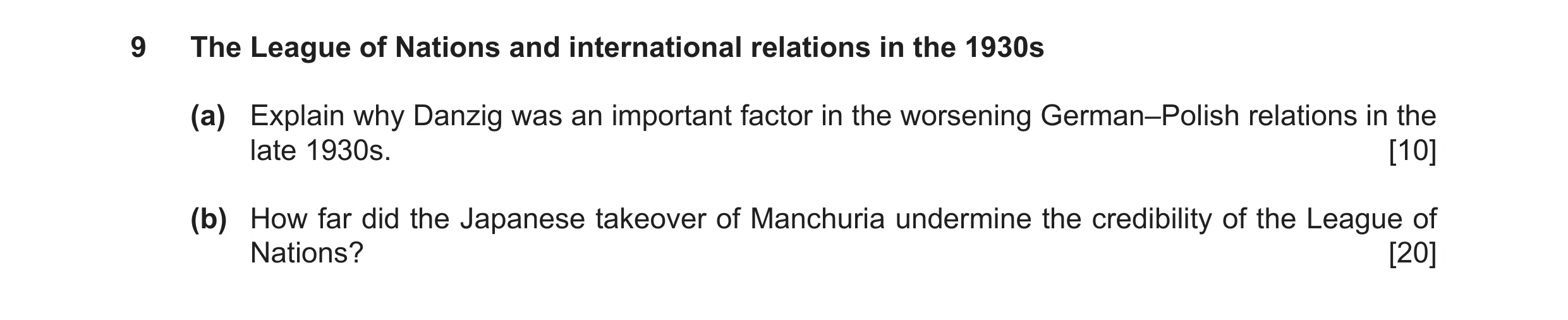
Q4 · The League of Nations and international relations in the 1930s (a) Explain why Danzig was… 9489/22 Oct/Nov 2022
9 The League of Nations and international relations in the 1930s (a) Explain why Danzig was an important factor in the worsening German–Polish relations in the late 1930s. [10] (b) How far did the Japanese takeover of Manchuria undermine the credibility of the League of Nations? [20]
30 marks
Mark scheme: 9(a) Explain why Danzig was an important factor in the worsening of 10 German–Polish relations in the late 1930s. Indicative content The issue of Danzig stems from the Versailles settlement of the issue of Polish access to the sea at the expense of the continuity of German territory between East and West Prussia. • At the end of the First World War Danzig was made a free city under the protection of the League of Nations and linked in a customs union to Poland. However, its population remained predominantly German. • By 1936 the city council was dominated by Nazis and demands for re-union with Germany were increasing. • The Poles had built a new port at Gdynia which, by the 1930s, was handling more trade that Danzig which increased resentment in Danzig. • Hitler’s aim of re-uniting all German people increased tensions especially after the Sudeten Crisis. • Hitler’s repudiation of the German Polish Treaty in March 1939 heighted fear of his intentions regarding Danzig in particular and Poland in general. Raised fears that Danzig would be an excuse for invasion just as the Sudetenland had been. • The League, as guarantor of the city’s independence, had lost all credibility by 1939. Accept any other valid responses. 9(b) How far did the Japanese takeover of Manchuria undermine the 20 credibility of the League of Nations? Indicative content Answers should focus on the issue of the credibility of the League as an international force for peace. The Japanese takeover did undermine the League: The Japanese ignored all League Council’s resolution calling for their withdrawal and when a special session of the Assembly repeated this call the Japanese simply withdrew, never to return (Feb 1933). The league failed to impose economic sanctions which had an adverse effect on later actions re. Abyssinia and the Spanish Civil War. Later in 1933 when Germany failed to get what it wanted from the League sponsored World Disarmament Conference, Hitler used it as an excuse to also leave the League. As a result of these Mussolini felt confident to challenge the Leagues authority in his invasion of Abyssinia leaving the League when it tried to take action against him. As a result, the League was increasingly ignored in international crises. The Japanese takeover did not undermine the League/ It was other factors: The League followed established arbitration procedures, setting up the Lytton commission to investigate the rival claims of the Chinese and Japanese. The League had never had a military capacity to enforce its recommendations, and the British and French were not prepared to take further r actions because of a possible threat to their own far East territories so Great Power self-interest over-rode League interests as it had tended to do before, e.g. Corfu, disarmament talks, etc. Despite a positive response to Haile Selassie’s appeal for help against Italy the League basically failed again to take effective action as it had failed against Italy in Corfu. The USSR was still determined to join and was admitted in 1934. Britain and France continued to give significant support to the League and its activities in other spheres continued to develop, e.g. International Drugs Convention 1936 is still active today. Accept any other valid responses.
This question in 9489/22 Oct/Nov 2022
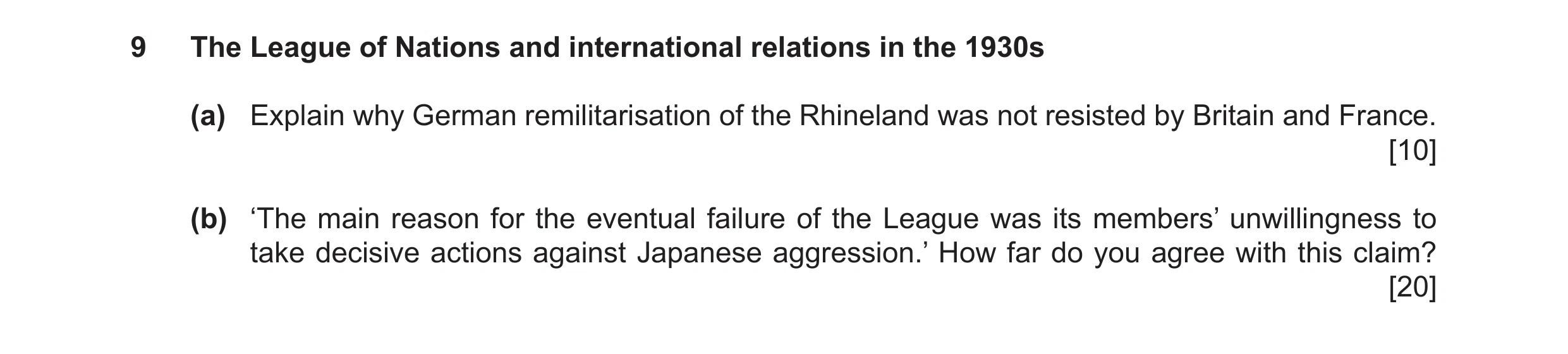
Q5 · The League of Nations and international relations in the 1930s (a) Explain why German… 9489/23 Oct/Nov 2022
9 The League of Nations and international relations in the 1930s (a) Explain why German remilitarisation of the Rhineland was not resisted by Britain and France. [10] (b) ‘The main reason for the eventual failure of the League was its members’ unwillingness to take decisive actions against Japanese aggression.’ How far do you agree with this claim? [20]
30 marks
Mark scheme: 9(a) Explain why German remilitarisation of the Rhineland was not resisted 10 by Britain and France. Indicative content Hitler’s forces were limited and a strong response could have stopped this as the French had clearly superior forces at this stage. • Remilitarisation would require full mobilisation of the French army and France was not psychologically prepared for that. • France suffered a severe economic crisis in 1935–36 and was not in a position to respond. • In Britain, many did not see it as a problem; ‘...just Germany walking into its own backyard’. • There were no protests against the move in Britain and several ‘peace rallies’ demanding the issue be resolved without military force. • Britain had only just begun its rearmament programme and was in no position to act. • Britain could not, in any case, act without France. Accept any other valid responses. 9(b) ‘The main reason for the eventual failure of the League was its 20 members’ unwillingness to take decisive action against Japanese aggression’. How far do you agree with this claim? Indicative content This essay provides an opportunity to compare the specific effects of the failure in the Manchurian Crisis and later Sino-Japanese War, with the importance of the long-term weaknesses of the League and to reach a reasoned assessment of relative importance. The Manchurian Crisis: The Japanese used the Mukden railway incident as an excuse to seize Manchuria and set up their own puppet government there. The League responded by sending a commission to look into Japan’s actions and in March 1933 ordered Japan to leave the area. The Japanese ignored them. This showed that the League was unable to act against a determined aggressor when that was one of the Great Powers. This encouraged Hitler to leave the League in late 1933 on the pretext of the failure of the World Disarmament Conference and begin his own aggressive re-armament and expansion. Japan’s success encouraged Italy to follow suit with the invasion of Abyssinia in 1935 when the League again failed and Italy left the League in 1937. By the late 1930s no one was taking much notice of the League and when the Japanese invaded China in 1937 there was little response. Other factors: On the other hand, the progressive failure of the League could simply be attributed to its own systemic weaknesses which were simply highlighted by the Japanese aggression. These include lack of support from the USA, lack of any armed forces, the voting system that required consensus for any decisions to be made and the fact the even when decisions were made e.g. for economic sanctions, member states were prepared to ignore them if they were not in their own national interest. Accept any other valid responses.
This question in 9489/23 Oct/Nov 2022
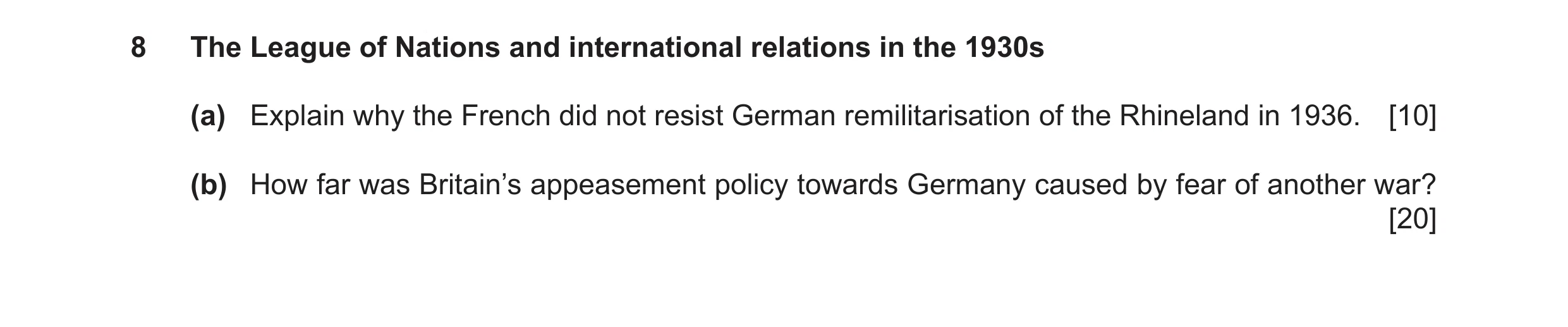
Q6 · The League of Nations and international relations in the 1930s (a) Explain why the French… 9489/22 Feb/March 2023
8 The League of Nations and international relations in the 1930s (a) Explain why the French did not resist German remilitarisation of the Rhineland in 1936. [10] (b) How far was Britain’s appeasement policy towards Germany caused by fear of another war? [20]
30 marks
Mark scheme: 8(a) Explain why the French did not resist German remilitarisation of the 10 Rhineland in 1936. Indicative content • French military leaders estimated that Germany had nearly 300 000 troops available for action on their western border and that intervention would lead to a major conflict for which they were not prepared. • France was facing a severe financial crisis and could not afford a full mobilisation. • Britain was not prepared to take action and France was not prepared to act alone. • A French general election was due in April and any conflict was likely to be highly unpopular because of general opposition to war following the First World War. • Air warfare was believed to be critical, and the French air force was considered to be seriously inferior to the Luftwaffe. • A French historian suggested; ‘a blow had been aimed not at French territory but at the Treaty of Versailles in which no one believed any longer’ Accept any other valid responses. 8(b) How far was Britain’s appeasement policy towards Germany caused 20 by fear of another war? Indicative content The question requires the candidate to identify a number of factors that led to the British policy and establish which of them is considered to be the most important. There will need to be a supported comparative judgement not just a simple assertion of relative importance. The majority of British people wished to avoid conflict – memories of the Great War and its suffering were still present – examples of the Oxford ‘King and Country’ debate 1933 and the Peace Ballot 1935. Britain in the 1930s was struggling with the impact of the Depression, and so the country could not afford another war and heavy rearmament. Many felt that the Treaty of Versailles had been too strict, and that Germany had a right to try and regain lost lands and to rebuild its weakened forces. Many saw Hitler as an effective and trustworthy leader. He had achieved considerable success in a short time in staging the recovery of the German economy. Fear of Communism which was seen as a greater threat to European peace and national security than a revived Germany. German recovery was seen as a potential ‘buffer’ against possible soviet expansionism. Lack of effective allies. France had domestic problems and was unwilling to outwardly challenge German revival and the League of Nations seemed increasingly ineffective in dealing with international confrontations. Having explored possible reasons for appeasement candidates must then make a reasoned choice about which was/were the most important factor(s). More sophisticated responses might highlight the complex interactions between several factors to reach a judgement. Accept any other valid responses.
This question in 9489/22 Feb/March 2023
Q7 · The League of Nations and international relations in the 1930s (a) Explain why Hitler… 9489/21 May/June 2023
8 The League of Nations and international relations in the 1930s (a) Explain why Hitler supported the Nationalists in the Spanish Civil War. [10] (b) To what extent was the League’s failure to prevent Mussolini’s attack on Abyssinia caused by Britain’s reluctance to take action against him? [20]
30 marks
Mark scheme: 8(a) Explain why Hitler supported the Nationalists in the Spanish Civil War. 10 Indicative content Though Franco himself was not a Fascist, the Spanish fascists were part of his coalition of support and this was another right-wing government and potential ally for Hitler The Republican government included communist support and so this was part of Hitler’s anti-communist agenda. It increased insecurity of France by threatening its south-west border. It was a convenient way of testing new methods of warfare like arial bombardment. Accept any other valid responses. 8(b) To what extent was the League’s failure to prevent Mussolini’s attack on 20 Abyssinia caused by Britain’s reluctance to take action against him? Indicative content Discussion of the British response may consider how Britain was one of the permanent members of the League and therefore their support was crucial to any successful action. However, the British people did not see any benefit in getting involved in a conflict so far from Britain and with little relevance to them. In late December 1935, Hoare of the United Kingdom and Laval of France proposed the secret Hoare-Laval Pact, which would have ended the war but allowed Italy to control large areas of Ethiopia. Mussolini agreed to consider the plan to buy time for fear of oil sanctions against Italy, but he had no intention of accepting it. The plan caused an outcry and heavy public criticism in the United Kingdom and France when the plan was leaked to the media. Hoare and Laval were accused of betraying the Abyssinians, and both resigned. The pact was dropped, but the perception spread that the United Kingdom was not serious about the League's principles. The Hoare-Laval Pact showed distrust of Britain towards the League. The United Kingdom did not take any serious action against Italy, such as blocking Italian access to the Suez Canal. Britain basically still wanted to retain a positive relationship with Mussolini because of his potential role in restricting Hitlers ambitions re. Austria. Discussion of other factors may include how the United States, which was generally indifferent to the League's weak sanctions, increased its exports to Italy. It may also consider how, in March 1936, Hitler marched troops into the Rhineland, which had been prohibited by the Treaty of Versailles. The French were now so desperate to get Italian support against German aggression directly on their border that they would not take any further action with sanctions. Since France was prepared to give Abyssinia to Mussolini, his troops were able to continue their war relatively unchallenged by the rest of Europe. Haile Selassie was also forced into exile on 2 May and all of the sanctions that had been put in place by the League were dropped after the Italian capture of the Ethiopian capital, Addis Ababa, on 5 May 1936. Ethiopia was then merged with the other Italian colonies to become Italian East Africa. The League’s structure did not favour swift response, for example it included unanimous voting and lacked military force. Accept any other valid responses.
This question in 9489/21 May/June 2023
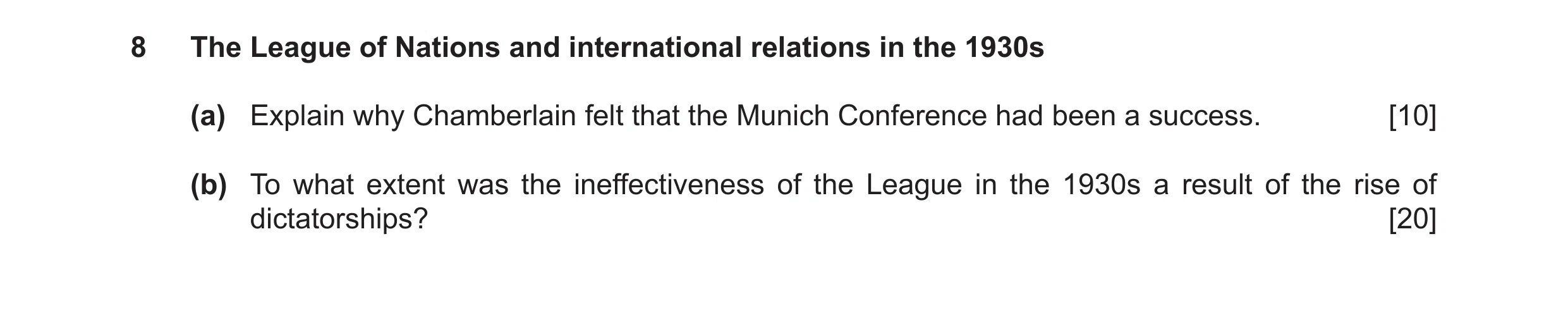
Q8 · The League of Nations and international relations in the 1930s (a) Explain why… 9489/22 May/June 2023
8 The League of Nations and international relations in the 1930s (a) Explain why Chamberlain felt that the Munich Conference had been a success. [10] (b) To what extent was the ineffectiveness of the League in the 1930s a result of the rise of dictatorships? [20]
30 marks
Mark scheme: 8(a) Explain why Chamberlain felt that the Munich Conference had been a 10 success. Indicative content Chamberlain returned from the Munich conference declaring ‘peace for our time’ because: A military invasion of Czechoslovakia was avoided. The risk of war with Germany was avoided. The agreement had the support of Britain’s main ally France and the backing of Mussolini from Italy. Hitler had promised it would be his last territorial demand in Europe. He received a hero’s welcome on his return with ‘peace for our time’. Accept any other valid responses. 8(b) To what extent was the ineffectiveness of the League in the 1930s a 20 result of the rise of dictatorships? Indicative content Discussion of the impact of dictatorships might include how Hitler’s Germany had a substantial effect as Hitler was determined to undermine the Treaty of Versailles and the League was an integral part of that. Following his withdrawal from the world disarmament conference in 1932 he left the League and concentrated on undermining the Treaty of Versailles which also undermined the validity of the League which was unable to act when he remilitarised the Ruhr and set about re-arming Germany contrary to the Treaty. Also, driven by military dictatorship, Japan conquered Manchuria in 1932. The League objected but could do nothing and when the League supported China, Japan left the League. Encouraged by the examples of Japan and Germany, Mussolini, to bolster his flagging popularity, adopted a more aggressive foreign policy leading to the invasion of Abyssinia in 1935 and although the League officially condemned the Italians, France and Britain were caught making a secret agreement to give Abyssinia to Italy. Several countries, including the USA, ignored the League’s attempt to impose economic sanctions. These crises destroyed the authority of the League, and it was powerless to stop Germany after 1935. By the time of the Sudeten crisis of 1938, Britain and France were ignoring the League, and were trying appeasement instead. Discussion of other factors might include that, from the start, structural weaknesses limited the League’s effectiveness it was seen by some as a tool of the victorious powers. The incorporation of the League into the Treaties that ended the war also linked it permanently to the harsh terms of the Treaty and thus weakened support from those who were unhappy with the Treaty in general (not just the defeated powers). Additionally, the absence of the USA seriously weakened the League from the outset as Wilson had been one of the main architects of the League. The economic crisis caused by the Wall Street Crash also had a major effect. Leading countries like Britain and France became more focused on solving their internal difficulties. At the same time the economic and social problems increasingly polarised extremism in politics and produced the rise of dictatorship that ultimately undermined the League. Accept any other valid responses.
This question in 9489/22 May/June 2023
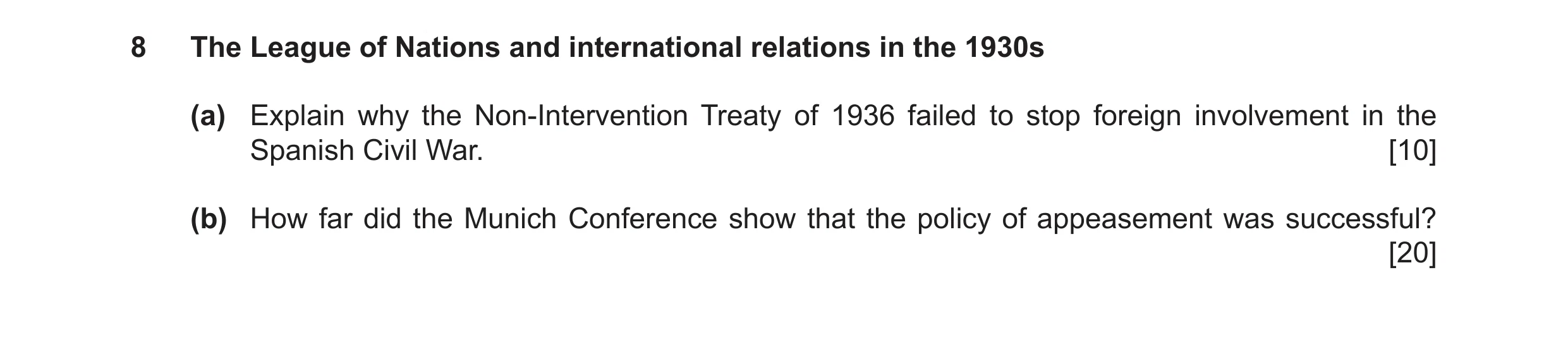
Q9 · The League of Nations and international relations in the 1930s (a) Explain why the… 9489/23 May/June 2023
8 The League of Nations and international relations in the 1930s (a) Explain why the Non-Intervention Treaty of 1936 failed to stop foreign involvement in the Spanish Civil War. [10] (b) How far did the Munich Conference show that the policy of appeasement was successful? [20]
30 marks
Mark scheme: 8(a) Explain why the Non-Intervention Treaty of 1936 failed to stop foreign 10 involvement in the Spanish Civil War. Indicative content The first meeting of the Non-Intervention Committee met in London on 9th September 1936. Eventually 27countries including Germany, Britain, France, the Soviet Union, Portugal, Sweden and Italy signed the Non- Intervention Agreement. But it had no means of enforcement, so some signatories just ignored it. Benito Mussolini continued to give aid to General Francisco Franco and his Nationalist forces and sent 90 Italian aircraft and refitted the cruiser Canaris, the largest ship owned by the Nationalists. In July 1936, the Popular Front government only controlled just over 50 per cent of Spain. By the end of the month, Adolf Hitler had sent 30 Junkers which transported over 15 000 troops to Spain from Morocco. Hitler used the war as an opportunity to try out new aerial warfare techniques. German arms manufacturers were encouraged to export via other countries like Greece. Russia continued to supply equipment to the communists who were part of the Republican forces to try and control the operations of the Republican forces. Accept any other valid responses. 8(b) How far did the Munich Conference show that the policy of 20 appeasement was successful? Indicative content There will need to be a clear understanding of the main elements of the agreement at Munich and a clear differentiation between elements of success and failure. Discussion about success might consider how the issue of 3 million German living in the Sudetenland came to head in the Munich Conference which represented the high point of appeasement. The agreement of the peaceful transfer of the Sudetenland and its predominantly German population to Germany was seen as a significant success and hailed by Chamberlain as ‘peace for our time’. At a time when the western powers were still suffering significant military weakness compared to the rapid rearmament of Germany this was a success as it allowed Britain and France more time to re-arm. Discussion of failure might consider how, initially seen as a success, it in fact marked a turning point in the usefulness of appeasement as a way of dealing with Hitler’s expansionist demands as it marked the last point at which these could be justified in terms of reasonable revision to the Treaty of Versailles. However, rather than satisfying his territorial demands this simply confirmed his belief that the western powers would continue to pursue appeasement as he pressed for further gains. Hence, this continued to create problems within Czechoslovakia leading to Hitler’s invasion of March 1939 which effectively destroyed western hopes of success form pursuing the policy of appeasement and led to their guarantee of support for Poland. Most significantly it might be argued that appeasement was never going to work because of Hitlers long term intentions of winning Lebensraum in the east. Which meant that at some point the policy was bound to fail. It might also be argued that the failure of the western allies to negotiate a treaty with the USSR leading to the formation of the Nazi Soviet Pact led to the ultimate failure of appeasement and that invasion of Poland simply marked the final blow to a policy that had never had any significant chance of long-term success. Accept any other valid responses.
This question in 9489/23 May/June 2023
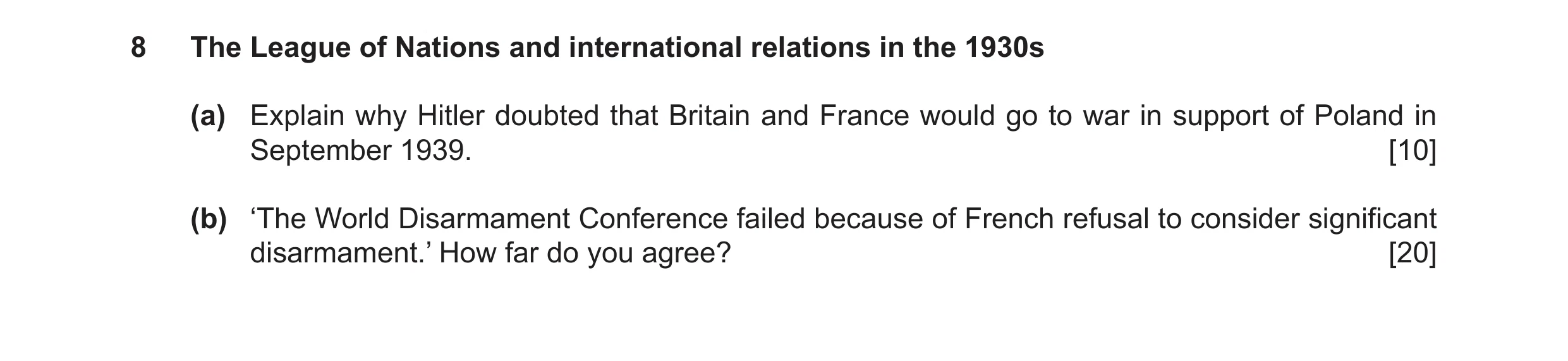
Q10 · The League of Nations and international relations in the 1930s (a) Explain why Hitler… 9489/21 Oct/Nov 2023
8 The League of Nations and international relations in the 1930s (a) Explain why Hitler doubted that Britain and France would go to war in support of Poland in September 1939. [10] (b) ‘The World Disarmament Conference failed because of French refusal to consider significant disarmament.’ How far do you agree? [20]
30 marks
Mark scheme: 8(a) Explain why Hitler doubted that Britain and France would go to war in 10 support of Poland in September 1939. Indicative content • The policy of appeasement that Britain and France had been following in response to his demand for revisions to the Treaty of Versailles. • Their compliance in the Munich agreement re the Sudetenland. • The geographic distance between Poland and the western allies. • The Nazi–Soviet Pact robbed Britain and France of possible support from the Soviet Union. Accept any other valid responses. 8(b) ‘The World Disarmament Conference failed because of French refusal to 20 consider significant disarmament.’ How far do you agree with this statement? Indicative content Discussion of the French response might include how Gustav Stresemann, who had been the main architect of improved relations between France and Germany, died in November 1929 and after this mistrust rapidly resurfaced. The French had imposed harsh terms at Versailles, limiting German military capability, and the mistrust that led to these had never really dissipated. The French were also alarmed by the rise of anti-Versailles extremism in Germany and the rising popularity of the Nazi Party. This led to a failure to obtain a German-French agreement on German arms status as the French did not want to disarm without a guaranteed alliance if war broke out with Germany again. With no immediate prospect of such an alliance the French would not consider disarmament. Discussion of other factors for the failure of the disarmament conference might include how the period of the conference named the General Commission made progress with nations agreeing on a number of terms. However, when it came to individual nation states implementing the terms of the conference, it was unsuccessful. Additionally, Hoover suggested that the USA should lead the way in disarmament and suggested a substantial reduction in US military capability which won significant support at the conference but was rejected by the US Congress. Czechoslovakia and Poland were vulnerable because of their geographical proximity to Germany and fear that they would be attacked by the allies again with no way to defend themselves if they disarmed. Furthermore, during the interwar period, Stalin led the modernisation and build-up of the USSR's army. This included the size of an army (during peace time) of 1 100 000 and forced combat training. In December 1931 Molotov talked about a growing danger of military intervention against the USSR. This meant that like many other countries, the USSR were hesitant to disarm. Additionally, Japan invaded Manchuria on the 18th of September 1931 after the Mukden Incident and were subsequently hesitant and hostile to the idea of disarming. Ultimately, Japan disagreed with the whole idea of disarmament and were not present or involved with negotiations. In 1933 Hitler withdrew from the conference and began the process of re-arming Germany. Accept any other valid responses.
This question in 9489/21 Oct/Nov 2023
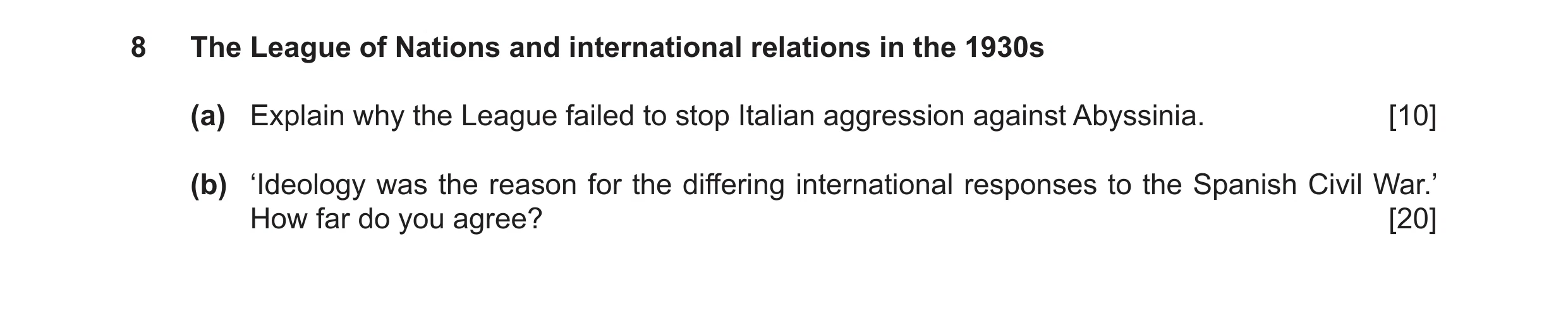
Q11 · The League of Nations and international relations in the 1930s (a) Explain why the League… 9489/22 Oct/Nov 2023
8 The League of Nations and international relations in the 1930s (a) Explain why the League failed to stop Italian aggression against Abyssinia. [10] (b) ‘Ideology was the reason for the differing international responses to the Spanish Civil War.’ How far do you agree? [20]
30 marks
Mark scheme: 8(a) Explain why the League failed to stop Italian aggression against 10 Abyssinia. • Britain and France were unwilling to fight for a small insignificant African country and would only agree to limited economic sanctions which did not include oil or other vital war materials • The League did not want to cause conflict with Italy because of the growing threat of Hitler in Germany. • By 1936 what Britain and France thought determined what the League did. • US continued to trade with Italy which further undermined the attempted sanctions. • After its failure to act in Manchuria the League had lost all credibility. Accept any other valid responses. 8(b) ‘Ideology was the reason for the differing international responses to the 20 Spanish Civil War.’ How far do you agree? Discussion of the importance of ideology may consider how the Spanish Fascist party (the Falangists) were only one part of a right-wing coalition that backed Franco’s Nationalist agenda, but Hitler and Mussolini saw intervention as an opportunity to establish another sympathetic power with a similar ideology. Stalin was willing to send support to the Spanish Communists but did not like the diversity of the Republican group and so limited his support. He also worried that supporting communism in Spain too overtly would antagonise the Western democracies and strengthen their mistrust of, and opposition to, Communism so in a sense ideology limited his support The International Brigades were built on the democratic idealism of the individual members that came from other countries to fight for the Republic. Discussion of other factors may consider how Hitler wanted to test the strength of his newly developed military forces – especially his air force, members of which could ‘volunteer ‘to join the Condor Legion. Mussolini also arguably had other motives and wanted to pursue his personal ambition of building a new Roman empire around the Mediterranean and saw intervention as a way to shore up his flagging support at home. Britain and France were militarily unprepared and did not want to risk starting a more widespread European war. The USA was still pursuing a policy of isolationism in relation to the European conflicts. Accept any other valid responses.
This question in 9489/22 Oct/Nov 2023
Q12 · The League of Nations and international relations in the 1930s (a) Explain why Italy’s… 9489/22 Feb/March 2024
8 The League of Nations and international relations in the 1930s (a) Explain why Italy’s relations with Britain and France changed after 1934. [10] (b) ‘It was the departure of key nations that left the League of Nations powerless in the 1930s.’ How far do you agree? [20]
30 marks
Mark scheme: 8(a) Explain why Italy’s relations with Britain and France changed after 1934. 10 Indicative content Having spent time attempting to build an international reputation as statesman and forming close connections with Britain and France through various international agreements in the 1920s and early 1930s, most recently the Stresa Front in 1935. Mussolini changed direction after 1934 and adopted more aggressive policies because: • Ambitions to expand empire by taking over Abyssinia, at the same time avenging Italy’s humiliating defeat at the Battle of Adowa. • Annoyed with Britain and France for not supporting him over Abyssinia and instead leading the League in imposing sanctions. • Example of Japanese action in Manchuria in defying League and of Hitler in re-militarizing the Rhineland showed how weak the western allies were and how ineffective was the League of Nations. • Increasing admiration of Hitler and his aggressive tactics confirmed the weakness of the western Powers leading to formation of Rome Berlin Axis in 1936. • Opportunity offered by the Spanish Civil War. Accept any other valid responses. 8(b) ‘It was the departure of key nations that left the League of Nations 20 powerless in the 1930s.’ How far do you agree? Whilst there was a steady decline in support for the League of Nations that steadily reduced its effectiveness it is arguable that this decline was due to the inherent flaws of the League and that this was what made the organisation ineffective in maintaining international peace in the 1930s. Significant departures: Japan was the first major departure from the League. Disillusioned with democracy and suffering from the effects of the Great Depression the military decided to seize the initiative and take control of Manchuria from China in September 1931. The League ordered Japan to withdraw but the Japanese simply ignored them. Though the League sent a commission under Lord Lytton to Manchuria to investigate the rival claims of China and Japan the Japanese still refused to withdraw and in March 1933 formally withdrew from the League. Meanwhile, at the world Disarmament Conference, which began in 1932. Hitler unhappy that, whilst the Versailles settlement limited German armaments, other countries were not willing to make comparable reductions in their armaments, abandoned the negations and in October 1933 withdrew from the League and began a substantial re-armament programme. The final blow came when Italy withdrew from the League in 1936 following the attempted imposition of sanctions following the invasion of Abyssinia. Seeing the League’s previous failures in Manchuria, and following Hitler’s lead, Mussolini responded to sanctions by leaving the League. This left only Britain and France as significant powers and as both of these were committed to appeasement by 1936, the League was by this time virtually powerless to intervene in any international dispute. This was demonstrated in the response to the Spanish Civil War where the non-intervention committee proved entirely ineffective in preventing support for Franco from Italy and Germany. Other factors: The League failed to get agreement on disarmament at the World Disarmament Conference in 1932–33. This was a key objective of the organization. Despite the attendance of over 60 nations including non- members the US and USSR. however, despite optimism the growing political instability and rise of dictatorship made countries wary of reducing their stock of arms. Also, the Great Depression and subsequent unemployment led to social unrest which left some countries concerned about the rise of communism and possibility of civil unrest or revolution. Governments wanted to keep their arms in order to counter such a possible threat. Finally, the inherent weaknesses of the League became increasingly obvious through the 1930s and increasingly crippled its capacity to act. Lack of armed enforcement, the weakness of sanctions if not all countries maintained them and the fact that the League increasingly seemed like a branch of Anglo- French foreign policy, all left the League unable to act decisively. Accept any other valid responses.
This question in 9489/22 Feb/March 2024
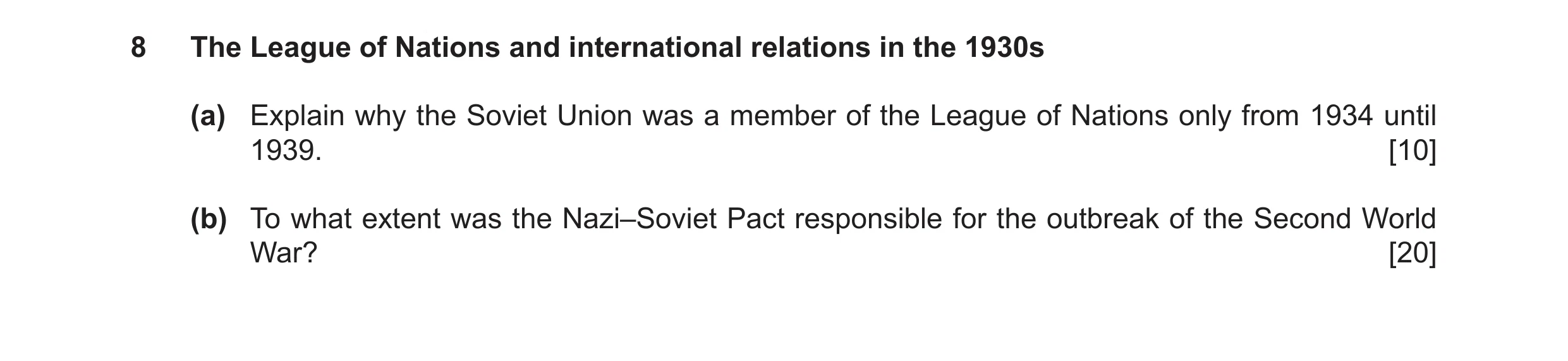
Q13 · The League of Nations and international relations in the 1930s (a) Explain why the Soviet… 9489/21 May/June 2024
8 The League of Nations and international relations in the 1930s (a) Explain why the Soviet Union was a member of the League of Nations only from 1934 until 1939. [10] (b) To what extent was the Nazi–Soviet Pact responsible for the outbreak of the Second World War? [20]
30 marks
Mark scheme: 8(a) Explain why the Soviet Union was a member of the League of Nations 10 only from 1934 until 1939. Indicative content Essentially the candidate is expected to understand why the Soviet Union did not join the League until 1934 and why it left again in 1939. Initial exclusion of the Soviet Union because of western powers concerns of the spread of Communism Departure of Japan and Germany in 1933 left a seriously weakened League so to bolster its standing the Soviet Union was invited to join as a member of the permanent council In Spanish Civil War, despite the League’s stance on non –aggression Soviet Union supplied arms and other support to the Republican side. In August 1939 Soviet Union signed the non–aggression Pact with Germany. In September 1939, when Germany invaded Poland, the Soviet Union also began to seize Polish territory under the terms of its agreement in its pact with Hitler. On 14 December 1939 the League of Nations expelled the Soviet Union for its actions against Finland. Accept any other valid responses. 8(b) To what extent was the Nazi–Soviet Pact responsible for the outbreak of 20 the Second World War? Indicative content The Nazi–Soviet Pact can clearly be identified and explained as the trigger for the outbreak of war in 1939 however students will need to measure the level of responsibility against the long–term factors leading to war. The Pact was signed by foreign ministers Molotov and Ribbentrop on 23 August 1939. It was basically an agreement not to attack each other in the event of war. It destroyed any hopes that Britain and France had of getting Soviet support in the event of the invasion of Poland because the Soviet Union, recognising that they were under threat, remained suspicious of western motives especially when the British sent a low–key negotiating team to Moscow that did not even include a government minister. A secret clause also agreed to the partition of Poland. For Hitler this was the final step in his plan for winning Lebensraum in the east and served his intentions well. It isolated Russia from the western allies, leaving them with little opportunity to intervene directly when his plans for the invasion of Poland were implemented and left the Soviet Union cut off from western support when Hitler moved on to the next stage of his plan to expand eastwards into Soviet territory. So, the Pact effectively gave Hitler the green light for his invasion of Poland which came less than 2 weeks later. However, whilst the Nazi–Soviet Pact may have determined the timing of the attack on Poland it did not represent the most significant causes. Hitlers’ long–term aims were the destruction of the Treaty of Versailles, the uniting of all German peoples in a single state and the winning of living space (Lebensraum) in the east by defeating the inferior Slavic nations. The Anglo– French pursuit of appeasement also convinced Hitler that this was possible without a world war as their lack of response to the destruction of Czechoslovakia had convinced Hitler that they would take no further action over Poland despite their assurances to the Poles. The failure of the Munich agreement however finally convinced the British that Hitler would not keep his promises and so the British government issued a guarantee in March 1939 that they (and the French) would defend Polish sovereignty in the event of an attack by Hitler. When the German invasion began in September the British issued an ultimatum to the Germans to withdraw and when it was ignored declared war on Germany. Other factors than might also be considered are the effects of the world economic crisis, the failure of the League and fear of communism, but an in–depth investigation of the full range of causes is not necessary. Accept any other valid responses.
This question in 9489/21 May/June 2024
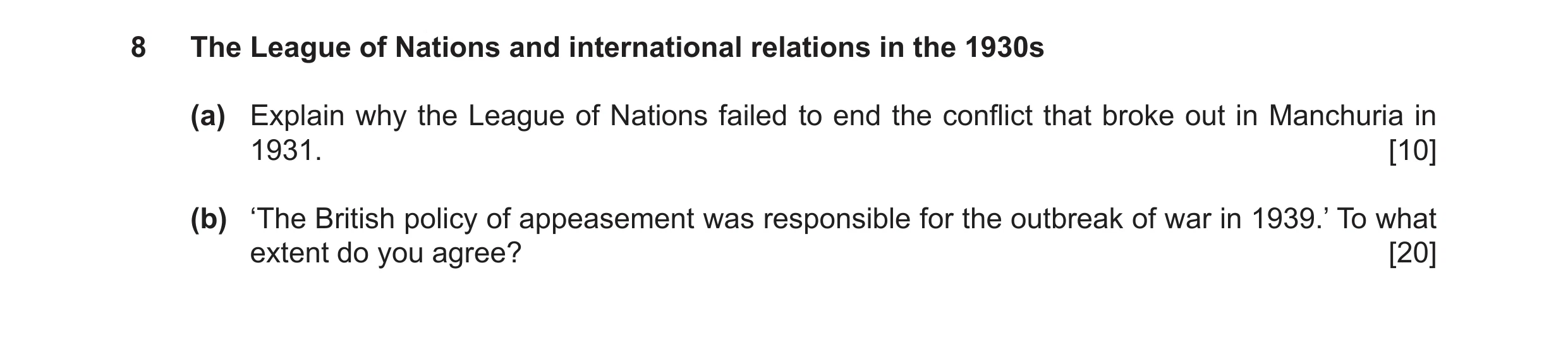
Q14 · The League of Nations and international relations in the 1930s (a) Explain why the League… 9489/22 May/June 2024
8 The League of Nations and international relations in the 1930s (a) Explain why the League of Nations failed to end the conflict that broke out in Manchuria in 1931. [10] (b) ‘The British policy of appeasement was responsible for the outbreak of war in 1939.’ To what extent do you agree? [20]
30 marks
Mark scheme: 8(a) Explain why the League of Nations failed to end the conflict that broke 10 out in Manchuria in 1931. Indicative content Essentially the generic reasons for the weaknesses of the League were emphasised by the specific circumstances surrounding the Manchuria crisis. In September 1931 the Mukden Railway incident led to a Japanese invasion of Manchuria – China appealed to the League of Nations to take action against Japan. China appealed to the League and the matter was considered under Article 11 whereby any threat of war affecting any of the Members of the League was declared a matter of concern to the whole League. The League’s council deliberated on the issue even without the representatives from China and Japan before arriving at a resolution. Mediation was led by the League of Nations to listen to the complaints but failed to reach a resolution. The Leagues sent a commission led by Lord Lytton to investigate and provide recommendations. the Japanese army had already established the Manchurian puppet state of Manchukuo. The Commission spent 6 weeks on Manchuria in early 1932 but its report was not finally published until October 1932, demonstrating the ineffectiveness of the process. On the advice of the report, the League of Nations refused to recognise Manchukuo as a legitimate state It recommended that the area be returned to China under supervision of the League. The league voted by 42 to 1 to accept Lytton’s findings. The one vote against was from Japan which promptly left the League. Because of the worldwide depression the major powers were in no position to impose economic sanctions as should have happened under collective security protocols and thus the League was proved ineffective against great power aggression. Japan believed that Manchuria was too far away for the European leaders of the League to be willing to take action so ignored the Lytton report. Britan and France were worried that if they opposed Japan too strongly their own colonies might come under threat. Accept any other valid responses. 8(b) ‘The British policy of appeasement was responsible for the outbreak of 20 war in 1939.’ To what extent do you agree? Indicative content There is no doubt that appeasement did nothing to discourage Hitler from his plans but there are other factors that led to war, and it is arguable that even without appeasement the path to conflict would not have been substantially different. Appeasement was a response to a number of pressures and effectively meant avoiding confrontation over Hitlers actions aimed at revision of the terms of the Treaty of Versailles. It was underpinned by fears of what another war might involve, given the experience of the previous war, coupled with a general feeling that the Treaty of Versailles had been an unjust peace. For Britain this was coupled with an awareness that they could not act without French support and certainly for much of the 1930s this would simply not have been forthcoming. Each concession to Hitler simply encouraged him to go on to his next move. So, German re-armament went unchallenged after the failure of the World Disarmament Conference and German withdrawal from the League in 1933 and Britain even signed the Anglo–German Naval Agreement of 1935 which effectively condoned expansion of the German navy far beyond the limits of Versailles. From this Hitler moved on to the unopposed Anschluss with Austria in March 1938 followed by the Munich crisis in September of the same year. When Hitler broke his promise of ‘no more territorial demands in Europe’ by occupying the rest of Czechoslovakia in March 1939, Britain moved to protect Poland, but Hitler no longer believed Britain represented any serious threat and did not believe they would go to war over Poland and so continued with his expansionist plans. However, Hitler’s long-term plan was to unite all the German people in a single state and to expand German territory eastwards so this would eventually have led to war. The Nazi-Soviet Pact seemed to challenge this plan but was, as both sides realised, simply a temporary arrangement that allowed Germany to invade Poland. With no threat from the Soviet Union Hitler believed there would be no challenge to his move against Poland and this miscalculation was to have serious consequences for him. A number of factors made any challenge that included the possibility of conflict before the late 1930s very difficult. France would not move against German plans as shown in the Rhineland Crisis and the Great Depression left the western allies in no position for extensive remilitarisation until the mid-1930s so war was simply not an option. There was also strong public resistance to any idea of war which would have made any alternative policy very difficult. So whilst war might ultimately be unavoidable it was not practical until the late 1930s, even without appeasement. Accept any other valid responses.
This question in 9489/22 May/June 2024
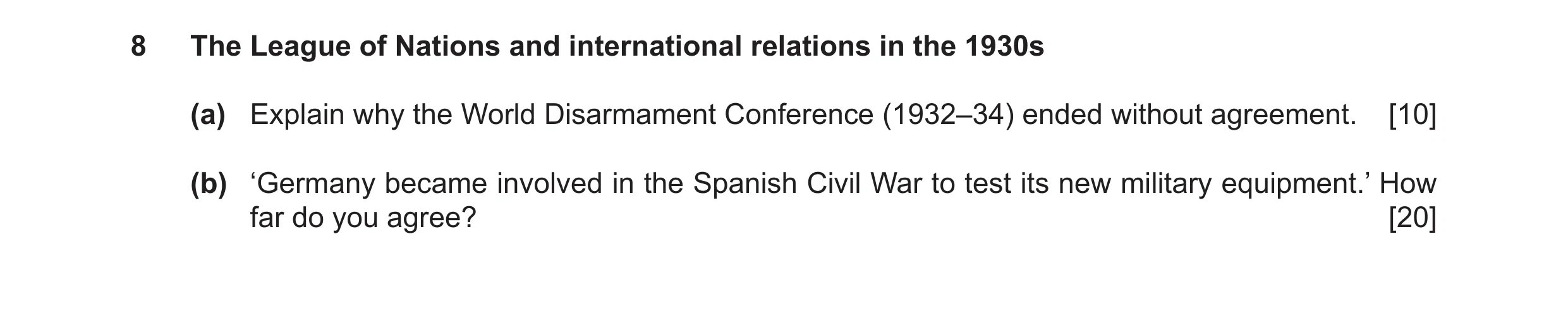
Q15 · The League of Nations and international relations in the 1930s (a) Explain why the World… 9489/23 May/June 2024
8 The League of Nations and international relations in the 1930s (a) Explain why the World Disarmament Conference (1932–34) ended without agreement. [10] (b) ‘Germany became involved in the Spanish Civil War to test its new military equipment.’ How far do you agree? [20]
30 marks
Mark scheme: 8(a) Explain why the World Disarmament Conference (1932–34) ended 10 without agreement. Indicative content After a lengthy planning process the League of Nations finally convened an International Disarmament Conference in accordance with the requirements of the Covenant of the League to reduce the size of armed forces. This had been incorporated into the terms of all the peace treaties. It met in Geneva in Feb 1932 and continued to meet until 1934 but to all intents and purposes it had completely failed by the end of 1933. The Conference already faced difficulties before it began because in September 1931 Japan used the Mukden railway incident as a pretext for seizing Manchuria. This overt aggression increased international tension and the failure of the League to deal with this undermined confidence in the potential for success of any disarmament agreements that might be reached. Germany had already faced substantial disarmament because of the Treaty of Versailles and was unwilling to consider any further measures without a commitment to substantial reductions by its European neighbours. France was unwilling to consider substantial disarmament in the face of German resistance. This reluctance increased after Hitler came to power in January 1933. Once Hitler had established his position in Germany, he was intent on dismantling the Treaty of Versailles. One of his first objectives was to begin the re-armament of Germany. France would only consider disarmament if Britain and the USA gave guarantees to defend French security and neither was prepared to give such assurances. Hitler offered to disarm if all other countries would agree to destroy their arms within five years. When the French refused Hitler withdrew from the conference and in November 1933 left the League of Nations. This effectively ended any chance of significant moves towards arms limitation. Accept any other valid responses. 8(b) ‘Germany became involved in the Spanish Civil War to test its new 20 military equipment.’ How far do you agree? Indicative content It is possible to identify a balance between self-interest in testing their new equipment and wider issues. Candidates will probably seek to make a basic distinction between alternatives and better candidates should be able to reach a reasoned judgment. Hitler saw this as an opportunity to provide combat training for Germany’s armed forces especially the air force. Hitler had already embarked on significant re-armament, focusing especially on new developments in weapons technology. The Spanish Civil war provided a significant opportunity to test these weapons, but he was not prepared just to hand them over to the Nationalist nor could he intervene directly but enabled the Condor Legion of ‘volunteers’ to test the potential of aerial bombardment, e.g. Guernica. On the other hand, Hitler viewed support of Franco’s Nationalist forces as part of an extension of fascism by supporting a third fascist regime. Fascist Spain also represented an additional threat to France on its southern border and drew Italy further into Hitler’s sphere of influence. In addition, Germany was part of the group that created and signed the Non-intervention Pact in 1936. However, they consistently broke this agreement by allowing their arms manufacturers to promote the sale of armaments to the side they supported, often shipping them by devious routes via third countries. Britain and France still saw their main role as leaders of the League of Nations and sought to get all the powers to commit to non-intervention. Their objective was to reinforce the peace keeping role of the League by avoiding the expansion of the war in Spain into a more widespread conflict between fascism and communism that would engulf the whole of Europe. Hitler saw this as a further way of testing their resolve and the extent of their willingness to pursue appeasement. Accept any other valid responses.
This question in 9489/23 May/June 2024
Q16 · The League of Nations and international relations in the 1930s (a) Explain why the… 9489/22 Oct/Nov 2024
8 The League of Nations and international relations in the 1930s (a) Explain why the remilitarisation of the Rhineland was not resisted. [10] (b) ‘The invasion of Poland in September 1939 was not expected to lead to a wider European conflict.’ How valid is this view? [20]
30 marks
Mark scheme: 8(a) Explain why the remilitarisation of the Rhineland was not resisted. 10 Indicative content The demilitarisation of the Rhineland had been part of the Treaty of Versailles that Hitler was intent on destroying. It was part of the forced disarmament of Germany and Hitler was now determined to overturn that restriction. Though Britain and France protested vigorously they did not take any direct action to stop it because: • There was a general acceptance that the terms of the Treaty had been too severe, and that Hitler had a reasonable claim to make some adjustments to the restrictions placed on Germany especially following the failure of the World Disarmament Conference. • There was a feeling amongst western leaders that a strong Germany would be a good defence against the spread of communism which appeared more threatening as a result of protests over the hardships created by the Great Depression. • The French were in no position to go to war against Germany and were facing internal political uncertainty. • In both Britain and France anti-war feeling was strong and many believed that Hitler simply seemed to be providing the strong and decisive leadership needed to recover from the Great Depression. Accept any other valid responses. 8(b) ‘The invasion of Poland in September 1939 was not expected to lead to a 20 wider European conflict.’ How valid is this view? Indicative content Hitler certainly did not think that the allies would respond so decisively to the invasion of Poland. Hitler had since 1936 taken a number of expansionist steps in the Rhineland, Austria and Czechoslovakia. These were designed to destroy the Treaty of Versailles and to test the resolve of the other European powers to resist his moves. Their commitment to the policy of appeasement convinced Hitler that they would not respond any more decisively to his invasion of Poland. Also he expected the German Blitzkrieg would overwhelm Poland so quickly that the Western Allies would be unable to react One of the biggest threats of war was if the Western Allies persuaded the Soviet Union to join them in guaranteeing the integrity of Poland. The signing of the Nazi Soviet Pact in August 1939 ended this possibility and Hitler did not believe the British and French had the capacity of the inclination to go to war for a country in eastern Europe – they had after all made similar promises to Czechoslovakia. On the other hand, the move against Poland marked a different phase of Hitlers plans as it went beyond revisiting the Treaty of Versailles and moved into the ‘winning lebensraum’ phase of his long-term plans. After the invasion of the rump of Czechoslovakia in March 1939 British belief in the effectiveness of appeasement had finally been destroyed and a new mutual assistance pact was signed with Poland in March 1939. Britain had begun rearmament 1936 and in 1939 began preparations for the eventuality of war by beginning to prepare the general public with measures including issuing the Military Training Act in April 1939, even though they remained strongly in favour of peaceful settlement of issues. Churchill had also long argued that Hitler’s intention was to start a new European war to achieve his ambitions. Political leaders in Britain increasingly came to accept this viewpoint while Hitler’s own army leaders argued against the invasion. They believed it would lead to war and that the German forces, though strong and growing stronger, were not ready to fight a war against Britain and France. On September 1st when Hitler invaded Poland Chamberlain issued an ultimatum for German withdrawal and within a few hours the French declared war on Germany but were unable to do anything immediately because the speed of Hitler’s attack had taken them by surprise. Accept any other valid responses.
This question in 9489/22 Oct/Nov 2024
Q17 · The League of Nations and international relations in the 1930s (a) Explain why Germany… 9489/23 Oct/Nov 2024
8 The League of Nations and international relations in the 1930s (a) Explain why Germany became involved in the Spanish Civil War. [10] (b) ‘The League was not to blame for the failure to prevent Italy’s conquest of Abyssinia.’ How far do you agree? [20]
30 marks
Mark scheme: 8(a) Explain why Germany became involved in the Spanish Civil War. 10 Indicative content As Spain slipped toward civil war Germany made a decisive intervention in providing the aircraft to transfer Franco’s Moroccan based forces to the Spanish mainland to begin the Nationalist revolt against the Republican government. A number of factors contributed to this intervention. • It encouraged the rise of a third fascist state in Europe. Whilst the Spanish fascists, the Falange party, were only one part of the Nationalist coalition its overall policies fitted with fascist ideology. • The prospect of a fascist state on its southwest border was a further distraction for France from resistance to Hitler’s moves to re-arm and restore Germany. • It tested the commitment of the western allies to non-intervention in foreign conflicts. • It provided Hitler with a chance to test the improvements he was making to German armed forces and test out new methods of mass warfare, especially aerial warfare. • It helped confirm the commitment of Germany and Italy to the Rome- Berlin Axis. Accept any other valid responses. 8(b) ‘The League was not to blame for the failure to prevent Italy’s conquest 20 of Abyssinia.’ How far do you agree? Indicative content The League unanimously condemned Italian action. The League then imposed economic sanctions against Italy but did not include in these vital resources such as oil, coal and steel so the impact on Italy was minimal. The League did all it could as it was limited by a lack of forces to intervene directly. However, it was able to intervene to offer mediation and after the initial incident at Walwal in December 1934, negotiations were undertaken between the two sides over several months. The League could not control the response of countries that were not members of the organisation like the USA and Germany so even if sanctions had been effectively imposed by member states, they would still not have been substantially effective in limiting Italy’s abilities to wage war. But the League was further limited in what it was able to do by the failings of the two major powers of the League, Great Britain and France. Whilst approving the sanctions they secretly began negotiations with Italy as they did not want to damage their relationship with Italy because of the recently formed Stresa Front. The outcome of this was the Hoare-Laval Pact, negotiated with the Italian government by the British Foreign Secretary and French Prime Minister. This approved the idea of a partition of Abyssinia that gave virtual control to Italy. When details of this pact were revealed, it created widespread public outrage in both countries, where support for the League remained relatively strong, and anger and disappointment amongst the remaining members of the League. Arguments might revolve around the idea that the League did as much as it could, given the limitation of the Charter and the absence of some of the major powers from the League. Or it might be argued that the League still retained some capacity for positive action but that it was undermined by the self-interest of key members and so failed to do all it might have done. Accept any other valid responses.
This question in 9489/23 Oct/Nov 2024
![Question 1: The League of Nations and international relations in the 1930s (a) Explain why the World Disarmament Conference ended in failure. [10] (b) …](https://img.pastlit.com/crops/3a108354-9e63-4dda-aa25-3f4e84d6528d/q9.webp)

![Question 3: The League of Nations and international relations in the 1930s (a) Explain why Italy left the League of Nations in 1937. [10] (b) ‘Britain’…](https://img.pastlit.com/crops/282c593b-07bc-48aa-b218-f66ce3507669/q9.webp)
 1 / 4
1 / 4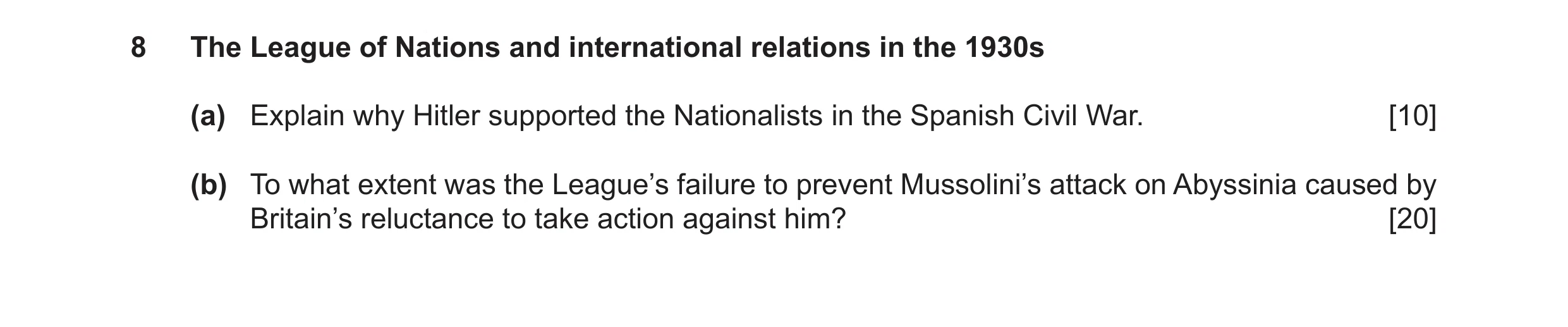
 2 / 4
2 / 4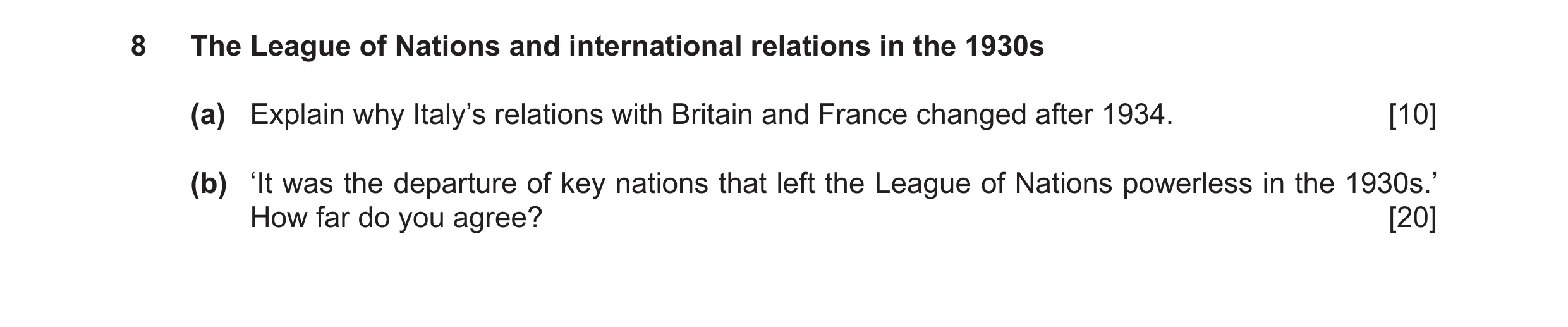
![Question 16: The League of Nations and international relations in the 1930s (a) Explain why the remilitarisation of the Rhineland was not resisted. [10]…](https://img.pastlit.com/crops/3cd171d1-0ecf-44fa-ae60-c8f47acabfd0/q8.webp) 3 / 4
3 / 4![Question 17: The League of Nations and international relations in the 1930s (a) Explain why Germany became involved in the Spanish Civil War. [10] (b) ‘…](https://img.pastlit.com/crops/6f253293-5518-447c-bfd7-2df728a3c945/q8.webp) 4 / 4
4 / 4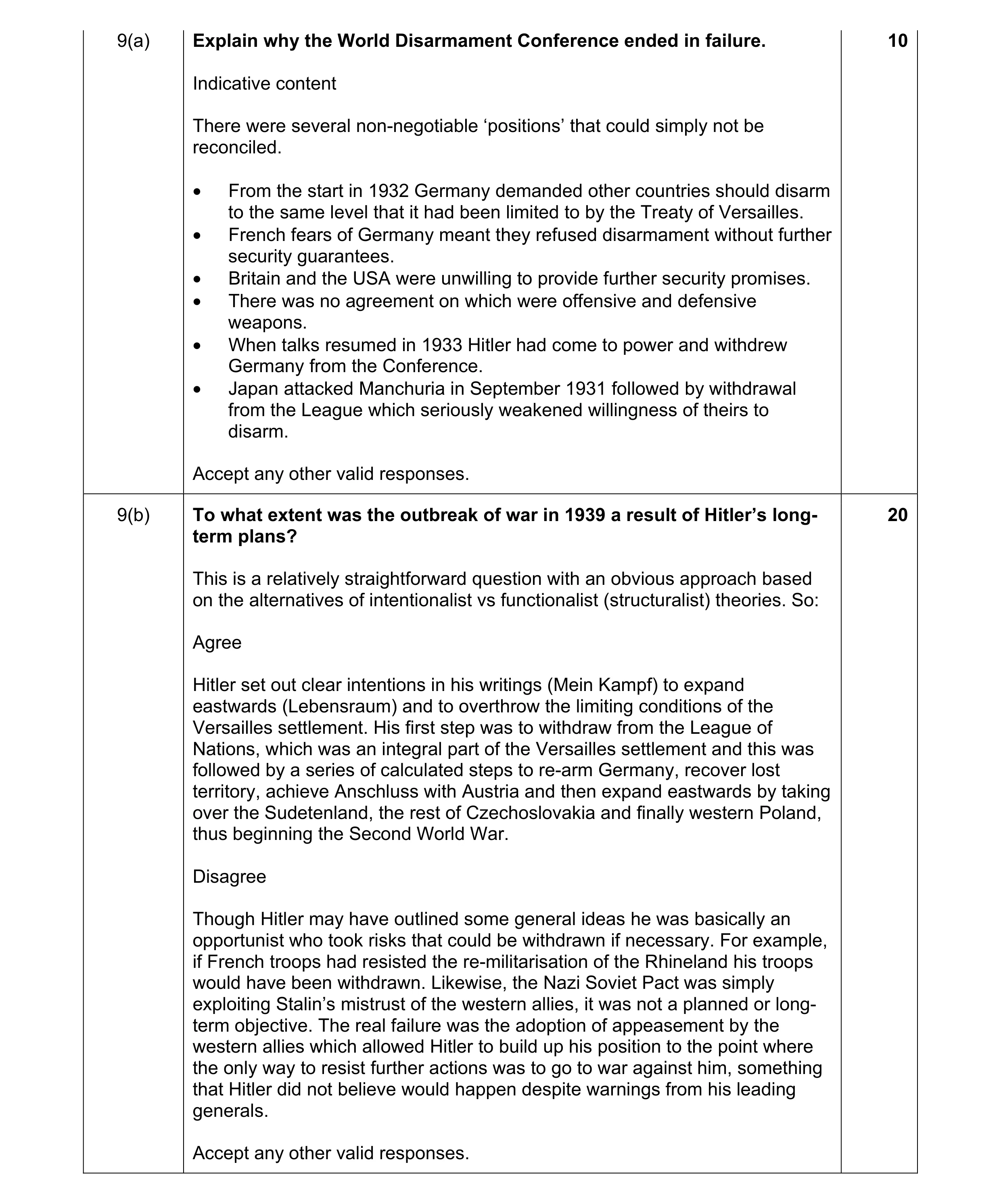 30
30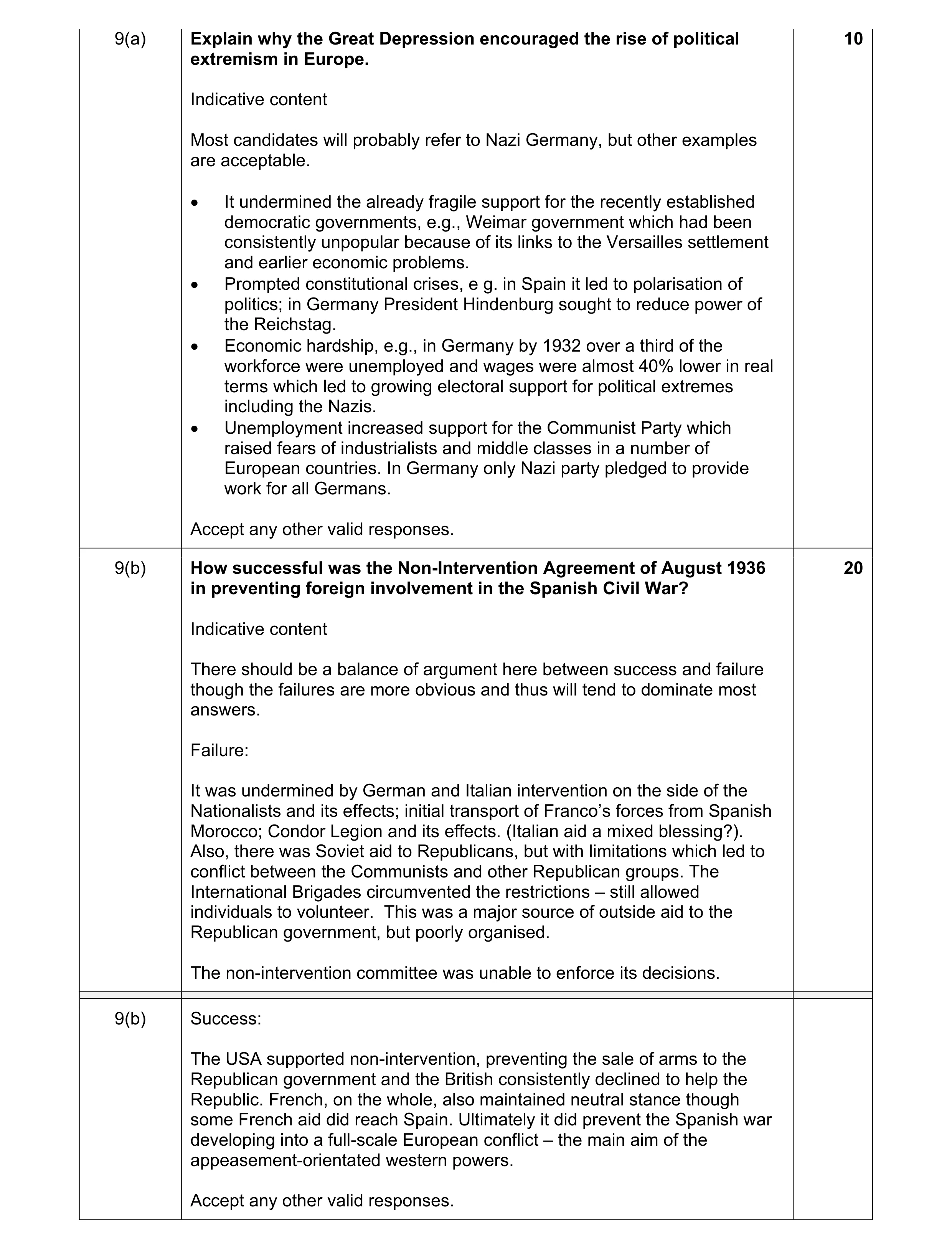 30
30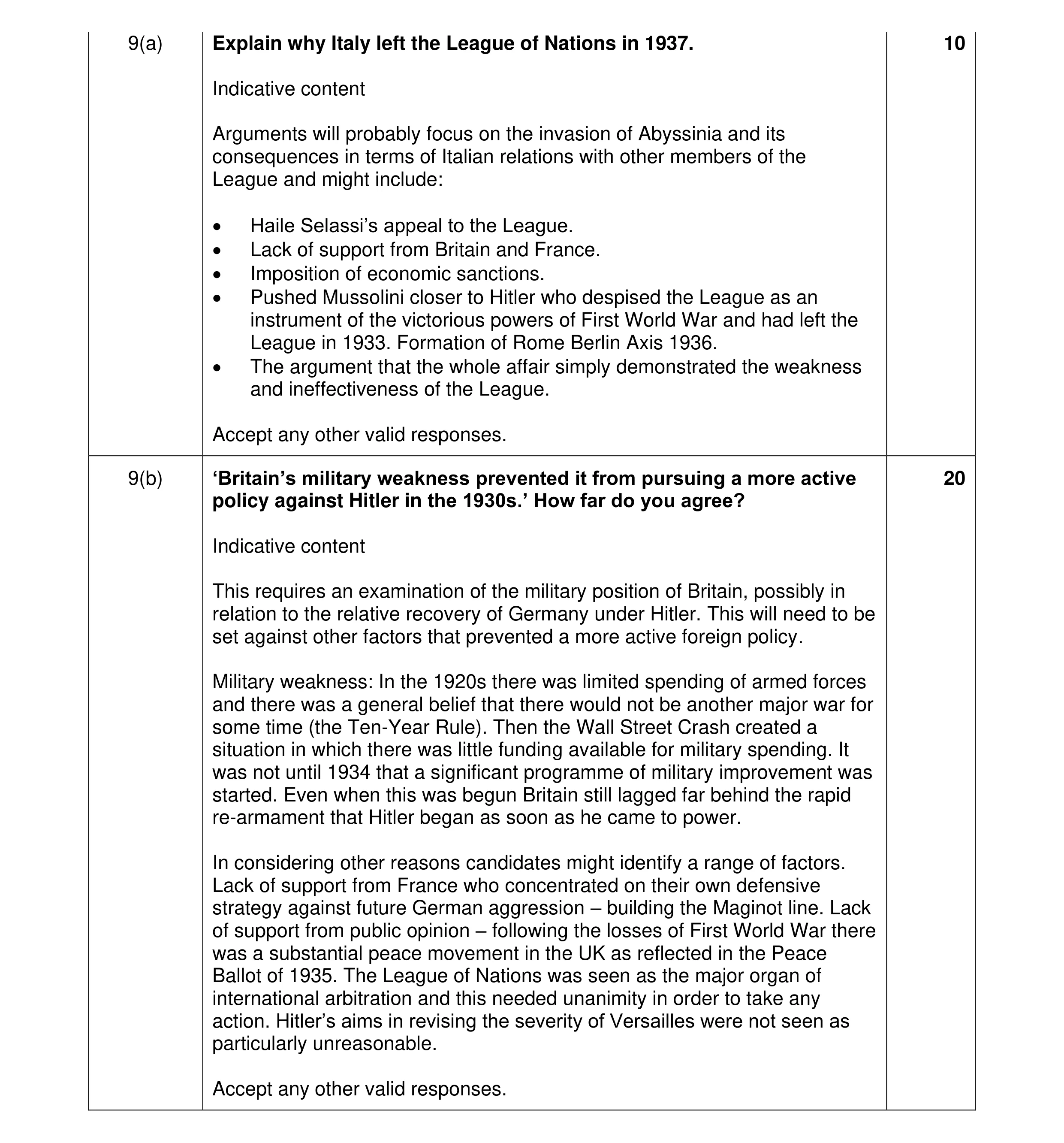 30
30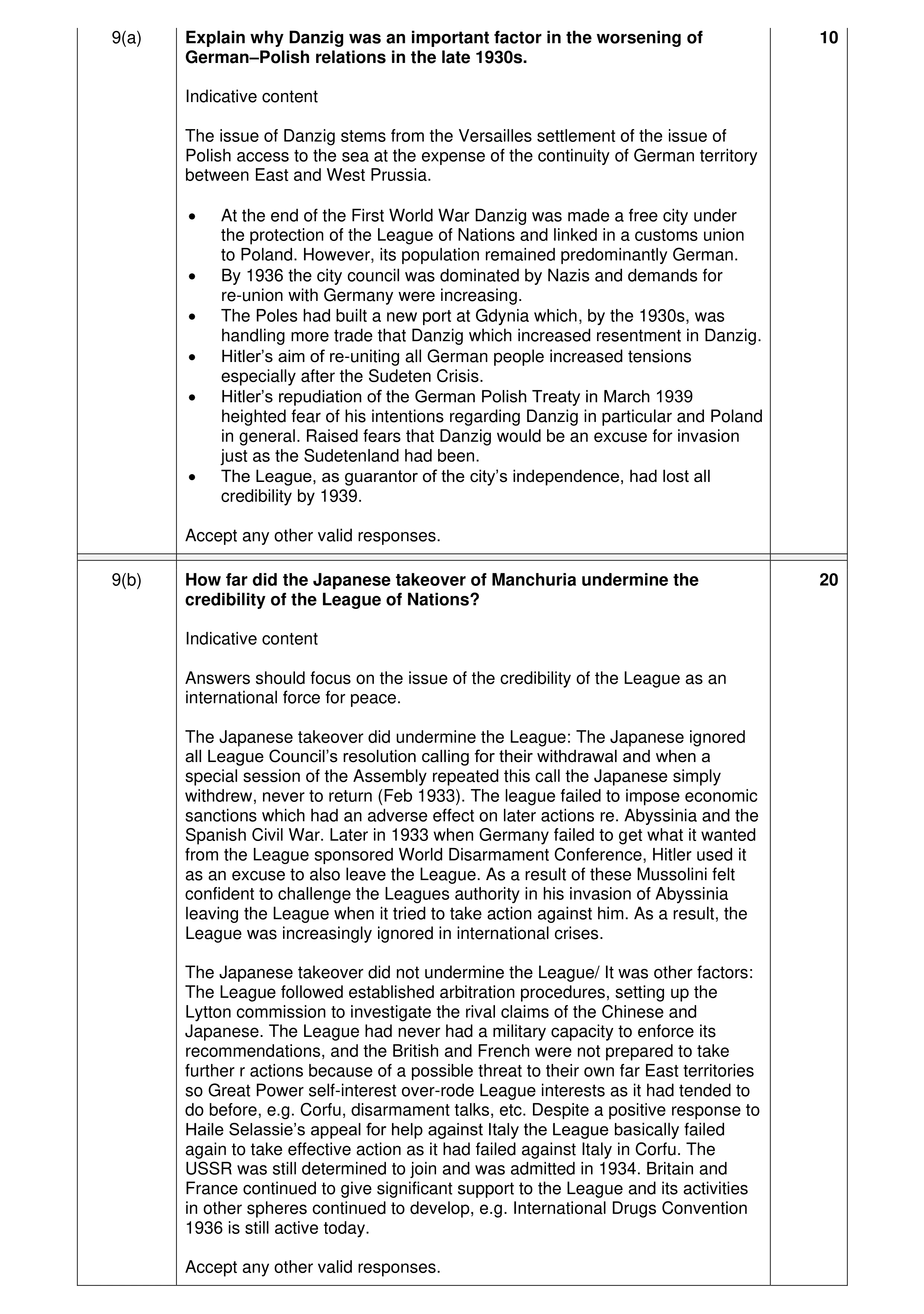 30
30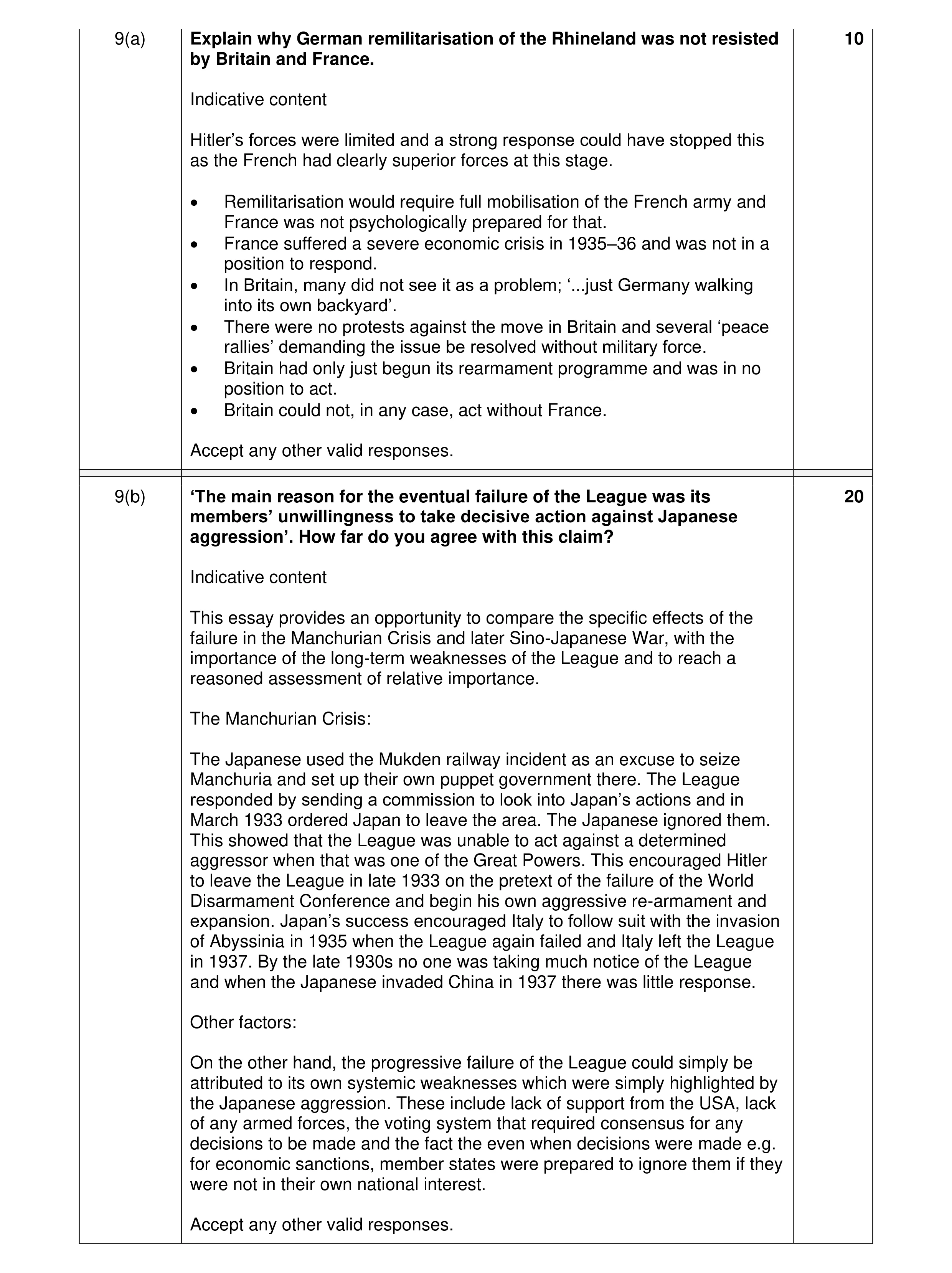 30
30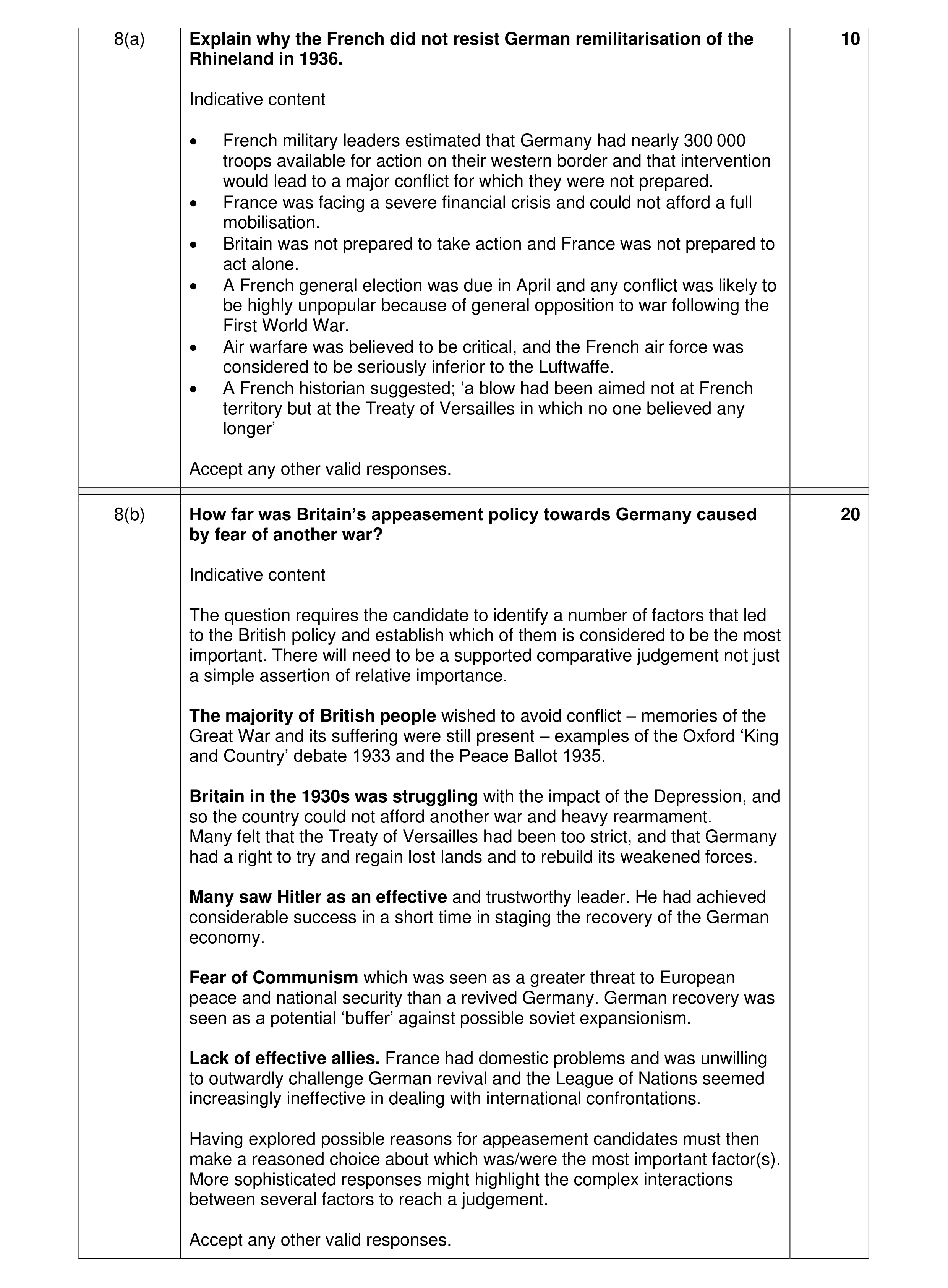 30
30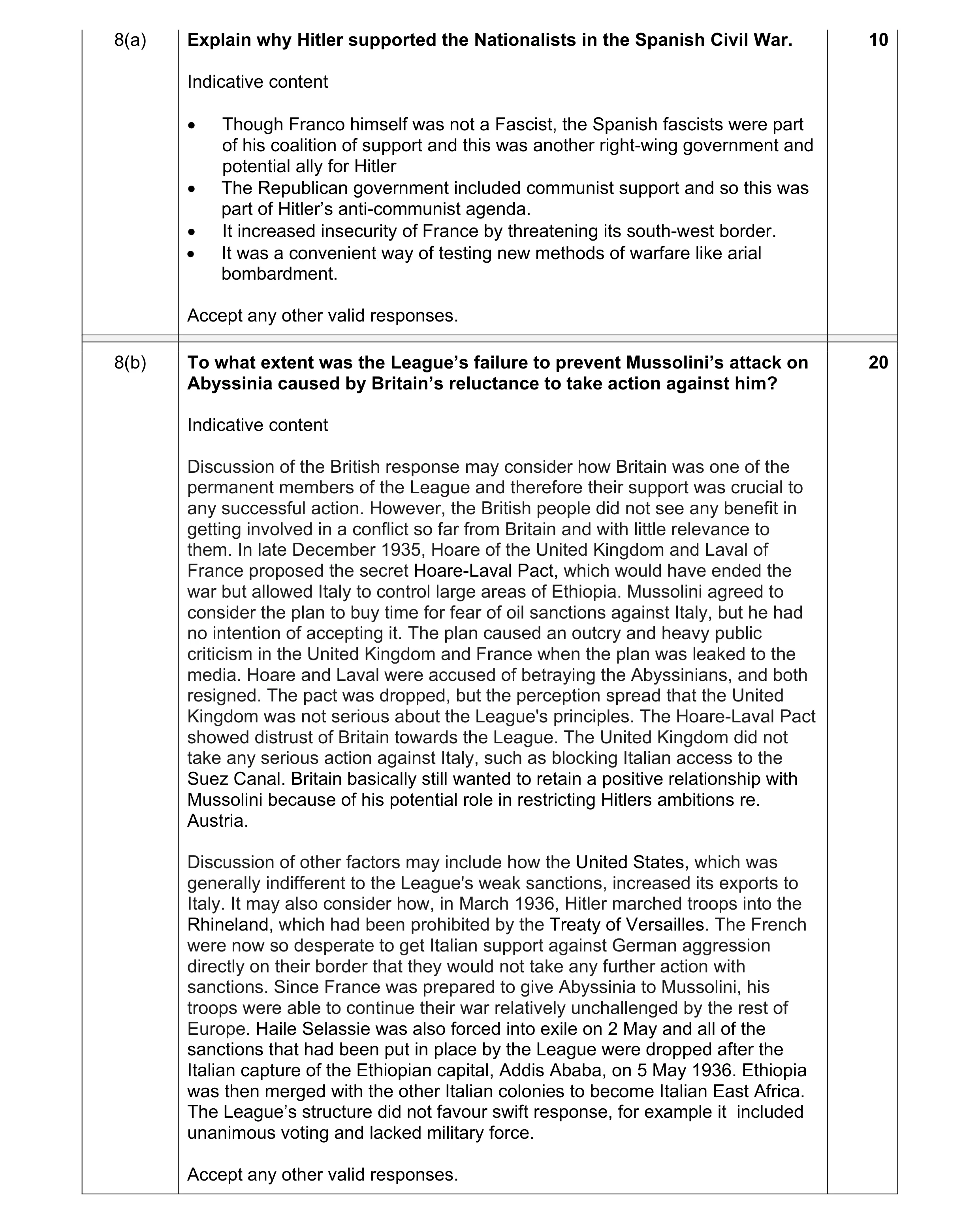 30
30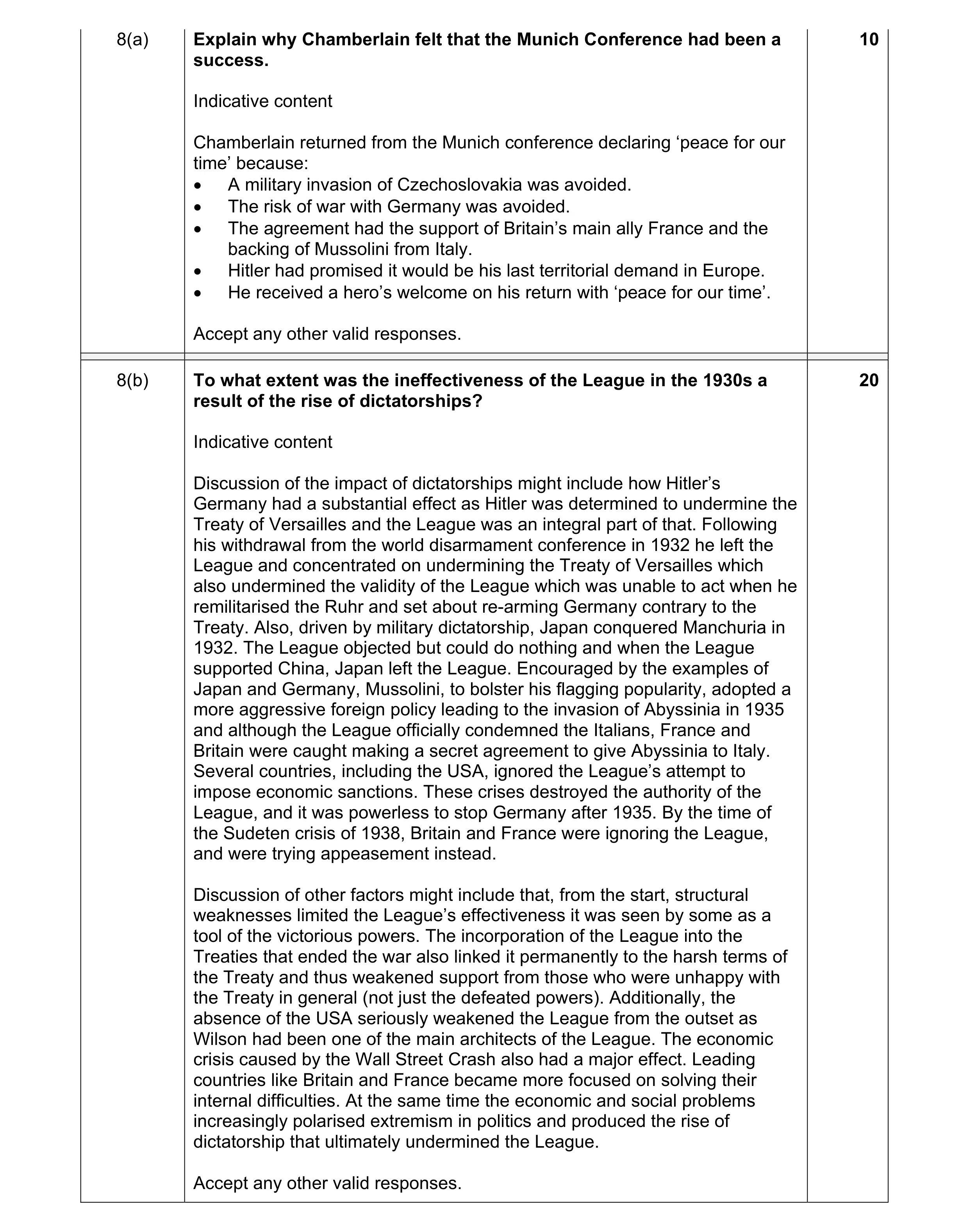 30
30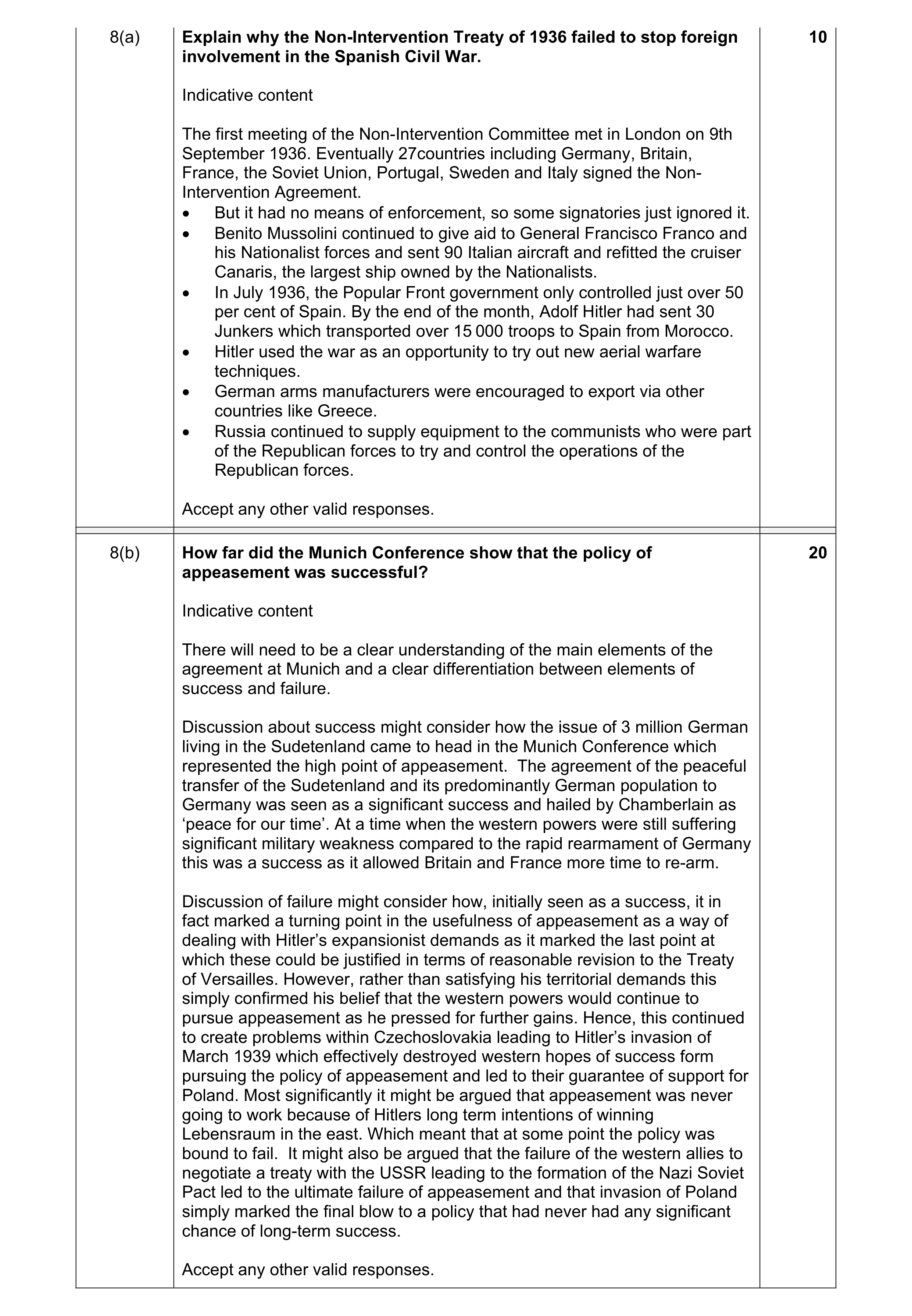 30
30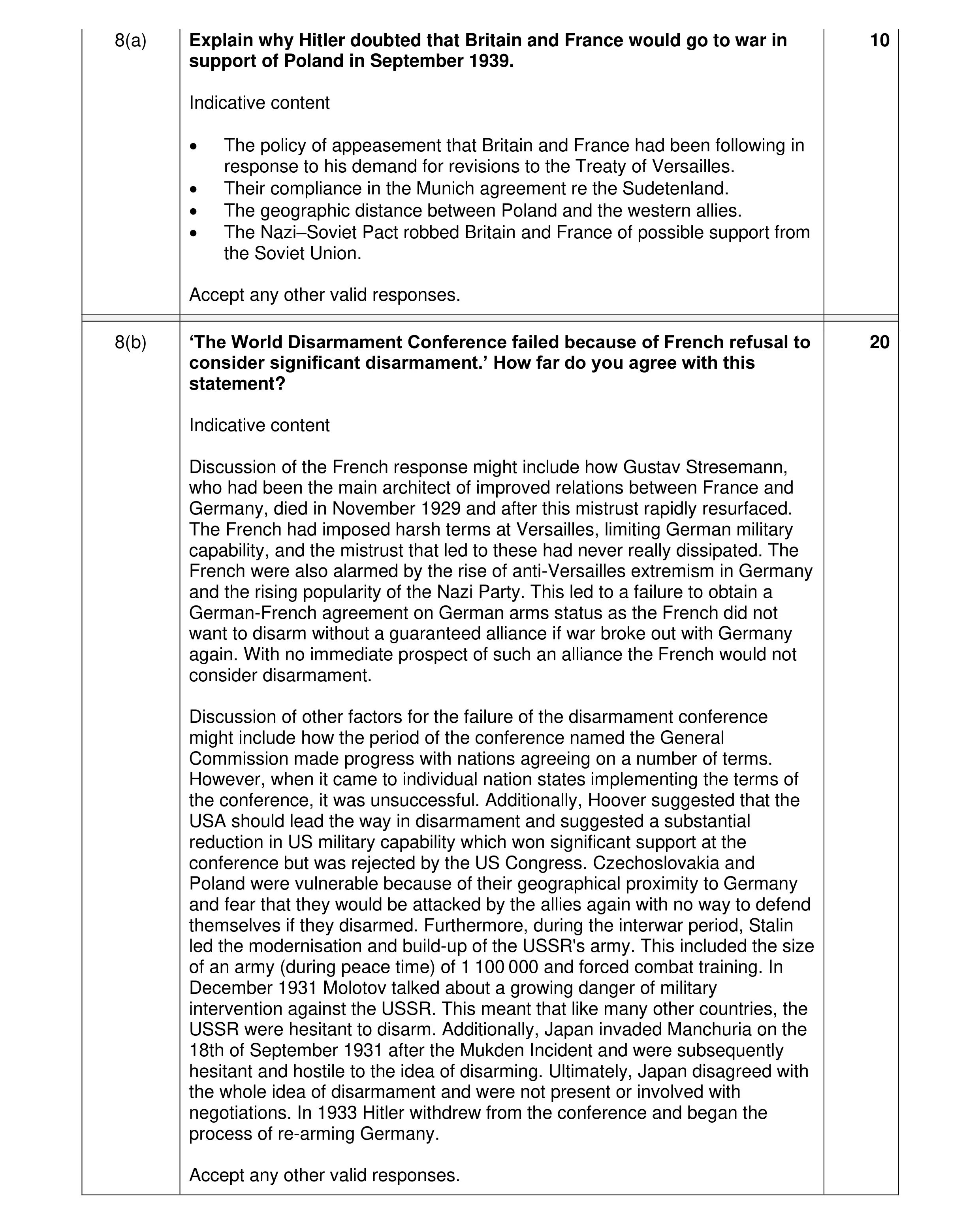 30
30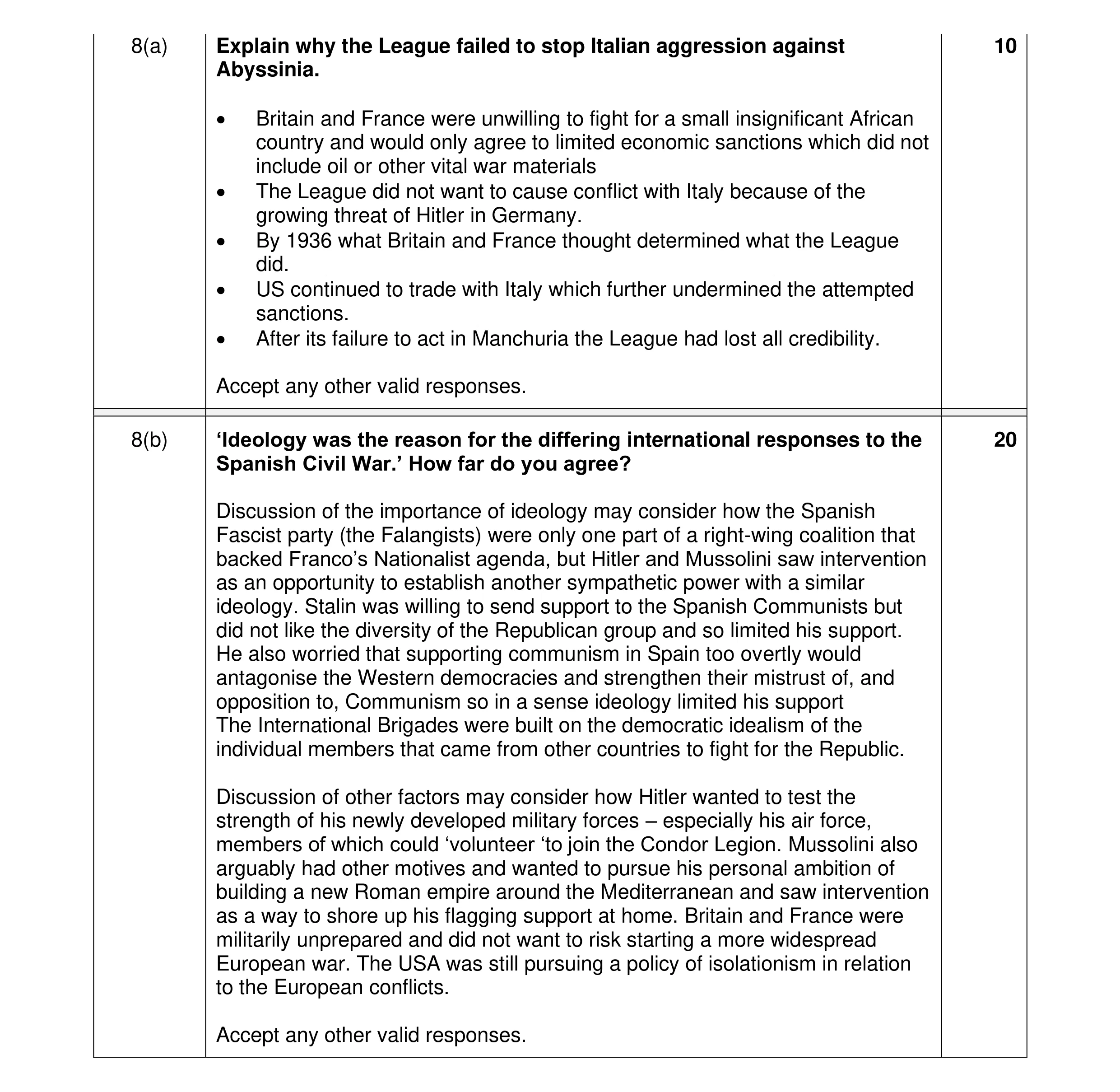 30
30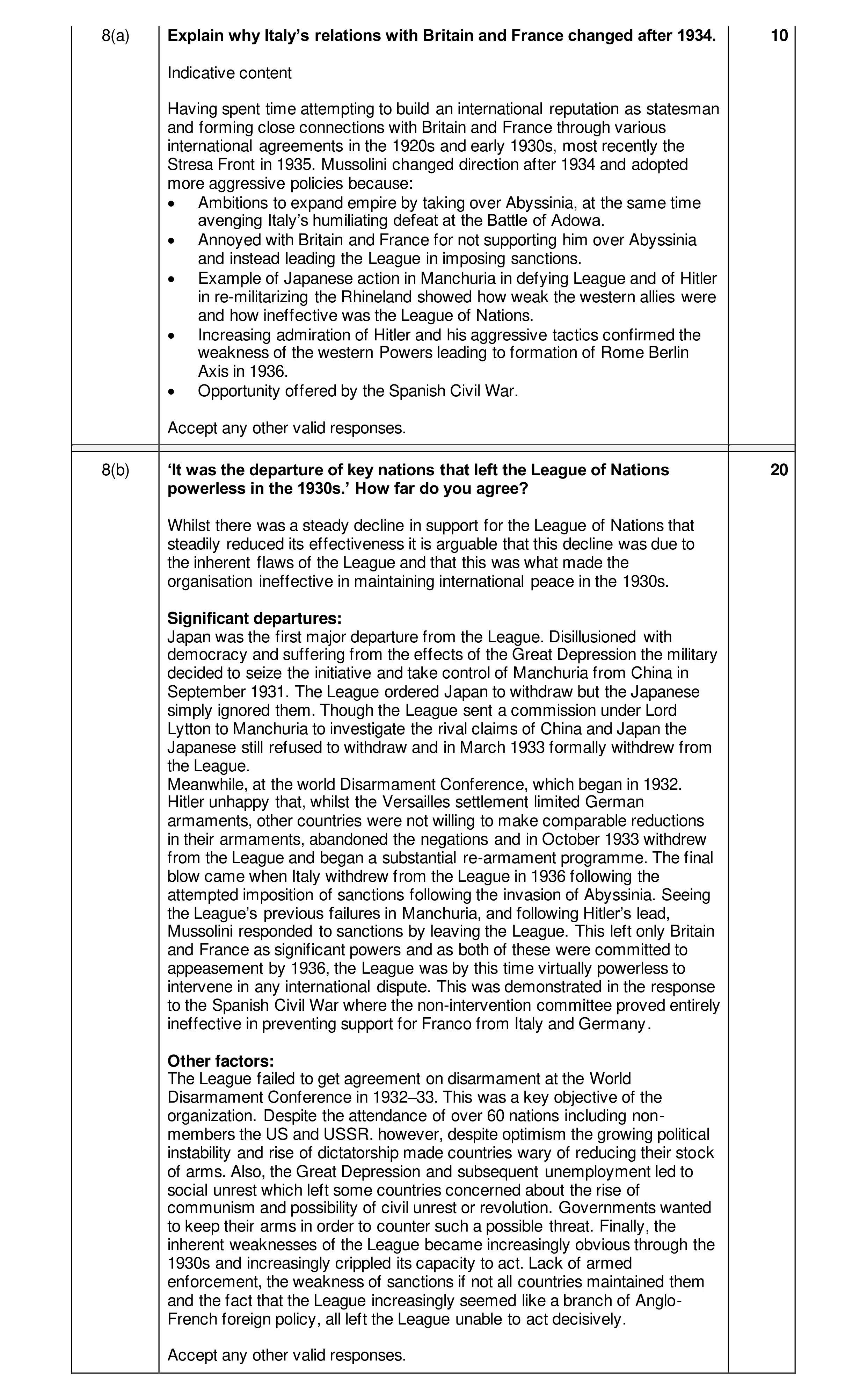 30
30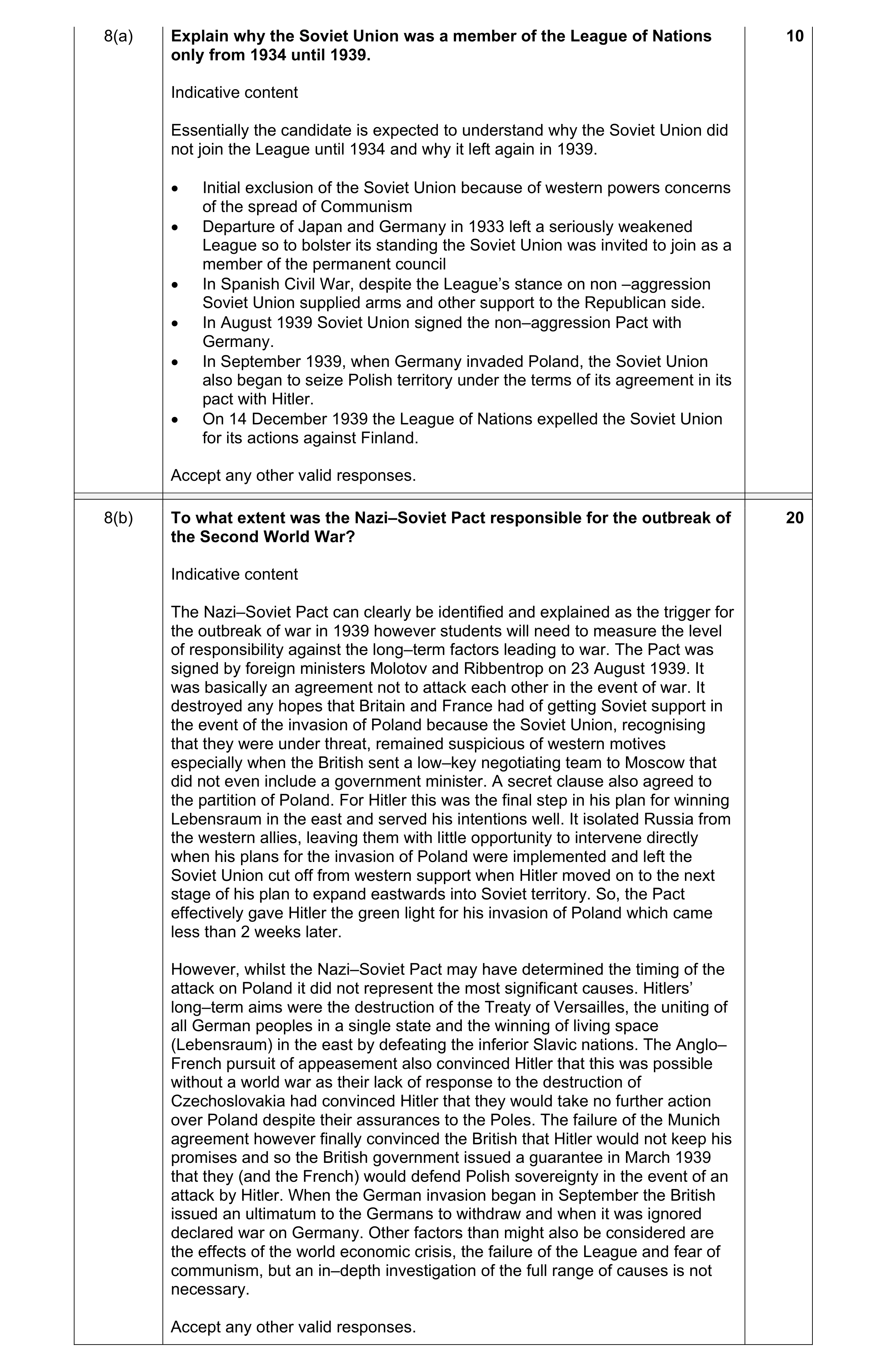 30
30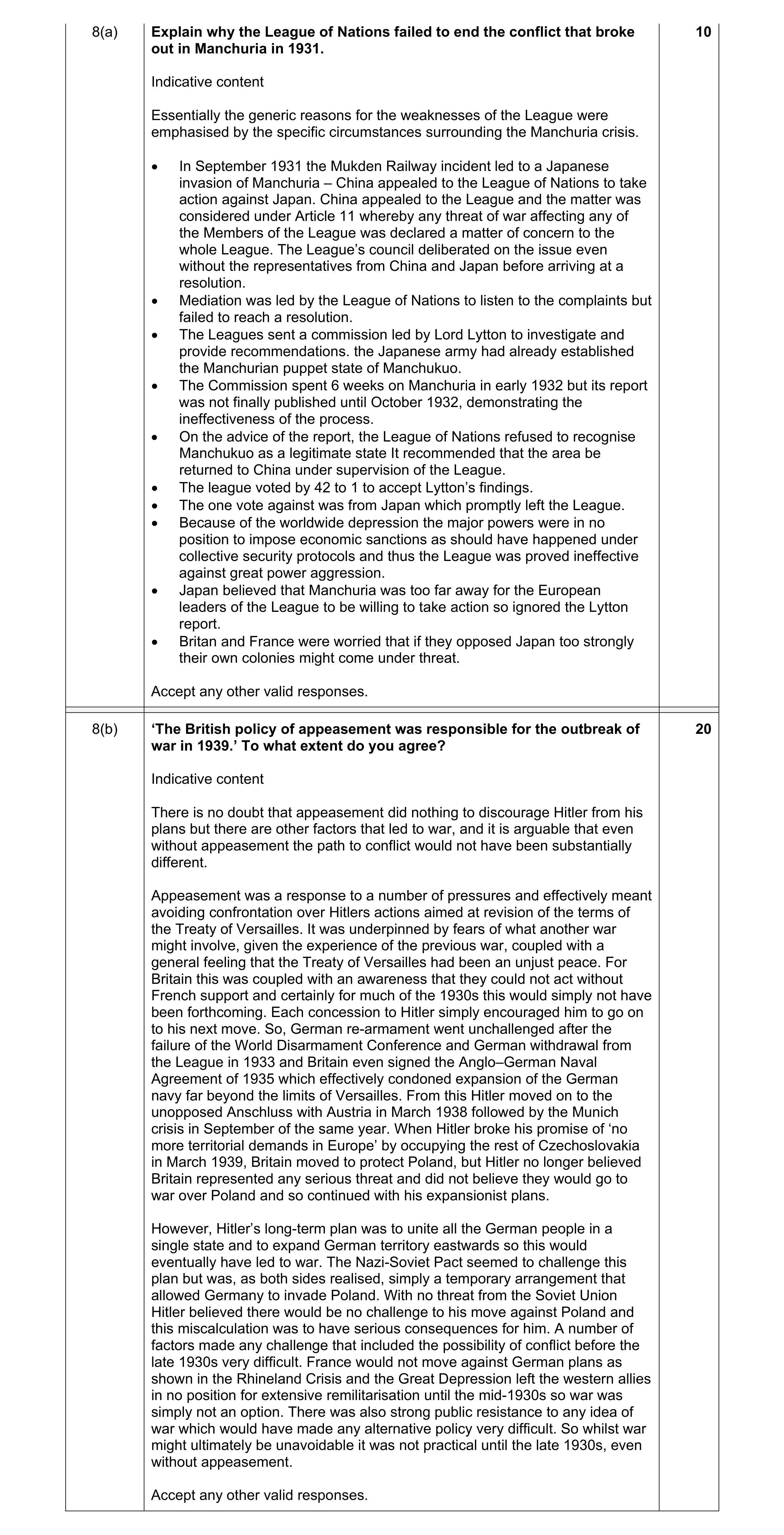 30
30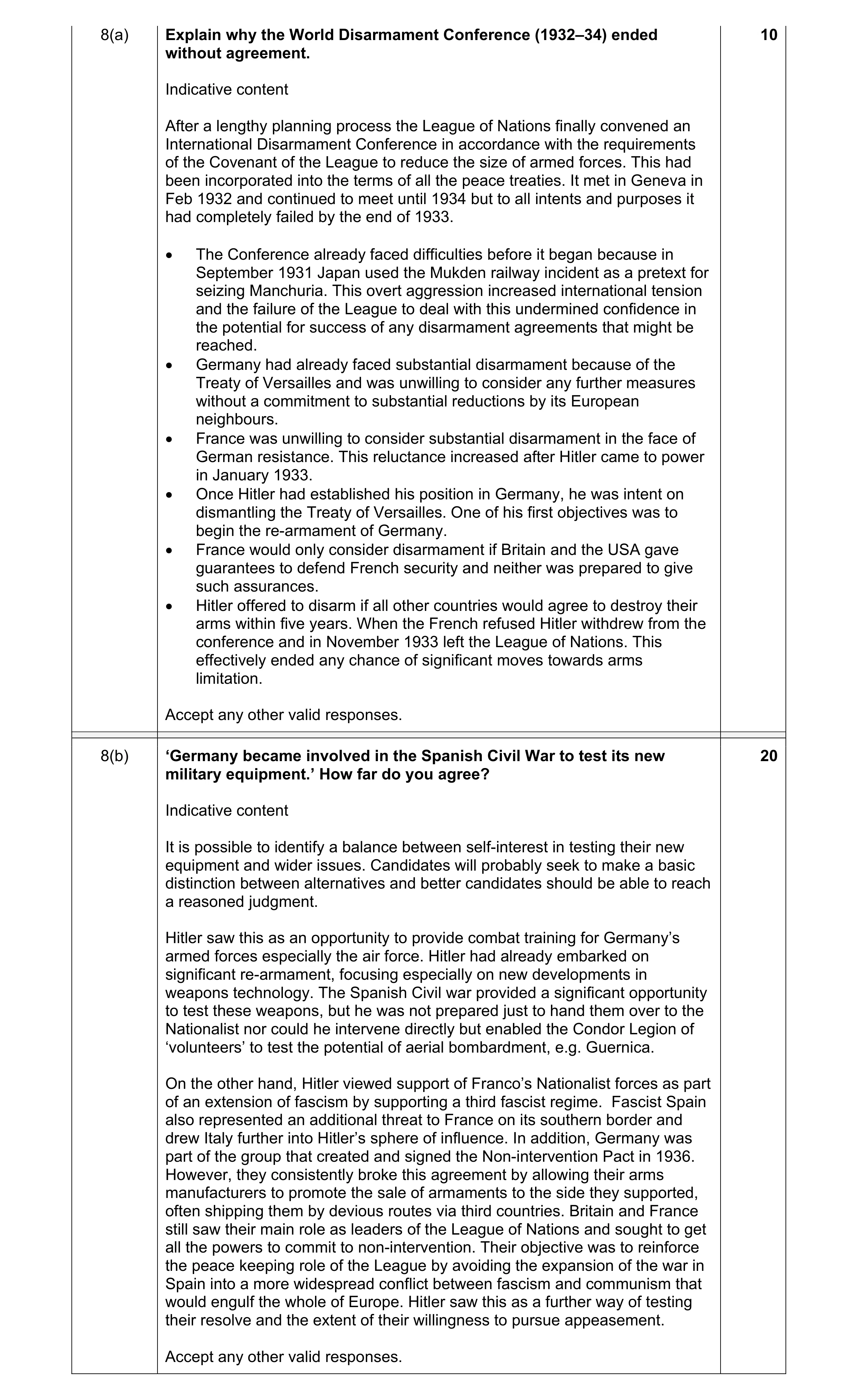 30
30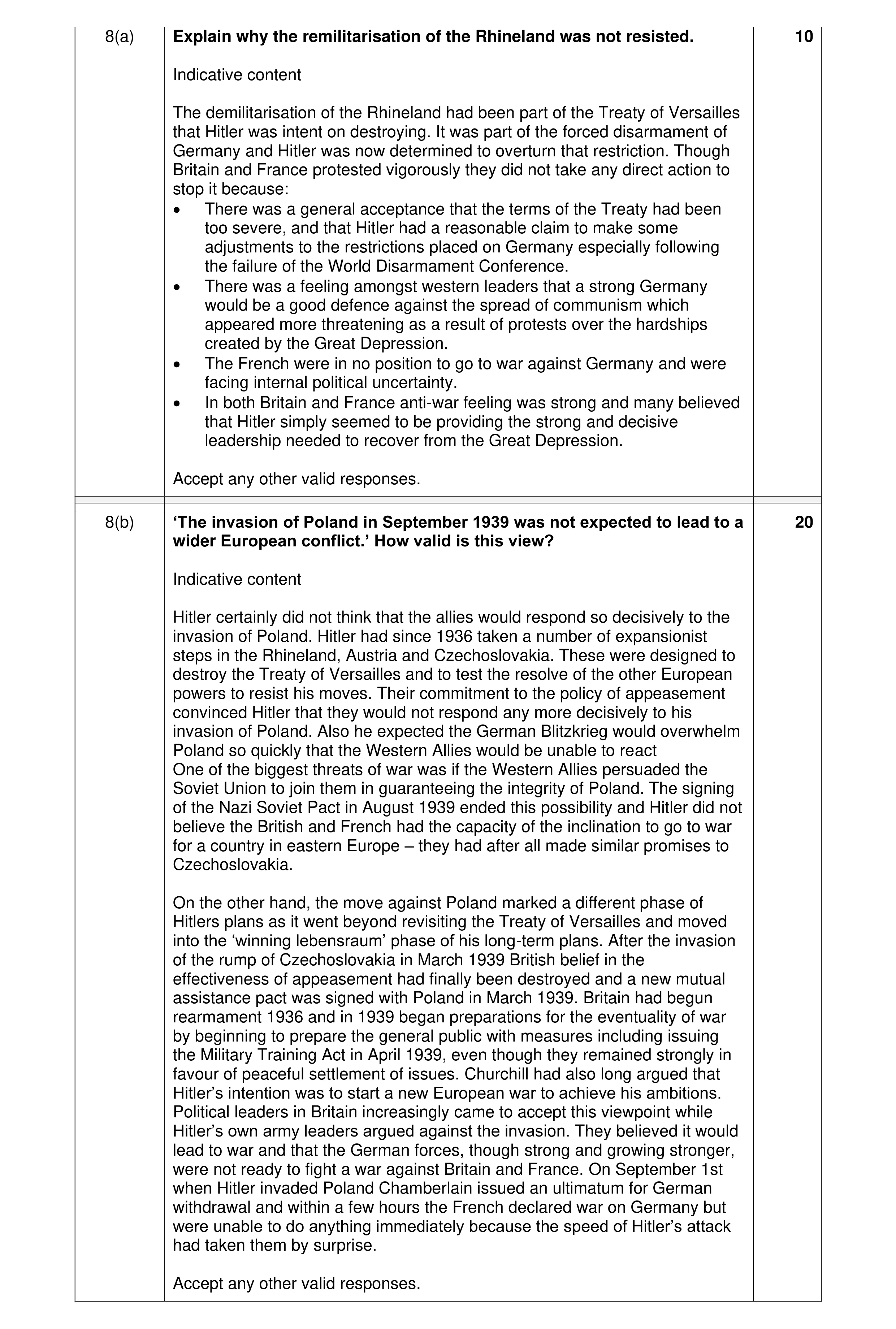 30
30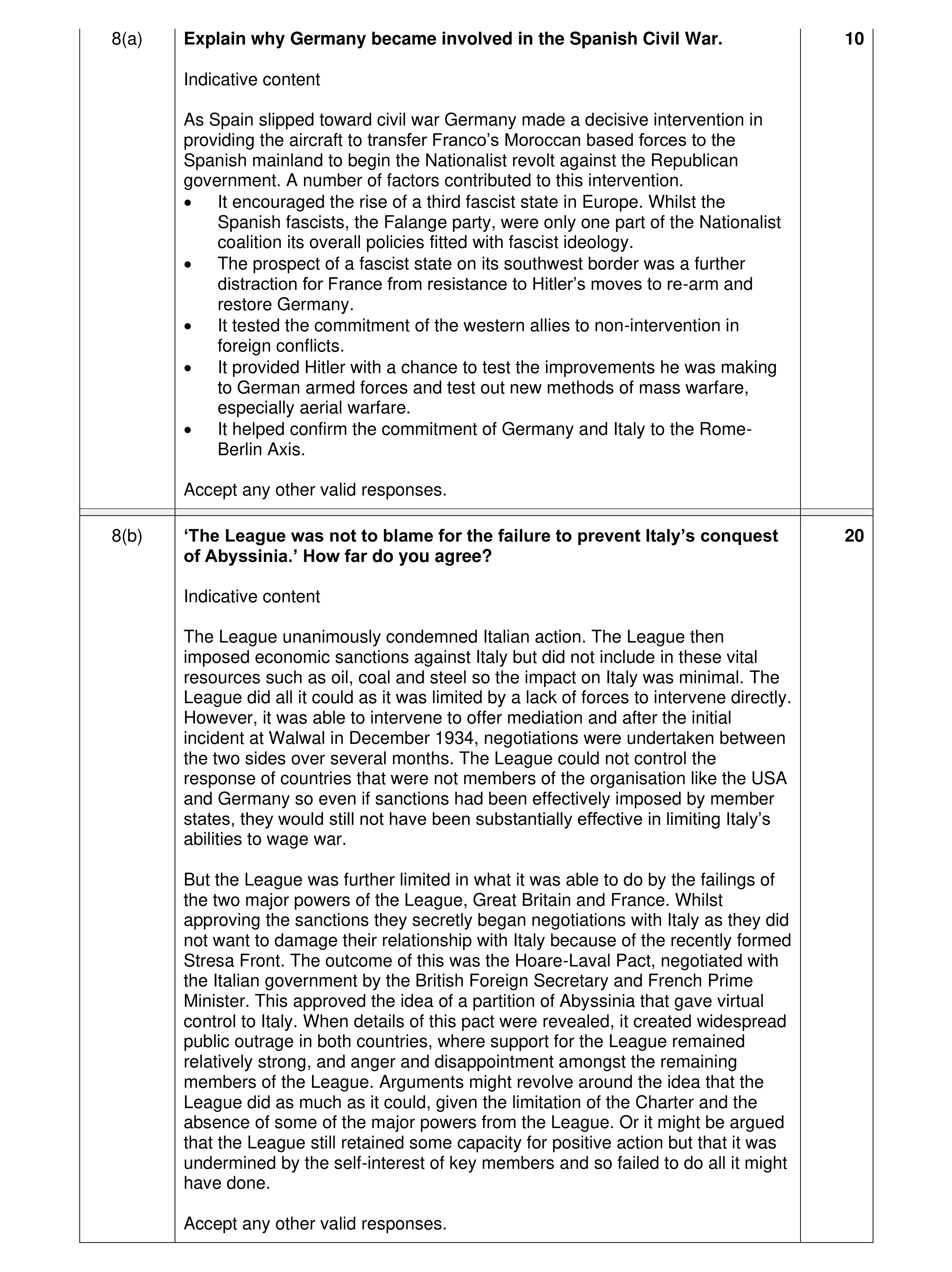 30
30