Questions as text
Q1 · Greenland is a large, ice-covered island found partly inside the Arctic Circle 9693/30 May/June 2018
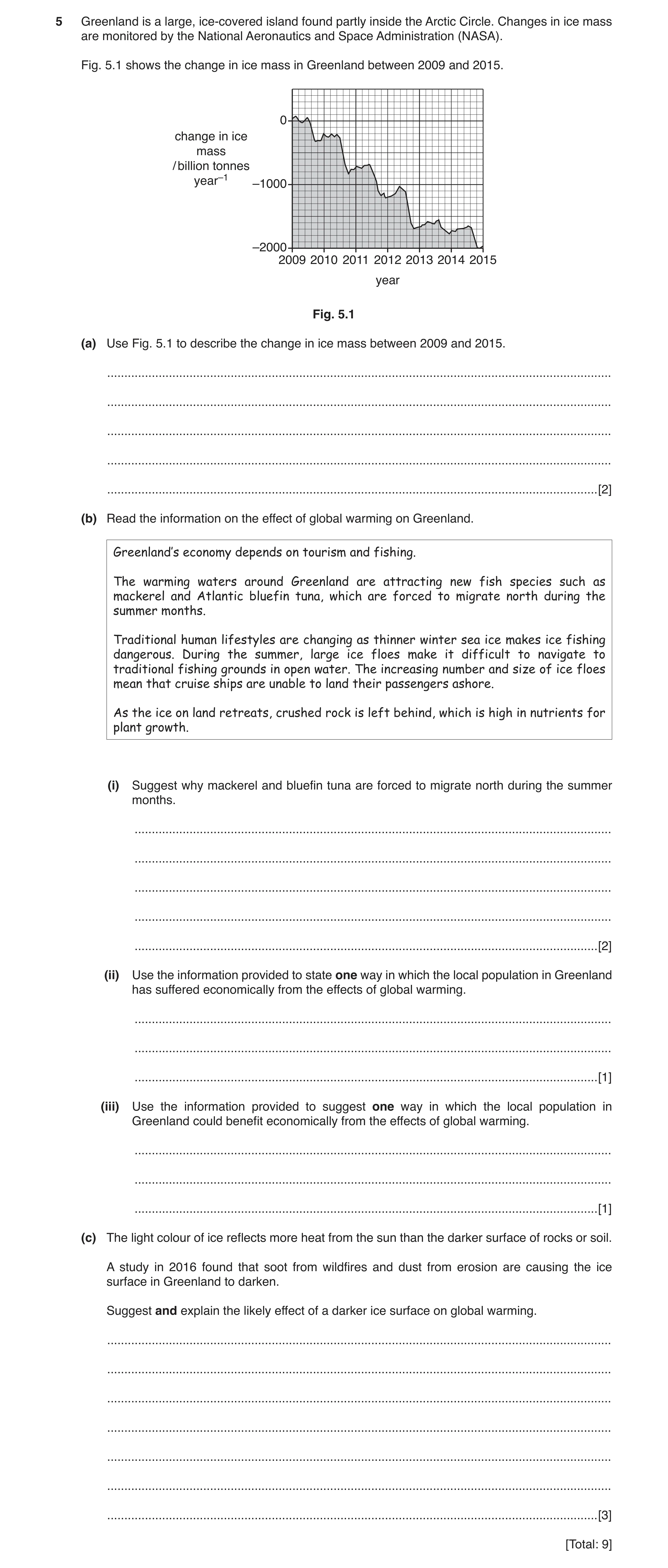
5 Greenland is a large, ice-covered island found partly inside the Arctic Circle. Changes in ice mass are monitored by the National Aeronautics and Space Administration (NASA). Fig. 5.1 shows the change in ice mass in Greenland between 2009 and 2015. 0 change in ice mass / billion tonnes year–1 –1000 –2000 2009 2010 2011 2012 2013 2014 2015 year Fig. 5.1 (a) Use Fig. 5.1 to describe the change in ice mass between 2009 and 2015. … … … … … [2] (b) Read the information on the effect of global warming on Greenland. Greenland’s economy depends on tourism and fishing. The warming waters around Greenland are attracting new fish species such as mackerel and Atlantic bluefin tuna, which are forced to migrate north during the summer months. Traditional human lifestyles are changing as thinner winter sea ice makes ice fishing dangerous. During the summer, large ice floes make it difficult to navigate to traditional fishing grounds in open water. The increasing number and size of ice floes mean that cruise ships are unable to land their passengers ashore. As the ice on land retreats, crushed rock is left behind, which is high in nutrients for plant growth. (i) Suggest why mackerel and bluefin tuna are forced to migrate north during the summer months. … … … … … [2] (ii) Use the information provided to state one way in which the local population in Greenland has suffered economically from the effects of global warming. … … … [1] (iii) Use the information provided to suggest one way in which the local population in Greenland could benefit economically from the effects of global warming. … … … [1] (c) The light colour of ice reflects more heat from the sun than the darker surface of rocks or soil. A study in 2016 found that soot from wildfires and dust from erosion are causing the ice surface in Greenland to darken. Suggest and explain the likely effect of a darker ice surface on global warming. … … … … … … … [3] [Total: 9]
9 marks
This question in 9693/30 May/June 2018
Q2 · Iceland is a large island in the North Atlantic Ocean 9693/31 May/June 2019
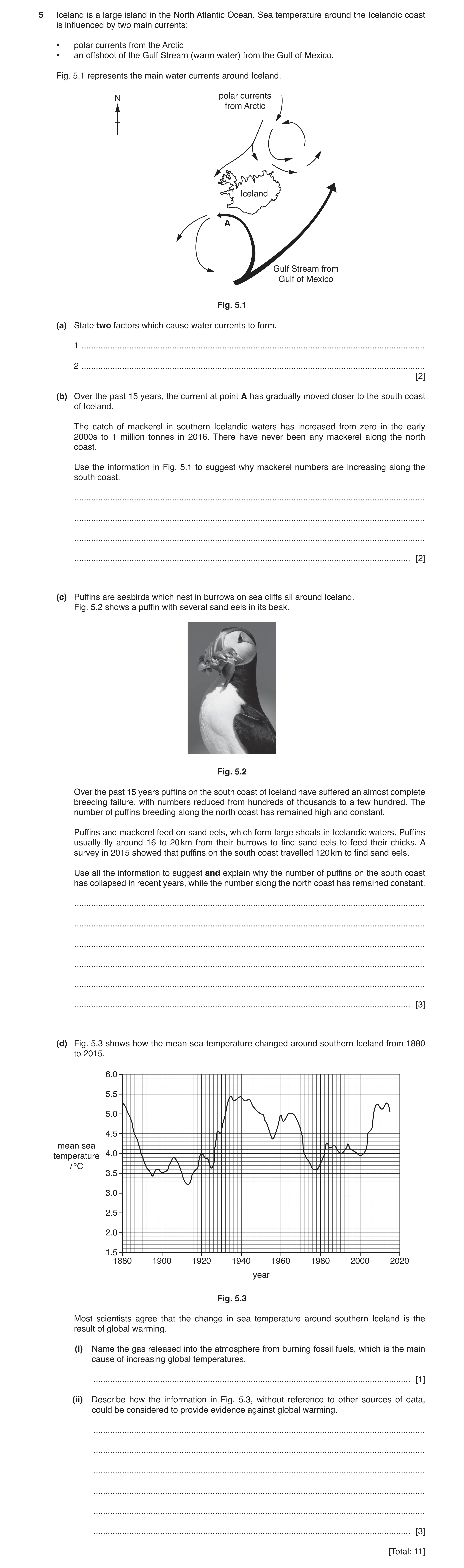
5 Iceland is a large island in the North Atlantic Ocean. Sea temperature around the Icelandic coast is influenced by two main currents: • polar currents from the Arctic • an offshoot of the Gulf Stream (warm water) from the Gulf of Mexico. Fig. 5.1 represents the main water currents around Iceland. polar currents N from Arctic Iceland A Gulf Stream from Gulf of Mexico Fig. 5.1 (a) State two factors which cause water currents to form. 1 … 2 … [2] (b) Over the past 15 years, the current at point A has gradually moved closer to the south coast of Iceland. The catch of mackerel in southern Icelandic waters has increased from zero in the early 2000s to 1 million tonnes in 2016. There have never been any mackerel along the north coast. Use the information in Fig. 5.1 to suggest why mackerel numbers are increasing along the south coast. … … … … [2] (c) Puffins are seabirds which nest in burrows on sea cliffs all around Iceland. Fig. 5.2 shows a puffin with several sand eels in its beak. Fig. 5.2 Over the past 15 years puffins on the south coast of Iceland have suffered an almost complete breeding failure, with numbers reduced from hundreds of thousands to a few hundred. The number of puffins breeding along the north coast has remained high and constant. Puffins and mackerel feed on sand eels, which form large shoals in Icelandic waters. Puffins usually fly around 16 to 20 km from their burrows to find sand eels to feed their chicks. A survey in 2015 showed that puffins on the south coast travelled 120 km to find sand eels. Use all the information to suggest and explain why the number of puffins on the south coast has collapsed in recent years, while the number along the north coast has remained constant. … … … … … … [3] (d) Fig. 5.3 shows how the mean sea temperature changed around southern Iceland from 1880 to 2015. 6.0 5.5 5.0 4.5 mean sea 4.0temperature / °C 3.5 3.0 2.5 2.0 1.5 1880 1900 1920 1940 1960 1980 2000 2020 year Fig. 5.3 Most scientists agree that the change in sea temperature around southern Iceland is the result of global warming. (i) Name the gas released into the atmosphere from burning fossil fuels, which is the main cause of increasing global temperatures. … [1] (ii) Describe how the information in Fig. 5.3, without reference to other sources of data, could be considered to provide evidence against global warming. … … … … … … [3] [Total: 11]
11 marks
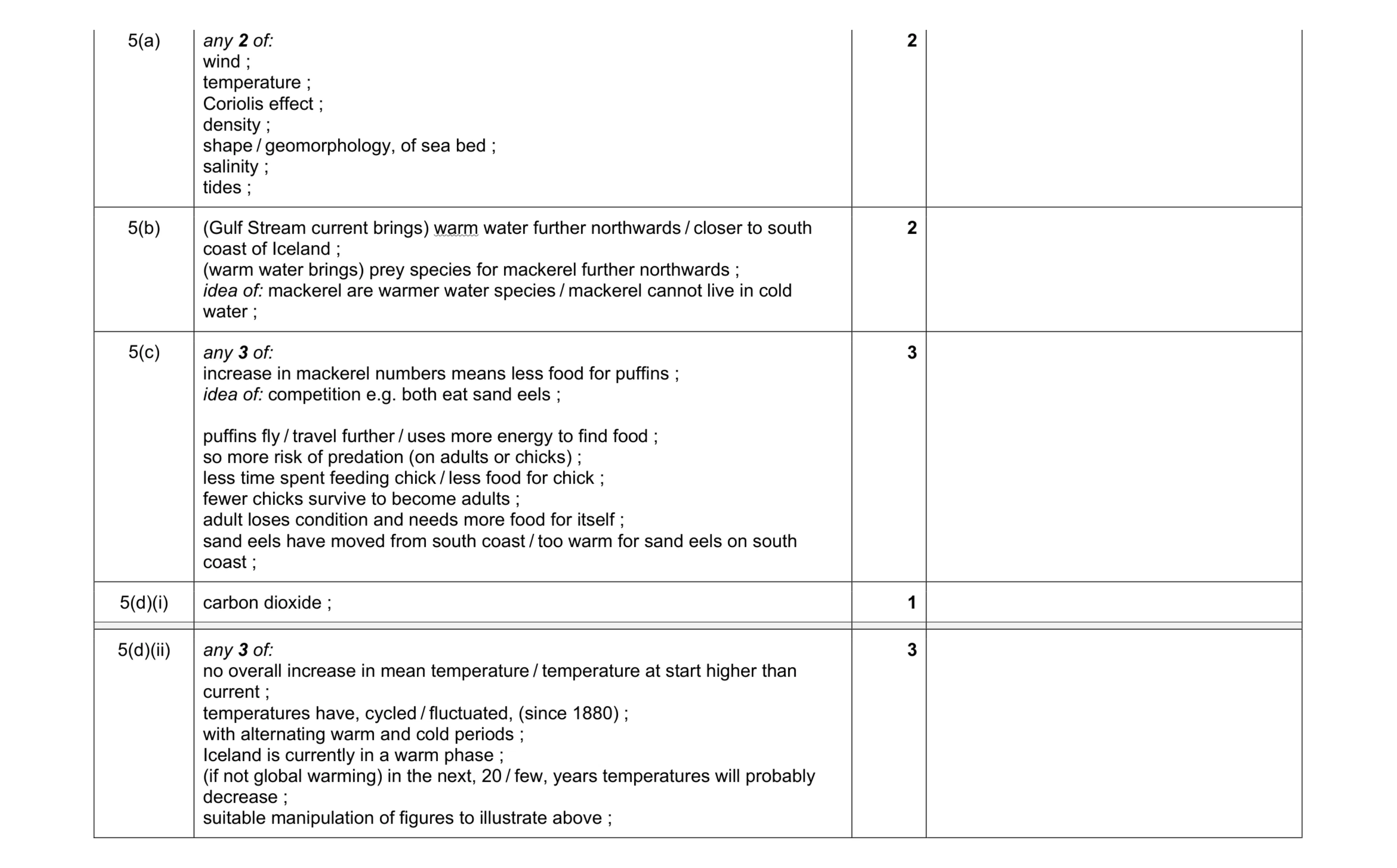
Mark scheme: 5(a) any 2 of: wind ; temperature ; Coriolis effect ; density ; shape / geomorphology, of sea bed ; salinity ; tides ; 2 5(b) (Gulf Stream current brings) warm water further northwards / closer to south coast of Iceland ; (warm water brings) prey species for mackerel further northwards ; idea of: mackerel are warmer water species / mackerel cannot live in cold water ; 2 5(c) any 3 of: increase in mackerel numbers means less food for puffins ; idea of: competition e.g. both eat sand eels ; puffins fly / travel further / uses more energy to find food ; so more risk of predation (on adults or chicks) ; less time spent feeding chick / less food for chick ; fewer chicks survive to become adults ; adult loses condition and needs more food for itself ; sand eels have moved from south coast / too warm for sand eels on south coast ; 3 5(d)(i) carbon dioxide ; 1 Question Answer Marks Guidance 5(d)(ii) any 3 of: no overall increase in mean temperature / temperature at start higher than current ; temperatures have, cycled / fluctuated, (since 1880) ; with alternating warm and cold periods ; Iceland is currently in a warm phase ; (if not global warming) in the next, 20 / few, years temperatures will probably decrease ; suitable manipulation of figures to illustrate above ; 3
This question in 9693/31 May/June 2019
Q3 · Phytoplankton productivity is reduced in some nutrient-rich oceans 9693/30 May/June 2020
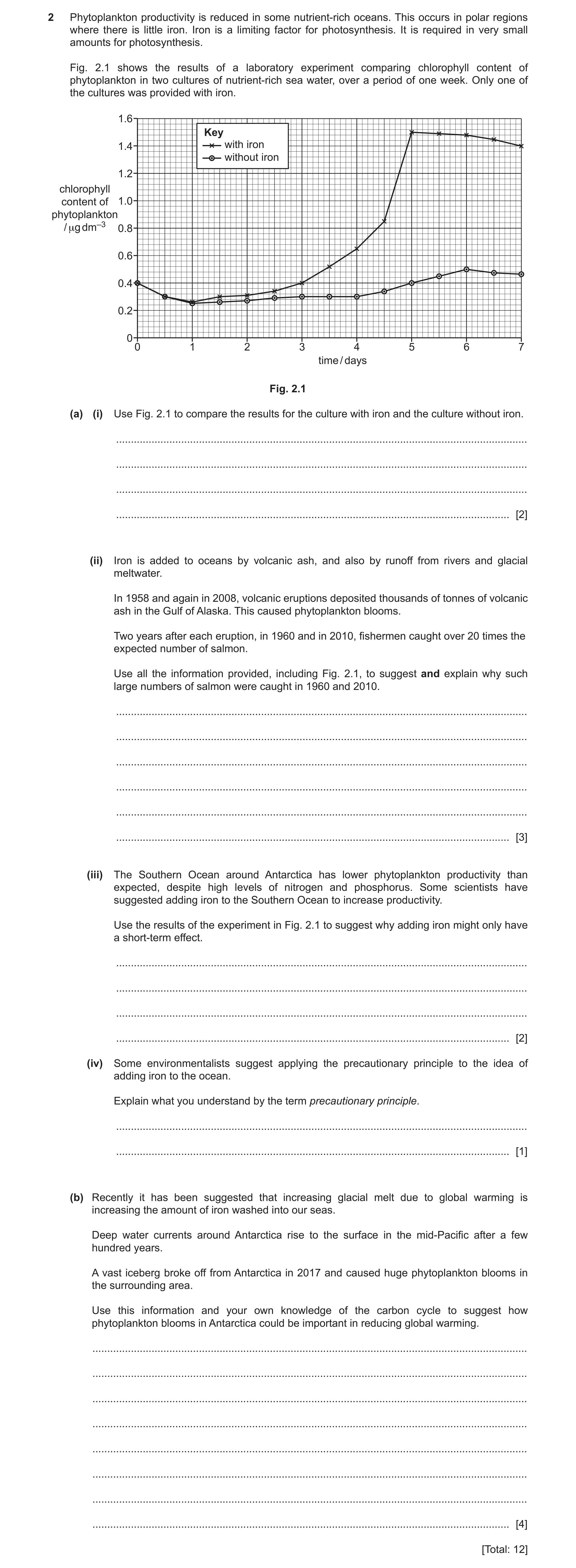
2 Phytoplankton productivity is reduced in some nutrient-rich oceans. This occurs in polar regions where there is little iron. Iron is a limiting factor for photosynthesis. It is required in very small amounts for photosynthesis. Fig. 2.1 shows the results of a laboratory experiment comparing chlorophyll content of phytoplankton in two cultures of nutrient-rich sea water, over a period of one week. Only one of the cultures was provided with iron. 1.6 Key 1.4 with iron without iron 1.2 chlorophyll content of 1.0 phytoplankton / μg dm–3 0.8 0.6 0.4 0.2 0 0 1 2 3 4 5 6 7 time / days Fig. 2.1 (a) (i) Use Fig. 2.1 to compare the results for the culture with iron and the culture without iron. … … … … [2] (ii) Iron is added to oceans by volcanic ash, and also by runoff from rivers and glacial meltwater. In 1958 and again in 2008, volcanic eruptions deposited thousands of tonnes of volcanic ash in the Gulf of Alaska. This caused phytoplankton blooms. Two years after each eruption, in 1960 and in 2010, fishermen caught over 20 times the expected number of salmon. Use all the information provided, including Fig. 2.1, to suggest and explain why such large numbers of salmon were caught in 1960 and 2010. … … … … … … [3] (iii) The Southern Ocean around Antarctica has lower phytoplankton productivity than expected, despite high levels of nitrogen and phosphorus. Some scientists have suggested adding iron to the Southern Ocean to increase productivity. Use the results of the experiment in Fig. 2.1 to suggest why adding iron might only have a short-term effect. … … … … [2] (iv) Some environmentalists suggest applying the precautionary principle to the idea of adding iron to the ocean. Explain what you understand by the term precautionary principle. … … [1] (b) Recently it has been suggested that increasing glacial melt due to global warming is increasing the amount of iron washed into our seas. Deep water currents around Antarctica rise to the surface in the mid-Pacific after a few hundred years. A vast iceberg broke off from Antarctica in 2017 and caused huge phytoplankton blooms in the surrounding area. Use this information and your own knowledge of the carbon cycle to suggest how phytoplankton blooms in Antarctica could be important in reducing global warming. … … … … … … … … [4] [Total: 12]
12 marks
This question in 9693/30 May/June 2020
Q4 · The seas around North West Africa are important fishing locations 9693/31 May/June 2022
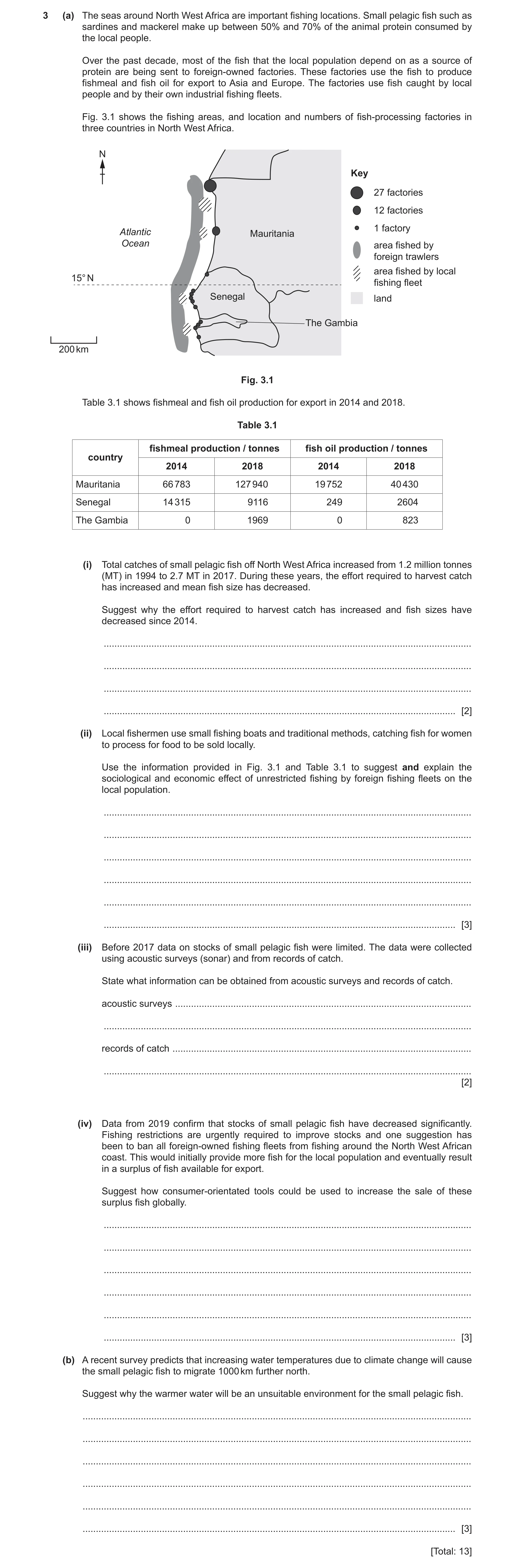
3 (a) The seas around North West Africa are important fishing locations. Small pelagic fish such as sardines and mackerel make up between 50% and 70% of the animal protein consumed by the local people. Over the past decade, most of the fish that the local population depend on as a source of protein are being sent to foreign-owned factories. These factories use the fish to produce fishmeal and fish oil for export to Asia and Europe. The factories use fish caught by local people and by their own industrial fishing fleets. Fig. 3.1 shows the fishing areas, and location and numbers of fish-processing factories in three countries in North West Africa. N Key 27 factories 12 factories 1 factory Atlantic Mauritania Ocean area fished by foreign trawlers area fished by local 15° N fishing fleet Senegal land The Gambia 200 km Fig. 3.1 Table 3.1 shows fishmeal and fish oil production for export in 2014 and 2018. Table 3.1 fishmeal production / tonnes fish oil production / tonnes country 2014 2018 2014 2018 Mauritania 66 783 127 940 19 752 40 430 Senegal 14 315 9116 249 2604 The Gambia 0 1969 0 823 (i) Total catches of small pelagic fish off North West Africa increased from 1.2 million tonnes (MT) in 1994 to 2.7 MT in 2017. During these years, the effort required to harvest catch has increased and mean fish size has decreased. Suggest why the effort required to harvest catch has increased and fish sizes have decreased since 2014. … … … … [2] (ii) Local fishermen use small fishing boats and traditional methods, catching fish for women to process for food to be sold locally. Use the information provided in Fig. 3.1 and Table 3.1 to suggest and explain the sociological and economic effect of unrestricted fishing by foreign fishing fleets on the local population. … … … … … … [3] (iii) Before 2017 data on stocks of small pelagic fish were limited. The data were collected using acoustic surveys (sonar) and from records of catch. State what information can be obtained from acoustic surveys and records of catch. acoustic surveys … … records of catch … … [2] (iv) Data from 2019 confirm that stocks of small pelagic fish have decreased significantly. Fishing restrictions are urgently required to improve stocks and one suggestion has been to ban all foreign-owned fishing fleets from fishing around the North West African coast. This would initially provide more fish for the local population and eventually result in a surplus of fish available for export. Suggest how consumer-orientated tools could be used to increase the sale of these surplus fish globally. … … … … … … [3] (b) A recent survey predicts that increasing water temperatures due to climate change will cause the small pelagic fish to migrate 1000 km further north. Suggest why the warmer water will be an unsuitable environment for the small pelagic fish. … … … … … … [3] [Total: 13]
13 marks
Mark scheme: 3(a)(i) any 2 from: too many fishing boats / overfishing ; fish numbers reduced ; fish do not have enough time to (grow and) breed / fish caught before they reproduce / reach maturity ; less, mature / adult, fish available / higher numbers of juveniles caught ; stocks are unsustainable ; 2 3(a)(ii) any 3 from: less fish can be caught by locals as fishing area is smaller / closer to coast / simple fishing methods / gear used ; foreign owned companies provide their own fishing fleets and factories, so do not need to buy fish from locals ; loss of employment for, local fishermen / women processors, due to lack of fish ; less food supply for locals as less fish caught ; less fish to sell locally, so loss of income ; local population have their main protein source reduced (and could suffer from malnutrition) ; AVP ; 3 3(a)(iii) acoustic surveys: size of shoal / numbers of fish in shoal / direction or location of shoal or fish / depth of shoal or fish ; records of catch: numbers / species / size / mass, of fish / idea of used to assess fish stocks over time ; 2 3(a)(iv) any 3 from: labelling of fish ; so the fish could be marketed as caught, in an environmentally friendly way / using traditional methods ; shows traceability / shows where fish was caught ; fish could be marketed as sustainably harvested ; advertising / education campaign ; can promote health benefits of eating fish ; certification used ; price tariffs reduced (to decrease price) ; 3 Question Answer Marks 3(b) any 3 from: warmer waters contain less oxygen ; for (aerobic) respiration ; so less energy for growth / movement ; warmer waters can kill fish eggs / change reproductive patterns ; food species migrate northwards / number of food species reduces ; AVP ; 3
This question in 9693/31 May/June 2022
Q5 · Describe the possible impacts of melting ice sheets on the marine environment 9693/31 May/June 2022
6 (a) Describe the possible impacts of melting ice sheets on the marine environment. … … … … … … … … … … … … … … … … [8] (b) Describe how increasing levels of carbon dioxide in the atmosphere can affect marine molluscs. … … … … … … … … … … … … [6] [Total: 14]
14 marks
Mark scheme: 6(a) any 8 from: 1 release large amounts of / more, fresh water (into the sea) ; 2 increasing (sea) water levels ; 3 causing increased flooding (in low-lying land) ; 4 causing coastal erosion ; 5 increased turbidity / more sediment released into sea water ; 6 less light reaching benthic habitat / deeper water ; 7 suitable effect (of sediment or less light) on marine species ; 8 (less ice sheet / increased depth of shallow water) causes habitat loss for marine species + suitable example; 9 displacement of people / marine communities ; 10 decreases biodiversity / causes changes to, food chains / webs ; 11 reduction in salinity ; 12 affects, osmoconformers / stenohaline, organisms ; 13 reduces survival of eggs / larvae ; 14 causes ocean currents to change direction ; 15 loss of ice as a thermal insulator ; 16 ref. to change in water temperature and effect on, solubility of salts / density of water / oxygen concentration ; 17 releases nutrients which can increase primary productivity / cause algal blooms ; 6(b) any 6 from: 1 carbon dioxide dissolves / dissolution of carbon dioxide, in sea water ; 2 enhanced by, wave action / storms ; 3 to form, a weak acid / carbonic acid / H2CO3 ; 4 carbonic acid dissociates ; 5 to form, hydrogencarbonate ions / HCO3- ; 6 and protons / hydrogen ions / H+ ; 7 (protons / H+) lower pH / increases acidity ; 8 which, erodes / thins, the, shells / skeletons, of molluscs ; 9 excess H+ combine with, carbonate / CO3–2 ; 10 so availability of carbonate decreases ; 11 calcium (carbonate) required to make shell ; 12 molluscs are unable to make shells / shells are deformed ; 13 mollusc more prone to predation without shell ; 6
This question in 9693/31 May/June 2022
Q6 · Explain how the natural greenhouse effect helps maintain a temperature on Earth that is… 9693/32 May/June 2022
6 (a) Explain how the natural greenhouse effect helps maintain a temperature on Earth that is suitable for life. … … … … … … … … … … … … [6] (b) Describe the possible impacts of increasing sea water temperatures on the marine environment. … … … … … … … … … … … … … … … … [8] [Total: 14]
14 marks
Mark scheme: 6(a) any 6 from: 1 solar / electromagnetic radiation passes through Earth’s atmosphere ; 2 short wavelength ; 3 is absorbed by Earth’s surface ; 4 some is reflected back ; 5 as infra-red radiation / radiation of longer wavelengths ; 6 and warms atmosphere / Earth’s surface ; 7 as it is trapped by greenhouse gases ; 8 suitable example of a greenhouse gas ; 9 which maintains a higher temperature (than without the greenhouse effect) ; 6 6(b) any 8 from: 1 causes coral bleaching ; 2 as zooxanthellae are expelled ; 3 so cannot photosynthesise / so reduced food for coral ; 4 causes changes to the number / distribution of species ; 5 (due to) migration to more suitable / cooler areas ; 6 can result in, competition with new species / invasive species ; 7 can cause food sources to become, scarce / die out ; 8 reproductive rates are usually lower in warmer water ; 9 less oxygen for respiration in warmer water ; 10 can increase (phytoplankton) productivity ; 11 as enzymes are more active / more photosynthesis ; 12 can result in harmful algal blooms ; 13 increased evaporation causes an increase in salinity ; 14 which can affect osmosis / water potentials in cells ; 15 increasing temperatures can cause changes to ocean currents ; 16 melting sea ice + suitable effect; 8
This question in 9693/32 May/June 2022
Q7 · Explain how the natural greenhouse effect helps maintain a temperature on Earth that is… 9693/33 May/June 2022
6 (a) Explain how the natural greenhouse effect helps maintain a temperature on Earth that is suitable for life. … … … … … … … … … … … … [6] (b) Describe the possible impacts of increasing sea water temperatures on the marine environment. … … … … … … … … … … … … … … … … [8] [Total: 14]
14 marks
Mark scheme: 6(a) any 6 from: 1 solar / electromagnetic radiation passes through Earth’s atmosphere ; 2 short wavelength ; 3 is absorbed by Earth’s surface ; 4 some is reflected back ; 5 as infra-red radiation / radiation of longer wavelengths ; 6 and warms atmosphere / Earth’s surface ; 7 as it is trapped by greenhouse gases ; 8 suitable example of a greenhouse gas ; 9 which maintains a higher temperature (than without the greenhouse effect) ; 6 6(b) any 8 from: 1 causes coral bleaching ; 2 as zooxanthellae are expelled ; 3 so cannot photosynthesise / so reduced food for coral ; 4 causes changes to the number / distribution of species ; 5 (due to) migration to more suitable / cooler areas ; 6 can result in, competition with new species / invasive species ; 7 can cause food sources to become, scarce / die out ; 8 reproductive rates are usually lower in warmer water ; 9 less oxygen for respiration in warmer water ; 10 can increase (phytoplankton) productivity ; 11 as enzymes are more active / more photosynthesis ; 12 can result in harmful algal blooms ; 13 increased evaporation causes an increase in salinity ; 14 which can affect osmosis / water potentials in cells ; 15 increasing temperatures can cause changes to ocean currents ; 16 melting sea ice + suitable effect; 8
This question in 9693/33 May/June 2022
Q8 · An atom of oxygen 9693/31 Oct/Nov 2022
4 (a) Fig. 4.1 shows an atom of oxygen. Fig. 4.1 Complete Fig. 4.1 to show a molecule of oxygen, O2. [2] (b) A study by the conservation group IUCN (International Union for Conservation of Nature) has found that around 700 ocean sites are now suffering from low oxygen levels compared with 45 in 1960. The amount of oxygen dissolved in oceans has declined globally by an average of 2%. However, in some tropical locations it has declined by 40%. Some scientists think that climate change is one of the main causes of this decline. (i) Explain how climate change could cause the decline in oxygen levels. … … … … [2] (ii) Suggest why, in tropical waters, species such as sharks and tuna are more at risk from declining oxygen levels than species such as jellyfish and sponges. … … … … … … [3] [Total: 7]
7 marks
Mark scheme: 4(a) shared electrons ; 2 two pairs of electrons shared (between the two atoms) ; 4(b)(i) any 2 of: 2 Earth’s atmosphere is getting warmer ; oceans absorb heat ; (heat causes) increased evaporation which increases salinity ; oxygen is less soluble, in warmer water / more saline water ; (warmer water) inhibits the production of oxygen from photosynthesis / producers; 4(b)(ii) any 3 of: 3 sharks and tuna are much larger animals / more active animals / ORA ; require more energy for muscle contraction ; energy / ATP provided by respiration ; (aerobic) respiration requires oxygen ;
This question in 9693/31 Oct/Nov 2022
Q9 · An atom of oxygen 9693/32 Oct/Nov 2022
4 (a) Fig. 4.1 shows an atom of oxygen. Fig. 4.1 Complete Fig. 4.1 to show a molecule of oxygen, O2. [2] (b) A study by the conservation group IUCN (International Union for Conservation of Nature) has found that around 700 ocean sites are now suffering from low oxygen levels compared with 45 in 1960. The amount of oxygen dissolved in oceans has declined globally by an average of 2%. However, in some tropical locations it has declined by 40%. Some scientists think that climate change is one of the main causes of this decline. (i) Explain how climate change could cause the decline in oxygen levels. … … … … [2] (ii) Suggest why, in tropical waters, species such as sharks and tuna are more at risk from declining oxygen levels than species such as jellyfish and sponges. … … … … … … [3] [Total: 7]
7 marks
Mark scheme: 4(a) shared electrons ; 2 two pairs of electrons shared (between the two atoms) ; 4(b)(i) any 2 of: 2 Earth’s atmosphere is getting warmer ; oceans absorb heat ; (heat causes) increased evaporation which increases salinity ; oxygen is less soluble, in warmer water / more saline water ; (warmer water) inhibits the production of oxygen from photosynthesis / producers; 4(b)(ii) any 3 of: 3 sharks and tuna are much larger animals / more active animals / ORA ; require more energy for muscle contraction ; energy / ATP provided by respiration ; (aerobic) respiration requires oxygen ;
This question in 9693/32 Oct/Nov 2022
Q10 · An atom of oxygen 9693/33 Oct/Nov 2022
4 (a) Fig. 4.1 shows an atom of oxygen. Fig. 4.1 Complete Fig. 4.1 to show a molecule of oxygen, O2. [2] (b) A study by the conservation group IUCN (International Union for Conservation of Nature) has found that around 700 ocean sites are now suffering from low oxygen levels compared with 45 in 1960. The amount of oxygen dissolved in oceans has declined globally by an average of 2%. However, in some tropical locations it has declined by 40%. Some scientists think that climate change is one of the main causes of this decline. (i) Explain how climate change could cause the decline in oxygen levels. … … … … [2] (ii) Suggest why, in tropical waters, species such as sharks and tuna are more at risk from declining oxygen levels than species such as jellyfish and sponges. … … … … … … [3] [Total: 7]
7 marks
Mark scheme: 4(a) shared electrons ; 2 two pairs of electrons shared (between the two atoms) ; 4(b)(i) any 2 of: 2 Earth’s atmosphere is getting warmer ; oceans absorb heat ; (heat causes) increased evaporation which increases salinity ; oxygen is less soluble, in warmer water / more saline water ; (warmer water) inhibits the production of oxygen from photosynthesis / producers; 4(b)(ii) any 3 of: 3 sharks and tuna are much larger animals / more active animals / ORA ; require more energy for muscle contraction ; energy / ATP provided by respiration ; (aerobic) respiration requires oxygen ;
This question in 9693/33 Oct/Nov 2022
Q11 · Greenland sharks can live for over 200 years and are found in the almost freezing waters… 9693/31 May/June 2023
2 (a) Greenland sharks can live for over 200 years and are found in the almost freezing waters of the North Atlantic and Arctic oceans. Most sharks, such as the blue shark, live in tropical and temperate waters. Table 2.1 compares a Greenland shark with a blue shark. Table 2.1 feature Greenland shark blue shark water temperature range –2 to 12 °C 12 to 20 °C just above sea bed to swimming depth depths below 2000 m, mid-water to 350 m often under ice swimming speed 0.3 to 1.1 m/s 0.7 to 10.9 m/s Fig. 2.1 shows a Greenland shark and a blue shark. Greenland shark blue shark Fig. 2.1 (i) Use the information in Table 2.1 and Fig. 2.1 to explain how the Greenland shark is adapted for living in its habitat. … … … … … … [3] (ii) Greenland sharks are apex predators, feeding on a wide variety of food including fish, seals and any dead animals on the sea bed. Most Greenland sharks are blind, due to a parasite which lives on their eyes. Suggest why blindness is not a disadvantage for Greenland sharks when feeding. … … … … [2] (b) Many animals, including sharks, produce urea as a waste product of protein breakdown. Urea is soluble, and is a toxic substance, and therefore most urea is removed in urine. The production of urea, and its removal in urine by kidneys, uses energy. However, Greenland sharks retain most of the urea that is produced, which remains in solution in their blood. This makes the concentration of solutes in the blood greater than that of the surrounding sea water. Explain why retaining a high level of urea in the blood is an advantage to Greenland sharks. … … … … … … … … [4] (c) Describe the possible impact of global warming on the distribution of the Greenland shark. … … [1] [Total: 10]
10 marks
Mark scheme: 2(a)(i) any 3 of: small fins to reduce surface area ; so reducing heat loss ; small fins, as swimming speeds are slow ; correct ref. to named fin and advantage ; slow swimming speeds, use up less energy / conserves energy ; idea of body, more rounded / less streamlined, to retain more heat / to insulate body ; body camouflaged to, blend with substrate / prevent detection by prey ; 3 2(a)(ii) any 2 of: dark / little / no light in these waters / at depth, (so do not use their eyes to find prey) ; use smell / sense organs in lateral line, to detect prey ; (are apex predators so) do not need to look out for predators ; 2 Question Answer Marks 2(b) any 4 of: water enters body (from sea water through the gills / skin) ; by osmosis ; as higher water potential in sea water than in shark / e.q. ; gills pump, less / no, sodium and chloride ions ; so less ATP / energy used (in gills) ; less energy needed to remove urea (in kidney as most retained in blood) ; more energy available for other activities / catching prey / movement ; always maintains (a stable amount of) water in body ; 4 2(c) any 1 of: distribution will, be more restricted / decrease ; migrate northwards (towards North Pole) / to deeper / colder, water ; 1
This question in 9693/31 May/June 2023
Q12 · Sandeels in the North Sea are an important food source for many predators including fish… 9693/31 May/June 2023
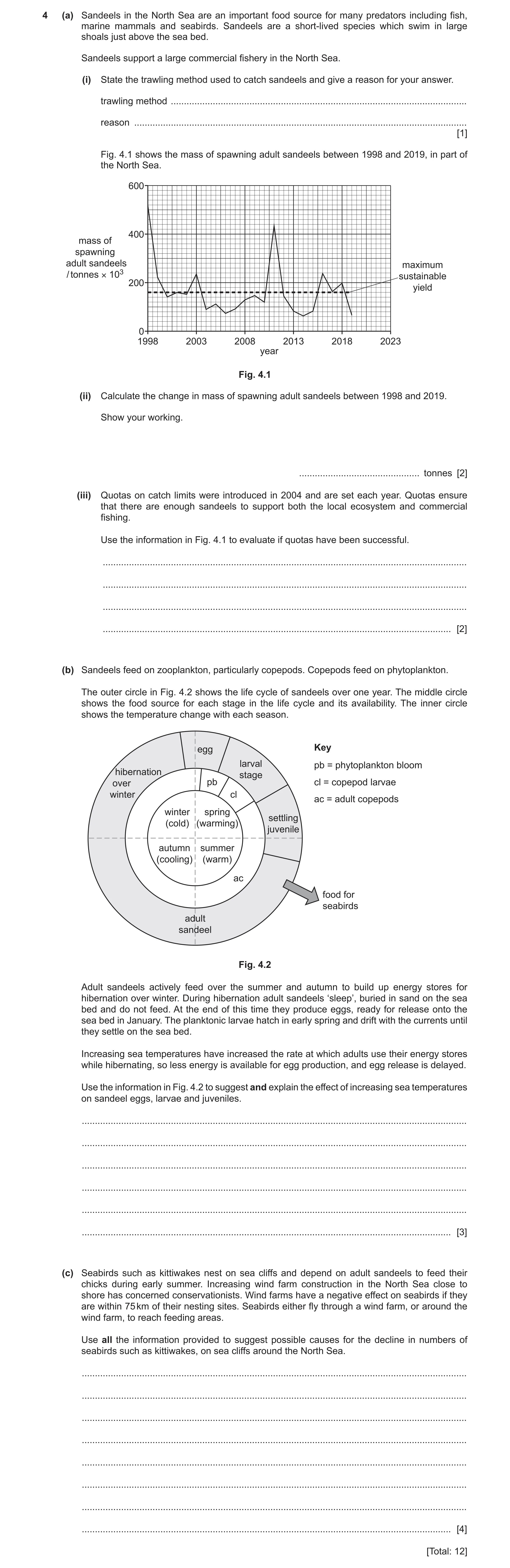
4 (a) Sandeels in the North Sea are an important food source for many predators including fish, marine mammals and seabirds. Sandeels are a short-lived species which swim in large shoals just above the sea bed. Sandeels support a large commercial fishery in the North Sea. (i) State the trawling method used to catch sandeels and give a reason for your answer. trawling method … reason … [1] Fig. 4.1 shows the mass of spawning adult sandeels between 1998 and 2019, in part of the North Sea. 600 400 mass of spawning adult sandeels maximum / tonnes × 103 sustainable 200 yield 0 1998 2003 2008 2013 2018 2023 year Fig. 4.1 (ii) Calculate the change in mass of spawning adult sandeels between 1998 and 2019. Show your working. … tonnes [2] (iii) Quotas on catch limits were introduced in 2004 and are set each year. Quotas ensure that there are enough sandeels to support both the local ecosystem and commercial fishing. Use the information in Fig. 4.1 to evaluate if quotas have been successful. … … … … [2] (b) Sandeels feed on zooplankton, particularly copepods. Copepods feed on phytoplankton. The outer circle in Fig. 4.2 shows the life cycle of sandeels over one year. The middle circle shows the food source for each stage in the life cycle and its availability. The inner circle shows the temperature change with each season. egg Key larval pb = phytoplankton bloom hibernation stage over pb cl = copepod larvae winter cl ac = adult copepods winter spring settling (cold) (warming) juvenile autumn summer (cooling) (warm) ac food for seabirds adult sandeel Fig. 4.2 Adult sandeels actively feed over the summer and autumn to build up energy stores for hibernation over winter. During hibernation adult sandeels ‘sleep’, buried in sand on the sea bed and do not feed. At the end of this time they produce eggs, ready for release onto the sea bed in January. The planktonic larvae hatch in early spring and drift with the currents until they settle on the sea bed. Increasing sea temperatures have increased the rate at which adults use their energy stores while hibernating, so less energy is available for egg production, and egg release is delayed. Use the information in Fig. 4.2 to suggest and explain the effect of increasing sea temperatures on sandeel eggs, larvae and juveniles. … … … … … … [3] (c) Seabirds such as kittiwakes nest on sea cliffs and depend on adult sandeels to feed their chicks during early summer. Increasing wind farm construction in the North Sea close to shore has concerned conservationists. Wind farms have a negative effect on seabirds if they are within 75 km of their nesting sites. Seabirds either fly through a wind farm, or around the wind farm, to reach feeding areas. Use all the information provided to suggest possible causes for the decline in numbers of seabirds such as kittiwakes, on sea cliffs around the North Sea. … … … … … … … … [4] [Total: 12]
12 marks
Mark scheme: 4(a)(i) benthic (trawling) AND as sandeels swim just above sea bed ; 1 4(a)(ii) 1998 = 520 000 2019 = 65 000 ; (change is,) 455 000 (tonnes) decrease / – 455 000 ; 2 4(a)(iii) (idea of) no, as numbers have fluctuated ; correct reference to (sometimes) below maximum sustainable yield ; 2 4(b) any 3 of: fewer eggs are produced / released ; phytoplankton bloom is over (before eggs hatch) ; less, copepod larvae / food, present for sandeel larvae to feed on ; so less growth of sandeel larvae ; fewer juveniles, survive / settle, to become adults / less recruitment ; 3 Question Answer Marks 4(c) any 4 of: less food for birds due to overfishing of sandeels, eq ; less food for birds due to, mismatch of sandeels with their prey / decreased food availability (for sandeels) / fewer sandeels reaching maturity ; seabirds could be, killed / injured, flying / colliding into wind farm ; seabirds have to fly further (around windfarm) ; so use up more energy (to find food) ; less food for chicks / chicks starve / fewer chicks survive to adulthood ; ref. to construction / installation + suitable effect on sandeels or birds ; AVP ; 4
This question in 9693/31 May/June 2023
Q13 · One effect of increasing global temperatures can be seen in the Arctic 9693/31 Oct/Nov 2023
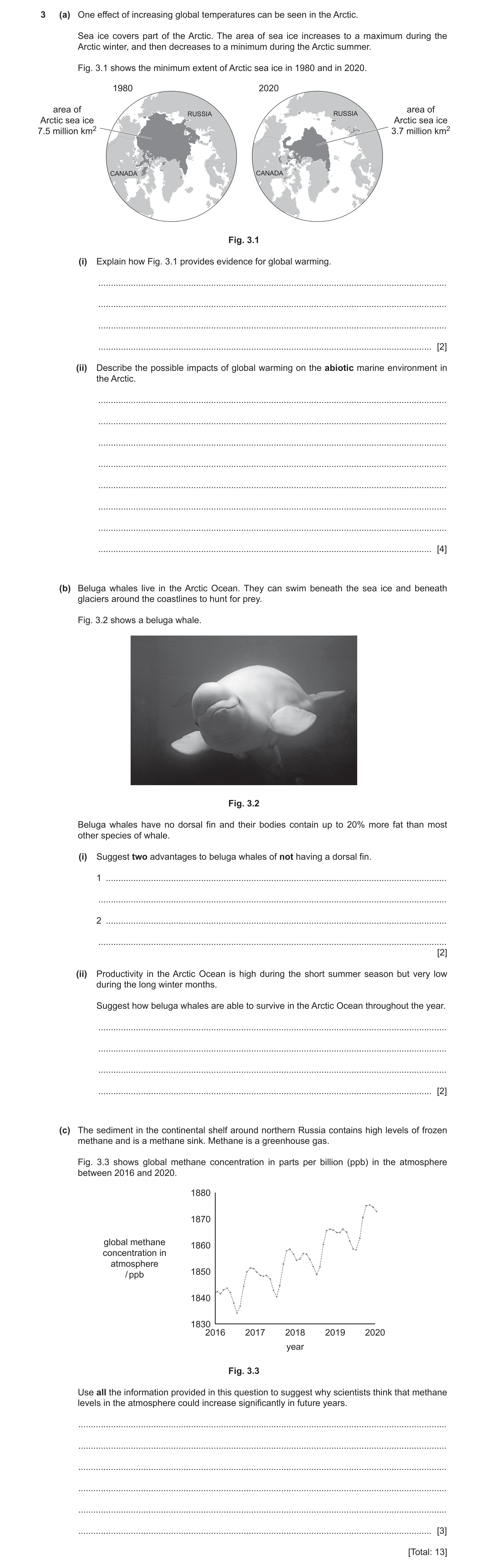
3 (a) One effect of increasing global temperatures can be seen in the Arctic. Sea ice covers part of the Arctic. The area of sea ice increases to a maximum during the Arctic winter, and then decreases to a minimum during the Arctic summer. Fig. 3.1 shows the minimum extent of Arctic sea ice in 1980 and in 2020. 1980 2020 area of area of RUSSIA RUSSIA Arctic sea ice Arctic sea ice 7.5 million km2 3.7 million km2 CANADA CANADA Fig. 3.1 (i) Explain how Fig. 3.1 provides evidence for global warming. … … … … [2] (ii) Describe the possible impacts of global warming on the abiotic marine environment in the Arctic. … … … … … … … … [4] (b) Beluga whales live in the Arctic Ocean. They can swim beneath the sea ice and beneath glaciers around the coastlines to hunt for prey. Fig. 3.2 shows a beluga whale. Fig. 3.2 Beluga whales have no dorsal fin and their bodies contain up to 20% more fat than most other species of whale. (i) Suggest two advantages to beluga whales of not having a dorsal fin. 1 … … 2 … … [2] (ii) Productivity in the Arctic Ocean is high during the short summer season but very low during the long winter months. Suggest how beluga whales are able to survive in the Arctic Ocean throughout the year. … … … … [2] (c) The sediment in the continental shelf around northern Russia contains high levels of frozen methane and is a methane sink. Methane is a greenhouse gas. Fig. 3.3 shows global methane concentration in parts per billion (ppb) in the atmosphere between 2016 and 2020. 1880 1870 global methane 1860 concentration in atmosphere 1850 / ppb 1840 1830 2016 2017 2018 2019 2020 year Fig. 3.3 Use all the information provided in this question to suggest why scientists think that methane levels in the atmosphere could increase significantly in future years. … … … … … … [3] [Total: 13]
13 marks
Mark scheme: 3(a)(i) any 2 of: 2 (minimum extent of) Arctic Ocean ice has decreased, by 3.8 million km2 / by (approx.) 50% ; (increased temperatures in the Arctic are causing), more of the ice to melt in summer / less ice to form in winter ; 3(a)(ii) any 4 of: 4 (increased) melting of ice / ice breaks up into smaller pieces ; loss of ice as a (thermal) insulator ; reduced reflection of light / more light energy absorbed by sea water ; decreases salinity (due to increase in fresh water) ; reduced salinity increases / increased temperatures decreases, solubility of gases ; ref. to change in salinity causing change in halocline or change in temperature causing change in thermocline ; ref. to potential changes to ocean currents ; AVP ; 3(b)(i) easier to swim beneath the, ice / glaciers ; 2 increased ability to catch prey, near surface / under ice ; less surface area for heat loss ; body more streamlined so, saves energy when swimming ; 3(b)(ii) any 2 of: 2 increased food availability in summer (due to high productivity) ; idea of (excess) food stored as fat ; fat provides energy source during the winter (when food is scarce) ; extra / stored fat, helps to insulate body / retains body heat ; 3(c) any 3 of: 3 Russia is already ice-free in summer ; sea ice is decreasing ; (sea water) temperatures are increasing ; so frozen, sediment / methane, thaws ; releasing more methane into sea ; methane escapes (from sea surface) into atmosphere ; the graph for global atmospheric methane shows an increasing trend ; AVP ;
This question in 9693/31 Oct/Nov 2023
Q14 · One effect of increasing global temperatures can be seen in the Arctic 9693/32 Oct/Nov 2023
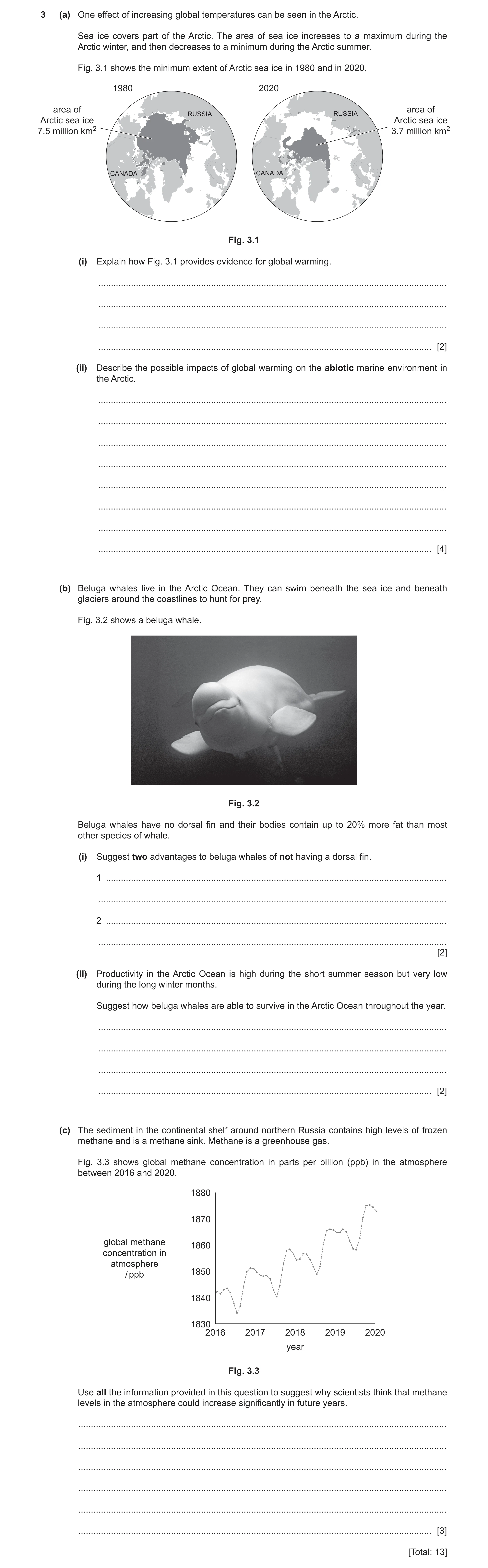
3 (a) One effect of increasing global temperatures can be seen in the Arctic. Sea ice covers part of the Arctic. The area of sea ice increases to a maximum during the Arctic winter, and then decreases to a minimum during the Arctic summer. Fig. 3.1 shows the minimum extent of Arctic sea ice in 1980 and in 2020. 1980 2020 area of area of RUSSIA RUSSIA Arctic sea ice Arctic sea ice 7.5 million km2 3.7 million km2 CANADA CANADA Fig. 3.1 (i) Explain how Fig. 3.1 provides evidence for global warming. … … … … [2] (ii) Describe the possible impacts of global warming on the abiotic marine environment in the Arctic. … … … … … … … … [4] (b) Beluga whales live in the Arctic Ocean. They can swim beneath the sea ice and beneath glaciers around the coastlines to hunt for prey. Fig. 3.2 shows a beluga whale. Fig. 3.2 Beluga whales have no dorsal fin and their bodies contain up to 20% more fat than most other species of whale. (i) Suggest two advantages to beluga whales of not having a dorsal fin. 1 … … 2 … … [2] (ii) Productivity in the Arctic Ocean is high during the short summer season but very low during the long winter months. Suggest how beluga whales are able to survive in the Arctic Ocean throughout the year. … … … … [2] (c) The sediment in the continental shelf around northern Russia contains high levels of frozen methane and is a methane sink. Methane is a greenhouse gas. Fig. 3.3 shows global methane concentration in parts per billion (ppb) in the atmosphere between 2016 and 2020. 1880 1870 global methane 1860 concentration in atmosphere 1850 / ppb 1840 1830 2016 2017 2018 2019 2020 year Fig. 3.3 Use all the information provided in this question to suggest why scientists think that methane levels in the atmosphere could increase significantly in future years. … … … … … … [3] [Total: 13]
13 marks
Mark scheme: 3(a)(i) any 2 of: 2 (minimum extent of) Arctic Ocean ice has decreased, by 3.8 million km2 / by (approx.) 50% ; (increased temperatures in the Arctic are causing), more of the ice to melt in summer / less ice to form in winter ; 3(a)(ii) any 4 of: 4 (increased) melting of ice / ice breaks up into smaller pieces ; loss of ice as a (thermal) insulator ; reduced reflection of light / more light energy absorbed by sea water ; decreases salinity (due to increase in fresh water) ; reduced salinity increases / increased temperatures decreases, solubility of gases ; ref. to change in salinity causing change in halocline or change in temperature causing change in thermocline ; ref. to potential changes to ocean currents ; AVP ; 3(b)(i) easier to swim beneath the, ice / glaciers ; 2 increased ability to catch prey, near surface / under ice ; less surface area for heat loss ; body more streamlined so, saves energy when swimming ; 3(b)(ii) any 2 of: 2 increased food availability in summer (due to high productivity) ; idea of (excess) food stored as fat ; fat provides energy source during the winter (when food is scarce) ; extra / stored fat, helps to insulate body / retains body heat ; 3(c) any 3 of: 3 Russia is already ice-free in summer ; sea ice is decreasing ; (sea water) temperatures are increasing ; so frozen, sediment / methane, thaws ; releasing more methane into sea ; methane escapes (from sea surface) into atmosphere ; the graph for global atmospheric methane shows an increasing trend ; AVP ;
This question in 9693/32 Oct/Nov 2023
Q15 · One effect of increasing global temperatures can be seen in the Arctic 9693/33 Oct/Nov 2023
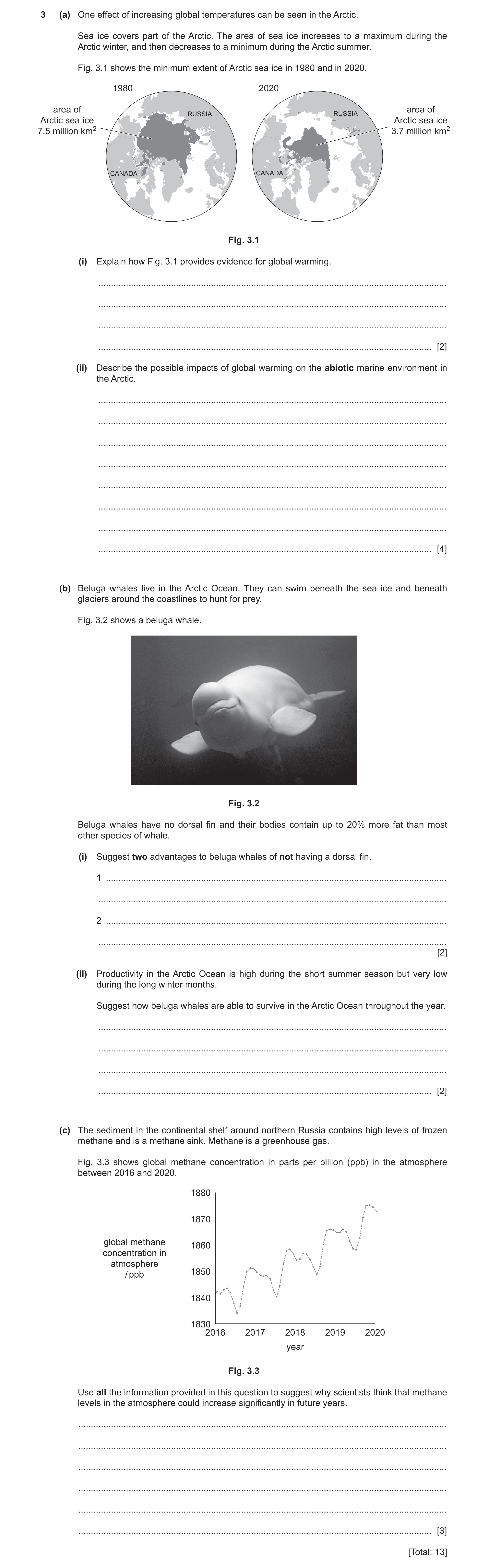
3 (a) One effect of increasing global temperatures can be seen in the Arctic. Sea ice covers part of the Arctic. The area of sea ice increases to a maximum during the Arctic winter, and then decreases to a minimum during the Arctic summer. Fig. 3.1 shows the minimum extent of Arctic sea ice in 1980 and in 2020. 1980 2020 area of area of RUSSIA RUSSIA Arctic sea ice Arctic sea ice 7.5 million km2 3.7 million km2 CANADA CANADA Fig. 3.1 (i) Explain how Fig. 3.1 provides evidence for global warming. … … … … [2] (ii) Describe the possible impacts of global warming on the abiotic marine environment in the Arctic. … … … … … … … … [4] (b) Beluga whales live in the Arctic Ocean. They can swim beneath the sea ice and beneath glaciers around the coastlines to hunt for prey. Fig. 3.2 shows a beluga whale. Fig. 3.2 Beluga whales have no dorsal fin and their bodies contain up to 20% more fat than most other species of whale. (i) Suggest two advantages to beluga whales of not having a dorsal fin. 1 … … 2 … … [2] (ii) Productivity in the Arctic Ocean is high during the short summer season but very low during the long winter months. Suggest how beluga whales are able to survive in the Arctic Ocean throughout the year. … … … … [2] (c) The sediment in the continental shelf around northern Russia contains high levels of frozen methane and is a methane sink. Methane is a greenhouse gas. Fig. 3.3 shows global methane concentration in parts per billion (ppb) in the atmosphere between 2016 and 2020. 1880 1870 global methane 1860 concentration in atmosphere 1850 / ppb 1840 1830 2016 2017 2018 2019 2020 year Fig. 3.3 Use all the information provided in this question to suggest why scientists think that methane levels in the atmosphere could increase significantly in future years. … … … … … … [3] [Total: 13]
13 marks
Mark scheme: 3(a)(i) any 2 of: 2 (minimum extent of) Arctic Ocean ice has decreased, by 3.8 million km2 / by (approx.) 50% ; (increased temperatures in the Arctic are causing), more of the ice to melt in summer / less ice to form in winter ; 3(a)(ii) any 4 of: 4 (increased) melting of ice / ice breaks up into smaller pieces ; loss of ice as a (thermal) insulator ; reduced reflection of light / more light energy absorbed by sea water ; decreases salinity (due to increase in fresh water) ; reduced salinity increases / increased temperatures decreases, solubility of gases ; ref. to change in salinity causing change in halocline or change in temperature causing change in thermocline ; ref. to potential changes to ocean currents ; AVP ; 3(b)(i) easier to swim beneath the, ice / glaciers ; 2 increased ability to catch prey, near surface / under ice ; less surface area for heat loss ; body more streamlined so, saves energy when swimming ; 3(b)(ii) any 2 of: 2 increased food availability in summer (due to high productivity) ; idea of (excess) food stored as fat ; fat provides energy source during the winter (when food is scarce) ; extra / stored fat, helps to insulate body / retains body heat ; 3(c) any 3 of: 3 Russia is already ice-free in summer ; sea ice is decreasing ; (sea water) temperatures are increasing ; so frozen, sediment / methane, thaws ; releasing more methane into sea ; methane escapes (from sea surface) into atmosphere ; the graph for global atmospheric methane shows an increasing trend ; AVP ;
This question in 9693/33 Oct/Nov 2023
Q16 · The manufacture and use of clothing contributes to harmful effects on the marine… 9693/31 May/June 2024
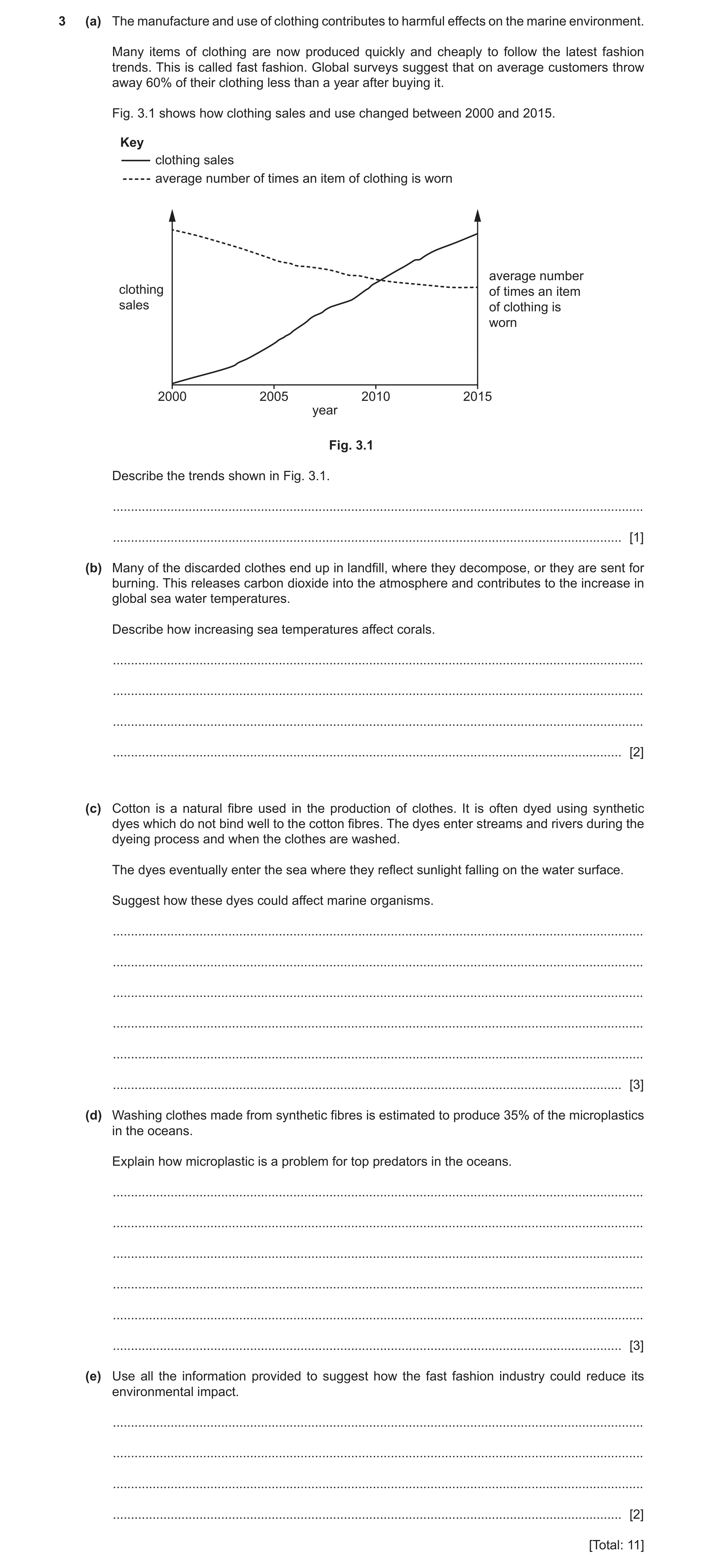
3 (a) The manufacture and use of clothing contributes to harmful effects on the marine environment. Many items of clothing are now produced quickly and cheaply to follow the latest fashion trends. This is called fast fashion. Global surveys suggest that on average customers throw away 60% of their clothing less than a year after buying it. Fig. 3.1 shows how clothing sales and use changed between 2000 and 2015. Key clothing sales average number of times an item of clothing is worn average number clothing of times an item sales of clothing is worn 2000 2005 2010 2015 year Fig. 3.1 Describe the trends shown in Fig. 3.1. … … [1] (b) Many of the discarded clothes end up in landfill, where they decompose, or they are sent for burning. This releases carbon dioxide into the atmosphere and contributes to the increase in global sea water temperatures. Describe how increasing sea temperatures affect corals. … … … … [2] (c) Cotton is a natural fibre used in the production of clothes. It is often dyed using synthetic dyes which do not bind well to the cotton fibres. The dyes enter streams and rivers during the dyeing process and when the clothes are washed. The dyes eventually enter the sea where they reflect sunlight falling on the water surface. Suggest how these dyes could affect marine organisms. … … … … … … [3] (d) Washing clothes made from synthetic fibres is estimated to produce 35% of the microplastics in the oceans. Explain how microplastic is a problem for top predators in the oceans. … … … … … … [3] (e) Use all the information provided to suggest how the fast fashion industry could reduce its environmental impact. … … … … [2] [Total: 11]
11 marks
Mark scheme: 3(a) as clothing sales increase, the average number of times clothes are worn decreases ; 1 3(b) any 2 of: coral bleaching ; as zooxanthellae / algae are expelled ; results in a lack of nutrients for coral (which dies) ; eq less oxygen available for (aerobic) respiration ; 2 3(c) any 3 of: less / no light able to reach producers, so less photosynthesis ; reducing productivity ; consumers, die from lack of food / move away to other areas ; less dissolution of gases at surface, so reducing availability of gases for photosynthesis / respiration ; dyes could be toxic ; 3 3(d) any 3 of: microplastics taken up by filter-feeders e.g. mussels / zooplankton ; microplastics cannot be excreted / ref. to bioaccumulation ; biomagnification occurs at each trophic level ; as more prey consumed ; microplastics contain toxins which could kill top predators ; 3 Question Answer Marks 3(e) any 2 of: use natural dyes (instead of synthetic ones) / biodegradable dyes ; (encourage) recycling clothes / wearing them for longer before throwing away / giving clothes to charity ; make / buy clothes made from natural fibres / biodegradable fibres (instead of synthetic ones to reduce release of microplastics) ; produce / market sustainable clothes ; 2
This question in 9693/31 May/June 2024
Q17 · Salmon aquaculture usually involves two different stages: • breeding adult salmon in… 9693/32 May/June 2024
3 (a) Salmon aquaculture usually involves two different stages: • breeding adult salmon in tanks in a hatchery, where fry are raised to smolt • transferring smolt to net cages in shallow water just offshore, usually in sheltered inlets, so that they can grow to adult size. List three abiotic factors, other than aeration, which need to be controlled in a hatchery, but which cannot be controlled in net cages. For each factor, explain how it is controlled in a hatchery. factor 1 … how controlled … factor 2 … how controlled … factor 3 … how controlled … [3] (b) Salmon in hatcheries and in net cages are fed on pelleted food. The pellets can be of two types: • floating pellets, which float on the surface for around an hour before sinking • sinking pellets, which sink immediately. Suggest two advantages of floating pellets over sinking pellets. 1 … … 2 … … [2] (c) In 2019, 2.6 million adult salmon died in net cages in Canada. Over the previous 12 days, the sea water temperature had suddenly increased from 13 °C to between 17 °C and 21 °C. Scientists noticed that, during this temperature increase, the salmon moved to the deepest water at the bottom of the net cage. (i) Suggest why salmon moved to the bottom of the net cage. … … [1] (ii) Explain how this behaviour could have increased the number of salmon deaths. … … … … … … … … [4] (iii) Suggest one reason why the sudden increase in sea water temperature might not provide evidence for global warming. … … [1] [Total: 11]
11 marks
Mark scheme: 3(a) any 3 of: factor: temperature controlled: add a heater ; factor: turbidity controlled: use a filter to remove particles from water ; factor: pH controlled: add a buffer / acid / alkaline ; factor: removal of waste products controlled: removed by filter ; factor: light controlled: by installing lighting / windows or adding shade ; 3(b) any 2 of: allows fish farmer to see if all the food is eaten ; easier to assess fish, health / size (as they come to the surface) ; less food is wasted / food is available for longer ; less chance of uneaten food being lost under nets / removed in outflow ; so more cost effective ; 2 3(c)(i) deepest water will be the coolest / surface temperature too warm ; 1 3(c)(ii) any 4 of: salmon are overcrowded ; eq. increased, competition for, food / oxygen ; waste products / faeces / urine / waste food / dead salmon, collect here ; these are decomposed by (aerobic) bacteria ; oxygen concentration falls ; suitable effect on salmon ; 4 3(c)(iii) any 1 of: global warming results in gradual temperature increases ; only based on one event ; could be due to another named factor ; 1
This question in 9693/32 May/June 2024
Q18 · Salmon aquaculture usually involves two different stages: • breeding adult salmon in… 9693/33 May/June 2024
3 (a) Salmon aquaculture usually involves two different stages: • breeding adult salmon in tanks in a hatchery, where fry are raised to smolt • transferring smolt to net cages in shallow water just offshore, usually in sheltered inlets, so that they can grow to adult size. List three abiotic factors, other than aeration, which need to be controlled in a hatchery, but which cannot be controlled in net cages. For each factor, explain how it is controlled in a hatchery. factor 1 … how controlled … factor 2 … how controlled … factor 3 … how controlled … [3] (b) Salmon in hatcheries and in net cages are fed on pelleted food. The pellets can be of two types: • floating pellets, which float on the surface for around an hour before sinking • sinking pellets, which sink immediately. Suggest two advantages of floating pellets over sinking pellets. 1 … … 2 … … [2] (c) In 2019, 2.6 million adult salmon died in net cages in Canada. Over the previous 12 days, the sea water temperature had suddenly increased from 13 °C to between 17 °C and 21 °C. Scientists noticed that, during this temperature increase, the salmon moved to the deepest water at the bottom of the net cage. (i) Suggest why salmon moved to the bottom of the net cage. … … [1] (ii) Explain how this behaviour could have increased the number of salmon deaths. … … … … … … … … [4] (iii) Suggest one reason why the sudden increase in sea water temperature might not provide evidence for global warming. … … [1] [Total: 11]
11 marks
Mark scheme: 3(a) any 3 of: factor: temperature controlled: add a heater ; factor: turbidity controlled: use a filter to remove particles from water ; factor: pH controlled: add a buffer / acid / alkaline ; factor: removal of waste products controlled: removed by filter ; factor: light controlled: by installing lighting / windows or adding shade ; 3(b) any 2 of: allows fish farmer to see if all the food is eaten ; easier to assess fish, health / size (as they come to the surface) ; less food is wasted / food is available for longer ; less chance of uneaten food being lost under nets / removed in outflow ; so more cost effective ; 2 3(c)(i) deepest water will be the coolest / surface temperature too warm ; 1 3(c)(ii) any 4 of: salmon are overcrowded ; eq. increased, competition for, food / oxygen ; waste products / faeces / urine / waste food / dead salmon, collect here ; these are decomposed by (aerobic) bacteria ; oxygen concentration falls ; suitable effect on salmon ; 4 3(c)(iii) any 1 of: global warming results in gradual temperature increases ; only based on one event ; could be due to another named factor ; 1
This question in 9693/33 May/June 2024
Q19 · Snow crabs, Chionoecetes opilio, are found in the Bering Sea around Alaska, in the far… 9693/32 May/June 2025
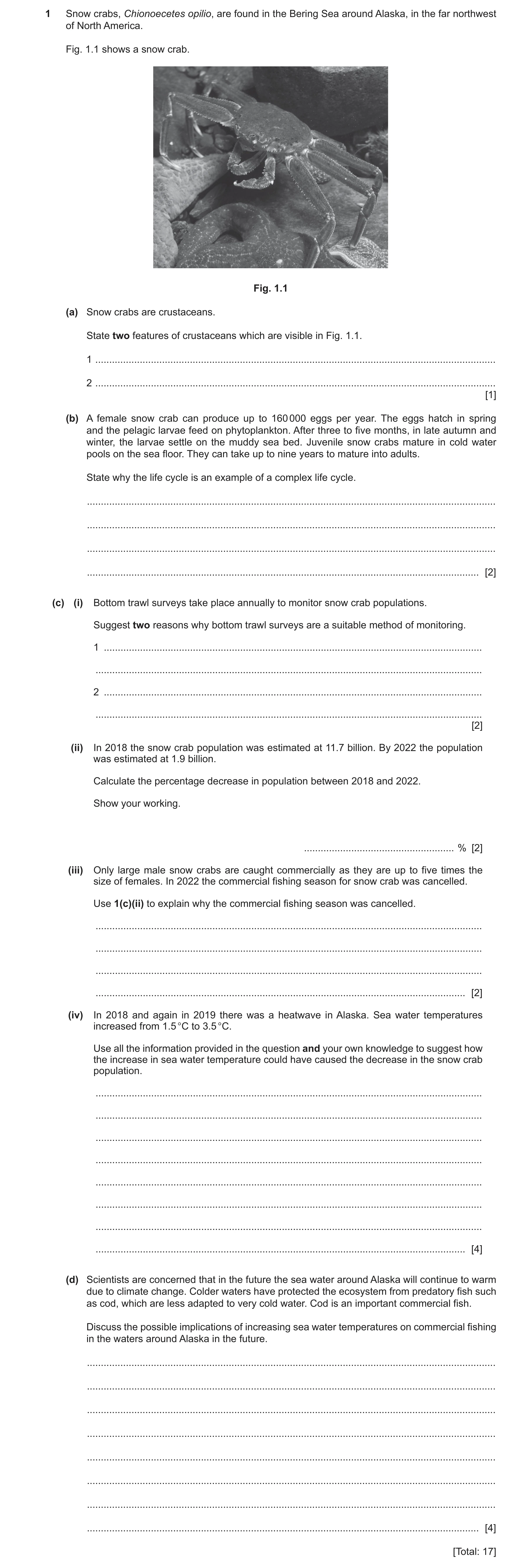
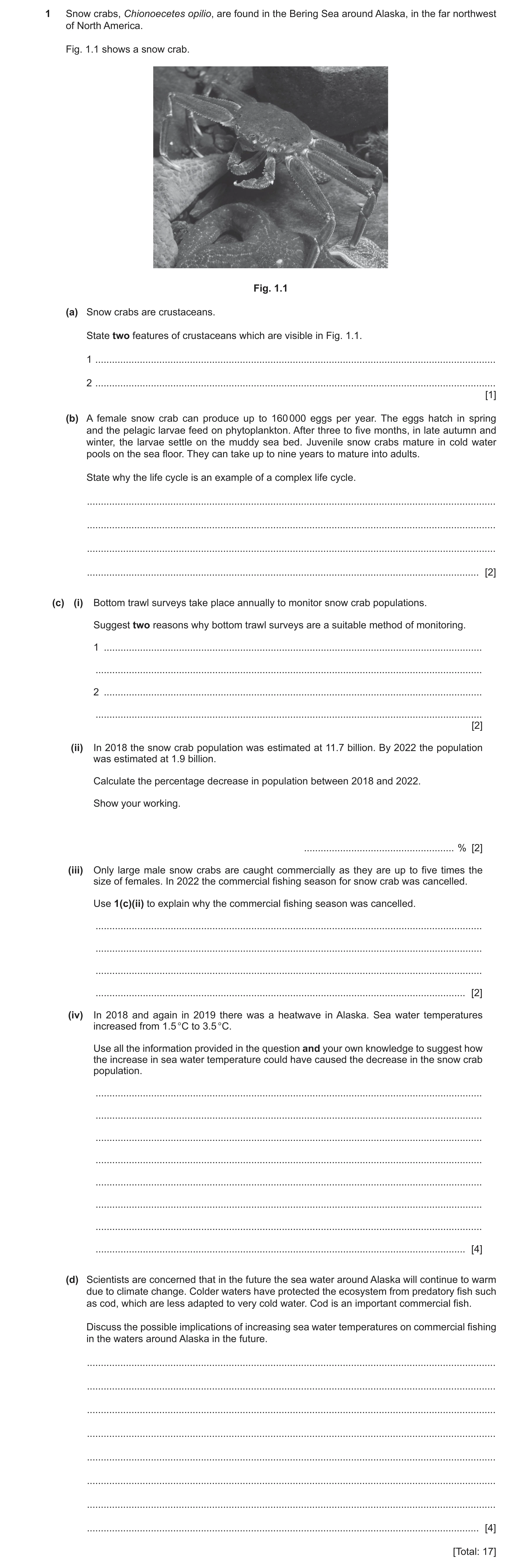
1 Snow crabs, Chionoecetes opilio, are found in the Bering Sea around Alaska, in the far northwest of North America. Fig. 1.1 shows a snow crab. Fig. 1.1 (a) Snow crabs are crustaceans. State two features of crustaceans which are visible in Fig. 1.1. 1 … 2 … [1] (b) A female snow crab can produce up to 160 000 eggs per year. The eggs hatch in spring and the pelagic larvae feed on phytoplankton. After three to five months, in late autumn and winter, the larvae settle on the muddy sea bed. Juvenile snow crabs mature in cold water pools on the sea floor. They can take up to nine years to mature into adults. State why the life cycle is an example of a complex life cycle. … … … … [2] (c) (i) Bottom trawl surveys take place annually to monitor snow crab populations. Suggest two reasons why bottom trawl surveys are a suitable method of monitoring. 1 … … 2 … … [2] (ii) In 2018 the snow crab population was estimated at 11.7 billion. By 2022 the population was estimated at 1.9 billion. Calculate the percentage decrease in population between 2018 and 2022. Show your working. … % [2] (iii) Only large male snow crabs are caught commercially as they are up to five times the size of females. In 2022 the commercial fishing season for snow crab was cancelled. Use 1(c)(ii) to explain why the commercial fishing season was cancelled. … … … … [2] (iv) In 2018 and again in 2019 there was a heatwave in Alaska. Sea water temperatures increased from 1.5 °C to 3.5 °C. Use all the information provided in the question and your own knowledge to suggest how the increase in sea water temperature could have caused the decrease in the snow crab population. … … … … … … … … [4] (d) Scientists are concerned that in the future the sea water around Alaska will continue to warm due to climate change. Colder waters have protected the ecosystem from predatory fish such as cod, which are less adapted to very cold water. Cod is an important commercial fish. Discuss the possible implications of increasing sea water temperatures on commercial fishing in the waters around Alaska in the future. … … … … … … … … [4] [Total: 17]
17 marks
Mark scheme: Question Answer Marks 1(a) any 2 of: 1 carapace present / jointed legs / two pairs of antennae ; 1(b) shows metamorphosis ; 2 larval stages present ; 1(c)(i) any 2 of: 2 they cause minimal damage to the mud substrate ; (most) stages in the life cycle are bottom dwelling ; catches more crabs than any other method ; 1(c)(ii) 1.9 − 11.7 2 100 11.7 (–) 83.8(%) ; 1(c)(iii) any 2 of: 2 1 insufficient numbers (of males) to catch ; 2 idea of too few males available to breed ; 3 so, few offspring produced for future / low recruitment ; 4 allows time for population to recover / prevents extinction ; 1(c)(iv) any 4 of: 4 1 kills / damages, eggs / larval stages / too few cold-water pools for juveniles to mature ; 2 correct ref. to phytoplankton blooms ; 3 introduction of new crab predators / invasive species / diseases ; 5 reduced oxygen concentration in seawater ; 6 less available for respiration / causes suffocation ; 7 so reducing growth / productivity ; 8 effect of increased temperature on salinity ; 9 so affecting water potential ; 10 AVP ; 1(d) any 4 of: 4 1 snow crab numbers will continue to decline ; 2 crabs / native species will be predated by cod / predatory fish ; 3 fewer cold-water pools for juveniles to mature ; 4 which could lead to overcrowding / increase in disease / starvation ; 5 could result in overfishing of other cold water species ; 6 less / no, income / employment, from commercial fishing for, snow crabs / cold water species ; 7 causing changes in food chains / webs ; 8 increased fishing for, cod / other warm water species, (could provide an alternative source of, income / employment) ;
This question in 9693/32 May/June 2025
Q20 · Snow crabs, Chionoecetes opilio, are found in the Bering Sea around Alaska, in the far… 9693/33 May/June 2025
1 Snow crabs, Chionoecetes opilio, are found in the Bering Sea around Alaska, in the far northwest of North America. Fig. 1.1 shows a snow crab. Fig. 1.1 (a) Snow crabs are crustaceans. State two features of crustaceans which are visible in Fig. 1.1. 1 … 2 … [1] (b) A female snow crab can produce up to 160 000 eggs per year. The eggs hatch in spring and the pelagic larvae feed on phytoplankton. After three to five months, in late autumn and winter, the larvae settle on the muddy sea bed. Juvenile snow crabs mature in cold water pools on the sea floor. They can take up to nine years to mature into adults. State why the life cycle is an example of a complex life cycle. … … … … [2] (c) (i) Bottom trawl surveys take place annually to monitor snow crab populations. Suggest two reasons why bottom trawl surveys are a suitable method of monitoring. 1 … … 2 … … [2] (ii) In 2018 the snow crab population was estimated at 11.7 billion. By 2022 the population was estimated at 1.9 billion. Calculate the percentage decrease in population between 2018 and 2022. Show your working. … % [2] (iii) Only large male snow crabs are caught commercially as they are up to five times the size of females. In 2022 the commercial fishing season for snow crab was cancelled. Use 1(c)(ii) to explain why the commercial fishing season was cancelled. … … … … [2] (iv) In 2018 and again in 2019 there was a heatwave in Alaska. Sea water temperatures increased from 1.5 °C to 3.5 °C. Use all the information provided in the question and your own knowledge to suggest how the increase in sea water temperature could have caused the decrease in the snow crab population. … … … … … … … … [4] (d) Scientists are concerned that in the future the sea water around Alaska will continue to warm due to climate change. Colder waters have protected the ecosystem from predatory fish such as cod, which are less adapted to very cold water. Cod is an important commercial fish. Discuss the possible implications of increasing sea water temperatures on commercial fishing in the waters around Alaska in the future. … … … … … … … … [4] [Total: 17]
17 marks
Mark scheme: Question Answer Marks 1(a) any 2 of: 1 carapace present / jointed legs / two pairs of antennae ; 1(b) shows metamorphosis ; 2 larval stages present ; 1(c)(i) any 2 of: 2 they cause minimal damage to the mud substrate ; (most) stages in the life cycle are bottom dwelling ; catches more crabs than any other method ; 1(c)(ii) 1.9 − 11.7 2 100 11.7 (–) 83.8(%) ; 1(c)(iii) any 2 of: 2 1 insufficient numbers (of males) to catch ; 2 idea of too few males available to breed ; 3 so, few offspring produced for future / low recruitment ; 4 allows time for population to recover / prevents extinction ; 1(c)(iv) any 4 of: 4 1 kills / damages, eggs / larval stages / too few cold-water pools for juveniles to mature ; 2 correct ref. to phytoplankton blooms ; 3 introduction of new crab predators / invasive species / diseases ; 5 reduced oxygen concentration in seawater ; 6 less available for respiration / causes suffocation ; 7 so reducing growth / productivity ; 8 effect of increased temperature on salinity ; 9 so affecting water potential ; 10 AVP ; 1(d) any 4 of: 4 1 snow crab numbers will continue to decline ; 2 crabs / native species will be predated by cod / predatory fish ; 3 fewer cold-water pools for juveniles to mature ; 4 which could lead to overcrowding / increase in disease / starvation ; 5 could result in overfishing of other cold water species ; 6 less / no, income / employment, from commercial fishing for, snow crabs / cold water species ; 7 causing changes in food chains / webs ; 8 increased fishing for, cod / other warm water species, (could provide an alternative source of, income / employment) ;
This question in 9693/33 May/June 2025
 11 / 38
![Question 8: (a) Fig. 4.1 shows an atom of oxygen. Fig. 4.1 Complete Fig. 4.1 to show a molecule of oxygen, O2. [2] (b) A study by the conservation grou…](https://img.pastlit.com/crops/91d8759a-7636-4600-ba3b-8adf363a670c/q4.webp) 14 / 38
14 / 38![Question 9: (a) Fig. 4.1 shows an atom of oxygen. Fig. 4.1 Complete Fig. 4.1 to show a molecule of oxygen, O2. [2] (b) A study by the conservation grou…](https://img.pastlit.com/crops/1f5da389-743b-4ad6-85c8-ba93aef60e21/q4.webp) 15 / 38
15 / 38![Question 10: (a) Fig. 4.1 shows an atom of oxygen. Fig. 4.1 Complete Fig. 4.1 to show a molecule of oxygen, O2. [2] (b) A study by the conservation grou…](https://img.pastlit.com/crops/1e8a73d4-bb9c-4cfe-893b-1ba8c3cbf72d/q4.webp) 16 / 38
16 / 38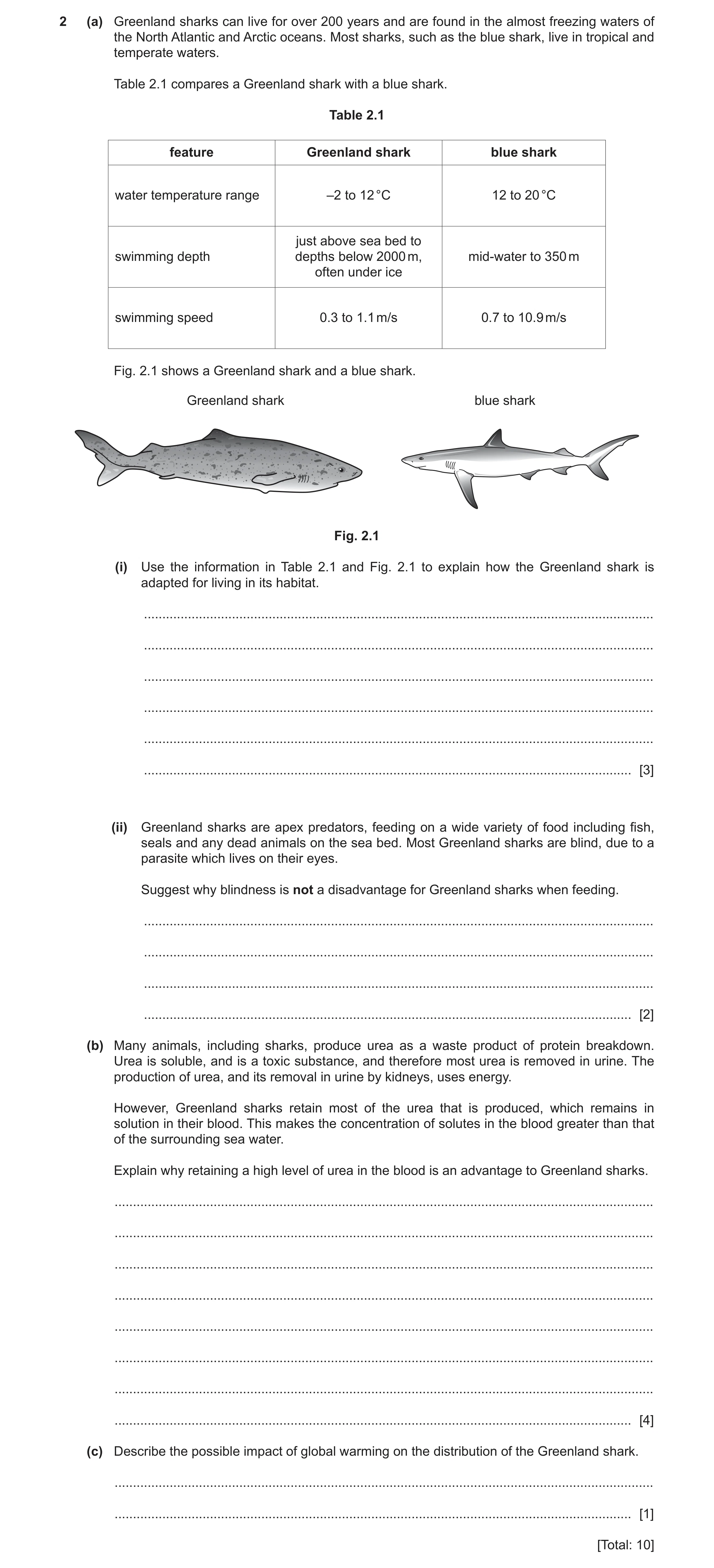
 11
11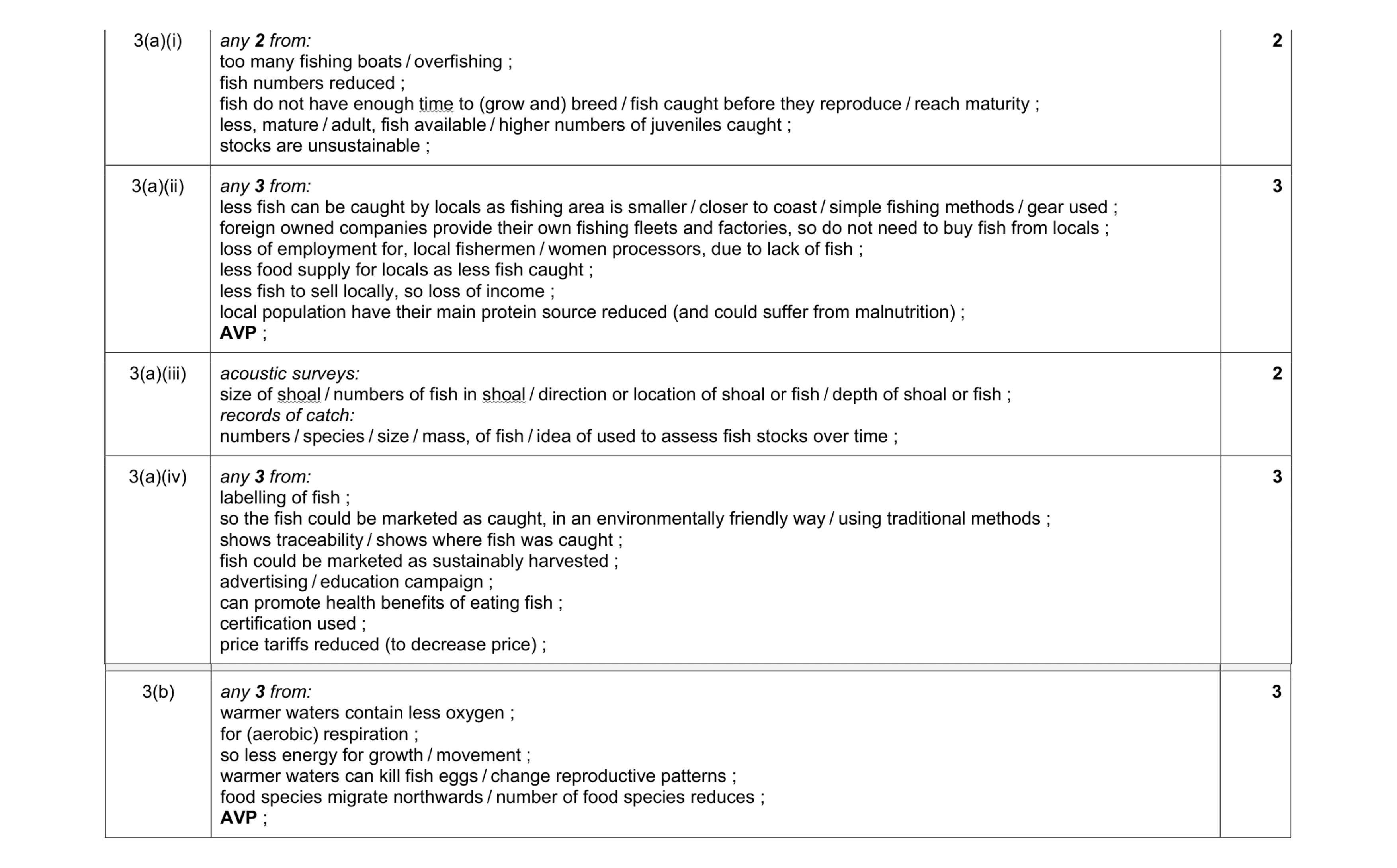 13
13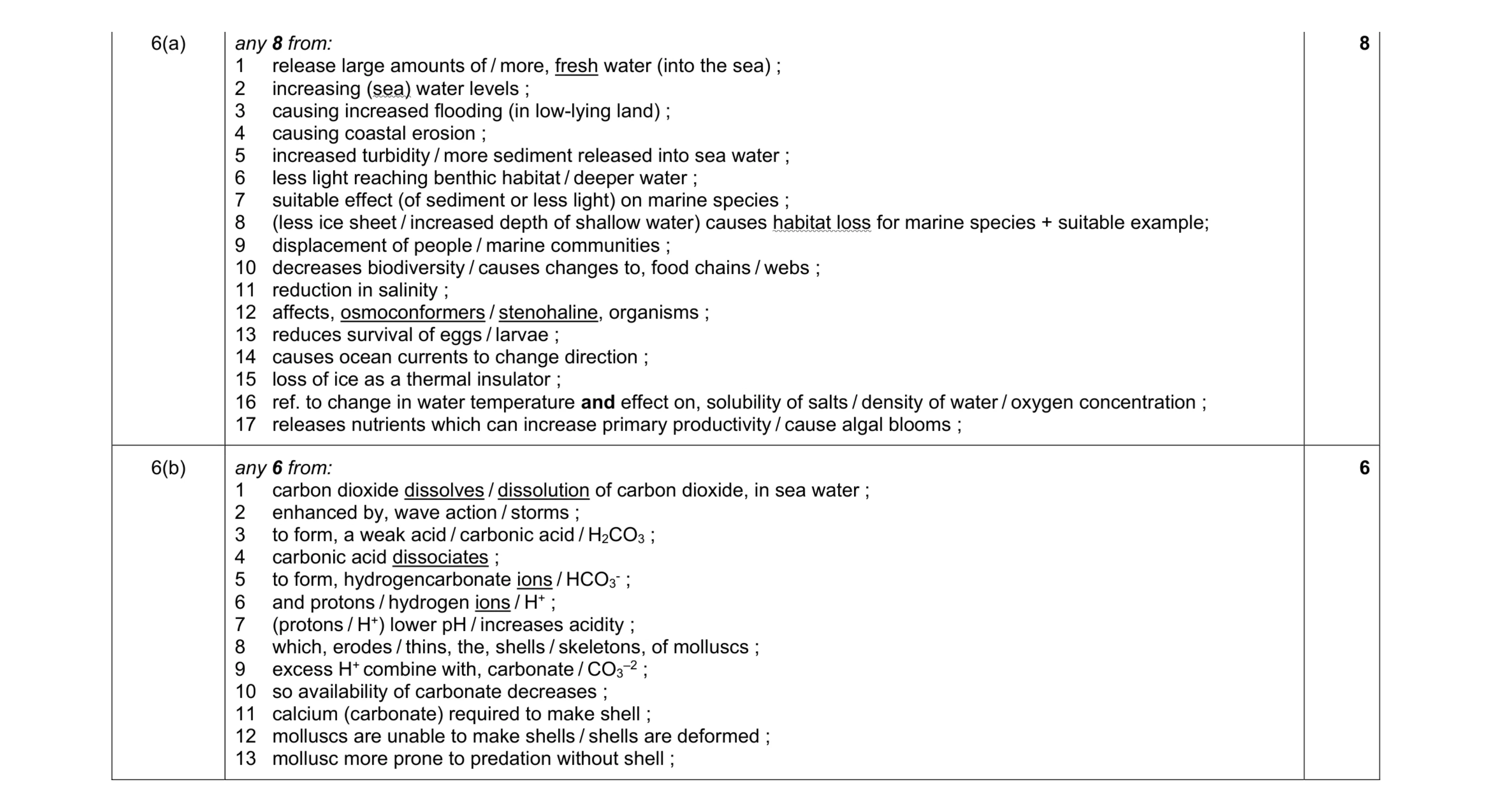 14
14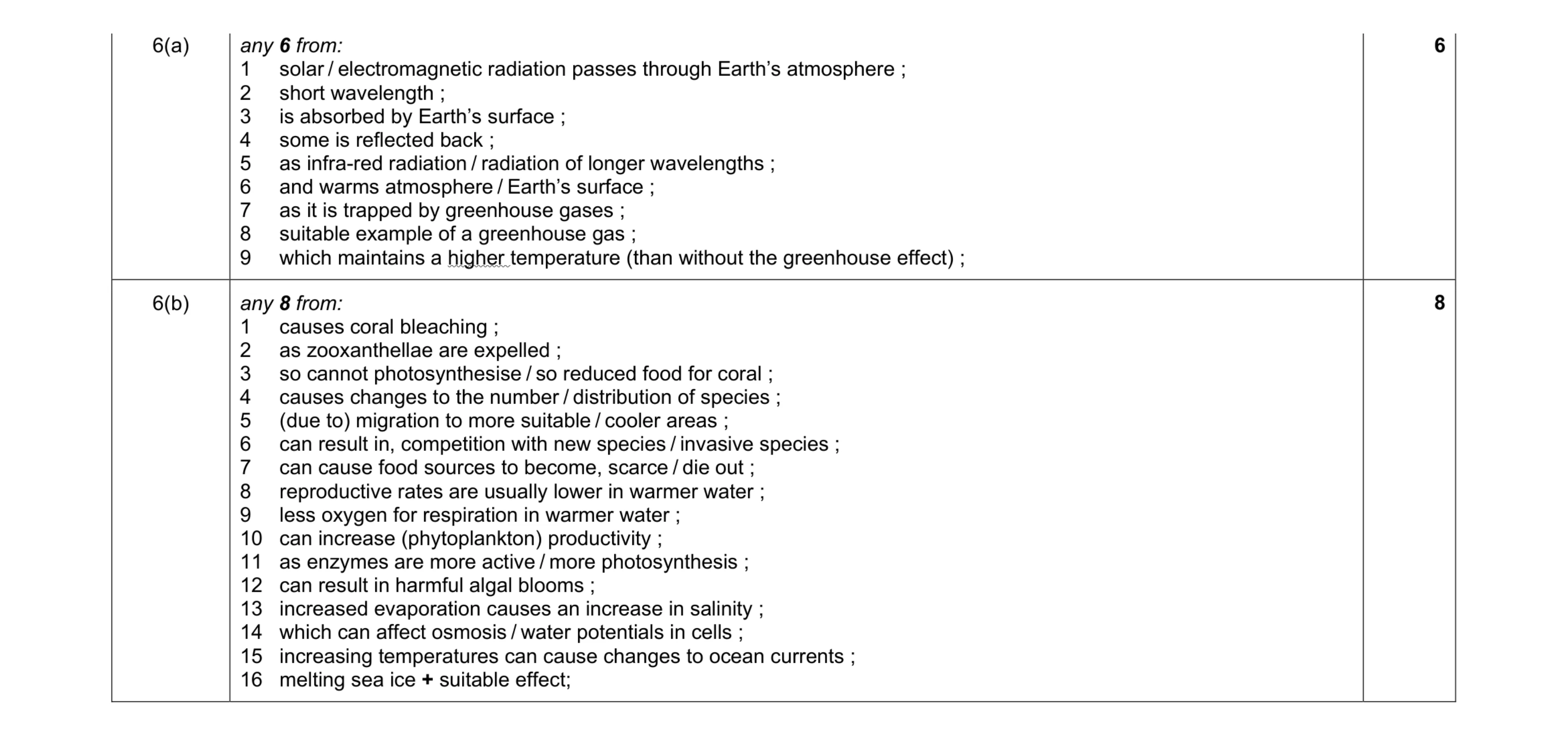 14
14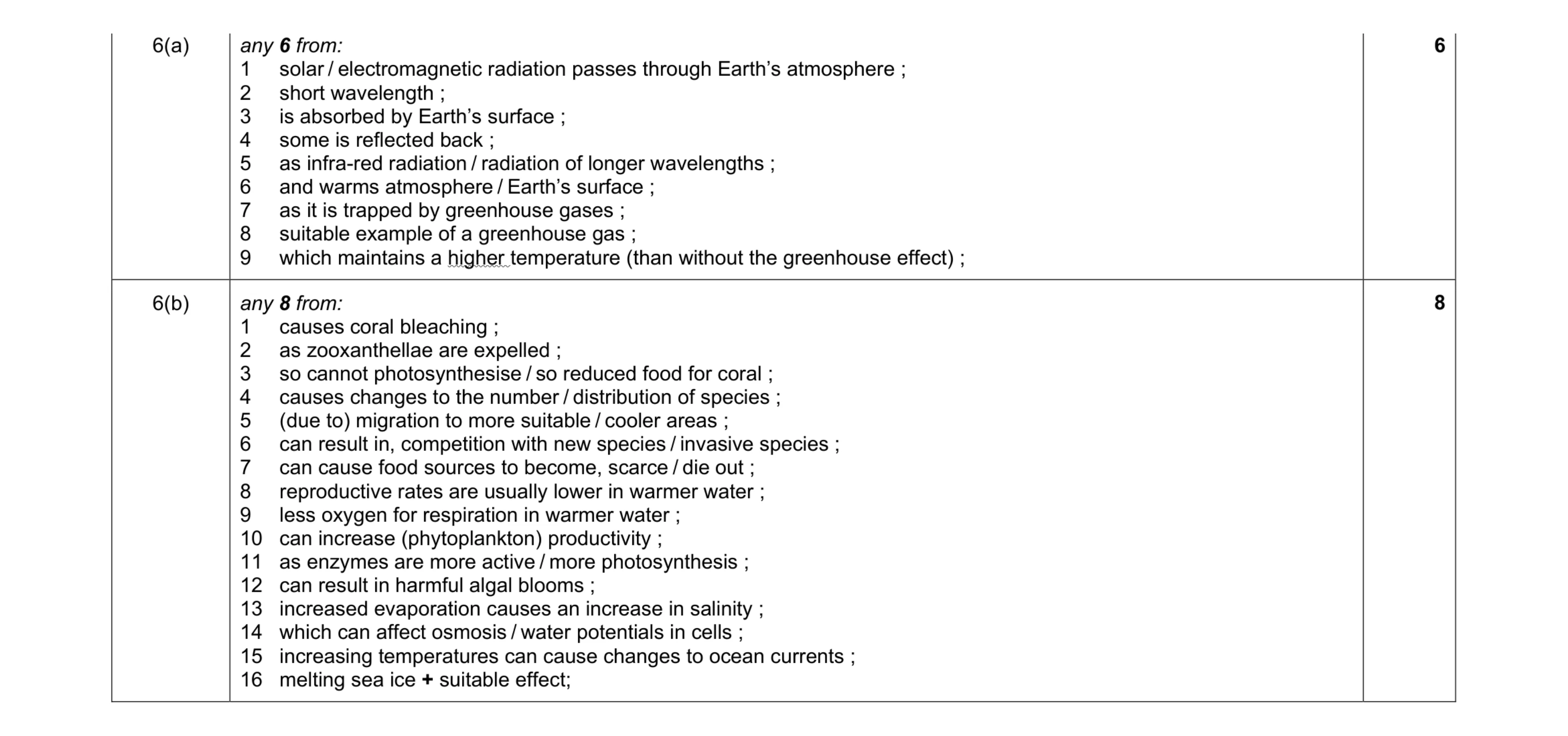 14
14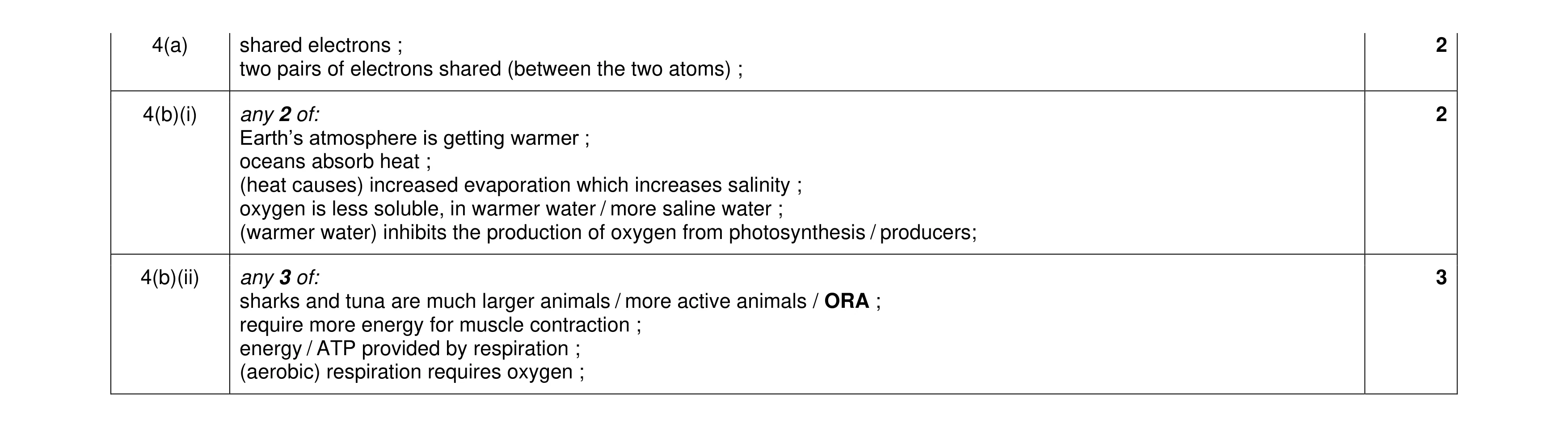 7
7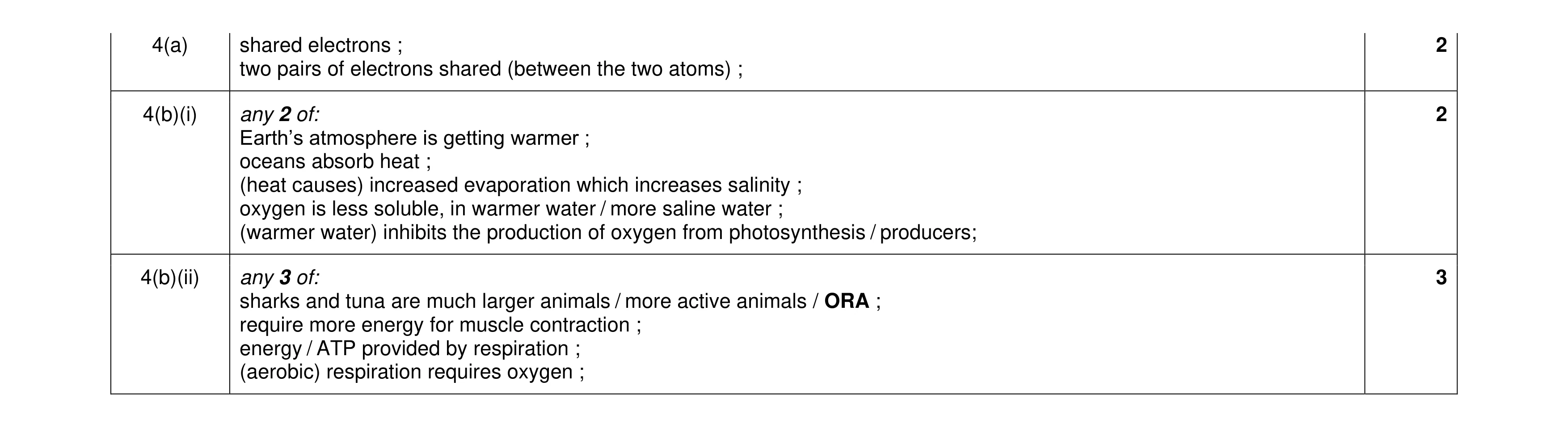 7
7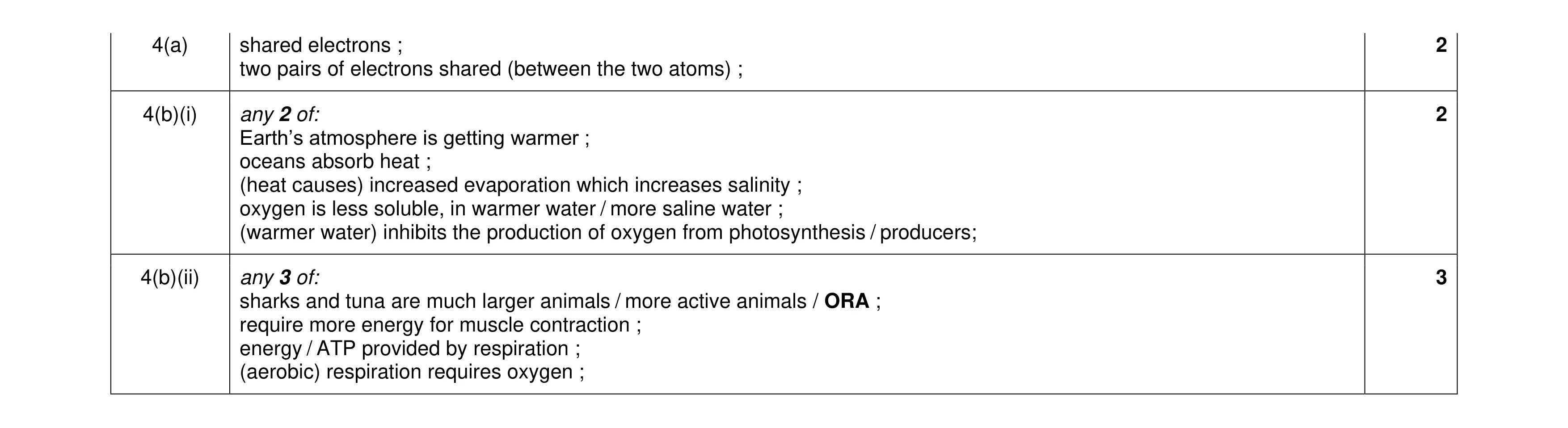 7
7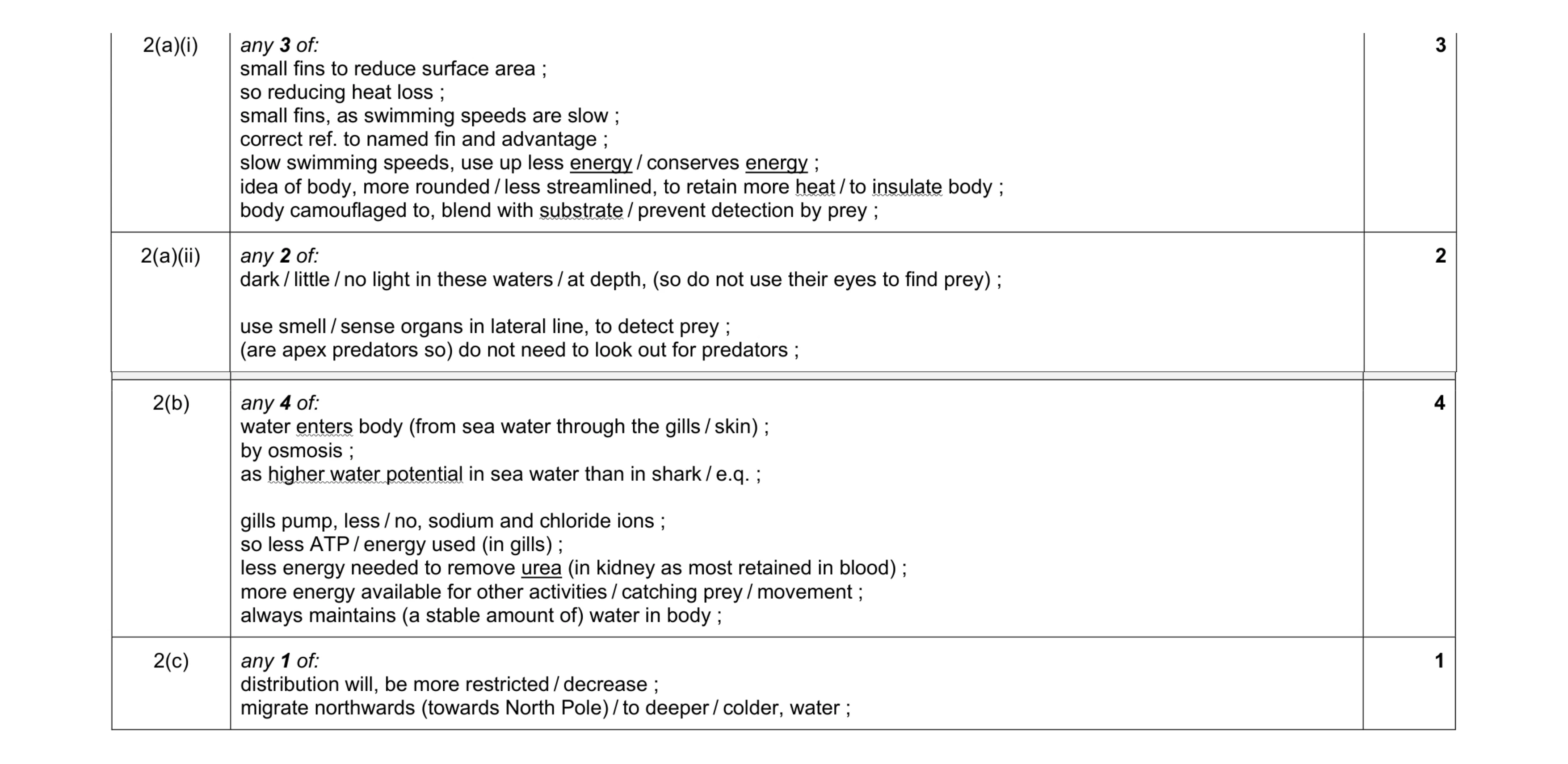 10
10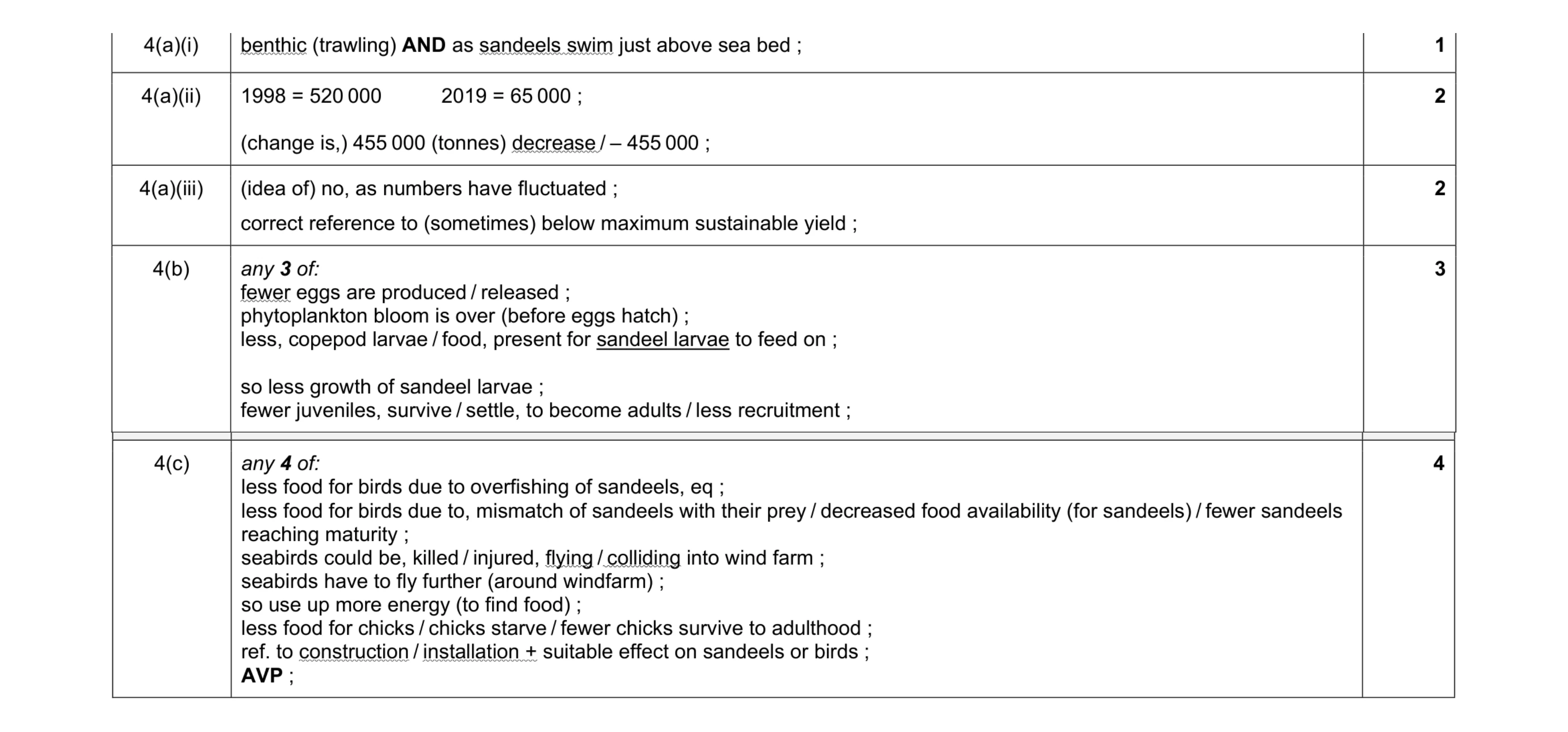 12
12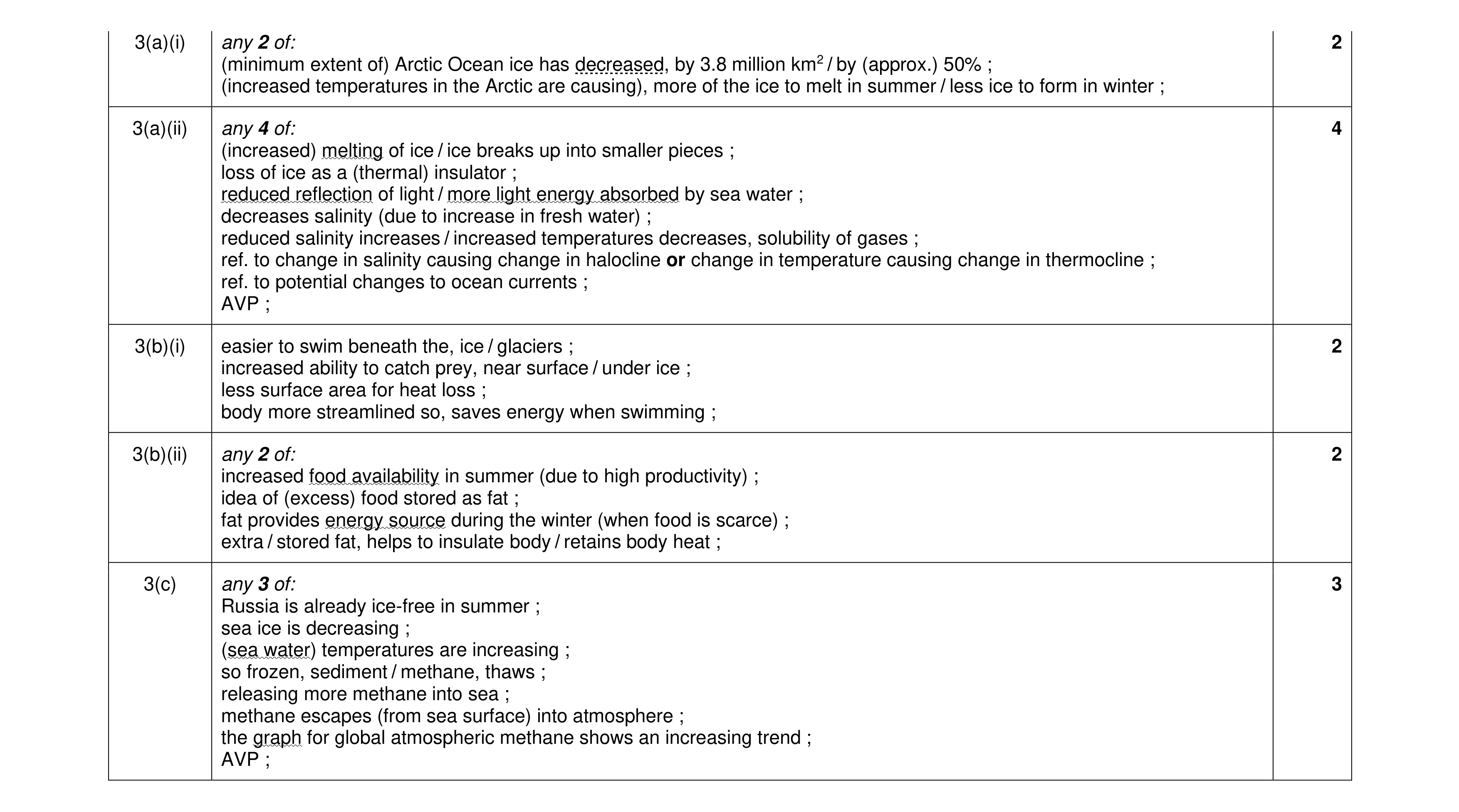 13
13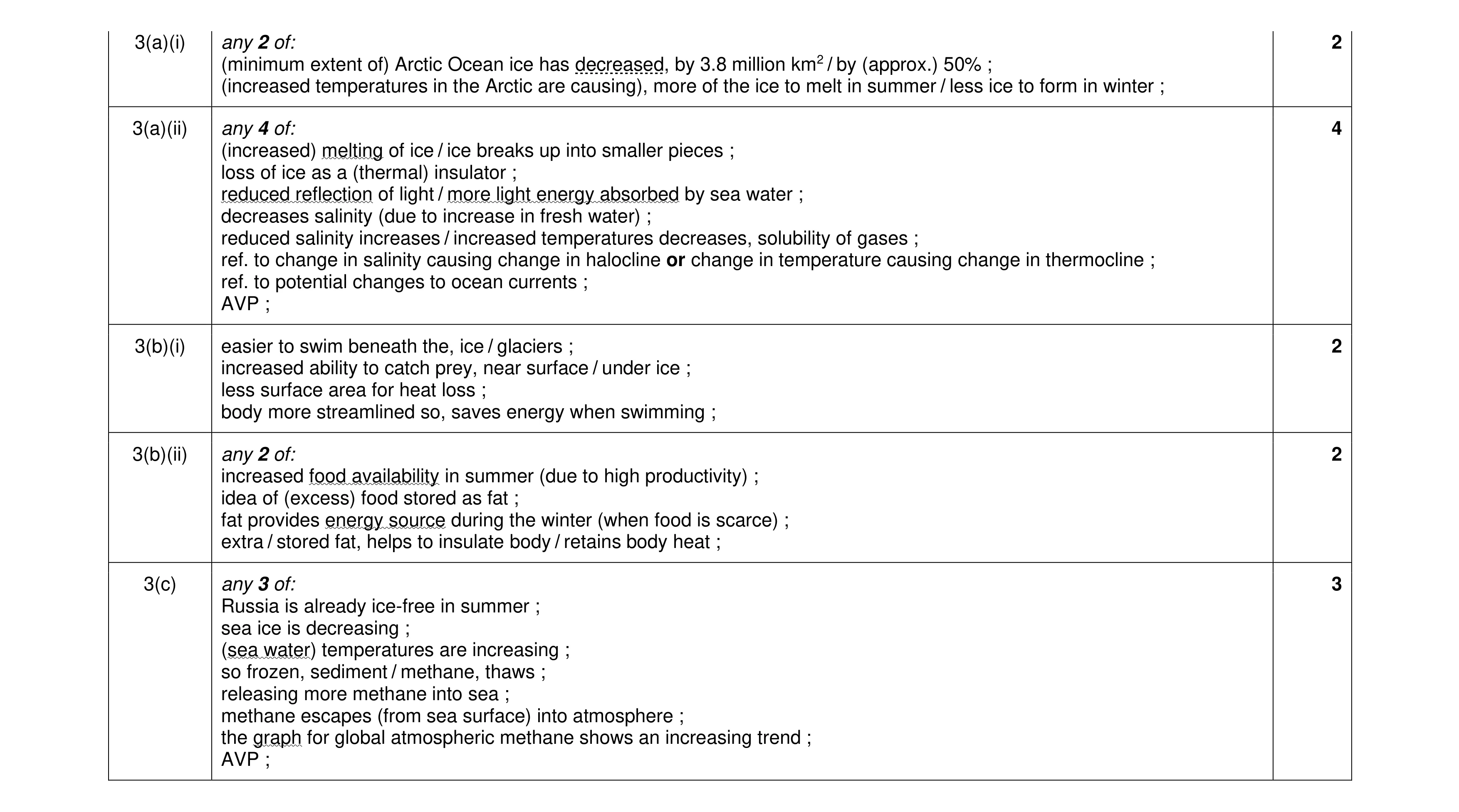 13
13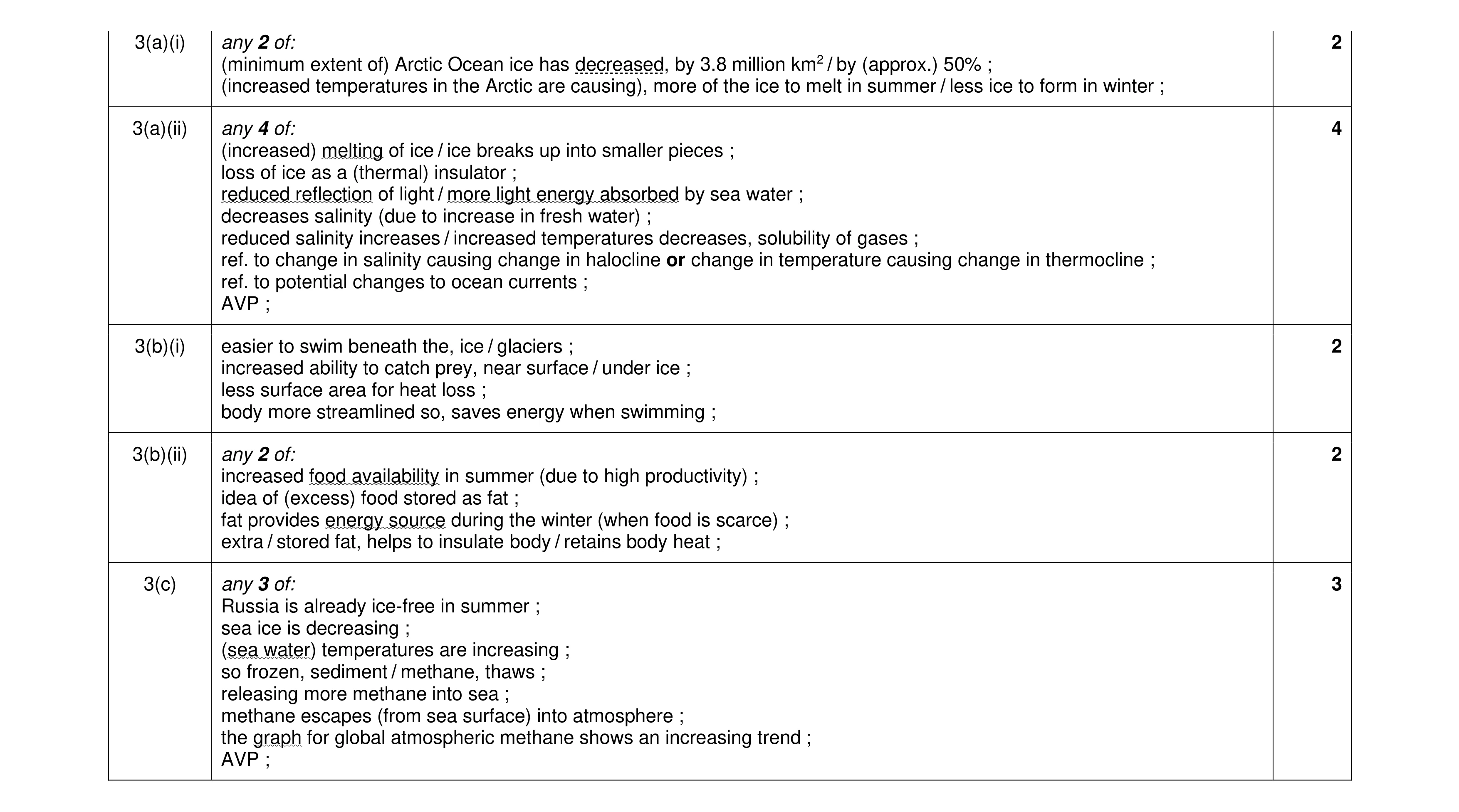 13
13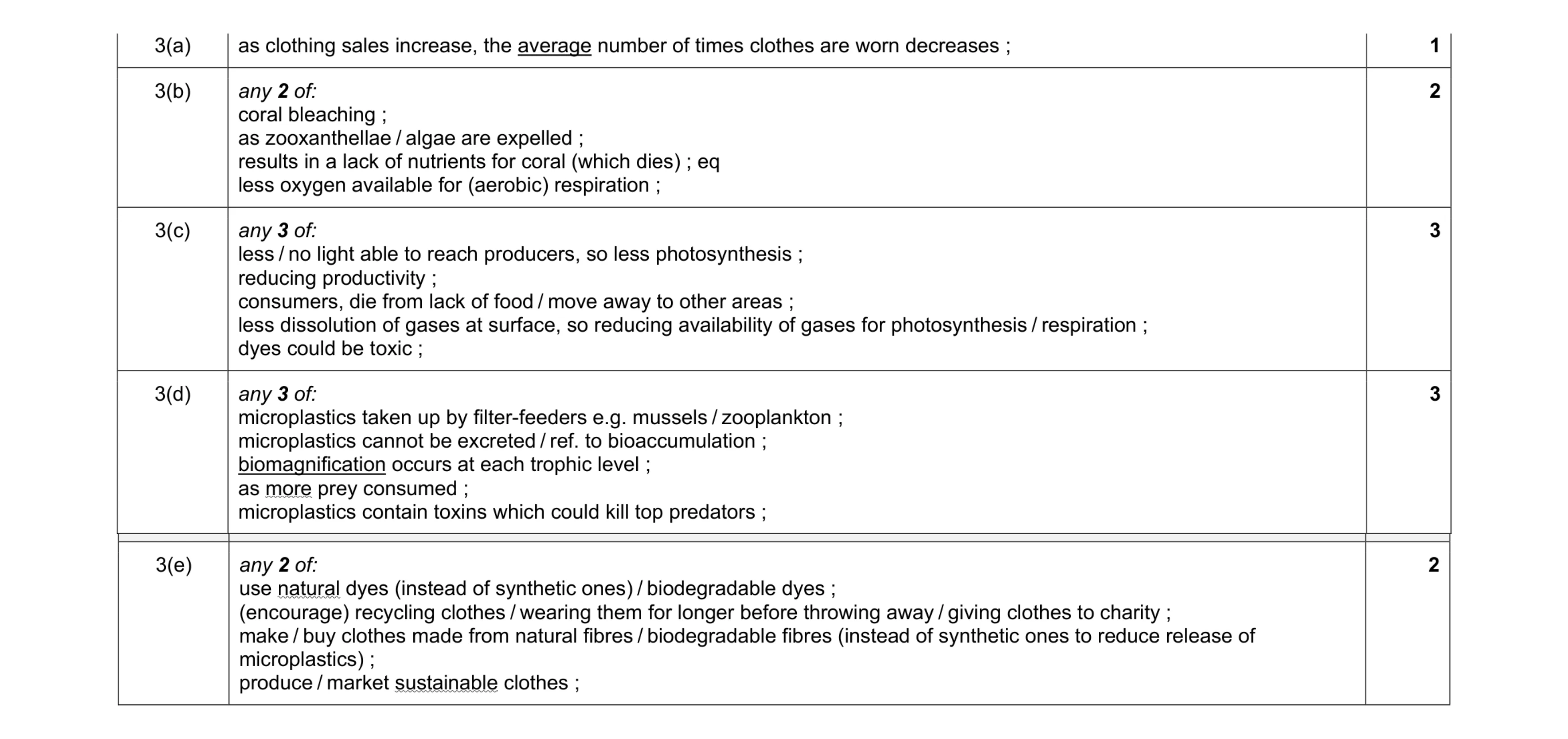 11
11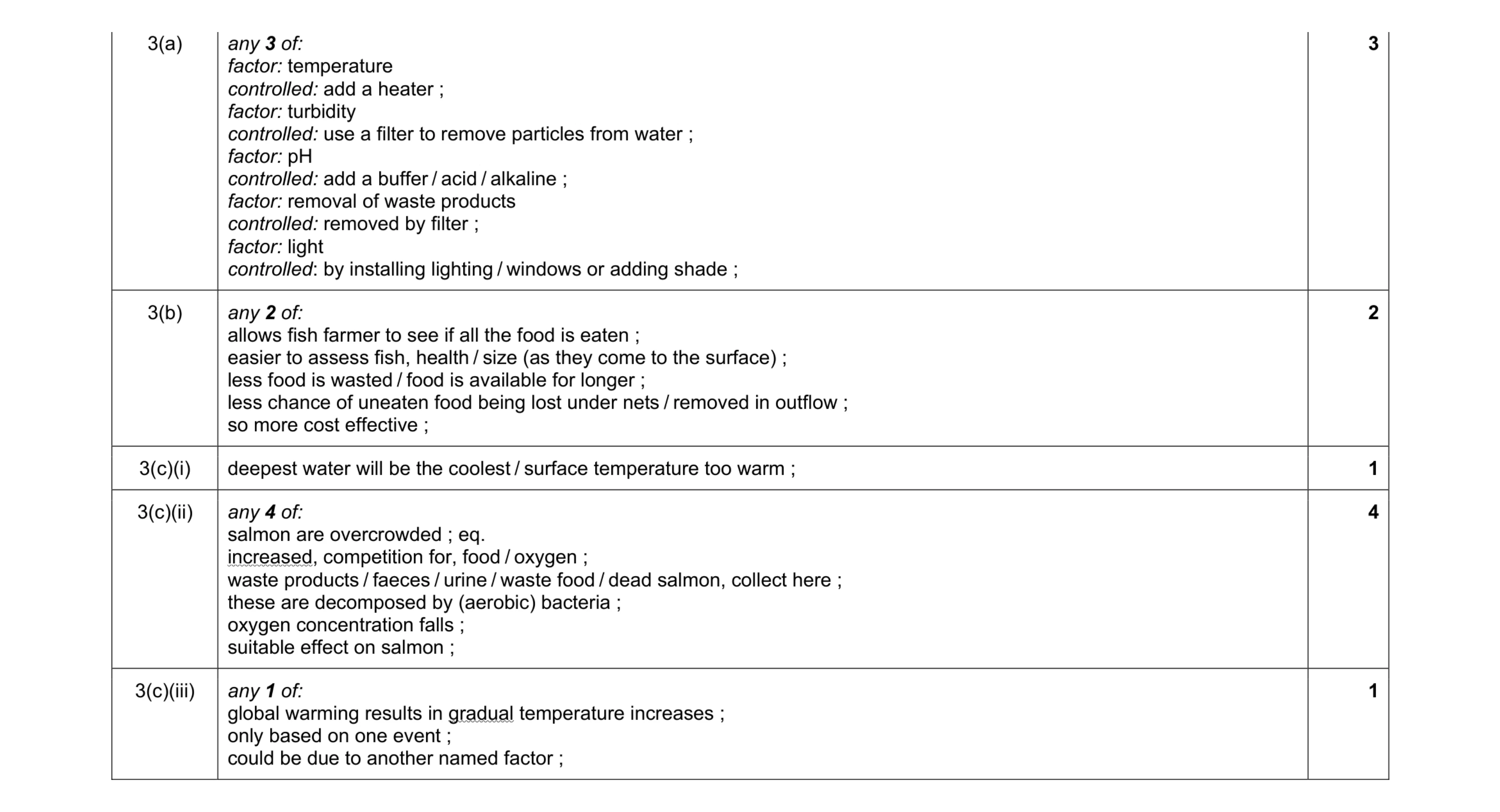 11
11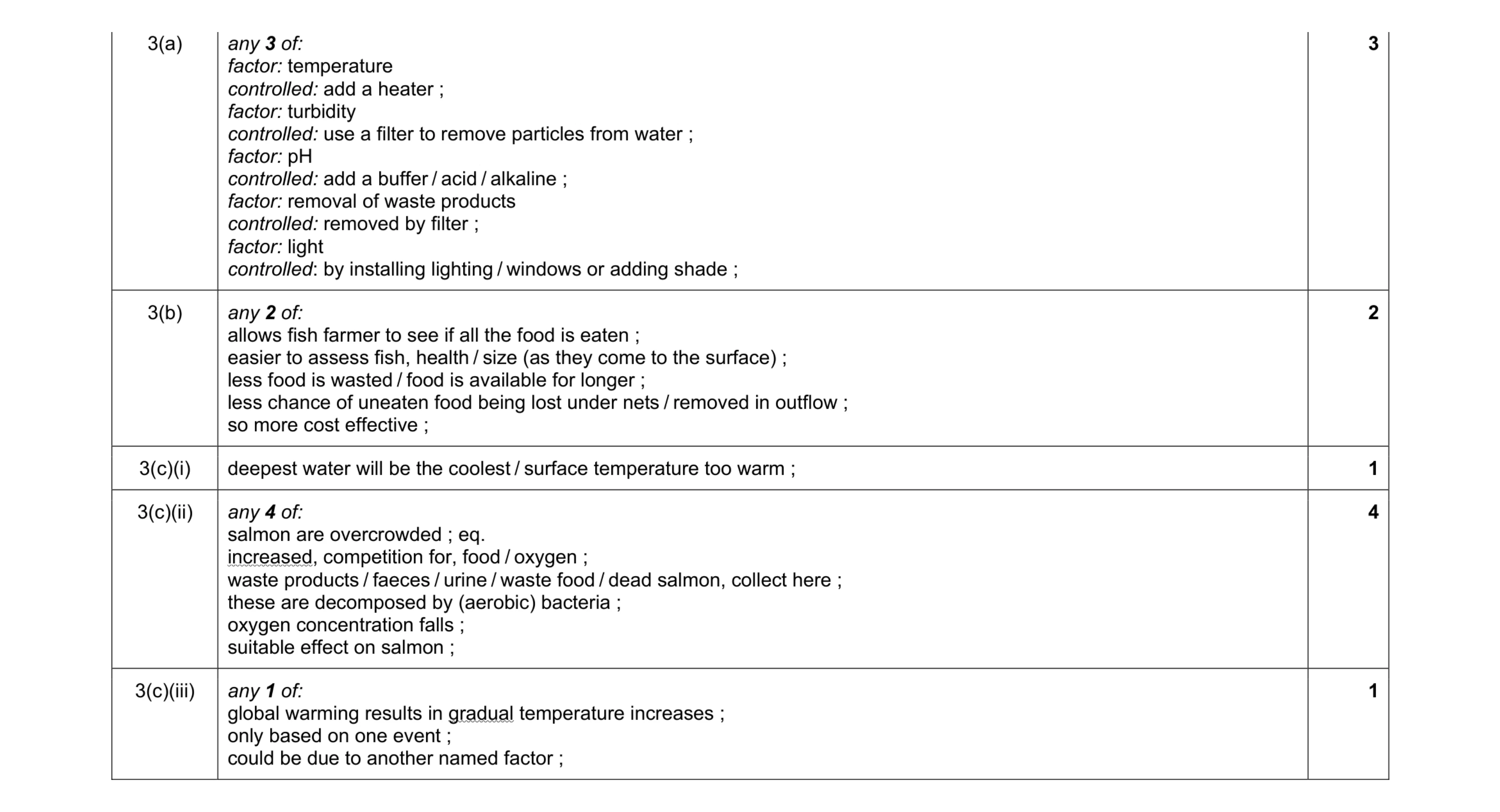 11
11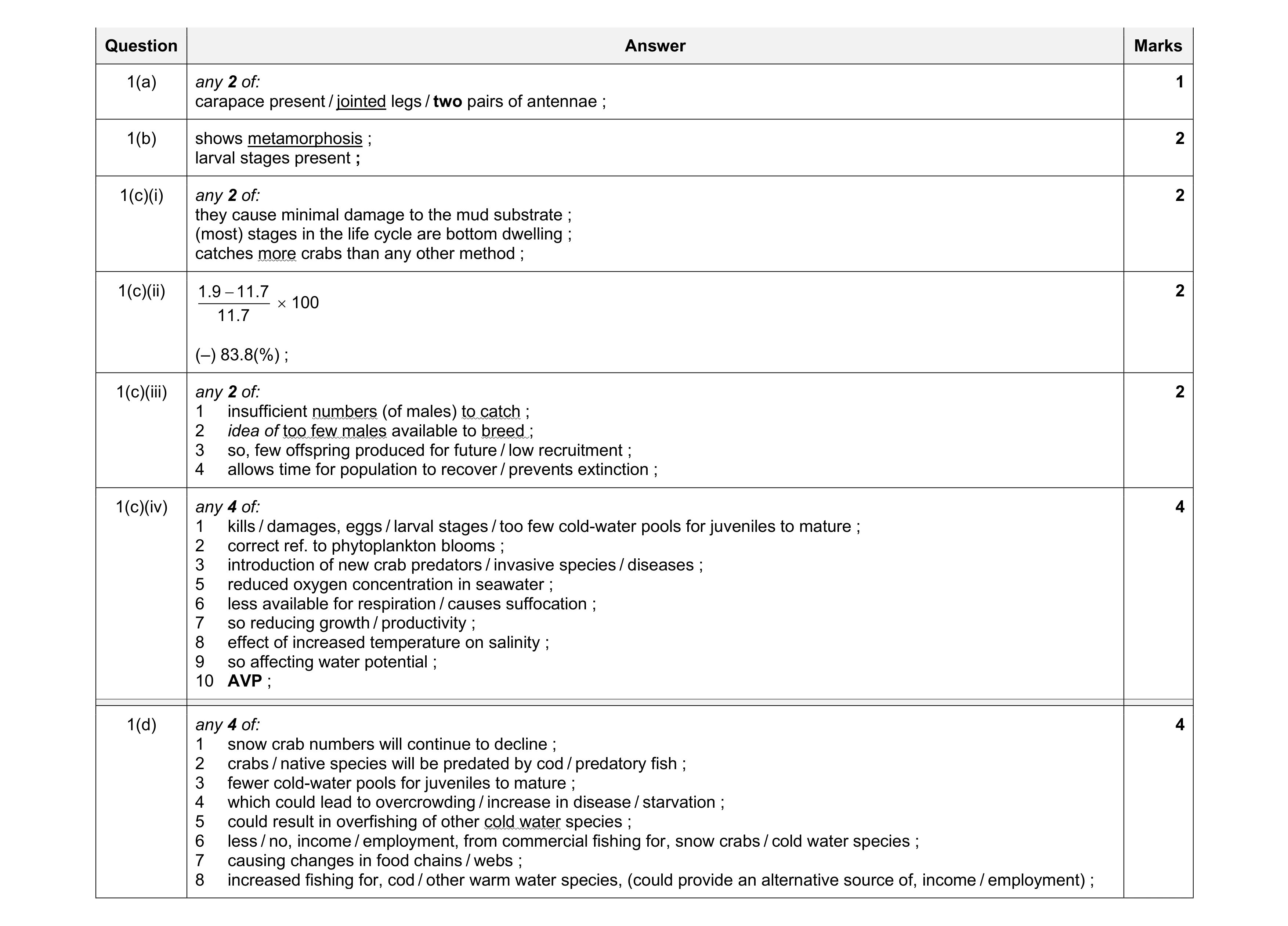 17
17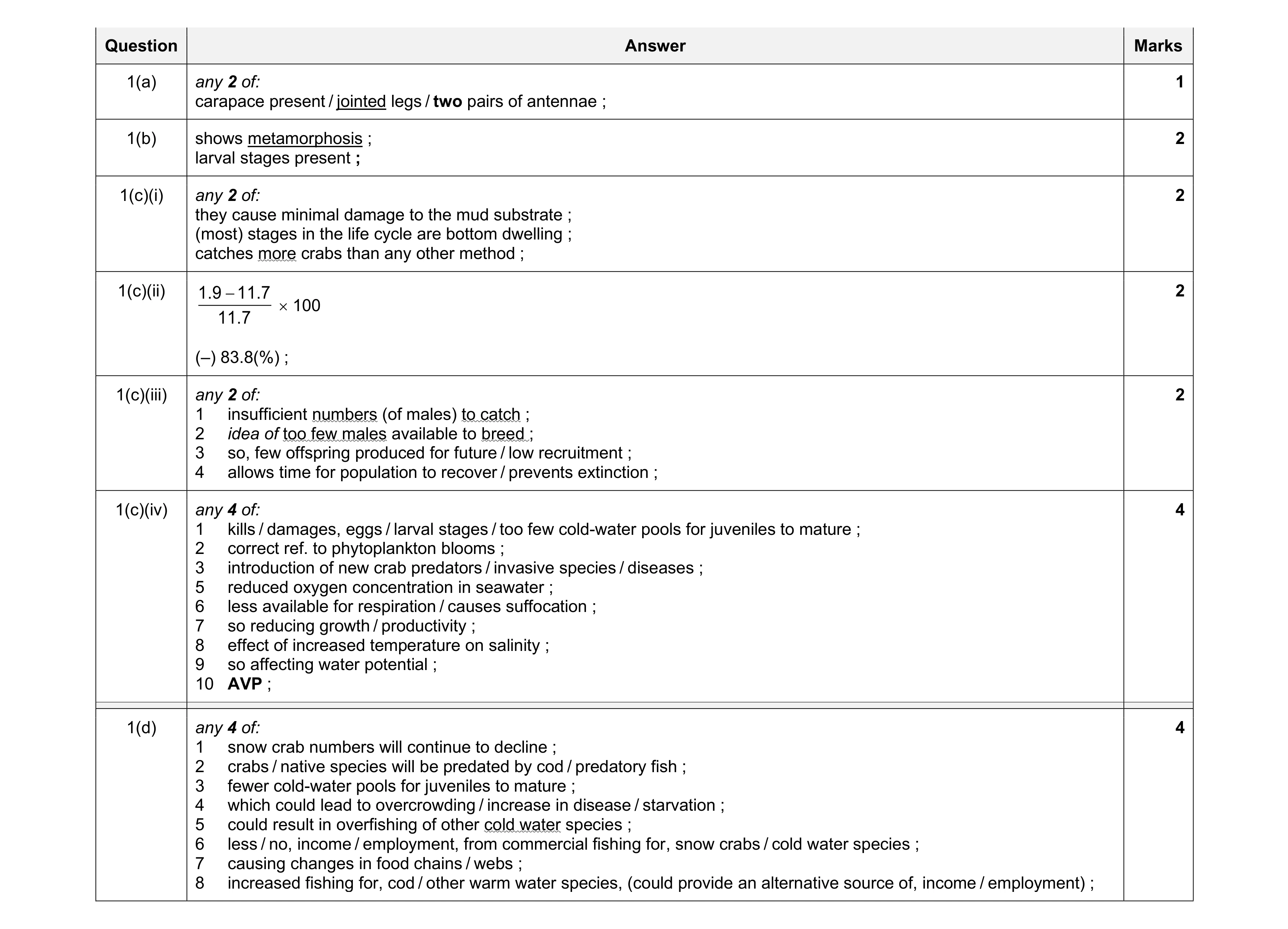 17
17