Cambridge A Level Marine Science 9693 — 2018 May/June Paper 3 · Variant 0
9693/30/M/J/18 · 7 questions · 75 marks · ≈84 min
The question paper and its mark scheme, free to read here and free to download. This is Cambridge’s own paper, exactly as it was sat.
Question paper20 pages



Mark scheme
No mark scheme is in the library for this paper.
Questions as text
Q1 · Seaweeds are algae that are important marine producers
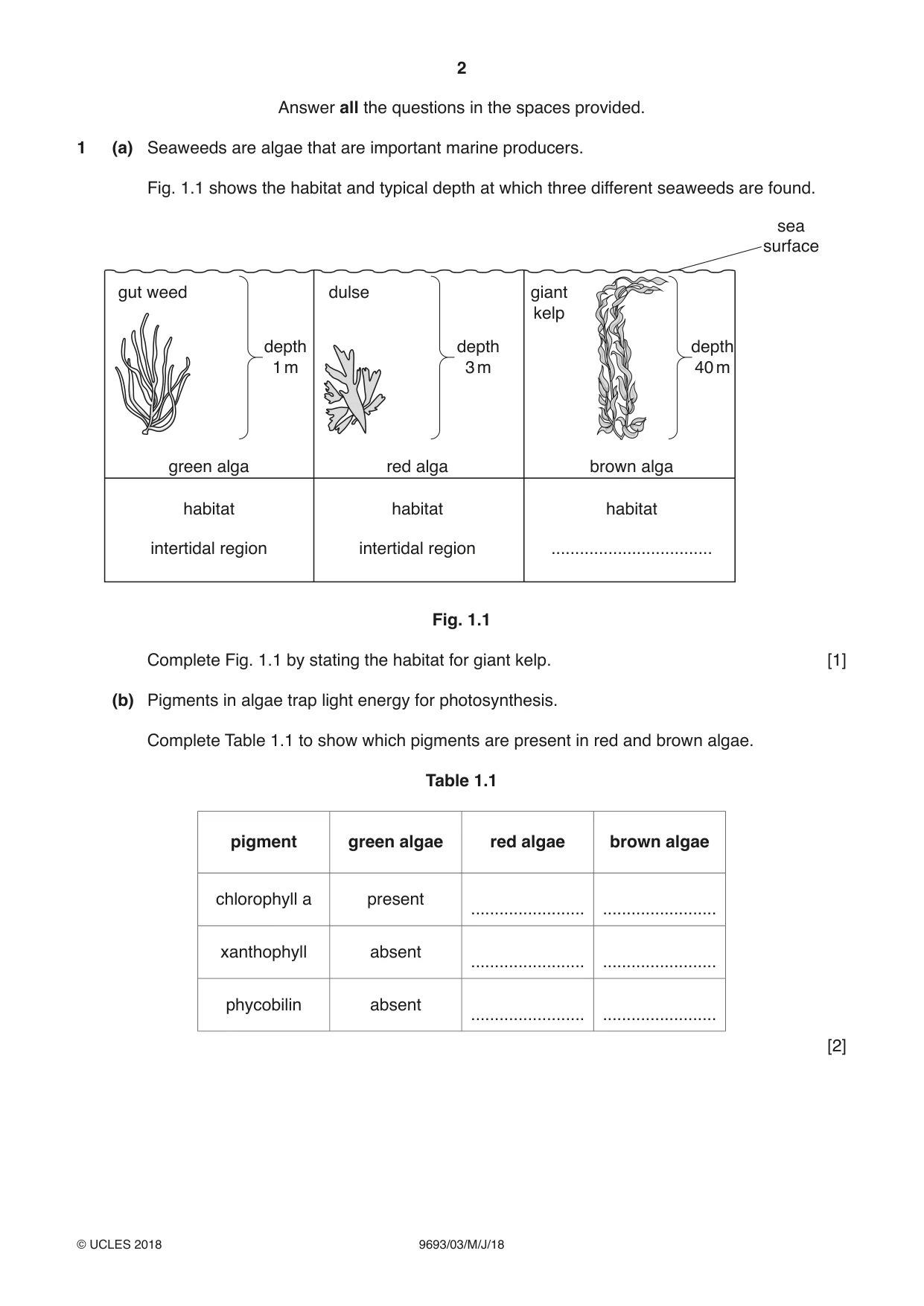
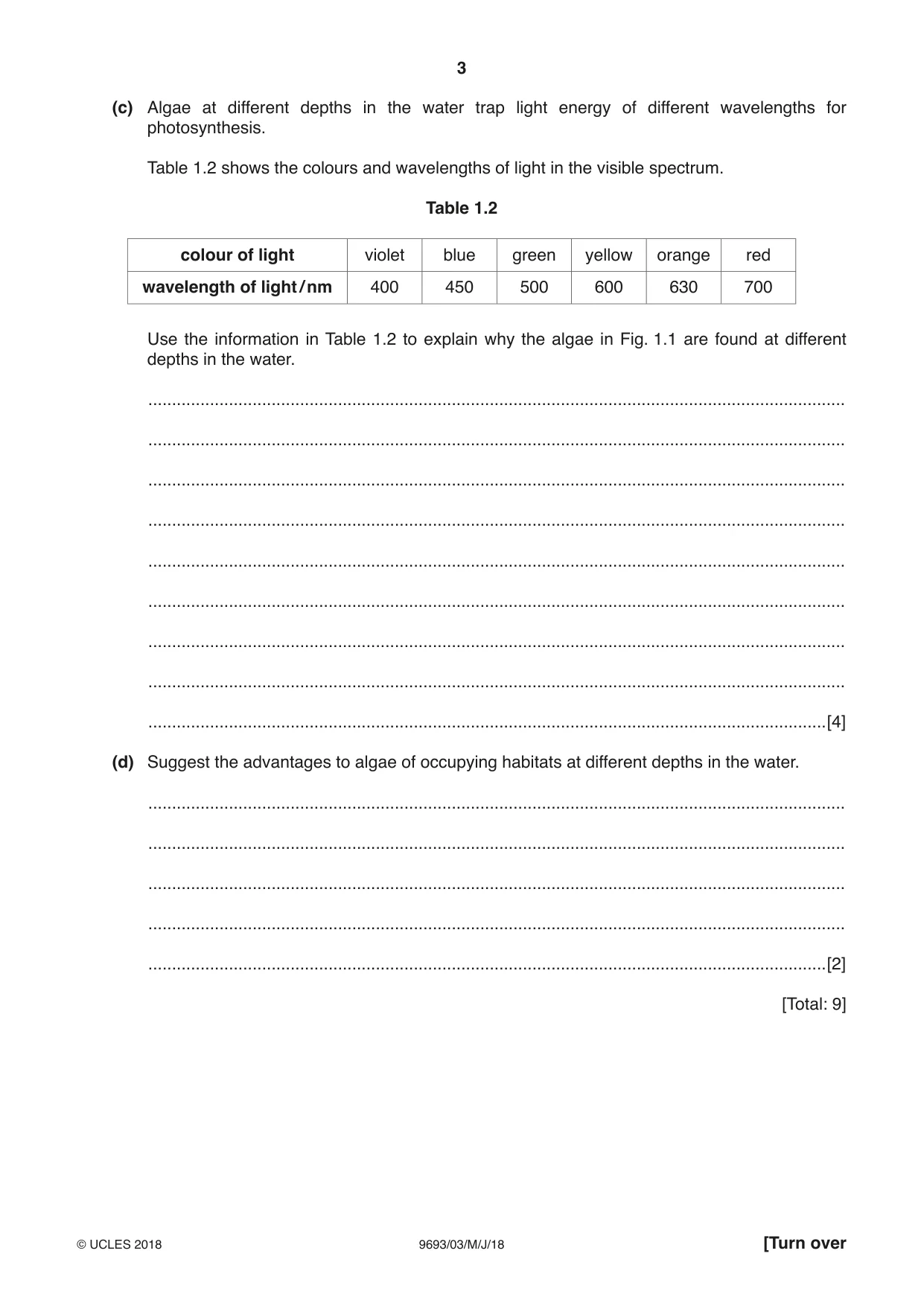
1 (a) Seaweeds are algae that are important marine producers. Fig. 1.1 shows the habitat and typical depth at which three different seaweeds are found. sea surface gut weed dulse giant kelp depth depth depth 1 m 3 m 40 m green alga red alga brown alga habitat habitat habitat intertidal region intertidal region .................................. Fig. 1.1 Complete Fig. 1.1 by stating the habitat for giant kelp. [1] (b) Pigments in algae trap light energy for photosynthesis. Complete Table 1.1 to show which pigments are present in red and brown algae. Table 1.1 pigment green algae red algae brown algae chlorophyll a present ........................ ........................ xanthophyll absent ........................ ........................ phycobilin absent ........................ ........................ [2] (c) Algae at different depths in the water trap light energy of different wavelengths for photosynthesis. Table 1.2 shows the colours and wavelengths of light in the visible spectrum. Table 1.2 colour of light violet blue green yellow orange red wavelength of light / nm 400 450 500 600 630 700 Use the information in Table 1.2 to explain why the algae in Fig. 1.1 are found at different depths in the water. ................................................................................................................................................... ................................................................................................................................................... ................................................................................................................................................... ................................................................................................................................................... ................................................................................................................................................... ................................................................................................................................................... ................................................................................................................................................... ................................................................................................................................................... ...............................................................................................................................................[4] (d) Suggest the advantages to algae of occupying habitats at different depths in the water. ................................................................................................................................................... ................................................................................................................................................... ................................................................................................................................................... ................................................................................................................................................... ...............................................................................................................................................[2] [Total: 9]
Q2 · State why the salinity of a muddy shore changes very little while the tide is out
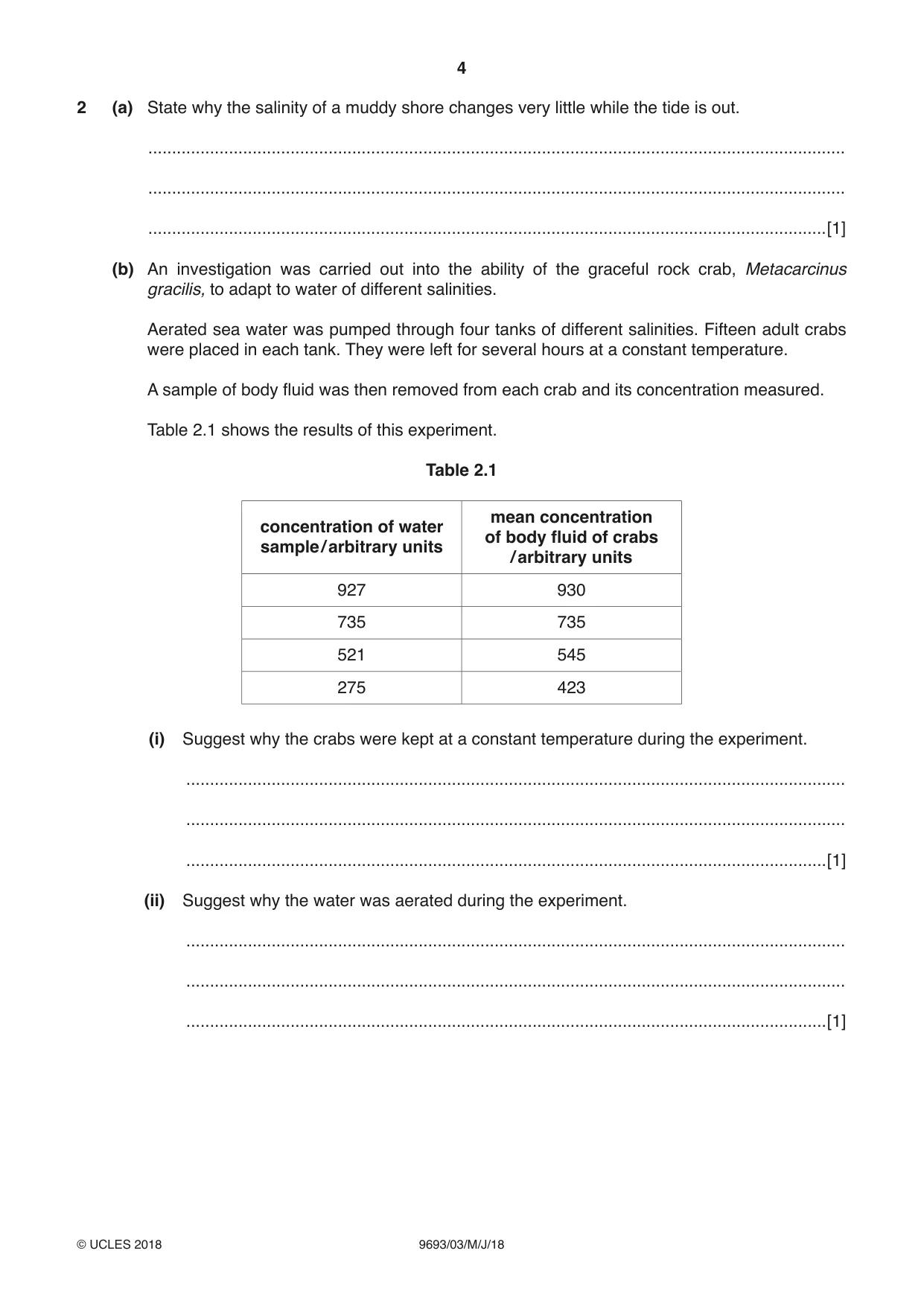
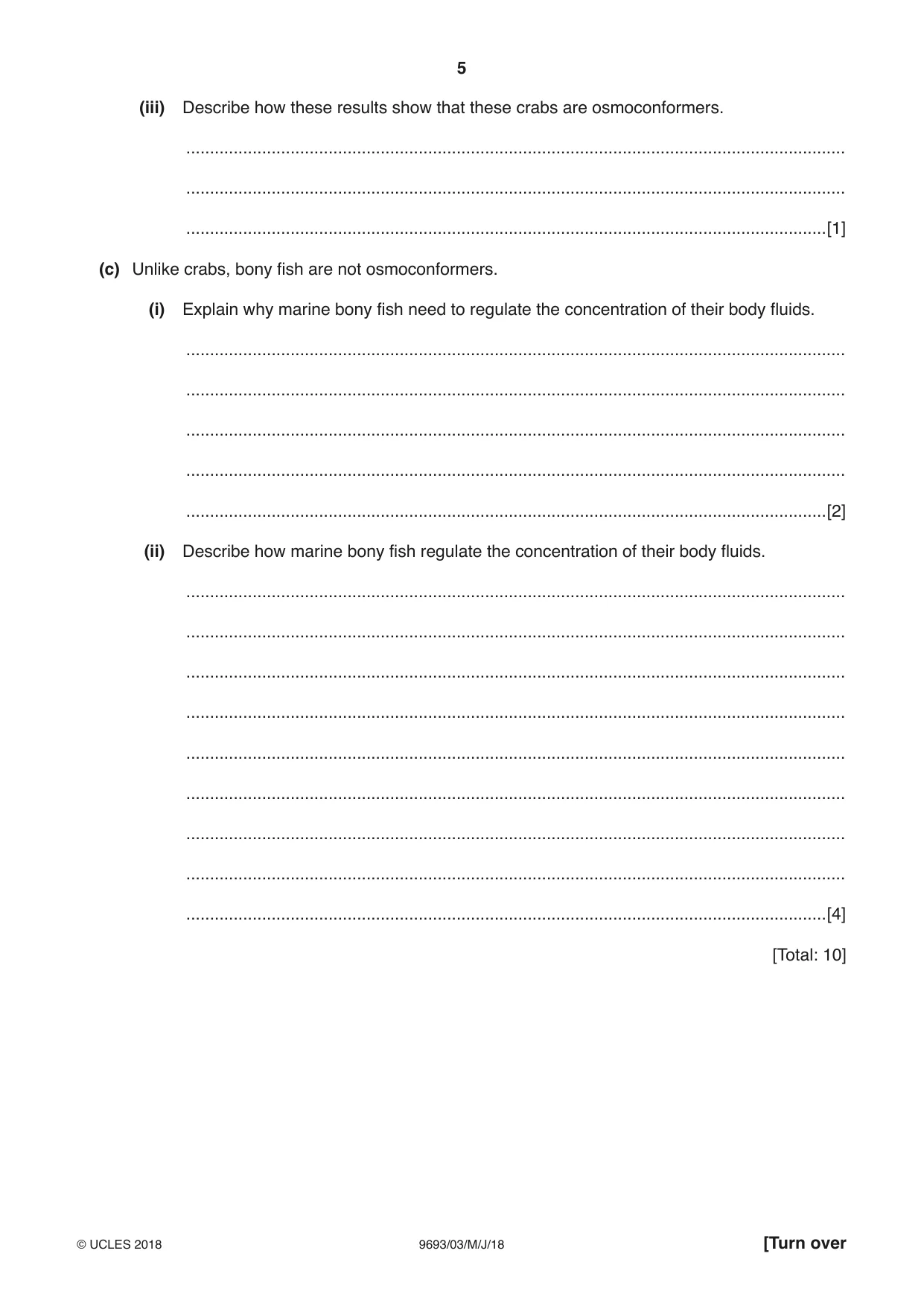
2 (a) State why the salinity of a muddy shore changes very little while the tide is out. ................................................................................................................................................... ................................................................................................................................................... ...............................................................................................................................................[1] (b) An investigation was carried out into the ability of the graceful rock crab, Metacarcinus gracilis, to adapt to water of different salinities. Aerated sea water was pumped through four tanks of different salinities. Fifteen adult crabs were placed in each tank. They were left for several hours at a constant temperature. A sample of body fluid was then removed from each crab and its concentration measured. Table 2.1 shows the results of this experiment. Table 2.1 mean concentration concentration of water of body fluid of crabs sample / arbitrary units / arbitrary units 927 930 735 735 521 545 275 423 (i) Suggest why the crabs were kept at a constant temperature during the experiment. ........................................................................................................................................... ........................................................................................................................................... .......................................................................................................................................[1] (ii) Suggest why the water was aerated during the experiment. ........................................................................................................................................... ........................................................................................................................................... .......................................................................................................................................[1] (iii) Describe how these results show that these crabs are osmoconformers. ........................................................................................................................................... ........................................................................................................................................... .......................................................................................................................................[1] (c) Unlike crabs, bony fish are not osmoconformers. (i) Explain why marine bony fish need to regulate the concentration of their body fluids. ........................................................................................................................................... ........................................................................................................................................... ........................................................................................................................................... ........................................................................................................................................... .......................................................................................................................................[2] (ii) Describe how marine bony fish regulate the concentration of their body fluids. ........................................................................................................................................... ........................................................................................................................................... ........................................................................................................................................... ........................................................................................................................................... ........................................................................................................................................... ........................................................................................................................................... ........................................................................................................................................... ........................................................................................................................................... .......................................................................................................................................[4] [Total: 10]
Q3 · A northern lobster, which is an important seafood export for south west Nova Scotia…
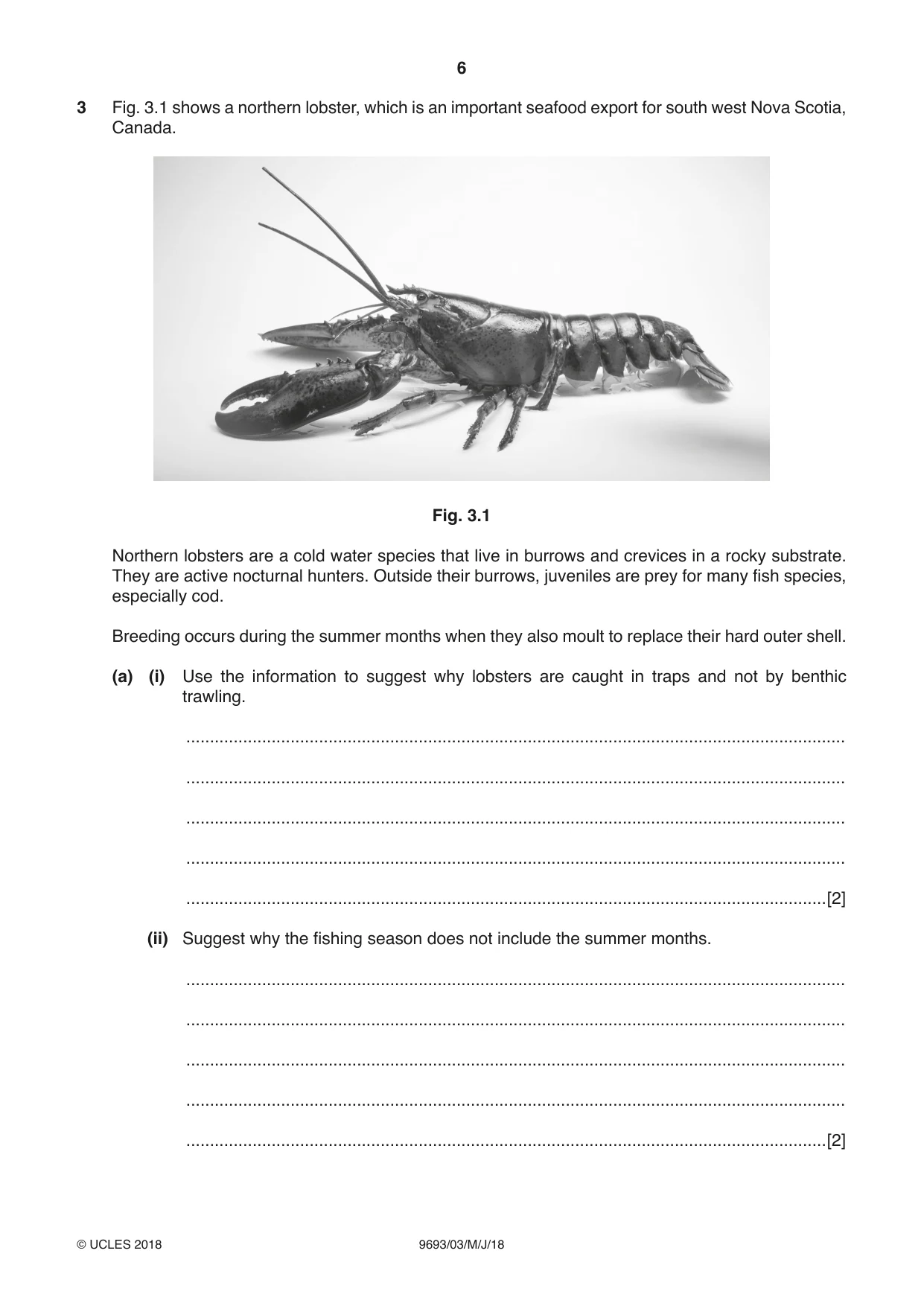
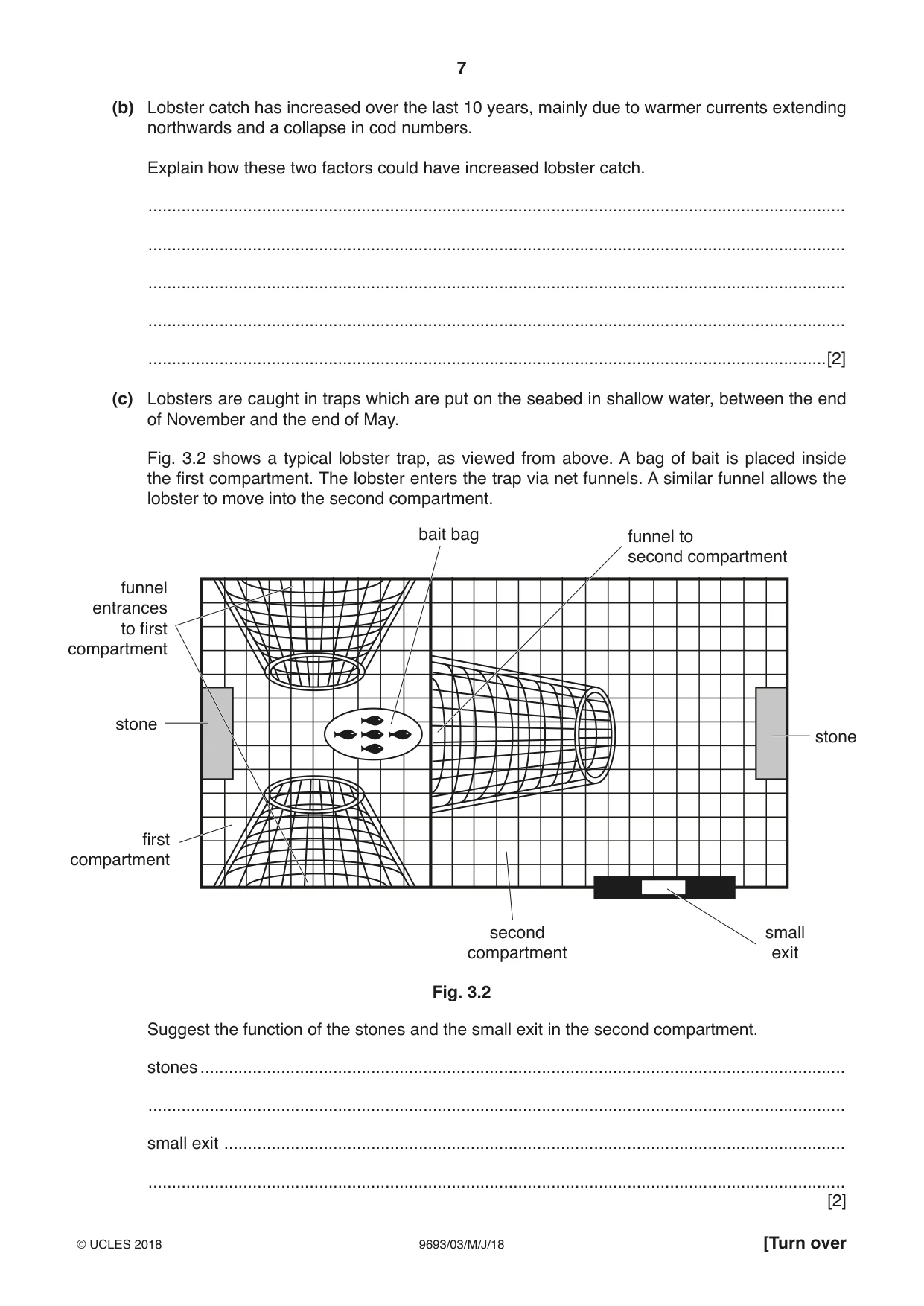
3 Fig. 3.1 shows a northern lobster, which is an important seafood export for south west Nova Scotia, Canada. Fig. 3.1 Northern lobsters are a cold water species that live in burrows and crevices in a rocky substrate. They are active nocturnal hunters. Outside their burrows, juveniles are prey for many fish species, especially cod. Breeding occurs during the summer months when they also moult to replace their hard outer shell. (a) (i) Use the information to suggest why lobsters are caught in traps and not by benthic trawling. ........................................................................................................................................... ........................................................................................................................................... ........................................................................................................................................... ........................................................................................................................................... .......................................................................................................................................[2] (ii) Suggest why the fishing season does not include the summer months. ........................................................................................................................................... ........................................................................................................................................... ........................................................................................................................................... ........................................................................................................................................... .......................................................................................................................................[2] (b) Lobster catch has increased over the last 10 years, mainly due to warmer currents extending northwards and a collapse in cod numbers. Explain how these two factors could have increased lobster catch. ................................................................................................................................................... ................................................................................................................................................... ................................................................................................................................................... ................................................................................................................................................... ...............................................................................................................................................[2] (c) Lobsters are caught in traps which are put on the seabed in shallow water, between the end of November and the end of May. Fig. 3.2 shows a typical lobster trap, as viewed from above. A bag of bait is placed inside the first compartment. The lobster enters the trap via net funnels. A similar funnel allows the lobster to move into the second compartment. bait bag funnel to second compartment funnel entrances to first compartment stone stone first compartment second small compartment exit Fig. 3.2 Suggest the function of the stones and the small exit in the second compartment. stones ........................................................................................................................................ ................................................................................................................................................... small exit ................................................................................................................................... ................................................................................................................................................... [2] (d) The coastline around south west Nova Scotia is a mixture of rocky areas and sandy bays. When the season opens, 1500 lobster boats race to claim the best fishing locations. Suggest why fishing boats need to race to claim their fishing locations. ................................................................................................................................................... ................................................................................................................................................... ...............................................................................................................................................[1] (e) Concrete artificial reefs have been designed for lobsters and other high value marine species. Lobsters begin to colonise these reefs in two years. After seven years, the reefs are fully functional. (i) Suggest why an artificial reef takes seven years to become fully functional. ........................................................................................................................................... ........................................................................................................................................... .......................................................................................................................................[1] (ii) Suggest how artificial reefs could be used to increase the lobster catch in Nova Scotia. ........................................................................................................................................... ........................................................................................................................................... ........................................................................................................................................... ........................................................................................................................................... .......................................................................................................................................[2] [Total: 12]
Q4 · The habitat of each stage in the life cycle of tuna and grouper
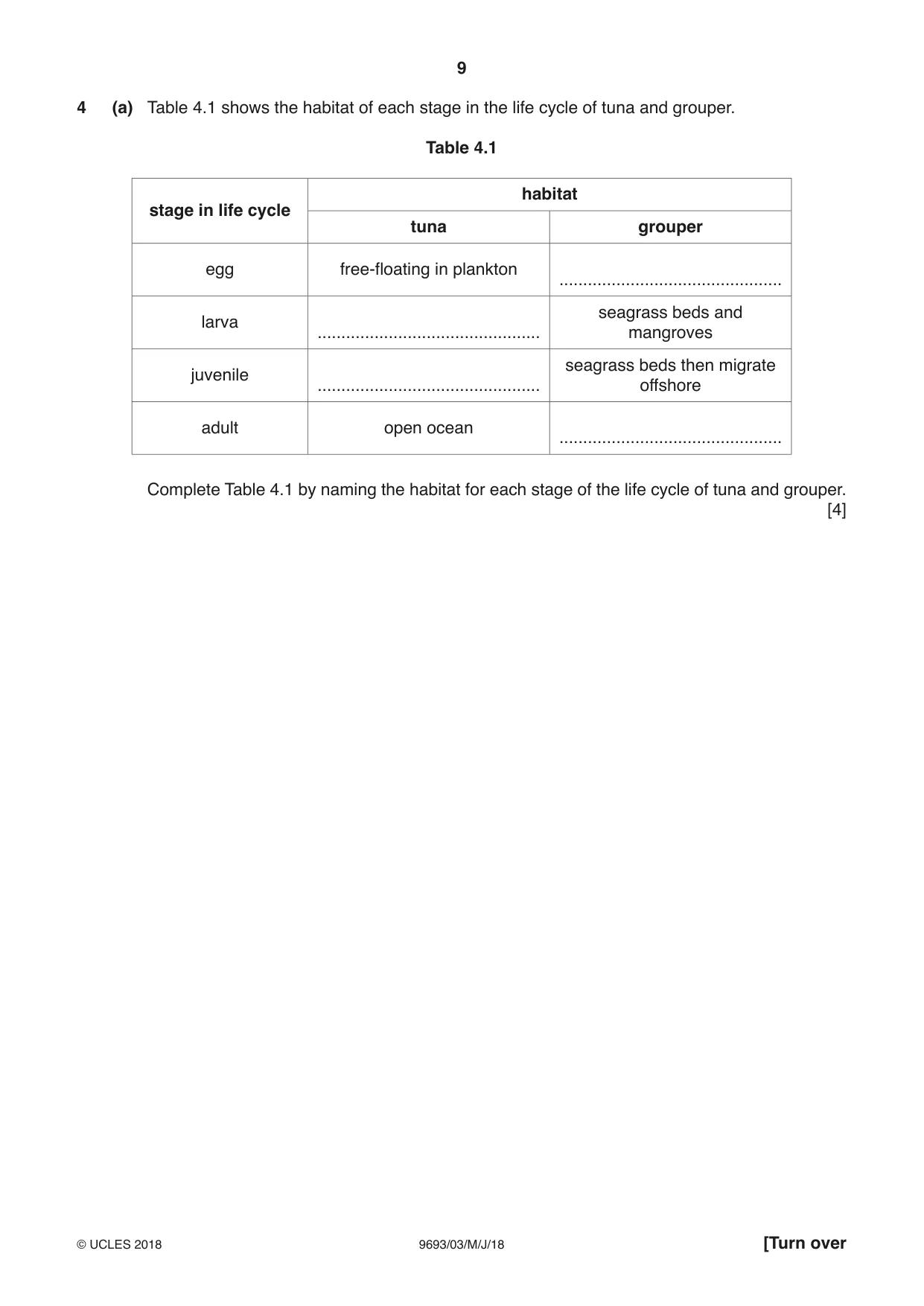
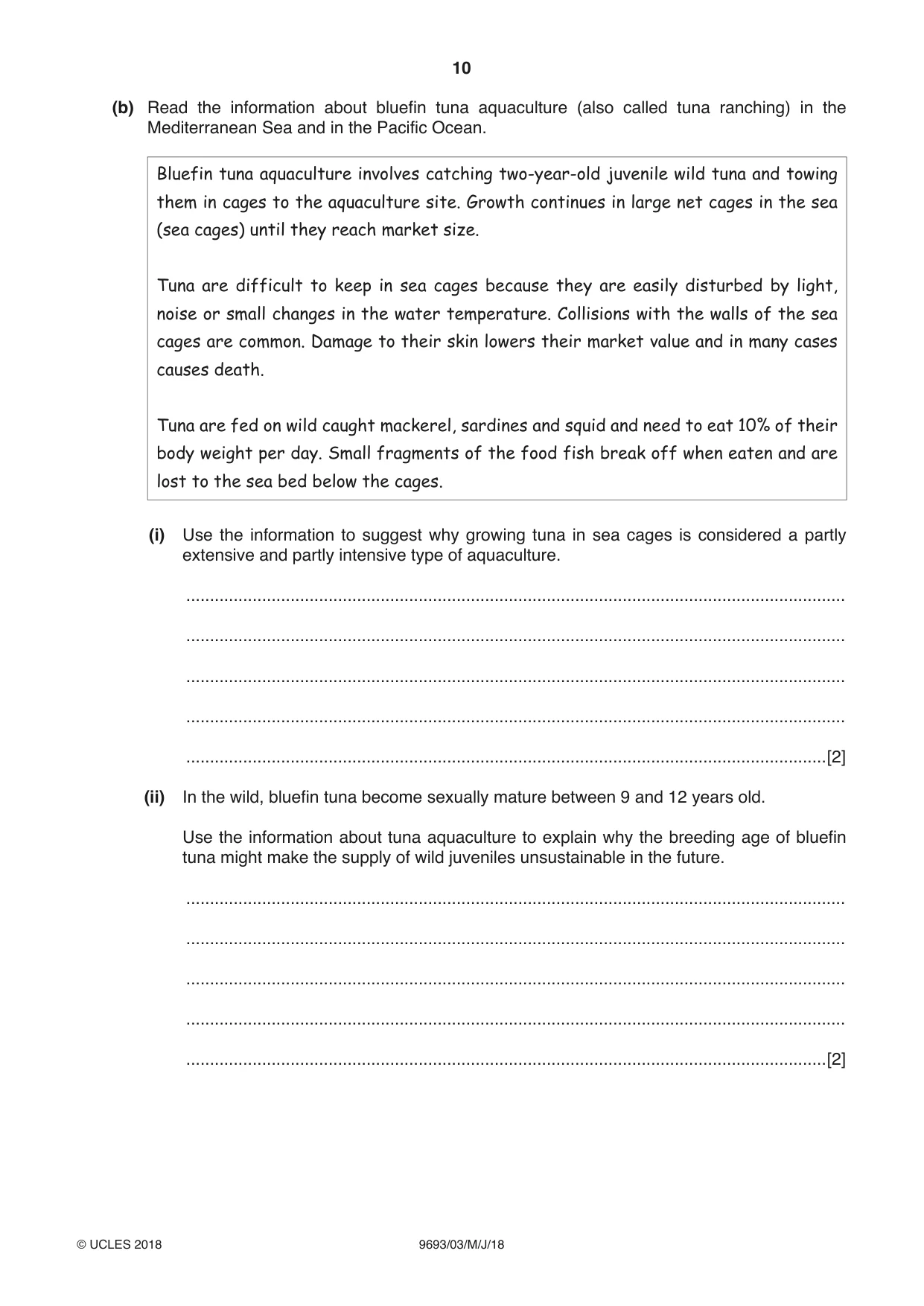
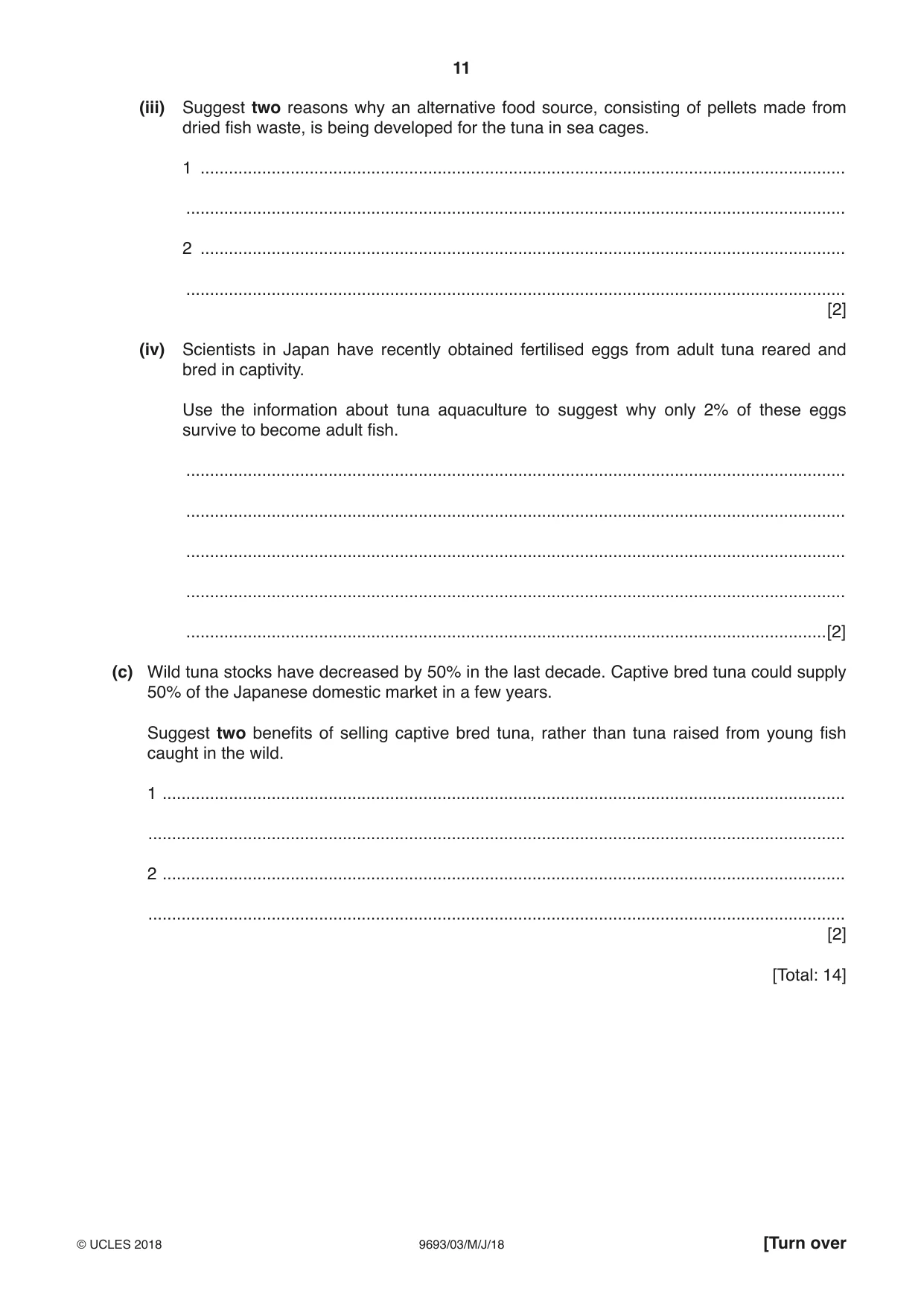
4 (a) Table 4.1 shows the habitat of each stage in the life cycle of tuna and grouper. Table 4.1 habitat stage in life cycle tuna grouper egg free-floating in plankton ............................................... seagrass beds and larva ............................................... mangroves seagrass beds then migrate juvenile ............................................... offshore adult open ocean ............................................... Complete Table 4.1 by naming the habitat for each stage of the life cycle of tuna and grouper. [4] (b) Read the information about bluefin tuna aquaculture (also called tuna ranching) in the Mediterranean Sea and in the Pacific Ocean. Bluefin tuna aquaculture involves catching two-year-old juvenile wild tuna and towing them in cages to the aquaculture site. Growth continues in large net cages in the sea (sea cages) until they reach market size. Tuna are difficult to keep in sea cages because they are easily disturbed by light, noise or small changes in the water temperature. Collisions with the walls of the sea cages are common. Damage to their skin lowers their market value and in many cases causes death. Tuna are fed on wild caught mackerel, sardines and squid and need to eat 10% of their body weight per day. Small fragments of the food fish break off when eaten and are lost to the sea bed below the cages. (i) Use the information to suggest why growing tuna in sea cages is considered a partly extensive and partly intensive type of aquaculture. ........................................................................................................................................... ........................................................................................................................................... ........................................................................................................................................... ........................................................................................................................................... .......................................................................................................................................[2] (ii) In the wild, bluefin tuna become sexually mature between 9 and 12 years old. Use the information about tuna aquaculture to explain why the breeding age of bluefin tuna might make the supply of wild juveniles unsustainable in the future. ........................................................................................................................................... ........................................................................................................................................... ........................................................................................................................................... ........................................................................................................................................... .......................................................................................................................................[2] (iii) Suggest two reasons why an alternative food source, consisting of pellets made from dried fish waste, is being developed for the tuna in sea cages. 1 ........................................................................................................................................ ........................................................................................................................................... 2 ........................................................................................................................................ ........................................................................................................................................... [2] (iv) Scientists in Japan have recently obtained fertilised eggs from adult tuna reared and bred in captivity. Use the information about tuna aquaculture to suggest why only 2% of these eggs survive to become adult fish. ........................................................................................................................................... ........................................................................................................................................... ........................................................................................................................................... ........................................................................................................................................... .......................................................................................................................................[2] (c) Wild tuna stocks have decreased by 50% in the last decade. Captive bred tuna could supply 50% of the Japanese domestic market in a few years. Suggest two benefits of selling captive bred tuna, rather than tuna raised from young fish caught in the wild. 1 ................................................................................................................................................ ................................................................................................................................................... 2 ................................................................................................................................................ ................................................................................................................................................... [2] [Total: 14]
Q5 · Greenland is a large, ice-covered island found partly inside the Arctic Circle
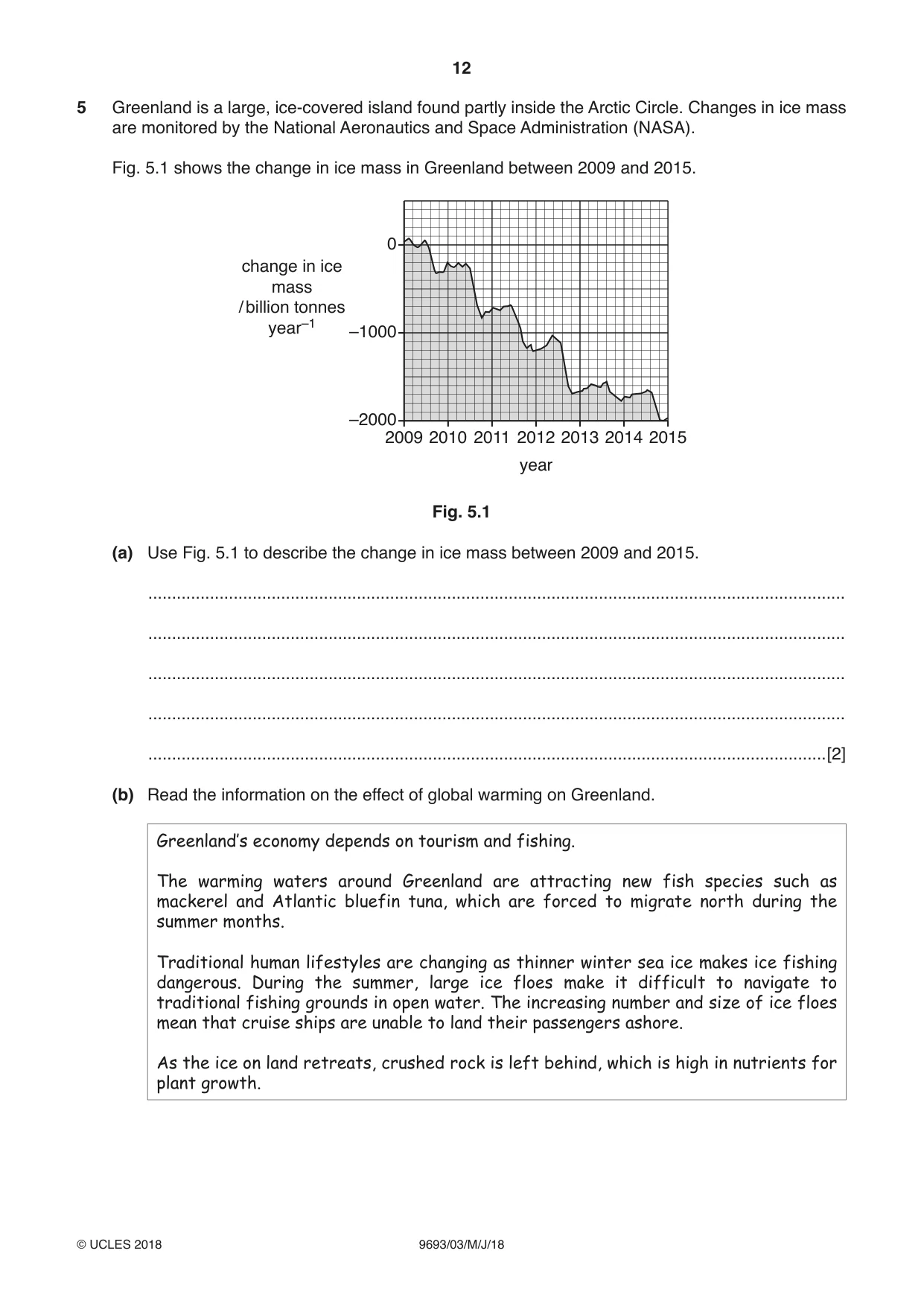
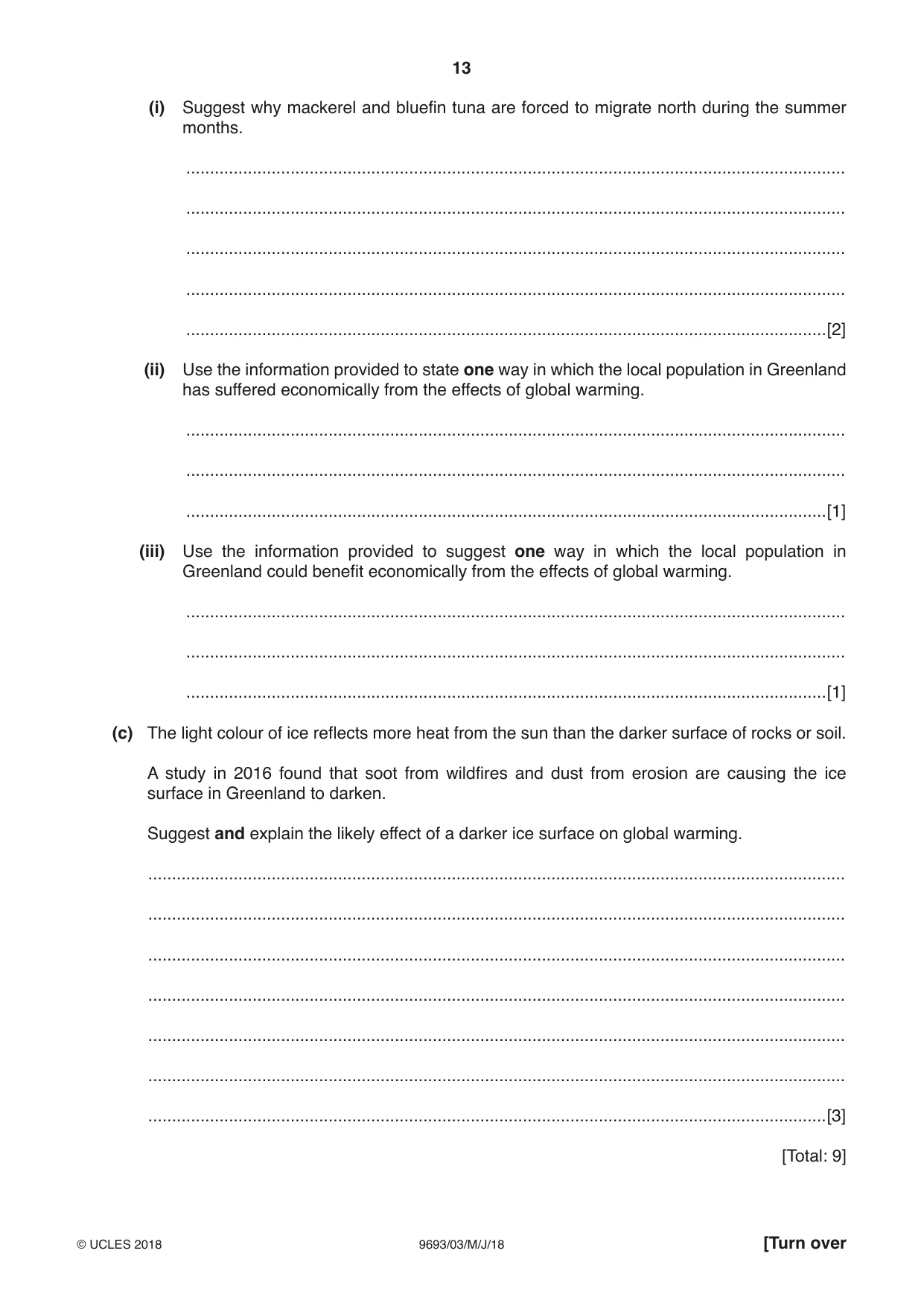
5 Greenland is a large, ice-covered island found partly inside the Arctic Circle. Changes in ice mass are monitored by the National Aeronautics and Space Administration (NASA). Fig. 5.1 shows the change in ice mass in Greenland between 2009 and 2015. 0 change in ice mass / billion tonnes year–1 –1000 –2000 2009 2010 2011 2012 2013 2014 2015 year Fig. 5.1 (a) Use Fig. 5.1 to describe the change in ice mass between 2009 and 2015. ................................................................................................................................................... ................................................................................................................................................... ................................................................................................................................................... ................................................................................................................................................... ...............................................................................................................................................[2] (b) Read the information on the effect of global warming on Greenland. Greenland’s economy depends on tourism and fishing. The warming waters around Greenland are attracting new fish species such as mackerel and Atlantic bluefin tuna, which are forced to migrate north during the summer months. Traditional human lifestyles are changing as thinner winter sea ice makes ice fishing dangerous. During the summer, large ice floes make it difficult to navigate to traditional fishing grounds in open water. The increasing number and size of ice floes mean that cruise ships are unable to land their passengers ashore. As the ice on land retreats, crushed rock is left behind, which is high in nutrients for plant growth. (i) Suggest why mackerel and bluefin tuna are forced to migrate north during the summer months. ........................................................................................................................................... ........................................................................................................................................... ........................................................................................................................................... ........................................................................................................................................... .......................................................................................................................................[2] (ii) Use the information provided to state one way in which the local population in Greenland has suffered economically from the effects of global warming. ........................................................................................................................................... ........................................................................................................................................... .......................................................................................................................................[1] (iii) Use the information provided to suggest one way in which the local population in Greenland could benefit economically from the effects of global warming. ........................................................................................................................................... ........................................................................................................................................... .......................................................................................................................................[1] (c) The light colour of ice reflects more heat from the sun than the darker surface of rocks or soil. A study in 2016 found that soot from wildfires and dust from erosion are causing the ice surface in Greenland to darken. Suggest and explain the likely effect of a darker ice surface on global warming. ................................................................................................................................................... ................................................................................................................................................... ................................................................................................................................................... ................................................................................................................................................... ................................................................................................................................................... ................................................................................................................................................... ...............................................................................................................................................[3] [Total: 9]
Q6 · Sea turtles spend their lives in the sea
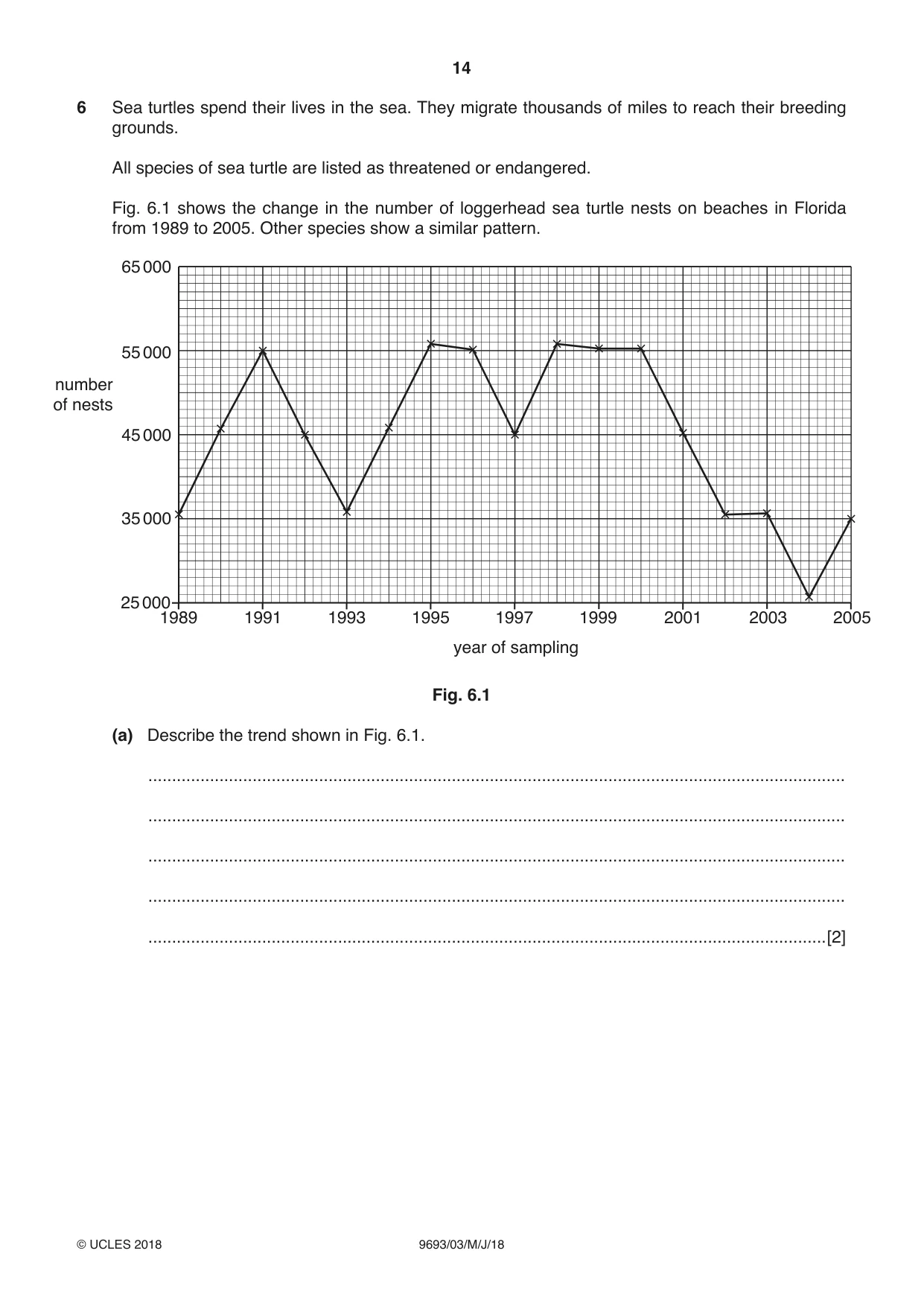
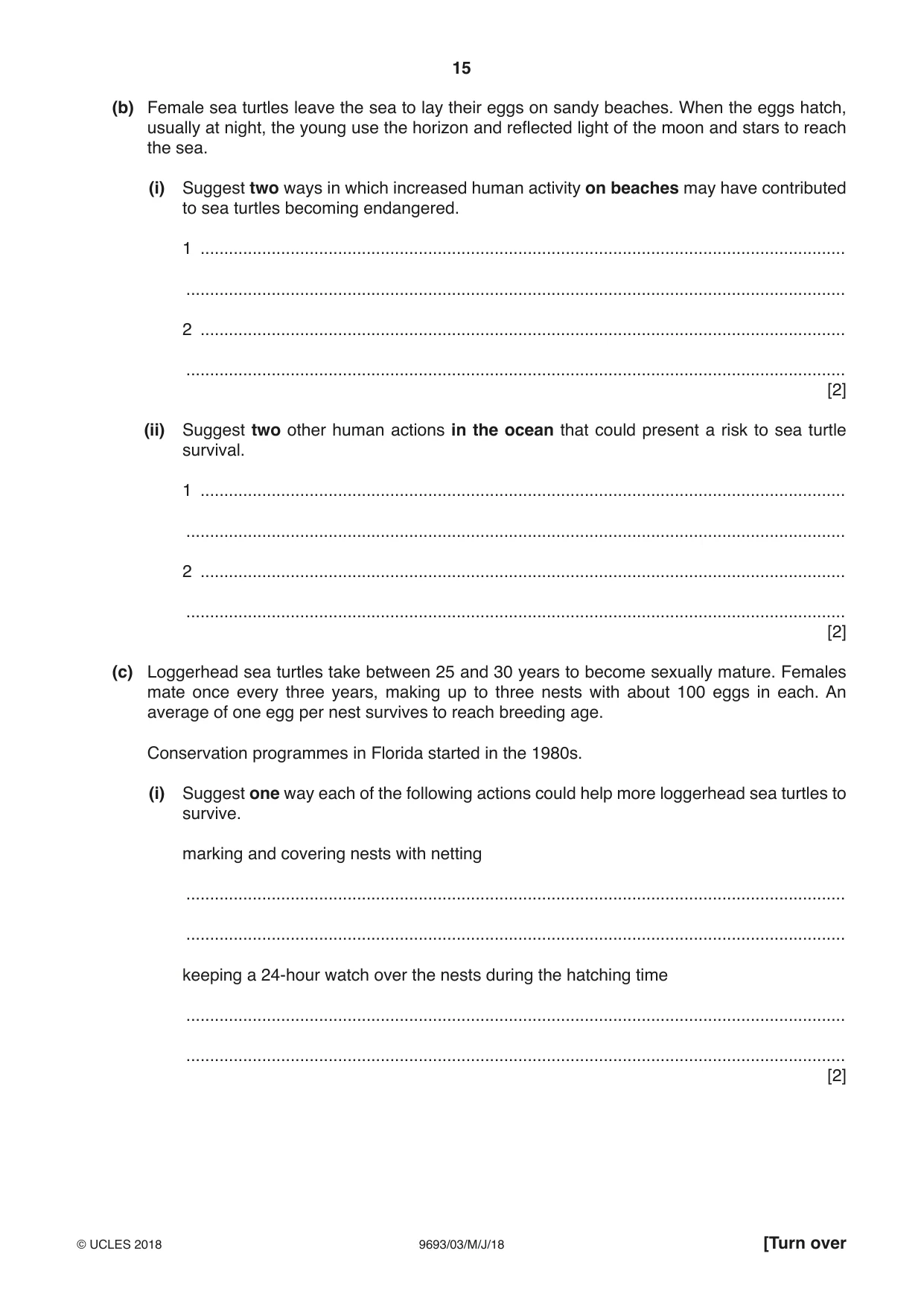
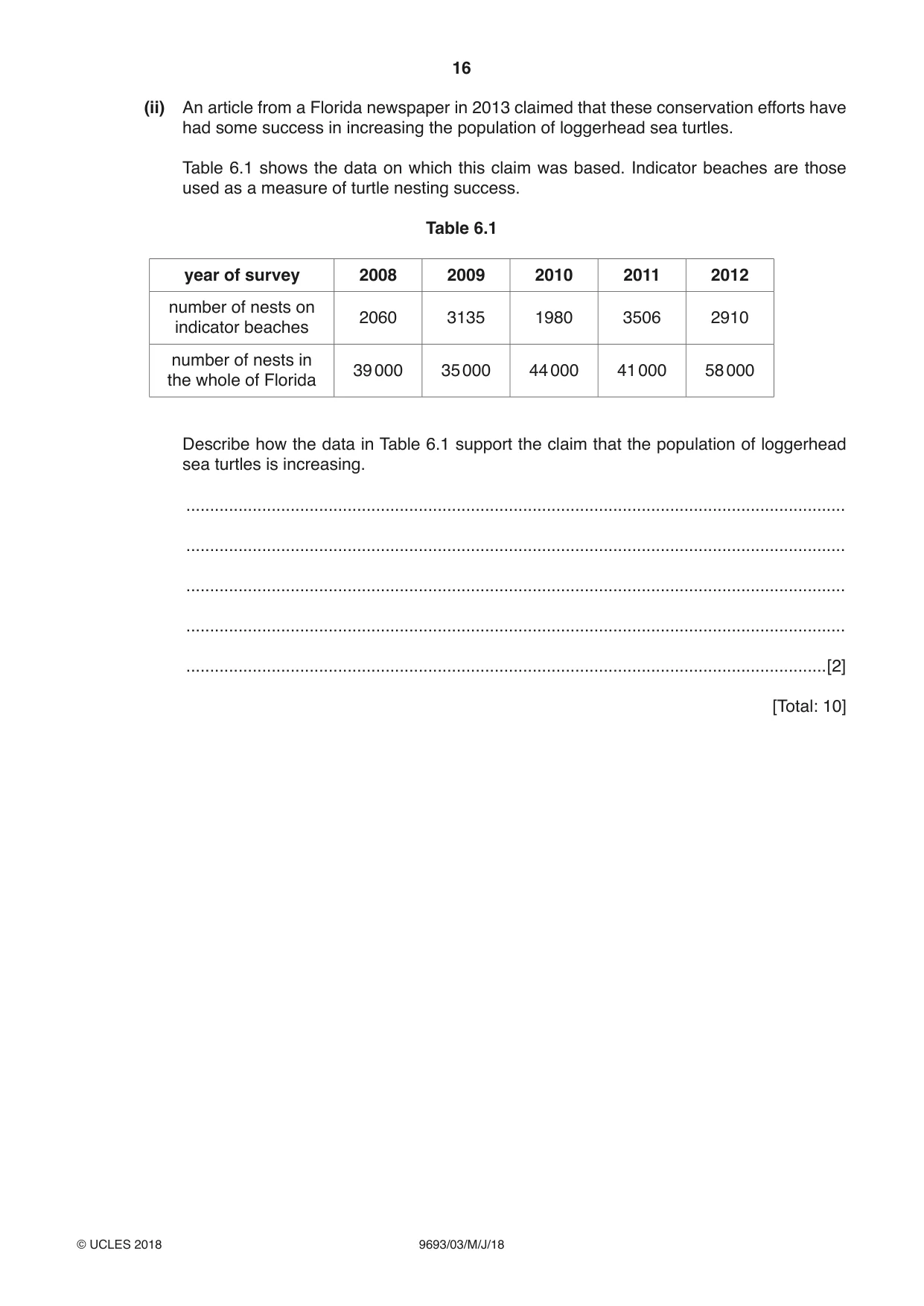
6 Sea turtles spend their lives in the sea. They migrate thousands of miles to reach their breeding grounds. All species of sea turtle are listed as threatened or endangered. Fig. 6.1 shows the change in the number of loggerhead sea turtle nests on beaches in Florida from 1989 to 2005. Other species show a similar pattern. 65 000 55 000 number of nests 45 000 35 000 25 000 1989 1991 1993 1995 1997 1999 2001 2003 2005 year of sampling Fig. 6.1 (a) Describe the trend shown in Fig. 6.1. ................................................................................................................................................... ................................................................................................................................................... ................................................................................................................................................... ................................................................................................................................................... ...............................................................................................................................................[2] (b) Female sea turtles leave the sea to lay their eggs on sandy beaches. When the eggs hatch, usually at night, the young use the horizon and reflected light of the moon and stars to reach the sea. (i) Suggest two ways in which increased human activity on beaches may have contributed to sea turtles becoming endangered. 1 ........................................................................................................................................ ........................................................................................................................................... 2 ........................................................................................................................................ ........................................................................................................................................... [2] (ii) Suggest two other human actions in the ocean that could present a risk to sea turtle survival. 1 ........................................................................................................................................ ........................................................................................................................................... 2 ........................................................................................................................................ ........................................................................................................................................... [2] (c) Loggerhead sea turtles take between 25 and 30 years to become sexually mature. Females mate once every three years, making up to three nests with about 100 eggs in each. An average of one egg per nest survives to reach breeding age. Conservation programmes in Florida started in the 1980s. (i) Suggest one way each of the following actions could help more loggerhead sea turtles to survive. marking and covering nests with netting ........................................................................................................................................... ........................................................................................................................................... keeping a 24-hour watch over the nests during the hatching time ........................................................................................................................................... ........................................................................................................................................... [2] (ii) An article from a Florida newspaper in 2013 claimed that these conservation efforts have had some success in increasing the population of loggerhead sea turtles. Table 6.1 shows the data on which this claim was based. Indicator beaches are those used as a measure of turtle nesting success. Table 6.1 year of survey 2008 2009 2010 2011 2012 number of nests on 2060 3135 1980 3506 2910 indicator beaches number of nests in 39 000 35 000 44 000 41 000 58 000 the whole of Florida Describe how the data in Table 6.1 support the claim that the population of loggerhead sea turtles is increasing. ........................................................................................................................................... ........................................................................................................................................... ........................................................................................................................................... ........................................................................................................................................... .......................................................................................................................................[2] [Total: 10]
Q7 · One of the reasons for variation in phenotype between individual members of a species is…
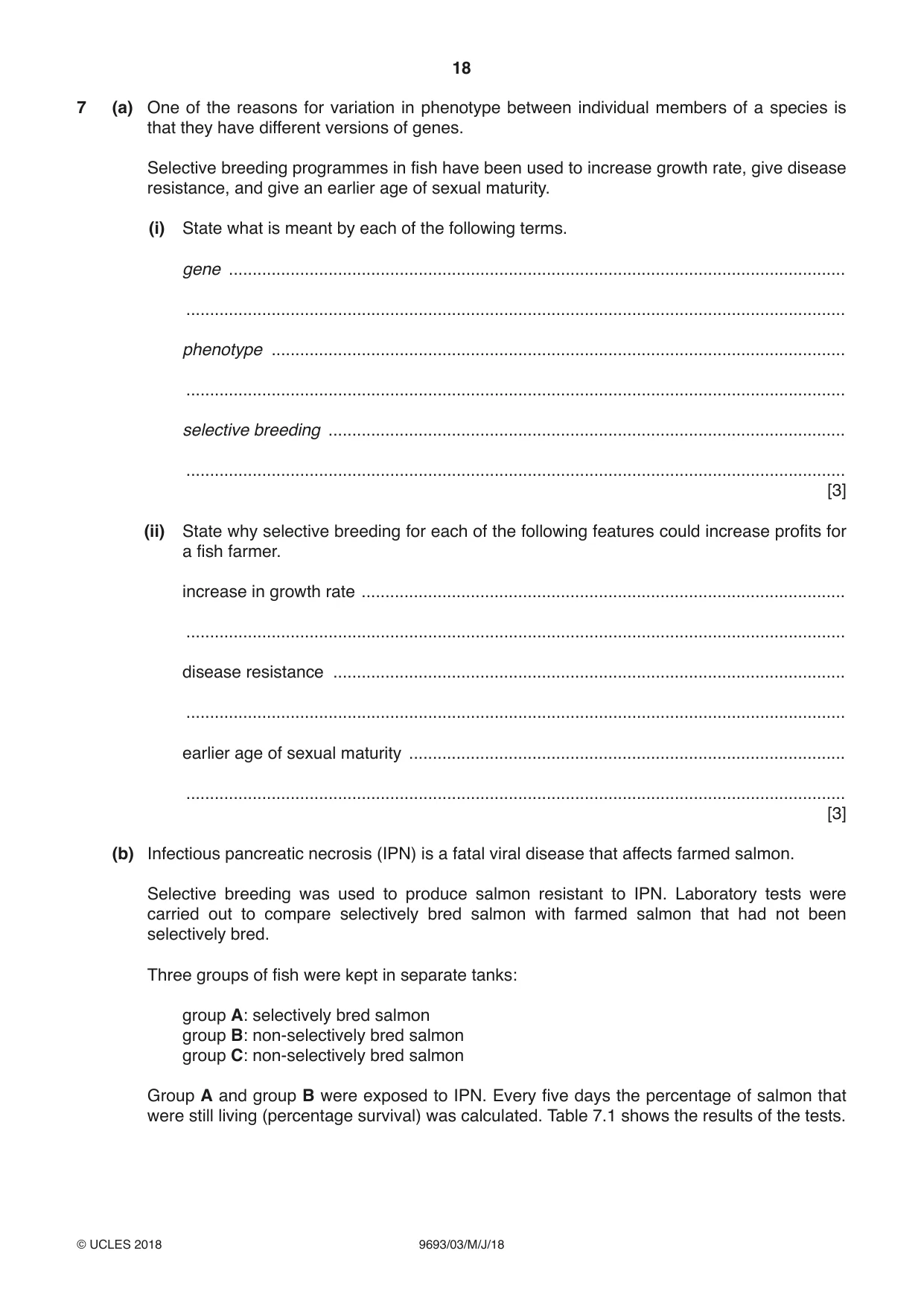
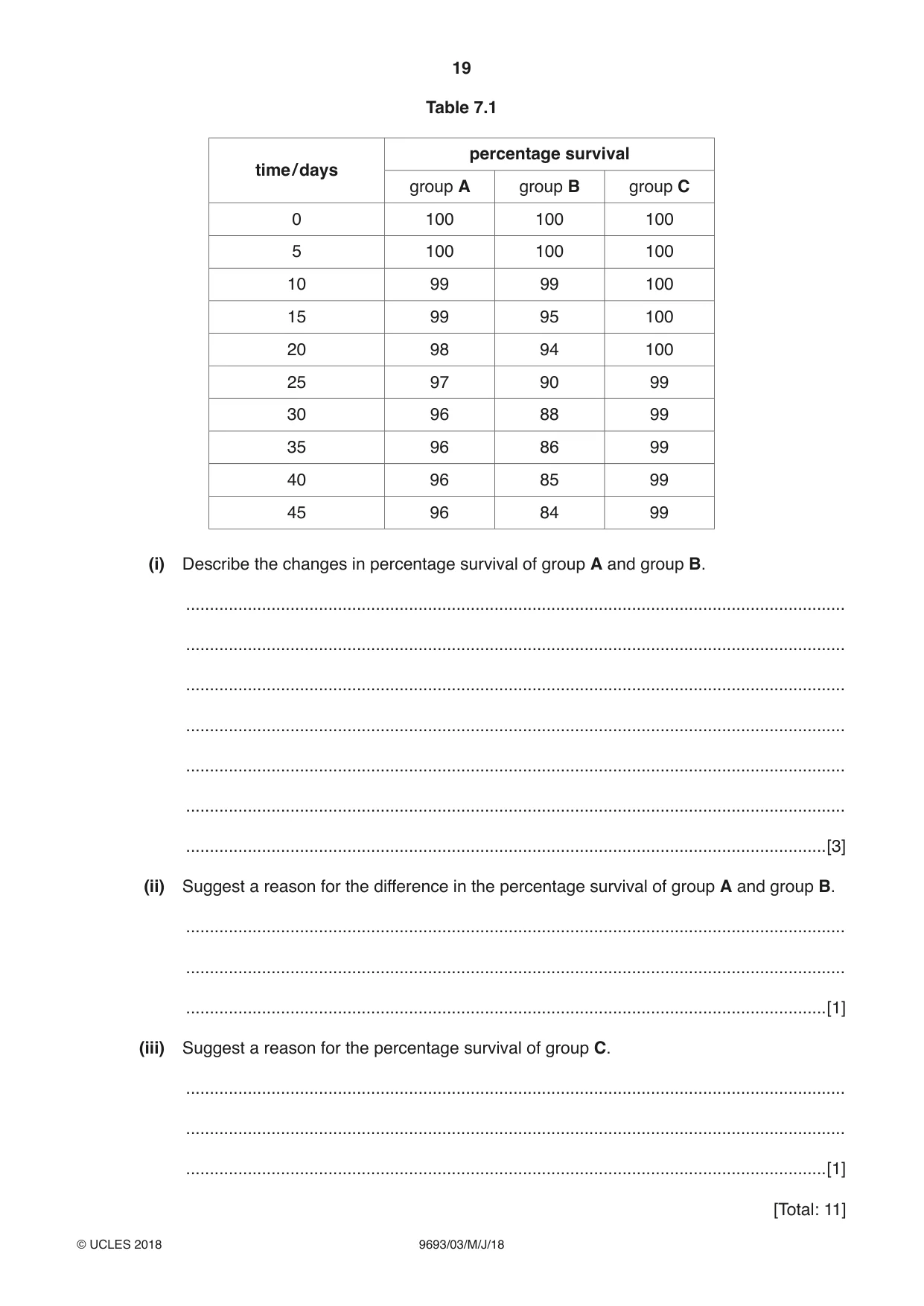
7 (a) One of the reasons for variation in phenotype between individual members of a species is that they have different versions of genes. Selective breeding programmes in fish have been used to increase growth rate, give disease resistance, and give an earlier age of sexual maturity. (i) State what is meant by each of the following terms. gene .................................................................................................................................. ........................................................................................................................................... phenotype ......................................................................................................................... ........................................................................................................................................... selective breeding ............................................................................................................. ........................................................................................................................................... [3] (ii) State why selective breeding for each of the following features could increase profits for a fish farmer. increase in growth rate ...................................................................................................... ........................................................................................................................................... disease resistance ............................................................................................................ ........................................................................................................................................... earlier age of sexual maturity ............................................................................................ ........................................................................................................................................... [3] (b) Infectious pancreatic necrosis (IPN) is a fatal viral disease that affects farmed salmon. Selective breeding was used to produce salmon resistant to IPN. Laboratory tests were carried out to compare selectively bred salmon with farmed salmon that had not been selectively bred. Three groups of fish were kept in separate tanks: group A: selectively bred salmon group B: non-selectively bred salmon group C: non-selectively bred salmon Group A and group B were exposed to IPN. Every five days the percentage of salmon that were still living (percentage survival) was calculated. Table 7.1 shows the results of the tests. Table 7.1 percentage survival time / days group A group B group C 0 100 100 100 5 100 100 100 10 99 99 100 15 99 95 100 20 98 94 100 25 97 90 99 30 96 88 99 35 96 86 99 40 96 85 99 45 96 84 99 (i) Describe the changes in percentage survival of group A and group B. ........................................................................................................................................... ........................................................................................................................................... ........................................................................................................................................... ........................................................................................................................................... ........................................................................................................................................... ........................................................................................................................................... .......................................................................................................................................[3] (ii) Suggest a reason for the difference in the percentage survival of group A and group B. ........................................................................................................................................... ........................................................................................................................................... .......................................................................................................................................[1] (iii) Suggest a reason for the percentage survival of group C. ........................................................................................................................................... ........................................................................................................................................... .......................................................................................................................................[1] [Total: 11]
What was in this paper
The subtopics covered by these 7 questions, and how many questions each got. Open one in a new tab to see every Cambridge question on it.