Cambridge A Level Marine Science 9693 — 2025 May/June Paper 3 · Variant 2
9693/32/M/J/25 · 7 questions · 75 marks · 105 min
The question paper and its mark scheme, free to read here and free to download. This is Cambridge’s own paper, exactly as it was sat.
Question paper16 pages




Mark scheme13 pages
Answers below. Sit the paper first if you are practising.
Questions as text
Q1 · Snow crabs, Chionoecetes opilio, are found in the Bering Sea around Alaska, in the far…
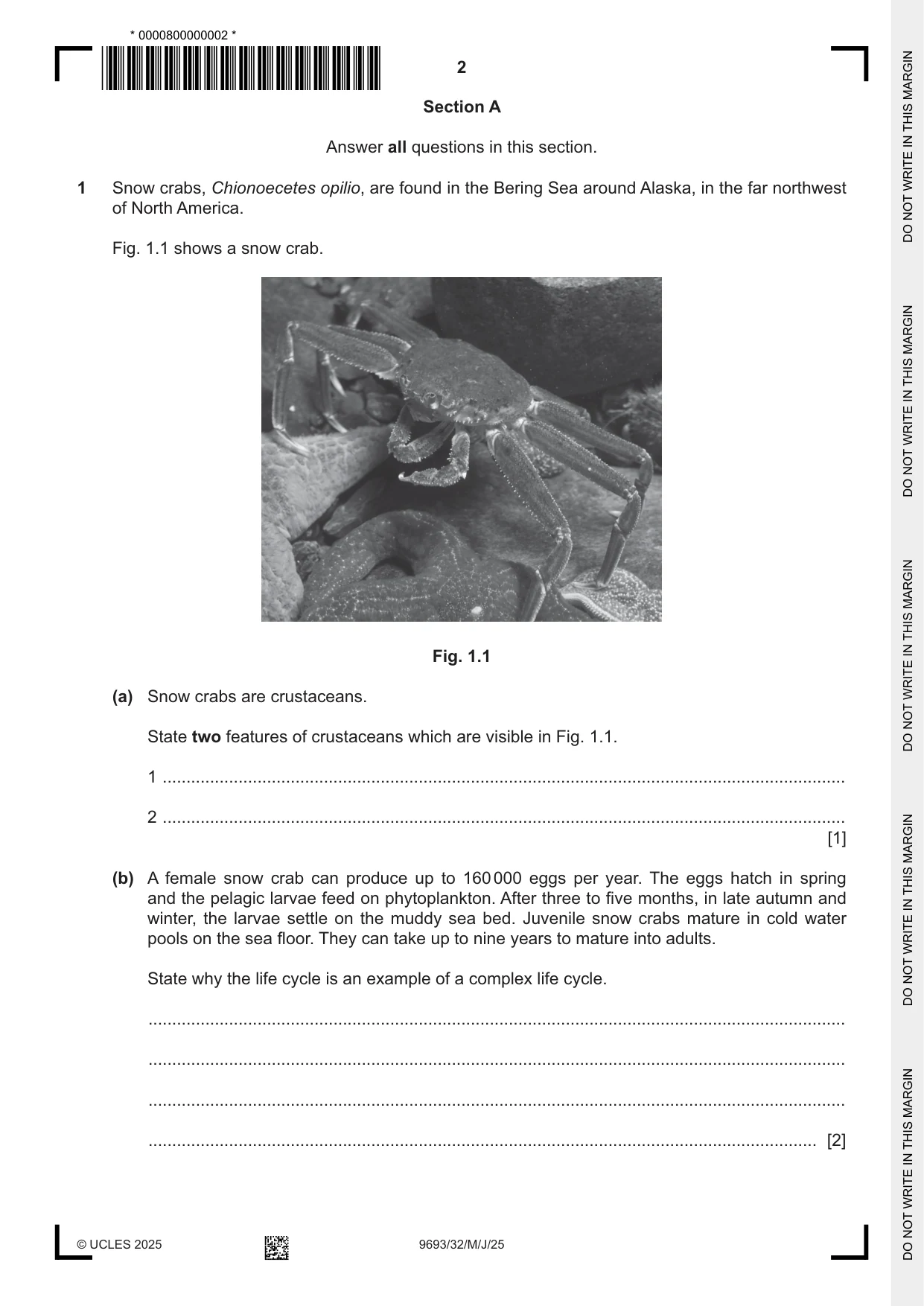
1 Snow crabs, Chionoecetes opilio, are found in the Bering Sea around Alaska, in the far northwest of North America. Fig. 1.1 shows a snow crab. Fig. 1.1 (a) Snow crabs are crustaceans. State two features of crustaceans which are visible in Fig. 1.1. 1 ................................................................................................................................................ 2 ................................................................................................................................................ [1] (b) A female snow crab can produce up to 160 000 eggs per year. The eggs hatch in spring and the pelagic larvae feed on phytoplankton. After three to five months, in late autumn and winter, the larvae settle on the muddy sea bed. Juvenile snow crabs mature in cold water pools on the sea floor. They can take up to nine years to mature into adults. State why the life cycle is an example of a complex life cycle. ................................................................................................................................................... ................................................................................................................................................... ................................................................................................................................................... ............................................................................................................................................. [2] (c) (i) Bottom trawl surveys take place annually to monitor snow crab populations. Suggest two reasons why bottom trawl surveys are a suitable method of monitoring. 1 ........................................................................................................................................ ........................................................................................................................................... 2 ........................................................................................................................................ ........................................................................................................................................... [2] (ii) In 2018 the snow crab population was estimated at 11.7 billion. By 2022 the population was estimated at 1.9 billion. Calculate the percentage decrease in population between 2018 and 2022. Show your working. ...................................................... % [2] (iii) Only large male snow crabs are caught commercially as they are up to five times the size of females. In 2022 the commercial fishing season for snow crab was cancelled. Use 1(c)(ii) to explain why the commercial fishing season was cancelled. ........................................................................................................................................... ........................................................................................................................................... ........................................................................................................................................... ..................................................................................................................................... [2] (iv) In 2018 and again in 2019 there was a heatwave in Alaska. Sea water temperatures increased from 1.5 °C to 3.5 °C. Use all the information provided in the question and your own knowledge to suggest how the increase in sea water temperature could have caused the decrease in the snow crab population. ........................................................................................................................................... ........................................................................................................................................... ........................................................................................................................................... ........................................................................................................................................... ........................................................................................................................................... ........................................................................................................................................... ........................................................................................................................................... ..................................................................................................................................... [4] (d) Scientists are concerned that in the future the sea water around Alaska will continue to warm due to climate change. Colder waters have protected the ecosystem from predatory fish such as cod, which are less adapted to very cold water. Cod is an important commercial fish. Discuss the possible implications of increasing sea water temperatures on commercial fishing in the waters around Alaska in the future. ................................................................................................................................................... ................................................................................................................................................... ................................................................................................................................................... ................................................................................................................................................... ................................................................................................................................................... ................................................................................................................................................... ................................................................................................................................................... ............................................................................................................................................. [4] [Total: 17]
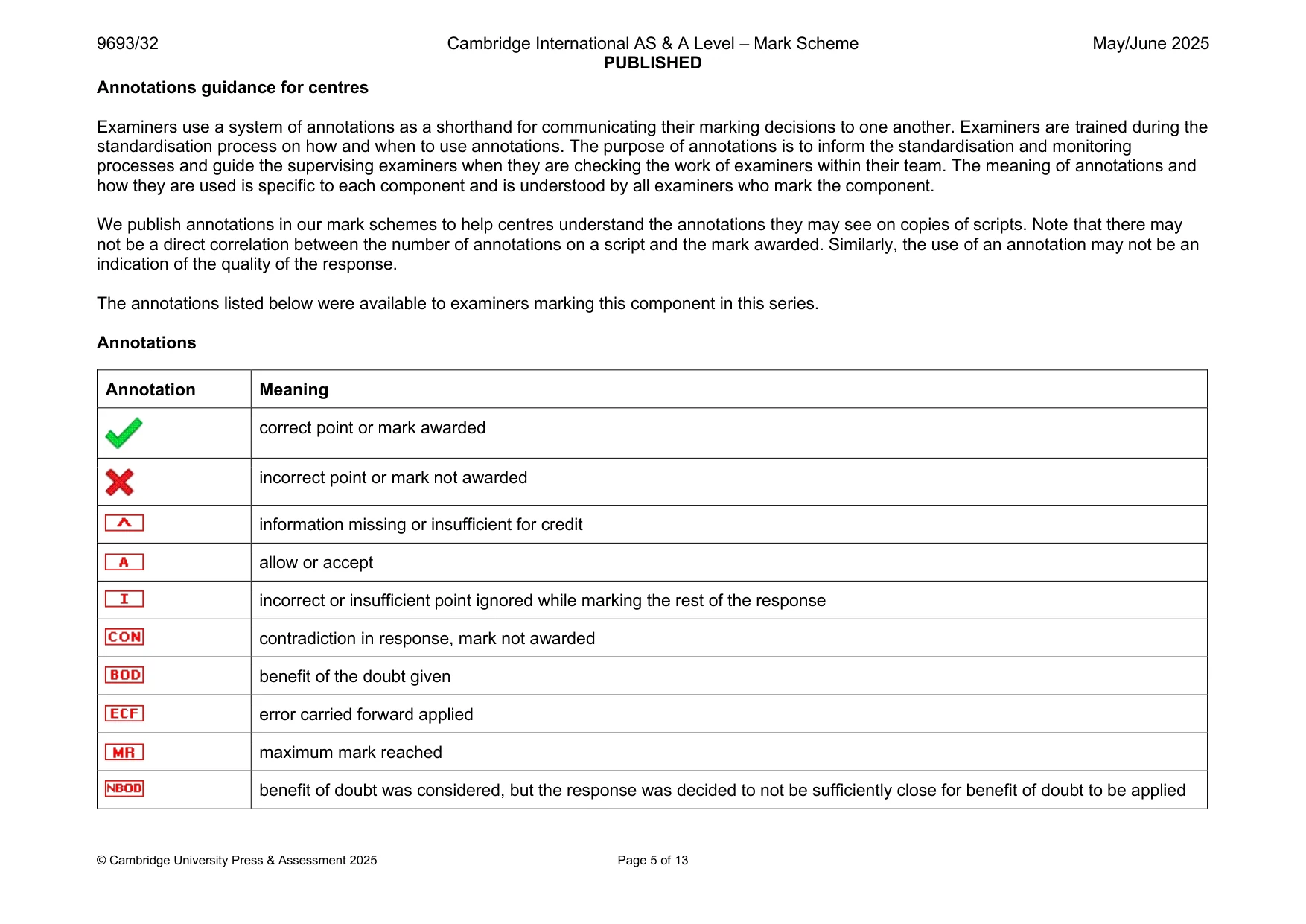
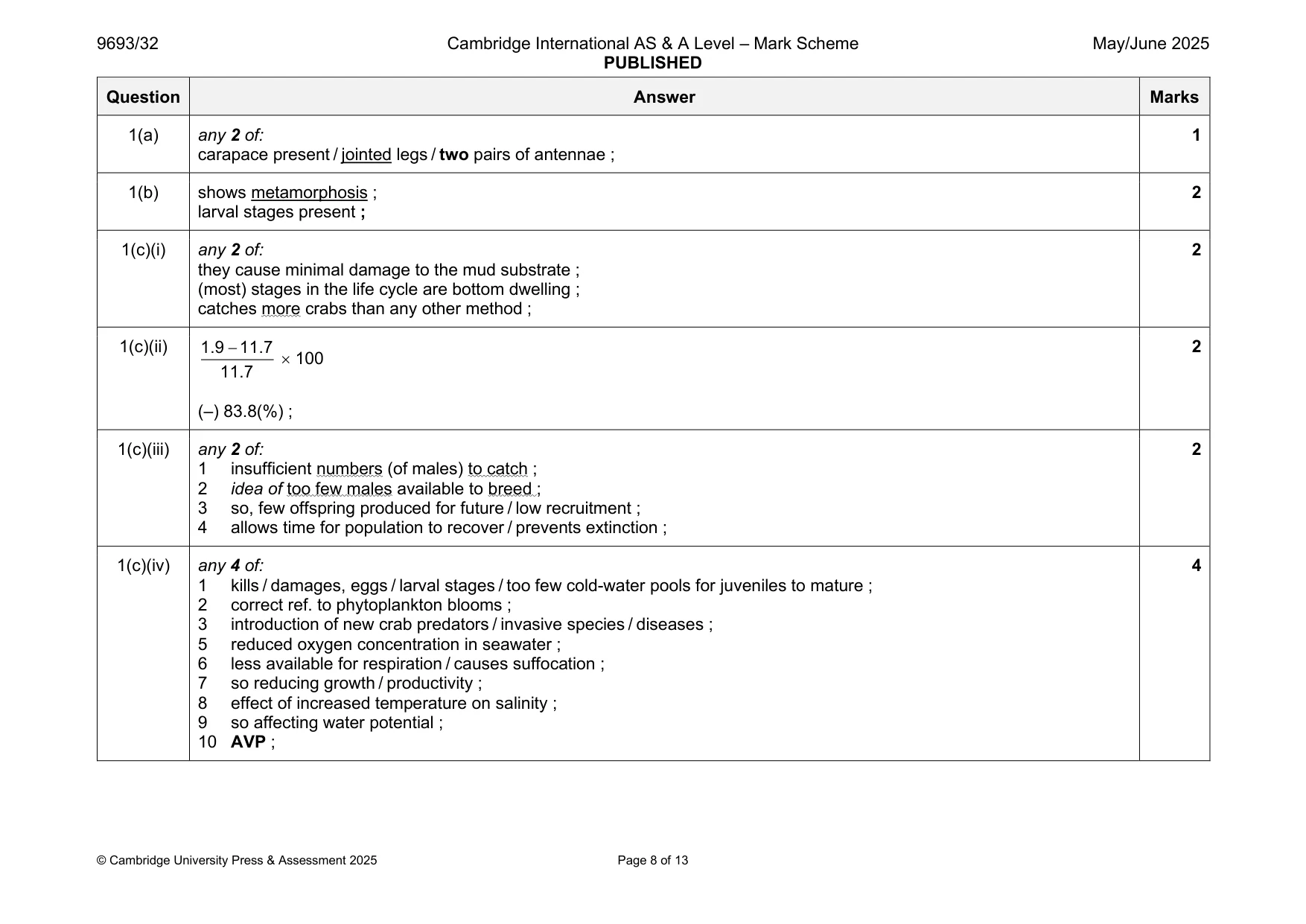
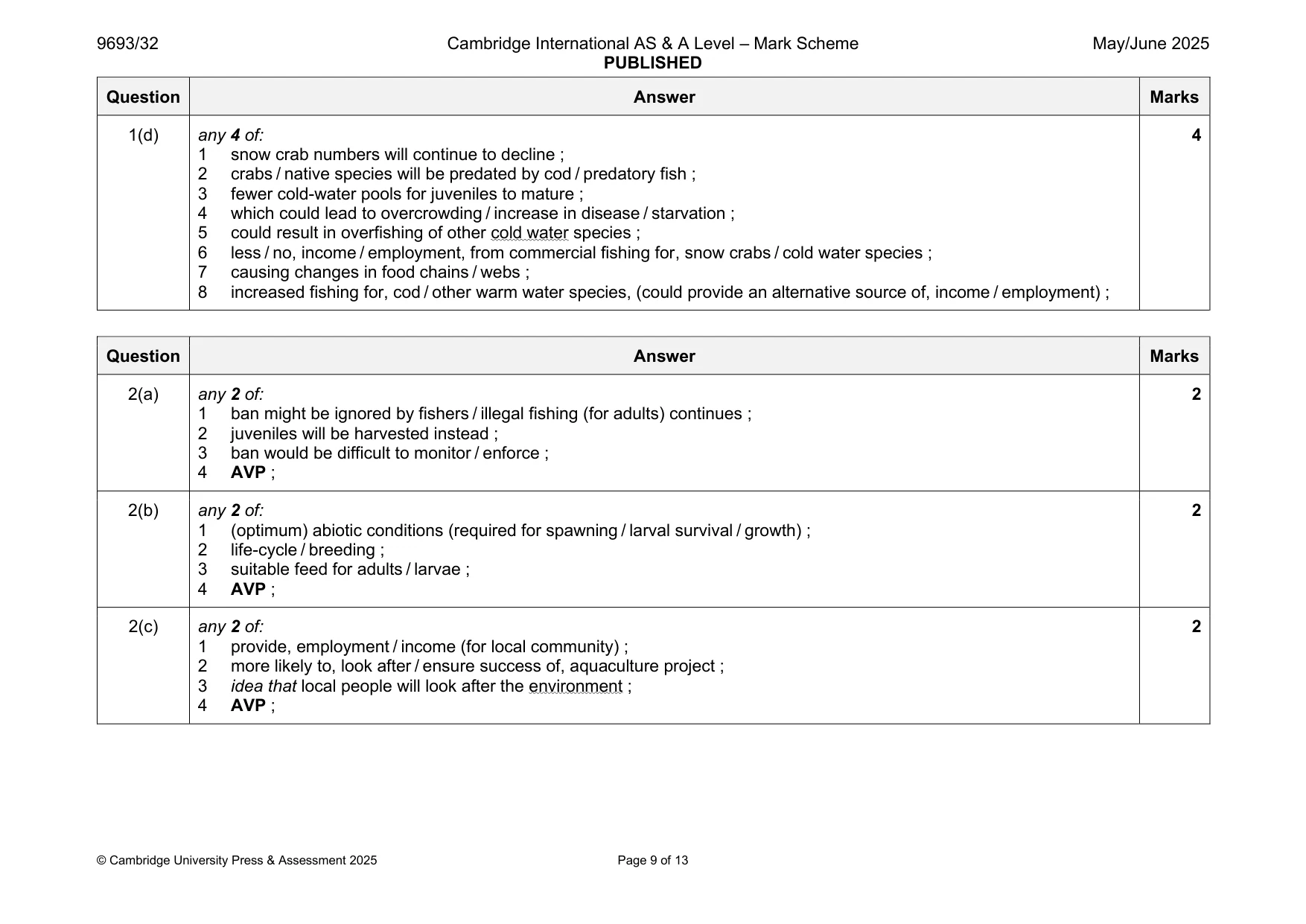
Mark scheme: Question Answer Marks 1(a) any 2 of: 1 carapace present / jointed legs / two pairs of antennae ; 1(b) shows metamorphosis ; 2 larval stages present ; 1(c)(i) any 2 of: 2 they cause minimal damage to the mud substrate ; (most) stages in the life cycle are bottom dwelling ; catches more crabs than any other method ; 1(c)(ii) 1.9 − 11.7 2 100 11.7 (–) 83.8(%) ; 1(c)(iii) any 2 of: 2 1 insufficient numbers (of males) to catch ; 2 idea of too few males available to breed ; 3 so, few offspring produced for future / low recruitment ; 4 allows time for population to recover / prevents extinction ; 1(c)(iv) any 4 of: 4 1 kills / damages, eggs / larval stages / too few cold-water pools for juveniles to mature ; 2 correct ref. to phytoplankton blooms ; 3 introduction of new crab predators / invasive species / diseases ; 5 reduced oxygen concentration in seawater ; 6 less available for respiration / causes suffocation ; 7 so reducing growth / productivity ; 8 effect of increased temperature on salinity ; 9 so affecting water potential ; 10 AVP ; 1(d) any 4 of: 4 1 snow crab numbers will continue to decline ; 2 crabs / native species will be predated by cod / predatory fish ; 3 fewer cold-water pools for juveniles to mature ; 4 which could lead to overcrowding / increase in disease / starvation ; 5 could result in overfishing of other cold water species ; 6 less / no, income / employment, from commercial fishing for, snow crabs / cold water species ; 7 causing changes in food chains / webs ; 8 increased fishing for, cod / other warm water species, (could provide an alternative source of, income / employment) ;
Q2 · Sea cucumbers are benthic animals which are found in all oceans worldwide
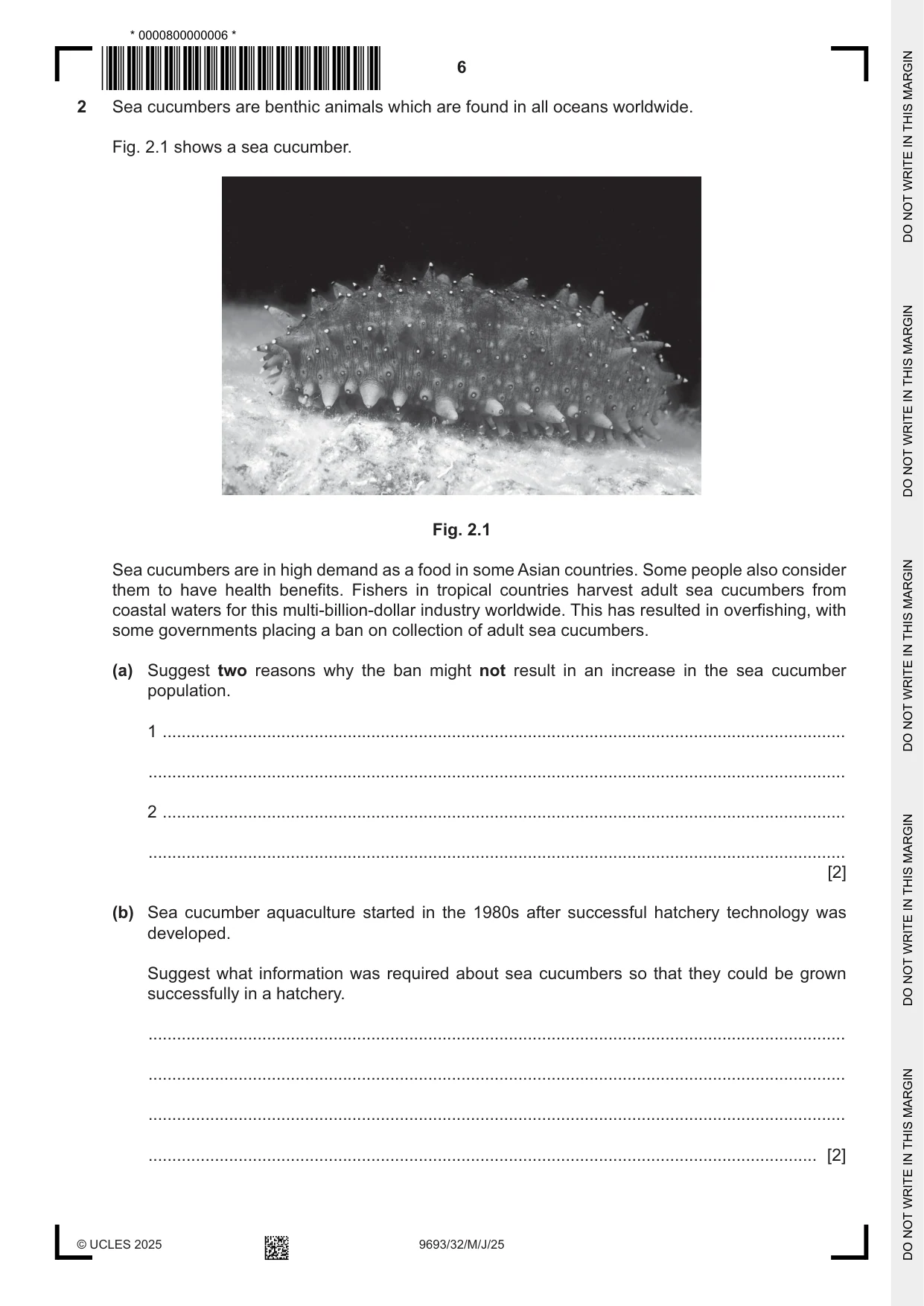
2 Sea cucumbers are benthic animals which are found in all oceans worldwide. Fig. 2.1 shows a sea cucumber. Fig. 2.1 Sea cucumbers are in high demand as a food in some Asian countries. Some people also consider them to have health benefits. Fishers in tropical countries harvest adult sea cucumbers from coastal waters for this multi‑billion‑dollar industry worldwide. This has resulted in overfishing, with some governments placing a ban on collection of adult sea cucumbers. (a) Suggest two reasons why the ban might not result in an increase in the sea cucumber population. 1 ................................................................................................................................................ ................................................................................................................................................... 2 ................................................................................................................................................ ................................................................................................................................................... [2] (b) Sea cucumber aquaculture started in the 1980s after successful hatchery technology was developed. Suggest what information was required about sea cucumbers so that they could be grown successfully in a hatchery. ................................................................................................................................................... ................................................................................................................................................... ................................................................................................................................................... ............................................................................................................................................. [2] (c) Small villages in Indonesia, where local fish stocks have been depleted, are being encouraged to farm sea cucumbers. Suggest the advantages of involving the local community in managing the aquaculture project rather than having a large multinational company manage it. ................................................................................................................................................... ................................................................................................................................................... ................................................................................................................................................... ............................................................................................................................................. [2] (d) Sea cucumbers eat sand, digesting the organic matter it contains, cleaning it in the process. Scientists have proposed that sea cucumbers might have a valuable role if grown under commercial fish cages in coastal waters. Explain the benefits of growing sea cucumbers under fish cages. ................................................................................................................................................... ................................................................................................................................................... ................................................................................................................................................... ................................................................................................................................................... ................................................................................................................................................... ................................................................................................................................................... ................................................................................................................................................... ............................................................................................................................................. [4] [Total: 10]
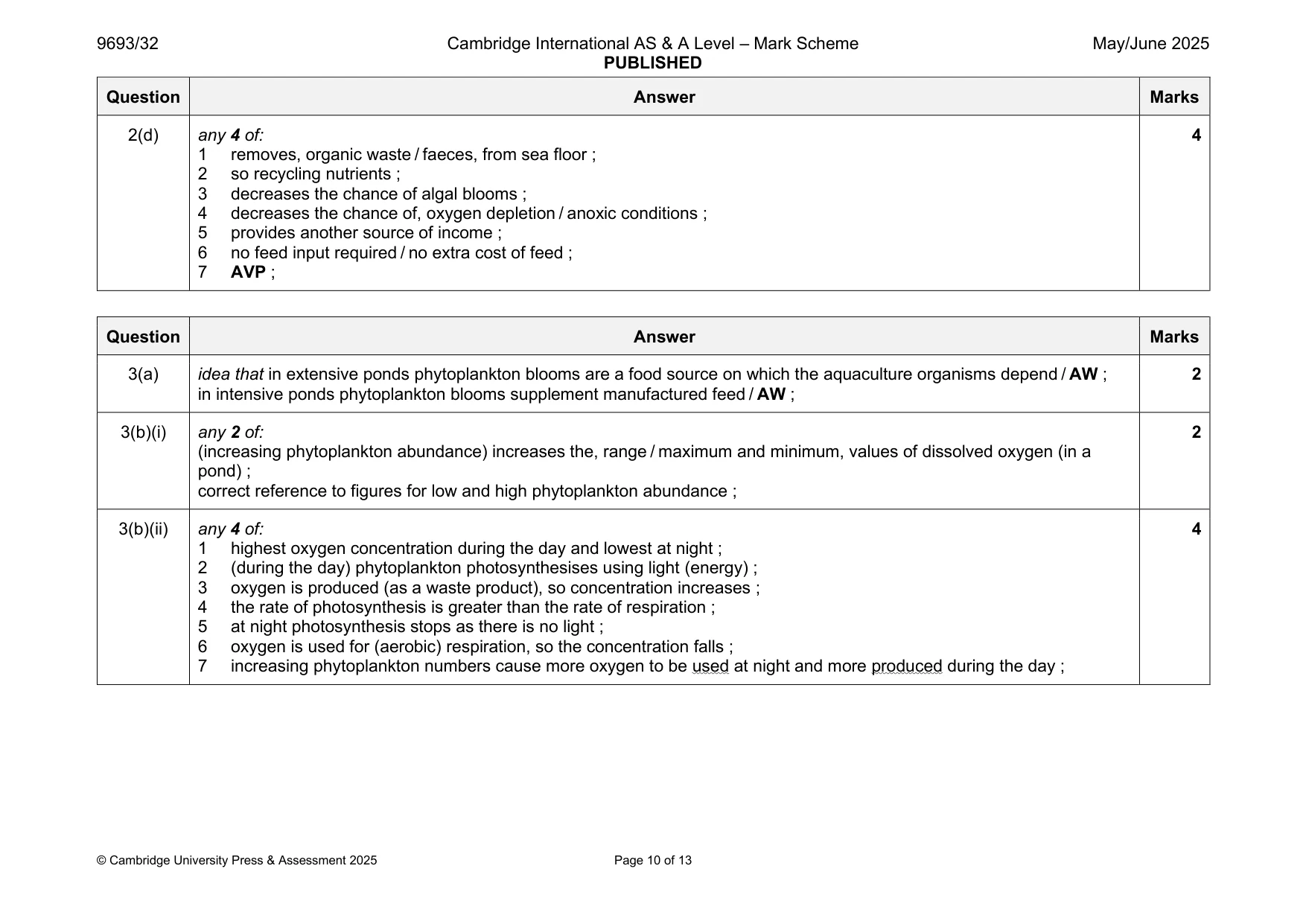
Mark scheme: 2(a) any 2 of: 2 1 ban might be ignored by fishers / illegal fishing (for adults) continues ; 2 juveniles will be harvested instead ; 3 ban would be difficult to monitor / enforce ; 4 AVP ; 2(b) any 2 of: 2 1 (optimum) abiotic conditions (required for spawning / larval survival / growth) ; 2 life-cycle / breeding ; 3 suitable feed for adults / larvae ; 4 AVP ; 2(c) any 2 of: 2 1 provide, employment / income (for local community) ; 2 more likely to, look after / ensure success of, aquaculture project ; 3 idea that local people will look after the environment ; 4 AVP ; 2(d) any 4 of: 4 1 removes, organic waste / faeces, from sea floor ; 2 so recycling nutrients ; 3 decreases the chance of algal blooms ; 4 decreases the chance of, oxygen depletion / anoxic conditions ; 5 provides another source of income ; 6 no feed input required / no extra cost of feed ; 7 AVP ;
Q3 · Phytoplankton play an important role in extensive ponds used for aquaculture, such as…
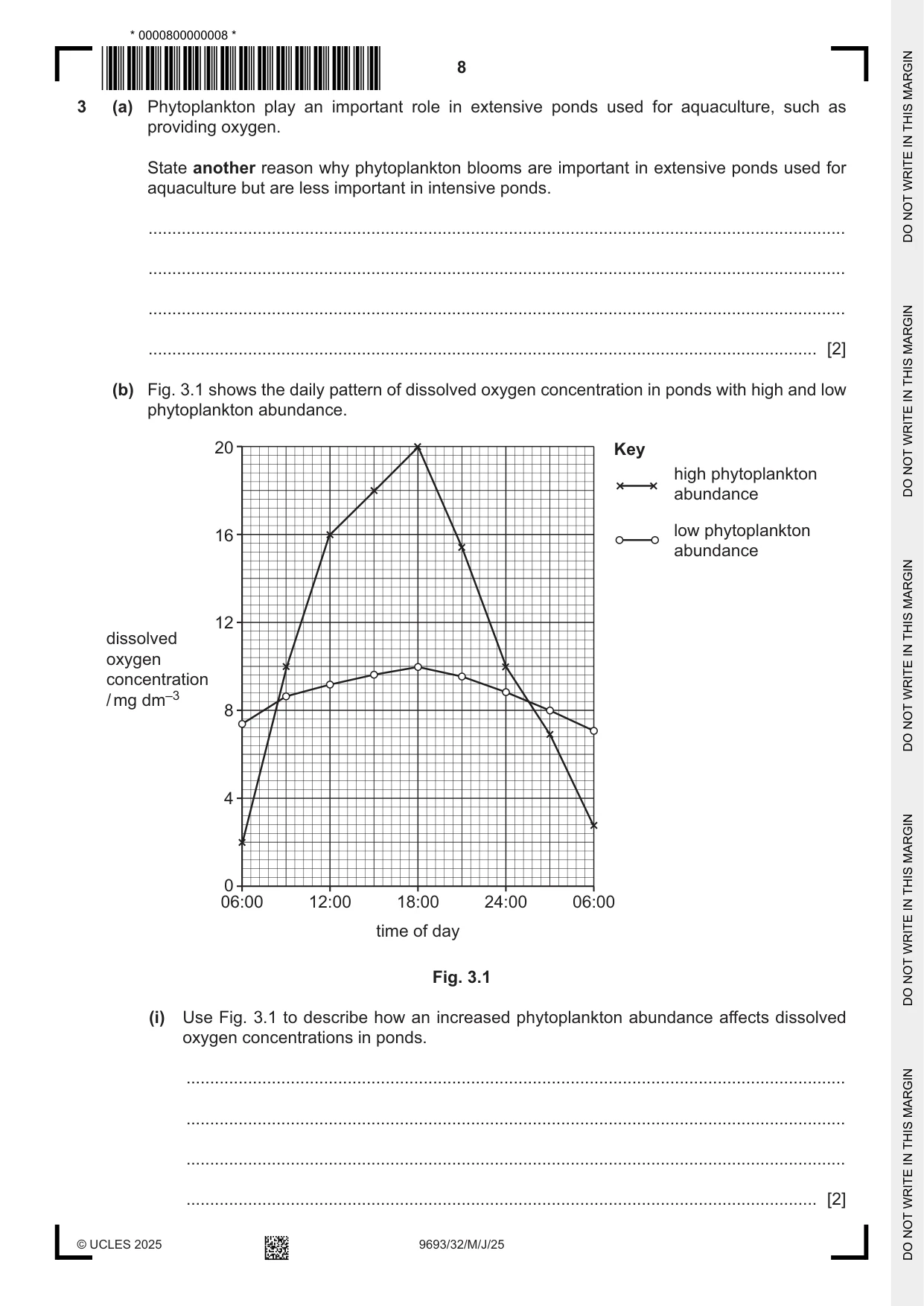
3 (a) Phytoplankton play an important role in extensive ponds used for aquaculture, such as providing oxygen. State another reason why phytoplankton blooms are important in extensive ponds used for aquaculture but are less important in intensive ponds. ................................................................................................................................................... ................................................................................................................................................... ................................................................................................................................................... ............................................................................................................................................. [2] (b) Fig. 3.1 shows the daily pattern of dissolved oxygen concentration in ponds with high and low phytoplankton abundance. 20 Key high phytoplankton abundance low phytoplankton 16 abundance 12 dissolved oxygen concentration / mg dm–3 8 4 0 06:00 12:00 18:00 24:00 06:00 time of day Fig. 3.1 (i) Use Fig. 3.1 to describe how an increased phytoplankton abundance affects dissolved oxygen concentrations in ponds. ........................................................................................................................................... ........................................................................................................................................... ........................................................................................................................................... ..................................................................................................................................... [2] (ii) Use Fig. 3.1 and your own knowledge to explain why the dissolved oxygen concentration varies during the day. ........................................................................................................................................... ........................................................................................................................................... ........................................................................................................................................... ........................................................................................................................................... ........................................................................................................................................... ........................................................................................................................................... ........................................................................................................................................... ..................................................................................................................................... [4] (c) Suggest and explain how increasing winds and increasing temperature would affect the shape of the graph for low phytoplankton abundance. ................................................................................................................................................... ................................................................................................................................................... ................................................................................................................................................... ................................................................................................................................................... ................................................................................................................................................... ................................................................................................................................................... ................................................................................................................................................... ............................................................................................................................................. [4] [Total: 12]
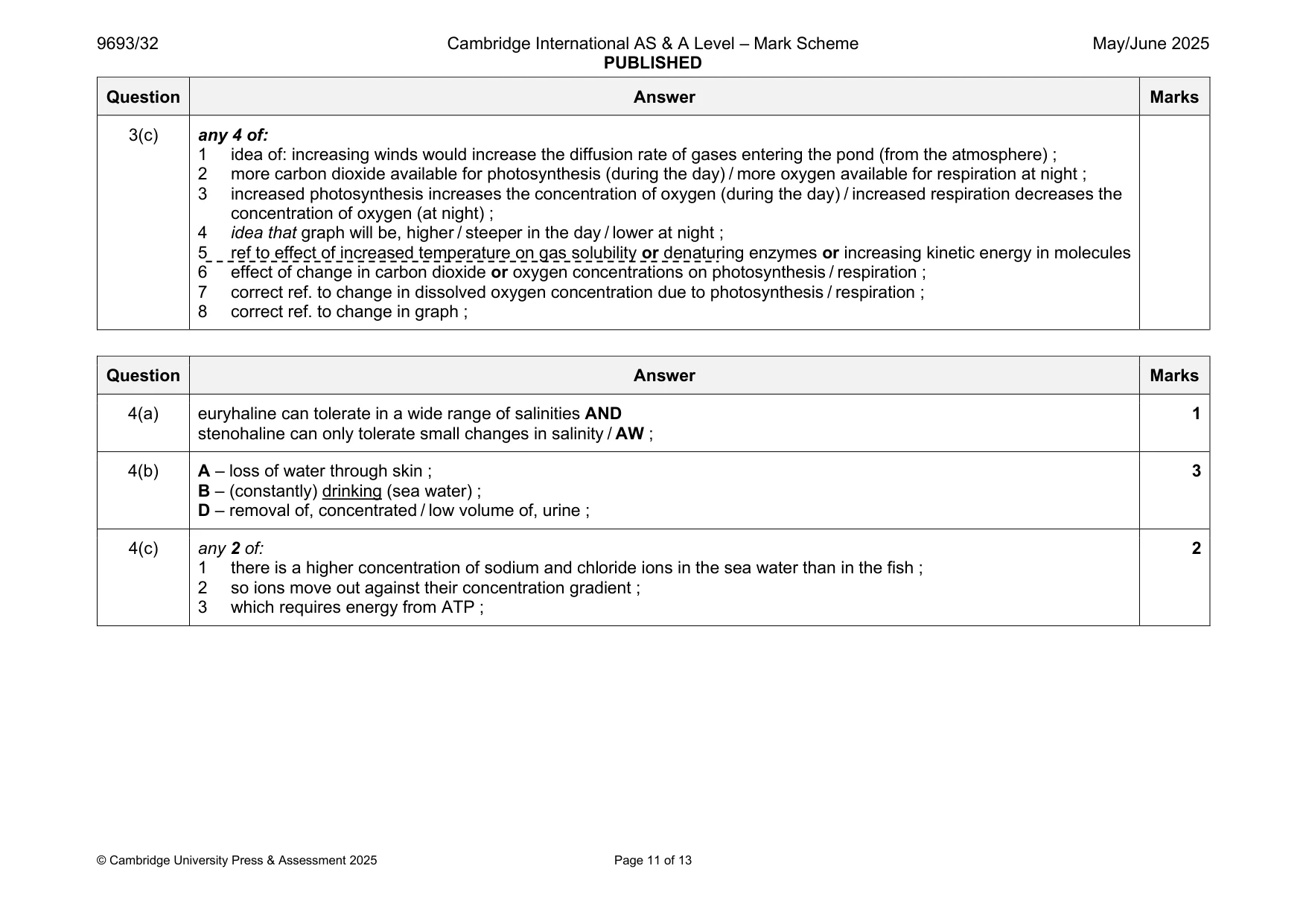
Mark scheme: 3(a) idea that in extensive ponds phytoplankton blooms are a food source on which the aquaculture organisms depend / AW ; 2 in intensive ponds phytoplankton blooms supplement manufactured feed / AW ; 3(b)(i) any 2 of: 2 (increasing phytoplankton abundance) increases the, range / maximum and minimum, values of dissolved oxygen (in a pond) ; correct reference to figures for low and high phytoplankton abundance ; 3(b)(ii) any 4 of: 4 1 highest oxygen concentration during the day and lowest at night ; 2 (during the day) phytoplankton photosynthesises using light (energy) ; 3 oxygen is produced (as a waste product), so concentration increases ; 4 the rate of photosynthesis is greater than the rate of respiration ; 5 at night photosynthesis stops as there is no light ; 6 oxygen is used for (aerobic) respiration, so the concentration falls ; 7 increasing phytoplankton numbers cause more oxygen to be used at night and more produced during the day ; 3(c) any 4 of: 1 idea of: increasing winds would increase the diffusion rate of gases entering the pond (from the atmosphere) ; 2 more carbon dioxide available for photosynthesis (during the day) / more oxygen available for respiration at night ; 3 increased photosynthesis increases the concentration of oxygen (during the day) / increased respiration decreases the concentration of oxygen (at night) ; 4 idea that graph will be, higher / steeper in the day / lower at night ; 5 ref to effect of increased temperature on gas solubility or denaturing enzymes or increasing kinetic energy in molecules 6 effect of change in carbon dioxide or oxygen concentrations on photosynthesis / respiration ; 7 correct ref. to change in dissolved oxygen concentration due to photosynthesis / respiration ; 8 correct ref. to change in graph ;
Q4 · State the difference between the meanings of stenohaline and euryhaline
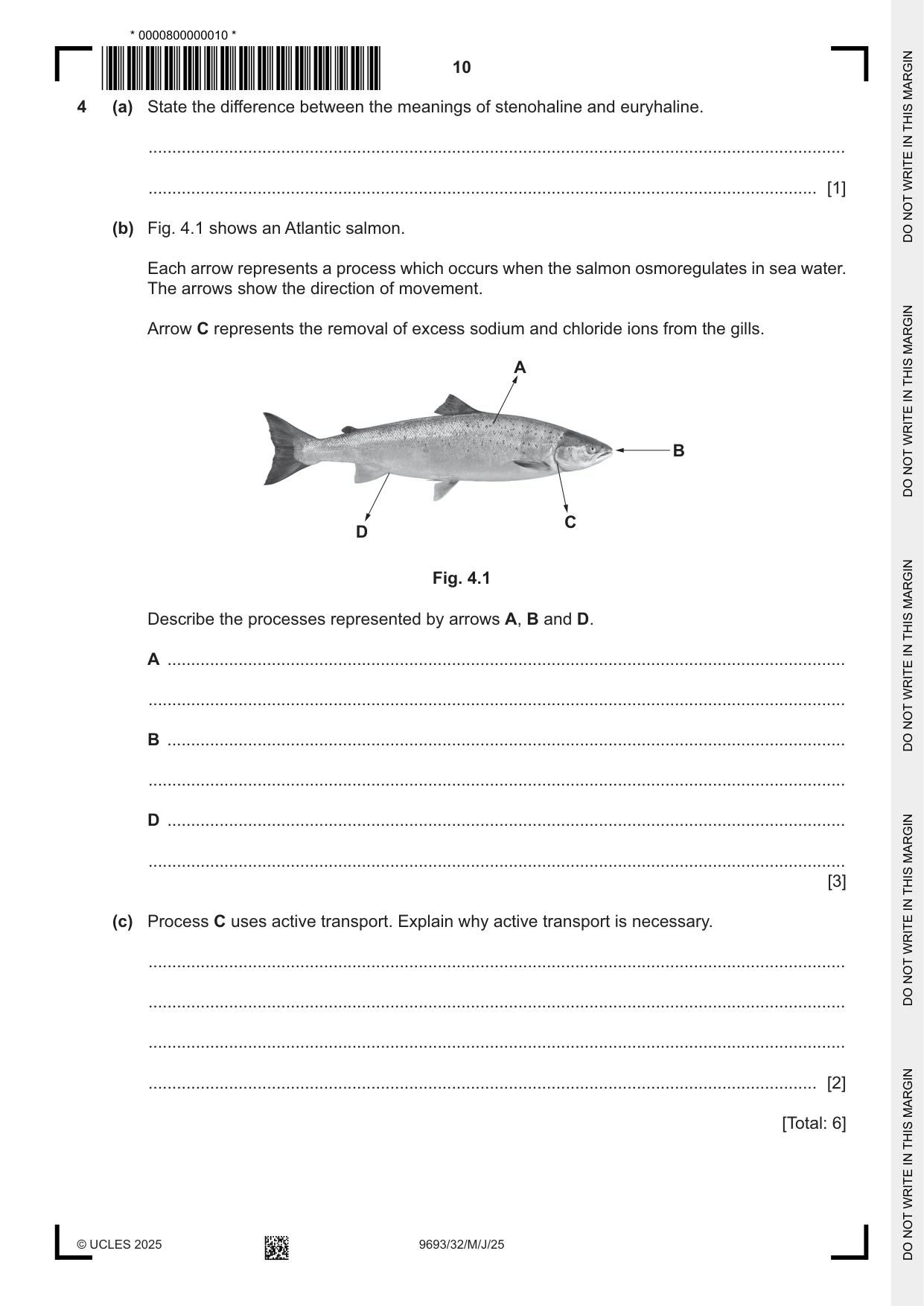
4 (a) State the difference between the meanings of stenohaline and euryhaline. ................................................................................................................................................... ............................................................................................................................................. [1] (b) Fig. 4.1 shows an Atlantic salmon. Each arrow represents a process which occurs when the salmon osmoregulates in sea water. The arrows show the direction of movement. Arrow C represents the removal of excess sodium and chloride ions from the gills. A B C D Fig. 4.1 Describe the processes represented by arrows A, B and D. A ............................................................................................................................................... ................................................................................................................................................... B ............................................................................................................................................... ................................................................................................................................................... D ............................................................................................................................................... ................................................................................................................................................... [3] (c) Process C uses active transport. Explain why active transport is necessary. ................................................................................................................................................... ................................................................................................................................................... ................................................................................................................................................... ............................................................................................................................................. [2] [Total: 6]
Mark scheme: 4(a) euryhaline can tolerate in a wide range of salinities AND 1 stenohaline can only tolerate small changes in salinity / AW ; 4(b) A – loss of water through skin ; 3 B – (constantly) drinking (sea water) ; D – removal of, concentrated / low volume of, urine ; 4(c) any 2 of: 2 1 there is a higher concentration of sodium and chloride ions in the sea water than in the fish ; 2 so ions move out against their concentration gradient ; 3 which requires energy from ATP ;
Q5 · Describe the conditions at hydrothermal vents and the ecosystems that hydrothermal vents…
5 Describe the conditions at hydrothermal vents and the ecosystems that hydrothermal vents support. .......................................................................................................................................................... .......................................................................................................................................................... .......................................................................................................................................................... .......................................................................................................................................................... .......................................................................................................................................................... .......................................................................................................................................................... .......................................................................................................................................................... .......................................................................................................................................................... .......................................................................................................................................................... .......................................................................................................................................................... .......................................................................................................................................................... .......................................................................................................................................................... .......................................................................................................................................................... .......................................................................................................................................................... .......................................................................................................................................................... .......................................................................................................................................................... .......................................................................................................................................................... .......................................................................................................................................................... .......................................................................................................................................................... .................................................................................................................................................. [10]
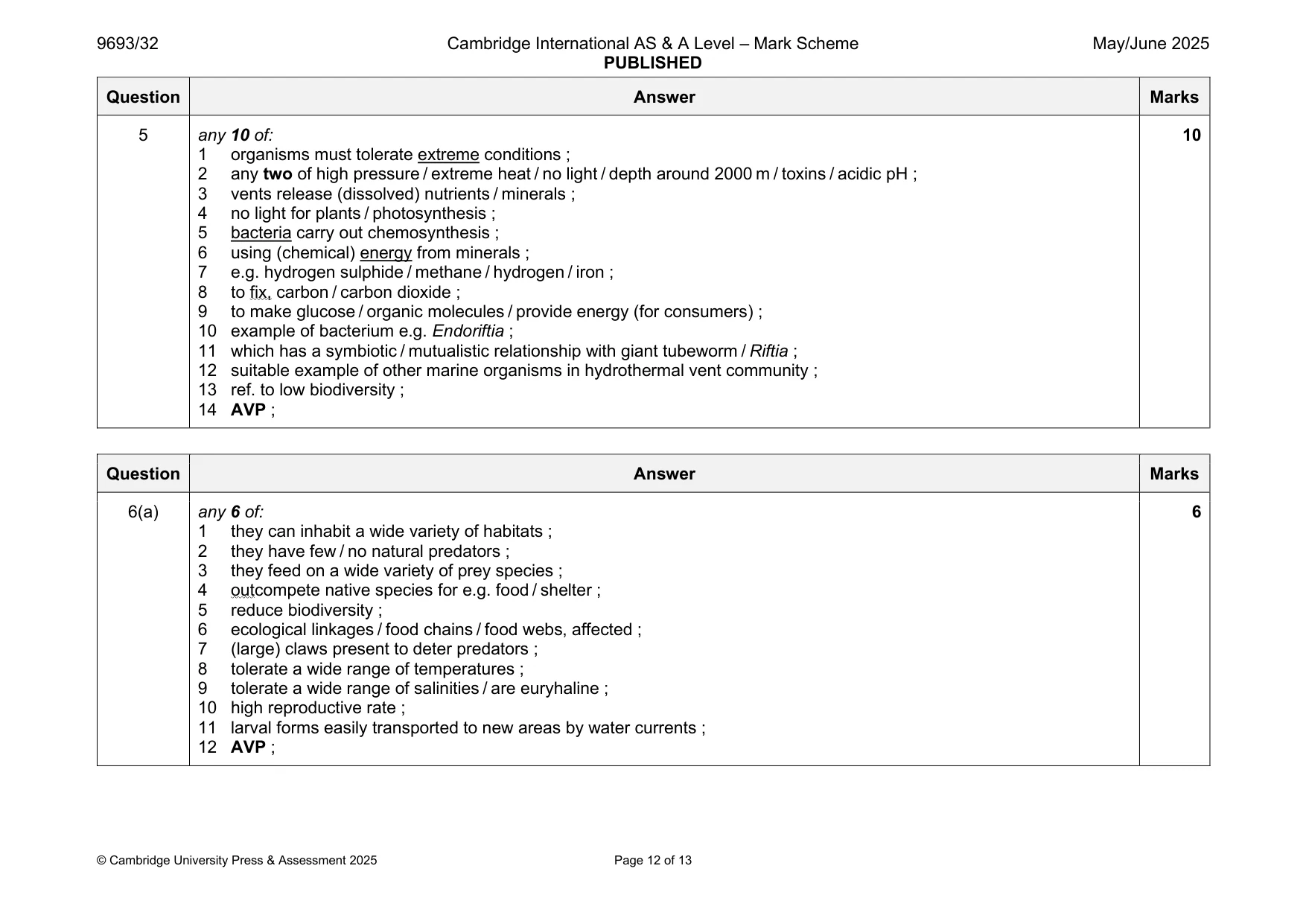
Mark scheme: 5 any 10 of: 10 1 organisms must tolerate extreme conditions ; 2 any two of high pressure / extreme heat / no light / depth around 2000 m / toxins / acidic pH ; 3 vents release (dissolved) nutrients / minerals ; 4 no light for plants / photosynthesis ; 5 bacteria carry out chemosynthesis ; 6 using (chemical) energy from minerals ; 7 e.g. hydrogen sulphide / methane / hydrogen / iron ; 8 to fix, carbon / carbon dioxide ; 9 to make glucose / organic molecules / provide energy (for consumers) ; 10 example of bacterium e.g. Endoriftia ; 11 which has a symbiotic / mutualistic relationship with giant tubeworm / Riftia ; 12 suitable example of other marine organisms in hydrothermal vent community ; 13 ref. to low biodiversity ; 14 AVP ;
Q6 · Green crabs, Carcinus maenas, are an invasive species found in coastal habitats including…
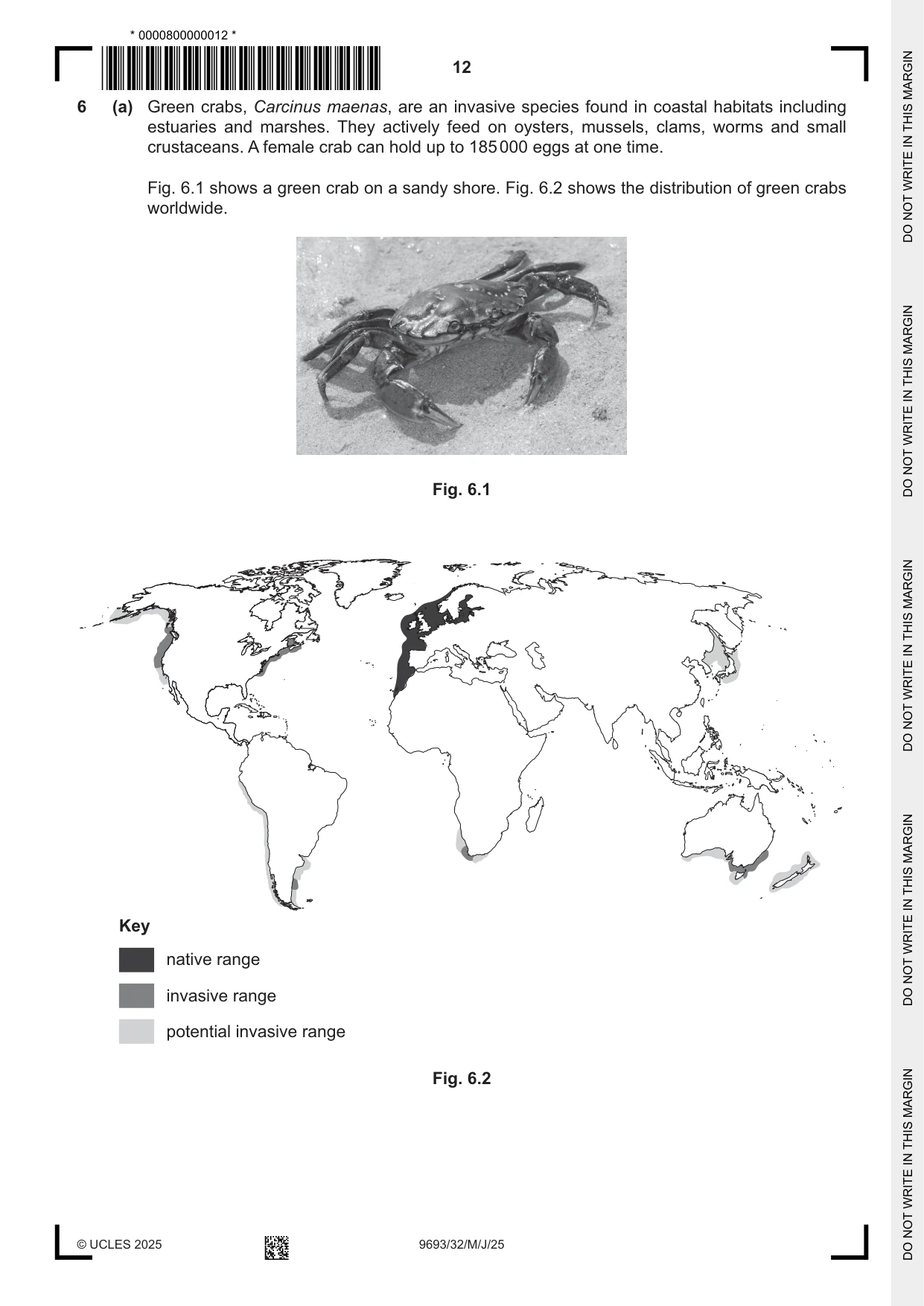
6 (a) Green crabs, Carcinus maenas, are an invasive species found in coastal habitats including estuaries and marshes. They actively feed on oysters, mussels, clams, worms and small crustaceans. A female crab can hold up to 185 000 eggs at one time. Fig. 6.1 shows a green crab on a sandy shore. Fig. 6.2 shows the distribution of green crabs worldwide. Fig. 6.1 Key native range invasive range potential invasive range Fig. 6.2 State reasons why green crabs pose a threat to native marine species and ecosystems. ................................................................................................................................................... ................................................................................................................................................... ................................................................................................................................................... ................................................................................................................................................... ................................................................................................................................................... ................................................................................................................................................... ................................................................................................................................................... ................................................................................................................................................... ................................................................................................................................................... ................................................................................................................................................... ................................................................................................................................................... ............................................................................................................................................. [6] (b) Discuss how discarded plastic poses a threat to marine species and ecosystems. ................................................................................................................................................... ................................................................................................................................................... ................................................................................................................................................... ................................................................................................................................................... ................................................................................................................................................... ................................................................................................................................................... ................................................................................................................................................... ................................................................................................................................................... ................................................................................................................................................... ................................................................................................................................................... ................................................................................................................................................... ................................................................................................................................................... ................................................................................................................................................... ................................................................................................................................................... ................................................................................................................................................... ............................................................................................................................................. [8] [Total: 14]
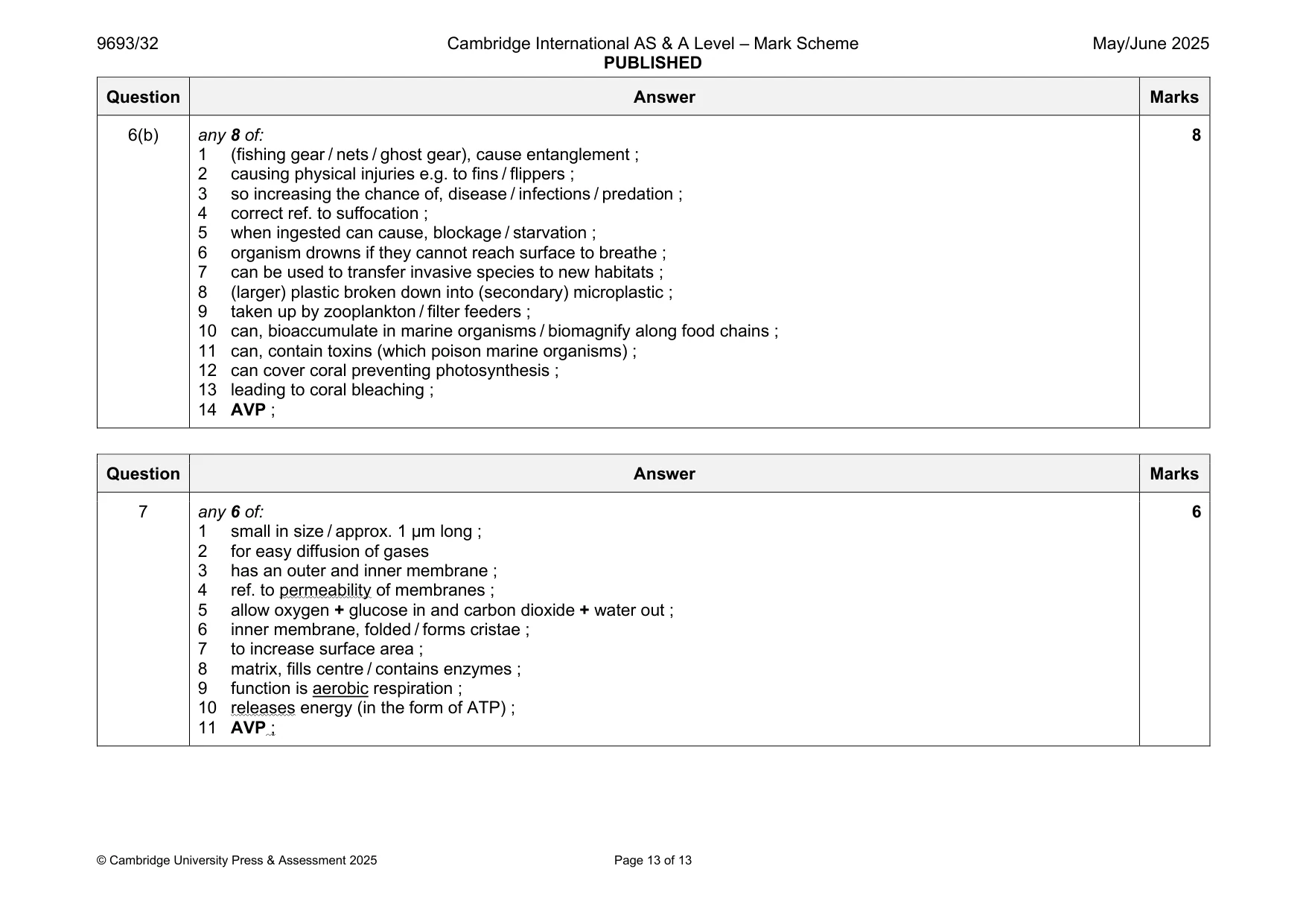
Mark scheme: 6(a) any 6 of: 6 1 they can inhabit a wide variety of habitats ; 2 they have few / no natural predators ; 3 they feed on a wide variety of prey species ; 4 outcompete native species for e.g. food / shelter ; 5 reduce biodiversity ; 6 ecological linkages / food chains / food webs, affected ; 7 (large) claws present to deter predators ; 8 tolerate a wide range of temperatures ; 9 tolerate a wide range of salinities / are euryhaline ; 10 high reproductive rate ; 11 larval forms easily transported to new areas by water currents ; 12 AVP ; 6(b) any 8 of: 8 1 (fishing gear / nets / ghost gear), cause entanglement ; 2 causing physical injuries e.g. to fins / flippers ; 3 so increasing the chance of, disease / infections / predation ; 4 correct ref. to suffocation ; 5 when ingested can cause, blockage / starvation ; 6 organism drowns if they cannot reach surface to breathe ; 7 can be used to transfer invasive species to new habitats ; 8 (larger) plastic broken down into (secondary) microplastic ; 9 taken up by zooplankton / filter feeders ; 10 can, bioaccumulate in marine organisms / biomagnify along food chains ; 11 can, contain toxins (which poison marine organisms) ; 12 can cover coral preventing photosynthesis ; 13 leading to coral bleaching ; 14 AVP ;
Q7 · Describe the structure and function of a mitochondrion
7 Describe the structure and function of a mitochondrion. .......................................................................................................................................................... .......................................................................................................................................................... .......................................................................................................................................................... .......................................................................................................................................................... .......................................................................................................................................................... .......................................................................................................................................................... .......................................................................................................................................................... .......................................................................................................................................................... .......................................................................................................................................................... .......................................................................................................................................................... .......................................................................................................................................................... .................................................................................................................................................... [6]
Mark scheme: 7 any 6 of: 6 1 small in size / approx. 1 µm long ; 2 for easy diffusion of gases 3 has an outer and inner membrane ; 4 ref. to permeability of membranes ; 5 allow oxygen + glucose in and carbon dioxide + water out ; 6 inner membrane, folded / forms cristae ; 7 to increase surface area ; 8 matrix, fills centre / contains enzymes ; 9 function is aerobic respiration ; 10 releases energy (in the form of ATP) ; 11 AVP ;
What was in this paper
The subtopics covered by these 7 questions, and how many questions each got. Open one in a new tab to see every Cambridge question on it.
What you needed in this session
Cambridge’s own grade thresholds for 2025 May/June, Paper 3 · Variant 2. A higher threshold means an easier paper — the bar moves with how the cohort did.