Cambridge A Level Marine Science 9693 — 2024 May/June Paper 3 · Variant 1
9693/31/M/J/24 · 7 questions · 75 marks · ≈84 min
The question paper and its mark scheme, free to read here and free to download. This is Cambridge’s own paper, exactly as it was sat.
Question paper20 pages


Mark scheme11 pages
Answers below. Sit the paper first if you are practising.
Questions as text
Q1 · The Salinas y Arenales Regional Park is a protected natural area on Spain’s Mediterranean…
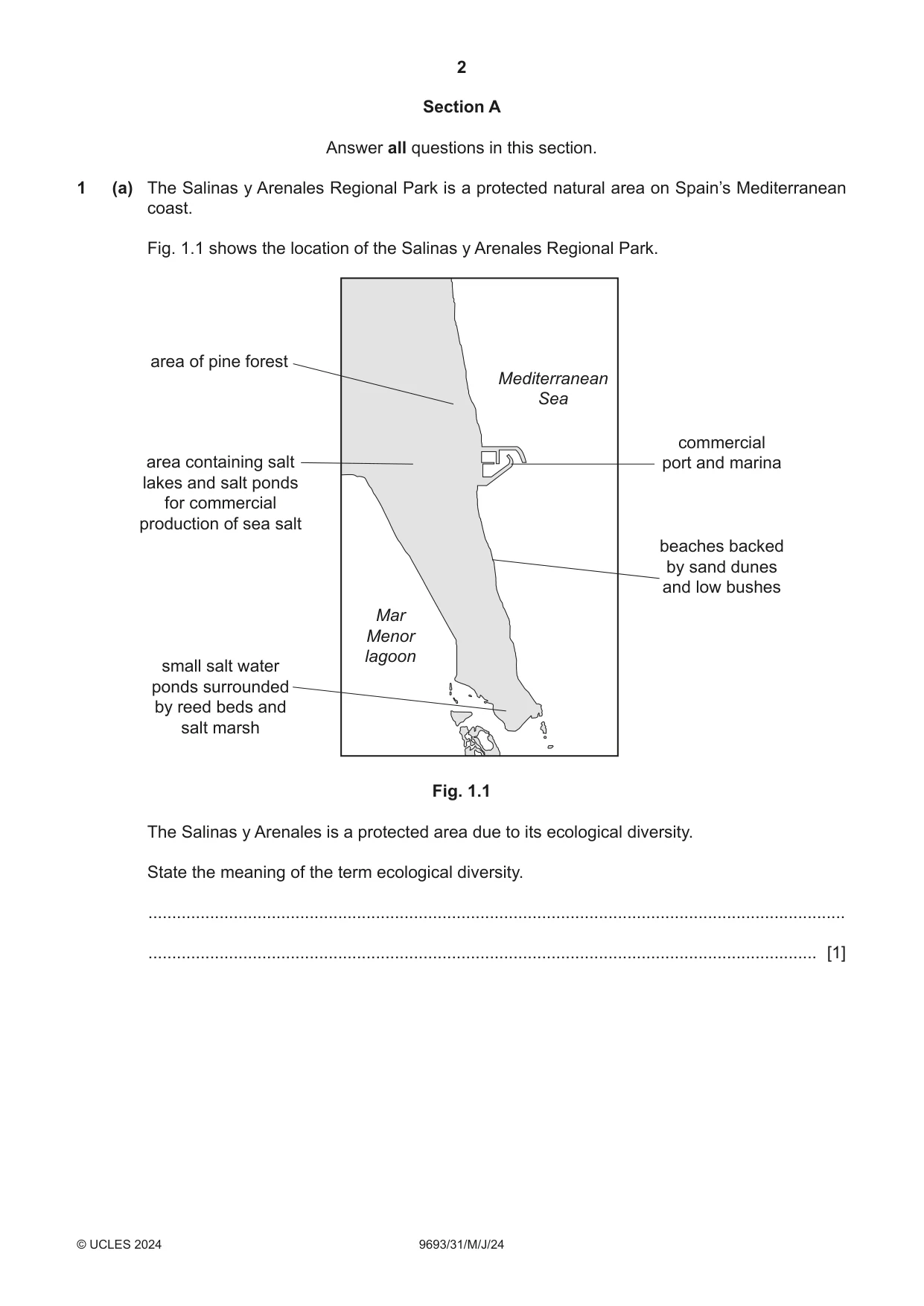
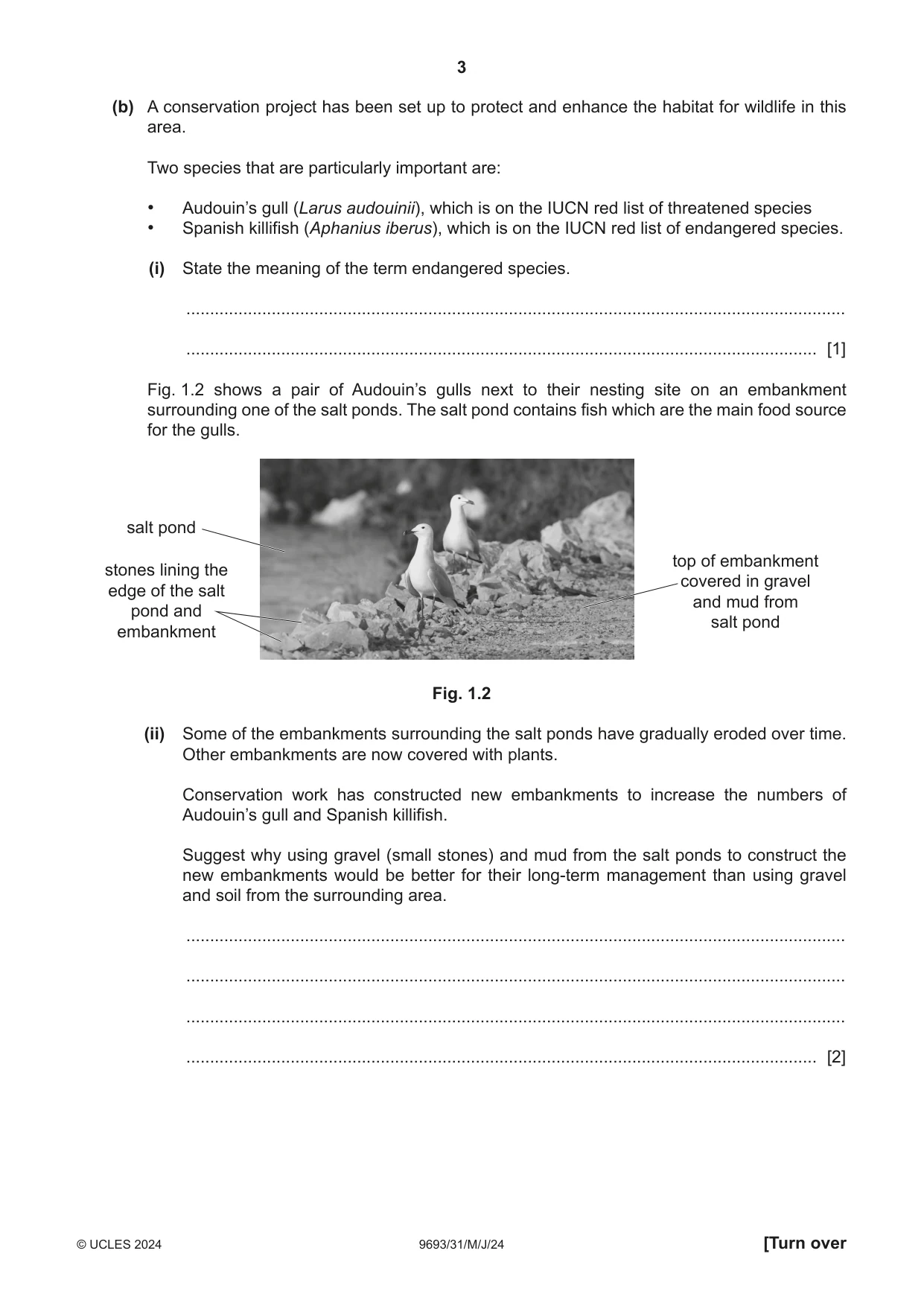
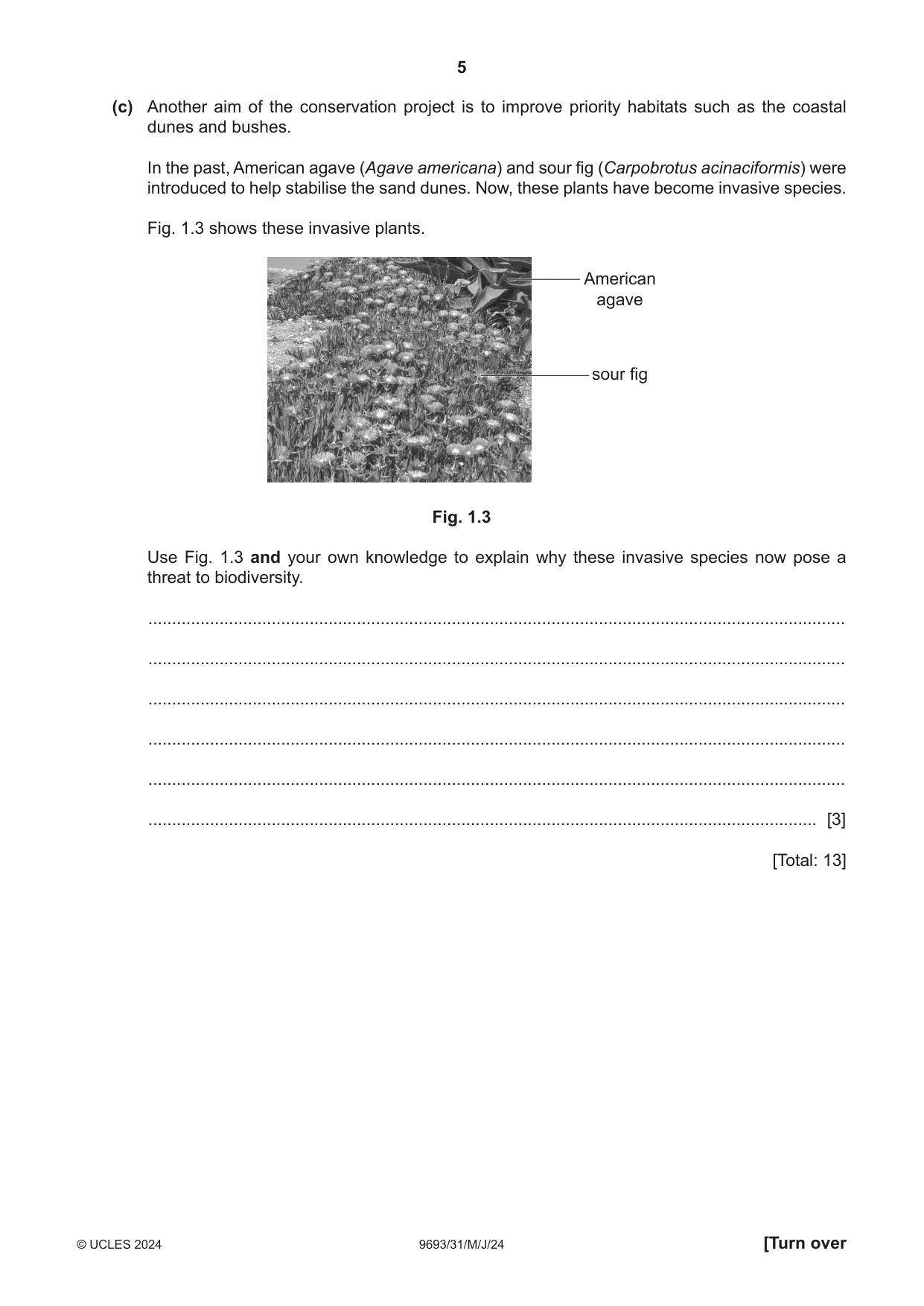
1 (a) The Salinas y Arenales Regional Park is a protected natural area on Spain’s Mediterranean coast. Fig. 1.1 shows the location of the Salinas y Arenales Regional Park. area of pine forest Mediterranean Sea commercial area containing salt port and marina lakes and salt ponds for commercial production of sea salt beaches backed by sand dunes and low bushes Mar Menor lagoon small salt water ponds surrounded by reed beds and salt marsh Fig. 1.1 The Salinas y Arenales is a protected area due to its ecological diversity. State the meaning of the term ecological diversity. ................................................................................................................................................... ............................................................................................................................................. [1] (b) A conservation project has been set up to protect and enhance the habitat for wildlife in this area. Two species that are particularly important are: • Audouin’s gull (Larus audouinii), which is on the IUCN red list of threatened species • Spanish killifish (Aphanius iberus), which is on the IUCN red list of endangered species. (i) State the meaning of the term endangered species. ........................................................................................................................................... ..................................................................................................................................... [1] Fig. 1.2 shows a pair of Audouin’s gulls next to their nesting site on an embankment surrounding one of the salt ponds. The salt pond contains fish which are the main food source for the gulls. salt pond top of embankmentstones lining the covered in graveledge of the salt and mud from pond and salt pond embankment Fig. 1.2 (ii) Some of the embankments surrounding the salt ponds have gradually eroded over time. Other embankments are now covered with plants. Conservation work has constructed new embankments to increase the numbers of Audouin’s gull and Spanish killifish. Suggest why using gravel (small stones) and mud from the salt ponds to construct the new embankments would be better for their long-term management than using gravel and soil from the surrounding area. ........................................................................................................................................... ........................................................................................................................................... ........................................................................................................................................... ..................................................................................................................................... [2] (iii) Spanish killifish are carnivores and swim around the stones lining the embankments. Suggest why the new embankments have caused an increase in the numbers of Spanish killifish. ........................................................................................................................................... ........................................................................................................................................... ........................................................................................................................................... ..................................................................................................................................... [2] (iv) One of the main threats to biodiversity in the Salinas y Arenales protected area is a large increase in the numbers of yellow-legged gulls which also breed there. These gulls are larger than Audouin’s gull and are omnivores. Yellow-legged gulls produce large quantities of faeces. High numbers of these gulls have increased the concentration of nitrogen compounds in the salt ponds. Explain how yellow-legged gulls pose a threat to biodiversity in this area. ........................................................................................................................................... ........................................................................................................................................... ........................................................................................................................................... ........................................................................................................................................... ........................................................................................................................................... ........................................................................................................................................... ........................................................................................................................................... ..................................................................................................................................... [4] (c) Another aim of the conservation project is to improve priority habitats such as the coastal dunes and bushes. In the past, American agave (Agave americana) and sour fig (Carpobrotus acinaciformis) were introduced to help stabilise the sand dunes. Now, these plants have become invasive species. Fig. 1.3 shows these invasive plants. American agave sour fig Fig. 1.3 Use Fig. 1.3 and your own knowledge to explain why these invasive species now pose a threat to biodiversity. ................................................................................................................................................... ................................................................................................................................................... ................................................................................................................................................... ................................................................................................................................................... ................................................................................................................................................... ............................................................................................................................................. [3] [Total: 13]
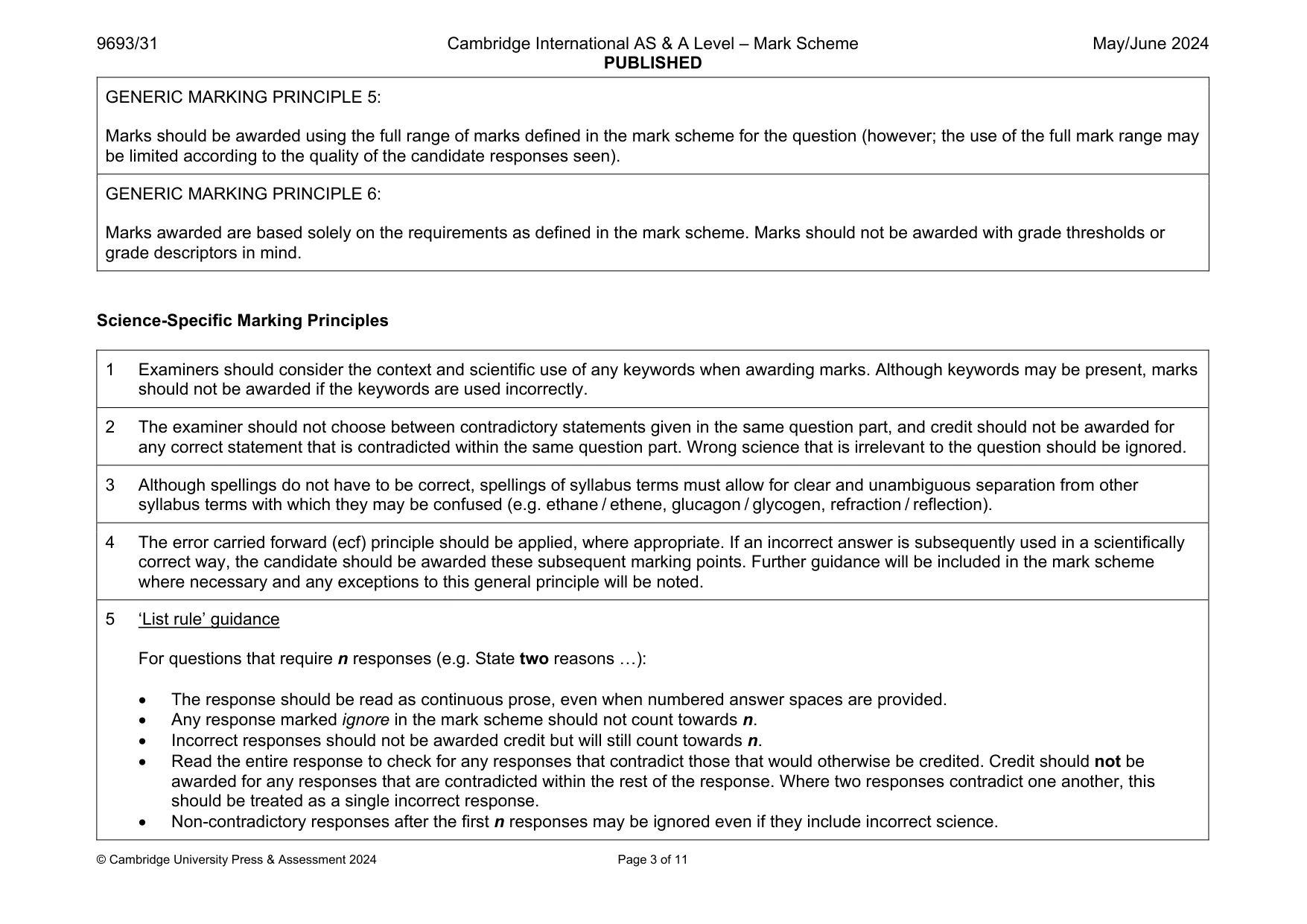
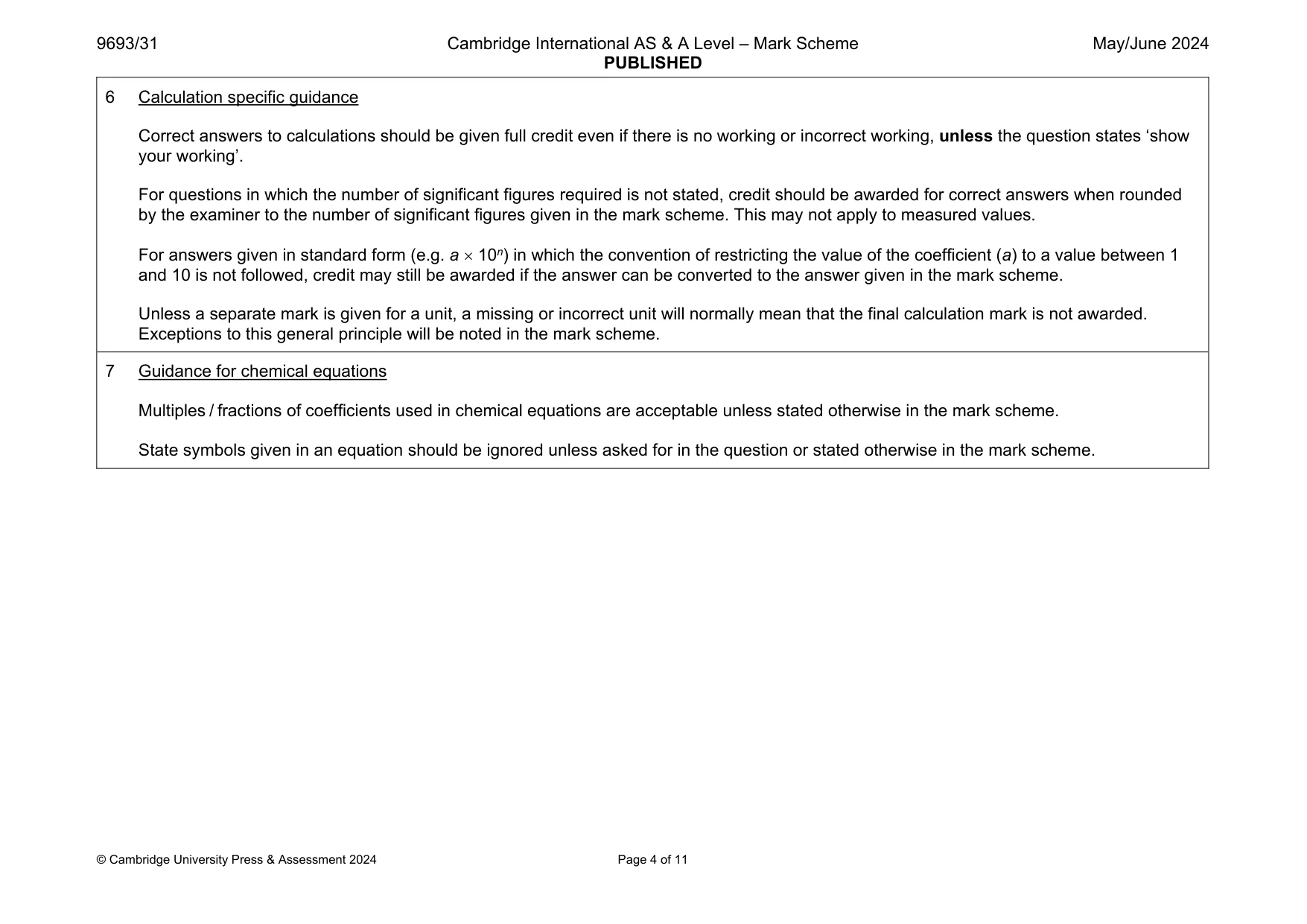
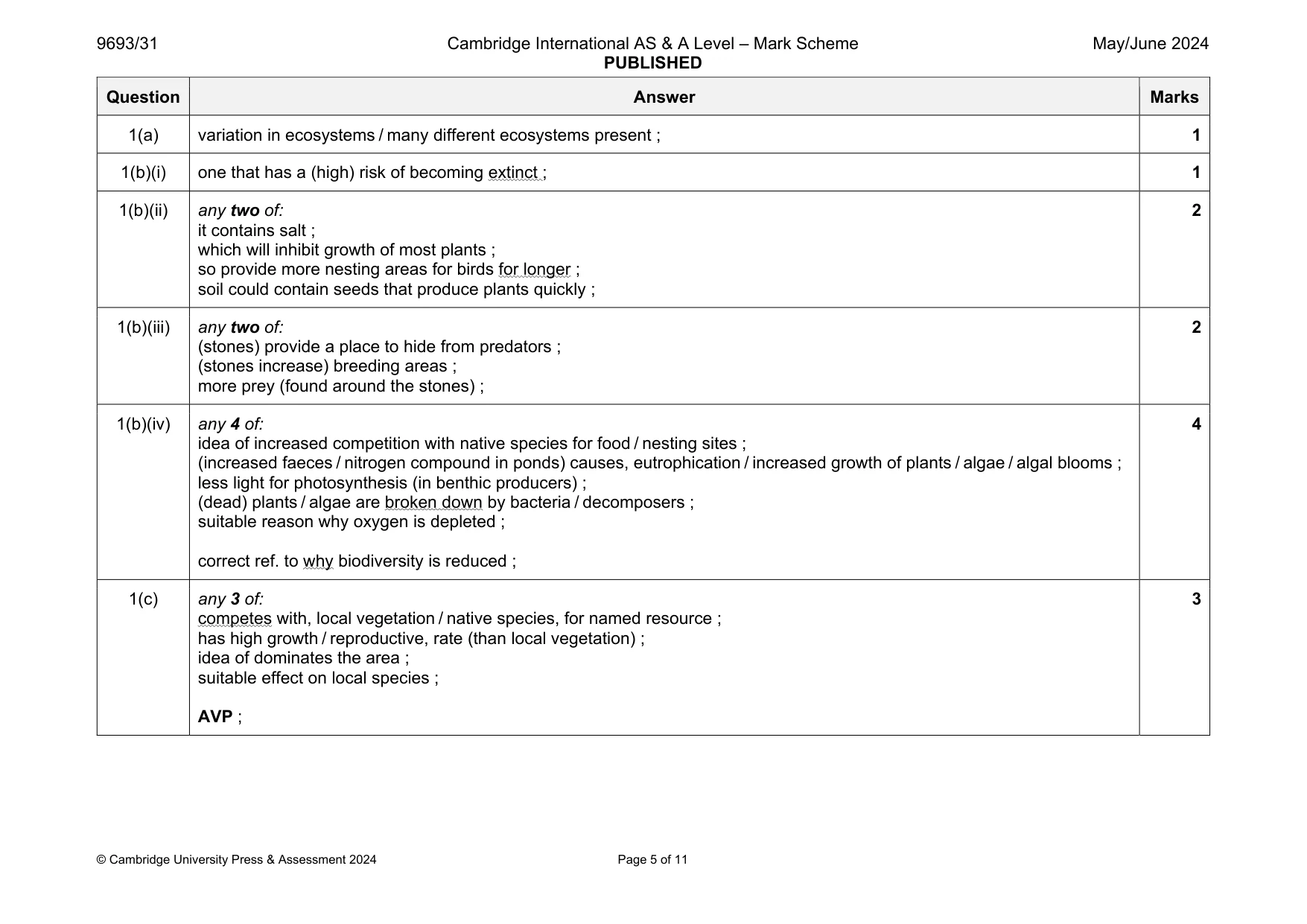
Mark scheme: 1(a) variation in ecosystems / many different ecosystems present ; 1 1(b)(i) one that has a (high) risk of becoming extinct ; 1 1(b)(ii) any two of: it contains salt ; which will inhibit growth of most plants ; so provide more nesting areas for birds for longer ; soil could contain seeds that produce plants quickly ; 2 1(b)(iii) any two of: (stones) provide a place to hide from predators ; (stones increase) breeding areas ; more prey (found around the stones) ; 2 1(b)(iv) any 4 of: idea of increased competition with native species for food / nesting sites ; (increased faeces / nitrogen compound in ponds) causes, eutrophication / increased growth of plants / algae / algal blooms ; less light for photosynthesis (in benthic producers) ; (dead) plants / algae are broken down by bacteria / decomposers ; suitable reason why oxygen is depleted ; correct ref. to why biodiversity is reduced ; 4 1(c) any 3 of: competes with, local vegetation / native species, for named resource ; has high growth / reproductive, rate (than local vegetation) ; idea of dominates the area ; suitable effect on local species ; AVP ; 3
Q2 · Two different methods of mussel aquaculture
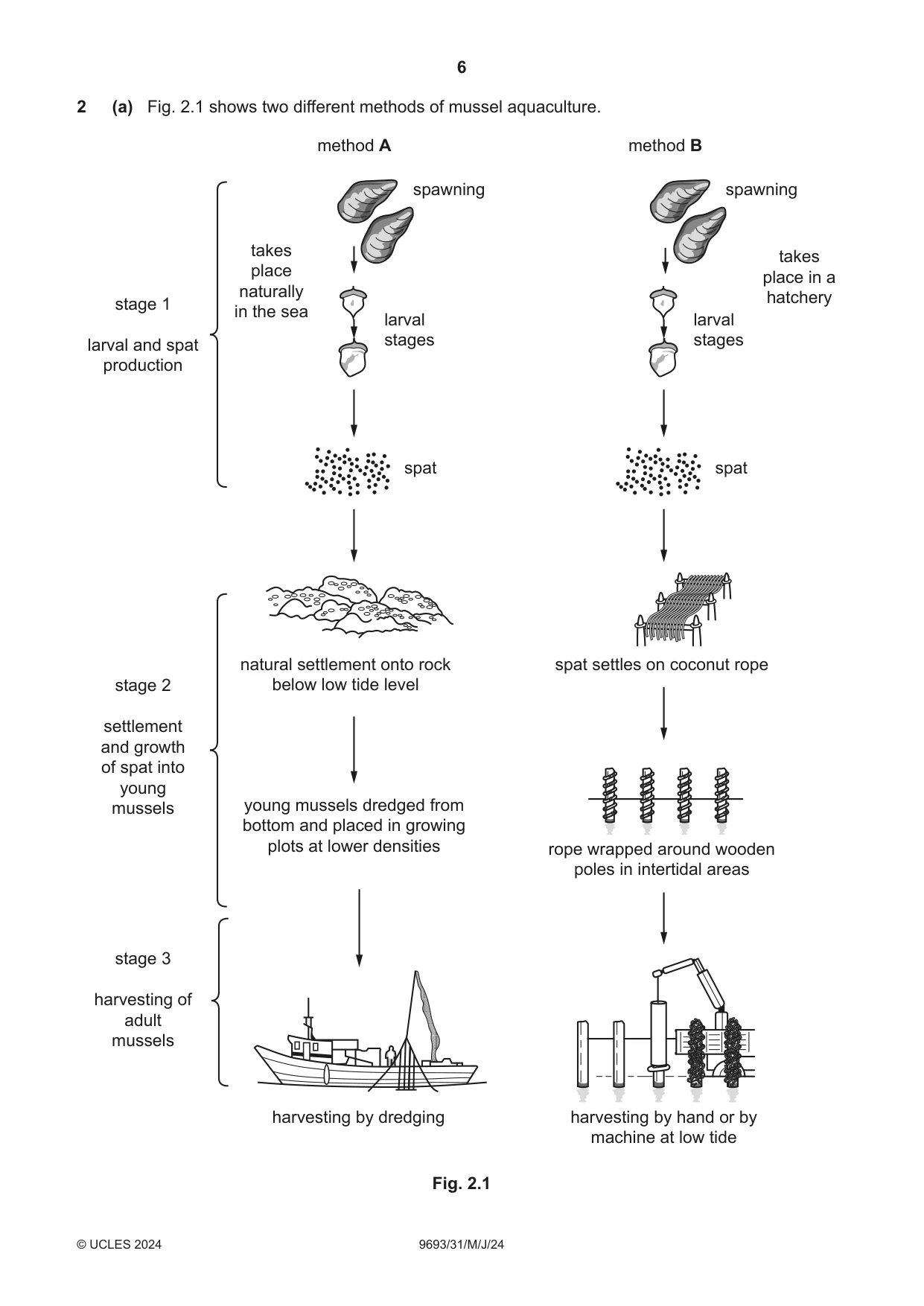
2 (a) Fig. 2.1 shows two different methods of mussel aquaculture. method A method B spawning spawning takes takes place place in a naturally hatchery stage 1 in the sea larval larval stages stages larval and spat production spat spat natural settlement onto rock spat settles on coconut rope stage 2 below low tide level settlement and growth of spat into young mussels young mussels dredged from bottom and placed in growing plots at lower densities rope wrapped around wooden poles in intertidal areas stage 3 harvesting of adult mussels harvesting by dredging harvesting by hand or by machine at low tide Fig. 2.1 (i) The mussel life cycle includes metamorphosis. State the meaning of the term metamorphosis. ........................................................................................................................................... ..................................................................................................................................... [1] (ii) Larval and spat production for method A takes place naturally in the sea. Larval and spat production for method B takes place in a hatchery. List two advantages and two disadvantages of using a hatchery to produce larvae and spat rather than allowing natural reproduction in the sea. advantages of using a hatchery 1 ........................................................................................................................................ ........................................................................................................................................... 2 ........................................................................................................................................ ........................................................................................................................................... disadvantages of using a hatchery 1 ........................................................................................................................................ ........................................................................................................................................... 2 ........................................................................................................................................ ........................................................................................................................................... [4] (iii) Suggest why the growth of adult mussels is usually faster using method A than using method B. ........................................................................................................................................... ........................................................................................................................................... ........................................................................................................................................... ..................................................................................................................................... [2] (iv) Explain why harvesting using method A is more damaging to the environment than using method B. ........................................................................................................................................... ........................................................................................................................................... ........................................................................................................................................... ..................................................................................................................................... [2] (b) (i) Mussels are checked regularly for shell damage. Shell damage can result in a loss of 2% of income from mussel aquaculture. Low salinity is known to decrease mineral content in sea water. Suggest why low salinity might increase shell damage in mussels. ........................................................................................................................................... ........................................................................................................................................... ........................................................................................................................................... ..................................................................................................................................... [2] (ii) Suggest two other reasons why the mussels need to be checked regularly. 1 ........................................................................................................................................ ........................................................................................................................................... 2 ........................................................................................................................................ ........................................................................................................................................... [2] [Total: 13]
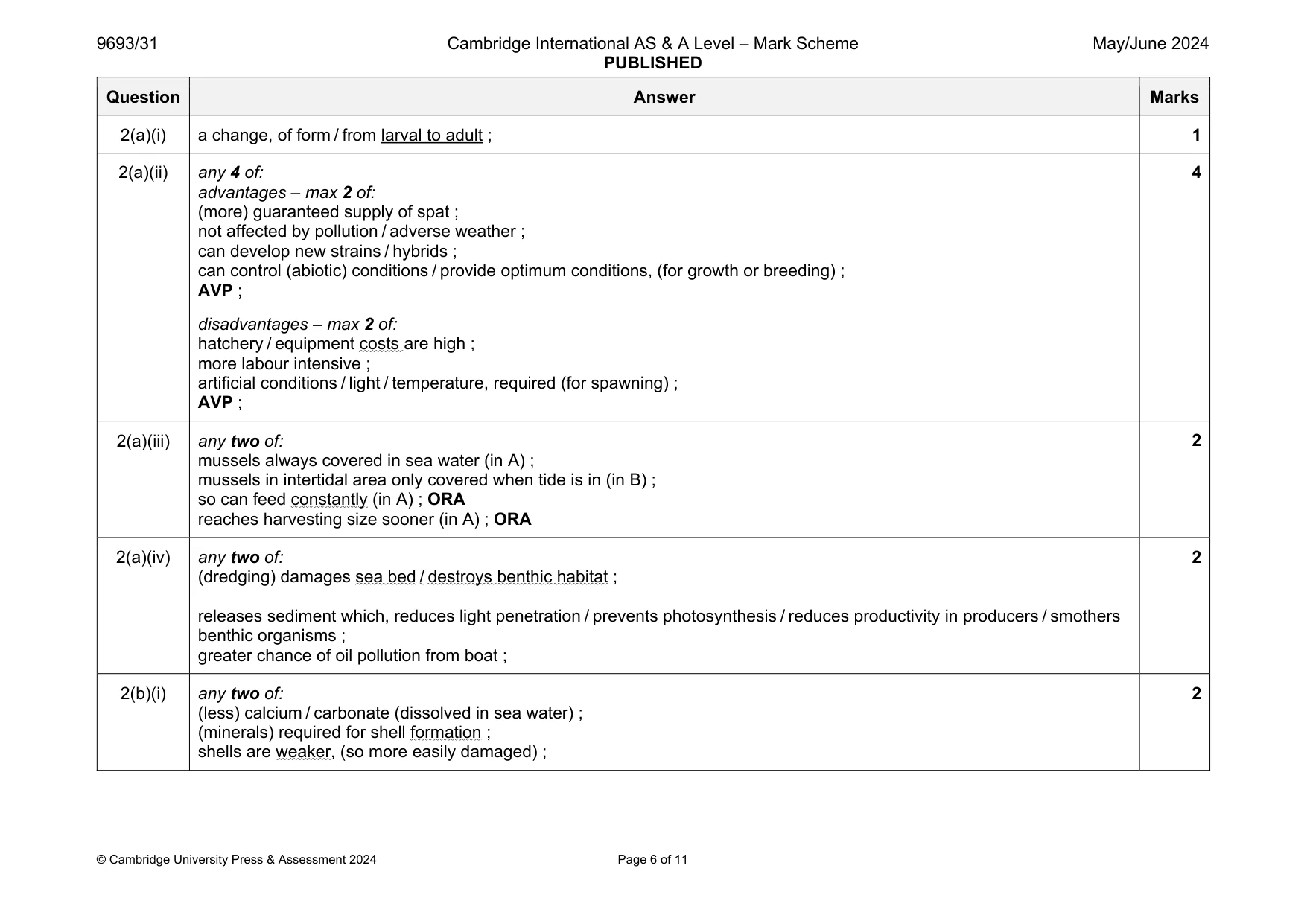
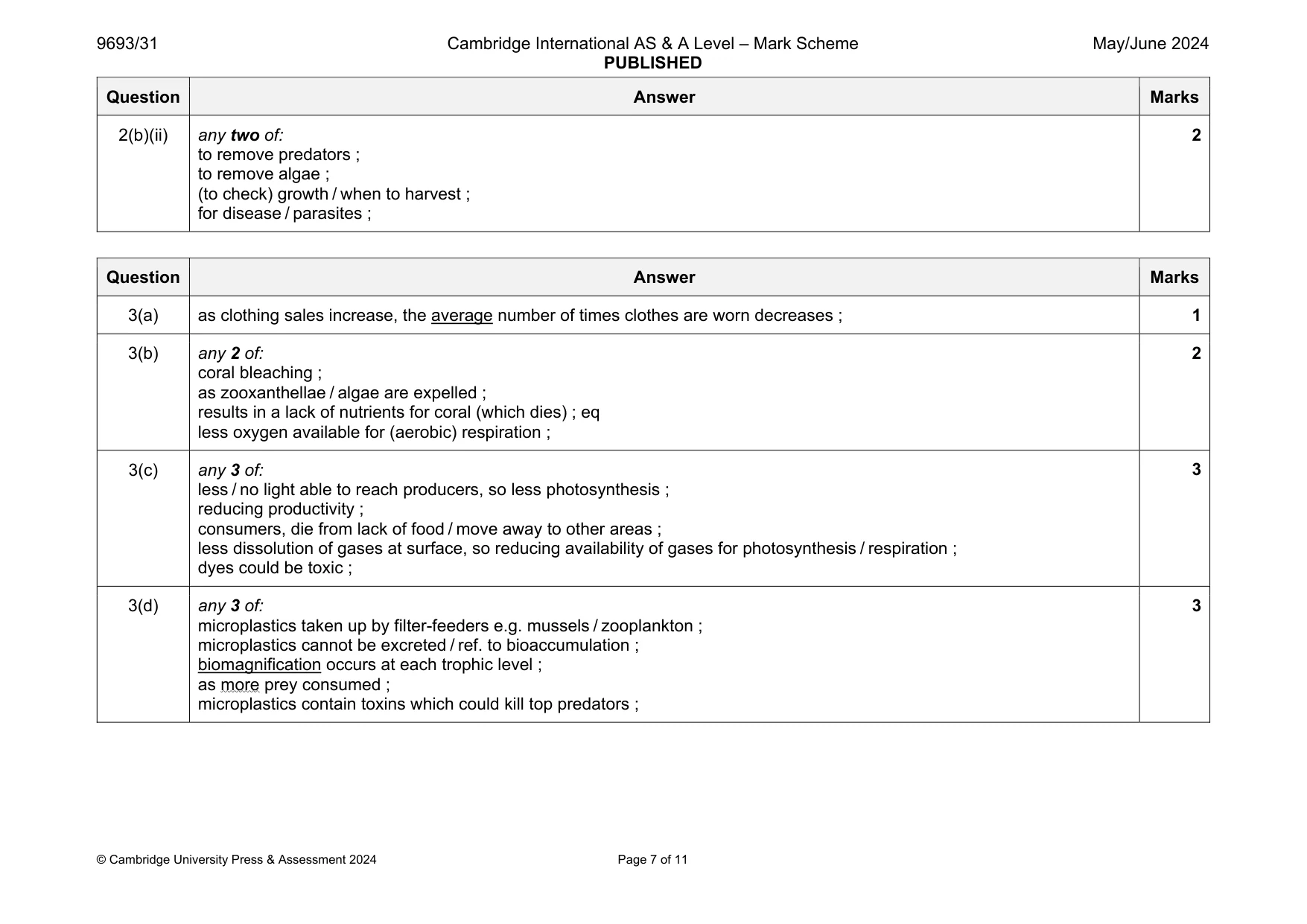
Mark scheme: 2(a)(i) a change, of form / from larval to adult ; 1 2(a)(ii) any 4 of: advantages – max 2 of: (more) guaranteed supply of spat ; not affected by pollution / adverse weather ; can develop new strains / hybrids ; can control (abiotic) conditions / provide optimum conditions, (for growth or breeding) ; AVP ; disadvantages – max 2 of: hatchery / equipment costs are high ; more labour intensive ; artificial conditions / light / temperature, required (for spawning) ; AVP ; 4 2(a)(iii) any two of: mussels always covered in sea water (in A) ; mussels in intertidal area only covered when tide is in (in B) ; so can feed constantly (in A) ; ORA reaches harvesting size sooner (in A) ; ORA 2 2(a)(iv) any two of: (dredging) damages sea bed / destroys benthic habitat ; releases sediment which, reduces light penetration / prevents photosynthesis / reduces productivity in producers / smothers benthic organisms ; greater chance of oil pollution from boat ; 2 2(b)(i) any two of: (less) calcium / carbonate (dissolved in sea water) ; (minerals) required for shell formation ; shells are weaker, (so more easily damaged) ; 2 Question Answer Marks 2(b)(ii) any two of: to remove predators ; to remove algae ; (to check) growth / when to harvest ; for disease / parasites ; 2
Q3 · The manufacture and use of clothing contributes to harmful effects on the marine…
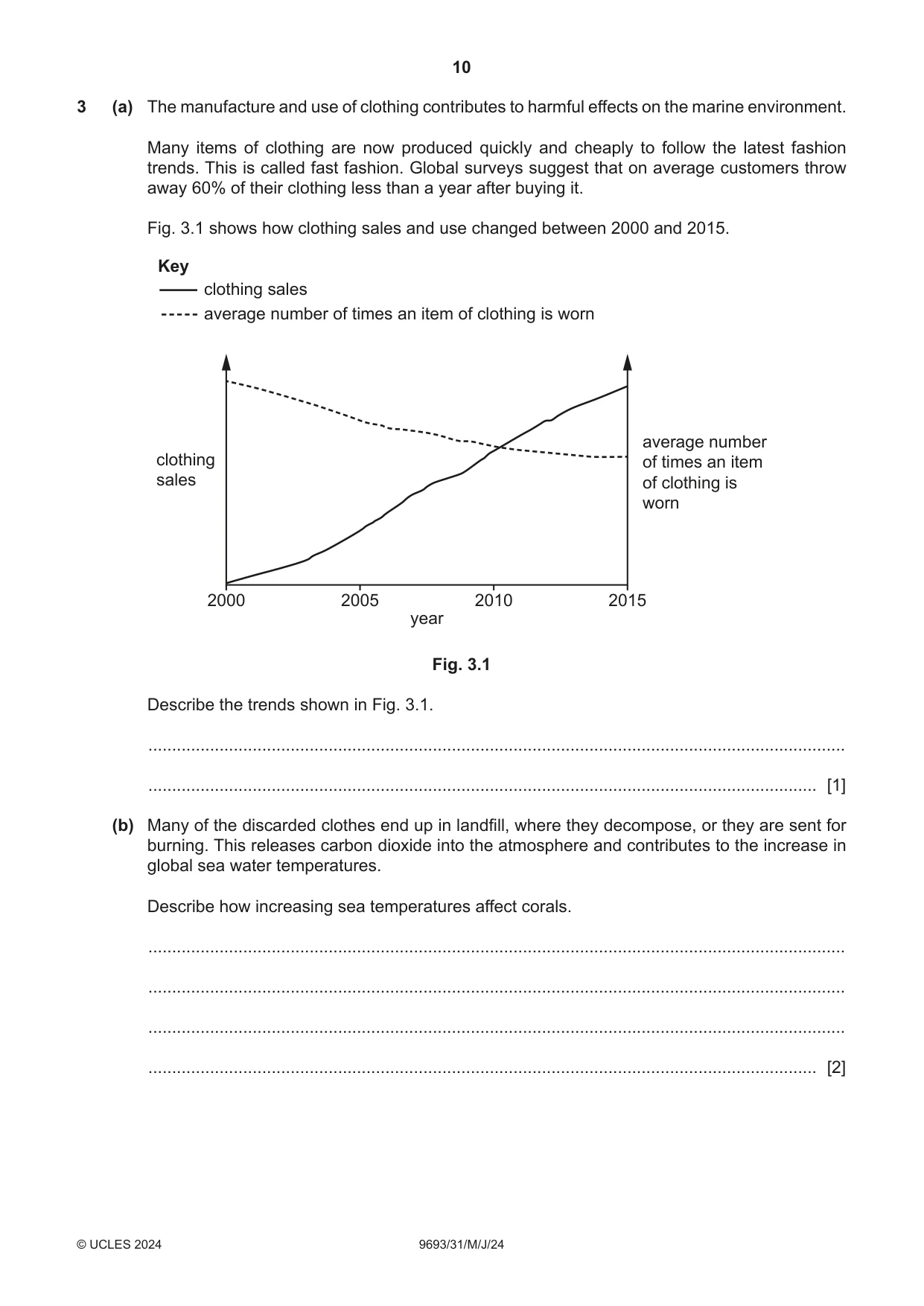
3 (a) The manufacture and use of clothing contributes to harmful effects on the marine environment. Many items of clothing are now produced quickly and cheaply to follow the latest fashion trends. This is called fast fashion. Global surveys suggest that on average customers throw away 60% of their clothing less than a year after buying it. Fig. 3.1 shows how clothing sales and use changed between 2000 and 2015. Key clothing sales average number of times an item of clothing is worn average number clothing of times an item sales of clothing is worn 2000 2005 2010 2015 year Fig. 3.1 Describe the trends shown in Fig. 3.1. ................................................................................................................................................... ............................................................................................................................................. [1] (b) Many of the discarded clothes end up in landfill, where they decompose, or they are sent for burning. This releases carbon dioxide into the atmosphere and contributes to the increase in global sea water temperatures. Describe how increasing sea temperatures affect corals. ................................................................................................................................................... ................................................................................................................................................... ................................................................................................................................................... ............................................................................................................................................. [2] (c) Cotton is a natural fibre used in the production of clothes. It is often dyed using synthetic dyes which do not bind well to the cotton fibres. The dyes enter streams and rivers during the dyeing process and when the clothes are washed. The dyes eventually enter the sea where they reflect sunlight falling on the water surface. Suggest how these dyes could affect marine organisms. ................................................................................................................................................... ................................................................................................................................................... ................................................................................................................................................... ................................................................................................................................................... ................................................................................................................................................... ............................................................................................................................................. [3] (d) Washing clothes made from synthetic fibres is estimated to produce 35% of the microplastics in the oceans. Explain how microplastic is a problem for top predators in the oceans. ................................................................................................................................................... ................................................................................................................................................... ................................................................................................................................................... ................................................................................................................................................... ................................................................................................................................................... ............................................................................................................................................. [3] (e) Use all the information provided to suggest how the fast fashion industry could reduce its environmental impact. ................................................................................................................................................... ................................................................................................................................................... ................................................................................................................................................... ............................................................................................................................................. [2] [Total: 11]
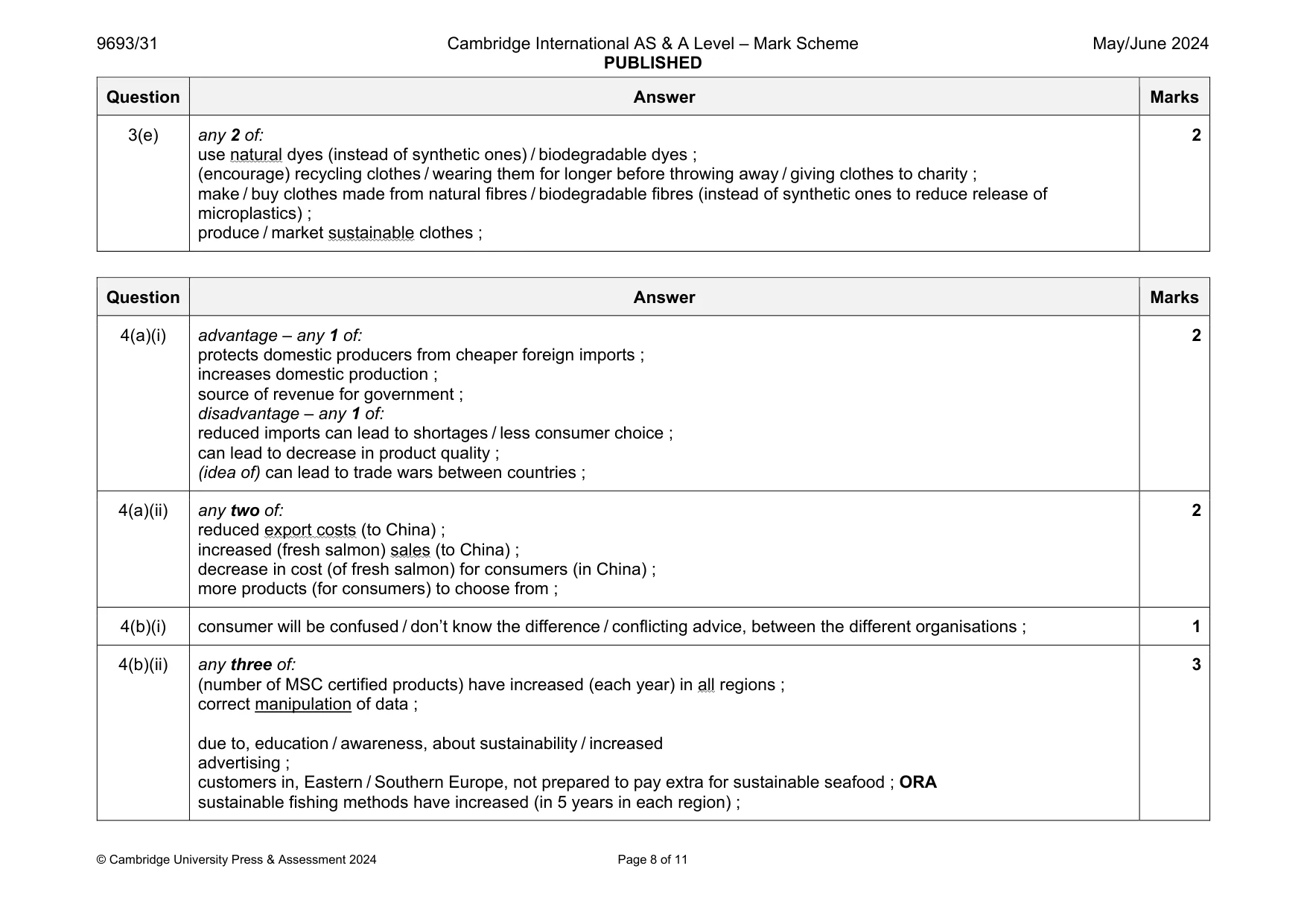
Mark scheme: 3(a) as clothing sales increase, the average number of times clothes are worn decreases ; 1 3(b) any 2 of: coral bleaching ; as zooxanthellae / algae are expelled ; results in a lack of nutrients for coral (which dies) ; eq less oxygen available for (aerobic) respiration ; 2 3(c) any 3 of: less / no light able to reach producers, so less photosynthesis ; reducing productivity ; consumers, die from lack of food / move away to other areas ; less dissolution of gases at surface, so reducing availability of gases for photosynthesis / respiration ; dyes could be toxic ; 3 3(d) any 3 of: microplastics taken up by filter-feeders e.g. mussels / zooplankton ; microplastics cannot be excreted / ref. to bioaccumulation ; biomagnification occurs at each trophic level ; as more prey consumed ; microplastics contain toxins which could kill top predators ; 3 Question Answer Marks 3(e) any 2 of: use natural dyes (instead of synthetic ones) / biodegradable dyes ; (encourage) recycling clothes / wearing them for longer before throwing away / giving clothes to charity ; make / buy clothes made from natural fibres / biodegradable fibres (instead of synthetic ones to reduce release of microplastics) ; produce / market sustainable clothes ; 2
Q4 · Price tariffs are a form of tax applied to imports from other countries, such as seafood
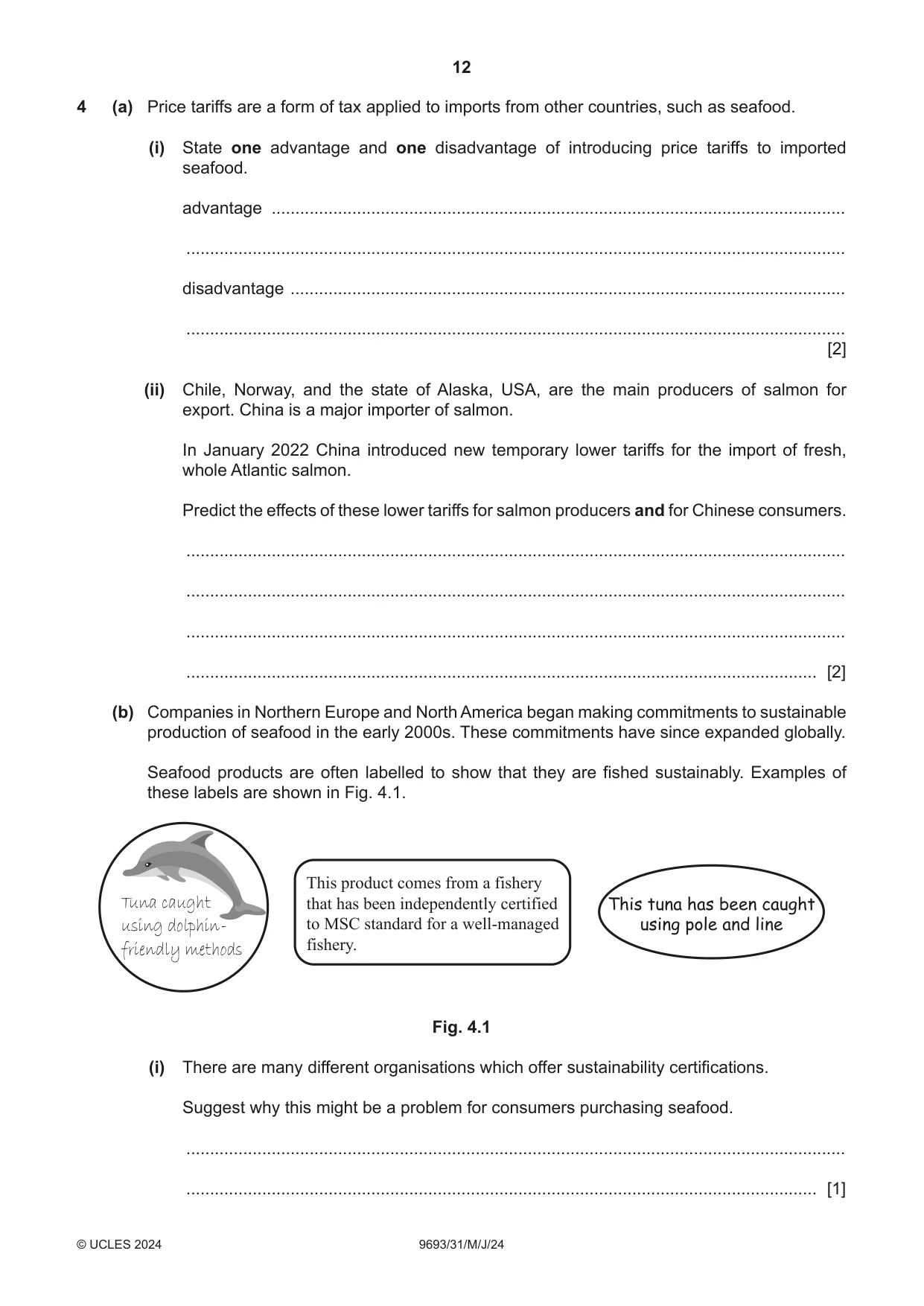
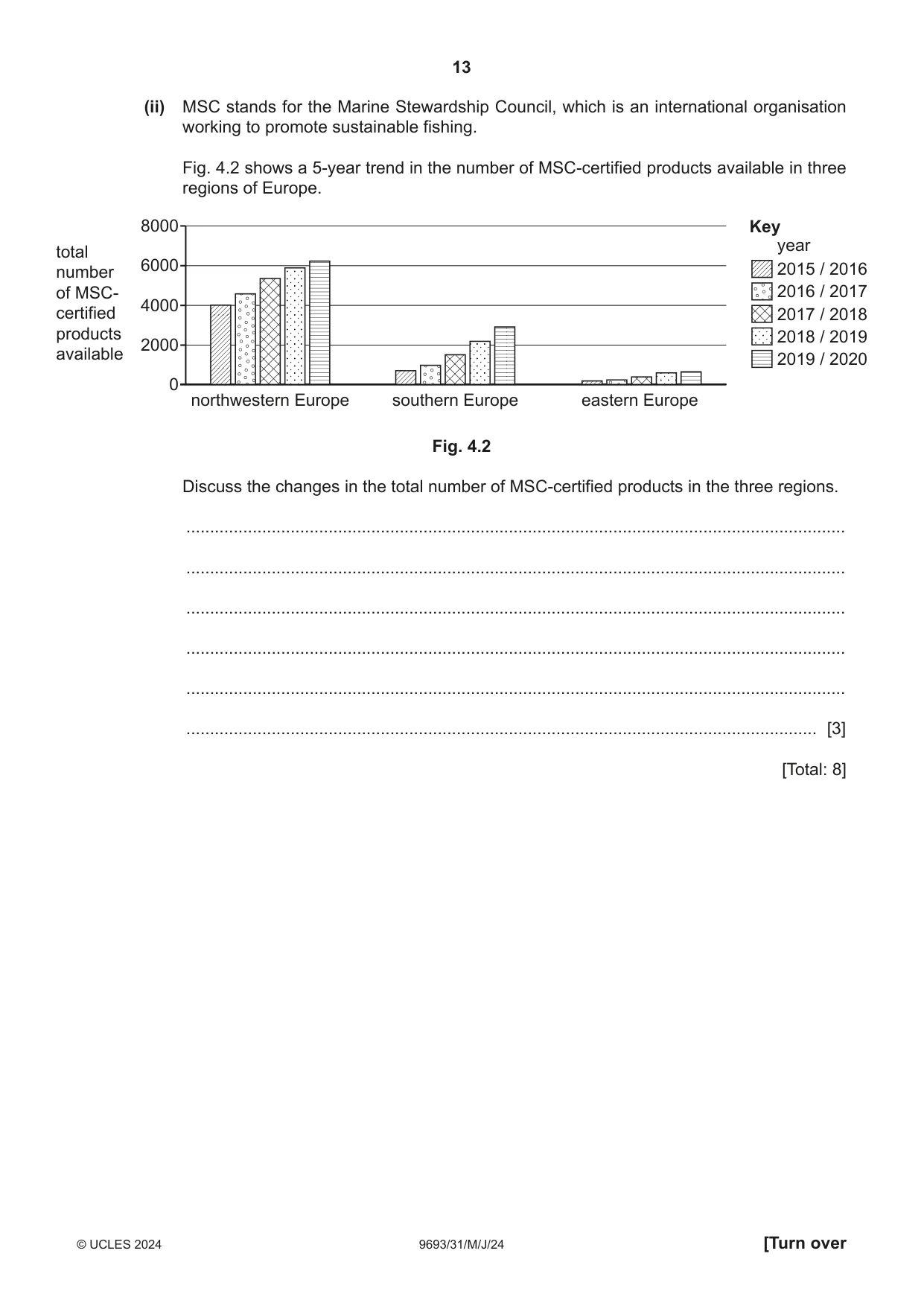
4 (a) Price tariffs are a form of tax applied to imports from other countries, such as seafood. (i) State one advantage and one disadvantage of introducing price tariffs to imported seafood. advantage ......................................................................................................................... ........................................................................................................................................... disadvantage ..................................................................................................................... ........................................................................................................................................... [2] (ii) Chile, Norway, and the state of Alaska, USA, are the main producers of salmon for export. China is a major importer of salmon. In January 2022 China introduced new temporary lower tariffs for the import of fresh, whole Atlantic salmon. Predict the effects of these lower tariffs for salmon producers and for Chinese consumers. ........................................................................................................................................... ........................................................................................................................................... ........................................................................................................................................... ..................................................................................................................................... [2] (b) Companies in Northern Europe and North America began making commitments to sustainable production of seafood in the early 2000s. These commitments have since expanded globally. Seafood products are often labelled to show that they are fished sustainably. Examples of these labels are shown in Fig. 4.1. This product comes from a fishery Tuna caught that has been independently certified This tuna has been caught using dolphin- to MSC standard for a well-managed using pole and line fishery. friendly methods Fig. 4.1 (i) There are many different organisations which offer sustainability certifications. Suggest why this might be a problem for consumers purchasing seafood. ........................................................................................................................................... ..................................................................................................................................... [1] (ii) MSC stands for the Marine Stewardship Council, which is an international organisation working to promote sustainable fishing. Fig. 4.2 shows a 5-year trend in the number of MSC-certified products available in three regions of Europe. 8000 Key yeartotal 6000 2015 / 2016number of MSC- 2016 / 2017 4000certified 2017 / 2018 products 2018 / 2019 2000available 2019 / 2020 0 northwestern Europe southern Europe eastern Europe Fig. 4.2 Discuss the changes in the total number of MSC-certified products in the three regions. ........................................................................................................................................... ........................................................................................................................................... ........................................................................................................................................... ........................................................................................................................................... ........................................................................................................................................... ..................................................................................................................................... [3] [Total: 8]
Mark scheme: 4(a)(i) advantage – any 1 of: protects domestic producers from cheaper foreign imports ; increases domestic production ; source of revenue for government ; disadvantage – any 1 of: reduced imports can lead to shortages / less consumer choice ; can lead to decrease in product quality ; (idea of) can lead to trade wars between countries ; 4(a)(ii) any two of: reduced export costs (to China) ; increased (fresh salmon) sales (to China) ; decrease in cost (of fresh salmon) for consumers (in China) ; more products (for consumers) to choose from ; 2 4(b)(i) consumer will be confused / don’t know the difference / conflicting advice, between the different organisations ; 1 4(b)(ii) any three of: (number of MSC certified products) have increased (each year) in all regions ; correct manipulation of data ; due to, education / awareness, about sustainability / increased advertising ; customers in, Eastern / Southern Europe, not prepared to pay extra for sustainable seafood ; ORA sustainable fishing methods have increased (in 5 years in each region) ; 3
Q5 · Describe the main features of kelp and explain how it is adapted for living in intertidal…
5 Describe the main features of kelp and explain how it is adapted for living in intertidal areas and areas permanently covered by sea water on rocky shores. .......................................................................................................................................................... .......................................................................................................................................................... .......................................................................................................................................................... .......................................................................................................................................................... .......................................................................................................................................................... .......................................................................................................................................................... .......................................................................................................................................................... .......................................................................................................................................................... .......................................................................................................................................................... .......................................................................................................................................................... .......................................................................................................................................................... .......................................................................................................................................................... .......................................................................................................................................................... .......................................................................................................................................................... .......................................................................................................................................................... .......................................................................................................................................................... .......................................................................................................................................................... .......................................................................................................................................................... .......................................................................................................................................................... .................................................................................................................................................. [10]
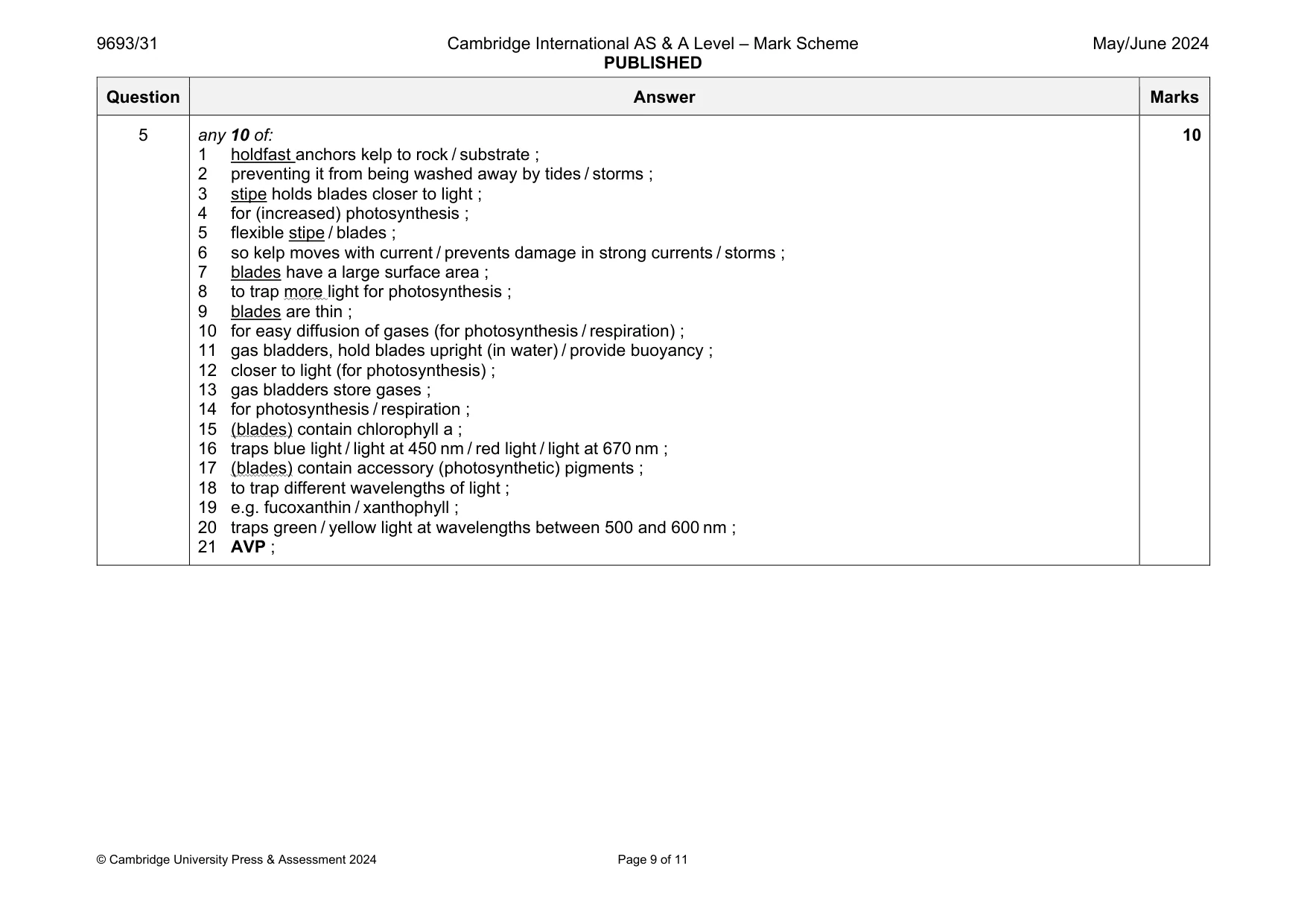
Mark scheme: 5 any 10 of: 1 holdfast anchors kelp to rock / substrate ; 2 preventing it from being washed away by tides / storms ; 3 stipe holds blades closer to light ; 4 for (increased) photosynthesis ; 5 flexible stipe / blades ; 6 so kelp moves with current / prevents damage in strong currents / storms ; 7 blades have a large surface area ; 8 to trap more light for photosynthesis ; 9 blades are thin ; 10 for easy diffusion of gases (for photosynthesis / respiration) ; 11 gas bladders, hold blades upright (in water) / provide buoyancy ; 12 closer to light (for photosynthesis) ; 13 gas bladders store gases ; 14 for photosynthesis / respiration ; 15 (blades) contain chlorophyll a ; 16 traps blue light / light at 450 nm / red light / light at 670 nm ; 17 (blades) contain accessory (photosynthetic) pigments ; 18 to trap different wavelengths of light ; 19 e.g. fucoxanthin / xanthophyll ; 20 traps green / yellow light at wavelengths between 500 and 600 nm ; 21 AVP ; 10
Q6 · Describe the process of diffusion and explain its importance in marine organisms
6 (a) Describe the process of diffusion and explain its importance in marine organisms. ................................................................................................................................................... ................................................................................................................................................... ................................................................................................................................................... ................................................................................................................................................... ................................................................................................................................................... ................................................................................................................................................... ................................................................................................................................................... ................................................................................................................................................... ................................................................................................................................................... ................................................................................................................................................... ................................................................................................................................................... ................................................................................................................................................... ................................................................................................................................................... ................................................................................................................................................... ................................................................................................................................................... ............................................................................................................................................. [8] (b) Describe how water moves between cells and their environments and explain the effects of this water movement on plant cells and animal cells. ................................................................................................................................................... ................................................................................................................................................... ................................................................................................................................................... ................................................................................................................................................... ................................................................................................................................................... ................................................................................................................................................... ................................................................................................................................................... ................................................................................................................................................... ................................................................................................................................................... ................................................................................................................................................... ................................................................................................................................................... ................................................................................................................................................... ................................................................................................................................................... ............................................................................................................................................. [7] [Total: 15]
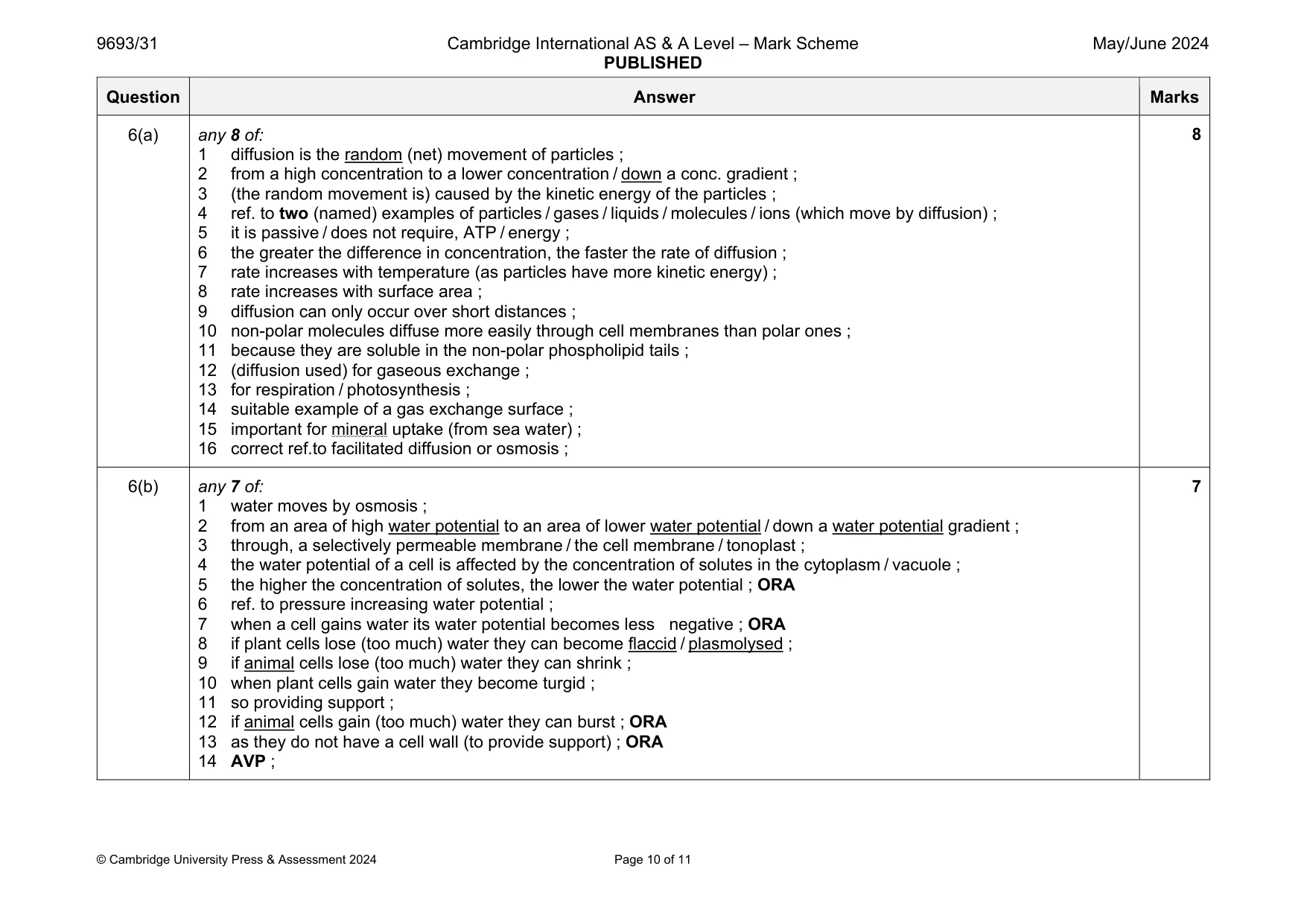
Mark scheme: 6(a) any 8 of: 1 diffusion is the random (net) movement of particles ; 2 from a high concentration to a lower concentration / down a conc. gradient ; 3 (the random movement is) caused by the kinetic energy of the particles ; 4 ref. to two (named) examples of particles / gases / liquids / molecules / ions (which move by diffusion) ; 5 it is passive / does not require, ATP / energy ; 6 the greater the difference in concentration, the faster the rate of diffusion ; 7 rate increases with temperature (as particles have more kinetic energy) ; 8 rate increases with surface area ; 9 diffusion can only occur over short distances ; 10 non-polar molecules diffuse more easily through cell membranes than polar ones ; 11 because they are soluble in the non-polar phospholipid tails ; 12 (diffusion used) for gaseous exchange ; 13 for respiration / photosynthesis ; 14 suitable example of a gas exchange surface ; 15 important for mineral uptake (from sea water) ; 16 correct ref.to facilitated diffusion or osmosis ; 6(b) any 7 of: 1 water moves by osmosis ; 2 from an area of high water potential to an area of lower water potential / down a water potential gradient ; 3 through, a selectively permeable membrane / the cell membrane / tonoplast ; 4 the water potential of a cell is affected by the concentration of solutes in the cytoplasm / vacuole ; 5 the higher the concentration of solutes, the lower the water potential ; ORA 6 ref. to pressure increasing water potential ; 7 when a cell gains water its water potential becomes less negative ; ORA 8 if plant cells lose (too much) water they can become flaccid / plasmolysed ; 9 if animal cells lose (too much) water they can shrink ; 10 when plant cells gain water they become turgid ; 11 so providing support ; 12 if animal cells gain (too much) water they can burst ; ORA 13 as they do not have a cell wall (to provide support) ; ORA 14 AVP ; 7
Q7 · Compare the life cycle of a crustacean such as a shrimp, with that of a marine mammal…
7 Compare the life cycle of a crustacean such as a shrimp, with that of a marine mammal such as a whale. .......................................................................................................................................................... .......................................................................................................................................................... .......................................................................................................................................................... .......................................................................................................................................................... .......................................................................................................................................................... .......................................................................................................................................................... .......................................................................................................................................................... .......................................................................................................................................................... .......................................................................................................................................................... .................................................................................................................................................... [5]
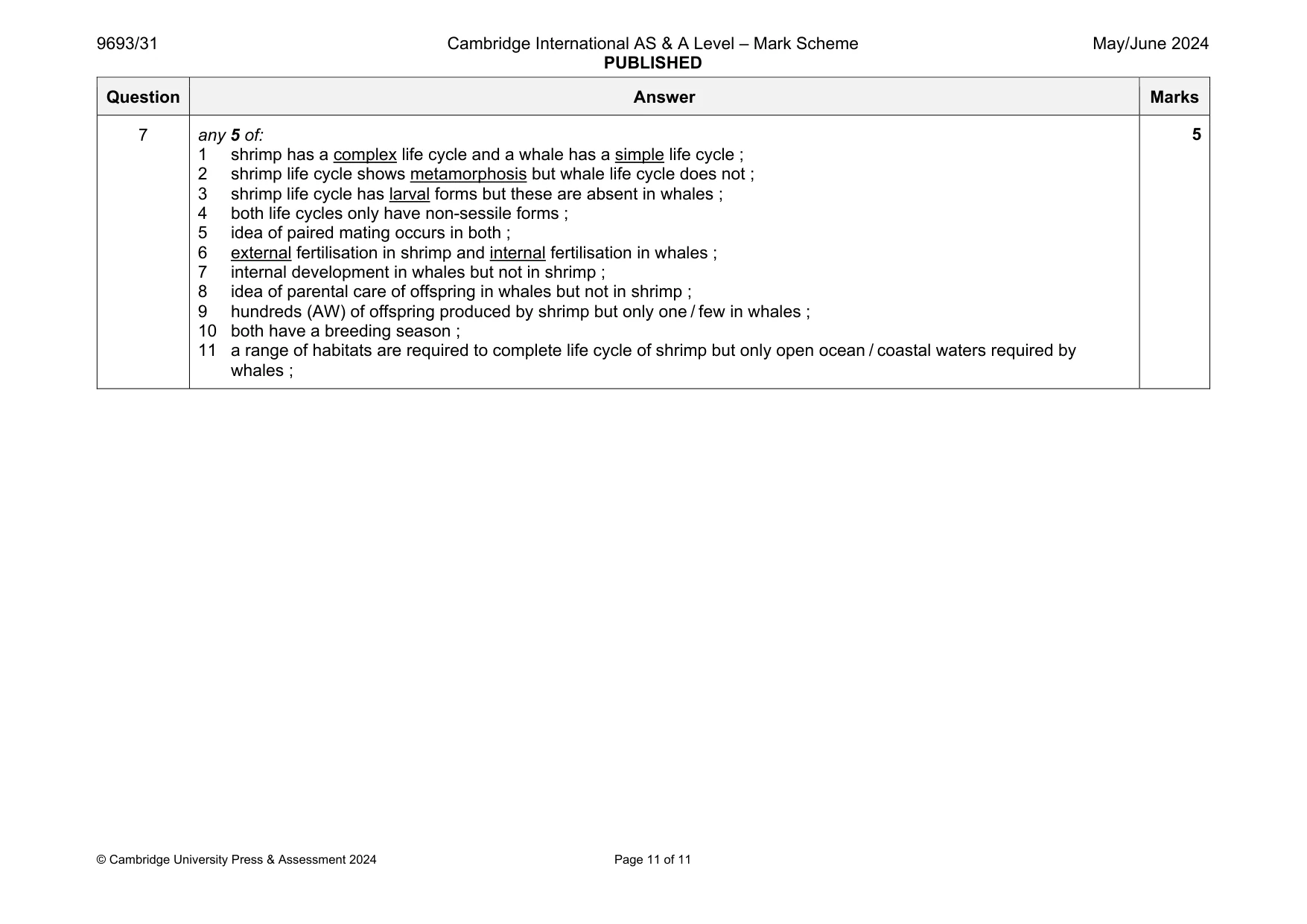
Mark scheme: 7 any 5 of: 1 shrimp has a complex life cycle and a whale has a simple life cycle ; 2 shrimp life cycle shows metamorphosis but whale life cycle does not ; 3 shrimp life cycle has larval forms but these are absent in whales ; 4 both life cycles only have non-sessile forms ; 5 idea of paired mating occurs in both ; 6 external fertilisation in shrimp and internal fertilisation in whales ; 7 internal development in whales but not in shrimp ; 8 idea of parental care of offspring in whales but not in shrimp ; 9 hundreds (AW) of offspring produced by shrimp but only one / few in whales ; 10 both have a breeding season ; 11 a range of habitats are required to complete life cycle of shrimp but only open ocean / coastal waters required by whales ;
What was in this paper
The subtopics covered by these 7 questions, and how many questions each got. Open one in a new tab to see every Cambridge question on it.
What you needed in this session
Cambridge’s own grade thresholds for 2024 May/June, Paper 3 · Variant 1. A higher threshold means an easier paper — the bar moves with how the cohort did.