Questions as text
Q1 · The League of Nations and international relations in the 1920s (a) Explain why the League… 9489/22 Feb/March 2021
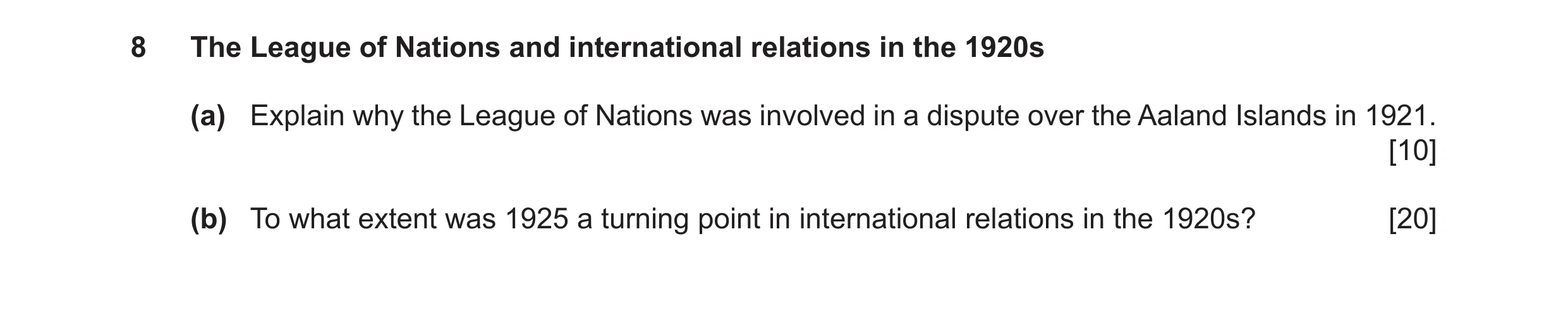
8 The League of Nations and international relations in the 1920s (a) Explain why the League of Nations was involved in a dispute over the Aaland Islands in 1921. [10] (b) To what extent was 1925 a turning point in international relations in the 1920s? [20]
30 marks
Mark scheme: 8(a) Explain why the League of Nations was involved in a dispute over the 10 Aaland Islands in 1921. Finland had only recently become completely independent from Russia and was in a state of change and internal conflict • The Aaland Islands lay in the Gulf of Bothnia between Finland and Sweden. • The Islands had been part of Finland since its separation from Sweden in 1809 and transfer to Russia control. • In December 1917 Finland declared its full independence from Russia. • The residents of Aaland Islands were almost entirely Swedish. • As an issue of self-determination they asked to become part of Sweden so the matter was referred to the League. Accept other valid responses. 8(b) To what extent was 1925 a turning point in international relations in the 20 1920s? In 1925 the Locarno Pact was signed and so responses will need to consider whether this was a significant landmark in international relations or whether it in fact changed very little. It confirmed the western borders of Germany with France and Belgium. This was supported by other signatories GB and Italy. It stabilised relations between France and Germany. it was followed by French Treaties with Poland and Czechoslovakia and followed up by Kellogg Briand Pact. It was agreed that allied troops should leave Rhineland in 1930, five years ahead of schedule. Germany was admitted to the League of Nations in 1926. The ‘Spirit of Locarno’ was created. It did not actually change anything simple formalised arrangements already made in the provisions of the Treaty of Versailles. It provided no real guarantees for Poland and Czechoslovakia, just an agreement to negotiate over border issues. Poland and Czechoslovakia received no guarantees from GB. Better relations were really a result of better economic circumstances following the Dawes Plan of 1924. Improvement of Franco– German relations owed more to efforts of Gustav Stresemann. Accept other valid responses.
This question in 9489/22 Feb/March 2021
Q2 · The League of Nations and international relations in the 1920s (a) Explain why there was… 9489/21 May/June 2021
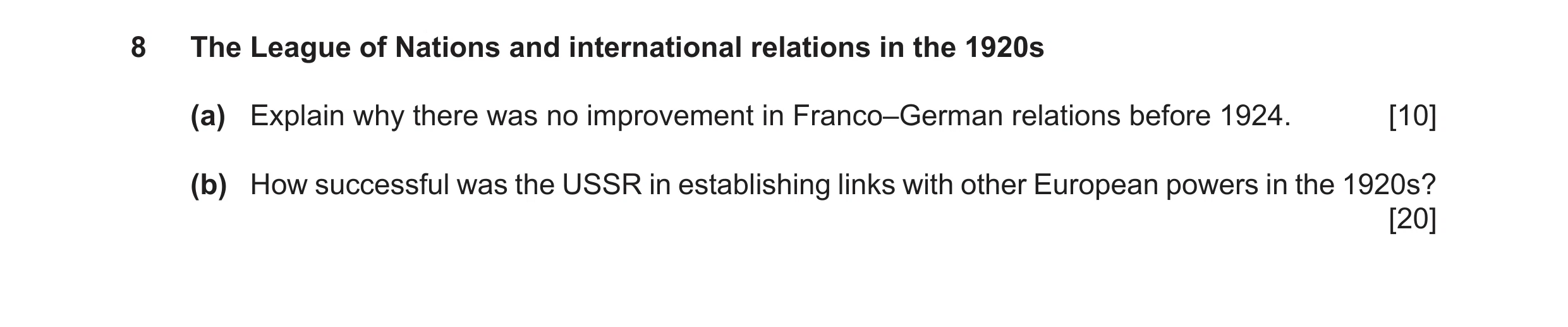
8 The League of Nations and international relations in the 1920s (a) Explain why there was no improvement in Franco‒German relations before 1924. [10] (b) How successful was the USSR in establishing links with other European powers in the 1920s? [20]
30 marks
Mark scheme: 8(a) Explain why there was no improvement in Franco‒German relations 10 before 1924. Several factors stemming from before the war, the effects of the war and the settlement might be included, but the focus will probably be on Versailles: • French demands at Versailles were not fully met, which led to continued fear of a German revival. • German dissatisfactions with Versailles, especially the War Guilt clause • Level of reparations when finally settled in 1921, were seen as too high by Germany and insufficient by France. • Failure of the Genoa Conference (1922) meant the political and financial issues facing Europe remained. The signing of the Rapallo Pact was a spin-off of the conference, as the harsh stance taken by the French left Germany with little alternative but to move closer to Russia. • French and Belgian invasion of Ruhr in 1923. Accept any other valid responses. 8(b) How successful was the USSR in establishing links with other major 20 European powers in the 1920s? Failures • The exclusion of Russia from Versailles because of the signing of Brest Litovsk as a basis for their problems in building links with the West. • The failure at the Genoa conference because of issue of French loans to Tsarist government, as France demanded that USSR honour theses debts. • A general suspicion of communism as an expansionist ideology especially after the Spartacist risings in Germany. • The effects of the Zinoviev letter (1924) – the new Conservative government of Stanley Baldwin was far cooler towards USSR, recognised by the Labour government in 1924, and broke off diplomatic relations in 1927. • Concerns over the role and objectives of the Comintern. Successes • The Anglo-Soviet trade agreement 1921 and the signing of the Rapallo Pact with Germany in the wake of the failure of the Genoa Conference. This was followed up with Soviet-German military training exercises, a general Anglo-Soviet Treaty 1924 (formal recognition) and Renewal of Rapallo in Treaty of Berlin 1926. • The incoming Labour government of 1929 established permanent diplomatic relations with USSR. The best responses should consider both successes and failures and reach a reasoned judgement of the overall success of Soviet Foreign Policy in improving relations with other powers. Accept any other valid responses.
This question in 9489/21 May/June 2021
Q3 · The League of Nations and international relations in the 1920s (a) Explain why the League… 9489/22 May/June 2021
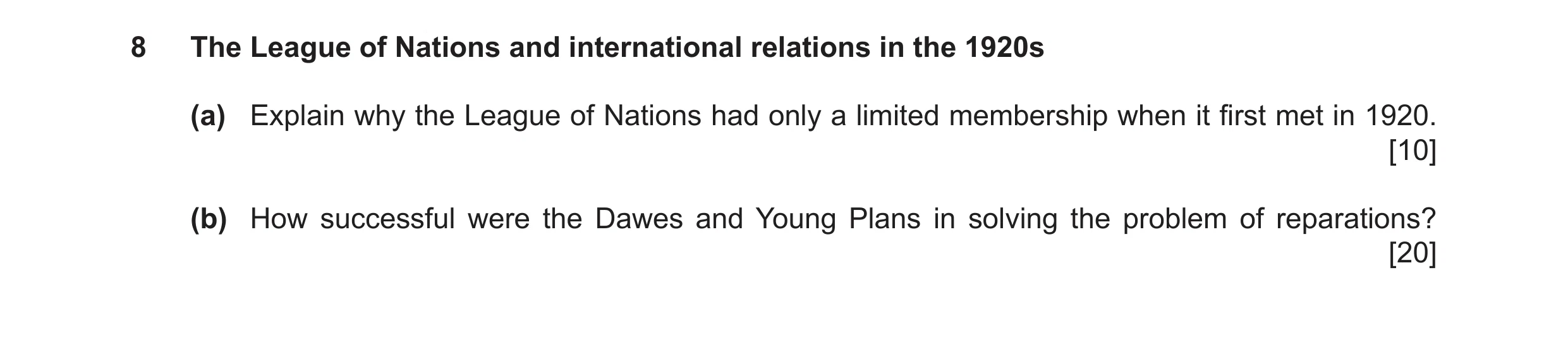
8 The League of Nations and international relations in the 1920s (a) Explain why the League of Nations had only a limited membership when it first met in 1920. [10] (b) How successful were the Dawes and Young Plans in solving the problem of reparations? [20]
30 marks
Mark scheme: 8(a) Explain why the League of Nations had only a limited membership 10 when it first met in 1920. • Countries that had lost in the war were not invited to join, i.e., Germany, Austria, and Turkey. • Russia had abandoned its alliance with France and Britain and was in the midst of a Civil War, so it was not invited to the League of Nations’ founding conference in Versailles. • Eastern European states had only just been created as independent units and were still organising their internal affairs. • Because most of Africa was still under European control, Liberia was the only independent African state. • Much of the Middle East and South East Asia was still under European control. Accept any other valid responses. 8(b) How successful were the Dawes and Young Plans in solving the 20 problem of reparations? Most candidates will likely write about the two plans separately, though the explanation of overall successes and failures can be combined. Dawes Plan The removal of French and Belgian troop from Ruhr led to a reduction of international tensions. It ended hyper-inflation with a new currency. It restructured reparations payments and the Reichsbank. Separately, but vital to success, the US agreed to large loans to Weimar. However, the Dawes Plan was a short term measure, hence the need for Young. It left Germany vulnerable to fluctuations in the US economy. Young Plan The Young Plan reduced the overall reparations bill and set up a long-term repayments plan. To handle payments, it established the Bank for International Settlements. However, the Wall Street Crash and the subsequent Great Depression destroyed Germany’s ability to pay. Once he was established in power, Hitler repudiated all reparations debts. Overall, both plans worked well in the short term and offered the possibility of a longer-term solution. However, economic and political circumstances derailed their plans. Accept any other valid responses.
This question in 9489/22 May/June 2021
Q4 · The League of Nations and international relations in the 1920s (a) Explain why… 9489/22 Oct/Nov 2021
8 The League of Nations and international relations in the 1920s (a) Explain why Franco–German relations improved after 1924. [10] (b) How important were the Agencies in the work of the League of Nations in the 1920s? [20]
30 marks
Mark scheme: 8(a) Explain why Franco‒German relations improved after 1924. 10 In the aftermath of the occupation of the Ruhr, numerous factors led to improvement: • The Dawes Plan settled the issue of reparations, at least in the short term. • A new currency in Germany stabilised economy and improved economy. • A positive relationship between Gustav Stresemann and Aristide Briand. • The Locarno treaty confirming western borders of Germany with France (and Belgium) and led to German admission into the League of Nations. Accept any other valid responses. 8(b) How important were the Agencies in the work of the League of Nations 20 in the 1920s? Responses will need to try to establish a comparison between the work of the Agencies and the work of the main organs of the League. Agencies of the League The Court of International Justice made judgements on shipping and fisheries issues, but no powers of enforcement. The Health Committee made limited progress in fight against Malaria and Leprosy. The ILO improved working conditions in many countries but failed to get full international agreement of 48 hour working week. In 1920, the Refugees Committee returned half a million prisoners of war home and provided support for thousands of Turkish refugees in 1922. The Mandates Commission established mandatory controls over former German and Turkish territories (but in effect just gave control to the victorious nations of WW). The Slavery Commission and Slavery Convention 1926 successfully campaigned for freedom of 200 000 slaves in Sierra Leonne and Burma. Organs of the League There were successes in settling disputes peacefully in the Aaland Islands, Silesia Coalfields dispute and Greco-Bulgarian border dispute, etc. These should be measured against failures in the Poland-Lithuania conflict over Vilnius, Corfu crisis, etc. Many key decisions were made in the ‘Conference of Ambassadors’ (representatives of main powers) and were simply rubber-stamped by the League. The Secretariat was constantly understaffed and as a result were often unable to function. Accept any other valid responses.
This question in 9489/22 Oct/Nov 2021
Q5 · The League of Nations and international relations in the 1920s (a) Explain why the League… 9489/23 Oct/Nov 2021
8 The League of Nations and international relations in the 1920s (a) Explain why the League of Nations was involved in Eastern Europe in the 1920s. [10] (b) How successful was the Washington Naval Conference of 1921–22? [20]
30 marks
Mark scheme: 8(a) Explain why the League of Nations was involved in Eastern Europe in 10 the 1920s. There are a number of reasons to be considered here largely arising from the Versailles Settlement and the role envisaged for the League within the terms of those Treaties. This question is not about success of the League, just its involvement, so it is just as valid to identify involvements that did not have successful outcomes as those that did. Specific areas on involvement might include: • Specific territories; Aaland Islands, Vilnius. • Border issues; Greece/Bulgaria, Corfu incident. • Economic issues: Upper Silesian coalfield, Austrian government bankruptcy. • Humanitarian issues; prisoners of war and refugees. Accept any other valid responses. 8(b) How successful was the Washington Naval Conference of 1921‒22? 20 Successes are largely going to be about what was agreed at the Conference, whilst alternative perspective will need to look at why not all signatories were happy with the outcome and/or found loopholes in the restrictions. Three separate agreements were signed; the Four Power Pact, the Five Power Naval Limitations Agreement and the Nine Power Pact. A Four Power Pact established a process for settling territorial dispute in the Pacific between US, GB, Japan and France. The Five Power Treaty established relative strengths of, and limitations on, the five main naval powers 5:3:1.67 – US/GB: Japan: France/Italy. The Nine Power Pact affirmed China’s independence and agree the equal trading rights of the signatory nations (5 plus Portugal, the Netherlands and Belgium). It led to a significant reduction in the number of capital ships of the major powers; some were scrapped, and planned building was cancelled. The United States continued an active building programme by replacing obsolete battleships with technically more advanced models. Some part-built new ships were converted into aircraft carriers. In the late 1920s there was a mini naval race in building heavy cruisers which were limited in size but not in number by the Treaty. The four-power pact lacked clarity and never really worked The Five-Power Treaty was set for 10 years and was abandoned when Japan demanded parity with US and GB in 1935. The Nine Power Pact was abandoned by the Japanese when they invaded Manchuria. Accept any other valid responses.
This question in 9489/23 Oct/Nov 2021
Q6 · The League of Nations and international relations in the 1920s (a) Explain why the Genoa… 9489/22 May/June 2022
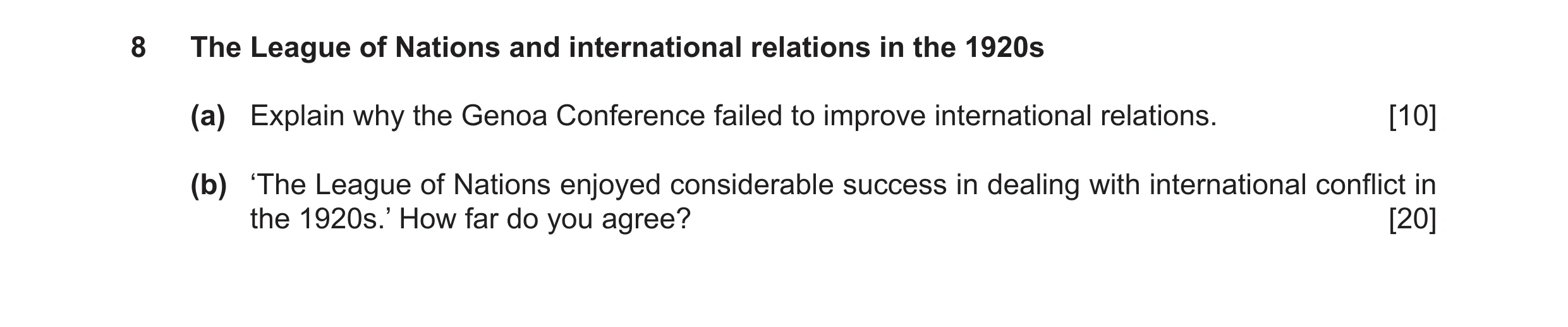
8 The League of Nations and international relations in the 1920s (a) Explain why the Genoa Conference failed to improve international relations. [10] (b) ‘The League of Nations enjoyed considerable success in dealing with international conflict in the 1920s.’ How far do you agree? [20]
30 marks
Mark scheme: 8(a) Explain why the Genoa Conference failed to improve international 10 relations. Indicative content Russia and Germany remained isolated, France aggrieved and Britain powerless because: Russia and Germany signed the Treaty of Rapallo and withdrew from the conference. The major powers at first agreed on a package of aid to Russia, but the Allies could not agree on the final plan and nothing was offered. The issue of German reparations went nowhere after Poincaré (France) threatened to invade Germany if it failed to keep up reparation payments. Lloyd George was increasingly under heavy attacks from the London newspapers. He offered a final series of linked financial proposals, but nothing was approved. France and Belgium withdrew, and the final draft proposal to Russia was signed only by Britain, of the major world powers. Russia in turn rejected this final document. Absence of the US reduced confidence in any possible compromises without US guaranteed backing. Accept any other valid responses. 8(b) The League of Nations enjoyed considerable success in dealing with 20 international conflict in the 1920s.’ How far do you agree? Indicative content The essential requirement of this question is a balanced analysis and overall judgement about the successes and failures of the League in the 1920s. Successes might include: The League took home half a million prisoners of war from World War One. In 1921 Sweden and Finland accepted the League's arbitration to give the Aaland Islands to Finland. In 1922 the League set up camps and fed Turkish refugees. The League sent economics experts to help Austria when its government went bankrupt in 1923. Greece obeyed the League's orders to pull out of Bulgaria in 1925. Failures might refer to: The Poles in 1921 invaded Vilna (the capital of Lithuania). The League ordered Poland to withdraw. Poland refused and the League could do nothing. In 1923 Mussolini ignored the League's orders to pull out of Corfu, and made Greece pay money to Italy. Attempt to promote disarmament talks failed to make any progress in the 1920s. In 1928, 65 countries signed the Kellogg/Briand Pact, a treaty to end war – but then they just ignored it. Accept any other valid responses.
This question in 9489/22 May/June 2022
Q7 · The League of Nations and international relations in the 1920s (a) Explain why the Treaty… 9489/23 May/June 2022
8 The League of Nations and international relations in the 1920s (a) Explain why the Treaty of Versailles was described as a Diktat by many Germans. [10] (b) ‘International conferences did little to improve international relations in the 1920s.’ How far do you agree? [20]
30 marks
Mark scheme: 8(a) Explain why the Treaty of Versailles was described as a Diktat by 10 many Germans. Indicative content The reasons for German dissatisfaction with the Treaty are the basis of a good answer to this question and should be well understood by good candidates. The war guilt clause – Germans did not accept that they were responsible for the war but were forced to accept this clause as part of the Treaty. German leaders were not invited to the conference but simple called to sign the agreement that had been made between the victorious powers. Germany was the only country forced to accept limitations of its armed forces. 8(a) They were stripped of all their colonies and even some areas that were seem as traditionally part of Germany. They were forced to pay reparations. Accept any other valid responses. 8(b) ‘International conferences did little to improve international relations 20 in the 1920s.’ How far do you agree? Indicative content Candidates will be expected to consider a range of conferences in the 1920s, all of which had both positive and negative aspects, in order to reach an overall judgement. Candidates may approach this either on a conference by conference basis or on a success vs failure basis, both of which could work providing there is a valid overall judgement at the end. Washington Naval Conference: Its purpose was to prevent a possible naval race between the major powers by setting comparative size limits for their naval development. It successfully achieved agreement in the Four-, Five-, and Nine Power Agreements. However, the US used it as an excuse to scrap obsolete ships whilst completing up-to-date battleships that had already been begun. Heavy cruisers were limited in size but not in number so there was a continued race to build more of these. Japanese in particular resented the Treaty as they felt it was western plot to limit the growing power of Japan The Genoa Conference: The Conference was a suggestion of Lloyd George in an attempt to promote ‘the reconstruction of broken Europe’ to bring the Soviet Union and Germany back into the international community and resolve issues between France and Germany. The conference ended in stalemate and recrimination with the only positive results being the agreement to re-establish the gold standard as a basis for currency valuations to aid trade. The treaty of Rapallo might also be identified as an indirect positive outcome, though it was also what led to the collapse in the end. The Locarno conference: The Conference was driven by the diplomacy of Gustav Stresemann which culminated in a meeting of European foreign ministers. It confirmed the permanent western borders of Germany backed by British and Italian guarantees. It was hailed as the beginning of a new era of peace in Europe (the spirit of Locarno). BUT it did not give similar guarantees on the eastern borders of Germany and created anger and disappointment especially in Poland. Extremist groups in Germany saw it as a way of confirming the status quo of Versailles and continued to reject it. Kellogg-Briand might be included but was not really the result of an international conference. 8(b) Accept the Dawes and Young Plans as the result of international conferences with a specific purpose of dealing with reparations. Accept any other valid responses.
This question in 9489/23 May/June 2022
Q8 · The League of Nations and international relations in the 1920s (a) Explain why the… 9489/21 Oct/Nov 2022
8 The League of Nations and international relations in the 1920s (a) Explain why the Rapallo Pact was signed in 1922. [10] (b) To what extent did the Locarno Treaties resolve international tensions in the second half of the 1920s? [20]
30 marks
Mark scheme: 8(a) Explain why the Rapallo Pact was signed in 1922. 10 Indicative content Answers will generally focus on aspects of the two countries’ isolation following the end of First World War and might include: • Both sides were isolated after First World War; Germany because of the Treaty of Versailles and Russia because of the Revolution and withdrawal from First World War. • Both had been excluded from the League of Nations. • Both were invited to the Genoa Conference but were offered no solutions to their diplomatic isolation. • It resolved outstanding issues between them left over from First World War including the possibility of reparations • It established formal relations and trade and military agreements that were beneficial to both sides. Accept any other valid responses. 8(b) To what extent did the Locarno Treaties resolve international tensions 20 in the second half of the 1920s? Indicative content A balanced consideration of improvements resulting from Locarno measured against continuing problems that might include the impact of the Wall Street Crash at the end of the specified period: Did resolve: It resolved border issue in Western Europe between Belgium, France and Germany. Additionally, the security of this agreement was underwritten by guarantees from Britain and Italy. There was a significant improvement in Franco–German relations, partly built of economic recovery and partly on the positive relationship between Briand and Stresemann who were jointly awarded the Nobel Peace Prize in 1926. Also led to further improvement with the Kellogg Briand Pact of 1928 which was a general renunciation of war as a means of settling disputes that was eventually signed by 62 states including the USA and the USSR. In the improved atmosphere of cooperation, the Young Plan was negotiated to reduce German reparations and resolve some of the problems left by the Dawes Plan. Did not resolve: There was no corresponding settlement of border issues in eastern Europe. Poland was particularly incensed by the failure to provide guarantees of its borders and Pilsudski said, ‘every honest Pole spits when he hears the word Locarno.’ Despite the Kellogg Briand Pact there was little progress in the League of Nations attempt to organise general disarmament negotiations. The Wall Street Crash led to the collapse of the Young Plan, rising political extremism and a return to mutual distrust at the end of the decade. Accept any other valid responses.
This question in 9489/21 Oct/Nov 2022
Q9 · The League of Nations and international relations in the 1920s (a) Explain why the Treaty… 9489/22 Oct/Nov 2022
8 The League of Nations and international relations in the 1920s (a) Explain why the Treaty of Sèvres led to conflict in Turkey. [10] (b) To what extent had Germany regained its position as a major power by 1929? [20]
30 marks
Mark scheme: 8(a) Explain why the Treaty of Sevres led to conflict in Turkey. 10 Indicative content It was far more severe than the treatment of Germany: • It involved handing over much of the Middle East to Britain and France as League of Nation Mandates and the division of Turkey itself into areas of influence for the victorious powers. • it included taking much of eastern Turkey to create an independent Armenian state • this aroused anger and a rise in nationalist agitation • It caused civil war between the Sultan’s government in Istanbul and the breakaway Turkish Grand National Assembly which was formed by Mustafa Kemal in Ankara. • There were protests against British and French rule in the mandated territories. • In 1922 the Sultanate was abolished and replaced by a republican government. • As a result the Treaty was never formally ratified and was replaced in 1922 by the Treaty of Lausanne. Accept any other valid responses. 8(b) To what extent had Germany regained its position as a major power by 20 1929? Indicative content The answer offers possibilities for a balanced consideration of Germany’s re-emergence from the humiliation of Versailles and economic collapse. Arguments for recovery: Candidates might consider the growing involvement of Germany in international negotiations. Despite the failure of the Genoa Conference the Rapallo Pact with Russia was agreed. More significant recovery stemmed from the Dawes Plan of 1924 which restored some stability to Germany’s economic position and allowed its economy to begin growing again. And Anglo–German trade negotiations led to a trade treaty in 1925. The Locarno Pact marked a big step forward and the ‘Spirit of Locarno’ which characterised international relations in the latter part of the 1920s marked German re-admission to the international community, as exemplified by its admission to the League of Nations in 1926. Germany was also a signatory of the Kellogg-Briand Pact and saw its reparations commitment stabilised by the Young Plan which demonstrated Germany’s improved international position by the end of the 1920s. Arguments against acceptance: The Ruhr invasion exemplified French mistrust of Germany which had been heightened by the Rapallo Pact. Despite improved relations in Briand/Stresemann era this remained. The Locarno agreement eased relations on Germany’s western border but there was no similar improvement on its eastern border and Poland in particular was very critical of Locarno. The harsh terms of the Treaty of Versailles remained in place, its colonies were gone and its armed forces restricted to such a level that it could probably not even defend itself if attacked. Despite the promise of Versailles, no other country showed any sign of disarming and, despite Kellogg-Briand pact there were no active talks on arms reduction. Germans still felt aggrieved and unfairly treated and the Wall Street Crash gave extremists the opportunity to capitalise on this perceived inequality. Accept any other valid responses.
This question in 9489/22 Oct/Nov 2022
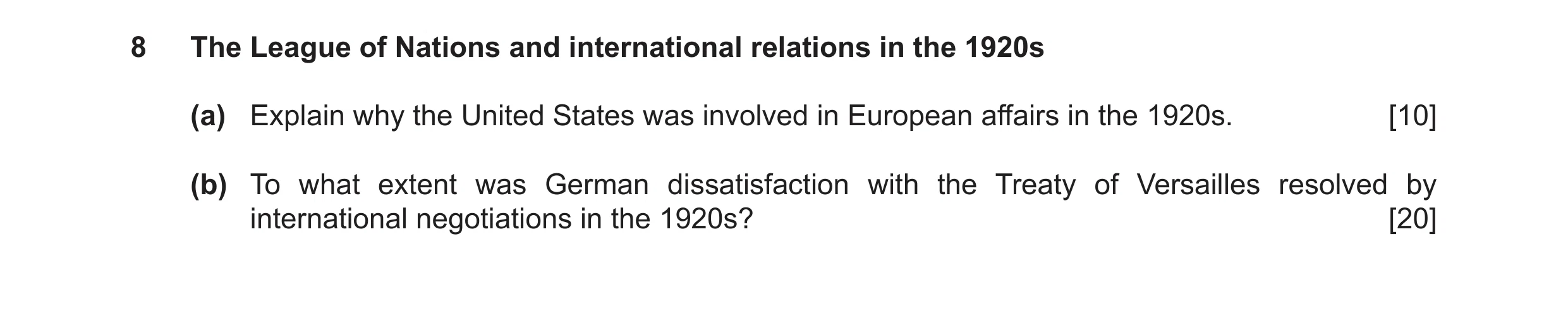
Q10 · The League of Nations and international relations in the 1920s (a) Explain why the United… 9489/23 Oct/Nov 2022
8 The League of Nations and international relations in the 1920s (a) Explain why the United States was involved in European affairs in the 1920s. [10] (b) To what extent was German dissatisfaction with the Treaty of Versailles resolved by international negotiations in the 1920s? [20]
30 marks
Mark scheme: 8(a) Explain why the United States was involved in European affairs in the 10 1920s. Indicative content Following the failure to ratify the Treaty of Versailles it seemed that the US had returned to a strict isolationist policy under its Republican presidents of the 1920s. The core argument of successful answers is likely to be based around economic issues and self-interest. • Washington Conference – 1921–22 US sought to place limitations on European naval development in order to reduce risk of future naval race and threat of war. • The collapses of the German economy, as a result of the hyper-inflation in 1923, threatened the whole economy of Europe and trade with the US. • The French occupation of the Ruhr because of no payment of reparations threatened the international security of Europe. • In a joint US/British initiative, banker Charles Dawes chaired an international committee that drew up the Dawes Plan for US loans to fund German Repayments. This satisfied the French who got their payments and encouraged international growth which benefitted the US economy. • Kellogg-Briand Pact this idea was developed by US Secretary of State Frank Kellogg partly as a response to the huge popularity of the ‘outlawry of war’ movement in the US. Sought to avoid war in Europe. • Young Plan was meant to complete what had been started by the Dawes Plan in settling a reduced figure for reparations payments and a phased plan for their continuing payment. Accept any other valid responses. 8(b) To what extent was German dissatisfaction with the Treaty of 20 Versailles resolved by international negotiations in the 1920s? Indicative content The question provides an opportunity to consider the basis of German dissatisfaction and the extent to which this was eased by the international agreements made in the decade following the war. Dissatisfaction stemmed from four basic issues: the war guilt clause, demilitarisation, loss of territory and reparations. Germany also faced international isolation. Negotiations which addressed some of these might include: • Genoa Conference and Rapallo; the conference was organised by Britain to try and resolve issues between France and Germany particularly over reparations but collapsed without achieving anything though it did result in Germany and Russia signing the Rapallo Pact which ended Germany’s post war isolation. • Dawes Plan was a result of the German hyperinflation and Franco Belgian occupation of the Ruhr. It provided loans to Germany so that they could make reparations payments, reform their currency and re- build the economy, but it did not resolve the underlying problems. • Locarno Pact improved relations with France and led to German admission to the League of Nations in 1926 so ended international isolation. • Kellogg-Briand Pact was a general renunciation of war and theoretically committed its signatories to eventual disarmament which might have resolved the issue of German disarmament but in fact this never happened so no solution. • Young Plan was designed to complete the reform initiated by Dawes by reducing the reparations sum and arranging a manageable repayments system, but it never got off the ground because of the Wall Street Crash and start of the Great Depression. • So overall some progress but many issues remained unresolved and played a major part in the rise of Nazism. Accept any other valid responses.
This question in 9489/23 Oct/Nov 2022
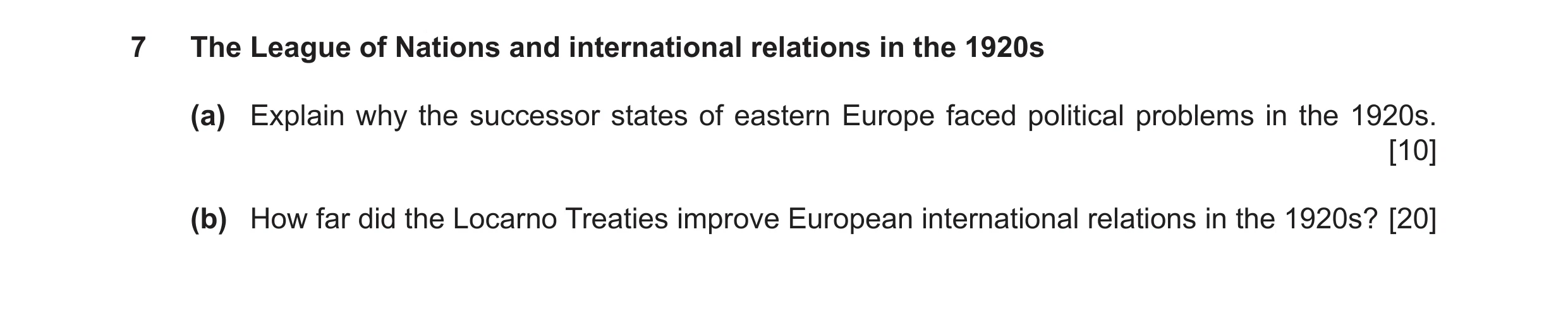
Q11 · The League of Nations and international relations in the 1920s (a) Explain why the… 9489/21 May/June 2023
7 The League of Nations and international relations in the 1920s (a) Explain why the successor states of eastern Europe faced political problems in the 1920s. [10] (b) How far did the Locarno Treaties improve European international relations in the 1920s? [20]
30 marks
Mark scheme: 7(a) Explain why the successor states of eastern Europe faced political 10 problems in the 1920s. Indicative content No history of democratic structure or of republican government. These newly defined geographic regions under newly formed governments were unaccustomed to deciding their own fate. These independent nations all tried democracy, regarded as the best system by which to introduce the principle of national self- determination to a new nation. However, in a region where democracy was unfamiliar, the system had many problems. No traditional ruling group. The politicians of Eastern Europe had been handed their orders from the governments that had dominated them. They were not used to democratic deliberation and government within a democratic framework. Indecision on many issues led to chaos and inaction on the part of many Eastern governments. Ethnic divisions. Woodrow Wilson wanted to re-draw the frontiers of eastern Europe so that all races ruled themselves. This was achieved to a certain extent, but it brought in its wake further problems. The peacemakers tried to protect minorities by putting clauses into the treaties forcing countries to treat minorities fairly. However, the Germans were not allowed self-determination. Many Germans found themselves living in Poland or Lithuania, and the German Sudetenland was made part of Czechoslovakia to give Czechoslovakia an industrial base. Anschluss with Austria was forbidden. Also, the Treaty of Neuilly in 1919 took Bulgarian areas, and gave them to Greece, Yugoslavia and Romania while the Treaty of Sèvres gave Turkish Smyrna to Greece. Like Germany, Bulgaria and Turkey were defeated powers, so they did not get self-determination. Eventually, internal conflicts stemming from new self-determination by national majorities arose from disaffected minorities who preferred the rule of neighbours. In particular, in Poland, Czechoslovakia and Yugoslavia, there were ‘enclaves’ of minority races. Economic difficulties made stable government a struggle. Hungary experienced a great deal of instability during the inter-war years. After a period of chaos, it decided on monarchy, and Hungary became, in effect, a dictatorship run by the landed aristocracy. Czechoslovakia proved the only nation in Eastern Europe able to function reasonably well as a democracy during the inter-war period. Accept any other valid responses. 7(b) How far did the Locarno Treaties improve European international 20 relations in the 1920s? Indicative content Discussion of improved international relations may consider how the main treaty between Germany, France, Belgium, Great Britain, and Italy formally recognised Germany’s revised western borders established by the Treaty of Versailles. Also, Germany, France and Belgium undertook not to attack each other with Britain and Italy acting as guarantors. In the event of aggression by any of the first three states against another, all other parties were to assist the country under attack. Germany also agreed to sign arbitration conventions with France and Belgium and arbitration treaties with Poland and Czechoslovakia, undertaking to refer future disputes to an arbitration tribunal or to the Permanent Court of International Justice. France signed further treaties with Poland and Czechoslovakia, pledging mutual assistance in the event of conflict with Germany. These essentially reaffirmed existing treaties of alliance concluded by France with Poland on 19 February 1921 and with Czechoslovakia on 25 January 1924. This agreement created the so called ‘Spirit of Locarno’ a spell of international co-operation and Germany was able to join the League of Nations as a permanent member of the Council. Stresemann and Briand were awarded the Noble Peace Prize and in 1928 the Kellogg-Briand Pact was signed. Discussion of the failure to resolve issue may include exploration of the underlying tension between Germany and France remained and re-emerged following the death of Stresemann and the economic collapse in 1929. There was still dissatisfaction in Germany which was masked by the success of the Weimar Republic in the late 1920s but re-emerged once economic difficulties returned. Eastern European states were not given the same guarantee against future aggression as the western states. Poles in particular were furious with the outcome as they felt their need for security against future German aggression had been ignored in the Treaty. This led to a deterioration in Franco-Polish relations. The guarantees attached to the Treaty did not necessarily commit the guarantor nations to military intervention. Accept any other valid responses.
This question in 9489/21 May/June 2023
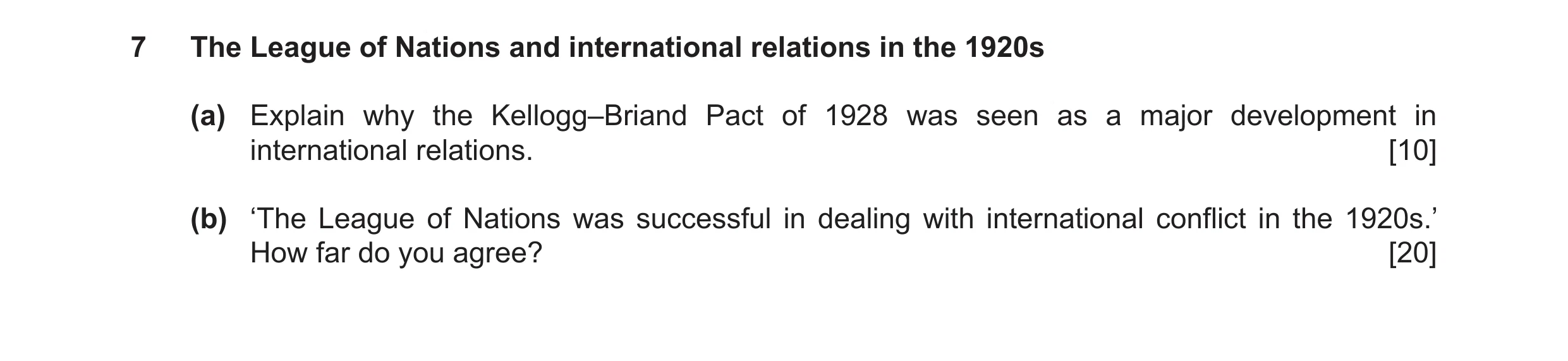
Q12 · The League of Nations and international relations in the 1920s (a) Explain why the… 9489/23 Oct/Nov 2023
7 The League of Nations and international relations in the 1920s (a) Explain why the Kellogg–Briand Pact of 1928 was seen as a major development in international relations. [10] (b) ‘The League of Nations was successful in dealing with international conflict in the 1920s.’ How far do you agree? [20]
30 marks
Mark scheme: 7(a) Explain why the Kellogg–Briand Pact of 1928 was seen as a major 10 development in international relations. Indicative content • French foreign minister, Aristide Briand hoped to tie the United States into a system of protective alliances against possible German aggression. • American ‘outlawry of war’ movement supported Kellogg proposal for multilateral treaty marking US re-engagement in international agreements. • multilateral agreement attempting to eliminate war as an instrument of national policy. • It was the most grandiose of a series of peacekeeping efforts after the First World War. • It was eventually signed by virtually all independent nations and marked a high point in the disarmament movement. Accept any other valid responses. 7(b) ‘The League of Nations was successful in dealing with international 20 conflict in the 1920s.’ How far do you agree? Indicative content Discussion of successes might include how the League took home half a million prisoners of war from World War One. In 1921 Sweden and Finland accepted the League's arbitration to give the Aaland Islands to Finland. In 1922 the League set up camps and fed Turkish refugees. The League sent economics experts to help Austria when its government went bankrupt in 1923. Greece obeyed the League's orders to pull out of Bulgaria in 1925. Discussion considering the failures of the League of Nations might refer to: The Poles in 1921 invaded Vilna (the capital of Lithuania). The League ordered Poland to withdraw. Poland refused and the League could do nothing. In 1923 Mussolini ignored the League's orders to pull out of Corfu, and made Greece pay money to Italy. Attempt to promote disarmament talks failed to make any progress in the 1920s. in 1928, 65 countries signed the Kellogg Briand Pact, a treaty to end war – but then they just ignored it. Accept any other valid responses.
This question in 9489/23 Oct/Nov 2023
Q13 · The League of Nations and international relations in the 1920s (a) Explain why the terms… 9489/23 May/June 2025
8 The League of Nations and international relations in the 1920s (a) Explain why the terms of the Treaty of Sèvres were unpopular with Turks. [10] (b) ‘Relations between Germany and France were unfriendly during the 1920s.’ How far do you agree? [20]
30 marks
Mark scheme: 8(a) Explain why the terms of the Treaty of Sèvres were unpopular with 10 Turks. Indicative content The Ottoman Empire had fought alongside Germany and was thus heavily punished in the Versailles settlement. The Treaty of Sèvres was the Treaty between the Allies and the Ottoman Sultanate, but it raised heavy opposition amongst the nationalistic Young Turks and let to Civil War. • All their middle eastern territories (Iraq, Jordan Palestine etc.) were taken from them and placed under mandate to Britain and France without any offer of a plebiscite to decide for themselves who should rule them. • Most of European Turkey was handed over to Greece and the area around Smyrna in western Anatolia was handed over to Greek Control • Large parts of Ottoman Turkey were to be subjected to plebiscites to decide whether they would remain part of the new Turkey. • The Dardanelles were placed under international control and kept open for all international traffic. • The National Assembly rejected the terms and took up arms to overturn them. • The allies took control of Turkey’s Central Bank and Government finances (Note: Turkey did not have to pay reparations). Accept any other valid responses. 8(b) ‘Relations between Germany and France were unfriendly during the 20 1920s.’ How far do you agree? Indicative content Discussion about an unfriendly relationship might consider how such a relationship, apart from the effect of the war itself, could be seen as a result of the Versailles Treaty in which Clemenceau wanted maximum punishment of Germany but had to settle for a less severe Treaty than he wanted because of the more moderate aims of Wilson and Lloyd George. This left him, and the French generally, resentful and distrustful of the Germans. The fact that the Germans were simply asked to agree to the Treaty without any input led to it being labelled a Diktat in Germany. Evidence of continuing difficulty in relations might be found in the Ruhr Crisis, the Genoa Conference and the Rapallo Pact for example. This underlying resentment of the Treaty never went away and could be argued to be a sign that relations did not really improve significantly in the 1920s. It could also be argued that Clemenceau’s attitude reflected general French mistrust and fear of a resurgent Germany and again this did not go away even if things appeared to get better. However, from the mid 1920’s onward a series of negotiations led to substantial progress in rebuilding international relations between France and Germany. This was partly due to American willingness to involve itself in the economic recovery of Europe. This was evident in the Dawes and Young Plans. One of the biggest causes of dispute between France and Germany was the continuing issue of reparations. and both these plans aimed to resolve the conflict. Dawes was a temporary solution which worked for a few years in allowing German economic recovery and Young provided a longer- term solution. Unfortunately, the Wall Street Crash brought an abrupt end to US input and left the reparations problem still unsolved and thus a cause of mistrust and resentment. The improvement was also partly due to the establishment of s strong working relationship between foreign ministers Gustav Stresemann and Aristide Briand. Their work led to the Locarno Treaties and later he Kellogg Briand Pact. However, despite the general optimism these generated they both contained significant flaws which meant their success was short-lived. Stresemann’s death in 1929 ended this mood of cooperation. Note: Detailed description of Plans, Treaties and Pacts will not be expected. Accept any other valid responses.
This question in 9489/23 May/June 2025
Q14 · The League of Nations and international relations in the 1920s (a) Explain why the Corfu… 9489/21 Oct/Nov 2025
8 The League of Nations and international relations in the 1920s (a) Explain why the Corfu crisis was a failure for the League. [10] (b) ‘During the 1920s, relations between the USSR and other European nations were unfriendly.’ How far do you agree? [20]
30 marks
Mark scheme: 8(a) Explain why the Corfu crisis was a failure for the League. 10 Indicative content In 1923 following the death of several Italian officials monitoring the disputed border between Greece and Albania, Mussolini demanded compensation and occupied the Greek island of Corfu. Greece appealed to the League for help. • Italy had no real justification for seizing Corfu - it was simply aggression by a stronger power against a weaker one. This was exactly the sort of event the League was supposed to prevent. • The League had no effective mechanism for dealing with the issue and had to rely on the Conference of Ambassadors. • Britain and France, the leading powers of the League, did not want to alienate Italy and so gave way to Mussolini’s demands. • The League was seen as unable to defend smaller countries against aggressive action by one of the major powers. Accept any other valid responses. 8(b) ‘During the 1920s, relations between the USSR and other European 20 nations were unfriendly.’ How far do you agree? Indicative content The sudden withdrawal of the Russians from the First World War via the Treaty of Brest Litovsk alienated the Bolsheviks from Russia’s former allies and precipitated direct allied involvement in the Russian Civil War on the side of the Whites. After the end of the war this support was withdrawn but with the end of the Civil War, Russia remained isolated from the western powers. Discussion of unfriendly relations might include Russia’s exclusion from the Versailles peace talks. Though they had been part of the Triple Entente, the collapse of the monarchy and the Bolshevik withdrawal from the war meant the other allies considered Russia had no place at the conference. Russia was also not invited to join the League of Nations when it was established in 1920. The Tsarist government also had substantial loans from the French in particular and the Bolshevik government’s refusal to accept responsibility for repaying these kept them isolated. This was the reason why they left the Genoa conference in 1922. Despite one of the areas it was concerned with was the borders of eastern Europe, the Soviet Union was not invited to join the Locarno Conference or sign any of the subsequent treaties. Both France and Britain also remained suspicious of Soviet attempts to spread revolution to western Europe and Britain thought that the Soviets were trying to stir up problems in their empire, especially in the Indian subcontinent. Challenge to the statement might consider how better relations were shown in actions such as the Rapallo Pact. After the failure of the Genoa Conference the two ‘excluded’ powers came together in economic and military co- operation, some of which was kept secret, but which allowed Germany to begin some military reconstruction and gave the Soviet Union access to banking and financial services. This agreement was renewed and extended for a further five years in the Treaty of Berlin in 1926. In 1921 Britain was one of the first to open diplomatic relations and signed a Trade Treaty with the Soviet Union, but despite further trade agreement relations were periodically suspended. France and Italy also restored diplomatic relations in 1924 though they remained suspicious of motives. The French were particularly concerned about the implications of the Treaty of Berlin. The Russians were amongst the original signatories of the Kellogg Briand Pact which aimed to outlaw war between its signatories, and which came into effect on July 24th, 1929. However, there was no mechanism for enforcing the promises. Accept any other valid responses.
This question in 9489/21 Oct/Nov 2025
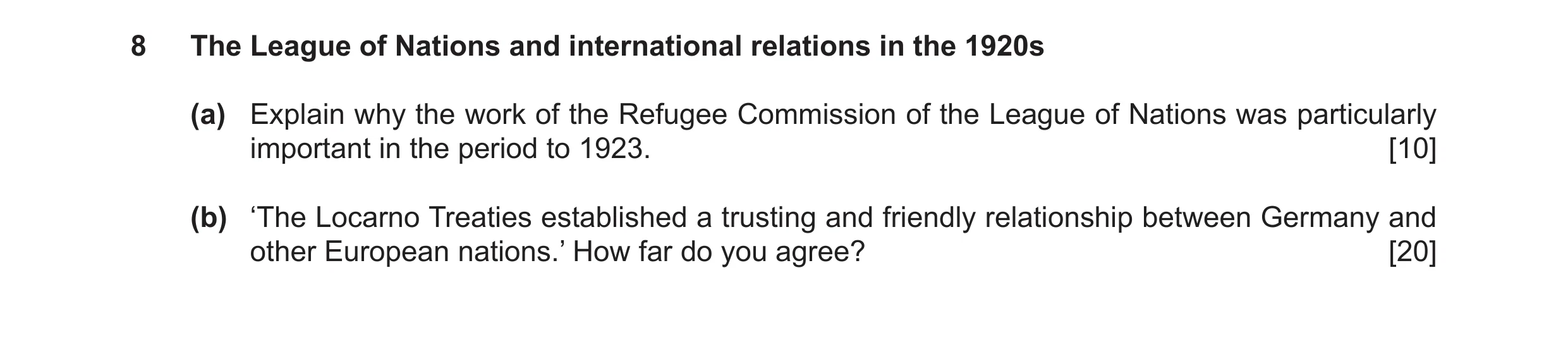
Q15 · The League of Nations and international relations in the 1920s (a) Explain why the work… 9489/22 Oct/Nov 2025
8 The League of Nations and international relations in the 1920s (a) Explain why the work of the Refugee Commission of the League of Nations was particularly important in the period to 1923. [10] (b) ‘The Locarno Treaties established a trusting and friendly relationship between Germany and other European nations.’ How far do you agree? [20]
30 marks
Mark scheme: 8(a) Explain why the work of the Refugee Commission of the League of 10 Nations was particularly important in the period to 1923. Indicative content Following the end of the war there was considerable disruption to the population, both civilian and military, across many European borders. • The redrawing of national boundaries and creation of a series of successor states left many people in countries where they did not want to be so after the settlement thousands of refugees were on the move and in need of help. • The end of the war left over half a million prisoners of war stranded in Russia and the commission, under the leadership of Fridtjof Nansen, organised their repatriation and resettlement • In 1922 the Commission introduced the Nansen passport, the first internationally recognised passport for stateless refugees, to help ease the continuing refugee crisis. • In 1923 the outbreak of violence in Turkey created almost one and a half million refugees that the commission helped to rehouse and settle in surrounding regions. Accept any other valid responses 8(b) ‘The Locarno Treaties established a trusting and friendly relationship 20 between Germany and other European nations.’ How far do you agree? Indicative content The treaty began a period of positive relations between France and Germany. It settled the borders between Germany and France and Belgium. The Germans accepted the borders established after Versailles as the permanent boundaries with their western neighbours which involved accepting the permanent loss of Alsace and Lorraine as well as Malmedy and Eupen. Britain and Italy provided a Treaty of Mutual Guarantee of support if there was ever any attempt to change these borders. This marked a growing willingness by Mussolini to play a positive role in the in improving international relations. The treaties gave the French a greater degree of security which they had been looking for ever since the end of the war. It marked a move towards fully re-integrating Germany into the international community and as a result Germany was admitted to membership of the League of Nations. Stresemann and Briand were awarded the Nobel Peace Prize for their efforts in bringing about the settlement. However, it can be argued that the meeting was just culmination of changes taking place over recent years. Following the Ruhr Crisis, the Dawes Plan eased the reparations burden on Germany, and a measure of calm and co- operation was restored to European relations. This calmness was enhanced by the positive relationship between Stresemann and Briand who actively promoted the meeting at Locarno. The Locarno Treaty also did not resolve any issues regarding Germany’s eastern borders and Poland was unhappy with the outcome of the conference. The Polish corridor and the status of Danzig remained as unresolved issues as far as Germany was concerned. The League of Nations was struggling to address the disarmament issue, though planning for a conference continued. Germany was still the only major power to have disarmed and that had been forced by the treaty of Versailles so was a continuing source of resentment. The Kellogg Briand Pact sounded promising but had no ‘teeth’. The Wall Street Crash also threw Europe into economic chaos and destroyed ‘the Spirit of Locarno’. Accept any other valid responses
This question in 9489/22 Oct/Nov 2025
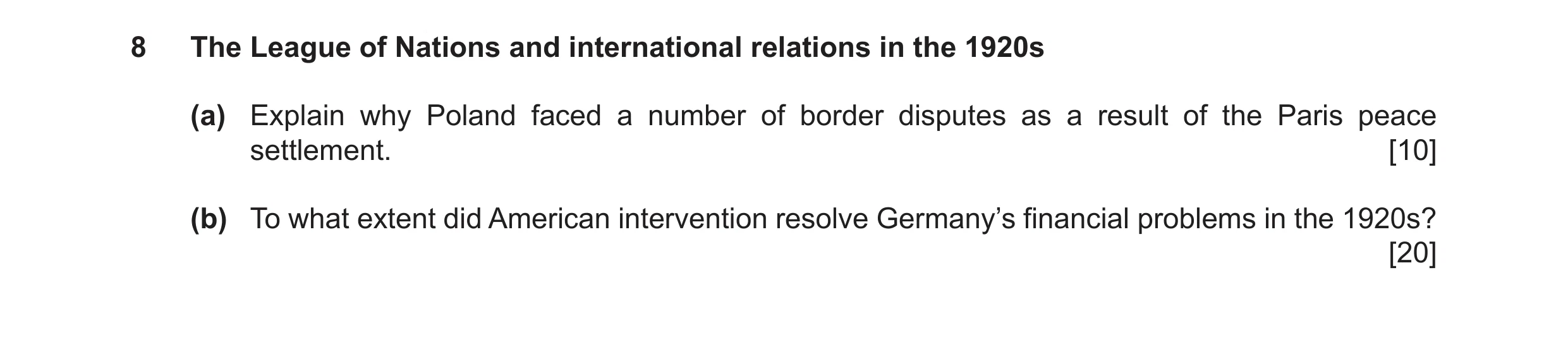
Q16 · The League of Nations and international relations in the 1920s (a) Explain why Poland… 9489/23 Oct/Nov 2025
8 The League of Nations and international relations in the 1920s (a) Explain why Poland faced a number of border disputes as a result of the Paris peace settlement. [10] (b) To what extent did American intervention resolve Germany’s financial problems in the 1920s? [20]
30 marks
Mark scheme: 8(a) Explain why Poland faced a number of border disputes as a result of the 10 Paris peace settlement. Indicative content From the late eighteenth century, when the state of Poland was carved up by Prussia, Russia and the Austro-Hungarian Empire the state of Poland had not existed except for a brief period as the Grand Duchy of Warsaw under Napoleon. Its recreation under the principle of national self-determination created several disputed areas on its borders. • The region of Upper Silesian was a key industrial area, that was heavily populated by both Germans and Poles so could not decide which country they should belong to. after a series of riots and disturbances the League stepped in and decide to divide the area between the two countries, a decision that was accepted by both sides. • There was a similar dispute with the Czechs over the Teschen industrial area and though the League again negotiated a settlement neither side was particularly happy with it. • Russia, having left the war in 1917, was not invited to Paris but the Treaty fixed a nominal eastern border for Poland. However, the Poles wanted more than this and went to war with Russia and were able to extent their borders in the Treaty of Riga (1921). • Another newly create state bordering Poland was Lithuania, but the Poles were not satisfied with the allocation of territory and invaded Lithuania seizing the area around Vilna. Despite League intervention the Poles refused to withdraw and held on to the disputed territory. • The Polish Corridor was created to give Poland access to the sea, but it split East Prussia form the rest of Germany and created a source of conflict. Accept any other valid responses. 8(b) To what extent did American intervention resolve Germany’s financial 20 problems in the 1920s? Indicative content Despite their refusal to sign the Treaty of Versailles and join the League of Nations it was still in America’s economic interests to have a strong and economically stable Europe. Central to all economic issues was the question if reparations, the French wanted more, and the German thought they were unfair. They were also not finally fixed until 1921 when they were set at £6.6billion. Problems arose immediately, partly because of the rising inflation in Germany and by 1922 the Germans were unable to meet the necessary payments. This resulted in French and Belgian action precipitating the Ruhr Crisis. The US response was the Dawes Plan which provided loans to Germany with which they were able to make their reparation payments which allowed France and Britain to repay their war loans to the USA. This stabilised the German economy and began a period of economic growth in Europe that lasted until 1929. However, the Dawes Plan was only a temporary fix allowing Germany to make reduced payments for 5 years, it did not resolve the issue of the size of the reparations payments or remove the underlying resentment that was caused by them. The Young Plan was intended to deal, longer term with the problems left by the Dawes Plan as Germany could still not afford eh full cost of repayment on the overall total of £6.6 billion. Young began negotiations in 1928 and by 1929 had persuaded key players that the original sum was unreasonable, and a more realistic figure was £2 billion. However, the big weakness of the plan was that it was still dependent on US loans to help the German economy. At the time of negotiation this seemed like a reasonable prospect and for the French in particular the apparent increase in stability in international relations generally and was positive outcome of these and other recent negotiations. The Wall Street Crash, however, shattered the illusion of economic stability. It meant the immediate withdrawal of all the loans which had been supporting the growth of the European economy generally. This rapidly led to falling demand, reduction of production and rising unemployment. Accept any other valid responses.
This question in 9489/23 Oct/Nov 2025
![Question 4: The League of Nations and international relations in the 1920s (a) Explain why Franco–German relations improved after 1924. [10] (b) How im…](https://img.pastlit.com/crops/7b934edf-2381-45da-a7bc-e9de705ac1d2/q8.webp)

 1 / 3
1 / 3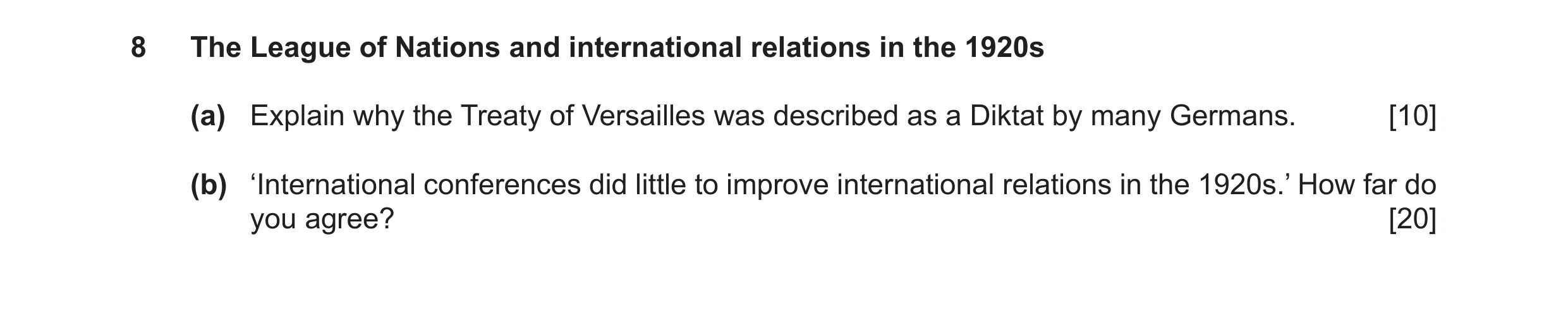
![Question 8: The League of Nations and international relations in the 1920s (a) Explain why the Rapallo Pact was signed in 1922. [10] (b) To what extent…](https://img.pastlit.com/crops/282c593b-07bc-48aa-b218-f66ce3507669/q8.webp)
![Question 9: The League of Nations and international relations in the 1920s (a) Explain why the Treaty of Sèvres led to conflict in Turkey. [10] (b) To …](https://img.pastlit.com/crops/124b0c92-4203-4199-9793-a06889ebec9c/q8.webp)
 2 / 3
2 / 3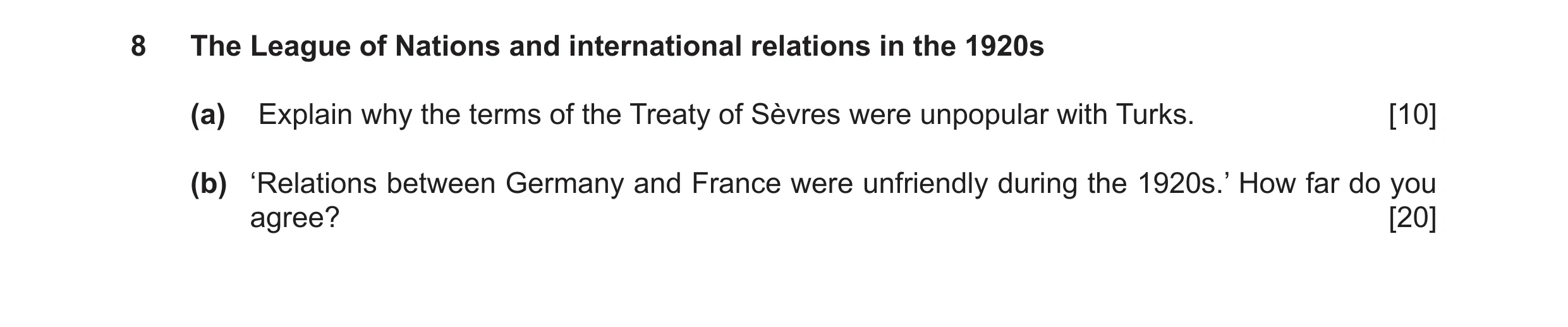
![Question 14: The League of Nations and international relations in the 1920s (a) Explain why the Corfu crisis was a failure for the League. [10] (b) ‘Dur…](https://img.pastlit.com/crops/d36e5e01-5f31-44db-8a06-5ba1e1926efd/q8.webp)
 3 / 3
3 / 3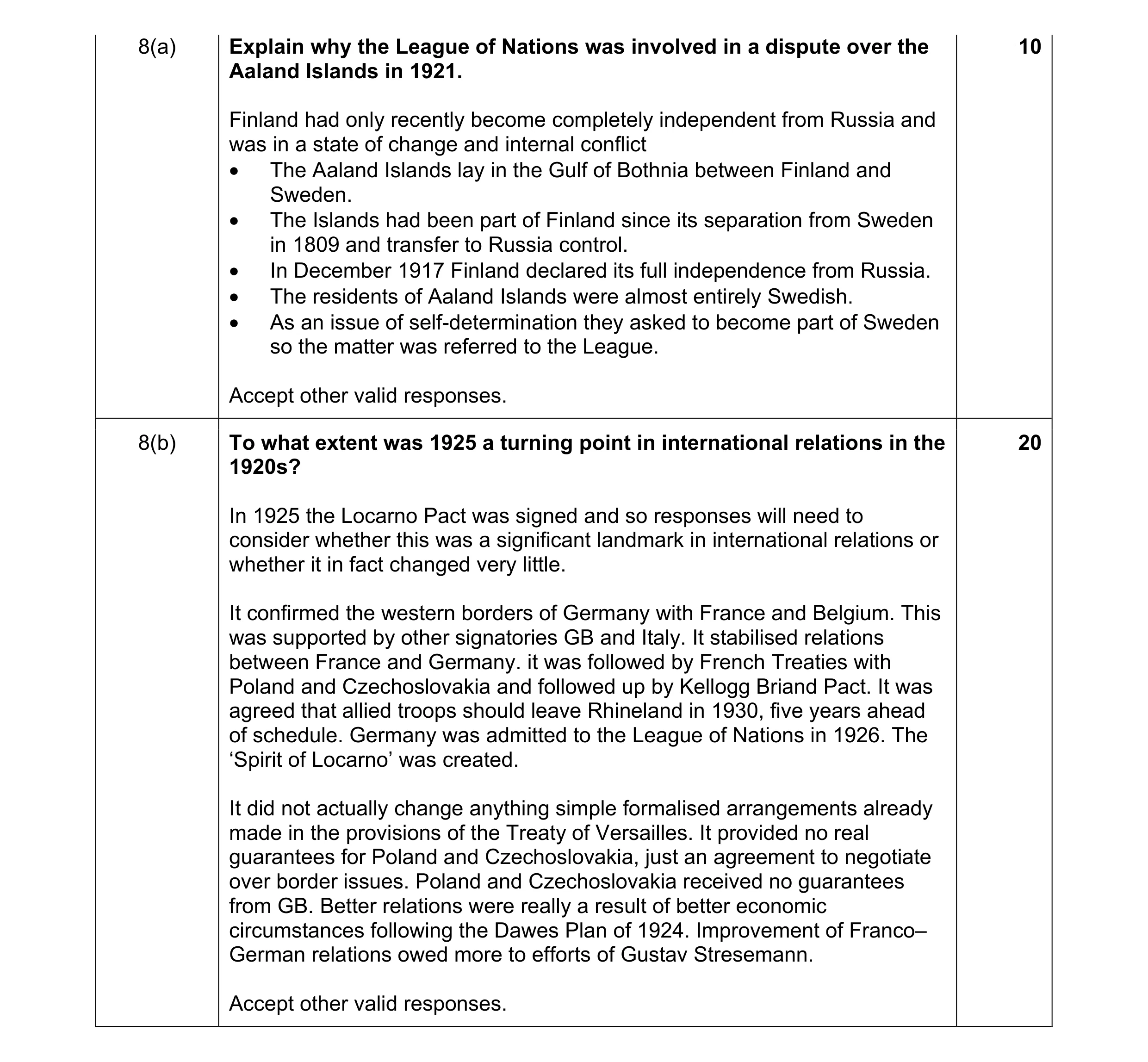 30
30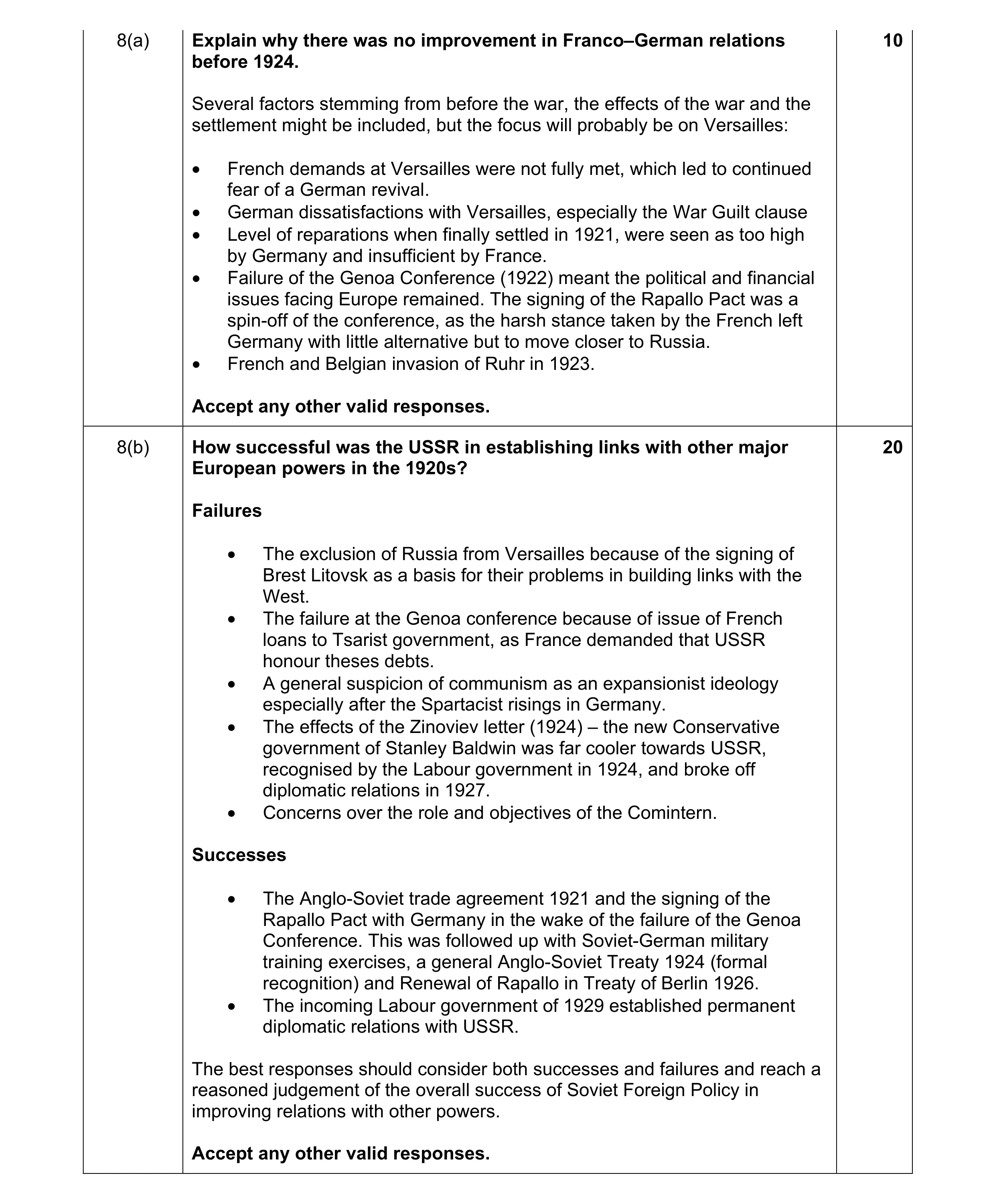 30
30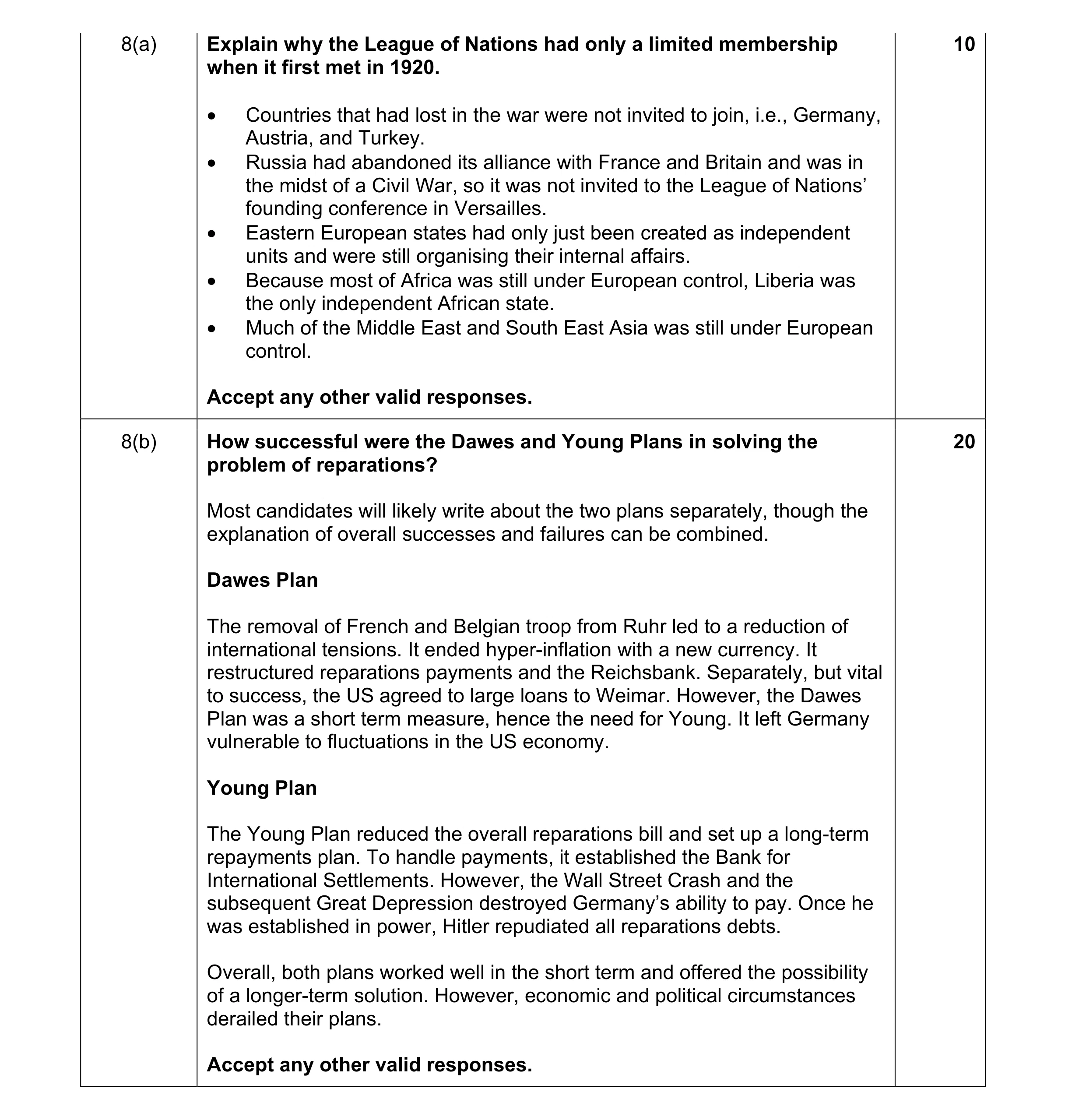 30
30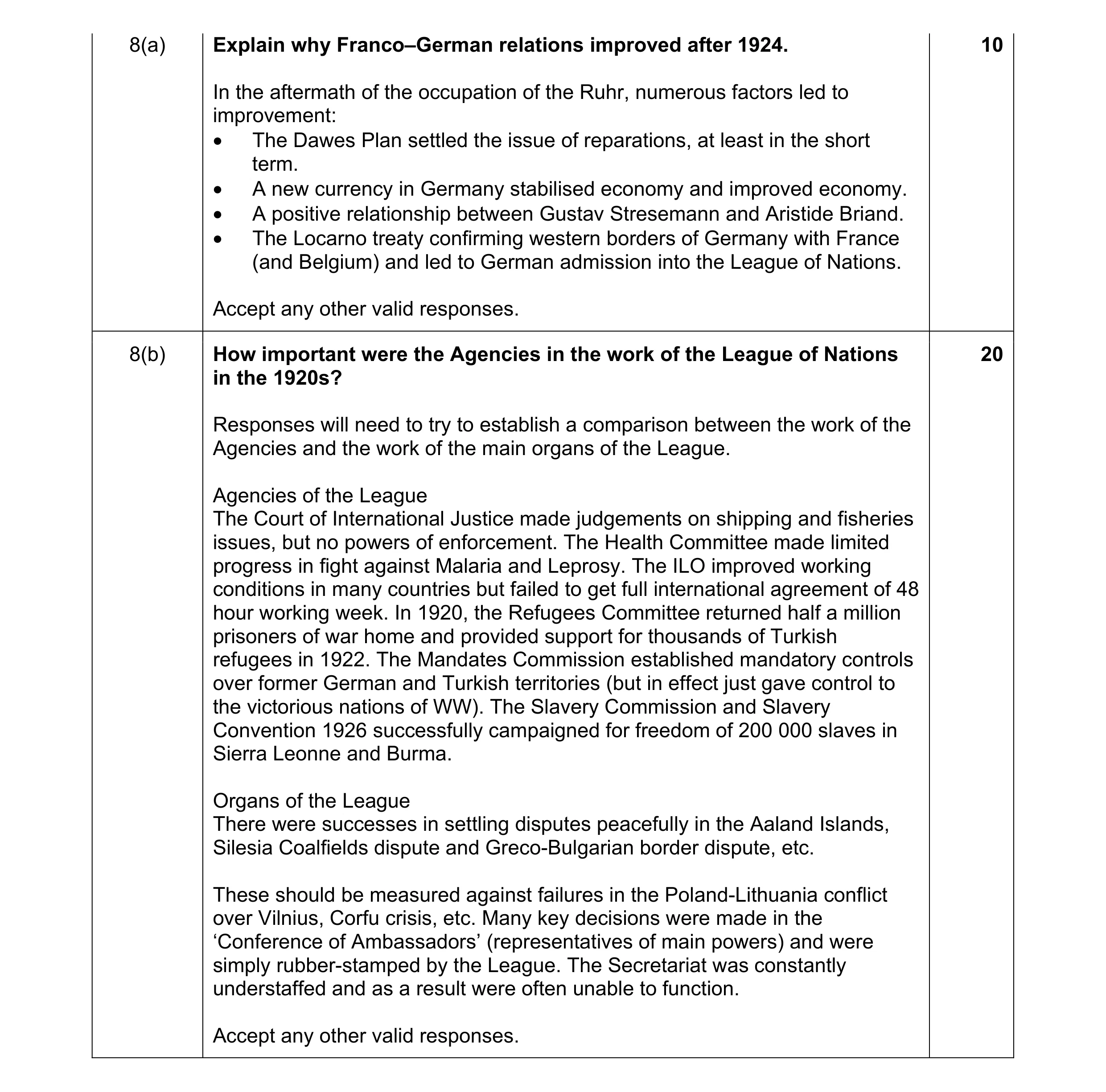 30
30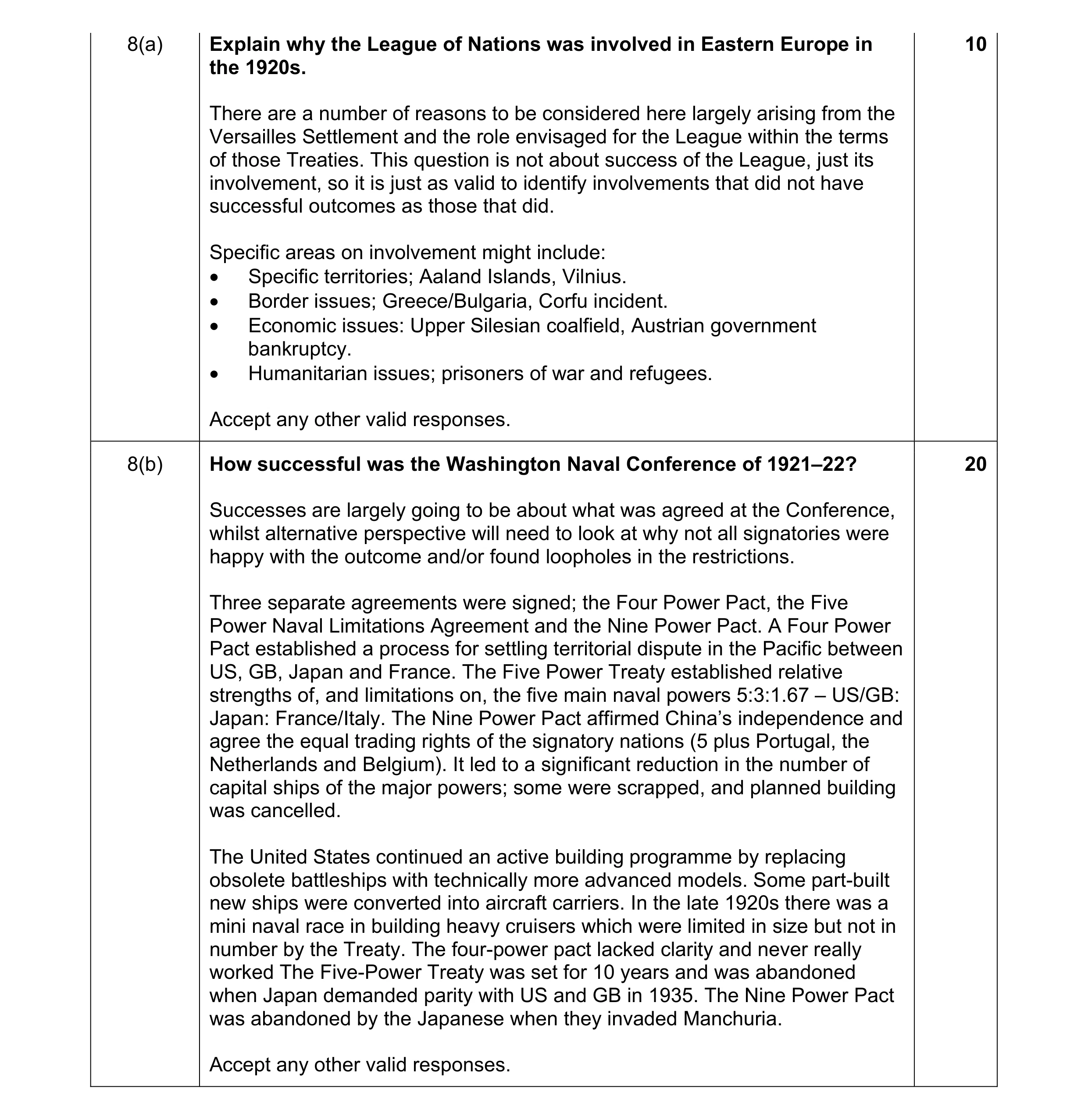 30
30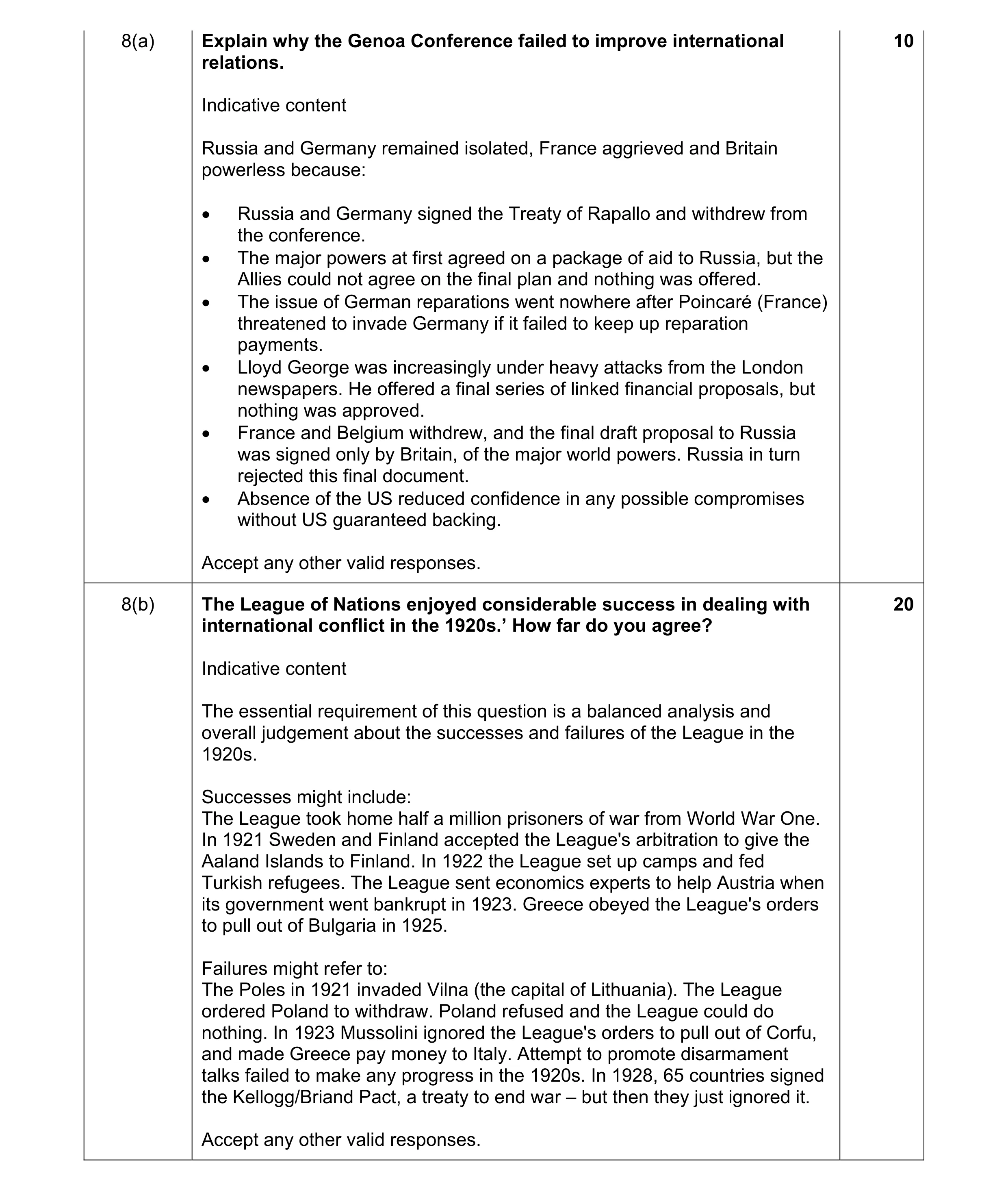 30
30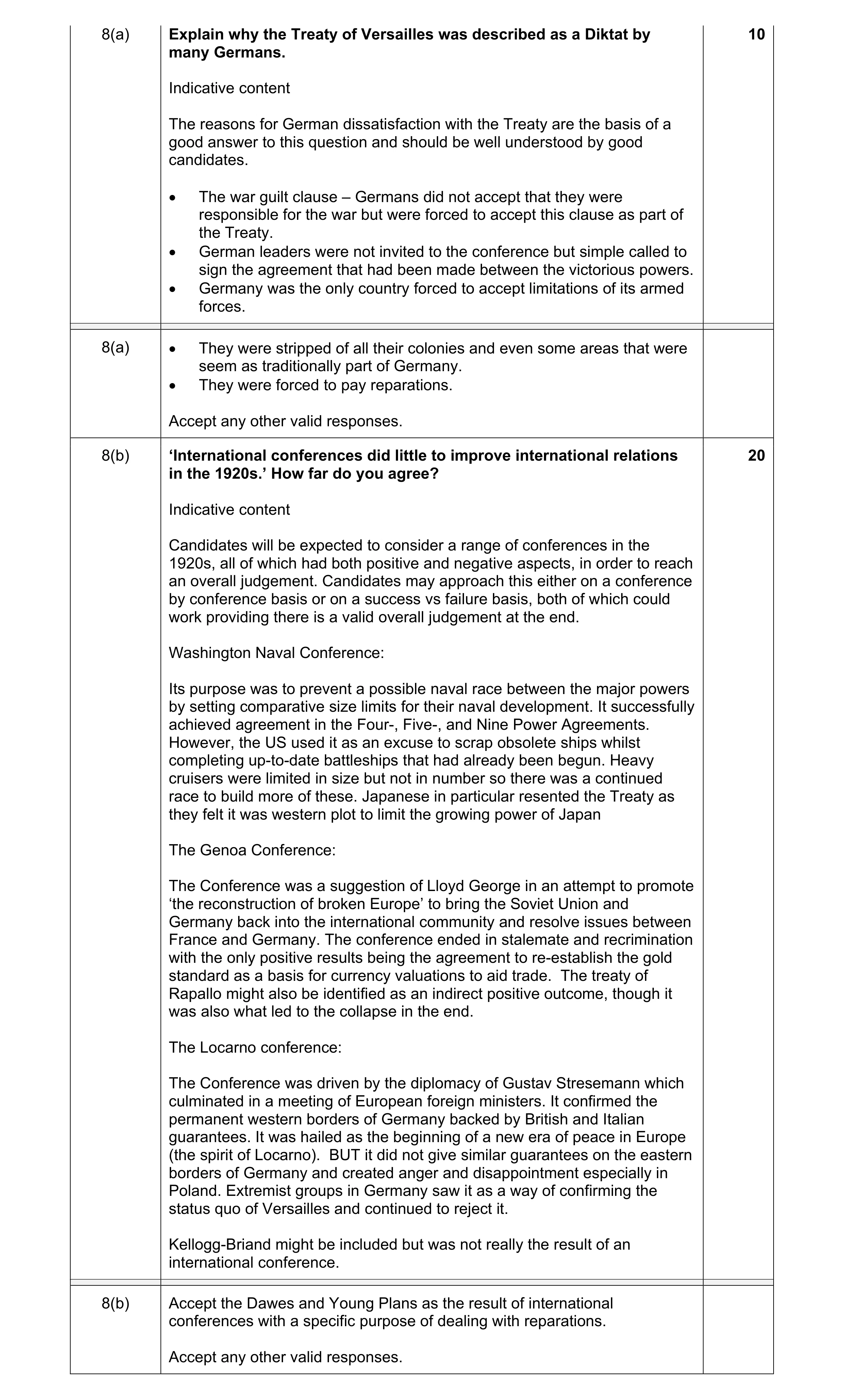 30
30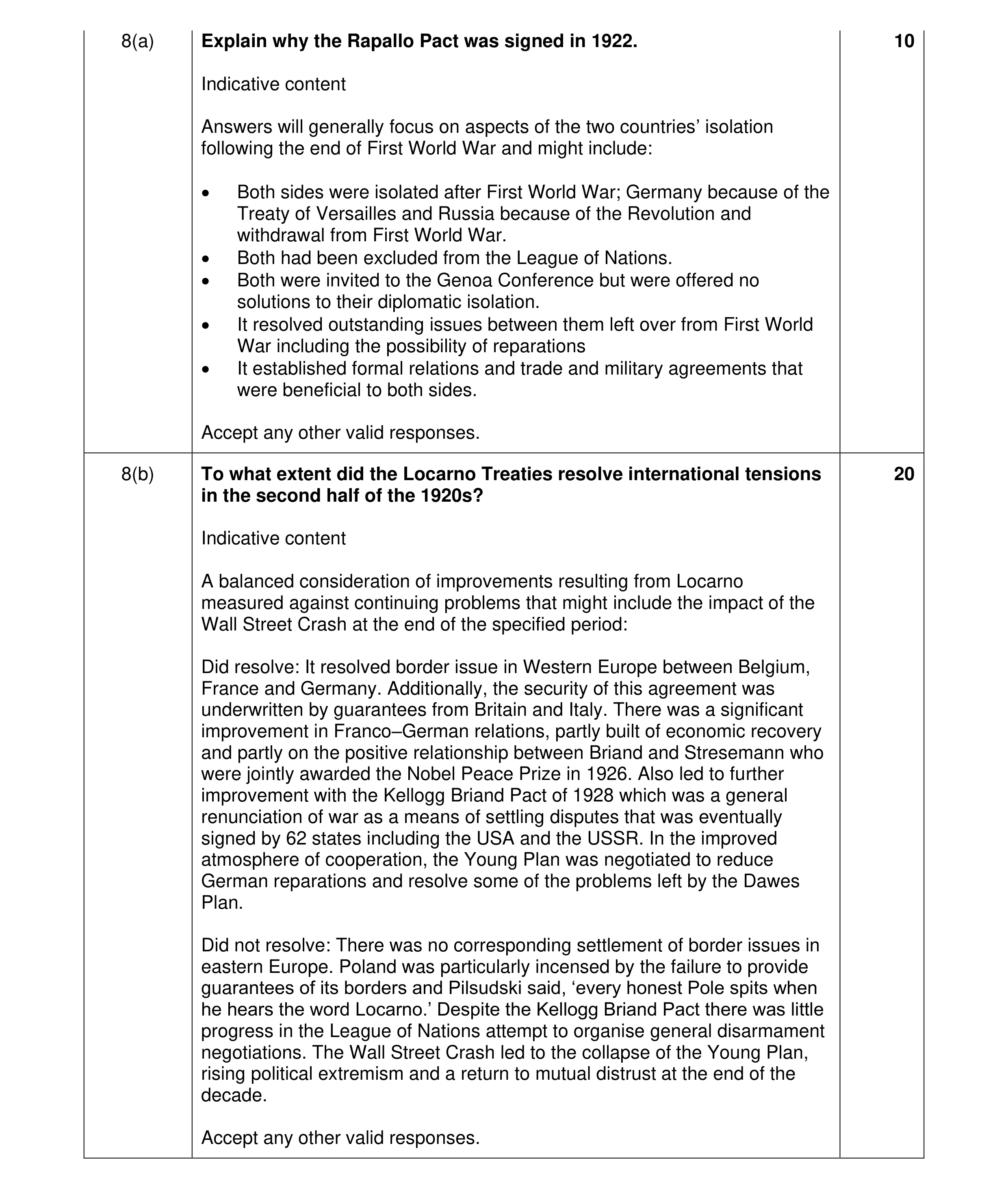 30
30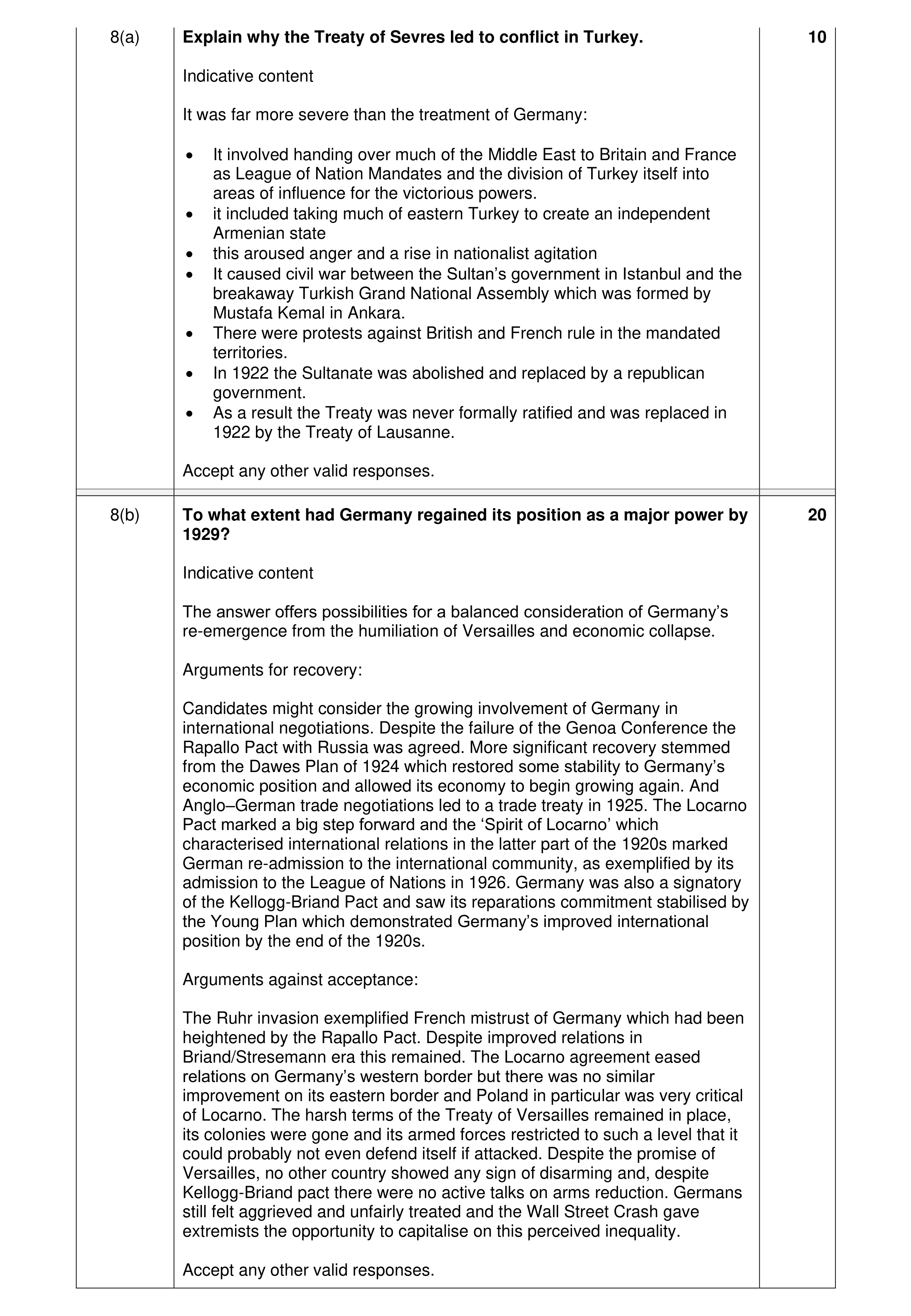 30
30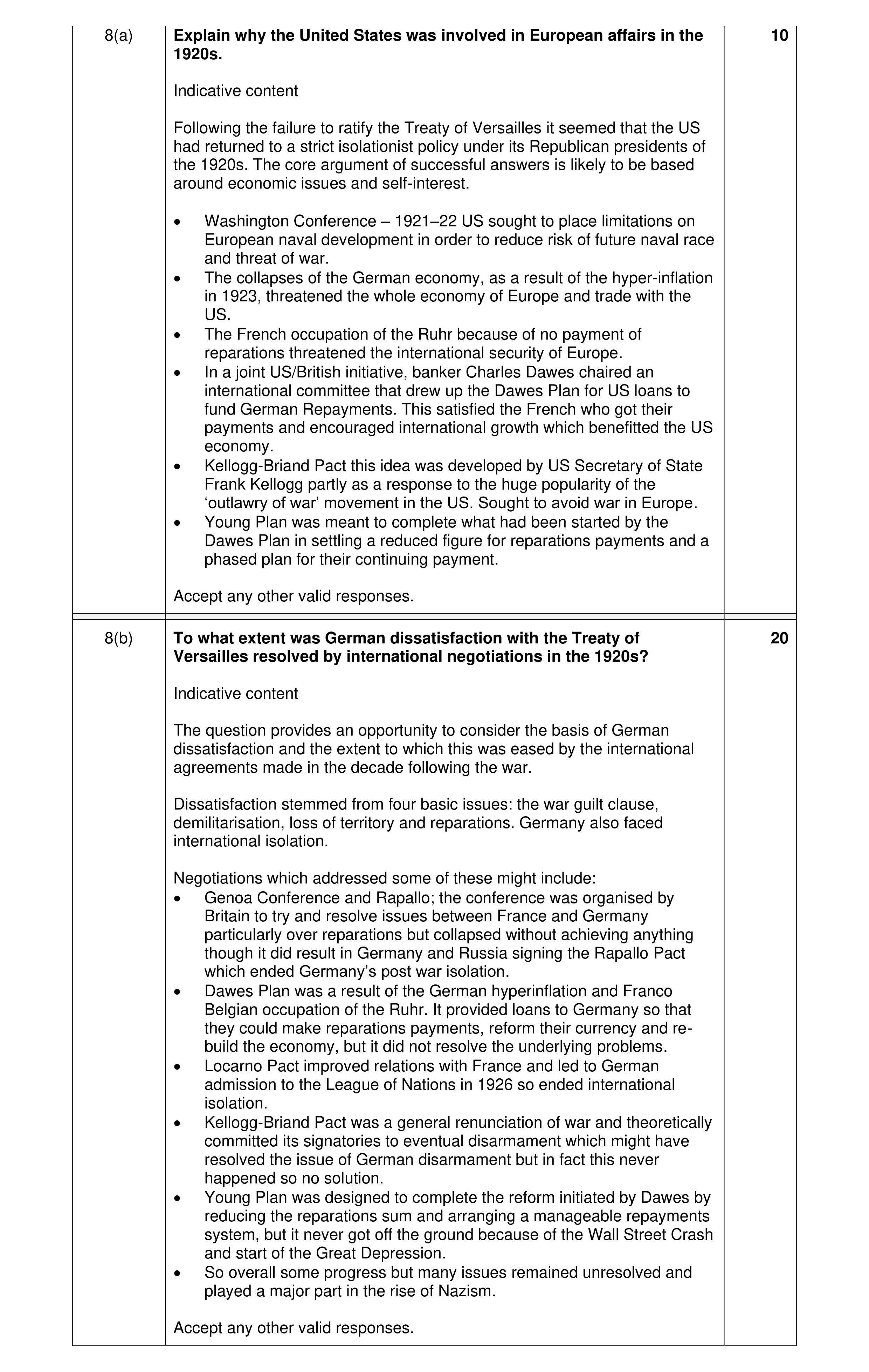 30
30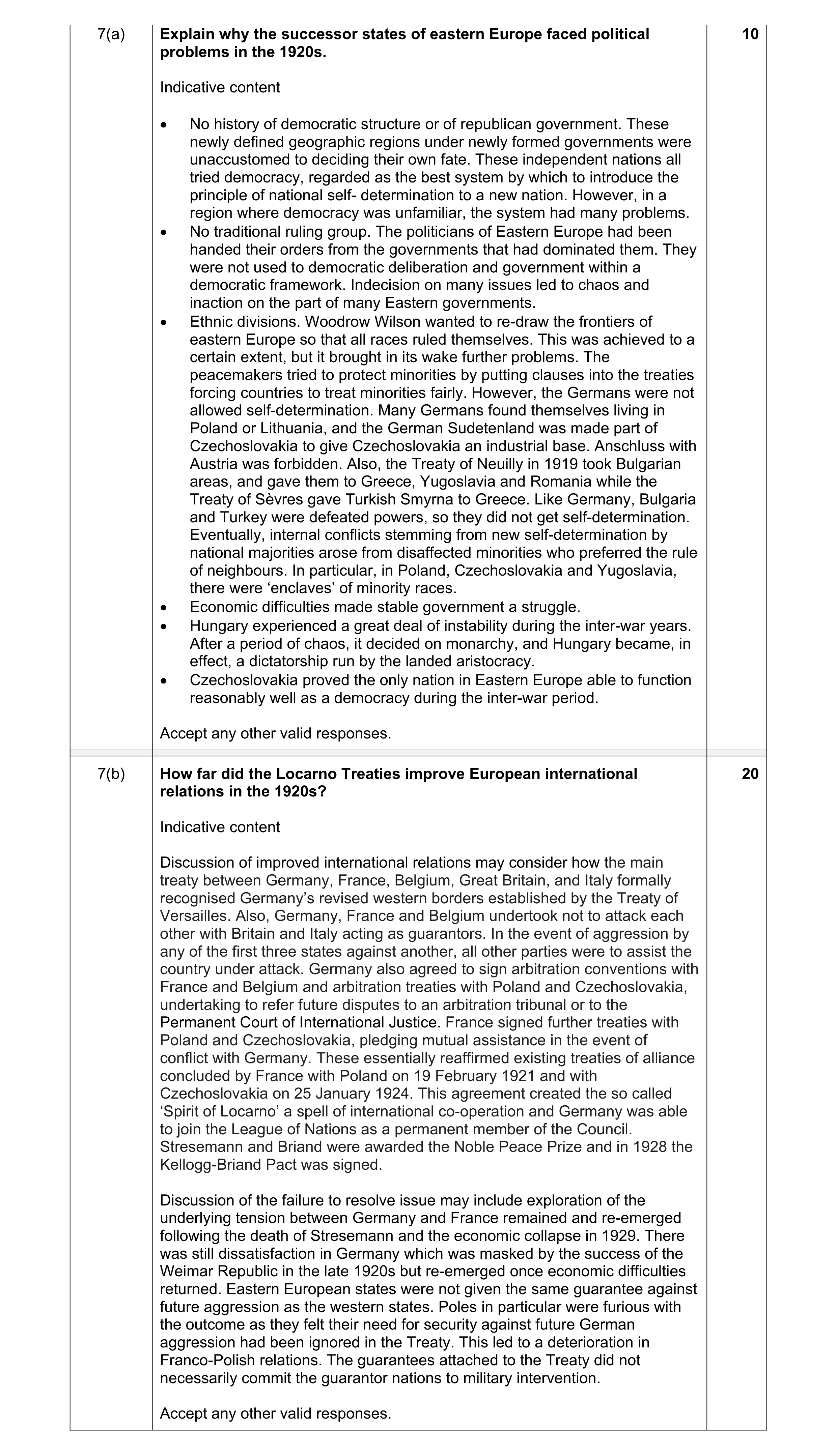 30
30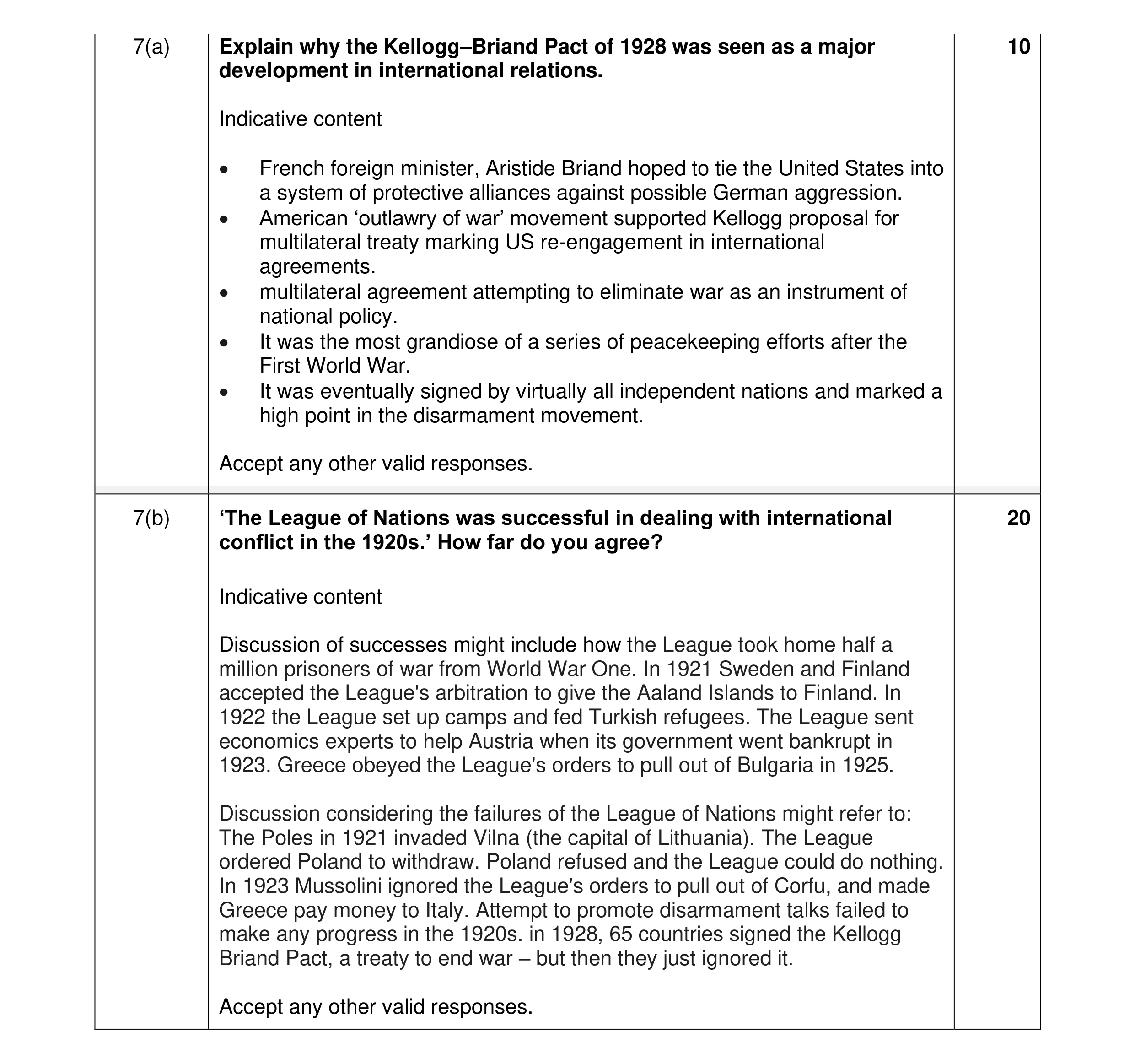 30
30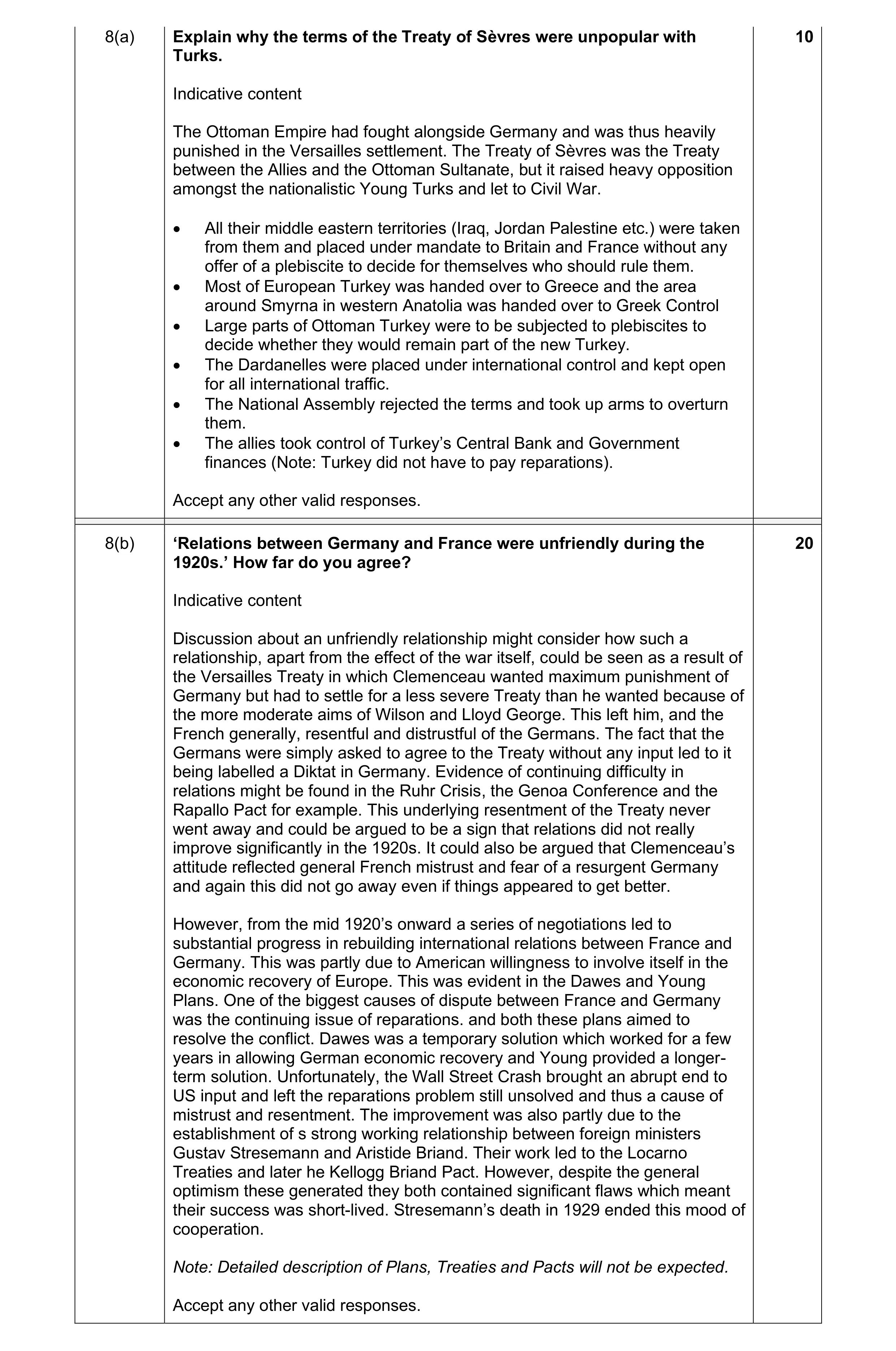 30
30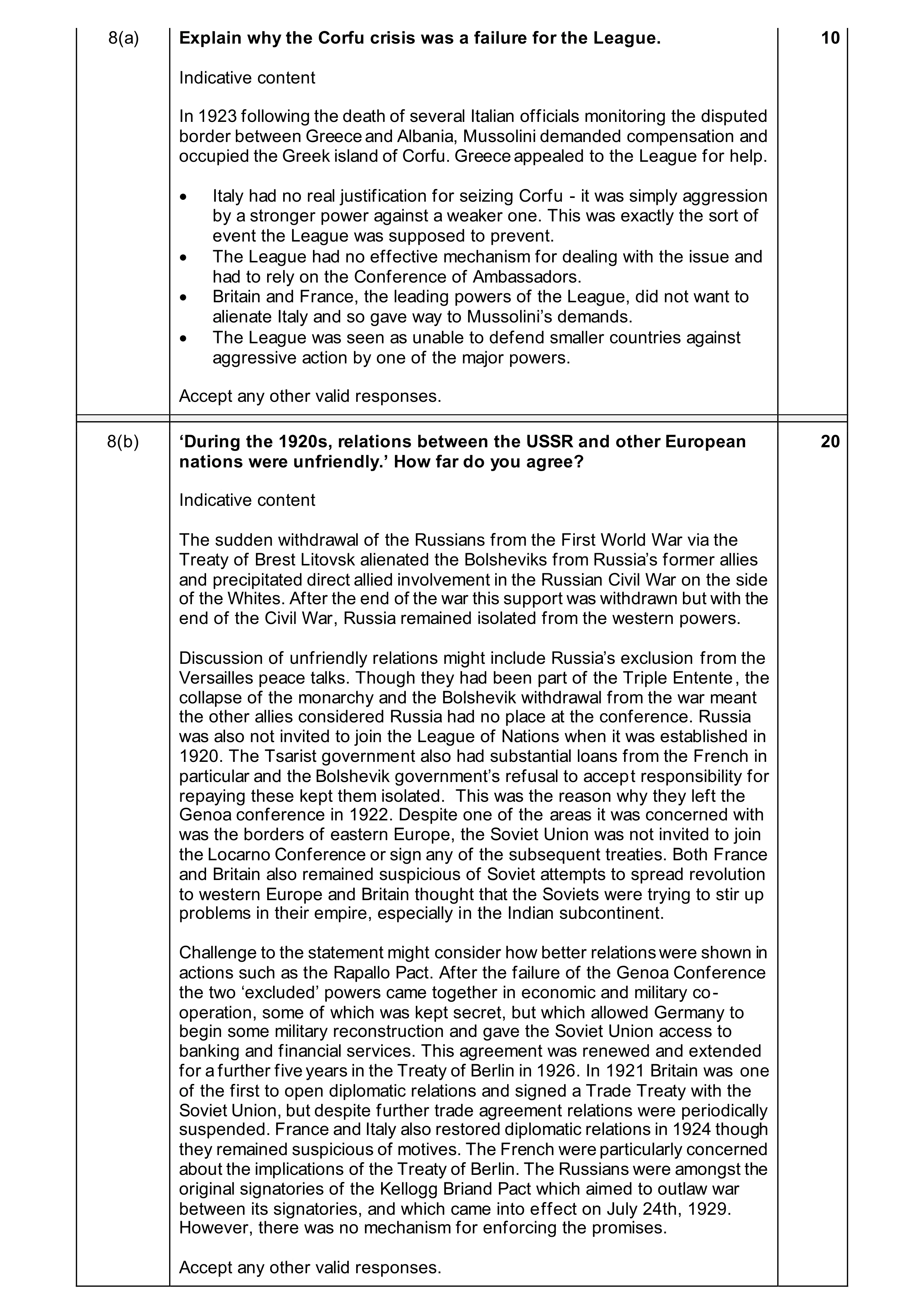 30
30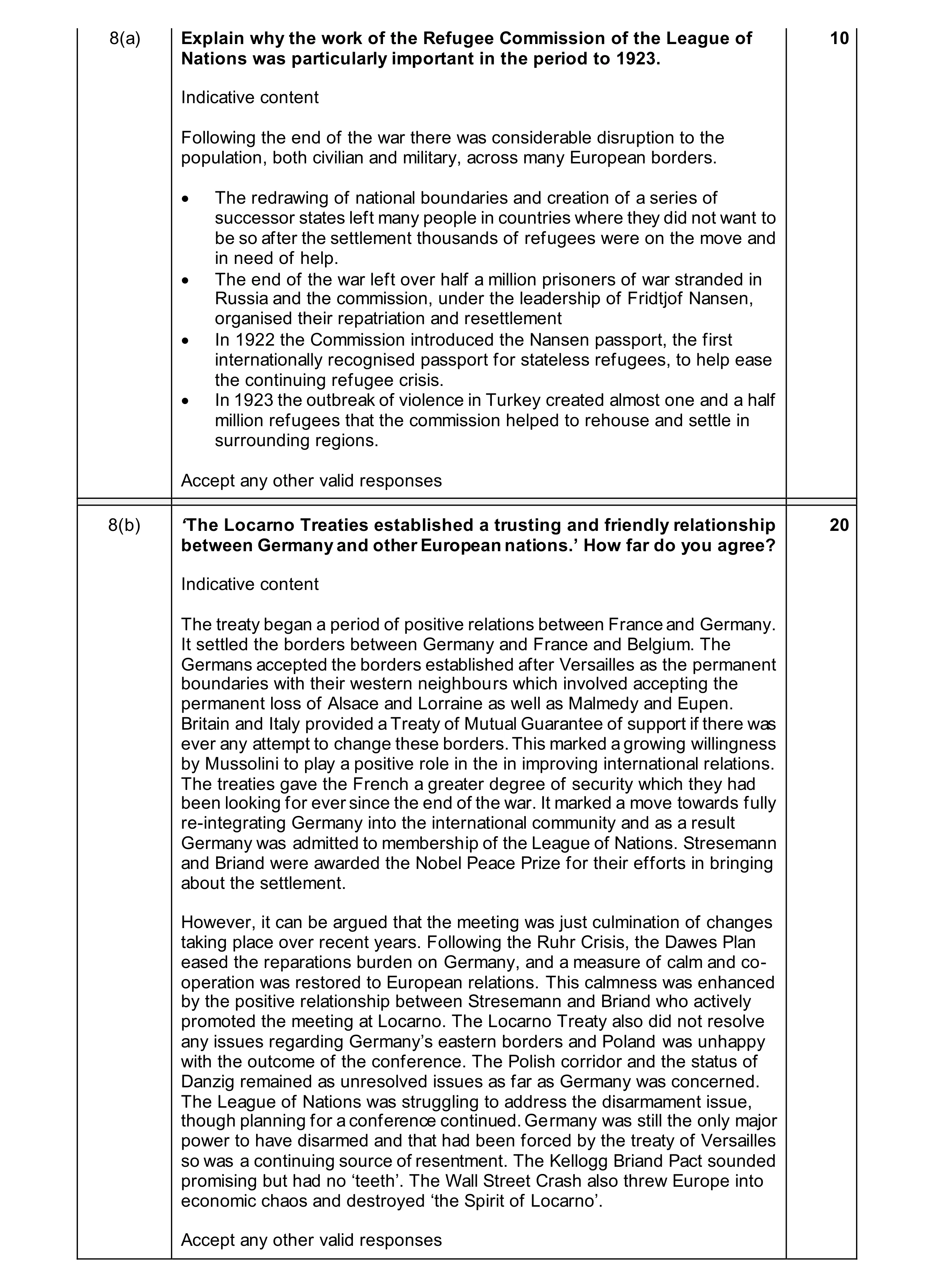 30
30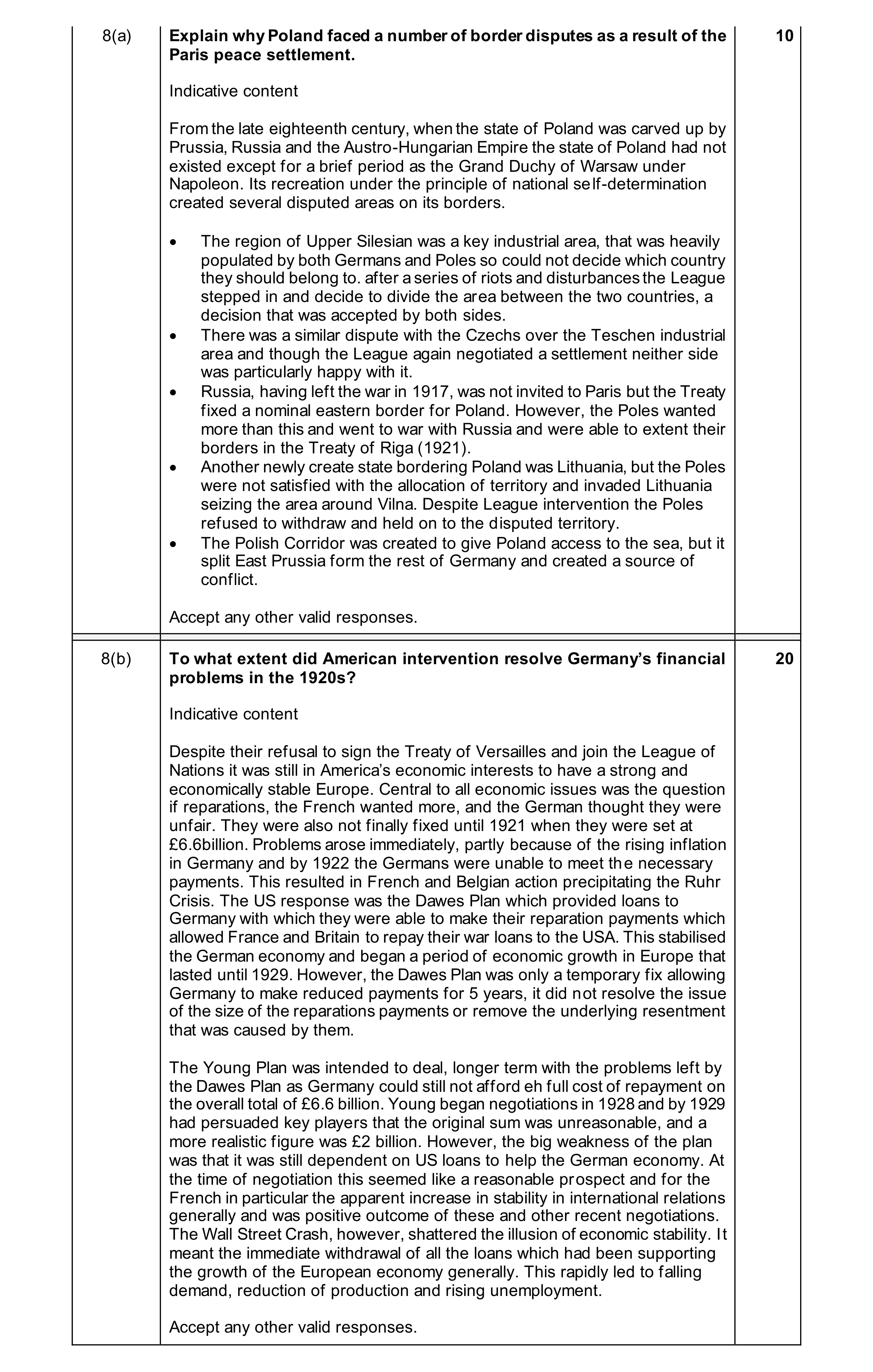 30
30