Questions as text
Q1 · A family tree and the genotypes of the family members 0654/32 May/June 2017
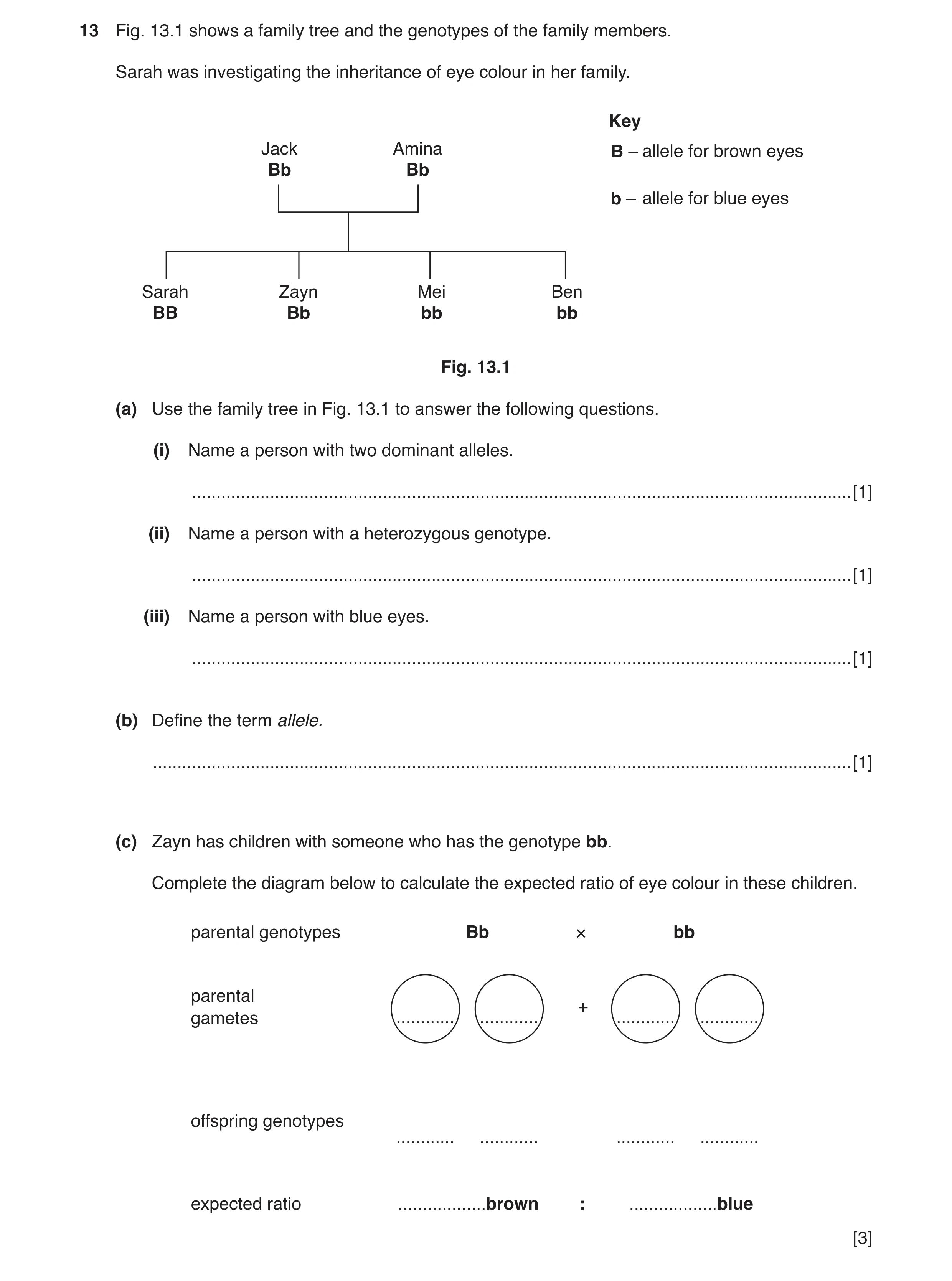
13 Fig. 13.1 shows a family tree and the genotypes of the family members. Sarah was investigating the inheritance of eye colour in her family. Key Jack Amina B – allele for brown eyes Bb Bb b – allele for blue eyes Sarah Zayn Mei Ben BB Bb bb bb Fig. 13.1 (a) Use the family tree in Fig. 13.1 to answer the following questions. (i) Name a person with two dominant alleles. … [1] (ii) Name a person with a heterozygous genotype. … [1] (iii) Name a person with blue eyes. … [1] (b) Define the term allele. … [1] (c) Zayn has children with someone who has the genotype bb. Complete the diagram below to calculate the expected ratio of eye colour in these children. parental genotypes Bb × bb parental + gametes … … … … offspring genotypes … … … … expected ratio … brown : … blue [3]
7 marks
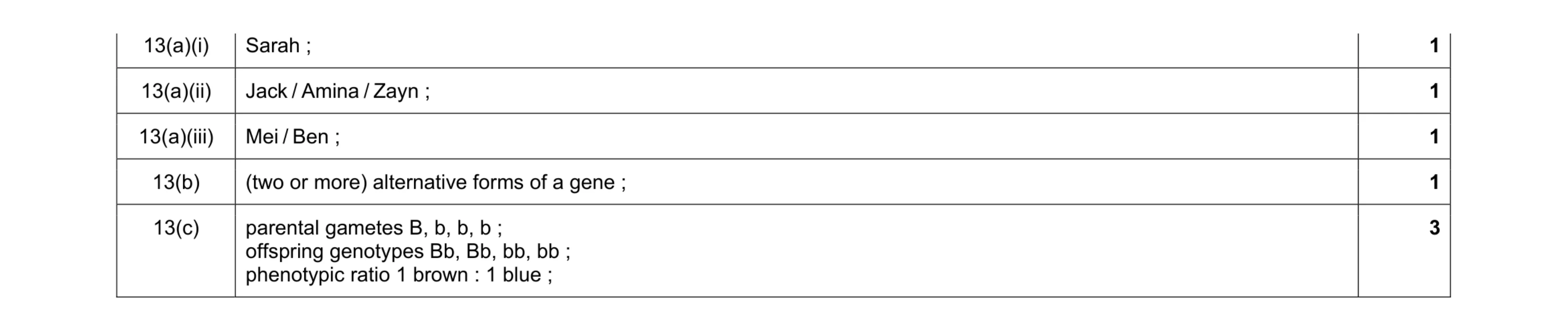
Mark scheme: 13(a)(i) Sarah ; 1 13(a)(ii) Jack / Amina / Zayn ; 1 13(a)(iii) Mei / Ben ; 1 13(b) (two or more) alternative forms of a gene ; 1 13(c) parental gametes B, b, b, b ; offspring genotypes Bb, Bb, bb, bb ; phenotypic ratio 1 brown : 1 blue ; 3
This question in 0654/32 May/June 2017
Q2 · Alleles are alternative forms of genes 0654/31 Oct/Nov 2017
4 (a) Alleles are alternative forms of genes. Use the words to complete the definition of a gene. Each word may be used once, more than once or not at all. chromosome DNA gamete gene genotype heredity protein reproduction A gene is a length of … . It is the unit of … and codes for a specific … . [3] (b) Fig. 4.1 shows a diagram of a family with their genotypes for tongue rolling. Tongue rolling is controlled by the dominant allele T. Non-tongue rolling is controlled by the recessive allele t. Mei David Tt Tt Tai Juan Ben Sara Eamon Tt tt TT tt Tt Fig. 4.1 Mei and David have five children. (i) State the names of all the children that cannot roll their tongues. … [1] (ii) Ben has a child. Circle the correct percentage likelihood that the child will inherit the ability to roll its tongue. 0% 25% 50% 75% 100% [1] (iii) Give one reason for the percentage you have circled in (ii). … … [1] (c) Eamon has a child with someone who has the same genotype as he does. Complete Fig. 4.2 to show the possible genotypes their child could inherit. male alleles T t T … … female alleles t … … Fig. 4.2 [1]
7 marks
Mark scheme: 4(a) DNA ; heredity ; protein ; 3 4(b)(i) Juan and Sara ; 1 4(b)(ii) 100% circled ; 1 4(b)(iii) Ben is homozygous dominant / will always pass on a, dominant allele / T ; 1 4(c) T t T TT Tt t Tt tt ; 1
This question in 0654/31 Oct/Nov 2017
Q3 · Polydactyly is an inherited condition which results in the growth of extra fingers or toes 0654/32 Oct/Nov 2018
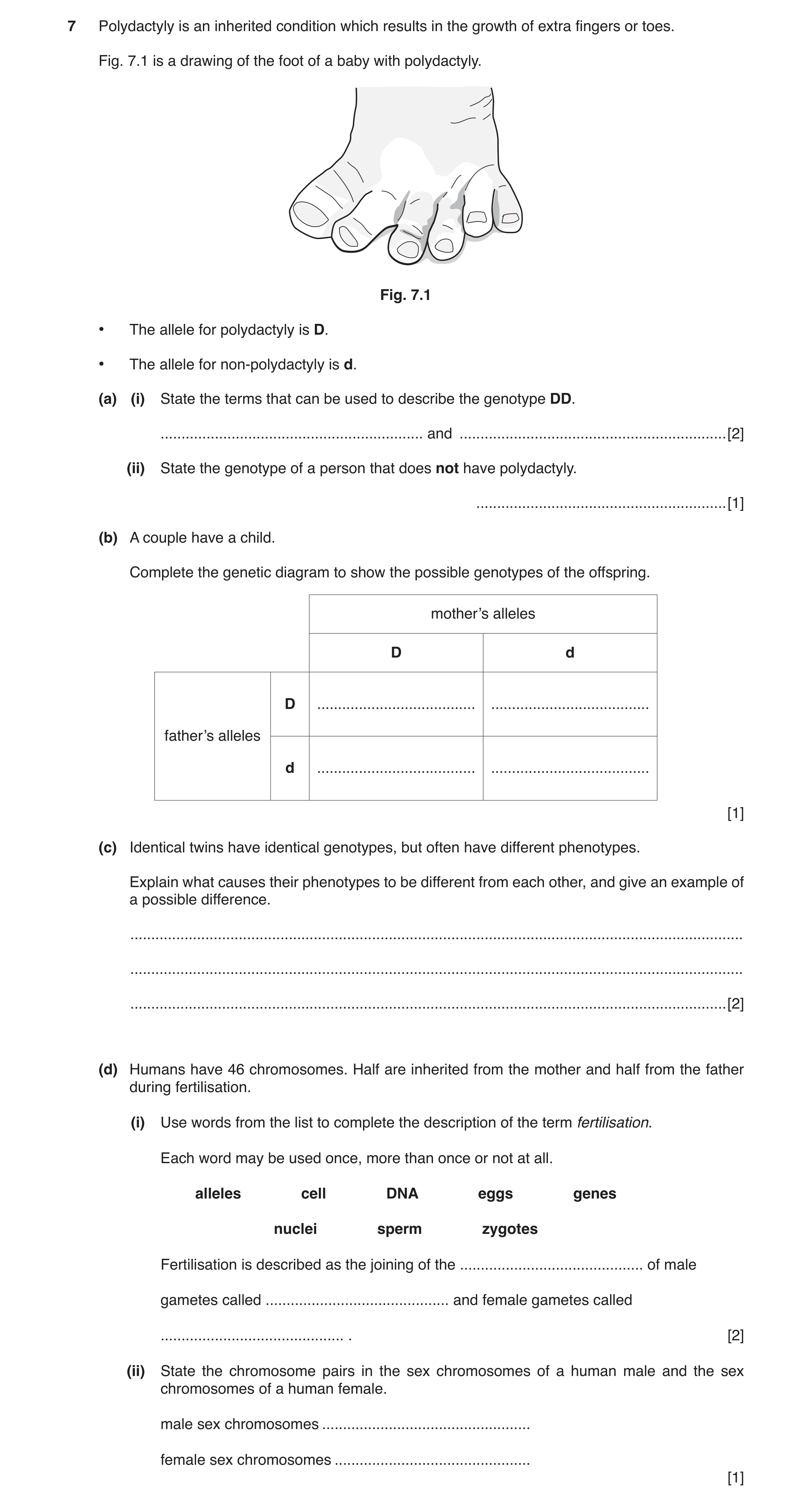
7 Polydactyly is an inherited condition which results in the growth of extra fingers or toes. Fig. 7.1 is a drawing of the foot of a baby with polydactyly. Fig. 7.1 • The allele for polydactyly is D. • The allele for non‑polydactyly is d. (a) (i) State the terms that can be used to describe the genotype DD. … and … [2] (ii) State the genotype of a person that does not have polydactyly. … [1] (b) A couple have a child. Complete the genetic diagram to show the possible genotypes of the offspring. mother’s alleles D d D … … father’s alleles d … … [1] (c) Identical twins have identical genotypes, but often have different phenotypes. Explain what causes their phenotypes to be different from each other, and give an example of a possible difference. … … … [2] (d) Humans have 46 chromosomes. Half are inherited from the mother and half from the father during fertilisation. (i) Use words from the list to complete the description of the term fertilisation. Each word may be used once, more than once or not at all. alleles cell DNA eggs genes nuclei sperm zygotes Fertilisation is described as the joining of the … of male gametes called … and female gametes called … . [2] (ii) State the chromosome pairs in the sex chromosomes of a human male and the sex chromosomes of a human female. male sex chromosomes … female sex chromosomes … [1]
9 marks
Mark scheme: 7(a)(i) homozygous; dominant; 2 7(a)(ii) dd; 1 7(b) D d D DD Dd d Dd dd 1 7(c) (phentoype) affected by environment; named example; 2 7(d)(i) nuclei; sperm and egg; 2 7(d)(ii) male chromosomes are XY, female chromosomes are XX; 1
This question in 0654/32 Oct/Nov 2018
Q4 · Albinism is an inherited condition where there is no pigment in the skin and hair 0654/33 Oct/Nov 2018
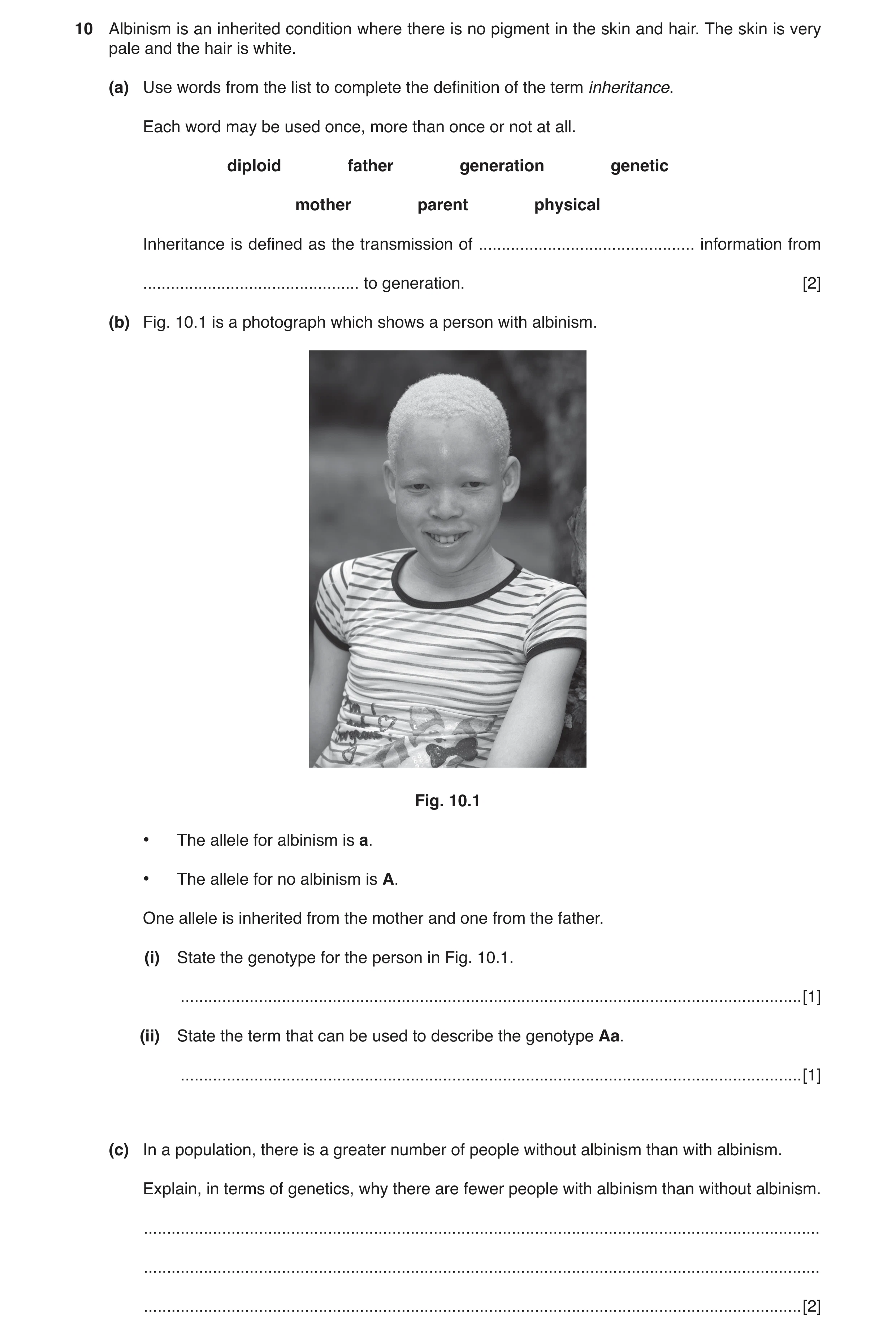
10 Albinism is an inherited condition where there is no pigment in the skin and hair. The skin is very pale and the hair is white. (a) Use words from the list to complete the definition of the term inheritance. Each word may be used once, more than once or not at all. diploid father generation genetic mother parent physical Inheritance is defined as the transmission of … information from … to generation. [2] (b) Fig. 10.1 is a photograph which shows a person with albinism. Fig. 10.1 • The allele for albinism is a. • The allele for no albinism is A. One allele is inherited from the mother and one from the father. (i) State the genotype for the person in Fig. 10.1. … [1] (ii) State the term that can be used to describe the genotype Aa. … [1] (c) In a population, there is a greater number of people without albinism than with albinism. Explain, in terms of genetics, why there are fewer people with albinism than without albinism. … … … [2]
6 marks
Mark scheme: 10(c) albinism only expressed if both / two recessive alleles present ; less likely to inherit both / two recessive alleles ; AVP ; max 2 10(a) genetic ; generation ; 2 10(b)(i) aa ; 1 10(b)(ii) heterozygous ; 1 10(c) albinism only expressed if both / two recessive alleles present ; less likely to inherit both / two recessive alleles ; AVP ; max 2
This question in 0654/33 Oct/Nov 2018
Q5 · The boxes on the left show some terms used when describing inheritance 0654/31 May/June 2019
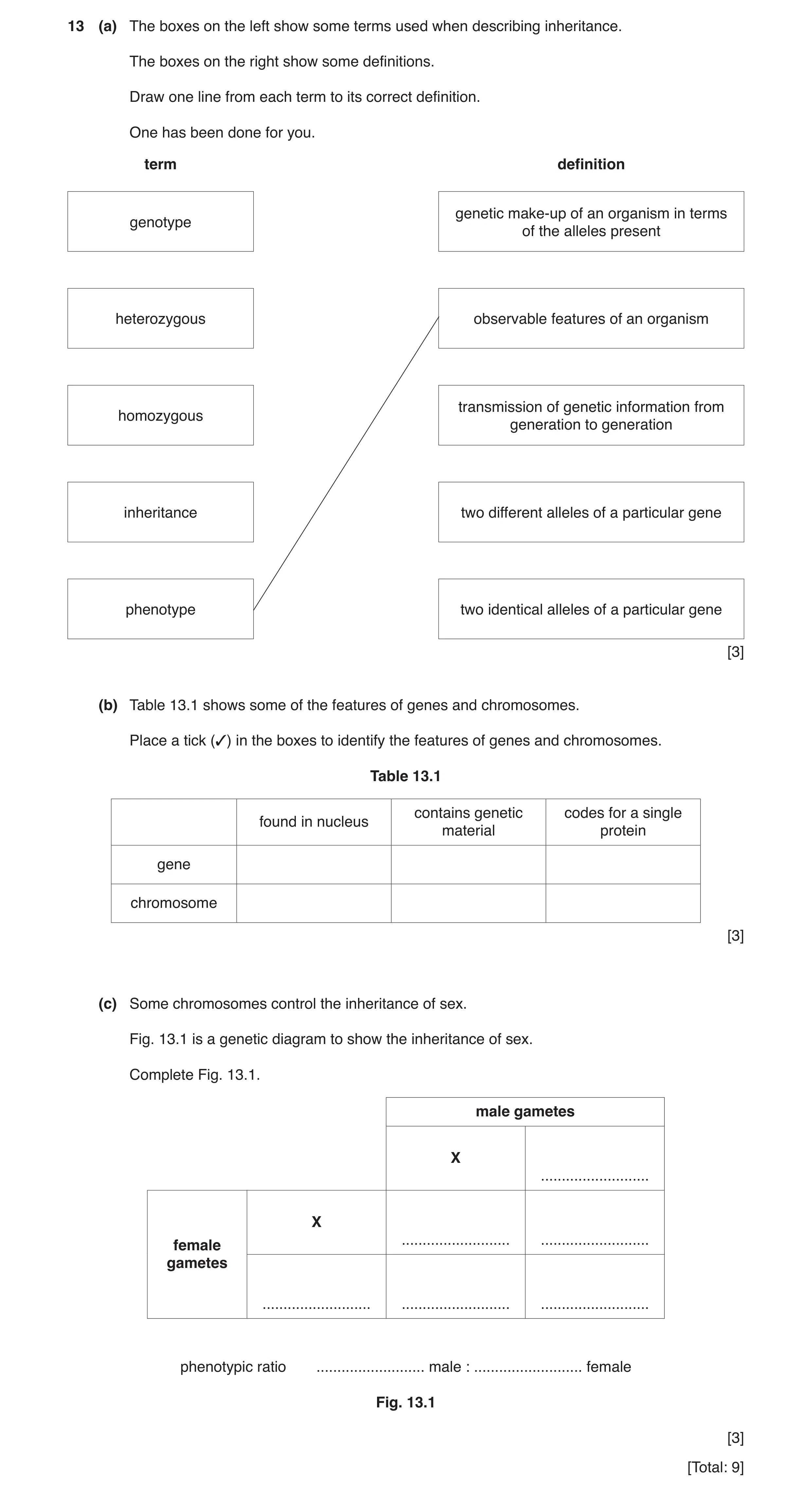
13 (a) The boxes on the left show some terms used when describing inheritance. The boxes on the right show some definitions. Draw one line from each term to its correct definition. One has been done for you. term definition genetic make-up of an organism in terms genotype of the alleles present heterozygous observable features of an organism transmission of genetic information from homozygous generation to generation inheritance two different alleles of a particular gene phenotype two identical alleles of a particular gene [3] (b) Table 13.1 shows some of the features of genes and chromosomes. Place a tick (3) in the boxes to identify the features of genes and chromosomes. Table 13.1 contains genetic codes for a single found in nucleus material protein gene chromosome [3] (c) Some chromosomes control the inheritance of sex. Fig. 13.1 is a genetic diagram to show the inheritance of sex. Complete Fig. 13.1. male gametes X … X … … female gametes … … … phenotypic ratio … male : … female Fig. 13.1 [3] [Total: 9]
9 marks
Mark scheme: 13(a) one correct ; two or three correct ; four correct ; genotype genetic make-up of an organism in terms of the alleles present heterozygous observable features of an organism homozygous transmission of genetic information from generation to generation inheritance two different alleles of a particular gene phenotype two identical alleles of a particular gene 3 Question Answer Marks 13(b) found in nucleus contains genetic material codes for a single protein gene 9 9 9 chromosome 9 9 1 column correct ; 2 columns correct ; 3 columns correct ; 3 13(c) male gametes X Y female gametes X XX XY X XX XY male gamete Y, female gamete X ; offspring XX, XY, XX, XY ; ratio 1 male: 1 female ; 3
This question in 0654/31 May/June 2019
Q6 · Huntington’s disease is an inherited disease which damages neurones in the brain 0654/32 May/June 2020
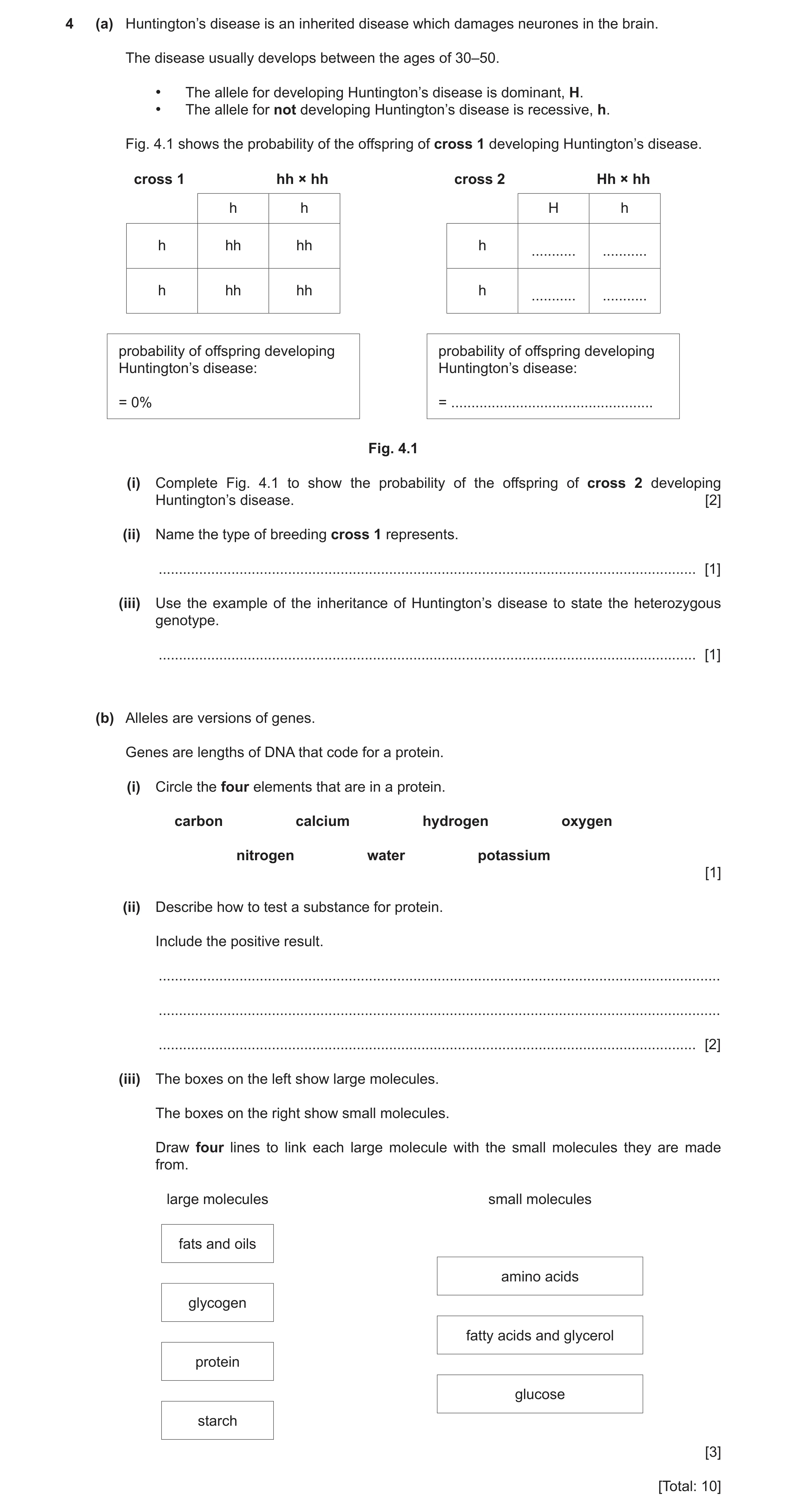
4 (a) Huntington’s disease is an inherited disease which damages neurones in the brain. The disease usually develops between the ages of 30–50. • The allele for developing Huntington’s disease is dominant, H. • The allele for not developing Huntington’s disease is recessive, h. Fig. 4.1 shows the probability of the offspring of cross 1 developing Huntington’s disease. cross 1 hh × hh cross 2 Hh × hh h h H h h hh hh h … … h hh hh h … … probability of offspring developing probability of offspring developing Huntington’s disease: Huntington’s disease: = 0% = … Fig. 4.1 (i) Complete Fig. 4.1 to show the probability of the offspring of cross 2 developing Huntington’s disease. [2] (ii) Name the type of breeding cross 1 represents. … [1] (iii) Use the example of the inheritance of Huntington’s disease to state the heterozygous genotype. … [1] (b) Alleles are versions of genes. Genes are lengths of DNA that code for a protein. (i) Circle the four elements that are in a protein. carbon calcium hydrogen oxygen nitrogen water potassium [1] (ii) Describe how to test a substance for protein. Include the positive result. … … … [2] (iii) The boxes on the left show large molecules. The boxes on the right show small molecules. Draw four lines to link each large molecule with the small molecules they are made from. large molecules small molecules fats and oils amino acids glycogen fatty acids and glycerol protein glucose starch [3] [Total: 10]
10 marks
Mark scheme: 4(a)(i) correct offspring genotype ; Hh, Hh, hh, hh probability 50% ; 2 4(a)(ii) pure ; 1 4(a)(iii) Hh ; 1 4(b)(i) carbon, hydrogen, oxygen and nitrogen circled ; 1 4(b)(ii) add biuret solution ; if the sample contains protein it will turn purple ; 2 Question Answer Marks 4(b)(iii) ;;; 1 correct for 1 mark 2 or 3 correct for 2 marks all correct for 3 marks fats and oils amino acids glycogen fatty acids and glycogen protein glucose starch 3
This question in 0654/32 May/June 2020
Q7 · Huntington’s disease is an inherited disease which damages neurones in the brain 0654/33 May/June 2020
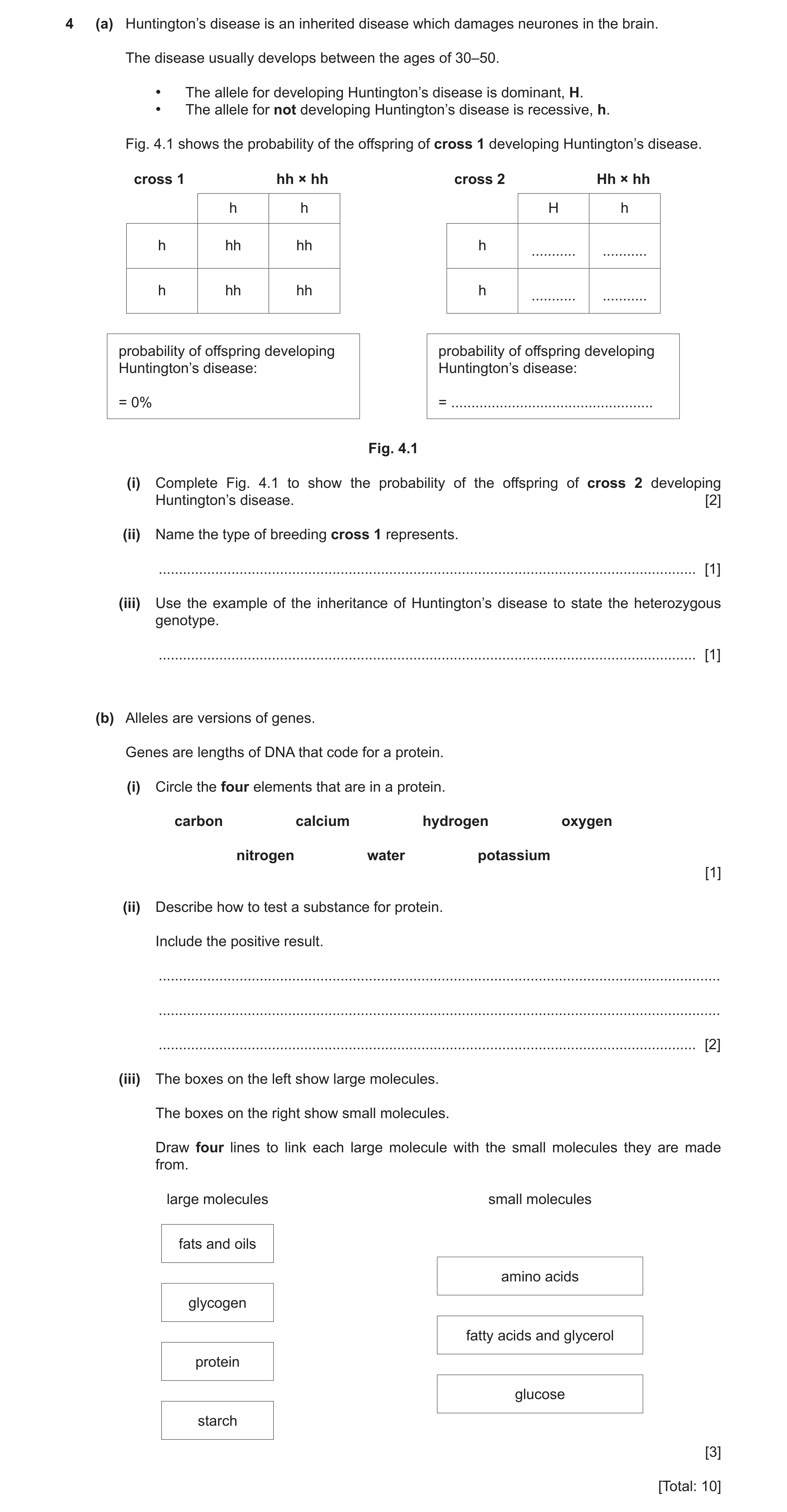
4 (a) Huntington’s disease is an inherited disease which damages neurones in the brain. The disease usually develops between the ages of 30–50. • The allele for developing Huntington’s disease is dominant, H. • The allele for not developing Huntington’s disease is recessive, h. Fig. 4.1 shows the probability of the offspring of cross 1 developing Huntington’s disease. cross 1 hh × hh cross 2 Hh × hh h h H h h hh hh h … … h hh hh h … … probability of offspring developing probability of offspring developing Huntington’s disease: Huntington’s disease: = 0% = … Fig. 4.1 (i) Complete Fig. 4.1 to show the probability of the offspring of cross 2 developing Huntington’s disease. [2] (ii) Name the type of breeding cross 1 represents. … [1] (iii) Use the example of the inheritance of Huntington’s disease to state the heterozygous genotype. … [1] (b) Alleles are versions of genes. Genes are lengths of DNA that code for a protein. (i) Circle the four elements that are in a protein. carbon calcium hydrogen oxygen nitrogen water potassium [1] (ii) Describe how to test a substance for protein. Include the positive result. … … … [2] (iii) The boxes on the left show large molecules. The boxes on the right show small molecules. Draw four lines to link each large molecule with the small molecules they are made from. large molecules small molecules fats and oils amino acids glycogen fatty acids and glycerol protein glucose starch [3] [Total: 10]
10 marks
Mark scheme: 4(a)(i) correct offspring genotype ; Hh, Hh, hh, hh probability 50% ; 2 4(a)(ii) pure ; 1 4(a)(iii) Hh ; 1 4(b)(i) carbon, hydrogen, oxygen and nitrogen circled ; 1 4(b)(ii) add biuret solution ; if the sample contains protein it will turn purple ; 2 Question Answer Marks 4(b)(iii) ;;; 1 correct for 1 mark 2 or 3 correct for 2 marks all correct for 3 marks fats and oils amino acids glycogen fatty acids and glycogen protein glucose starch 3
This question in 0654/33 May/June 2020
Q8 · A farmer keeps ponies 0654/32 Feb/March 2021
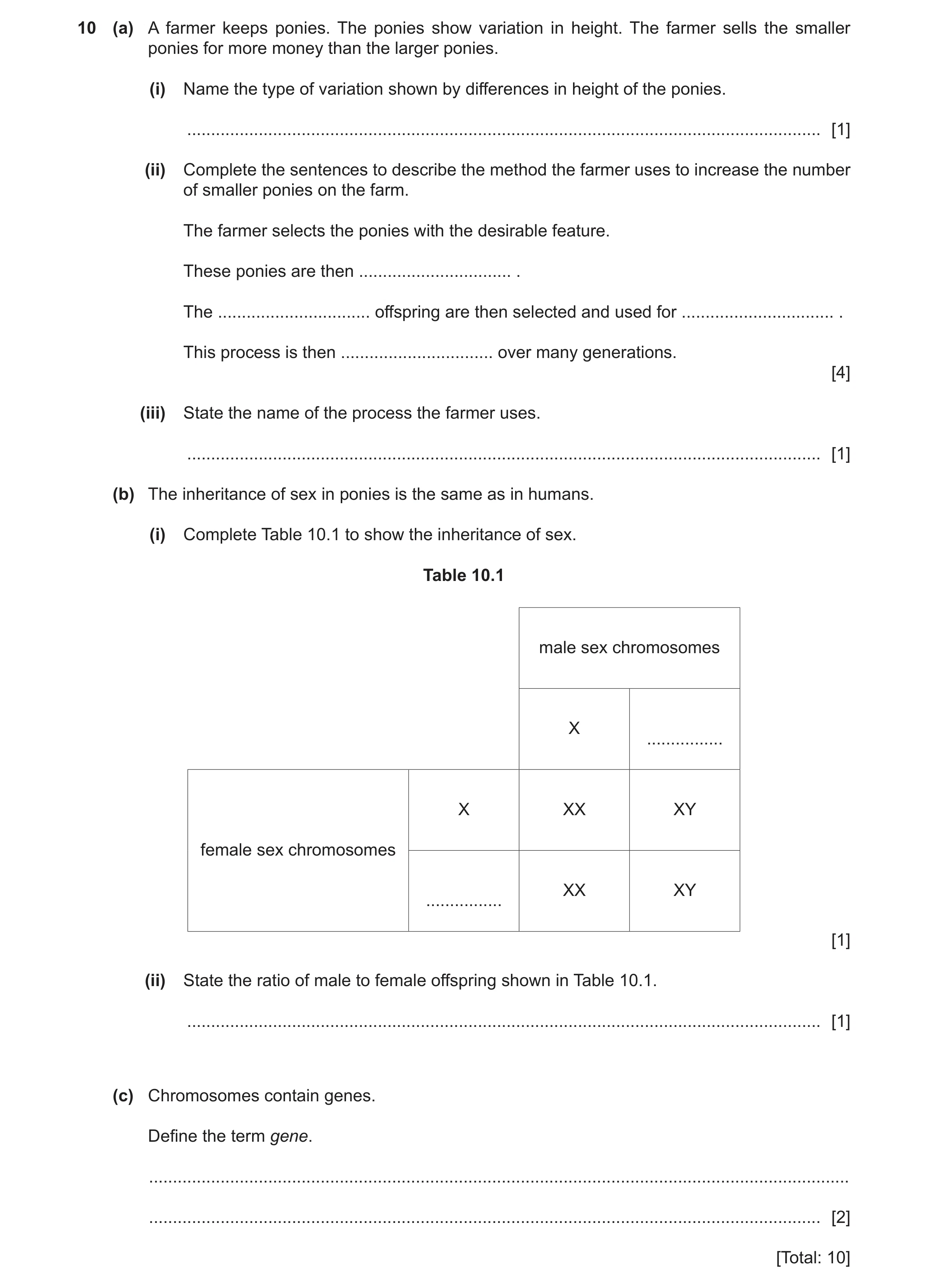
10 (a) A farmer keeps ponies. The ponies show variation in height. The farmer sells the smaller ponies for more money than the larger ponies. (i) Name the type of variation shown by differences in height of the ponies. … [1] (ii) Complete the sentences to describe the method the farmer uses to increase the number of smaller ponies on the farm. The farmer selects the ponies with the desirable feature. These ponies are then … . The … offspring are then selected and used for … . This process is then … over many generations. [4] (iii) State the name of the process the farmer uses. … [1] (b) The inheritance of sex in ponies is the same as in humans. (i) Complete Table 10.1 to show the inheritance of sex. Table 10.1 male sex chromosomes X … X XX XY female sex chromosomes XX XY … [1] (ii) State the ratio of male to female offspring shown in Table 10.1. … [1] (c) Chromosomes contain genes. Define the term gene. … … [2] [Total: 10]
10 marks
Mark scheme: 10(a)(i) continuous ; 1 10(a)(ii) crossed / bred / AW ; smallest ; breeding ; repeated ; 4 10(a)(iii) selective breeding ; 1 Question Answer Marks 10(b)(i) X Y X XX XY X XX XY ; 1 10(b)(ii) 1:1 ; 1 10(c) length of DNA ; that codes for a protein ; 2
This question in 0654/32 Feb/March 2021
Q9 · A student has two peas 0654/31 Oct/Nov 2021
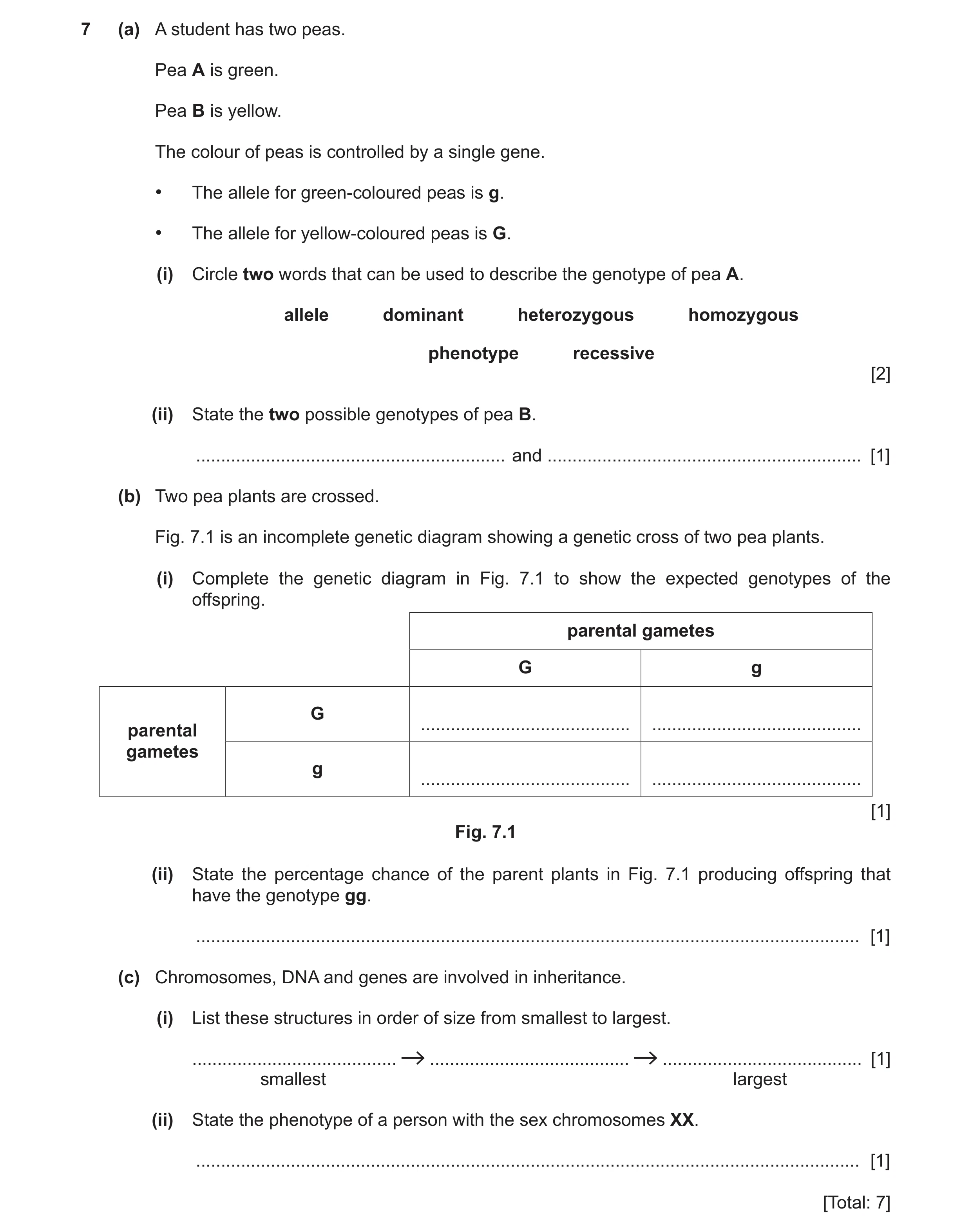
7 (a) A student has two peas. Pea A is green. Pea B is yellow. The colour of peas is controlled by a single gene. • The allele for green-coloured peas is g. • The allele for yellow-coloured peas is G. (i) Circle two words that can be used to describe the genotype of pea A. allele dominant heterozygous homozygous phenotype recessive [2] (ii) State the two possible genotypes of pea B. … and … [1] (b) Two pea plants are crossed. Fig. 7.1 is an incomplete genetic diagram showing a genetic cross of two pea plants. (i) Complete the genetic diagram in Fig. 7.1 to show the expected genotypes of the offspring. parental gametes G g G … … parental gametes g … … [1] Fig. 7.1 (ii) State the percentage chance of the parent plants in Fig. 7.1 producing offspring that have the genotype gg. … [1] (c) Chromosomes, DNA and genes are involved in inheritance. (i) List these structures in order of size from smallest to largest. … … … [1] smallest largest (ii) State the phenotype of a person with the sex chromosomes XX. … [1] [Total: 7]
7 marks
Mark scheme: 7(a)(i) homozygous ; recessive ; 2 7(a)(ii) GG and Gg ; 1 7(b)(i) GG Gg Gg gg ; 1 7(b)(ii) 25(%) ; 1 7(c)(i) DNA, genes, chromosomes ; 1 7(c)(ii) female ; 1
This question in 0654/31 Oct/Nov 2021
Q10 · The inheritance of smooth or wrinkled skin in pea plants is controlled by a single gene 0654/31 May/June 2022
4 (a) The inheritance of smooth or wrinkled skin in pea plants is controlled by a single gene. • The allele for smooth skin is R. • The allele for wrinkled skin is r. Fig. 4.1 is a photograph of two peas. • Pea A has wrinkled skin. • Pea B has smooth skin. pea A pea B Fig. 4.1 (i) Table 4.1 shows the genotypes and genotype descriptions of the peas shown in Fig. 4.1. Complete Table 4.1. Table 4.1 pea genotype description of genotype A homozygous recessive B Rr [2] (ii) A scientist crossed two pea plants and observed the results. Complete the genetic diagram in Fig. 4.2 to identify the parental gametes. parental gametes … … RR Rr … parental gametes Rr rr … Fig. 4.2 [2] (iii) State the ratio of smooth peas to wrinkled peas from Fig. 4.2. smooth … : wrinkled … [1] (b) Fertilisation in plants occurs when the nuclei of the male and female gametes fuse. Name these two gametes. 1 … 2 … [2] (c) State the name of the female gamete in humans. … [1] (d) Table 4.2 contains one term and two definitions linked to inheritance. Complete Table 4.2. Table 4.2 term definition A thread-like structure of DNA, carrying genetic information in the … form of genes. … gene … A version of a gene … [4] [Total: 12]
12 marks
Mark scheme: 4(a)(i) pea genotype description of genotype A rr ; homozygous recessive B Rr heterozygous ; 2 4(a)(ii) parental gametes R r parental gametes R RR Rr r Rr rr 2 4(a)(iii) smooth 3 : wrinkled 1 ; 1 4(b) pollen ; ovule ; 2 4(c) egg / ovum ; 1 4(d) chromosome ; length of DNA ; that codes for a protein ; allele ; 4
This question in 0654/31 May/June 2022
Q11 · Albinism is a condition in humans where no pigment is made by the skin 0654/32 Feb/March 2023
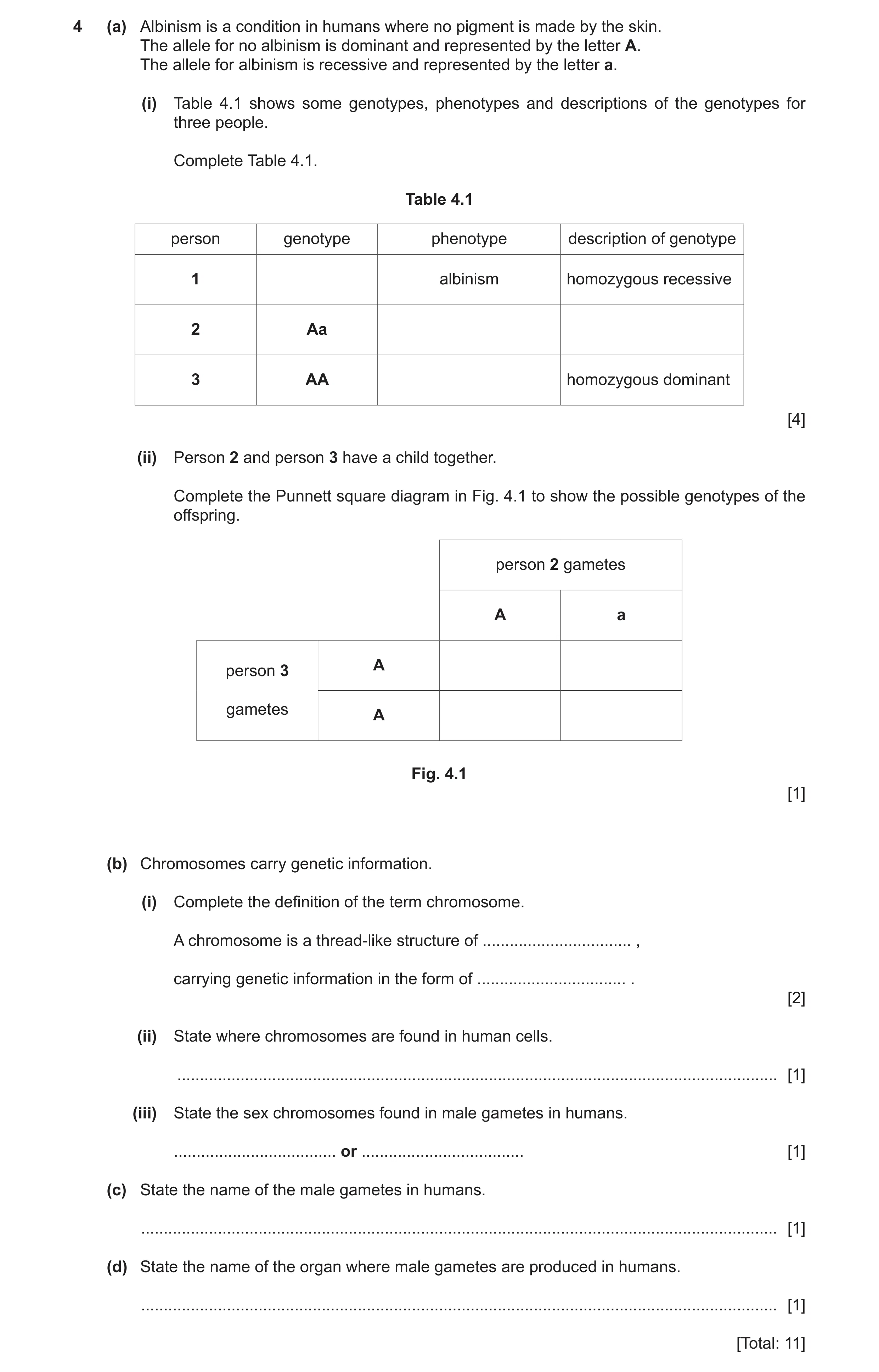
4 (a) Albinism is a condition in humans where no pigment is made by the skin. The allele for no albinism is dominant and represented by the letter A. The allele for albinism is recessive and represented by the letter a. (i) Table 4.1 shows some genotypes, phenotypes and descriptions of the genotypes for three people. Complete Table 4.1. Table 4.1 person genotype phenotype description of genotype 1 albinism homozygous recessive 2 Aa 3 AA homozygous dominant [4] (ii) Person 2 and person 3 have a child together. Complete the Punnett square diagram in Fig. 4.1 to show the possible genotypes of the offspring. person 2 gametes A a A person 3 gametes A Fig. 4.1 [1] (b) Chromosomes carry genetic information. (i) Complete the definition of the term chromosome. A chromosome is a thread-like structure of … , carrying genetic information in the form of … . [2] (ii) State where chromosomes are found in human cells. … [1] (iii) State the sex chromosomes found in male gametes in humans. … or … [1] (c) State the name of the male gametes in humans. … [1] (d) State the name of the organ where male gametes are produced in humans. … [1] [Total: 11]
11 marks
Mark scheme: 4(a)(i) 4 aa ; albinism homozygous recessive Aa no albinism ; heterozygous ; AA no albinism ; homozygous dominant 4(a)(ii) 1 AA Aa AA Aa ; 4(b)(i) DNA ; 2 genes ; 4(b)(ii) nucleus ; 1 4(b)(iii) X and Y ; 1 4(c) sperm ; 1 4(d) testes ; 1
This question in 0654/32 Feb/March 2023
Q12 · Polydactyly is a condition that results in the growth of extra fingers or toes 0654/32 Oct/Nov 2023
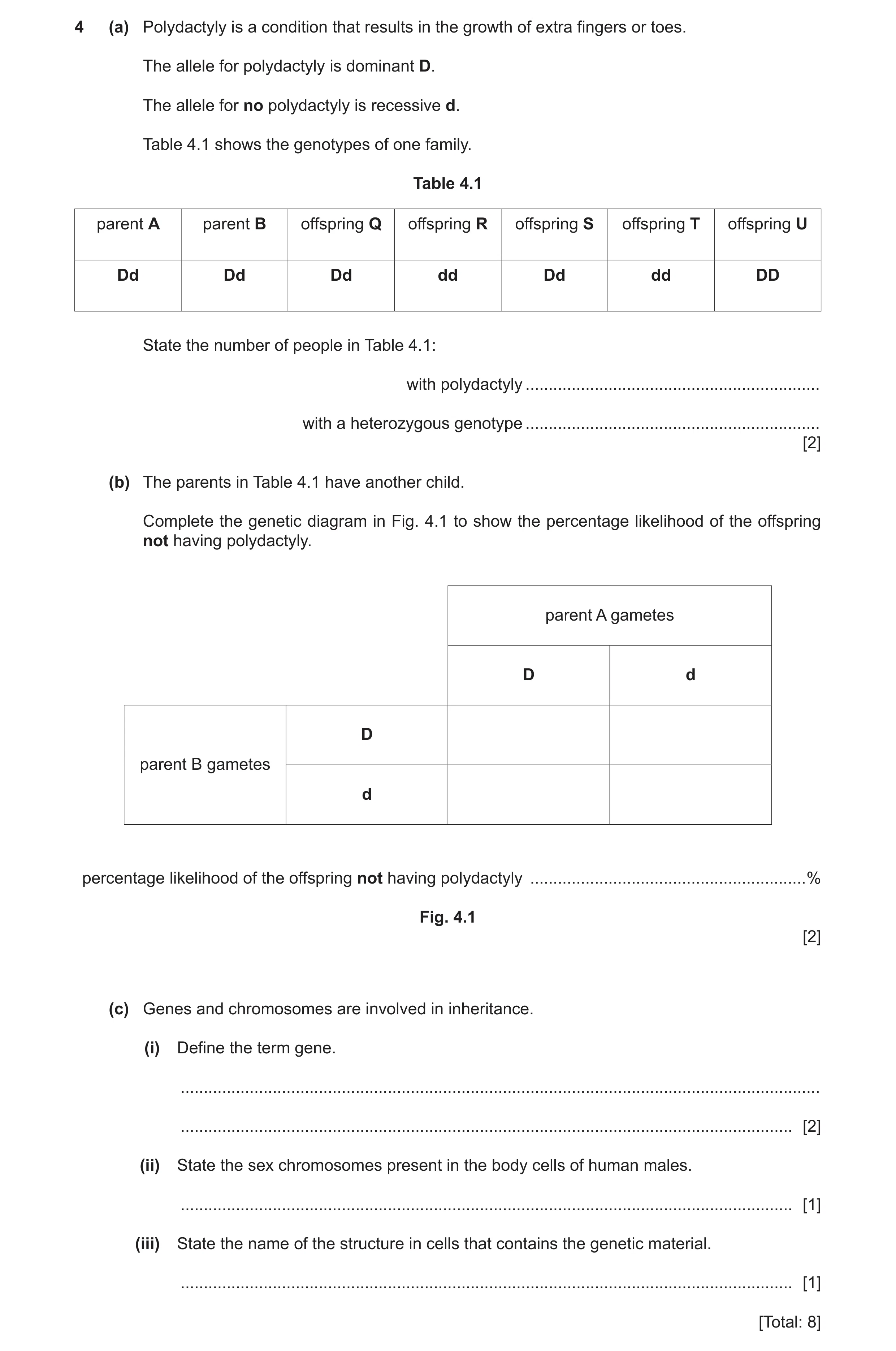
4 (a) Polydactyly is a condition that results in the growth of extra fingers or toes. The allele for polydactyly is dominant D. The allele for no polydactyly is recessive d. Table 4.1 shows the genotypes of one family. Table 4.1 parent A parent B offspring Q offspring R offspring S offspring T offspring U Dd Dd Dd dd Dd dd DD State the number of people in Table 4.1: with polydactyly … with a heterozygous genotype … [2] (b) The parents in Table 4.1 have another child. Complete the genetic diagram in Fig. 4.1 to show the percentage likelihood of the offspring not having polydactyly. parent A gametes D d D parent B gametes d percentage likelihood of the offspring not having polydactyly … % Fig. 4.1 [2] (c) Genes and chromosomes are involved in inheritance. (i) Define the term gene. … … [2] (ii) State the sex chromosomes present in the body cells of human males. … [1] (iii) State the name of the structure in cells that contains the genetic material. … [1] [Total: 8]
8 marks
Mark scheme: 4(a) 5 ; 2 4 ; 4(b) 2 DD Dd Dd dd ; 25 (%) ; 4(c)(i) length / AW, of DNA ; 2 that codes for a protein ; 4(c)(ii) XY ; 1 4(c)(iii) nucleus ; 1
This question in 0654/32 Oct/Nov 2023
Q13 · Tick (3) the correct definition of inheritance 0654/31 Oct/Nov 2024
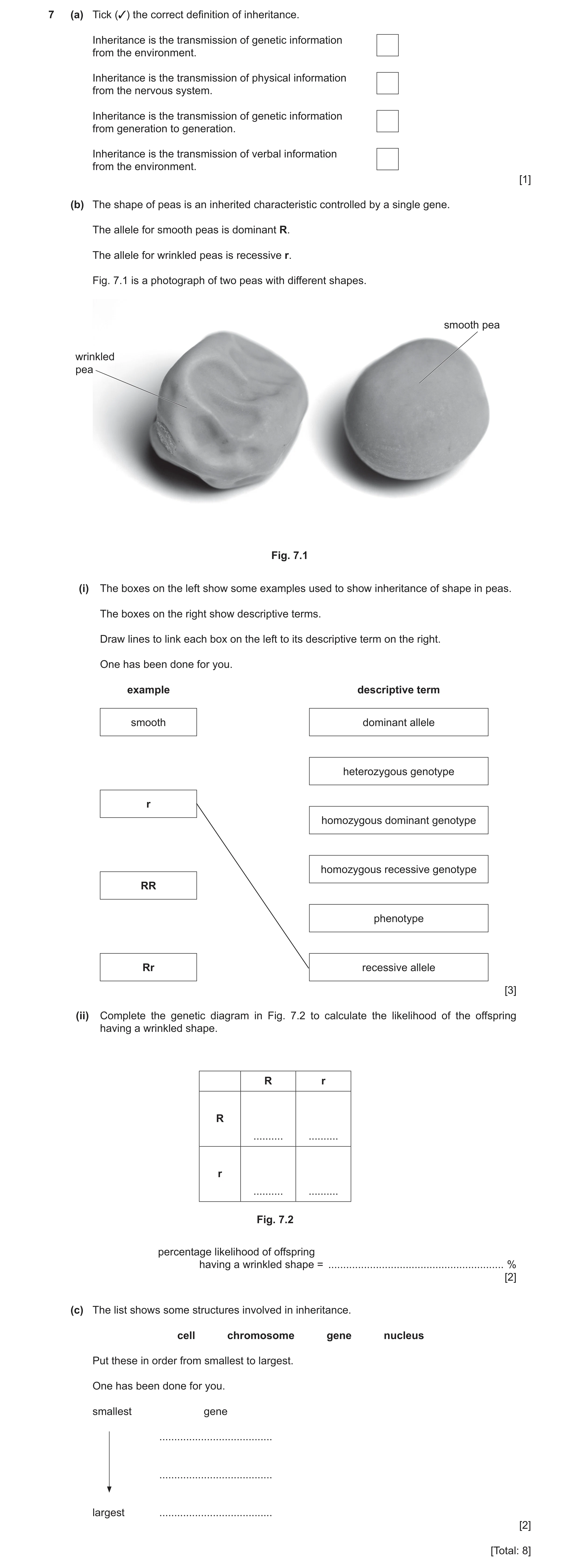
7 (a) Tick (3) the correct definition of inheritance. Inheritance is the transmission of genetic information from the environment. Inheritance is the transmission of physical information from the nervous system. Inheritance is the transmission of genetic information from generation to generation. Inheritance is the transmission of verbal information from the environment. [1] (b) The shape of peas is an inherited characteristic controlled by a single gene. The allele for smooth peas is dominant R. The allele for wrinkled peas is recessive r. Fig. 7.1 is a photograph of two peas with different shapes. smooth pea wrinkled pea Fig. 7.1 (i) The boxes on the left show some examples used to show inheritance of shape in peas. The boxes on the right show descriptive terms. Draw lines to link each box on the left to its descriptive term on the right. One has been done for you. example descriptive term smooth dominant allele heterozygous genotype r homozygous dominant genotype homozygous recessive genotype RR phenotype Rr recessive allele [3] (ii) Complete the genetic diagram in Fig. 7.2 to calculate the likelihood of the offspring having a wrinkled shape. R r R … … r … … Fig. 7.2 percentage likelihood of offspring having a wrinkled shape = … % [2] (c) The list shows some structures involved in inheritance. cell chromosome gene nucleus Put these in order from smallest to largest. One has been done for you. smallest gene … … largest … [2] [Total: 8]
8 marks
Mark scheme: 7(a) inheritance is the transmission of genetic information from generation to generation ✓ ; 1 7(b)(i) dominant allele 3 smooth heterozygous genotype homozygous dominant r genotype homozygous recessive RR genotype Rr phenotype recessive allele ;;; 7(b)(ii) 2 R r R RR Rr r Rr rr ; (percentage likelihood of offspring having a wrinkled shape =) 25 (%) ; 7(c) (gene), chromosome, nucleus, cell ;; 2 1 mark for any one in the correct order 2 marks for the rest in the correct order
This question in 0654/31 Oct/Nov 2024
Q14 · A diagram of the human breathing system 0654/32 Oct/Nov 2025
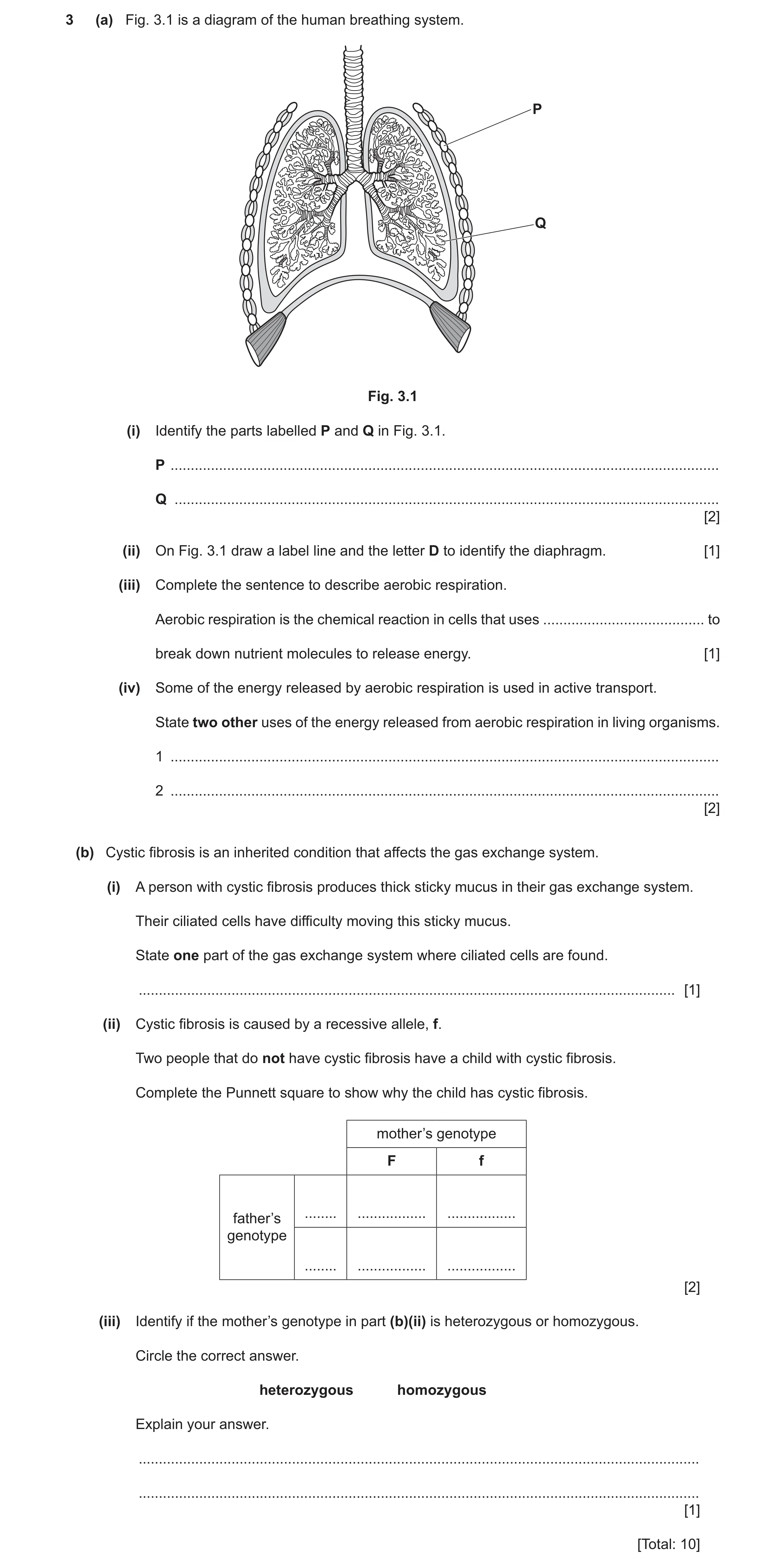
3 (a) Fig. 3.1 is a diagram of the human breathing system. P Q Fig. 3.1 (i) Identify the parts labelled P and Q in Fig. 3.1. P … Q … [2] (ii) On Fig. 3.1 draw a label line and the letter D to identify the diaphragm. [1] (iii) Complete the sentence to describe aerobic respiration. Aerobic respiration is the chemical reaction in cells that uses … to break down nutrient molecules to release energy. [1] (iv) Some of the energy released by aerobic respiration is used in active transport. State two other uses of the energy released from aerobic respiration in living organisms. 1 … 2 … [2] (b) Cystic fibrosis is an inherited condition that affects the gas exchange system. (i) A person with cystic fibrosis produces thick sticky mucus in their gas exchange system. Their ciliated cells have difficulty moving this sticky mucus. State one part of the gas exchange system where ciliated cells are found. … [1] (ii) Cystic fibrosis is caused by a recessive allele, f. Two people that do not have cystic fibrosis have a child with cystic fibrosis. Complete the Punnett square to show why the child has cystic fibrosis. mother’s genotype F f … … … father’s genotype … … … [2] (iii) Identify if the mother’s genotype in part (b)(ii) is heterozygous or homozygous. Circle the correct answer. heterozygous homozygous Explain your answer. … … [1] [Total: 10]
10 marks
Mark scheme: 3(a)(i) P – rib ; 2 Q – alveolus / alveoli ; 3(a)(ii) diaphragm labelled D ; 1 3(a)(iii) oxygen ; 1 3(a)(iv) any two from: 2 • muscle contraction ; • protein synthesis ; • cell division ; • growth ; • the passage of nerve impulses ; • the maintenance of a constant body temperature ; 3(b)(i) trachea / bronchi ; 1 3(b)(ii) 2 father’s genotype correct ; offsprings’ genotype correct ; 3(b)(iii) heterozygous and has two different alleles ; 1
This question in 0654/32 Oct/Nov 2025
Q15 · A diagram of the human breathing system 0654/33 Oct/Nov 2025
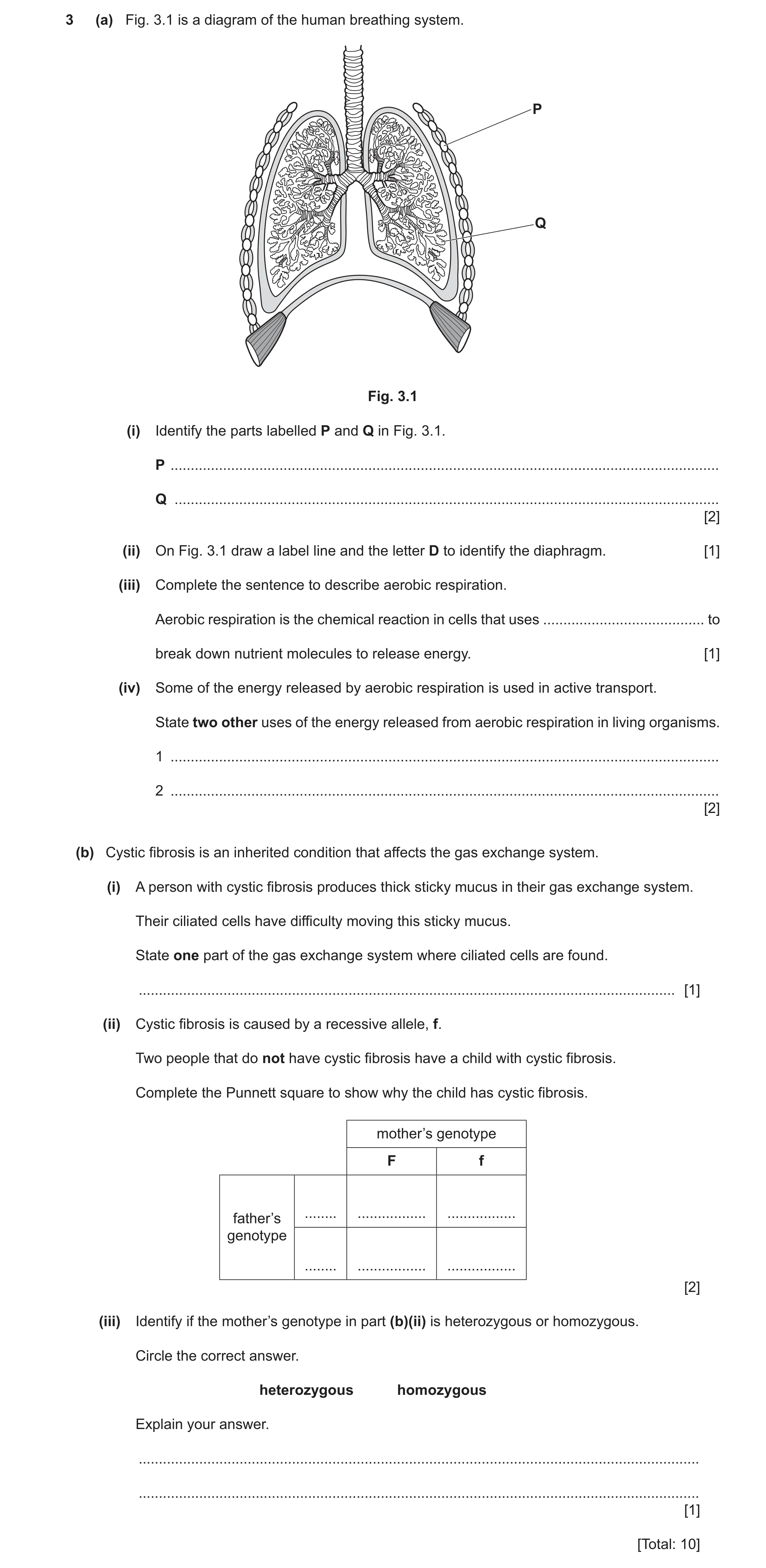
3 (a) Fig. 3.1 is a diagram of the human breathing system. P Q Fig. 3.1 (i) Identify the parts labelled P and Q in Fig. 3.1. P … Q … [2] (ii) On Fig. 3.1 draw a label line and the letter D to identify the diaphragm. [1] (iii) Complete the sentence to describe aerobic respiration. Aerobic respiration is the chemical reaction in cells that uses … to break down nutrient molecules to release energy. [1] (iv) Some of the energy released by aerobic respiration is used in active transport. State two other uses of the energy released from aerobic respiration in living organisms. 1 … 2 … [2] (b) Cystic fibrosis is an inherited condition that affects the gas exchange system. (i) A person with cystic fibrosis produces thick sticky mucus in their gas exchange system. Their ciliated cells have difficulty moving this sticky mucus. State one part of the gas exchange system where ciliated cells are found. … [1] (ii) Cystic fibrosis is caused by a recessive allele, f. Two people that do not have cystic fibrosis have a child with cystic fibrosis. Complete the Punnett square to show why the child has cystic fibrosis. mother’s genotype F f … … … father’s genotype … … … [2] (iii) Identify if the mother’s genotype in part (b)(ii) is heterozygous or homozygous. Circle the correct answer. heterozygous homozygous Explain your answer. … … [1] [Total: 10]
10 marks
Mark scheme: 3(a)(i) P – rib ; 2 Q – alveolus / alveoli ; 3(a)(ii) diaphragm labelled D ; 1 3(a)(iii) oxygen ; 1 3(a)(iv) any two from: 2 • muscle contraction ; • protein synthesis ; • cell division ; • growth ; • the passage of nerve impulses ; • the maintenance of a constant body temperature ; 3(b)(i) trachea / bronchi ; 1 3(b)(ii) 2 father’s genotype correct ; offsprings’ genotype correct ; 3(b)(iii) heterozygous and has two different alleles ; 1
This question in 0654/33 Oct/Nov 2025
 1 / 22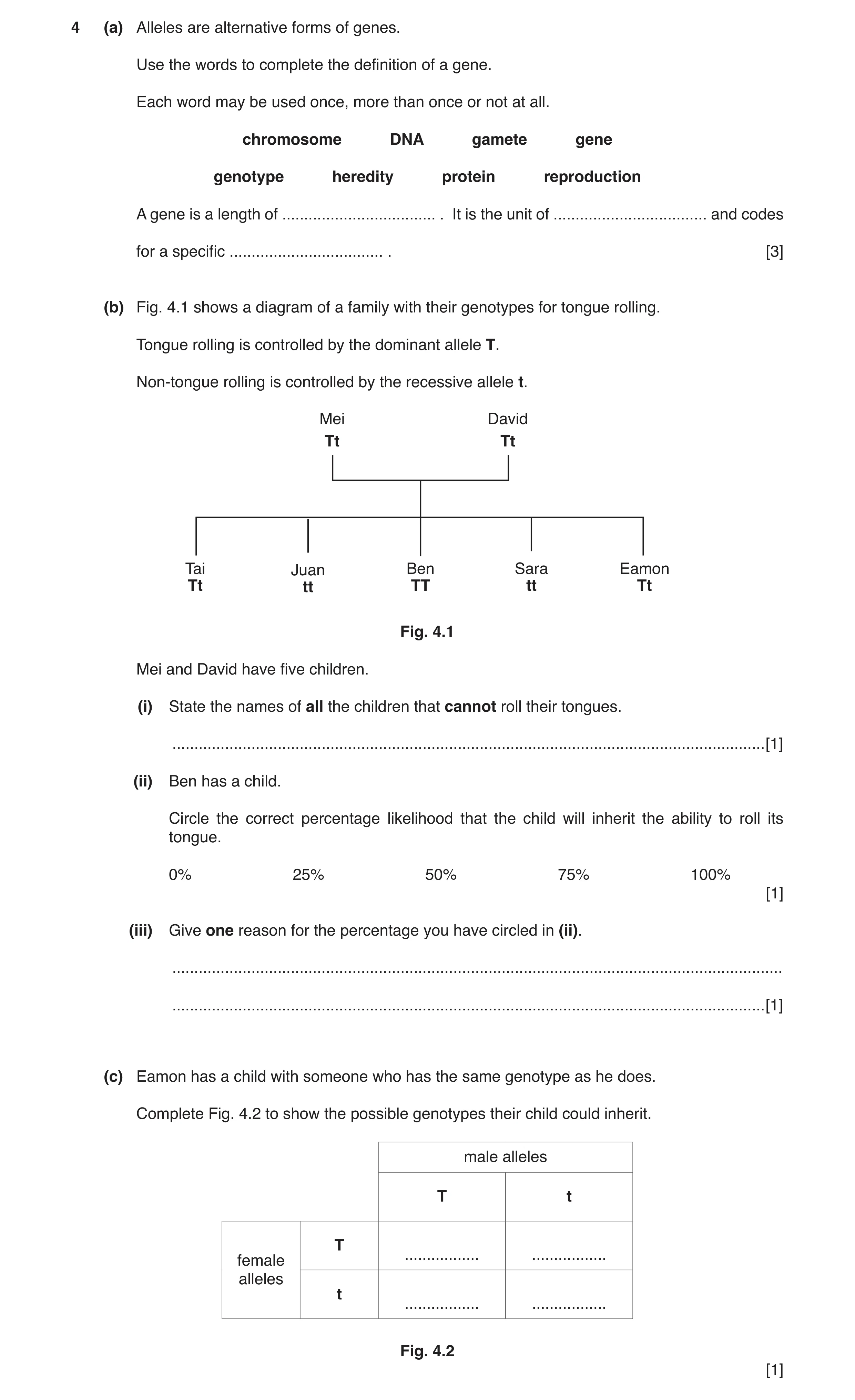
 11 / 22
 12 / 22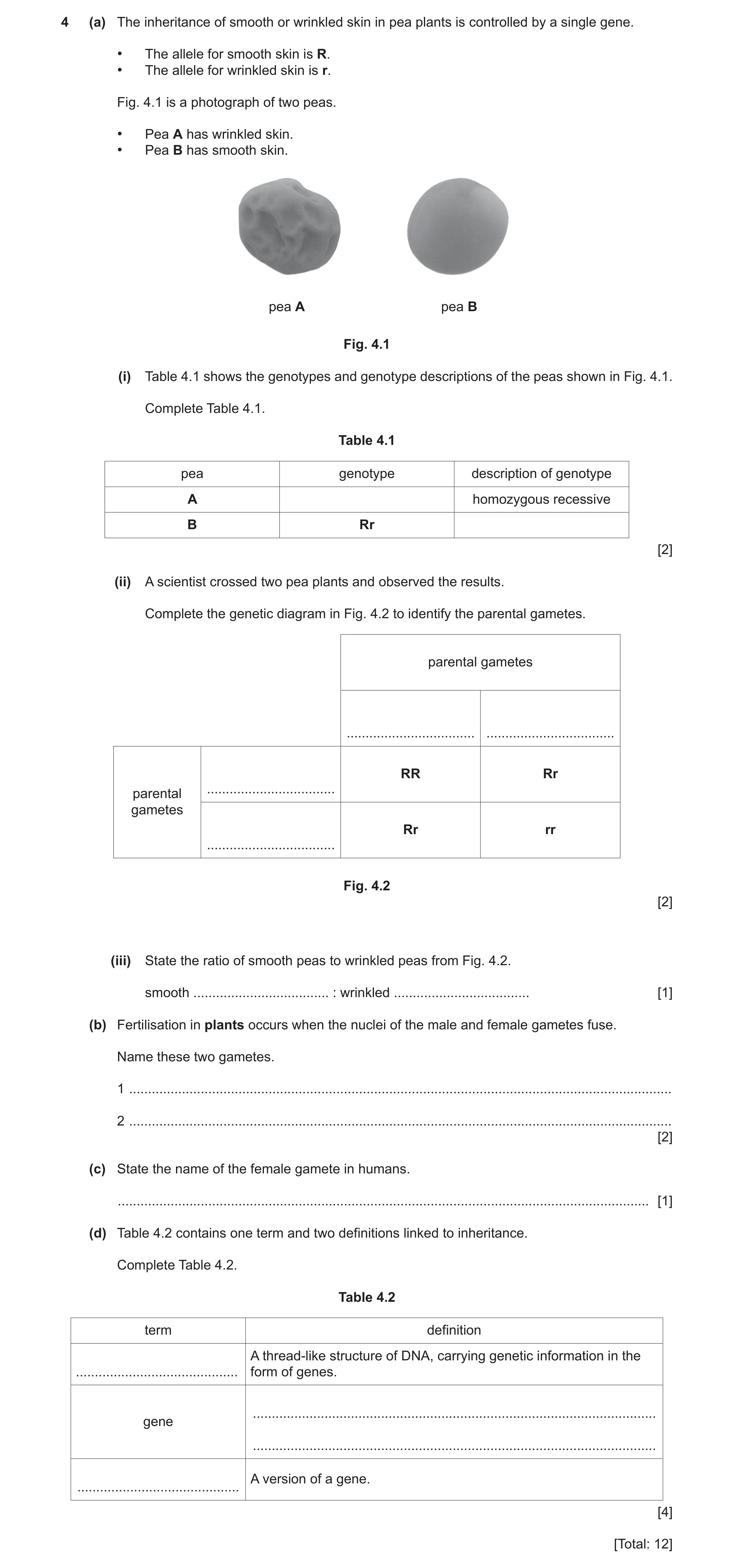
 7
7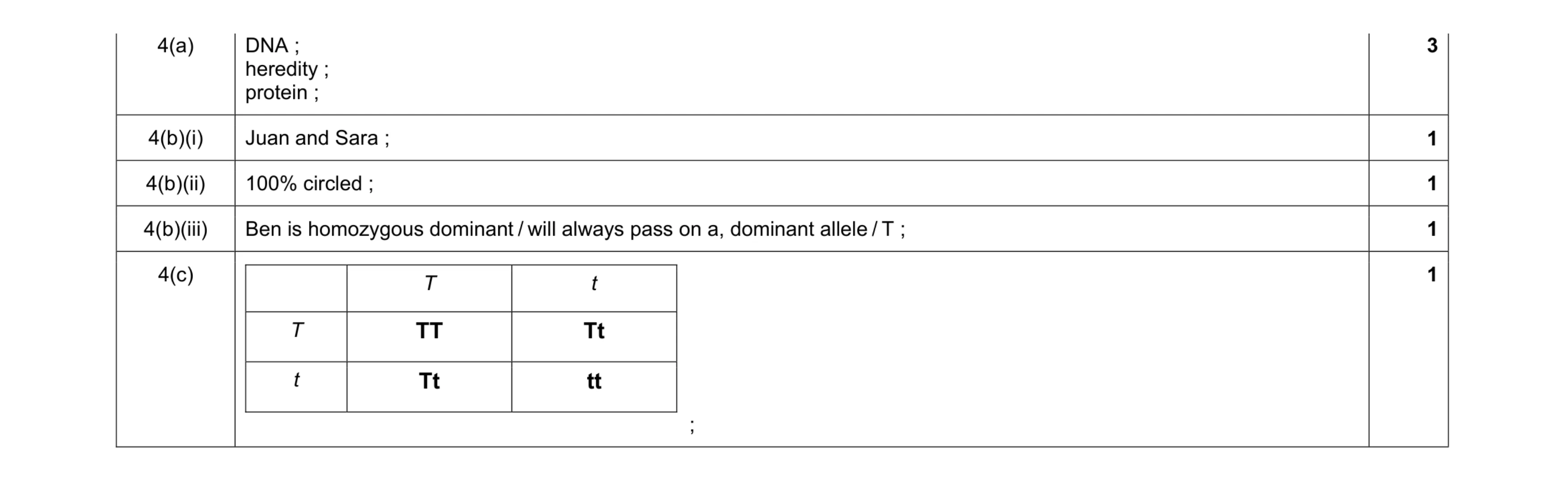 7
7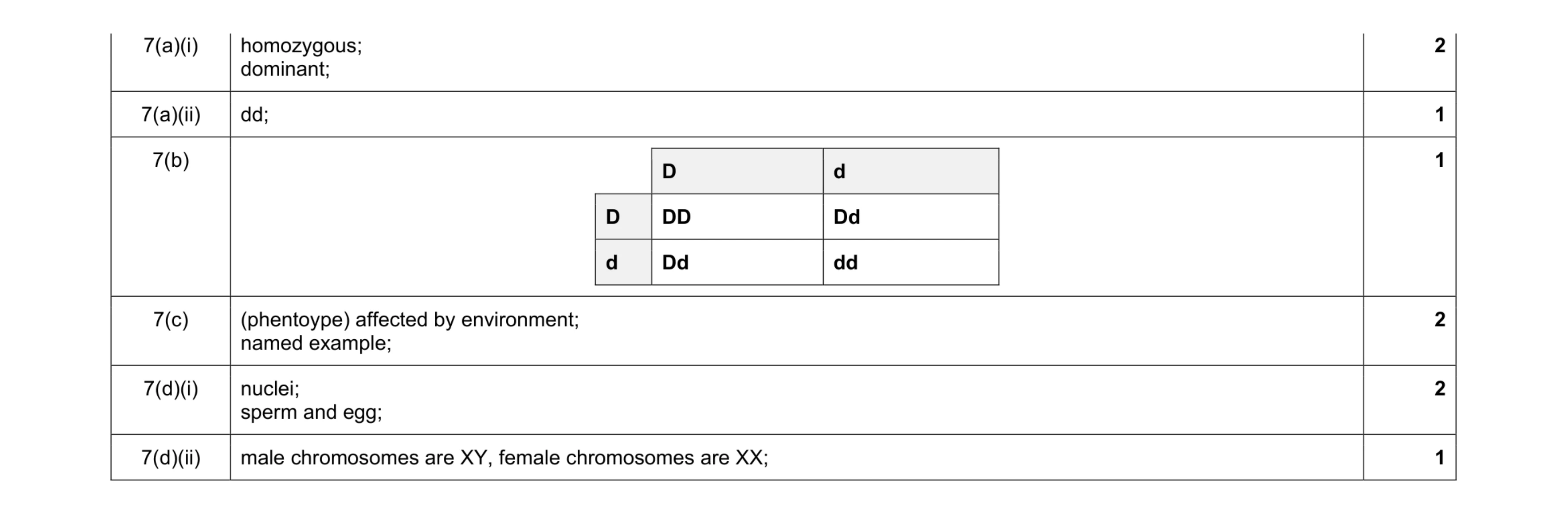 9
9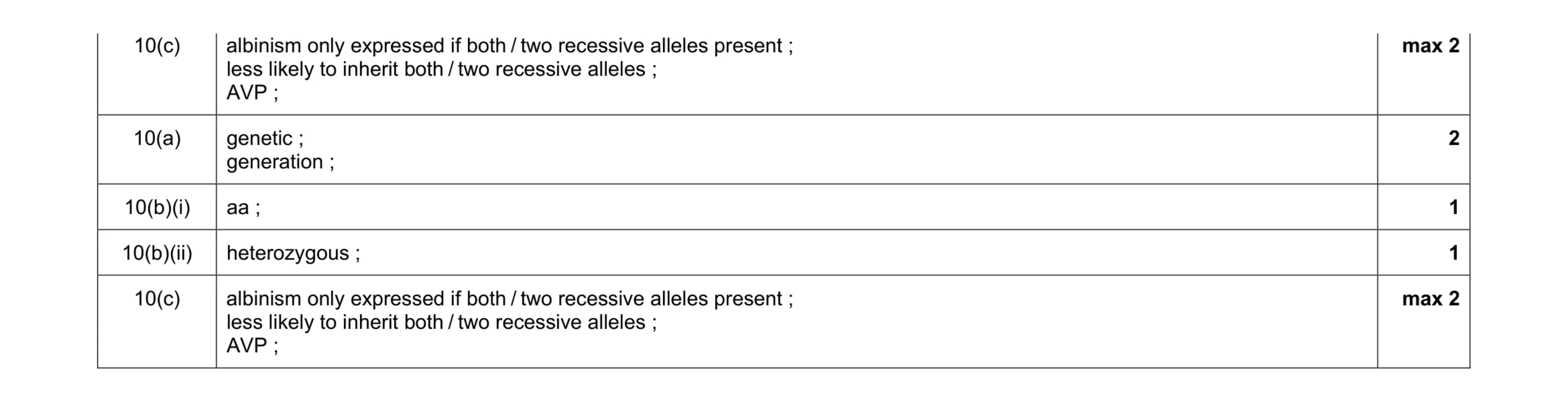 6
6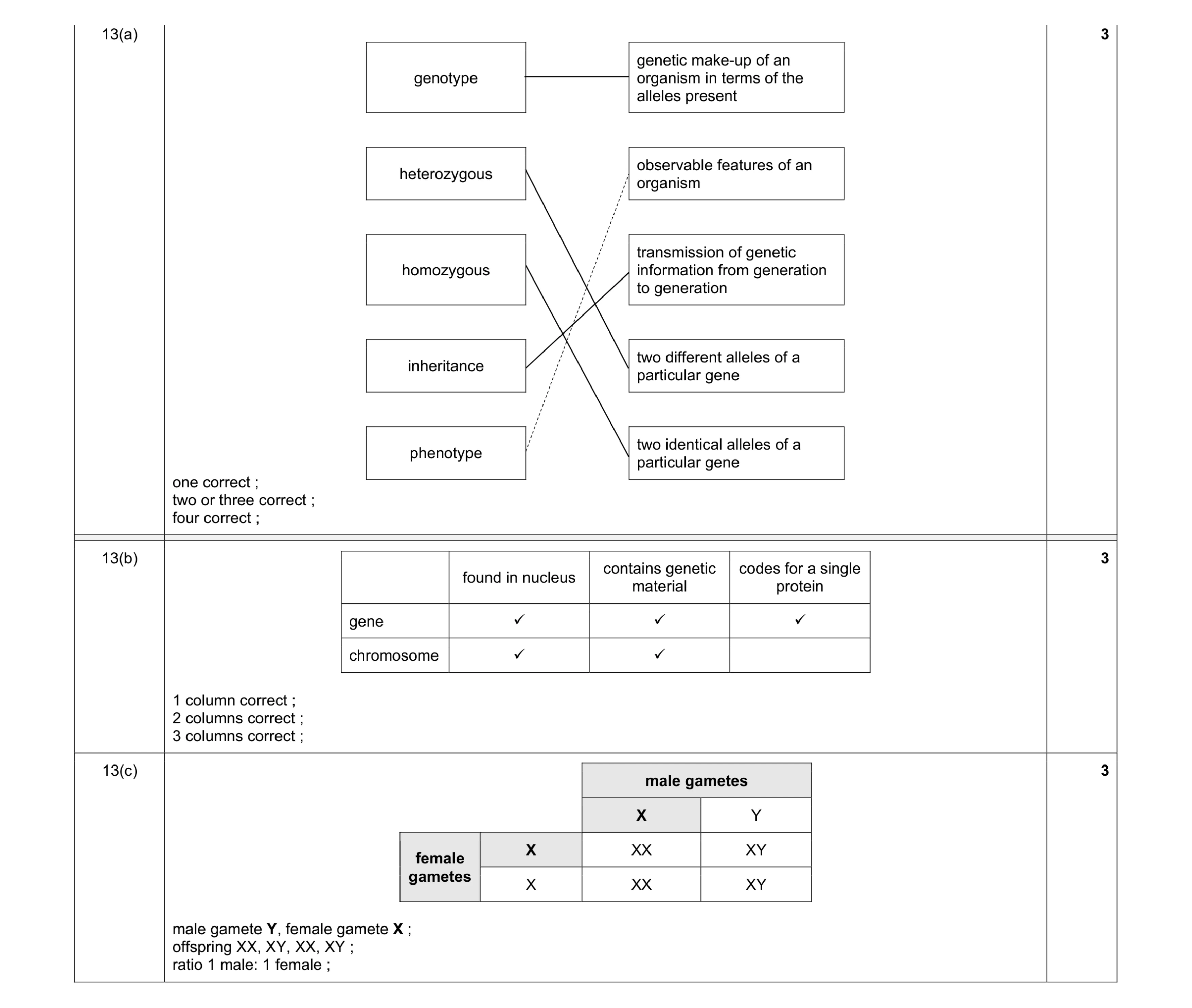 9
9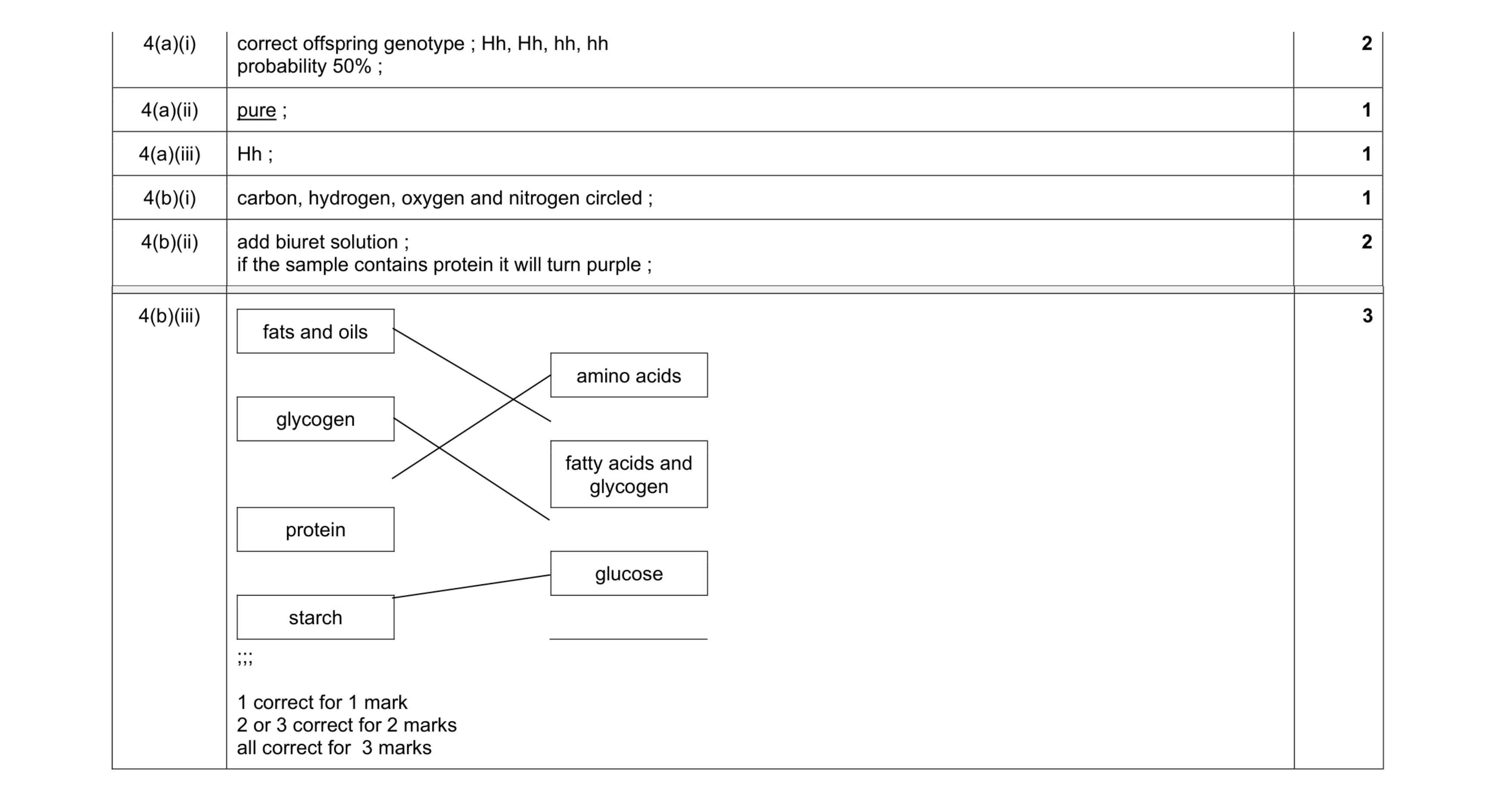 10
10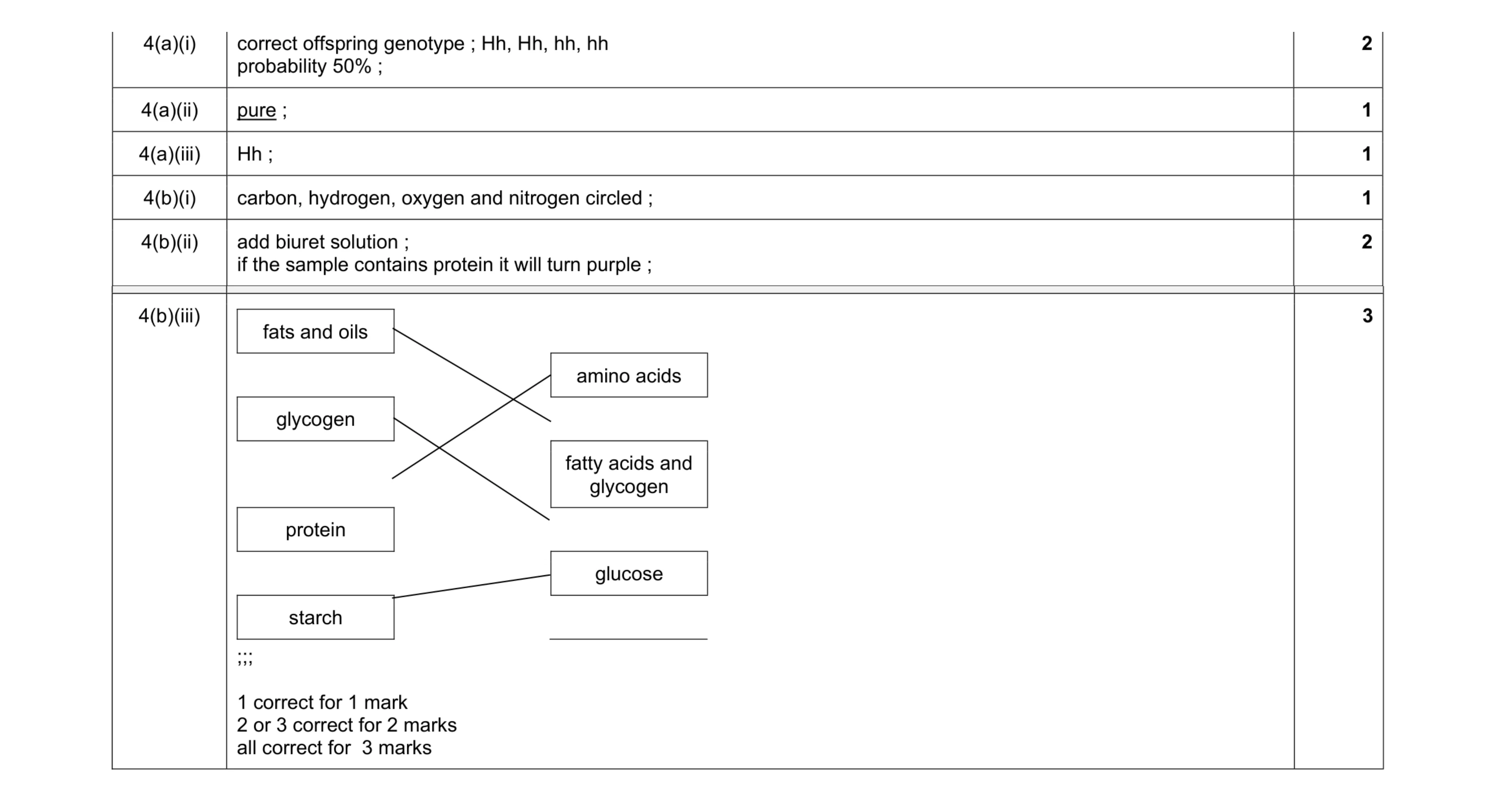 10
10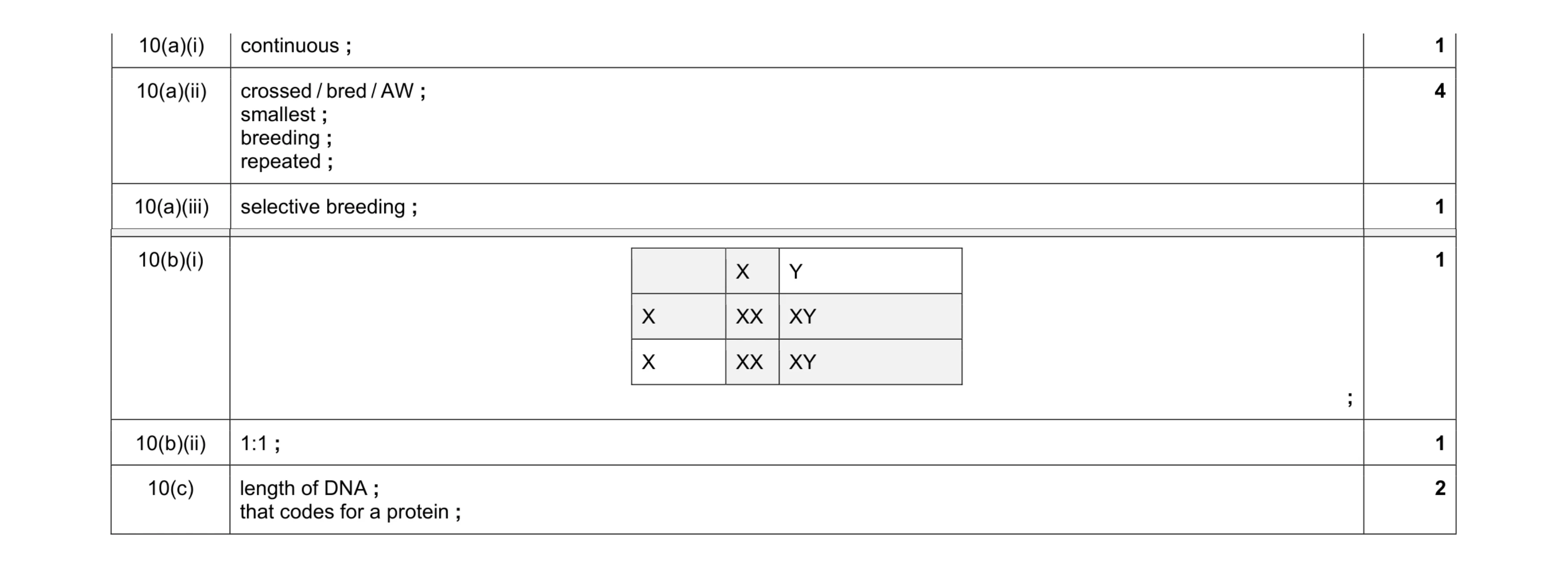 10
10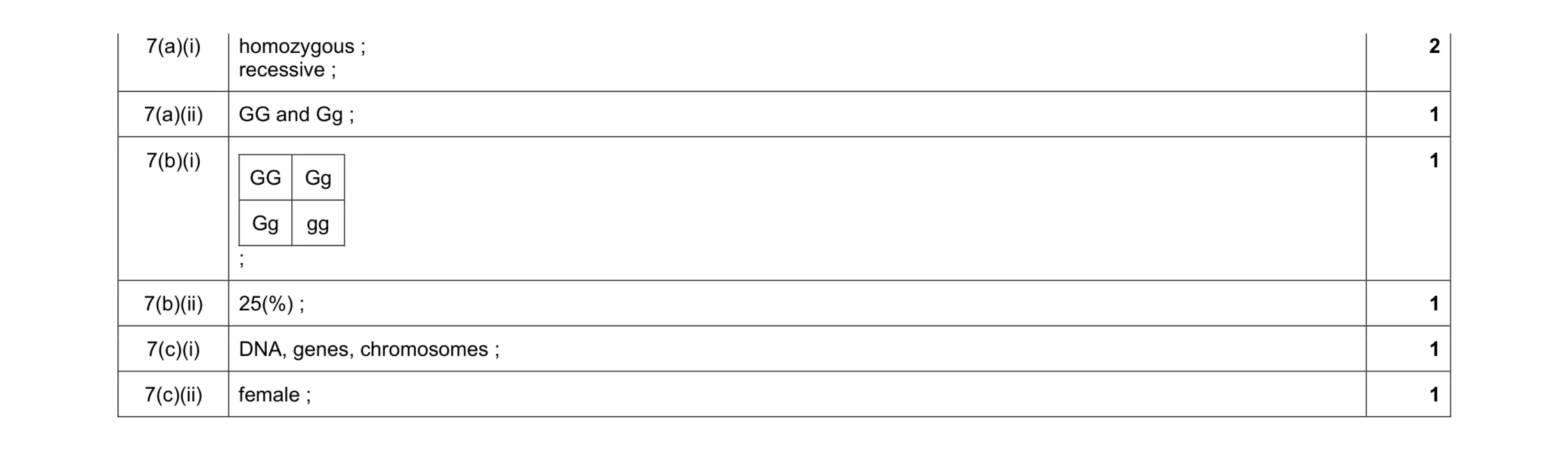 7
7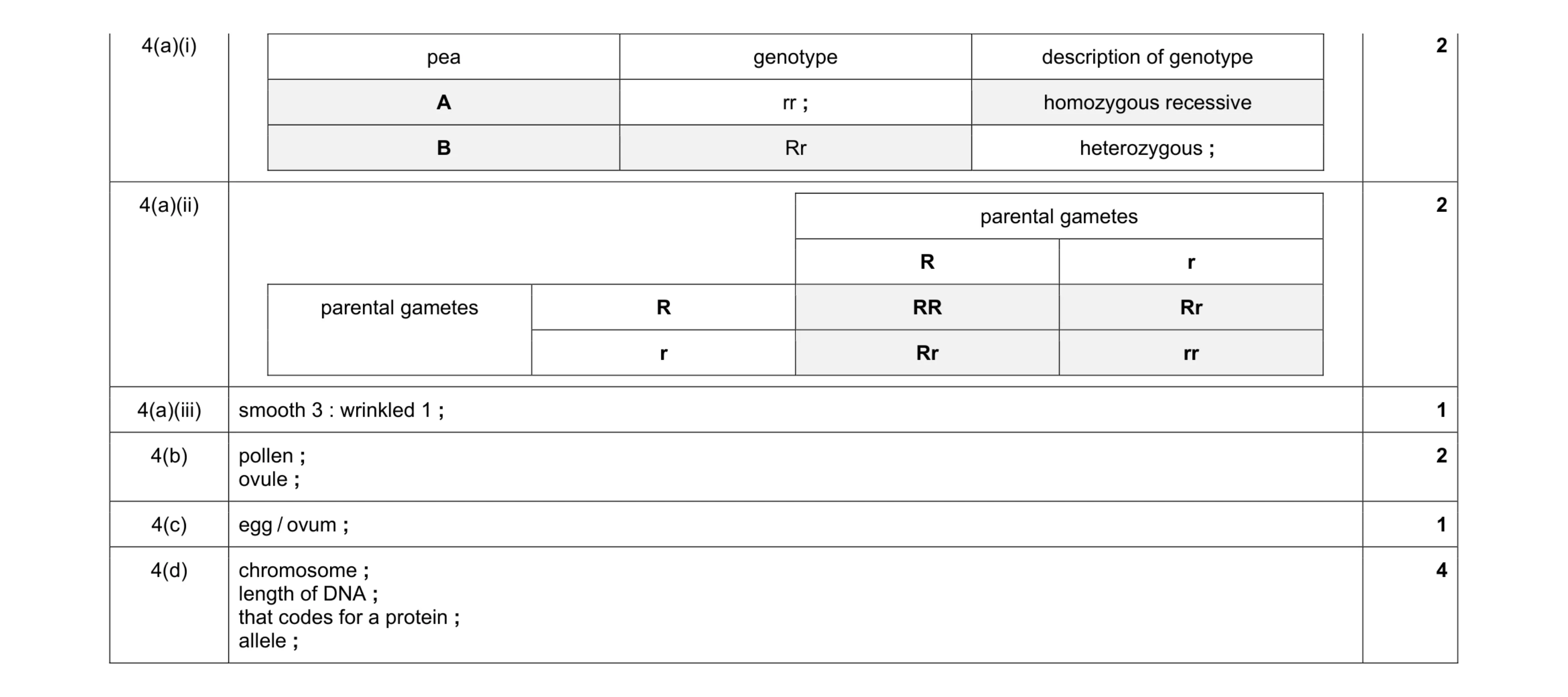 12
12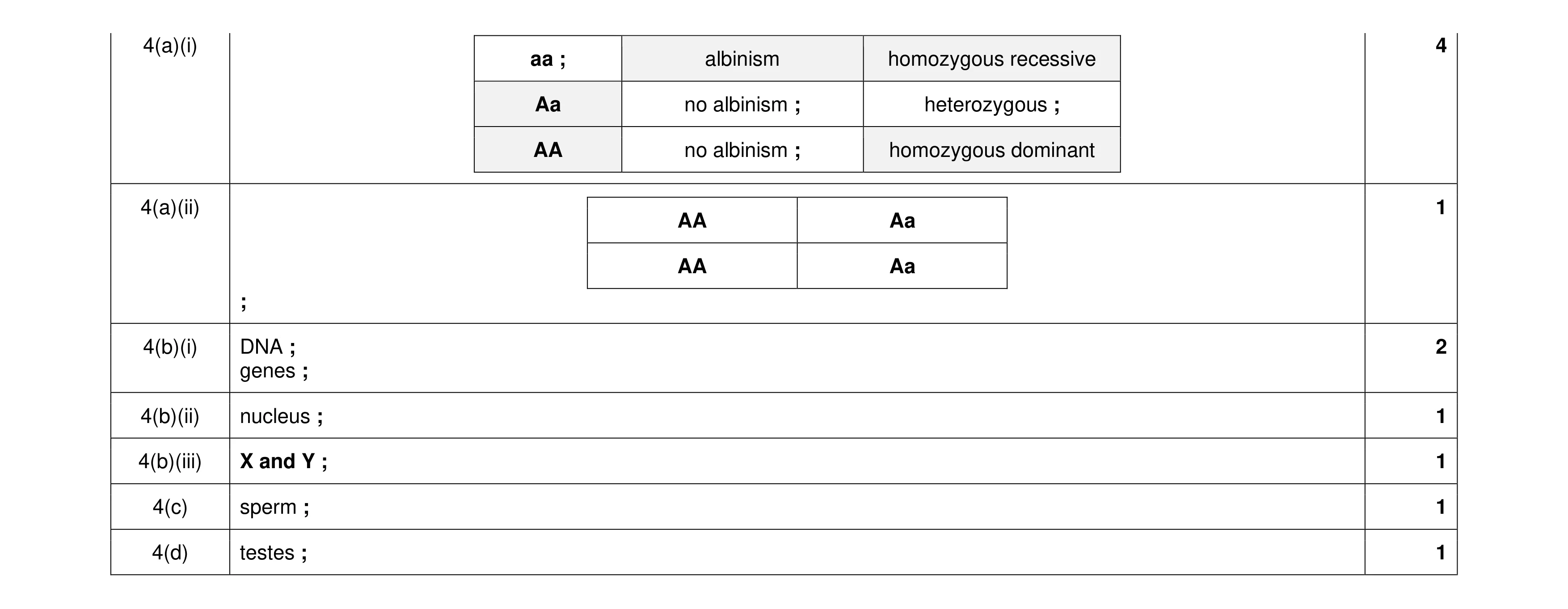 11
11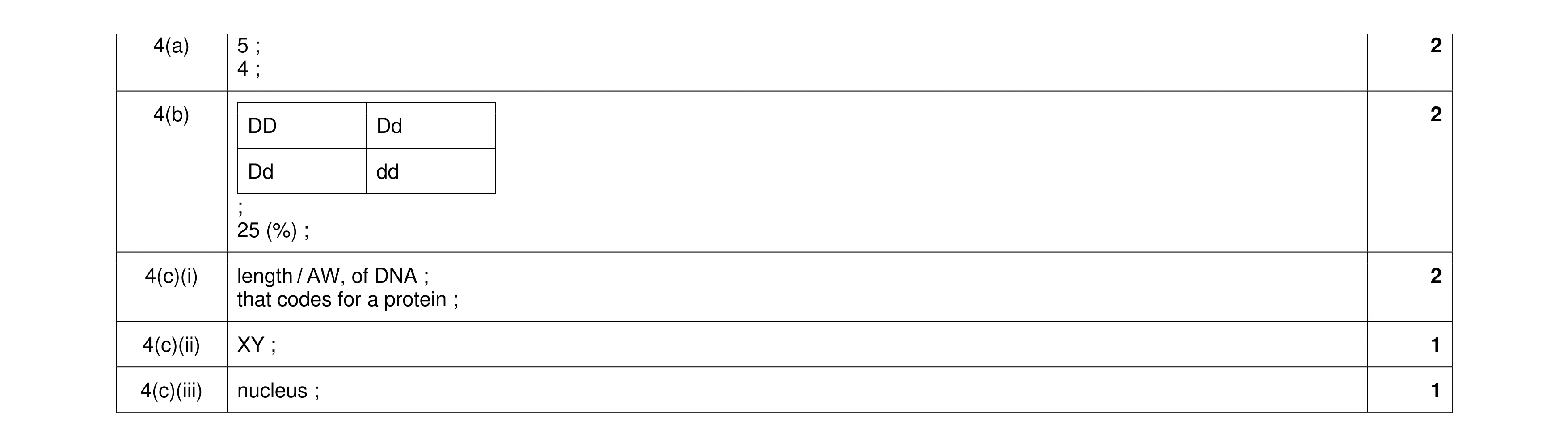 8
8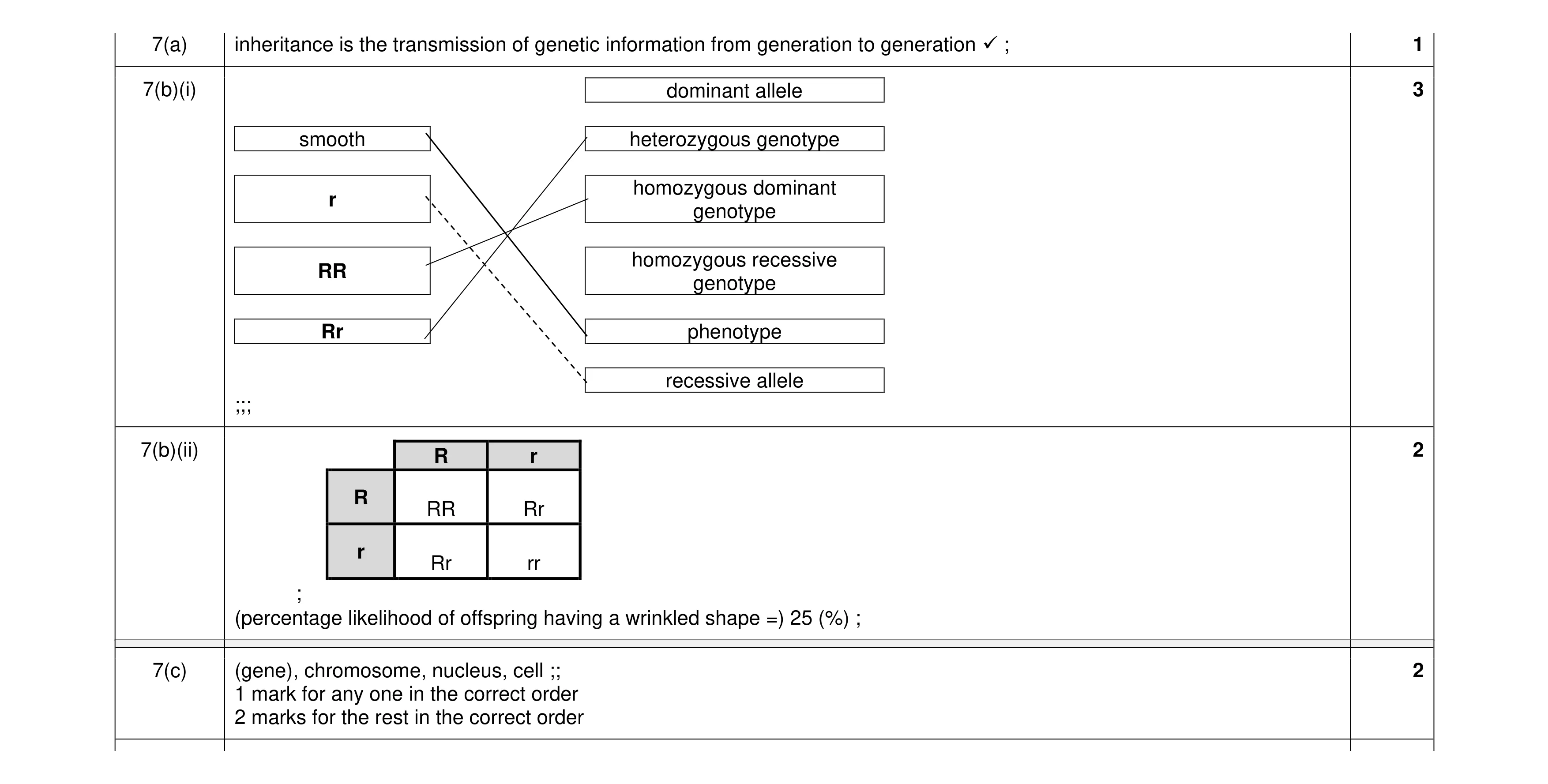 8
8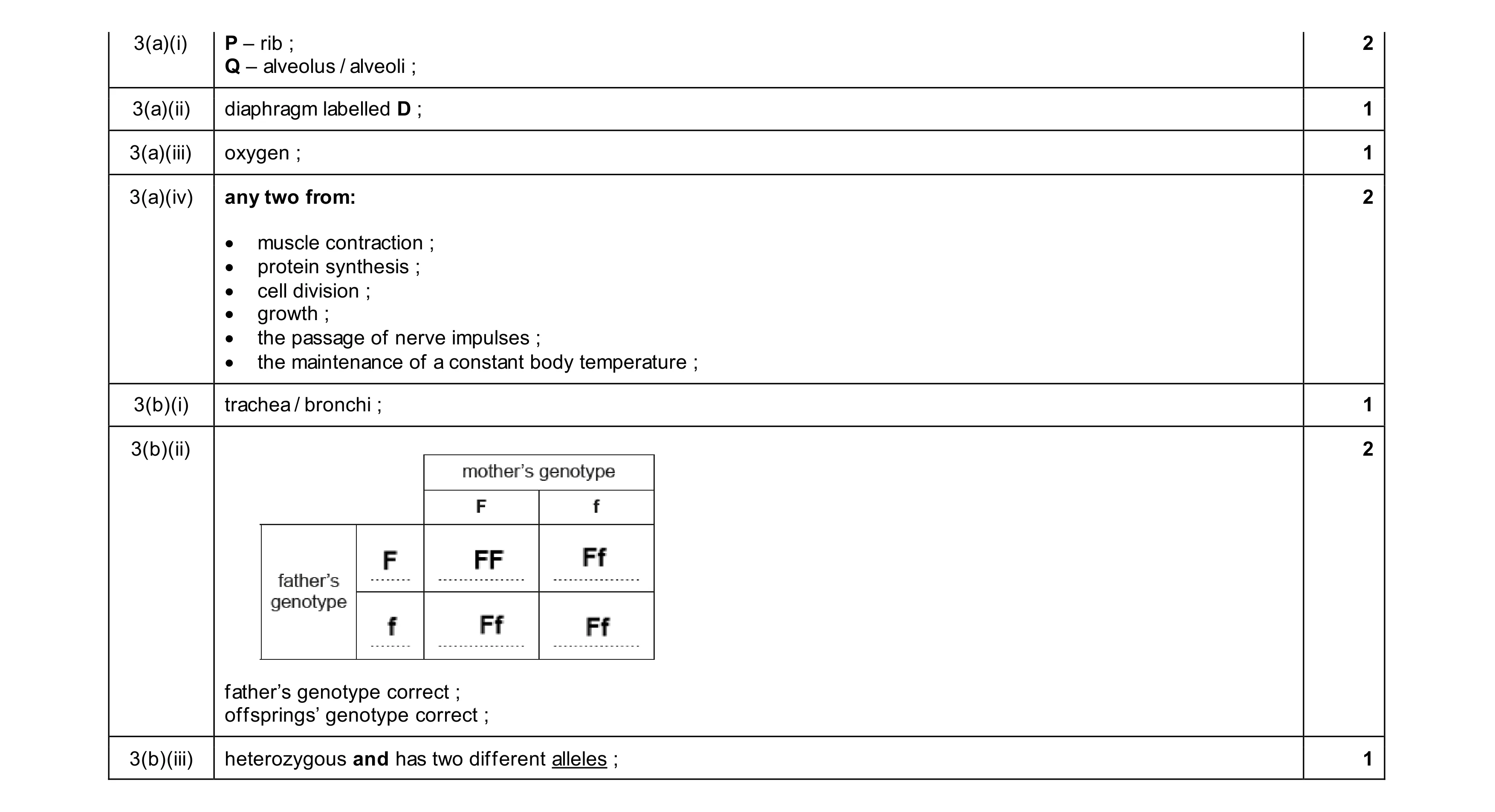 10
10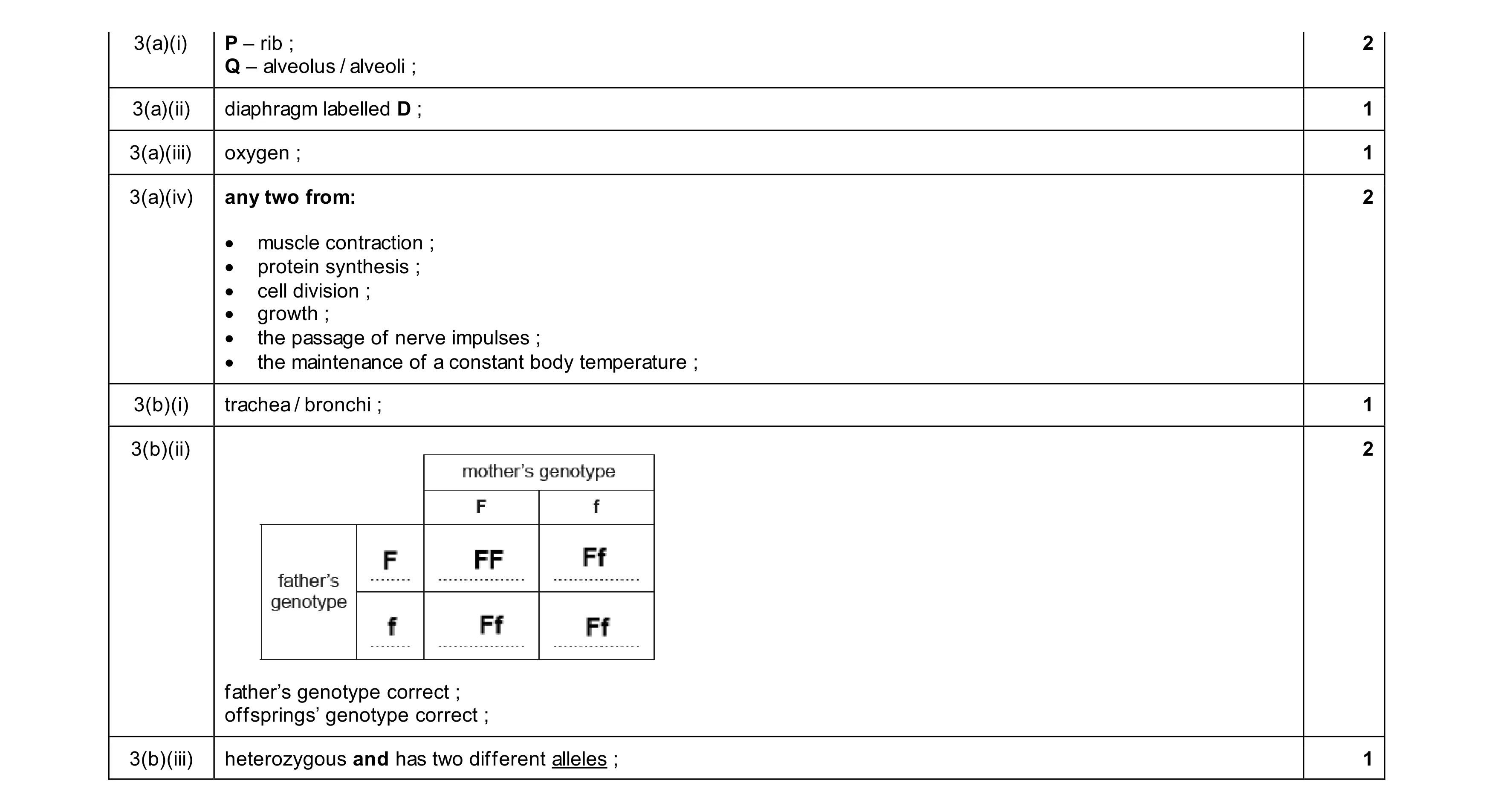 10
10