Questions as text
Q1 · What is the name of the process by which gas particles move to occupy all the available… 0652/21 Oct/Nov 2017
1 What is the name of the process by which gas particles move to occupy all the available space? A boiling B condensation C diffusion D evaporation
1 marks
Answer: C
This question in 0652/21 Oct/Nov 2017
Q2 · What is the name of the process by which gas particles move to occupy all the available… 0652/22 Oct/Nov 2017
1 What is the name of the process by which gas particles move to occupy all the available space? A boiling B condensation C diffusion D evaporation
1 marks
Answer: C
This question in 0652/22 Oct/Nov 2017
Q3 · When smoke particles collide with molecules in the air, the smoke particles move randomly 0652/21 Oct/Nov 2018
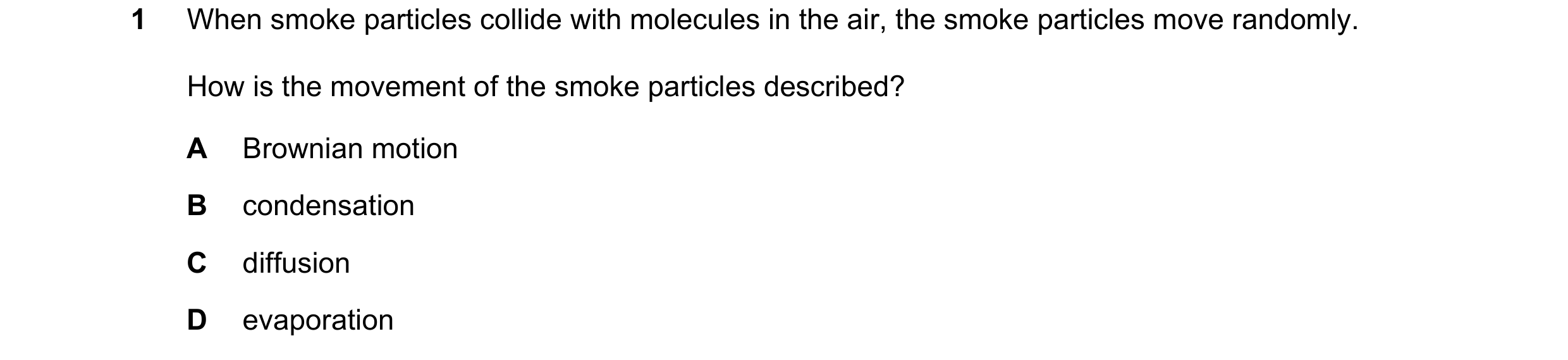
1 When smoke particles collide with molecules in the air, the smoke particles move randomly. How is the movement of the smoke particles described? A Brownian motion B condensation C diffusion D evaporation
1 marks
Answer: A
This question in 0652/21 Oct/Nov 2018
Q4 · When smoke particles collide with molecules in the air, the smoke particles move randomly 0652/22 Oct/Nov 2018
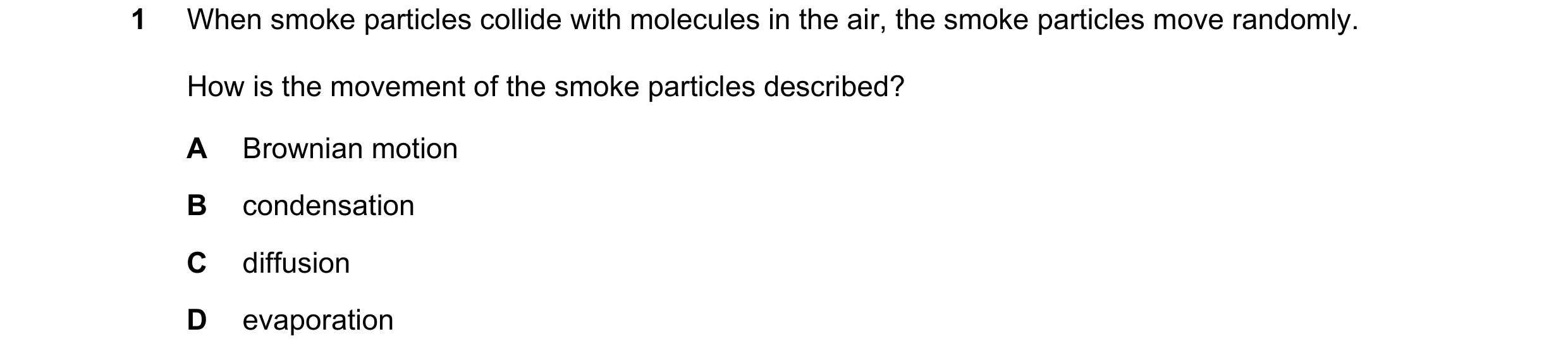
1 When smoke particles collide with molecules in the air, the smoke particles move randomly. How is the movement of the smoke particles described? A Brownian motion B condensation C diffusion D evaporation
1 marks
Answer: A
This question in 0652/22 Oct/Nov 2018
Q5 · Carbon dioxide is a solid at temperatures below –78 °C 0652/21 Oct/Nov 2019
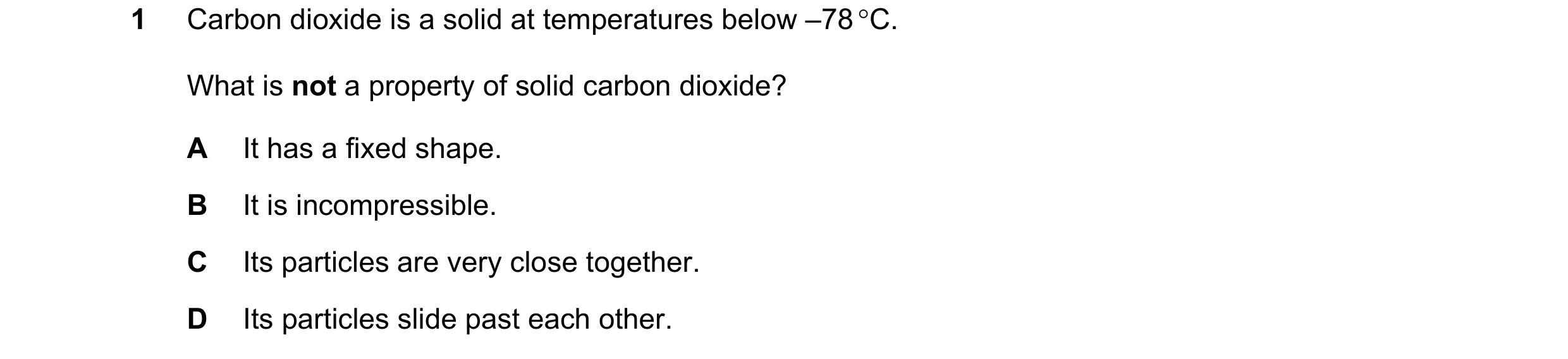
1 Carbon dioxide is a solid at temperatures below –78 °C. What is not a property of solid carbon dioxide? A It has a fixed shape. B It is incompressible. C Its particles are very close together. D Its particles slide past each other.
1 marks
Answer: D
This question in 0652/21 Oct/Nov 2019
Q6 · Carbon dioxide is a solid at temperatures below –78 °C 0652/22 Oct/Nov 2019
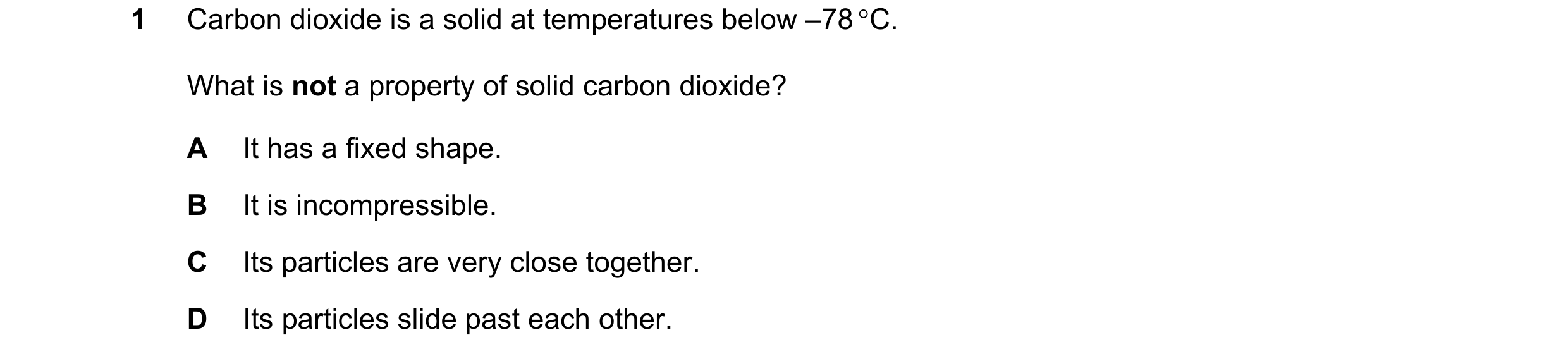
1 Carbon dioxide is a solid at temperatures below –78 °C. What is not a property of solid carbon dioxide? A It has a fixed shape. B It is incompressible. C Its particles are very close together. D Its particles slide past each other.
1 marks
Answer: D
This question in 0652/22 Oct/Nov 2019
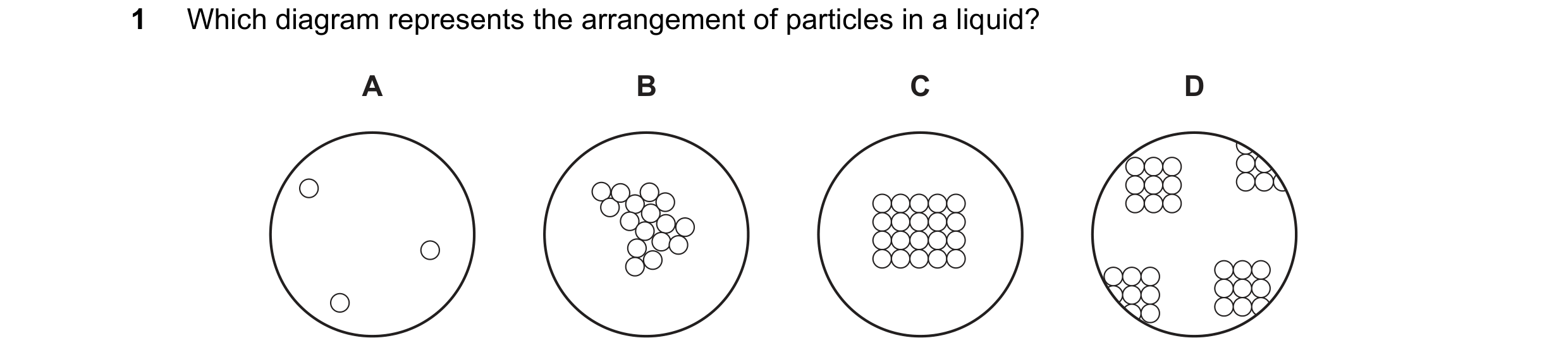
Q7 · Which diagram represents the arrangement of particles in a liquid? 0652/21 Oct/Nov 2020
1 Which diagram represents the arrangement of particles in a liquid? A B C D
1 marks
Answer: B
This question in 0652/21 Oct/Nov 2020
Q8 · Which diagram represents the arrangement of particles in a liquid? 0652/22 Oct/Nov 2020
1 Which diagram represents the arrangement of particles in a liquid? A B C D
1 marks
Answer: B
This question in 0652/22 Oct/Nov 2020
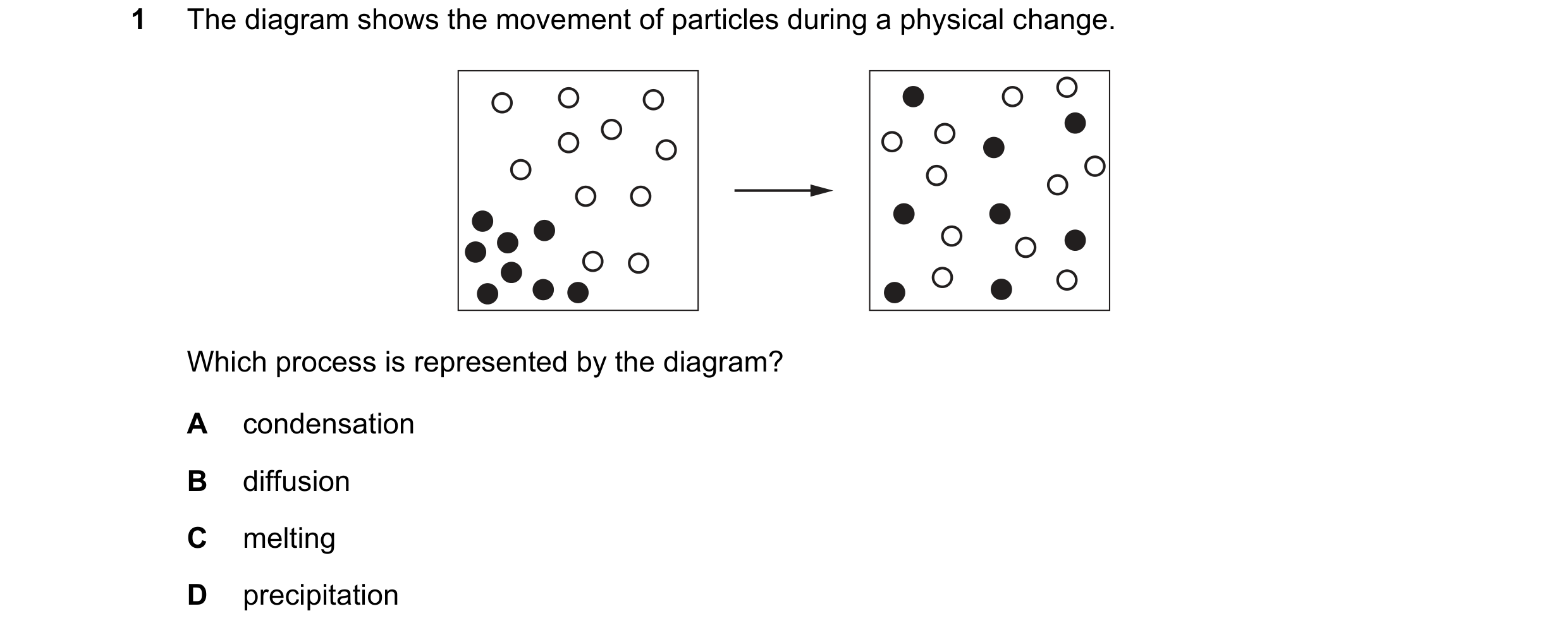
Q9 · The diagram shows the movement of particles during a physical change 0652/21 Oct/Nov 2021
1 The diagram shows the movement of particles during a physical change. Which process is represented by the diagram? A condensation B diffusion C melting D precipitation
1 marks
Answer: B
This question in 0652/21 Oct/Nov 2021
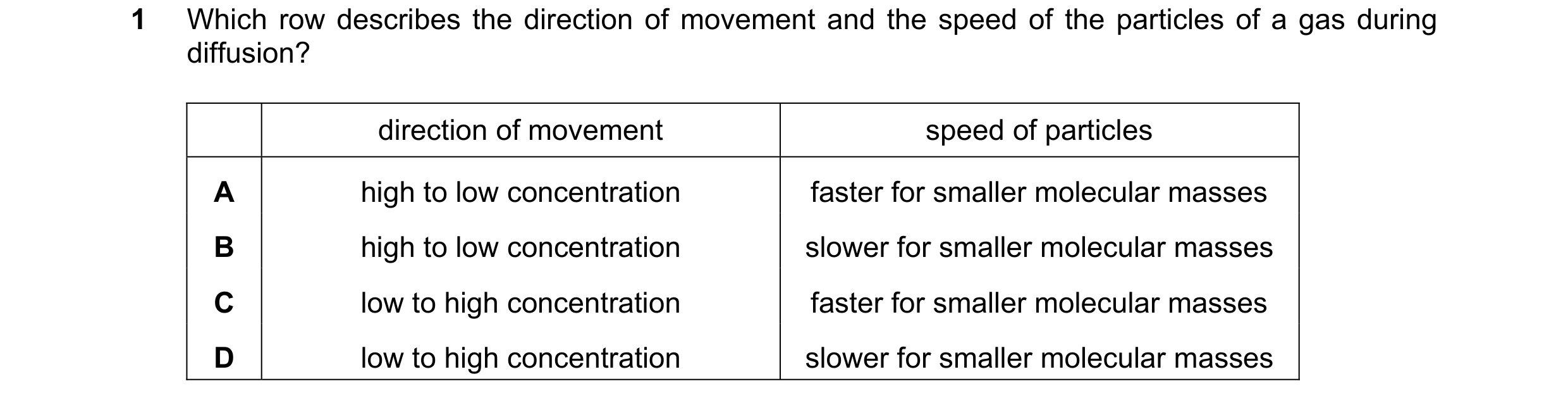
Q10 · Which row describes the direction of movement and the speed of the particles of a gas… 0652/21 Oct/Nov 2022
1 Which row describes the direction of movement and the speed of the particles of a gas during diffusion? direction of movement speed of particles A high to low concentration faster for smaller molecular masses B high to low concentration slower for smaller molecular masses C low to high concentration faster for smaller molecular masses D low to high concentration slower for smaller molecular masses
1 marks
Answer: A
This question in 0652/21 Oct/Nov 2022
Q11 · Which row describes the direction of movement and the speed of the particles of a gas… 0652/22 Oct/Nov 2022
1 Which row describes the direction of movement and the speed of the particles of a gas during diffusion? direction of movement speed of particles A high to low concentration faster for smaller molecular masses B high to low concentration slower for smaller molecular masses C low to high concentration faster for smaller molecular masses D low to high concentration slower for smaller molecular masses
1 marks
Answer: A
This question in 0652/22 Oct/Nov 2022
Q12 · The relative molecular mass of carbon dioxide is 44 0652/21 Oct/Nov 2023
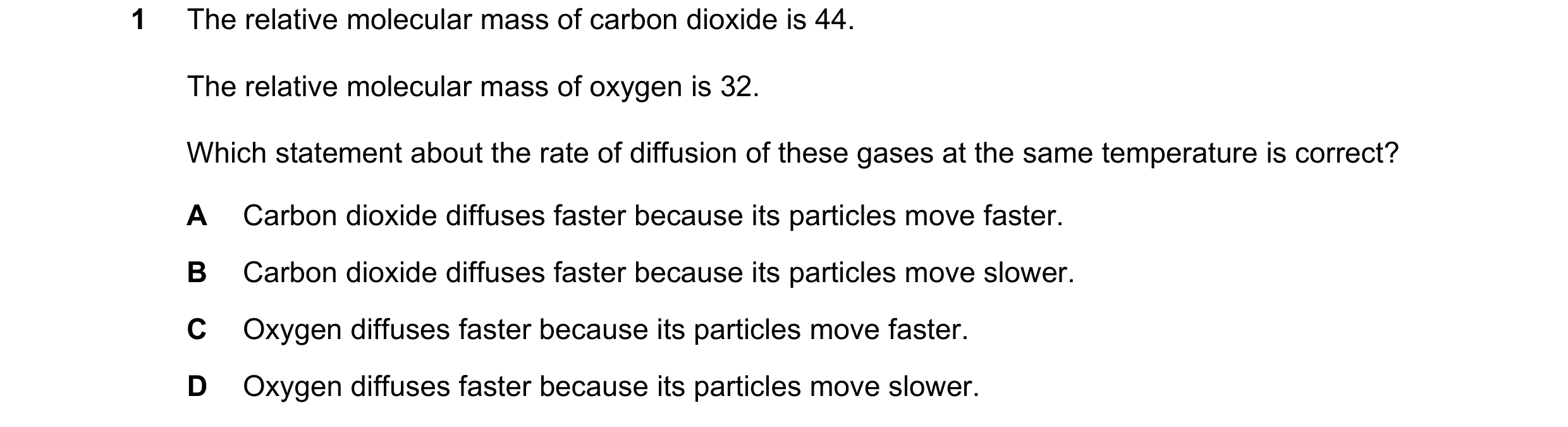
1 The relative molecular mass of carbon dioxide is 44. The relative molecular mass of oxygen is 32. Which statement about the rate of diffusion of these gases at the same temperature is correct? A Carbon dioxide diffuses faster because its particles move faster. B Carbon dioxide diffuses faster because its particles move slower. C Oxygen diffuses faster because its particles move faster. D Oxygen diffuses faster because its particles move slower.
1 marks
Answer: C
This question in 0652/21 Oct/Nov 2023
Q13 · The relative molecular mass of carbon dioxide is 44 0652/22 Oct/Nov 2023
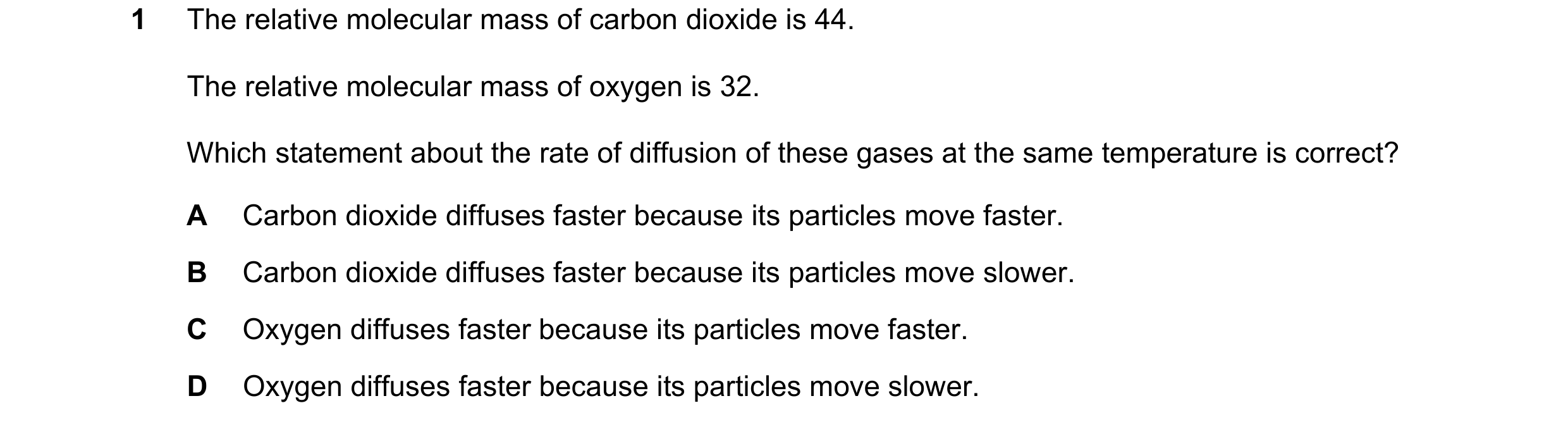
1 The relative molecular mass of carbon dioxide is 44. The relative molecular mass of oxygen is 32. Which statement about the rate of diffusion of these gases at the same temperature is correct? A Carbon dioxide diffuses faster because its particles move faster. B Carbon dioxide diffuses faster because its particles move slower. C Oxygen diffuses faster because its particles move faster. D Oxygen diffuses faster because its particles move slower.
1 marks
Answer: C
This question in 0652/22 Oct/Nov 2023
Q14 · Which statement describes and explains the relative rates of diffusion of carbon dioxide… 0652/21 Oct/Nov 2024
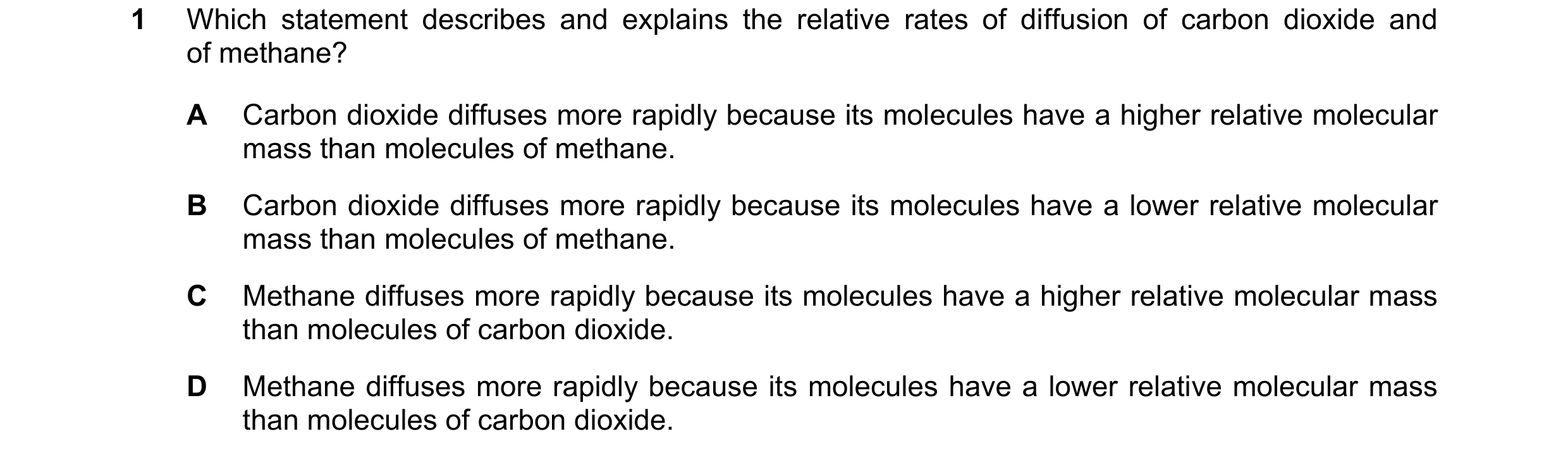
1 Which statement describes and explains the relative rates of diffusion of carbon dioxide and of methane? A Carbon dioxide diffuses more rapidly because its molecules have a higher relative molecular mass than molecules of methane. B Carbon dioxide diffuses more rapidly because its molecules have a lower relative molecular mass than molecules of methane. C Methane diffuses more rapidly because its molecules have a higher relative molecular mass than molecules of carbon dioxide. D Methane diffuses more rapidly because its molecules have a lower relative molecular mass than molecules of carbon dioxide.
1 marks
Answer: D
This question in 0652/21 Oct/Nov 2024


 1 / 3
1 / 3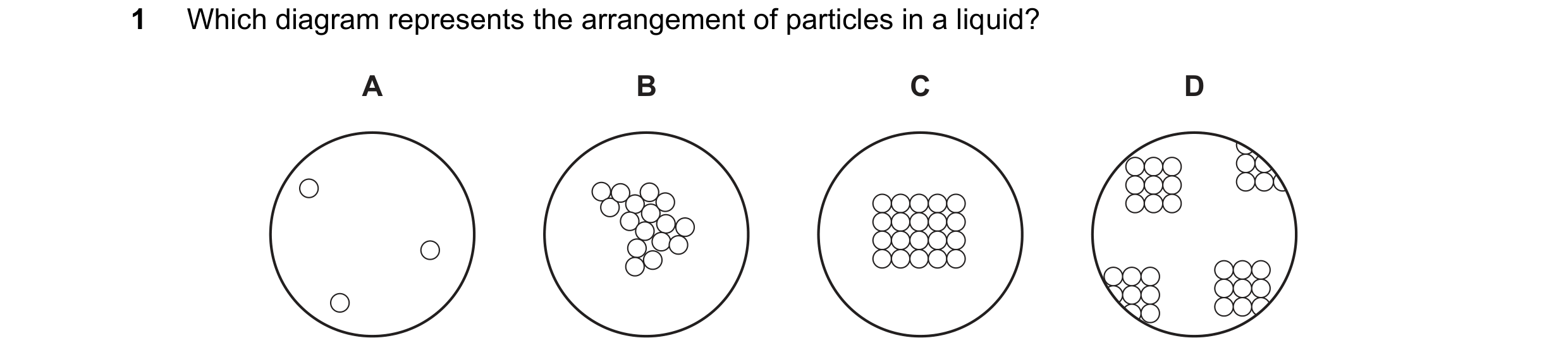
 2 / 3
2 / 3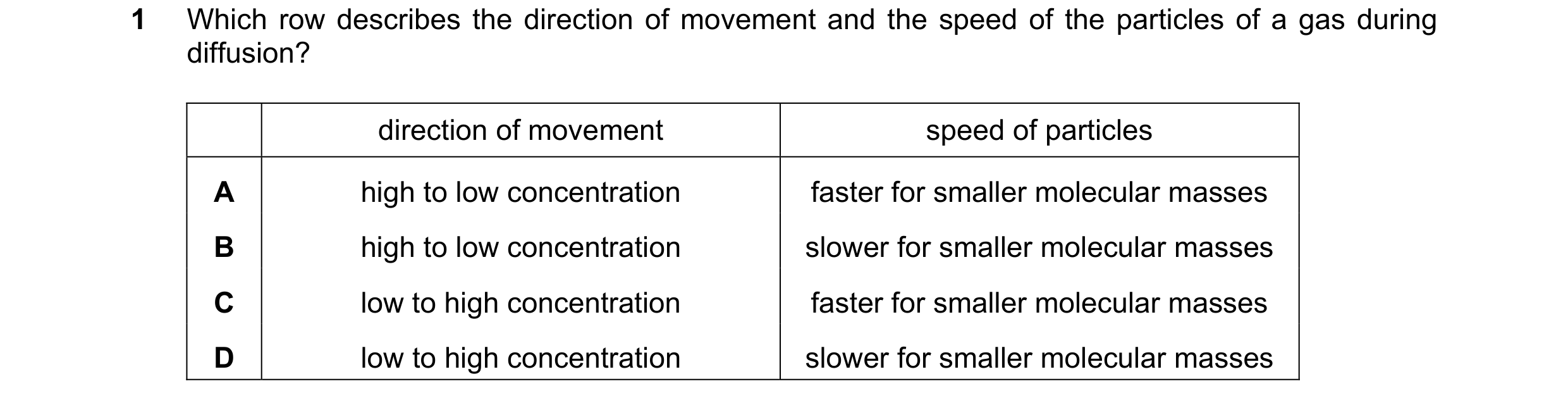
 3 / 3
3 / 3