Questions as text
Question 1 0980/42 May/June 2019
6 (a) Expand and simplify. (x + 7)(x - 3) … [2] (b) Factorise completely. (i) 15p 2 q 2 - 25q 3 … [2] (ii) 4fg + 3h - 6gh - 2f … [2] (iii) 81k 2 - m 2 … [2] (c) Solve the equation. x + 2 3 (x - 4) + = 6 5 x = … [4]
12 marks
Mark scheme: 6(a) x 2 + 4 x − 21 final answer 2 B1 for three of x 2, + 7 x, − 3 x, − 21 6(b)(i) 2 2 2 2 2 3 2 2 5 q 3 p − 5 q final answer B1 for 5 3 p q − 5 q or q 15 p − 25 q or ( ) ( ) ( ) q 15 p 2 q − 25 q 2 or 5 q 3 p 2 q − 5 q 2 ( ) ( ) or for correct answer seen 6(b)(ii) ( 2 f − 3h )( 2 g − 1) final answer 2 B1 for 2 g ( 2 f − 3h ) − ( 2 f − 3h ) or or (3h – 2f)(1 – 2g) final answer 2 f ( 2 g − 1) − 3h ( 2 g − 1) or 3h(1 – 2g) – 2f(1 – 2g) or 3h – 2f – 2g(3h – 2f) 6(b)(iii) ( 9 k + m )( 9 k − m ) final answer 2 M1 for (9 + m)(9 – m) or for correct answer seen 6(c) 5.5 4 M1 for 5 × 3 ( x − 4 ) + x + 2 = 5 × 6 M1 for 15 x − 60 + x + 2 = 30 FT their first step x + 2 or 3 x − 12 + = 6 5 If M0M0, SC1 for 3x – 12 + x + 2 = 30 oe M1dep for 16 x = 88 FT their previous steps
This question in 0980/42 May/June 2019
Question 2 0980/41 Oct/Nov 2020
8 (a) Factorise completely. 3a 2 b - ab 2 … [2] (b) Solve the inequality. 3x + 12 1 5x - 3 … [2] (c) Simplify. 3 3x 2 y 4 ` j … [2] (d) Solve. 2 6 = x 2 - x x = … [3] (e) Expand and simplify. ( x - 2)( x + 5)( 2x - 1) … [3] (f) Alan invests $200 at a rate of r% per year compound interest. After 2 years the value of his investment is $206.46 . (i) Show that r 2 + 200r - 323 = 0 . [3] (ii) Solve the equation r 2 + 200r - 323 = 0 to find the rate of interest. Show all your working and give your answer correct to 2 decimal places. r = … [3]
18 marks
Mark scheme: 8(a) ab(3a – b) final answer 2 B1 for a(3ab – b2) or b(3a2 – ab) or ab(3a – b) seen 8(b) x > 7.5 final answer 2 B1 for 12+3 < 5x – 3x oe 8(c) 27x6y12 2 B1 for two of 27, x6 and y12 correct 8(d) 1 3 M2 for 4 = 6x + 2x or better 0.5 or 2 or M1 for 2(2 – x) = 6x oe 8(e) 2x3 + 5x2 – 23x + 10 final answer 3 B2 for correct expansion of three brackets unsimplified B1 for correct expansion of two brackets with at least 3 terms correct 8(f)(i) 2 M1 r 200 1 + = 206.46 oe 100 2r r 2 M1 1 + + oe 100 100 2 r2 + 200r – 323 = 0 A1 Correct solution reached with no errors or omissions seen If 0 scored, SC1 for 200( n ) 2 = 206.46 8(f)(ii) 2 B2 2 −200 + 200 − 4(1)( −323) B1 for 200 − 4(1)( − 323) or (r + 100)2 2 × 1 −200 + q 2 B1 for or r = 323 + 100 – 100 2 × 1 OR 206.46 B2 for 100 − 1 200 206.46 or B1 for 200 1.60 cao final answer B1
This question in 0980/41 Oct/Nov 2020
Q3 · Simplify, giving your answer as a single power of 7 0980/42 May/June 2021
3 (a) Simplify, giving your answer as a single power of 7. (i) 7 5 # 7 6 … [1] (ii) 7 15 ' 7 5 … [1] (iii) 42 + 7 … [1] (b) Simplify. ( 5x 2 # 2xy 4 ) 3 … [3] (c) P = 2 5 # 3 3 # 7 Q = 540 (i) Find the highest common factor (HCF) of P and Q. … [2] (ii) Find the lowest common multiple (LCM) of P and Q. … [2] (iii) P # R is a cube number, where R is an integer. Find the smallest possible value of R. … [2] (d) Factorise the following completely. (i) x 2 - 3x - 28 … [2] (ii) 7 ( a + 2b) 2 + 4a ( a + 2b) … [2] 2 x - 1 1 2 y - x # 3(e) 3 = x 9 Find an expression for y in terms of x. y = … [4]
20 marks
Mark scheme: 3(a)(i) 711 cao 1 3(a)(ii) 710 cao 1 3(a)(iii) 72 cao 1 If answers 11, 10 and 2 in (a) then allow SC1 in this part 3(b) 1000x9y12 final answer 3 B2 for correct answer seen or answer of the form 1000x9yk or 1000xky12 or kx9y12 or B1 for answer with one correct element in product or (10x3y4)[3] seen 3(c)(i) 108 2 M1 for [540 =] 22 [×] 33 [×] 5 or B1 for 108 oe not in prime factor form e.g. 22 × 3 × 9 3(c)(ii) 30 240 2 M1 for (540 × 25 × 33 × 7) ÷ their (c)(i) oe or B1 for answer 30 240 oe not in prime factor form e.g. 25 × 33 × 35 3(c)(iii) 98 2 B1 for 592 704 seen or 26 × 33 × 73 seen or 2 × 72 oe seen 3(d)(i) (x – 7) (x + 4) final answer 2 M1 for x(x – 7) + 4(x – 7) or x(x + 4) – 7 (x + 4) or better or for (x + a)(x + b) where ab = – 28 or a + b = – 3 3(d)(ii) (a + 2b)(11a + 14b) final answer 2 M1 for (a + 2b) (7(a + 2b) + 4a) or (a + pb)(11a + qb) where pq = 28 or 11p + q = 36 If 0 scored, SC1 for a + 2b (11a + 14b) 3(e) 5 x − 1 4 B2 for 2x – 1 = –2x + 2y – x oe [ y = ] oe final answer or B1 for 9x = 32x or better 2 M1dep for correct rearrangement of their 5 term ‘linear’ equation in y and x to make y the subject
This question in 0980/42 May/June 2021
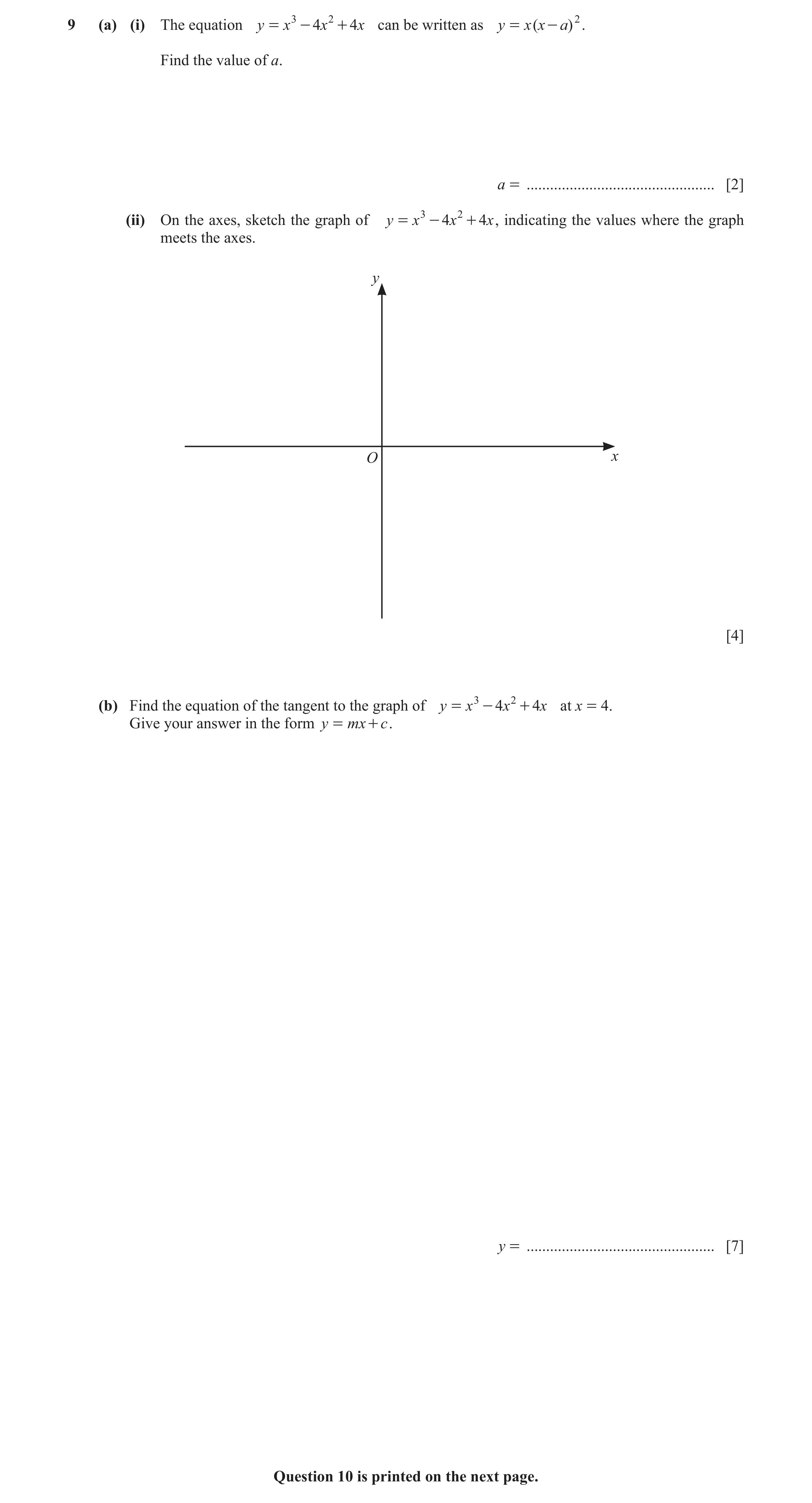
Q4 · The equation y = x 3 - 4x 2 + 4x can be written as y = x ( x - a) 2 0980/42 May/June 2021
9 (a) (i) The equation y = x 3 - 4x 2 + 4x can be written as y = x ( x - a) 2 . Find the value of a. a = … [2] (ii) On the axes, sketch the graph of y = x 3 - 4x 2 + 4x , indicating the values where the graph meets the axes. y O x [4] (b) Find the equation of the tangent to the graph of y = x 3 - 4x 2 + 4x at x = 4. Give your answer in the form y = mx + c . y = … [7] Question 10 is printed on the next page.
13 marks
Mark scheme: 9(a)(i) 2 2 M1 for x(x2 – 4x + 4) or x (x – 2)2 or (x2 – 2x) (x – 2) or x3 – 2ax2 + a2x 9(a)(ii) Correct sketch with curve passing through 4 B1 for any positive cubic O and touching (2, 0) B1 for sketch through or touching O B1 for sketch with min or max touching x-axis once only but not at (0, 0) B1FT their (a)(i) for sketch with min or max touching x-axis at (their 2, 0) and their 2 is labelled or clearly indicated 9(b) y = 20x – 64 final answer nfww 7 B6 for equivalent correct equation OR B2 for 3x2 – 8x + 4 isw or B1 for 3x2 or –8x seen M2dep for [grad =] 20 soi nfww or M1dep for substituting 4 into their derivative isw B1 for (4, 16) soi M1dep for 16 = their 20 × 4 + c oe
This question in 0980/42 May/June 2021
Question 5 0980/41 Oct/Nov 2021
4 (a) Solve. (i) 6 ( 7 - 2)x = 3x - 8 x = … [3] 2x 2 (ii) = x - 5 3 x = … [3] (b) Factorise completely. (i) 2x 2 - 288y 2 … [3] (ii) 5x 2 + 17x - 40 … [2] (c) Solve x 3 + 4x 2 - 17x = x 3 - 9 . You must show all your working and give your answers correct to 2 decimal places. x = … or x = … [5]
16 marks
Mark scheme: 4(a)(i) 10 1 3 M1 for 42 – 12x = 3x – 8 oe or or 3.33[3…] 3 x 8 3 33 or for 7 – 2x = − oe 6 6 M1 for reaching ax = b correctly FT their first step 4(a)(ii) 1 5 3 M1 for 3 × 2x = 2(x – 5) oe –2.5 or −2 or − 2 2 M1 for reaching ax = b correctly FT their first step 4(b)(i) 2(x + 12y)(x – 12y) final answer 3 B2 for (2x + 24y)(x – 12y) or (2x – 24y)(x + 12y) or for 2(x + 12y)(x – 12y) seen OR M2 for k(x + 12y)(x – 12y) or M1 for 2(x2 – 144y2) 4(b)(ii) (5x – 8) (x + 5) final answer 2 M1 for 5x(x + 5) – 8(x + 5) or x (5x – 8)+ 5(5x – 8) or for (5x + a)(x + b) where ab = – 40 or a + 5b = 17 4(c) 4x2 – 17x + 9 [= 0] oe B1 2 B2 FT their 3 term quadratic [ −− ]17 ± ( [ − ]17 ) − 4 ( 4 )( 9 ) 2 B1FT for ( [ − ]17 ) − 4 ( 4) ( 9 ) ) or better 2 × 4 2 − ]17 ) − 4 ( 4 )( 9 ) 17 2 ( [ or x − oe or 8 4 or better [ −− ]17 + q and B1FT for or 2(4) [ −− ]17 − q or better 2(4) 17 145 17 145 or + oe or − oe or 8 64 8 64 [ −− ]17 [ −− ]17 + q − q 2 2 or 4 4 0.62 and 3.63 cao B2 B1 for each SC1 for 0.6[0] or 0.619 to 0.620 and 3.6[0] or 3.6301 to 3.6302 or 0.62 and 3.63 seen in working or –0.62 and–3.63 as final answers
This question in 0980/41 Oct/Nov 2021
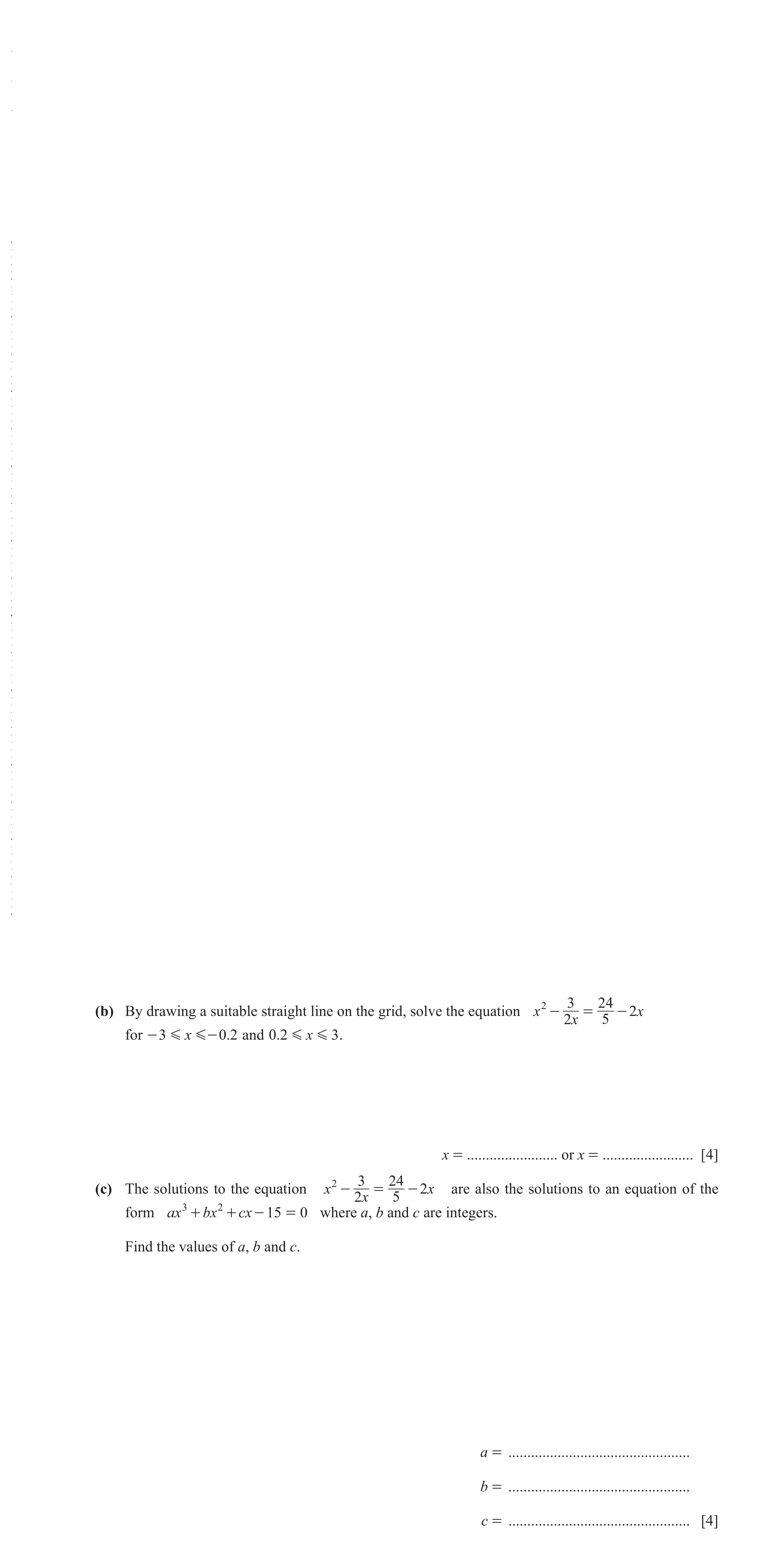
Q6 · 3 24(b) By drawing a suitable straight line on the grid, solve the equation x - = - 2x 2x… 0980/41 Oct/Nov 2021
2 3 24(b) By drawing a suitable straight line on the grid, solve the equation x - = - 2x 2x 5 for - 3 G x G - 0.2 and 0.2 G x G 3 . x = … or x = … [4] 2 3 24(c) The solutions to the equation x - = - 2x are also the solutions to an equation of the 2x 5 form ax 3 + bx 2 + cx - 15 = 0 where a, b and c are integers. Find the values of a, b and c. a = … b = … c = … [4]
16 marks
Mark scheme: 6(a)(i) 9.5, 4.8 and 8.5 3 B1 for each 6(a)(ii) correct curve 5 B4 for correct curve, but branches joined or touching y axis or B3FT for 9 or 10 correct plots or B2FT for 7 or 8 correct plots or B1FT for 5 or 6 correct plots AND B1 indep two separate branches not touching or cutting y-axis 6(b) 24 4 B2 for correct ruled line crossing curve y = − 2 x ruled twice 5 and or B1 for correct freehand or for short – 0.4 to – 0.2 and 1.45 to 1.7 ruled line or for line with negative gradient through (0, 4.8) or for line with gradient – 2 B1 for each value 6(c) [a =] 10 4 B3 for 10x3 – 15 = 48x – 20x2 oe or better [b =] 20 or B2 for 2 correct values [c =] – 48 or B1 for 1 correct value 2 15 or for 5 x − = 24 − 10 x or better 2 x 3 48 2 or for 2 x − 3 = x − 4 x or better 5 3 3 24 2 or for x − = x − 2 x 2 5 After 0 scored SC1 for correct elimination of a denominator of 5, x or 2x from a four term expression.
This question in 0980/41 Oct/Nov 2021
Question 7 0980/42 May/June 2022
8 (a) Solve. 10 - 3p = 3 + 11p p = … [2] (b) Make m the subject of the formula. mc 2 - 2k = mg m = … [3] (c) Solve. 1 4 + = 1 x - 3 2x + 3 x = … or x = … [5] (d) Solve the simultaneous equations. You must show all your working. x + 2y = 12 5 x + y 2 = 39 x = …………….. y = ……………… x = …………….. y = ……………… [5] (e) Expand and simplify. ( 2x - 3)( x + 6)( x - 4) … [3]
18 marks
Mark scheme: 8(a) 1 2 M1 for 10 3 11 p 3 p oe or better or 0.5 oe 2 8(b) 2 k 3 M1 for correctly isolating m terms [ m ] oe final answer 2 M1 for correctly factorising c g M1 for dividing by a bracket with two terms to the final answer Maximum mark M2 if final answer incorrect 8(c) 0 4.5 oe 5 B4 for 2 x 2 9 x [ 0] or 9x – 2x2 [= 0] or better OR M2 for 2 x 3 4 x 3 x 3 2 x 3 or better or M1 for 2 x 3 4 x 3 seen oe or common denominator x 3 2 x 3 oe B1 for 2 x 2 6 x 3 x 9 or better seen 8(d) y 2 10 y 21[ 0] or M2 M1 for y 2 5 12 2 y 39 oe x 2 4 x 12[ 0] 12 x 2 or 5 x 39 seen oe 2 2 (y – 3)(y – 7) [= 0] M1 or for correct factors for their 3– term quadratic or (x + 2)(x – 6) [= 0] equation or for correct substitution into quadratic formula or correctly completing the square for their 3– term quadratic equation x = − 2 y = 7 B2 B1 for x = − 2, x = 6 or for y = 7, y = 3 x = 6 y = 3 or for one correct pair of x and y values 8(e) 2 x 3 x 2 54 x 72 final answer 3 B2 correct expansion of three brackets unsimplified or for final answer of correct form with 3 out of 4 terms correct or B1 correct expansion of two brackets with at least three terms out of four correct
This question in 0980/42 May/June 2022
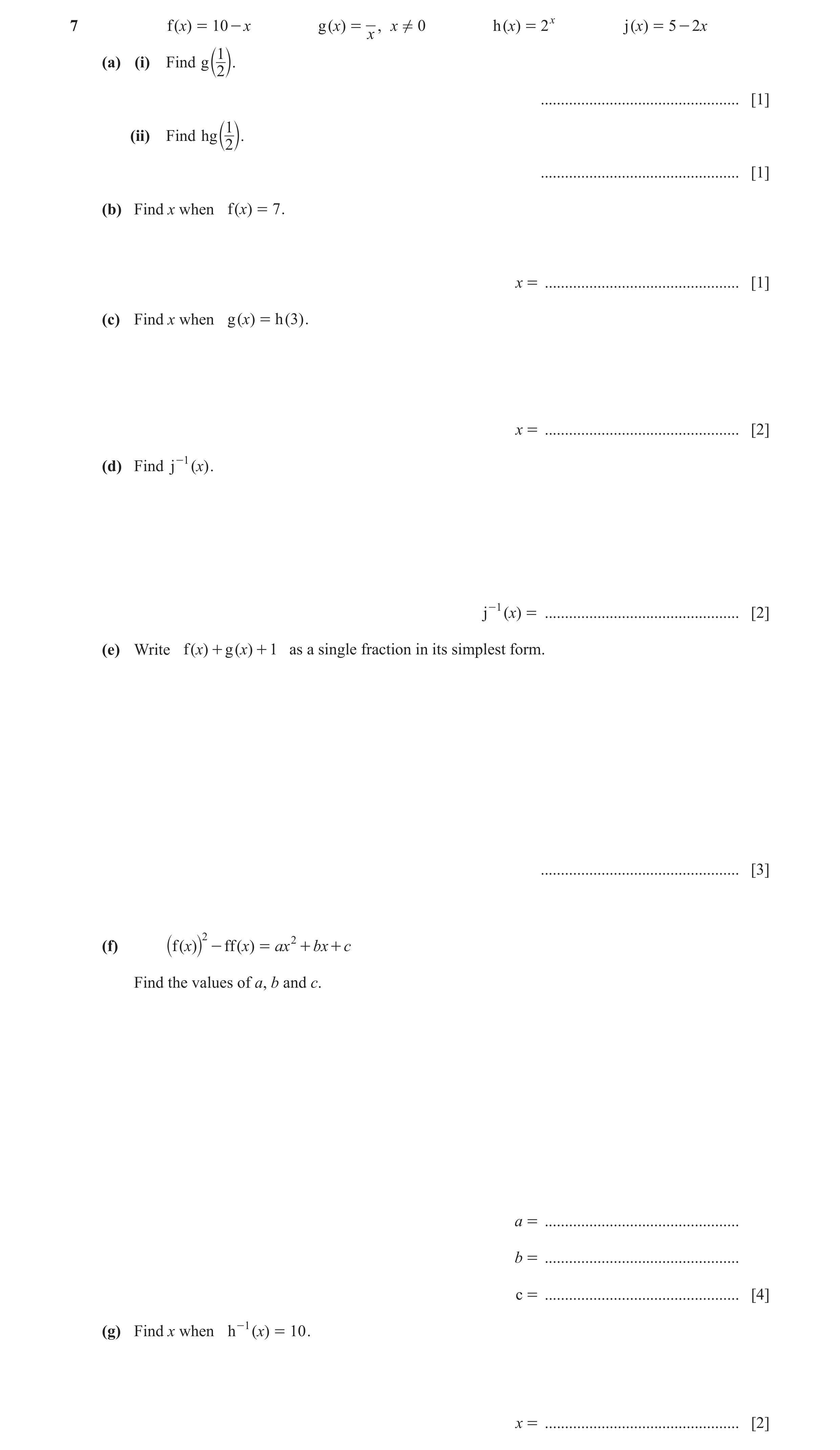
Q8 · F ( x) = 10 - x g ( x) = , x ! 0980/41 Oct/Nov 2022
7 f ( x) = 10 - x g ( x) = , x ! 0 h ( x) = 2x j ( x) = 5 - 2 x x 1 (a) (i) Find g b 2 l. … [1] 1 (ii) Find hg b 2 l. … [1] (b) Find x when f ( x) = 7 . x = … [1] (c) Find x when g ( x) = h ( 3) . x = … [2] (d) Find j -1 ( x) . j -1 ( x) = … [2] (e) Write f ( x) + g ( x) + 1 as a single fraction in its simplest form. … [3] 2 2(f) f ( x) - ff ( x) = ax + bx + c ` j Find the values of a, b and c. a = … b = … c = … [4] (g) Find x when h -1 ( x) = 10 . x = … [2]
16 marks
Mark scheme: 7(a)(i) 4 1 7(a)(ii) 16 1 FT 2their 4 7(b) 3 1 7(c) 1 2 2 3 oe M1 for = 2 or better 4 x 7(d) 5 −x 2 M1 for oe final answer x = 5 – 2y or y + 2x = 5 oe 2 y 5 or = − x oe 2 2 7(e) 11x − x 2 + 2 3 x (10 − x ) + 2 + x final answer B2 for oe single fraction x x or B1 for x(10 – x) + 2 + x oe 2 or M1 for 10 − x + + 1 x 7(f) [a =] 1 4 B3 for x 2 − 21x + 100 [b =] –21 OR [c =] 100 2 M1 for (10 − x ) − (10 − (10 − x ) ) oe or better 2 2 B2 for [(10 − x ) ] = 100 − 10 x − 10 x + x or B1 for three out of four terms of [(10 − x ) 2 ] = 100 − 10 x − 10 x + x 2 correct 7(g) 1024 2 M1 for [x =] h(10) oe or better
This question in 0980/41 Oct/Nov 2022
Q9 · Show that the equation y = ( x - 4)( x + 1)( x - 2) can be written as y = x 3 - 5x 2 + 2x… 0980/42 May/June 2023
8 (a) (i) Show that the equation y = ( x - 4)( x + 1)( x - 2) can be written as y = x 3 - 5x 2 + 2x + 8 . [2] (ii) On the diagram, sketch the graph of y = x 3 - 5x 2 + 2x + 8 , indicating the values where the graph crosses the axes. y O x [4] (b) The graph of y = x 3 - 5x 2 + 2x + 8 has two tangents with a gradient of 10. Find the equations of these two tangents. You must show all your working and give your answers in the form y = mx + c . y = … y = … [7]
13 marks
Mark scheme: 8(a)(i) Correct expansion of a pair of brackets M1 accept x2 – 4x + [1]x – 4 x2 – 3x – 4 or x2 – 4x – 2x + 8 or x2 – 6x + 8 or x2 + [1]x – 2x – 2 or x2 – [1]x – 2 x3 – 4x2 + x2 – 4x – 2x2 + 8x – 2x + 8 A1 Accept leading to and stating x3 – 3x2 – 4x – 2x2 + 6x + 8 [y = ] x3 – 5x2 + 2x + 8 or x3 – 6x2 +[1] x2 + 8x – 6x + 8 or x3 –[1] x2 – 2x – 4x2 + 4x + 8 leading to and stating [y = ] x3 – 5x2 + 2x + 8 8(a)(ii) Correct labelled sketch 4 positive cubic Crossing x-axis at –1, 2 and 4 only Crossing y – axis at 8 only B1 for positive cubic B2 for three intercepts only with x -axis labelled at – 1, 2 and 4 or B1 for 1 or 2 correctly labelled x – intercepts B1 for a single intercept on y-axis labelled at 8 but not if line y = 8 8(b) 3x2 – 10x – 8 [= 0] M3 B2 for derivative = 3x2 – 10x + 2 isw OR B1 for derivative with 3x2 or –10x given in expression isw M1dep on B1 for their first derivative = 10 2 B1 x = 4 and x = 3 2 112 B1 (4, 0) and , oe 3 27 [y =] 10x – 40 B2 B1 for each and or for two different equations of the form 292 [y = ] 10x + c (c must be numeric) [y =] 10 x 27 292 or for c = –40 and 27
This question in 0980/42 May/June 2023
Q10 · S = at 2 2 Find the value of s when a = 9.8 and t = 20 0980/41 Oct/Nov 2023
2 (a) s = at 2 2 Find the value of s when a = 9.8 and t = 20 . s = … [2] (b) Solve. 5 ( 4y - 3) = 15 y = … [3] (c) Expand and simplify. 3 ( 5x - 8) - 2 ( 3x - 7) … [2] (d) Rearrange A = 2 b 2 - 3c 3 to make c the subject. c = … [3] (e) Factorise completely. 6pq - 4q - 3p + 2 … [2]
12 marks
Mark scheme: 2(a) 1960 2 1 M1 for 9.8 202 oe 2 2(b) 3 3 M1 for a first correct step, e.g. 1.5 or 1½ or 20y – 15 = 15 or 4y – 3 = 3 2 M1FTdep for a second correct step, e.g. 20y = 30 or 4y = 6 15 15 or y – = oe 20 20 2(c) 9x – 10 final answer 2 B1 for kx – 10 or 9x + c or M1 for 15x – 24 or –6x + 14 or B1 for correct answer seen and then spoiled 2(d) 2 3 2b − A 3 oe final answer 3 M1 for isolating 3c3, 3c3 = 2b2 – A oe or for A 2b 2 3 A 2b 2 3 = − c or = + c 3 3 −3 −3 M1FT for isolating c3, follow through their first step dep on a 3-term expression with a kc3 term M1FT taking the cube root to the final answer, follow through their previous step Maximum of two marks if answer incorrect 2(e) (2q – 1)(3p – 2) or (1 – 2q)(2 – 2 M1 for 2q(3p – 2) – [1](3p – 2) 3p) final answer or 3p(2q – 1) – 2(2q – 1) or for correct answer seen then spoiled
This question in 0980/41 Oct/Nov 2023
Q11 · F ( x) = ( 3 x + 1)( x + 5)( x - 4) g ( x) = 2x - 3 h ( x) = 4 2 x - 1 (a) Find (i) f (… 0980/41 Oct/Nov 2023
9 f ( x) = ( 3 x + 1)( x + 5)( x - 4) g ( x) = 2x - 3 h ( x) = 4 2 x - 1 (a) Find (i) f ( 0) … [1] (ii) g -1 ( )x g -1 ( )x = … [2] (iii) gh(2). … [2] (b) g( 2)x = 7 Find the value of x. x = … [2] (c) Simplify g ( x 2 ) + gg ( x) + 1. … [3] (d) Find h -1 ( 16) . … [2] (e) f ( x) = ( 3 x + 1)( x + 5)( x - 4) This can be written in the form f ( x) = ax 3 + bx 2 + cx + d . Find the value of each of a, b, c and d. a = … b = … c = … d = … [3]
15 marks
Mark scheme: 9(a)(i) –20 1 9(a)(ii) x + 3 2 M1 for x = 2y – 3 or better or y + 3 = 2x or better oe final answer y 3 2 or = x – or better 2 2 9(a)(iii) 125 2 M1 for g(64) or 2(42x – 1) – 3 9(b) 2.5 oe 2 M1 for 2(2x) – 3 = 7 or better 9(c) 2x2 +4x – 11 final answer 3 B2 for 2x2 and either +4x or – 11 in final 3 term answer or for correct answer seen then spoiled or M1 for 2x2 – 3 + 2(2x – 3) – 3 [+ 1] 9(d) 1.5 oe 2 M1 for 42x – 1 = 42 or better 9(e) a = 3 3 B2 for 3 correct values b = 4 or for correct unsimplified expanded expression or c = –59 for simplified four-term expression of correct d = –20 form with 3 terms correct or B1 for 2 correct values or for correct expansion of one pair of brackets with at least 3 out of 4 terms correct.
This question in 0980/41 Oct/Nov 2023
Q12 · Simplify 25x 6 2 0980/42 May/June 2024
5 (a) Simplify 25x 6 2. … [2] (b) These are the first five terms of a sequence. 1 1 6 36 216 6 Find the nth term of the sequence. … [2] (c) Expand and simplify. ( x + 4)( x - 3)( 3x - 1) … [3] 7 2(d) (i) Show that ( 3x + 5) + = x simplifies to 2x + x - 3 = 0 . x - 2 [4] (ii) Solve by factorisation 2x 2 + x - 3 = 0 . x = … or x = … [3] (e) A solid cylinder has base radius x and height 3x. The total surface area of the cylinder is the same as the total surface area of a solid hemisphere of radius 5y. 2 75y 2 Show that x = . 8 [The surface area, A, of a sphere with radius r is A = 4rr 2 .] [4]
18 marks
Mark scheme: 5(a) 125x 9 final answer 2 B1 for answer 125 kx or m x 9 or for correct answer seen then spoilt 5(b) 6 n 2 oe final answer 2 B1 for answer of form 6k oe k 1 or answer of the form oe 6 or for correct answer seen 5(c) 3x3 + 2x2 –37x + 12 final answer 3 B2 for correct expansion of three brackets unsimplified or for simplified four-term expression of correct form with 3 terms correct or B1 for correct expansion of two brackets with at least 3 terms out of 4 correct 5(d)(i) eliminates the fraction correctly M1 eg (3x + 5) (x – 2) + 7 = x (x – 2) 3x2 + 5x –6x – 10 + 7 = x2 – 2x oe B2 B1 for 3x2 + 5x –6x –10 [ + 7] oe seen with at least 3 terms correct leading to 2x2 + x – 3 = 0 A1 dep on M1 B2 with no errors or omissions 5(d)(ii) 2 x 3 x 1 M2 or M1 for (2x + a)(x + b) where ab = −3 or 2b + a = [+]1 or for partial factors 2x(x – 1) + 3(x – 1) or x(2x + 3) –[1](2x + 3) −1.5 oe and +1 B1 5(e) 2 M1 [TSA cylinder =] 2x 2x 3 x 2 4(5 y ) 2 M1 [TSA hemisphere=] (5 y ) 2 Leading to M1 dep M1M1 2x 2 6x 2 50y 2 25y 2 oe 2 75 y 2 A1 dep on M1M1M1 x 8
This question in 0980/42 May/June 2024
Q13 · Solve 3x - 8 = 6 - 4x 0980/42 May/June 2024
7 (a) Solve 3x - 8 = 6 - 4x . x = … [2] (b) Factorise fully 10a 2 + 5a . … [2] (c) Factorise fully ( 2x - 3) 2 - 9 . … [2] 1 1 x (d) f ( )x = , x ! g ( )x = 3 4x - 1 4 (i) Find f ( 4) . … [1] (ii) Find gg ( 2) . … [2] (iii) Find k when g ( k) = f ( 7) . … [2]
11 marks
Mark scheme: 7(a) 2 2 M1 for 3 x 4 x 6 8 or better 7(b) 5a 2 a 1 final answer 2 B1 for a 10 a 5 or 5(2a2 +a) or 5a 2 a 1 then spoilt 7(c) 4 x x 3 final answer 2 M1 for (2 x 3) 3 (2 x 3) 3 or better or for 4 x 2 6 x 6 x 9 [ 9] oe or better 7(d)(i) 1 1 oe 15 7(d)(ii) 19 683 2 3 x B1 for g(9), 39 or 3 seen 7(d)(iii) −3 2 k 1 k 3 M1 for 3 or 3 3 27 or answer g(–3)
This question in 0980/42 May/June 2024
Question 14 0980/42 May/June 2025
14 Factorise. 5x - 10 - ax + 2a … [2]
2 marks
Mark scheme: 14 (x – 2)(5 – a) final answer 2 M1 for 5(x – 2) – a (x – 2) or for x(5 – a) – 2 (5 – a) or –5(2 – x) + a (2 – x) or 2(a – 5) – x(a – 5) or for correct answer seen then spoilt
This question in 0980/42 May/June 2025
![Question 1: (a) Expand and simplify. (x + 7)(x - 3) ............................................... [2] (b) Factorise completely. (i) 15p 2 q 2 - 25q 3…](https://img.pastlit.com/crops/18d3e002-df58-45eb-af7d-53d3e3aedfa9/q6.webp) 1 / 20
1 / 20![Question 2: (a) Factorise completely. 3a 2 b - ab 2 ................................................. [2] (b) Solve the inequality. 3x + 12 1 5x - 3 ..…](https://img.pastlit.com/crops/68a22aa4-6747-4616-8e66-890a9a314f87/q8.webp)
![Question 3: (a) Simplify, giving your answer as a single power of 7. (i) 7 5 # 7 6 ................................................. [1] (ii) 7 15 ' 7 …](https://img.pastlit.com/crops/f1d27287-7d40-4dfd-9203-7b6583f33c4a/q3.webp)
![Question 5: (a) Solve. (i) 6 ( 7 - 2)x = 3x - 8 x = ................................................ [3] 2x 2 (ii) = x - 5 3 x = ......................…](https://img.pastlit.com/crops/76235ab6-b82c-4f81-b88b-973be4fbe45d/q4.webp)
![Question 7: (a) Solve. 10 - 3p = 3 + 11p p = ................................................ [2] (b) Make m the subject of the formula. mc 2 - 2k = mg…](https://img.pastlit.com/crops/a1ef2d8f-a163-4ef4-a07b-ca6ee67ca2a3/q8.webp)
![Question 9: (a) (i) Show that the equation y = ( x - 4)( x + 1)( x - 2) can be written as y = x 3 - 5x 2 + 2x + 8 . [2] (ii) On the diagram, sketch the…](https://img.pastlit.com/crops/1706aeb4-fc66-42f4-9f2a-f6fe40a887f3/q8.webp)
![Question 10: (a) s = at 2 2 Find the value of s when a = 9.8 and t = 20 . s = ................................................ [2] (b) Solve. 5 ( 4y - 3…](https://img.pastlit.com/crops/91d05d94-a607-4247-87b3-85199ff37d86/q2.webp) 14 / 20
14 / 20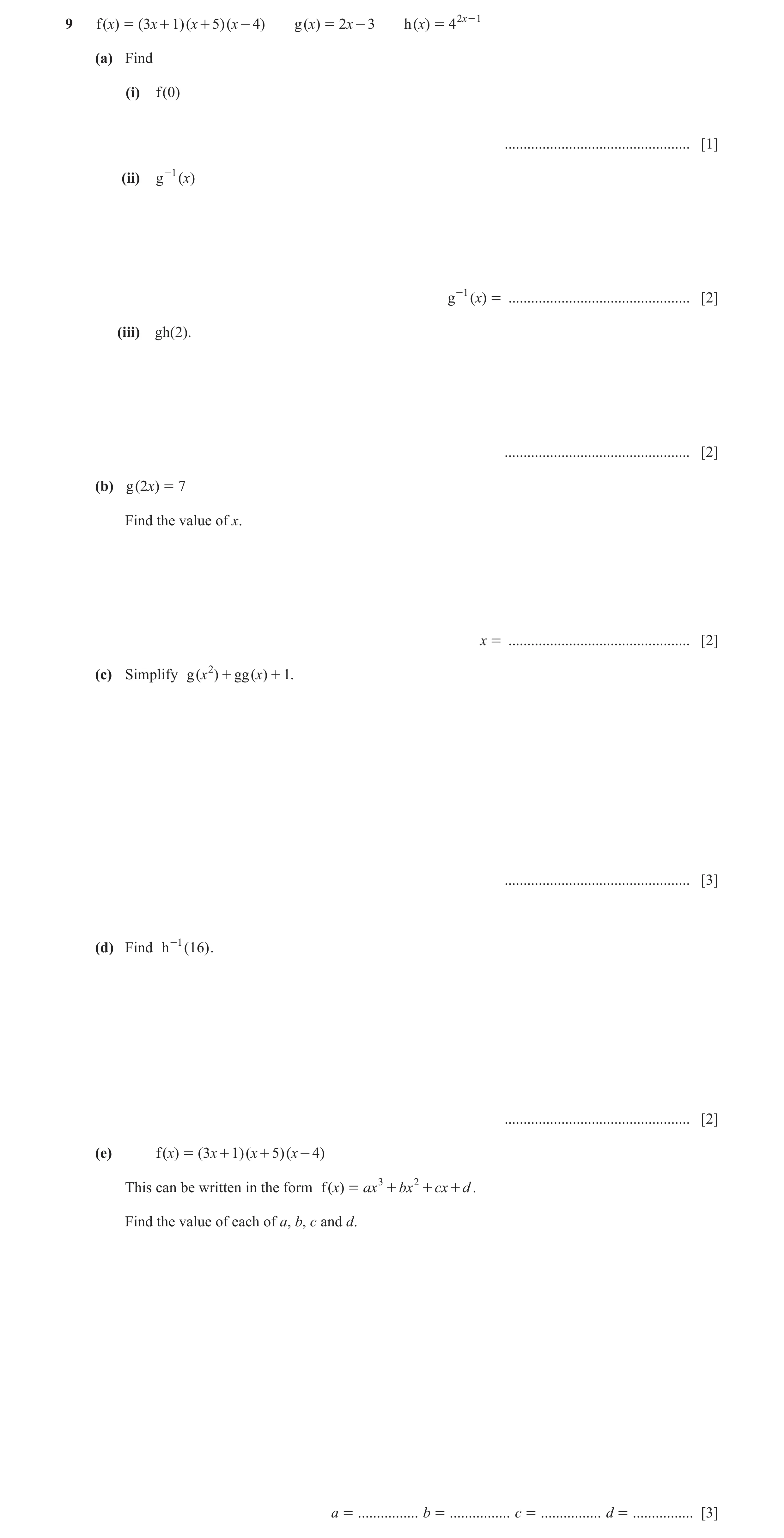
![Question 12: (a) Simplify 25x 6 2. ................................................. [2] (b) These are the first five terms of a sequence. 1 1 6 36 216 …](https://img.pastlit.com/crops/6673db50-ed3f-4515-a6f4-df74e783651f/q5.webp)
![Question 13: (a) Solve 3x - 8 = 6 - 4x . x = ................................................ [2] (b) Factorise fully 10a 2 + 5a . .....................…](https://img.pastlit.com/crops/6673db50-ed3f-4515-a6f4-df74e783651f/q7.webp) 19 / 20
19 / 20![Question 14: Factorise. 5x - 10 - ax + 2a ................................................. [2]](https://img.pastlit.com/crops/d5e9c299-80ae-418a-af91-f1a2ddb2efc5/q14.webp) 20 / 20
20 / 20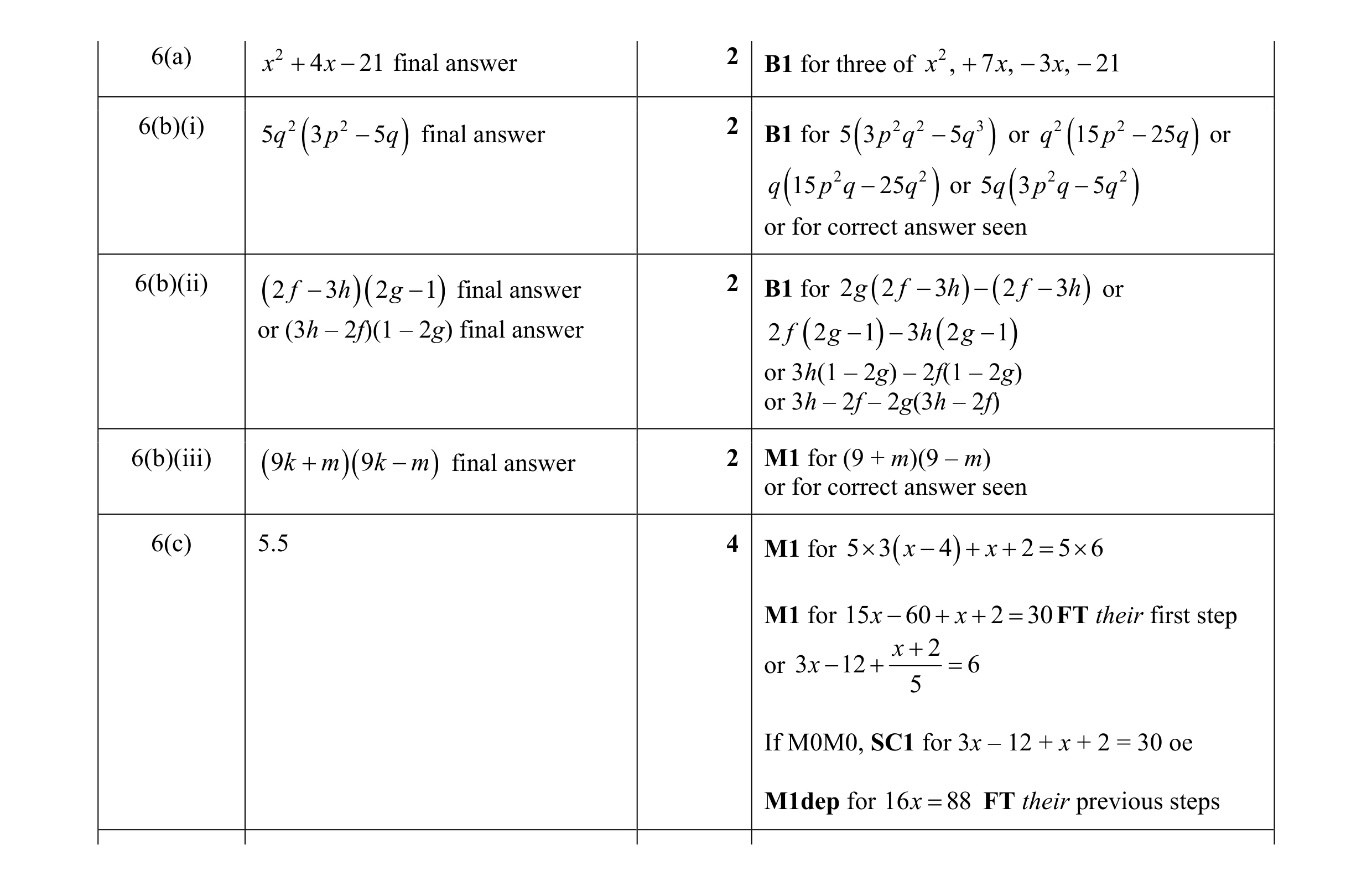 12
12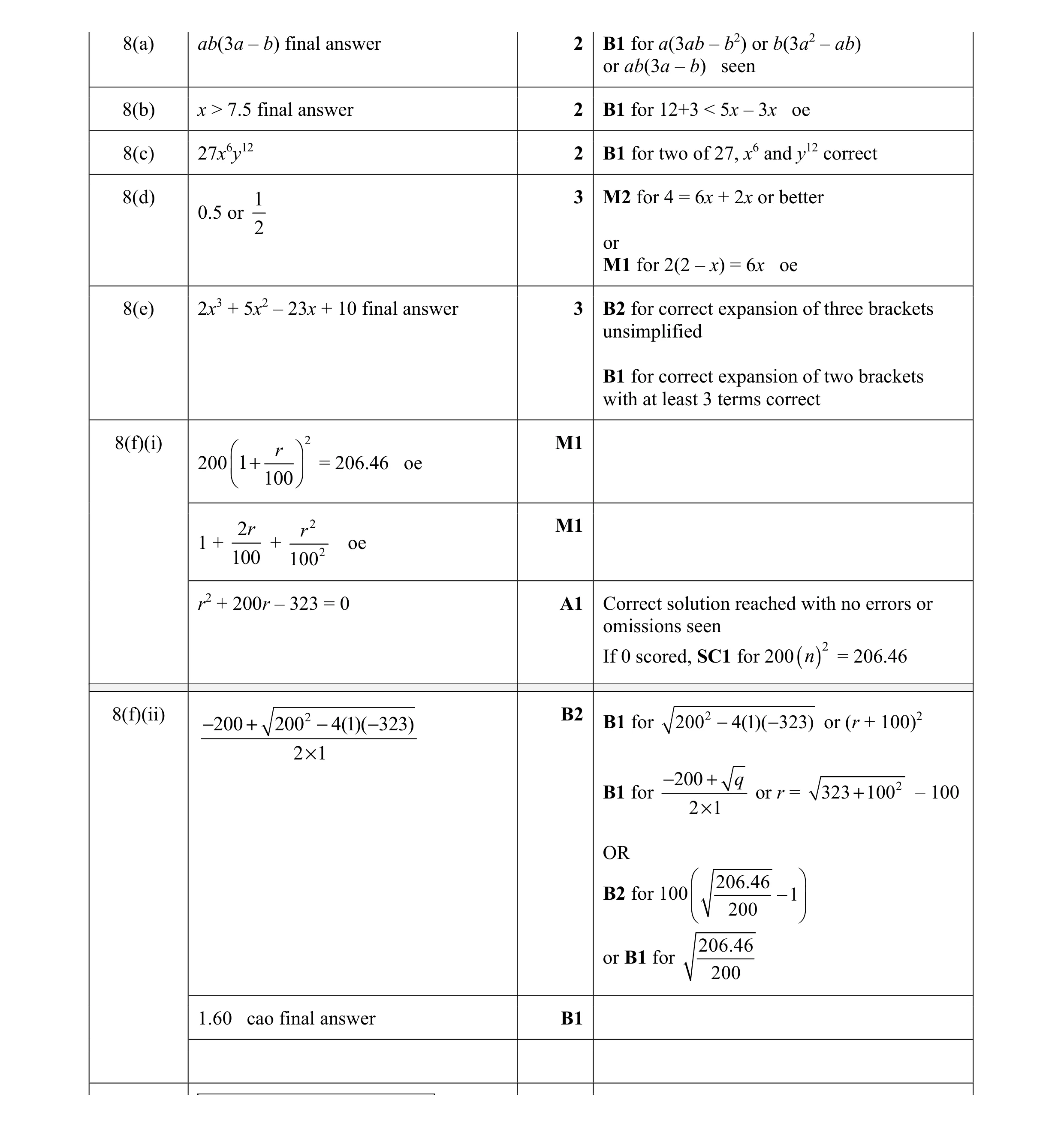 18
18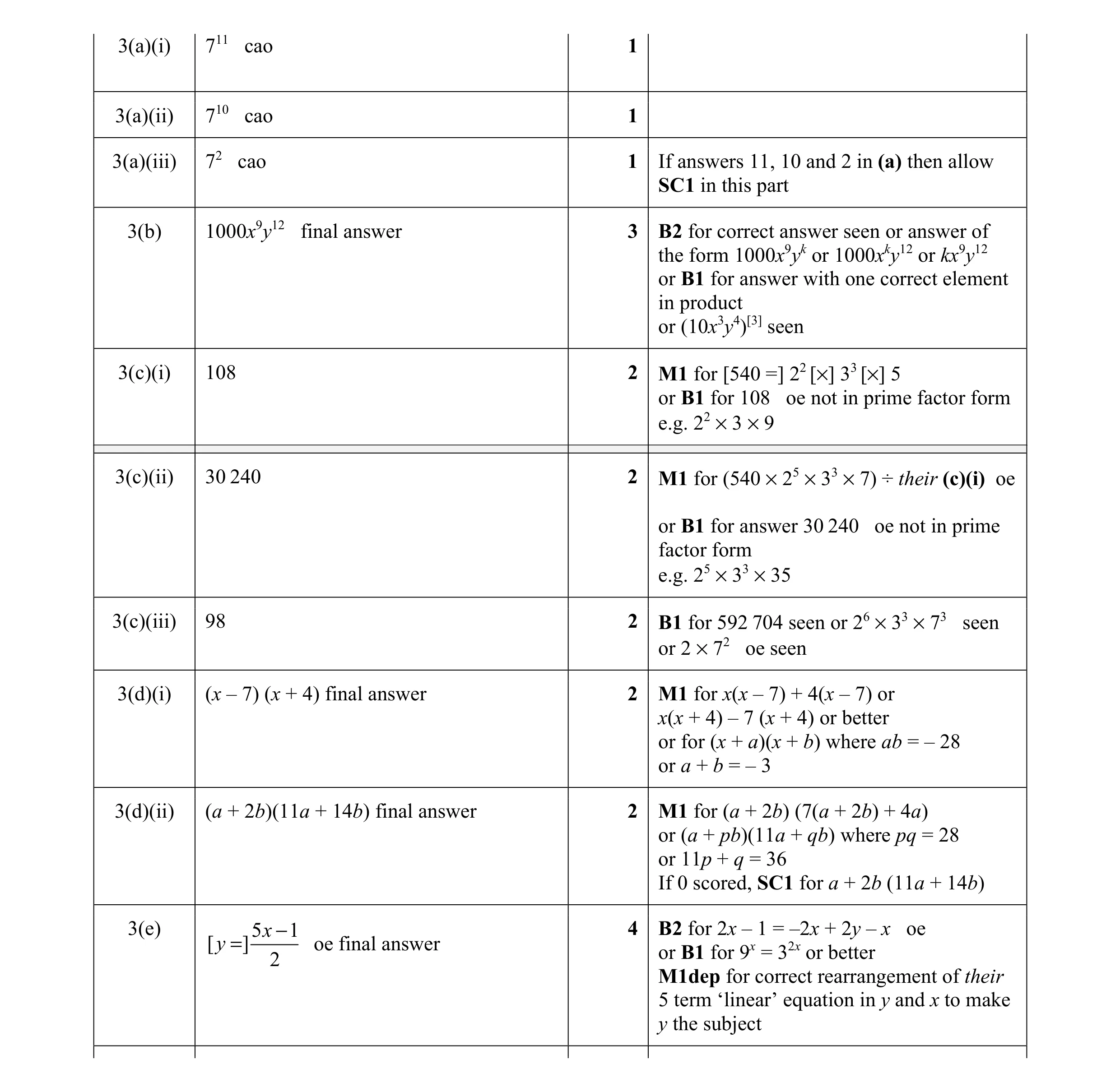 20
20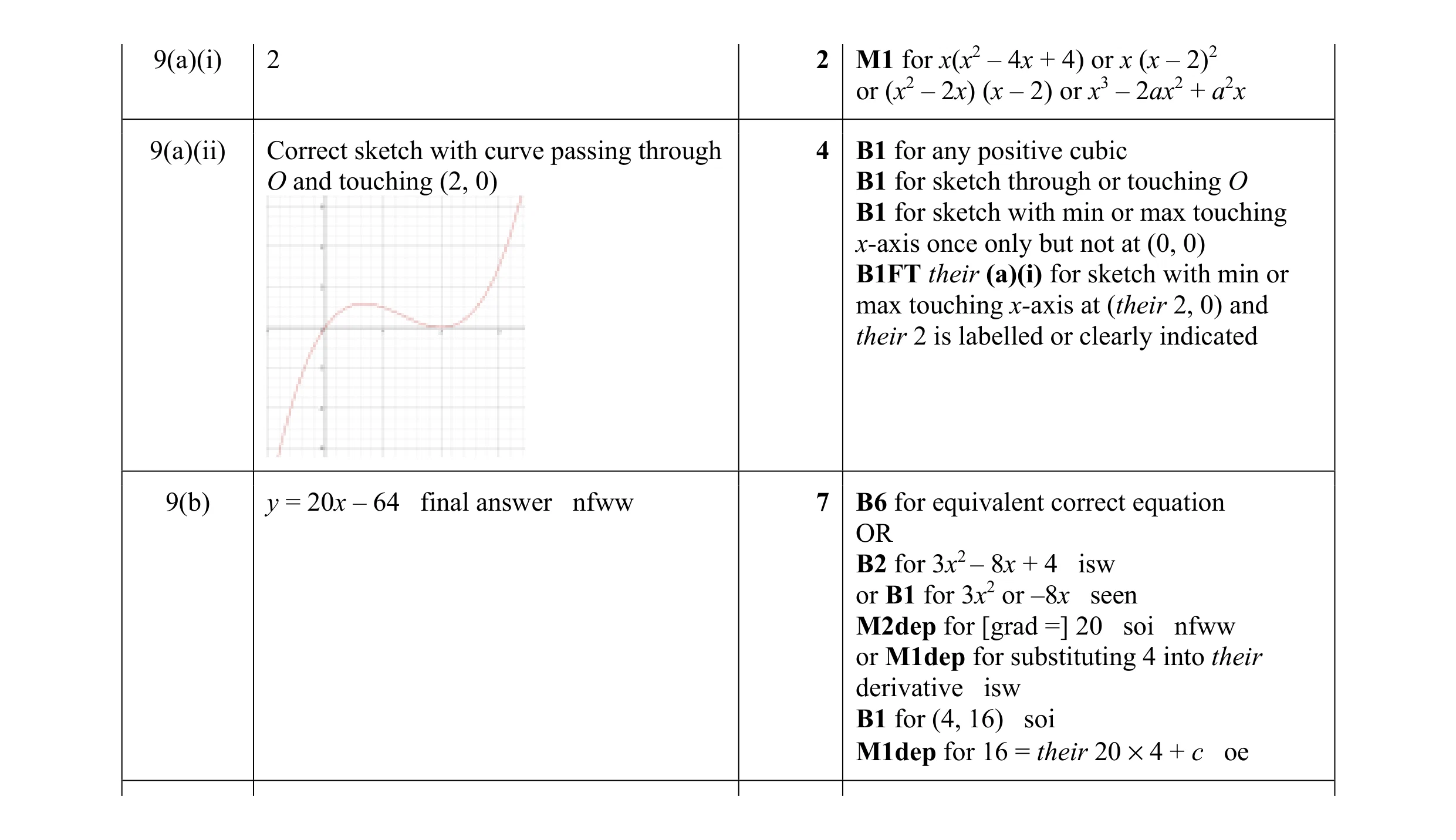 13
13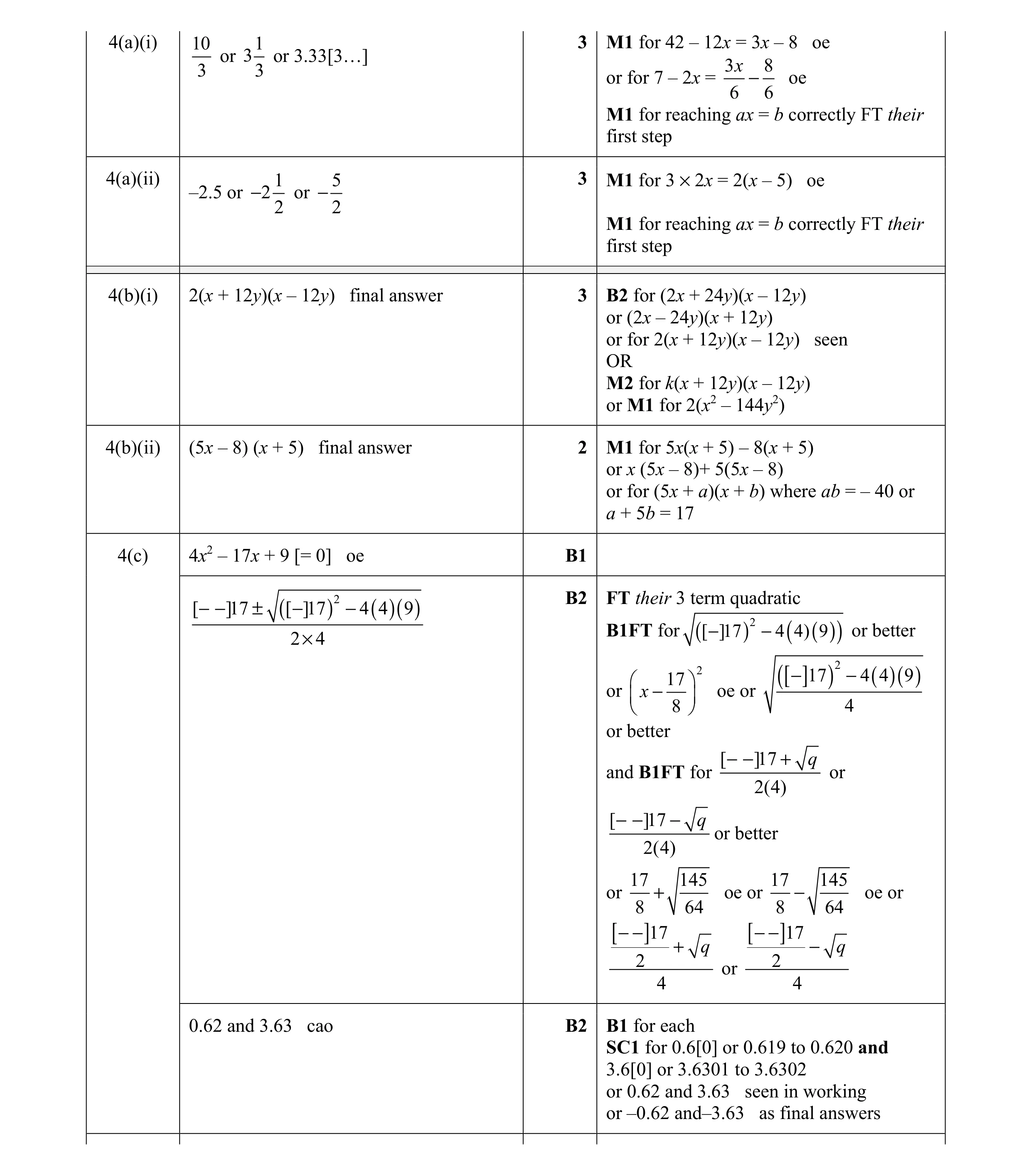 16
16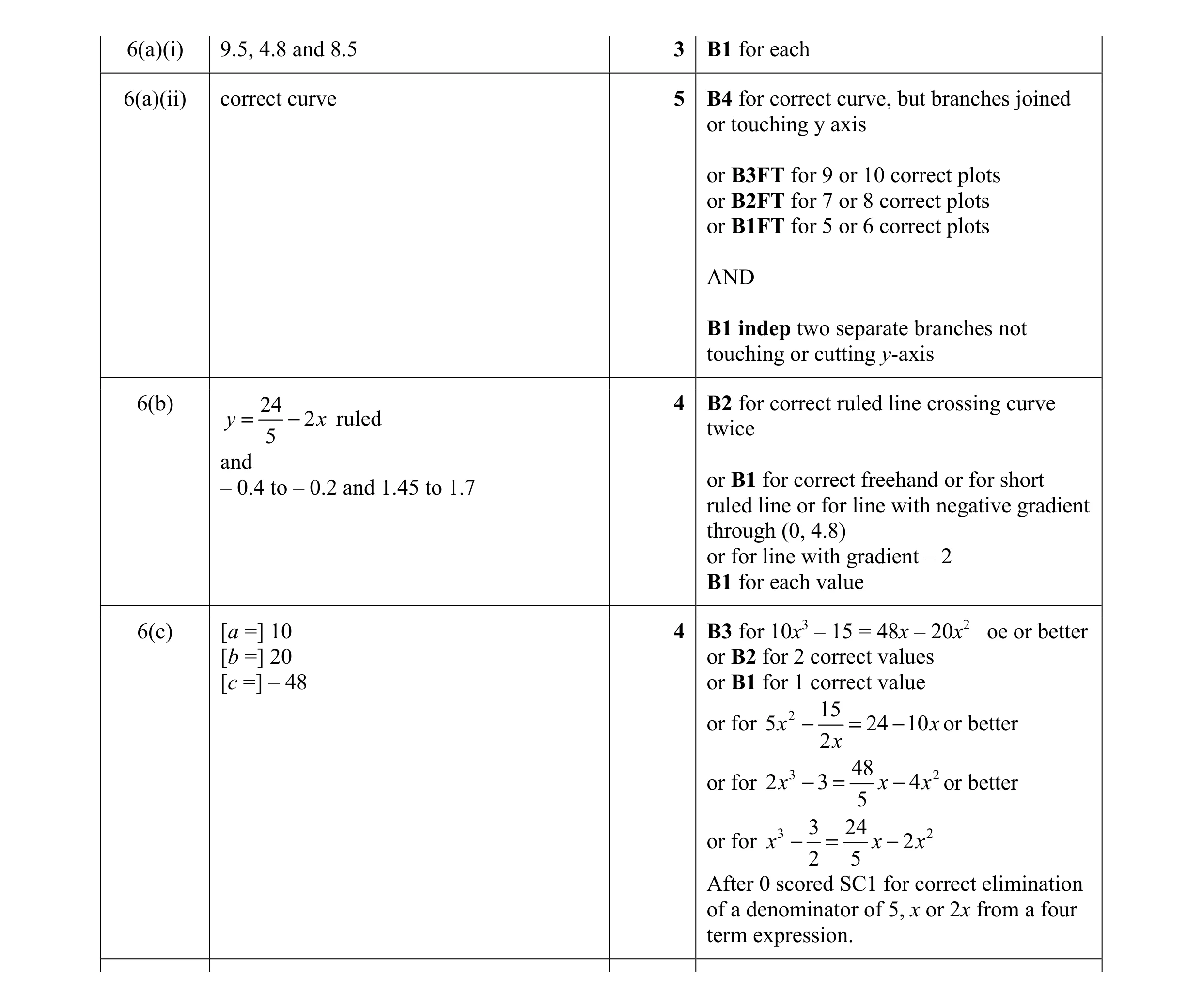 16
16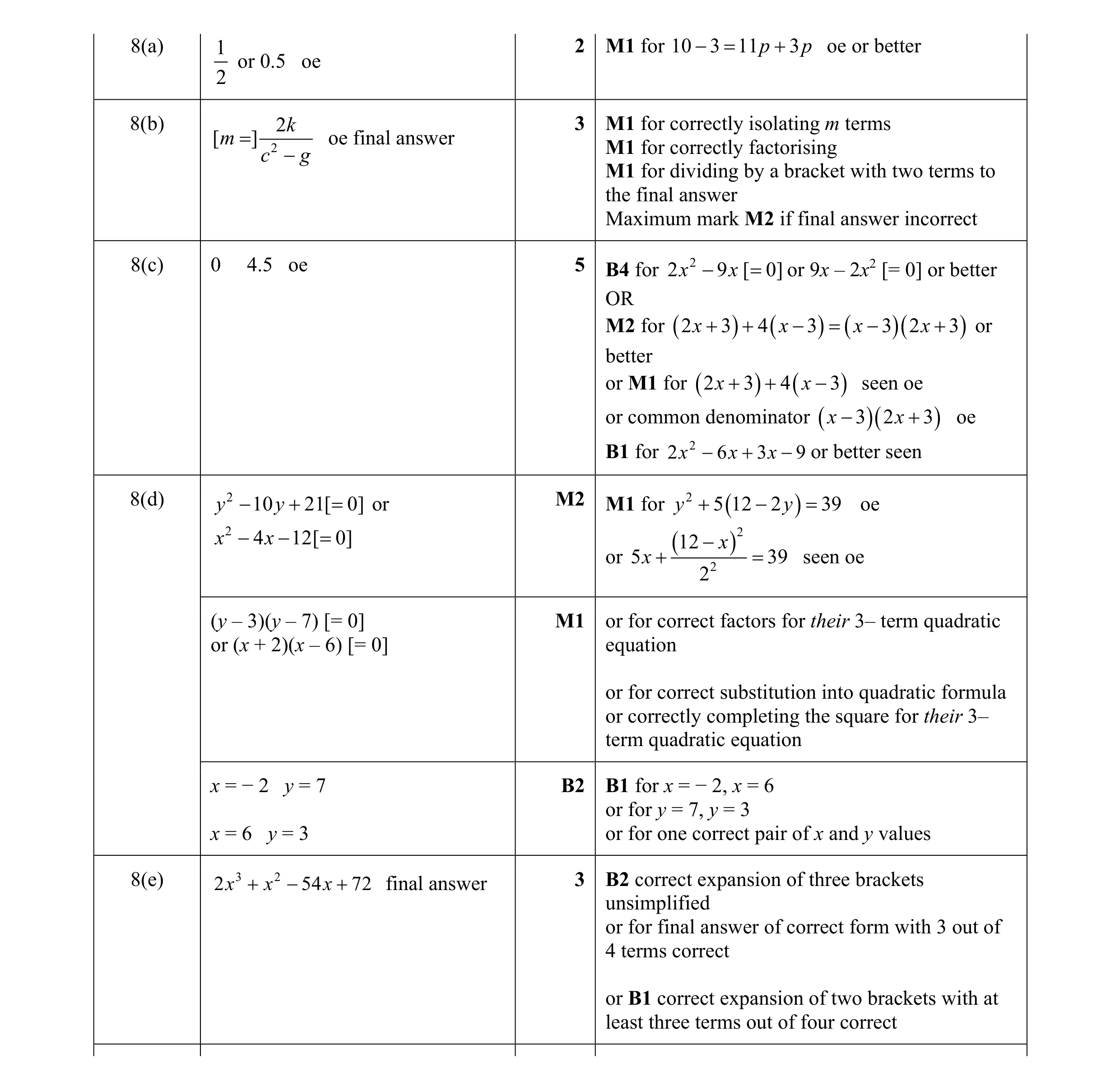 18
18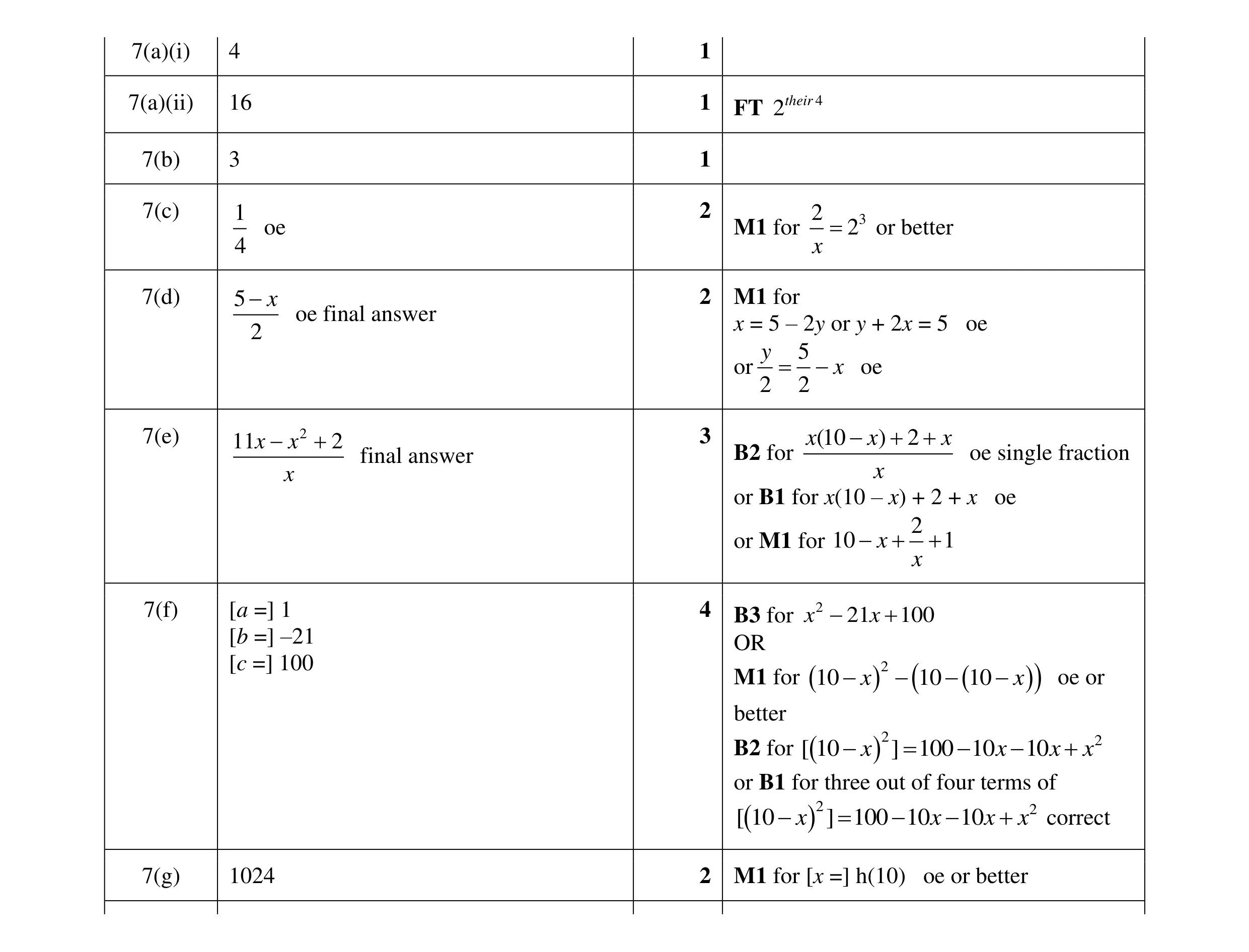 16
16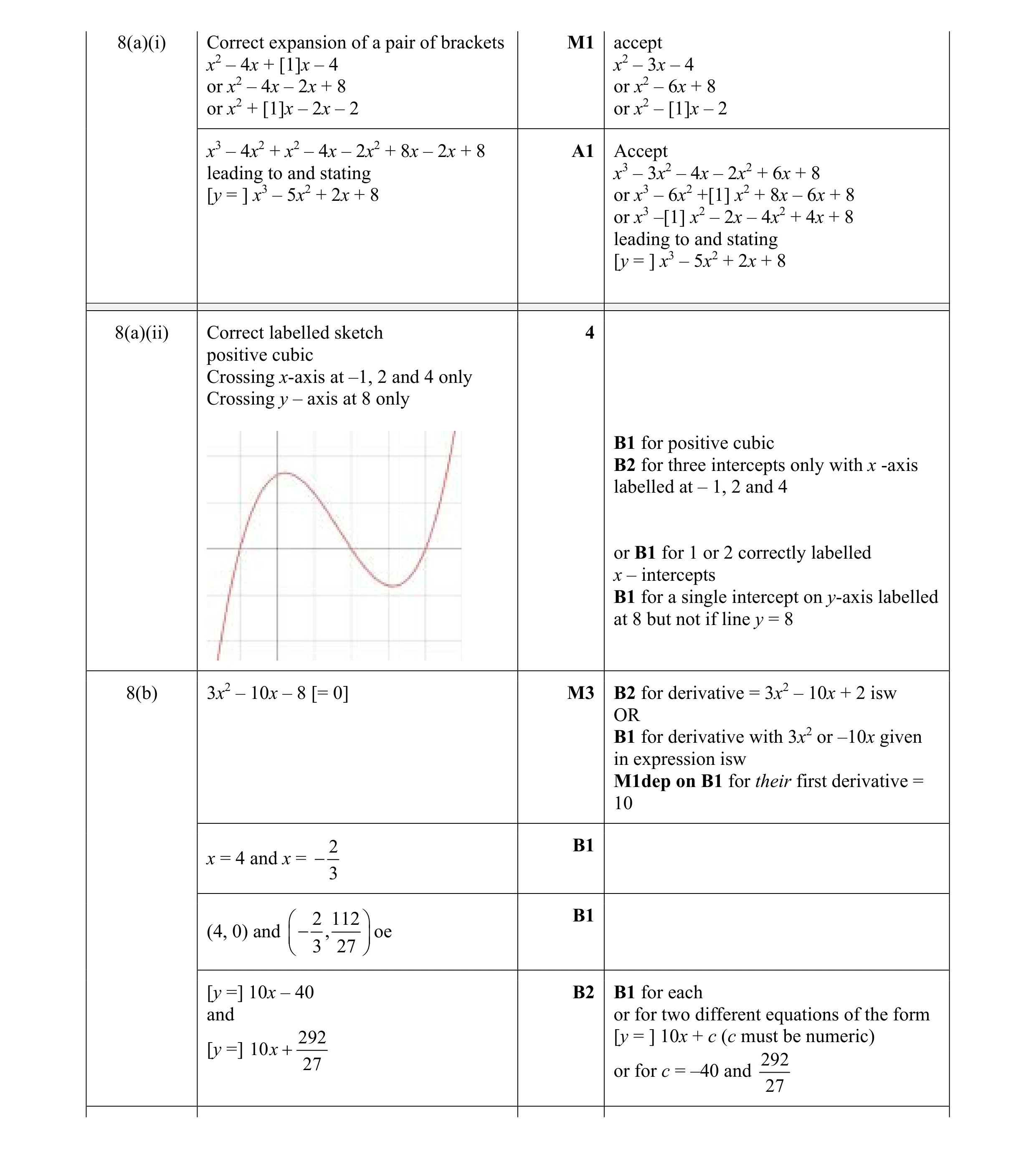 13
13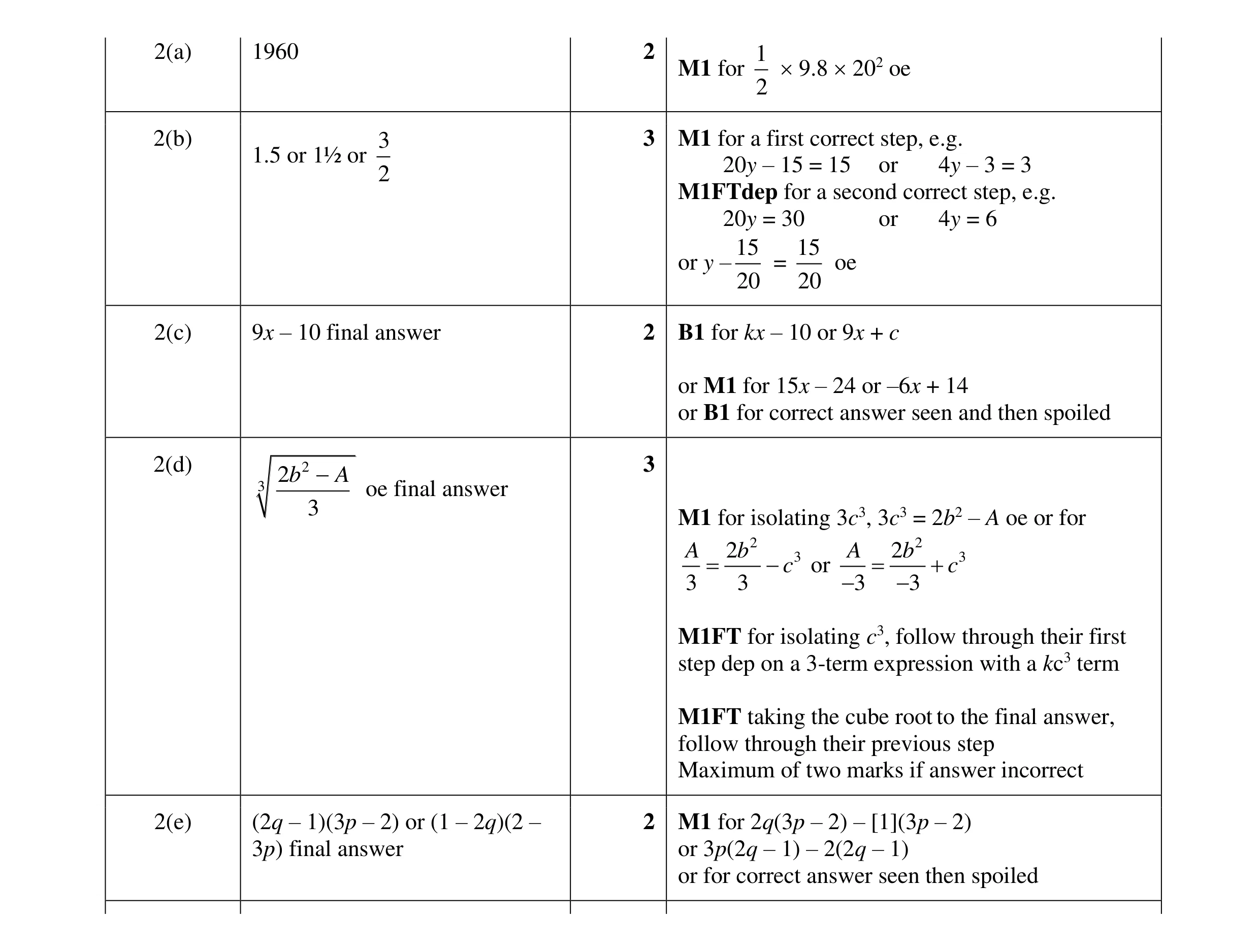 12
12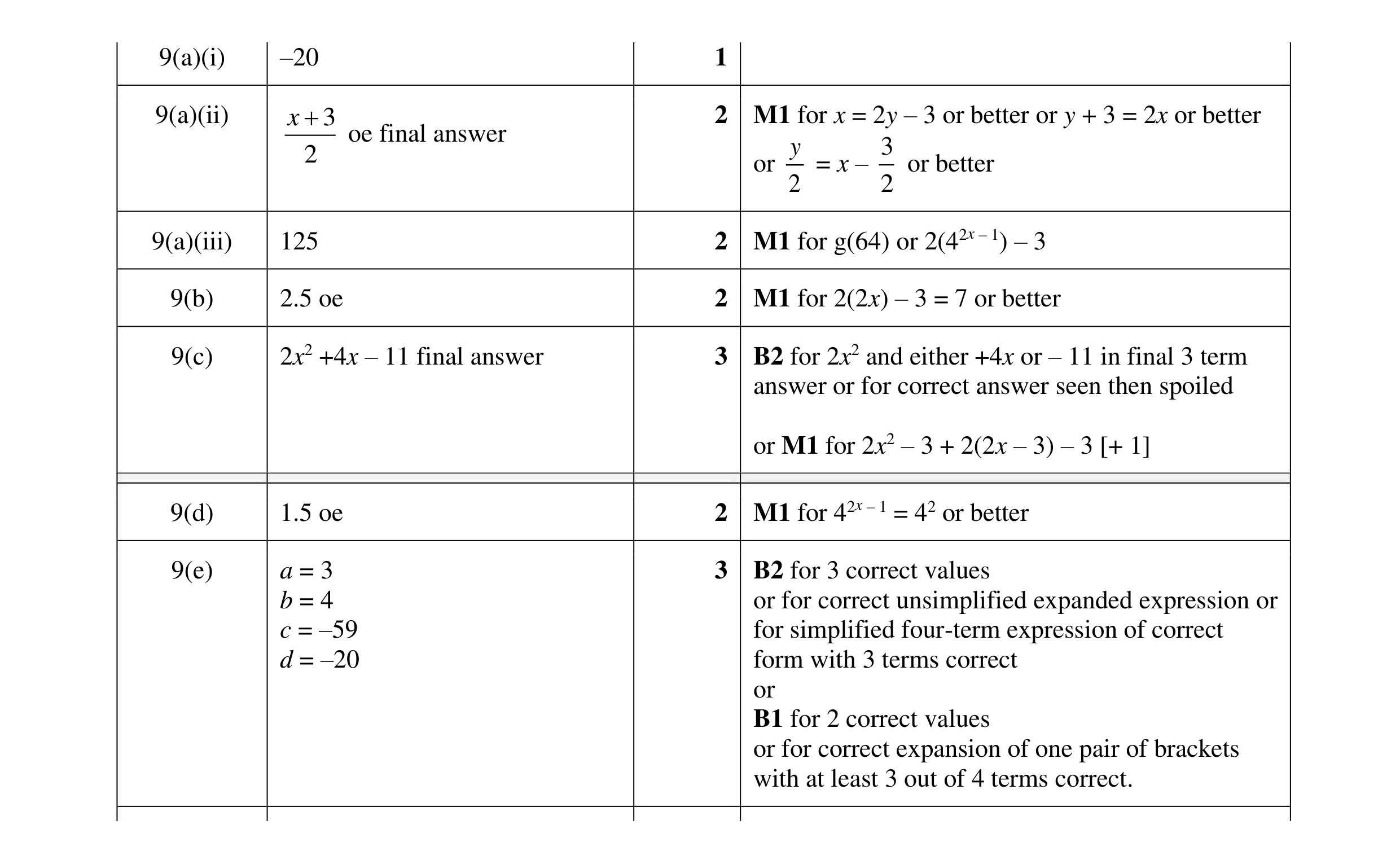 15
15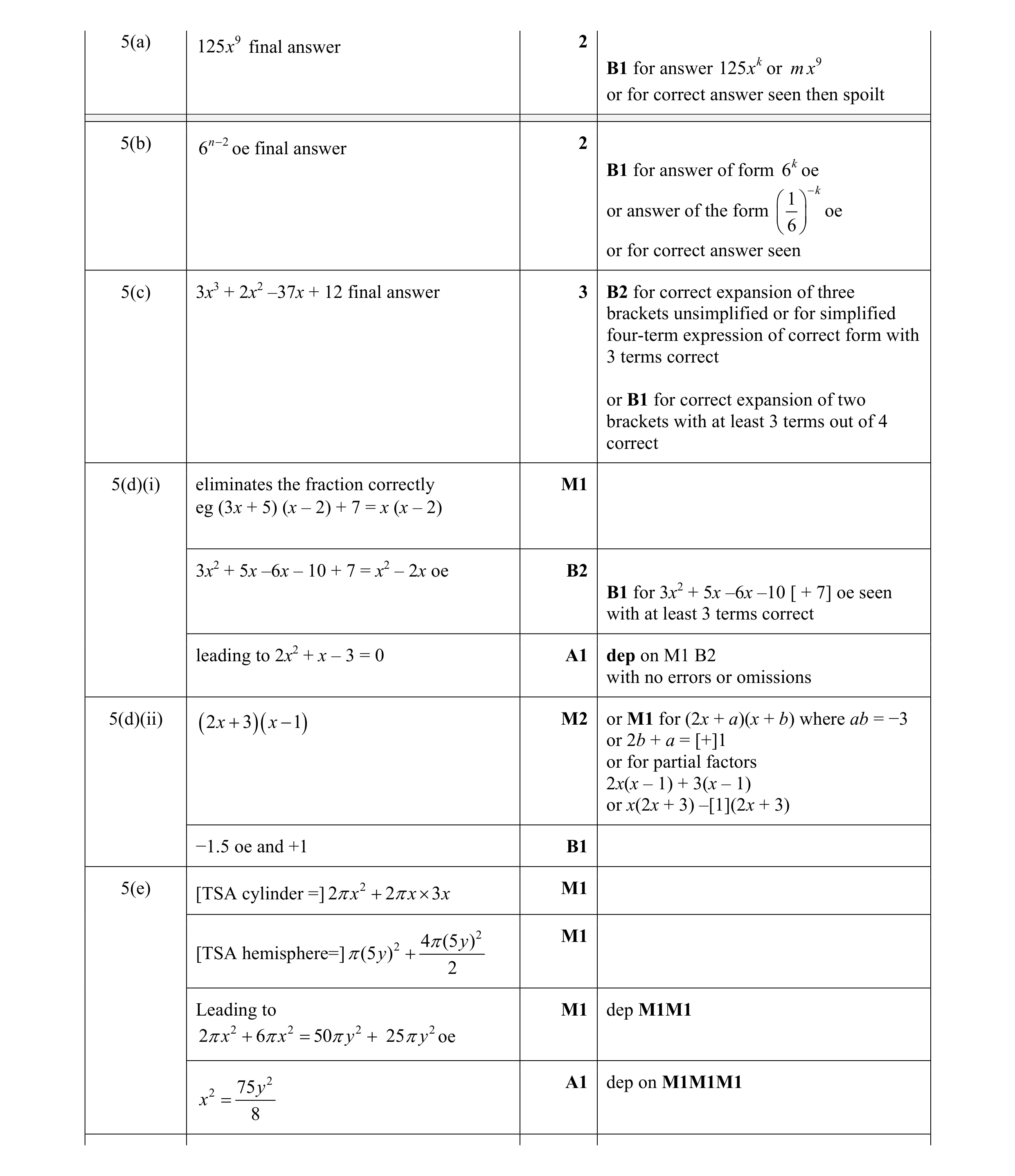 18
18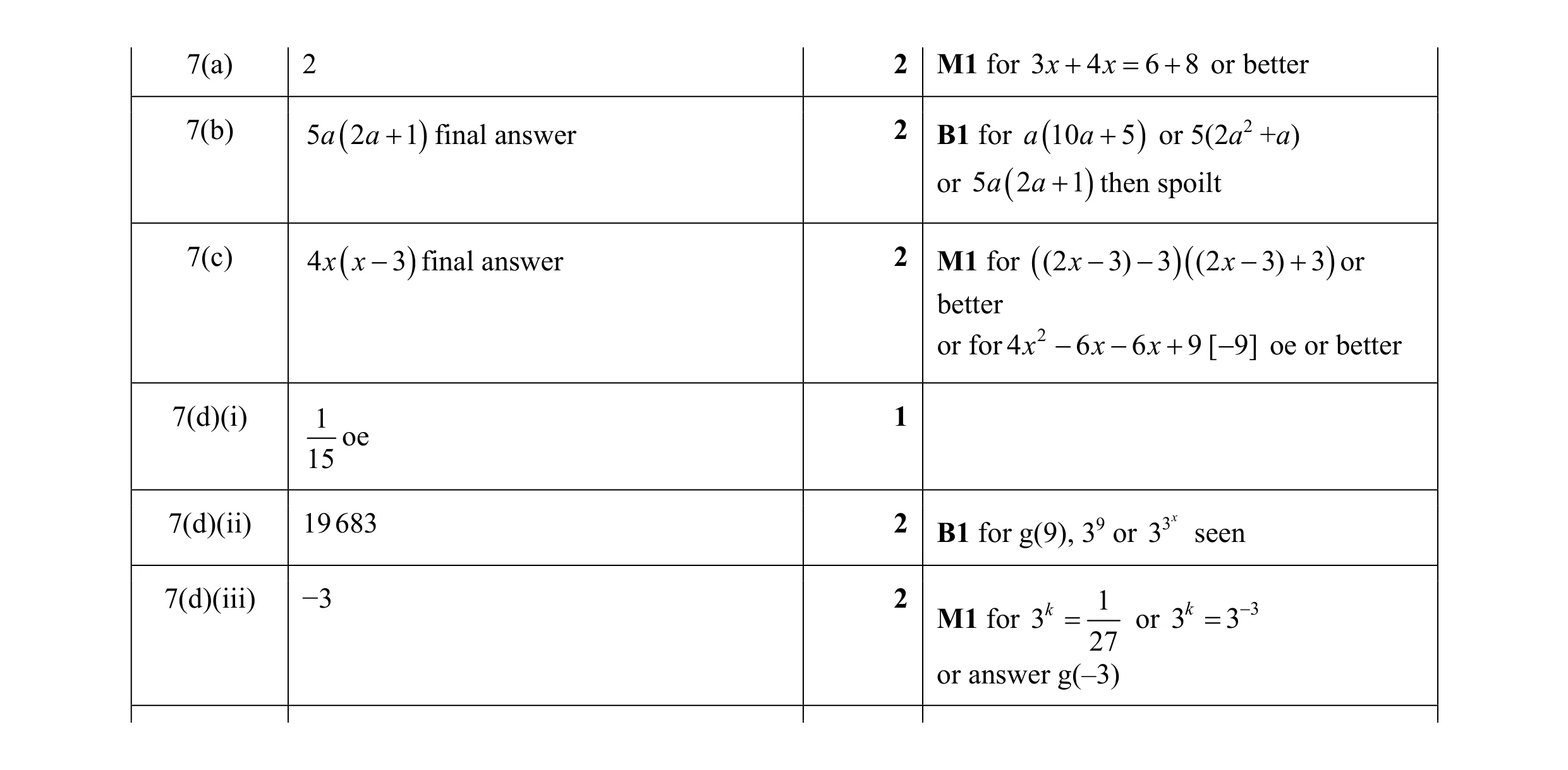 11
11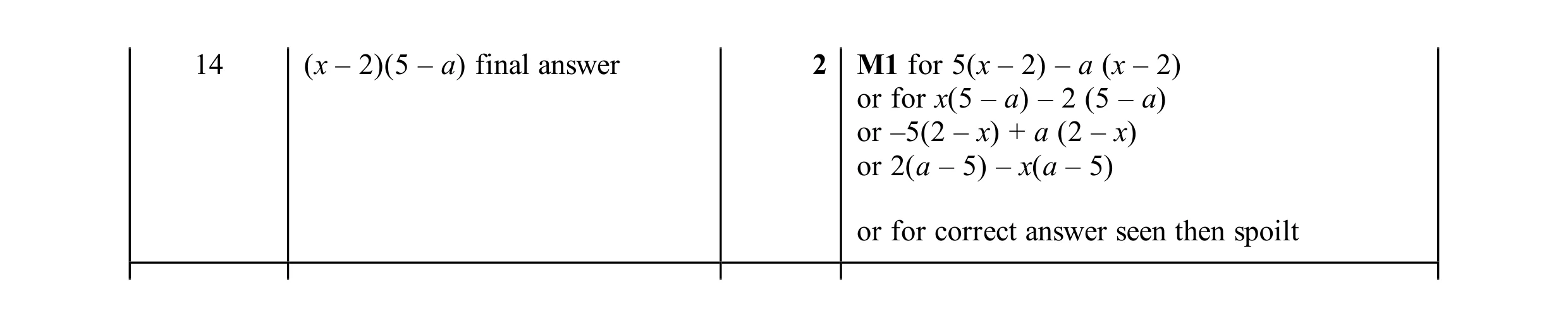 2
2