Questions as text
Q1 · MRSA is a bacterium that causes infection and has become resistant to many antibiotics 0654/42 Oct/Nov 2017
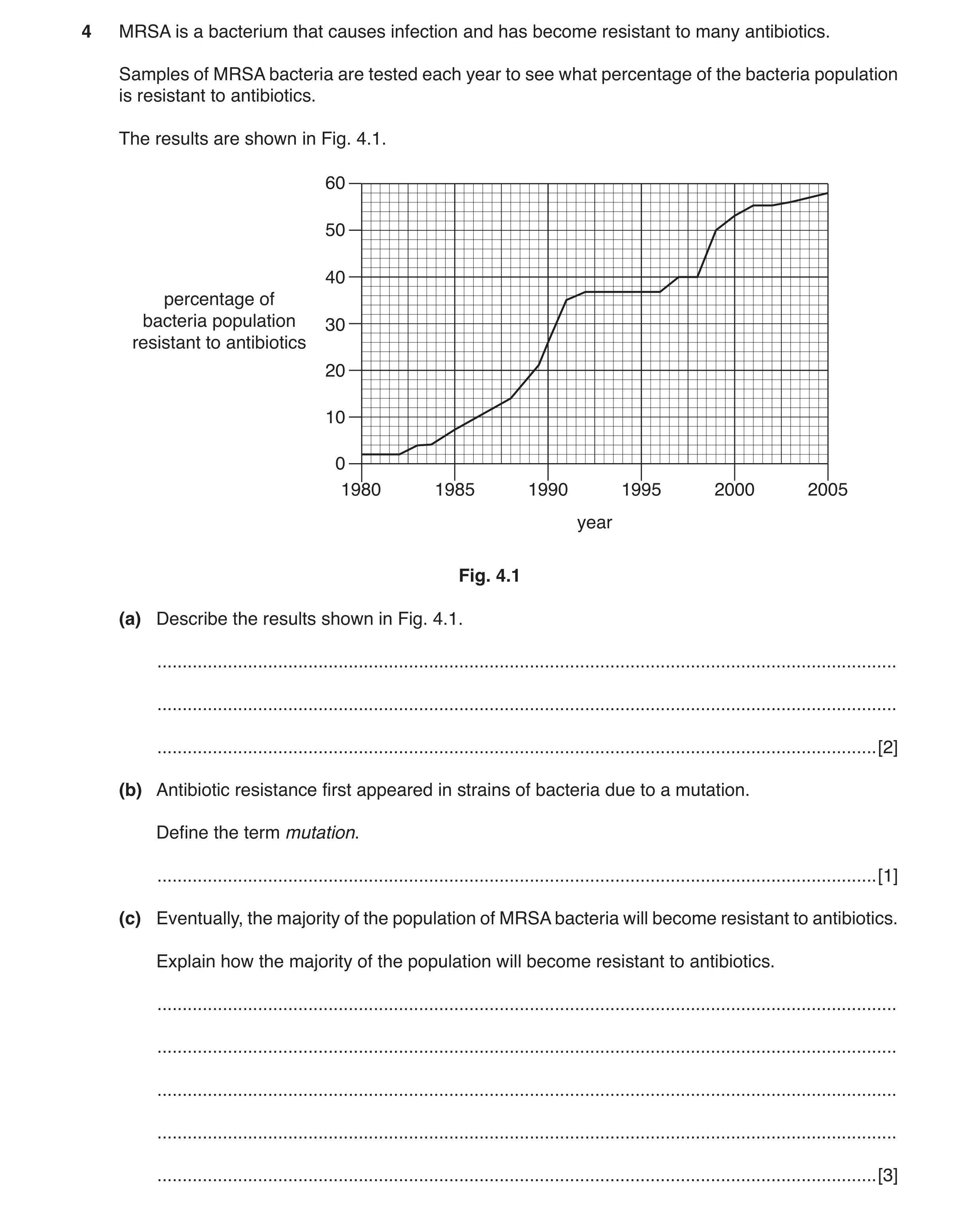
4 MRSA is a bacterium that causes infection and has become resistant to many antibiotics. Samples of MRSA bacteria are tested each year to see what percentage of the bacteria population is resistant to antibiotics. The results are shown in Fig. 4.1. 60 50 40 percentage of bacteria population 30 resistant to antibiotics 20 10 0 1980 1985 1990 1995 2000 2005 year Fig. 4.1 (a) Describe the results shown in Fig. 4.1. … … … [2] (b) Antibiotic resistance first appeared in strains of bacteria due to a mutation. Define the term mutation. … [1] (c) Eventually, the majority of the population of MRSA bacteria will become resistant to antibiotics. Explain how the majority of the population will become resistant to antibiotics. … … … … … [3]
6 marks
Mark scheme: 4(a) resistance increases over time ; resistance, plateaus / levels off, between 1992–1996 / from 2000 ; correct data quote ; max 2 4(b) change in gene / chromosome ; 1 4(c) antibiotics will kill bacteria with no resistance ; resistant bacteria survive and reproduce ; pass on resistance to their offspring ; ref to natural selection ; max 3
This question in 0654/42 Oct/Nov 2017
Q2 · Sexual reproduction in large animal populations usually results in approximately equal… 0654/43 Oct/Nov 2017
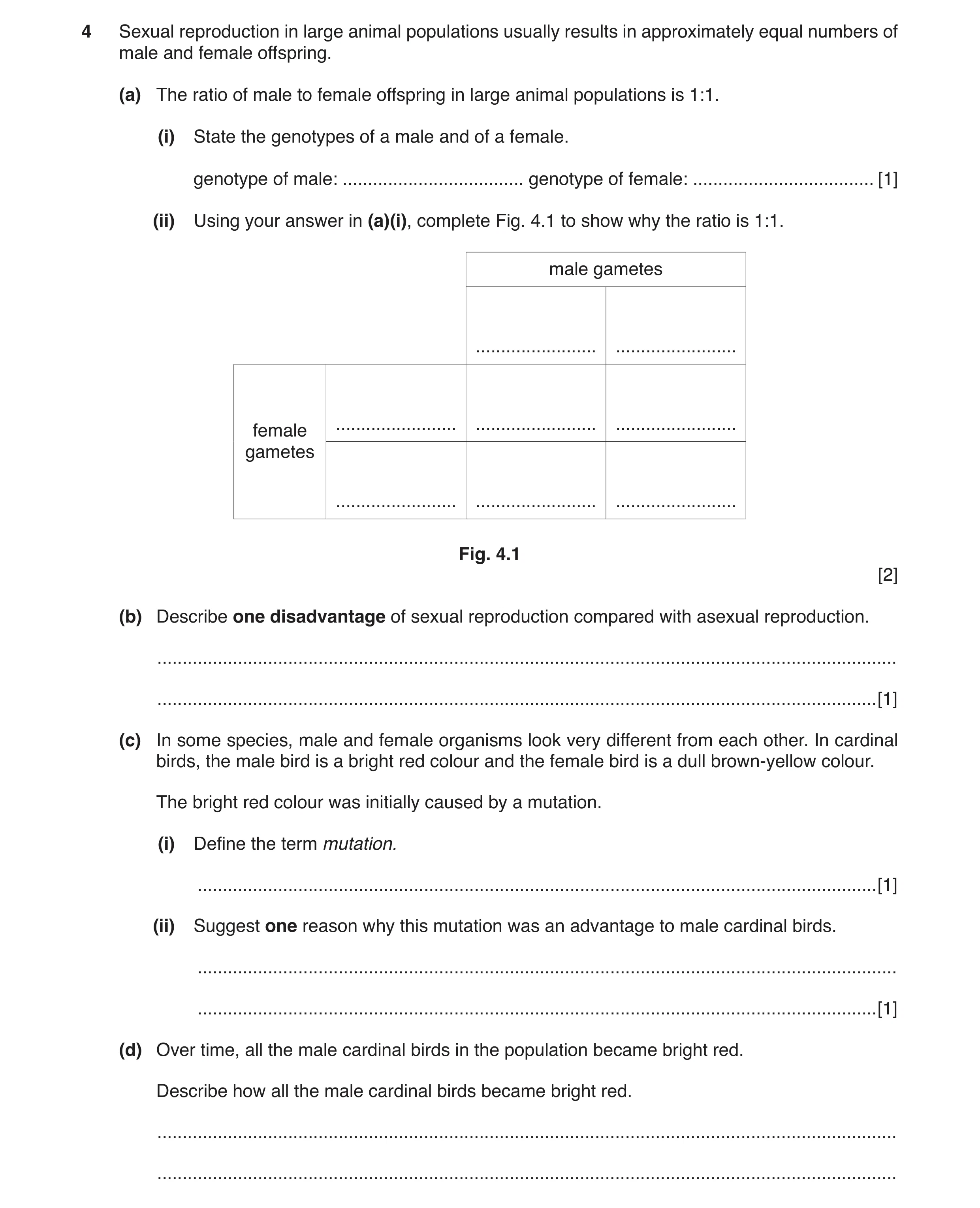
4 Sexual reproduction in large animal populations usually results in approximately equal numbers of male and female offspring. (a) The ratio of male to female offspring in large animal populations is 1:1. (i) State the genotypes of a male and of a female. genotype of male: … genotype of female: … [1] (ii) Using your answer in (a)(i), complete Fig. 4.1 to show why the ratio is 1:1. male gametes … … … … … female gametes … … … Fig. 4.1 [2] (b) Describe one disadvantage of sexual reproduction compared with asexual reproduction. … … [1] (c) In some species, male and female organisms look very different from each other. In cardinal birds, the male bird is a bright red colour and the female bird is a dull brown-yellow colour. The bright red colour was initially caused by a mutation. (i) Define the term mutation. … [1] (ii) Suggest one reason why this mutation was an advantage to male cardinal birds. … … [1] (d) Over time, all the male cardinal birds in the population became bright red. Describe how all the male cardinal birds became bright red. … …
8 marks
Mark scheme: 4(a)(i) genotype of male: XY genotype of female: XX ; 1 4(a)(ii) gametes correct ; X and X for female X and Y for male ; offspring correct ; XX, XX, XY, XY ; male gametes X Y female gametes X XX XY X XX XY 2 4(b) two parents needed ; harmful variations can occur ; max 1 4(c)(i) change in, gene / chromosome ; 1 4(c)(ii) more visible to females / mates ; 1 4(d) red cardinal birds (more likely to) reproduce / mate ; pass on, allele / gene / colour, to their offspring ; ref to natural selection ; max 2
This question in 0654/43 Oct/Nov 2017
Q3 · A diagram of the male reproductive system 0654/43 Oct/Nov 2018
1 Fig. 1.1 shows a diagram of the male reproductive system. Fig. 1.1 (a) (i) Mark an X on Fig. 1.1 to show where sperm cells are made. [1] (ii) State the type of cell division that produces sperm cells. … [1] (iii) State two structures through which sperm cells must pass on their way out of the body. 1 … 2 … [2] (b) Table 1.1 compares some of the features of sperm cells and egg cells in humans. Complete Table 1.1. Table 1.1 feature sperm cells egg cells size compared to the other sex cell number produced during lifetime compared to the other sex cell ability to move themselves unable to move themselves [3] (c) The nuclei of sperm cells can be described as haploid. State the meaning of the term haploid nuclei. … … [1] (d) During fertilisation, the nuclei of the sperm cell and the egg cell join. State where in the human body fertilisation occurs. … [1]
9 marks
Mark scheme: 1(a)(i) X drawn on testis ; 1 1(a)(ii) meiosis ; 1 1(a)(iii) any two from sperm duct ; urethra ; penis ; max 2 1(b) feature sperm cells egg cells size compared to the other sex cell small large number produced during lifetime compared to the other sex cell many few ability to move themselves able to move themselves unable to move themselves 1 correct row ; 2 correct rows ; 3 correct rows ; 3 1(c) (nuclei) contains, single set / unpaired chromosomes ; 1 1(d) oviduct ; 1
This question in 0654/43 Oct/Nov 2018
Q4 · MRSA is a strain of bacteria that is resistant to antibiotics 0654/43 Oct/Nov 2019
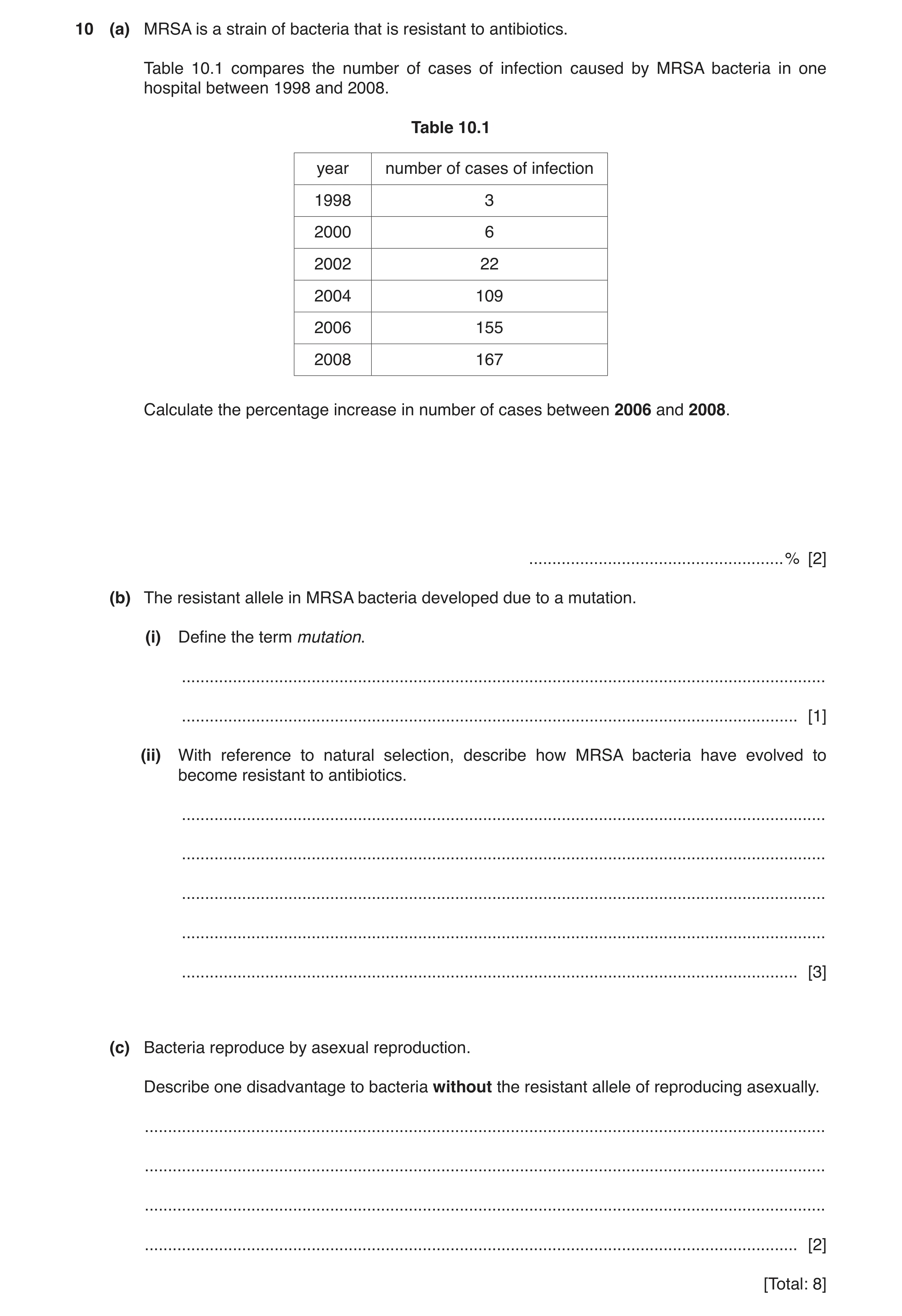
10 (a) MRSA is a strain of bacteria that is resistant to antibiotics. Table 10.1 compares the number of cases of infection caused by MRSA bacteria in one hospital between 1998 and 2008. Table 10.1 year number of cases of infection 1998 3 2000 6 2002 22 2004 109 2006 155 2008 167 Calculate the percentage increase in number of cases between 2006 and 2008. … % [2] (b) The resistant allele in MRSA bacteria developed due to a mutation. (i) Define the term mutation. … … [1] (ii) With reference to natural selection, describe how MRSA bacteria have evolved to become resistant to antibiotics. … … … … … [3] (c) Bacteria reproduce by asexual reproduction. Describe one disadvantage to bacteria without the resistant allele of reproducing asexually. … … … … [2] [Total: 8]
8 marks
Mark scheme: 10(a) 167 – 155 OR 12 ; (12 / 155 × 100 = ) 7.7 (%) ; 2 10(b)(i) change in the, gene / chromosome ; 1 10(b)(ii) bacteria without the resistance die ; bacteria with the resistance survive and breed ; resistant allele passed onto offspring ; 3 10(c) offspring are genetically identical / have no genetic variation, to parent ; offspring will not have the resistant allele ; 2
This question in 0654/43 Oct/Nov 2019
Q5 · Different species have different numbers of chromosomes in their cells 0654/42 May/June 2021
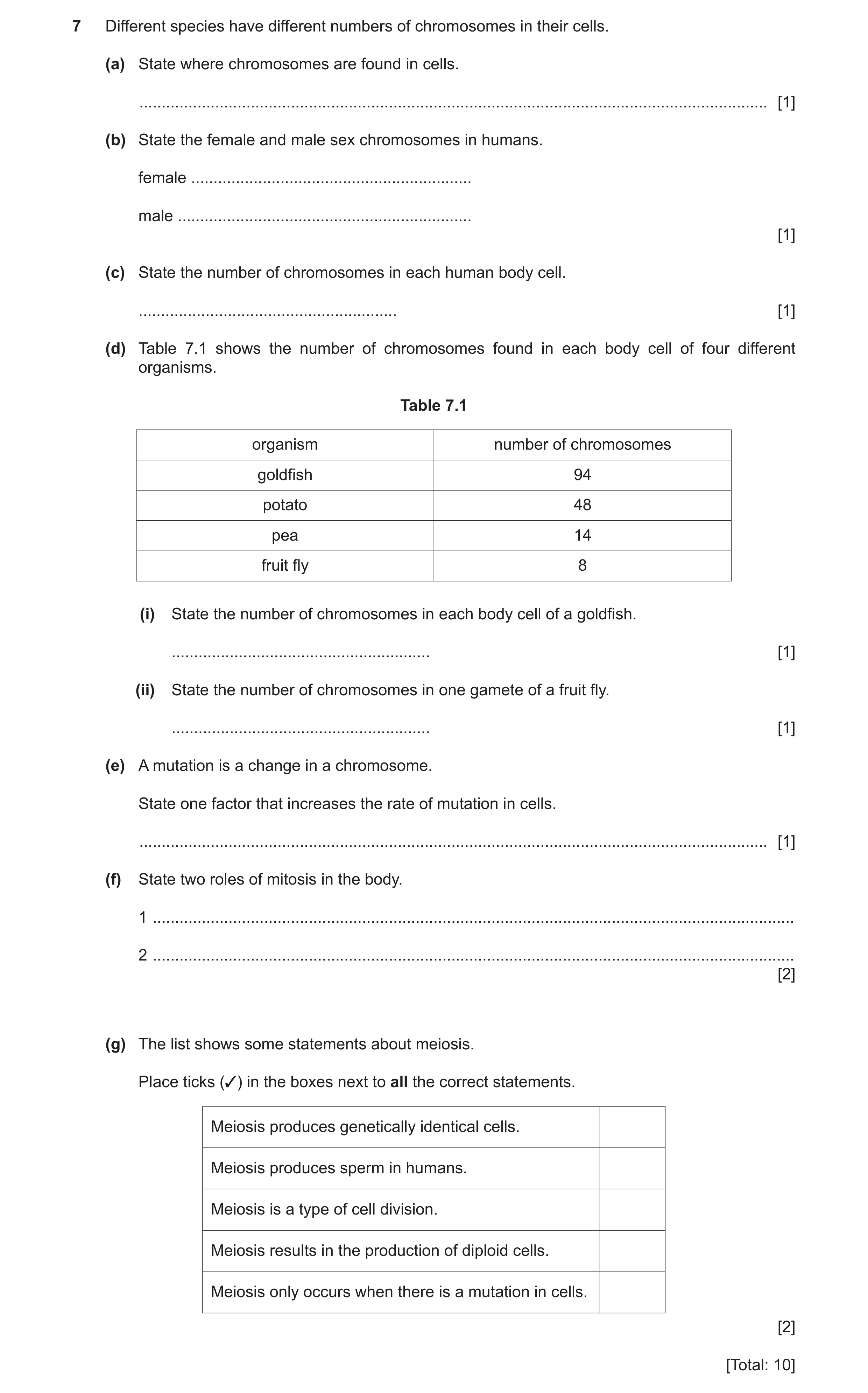
7 Different species have different numbers of chromosomes in their cells. (a) State where chromosomes are found in cells. … [1] (b) State the female and male sex chromosomes in humans. female … male … [1] (c) State the number of chromosomes in each human body cell. … [1] (d) Table 7.1 shows the number of chromosomes found in each body cell of four different organisms. Table 7.1 organism number of chromosomes goldfish 94 potato 48 pea 14 fruit fly 8 (i) State the number of chromosomes in each body cell of a goldfish. … [1] (ii) State the number of chromosomes in one gamete of a fruit fly. … [1] (e) A mutation is a change in a chromosome. State one factor that increases the rate of mutation in cells. … [1] (f) State two roles of mitosis in the body. 1 … 2 … [2] (g) The list shows some statements about meiosis. Place ticks (3) in the boxes next to all the correct statements. Meiosis produces genetically identical cells. Meiosis produces sperm in humans. Meiosis is a type of cell division. Meiosis results in the production of diploid cells. Meiosis only occurs when there is a mutation in cells. [2] [Total: 10]
10 marks
Mark scheme: 7(a) nucleus ; 1 7(b) (female) XX (male) XY ; 1 7(c) 46 / 23 pairs ; 1 7(d)(i) 94 ; 1 7(d)(ii) 4 ; 1 7(e) (named) ionising radiation / chemicals ; 1 Question Answer Marks 7(f) any two from: asexual reproduction ; growth ; repair of damaged tissues ; replacement of cells ; 2 7(g) meiosis produces sperm in humans ticked ; meiosis is a type of cell division ; 2
This question in 0654/42 May/June 2021
Q6 · A diagram of the male reproductive system in humans 0654/41 Oct/Nov 2022
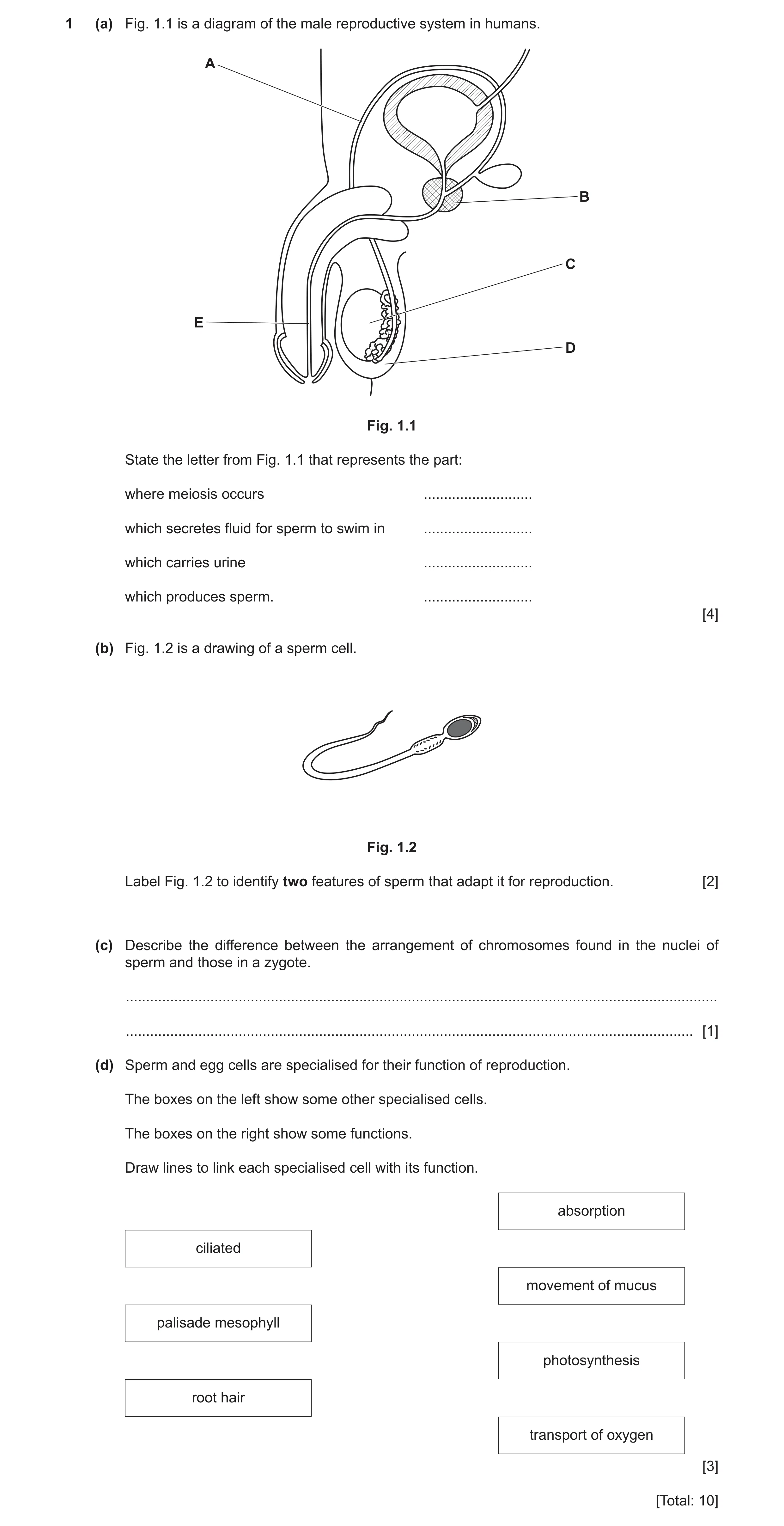
1 (a) Fig. 1.1 is a diagram of the male reproductive system in humans. A B C E D Fig. 1.1 State the letter from Fig. 1.1 that represents the part: where meiosis occurs … which secretes fluid for sperm to swim in … which carries urine … which produces sperm. … [4] (b) Fig. 1.2 is a drawing of a sperm cell. Fig. 1.2 Label Fig. 1.2 to identify two features of sperm that adapt it for reproduction. [2] (c) Describe the difference between the arrangement of chromosomes found in the nuclei of sperm and those in a zygote. … … [1] (d) Sperm and egg cells are specialised for their function of reproduction. The boxes on the left show some other specialised cells. The boxes on the right show some functions. Draw lines to link each specialised cell with its function. absorption ciliated movement of mucus palisade mesophyll photosynthesis root hair transport of oxygen [3] [Total: 10]
10 marks
Mark scheme: Question Answer Marks 1(a) C ; 4 B ; E ; C ; 1(b) any two from: 2 flagellum labelled ; haploid nucleus labelled ; enzymes labelled ; AVP ; 1(c) 1 from: 1 sperm: unpaired chromosomes / single set of chromosomes ; zygote: paired chromosomes / 2 sets of chromosomes ; 1(d) 3 absorption ciliated movement of mucus palisade mesophyll photosynthesis root hair transport of oxygen ;;;
This question in 0654/41 Oct/Nov 2022
Q7 · A scientist tests the resistance of one strain of bacteria, to four different… 0654/42 Oct/Nov 2022
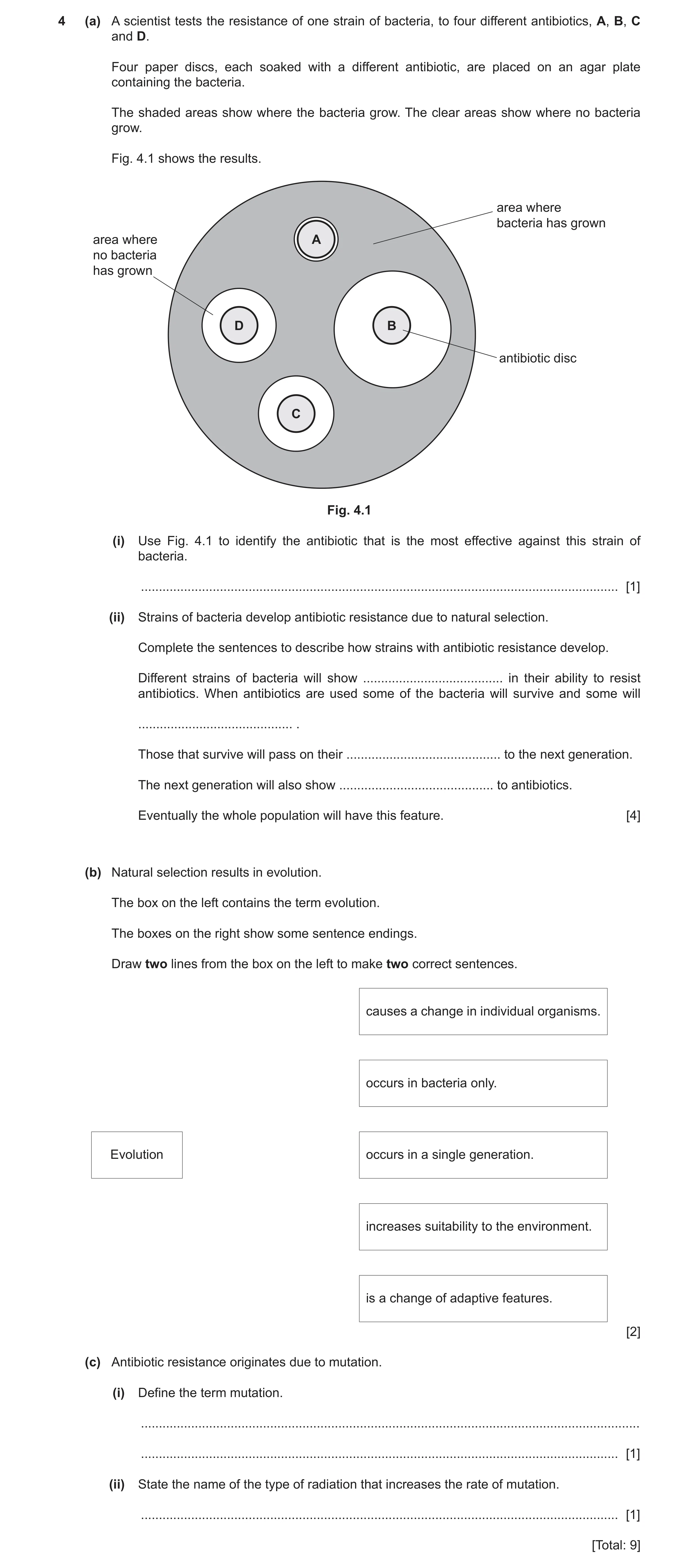
4 (a) A scientist tests the resistance of one strain of bacteria, to four different antibiotics, A, B, C and D. Four paper discs, each soaked with a different antibiotic, are placed on an agar plate containing the bacteria. The shaded areas show where the bacteria grow. The clear areas show where no bacteria grow. Fig. 4.1 shows the results. area where bacteria has grown area where A no bacteria has grown D B antibiotic disc C Fig. 4.1 (i) Use Fig. 4.1 to identify the antibiotic that is the most effective against this strain of bacteria. … [1] (ii) Strains of bacteria develop antibiotic resistance due to natural selection. Complete the sentences to describe how strains with antibiotic resistance develop. Different strains of bacteria will show … in their ability to resist antibiotics. When antibiotics are used some of the bacteria will survive and some will … . Those that survive will pass on their … to the next generation. The next generation will also show … to antibiotics. Eventually the whole population will have this feature. [4] (b) Natural selection results in evolution. The box on the left contains the term evolution. The boxes on the right show some sentence endings. Draw two lines from the box on the left to make two correct sentences. causes a change in individual organisms. occurs in bacteria only. Evolution occurs in a single generation. increases suitability to the environment. is a change of adaptive features. [2] (c) Antibiotic resistance originates due to mutation. (i) Define the term mutation. … … [1] (ii) State the name of the type of radiation that increases the rate of mutation. … [1] [Total: 9]
9 marks
Mark scheme: 4(a)(i) B ; 1 4(a)(ii) variation / AW ; 4 die ; alleles ; resistance ; 4(b) evolution linked to: 2 increases suitability to the environment ; is a change of adaptive features ; 4(c)(i) change in the gene / chromosome ; 1 4(c)(ii) ionising ; 1
This question in 0654/42 Oct/Nov 2022
Q8 · A diagram showing the development of a strain of antibiotic resistant bacteria 0654/41 May/June 2023
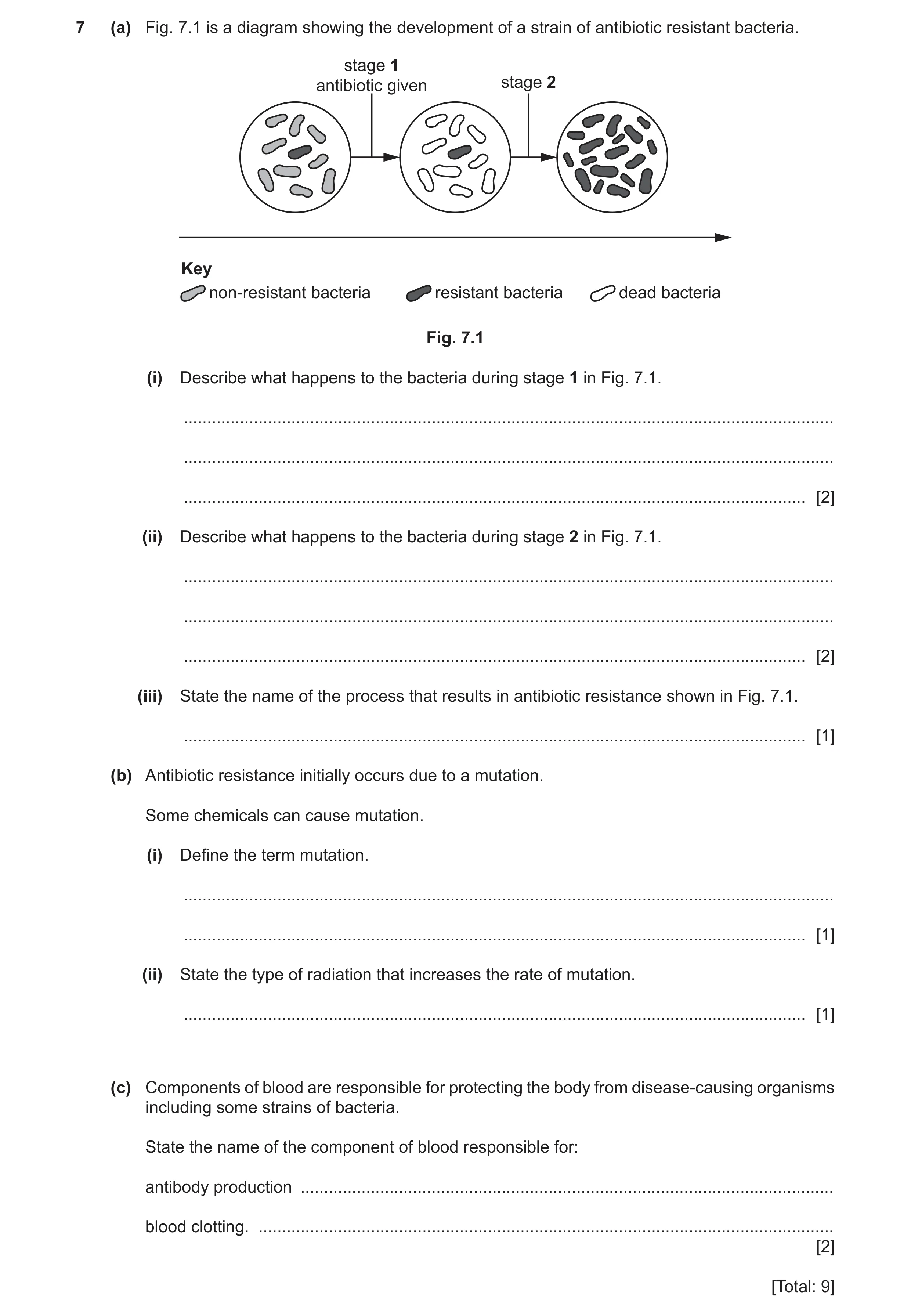
7 (a) Fig. 7.1 is a diagram showing the development of a strain of antibiotic resistant bacteria. stage 1 antibiotic given stage 2 Key non-resistant bacteria resistant bacteria dead bacteria Fig. 7.1 (i) Describe what happens to the bacteria during stage 1 in Fig. 7.1. … … … [2] (ii) Describe what happens to the bacteria during stage 2 in Fig. 7.1. … … … [2] (iii) State the name of the process that results in antibiotic resistance shown in Fig. 7.1. … [1] (b) Antibiotic resistance initially occurs due to a mutation. Some chemicals can cause mutation. (i) Define the term mutation. … … [1] (ii) State the type of radiation that increases the rate of mutation. … [1] (c) Components of blood are responsible for protecting the body from disease‑causing organisms including some strains of bacteria. State the name of the component of blood responsible for: antibody production … blood clotting. … [2] [Total: 9]
9 marks
Mark scheme: 7(a)(i) the bacteria with (antibiotic) resistance survive ; antibiotics kill the bacteria without (antibiotic) resistance ; 2 7(a)(ii) the bacteria with (antibiotic) resistance, multiplies / divides ; passing on alleles / genes / (mutated) DNA to the next generation / the offspring all gain resistance (to antibiotics) ; 2 7(a)(iii) natural selection ; 1 7(b)(i) change in, gene / chromosome ; 1 7(b)(ii) ionising ; 1 7(c) white blood cells ; platelets ; 2
This question in 0654/41 May/June 2023
Q9 · A student investigates antibiotic resistance in one strain of bacteria 0654/42 May/June 2024
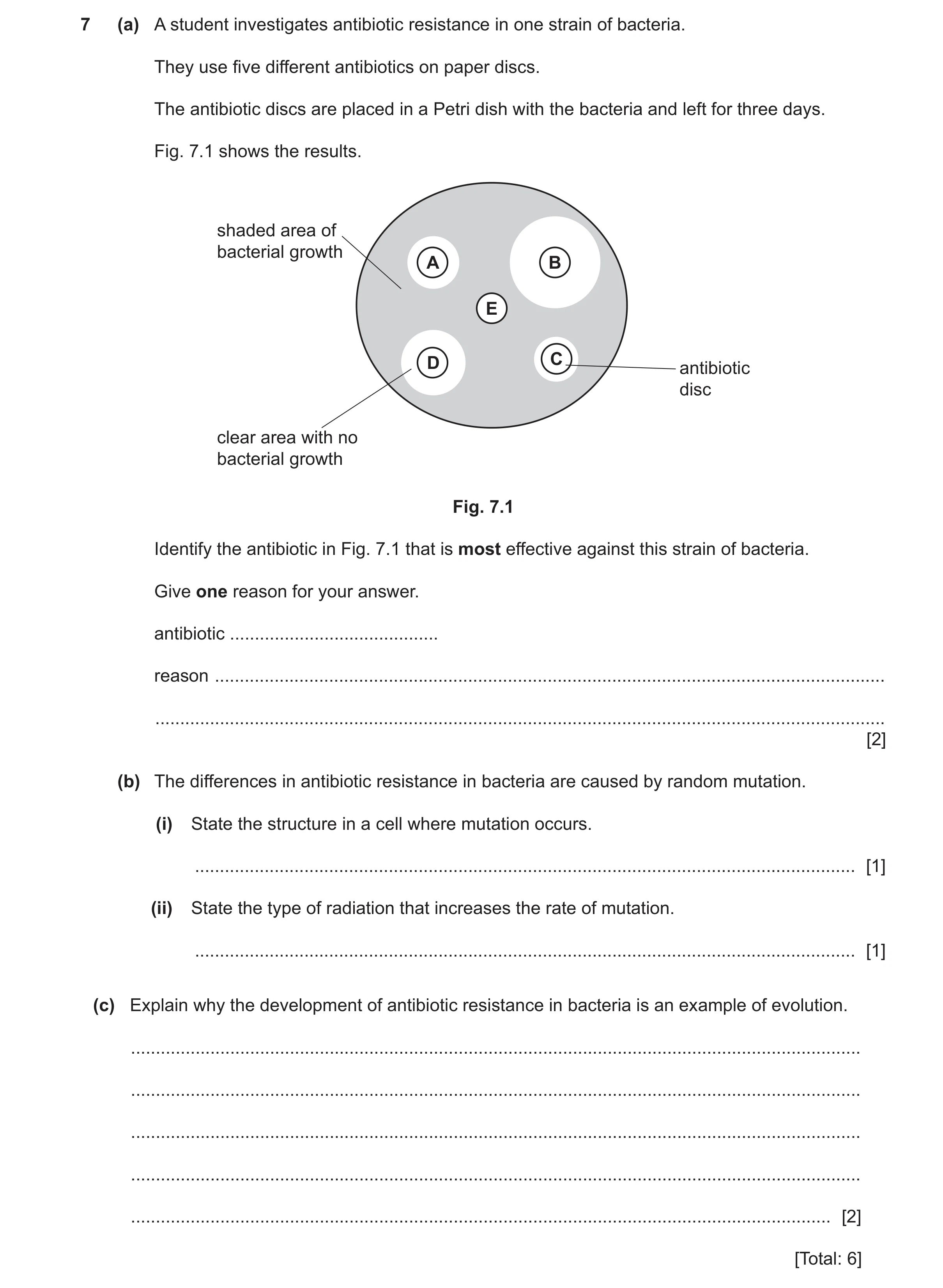
7 (a) A student investigates antibiotic resistance in one strain of bacteria. They use five different antibiotics on paper discs. The antibiotic discs are placed in a Petri dish with the bacteria and left for three days. Fig. 7.1 shows the results. shaded area of bacterial growth A B E D C antibiotic disc clear area with no bacterial growth Fig. 7.1 Identify the antibiotic in Fig. 7.1 that is most effective against this strain of bacteria. Give one reason for your answer. antibiotic … reason … … [2] (b) The differences in antibiotic resistance in bacteria are caused by random mutation. (i) State the structure in a cell where mutation occurs. … [1] (ii) State the type of radiation that increases the rate of mutation. … [1] (c) Explain why the development of antibiotic resistance in bacteria is an example of evolution. … … … … … [2] [Total: 6]
6 marks
Mark scheme: 7(a) B ; largest clear area / AW ; 2 7(b)(i) gene / chromosome / nucleus / DNA ; 1 7(b)(ii) ionising ; 1 7(c) change in adaptive features (over time) ; that results from natural selection ; 2
This question in 0654/42 May/June 2024
Q10 · A diagram of the human male reproductive system 0654/43 May/June 2025
3 Fig. 3.1 is a diagram of the human male reproductive system. A B G C D F E Fig. 3.1 (a) Using letters A–G in Fig. 3.1, identify the: urethra … prostate gland. … [2] (b) Complete Table 3.1 showing the adaptive features of sperm cells. Table 3.1 feature function flagellum … mitochondria … contains enzymes to digest the jelly coat … on the egg [3] (c) Sperm cells contain a single set of chromosomes in their nucleus. (i) State what is meant by a chromosome. … … [1] (ii) State the name of the type of nucleus that only contains a single set of chromosomes. … [1] (d) Gonorrhoea is a sexually transmitted infection caused by a bacterium. (i) Complete the sentences about the way doctors treat gonorrhoea bacterial infections. Choose words from the list. antibodies antibiotics antigens denaturation mutations vaccinations Doctors always use … to treat gonorrhoea infections. This increases the risk of bacteria with … being selected for and forming a population of resistant bacteria. [2] (ii) Describe two ways to control the spread of gonorrhoea. 1 … … 2 … … [2] [Total: 11]
11 marks
Mark scheme: 3(a) C; 2 G; 3(b) 3 feature function flagellum produces swimming / movement; mitochondria release energy (for swimming); contains enzymes to digest the jelly acrosome; coat on the egg 3(c)(i) (length of) DNA which contains, genetic information / genes; 1 3(c)(ii) haploid; 1 3(d)(i) antibiotics; 2 mutation; 3(d)(ii) reducing number of sexual partners / abstaining (from sex); 2 using condoms / preventing transfer of bodily fluids during sex; AVP;;
This question in 0654/43 May/June 2025
 1 / 13
 2 / 13
![Question 3: Fig. 1.1 shows a diagram of the male reproductive system. Fig. 1.1 (a) (i) Mark an X on Fig. 1.1 to show where sperm cells are made. [1] (i…](https://img.pastlit.com/crops/de48ac87-a145-4180-b929-1ee28046327c/q1.webp)
 10 / 13
 11 / 13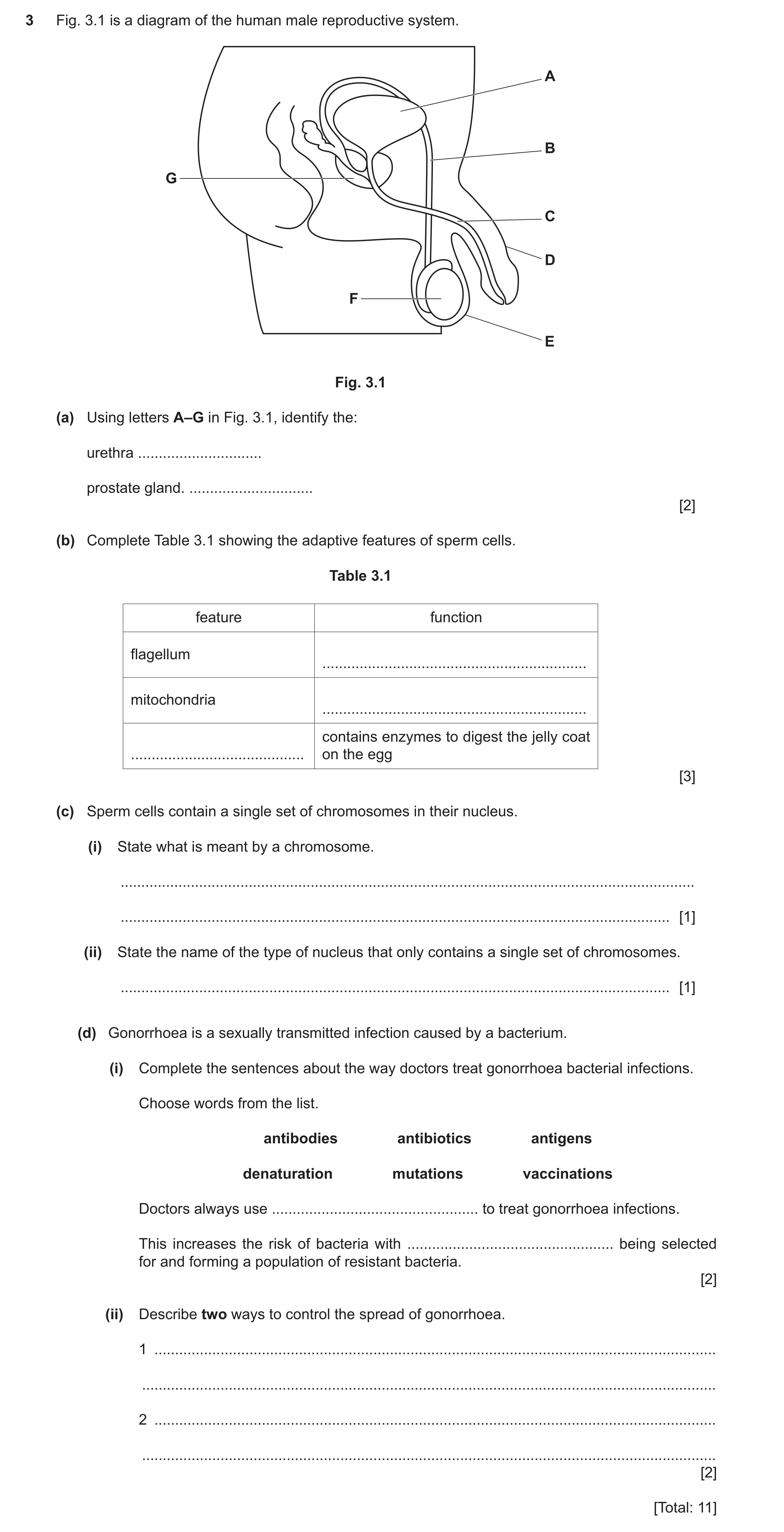
 6
6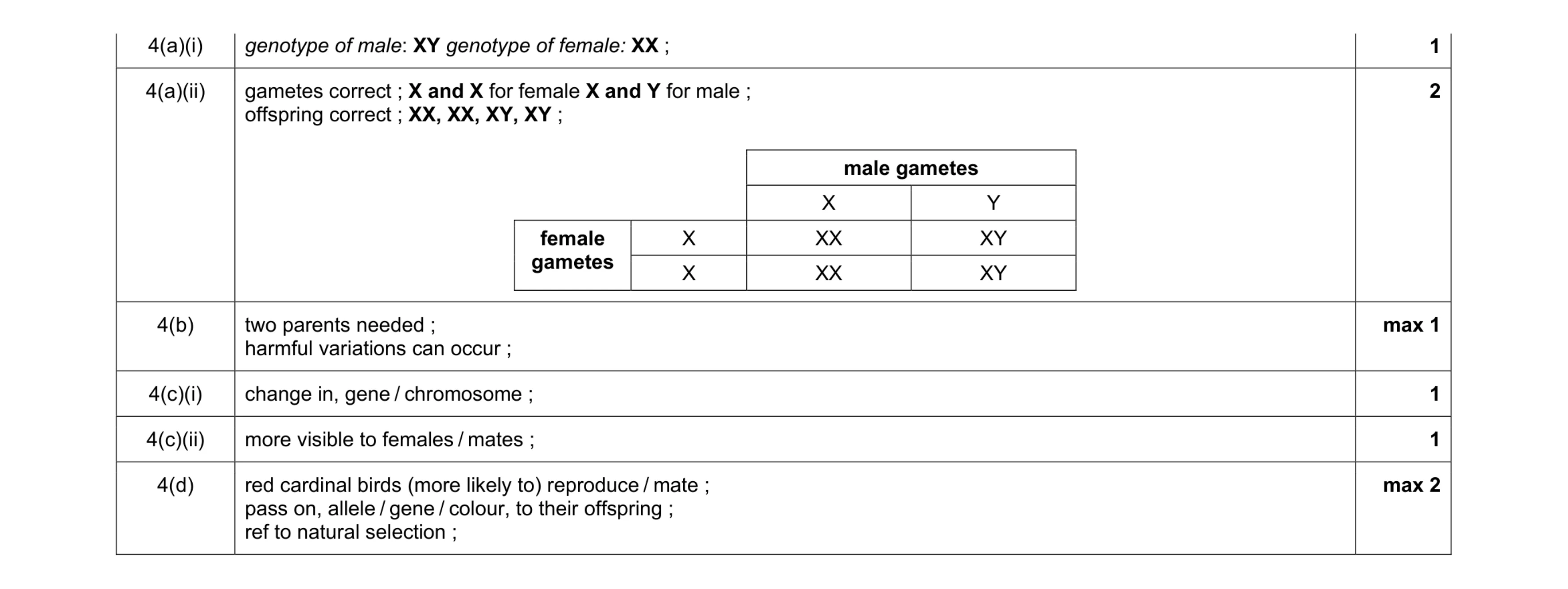 8
8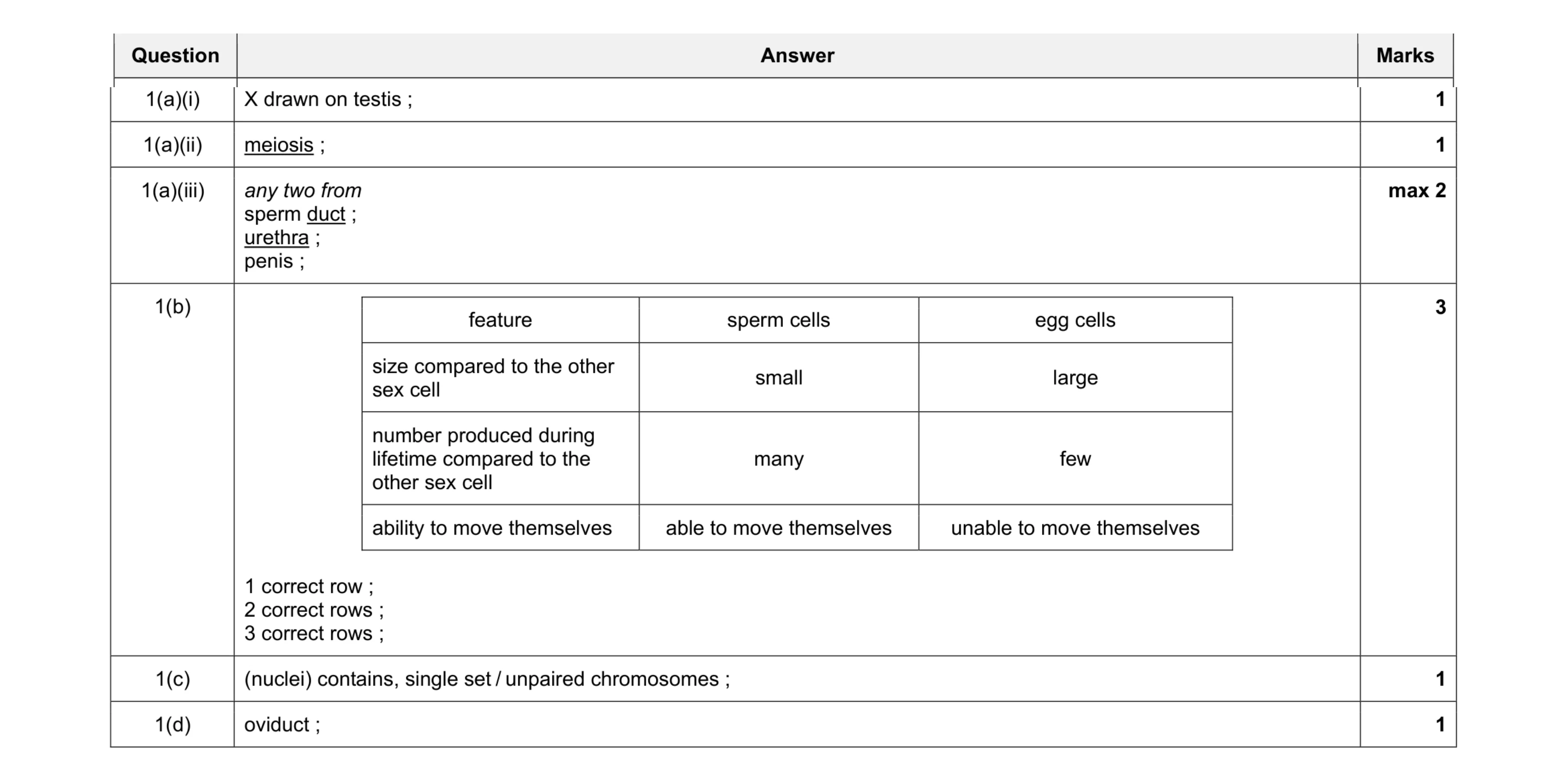 9
9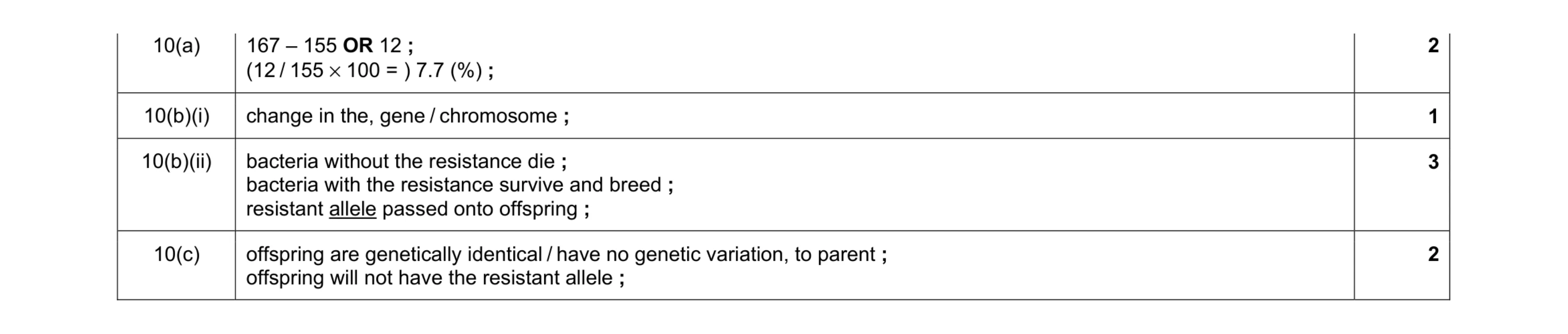 8
8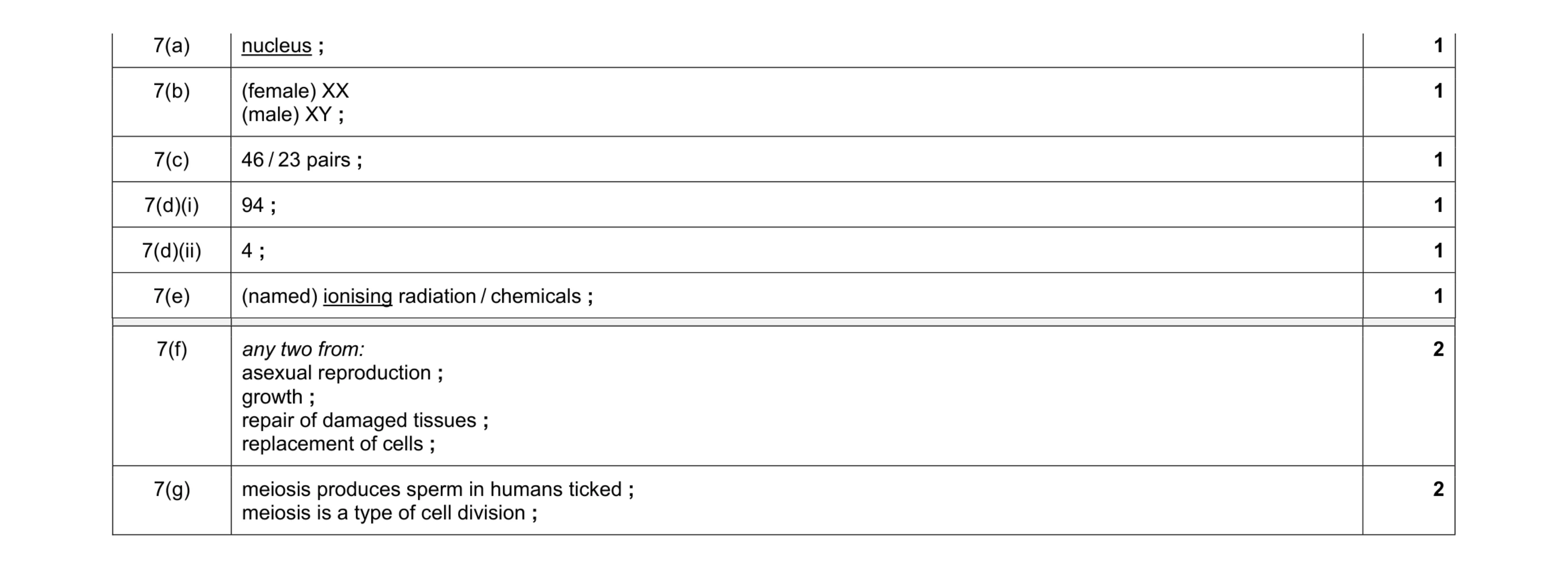 10
10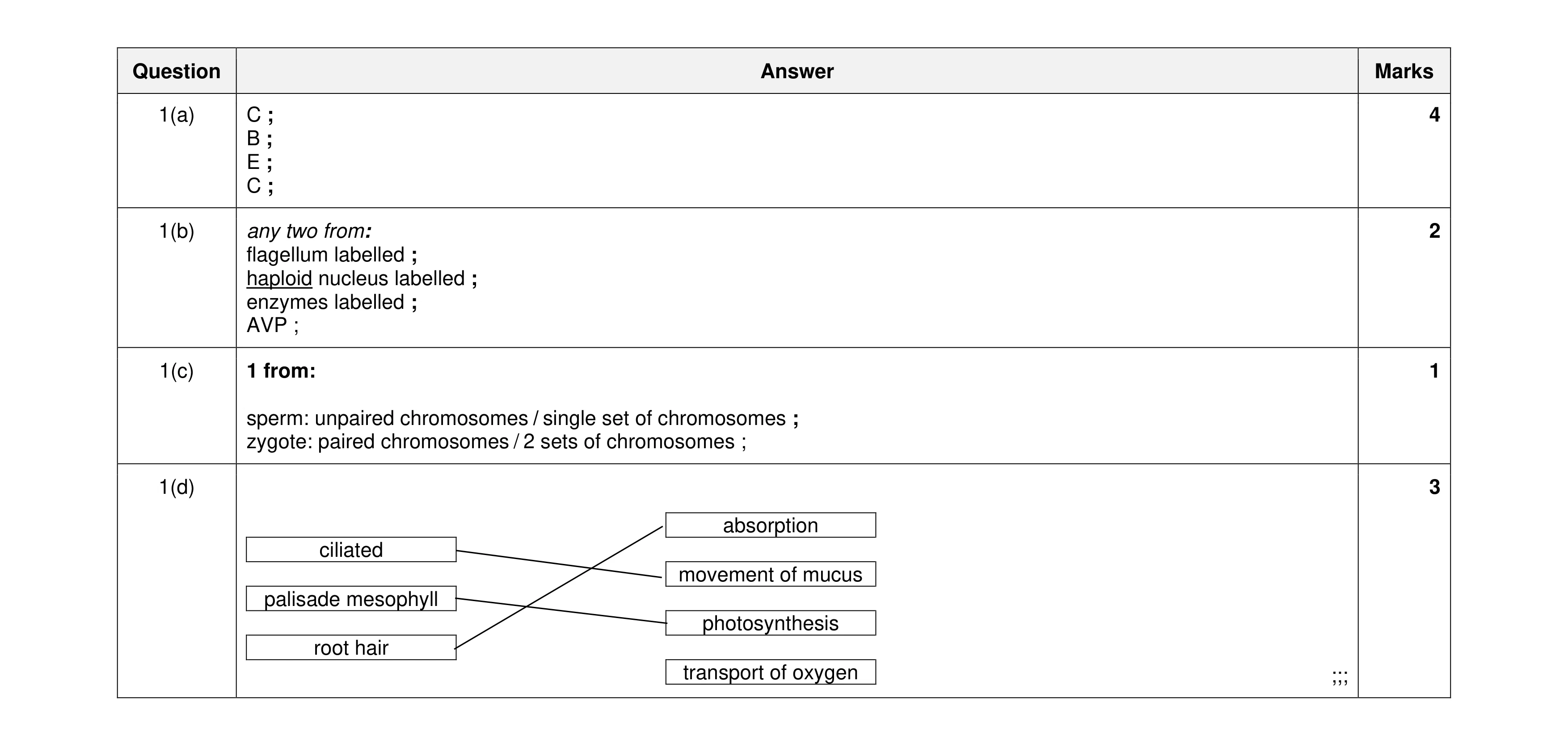 10
10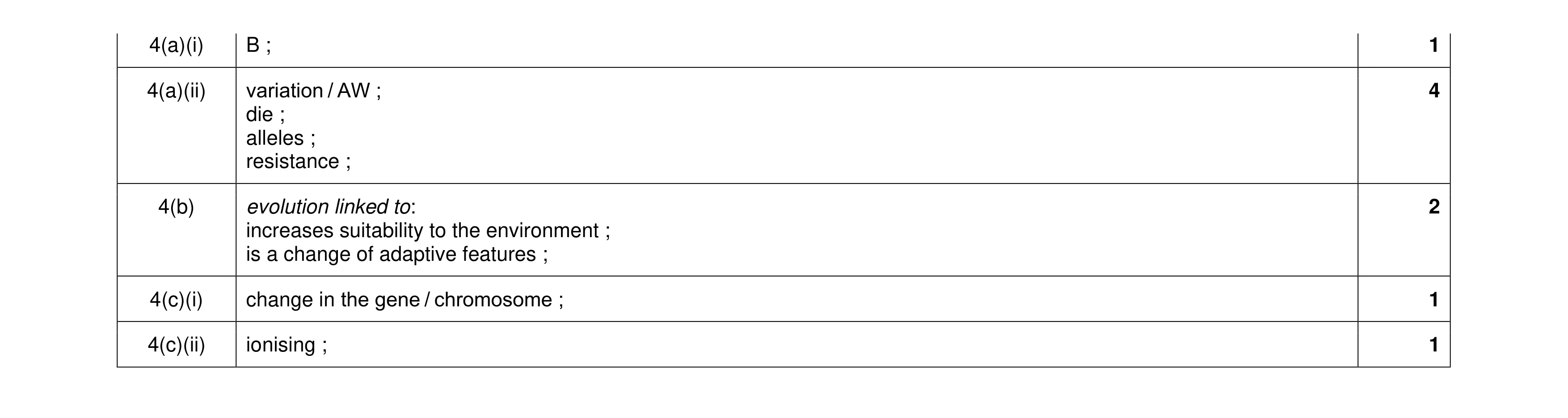 9
9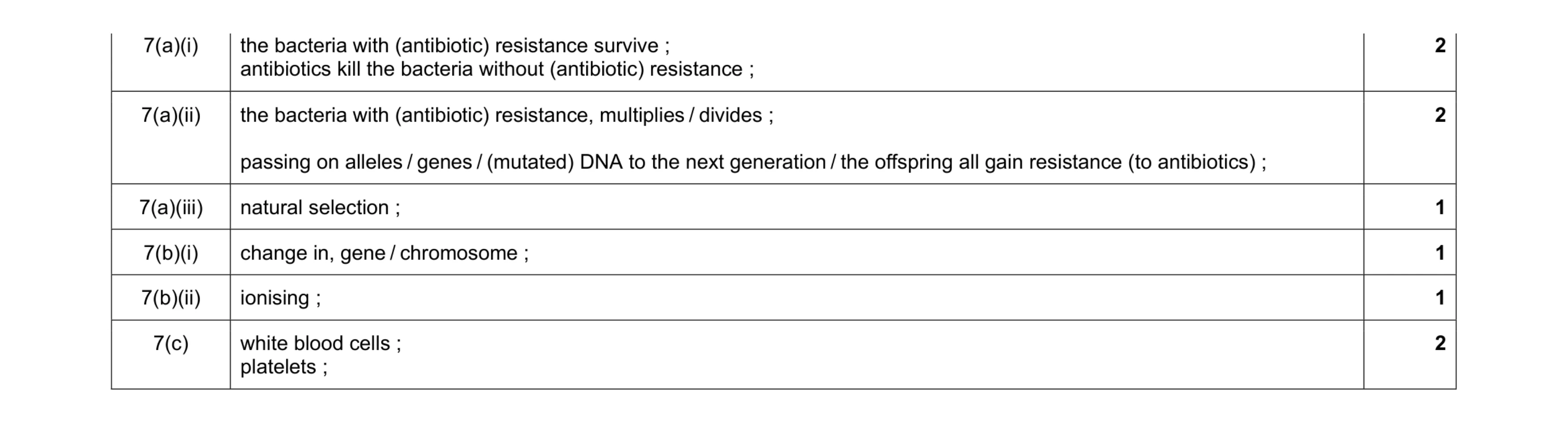 9
9 6
6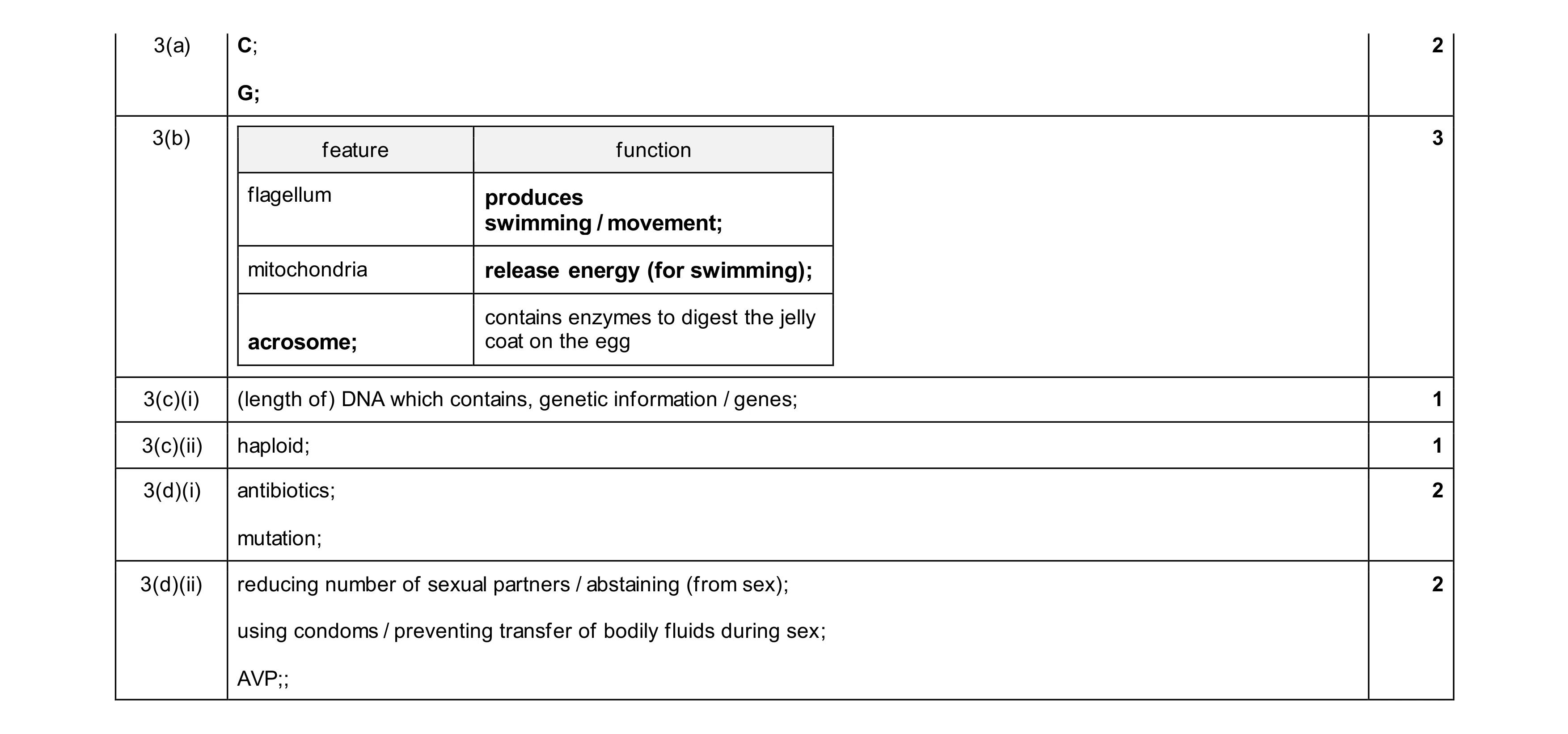 11
11