Questions as text
Q1 · The polynomial p ( x) is x 4 - 2x 3 - 3x 2 + 8x - 4 0606/22 Feb/March 2017
3 The polynomial p ( x) is x 4 - 2x 3 - 3x 2 + 8x - 4 . (i) Show that p ( x) can be written as ( x - 1 )( x 3 - x 2 - 4 x + 4 ) . [1] (ii) Hence write p ( x) as a product of its linear factors, showing all your working. [4]
5 marks
This question in 0606/22 Feb/March 2017
Q2 · Without using a calculator, factorise the expression 10x 3 - 21x 2 + 4 0606/22 May/June 2017
3 Without using a calculator, factorise the expression 10x 3 - 21x 2 + 4 . [5]
5 marks
Mark scheme: 3 Correctly finding a correct linear factor or root B1 from a valid method, e.g. factor theorem used or long division or synthetic division: 2 3 2 2 − 21 + 4 = 0 f ( 2 ) = 10 ( ) ( ) 10 x 2 − x − 2 or x − 2 10 x 3 − 21x 2 + 4 10 x 3 − 20 x 2 − x 2 − x 2 + 2 x − 2 x + 4 −2 x + 4 0 or 2 10 −21 0 4 ↓ 20 −2 −4 10 −1 −2 0 correct linear factor stated or implied by, e.g. B1 ( x − 2 ) or ( 2 x − 1) or ( 5 x + 2 ) 10 x 2 − x − 2 ( x − 2 )( ) 1 2 do not allow x − or x + 2 5 Correct quadratic factor B2 found using any valid method; 2 2 2 B1 for any 2 terms correct 10 x − x − 2 or 5 x − 8 x − 4 or 2 x − 5 x + 2 ( ) ( ) ( ) ( x − 2 )( 2 x − 1)( 5 x + 2 ) mark final answer B1 must be written as a correct product of all 3 linear factors; only award the final B1 if all previous marks have been awarded If quadratic factor is not found but correct remaining linear factors are found using e.g. the factor theorem or long division or synthetic division etc. with correct, sufficient, complete working to justify that no calculator has been used allow: B1 for correctly finding a correct linear factor or root B1 for a correct linear factor stated or implied SC3 for the full, complete and correct working to find the remaining two linear factors and arrive at the correct product of 3 linear factors
This question in 0606/22 May/June 2017
Q3 · Do not use a calculator in this question 0606/21 May/June 2018
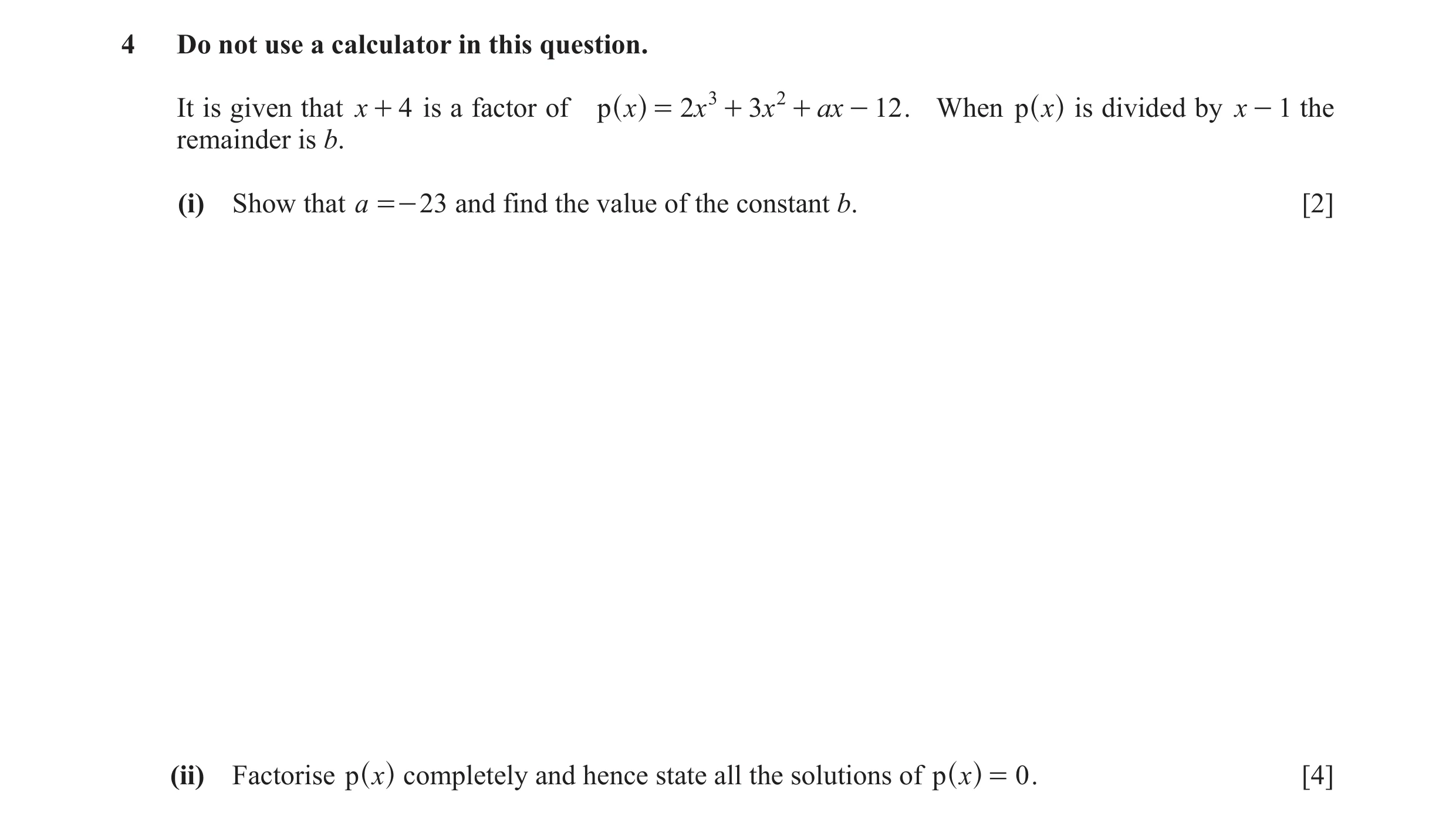
4 Do not use a calculator in this question. It is given that x + 4 is a factor of p x = 2x 3 + 3x 2 + ax - 12 . When x is divided by x - 1 the ^ h p^ h remainder is b. (i) Show that a =- 23 and find the value of the constant b. [2] (ii) Factorise x completely and hence state all the solutions of p x = 0 . [4] p^ h ^ h
6 marks
Mark scheme: 4(i) 2( − 4) 3 + 3 ( − 4 )2 − 4 a − 12 = 0 with one B1 Note: = 0 must be seen or may be implied by e.g. −92 = 4a or 92 = −4a correct interim step leading to a = −23 or convincingly showing that 2( − 4) 3 + 3 ( − 4 )2 − 4( − 23) − 12 = 0 or correct synthetic division at least as far as −4 2 3 a −12 −8 20 −4 a − 80 2 −5 a + 20 0 then a = −23 or correct long division to, e.g. verify −23, at least as far as 2 x 2 − 5 x − 3 x + 4 2 x 3 + 3 x 2 − 23 x − 12 2 x 3 + 8 x 2 − 5 x 2 − 23 x − 5 x 2 − 20 x − 3 x − 12 −3 x − 12 0 p(1) = 2 + 3 − 23 − 12 B1 b = −30 4(ii) finds a correct quadratic factor B2 B1 for quadratic factor with 2 correct terms e.g. (2x2 − 5x – 3) OR B1for finding (x – 3) using factor theorem B1for convincingly finding (2x + 1) as third factor Product of three linear factors M1 (2x + 1)(x – 3)(x + 4) 1 A1 If M0 then SC1 if quadratic factorised correctly but x = − , x = 3, x = − 4 nfww does not show full factorisation but does give all 3 2 solutions correctly
This question in 0606/21 May/June 2018
Q4 · Do not use a calculator in this question 0606/23 May/June 2018
4 Do not use a calculator in this question. It is given that x + 4 is a factor of p x = 2x 3 + 3x 2 + ax - 12 . When x is divided by x - 1 the ^ h p^ h remainder is b. (i) Show that a =- 23 and find the value of the constant b. [2] (ii) Factorise x completely and hence state all the solutions of p x = 0 . [4] p^ h ^ h
6 marks
Mark scheme: 4(i) 2( − 4) 3 + 3 ( − 4 )2 − 4 a − 12 = 0 with one B1 Note: = 0 must be seen or may be implied by e.g. −92 = 4a or 92 = −4a correct interim step leading to a = −23 or convincingly showing that 2( − 4) 3 + 3 ( − 4 )2 − 4( − 23) − 12 = 0 or correct synthetic division at least as far as −4 2 3 a −12 −8 20 −4 a − 80 2 −5 a + 20 0 then a = −23 or correct long division to, e.g. verify −23, at least as far as 2 x 2 − 5 x − 3 x + 4 2 x 3 + 3 x 2 − 23 x − 12 2 x 3 + 8 x 2 − 5 x 2 − 23 x − 5 x 2 − 20 x − 3 x − 12 −3 x − 12 0 p(1) = 2 + 3 − 23 − 12 B1 b = −30 4(ii) finds a correct quadratic factor B2 B1 for quadratic factor with 2 correct terms e.g. (2x2 − 5x – 3) OR B1for finding (x – 3) using factor theorem B1for convincingly finding (2x + 1) as third factor Product of three linear factors M1 (2x + 1)(x – 3)(x + 4) 1 A1 If M0 then SC1 if quadratic factorised correctly but x = − , x = 3, x = − 4 nfww does not show full factorisation but does give all 3 2 solutions correctly
This question in 0606/23 May/June 2018
Q5 · Use the factor theorem to show that 2x - 1 is a factor of p ()x , where p ()x = 4x 3 + 9x… 0606/21 Oct/Nov 2019
7 (a) (i) Use the factor theorem to show that 2x - 1 is a factor of p ()x , where p ()x = 4x 3 + 9x - 5 . [1] (ii) Write p ()x as a product of linear and quadratic factors. [2] (b) (i) Show that 13 tan x sec x - 4 sin x - 5 sec 2 x = 0 can be written as 4 sin 3 x + 9 sin x - 5 = 0 . [3] (ii) Using your answers to part (a)(ii) and part (b)(i) solve the equation 13 tan x sec x - 4 sin x - 5 sec 2 x = 0 for 0 1 x 1 2 r radians. [4]
10 marks
Mark scheme: 7(a)(i) f ( 0.5 ) = 0.5 + 4.5 − 5 = 0 B1 7(a)(ii) Factorise to obtain 2 x 2 and 5 M1 2 x + x + 5 ( 2 x − 1)( 2 A1 ) 7(b)(i) sin x 1 M1 sin x 5 Replace tan x by and sec x by 13 − 4sin x − = 0 cos x cos x cos 2 x cos 2 x Uses cos 2 x = 1 − sin 2 x M1 13sin x − 4sin x 1 − sin 2 x − 5 = 0 ( ) 4sin 3 x + 9sinx − 5 = 0 A1 Completed correctly 7(b)(ii) 2sin 2 x + sinx + 5 = 0 no real roots B1 Suitable statement seen 2sinx −=1 0 M1 Attempt to solve π A1 x = 6 5 π A1 x = 6
This question in 0606/21 Oct/Nov 2019
Q6 · The roots of the equation x 3 + ax 2 + bx + 24 = 0 are 2, 3 and p, where p is an integer 0606/23 Oct/Nov 2019
8 The roots of the equation x 3 + ax 2 + bx + 24 = 0 are 2, 3 and p, where p is an integer. (i) Find the value of p. [1] (ii) Show that a =-1 and find the value of b. [4] Given that a curve has equation y = x 3 - x 2 + bx + 24 find, using your value of b, dy (iii) , [1] dx (iv) the integer value of x for which the gradient of the curve is 2 and the corresponding value of y. [3] The coordinates of the point P on the curve are given by the values of x and y found in part (iv). (v) Find the equation of the tangent to the curve at P. [1]
10 marks
Mark scheme: 8(i) p = –4 B1 8(ii) (x – 2) (x – 3) (x + 4) M1 FT (x – 2) (x –3) (x – p) (x2 – 5x + 6) (x + 4) A1 FT (x2 – 5x + 6) (x – p) multiply out two factors correctly obtain a = –1 A1 answer given x3 – x2 – 14x + 24 b = –14 stated B1 8(iii) d y 2 B1 FT their numerical b 3x2 – 2x + b = 3 x − 2 x − 14 d x 8(iv) d y M1 FT their numerical b set their equal to 2 d x x = 2 A1 y = 40 only A1 no additional answers 8(v) y – 40 = 2(x + 2) (y = 2x + 44) B1
This question in 0606/23 Oct/Nov 2019
Q7 · The three roots of p ( )x = 0 , where p ( )x = 2x 3 + ax 2 + bx + c are x = , x = n and x… 0606/22 May/June 2020
4 The three roots of p ( )x = 0 , where p ( )x = 2x 3 + ax 2 + bx + c are x = , x = n and x =- n, where 2 a, b, c and n are integers. The y-intercept of the graph of y = p ( )x is 4. Find p ( x), simplifying your coefficients. [5]
5 marks
Mark scheme: 4 Factorised form: B1 ( x + n)( x − n)(2x −1) oe Multiplies out correctly M1 FT their factorised form provided of equivalent difficulty Correct expanded form in terms of n: A1 2 x 3 − x 2 − 2n 2 x + n 2 Uses (their n2) = 4 in their expression M1 2 x3 − x 2 − 8 x + 4 A1 If A0A0 then SC1 for ( x + n)( x − n)( x − 0.5) giving n 2 = 8 3 1 2 leading to x − x − 8 x + 4 2 Alternative method: B1 for factorised form: ( x + n)( x − n)(2x − 1) M1 for their n 2 = 4 A1 for n = 2 M1 for multiplying out ( x + their 2)( x − their 2)(2 x − 1) A1 for 2 x3 − x 2 − 8 x + 4 If A0A0 then SC1 for ( x + n)( x − n)( x − 0.5) giving n 2 = 8 3 1 2 leading to x − x − 8 x + 4 2
This question in 0606/22 May/June 2020
Q8 · DO NOT USE A CALCULATOR IN THIS QUESTION 0606/21 Oct/Nov 2020
7 DO NOT USE A CALCULATOR IN THIS QUESTION. p ( x) = 2x 3 - 3x 2 - 23 x + 12 1 (a) Find the value of p [1] b 2 l. (b) Write p ( x) as the product of three linear factors and hence solve p ( x) = 0 . [5]
6 marks
Mark scheme: 7(a) 1 1 1 1 B1 Working must be seen p = 2 − 3 − 23 + 12 = 0 2 8 4 2 7(b) − 12 p ( x ) = ( 2 x − 1)( x 2 − x − 12 ) 2 M1 for terms x 2 and A1 for −x p ( x ) = ( 2 x − 1)( x − 4 )( x + 3 ) 2 M1 for solving quadratic A1 for all three correct factors 1 A1 f ( x ) = 0 → x = , 4, − 3 2
This question in 0606/21 Oct/Nov 2020
Q9 · The polynomial p ( x) is such that p ( x) = 6x 3 + ax 2 - 52x + b , where a and b are… 0606/23 May/June 2022
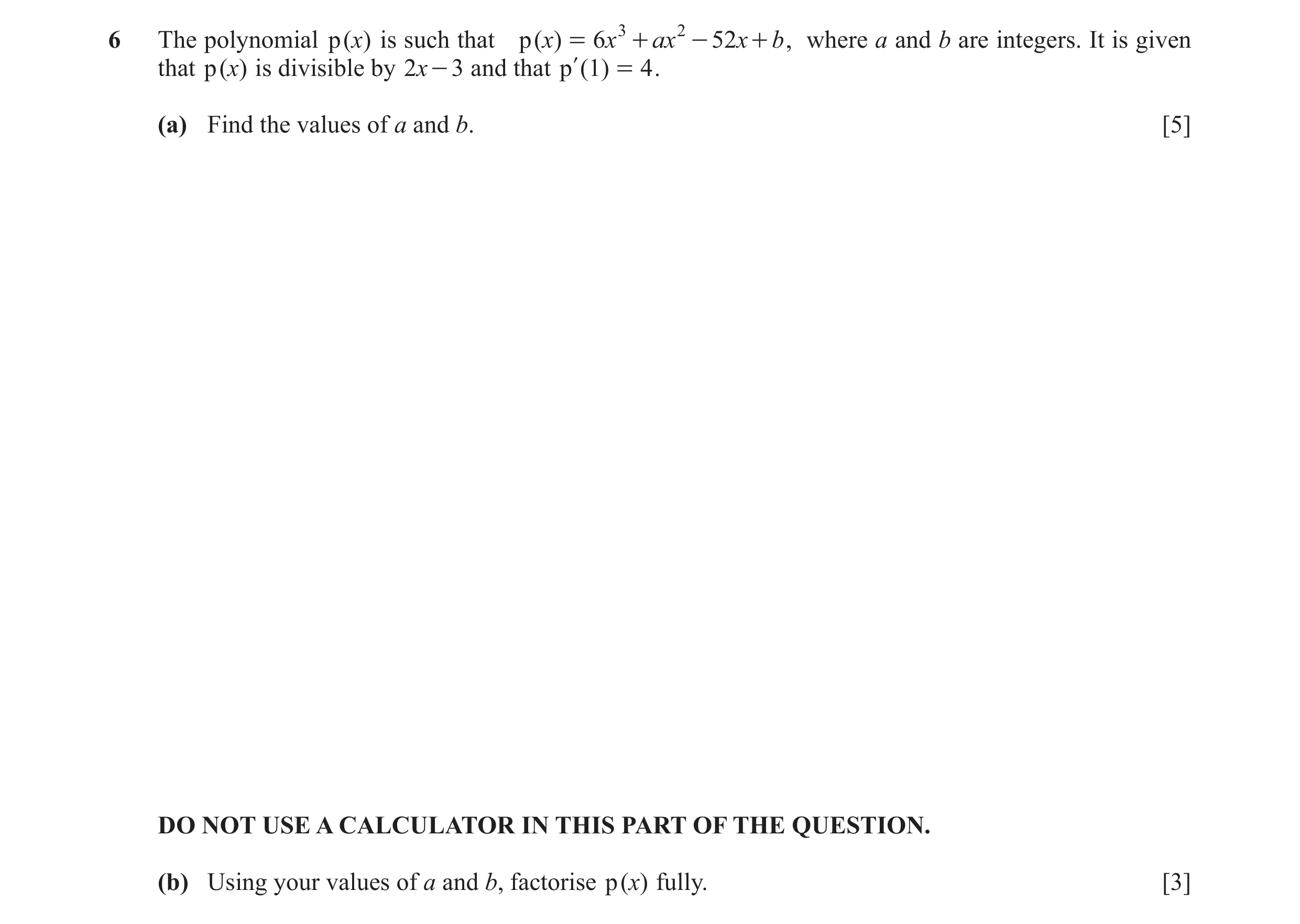
6 The polynomial p ( x) is such that p ( x) = 6x 3 + ax 2 - 52x + b , where a and b are integers. It is given that p ( x) is divisible by 2x - 3 and that p l ( 1) = 4 . (a) Find the values of a and b. [5] DO NOT USE A CALCULATOR IN THIS PART OF THE QUESTION. (b) Using your values of a and b, factorise p ( x) fully. [3]
8 marks
Mark scheme: 6(a) p x : 18 x 2 2 ax 52 B1 18 + 2a – 52 = 4 M1 FT if at least 2 terms correct in derivative and has a term in a a 19 A1 Correct method to find b M1 FT their integer value of a if used 6 27 9(19) 52 3 b 0 9(19) 4b 231 8 4 2 81 171 or 78 b 0 oe 4 4 or correct elimination of a using 9 a 4b 231 oe and 2a – 34 = 4 oe b 15 A1 If 0 scored, SC1 for 9 a 4b 231 or 81 9 a 9 231 78 b 0 or a b 4 4 4 4 oe 6(b) 2 M2 M1 for two terms correct in quadratic 3 x 14 x 5 p x 2 x 3 factor 2 x 3 3 x 1 x 5 A1
This question in 0606/23 May/June 2022
Q10 · The line y = kx + 6 intersects the curve y = x 3 - 4x 2 + 3kx + 2 at the point where x = 2 0606/23 Oct/Nov 2022
4 The line y = kx + 6 intersects the curve y = x 3 - 4x 2 + 3kx + 2 at the point where x = 2 . (a) Find the value of k. [2] (b) Show that, for this value of k, the line cuts the curve only once. [4]
6 marks
Mark scheme: 4(a) 2k + 6 = 8 − 16 + 6k + 2 oe M1 For equating line to curve and substituting x = 2, or vice versa k = 3 A1 4(b) x3 − 4 x 2 + ( 2 theirk ) x − 4 = 0 M1 FT their k in correct cubic or x3 − 4 x 2 + 6 x − 4 = 0 x 2 − 2 x + 2 A2 Correct quadratic factor from correct cubic A1 for a quadratic factor with two terms correct, from correct cubic ( −2) 2 − 4 (1)( 2 ) < 0 oe A1 Uses discriminant correctly on the correct quadratic factor or 4 – 8 < 0 oe [and so x = 2 is the only solution]
This question in 0606/23 Oct/Nov 2022
Q11 · DO NOT USE A CALCULATOR IN THIS QUESTION 0606/22 Feb/March 2023
5 DO NOT USE A CALCULATOR IN THIS QUESTION. (a) Show that x - 1 is a factor of the expression x 3 - 2 x 2 - 19x + 20 . [1] (b) Hence write x 3 - 2x 2 - 19x + 20 as a product of its linear factors. [3] (c) Hence find the exact solutions of the equation e 3 y - 2e 2 y - 19e y + 20 = 0 . [2]
6 marks
Mark scheme: 5(a) 13 – 2(12) – 19 + 20 = 0 1 5(b) (x – 1)(x2 – x – 20) M2 M1 for two terms correct in the quadratic factor (x – 1)(x + 4)(x – 5) A1 5(c) e y = 1, e y = 5 M1 y = 0, y = ln5 mark final answer A1 1.61 or decimal equivalent for ln5 seen is A0 as calculator use not permitted
This question in 0606/22 Feb/March 2023
Q12 · The polynomial p is such that p ( )x = 2x 3 + 11x 2 + 22x + 40 0606/23 May/June 2023
4 The polynomial p is such that p ( )x = 2x 3 + 11x 2 + 22x + 40 . (a) Show that x =- 4 is a root of the equation p ( )x = 0 . [1] (b) Factorise p ( )x and hence show that p ( )x = 0 has no other real roots. [4]
5 marks
Mark scheme: 4(a) 2( 4) 3 11( 4) 2 22( 4) 40 0 oe 1 4(b) ( x 4)(2 x 2 3 x 10) B2 B1 for 2 x 2 3 x 10 with two terms out of three correct Correct use of b 2 4 ac for their 3-term quadratic M1 factor 32 – 4(2)(10) < 0 isw or A1 32 – 4(2)(10) = 71 oe, cao
This question in 0606/23 May/June 2023
![Question 1: The polynomial p ( x) is x 4 - 2x 3 - 3x 2 + 8x - 4 . (i) Show that p ( x) can be written as ( x - 1 )( x 3 - x 2 - 4 x + 4 ) . [1] (ii) He…](https://img.pastlit.com/crops/2880f153-25eb-4d91-adfd-a2710261a329/q3.webp)
![Question 2: Without using a calculator, factorise the expression 10x 3 - 21x 2 + 4 . [5]](https://img.pastlit.com/crops/957512e9-1006-439c-9650-928d3699ed3a/q3.webp) 1 / 7
1 / 7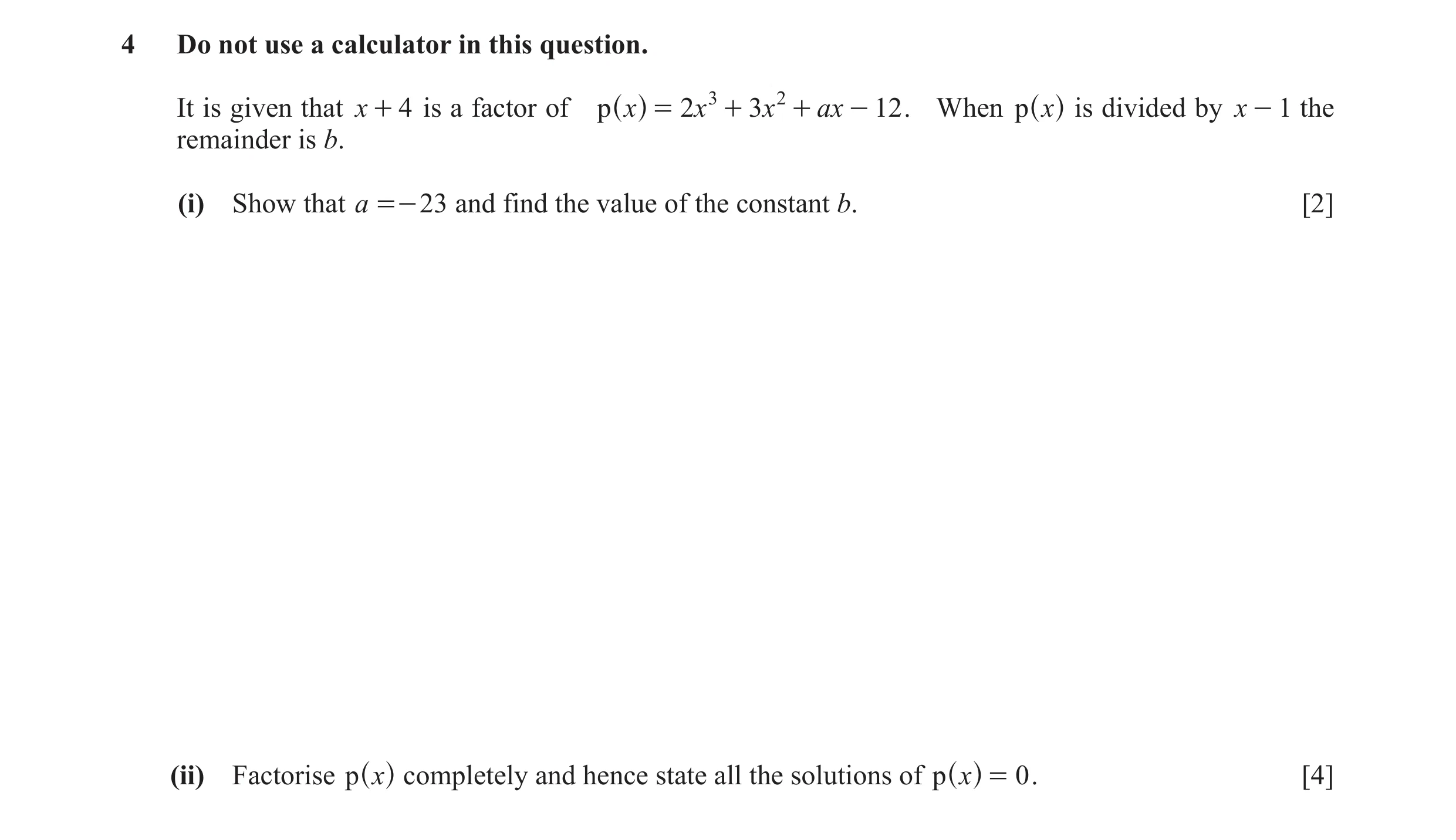
 2 / 7
2 / 7![Question 5: (a) (i) Use the factor theorem to show that 2x - 1 is a factor of p ()x , where p ()x = 4x 3 + 9x - 5 . [1] (ii) Write p ()x as a product o…](https://img.pastlit.com/crops/53ad43c1-54c3-4c6f-afda-e47937f2e6d5/q7.webp) 3 / 7
3 / 7![Question 6: The roots of the equation x 3 + ax 2 + bx + 24 = 0 are 2, 3 and p, where p is an integer. (i) Find the value of p. [1] (ii) Show that a =-1…](https://img.pastlit.com/crops/b0c50f06-ffc2-401c-b5b3-f7342a247a86/q8.webp)
 4 / 7
4 / 7![Question 8: DO NOT USE A CALCULATOR IN THIS QUESTION. p ( x) = 2x 3 - 3x 2 - 23 x + 12 1 (a) Find the value of p [1] b 2 l. (b) Write p ( x) as the pro…](https://img.pastlit.com/crops/c7c24e9a-a85f-46cd-b478-f21ec702d253/q7.webp)
 5 / 7
5 / 7![Question 10: The line y = kx + 6 intersects the curve y = x 3 - 4x 2 + 3kx + 2 at the point where x = 2 . (a) Find the value of k. [2] (b) Show that, fo…](https://img.pastlit.com/crops/3d9c18b9-b5b6-43d2-8460-91ba9c5501f9/q4.webp)
![Question 11: DO NOT USE A CALCULATOR IN THIS QUESTION. (a) Show that x - 1 is a factor of the expression x 3 - 2 x 2 - 19x + 20 . [1] (b) Hence write x …](https://img.pastlit.com/crops/d2fa9170-6db2-49c0-9503-849a5d0e40a6/q5.webp) 6 / 7
6 / 7![Question 12: The polynomial p is such that p ( )x = 2x 3 + 11x 2 + 22x + 40 . (a) Show that x =- 4 is a root of the equation p ( )x = 0 . [1] (b) Factor…](https://img.pastlit.com/crops/babbe620-45f8-4fd0-82f4-1914d4b67dbb/q4.webp) 7 / 7
7 / 7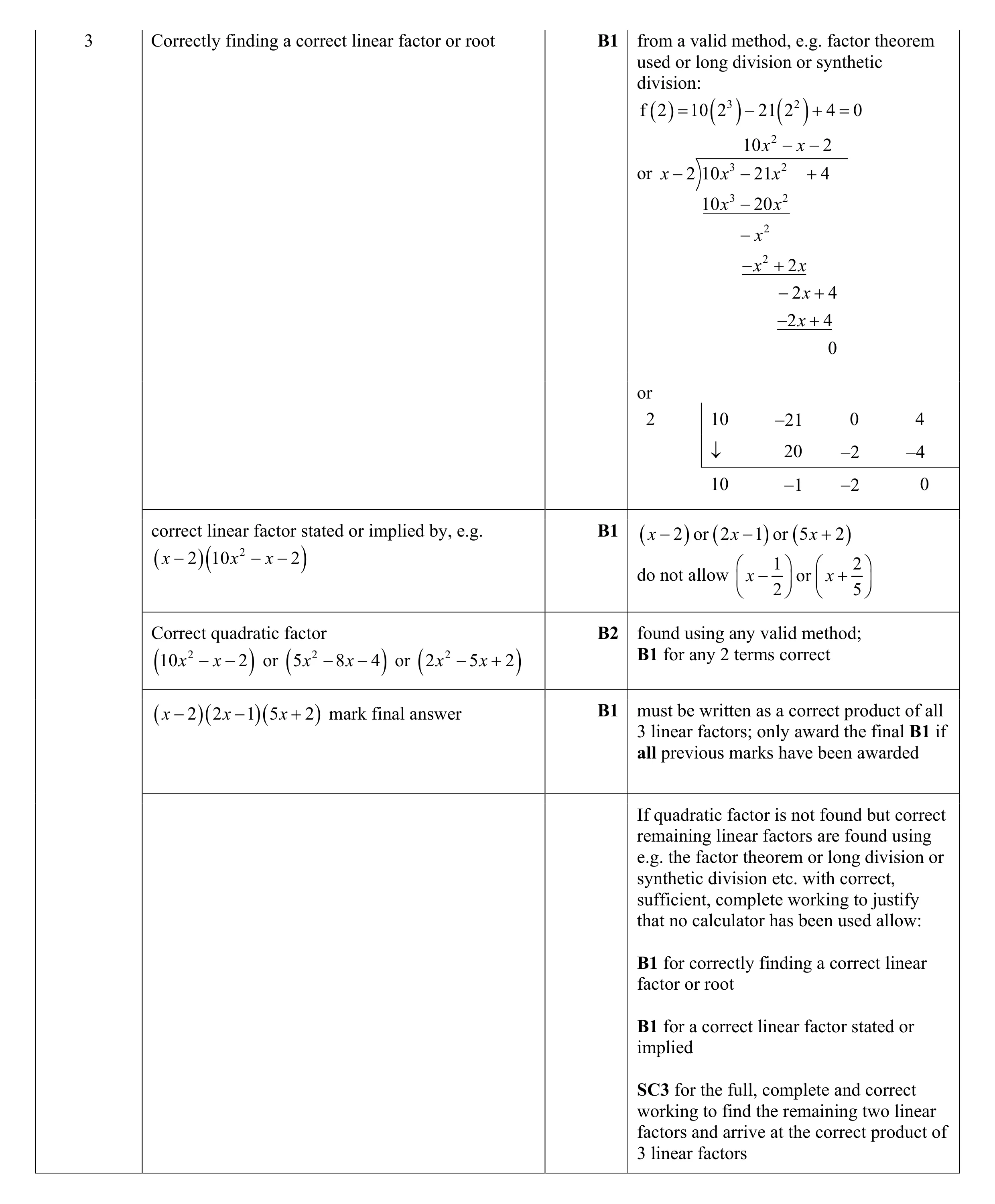 5
5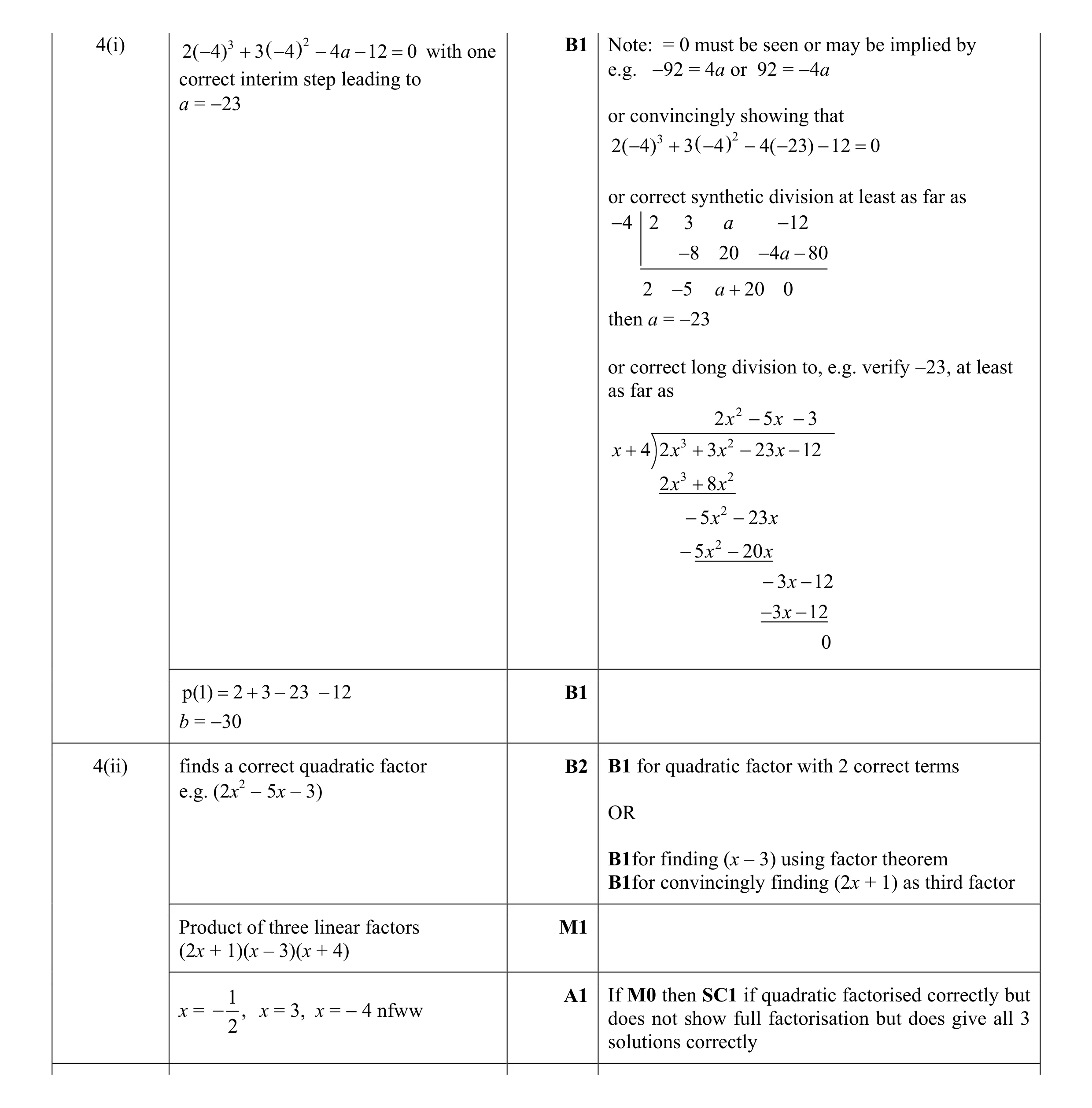 6
6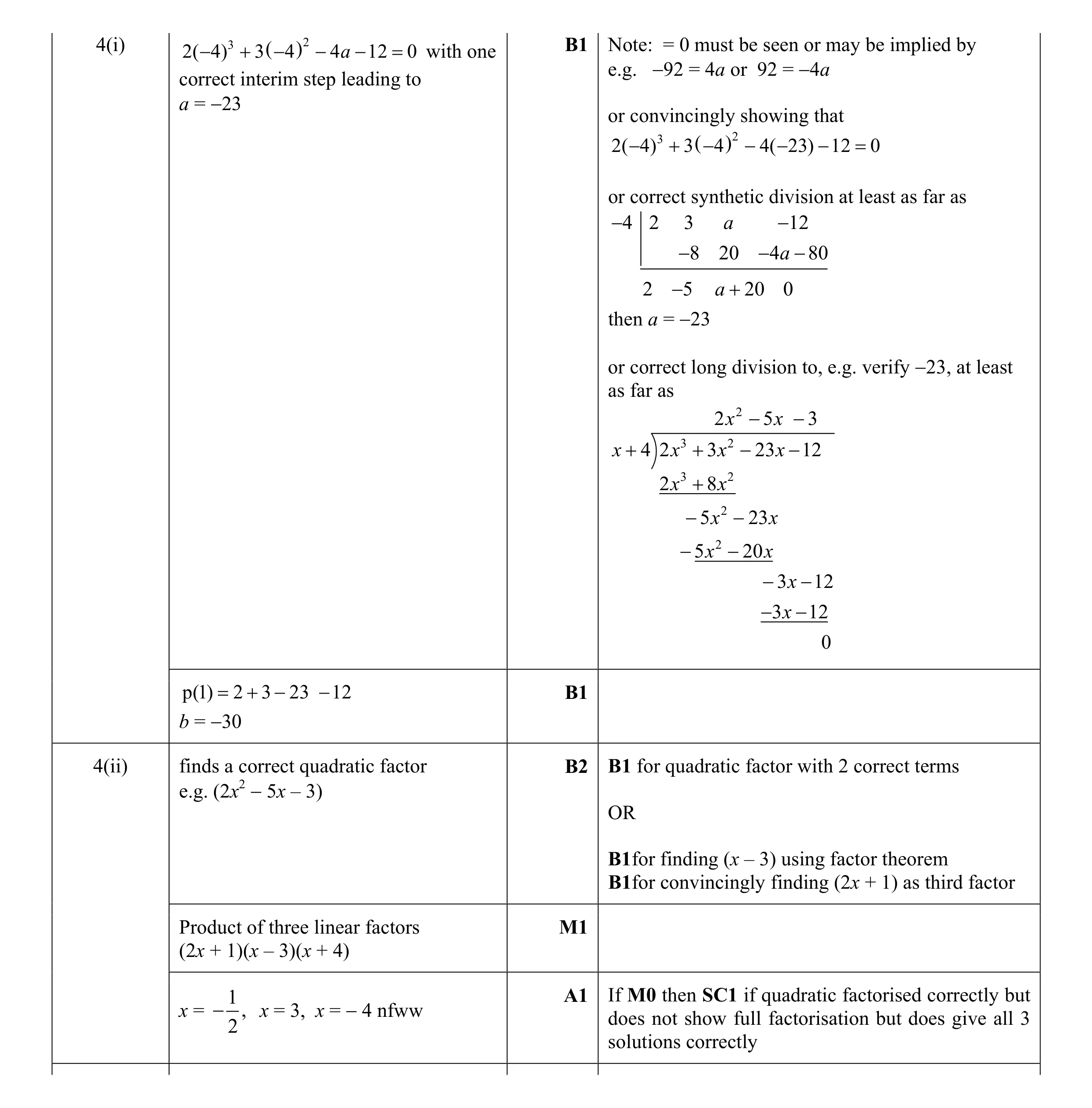 6
6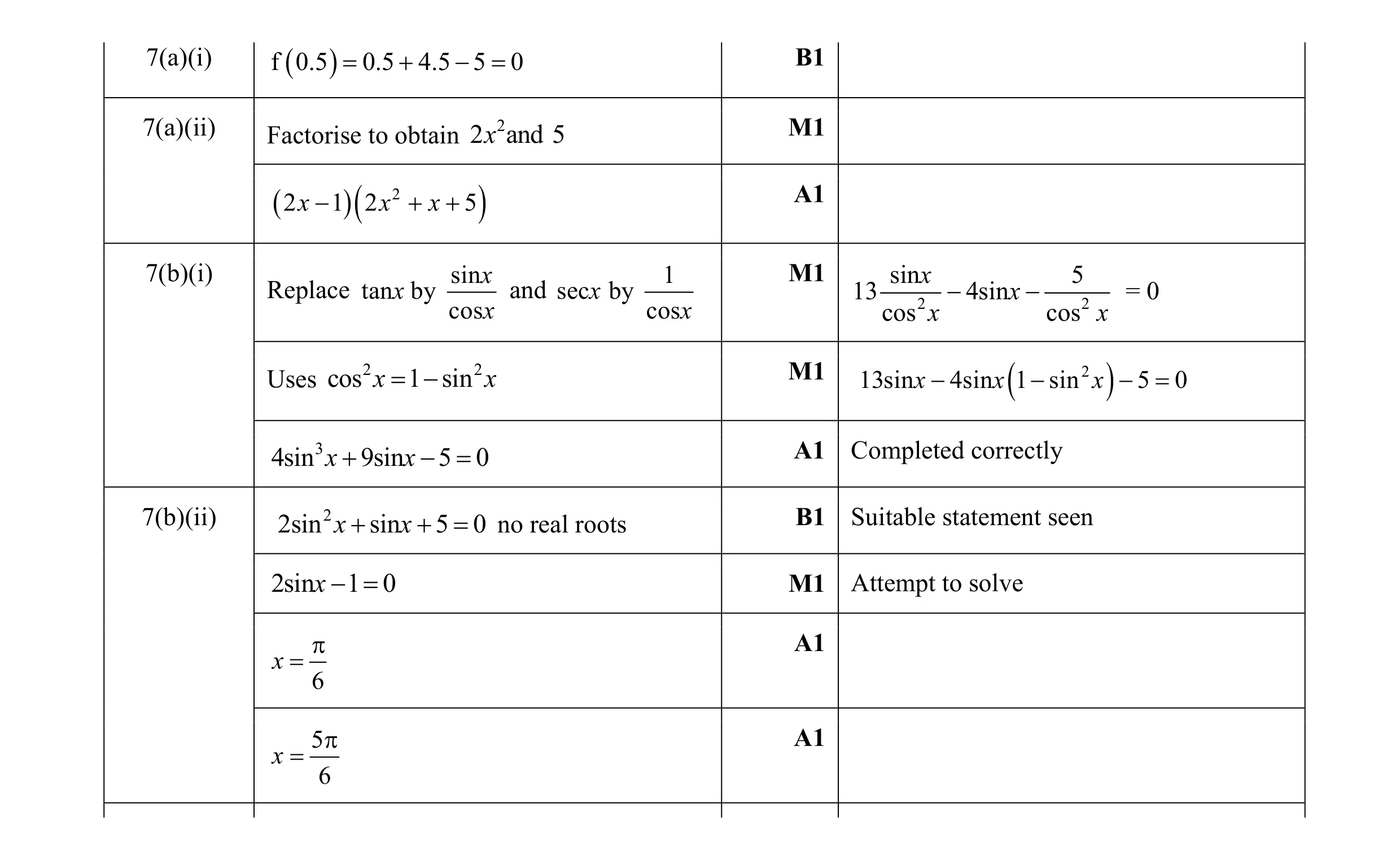 10
10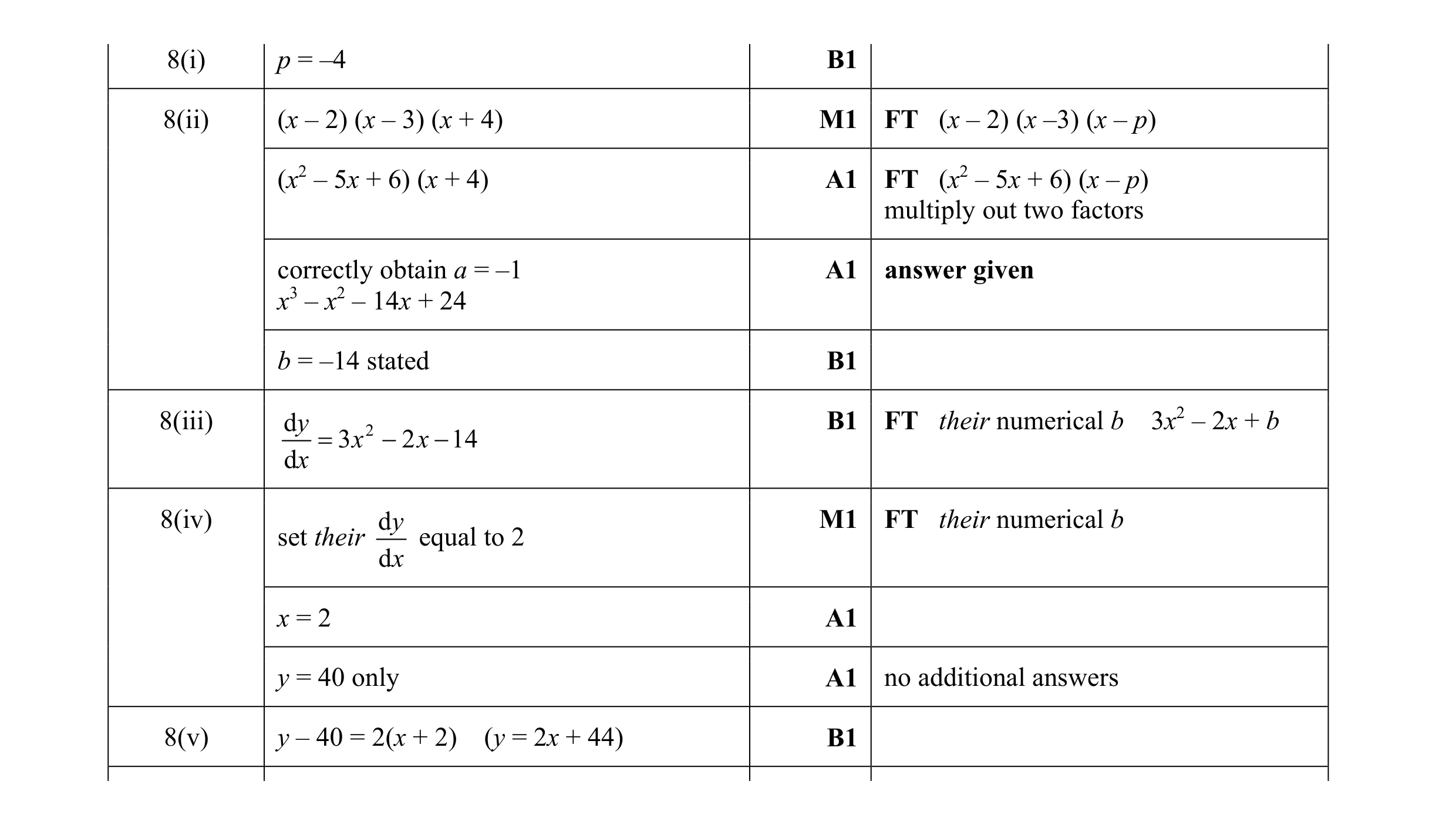 10
10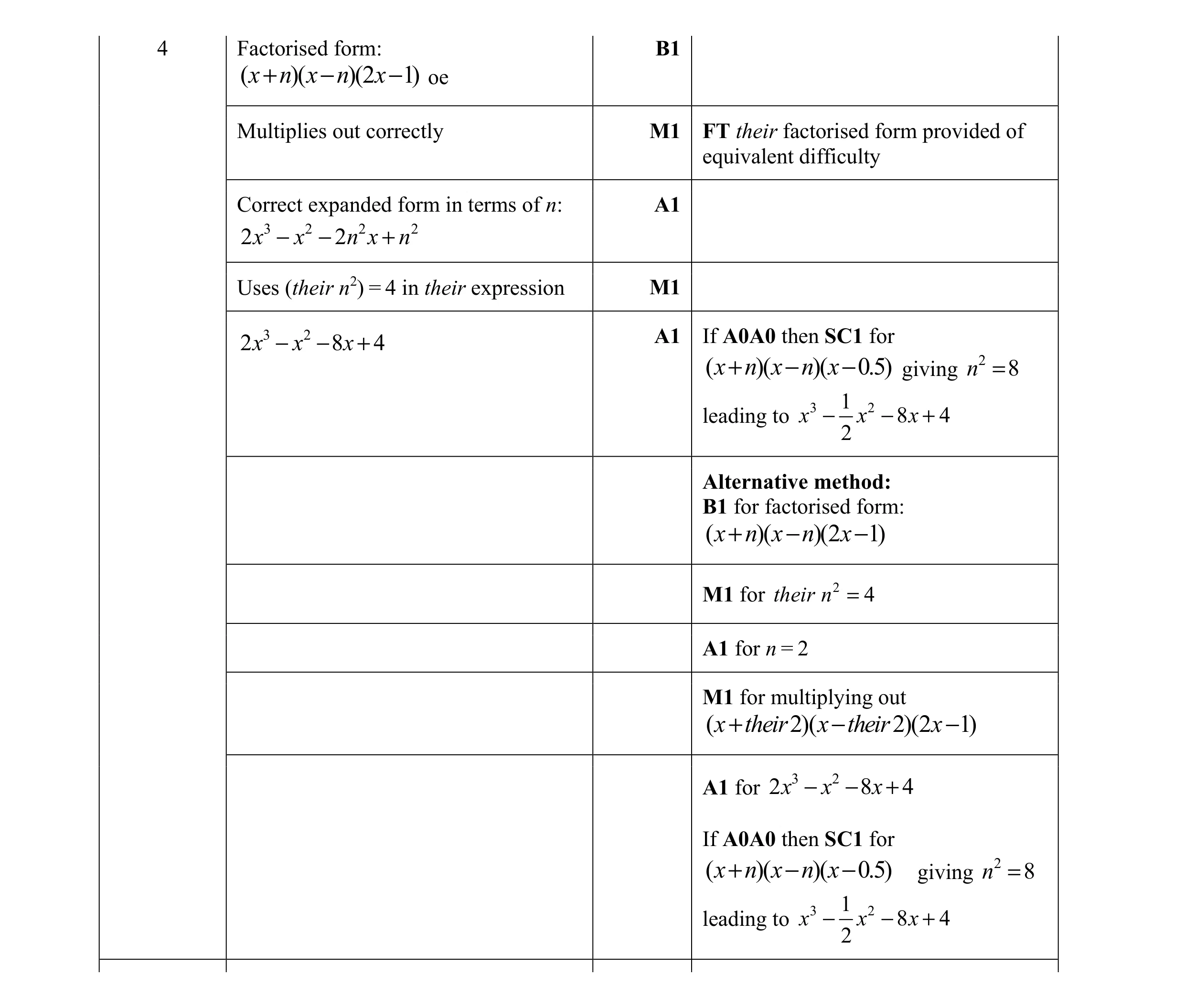 5
5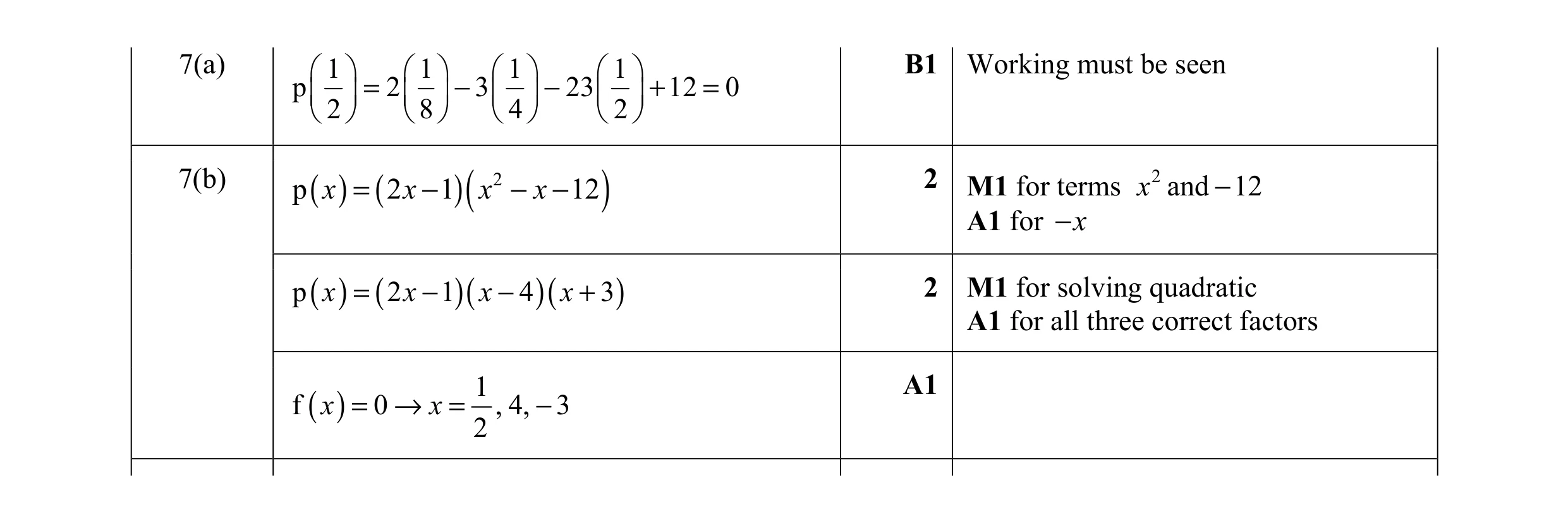 6
6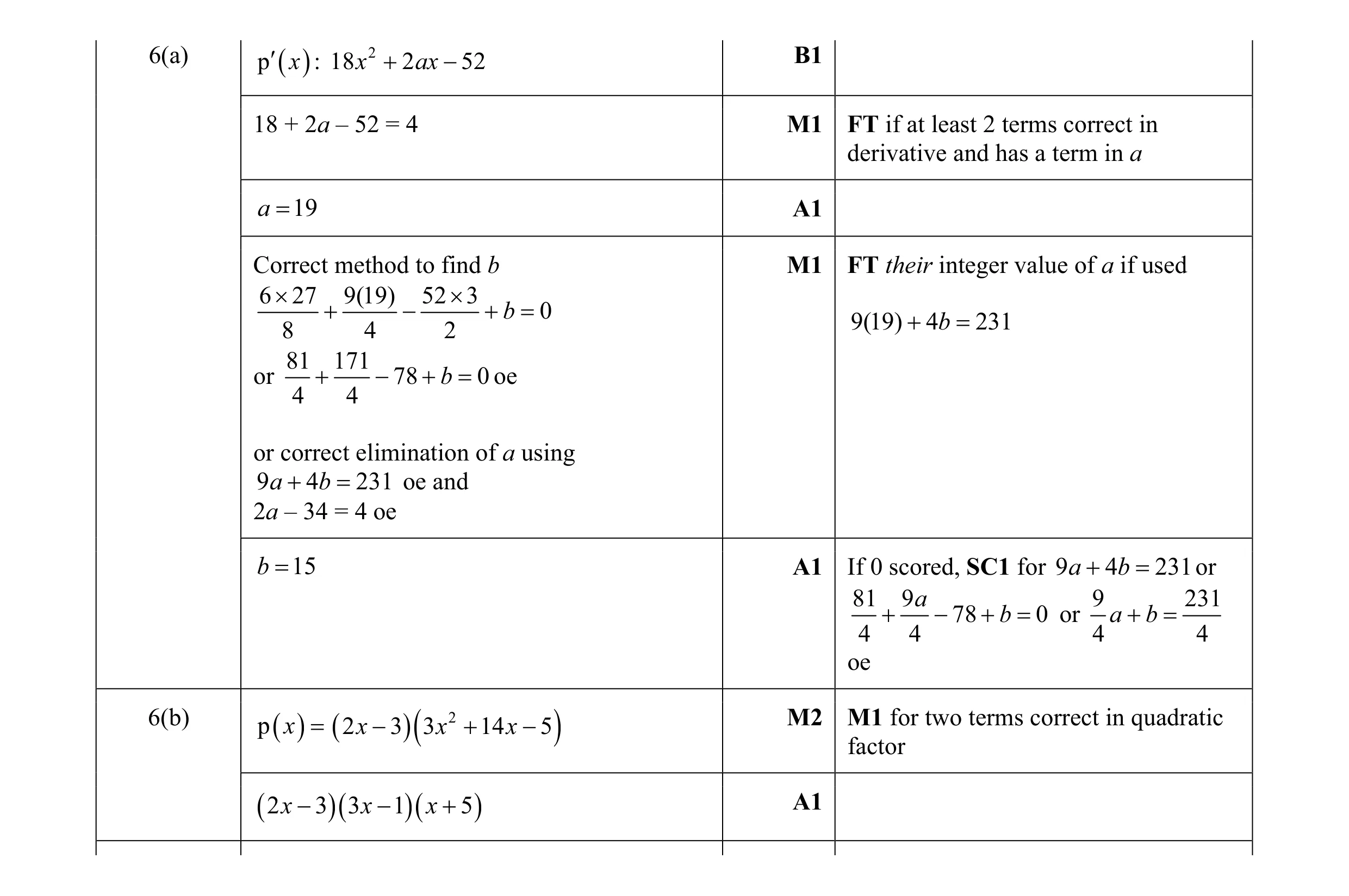 8
8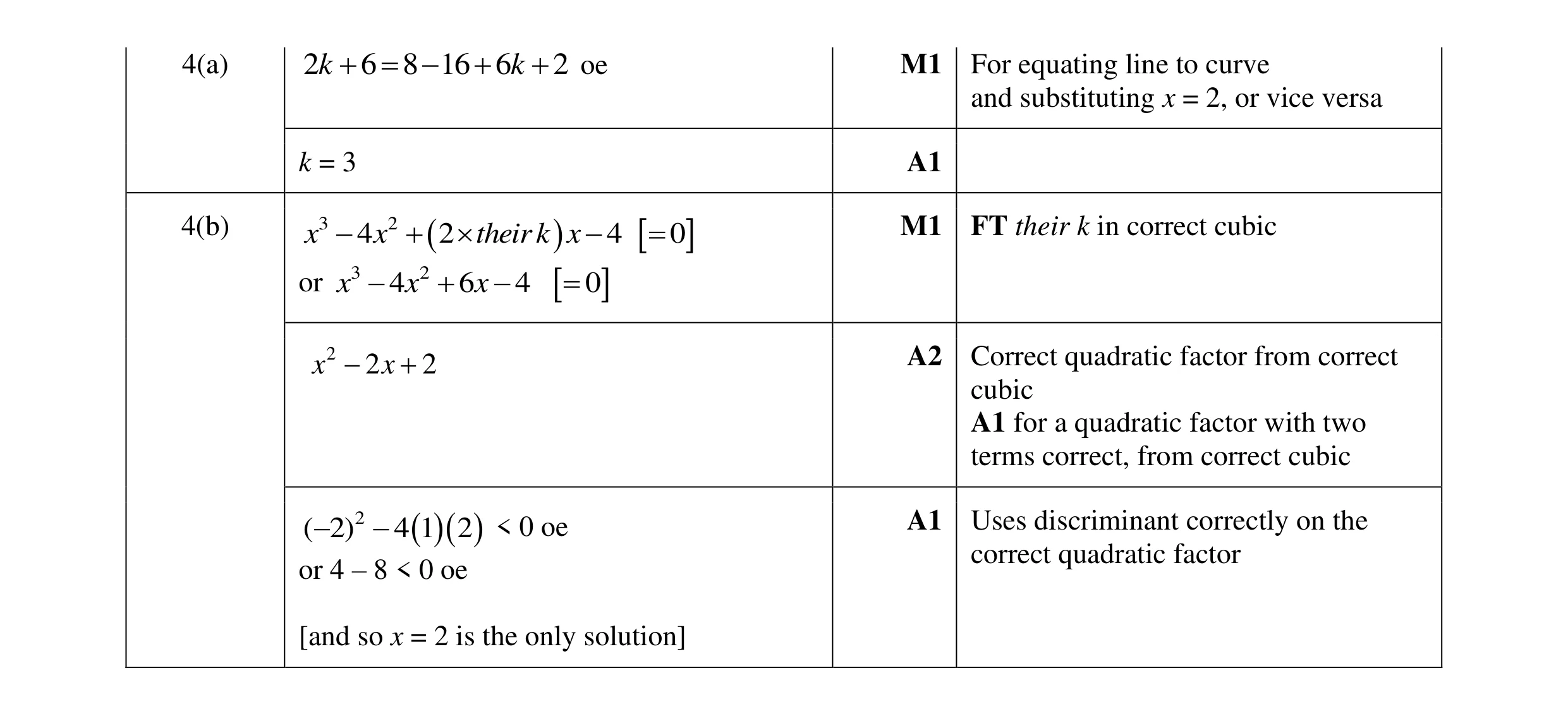 6
6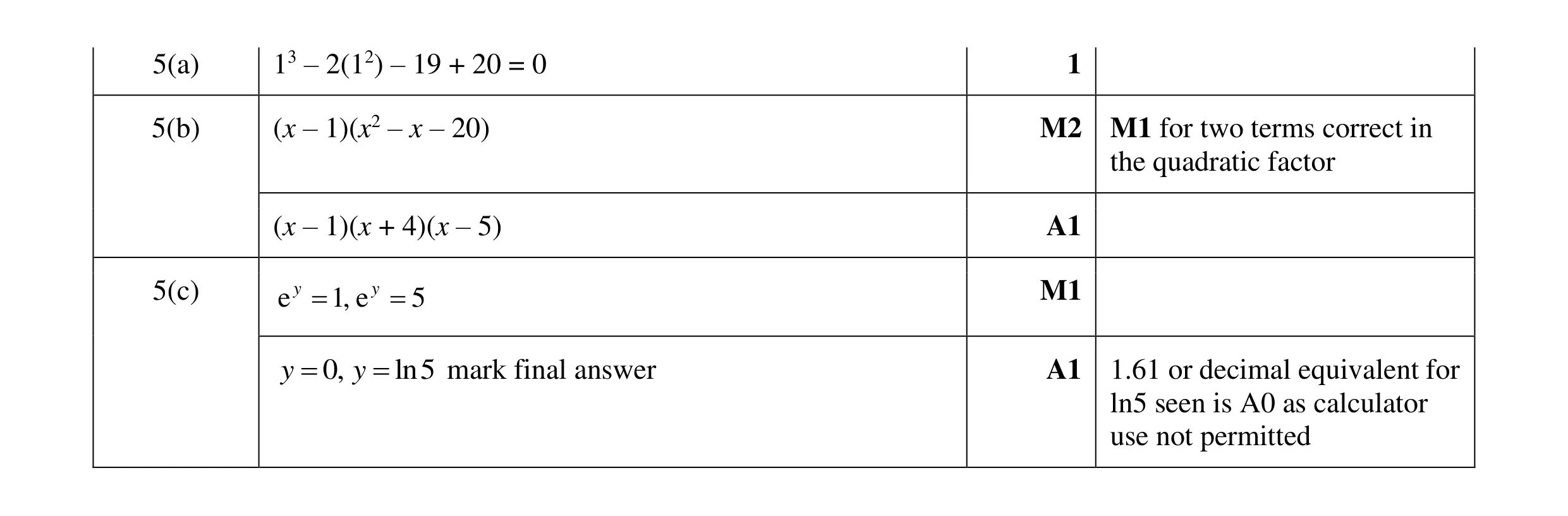 6
6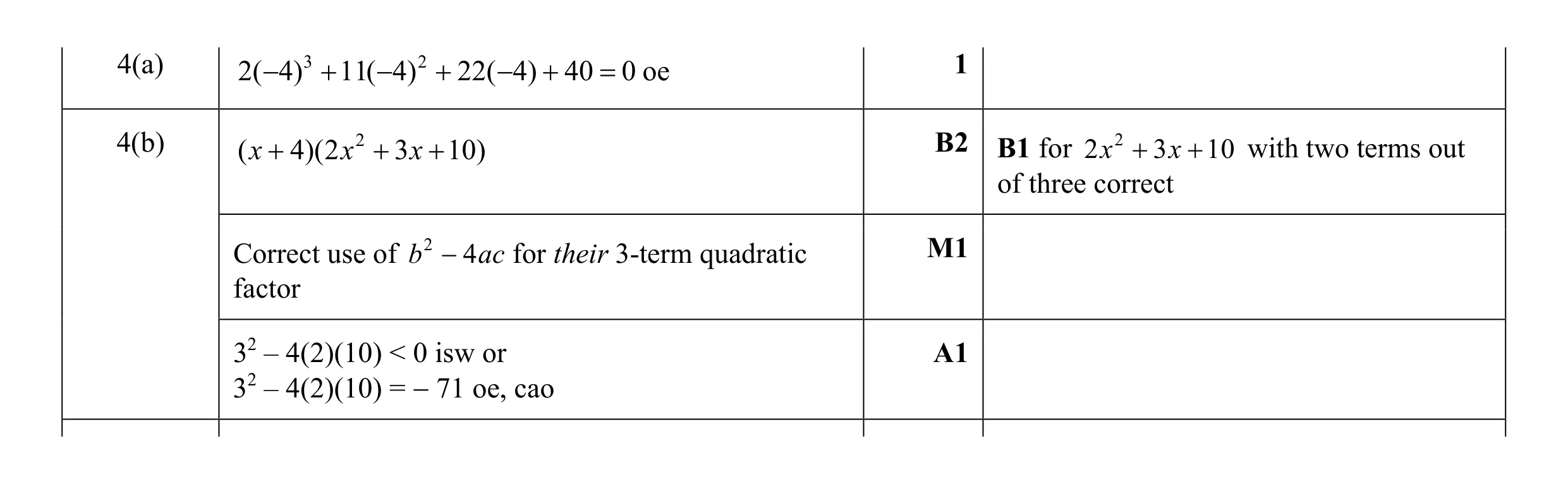 5
5